King Nursing & Rehabilitation Community
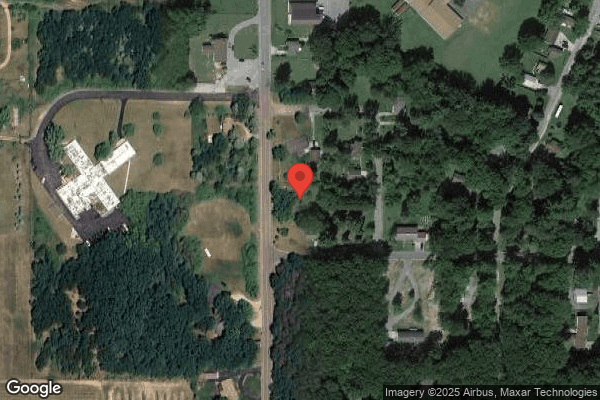
2280 Tower Hill Road, Houghton Lake, MI 48629 (989) 422-5153
For profit - Limited Liability company 61 Beds ATRIUM CENTERS Data: November 2025
Trust Grade
90/100
#35 of 422 in MI
Last Inspection: April 2025

Within standard 12-15 month inspection cycle. Federal law requires annual inspections.

Overview

King Nursing & Rehabilitation Community in Houghton Lake, Michigan, has received a Trust Grade of A, indicating it is excellent and highly recommended. Ranking #35 out of 422 facilities in Michigan places it in the top half, while its county rank of #1 out of 2 means it is the best option in Roscommon County. The facility is improving, with issues decreasing from 4 in 2024 to just 1 in 2025. Staffing is rated at 4 out of 5 stars, but the turnover rate of 45% is average for Michigan. Notably, the home has no fines on record, and it boasts more RN coverage than 94% of state facilities, which is a strong point for resident care. However, there are some concerns. Recent inspections revealed that the facility has struggled with food safety, such as a malfunctioning dish machine that risks foodborne illness and unlabelled expired food in the refrigerator. Additionally, there were lapses in infection control protocols for residents requiring special precautions, which could jeopardize their health. Overall, while there are strengths in staffing and RN coverage, families should be aware of these important concerns regarding food safety and infection control.

Trust Score
A
90/100
In Michigan
#35/422
Top 8%
Safety Record
Low Risk
No red flags
Inspections
Getting Better
4 → 1 violations
Staff Stability
⚠ Watch
45% turnover. Above average. Higher turnover means staff may not know residents' routines.
Penalties
✓ Good
No fines on record. Clean compliance history, better than most Michigan facilities.
Skilled Nurses
✓ Good
Each resident gets 65 minutes of Registered Nurse (RN) attention daily — more than 97% of Michigan nursing homes. RNs are the most trained staff who catch health problems before they become serious.
Violations
○ Average
6 deficiencies on record. Average for a facility this size. Mostly minor or procedural issues.
★★★★★
5.0
Overall Rating
★★★★☆
4.0
Staff Levels
★★★★★
5.0
Care Quality
★★★★★
5.0
Inspection Score
Stable
2024: 4 issues
2025: 1 issues

The Good

  • 4-Star Staffing Rating · Above-average nurse staffing levels
  • 5-Star Quality Measures · Strong clinical quality outcomes
  • Full Sprinkler Coverage · Fire safety systems throughout facility
  • No fines on record

Facility shows strength in staffing levels, quality measures, fire safety.

The Bad

Staff Turnover: 45%

Near Michigan avg (46%)

Higher turnover may affect care consistency

Chain: ATRIUM CENTERS

Part of a multi-facility chain

Ask about local staffing decisions and management

The Ugly 6 deficiencies on record

Apr 2025 1 deficiency
CONCERN (D)

Potential for Harm - no one hurt, but risky conditions existed

Deficiency F0692 (Tag F0692)

Could have caused harm · This affected 1 resident

. Based on observation, interview, and record review, the facility failed to monitor fluids as ordered for one Resident (R6) of two residents reviewed for fluid concerns. This deficient practice resul...

Read full inspector narrative →
. Based on observation, interview, and record review, the facility failed to monitor fluids as ordered for one Resident (R6) of two residents reviewed for fluid concerns. This deficient practice resulted in the potential for fluid imbalance. Findings include: Resident #6 (R6) The medical record revealed an admission date of 9/20/21 and a diagnosis list including dementia, stroke, and hyponatremia (a condition where the blood sodium is too low and can trigger cell swelling causing health issues ranging from mild to life threatening.) The medical record included a physician order dated 5/14/24 which read Fluid restriction of 1.5 liters daily secondary to hyponatremia. On 4/8/25 at 12:34 PM during a tour of the dining room, R6 was observed eating lunch. The tray card indicated a diet of Regular, NAS (No Added Salt) 1500 cc (cubic centimeters) Restr (Restriction - indicating a fluid restricted diet of 1.5 liters.) When the resident was asked if she limited her fluids. The resident replied she did not. On 4/10/25 at 8:31 AM, R6 was observed in the dining room eating breakfast. Again, the tray card indicated a 1500cc fluid restriction with instructions to serve 360 cc or 2 x 6 oz (two six ounce) drinks. R6 was served 180 cc tea, 180 cc apple juice, and 120 cc milk to total 480 cc, exceeding the planned amount. During an interview on 4/10/25 at approximately 8:45 AM, Certified Dietary Manager (CDM) G stated the nursing department provided beverages with meals in the dining room and had served R6 that morning. The medical record for R6 from 3/10/25 to 4/10/25, revealed no fluids were documented as consumed in the vital section of the chart. The Care Plan for R6 included a problem with a Start Date: 05/14/2024 which listed Potential for fluid imbalance, fluctuating weights and edema r/t (related to) ordered fluid restrictions. Approaches for this care plan problem included: - Start Date: 03/04/2025 Diet as ordered - Fluid restrictions as ordered. If applicable, educate (R6) on importance/reason of fluid restrictions in attempt to promote compliance and understanding. The care plan did not indicate an individualized plan for R6 related to fluid distribution. The Fluid Restriction Worksheet presented by the facility for R6, was dated as calculated on 5/14/24. This worksheet indicated 1500 cc of fluid was planned each day with 1080 cc distributed from the dietary department and 360 cc from the nursing department (for beverages at bedside and to be taken with medications.) The worksheet planned 60 cc per day as variance. During an interview on 4/10/25 at 8:21 AM, Certified Nurse Aide (CNA) D stated, We do not document fluids anymore. During an interview on 4/10/25 at 8:27 AM, Licensed Practical Nurse (LPN) C stated, We know who is on fluid restriction and give fluids with meds but we do not have any documentation (to note the amount of fluids given). During an interview on 4/10/25 at approximately 11:40 AM, the Director of Nursing (DON) stated the facility did not document amounts of fluids given or have a process to total fluids given as ordered by the physician. The DON acknowledged the physician had ordered a fluid restriction and fluid intake should be documented, totaled and analyzed for those residents requiring fluids be limited. The fluid restriction policy was requested. A policy titled Standards of Practices dated as revised 5/2018 included a section on Nutrition and hydration. The fluid restriction section of the policy read . 3. Staff will be aware of those residents on fluid restrictions or who have special swallowing requirements. No other fluid restriction procedures or policies were presented.
Dec 2024 1 deficiency
CONCERN (D) 📢 Someone Reported This

A family member, employee, or ombudsman was alarmed enough to file a formal complaint

Potential for Harm - no one hurt, but risky conditions existed

Deficiency F0602 (Tag F0602)

Could have caused harm · This affected 1 resident

This deficiency pertains to MI00148756. Based on interview and record review, the facility failed to prevent misappropriation of narcotic medication for one Resident (#1) of five residents reviewed f...

Read full inspector narrative →
This deficiency pertains to MI00148756. Based on interview and record review, the facility failed to prevent misappropriation of narcotic medication for one Resident (#1) of five residents reviewed for misappropriation. Findings include: Resident #1 (R1) Review of R1's electronic medical record (EMR) revealed initial admission to the facility on 8/2/24 with diagnoses including malignant cancer of the colon and rectum. Review of R1's most recent Minimum Data Set (MDS) assessment, dated 12/12/24, revealed a Brief Interview for Mental Status (BIMS) score of 15, indicative of intact cognition. R1 signed with hospice services on 8/6/24. Review of R1's EMR physician orders revealed the following pharmacy order, initiated 9/11/24: Hydrocodone acetaminophen (opiate [narcotic] medication mixed with Tylenol) - Schedule II tablet; 10-325 mg [milligram]; 1 tab; oral, Four Times A Day. Review of R1's Medication Administration Record [MAR] revealed they were scheduled to receive a dose of hydrocodone at 2:00 AM, 8:00 AM, 2:00 PM, and 8:00 PM. Review of the FRI read, in part: On 11/27/2024 at approximately 5:58 a.m., DON [Director of Nursing] received a phone call from [Registered Nurse (RN) A] .reporting that the mandatory med [medication] count .was off by one . When this was discovered, the night nurse [Licensed Practical Nurse (LPN) D] wrote on the med sheet, in front of [RN A] and stated she gave [R1] his Norco [Hydrocodone-acetaminophen brand name] at 5:00 am .she stated she forgot to write it down. DON told [RN A] to make sure [LPN D] stayed until she got to facility to do med count with them. [RN A] reported that [LPN D] would not stay and that she had left . we confirmed with the resident .that he did not receive a 5:00 am Norco, but did get his 2:00 am [dose]. This is a scheduled medication to be given every 6 hours, so was not due to receive again until 8:00 am . On 12/18/24 at 10:59 AM, an interview was conducted with RN A who verified she was the oncoming day shift nurse on 11/27/24. RN A stated she and LPN D were reconciling the Controlled Substance Proof of Use form and medication cart around 6:00 AM on 11/27/24 when she noticed R1 had only two remaining hydrocodone pills in the medication cart, yet the Controlled Substance Proof of Use form indicated R1 should have had three remaining pills. RN A stated after the discrepancy was noticed, LPN D stated she forgot to record an administration on the Controlled Substance Proof of Use form. RN A stated she witnessed LPN D retroactively timestamp the form to 5:02 AM. RN A stated she immediately notified the DON of the discrepancy and expressed concerns R1 could have been overmedicated as the medication was not scheduled to be given again until 8:00 AM. On 12/18/24 at 11:13 AM, an interview was conducted with the DON regarding the medication discrepancy on the morning of 11/27/24. The DON stated she received a call from RN A who reported LPN D altered the Controlled Substance Proof of Use form to match the medication cart. The DON stated she immediately called LPN D who had already left the facility and asked her to return so an official investigation could be conducted. The DON stated LPN D declined to come back to the facility claiming she was, too tired. The DON stated she interviewed R1 who was adamant he never received any medication at 5:00 AM, refuting LPN D's claims of administering this medication to R1 at that time. The DON explained the typical administration process of a narcotic is to record the use on the Controlled Substance Proof of Use form as soon as the medication is pulled from the cart. The DON continued after administration, it is then documented in the respective resident's electronic MAR. On 12/18/24 at 10:51 AM, an interview was conducted with R1 regarding medication administration between 11/26/24 - 11/27/24. R1 verified he received a dose of hydrocodone on 11/26/24 at 8:00 PM and on 11/27/24 at 2:00 AM. R1 declined receiving a dose of a hydrocodone on 11/27/24 at 5:00 AM and stated, I'm only scheduled to receive it every 6 hours. Review of an Incident Report from local law enforcement, dated 12/18/24, read, in part: .officer advised [LPN D] that it appeared she stole the pill from [R1] and hoped that no one noticed and tried to cover up what she did after she was confronted . While speaking to [LPN D], Officer did not believe that [LPN D] was telling the truth . On 12/18/24 at 1:46 PM, an interview was conducted with the Nursing Home Administrator (NHA) who verified the facility substantiated the misappropriation of R1's prescription medication and subsequently terminated LPN D. Review of the facility policy titled, Abuse Prevention Program Policy & Procedure, reviewed 1/2024, read, in part: .[Facility Name] has prevention programs in which policies and procedures safeguard our residents to be free from abuse, neglect, misappropriation of resident property, and exploitation . Review of the facility policy titled, Controlled Substances Standards of Practice, reviewed 1/2024, read, in part: .Nurses removing controlled substance from the narcotic storage require documentation on the Proof-of-Use Sheet the amount removed using a full last name signature. Nurse documentation of inventory balance on Proof-of Use sheet MUST be made as soon as the controlled substance is removed from the package/cart. Avoid waiting until the end of med pass or end of shift. Once the nurse completes the administration, then the nurse is to document on the MAR paper record or E-MAR electronic record .Note: If documentation is not provided on MAR or E-Mar, medication will be considered not given. MAR or E-Mar is record of administration NOT the proof-of-use sheet
May 2024 3 deficiencies
CONCERN (D)

Potential for Harm - no one hurt, but risky conditions existed

Deficiency F0688 (Tag F0688)

Could have caused harm · This affected 1 resident

Based on observation, interview and record review, the facility failed to implement interventions to address range of motion (ROM) for one Resident (R33) of two residents reviewed for limited range of...

Read full inspector narrative →
Based on observation, interview and record review, the facility failed to implement interventions to address range of motion (ROM) for one Resident (R33) of two residents reviewed for limited range of motion. This deficient practice resulted in the potential for extreme pain, discomfort, and worsening of contractures. Findings include: Review of R33's Electronic Medical Record (EMR) revealed an admission date of 10/20/21 and diagnoses including epilepsy, dementia with agitation, seizure disorder, weakness, convulsions, and cognitive communication deficit. Her 3/18/24 Quarterly Minimum Data Set (MDS) assessment revealed she was unable to complete the Brief Interview for Mental Status (BIMS) score and was marked with severely impaired cognition. Review of MDS Section GG dated 3/18/24, revealed R33 had functional limitations secondary to rand of motion deficits to both sides of her upper and lower extremity. In Section O of her 3/18/24 MDS, she was noted to have received zero days of treatment in a Restorative Nursing Program which included range of motion (passive and active, splint, or brace assistance. On 5/6/24 at approximately 10:55 a.m., R33 was observed sitting in a Geri chair in her room. R33 was nonverbal during this interaction, but it was observed that her right and left hands were contracted with her fingers folding into her palm. R33's right hand was on her chest. There were no splints or pads in place. On 5/7/24 at approximately 10:00 a.m., R33 was observed sleeping in her Geri chair. Her fingers remained folded into her palm, with no protectors or padding in place. On 5/8/24 at approximately 10:07 a.m., R33 was observed in her Geri chair during church service. Her fingers remained folded into her palm, with no protectors or padding in place. An interview was conducted with the Director of Nursing (DON) and Registered Nurse (RN) F on 5/8/24 at approximately 11:10 a.m. When asked if R33 had always had bilateral hand contractures, RN F stated that she believed she did. When asked if R33 was supposed to have a splint or device in her hands to prevent discomfort or worsening of her contractures, RN F stated that she has seen R33 wear devices in the past but was unable to state when she last saw them. The DON confirmed RN F's statement and confirmed there were no physician orders in R33's EMR to wear any device on her hands. An interview was conducted with Therapy Director/Staff O on 5/8/24 at 12:10 p.m. who stated R33 was last seen by therapy in June of 2023, and it was recommended to use palm protectors in both hands as tolerated to help with her contractures. Staff O confirmed that staff were educated on how to apply the palm protectors for R33 but was unable to tell if the palm protectors were being used or documented as R33 was no longer receiving therapy services. Review of R33's Care Plans read, in part, Encourage bilateral palm protectors.
CONCERN (E)

Potential for Harm - no one hurt, but risky conditions existed

Food Safety (Tag F0812)

Could have caused harm · This affected multiple residents

Based on observation, interview and record review, the facility failed to store, prepare, distribute, and serve food in accordance with professional standards for food service safety potentially resul...

Read full inspector narrative →
Based on observation, interview and record review, the facility failed to store, prepare, distribute, and serve food in accordance with professional standards for food service safety potentially resulting in a food borne illness among any or all 42 residents. Findings include: On 5/6/24 at approximately 1:03 p.m., three individual take-out containers lacking resident names or dates were observed in the refrigerator located in the activity room. Upon opening the individual containers, the following was observed: 1) A small Styrofoam cup with lid containing what appeared to be a milk shake with mold growing on top of the substances. 2) Two packages of hot dogs, expired on 4/27/24 and 2/19/24, hot dog buns that expired on 2/19/24 and the first name of a resident. 3) A large Styrofoam take out container containing crab Rangoon with no label or date. A Record of Refrigeration Temperatures log for May 2024 was observed in a drawer to the left of the refrigerator. No temperatures were recorded from 5/1/24 through 5/6/24. On 5/7/24 at approximately 2:00 p.m. the Nursing Home Administrator (NHA) was asked to view the resident refrigerator. The NHA reported that she did not note any expired or unlabeled foods, and the refrigerator must have been cleaned after the observations were made on 5/6/24. On 5/8/24 at approximately 12:00 p.m., the NHA produced the previously blank Record of Refrigeration Temperature log for May 2024 with temperature values recorded from 5/1/24 through 5/8/24. The NHA was provided with evidence of falsification of data. When asked what department was responsible for the cleaning and maintenance of the resident refrigerator, the NHA stated that it was the dietary's responsibility. A review of the Properly labeling and Dating Food Brought in by Visitors form posted on 4/18/18 read, in part, Patient Name .R: (received date) date brought into facility .): Date food item opened .X: Expiration Date or best used by date marked on original manufacture packaging .please see Nurse for black marker for labeling package . Review of the facility's Foods Brought In To Resident policy dated 3/18 read, in part, 1) Food brought into the facility by a family/Resident Representative/Visitor or by vendor must be checked by the nurse to assure that the food is not in conflict with the resident's ordered or prescribed diet .Refrigerated Cooked Food items will automatically be disposed after 3 days (counting day of food brought in, as day #1) .All opened packages must have open date, and use by date clearly marked .Any suspicious or obviously contaminated food or beverage will be thrown out immediately upon discovery. Foods found without dates will also be discarded .Cooked food items will be labeled with the resident's name and date of delivery .
CONCERN (E)

Potential for Harm - no one hurt, but risky conditions existed

Infection Control (Tag F0880)

Could have caused harm · This affected multiple residents

Based on observation, interview, and record review, the facility failed in implement enhanced barrier precautions (EBP) for seven Residents (R3, R7, R17, R23, R29, R33, and R36) of twelve sampled resi...

Read full inspector narrative →
Based on observation, interview, and record review, the facility failed in implement enhanced barrier precautions (EBP) for seven Residents (R3, R7, R17, R23, R29, R33, and R36) of twelve sampled residents reviewed for infection control practices. Findings include: Resident #3 (R3) On 5/6/24 at 12:05 PM, an observation was made of R3's sitting in her room. R3 was observed to have an indwelling urinary catheter. R3's room door lacked any indication she was on EBP and lacked a cart for personal protective equipment (PPE) outside of her room. Further observations of the facility's halls and resident rooms revealed the lack of any residents being identified as having EBP or PPE carts. Review of R3's physician order, dated 4/14/24, read in part, Catheter care per shift . Resident #7 (R7) Review of R7's physician order, dated 3/1/24, read in part, Flush peg tube . Resident #17 (R17) Review of R17's physician order, dated 5/3/24, read in part, .Wound: cleanse with wound cleaner. Pat dry. Lightly pack .every day . Resident #23 (R23) Review of R23's physician order, dated 4/1/24, read in part, Catheter Care every shift . Review of R23's physician order, dated 4/23/24, read in part, Flush residents PICC [peripherally inserted central line] .after running the antibiotic . Resident #29 (R29) Review of R29's physician order, dated 12/14/23, read in part, Cleanse area around PEG tube with wound cleanser . Review of R29's physician order, dated 4/7/24, read in part, Cleanse wound to coccyx with wound cleanser .change daily and as needed . Resident #33 (R33) Review of R33's physician order, dated 1/31/23, read in part, Cleanse G-tube site with normal saline .at bedtime . Review of R33's physician order, dated 3/3/23, read in part, Flush PEG tube with water . Resident #36 (R36) Review of R36's physician order, dated 5/2/24, read in part, Right Breast Areola: Cleanse with wound cleaner .cover with .absorbant (sic) gauze On 5/6/24 at 1:30 PM, a policy for EBP was requested from the Director of Nursing (DON). On 5/6/24 at 2:40 PM, an interview was conducted with the DON and was asked if any of the current resident population should be on EBP and replied, I think maybe one, but I would need to check the list. On 5/7/24 at 2:20 PM, an interview was conducted with the DON and when asked why residents with an indwelling catheter, wound, or feeding tube lacked EBP signage and PPE carts with supplies she replied, I dropped the ball on that. That is all on me. After the COVID outbreak we just put all the PPE away because we didn't need it and one by one it was gone that was about a month ago. Review of physician orders for R3, R7, R17, R23, R29, R33, and R36 lacked any orders for EBP. Review of care plans for R3, R7, R17, R23, R29, R33, and R36 lacked any focus, goal, or interventions related to EBP and providing cares. Review of policy titled, Enhanced Barrier Precautions Policy and Procedure, dated 4/5/24, read in part, Policy: It is the policy of this facility to implement enhanced barrier precautions for the prevention of transmission of multidrug-resistant organisms .2. Initiation of Enhanced Barrier Precautions . b. An order for enhanced barrier precautions will be obtained for residents with any of the following: i. Wounds .and/or indwelling medical devices .3. Implementation of Enhanced Barrier Precautions - a. Make gowns and gloves available immediately near or outside of the resident's room .
Jun 2023 1 deficiency
CONCERN (F)

Potential for Harm - no one hurt, but risky conditions existed

Food Safety (Tag F0812)

Could have caused harm · This affected most or all residents

Based on observation, interview, and record review, the facility failed to store, prepare, distribute, and serve food in accordance with professional standards for food service safety as evidenced by ...

Read full inspector narrative →
Based on observation, interview, and record review, the facility failed to store, prepare, distribute, and serve food in accordance with professional standards for food service safety as evidenced by failing to ensure the low temperature sanitizing dish machine was functioning in accordance with the manufacturer's data plate. This deficient practice has the potential to result in food borne illness among any and all 41 residents of the facility. Findings include: On 6/13/23 at 1:27 PM, observations were made of the kitchen with Certified Dietary Manager (CDM) D. The mechanical dish machine was identified as a low temperature sanitizing unit and verified by CDM D as such. [NAME] K was present operating the dish machine, placing soiled dishes, and other food service equipment through the machine. Four cycles were initiated and allowed to run through its entirety while observing the temperature gauge. The temperature gauge, during the wash cycle continually registered less than 120°F, with the maximum temperature observed on the machine's thermometer being 114°F. This temperature was confirmed using a metal stem probe thermometer, placed in the off-set well where chemicals were added. An interview with [NAME] K, at this same time verified the machine water temperature was below 120°F, and stated this had been occurring for a while. An interview with CDM D at this time confirmed the water temperature and stated she would call the vendor. On 6/15/23 at 8:41 AM the dish machine was again observed while being used to wash food service equipment and service articles. The water temperature reported by the attached thermometer to the machine was 97°F and confirmed with a metal stem probe thermometer. An interview was conducted with both CDM D and [NAME] K at this same time who confirmed the temperature. Both stated this had been an ongoing problem which had not been corrected. A review of the specification plate, attached to the machine, affirmed the Minimum temperature for both wash and rinse cycles was 120°F. CDM D stated she had spoken to the machine's vendor who had told her the previous day that the 120°F specification was only a recommendation by the manufacturer. CDM D was informed by this surveyor that a specification was not a recommendation, and the FDA Food Code 2017 affirmed the minimum operating temperature for a low temp machine was 120°F. The FDA Food Code 2017 states: 4-501.15 Warewashing Machines, Manufacturers' Operating Instructions. (A) A WAREWASHING machine and its auxiliary components shall be operated in accordance with the machine's data plate and other manufacturer's instructions. 4-501.110 Mechanical Warewashing Equipment, Wash Solution Temperature. (B) The temperature of the wash solution in spray-type warewashers that use chemicals to SANITIZE may not be less than 49°C (120°F).
Understanding Severity Codes (click to expand)
Life-Threatening (Immediate Jeopardy)
J - Isolated K - Pattern L - Widespread
Actual Harm
G - Isolated H - Pattern I - Widespread
Potential for Harm
D - Isolated E - Pattern F - Widespread
No Harm (Minor)
A - Isolated B - Pattern C - Widespread

Questions to Ask on Your Visit

  • "Can I speak with families of current residents?"
  • "What's your RN coverage like on weekends and overnight?"

Our Honest Assessment

Strengths
  • • Grade A (90/100). Above average facility, better than most options in Michigan.
  • • No major safety red flags. No abuse findings, life-threatening violations, or SFF status.
  • • No fines on record. Clean compliance history, better than most Michigan facilities.
Concerns
  • • No significant concerns identified. This facility shows no red flags across CMS ratings, staff turnover, or federal penalties.
Bottom line: Generally positive indicators. Standard due diligence and a personal visit recommended.

About This Facility

What is King Nursing & Rehabilitation Community's CMS Rating?

CMS assigns King Nursing & Rehabilitation Community an overall rating of 5 out of 5 stars, which is considered much above average nationally. Within Michigan, this rating places the facility higher than 99% of the state's 100 nursing homes. This rating reflects solid performance across the metrics CMS uses to evaluate nursing home quality.

How is King Nursing & Rehabilitation Community Staffed?

CMS rates King Nursing & Rehabilitation Community's staffing level at 4 out of 5 stars, which is above average compared to other nursing homes. Staff turnover is 45%, compared to the Michigan average of 46%. This relatively stable workforce can support continuity of care.

What Have Inspectors Found at King Nursing & Rehabilitation Community?

State health inspectors documented 6 deficiencies at King Nursing & Rehabilitation Community during 2023 to 2025. These included: 6 with potential for harm.

Who Owns and Operates King Nursing & Rehabilitation Community?

King Nursing & Rehabilitation Community is owned by a for-profit company. For-profit facilities operate as businesses with obligations to shareholders or private owners. The facility is operated by ATRIUM CENTERS, a chain that manages multiple nursing homes. With 61 certified beds and approximately 34 residents (about 56% occupancy), it is a smaller facility located in Houghton Lake, Michigan.

How Does King Nursing & Rehabilitation Community Compare to Other Michigan Nursing Homes?

Compared to the 100 nursing homes in Michigan, King Nursing & Rehabilitation Community's overall rating (5 stars) is above the state average of 3.2, staff turnover (45%) is near the state average of 46%, and health inspection rating (5 stars) is much above the national benchmark.

What Should Families Ask When Visiting King Nursing & Rehabilitation Community?

Based on this facility's data, families visiting should ask: "Can I visit during a mealtime to observe dining assistance and food quality?" "How do you handle medical emergencies, and what is your hospital transfer rate?" "Can I speak with family members of current residents about their experience?"

Is King Nursing & Rehabilitation Community Safe?

Based on CMS inspection data, King Nursing & Rehabilitation Community has a clean safety record: no substantiated abuse findings (meaning no confirmed cases of resident harm), no Immediate Jeopardy citations (the most serious violation level indicating risk of serious injury or death), and is not on the Special Focus Facility watch list (a federal program monitoring the lowest-performing 1% of nursing homes). The facility has a 5-star overall rating and ranks #1 of 100 nursing homes in Michigan. While no facility is perfect, families should still ask about staff-to-resident ratios and recent inspection results during their visit.

Do Nurses at King Nursing & Rehabilitation Community Stick Around?

King Nursing & Rehabilitation Community has a staff turnover rate of 45%, which is about average for Michigan nursing homes (state average: 46%). Moderate turnover is common in nursing homes, but families should still ask about staff tenure and how the facility maintains care continuity when employees leave.

Was King Nursing & Rehabilitation Community Ever Fined?

King Nursing & Rehabilitation Community has no federal fines on record. CMS issues fines when nursing homes fail to meet care standards or don't correct problems found during inspections. The absence of fines suggests the facility has either maintained compliance or corrected any issues before penalties were assessed. This is a positive indicator, though families should still review recent inspection reports for the full picture.

Is King Nursing & Rehabilitation Community on Any Federal Watch List?

King Nursing & Rehabilitation Community is not on any federal watch list. The most significant is the Special Focus Facility (SFF) program, which identifies the bottom 1% of nursing homes nationally based on persistent, serious quality problems. Not being on this list means the facility has avoided the pattern of deficiencies that triggers enhanced federal oversight. This is a positive indicator, though families should still review the facility's inspection history directly.