Kalkaska Memorial Health Center
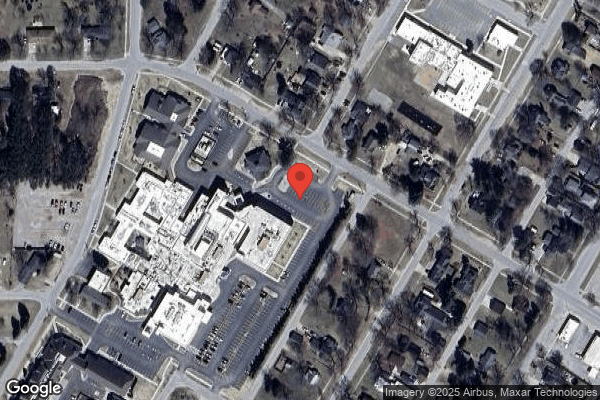

419 South Coral Street, Kalkaska, MI 49646 (231) 258-7500
Government - Hospital district 104 Beds Independent Data: November 2025 1 Immediate Jeopardy citation
Trust Grade
66/100
#131 of 422 in MI
Last Inspection: July 2025

Inspected within the last 6 months. Data reflects current conditions.

Overview

Kalkaska Memorial Health Center has a Trust Grade of C+, indicating it's slightly above average, so families can expect decent care. In Michigan, it ranks #131 out of 422 facilities, placing it in the top half, and it's the only nursing home in Kalkaska County. However, the facility's trend is worsening, with issues increasing from 2 in 2024 to 6 in 2025. Staffing is a strong point with a 5/5 rating and only 19% turnover, much lower than the state average, meaning staff are experienced and familiar with the residents. On the downside, there were $15,945 in fines, which is average, and some concerning incidents, such as a resident eloping and wandering near a busy street, and another resident sustaining a serious injury from a fall due to inadequate fall prevention measures. Additionally, food safety practices were found lacking, which could pose a risk to residents. Overall, while there are strengths in staffing, families should be aware of the facility's increasing issues and some critical incidents.

Trust Score
C+
66/100
In Michigan
#131/422
Top 31%
Safety Record
High Risk
Review needed
Inspections
Getting Worse
2 → 6 violations
Staff Stability
✓ Good
19% annual turnover. Excellent stability, 29 points below Michigan's 48% average. Staff who stay learn residents' needs.
Penalties
✓ Good
$15,945 in fines. Lower than most Michigan facilities. Relatively clean record.
Skilled Nurses
✓ Good
Each resident gets 79 minutes of Registered Nurse (RN) attention daily — more than 97% of Michigan nursing homes. RNs are the most trained staff who catch health problems before they become serious.
Violations
⚠ Watch
12 deficiencies on record. Higher than average. Multiple issues found across inspections.
★★★★☆
4.0
Overall Rating
★★★★★
5.0
Staff Levels
★★★★★
5.0
Care Quality
★★☆☆☆
2.0
Inspection Score
Stable
2024: 2 issues
2025: 6 issues

The Good

  • 5-Star Staffing Rating · Excellent nurse staffing levels
  • 5-Star Quality Measures · Strong clinical quality outcomes
  • Low Staff Turnover (19%) · Staff stability means consistent care
  • Full Sprinkler Coverage · Fire safety systems throughout facility
  • No fines on record
  • Staff turnover is low (19%)

    29 points below Michigan average of 48%

Facility shows strength in staffing levels, quality measures, staff retention, fire safety.

The Bad

Federal Fines: $15,945

Below median ($33,413)

Minor penalties assessed

The Ugly 12 deficiencies on record

1 life-threatening 1 actual harm
Sept 2025 1 deficiency 1 Harm
SERIOUS (G) 📢 Someone Reported This

A family member, employee, or ombudsman was alarmed enough to file a formal complaint

Actual Harm - a resident was hurt due to facility failures

Accident Prevention (Tag F0689)

A resident was harmed · This affected 1 resident

**NOTE- TERMS IN BRACKETS HAVE BEEN EDITED TO PROTECT CONFIDENTIALITY** This citation pertains to intake: 2621196Based on interview and record review, the facility failed to follow fall interventions ...

Read full inspector narrative →
**NOTE- TERMS IN BRACKETS HAVE BEEN EDITED TO PROTECT CONFIDENTIALITY** This citation pertains to intake: 2621196Based on interview and record review, the facility failed to follow fall interventions for one Resident (#4) of five residents reviewed for falls. This deficient practice resulted in a fall with major injury requiring surgery. Findings include: Resident #4 (R4)Review of R4's Electronic Medical Record (EMR) revealed admission to the facility on 6/25/24 with diagnosis including above right knee amputation, dementia, and hemiplegia and hemiparesis following cerebral infarction affecting right dominant side. Review of R4's Minimum Data Set (MDS) assessment dated [DATE] showed a Brief Interview for Mental Status (BIMS) score of 14/15 indicating R4 was cognitively intact. Section GG of the MDS showed R4 required max assistance for toileting and transfers. R4's Fall Risk Evaluation dated 11/21/24 showed a score of 13, indicating a high risk for falls.Review of R4's Progress Note dated 9/9/25 and 9/10/25 read, in part, Approx. (approximately) 9:40 p.m. this nurse called to (R4's room) resident was laying on the floor on her back, resident stated she was on the toilet and stood up by herself to grab a brief and lost her footing and fell.Resident assessed and c/o (complaint of) right hip pain, this nurse phoned E.D (Emergency Department) and gave report.and this nurse sent resident to the E.D. for x-rays and evaluated [sic].fall was unwitnessed. 9/10/25 Approx. 12:20 a.m.,.E.D. called this nurse and resident does have a fractured right hip and is being transferred to [Hospital Name].A witness statement from Certified Nurse Aide (CNA) A dated 9/9/25 read, in part, I had gone into (R4's) room and told her I would be in ASAP (as soon as possible) to get her in the bathroom. It was super busy and I was way behind. I was also trying to get help to turn [Resident room number].I didn't want (R4) to have to wait any longer so I put her in the bathroom and went to [Resident room number] with CNA B. CNA B walked out and went straight to (R4) and found her on the floor.Review of R4's Care Plans read, in part, .The resident is AT risk for falls r/t (related to ) deconditioning dx (diagnosis) right AKA (above knee amputation).Do not leave alone in BR (bathroom) date initiated 10/10/24When CNA A was asked by facility staff if they were aware of R4's care plan intervention to not leave alone in the bathroom, CNA A stated she was not.An interview conducted with the Nursing Home Administrator (NHA) and Director of Nursing (DON) on 9/19/25 at approximately 10:45 a.m. confirmed that CNA A did not follow R4's care plans which contributed to R4's fall and fracture.
Jul 2025 3 deficiencies
CONCERN (D)

Potential for Harm - no one hurt, but risky conditions existed

Deficiency F0688 (Tag F0688)

Could have caused harm · This affected 1 resident

**NOTE- TERMS IN BRACKETS HAVE BEEN EDITED TO PROTECT CONFIDENTIALITY** Based on observation, interview, and record review, the facility failed to follow physician orders for an upper extremity orthot...

Read full inspector narrative →
**NOTE- TERMS IN BRACKETS HAVE BEEN EDITED TO PROTECT CONFIDENTIALITY** Based on observation, interview, and record review, the facility failed to follow physician orders for an upper extremity orthotic for one Resident (#1) of two residents reviewed for range of motion, positioning, and mobility.Findings include:Resident #1 (R1)Review of R1's electronic medical record (EMR) revealed a most recent admission to the facility on 5/24/25 with diagnoses including cerebral infarction (stroke) and hemiplegia (paralysis) affecting the left side. Review of R1s Minimum Data Set (MDS), dated [DATE], revealed a score of 14 on the Brief Interview for Mental Status (BIMS) assessment, indicative of intact cognition.On 7/29/2025 at 10:59 AM, an interview was conducted with R1 who confirmed he suffered a stroke with resulting deficits to the left side of his body. R1's left hand appeared to be edematous with minimal active movement. When asked about interventions for his left arm, R1 stated he was prescribed a left shoulder sling when out of bed for pain management due to a history of shoulder subluxation (when the head of the upper arm bone slips partially out of the shoulder socket).Review of R1's EMR revealed the following physician order, initiated 5/29/25: [Brand name] Sling should be worn when out of bed only.On 7/30/2025 at 11:47 AM, R1 was observed propelling himself in a wheelchair through the hall with his right arm and leg. R1's left arm was observed laying in his lap, without a sling, appearing edematous. When R1 was asked where his sling was, R1 stated, She [certified nursing assistant (CNA)] didn't put it on me. On 7/30/2025 at 3:09 PM, a follow-up interview was conducted with R1 regarding the location of the sling. R1 stated he hadn't seen this sling since he moved from a different unit on the facility approximately a month prior. When asked if R1 refused to wear the sling he admitted , I don't particularly like it, but I wouldn't refuse it. R1 confirmed he had continued discomfort in the left shoulder.On 7/31/2025 at approximately 7:23 AM, R1 was again observed wheeling down to the dining room for breakfast without a sling applied to his left upper extremity. R1's left arm was laying his lap, appearing edematous. On 7/31/2025 at 9:21 AM, an interview was conducted with Nurse Practitioner (NP) E regarding R1's left upper extremity sling. NP E verified she prescribed the left shoulder sling for increased comfort and support due to the flaccidity of R1's arm. When asked the potential outcomes of not wearing the sling when out of bed, NP E stated, increased pain in the left shoulder, for one. On 7/31/2025 at 9:52 AM, an interview was conducted with CNA F regarding orthotic care needs for R1. CNA F stated R1 had a left arm rest on his wheelchair but was unaware of any other care planned interventions for R1's left upper extremity. On 7/31/2025 at 9:55 AM, an interview was conducted with CNA G who was unaware of any care planned interventions for R1's left upper extremity.On 7/31/2025 at 9:56 AM, an interview was conducted with Registered Nurse (RN) H who stated she was unaware of any care planned interventions or orders for R1's left upper extremity.Review of R1's plan of care revealed no interventions for his left upper extremity.Review of R1's EMR revealed the following progress notes:5/21/25 at 1:20 PM: .Patient may benefit [NAME] [sic] shoulder sling on the left upper extremity.5/28/25 at 10:23 AM: .[R1] is having pain in the left shoulder for which he finds wearing his sling helpful .On 7/31/2025 at 11:14 AM, an interview was conducted with the Nursing Home Administrator (NHA) and Director of Nursing (DON) who verified orthotics should be provided as indicated by the physician order. The NHA and DON were also made aware the sling was not care planned properly, and the NHA and DON acknowledged it should have been.Review of the facility policy titled, Safety Device Use in Long Term Care, revised 2/18/25, read, in part: Purpose: To provide a process for safety devices used to maximize the independence and the maintenance of health and safety of an individual by reducing the risk of falls and injuries associated with the resident's medical symptoms. Posture devices:. these devices are used to enable a resident maintain proper body alignment. since most of the residents who will have a need for enablers are somewhat dependent on staff and restorative measures to maintain their current level of function, it is important that residents are visually checked regularly.
CONCERN (D)

Potential for Harm - no one hurt, but risky conditions existed

Infection Control (Tag F0880)

Could have caused harm · This affected 1 resident

Based on observation, interview and record review, the facility failed to follow nursing standards of practice for wound care for one Resident (R5) of two Residents reviewed for pressure injuries. Fin...

Read full inspector narrative →
Based on observation, interview and record review, the facility failed to follow nursing standards of practice for wound care for one Resident (R5) of two Residents reviewed for pressure injuries. Findings include: Review of R5's Electronic Medical Record (EMR) revealed admission to the facility on 1/22/25 with diagnosis including peripheral vascular disease, unstageable pressure ulcer to left heel, and type 2 diabetes. R5 received a 15/15 on the Brief Interview for Mental Status (BIMS) score, indicating she was cognitively intact.On 7/29/25 at 11:05 a.m., R5 was observed sitting in her recliner chair with her left leg placed on top of a folded pillow and a blanket covering her. R5 stated that she was feeling well and confirmed that she had a pressure ulcer on her left heel and was heading to a doctor's appointment at 2:45 p.m. for the wound.On 7/30/25 at 9:54 a.m. an interview was conducted with Registered Nurse (RN) I who stated that R5 will be receiving a wound dressing change at 3:00 p.m. today. An interview with R5 confirmed this Surveyor could observe the wound dressing change. On 7/30/25 at 3:45 p.m. this Surveyor observed the wound dressing change for R5 with RN I and Nurse Technician/Staff J. RN I stated Staff J would be performing the wound dressing change. Staff J confirmed the physician order for R5, gathered supplies and sanitized prior to donning Personal Protective Equipment (PPE) which included gloves and a gown. Staff J entered R5's room and placed a barrier pad underneath residents left lower leg/foot area, removed R5's left shoe, and removed the wrap covering R5's wound placing it in the trash can. It was observed that gauze was still attached to the wound area on R5's left foot. Staff J then took a syringe with saline solution and began to soak the gauze and slowly began to peel it back exposing the wound bed. Once the gauze was fully off the wound bed, Staff J placed it in the trash can and began to apply the new gauze soaked with betadine on the wound. Staff J did not remove her soiled gloves or sanitize hands during the wound observation. After the observation, an interview was conducted with Staff J who confirmed her gloves should have been replaced after taking off R5's shoe and old gauze pad.An interview was conducted with the Nursing Home Administrator (NHA) on 7/31/25 at 10:30 a.m. who confirmed the observation of Staff J not removing soiled gloves was not the facility's standard of practice. Review of the Center for Disease Control and Prevention (CDC) Clinical Safety: Hand Hygiene for Healthcare Workers dated 2/26/24 read, in part, .When to change gloves and clean hands.If moving from work on a soiled body site to a clean body site on the same patient or if a clinical indication for hand hygiene occurs.
CONCERN (E)

Potential for Harm - no one hurt, but risky conditions existed

Deficiency F0552 (Tag F0552)

Could have caused harm · This affected multiple residents

**NOTE- TERMS IN BRACKETS HAVE BEEN EDITED TO PROTECT CONFIDENTIALITY** Based on interview and record review, the facility failed to ensure written consent and education was provided prior to administ...

Read full inspector narrative →
**NOTE- TERMS IN BRACKETS HAVE BEEN EDITED TO PROTECT CONFIDENTIALITY** Based on interview and record review, the facility failed to ensure written consent and education was provided prior to administration of psychotropic medications for 5 Residents (#3, #8, #9, #40, & #72) of 5 residents reviewed for psychotropic consents. Findings include:Resident #9 (R9) A review of R9’s Electronic Medical Record (EMR) indicated R9 was admitted to the facility on [DATE] with diagnosis including dementia with behavioral disturbance. Review of R9’s orders indicated a physician order on 12/1/25 for “RisperiDONE (an atypical antipsychotic thought to work on certain parts of the brain) 0.5 mg (milligrams) Give 1 tablet by mouth two times a day for dementia w(with)/ BPSD (Behavioral and Psychological Symptoms of Dementia) replaces 1 tab daily d/t (due to) failed GDR (Gradual Dose Reduction) w/ relapsed verbal/physical agitation.” Further review of R9’s EMR indicated R40 had a legal guardian (a person appointed by a court to make decisions and care for another individual who is unable to do so themselves, whether due to age (minor) or incapacity (due to disability or other reasons)) responsible for her care within the facility. The EMR revealed psychotropic medications were initiated or continued without documentation of signed informed consents. There was no evidence in the EMR indicating risks, benefits, and alternatives to this medication were discussed with R9 and/or their guardian, and no consent forms were present in the clinical records. Resident #40 (R40) A review of R40’s EMR indicated R40 was admitted to the facility on [DATE] with diagnosis including dementia with behavioral disturbance. Review of R40’s orders indicated a physician order on 7/22/25 for “RisperiDONE Tablet 0.25 MG Give 1 tablet by mouth in the morning for dementia w/ bpsd replaces 0.5mg d/t stable bpsd and weakness w/ dysphagia ADR (Adverse Drug Reaction) AND Give 3 tablet by mouth at bedtime for dementia w/ bpsd give 0.75mg total.” Further review of R40’s EMR indicated a Durable Power of Attorney (DPOA, a legal document that allows a person to designate another person to make medical decisions on their behalf if they become unable to do so themselves due to illness, injury, or other circumstances.) was activated and in place for decision making in R40’s care within the facility. The EMR revealed psychotropic medications were initiated or continued without documentation of signed informed consents. There was no evidence in the EMR indicating risks, benefits, and alternatives to this medication were discussed with R40 and/or their DPOA, and no consent forms were present in the clinical records. On 7/30/25 at 10:32 AM, requested medication consents for R9 and R40 from the NHA (Nursing Home Administrator) and the DON (Director of Nursing), no medication consents were provided. Resident #8 (R8) Review of R8’s Minimum Data Set (MDS) assessment, submitted 5/2/2025, revealed initial admission to the facility 8/3/2020 with diagnoses including dementia with behavioral disturbance, anxiety disorder, and major depressive disorder. Review of R8’s July 2025 medication administration record (MAR) revealed the resident was actively prescribed and receiving the following medications Cymbalta Oral Capsule Delayed Release Particles [an anti-depressant medication], 20 mg [milligrams] with a start date of 11/7/24. Alprazolam 0.25 mg tablet [an anti-anxiety medication] with a start date of 4/22/25. Olanzapine 15 mg tablet [an antipsychotic medication] with a start date of 3/18/24. A review of R8’s EMR revealed no informed consent for Cymbalta, Alprazolam, nor Olanzapine. On 7/30/25 at 10:32 AM, psychotropic medication consents were requested for R8 from the NHA (Nursing Home Administrator) and the DON (Director of Nursing). No medication consents were provided by the time of survey exit. Resident #72 (R72) Review of the EMR revealed R72 was admitted to the facility on [DATE] and had diagnoses including Parkinson’s disease, dementia with psychotic disturbances, and major depressive disorder. Review of R72’s July 2025 MAR revealed the resident was actively prescribed and receiving the following medications: Wellbutrin XL (anti-depressant medication) 300 mg daily. Start date: 4/1/2024. Nuplazid (anti-psychotic medication) 34 mg daily at bedtime. Start date: 3/11/2025 Trazodone HCL (anti-depressant medication) 100 mg daily at bedtime. Start date: 1/27/2025 During review of R72’s EMR no informed consent for the Wellbutrin, Nuplazid or Trazodone could be located. Review of the physician’s progress note revealed no indication the medication regimen was discussed with the resident nor were there any informed consents completed for R72’s actively prescribed psychotropic medications to the resident/resident representative Resident #3 (R3) Review of the MDS assessment, submitted 5/16/2025, revealed R3 was admitted to the facility on [DATE] with diagnoses including psychotic disorder with delusions and major depressive disorder. Review of R3’s July 2025 MAR (medication administration record) revealed the resident was actively prescribed and receiving the following medications: Effexor XR (anti-depressant medication)150 milligram (mg) daily. Start date: 4/01/2024. Effexor XR 75 mg daily, give with Effexor XR 150 mg for total of 225 mg. Start date: 7/02/2025. Lurasidone HCL (anti-psychotic medication) 80 mg daily. Start date: 4/01/2024. Trazodone HCL (anti-depressant medication) 25 mg daily at bedtime. Start date: 7/01/2025. During review of R3’s EMR no informed consent for the Effexor, lurasidone or trazodone could be located. On 7/30/2025 at 2:41 p.m., the Nursing Home Administrator (NHA) presented a physician’s medication review, dated 4/02/2024. Review of the physician’s progress note revealed no indication the medication regimen was discussed with the resident or of informed consent for R3’s actively prescribed Effexor, lurasidone or trazodone being provided to the resident or her representative. During an interview on 7/30/2025 at 2:26 p.m., the Director of Nursing (DON) and the NHA were asked what the facility’s procedure was for obtaining informed consent for psychotropic medications. The NHA reported the facility had no formal process related to informed consent and discussions with resident and/or resident representatives related to medications were not consistently documented. The NHA confirmed no informed consent was obtained prior to starting psychotropic medications and no information was consistently being provided to residents in writing of the need for psychotropic medications, the potential side effects of the medications or alternative treatments available.
May 2025 1 deficiency 1 IJ
CRITICAL (J) 📢 Someone Reported This

A family member, employee, or ombudsman was alarmed enough to file a formal complaint

Immediate Jeopardy (IJ) - the most serious Medicare violation

Accident Prevention (Tag F0689)

Someone could have died · This affected 1 resident

This deficient practice pertains to Facility Reported Incident (FRI) MI00152479. Based on observation, interview, and record review, the facility failed to prevent, detect, and respond to an elopemen...

Read full inspector narrative →
This deficient practice pertains to Facility Reported Incident (FRI) MI00152479. Based on observation, interview, and record review, the facility failed to prevent, detect, and respond to an elopement resulting in the likelihood of serious harm, injury, impairment, or death for one Resident (#1) of four residents reviewed for elopement. Findings include: The Immediate Jeopardy began on 4/11/25 at 7:17 PM when R1 eloped from the facility undetected and was wandering near a busy street and ambulance garage for approximately 19 minutes. R1 was discovered by external entity emergency personnel wandering near the entrance/exit to the ambulance bays. The Nursing Home Administrator (NHA) was notified of the Immediate Jeopardy on 5/1/25 at 4:16 PM. This surveyor confirmed by observation, interview, and record review that the immediacy was removed on 5/2/25 at 11:14 AM, however, noncompliance remains at the potential for more than minimal harm due to sustained compliance which has not been verified by the State Agency (SA). Resident #1 (R1): Review of R1's electronic medical record (EMR) revealed initial admission to the facility on 8/9/24 with diagnoses including dementia with behavioral disturbance, major depressive disorder with psychotic symptoms, and borderline personality disorder (a mental health condition marked by extreme mood fluctuations, instability in interpersonal relationships, and impulsivity). Record review of R1's most recent St. Louis University Mental Status (SLUMS) examination, dated 4/16/25, revealed a score of 19/30, indicative of dementia. Review of R1's MDS Assessment Sections E and G, dated 3/25/25, indicated R1 exhibited wandering behavior occurring 4 to 6 days per week and was independent with mobility. Review of R1's plan of care identified the following focus, initiated 8/10/24: Risk of Wandering/Elopement Identified with an intervention which read, Wanderguard (an electronic wristband used to notify staff of a resident exiting alarmed doors) in place on walker for elopement concerns . Review of R1's Elopement Evaluation, dated 3/11/25, revealed a score of 5, indicating R1 was, at risk of elopement. Review of the FRI submitted to the SA on 4/21/25 at 7:37 PM, included an investigation report which read, in part: .On 4/11/2025 [Licensed Practical Nurse (LPN) B] called and alerted LTC (long term care) on call manager [Registered Nurse (RN) C] that [R1] had eloped from the facility . Camera footage was obtained, and it was discovered that at 7:17 pm [R1] exited her room and walked to the right and down the hallway. Only a few doors down, [R1] approached the fire exit door which is labeled to hold for exit. [R1] was observed to hold the door until its release, she went through the door and walked to the right - through the second exit door outside of the building. (The door did alarm however it is the far end of the building and staff did not hear the alarm until they were halfway down the hall heading towards [R1's] room) . At 7:23 pm [Certified Nursing Assistant (CNA) D] reported .to [R1's] room .and noted the alarm on the door sounding, she immediately checked the exit (6 minutes after [R1] had exited.) [CNA D] did not see [R1] and she went to inform [RN A] . [RN A] was about to page a missing adult alert when EMS [emergency medical services] called to ask if a resident was missing . [R1] returned to long term care at 7:36 pm . During review of the camera footage we [facility] were able to determine that [R1] did not take her walker which had her Wanderguard attached to it . On 5/1/25 at approximately 9:30 AM, the location of R1's room at the time of the elopement was observed in a back hall, around a corner from the nurses' station where it could not be visualized. Approximately 20 feet from R1's room were a set of doors that led to a vestibule between two units of the facility. Inside the vestibule, a delayed exit door was observed leading to the outside of the facility which read, Keep pushing. This door will open in 15 seconds. Alarm will sound. According to the clinical census, R1's room was in the same location from 11/27/24 - 4/16/25. On 5/1/25 at 3:03 PM, an interview was conducted with LPN L regarding care-planned interventions in the event R1 became exit-seeking. LPN L stated R1 refused to wear a Wanderguard around her wrist so the device was attached to her walker. However, LPN L revealed R1 rarely utilized a walker when walking throughout the facility. LPN L confirmed the set of doors that led to the vestibule where R1 eloped on 4/11/25 were equipped with a Wanderguard sensor, but had not alerted staff of R1's exit because she was not using her walker (which had the Wanderguard attached). Review of R1's EMR revealed the following progress notes highlighting a history of exit-seeking behavior: 1. 10/19/24 at 5:46 PM: Pt [patient (R1)] very agitated all shift Pt [R1] was told she needed to stay in the building. She then tried to exit out the front doors. I encouraged her to call her son which she did. She stood in the front entrance of the building with RN and security while the son was on the phone for over 1.5 hrs [hours] while we tried to coax her back into the building . 2. 11/17/24 at 9:53 PM: [R1] was up wandering around the halls . The resident started to walk out the first double doors by the nurse's station. This nurse quickly closed the med cart and followed resident to prevent an elopement. Resident was easily redirected back inside. This nurse suggested making resident a one-on-one, however, the on-call manager initiated every 15 minute checks. Staff were performing this duty when a CNA saw resident beeline it towards the double doors . 3. 11/26/24 at 11:30 AM: This morning [R1] was going to a dental appointment, and this nurse received a call from the transporter that resident was not being safe, she had taken off down the road after she had verbal confrontation with the transporter . 4. 12/26/24 at 5:07 PM: [R1] attempted to leave facility . 5. 12/28/24 at 5:34 PM: .One episode of exiting seeking where she [R1] was walking out the front door . 6. 3/8/25 at 6:11 PM: [R1] very agitated today with exit seeking behaviors. Resident up walking without assistance. Resident tried to leave the building, this RN stood at the door holding it shut and attempted to redirect . 7. 3/22/25 at 6:54 PM: [R1] successfully exited the facility today. She was unaccompanied and walked out the front door. A CNA saw her leave and she was brought back inside . 8. 3/23/25 at 8:00 PM: Approx. [approximately] 2000pm [8:00 PM] this nurse heard the door alarm going off in the front lobby area. Upon entering the room resident was between the first set of doors and second set of double doors leading to the outside . 9. 3/27/25 at 6:14 PM: [R1] experienced some exit seeking behaviors and agitation this afternoon . 10. 4/9/25 at 11:28 PM: At approx. [approximately]. 2000 [8:00 PM], [R1] attempted to leave the facility. This nurse was talking with resident, trying to redirect her, while she was walking toward the exit . Review of R1's EMR revealed the following progress note written on 4/11/25 at 9:47 PM: At approx. [approximately] 1925 [7:25 PM] staff found resident was not in her room. Staff checked all rooms and common areas and did not find resident. At 1930 [7:30 PM] this nurse was about to call a missing adult code when EMS called asking if we were missing a resident. Staff went over to EMS and brought resident back into facility .Resident has a one on one with staff tonight, as she continues to threaten to leave . On 5/1/25 at approximately 12:05 PM, security footage from 4/11/25 was reviewed with Security Officer F which revealed the following events: 1. At 7:17 PM, R1 was observed exiting the facility via a delayed egress door. 2. At 7:23 PM, CNA D was observed shutting off the sounding alarm, glancing out the door window, and returning to the unit. 3. At 7:27 PM, a group of 4 staff members were observed looking out the door window. 4. At 7:36 PM, R1 was observed entering the facility via the main doors with a staff escort. On 5/1/25 at 1:22 PM, a phone interview was conducted with CNA D who verified she first discovered R1 was not in her room on 4/11/25. CNA D stated she was attempting to deliver R1 a snack in an effort to distract her from exit-seeking behaviors when she noticed the room was empty. CNA D recalled hearing the door alarm sounding and subsequently peaked outside through the window, but did not see anybody. When asked why she did not complete a more thorough search before disengaging the alarm, CNA D replied, I just thought there was no way she went outside . I just figured she was in another resident's room. CNA D stated she notified LPN B R1 was not in her room and began searching facility rooms. CNA D stated after searching inside the facility for several minutes, she told LPN B about the alarm sounding. When asked about R1 behaviors prior to the elopement, CNA D confirmed R1 had been verbalizing her desire to leave the facility but does not recall the implementation of any interventions as it was difficult to ascertain if R1 was, serious [about leaving the facility]. CNA D stated she did not recall receiving education or a de-briefing following R1's elopement from facility management. On 5/1/25 at 5:23 PM, a phone interview was conducted with LPN B regarding R1's elopement on 4/11/25. LPN B stated CNA D initially asked if she knew R1's whereabouts. When LPN B was informed R1 was not in her room, facility staff began searching room-to-room. LPN B stated RN A was the charge nurse on duty and began looking for the facility elopement policy because she was unfamilar with elopement protocol. LPN B stated she realized the urgency of the situation and decided to call the on-call manager for further direction instead of looking for the policy. LPN B recalled after several minutes of searching rooms, CNA D had relayed to her, The door alarm was going off, but I didn't see anybody, so I reset it. LPN B stated a group of staff members looked around the exit but did not see anybody. LPN B said, eventually, the facility received a call from EMS with a description of a person who matched R1. LPN B did not recall if R1 was exhibiting exit seeking behaviors earlier that day. LPN B verified she did not receive any education or participate in an in-service following the elopement. On 5/2/24 at 1:37 PM, an interview was conducted with CNA E regarding R1's behaviors on 4/11/25. CNA E recalled telling an on-duty nurse that staff, should keep an eye on R1 as she was repeatedly asking CNA E to let her outside earlier in the shift. CNA E was not aware of any additional interventions put into place following these vocalizations. Review of R1's EMR revealed the following progress note, written 4/11/25 at 6:04 PM (approximately 80 minutes prior to R1's successful elopement): .[R1] having increased agitation and exit seeking. [R1] attempted to leave facility today, door was held closed by this RN which worsened agitation and [R1] became physically aggressive slapping RN in the face and pulling hair. Security was called and [R1] redirected back into the building by 2 CNAs . On 5/1/25 at 11:19 AM, the alarmed door from which R1 eloped, was opened by the NHA to demonstrate the reprogramming of fire alarm exits alerts to staff pagers to this Surveyor. After several minutes of no response to the alarm by staff, the NHA interviewed the floor staff to investigate the lack of response. CNA H stated she received the page but was on lunch break, so she did not respond. CNA I stated she was providing cares to another resident, but verified she received the alert on her pager. CNA G stated she assumed a different staff member was responding to the alert. LPN J was observed standing at a medication cart and did not offer a reason for not investigating the door alarm. All staff verified the notification came to their pager. The NHA stated, They should have responded. Review of the facility policy titled, Elopement precautions, long-term care, revised 2/24/25, read, in part: .Residents with psychiatric disorders .are prone to elopement . Purposeful wandering, including exit-referenced behavior, may predict elopement in residents with dementia . Residents at risk for elopement typically: have significant short-term memory impairment; manifest exit-seeking behaviors, such as verbalizing a desire to go home, staying close to entrance or exit doors, or actually trying to leave . .Preventing elopement: Make sure that the resident is properly assigned to a unit and room based on the elopement risk because a resident at risk for elopement may require a room that's located away from exits, close to the nurses' station, or in a secured unit that requires computer-coded entry and exit to ensure the resident's safety . .Responding to Elopement: Arrange a staff huddle to update staff on the status of the search and gather information that may have been missed during the initial data-gathering process. Use this time to reinforce safety procedures to prevent future elopement . The Immediate Jeopardy which began on 4/11/25 was removed on 5/2/25 at 11:14 AM when the facility took the following actions to remove the immediacy: The facility will immediately change the following: IMMEDIATE ACTION: As of May 1st, 2025, all staff will be educated immediately within 24 hours that they acknowledge and understand that in the event they hear an exit door alarming, they observe the alarm on the facility monitors or a page is obtained stating that an exit door has been opened or is alarming they will respond immediately to investigate. If staff are caring for a resident when this alert is obtained, they will ensure their resident is safe and then respond promptly. Staff that have not signed stating understanding within 24 hours will not be permitted to work until education has been obtained. Any staff who are found not to be compliant will be reeducated immediately. Door alarms were set off and [the NHA] and [Director of Quality and Compliance K] verified that notifications were sent to staff pagers and facility monitors. Resident #1 will be moved to the locked unit in LTC within 24 hours once appropriate notifications have been made due to her noncompliance to wear a wanderguard and her risk of elopement. Until this move occurs she will be placed on 1:1 monitoring when out of her room. All residents who score a 1.0 or higher on the elopement assessment have been reassessed to ensure proper interventions are in place. As of 5/2/2025 the likelihood for serious injury, serious harm, serious impairment or death no longer exists. NEW PROCEDURES / PROCESSES FOR RESPONSE TO EXIT DOORS ALARMING AND RESIDENTS ASSESSED TO BE AN ELOPEMENT RISK. Any resident in the facility that is deemed to be an elopement risk a wanderguard will be placed and care planned for that resident. Any resident that is refusing to wear a wanderguard will be moved to the locked unit in long term care for increased supervision and safety. If a bed is not available in the locked unit, the resident will be placed on 1:1 supervision until an appropriate room is available.
Feb 2025 1 deficiency
CONCERN (D) 📢 Someone Reported This

A family member, employee, or ombudsman was alarmed enough to file a formal complaint

Potential for Harm - no one hurt, but risky conditions existed

Notification of Changes (Tag F0580)

Could have caused harm · This affected 1 resident

**NOTE- TERMS IN BRACKETS HAVE BEEN EDITED TO PROTECT CONFIDENTIALITY** This citation pertains to intake MI00150384. Based on record review and interview, the facility failed to notify the legal guard...

Read full inspector narrative →
**NOTE- TERMS IN BRACKETS HAVE BEEN EDITED TO PROTECT CONFIDENTIALITY** This citation pertains to intake MI00150384. Based on record review and interview, the facility failed to notify the legal guardian of one Resident (#6) of one resident reviewed for notification of change in condition. Findings Include: Resident #6 (R6) A review of the medical record indicated R6 had a court appointed guardian, who was listed as the #1 emergency contact and a private caretaker who was listed as #2 emergency contact. A nurse's note on [DATE] at 6:33 PM charted by Registered Nurse (RN) A read in part: . (R6) deceased at 1333 (1:33 PM) today. (R6) had a bed bath at 1100. (R6) was wearing O2 (Oxygen) at 4 LPM (Liters Per Minute) via nasal cannula. (R6) was not awake during bath. (R6) resp (respiratory) were reg (regular) but he was blue when HOB (Head of Bed) was flat. O2 sat 72 on 4 LPM (R6) is on Hospice care for Pulmonary Hypertension. (R6) was bladder scanned at 1015 this am for 275 cc (cubic centimeters). (R6) was not (straight) cathed (catheterized) (a tube placed in body to drain urine). at 1330 (1:30 PM) Nurse and CENA (Certified Evaluated Nursing Assistant) went into (R6) room and found him sitting on the floor beside the bed leaning against the bed with O2 off. no resp rate or HR (Heart Rate) noted. (R6) was pronounced Dead at 1333. (R6) bed was in the lowest position and there was a mattress beside his bed that he was care planned to have due to his climbing out of bed and crawling to the door. the mattress was moved out of the way by him we think when he got out of bed. he was put back to bed with a hoyer lift and caregiver, guardian and sister called. Hospice also called. Guardian here to see him. organ donation called and they checked to see if tissue or eyes could be donated. they called back late afternoon and denied them. medical examiner called and told per hospice Dr. Medical examiner released the body. Morge (sic) called, and body picked released with glasses, stuffed cat and FBI hat at 1830(6:30 PM). belongings will be picked up by . his care giver on another day. While conducting an interview with RN A on [DATE] at 1:41 PM, RN A stated they had called the private caretaker, but was not the one who had contacted the guardian. RN A stated they believed it was nurse B who had called the guardian. This contradicts the nursing note that RN A had charted on [DATE]. During a phone interview on [DATE] at 1:43 PM, with R6's guardian C stated that the facility had not called to alert her to R6's death. Guardian C stated they had received a text message from the NHA that had said sorry for your loss, but the text didn't state who it was for, causing confusion to Guardian C. Guardian C stated the caregiver then texted asking if guardian C had received a phone call, to which guardian C responded they had not. The caregiver then asked guardian C to call them, at which time the caregiver notified guardian C of R6's death. On [DATE] at 2:02 PM a phone interview was conducted with nurse B regarding the death of R6. Nurse B stated they were a nurse float on [DATE]. Nurse B stated they were told not to call the guardian by someone, that person would call the guardian. Nurse B could not remember who that was. This revealed that there was no clear protocol in place to ensure responsible parties were contacted upon a resident's death. On [DATE] at 3:45 PM, the facility provided a Transfer and Discharge policy, that did not include protocols to perform upon a resident's death. The NHA (Nursing Home Administrator) and the Director of Compliance and Quality Assurance, Staff D, could not locate a policy related to notifications of a death. However, the NHA and Staff D provided a Death Checklist of Procedure. The NHA and Staff Dindicated the nurses were expected to follow this procedure guide. The fifth task in the Death Checklist of Procedure stated: Charge nurse to notify and ask emergency contact located in My Unity under census, resident information and then related parties if he/she plans to come in, would like body released to funeral home and if belongings should be left in room or proved to the funeral home.
Aug 2024 2 deficiencies
CONCERN (D)

Potential for Harm - no one hurt, but risky conditions existed

Deficiency F0692 (Tag F0692)

Could have caused harm · This affected 1 resident

Based on observation, interview, and record review, the facility failed to ensure an appropriate therapeutic diet was implemented for two Residents (#67 and #70) of 2 residents reviewed for nutrition ...

Read full inspector narrative →
Based on observation, interview, and record review, the facility failed to ensure an appropriate therapeutic diet was implemented for two Residents (#67 and #70) of 2 residents reviewed for nutrition and hydration. This deficient practice resulted in the potential for unmet nutritional needs. Findings include: Resident #67 (R67): Review of R67's electronic medical record (EMR) revealed initial admission to the facility on 4/26/24 with diagnoses including malignant neoplasm of the cerebellum (brain cancer), failure to thrive, and severe protein-calorie malnutrition. Review of clinical census data revealed R67 signed with hospice services on 5/28/24. On 8/26/24 at approximately 11:32 AM, R67 was observed laying in bed with an emaciated (abnormally thin looking) appearance including sunken cheeks, a visible ribcage, and little muscle bulk. R67 was not alert and was unresponsive to questioning. R67 expired on 8/27/24 at 11:35 AM. Review of R67's EMR revealed a physician order, initiated 8/14/24, which read: NPO [nothing by mouth, including food and liquid] diet, NPO texture, NPO consistency. Review of a Health Status Note, written by Physician Assistant (PA) F on 8/14/24, read, in part: Hospice RN [Registered Nurse] in today and feels [R67] is transitioning and now entering final hours to day or two of life . not safe to give anything PO [by mouth] outside of comfort meds . change diet to npo. On 8/27/24 at 12:12 PM, an interview was conducted with PA F who verified she changed R67's diet order to NPO on 8/14/24. PA F stated she was notified by hospice staff R67 was no longer alert and unsafe to consume food or water. PA F stated, I later found out his level of consciousness was fluctuating significantly, so staff were comfort feeding him as he was awake and alert. When asked if R67 had an available source of nutrition from the time the NPO order was initiated on 8/14/24 until his death on 8/27/24, PA F confirmed the diet order should have been written in a way that better reflected R67's cognitive status and subsequent ability to safely consume food and beverage. On 8/27/24 at 12:30 PM, an interview was conducted with Registered Dietitian (RD) A who stated she was involved in R67's care as a food service director. RD A stated as a standard of practice, R67's diet order should have been contingent on his level of consciousness in order to make decisions on nourishment intake more resident-centered in R67's last days of life. Review of R67's (State)-POST (Physician orders for Scope of Treatment), dated 5/28/24 read, in part: .Medical Interventions .Comfort-Focused Treatment . Primary goal of maximizing comfort. May include pain relief through use of medication, positioning, wound care, food and water by mouth . Resident #70 (R70): Review of R70's EMR revealed admission to the facility on 6/5/24 with diagnoses including dementia, malignant neoplasm of liver, bile duct, and colon. R70 was admitted on [Hospice Name] services on 6/5/24 on a regular diet. Review of R70's (State) POST signed on 6/5/24 read, in part, .DO NOT attempt Resuscitation/CPR (No CPR, allow Natural Death) .Comfort-Focused Treatment: Primary goal of maximizing comfort. May include pain relief through use of medication, positioning, wound care, food and water by mouth, and non-invasive respiratory assistance . Review of R70's progress notes from 6/5/24 - 7/13/24 read: 6/13/24 .patient having increased abdominal distention and discomfort. Family was worried he was constipated .Hospice feels the distention is related to tumor burden . 7/10/24 .Patient still requiring 1:1 care due to fall risk and risk of injury .Resident only able to eat soft foods and his intake is significantly decreased . 7/10/24 .Call lights and fluiods [sic] within reach. Staff and this nurse providing 15-minute checks . 7/11/24 .RN from Hospice here, (R70) has been obtunded all day today .Plan: 1) D/C all oral meds (medications) except for palliative meds d/t (due to) unable to take PO any longer 2) change to NPO 3) continue oral hygiene Q2 hrs (every 2 hours) 7/11/24 .Resident's diet was also changed to NPO due to his decreased responsiveness. Staff will continue to monitor 7/13/24 .Resident pronounced at 02:54 a.m. Review of R70's Food Intake from 6/5/24 - 7/13/24 revealed the following: 0-25% of food acceptance - 6 times 26-50% of food acceptance - 8 times 51-75% of food acceptance - 24 times 76-100% of food acceptance - 65 times Resident refused - 1 time Review of R70's Fluid Intake from 6/5/24 - 7/13/24 revealed the following: 0-240 mLs (milliliters) - 22 times 241-480 mLs - 32 times 481-800 mLs - 46 times >800 mLs - 26 times Resident refused - 0 times On 8/28/24 at 10:46 AM, an interview was conducted with the Nursing Home Administrator (NHA), the Director of Nursing (DON), and the Director of Compliance and Quality Assurance G who verified R70 and R67 lived for 2 and 13 days after an NPO diet order was initiated, respectively. All parties confirmed R70's and R67's diet orders should have reflected their level of consciousness to ensure they could safely consume food and beverage per their request while simultaneously following physician orders. Review of facility policy titled, Caring for Patients at End of Life, revised 8/1/24, read, in part: .Decisions to prolong life with the support of advanced medical interventions and technologies or to allow the natural dying process can create ethical challenges for physicians and decisional burdens for patients and/or their loved ones. These challenges can be minimized through the application of ethical principles: Respect for patient autonomy: protect the patient's rights to self-determination per their end-of-life care goals and medical standards .
CONCERN (F)

Potential for Harm - no one hurt, but risky conditions existed

Food Safety (Tag F0812)

Could have caused harm · This affected most or all residents

Based on observation, interview and record review, the facility failed to store, prepare, distribute, and serve food in accordance with professional standards for food service safety. This deficient p...

Read full inspector narrative →
Based on observation, interview and record review, the facility failed to store, prepare, distribute, and serve food in accordance with professional standards for food service safety. This deficient practice has the potential to result in food borne illness among any and all 81 residents. Findings include: On 8/26/24 at approximately 9:45 AM, a Lexan container was observed in the walk in cooler (WIC) with a label identifying the contents as beef tenderloin, with a production date of 7/14 and use by date of 7/16. An interview with Kitchen Manager (KM) A was conducted at this time and was learned the container had been pulled from the freezer. KM A could not identify the date the product had been removed from the freezer and therefore did not know when the product was to be discarded if not used. KM A reviewed slacking logs which were explained to be documentation of the dates food was removed from the freezer to be thawed (slacked) to be used at a later date. KM A stated there was no documentation as to the date when the product had been removed, and stated it would be discarded. On 8/26/24 at approximately 9:55 AM, the walk in freezer (WIF) was observed to have a two gallon Lexan container labeled fajita meat with a prep date of 5/04 and another labeled meat loaf with a prep date of 4/30. KM A was requested to review documentation to demonstrate the products had been properly cooled. KM A reviewed the kitchen documentation for the dates identified and reported the documentation did not include the two products. The FDA Food Code 2017 states: 3-501.17 Ready-to-Eat, Time/Temperature Control for Safety Food, Date Marking. (B) Except as specified in (E) -(G) of this section, refrigerated, READY-TO-EAT TIME/TEMPERATURE CONTROL FOR SAFETY FOOD prepared and PACKAGED by a FOOD PROCESSING PLANT shall be clearly marked, at the time the original container is opened in a FOOD ESTABLISHMENT and if the FOOD is held for more than 24 hours, to indicate the date or day by which the FOOD shall be consumed on the PREMISES, sold, or discarded, based on the temperature and time combinations specified in (A) of this section and: Pf (1) The day the original container is opened in the FOOD ESTABLISHMENT shall be counted as Day 1; Pf and (2) The day or date marked by the FOOD ESTABLISHMENT may not exceed a manufacturer's use-by date if the manufacturer determined the use-by date based on FOOD safety. Pf (C) A refrigerated, READY-TO-EAT TIME/TEMPERATURE CONTROL FOR SAFETY FOOD ingredient or a portion of a refrigerated, READY-TO-EAT, TIME/TEMPERATURE CONTROL FOR SAFETY FOOD that is subsequently combined with additional ingredients or portions of FOOD shall retain the date marking of the earliest-prepared or first-prepared ingredient. (D) A date marking system that meets the criteria stated in (A) and (B) of this section may include: (1) Using a method APPROVED by the REGULATORY AUTHORITY for refrigerated, READY-TO-EAT TIME/TEMPERATURE CONTROL FOR SAFETY FOOD that is frequently rewrapped, such as lunch meat or a roast, or for which date marking is impractical, such as soft serve mix or milk in a dispensing machine; (2) Marking the date or day of preparation, with a procedure to discard the FOOD on or before the last date or day by which the FOOD must be consumed on the premises, sold, or discarded as specified under (A) of this section; On 08/26/24 at approximately 10:10 AM, staff were observed making ham salad sandwiches in the kitchen. The task was identified as placing a ground ham meat mixed with mayonnaise from a large container (approximately 1 gallon in volume) onto bread. At approximately 11:36 AM ham sandwiches were observed in a stainless steel hotel pan waiting to be served at the noon meal. An interview with Food Service Worker (FSW) B was conducted at this time and learned the sandwiches observed were those which were being made about an hour and half earlier. The temperature of the meat filling (ham salad) was measured with a metal probe Super Pen thermometer and found to be 54°F to 56°F. At approximately 12:10 PM the sandwiches were again measured with the same thermometer and found to be between 54°F and 58°F. An interview with FSW B was conducted at this time who was asked what the plan was for the sandwiches not served at the meal. FSW B stated they would be placed in a refrigerator and used at a later time/meal. At 12:30 PM an interview with KM A was conducted with the sandwich temperature observation and interview information from FSW B shared. KM A stated the sandwiches, due to the temperature deficiency, should not be stored following the noon meal. The FDA Food Code 2017 states: 3-501.16 Time/Temperature Control for Safety Food, Hot and Cold Holding. (A) Except during preparation, cooking, or cooling, or when time is used as the public health control as specified under §3-501.19, and except as specified under (B) and in (C ) of this section, TIME/TEMPERATURE CONTROL FOR SAFETY FOOD shall be maintained: (1) At 57°C (135°F) or above, except that roasts cooked to a temperature and for a time specified in 3-401.11(B) or reheated as specified in 3-403.11(E) may be held at a temperature of 54°C (130°F) or above;P or (2) At 5ºC (41ºF) or less. On 8/27/24 at approximately 1:45 PM, staff were observed in the dish room conducting dish washing activities with the high temperature mechanical dish machine. When the dish machine was opened, following a completed cycle of washing, rinsing and sanitizing, steam was released which quickly rolled out from under the capture hood. Some of this steam was observed to contact a ceiling mounted air deflector from the cooling system. The steam was observed being condensing then dripping onto the floor, near the clean end of the three compartment sink. It was confirmed the exhaust hood motor was in the ON position. An interview with KM A at this time revealed the dish machine was just about a year old, and she did not know if any modifications to the exhaust had been made. KM A agreed the steam should be captured by the hood to prevent the condensation and dripping into the clean area. The FDA Food Code states: 4-204.11 Ventilation Hood Systems, Drip Prevention. Exhaust ventilation hood systems in FOOD preparation and WAREWASHING areas including components such as hoods, fans, guards, and ducting shall be designed to prevent grease or condensation from draining or dripping onto FOOD, EQUIPMENT, UTENSILS, LINENS, and SINGLE-SERVICE and SINGLE-USE ARTICLES. On all days of the survey, it was observed that the marble type counter top to the right of the steam table (standing behind looking into the dining room) had two large cracks running the entire depth and thickness of the surface. This area could no longer be properly cleaned and sanitized. On 8/27/24 at approximately 2:40 PM an interview with KM A was conducted who agreed the counter needed to be replaced. The FDA Food Code 2017 states: 4-501.11 Good Repair and Proper Adjustment. (A) EQUIPMENT shall be maintained in a state of repair and condition that meets the requirements specified under Parts 4-1 and 4-2 and 4-501.12 Cutting Surfaces. Surfaces such as cutting blocks and boards that are subject to scratching and scoring shall be resurfaced if they can no longer be effectively cleaned and SANITIZED, or discarded if they are not capable of being resurfaced.
Oct 2023 2 deficiencies
CONCERN (E)

Potential for Harm - no one hurt, but risky conditions existed

Menu Adequacy (Tag F0803)

Could have caused harm · This affected multiple residents

Based on observation, interview and record review, the facility failed to follow menus developed by the registered dietitian for 10 residents, of a total 78 residents. This deficient practice has the ...

Read full inspector narrative →
Based on observation, interview and record review, the facility failed to follow menus developed by the registered dietitian for 10 residents, of a total 78 residents. This deficient practice has the potential to result in nutritional deficiency to these 10 residents. Findings include: On 10/3/23 at 12:10 PM, observations were made of the noon meal service in the area designated as Greenhouse North. (GH=N). A foil pan of commercially prepared macaroni and cheese was sitting on the counter, carrots were being cooked on a stove top, and commercially canned fruit cocktail was observed in small serving dishes. An interview with Certified Nurse Aide (CNA) B was conducted at this time and learned she and other CNAs assigned to the GH-N were responsible for preparing meals and the macaroni and cheese, carrots and fruit cocktail were being served for the lunch meal. A review of the menus provided by the facility was conducted and learned the meal was planned to be both Macaroni & Cheese, meat loaf, french style green beans, orange slices and lemon dessert. The meat loaf and lemon dessert were not offered. On 10/3/23 at approximately 1:30 PM, an interview with Registered Dietitian (RD) A was conducted and learned GH-N was supposed to follow the same menus as the rest of the facility and was surprised the meat loaf and lemon dessert were not prepared and offered, as well as the vegetable substitute. At approximately 2:00 PM an interview was conducted with CNA B who stated the staff on GH-N did not necessarily follow the facility menus and prepared what the residents wanted. CNA B did not know if the changed menus were reviewed by the facility RD. On 10/4/23 at approximately 8:15 AM, an interview was conducted with RD A who stated the changes to the menus were not approved and they were not aware of the changes. Further review of the past meal service documentation (untitled food documentation) revealed within the past three days none of the facility menus had been followed for either the noon or evening meals as follows: Sunday 10/1/23 Lunch: Facility menu planned: Beef roast, roasted potatoes; carrots&onions; fresh apple slices; sherbet. Turkey noodle soup was the only food item documented as being served. Sunday 10/1/23 Dinner: Facility menu planned: Hot Dog on bun; Turkey salad sandwich; Baked Beans; Yellow beans; tossed salad; watermelon; red velvet cake. Cheese burger and fries were the only documented foods served. Monday 10/2/23: Lunch: Facility menu planned: Taco Salad/tacos; tuna salad sandwich; fresh sauteed zucchini; pineapple tidbits; butterscotch pudding. Meatloaf, mashed potatoes, and cauliflower were documented as being served. Monday 10/2/23 Dinner: Facility Menu Planned: Rolled Lasagna; Bologna sandwich; cheese breadstick; mixed vegetables; pear halves; lemon ice: Cream of broccoli soup and egg salad sandwich were documented as being served. Tuesday 10/3/23 Lunch: Facility Menu Planned: Meatloaf; Mac&Cheese; French style [NAME] beans; fresh orange slices; Coconut cake. Ham and Macaroni &Cheese; fruit cocktail and carrots were documented as being served. Tuesday 10/3/23 Dinner: Facility menu planned: Chicken tenders; roast beef sandwich; American fried with onions; beet salad; fruit cocktail; sugar cookies; No entry for food served was located. On 10/4/23 at approximately 2:00 PM, an interview was conducted with the Nursing Home Administrator and Director of Nursing who stated this practice was not acceptable.
CONCERN (E)

Potential for Harm - no one hurt, but risky conditions existed

Food Safety (Tag F0812)

Could have caused harm · This affected multiple residents

Based on observation, interview and record review, the facility failed to store, prepare, distribute, and serve food in accordance with professional standards for food service safety as evidenced by: ...

Read full inspector narrative →
Based on observation, interview and record review, the facility failed to store, prepare, distribute, and serve food in accordance with professional standards for food service safety as evidenced by: A. Failing to ensure a staff person washed their hands after being potentially contaminated. B. Failing to ensure the dish machines used for the washing, rinsing and sanitizing of food contact surfaces were tested for proper sanitizing. This deficient practice was observed on a [NAME] House unit housing 10 of the 78 facility residents, with this unit preparing the meals for only these 10 residents. Findings include: A. On 10/4/23 at approximately 7:35 AM Certified Nurse Aide (CNA) B was observed entering the kitchen area, wearing gloves. CNA B disposed of an item by pushing her gloved hand down into the garbage can, coming into contact with the swinging lids of the can, then proceeded over to the oven and began preparing pancakes for the residents. CNA B failed to remove her gloves and wash her hands. The FDA Food Code 2017 states: 2-301.14 When to Wash. FOOD EMPLOYEES shall clean their hands and exposed portions of their arms as specified under § 2-301.12 immediately before engaging in FOOD preparation including working with exposed FOOD, clean EQUIPMENT and UTENSILS, and unwrapped SINGLE-SERVICE and SINGLE-USE ARTICLES and: (A) After touching bare human body parts other than clean hands and clean, exposed portions of arms; E) After handling soiled EQUIPMENT or UTENSILS; (F) During FOOD preparation, as often as necessary to remove soil and contamination and to prevent cross contamination when changing tasks; (G) When switching between working with raw FOOD and working with READY-TO-EAT FOOD; (H) Before donning gloves to initiate a task that involves working with FOOD; and (I) After engaging in other activities that contaminate the hands. B. On 10/4/23 at approximately 9:30 AM an interview was conducted with CNA C. CNA C acknowledged the nursing staff were responsible for the preparation and service of all meals on the [NAME] House unit. When asked about the testing of the dish machine to ensure proper sanitizing, CNA C stated it was no longer conducted, stating further, There used to be strips down here, but I haven't seen them in a long time. The FDA Food Code 2017 states: 4-302.13 Temperature Measuring Devices, Manual and Mechanical Warewashing. (B) In hot water mechanical WAREWASHING operations, an irreversible registering temperature indicator shall be provided and readily accessible for measuring the UTENSIL surface temperature.
Apr 2023 2 deficiencies
CONCERN (D) 📢 Someone Reported This

A family member, employee, or ombudsman was alarmed enough to file a formal complaint

Potential for Harm - no one hurt, but risky conditions existed

Accident Prevention (Tag F0689)

Could have caused harm · This affected 1 resident

**NOTE- TERMS IN BRACKETS HAVE BEEN EDITED TO PROTECT CONFIDENTIALITY** This citation relates to Intakes #MI00135793, #MI00133897. Based on observation, interview, and record review, the facility fai...

Read full inspector narrative →
**NOTE- TERMS IN BRACKETS HAVE BEEN EDITED TO PROTECT CONFIDENTIALITY** This citation relates to Intakes #MI00135793, #MI00133897. Based on observation, interview, and record review, the facility failed to prevent falls and accidents/equipment safety for two Residents (#1, #2) of three residents reviewed for falls. This deficient practice resulted in a rib fracture with pain for Resident #1, and right knee effusion (swelling and irritation) with pain for Resident #2, with the potential for medical, psychosocial, and functional decline or adverse outcomes. Findings include: Resident #2: Review of Resident #2's Face sheet revealed Resident #2 was admitted to the facility on [DATE], with diagnoses including diabetes, heart failure, obesity, kidney transplant, peripheral vascular disease [narrowing of arteries reducing blood flow], kidney disease, paraplegia [paralysis of legs], and depression. Review of Resident #2's Care Plan, revealed Resident #2 required 1-to-2-person assistance with a standing mechanical lift and green sling. The Care Plan further revealed Resident #2 required extensive assistance with dressing and bathing, and limited assistance with grooming, with cognition designated as alert and confused. The interdisciplinary fall care plan revealed, I am at increased risk for a fall r/t [related to] BLE [bilateral lower extremity] weakness . Review of Resident #2's accident and incident report, dated 12/09/22 at 8:00 am., received from the Director of Nursing (DON) revealed, On 12/09/2022 at 0400 (4:00 a.m.), [Resident #2] had his call light on .[Certified Nurse Aide (CNA) T] went to answer it and found [Resident #2] on the floor between his bed and the wall. [Resident #2] said he was ok .It was noticed his bed locks [on the facility bed] were not locked .An investigation was completed .[Resident #2] has multiple diagnoses including diabetic neuropathy [nerve damage], osteomyelitis [bone infection], and hypokalemia [low potassium]. [Resident #2] is his own person. [Resident #2's] BIMS [Brief Interview for Mental Status assessment] score is at a 14 [scoring cognitively intact at the time of the incident]. [Resident #2] has a history of falls .On 12/09/22, at 0400, [Resident #2] had his call light on. [CNA T] walked into the room .[CNA T] did see his hand and heard someone say, 'I am down here.' .[Resident #2] was on the floor between the bed and the wall. [Resident #2] told [CNA T] he was trying to reposition himself in bed and his leg fell off the bed when he slipped through the bed and wall .[CNA T] reported he was ok .and was assisted back to bed with a total lift and did not complain of pain. The bed was not locked but it was in the lowest position, per Licensed Practical Nurse (LPN) EE. LPN EE assessed Resident #2 and he did not complain of pain [initially] but later in the day he did complain of right leg pain. He did receive PRN [as needed] Tylenol [Over the Counter (OTC)] pain medication and an ice pack to the area .the x-ray did show no evidence of fracture but did show effusion to the right knee .Physical Therapy was ordered for the knee effusion. An RCA [Root Cause Analysis meeting] was held, and it was found some of our beds are unlocking easier than they should be .We [nursing management] identified this .We found some [of the beds] are hard to lock but easy to unlock .We have also placed a bariatric bed in [Resident #2's] room . Review of the facility's RCA report, dated 12/13/22, revealed Resident #2 rolled out of bed onto the floor between the bed and the wall on 12/09/23. The flow diagram showed Resident #2 had been checked on at 2:00 a.m. (2 hours prior to the incident) and rolled out of bed when his right leg slipped off the edge of the bed, and CNA T found him on the floor, with no complaints of pain. Team reviewed with nursing staff it is in their scope of practice to ensure resident beds are locked when they are caring for residents. It was found some beds were becoming easily unlocked by touch, and this was addressed by having restorative staff checking all beds, maintenance doing repairs, and ensuring housekeeping and other staff were aware beds were unlocking easily. Resident #2 was to be evaluated for a bariatric bed, cradle mattress and a trapeze per this meeting. During an interview on 04/20/23 at 4:45 p.m., Registered Nurse (RN) I confirmed Resident #2 had complained of leg pain at the time of the incident on 12/09/22, and an x-ray was ordered. RN I recalled the x-ray being negative (for a fracture) and showing he had a knee effusion. During an interview on 04/20/23 at 5:00 p.m., Physical Therapist (PT) S, with the Rehabilitation Director, Physical Therapist Assistant (PTA) Q and a treating therapist, PTA R present, was asked about Resident #2's functional status before the fall, and any change of condition, increased pain, and therapeutic interventions after the fall. PT S and PTA R reported Resident #2 required the standing lift with staff, and in therapy he typically required moderate to maximal assistance for full transfers, due to performance inconsistencies and medical illnesses/infections. PTA R reported Resident #2 did have some right lower extremity weakness and paralysis prior to the incident and reported Resident #2's cognition fluctuated with frequent infections, which caused some intermittent confusion and altered mental status. Surveyor reviewed clinical condition of knee effusion with physical therapy team, who concurred knee effusion was a swollen knee with excess fluid, which likely occurred from the trauma of the fall, which caused irritation from cartilage being injured and potentially muscle injury. Physical Therapy was treating him at the time of injury, and did not address the knee injury, as Resident #2 did not use this leg as it was paralyzed. PT S reported Resident #2 described the injury occurring when Resident #2 was rolling in bed to turn his call light off and over rolled between the bed and the wall, and he ended up straining his knee and may have twisted his leg on his way to the ground. PT S reported they would expect the facility beds to be locked at all times, including Resident #2's bed. PT S reported Resident #2 was at baseline after the injury, and PT was still able to ambulate Resident #2 with assistance, as PT staff continued to lock his right knee during ambulation, and his transfers remained the same subsequent to the incident/injury. During an interview on 04/21/23 at 8:44 a.m., CNA T confirmed the incident occurred on 09/12/22 at 4:04 a.m., and reported she walked into Resident #2's room to check on him and saw his hand and he said, Somebody help me. CNA T reported Resident #2 stated he was trying to position himself in the bed, his right leg slid off between the wall and bed, and the bed moved because of the pressure of his leg slipping off, and he slipped off the bed onto the floor. CNA T denied Resident #2 having pain at the time of the occurrence, and immediately notified their nurse and obtained vitals. CNA T reported Resident #2's mood was positive, and they were not distressed about the incident. Surveyor asked CNA T why Resident #2's bed was unlocked. CNA T responded, I take full responsibility for the bed being unlocked. When you're going room to room, I should have checked the bed at shift [change] report when I arrived .at 10:00 p.m CNA T acknowledged there were multiple opportunities for them to check the bed, and reported they received a verbal reeducation. CNA T reported some of the beds would become unlocked easily if one accidently struck the brake unintentionally with their foot, but had not reported the concern. CNA T stated after the incident maintenance checked the beds to make sure they were locked. CNA T reported after the incident they had been educated to check the beds and make sure they were locked at the beginning of their shift. CNA T confirmed this was their oversight, and there were no ill intentions. During an interview on 04/21/23 at 9:00 a.m., the Nursing Home Administrator (NHA), with the DON present, reported an RCA had been completed, and the bed checking process was updated, with restorative services newly involved in bed checks by doing monthly checks, and maintenance staff addressed any concerns as needed. The NHA and DON reported they understood the concern with Resident #2's bed being unlocked and Resident #2 becoming injured as a result. During an observation on 04/21/23 at 11:35 a.m., Resident #2's hospital bed was observed in their room. There were no concerns with the locking mechanism, and none were reported by staff. The DON confirmed there were no concerns found with beds of this type. Resident #2 was at the hospital during this observation. Review of the document, Federal Resident Rights and Facility Responsibilities, dated 2017, provided by the DON, revealed on page 18, Safe environment. The resident has the right to a safe, clean, comfortable, and homelike environment, including but not limited to receiving treatment and supports for daily living safety. The facility must provide .i. This includes ensuring that the resident can receive care and services safely and that the physical layout of the facility maximizes resident independence and does not pose a safety risk . The DON reported there was no policy respective to equipment/bed safety checks. Resident #1: Review of Resident #1's Minimum Data Set (MDS) assessment, dated 03/22/23, revealed Resident #1 was admitted to the facility on [DATE], with diagnoses including diabetes, arthritis, dementia, anxiety and depression. Resident #1 was independent with bed mobility, transfers, and walking in her room, and set-up for toileting, and supervision and set up for walking in corridor (facility). Resident #1 was unable to participate in the Brief Interview for Mental Status (BIMS) assessment, which indicated severe cognitive impairment. Resident #1 had no pain and two falls during the assessment period. Review of Resident #1's Accident and Incident report, dated 04/06/23 at 15:35 p.m. (3:35 p.m.), revealed, [CNA FF] saw [Resident #1's] bathroom call light and went in to check it and noticed [Resident #1] on the floor in front of the chair next to bed. Review of Resident #1's RCA report, provided by the DON, revealed sustained a fall on 04/06/23 in their room and was found next to their recliner chair, with a complaint of rib pain, and was found to have rib fracture. A second fall on 04/08/23 was also noted, found on floor in room, appeared to slip out of recliner without injury. Background information showed Resident #1 had multiple falls from February 2023 (3 falls) and April 2023 (3 falls). The report showed the cause appeared related to, Progression of dementia, sleeping more, less alert at times, less engagement, more assistance [unspecified] needed at times. Discussed that roommate may be contributing to falls by shutting the door, attempting to turn off alarms that bother her, and [Resident #1] has been in increased pain from rib fracture with additional pain meds to control pain, which could contribute to fall risk. VST [motion detector] alert on roommates' side of room. Medications could be contributing with advancement of dementia process and less tolerance for meds . Contributing factors included: Staff concern recliner fit and slippery, ear wax caused dizziness with a prior fall, advancement of dementia and spending more time in her room, roommate shuts door, alarms which irritate both Resident #1 and their roommate, and medications may be contributing. These countermeasures were noted as in process. During an observation on 04/19/23 at approximately 4:00 p.m., Resident #1 was observed in their room in their bed. The bed was in the low position, and a bed alarm was observed, along with the call light in reach. Resident #1 reported she was doing well when asked, happy with their care, and did not mention any pain from rib fracture, and had no obvious bruising. The vinyl covered recliner chair was observed adjacent to Resident #1's bed and had a rocker feature which could be a safety concern during transfers, as it was not a stable transfer surface, and appeared a bit low to the ground. Guardian U reported they were happy with Resident #1's care at the facility and understood and had observed Resident #1 progressively declining in her function due to the dementia process. Review of a post fall documentation report, dated 04/06/23, revealed, Resident [#1] found on bottom next to bed. Incontinent of urine. Why did it happen? Increased confusion and incontinence. Dementia . Interventions to help prevent future falls: 1. Pressure alarm on at all times. 2. One assist for all cares. 3. Do not leave in bathroom alone . Review of RN CC's witness statement, dated 04/06/23, revealed on 04/06/23 they discovered Resident #1 laying on her left side on the floor in front of her recliner, with feces on her hand, bottom, and the recliner arms. They found her with her incontinence brief and pants pulled down to her knees. During an interview on 04/19/23 at 5:03 p.m., CNA B confirmed they were working when Resident #1 fell and sustained the rib fracture. CNA B reported she found Resident #1 on the floor on her left side next to the recliner chair. CNA B reported Resident #1 did not always recall to use the call light, and her pants were down, with stool on the recliner chair. CNA B recalled Resident #1 had her shoes on, to their recollection. CNA B believed Resident #1 was falling frequently as she stood up hurriedly, and sometimes tipped to the side and lost her balance, and also sometimes forgot to use her walker. CNA B clarified Resident #1 had required one-person assistance with transfers and mobility even prior to this fall and had been functionally declining. CNA B reported Resident #1's roommate was in the bathroom, and they did not suspect any abuse as Resident #1's former roommate was kind and nurturing towards Resident #1. When asked about Resident #1's recliner and transfers from the recliner, CNA B reported the recliner seemed a bit low to the ground, and given Resident #1's balance concerns, it did not necessarily seem to be a stable surface for transfers. Review of Resident #1's hospital x-ray report of chest and ribs, dated 04/06/23, revealed left rib pain from a fall, and showed, Acute appearing fracture of the left lateral 5th rib . Review of Resident #1's fall report, dated 02/04/23 at 14:00 (2:00 p.m.), revealed Resident #1 had falls in her bathroom on 02/03/23, and 02/04/23, when she hit her head, without complications. The report showed the interventions were to have grippy socks on in the night and showed Resident #1 demonstrated a functional decline at that time, requiring one-assist with gait belt for ambulation to and from dining room and bathroom. This showed a significant functional decline, as Resident #1 had been independent with ambulation in room and in facility. This report confirmed a total of five falls, all while Resident #1 was attempting transfer and/or ambulation. Review of Resident #1's LTC [Long Term Care] Daily Care Plan, dated 04/04/23, received from the DON, revealed on 04/06/23 Resident #1 required, one assist with all cares and transfers [handwritten] 4/6/23. The statement, Independent per PT during daytime, 1 assist in evening and night due to weakness and confusion and I am able to be independent in my room and facility during the day but need 1 assist with my ADLS and mobility in the evening and night due to my confusion per therapy assessment on 3/07/28, was crossed out. The Care Plan also revealed, Do no leave alone in bathroom [handwritten] 4/6/23. Pressure alarms to recliner and bed at all times [handwritten] 4/6/23. It was unclear why Resident #1's Care Plan was updated on 04/06/23 and 03/07/23, when the February fall report showed Resident #1 required one-person assistance after her falls (in February 2023), and was not updated at that time. Review of Resident #1's fall report, dated 01/27/23, revealed Resident #1 had another fall in their bathroom. Resident #1 reported they were trying to get up and use the bathroom and slipped from their bed. This confirmed Resident #1 had at least five falls during transfers and ambulation. On 04/19/23, therapy notes were requested from the DON since January 2023, due to Resident #1's frequent falls, and staff reporting functional decline over the past few months. Speech therapy notes were provided, dated 04/05/23 for evaluation, and showed they addressed swallowing therapy to prevent aspiration, not any cognitive decline, and there were no physical or occupational therapy evaluations or notes provided. Review of Resident #1's progress notes since 01/01/23 revealed staff had reported a progressive decline in transfers, mobility, and increased falls, and Resident #1 was not on physical or occupational therapy caseload, despite being independent with transfers, bed mobility, and walking prior to the falls beginning in January 2023. During an interview on 04/20/23 at approximately 5:30 p.m. the Rehabilitation Director, PTA Q, was asked if Resident #1 had been referred to Physical Therapy or Occupational Therapy after their recent fall with fracture, or recently given their functional decline. PTA Q reported there had not been any therapy referrals after Resident #1's fall and functional decline, and understood the concern. PTA Q clarified they did not routinely screen residents and their staff would only evaluate a resident per referral from the physician team. Further review of the nursing progress notes revealed Resident #1 had another fall while attempting to get a blanket off their bed on 04/15/23, without injury. During an interview on 04/20/23 at approximately 5:45 p.m., concerns were shared with the DON related to therapy not being referred given Resident #1's progressive functional decline and multiple falls, especially after Resident #1's recent fall with fracture on 04/06/23, and another fall on 04/08/23. The DON reported they understood the concern and planned to follow up.
CONCERN (D) 📢 Someone Reported This

A family member, employee, or ombudsman was alarmed enough to file a formal complaint

Potential for Harm - no one hurt, but risky conditions existed

Pharmacy Services (Tag F0755)

Could have caused harm · This affected 1 resident

**NOTE- TERMS IN BRACKETS HAVE BEEN EDITED TO PROTECT CONFIDENTIALITY** This citation is pertains to Intake #MI00136159. Based on observation, interview, and record review, the facility failed to ensu...

Read full inspector narrative →
**NOTE- TERMS IN BRACKETS HAVE BEEN EDITED TO PROTECT CONFIDENTIALITY** This citation is pertains to Intake #MI00136159. Based on observation, interview, and record review, the facility failed to ensure one Resident (#18) of two residents reviewed for medication administration received their medications as ordered by the physician. This deficient practice resulted in Resident #18 consuming medications prescribed for another resident, and the potential for medication interactions and adverse outcomes, due to the ingestion of unprescribed medications. Findings include: Review of Resident #18's Minimum Data Set (MDS) assessment, dated 03/21/23, revealed Resident #18 was admitted to the facility on [DATE], with diagnoses including anemia (deficiency of oxygenated red blood cells), hypertension (high blood pressure), kidney disease, lung disease, diabetes, malnutrition, depression, and dementia. The Brief Interview for Mental Status (BIMS) assessment revealed a score of 12/15, which indicated Resident #18 had moderate cognitive impairment. Review of Resident #18's assessment medication categories revealed Resident #18 did not receive a diuretic (a water pill to rid the body of sodium and water). Review of a facility reported incident dated 04/18/23 revealed Resident #18 had consumed nine medications intended for another facility resident, Resident #19 at 8:30 a.m., administered by Registered Nurse (RN) AA. The medication error was discovered at approximately 10:30 a.m. These medications included: Bumex (a diuretic) 5 mg (milligrams), Citalopram (an antidepressant) 10 mg, Losartan (an antihypertensive to decrease blood pressure) 50 mg, Magnesium Oxide (a mineral supplement) 275 mg x 3 pills, Metoprolol (Tartrate - an antihypertensive) 25 mg, Amlodipine (an antihypertensive) 10 mg, Famotidine (medication to treat stomach ulcers and acid) 10 mg, Clopidogrel (medication used to prevent blood clots) 75 mg, and Potassium Chloride extended release (a supplement used to treat low potassium) 10 mg. The only medication Resident #18 was scheduled to receive was Magnesium, however, Resident #18's was scheduled to receive a lower dose morning dose of 250 mg. The report further revealed Resident #18 was scheduled to receive: Effexor (a medication to treat depression), Magnesium, Tylenol (for pain), Vitamin B 12 and Vitamin D, and Zofran (a medication for nausea and vomiting). NACL (sodium chloride), Omeprazole (a stomach acid reduction medication), and MiraLAX (a medication for constipation). The report further identified RN AA stated they became distracted when they were interrupted by an unnamed Certified Nurse Aide (CNA), and did not completely follow all the 10 rights of medication administration (right medication, right patient, right dose, right route, right time, right patient education, right documentation, right to refuse, right assessment, and right evaluation). Facility found no medical or functional decline or any adverse outcomes for Resident #18, and their vital signs remained in the normal range when assessed during the next 24-48 hours. Review of RN AA's investigation witness statement revealed RN AA noticed on 04/18/23 at approximately 10:30 a.m. they still had medications for Resident #18 in their medication packet for their morning mediations. RN AA recalled passing Resident #18 their medications and realized they had accidently given Resident #19's medications to Resident #18. RN AA informed Physician's Assistant (PA) DD, who instructed RN AA to monitor Resident #18's vital signs closely for 24 hours. PA DD also approved for Resident #18 to receive their regularly scheduled morning medications, which RN AA administered to Resident #18, apart from holding Magnesium for the day, to push oral fluids, and for Resident #18 to only ambulate with assistance. RN AA's assessment revealed Resident #18 presented with no dizziness or lightheadedness, their neuro and vital signs were stable, with no change in cognition. RN AA reported they informed Resident #18 as well as their guardian of the medication error and continued to monitor Resident #18 closely including frequent vital sign monitoring and instructed staff to do the same. RN AA confirmed there was no change in Resident #18's status. Review of the Director of Nursing (DON)'s statement of the occurrence revealed, On 04/18/23, [RN AA] reported to me a medication error. When I reviewed the medication dispensed to the resident, I then discussed with [RN AA] the following: [RN AA] oversees the distractions. Our policy is to have the CENA's post a note on the medication cart when the nurse is passing medications. The importance of making sure the correct medication is going to the correct resident. [RN AA] expressed the importance of doing this. Reminded [RN AA] we just had education. Signed by the DON. Review of Resident #19's medication profile, dated 04/18/202 at 1:08 p.m., confirmed Resident #18 received Resident #19's scheduled morning doses of their medications as described in their medication orders. Review of Resident #18's progress note dated 04/18/23 confirmed RN AA administered Resident #18 the wrong medications, notified PA DD, and monitored Resident #18's vitals closely. Vital signs were initially blood pressure 121/61, pulse 50, respirations 16, and a blood oxygen saturation level of 94%, which were within the normal range, as compared to Resident #18's vital signs before the incident. PA DD instructed Resident #18 to initially lie in bed with legs elevated, and to stand with assistance. Vitals signs were monitored every two hours. Review of Resident #18's second progress note dated 04/18/23 by RN AA showed Resident #18's vital signs remained within normal limits, and they initially had a headache, which resolved. Review of Resident #18's third progress note on 04/18/23 by RN D revealed Resident #18 was closely monitored and showed they were at their baseline, tolerated activity and denied pain, nausea, or any vision changes, denied a headache, had clear speech, and vital signs were within normal range. Pupils were assessed with no concerns. Review of Resident #18's progress notes on 04/19/23 continued to show no concerns or changes in status; vital signs remained within the normal range. Review of Resident #18's physician progress note dated 04/28/23 showed no notable change in status, and Resident #18 was medically stable. Review of Resident #18's, Resident Vital Sign report, dated 04/01/23 to 04/28/23, revealed no significant changes in systolic blood pressure, since the time of the occurrence. PA DD confirmed this as well. During an interview on 04/28/23 at 10:30 a.m., PA DD was asked about Resident #18's medication error on 04/18/23. PA DD acknowledged RN AA reported the medication error related to Resident #18 receiving Resident #19's morning medications, for a total of nine medications, with the four blood pressure medications and water pill being of the most concern. PA DD reported it was an accident, and RN AA followed their care directives and closely monitored Resident #18 including vital monitoring, with no ill effects. PA DD shared how they ordered extra fluids to counter any effects of the water pill, and for Resident #18 to lay in bed with her feet elevated and assisted mobility to prevent any low blood pressure. PA DD reported the medication dosages were low doses, the majority had rapid clearance, and these dosages would have no long-term effects, and none were observed or discovered. PA DD reported this would be a significant medication error to them, given four hypertensive medications and a water pill was given to a resident (#18) who did not normally take these medications. PA DD reported RN AA was a particularly good nurse, had no impairments, and was very caring and always went the extra mile. PA DD reported RN AA became distracted and gave the wrong medications, and they managed the situation with RN AA, and the DON was made aware, as well as Resident #18's guardian. PA DD confirmed Resident #18 did not require any emergent care, IV fluids, etc. PA DD reported Resident #18 was not upset to their awareness, had stable systolic blood pressures, and there were no adverse outcomes. During an interview on 04/28/23 at 1:57 p.m., RN AA acknowledged the medication error occurred on 04/18/23 at 8:30 a.m. when they were passing morning medications. RN AA confirmed they discovered the error at approximately 10:30 a.m. when they realized Resident #18's medications were still in the medication cart. RN AA reported they were partially listening to the skilled huddle report from their computer monitor on the medication cart while they were completing the medication pass. RN AA clarified this was how they reported the medical status of any of their residents in rehab on their hallway. RN AA reported Resident #18's room was directly across the hall from Resident #19's room, and their names were similar, so the error occurred in part for these reasons. RN AA stated as soon as they discovered the medication error occurred, they reported this to PA DD, who was in the building. RN AA reported PA DD intervened immediately and educated them how to assess and monitor Resident #18 for any reaction. RN AA confirmed Resident #18 had no ill effects from the medications and participated in their normal routine and activities as the day progressed, and Resident #18 understood the error and had no concerns. Resident #18 clarified they regretted the error occurred, and the facility had made strides to help prevent nurses from being distracted during medication pass. RN AA reported the medications were pre-packaged and labeled with resident's names, and stock medications (such as OTC - over the counter) were available on the cart. RN AA confirmed Resident #18 still received their scheduled medications, as well as Resident #19 after the incident. Resident #18 denied working with any impairment, acknowledged they were distracted, and demonstrated how they also carried phones and pagers, as well as how people who approached the cart could distract them. RN AA added they could put a card up to show they were passing medications as another intervention to decrease distractions and did not listen to skilled report when passing medications since the date of the occurrence. During an observation on 04/28/23 at approximately 3:00 p.m., Surveyor observed RN AA pass medications to Resident #17. RN AA showed Surveyor a small plastic sleeve they pulled from the medication cart, which was labeled with Resident #17's name, and the time of day of the dosage. RN AA demonstrated appropriate medication administration for Resident #17's afternoon medications. During an interview on 04/28/23 at 3:20 p.m., Resident #18 was asked if they received their medications regularly. Resident #18 reported they were treated well, were happy with their care, and had no recollection of any medication concerns including missed medications, receiving wrong medications, and received their medications accurately and timely. During an interview on 04/28/23 at 3:50 p.m., the DON, with the Nursing Home Administrator (NHA) present, reported there was no expectation for RN AA to listen to the skilled care call during medication pass. The DON acknowledged the primary cause of the incident was RN AA became distracted during medication pass, and they had provided a note card above his cart to prevent him from being distracted, and nurses could take their cart anywhere to avoid being distracted. The DON denied any disciplinary action at that time, and had done reeducation with all nursing staff, and brainstorming, including with RN AA to prevent any chance of recurrence. During a phone interview on 04/28/23 at approximately 4:10 p.m., the Pharmacist Consultant, Pharmacist BB, was asked about the nine non-prescribed medications ingested by Resident #18, and if any would be considered a significant medication error. Pharmacist BB reviewed Resident #18's diagnoses and medications including dosages given (one time, one day). Pharmacist BB concluded this would not necessarily be a significant medication error, as there was no outcome, given Resident #18's diagnoses, and their lack of a reaction or adverse outcome to the medications. Pharmacist BB reported their concern was the nurse involved (RN AA) had not followed the 5 (main) rights of medication pass (the primary standardized medication administration guidelines), and if they had, the incident would not have occurred. During a phone interview on 04/28/23 at 4:30 p.m., Resident #18's guardian, Guardian U was asked about the medication error on 04/18/23. Guardian U reported they were impressed how the facility notified them immediately, and how closely they monitored Resident #18. Guardian U reported Resident #18 did not seem to know what was happening and had no ill effects or change in status. Guardian U came into the facility the next day (04/19/23) to check on Resident #18 and saw no concerns or change in status for Resident #18, and none since. Guardian U reported they were happy with the care the facility was providing to Resident #18 and appreciated their prompt follow-up and interventions. During a follow-up interview on 04/28/23 at 4:45 p.m., the DON reported the medication error was avoidable, and RN AA had allowed themselves to be distracted, and could have prevented the distractions, per their choice. The DON reported RN AA should not have been listening to the skilled resident meeting during mediation pass. The DON reported RN AA should have been looking at the labeled medication package and could have moved the cart right outside each residents' room if they chose. The Root Cause Analysis (RCA) identified nurses cannot allow distractions, and one accommodation was labeling the medication cups. The DON reported they understood the concern and had taken action to prevent recurrence via all nursing staff training including with RN AA to prevent distractions and ensure best practice standards during medication pass. Review of the Facility's RCA of the incident, provided by the DON, revealed, Resident [#18] received wrong medications. Flow Diagram: Nurse [RN AA] discovered at 10:30 a.m. that rise [sic] medications for resident [#18] were still in the cart and realized that [RN AA] had provided medications to this resident at 8:30 a.m. Nurse realized that resident's [#19's] medications had been provided to [Resident #18] in error. Resident [#18] was monitored after incident for change in condition for 24 hours post incident. No noted change in condition occurred. [medication rights] Wrong patient, wrong drug, wrong dose, right time, right route, wrong documentation .Practice identified by nurses to ensure right patient: Nurse leaves empty packet with patient identifier on med [medication] cart in case of distractions while preparing or giving meds as a double check to ensure right patient is provided the medications. Nurse writes name of resident on med cup during preparation of meds. Nurse leaves the med admin [administration] [record] open in EMR [Electronic Medical Record] that has patient identifiers including name, room, and photo and does not sign off on medications until provided to resident .Barriers identified that contribute to medication errors: Many medications ordered for residents especially for morning med pass. Med packets provided by pharmacy are not always packaged accurately for correct med time .Distractions by staff, residents, phone, doorbell ., morning skilled meeting held at a time when nurses are in the middle of med pass. Nurse that had med error indicated [RN AA] was distracted by watching the time as he knew he would need to get in to report on residents during [skilled] meeting. Nurses feel they need to rush through med pass .Nurse indicated med cart was not well organized on day med error occurred .pharmacy sends meds in totes that are disorganized .confusion sometimes between brand names and generic names of medications . The report further revealed some best practice standards for medication administration were being put in place and were in progress. Review of RN AA's nursing competency education packet, provided by the DON, and completed 04/04/23, revealed RN AA completed medication error education. This education described a medication error as, .any preventable event that may cause or lead to inappropriate medication use or patient harm while the medication is in the control of the healthcare professional, patient, or consumer . RN AA scored six of six questions correctly. Review of the policy, Administering Medications, undated, provided by the DON, revealed, Medications will be administered to residents as prescribed and by persons lawfully authorized to do so in a manner consistent with good infection control and standards of practice. Personnel authorized to administer medications do so only after they have familiarized themselves with the medication. The facility has sufficient staff to allow administering of medications without unnecessary interruptions. Procedures .Administration: 1. Medications are only administered by licensed nursing .and personnel authorized by state laws and regulations to Administer medications. Medications are administered in accordance with written orders of the attending physician .Medications are administered at the time they are prepared. Medications are administered without unnecessary interruptions .Residents are identified before medication is administered .Methods of identification include a. Checking identification band. b. Checking photograph attached to medical records. c. Calling resident by name. d. If necessary, verifying resident identification with other facility personnel .12. Medications supplied for one resident are never administered to another resident .Documentation: 1. The individual who administers the medication dose records the administration on the resident's MAR [Medication Administration Record] directly after the medication is given. At the end of each medication pass, the person administering the medications reviews the MAR to ensure necessary doses were administered and documented. In no case should the individual who administers the medication report off-duty without first recording the administration of any medications . Review of the policy, Medication Error Reporting, undated, revealed: Policy: Medication errors shall be documented in the resident's clinical record and reported to the resident's attending physician. Procedures: 1. In the event of a medication error, nursing personnel should first take whatever immediate action is necessary to protect the resident's safety and welfare. 2. Notify the attending physician promptly of the error. 3. Implement physicians' orders and monitor the resident closely 24 to 72 hours or as directed. 4. Document the following in the resident's clinical record: a. A description of the error b. Name of physician and time notified. c. Physician's subsequent orders. d. Resident's condition for 24 to 72 hours or as directed. 5. Complete an incident/ medication error report that indicates corrective action for the occurrence .6. Describe the incident on the shift change report .
Understanding Severity Codes (click to expand)
Life-Threatening (Immediate Jeopardy)
J - Isolated K - Pattern L - Widespread
Actual Harm
G - Isolated H - Pattern I - Widespread
Potential for Harm
D - Isolated E - Pattern F - Widespread
No Harm (Minor)
A - Isolated B - Pattern C - Widespread

Questions to Ask on Your Visit

  • "What changes have you made since the serious inspection findings?"
  • "Can I speak with families of current residents?"
  • "What's your RN coverage like on weekends and overnight?"

Our Honest Assessment

Strengths
  • • 19% annual turnover. Excellent stability, 29 points below Michigan's 48% average. Staff who stay learn residents' needs.
Concerns
  • • Multiple safety concerns identified: 1 life-threatening violation(s), 1 harm violation(s), Payment denial on record. Review inspection reports carefully.
  • • 12 deficiencies on record, including 1 critical (life-threatening) violation. These warrant careful review before choosing this facility.
  • • $15,945 in fines. Above average for Michigan. Some compliance problems on record.
Bottom line: Mixed indicators with Trust Score of 66/100. Visit in person and ask pointed questions.

About This Facility

What is Kalkaska Memorial Health Center's CMS Rating?

CMS assigns Kalkaska Memorial Health Center an overall rating of 4 out of 5 stars, which is considered above average nationally. Within Michigan, this rating places the facility higher than 99% of the state's 100 nursing homes. This rating reflects solid performance across the metrics CMS uses to evaluate nursing home quality.

How is Kalkaska Memorial Health Center Staffed?

CMS rates Kalkaska Memorial Health Center's staffing level at 5 out of 5 stars, which is much above average compared to other nursing homes. Staff turnover is 19%, compared to the Michigan average of 46%. This relatively stable workforce can support continuity of care.

What Have Inspectors Found at Kalkaska Memorial Health Center?

State health inspectors documented 12 deficiencies at Kalkaska Memorial Health Center during 2023 to 2025. These included: 1 Immediate Jeopardy (the most serious level, indicating potential for serious harm or death), 1 that caused actual resident harm, and 10 with potential for harm. Immediate Jeopardy findings are rare and represent the most serious regulatory concerns. They require immediate corrective action.

Who Owns and Operates Kalkaska Memorial Health Center?

Kalkaska Memorial Health Center is owned by a government entity. Government-operated facilities are typically run by state, county, or municipal agencies. The facility operates independently rather than as part of a larger chain. With 104 certified beds and approximately 73 residents (about 70% occupancy), it is a mid-sized facility located in Kalkaska, Michigan.

How Does Kalkaska Memorial Health Center Compare to Other Michigan Nursing Homes?

Compared to the 100 nursing homes in Michigan, Kalkaska Memorial Health Center's overall rating (4 stars) is above the state average of 3.1, staff turnover (19%) is significantly lower than the state average of 46%, and health inspection rating (2 stars) is below the national benchmark.

What Should Families Ask When Visiting Kalkaska Memorial Health Center?

Based on this facility's data, families visiting should ask: "What changes have been made since the serious inspection findings, and how are you preventing similar issues?" "Can I visit during a mealtime to observe dining assistance and food quality?" "How do you handle medical emergencies, and what is your hospital transfer rate?" "Can I speak with family members of current residents about their experience?" These questions are particularly relevant given the facility's Immediate Jeopardy citations.

Is Kalkaska Memorial Health Center Safe?

Based on CMS inspection data, Kalkaska Memorial Health Center has documented safety concerns. Inspectors have issued 1 Immediate Jeopardy citation (the most serious violation level indicating risk of serious injury or death). The facility has a 4-star overall rating and ranks #1 of 100 nursing homes in Michigan. Families considering this facility should ask detailed questions about what corrective actions have been taken since these incidents.

Do Nurses at Kalkaska Memorial Health Center Stick Around?

Staff at Kalkaska Memorial Health Center tend to stick around. With a turnover rate of 19%, the facility is 27 percentage points below the Michigan average of 46%. Low turnover is a positive sign. It means caregivers have time to learn each resident's needs, medications, and personal preferences. Consistent staff also notice subtle changes in a resident's condition more quickly. Registered Nurse turnover is also low at 12%, meaning experienced RNs are available to handle complex medical needs.

Was Kalkaska Memorial Health Center Ever Fined?

Kalkaska Memorial Health Center has been fined $15,945 across 1 penalty action. This is below the Michigan average of $33,238. While any fine indicates a compliance issue, fines under $50,000 are relatively common and typically reflect isolated problems that were subsequently corrected. Families should ask what specific issues led to these fines and confirm they've been resolved.

Is Kalkaska Memorial Health Center on Any Federal Watch List?

Kalkaska Memorial Health Center is not on any federal watch list. The most significant is the Special Focus Facility (SFF) program, which identifies the bottom 1% of nursing homes nationally based on persistent, serious quality problems. Not being on this list means the facility has avoided the pattern of deficiencies that triggers enhanced federal oversight. This is a positive indicator, though families should still review the facility's inspection history directly.