Huron Woods Nursing Center
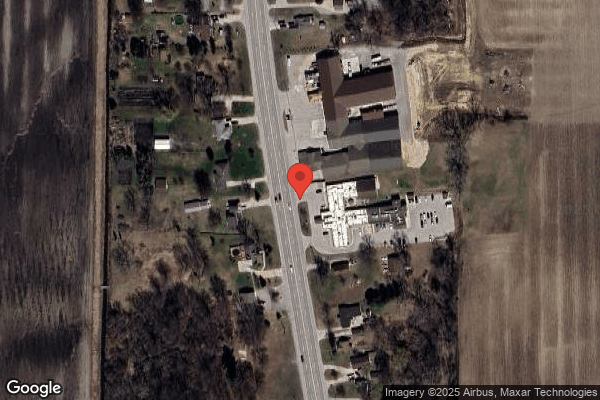
1395 South Huron Road, Kawkawlin, MI 48631 (989) 684-3210
For profit - Corporation 60 Beds THE PEPLINSKI GROUP Data: November 2025
Trust Grade
50/100
#204 of 422 in MI
Last Inspection: November 2024

Within standard 12-15 month inspection cycle. Federal law requires annual inspections.

Overview

Huron Woods Nursing Center in Kawkawlin, Michigan, has a Trust Grade of C, which means it is average - middle of the pack, indicating that while it is not the worst option, it also does not stand out as a top choice. It ranks #204 out of 422 facilities in Michigan, placing it in the top half overall, but it is #5 out of 6 in Bay County, meaning there is only one local option that is better. The facility has shown an improving trend in quality, reducing issues from 8 in 2024 to 3 in 2025. Staffing is average with a 54% turnover rate, which is close to the state average, and there are no fines on record, suggesting compliance is generally good. However, there have been serious incidents, including a resident suffering a fall during a mechanical lift transfer that led to a brain injury, and another resident fell while trying to ambulate with inadequate assistance, highlighting concerns about staff adherence to safety protocols. Overall, while Huron Woods has some strengths, such as no fines and an improving trend, the serious incidents raise valid concerns that families should consider.

Trust Score
C
50/100
In Michigan
#204/422
Top 48%
Safety Record
Moderate
Needs review
Inspections
Getting Better
8 → 3 violations
Staff Stability
⚠ Watch
54% turnover. Above average. Higher turnover means staff may not know residents' routines.
Penalties
✓ Good
No fines on record. Clean compliance history, better than most Michigan facilities.
Skilled Nurses
○ Average
Each resident gets 32 minutes of Registered Nurse (RN) attention daily — about average for Michigan. RNs are the most trained staff who monitor for health changes.
Violations
⚠ Watch
34 deficiencies on record. Higher than average. Multiple issues found across inspections.
★★★☆☆
3.0
Overall Rating
★★★☆☆
3.0
Staff Levels
★★★★☆
4.0
Care Quality
★★★☆☆
3.0
Inspection Score
Stable
2024: 8 issues
2025: 3 issues

The Good

  • 4-Star Quality Measures · Strong clinical quality outcomes
  • Full Sprinkler Coverage · Fire safety systems throughout facility
  • No fines on record

Facility shows strength in quality measures, fire safety.

The Bad

3-Star Overall Rating

Near Michigan average (3.1)

Meets federal standards, typical of most facilities

Staff Turnover: 54%

Near Michigan avg (46%)

Higher turnover may affect care consistency

Chain: THE PEPLINSKI GROUP

Part of a multi-facility chain

Ask about local staffing decisions and management

The Ugly 34 deficiencies on record

2 actual harm
Jul 2025 1 deficiency
CONCERN (D) 📢 Someone Reported This

A family member, employee, or ombudsman was alarmed enough to file a formal complaint

Potential for Harm - no one hurt, but risky conditions existed

Deficiency F0710 (Tag F0710)

Could have caused harm · This affected 1 resident

**NOTE- TERMS IN BRACKETS HAVE BEEN EDITED TO PROTECT CONFIDENTIALITY** This Citation Pertains to Intake 1341963. Based on interview and record review, the facility failed to implement and operational...

Read full inspector narrative →
**NOTE- TERMS IN BRACKETS HAVE BEEN EDITED TO PROTECT CONFIDENTIALITY** This Citation Pertains to Intake 1341963. Based on interview and record review, the facility failed to implement and operationalize policies and procedures to ensure physician supervision of medical care for one (#701) of one resident reviewed, resulting in lack of physician and/or advanced practice Health Care Provider (HCP) assessment and treatment of an alteration in skin integrity. Findings include: Review of Facility Reported Incident (FRI) documentation, submitted on 6/24/25 at 7:37 PM, revealed the facility received a concern from Family Member Witness C on 6/24/25 at 5:40 PM that Resident #701 had called them on 6/23/25 at approximately 10:00 PM and told them that someone had been sexually harming them. The facility completed an investigation and determined there was insufficient evidence to support the occurrence of the alleged event. Record review revealed Resident #701 was originally admitted to the facility on [DATE] and readmitted on [DATE] with diagnoses of right sided hemiplegia and hemiparesis (one sided paralysis) following cerebral infarction (stroke), epilepsy, depression, and anxiety. Review of the MDS assessment dated [DATE] revealed the Resident was severely cognitively impaired and required maximum/total assistance to complete all ADLs with the exception of eating and oral hygiene. The MDS further detailed the Resident displayed delusions and rejected care one to three days. Further review of Resident #701's Electronic Medical Record (EMR) revealed the Resident had been deemed incapable of making medical decisions and Family Member Witness C was their Durable Power of Attorney (DPOA). An interview was completed with Witness C on 7/17/25 at 12:00 PM. When queried regarding the incident involving Resident #701, Witness C stated, It was late at night when (Resident #701) had called me. They were pretty frantic. When asked why the Resident was frantic, Witness C stated, (Resident #701) felt for whatever reason that the workers were making (another Resident) eat their own shit. Then (Resident #701) made the comment that I wouldn't believe them even if they told me they were being molested. When asked if Resident #703 told them they were being molested, Witness C stated, I don't necessarily think that (Resident #701) was molested. With further inquiry, Witness C revealed the Resident has asked them, What were you talking about me being molested. Witness C revealed they believe the Resident was confused due to their nighttime medications, staff waking them to check for incontinence, and new Urinary Tract Infection (UTI- infection known to cause increased confusion in the elderly). When asked if Resident #701 was sent to the hospital following the allegation for a sexual assault assessment, Witness C replied, No. The (Director of Nursing [DON]) told me they could do that there. Witness C then stated, The boil on the vagina is new and concerning. With further inquiry, Witness C revealed they were told a boil was found on Resident #701's vagina by the Director of Nursing (DON) during the assessment as the facility. An interview was completed with the DON on 7/17/25 at 12:40 PM. The DON was asked what the boil on Resident #701 labia was, the DON stated, I think it is a hair follicle or something. (The Resident) has had it before - it comes and goes. The DON was asked to provide documentation of prior instances. On 7/17/25 at 1:07 PM, an interview was completed with Resident #701 in their room. When asked questions, Resident #701 was pleasantly confused, slow to respond, and unable to recall events and/or provide meaningful responses to questions when asked. Review of Resident #701's EMR revealed a care plan entitled, (Resident #701) has altered functional mobility and ADL's related to weakness associated with supporting diagnosis list. (Initiated: 4/17/25; Revised: 3/28/25). The care plan included the intervention, Skin Impairment Location: MASD (Moisture Associated Skin Damage) to groin and abdomen folds. (Initiated: 6/25/24). A second care plan entitled, (Resident #701) is at risk for impaired skin integrity related to reduced functional mobility, exposure of her skin to urine and fecal incontinence. (Initiated 4/30/23; Revised: 12/20/24) and included the intervention, Skin inspections with am/pm care and showering report abnormal to the charge nurse (Initiated: 7/25/23). Further review of Resident #701's Short Term Care Plan (STCP) documentation revealed the Resident did not have a current or discontinued STCP in place for labial skin alterations. Review of Resident #701's Documentation Survey Report for June 2025 revealed a skin assessment was completed one to two times a week during the month. Review of documentation in Resident #701's EMR revealed the following: - 6/24/25 at 10:16 PM: Skin Assessment. Assessment Notes. Under abdominal fold and slight redness and in the groin area redness. No marks or bruises noted in the groin area. Buttock and rectum no redness or bruises noted. incontinent of B&B (Bowel and Bladder) .- 6/25/25 at 9:30 AM: Skin Assessment. Assessment Notes. A thorough skin assessment was performed. findings were as follows. No bruising or abrasions were noted. The vagina was assessed. no redness to the external/internal labia. A small clear fluid filled pustule was noted to right labia that was mentioned in a previous assessment. No redness or irritation to the vaginal canal.No sign or symptoms of sexual assault observed. Resident #701's progress note documentation did not include any documentation related to the boil/pustule. Review of Resident #701's Medication Administration Record (MAR) and Treatment Administration Record (TAR) for June 2025 revealed the Resident had no orders and was not receiving any treatment related to the boil/pustule. On 7/17/25 at 2:00 PM, the DON provided a nursing Skin Assessment dated 4/21/24 at 5:01 PM for Resident #701. The skin assessment included, Assessment Notes. Small pustules with clear fluid observed on labia. Some scabbed areas observed to groin area. states the area is painful. When queried, the DON revealed the provided Skin Assessment was the only other documentation of labia pustules they were able to locate in the Resident's EMR. An interview was conducted with Physician D on 7/174/25 at 2:20 PM. When queried regarding Resident #701 and the recent sexual abuse allegation, Physician D confirmed they were aware of the allegation. When asked if they assessed the Resident following the allegation, Physician D stated, I just tried to talk to (Resident #701) and tried to figure out what happened. Physician D was then asked if they completed an exam on the Resident and stated, No, they (facility nursing staff) did an exam and did not find anything. There was no point of doing another one. When queried regarding the boil or pustule found on Resident #701's labia, Physician D stated, They did not tell me that they found it that day on the exam. When queried regarding the etiology and diagnosis of the pustule/boil, Physician D revealed the Resident has the area on and off and stated, I personally have not seen it. When asked why they did not do a physical assessment of the Resident, Physician D replied, The DON said it was fine and there was nothing abnormal. Physician D was then asked how the DON is qualified to assess Resident #701 for specific signs/symptoms of sexual assault and if they were certified as a SANE (Sexual Assault Nurse Examine) nurse but did not provide a response. Physician D was then asked if the DON is able to diagnose skin alterations and confirmed the DON and nursing staff were unable to diagnose. When asked how they knew what the area was on the Resident's labia, if they had not seen it, Physician D verified they did not. Physician D revealed there are several providers, within the group that sees residents at the facility, and they were unaware if another provider had assessed the area. At 2:59 PM on 7/17/25, an interview was completed with the DON. When queried if they were able to locate documentation of Physician and/or Health Care Provider (HCP) assessment of the pustule/boil on Resident #701's labia, the DON replied, I reviewed the documentation and did not find any documentation of (HCP) assessment.An interview was completed with the facility Administrator on 7/17/25 at 3:25 PM. When queried regarding the lack of physical assessment by a Physician following the sexual assault allegation and the identification of a boil/pustule on Resident #701's labia, the Administrator verbalized Witness C did not want the Resident to go to the hospital. Resident #701's Skin Assessment documentation dated 6/25/25 was reviewed with the Administrator. When asked if the DON was SANE certified and/or trained to complete internal vaginal examinations, the Administrator indicated they were not. The Administrator was then informed of the interview with Physician D. When queried regarding the Physician not completing a physical examination of the Resident following the allegation and abnormal finding during skin assessment on the Resident's labia, the Administrator verbalized understanding of concerns. Facility policies/procedures related to nursing assessment and physician services were requested at this time. At 4:12 PM on 7/17/25, the Administrator revealed the facility did not have a specific policy/procedure related to nursing assessment. An interview was completed with the DON on 7/17/25 at 4:20 PM. When queried if the facility has speculums (medical equipment used to complete and visualize the vaginal canal during examination), the DON stated, No but we could get one if the doctor wants one. When queried how they were able to visualize the vaginal canal, as documented in the Skin Assessment on 6/25/25, without a speculum, the DON verbalized they did not use a speculum and did not visualize Resident #701's vaginal canal. When asked why they documented they did if they did not, the DON revealed they examined the external genitalia and probably could have worded that better. When queried regarding the Resident not being sent to the hospital, the DON replied that Witness C did not want the Resident to go to the hospital. The DON then stated, I am not a SANE nurse, and I did not do a sexual assault assessment. When asked if Witness C was educated regarding the different examinations/assessments, the DON did not provide further explanation. When queried why Physician D said they were not made aware of the skin alteration on the Resident's labia, the DON stated, I talked to (Physician D) too and was unable to provide further explanation. Review of facility policy/procedure entitled, Physician Services (Revised: Sept. 2017) revealed, The facility will arrange for the provision of physician services 24 hours a day, to respond to emergencies that do not require medical care in an alternative setting.
May 2025 1 deficiency 1 Harm
SERIOUS (G) 📢 Someone Reported This

A family member, employee, or ombudsman was alarmed enough to file a formal complaint

Actual Harm - a resident was hurt due to facility failures

Accident Prevention (Tag F0689)

A resident was harmed · This affected 1 resident

**NOTE- TERMS IN BRACKETS HAVE BEEN EDITED TO PROTECT CONFIDENTIALITY** This Citation Pertains to Intake Number MI00153102. Based on observation, interview and record review, the facility failed to im...

Read full inspector narrative →
**NOTE- TERMS IN BRACKETS HAVE BEEN EDITED TO PROTECT CONFIDENTIALITY** This Citation Pertains to Intake Number MI00153102. Based on observation, interview and record review, the facility failed to implement and operationalize policies and procedures to ensure safe transfer utilizing a mechanical lift (device to move a dependent individual from one surface to another) and ensure planned interventions were in place for fall prevention, for one resident (#701) of three residents reviewed, resulting in Resident #701 experiencing a fall during a mechanical lift transfer resulting in an intraventricular hemorrhage (IVH- bleeding into the ventricles of the brain). Findings include: Resident #701 Review of intake documentation revealed a concern that Resident #701 had a fall with head injury while being transferred with a mechanical lift. The intake detailed that the facility did not identify a root cause of the fall/accident and did not report the fall with severe injury to the State Agency. Per the Intake, Resident #701's health had declined since the occurrence, and they are not communicating and making eye contact as they did prior to falling from the mechanical lift. An interview was conducted with Confidential Witness G on 5/21/25 at 8:52 AM. When queried regarding Resident #701, Witness G stated, (Resident #701) had a week ago Monday not yesterday but a week ago Monday while being transferred with the Hoyer (mechanical) lift and had a laceration on their head. Witness G revealed they believed the incident/fall should have been reported to the State Agency via a Facility Reported Incident (FRI). When queried how Resident #701 fell while being transferred in a Hoyer lift, Witness G revealed the facility did not clearly identify the root cause of the fall. Witness G disclosed the facility initially specified that (Resident #701) had slippery clothing on and that they moved in the Hoyer, rolled, and slipped up and out of the sling. Witness G stated, Unless (Resident #701) defied gravity, I don't know how that would happen. Witness G then stated, (Resident #701's) got dementia. They are on Ativan (controlled medication commonly used to treat anxiety) and doesn't fight. I know (Resident #701) wasn't squirming around in there (mechanical lift) but even if I was in a Hoyer lift and tried to do that (roll and slip up and out of the sling), it would be very difficult. Witness G then stated, The next day, (the facility) stated, We think that maybe we need to do some extra training with (staff) and that maybe the people that were using the lift weren't trained properly. Witness G stated, That doesn't sound good either. That indicates that they're not properly training people. Witness G revealed the next day the facility was back to the slipping out part. Witness G verbalized they were told that Resident #701 started to roll (in the sling) and with their slippery clothing, they slipped up and out of the Hoyer sling. Witness G stated the staff member wasn't able to get over there to save (Resident #701) from falling out. Witness G verbalized it did not make sense as the Hoyer sling cradles the Resident and it would have been very difficult for the Resident to fall out. When asked about the Resident's care following the fall, Witness G revealed a CT (diagnostic test to used to visualized soft tissues and organs in the body) was completed because Resident #701 was complaining of severe pain in their neck and head. When queried regarding the CT results, Witness G replied, It did show an intracranial hemorrhage in the frontal lobe which is where the laceration is on the forehead. Witness G was asked if Resident #701 had a change in mental status following the fall and replied, (Resident #701) has Alzheimer's so obviously it's hard to do a neuro exam unless you know their baseline but (Resident #701's) not operating at their baseline. When queried what changes were identified from the Resident's baseline, Witness G replied, Before the fall, (Resident #701) was able to you know interact with us and make eye contact. They would kind of sing along to some songs that they knew from the past and things such as that. Witness G continued, (Resident #701) is not making eye contact anymore and when you try to feed (the Resident) now, they are not interested or doesn't understand. With further inquiry, Witness G revealed there was really no interaction from Resident #701 at all now. Witness G then stated, (Resident #701's) forehead took the impact of the fall and verbalized that, as someone who has used a Hoyer lift as part of their job, they could not understand how a Resident could fall headfirst out of the sling if the Resident was properly positioned, and lift was being utilized appropriately. Witness G disclosed Resident #701 was receiving Hospice services and stated, I know (Resident #701) doesn't have a great quality of life. They are 87 (years old) and have Alzheimer's, have for several years, but I don't want the reason they pass (die) to be something traumatic and due to negligence. Witness G stated, I don't want someone else to get hurt. That's the fear that I have. When queried regarding the laceration Resident #701 received when they fell, Witness F revealed a facility nurse had put steri-strips (thin, adhesive bandages used to cover small cuts to keep the skin closed) on the laceration but it had continued to bleed so the Hospice nurse came to the facility and applied a pressure dressing. When asked to clarify if they were saying steri-strips were not holding the wound edges together, Witness F confirmed. Witness F indicated the most appropriate treatment for the laceration would have been evaluation in the Emergency Department (ED) and sutures. When asked if there was any additional information related to the fall they wanted to discuss, Witness F reiterated they were concerned that the facility had not been able to provide a clear explanation of how the fall occurred and indicated they felt there was either a lack or investigation or transparency. Witness F stated, (Resident #701's) not doing well. There was a notable decline following the fall and reiterated they were concerned for other residents who resided in the facility and required a Hoyer lift for transfers. Record review revealed Resident #701 was admitted to the facility on [DATE] with diagnoses which included dementia with other behavioral disturbance, weakness, depression, and anxiety. Review of the Minimum Data Set (MDS) assessment dated [DATE] revealed the Resident was severely cognitively impaired, had one sided impaired Range of Motion (ROM) in their upper and lower extremities, and was dependent upon staff to complete all Activities of Daily Living (ADLs). The MDS further detailed the Resident displayed no behaviors. Resident #701 was receiving Hospice Services related to their diagnosis of dementia. A comparative review of Resident #701's admission MDS assessment dated [DATE] revealed the Resident had no impairments in ROM at that time. On 5/21/25 at 11:18 AM, Resident #701 was observed sitting alone in their room in a Broda chair (high back, reclining wheelchair with side cushions for positioning and a one-piece solid leg/footrest) with their eyes partially closed. A dark-colored scabbed and red area, approximately 3 inches long by half an inch wide was present on the left side of the Resident's forehead. The leg/footrests were down, and the Resident was holding a doll. When spoke to, Resident #701 did not respond verbally or non-verbally. The Resident's bed was the first bed, closest to the hallway in a shared, two-person room. Their bed was positioned against the wall of the room with the top of the bed (pillows) away from the door and towards the window and other resident area of the room. An overbed table was positioned over the bed and a dresser was next to the door towards the bottom of the bed on the wall with the hallway door. At 11:21 AM on 5/21/25, an interview was completed with Licensed Practical Nurse (LPN) A and Registered Nurse (RN) F. When queried regarding the large, scabbed area on Resident #701's forehead, RN F revealed they were orientating with LPN A and had recently started at the facility. LPN A was asked what happened to Resident #701's forehead and hesitantly responded that Resident #701 had a fall. When queried regarding the fall, LPN A replied, I wasn't there. Would you like to talk to the DON (Director of Nursing)? When queried regarding the Resident sitting in the Broda chair in their room and lack of response, LPN A replied, (Resident #701) has been up since 6 (6:00 AM) or 7 (7:00 AM) and indicated the Resident is most likely tired. An interview was completed with Certified Nursing Assistant (CNA) H on 5/21/25 at 11:26 AM. When queried if they were Resident #701's assigned CNA, CNA H confirmed they were. CNA H was then queried regarding the scabbed area on Resident #701's forehead and replied that the area was from a fall. When queried, CNA H revealed they were not working when the fall occurred and stated, (CNA I) and (CNA J) were. At 11:30 AM on 5/21/25, an interview was conducted with CNA I. When queried regarding Resident #701's fall, CNA I confirmed they were working and stated, We had (Resident #701) in the shower sling (mesh, quick dry sling frequently used to shower dependent individuals). When asked if they had given the Resident a shower, CNA I replied, (Resident #701) is assigned one (shower sling). CNA I then stated, Me and the other (CNA) didn't even have (Resident #701) that day. We just do it as a team and do all the Hoyer's together. When asked what they meant, CNA I replied, The first two people who aren't busy get all the lift resident's back in bed. CNA I revealed they will start at one end of the hall and move their way down until all the residents are back in bed. When asked if Resident #701 usually becomes combative and/or anxious while being transferred with the Hoyer lift, CNA I replied, No. When asked what happened, CNA I revealed they were transferring the Resident from their chair to the bed. CNA I stated, (Resident #701) sat up and went out the left side of the sling. (Resident #701's) head hit the metal bar leg on the Hoyer. When queried if that was how the Resident got the laceration on their forehead, CNA I replied, Yes. When asked how Resident #701 fell out of the side of the Hoyer sling, CNA I attempted to describe the incident detailing the Resident landed directly on the front of the head. When asked about the Resident's reaction to the fall, CNA I responded that the fall was traumatizing for everyone involved. Incident and Accident as well as any investigation documentation pertaining to Resident #701's fall was requested from the facility Administrator at 11:35 AM on 5/21/25. An observation of the Hoyer lift that was utilized during Resident #701's transfer occurred on 5/21/25 at 12:00 PM with the DON, CNA I and CNA K in the conference room. The mechanical lift was an Invacare 450 model battery powered lift with attached Reliant scale (body weight scale). The sling that hung over the lift was a blue mesh style sling with a purple edge. The mechanical lift had a single bar hanger with hooks for the sling to attach. The lift functioned with the controller and there were no obvious mechanical faults observed. When asked what occurred when Resident #701 fell while being transferred, CNA J verbalized they were behind the base and using the electronic controller and CNA I was on the right side of the Resident who was suspended in the in the sling during the transfer. CNA I stated, (Resident #701) leaned to the side and fell out the side gap of the sling to the floor. When asked how the Resident was able to fall out of the side of the sling, CNA I stated, (Resident #701) started to sing and to lean and then fell out. When queried, both CNA I and CNA J confirmed the sling present on the mechanical lift was the same type and size sling used when Resident #701 fell during the transfer. A demonstration of how Resident #701 fell from the lift was provided by the staff at this time. The staff proceeded to attach the sling to the hanger and the DON got into the sling. The sling was noted to be in a sitting, not reclined position. The DON demonstrated they were able to fit through the side gap of the sling. The DON then stated, May be related to the sling attachments and indicated the model of mechanical lift used (Invacare 450). When asked what they meant, the DON pointed out that the model lift has a single hanger rod where there is minimal distance between the sling hook points on the bar enabling the bar to swivel and tip easily. A demonstration by sitting in the sling was completed. With no staff guidance on the sling/individual in the sling, the individual in the sling was able to purposefully position their body to move through the side gap of the sling. Due to the characteristic swivel and tilt motions of the mechanical lift hanger, once the momentum of the body began, without a staff member intervening, guiding and stopping them, the individual was able to tip and subsequently fall from the sling. The DON revealed the mechanical lift was removed from use after the fall. When asked if they were saying there was a mechanical malfunction with the lift, the DON replied, No and revealed they felt that once Resident #701 started to tip sideways in the sling, they were unable to prevent the fall because they could not physically stop themselves and the hanger bar part of the mechanical lift allowed the sling to tip sideways. The DON verbalized the other mechanical lifts in the facility were different models which were less tippy due to having a larger hanger and more space between the sling hooks. An observation of the other mechanical lifts in the facility was completed at this time with the DON. The other mechanical lift model is the facility was an Invacare 650 mechanical lift. The DON stated, The CNAs prefer these (model 650 mechanical lift) over the other one (model 450 mechanical lift). When asked why the CNA staff preferred the 650 model over the 450 model, the DON revealed it was because they liked the way the sling attached to the lift hanger as it has three-point connection and is more stable. A facility policy/procedure pertaining to mechanical lift and sling use was requested from the facility Administrator on 5/21/25 at 12:45 PM. At 1:00 PM on 5/21/25, the DON entered the conference room and stated the facility did not have a policy/procedure for mechanical lift and sling use. With further inquiry, the DON stated, We use the manufacturers guide. When asked if the staff who utilize the lift have access to the manufactures guide/owners manual, the DON indicated they do not. The DON then stated that staff have a check off competency completed by the regional nurse educator for lift use when they are hired. Review of Resident #701's Electronic Medical Record (EMR) revealed a care plan entitled, (Resident #701) has altered functional mobility and ADLs related to dementia with behavioral and psychological symptoms . (Initiated: 12/1/24; Revised: 12/2/24). The care plan included the intervention, Transfer: Mechanical Lift-Follow guide for sling type and loop attachment (Initiated: 12/2/24). A form entitled, Mechanical Lift Guidance dated 12/2/24 was scanned into Resident #701's EMR. The form specified the Resident was a full mechanical lift using a mesh full body, medium violet edge sling. The sling loop attachments were Upper: Green and Lower: Purple Review of documentation in Resident #701's EMR revealed the following: - 5/12/25 at 1:15 PM: Fall Management (assessment) . Cognitive / Behavior Status: 1. Has the residents Behavior changed in the previous 90 days? No. 2. Have the following behaviors been displayed in the previous 90 days: Restlessness, lethargy, resists care, does not follow or understand direction . No . Summary . STCP (Short Term Care Plan) initiated for latent injury due to recent fall . is assessed as a fall risk r/t (related to) dementia. - 5/12/25at 1:30 PM: Skin Assessment . Face . Open Wound . Length: 3.5 cm (centimeters) . Width: .5 cm . Depth: .3 cm . Assessment Notes: Resident was lying in bed during this assessment and tolerated movement of limbs. Wound noted to L (left) forehead above eyebrow measuring as stated above. Wound washed with NS and patted dry, x 6 steri-strips were applied with edges well approximated . Abrasion without bruising noted to L (left) forearm-cleansed with warm water and air dried, abrasion with scant bruising noted to L (left) chin, cleansed with warm water and air dried. No other injury was observed . - 5/12/25 at 2:39 PM: Interdisciplinary Documentation . at 1315 (1:15 PM) (Certified Nursing Assistant- CNA) called nurse to room, patient on floor laying on left side. Staff stated (Resident#701) slide out of sling during transfer using the mechanical lift. 2 (CNAs) were present. Laceration by left eye, six steri-strips applied. Notified doctor, (Family Member C) notified. when asked if we could send to ER for exam. (Family Member C) refused stated to monitor (Resident) here. Neuros initiated DON (Director of Nursing). hospice aware. X-rays ordered. Hospice nurse here at this time. Doctor called at this time, new orders for pain medications . Note was authored by Licensed Practical [LPN] Nurse A - 5/12/25 at 3:21 PM: This writer spoke with (Family Member C) . regrading incident and wishes for resident to not seek immediate medical attention. Education provided on risks that could result in death if treatment is not perused. (Family Member C) stated he understood and that he would like to proceed with x-rays in house and in-house monitoring. It was explained that even STAT x-rays could take 24 hours to be completed. He said he does not want (Resident #701) sent to the hospital as that is a 'harsh environment' and he did not want to make any 'rash decisions'. Witness C stated 'I would like for (Resident #701) to be comfortable, please just keep them there. HCP (Health Care Provider) notified of (Family Member C) wishes. Hospice nurse arrived and new orders obtained for comfort and any expected pain that (Resident) may experience . STAT x-rays ordered . Wound head dressed with 6 steri-strips applied to left side of forehead by IP (Infection Prevention) nurse. Hospice applied pressure dressing as head continued to bleed . - 5/13/25 at 8:37 AM: Interdisciplinary Documentation . (DON) contacted x-ray services. X-ray services stated that the order is visualized and due to a technical delay within the region the plan is to arrive to compete the ordered x-rays between 11a and noon today. - 5/13/25 at 9:40 AM: Medical Professional Note . Late Entry . Seen and evaluated today for an acute visit. Patient had a fall yesterday from the hoyer (mechanical lift) . Unable to obtain any information from (Resident #701). X-rays are pending, laceration to the left forehead with intact steri strips . Patient is on hospice . - 5/13/25 at 11:50 AM: Interdisciplinary Documentation . x-rays completed on resident, awaiting results. - 5/13/25 at 17:00 PM: Interdisciplinary Documentation . HCP aware of x-ray results, (DON) spoke with (Family Member C) over the phone to review results of x-rays and (Family Member C) is choosing not to pursue with suggested CT brain. (Family Member C) is aware of potential outcome . - 5/14/25 at 9:45 PM: Interdisciplinary Documentation .Call placed to (Family Member C), who stated they and (Family Member E) would like to have a CT of the head on an outpatient basis. Coordination of care call made to (DON) who will call (Family Member C) in the morning - 5/15/25 at 7:51 AM: Interdisciplinary Documentation . (DON) spoke with (Family Member C) and a conference call was had with (other family), Medical Director and (DON). A CT brain without contrast will be ordered for today and completed outpatient as requested by family. Family stated they are requesting the CT of the brain to make a determination if the family members should prepare for the resident passing sooner rather than later. HCP here to evaluate resident. Hospice has also been updated. - 5/15/25 at 7:55 AM: Medical Professional Note . Seen and evaluated today for an acute visit . had a fall on day before yesterday from the Hoyer lift . Discussed with the nurse and family and updated and will have (Resident) go for a CT scan for the brain to rule of ICH . - 5/15/25 at 12:46 PM: Interdisciplinary Documentation . (Resident#701) had Roxanol (narcotic pain medication for severe pain) at 0730 this am with noted pain relief. At 1000 (Resident #701) was observed holding the back of the left side of their neck and facial grimacing. Roxanol could not be administered until 1130. This nurse spoke with family in building and spoke with (Family Member C) over the phone . spoke with hospice. New orders for Ativan (controlled antianxiety medication) 0.5 mg milligrams) every 4 hrs. prn (as needed) and Roxanol 0.25 ml (milliliters) every 2 hrs prn . - 5/15/25 at 10:15 PM: Interdisciplinary Documentation . Spoke with (Family Member C) to report results of today's CT head examination. Resident has intracranial bleed. The provider called the facility and asked the registered nurse to call (Witness C) to determine any further treatment. (Witness C) does not want any surgery for resident . - 5/19/25 at 12:24 PM: Interdisciplinary Documentation . Late Entry . Resident observed holding steri-strips from forehead in hand. Wound is well approximated with no drainage . Review of diagnostic imaging results in Resident #701's EMR revealed the following: - 5/13/25 at 1:51 PM: X-Ray of the Skull, 2 Views . Findings . Ill defined intracranial lucency noted over bilateral fronto-parietal regions, more pronounced on left . Intracranial Compartment . lucency is projected within the cranial vault and not clearly confined to soft tissues - may represent intracranial air . Impression: 1. Ill-defined intracranial lucency over bilateral fronto-parietal regions (frontal and parietal lobes of brain), greater on the left side- concerning for intracranial air (air in brain) in the clinical context of trauma, suggest CT scan . - 5/15/25 at 4:14 PM: CT Brain/Head w/o (without) contrast . Indication: Trauma. Intracranial hemorrhage . Findings: There is intracranial hemorrhage in the dependent occipital hors of the lateral ventricles (fluid filled area of the brain which contains cerebral spinal fluid) . Soft tissue swelling about the left extracranial (outside the skull) frontal region . Postinfarct encephalomalacia (brain tissue softening or loss which can develop days to middle brain lobe) . Impression: 1. There is intraventricular hemorrhage (bleeding in the ventricles of the brain) in the occipital (posterior -back) hors of the lateral ventricles as seen bilaterally (blood will often collect in the dependent area of the ventricles - the occipital horns when an individual is flat or recumbent) . Review of Hospice documentation in Resident #701's EMR revealed a RN PRN (as needed) Hospice Visit note dated 5/12/25 at 2:31 PM. The note detailed, Reason for PRN Visit: Pt (Patient) fell from sling today and has a large laceration . Approx. 6 in. (inch) laceration above left eye. Indicate Functional/Safety Assessment Findings: Pt fell out of Hoyer . Narrative: Received call from facility reporting that patient had fallen and requesting nurse visit. Patient was lying in bed with steri strips on left side of forehead. There was a small trickle of blood that was draining down into right eye (sic). Gauze dressing applied and covered with gauze wrap for a pressure dressing . No other complaints other than head hurting on left side . (Family Member Witness C) notified and didn't want (Resident #701) taken to hospital . On 5/21/25 at 1:30 PM, an interview was attempted to be completed with Resident #701's family member Witness C. A voicemail message with a return phone number was left. An interview was completed with Therapy Director Occupational Therapist (OT) K on 5/21/25 at 2:00 PM. When queried regarding Therapy Staff evaluation for mechanical lift devices including slings, OT K stated, I just eval for the slings based on (resident) weight. When asked if Therapy trains staff regarding mechanical lift use and procedures, OT K indicated they do not and stated, The nursing educator does the training. OT K was then queried regarding Resident #701's fall from the mechanical lift and indicated they were aware of the fall. When queried regarding Resident #701's ability to sit up independently and support themselves, OT K revealed Resident #701 does not really have any core strength and is not able to support themselves. On 5/21/25 at 3:00 PM, an interview was completed with the facility Administrator. When asked why the facility did not report Resident #701's fall from the Hoyer lift which resulted in severe injury, the Administrator stated, We reviewed it and it was not an injury of unknown origin. On 5/21/25 at 3:45 PM, an interview was completed with the DON. When queried why there was not a statement in the facility provided investigation documentation from Resident #701's nurse and/or the nurse who first assessed the Resident, the DON stated, I was the first nurse to respond. When asked what happened, the DON stated, I was walking down the hall and heard a request for help and went in (Resident #701's room). (Resident #701) was on their left side next to the bed. Their left arm was bent and their fist was by their chin. When asked, the DON revealed they were able to see the right side of the Resident. The DON then stated, The Hoyer was away, (Resident #701) wasn't still resting on the Hoyer. The DON was asked where the Resident's legs were and replied, Feet were out of the sling and head looked like they slightly moved it off of the leg of the Hoyer. When to clarify where the Resident's head was, the DON stated, (Resident #701's) head was just inside the legs (of the Hoyer). The DON was asked where the mechanical lift was in the room and replied, The Hoyer was moved back, and the sling was still attached to the Hoyer. (Resident #701) was completely out of the sling. When asked what they meant when they said the sling was still attached to the Hoyer, the DON responded that the sling was connected to the Hoyer lift as though a person was in it but (Resident #701) was completely out of it. When queried if they were saying that the CNA staff moved the Resident and Hoyer lift prior to the nurse responding to the room to assess, the DON replied, They lowered the sling to the ground but didn't do anything else. The DON then stated, They probably lowered it down and got the rest of (Resident #701) out. Guessing they moved it. When asked where Resident #701's Broda chair was positioned in the room, the DON replied, The Broda was moved out of the way. It was aways away. The DON was unable to provide the exact location of the chair when asked. When queried if the legs of the Hoyer lift were apart or together, the DON replied, Not sure. The DON was then asked the specific location of the Resident in their room and stated, Right next to the bed. We were able to get around (Resident #701) but not at the side where the bed was. The DON proceeded to draw a picture of the Resident and their room. In the picture, Resident #701 was on the floor directly next to their bed with their body and head parallel to the bed. In the image drawn by the DON, the Resident's body was pointed with their head towards the room window and their feet towards the door. The DON did not include the Resident's overbed table in the drawing. When asked where the overbed table was in the room, the DON replied, Not sure. The DON was then asked who Resident #701's assigned nurse was on the day Resident #701 fell and replied, (LPN A). When queried why the investigation documentation did not include a statement from LPN A and where they were at the time of the transfer and fall, the DON stated, I told (LPN A) we had it. Review of facility-provided investigation documentation for Resident #701's fall during mechanical lift transfer contained the following: - Signed Statement by CNA I dated 5/12/25: We was putting (Resident #701) to bed and I was right next to her in front of the lift and (CNA J) was in the back of the lift controlling it. (Resident #701) leaned forward and fell out the side. - Signed Statement by CNA J dated 5/12/25: I was operating the controls helping (Resident #701) to bed. My coworking was right next to (Resident #701) helping moved the Hoyer. (Resident #701) leaned and slipped between the straps, hitting their head on the Hoyer. - Return Demonstration Mechanical Lift Competency Check Off Sheets for Facility Staff. - Mechanical Lift Guidance Forms dated 5/14/25 for 15 Residents including Resident #701. Resident #701's form specified the Resident was a full mechanical lift using a medium sized, violet edged, Canvas, full body sling. The sling loop attachments were Upper: Green and Lower: Purple. - Typed Summary: Allegation Type: Witnessed Fall with Injury. Event Information: Event occurred on 5/12/25 at approximately 1:15 PM. (CNA I) and (CNA J) were assisting . (Resident #701) to bed . utilizing an Invacare mechanical lift and an Invacare mesh sling . from their Broda chair to their bed . (CNA J) was working the controls at the base of the mechanical lift while (CNA (I) was next to the resident on the residents right side. The bed was on the resident's left side. (CNA I) was guiding the resident from the Broda chair towards the bed as the height of the lift was being adjusted by (CNA J). (CNA I) was on the right side when the resident leaned too far left and slipped out of the mesh sling that was attached to the mechanical lift. It was observed that the resident touched the left side of their forehead to the leg of the mechanical (lift), th[TRUNCATED]
Mar 2025 1 deficiency
CONCERN (D) 📢 Someone Reported This

A family member, employee, or ombudsman was alarmed enough to file a formal complaint

Potential for Harm - no one hurt, but risky conditions existed

Accident Prevention (Tag F0689)

Could have caused harm · This affected 1 resident

**NOTE- TERMS IN BRACKETS HAVE BEEN EDITED TO PROTECT CONFIDENTIALITY** This citation pertains to Intake Number MI00150598. Based on observation, interview and record review, the facility failed to pr...

Read full inspector narrative →
**NOTE- TERMS IN BRACKETS HAVE BEEN EDITED TO PROTECT CONFIDENTIALITY** This citation pertains to Intake Number MI00150598. Based on observation, interview and record review, the facility failed to prevent repeated falls for one resident (Resident #101) of 4 sampled residents, resulting in Resident #101 sustaining repeated falls from her wheelchair, Findings include: Resident #101: In an observation and interview on 3/5/2025 at 8:10 AM, Resident #101 was seated up in the resident's room in a wheelchair with the footrest in place. Resident #101 was asked about a fall in February 2025. The Resident stated that yes, she fell from her wheelchair and went to the hospital. Record review of Resident #101's Minimum Data Set (MDS), a quarterly assessment dated [DATE] revealed an elderly female with a Brief Interview of Mental Status (BIMS) of 14 out of 15- indicating cognitively intact. Section I- Active diagnoses included: Medically complex conditions, diabetes, hemiparesis, seizure disorder, anxiety, depression, ischemic cardiomyopathy, dysphagia, insomnia. Section G- Functional Abilities: Dependent, helper does all of the effort, resident does none of the effort to complete the activity. Dependent for toileting hygiene, shower/bath. Maximum assist helper does more than half of the effort for: upper body dressing, lower body dressing, putting on/taking off footwear, personal hygiene, and rolling left and right. Record review of Resident #101's accident/incident reports revealed 3 separate falls had occurred since 01/01/2025: On 1/7/2025 Resident #101 was observed lying face down on the floor by staff in the resident's room. On 2/17/2025 Resident #101 was observed laying on her right side on the floor by staff in the resident's room. On 2/20/2025 Resident #101's roommate heard the resident fall but did not see the event and yelled out for help. Nursing staff heard the roommate yelling and responded to the room to find Resident #101 lying face down on the floor. Record review of Resident #101's care plans, pages 1-46, revealed care plans for: -Altered Mobility and ADL's Fall Risk Management- encourage non-skid footwear, personal items within reach, Floor mat next to bed while resident is in bed as tolerated, soft touch call light 4/19/2023. Wheelchair seat to have a decreased rear of the seat to assist with comfort as well as fall prevention 6/3/2023. Reacher provided to resident with education to use call light, Dycem applied to side table to place phone and glasses on 2/17/2025, basket for loose items added to tray table. Encourage to be in highly visible areas when up in wheelchair 2/20/2025, encourage curtain to be pulled back when cares are not being performed, date initiated: 4/17/2023, Revision on: 2/20/2025. 'Risk for Falls or Injury' interventions dated 2023: - Assist rails, Call light: resident is able to utilize the call light for assistance, Document resident response to interventions, prn. Examine internal and external risk factors upon admission and post fall as noted on the fall risk assessment tool. Examine the resident's diagnosis and orders and assess the ability to ambulate and bear weight- provide direction to staff via care card. MDS review of the relationship of fall risk and medication side effects, prn. Post- Fall review room for environmental factors/re-act situations prn to assist with development of cause specific interventions, neurological checks prn. Review and modify environmental factors as indicated. Review medications with potential side effects that could contribute to gait disturbance- care plan risk vs benefit prn. See ADL plan of care for fall risk interventions. With history of exit seeking and mobility independence apply interventions as indicated and reassess prn. Interventions Date initiated 4/19/2023. -Adaptive Equipment: wheelchair, full mechanical lift revision date. Assess orthostatic hypotension prn (as needed), Assess postural alignment prn, evaluate side effects of thromboprophylaxis therapy, i.e., itching, bruising, petechiae, hematuria, coffee ground emesis, increased bleeding from injury, black tarry stool; consult health care practitioner as indicated by evaluation date initiated 7/25/2023. There where no interventions for monitoring or increased supervision of Resident #101. Record review of the facility's 'Accident/Incident Report Fall Management' policy, dated 6/2018, revealed it is the policy of the facility to complete an accident incident report for unexplained bruises or abrasions; accidents or incidents where there is injury or the potential to result in injury; falls . (6.) It is recognized that not all falls can be prevented, the facility will utilize applicable elements of the systemic process of assessment, intervention, and monitoring to minimize fall risk and injury In an interview on 030/5/2025 at 10:30 AM, former roommate, Resident #105 stated it was after supper around 8:30-9:00 PM, when she heard a loud crash. Resident #105 stated that she was trying to talk to (Resident #101), but she did not respond, so she pushed the call light. No, Resident #101 was not choking when she fell over. The curtain was pulled between them, so she could not see what actually happened. Resident #105 stated that there was no response from staff. It seemed like forever, so she started to scream for help. It felt like it took them 30 to 40 minutes to get into the room. Finally, 3 staff members came running in and they found Resident #101 on the floor. Resident #105 stated that she guessed Resident #101 went face first to the floor, busted her lip and was bleeding from her nose and mouth. The staff called 911 and they took Resident #101 away around 9:30 PM by ambulance to the hospital. In an interview on 030/5/25 at 11:43 AM, Resident #101 was seated up in wheelchair in room with her black glasses on. Resident #101 recalled the fall, and the roommate calling for help, while she was on the floor. Resident #101 stated that she was reaching for something and just fell out headfirst from her wheelchair. Resident #101 stated that she did get hurt and that staff did come after 45 minutes to help her, while she was on the floor. The roommate was yelling, and she didn't know what happened.
Nov 2024 8 deficiencies
CONCERN (D)

Potential for Harm - no one hurt, but risky conditions existed

Resident Rights (Tag F0550)

Could have caused harm · This affected 1 resident

Based on interview and record review, the facility failed to respond to residents' needs timely and in a dignified manner for an anonymous group of residents, resulting in feelings of having to wait, ...

Read full inspector narrative →
Based on interview and record review, the facility failed to respond to residents' needs timely and in a dignified manner for an anonymous group of residents, resulting in feelings of having to wait, needing to engage call lights over again to get help and call light complaints going unresolved by management. Findings include: On 11/19/24, at 10:35 AM, During the Resident Council task, the following complaints were voiced regarding staff answering call lights: They turn them off and you have to wait for them to come back My call light was on 20 minutes when they canceled it and then I it was 25 more minutes for them to come back and I had to put my light on again. If they don't come back in 10 minutes after canceling my light, I put it back on. Sometimes, they completely forget about you. They will say, I had another call light to answer first some CNA's are hard on ya; they might complain when I have to get up to go the bathroom with me, I need a Hoyer and they need two people. It's hard sometimes to get that second person. In the meantime, I am waiting with the Hoyer connected Resident Council group was asked what management has done to fix the call light response complaints. Resident council group complained that they were told to put their call light back on if staff doesn't come back in ten minutes. Resident council group also stated that management will often respond to the call light complaints we're working on it. Council members offered that they felt they didn't matter. On 11/19/2024, at 1:30 PM, Recreation Director D was asked to provide the last 6 months of resident council meeting minutes and Recreation Director D offered, that they had provided the copies to the administrator for uploading. The council meeting minutes were not provided prior to exiting the survey. According to the HCAM Resident rights booklet, . Respect and Dignity You have a right to be treated with respect and dignity, including: . The right to reside and receive services in the facility with reasonable accommodation of your needs and preferences .
CONCERN (D)

Potential for Harm - no one hurt, but risky conditions existed

ADL Care (Tag F0677)

Could have caused harm · This affected 1 resident

**NOTE- TERMS IN BRACKETS HAVE BEEN EDITED TO PROTECT CONFIDENTIALITY** Based on observation, interview and record review, the facility failed to ensure dignified Activities of Daily Living (ADL) care...

Read full inspector narrative →
**NOTE- TERMS IN BRACKETS HAVE BEEN EDITED TO PROTECT CONFIDENTIALITY** Based on observation, interview and record review, the facility failed to ensure dignified Activities of Daily Living (ADL) care for one resident (Resident #6) of 3 residents reviewed for ADL care, resulting in soiled clothing, bedding and bathroom. Findings include: Resident #6: On 11/18/24, at 1:31 PM, Resident #6's doorway was shut. There was a strong urine/bowel odor noted in the hallway outside the closed door. Upon entry to the room, the odor was noted to stronger. CNA's F entered and was asked if the bedding had been changed recently and CNA's F pulled back the sheets. The mattress was in good clean repair. An observation of the bathroom revealed a large amount of bowel movement on the toilet seat. Resident #6 was not in their room. Resident #6's roommate (husband) entered the room to use the toilet and quickly left back out. CNA's F was asked if the bathroom should be dirty with bowel movement and CNA's F offered, it's usually (Resident #6) and we try to catch (Resident #6) after lunch and that they are ambulatory. On 11/18/24, at 2:30 PM, Resident #6 was ambulating in the hallway. There was an approximate 5 inch wide by 6 inch long area that was dirty with a brown residue on the backside near their bottom. On 11/19/24, at 7:59 AM, Resident #6 was sitting in the dining room for breakfast. Resident #6 had on the same clothes as the day prior. On 11/19/24, at 8:51 AM, Resident #6 was noted wandering into another resident room. They lied down on the bed on their side. Resident #6's shirt was rolled up slightly which revealed a solid brown residue noted that appeared like bowel movement. On 11/19/24, at 12:55 PM, Resident #6 was resting in their own bed with the same clothes on. There was a strong odor to the room. On 11/19/2024, at 1:15 PM, a record review of Resident #6's electronic medical record revealed an admission on [DATE] with diagnoses that included Dementia, need for assistance with personal care and Alzheimer's disease. Resident #6 had severely impaired cognition. On 11/20/24, at 7:53 AM, Resident #6 was sitting in the dining room for breakfast. They had on new clean clothes and appeared to have showered as their hair was wet. On 11/20/24, at 7:54 AM, CNA's G was interviewed regarding the Activities of Daily Living (ADL) care for Resident #6. CNA's G offered at times they are resistant to changing their clothes but if you show Resident #6 the hair dryer and encourage hair care you can get (Resident #6) in the shower. On 11/20/24, at 11:57 AM, Resident #6 was resting in bed with their dirty clothes on. The resident had their shoes on and was under the covers. On 11/20/24, at 12:36 PM, the Director of Nursing (DON) was interviewed regarding the Resident #6 soiled clothing. The DON offered, that the resident can be difficult with ADL care at times. The DON was alerted of the soiled clothing the resident had on for the two days prior and that it appeared like bowel movement. The DON offered, that they did observe their dirty shirt but was unable to tuck it in. The DON was asked if they felt they were doing everything they could to assist Resident #6 with their ADL care and the DON offered, we try and if you offer hair care or have the dryer in your hand, you can usually get her in the shower. The DON offered that they had moved Resident #6's shower days to ensure the same staff to assist. A review of the Task list documentation for completed showers along with the DON revealed no missed recent showers. On 11/20/24, at 3:06 PM, the DON offered that they had Interdisciplinary Team meeting regarding Resident #6 and that they updated the care plan. On 11/21/24, at 9:00 AM, a review of the Focus (Resident #6) has the potential for altered functional mobility and ADL's related to her impaired cognition with a supporting diagnoses of Dementia . Revision on: 06/20/2023 Goal Provide oversight with dressing in clean clothes daily, assist with bathing, nurse to assist with medication set up . Interventions . Able to leave on toilet: Yes Date Initiated: 08/04/2022 ADL's DEFINE INDIVIDUAL PREFERENCES: Chooses her own clothing; prefers medications whole. Wanders throughout the facility and prefers her husband to be with here. Doorway deterrent strap across doorway intermittently as desired, to deter guests until invited. Check and change bedding daily as needed. Date Initiated: 06/20/2023 Revision on: 11/20/2024 ADL'S: Staff to anticipate needs and give physical and verbal cueing for tasks Date Initiated: 06/20/2023 . BATHING: One person assist with bathing, encouraging the resident to do as much for self as able. (Resident #6) is more accepting of bathing when (husband/roommate) is present. (Resident #6) likes the warmth of the blow dryer and she may accept a shower if she feels the warm air of the blow dryer. Date Initiated: 08/04/2022 Revision on: 11/20/2024 . COMMUNICATION ABILITY: Alert to person only . DRESSING: One assist with cueing and encourage to do as much for self as able. (Resident #6) will refuse assistance with dressing most days, frequent reproach may be necessary. If (husband/roommate) is out of sight then she may accept assistance with dressing. If she is in the restroom already she is more accepting of changing clothes and washing up. May offer a hair brush as she enjoys brushing her hair. Date Initiated: 08/04/2022 Revision on: 11/20/2024 . ELIMINATION: Independent with toilet use, staff is encouraged to assist with toileting before and after meals, HS and prn. Wears incontinence products. Check and assist (Resident #6) every shift for cleanliness and assist with peri care. Date Initiated: 06/20/2023 Revision on: 11/20/2024 . PSYCHOSOCIAL: (Resident #6) is alert, only to self and her husband . She has poor short and long term memory recall . Document behaviors in the log . On 11/21/24, at 10:09 AM, there was a strong odor of bowel movement in the hallway outside Resident #6's room. Upon entry, CNA's H was noted to be offering a change of clothes. There was a bottle of bleach wipes on the over bed table. CNA's H offered, that they had to clean the bathroom due to bowel movement all over the toilet. CNA's H offered socks and then began to put on Resident #6's tennis shoes and stopped. CNA's H cleaned bowel movement off the shoes prior to putting on the shoes. Resident #6 appeared calm and repeated, oh no over and over when CNA's H was cleaning off the bowel movement from their shoes. On 11/21/24, at 1:36 PM, CNA's H was interviewed regarding Resident #6's ADL needs and care. CNA's H offered they work with Resident #6 about once a week. CNA's H was asked why they had changed Resident #6's clothes and CNA's H offered, that (Resident #6) had soiled themselves pretty bad. They had bowel movement all over their pants, a little on their shirt and all over their socks and shoes. CNA's H was asked what the bleach wipes were used for and CNA's H offered, they used them to clean the toilet and also offered, you could see where (Resident #6) had tried to clean the bowel movement off the toilet with toilet paper. CNA's H was asked why they thought that and CNA's H stated, there was a pile of toilet paper in the trash with a large amount of bowel movement and the toilet seat had appeared to be wiped off despite the remaining bowel movement. CNA's H was asked why the bedding was removed off the bed and CNA's H offered, there was BM on the bedding/sheets. CNA's H offered they bleach wiped the bed and areas that had BM on it. CNA's H was asked how they were alerted that Resident #6 required ADL assistance and CNA's H offered, that when they were in the hallway you could smell it referring to the BM smell. CNA's H offered that Resident #6 can be difficult at times but if you catch (Resident #6) right after they eat you can usually prevent the mess. According to the HCAM Resident rights booklet, . Respect and Dignity You have a right to be treated with respect and dignity, including: . The right to reside and receive services in the facility with reasonable accommodation of your needs and preferences .
CONCERN (D)

Potential for Harm - no one hurt, but risky conditions existed

Pressure Ulcer Prevention (Tag F0686)

Could have caused harm · This affected 1 resident

**NOTE- TERMS IN BRACKETS HAVE BEEN EDITED TO PROTECT CONFIDENTIALITY** Based on observation, interview and record review, the facility failed to ensure timely assessment and implementation of interve...

Read full inspector narrative →
**NOTE- TERMS IN BRACKETS HAVE BEEN EDITED TO PROTECT CONFIDENTIALITY** Based on observation, interview and record review, the facility failed to ensure timely assessment and implementation of interventions for pressure ulcer prevention for one resident (Resident #5) of three residents reviewed for pressure ulcers. Findings include: Resident #5: On 11/18/24 at 2:07 PM, Resident #5 was observed in their room. The Resident was in bed positioned on their back with their eyes open. The Resident's legs and feet were positioned directly against the mattress. When spoke to, Resident #5 responded verbally but did not provide meaningful responses to questions. Record review revealed Resident #5 was originally admitted to the facility on [DATE] and readmitted on [DATE] with diagnoses which included heart failure, cerebral infarction (stroke), and urinary retention. Review of the Minimum Data Set (MDS) assessment dated [DATE] revealed the Resident was moderately cognitively impaired and was dependent upon staff for bed mobility and transferring. The MDS further revealed the Resident was at risk for pressure ulcer development but had no pressure ulcers. Review of Resident #5's Electronic Medical Record (EMR) revealed a care plan entitled, (Resident #5) has potential risk for impaired skin integrity related to: History of fragile skin, History of or actual impairment . (Initiated and Revised: 11/17/24). The care plan included the interventions: - Bridge heels in bed . (Initiated: 11/17/24) - Measure open areas upon admission, weekly, prn (as needed) (Initiated: 11/17/24) A second care plan entitled, (Resident #5) . is alert and oriented 1-2 with garbled speech and is difficult to understand at times originally admitted to hospital for weakness and alerted mental status with a new finding of Covid pneumonia and received treatment . (Initiated: 10/24/24; Revised: 11/15/24). The care plan included the interventions: - Skin: Apply barrier cream with incontinence care prn; inspect skin with bathing and care . APM (alternating pressure mattress) mattress set to residents' level of comfort (Initiated: 10/25/24; Revised: 11/15/24) - Skin Impairment Location: Coccyx (Initiated: 11/15/24) - Skin: Heels elevated in bed as tolerated (Initiated: 10/24/24) Review of documentation in Resident #5's EMR revealed a Wound Assessment dated 11/15/24 at 4:05 PM which detailed, Wound Measurement . Coccyx . Pressure . Length: 4.5 (centimeters [cm]) . Width: 5 (CM) . Stage: Suspected Deep Tissue Injury (SDTI- pressure ulcer with unknown depth) . Wound Bed . Pink / Red - Clean, open area, red/pink Tissue . Exudate: Serous . Assessment Notes: wound was developed during hospital stay and was present upon admission. A fluid filled blister on coccyx with purple blue SDTI present . An Interdisciplinary Documentation Note in the EMR, dated 11/15/24 at 10:55 AM specified, . Skin Assessment noted 1+ Slight Pitting (edema) disappears rapidly, Skin is dry and intact . Review of Resident #5's EMR revealed the Resident had an external health care provider appointment on 11/11/24 and were admitted to the hospital from the appointment for further testing. Resident #5 returned to the facility on [DATE] at approximately 5:00 PM. A review of Resident #5's skin assessment documentation prior to their appointment and hospitalization on 11/11/24 revealed skin assessments were completed on 10/26/24 and 11/2/24. A review of the Skin Assessment dated 11/2/24 indicated the Resident had no alterations in skin integrity. On 11/19/24 at 1:01 PM, Resident #5 was observed in their room. The Resident was in bed positioned on their back. The Resident's heels were positioned directly against a pillow and the bottom of their right foot was pressing against the footboard of the bed. On 11/19/24 at 3:00 PM, Resident #5 was observed in their room. The Resident was in bed positioned on their back. The Resident's heels were positioned directly against a pillow and the bottom of their right foot was pressing against the footboard of the bed. At 3:24 PM on 11/19/24, an observation of Resident #5 was completed with Clinical Registered Nurse (RN) O. Resident #5 remained in bed, positioned on their back with their heels directly against a pillow and their right foot pressing against the footboard of the bed. When queried regarding the Resident's positioning, RN O confirmed positioning concerns and indicated the Resident's heels should be floated and the bottom of their foot should not be pressing against the footboard of the bed. RN O stated, We have a bari (larger) bed we can get (Resident #5). On 11/20/24 at 11:03 AM, an interview was completed with Certified Nursing Assistant (CNA's) A. When asked if Resident #5 had any wounds, CNA's A stated, (Resident #5) has a sore on their bottom. An interview was completed with Wound Care Registered Nurse (RN) P on 11/20/24 at 12:33 PM. When queried how frequently skin assessments are completed by nursing staff, RN P stated, Weekly. When asked why Resident #5 did not have an assessment completed in nine days, from 11/2/24 until they went to an external appointment and were hospitalized on [DATE], RN P reviewed the EMR and confirmed a skin assessment had not been completed. When queried how they knew the Resident's pressure ulcer started at the hospital and not the facility when an assessment had not been completed and documented, RN P responded that pressure ulcer was not present when the Resident was discharged and indicated they would review the documentation further. An observation of Resident #5's wound care was completed on 11/20/24 at 2:15 PM with RN P and CNA's A. Upon removing the prior dressing, the wound bed was observed to be open. RN P measured the wound bed and stated it was 8 (cm) by 2 (cm) on the coccyx. Two separate, dark discolored areas were observed on the Resident's left sacrum/buttocks area. When queried regarding the areas, RN P assessed the areas and stated the tissue was non-blanchable. RN P measured the areas and said the top area was 6 cm x 5 cm and the lower area was 4 cm X 4 cm. After application of a new dressing, RN P and CNA's A repositioned the Resident in bed. The Resident's heels were positioned directly on a pillow. When queried regarding the Resident's heels, RN P stated, Should be floating. When asked if the Resident's heels were currently floating, RN P confirmed they were not. Review of facility provided policy/procedure entitled, Skin at Risk Assessment Documentation, Staging & Treatment (Revised: 1/2020) revealed, It is the policy of this facility to assess resident risk factors for the development of impaired skin integrity and intervene as indicated . It is the policy of this facility to assess skin on a regular basis to determine whether changes in the patient's skin condition have occurred .
CONCERN (D)

Potential for Harm - no one hurt, but risky conditions existed

Deficiency F0688 (Tag F0688)

Could have caused harm · This affected 1 resident

**NOTE- TERMS IN BRACKETS HAVE BEEN EDITED TO PROTECT CONFIDENTIALITY** Based on observation, interview, and record review, the facility failed to implement and operationalize a comprehensive Restorat...

Read full inspector narrative →
**NOTE- TERMS IN BRACKETS HAVE BEEN EDITED TO PROTECT CONFIDENTIALITY** Based on observation, interview, and record review, the facility failed to implement and operationalize a comprehensive Restorative Nursing Program (RNP) for two residents (Resident #15 and Resident #30) of three residents reviewed, resulting in a lack of communication and implementation of planned RNP per Therapy recommendations, Resident #15's verbalization of increased pain and decreased Range of Motion (ROM), and Resident #30 developing a contracture (permanent tightening of muscles, tendons, skin, and tissues causing stiff and immobile joints), and the potential for further functional decline, diminished mobility, and unnecessary, increased pain. Findings include: Resident #15: On 11/18/24 at 1:12 PM, Resident #15 was observed sitting in a wheelchair in their room. A walker was observed in the room. An interview was completed at this time. When queried regarding the walker in their room, Resident #15 verbalized they use the walker to go to the bathroom but revealed they are only able to walk when staff are with them and usually use the wheelchair. Resident #15 was asked if they were receiving Therapy services and indicated they were but had been discharged . When asked if they were receiving Restorative Nursing Services, Resident #15 stated, No. Resident #15 was then asked if they have any pain or limited ROM and stated, I can't use my right arm. The pain is getting worse. When asked if they had hurt their arm, Resident #15 revealed they thought it was from Arthritis. Resident #15 then stated, I can't cut anything with it. When asked what they meant, Resident #15 revealed they were having trouble cutting up their food due to the increasing pain in their right arm. When asked if that was new for them, Resident #15 revealed it was getting worse. Resident #15 also stated, I have quite a bit of pain in my legs. When queried if they were receiving medication to help with their pain, Resident #15 revealed they were taking something when they were getting therapy but did not believe they were getting anything now. When queried if they had informed nursing staff about their increased pain and difficulty using their right arm, Resident #15 verbalized they had. Record Review revealed Resident #15 was admitted to the facility on [DATE] with diagnoses which included heart disease, depression, and difficulty walking. Review of the Minimum Data Set (MDS) assessment dated [DATE] revealed the Resident was cognitively intact and required supervision to moderate assistance for toileting, bathing, and dressing. The MDS further detailed the Resident had one-sided upper extremity impaired Range of Motion (ROM). Review of Resident #15's Electronic Medical Record (EMR) revealed a care plan entitled, (Resident #15) has altered functional mobility and ADL's (Activities of Daily Living) related to: weakness . has a history of falls . has dizziness and Vertigo (Initiated: 10/12/19; Revised: 9/28/21). The care plan included the interventions: - Ambulation: One Assist FWW (Four Wheeled Walker) (Initiated: 10/12/19; Revised: 7/26/24) - Eating: Provide set up assist as desired . is right hand dominant, however due to limited ROM in right shoulder . uses left hand to feed self (Initiated: 10/12/19; Revised: 1/8/21) - ROM: Independent, Impaired ROM to right shoulder due to Arthritis (Initiated: 10/12/19; Revised: 1/8/21) - Transfer: One Assist (Initiated: 10/12/19) An interview was completed with Certified Nursing Assistant (CNA's) A on 11/20/24 at 2:48 PM. When queried regarding the facility RNP, CNA's A revealed that floor CNA's staff complete Restorative Nursing tasks that are ordered and show on the task section of the EMR. CNA's A was then asked if Resident #15 was receiving Restorative Nursing Services and responded they were not. When queried if the Resident had any ROM limitations, CNA's A stated, Can't pull up their pants and has trouble with bra. With further inquiry, CNA's A revealed the reason Resident #15 had difficulty pulling up their pants and with their bra was because they had difficulty moving their arm. On 11/21/24 at 8:46 AM, an interview was conducted with Physical Therapist (PT) B and Occupational Therapist (OT) C. When queried if Resident #15 was receiving Therapy Services, PT B and OT C revealed Resident #15 had been discharged on 10/21/24 from PT and OT. OT C was then asked about Resident #15's ROM and replied, Full range passively. When queried regarding the MDS assessment specifying the Resident had impaired one-sided, upper extremity ROM, OT C confirmed they did in their shoulder. When asked which shoulder had impaired ROM, OT C replied, Right. When asked why Resident #15 had been on Therapy Services, PT B and OT C both revealed the Resident had been picked up for Covid recovery. A copy of the Resident's OT and PT evaluation and discharge documentation was requested at this time. When queried regarding the facility RNP, both PT B and OT C revealed the facility did not have a designed RNP CNA's and that the residents assigned floor CNA's complete Restorative Nursing tasks. When asked if Resident #15 had been discharged to RNP following therapy discharge, PT B reviewed their documentation and stated, Did exercise class. PT B further revealed the Resident also walked to the bathroom with staff as part their RNP. When queried what the exercise class was, PT B replied, There is an exercise class at 10:00 (AM) almost every day. With further inquiry regarding the exercise class, PT B revealed the class was part of the facility Activities program. When queried regarding staff stating the Resident was unable to pull up their pants independently and Resident #15 stating they were no longer able to cut up their food and having increased pain, OT C stated, When I had (Resident #15) a month ago, they were able to pull up their pants so that could be new. OT C and PT B were asked if they were made aware of Resident #15's complaints and the change/decline by nursing staff and verbalized they were not. A review of Resident #15's Activity Task documentation for the prior 30 days revealed the Resident had completed Exercises two times on 11/16/24 and 11/19/24. Review of Resident #15's Physical Therapy Discharge Summary dated 10/21/24 revealed, Discharge Status and Recommendations . Prognosis to Maintain CLOF (Current Level of Functioning) = Good with consistent staff follow-through . RNP . Res. to ambulate with staff to bathroom as tolerated, attend exercise class . An interview was completed with Activity Director D on 11/21/24 at 9:56 AM. When queried if they were familiar with Resident #15, Activity Director D verbalized they were. When asked what the exercise class was, Activity Director D revealed exercises were offered as an activity. With further inquiry regarding what the exercise class included, Activity Director D revealed it was different activities games with balls. When queried where exercise activities are documented, Activity Director D verbalized they are all documented under Exercises in the task documentation. Resident #15's Activity Task Documentation was reviewed with Activity Director D at this time. When asked if Resident #15 had only attended exercises two times in the past 30 days, Activity Director D reviewed Resident's the documentation and confirmed. When asked if they were aware that Therapy Services recommended Resident #15 attend exercise class as part of their RNP, Activity Director D indicated they did not know that. Resident #15's Physical Therapy Discharge summary dated [DATE] was reviewed with Activity Director D at this time. After reviewing the Resident's Therapy Discharge documentation, Activity Director D stated that was Not communicated with me. Activity Director D further revealed they would have implemented an individual one to one exercise program for Resident #15 if they would have been made aware of Therapy RNP recommendations. An interview was conducted with the Director of Nursing (DON) on 11/21/24 at 10:09 AM. Resident #15's Physical Therapy Discharge Summary dated 10/21/24 recommendations for RNP were reviewed with the DON at this time. The DON was informed of Resident #15's verbalization of difficulty completing ADL's due to limited ROM and pain, CNA's staff statements related to limited ROM, and Therapy staff statements related to being unaware of the Resident's difficulties as well as recent discharge and RNP recommendations. The DON was asked why the RNP recommendations from 10/21/24 were not implemented on the Resident's care plan, the DON did not provide an explanation. When queried if Activities Staff are included in communication pertaining to the RNP, the DON verbalized they were not. When queried regarding the Resident only attending exercises with Activities twice during the prior thirty-day period, the DON reviewed the documentation and confirmed. When asked why the RNP recommendations from Therapy were not communicated and implemented, the DON confirmed and verbalized understanding but did not provide further explanation. Resident #30: On 11/18/24 at 1:41 PM, an observation occurred of Resident #30 in their room. The room was dark with the lights off and the window blinds closed. The Resident was in bed, positioned on their back. The Resident's fingers were bent inward toward their palm and their right knee was observed to be bend. The Resident's left leg was unable to be visualized. Resident #30 had tube feeding infusing via pump and the head of their bed was elevated at a 30-degree angle. When spoke to and asked questions, Resident #30 made eye contact and responded with garbled, unintelligible verbalizations. Record review revealed Resident #30 was originally admitted to the facility on [DATE] and readmitted on [DATE] with diagnoses which included cerebral infarction (stroke) with left sided paralysis, dysphagia (difficulty swallowing), gastrostomy (surgically created opening through the abdomen into the stomach for the provision of nutrition), and weakness. Review of the MDS assessment dated [DATE] revealed the Resident was severely cognitively impaired and was dependent upon staff for completion of all ADL's. The MDS further specified that Resident #30 had impaired Bilateral Upper Extremity (BUE) and Bilateral Lower Extremity (BLE) ROM. Review of Resident #30's EMR revealed a care plan entitled, (Resident #30) has the potential for altered functional mobility and ADL's . Dependent on staff . (Initiated: 3/9/22; Revised: 6/20/23). The care plan included the interventions: - Restorative: Bilateral lower extremity PROM (Passive Range of Motion), Bilateral hip, knees, and ankles. 10 reps x 2, in all planes of motion. PROM to bilateral upper extremities in all planes of motion. 10 reps x 2. 5-7 x week for length of stay. Impaired ROM to Right knee/leg (Initiated: 4/13/22; Revised: 12/14/22). - Palm guards to bilateral hands as tolerated . (Initiated: 3/9/22; Revised: 6/4/24) On 11/19/24 at 12:57 PM, Resident #30 was observed in their room. The Resident was in bed, positioned on their back. The Resident's right knee was bent. When queried if they were able to move their legs, Resident #30 responded verbally but the response was unintelligible. The Resident was asked to move their arms or legs if able and no movement was observed. The Resident did not have palm/hand protectors in place. An interview was completed with CNA's A on 11/20/24 at 2:48 PM. When queried regarding Resident #30, CNA's A revealed they were not the Resident's assigned CNA's and specified CNA's E was. CNA's A was asked if they were familiar with the Resident and/or if they had provided care to them and confirmed they had. When queried regarding Resident #30's ROM, CNA's A responded that Resident #30 had contractures. With further inquiry regarding the Resident's contractures, CNA's A revealed the Resident required total assistance and had ROM limitations in their upper and lower extremities. When asked if the Resident was receiving Restorative Nursing Services, CNA's A indicated they were. Review of Task documentation in Resident #30's EMR revealed, Task: Restorative-Other program/ ROM: Bilateral lower extremity PROM, Bilateral hip, knees, and ankles. 10 reps x 2, in all planes of motion. PROM to bilateral upper extremities in all planes of motion. 10 reps x 2. Daily and PRN (as needed) 5-7 x week for length of stay. Impaired ROM to Right knee/leg. A review of Resident #30's Documentation Survey Report for November 2024 in the EMR revealed the task was documented as being completed as ordered. CNA's E had documented completion of the Resident #30's Restorative Nursing Task during the month of November. An interview was completed with CNA's E on 11/20/24 at 3:08 PM. When queried if Resident #30 had contractures, CNA's E stated they did. CNA's E was asked where the Resident had contractures and replied, Left arm move a little bit. CNA's E then stated, When you touch (Resident #30), they don't like it. I think it hurts when you spread their legs. CNA's E was asked why they think it hurts Resident #30 to spread their legs and stated, (Resident #30) told me it hurts. CNA's E continued, (Resident #30) can't move their head up and down. When queried if they complete and document Restorative Nursing tasks for/with Resident #30, CNA's E verbalized Restorative tasks are part of their daily CNA's tasks. CNA's E was asked what they do for Resident #30's Restorative and replied, I do (Resident #30's) arms but I really don't do their legs because it hurts. When queried what they do when completing ROM for the Resident's upper extremities, CNA's E revealed they move their arms. When ask if they extend all joints in all planes of motion, CNA's E indicated they move the Resident's extremities when providing ADL care. CNA's E did not state they provide ROM for all joints in all planes of motion for a specific number of reputations. With further inquiry, CNA's E reiterated they do not complete ROM on the Resident's legs due to pain. When queried if they documented the task as completed in the EMR, even though ROM was not completed, CNA's E revealed they document the task as completed if they attempt to provide ROM. An interview was conducted with PT B and OT C on 11/21/24 at 9:00 AM. When queried regarding Resident #30, PT B revealed the Resident was last seen by Physical therapy in April 2022 and by Occupational Therapy in November 2023. When queried regarding a RNP, OT C stated, (Resident #30) is on a Restorative program for ROM. With further inquiry regarding the RNP, OT C revealed the OT Discharge (dated 11/14/23) specified, PROM BUE times all planes of movement and Bilateral palm protectors daily. When queried regarding the Resident's LE's, PT B reviewed the Physical Therapy Discharge documentation (dated 4/12/22) and indicated a referral for a RNP to include BLE ROM was initiated at that time. When queried if Resident #30 had any contractures when last seen by Therapy services, both PT B and OT C verbalized the Resident did not have any contractures when last seen/evaluated by therapy. When queried if they had been made aware of staff not being able to complete ROM on the Resident's LE's due to pain, both PT B and OT C verbalized they were not notified of any changes in ROM and/or increased pain with movement by nursing staff. When asked if the Resident should have bilateral palm protectors in place, both Therapy Staff indicated they should. When asked why the Resident had not had palm protectors in place at any observation, PT B and OT C were unable to provide an explanation. With further inquiry regarding Resident #30's current level of functioning and ROM, PT B and OT C indicated they would assess Resident #30. Resident #30's current joint ROM measurements as well as their most recent OT and PT evaluation and discharge documentation was requested at this time. Review of Resident #30's most recent Therapy Documentation revealed the following: - PT Evaluation and Plan of Treatment . Certification Period 3/11/22 - 6/6/22 revealed, Current Referral . referred to PT due to new onset of decrease in transfers . Measurements . RLE ROM = WFL (PROM). LLE ROM = WFL . RUE ROM = WFL (PROM). LUE ROM = WFL . Joints: Right Hip = WFL (PROM); Knee - WFL; Ankle = WFL, Ankle = WFL . Interventions Provided . ankle pumps and straight leg raises and knee extension in supine (laying on back) - AAROM (Active Assist Range of Motion) . - PT Discharge Summary dated 4/12/22 revealed, Prognosis to Maintain CLOF = Excellent with consistent staff support . RNP . Restorative program for BLE ROM, contracture prevention . - OT Evaluation and Plan of Treatment . Certification Period 10/10/23-11/28/23 revealed, Current Referral . referred for OT evaluation due to . declines with ROM specifically hand ROM with possible need for palm protectors . new onset of decrease in range of motion placing patient at risk for contractures and decreased skin integrity . Measurements . RUE ROM = Impaired (MCP [Metacarpal joint- finger joint] -30 degrees of extension)' LUE ROM = impaired (MCP joints -30 degrees of extension) . RLE ROM = WFL (Within Function Limits); LLE WFL . Shoulder = WFL; Elbow/Forearm = WFL; Wrist = WFL; Shoulder = WFL; Elbow/Forearm = WFL; Wrist = WFL . - OT Discharge Summary dated 11/14/23 revealed, discharge: 0 degrees of B MCP joint extension . Skill: Interventions Provided . PROM to B (bilateral) hand X all joints with prolonged stretch for improved ROM to prevent contracture and prevent pain . tolerating bilateral palm protectors . Discharge Status and Recommendations . Prognosis to Maintain CLOF = Excellent with consistent staff support . RNP . PROM performed for BUE X all planes of movement and resident to wear B (bilateral) palm protectors daily . On 11/21/24 at 9:20 AM, Resident #30 was observed in their room in bed with their eyes open. The room lights were off, and the window shade was closed. Upon approaching the Resident, their face was noted to be shiny, and they were visibly sweating. The Resident was observed to be covered with multiple blankets. When asked how they were, Resident #30 loudly and clearly stated, I'm burning up. When queried if they had called for staff assistance, Resident #30 replied, Can't. With further observation, the Resident's call light was observed on the floor. At 9:25 AM on 11/21/24, CNA's H was observed in the hallway of the facility and asked to assist Resident #30. An observation of care was completed at this time. CNA's H confirmed Resident #30 was sweating and began to remove blankets and reposition the Resident. Upon removing the blankets, Resident #30's hands were observed to bend with their fingers inward towards their palms. The Resident's right knee was bent upward at a defined angle. When queried if Resident #30 was supposed to have palm protectors, CNA's H stated, I haven't seen any. As CNA's H attempted to move Resident #30's legs to reposition them, the Resident began to yell out. When asked why they were yelling, Resident #30 revealed moving their leg caused pain. An interview was completed with Registered Nurse (RN) M on 11/21/24 at 9:32 AM. When queried regarding Resident #30's pain, RN M indicated the Resident had a lot of pain and receives scheduled Norco (narcotic pain medication) twice a day as well as a topic medication for pain relief. When queried if the Resident has contractures, RN M replied, Yes. RN M was asked how long the contractures had been present and revealed the Resident had contractures for as long as they could remember. An interview was completed with the DON on 11/21/24 at 10:12 AM. When queried regarding Resident #30's ROM including the Resident not having palm protectors in place, staff verbalization of worsening ROM and pain and not completing ROM as indicated per the RNP task/plan but documenting as completed, the DON verbalized understanding of concern but did not provide further explanation. The DON was informed that Therapy Staff verbalized they would assess Resident #30 and would follow up. On 11/21/24 at 11:18 AM, an interview was completed with OT C. When queried regarding Resident #30, OT C revealed the Resident was assessed by therapy and ROM measurements were obtained. When queried, OT C revealed Resident #30 had a contracture in their right knee and also had a decrease in other ROM measurements. The measurements were reviewed with OT C at this time. OT C verbalized Resident #30's right shoulder ROM was 0-110 degrees and their left shoulder ROM was 0-120 degrees. OT C revealed the Resident's other UE ROM measurements were WFL passively. When queried regarding the Resident's BLE ROM, OT C stated, Ankles are plantar flexed (toes pointed downward away from the head) and their right knee is 80-140 degrees with contracture. OT C verbalized Resident #30's right hip external rotation was midline, and their right hip flexion was 80 degrees. When asked about the Resident's left knee, OT C stated the Resident would not allow them to assess it. OT C was asked to clarify if they were saying the Resident developed a right knee contracture and other declines in ROM at the facility, OT C confirmed. When queried why Therapy had not been informed of the Resident's decline in ROM by nursing staff prior to contracture development, OT C was unable to provide an explanation. A follow up interview was completed with the DON on 11/21/24 at 1:09 PM. When queried regarding Resident #30's ROM measurements including decline in ROM and contracture development. The DON validated concern but did not provide further explanation. Review of facility policy/procedure entitled, Restorative Nursing Program (Revised: November 2021) revealed, It is the policy of this facility to evaluate residents on an individual basis for inclusion in a restorative program to assist the resident to attain or maintain their highest possible functional level . Procedure: 1. A restorative program may be established with any of the following: a. As a continuation of therapeutic programs by a Certified Nursing Assistant following rehabilitation . b. By the clinical manager to evaluate a resident through a restorative maintenance program to ensure the resident has maintained their highest functional level . 5. The restorative program will be assessed periodically with changes or discontinuation.
CONCERN (D)

Potential for Harm - no one hurt, but risky conditions existed

Deficiency F0692 (Tag F0692)

Could have caused harm · This affected 1 resident

**NOTE- TERMS IN BRACKETS HAVE BEEN EDITED TO PROTECT CONFIDENTIALITY** Based on observation, interview, and record review, the facility failed to ensure the availability and provision of fluids to ma...

Read full inspector narrative →
**NOTE- TERMS IN BRACKETS HAVE BEEN EDITED TO PROTECT CONFIDENTIALITY** Based on observation, interview, and record review, the facility failed to ensure the availability and provision of fluids to maintain appropriate hydration for one resident (Resident #5) of three residents reviewed, resulting in Resident #5 not having fluids available and verbalizations of thirst. Findings include: Resident #5: On 11/18/24 at 2:07 PM, Resident #5 was observed in their room. The Resident was in bed positioned on their back with their eyes open. The Resident's mouth was open. Resident #5's mouth and tongue were visibly dry, and their lips were chapped. The Resident did not have a beverage in their room. When spoke to, Resident #5 responded verbally but responses were unable to be understood. Record review revealed Resident #5 was originally admitted to the facility on [DATE] and readmitted on [DATE] with diagnoses which included heart failure, cerebral infarction (stroke), and urinary retention. Review of the Minimum Data Set (MDS) assessment dated [DATE] revealed the Resident was moderately cognitively impaired and was dependent upon staff for bed mobility/transferring and required supervision/touching assistance for eating. On 11/19/24 at 1:01 PM, Resident #5 was observed in their room, positioned on their back in bed. The Resident's lips remained dry and chapped. A beverage was not present in their room. On 11/19/24 at 3:00 PM, Resident #5 was observed in their room. The Resident positioned on their back in bed. The Resident's lips remain dry and cracked. When asked how they were, Resident #5 clearly stated, Can I get a sip of water? Resident #5 was asked if they were thirsty and indicated they were. Resident #5's call light was turned on and a CNA's entered the room. The CNA's obtained a beverage and held the Kennedy cup (adaptive cup with handles and non-spill lid) to the Resident's mouth. Resident #5 drank the entire glass of water. The CNA's exited the room, got another cup of water, reentered the room, and placed the cup on the overbed table next to the Resident's bed. At 3:24 PM on 11/19/24, an observation of Resident #5 was completed with Clinical Director Registered Nurse (RN) O. Resident #5 remained in the same position in bed. Upon entering the room, Resident #5 asked for another drink of water. With RN O's assistance, Resident #5 was observed drinking another entire cup of water. After exiting Resident #5's room, RN O was queried regarding facility policy/procedure related to the availability of fluids/beverages and indicated Residents should have a drink available unless they are NPO (nothing by mouth). Review of Resident #5's Electronic Medical Record (EMR) revealed a care plan entitled, (Resident #5) . is alert and oriented 1-2 with garbled speech and is difficult to understand at times originally admitted to hospital for weakness and alerted mental status with a new finding of Covid pneumonia and received treatment . (Initiated: 10/24/24; Revised: 11/15/24). The care plan included the interventions: - Adaptive equipment: Cups with Lids for Hot Liquids (Initiated and Revised: 10/30/24) - Liquids: Nectar thick (Initiated: 11/19/24) - Diet: Regular Diet, Mechanical Soft Texture, nectar Liquid Consistency. Cups with Lids for Hot Liquids. Likes Fruit Juice, Hot Tea, Milk (Initiated: 10/24/24; Revised: 11/19/24) The discontinued intervention, Resolved: Liquids: Thin-regular, covered hot liquids (Initiated: 10/24/23; Discontinued: 11/19/24) was noted in Resident #5's EMR. An interview was conducted with the Director of Nursing (DON) on 11/21/24 at 10:22 AM. When queried how frequently water/beverages are passed to residents, the DON stated, At the end of the shift. When queried regarding observations of Resident #5 not having water, their oral cavity and lips being dry, and how much they drank upon request, the DON verbalized Residents should have fresh water and be assisted to drink if needed. No further explanation was provided. A policy/procedure related to hydration was requested at this time but not received by the conclusion of the survey.
CONCERN (D)

Potential for Harm - no one hurt, but risky conditions existed

Deficiency F0757 (Tag F0757)

Could have caused harm · This affected 1 resident

**NOTE- TERMS IN BRACKETS HAVE BEEN EDITED TO PROTECT CONFIDENTIALITY** Based on observation, interview and record review, the facility failed to ensure a thyroid hormone medication was given appropri...

Read full inspector narrative →
**NOTE- TERMS IN BRACKETS HAVE BEEN EDITED TO PROTECT CONFIDENTIALITY** Based on observation, interview and record review, the facility failed to ensure a thyroid hormone medication was given appropriately for one resident (Resident #14) of five residents reviewed for unnecessary medications, resulting in abnormal lab values and complaints of signs and symptoms of hypothyroidism. Findings include: Resident #14: On 11/19/24, at 12:57 PM, Resident #14 was resting in bed eating their lunch. Resident #14 was unsure if they were getting out of bed as they complained of feeling tired that day. On 11/19/24, at 2:23 PM, Resident #14 was resting in bed. They complained of feeling constipated at times, felt tired and wanted to stay in bed. On 11/20/24, at 7:49 AM, The Director of Nursing (DON) was alerted that the resident complained of constipation at times and didn't want to get out of bed as they felt tired in the middle of the day. The DON offered that Resident #14 started a new medication to aide in appetite. The (DON) was asked why Resident #14 was taking their thyroid hormone replacement medication with other medications and the DON offered, that they would look into it. The DON was asked to provide a detailed medication administration record for the prior week for the resident. On 11/21/24, at 9:30 AM, a record review of Resident #14's electronic medical record revealed an admission on [DATE] with diagnoses that included Hypothyroidism, Dementia and Mood Disturbance. Resident #14 required assistance with Activities of Daily Living. A review of the Physician orders revealed the following: Levothyroxine Sodium 25 MCG Start Date 6/19/2024 20:00 End Date 10/15/2025 . an increase in the dosage was noted as follows: Levothyroxine . 50 MCG . Start Date 10/16/2024 06:00 Revision Date 11/20/2024 . Despite the ordered 6:00 AM administration time the resident had been receiving it in the evening. The following medications were ordered to be given at 8:00 PM: Rexult, Mirtazapine, Acetaminophen, Tamsulosin, and Atorvastatin Calcium On 11/21/24, at 10:52 AM, The DON was reminded of the need to review the detailed medication administration record for Resident #14's medications and was asked why they were taking the levothyroxine with other medications. The DON responded, oh at 8 PM. The DON offered, that they had talked to the nurse that changed the time. A record review of the Medication Admin Audit Report Schedule Date: 11/13/2024-11/20/2024 revealed the resident received their levothyroxine medication along with other medications within 10 minutes and/or routinely at the same time. For the dates of . 11/19/24 21:23 11/18/24 22:14 11/17/24 20:50 11/16/24 20:57 11/15/24 19:51 (the other medications were given 10 minutes later) 11/14/24 21:48 the resident also received their evening snack about the same time. A review of the snack intake for the previous week revealed that Resident #14 received and accepted their snack every night at 21:59. According to American Thyroid Association.com, Thyroid hormone stays in your system for a long time, it is taken once a day, and this results in very stable levels of thyroid hormone in the bloodstream. When thyroid hormone is used to treat hypothyroidism, the goal of treatment is to keep thyroid function within the same range as a person without thyroid problems. This is done by keeping the TSH level in the normal range. The best time to take thyroid hormone is typically first thing in the morning on an empty stomach. This is because food in the stomach can affect the absorption of thyroid hormone. If you are taking several other medications, you should discuss the timing of your thyroid hormone dose with your physician. Taking other medications can sometimes cause people to need an adjustment of their thyroid hormone dose. Other medications and supplements can prevent the absorption of the full dose of thyroid hormone. These include iron, calcium, soy, certain antacids and some cholesterol lowering medications .
CONCERN (D)

Potential for Harm - no one hurt, but risky conditions existed

Infection Control (Tag F0880)

Could have caused harm · This affected 1 resident

Based on interview and record review, the facility failed to implement an infection control program including comprehensive outcome surveillance, including monitoring of initial infection signs/sympto...

Read full inspector narrative →
Based on interview and record review, the facility failed to implement an infection control program including comprehensive outcome surveillance, including monitoring of initial infection signs/symptoms and ongoing surveillance and monitoring of potential infections, resulting in a lack of accurate and comprehensive infection control tracking, surveillance and data monitoring/analysis and the likelihood for spread of microorganisms and illness for all 47 facility residents. Findings include: Upon request for facility Infection Control Surveillance Data, the facility provided handwritten Infection Control Resident Surveillance line listing documentation for November 2023 to October 2024. Review of the provided forms revealed each resident listed on the forms received a form of antimicrobial treatment. The columns on the form included Resident/admit date , Room, Unit, Onset, Category, Qualifying signs & Symptoms, Nosocomial (facility acquired) or Community, Treatment and Resolution Date. The forms provided did not include any residents with signs/symptoms of infection who did not receive treatment to identify and prevent the potential spread of contagious illnesses. An interview and review of facility Infection Control data was completed with Infection Control (IC) Licensed Practical Nurse (LPN) S on 11/20/24 at 3:15 PM. When queried regarding the provided Infection Control Resident Surveillance line listing documentation only containing residents who received antimicrobial treatment, IC LPN S confirmed all residents on the line listing received antimicrobial treatment. When asked if they had additional IC surveillance tracking documentation, IC LPN S stated they did not. When asked how they monitor and track residents who have signs/symptoms of infection to identify and prevent potential spread, IC LPN S replied, Not track on a line list. A review of the October 2024 Infection Control Resident Surveillance line listing revealed six rows detailing infections for five residents. Resident #36 was listed twice, once for an oral infection and once for a skin infection. Resident #29 was listed once for a skin infection and had three antimicrobial medications (two antibiotics and one antifungal) included on the same row. The admit date for all the residents on the list was incomplete. The Onset Date column for each listed infection included two dates. Resident #22 was listed as receiving a prophylactic antibiotic due to a Right eye abrasion. There were no carry over infections listed on the line list but a review of the September 2024 line list revealed the resolution date for a resident listed as having a nosocomial skin infection was 10/15/24. A follow-up interview and review of facility Infection Control data was completed with Infection Control IC LPN S on 11/21/24 at 10:37 AM. The October 2024 Infection Control Resident Surveillance line listing was reviewed with IC LPN S at this time. When queried if the line listing was used to track infections or antibiotics, LPN S responded that the line listing was their infection tracking. When queried if an individual can have an infection and not require antimicrobial treatment such as Norovirus (highly contagious viral infection which causes nausea, vomiting, and diarrhea and it not treated with antimicrobial medications), LPN S confirmed they can. LPN S was then asked why there were no infections which did not require antimicrobial treatment included on any of the facility Infection Control Resident Surveillance line listing documents from November 2023 to October 2024 and stated they do not track infections which do not receive antimicrobial treatment on the Surveillance form. LPN S then revealed nursing staff implement a short term care plan when a resident has a change including a potential infection. LPN S was then asked which, if any, residents had a short-term care plan related to a potential infection during October 2024 and revealed they did not know without reviewing each resident's medical record. When asked how they are monitoring and analyzing potential infections in a timely manner to prevent potential spread if they are not tracking data related to potential infections, LPN S verbalized understanding and indicated they would add infections and potential infection which are not treated with antimicrobial's to their surveillance documentation. A detailed review of Resident #29's infection surveillance documentation for October 2024 was completed with LPN S at this time. Per the documentation on the line listing, Resident #29 had a nosocomial skin infection of their genitalia with qualifying signs/symptoms including edema, pus, red, warm . with an onset date of 10/9, 10/22. The Resident received Keflex (antibiotic), Bactrim (antibiotic), and Diflucan (antibiotic). The Resolution Date of the infection was 10/25/24. When queried why Resident #29 was listed one time on the line list with three different antimicrobial medications, LPN S replied it was because all the treatments were related to the same infection. When asked what the Onset Set meant on the line listing, LPN S replied it was the dates of treatment. LPN S was asked if all the antimicrobial medications were started on 10/9/24 and stopped on 10/22/24 and revealed they would need to review the Resident's medical record to answer. LPN S proceeded to review Resident #29's medical record and stated, Keflex from 10/9 to 10/16, Bactrim from 10/14 to 10/21, and Diflucan from 10/16 to 10/24. When asked what 10/22 meant under the onset column as none of the medications were started and/or discontinued on that date, a response was not provided. When queried what date the Resident began to display signs/symptoms of infection, LPN S revealed they would need to review the Resident's medical record as they tract the dates of antimicrobial treatment and not the date that the signs and symptoms of infection began. When queried why the Resident was started on a second antibiotic, Bactrim, on 10/14/24, LPN S indicated it was due to culture results. Resident #29's culture results were reviewed at this time. The culture results were dated as obtained on 10/9/24 at 2:00 AM, received on 10/10/24 at 11:50 AM, and reported on 10/14/24 at 9:10 AM. The culture showed Isolate One - Staphylococcus aureus (bacteria which commonly causes skin and soft tissue infections), Isolate Two - Proteus mirabilis (bacteria normally found in the gut and commonly responsible for complicated Urinary Tract Infections), Isolate Three -Yeast (fungus), and Isolate 4 - Enterococcus faecalis (bacteria normally found in the gut and eliminated in stool). Keflex was not listed on the culture and sensitivity results. The culture and sensitivity showed Isolate One - Staphylococcus aureus was sensitive to Bactrim but Isolate Two - Proteus mirabilis was resistant to Bactrim. Bactrim is not effective in treating Isolate 4 - Enterococcus faecalis. When queried why Keflex was continued when other antibiotics were identified on the culture and sensitivity as being sensitive to the organisms, LPN S replied, I guess the doctor wanted them to finish the course. LPN S was asked if they had discussed the antibiotic treatment with the physician related to rationale for continuing and indicated they would need to review the notes in the medical record. When asked why Diflucan was not started until 10/16/24, when the culture results were back on 10/14/24, LPN S was unable to provide an explanation. A review of the provided monthly summary form titled, Infection Control Summary/Analysis QAPI October 2024 revealed the form did not provide any additional data related to the onset of Resident #29's skin infection nor did it address antimicrobial treatments. The summary form did not address surveillance for potential infections and/or infections which did not receive antimicrobial treatment. The Summary did not address carry over infections and/or treatment in relation to surveillance and monitoring for prevention of spread. Review of facility provided policy/procedure entitled, Infection Prevention and Control Plan (Updated: March 2024) revealed, It is the policy of this facility to implement the Infection Prevention and Control Program utilizing a systematic, coordinated and continuous approach guided by OSHA regulations, and pertinent state, federal and local regulations pertaining to infection control. Purpose: The prevention and control program is designed to provide a safe, sanitary, and comfortable environment and to help prevent the development and transmission of communicable diseases and infections . 2. Surveillance includes HAI's among staff and residents. Infections are monitored when a treatment plan is ordered by a Health Care Practitioner. a. Continuously collect and screen data to identify potential outbreaks . d. The Infection Prevention Manager assumes direct accountability for the surveillance, aggregation and analysis of the data . f. Provide documentation in accordance with Antibiotic Stewardship policies . 4. Monitoring and evaluation of key performance aspects of infection control through preventing, identifying, reporting, investigating, and controlling infections and communicable diseases for all residents .
CONCERN (F)

Potential for Harm - no one hurt, but risky conditions existed

Food Safety (Tag F0812)

Could have caused harm · This affected most or all residents

Based on observation, interview and record review, the facility 1) Failed to ensure a clean and sanitary ice machine and 2) Failed to ensure safe service and holding food temperatures during a breakfa...

Read full inspector narrative →
Based on observation, interview and record review, the facility 1) Failed to ensure a clean and sanitary ice machine and 2) Failed to ensure safe service and holding food temperatures during a breakfast meal for all residents who consumed food, resulting in unsafe serving food temperatures with the likelihood of continued unsafe temperature food service. Findings include: On 11/20/24, at 8:00 AM, an observation of the back dining room revealed the breakfast meal was already in the warmer. On 11/20/24, at 8:04 AM, an observation along with [NAME] I who obtained meal temperatures as follows: Sausage Gravy 159 degrees Fahrenheit, Scrambled eggs 132 degrees Fahrenheit [NAME] I was asked if 135 degrees for the scrambled eggs was ok and [NAME] I looked down to the dial and turned it clockwise. [NAME] I was asked if the steam table was off and [NAME] I offered, no, but I thought it was on medium. It's on medium now. [NAME] I again was asked if the scrambled eggs temperature of 135 degrees was ok and [NAME] I stated, I have to go check and left out to the kitchen. A moment later, [NAME] I returned the scrambled eggs to the kitchen and placed them in the oven. On 11/20/24, at 8:14 AM, Dietary Manager(DM) J entered the kitchen and was asked if 135 degrees Fahrenheit for scrambled eggs service was ok and DM J offered as long as she heats them back up to 165 degrees. [NAME] J then removed the scrambled eggs, placed them in a frying pan and heated the eggs to 190 degrees. At 8:16 AM, [NAME] J moved the scrambled eggs back to the steam table for breakfast service. On 11/20/24, at 8:19 AM, an observation of Dietary Staff K in the front dining room was conducted. Dietary Staff K was asked if they had obtained temperatures of the food they were serving and Dietary Staff K stated, I did, but I forgot to write them down and offered to retemp the foods. Dietary Staff K obtained the following food temperatures: sausage gravy 153.9 degrees, scrambled eggs 142.7. On 11/20/24, at 8:30 AM, Dietary Manager J was asked to provide the breakfast food temperature logs for that morning. In the kitchen with DM J, a record review of the food logs revealed the scrambled eggs were 160 degrees Fahrenheit prior to leaving the kitchen for service. DM J was asked again if the egg temperatures were ok for service and DM J offered, as long as they don't go below 135. DM J was asked how the serving staff ensure safe food temperatures during meal service and DM J offered, that's what I tell them. You push your food cart down there. Put the food in the warmer right away and turn it on high. They're not going to burn the food in that amount of time. DM J was asked to clarify again when the food items are temped prior to service and DM J offered, they temp when done cooking prior to leaving the kitchen. DM J was asked if staff temp the food at the steam tables and DM J stated, they temp again at the end of service. DM J was asked to provide the facility food service, cooking and storage policies. On 11/20/24, at 8:45 AM, an observation of the front dining room revealed that there was one resident tray left to prepare. Dietary Staff K was asked to obtain the temperature of the scrambled eggs which revealed 131.0 degrees. On 11/20/24, at 2:00 PM, a record review along with DM J of the facility provided food policies and there was no mention of scrambled eggs on it. DM J offered that they follow the food code for eggs. DM J was asked to provide the food code for serving scrambled eggs safely. On 11/20/24, at 2:20 PM, Registered Dietician (RD) L entered the conference room and offered the FDA Food code 2022 chapter 3 - 28. RD L was alerted the production logs were not fully completed and revealed storage no less than 135 degrees RD L offered the FDA Food code for review. RD L was alerted that the production logs revealed missing temperatures for food served out of the kitchen and RD L repeated we follow the FDA food code. On 11/18/24 at 9:31 AM, an ice machine was noted in the facility kitchen. An observation of the ice machine was completed with Dietary Manager J, Dietary Staff Q, and Dietary Staff R. An unknown black colored substance was observed inside the ice machine along in the interior ledge of the plastic in the ice machine. The black colored unknown substance came in contact with the ice. Manager J, Staff Q, and Staff R confirmed the presence of the unknown, black colored substance in the ice machine. When queried regarding the facility policy/procedure related to cleaning the ice machine, Manager J responded that maintenance staff clean the ice machine. When queried if dietary staff maintain and/or clean the ice machine, Staff Q and Staff R verbalized the ice machine is not cleaned by dietary staff. A copy of the cleaning log for the ice machine as well as the facility policy/procedure were requested from Manager J at this time. An interview was conducted with Dietary Manager J and Dietary Staff K on 11/20/24 at 9:00 AM. The food temperature logs for the past month were requested to review at this time and Manager J indicated they would need to locate the logs. When asked if the logs were maintained in a binder, Manager J revealed they were unable to provide copies of documents without administrative approval. When asked to review the log with them, Manager J provided two log forms for 11/1/24. One log form was for the Front dining room and the other was for the Back. The form contacted columns titled, Food Item, Production, Regular, Mech Soft, Puree, Leftovers, Initials. The rows in the form were divided into Breakfast, Lunch, Dinner and detailed the initial food items served. When asked what Production meant, Manager J explained it was the number of servings prepared. The food temperatures documented on the form for both the front and back dining rooms were identical for every food item. When queried regarding the identical temperatures, Staff K explained the food is prepared at the same time and the temperature is checked when it is removed from the oven. With further inquiry regarding facility procedure related to checking food temperatures for food service, Staff K stated, We only temp (the food) once when we remove it from the oven in the kitchen. When asked what they do after the food is removed from the oven and the temperature is checked, Staff K revealed it is placed in the service carts and taken to the dining room. When asked if food temperatures are checked again, prior to servicing the food to residents, Manager J and Staff K verbalized it was not. When queried regarding documentation of food temperatures at the end of food service, Staff K stated, We don't document what temp is when done in dining room. With further inquiry, Staff K indicated they take the food temperatures when they have finished serving the food to residents but do not maintain a record of the temperature. When asked why they do not maintain a record of the food temperatures, Manager J stated, We only need to take temperatures once. When asked why they do not check the food temperature at the time of and during food service to ensure food remains at a safe temperature for consumption, Manager J reiterated they were told they only need to check the temperature once which is done when the food is removed from the oven.
Nov 2023 11 deficiencies 1 Harm
SERIOUS (G)

Actual Harm - a resident was hurt due to facility failures

Accident Prevention (Tag F0689)

A resident was harmed · This affected 1 resident

**NOTE- TERMS IN BRACKETS HAVE BEEN EDITED TO PROTECT CONFIDENTIALITY** Resident #46: On 11/28/23, at 9:51 AM, Resident #46 was in their bathroom. Resident #46 ambulated with a two wheeled walker towa...

Read full inspector narrative →
**NOTE- TERMS IN BRACKETS HAVE BEEN EDITED TO PROTECT CONFIDENTIALITY** Resident #46: On 11/28/23, at 9:51 AM, Resident #46 was in their bathroom. Resident #46 ambulated with a two wheeled walker towards their chair. Resident #46 moved their walker to a sideways position next to their chair and then shuffle stepped in between their walker legs and over bed table wheels. There was about a foot of floor space available. CNA T entered the room and assisted the resident to a seated position in their chair. CNA T stated to the resident oh, you need to use your call light. The soft touch call light was sitting on the bed. On 11/28/23, at 12:55 PM, a record review of Resident #46's electronic medical record revealed an admission on [DATE] with diagnoses that included stroke and atrial fibrillation. A review of the care plan revealed R#46 required one person assist with a two wheeled walker to ambulate and transfer. A review of the Interdisciplinary notes (IDT) revealed the following: 11/18/2023 15:25 . Observed resident on floor on back in her bathroom . Reminded resident to use call light for assistance r/t (related to) safety. 11/18/2023 15:36 . Placed soft touch call light in place of original call light to encourage easier use of call light. Care plan updated and new copy in room. Re-educated on use of call light r/t safety. Nodded her head in agreement and smiled. On 11/30/23, at 10:58 AM, the Director of Nursing (DON) was alerted that Resident #46 was observed ambulating from bathroom in their room unassisted and the DON stated, OK. Based on observation, interview and record review, the facility failed to provide supervision to prevent falls and implement meaningful interventions for three residents (Residents #16, Resident #36, Resident #46), resulting in injuries, pain, and hospitalization. Findings include: Record review of the facility 'Accident/Incident Report Fall management' policy, dated 6/2018, revealed the purpose was to establish a standard of accident/incident completion and to evaluate the facility responsibility to make every effort to decrease the likelihood of a recurrence by investigating incidents, understand how they occur and applying appropriate action. Record review of the facility provided form CMS-802 MDS Resident Matrix, dated 11/28/2023, revealed a census of 47. Record review of the category 'Fall (F), Fall with injury (FI) or Fall with Major injury (FMI) noted 18 residents had sustained falls while residing at the facility. That is a 38% fall rate for residents residing in the facility. Resident #16: Record review of Resident #16's Quarterly Minimum Data Set (MDS), dated [DATE], revealed an elderly female with Brief Interview of Mental Status (BIMS) score of 3 out of 15 severe cognitive impairment. Medical diagnoses included: Stroke, heart failure, hypertension, other fracture, non-Alzheimer's dementia, wedge compression of vertebra, spinal stenosis, and difficulty walking. Record review of Resident #16's fall accident/incident reports revealed: History of fall on 7/22/2023 with no injury. Incident/accident report dated 11/11/2023 at 4:12 PM revealed that Resident #16 was found lying on the floor in her room. Resident was noted to complain of pain in her right upper thigh. Record review of the 'Neurological Assessment' form dated 11/11/23 starting at 12:40 PM (4 hours earlier than the incident report noted) the resident was noted to have pain. An interview and record review on 11/30/2023 at 12:40 PM with the Director of Nursing (DON) revealed that Resident #16 did fall on 11/11/23 in her room unsupervised/unwitnessed and was found on the floor. Record review of Resident #16's fall assessment form, dated 11/11/23 at 1:45 PM, noted no assessment summary note. Record review of Resident #16's progress notes from 11/10/23 noted low blood pressure and that blood pressure medications were held for 5 days. Progress notes on 11/11/2023 through 11/12/2023 made no mention of Resident #16 having sustained a fall, no physical assessment of range of motion. Progress notes did note that Resident #16 did receive pain medications for reported pain. Record review of Resident #16's 'Neurological Assessment' form, dated 11/11/23 at 12:40 PM, noted pain. Resident #16 was noted on the form to have positive pain on 11/11/23 and on 11/12/23 until sent out to the hospital. Record review of Resident #16's Incident report, dated 11/11/2023 at 16:12 PM, revealed that the resident was assessed to have no bruising or open areas and with no pain. A few minutes after the assessment, the nurse was called back into the resident's room because Resident #16 complained of right upper thigh pain. Record review of Resident 316's in-house X-ray report, dated 11/12/2023, of the right hip with pelvis and right femur were performed with no evidence of fracture. Resident #16 continued to complain of and was eventually, 24 hours later, was sent to the hospital and diagnosed with an acute fracture of the pelvis. In an observation on 11/30/23 at 11:59 AM, a State Surveyor heard Resident #16 yelling help, help from front hall and walked towards room of Resident #16. Resident #16 was sitting on side of bed with feet on floor mat hollering out I got go to the bathroom. There was no staff in hallway. The Social worker was sitting at the nursing desk and stood up and looked at the surveyor. The State Surveyor alerted the social worker that Resident #16 was crawling out of bed. The Social worker went to the dining room and two Certified Nurse Assistants (CNA's) approached Resident #16's room in non-hurried manner with resident noted to be still yelling help, help. As the two CNA's closed the door to care for the resident surveyor overheard Lucy, you've already been to the bathroom twice. In an interview on 11/30/23 at 12:21 PM, Certified Nurse Assistant (CNA) L was asked if Resident #16 understands, and CNA L responded that no you have to repeat yourself and no she doesn't understand. In an interview Certified Nurse Assistant (CNA) M was asked if Resident #16 understands and responded that no she (Resident #16) does not understand. The State Surveyor asked CNA M if she stated to the Resident #16 You just went to the bathroom twice, and CNA M stated that yes that was her. The State Surveyor clarified if resident understands, and CNA M acknowledged that no that's why she (CNA M) said that to try and remind her (Resident #16) because she had just used the bedpan twice. The State Surveyor asked CNA M if they normally hurry when a resident is yelling out and CNA M revealed that Resident #16 does that (yelling out) about 6 to 10 times a day and cannot get up because she needs the mechanical lift to get up. Resident #36: Record review of Resident #36's quarterly Minimum Data Set (MDS), dated [DATE], revealed an elderly male with severely impaired cognitive skills. Medical diagnoses included: stoke, hypertension, aphasia, cerebrovascular accident, hemiplegia, depression, and respiratory failure. Section GG functional abilities: roll left and right with substantial/maximal assistance. Record review of Resident #36's 'Fall Risk Assessment', dated 10/6/2023 revealed that the resident was confined to a chair. Summary noted that Resident #36 had a fall when he was rolling during bed mobility with staff. Record review on 11/29/23 at 11:24 AM of Resident #36's accident report, dated 10/6/2023 at 1:52 AM, revealed that the CNA rolled the resident to the edge of the bed and the resident pulled his arm out from under himself and the CNA stepped back wards and the resident was rolled to the floor. Record review of Resident #36's care plans, pages 1-18,, noted altered functional mobility due to stroke, stiff joints, bedfast. Record review of the Falls care play, revision date 3/9/2023, revealed Resident #36 to be at risk for falls related to weakness, stroke, impaired vision, and cognitive impairment. There were no new care plan. Interventions implemented related to the 10/6/2023 fall. An interview on 11/30/23 at 10:32 AM with the Director of Nursing (DON) revealed that Resident #36 was turned in bed by one Certified Nurse Assistant (CNA) who rolled him to close to the edge of the bed and the resident fell to the floor. The CNA was educated to follow the care plan of two staff to assist the resident.
CONCERN (D)

Potential for Harm - no one hurt, but risky conditions existed

Deficiency F0676 (Tag F0676)

Could have caused harm · This affected 1 resident

**NOTE- TERMS IN BRACKETS HAVE BEEN EDITED TO PROTECT CONFIDENTIALITY** Resident #25: On 11/28/23, at 9:53 AM, Resident #25 was lying in bed. Their hair had a greasy unkept appearance. On 11/29/23, ...

Read full inspector narrative →
**NOTE- TERMS IN BRACKETS HAVE BEEN EDITED TO PROTECT CONFIDENTIALITY** Resident #25: On 11/28/23, at 9:53 AM, Resident #25 was lying in bed. Their hair had a greasy unkept appearance. On 11/29/23, at 12:59 PM, a record review of Resident #25's electronic medical record revealed an admission on [DATE] with diagnoses that included stroke, Dementia and Anxiety. Resident #25 had severely impaired cognition and required total assistance with all cares. On 11/30/23, at 10:50 AM, a record review along with the Director of Nursing (DON) was conducted of Resident #25's lack of documented showers on the task list and the DON stated, sometimes she has behaviors. A record review of Resident #25's behaviors on the task list for the last 30 days revealed no behaviors on the correlated dates a shower was due. The DON was asked if the lack of shower was because of a behavior why does the chart not reflect that and the DON stated, ok. The DON was asked to provide the facility ADL/shower policy On 11/30/23, at 11:24 AM, the DON stated they don't have an ADL policy and it's ADL's are supported by resident preference. The DON was asked if the resident cant explain themselves, how does the facility provide showers and the DON stated, if they can't respond, we try to do the 2 days a week. Based on observation, interview and record review, the facility failed to provide and document Activities of Daily Living (ADL) care for two residents (Residents #16 and Resident #25), resulting in an unkept appearance and lack of personal hygiene, and a possible decrease in mood. Findings include: Record review of the facility 'Nursing Assistant Job Description and Performance Standards' undated form revealed the position is to provide direct care to residents, under supervision of a licensed nurse, in accordance with facility policies and procedures and report resident needs and concerns to licensed nurse . Physically assist residents with toileting, showering, etc (13.) Review care plans and perform care as outlined. (14.) Provide accurate & timely point of care electronic documentation for the care and treatment provided to assigned residents' and the residents response or lack of response to care provided according to policy. Resident #16: Record review of Resident #16's Quarterly Minimum Data Set (MDS) dated [DATE] revealed an elderly female with Brief Interview of Mental Status (BIMS) score of 3 out of 15 severe cognitive impairment. Medical diagnosis included: Stroke, heart failure, hypertension, other fracture, non-Alzheimer's dementia, wedge compression of vertebra, spinal stenosis, and difficulty walking. Section GG: Functional abilities- showering with partial/moderate assistance. Record review of Resident #16's altered functional mobility and Activity of Daily Living (ADL) care plan noted intervention dated 7/14/2023 of Bathing: Total assist with bathing, monitor for impaired skin integrity and notify charge nurse as indicated. Observation on 11/28/23 at 10:53 AM of Resident #16 was lying in bed, appeared unkept with hair messy and dressed in a brief and shirt with blankets half on her body. The resident did not respond to her name when called. Observation was made on 11/29/23 at 01:59 PM of Resident #16 was lying in bed with her glasses on and mouth open. Resident #16 appeared asleep. Resident #16 was dressed today in clothes. Observation was made on 11/30/23 at 08:19 AM of Resident #16 seated up in dining room in a wheelchair self-dining on scrambled eggs, oatmeal and biscuits and gravy, Juice, and coffee. Record review of resident #16's electronic medical record shower/bathing noted shower assignment: Tuesday/Saturday on second shift. Look back at 30 days from 10/31/2023 through 11/25/2023 revealed Resident #16 had only one shower and only one bed bath within that time frame. An interview and record review on 11/30/23 at 10:50 AM with the Director of nursing (DON) of Resident #16's shower task log revealed that the residents should have showers or baths on the days planned. Record review of a 30 day look back revealed that there was only one shower and one bed bath documented by the CNA's/nurses. The DON stated that she knows the residents are getting bathed, but the documentation is not there to support it. An interview on 11/30/23 at 11:24 AM with the Director of Nursing (DON) revealed that the facility did not have an Activity of Daily Living (ADL) policy or shower policy. It is supported by resident preferences, and they usually do shower two days a week. Record review of the shower task identified two days a week Tuesday and Saturdays on second shift for Resident #16.
CONCERN (D)

Potential for Harm - no one hurt, but risky conditions existed

ADL Care (Tag F0677)

Could have caused harm · This affected 1 resident

**NOTE- TERMS IN BRACKETS HAVE BEEN EDITED TO PROTECT CONFIDENTIALITY** Based on observation, interview and record review, the facility failed to ensure the provision of daily care for one resident (R...

Read full inspector narrative →
**NOTE- TERMS IN BRACKETS HAVE BEEN EDITED TO PROTECT CONFIDENTIALITY** Based on observation, interview and record review, the facility failed to ensure the provision of daily care for one resident (Resident #15) of one resident reviewed, resulting in a lack of concise and accurate shower documentation, Resident #15's hair having a greasy appearance, and feelings of shame and embarrassment utilizing the reasonable person concept. Findings include: Resident #15: On 11/28/23 at 12:56 PM, Resident #15 was observed in their room in bed. The room was dimly lit with the lights off. The Resident had an unkept appearance and their hair was disheveled with a greasy appearance. When asked questions, Resident #15 made eye contact and responded, Uguguguguh but was unable to provide meaningful verbal responses. When asked yes/no questions, Resident #15 did shake their head to indicate a response. When asked if they needed assistance from staff to get out of bed, Resident #15 shook their head yes. When queried if they had brushed their teeth today, Resident #15 shook their head no. Resident #15 was then asked if they had brushed their hair today and shook their head to indicate no. Record review revealed Resident #15 was originally admitted to the facility on [DATE] with diagnoses which included cerebral infarction (stroke) with right dominant sided hemiplegia and hemiparesis (one sided paralysis), dysphagia (difficulty swallowing), heart disease, weakness, and dementia. Review of the Minimum Data Set (MDS) assessment dated [DATE] revealed the Resident was rarely/never understood, had one-sided upper and lower extremity impaired Range of Motion (ROM), required limited to extensive assistance to complete Activities of Daily Living (ADL), and staff supervision with eating. Review of Resident #15's care plans in the Electronic Medical Record (EMR) revealed a care plan entitled, (Resident #15) has the potential for altered functional mobility and ADL's related to: Supporting Diagnosis list including recent CVA (stroke), with right side hemiparesis . (Initiated: 6/28/20; Revised: 6/20/23). The care plan included the interventions: - Bathing: One person assist with bathing, encouraging the resident to do as much for self as able (Initiated: 6/28/20) - Oral Care: Own Teeth, (lower dentures) dependent with care. Inspect oral cavity and gums and notify charge nurse if needed (Initiated: 6/28/20; Revised: 7/20/20) On 11/29/23 at 2:06 PM, Resident #15 was observed in a wheelchair in their room with family member Witness O. Resident #15's hair had a very dirty and greasy appearance. An interview was completed at this time. When queried regarding Resident #15's hair, Witness O stated, (Resident #15's) hair is dirty. Review of Resident #15's task documentation and Documentation Survey Report for November 2023 revealed no documentation of oral care and documentation indicating the Resident received four showers and three bed baths. An interview was completed with the Director of Nursing (DON) on 11/29/23 at 3:51 PM. When queried regarding expectations related to ADL care for dependant Residents, the DON indicated ADL care should be completed. When queried regarding observations of Resident #15's hair and Witness O's statement regarding the Resident's hair being dirty, the DON verbalized the Resident's hair should not be greasy and unkept unless they had refused care. A review of ADL completion documentation was completed with the DON at this time. The DON was asked why Resident #15 received a bed bath when their hair is visibly greasy, the DON stated, Should have had a shower. (Resident #15) needs more showers. No further explanation was provided. A policy/procedure related to ADL care was requested at this time but not received by the conclusion of the survey.
CONCERN (D)

Potential for Harm - no one hurt, but risky conditions existed

Deficiency F0679 (Tag F0679)

Could have caused harm · This affected 1 resident

**NOTE- TERMS IN BRACKETS HAVE BEEN EDITED TO PROTECT CONFIDENTIALITY** Based on observation, interview and record review, the facility failed to offer activities per care plan for one resident (Resid...

Read full inspector narrative →
**NOTE- TERMS IN BRACKETS HAVE BEEN EDITED TO PROTECT CONFIDENTIALITY** Based on observation, interview and record review, the facility failed to offer activities per care plan for one resident (Resident #25), resulting in unkempt nails with the likelihood of increased behaviors, boredom and overall decreased wellbeing. Findings include: Resident #25: On 11/28/23, at 9:53 AM, Resident #25 was lying in their bed. Their nails were unkept with chips of blue nail polish. The bedside table was in front of the resident over the bed. The blind was closed to not allow the sunshine in. On 11/29/23, at 12:59 PM, a record review of Resident #25's electronic medical record revealed an admission on [DATE] with diagnoses that included stroke, Dementia and Anxiety. Resident #25 had severely impaired cognition and required total assistance with all cares. On 11/29/23, at 1:17 PM, Activity assistant V was interviewed as to how they document activities for Resident #25 and Activity assistant V stated, they chart on the kiosk into the medical record and that there was no other documentation. Activity assistant V was asked if they had a list of residents who wanted their nails painted and Activity assistant V stated, no, and it's just whoever wants it. On 11/29/23, at 1:58 PM, a record review along with Activity Director (AD) E was conducted of Resident #25's activity documentation for the last 30 days. AD E was asked to review the that activities staff had charted 27 days of the last 30 days that TV was offered. AD E was asked where they would chart in the record if they had offered nail painting for Resident #25 and AD E stated that there chart that under sensory/stimulation. The activity documentation for sensory/stimulation had no entries for the last 30 days for Resident #25. AD E was asked to review the activities care planned interventions for Resident #25 which revealed: Assist with reminiscing items, books and music (the resident) is Baptist . inform her of any spiritual program scheduled . (the resident) is very conscious about her appearance - She likes to match her nail polish with her clothes, get her hair done and likes nice clothes . utilize this information as a need to know basis when visiting with (the resident.) AD E was asked if they offered in room church service for Resident #25 and AD E stated, no and that they would visit Resident #25 to offer an activity and would follow up the next day. On 11/30/23, at 9:41 AM, a further record review of Resident #25's progress notes revealed 11/30/2023 07:59 . Note Text: Had a nice 1:1 visit with (the resident) yesterday 11/29/23. Writer asked (the resident) if she would like her nails painted blue, she stated yes She picked out the color blue that she wanted. A hand massage, and a manicure was completed. Writer asked (the resident) if she would like to get up and sit in her w/c, she stated no I want to stay in bed Before exiting the room, writer asked (the resident) if she needed any else, she replied no On 11/30/23, at 11:05 AM, Resident #25 was lying in their bed with a blue shirt on. Their nails were painted blue. Resident #25 showed their nails and was asked if they like them and Resident #25 stated, their blue with a big smile on their face. Resident #25 was holding up their TV remote as they stated nonsensical words. The resident asked, stay a few more minutes as they were smiling and waving. A follow up with ADE revealed that they were happy to report that Resident #25 was offered a manicure and that they would update the care plan regarding religious visits.
CONCERN (D)

Potential for Harm - no one hurt, but risky conditions existed

Incontinence Care (Tag F0690)

Could have caused harm · This affected 1 resident

**NOTE- TERMS IN BRACKETS HAVE BEEN EDITED TO PROTECT CONFIDENTIALITY** Based on interview and record review, the failed to prevent the development of facility-acquired Urinary Tract Infections (UTI) ...

Read full inspector narrative →
**NOTE- TERMS IN BRACKETS HAVE BEEN EDITED TO PROTECT CONFIDENTIALITY** Based on interview and record review, the failed to prevent the development of facility-acquired Urinary Tract Infections (UTI) for two residents (Resident #9, Resident #16), resulting in the likelihood for bladder/kidney injury and/or antibiotic drug resistant organisms (MDRO's). Findings include: Record review of the facility 'Infection Prevention and Control Plan' policy, dated 3/2020, revealed the purpose was to promote functional coordinated process to minimize the risk of endemic and epidemic healthcare associated infections (HAI) in residents and healthcare workers and to optimize use of resources through a strong prevention program. (#3.) Targeted analysis will be conducted on infections that are high risk and/or high volume. HAI's and laboratory reports are monitored. (12.) Activities involved in program development and oversight include but are not limited to: (b.) Implementation and monitoring of infection control policies and procedures. (c.) Monitoring and documentation of infections, including tracking and analyzing outbreaks of infection as well as implementation and documenting actions to resolve related concerns. Record review of the facility 'Infection Control Program' policy, dated 10/2009, revealed that epidemiological principles and interdisciplinary approach will be employed to focus on surveillance, prevention, and control of infections. (#5.) the Infection Control Coordinator shall provide continuous collection and analysis of surveillance data; including determination of nosocomial infections, epidemics, clusters of infections, infections due to unusual pathogens or multiple antibiotic-resistant bacteria, and any occurrence of nosocomial infection Record review of the facility 'Antimicrobial Stewardship' policy, dated 3/2020, revealed it is the policy of the facility to utilize various antimicrobial stewardship strategies to improve the quality of antimicrobial therapy, minimize antimicrobial resistance, and optimize clinical outcomes. (2.) Antimicrobial therapy should only be prescribed if clinically indicated according to signs and symptoms of infection and/or sepsis. (b.) Prompt antibiotic administration for septic residents can save lives: make every attempt to obtain appropriate cultures prior to administering antimicrobial's. (c.) Residents who receive antimicrobial's therapy are at risk of colonization and infection with clostridium difficile, MRSA (Methicillin Resistant Staphylococcus Aureus) and other multi-resistant pathogens. Residents should not be subject to this increased risk without reasonable evidence of infection or established prophylactic benefit . Resident #9: Record review of Resident #9's quarterly Minimum Data Set (MDS), dated [DATE], revealed an elderly resident with a cognitive impairment of moderately impairment decisions poor, cues/supervision required. Medical diagnoses of cancer, anemia, hypertension, peripheral vascular disease (PVD), neurogenic bladder, septicemia, diabetes, cerebral palsy, depression, and chronic obstructive pulmonary disease. Section GG: Functional abilities. C. Toileting hygiene: dependent- helper does all the effort. Resident does none of the effort to complete the activity. Resident #9 was non-ambulatory. Observation on 11/28/23 at 12:03 PM, revealed Resident #9 to be seated up in a Broda chair and to be wheeled into the back dining room for meal. Urinary catheter noted. Record review of Resident #9's nurse practitioner progress note on 11/4/2023 at 10:54 PM noted the the staff had stated that the resident had foul, thick, concentrated urine. Complained of fever and chills. Keflex 500 mg oral three times daily for 7 days. Record review of Resident #9's November 2023 Medication Administration Record (MAR) revealed that on 11/5/2023 Keflex (antibiotic) 500 mg oral three times a daily for 7 days for UTI (Urinary Tract Infection) was administered through 11/11/2023. An interview and record review was conducted on 11/30/23 at 12:53 PM with Registered Nurse/Regional Clinical Coordinator H regarding Resident #9's Keflex for urinary tract infection in November 2023. RN H was asked if a culture was performed because there was none found in the electronic medical record. RN H stated that the facility was searching for a culture at this time, it may be in the file pile. RN H stated that the Nurse Practitioner did prescribe the antibiotic for an in-house urinary tract infection and the therapy was completed. The state surveyor had RN H do a record review of the facility November 2023 'Infection Control Resident Surveillance' from 11/1/2023 through 11/29/2023 revealed that there was no documented antibiotics listed for Resident #9. In an interview on 11/30/23 at 01:01 PM, Registered Nurse/Regional Clinical Coordinator H revealed that Resident #9 was administered antibiotic therapy and that there was no culture (urinary or wound) found for that incident. Resident #9 did receive the antibiotic. Record review of the antibiotic log with surveyor revealed that there was no documentation antibiotic usage tracked by the infection control preventionist for the resident #9. Resident #16: Record review of Resident #16's Minimum Data Set (MDS) dated [DATE] revealed an elderly female resident with a Brief Interview of Mental Status (BIMS) score of 3 out of 15, severe cognitive impairment. Medical diagnoses included: fracture and multiple traumas, heart failure, hypertension, and dementia. Section GG: functional abilities- toileting hygiene with supervision. Observation on 11/28/23 at 10:53 AM of Resident #16 lying in bed revealed that the resident appeared unkept with hair messy. Dressed in a brief and shirt with blankets half on her body. Record review of Resident #16's electronic medical record revealed that in July 2023 the resident developed a facility-acquired urinary tract infection which was dipped for nitrates. Record review of the 'Infection Control Resident Surveillance' form, dated July 2023, revealed that on 7/26/2023 Resident #16 was listed for the use of antibiotic Augmentin 800/125 mg oral twice daily for 7 days. Culture results of eschar coli, ESBL (Extended Spectrum Beta-Lactamase)))))))))). Record review of Resident #16's November 2023 Medication Administration Record (MAR) revealed that on 11/24/2023 Macrobid (antibiotic) 100 mg oral twice daily for 7 days for UTI (Urinary Tract Infection) was started. An interview and record review was conducted on 11/29/23 at 02:38 PM with Licensed Practical Nurse/Infection Control Preventionist (LPN/ICP) B regarding Resident #16's urinary tract infection (that started 11/24/2023) and the record review of the November 2023 'Infection Control Resident Surveillance' line listing for Resident #16, which revealed on 11/24/23 UTI frequency, dysuria, mucus, brown urine, in-house acquired. There was no culture, but a positive dip for nitrates. ICP B stated that the nurse practitioner put the resident on Macrobid 100 mg oral twice daily. There was no culture done for the type of organism being treated. An interview and record review on 11/30/23 08:51 AM with Registered Nurse/Regional Clinical Coordinator H revealed that the policy of antibiotic stewardship should be followed. The Nurse Practitioner could start the antibiotic therapy and then request a culture. Record review of Resident #16's electronic medical record revealed there was no culture requested in the orders. An interview was conducted on 11/30/23 at 09:06 AM with Attending Physician K on the antibiotic stewardship program. The physician stated that he was told about an antibiotic in use with no culture/organism. It's an educational thing. Physician K had knowledge of the antibiotic program and discussed it in the quality program. It is an educational thing. Physician K was told that Resident #16 was started on antibiotic and that there was no organism or sample collected.
CONCERN (D)

Potential for Harm - no one hurt, but risky conditions existed

Deficiency F0692 (Tag F0692)

Could have caused harm · This affected 1 resident

**NOTE- TERMS IN BRACKETS HAVE BEEN EDITED TO PROTECT CONFIDENTIALITY** Based on observation, interview and record review, the facility failed to ensure supervision with dining and ongoing assessment,...

Read full inspector narrative →
**NOTE- TERMS IN BRACKETS HAVE BEEN EDITED TO PROTECT CONFIDENTIALITY** Based on observation, interview and record review, the facility failed to ensure supervision with dining and ongoing assessment, monitoring, and documentation/implementation of interventions and recommendations of nutritional needs for two residents (Resident #13 and Resident #15) of three residents reviewed, resulting in a lack of appropriate positioning and supervision when eating, a lack of implementation of Speech Therapy (ST) recommendations for swallowing/eating for Resident #15, a lack of documentation and timely identification/revision of nutritional interventions to prevent significant weight loss for Resident #13, and the likelihood for ongoing weight loss, choking, and a decline in overall health status. Findings include: Resident #13: On 11/28/23 at 1:10 PM, Resident #13 was observed sitting in a Geri Chair (large reclining high back wheelchair with positioning support and solid leg rest) in their room. The back of the Geri chair was not reclined but the leg rest was elevated. The Resident was leaning over the raised side of the back rest of the Geri chair to their left side. Resident #13 was asked how they were doing and stated, I'm just really tired today and indicated they were waiting for staff get them into bed. A cup of water with a straw was observed in the room and the Resident's call light was not within their reach. Record review revealed Resident #13 was originally admitted to the facility on [DATE] and most recently readmitted on [DATE] with diagnoses which included Alzheimer's disease, weakness, and anxiety. Review of the Minimum Data Set (MDS) assessment dated [DATE] revealed the Resident was severely cognitively impaired and required extensive to total assistance to complete Activates of Daily Living (ADL) with the exception of one-person limited assistance with eating. The MDS further indicated the Resident had experienced unplanned/unintended weight loss. Record review revealed Resident #13 had a significant weight loss in the facility. On 5/7/23, the resident weighed 109 pounds and they weighed 95 pounds on 11/27/23, which is a 12.84% loss. Further review of Resident #13's documented weights revealed the Resident was continuing to lose weight and had a 2.06% loss from 10/24/23 (weighed 97 pounds) to 11/27/23 (95 pounds). Review of Resident #13's care plans in the Electronic Medical Record (EMR) revealed a care plan entitled, (Resident #13) has the potential for an altered nutritional status related to dx (diagnosis) Alzheimer's . will refuse meals at times but likes to eat sweets. Intake varies depending on mood . has hx (history) of weight loss . Receives ground meats . (Initiated: 8/29/14; Revised: 11/2/23). The care plan included the interventions: - Evaluate any significant weight change with routine weights (Initiated: 8/16/17) - Refer to ADL flow sheet for diet specifications (Initiated: 8/16/17) - Nutritional Supplements per Dietary Assessment - magic cup (supplement) BID (twice a day) between meals mixed with mighty shake (supplement). 1/2 bottle Ensure in AM and 1/2 bottle in PM provided by family (Initiated: 6/23/23; Revised: 11/2/23). Review of historical details for this intervention it was implemented on 6/23/23. The historical care plan details revealed the intervention from 5/8/23 to 6/23/23 was Nutritional Supplements per Dietary Assessment - magic cup BID (twice a day) between meals mixed with magic cup and the active intervention in place from 1/5/23 to 5/8/23 was Nutritional Supplements per Dietary Assessment. Review of Resident #13's ADL care plan detailed, (Resident #13) . has altered mobility and ADL's AEB (As Evidenced By) decreased cognition, muscle weakness, and progressive declines in ADL's related to advance age and disease process. Medical history of Dementia, anxiety, depression . (Initiated: 9/13/13; Revised: 9/14/23). Care plan interventions included: - Liquids: Thin regular, 2 handled sippy cups for drinks for ease of resident's use. Covered cups for Hot liquids (Initiated: 12/9/13; Revised: 3/27/23) - Eating: Provide set up assist as desired. Prefers to have a male aid assist with meals. -When (Resident) says 'no more', distraction with a conversation and re-attempt to feed again . may accept more after the distraction. -Please allow time .to eat meals. -Offer mighty shakes or magic cup if (Resident) does not eat meal. -Offer coffee with cream and sugar if (Resident) does not want to eat meal to help encourage to eat. -If (Resident) is refusing to eat or take medications to call (family members) (Initiated: 1/2/19; Revised: 9/14/23). Resident #13's Health Care Provider orders revealed the following active orders: - Magic Cup with lunch with meals for weight stabilization. Dietary will send . (Ordered: 9/18/23) - Mighty shake with dinner one time a day for supplement (Ordered: 9/18/23) - Med pass (or equivalent substitute) 120 mL (milliliters) TID (three times a day) to help stabilize weight . (Start date: 8/10/23) - Prostat 30 mL once per day . for nutritional support to maintain skin integrity (Start Date: 11/18/23) Review of discontinued orders revealed the following discontinued nutritional supplement orders for Resident #13. - Mighty shake mixed with a magic cup two times a day from 1/25/23 to 8/10/23 - Magic Cup with lunch and dinner from 9/14/23 to 9/18/23 Review of Resident #13's Medication Administration Record (MAR), Treatment Administration Record (TAR), and Food Acceptance Record (FAR) for November 2023 revealed no documentation of Resident #13 receiving and/or consuming a magic cup supplement. The documentation also did not the amount of supplement Resident #13 consumed. Resident #13's [NAME] was reviewed and revealed no information related to nutrition and/or assistance required with dining. Review of Resident #13's EMR revealed the following documentation: - 8/17/23: Interdisciplinary Documentation . Spoke to (family) . discussed their concerns about (Resident #13) not eating well and losing weight . (Family) c/o (complain of) not being informed about . weight loss . Resident has lost 20 pounds (>15%) over the last year . Mighty shakes between meals were dc'd (discontinued) due to recurring refusal. Med Pass 120 ml TID was added on 8/10/23 . - 11/2/23: Nutrition/Wt note: Resident weight has declined over the last 12 months . has had significant weight loss over the last six months . decreased of 15 (pounds), or 14% of body weight) . family is not interested in using . medication to stimulate appetite . diet is supplemented with med plus 2.0 120 ml TID (added 10/31), fortified foods were added (9/27/23), mighty shake with supper and magic cup with lunch added 9/18/23. Will monitor weight . - 11/13/23 at 12:10 PM: Interdisciplinary Documentation . Nutrition/Wt loss note . weight loss trend is continuing. The facility was on Covid precautions recently which may have negatively impacted the resident's weight. As of 11/6/23: 93#, and her weight 2/23: 120 (pound) . lost 27#, (or 22% of body weight loss) . meals are augmented with fortified foods, might shake at dinner, magic cup at lunch, and Med Plus 120 mL TID is provided with medication . - 11/17/23: Interdisciplinary Documentation . Nutrition/Wound Note: (Resident #13) has a skin injury on their back . Prostat 30 mL once per day will be ordered. Acceptance will be monitored . On 11/29/23 at 12:30 PM, Resident #13 was observed in the dining room of the facility being assisted to eat by Certified Nursing Assistant (CNA) P. Resident #13 took one bite of their desert, said they did not like it, and did not eat any more. An alternative desert was not offered. Resident #13 ate approximately 35% of the food on their tray. CNA P was queried regarding Resident #13's intake and revealed that was more food than Resident #13 typically eats. No further explanation was provided. An interview was completed with Registered Dietician (RD) N and Dietary Manager D on 11/29/23 at 12:55 PM. When queried regarding Resident #13's weight loss and interventions implemented to prevent weight loss, RD N replied that Resident #13 was over [AGE] years old, did not have a great appetite, and the family did not want to start appetite stimulant medications. When asked when the weight loss was identified and what interventions had been implemented, RD N indicated they have been actively monitoring and adjusting the Resident's nutritional status. When queried how they monitored the Resident's supplement intake to determine calories consumed when the amount of the supplement consumed was not documented, RD N did not provide an explanation. When queried regarding Resident #13 not eating/liking the provided desert and alternatives to encourage intake, no additional information was provided. On 11/29/23 at 2:20 PM, Resident #13 was observed in their room. The room lights were off, and the Resident was in bed, positioned on their back with their eyes closed. An interview was conducted with the Director of Nursing (DON). When queried regarding the discrepancies in the nutritional interventions and supplements in Resident #13's care plan and asked how facility staff know what supplements and what the Resident is supposed to receive from their care plan, the DON confirmed the discrepancies but was unable to provide an explanation. When asked about discrepancies between Resident #13's care plan and dietary assessments/documentation, the DON agreed the documentation did not match. When asked if Resident #13 was supposed to be receiving fortified meals, the DON revealed they were unsure what the Resident was supposed to be receiving and would need to clarify with RD N. When asked what interventions were implemented upon identification of Resident #13's weight loss to prevent further loss, the DON was unable to provide an explanation and indicated they would contact RD N and provide additional information. Review of documentation provided by the DON included meal service details, dated Active 11/11/21 which specified Resident #13 received Fortified Chocolate Pudding with supper on Tuesday and Thursdays, Cottage Cheese with supper daily, Fruit Juice and whole milk with each meal daily, a magic cup with lunch daily, a mighty shake with supper daily, Fortified Outstanding Oatmeal with breakfast on Monday, Wednesday, and Friday, and powerful potatoes with supper as applicable. Resident #15: On 11/28/23 at 12:56 PM, Resident #15 was observed in their room in bed. The room was dimly lit with the lights off. Resident #15 was scrunched down with their body positioned low in the bed and the head of the bed slightly elevated. A food tray was noted on an overbed table positioned over the bed. After entering the room and approaching the bed, Resident #15's respirations were abnormally loud and moist sounding. The food tray was not in easy reach, due to their position in the bed, and Resident #15 was observed eating cake with their fingers (left hand). Silverware was noted on the furthest side of the food tray and not within reach of the Resident. An unopened hand cleaning wipe was observed on the tray. An interview was attempted to be completed at this time. When asked questions, Resident #15 made eye contact and responded, Uguguguguh. The Resident was unable to provide meaningful verbal responses. When asked yes/no questions, Resident #15 did shake their head to indicate yes or no in response. When queried if they were able to reposition themselves in bed, Resident #15 shook their head to indicate they could not and looked towards their right side. When asked if they were able to move their right arm, Resident #15 responded, Uguguguguh and indicated they could not. Resident #15's right arm was positioned next to their side on the bed and flaccid. When asked if they were able to reach their silverware, Resident #15 shook their head indicating no. Resident #15 continued to eat the cake with their fingers while responding. After eating the cake, Resident #15 proceeded to grab the uncovered beverage cup near the edge of the overbed table. The beverage did not have a lid and/or straw. Resident #15 took several large drinks of the beverage very quickly and began coughing. Closer inspection of the food tray revealed large, uncut chunks of meat. A Lunch meal ticket was present on the tray. The meal ticket specified, Dining Location: Front DR (Dining Room) . Diet Order: Regular Diet, Regular Liquids . Adap. Equip: Cups w/ lids for hot liquids . Notes: Encourage small sips, increased time in between swallows and swallowing twice after every bite/sip . Alerts . SMALL PORTIONS . Record review revealed Resident #15 was originally admitted to the facility on [DATE] with diagnoses which included cerebral infarction (stroke) with right dominant sided hemiplegia and hemiparesis (one sided paralysis), dysphagia (difficulty swallowing), heart disease, weakness, and dementia. Review of the Minimum Data Set (MDS) assessment dated [DATE] revealed the Resident was rarely/never understood, had one-sided upper and lower extremity impaired Range of Motion (ROM), required limited to extensive assistance to complete Activities of Daily Living (ADL), and staff supervision with eating. An interview was completed with Registered Dietician (RD) N and Dietary Manager D on 11/29/23 at 12:55 PM. When queried regarding Resident #15's ordered diet, Dietary Manager D indicated they believed the Resident received a regular diet. When queried what the Resident's meal ticket specified, RD N reviewed Resident #15's EMR and stated, Cups with lids for hot and swallow twice after each bite. When queried how staff ensured the swallowing precautions were being followed if Resident #15 was not supervised while eating, RD N stated, I don't know. That may be a nursing question. When asked how long the swallowing/eating recommendation had been in place on the Resident's meal ticket, RN N replied, I don't know. Review of Resident #15's care plans in the Electronic Medical Record (EMR) revealed a care plan entitled, (Resident #15) has the potential for altered functional mobility and ADL's related to: Supporting Diagnosis list including recent CVA (stroke), with right side hemiparesis . PEG (Percutaneous Endoscopic Gastrostomy- surgically placed tube though the abdomen to the stomach for the provision of nutrition) Tube removed on 4/12/21 (Initiated: 6/28/20; Revised: 6/20/23). The care plan included the interventions: - Diet: Regular (Small Portions for Meals) (Initiated: 10/13/20; Revised: 7/16/21) - Eating: Encourage to be up in w/c (wheelchair) for meals. May prefer to eat breakfast in bed. Uses left hand for feeding self and using utensils (Initiated: 6/28/22; Revised: 6/12/23) - Liquids: Thin Liquids - Covered cups for hot liquids (Initiated: 2/24/21; Revised: 3/7/21) No care plan and/or interventions were noted which related to assistance with dining/eating and/or swallowing. Review of documentation in Resident #15's EMR revealed the following: - Speech Therapy Discharge Summary . Dates of Service: 1/28/21 - 5/6/21 . Prognosis to Maintain CLOF (Consistent Level of Function) . Swallow Strategies/Positions: To facilitate safety and efficiency, it is recommended the patient use the following strategies and/or maneuvers using oral intake: lingual sweep/re-swallow, alteration of liquids/solids, rate modification, bolus size modifications effortful swallow and general swallow technique/precautions upright posture during meals and upright posture for > (greater than) 30 mins after meals . Supervision for Oral Intake . Occasional . RNP (Restorative Nursing Program)/ FNP (Functional Nursing Program): To facilitate patient maintaining current level of performance in order to prevent decline, development of and instruction in the following RNP's have been completed . Swallowing and Communication . Signed . 5/6/21 . Note: This was the most recent Speech Therapy documentation present in Resident #15's EMR related to swallowing. Review of Nutritional Services Quarterly Review Assessments dated 5/29/23 and 9/7/23 indicated Resident #15 had no issues with swallowing and/or chewing. Review of Resident #15's Health Care Provider orders in the EMR detailed: - Regular diet Pureed texture, thin consistency, encourage small sips, increased time in between swallows, and swallowing twice after every bite/sip for per MBS (Modified Barium Study) and SLP (Speech Language Pathologist) . (Ordered: 10/12/20; Discontinued: 10/13/20) - Regular diet Regular texture, Thin consistency . (Ordered: 4/20/21) An interview was completed with the Director of Nursing (DON) on 11/29/23 at 1:29 PM. The DON was asked if Resident #15 required assistance with eating and stated, (Resident #15) needs our assistance. When queried regarding the swallowing recommendations on the Resident's meal ticket and observation of the Resident eating alone in their room including uncut meat, lack of re-swallowing, and alteration, the DON reiterated Resident #15 should have assistance when eating. The DON was informed of observations of Resident #15 eating in their room in bed on 11/28/23. When queried regarding the observation, the DON replied that was unacceptable and should not have occurred. The most recent Speech Therapy documentation in Resident #15's EMR was reviewed with the DON at this time. When asked if the recommendations related to swallowing remain active, the DON confirmed the recommendations are active until another evaluation is completed. When asked why there was not an order in the EMR to reflect swallow recommendations made by Speech Therapy, the DON reviewed the EMR and confirmed there was no order but was unable to provide further explanation. On 11/29/23 at 2:06 PM, Resident #15 was observed in a wheelchair in their room with family member Witness O. An interview was completed at this time. When queried if Resident #15 was on a special diet or had swallowing precautions in place, Witness O stated, No, no specialty diet. A follow up interview was completed with the DON on 11/30/23 at 2:22 PM. When queried regarding Resident #15, the DON verbalized a speech therapy evaluation was completed on 11/29/23 and revealed the Resident required the same adaptive strategies with swallowing for safety. When asked why the original orders/recommendations, the DON was unable to provide an explanation. Review of the Speech Therapy Evaluation . dated 11/29/23 detailed, Definite risk for Choking . Upon exiting room, patient observed drinking via straw in supine (flat) position, therefore, it is recommended that staff place food items and drinks out of reach when patient in flat position and in bed for safety and reduce risk of aspiration/coughing/choking. Patient cognition negatively affects reasoning . Recommended the patient use the following strategies and/or maneuvers during oral intake: lingual sweep/re-swallow, alteration of liquids/solids, rate modification, bolus size modifications, and second dry swallow upright posture during meals and upright posture for > 30 mins after meals . Supervision for Oral Intake . Occasional . RNP (Restorative Nursing Program)/ FNP (Functional Nursing Program): To facilitate patient maintaining current level of performance in order to prevent decline, development of and instruction in the following RNP's have been completed . Swallowing and Communication . Signed . 5/6/21 . Review of facility provided policy/procedure entitled, Weight Management (Effective April 2015) revealed, It is the policy of this facility that resident's weight will be monitored by the IDT team in coordination with the nutritional plan of care . In the event of a patterned or significant unplanned weight loss/gain the IDT team is responsible for assessing and implanted individualized interventions . Improving intake via wholesome foods is generally preferable to adding nutritional supplementation . Examples of interventions to improve . intake include: a. Fortification of food. b. Offering smaller more frequent meals. c. Providing between meal snacks or nourishments . d. Increasing the portion sizes of a resident's favorite food and meals and providing nutritional supplements .
CONCERN (D)

Potential for Harm - no one hurt, but risky conditions existed

Deficiency F0760 (Tag F0760)

Could have caused harm · This affected 1 resident

**NOTE- TERMS IN BRACKETS HAVE BEEN EDITED TO PROTECT CONFIDENTIALITY** Based on observation, interview and record review, the facility failed to properly administer 3 inhalers for one resident (Resid...

Read full inspector narrative →
**NOTE- TERMS IN BRACKETS HAVE BEEN EDITED TO PROTECT CONFIDENTIALITY** Based on observation, interview and record review, the facility failed to properly administer 3 inhalers for one resident (Resident #41), resulting in only 1 puff of Albuterol given and not waiting the proper time in between the 3 inhaled medications with the likelihood of decreased efficacy of the medications. Findings include: Resident #41: On 11/29/23, at 8:05 AM, During medication pass task, Nurse J prepared the inhalation (inhalers) medication for Resident #41 and entered the room. Resident #41 was given 1 puff of Albuterol at 8:08 AM, waited 40 seconds and gave the resident their Spiriva inhaler. The resident took 1 puff. Nurse J waited 40 seconds and then gave the resident their Advair inhaler. The resident took 1 puff. The resident was not instructed to take a deep breath during the administration of the inhalers. On 11/29/23, at 2:30 PM, a record review of Resident #41's electronic medical record revealed an admission on [DATE]. A review of the physician orders revealed the following: Albuterol Sulfate HFA Inhalation Aerosol Solution . Directions 2 puff inhale orally . Spiriva HandiHaler Inhalation Capsule . Advair Diskus Inhalation Aerosol Powder Breath Activated . According to Asthma.Net . If one medication: have patient wait 20 to 30 seconds between inhalations. If more than one medication: have patient wait 2 to 5 minutes between inhalations. The facility was asked to provide their inhaled medication policy, which was not received prior to exit.
CONCERN (E)

Potential for Harm - no one hurt, but risky conditions existed

Safe Environment (Tag F0584)

Could have caused harm · This affected multiple residents

**NOTE- TERMS IN BRACKETS HAVE BEEN EDITED TO PROTECT CONFIDENTIALITY** Based on observation, interview and record review, the facility failed to maintain clean heater vents and windows free of dirty ...

Read full inspector narrative →
**NOTE- TERMS IN BRACKETS HAVE BEEN EDITED TO PROTECT CONFIDENTIALITY** Based on observation, interview and record review, the facility failed to maintain clean heater vents and windows free of dirty buildup, spider webs and cobwebs for multiple rooms, resulting in dirty buildups on heater vents above residents' beds and dirty windows. Findings include: On 11/28/23, at 9:37 AM, an observation of room [ROOM NUMBER] revealed the heater vent with buildup of dirt with dirt buildup on the ceiling pain approximately a foot around the vent. On 11/28/23, at 9:40 AM, an observation of room [ROOM NUMBER] was noted to have numerous black marks on the wall near bed 1. The toilet seat in the bathroom was discolored yellow and had numerous chips. On 11/28/23, at 10:15 AM, an observation of room [ROOM NUMBER] revealed a large amount of dusty buildup on the heater vent and on the ceiling around the vent. The blind was pulled back to reveal a large amount of spider webs along with dusty buildup. The heater vent was above the resident's bed. On 11/28/23, at 10:38 AM, an observation along with the Administrator of room [ROOM NUMBER] was conducted. Administrator observed the dirty dust buildup on the heater vent and stated, It might be stained that way. The Administrator observed the window and stated, oh, yeah we got cob webs as well. ON 11/28/23, at 10:40 AM, an observation of room [ROOM NUMBER]'s window and heater vent was conducted along with the Administrator which revealed cobwebs and spider webs on the window and dirt buildup on the heater vent. The Administrator stated, we have cobwebs here as well. On 11/28/23, at 10:42 AM, an observation of rooms 126, 127, 128 and 130 along with the Administrator revealed dirty heater vents and cobwebs in the windows On 11/28/23, at 10:44 AM, Maintenance Director (MD) Q took a white facial tissue and wiped the heater vent in room [ROOM NUMBER] which revealed a large amount of dirt to the tissue. MD Q was asked what they saw and MD Q stated, yes, it's dirt. On 11/29/23, at 1:27 PM, an observation of the main dining room windows along with CNA R was conducted which revealed cobwebs. CNA R was asked what they saw and CNA R stated, those are cobwebs. The roller blind to one of the windows was folded up. CNA R was asked why it was folded up and CNA R stated, a resident pulled on it and broke it. On 11/30/23, at 1:31 PM, Housekeeping Supervisor (HS) S was interviewed regarding the cleaning of the windows and heater vents. HS S stated, maintenance does the heater vents and we do the windows. HS S was asked how often they clean the windows and HS S stated, I call it section cleaning but it's deep cleaning and it's done once every two weeks.
CONCERN (E)

Potential for Harm - no one hurt, but risky conditions existed

Comprehensive Care Plan (Tag F0656)

Could have caused harm · This affected multiple residents

**NOTE- TERMS IN BRACKETS HAVE BEEN EDITED TO PROTECT CONFIDENTIALITY** Based on observation, interview and record review, the facility failed to follow and create a person-centered comprehensive care...

Read full inspector narrative →
**NOTE- TERMS IN BRACKETS HAVE BEEN EDITED TO PROTECT CONFIDENTIALITY** Based on observation, interview and record review, the facility failed to follow and create a person-centered comprehensive care plan, for one resident (Resident #16), resulting in an unkempt appearance and undocumented showers. Findings include: Record review of the facility 'Care Planning Process: Admission, Comprehensive & Short Term' dated 11/2017 revealed person-centered care: A focus on the resident as the center of control with support provided to the resident for making their own choices. Person-centered care includes making an effort to understand what each resident is communicating, verbally and nonverbally, identifying what is important to each resident with regard to daily routines and preferred activities and having an understanding of the resident life before coming to reside in the center. Record review of the facility 'Nursing Assistant Job Description and Performance Standards' undated form revealed the position is to provide direct care to residents, under supervision of a licensed nurse, in accordance with facility policies and procedures and report resident needs and concerns to licensed nurse . Physically assist residents with toileting, showering, etc (13.) Review care plans and perform care as outlined. (14.) Provide accurate & timely point of care electronic documentation for the care and treatment provided to assigned residents' and the residents response or lack of response to care provided according to policy. Resident #16: Record review of Resident #16's Quarterly Minimum Data Set (MDS), dated [DATE], revealed an elderly female with Brief Interview of Mental Status (BIMS) score of 3 out of 15-severe cognitive impairment. Medical diagnoses included: Stroke, heart failure, hypertension, other fracture, non-Alzheimer's dementia, wedge compression of vertebra, spinal stenosis, and difficulty walking. Section GG: Functional abilities- showering with partial/moderate assistance. Record review of Resident #16's altered functional mobility and Activity of Daily Living (ADL) care plan noted intervention dated 7/14/2023 of Bathing: Total assist with bathing, monitor for impaired skin integrity and notify charge nurse as indicated. Observation on 11/28/23 at 10:53 AM of Resident #16 was lying in bed, appeared unkept with hair messy and dressed in a brief and shirt with blankets half on her body. The resident did not respond to her name when called. Record review of resident #16's electronic medical record shower/bathing noted shower assignment: Tuesday/Saturday on second shift. Look back at 30 days from 10/31/2023 through 11/25/2023 revealed Resident #16 had only one shower and only one bed bath within that time frame.
CONCERN (E)

Potential for Harm - no one hurt, but risky conditions existed

Pressure Ulcer Prevention (Tag F0686)

Could have caused harm · This affected multiple residents

**NOTE- TERMS IN BRACKETS HAVE BEEN EDITED TO PROTECT CONFIDENTIALITY** Based on observation, interview and record review, the facility failed to prevent the development of facility-acquired Stage II ...

Read full inspector narrative →
**NOTE- TERMS IN BRACKETS HAVE BEEN EDITED TO PROTECT CONFIDENTIALITY** Based on observation, interview and record review, the facility failed to prevent the development of facility-acquired Stage II pressure ulcers for three resident (Residents #9, Resident #13, Resident #33) while residing at the facility, resulting in Resident #9 acquiring a pressure ulcer of the right/left buttocks , Resident #13 acquiring a pressure ulcer of the upper back, and Resident #33 acquiring a Stage II pressure ulcer of the coccyx with the likelihood for pain and discomfort and prolonged illness. Findings include: Record review of the facility 'Skin at Risk Assessment Documentation, Staging & Treatment' policy dated 1/2020 revealed the purpose was to provide prompt identification and intervention for residents at risk of impaired skin integrity corresponding to risk factors. A pressure injury is localized damage to the skin and underlying soft tissue usually over a bony prominence or related to a medical or other device. The injury can present as intact skin or an open ulcer and may be painful. Record review of the CMS-802 'Resident Matrix' identified three residents (#9, #13, #33) to have facility acquired stage II pressure ulcers while residing in the facility. Resident #9: Record review of Resident #9's quarterly Minimum Data Set (MDS) dated [DATE] revealed an elderly resident with a cognitive impairment of moderately impairment decisions poor, cues/supervision required. Medical diagnosis of cancer, anemia, hypertension, peripheral vascular disease (PVD), neurogenic bladder, septicemia, diabetes, cerebral palsy, depression, and chronic obstructive pulmonary disease. Section GG: Functional abilities. C. Toileting hygiene: dependent- helper does all the effort. Resident does none of the effort to complete the activity. Resident #9 was non-ambulatory. Section M: skin conditions noted one stage I pressure ulcer. Stage I is defined as intact skin with non-blanchable redness of a localized area usually over a boney prominence. Record review of progress notes dated 10/2/2023 at 1:15PM for Resident #9 noted a right buttocks abrasion. Record review of progress note dated 10/20/23 at 12:54PM for Resident #9 noted wound care to right buttocks and groin completed by (wound care nurse A) who reported possible skin infection to nurse practitioner. Area is to upper right lower extremity, warm, yellow/green drainage, redness an edema noted to the area. Antibiotic Zyvox 600mg twice daily for 10 days for suspected bacterial infection. Record review of Resident #9's 'Wound Measurement' form dated 10/20/23 at 11:57am noted a right buttocks pressure ulcer Stage II partial thickness loss of dermis presenting as a shallow open ulcer with a red wound bed, without slough measuring length 2.5cm X width 2cm X depth 0.1cm. Record review of Resident #9's 'Wound Measurement' form dated 11/24/23 at 12:38PM noted a new left buttocks pressure ulcer Stage II partial thickness loss of dermis presenting as a shallow open ulcer with a red wound bed, without slough measuring length 0.2cm X width 0.2cm X depth 0.1cm. Resident #13: Record review of Resident #13's Minimum Data Set (MDS) dated [DATE] revealed an elderly resident with severely impaired cognitive skills. Medical diagnosis included: renal insufficiency/renal disease, Alzheimer's disease, and weakness. Section M: Skin conditions noted no unhealed pressure ulcer/injuries. Record review of Resident #13's progress note dated 11/15/2023 at 10:25AM revealed it was brought to this writer's attention that the resident had a new skin tear/sheering on the right upper rib cage on her back. Record review of Resident #13's 'Wound measurement' form dated 11/15/2023 at 10:09AM revealed vertebrae (upper mid) not staged with measurements of length 0.5cm X width 0.5cm. The wound measurement summary noted sheering to the left rib cage, the surrounding area is red and is normal for resident from skin condition, no drainage and wound bed is red and shiny. Record review of Resident #13's 'Wound measurement' form dated 11/21/2023 at 14:00PM revealed vertebrae (upper mid) stage II with measurements of length 0.5cm X width 0.5cm. The wound measurement summary noted sheering to the left rib cage, the surrounding area is red and is normal for resident from skin condition, no drainage and wound bed is red and shiny. Resident #33: Record review of Resident 33's quarterly Minimum Data Set (MDS) dated [DATE] revealed an elderly resident with Brief Interview of Mental status (BIMs) score 14 out of 15 cognitively intact. Medical diagnosis of hypertension, peripheral vascular disease (PVD), chronic obstructive pulmonary disease and bilateral above the knee amputee. Section GG: Functional abilities- bed mobility with one-person extensive assist, Transfers with two-person extensive assist. Section M: Skin conditions noted no unhealed pressure ulcers/injuries. In an interview on 11/28/23 at 01:31 PM with Resident #33 revealed that he had a sore on his butt and that he got it while residing in the facility. Resident #33 revealed that the nurses switched out his mattress last week. Resident #33 stated that he got it (sore) from lying in bed. The resident revealed that staff have a patch that they put on his butt and It's sore and hurts bad. Observation on 11/29/23 at 10:24 AM of Resident #33's coccyx wound dressing change with Licensed Practical Nurse/Infection Control Preventionist (LPN/ICP) B and Registered Nurse/Wound care nurse (RN) A observation of pressure ulcer area to coccyx. Upon entering the room LPN B took the dressing off earlier. The state surveyor observed a bright red area with measurement of 8cm x 7.5 with pinpoint opening. Resident #33 stated it's so very painful, if i set up it hurts. RN A applied wound cleanser and let air dried. RN A changed her gloves and applied Perigaurd ointment applied with finger. RN A failed wash hands between glove changes. Cross contamination: the Nurse RN A was notified that she changed her gloves and applied the ointment barrier into the wound without washing or sanitizing her hands. RN A said oh, I didn't, stopped and removed the ointment gloves and washed and re-gloved then applied the boarder dressing. In an interview on 11/30/23 at 12:21 PM with the Registered Nurse/Wound care A revealed that Resident #33's wound started in October and that the facility had added the air mattress 2 weeks ago to the bed. RN A acknowledged that the air mattress was not implemented sooner. Record review of Resident #33's Minimum Data Set (MDS) dated [DATE] section M: Skin conditions noted a Stage II partial thickness loss of dermis presenting as a shallow open ulcer with a red wound bed, without slough.
CONCERN (E)

Potential for Harm - no one hurt, but risky conditions existed

Deficiency F0761 (Tag F0761)

Could have caused harm · This affected multiple residents

**NOTE- TERMS IN BRACKETS HAVE BEEN EDITED TO PROTECT CONFIDENTIALITY** Based on observation, interview and record review, the facility failed to ensure safe medication storage and that narcotic recon...

Read full inspector narrative →
**NOTE- TERMS IN BRACKETS HAVE BEEN EDITED TO PROTECT CONFIDENTIALITY** Based on observation, interview and record review, the facility failed to ensure safe medication storage and that narcotic reconciliation was completed for Medication Cart #1 and ensure that expired insulins were disposed of, resulting in an unlocked medication cart and unreconciled narcotics with likelihood of expired insulin use, narcotic diversion and medication theft or misuse. Findings include: On [DATE], at 11:01 AM, an observation of the medication cart for the 100 hall was conducted along with Nurse I. There was an open insulin that was dated 10-19-23. On [DATE], at 11:10 AM, Nurse I was observed at medication cart #2 with both narcotic reconciliation books for both med cart #1 and #2. Nurse I was asked how they reconcile narcotics and Nurse I stated, we count the narcotics at shift change and sign the form. A record review along with Nurse I of the narcotic reconciliation form for med cart #2 revealed no quantity of narcotics counted. There were two signatures noted and Nurse I stated, that the one signature was hers and the other was the night shift nurse who went home. Nurse I stated, I forgot to add the numbers of narcotics we counted. The previous line was noted to be 27 total quantity but there was a 26 written over top. Nurse I was asked if they were supposed to write numbers over top of other numbers and how would they ensure the reconciliation was don't correctly and Nurse I stated, the total count is 26 not 27. On [DATE], at 11:10 AM, an observation of medication cart #1 along with Nurse I revealed an open Lantus insulin with handwritten dates of 9-13-23 and EX. 10-11-23. On [DATE], at 11:59 AM, the Director of Nursing (DON) was alerted of the blank narcotic count for the med cart #2 and the DON stated, offered that they reconciled the narcotics along with Nurse I and the total count was 26. The DON offered Nurse I should have put the 26 on the line but she forgot. On [DATE], at 9:04 AM, Medication cart #1 was pushed up against the wall with the drawers exposed to the hallway next to door 110. The medication cart was unlocked. There were no nurses near the medication cart. Nurse A was sitting behind the nurses station with their back to station. Nurse A was asked if medication carts should be unlocked and Nurse A went to medication cart #1 pulled open a drawer, closed the drawer and locked the medication cart. A review of the facility provided Controlled Medication Storage, Security & Disposition Policy & Procedure revealed . Medications listed in Schedules II, III, IV and V are stored under double lock separated from other medications . A physical inventory of controlled medication is conducted by two licensed nurses and is documented on the controlled substance accountability record at each shift changes or whenever there is an exchange of keys between off-going and on-coming licensed nurses. A review of the facility provided MEDICATIONS WITH SHORTENED EXPIRATION DATES . Brand Name . Basaglar; Lantus; Rezvoglar; Semglee . Stability, In-Use, Room Temp Pen or Vial: 28 days .
May 2022 12 deficiencies
CONCERN (D)

Potential for Harm - no one hurt, but risky conditions existed

Resident Rights (Tag F0550)

Could have caused harm · This affected 1 resident

Based on observation, interview and record review, the facility failed to provide a comfortable sitting area for residents, resulting in Resident Council complaints of hallway congestion, resulting in...

Read full inspector narrative →
Based on observation, interview and record review, the facility failed to provide a comfortable sitting area for residents, resulting in Resident Council complaints of hallway congestion, resulting in residents sitting along the wall in front of the nurses' station blocking the hallway and resident frustration. Findings include. On 5/9/22, at 10:00 AM, upon walking towards the nurses' station, there were multiple residents (seven) sitting along the wall that blocked the entire hallway. This surveyor utilized the nurses' station to navigate to the front hallway. On 5/9/22, at 1:00 PM, five residents were observed sitting along the wall near the nurses' station. On 5/9/22, at 230 PM, Housekeeper L was observed pushing R #24 in their wheelchair towards the nurses' station. Housekeeper L spoke loudly, I'm putting (the resident) up by the nurses' station because (the resident) almost fell in the dining room. Housekeeper L placed R #24 at the nurses' station and then walked back to the dining room. On 5/10/22, at 10:16 AM, during resident council meeting, the majority of resident council complained about confused residents sitting at the nurses' station blocking the hall. Complaints included the following: You ask them politely to move but they don't always understand. They put them there so they can keep an eye on them. Sometimes you just can't get through. On 5/10/22, at 1:30 PM, five residents were observed in their wheelchairs sitting along the wall near the nurses' station. On 5/11/22, at 3:12 PM, Activity Director A was asked what activities they provide for the residents that are placed at the nurses' station and Activity Director A stated, that they used to use the front dining room but was unsure if the DVD player still worked and that they had asked for a new smart TV for the residents. On 5/11/22, at 3:20 PM, an observation along with Activity Director A was conducted of the front dining room that revealed the DVD player was playing a movie and there were three residents sitting in front of the TV watching the movie. Activity Director A stated, wow the TV hasn't been on in over two years. Two of three residents sitting in front of the TV had previously been sitting in the hallway near the nurses' station. On 5/11/22, at 3:30 PM, the sitting room adjacent to the front dining room was empty. During the survey, this sitting room remained empty of residents.
CONCERN (D)

Potential for Harm - no one hurt, but risky conditions existed

Deficiency F0604 (Tag F0604)

Could have caused harm · This affected 1 resident

**NOTE- TERMS IN BRACKETS HAVE BEEN EDITED TO PROTECT CONFIDENTIALITY** Based on observation, interview and record review, the facility failed to ensure that physical restraints were used with medical...

Read full inspector narrative →
**NOTE- TERMS IN BRACKETS HAVE BEEN EDITED TO PROTECT CONFIDENTIALITY** Based on observation, interview and record review, the facility failed to ensure that physical restraints were used with medical justification and were not utilized for purposes of staff convenience for one resident (Resident #4) of one resident reviewed for restraints, resulting in a failure to comprehensively assess, classify, and document restraint use and the application and utilization of a seat belt restraint for a cognitively impaired resident to prohibit movement, lack of thorough informed consent, and the likelihood for knowledge deficient related to risks, physical discomfort and psychosocial distress utilizing the reasonable person concept. Findings include: Resident #4: Record review revealed Resident #4 was originally admitted to the facility on [DATE] and most recently readmitted on [DATE] with diagnoses which included Dementia with Lewy bodies, difficulty walking, heart failure and weakness. Review of the Minimum Data Set (MDS) assessment dated [DATE] revealed the Resident was severely cognitively impaired and required supervision to limited assistance to complete Activities of Daily Living (ADLs). The MDS further indicated the Resident had no restraints in use. On 5/10/22 at 2:24 PM, Resident #4 was observed in their room with Family Member Witness Z. Resident #4 was holding a doll, sitting in their wheelchair with a seat belt a place across their lap. An interview was completed at this time. Resident #4 was pleasantly confused and unable to provide meaningful responses to questions when asked. When queried regarding the seat belt in place on the wheelchair, Witness Z stated, It's to stop (Resident #4) from falling and that the belt was an alarm. Witness Z was queried regarding Resident #4's falls in the facility and stated, (Resident #4) would go in spurts. Witness Z specified, (Resident #4) has a blood pressure problem and it just drops. With further inquiry regarding Resident #4, Witness Z stated, I asked them (staff) to put it (belt) on. (Resident #4) had a fall and got hurt bad. At this time, Resident #4 was asked to remove the belt but did not appear to understand what they were being asked to do. Witness Z then told the Resident to remove the belt. Resident #4 continued to appear to not understand the request and made no attempt to remove the belt. Witness Z proceeded to pull on the belt and asked the Resident to undo it. Resident #4 was observed grabbing at the left side of the belt (belt release on the right side). After several minutes, Resident #4 had still not released the belt and Witness Z proceeded to release the belt by pulling strongly. When asked if it was hard to remove, Witness Z replied, It's strong Velcro. When queried if the facility had obtained consent from them for the belt use and if they had discussed the potential risks associated with the belt, Witness Z replied, What risks? (Resident #4) won't fall. At 2:30 PM, another Resident (#24) entered Resident #4's room. Resident #24 pushed Resident #4 forward in their wheelchair approximately two feet. While being pushed by Resident #24, Resident #4's feet were observed dragging on the floor and their body came forward into the chair causing the belt to become visibly tight across Resident #4's waist. Resident #24 then put their head down on Resident #4's back and began pushing/butting Resident #4's back with their head. When Resident #24 pushed/butted Resident #4 with their head, Resident #4's wheelchair began to tip forward with the Resident's body pressed up against the belt. Resident #4 was observed bending forward against the belt and then pushing backwards towards Resident #24 but made no attempt to release the belt. After Resident #24 was redirected and removed from the room by facility staff, the interview continued. Witness Z was queried regarding Resident #4 being unable to release the belt when asked and stated, (Resident #4) has good days and bad days. Witness Z continued, On bad days, (Resident #4) won't release their belt. Review of Resident #4's Health Care Provider orders revealed the order, Device. Check self-releasing alarming seat belt every shift (Dated: 3/29/22). Review of Resident #4's Electronic Medical Record (EMR) revealed a care plan entitled, (Resident #4) has altered functional mobility and ADL's related to dementia . has weakness lower extremities. (Resident) is exercising right to self-determination when self-transfers and ambulates in room without use of assistive device (Initiated: 4/13/18; Revised: 11/11/21). The care plan included the intervention: - Fall Intervention: soft touch call light, Encourage non-skid footwear while sleeping/in bed. Reclining chair to be positioned so . view of the hallway. Anti-rollbacks added to w/c and rear anti tip bars on w/c. Mat on floor next to bed, when in bed. Encourage to lay in bed when sleeping in her wheelchair. Encourage to lay in bed in the evening. Anticipate toileting needs and offer frequently: for example, when . observed self-ambulating: offer toileting. Dycem is to be on WC on top of cushion . STCP/Neuro's initiated on 1/12/22. Screen PT/OT with the initiation of therapy services for balance training. *1/17/22-Continue with therapy services, STCP, and Neuro's. 15-minute visuals x 3 days for patterning. *1/31/22- Dycem placed between the cushion and the w/c. 3/21/22- STCP and Neuro's initiated. 3/29/22- May use self-releasing alarming seat belt in w/c and release with cares. 4/7/22- Seatbelt Velcro fastener adjusted (Initiated: 4/9/19; Revised: 4/18/22) A document, Restraint / Enabler Assessment dated 4/5/22 was present in Resident #4's EMR. The assessment detailed, 1. Device: Restraint / Enabler Determination . Summarize the Interdisciplinary evaluation specifically pertaining to the need or potential need to utilize devices. This summary answers the question What are the medical symptoms that led to consideration of the use of the device? . (Resident #4) has a self-release Velcro seat belt with alarm on w/c. (Resident) has had multiple falls related to self-transferring and falls from w/c in the past . able to release seat belt upon command . Device is assessed to be . Enabler . The form sections related to informed consent was blank. An interview was completed with Certified Nursing Assistant (CNA) J on 5/10/22 at 5:02 PM. When queried regarding Resident #4's wheelchair belt, CNA J stated, (Resident #4) was falling so they put it on. When asked what other interventions were implemented prior to the belt being placed, CNA J indicated they were unsure. On 5/11/22 at 8:05 AM, Resident #4 was observed in the hallway of the facility in their wheelchair with the belt around their waist. The Director of Nursing (DON) approached the Resident and began pushing them towards a restroom in the hall. Prior to entering the restroom, Resident #4 was asked to remove their seatbelt. The Resident replied, Say what? and did not appear to understand. The belt was pointed out to the Resident, and they began to pull on the belt. Resident #4 attempted to pull the adjustor on the left side of the belt. The Resident kept pulling on the area and then began pulling on the center on the belt. After a few minutes of Resident #4 pulling on the belt, the Resident located the release on the right side of the belt and pulled it with great effort. When queried regarding the length of time it took for Resident #4 to remove the belt and the Resident's visible confusion and struggle to undo it, the DON stated, I don't know, (Resident #4) can do it. When queried regarding observation of Resident #4 not being able to undo the belt on 5/10/22, the DON restated, I don't know, they can do it. No further explanation was provided. An interview was completed with Director A on 5/11/22 at 3:31 PM. When queried regarding the belt on Resident #4's wheelchair, Director A stated, Their family asked to put belt on. When queried if Resident #4 was able to remove the belt, Director A did not respond. When asked if Resident #4's ability to remove the belt independently varied based on their level of cognition, Director A stated, Oh yes. Someday's can and someday's can't. On 5/12/22 at 7:53 AM, an interview was conducted with Therapy Staff AA and Therapy Staff BB. When queried if they completed an evaluation for Resident #4's wheelchair belt, Staff AA stated, No, we were not asked to eval. When queried if therapy staff normally evaluate Residents prior to application of a belt to ensure safety and appropriateness both Staff AA and Staff BB replied, Normally. When asked if it was odd to not complete an evaluation before it was placed, Staff AA and Staff BB stated, Yes. When queried if Resident #4 was able to take the belt off independently during therapy, Staff BB stated, We take it off and revealed they had not asked the Resident to remove the belt. On 5/12/22 at 8:30 AM, Resident #4 was observed sitting in their wheelchair in the facility with their head down towards their chest and their eyes closed. The belt was in place across their lap. An interview was completed with Registered Nurse (RN) Q on 5/12/22 at 8:51 AM. When queried regarding the reason for the belt in Resident #4's wheelchair, RN Q revealed the Resident had multiple falls in the facility and stated, Family requested it. RN Q was queried regarding monitoring of the belt including how tight the belt is supposed to be and stated, I'm not sure what it's supposed to be, not tight though. At 9:00 AM on 5/12/22, an interview was conducted with CNA T. When queried if they monitor Resident #4's belt, CNA T indicated they put it on. When asked how tight it is supposed to be, CNA T replied, It isn't tight but was unable to answer the question. When queried who had placed the belt on the wheelchair, CNA T replied, I think maintenance or therapy but probably therapy. When asked why the Resident had the belt, CNA T indicated it was so they would not get up and fall. An interview was conducted with the DON on 5/12/22 at 10:27 AM. When queried why facility documentation indicated the belt was an enabler and not a restraint the DON stated, (Resident #4) can take it off. When asked if they would say that Resident #4's mental status varies to the that the Resident is confused and unable to remove the belt, the DON stated, Yes. When asked how the belt was not a restraint, the DON stated, I get what you're saying. The DON indicated the belt was an alarming belt to warn staff. When asked why other alarms and/or interventions were not attempted prior to application of the belt, the DON stated, The prior DON said family requested it. The DON was queried if family request was a sufficient justification for restraint application and replied, I get it. I will call the family and remove it. Review of facility provided policy/procedure entitled, Restraint Protocol (Revised: November 2008) revealed, It is the policy of this facility to ensure the residents right to be free from physical and chemical restraints used for the purpose of discipline or for staff convenience . Physical Restraints: Is any manual method or physical or mechanical device, material, or equipment attached or adjacent to the patient's body that the individual cannot remove easily which restricts freedom of movement . restraint use in this facility will only be considered to treat a medical symptom / condition that endangers the physical safety of the resident or other residents and under the following conditions: a. As a last resort measure after a trial period where less restrictive measures have been attempted and proven unsuccessful . c. With the consent of the resident or authorized representative d. When the benefits outweigh the risks .
CONCERN (D)

Potential for Harm - no one hurt, but risky conditions existed

Assessment Accuracy (Tag F0641)

Could have caused harm · This affected 1 resident

**NOTE- TERMS IN BRACKETS HAVE BEEN EDITED TO PROTECT CONFIDENTIALITY** Based on observation, interview and record review, the facility failed to ensure accurate resident information was completed on ...

Read full inspector narrative →
**NOTE- TERMS IN BRACKETS HAVE BEEN EDITED TO PROTECT CONFIDENTIALITY** Based on observation, interview and record review, the facility failed to ensure accurate resident information was completed on the Resident Roster Matrix (802) and complete Minimum Data Set (MDS) assessments for one resident (Resident #24) of 12 residents reviewed for MDS accuracy with the likelihood of unmet care needs. Findings include: Resident #24: On 5/9/22, at 4:00 PM, a record review of the facility provided 802 revealed Resident #24 had a check mark under the column labeled Hospice. On 5/10/22, at 2:06 PM, a review of Resident #24's electronic medical record revealed an admission on [DATE] with a readmission on [DATE]. Resident #24 required extensive assistance with Activities of Daily Living. Resident #24 was severely cognitively impaired. A review of the Interdisciplinary Documentation 3/25/3033 revealed (the resident) was discharged from Hospice services this week . A review of the most recent MDS 3/25/2022 revealed Section O Hospice was checked Yes. On 5/10/22, at 5:15 PM, the Director of Nursing (DON) was interviewed regarding Resident #24. The DON was asked if Resident #24 was still on Hospice service and the DON stated, (the resident) disenrolled from Hospice on 3/22/22. On 5/11/22, at 3:53 PM, MDS Nurse I was asked why they coded the Significant Change MDS for Resident #24 as still being on Hospice Service and Nurse I stated, well they were still on Hospice in the look back period. Nurse I was asked who in the facility completes the 802 and MDS Nurse I stated that they do it and update it monthly. MDS Nurse further offered that they have to manually uncheck certain boxes on the 802. MDS Nurse I was alerted that Resident #24 was check marked for Hospice on the facility provided 802 and MDS Nurse I stated, (the resident) is not on Hospice so that is not correct. On 5/12/22, at 10:00 AM, MDS Nurse I offered that they are doing a modification to the recent Significant Change MDS for Resident #24 and will update Section O as they are not on Hospice anymore. MDS Nurse I was asked again to explain how the 802 gets completed and MDS Nurse I stated, the data gets pulled from the MDS and then they review it and make changes if needed. On 5/12/22, at 1:00 PM, a record review of the MDS screen in Resident #24's electronic medical record revealed 3/23/2022 Modification of Significant Change Status Accepted .
CONCERN (D)

Potential for Harm - no one hurt, but risky conditions existed

Deficiency F0657 (Tag F0657)

Could have caused harm · This affected 1 resident

**NOTE- TERMS IN BRACKETS HAVE BEEN EDITED TO PROTECT CONFIDENTIALITY** Based on observation, interview and record review the facility failed to ensure that a comprehensive person-centered care plan w...

Read full inspector narrative →
**NOTE- TERMS IN BRACKETS HAVE BEEN EDITED TO PROTECT CONFIDENTIALITY** Based on observation, interview and record review the facility failed to ensure that a comprehensive person-centered care plan was established for one resident (Resident #3) of twelve residents reviewed for care planning, resulting in the [NAME] Heart Monitor not being care planned with the likelihood of unmet care needs. Findings include: Resident #3: On 5/09/22, at 11:48 AM, Resident #3 was sitting in their wheelchair. There was a heart monitor on their nightstand. Resident #3 was unsure if was plugged in and did state they had a pacemaker On 5/10/22, at 2:00 PM, a record review of Resident #3's electronic medical record revealed an admission on [DATE] with a readmission on [DATE] with diagnoses that included Heart Failure, Cardiac Pacemaker, Cardiac Arrhythmia and mild cognitive impairment. A review of the care plan revealed no mention of the heart monitor. A review of the physician orders revealed no order regarding the heart monitor. ON 5/11/22, at 12:02 PM, an observation along with The Director of Nursing (DON) of Resident #3's heart monitor was conducted. The DON was asked what the monitor was used for and the DON was unsure but would call the 1-800 number that was on the front of the monitor. The DON ensured the monitor was plugged in. On 5/12/22, at 8:26 AM, The DON offered that they had called the 1-800 number and the monitor needs to stay plugged in, the doctor will be notified if there is a concern with the pacemaker and that a pacemaker check will be conducted on 6-17-22. On 5/12/22, at 9:00 AM, a further record review of Resident #3's care plan and physician orders revealed Pacemaker -Cardiac alert monitor at the bedside to remain plugged in all times. The monitor will beep if there is a loss of connection with [NAME] the home base transmitter . The company will notify the facility. The transmitter reads daily and sends transmission to (hospital/cardiologist) Revision on: 05/11/2022 . A further review of the physician orders revealed an order Ensure bedside cardiac monitor is plugged in every shift . Start Date 5/11/2022 . On 5/12/22, at 1:00 PM, a record review of the facility provided policy Care Planning Process: Admission, Comprehensive & Short Term Policy & Procedure Revised: 11/2017 revealed Person-Centered Care: A focus on resident as the center of control with support provided to the resident for making their own choices. Person-Centered care includes making an effort to understand what each resident is communication, verbally and nonverbally, identifying what is important to each resident with regard to daily routines and preferred activities, and having an understanding of the resident life before coming to reside in this center .
CONCERN (D)

Potential for Harm - no one hurt, but risky conditions existed

Pressure Ulcer Prevention (Tag F0686)

Could have caused harm · This affected 1 resident

**NOTE- TERMS IN BRACKETS HAVE BEEN EDITED TO PROTECT CONFIDENTIALITY** Based on observation, interview and record review, the facility failed to implement and operationalize policies and procedures f...

Read full inspector narrative →
**NOTE- TERMS IN BRACKETS HAVE BEEN EDITED TO PROTECT CONFIDENTIALITY** Based on observation, interview and record review, the facility failed to implement and operationalize policies and procedures for pressure ulcer (wounds caused by pressure) prevention and management for two residents (Resident #2 and Resident #17) of three residents reviewed, resulting in lack of implementation of interventions for pressure ulcer prevention, lack of clear documentation, monitoring and care coordination of pressure ulcers, and Resident #2 developing multiple facility-acquired pressure ulcers, unnecessary pain, and the likelihood for a decline in overall health status. Findings include: Resident #2: On 5/9/22 at 4:10 PM, an observation of Resident #2 occurred in their room. The Resident's bed was positioned directly against the wall with the head of the bed near the room curtain divider. The Resident was positioned on their back and was noted to be learning slightly on their left side, facing the hall. When spoke to, Resident #2 made brief eye contact and garbled sounds but did not provide meaningful responses when asked questions. A white/cream colored substance was observed on and coming out of the Resident's mouth. A pillow was in place under the Resident's legs/feet. Both of Resident #2's heels were positioned directly on the pillow and not elevated for pressure reduction. A blanket cradle and alternating air mattress were in place on the Resident's bed. An Alarm light was lit up on the alternating air mattress controller. A review of facility provided Centers for Medicare and Medicaid (CMS) Form 802, dated 05/09/22 revealed Resident #2 had Stage I (intact skin with non-blanchable redness which may be painful) and Stage II (partial thickness loss presenting as an open ulcer) Facility Acquired (FA) pressure ulcers. Record review revealed Resident #2 was admitted to the facility on [DATE] with diagnoses which included Alzheimer's disease, dementia, and heart failure. Review of the Minimum Data Set (MDS) assessment dated [DATE] revealed Resident #2 was severely cognitively impaired and required extensive to total assistance to perform all Activities of Daily Living (ADLs). The MDS further revealed the Resident was at risk for pressure ulcer development but had no pressure ulcers. Record review revealed Resident #2 was receiving Hospice services. Review of Resident #2's care plans revealed a care plan entitled, (Resident #2) has the potential for altered functional mobility and ADL's related to . hospice services for end stage Dementia . Tested Positive for Covid-19 on 10/31/21 . Covid recovered and remains on Hospice services (Initiated: 5/12/21; Revised: 11/17/21). Care plan interventions included: - Skin impairment Location: Left great toe and 2nd digit. Left heel (Initiated: 4/25/22; Revised: 4/21/22) - Skin: Apply barrier cream with incontinence care prn; inspect skin with bathing and care; report impaired skin integrity to charge nurse (Initiated: 5/12/21) - Comfort Interventions: position with pillows for comfort in bed. Provide pain medication as ordered (Initiated and Revised: 5/12/21) - Skin: Heels elevated in bed as tolerated; Inspect heels with care and report to charge nurse as indicated. Air mattress on bed. Elevate bilateral heels with pillow and wear soft socks as accepted by (Resident). Foot cradle to be utilized to protect toes (Initiated: 5/12/21; Revised: 4/29/22). Review of history and edit documentation for the intervention detailed the following revisions and dates: 5/12/21: Initial care plan- Skin: Heels elevated in bed as tolerated; Inspect heels with care and report to charge nurse as indicated. Air mattress on bed. 9/9/21: Foot cradle to keep friction and pressure off feet when in bed added 11/20/21: Left heel protector to be worn added 4/8/22: Bilateral soft heel protectors to be worn with socks added and Foot cradle . discontinued. 4/21/22: Elevate bilateral heels with pillow and wear soft socks as accepted . added and Bilateral soft heel protectors . discontinued. 4/29/22: Foot cradle to be utilized to protect toes added. A care plan specifically related to skin integrity entitled, (Resident #2) is at risk for impaired skin integrity related to limited mobility, Low BMI (Body Mass Index), Poor oral intake, thin fragile skin, bilateral foot drop, incontinent of bowel and bladder. re-admitted on [DATE] with pressure ulcer to coccyx and right buttock, 11/21/2021 Left heel impaired skin integrity (Initiated: 05/14/21; Revised: 11/22/21) was present in Resident #2's Electronic Medical Record (EMR). The care plan included the following interventions: - Admit, quarterly, and prn (as needed) re-evaluation utilizing MDS based scales (Initiated: 5/14/21) - Assess postural alignment, weight distribution, sitting balance, & pressure redistribution on admit and prn (Initiated: 5/14/21) - Assist with re-positioning with use of draw sheet as needed to prevent friction/shear (Initiated: 5/14/21) - Bridge heels in bed . (Initiated: 5/14/21) - Pressure reducing cushion to wheelchair (Initiated: 5/14/21) - Pressure reducing mattress (Initiated: 5/14/21) Additional review of Resident #2's EMR revealed the Resident tested positive for Covid -19 on 10/31/21, was transferred to a Covid-19 hub facility on 11/2/21 and returned to the facility on [DATE]. On 5/10/22 at 2:24 PM and 3:02 PM, Resident #2 was observed lying in bed, positioned slightly in their left side facing the wall. The Resident's head and neck were slumped downward and not supported by pillows and/or other positioning devices. Resident #2 did not respond when spoke to. Both of Resident #2's heels were positioned on and pressing into a pillow which their legs were elevated on. A blanket cradle and an alternating air mattress were in place on the Resident's bed. An Alarm light was lit up on the alternating air mattress controller. Review of Resident #2's facility progress notes, wound assessment, and Hospice medical record documentation revealed the Resident had developed multiple pressure ulcers during their stay at the facility. Additionally, the Resident had a dressing (wound care treatment) to their coccyx prior to being transferred to the Covid-19 Hub facility. Record review detailed: - 11/1/21: Interdisciplinary Documentation . transmission-based precaution . Covid positive status . alert to self. Dependent upon staff for all of care needs . no longer has redness to the top of left toes . Continue with foot cradle. Dressing dry and intact to coccyx . -11/17/21: Wound Measurement . Sacrum . Pressure . 1.0 cm (centimeter) (length) . 0.6 cm (width) . 0.1 cm (depth) . Stage: II . (Resident) . admitted from (Covid-19 Hub facility) r/t (related to) a COVID-19 recovery stay. When returned, had an open area of pressure to sacrum. The reddened area measures 1.0 x 0.6 with an opening at the superior end measuring 0.5 x 0.5 x 0.1 cm. Surrounding red area is not blanchable to touch . Pressure relieving air mattress in use. - 12/2/21: Interdisciplinary Documentation . Open Wound to sacrum is headed . Will continue to use . foam dressing for protection . every three days . - 12/9/21: Wound Measurement . Left heel . Pressure . 3.6 cm (length) . 3.4 cm (width) . Unstageable (full thickness tissue loss pressure ulcer in which the base is covered by slough and/or eschar) . Assessment Notes . Area to the left outer heel assessed and observed to be consistent with the placement of heel on the wheelchair pedal. New order for skin prep BID (twice a day) and to wear heel protector boot . - 12/10/21: Interdisciplinary Documentation . Hospice agrees with plan for skin prep to left outer ankle and to wear heel protector. Nurse will try to order a Broda (high back, reclining wheelchair with leg support for non-ambulatory individuals) chair, if unable to will order moon boots instead to prevent further pressure injury to feet when up in chair - 12/17/21: Wound Measurement . Left outer foot . Pressure . Pressure . 3.5 cm (length) . 3.5 cm (width) . Suspected Deep Tissue Injury . Wound Bed: Eschar . - 12/23/21: Wound Measurement . Left outer foot . Pressure . Suspected Deep Tissue Injury . [NAME] eschar layer with nonattached edges. Eschar was removed with cleansing. Underlying tissue is dark pink and un-opened . - 12/29/21: Wound Measurement . Left heel . Pressure . 0.5 cm (length) . 0.5 cm (width) . Unstageable . Left heel . Pressure . 1.5 cm (length) . 0.5 cm (width) .Unstageable . Left heel was one larger area, that is getting smaller in size and is now 2 smaller areas. 1) Left outer heel- 1.5 cm x 0.5cm- brown eschar, skin prep applied 2) Left outer heel- 0.5cm x 0.5cm- brown eschar, skin prep applied . - 1/3/22 Hospice Provider Note: Face to Face Encounter Documentation . Stage 2 coccyx wound healing . On bed is a metal frame to hold the bedspread up off toes . left foot small area of eschar . Left heel with two small eschar areas adjacent to each other. Skin surrounding the areas intact and blanchable. Treatment continues as ordered . Current interventions include air mattress, soft left heel protector, bilateral feet elevated with pillows, and foot cradle to alleviate pressure or friction on feet . Hospice documentation detailed Resident #2's coccyx pressure ulcer was first identified on 11/2/21. - 1/6/22: Wound Measurement . L. (left) Dorsal heel . Pressure . 0.3 cm (length) . 0.4 cm (width) . Stage: Unstageable . L Plantar heel . Pressure . 2 cm (length) . 0.5 cm (width) . Unstageable . Two areas of Eschar on left lateral heel. Both in close proximity of each other. Areas are dry hard and dark brown to black in color . - 1/12/22: Wound Measurement . L. (left) Dorsal heel . Pressure . 0.3 cm (length) . 0.3 cm (width) . Stage: Unstageable . L Plantar heel . Pressure . 1.5 cm (length) . 0.4 cm (width) . Unstageable . - 1/26/22: Interdisciplinary Documentation . Bil (Bilateral) feet show no areas of calluses, no pressure areas . Skin is dry and flaking . Will continue with the foot cradle and padded boots for protection. - 1/28/22: Wound Measurement . Left heel . Pressure . 0 (length) . 0 (width) . Wound Bed . Granulation . Assessment completed on 1/27/22. Left heel wound bed with epithelialized pink tissue. Wound is healed. Surrounding tissue dry and flaky . - 2/3/22: Wound Measurement . Left Great toe . redness . 0.5 cm (length) . 0.5 cm (width) . Wound Type . Pressure . Left heel wound bed with epithelialized pink tissue. Wound is healed. Surrounding tissue dry and flaky. Sacrum is intact and remains healed will continue with treatment to decrease the risk for break down. Treatment to continue until next assessment . hx (history) of skin impairment and receives hospice services. Left great toe and 2nd toe with redness noted to distal phalangeal joint. New treatment ordered to apply skin prep twice daily . - 2/5/22: Interdisciplinary Documentation . 0.5 x 1 cm open area to outer left leg below the knee. Area was cleaned and dried. Allevyn applied . - 2/10/22: Wound Measurement . Left foot 2nd digit . redness . Left Great Toe . Without redness . pressure . Left heel wound bed with epithelialized pink tissue. Wound is healed. Surrounding tissue dry and flaky. Sacrum is intact and remains healed will continue with treatment to decrease the risk for break down. Treatment to continue as a preventative measure . Left great toe without redness, but 2nd toe with redness noted to distal phalangeal joint. Continue with treatment ordered to apply skin prep twice daily . - 2/23/22: Wound Measurement . Left foot 2nd digit . redness . 0.2 cm (length) . 0.2 cm (width) . Left Great Toe . Without redness . pressure . - 2/18/22: Interdisciplinary Documentation . open area to outer left leg is no longer open . pink tissue that is slightly flakey . Open to air . - 3/14/22: Wound Measurement . Left Great Toe . Without redness . Left foot 2nd digit . Pressure . 0.2 cm (length) . 0.2 cm (width) . Sacrum is intact . Left great toe without redness. Left foot 2nd toe with redness noted to distal phalangeal joint . Assessment completed on 3/2/22 . - 3/16/22 at 8:36 AM: Wound Measurement . Left foot 2nd digit . Pressure . 0.2 cm (length) . 0.2 cm (width) . Left foot 2nd digit . Wound is healing . Sacrum is intact . Left foot 2nd toe with light pink tissue noted to distal phalangeal joint. The area is improving and is the size of a pinpoint . Assessment completed on 3/15/22 . - 3/16/22 at 8:45 AM: Wound Measurement . Left toe (s) . Pressure . 0.1 cm (length) . 0.1 cm (width) . Left foot 2nd digit . Wound healing slowly but stable . Sacrum is intact . Left foot 2nd toe with light pink tissue noted to distal phalangeal joint Assessment completed on 3/9/22 . - 3/24/22: Wound Measurement . Left toe (s) . redness . Left foot 2nd digit . Pressure . Wound is healing . Left foot 2nd toe with light pink tissue noted to distal phalangeal joint. The area is improving and is the size of a pinpoint . assessment completed on 3/22/22 . - 3/25/22: Wound Measurement . Left Great toe . Pressure . 0.3 cm (length) . 0.3 cm (width) . Stage II . Small open area noted in the same area as the previous skin impairment on Left Great toe on 3/24/22. New treatment order to cleanse with normal saline, pat dry, and apply Allevyn Q (every) 3 days and PRN (as needed) . - 3/25/22: Interdisciplinary Documentation . Spoke with (family member) about the open area to the left great toe . - 3/30/22: Hospice Physician Order: Order Date . Description: Cleansed coccyx area with wound cleanser, applied foam dressing. Changed (SIC) every 3rd day and as needed . - 3/30/22: Hospice Visit Note Report . Wounds Present . Coccyx . PU (Pressure Ulcer) Stage II . (Identified: 11/2/21) . Change in status: None . Wound Assessed: Yes . Measurements taken: No . Reason Measurements Not Taken: Not Due . Depth Description: Full Thick (Note: full Thickness tissue loss is indicative of a stage three, four, or unstageable pressure ulcer) . Suspected Deep Tissue Injury: No . Granulation Tissue: <75 & > 25% . Edges: Not attach . Shape: Round . State: Acute . Wound Care Provided: Cleansed Coccyx area with wound cleanser. Applied foam dressing. Changed every 3 day and as needed . -4/1/22: Wound Measurement . Left foot 2nd digit . healed Left Great Toe . Pressure . 0.3 cm (Length) . 0.3 cm (width) . Stage II . Left foot 2nd toe without redness. Area healed. Left Great toe with small open area, tissue pink . - 4/6/22: Interdisciplinary Documentation . CENA (Certified Nursing Assistant) informed writer of a bruise to the top of the right foot, consistent with the foot cradle on the foot of the bed. 3 cm oval shaped bluish bruise . no swelling . Intervention is to remove the foot cradle from the bed . - 4/8/22: Hospice Visit Note Report . Coccyx PU Stage II . Change in status: None . Wound Assessed: No, Caregiver completed care . Wound Care not provided; Caregiver completed care . - 4/13/22: Hospice Visit Note Report . Coccyx PU Stage II . Change in status: None . Wound Assessed: No, Caregiver completed care . Wound Care not provided; Caregiver completed care . - 4/14/22: Wound Measurement . Left Great Toe . Pressure . 0.1 cm (Length) . 0.1 cm (width) . Stage II . Left foot 2nd digit . Pressure . 0.5 cm (length) . 0.5 cm (width) . Stage I . Left foot 2nd toe with redness noted. Left Great toe with small, scabbed area in the center and slight redness surrounding the area . New treatment to apply skin prep to both areas . Both areas continue to improve slowly . - 4/21/22: Wound Measurement . Left Great Toe . Pressure . 0.1 cm (Length) . 0.1 cm (width) . Stage II . Left foot 2nd digit . Pressure . 0.3 cm (length) . 0.3 cm (width) . Stage I . Left foot 2nd toe with redness noted. Left Great toe with small, scabbed area in the center and dry flaky skin surrounding the area . New treatment to apply skin prep to both areas . Both areas continue to improve slowly . D/C (Discontinue) soft heel protectors as left heel is slightly boggy . - 4/27/22: Hospice Visit Note Report . Skin Warm Dry Intact . Coccyx PU Stage II . Change in status: None . Wound Assessed: No, Caregiver completed care . Wound Care not provided; Caregiver completed care . - 4/28/22: Wound Measurement . Left Great Toe . Pressure . 0.3 cm (Length) . 0.3 cm (width) . Stage II . Left foot 2nd digit . Pressure . 0.3 cm (length) . 0.3 cm (width) . Stage I . Wound Bed: Pink/Red . Granulation . Exudate . Scant/Small . Left Great toe with small open area in the center and redness surrounding measuring 0.5cm. Slight drainage . Left foot 2nd toe with redness noted . Left heel just slightly boggy . - 5/4/22: Wound Measurement . Left Great Toe . Pressure . 0.2 cm (Length) . 0.2 cm (width) . Stage II . Left foot 2nd digit . Pressure . 0.6 cm (length) . 0.3 cm (width) . Stage II . - 5/11/22: Hospice Visit Note Report . Skin Warm Dry Intact . Coccyx PU Stage II . Change in status: None . Wound Assessed: No, Caregiver completed care . Wound Care not provided; Caregiver completed care . Narrative . All wound care completed by staff . On 5/10/22 at 3:34 PM, Maintenance Director O was queried regarding the alarm light on Resident #2's alternating air mattress. Director O indicated they would look at the bed to ensure it was functioning correctly. On 5/11/22 at 9:07 AM, Resident #2 was observed in their room, lying in bed. The Resident was positioning slightly on their left side. The blanket/foot cradle was not in use and a blanket was directly over and touching the Resident's toes. A pillow was in place under the Resident's legs and their heels were positioned directly on the pillow. The air mattress alarm light was off. A follow up interview was conducted with Maintenance Director O on 5/11/22 at 11:35 AM. When queried regarding Resident #2's air mattress alarm light, Maintenance Director O stated, Someone turned off the alarm. Maintenance Director O was asked why the alarm would be turned off and was unable to provide an explanation. Maintenance Director O revealed they turned the alarm back on and checked the mattress to ensure it was functioning properly. When queried regarding facility policy/procedure to check the air mattress settings and ensure functioning, Director O indicated staff let them know if there is a concern. No further explanation was provided. On 5/11/22 at 11:40 AM, Resident #2 was observed in their room, lying in bed. The Resident remained positioned slightly on their left side with their heels not floating and directly on the pillow. An interview was completed with Registered Nurse (RN) Q on 5/11/22 at 11:44 AM. When queried regarding Resident #2's pressure ulcers, RN Q stated, Skin prep to toes for redness and scabs. RN Q also revealed the Resident had pressure ulcer on their coccyx which had healed, and a dressing was in place for prevention. An observation of the Resident's lower extremity pressure ulcers was completed with RN Q at this time. Upon entering the room, Resident #2 remained in bed, positioned slightly on their left side with the heels positioned directly on the pillow under their lower extremities. RN Q was asked about the Resident's heels being positioned directly on the pillow and indicated their heels should be floating so there is no pressure. Observation of Resident #2's left foot, the first joint on both the great toe was red with a dark brown colored circular shaped wound directly over the bony prominence of the joint. A pressure ulcer was also observed on the bony, pronounced area of the second toe. The wound bed was semi-circular in shape and approximately the size of a dime. The center of the wound bed was light and dark brown in color and the surrounding tissue was reddened. The bony prominence directly over the joint on the fourth toe was red in color. When queried if the skin on all three toes were blanchable, RN I assessed the areas and stated, No for all three areas. A dark red colored area was observed on the lateral side of Resident #2's left heel/foot. The area was circular in shape and slightly larger than a quarter. When queried regarding the area, RN I pressed on the redden area and stated, It's hard. The area was observed to be not blanch when pressed by RN I. Observation of Resident #2's right foot revealed a dark purple colored area directly over the Resident's heel. The area was circular in shape and approximately the size of a half dollar. The center of the discolor area was observed to be non-blanchable and the edges of the wound were blanchable, but color return was slow. An interview was conducted with the Director of Nursing (DON) on 5/11/22 at 2:59 PM. When queried regarding Resident #2 including the Resident's pressure ulcers and care, the DON replied, (Resident #2) is on Hospice. When queried regarding the Resident having facility acquired pressure ulcers and observations of lack of implementation of planned interventions, the DON did not provide further explanation. On 5/12/22 at 8:48 AM, Resident #2 was observed in their room and was heard yelling, Help me, help me from the hallway of the facility. Upon entering the room, Resident #2 was observed sitting in a Broda chair directly next to their bed. The Resident was leaning to the left in the chair with their head down and no pillows/support devices for positioning. Their heels were positioned directly on the lower extremity reclining section of the chair and were not floated for pressure prevention. A blanket was in place over the Resident and was covering their When asked what was wrong, Resident #2 stated, I can't get my bearings. A call light was not within the Resident's reach. An interview was conducted with Certified Nursing Assistant (CNA) R on 5/12/22 at 8:55 AM. When queried how frequently dependent and bedbound residents are turned and repositioned, CNA R stated, Supposed to be every two hours. CNA R was asked what they meant and revealed they are not able to turn and reposition residents every two hours. When queried if there is enough staff to turn and reposition, CNA R replied, Well, does anybody. When asked how frequently staff actually turn and reposition residents, CNA R replied, Maybe a couple times a shift. When asked about turning and repositioning dependent residents in chairs, CNA R indicated residents usually fall asleep and they do not wake them up to turn them. No further explanation was provided. CNA R was then asked how frequently Resident #2 is turned and repositioned in bed and revealed once or twice a shift. CNA R was then queried if Resident #2 moved their legs/feet independently and revealed the Resident did not move their legs. When asked if the Resident's heels are supposed to be positioned on the pillow or floating when in bed, CNA R indicated their heels are not supposed to be on the mattress. When asked about positioning in their chair, CNA R indicated there is padding on the chair. No further explanation was provided. On 5/12/22 at 9:59 AM, an interview was completed with Hospice Nurse P. When queried regarding care coordination related to assessment and documentation of Resident #2's skin integrity and current pressure ulcers, Nurse P revealed the nurse who is assigned to the Resident was on vacation and indicated they would need to review medical record documentation. After reviewing Resident #2's documentation, Nurse P stated, We (Hospice) are documenting on an active Stage two coccyx pressure ulcer right now. With further inquiry regarding the date the coccyx pressure ulcer was first identified and presence of any other wounds, Nurse P revealed the coccyx pressure ulcer was documented on 11/2/21 and that Resident #2 did not have any other pressure ulcers per Hospice documentation. When queried how Hospice staff are notified of new skin concerns and/or pressure ulcers. Nurse P indicated facility staff notify Hospice staff. An interview was completed with Care Coordinator Registered Nurse (RN) I on 5/12/22 at 2:39 PM. When queried regarding Resident #2, RN I revealed the Resident currently has two Stage II pressure ulcers. When asked about the pressure ulcer on the Resident's coccyx, RN I stated, It is healed now. RN I was then asked if the pressure ulcers developed at the facility and replied, Facility Acquired. When queried regarding Hospice documentation indicating the coccyx pressure ulcer was active and not being aware of any other pressure ulcers, RN I was unable to provide an explanation. When queried regarding observations of the lack of planned interventions to prevent pressure ulcers including floating the Resident's heels, the alarm being off on the alternating air mattress, frequency of turning/ repositioning, and blankets/covers being on the Resident's toes, RN I revealed interventions should be in place. On 5/12/22 at 10:54 AM, documentation reflecting initial and/or last assessment for each of Resident #2's wounds were requested from the facility Administrator. Review of provided documentation detailed the following not previously identified in the EMR: - 9/9/21: Skin Assessment . Left Toe . 4th toe scab . 0.2 cm (length) . 0.2 cm (width) . Left toe . 2nd toe friction . 0.5 cm (length) . 0.5 cm (width) . -11/15/21: Skin Assessment . Notes . Coccyx with redness and shearing and right buttocks has scab like area . Top left toes with slight redness= skin prep applied as ordered and blankets tenting with apparatus to prevent pressure . BL (Bilateral) heels soft . - 11/20/21: Skin Assessment . Left outer heel . open area . 0.8 (length) . 0.8 (width) . Notes . Small open area was observed to left outer ankle. Surrounding area is red and tender Measurements: 0.5 X 0.8 (cm) Heel protector was applied to left foot . Resident #17: On 5/9/22 at 2:04 PM, an interview was completed with Resident #17 in their room. The Resident was wearing a hospital gown in bed and positioned slightly on their left side very near to the edge of the bed (within one inch). The Resident's call light was observed hanging off the top of the right side of the bed and not within reach of the Resident. The Resident's right hand was half closed with their fingers bent as though contracted. When asked, Resident #17 revealed they were unable to open their hand/fingers. When queried regarding being so close to the edge of the bed, Resident #17 revealed that was how staff had positioned them the last time they were in the room. When asked if they were comfortable, Resident #17 replied, No and signified they needed assistance, but staff had not returned to their room, and they had no way to call them. Resident #17's call light was activated at this time. Resident #17's heels and lower legs were positioned directly on the mattress and their toes were bent sharply towards the (lateral aspect) outside of their foot. The degree that their toes were bent created a visibly pointed area at the joint when their great toe meets their foot. Resident #17 was queried regarding the assistance required to get out of bed and revealed they do not get out of bed. When asked why they do not get out of bed, Resident #17 stated, Ask them (staff). When queried how often staff assist them to reposition in bed, Resident #17 revealed they are not repositioned very often. An alternating air mattress and controller was not observed on the Resident's bed. At this time (2:10 PM), CNA E and CNA S entered the Resident's room without knocking. When queried regarding the Resident being positioned so close to the edge of the bed, neither CNA provided an explanation. The staff were observed moving the Resident more towards the center of the bed utilizing the draw sheet present on the bed. The staff did not reposition the Resident further, leaving them slightly on their left side with their legs directly on the mattress. Record review revealed Resident #17 was admitted to the facility on [DATE] with diagnoses which included Alzheimer's disease, adjustment disorder with depressed mood, heart failure, osteoarthritis, and dysphagia (difficulty swallowing). Review of the MDS assessment dated [DATE] revealed the Resident was moderately cognitively impaired, required extensive to total assistance to perform all ADLs with the exception of eating, and was at risk for pressure ulcer development. Review of Resident #17's care plans revealed the following care plans and interventions: Care plan: (Resident #17) is at risk for impaired skin integrity related to soft heels, prefers to spend most time in bed, muscle weakness, extensive assist for bed mobility (Initiated and Revised: 1/10/22). Care plan interventions included: - Admit, quarterly, and prn re-evaluation utilizing MDS based scales (Initiated: 1/10/22) - Assess postural alignment, weight distribution, sitting balance, & pressure redistribution on admit and prn (Initiated: 1/10/22) - Assist with re-positioning with use of draw sheet as needed to prevent friction/shear (Initiated: 1/10/22) - Bridge heels in bed . (Initiated: 1/10/22) - Pressure reducing cushion to wheelchair (Initiated: 1/10/22) - Pressure reducing mattress (Initiated: 1/10/22) Care plan: Altered functional mobility and ADL's related to: post Covid, hx (history) polio, weakness, debility (Initiated and Revised: 12/14/21). Care plan interventions included: - Skin: Apply barrier cream with incontinence care prn; inspect skin with bathing and care; report impaired skin integrity to charge nurse. * Air mattress 4/21/22 (Initiated: 12/14/21; Revised: 4/21/22) - Skin: Heels elevated in bed as tolerated; Inspect heels with care and report to charge nurse as indicated (Initiated: 12/14/21) Per review of Resident #17's medical record documentation, Resident #17 did not have any current pressure ulcers. On 5/10/22 at 2:14 PM, Resident #17 was observed in their room. The Resident was lying in bed, positioned on their back and wearing a hospital gown. Their legs and feet were positioned directly on the mattress. In bed on back - no teeth in place. On 5/11/22 at 9:05 AM, Resident #17 was observed
CONCERN (D)

Potential for Harm - no one hurt, but risky conditions existed

Deficiency F0688 (Tag F0688)

Could have caused harm · This affected 1 resident

**NOTE- TERMS IN BRACKETS HAVE BEEN EDITED TO PROTECT CONFIDENTIALITY** Resident #15: On 5/9/22, at 9:30 AM, Resident #15 was sitting in their wheelchair. There was no walker observed in their room. ...

Read full inspector narrative →
**NOTE- TERMS IN BRACKETS HAVE BEEN EDITED TO PROTECT CONFIDENTIALITY** Resident #15: On 5/9/22, at 9:30 AM, Resident #15 was sitting in their wheelchair. There was no walker observed in their room. On 5/09/22, at 12:30 PM, Resident #15 was in their room. Resident #15 ambulated from their wheelchair to their recliner without a walker unassisted. On 5/9/22, at 3:15 PM, Resident #15 was observed in their room. Resident #15 ambulated towards the doorway without a walker unassisted. CNA E quickly walked toward the resident and assisted the resident back to their wheelchair. CNA E was asked if Resident #15 used a walker and CNA E stated, No they didn't think so. CNA E was asked if Resident #15 was receiving any therapy and CNA E stated, no. CNA E was asked if they walk with Resident #15 in the hallway and CNA E stated, no. On 5/10/22, at 9:00 AM, a record review of Resident #15's electronic medical record revealed a readmission on [DATE] with diagnoses that include Unsteadiness on Feet, difficulty in walking, weakness, and Alzheimer's disease. Resident #15 had impaired cognition. A review of the most recent Minimum data set assessment dated [DATE] revealed Section G Walk in corridor . 2 Limited Assistance . 2 One person physical assist . A review of the care plan potential for altered functional mobility and ADL's (activities of daily living) related to Dementia . Interventions . ADAPTIVE EQUIPMENT: w/c (wheelchair) . AMBULATION: One assist hand held, second person to follow behind with w/c if ambulating in the hallway . TRANSFER: One Assist . On 5/10/22, at 3:30 PM, Resident #15 was observed sitting in their wheelchair at the nurses' station. Resident #15 stood up twice and CNA F assisted the resident back down in the wheelchair and did not offer ambulation. On 5/10/22, at 3:40 PM, Director of Nursing (DON) was asked if Resident #15 was on a set walking schedule and the DON responded, No, he is not on restorative. The DON was alerted of the therapy discharge recommendation for restorative nursing for ambulation and the DON stated, that they would have the staff walk to dine the resident. On 5/10/22, at 5:27 PM, CNA G was asked who the restorative CNA was and CNA G stated, there isn't a restorative aide or a restorative nurse. On 5/12/22, at 12:10 PM, During an interview with Occupational Therapist (OT) H regarding Resident #15's ambulation status, OT H stated, that they were discontinued from therapy the prior year and that restorative nursing was recommended. A review of the THERAPY DISCHARGE NOTICE Date Submitted 05/28/21 revealed Will be discharged from PT (physical therapy) OT (occupational therapy) on 06/03/21 . The box was marked Resident requires participation in a restorative rehab program for Ambulation . A review of the Physical Therapy Discharge Summary Date of Service: 5/11/2021 - 6/3/2021 revealed Discharge Recommendations: Resident to remain in this LTC (long term care) facility for 24 hour care. RNP (Restorative Nursing Program) . Ambulate with staff 100' (feet) with FWW (front wheeled walker) and Min A (minimum assistance) as tolerated 5-7 x/week (five to seven times a week) . A review of the Task: Restorative Ambulation: Look Back 30 (days) . Number of Feet revealed No Data Found. A review of the Task: Restorative Ambulation: Look Back 30 (days) . Amount of minutes spent training and skill practice in walking revealed No Data Found. On 05/12/22, at 12:24 PM, a record review along with the DON of Resident #15's care plan was conducted. The DON was asked if Resident #15 was on restorative nursing services and the DON stated, no he is not care planned for restorative. On 5/12/22, at 1:00 PM, a review of the facility provided Restorative Nursing Program Policy & Procedure Revised: November 2021 revealed It is the policy of this facility to evaluate residents on an individual basis for inclusion in a restorative program to assist the resident to attain or maintain their highest possible functional level. Purpose: To support enhanced self-esteem, deter loss of avoidable function, and improve a residents' Quality of life . A restorative program may be established with any of the following: . As a continuation of therapeutic programs by a Certified Nursing Assistant following rehabilitation . The therapist will set up the restorative program to provide direction to the C.N.A . A review of the facility provided policy Care Planning Process: Admission, Comprehensive & Short Term Policy & Procedure Revised: 11/2017 revealed Person-Centered Care: A focus on resident as the center of control with support provided to the resident for making their own choices. Person-Centered care includes making an effort to understand what each resident is communication, verbally and nonverbally, identifying what is important to each resident with regard to daily routines and preferred activities, and having an understanding of the resident life before coming to reside in this center . Care Plans are initiated to address interventions for prevention of functional decline, rehabilitative and restorative care, health maintenance issues, skin care, discharge potential, safety and wandering / exit seeking behavior, nutritional, psychosocial, and comfort Based on observation, interview and record review, the facility failed to implement a Restorative Nursing Program for one resident (Resident #15) of three residents reviewed, resulting in a lack of provision of services to prevent a decrease in range of motion (ROM). Findings include:
CONCERN (D)

Potential for Harm - no one hurt, but risky conditions existed

Accident Prevention (Tag F0689)

Could have caused harm · This affected 1 resident

**NOTE- TERMS IN BRACKETS HAVE BEEN EDITED TO PROTECT CONFIDENTIALITY** Based on observation, interview and record review, the facility failed to implement and operationalize policies and procedures f...

Read full inspector narrative →
**NOTE- TERMS IN BRACKETS HAVE BEEN EDITED TO PROTECT CONFIDENTIALITY** Based on observation, interview and record review, the facility failed to implement and operationalize policies and procedures for fall prevention and management for one resident (Resident # 34) of five residents reviewed. This deficient practice resulted in a lack of comprehensive investigation and documentation of falls, lack of implementation of meaningful interventions to prevent falls, lack of ongoing monitoring/assessment and adequate supervision of a resident who was a known fall risk, and Resident #34 suffering a subdural hematoma necessitating brain surgery. Findings include: Resident #34: On 5/9/22 at 4:14 PM, an interview was completed with Resident #34 and Family Member Witness U in the Resident's room. Resident #34 was pleasantly confused and hard of hearing. When queried regarding their stay at the facility, Resident #34 deferred to Witness U to respond. Witness U stated, (Resident #34) fell twice here and now they have to have surgery on their brain. When asked to explain further, Witness U revealed the Resident had fell a couple times at home which resulted in them having a brain bleed and subsequent brain surgery to drain the bleeding and release the pressure on their brain. Witness U continued, Then (Resident #34) came here and fell. Now they have to have brain surgery again. When asked what happened when they fell, Resident #34 revealed they were getting up and Witness U specified the Resident does not like to ask for assistance from staff because the staff is so busy. Resident #34 confirmed the staff are very busy and indicated it takes a long time for staff to respond to their call light. Record review revealed Resident #34 was admitted to the facility on [DATE] with diagnoses which included dementia, difficulty walking, weakness, and traumatic subdural hemorrhage. Review of the Minimal Data Set (MDS) assessment dated [DATE] revealed the Resident was cognitively intact and required supervision to extensive assistance to complete Activities of Daily Living (ADLs). The MDS further detailed Resident #34 had a fall in the past month and had fallen in the last two to six months prior to admission. The facility provided Centers for Medicare and Medicaid Services (CMS) form 802 detailed Resident #34 had a fall with injury. Review of Resident #34's care plans revealed a car plan entitled, Altered functional mobility and ADL's related to: fall with subdural hematoma s/p (status post) craniotomy. Re-admit from hospital on 4/8/2022 after . treatment for (heart attack) . chest pain (Initiated: 1/20/22; Revised: 4/11/22). The care plan included the intervention, Fall - Risk Management: Encourage Non-skid Footwear, Maintain personal items within reach. Dycem (non-skid) placed on top of WC (wheelchair) cushion (3/4/2022) Wheelchair to be positioned at bedside when resting in bed (3/15/22); Stationary overbed table 3/15/22 (Initiated: 1/20/22; Revised: 3/15/22) A second care plan entitled, (Resident #34) is at risk for falls or injury related to falls at home in the past 30 days and in the past 31-90 days. Fall at home, resulted in Subdural Hemorrhage (Initiated: 1/21/22; Revised: 4/14/22) was present in the Electronic Medical Record (EMR). This care plan included the interventions: - Adaptive Equipment: fww (front wheeled walker) and w/c (wheelchair) (Initiated: 1/21/22; Revised: 1/28/22) - Examine internal and external risk factors upon admission and post fall as noted on the fall risk assessment tool (Initiated: 1/21/22) - Examine the resident's diagnosis and orders and assess the ability to ambulate and bear weight - provide direction to staff via care card (Initiated: 1/21/22) - MDS review of the relationship of fall risk and medication side effects prn (as needed) (Initiated: 1/21/22) - Post - Fall review room for environmental factors/re-enact situations prn to assist with development of cause specific interventions, neurological checks prn (Initiated: 1/21/22) - Review and modify environmental factors as indicated (Initiated: 1/21/22) - Review medications with potential side effects that could contribute to gait disturbance - care plan risk vs benefit prn (Initiated: 1/21/22) On 5/10/22 at 3:06 PM, Resident #34 was observed sitting in their wheelchair in their room. The Resident's room was at the end of the hall, in the furthest room from the nurses' station. Review of documentation in Resident #34's EMR revealed the following: - 1/21/22: Interdisciplinary Documentation . cooperative with care . Alert and oriented to self, with some confusion at times . - 1/30/22 at 10:45 PM: Health Care Practitioner . New admit note .transferred from (Hospital) to (Hospital) after found to have subdural hematoma on CT (Computerized Tomography- diagnostic imaging testing). Pt (patient) had been on Eliquis (blood clot inhibitor medication) for (irregular heart rhythm) and had fallen 2-3 weeks before . original CT neg. Went home and continued to fall. Came back to ED and repeat head CT with subdural (hematoma - brain bleed) and mass affect (displacement or compression of the brain). Transferred to (Hospital) and underwent evacuation of hematoma . - 3/4/22 at 11:08 AM: Interdisciplinary Documentation . (Resident #34) has been seen scooting bottom out of the WC (wheelchair). (Resident #34) said they thought it was their pants and is able to scoot themselves back unassisted when prompted but continues to slip back down. Dysem was placed on top of the WC cushion . - 3/4/22 at 7:54 PM: Orders - General Note . called to room by staff, pt (patient) sitting by bed, on floor, attempted to self-transfer. instructed pt to use call light for assistance. neuro checks initiated. no injury's noted. will continue to assess throughout the shift. denies pain. 3/4/22 at 11:33 PM: Interdisciplinary Documentation . (Resident #34) wife called to check on resident . stated that when . here earlier (Resident) was moving around a lot . states, 'I just knew (Resident) was going to fall' . - 3/5/22 at 8:12 PM: Orders - General Note . patient self-transferred to bed from w/c . nurse asked what time wanted to go to bed . stated in one hour, call light was in reach. When nurse double checked on patient was in bed. reviewed safety, verbalized understanding still noncompliant. will continue with close supervision . - 3/8/22 at 10:44 AM: Interdisciplinary Documentation . On 3/4/22 at 1941 (7:41 PM), (Resident #34) slid from wheelchair . - 3/15/22 at 2:52 PM: Interdisciplinary Documentation . (Resident #34) was on the floor of room when (Certified Nursing Assistant [CNA] T) went to answer call light. (The Resident) was laying on back perpendicular to the bed with head slightly under the bed . feet were out toward the door. (Resident #34) said . was trying to get into WC from bed . grabbed the over the bed table for balance and fell to the floor knocking water off the table in the process. (Resident #34's) call light was on . said wanted to go tell the nurse about stomachache . scalp was palpated with no bogginess or lumps found . neurochecks were started . 2 abrasions found to his right scapula area . Incident occurred at 10:45 this morning. - 4/8/22: Fall Management . Score 9 (at risk for falls) . Summary . has had 2 falls in the past 90 days . history of self transferring out of w/c . Dx (diagnosis) of Dementia. He receives Xanax (anti-anxiety medication) and Lexapro (anti-depressant) which can have side effects that increase risk of falls . Current fall interventions include: Encourage Non-skid Footwear, Maintain personal items within reach. Dysem placed on top of WC cushion, Wheelchair to be positioned at bedside when resting in bed, and stationary overbed table . - 4/13/22 at 5:49 AM: Interdisciplinary Documentation: (Resident #34) is complaining of upset stomach, Mylanta 30cc given per PRN (as needed) order - 5/1/22: Interdisciplinary Documentation . (Resident #34) said was not feeling well this morning . chose to stay in bed . - 5/2/22 at 11:08 AM: Interdisciplinary Documentation . (Resident #34) has an appointment with . Cardiologist on 5/17/22 at 1:30 pm . Called today and asked about a [NAME] Monitor due to (Resident) stating . feels heart is 'skipping beats'. - 5/5/22 at 9:27 PM: Interdisciplinary Documentation . Resident is A&O (alert and orientated), pleasant and cooperative . had an appt today to F/U (follow up) on CT scan of the head. Resident was told by the physician that does have an acute (new bleeding) on chronic subdural hematoma and that requires surgery. Surgery has been scheduled for next Thursday, per family . Additional review of documentation in Resident #34's EMR revealed a Consultation Report dated 3/9/22 which detailed, Referring Physician (Neurosurgeon V) . Recommendations: CT Head . then follow up . Documentation of follow-up CT completion and/or results were not present in Resident #34's EMR. Review of Resident #34's facility provided Incident and Accident (I and A) reports revealed the following: - 3/4/22 at 7:41 PM: Unwitnessed . Resident's room . Nursing Description: Called to room by staff, patient sitting on floor by bed, denied hitting head. Call light wasn't on . Resident Description: First Statement: was going to the bathroom and slide to floor and crawled to the bed. Second statement: was going to bed and slid to the floor . Immediate Actions Taken . assessment completed . no obvious deformities . Denies hitting head . Resident able to get to seated potion (SIC) on the floor with minimal assist . assisted to standing position with assist of 2 and gait belt . Injuries . No injuries noted . Notes: 3/8/22 . Interviewed (Resident #34) this morning . states 'I took myself to the bathroom and was coming back and just ended up on the floor. I didn't hurt anything.' Reviewed use of the call light . (Resident) is A X O (Alert and Orientated) X 2 . Last BIMS (Brief Interview for Mental Status) score = 10 (indicating moderate cognitive impairment) . New Intervention: Dycem to w/c . (Resident) was observed prior to change in elevation sitting in w/c . The I and A documentation did not include predisposing environmental, physiological, and/or situational factors sections of documentation. - 3/15/22 at 10:45 AM: Unwitnessed . Resident's room . Nursing Description: Resident was laying on the floor on back perpendicular to the bed . head was slightly under the bed with feet pointing away from the bed. There was water all around them from beside water cup that had spilled . legs were slightly best at the knee . non-slip slippers on . call light was on . Resident Description . got out of bed and was going to get into WC to come down to the nurses station to that the nurse that something needed to be done for their upset stomach . took a few steps and lost balance and grabbed the over the bed table knocking water cup off and fell to the floor . Immediate Actions Taken . pain was assessed . freely moved all extremities . Scalp was palpated with no area of bogginess or lumps . No visible dislocation of joints . Ensure WC is next to the bed, locked and within reach . Injuries Observed at Time of Incident . Abrasion . Right scapula . Injuries Reported Post Incident . No injuries . Predisposing Environmental Factors . Proper Footwear . Call light was on . Predisposing Physiological Factors: No Records Found . Predisposing Situational Factors: No Records Found . Notes . transfer to sitting to standing with assist X three with gait belt into WC. Interview with Resident . stated turned on the call light but wanted to speak to nurse right away about stomach . 'I stoop (SIC) to get the w/c, reached for the table and it rolled away and fell to the floor.' Resident was continent . neurochecks initiated. Locked WC at bedside. Stationary overbed table at bedside. New order for omeprazole (proton pump inhibitor) 20 mg (milligrams) started on 3/12/22 . (Resident #34's) self determination to speak with a nurse about upset stomach resulted in a change in elevation in room . An interview and review of Resident #34's medical records were completed with the facility Administrator and Director of Nursing (DON) on 5/11/22 at 5:04 PM. Resident #34's documentation was reviewed with the DON and Administrator at this time and were queried regarding Resident #34's falls in the facility including I and A reports, and interventions. When asked what interventions were implemented following the Resident's fall on 3/4/22, the DON stated, Dycem to wheelchair. The DON was asked if the Dycem was added as an intervention related to the fall at 7:41 PM or earlier in the day as indicated in the nurses note at 11:08 AM but was unable to provide an explanation. When queried how long Resident #34 had been sliding down in their wheelchair before the Dycem was applied on 3/4/22, the DON revealed they were only able to provide the information documented in the EMR. When queried where Resident #34's chair was in their room when they were found on the floor, the DON replied, I don't know. When asked if the Resident was wearing non-slip footwear, the DON indicated they were unable to answer as the Incident report did not specify. The DON was then asked when the Resident was assisted to the bathroom by staff but was unable to provide a response. When queried when and where Resident #34 was last observed by staff prior to the fall, the DON was unable to provide a response. When queried what interventions were implemented following Resident #34's fall on 3/15/22, the DON specified a stationary table was placed in the Resident's room as the rolling overbed table had moved when they grabbed it. When asked if the Resident's wheelchair brakes were locked as the box on the incident report for the fall specifying W/C functioning brakes, anti-tippers, anti-roll was not checked, the DON revealed they did not know. The DON was then asked about the I and A report including Locked W/C at bedside meant the wheelchair was not locked, the DON replied they would assume the wheelchair brakes were not locked. When queried how long the Resident's call light was on before they attempted to self-transfer, the DON revealed they were unaware. When asked why the I and A report for the fall on 3/4/22 did not include documentation sections for predisposing environmental, physiological, and/or situational factors, the DON was unable to provide an explanation. The DON was then asked if reenactments of the falls were completed to ensure accurate identification of the cause and to ensure the most appropriate and meaningful interventions were implemented. The DON revealed reenactments were not completed following both falls. When queried if the facility had identified Resident #34 as being a fall risk, the DON replied, Yes. The DON was then asked why Resident #34 was placed in the furthest room away from the nurses' station at the end of the hall. The DON indicated the facility had determined the room placement was appropriate. When asked if they were aware that Resident #34 was recently diagnoses with an Acute on Chronic Subdermal Hematoma necessitating brain surgery, the DON indicated they were. The DON was then queried regarding the etiology of the Acute Subdermal Hematoma and replied, I don't know. When asked if they had considered the cause of the bleed was related to an event that occurred at the facility, the DON replied, No. The DON then stated, It had been to long since the fall. When queried if the acute bleed could have been just identified when the CT was completed, the DON did not respond. When asked the date that Resident #34 had the follow-up CT, ordered on 3/9/22, the DON stated, I don't know. The DON was then queried how the facility is ensuring coordination of care when they do not know the dates of necessary diagnostic testing. The DON stated, The family is telling us what is going on with (Resident #34.). With further inquiry regarding the importance of being aware of the Resident's medical condition including communication with and maintaining documentation from external Health Care Providers/Physician, the DON and Administrator revealed the facility did not have records from the Physician. The DON then stated, There is a communication note. The CT was done on 5/4/22 and followed up on 5/5/22. When asked if the CT completed on 5/4/22 was the CT ordered on 3/9/22, the DON indicated they believed it was. When asked why the CT was not completed until almost two months after it was ordered, an explanation was not provided. When queried regarding the location of the CR results, the DON stated, We did not get the results and indicated the test was ordered by (Neurosurgeon V). On 5/12/22 at 9:49 AM, Resident #34's medical records were requested, and an interview was completed with Staff W at Neurosurgeon V's office. When queried regarding Resident #34, Staff W revealed the Resident had a CT of the head due to a fall at the nursing home and was now scheduled for surgery. Review of Resident #34's medical record documentation received from Neurosurgeon V's office detailed the following: - 1/31/22: CT Brain/Head . Comparison: 1/19/22, 1/17/22, 1/13/22 . CT . Findings . Brain and CSF (Cerebral Spinal Fluid) spaces are not otherwise remarkable . Impression: Resolving postoperative anterior frontal convexity subdural pneumocephalus (air) . Symmetric bilateral . chronic hematomas . - 3/9/22: Visit Note: Office Visit . Recently fell down in the nursing home . CT of the head and follow . - 5/4/22: CT Brain/Head . Comparison: 1/31/22 head CT . Impression: 1. New gradient dependent hyper density present within the frontoparietal convexity subdural fluid collections, slightly increased in size on the right . Findings are compatible with acute on chronic subdural hemorrhage . presence of a significant findings . On 5/12/22 at 12:59 PM, an interview was completed with Neurosurgeon Staff X. When queried regarding Resident #34, Staff X revealed they had to schedule emergency surgery due to the results of the CT scan. With further inquiry, Staff X revealed the reason for the emergency surgery was because of the acute subdural hematoma. When asked the etiology of the hematoma, Staff X indicated the Resident had fell at the nursing home. When queried regarding the date the follow-up CT was completed as indicated on the visit note from 3/9/22, Staff X revealed the CT had not been completed until 5/4/22. Review of facility policy/procedure entitled, Accident/Incident Report: Fall Management (Revised: 6/18) revealed, The facility will utilize applicable elements of the systemic process of assessment, intervention, and monitoring to minimize fall risk and injury including . Care plan interventions . Comfort Rounds and promotion of a culture of safety . History of falls with root cause analysis .
CONCERN (D)

Potential for Harm - no one hurt, but risky conditions existed

Respiratory Care (Tag F0695)

Could have caused harm · This affected 1 resident

**NOTE- TERMS IN BRACKETS HAVE BEEN EDITED TO PROTECT CONFIDENTIALITY** Based on observation, interview and record review, the facility failed to ensure respiratory equipment was maintained and stored...

Read full inspector narrative →
**NOTE- TERMS IN BRACKETS HAVE BEEN EDITED TO PROTECT CONFIDENTIALITY** Based on observation, interview and record review, the facility failed to ensure respiratory equipment was maintained and stored in a safe and sanitary manner for two residents (Resident #26 and Resident #41) of two residents reviewed, resulting in oxygen tubing being undated and lack of cleaning, lack of sanitary storage of Continuous Positive Airway Pressure (CPAP- machine that uses mild air pressure to maintain airway patency) equipment, and the potential for infection. Findings include: Resident #26: On 5/9/22 at 11:22 AM, Resident #26 was observed in their room sitting in a wheelchair with no shoes or socks on their bare feet. An oxygen concentrator was present in the room with nasal cannula (NC) tubing connected. The oxygen concentrator was on and set to deliver 2 liters (l)/minute. An interview was completed at this time. When queried regarding the oxygen, Resident #26 indicated they had taken it off. When asked if they are supposed to wear it all the time, the Resident did not provide a response. When queried how frequently their oxygen tubing is changed by facility staff, Resident #26 indicated they were unsure. Record review revealed Resident #26 was admitted to the facility on [DATE] with diagnoses which included diabetes mellitus, bipolar disorder, and heart failure. Review of the Minimum Data Set (MDS) assessment dated [DATE] revealed the Resident was cognitively intact, required limited to extensive assistance to complete Activities of Daily Living (ADLs) with the exception of eating, and was receiving oxygen therapy. Review of Resident #26's Health Care provider orders revealed the active order, Chest Pain: Oxygen 2-4 L per minute per nasal cannula (2L per minute for residents with COPD- Chronic Obstructive Pulmonary Disease) dated 3/23/22. Review of Resident #26's care plans revealed one care plan which included oxygen therapy. The care plan was entitled, (Resident #26) has the potential with acute condition change with cardiopulmonary, metabolic, or infectious complications related to Pneumonia, Sepsis, Pleural Effusion (Initiated and Revised: 4/4/22). The care plan included the intervention, Check oxygen saturation levels . and capillary refill prn (as needed), initiate 02 (oxygen) as ordered (Initiated: 4/4/22) Resident #41: On 5/9/22 at 11:47 AM, Resident #41 was observed sitting in a wheelchair in their room. A CPAP mask was observed sitting exposed and uncovered on the table next to the bed in the room. An interview was completed at this time. When asked about the CPAP, Resident #41 revealed they use it (CPAP) when they are sleeping. Resident #41 was asked if staff assisted them with caring for the equipment including cleaning and replied, You can't really clean it. When asked if the mask always sits out on the table or if they have a bag or container for it, the Resident revealed the CPAP mask sits out on the table. Record review revealed Resident #41 was admitted to the facility on [DATE] with diagnoses which included heart failure, pneumonia, and obstructive sleep apnea. Review of the MDS assessment dated [DATE] revealed the Resident was cognitively intact and required extensive assistance to perform ADLs with the exception of eating. Review of Resident #41's care plans revealed a care plan entitled, (Resident #41) has the potential with acute condition change with cardiopulmonary, metabolic, or infectious complications . and Sleep Apnea with use of CPAP at night and Oxygen nasal cannula continuous (Initiated and Revised: 4/5/22). Review of interventions revealed no interventions related to CPAP monitoring and use. An interview was completed with the Director of Nursing (DON) on 5/12/22 at 9:13 AM. When queried regarding facility policy/procedure related to oxygen tubing, observation of Resident #26's oxygen tubing not being dated, and if tubing should be dated, the DON stated, Yes, it should be dated. The DON elaborated they were aware Resident #26 was receiving oxygen. When queried regarding observation of Resident #41's CPAP mask and facility policy/procedure related to storage, the DON stated, Should be in a bag- clear plastic. When queried regarding cleaning of the mask, the DON indicated it should be clean and dry before being placed in the bag for storage. No further explanation was provided. Review of facility provided policy/procedure entitled, Oxygen Use; Storage & Handling of Concentrators & Compressed Gas Cylinders (Revised: November 2010) revealed, It is the policy of this facility to administer oxygen to residents by inhalation utilizing devices that provide controlled oxygen concentrations and liter flow rates; Oxygen delivery will be according to physician order . 5. Filters and machines should be cleaned once a week .
CONCERN (D)

Potential for Harm - no one hurt, but risky conditions existed

Deficiency F0729 (Tag F0729)

Could have caused harm · This affected 1 resident

**NOTE- TERMS IN BRACKETS HAVE BEEN EDITED TO PROTECT CONFIDENTIALITY** Based on interview and record review, the facility failed to ensure that one nurse's aide out of four nurse's aides were certifi...

Read full inspector narrative →
**NOTE- TERMS IN BRACKETS HAVE BEEN EDITED TO PROTECT CONFIDENTIALITY** Based on interview and record review, the facility failed to ensure that one nurse's aide out of four nurse's aides were certified prior to providing care, resulting in the potential for improper care and services and unmet care needs for all facility residents. Findings include. On [DATE], at 11:11 AM, Human Resources (HR) Director M was asked to provide certification for CNA E. A record review of the State of Michigan Verification Report revealed that CNA E's Certification was expired Expiration Date: [DATE]. HR Director M was asked if the facility was aware that CNA E's certificate had expired and HR Director M stated that CNA E was given a warning in March, 2022. A record review of the EMPLOYEE WARNING RECORD Date of Warning [DATE] revealed Employee was spoke to about giving her shifts because it would result in her losing her full time status. Was also spoke to about renewing her certification once it opened back up to renewal. If not completed she would be moved to hospitality aide and her pay would be lowered, Once completed she would be returned to her previous pay. A record review of the Employee Schedule - Weekly Time Period: [DATE]-[DATE] revealed that CNA E was listed on the schedule as Certified Nurse Aide . Mon [DATE] 6:00 AM - 2:30 PM and Tue [DATE] 6:00 AM -2:30 PM According to the provided facility assessment, Updated [DATE] . Staff Training/Education: . Facility pays for licensed staff to renew licenses and assists with submitting paperwork for CNA's . Competency evaluations . Based on our current resident census, acuity, and our current PPD, the facility demonstrates sufficient staff (nurses and C.N.A's) with the appropriate competencies and skills as evidenced by resident condition review and successful reports of care in resident council meetings .
CONCERN (D)

Potential for Harm - no one hurt, but risky conditions existed

Infection Control (Tag F0880)

Could have caused harm · This affected 1 resident

Based on observation, interview and record review, the facility failed to ensure that the contracted laundry service delivered personal clothing items in a sanitary manner and survey the contracted la...

Read full inspector narrative →
Based on observation, interview and record review, the facility failed to ensure that the contracted laundry service delivered personal clothing items in a sanitary manner and survey the contracted laundry service for infection control, resulting in personal clothing items being delivered in a dirty container, no documented surveillance of the contracted laundry service with the likelihood of cross contamination of the laundry. Findings include: On 5/10/22, at 2:00 PM, an observation of the clean linen storage was conducted with Laundry Staff D. Laundry Staff D was asked where the laundry was washed and Laundry Staff D stated, it is done at the laundromat across the street and then delivered usually later in the day. On 5/11/22, at 1:53 PM, an observation of the clean linen room along with Laundry staff D was conducted. There was a large blue plastic tub that housed numerous residents' personal items such as robes, underwear, stuffed animals and socks. The handles inside the blue tub were covered in a dark residue that appeared to be dirt. Laundry Staff D took a white cloth and wiped the dirty areas that revealed a dark brown residue. On 5/11/22, at 1:57 PM, an observation of the dirty handles in the blue tub along with IC Nurse B was conducted. IC Nurse B was asked what they thought the residue was and IC Nurse B stated that it appears to be dirt and possible build-up residue from all linens. IC Nurse B was asked how often they audit/survey the laundry service and IC Nurse B stated that they do not and that they only receive a monthly temperature log. On 5/11/22, at 2:15 PM, a record review of the temperature logs provided by IC Nurse B revealed a listing of temperature logs. There were no audits, surveillance documentation provided by the facility. On 5/12/22, at 8:57 AM, Laundry Staff D offered that they had called the laundromat and they planned on putting all the personal items in a plastic bag for delivery. On 5/12/22, at 2:52 PM, the Administrator offered that the only policy the facility has related to laundry services is the Linen Handling and Storage Policy. A review of the facility provided Linen Handling and Storage Policy & Procedure Revision: August 2020 revealed Transporting Clean Linen . Containers or carts used to transport soiled linen should be thoroughly cleaned before used to transport clean linen. If different containers or carts are used to transport clean and soiled linen they should be labeled. Clean linen must be wrapped or covered during transport to avoid contamination .
CONCERN (D)

Potential for Harm - no one hurt, but risky conditions existed

Antibiotic Stewardship (Tag F0881)

Could have caused harm · This affected 1 resident

**NOTE- TERMS IN BRACKETS HAVE BEEN EDITED TO PROTECT CONFIDENTIALITY** Based on interview and record review, the facility failed to assess and provide indication of use for three doses of antibiotics...

Read full inspector narrative →
**NOTE- TERMS IN BRACKETS HAVE BEEN EDITED TO PROTECT CONFIDENTIALITY** Based on interview and record review, the facility failed to assess and provide indication of use for three doses of antibiotics for one resident (Resident #22) of two residents reviewed for antibiotic stewardship, resulting in oral candidiasis, three courses of antibiotics given without obtaining a culture, with the likelihood of antibiotic resistance and further side effects. Findings include: According to Mayoclinic.com, Drugs such as prednisone, inhaled corticosteroids, or antibiotics that disturb the natural balance of microorganisms in your body can increase your risk of oral thrush . On 5/11/22, at 8:34 AM, during infection control task with Infection Control (IC) Nurse I, a record review of the March and April, 2022 line listings were conducted. A review of the INFECTION CONTROL RESIDENT SURVEILLANCE MONTH: March YEAR: 2022 revealed Resident #22 was placed on . Onset 3/18/22 Category coccyx wound Qualifying Signs & Symptoms odorous, (no) drainage, tender, red (no) edema . No culture Treatment Augmentin 875-125 BID (twice a day) x (times) 7 days . Resolution 3/25/22 Resident #22 second dose was initiated on Onset 3/31/22 Category Wound Qualifying Signs & Symptoms odorous, (no) drainage Repeat tx (treatment) Culture Result NA (not applicable) (no) drainage . Treatment Augmentin tab 875-125 BID Resolution Date 4/7/2022 A review of the INFECTION CONTROL RESIDENT SURVEILLANCE MONTH: April YEAR: 2022 revealed Resident #22 was placed on . Onset 4/7/22 Category oral thrush Candidiasis Qualifying Signs & Symptoms - Dry, [NAME], dry . Culture Result none . Treatment Nystatin 100,000 units/ml (milliliters) 5 ml 4 x daily x 7 days Resolution Date 4/14/22 A further review of the line listing revealed that Resident #22 was again placed on an antibiotic for their coccyx wound with no culture obtained: INFECTION CONTROL RESIDENT SURVEILLANCE MONTH: April YEAR: 2022 Onset 4/14/22 Category odorous wound drainage yellow Qualifying Signs & Symptoms Redness, odorous, Sloughing Yellow . Culture Result none . Treatment Augmentin 875-125 BID x 10 days Resolution Date 4/24/22 IC Nurse I was asked why there were no cultures obtained for the coccyx wound on 3/18/22, 3/31/22 and 4/14/22 and IC Nurse I stated that (the physician) ordered a wound clinic consult after the second round of antibiotics failed and there was still an odor and there were no cultures taken. IC Nurse I planned to call the wound clinic to see if they possibly did a wound culture and that Resident #22's oral thrush was resolved. IC Nurse I was asked if they observed Resident #22's mouth to confirm the resolution and IC Nurse I denied assessment was done. On 5/11/22, at 2:15 PM, IC Nurse I provided wound documentation from the wound clinic for Resident #22 and stated there was no cultures obtained for all three doses of the Augmentin. IC Nurse I was asked what criteria the facility follows for antibiotic usage and IC Nurse I stated, McGreer's. According to the McGreer Criteria for Type of Infection Cellulitis, soft tissue, or wound Signs and Symptoms Must Have at least 1 of the following: . Pus (green drainage) . New or increasing presence of at least 4 of the following: Heat . redness . swelling . tenderness . serous drainage . Fever . On 5/12/22, at 2:00 PM, a record review of the facility provided Antimicrobial Stewardship Revision: March 2020 revealed It is the policy of this facility to utilize various antimicrobial stewardship strategies to improve the quality of antimicrobial therapy, minimize antimicrobial resistance, and optimize clinical outcomes. The facility will utilize antimicrobial stewardship strategies in combination with infection prevention and control efforts to limit the emergence and transmission of antimicrobial-resistance pathogens. Purpose: To preserve the effectiveness of antimicrobial's, reduce avoidable adverse effects, minimize healthcare associated infection, and limit the emergence and transmission of antimicrobial-resistance pathogens. According to the provided facility assessment, . Evaluation of the infection prevention and control program Facility maintains a full time infection Preventionist. Assess and Monitor all residents and employees for signs and symptoms congruent with the McGreer's criteria. Along with the health care practitioner, antibiotic orders are evaluated for necessity as deemed appropriate for signs/symptoms, diagnosis, renal function, polypharmacy and appropriate duration . Facility Strives to maintain the core elements of antibiotic stewardship for nursing home .
CONCERN (E)

Potential for Harm - no one hurt, but risky conditions existed

Deficiency F0761 (Tag F0761)

Could have caused harm · This affected multiple residents

Based on observation, interview and record review, the facility failed to operationalize policies and procedures for medication labeling, storage, and disposal in one of one medication rooms resulting...

Read full inspector narrative →
Based on observation, interview and record review, the facility failed to operationalize policies and procedures for medication labeling, storage, and disposal in one of one medication rooms resulting in expired medications, open and undated medications, and the potential for spread of infection and for residents to receive medications with altered efficiency. Findings include: A tour of the facility medication storage room was completed on 5/11/22 at 10:54 AM with Registered Nurse (RN) Y. The following expired and unlabeled medications were observed: - Hydrocortisone 2.5 % Ketoconazole cream 1:1 labeled for administration to Resident #31. The Beyond Use date on the container was 3/30/22. - 16 fluid (fl) ounce (oz) Geri Tussin; Expired 4/22 - Thirteen 2.7 oz packages of Lubricating Jelly; Expired 4/22 - Open and undated container of Nystatin Topical Powder with no Resident identification - Eucerin Cream 4 oz container, labeled for Resident #23, opened and undated - 1.5 oz Deep Sea Saline Nasal Spray for Resident #16. Opened 10/31/21 and returned to the medication room - Orajel 13.3 milliliter (mL) container opened 9/13/21 - Estradial Vaginal cream 0.01% tube, opened and undated for Resident #20 When queried regarding the expired items in the medication room, RN Y revealed they should be disposed of. When queried regarding facility policy/procedure pertaining to opening multiuse medications, RN Y revealed the medications should be dated when opened. When asked about the opened Resident specific items in the medication room, RN Y revealed treatment items are maintained in the medication room and are not taken into resident rooms. When asked how nasal spray is able to be administered without taking into the resident room, RN Y revealed the nasal spray would have to be taken to the room and should not be kept in the medication room. An interview was conducted with the Director of Nursing (DON) on 5/12/22 at 9:23 AM. When queried regarding observations of medications in the medication storage room, the DON indicated they were aware. No further explanation was provided. A policy/procedure related to medication storage was requested but not received by the conclusion of the survey.
Understanding Severity Codes (click to expand)
Life-Threatening (Immediate Jeopardy)
J - Isolated K - Pattern L - Widespread
Actual Harm
G - Isolated H - Pattern I - Widespread
Potential for Harm
D - Isolated E - Pattern F - Widespread
No Harm (Minor)
A - Isolated B - Pattern C - Widespread

Questions to Ask on Your Visit

  • "Can I speak with families of current residents?"
  • "What's your RN coverage like on weekends and overnight?"

Our Honest Assessment

Strengths
  • • No fines on record. Clean compliance history, better than most Michigan facilities.
Concerns
  • • 34 deficiencies on record, including 2 serious (caused harm) violations. Ask about corrective actions taken.
  • • Grade C (50/100). Below average facility with significant concerns.
Bottom line: Mixed indicators with Trust Score of 50/100. Visit in person and ask pointed questions.

About This Facility

What is Huron Woods Nursing Center's CMS Rating?

CMS assigns Huron Woods Nursing Center an overall rating of 3 out of 5 stars, which is considered average nationally. Within Michigan, this rating places the facility higher than 0% of the state's 100 nursing homes. This mid-range rating indicates the facility meets federal standards but may have areas for improvement.

How is Huron Woods Nursing Center Staffed?

CMS rates Huron Woods Nursing Center's staffing level at 3 out of 5 stars, which is average compared to other nursing homes. Staff turnover is 54%, compared to the Michigan average of 46%.

What Have Inspectors Found at Huron Woods Nursing Center?

State health inspectors documented 34 deficiencies at Huron Woods Nursing Center during 2022 to 2025. These included: 2 that caused actual resident harm and 32 with potential for harm. Deficiencies causing actual harm indicate documented cases where residents experienced negative health consequences.

Who Owns and Operates Huron Woods Nursing Center?

Huron Woods Nursing Center is owned by a for-profit company. For-profit facilities operate as businesses with obligations to shareholders or private owners. The facility is operated by THE PEPLINSKI GROUP, a chain that manages multiple nursing homes. With 60 certified beds and approximately 49 residents (about 82% occupancy), it is a smaller facility located in Kawkawlin, Michigan.

How Does Huron Woods Nursing Center Compare to Other Michigan Nursing Homes?

Compared to the 100 nursing homes in Michigan, Huron Woods Nursing Center's overall rating (3 stars) is below the state average of 3.1, staff turnover (54%) is near the state average of 46%, and health inspection rating (3 stars) is at the national benchmark.

What Should Families Ask When Visiting Huron Woods Nursing Center?

Based on this facility's data, families visiting should ask: "Can I visit during a mealtime to observe dining assistance and food quality?" "How do you handle medical emergencies, and what is your hospital transfer rate?" "Can I speak with family members of current residents about their experience?"

Is Huron Woods Nursing Center Safe?

Based on CMS inspection data, Huron Woods Nursing Center has a clean safety record: no substantiated abuse findings (meaning no confirmed cases of resident harm), no Immediate Jeopardy citations (the most serious violation level indicating risk of serious injury or death), and is not on the Special Focus Facility watch list (a federal program monitoring the lowest-performing 1% of nursing homes). The facility has a 3-star overall rating and ranks #100 of 100 nursing homes in Michigan. While no facility is perfect, families should still ask about staff-to-resident ratios and recent inspection results during their visit.

Do Nurses at Huron Woods Nursing Center Stick Around?

Huron Woods Nursing Center has a staff turnover rate of 54%, which is 8 percentage points above the Michigan average of 46%. Moderate turnover is common in nursing homes, but families should still ask about staff tenure and how the facility maintains care continuity when employees leave.

Was Huron Woods Nursing Center Ever Fined?

Huron Woods Nursing Center has no federal fines on record. CMS issues fines when nursing homes fail to meet care standards or don't correct problems found during inspections. The absence of fines suggests the facility has either maintained compliance or corrected any issues before penalties were assessed. This is a positive indicator, though families should still review recent inspection reports for the full picture.

Is Huron Woods Nursing Center on Any Federal Watch List?

Huron Woods Nursing Center is not on any federal watch list. The most significant is the Special Focus Facility (SFF) program, which identifies the bottom 1% of nursing homes nationally based on persistent, serious quality problems. Not being on this list means the facility has avoided the pattern of deficiencies that triggers enhanced federal oversight. This is a positive indicator, though families should still review the facility's inspection history directly.