Optalis Health and Rehabilitation of Kingsford
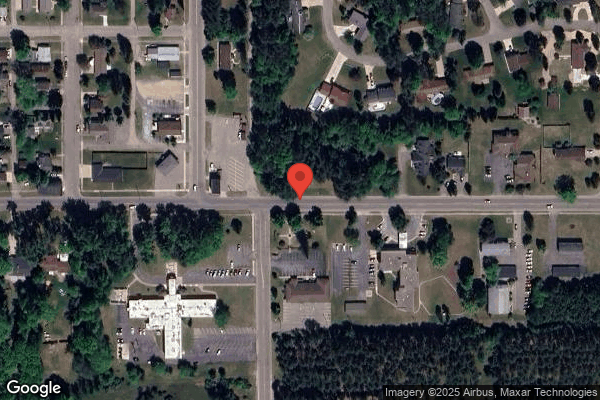
1225 Woodward Avenue, Kingsford, MI 49801 (906) 774-4805
For profit - Limited Liability company 107 Beds OPTALIS HEALTH & REHABILITATION Data: November 2025 1 Immediate Jeopardy citation
Trust Grade
0/100
#402 of 422 in MI
Last Inspection: June 2025

Inspected within the last 6 months. Data reflects current conditions.

Overview

Optalis Health and Rehabilitation of Kingsford has received a Trust Grade of F, which indicates poor performance and significant concerns. The facility ranks #402 out of 422 nursing homes in Michigan, placing it in the bottom half of all facilities statewide, and it is the second out of two in Dickinson County, meaning there is only one local option that is better. Although the facility is showing improvement in its health inspections, reducing issues from 25 in 2024 to 21 in 2025, it still has serious concerns, including a high staff turnover rate of 57%, which is above the state average, and significant fines totaling $117,887, indicating compliance issues. Specific incidents include a critical finding where a resident did not receive proper wound care, potentially leading to infection, and a serious incident where another resident sustained multiple fractures during transportation due to inadequate safety measures. While the facility has some average RN coverage, the overall staffing rating is below average, indicating a need for improvement in providing consistent and reliable care.

Trust Score
F
0/100
In Michigan
#402/422
Bottom 5%
Safety Record
High Risk
Review needed
Inspections
Getting Better
25 → 21 violations
Staff Stability
⚠ Watch
57% turnover. Above average. Higher turnover means staff may not know residents' routines.
Penalties
✓ Good
$117,887 in fines. Lower than most Michigan facilities. Relatively clean record.
Skilled Nurses
✓ Good
Each resident gets 45 minutes of Registered Nurse (RN) attention daily — more than average for Michigan. RNs are trained to catch health problems early.
Violations
⚠ Watch
56 deficiencies on record. Higher than average. Multiple issues found across inspections.
★☆☆☆☆
1.0
Overall Rating
★★☆☆☆
2.0
Staff Levels
★★★☆☆
3.0
Care Quality
★☆☆☆☆
1.0
Inspection Score
Stable
2024: 25 issues
2025: 21 issues

The Good

  • Full Sprinkler Coverage · Fire safety systems throughout facility
  • No fines on record

Facility shows strength in fire safety.

The Bad

1-Star Overall Rating

Below Michigan average (3.1)

Significant quality concerns identified by CMS

Staff Turnover: 57%

10pts above Michigan avg (46%)

Frequent staff changes - ask about care continuity

Federal Fines: $117,887

Well above median ($33,413)

Significant penalties indicating serious issues

Chain: OPTALIS HEALTH & REHABILITATION

Part of a multi-facility chain

Ask about local staffing decisions and management

Staff turnover is elevated (57%)

9 points above Michigan average of 48%

The Ugly 56 deficiencies on record

1 life-threatening 4 actual harm
Sept 2025 1 deficiency
CONCERN (D) 📢 Someone Reported This

A family member, employee, or ombudsman was alarmed enough to file a formal complaint

Potential for Harm - no one hurt, but risky conditions existed

Accident Prevention (Tag F0689)

Could have caused harm · This affected 1 resident

**NOTE- TERMS IN BRACKETS HAVE BEEN EDITED TO PROTECT CONFIDENTIALITY** Based on interview and record review, the facility failed to provide adequate supervision for one Resident #1 (R1) of three resi...

Read full inspector narrative →
**NOTE- TERMS IN BRACKETS HAVE BEEN EDITED TO PROTECT CONFIDENTIALITY** Based on interview and record review, the facility failed to provide adequate supervision for one Resident #1 (R1) of three residents reviewed for elopement. This deficient practice resulted in R1 leaving the facility unattended and the potential for falls and injury.This citation pertains to intake 2600151Findings include:Resident #1 (R1)Review of Minimum Data Set (MDS) assessment dated [DATE], revealed admission to the facility on 7/24/24, with active diagnoses that included anxiety disorder, depression and non-Alzheimer's dementia. R1 scored a 7 of 15 on the Brief Interview for Mental Status (BIMS) assessment reflective of severe cognitive impairment.Review of document titled Elopement dated 6/30/25, read in part .Resident was visualized by Admissions Director C ambulating towards [Name of business]. Resident entered the business. Admissions Director C notified staff she saw him walking outside. Registered Nurse (RN) D went to the [Name of business] and accompanied resident.Notes.wander guard(C) assessed upon return to the facility .wander guard(C) did not alarm at the entrance of the facility (where resident had exited) .During an interview on 9/16/25 at 11:23 a.m., Social Worker B reported that R1 prefers to be by himself and doesn't normally get dressed or up during the day.The day R1 eloped, I heard a message on the two-way radio from Admissions Director C that he was outside.I left my office and went outside.Registered Nurse (RN)D saw he was over at the bar and I went and sat with him.his family came and drove him back to the facility as he was tired.During an interview on 9/16/25 at 11:54 a.m., Admissions Director C reported I was just outside of the facility with another resident.I saw R1 coming out of the facility door with visitors and announced on the two-way radio to alert the staff in the facility and kept watching him. RN D came out of the facility and went to the [Name of the business].During a phone interview on 9/16/25 at 12:30 p.m., RN D reported I worked down a different wing that day but had heard he was outside of the facility.I walked to the area business (bar) and he was inside having a beer.Review of R1's care plan did not reveal any new interventions were added to the care plan following the elopement.During an interview on 9/16/25 at 12:27 p.m., The Nurse Manager E acknowledged no new interventions were added to the care plan following the elopement.During an interview on 9/16/25 at 2:50 p.m., The Nursing Home Administrator (NHA) and Director of Nursing (DON) acknowledged that the resident eloped from the facility and no interventions had been added to the care plan.Review of policy titled Elopement for Facilities with a Wander alert Bracelet System last revised 5/27/24, read in part Guidelines for when a missing resident has been located.the care plan is updated.resident s care plan and interventions that address the resident's needs.are reviewed and updated.Elopement is a situation in which a resident leaves the facility without the facilities knowledge.
Jun 2025 11 deficiencies 2 Harm
SERIOUS (G)

Actual Harm - a resident was hurt due to facility failures

Pressure Ulcer Prevention (Tag F0686)

A resident was harmed · This affected 1 resident

Deficiency Text Not Available

Read full inspector narrative →
Deficiency Text Not Available
SERIOUS (G)

Actual Harm - a resident was hurt due to facility failures

Accident Prevention (Tag F0689)

A resident was harmed · This affected 1 resident

**NOTE- TERMS IN BRACKETS HAVE BEEN EDITED TO PROTECT CONFIDENTIALITY** Based on observation, interview, and record review, the facility failed to implement safety measures during transportation to an...

Read full inspector narrative →
**NOTE- TERMS IN BRACKETS HAVE BEEN EDITED TO PROTECT CONFIDENTIALITY** Based on observation, interview, and record review, the facility failed to implement safety measures during transportation to an outside appointment for 1 Resident (#22) of 3 residents reviewed for accidents/hazards. This deficient practice resulted in harm for Resident #22 who sustained 4 fractures (both bones in lower legs broken), and a large laceration requiring sutures on right footAll times are in Eastern Daylight Time (EDT) unless otherwise notedFindings include:Resident #22 (R22)Review of the Minimum Data Set (MDS) assessment dated [DATE], revealed admission to the facility on 3/15/18 with active diagnoses that included: dementia, depression, and type 2 diabetes mellitus. R22 scored 8 of 15 on the Brief Interview for Mental Status (BIMS) assessment reflective of moderate cognitive impairment. During an interview on 6/24/25 at 3:41 p.m., R22 reported that her legs hurt and were painful.Review of Incident report titled Injury dated 2/3/25 read in part, .incident description per Registered Nurse (RN) N. Van driver had alerted this nurse that resident had fallen in the van .resident sitting on her butt with wheelchair on top of her and her feet extended out with ankles turned in against the front of the console area of van. Resident (R22) was wearing her boots when she left but those had fallen off when she fell Resident unable to give full description as she was in so much pain . R22 experienced facial grimacing, loud moaning or groaning, crying, short period of hyperventilation, and occasional labored breathing .injuries report post incident. Injury type and location: fracture to left lower leg and right lower leg . Further review of Incident report titled Injury dated 2/3/25 revealed a statement from Maintenance Worker/Van Driver (Staff) O read in part, . I was transporting [R22] to her appointment .Resident positioned upright in broda (type of high back wheelchair) chair .the chair tipped forward .the seatbelt was not placed (unbuckled). When the chair is reclined far back the seatbelt would not buckle.Review of progress notes revealed the following:2/3/25 at 8:30 PM Resident returned to facility via Emergency Medical Service (EMS) .Her legs are both wrapped with splints .She has bilateral (both legs) lower extremity fractures of the fibula/tibia with laceration under toes of right foot with 5 stitches .2/4/25 at 12:48 AM R22 returned from emergency room (ER) with new order for Norco . one or two tablets every six hours as needed for pain . Further review of the progress notes revealed that prior to surgery that was scheduled to occur on 2/12/25, R22 received Norco 18 times between 2/4/25 thru 2/10/25 at 7:24 AM for pain. Review of facility incident report titled Injury dated 2/3/25 read in part, Resident had ortho appointment on 2/7. Casting unable to be completed in office and resident was scheduled for closed reduction with casting on 2/12/25 to be completed in the Operating Room (OR) under anesthesia .Review of the facility progress notes dated 2/12/25 indicated R22 had returned from the hospital where R22 had to undergo casting under anesthesia due to her cognitive function to address the injuries sustained from the incident.Review of Document titled Operative Note dated 2/12/25 read in part, . [Orthopedic Surgeon's Name] .Operation: closed reduction and cast application of right tibia and fibula fractures. Closed reduction and cast application of left tibia and fibula fractures .[R22] .sustained injuries to bilateral lower legs when she fell out of her wheelchair during medical transport on 2/3/25. She was transported to the emergency department, where she was diagnosed with displaced oblique fractures of bilateral distal tibia shafts and roughly transverse fractures of bilateral distal fibula shafts . (bilateral lower leg fractures)During an interview on 6/26/25 at 1:57 p.m., the Nursing Home Administrator (NHA) acknowledged the seatbelt was not in place at the time of the incident and the seatbelt would have held the resident in place in the wheelchair when the brakes were applied. During an interview on 6/26/25 at approximately 2:00 p.m., the Director of Nursing (DON) reported that R22 screams out in pain quite often since the incident due to the bilateral lower leg fractures. During an interview on 6/26/25 at approximately 3:30 p.m., the NHA requested Past Non-Compliance (PNC) for the incident involving R22. The NHA reported she had provided the PNC to this surveyor including the incident report titled Injury.During an interview on 6/26/25 at 3:45 PM. Registered Nurse (RN) N. reported he was called by the driver of the van when [R22] fell forward in her wheelchair. The van driver came into the facility yelling that he needed help. I ran out there, and [R22] was in the back of the van. The wheelchair was on top of her, she was seated on the floor of the van both legs extended in front of her, her ankles and toes were turned inwards. It was difficult to get the wheelchair off her. R22 was moaning and in a lot of pain, both her boots had come off and her toes had been sliced and bleeding. We were able to finally get the wheelchair (which was a broda-high back style) off her. I noted at that time she had wet herself pretty good and defecated on herself. She was in pain, she had some scratches on her forehead, legs, and her toes were still bleeding. I made a call to the facility doctor, and R22 was sent out to the emergency room (ER). During an observation of the van with Staff O on 6/26/25 at 4:23 p.m., Staff O was interviewed and reported he was driving a short distance away from the front entrance of the facility (about 6 car lengths) and demonstrated where the van was when he applied the brakes. He then reported after he applied the brakes, R22 had come out of her chair. He backed up the van to the front entrance and went to get help. Staff O demonstrated where R22 was sitting on the floor of the van with the wheelchair tipped over. He demonstrated where her feet were up against the console. Staff O' reported the resident was yelling out in pain and he could not remember if he had applied the seat belt or if the wheelchair lock downs (tie downs) were in place.Review of the facility PNC which included the incident report titled Injury dated 2/3/25 read in part, .work order placed to have maintenance director assess functionality of the van .During a phone interview on 6/26/25 at 4:38 p.m., Maintenance Director P reported he had not completed a work order on the facility van to ensure the van was safe for resident transport after the incident and stated, the problem wasn't the van. During a follow up interview at 5:00 p.m., Maintenance Director P reported he does not have an annual in-service for maintenance staff on the use of the facility van, proof of education regarding use of seatbelts in the van, a completed checklist to ensure the safety of the van, and does not have the maintenance workers complete a checklist to ensure the safety of the van prior to using the van.
CONCERN (D)

Potential for Harm - no one hurt, but risky conditions existed

Deficiency F0554 (Tag F0554)

Could have caused harm · This affected 1 resident

Based on observation, interview, and record review the facility failed to appropriately assess one (Resident #60) out of four residents reviewed for safe self-administration of medication clinically a...

Read full inspector narrative →
Based on observation, interview, and record review the facility failed to appropriately assess one (Resident #60) out of four residents reviewed for safe self-administration of medication clinically appropriate. Findings include:All times are in Eastern Daylight Time (EDT) unless otherwise notedResident #60 (R60)On 6/24/25 at 2:37 PM, an observation and interview were conducted with R60 in their room. R60 was asked if they had any pain and R60 responded, Yes, normally at night and I take aspirin at night because of the pain from my recent shingles. R60 stated that she keeps the medication in her purse that her daughter brought in for her. R60 then showed this surveyor the medications that they had in their purse which contained acetaminophen 500 mg (milligrams), a stool softener, and a laxative. R60 then stated that she could take the acetaminophen every four hours if she wanted, and their clothing often irritated her skin where the shingles had been. On 6/25/25 at 9:10 AM, during an interview with R60 who was asked how their pain was today, replied, During the night the whole side of my body just aches. I take two acetaminophen's every four hours just to get some sleep. R60 was asked what her pain level was currently and replied, It is a 5. On 6/25/25 at 10:00 AM, an interview was conducted with Registered Nurse (RN) T who was asked if R60 had an order or assessment to self-administer medication or if RN T was aware R60 had medication in their room and replied, No. I was not aware that the resident (R60) had medication in their room. R60 lacked an assessment to self-administer medications for the acetaminophen, bisacodyl (stool softener), and bismuth subsalicylate (stomach and diarrhea relief) they were in possession of. Review of R60's physician order, dated 1/17/25, revealed an order for acetaminophen 325 mg, give 650 mg by mouth every 4 hours as needed for pain, and do not exceed 3 grams/day. Review of R60's medication administration record, dated 6/1/25 through 6/26/27, revealed acetaminophen 650 mg was administered on 6/5/25 at 7:44 AM and no other administrations were recorded.On 6/26/25 at 12:35 PM, an interview was conducted with the Nursing Home Administrator (NHA) who was asked if residents were able to self-administer medications and replied, Yes, but they need an assessment, a physician order and it also needs to be care planned. Review of policy titled, Medication Self-Administration, dated 6/25/24, read in part, Policy Overview: Residents have the right to self-administer medications if the interdisciplinary team has determined that it is clinically appropriate and safe for the resident to do so. Guidelines: Each resident is offered the opportunity to self-administer medications. If the resident requests to do so, the interdisciplinary team (IDT) assesses each resident's cognitive and physical abilities to determine whether self-administering medications is safe and clinically appropriate for the resident .The Medication Self-Administration Safety Screen in (computer electronic medical record name) will be completed by the licensed nurse .If it is deemed safe and appropriate for a resident to self-administer medications, this is documented in the physician orders, medical record, and the care plan .Self-administered medications are stored in a safe and secure place, which is not possible in the resident's room, (i.e. locked box, lockable drawer, lockable cabinet, etc.) .Any medications found at the bedside that are not authorized for self-administration are turned over to the nurse in charge for return to the family or responsible party .
CONCERN (D)

Potential for Harm - no one hurt, but risky conditions existed

Deficiency F0628 (Tag F0628)

Could have caused harm · This affected 1 resident

**NOTE- TERMS IN BRACKETS HAVE BEEN EDITED TO PROTECT CONFIDENTIALITY** All times are in Eastern Daylight Time (EDT) unless otherwise noted.Based on interview and record review, the facility failed to...

Read full inspector narrative →
**NOTE- TERMS IN BRACKETS HAVE BEEN EDITED TO PROTECT CONFIDENTIALITY** All times are in Eastern Daylight Time (EDT) unless otherwise noted.Based on interview and record review, the facility failed to ensure three Residents (#14, #18, & #57) of four residents reviewed for hospitalizations were provided with written notification of the bed hold policy when the residents were transferred to the hospital. Findings include:Resident #18 (R18) During an interview on 6/25/25 at 11:17 AM, R18 indicated they had been out to the local hospital during their stay at the facility a couple times, however they were not sure of the exact date.The medical record for R18 revealed a transfer to the hospital on 1/31/25 with a readmission on [DATE] and a second transfer to the hospital on 5/1/25 with a readmission on [DATE]. The medical record did not indicate a bed hold policy for either transfer was provided to R18 or their responsible party.Resident #57 (R57) During an interview on 6/24/25 at 12:54 PM, R57 indicated they had been out to the local hospital during their stay at the facility a few times, however they were unsure of the exact date.The medical record for R57 revealed a transfer to the hospital on 1/8/25 with a readmission on [DATE] and a second transfer to the hospital on [DATE] with a readmission on [DATE]. The medical record did not indicate a bed hold policy for either transfer was provided to R57 or their responsible party.Review of the policy titled, Transfers and Discharges, dated 4/18/25, read in part, Policy Overview: The purpose of this policy is to provide guidelines for the safe transfer and discharge of a resident across the continuums of care. General Guidelines .If the resident is admitted to the hospital the Admissions Director or designee will send the resident's representative a copy of the bed hold policy and transfer notice . Resident #14 (R14) R14 was admitted to the facility 11/13/24. The medical record revealed R14 was transferred to the hospital on 2/16/25, 3/20/25, and 6/9/25. The medical record did not indicate the facility provided written notice of the bed hold policy, including the duration of the bed hold, to R14 or the Resident Representative (RR) of R14 at the time of transfer to the hospital.
CONCERN (D)

Potential for Harm - no one hurt, but risky conditions existed

ADL Care (Tag F0677)

Could have caused harm · This affected 1 resident

**NOTE- TERMS IN BRACKETS HAVE BEEN EDITED TO PROTECT CONFIDENTIALITY** All times are in Eastern Daylight Time (EDT) unless otherwise noted.Based on observation, interview, and record review, the faci...

Read full inspector narrative →
**NOTE- TERMS IN BRACKETS HAVE BEEN EDITED TO PROTECT CONFIDENTIALITY** All times are in Eastern Daylight Time (EDT) unless otherwise noted.Based on observation, interview, and record review, the facility failed to provide grooming and hand hygiene to one Resident (R30) of two residents reviewed for Activities of Daily Living (ADL). Findings include: All times are in Eastern Daylight Time (EDT) unless otherwise noted.Resident #30 (R30) was admitted to the facility 1/23/25 with diagnoses that included but were not limited to: metabolic encephalopathy (brain dysfunction), liver cancer, and muscle weakness.On 6/24/25 at 2:20 PM, R30 was observed sleeping in a recliner next to his bed. R30 was noted with visibly soiled hands with a brown-colored substance encrusted under the fingernails of each finger of both hands. The brown substance was embedded around the edges of each fingernail on both hands. A Minimum Data Set (MDS) assessment dated [DATE] documented R30 had impaired functional range of motion to both upper extremities and both lower extremities. The MDS indicated a Brief Interview for Mental Status (BIMS) score of 12 indicating R30 had moderate cognitive impairment. Further review of the MDS revealed R30 received chemotherapy for cancer treatment and required moderate assistance with personal hygiene tasks. The MDS documented R30 was frequently incontinent of bowel and bladder.The care plans for R30 included a care plan for ADLs. The care plan disclosed R30 had an ADL self-care performance deficit related to weakness, decreased mobility, fall with lower back strain and left ankle sprain resulting in altered mobility and pain. The care plan indicated R30 refused assistance at times with transfers, ambulation, wound treatments, and incontinence care and brief changes. The ADL care plan documented R30 required one-person staff assistance with personal hygiene. An intervention for bathing and showering read: BATHING/SHOWERING: Check nail length and trim and clean on bath day and as necessary. R30's Kardex (a summary of information provided to Certified Nurse Aides (CNA) to direct resident-care needs, including ADL needs) also documented BATHING/SHOWERING: Check nail length and trim and clean on bath day and as necessary. The Electronic Medical Record (EMR) of R30 was reviewed on 6/24/25 and disclosed a form dated 6/18/24 that documented a skin assessment. Section 3 of the form read: Bathing/Shower offered and the documented response was yes. The following portion read Bathing/Shower response and the answer was received. The form did not include documentation of fingernail appearance or hygiene. CNA Tasks in the EMR did not include documentation of fingernail hygiene. Progress notes in the EMR did not document regarding hand or fingernail hygiene.Behavior documentation tasks in the EMR of R30 were reviewed. There were no documentation entries of R30 refusing care. The documentation response was none of the above observed for each entry including the rejection of care section. R30 was interviewed on 6/25/25 at 2:37 PM. Both hands and all fingernails remained visibly soiled with the brown-colored substance remaining under the nails of both hands and around the nail perimeter of each nail of both hands. R30 was asked if he was provided hand hygiene prior to eating meals or when needed. R30 said, No, they don't help me much. R30 was agreeable when asked if he would like his hands and fingernails cleaned. CNA C was outside R30's room in the hallway. CNA C was asked on 6/25/25 at approximately 2:45 PM if R30 refused to allow staff to clean his hands and fingernails. CNA C said R30 refused care at times, but did not recall R30 ever refusing hand and fingernail hygiene. CNA C was asked when R30 last had his hands and fingernails cleaned. CNA C said he did not know. CNA C was requested to visualize the hands of R30. CNA C said they had not noticed how dirty R30's hands and nails were and said the hands and fingernails of R30 would be cleaned immediately.On 6/26/25 at 11:36 AM, the hands and fingernails of R30 appeared to be clean. R30's hands were no longer visibly soiled, and the brown substance under and around his nail beds was no longer visualized.06/26/25 12:47 PM DON interviewed. She said nail care should be provided during showers and PRN when soiled or nails are long. said shower sheet documents if nail care was provided. The policy Activities of Daily Living (ADL) dated as revised 12/7/23 read, in part: .Residents who are unable to carry out activities of daily living independently will receive the services necessary to maintain good nutrition, grooming, personal, and oral hygiene.Appropriate care and services will be provided for residents who are unable to carry out ADL independently. The amount of assistance the resident needs to complete their ADL care will be documented in the resident's care plan and on the resident's Kardex.
CONCERN (D)

Potential for Harm - no one hurt, but risky conditions existed

Quality of Care (Tag F0684)

Could have caused harm · This affected 1 resident

Based on observation, interview, and record review the facility failed to ensure intravenous (IV) site procedure was documented, dated when initiated and orders were in place to ensure the site was ch...

Read full inspector narrative →
Based on observation, interview, and record review the facility failed to ensure intravenous (IV) site procedure was documented, dated when initiated and orders were in place to ensure the site was changed per standards of practice for one (Resident #18) of one resident reviewed for quality of care. All times are in Eastern Daylight Time (EDT) unless otherwise notedFindings include: Resident #18 (R18)Review of R18's electronic medical record (EMR) revealed initial admission to the facility on 4/30/25 with diagnoses including diabetes mellitus, dementia, urinary tract infection with indwelling urinary catheter, and heart failure. On 6/25/25 at 3:13 PM, an observation was made of R18 during medication pass. R18 was observed to have an IV site in their left lower extremity in their forearm that had a dressing that was not dated. On 6/25/25 3:20 PM, an interview was conducted with Licensed Practical Nurse (LPN) U who was asked if the IV site needed to be dated and replied, Yes, and the current one needs to be replaced if there is no date because I don't know how long it has been there. Review of progress note, dated 6/22/25 at 12:27 AM, read in part, Resident peripheral IV placed in left forearm by integrity . The progress note lacked the size, attempts, and resident comfort of the IV placement process. Review of R18's physician orders, dated June 2025, revealed the lack of an order to change the IV site every 72 hours. On 6/26/25 at 12:30 PM, an interview was conducted with the Nursing Home Administrator (NHA) who was asked what their expectations were for IV management and replied, The dressings needed to be dated and the IV site should be changed every 72 hours or sooner if it appears infected or is not flushing properly. Review of the policy titled, Catheter Insertion and Care, date revised July 2016, read in part, Policy: Administration sets and tubing will be changed at specific intervals in order to prevent infections associated with contaminated IV therapy equipment. General Guidelines .
CONCERN (D)

Potential for Harm - no one hurt, but risky conditions existed

Respiratory Care (Tag F0695)

Could have caused harm · This affected 1 resident

Based on observation, interview, and record review the facility failed to appropriately maintain and store respiratory equipment in a sanitary manner for one (Resident #31) of one resident reviewed fo...

Read full inspector narrative →
Based on observation, interview, and record review the facility failed to appropriately maintain and store respiratory equipment in a sanitary manner for one (Resident #31) of one resident reviewed for respiratory care. All times are in Eastern Daylight Time (EDT) unless otherwise noted.Findings include:Resident #31 (R31)Review of R31's electronic medical record (EMR) revealed initial admission to the facility on 1/7/25 with diagnoses including dementia, respiratory failure, depression, and heart failure. On 6/24/25 at 2:17 PM, an observation was made of R31 lying in their room in their bed. R31 was wearing a nasal cannula (soft plastic tubing to deliver oxygen to the nose) delivering oxygen from a concentrator at two liters and had a humidifier connected that was empty and not dated. R31 had a nebulizer lying on their bed with condensation and a small amount of medication in the cup.On 6/24/25 at 2:20 PM, an interview was conducted with R31 who was asked if the staff rinse out their nebulizer and replied, The nurse just comes in and puts the medication in it and turns it on and leaves. R31 was asked how long their humidifier had been empty and replied, I am not sure. Yesterday I had a couple drops of blood on my pillow. R31 was asked if they had a bloody nose and replied, Yes. On 6/24/25 at 2:27 PM, an interview was conducted with Registered Nurse (RN) T who was asked how often the humidifiers are replaced on the oxygen concentrators and replied, Once a week. On 6/24/25 at 3:35 PM, an observation was made of R31's respiratory equipment. R31's humidifier was not dated when the last time it was replaced, and their nebulizer was left intact with visible condensation in the medication cup on their bedside table. Review of R31's physician order, dated 6/21/25, revealed ipratropium-albuterol inhalation solution 0.5-2.5 (3) mg(milligrams)/3 ml(milliliter), 1 vial inhale orally four times a day for dyspnea (shortness of breath), 0800, 1200, 1700, and 2100. Review of R31's physician order, dated 3/10/25, revealed oxygen delivered via NC (nasal cannula), liter flow: 2 liters, duration: continuous, every shift for breathing.On 6/26/25 at 9:45 AM, an observation was made of R31's respiratory equipment. R31's nebulizer was left intact with visible condensation in the medication cup on their bedside table. On 6/26/25 at 12:30 PM, an observation was made of R31's respiratory equipment. R31's nebulizer was left intact with visible condensation in the medication cup on their bedside table. On 6/26/25 at 12:35 PM, an interview was conducted with the Nursing Home Administrator (NHA) who was asked what their expectation were for respiratory equipment sanitation and maintenance and replied, The bubblers should be inspected every shift, and the nebulizers should be rinsed out after every use and set to dry and then stored in a bag for sanitation. Review of policy titled, Oxygen Equipment: Cleaning, Masks, Updraft/Nebulizer, Oxygen Concentrator Filter and Tubing, dated 8/8/22, read in part, Policy: It is the policy of the Facility to maintain oxygen concentrator equipment in a clean manner. Compliance Guidelines .3. Oxygen humidifiers will be checked daily and replaced weekly and PRN (as needed). All humidifiers shall be dated .Cleaning updraft nebulizer: 1. After each use, remove nebulizer T-piece and mouthpiece or mask. Disassemble nebulizer chamber by turning clockwise. 2. Rinse T-piece and mouthpiece or mask with clear hot tap water. Air-dry on clean towel at bedside .
CONCERN (D)

Potential for Harm - no one hurt, but risky conditions existed

Deficiency F0697 (Tag F0697)

Could have caused harm · This affected 1 resident

All times are in Eastern Daylight Time (EDT) unless otherwise noted.Based on observation, interview, and record review the facility failed to appropriately maintain and store respiratory equipment in ...

Read full inspector narrative →
All times are in Eastern Daylight Time (EDT) unless otherwise noted.Based on observation, interview, and record review the facility failed to appropriately maintain and store respiratory equipment in a sanitary manner for one (Resident #31) of one resident reviewed for respiratory care. All times are in Eastern Daylight Time (EDT) unless otherwise notedFindings include:Based on observation, interview, and record review the facility failed to appropriately assess one (Resident #60) out of three residents reviewed for pain management. Findings include:Resident #60 (R60) On 6/24/25 at 2:37 PM, an observation and interview were conducted with R60 in their room. R60 was asked if they had any pain and R60 responded, Yes, normally at night and I take aspirin at night because of the pain from my recent shingles. R60 stated that she keeps the medication in her purse that her daughter brought in for her. R60 then showed this surveyor the medications that they had in their purse which contained acetaminophen 500 mg (milligrams), a stool softener, and a laxative. R60 then stated that she could take the acetaminophen every four hours if she wanted, and their clothing often irritated her skin where the shingles had been. On 6/25/25 at 9:10 AM during an interview with R60 who was asked how their pain was today and replied, During the night the whole side of my body just aches. I take two acetaminophens every four hours just to get some sleep. R60 was asked what her pain level was currently and replied, It is a 5. On 6/25/25 at 10:00 AM, an interview was conducted with Registered Nurse (RN) T who was asked if R60 had an order for to assess for pain each shift and if staff were monitoring R60's pain related to their recent shingles outbreak and replied, Each resident is assessed for pain each shift and R60 should have a pain assessment at least once a day. RN T was asked if they were aware that R60 had pain from their shingles that made it difficult for them to fall asleep at night and their clothing irritated their skin and replied, No, but I will go and check on them now. Review of progress note, dated 6/4/25 at 11:11 AM (Central time), read in part .res (resident) reports ‘terrible' pain in shingles areas. Areas located on chest and upper back. Review of progress note, dated 6/17/25 at 3:51 PM (Central time), read in part .stated that she if feeling better and has pain. The area is now scabbed over. Review of progress note, dated 6/25/25 at 4:16 PM (Central time), read in part .Resident is alert and oriented, with a Brief Interview for Mental Status (BIMS) score of 15. Resident is asking that she be able to keep the following meds at bedside and self-administer: [name brand acetaminophen]. Review of progress note, dated 6/26/25 at 6:37 AM (Central time), read in part, Resident reports having pain from her shingles.She requests to only take ES (extra strength) [name brand acetaminophen] and scheduled Aspirin for pain relief . Review of progress note, dated 6/26/25 at 6:41 AM (Central time), read in part, .My rash (points to the shingles area on chest) hurts, especially at night and the [name brand acetaminophen] helps me sleep. Review of R60's physician order, dated 1/17/25, revealed an order for acetaminophen 325 mg, give 650 mg by mouth every 4 hours as needed for pain, and do not exceed 3 grams/day. Review of R60's physician order, dated 5/27/25, revealed an order for valacyclovir, give 500 mg by mouth two times a day for Shingles for 7 days. Review of R60's medication administration record, dated 5/1/25 through 6/26/27, revealed administered acetaminophen 650 mg on 5/27/25 at 7:02 PM, 5/31/25 at 7:59 AM, 6/5/25 at 7:44 AM and no other administrations. Review of R60's pain level, dated 5/27/25 through 6/5/25 revealed the following: 6/5/2025 11:14 0 Numerical 6/5/2025 07:44 4 Numerical 5/31/2025 10:06 0 Numerical 5/31/2025 07:59 4 Numerical 5/27/2025 20:41 2 Numerical 5/27/2025 19:02 7 Numerical No other pain evaluations recorded and R60 continued to experience pain. Review of R60's physician order, dated 5/24/25, revealed an order for pain evaluation, but under order type indicted no documentation was required. Review of R60's care plan, dated 7/15/24, read in part, .Focus: At risk for pain r/t (related to) impaired mobility. Goal: Pain goal is a zero until next review. Target date: 7/21/25. Interventions: Administer pain medication as ordered. Monitor for effectiveness. Review of R60's care plan, dated 5/27/24, read in part, .Focus: The resident has Shingles. Goal: The resident will be free from complications related to infection through the review date. Interventions: Administer anti-viral as per MD (medical doctor) orders. R60's care plan lacked any interventions or acknowledgment of pain from having shingles. Review of policy titled, Pain Management, dated 4/18/24, read in part Policy: The purpose of this policy is to provide guidelines to prevent and/or manage both acute and chronic pain. General Information: Pain is a highly subjective and personal experience which is impacted by one's previous experiences with pain.Recognition and Evaluation of Pain: Pain is evaluated and documented.When the resident has a new pain or worsening of existing pain utilizing the Pain Evaluation UDA within the resident's electronic health record.Treatment and Management: The individualized comprehensive care plan addresses the pain management program.Monitoring and Modifying Approaches: Licensed nurses will routinely evaluate the resident's pain using the appropriate standardized pain scale.
CONCERN (D)

Potential for Harm - no one hurt, but risky conditions existed

Deficiency F0761 (Tag F0761)

Could have caused harm · This affected 1 resident

All times are in Eastern Daylight Time (EDT) unless otherwise noted Based on observation, interview, and record review the facility failed to store medication in a secure and safe manner and ensure ex...

Read full inspector narrative →
All times are in Eastern Daylight Time (EDT) unless otherwise noted Based on observation, interview, and record review the facility failed to store medication in a secure and safe manner and ensure expired medication was disposed of in the active medication cart for three (Residents #33, Resident #57, and Resident #60) of 18 reviewed and one of two medication carts reviewed for medication storage.Findings include:Resident #33 (R33) Review of R33's medication administration record (MAR), dated June 2025, revealed a physician order for insulin glargine subcutaneous solution pen-injector 100 units/ml (milliliter), inject 14 units subcutaneously at bedtime for DMII (diabetes mellitus type 2), start date 3/10/25 at 1900 (7:00 PM), and administered on 6/24/25 at 7:00 PM. On 6/25/25 at 10:15 AM, a review of the medication cart for the South second floor end, revealed an insulin glargine subcutaneous solution pen-injector 100 units/ml with an opened date of 5/26/25 and an expiration date of 6/23/25 in the active medication cart. This insulin pen should have been discarded and was used on 6/24/25 for R33 at 7:00 PM. The medication cart for the South second floor end also had one loose pill that was round, orange, and with imprint of 20 that was unable to be identified and three small pieces of a white pill that were broken and lying in the base of the second drawer. On 6/25/25 at 10:20 AM, an interview was conducted with Registered Nurse (RN) T who was asked if any loose medications or outdated medications should be left in the medication carts and replied, No, the night shift nurse should have cleaned and discarded any loose or expired medications. RN T confirmed that R33 received the insulin glargine 14 units on 6/24/25 when the pen should have been discarded and replaced. On 6/26/25 at 12:00 PM, a follow-up review of the medication cart for the South second floor end was conducted and found to still contain the insulin glargine subcutaneous solution pen-injector 100 units/ml with an opened date of 5/26/25 and an expiration date of 6/23/25 in the active medication cart. RN T was asked if R33 had another insulin pen and why the expired insulin pen remained in the cart and replied, I don't know, but I am throwing this out and will see if there is another pen. RN T confirmed that R33 received the insulin glargine 14 units on 6/25/25 again when the pen should have been discarded and replaced. Resident #57 (R57) On 6/24/25 at 12:54 PM, an observation was made of R57 lying in their bed resting. R57's room was observed to have a small bottle of Nystatin powder on the dresser with their name on the bottle. R57 was unable to recall why the bottle was there. Review of R57's order recapitulation, dated 1/30/25 through 6/25/25, revealed an order for Nystatin powder, apply to groin topically every shift for incontinence; rash, dated 2/6/25 and discontinued on 2/7/25. Another order for Nystatin powder on 2/7/25 to be applied topically every evening shift for fungal/yeast and to discontinue once resolved and apply to groin topically every day shift for fungal/yeast and to discontinue once resolved and discontinued on 3/11/25. A third order for Nystatin powder started on 3/14/25 for the same reason and discontinued on 3/27/25. R57 did not have any further orders for the Nystatin powder and should have been discarded and not left in their room. Resident #60 (R60) On 6/24/25 at 2:37 PM, an observation and interview were conducted with R60 in their room. R60 was asked if they had any pain and R60 responded, Yes, normally at night and I take aspirin at night because of the pain from my recent shingles. R60 stated that she keeps the medication in her purse that her daughter brought in for her. R60 then showed this surveyor the medications that they had in their purse which contained acetaminophen 500 mg (milligrams), a stool softener, and a laxative. R60 then stated that she could take the acetaminophen every four hours if she wanted, and their clothing often irritated her skin where the shingles had been. On 6/25/25 at 9:10 AM during an interview with R60 who was asked how their pain was today and replied, During the night the whole side of my body just aches. I take two acetaminophens every four hours just to get some sleep. R60 was asked what her pain level was currently and replied, It is a 5. On 6/25/25 at 10:00 AM, an interview was conducted with Registered Nurse (RN) T who was asked if R60 had an order to self-administer medication or had an assessment to self-administer medication or if they were aware that R60 had medication in their room and replied, No. I was not aware that the resident (R60) had medication in their room. R60 lacked an assessment to self-administer medications for acetaminophen, stool softener, and laxative. Review of R60's physician order, dated 1/17/25, revealed an order for acetaminophen 325 mg, give 650 mg by mouth every 4 hours as needed for pain, and do not exceed 3 grams/day. Review of R60's medication administration record, dated 6/1/25 through 6/26/27, revealed administered acetaminophen 650 mg on 6/5/25 at 7:44 AM and no other administrations. On 6/26/25 at 12:35 PM, an interview was conducted with the Nursing Home Administrator (NHA) who was asked if medications should be stored in resident rooms and if expired medication should be left in the active medication cart supply and replied, No, expired medications are to be discarded and no medications should be left in resident rooms unless they are able to self-administer and have proper assessment and order to do so. Review of policy titled, Medication and Treatment Storage, dated 8/7/23, read in part, Policy Overview: It is the policy of this facility to ensure accurate labeling and dating of medications and treatments for safe administration and safe and secure storage (including proper temperature controls, appropriate humidity and light controls, limited access, and mechanisms to minimize loss or diversion) of all medication and treatments. General Guidelines: All medications and biologicals will be stored in locked compartments.Expired, discontinued, or deteriorated drugs or biologicals will be returned or destroyed per pharmacy return/destruction guidelines.
CONCERN (E)

Potential for Harm - no one hurt, but risky conditions existed

Safe Environment (Tag F0584)

Could have caused harm · This affected multiple residents

Based on observation, interview, and record review the facility failed to maintain a clean, comfortable environment throughout the facility and maintain clean sanitary linens and shower rooms for shar...

Read full inspector narrative →
Based on observation, interview, and record review the facility failed to maintain a clean, comfortable environment throughout the facility and maintain clean sanitary linens and shower rooms for shared resident use. This resulted in a potential decreased satisfaction of living conditions and an increased potential for a bacterial harborage for residents residing in the facility.All times are in Eastern Daylight Time (EDT) unless otherwise notedFindings include:In an observation on 6/24/25 at 12:15 PM., upon entering the facility for annual recertification it was noted walking through the main door into the main common area that a strong smell of urine and musty warm air was evident. There were multiple residents in the main common area watching TV. The carpet was noted to be heavily soiled throughout the common area and the entire 2nd floor carpeting along the corridors/units had multiple stains, and an overall dirty appearance. There were floor box fans blowing warm air through the building.During an environmental tour on 6/25/25 at 3:21 PM., prompted by initial observations on entrance and comments made during a private resident council meeting held by the survey team, residents voiced frustrations about a strong urine smell in the facility, soiled carpeting, soiled linens and overall dissatisfaction with the cleanliness of the facility. Observation of the lower 1st floor shower room noted the following: a cart with multiple random items strewn about including adult pull up briefs, soiled wash cloths, rolls of clear garbage bags, random pieces of paper. Located in the 2nd stall shower/bath area was a shelf unit with different types of adult briefs strewn about not organized to style or size of briefs. 2 shower chairs made of white PVC with blue and pink mesh backing had strong odor of urine, underneath the bottom of the shower chairs were visible yellow/dark orange discoloration in the crevasses and along the frame underneath the seats. The shower/bathroom it was noticed there were no bath towels, hand towels or washcloths. There were approximately 6 flat sheets, 6-8 pillowcases. The shower/bathroom showers had shower curtains hanging that were yellowing at the top (mesh) torn and tattered in various spots on the curtain itself. The shower curtains appeared dated and worn.Further environmental observations on 6/25/25 at 4:07 PM., the 1st floor linen room had approximately 12 bath towels, all which were noted to be dingy white/gray in color, thin in texture and heavily stained. 13 hand towels noted which were all dingy white in color, thin in texture and multiple stains were noticed during the inspection. The washcloths which were all noted to be very dingy white/gray in color, stained and could not differentiate if they were used for cleaning or resident care.Further environmental observations on 6/25/25 at 4:14 PM., the 2nd floor clean linen room inspection revealed resident clothing protectors were like bath towels in texture and were dingy white/gray in color with multiple stains observed on them. The bath towels were old in appearance, abrasive to the touch and dingy white/gray in color along with multiple stains. Hand towels inspected were all heavily used in appearance and color, dingy white/gray with stains. A stack of clean wash clothes inspected were very tattered/torn and dingy in color. This surveyor could not differentiate whether the washcloths were used for cleaning, or they were actual resident washcloths. The linens in the linen room were all in poor condition. Bed sheets, blankets and covers inspected in the linen room on the 1st floor also were noticed to be worn and old in appearance, along with the linen room having a muggy/malodorous smell to it.In an interview on 6/25/25 at 4:30 PM., Certified Nurse Aide (CNA) D reported he was unsure when new linens are ordered. CNA D reported the linens are used for all residents and they are not separated from what areas of the body wash their faces, or peri-areas. CNA D reported residents share linens including washcloths which seem quite old and dingy as well as rough/abrasive on the skin.In an interview on 6/25/25 at 4:45 PM., CNA C reported the linens which are stocked in the linen rooms/shower rooms are where the staff get towels, sheets, washcloths and other linen items. CNA C reported he has noticed many linens, towels and clothing protectors were in an older condition, he was not sure when and how often the facility gets new linens. During a second environmental inspection on 6/26/25 at 10:30 AM., the 1st floor shower room was observed again with no change. The room and equipment/resident shower chairs and shower curtains were noted to not unchanged/cleaned from the first inspection on the environmental tour on 6/25/25 at 3:21 PM. The pink mesh/PVC shower chair first noticed was now in a shower and was noted to have long dark strands of hair on the seat.Further environmental inspections conducted on 6/26/25 at 10:41 AM., noted a linen cart in the 1st floor shower room which housed multiple thin bath towels which were dingy white/gray in color, abrasive to the touch and multiple stains were noted on them. The hand towels were all noted to be dingy/stained in appearance, and the washcloths were noted to be stained, dingy and tattered/thin and abrasive to the touch.In an interview on 06/26/25 at 10:47 AM., Laundry/Housekeeping Manager (Staff) L reported she and one other housekeeping/laundry staff member put the clean linens out into the linen rooms, and shower rooms, as well as on the linen carts that are housed on the 2nd floor resident units. Staff L reported any time a towel or linen is soiled and stained it is immediately discarded, and new lines/towels are put out.On 6/26/25 at 11:12 AM., Staff L accompanied this surveyor to the shower room on the 1st floor to observe bath towels, hand towels, linens and shower curtains and the overall condition of carpets, and other environmental housekeeping areas. When this surveyor showed Staff L the multiple areas and linens that were soiled, stained tattered and torn Staff L reported the towels should not look like that and indicated they should be clean, white and stain free. Staff L reported the shower curtains should be clean and free of holes and replaced or rotated when visibly soiled. Staff L reported she herself would not want to use any of the linens this surveyor inspected with her.Review of a facility Policy Title: Terminal Cleaning and Disinfecting of Resident Rooms With a revision date of 1.10.2024 revealed: Cleaning considerations include but are not limited to: Obtain cleaning care and appropriate supplies and EPA approved disinfectants Keep the cart with supplies at the door Bring in the supplies needed for the cleaning process Change mop bucket water between rooms and when visibly dirty Clean the resident bedroom area before the resident bathroom In multi-occupancy rooms, clean each bedroom area (surfaces, furniture, etc.) separately to avoid cross-contamination Clean from top to bottom to prevent dirt and microorganisms from dripping or falling and contaminating already cleaned areas. (i.e. clean surfaces before cleaning floors) Clean low-touch surfaces before high-touch surfaces. Clean in a systematic manner to avoid missing areas - for example left to right or clockwise. Clean prior to disinfecting as recommended by the manufacturer of the product(s) being used for transmission-based precautions. Follow the manufacturer instructions for use of all cleaning and disinfection products (i.e. concentration, application method, contact time, etc.)
CONCERN (F)

Potential for Harm - no one hurt, but risky conditions existed

Food Safety (Tag F0812)

Could have caused harm · This affected most or all residents

**NOTE- TERMS IN BRACKETS HAVE BEEN EDITED TO PROTECT CONFIDENTIALITY** Based on observation, interview, and record review, the facility failed to: effectively date mark potentially hazardous ready-to...

Read full inspector narrative →
**NOTE- TERMS IN BRACKETS HAVE BEEN EDITED TO PROTECT CONFIDENTIALITY** Based on observation, interview, and record review, the facility failed to: effectively date mark potentially hazardous ready-to-eat food products, effectively clean food service equipment resulting in cross-contamination, bacterial harborage, and the increased potential for resident foodborne illness.Findings include:During a dining observation on 6/25/25 at 8:27 AM., noted in the main dining room found in one of the cabinet drawers was a individual small cup of what appeared to be brown sugar uncovered, open to air. The drawer had multiple individual packages of jellies, straws, and random condiments. The inside of the drawers along the cabinet wall were noted to be soiled with food crumbs and sticky substances. In a cupboard above the refrigerator a was clear storage container of yellow popcorn kernels. The container was noted to be yellowing, sticky, and grimy/greasy to the touch there was no date or label on the popcorn. Continued observations of dining on 6/25/25 at 8:59 AM., noted multiple packages of cubed swiss cheese, cheddar cheese and pepper jack cheese, multiple packages (tubes) of summer sausage on the refrigerator shelves. In the bottom of the refrigerator right side drawer was a gallon size baggie of sliced summer sausage which was approximately half full. The baggie of summer sausage had no label, date or use by date. There was no description of food item (summer sausage), and the pieces of sliced sausage appeared dried out. Also noted in the bottom right drawer was 1 bag of each type of cubed cheese in the bottom drawer (swiss cheese, pepper jack and cheddar) were noted to have no open date or use by date on them. In an interview on 6/25/25 9:10 AM., Activity Director (AD) K reported she the summer sausages and cubed cheese was in the refrigerator in the main dining room because it was used for residents and family for a Father's Day celebration (6/15/25). AD K reported she did not know she was supposed to label and date any food item that she used and had ordered through the kitchen for activities. AD K reported she would throw away the summer sausage and cheeses that had no open date on them. On a return visit to the main dining room [ROOM NUMBER]/26/25 at 2:34 PM., noted in the bottom right drawer was 1 bag of each type of cubed cheese in the bottom drawer (swiss cheese, pepper jack and cheddar) were noted to have no open date or use by date on them. Review of a facility Policy & Procedure with a revision date of 12/26/22 revealed: Department: Food and Nutrition Services It is the policy of this facility to provide sufficient storage to keep foods safe, wholesome and appetizing, according the USDA Food Code guidelines .Compliance Guidelines It is the responsibility of the Dietary staff and supervisors to ensure that food is stored, labeled and used within the recommended time guidelines to prevent food borne illness. a. Temperatures of the food storage areas, including dry storage, refrigeration and freezers shall have thermometers and be monitored and recorded daily.b. Foods must be rotated using the FIFO method in all storage areas.c. Guidelines for food labeling and dating must be adhered to by all food service personnel and closely monitored by the food service manager. All employees who provide patient/resident assistance with meals will be trained and shall demonstrate competency in the prevention of foodborne illnesses 10. All foods removed from original packing and must have an arrival date. If food has a manufacturers expiration date, an open date will be added to the label, which includes food like: cottage cheese, bulk yogurt, sour cream etc11. All food packaging that is open for use and returned like deli meat must be labeled with arrival date and open date. 12. Leftover foods must be immediately frozen, labeled and dated for later use. If refrigerated, the food must be discarded within 72 hours .
May 2025 3 deficiencies
CONCERN (D) 📢 Someone Reported This

A family member, employee, or ombudsman was alarmed enough to file a formal complaint

Potential for Harm - no one hurt, but risky conditions existed

Deficiency F0554 (Tag F0554)

Could have caused harm · This affected 1 resident

**NOTE- TERMS IN BRACKETS HAVE BEEN EDITED TO PROTECT CONFIDENTIALITY** Based on observation, interview, and record review the facility failed to ensure medications were administered under nursing obs...

Read full inspector narrative →
**NOTE- TERMS IN BRACKETS HAVE BEEN EDITED TO PROTECT CONFIDENTIALITY** Based on observation, interview, and record review the facility failed to ensure medications were administered under nursing observation for one Resident (R6) of one resident reviewed for medication administration. This deficient practice resulted in the potential for delayed or non-administration of medications left unsupervised at bedside. Findings include: This deficiency pertains to Intake MI00152512. All times noted are Eastern Daylight Savings Time (EDST). Review of R6's Minimum Data Set (MDS) assessment, dated 1/16/25, revealed R6 was admitted to the facility on [DATE] with diagnoses that included: cancer, neurogenic bladder, anxiety disorder, depression, and unspecified mood disorder. R6 scored 15 out of 15 on the Brief Interview for Mental Status (BIMS) reflective of intact cognition. During an interview/observation on 4/30/25 at 11:28 a.m., R6 was observed lying in bed with a plastic cup of red and orange gummies on the overbed table in front of them. Licensed Practical Nurse (LPN) A entered the room, per R6's request, and R6 told LPN A that she only had one red Vitamin D3 gummy in the cup, and yesterday she had three. R6 stated, I didn't want to eat them before I showed you. LPN A exited the room, with the cup, and returned with three red Vitamin D3 gummies in the cup. LPN A stayed in the room and said she needed to watch R6 eat the gummies. R6 stated, Why do you have to observe me? You have never observed me eat them before. During an interview on 4/30/25 at approximately 11:40 a.m., LPN A acknowledged R6 did not have a physician order for self-administration, and no Self-Administration of Medication Assessment was completed showing R6 had the capability and safety to administer their own medications. During an interview on 4/30/25 at 12:45 p.m., in the presence of the Nursing Home Administrator (NHA) and Assistant Director of Nursing (ADON)/Registered Nurse (RN) I, RN I reported LPN A had left R6's medications at the bedside without a physician order for self-administration of medication by R6. When asked if the self-administration of medication assessment and physician order had been implemented after this Surveyor's observation of R6's medications being left at the bedside, RN I confirmed the physician order and care plan had just been update today and no order or care plan intervention had been in place at the time of this Surveyor's observation on 4/30/25 at 11:38 a.m. Review of R6s' Physician Order Summary, retrieved 5/1/25 at 11:53 CT (Central Time), revealed the following orders: 1. Give one Vitamin B 3000 mg Gummy (Resident supplies), may hold if unavailable one time a day for supplement. Start Date: 3/11/20245 2. Start Date: 5/1/2025. Per Resident's request it is acceptable to leave her supplemental Gummies for her to take at her pace every shift. Review of R6s' initial Medication Self-Administration Safety Screen, with a lock date of 4/30/25 at 16:48 (4:48 p.m. CT) revealed the following instructions: Complete this assessment prior to resident initiating self-administration of medication and with any medication order changes . Ongoing assessment should occur at a minimum or quarterly .
CONCERN (D) 📢 Someone Reported This

A family member, employee, or ombudsman was alarmed enough to file a formal complaint

Potential for Harm - no one hurt, but risky conditions existed

Grievances (Tag F0585)

Could have caused harm · This affected 1 resident

**NOTE- TERMS IN BRACKETS HAVE BEEN EDITED TO PROTECT CONFIDENTIALITY** This deficiency pertains to Intake MI00151603. Based on interview and record review, the facility failed to promptly resolve gri...

Read full inspector narrative →
**NOTE- TERMS IN BRACKETS HAVE BEEN EDITED TO PROTECT CONFIDENTIALITY** This deficiency pertains to Intake MI00151603. Based on interview and record review, the facility failed to promptly resolve grievances for one Resident (R6) of three residents reviewed for grievances. This deficient practice resulted in resident frustration and dissatisfaction when missing personal items were not found or replaced. Findings include: All times noted are Eastern Daylight Savings Time (EDST). Review of R6's Minimum Data Set (MDS) assessment, dated 1/16/25, revealed R6 was admitted to the facility on [DATE] with diagnoses that included: cancer, neurogenic bladder, anxiety disorder, depression, and unspecified mood disorder. R6 scored 15 out of 15 on the Brief Interview for Mental Status (BIMS) reflective of intact cognition. During an interview on 4/30/25 at approximately 11:30 a.m., R6 reported the following items were missing and had not been located by the facility: a small pouch, mother's engagement and wedding rings, two mother's rings, a ring her brother made for her, a tennis bracelet, a golden girls blanket, a light jacket, a sweater, a shirt, and a pair of sweat pants. R6 stated, I would guess it (jewelry) disappeared a couple of months ago. They (facility staff) tore this room apart, so I don't know what would have happened to it. When asked about the clothing, R6 stated, I distinctly remember the aide walking out (of the room) with it (clothing), and the laundry said it never came down . They took the blanket, jacket, sweater, and my pants. They were all together. R6 said she filed three complaints (Concern/Grievance Forms) and was told they (facility) was going to replace the things. On 5/1/25 at 9:36 a.m., the Social Services Coordinator (Staff) F provided two Concern Forms completed for R6 regarding missing items on the following dates: 12/17/24: [R6] states items are missing from her room. Golden girls blanket with cartoon gold girls, black velvet jacket with red polka dots down the sleeves, Golden girls pouch - has her mother's wedding rings in it. [NAME] spiral notebook. She said these items have been missing for about a week. Spoke to laundry and looked around in laundry. [Laundry] says they never came down. 3 sports bras - also missing pink slipper with strap across the front. 1/20/25 Replaced slippers. Signed by Staff F. 1/18/25: Missing her Golden Girls blanket, nightgown - blue with seahorses is missing. Golden Girls makeup bag and contents of parents' wedding rings, tennis bracelet, hair pick etc. all missing and black polka dot jacket. Resolution: Yes - Describe resolution: 1/20/25: Looked in laundry and patient room. Could not locate. Laundry never saw the stuff. 1;30/25: [R6] told to pick out items and let Staff F know and facility will purchase items on her patient inventory list including, 1 night gown, 1 jacket, Golden girls blanket and pouch, hair pick, 3 sports bras. 4/30/25: [Staff F] reminded [R6] about picking out items so facility can purchase for her. The method used to notify the complainant of resolution, date of resolution, and documentation of whether the complainant was satisfied with the resolution were all absent completion details. On 5/1/25 at 10:45 a.m., Staff F provided the Resident Personal Effect Inventory for R6, dated 1/20/25, Review of R6's complete medical record by Staff F, ADON/RN B and this Surveyor failed to locate any Personal Effect Inventory completed at the time of admission [DATE]). R6's Resident Personal Effect Inventory was completed following the submission of two missing items concern forms to the facility. Review of the Resident Missing Items policy, dated 10/1/2007, revealed the following, in part: All missing items will be investigated . A report of loss will be filled out by the person who receives a complaint of loss from a resident or family member at the time it is reported . The Department Manager/Director is required to move the process towards resolution within the designated time frame of two weeks. During an interview on 5/1/25 at approximately 12:00 p.m., the NHA was asked about R6's missing items and concern forms. The NHA stated, If I get a concern form, I send it out to the department that it affects. It is up to each one of them (department heads) to investigate and resolve the concern form. Generally, if they are missing items they go to Staff F. R6's Concern Forms were reviewed with the NHA in relation to the facilities' Resident Missing Items policy. The NHA expressed understanding of this Surveyors concerns with the lack of resolution to R6's written concerns/grievances/missing items.
CONCERN (D) 📢 Someone Reported This

A family member, employee, or ombudsman was alarmed enough to file a formal complaint

Potential for Harm - no one hurt, but risky conditions existed

Incontinence Care (Tag F0690)

Could have caused harm · This affected 1 resident

**NOTE- TERMS IN BRACKETS HAVE BEEN EDITED TO PROTECT CONFIDENTIALITY** Based on observation, interview, and record review, the facility failed to ensure a urinary nephrostomy drainage bag was maintai...

Read full inspector narrative →
**NOTE- TERMS IN BRACKETS HAVE BEEN EDITED TO PROTECT CONFIDENTIALITY** Based on observation, interview, and record review, the facility failed to ensure a urinary nephrostomy drainage bag was maintained to prevent contact with contaminated surfaces or garbage for one Resident (R6) of one resident reviewed for catheter care. This deficient practice resulted in the increased risk of contamination of the urinary drainage bag and increased risk of urinary tract infection (UTI) for R6. Findings include: This deficiency pertains to Intake MI00152512. All times noted are Eastern Daylight Savings Time (EDST). During an interview and observation on 4/30.25 at 11:28 a.m., R6's nephrostomy urinary drainage bag was observed clipped to the bed linen on the right (exit) side of R6's bed, with the urinary drainage bag hanging down into R6's garbage can which contained various garbage items. No privacy/dignity cover was observed on the urinary drainage bag and the weight of the urine looked as though it continued to lower the bag into the garbage. When R6 was asked about the urinary drainage bag from their nephrostomy being in the garbage can, R6 stated, No, it should not be in there. When asked about UTI's, R6 stated, Oh God. I can't tell you how many I have had. I had one recently that was so bad that I had to have an IV (for antibiotics). Review of R6's Minimum Data Set (MDS) assessment, dated 1/16/25, revealed admission to the facility on [DATE], with diagnoses that included: cancer, neurogenic bladder, anxiety disorder, depression, and unspecified mood disorder. R6 scored 15 out of 15 on the Brief Interview for Mental Status (BIMS) reflective of intact cognition. During an interview on 4/30/25 at 12:45 p.m., the Nursing Home Administrator (NHA) was advised of this Surveyors' observation of the nephrostomy urinary drainage bag being in R6's garbage can. The NHA acknowledged it would be an infection control concern as R6 was easily susceptible to UTI's. Assistant Director of Nursing (ADON)/Registered Nurse (RN) I entered the NHA's office and instructed RN I to go to R6's room and remove the nephrostomy urine drainage bag from the garbage can. RN I acknowledge this concern and indicated it would be an infection control problem. During an interview on 5/1/25 at 12:14 p.m., RN I confirmed they had gone into R6's room and the nephrostomy bag was placed in a dignity cover so it would lower into the cover instead of into the garbage can. RN I confirmed the bag was clipped to a sheet, but with the weight of the urine it had lowered into the garbage can. Review of R6's Altered Elimination Care Plans revealed the following interventions: .Be mindful of presence of nephrostomy tubes with cares . Dated 8/12/2024, .Ensure nephrostomy tubes are fully closed following flushing . Date Initiated: 10/10/2024. .Provide a collection bag cover at all times . Date Initiated: 7/25/2024.
Mar 2025 2 deficiencies 1 Harm
SERIOUS (G) 📢 Someone Reported This

A family member, employee, or ombudsman was alarmed enough to file a formal complaint

Actual Harm - a resident was hurt due to facility failures

Deficiency F0725 (Tag F0725)

A resident was harmed · This affected 1 resident

**NOTE- TERMS IN BRACKETS HAVE BEEN EDITED TO PROTECT CONFIDENTIALITY** This citation pertains to intake(s): MI00151324, MI00151372 Based on observation, interview and record review the facility faile...

Read full inspector narrative →
**NOTE- TERMS IN BRACKETS HAVE BEEN EDITED TO PROTECT CONFIDENTIALITY** This citation pertains to intake(s): MI00151324, MI00151372 Based on observation, interview and record review the facility failed to provide sufficient staffing to ensure resident needs were met timely for three Residents (#4, #5, & #3) of five residents reviewed for staffing concerns. This deficient practice resulted in Resident #4 being left wet and soiled for extended periods of time and unmet care needs including oral care, and grooming with the potential to affect all 75 residents. Findings include: Resident #4 (R4) On 3/26/25 at 2:35 PM., Registered Nurse (RN) B was interviewed and reported R4 needs assistance to get in and out of bed, take showers, perform oral care and to be provided overall daily grooming (ADLs). RN B reported Certified Nurse Aides (CNA's) are extremely short staffed. RN B reported many residents do not get their grooming daily. RN B reported there are a lot of agency staff that don't show up, call in and/or cut corners on care for residents. RN B reported there were several times in the mornings where CNA staff have reported residents have been left wet and soiled, and that their night cares have not been completed. RN B reported R4 often reports to staff that he has not been helped, and residents are not getting their showers. RN B stated, this morning, CNA J reported R3 was heard crying out for help when walking into the facility to punch in (6:00 AM). RN B stated CNA J checked on R3 and found she was left wet and soiled. RN B stated they went with CNA J to assess R3, and when they entered R3's room, she was completely soaked from her upper thighs to the upper mid back. RN B stated, R3's bedding was wet and smelled of urine and her clothing appeared to be the clothing she had on the day before. RN B stated, they instructed CNA J to inform the unit manager. RN B stated, CNA J immediately cleaned R3 up and changed her linens. RN B stated, R3 was visibly upset when he entered the room, she appeared cold, and was crying that no one came for a long time. RN B stated, this occurs because the night staff will not stay over and do walking rounds with oncoming day staff. RN B reported some of these staff are agency staff and they walk out the door as soon as the morning shift comes in. On 3/26/25 at 3:00 PM., Agency Staff LPN E was interviewed and reported she works 50-60 hours a week at the facility. LPN E reported the facility is very short staffed. LPN E reported the schedule is always changing and staff are constantly being reassigned to different units than previously assigned for the day. LPN E stated staff are often pulled in many directions, filling holes wherever needed, and staff have to cut corners and are forced to prioritize what must be done versus what can wait. LPN E stated, earlier today there was only 1 CNA until 10:00 am for her unit which is a heavy unit and reported it was impossible to give all these residents 100% good quality care when everyone is constantly rushing between getting residents up for meals, showered, and changed. LPN E reported documentation and other things that come up such as emergencies, falls, admissions, and discharges are not able to be kept up either. LPN E reported there were no consequence for the agency staff who cancel, or no call/no show and they are still allowed to pick up the next day as if nothing happened. When asked about care not being able to be consistently provided, LPN E stated, . absolutely residents are missing their showers, ADL care, restorative ROM, oral care and genuine quality care that is not rushed. LPN E reported the facility admission department keeps admitting residents with high needs, including residents who required 2-person assist and mechanical lift assistance which always take 2 staff. LPN E stated it is nearly impossible to keep up. On 3/27/25 at 8:15 AM., in the main dining room was observed with approximately 16 residents seated at tables. No drinks, utensil or coffee were observed on the tables. CNA F was observed preparing juice, water and other drinks on a counter but was not passing any of the drinks out to residents. There were multiple residents observed appearing disheveled. Family Member (FM) N was observed coming into the dining room and looking around the cabinets/cupboards. FM N was then observed proceeding to enter the east unit looking for staff and asking where the clothing protectors were. Aat 8:32 AM., FM N was observed returning to the dining room with a stack of clean clothing protectors, went to his (mother-unsampled resident) and placed a clothing protector on her, then began putting clothing protectors on other residents in the dining room. At 8:45 AM., residents were observed remaining seated at the tables with no drinks or meals yet, and several residents were observed looking around, with some talking to one another asking, what is taking so long. At 8:52 AM., a meal cart was observed delivered to the dining room, and staff began to pass the trays. No residents were observed having coffee prior to the meal trays being passed at approximately 9:01 AM. On 3/27/25 at 9:10 AM., FM N was interviewed and reported the facility is very short staffed. FM N stated he comes in daily to assist with his mother's breakfast and help feed her because she is dependent on staff for meal assistance. FM N reported the staff are very nice and do the best they can, but with being short some corners get cut. FM N reported being aware many agency staff do not show up, or they call in last minute which leaves the staff working short with facility staff having to stay over to help out. FM N reported at times he does see some residents in the dining room who appear to not have had grooming and care completed. On 3/27/25 at 9:17 AM., CNA F was interviewed and reported the facility is very short staffed, especially in regard to CNAs. CNA F stated a lot of resident care is not completed to the standard the residents deserve, as well as her not being able to provide what she would like to be able to give. CNA F reported the shifts are typically 6:00 AM-2:00 PM, 2:00 PM-10:00 PM, and 10:00 PM -6:00 PM, and stated there were some shifts that currently are all over the place, such as 2:00 AM-2:00 PM to attempt to cover gaps. CNA F acknowledged agency staff do call/cancel last minute, no show and regular staff have been taking some days off because they have picked up so much overtime they are feeling burned out. CNA F reported the west unit is the heaviest (majority of residents-approximately 30 require 2 staff assist for care). CNA F stated, about 2-3 weeks ago she was working the late-night shift 2:00 AM-2:00 PM., and CNA J came in to help at 3:00 AM. CNA F reported her and (CNA J) started to do their rounds, and they found 9 of 15 residents on the west unit that were completely soaked in urine, and a couple residents who had BM (Bowel Movements). CNA F stated it was very sad to see, and deal with. CNA F reported 2 of the residents had to be showered in the middle of the night because of how soiled they were. CNA F stated there were only 2 CNAs prior to them coming in for the entire facility because agency staff didn't show up. CNA F reported, the hardest part was that so many residents are 2 person assists, and without enough staff, they are always behind, which directly affects resident care. On 3/27/25 at 9:38 AM., an observation and interview revealed R4 in a wheelchair self-propelling downstairs via the elevator to go to the therapy gym. R4 was noted to have food particles on her shirt and her hair was not brushed. R4's lips were observed dry, red and chapped. R4 was observed with what appeared to be dried crusted substances around her mouth. R4's overall appearance was disheveled. R4's hands had visibly soiled fingers, and her fingernails were chipped, and some broken off with varied lengths. R4's fingernail tips were observed with heavy buildup of grime/dark substances and reported the staff do not always help her clean up so well. R4 stated, it was difficult for her to brush her own hair and teeth, among other things independently because she had a stroke. On 3/27/25 at 11:52 PM., Physical Therapist Technician (PTT) I reported R4 is often disheveled and at times smells of stale urine. PTT I stated R4 comes to the therapy gym often and will work out with little supervision. PTT I reported the facility was very short staffed and stated it most definitely affects the care of the residents. On 3/27/25 at 2:00 PM., CNA J was interviewed and reported when she arrived at the facility yesterday morning for her shift, she overhead R4 crying out. CNA J stated, she was not assigned to R4 but has worked with R4 for years. CNA J reported the cry sounded different and more concerning from what she normally sounded like. CNA J stated, she went into R4's room and found her crying out that she was wet and cold. CNA J reported, she calmed R4 down and let her know she would be staying to help her get clean and warm. CNA J reported, at first, she didn't think it was that bad. CNA J indicated R4's linens were found damp when she pulled back the covers to assist R4 with rolling over. CNA J reported, at that time, she got an immediately noticeable odor of urine and realized that most of the linen was wet. CNA J stated some of the linen had noticeable areas which were previously wet and had dried urine-stained areas. CNA J reported, she knew R4 had been laying in her urine a while just by the smell of it and stated, the urine has a much more pungent smell when its damp/drying. CNA J stated she informed RN B and then assisted R4 with getting cleaned up. CNA J stated she felt the staffing problems were why R4 was left wet. CNA J stated, either agency staff just don't show up, or they call and cancel last minute. CNA J reported a few weeks ago she came into a shift from 3:00 am- 2:00 pm., that she had picked up because the facility was short. CNA J reported when she arrived, about 9 out of 15 residents were wet and soiled on the west unit, which CNA J stated is a heavy unit. CNA J reported, almost all of the residents on the west unit are a 2 person assist. CNA J stated, overall, most of the residents in the facility needed 2-person assist for one aspect of their care or another. CNA J reported residents often don't get their 2 showers a week, and many times staff have to cut corners with items such as nail care and grooming. CNA J reported both nurses and CNA staffing are very short handed, and it directly affects the quality of care provided to the residents. Review of an admission Record revealed R4 was originally admitted to the facility on [DATE] with pertinent diagnoses which included: dementia. Review of a Minimum Data Set (MDS) assessment for R4, with a reference date of 1/20/25 revealed a Brief Interview for Mental Status (BIMS) score of 9/15 which indicated R4 was cognitively intact. Review of R4's Care Plans revealed: Focus: (R4) ALTERATION IN ELIMINATION r/t: decreased mobility/risk for constipation, diuretic use, incontinence . Date Initiated: 09/13/2024 .(R4) has an ADL self-care performance deficit related to: left hemiplegia post (stroke) Date Initiated: 09/13/2024 .INTERVENTIONS: TOILET USE: 2 persons assist Date Initiated: 09/13/2024 . Further review of R4's care plan and progress notes did not reveal a history of refusing ADL care. Resident #5 (R5) Review of an admission Record revealed R5 was originally admitted to the facility on [DATE] with diagnoses including aphasia/dysphasia (difficulty with speech and comprehension) following a CVA/Stroke. Review of a Minimum Data Set (MDS) assessment for R5, with a reference date of 2/26/25 revealed a BIMS score of 99/15, indicating cognition was severely impaired and unable to be assessed. Review of R5's Care Plan revealed: Focus: (R5) has an (Activity of Daily Living) ADL self-care performance deficit related to weakness, unsteady gait, previous CVA/Stroke, aphasia, urinary frequency . noted to drool frequently when up in wheelchair Date Initiated: 12/10/2024 . Further review of R3's care plan and progress notes did not reveal a history of refusing ADL care. Review of R5's [NAME] (Certified Nurse Aide [CNA] Care Guide) revealed: Resident Care Clothing protector at all times when up in wheelchair. Change when soiled and as needed for dignity PERSONAL HYGIENE/ORAL CARE: 1 person assist . Eating/Nutrition: Monitor for choking, coughing, any food or fluid being pocketed in mouth s/p each meal. Pt should be 100% eyes on supervision. Use tactile cueing, as needed, to cease rapid rate of feeding. If cueing does not word (work [sic]) , staff are encouraged to move food item away to help indicate need to: wait-swallow food/clear oral cavity. On 3/27/25 at 11:52 PM., PTT I was interview and reported she works with many of the residents residing in the facility on a regular basis. PTT I reported R5 was not getting his oral care completed, and indicated his mouth is very dry with saliva buildup. PTT I stated, when she cares for him, she notices his mouth is rarely clean and often has dried saliva and/or food left around his mouth and in his teeth. On 3/27/25 at 2:55 PM., R5 was observed near a nurse's station on the main unit. When R5 was asked to open his mouth, there was dried food observed around his lips and mouth. R5's teeth had observed buildup of plaque and/or food stuck in and around his teeth. R5's mouth also appeared dry, with an accumulation of dried white saliva in the corners of his mouth and had an overall appearance of being disheveled. Resident #3 (R3) Review of an admission Record revealed R3 was originally admitted to the facility on [DATE] with pertinent diagnoses which included: hemiplegia-stroke affecting the left side. Review of an MDS assessment for R3, with a reference date of 3/6/25 revealed a Brief Interview for Mental Status (BIMS) score of 15/15, indicating cognition was intact. Review of R3's Care Plan revealed: Focus: (R3) has an (Activity of Daily Living) ADL self-care performance deficit related to: historical stroke .impaired mobility Date Initiated: 12/10/2024. The resident had a cerebral vascular accident (CVA/Stroke) and has a diagnosis of vascular dementia affecting movement . Further review of R3's care plan and progress notes did not reveal a history of refusing ADL care. Review of R3's [NAME] (Certified Nurse Aide [CNA] Care Guide) revealed: PERSONAL HYGIENE/ORAL CARE: 1 person assist. BATHING/SHOWERING: Check nail length and trim and clean on bath day and as necessary . On 3/25/25 at 4:10 PM., R3 was observed/interviewed and reported the staff at the facility is very short handed. R3 reported the shortage is bad on 2nd shift and weekends. R3 reported he has waited over an hour to get help to get up and out of bed. R3 added that his catheter has not been emptied to the point it has leaked and left him wet and soiled. R3 reported many of the staff are agency and those staff will either not show up or call in and cancel their shift minutes before they are supposed to be at the facility. R3 reported the staff who are employed by the facility that pick up, stay over and work are very nice, and apologetic, but their hands are tied, and they have to cut corners. R3 reported he feels bad when this happens to other residents who cannot speak up about the issue or do anything for themselves. R3 reported he has no use of his left side of his body, so he needs assistance with showering, getting in and out of bed, and some help with brushing his dentures. R3 reported it has been 3 days since his dentures were brushed good and soaked overnight as they should be. R3 reported he often sees other residents who are put up in their wheelchairs placed in front of the nurse's station and left there all day, except for meals. R3 reports many of them do not get any attention, nor do they get cleaned up properly after meals and he notices their faces which at times still would have food dried and stuck on. R3 reported he does not always get his 2 showers a week, and sometimes he refuses his care so that other residents who cannot speak up get the time slot to be showed and assisted. R3 reports some of the agency staff will not help him with his dentures at all and will say you can do it yourself. R3 reported he can do some things himself, but with the use of only one arm/hand (right side) it is very difficult to clean his dentures thoroughly. It was noted R3's fingernails needed to be trimmed and cleaned; his left-hand fingernails were visibly soiled. R3 reported he cannot trim his own fingernails or lift his left arm to wash his hands in the sink. R3 reported he has mentioned many of these issues in Resident Council at the monthly meetings, but it does not seem to make anything better. On 3/25/25 at approximately 5:20 PM., concern and grievance forms from R4 were requested related to care not given, and/or the above-mentioned concerns. A request was also made for Resident Council meeting minutes for the past 90 days. Review of Resident Council Meeting Minutes (RCMM) from 1/6/25 -3/3/25 revealed: An RCMM form dated 1/6/25 had no account of how many residents attended and showed a Discussion of Old Business: Area identified for Improvement . (Resident-name omitted) was in lift 2 hours. Action/Resolution: Speak with DON DON will come to next meeting. (2/2025) Miscellaneous: snack cart not seen in 3 days on west hall . Discussion of New Business: Nursing . 1/6/25 Nursing: Staffing not doing the job they signed up for. Action/Resolution: Speak with DON. Further review of 1/6/25 RCMM revealed no management signatures on the form. RCMM dated 2/3/25-11 residents attended including R4. Discussion of New Business: Nursing. Discussion of New Business: Administration: CNA's not completing jobs say they will be back and don't come back. Nursing: recommendations: more workers . Is there anything you would like to resolve? west on night only 1 aide (CNA) why can't there be 2 (two). Further review of 1/6/25 RCMM revealed no management signatures on the form. RCMM dated 3/3/25-12 residents attended including R4. Discussion of Old Business: Area identified for Improvement .CNA's not completing jobs, saying they will be right back and don't come back Issue Resolution: Still an issue Issue Resolved? . NO .Discussion of New Business: Nursing. Why is there no training for travelers (agency staff). Why is there only 1 CNA on the floor. Hire more people . Further review of RCMM's dated 1/6/25 -3/3/25 revealed no management signatures on any of the forms. On 3/27/25 at 3:00 PM., the Director of Nursing (DON) was interviewed and reported there are open staffing positions on all shifts for both nurses and CNA's. The DON confirmed there has been some difficulty with some of the agency staffing who do not show up and cancel at the last minute. DON reported she was unsure exactly how many staffing positions the facility had open, but stated she would provide that information. Review of the requested information titled, Nurse-CNA Staff open positions dated 3/27/25 revealed: CNA's . 3 open (Full time) FT 6am-2pm, 1 open FT 6-2pm, 4 open FT 2pm-10pm, 2 open (Part time) PT 2pm-10pm, 2 open PT 10pm-6am, (Currently Open CNA positions being filled by (Staffing Agency name omitted) Agency. A review of the open facility Nursing staffing shifts needed dated 3/27/25 revealed: Nurses: 3 open FT 6am-2pm 2 open FT 2pm-10pm 1 open FT 10pm-6am 2 open PT 10pm-6am Nursing positions currently filled by (Facility Name Flex staff) Licensed Practical Nurse (LPN) 2 LPNs and agency nurses 2 RNs Review of a facility Policy titled Staffing with a date of 4/13/22 revealed: POLICY It is the policy of this facility to ensure appropriate staffing levels to meet resident needs at all times 2.0 Compliance Guidelines 1. All employees of the facility are responsible for Residents and required to report to work when scheduled and to remain at work until replaced by someone else. 2. Regular staffing call-in policy remains in effect unless otherwise indicated by the Administrator. 3. There will be a designated staff member listed at the front desk who is responsible to always ensure appropriate staffing at all times. 4. Designated staff member will ensure that there is staff appropriate to care for all residents in the facility.
CONCERN (D) 📢 Someone Reported This

A family member, employee, or ombudsman was alarmed enough to file a formal complaint

Potential for Harm - no one hurt, but risky conditions existed

ADL Care (Tag F0677)

Could have caused harm · This affected 1 resident

**NOTE- TERMS IN BRACKETS HAVE BEEN EDITED TO PROTECT CONFIDENTIALITY** This citation pertains to Intakes: MI00151324, MI00151372. Based on observation, interview, and record review the facility faile...

Read full inspector narrative →
**NOTE- TERMS IN BRACKETS HAVE BEEN EDITED TO PROTECT CONFIDENTIALITY** This citation pertains to Intakes: MI00151324, MI00151372. Based on observation, interview, and record review the facility failed to provide necessary care to assist two Residents (#3 & #4) of five residents reviewed for activities of daily living (ADLs)care. This deficient practice resulted in residents who appeared unkept, disheveled, and being left wet and soiled for extended periods of time and potential for embarrassment and humiliation based on the reasonable person comcept Findings include: Resident #3 (R3) Review of an admission Record revealed R3, was originally admitted to the facility on [DATE] with pertinent diagnoses which included: hemiplegia-stroke affecting the left side. Review of a Minimum Data Set (MDS) assessment for R3, with a reference date of 3/6/25 revealed a Brief Interview for Mental Status (BIMS) score of 15/15, indicating cognition was intact. Review of R3's Care Plan revealed: Focus: (R3) has an (Activity of Daily Living) ADL self-care performance deficit related to: historical stroke .impaired mobility. Date Initiated: 12/10/2024. The resident had a cerebral vascular accident (CVA/Stroke) and has a diagnosis of vascular dementia affecting movement . Further review of R3's care plan and progress notes did not reveal a history of refusing ADL care. Review of R3's [NAME] (Certified Nurse Aide [CNA] Care Guide) revealed: PERSONAL HYGIENE/ORAL CARE: 1 person assist. BATHING/SHOWERING: Check nail length and trim and clean on bath day and as necessary . In an observation/interview on 3/25/25 at 4:10 PM., R3 reported the staff at the facility is very short handed. R3 reported the shortage is bad on 2nd shift and weekends. R3 reported he has waited over an hour to get help to get up and out of bed, his catheter has not been emptied to the point it has leaked and left him wet and soiled. R3 reported many of the staff are agency and those staff will either not show up or call in and cancel their shift minutes before they are supposed to be at the facility. R3 reported the staff that pick up, stay over and work at the facility who are employed by the facility are very nice, and apologetic, but their hands are tied, and they have to cut corners. R3 reported he feels bad when this happens to other residents who cannot speak up about the issue or do anything for themselves. R3 reported he has no use of his left side of his body, so he needs assistance with showering, getting in and out of bed, and some help with brushing his dentures. R3 reported it has been 3 days since his dentures were brushed good and soaked overnight as they should be. R3 reported he often sees other residents who are put up in their wheelchairs placed in front of the nurse's station and left there all day, except for meals. R3 reports many of them do not get any attention, nor do they get cleaned up properly after meals and he notices their faces which at times still would have food dried and stuck on. R3 reported he does not always get his 2 showers a week, and sometimes he refuses his care so that other residents who cannot speak up get the time slot to be showered and assisted. R3 reports some of the agency staff will not help him with his dentures at all and will say you can do it yourself. R3 reported he can do some things himself, but with the use of only one arm/hand (right side) it is very difficult to clean his dentures thoroughly. It was noted R3's fingernails needed to be trimmed and cleaned; R3's left-hand fingernails were visibly soiled. R3 reported he cannot trim his own fingernails or lift his left arm to wash his hands in the sink. R4 reported he has mentioned many of these issues in Resident Council at the monthly meetings, but it does not seem to make anything better. Resident #4 (R4) Review of an admission Record revealed R4 was originally admitted to the facility on [DATE] with pertinent diagnoses which included: dementia. Review of a MDS assessment for R4, with a reference date of 1/20/25 revealed a BIMS score of 9/15, indicating moderate cognitive impairment. Review of R4's Care Plans revealed: Focus: (R4) ALTERATION IN ELIMINATION r/t: decreased mobility/risk for constipation, diuretic use, incontinence . Date Initiated: 09/13/2024 .(R4) has an ADL self-care performance deficit related to: left hemiplegia post (stroke) Date Initiated: 09/13/2024 .INTERVENTIONS: TOILET USE: 2 persons assist Date Initiated: 09/13/2024 . Further review of R4's care plan and progress notes did not reveal a history of refusing ADL care. In an interview on 3/26/25 at 2:35 PM., Registered Nurse (RN) B reported R4 needs assistance to get in and out of bed, take showers, perform oral care and provide overall daily grooming (ADLs). RN B reported R4 often reports to staff that he has not been helped, and residents are not getting their shower. RN B stated, this morning, staff member (CNA J) reported (R3) was heard crying out for help when walking into the facility to punch in (6:00 AM). RN B stated CNA J checked on R3 and found she was left wet and soiled. RN B stated they went with CNA J to assess R3, and when they entered R3's room, she was completely soaked from her upper thighs to the upper mid back. RN B stated, R3's bedding was wet and smelled of urine and her clothing appeared to be the clothing she had on the day before. RN B stated, they instructed CNA J to inform the unit manager. RN B stated, CNA J immediately cleaned R3 up and changed her linens. RN B stated, R3 was visibly upset when he entered the room, she appeared cold, and was crying that no one came for a long time. RN B stated, this occurs because the night staff will not stay over and do walking rounds with oncoming day staff. On 3/26/25 at 4:30 PM, R4 was observed in her bed asleep with the bedside table out of reach where a styrofoam cup with clear liquid was located. R4's lips appeared red, chapped, and peeling. On 3/27/25 at 9:38 AM., an observation and interview revealed R4 was in her wheelchair self-propelling her way downstairs via the elevator to go to the therapy gym. R4 was noted to have food particles on her shirt and her hair was not brushed. R4's lips were observed dry, red and chapped. R4 was observed with what appeared to be dried crusted substances around her mouth. R4's overall appearance was disheveled. R4's hands were visibly soiled on her fingers, and her fingernails were chipped, broken off and were different lengths. R4's fingernail tips were observed with heavy buildup of grime/dark substances. R4 reported the staff do not always help her clean up so well, and and indicated it was difficult for her to brush her own hair and teeth, among other things independently because she had a stroke. On 3/27/25 at 11:52 PM., Physical Therapist (PT) H was interviewed and reported the facility has been short staffed and at times. PT H stated residents do complain the call lights take too long to get answered. PT H reported the staff at the facility are very nice, and work very hard, but the agency staff that are supposed to be filling in the shifts either don't show up, or they call in at the last minute. PT H stated her PT aide has mentioned issues with some residents who are not getting their oral care twice daily as they should be, and/or overall hygienewas not being completed. PT H reported she was aware management has been 'working' on some things, but stated she does not know all the details because she does not go to every daily meeting. PT H reported R4 could do some things on her own, but her memory/cognitive status does not allow her to retain information or remember sequences. PT H reported, R4 has been on therapy and has not been progressing. PT H reported, the facility has a restorative program and should be completed by nurses and CNA staff. PT 'H reported, she gives the recommendation to help residents keep their function, knowing these residents are at risk for decreased Range of Motion (ROM) and overall decline if they are not assisted with ADL's. On 3/27/25 at 2:00 PM., CNA J was interviewed and reported when she arrived at the facility yesterday morning for her shift, she overhead R4 crying out. CNA J stated, she was not assigned to R4 but has worked with R4 for years. CNA J reported the cry sounded different and more concerning from what she normally sounded like. CNA J stated, she went into R4's room, and found her crying out that she was wet and cold. CNA J reported, she calmed R4 down and let her know she would be staying to help her get clean and warm. CNA J reported, at first she didn't think it was that bad. CNA J indicated R4's linens were found damp when she pulled back the covers to assist R4 with rolling over. CNA J reported, at that time, she got an immediately noticeable odor of urine, and realized that most of the linen was wet. CNA J stated some of the linen had noticable areas which were previously wet and had dried urine stained areas. CNA J reported, she knew R4 had been laying in her urine a while just by the smell of it and stated the urine has a much more pungent smell when its damp/drying. CNA J stated she informed RN B and then assisted R4 with getting cleaned up. CNA J stated she felt the staffing problems were why R4 was left wet. CNA J stated, either agency staff just don't show up, or they call and cancel last minute. CNA J reported a few weeks ago she came into a shift from 3:00 am- 2:00 pm., that she had picked up because the facility was short. CNA J reported when she arrived, about 9 out of 15 residents were wet and soiled on the west unit, which CNA J stated is a heavy unit. CNA J reported, almost all of the residents on the west unit are a 2 person assist. CNA J stated, overall, most of the residents in the facility needed 2 person assist for one aspect of their care or another. CNA J reported residents often don't get their 2 showers a week, and many times staff have to cut corners with items such as nail care and grooming. CNA J reported both nurses and CNA staffing are very short handed, and it directly affects the quality of care provided to the residents. Review of a facility Policy titled Activities of Daily Living (ADL) with a revision date of 12/7/2023 revealed: POLICY OVERVIEW: Residents will be provided with care, treatment, and services as appropriate to maintain or improve their ability to carry out activities of daily living (ADLs). Residents who are unable to carry out activities of daily living independently will receive the services necessary to maintain good nutrition, grooming, personal, and oral hygiene. GUIDELINES: Residents will be provided with care, treatment, and services to ensure that their activities of daily living .Appropriate care and services will be provided for residents who are unable to carry out ADL independently, with the consent of the resident and in accordance with the plan of care, including appropriate support and assistance with: Hygiene (bathing, dressing, grooming, and oral care) Mobility (transfer and ambulation, including walking) Elimination (toileting) Dining (meals and snacks) Communicator (speech, language, and any functional communication systems) The amount of assistance the resident needs to complete their ADL care will be documented in the resident's care plan and on the resident's [NAME]
Jan 2025 1 deficiency
CONCERN (D) 📢 Someone Reported This

A family member, employee, or ombudsman was alarmed enough to file a formal complaint

Potential for Harm - no one hurt, but risky conditions existed

Medical Records (Tag F0842)

Could have caused harm · This affected 1 resident

**NOTE- TERMS IN BRACKETS HAVE BEEN EDITED TO PROTECT CONFIDENTIALITY** Intake #MI00149612 Based on interview and record review the facility failed to ensure the accuracy and confidentiality of reside...

Read full inspector narrative →
**NOTE- TERMS IN BRACKETS HAVE BEEN EDITED TO PROTECT CONFIDENTIALITY** Intake #MI00149612 Based on interview and record review the facility failed to ensure the accuracy and confidentiality of resident records for one Resident (#9) of two residents reviewed for confidentiality of medical records, resulting in the release of incorrect resident information accompanying a deceased resident's remains to the funeral home. All times are in Eastern Standard Time. Findings include: Resident #6 (R6)/Resident #9 (R9) On [DATE], the facility transferred the body of R6 to the funeral home of choice with documentation that incorrectly identified the deceased as R9. The records sent included R9's face sheet with full name, date of birth , and medical history. Review of the Electronic Medical Record (EMR) for R6 and R9 revealed they were located in rooms on different hallways within the facility and their names did not begin with similar letters or sound the same. A phone interview on [DATE], at 3:49 PM, with Funeral Home Representative I revealed the the error was identified Representative I contacted the facility to clarify discrepancies in the records provided by the facility, to the funeral home's information for who they were instructed to pick-up. Staff at the funeral home noted that the information provided did not coincide with R6, who the facility had instructed to pick-up and take to the funeral home. Representative I stated they did not know why the facility provided the incorrect face sheet, but stated it was the middle of the night and wondered if that was the cause. On [DATE] at 4:00 PM, while conducting an interview with Unit Manger/Registered Nurse D (RN D), RN D stated that it was the primary nurse's responsibility to print off the information to go with the resident to the funeral home. During an interview with Licensed Practical Nurse (LPN) A on [DATE] at 4:30 PM, revealed that the mistake occurred due to a failure to verify the identity of the deceased and cross-check documentation before releasing the body. LPN A stated, there were two of us that printed the paperwork to go with R6 to the funeral home. LPN A could not verify who double-checked the paperwork.
Jan 2025 3 deficiencies
CONCERN (D) 📢 Someone Reported This

A family member, employee, or ombudsman was alarmed enough to file a formal complaint

Potential for Harm - no one hurt, but risky conditions existed

Quality of Care (Tag F0684)

Could have caused harm · This affected 1 resident

**NOTE- TERMS IN BRACKETS HAVE BEEN EDITED TO PROTECT CONFIDENTIALITY** This citation pertains to intake MI00149149. Based on observation, interview, and record review, the facility failed to ensure a...

Read full inspector narrative →
**NOTE- TERMS IN BRACKETS HAVE BEEN EDITED TO PROTECT CONFIDENTIALITY** This citation pertains to intake MI00149149. Based on observation, interview, and record review, the facility failed to ensure appropriate and consistent assessment of a penile tear for one Resident (#2) of three residents reviewed for wound care, resulting in the potential for unidentified worsening of the wound and delay in treatment. Findings include: All times recorded in Eastern Standard Time (EST), unless otherwise noted. Review of the Minimum Data Set (MDS) assessment, dated 11/7/2024, revealed R2 was admitted to the facility on [DATE] and had diagnoses including obstructive uropathy, benign prostatic hyperplasia (enlargement), and dementia. Further review of the MDS assessment revealed R2 required substantial/maximal assist (helper does more than half the effort) for toileting hygiene and was dependent (helper does all the effort) for showering and bathing. R2 scored eight out of 15 on the Brief Interview for Mental Status (BIMS), indicating he had moderate cognitive impairment. Review of R2's Skin - Total Body Eval (evaluation), dated 12/31/2024, revealed R2 was evaluated as having no skin abnormalities. Review of R2's physician orders revealed the following: Lidocaine external cream 3% [topical anesthetic]. Apply to penis topically every 8 hours as needed for pain. Start date: 10/31/2024, 0830 [8:30 a.m. Central Savings Time, CST]. During an interview on 1/2/2024 at 12:29 p.m., Licensed Practical Nurse (LPN) D reported R2 was prescribed topical lidocaine as needed for pain related to a slit on the head of his penis caused by chronic use of an indwelling, urinary catheter. LPN D was asked how often assessments of the wound were documented, to which she stated she was unsure because the facility wound care nurse completed all wound evaluations. On 1/2/2024 at 2:06 p.m., the Director of Nursing (DON) reported the facility wound care nurse was not available. At the time of the interview, the DON was asked to provide all wound care evaluations related to R2's penile wound. At 2:30 p.m., the DON reported she was unable to find documentation of wound evaluations for R2's penile tear. The DON stated all wounds should be evaluated routinely to track the progression of healing or to identify worsening and the need to alter treatment. An observation on 1/2/2024 at 2:45 p.m., revealed LPN D preparing R2 for application of the topical lidocaine cream. R2 was observed to have indwelling catheter tubing leading from his penis to a catheter securing strap attached to his right upper thigh. Further observation revealed R2 had a penile tear through the dorsal aspect of the glans (head of penis). The tear appeared to extend through the entire glans, stopping at the shaft of the penis. At the time of the observation, R2 reported pain at the wound site and was observed to be wincing during LPN D's application of the lidocaine cream. Review of the electronic medical record (EMR) revealed R2's wound was first documented on 8/15/2024 in a Telephone Contact Summary, dated 8/15/2024. Review of the Summary revealed the following: 8/15/2024, 11:33 a.m. [CST]. Fax received from [Facility] . Does have pain to penis. Noted with some redness plus slight brown discharge . 8/15/2024, 3:14 [CST]. Call back from [Registered Nurse, RN G] who went to assess resident. [R2] has a 1.5 cm [centimeter] slit of the penis glans . Further review of R2's EMR for the period of 8/1/2024 through 12/30/2024, including progress notes, provider notes, evaluations, assessments, point of care documentation and miscellaneous documents was conducted on 12/30/2024 at 2:19 p.m. It was noted the EMR did not contain any weekly evaluations of R2's penile wound to include measurements, wound description or signs and symptoms of infection such as peri (tissue surrounding wound)-wound conditions or presence of exudate. Review of the facility policy titled, Skin and Wound Guidelines, revised 3/20/2024, revealed the following: Skin alterations . are evaluated and documented by the licensed nurse: Weekly evaluation of the skin alteration in the resident's medical record by the wound team or licensed nurse per state and federal regulations . Treatment options are selected based upon the type of wound, tissue type, exudate, condition of the peri-wound, pain, the need for protection of the wound bed, the goal of treatment .
CONCERN (D) 📢 Someone Reported This

A family member, employee, or ombudsman was alarmed enough to file a formal complaint

Potential for Harm - no one hurt, but risky conditions existed

Pressure Ulcer Prevention (Tag F0686)

Could have caused harm · This affected 1 resident

**NOTE- TERMS IN BRACKETS HAVE BEEN EDITED TO PROTECT CONFIDENTIALITY** This citation pertains to intake MI00148886. Based on interview and record review, the facility failed to ensure consistent skin...

Read full inspector narrative →
**NOTE- TERMS IN BRACKETS HAVE BEEN EDITED TO PROTECT CONFIDENTIALITY** This citation pertains to intake MI00148886. Based on interview and record review, the facility failed to ensure consistent skin and risk assessments were completed according to professional standards of practice and facility policy, for one Resident (#7) at risk for pressure injuries of three resident reviewed, resulting in the potential for unidentified wounds and delay in treatment. Findings include: All times recorded in Eastern Standard Time (EST), unless otherwise noted. Resident #7 (R7) Review of the Minimum Data Set (MDS) assessment, dated 12/19/2024, revealed R7 was admitted to the facility on [DATE] and had diagnoses including Parkinson's Disease. Further review of the MDS assessment revealed R7 was at risk for the development of pressure injuries and required substantial/maximal assistance (helper does more than half of effort) for rolling left to right, sitting to lying and lying to sitting. R7 was dependent (helper does all the effort) for all transfers and had severe cognitive impairment. Review of R7's electronic medical record (EMR) revealed a Skin & Wound Evaluation, dated 12/26/2024 at 1:34 p.m. Central Standard Time (CST). Further review of the evaluation revealed R7 was evaluated as having a Stage 3 (full-thickness tissue loss) sacral pressure injury. The evaluation revealed the injury was new and in-house acquired, measuring 1.5 centimeters (cm) long by 1.1 cm wide. Review of R7's Braden Scale for Predicting Pressure Sore Risk, dated 12/26/2024 at 5:10 p.m. CST, revealed R7 was evaluated as being at high risk for developing pressure injuries. It was noted in review of the EMR for the period of 8/1/2024 through the date of the survey on 1/2/2025, there were no other documented assessment tools used to evaluate R7's risk for pressure injuries prior to 12/26/2024. Further review of R7's EMR for the period 8/1/2024 through 12/26/2024, prior to the identification of the sacral pressure injury, revealed the following order: Skin assessment weekly every evening shift, every Mon [Monday] for [monitoring]. Start date 6/10/2024, 1400 [2:00 p.m. Central Daylight Time, CDT]. D/C [discontinue] date 1.01.2025 1239 [12:39 p.m. Central Standard Time]. Review of R7's EMR revealed no documented skin assessments from 12/09/2024 through the date of the Skin & Wound Evaluation dated 12/26/2024. During an interview on 1/2/2025 at 3:04 p.m., the Director of Nursing (DON) was asked to provide all skin assessments for R7 for 12/9/2024 through 12/26/2024. At 3:55 p.m., the DON reported the nurse signed off on the skin evaluation for 12/15/2024 as completed on the Treatment Administration Record (TAR) but no evaluation was documented in the EMR. The DON reported there was a risk of unidentified skin issues, worsening of wounds and miscommunication of resident's needs when evaluations were not appropriately documented for residents at risk of developing pressure injuries. The DON confirmed all skin evaluations should be fully documented. Review of Section M - Skin Conditions for the MDS assessment dated , 10/4/2024, provided by the DON, revealed R7 was marked as at risk for developing pressure injures. It was noted the question included with the assessment Formal assessment instrument/tool (e.g. Braden, [NAME], or other) was marked No. Review of the facility policy titled, Skin and Wound Guidelines, issued 3/5/2024, revealed the following: Skin alterations and pressure injuries are evaluation and documented by the licensed nurse: . Using the Braden Scale for Predicting Pressure Sore Risk UDA [User-Defined Assessment], weekly x 3 after admission for a total of 4 weekly evaluations, then quarterly . Body audits are completed: By the licensed nurse routinely and documented in the resident's electronic medical record.
CONCERN (D) 📢 Someone Reported This

A family member, employee, or ombudsman was alarmed enough to file a formal complaint

Potential for Harm - no one hurt, but risky conditions existed

Incontinence Care (Tag F0690)

Could have caused harm · This affected 1 resident

**NOTE- TERMS IN BRACKETS HAVE BEEN EDITED TO PROTECT CONFIDENTIALITY** This deficiency pertains to intake MI00148886. All times are in Eastern Daylight Time (EDT) unless otherwise noted. Based on obs...

Read full inspector narrative →
**NOTE- TERMS IN BRACKETS HAVE BEEN EDITED TO PROTECT CONFIDENTIALITY** This deficiency pertains to intake MI00148886. All times are in Eastern Daylight Time (EDT) unless otherwise noted. Based on observation, interview, and record review, the facility failed to ensure a urinary catheter securement device was utilized, proper placement of a urinary collection bag, and timely drainage of urine from a urinary catheter collection bag for two Residents (R2 and R4) of three residents reviewed for catheters. Findings include: Resident #4 (R4) On 1/2/25 at 11:25 a.m., R4 was observed with a urinary catheter collection bag touching the floor next to his bed without a barrier beneath it. R4 said he had a catheter due to difficulty urinating and was scheduled to see the urologist. R4 was asked if they had a securement device to prevent pulling on the catheter. R4 said no securement device was in place. Certified Nurse Aide (CNA) A entered R4's room and was asked if R4 ever had a securement device for the urinary catheter tubing. CNA A said R4 had a securement device in place. CNA A picked up the urine collection bag and placed it on R4's bed. CNA A and R4 pulled back the blanket covering for R4. There was no securement device present to prevent potential dislodgement of the catheter or to prevent trauma and damage to the urethra. CNA A said, He ain't got one. CNA A picked up the urine collection bag from the bed and placed it on the floor after replacing the blanket over R4. CNA A was asked where the urine collection bag should be positioned. CNA A responded, It hooks onto the bed, it must have fell off. CNA A picked up the collection bag and hooked the bag onto the bottom frame of the bed, but the bag continued to touch the floor. R4's care plan included the intervention: Anchor catheter to prevent tugging or tension on the catheter. The Director of Nursing (DON) was interviewed on 1/2/25 at 1:58 p.m. The DON said the facility utilized adhesive securement devices for urinary catheter tubing. The DON said, Our nurses should be monitoring the securement devices .drainage bags shouldn't be touching the floor because of the risk for infection. The policy Catheter Use Overview dated as issued 8/24/23 read, in part: .the facility will provide appropriate care for the catheter in accordance with current professional standards of practice .care practices include .Keeping the catheter anchored to prevent excessive tension on the catheter, which can lead to urethral tears or dislodging the catheter . The Centers for Disease Control (CDC) Guideline for Prevention of Catheter-Associated Urinary Tract Infections (https://www.cdc.gov/infection-control/hcp/cauti/index.html) read, in part: .Properly secure indwelling catheters after insertion to prevent movement and urethral traction .Keep the collecting bag below the level of the bladder at all times. Do not rest the bag on the floor . Resident #2 (R2) Review of the Minimum Data Set (MDS) assessment, dated 11/7/2024, revealed R2 was admitted to the facility on [DATE] and had diagnoses including obstructive uropathy, benign prostatic hyperplasia (enlargement), and dementia. Further review of the MDS assessment revealed R2 had an indwelling, urinary catheter, required substantial/maximal assist (helper does more than half the effort) for toileting hygiene and was dependent (helper does all the effort) for showering and bathing. R2 scored eight out of 15 on the Brief Interview for Mental Status (BIMS), indicating he had moderate cognitive impairment. An observation on 12/30/2024 at 2:31 p.m., revealed R2 lying with his right leg positioned slightly over the right side of his bed. Further observation revealed a urinary drainage leg bag secured to R2's right lower leg. The 1,000 milliliter (mL) capacity drainage bag was observed to be taut, and completely full of urine, with urine visible in the catheter tubing leading up R2's right leg until no longer visible under the right leg of his pants. An observation on 1/2/2025 at 11:17 a.m., revealed Certified Nursing Assistant (CNA) E preparing to empty R2's urinary catheter bag. CNA E pushed R2's right pant leg up toward his knee revealing a urinary drainage leg bag attached to R2's right lower leg. The drainage bag was completely full of urine and urine was observed in the tubing leading from the bag up R2's right leg toward the Resident. Inspection of the bag with CNA E revealed the urinary drainage bag had a capacity of 1,000 mL. CNA E emptied the urine from the bag into a graduated cylinder with a 1,200 mL capacity. Upon emptying the drainage bag, the graduated cylinder was observed to contain more than 1,100 mL of urine. When asked how much urine was emptied from the drainage bag, CNA E reported the graduated cylinder was completely full. During an interview on 1/2/2025 at 12:29 p.m., Licensed Practical Nurse (LPN) D reported R2's urinary drainage leg bag held one-half of what a general dependent drainage bag holds, and therefore it needed to be emptied more frequently. LPN D stated R2 was not appropriate for the general type of drainage bag as the Resident often removes his catheter anchor device and is known to drag the drainage bag on the ground behind him when he walks. LPN D was alerted to the observations of R2's drainage bag at full capacity to which she acknowledged the concerns of the weight of the urine pulling on the catheter anchor and the potential for infection and discomfort related to urine not being able to drain completely from R2's bladder due to the full bag and tubing. Review of the facility policy titled, Catheter Care, issued 8/24/2023, revealed the following: It is the policy of this facility to ensure that residents with indwelling catheters receive appropriate catheter care . General Guidelines: . Empty drainage bag when it is half to three-fourths full and as needed .
Nov 2024 1 deficiency 1 Harm
SERIOUS (G) 📢 Someone Reported This

A family member, employee, or ombudsman was alarmed enough to file a formal complaint

Actual Harm - a resident was hurt due to facility failures

Quality of Care (Tag F0684)

A resident was harmed · This affected 1 resident

**NOTE- TERMS IN BRACKETS HAVE BEEN EDITED TO PROTECT CONFIDENTIALITY** This deficiency pertains to Intake #MI00147846. Based on interview and record review, the facility failed to timely obtain and p...

Read full inspector narrative →
**NOTE- TERMS IN BRACKETS HAVE BEEN EDITED TO PROTECT CONFIDENTIALITY** This deficiency pertains to Intake #MI00147846. Based on interview and record review, the facility failed to timely obtain and process physician orders for respiratory assessment, treatment, and radiology diagnostics for one Resident (R1) of three residents reviewed for quality of care. This deficient practice resulted in harm when R1 was hospitalized related to severe respiratory distress and fluid volume overload. Findings include: All times documented are Eastern Standard Time (EST) unless otherwise noted. Review of R1's Minimum Data Set (MDS) admission assessment, dated 10/15/24, revealed R1 was admitted to the facility on [DATE] with active diagnoses that included heart failure, renal insufficiency, diabetes mellitus, anxiety disorder, and encounter for surgical aftercare following surgery on the circulatory system. R1 was documented as having had a major surgical procedure in the 100 days prior to admission that required active care during the SNF (skilled nursing facility) stay. R1's noted admission weight was 141 pounds, and they were not documented as having received a diuretic (medication for removal of excess fluids) upon admission. R1 scored 14 of 15 on the Brief Interview for Mental Status (BIMS) assessment, reflective of intact cognition and R1 was their own responsible party for health care. R1 was able to make their needs known. During a telephone interview on 11/12/24 at 11:13 a.m., Complainant D said R1 was very cognitively intact. Complainant D stated, I know [R1] had been coughing and it (the cough) had continued to progress. They [Nurse Practitioner (NP) F] put in an order for the (chest x-ray), and it never got done. It was the weekend, and [NP F] had put [R1] on lasix (diuretic) for three days. [R1] continued to retain fluid, and they chalked it up to [R1's] congestive heart failure. Fluid retention had never been a part of that (R1's physical concerns) since the heart valve had been replaced. The following Monday, [R1] asked [NP F] about the x-ray . and [NP F] was surprised that it had not been done. [R1] asked about blood work, and the NP said they only do blood work if there is something unusual. I told [R1] the cough and the fluid retention were unusual. Overnight on Monday and Tuesday [R1] got pretty sick. They sent [them] to the ED (emergency department) because [their] O2 (oxygen saturation in the blood) was in the 80's . Complainant D said staff should have listened to R1's lung sounds, or the chest x-ray should have been performed prior to R1's significant decline in condition requiring hospitalization. Complainant D stated, [R1] was very close to dying. Review of R1's Progress Notes revealed the following documentation related to their 13- day stay in the facility, in part: Effective Date 10/9/24, Date of Service 10/10/24, Visit Type: Acute . CHIEF COMPLAINT: admission . I saw the patient, (R1) who has no acute pain or distress. She is alert and oriented . We discussed the treatment plan and hopefully wean off the use of oxygen . Respiratory Negative: Respiratory distress . Authored by NP F. No weight was documented within this initial admission provider visit. Effective Date 10/11/24, Date of Service 10/11/24, Visit Type: Acute. No weight was documented. Effective Date: 10/12/24 04:07 a.m. [Central Standard Time (CST)]- Resident (R1) awoke and felt like [they were] choking causing [them] to experience a panic attack with high respiration and heart rate (108). SpO2 (measurement of the percentage of oxygen in your blood relative to its' maximum capacity) 92% with O2 continuous at 3 L(liters)/min (minute) via mask . Effective Date 10/15/24 23:00 (11:00 p.m. CST) - Date of Service: 10/16/24. Visit Type: Follow Up . [R1] says [they are] congested and has had phlegm that [they] cannot get rid of quickly . REVIEW OF SYSTEMS: . Respiratory Positive: Cough . PHYSICAL EXAM Findings: Respiratory Positive: Respiratory distress . Authored by NP F. Effective Date 10/17/24 23:00 (11:00 p.m. CST) - Date of Service 10/18/24. Visit Type: Follow Up . [R1] said [they] would like to know daily weight due to CHF (congestive heart failure). I will check her weight daily . Significantly diminished lung sounds on continuous oxygen, with CHF chest congestion. I will send her for x-rays of the chest for chest congestion . Respiratory Positive: Shortness of Breath (SOB) . Weight: 140.6 (this weight measured on 10/14/24) . PHYSICAL EXAM: Respiratory Positive: Respiratory distress . Authored by NP F. Effective Date: 10/20/24 23:00 (22:00 p.m. CST) - Date of Service 10/21/24, Visit Type: Follow Up . I saw the patient for a follow-up. [R1] complained of edema in [their] legs/feet. I advised [them] to elevate [their] legs in the chair. Also, use compression stockings for comfort . Chest X-ray for chest congestion is pending . PHYSICAL EXAM: Vital Signs Heart Rate 53 bpm (beats per minute) . Edema Positive: non-pitting, Edema in lower left extremities, Edema in lower right extremities, Respiratory Positive: Respiratory Distress .ASSESSMENTS and PLANS: Chronic Systolic (Congestive) heart failure: Check daily weight in the morning. Will give her Lasix 40 mg daily with K (Potassium)10 mEq (milliequivalents) daily . X-ray of chest for chest congestion pending . Authored by NP F. 10/22/24 10:43 a.m. CST - Resident (R1) very anxious this AM. Received PRN (as needed) alprazolam (anti-anxiety medication) with no relief . nothing effective at this time, oxygen saturation 70% on room air, oxygen mask applied on 3 L saturation brought up to 93%. Pulse 118, crackles throughout lungs, using accessory muscles to breathe. Notified provider and received telephone orders to send to ED for eval (evaluation)/treat (treatment) . Authored by RN/Wound Care Nurse H. 10/22/24 10:44 a.m. CST - Resident (R1) noted to be hypoxic 78% on 2-liter N/C (nasal cannula). Lung sounds rhonchi and crackle throughout. Resident placed on 4 liters per simple mask. MD (Doctor of Medicine) updated will send to ED for CXRAY (chest X-ray) and eval (evaluate) . Authored by RN/ADON (Assistant Director of Nursing) G. 10/22/24 11:18 a.m. CST - Resident exited the facility via ambulance. 10/22/24 23:21 (11:21 p.m.) CST - Resident was admitted to the . hospital for, respiratory distress, fluid volume overload, and Covid. Resident is being treated with Bi pap (non-invasive breathing machine used by individuals who find it hard to breathe.) and bumetanide (diuretic medication) . No weights were documented in the Weight Summary documentation between 10/14/24 and 10/21/24. Review of R1's October 2024 EMAR (electronic medication administration record) and ETAR (electronic treatment administration record) on 11/12/24 at 12:03 p.m., revealed no physician orders for daily weights, supplemental oxygen therapy, or a chest x-ray for R1. Review of a handwritten Telephone Order dated 10/21/24, on 11/12/24 at approximately 1:05 p.m., revealed the following physician order: X-ray of chest for clarification: 2 views for DX (diagnosis) R09.89 (Other specified symptoms and signs involving the circulatory and respiratory systems). Physician/Prescriber was NP F. The physician order was signed by RN (Nurse Manager) I. This handwritten telephone order prepared by RN I was never added onto R1's ETAR, leaving nursing staff and appointment/transportation scheduling staff unaware of any physician order for the chest x-ray ordered for R1. Review of the Radiology and Diagnostic Services Policy & Procedure, issued 9/7/2023, revealed the following, in part: The facility will obtain radiology and other diagnostic services to meet the needs of its' residents . Review of R1's Weight Summary on 1/12/24 at 1:20 p.m., documented weights taken during their entire 13-day stay (from 10/9/24 through 10/22/24) in the facility included weights on the following dates: 10/13/24, 10/14/24, and 10/21/24. No weights were documented on the Certified Nurse Aide (CNA) Task - Weights in the EMR between 10/14/24 and 10/21/24. R1 was prescribed [furosemide] (diuretic medication) 40 mg, BID (twice daily) with a Start Date of 10/16/24, for three days for CHF. No weights were documented during this time period to show efficacy of the treatment. Review of R1's October 2024 EMAR and ETAR on 1/12/24 at approximately 1:25 p.m., revealed the following physician orders and associated documentation of completion/administration, in part: Daily weight every day shift. Start Date: 10/20/24 0600, D/C (discontinue) date 10/23/24 10:29. Documented as completed on 10/20/24, and absent nursing initials on the ETAR on 10/21/24 and 10/22/24. R1 had requested the performance of daily weight as documented with NP F on the 10/17/24 (Effective Date) Provider Visit Note. During an interview on 11/12/24 at 1:35 p.m., Confidential Staff A was asked to review R1's EMR and provide the location of a physician order for a chest x-ray for R1. Staff A said there was not a physician order for a chest x-ray in R1's EMR. Staff A stated, It (physician order for R1's chest x-ray) was not in the EMAR (or ETAR), and added that specifications related to a chest x-ray for R1 were also not present. Staff A stated, There was a miscommunication . As far as I can see it, we never put it (chest x-ray order) in the EMAR, and it was marked 'No further documentation needed', so no action was needed by the nurse. When asked about R1's decreased heart rate of 53 on 10/20/24 at 4:50 a.m., Staff A stated, Heart rate at 53 should have been a send to the ED right there. She was compensating . I think they (facility staff) waited too long .If it (physician order for R1's chest x-ray) had gotten on the EMAR the nurse would have been responsible (to ensure it was performed), and the scheduler would have set it up for the van and the driver . It should have been on the ETAR. How does a nurse know if it is not in there? It doesn't come up automatically . It is just a quick run to the hospital. We did not have a mobile x-ray unit at that time, (but) .[R1] would have been able to go out (for the x-ray). When asked about daily weights for a resident with a CHF diagnosis, Staff A stated, There should have been daily weights X (times) 3 (days) upon admission. Staff A reviewed R1's EMAR and said daily weights (per physician order) started on the 20th . (They) should have listened to [R1's] lungs every shift. On 11/12/24 at 2:23 p.m., the Nursing Home Administrator (NHA) and Director of Nursing (DON) were interviewed. The DON was asked for evidence of a physician order for a chest x-ray as specified in NP F's Provider Visit Notes dated 10/17/24 and 10/21/24. The DON reviewed R1's EMR and said there was no physician order present in R1's EMAR or ETAR. The DON noted a telephone order was written and noted on 10/21/24 but acknowledged the physician order was never placed in R1's ETAR for nursing and scheduling staff to complete. When asked about the lack of routine lung sound assessments for R1, the DON stated, I definitely would have listened to her lungs if she was having issues. During an interview on 11/12/24 at 3:35 p.m., Therapy Staff B said [they were] concerned about R1's respiratory status and had documented respiratory concerns in therapy notes and on the Eagle Daily Interdisciplinary Room Report. Therapy Staff B confirmed they had discussed the possibility of a chest x-ray with R1, validating R1's similar report to this Surveyor. On 11/12/24 at approximately 3:40 p.m., review of the Daily Interdisciplinary Room Report revealed the following line item, dated 10/17/24: [R1's Name] - Just wondering if pt (patient R1) should get chest x-ray. Aware [they are] going on mucinex, but [they] got SOB (shortness of breath) all the time. Spitting up thick secretions w (with)/bloody tint. Worried there's something more happening. On 11/12/24 at approximately 3:45 p.m., review of . Therapy Treatment Encounter Note (s) provided by Staff B included the following regarding R1, in part: 10/15/24 signed 12:59 p.m. (CST); .baseline breathing is clavicular. Breaths are extremely shallow and weak . 10/16/24 signed 12:56 p.m. (CST): . Pt (patient) was already exhibiting SOB and short shallow breathing that would lead to hyperventilating. 10/18/24 signed 1:28 p.m. (CST): .Intervention also being provided atom (sic) improved expiratory strength needed for ability (to) create a productive cough to clear airway of secretions. 10/22/24 signed 1:24 p.m. (CST): .Clinical (staff) found patient R1) in distress. Slumped down in bed. Hyperventilating. [Therapy Staff B] gained assistance to prop [R1] up. [Took their] O2, (saturation level) it was at 70% on 3 L. Notified RN immediately. Retrieved a face mask. Instructed [R1] in slow and controlled breathing. Pt tried to be comply (sic) but could not regain control. O2 (saturation) raised to 86% but no higher. Staff B waiting for response from nursing. Had to seek out admin (administrative) nursing staff during morning meeting to get attention. [When] proper staff was retrieved, [Staff B] removed self from situation. Response to TX (treatment): Decline in general health and well-being. Required hospitalization. Review of R1's Care Plans revealed the following, in part: FOCUS: Altered cardiovascular status r/t (related to) CHF, mitral valve insufficiency, CAD (coronary artery disease), aortic stenosis, HLD (high density lipoprotein), ischemic cardiomyopathy (heart muscle that can't pump well because of damage from a lack of blood supply to the muscle), murmur, a-fib (atrial fibrillation), hx (history) of MI [myocardial infarction (heart attack)] and recent cardiac surgery, Date Initiated: 10/14/24, Created by RN (Nurse Manager) I. A GOAL of The resident will be free from s/sx of complications of cardiac problems through the review date, was initiated on 10/14/22, however all Interventions/Tasks including the following, in part, were initiated on 10/22/24 (date of transfer to ED/Hospital). Monitor/report to MD changes in lung sounds on auscultation (i.e. crackles), edema and changes in weight . Monitor/report to MD s/sx (signs/symptoms) of CAD: chest pain or pressure especially with activity, heartburn, nausea and vomiting, shortness of breath, excessive sweating, dependent edema . and Obtain vital signs and notify physician as needed. Focus: The resident has altered respiratory status/Difficulty Breathing r/t decreased oxygenation d/t cardiac insufficiency, OSA (obstructive sleep apnea), Date Initiated: 10/14/24. Created by RN (Nurse Manager) I. Goal: The resident will have no complications related to SOB. Date Initiated: 10/14/24 by RN (Nurse Manager) I. All of the following interventions were initiated and created by RN C on 10/22/24; date of R1's transfer to ED/Hospital: Evaluate lung sounds and vital signs . Monitor changes in orientation, increased restlessness, anxiety, and air hunger. Monitor for s/sx of respiratory distress and report to MD PRN: Increased Respirations, Decreased Pulse oximetry; Increased heart rate (Tachycardia); Restlessness; . Hemoptysis (bloody sputum); Cough; Pleuritic pain; Accessory muscle usage . Monitor/report abnormal breathing patterns to MD: increased rate, decreased rate, periods of apnea (absence of breathing), prolonged inhalation, prolonged exhalation, prolonged shallow breathing prolonged deep breathing, use of accessory muscles, pursed-lip breathing, nasal flaring. O2 at 3 Liters via nasal cannula or mask. (Lack of physician order for intervention) Obtain labs as ordered. Position resident with proper body alignment for optimal breathing pattern. Review of R1's Pulse Summary report on 11/12/24 at 1:21 p.m., revealed the following heart rates outside of the normal range (60-100 beats per minute [bpm]): 10/10/24 21:18 (9:18 p.m.) CST - 46 bpm. 10/11/24 00:53 (12:53 a.m.) CST - 5 bpm. (Sic) 10/11/24 02:58 (2:58 a.m.) CST - 50 bpm. 10/11/24 10:24 a.m. CST - 106 bpm. 10/11/24 12:30 p.m. CST - 106 bpm. 10/11/24 20:50 p.m. CST - 102 bpm. 10/12/24 01:15 (1:15 a.m.) CST - 102 bpm. 10/12/24 13:39 (1:39 p.m.) CST - 101 bpm. 10/12/24 19:36 (7:36 p.m.) CST - 108 bpm. 10/13/24 12:43 p.m. CST - 105 bpm. 10/20/24 04:50 (4:50 a.m.) CST - 53 bpm. 10/20/24 21:59 (9:59 p.m.) CST - 58 bpm. 10/22/24 10:54 a.m. CST - 118 bpm. Review of the Radiology and Diagnostic Services Policy & Procedure, issued 9/7/2023, revealed the following, in part: The facility will obtain radiology and other diagnostic services to meet the needs of its' residents . During a telephone interview with R1 on 11/12/24 at 3:05 p.m., R1 was asked to describe their stay in the facility. R1 stated, I was not happy while I was there at all . One of the OT (Occupational Therapy) people had first suggested a chest x-ray. She said it would be a good idea to get a chest x-ray because of the cough and things that were going on (with my lungs). [Therapy Staff B)]was going to relay it (concern for need for x-ray) to someone else. I spoke to [NP F] a couple of times, and it (chest x-ray) was never taken care of. It was close to a week later when I talked to [NP F] who said, 'Hasn't it been taken care of yet.' At that time my pneumonia was starting .My clothes were not fitting me. I believe I started swelling up, and it didn't register (with me then) . (The 22nd) I had been having some panic/anxiety attacks. When I woke up that morning, I felt like I could not breathe. I thought it was a panic attack, but it just wouldn't go away . I had called for a xanax, and it was over an hour before the nurse finally came, and by that time I was in a full-blown attack. That is when she (the nurse) called the ambulance, and they rushed me to the hospital. Once I got to the hospital, they were very concerned. I could not breathe. The doctor told me that you really couldn't breathe (because my lungs were filled with fluid) . I know he was very concerned because he questioned me about resuscitation and what my wishes were. That was really scary . I had filled up completely with fluid and the pneumonia and COVID set in .If they would have done the x-ray when the first OT person suggested it, I think they would have caught the lung issues . During the Exit Conference on 11/12/24 at approximately 4:45 p.m., the NHA and DON acknowledged R1's EMR documentation revealed NP F had not completed a physician order, prior to 10/20/24 for daily weights although R1's request for daily weights was noted within the 10/17/24 (effective date) provider progress note. The NHA and DON confirmed NP F did not complete a physician order for a chest x-ray for R1, prior to 10/20/24, and no order (including the 10/20/24 order) was ever added to the ETAR for completion to evaluate R1's worsening chest congestion and potential fluid volume overload based on R1's progression of symptoms.
Oct 2024 2 deficiencies
CONCERN (D) 📢 Someone Reported This

A family member, employee, or ombudsman was alarmed enough to file a formal complaint

Potential for Harm - no one hurt, but risky conditions existed

Accident Prevention (Tag F0689)

Could have caused harm · This affected 1 resident

**NOTE- TERMS IN BRACKETS HAVE BEEN EDITED TO PROTECT CONFIDENTIALITY** This citation pertains to intake MI00147496. Based on observation, interview and record review, the facility failed to ensure ap...

Read full inspector narrative →
**NOTE- TERMS IN BRACKETS HAVE BEEN EDITED TO PROTECT CONFIDENTIALITY** This citation pertains to intake MI00147496. Based on observation, interview and record review, the facility failed to ensure appropriate transfer using a mechanical lift for one Resident (#1) of three residents reviewed for accidents, resulting in Resident #1 sustaining a fall with subsequent left knee pain and the potential for serious injury. Findings include: All time recorded in Eastern Daylight Time (EDT), unless otherwise noted. Resident #1 (R1) According to the Minimum Data Set (MDS) assessment, dated 10/09/2024, R1 was admitted to the facility on [DATE] and had diagnoses including cervical disc disorder, morbid obesity and a history of falling. Further review of the MDS assessment revealed R1 was dependent on staff for all transfers and bed mobility. R1 scored 15 out of 15 on the Brief Interview for Mental Status (BIMS) indicating R1 was cognitively intact. On 10/30/2024 at 12:05 p.m. R1 was observed in her room sitting in bed. R1's bed was observed to be in a high position, approximately three feet above the floor. During an interview at the time of the observation, R1 reported a recent fall from a sit-to-stand type mechanical lift. R1 stated she could not bear weight and when she was lifted from being seated on the bed, her feet fell off the lift platform and she fell on her knees. R1 was observed rubbing her left knee as she reported she had continued left knee pain following the fall. When asked how she was usually transferred from her bed, R1 stated staff were supposed to be using the total mechanical lift that does not require her to bear weight. Review of the Witnessed Fall report, dated 10/24/2024 at 12:00 (Central Daylight Time, CDT), revealed the following: CNA [certified nursing assistant] staff were attempting to transfer resident via [sit-to-stand mechanical lift], which she has been practicing with therapy. However, in her care plan her transfer status remains as assist of 2 with [total mechanical lift] . Resident stated her legs gave out. Further review of the Witnessed Fall reported revealed the following statement from CNA B, dated 10/24/2024: While attempting to transfer resident in [sit-to-stand] lift from bed to wheelchair . I looked down and realized her left foot was on the floor instead of the lift base. As we were going to lower her into the chair, I noticed both feet were on the floor when we lowered her, her kneed bucked and she was lowered to the floor. Review of the staff education document attached to the fall report, provided by the DON, revealed CNA B and CNA F were verbally educated by Registered Nurse (RN) H on 10/24/2024, regarding the importance of checking care plans for transfer status prior to transferring residents. During an interview on 10/30/2024 at 1:00 p.m., the Director of Nursing (DON) reported CNA B and CNA F were educated following R1's fall on 10/24/2024. The DON reported the education provided was to remind the CNAs to follow resident care plans to ensure use of appropriate transfer equipment, including mechanical lifts. When asked if staff practices were audited following the education to ensure compliance and identify any other resident who may have been affected, the DON stated no audits were conducted. The DON reported the incident appeared to be due to a miscommunication regarding R1's transfer status. The DON reported CNA staff were under the impression R1's status was changed by the therapy department to use of the sit-to-stand mechanical lift. The DON reported the care plan had not yet been updated by therapy to reflect the change. During an interview on 10/30/2024 at 3:03 p.m., Therapy Director, Physical Therapist (PT) A reported R1 had never been approved by therapy for use of the sit-to-stand mechanical lift for transfers. PT A stated R1 was unable to fully participate with transfers and weight-bearing therefore required the use of the total mechanical lift. Review of R1's ADL (Activities of Daily Living) care plan revealed the following: Transfer: Resident requires full mechanical lift with 2 PA [person assistance]. Date initiated: 10/16/2024.
CONCERN (D) 📢 Someone Reported This

A family member, employee, or ombudsman was alarmed enough to file a formal complaint

Potential for Harm - no one hurt, but risky conditions existed

Infection Control (Tag F0880)

Could have caused harm · This affected 1 resident

**NOTE- TERMS IN BRACKETS HAVE BEEN EDITED TO PROTECT CONFIDENTIALITY** This citation pertains to intake MI00 147221. Based on observation, interview and record review, the facility failed to ensure u...

Read full inspector narrative →
**NOTE- TERMS IN BRACKETS HAVE BEEN EDITED TO PROTECT CONFIDENTIALITY** This citation pertains to intake MI00 147221. Based on observation, interview and record review, the facility failed to ensure use of Enhanced Barrier Precautions (EBP, gown and glove use) during high-contact resident care activities, according to physician order and current professional guidelines, for one Resident (#2) of three residents reviewed for infection control, resulting in the potential for spread of multidrug-resistant organisms (MDROs) and infection. Findings include: All time recorded in Eastern Daylight Time (EDT), unless otherwise noted. According to the Minimum Data Set (MDS) assessment, dated 10/18/2024, R2 was admitted to the facility on [DATE] and had diagnoses including anal cancer, an open peri-anal surgical wound, colostomy, right and left nephrostomy, and neuromuscular dysfunction of the bladder with suprapubic catheter. Further review of the MDS assessment revealed R2 was dependent on staff for toileting hygiene and personal hygiene, including management of ostomies and catheters. An observation of R2's care provided by Certified Nursing Assistant (CNA) C was conducted on 10/30/2024 at 2:03 p.m. During care provision, CNA C was observed emptying the urine from R2's right and left nephrostomy drainage bags and her suprapubic catheter bag. CNA C was then observed assisting R2 to change clothing including removing R2's pants which were observed to be saturated at the buttocks. R2 and CNA C reported the Resident's pants were often wet due to leaking of her nephrostomy tubes and at times from drainage from R2's peri-anal wound. It was noted during the observation, CNA C was not wearing a protective gown while caring for the Resident's catheter, nephrostomy tubes and drainage bags or while assisting R2 to change clothing. Review of R2's electronic medical record (EMR) revealed the following order, dated 10/14/2024 at 12:08 p.m. (Central Daylight Time, CDT): Enhanced barrier precautions related to nephrostomy tubes, colostomy, suprapubic catheter and wounds. During an interview on 10/30/2024 at 2:30 p.m., CNA C was asked if the use of Enhanced Barrier Precautions (EBP) was ordered for use when caring for R2's catheter, nephrostomy tubes and drainage bags. CNA C stated she was unsure if EBP was ordered. CNA C checked R2's care plan guide at the time of the interview and reported EBP was ordered for use in all high contact care for R2. CNA C reported she did not see a sign for use of EBP or a personal protective equipment cart outside R2's room, therefore did not think she needed to use EBP during the Resident's care. Review of R2's care plan revealed the following: Resident requires enhanced barrier precautions related to: wounds, colostomy, suprapubic catheter and nephrostomy . Interventions: Enhanced Barrier Precautions will be used for the duration of the resident's stay at the facility or until resolution of the wound or discontinuation of the indwelling medical device that placed them at risk. Date Initiated: 7/25/2024. Staff will wear a gown and gloves during high contact resident activities. Date Initiated: 7/25/2024. Review of the facility policy titled, Enhanced barrier precautions are an infection control intervention designed to reduce transmission of multidrug-resistant organisms (MDROs). Enhanced barrier precautions involve gown and glove use during high-contact resident activities for . those at increased risk of MDRO acquisition, such as chronic wounds or indwelling medical devices . Indwelling medical devices include but are not limited to: Indwelling urinary catheters . other indwelling devised/lines that exit the body . Wound . unhealed open surgical wounds . High contact resident activities include: dressing . providing hygiene, care and use of indwelling medical devices .
Sept 2024 2 deficiencies
CONCERN (D) 📢 Someone Reported This

A family member, employee, or ombudsman was alarmed enough to file a formal complaint

Potential for Harm - no one hurt, but risky conditions existed

Deficiency F0692 (Tag F0692)

Could have caused harm · This affected 1 resident

. This citation pertains to intake MI00147078. Based on observation, interview and record review, the facility failed to provide a meal and assistance for one resident (R13) of three residents reviewe...

Read full inspector narrative →
. This citation pertains to intake MI00147078. Based on observation, interview and record review, the facility failed to provide a meal and assistance for one resident (R13) of three residents reviewed for meal delivery and feeding assistance. This deficient practice resulted in the potential for clinical/nutritional compromise. Findings include: (All times are recorded in Eastern Daylight Time (EDT) unless otherwise noted.) On 9/25/24 at 10:16 AM, R13 was heard calling out in a loud voice as this surveyor passed by his room. Upon entering the room, R13 exclaimed, They refuse to get me breakfast. I need my breakfast. The Speech Language Pathologist (SLP) F was also in the hallway when the shouting occurred, and stated she would take care of R13's request for breakfast. When R13 was asked about his meal, he stated he did not know why he did not get breakfast and said he may have been sleeping when breakfast was being passed, but he asked for his tray from staff passing by and they refused to get it for him. He stated he needed assistance with his meals. During an interview on 9/25/24 at 10:25 AM, the Dietary Manager (DM) G stated the kitchen had just made R13's breakfast tray and he had not come to the dining room so he had not received his breakfast. The medical record for R13 included a face sheet indicating an admission date of 3/5/2024 with diagnoses which included diabetes, hypertension, anxiety disorder, heart failure, adjustment disorder with mixed anxiety and depressed mood, and adult failure to thrive. R13 had a care plan which included a focus of Risk for alteration in nutrition . and interventions/tasks which included, - Needs extensive assist with meals Date Initiated: 08/16/24 - Offer food and beverage selections Date Initiated: 06/22/24 - Offer substitutes as requested or indicated Date Initiated: 06/22/24 - Resident requires assistance with eating Date Initiated: 9/18/24 On 9/19/24 the State Agency (SA) received a complaint which read in part: .The nursing staff don't wake the patients up to eat, they will leave their food on their tray. The nursing staff does not assist with feeding the patients that need assistance . During an interview on 9/25/24 at 2:16 PM, Dietary (Staff) P and Dietary (Staff) Q stated they both washed dishes every day they worked, and often entire trays would come back to the dietary department untouched. While sometimes the tray card would have a notation of refused, often there was not a reason for the uneaten food. Staff P stated she would guess a tray came back to the kitchen uneaten as often as once a day. Staff Q stated R13 frequently had an untouched tray come back to the dietary department. Dietary Manager (DM) G stated she did alert nursing at times of uneaten trays, but there was not a standard system of reporting to assure all meals were offered and the reason the meal was not eaten. .
CONCERN (D) 📢 Someone Reported This

A family member, employee, or ombudsman was alarmed enough to file a formal complaint

Potential for Harm - no one hurt, but risky conditions existed

Pharmacy Services (Tag F0755)

Could have caused harm · This affected 1 resident

. This citation pertains to intake MI00147078. Based on interview and record review the facility failed to provide timely pharmaceutical services, for one resident (R15) of three sampled residents rev...

Read full inspector narrative →
. This citation pertains to intake MI00147078. Based on interview and record review the facility failed to provide timely pharmaceutical services, for one resident (R15) of three sampled residents reviewed for pharmacy services. This deficient practice resulted in missed doses of a prescribed medication with symptoms of sweating and shaking and the potential for worsened medical conditions. Findings include: (All times are recorded in Eastern Daylight Time (EDT) unless otherwise noted.) During an interview on 9/25/24 at 5:00 PM, R15 stated he was concerned he was not getting his needed medication. R15 said, When I came in here I did not get my Parkinson's medications. They are critical and time sensitive and they were not here when I got here. R15 explained it took a while for the medication to come. He stated,It took a while the next day too. R15 stated, I have only been here a week and they have messed up three times. He said counting the admission problem and then R15 stated, At 8:20 AM (CDT Central Daylight Time) this morning (9/25/24). I asked my CNA (Certified Nurse Aide) to tell my nurse that I need my med. It was about an hour and a half later that she finally came in and gave me my meds (medications). I get shaky and sweat if I do not have the meds on time. The medical record for R15 had a face sheet indicating an admission date of 9/18/24 with a primary diagnosis of Parkinson's Disease with dyskinesia (involuntary, writhing movements of the face, arms or legs). Physician orders on 9/18/24 included Amantadine HCl oral capsule 100 MG (milligrams) Give one capsule by mouth two times a day for Parkinson's disease. Start date 9/19/24 (at) 0700 (7 AM CDT). The nurses note on 9/19/24 states Amantadine HCl oral capsule 100 MG Give one capsule by mouth two times a day for Parkinson's disease. Not in back up. On order. The progress note was written at 11:29 AM (CDT). The medication administration record also was signed as not available. The first dose of amantadine was given to R15 at 20:28 (8:28 PM CDT) on 9/19/24. The nursing progress notes reveal R15 Resident arrived at approximately 1600 (4:00 PM CDT). During an interview on 9/25/24 at 5:30 PM, Registered Nurse Consultant (RN) K reviewed the medical record and did not see a notification to the physician, the pharmacist or a progress note stating the medication was not given. RN K stated this would be an expectation for staff to notify the physician and write a progress note regarding the medication not being given due to being unavailable. The medication administration record for amantadine was reviewed. It was confirmed that the 7:00 AM (CDT) dose for 9/25/24 was given at 10:09 AM (CDT) as reported late by R15. The facility pharmacy titled, Pharmacy Order Timelines policy read in part: If medication is needed prior to your next scheduled tote delivery and is not in your started/emergency back-up supply, please follow your regular process to submit the order, then call to request the medications STAT.
Jul 2024 2 deficiencies
CONCERN (D) 📢 Someone Reported This

A family member, employee, or ombudsman was alarmed enough to file a formal complaint

Potential for Harm - no one hurt, but risky conditions existed

Grievances (Tag F0585)

Could have caused harm · This affected 1 resident

**NOTE- TERMS IN BRACKETS HAVE BEEN EDITED TO PROTECT CONFIDENTIALITY** This intake pertains to MI00145231: Based on interview and record review, the facility failed to inform the Resident Representat...

Read full inspector narrative →
**NOTE- TERMS IN BRACKETS HAVE BEEN EDITED TO PROTECT CONFIDENTIALITY** This intake pertains to MI00145231: Based on interview and record review, the facility failed to inform the Resident Representative of the grievance policy and procedure and promptly address all grievances for one Resident (R1) out of three residents reviewed for Resident Rights. This deficient practice resulted in grievances submitted by email, without inclusion in the facility grievance log, and a delay or omission of grievance response(s). Findings include: All times noted are Eastern Daylight Savings Time (EDST) unless otherwise noted. An abbreviated survey was conducted on 7/24/24 related to complaint allegations that the facility failed to provide staff assistance with personal hygiene and incontinence for R1. This included the failure of the facility to maintain an adequate stock on incontinence briefs (pull-up style) in the specific location (R1's top dresser drawer) for R1, as specified in R1's care plan, based on R1's Resident Representative request. Review of R1's Minimum Data Set (MDS) assessment revealed R1 was admitted to the facility on [DATE], with active diagnoses that included the following, in part: Traumatic brain dysfunction, cerebrovascular accident (stroke), seizure disorder or epilepsy, unspecified intracranial injury with loss of consciousness of unspecified duration, sequela, borderline intellectual functioning, cognitive communication deficit, post-traumatic hydrocephalus, and presence of cerebrospinal fluid drainage device. R1 scored 4 of 15 on the Brief Interview for Mental Status (BIMS) reflective of severe cognitive impairment, although R1 had clear speech and was able to understand others and be understood when speaking. Review of electronic email correspondence between Complainant A and facility administrative staff, including former Nursing Home Administrators (NHA's) C and I, the current NHA, the Director of Nursing (DON), and RN/Unit Manager B revealed emails from Complainant, A related to R1's care and treatment while in the facility, on the following dates: 4/27, 4/28, 4/29, 5/1, 5/2, 5/5, 5/8, 5/10, 5/12, 5/14, 5/19, 5/23, 5/25, 5/27, 5/30, 6/9, 6/10, 6/12, 6/21, 6/27, 6/30, 7/1, 7/22, and 7/23/24. These emails were provided to this Surveyor by Complainant A. Review of the Grievance Binder with the NHA and Regional Clinical Services Director G on 7/24/24 at 3:02 p.m., identified the following dates of electronic emails included in the Grievance Binder for review and resolution: 5/1, 5/5, 5/8, 5/10, 5/12, 5/23, 5/25, and 7/15/24. No other email concerns voiced by Complainant A were found in the Grievance Binder to show they had been reviewed and a resolution found for the undocumented grievances. During an interview on 7/24/24 at 1:45 p.m., the NHA acknowledged she did not have grievance forms for all of the concerns identified by emails to the facility from Complainant A. The NHA confirmed a grievance form should have been filled out for all of the concerns identified by emails submitted to the facility, and there was no evidence to show this had been done. Review of the Concern (Grievance) Process policy, revised date 5/31/2024, revealed the following, in part: It is the policy of the facility to support each resident's and family member's right to voice concerns (grievances) without discrimination, reprisal, or fear of discrimination or reprisal . Concerns, grievances, recommendations stemming from resident or family group council concerning issues of resident care in the facility will be documented. Actions on such issues will be responded to at or before the next resident or family group meeting. · The Administrator is the Grievance Officer of the facility. · The Grievance Officer is responsible for overseeing the concern (grievance) process which includes receiving and tracking concerns through to their conclusion, maintaining the confidentiality of information associated with grievances, and issuing written grievance decisions to the resident upon their request. The grievance officer may choose to lead or delegate any necessary investigations and/or follow-up related to the concern. . · Concern forms will be maintained for a period of no less than 3 years from the issuance of the grievance decision . - Concerns/Grievances may be voiced in the following ways: - Written complaint to a staff member including the Grievance Officer. - If the written complaint was not documented on a concern form, staff will transcribe the concern onto a concern form for appropriate follow-up documentation. - Written complaint to a staff member including the Grievance Officer. - If the written complaint was not documented on a concern form, staff will transcribe the concern onto a concern form for appropriate follow-up documentation. · The designated staff member will make every effort to resolve the concern/grievance within 5-10 business days and complete the concern form to submit to the Grievance Officer. -The resolution of a concern may take longer depending upon the nature of the concern and/or the expansion of investigation, and/or the outside sources (i.e. waiting for family to bring in a receipt for reimbursement for replacement of an item, etc.) · The designated staff member will review the findings and actions taken with the Grievance Officer. · The Grievance Officer will review the concern form to determine if additional actions need to be taken and if the concern has been resolved. - The Grievance Officer will notify the complainant to determine if they are satisfied with the resolution and document the information on the concern form.
CONCERN (D) 📢 Someone Reported This

A family member, employee, or ombudsman was alarmed enough to file a formal complaint

Potential for Harm - no one hurt, but risky conditions existed

Deficiency F0676 (Tag F0676)

Could have caused harm · This affected 1 resident

**NOTE- TERMS IN BRACKETS HAVE BEEN EDITED TO PROTECT CONFIDENTIALITY** This intake pertains to MI00145231: Based on interview and record review, the facility failed to provide the appropriate treatme...

Read full inspector narrative →
**NOTE- TERMS IN BRACKETS HAVE BEEN EDITED TO PROTECT CONFIDENTIALITY** This intake pertains to MI00145231: Based on interview and record review, the facility failed to provide the appropriate treatment and services to maintain the ability to carry out activities of daily living for one Resident (R1) out of three residents reviewed for ADL care. This deficient practice resulted in inadequate grooming, dressing, personal hygiene, and toileting for R1. Findings include: All times noted are Eastern Daylight Savings Time (EDST) unless otherwise noted. An abbreviated survey was conducted on 7/24/24 related to complaint allegations that the facility failed to provide staff assistance with personal hygiene and incontinence for R1. This included the failure of the facility to maintain an adequate stock of incontinence briefs (pull-up style) in the specific location (R1's top dresser drawer) for R1, as specified in R1's care plan based on R1's Resident Representative request. Review of R1's Minimum Data Set (MDS) assessment revealed R1 was admitted to the facility on [DATE], with active diagnoses that included the following, in part: Traumatic brain dysfunction, cerebrovascular accident (stroke), seizure disorder or epilepsy, unspecified intracranial injury with loss of consciousness of unspecified duration, sequela, borderline intellectual functioning, cognitive communication deficit, post-traumatic hydrocephalus, and presence of cerebrospinal fluid drainage device. R1 scored 4 of 15 on the Brief Interview for Mental Status (BIMS) reflective of severe cognitive impairment, although R1 had clear speech and was able to understand others and be understood when speaking. Review of R1's Care Plans, formulated in collaboration with the Resident Representative, revealed the following interventions, in part: - Maintain as much as possible a preferred routine, familiar staff/unit and a homelike environment. Date Initiated: 07/16/2024. - Encourage use of hearing aid(s) during activity programs. Date Initiated: 07/16/24. Focus: Alteration in elimination/risk for constipation r/t (related to) decreased mobility, chronic idiopathic constipation, occasional episodes of incontinence reported historically, improper cleaning of self after BM (bowel movement) per family, will remove brief and not put on new one. Date Initiated: 07/16/2024. - Approach resident for toileting hygiene by saying 'let's freshen up'. Date Initiated: 07/16/2024. - Check resident on rounds to ensure resident has a brief on. Date Initiated: 07/16/2024. - Keep briefs stocked and easily available for resident use in top dresser drawer. Date Initiated: 07/23/2024. - Prompt toileting upon arise in a.m., before/after meals, at HS (hour of sleep) and if noted awake on rounds. Assist resident with incontinence cares as needed. Date Initiated: 07/16/2024. - Provide reinforcement of proper toileting hygiene with toileting prompts. Date Initiated: 07/16/24. - IDT (Interdisciplinary Team) to provide patient centered services according to care plans in an effort to enhance optimum functioning and psychosocial wellbeing. Date Initiated: 07/16/2024. Focus: Resident has an ADL self-care performance deficit related to: hx (history) of traumatic brain injury . - Assist resident with shaving every day. Date Initiated: 07/16/2024. - Eating: Independent after set up. Date Initiated: 07/16/2024. - Hand wash compression socks and hang to dry nightly. Date Initiated: 07/16/2024. - Hearing aides (sic) to bilateral ears - assist with applying in the AM, remove and place on charger at HS. Date Initiated: 07/23/2024. - Immediately alert nurse and document if resident refuses any cares . Date Initiated: 07/16/2024. - Keep top sheet on bed at all times. Date initiated: 07/23/2024. - Tensoshapes (compression socks) - On in AM, Off at HS - (Family provides colorful and designed stocking - HAND WASH ONLY). Date Initiated: 07/16/2024. - Set up and cueing with supervision were required for dressing, personal hygiene, oral care, and toilet use. Review of electronic email correspondence between Complainant and facility administrative staff, including former Nursing Home Administrators (NHA's) C and I, the current NHA, the Director of Nursing (DON), and RN/Unit Manager B revealed the following emails with ADL concerns: 4/27/24: To Former NHA I - . [ R1] had on soiled clothes which she had on yesterday. There were 4 pairs of dirty socks strewn about and she is still wearing same pajamas. [R1] does not necessarily need physical help dressing but she does need to have clean garments laid out for her, as well as clean panties . IF soiled clothes are not put in laundry, she will either hang them back in the closet or leave on chair, and put them on again .I realize it's a learning process but some of the related ADL activities we may take for granted, are not always on [R1's] radar . 4/28/24 to Former NHA I: . I explained yesterday why she has needs that may not be evident. I found the outfit she had on Friday hung up in the closet. Pants were full of bm (see blue pants). In addition, bed, where she changed her panties or took soiled off was streaked with bm (see pic), and the pajamas she has worn since admission were still out and evidently no panties was (sic) worn as they were soiled. I do understand it is a learning process but [R1] will not express her 'needs' as she does not think she has any . 5/5/24 to RN B and former NHA C: When picking [R1] up Saturday, she still hadn't had her facial hair shaved . Can you PLEASE ensure this task is incorporated into her daily cares? . In addition, her brief was soaked, and her pants were wet on Saturday. She had not changed her brief since Friday . Please make sure she is CLEAN, wearing a clean brief, clean clothes, and shaved on Monday by 9:30 a.m. for her visit to the healthcare provider. 5/19/24 to RN B: [R1] was not wearing compression socks today . Her ankles were pretty swollen by afternoon. The pair from Saturday was still on the floor where she put them after I brought her back Saturday . 5/23/24 to RN B: . room smelled of urine and the waste basket had discarded briefs. [R1] also had a VERY strong odor of human waste product. I brought her home and change her brief and freshened her up a bit . I also brought two packages (28) of briefs from home, as there were none in her drawer. If briefs are not available in the usual spot, she will go without so please make sure she has some available. 5/25/24 to RN B: . I picked [R1] up about 10 minutes ago . and the odor emanating from her was intense . What is the problem that staff cannot insure she is clean? . It is the facility's responsibility to make sure she is CLEAN. I am very worried about skin breakdown if this continues. I should not have to take her to my house in order to make sure she is presentable . 5/25/24 to RN B: And not shaved. ARGH. 5/27/24 to RN B: It's Monday. [R1] still hasn't been shaved and she also has significant perineal body odor. I thought since it's supposed to be shower day, I could pick her up without having to stop at my house to clean her up. No one other than the activities person was visible so couldn't mention it. Is it the wing staff? Perhaps we need to move [R1] to the west wing if current staff cannot meet her needs. Our plans constantly have to be changed because (facility name) staff are not doing their jobs by ensuring she is clean, and clean shaven. 6/9/24 to RN B: Just a status report. When I talked to former NHA I, I hadn't really been in close proximity to [R1]. But as she moved past me and I helped her in the truck, she had a strong discernible odor (on Friday afternoon also as I told the DON) I was taking her to my house anyway today to find a bra as all of her bras are gone so she was [NAME] bra; but had her freshen up here too. In addition, I could not locate all of her 6 pairs of compression socks . 6/12/24 to RN B: .[R1] was unclean, with significant odor every day in the last week I have been there [NAME] today. We had to go to laundry and find some of her undergarments . If I am short with you, it's because in two months there doesn't seem to be the progress and improvements in [R1s] care I had hoped for. 6/20/24 to RN B: .When I picked her up, she had a body odor, and her pull-up had smeared bm . 7/22/24 to NHA and RN B: Please make sure [R1] has adequate supply of pull-ups available. She had NONE on today, and the back of her pants were soiled with BM . 7/23/24 to NHA and RN B: [R1] has no briefs in her drawers. IF she is to maintain cleanliness and good hygiene, she needs to have briefs available. During an interview on 7/24/24 at 10:29 a.m., CNA D was asked if she was aware that R1 had a bowel movement in her pants on Monday, 7/23/24, when CNA D asked her to walk down the hall to the shower chair by the nurse's station. CNA D stated, I knew [R1] had an accident (bowel movement), so I probably should not have asked her to walk down to the nurse's station (where the shower chair was located). CNA D confirmed a brown feces stain was visible on the back of R1's pants as she walked down the hall, and in hind sight CNA D agreed they should not have made R1 walk in the hallway in that condition (with brown poop stains on her pants). During an interview on 7/24/24 at 1:45 p.m., the NHA acknowledged understanding and agreement with continued concerns related to the provision of ADL treatment and services to maintain or improve R1's ability to perform her own ADL care.
May 2024 18 deficiencies 1 IJ (1 affecting multiple)
CRITICAL (K) 📢 Someone Reported This

A family member, employee, or ombudsman was alarmed enough to file a formal complaint

Immediate Jeopardy (IJ) - the most serious Medicare violation

Pressure Ulcer Prevention (Tag F0686)

Someone could have died · This affected multiple residents

**NOTE- TERMS IN BRACKETS HAVE BEEN EDITED TO PROTECT CONFIDENTIALITY** Resident #38 (R38) A review of R38's medical records revealed admission to the facility on [DATE] with diagnoses including non-d...

Read full inspector narrative →
**NOTE- TERMS IN BRACKETS HAVE BEEN EDITED TO PROTECT CONFIDENTIALITY** Resident #38 (R38) A review of R38's medical records revealed admission to the facility on [DATE] with diagnoses including non-displaced intertrochanteric fracture of right femur (fracture of long bone leg between the greater and lesser trochanter), dementia, hypertension, congestive heart failure, osteoarthritis, sarcopenia (age related progressive loss of muscle mass and strength), difficulty in walking, transient ischemic attack, and cerebral infarction without residual deficits. R38's Brief Interview for Mental Status (BIMS) from 4/11/24 indicated a score of 0/15, indicating R38 had severe cognitive impairment. A physician's order dated 12/12/23 at 4:17 PM revealed the following: Cleanse R38's right hip incision site with normal saline and apply band-aids to area every dayshift. Monitor surgical incision to right hip area every shift for signs and symptoms of infection, bleeding. Follow up with physician as needed. Document in progress note. R38's records revealed she had an admission Evaluation (whole body exam) on 12/12/23 at 9:37 PM with right hip marked in skin indicating something was not normal with the skin on the right hip. The evaluation then contradicted itself as it identified no skin abnormalities and stated that skin condition was normal. The assessment identified R38 was at risk for alteration in skin integrity, and to decrease/minimize skin breakdown risks. A review of R38's care plan noted a focus initiated on 12/13/23 for alteration in ADL's (activities of daily living) r/t (related to) fall with fracture of right hip with ORIF (open reduction and internal fixation), dementia, weakness, and decreased mobility. Interventions included encourage and/or assist to reposition frequently and encourage resident to sit up in chair for meals. Another focus identified on 12/13/24 was alteration in elimination r/t mobility/risk for constipation, functional urinary incontinence, constipation on admission. The goal to this focus was updated on 12/22/23 and read as follows avoid development of complications r/t incontinence. Interventions included: assist with toileting upon arise in AM, before/after meals, and HS (hour of sleep) and as needed. Provide incontinence cares as needed. It was also identified on 12/12/23, that R38 was at risk for alteration in skin integrity, delayed wound healing, decreased mobility, decreased sensation, malnutrition, advanced age, fragile skin. Goals identified for risk for alteration in skin integrity were decrease/minimize skin breakdown risks, interventions included barrier cream to peri area/buttocks as needed, observe skin condition with ADL care daily, report abnormalities, pressure redistributing device on bed/cushion on chair, provide preventative skin care routinely and PRN (as needed). A Skin & Wound Evaluation V7.0 was completed on 12/20/23 at 10:33 AM and was signed by RN (Registered Nurse) L on 1/17/24. The assessment was incomplete, not noting type, location, where it was acquired, how long had the wound had been present, or who it was staged by, and if any provider was notified. The assessment noted wound measurements with an area of 0.7 cm2 (square centimeter), length of 0.7 cm (centimeters), and width of 0.7 cm, without depth, undermining, or tunneling. The remainder of the assessment did not accurately describe the wound portrayed in the photo taken of the wound and noted no exudate, when there was visible exudate on incontinence pad, and stated the progress was stable. A review of the admission assessment for R38 dated 12/12/23 revealed no skin issues to their coccyx on admission. According to a Pressure Injury article in Stat Pearls published by the National Library of Medicine in February of 2024, [NAME], N. & [NAME], P.M. (2024, February 28) Pressure Injury. Stat Pearls National Library of Medicine. located at https://www.ncbi.nlm.nih.gov/books/NBK557868/, Characteristics of pressure injuries that should be assessed include, but are not limited to: Location, Length, Width, Depth (both quantitative and qualitative). Document the presence of any of the following: Undermining, Tunneling, Necrosis, Signs of infection: Erythema (redness), Induration (thickening or hardening of soft tissues), Warmth, Tenderness or pain with palpation, Drainage (also noting amount, type, odor, and color). A physician order was placed on 12/20/23 at 12:23 PM to apply barrier cream to R38's coccyx due to incontinence, every shift for incontinence barrier. Nursing progress notes on 12/22/23 stated R38 had open area to coccyx. Area cleaned and dry dressing applied until response from physician. The next nursing progress note that mentioned the coccyx's wound care was on 3/22/24. A Skin & Wound Evaluation V7.0 was completed at 3:07 PM and signed on 1/3/24 by RN J. The assessment was incomplete, not noting type, location, where it was acquired, how long the wound was present, or who it was staged by. The assessment noted wound measurements with an area of 0.2 cm2, length 0.5 cm, width 0.5 cm, without depth, undermining, or tunneling, and progress noted as improving. A physician's order was written on 1/3/24 at 2:19 PM for dressing change to R38's coccyx. Cleanse with normal saline (NS), pat dry, cover with small comfort foam every other day and PRN if soiled or missing and every day shift every other day for wound care, may discontinue when healed. A Skin & Wound Evaluation V7.0 was completed and signed at 10:40 AM on 1/10/24 by LPN V. The assessment was incomplete, not noting type, location, where it was acquired, how long had the wound been present, or who it was staged by and if a provider was notified. The assessment noted wound measurements with an area of 0.6 cm2, length 0.5 cm, width 1.6 cm without depth, undermining, or tunneling and progress noted as improving. This notation of improving was made despite the measurements on 1/3/24 reflecting a smaller area of 0.2 cm2, length 0.5 cm, width 0.5 cm. The first of two Skin & Wound Evaluation V7.0s that were completed and signed on 1/17/24 was by RN L at 11:04 AM. The assessment was incomplete, not noting type, location, where it was acquired, how long had the wound been present, who it was staged by, or wound measurements without depth, undermining, or tunneling, and progress was noted as improving. The second Skin & Wound Evaluation V7.0 was completed and signed on 1/17/24 by RN I at 11:31 AM. The assessment was incomplete not noting location, identified type as Moisture Associated Skin Damage (MASD) incontinence associated dermatitis, in-house acquired, unknown to how long the wound had been present. The wound measurements were noted as an area of 1.2 cm2, length 1.2 cm, width 1.1 cm without depth, undermining, or tunneling and progress noted as improving. The notation of improving made despite the wound measurements on 1/10/24 reflecting smaller area of 0.6 cm2, length 0.5 cm. On 1/24/24 the Skin Worksheet identified redness to bilateral heels, an open area to the right third toe, redness to top of the right foot, bottom of right foot by the big toe, and a dressing on the coccyx. On 1/24/23 a Total Body Eval(evaluation) was completed by nursing which noted an open area to coccyx. On 1/24/24 a physician order was placed to image open area to coccyx weekly every day shift every Friday for routine wound monitoring, may discontinue once healed. A Skin & Wound Evaluation V7.0 was completed and signed on 1/26/24 at 1:41 PM by RN L. The assessment was incomplete, identified the location as coccyx (tailbone), Moisture Associated Skin Damage (MASD) incontinence associated dermatitis, in-house acquired, unknown on how long the wound had been present, or who it was staged by and if a provider was notified. The coccyx wound measurements decreased to an area of 0.4 cm2, length 1.0 cm, width 0.5 cm without depth, undermining, or tunneling, and progress was noted as improving. A Skin & Wound Evaluation V7.0 was completed and signed on 2/2/24 at 11:46 AM by LPN V. The assessment was incomplete, identifying location as coccyx, type as (MASD) incontinence associated dermatitis, in-house acquired, unknown on how long the wound had been present, or who it was staged by and if a provider was notified. The coccyx wound measurements increased to area of 1.9 cm2, length 2.2 cm, width 1.0 cm without depth, undermining, or tunneling, progress was noted as stable. On 2/3/34 the physician notes did not indicate any wounds on R38. A Skin & Wound Evaluation V7.0 was completed and signed on 2/9/24 at 1:53 PM by an agency nurse XX. The assessment was incomplete identifying location as coccyx, type as (MASD) incontinence associated dermatitis, in-house acquired, unknown to how long the wound had been present. The evaluation did not identify if exudate or odor were present, who it was staged by, or if a provider was notified. The coccyx wound measurements decreased to an area of 0.3 cm2, length 0.8 cm, width 0.4 and progress noted as improving. On 2/16/24 the Skin & Wound Evaluation V7.0 was completed and signed at 2:31 PM by RN J. The assessment was incomplete not noting if exudate or odor were present, who it was staged by or if a provider was notified. It had noted a deteriorating MASD on R38's coccyx with wound measurements increasing to an area of 1.8 cm2, length 1.8 cm, width 1.5 cm without depth, undermining, or tunneling. The wound photo clearly appeared as a pressure injury. On 2/23/24 the Skin & Wound Evaluation V7.0 was completed and signed by LPN V at 1:28 PM. The assessment was incomplete, not noting the percentage of wound filled with slough, who the wound was staged by or if a provider was notified. The assessment identified MASD on R38's coccyx, with wound measurements of an area 1.6 cm2, length 1.1 cm, width 1.9 cm without depth, undermining, or tunneling and progress noted as deteriorating. The wound photo clearly appeared as a pressure injury. A physician's order dated 2/23/24 at 2:22 PM revealed the following: Cleanse R38's coccyx with NS, pat dry, apply Thera Honey to slough, cover with foam adhesive dressing. D/C (discontinue) Thera Honey when slough resolves, as needed if dressing to coccyx is soiled or missing and every day shift every Tuesday, Friday, Sunday for wound care, may discontinue when healed. On 3/1/24 at 11:46 AM the Skin & Wound Evaluation V7.0 was completed and signed by RN L. The assessment was incomplete not noting who staged it or whether a provider was notified. The assessment did identify coccyx, type as MASD, incontinence associated dermatitis, in-house acquired, unknown on how long the coccyx wound had been present, with increasing coccyx wound measurements of area of 2.1cm2, length 1.7, width of 1.7cm without depth, undermining, or tunneling. The wound photo clearly appeared as a pressure injury. On 3/3/24 the physician notes did not mention any wounds were present on R38. On 3/8/24 a diagnosis of pressure ulcer, stage 4 was added to R38's medical diagnoses. On 3/8/24 the Skin & Wound Evaluation V7.0 was completed and signed by RN L at 2:15 PM. The assessment was updated to an unstageable pressure wound, noting that the wound was obscured by slough (yellow/white material in wound bed) and/or eschar (dead tissue) on the sacrococcygeal area that was in-house acquired present for one month. The evaluation directions clearly read as, wound age when first assessed, which was 12/20/23. The increasing coccyx wound measurements showed an area of 4.4 cm2, length 2.9 cm, width of 2.1 cm without depth, undermining, or tunneling. The provider was notified as infection was suspected. The wound photo did not show a wound completely obscured by slough and/or eschar, and therefore should have been staged. On 3/8/24 at 4:24PM the physician placed an order to cleanse R38's coccyx with normal saline, pat dry, lightly pack wound bed with small piece of calcium alginate with silver (about the same size as the wound) apply skin prep to surrounding skin and cover with small sacral foam dressing daily, as needed if dressing to coccyx is soiled or missing, and every day shift for wound care, may discontinue when healed. On 3/11/24 a physician order was written to apply barrier cream to bilateral heels and hips twice daily. CNA's may apply. Verify application with AM and HS cares every day and evening shift for wound care. On 3/11/24 R38's care plan was updated to include a focus of resident has pressure ulcer to right heel and coccyx, with a goal to be free from signs and symptoms of infection and show healing within normal limits of disease. The interventions included body audit as ordered, diet and supplements as ordered, elevate heels as tolerated, incontinence management, pressure redistributing support surface, side to side positioning in bed, keep weight off coccyx, skin barrier liberally to heels, and hip bones with AM and HS cares, report evidence of infection such as purulent drainage, swelling, localized heat, increased pain, etcetera, notify physician. The Skin & Wound Evaluation V7.0 was completed and signed on 3/15/24 by RN BB at 11:26 AM. RN BB identified a sacrococcygeal wound as stable, leaving the stage as unstageable, obscured by slough and/or eschar, then noted that the wound was zero percent filled by slough or eschar. The coccyx wound measurements were area 2.9 cm2, length 2.0 cm, width 2.2 cm. Wound photos from these dates did not indicate an unstageable wound. The Skin & Wound Evaluation V7.0 was completed and signed on 3/22/24 by the DON at 11:58 AM. The assessment was incomplete and noted an unstageable pressure wound, obscured by slough and/or eschar on the sacrococcygeal area, that was in-house acquired, present for one month, with evidence of infection as evidenced by increased drainage, redness/inflammation, and the progress was noted as deteriorating. The measurements of the coccyx wound were identified as area 1.6 cm2, length 1.7 cm, width 1.3 cm without depth, undermining, or tunneling. The DON did not identify who staged it, if there was an odor after cleansing, or if a provider was notified. On 3/22/24 a nursing progress note stated: physician responded to fax related to wound update. R38 noted with increased drainage, foul odor, and some surrounding redness. Physician ordered doxycycline (antibiotic) 100mg (milligrams) BID (twice daily) for 7 days. On 3/25/24, R38's care plan was updated to include infection of wound/skin of coccyx, with goal to have resident's infection resolved without complications. The interventions included administer medications per physician's orders and record temperature as clinically indicated. R38 was taking doxycycline for her coccyx pressure ulcer. The Skin & Wound Evaluation V7.0 was completed and signed on 3/29/24 by LPN V at 10:13 AM. The assessment was incomplete not noting who it was staged by, identified slough but did not note percentage of wound filled with it, identified the wound as pressure located on sacrococcygeal, unstageable, obscured by slough and/or eschar, in-house acquired, present one month. The wound measured area 1.7 cm2, length 2.2 cm, width 1.1 noting 3 cm of undermining, 3 cm of tunneling, without depth. The progress was noted as deteriorating. On 3/30/24 a nursing progress note stated: temperature 97.9, dressing changed to coccyx as ordered, continues to have an odor. Resident continues antibiotic related to wound. Moderate amount of purulent drainage. On 3/31/24 a nursing progress note stated: dressing changed to coccyx, decrease in odor. The Skin & Wound Evaluation V7.0 was completed and signed on 4/5/24 by LPN V at 2:29 PM. The assessment was incomplete, it did not note who it was staged by, if there was evidence of infection, or if the provider was notified. The wound was described as pressure, unstageable sacrococcygeal, in-house acquired, present for one month, with wound measurements of area 1.4 cm2, length 1.5 cm, width 1.2 cm without depth or undermining, with 5.0 cm tunneling. Progress was noted as stalled. On 4/7/24 the physician notes stated that R38 was treated with doxycycline for 7 days on 3/22/24 for infection of sacral decubitus ulcer. All other treatment orders by the physician identified the wound as coccyx and there was not a new wound. On 4/14/24 a nursing progress note stated: dressing change to coccyx, wound cleansed with normal saline area with new pink tissue noted. On 4/18/24 R 38's care plan updated at risk for skin alterations, worsening wounds, and further skin breakdown consider unavoidable r/t incontinence of bowel and bladder, pressure injuries to include interventions of elevate heels as able, encourage and assist as needed to turn and reposition; use assistive devices as needed, use pillows/positioning devices as needed. There were no physician or nursing notes to indicate that risk for skin alterations is unavoidable due to R38's condition. On 5/20/24 at 9:22 AM this Surveyor asked to observe LPN V perform wound care on R38. LPN V was unaware R38 was due and then after review of R38's EMR determined R38 was due to have her wound care completed. Observed LPN V perform wound care. No barrier cream was noted on bilateral hips, or heels. The heels were not floating off the bed. LPN V stated the facility used to have a wound nurse, but no longer did due to a medical leave. LPN V stated that it was nursing management's job to get measurements and weekly pictures of the wounds. So, LPN V did not take a picture of the coccyx wound. When completed with wound care LPN V did not float heels and stated she would reposition R38 off her coccyx later. On 5/22/24 at 8:57 AM, an interview was conducted with the DON, who stated that the expectation of nursing staff was to complete every section of the Skin & Wound Evaluation V7.0 for every wound, as well as to make a progress note when filling out the evaluation. The DON stated he was unaware nursing could sign the evaluation without completing the entire content in the evaluation. This citation pertains to intake MI00142093 and MI00142802. Based on observation, interview and record review, the facility failed to implement a comprehensive wound care program which resulted in Immediate Jeopardy with identification of the development of multiple facility acquired stage III/IV/Unstageable facility acquired pressure injuries and/or worsening of existing pressure injuries for four Residents (R4, R19, R38, and R48) of five Residents reviewed for pressure injuries. Findings include: All times recorded in Eastern Daylight Time (EDT), unless otherwise noted. R4 developed two facility-acquired unstageable/Stage 3 pressure injuries. R19 developed a right heel wound infection requiring surgical debridement and administration of IV (intravenous) antibiotics, and developed a new, facility-acquired left heel deep tissue injury (intact skin with damage of underlying soft tissue from pressure) without implementation of interventions to prevent worsening of the wound. R38 developed a facility-acquired pressure injury which deteriorated from Moisture Associated Skin Damage (MASD) [Inaccurately identified] which deteriorated to a Stage 4 pressure injury to the coccyx (tailbone)[Inaccurately identified as unstageable] requiring the use of antibiotics for a subsequent wound infection. R48 lacked essential skin care interventions to prevent the development of additional facility-acquired pressure injuries, experienced worsening of a Stage IV sacral injury, and was observed being provided with inadequate wound care technique to prevent wound infection. The Immediate Jeopardy identified on 5/20/2024, began on 3/08/2024 when R38 was assessed with a facility-acquired Stage 4 pressure injury (wound covered with extensive dead tissue, if removed would reveal a full-thickness wound) to the coccyx following incomplete assessments and inaccurate identification of the wound as moisture-associate skin damage (MASD). All times are recorded in Eastern Daylight Time (EDT), unless otherwise noted. Resident #19 (R19) A review of the Electronic Medical Record (EMR) revealed R19 was admitted on [DATE] with diagnoses including coronary artery disease, diabetes, peripheral vascular disease, and osteoarthritis. Review of R19's quarterly Minimum Data Set (MDS) assessment, dated 3/14/2024, revealed he was dependent (Helper does all the effort. Resident does none of the effort to complete the activity) on staff for dressing, putting on/taking off footwear, and all mobility including rolling left to right, sitting to lying, lying to sitting, transfers and wheelchair mobility. Further review of the MDS assessment revealed R19 was assessed as experiencing pain that interfered with day-to-day activities almost constantly and had one unhealed, unstageable (not stageable due to the coverage of the wound bed by necrotic tissue) pressure ulcer. R19 scored 14 out of 15 on the Brief Interview for Mental Status (BIMS), indicating he was cognitively intact. An observation on 5/19/2024 at 2:49 p.m., revealed R19 lying in bed with his hips and upper body leaning to the left side of the bed wearing a blue foam heel protection boot on his right foot. R19 was not wearing footwear on his left foot, and his left heel was observed to be resting completely on the mattress. A pillow was observed to be under R19's lower legs. It was noted the pillow was flat and did not elevate R19's heels from the surface of the bed. On 5/19/2024 at approximately 2:54 p.m., immediately following the initial observation, R19 could be heard in the hallway yelling out for help. Certified Nurse Aide (CNA) N and CNA W entered R19's room and closed the door. Upon entering the room, CNA N reported they were preparing to reposition R19 in bed per his request. After repositioning R19 on his right side, CNA N replaced the flattened pillow under R19's lower legs. R19 was wearing a blue, heel protection boot on his right foot and his left foot was bare. R19's left foot was observed to be turned inward, with the medial aspect of his heel and ankle resting directly on the mattress. Registered Nurse (RN) X entered the room at that time and was observed standing on the left side of R19's bed, speaking with R19. RN X was in full view of R19's heels resting directly on the bed and did not attempt to reposition R19 or instruct CNA N and CNA W to reposition R19, so his heels were not resting directly on the bed. RN X, CNA N and CNA W left the room without elevating R19's heels. An observation on 5/20/2024 at 8:40 a.m. revealed R19 lying in bed, tilted to his left side with the head of the bed at approximately 45 degrees. The blue heel protection boot was on R19's right foot. R19 was not wearing footwear on his left foot and his left heel was observed to be resting fully on top of a flattened pillow positioned directly under his feet. An observation on 5/20/2024 at 11:30 a.m. revealed CNA N and two unidentified students enter R19's room. CNA N informed R19 they were going to prepare him for transport to an outside appointment with his Urologist. Upon removal of R19's sheet, he was observed to be wearing a blue heel protection boot on his right foot. R19 was not wearing footwear on his left foot and his left heel was observed to be resting directly on the bed. CNA N removed the blue heel protection boot from R19's right foot revealing an elastic material wrap on R19's foot extending from the base of his toes and over R19's heel and ankle. During repositioning, CNA N lifted R19's left leg, revealing an area approximately 1.5 in. (inch) by 1 in. of dark purple discoloration on the medial aspect of R19's left heel. Further observation revealed a black spot near the center of the dark purple area and the skin surrounding the discoloration appeared reddened. CNA N stated R19 was supposed to have a heel protector boot on his left foot. When asked where the boot was and why it had not been observed on R19, CNA N stated, we keep telling them (nurses/managers) he needs one, but we still don't have one. Further observation revealed CNA N and a student position a lift sling under R19 and began lifting R19 over the bed. Upon lifting R19 was observed yelling out it hurts, it hurts, I can't take it! R19 was lowered back onto the mattress. CNA N then asked R19, do you want to cancel your appointment? R19 reported he did not think he could take it. Review of R19's May 2024 Medication Administration Record (MAR) and Treatment Administration Record (TAR) revealed the following physician orders: Change bandage to right heel, cleanse with normal saline, apply silverderm 7 and cover with heel foam adhesive, comparable bandages may be used. Every evening shift every Tue [Tuesday], Thu [Thursday], Sat [Saturday] for wound. Order Status: Active . Order Date: 4/23/2024 . Start Date: 4/25/2025. Heel protection boots to bilateral feet every shift. Order Status: Active . Order Date: 5/16/2024 . Start Date: 5/16/2024. It was noted in review of R19's May 2024 MAR and TAR, nursing staff documented heels boots were in place on both of R19's feet for the 6:00 a.m. - 2:00 p.m. shift on 5/19/2024 and 5/20/204, contrary to CNA N reporting no heel protection boot available for R19 and the observations of R19's left heel resting directly on the bed on 5/19/2024 and 5/20/2024. Offload heels while in bed to prevent ulcers. Every shift for prevent pressure [sic]. Order Status: Active . Order Date: 4/18/2024 . Start Date: 4/18/2024. It was noted in review of R19's May 2024 MAR and TAR, nursing staff documented R19's heels were offloaded on 5/19/2024 and 5/20/2024, contrary to the observations on 5/19/2024 and 5/20/2024, of R19's left bare heel and right heel with a heel protection boot resting directly on the bed. Immediately following the observation, Unit Manager and Registered Nurse (RN) L entered R19's room and asked the Resident if he wanted to cancel his appointment. R19 explained to RN L the pain in his back was severe and he did not think he could handle the pain from the movement involved in transport. R19 asked why can't they give me something [for the pain] before [appointments]? RN L told R19 she could speak to the physician about pain medication prior to outside appointments but would cancel his appointment for that day. No education was provided to R19 related to the importance of keeping the appointment or offer made for pain relief medication at that time so R19 could attend the appointment. During an interview on 5/20/2024 at 4:00 p.m., R19 reported he was aware he had a wound on his right heel. R19 reported his right heel had healed after admission to the facility but since that time opened back up and worsened. R19 reported being recently hospitalized due to an infection of the right heel wound. R19 reported no injury to his right or left heels and was unaware of the area of discoloration found on the medial aspect of his left heel. R19 reported his feel always rested directly on the mattress or directly on a pillow, never floated above the mattress, and he had never been provided a heel protection boot for his left foot. R19 pulled up his sheet at which time his left foot was without footwear and his left heel was observed to be resting directly on the bed. R19's right foot, in the blue heel protection boot, was observed to be resting on top of his left foot, pushing his left heel into the bed. R19 reported the right heel protection boot was in place off and on since he returned from being hospitalized although he could not remember when the hospitalization occurred. R19 reported constant, severe pain from arthritis in his lower back that made it difficult for him to move his lower body without assistance. A review of R19's Medication MARs and Tars from March 2024 through May 20, 2024 at 2:16 p.m., revealed no order for medication to be administered or pain relief interventions to be implemented in addition to R19's scheduled medications, prior to R19's scheduled appointments with outside providers. R19's May 2024 MAR and TAR also revealed an order for acetaminophen . give 650 mg [milligrams] by mouth every 4 hours as needed for pain. No dose was recorded as administered on 5/20/2024. Review of R19's General Progress Note, dated 4/13/2024 at 6:19 p.m. (Central Daylight Time, CDT) revealed the following: 1700 (5:00 p.m. CDT) Resident noted to be very lethargic with decreased level of consciousness throughout day . skin cool to touch and extremities cold. Feet are mottled . 911 called and will send transport . 1755 (5:55 p.m. CDT) Ambulance here 1809 (6:09 p.m. CDT) Resident has left facility . Review of R19's hospital progress note, dated 4/15/2024 at 8:40 a.m. CDT, revealed the following, in part: Chief Complaint: unresponsive episode . 4/14/2024 upon evaluation of [R19] this a.m. noted to be mumbling, yelling at times and moving about the bed without following directions. Evaluated [R19's] work up and noted right heel ulcer with a very foul odor . [preliminary] right wound heel positive for gram [positive] and gram [negative] bacilli [bacteria] . 4/15/2024 spoke with [podiatrist] this a.m.: [R19] NPO [nothing by mouth] for surgical debridement [removal of dead tissue] . no seizure activity since admission . Physical Exam . Skin: malodorous right heel wound, although covered odor emits entire bed area . Review of R19's Discharge Summary [acute care facility], dated 4/18/2024 (no time provided), revealed the following, in part: Date of admission: 13-Apr-2024; Date of discharge: 19-Apr-2024 . History of Present Illness . noted right heel wound with very foul odor . concern for infection causing his leukocytosis (elevated white blood cell count, indicating infection) and mental status changes. 1 of 2 [blood cultures] returned positive for gram [positive] cocci [bacteria] in clusters: on Iv [intravenous] vancomycin [antibiotic often used to treat multi-drug resistant organisms] with IV zosyn [antibiotic commonly used for broad antimicrobial coverage and in early sepsis and critically ill patients] . Hospital Course: . 1. Seizure-like activity: CT head without acute abnormality . 2. Unresponsive episode: Prior to arrival; altered mental status and drowsy . thought to be more likely to polypharmacy . 3. Leukocytosis with right heel ulcer: Right heel likely cause of leukocytosis due to foul odor . WBC: 22.7 [normal range is 4-11] . Lactic 1.1 .[TRUNCATED]
CONCERN (D) 📢 Someone Reported This

A family member, employee, or ombudsman was alarmed enough to file a formal complaint

Potential for Harm - no one hurt, but risky conditions existed

Incontinence Care (Tag F0690)

Could have caused harm · This affected 1 resident

**NOTE- TERMS IN BRACKETS HAVE BEEN EDITED TO PROTECT CONFIDENTIALITY** Based on observation, interview and record review, the facility failed to ensure the appropriate care of indwelling, urinary cat...

Read full inspector narrative →
**NOTE- TERMS IN BRACKETS HAVE BEEN EDITED TO PROTECT CONFIDENTIALITY** Based on observation, interview and record review, the facility failed to ensure the appropriate care of indwelling, urinary catheter equipment for one Resident (R19) of three residents reviewed for catheter care, resulting in the potential for contamination of the equipment with infectious organisms and urinary tract infection. Findings include: All times recorded in Eastern Daylight Time (EDT), unless otherwise noted. R19 was admitted on [DATE] and had diagnoses including diabetes and urethritis (bacterial or viral infection causing swelling and irritation of the urinary tract). Review of R19's quarterly Minimum Data Set (MDS) assessment, dated [DATE], revealed he was dependent (helper does all the effort, resident does none of the effort to complete the activity) on staff for dressing, putting on/taking off footwear, and all mobility including rolling left to right, sitting to lying, lying to sitting, chair/bed-to-chair transfers and wheelchair mobility. Further review of the MDS assessment revealed R19 scored 14 out of 15 on the Brief Interview for Mental Status (BIMS), indicating he was cognitively intact. An observation on [DATE] at 2:49 p.m. revealed R19 lying in bed with catheter tubing leading from under the left side of R19's bed sheet to a dependent drainage bag hooked on the lower, left portion of the bed frame. The drainage bag was inside a dark blue, vinyl cover and the tubing leading directly from the bag was observed to be looped down away from the bag, with approximately three inches of the tubing resting directly on the floor before leading upward toward the Resident. Clear, yellow urine was observed in the tubing. An observation on [DATE] at 11:30 a.m. revealed CNA N and two unidentified students enter R19's room. CNA N informed R19 they were going to prepare him for transport to an outside appointment with his Urologist. Upon preparing for R19 to be transferred to a wheelchair, CNA N placed a clear, plastic cylinder directly on the floor beneath the drainage bag hooked to the right, lower portion of R19's bed frame. CNA N removed the bag from the dark blue cover and proceeded to empty amber colored urine from the bag. Upon emptying the bag, CNA N replaced the drainage spout in the holder on the outside of the bag and reported she knew she was supposed to disinfect the spout before replacing it but she did not have access to alcohol swabs therefore she could not disinfect the spout. CNA N placed the bag on the end or R19's mattress near his right lower leg. The bag was observed to fall to the floor while R19 was readied to be transferred using a total mechanical lift. At that time, CNA NN entered the room to relieve CNA N, who left the room with the uncovered catheter bag and tubing leading from the bag toward the Resident, resting directly on the floor. Upon walking to the right side R19's bed, CNA NN saw the drainage bag laying on the floor. CNA NN was observed picking up the bag from the floor, placing the bag in the dark blue cover and hooking the bag on R19's right lower bed frame. During an interview immediately following the observation, CNA NN reported catheter drainage bags and tubing should always be kept off the floor to reduce the risk of infection. During an interview on [DATE] at approximately 2:00 p.m., Nurse Manager, Registered Nurse (RN) O, reported standards of practice are for catheter drainage bags and tubing to be positioned so no portion touches the floor. RN O stated allowing drainage bags and tubing to rest directly on the floor poses a risk of infection. RN O was asked if disinfecting the drainage spout was necessary after emptying urine. RN O reported the drainage spout should be wiped with an alcohol swap after emptying the urine from the bag to reduce bacterial buildup and the risk bacteria could enter the bag and tubing. Review of the facility polity titled Catheter Care, dated [DATE], revealed the following, in part: It is the policy of this facility to ensure that resident with indwelling catheters receive appropriate catheter care . Review of the Centers for Disease Control and Prevention (CDC) Guideline for Prevention of Catheter-Associated Urinary Tract Infection (CAUTI): Summary of Recommendations, updated [DATE], revealed the following, in part: Proper Techniques for Urinary Catheter Maintenance . Do not rest the bag on the floor .
CONCERN (D)

Potential for Harm - no one hurt, but risky conditions existed

Respiratory Care (Tag F0695)

Could have caused harm · This affected 1 resident

**NOTE- TERMS IN BRACKETS HAVE BEEN EDITED TO PROTECT CONFIDENTIALITY** Based on observation, interview and record review, the facility failed to assess respiratory status for residents receiving as n...

Read full inspector narrative →
**NOTE- TERMS IN BRACKETS HAVE BEEN EDITED TO PROTECT CONFIDENTIALITY** Based on observation, interview and record review, the facility failed to assess respiratory status for residents receiving as needed respiratory medications and supplemental oxygen according to professional standards of practice for one Resident (R168) of one resident reviewed for respiratory care. Findings include: All times recorded in Eastern Daylight Time (EDT), unless otherwise noted. R168 was admitted on [DATE] and had diagnoses including chronic obstructive pulmonary disease (COPD), chronic respiratory failure, and dependence on supplemental oxygen. An observation on 5/19/2024 at 2:11 p.m. revealed R168 lying in bed wearing a nasal cannula with tubing attached to a portable oxygen concentrator positioned on the floor next to the Resident's nightstand. The oxygen concentrator was running and set to deliver two liters (2L) of oxygen per minute. A nebulizer was observed to be sitting on top of R168's nightstand, with tubing, medication cup and mouthpiece attached. R168 reported he used the supplemental oxygen continuously and only used the nebulizer when he was feeling short of breath. Review of R168's admission & re-admission Evaluation - V5, dated 5/17/2024 at 3:47 p.m. (Central Daylight Time [CDT]) and locked on 5/20/2024 at 11:40 a.m. CDT, revealed R168's oxygen saturation on 5/17/2024 at 3:54 p.m. CDT, was 90%. R168 was assessed as having abnormal lung sounds with wheezing in the right and left upper lobes and diminished lung sound in both bases, a productive cough, shortness of breath upon exertion and at rest, and in need of oxygen therapy. It was noted, the Respiratory Care Plan was not triggered in the evaluation. Review of R168's May 2024 Medication Administration Record (MAR), accessed on 5/22/2024 at 7:57 a.m., revealed the following: Benzonatate [cough medicine] Oral Capsule 100 MG [milligram] . Give one capsule by mouth every 4 hours as needed for COPD, coughing. There was no order date listed on the MAR. Further review revealed the medication was administered to R168 on 5/18/2024 at 12:16 p.m. CDT and again on 5/21/2024 at 5:43 p.m. CDT. Guaifenesin [medication to loosen chest congestion] Oral Syrup . Give 10 ml [milliliter] by mouth every 4 hours as needed for cough [related to] COPD. There was no order date listed on the MAR. Further review revealed the medication was administered to R168 on the following dates: 5/17/2024 at 5:22 p.m. CDT, 5/18/2024 at 12:15 p.m. CDT, 5/20/2024 at 7:51 p.m. CDT, and 5/21/2024 at 5:43 p.m. CDT. Albuterol Sulfate Inhalation Nebulization Solution [medication used to treat wheezing and shortness of breath] (2.5MG/3ML) 0.083% . 1 dose inhale orally via nebulizer every 4 hours as needed for COPD. There was no order date listed on the MAR. Further review revealed the treatment was administered to R168 on the following dates: 5/22/2024 at 8:46 a.m. CDT, 5/23/2024 at 3:30 a.m. CDT and 12:18 p.m. CDT, 5/27/2024 at 12:01 p.m. CDT, 5/28/2024 at 11:42 a.m. CDT, and 5/29/2024 at 3:52 a.m. CDT. Further review of R168's Electronic Medical Record (EMR) from the date of admission on [DATE] through 5/29/2024 at 8:16 a.m., including assessments, progress notes, vital signs and the May 2024 MAR and May 2024 Treatment Administration Record (TAR), revealed no respiratory assessments or documented oxygen saturation levels for R168 after the initial assessment on 5/17/2024. During an interview on 5/29/2024 at 8:16 a.m., Registered Nurse (RN) K and RN J both reported respiratory assessments are a standard of practice when residents are administered as needed respiratory medication. A review of R168's record with RN K and RN J at that time revealed no respiratory assessments, including measurement of R168's oxygen saturation and lung sounds were documented before or after the administration of the albuterol sulfate nebulizer treatments, guaifenesin syrup or benzonatate capsules. RN K reported the importance of respiratory assessments before and after as needed respiratory medication was to assess the efficacy of the medication and to determine if further treatment is necessary. Review of R168's care plan with RN K and RN J revealed no focus area, measurable goals or interventions related to R168's primary diagnoses of COPD, use of continuous oxygen or use of as needed respiratory medications. Both RN K and RN J reported R168's care plan should include a focus area for COPD to outline the risk of respiratory complications and what interventions should be used to decrease the risk. Review of the facility policy titled Care Plan - Baseline, dated 8/25/2023, revealed the following, in part: It is the policy of the facility to develop a baseline plan of care to meet the resident' immediate health and safety needs for each resident within forty-eight (48) hours of admission. Review of the facility policy titled Oxygen Administration, dated 9/01/2019, revealed no procedure for respiratory assessment, including oxygen saturation measurement, after the administration of supplemental oxygen. .
CONCERN (D) 📢 Someone Reported This

A family member, employee, or ombudsman was alarmed enough to file a formal complaint

Potential for Harm - no one hurt, but risky conditions existed

Pharmacy Services (Tag F0755)

Could have caused harm · This affected 1 resident

Based on observation, interview, and record review, the facility failed to ensure the administration of an incorrect dose of insulin was documented and the attending physician notified for one Residen...

Read full inspector narrative →
Based on observation, interview, and record review, the facility failed to ensure the administration of an incorrect dose of insulin was documented and the attending physician notified for one Resident (R18) of two residents reviewed for insulin administration, resulting in the potential for uncontrolled glucose levels and future orders for insulin dosages adjusted based on incorrect documentation. Findings include: An observation on 5/22/2024 at 9:20 a.m. revealed Registered Nurse (RN) TT preparing to administer 36 units of Lantus Solostar 100 units/milliliter (ML) (long-acting insulin pen) into the back of R18's left upper arm. After cleansing R18's skin with an alcohol pad, RN TT proceeded to insert the needle into R18's upper arm by holding the insulin pen like a dart, with her thumb and fingers holding the pen near the lower end of the pen, just above where the needle attaches to the pen. Once the needle was embedded in R18's arm, RN TT walked her fingers up the pen to place her right thumb on the injection button at the opposite end of the pen from the needle. The pen, with the needle embedded in R18's left upper arm was observed to be moving around and was not held steady by RN TT. Once RN TT had her right thumb on the injection button, she proceeded to press the button to deliver the dose of insulin. RN TT did not have a secure grip on the pen and while pressing the injection button she released pressure and the safety mechanism on the needle engaged. RN TT continued to press the injection button and the reported 10 units of the 36 units dialed to administer had not been delivered to R18 and remained in the pen, as observed by this surveyor. Immediately after the observation, RN TT returned to the medication cart, placed a new needle on the pen and wasted the 10 units of Lantus that had not been administered to R18. RN TT then dialed up the pen to 10 units. RN TT reentered R18's room and prepared to administer the 10 units of insulin into the back of R18's right arm. After cleansing with an alcohol pad, RN TT inserted the needle into R18's right arm by holding the insulin pen like a dart, with her fingers and thumb holding the pen near the lower end of the pen just above the needle, as previously observed. Once the needle was inserted into R18's arm, RN TT then walked her fingers up the pen to place her thumb on the injection button. RN TT proceeded to administer the insulin by pressing the injection button. RN TT did not hold the pen steady, and the insulin pen was observed to be moving around while she pressed on the injection button. RN TT was again observed to be struggling with the pen while pushing the injection button before stating only five units of the 10 units of insulin dialed up was administered. RN TT returned to the medication cart and reported she is unsure why the insulin pen stopped short of delivering the full dosage. RN TT then replaced R18's insulin pen inside the medication cart and began preparing medications to be administered to another resident. Review of R18's May 2024 Medication Administration Record (MAR) revealed RN TT signed she administered the full 36-unit dose of Lantus Solostar 100 units/ML to R18 on 5/22/2024 at 7:00 a.m. CDT (Central Daylight Time). During an interview on 5/22/2024 at approximately 2:30 p.m., the Director of Nursing (DON) reported he was unaware R18 did not received his full dose of long-acting insulin earlier that morning as observed. The DON stated facility procedure is to alert the attending physician when medication errors occur and to assess the Resident for any ill-effects of the error. When asked if RN TT should have documented she administered the full dose of Lantus 36 units when R18 only received 31 units, the DON stated RN TT should have notated on R18's MAR and in a progress note the correct amount administered to provide an accurate account of R19's medication administration. The DON reported he would follow-up on the incident. Review of R18's Electronic Medical Record (EMR), on 5/28/2024 at 3:44 p.m., revealed no documentation or physician notification regarding R18 receiving the incorrect dose of insulin on 5/22/2024.
CONCERN (D) 📢 Someone Reported This

A family member, employee, or ombudsman was alarmed enough to file a formal complaint

Potential for Harm - no one hurt, but risky conditions existed

Unnecessary Medications (Tag F0759)

Could have caused harm · This affected 1 resident

This citation pertains to intakes MI00141709 and MI00142802. Based on observation, interview, and record review, the facility failed to ensure a medication error rate of 5% or less, with 3 medication ...

Read full inspector narrative →
This citation pertains to intakes MI00141709 and MI00142802. Based on observation, interview, and record review, the facility failed to ensure a medication error rate of 5% or less, with 3 medication errors observed of 35 opportunities, resulting in a medication error rate of 8.57%. Findings include: All times recorded in Easter Daylight Time (EDT), unless otherwise noted. An observation on 5/22/2024 at 9:59 a.m. revealed Registered Nurse (RN) TT preparing medications to be administered to Resident 19 (R19). RN TT pulled R19's packet of Keppra (anti-convulsant medication) 500 mg (milligram) tablets from the medication cart and place one tablet in a medication cup containing R19's other scheduled medications. After preparing all R19's scheduled, oral medication, RN TT was observed entering R19's room and assisted R19 with taking the medications. RN TT then performed a finger stick point of care blood glucose test with a result of 375 mg/dL (milligrams per deciliter). Immediately following the observation, RN TT was observed going back to the medication cart and prepared 38 units of Toujeo Max Solostar (long-acting insulin) 300 units/milliliter and 10 units of Humalog (fast-acting insulin) injection solution 100 units/ml to administer to R19. RN TT reentered R19's room and administered the Toujeo Max Solostar 38 units into R19's left upper arm. After pushing the injector button on the pen to administer the insulin, RN TT withdrew the needle from the Resident after 3 seconds. RN TT then administered the Humalog solution 10 units using an insulin needle into R19's left upper arm and after pushing the plunger to administer the insulin, withdrew the needle from R19's arm after 3 seconds. Immediately following the observation, RN TT was asked how long was appropriate to hold the insulin needles in place after administering the insulin to which she answered, five seconds. Review of R19's May 2024 Medication Administration Record (MAR), while reconciling R19's ordered medications with medications administered during the observation at 9:59 a.m., revealed the following order: levetiracetam (Keppra) oral tablet 1000 MG (milligram) Give 1000 mg by mouth two times a day for seizures. During an interview on 5/29/2024 at 8:00 a.m., Nurse Manager, RN L was asked what the appropriate times were for holding insulin needles in place to ensure the administration of the full dose insulin. RN L reported she was unsure as she had not worked the floor in a while. On 5/29/2024 at 8:09 a.m., RN L reported she contacted the pharmacy for the insulin manufacturer's instructions and found Humalog solution should be held in place for five seconds; and Toujeo Max Solostar should be held in place for five seconds. Review of the facility policy titled, Medication - Insulin Administration, revised 2/12/2024, revealed the following, in part: With the plunger depressed, keep the needle in the skin for the length of time specified per manufacturer's guidelines . Review of the facility policy titled, Medication Administration, dated 8/07/2023, revealed the following, in part: Medications are administered in accordance with the following rights of medication administration: . Right dose . Procedure: Open MAR to resident record and review physician medication order against medication label . remove medication from cart. Compare MAR with medication label for accuracy .
CONCERN (E) 📢 Someone Reported This

A family member, employee, or ombudsman was alarmed enough to file a formal complaint

Potential for Harm - no one hurt, but risky conditions existed

Deficiency F0565 (Tag F0565)

Could have caused harm · This affected multiple residents

This citation pertains to Intake MI000142093. Based on observation, interview, and record review, the facility failed to follow through with the grievance process initiated by resident representatives...

Read full inspector narrative →
This citation pertains to Intake MI000142093. Based on observation, interview, and record review, the facility failed to follow through with the grievance process initiated by resident representatives regarding resident care and by the resident council (10 members in attendance) related to snacks not being provided in the evenings. This deficient practice resulted in the residents and their representatives' grievances not being resolved or followed up on for those who filed grievances, with the potential for other grievances to go unanswered for any of the other residents at the facility. Findings include: (All reported times are in Eastern Daylight Time) During an interview on 5/19/24 at 3:08 PM, Resident #37's (R37) representatives voiced concerns the grievances they had filed were not addressed. R37's representatives had not been notified of action taken on their concerns. A grievance filed on 2/7/24 by R37's representatives read in part .not sure if this complaint will get to the right department/person because we have filed complaints in the past with different issues/concerns and no response. The Director of Nursing (DON) was supposed to follow up and get back to us after meeting with him after dad got out of hospital. We would appreciate follow up moving forward if our dad is in your hands/care. Grievance form was marked as yes to indicate resolution of concern with one-on-one discussion to resident 37's representative. During follow-up interview on 5/22/24 at 10:22 AM with R37's representative, she stated that she had not been followed up with regarding this grievance. Review of the facility's Resident Council meeting minutes from January 2024 to April 2024 and revealed that the resident council had made concerns that snacks were not being made available in the evenings in the January, February, March, and April meeting minutes. During resident council meeting on 5/20/24 at 3:48 PM, the resident council members voiced concerns of lack of grievance follow through. They stated that they had given the activities director their filled out grievances. The resident council members stated they did not feel that the grievances they had filed regarding evening snacks starting on 9/12/23 were addressed, as some resident halls were still not being offered evening snacks on a regular basis. An interview conducted on 5/20/24 at 4:10 PM with the activities director verified that she had indeed filed the resident council grievances regarding afternoon snacks and that the resident council were very concerned about getting their afternoon snacks. An interview conducted on 5/20/24 at 4:48 PM with confidential staff ZZ who revealed that they had taken grievances from residents, submitted them appropriately, without any indication of the concern being addressed. During one grievance submission process by ZZ, it was noted that at least two filled out grievance forms with one dated 11/22/23 were in the trash can in the NHA's (Nursing Home Administrator) office, without follow up being completed. ZZ documented the grievances in the trash by taking photos. ZZ was concerned that the grievance process had not been adhered to. Review of the facility's Investigations of Grievances policy dated 10/1/22 read in part concerns may be forwarded directly to the department involved for resolution. Grievances will be raised to the level of the Director of Nursing or designee on duty .The Director of Nurses is responsible to ensure the proper investigation and follow-up is conducted .It is the responsibility of the Administrator as the designated grievance official for the facility to review each written grievance for proper investigation, follow-up, and resolution. Resolution of the grievance will be relayed to the complainant upon completion. Grievance details will be kept no less than three years from the date of the grievance decision.
CONCERN (E)

Potential for Harm - no one hurt, but risky conditions existed

Deficiency F0944 (Tag F0944)

Could have caused harm · This affected multiple residents

. Based on interview and record review the facility failed to include mandatory training outlining and informing their staff of the elements and goals of the facility's Quality Assurance and Performan...

Read full inspector narrative →
. Based on interview and record review the facility failed to include mandatory training outlining and informing their staff of the elements and goals of the facility's Quality Assurance and Performance Improvement (QAPI) program for 4 staff (identified as Staff N, P, R and Q) out of seven in-service training files reviewed for QAPI training. This deficient practice resulted in the potential for unmet resident care needs due to an ineffective performance improvement program. Findings include: All times are recorded in Eastern Daylight Time (EDT) unless otherwise noted. On 5/29/24, the employee records were reviewed to determine if individual staff had education on the facility's QAPI program. The computerized software education for QAPI was not found to be given to 4 of the 7 employees (identified as Staff N, P, R and Q) reviewed. During an interview on 5/29/24 at 10:50 AM, Housekeeping staff MM was asked about education on the facility's QAPI program. Staff MM stated, They give us papers to read and sign. We do not get to keep a copy of the papers. There are no classes when they give us papers to sign. Staff MM could not remember any training on quality improvement. When asked about quality projects and goals the facility was working on, Staff MM said, I do not know what the facility is working on. During an interview on 5/29/24 at 10:55 AM, Certified Nursing Assistant (CNA) LL stated, We have quality education on (the computerized software) but CNA LL did not know the quality projects and goals the facility was working on. During an interview on 5/29/24 at 10:59 AM, Registered Nurse (RN) JJ stated, We get quality improvement education on PIPs (Project Improvement Plans), so I know what they are, but I do not know projects the facility is working on. RN JJ said, I know they have quality meetings. RN JJ did not know what they talked about or worked on in the meetings. RN JJ said, I have never been asked to attend. I was probably working. During an interview on 5/29/24 at 11:03 AM, CNA KK stated, I have not had (the computerized software) training but I know it is on (the computer). CNA KK did not know the quality improvement goals or quality projects the facility was working on. During an interview on 5/29/24 at 12:32 PM, the NHA acknowledged the computerized software education logs revealed 4 of the 7 employees records indicated they had not been trained in the QAPI program and interviews with staff revealed 4 of 4 staff interviewed were unfamiliar with the building's quality goals and quality improvement projects in the QAPI program. The facility provided the policy Quality Assessment and Process Improvement which was dated as issued 10/15/2018 with no recent review dates and unsigned blank areas indicating no approval by Administration or Medical Director. This policy read in part: .Communications: The staff on all levels should be aware of the facility's progress. Some ideas for facility to use for staff communication: o Communication board in staff areas to inform of: Upcoming projects and the status of current projects Facility progress in regards to all different departments (falls, skin, dietary, satisfaction) o Staff meetings to inform staff of current problem areas and obtain ideas from staff o QAPI Newsletter o Drop box for improvement ideas
CONCERN (F) 📢 Someone Reported This

A family member, employee, or ombudsman was alarmed enough to file a formal complaint

Potential for Harm - no one hurt, but risky conditions existed

Deficiency F0725 (Tag F0725)

Could have caused harm · This affected most or all residents

**NOTE- TERMS IN BRACKETS HAVE BEEN EDITED TO PROTECT CONFIDENTIALITY** This citation pertains to intakes MI00141835, MI00142802, and MI00142093. Based on observation, interview, and record review, th...

Read full inspector narrative →
**NOTE- TERMS IN BRACKETS HAVE BEEN EDITED TO PROTECT CONFIDENTIALITY** This citation pertains to intakes MI00141835, MI00142802, and MI00142093. Based on observation, interview, and record review, the facility failed to provide adequate nursing staff to provide quality care and services. This deficient practice resulted in extended call light wait times with the potential for lack of care to meet resident's needs amongst any/all 73 residents. Findings include: (All times are in Eastern Daylight Time) A review of multiple complaints reported to the State Agency included allegations that there was not enough staff to consistently provide activities of daily living (ADL) including bathing, toileting, and oral care for residents, and not responding to call lights in a timely manner to provide appropriate care to meet resident's needs. Resident #53 (R53) On 5/19/24 at 2:15 PM, an interview with R53's resident representative (RR) was conducted. The RR stated R53 was not getting her soiled linens changed as needed when her call light was put on. R53 stated she felt embarrassed when the pink pad on the chair was not changed when it appeared dirty. R53's RR also stated that she felt the facility was short staffed, and it was unfortunate for those less self-sufficient than R53. Resident #10 (R10) A review of a grievance filed on 3/1/24 revealed she had gone into the bathroom at 8:20 PM to get ready for bed. Rang her call light. No one ever came so she turned it off and went into her room and turned that one on. Staff came in 25 minutes later and said that they would be back after shutting the light off, and never came back. During an interview with R10 on 5/20/24 at approximately 5:00 PM, R10 stated this made her feel uncared for and a nuisance to staff. A review of call light logs attached to R10's grievance indicated wait times of 32 minutes 28 seconds for the bathroom, and 25 minutes 6 seconds for R10's room. Resident #37 (R37) During an interview on 5/19/24 at 3:08 PM with R37 and their representative, R37's representative stated she did not feel the facility was staffed appropriately, and her father had stated he had excessive wait times, leading to R37 to not be positioned, turned, toileted, or groomed timely. During the interview, R37 voiced extended call light wait times. Review of call light logs from 5/14/24 to 5/28/24 for R37's room (room [ROOM NUMBER]) indicated eight wait times of over 15 minutes, three wait times over 20 minutes, four wait times over 30 minutes, two wait times over 40 minutes, and two wait times over 60 minutes during this two week time period. These extended wait times for room [ROOM NUMBER] occurred between 5:00 PM and 7:00 AM. On 5/20/24 at 3:48 PM, during resident council meeting, C1 (confidential resident #1) voiced that they had waited an hour and a half for a call light to be answered. C1 stated that long waits for call lights happened after 2:00 PM daily. Resident council members (10 in attendance) agreed that there is a lack of staff from 2:00 PM on every day. This Surveyor attempted to conduct interviews with three day and four evening CNAs (Certified Nursing Assistant) and nursing staff regarding any staffing issues but they would not speak on topic due to fear of losing their jobs. Review of the facility's Call Light Accessibility and Timely Response policy, read in part Staff members that see or hear an activated call light are responsible for responding, regardless of assignment. Per email correspondence with NHA (Nursing Home Administrator) on 5/29/24 at 2:15 PM regarding call light times, Call lights are to be answered within 15 minutes. There are instances where staff forgot to turn call lights off and we also encourage staff to leave the lights on if they cannot resolve the requests. We do room rounds and ensure residents requests are responded to timely. room [ROOM NUMBER] showed extensive call light response times.
CONCERN (F)

Potential for Harm - no one hurt, but risky conditions existed

Deficiency F0801 (Tag F0801)

Could have caused harm · This affected most or all residents

Based on observation and interview, the facility failed to ensure the dietary department was provided with sufficient and properly trained staff to carry out the functions and duties of the nutritiona...

Read full inspector narrative →
Based on observation and interview, the facility failed to ensure the dietary department was provided with sufficient and properly trained staff to carry out the functions and duties of the nutritional services department. This deficient practice has the potential to result in inadequate nutrition for all 73 residents. Findings include: (All reported times are in EDT) On 5/19/24 at approximately 3:45 PM, an interview with Kitchen Manager (KM) A was conducted. It was learned KM A had not completed the Certified Dietary Manager's (CDM) course, nor had credentials in food service sanitation, i.e. ServeSafe or Certified Food Service Manager (CFM). KM A stated she had completed about one half of the CDM coursework. At approximately 4:40 PM an interview was conducted with Registered Dietitian (RD) E who stated his responsibility was for clinical assessments and interventions, and did not have any role in the kitchen functions. On 5/21/24 at approximately 8:15 AM, an interview was conducted with KM A and it was learned the facility had a corporate registered dietitian (F) who consulted via phone but had not been to the facility to assist in training KM A for kitchen sanitation, menu and recipe adherence or other kitchen duties. The FDA Food Code 2017 states: Knowledge 2-102.11 Demonstration. Based on the RISKS inherent to the FOOD operation, during inspections and upon request the PERSON IN CHARGE shall demonstrate to the REGULATORY AUTHORITY knowledge of foodborne disease prevention, application of the HAZARD Analysis and CRITICAL CONTROL POINT principles, and the requirements of this Code. The PERSON IN CHARGE shall demonstrate this knowledge by: (A) Complying with this Code by having no violations of PRIORITY ITEMS during the current inspection; Pf (B) Being a certified FOOD protection manager who has shown proficiency of required information through passing a test that is part of an ACCREDITED PROGRAM;Pf or (C) Responding correctly to the inspector's questions as they relate to the specific FOOD operation. The areas of knowledge include: (11) Explaining correct procedures for cleaning and SANITIZING UTENSILS and FOOD-CONTACT SURFACES of EQUIPMENT; 2-102.12 Certified Food Protection Manager (A) The PERSON IN CHARGE shall be a certified FOOD protection manager who has shown proficiency of required information through passing a test that is part of an ACCREDITED PROGRAM. (B) This section does not apply to certain types of FOOD ESTABLISHMENTS deemed by the REGULATORY AUTHORITY to pose minimal risk of causing, or contributing to, foodborne illness based on the nature of the operation and extent of FOOD preparation. 2-102.20 Food Protection Manager Certification. (A) A PERSON IN CHARGE who demonstrates knowledge by being a FOOD protection manager that is certified by a FOOD protection manager certification program that is evaluated and listed by a Conference for Food Protection-recognized accrediting agency as conforming to the Conference for Food Protection Standards for Accreditation of FOOD Protection Manager Certification Programs is deemed to comply with 2-102.11(B). (B) A FOOD ESTABLISHMENT that has a PERSON IN CHARGE that is certified by a FOOD protection manager certification program that is evaluated and listed by a Conference for FOOD Protection recognized accrediting agency as conforming to the Conference for FOOD Protection Standards for Accreditation of FOOD Protection Manager Certification Programs is deemed to comply with §2 102.12.
CONCERN (F)

Potential for Harm - no one hurt, but risky conditions existed

Menu Adequacy (Tag F0803)

Could have caused harm · This affected most or all residents

**NOTE- TERMS IN BRACKETS HAVE BEEN EDITED TO PROTECT CONFIDENTIALITY** On 5/20/24 at 12:48 PM, the lunch meals were observed to include mostaccioli, garlic bread, green beans, and fruited jello. The ...

Read full inspector narrative →
**NOTE- TERMS IN BRACKETS HAVE BEEN EDITED TO PROTECT CONFIDENTIALITY** On 5/20/24 at 12:48 PM, the lunch meals were observed to include mostaccioli, garlic bread, green beans, and fruited jello. The mostaccioli appeared to have no meat and had cottage cheese or ricotta cheese, but only four to five pearls of cottage cheese per serving visible. The recipe for the mostaccioli was requested to investigate the protein content of the mostaccioli entree. During the initial tour on 5/19/24 at 2:54 PM, Resident # 22 (R22) stated she had a healing below the knee amputation, and she needed to be fitted for a prosthesis. She said she knew she needed protein to continue with the healing process. However, she said, There is bad food here with very little protein. I have gained weight by eating crap here. She showed me protein supplements that she had ordered because the facility was not serving enough protein. The Electronic Medical Record (EMR) revealed a Minimum Data Set (MDS) assessment dated [DATE] listing the admission date for R22 as 8/26/23 with diagnoses including primary medical condition of amputation, anemia, and diabetes. The MDS also revealed a Brief Interview of Mental Status (BIMS) assessment score of 15/15 indicating R22 was cognitively intact. On 5/20/24 at 1:37 PM, R22 called this surveyor into her room to look at her lunch tray. Her diet slip indicated R22 was to receive a Regular diet with a request for mashed potatoes. Her plate contained the requested mashed potatoes along with mostaccioli, green beans, garlic bread and fruited jello. R22 said, Look, I told you the other day we do not get protein. There is no protein in this meal. I have to order my own protein powder and supplements. They do not serve protein. During an interview on 5/20/24 at 2:10 PM, Dietary [NAME] (Staff G) stated he made the mostaccioli and indicated cottage cheese was an ingredient. When asked about the amount of cottage cheese used Staff G showed this surveyor the five-pound container and said he used two pounds but did not measure but just dumped some in. Staff G stated he made a deep steam table pan of the entree and another cook (Staff B) served the mostaccioli on the line. Staff B was asked about the use of left over items after the meal was served and stated today they had saved about 5 portions in case there was a new admit, or a resident wanted another serving. After this they had about one quarter (of the deep steam table pan of mostaccioli) left. There was no record of usage or amount made, Staff B was only able to estimate along with Staff G who produced the meal. On 5/20/24 at 2:37 PM, Dietary Manager (Staff A) reviewed the recipe for the lunch entree titled Mostaccioli No Meat. The recipe indicated five pounds of cottage cheese was needed for 50 servings. The facility had approximately 73 residents and of the batch produced one quarter of the mostaccioli was left along with five additional servings reserved for requests. Staff A confirmed the production cook (Staff G) does not always follow the recipes. During an interview on 5/22/24 at 11:06 AM, the local Consulting Registered Dietitian (RD) E discussed the facility diets, menus and the recipes being served. RD E stated he had also worked with R22, and she had brought up the issue of inadequate protein in the facility meals. RD E said, If we did not do the recipe right, we did not have enough protein. Based on observations, interview and record review, the facility failed to ensure that menus met the nutritional needs of the residents, were followed and prepared according to the recipes, and were reviewed and approved by a Registered Dietitian. This deficient practice has the potential to result in nutritional deficiencies to all 73 residents. Findings include: (All reported times are in EDT). On 5/20/24 at approximately 8:00 AM, the full current cycle of menus was requested from the facility. At approximately 9:00 AM four weeks of menus were provided and reviewed. The review noted there was no evidence of a Registered Dietitian's (RD) review. On 5/20/24 at approximately 2:15 PM, an interview was conducted with Kitchen Manager (KM) A. It was learned during this interview that the menus were not reviewed and formally approved by the facility's corporate RD, and furthermore, changes made to the menus in the facility were not approved by the RD. On 5/20/24 at approximately 12:45 PM, the noon meal was observed to be served. The main component was identified as Mostaccioli and was being served from the steam table. At this time an interview was conducted with KM A and asked if the Mostaccioli had any meat. KM A stated No. KM A then stated the protein source for the dish was sourced through the cheese. A review of the recipe for the Mostaccioli was conducted and learned that the dish required five pounds of cottage cheese for every 50 servings. On 5/21/24 at approximately 8:30 AM, an interview was conducted with [NAME] G, who had made the Mostaccioli the day before. [NAME] G stated that he had used about two and a half pounds of cottage cheese for the dish that was meant to serve the 74 residents. When asked if all the Mostaccioli had been served, [NAME] G stated No and indicated that about a third of the pan had not been served. [NAME] G stated he was not aware of the recipe requirements for the Mostaccioli. A review of the facility's Menu Policy dated 10.2022 with the latest revision date of 05.2023 revealed the following: Compliance Guidelines: Corporate Menu 1. The corporate menus are planned by the Corporate Registered Dietitian. a. The menu can be altered at the facility level with the guidance and approval of the facility RD and or corporate RD. Menu changes and substitutions must be signed off by the RD. b. The menu planned are a 4-week cycle and menus are updated seasonally by the corporate RD. c. Monitoring the resident satisfaction is ongoing, and changes will be made as needed. d. Menu updates are sent to each facility electronically, by the corporate RD. Spreadsheets and recipes are included in the electronic transmission of the updated menu. Facilities who use tray card, will use. e. Spreadsheets to determine daily food production. Facilities who use tray tickets, may use the production guide for this purpose.
CONCERN (F)

Potential for Harm - no one hurt, but risky conditions existed

Deficiency F0804 (Tag F0804)

Could have caused harm · This affected most or all residents

Based on observation, interview and record review the facility failed to follow menu recipes to ensure that the nutritional value of the items was met. This deficient practice has the potential to res...

Read full inspector narrative →
Based on observation, interview and record review the facility failed to follow menu recipes to ensure that the nutritional value of the items was met. This deficient practice has the potential to result in nutritional deficiencies to all 73 residents of the facility. Findings include: (All times reported in EDT) On 5/20/24 at approximately 12:45 PM, the noon meal was observed to be served. The main component was identified as Mostaccioli and was being served from the steam table. At this time an interview was conducted with KM A and asked if the Mostaccioli had any meat. KM A stated No. KM A then stated the protein source for the dish was sourced through the cheese. A review of the recipe for the Mostaccioli was conducted and learned that the dish required five pounds of cottage cheese for every 50 servings. On 5/21/24 at approximately 8:30 AM, an interview was conducted with [NAME] G, who had made the Mostaccioli the day before. [NAME] G stated that he had used about two and a half pounds of cottage cheese for the dish that was meant to serve the 73 residents. When asked if all the Mostaccioli had been served, [NAME] G stated No and indicated that about a third of the pan had not been served. [NAME] G stated he was not aware of the recipe requirements for the Mostaccioli. On 5/20/24 at approximately 1:30 PM an interview was conducted with KM A regarding production records. KM A stated the facility did not maintain any records related to the amount of food used for any meals and therefore could not verify recipes were being followed related to amounts of protein and other ingredients necessary to maintain nutritional status of the residents. A review of the facility's Menu Policy dated 10.2022 with the latest revision date of 05.2023 revealed the following: Compliance Guidelines: Corporate Menu 1. The corporate menus are planned by the Corporate Registered Dietitian. a. The menu can be altered at the facility level with the guidance and approval of the facility RD and or corporate RD. Menu changes and substitutions must be signed off by the RD. b. The menu planned are a 4-week cycle and menus are updated seasonally by the corporate RD. c. Monitoring the resident satisfaction is ongoing, and changes will be made as needed. d. Menu updates are sent to each facility electronically, by the corporate RD. Spreadsheets and recipes are included in the electronic transmission of the updated menu. Facilities who use tray card, will use. e. Spreadsheets to determine daily food production. Facilities who use tray tickets, may use the production guide for this purpose.
CONCERN (F)

Potential for Harm - no one hurt, but risky conditions existed

Deficiency F0808 (Tag F0808)

Could have caused harm · This affected most or all residents

**NOTE- TERMS IN BRACKETS HAVE BEEN EDITED TO PROTECT CONFIDENTIALITY** . Based on observation, interview, and record review, the facility failed to ensure residents received diets as prescribed by a ...

Read full inspector narrative →
**NOTE- TERMS IN BRACKETS HAVE BEEN EDITED TO PROTECT CONFIDENTIALITY** . Based on observation, interview, and record review, the facility failed to ensure residents received diets as prescribed by a physician for one of three residents reviewed for therapeutic diets (Resident #25) in a sample of 18 Residents. This deficient practice resulted in the potential for health complications. Findings include: (All reported times are in Eastern Daylight Time.) On 5/19/24 at 3:23 PM, Resident # 25 (R25) was observed in her room sitting in her recliner, while the remainder of her lunch tray was positioned on the bedside table. The tray had 25% of the ham uneaten, 25% of the cheesy potatoes remained uneaten and 25% of the caramel bread pudding remained uneaten. The lunch diet slip read DIET: Menu 2 Gram Sodium Diet Order: Cardiac Regular Texture . R25 said the food is always the same. The Electronic Medical Record (EMR) face sheet revealed R25 was originally admitted to the facility on [DATE] with diagnoses including heart failure, muscle wasting, heart attack, atherosclerotic heart disease, chronic kidney disease, and high blood pressure. The EMR contained a current Physician diet order with start date of 3/12/24 listed as: Cardiac diet, Regular texture, Thin consistency. The EMR also included a care plan for R25 with a focus of Alteration in cardiac function r/t (related to) anemia, edema, hyperlipidemia, and CAD (coronary artery disease). Date Initiated: 01/09/2024. This care plan did not include dietary interventions. Another care plan included a focus of At risk for altered nutrition r/t heart disease, anemia, high BMI (body mass index) with no desire to participate in a weight loss program. 4/2024- wt (weight) stable. Date Initiated: 01/09/2024. Interventions for this nutrition care plan included: cardiac diet per order . Date Initiated: 01/09/2024 During an interview on 5/20/24 at 2:37 PM, the Dietary Manager (Staff) A discussed the diet of R25 DIET: Menu 2 Gram Sodium Diet Order: Cardiac Regular Texture . Staff A explained while the diet order from the physician was a Cardiac Regular the corporate software program the dietary department used was a 2 gram sodium diet as the corporate software program did not have a Cardiac Regular diet. When Staff A was asked what the difference was between these two diets she was not sure. When the observations of R25 receiving ham, cheesy potatoes and caramel bread pudding were discussed, Staff A said a cardiac diet 2 gram sodium should not get cheese or ham. Staff A was asked the difference between a no added salt diet, a 2 gram sodium diet and a cardiac diet, and replied these diets were all served the same according to the corporate software that was used. This surveyor suggested looking at a reference such as the facility Diet Manual. The facility did not have a Diet Manual reference guide to define what foods were included or excluded in any diet a physician would prescribe. Staff A stated the facility corporate software system could only print a 2 gram sodium diet and could not print the diet as prescribed by the physician of a cardiac diet. When Staff A was asked if the menus had been reviewed by a Registered Dietitian (RD), no evidence could be provided that the menus had been reviewed. There were no signatures or other evidence of a review. During a telephone interview on 5/20/24 at 2:58 PM, the Corporate Dietitian, (RD) F stated she would send over (via email) the menus signed and said, I never was asked to sign the menus. When asked about the physician order for a cardiac diet, RD F said 2 gram sodium diets were used. While a standard cardiac diet would be low fat, low sodium, RD F stated they did not want the dietary departments for all of the corporate facilities to have to buy multiple things for different diet types so we just use similar items like 2% milk across the board. RD F stated, We don't have a diet manual . We were using the ADA (American Dietetic Association's Diet Manual) but then we did not want to use skim milk (for the low fat and cardiac diets) . I am writing the diets now. It is a work in progress as I am working on it. During an interview on 5/22/24 at 11:06 AM, the local Consulting Dietitian (RD E) discussed the diets the facility was serving. When RD E discovered the corporate software substituted a 2 gram sodium diet instead of the cardiac diet which was ordered by the physician, RD E stated, We have issues. A cardiac diet is not the same as a 2 gram sodium (diet). He was unaware the corporate dietitian had failed to choose and provide a diet manual for the Dietary Manager to reference. The facility policy titled Menu Policy dated as last revised 5/2023 read in part, .a. The corporate menus are planned by the Corporate Registered Dietitian. b. The menu can be altered at the facility level with the guidance and approval of the facility RD and or corporate RD. Menu changes and substitutions must be signed off by the RD . Diet order: a. Nursing staff will enter in the diet order upon admission, the diet order will be electronically transmitted to RDS (facility corporate software program). The menus associated with each diet order will be assigned electronically. .
CONCERN (F)

Potential for Harm - no one hurt, but risky conditions existed

Food Safety (Tag F0812)

Could have caused harm · This affected most or all residents

Based on observation, interview and record review, the facility failed to store, prepare, distribute, and serve food in accordance with professional standards for food service safety. This deficient p...

Read full inspector narrative →
Based on observation, interview and record review, the facility failed to store, prepare, distribute, and serve food in accordance with professional standards for food service safety. This deficient practice has the potential to result in food borne illness among any and all 73 residents. Findings include: (All times reported in EDT) On 5/20/24 at approximately 12:10 PM, [NAME] B was observed preparing the steam table with hot food, including a pan of Mostaccioli. [NAME] B was asked if the hot food was prepared to be served and if the temperature of the foods had been measured. [NAME] B responded yes. Using a Thermapen metal stem digital thermometer, the Mostaccioli was measured to have temperatures of 119°F, 122°F and 128°F. An interview with [NAME] B followed and was asked what temperature she had measured. [NAME] B replied she had measured 178°F. [NAME] B was requested to demonstrate the procedure used to measure the temperature of the Mostaccioli. [NAME] B , using a metal stem digital thermometer, placed it toward the back of the pan and pushed the stem down to within a half inch of the bottom. [NAME] B reported a temperature of 168 °F. [NAME] B was then requested to take additional measurements in various locations within the product. [NAME] B reported temperatures between 120°F and 128°F. The FDA Food Code 2017 states: 3-501.16 Time/Temperature Control for Safety Food, Hot and Cold Holding. (A) Except during preparation, cooking, or cooling, or when time is used as the public health control as specified under §3-501.19, and except as specified under (B) and in (C ) of this section, TIME/TEMPERATURE CONTROL FOR SAFETY FOOD shall be maintained: (1) At 57°C (135°F) or above, except that roasts cooked to a temperature and for a time specified in 3-401.11(B) or reheated as specified in 3-403.11(E) may be held at a temperature of 54°C (130°F) or above On 5/19/24 at approximately 1:20 PM, kitchen staff were observed to be doing dish washing activities in the dish room, using the mechanical high temperature dish machine. [NAME] B and Dietary Aide (DA) G were present in the dish room and were asked how the sanitizing cycle was monitored. [NAME] B produced a digital maximum registering thermometer (MRT) and stated this device was used to monitor the sanitizing cycle. At approximately 1:30 PM, following four racks of dishes being placed through the machine, the MRT was placed on a rack and allowed to run through the machine's cycle. Once removed the MRT reported a temperature of 158°F. DA G was asked what the significance of the reported temperature was, who stated it was too low. [NAME] B then stated the machine had not been working correctly since it had been installed in the beginning of February. During this same observation period, DA G was observed on the clean side of the dish machine, pulling the trays out the end before the tray had completed its entire cycle. The nose of the tray was only about 2 exposed from the end of the inside compartment, when DA G would use a blue tool to pull the tray out which did not allow the dishes to be fully exposed to the sanitizing cycle of the machine. The FDA Food Code 2017 states: 4-501.15 Warewashing Machines, Manufacturers' Operating Instructions. (A) A WAREWASHING machine and its auxiliary components shall be operated in accordance with the machine's data plate and other manufacturer's instructions. (B) A WAREWASHING machine's conveyor speed or automatic cycle times shall be maintained accurately timed in accordance with manufacturer's specifications. 4-703.11 Hot Water and Chemical. After being cleaned, EQUIPMENT FOOD-CONTACT SURFACES and UTENSILS shall be SANITIZED in: (A) Hot water manual operations by immersion for at least 30 seconds and as specified under § 4-501.111; P (B) Hot water mechanical operations by being cycled through EQUIPMENT that is set up as specified under §§ 4-501.15, 4-501.112, and 4-501.113 and achieving a UTENSIL surface temperature of 71oC (160oF) as measured by an irreversible registering temperature indicator; P or On 5/19/24 at approximately 4:00 PM, a fire in the mechanical dish machine was identified and extinguished, leaving the machine inoperable. An interview with the Maintenance Manager (MM) E was conducted. MM E stated the dish machine had not been working properly since it had been installed in February, and the service representatives had been in multiple times every week since its installation. On 5/19/24 at approximately 4:30 PM, an interview with KM A was conducted. KM A acknowledged the facility did not have a working dish machine and all dishes were having to be washed, rinsed and sanitized in the three compartment sink (3-C sink). The 3-C sink was not located in the dish room, rather, was located on the south wall of the kitchen, adjacent to the food preparation and serving areas. KM A was requested to demonstrate the proper use and testing of the 3-C sink. To demonstrate the testing of the sanitizing solution, KM A removed a piece of quaternary test strip and placed it in the sanitizing solution of the sink. KM A reported a 200 parts per million (PPM) concentration. When compared to the color scale on the package, the actual result was 0 ppm. KM A was not aware of the chemical being used in the sink was Lactic Acid and required a different test strip. Once described, KM A located the proper test strip for the chemical being used. KM A stated she had not been trained or educated about the sanitizing chemicals or the proper method to test the solution to ensure the proper concentration was present. The FDA Food Code 2017 states: Knowledge 2-102.11 Demonstration. Based on the RISKS inherent to the FOOD operation, during inspections and upon request the PERSON IN CHARGE shall demonstrate to the REGULATORY AUTHORITY knowledge of foodborne disease prevention, application of the HAZARD Analysis and CRITICAL CONTROL POINT principles, and the requirements of this Code. The PERSON IN CHARGE shall demonstrate this knowledge by: (A) Complying with this Code by having no violations of PRIORITY ITEMS during the current inspection; Pf (B) Being a certified FOOD protection manager who has shown proficiency of required information through passing a test that is part of an ACCREDITED PROGRAM;Pf or (C) Responding correctly to the inspector's questions as they relate to the specific FOOD operation. The areas of knowledge include: (11) Explaining correct procedures for cleaning and SANITIZING UTENSILS and FOOD-CONTACT SURFACES of EQUIPMENT; 2-102.12 Certified Food Protection Manager (A) The PERSON IN CHARGE shall be a certified FOOD protection manager who has shown proficiency of required information through passing a test that is part of an ACCREDITED PROGRAM. (B) This section does not apply to certain types of FOOD ESTABLISHMENTS deemed by the REGULATORY AUTHORITY to pose minimal risk of causing, or contributing to, foodborne illness based on the nature of the operation and extent of FOOD preparation. 2-102.20 Food Protection Manager Certification. (A) A PERSON IN CHARGE who demonstrates knowledge by being a FOOD protection manager that is certified by a FOOD protection manager certification program that is evaluated and listed by a Conference for Food Protection-recognized accrediting agency as conforming to the Conference for Food Protection Standards for Accreditation of FOOD Protection Manager Certification Programs is deemed to comply with 2-102.11(B). (B) A FOOD ESTABLISHMENT that has a PERSON IN CHARGE that is certified by a FOOD protection manager certification program that is evaluated and listed by a Conference for FOOD Protection recognized accrediting agency as conforming to the Conference for FOOD Protection Standards for Accreditation of FOOD Protection Manager Certification Programs is deemed to comply with §2 102.12. Observations of the use of the three compartment sink on 5/20/24 following the noon meal (approximately 12:30 PM to 1:30 PM) and again on 5/21/24 following the morning meal and noon meals, demonstrated the sink area was not equipped with adequate area for soiled dish storage and that of draining and drying the volume of dishes from the meals. Staff were placing towels on the floor to absorb excessive water from the draining of the dishes under temporary racks placed between the sink and the food preparation tables. Only 24 of flanking drain board was available on the soiled end of the sink and 36 available at the clean end of the sink. An interview was conducted with KM A on 5/20/24 at approximately 9:00 AM related to the lack of space for dish cleaning. KM A stated, while doing dishes, We are doing the best we can with what we have. The FDA Food Code 2017 states: 4-204.119 Warewashing Sinks and Drainboards, Self-Draining. Sinks and drainboards of WAREWASHING sinks and machines shall be self-draining. 4-204.120 Equipment Compartments, Drainage. EQUIPMENT compartments that are subject to accumulation of moisture due to conditions such as condensation, FOOD or BEVERAGE drip, or water from melting ice shall be sloped to an outlet that allows complete draining. On 5/20/24 at approximately 9:00 AM an interview was conducted with KM A related to cleaning of soiled dishes coming in from residents' rooms. KM A stated there was no alternative to that of bringing the soiled dishes through the food service and preparation area. KM A continued saying, they were going to utilize disposable containers, if that was okay with the State (agency). The FDA Food Code 2017 states: Preventing Contamination from Other Sources 3-307.11 Miscellaneous Sources of Contamination. FOOD shall be protected from contamination that may result from a factor or source not specified under Subparts 3-301 - 3-306 On 5/19/24 at approximately 2:10 PM, boxes of styrofoam cups were observed being stored in the storage room, known as the Green Room. These food service items were stored directly below 4 cast iron sewer lines, located below the ceiling elevation in the room. The iron sewer pipes were not guttered or in any other way isolated to contain any leakage. An interview with MME was conducted on 5/20/24 at approximately 3:30 PM. MM E stated he was not aware the food service products had been stored below the sewer lines. The FDA Food Code 2017 states: 4-903.12 Prohibitions. (A) Except as specified in ¶ (B) of this section, cleaned and SANITIZED EQUIPMENT, UTENSILS, laundered LINENS, and SINGLESERVICE and SINGLE-USE ARTICLES may not be stored: (1) In locker rooms; (2) In toilet rooms; (3) In garbage rooms; (4) In mechanical rooms; (5) Under sewer lines that are not shielded to intercept potential drips;
CONCERN (F) 📢 Someone Reported This

A family member, employee, or ombudsman was alarmed enough to file a formal complaint

Potential for Harm - no one hurt, but risky conditions existed

Administration (Tag F0835)

Could have caused harm · This affected most or all residents

This citation pertains to intake # MI00142802. Based on observation, record review, and interviews the facility failed to administer its policies, practices, and procedures in a manner that displayed ...

Read full inspector narrative →
This citation pertains to intake # MI00142802. Based on observation, record review, and interviews the facility failed to administer its policies, practices, and procedures in a manner that displayed effective and efficient use of its resources to support the nursing staff with leadership resources when staffing needs were increased. This has the potential to affect the achievement and maintenance of the highest practicable physical, mental, and psychosocial well-being of each resident. Findings include: (All reported times are in Eastern Daylight Time.) The complainant reported in part to the State Agency (SA) on 2/16/24 at 10:56 AM, when calling DON (Director of Nursing), after hours for guidance or emergency . under the influence of alcohol and sometimes not answering . On 5/19/24 at 2:00 PM it was noted that the DON was listed as the on-call resource. Registered nurse (RN) JJ reported that they had called the DON to alert him that the SA was in the building. The DON indicated he was unable to come in as he was 4 hours away at a dance recital. The Nursing Home Administrator (NHA) was also contacted and would not be able to come into the facility until the 5/20/24. Review of the (facility) job description of the Director of Nursing indicated a DON must be Able to respond to change productively and to handle additional tasks/projects as assigned and respond to unit needs on an on-call basis. Able to handle stressful and emergency situations of all types with tact and diplomacy. Demonstrates respect for coworkers and responds to the needs of residents by complying with attendance and punctuality policies. Reports for duty on all needed shifts. Respond to staffing needs appropriately to assure proper patient care. On 5/28/24 at 4:14 PM, the NHA was asked to provide the on-call policy for supervision and nursing staff. On 5/29/24 at 11:15 AM, the NHA reported they did not have an on-call policy for supervision and nursing staff. The NHA stated it was expected the DON and NHA were basically on call 24 hours a day. Staff were reluctant to discuss concerns of administration due to past actions and current concerns of retaliation with fear of losing their jobs. Confidential staff RR did report concern that they had called and asked for DON to come into the facility to help and were told no or ridiculed for calling on several occasions. RR stated administration was made aware of these incidents and had not acted upon them. During this annual survey process the survey team identified an immediate jeopardy for pressure ulcers due to the facility's failure to identify, completely and accurately assess, appropriately treat and implement interventions to prevent facility-acquired pressure injuries and promote healing and prevent worsening of existing pressure injuries. When the NHA was asked if the QAPI committee had addressed skin and wound issues, she could not show any evidence of documentation demonstrating performance improvement activities in this area. The NHA reviewed the QAPI committee minutes and could only find a mention of Other injuries which she thought could include pressure ulcers. When asked for additional information, the NHA said the Director of Nursing (DON) would have that documentation, but the QAPI minutes did not contain an analysis of data tracking and trending or system improvements to prevent or heal pressure ulcers. The facility provided the policy Quality Assessment and Process Improvement which was dated as issued 10/15/2018 with no recent review dates and unsigned blank areas indicating no approval by Administration or Medical Director. This policy read in part: . 4. The facility will maintain documentation and demonstrate evidence of its ongoing QAPI program. Documentation may include, but is not limited to: a. The written QAPI plan. b. Systems and reports demonstrating systematic identification, investigation, analysis. c. Documentation demonstrating performance improvement activities . 8 . b. Data will be collected in accordance with established procedures for the collection of such data, and will be used to develop and monitor goals. c. Goals will be established based on data, and will be monitored/evaluated in the QA Committee meetings. On 5/29/24 at 9:04 AM, the DON presented a binder on pressure injuries. The DON stated in January of this year there had been a skin sweep (all residents were assessed for skin injuries), education and audits for a few months. The binder was reviewed and revealed an undated education sign-in sheet and a policy. No education agenda was included. There were sheets on the skin sweep and audits of follow up, but there were no data analysis or action items. There were no totals indicating how many pressure ulcers or what stages or what issues were being addressed. When asked how many Residents had pressure ulcers in January or how the success of the education was measured, the DON and NHA did not respond. The DON stated he could pull that data together if it was needed. The DON could not produce data on tracking or trending of pressure ulcers for the months of January, February, March, April or even how many pressure ulcers were currently present in May. There was no evidence this topic had been reported to the QAPI committee or was a part of the QAPI program. The facility policy Quality Assessment and Process Improvement read in part: Quarterly meetings will be led by the facility Administrator, Medical Director, and DON, and will be attended with presentation and documentation provided by Corporate Quality department . It is the policy of the facility to meet weekly and monthly as outlined . The policy included a table of Required Minimum Meeting Schedule for Weekly/Monthly meetings. This table indicated pressure injuries would be discussed weekly with the Purpose of Topic-Specific QAPI Weekly/Monthly Meetings to be as follows: The topic-specific QAPI Meetings will be composed of staff related to the topic being addressed. The purpose is to: Review and analyze data related to the specific topic Identify developing trends Identify problem areas immediately where the facility has fallen below set goals Perform a Root Cause Analysis of identified concerns Brainstorm possible solutions Initiate a PDSA (Plan Do Study Act) Model to test possible solutions or, if a process error was identified as the Root Cause, a PIP may be more appropriate Discuss PDSA's that may have been ineffective, and determine if a possible process change is needed to improve the area of concern (PIP-Performance Improvement Project) Prioritize and organize identified PIP's for implementation Discuss PIP's and PDSA's to determine what further action should be taken During an interview on 5/29/24 at 8:57 AM, Regional Registered Nurse Clinical Consultant (RN) I stated there is not a weekly meeting (to discuss pressure ulcers) as stated in the Quality Schedule in the QAPI program. During an interview on 5/29/24 at 9:04 AM, the DON confirmed, We used to have a weekly meeting in January, February and March, but we are no longer meeting weekly. The facility policy Quality Assessment and Process Improvement read in part: . Program activities - a. All identified problems will be addressed. Considerations include, but are not limited to: i. High-risk, high-volume, or problem-prone areas. ii. Incidence, prevalence, and severity of problems in those areas. iii. Measures affecting resident health, safety, autonomy, choice, and quality of care.
CONCERN (F)

Potential for Harm - no one hurt, but risky conditions existed

Deficiency F0838 (Tag F0838)

Could have caused harm · This affected most or all residents

Based on interview and record review, the facility failed to conduct and document an annual facility wide assessment resulting in the potential for inadequate knowledge of the facility population's ne...

Read full inspector narrative →
Based on interview and record review, the facility failed to conduct and document an annual facility wide assessment resulting in the potential for inadequate knowledge of the facility population's needs and potential for inadequate resources to care for any and all 73 residents in the facility. Findings include: (All reported times are in Eastern Daylight Time) On 5/21/24 at 11:24 AM, the Nursing Home Administrator (NHA) was asked for a copy of the Facility Assessment. The NHA provided a Facility Assessment with the previous ownership of facility on it. During an interview on 5/21/24 at 11:40 AM, the NHA stated the facility assessment had been reviewed, signed 10/16/23, and was current. The owner of the facility was not current. Review of the Facility Assessment section titled Minimum Data Set (MDS) Resident Population Profile was dated 10/28/21-10/27/22 and the Patient Population was dated 10/2022 which did not reflect the current resident population. On 5/29/24 at 12:00 PM, during follow up interview the NHA and Regional Clinical Resource nurse stated they were waiting to update the Facility Assessment until Centers for Medicare and Medicaid Services (CMS) had updated the facility assessment guidelines.
CONCERN (F)

Potential for Harm - no one hurt, but risky conditions existed

QAPI Program (Tag F0867)

Could have caused harm · This affected most or all residents

. Based on interview and record review, the facility failed to implement and maintain an effective, comprehensive, data-driven Quality Assurance & Performance Improvement (QAPI) program to develop and...

Read full inspector narrative →
. Based on interview and record review, the facility failed to implement and maintain an effective, comprehensive, data-driven Quality Assurance & Performance Improvement (QAPI) program to develop and implement appropriate plans of action to correct identified quality deficiencies. This deficient practice resulted in a system failure in the skin and wound program for prevention and healing of pressure ulcers, which had the potential to affect all 73 residents in the facility. Findings include: (All reported times are in Eastern Daylight Time.) During an interview on 5/29/24 at 7:27 AM, the Nursing Home Administrator (NHA) stated the QAPI committee met monthly with the goal of looking for department projects, systems that needed to be put in place, and what needed to be done to improve. The NHA indicated each department head participated and reported on issues included in their areas. The NHA gave an example of a process improvement plan stating, We are doing inventory sheets. Another area the NHA mentioned was infection control stating, We are getting the (infection) book together and keeping up with policies. During this annual survey process the survey team identified an immediate jeopardy for pressure ulcers due to the facility's failure to identify, completely and accurately assess, appropriately treat and implement interventions to prevent facility-acquired pressure injuries and promote healing and prevent worsening of existing pressure injuries. When the NHA was asked if the QAPI committee had addressed skin and wound issues, she could not show any evidence of documentation demonstrating performance improvement activities in this area. The NHA reviewed the QAPI committee minutes and could only find a mention of Other injuries which she thought could include pressure ulcers. When asked for additional information, the NHA said the Director of Nursing (DON) would have that documentation, but the QAPI minutes did not contain an analysis of data tracking and trending or system improvements to prevent or heal pressure ulcers. The facility provided the policy Quality Assessment and Process Improvement which was dated as issued 10/15/2018 with no recent review dates and unsigned blank areas indicating no approval by Administration or Medical Director. This policy read in part: . 4. The facility will maintain documentation and demonstrate evidence of its ongoing QAPI program. Documentation may include, but is not limited to: a. The written QAPI plan. b. Systems and reports demonstrating systematic identification, investigation, analysis. c. Documentation demonstrating performance improvement activities . 8 . b. Data will be collected in accordance with established procedures for the collection of such data, and will be used to develop and monitor goals. c. Goals will be established based on data, and will be monitored/evaluated in the QA Committee meetings. On 5/29/24 at 9:04 AM, the DON presented a binder on pressure injuries. The DON stated in January of this year there had been a skin sweep (all residents were assessed for skin injuries), education and audits for a few months. The binder was reviewed and revealed an undated education sign-in sheet and a policy. No education agenda was included. There were sheets on the skin sweep and audits of follow up, but there were no data analysis or action items. There were no totals indicating how many pressure ulcers or what stages or what issues were being addressed. When asked how many Residents had pressure ulcers in January or how the success of the education was measured, the DON and NHA did not respond. The DON stated he could pull that data together if it was needed. The DON could not produce data on tracking or trending of pressure ulcers for the months of January, February, March, April or even how many pressure ulcers were currently present in May. There was no evidence this topic had been reported to the QAPI committee or was a part of the QAPI program. The facility policy Quality Assessment and Process Improvement read in part: Quarterly meetings will be led by the facility Administrator, Medical Director, and DON, and will be attended with presentation and documentation provided by Corporate Quality department . It is the policy of the facility to meet weekly and monthly as outlined . The policy included a table of Required Minimum Meeting Schedule for Weekly/Monthly meetings. This table indicated pressure injuries would be discussed weekly with the Purpose of Topic-Specific QAPI Weekly/Monthly Meetings to be as follows: The topic-specific QAPI Meetings will be composed of staff related to the topic being addressed. The purpose is to: Review and analyze data related to the specific topic Identify developing trends Identify problem areas immediately where the facility has fallen below set goals Perform a Root Cause Analysis of identified concerns Brainstorm possible solutions Initiate a PDSA (Plan Do Study Act) Model to test possible solutions or, if a process error was identified as the Root Cause, a PIP may be more appropriate Discuss PDSA's that may have been ineffective, and determine if a possible process change is needed to improve the area of concern (PIP-Performance Improvement Project) Prioritize and organize identified PIP's for implementation Discuss PIP's and PDSA's to determine what further action should be taken During an interview on 5/29/24 at 8:57 AM, Regional Registered Nurse Clinical Consultant (RN) I stated there is not a weekly meeting (to discuss pressure ulcers) as stated in the Quality Schedule in the QAPI program. During an interview on 5/29/24 at 9:04 AM, the DON confirmed, We used to have a weekly meeting in January, February and March, but we are no longer meeting weekly. The facility policy Quality Assessment and Process Improvement read in part: . Program activities - a. All identified problems will be addressed. Considerations include, but are not limited to: i. High-risk, high-volume, or problem-prone areas. ii. Incidence, prevalence, and severity of problems in those areas. iii. Measures affecting resident health, safety, autonomy, choice, and quality of care. .
CONCERN (F)

Potential for Harm - no one hurt, but risky conditions existed

Deficiency F0868 (Tag F0868)

Could have caused harm · This affected most or all residents

. Based on interview and record review, the facility failed to ensure that a Quality Assurance and Performance Improvement (QAPI) program committee was composed of the required committee members. This...

Read full inspector narrative →
. Based on interview and record review, the facility failed to ensure that a Quality Assurance and Performance Improvement (QAPI) program committee was composed of the required committee members. This deficient practice resulted in the potential for ineffective coordination of medical care and delayed resolution of facility issues placing all 73 residents of the facility at risk for quality care concerns. Findings include: (All reported times are in Eastern Daylight Time.) During an interview on 5/29/24 at 7:27 AM, the Nursing Home Administrator (NHA) stated the QAPI committee met monthly and indicated each department head participated and reported on issues included in their areas. The NHA reviewed the Quality Assurance and Performance Improvement Committee Meeting Attendance Record sign in sheets for the required members and identified the following: - On 5/9/23, the QAPI meeting included signatures of the NHA, the Director of Nursing/Infection Preventionist, (DON/IP), and 6 other members but did not include the Medical Director. - On 6/19/23, the QAPI meeting included signatures of the NHA, the DON/IP, the Medical Director and only one other member (a representative from the Rehabilitation department). Only these four members were present, and no other department heads were present to report on issues included in their areas. - On 7/17/23, the QAPI meeting included signatures of the NHA, the DON/IP, the Medical Director and only one other member (the Pharmacy consultant). Only these four members were present, and no other department heads were present to report on issues included in their areas. - The quarters including November 2023, December 2023, January 2024 and February 2024, March 2024, April 2024) had no sign in sheets per the facility policy but were noted to have at least one meeting each quarter which included the required members typed on to the Quality Assurance and Performance Improvement (QAPI) Committee Agenda and Minutes. - No direct care staff were noted to be in attendance according to the facility policy on QAPI. In summary: - The sign in sheets for the quarter of 5/23, 6/23 and 7/23 revealed there was no meeting with required members. - There were no sign in sheets for the two quarters of 11/23, 12/23, and 1/24 and 2/24, 3/24, and 4/24 per the facility QAPI policy, only typed members names. - The sign in sheets indicated the QAPI committee did not consist of members from each department per the facility QAPI policy. - And the sign in sheets indicated no direct care staff were noted to be in attendance per the facility QAPI policy. The facility provided the policy Quality Assessment and Process Improvement which was dated as issued 10/15/2018 with no recent review dates and unsigned blank areas indicating no approval by Administration or Medical Director. This policy read in part: Quarterly QAPI meetings will be documented with Sign-In Sheet and Minutes. All Quarterly meetings should be attended by members of the Direct Care Staff in order to provide representation, feedback, and insight from all levels of staff. Quarterly meetings will be led by the facility Administrator, Medical Director, and DON, and will be attended with presentation and documentation provided by Corporate Quality department .The QA (Quality Assurance) Committee shall be interdisciplinary and shall: a. Consist at a minimum of: i. The director of nursing services; ii. The Medical Director or his/her designee; iii. At least three other members of the facility's staff, at least one of which must be the administrator, or other individual in a leadership role; iv. The infection control and prevention officer, or designee . QAPI Committee Framework QAPI Committee Members: QAPI Committee will consist of members from each department. Effective teamwork among all facility departments is a core component of QAPI . *At a minimum, the Quarterly QAPI Committee should include the Director of Nursing, a physician designated by the facility, at least 3 other members of the facility's staff at least one of which must be the administrator or other individual in a leadership role, and the Infection Prevention and Control Officer or designee. .
CONCERN (F)

Potential for Harm - no one hurt, but risky conditions existed

Room Equipment (Tag F0908)

Could have caused harm · This affected most or all residents

**NOTE- TERMS IN BRACKETS HAVE BEEN EDITED TO PROTECT CONFIDENTIALITY** Based on observation and interview, the facility failed to maintain or ensure proper maintenance was provided on essential equip...

Read full inspector narrative →
**NOTE- TERMS IN BRACKETS HAVE BEEN EDITED TO PROTECT CONFIDENTIALITY** Based on observation and interview, the facility failed to maintain or ensure proper maintenance was provided on essential equipment in the kitchen. This deficient practice had the potential to result in equipment not being operational and contributing to unnecessary risks to staff and residents. Findings include: (All times reported in EDT) On 5/19/24 at approximately 2:30 PM, the floor under the three compartment sink and under the refrigerator near the south wall of the kitchen, were observed covered in water. An interview was conducted with [NAME] C at this time and it was learned the water was attributed to the drain from the three compartment sink overflowing. [NAME] C stated this has been an ongoing problem when the drains are opened from any of the compartments on the sink, the drain into the floor cannot handle the flow from even one of the sinks, individually. On 5/19/24 at approximately 4:45 PM, an interview was conducted with Kitchen Manager (KM) A regarding the water on the floor. KM A confirmed the statement from [NAME] C that the origin of the water on the floor was the three compartment sink when the drains from the sinks are opened. On 5/21/24 at approximately 9:50 AM, an interview with Maintenance Manager (MM) E was conducted related to the kitchen drain. MM E reiterated this issue has been ongoing for a long time. On 5/19/24 at approximately 3:30 PM, a smoke odor was noted while sitting at the nurses' desk on the first floor. Upon investigation, it was found that the mechanical dish machine, in the dish room of the kitchen, had over heated within the washing compartment and created a [NAME] of smoke and steam. A kitchen staff person had used a dry chemical extinguisher to eliminate the risk of spread of fire. At approximately 4:30 PM, an interview with MM E was conducted related to the dish machine. MM E stated the machine had not worked properly since it had been installed in early February. Furthermore, MM E stated that service representatives had been servicing the machine multiple times per week due to machine failures. On 5/20/24 at approximately 8:15 AM, an interview with MM E was conducted. MM E showed a sensor which had been unplugged from the soap dispenser to the wash compartment. MM E explained the vendor working on the machine had disconnected it because the machine was getting too much soap. Further he explained the vendor's repair was to disconnect the sensor so the soap would only be dispensed every third cycle. The sensor had been found on the floor, under the machine, following the over heating event. The sensor had obvious burn/fire residue on two nodes. It was reported the vendor was to be replacing the machine by the end of the day (5/20/24). The vendor was not observed on either 5/20/24 or 5/21/24, leaving the facility without a viable working dish machine.
Nov 2023 2 deficiencies
CONCERN (E) 📢 Someone Reported This

A family member, employee, or ombudsman was alarmed enough to file a formal complaint

Potential for Harm - no one hurt, but risky conditions existed

Deficiency F0558 (Tag F0558)

Could have caused harm · This affected multiple residents

**NOTE- TERMS IN BRACKETS HAVE BEEN EDITED TO PROTECT CONFIDENTIALITY** This citation pertains to intakes: MI00140557 and MI00140628 This requirement is not met as evidenced by: All times are reported...

Read full inspector narrative →
**NOTE- TERMS IN BRACKETS HAVE BEEN EDITED TO PROTECT CONFIDENTIALITY** This citation pertains to intakes: MI00140557 and MI00140628 This requirement is not met as evidenced by: All times are reported in Eastern Standard time (EST) unless otherwise indicated. Based on observation, interview, and record review, the facility failed to provide properly sized incontinence briefs for four residents (R6, R7, R8, and R10 ) of four residents reviewed for adequate supplies. This deficient practice resulted in the potential for embarrassment, brief leakage, discomfort, and skin breakdown from residents wearing incorrectly sized briefs. Findings include: An interview was conducted on 11/21/23 at 7:10 a.m., with Certified Nurse Aide (CNA) D who stated they worked the night shift at the facility. During the interview CNA D stated the building was out of supplies all the time, and included briefs as being an area of concern. CNA D stated if residents run out of briefs the CNAs obtains briefs from other residents. During an interview on 11/21/23 at 7:30 a.m., CNA E revealed further concerns with a supply shortage of briefs. CNA E stated she had to tape briefs together to fit a resident because the facility did not have the resident's correct size briefs in supply. CNA E said she had to use small sized briefs for residents who need bariatric briefs because bariatric briefs were not available in the facility. CNA F was interviewed on 11/21/23 at 7:40 a.m. CNA F said the brief supply in the facility was a concern, specifically the 3X bariatric-sized briefs. CNA F stated A couple of weeks ago, all we had were medium . sized briefs in the facility. CNA F said she had to use the incorrect sized briefs for residents when the facility did not have the correct size in stock. CNA F stated she had reported the concern to management on numerous occasions. During an interview with CNA J on 11/21/23 at 8:30 a.m., CNA J confirmed they do not have an adequate supply of briefs, particularly the 3X bariatric-sized briefs. CNA J stated that she and the other CNAs borrow briefs from other residents when the facility supply does not have bariatric briefs available. CNA I was interviewed on 11/21/23 at 11:35 a.m., CNA I said there were three residents on her wing who required 3X bariatric briefs. CNA I stated there had been numerous times when no 3X bariatric briefs were available in the facility. She said the residents go an average of three days per week without their 3X bariatric briefs being available. CNA I said she uses smaller size briefs on these residents when appropriately sized 3X bariatric briefs are not available in the facility supply. A facility supply order form [Company Name] order with shipment ID of: W4501349 was reviewed on 11/21/23 at 9:50 a.m. The supply order form had an order date of 10/26/23 with a scheduled shipment date of 11/3/23. The order contained a list of supplies, including orders for briefs in sizes medium, large, extra-large, and two extra-large (2XL). The supply order did not contain an order for any 3X bariatric briefs. On 11/21/23 at 8:45 a.m., observations were made of the CNA supply area, the central supply room, and the brief supply areas on both floors of the facility. There were no 3X bariatric briefs available in any of these storage areas. CNA J was present during the observations of these areas and confirmed that no 3X bariatric briefs were available. CNA J stated there were no other areas in the facility where 3X bariatric briefs would be stored. The medical record of Resident R7 was reviewed. Resident R7 was admitted to the facility on [DATE] with active diagnoses that included morbid obesity and history of urinary tract infections (UTIs). A BIMS (Brief Interview for Mental Status) was conducted on 11/17/23 and R7 scored 15 out of 15, indicating R7 as cognitively intact. A care plan was initiated on 8/17/23 that stated R7 has incontinence and recurrent UTIs (urinary tract infections) and requires extensive assistance from staff for ADL (activities of daily living) completion. An interview was conducted with R7 on 11/21/23 at 10:40 a.m. R7 stated she has experienced issues with the unavailability of briefs in the size she requires. R7 stated the CNAs had to use smaller sized briefs on her because the larger sizes haven't been available. R7 said she told the nurse about the briefs not being available, but this has been an ongoing problem since she arrived at the facility. The medical record of Resident R10 was reviewed. R10 was admitted to the facility on [DATE]. Her diagnoses included morbid obesity due to excess calories. A BIMS was completed on 9/2/23 with a score of 12 reflecting R10 is mildly cognitively impaired. R10's admission Minimum Data Set (MDS) assessment, section B, dated 9/2/23 assessed R7 with clear comprehension and the ability to understand others; her speech is clear, and she is able to express her ideas and wants. A care plan was initiated on 9/7/23 for incontinence of bowel and bladder and included an intervention for staff to assist with incontinence care as needed. R10 was interviewed on 11/21/23 at 12:25 p.m. R10 was alert and answered questions appropriately. R10 stated she has experienced times when her bariatric briefs were not available. She stated staff has to scrounge around and find a size - usually too small when the bariatric briefs are not available in the facility supply. R10 said she has been in the facility over two months and the brief supply has been an issue since she was admitted to the facility. The Director of Nursing (DON) was interviewed on 11/21/23 at 2:30 p.m. The DON denied knowledge of any concerns with the supply of 3X bariatric briefs. He stated there were concerns with the supply delivery truck delivering the supplies timely. During an interview on 11/21/23 at 10:59 AM, Resident #8 stated that on at least three occasions, the nursing staff had to secure two medium briefs together to accommodate his size due to unavailability of larger sized incontinence products. Resident #8 reported, there's been times when they are completely out of briefs and it's days before the next order comes. The resident reported that urine leaked onto his bed linens due to incorrect brief size. Resident #8 stated that he resorted to buying his own briefs and wipes to avoid utilizing improper sized briefs which resulted in an embarrassing mess. Review of Resident #8's most recent MDS dated [DATE] revealed a BIMS score of 15, indicating he was cognitively intact. During an interview on 11/21/23 at 7:28 a.m., CNA E was asked about the availability of incontinence briefs. CNA E stated, The briefs especially - we run out. We get shipping (of the incontinence supplies) on Wednesday and by the weekend we run out of briefs . We have some residents who use larger briefs. They cost more and there are less in a package. A couple of times we have had to tape them together. The residents complain . They are cheaper quality than the ones we had before. CNA E said R6 was a resident who used a larger size incontinence brief, and often had to use briefs that did not fit her properly. During an observation and interview on 11/21/23 at 10:48 a.m., R6 was observed sitting in a wheelchair in her room, next to the bed. On the bed an opened package of incontinence briefs was positioned at the foot of the bed. The package showed 16, 2XL briefs were included in the package when full. R6 stated, I started using the 2XL (size incontinence brief) today because they don't have any 3X or 4X (incontinence briefs). I am not the only one that wears 3X or 4X. R6 confirmed the facility frequently ran out of the 3x and 4 x incontinence briefs that fit her appropriately. R6 stated, The smaller 2X briefs don't fit correctly and they hang down on my bottom. R6 had clear speech, was able to make her needs known, and responded accurately and appropriately in all conversation with this Surveyor.
CONCERN (E) 📢 Someone Reported This

A family member, employee, or ombudsman was alarmed enough to file a formal complaint

Potential for Harm - no one hurt, but risky conditions existed

Grievances (Tag F0585)

Could have caused harm · This affected multiple residents

This deficiency pertains to MI00140557 and MI00140628. Based on interview and record review, the facility failed to ensure prompt resolution of grievances for seven Residents (R3, R6, R11, R12, R13, R...

Read full inspector narrative →
This deficiency pertains to MI00140557 and MI00140628. Based on interview and record review, the facility failed to ensure prompt resolution of grievances for seven Residents (R3, R6, R11, R12, R13, R14, and R15) of 15 samples residents reviewed. This deficient practice resulted in unaddressed resident grievances. Findings include: All times reported are in Eastern Standard Time (EST) unless otherwise indicated. During an interview on 11/21/23 at 8:30 a.m., the Nursing Home Administrator (NHA) was asked for a copy of the grievance policy. During an observation and interview on 11/21/23 at 12:30 p.m., the NHA provided a binder of resident grievance forms from facility residents. The NHA said some of the grievances had recently been addressed by the NHA, who had been employed by the facility for the last four days. Review of the facility Concern Forms 2023 binder, dates reviewed 9/1/23 through 9/30/23 revealed eight resident grievance forms from September 2023 that were incomplete. The NHA said many of the grievances were not completed because they involved missing clothing, and the staff did not know how to address those. The NHA said those grievances were being worked on now. Review of the eight incomplete resident grievances forms from September 2023 revealed the following: 1. Resident R3, 9/7/23, Concern: ankle injured by staff, Resolution not documented. 2. Resident R11, 9/4/23, Concern: inadequate treatment by nursing staff, no follow-up or resolution documented. 3. Resident R12, 9/29/23, Concern: missing dentures, no follow-up or resolution documented. 4. R13, 9/20/23, Concern: missing clothing, no follow-up or resolution documented. 5. R12, 9/30/23, Concern: unclear, no follow-up or resolution documented. 6. R6, 9/30/23, Concern: wanderer in room, no follow-up or resolution documented. 7. R14, 9/8/23, Concern: missing clothing, no follow-up or resolution documented. 8. R15, 9/15/23, Concern: missing clothing, no follow-up or resolution documented. Review of the facility Investigation of Grievances policy, revised 10/2021 revealed the following, in part: Compliance Guidelines: 1. The resident and/or residents' representative may voice any grievance or concern by speaking with a staff member or putting it in writing. 2. Concerns may be forwarded directly to the department involved for resolution. Grievances will be raised to the level of Director of Nursing on duty. 3. The grievance whether given verbally or written to a staff member will be given to the Director of Nursing or Designee on duty. The Director of Nursing or designee will then initiate PM070 (facility Concern Form) in Attachment E. The Director of Nurses is responsible to ensure the proper investigation ad follow-up is conducted per the process in Attachment E. 4. It is the responsibility of the Administrator as the designated grievance official for the facility to review each written grievance for proper investigation, follow-up, and resolution. Resolution of the grievance will be relayed to the complainant upon completion. Grievance details will be kept for no less than 3 years from the date of the grievance decision . Review of the Right of Residents in [State Name] Nursing Facilities, dated 11/2016, revealed the following, in part: Grievances: You have the right to voice grievances to the facility or other agency or entity that hears grievances without discrimination or reprisal and without fear of discrimination or reprisal. Such grievances include those with respect to care and treatment which has been furnished as well as that which has not been furnished, the behavior of staff and other residents and other concerns regarding their LTC (long-term care) stay. You have the right to file a grievance and the facility must make prompt efforts to resolve any grievances you may have.
Jul 2023 8 deficiencies
CONCERN (D)

Potential for Harm - no one hurt, but risky conditions existed

Quality of Care (Tag F0684)

Could have caused harm · This affected 1 resident

**NOTE- TERMS IN BRACKETS HAVE BEEN EDITED TO PROTECT CONFIDENTIALITY** Based on observation, interview, and record review, the facility failed to identify, obtain orders for treatment, and provide wo...

Read full inspector narrative →
**NOTE- TERMS IN BRACKETS HAVE BEEN EDITED TO PROTECT CONFIDENTIALITY** Based on observation, interview, and record review, the facility failed to identify, obtain orders for treatment, and provide wound care according to professional standards of practice for one Resident (R267) of 17 residents reviewed for quality of care. This deficient practice had the potential for delayed or worsening of wound healing and infection. Findings include: All time noted is Eastern Daylight Savings Time (EDST) unless otherwise noted. On 7/11/23 at 3:10 PM, an observation was made of R267 lying in her bed in her bedroom. R267 was noted with a (brand name) dressing on her left elbow, beige in color, and measured 2 centimeters by 2 centimeters. R267's dressing did not have a date on it. R267 was asked how long the dressing had been in place and responded, Just shortly after I got here at the facility. It was placed a day or two later after I brushed it on my wheelchair arm. I am not sure what it looks like under there and no one has done anything with it since they put this bandage on. Review of R267's admission assessment, dated 6/28/23, under section clinical evaluation integumentary (skin), revealed skin issues as follows: . top of scalp; scab to right side of head, face; bruise to right side of forehead, extends down to right neck, right shoulder (front); bruise, also bruise to right forearm, top of hand, left shoulder; bruise to left outer tricep, and other (specify), edema to buttocks, thighs, legs, varicose veins to bilateral feet/heels, spongy dark pink bilateral heels . R267's Minimum Data Set (MDS) assessment dated [DATE], for entry into the facility, under section C - Cognitive patters, was incomplete during the time of the survey. R267's diagnoses included fracture of sacrum, mild cognitive impairment, and irritable bowel syndrome. R267's physician orders were reviewed and lacked any orders for a dressing change or newly identified skin care treatments. R267's face sheet revealed she was admitted to the facility on [DATE]. Review of R267's treatment administration record (TAR), dated June 2023, lacked any identified skin issue care areas. Review of R267's TAR, dated July 2023, printed on 7/13/23, revealed a body audit for day shift every Wednesday which was marked completed on 7/5/23 and 7/12/23, and Braden (skin impairment risk assessment) scale every dayshift Wednesday was completed for 3 weeks. This documentation lacked any newly identified skin issues or treatments. A body audit dated 7/5/23 was reviewed and lacked any documentation of a left elbow wound. A Body audit dated 7/12/23 was not provided as requested for review during the survey time. Review of R267's care plan, dated 6/28/23, read in part, At risk for alteration in skin integrity related to: impaired mobility; interventions: administer treatment per physician orders, observe skin condition with ADL (activities of daily living) care daily; report abnormalities. Review of R267's progress notes, dated 6/28/23 through 7/12/23, lacked any documentation of any newly identified skin concerns or conditions. R267's medication administration record (MAR), dated July 2023, lacked any skin treatments or dressing changes. On 7/12/23 at 8:11 AM, an observation was made of R267, lying in her bed with an undated (brand name) dressing, beige in color, in place on her left elbow. R267 was asked if the dressing was the same dressing from the prior day. R267 responded, Yes. No one has done anything with it, and it has been on for a while now. I am not sure if anyone even knows it is there. On 7/12/23 at 8:30 AM, an interview was conducted with Unit Manager/Registered Nurse (RN). RN J was asked if dressings should be dated and have an order for instructions directing treatment of the wound and frequency to perform. RN J responded, Yes. All dressings need a physician order and should also have wound treatment orders. On 7/12/23 at 4:50 PM, an interview was conducted with Assistant Director of Nursing (ADON) A. The ADON was asked if she was aware of any left elbow skin condition on R267 and replied, No. Today is the first I am hearing about it. On 7/13/23 at 4:20 PM, an interview was conducted with the Director of Nursing (DON). The DON confirmed the expectation for newly identified skin conditions should be documented in either a skin assessment or a progress note. The DON also confirmed that all dressings should be dated and have a physician order for frequency of change. Skin wounds should have treatment orders for wound care cleansing and/or dressings/treatments to be applied. Review of facility policy titled, Skin and Wound, dated 4/2022, read in part, Policy: It is our policy to perform a full body skin assessment and oral cavity assessment as part of our systematic approach to pressure injury prevention and management. It is also our policy to follow the treatment plans for any wound/skin concerns as ordered by physicians . 5. All wounds will have treatment orders from the physician team. The wound care physicians will be consulted to evaluate and treat unless resident is being followed by an outside wound clinic . 6. Wound treatments will be provided in accordance with physician orders, including the cleaning method, type of dressing, and frequency of dressing change. 7. In the absence of treatment orders, the licensed nurse will notify physician to obtain treatment orders. This may be the treatment nurse or the assigned licensed nurse in the absence of the treatment nurse . 10. Guidelines for dressing selection may be utilized in obtaining physician orders . c. The facility will follow specific physician orders for providing wound care. 11. Treatments will be documented on the Treatment Administration Record. 12. The effectiveness of treatments will be monitored through ongoing assessment of the wound .
CONCERN (D)

Potential for Harm - no one hurt, but risky conditions existed

Accident Prevention (Tag F0689)

Could have caused harm · This affected 1 resident

**NOTE- TERMS IN BRACKETS HAVE BEEN EDITED TO PROTECT CONFIDENTIALITY** Based on observation, interview, and record review, the facility failed to prevent an avoidable accidental shoulder injury for o...

Read full inspector narrative →
**NOTE- TERMS IN BRACKETS HAVE BEEN EDITED TO PROTECT CONFIDENTIALITY** Based on observation, interview, and record review, the facility failed to prevent an avoidable accidental shoulder injury for one Resident (#60) of thirteen residents reviewed for accidents. This deficient practice resulted in Resident #60 reporting increased right shoulder pain, and feelings of frustration and unease related to the incident. Findings include: Review of the Minimum Data Set (MDS) assessment, dated 5/4/23, revealed Resident #60 was admitted to the facility on [DATE], with diagnoses including cervical spinal cord injury, depression, and restless leg syndrome. Resident #60 required extensive two-person assistance with bed mobility, transfers, dressing, and toileting. Review of the Brief Interview for Mental Status (BIMS) assessment revealed Resident #60 had a score of 15/15, which showed Resident #60 was cognitively intact. The assessment revealed Resident #15 received scheduled and as needed pain medication. During an interview on 7/12/23 at 3:10 p.m., Resident #60 reported CNA O pulled them up in bed by their shoulders without a draw sheet, causing them increased right shoulder pain and discomfort. Resident #60 reported this occurred shortly after they arrived at the facility for rehabilitation, but they did not have an incident date. Resident #60 was concerned CNA O continued to work at the facility, and had not received any disciplinary action, to their awareness. Resident #60 reported they were still having increased shoulder pain since the incident and had been dependent with bed mobility when the incident occurred. Review of the Electronic Medical Record (EMR) revealed no description of the incident. During an interview on 7/13/23 at approximately 1:30 p.m., the Rehabilitation Director, Physical Therapist (PT) C, was asked about Resident #60's injured right shoulder, and any interventions to treat. PT C believed the incident likely occurred on 5/29/23, as Resident #60 received an x-ray to his right shoulder the next day, on 5/30/23. PT C confirmed Resident #60 reported increased pain and discomfort in his right shoulder after the incident, which was treated with modalities in therapy. PT C confirmed there was no shoulder fracture per the x-ray. Surveyor reviewed Resident #60's Occupational therapy evaluation with PT C, which showed they had pain in the range of 4 to 6 of 10, with 10/10 highest pain, in the right shoulder, with decreased (poor) strength and range of motion variance of both shoulders. PT C reported Resident #60 did not experience a functional decline after the occurrence, other than increased pain, and progressed during therapy to now walking 150' with walker and assistance. PT C reported they referred Resident #60 back to the neurosurgeon, who reported there was nothing more they could do for Resident #60, and to an orthopedic physician. PT C was asked if a resident should be pulled up in bed without a draw sheet, especially given Resident #60 was a dependent resident. PT C stated, Absolutely. [Resident #60] should have been pulled up by a draw sheet. No resident should be pulled up by the shoulders. Review of Resident #60's Medication Administration Record (MAR) and Treatment Administration Record (TAR) revealed Resident #60 had no pain the week before the incident. On 5/30/23 their pain was 7/10 and on 05/31/23 their pain was 8/10. Review of Resident #60's shoulder x-ray, dated 5/30/23, revealed, Impression: no evidence of fracture or dislocation .MRI [Magnetic Resonance Imaging] would be more sensitive for rotator cuff [shoulder tendon] pathology . Review of Physician consult dated 5/30/23 revealed, Resident reports hearing and feeling a pop in his right shoulder on Friday NOC [night shift (5/26/23)]. Pain increased but starting to improve today. Shoulders are similar in appearance, symmetrical, no swelling noted. Ok to order x-ray. Resident also requesting bio freeze bid [twice daily]. Relevant meds: Gabapentin (for nerve pain), and Tramadol (for pain). Review of Physician consult dated 6/12/23 revealed, Wants prn [as needed] order for bio freeze to shoulders. Ongoing pain to shoulders. Prn order for bio freeze . Review of Resident #60's physician note, dated 6/26/23, revealed Resident #60 was referred to the orthopedic physician due to, Resident [#60] continued to complain of right shoulder/neck pain. Does not feel Tramadol is always effective, would like to try scheduled .diclofenac gel a prescription pain-relieving gel) .Await ortho consult. Ok Voltaren (diclofenac) gel. Review of the ortho consult, dated 6/27/23, revealed, Cortisone [steroid injection to decrease joint inflammation] given to right subacromial bursa [small fluid filled sack under the shoulder joint] today .PT pain free zones. Monitor blood sugars closely. Follow-up ortho in 1 month. Review of Resident #60's Care Plan, accessed 7/14/23, revealed no care planned interventions or updates, respective to Resident #60 requiring a draw sheet underneath them to scoot up in bed. The Care Plan revealed Resident #60 had right shoulder pain upon admission after a fall and arthritis. During an interview on 7/13/23 at 5:00 p.m., the Director of Nursing (DON) was asked about the incident and Resident #60's report of increased, ongoing pain since the incident. The DON reported they were aware of the incident, however, did not have an accident/incident report. The DON stated no report was completed by nursing staff per facility protocol. The DON was unclear precisely when the incident occurred and indicated not being made aware of the incident until a few days later. The DON confirmed Resident #60 did not go to the emergency room after the incident and received a mobile x-ray. The DON reported Resident #60 did have some right shoulder pain upon admission. No other diagnostic tests were found completed, per request for any additional related records, such as a CT scan or MRI. During a phone interview on 7/13/23 at 10:46 p.m., CNA O was asked about the incident. CNA O stated, they put the head of Resident #60's bed down. CNA O stated they noted Resident #60 did not have a draw sheet under their body. CNA O stated they stood on one side of the bed and another CNA [unidentified] stood on the other side of the bed and proceeded to boost Resident #60 up in the bed using Resident #60's shoulders. CNA O indicated Resident #60 complained of pain following the procedure and stated the nurse came in and assessed Resident #60 right away and gave Tylenol. CNA O stated it had been a couple of months since the incident occurred. CNA O indicated after which they made sure a draw sheet was under Resident #60. During an interview on 7/14/23 at 9:17 a.m., Licensed Practical Nurse (LPN) M was asked if they were working when the incident occurred. LPN M reported Resident #60 asked for a pain pill after the incident. LPN M stated Resident #60 reported soreness and increased pain in the right shoulder, after CNA O had boosted Resident #60 without the draw sheet. LPN M reportedly educated CNA O and the other CNA (unidentified) to use a draw sheet for scooting up a resident in bed after the incident. When asked about the potential for injury not using a draw sheet to lift residents up in bed, LPN M responded, I said anytime we are boosting a resident, we should use a draw sheet. You could dislocate or injure something if you're grabbing the body instead of a sheet and they could injure [Resident #60's] shoulder, which was already sore. [Resident #60] started talking about it popping days later and was relieved when [the x-ray] came back ok. During an interview on 7/14/23 at 11:14 a.m., Unit Manager, Registered Nurse (RN) A, was asked about Resident #60's reported shoulder injury after the incident. RN A reported Resident #60 had mentioned it hurting worse than usual, although he had chronic pain to his right shoulder prior to the incident. RN A confirmed the x-ray to the right shoulder was negative. Resident #60 told them when nursing staff lifted him up in bed, it hurt his shoulder because they didn't use a draw sheet. When asked if there was a nursing assessment or progress note addressing the concern, RN A confirmed there were no assessments or notes. RN A confirmed this incident should have been documented and understood the concern. RN A confirmed the neurosurgeon declined to see Resident #60 after the injury. RN A clarified verbal education was done with CNA O, however there was no written education or disciplinary action. RN A clarified the expectation would be nursing staff would use a draw sheet to scoot up a resident in bed who required assistance to prevent injury. Review of the policy, Turning and Repositioning, approved 1/31/2023, revealed, It is our policy to implement turning and repositioning as part of our systematic approach to pressure injury and prevention and management. This policy establishes responsibilities and protocols for turning and repositioning. Corporate Compliance: Turning and repositioning is a primary responsibility of nursing assistants .7. Repositioning techniques in bed: a. To minimize friction and shear, use lift sheets or lift equipment to prevent pulling or dragging . Review of the policy, Accident and Incident Report, provided by the DON, dated 8/8/2022, revealed, Incident/Accident reports will be completed on any accident or incident involving a facility resident .An accident is defined as any usual occurrence not consistent with ordinary or routine operations which gave rise to personal injury, damage or loss of property to the resident. An incident/accident report must be completed if a resident sustains an injury .An accident/incident report should be completed as soon as the facility gains knowledge of an incident .
CONCERN (D)

Potential for Harm - no one hurt, but risky conditions existed

Deficiency F0692 (Tag F0692)

Could have caused harm · This affected 1 resident

Based on observation, interview, and record review, the facility failed to provide appropriate nutrition and monitoring of nutritional status for two Residents (#11 & #59) of three residents reviewed ...

Read full inspector narrative →
Based on observation, interview, and record review, the facility failed to provide appropriate nutrition and monitoring of nutritional status for two Residents (#11 & #59) of three residents reviewed for nutritional status. This deficient practice resulted in wrong diets being provided and lack of appropriate monitoring and/or follow-up with significant weight changes. Findings include: All time noted is Eastern Daylight Savings Time (EDST) unless otherwise noted. Resident #11 (R11) A review of R11's electronic medical record revealed an admission date of 7/14/21 with diagnoses including unspecified dementia with psychotic disturbance, Vitamin B12 deficiency anemia, major depressive disorder, osteoporosis and schizoaffective disorder. R11's Physician Orders revealed a regular diet order with regular texture initiated on 6/8/23. The vital weight record indicated R11 weighed in the 150 - 157 pound range from 1/1/23 through 5/4/23. On 5/4/23 R11 weighed 152 pounds and the following week on 5/10/23 she weighed 132.7 pounds. This was calculated and identified as a 12% significant weight loss in one week. R11's weight continued to decline to a current value of 130.6 pounds on 7/12/23. During a breakfast meal observation on 7/12/23 at 9:14 AM, R11 was eating in the dining room. Her diet tray card listed Diet Order: Regular, Low Na (sodium) cardiac. During a breakfast meal observation on 7/13/23 at 9:00 AM, R11 was feeding herself in the dining room. Her diet tray card listed Diet Order: Regular, Low Na cardiac. During an interview on 7/14/23 at 10:05 AM, the Director of Nursing (DON) reviewed the Physician Orders and confirmed R11 should be receiving a regular diet, not a low Na cardiac diet. The Registered Dietitian (RD) U progress notes on 6/25/2023 at 12:21 PM revealed: Nutrition/Weight . Review of cares. Wt (weight) 130#, down from last review (does not trigger). BMI (Body Mass Index) 25 is WNL (Within Normal Limits). Intake remains quite variable but generally not below 25% of meal (this is improvement from previous review). Supplements now BID (twice per day). Res (R11) low Na diet was changed to Regular composition with regular textures. Status is improved with the addition of supplements and relaxation of sodium restriction. Cares effective, no new recs (recommendations). During an interview on 7/14/23 at 11:00 AM , RD U stated, We liberalized the diet, but the ticket did not get changed. If it does not need to be 2 gram (sodium restriction) it should not be 2 gm (sodium restriction). RD U stated a weight loss from 152 pounds to 132 would demand immediate action. Resident #59 (R59) A review of R59's electronic medical record revealed an admission date of 2/24/23 with medical diagnoses including left-sided paralysis, acute gastritis, and unspecified protein calorie malnutrition. The vital weight record for R59 listed her weight in pounds as: 4/24/23 = 132.6 5/1/23 = 132.0 5/8/23 = 130.0 5/15/23 = 114.6 5/16/23 = 101.5 5/22/23 = 102.6 The weights continued to remain constant after this time and on 7/10/23 the current weight was obtained to be 102.0 pounds. During an interview on 7/11/23 at 3:13 PM, R59 stated she had been losing weight. Nutrition progress note on 5/17/2023 at 11:31 PM read in part: Nutrition/Weight . Review of cares. Wt 101#, apparently res has lost 29# in 8 days. Res did have edema which improved in May, however there may also be some weighing errors . Facility Weight Policy dated as approved 5/3/22 read in part: .a weight monitoring schedule will be developed upon admission for all residents . If clinically indicated - monitor weight daily. Some indications for daily weights are . titration of diuretics or abnormal labs causing fluctuation in weight/water retention . During an interview on 7/14/23 at 10:35 AM, RD U stated he followed weight loss. He said residents are weighed weekly for a while and then monthly. He stated when variances were noticed ideally we get a reweight in a day or two, but he went on, I am not sure they always do that. They have intentions to do it (re-weigh the resident), but some (variances) are overlooked. RD U stated, We need to work on accuracy and timeliness of re-weights.
CONCERN (D) 📢 Someone Reported This

A family member, employee, or ombudsman was alarmed enough to file a formal complaint

Potential for Harm - no one hurt, but risky conditions existed

Deficiency F0711 (Tag F0711)

Could have caused harm · This affected 1 resident

This citation pertains to Intake #MI00136290. Based on observation, interview, and record review, the facility physician failed to review the total program of care, including skin/wound care treatment...

Read full inspector narrative →
This citation pertains to Intake #MI00136290. Based on observation, interview, and record review, the facility physician failed to review the total program of care, including skin/wound care treatments for one Resident (R33) of one resident reviewed for a facility acquired burn and subsequent wound. This deficient practice resulted in poor continuity of care, and the potential for inconsistent skin/wound care treatments for R33's. Findings include: All times are Eastern Daylight Savings Time (EDST) unless otherwise noted. During an interview on 7/11/23 at 3:12 p.m., R33 was observed sitting in a recliner chair in his room, wearing shorts. When asked about an accident with a cup of coffee, R33 stated, Oh my yes . It really hurt. Do you want to see it? R33 pulled down the shorts to uncover the lower abdomen and exposed a gauze pad secured with paper tape secured on the skin. R33 pulled the gauze slightly away from the skin on the lower abdomen which revealed a circular, open area, that appeared to have previously been a blister. There was a slight yellow discoloration around the interior edges of the open wound, with the interior of the wound bright red in color. The skin that surrounded the wound, approximately 1-5 to 2 inches in an irregular circumference, was purple/reddish in tone and appeared to be the healed portion of a burn. Review of the unsigned, 1/8/23, Incident Summary revealed the following, in part: During lunch on 1/8/2023 . [R33)] stated 'I took the lid off my coffee and put milk and sugar in it. I went to take a drink and I caught the bottom of the cup on the edge of the tray, and some spilled in my lap. I held my clothes away from my body and waited a few minutes and pushed my call light' . Review of R33's Physician Visit notes, completed by Physician B, contained no mention of R33's lower abdominal wound that resulted from the coffee spill on 1/8/23, 1/9/23, 2/13/23, 3/13/23, 4/19/23, 5/31/23 and 7/3/23. During an interview on 7/12/23 at 7:45 a.m., the Director of Nursing (DON) reviewed the above Physician Visit notes in the paper chart and Electronic Medical Record (EMR) and agreed the physician should have identified R33's open wound in the visit notes while treatment changes were occurring in an attempt to heal the second-degree burn on R33's lower abdomen. During an interview on 7/12/23 at 8:54 a.m., when asked if it would be the expectation that [Physician B] would have addressed the slow to heal wound from the coffee burn on all physician visit notes to monitor the progress of the wound, Registered Nurse (RN)/Unit Manager A said that would be the expectation. During an interview on 7/12/23 at 10:00 a.m., regarding the absence of Physician Visit documentation for R33's wound in six monthly visit notes, Confidential Staff I stated, It would be my expectation that the wound would continue to be documented and assessed by the physician during his monthly (or bimonthly) physician visits as long as the wound remained opened. During an interview on 7/12/23 at 3:15 p.m., when asked about the lack of Physician Visit documentation for R33's second-degree burn, the Nursing Home Administrator (NHA) acknowledged the physician notes should have documented R33's total program of care. The NHA confirmed Physician B did not consistently address R33's skin wounds related to the burn in the physician visit notes. During a telephone interview on 7/12/23 at 11:34 a.m., Physician B was asked about R33's second-degree burn from 1/8/23. Physician B said he did not recall if he asked R33 about the burn, and acknowledged he may have forgotten to ask. Physician B said he thought the therapy department would take care of the wound. Physician B stated, .I will agree that I should have put it (R33's lower abdominal burn/wound) in my notes looking back at it now .
CONCERN (D) 📢 Someone Reported This

A family member, employee, or ombudsman was alarmed enough to file a formal complaint

Potential for Harm - no one hurt, but risky conditions existed

Medical Records (Tag F0842)

Could have caused harm · This affected 1 resident

This deficient pertains to Intake #MI00131468. Based on interview and record review the facility failed to maintain a complete and accurate medical record for one Resident (R217) out of 15 sample resi...

Read full inspector narrative →
This deficient pertains to Intake #MI00131468. Based on interview and record review the facility failed to maintain a complete and accurate medical record for one Resident (R217) out of 15 sample residents reviewed. This deficient practice resulted in the failure to document a potential resident elopement from the facility. Findings include: All time noted is Eastern Daylight Savings Time (EDST) unless otherwise noted. During a telephone interview on 7/13/23 at 10:15 a.m., Confidential Witness G said R217 had eloped from the facility on 9/19/22. R217 walked across the street, accompanied by two facility staff members. The police were called, and two police officers arrived, along with Witness G and Family Member (FM) E. Witness G said R217 was sitting in a wheelchair near a local restaurant/bar, and when Witness G arrived, R217 jumped out of the wheelchair and into Witness G's van. R217 never returned to the facility following the supervised elopement from the facility on 9/19/22. Review of the discharge document My Transition Home 1 - V2 in the Electronic Medical Record (EMR) revealed R217 was discharged on 9/19/22 at 11:30 a.m. The discharge documentation was completed by Registered Nurse (RN)/Unit Manager A on 9/19/22. The Reason for discharge was Transfer to home. Other Comments included: Did not get a chance to instruct in HEP (Home Exercise Program), patient being d/c (discharged ) back to group home as we could no longer meet her needs . Review of the complete medical record for R217, including progress notes, care plans, physician orders, incident reports, investigations and discharge information, all were absent any information about R217's elopement from the facility on 9/19/22. During an interview on 7/14/23 at 6:14 a.m., RN D confirmed she was present with RN A following R217's exit from the first floor of the facility. R217 exited the lower east emergency exit. When asked about the absence of an incident report, RN D said she did not know why they (facility staff) did not complete an incident report. RN D said she believed there should have been a progress note describing the situation written. During an interview on 7/13/23 at 12:15 p.m., RN A and the Nursing Home Administrator (NHA) were asked about R217's elopement from the building on 9/19/23. RN A said she did not write a progress note detailing the incident, nor was an incident report completed regarding the residents exit from the building, refusal to re-enter the building, walking across a main street to a Bar (outside) across the street, and discharging from the street. The NHA said she would have expected a progress note to be written regarding the supervision of the resident across the street and the discharge of the resident. During an interview on 7/13/23 at 12:25 p.m., the Director of Nursing (DON) confirmed R217 was followed by facility staff, beginning in the back parking lot, and ending up across at main street to in front of a small bar across the street. When asked who called the two police officers, the DON did not know. When asked about the lack of documentation related to R217's elopement, the DON stated, I would have expected that a progress note would have been written about the situation. The DON confirmed R217's FM and Witness G were present across the street during the elopement. R217 was discharged from the street because they could not get her to go back into the facility. During an interview on 7/13/23 at 3:40 p.m., the DON was asked for further details regarding R217's 9/19/23 elopement from the facility. The DON stated, I wish we would have documented on all this. (I) don't know how long (R217) was outside.
CONCERN (E)

Potential for Harm - no one hurt, but risky conditions existed

Resident Rights (Tag F0550)

Could have caused harm · This affected multiple residents

Based on interview and record review, the facility failed to provide dignified care for five Residents (Resident [R14] and four confidential group Residents [C2, C3, C4, and C6]), of seven residents r...

Read full inspector narrative →
Based on interview and record review, the facility failed to provide dignified care for five Residents (Resident [R14] and four confidential group Residents [C2, C3, C4, and C6]), of seven residents reviewed for dignity. This deficient practice resulted in feelings of sadness and discouragement for R14, and feelings of frustration, unease, and anger for confidential group residents. Findings include: During an interview on 07/12/23 at 2:14 p.m., confidential interviewable group Residents were asked about dignified care interactions, with responses as follows: Resident C2: Reported they frequently heard staff talking about them and other residents care in the facility common areas, which angered them. Resident C2 stated: I have heard a lot of things I shouldn't have heard [about other residents' confidential medical status]. Resident C2 reported they were not consistently treated with dignity and respect and had privacy concerns. C2 confirmed this was an ongoing issue. Resident C3: Reported they heard staff talking about residents' private business in common areas, which concerned them, as they felt other residents' privacy was being violated. C3 stated, They [nursing staff] do report [give nursing report] outside the room and they shouldn't talk about other residents where I can hear . C3 confirmed this was an ongoing issue. Resident C4: Reported they heard staff talking and laughing in front of other residents in the dining room, and stated this made them feel uncomfortable. Resident C4 conveyed they felt staff were talking about other residents in the common areas and felt facility staff were talking about them also. Resident C4 reported they were not consistently treated with dignity and respect and had privacy concerns. Resident C6: Reported they had heard staff talking about their private business, which concerned them. The confidential resident group was then asked about call light answering, and responded: Resident C2: Reported they recently waited 30 to 40 minutes at night for their call light to be answered, which caused them incontinence of bowel, and feelings of frustration. Resident C3: Reported they recently waited up to 30 minutes for their call light to be answered and took themselves alone to the bathroom after 15 minutes, as they could wait no longer, or had incontinence episodes. Resident C3 reported staff do a speed check on them at night and have put their incontinence brief on incorrectly several times, including in the last week, which concerned them. Resident C4: Reported they recently waited up to 45 minutes, which caused them to feel frustrated. Resident C6: Reported their call light was answered timely as they could articulate their needs, however their former roommate, Resident #34, waited up to an hour for their call light to be answered. Residents collectively reported sometimes their bathroom was unavailable as it was shared by 3-4 roommates. Residents stated sometimes they had to be taken to another resident's bathroom, which was frustrating for them. Review of a concern form, dated 7/6/23, revealed, Resident [C3] is expressing to me that staff is loud in dining room and that they do yell (talk too loud) and bang things around. Verbal education done with staff. Managers to monitor if [staff] talking too loud . Review of facility residents' call light logs for the past two weeks (ending 7/13/23) revealed the following: (times over 20 minutes were noted): Resident C2: 07/09/23 at 7:41 a.m.: 22 minutes and 33 seconds. 07/03/23 at 3:35 p.m.: 21 minutes and 49 seconds. Resident C3: 07/12/23 at 5:50 p.m.: 23 minutes and 7 seconds. 07/07/23 at 7:54 p.m.: 57 minutes and 24 seconds. 07/06/23 at 8:55 p.m.: 31 minutes and 54 seconds. 07/03/23 at 10:22 a.m.: 22 minutes and 31 seconds. 07/02/23 at 8:41 am.: 20 minutes and 50 seconds. 07/01/23 at 7:51 p.m.: 20 minutes and 28 seconds. 07/01/23 at 9:27 a.m.: 27 minutes and 7 seconds. 06/30/23 at 7:24 p.m.: 22 minutes and 11 seconds. 06/30/23 at 3:56 p.m.: 22 minutes and 9 seconds. Resident C4: 07/12/23 at 7:52 p.m.: 20 minutes and 40 seconds. Resident #34: 07/09/23 at 7:59 p.m.: 94 minutes and 59 seconds. 07/08/23 at 7:03 p.m.: 57 minutes and 24 seconds. 07/03/23 at 8:31 p.m.: 24 minutes and 35 seconds. 07/03/23 at 2:11 p.m.: 25 minutes and 40 seconds. 07/03/23 at 7:17 a.m.: 40 minutes and 47 seconds. 07/02/23 at 9:52 a.m.: 25 minutes and 57 seconds. 06/30/23 at 7:00 p.m.: 41 minutes and 30 seconds. Resident #14 Review of Resident #14's Brief Interview for Mental Status (BIMS) assessment, dated 6/12/23, revealed a score of 14, which showed Resident #14 was cognitively intact. During an interview on 7/12/23 at 4:58 p.m., Resident #14 reported they had concerns about Certified Nurse Aide (CNA) T, swearing outside their room door, which was upsetting to them. Resident #14 stated, [CNA T] sits outside my room, and I can hear her as she hollers by the machine [a wall-mounted charting machine] as it doesn't work .The walls are pretty thin. [CNA T] sometimes swears and then she does apologize for her filthy mouth. [After the incident] The Director of Nursing [DON] talked to her about the swearing and she was crying. It happened one week ago . Resident #14 clarified this had occurred on several other occasions. Resident #14 said, She's probably outside the door listening now. Surveyor opened the door and found CNA T charting on the wall right outside Resident #14's room, adjacent to their door. Resident #14 reported this made her feel upset, sad, and discouraged and they were still experiencing these feelings. Resident #14 reported no one had done any psychosocial follow up in regard to their concerns. Review of the Electronic Medical Record (EMR) showed no psychosocial follow up or updated Care Plan interventions to address Resident #14's concerns. During an interview on 7/13/23 at 4:37 p.m., CNA T was asked about Resident #14's concerns. CNA T stated, I was walking down the hall and I said, I ain't [sic] doing this [resident care with short staff] every day, and I'm not [f*ck*n] doing it by myself every day and I was worried, as I have anxiety. It was full down there by myself [their assigned resident hall] .My anxiety went up as that's a lot of work for one person and my thing was I got bumped [from another hall to Resident #14's hall] and I went on their hall by accident. I don't swear otherwise .I know I shouldn't swear . CNA T reported they felt bad this had occurred. CNA T was asked if their swearing was addressed. CNA T reported they knew Resident #14 heard them swearing outside their room, reported they had apologized, and had received a reeducation from the DON. CNA T reported this occurred a couple months ago to their recollection. When asked about why they were alone of the hallway, CNA T responded, I was down there [on Resident #14's hall] by myself and I couldn't give no [sic] showers; that's a safety issue .and it felt very overwhelming to me. There were 23 or 24 residents when that happened . CNA T reported there were about 3 residents scheduled for showers on the shift, and she had to give them bed baths. CNA T reported a couple residents said to them, You need help down here. During a phone interview on 7/13/23, CNA P was asked about staffing and call light answering. CNA P reported there were times when a staff member called in at night, and they would have 33 residents in their care. CNA P reported this happened on the past weekend, and it would take 15 to 20 minutes to answer the call light when this occurred. During an interview on 7/14/23 at 8:08 a.m, the DON was asked about CNA T swearing at Resident #14. The DON acknowledged this was a significant concern, and they had done an education with CNA T regarding professional conduct and dignified communication with residents. During an interview on 7/14/23 at 1:53 p.m., the Nursing Home Administrator (NHA) was asked about dignified care provision, dignified communication, and staffing concerns. The NHA reported they had received approval for agency staff and recruitment incentive. The NHA had no further comment. Review of the policy, Call Light Response Monitor, issued 6/8/18, revealed, Policy: It is the policy of the facility to answer call lights in a timely manner to meet the resident's needs in a timely fashion. Procedure: It is the goal of the facility for a resident's call light to be answered within 15 minutes . Review of the policy, Resident Rights ., issued 11/20/17, revealed, Policy: Residents of this facility have a right to a dignified existence, . The facility will protect resident rights as designated below using the federal Nursing Home Reform Law enacted in 1987 in the Social Security Act. The law requires nursing homes to promote and protect the rights of each resident and places a strong emphasis on individual dignity and self-determination . Procedure: D. A patient is entitled to privacy, to the extent reasonable, in treatment and in caring for personal needs with consideration, respect, and full recognition of his or her dignity and individuality .
CONCERN (E)

Potential for Harm - no one hurt, but risky conditions existed

Deficiency F0552 (Tag F0552)

Could have caused harm · This affected multiple residents

**NOTE- TERMS IN BRACKETS HAVE BEEN EDITED TO PROTECT CONFIDENTIALITY** Based on observation, interview, and record review, the facility failed to obtain informed consent for psychotropic medications ...

Read full inspector narrative →
**NOTE- TERMS IN BRACKETS HAVE BEEN EDITED TO PROTECT CONFIDENTIALITY** Based on observation, interview, and record review, the facility failed to obtain informed consent for psychotropic medications for four Residents (#11, #18, #25, and #37) out of five residents reviewed for psychotropic medications. This deficient practice resulted in the lack of documentation for evaluation regarding use, and lack of communication/education to the resident/resident representatives for initiation and/or dose changes of psychotropic medications. Findings include: All time noted is Eastern Daylight Savings Time (EDST) unless otherwise noted. Resident #18 (R18) Review of R18's face sheet, printed on 7/14/23, revealed admission to the facility on 7/31/21 with medical diagnoses including dementia and major depressive disorder. R18's face sheet and medical records revealed a Durable Power of Attorney (DPOA) was activated and was not her own person. Review of R18's Minimum Data Set (MDS) assessment, dated 3/3/23, section C - cognition, revealed R18 was rated having long term and short-term memory loss and had severely impaired decision-making skills. Section E - behavior, revealed wandering behavior occurred four to six times, but not daily and no other behavior types. Review of R18's Minimum Data Set (MDS) assessment, dated 3/3/23, section C - cognition, revealed R18 had a Brief Interview for Mental Status (BIMS) that was unable to be completed and a score of 99 which indicated a choice not to participate or had nonsensical responses. Further review of R18's MDS, section E - behavior, revealed R18 did not exhibit any wandering or other behaviors. Review of the MDS, dated [DATE], section E - behavior, revealed wandering behavior occurred four to six times, but not daily and no other behavior types. Review of physician orders, read in part, Fluoxetine Solution 20 milligrams (mg)/5 milliliters (ml), give 10 mg by mouth one time a day, started on 4/25/23 for major depressive disorder and Aripiprazole Oral Solution 1 mg/ml, give 5 ml by mouth one time a day for depression, started on 6/1/23. Review of R18's progress notes, dated 6/6/23 at 11:51 AM, read in part, Resident's son and DPOA aware of new medication. *Note: Progress note does not specify what new medication, does not indicate if education was provided, does not document side effects if any, and does not give indication or reasoning for why the new medication was added to R18's medication regimen. R18 was started on psychotropic medication Aripiprazole on 6/1/23. On 7/13/23 at 9:00 AM, an interview was conducted with unit manager/Registered Nurse (RN) J. RN J was asked if she had obtained informed consent from the family for R18 being placed on psychotropic medication. RN J replied, I will look. Later, RN J stated, R18 had no signed informed consent on file and she was not aware that one needed to be obtained. On 7/13/23 at 9:50 AM, an interview was conducted with Social Services Director (SSD) K. SSD K was asked if R18 had an informed consent on file for the psychotropic medications she was receiving. SSD K replied, I am not sure I would have to ask. Further review of R18's progress notes, dated 5/27/23 through 5/31/23, revealed some increased wandering and a care conference note dated 6/8/23, read in part, Patient is not exhibiting behavioral symptoms. On 7/14/23 at 12:55 PM, an interview was conducted with the Director of Nursing (DON). The DON was asked if R18 or any other residents on psychotropic medications had signed informed consents in place and replied, We do not have signed consents. We have not done that for the past ten years. Resident #37 (R37) Review of R37's face sheet, printed on 7/14/23, revealed admission to the facility on 4/11/18 with diagnoses including dementia and major depressive disorder. R37's face sheet and medical records revealed that she had an activated DPOA and was not her own person. Review of R37's MDS, dated [DATE], section C - cognition, revealed a BIMS assessment of score of 3, indicating severely impaired cognition. Section E - behavior, revealed R37 exhibited behavior symptoms not directed at others which occurred one to three days in the seven-day look back period. Review of physician orders for R37, read in part, Aripiprazole Oral Solution 1 mg/ml, give 2 ml by mouth one time a day for depression, started on 7/1/23. Review of R37's electronic medical record, psychotropic medication use form, dated 7/13/23 at 8:18 AM, revealed in section J, R37's DPOA was made aware of the new medication regimen addition. On 7/14/23 at 1:25 PM, an interview was conducted with family member L. Family member L was asked if she had signed an informed consent for the new medication for R37 and replied, I did not sign an informed consent. I was called, but I am not sure the exact date. I am not sure if I recall receiving education. Review of facility policy, titled Behavior Management Program, dated 12/1/2016, read in part, Policy: It is the policy of the Facility to assess each resident to determine the need for or continued need for psychosocial medication. To develop and implement necessary interventions to improve behaviors identified by history or staff, to utilize non pharmaceutical approaches when able and to manage behaviors according to federal/state regulations. Review of policy, titled Use of Psychotropic Medication, dated 09/2022, read in part, Policy: Residents are not given psychotropic drugs unless the medication is necessary to treat a specific condition, as diagnosed and documented in the clinical record, and the medication is beneficial to the resident, as demonstrated by monitoring and documentation of the resident's response to the medication(s) . 5. Residents and/or representatives shall be educated on the risks and benefits of psychotropic drug use, as well as alternative treatments/non-pharmacological interventions and informed consent obtained and documented in the Psychotropic Medication UDA assessment, a progress note, physician progress note, or psych services documentation . 8. Residents who receive an antipsychotic medication will have an Abnormal Involuntary Movement Scale (AIMS) test performed on admission, quarterly, with a significant change in condition, change in antipsychotic medication, PRN [as needed] or as per facility policy . 10. The effects of the psychotropic medications on a resident's physical, mental and psychosocial well-being will be evaluated on an ongoing basis, such as: . c. During MDS review (quarterly, annually, significant change), and d. In accordance with nurse assessments . Resident #25 (R25) Review of R25's face sheet, revealed an admission date of 4/27/17 with diagnoses including Alzheimer's disease, anxiety disorder, unspecified dementia, and major depressive disorder. The Physician Orders for R25 included Abilify tablet 10 mg by mouth one time a day for major depressive disorder and Celexa tablet 20 mg by mouth one time a day for depression. No signed consents were found for R25. A review of R25's electronic medical record revealed the most recent Psychotropic Medication Assessment was dated 2/24/2022 and indicated current use of antipsychotic and antidepressant medications. The most recent Abnormal Involuntary Movement Scale (AIMS) assessment was dated 1/31/23. During an interview on 7/14/23 at 1:01 PM, the DON stated AIMS assessments were done quarterly or every 6 months and signed consents were not obtained for antipsychotic medications. When asked about psychotropic medication documentation for the effectiveness, side effects, and education of these medications, the DON referred to the Psychotropic Medication Assessments which were thought to be completed quarterly. Resident #11 (R11) Review of R11's face sheet, revealed an admission date of 7/14/21 with diagnoses including unspecified dementia with psychotic disturbance, major depressive disorder, and schizoaffective disorder. R11's face sheet and medical records revealed that she had an activated DPOA and was not her own person. The Physician Orders included Zyprexa tablet 10 mg at bedtime. No signed consent for this medication was found. A review of R11's electronic medical record revealed the most recent Psychotropic Medication Assessment was dated 4/11/23 and indicated current use of antipsychotic and antidepressant medications. Section J of this form regarding medication education was blank.
CONCERN (E)

Potential for Harm - no one hurt, but risky conditions existed

Pharmacy Services (Tag F0755)

Could have caused harm · This affected multiple residents

Based on observation, interview, and record review, the facility failed to provide safe and secure storage of medications in one of two medication rooms reviewed during the medication storage task. Th...

Read full inspector narrative →
Based on observation, interview, and record review, the facility failed to provide safe and secure storage of medications in one of two medication rooms reviewed during the medication storage task. This deficient practice resulted in the potential for medication diversion. Findings include: All times are Eastern Daylight Savings Time (EDST) unless otherwise noted. During an observation on 7/12/2023 at 2:00 p.m., the 2nd floor medication room was observed in the presence of Registered Nurses (RN)/Unit Managers A and J. One of two bulk emergency back-up medication boxes (EKITS) were found with no security tab [green (unopened) or red (previously opened)] placed through the small holes in the box (one hole in the top cover, and one hole in the bottom portion of the box) to prevent the box from being opened without evidence of such. No EKIT Transfer Form was found in the unsecured, bulk, back-up medication box. A list of products in the EKIT was found on the box, and RN A and RN J verified the count of all medication in the unsecured EKIT. Review of documentation on the top and side of the unsecured EKIT revealed the following information and instructions: Bulk (with bar code) A14209 [Pharmacy Name], EKIT Asset Exchange Instructions. Inspect the new EKIT and verify that seals are intact. If seal is damaged or broken DO NOT ACCEPT CUSTODY OF THE EKIT ASSET and IMMEDIATELY CONTACT THE PHARMACY. Ensure the used EKIT Asset is properly prepared for return and give to the delivery driver. Upon receipt of the used EKIT Asset by the pharmacy, reconciliation will be performed and undocumented withdrawals will be investigated. Immediately upon item removal, complete the EKIT Withdrawal Communication Form and Fax to pharmacy. Please review retrospective item removal instructions prior to use. STOP! Check Patient Drug Allergies before dispensing. [Pharmacy Name], Retrospective Item Withdrawal Instructions. Remove item per Physician's Order Complete the EKIT Withdrawal Communication Form and fax to pharmacy. Retain white copy for your records and place yellow copy into the EKIT tray. Replace security seal(s) and return to the designated EKIT area. During an interview on 7/12/23 at approximately 2:05 p.m., both RN A and RN J confirmed the pharmacy back-up medications boxes were or should have been delivered to the facility with a green, numbered, security tag to show the medication box had not been opened since it was prepared and delivered. Review of the Medication and Treatment Storage policy, revised 4.18.22, revealed the following, in part: It is the policy of this facility to ensure accurate labeling and dating of medications and treatments for safe administration and safe and secure storage (including . mechanisms to minimize loss or diversion) of all medication and treatments .
Understanding Severity Codes (click to expand)
Life-Threatening (Immediate Jeopardy)
J - Isolated K - Pattern L - Widespread
Actual Harm
G - Isolated H - Pattern I - Widespread
Potential for Harm
D - Isolated E - Pattern F - Widespread
No Harm (Minor)
A - Isolated B - Pattern C - Widespread

Questions to Ask on Your Visit

  • "What changes have you made since the serious inspection findings?"
  • "Why is there high staff turnover? How do you retain staff?"
  • "Can I speak with families of current residents?"
  • "What's your RN coverage like on weekends and overnight?"

Our Honest Assessment

Strengths
  • • Licensed and certified facility. Meets minimum state requirements.
Concerns
  • • Multiple safety concerns identified: 1 life-threatening violation(s), 4 harm violation(s), $117,887 in fines, Payment denial on record. Review inspection reports carefully.
  • • 56 deficiencies on record, including 1 critical (life-threatening) violation. These warrant careful review before choosing this facility.
  • • $117,887 in fines. Extremely high, among the most fined facilities in Michigan. Major compliance failures.
  • • Grade F (0/100). Below average facility with significant concerns.
Bottom line: Trust Score of 0/100 indicates significant concerns. Thoroughly evaluate alternatives.

About This Facility

What is Optalis Health And Rehabilitation Of Kingsford's CMS Rating?

CMS assigns Optalis Health and Rehabilitation of Kingsford an overall rating of 1 out of 5 stars, which is considered much below average nationally. Within Michigan, this rating places the facility higher than 0% of the state's 100 nursing homes. A rating at this level reflects concerns identified through health inspections, staffing assessments, or quality measures that families should carefully consider.

How is Optalis Health And Rehabilitation Of Kingsford Staffed?

CMS rates Optalis Health and Rehabilitation of Kingsford's staffing level at 2 out of 5 stars, which is below average compared to other nursing homes. Staff turnover is 57%, which is 10 percentage points above the Michigan average of 46%. High turnover can affect care consistency as new staff learn residents' individual needs.

What Have Inspectors Found at Optalis Health And Rehabilitation Of Kingsford?

State health inspectors documented 56 deficiencies at Optalis Health and Rehabilitation of Kingsford during 2023 to 2025. These included: 1 Immediate Jeopardy (the most serious level, indicating potential for serious harm or death), 4 that caused actual resident harm, and 51 with potential for harm. Immediate Jeopardy findings are rare and represent the most serious regulatory concerns. They require immediate corrective action.
Who Owns and Operates Optalis Health And Rehabilitation Of Kingsford?

Optalis Health and Rehabilitation of Kingsford is owned by a for-profit company. For-profit facilities operate as businesses with obligations to shareholders or private owners. The facility is operated by OPTALIS HEALTH & REHABILITATION, a chain that manages multiple nursing homes. With 107 certified beds and approximately 77 residents (about 72% occupancy), it is a mid-sized facility located in Kingsford, Michigan.

How Does Optalis Health And Rehabilitation Of Kingsford Compare to Other Michigan Nursing Homes?

Compared to the 100 nursing homes in Michigan, Optalis Health and Rehabilitation of Kingsford's overall rating (1 stars) is below the state average of 3.1, staff turnover (57%) is significantly higher than the state average of 46%, and health inspection rating (1 stars) is much below the national benchmark.

What Should Families Ask When Visiting Optalis Health And Rehabilitation Of Kingsford?

Based on this facility's data, families visiting should ask: "What changes have been made since the serious inspection findings, and how are you preventing similar issues?" "How do you ensure continuity of care given staff turnover, and what is your staff retention strategy?" "Can you walk me through typical staffing levels on day, evening, and night shifts?" "Can I visit during a mealtime to observe dining assistance and food quality?" These questions are particularly relevant given the facility's Immediate Jeopardy citations, the facility's high staff turnover rate, and the below-average staffing rating.

Is Optalis Health And Rehabilitation Of Kingsford Safe?

Based on CMS inspection data, Optalis Health and Rehabilitation of Kingsford has documented safety concerns. Inspectors have issued 1 Immediate Jeopardy citation (the most serious violation level indicating risk of serious injury or death). The facility has a 1-star overall rating and ranks #100 of 100 nursing homes in Michigan. Families considering this facility should ask detailed questions about what corrective actions have been taken since these incidents.

Do Nurses at Optalis Health And Rehabilitation Of Kingsford Stick Around?

Staff turnover at Optalis Health and Rehabilitation of Kingsford is high. At 57%, the facility is 10 percentage points above the Michigan average of 46%. High turnover means new staff may not know residents' individual needs, medications, or preferences. It can also be disorienting for residents, especially those with dementia who rely on familiar faces. Families should ask: What is causing the turnover? What retention programs are in place? How do you ensure care continuity during staff transitions?

Was Optalis Health And Rehabilitation Of Kingsford Ever Fined?

Optalis Health and Rehabilitation of Kingsford has been fined $117,887 across 3 penalty actions. This is 3.4x the Michigan average of $34,258. Fines at this level are uncommon and typically indicate a pattern of serious deficiencies, repeated violations, or failure to correct problems promptly. CMS reserves penalties of this magnitude for facilities that pose significant, documented risk to resident health or safety. Families should request specific documentation of what issues led to these fines and what systemic changes have been implemented.

Is Optalis Health And Rehabilitation Of Kingsford on Any Federal Watch List?

Optalis Health and Rehabilitation of Kingsford is not on any federal watch list. The most significant is the Special Focus Facility (SFF) program, which identifies the bottom 1% of nursing homes nationally based on persistent, serious quality problems. Not being on this list means the facility has avoided the pattern of deficiencies that triggers enhanced federal oversight. This is a positive indicator, though families should still review the facility's inspection history directly.