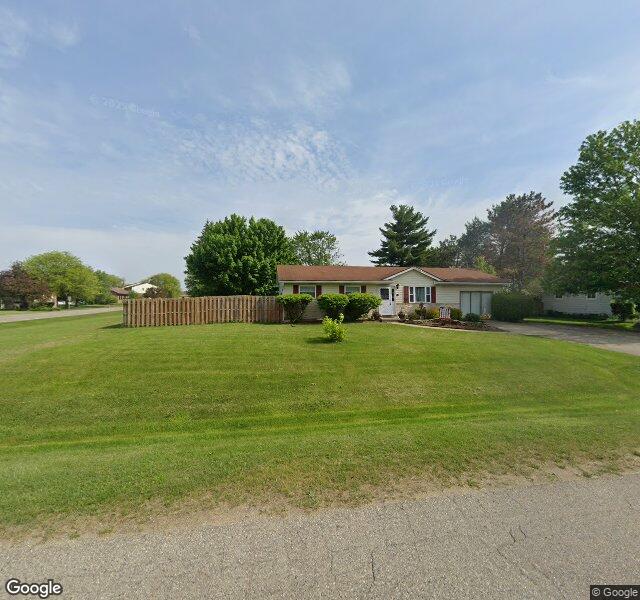
Lapeer County Medical Care Facility

1455 Suncrest Drive, Lapeer, MI 48446 (810) 664-8571
Government - County 202 Beds Independent Data: November 2025
Trust Grade
20/100
#207 of 422 in MI
Last Inspection: February 2025

Within standard 12-15 month inspection cycle. Federal law requires annual inspections.

Overview

Lapeer County Medical Care Facility has received a Trust Grade of F, indicating significant concerns about the quality of care. They rank #207 out of 422 nursing homes in Michigan, placing them in the top half of facilities, and #2 out of 4 in Lapeer County, meaning only one local facility performs better. Unfortunately, the trend is worsening, with issues increasing from 1 in 2024 to 13 in 2025. Staffing is a strong point, with a 5/5 star rating and a turnover rate of 45%, which is average for the state. However, the facility has accumulated concerning fines totaling $130,913, which is higher than 79% of Michigan facilities, and there are serious incidents reported, including a failure to prevent falls for a resident that resulted in multiple fractures, and inadequate monitoring of another resident leading to hospitalization and eventual death from complications. While the RN coverage is good, being better than 81% of facilities in the state, the overall picture shows significant areas needing improvement.

Trust Score
F
20/100
In Michigan
#207/422
Top 49%
Safety Record
High Risk
Review needed
Inspections
Getting Worse
1 → 13 violations
Staff Stability
⚠ Watch
45% turnover. Above average. Higher turnover means staff may not know residents' routines.
Penalties
✓ Good
$130,913 in fines. Lower than most Michigan facilities. Relatively clean record.
Skilled Nurses
✓ Good
Each resident gets 64 minutes of Registered Nurse (RN) attention daily — more than 97% of Michigan nursing homes. RNs are the most trained staff who catch health problems before they become serious.
Violations
⚠ Watch
49 deficiencies on record. Higher than average. Multiple issues found across inspections.
★★★☆☆
3.0
Overall Rating
★★★★★
5.0
Staff Levels
★★★☆☆
3.0
Care Quality
★★☆☆☆
2.0
Inspection Score
Stable
2024: 1 issues
2025: 13 issues

The Good

  • 5-Star Staffing Rating · Excellent nurse staffing levels
  • Full Sprinkler Coverage · Fire safety systems throughout facility
  • No fines on record

Facility shows strength in staffing levels, fire safety.

The Bad

3-Star Overall Rating

Near Michigan average (3.1)

Meets federal standards, typical of most facilities

Staff Turnover: 45%

Near Michigan avg (46%)

Higher turnover may affect care consistency

Federal Fines: $130,913

Well above median ($33,413)

Significant penalties indicating serious issues

The Ugly 49 deficiencies on record

5 actual harm
Feb 2025 13 deficiencies
CONCERN (D)

Potential for Harm - no one hurt, but risky conditions existed

Deficiency F0578 (Tag F0578)

Could have caused harm · This affected 1 resident

**NOTE- TERMS IN BRACKETS HAVE BEEN EDITED TO PROTECT CONFIDENTIALITY** Based on observation, interview, and record review, the facility failed to validate and update the care plan for DNR status for ...

Read full inspector narrative →
**NOTE- TERMS IN BRACKETS HAVE BEEN EDITED TO PROTECT CONFIDENTIALITY** Based on observation, interview, and record review, the facility failed to validate and update the care plan for DNR status for one resident (R#47) of 3 residents reviewed for advanced directives. Findings include: Resident #47 Advance Directives On 02/19/25 at 12:47 PM, R47's Advanced Directives in her clinical file was dated 11/1/2023. Resident #47 (R47) According to the review of Electronic Medical Records conducted on 2/20/25 at 2:45 PM, R47 was [AGE] years old and admitted to the facility on [DATE] with the diagnosis of Hemiplegia and hemiparesis following nontraumatic intracerebral hemorrhage affecting left dominant side, vascular dementia with mood disturbances, and peripheral vascular disease in addition to other diagnoses. R47's son was the Durable Power of Attorney (DPOA) and emergency contact. R47's Brief Interview of Mental Status (BIMS), which was assessed on 12/25/24, revealed a score of 09/15. A score of 9 indicates moderate cognitive impairment. A score of 0-7 represents severe cognitive impairment, and 13-15 signifies intact cognitive function. R47 Care Plan on Advanced Directives was reviewed and revised on 11/07/2023. Upon interview with the Social Worker (SWS) on 02/21/25 at 10:11 AM, the SW indicated that they reviewed the resident's Advanced Directives with the staff every quarterly, during care conferences, and annually. The surveyor and SW reviewed the care conference notes and the social worker's progress notes. The SW S revealed she cannot find the notes for now and will ask the unit manager to help find any notes on R47 Advanced Directives. The SW S also confirmed that R47's care plan for Do-Not-Resuscitate was last updated in 2023. R47's BIMS Score was 9/15, and she has a Durable Power of Attorney (DPOA). The SW stated, Sometimes, the family may have difficulty coming in to sign. The SW S confirmed that she could not find any progress notes regarding discussing the Advanced Directive with the family/DPOA and updating the care plan. On 02/21/25 at 10:20 AM, The Unit Manager (UMK) confirmed that she could not find any progress notes or care conference notes indicating that the Advanced Directive has been reviewed since 2023. A facility policy entitled Advanced Directives, last updated on 2/14/2024 was reviewed on 2/21/25 at 10:30 AM. The Policy Statement: To provide the resident, guardian, medical durable power of attorney (DPOA), and /or resident advocate an opportunity to make their wishes known prior to a life-threatening incident occurring. It should be understood that any decision that is made is not binding and can be revoked at any time by the above listed parties . .7. If at any time the resident/responsible parties decide on changing the current advance directives the nurse will follow the above policy. Quarterly with MDS/care plan reviews the Floor Coordinator will review current Advance Directives with appropriate parties (if in attendance) and answer any questions or make any necessary changes.
CONCERN (D)

Potential for Harm - no one hurt, but risky conditions existed

Comprehensive Care Plan (Tag F0656)

Could have caused harm · This affected 1 resident

**NOTE- TERMS IN BRACKETS HAVE BEEN EDITED TO PROTECT CONFIDENTIALITY** Based on interview and record review the facility failed to complete a comprehensive care plan for one resident (R32) of four re...

Read full inspector narrative →
**NOTE- TERMS IN BRACKETS HAVE BEEN EDITED TO PROTECT CONFIDENTIALITY** Based on interview and record review the facility failed to complete a comprehensive care plan for one resident (R32) of four residents reviewed for unnecessary medications. Findings include: Resident #32 R32 is [AGE] years old and admitted to the facility on [DATE] with diagnoses that include, dementia, major depressive disorder, dysphagia and atrial fibrillation. R32 has a brief interview for mental status (BIMS) score of 3 indicating severe cognitive impairment. On 02/20/25 at 09:57AM, record review revealed that R32 admitted to the facility on [DATE] and there is a physician's order dated 09/10/24 for Venlafaxine (Effexor) HCl ER Tablet 150mg, give one tablet by mouth one time a day for depression. On 02/20/25 at 11:31AM, record review revealed that R32 has a care plan in place for Effexor for depression, however, Effexor was discontinued on 01/05/25. The psychotherapeutic medications care plan was initiated on 12/6/24, psychotherapeutic medication (Effexor) was initiated on 09/10/24. On 02/20/25 at 11:53AM, an interview was conducted with Unit Manager (UM) D. UM D was asked who is responsible for implementing and updating care plans for psychotherapeutic medications. UM D stated that, Usually it is social work that does that (implements and updates care plans) but the Minimum Data Set (MDS) nurse or me will do it if it needs to be done. This surveyor verified with UM D that the care plan for psychotherapeutic medication was initiated and updated on 12/6/24. UM D was asked if the care plan should have been initiated sooner when R32 started on psychotherapeutic medication. UM D stated, Yes, the care plan should have been implemented at that time and updated with changes in medication. It was just missed, I don't really know why it wasn't implemented or updated. Record review of the policy titled, Interdisciplinary Care Plan, reviewed 01/12/24, revealed: Policy Interpretation and Implementation: 1. Upon admission, resident status is assessed by the Interdisciplinary Team members (Dietary, AT, SW, Nursing, Restorative Nurse R.N., Skilled Therapies) using a combination of assessment tools including the MDS/CAA's. Care plans are developed on a timely basis, according to the RAI process. 2. Each discipline, based on their admission assessment, submits care plan information (i.e.: problems, goals, approaches) to the appropriate Unit manager. Unit managers will compile all assessment information to create an individualized computer care plan. Cardiovascular Respiratory Neuromuscular/ Skeletal Psychosocial/Orientation (includes Discharge Plan) Integumentary Nutrition Gastrointestinal Genitourinary Endocrine/ Metabolic Sensory ADL/ Safety Miscellaneous 3. The Unit manager will review the information found in each care plan section looking at the care that has been provided related to physician orders, labs, diagnostic testing, current medical status, etc. in order to assure continuity of care. Any issues found will be discussed with the appropriate interdisciplinary care plan team member and if necessary, taken to the physician and resident/family seeking direction for future plan of care.
CONCERN (D)

Potential for Harm - no one hurt, but risky conditions existed

ADL Care (Tag F0677)

Could have caused harm · This affected 1 resident

**NOTE- TERMS IN BRACKETS HAVE BEEN EDITED TO PROTECT CONFIDENTIALITY** Based on observation, interview and record review, the facility failed to ensure nail care was provided for two residents (#46 a...

Read full inspector narrative →
**NOTE- TERMS IN BRACKETS HAVE BEEN EDITED TO PROTECT CONFIDENTIALITY** Based on observation, interview and record review, the facility failed to ensure nail care was provided for two residents (#46 and #78) of five residents reviewed for Activities of Daily Living (ADL). Findings include: Resident #46: A review of Resident #46's medical record revealed a readmission into the facility on 7/28/22 with diagnoses that included chronic obstructive pulmonary disease, quadriplegia, heart disease, and contracture of unspecified joint. A review of the Minimum Data Set (MDS)assessment revealed the Resident had intact cognition and was dependent on staff for activities of daily living, mobility and transfers. On 2/18/25 at 12:27 PM, an interview was conducted with Resident #46 who answered questions and engaged in conversation. The Resident was observed to have limited mobility of her hands. The Resident's fingernails were long and there were a couple nails that had nail polish that was chipped or worn off from most of the nails. The Resident was asked about her fingernails, and she responded that activities would do them sometimes and stated, They are supposed to ask when I get my shower, but they don't, and expressed that the fingernails were longer than she liked. Resident #78: A review of Resident #78's medical record revealed an admission into the facility on [DATE] with diagnoses that included cerebral palsy, aphasia, severe intellectual disabilities and abnormal involuntary movements. A review of the MDS assessment revealed the Resident had severely impaired cognition and was dependent on a helper for activities of daily living, mobility and transfers. On 2/18/25 at 12:07 PM, an observation was made of Resident #78 sitting up in a chair in their room. The Resident was not able to be interviewed and did not engage in conversation. The Resident was observed to have jerking motions of his arms and hands had limited mobility and contractures. The Residents nails were observed to be long, and a couple of the nails were jagged. The Resident occasionally got his hands to his face and made contact with his eyes and nose with non-purposeful jerking movements. On 2/20/25 at 12:30 PM, an observation was made of Resident #78 sitting up in his wheelchair. The Resident's nails remained long, and a couple were jagged. A scratch mark was observed on the Resident's right cheek area. The Resident was observed to flail his arms around. On 2/20/25 at 1:40 PM, Resident #78's tube feeding was administered by Nurse AA. The Resident was observed to flail his arms around. The scratch on the Resident's right cheek was observed. The Nurse was asked about the Resident's bathing schedule and reported the Resident would get a bed bath twice a week. When asked about nail care, the Nurse indicated they don't look like they had recent attention. A review of Resident #78's medical record revealed a progress note titled Incident Note, dated 5/9/24 at 1:00 AM, Nurse and aid were boosting resident when a scratch on the resident forehead and nose was observed. Red scratch on bridge of the nose measure approximately 0.6 cm. Dry open to air. Scratch to the forehead is red and dry measures approximately 1.2 cm. Superficial scratch on the forehead measures at 5 cm. Fingernails trimmed. A review of Resident #78's care plan revealed an integumentary focus (Resident name) is at risk for potential skin and feet integrity secondary to cerebral palsy, total assist with cares, involuntary movement ., and an intervention of Avoid scratching and keep hands and body parts from excessive moisture. Keep fingernails short, with initiation on 1/24/23. On 2/21/25 at 11:08 AM, an interview was conducted with Unit Manager, Nurse Q regarding fingernail care. The Unit Manager was asked about facility policy regarding nail care. The Unit Manager indicated nail care was to be performed on shower or bathing days and as needed. When review of Resident #46, the Unit Manager indicated that her showers were weekly and more if requested or needed. When asked if Resident #46 refused nail care, the Unit Manager reported that if she refused, the nurse would be notified and put a note in the medical record. A review of the medical record did not reveal documentation of refusals for nail care. An observation was made with the Unit Manager of Resident #78's fingernails long and not trimmed. A review of Resident #78's medical record revealed the Resident had bathing activities the prior night but there was no documentation that the Resident had refused nail care. The Unit Manager indicated Resident #46 did not refuse nail care. The Unit Manager reported that when the CNA signs for the bathing activity it includes clipping and cleaning fingernails. A review of facility policy titled, Nail Care, updated 10/11/24, revealed, Policy Statement: To provide staff guidelines on how to care for residents fingernails/toenails on bath day and PRN (as needed) .
CONCERN (D)

Potential for Harm - no one hurt, but risky conditions existed

Quality of Care (Tag F0684)

Could have caused harm · This affected 1 resident

**NOTE- TERMS IN BRACKETS HAVE BEEN EDITED TO PROTECT CONFIDENTIALITY** Based on observation, interview and record review, the facility failed to 1). Ensure coordination of Hospice Services for one re...

Read full inspector narrative →
**NOTE- TERMS IN BRACKETS HAVE BEEN EDITED TO PROTECT CONFIDENTIALITY** Based on observation, interview and record review, the facility failed to 1). Ensure coordination of Hospice Services for one resident (#151) reviewed for Hospice service. Findings Include: Resident #151: Hospice and End of Life A review of the Face sheet and MDS/Minimum Data Set assessment indicated Resident #151 was admitted to the facility on [DATE] with diagnoses: Seizures, history of falls with fractures: fourth cervical vertebra, nasal bones, maxilla, Dementia, anxiety, depression and hypertension. The resident wore a neck brace for the cervical fracture. A review of the physician orders indicated the resident was admitted to Hospice services on 1/21/2025 on admission. On 2/18/2025 at 12:17 PM, Resident #151 was observed sitting in a chair in his room watching TV. He was talkative and tried to answer question. He said he did not think he was receiving Hospice services. A review of the Care Plans identified a Hospice Care Plan dated initiated 2/3/2025 and revised 2/4/2025 with an intervention: Work cooperatively with hospice team to ensure the resident's spiritual, emotional, intellectual, physical and social needs are met, dated 2/20/25 and Work with nursing staff to provide maximum comfort for the resident, date initiated 2/3/2025. On 2/21/2025 at 1:00 PM, during an interview with Nurse I she was asked where the Hospice notes for Resident #151 were located, as they were not in the electronic medical record. Nurse I said she did not know where the hospice notes were. Nurse I asked the Charge nurse and said she was told they were in the electronic medical record. Reviewed the notes were not in the electronic medical record. On 2/21/25 at 1:14 PM, Nurse Manager K brought a Hospice binder from the 1st floor North hall. It was a Hospice book for Resident #151. There was one Hospice nurses note dated 1/21/2025, the day of Resident #151's admission. There was also a Social Worker's note was 1/24/2025. The Unit Manager K confirmed there were no additional Hospice notes for the resident. She said she would try to find them. A review of the Hospice Care Plan for Resident #151 was started on 2/3/2025; it was not initiated on admission. It was started almost 2 weeks after the resident was admitted with Hospice care. On 2/21/2025 at 1:34 PM, Unit Manager K said the Hospice care notes for Resident #151 were not in the resident's chart or at the facility. She said she called Residential Hospice to request the documents. Nurse Manager K was asked who was to place the Hospice Notes in the resident's Hospice binder and she said another nurse manager had a code to view the Hospice documentation system and retrieve the documents, but that nurse was not working that day. Nurse K said she did not have a code to retrieve the Hospice documents. Resident #151 did not have evidence of coordination of Hospice Care. There was no documentation of Hospice clinical care provided to the resident in the medical record or at the facility. On 2/25/2025 at 12:30 PM, the Director of Nursing was asked if there was a policy for Hospice care. She said it would be included in the Hospice contract. A review of the facility policy titled, Hospice Program, dated November 2017, provided When a resident chooses to receive hospice care and service, the facility will coordinate and provide care in cooperation with hospice staff in order to promote the residents' highest practicable physical, mental, and psychosocial well-being . The facility maintains written agreements with hospice providers that specify the care and services to be provided and the process for hospice and nursing home communication of necessary information regarding the patient's care . The plan of care will identify the care and service that each entity will provide in order to meet the needs of the resident . Hospice staff will document progress notes and any new recommendations upon each visit. This documentation will be kept in a binder labeled for the appropriate hospice agency .
CONCERN (D)

Potential for Harm - no one hurt, but risky conditions existed

Deficiency F0697 (Tag F0697)

Could have caused harm · This affected 1 resident

**NOTE- TERMS IN BRACKETS HAVE BEEN EDITED TO PROTECT CONFIDENTIALITY** Based on observation interview and record review, the facility failed to assess and monitor pain levels and update a care plan f...

Read full inspector narrative →
**NOTE- TERMS IN BRACKETS HAVE BEEN EDITED TO PROTECT CONFIDENTIALITY** Based on observation interview and record review, the facility failed to assess and monitor pain levels and update a care plan for pain for one resident (Resident #3) with a diagnosis of Squamous Cell Carcinoma of the skin of scalp and neck requiring comfort in positing and wound care treatment of 3 residents reviewed for pain management. Findings include: Resident #3: Pain Management According to the Electronic Medical Record reviewed on 2/19/2025 at 2:00 PM, R3 was [AGE] years old who was admitted to the facility on [DATE] with a diagnosis of Alzheimer Disease (late onset), Carcinoma of the situ of skin and scalp, and neck, Squamous cell carcinoma of the skin of scalp and neck and Chronic Kidney Disease Stage 3 in addition to other diagnoses. R3 has a Brief Interview of Mental Status (BIMS) Score of 08/15 assessed on 12/4/2024. A Score of 08-12 on the BIMS indicates moderate cognition impairment. A score of 0-7 points suggests severe cognitive impairment and a score of 13-15 points suggests that cognition is intact. R3, according to the Minimum Data Set (MDS) assessment dated [DATE] is dependent with staff in all Activities of Daily Living and Personal Hygiene except for Eating where he needed set up and clean up assistance. R3 is always incontinent with Bladder elimination pattern but occasionally incontinent with bowel elimination pattern. On 02/19/25 at 10:21 AM, R3 complained he is uncomfortable. R3 was observed sitting upright in bed and complained of extreme head and neck pain, grimacing and moaning. Pain scale level of 10/10 revealed by R3 during an interview on 02/19/25 10:21 AM witnessed by staff. Certified Nursing Assistant (CNA T) stated that she was getting the nurse. CNA T Lowered the head of the bed and repositioned him in bed. CNA T stated, we got him comfortable and got his head down. R3's pillow case had dried blood stain noted. After confirming the observation with CNA T, she revealed that it was the nurses that did the wound dressing changes daily. CNA T stated that the blood must have been from his head lesion. CNA T further stated that sometimes the dressing come off from his scalp. It was observed by CNA T and the surveyor that R3 did not have a dressing on his scalp during this observation and was in extreme pain. On 2/21/25 at 11:00 am, RN H was observed during wound care and dressing change. There was a scant drainage noted The wound area measured 2 centimeter (cm) wide by 1.5 cm length with width open area at the scalp area. Although R3 was grimacing and complained of pain during dressing change, RN H stated that R3 did not have any complaints of pain in AM when she administered his routine aspirin (ASA) 1 mg at around 9:30 AM. During the R3 interview conducted on 02/21/25 at 11:20 AM, after the scalp dressing was applied to R3, R3 was asked of his level of pain from 1-10, with 10 being the most pain). R3 responded, Pain is 100. R3 complained of pain and requested for pain relief. R3 further described the location by stating, my neck hurts from the position I was in. R3's gown had some blood stain on his right side of the shoulder that looks like a dried blood stain. RN H was ask where the blood was coming from. RN H was unsure of where it was coming from but explained that R3 scratches a lot and have skin lesions all over his body. RN H indicated that R3 receives a daily treatment applied to his skin. She stated, Some type of cream. A review of the Medication Administration Record (MAR) for R3 dated February 2025 revealed only 2 medications for pain relief: Pain orders in the February 2025 MAR are: Aspirin 81 mg 1 tab P. O. in AM and Acetaminophen 325 mg 2 tablets for PRN. The February 2025 MAR (from February 1 through February 20) indicated: R3 had zero pain assessed and recorded daily. There were no PRN Tylenol administered for relief of pain. R3 MAR showed that pain relief was not provided despite an observation and verbal complaint from R3 of extreme head and neck pain, grimacing and moaning, R3's pain scale was at level 10 per R3 during an interview on 02/19/25 10:21 AM to staff. CNA 'T' was present during the interview and that she indicated that although she was not the CNA assigned to R3, she was going to let his nurse know. Upon Review of the Electronic Record Review for R3's Care Plan on 2/21/25 at 12: 00 PM, It revealed: 1. Pain care plan was initiated on 8/28/23 and date of Revision was 09/07/2023. The most recent intervention update was dated 3/6/24, which indicated to: Monitor/document for side effects of pain medication. Observe for constipation; new onset or increased agitation, restlessness, confusion, hallucinations, dysphoria. nausea, vomiting, dizziness and falls. Report occurrences to the physician. Date initiated 03/06/2024. No other revisions of the care plan for pain was noted after 03/06/2024. 2. Wound/Skin Care Plan was initiated on 08/28/2023, Last revised on 08/01/2024 Skin lesions that were found and observed all over his body with blood stains on his linens were not updated in his wound/skin care plan. No new interventions and update were entered despite new treatment orders, new monitoring and assessment orders and update in R3 wound condition and specialist consultation and recommendations. No pain control/ management intervention was in place prior to wound care to provide a more comfortable skin /wound care experience during wound care listed as part of the wound care intervention. The Facility's Interdisciplinary Care Planning Policy, updated on 1/12/2024, was reviewed on 2/21/25 at 3:00 PM, indicated: Policy Statement To provide a system to ensure all resident's care plans are developed and updated. This facility utilizes an electronic charting system. The resident care plan is created and stored via orders and entries into the electronic charting system. Note: The electronic version of the care plan is considered the current care plan. .Policy Interpretation and Implementation: 1. Upon admission, resident status is assessed by the Interdisciplinary Team members (Dietary, AT, SW, Nursing, Restorative Nurse R.N., Skilled Therapies) using a combination of assessment tools including the MDS/CAA's. Care plans are developed on a timely basis, according to the RAI process. 2. Each discipline, based on their admission assessment, submits care plan information (i.e.: problems, goals, approaches) to the appropriate Unit manager. Unit managers will compile all assessment information to create an individualized computer care plan. Cardiovascular Respiratory Neuromuscular/ Skeletal Psychosocial/Orientation (includes Discharge Plan) Integumentary Nutrition Gastrointestinal Genitourinary Endocrine/ Metabolic Sensory ADL/ Safety Miscellaneous 3. The Unit manager will review the information found in each care plan section looking at the care that has been provided related to physician orders, labs, diagnostic testing, current medical status, etc. in order to assure continuity of care. Any issues found will be discussed with the appropriate interdisciplinary care plan team member and if necessary taken to the physician and resident/family seeking direction for future plan of care. 4. For quarterly/annual/CIS care plan updates, the Interdisciplinary care plan team will review their goals and approaches for appropriateness and request any necessary changes by notifying the Floor Coordinator. The Unit manager will discuss the goals/approaches with the physician and make any necessary changes in the electronic care plan. 5. After review of the care plan by the interdisciplinary care plan team member, a quarterly progress note is made to reflect the review. 6. Interdisciplinary Care Plan meetings (clinicals) are conducted by the RN Unit manager and attended by Dietary, AT, SW, Restorative Nurse R.N., if requested by family. Resident (if desires) and resident's representative also attend. Other disciplines, when applicable, also attend meeting. (Restorative Nurse R.N., OT, PT, ST, Charge Nurse, CMH, Hospice, etc.) Also note that a phone conference may be done if representative is unable to attend meeting. 7. During the meeting, the Unit manager reviews and discusses any adjustments, clarifications, etc. to the plan of care. A review of current Advance Directives will also be discussed. Any concerns requiring physician evaluation are compiled by the Charge Nurse or Unit manager and placed on physician board after meeting. 8. The Unit manager will document a brief summary of the Care Plan meeting in the EMAR. 9. Updating of the CNA Bedside [NAME] is completed once the pertinent order is saved in the computer and the LPN copies off the new CNA Bedside [NAME] as indicated in the Noting Orders Policy. This incorporates approaches that are the responsibility of the CNA. 10. The MAR's and TAR's and shift charting tasks are updated the moment the order is saved in the computer. This completes the requirement for licensed nurse to follow the physician orders/plan of care. On 2/21/25 at 3:00 PM, The Facility's Resident's Rights reviewed. It indicated, . e. A patient is entitled to receive adequate and appropriate care, and to receive, from the appropriate individual within the health facility information about his or her own medical condition, proposed course of treatments and prospects for recovery, in terms that patient can understand, unless medically contraindicated as documented in the medical record by the attending physician or a physician assistant to whom the physician has delegated the performance of the medical care services .
CONCERN (D)

Potential for Harm - no one hurt, but risky conditions existed

Deficiency F0726 (Tag F0726)

Could have caused harm · This affected 1 resident

Based on interview and record review the facility failed to ensure that clinical staff received completed yearly Performance Evaluations and competencies for 2 of 2 nurses (N and O) and Performance Re...

Read full inspector narrative →
Based on interview and record review the facility failed to ensure that clinical staff received completed yearly Performance Evaluations and competencies for 2 of 2 nurses (N and O) and Performance Reviews for 2 of 2 Nurse Aides (L and M), Findings Include: FACILITY Sufficient and Competent Nurse Staffing: On 2/24/2025 at 9:11 AM, during a review of the Nurse and Nurse Aide competency reviews for Nurses N (Charge Nurse) and O and Certified Nursing Assistants L and M, it was identified there were no yearly Performance reviews. The nurses' yearly competencies had not been completed. Nurse N's competencies were last completed 1/26/2024: greater than 1 year prior. Nurse O's competencies were last completed 1/22/2024: greater than 1 year prior. On 2/25/2025 at 10:30 AM, Staff Education Nurse C was interviewed about the yearly clinical staff Performance reviews. He said the facility did not complete performance reviews to aid in determining staff training/competency needs for the nurses or nurse aides. Staff Educator Nurse C said the facility talked about completing yearly Performance reviews but had not completed them. Nurse C was asked what the process was for determining which competencies to have the clinical staff complete and he said the online training program assisted in choosing them. He was asked if the clinical staff were able to provide input on specific training needs and he said there wasn't a process for that. The Staff Education Nurse was asked about the nurses not having competency training in greater than 1 year and he said he was preparing for that. A review of the Facility Assessment dated 10/22/2024 identified the following: . Staff Training/Education and Competencies: All staff in each department receive competencies that reflect the work, policy and procedures in their areas . On 2/25/2025 at 12:50 PM, the Director of Nursing was asked if there was a policy for Staff Education; she said the employees job description indicated what education was required. A review of the nursing and nurse aide job description identified the following: Team Charge/Charge Nurse, dated 2022 revealed, . Maintain compliance with state rules, federal regulations . Evaluate the LPN and CNA staff on an annual, and as needed basis, based on standards of care and job descriptions: collaborate with other Charge Nurses and Director and/or Assistant director of Nursing to complete this process . Attend and participate in scheduled training and education classes . Licensed Practical Nurse (LPN), Team Leader, dated 2022 provided, . Staff Development: Participate in staff development program . attend and participate in scheduled training and education classes . Certified Nursing Assistant (CNA), dated 2022 revealed, . attend and participate in scheduled training and educational classes, as required .
CONCERN (D)

Potential for Harm - no one hurt, but risky conditions existed

Pharmacy Services (Tag F0755)

Could have caused harm · This affected 1 resident

Based on observation, interview and record review, the facility failed to ensure that medication had arrived timely to the facility and that medication was administered following physicians' orders an...

Read full inspector narrative →
Based on observation, interview and record review, the facility failed to ensure that medication had arrived timely to the facility and that medication was administered following physicians' orders and professional standards of care for one resident (Resident #358) of six residents reviewed for medication administration, resulting in Resident #358 not receiving the medication Renvela and Cholestyramine as ordered and the medication Cholestyramine given with other medications. Findings include: Renvela, sevelamer carbonate, a medication used to control phosphorus levels used in diagnosis of patients with chronic kidney disease that are on dialysis. Cholestyramine, a bile acid sequestrant medication that absorbs/combines with bile acids, excreted in the feces which leads to a decrease in low density lipoprotein plasma levels and decrease in serum cholesterol levels and is recommended to take other medication at least 1 hour before or 4 to 5 hours after taking cholestyramine. On 2/20/25 at 10:29 AM, an observation was made during medication administration of Resident #358 receiving medication prepared by Nurse I . The medications given included: -Levothyroxine -Aspirin -Cholecalciferol -Ferrous Sulfate -Lasix -Loratadine -Carvedilol -Cholestyramine -PreserVision AREDS -Hydralazine A review of Resident #358's order for Cholestyramine Light Packet 4 GM (grams). Directions: Give 1 packet by mouth three times a day for Pure Hypercholesterolemia with a start date on 2/10/25 and further directions to DIS (dissolve) 1 packet in 8 oz of liquid and give three times a day for Pure Hypercholesterolemia (For optimal efficacy give other oral drugs 1 hour before or 4 hours after Cholestyramine). The medication Cholestyramine was scheduled to be given with other medication. A review of Resident #358's medication administration record (MAR) revealed the medication Cholestyramine was not given on 2/15 for the 1300 and 2100 doses, not given on 2/16 for 1300 and 2100 doses and not given on 2/17 for the 0900, 1300 and 2100 doses. The medication Renvela 800 mg, give 1 tablet by mouth three times a day with a start date on 2/3/25 at 2100 and a hold date on 2/6/25 at1606 to 2/7/25 1537 and hold date 2/17/25 at 1537 to 2/24/25 at 1536 was reviewed. The medication was documented as not given on 2/3, 2/4, 2/5, 2/6, 2/7, 2/8 for two doses, 2/9 for two doses, 2/10, 2/11, 2/12, 2/13, 2/14 for two doses, 2/15, 2/16 and 2/17 for two doses then on hold. A review of Resident #358's progress notes regarding Renvela included the following: -2/3/25, Writer received a phone call from pharmacy informing that resident's Renvela cannot be supply from pharmacy and per CMS (Centers for Medicare and Medicaid Services) guidelines dialysis need to supply medication. Unit manager notified. -2/3/25 at 11:18 PM, Renvela . Medication unavailable. CN (Charge Nurse) notified Pharmacy. -2/4/25 at 10:05 AM, Renvela . Medication unavailable. Will notify pharmacy. -2/4/25 at 1:25 PM, Renvela . Medication unavailable. -2/5/25 at 10:00 AM, Renvela . Medication unavailable. -2/5/25 at 1:00 PM, Renvela . Medication unavailable. -2/6/25 at 1:25 PM, Renvela . Medication not available. -2/6/25 at 4:02 PM, Writer called (dialysis unit) kidney care and spoke with attendant regarding Renvela and notice that was sent with (name) to dialysis yesterday regarding insurance coverage and that they are supposed to send medication to facility. Attendant stated that she did believe they were to send it, but that she was going to speak with dietician regarding this tomorrow. Writer left contact information. -2/6/25 at 4:07 PM, Communication with physician, Situation: Writer spoke with (Doctor's name) about dialysis getting back with writer about Renvela, and that they are supposed to be providing it for Resident per insurance. Background: Writer informed him that she has not received education since she admitted .Recommendations: Writer received order to hold medication until this issue is resolved. -2/7/25 at 12:58 PM, Writer called over to dialysis center to speak with Dietitian. Writer spoke with dietitian regarding Renvela. Writer was informed that they would be covering it, but that she was awaiting their doctor to sign it. Dietitian stated that they send it from their pharmacy and that it would be coming via Fed Ex. Writer asked about her not having any right now, and dietitian stated that her phosphorus was okay on 2/4 and that at this time she is not going to recommend other supplementation as this could increase her calcium. Writer was instructed to hold medication until it is received from them. -2/11/25 at 12:28 PM, Renvela . Medication unavailable, dialysis contacted. -2/13/25 at 11:14 AM, Renvela . Medication not available. -2/17/25 at 12:06 PM, Writer called over to (dialysis center) regarding Renvela medication. Writer spoke with (Name) regarding not receiving medication at this time. (Name) stated that she would speak with nutritionist and call writer back. Writer received return call from nutritionist, and she confirmed that Revnela was delivered on Thursday. Writer and nutritionist discussed current address, and dialysis center had medication sent over to the (Name of place). Nutritionist stated that she had phosphorus level of 2.9 on 2/11/25 and that she would want medication held at this time. A review of Resident #358's progress notes regarding Cholestyramine included the following: -2/15/25 at 3:08 PM, Cholestyramine . Drug not available. On order from pharmacy. -2/16/25 at 1:07 PM, Cholestyramine . Medication unavailable, reordered from pharmacy. -2/17/25 at 11:10 AM, Cholestyramine . Medication unavailable. Writer contacted pharmacy, will be cycling tonight. On 2/20/25 at 3:08 PM, an interview was conducted with Unit Manager, Nurse Q regarding resident #358's medications Renvela unavailable for an extended period. The Unit Manager indicated that dialysis needed to supply the medication and then it was held due to labs. It was reviewed that the labs were back on 2/11 but the medication not to be given was addressed on 2/17. An observation with the Unit Manager of the medication cart revealed the medication was now available to be given after being held. A review of the medication Cholestyramine given with other medications was reviewed with the Unit Manager and the recommendations for optimal efficacy give other oral drugs 1 hour before or 4 hours after Cholestyramine. The Unit Manager indicated that yes, per the pharmacy directions, the med should not be given with other meds, and further stated, I will look into that. When asked how soon medication should arrive from pharmacy, the Unit Manager reported that the medication if reordered by 5 pm, it should have been to the facility by the 16th (2/16/25). The medication had not been administered until 2/18/25. On 2/21/25 at 1:18 PM, an interview was conducted with the Director of Nursing regarding Resident #358's medications not being available. The Cholestyramine, the DON reported that unless the pharmacy could not get it, it should have been here no later then the 16th (2/16/25). The Renvela not obtained timely for Resident #358 was reviewed. The DON stated, It should not have taken that long to get the medication.
CONCERN (D)

Potential for Harm - no one hurt, but risky conditions existed

Infection Control (Tag F0880)

Could have caused harm · This affected 1 resident

**NOTE- TERMS IN BRACKETS HAVE BEEN EDITED TO PROTECT CONFIDENTIALITY** Based on observation, interview and record review the facility failed to ensure Infection Prevention and Control standards of pr...

Read full inspector narrative →
**NOTE- TERMS IN BRACKETS HAVE BEEN EDITED TO PROTECT CONFIDENTIALITY** Based on observation, interview and record review the facility failed to ensure Infection Prevention and Control standards of practice were followed for 1) Personal Protection Equipment/PPE use during wound care for one resident (Resident #90) in Enhanced Barrier Precaution. Findings Include: Resident #90: A record review of the Face sheet and Minimum Data Set/MDS assessment for Resident #90 indicated an admission date of 3/12/2020 with diagnoses: Alzheimer's dementia, depression, arthritis, hypertension, heart disease, and anxiety. An unstageable pressure ulcer on the right heel was identified on 1/13/2025. The MDS assessment dated [DATE] identified the resident had severe cognitive loss with a Brief Interview for Mental Status/BIMS score of 5/15 and the resident needed assistance with all care. A review of the assessments for Resident #90 revealed she also had a wound on the outer base/hallux of her right great toe and on the top of the toe. On 2/21/2025 at 8:45 AM, wound care for Resident #90 was observed with Nurse B. The resident was observed sitting in a Broda chair. Nurse B washed her hands and applied gloves, then opened the dressing to show 3 wounds on Resident #90's right foot: 1. right great toe outside edge about 0.25 cm x 0.25 cm blackened area, 2. outer right foot near base of great toe ~1.5 x 1.5 cm wound black around and pink in the middle and 3. a black scabbed area ~ 1 x 1 cm on the right heel. The Nurse does not know how long the resident has had the wound. A review of the physician orders for Resident #90 indicated Enhanced Barrier Precautions: due to wound was ordered on 10/23/2024. A review of the February 2025 Medication Administration Record/Treatment Administration (MAR/TAR) Record for Resident #90 identified the following: Enhanced Barrier Precautions (due to wound) every shift, dated 10/23/2024. The nurses had initialed they followed this order for each shift (day, evening, night) three times a day, including the day of wound observation on day shift with Nurse B. A review of the Care Plans for Resident #90 identified an Infection Care Plan, but there was no mention of Enhanced Barrier Precautions. On 2/21/2025 at 10:24 AM, The Infection Prevention and Control/IPC Nurse A was interviewed related to the wound care observation for Resident #90. The IPC Nurse was asked if Resident #90 was in Enhance Barrier Precautions; she said the resident was in precautions and the staff were to wear Personal Protective Equipment/PPE including a gown and gloves when they performed wound care. Reviewed with the IPC Nurse that neither Nurse B or a nurse aide who entered the room to assist was wearing a gown. Neither had the appropriate PPE on during wound care for Resident #90. During the interview with IPC A on 2/21/2025 at 10:24 AM, she said the facility did not use signs to indicate the resident was in Enhanced Barrier Precautions/EBP. Reviewed there were physician orders for EBP, and it was on the MAR, as well as nurses were signing, they were following the precautions, but not everyone was. The IPC Nurse A' said the EBP were to be followed. A review of the facility policy titled, Infection Prevention and Control Program Outline, dated updated 1/11/2022 and reviewed 10/11/2024 provided, It is the policy of this facility to establish and maintain an IPCP designed to provide a safe, sanitary and comfortable environment and to help prevent the development and transmission of communicable diseases and infections . To ensure that all staff prevent the spread of infection within the facility through the use of isolation precautions from the recommendations from the CDC . Staff to follow facility policies and procedures for all resident care activities not inclusive to but including urinary catheters, wound care .
CONCERN (D)

Potential for Harm - no one hurt, but risky conditions existed

Safe Environment (Tag F0921)

Could have caused harm · This affected 1 resident

Based on observation, interview and record review, the facility failed to ensure warm water availability in residents' rooms and that sink drainage was adequate for three residents (#23, #25 and #70),...

Read full inspector narrative →
Based on observation, interview and record review, the facility failed to ensure warm water availability in residents' rooms and that sink drainage was adequate for three residents (#23, #25 and #70), of a sample of 17 reviewed for environmental concerns. Findings include: On 2/19/25 at 10:12 AM, an observation was made in Resident #25's room of the Resident getting ready for a bed bath. CNA BB had left the room with a wash basin and returned a couple minutes later. When asked why the CNA had left the room to get water, the CNA reported that the sink in the room did not produce hot enough water to wash a resident up. The CNA state, It will get a little warm then go cooler, but not enough warm water when they are getting washed up. The hot water faucet was turned on and was lukewarm and the sink filled too much to keep it running. When asked about the poor drainage of the sink, the CNA stated, Most of the sinks down here, they don't drain fast enough. On 2/21/25 at 9:43 AM, an interview was conducted with Resident #70 who answered questions and engaged in conversation. The Resident was asked about any concerns she had about her care. The Resident reported that she could not get hot water from the bathroom sink. The Resident reported she does use the bathroom and the sink and stated, The water is not warm, you can't wash up with water like that. The water from the sink was turned on with the hot faucet. The water was cool to cold and was left to run to attempt to get hot water. The sink was observed to fill up and not drain properly. The water had to be shut off before warm water was obtained due to the sink filling to almost overflowing. During the interview, CNA CC came in to take the Resident's breakfast tray out of the room, the CNA returned and was questioned about the lack of hot water. The CNA reported that to get hot water for the Resident to wash up with, I have to go to get hot water from the spa room. The CNA was asked if the Resident used the bathroom and reported she does use the toilet, uses the sink to wash her hands. The CNA reported running the water for a long time in the morning and stated, It does not get warm enough to wash the Resident. The hot water was turned on with the CNA, but the water did not get hot enough before the sink filled too high with the water. On 2/21/25 at 10:05 AM, an interview was conducted with CNA DD regarding the lack of warm water in Resident #23 and 70's room. The CNA stated, We have to get warm water from elsewhere, you can't wash a resident with cold water, indicating the water in the rooms came out cold. When asked about poor drainage of the sinks, the CNA reported that yes, the sinks will fill up when running the water. On 2/21/25 at 10:33 AM, Resident #23 hot water was tested again, the hot water faucet was turned on and the water remained cool, and the sink drained poorly. Resident #70's hot water was tested at the sink and the water was cold coming out of the faucet with the sink draining poorly. The water filled the sink prior to the water getting warm. On 2/21/25 at 10:43, an interview and observations with made with Maintenance Staff EE regarding Resident #23 and #70's lack of hot water and poor draining sinks. The Maintenance Staff reported they had issues with the hot water down this end, referring to the rooms in the halls that included Resident #23 and #70's room. The two Resident room sinks did not drain adequately when the hot water was turned on that filled the sink prior to getting hot/warm water. The Maintenance Staff indicated they would be calling a plumber.
CONCERN (E)

Potential for Harm - no one hurt, but risky conditions existed

Resident Rights (Tag F0550)

Could have caused harm · This affected multiple residents

**NOTE- TERMS IN BRACKETS HAVE BEEN EDITED TO PROTECT CONFIDENTIALITY** Based on observation, interview and record review the facility failed to ensure call lights were within reach and responded to i...

Read full inspector narrative →
**NOTE- TERMS IN BRACKETS HAVE BEEN EDITED TO PROTECT CONFIDENTIALITY** Based on observation, interview and record review the facility failed to ensure call lights were within reach and responded to in a timely manner for 11 residents (R3, R16, R22, R36, R46, R52, R61, R63, R80, R116, R138) and a confidential group of residents, resulting in long call light wait times, delayed assistance and call lights not being accessible. Findings include: Resident #16 R16 is [AGE] years old and admitted to the facility on [DATE] with diagnoses that include hypertension, gastro-esophageal reflux disease and atherosclerotic heart disease. R16 has a brief interview for mental status (BIMS) score of 15, indicating they are cognitively intact. On 02/19/25 at 10:16AM, an interview was conducted with R16. R16 was asked if the facility staff answers her call light in a timely manner. R16 stated the staff can be slow to answer call lights, it's especially slow during meal pass times and when they are picking up trays. R16 stated that she has waited 3hrs one time. R16 was asked if they have ever had any issues with incontinence due to long wait times. R16 stated they have had several accidents (incontinence) due to long call light waits. R16 stated they had to self-transfer at one point to get to the bathroom because they couldn't wait, R16 stated they have observed the staff walking by her door and not answering her call light. Record review of call light times revealed that on 2/17/25 at 3:10PM the call light was on for 1 hour and 23 minutes, on 2/15/25 at 6:51PM the call light was on for 1 hours 50 minutes on 2/15/25 at 10:03AM the call light was on for 1 hour and 4 minutes and on 2/12/25 at 5:47PM the call light was on for 1 hour and 26 minutes. Resident #36 R36 is [AGE] years old and most recently admitted to the facility on [DATE], with diagnoses that include neurogenic bladder, hypertension and multiple sclerosis. On 02/18/25 at 11:37AM, an interview was conducted with R36. R36 was asked if the facility staff answers his call light in a timely manner to meet his needs. R36 stated no they don't and that the staff takes on average 15-20 minutes to answer the call light and sometimes it is longer. R36 was asked if that wait time is good for him. R36 stated that at times it can be too long, luckily for me I have a catheter and a colostomy otherwise it would be way too long of a time to wait if I had to go to the bathroom. Record review of recent call light times revealed that on 2/19/25 the call light was on for 35:27, on 2/18/25 the call light was on for 31:39, on 2/15/25 the call light was on for 1 hour and 10 minutes, on 2/12/25 the call light was on for 36:09 and on 2/8/25 the call light was on for 43:49. Resident #52 R52 is [AGE] years old and admitted to the facility on [DATE] with diagnoses that include hemiplegia and hemiparesis following cerebral infarction, panic disorder, overactive bladder and anxiety disorder. R52 has a BIMS score of 14 indicating they are cognitively intact. On 02/18/25 at 12:45PM, an interview was conducted with R52. R52 was asked if the staff answers her call light in a timely manner. R52 stated it takes the staff a long time to answer the call light because they have to check a screen at the nurses desk to see who has their light on. R52 stated staff said that is the only way they know which call lights are on. R52 was asked how long they have waited to receive help. R52 stated I have waited up to 45 minutes before to get help and when they do, they only 'half-help. Record review of recent call light times revealed that on 2/18/25 at 7:13PM the call light was on for 48:35, on 2/6/25 at 1:45PM the call light was on for 1 hour and 7 minutes and on 2/6/25 at 1:02PM the call light was on for 33:18. Resident #61 R61 is [AGE] years old and admitted to the facility on [DATE] with diagnoses that include chronic respiratory failure, end stage renal disease with dependence on renal dialysis, hypertension and anemia. R61 has a BIMS score of 14 indicating that they are cognitively intact. On 02/19/25 at 09:11AM, an interview was conducted with R61. R61 was asked if the staff answers his call light in a timely manner. R61 said that it takes long time to get call light answered, I had at least a 90 minute wait just yesterday. R61 was asked if there are specific shifts or times of the day that the responses are slower. R61 stated that all shifts struggle to answer call lights timely, there is no specific time of the day. Record review of recent call light times revealed that on 2/18/25 at 7:15PM the call light was on for 1 hour and 17 minutes, on 2/17/25 at 7:35PM the call light was on for 1 hour and 21 minutes and on 2/12/25 at 11:20PM the call light was on for 44:58. Resident #22 A review of Resident #22's medical record revealed an admission on [DATE] with diagnoses that included dementia, heart disease, anxiety, and fall. A review of the Minimum Data Set (MDS) assessment revealed a BIMS (brief interview of mental status) score of 10/15 that indicated moderately impaired cognition, and the Resident needed, and the Resident needed partial/moderate assistance with toileting hygiene and most mobility and transfers and substantial/maximal assistance with dressing. On 2/18/25 at 1:15 PM, an observation was made of Resident #22's room. The Resident was not in the room at that time. The Resident's bed was positioned up against the wall and the call light cord hung down between the wall and the bed and the push mechanism was on the floor. The call light cord was towards the foot of the bed. The call light was not in reach for the Resident. On 2/19/25 at 8:56 AM, an observation was made of the Resident in the dining room eating, seated in her wheelchair. The Resident's room had the call light cord hanging between the wall and the bed and the push mechanism was on the floor. The Resident was observed in their room after breakfast seated in their wheelchair. The call light remained on the floor and not in reach for the resident. On 2/20/25 at 9:15 AM, an observation was made of Resident #22 in bed with her eyes closed. The Resident's call light was positioned on the floor and not within reach for the Resident. On 2/21/25 at 9:38 AM, an observation was made of Resident #22 laying in bed. There was a breakfast tray on the overbed table that was partially eaten. The call light was observed to be hanging from the wall and positioned between the wall and the bed with the push apparatus on the floor and not within reach for the Resident. On 2/21/25 at 11:08 AM, an observation was made with Unit Manager, Nurse Q of Resident #22 sleeping in her bed. An observation was made of the Resident's call light cord hanging down the wall past the mattress and laying on the floor. The call light was not in reach for the Resident. The Unit Manager retrieved the call light off the floor and positioned it within reach for the Resident. The Unit manager indicated that the call lights should be within reach for the Residents. Resident #46 A review of Resident #46's medical record revealed a readmission into the facility on 7/28/22 with diagnoses that included chronic obstructive pulmonary disease, quadriplegia, heart disease, and contracture of unspecified joint. A review of the MDS assessment revealed the Resident had intact cognition and was dependent on staff for activities of daily living, mobility and transfers. On 2/19/25 at 12:18 PM, an interview was conducted with Resident #46 who answered questions and engaged in conversation. The Resident was asked if they had concerns regarding their care. The Resident reported that the call light could take 30 minutes to an hour to answer and stated, I have to yell out to get help. The Resident reported the staff do not have the pagers anymore, there is no light above the door and the staff had to look at a screen at the nurses' station or on tablets and the screen does not work. The Resident voiced frustration that the CNAs do not answer call lights timely. Resident #63 A review of Resident #63's medical record revealed an admission into the facility on 7/24/17 with diagnoses that included neurocognitive disorder with Lewy Bodies, Parkinson's disease, diabetes, obstructive sleep apnea, and anxiety disorder. A review of the MDS revealed the Resident had intact cognition and was dependent on helper for most activities of daily living, mobility and transfers. On 2/19/25 at 2:11 PM, an interview was conducted with Resident #63 who answered questions and engaged in conversation. The Resident was up in her wheelchair seated next to the bed. An observation was made of a call light that was upside down V shape. The Resident reported she could not use the push button call light. When asked about any concerns she had regarding her care, the Resident reported long call light wait times and that staff will shut it off, say they will be back and then they don't come back. The Resident expressed having to wait up to four hours to be changed due to having incontinence. When asked if they do a check and change every, two hours, the Resident expressed frustration and stated, They don't come every 2 hours to check on us, not enough people (staff). The Resident reported that staff have left the room without making sure the call light is in reach or hide it under the covers and I can't find it. The Resident reported not having her oxygen on during the night and went several hours without the oxygen and stated, It gives you a sick feeling to have that light on and no one comes to find out why it is on. Resident #138 A review of Resident #138's medical record revealed an admission into the facility on 4/2/24 with diagnoses that included arthritis, dementia and anxiety disorder. On 2/19/25 at 10:01 AM, an observation was made of Resident #138 sitting in her wheelchair in their room. The Resident was yelling out to staff that passed by her room. The Resident was interviewed, did not answer questions appropriately, but engaged in random conversation. The Resident was asked about her call light but did not know where it was and asked if it was on. The call light was not on. An observation was made of the call light at the top of the bed and positioned underneath the pillow. The Resident was seated next to the bed in front of the bedside table and was not in reach of the call light. Facility Resident Council: 02/19/25 02:45 PM, the surveyor reviewed the Resident Council Meeting Minutes submitted by the facility dated from July 2024 up to January 2025. The contents did not reflect the staffing shortage and delayed call light response discussed. The Activities Director was absent during the Resident Council meeting held on 2/20/25 at 3:00 PM. Six confidential residents attended the Resident Council Meeting. On 2/19/25 at 3:00 PM, during the Resident Council Meeting, six confidential groups of residents complained about delayed call light response time in an average wait time of an hour up to 2 to 3 hours sometimes. Confidential Resident #6 indicated that the call lights were not within reach, or they turned the call lights off when they came to your room and then left, and it took 4- 6 hours before staff returned. Confidential Resident #6 stated, Some staff turn the call light off and don't return. Showers are done but at the staff's convenience. There's not enough help with feeding. I have to wait a while for someone to come and feed me. After the meeting on 02/19/25 at 03:58 PM, the Administrator was made aware of the Resident Council's concerns. Resident #3 (R3) During the resident interview on 02/19/25 at 10:21 AM, R3 was found groaning in pain while in bed, positioned almost sitting upright in (high-fowlers) when the surveyor asked how he was. R3 indicated that he was uncomfortable and his head and neck were hurting. He further described that he sat up to eat breakfast and stated, No one came back since, and his neck really hurts. It was observed that dried blood stains were found on the pillowcase. CNA T, who responded from the call light, was queried and stated that she was unsure where the blood came from, but she thought it was coming from the lesion on his head. Further reply from CNA T explained that she was not assigned to the hall but happened to be walking by and thought help was needed. The surveyor confirmed with CNA T that there was no call light sounding, and no light was visual to alert staff even if the R3 had activated his call light. R3 was [AGE] years old and admitted on [DATE] with a diagnosis of Chronic Kidney Disease Stage 3, Squamous Cell Carcinoma of the scalp and neck, and Dementia, in addition to other diagnoses. His Brief Interview for Mental Status (BIMS) score, dated 12/4/2024, was 08/15, which indicated a moderate cognitive impairment. This means that the person may need extra help with daily activities. A review of R3's Minimum Data Set (MDS) GG section, dated 12/4/24, revealed that he depended on most ADLs, such as upper and lower body dressing, showers, and toilet use. He was assessed as frequently incontinent with a bladder elimination pattern and occasionally with a bowel elimination pattern. CNA T repositioned R3, and the pillow case was changed. Resident #116 (R116) On 02/18/25 at 11:38 AM, R116 was observed resting in his room while lying in bed. R116's wife was sitting at the bedside (at R116's left side). R116 call light was found on the floor, which was inaccessible and away from R116 reach. R116's wife confirmed that the call button was found on the floor on the resident's right side. It was not anchored or did not dangle for the resident to access when needed. R116's wife explained that R116 had used his call light made his needs known when he was hungry or in pain. The wife stated that they must know I was here, that is probably why they did not place the call light where he could reach them. R116's wife said, It has happened before. A review of R116's Electronic Medical Record on 2/19/2025 at 1:30 PM revealed R116 was [AGE] years old and admitted to the facility on [DATE] with a diagnosis of Seizure Disorder, Dementia, and cerebrovascular accident (CVA) with 1-sided upper and lower extremity impairment in addition to other diagnoses. R116 BIMS Score was 07/15 assessment date of 1/22/2025. A BIMS Score of 0-7 means severe cognitive impairment. R116, on the assessment date of 1/22/2025, was dependent on all daily activities such as eating, toileting, and showers and was always incontinent with both bowel and bladder elimination patterns. Resident #80 (R80) On 02/19/25 at 11:16 AM, R80 discussed issues with staff call light response. Sometimes it takes a little while. Sometimes, 1 hour and could take more than 2 hours before they return. The request varies from a cold pack to food and nursing care-related needs. R80 explained, I am transferred using a Hoyer lift, so it is quite a wait to get the lift and have the staff put me in it. All I can do is wait. I get hot at times due to my medical condition, and I get the shakes if I don't have an ice pack resting on my chest. Sometimes, it takes over 2 hours just to get the ice pack. I live in my chair practically, so I need assistance most of the time, especially when going to the toilet. A review of Electronic Medical Records on 2/20/25 at 2:00 PM revealed that R80 was [AGE] years old and admitted to the facility on 2/16/ 2023 with the following diagnosis: Multiple Sclerosis, Type 2 Diabetes, and Paraplegia in addition to other diagnoses. R80 has a BIMS Score of 15/15. The date of assessment was 12/23/24. A BIMS score of 15 indicates that R80 has intact cognitive functioning. The Minimum Data Set Section GG assessed on 1/2/2025 revealed that the resident had no impairment in the upper extremities but impaired both sides of the lower extremities. R80 depended on most activities of daily living, including upper and lower body dressing, toileting, and maximum assistance with his personal hygiene. R80 is transferred via the mechanical lift. R80 was always continent with a bladder elimination pattern, although he was always incontinent with bowel movements. On 2/21/25 at 3:00 PM, The Facility's Resident's Rights and Call Light Policies were reviewed.
CONCERN (E)

Potential for Harm - no one hurt, but risky conditions existed

Deficiency F0657 (Tag F0657)

Could have caused harm · This affected multiple residents

**NOTE- TERMS IN BRACKETS HAVE BEEN EDITED TO PROTECT CONFIDENTIALITY** Based on observation, interview and record review the facility failed to update and reviews care plans for psychotropic meds, pa...

Read full inspector narrative →
**NOTE- TERMS IN BRACKETS HAVE BEEN EDITED TO PROTECT CONFIDENTIALITY** Based on observation, interview and record review the facility failed to update and reviews care plans for psychotropic meds, pain, skin care and respiratory care for 4 Residents (R#3, R#32, R#47, & R#90) of 5 sampled residents reviewed for care plans. Findings include: Resident #3 (R3) General According to the Electronic Medical Record reviewed on 2/19/2025 at 2:00 PM, R3 was [AGE] years old who was admitted to the facility on [DATE] with a diagnosis of Alzeihmers Disease (late onset), Carcinoma of the situ of skin and scalp, and neck, Squamous cell cardinoma of the skin of scalp and neck and Chronic Kidney Disease Stage 3 in addition to other diagnoses. R3 has a Brief Interview of Mental Status (BIMS) Score of 08/15 assessed on 12/4/2024. A Score of 08-12 on the BIMS indicates moderate cognition impairment. A score of 0-7 points suggests severe cognitive impairment and a scor of 13-15bpoints suggests that cognition is intact. R3, according to the Minimum Data Set (MDS) assessment dated [DATE] is dependent with staff in all Activities of Daily Living and Personal Hygiene except for Eating where he needed set up and clean up assistance. R3 is always incontinent with Bladder elimination pattern but occassionally incontinent with bowel elimination pattern. During the R3 interview conducted on 02/21/25 at 11:20 AM, after the scalp dressing was applied to R3, R3 was asked of his level of pain from 1-10, with 10 being the most pain). R3 responded, Pain is 100. R3 complained of pain and requested for pain relief. R3 further described the location by stating, my neck hurts from the position I was in. R3's gown had some blood stain on his right side of the shoulder that looks like a dried blood stain. Registered Nurse (RN H) was ask where the blood was coming from. RN H indicated that she was unsure where it was coming from but she assumed that R3 scratches a lot and have skin lesions all over his body. RN Hrevealed that R3 receives a daily treatment applied to his skin. She stated, Some type of cream. On 2/21/25 at 11:00 am, RN H was observed during wound care and dressing change. There was a scant drainage noted on the dressing that was removed. The wound area measured 2 centimeter (cm) wide by 1.5 cm length with width open area at the scalp area. Although R3 was grimacing and complained of pain during dressing change, RN H stated that R3 did not have any complaints of pain earlier this morning upon administering his routine aspirin (ASA) 1 mg at around 9:30 AM. On 2/21/25 at 11:30 AM, R3 was queried about the blood stains on nis gown. R3 indicated that he was unaware where it came from or when his gown was last changed. Pain Management: On 02/19/25 at 10:21 AM, R3 complained he is uncomfortable. R3 was observed sitting upright in bed and complained of extreme head and neck pain, grimacing and moaning. Pain scale level of 10/10 revealed by R3 during an interview on 02/19/25 10:21 AM witnessed by staff. Staff CNA T stated that she was getting the nurse. CNA T Lowered the head of the bed and repositioned him in bed. CNA J stated, we got him comfortable and got his head down. R3's pillow case had dried blood stain noted. After confirming the observation with CNA T, she revealed that it was the nurses that did the wound dressing changes daily. CNA T stated that the blood must have been from his head lesion. CNA T further stated that sometimes the dressing come off from his scalp. It was observed by CNA T and the surveyor that R3 did not have a dressing on his scalp during this observation and was in extreme pain. A review of the Medication Administration Record (MAR) for R3 dated February 2025 revealed only 2 medications for pain relief: Pain orders in the February 2025 MAR were: Aspirin 81 mg 1 tab P. O. in AM and Acetamenophen 325 mg 2 tablets for PRN. The February 2025 MAR (from February 1 through February 20) showed R3 had zero pain daily assessed and recorded. There were no PRN Tylenol administered for relief of pain. R3's February 2025 MAR revealed no pain relief was given despite R3 was observed and verbally complained of extreme head and neck pain, grimacing and moaning, Pain scale level of 10 per R3 during an interview on 02/19/25 10:21 AM to staff. The next pain relief received was on 2/10/25, the following day of ASA 81 mg 1 tablet routinely administered daily. Upon review of the Electronic Record Review for R3's Care Plan on 2/21/25 at 12: 00 PM, It revealed: 1. Pain care plan was initiated on 8/28/23 and date of Revision was 09/07/2023. The most recent intervention update was dated 3/6/24, which indicated to: Monitor/document for side effects of pain medication. Observe for constipation; new onset or increased agitation, restlessness, confusion, hallucinations, dysphoria. nausea, vomiting, dizzyness and falls. Report occurrences to the physician. Date initiated 03/06/2024. No other revisions of the care plan for pain was noted after 03/06/2024. 2. Wound/Skin Care Plan was initiated on 08/28/2023, Last revised on 08/01/2024 Skin lesions that were found and observed all over his body with blood stains on his linens were not updated in his wound/skin care plan. No new interventions and update were entered despite new treatment orders, new monitoring and assessment orders and update in R3 wound condition and specialist consultation and recommendations. Resident #47 (R47) Advanced Directive Care Plan On 02/19/25 at 12:47 PM, R47's Advanced Directives in her clinical file was dated 11/1/2023. R47's care plan on Advanced Directives were last revised on 11/7/2023. According to the review of Electronic Medical Records conducted on 2/20/25 at 2:45 PM, R47 was [AGE] years old and admitted to the facility on [DATE] with the diagnosis of Hemiplegia and hemiparesis following nontraumatic intracerebral hemorrhage affecting left dominant side, vascular dementia with mood disturbances, and peripheral vascular disease in addition to other diagnoses. R47's son was the Durable Power of Attorney (DPOA) and emergency contact. R47's Brief Interview of Mental Status (BIMS), which was assessed on 12/25/24, revealed a score of 09/15. A score of 9 indicates moderate cognitive impairment. A score of 0-7 represents severe cognitive impairment, and 13-15 signifies intact cognitive function. R47 Care Plan on Advanced Directives was reviewed and revised on 11/07/2023. Upon interview with the Social Worker (SW) on 02/21/25 at 10:11 AM, the SW indicated that they reviewed the resident's Advanced Directives with the staff every quarterly, during care conferences, and annually. The surveyor and SW reviewed the care conference notes and the SW progress notes. The SW revealed she cannot find the notes for now and will ask the unit manager to help find any notes on R47 Advanced Directives. The SW also confirmed that R47's care plan for Do-Not-Resuscitate was last updated in 2023. R47's BIMS Score was 9/15, and she has a Durable Power of Attorney (DPOA). The SW stated, Sometimes, the family may have difficulty coming in to sign. The SW confirmed that she could not find any progress notes regarding discussing the Advanced Directive with the family/DPOA and updating the care plan. On 02/21/25 at 10:20 AM, The Unit Manager confirmed that she could not find any progress notes or care conference notes indicating that the Advanced Directive has been reviewed since 2023. A facility policy entitled Advanced Directives, last updated on 2/14/2024 was reviewed on 2/21/25 at 10:30 AM. The Policy Statement: To provide the resident, guardian, medical durable power of attorney, and /or resident advocate an opportunity to make their wishes known prior to a life-threatening incident occurring. It should be understood that any decision that is made is not binding and can be revoked at any time by the above listed parties . .7. If at any time the resident/responsible parties decide on changing the current advance directives the nurse will follow the above policy. Quarterly with MDS/care plan reviews the Floor Coordinator will review current Advance Directives with appropriate parties (if in attendance) and answer any questions or make any necessary changes. The Facility's Interdisciplinary Care Planning Policy, updated on 1/12/2024, was reviewed on 2/21/25 at 3:00 PM, indicated: Policy Statement: To provide a system to ensure all resident's care plans are developed and updated. This facility utilizes an electronic charting system. The resident care plan is created and stored via orders and entries into the electronic charting system. Note: The electronic version of the care plan is considered the current care plan. .Policy Interpretation and Implementation: 1. Upon admission, resident status is assessed by the Interdisciplinary Team members (Dietary, AT, SW, Nursing, Restorative Nurse R.N., Skilled Therapies) using a combination of assessment tools including the MDS/CAA's. Care plans are developed on a timely basis, according to the RAI process. 2. Each discipline, based on their admission assessment, submits care plan information (i.e.: problems, goals, approaches) to the appropriate Unit manager. Unit managers will compile all assessment information to create an individualized computer care plan. Cardiovascular Respiratory Neuromuscular/ Skeletal Psychosocial/Orientation (includes Discharge Plan) Integumentary Nutrition Gastrointestinal Genitourinary Endocrine/ Metabolic Sensory ADL/ Safety Miscellaneous 3. The Unit manager will review the information found in each care plan section looking at the care that has been provided related to physician orders, labs, diagnostic testing, current medical status, etc. in order to assure continuity of care. Any issues found will be discussed with the appropriate interdisciplinary care plan team member and if necessary taken to the physician and resident/family seeking direction for future plan of care. 4. For quarterly/annual/CIS care plan updates, the Interdisciplinary care plan team will review their goals and approaches for appropriateness and request any necessary changes by notifying the Floor Coordinator. The Unit manager will discuss the goals/approaches with the physician and make any necessary changes in the electronic care plan. 5. After review of the care plan by the interdisciplinary care plan team member, a quarterly progress note is made to reflect the review. 6. Interdisciplinary Care Plan meetings (clinicals) are conducted by the RN Unit manager and attended by Dietary, AT, SW, Restorative Nurse R.N., if requested by family. Resident (if desires) and resident's representative also attend. Other disciplines, when applicable, also attend meeting. (Restorative Nurse R.N., OT, PT, ST, Charge Nurse, CMH, Hospice, etc.) Also note that a phone conference may be done if representative is unable to attend meeting. 7. During the meeting, the Unit manager reviews and discusses any adjustments, clarifications, etc. to the plan of care. A review of current Advance Directives will also be discussed. Any concerns requiring physician evaluation are compiled by the Charge Nurse or Unit manager and placed on physician board after meeting. 8. The Unit manager will document a brief summary of the Care Plan meeting in the EMAR. 9. Updating of the CNA Bedside Kardex is completed once the pertinent order is saved in the computer and the LPN copies off the new CNA Bedside Kardex as indicated in the Noting Orders Policy. This incorporates approaches that are the responsibility of the CNA. 10. The MAR's and TAR's and shift charting tasks are updated the moment the order is saved in the computer. This completes the requirement for licensed nurse to follow the physician orders/plan of care. Pressure Ulcer/Injury Resident #90 A record review of the Face sheet and Minimum Data Set/MDS assessment for Resident #90 indicated an admission date of 3/12/2020 with diagnoses: Alzheimer's dementia, depression, arthritis, hypertension, heart disease, and anxiety. An unstageable pressure ulcer on the right heel was identified on 1/13/2025. The MDS assessment dated [DATE] identified the resident had severe cognitive loss with a Brief Interview for Mental Status/BIMS score of 5/15 and the resident needed assistance with all care. An MDS significant change assessment dated [DATE] revealed the resident was dependent with care needs and her condition and declined. A review of the 11/13/2024 MDS assessment revealed the resident did not have any pressure ulcers or other type of skin ulcers. A 2/5/2025 MDS significant change assessment indicated the resident had 2 unstageable pressure ulcers. A review of the assessments for Resident #90 revealed the resident had an unstageable pressure ulcer to the right heel 1/13/2025 and also an unstageable pressure ulcer on the outer base/hallux of her right great toe dated 12/17/2024. On 2/21/2025 at 8:45 AM, wound care for Resident #90 was observed with Nurse B. The resident was observed sitting in a Broda chair. Nurse B washed her hands and applied gloves, then opened the dressing to show 3 wounds on Resident #90's right foot: 1. right great toe outside edge about 0.25 cm x 0.25 cm blackened area, 2. outer right foot near base of great toe ~1.5 x 1.5 cm wound black around and pink in the middle and 3. a black scabbed area ~ 1 x 1 cm on the right heel. The Nurse did not know how long the resident had the wounds and said they were facility acquired. A review of the Care Plans for Resident #90 identified the following: Pressure Injury Focus: (Resident #90) has an unstageable pressure injury to her right hallux (base of right great toe). She has a history of cellulitis to this area. She has an unstageable pressure injury to her right heel, date initiated 12/202024 and revised 1/20/2025 with 3 interventions: Administer treatments as ordered and monitor for effectiveness, date initiated 12/20/2024; Assess/record/monitor wound healing weekly date initiated and revised 12/20/2024; Monitor/document/report (as needed) any changes in skin status . date initiated 12/20/2024. There were no preventive measures identified before or after the pressure ulcers were identified. Integumentary Focus: (Resident #90) is at risk for potential impairment to skin and feet integrity related to the aging process with potential for increased dryness, fragility, incontinence, need for assistance with care as her Alzheimer's Dementia progresses ., date initiated 2/14/2023 and revised 5/14/2023 with Interventions including: Roho: Check Proper inflation cushion Thursday, date initiated 12/27/2024 and revised 1/30/2025. There were no Care Plan interventions specific to the resident right foot pressure ulcers. The Care Plans did not include measures to prevent skin breakdown on the resident's feet. Resident #32 R32 is [AGE] years old and admitted to the facility on [DATE] with diagnoses that include, dementia, major depressive disorder, dysphagia and atrial fibrillation. R32 has a brief interview for mental status (BIMS) score of 3 indicating severe cognitive impairment. On 02/20/25 at 09:57AM, record review revealed R32 has physician's orders for Rexulti 1mg initiated 02/18/25 and Pristiq 100mg initiated 01/28/25, both medications are for depression On 02/20/25 at 11:31AM, record review revealed that R32 has a care plan in place for Effexor for depression, however, Effexor was discontinued on 01/05/25. The psychotherapeutic medications care plan was initiated and last updated on 12/6/24. The care plan does not reference that R32 is on Rexulti 1mg initiated 02/18/25 and Pristiq 100mg initiated 01/28/25, both medications are for depression On 02/20/25 at 11:53AM, an interview was conducted with Unit Manager (UM) D. UM D was asked who is responsible for implementing and updating care plans for psychotherapeutic medications. UM D stated that, Usually it is social work that does that (implements and updates care plans) but the Minimum Data Set (MDS) nurse or me will do it if it needs to be done. This surveyor verified with UM D that the care plan for psychotherapeutic medication was initiated and updated on 12/6/24. UM D was asked if the care plan should have been initiated sooner when R32 started on psychotherapeutic medication. UM D stated, Yes, the care plan should have been implemented at that time and updated with changes in medication. It was just missed; I don't really know why it wasn't implemented or updated. Record review of the policy titled, Interdisciplinary Care Plan, reviewed 01/12/24, revealed: 4. For quarterly/annual/CIS care plan updates, the Interdisciplinary care plan team will review their goals and approaches for appropriateness and request any necessary changes by notifying the Floor Coordinator. The Unit manager will discuss the goals/approaches with the physician and make any necessary changes in the electronic care plan. 5. After review of the care plan by the interdisciplinary care plan team member, a quarterly progress note is made to reflect the review. 6. Interdisciplinary Care Plan meetings (clinicals) are conducted by the RN Unit manager and attended by Dietary, AT, SW, Restorative Nurse R.N., if requested by family. Resident (if desires) and resident's representative also attend. Other disciplines, when applicable, also attend meeting. (Restorative Nurse R.N., OT, PT, ST, Charge Nurse, CMH, Hospice, etc.) Also note that a phone conference may be done if representative is unable to attend meeting. 7. During the meeting, the Unit manager reviews and discusses any adjustments, clarifications, etc. to the plan of care. A review of current Advance Directives will also be discussed. Any concerns requiring physician evaluation are compiled by the Charge Nurse or Unit manager and placed on physician board after meeting.
CONCERN (E)

Potential for Harm - no one hurt, but risky conditions existed

Accident Prevention (Tag F0689)

Could have caused harm · This affected multiple residents

**NOTE- TERMS IN BRACKETS HAVE BEEN EDITED TO PROTECT CONFIDENTIALITY** Based on observation, interview and record review, the facility failed to provide a safe and monitored environment to prevent fa...

Read full inspector narrative →
**NOTE- TERMS IN BRACKETS HAVE BEEN EDITED TO PROTECT CONFIDENTIALITY** Based on observation, interview and record review, the facility failed to provide a safe and monitored environment to prevent falls and injuries for 4 Residents (# 21, #103, #126, #127) of 13 residents reviewed for falls, resulting in residents having multiple falls and Resident's #'s 126 and #127 sustaining large bruises on their faces. Findings Include: Resident #21 Accidents A record review of the Face sheet and Minimum Data Set/MDS assessment indicated Resident #21 was initially admitted to the facility on [DATE] and readmitted on [DATE] with diagnoses: Alzheimer's dementia, History of a stroke, heart disease, hypertension, , orthostatic hypotension, history of repeated falls, anxiety, kidney disease, and arthritis. The MDS assessment dated [DATE] revealed the resident had severe cognitive loss with a Brief Interview for Mental Status/BIMS score of 3/15 and the resident was dependent for most care. On 2/18/2025 at 11:18 AM, Resident #21 was observed sitting in the day room for an activity. A record review of the notes from the medical record revealed the resident had encountered multiple falls on the unit. A review of the Incident and Accident Reports indicated Resident #21 had 11 falls over the past year. Three of the fall incidents identified there was no nurse on the unit at the time of the fall; including the most recent fall on 2/14/2025. A record review of the Care Plans revealed the following: Falls/Safety Focus: (Resident #21) is at High risk for falls related to Confusion, Gait/balance problems, psychoactive drug use, Alzheimer's disease, and dementia with potential for decreased safety awareness as the dementia process progresses, date initiated 11/17/2022 and revision on 5/8/2024. The last updated intervention was 11/13/2024, Encourage gripper socks at all times. Resident #103 Accidents A record review of the Face sheet and MDS assessment indicated Resident #103 was admitted to the facility on [DATE] with diagnoses: Alzheimer's disease, history of seizures, history of a stroke, heart disease, peripheral vascular disease, arthritis, anxiety and cochlear implants. The MDS assessment dated [DATE] revealed the resident had a severe memory problem and was dependent with care. On 2/18/2025 at 11:47 AM, Resident #103 was observed in the day room, sitting in a wheelchair with an activity blanket on her lap. The Activity aide P said the resident wanders in around the unit in her wheelchair; wherever she wants to go. The unit is a locked dementia unit. A review of the medical record for Resident #103 revealed she had several recent falls including 2/6/2025 and 2/8/2025 and on 2/13/2025 a new bruise on the resident's left chin was identified. Per a nurses note on 2/13/2025 Nurse noted a bruise to the left chin- while the bruise to the left eye was already charted and noted . Writer saw resident yesterday, and bruise to left lower chin was not there . A review of the Incident and Accident reports for Resident #103 identified 13 falls from 3/31/2024- 2/8/2025. Of the 13 falls for Resident #103, 6 Incident Reports said there was no nurse on the unit at the time of the fall. A record review of the Care Plans identified the following: Safety Focus: (Resident #103 is at high risk for falls related to diagnosis of dementia, seizures, . (Resident #103) is high fall risk due to inability to process surroundings due to sensory impairments and dementia. (Resident #103) has poor safety awareness and is unable to understand physical limitations . date initiated 4/17/2023 and revised 4/3/2024. The last updated intervention was 9/6/2024. The resident continued to fall. Resident #126 Accidents A record review of the Face sheet and MDS assessment indicated Resident #126 was admitted to the facility on [DATE] with diagnoses: Alzheimer's disease, history of a stroke, anxiety, hypothyroidism, history of urinary tract infection, and hearing loss. The MDS assessment dated [DATE] revealed the resident had a BIMS score of 2/15 with severe cognitive loss and needed some assistance with care. On 2/18/2025 at 11:31 AM, Resident #126 was observed lying in bed with a large purple bruise under her right eye. She said she had had it awhile and said she didn't know how she got it. A review of the incident and accident reports for Resident #126 indicated the resident was noted to have bruising on her left hand 1/30/2025. On 1/31/2025 a nurses note identified the resident had a bruise under her right eye, from a nurse aide bumping her head on the resident's eye during care and the resident had bruising under her left breast. A record review of the Care Plans for Resident #126 identified the following: Safety Focus: [NAME] is at high risk for falls related to diagnosis of dementia. Resident with potential for increased risk for falls related to inability to recognize physical limitations and poor safety awareness. History of fall with forehead laceration and hospital stay for brain hemorrhage, date initiated 3/28/2023 and revised 11/1/2024, with Interventions including: Follow facility fall protocol, date initiated and revised 3/28/2023 and Gripper straps at/to in front of toilet and sink in bathroom, dated initiated 3/17/2023 and revised 9/6/2024. The last time the Safety Care Plan was updated was 9/6/2024. A review of the Skin Care Plan for Resident #126 did not mention bruising on her right eye, left hand or left breast. Resident #127 Accidents A record review of the Face sheet and MDS assessment indicated Resident #127 was admitted to the facility on [DATE] with diagnoses: Alzheimer's dementia, anxiety, hypertension, hypothyroidism, back pain, depression and a history of kidney stones. The MDS assessment dated [DATE] revealed the resident had severe cognitive loss with a BIMS score of 4/15 and the resident was independent with most care. On 2/18/2025 at 11:55 AM, Resident #127 was observed walking in the hall. She had a large dark purple bruise under her right eye. When asked about it the resident said she did not know how it happened. A record review of the progress notes revealed the following: A Fall Risk Evaluation dated 2/18/2025: The resident had 3 or more falls in the past 3 months. On 2/17/2025 at 5:00 PM, the resident was found on the floor in the hallway. On 2/14/2025 at 3:00 AM, the resident was found on the floor near her bathroom door. A review of an Incident and Accident report for Resident #127 revealed there was no nurse on the unit at the time of the fall. A review of the nurses notes indicated the resident had said she felt dizzy on several occasions prior to lowering herself to the floor or being assisted to the floor. A record review of the Care Plans for Resident #127 identified the following: Safety Focus: (Resident #127) is at high risk for falls due to history of falls prior to admission, decreased mobility, poor safety awareness, HTN (hypertension), and lumbar disc degeneration, date initiated 9/26/2024 and revised 10/1/2024 with Interventions including: Follow facility fall protocol, date initiated and revised 9/26/2024; Place Resident into the Fall prevention Program, date initiated 10/10/2024. The most recent intervention was dated 2/14/2025, Encourage gripper socks when not wearing shoes, date initiated and revised 2/14/2025. There was no updated intervention after the resident fell on 2/17/2025 and no mention of her facial injury/bruising. Residents #21, #103, #126 and #127 all resided on the locked Dementia Unit. The Dementia Unit consisted of 2 separate locked halls on the 1st floor, with a total census of approximately 29 residents. On 2/20/2025 at 9:40 AM, the call light notification pad, situated on a wheeling stand in the hallway of the Dementia unit, had a blank screen. Nurse I said the pad was like a tablet and was used for call light notifications. She said the pad screen would show which call lights were on so the staff could answer them. When asked why it was not on, she said it wasn't working. Nurse Aide GG was in the hall and said if you wanted to know which lights were on, you had to leave the locked unit and go outside the doors where another screen was located. The nurse and nurse aide were asked how they would know if someone needed help if they weren't aware of the call lights being on and they said they wouldn't know unless they left the locked hallway. On 2/20/2025 at 1:23 PM, Unit Manager Q and Quality Assurance/QA Nurse R were interviewed about the frequent falls of the residents on the Dementia unit. The QA Nurse R said the facility had a Fall prevention program that residents at risk for falls are placed in. The QA Nurse was asked what the program included and she said that residents who had more than 1 fall per quarter were considered a candidate for the program and an order would be written for the program. She said the residents' [NAME] and Care Plan would say the resident was in the Fall prevention program. The program included adding an orange tag on the residents' wheelchairs and walker if they used one. The didn't receive an orange tag if they walked themselves without a walker. She said the residents were revaluated every quarter for continued need. If the resident went 2 quarters without a fall the program was discontinued. During the interview on 2/20/2025 at 1:23 PM, Nurses Q and R were asked if the Fall prevention program included any additional measures to aid in preventing falls and said the staff performed Purposeful rounding. Nurse R said Purposeful rounding was to encourage staff to be more aware of what was occurring on the unit and she also said the facility had added additional activities to the Dementia unit. A review of the facility's staff schedules for Nurse and Nurse Aides, indicated there wasn't always a Nurse specifically assigned for the Dementia unit on the night shift. During the survey the resident census was 29 on the Dementia unit. There were usually 2-3 nurse aides divided between the 2 locked hallways. On 2/21/2025 at 3:30 PM, the Director of Nursing/DON was interviewed related to staffing. The DON said on the night shift/11:00 PM-7:00 AM, one nurse was assigned to cover both the 2nd floor north area and 1st floor north area. A nurse was not assigned specifically to the 1st Floor locked Dementia unit. The DON was asked if that meant a nurse might not be on the Dementia unit but actually be upstairs on another unit and she said that was how they were staffed. Reviewed with the DON that the schedule indicated there were at times only 2 Nurse Aides assigned to the Dementia unit (one on each locked hall) and she said sometimes there were 3. During the interview with the Director of Nursing on 2/21/2025 at 3:30 PM, reviewed with the DON that some of the residents had repeatedly fallen and some with serious injuries. The DON said the residents were placed in the Fall prevention program: she said that included Purposeful rounding and the orange stickers if the resident was in a wheelchair or used a walker. There was no sticker if they walked on their own. The DON was asked if the program was effective because the residents continued to fall and she said she thought it might be. The DON was asked if the facility had looked at staffing on night shift on the Dementia unit to ensure there were enough staff to supervise the residents, as most of the falls were in the evening and at night. 11 of the falls did not have a nurse present on the unit when the resident fell. She said the facility had not planned to have a nurse specifically assigned to the Dementia unit on night shift: of 35 falls reviewed, 20 were on the night shift. On 2/21/2025 at 3:45 PM, during the interview with the DON, she was asked about the call light system as it was not working consistently on the halls of the Dementia unit and she said the staff could install an app on their personal phones that would notify them when a call light was on; the DON said not all staff had the app on their phones as it was an option for them to do this. A review of the Facility Assessment dated 10/22/2024 provided, . Nursing: Staffing Plan- The facility bases its nursing staffing patterns to provide nursing and related services to attain or maintain the highest practicable physical, mental and psychosocial well-being of each resident as determined by resident centered assessments and individualized plans of care . On 2/25/2025 at 9:30 AM, the call light pads on the 2 halls of the Dementia unit were not working. A review of the facility policies identified the following: Fall Prevention and Identification Program: To provide all staff a means to identify and assist residents who have identified as frequent fallers The policy discussed the orange tags, obtaining an order for the Fall prevention program and adding the information to the resident's [NAME]. The policy does not identify additional interventions. There was no intervention listed for a resident who did not use a wheelchair or walker.
CONCERN (E)

Potential for Harm - no one hurt, but risky conditions existed

Deficiency F0919 (Tag F0919)

Could have caused harm · This affected multiple residents

**NOTE- TERMS IN BRACKETS HAVE BEEN EDITED TO PROTECT CONFIDENTIALITY** On 2/20/2025 at 9:40 AM, the call light notification pad, situated on a wheeling stand in the hallway of the Dementia unit, had ...

Read full inspector narrative →
**NOTE- TERMS IN BRACKETS HAVE BEEN EDITED TO PROTECT CONFIDENTIALITY** On 2/20/2025 at 9:40 AM, the call light notification pad, situated on a wheeling stand in the hallway of the Dementia unit, had a blank screen. Nurse I said the pad was like a tablet and was used for call light notifications. She said the pad screen would show which call lights were on so the staff could answer them. When asked why it was not on, she said it wasn't working. Nurse Aide GG was in the hall and said if you wanted to know which lights were on, you had to leave the locked unit and go outside the doors where another screen was located. The nurse and nurse aide were asked how they would know if someone needed help if they weren't aware of the call lights being on and they said they wouldn't know unless they left the locked hallway. On 2/21/2025 at 3:45 PM, during the interview with the DON, she was asked about the call light system as it was not working consistently on the halls of the Dementia unit and she said the staff could install an app on their personal phones that would notify them when a call light was on; the DON said not all staff had the app on their phones as it was an option for them to do this. On 2/25/2025 at 9:30 AM, the call light pads on the 2 halls of the Dementia unit were not working. Resident #46: A review of Resident #46's medical record revealed a readmission into the facility on 7/28/22 with diagnoses that included chronic obstructive pulmonary disease, quadriplegia, heart disease, and contracture of unspecified joint. A review of the MDS assessment revealed the Resident had intact cognition and was dependent on staff for activities of daily living, mobility and transfers. On 2/19/25 at 12:18 PM, an interview was conducted with Resident #46 who answered questions and engaged in conversation. The Resident was asked if they had concerns regarding their care. The Resident reported that the call light could take 30 minutes to an hour to answer and stated, I have to yell out to get help. The Resident reported the staff do not have the pagers anymore, there is no light above the door and the staff had to look at a screen at the nurses' station or on tablets and the screen does not work. The Resident voiced frustration that the CNA's do not answer call lights timely. Resident #63: A review of Resident #63's medical record revealed an admission into the facility on 7/24/17 with diagnoses that included neurocognitive disorder with Lewy Bodies, Parkinson's disease, diabetes, obstructive sleep apnea, and anxiety disorder. A review of the MDS revealed the Resident had intact cognition and was dependent on helper for most activities of daily living, mobility and transfers. On 2/19/25 at 2:11 PM, an interview was conducted with Resident #63 who answered questions and engaged in conversation. The Resident was up in her wheelchair seated next to the bed. An observation was made of a call light that was upside down V shape. The Resident reported she could not use the push button call light. When asked about any concerns she had regarding her care, the Resident reported long call light wait times and that staff will shut it off, say they will be back and then they don't come back. The Resident expressed having to wait up to four hours to be changed due to having incontinence. When asked if they do a check and change every, two hours, the Resident expressed frustration and stated, They don't come every 2 hours to check on us, not enough people (staff). The Resident reported that staff have left the room without making sure the call light is in reach or hide it under the covers and I can't find it. The Resident reported not having her oxygen on during the night and went several hours without the oxygen and stated, It gives you a sick feeling to have that light on and no one comes to find out why it is on. Resident #74: A review of Resident #74's medical record revealed an admission into the facility on 6/17/22 with diagnoses that included chronic obstructive pulmonary disease, emphysema, dementia, heart failure and anxiety disorder. A review of the MDS revealed the Resident had intact cognition, was independent with ambulation, mobility and needed partial/moderate assistance with shower/bathing. On 2/19/25 at 9:16 AM, an interview was conducted with Resident #74. When asked about any issues or concerns they had about their care at the facility, the Resident reported extended call light wait times. The Resident was asked how long they have had to wait for staff response when using the call light. The Resident stated, Can take 30 minutes, sometimes an hour. The Resident responded that she has called for her breathing treatment, needing her inhaler and stated, then have to wait for someone to answer the light. On 2/21/25 at 10:21 AM, an observation was made at the nurses' station 2nd floor south with a call light tablet that indicated on the screen Communication Error. Failed to communicate with server: unauthorized. There was no staff in the area at that time. On 2/21/25 at 10:24 AM, CNA FF was asked about the call light tablet at the nurse's station. The CNA tried to reset the tablet, but it would not resent. When asked how the staff was notified of call lights, the CNA reported the computer screen inside the nurses' station and stated, We can have it on our phone as well. When asked if they had it on their phone, the CNA stated, No not right now it's not up, and reported the app was not available on their phone at this time. The CNA was asked how they would get the tablet to work again, and they reported they would have to put a work order in to let them know it was not working. Based on observation, interview and record review, the facility failed to maintain a consistently operational call light system affecting three residents (Resident #46, Resident #63 and Resident #74) and a resident census of 158, resulting in extended call light times, unmet needs, and inconsistent tablet operability. Finding include: FACILITY On 02/19/25 at 02:18PM, an interview was conducted with Certified Nursing Assistant (CNA) E. CNA E was asked how they know if there is a resident call light on. CNA E stated they have tablets in the halls that will show call lights that are on. CNA E was asked how reliable the tablets are. CNA E stated, sometimes the tablets will crash and I will reboot it. Sometimes it works and sometimes it doesn't. We have an app for our phones as well, but it drains my battery so I don't use it. There is a computer in the nurses station that has every call light that is on in the building. On 02/19/25 at 2:24PM, an interview was conducted with CNA F. CNA F was asked if there was any other way besides the tablets and the main computer at the nurses station to know if a call light is on. CNA F responded, No, there are no lights above the doors and no sounds. So if the tablets aren't functioning we have to go the main computer at the desk.: On 02/20/25 at 09:03AM, observation revealed the call light tablet screen outside of room [ROOM NUMBER] reads Vision Link II Mobile voice isn't responding. The device is not currently functioning. On 02/20/25 at 09:26AM, observation revealed the call light tablet at the 2nd Floor East Nurses station is not functioning. On 02/20/25 at 09:29AM, observation revealed the call light tablet by the Grand View Blvd. Sign is not on. On 02/20/25 at 09:30AM, on 2 North: observation revealed a call light tablet with the message on the screen reading, Not responding. This was verified with Registered Nurse RN H. On 02/21/25 at 09:42AM, an interview was conducted with CNA G. CNA G was asked if they ever have any issues with the tablets used for call lights. CNA G stated, Sometimes they don't connect and we have to reconnect them and get them going. We still have the monitor at the nurses station and some people have the app on their phone. CNA G was asked how often do the tablets disconnect daily? CNA G stated, I believe a lot, I mostly bypass them and go straight to the nurses station because I know it will be working. CNA G was asked if they have ever had any complaints of long call light times from the residents and have any residents been incontinent due to a long wait time. CNA G stated, Yes, I have had complaints and had to clean residents up after a long wait. On 02/21/25 at 09:47AM, observation revealed a tablet used for call lights by the Grand View Blvd. sign on the 2nd floor is not turned on and is plugged in to the wall. On 02/21/25 at 12:44PM, observation revealed a tablet used for call lights outside of room [ROOM NUMBER], it was not functioning. This surveyor turned on the call light in room [ROOM NUMBER], went back to the tablet and the tablet would not display that the call light was on. Review of the Policy titled, Vision Link II Call System with Mobile Application, revised 7/23/24 revealed: 2. All direct care staff (CNA's, RN's, LPN's, Hospitality Aides, and Housekeepers) will be required to utilize the nursing call system via the mobile app throughout the duration of their assigned shift. It is encouraged that all non-direct care facility employees log into the Mobile app as a means of communication with fellow employees and for general call light oversight
Jul 2024 1 deficiency
CONCERN (D) 📢 Someone Reported This

A family member, employee, or ombudsman was alarmed enough to file a formal complaint

Potential for Harm - no one hurt, but risky conditions existed

Accident Prevention (Tag F0689)

Could have caused harm · This affected 1 resident

**NOTE- TERMS IN BRACKETS HAVE BEEN EDITED TO PROTECT CONFIDENTIALITY** This Citation pertains to Intake Number MI00145825. Based on observation, interview and record review, the facility failed to pr...

Read full inspector narrative →
**NOTE- TERMS IN BRACKETS HAVE BEEN EDITED TO PROTECT CONFIDENTIALITY** This Citation pertains to Intake Number MI00145825. Based on observation, interview and record review, the facility failed to properly apply restraints in a transportation van and operationalize facility policy for one resident (Resident #1) of three residents reviewed for incident and accidents resulting in the resident falling out of their rolling walker during transportation and getting assisted off the floor of the van before being assessed by a license nurse. Findings include: Resident #1: Resident #1 is [AGE] years old and was admitted to the facility on [DATE] with diagnoses that include chronic pain syndrome, chronic kidney disease, hyperlipidemia and depression. Resident #1 has a brief interview for mental status score of 15 indicating they are cognitively intact. On 07/30/24 at 10:25am, an interview was conducted with R1. R1 was observed with a bruise on their left cheek, sitting on the edge of the bed and in good spirits. R1 stated they have been receiving Cortisone injections for an ongoing right shoulder issue from a few months back. R1 stated that on July 10th, 2024, they were accompanied by their daughter out on an appointment to receive a Cortisone injection in their shoulder. R1 stated that one facility van driver drove them to the appointment and another van driver, driver C drove them back from the appointment in the facility van. R1 stated they noticed that there were no seats available in the van just the driver and passenger seats. Driver C asked R1 if they could sit on their rolling walker to get back to the facility because it was short trip, R1 said they and their daughter reluctantly agreed to this. R1 stated that on the ride home the van made a sharp turn, and they went up and out of their rolling walker and ended up on the floor of the van in the back in between the driver and passenger seats. Driver C asked R1 if they were ok and R1 said no. Driver C asked R1 if they were hurt, and they said yes. R1 stated that driver C got them back to the facility and asked if they were ok to walk into the facility on their own and R1 said no. R1 was asked if they stayed on the floor of the van until they returned to the facility, R1 said yes. R1 stated that driver C helped get them off the floor of the van and into a wheelchair and taken back into the facility. R1 stated that once they got back to their room the nurse completed an assessment and took vital sings for quite a few hours and for the next day. R1 stated they had some pain in their right shoulder but that was the shoulder that always hurt, R1 stated the nurse gave them pain medication and it helped. R1 was asked if the facility completed an x-ray, R1 said they took an x-ray of her right arm, and it revealed an old fracture was present. On 07/30/24 at 12:44pm an interview was completed with Nurse D. Nurse D was asked when they became aware that the resident had sustained a fall in the van. Nurse D stated they became aware when R1 returned to the facility at 4pm and R1's daughter notified them. Nurse D was asked if they were able to assess the resident while they were in the van still. Nurse D stated they did not assess the resident in the van, only became aware of the fall after R1 returned to their room. Nurse D stated they completed an assessment, completed neurological checks and that those were normal and completed vital signs that were also normal. Noted swelling and redness to her face. Nurse D was asked if they notified anyone of the incident. Nurse D stated they notified the NHA of the incident. Nurse D was asked if the resident was injured. Nurse D stated they noted some redness and swelling to the resident's left cheek and that R1 only complained of shoulder pain in the shoulder that was already injured and that they gave R1 their scheduled pain medication and R1 had no further complaints. On 07/31/24 at 9:01am an interview was conducted with driver C. Driver C was asked about the incident that occurred in the van on July 10th, 2024. Driver C stated they took it for granted that R1 can walk on her own and had her sit on her rolling walker and holding on to a bar inside the van. Driver C stated I had poor judgment and should've never let that happen. Driver C was asked if R1 had a seatbelt on. Driver C stated no. Driver C stated when they made a turn onto the road leading to the facility that R1 fell out of their walker and landed on their left side on the floor on a bag with blankets that was located behind the seats. Driver C stated they were about a mile or so away from the facility when R1 fell out of the walker. Driver C was asked if they should've pulled the vehicle over and called the facility for help when R1 tipped over out of their walker. Driver C stated they thought they were close enough to the facility and just kept driving there. Driver C was asked if they asked for help from the nursing staff to get R1 out of the van. Driver C stated that they helped R1 up off the floor of the van and into a wheelchair. Driver C was asked if they should've had a nurse come down and assess R1 before getting them up and Driver C said yes. Driver C was asked if they notified anyone of the incident and they stated no and that they feel bad for that and knows they should've said something. Driver C stated they assumed the daughter would notify the staff. Driver C stated that R1 was in good spirits despite tipping out of her walker. Driver C stated they have been a driver for the facility for 13 years and used poor judgement in that situation and should've never let R1 sit up in her rolling walker. Driver C stated they found out that R1 ended up with a bruise from the incident and believes it came from hitting the rolling walker. Driver C stated they apologized to R1 and that they still feel bad about the incident. A tour of the facility van was conducted with the DON which revealed that there is a bench seat in the back of the vehicle. A review of Driver C's employee filed revealed no other disciplinary action prior to this and that they were educated on the Transport Vehicle Pre-trip safety Checklist which includes: Final Check: -Make sure all passengers are buckled. A review of the policy titled Resident Incident Reports-Investigating and Reporting updated 02/20/23 revealed: 2. Assisting Accident/Incident Victims: Should you witness an accident or find it necessary to aid a resident you should first notify the charge nurse/team leader. - Do not move the resident until he/she has been examined for possible injuries: all residents who fall will have B/P, pulse and range of motion to all extremities. Residents with head injury or an unwitnessed fall will have neuro checks (vital signs, pupil reactions, hand grasps and level of consciousness) - If possible, after the charge nurse/team leader has determined there are no injuries, move the resident to their room, or if it is a resident in his/her room, move the resident to his or her bed; and -If you cannot leave the resident ask someone to report to the nurses' station that help is needed, or if possible, use the call system located in the resident's room to summon help.
Dec 2023 15 deficiencies 1 Harm
SERIOUS (G)

Actual Harm - a resident was hurt due to facility failures

Accident Prevention (Tag F0689)

A resident was harmed · This affected 1 resident

**NOTE- TERMS IN BRACKETS HAVE BEEN EDITED TO PROTECT CONFIDENTIALITY** Based on observation, interview and record review, the facility failed to ensure appropriate interventions were in place and sup...

Read full inspector narrative →
**NOTE- TERMS IN BRACKETS HAVE BEEN EDITED TO PROTECT CONFIDENTIALITY** Based on observation, interview and record review, the facility failed to ensure appropriate interventions were in place and supervision was provided to prevent a fall with injury for one resident (Resident # 401) of 6 residents reviewed for accidents and falls, resulting in Resident #401 experiencing multiple falls and sustaining several fractures. Findings Include: Resident #401: Accidents: A record review of the Face sheet and Minimum Data Set (MDS) assessment indicated Resident #401 was admitted to the facility on [DATE] with diagnoses: Alzheimer's Dementia, anxiety, depression, arthritis, and history of urinary tract infections. The MDS assessment dated [DATE] revealed the resident had severe cognitive decline with a Brief Interview for Mental Status (BIMS) score of 3/15 and Resident #401 needed assistance with all care. On 12/12/23 at 12:30 PM, Resident #401 was observed lying in bed awake visiting with a family member. The resident smiled but did not answer or respond to questions. The family member, said the resident had encountered several falls at the facility that resulted in multiple fractures. The visitor said the resident now had a mat on the floor beside the bed after the most recent fall with fracture. On 12/14/2023 during a review of five Incident and Accident/I&A reports for Resident #401 the following was identified: 5 reports for falls dated 9/12/23, 10/16/23, 11/3/23, 11/25/23, and 11/26/23. On 9/12/2023 and 11/26/2023 the resident sustained fractures due to the falls: 9/12/2023 2 fractures of the pubic rami and 11/26/2023 a fracture of the right trochanter/hip. The falls are summarized as follows: On 9/12/23 at 1930/7:30 PM: Resident #401 had a fall; found on floor in hallway, head against the wall- complained of/(c/o) left hip pain- resident with multiple c/o hip and knee pain. Resident #401 was yelling out and repeatedly complaining of pain. The staff documented the behaviors of yelling and an order was given for an anti-anxiety medication/Ativan. A CT scan was ordered on 9/18/2023 and was not performed until 9/26/2023 the results were charted on 10/2/2023 and identified 2 pubic rami (pelvic) fractures. A review of a progress note dated 9/13/2023 at 5:03 AM: Complaint of pain in pelvic region . A Fall Risk Evaluation dated 9/13/2023 at 8:12 AM . 1-2 falls in past 3 months . Fall risk score: 12.0. Actioned clinical suggestions: . This was left blank. 9/13/2023 at 10:30 AM, a progress note: Resident noted to be restless, anxious, tearful and yelling out . It hurts . 9/17/2023 at 2:01 PM, a progress note: . resident hollering out in pain . 9/18/2023 at 2:03 PM, a physician progress note: . (patient) still suffer from pain, will check ct of the pelvis and left hip . 9/18/2023 at 3:32 PM, a progress note, . new order for CT scan . 9/20/2023 at 2:07 PM, a physician progress note, (patient) is still in pain . 9/22/2023 at 1:26 PM, a therapy note, . delay in treatment by PT until after CT scan on 9/26/2023 . 9/28/2023 at 7:10 PM, a behavior note, Resident noted to be yelling out and shows increased anxiety . received telephone order to give Ativan . 10/2/2023 at 3:19 PM, a therapy progress note, . received CT scan results of pelvis today . there is two nondisplaced pelvic fractures noted on CT scan . contacted (doctor) . 10/3/2023 at 2:22 PM, a physician progress note, (patient) suffers pelvic fractures, also developed fungal rash on her abdomen . Resident #401 fell on 9/12/2023 a CT scan was ordered on 9/18/2023 and was completed on 9/26/2023. There was no clinical documentation of the results until a therapist documented on 10/2/2023 and contacted the physician. The resident was identified to have 2 pelvic fractures. The resident had been yelling out in pain for 3 weeks and was given Ativan for yelling. On 10/16/2023 at 3:35 PM: Resident #401 had a fall -found on floor in room, lying flat on her back next to a bedside table; an aide heard the resident hollering out. A note on the I&A report revealed, . Writer received order for routine pain medications as pain could be cause of fall, dated 10/17/2023. A review of the physician orders indicated the new order was for a muscle relaxer/Robaxin. The order was initiated greater than 30 days after the resident previously fell and sustained 2 pelvic fractures. The resident had an order for Tylenol 325 mg tablet, Give 2 tablets by mouth two times a day for pain, start date 9/15/2023, but continued to yell out in pain. On 11/3/23 at 12:00 PM: Resident #401 had a fall. The I&A report said the resident was observed on floor near room doorway; I'm hurting. An intervention was enacted: park w/c next to right side of bed. A review of a progress note dated 11/3/2023 at 1:41 PM provided, . resident observed on floor. resident sitting on buttocks with feet out in front and hands behind, near doorway . Resident states, I'm hurting . On 11/25/23 at 10:52 PM: Resident #401 had a fall-on floor next to bed unwitnessed. No new interventions were added until 11/27/2023 (concave mattress)- (the resident fell again on 11/26/2023 and fractured her right hip.) A review of a progress note dated 11/25/2023 at 10:55 PM: Resident observed on floor on right side of bed . has redness on right side of face and above right eyebrow and c/o (complains of) headache . There was no mention of additional interventions to aid in prevention of future falls. On 11/26/23 at 8:00 AM: Resident #401 had a fall out of bed - . resident had fallen out of bed. (Nurse aide) initially heard a loud noise from resident's room and went to check on what had happened. (Nurse aide) reports observing resident to be laying on their right side on the floor in front of wheelchair next to right side of bed. When writer went to see resident, resident was positioned back in bed lying on their back . unwitnessed fall . Resident given routine medications for pain once in bed . 'Tylenol . Ativan . Methocarbamol (Robaxin),' . x-ray is placed for pelvis area. Nursing will continue to follow POC. A review of Resident #401's Medication Administration Record (MAR) for November 2023 indicated the resident was receiving a sedating anti-anxiety medication/Ativan 0.5 mg routinely 4 times a day as well as Robaxin, a sedating medication once a day. From November 1st 2023 to November 18th, 2023 the resident also had an order for diphenhydramine/Benadryl, for itching related to an ongoing rash. The resident had received the medication twice on 11/2/2023 and fell on [DATE]. In all the resident had 6 documented doses of the medication, which can also cause sedation/drowsiness and confusion in elderly persons. A review of the progress notes for Resident #401 revealed the following: 11/26/2023 at 8:52 AM: . (Nurse aide) initially heard a loud noise from resident's room and went to check on what had happened. (Nurse aide) reports observing resident to be laying on their right side on the floor in front of wheelchair . Nursing will continue to follow POC. 11/26/2023 at 9:50 AM: . Resident to be repeating pain in right hip . Writer to place stat x-ray order for pelvis . 11/26/2023 at 2:55 PM: Writer called 911 to report resident needing transportation to hospital for radiology report showing right hip fracture . 11/29/2023 at 2:54 PM: . report from (hospital). Resident had a right hip fracture and (surgical repair) on the 26th . she will come back with a script for Norco (narcotic pain medication) and muscle relaxers . Nurse states she recommended hospice to family . 11/29/2023 at 3:32 PM: . Family inquired about what we would do with resident and current condition . discussed with them how we would monitor her closely . placed a concave mattress to help her with feeling the edge of the bed . A review of the Care Plans for Resident #401 indicated a Safety Care Plan: (Resident #401) is at high risk for falls secondary to her history of a fall x 1 prior to admission [DATE]) decreased safety awareness secondary to Dementia, anxiety, and potential side effects of medications. (Resident) has had falls since admission, and she is currently utilizing a concave mattress to find the edges of the bed, date initiated 6/29/2023 and revised 12/12/2023 to include the concave mattress. There were 4 interventions with the most recent dated 7/21/2023. A review of the Kardex for Resident #401 on 12/14/2023 identified fall mats beside the bed and a concave mattress. There were no dates when enacted. Place resident in Fall prevention program was also undated. During an interview with the Director of Nursing/DON, on 12/15/2023 at 3:20 PM, she was asked about Resident #401's 5 falls. She said the resident had fallen and also sustained several fractures. The DON was asked about the Resident's fall on 9/12/2023, order for a CT scan on 9/18/2023 that was not completed until 9/26/2023 and the lack of clinical documentation of the CT scan results until 10/2/2023, when the therapist documented the results. She said she was aware. Also reviewed that the resident had been yelling out, saying she was in pain and staff were documenting behaviors and the resident was given Ativan. The resident continued to have 4 more falls and suffered another fracture on the last fall 11/26/2023. She was hospitalized and had surgical repair of the fracture. There was not consistent documentation that the resident was being monitored or that additional interventions were enacted to try and prevent continued falls with injury. The DON was asked about the Fall prevention program, and she said it was a policy. A review of the facility policy titled, Fall Prevention and Identification Program, dated reviewed 9/22/2014 revealed, To provide all staff a means to identify and assist residents who have been identifies as frequent fallers. Residents who have been deemed a frequent faller (more than 1 fall in a quarter) by the Interdisciplinary Team, will be place in a Fall Prevention Program . Residents who are in this program will be evaluated for appropriateness every quarter with are conferences, on re-admission and with significant change in status assessments . The policy said the resident would receive an orange dot on their wheelchair and identification bracelet and physician order to identify they are a fall risk. It did not identify interventions to aid in prevention of falls. All residents at the facility are evaluated for falls each quarter with the MDS assessment process, on re-admission and with significant changes.
CONCERN (D) 📢 Someone Reported This

A family member, employee, or ombudsman was alarmed enough to file a formal complaint

Potential for Harm - no one hurt, but risky conditions existed

Deficiency F0553 (Tag F0553)

Could have caused harm · This affected 1 resident

**NOTE- TERMS IN BRACKETS HAVE BEEN EDITED TO PROTECT CONFIDENTIALITY** This Citation pertains to Intake Number MI00141186. Based on interview and record review, the facility failed to inform and invi...

Read full inspector narrative →
**NOTE- TERMS IN BRACKETS HAVE BEEN EDITED TO PROTECT CONFIDENTIALITY** This Citation pertains to Intake Number MI00141186. Based on interview and record review, the facility failed to inform and invite a resident and the resident's representative to regularly scheduled care conferences for one resident (Resident #403) of one resident reviewed for care conferences (meeting to discuss residents' plans of care), resulting in the resident and the residents' representatives being uninformed and not involved in their plan of care or able to make choices for care at the facility. Findings include: Resident #403: A review of Resident #403's medical record revealed an admission into the facility on [DATE] with diagnoses that included acute respiratory failure, spastic hemiplegia, diabetes, anxiety disorder, dementia, mood disorder, dysphagia after a stroke, and psychotic disorder with delusions. A review of the Minimum Data Set assessment, dated [DATE], revealed the Resident had moderately impaired cognition. According to the Progress notes in the medical record, the Resident was transferred out to the hospital on [DATE] and died at the hospital. A review of the functional abilities for [DATE], the Resident was dependent on staff for eating, oral hygiene, toileting, bathing and dressing. On [DATE] at 2:26 PM, an interview was conducted with Confidential Person X regarding Resident #403's care at the facility. The Confidential Person reported the Resident sleeping a lot and had concerns that he was over medicated and that some of the behavior medications were reacting together to make him sleepy all the time. The Confidential Person voiced concerns that the Resident was having pain that was not controlled, did not have contact with the physician to discuss care and that the Resident was declining, no longer able to do activities of daily living and needed help with eating. When asked if the Confidential Person had care conferences on a regular basis, they reported that they used to have them before Covid but that since then, they have not had them regularly and did not remember having one for about the last six months of being at the facility and voiced frustration that her concerns didn't seem to be addressed. On [DATE] at 10:11 AM, an interview was conducted with Unit Manager, Nurse G regarding the care of Resident #403. The Unit Manager was asked about care conferences for Resident #403 and if the POA (power of attorney) was invited to come to the meeting. The Unit Manager indicated that the front office would send out a letter for the care conference to invite the family or Resident representative. The Unit Manager was asked when the last care conference was held and after review of Resident #403's medical record, could not find documentation on the care conference, but indicated that they were frequently in contact with the family and would address concerns when they arose, and the IDT (interdisciplinary team) would discuss issues in the morning meetings. On [DATE] at 12:46 PM, an interview was conducted with the Director of Nursing (DON) regarding care conferences held for Residents and Resident Representatives. When asked how often the meetings were to be held, the DON stated, Quarterly basis. When asked about the last meeting for Resident #403, the DON reviewed the Resident's medical record and indicated she could not find documentation of a meeting and stated, I don't see it in there, and indicated there should be documentation of meetings conducted. The DON was asked about when care conferences were last scheduled and if the family was notified. On [DATE] at 1:02 PM, the DON returned with the document of a letter sent to the family of Resident #403, dated [DATE]. The document revealed, The week of: 11-7-2022 thru 11-11-2022. Your family: (Resident #403's name) Is scheduled for a clinical review at (facility name). You as a responsible party are invited to attend. As a courtesy, please respond within the next 1-2 weeks . The DON was asked about documentation of the meeting and who attended the meeting but after review of the Resident's medical record, no documentation was found. It was reviewed that if the meetings were to be quarterly another meeting should have been scheduled around February of 2023, but after review of the medical record, there was a lack of documentation of a clinical review or care conference. The DON indicated that it should be documented. A review of facility policy titled, Resident Rights and Responsibilities, reviewed [DATE], revealed, . Planning and implementing care. The resident has the right to be informed of, and participate in, his or her treatment, including: . b. The right to participate in the development and implementation of his or her person-centered plan of care, including but not limited to: i. The right to participate in the planning process, including the right to identify individuals or roles to be included in the planning process, the right to request meetings and the right to request revisions to the person-centered plan of care .
CONCERN (D)

Potential for Harm - no one hurt, but risky conditions existed

Deficiency F0604 (Tag F0604)

Could have caused harm · This affected 1 resident

**NOTE- TERMS IN BRACKETS HAVE BEEN EDITED TO PROTECT CONFIDENTIALITY** Based on observation, interview, and record review, the facility failed to ensure appropriate documentation, consent, assessment...

Read full inspector narrative →
**NOTE- TERMS IN BRACKETS HAVE BEEN EDITED TO PROTECT CONFIDENTIALITY** Based on observation, interview, and record review, the facility failed to ensure appropriate documentation, consent, assessment, a physician's order, evaluation, and re-evaluation of a restraint for one resident (Resident #33 [R33]) of two residents reviewed from a total sample of 27 residents, resulting in a resident confined in a Broda chair without a consent, evaluation for appropriateness, physician's order, and re-evaluation for appropriateness. Findings include: Resident #33 (R33): On 12/12/23 at 1:57 PM, R33 was observed in the dining room eating lunch assisted by CNA C. R33 was sitting in a semi-reclined position (approximately 110-120 degrees angle) on a Broda wheelchair (high back, reclining wheeled chair with rest base for both lower extremities). Although R33 was not moving a lot, R33 did not appear distressed or show any discomfort. CNA C when queried, explained why R33 was currently on this chair, and indicated it was because R33 had a tendency to slide down on the regular wheelchair. Although CNA C could not recall when R33 started using the broad chair, CNA C recalled it was just recently. CNA C described that staff used a mechanical lift to transfer R33 from the bed to the chair, and R33 no longer ambulates. According to the facility's Electronic Medical Record (EMR) reviewed on 12/12/23 at 4:00 PM, R33 was [AGE] years old, admitted to the facility on [DATE], with the primary diagnosis of Sarcopenia, defined as an age-related involuntary loss of skeletal muscle mass and strength in addition to other diagnoses. R33's Brief Interview Mental Status (BIMS) score was 3/15. A score of zero to seven means the individual was severely impaired cognition . However, a score of 13 to 15 suggests that cognition is intact. On 12/14/23 at 2:02 PM, an interview was conducted with the Unit Manager RN B. RN B explained that R33 was care planned for using the Broda chair. RN B further clarified that the Broda chair was for positioning, not for the purpose of restraint. During the Record Review on 12/14/23 at 4:30 PM, no initial assessment nor evaluation was found for R33's use of the Broda chair. No care plan or intervention was explicitly initiated for using the Broda chair. There was no physician's order found. PT/OT (Physical Therapy/Occupational Therapy) evaluation was not performed for appropriateness and necessity. An informed consent for the use of the Broda chair from the resident/ family or alternative decision maker regarding the use of the Broda chair was not obtained. The Therapy Director A was interviewed on (date and time). Therapy Director A confirmed that R33 was not assessed nor evaluated by therapy for the Broda chair. The Therapy Director indicated that R33 did not have a care plan for the Broda chair and reported that the department was unaware that R33 was on a Broda chair. The Therapy Director reported, perhaps it was just a mistake or confusion and indicated their staff must evaluate special chairs and positioning devices for appropriateness and care plans. On 12/14/23 at 4:45 PM, the Therapy Director A and the Administrator went to R22's room and found the Broda chair at R22's bedside. They confirmed it was a Broda chair. The Administrator was interviewed on 12/14/23 at 4:30 PM, and R33's Broda chair documentation was requested. The Administrator noted that there was no evaluation, no informed consent, no care plan, nor a physician's order found for R33's use of Broda Chair in the record. The Administrator confirmed on 12/15/23 at 10:56 AM that R33 started using the Broda Chair on 12/8/23. The Administrator revealed that the facility does not have a use of Broda chair policy. According to the Health Professions Strategy and Practice, Allied Health Professional Practice and Education (September 2018), If a Broda chair prevents free body movement or limits locomotion, it is a restraint and requires a clinical evaluation, an order, an informed consent discussion with the patient/ family or alternative decision-maker, a plan to use the least restrictive restraint for the shortest time.
CONCERN (D)

Potential for Harm - no one hurt, but risky conditions existed

Abuse Prevention Policies (Tag F0607)

Could have caused harm · This affected 1 resident

**NOTE- TERMS IN BRACKETS HAVE BEEN EDITED TO PROTECT CONFIDENTIALITY** Based on interview and record review, the facility failed to implement and operationalize policies and procedures to ensure comp...

Read full inspector narrative →
**NOTE- TERMS IN BRACKETS HAVE BEEN EDITED TO PROTECT CONFIDENTIALITY** Based on interview and record review, the facility failed to implement and operationalize policies and procedures to ensure completion of comprehensive investigations for injuries of unknown origin for one resident (Resident #64) of one resident reviewed resulting in a lack of completion and documentation of a thorough investigation to identify a cause of injury, lack of reporting to the State Agency, and the potential for further injury and unidentified abuse. Findings include: Resident #64: On 12/13/23 at 9:55 AM, Resident # 64 was observed sitting in the common dining/sitting room of the facility facing the window with their eyes closed. The Resident was sitting in a Rock N Go (high backed, reclining wheelchair with fabric style back, the ability to rock, and footrests) wheelchair. The back of the chair was in a locked in a recline position. The footrests of the chair were not elevated and Resident #64's lower extremities were dangling and did not reach the footrests. When spoke to, Resident #64 did not open their eyes or respond. No facility staff were present in the common dining/sitting room and/or the nearby nurses' station /hallways. At 3:58 PM on 12/13/23, Resident #64 was observed sitting in the Rock N Go wheelchair in their room. The Resident was noted to be in the same position with their eyes closed. A tour of the hallway and area near Resident #64's room was completed but no staff were located to interview. Record review revealed Resident #64 was admitted to the facility on [DATE] with diagnoses which included Alzheimer's disease, anxiety, dysphagia (difficulty swallowing), and Spondylosis (cervical spinal arthritis). Review of the Minimum Data Set (MDS) assessment dated [DATE] revealed the Resident was rarely/never understood and required total assistance to complete all Activities of Daily Living (ADL) with the exception of extensive assistance with eating. A review of Resident #64's Incident and Accident (I and A) reports for the past year revealed Resident #64 three injuries of unknown origin. Detailed review of the I and A reports revealed the following: - 4/25/23 at 8:05 AM: Injury . Nursing Description: CNA (Certified Nursing Assistant) reported to writer resident with multiple bruises to left shin . resident holding onto left leg, multiple bruises red in color and varying in size to left outer shin. Area appears inflamed and resident groans in pain when palpated. Resident appears to be favoring leg at this time . will order x-ray to left lower leg . Other Info: Resident is non-ambulatory and without recent fall or change in condition. Oncoming shift reports new bruise without incident and no knowledge to how bruises occurred . Notes . X-ray shows intact tibia and fibula . A document entitled, Incident Audit Report was provided with the I and A form. This document reiterated information on the I and A form but did not provide any documentation of investigation. The incident was not reported to the State agency. - 5/26/23 at 11:10 PM: Injury . Nursing Description: CNA reports 1 cm (centimeter) skin tear on resident's right hand, just above the pinky . blood is dried and the skin surrounding the tear is dark red/purple . Resident unable to give description . Actions Taken . Steri-strips applied . No injuries observed at time of incident . Predisposing Situation Factors: During Transfer . No Witnesses . Provided Incident Audit Report was reviewed but did not provide any additional information and/or documentation of investigation to identify the cause of the skin tear. The incident was not reported to the State agency. - 11/30/23 at 2:52 PM: Injury . Nursing Description: CNA reported to staff (Resident #64) was with a bruise to the right side of their neck . A reddish bruise that measured 6 cm X 1 cm . noted to the right side of neck . (Resident #64) is an electric lift and upon investigation the top of the sling aligns with the location of the bruise . Actions Taken: Education department notified of incident and Unit Manager requested that staff that cared for (Resident #64) receives education . No injuries observed at time of incident . Notes: Bruise 2.45 in (inches) X 0.25 in . Other Info: Resident uses mechanical lift, bruise in approx. location of sling position during transfer . Review of provided Incident Audit Report for the injury did not include any additional investigation and/or follow-up information. The incident was not reported to the State agency. Review of documentation in Resident #64's Electronic Medical Record (EMR) revealed the following: - 4/25/23 at 8:10 AM: Skin/Wound Note . CNA (Certified Nursing Assistant) reported . resident with multiple bruises to left shin. Writer down to assess and notes resident holding onto left leg, multiple bruises red in color and varying in size to left outer shin. Area appears inflamed and resident groans in pain when palpated. Resident appears to be favoring leg at this time . will order x-ray to left lower leg and monitor resident for pain x 3 days. - 4/25/23 at 9:23 AM: Communication . spoke with (family) regarding incident and orders for Xray . asked how this type of injury occurred . informed (family) that staff is unaware of how this injury occurred as it was unwitnessed and reported by oncoming shift upon morning care. (Family) asked who would be investigating the incident and writer informed him that the unit manager will be notified and looking into how the injury could have occurred. (Family) states that it must be serious if we are x-raying leg. Writer stated we are performing procedure for precautions to make sure no injury is present . - 4/25/23 at 2:51 PM: Health Status Note . Writer change transfer to 2 (person assist) Electric lift regarding resident with new bruises to lower left extremity with unknown origin. Possibly being hit/scraped on lift. Writer will place EVAL for transfer . - 5/5/23 at 11:52 AM: Communication . Writer received voicemail from (Family) regarding questions had and clinical review. Writer called (Family) back . (Family) stated . had some questions regarding (Resident #64's) . injury to shin noted last week. Writer discussed . what had been discussed in IDT meeting regarding idea of what caused injury. Writer informed (Family) that UM was looking into it further, but that writer did not know what they had found . Per Resident #64's Healthcare Provider orders, their transfer status was changed from an electric lift with one staff assist to an electric lift with two staff assist on 4/25/23. The transfer order was changed back to an electric lift with one staff assistance on 5/12/23. - 5/26/23 at 11:53 PM: Skin/Wound Note . CNA reports 1 cm skin tear on residents' right hand, just above pinky. Writer down to assess. Blood is dried and the skin surrounding the tear is dark red/purple. Edges appear to be approximated . put in order for steri-strips to be applied daily and prn . - 5/30/23 at 9:29 AM: Physician Notes . ½ cm skin tear above right pinky. - 6/1/23 at 8:29 PM: Skin Only Evaluation . Skin warm & dry . skin color WNL (Within Normal Limits) . - 11/30/23 at 2:58 PM: Incident Note . Resident noted with reddish bruise to right neck 2.45 in x .025 in. (sic) No catastrophic reactions noted . No tx (treatment) needed. - 11/30/23 at 4:23 PM: Skin Only Evaluation . Skin warm & dry . skin color WNL . - 12/1/23 at 9:09 AM: Physician Progress Notes . bruise to right side of neck (where lift strap would rub). No other documentation was noted in the EMR related to the incidents. On 12/13/23 at 4:15 PM, an interview was conducted with the Director of Nursing (DON). When queried regarding facility process/procedure related to investigations for injuries of unknown origin, the DON revealed the Unit Managers lead the investigations and report what they find. On 12/15/23 at 8:16 AM, the facility Administrator revealed the facility did not have any additional documentation, other than that in the I and A forms, pertaining to Resident #64's injuries of unknown. When queried how the facility determined the bruise on Resident #64's neck (11/30/23) was attributed to the Hoyer (mechanical lift used to transfer dependent individuals in a sling), the Administrator replied, The nurse already concluded that it was due to the strap/sling. We (The IDT) agreed. There isn't any written follow-up. An interview was completed with Unit Manager Registered Nurse (RN) F on 12/15/23 at 12:48 PM. When queried regarding the facility process/procedure related to investigation of unusual occurrences including injuries of unknown origin, RN F revealed they investigate any occurrences on their unit, and it is discussed in the daily IDT (Interdisciplinary Team) meetings. Resident #64's I and A form dated 11/30/23 was reviewed with RN F at this time. When asked what caused the bruising on Resident #30's neck, RN F indicated the bruising was caused from the Hoyer sling. RN F was asked how they determined the bruising was caused from the sling and replied, Looked at (Resident #64's) Rock N Go (reclining wheelchair) and their (Hoyer) sling. When asked why the sling was positioned directly against the Resident's neck in a manner that created significant enough pressure for a long enough amount of time to cause bruising, RN F was unable to provide an explanation. RN F was asked if they interviewed staff to determine if anything unusual had occurred with the sling or when transferring the Resident and replied, No, I would have expected that to have been covered in the education. RN F was asked what education they were referring to and revealed, (Staff) Education for (Hoyer) lift use was the intervention implemented following the occurrence. When queried if any staff were interviewed as part of the investigation to determine any other potential cause of the bruising, RN F disclosed no interviews were completed. When queried if the bruising could have been caused by something other than the sling, such as an altercation, fall, and/or entrapment with a stationary object, RN F revealed the nurse had told them the bruise lined up with the sling and they did not pursue other potential causes of injury. When queried if the appropriate size sling was utilized, RN F revealed they were unable to answer and had not asked staff. With further inquiry, RN F revealed they were unable to say when the injury had occurred. RN F was then asked if the reason they implemented Hoyer (mechanical) lift education following the incident was because they believed the bruising was caused by improper transfer technique/sling placement, RN F confirmed that was their assumption and the rationale for staff re-educated on lift use. When asked for documentation of staff education completed, RN F divulged only one CNA had received education. When queried if only CNA was supposed to receive the education, RN F stated, I wanted all of them (staff) to be educated. RN F was unable to provide an explanation when asked why no other staff received educated. When queried who is responsible to complete staff education in the facility, RN F replied, Two CNA's do all the CNA education. RN F was asked to clarify if they were saying that CNA staff is educated by other CNA's and not by licensed nursing staff, RN F revealed the education CNA's are under the supervision of a licensed nurse. When queried if a comprehensive investigation was completed, RN F verbalized it was not. Resident #64's I and A form dated 5/26/23 was then reviewed with RN F. When queried, RN F referred to the I and A and indicated the skin tear occurred when the Resident was transferred. When asked how the injury occurred during a transfer, when the Resident required a mechanical lift and there were no witnesses to the injury, RN F was unable to provide an explanation. RN F was asked what happened and stated, Not sure. When queried regarding investigation documentation including staff interviews, RN F revealed there was no additional documentation. When asked what intervention was implemented following the injury, RN F indicated steri-strips were placed on the skin tear. When queried how that addressed what had caused the skin tear, RN F confirmed it did not. When asked if they were able to clearly identify what had occurred and how Resident #64 had sustained the injury from the documentation in the I and A and EMR, RN F replied, Not clear. When queried what they determined caused the bruises on Resident #64's left shin on 4/25/23, RN F revealed they did not know. When asked if staff were interviewed, RN F indicated they were not and there was no documentation related to the incident other than what was provided. RN F was asked what the facility did in response to the bruising and stated, We put in interventions. When asked what interventions were implemented, RN F replied, X-ray because (Resident #64) complained of pain. When queried if a comprehensive investigation for an injury of unknown origin was completed, RN F revealed it was not. No further explanation was provided. Review of facility policy/procedure entitled, Abuse Prevention Policy and Procedure (Reviewed 1/21/23) revealed, The purpose of this written Resident Abuse, Neglect and Misappropriation Prevention Program (RANMP) is to outline the preventative steps taken by this facility to reduce the potential for the mistreatment, neglect and abuse of residents and the misappropriation of resident property, and to review those practices and omissions, which if allowed to go unchecked, could lead to abuse . All alleged violations involving abuse, neglect, exploitation or mistreatment, including injuries of unknown source and misappropriation of resident property, are reported immediately to the Administrator and Director of Nursing . All allegations involving abuse, neglect, exploitation or mistreatment, including injuries of unknown source and misappropriation of resident property, are reported immediately to the state survey agency, adult protective services and to all other agencies as required, per state and federal guidelines . Injuries of Unknown Source - An injury should be classified as an injury of unknown source when both of the following criteria are met: The source of the injury was not observed by any person or the source of the injury could not be explained by the resident; and The injury is suspicion because of the extent of the injury or the location of the injury (e.g., the injury is located in an area not generally vulnerable to trauma) or the number of injuries observed at one particular point in time or the incidence of injuries over time . 8 . Any complaint, allegation, observation; or suspicion of resident abuse, mistreatment or neglect . is to be thoroughly reported, investigated and documented in a uniform manner as detailed below . Nursing Staff duties: 1. An incident of abuse must be reported to the charge nurse who will examine the resident, document findings in the clinical records and immediately initiate the Investigation protocol. 2. The administrative or nursing supervisor assumes responsibility for immediate notification of the Administrator and the Director of Nursing, by phone if necessary, and also notification of the appropriate department head. 3. Nursing is to document on the resident's physical and emotional status every shift for 72 hours following the incident . Investigation - All alleged violations involving mistreatment, abuse or neglect will be thoroughly investigated by the facility under the direction of the Administrator and in accordance with state and federal law. Additionally, the facility will thoroughly investigate, under the direction of the Administrator, all injuries of unknown origin to determine if abuse or neglect was involved . An immediate investigation into the alleged incident, during the shift it occurred on, is initiated as follows: 1. Complete Resident Incident Report form a. Personnel shall complete resident incident report at time of incident/event b. Follow up & investigation results are completed per policy and by appropriate personnel. 2. Interview the resident or other resident witnesses (e.g., roommate, if appropriate). The interview is to be dated, documented and signed by the nursing supervisor . 3. Interview the staff member . Have the employee document his/her knowledge and/or version of the incident in a written narrative that is dated and signed . 4. Interview all staff on that unit, as well as other staff or other available witnesses. Witnesses are to document their knowledge of the incident in a written narrative, signed and dated .
CONCERN (D)

Potential for Harm - no one hurt, but risky conditions existed

Comprehensive Care Plan (Tag F0656)

Could have caused harm · This affected 1 resident

**NOTE- TERMS IN BRACKETS HAVE BEEN EDITED TO PROTECT CONFIDENTIALITY** Based on observation, interview, and record review, the facility failed to develop and implement a comprehensive person-centered...

Read full inspector narrative →
**NOTE- TERMS IN BRACKETS HAVE BEEN EDITED TO PROTECT CONFIDENTIALITY** Based on observation, interview, and record review, the facility failed to develop and implement a comprehensive person-centered care plan for two residents (Resident #27 and Resident #33) of two residents reviewed for care plans pertaining to the use of Broda chair R33 and use of supportive device for positioning R27's Right Upper Extremity (RUE) and Right Lower Extremity (RLE) from a total sample of 27 residents reviewed for care planning, resulting in not having an active and comprehensive care plan to ensure safety and appropriate care for positioning was followed and to ensure range of motion (ROM) was maintained and prevent further decline in functional abilities. Findings include: Resident #27 (R27): During the observation tour in the Dementia Unit Dining Area on 12/12/23 at 1:41 PM, R27 was observed eating lunch independently in the Dementia Unit dining area. R27 was observed sitting in the wheelchair, feeding herself using her left hand to hold the spoon while eating dessert. R27's right arm was observed to be dangling and caught in between the wheelchair seat and the side of her right thigh. R27 was observed unable to move her right arm and right hand for repositioning. An Interview with the CNA C was conducted on 12/12/23. CNA C indicated that R27 requires assistance and supervision when eating, but we sometimes let her eat independently without feeding R27. R27 gets very upset when we do that. When queried about the care plan for the right upper extremity (RUE) positioning and splint application, CNA C, explained, We put it on at night in bed and remove it in the morning. The Charge Nurse D was interviewed on 12/12/23 at 2:00 PM. Charge Nurse D indicated that the R27 splint was ordered previously but did not work for R27. R27 was receiving an Occupational Therapy (OT) program. Charge nurse D revealed unsureness about the right arm splint order and OT Program. Charge nurse D expressed that there had been no significant changes in R27's right-sided weakness. Another observation was conducted on 12/14/23 at 11:25 AM. R27 was found wandering around another resident's room. R27 RUE did not have any supportive/positioning device, as reflected in R27's order to place RUE on a rolled blanket, cushion, or pillow to support R27's right elbow, right forearm, and right hand. When CNA C was queried, CNA C stated that we only put the splint at night when in bed. We don't put anything during the day. The Electronic Medical Record (EMR) revealed that R27 was admitted to the facility on [DATE] with a Brief Interview of Mental Status (BIMS) score of 99. A score of 99 is coded when the resident cannot participate in the interview, cannot answer the questions, or gives a nonsensical response. R27 was admitted with a primary diagnosis of right hemiplegia and hemiparesis following a cerebrovascular disease affecting the right dominant side. An active order revised date of 3/2/23 revealed: Positioning/supportive Device: Blanket roll to the right side while sitting in a wheelchair to help support under RUE at forearm/elbow area. The facility's CNA Task for R27, dated 12/8/2023, was reviewed on 12/14/23 at 12:00 PM. It specified that: Positioning /supportive device: Blanket roll to the right side while in a wheelchair to help support RUE at forearm /elbow area. The status order was active, effective 3/2/2023. R27's care plan was reviewed on 12/14/23 at 2:30 PM. R27's care plan did not address any positioning, monitoring, and maintaining the resident's range of motion (ROM) of Right Upper Extremity (RUE) and Right Lower Extremity (RLE) to prevent or minimize any injury, decline, or contractures. The Unit Manager RN B was interviewed regarding R27 on 12/14/23 at 02:02 PM. The RN B indicated that R27 had an order and care planned to wear a splint while in bed and a positioning device when in her chair. The Therapy Director A was interviewed on 12/14/23 at 5:20 PM. Therapy Director A revealed that the splint and positioning device order still exists and has not been discontinued. The Therapy Director A cannot explain why the care plan does not reflect these interventions as ordered. Resident #33 (*R33): On 12/12/23 at 1:57 PM, R33 was observed eating lunch in the dining room. R33 was assisted by CNA C eating lunch sitting in a semi-reclined position (approximately 110-120 degrees angle) on a Broda wheelchair (high back, reclining wheeled chair with rest base for both lower extremities). Although R33 was not moving much, R33 did not appear distressed or have any signs of discomfort. CNA C, when queried, explained why R33 was currently on this chair: R33 had a tendency to slide down on the regular wheelchair. CNA C described that staff uses a mechanical lift to transfer R33 from the bed to the chair, and the Broda chair just came recently, and stated: Maybe about two weeks ago. According to the facility's Electronic Medical Record (EMR), Resident #33 (R33) was [AGE] years old, admitted to the facility on [DATE], with the primary diagnosis of Sarcopenia, defined as an age-related involuntary loss of skeletal muscle mass and strength in addition to other diagnoses. R33's Brief Interview Mental Status (BIMS) score was 3/15. A score of zero to seven means the individual had severely impaired cognition. However, a score of 13 to 15 suggests that cognition is intact. On 12/14/23 at 2:02 PM, an interview was conducted with the Unit Manager RN B. RN B explained that R33 was care planned for using the Broda chair. RN B further clarified that the Broda chair was for positioning and not for the purpose of restraint. When asked if therapy evaluated R33 for Broda Chair. RN B denied knowledge. During the Record Review on 12/14/23 at 4:30 PM, no initial assessment nor evaluation was found for R33's use of the Broda chair. No care plan or interventions were created specifically for using the Broda chair. There was no physician's order found. PT/OT (Physical Therapy/Occupational Therapy) evaluation was not performed for appropriateness and necessity. An informed consent for the use of the Broda chair from the resident/ family or alternative decision maker regarding the use of the Broda chair was not obtained. The Therapy Director A was interviewed on 12/14/23 at 5:30 PM. Therapy Director A confirmed that R33 was not assessed nor evaluated by therapy for the Broda chair. The Therapy Director A stated that R33 did not have a care plan and indicated that the department was unaware that R33 was on a Broda chair. The Therapy Director reported perhaps it was just a mistake or confusion and indicated their therapy staff must evaluate special chairs and positioning devices for appropriateness and care plan. On 12/14/23 at 4:45 PM, the Therapy Director A and the Administrator observed in R33's room and identified the Broda chair at R33's bedside. The Therapy Director A confirmed it was a Broda chair. The Therapy Director A indicated that R33 required an evaluation by the therapy department to conduct a safety assessment and initiate a care plan for using a broad chair. According to the Health Professions Strategy and Practice, Allied Health Professional Practice and Education (September 2018), If a Broda chair prevents free body movement or limits locomotion, it is a restraint and requires a clinical evaluation, an order, an informed consent discussion with the patient/ family or alternative decision-maker, a plan to use the least restrictive restraint for the shortest time. The Administrator was interviewed on 12/14/23 at 4:30 PM, and the R33 Broda chair documentation was requested. The Administrator noted via email that there was no evaluation nor consent, no care plan, and no physician's order for R33's specialized Broda Chair in R33's record. The administrator confirmed on 12/15/23 at 10:56 AM that R33 started using the Broda Chair on 12/8/23, and the facility does not have a policy for the use of the Broda Chair. No policy was received by the conclusion of the survey. A review of facility policy titled, Interdisciplinary Care Plan, revealed, Policy Statement. To provide a system to ensure all resident's care plans are developed and updated. This facility utilizes an electronic charting system. The resident care plan is created and stored via orders and entries into the electronic charting system. Note: The electronic version of the care plan is considered the current care plan .
CONCERN (D) 📢 Someone Reported This

A family member, employee, or ombudsman was alarmed enough to file a formal complaint

Potential for Harm - no one hurt, but risky conditions existed

ADL Care (Tag F0677)

Could have caused harm · This affected 1 resident

**NOTE- TERMS IN BRACKETS HAVE BEEN EDITED TO PROTECT CONFIDENTIALITY** Based on observation, interview and record, the facility failed to provide Activities of Daily Living (ADL) care per care plan f...

Read full inspector narrative →
**NOTE- TERMS IN BRACKETS HAVE BEEN EDITED TO PROTECT CONFIDENTIALITY** Based on observation, interview and record, the facility failed to provide Activities of Daily Living (ADL) care per care plan for two residents (Resident #53 and Resident #128), resulting in unkept facial hair, long dirty nails, missed showers, unchanged clothing and dirty hair with the likelihood of decreased moods. Findings include: Resident #128: On 12/12/23, at 12:16 PM, Resident #128 was sitting in their room. They had red plaid pajama pants on with nothing else. Their nails were dirty, jagged, and approximately a quarter inch long. The had unkept facial hair. Resident #128 was asked if they needed any help with their nail care and Resident #128 stated, I guess they would help me if I asked. On 12/13/23, at 3:04 PM, Resident #128 was in their room sitting at their table. They had the same red plaid pajama pants. Resident #128 was asked if they needed anything and Resident #128 stated, nope. On 12/13/2023, at 2:00 PM, a record review of Resident #128's electronic medical record revealed an admission on [DATE] with diagnoses that included Mood disorder due to unknown psychological condition, Depression and Vascular Dementia. A review of the [NAME] revealed Intervention and Behavior plan: (the resident) often declines offers to do something. Improve compliance by informing him of the planned activity/tasks (Ex: It is time to shave or Let's go shave your face INSTEAD OF Can I shave you this morning?) . COMMUNICATION . Use the resident preferred name. Identify yourself at each interaction. Face him when speaking and make eyes contact. Understands consistent, directive sentences, rephrase as needed. On 12/14/23, at 9:11 AM, Resident #128 was sitting at the breakfast table in the common area with their meal. Their nails remained long. They had a change of clothes on, and they remained unshaven. On 12/14/23, at 9:15 AM, Unit Manager (UM) G was asked why if Resident #128 had a shower the evening prior did they not get assisted with being shaved and nail care and UM G stated, we will get that handled. UM G was also alerted that the two prior days Resident #128 had the same clothing on both days. Resident #53: On 12/13/23 at 3:24 PM, Resident #53 was observed in the hallway of the facility. The Resident was sitting in a wheelchair and their hair appeared greasy, unclean, and unkept. The Resident made eye contact when spoke to but did not provide a verbal response. Review of Resident #53's Electronic Medical Record (EMR) revealed the Resident was originally admitted to the facility on [DATE] with diagnoses which included Alzheimer's disease, dementia, and anxiety. Review of the Minimum Data Set (MDS) assessment dated [DATE] revealed the Resident was cognitively intact and required moderate to substantial assistance to complete Activities of Daily Living (ADL's). Review of Resident #53's EMR revealed a care plan entitled, ADL Focus . has an ADL self-care performance deficit secondary to . Dementia, difficulty walking, muscle weakness, orthostatic hypotension, anxiety . (Initiated: 2/3/23; Revised: 3/16/23). The care plan included the intervention, Bathing/Showering: Extensive Assist (Initiated and Revised: 2/3/23). On 12/14/23 at 11:30 AM, an observation of Resident #53 occurred in their room. The Resident was in bed, positioned on their back. The Resident's hair appeared greasy and unkept. When spoke to, Resident #53 made eye contact but did not respond verbally. At 4:21 PM on 12/14/23, Resident #53 was observed sitting in a wheelchair in a central dining room of the facility. The Resident's hair had a greasy and unclean appearance. There were no staff present in the dining room. On 12/15/23 at 2:07 PM, an interview was conducted with Unit Manager Registered Nurse (RN) F. When queried regarding Resident #53, RN F verbalized the Resident was highly educated and had led a successful life. RN F was then queried regarding the Resident's hair and replied, I have not noticed (their) hair. When asked how frequently the Resident receives a shower, RN F reviewed the Resident's EMR and stated, Once a week. RN F was informed of observations of Resident #53's hair appearing dirty and greasy and queried regarding Resident preference. RN F revealed the Resident would not want to have greasy hair and indicated they would have to change their shower schedule so they receive them more frequently.
CONCERN (D)

Potential for Harm - no one hurt, but risky conditions existed

Respiratory Care (Tag F0695)

Could have caused harm · This affected 1 resident

**NOTE- TERMS IN BRACKETS HAVE BEEN EDITED TO PROTECT CONFIDENTIALITY** Based on observation, interview and record review, the facility failed to ensure that oxygen tubing was stored appropriately and...

Read full inspector narrative →
**NOTE- TERMS IN BRACKETS HAVE BEEN EDITED TO PROTECT CONFIDENTIALITY** Based on observation, interview and record review, the facility failed to ensure that oxygen tubing was stored appropriately and turn off wall-mounted oxygen while not in use for one resident (Resident #68), resulting in a cross-contamination of oxygen tubing and unsafe oxygen storage with the possibility of combustion causing a fire. Findings include: Resident #68: On 12/12/23, at 10:54 AM, Resident #68 was sitting in their wheelchair at their desk. The wall mounted inline oxygen was running at 2 liters. The oxygen tubing was draped dangling over the wall mount uncovered. The resident had oxygen hooked to a nasal cannula from a portable oxygen tank on their wheelchair. On 12/13/23, at 8:45 AM, Resident #68 was not in their room The wall mounted inline oxygen was running at 2 liters and the tubing was again draped over the wall mount uncovered. On 12/13/2023, at 11:00 AM, a record review of Resident #68's electronic medical record revealed an admission on [DATE] with diagnoses that included congestive heart failure, Chronic Obstructive pulmonary disease and anemia. A review of the Physician orders revealed Administer oxygen @ (at) 2 Liter/min (minute) with humidification Via nasal Cannula (24 hours/day) . On 12/13/23, at 2:46 PM, an observation of Resident #68's oxygen along with the Director of Nursing (DON) was conducted. Resident #68 was sitting at their desk hooked to a portable oxygen tank. The wall mount oxygen was running at 2 liters. The tubing was draped over their bed rail resting on the blanket uncovered. The DON quickly turned off the wall mounted oxygen and stated, they would discard the dirty oxygen tubing. The DON was alerted that the two prior days the oxygen was observed running and not hooked to the resident as well as the tubing stored uncovered and the DON stated, the wall mounted oxygen should have been turned off while not in use. A review of the facility provided Oxygen Administration Reviewed 12/1/2023 revealed To provide all nursing staff a systemic guideline for safe administration of oxygen . Zip lock bag labeled with resident's name, room number and date. This is for the cannula or mask storage when not in use . There was no mention on the risk of static electricity and combustion from bedding and oxygen use. According to the American Lung Association, Using Oxygen Safely . Store Oxygen Safely . Turn off your oxygen when you're not using it. Don't set the cannula or mask on the bed or a chair if the oxygen is turned on.
CONCERN (D)

Potential for Harm - no one hurt, but risky conditions existed

Deficiency F0757 (Tag F0757)

Could have caused harm · This affected 1 resident

**NOTE- TERMS IN BRACKETS HAVE BEEN EDITED TO PROTECT CONFIDENTIALITY** Based on observation, interview and record review, the facility failed to monitor Vancomycin blood trough levels and hold IV (in...

Read full inspector narrative →
**NOTE- TERMS IN BRACKETS HAVE BEEN EDITED TO PROTECT CONFIDENTIALITY** Based on observation, interview and record review, the facility failed to monitor Vancomycin blood trough levels and hold IV (intravenous) antibiotic medication, Vancomycin, according to abnormal trough laboratory levels for one resident (Resident #7), of two residents reviewed for antibiotic medication administration, resulting in Resident #7 receiving IV Vancomycin when Vancomycin trough levels were high with the potential for adverse drug consequences and side effects of the medication. Findings include: Resident #7: A review of Resident #7's medical record revealed an admission into the facility on 5/18/22 and readmission on [DATE], with diagnoses that included heart disease, asthma, urinary tract infection, anxiety disorder, schizophrenia, sepsis, dementia, and mood disorder. A review of the Minimum Data Set (MDS) assessment, dated 11/8/23, revealed a Brief Interview of Mental Status (BIMS) score of 3/15 that indicated severely impaired cognition and needed substantial/maximal assistance with most activities of daily living (ADL's). Further review of Resident #7's medical record revealed the Resident returned from the hospital with diagnosis of urinary tract infection (UTI) and was ordered Vancomycin Intravenous antibiotic therapy with a start date on 11/9/23. A review of Resident #7's Vancomycin Level Troughs, with normal levels 10.0 -20.0, included the following: -Reported 11/10/23 at 10:54 PM, 18.8. -Collected 11/16/23 at 10:30 AM. Reported 11/16/23 at 10:44 PM, 29.5 High Value. The Lab Results Report revealed, Report contains results that were entered manually by (Nurse CC) at 11/17/23, with a printed date 11/17/23 at 8:21 AM. -Collected 11/17/23. Reported 11/18/23 at 10:44 AM, 30.2, Critical Value. -Reported 11/20/23 at 7:18 AM, 12.1 -Reported 11/23/23 at 2:45 AM, 14.1. -Reported 11/27/23 at 9:38 PM, 12.4. A review of the Medication Administration Record revealed the order for Vancomycin HCl, intravenous solution Reconstituted 1 GM (gram), Use 1 gram intravenously every morning at bedtime for UTI for 5 weeks. The IV Vancomycin was documented as given on 11/17/23 at 11:00 AM. On 12/15/23 at 11:13 AM, an interview was conducted with Unit Manager, Nurse Q regarding Resident #7's IV Vancomycin and Vancomycin trough levels. A review of the laboratory value collected on 11/16/23 and reported on 11/16/23 at 10:44 PM with results of a high trough level of 29.5 entered in on 11/17/23 at 8:21 AM, but the IV Vancomycin was given when the high results had been obtained by the facility. The Unit Manager reviewed the medication administration time and indicated the Vancomycin was documented as given at 10:23 AM on 11/17/23. When asked if that dose should be given with those results, the Unit Manager stated, No. A review was conducted, with the Director of Nursing (DON), of the lack of communication with laboratory results back, but the Nurse administered the IV Vancomycin when results had been obtained in the facility with a high level of 29.6. The DON indicated the dose should not be given with the high trough level. A review of facility policy titled, Physician Notification of Condition Change, revealed, .1. When a resident has an acute condition change that requires physician intervention in plan of care, the licensed nurse will notify the physician. The following are examples of need for notification: .Ordering of and results of diagnostic tests .
CONCERN (D)

Potential for Harm - no one hurt, but risky conditions existed

Medication Errors (Tag F0758)

Could have caused harm · This affected 1 resident

**NOTE- TERMS IN BRACKETS HAVE BEEN EDITED TO PROTECT CONFIDENTIALITY** Based on observation, interview and record review, the facility failed to ensure an as needed (PRN) antipsychotic medication had...

Read full inspector narrative →
**NOTE- TERMS IN BRACKETS HAVE BEEN EDITED TO PROTECT CONFIDENTIALITY** Based on observation, interview and record review, the facility failed to ensure an as needed (PRN) antipsychotic medication had a 14-day stop date for one resident (Resident #74), resulting in the lack of physician follow up of the needed PRN antipsychotic medication with the likelihood of side effects going unnoticed. Findings include: Resident #74: On 12/12/23, at 11:05 AM, Resident #74 was lying in their bed. They complained they were bored and had worked on their puzzle all morning. On 12/12/23, at 2:30 PM, a record review of Resident #74's electronic medical record revealed an admission on [DATE] with diagnoses that included Diabetes Mellitus, Chronic Kidney Disease and Anxiety. Resident #74 had A review of the physician orders revealed Ativan Oral Tablet 0.5 MG (milligrams) . PRN Every 4 Hours . For Restlessness, anxiety . Start Date: 11/17/2023 End Date: Indefinite . A review of the Medication Administration Record (MAR) 11/1/203 - 11/30/2023 revealed Ativan Oral Tablet 0.5 MG (Lorazepam) Give 1 tablet by mouth every 4 hours as needed for restlessness, anxiety -Start Date- 08/22/2023 -D/C (discontinue) Date-11/17/2023 A review of Physician Progress Notes from 12/8/2023 back to 8/11/2023 revealed no mention of the PRN Ativan order.
CONCERN (D)

Potential for Harm - no one hurt, but risky conditions existed

Deficiency F0761 (Tag F0761)

Could have caused harm · This affected 1 resident

Based on observation, interview and record review the facility 1) Failed to store and handle medications in accordance with acceptable pharmaceutical standards of practice for one of 2 medication room...

Read full inspector narrative →
Based on observation, interview and record review the facility 1) Failed to store and handle medications in accordance with acceptable pharmaceutical standards of practice for one of 2 medication rooms, 2) Failed to ensure that medication refrigerators were clean and temperatures outside of acceptable parameters were addressed, 3) Failed to ensure that controlled medications had administration orders, and 4) Failed to ensure that medications were stored according to professional standards of practice, including vaccinations, resulting in the potential for contamination of medications, incorrect administration of medications, a lack of therapeutic benefits necessary to promote healing for residents, increase the potential for adverse effects. Findings Include: FACILITY Medication Storage and Labeling On 12/15/23 at 8:38 AM, during a tour of the 2 north medication storage room with Nurse Q the following was observed: 1 refrigerator/fridge seal was broken around the inside door; about a 3 inch area was ripped. There was a dead fly in the bottom of the fridge. The refrigerator temperature was ~34' Fahrenheit (F) on the thermometer. A review of the temperature logs showed temps were at 32' F on some days and on some days they were not taken at all. Vaccines were stored in the fridge. There were 5 boxes of Fluad Quadrivalent; on the back of the vaccine box it said, Store between 36-46 F) Do not freeze. Discard if the vaccine has been frozen . Additional medications in the fridge with temperature requirements were: Ozempic, Lispro kwick pen, Flucelvax Quad 6 boxes, Store between 36-46'. Do not freeze . A drawer in the medication room was soiled with dirty debris, tube feed de-clogger was open/ripped, opened wound ointments in the cupboard with other items: calmoseptine, lachydrin, hydrocortisone, coloplast, and muscle rub. 1. Med cart 2: north RN cart- narc log: Ultram and klonopin cassettes for a resident- nurse thought they were discontinued but orders were changed with no instructions for administration dosage on controlled drug receipt/record/disposition form. The form only listed med and resident name. A medication/ Lyrica 75 mg was in the cart not used was discontinued and not flagged as discontinued. 2. 1 north med room: fridge temp 38'F, temp log with some blanks and several entries at 32'F: Pneumonia vaccinations in the fridge: Prevnar and Pneumovax 1 dose each; also Risperdal injection- Store . in the refrigerator 36-46F .; TB serum opened Store 35-46'F; Basaglar insulin kwikpen, wine, beer, pudding, applesauce stored in fridge; cupboard packing strip not dated when opened. 3. On 12/15/23 at 11:20 AM, the 2 south east med room with Nurse CC-treatment ointments opened stored in drawer with a variety of items; wet green rags hanging on sink faucet and on top of hand sanitizer near nurses desk/soiled; Lidocaine patch box not dated when opened 4/5 patches left; hydrocortisone creams 3 opened on med cart; 3 insulin pens not in bags, all lying together in cart' 4. On 12/15/23 at 12:10 PM reviewed with Nurse F: 2nd floor 2 south in Lab room: The specimen fridge, broken in spots, very dirty inside, freezer needed defrosted, thick frost in spots- 3 fridges in room need temp logs. 5. Med cart 1 south west hall med room fridge temp 44'F: Ozempic, Ativan 5 vials, missing temperatures on fridge temp log/ not taken as required. On 12/15/23 at 12:19 PM, the findings were reviewed with the Director of Nursing. She said the facility was going to fix the issues. Reviewed fridge temps were outside of the required needs for medication safety. Vaccinations were not stored at temperatures to ensure effectiveness and safety. A review of the facility policy titled, To provide guidelines on how to store mediations in a safe, secure and orderly manner at proper temperatures . All medication must be stored in properly labeled containers . Refrigerator will be kept at a constant temperature of 36-46'F .
CONCERN (D)

Potential for Harm - no one hurt, but risky conditions existed

Infection Control (Tag F0880)

Could have caused harm · This affected 1 resident

**NOTE- TERMS IN BRACKETS HAVE BEEN EDITED TO PROTECT CONFIDENTIALITY** Based on observation, interview and record review, the facility failed to provide timely treatment and care for a contagious ras...

Read full inspector narrative →
**NOTE- TERMS IN BRACKETS HAVE BEEN EDITED TO PROTECT CONFIDENTIALITY** Based on observation, interview and record review, the facility failed to provide timely treatment and care for a contagious rash for two residents (Resident #127 and Resident #135), resulting in the potential worsening of symptoms, a decline in condition and spread of infection. Findings Include: Resident #127: A review of Resident #127 revealed an admission into the facility on 8/31/22 and re-admission on [DATE] with diagnoses that included stroke, dementia, heart disease, diabetes, psychotic disorder, mood disorder, Alzheimer's disease and atopic dermatitis. A review of the MDS dated [DATE], revealed the Resident had severely impaired cognition and needed substantial/maximal assistance with most ADL's. A review of Resident #127's progress notes included the following: -Dated 12/11/23 at 0800 AM, Skin/Wound note, Writer spoke with (Facility Doctor) yesterday morning regarding rash and (Dermatologist) coming to facility tonight. Writer received request to refer (Resident #127) back to (Dermatologist) as he was seen about 1 month ago for a rash. -Dated 12/12/23 at 9:45 AM, Skin/Wound Note, Writer received consultation paperwork from (Dermatologist) visit last night and new order for Ivermectin on consultation sheet at 0945 this morning. Writer spoke with (Facility Doctor) as she was here for rounding. Writer received verbal order to also administer topical Permethrin cream once this week and once next week and place resident on room restrictions. Writer placed orders as received . A review of Resident #127's medical record revealed a document titled, Report of Consultation, dated 12/11/23, report requested regarding itchy rash, with findings Very itchy esp (especially) arms and back, with Diagnosis Arthropod Reaction with recommendations Ivermectin 3 mg tablets take 6 tablets on 12/12/23 repeat in one week, total of 12 tablets with date of Consultation 12/11/23 and signed by the Dermatologist. A review of Resident #127's orders in the medical record revealed an order for Ivermectin 3 mg (milligram) tablets, give 6 tablets by mouth at bedtime every Tuesday for Arthropod reaction until 12/20/23 with a start date on 12/12/21 at 9:00 PM, and Permethrin External Cream 5%, apply to entire body topically every evening shift every Tuesday for Arthropod reaction until 12/20/23 with a start date on 12/12/23 at 3:00 PM. Resident #135: A review of Resident #135's medical record revealed an admission into the facility on 7/25/22 with diagnoses that included heart disease, fracture of the back, Alzheimer's disease, malaria, dementia, anxiety and psychotic disorder. A review of Resident #135's MDS, dated [DATE], revealed a BIMS score of 7/15 indicating severely impaired cognition and the Resident needed substantial/maximal assistance with bathing and dressing. On 12/12/23 at 2:31 PM, an observation was made of Resident #135 lying in bed with food tray near Resident. The Resident was dressed in bed with eyes closed. An observation was made of PPE (personal protection equipment) outside the Resident's door and signs on the door for droplet and contact precautions. The door was open at this time. A review of Resident #135's progress notes included the following: -Dated 12/12/23 at 9:45 AM, Skin/Wound Note, Writer received consultation paperwork from (Dermatologist) visit last night and new order for Ivermectin on consultation sheet at 0945 this morning. Writer spoke with (Facility Doctor) as she was here for rounding. Writer received verbal order to also administer topical Permethrin cream once this week and once next week and place resident on room restrictions. Writer placed orders as received . A review of Resident #135's medical record revealed a document titled, Report of Consultation, dated 12/11/23, report requested regarding itchy rash, with findings Very itchy est arms and back, pt (patient) previously treated as Malaria in the office [heat rash], w/o (without) relief of pruritus., with Diagnosis Arthropod Reaction likely with recommendations Ivermectin 3 mg tablets take 6 tablets on 12/12/23 repeat in one week, total of 12 tablets with date of Consultation 12/11/23 and signed by the Dermatologist. A review of Resident #135's orders in the medical record revealed an order for Ivermectin 3 mg (milligram) tablets, give 6 tablets by mouth one time only for Arthropod reaction with a start date on 12/12/23 at 9:00 PM and another dose scheduled on 12/19/23. The dose on 12/12/23 was documented as given on 12/12/23 at 9:39 PM. Further review of orders revealed an order to Place resident in room Restrictions: Contact precaution, for 12/12/23. On 12/13/23 at 4:10 PM, an interview was conducted with the Unit Manager, Nurse Q regarding Resident #127 and 135's rashes. The Unit Manager was queried about the Dermatologist visit on 12/11/23 and treatment orders and isolation precautions not ordered until the next day. The Unit Manager indicated that the Doctor had come on 12/11/23 after 4:00 PM, but they did not get the Doctor's diagnosis and recommended treatment until the following day. When asked about the Doctor communicating with Nursing staff prior to leaving, the Unit Manager reported the Doctor had not communicated either the diagnosis or treatment and that if the Doctor had, they would have initiated the isolation precautions on 12/11/23 and got the medication ordered and sent to the facility for treatment. The Unit Manager was asked about Resident #127, and she reported it was the same for that resident as well, the Doctor was in on 12/11/23 in the afternoon, did not communicate the diagnosis to staff and isolation was not started until the following morning, orders for the medication were not put in until 12/12/23, they received the medication from pharmacy by the evening of 12/12/23. When asked about treatment had the Doctor communicated the diagnosis prior to leaving the facility on 12/11/23, the Unit Manager indicated they would have pharmacy send out the medication that night and the Resident's would have been put on the transmission-based precautions. The Unit Manager indicated that as soon as she was notified of the recommendations and the diagnosis of arthropod reaction on 12/12/23, she had put the transmission-based precautions signs on the door. When queried why droplet precautions were posted, the Unit Manager indicated the signs were posted because they were used to posting for Covid that included the droplet precautions. The Unit Manager indicated the droplet precautions would be taken down.
CONCERN (E) 📢 Someone Reported This

A family member, employee, or ombudsman was alarmed enough to file a formal complaint

Potential for Harm - no one hurt, but risky conditions existed

Resident Rights (Tag F0550)

Could have caused harm · This affected multiple residents

**NOTE- TERMS IN BRACKETS HAVE BEEN EDITED TO PROTECT CONFIDENTIALITY** Resident #49: On 12/12/23, at 10:32 AM, Resident #49 complained that they don't always assistance out of their recliner in time ...

Read full inspector narrative →
**NOTE- TERMS IN BRACKETS HAVE BEEN EDITED TO PROTECT CONFIDENTIALITY** Resident #49: On 12/12/23, at 10:32 AM, Resident #49 complained that they don't always assistance out of their recliner in time to the bathroom. On 12/12/23, at 10:40 AM, Resident #49 was sitting in their recliner without their call light in reach. The call light was hooked to their bed out of reach. On 12/12/23, at 2:30 PM, a record review of Resident #49's electronic medical record revealed an admission on [DATE] with a diagnosis of Dementia. A review of the [NAME] revealed . SAFETY Be sure (the resident) call light is in reach and encourage him to use it for assistance as needed . Resident #403: A review of Resident #403's medical record revealed an admission into the facility on 4/20/17 with diagnoses that included acute respiratory failure, spastic hemiplegia, diabetes, anxiety disorder, dementia, mood disorder, dysphagia after a stroke, and psychotic disorder with delusions. A review of the Minimum Data Set assessment, dated 3/15/23, revealed the Resident had moderately impaired cognition. According to the Progress notes in the medical record, the Resident was transferred out to the hospital on 3/31/23 and died at the hospital. A review of the functional abilities for 3/30/23, the Resident was dependent on staff for eating, oral hygiene, toileting, bathing and dressing. On 12/14/23 at 2:26 PM, an interview was conducted with Confidential Person X regarding Resident #403's care at the facility. The Confidential Person reported the Resident was given a regular bell to ring, but he could use the call light, Resident would ring it, and no one would come, and reported the Resident would yell out for help. The Confidential Person indicated that when they were there to visit, they would go and find someone because no one was around and must not have heard the bell, and reported he didn't have a call light. The Confidential Person reported they were waiting for medications before leaving and the Resident was in the car, waited for the medication for a long time, no one was around, talked to a CNA and they were supposed to tell the Nurse, but the Nurse took a long time to come down. The Confidential Person voiced frustration at the lack of available staff. A review of Resident #403's progress notes, dated 1/1/23 at 10:15 AM, revealed, Writer was requested to come to residents room to give pain medication to take. Writer down to residents room after getting keys from peer nurse. POA (power of attorney) was waiting near room and stated, are you the nurse I have been waiting for all this time. Writer answered yes and then stated that I was told resident was needing his pain medication to take. POA said she does not have time for this; writer told her I was on way to get requested medication. POA said residents is in the car now: then paused then shook head and turned and left . On 12/15/23 at 10:11 AM, an interview was conducted with Unit Manager, Nurse G regarding Resident #403. The documentation was reviewed with the Unit Manager regarding the POA waiting for the medication and the Resident left unattended by POA in the car. The Unit Manager indicated that all medication should be given for the time the Resident was to be away from the facility prior to the Resident leaving. The Unit Manager was asked about the Resident having a call bell instead of a call light. The Unit Manager indicated the Resident had a call bell due to safety concerns with the call light cord not safe for the Resident and reported the possibility of the Resident wrapping the cord around his neck. When asked about documentation for the start and evaluation of call bell use versus call light, the medical record was reviewed, and the Unit Manager was unable to find documentation but remembered the Resident did have a call bell. The Resident's care plan was reviewed and did not indicate the use of the call bell versus a call light. The Unit Manager indicated that intervention needed to be in the care plan. This Citation pertains to Intake Numbers MI00136997 and MI00139597. Based on observation, interview and record review, the facility failed to ensure dignified and respectful treatment for three residents (Resident #33, Resident #49, and Resident #106) reviewed and nine of nine Confidential Group Residents, resulting in Resident #106's indwelling urinary catheter drainage bag being exposed and not contained/covered, meals being served on aluminum foil, call lights not being answered in a timely manner, a lack of available staff, staff speaking to staff in a rude manner, and resident verbalizations of feeling unimportant and unvalued. Findings include: Resident #106: On 12/13/23 at 9:43 AM, Resident #106's room door was open. From the hallway, the Resident was observed laying in bed uncovered with their legs and brief exposed. An indwelling urinary catheter was present, and the drainage bag was uncovered and hooked on a walker positioned next to the bed. The Resident's eyes were closed and an overbed table with an empty food tray was in place over the Resident's bed. Record review revealed Resident #106 was admitted to the facility on [DATE] with diagnoses which included diabetes mellitus, cerebral infarction (stroke) with resulting hemiplegia and hemiparesis (one sided paralysis) and dysphagia (difficulty swallowing), dementia, and neuromuscular dysfunction of the bladder. Review of the Minimum Data Set (MDS) assessment dated [DATE] revealed the Resident was moderately cognitively impaired and required supervision to moderate assistance with bathing, hygiene, and dressing. The MDS further detailed the Resident had an indwelling urinary catheter. Review of Resident #106's care plans revealed a care plan entitled, Urinary Focus . has an indwelling catheter secondary to diagnosis of Neuromuscular dysfunction of the bladder . (Initiated: 1/9/23; Revised: 4/14/23). The care plan did not include an intervention related to maintaining the catheter drainage bag in a dignity bag and/or with a dignity cover. On 12/14/23 at 11:34 AM, Resident #106 was observed in their room in their bed. Their urinary catheter drainage bag was uncovered, exposed, and visible from the hallway of the facility. The drainage bag was hooked on the walker positioned next to the bed. The urine in the urinary catheter drainage tubing was copious and thick and light pink in color. An interview was completed with Certified Nursing Assistant (CNA) O on 12/15/23 at 7:19 AM. When queried if urinary catheter drainage bags are supposed to be maintained in a dignity bag, CNA O stated, Yes. When queried regarding observations of Resident #106's catheter not being in a dignity bag, CNA O was unable to provide an explanation. On 12/15/23 at 10:02 AM, an interview was completed with the Director of Nursing (DON). When queried if indwelling urinary catheter drainage bags are supposed to be maintained in a dignity bag, the DON confirmed they were. The DON was told about observations of Resident #106's indwelling urinary catheter drainage bag and stated, That's not okay. The DON indicated they would address the catheter but did not provide further explanation. Confidential Group: A group council meeting was completed on 12/14/23 at 1:27 PM with nine Confidential facility Residents. When queried if facility staff treat them with respect and dignity, a Confidential Resident stated, Maintenance staff makes me feel like we are bugging them when we want something. A different Confident Group Resident chimed in and indicated the Administrator does not take Resident requests seriously. The Resident stated, We, the counsel, have asked for a fan in this side of the room, and we have a fan downstairs in the activity room that has been broken that hasn't been fixed and this hallway up here didn't get heat all summer. When asked to clarify, the Confidential Group Resident revealed they meant air conditioning. At this time, a second Confidential Resident stated, It's cold in my room like an icebox. A third Confidential Resident added, I have let maintenance know and it still don't get better. A fourth Confidential Resident added, At night my room is ice cold. I called the maintenance man and its ice cold again. It's ice cold at night. The other Residents in the Confidential Group were asked about room temperatures and confirmed they also had concerns with their room temperature which staff did not address, and follow-up was not provided to facility residents. When asked if the nursing staff treated them with respect and dignity, a Confidential Resident stated, They (staff) think I can do everything myself and I can't. The Resident revealed the staff do not help them when they need it and make them feel bad and not even want to ask for help. Another Confidential Group Resident then stated, Staff Nurses won't take care of me because they don't like me. When asked if they spoke to the DON or Administrator, the Resident stated, No, because it don't do no good. A third Confidential Group Resident then stated, I had an issue with a lady that wouldn't let me go to bed the way I was trained to do. A fourth Resident verbalized staff were, Rough, rude, and crude when providing care. When queried if they reported their concerns to facility staff, the Resident verbalized they did not because they were concerned no one would help them if they did. A fifth Confidential Resident revealed they were told by facility staff to Take it or leave it if they did not like the way staff provided care. A sixth Resident stated, They talk about other residents in my room and indicated the staff speak over them when providing care. The other residents in the group were asked if they had similar experiences and all Residents indicated they had. When asked if they received the care they need without waiting a long time, all nine Confidential Group Residents present verbalized they typically waited over an hour for assistance and they are not able to locate staff in the hallways/common areas of the facility. On 12/15/23 at 9:05 AM, an interview was completed with Maintenance Director P. When queried regarding Resident statement related to Maintenance staff during the Confidential Group Council Meeting, Director P replied that was disappointing and indicated they would address with staff. An interview was completed with the facility Administrator on 12/15/23 at 3:00 PM. When queried regarding concerns verbalized during by facility Residents during the Confidential Group Meeting, the Administrator did not provide further explanation. Resident #33: According to the facility's Electronic Medical Record (EMR), Resident #33 (R33) was [AGE] years old, admitted to the facility on [DATE], with the primary diagnosis of Sarcopenia, defined as an age-related involuntary loss of skeletal muscle mass and strength in addition to other diagnoses. R33's Brief Interview Mental Status (BIMS) score was 3/15. A score of zero to seven means the individual was severely cognitively impaired. However, a score of 13 to 15 suggests that cognition is intact. On 12/12/23 at 1:57 PM, R33 was observed eating in the dining room area. R33 was being supervised by the Certified Nursing Assistant CNA R. R33 was eating a Peanut Butter and Jelly (PBJ) sandwich served on an aluminum foil only on the table with no plate. The aluminum foil was used in place of the plate. CNA R was cueing R33 to eat the PBJ sandwich. When CNA R was queried on 12/12/23 at 1:59 PM, CNA R revealed that they did not have a plate available in their kitchen pantry and stated, That's all I have for the moment. The Unit ManagerQ on 12/14/23 at 12:14 PM was queried and indicated that she was unaware of the incident and was very surprised to hear about it. The observation was mentioned to the Director of Nursing (DON) on 12/12/23 at 4:00 PM. The DON indicated that every dining area at each unit should have supplies in the pantry. The DON reported Residents should be served food on a plate, even with an alternative food choice, such as a PBJ sandwich. A review was conducted on 12/14/23 at 4:30 PM of the Facility's Resident Rights Policy dated 3/7/2023. It wrote: .The resident has a right to be treated with respect and dignity, including: . c.) The right to reside and receive services in the facility with reasonable accommodation of resident needs and preferences . The resident has the right to a safe, clean, comfortable, and Homelike environment, including but not limited to receiving treatment and support for daily living safely .
CONCERN (E) 📢 Someone Reported This

A family member, employee, or ombudsman was alarmed enough to file a formal complaint

Potential for Harm - no one hurt, but risky conditions existed

Deficiency F0657 (Tag F0657)

Could have caused harm · This affected multiple residents

**NOTE- TERMS IN BRACKETS HAVE BEEN EDITED TO PROTECT CONFIDENTIALITY** Based on observation, interview and record review, the facility failed to ensure that care plan interventions were evaluated/rev...

Read full inspector narrative →
**NOTE- TERMS IN BRACKETS HAVE BEEN EDITED TO PROTECT CONFIDENTIALITY** Based on observation, interview and record review, the facility failed to ensure that care plan interventions were evaluated/revised for effectiveness and updated with changes/interventions for two resident (Residents #7, and Resident #403) of 27 residents reviewed for care plans, resulting in in the lack of care plan revision, implementation of appropriate interventions and the potential for unmet care needs relating to activities of daily living, weights and call bell use. Findings include: Resident #7: A review of Resident #7's medical record revealed an admission into the facility on [DATE] and readmission on [DATE], with diagnoses that included heart disease, asthma, urinary tract infection, anxiety disorder, schizophrenia, sepsis, dementia, and mood disorder. A review of the Minimum Data Set (MDS) assessment, dated [DATE], revealed a Brief Interview of Mental Status (BIMS) score of 3/15 that indicated severely impaired cognition and needed substantial/maximal assistance with most activities of daily living. On [DATE] 01:32 PM, Resident #7 was observed in the common area sitting in a chair with fluids thickened in front of him on a table. The Resident was observed to be drinking some of the fluids. The Resident was approached but was not able to engage in conversation or answer questions appropriately. On [DATE] at 4:00 PM, a review of Resident #7's Weight Summary in the medical record, revealed a weight completed on [DATE] of 200.1 Lbs. (pounds) and another weight on [DATE] of 210.7 Lbs. A weight gain of 10.6 Lbs. in seven days with the last weight documented on [DATE]. On [DATE] at 11:36 AM, an interview was conducted with Unit Manager, Nurse Q regarding Resident #7's 10.6 lbs. weight gain from 11/15 to 11/22. The Unit Manager indicated they were not aware the Resident had the 10 lb. weight gain in November. The Unit Manager reported that the Nurse Clerk kept track of the weights and would let Nursing staff know if there were any changes like that. The Unit Manager indicated that the weight gain should have been reported but since it had not been reported, the weight gain had not been followed up on by nursing staff. A review of the Progress Notes revealed a note from the Dietician dated [DATE] of the weight gain and Weekly weights ongoing, was documented. Further review of the medical record revealed the Resident had gone to the hospital and upon return, did not have weekly weights re-ordered. The Unit Manager indicated they were charting edema on the Resident upon return from the hospital. It was discussed with the Unit Manager monitoring weights as part of standards of practice with monitoring edema. A review of Resident #7's care plan with the Unit Manager, revealed a Nutrition/Hydration Focus with Potential for malnutrition, dehydration, decline, weight loss, increased need of assist with meals, increased difficulty with chewing and swallowing with weight fluctuations . The interventions did not indicate monitoring weights. Further review of the Care Plan revealed a Focus for Cardiovascular Focus: (Resident's name) has altered cardiovascular status r/t (related to) dx (diagnosis) of HTN, ASHD, PVD, asthma, GERD, hyperlipidemia, dementia with potential for decline in mobility and impact on c/v (cardiovascular) function, dated [DATE] with revision [DATE]. The interventions lacked directive for weight monitoring and monitoring edema. Resident #403: A review of Resident #403's medical record revealed an admission into the facility on [DATE] with diagnoses that included acute respiratory failure, spastic hemiplegia, diabetes, anxiety disorder, dementia, mood disorder, dysphagia after a stroke, and psychotic disorder with delusions. A review of the Minimum Data Set assessment, dated [DATE], revealed the Resident had moderately impaired cognition. According to the Progress notes in the medical record, the Resident was transferred out to the hospital on [DATE] and died at the hospital. A review of the functional abilities for [DATE], the Resident was dependent on staff for eating, oral hygiene, toileting, bathing and dressing. On [DATE] at 2:26 PM, an interview was conducted with Confidential Person X regarding Resident #403's care at the facility. The Confidential Person reported the Resident was given a regular bell to ring, but he could use the call light, Resident would ring it, and no one would come, and reported the Resident would yell out for help. On [DATE] at 10:11 AM, an interview was conducted with Unit Manager, Nurse G regarding Resident #403. The Unit Manager was asked about the Resident having a call bell (handheld bell not connected to the facility call light system, used manually to call for assistance) instead of a call light. The Unit Manager indicated the Resident had a call bell due to safety concerns with the call light cord not safe for the Resident and reported violent tendencies and the possibility of the Resident wrapping the cord around his neck. When asked about documentation for the start and evaluation of call bell use versus call light, the medical record was reviewed, and the Unit Manager was unable to find documentation but remembered the Resident did have a call bell and not a call light. The Resident's care plan was reviewed and did not indicate the use of the call bell versus a call light. The Unit Manager indicated the intervention for the call bell use needed to be in the care plan.
CONCERN (E)

Potential for Harm - no one hurt, but risky conditions existed

Quality of Care (Tag F0684)

Could have caused harm · This affected multiple residents

**NOTE- TERMS IN BRACKETS HAVE BEEN EDITED TO PROTECT CONFIDENTIALITY** Based on observation, interview and record review, the facility failed to coordinate care for four residents (Resident #7, Resid...

Read full inspector narrative →
**NOTE- TERMS IN BRACKETS HAVE BEEN EDITED TO PROTECT CONFIDENTIALITY** Based on observation, interview and record review, the facility failed to coordinate care for four residents (Resident #7, Resident #127, Resident #134, and Resident #135) of four residents reviewed for changes in condition, resulting in a delay in treatment of skin infestation for Resident #127 and Resident #135 with the potential of worsening, itching, pain and infection; a delay in assessment and potential treatment of rectal pain for Resident #134, and a failure to assess and monitor a 10 pound weight gain in seven days for Resident #7 with the potential adverse health conditions to go undetected and untreated. Findings include: Resident #7: A review of Resident #7's medical record revealed an admission into the facility on 5/18/22 and readmission on [DATE], with diagnoses that included heart disease, asthma, urinary tract infection, anxiety disorder, schizophrenia, sepsis, dementia, and mood disorder. A review of the Minimum Data Set (MDS) assessment, dated 11/8/23, revealed a Brief Interview of Mental Status (BIMS) score of 3/15 that indicated severely impaired cognition and needed substantial/maximal assistance with most activities of daily living (ADL's). On 12/12/23 at 4:00 PM, a review of Resident #7's Weight Summary in the medical record, revealed a weight completed on 11/15/23 of 200.1 Lbs. (pounds) and another weight on 11/22/23 of 210.7 Lbs. A weight gain of 10.6 Lbs. in seven days with the last weight documented on 11/22/23. On 12/15/23 at 11:36 AM, an interview was conducted with Unit Manager, Nurse Q regarding Resident #7's 10.6 lbs. weight gain from 11/15 to 11/22. The Unit Manager indicated they were not aware the Resident had the 10 lb. weight gain in November. The Unit Manager reported that the Nurse Clerk kept track of the weights and would let Nursing staff know if there were any changes like that. The Unit Manager indicated that the weight gain should have been reported but since it had not been reported, the weight gain had not been followed up on by nursing staff. A review of the Progress Notes revealed a note from the Dietician, 11/22/2023 13:54 (1:54 PM) Weight Change Note. Note Text: Addendum: Fluctuating edema noted past 3-5 days with 10# weight gain noted. Will refer to nursing/consider continue edema monitoring as determined by nursing/MD . !0# (10# (lbs.)) weight gain noted x 1 week. Weekly weights ongoing. Resident did not show any signs of edema in either Lower body extremity . Further review of the medical record revealed the Resident had gone to the hospital and upon return, did not have weekly weights re-ordered. The Unit Manager reported the nursing staff was not made aware of the weight gain from the Dietician nor had the Dietician reordered the weekly weights. When asked about facility policy, the Unit Manager reported their policy if greater than 6 lbs. difference, a re-weight would be done, and that the Dietician would write orders for follow-up or re-weight. The Unit Manager indicated they were charting edema on the Resident upon return from the hospital. It was discussed with the Unit Manager monitoring weights as part of standards of practice with monitoring edema. A review of Resident #7's care plan with the Unit Manager Q, revealed a Nutrition/Hydration Focus with Potential for malnutrition, dehydration, decline, weight loss, increased need of assist with meals, increased difficulty with chewing and swallowing with weight fluctuations . The interventions did not indicate monitoring weights. Further review of the Care Plan revealed a Focus for Cardiovascular Focus: (Resident's name) has altered cardiovascular status r/t (related to) dx (diagnosis) of HTN, ASHD, PVD, asthma, GERD, hyperlipidemia, dementia with potential for decline in mobility and impact on c/v (cardiovascular) function, dated 11/22/22 with revision 5/5/23. The interventions lacked directive for weight monitoring and monitoring edema. Resident #127: A review of Resident #127 revealed an admission into the facility on 8/31/22 and re-admission on [DATE] with diagnoses that included stroke, dementia, heart disease, diabetes, psychotic disorder, mood disorder, Alzheimer's disease and atopic dermatitis. A review of the MDS dated [DATE], revealed the Resident had severely impaired cognition and needed substantial/maximal assistance with most ADL's. A review of Resident #127's progress notes included the following: -Dated 12/2/23 at 8:43 PM, Skin/Wound note, CAN reports resident with rash to skin, writer down to assess. Resident with red areas noted to bil (bilateral) arms, chest, back, abdomen, and sides. Will place resident on dr (doctor) board for evaluation. -Dated 12/4/23 at 8:44 AM, Physician note, Skin/Wound Notes, Reoccurring rash to arms chest back will order hydrocortisone cream. -Dated 12/11/23 at 0800 AM, Skin/Wound note, Writer spoke with (Facility Doctor) yesterday morning regarding rash and (Dermatologist) coming to facility tonight. Writer received request to refer (Resident #127) back to (Dermatologist) as he was seen about 1 month ago for a rash. -Dated 12/12/23 at 9:45 AM, Skin/Wound Note, Writer received consultation paperwork from (Dermatologist) visit last night and new order for Ivermectin on consultation sheet at 0945 this morning. Writer spoke with (Facility Doctor) as she was here for rounding. Writer received verbal order to also administer topical Permethrin cream once this week and once next week and place resident on room restrictions. Writer placed orders as received . A review of Resident #127's medical record revealed a document titled, Report of Consultation, dated 12/11/23, report requested regarding itchy rash, with findings Very itchy esp (especially) arms and back, with Diagnosis Arthropod Reaction with recommendations Ivermectin 3 mg tablets take 6 tablets on 12/12/23 repeat in one week, total of 12 tablets with date of Consultation 12/11/23 and signed by the Dermatologist. A review of Resident #127's orders in the medical record revealed an order for Ivermectin 3 mg (milligram) tablets, give 6 tablets by mouth at bedtime every Tuesday for Arthropod reaction until 12/20/23 with a start date on 12/12/21 at 9:00 PM, and Permethrin External Cream 5%, apply to entire body topically every evening shift every Tuesday for Arthropod reaction until 12/20/23 with a start date on 12/12/23 at 3:00 PM. Resident #135: A review of Resident #135's medical record revealed an admission into the facility on 7/25/22 with diagnoses that included heart disease, fracture of the back, Alzheimer's disease, malaria, dementia, anxiety and psychotic disorder. A review of Resident #135's MDS, dated [DATE], revealed a BIMS score of 7/15 indicating severely impaired cognition and the Resident needed substantial/maximal assistance with bathing and dressing. On 12/12/23 at 2:31 PM, an observation was made of Resident #135 laying in bed with food tray near Resident. The Resident was dressed in bed with eyes closed. An observation was made of PPE (personal protection equipment) outside the Resident's door and signs on the door for droplet and contact precautions. The door was open at this time. A review of Resident #135's progress notes included the following: -Dated 10/23/23, Skin/Wound Note: Writer alerted by CAN to resident with rash. Writer notes resident with red fine pinpoint rash to abdomen and left axilla/breast. No open areas noted. Writer will have consult added for (Dermatologist) to be seen today at facility . -Dated 11/21/23 at 3:15 PM, Skin/Wound Note, Writer notified of resident bilateral arms, chest and upper back to be red blotchy areas after finishing with shower, writer into assess writer right noted light red spots located bilateral across each arm, on resident's chest, and upper back. Writer noted no swelling, no bleeding, resident denies any pain. Nursing will place resident on doctor's board to be evaluated . -Dated 12/7/23 at 6:21 AM, Skin/Wound Note, Writer called to residents room r/t resident having open area to right forearm. Resident noted to be scratching at right forearm and opened area on right forearm. Area measured 0.25 cm (centimeters) in diameter. Area cleansed with saline wipe. No c/o (complaints of) pain to area and resident able to move all extremities without c/o pain. -Dated 12/8/23 at 8:31 AM, Skin/Wound Note by Physician, Per Dermatology consult patient has chronic skin condition of melasma which will be persistent and will wax and wane is currently under treatment. -Dated 12/12/23 at 9:45 AM, Skin/Wound Note, Writer received consultation paperwork from (Dermatologist) visit last night and new order for Ivermectin on consultation sheet at 0945 this morning. Writer spoke with (Facility Doctor) as she was here for rounding. Writer received verbal order to also administer topical Permethrin cream once this week and once next week and place resident on room restrictions. Writer placed orders as received . -Dated 12/12/23 at 11:29 AM, Pharmacy Communications, Writer spoke with (name of pharmacy staff) who states resident Ivermectin and Permethrin cream will be stat ran to facility today. A review of Resident #135's medical record revealed a document titled, Report of Consultation, dated 12/11/23, report requested regarding itchy rash, with findings Very itchy est arms and back, pt (patient) previously treated as Malaria in the office [heat rash], w/o (without) relief of pruritus., with Diagnosis Arthropod Reaction likely with recommendations Ivermectin 3 mg tablets take 6 tablets on 12/12/23 repeat in one week, total of 12 tablets with date of Consultation 12/11/23 and signed by the Dermatologist. A review of Resident #135's orders in the medical record revealed an order for Ivermectin 3 mg (milligram) tablets, give 6 tablets by mouth one time only for Arthropod reaction with a start date on 12/12/23 at 9:00 PM and another dose scheduled on 12/19/23. The dose on 12/12/23 was documented as given on 12/12/23 at 9:39 PM. Further review of orders revealed an order to Place resident in room Restrictions: Contact precaution, for 12/12/23. On 12/13/23 at 4:10 PM, an interview was conducted with the Unit Manager, Nurse Q regarding Resident #127 and 135's rashes. The Unit Manager was asked when the rash originated for Resident #135 and reported the rash was seen a month prior. The Unit Manager stated, She (Resident #135) didn't get treated for the scabies, she was treated for something else, and indicated the Resident was not treated with ivermectin at that time. The Unit Manager was asked if the treatment the Resident received for the malaria (skin condition also known as heat rash) was effective. The Unit Manager reported that it was effective but did not totally take care of it, and had the Dermatologist back out to see the Resident. The Unit Manager was queried about the Dermatologist visit on 12/11/23 and treatment orders and isolation precautions not ordered until the next day. The Unit Manager indicated that the Doctor had come on 12/11/23 after 4:00 PM, but they did not get the Doctor's diagnosis and recommended treatment until the following day. When asked about the Doctor communicating with Nursing staff prior to leaving, the Unit Manager reported the Doctor had not communicated either the diagnosis or treatment and that if the Doctor had, they would have initiated the isolation precautions and got the medication ordered and sent to the facility for treatment. The Unit Manager was asked about Resident #127, and she reported it was the same for that resident as well, the Doctor was in on 12/11/23 in the afternoon, did not communicate the diagnosis to staff and isolation was not started until the following morning, orders for the medication were not put in until 12/12/23, they received the medication from pharmacy by the evening of 12/12/23. When asked about treatment had the Doctor communicated the diagnosis prior to leaving the facility on 12/11/23, the Unit Manager indicated they would have pharmacy send out the medication that night and the Resident's would have been put on the transmission-based precautions. Resident #134: On 12/13/23 at 10:45 AM, Resident #134's room door was closed. Upon knocking, an individual in the room indicated resident care was being completed. While standing in the hallway, Resident #134 could be heard yelling out and verbalizing pain. At this time, Certified Nursing Assistant (CNA) H exited the room. When asked what was going on, CNA H revealed Resident #134 had a bowel movement when they got out of the shower. CNA A indicated they were cleaning them up with another staff member and needed to get supplies. With further inquiry, CNA H stated, (Resident #134) has stitches on their bottom, that's why they are yelling out like that. CNA H revealed the Resident has significant pain when they have a bowel movement or any time their bottom is wiped or washed. At 10:59 AM on 12/13/23, an interview was completed with Resident #134 and Family Member Witness I. When queried regarding their pain, Resident #134 looked at Witness I to answer and closed their eyes. Witness I stated, (Resident #134) had a tear in their anus and had it repaired last week. Witness I further revealed the Resident dealt with it for like over six months before it was addressed. Witness I was queried what they meant when they said over six months and verbalized that they had to change doctors because the original doctor at the facility (Physician J) did not address and treat Resident #134's rectal pain, they had to request to change doctors at the facility to Physician M, and then had to wait to see a specialist. When queried regarding the care and treatment Resident #134 was receiving prior to changing physicians and seeing a specialist, Witness I articulated Physician J and the facility were treating the Resident for hemorrhoids when that was not the problem, and they were in horrible amounts of pain. When queried regarding nursing care at the facility, Witness I replied, They don't have enough help and they are always changing assignments. When asked, Witness I revealed the facility does not assign consistent staff on a unit so the staff don't get to know what anybody wants and care needs get missed, overlooked, or delayed because of the lack of consistency. When asked, Witness I disclosed they are at the facility daily to assist and visit Resident #134. When queried Witness I was asked if nursing staff had addressed the Resident's rectal pain and indicated nursing care was directed by the physician. Record review revealed Resident #134 was admitted to the facility on [DATE] with diagnoses which included cerebral infarction (stroke) with resulting dysphagia (difficulty swallowing), hemiplegia/hemiparalysis (one sided paralysis), and hemorrhoids. Review of the Minimum Data Set (MDS) assessment dated [DATE] revealed the Resident was moderately cognitively impaired and required moderate to maximum assistance to complete Activities of Daily Living (ADL's) with the exception of supervision with eating. Review of Resident #134's care plans revealed a care plan entitled, The resident has issues with diarrhea, also has issues with new dx (diagnosis) of fissure (tear in the lining of the anus at the end of the rectum where feces is expelled from the body) which is requiring surgery (Initiated: 9/8/23; Revised: 12/4/23). The care plan included the interventions: - Encourage fluid intake as tolerated (Initiated: 9/8/23) - Give anti-diarrheal medications as ordered (Initiated: 9/8/23) - Monitor intake and output (Initiated: 9/8/23) - Monitor/document/report PRN for s/sx (signs/symptoms) of dehydration: dry skin and mucous membranes, poor skin turgor, weight loss, anorexia, malaise, hypotension, increased heart rate (Tachycardia), fever, abnormal electrolyte levels (Initiated: 9/8/23; Revised: 12/4/23) A second care pain entitled, Pain . at risk for alteration in comfort and Pain R/T impaired mobility caused by CVA (stroke) w/ left hemiparesis . Due to hx (history) CVA resulting in aphasia, ability to verbalize pain may be unreliable & need to be observed for non-verbal symptoms (Initiated: 8/30/22; Revised: 4/12/23) was noted in Resident #134's Electronic Medical Record (EMR). Resident #134 did not have an active and/or discontinued care plan in place related to hemorrhoids. Review of documentation in Resident #134's EMR revealed the following: -2/26/23: Health Status Note . Resident c/o frequent stool causing pain . - 3/10/23: Health Status Note . Resident complained of having to have a bm. 'My butt is plugged, and I am going to die.' This nurse gave resident the standing order for Colace (stool softener). - 3/15/23: Health Status Note . resident was having discomfort to rectum. Writer in to assess. Res noted to be yelling out loudly upon entering the room stating, 'It hurts when I have to have a BM.' Writer assessed res, active BS in all four quads. BM is noted to be soft. (Spouse) present in room and stated that res has HX (history) of Hemorrhoids. Physician notified while rounding and writer received order to initiate Hydrocortisone (steroid) 2.5% to rectal area BID (twice a day) x 14 days . - 3/16/23: Health Status Note . Writer into assess resident d/t (due to) pain with bowel movements. Resident denies pain to abdomen . Resident stated, 'It hurts when it is coming out my butthole'. Writer assess rectum and did not note visible hemorrhoids. CNA reported resident with multiple loose stool . resident was given hemorrhoidal cream on prior shift. Writer also noted resident c/o pain and feeling like butt was plugged up on 3/10 . Will refer to physician . - 5/7/23: Skin/Wound Note . Resident with complaints of soreness associated with rectal opening and complaints of hemorrhoidal pain/discomfort present. Order initiated for use of hemorrhoidal ointment . - 5/7/23: Orders - Administration Note . (Family) stated resident has been with loose stools over the last couple of weeks. Writer administered PRN (as needed) Imodium (over the counter antidiarrheal medication) . Over the last 14 days resident with 2-7 BM daily . ranging from Sm (small) -Ls (large) with 1 only Sm. 12 formed stools and 28 loose stool . Writer to place on Dr. board to have resident evaluated . - 5/8/23: Physician Progress Notes . Patient with loose stools has been on multiple antibiotics will initiate probiotics. A review of Resident #134's Health Care Provider orders in the EMR revealed the Resident received Cipro (antibiotic) 500 milligrams (mg) orally three times a day from 4/4/23 to 4/10/23 and Clindamycin (antibiotic) 300 mg orally from 4/4/23 to 4/11/23. - 5/23/23: Clinical Notes . Resident still c/o loose stools often even with (Probiotic) given throughout day . left message with MD . - 5/25/23: Clinical Notes . Patient with chronic diarrhea option of GI consult will begin Lomotil (prescription anti-diarrheal medication) - 6/24/23: Resident with complaints of bilateral buttocks pain/discomfort . rated pain as 6 (out of 10) . Order initiated for Tylenol . - 7/6/23: Health Status Note . Resident was yelling out. Resident stated, 'my butt hurts and nobody is helping me' and 'Can I have an Xanax (anti-anxiety medication)?' Writer asked why resident was anxious and stated, 'The doctors, the nurses nobody is helping me here. Writer will initiate Tylenol prn (as needed) order . - 7/10/23: Physician Progress Notes . (Family) wishes to proceed with GI Consult Order Written. - 7/24/23: Report of Consultation . (Physician L- external gastroenterology specialist) . Report Requested Regarding Loose Stools . Report . Pain in rectum . constipation . Unable to stand for rectal exam . Rectal exam at (facility) . - 7/30/23: Alert Note . Resident (family) would like resident seen by Dr. Wants to discuss options regarding rectal pain. Was inquiring about a colonoscopy. Writer directed (family) to refer all questions to physician regarding diagnostic testing. Placed on Dr. Board. - 7/31/23: Alert Note . (Family) and patient would like to see (External Primary Care Physician K) for consult appointment to discuss patient's issues. Encouragement given to proceed with appointment. - 8/1/23: Communication . Late Entry . Resident and (family) in room, writer down to discuss concerns of resident's bowel issues. Resident and (family) state they would like to change PCP from (Physician J) to (Physician M) . - 8/29/23: Physician M Visit Note . has anal fissure with ulcer extending outside the anus orifice . - 9/14/23 at 2:26 PM: Care Conference notes . Clinical meeting had with (family) and resident . concerns about hemorrhoids. Resident currently uses hemorrhoid cream which is not effective. Will place on physician's board for possible anusol supp (suppository for treatment of hemorrhoids) for hemorrhoid pain . - 9/29/23 at 2:57 PM: Digestive Condition . Resident continues to have c/o pain to rectal area especially during bowel movements. Resident has been referred to a proctologist (colorectal surgeon) but does not have an appointment until mid-November. Will initiate order for Dibucaine (over the counter topical medication used to treat pain, itching, and burning) to rectal area to attempt to provide pain relief . - 10/25/23: Health Status Note . Resident with a BM . Resident with c/o feeling as if stool is in rectum. Resident was yelling and bearing down. Writer and peer RN into resident's room. Resident stated, 'I feel like I have some stuck in me'. Writer noted resident with soft medium stool at that time. Resident was cleaned up and educated that bearing down can cause and irritate hemorrhoids . - 11/14/23: Physician M Visit Note . Patient with history of rectal pain and anal fissure. Patient was seen by the colorectal surgeon for further evaluation; consult report reviewed, concluding Anal fissure. Patient was presented with options for treatment . opted for surgical intervention . Anal fissure with ulcer extending outside the anus orifice is stable. Waiting for surgical treatment . - 12/8/23: Appointment Note . Resident with appointment for procedure to correct anal fissure yesterday (12/7/2023). Resident was taken to hospital via ambulance . Review of documentation further revealed the Resident had a pressure ulcer (wound caused by pressure) on their left buttocks/coccyx. No documentation was noted in the EMR of Physician J assessing the Resident's peri-area and/or completing a rectal exam. An interview was completed with Unit Manager Registered Nurse (RN) G at 10:00 AM. When queried regarding Resident #134 and hearing the Resident yelling out in pain on 12/13/23, RN G revealed the Resident recently had surgery to correct an anal fissure and was experiencing pain when having a bowel movement. RN G was asked if there was a delay in diagnosis and/or treatment of the Resident's anal fissure and confirmed there was. RN G stated, We were treating for hemorrhoids with (Physician J). When queried how long the Resident had complained of pain, RN G indicated they were unsure the exact length of time but that it had been quite a while. RN G stated, At night, (Resident #134) would strain and strain (to have a bowel movement) and scream out in pain. Review of documentation in Resident #134's EMR revealed documentation of rectal pain began in February 2023. When queried regarding assessment and treatment of the Resident's complaints of pain, RN G indicated the Resident's family informed facility staff that the Resident had a history of hemorrhoids and treatment for hemorrhoids was initiated. RN G was then asked when the hemorrhoid treatment was started and stated, 3/15/23 to 8/14/23 after reviewing the Resident's Healthcare Provider Orders. When queried regarding the Gastroenterology Consultation authored by Physician L on 7/24/23 in Resident #134's EMR, RN G revealed the Resident went to the external specialist appointment, but Physician L was unable to complete a rectal exam because Resident #134 was unable to stand, and they did not have the equipment necessary to transfer/lift them in their office. RN G continued, (Physician L) wanted the rectal exam done here by (Physician J). When queried if Physician J completed the rectal exam as requested by Physician J, RN G replied, No. RN G was asked why the rectal exam was not completed and indicated they did not know. When queried if Physician J was made aware that Physician L requested a rectal exam be completed at the facility, RN G revealed they were. When asked if it was documented in Resident #134's EMR, RN G replied that it was communicated via the Physician Communication Form. RN G was asked if they maintained copies of the Physician Communication Forms and confirmed they did. RN G proceeded to provide the following documents: - 7/25/23- Physician Problem List . (Resident #134) . See consult from (Physician L) - 7/31/23- Physician Problem List . (Resident #134) . (Family) would like to speak with doctor regarding rectal pain and possible solutions. Inquiring about colonoscopy. ? (Physician L's) consult requesting rectal exam to be completed. When queried if Resident #134 and/or their family verbalized concerns regarding care and treatment of their rectal pain, RN G replied, (Resident #134) got switched to (Physician M). When queried what prompted the change in Physicians, RN G stated, (Resident #134's family) asked (Physician J) to do a colostomy and (Physician J) said no then they asked to see (Physician K). RN G also specified that the Resident/family were unhappy (Physician J) had not completed the rectal exam requested by Physician L. When asked how Physician M became the Resident's new provider, RN G revealed Physician M was new to the facility and the Resident/family were agreeable to having them assume their care. RN G was asked when Resident #134 and their family requested to change Physicians and stated, 8/1/23. A phone interview was conducted with Physician J on 12/15/23 at 10:45 AM. When queried regarding Resident #134's rectal pain and treatment, Physician J stated, (Resident #134) came in with pain. When asked why hemorrhoid treatment was not ordered when the Resident was admitted in July 2022 if they had rectal pain upon admission, Physician J indicated they were not looking at the Resident's chart and were unable to provide an explanation. When queried if they completed a rectal exam for Resident #134, Physician J replied they did not. When asked how they knew the Resident had hemorrhoids if they did not complete a physical examination, Physician J revealed they were informed the Resident had a history of hemorrhoids by their family. When queried regarding the Resident's ongoing and severe complaints of rectal pain following the hemorrhoidal medication cream and lack of assessment and treatment modification, Physician J did not provide an explanation. Physician J was then queried regarding Resident #134's specialist appointment with Physician L. When queried regarding Physician L's recommendation/request for a rectal exam to be completed at the facility, Physician J stated, I did not know that (Physician L) wanted a rectal consult done. When asked if they review the Physician Problem List communication form from nursing staff, Physician J indicated they do. Documentation on the Physician Problem List forms and Physician L consultation were reviewed with Physician J at this time. When asked why a rectal exam was not completed, Physician J stated, I don't have an answer for you. When asked if the exam should have been completed at the facility, Physician J confirmed it should have been. An interview was completed with the Director of Nursing (DON) on 12/15/23 at 11:06 AM. When queried if they were aware Resident #134 went to see Physician L and was supposed to have a rectal exam completed at the facility, but Physician J did not complete the exam, the DON stated, that is Not okay. When queried why the Resident's rectal pain was not thoroughly assessed and addressed in a timely manner, the DON was unable to provide an explanation.
CONCERN (E)

Potential for Harm - no one hurt, but risky conditions existed

Deficiency F0726 (Tag F0726)

Could have caused harm · This affected multiple residents

**NOTE- TERMS IN BRACKETS HAVE BEEN EDITED TO PROTECT CONFIDENTIALITY** Based on interview and record review, the facility failed to ensure that licensed nurses (RN's-Registered Nurses and LPN's-Licen...

Read full inspector narrative →
**NOTE- TERMS IN BRACKETS HAVE BEEN EDITED TO PROTECT CONFIDENTIALITY** Based on interview and record review, the facility failed to ensure that licensed nurses (RN's-Registered Nurses and LPN's-Licensed Practical Nurses) received yearly evaluations/competencies to assure resident care and safety, and attain or maintain the highest practicable physical, mental and psychosocial wellbeing of residents in accordance with the facility assessment and residents' plans of care for five nurses of five nurses reviewed for education and competencies, affecting all 152 residents residing in the facility, resulting in the potential nursing staff lacking necessary training, skills, and competencies to adequately care for the needs of the residents residing in the facility. Findings include: On [DATE] at 4:12 PM, an interview was conducted with Inservice Director V. The Inservice Director was questioned regarding evaluations and competencies for the Nursing staff. The following Nurses were reviewed for yearly evaluations and competencies: LPN Z, RN Y, RN AA, RN BB, RN G, all of whom worked at the facility for the past year or more. When queried about education for the Nursing staff, the Inservice Director indicated that staff complete a comprehensive Health Care Academy and were assigned that on a yearly basis which the above Nurses were reported to have completed. The Inservice Director (ID) was queried regarding a yearly hands-on competencies and evaluations. Nurse Y was reviewed for competencies with the Inservice Director. The ID reported the Nurse did not work on the floor but did admissions. When asked if the Nurse had worked the floor in the past year, the ID stated, Not that I am aware of. When queried about staffing issues and if the Nurse would ever be pulled to take an assignment or help with Resident care, the ID indicated the Nurse should have hands on competencies if there is a case of her to be on the floor. The ID checked paper file and computer but did not have a competency or evaluation for the past year. The ID was queried regarding Nurses Z, AA, BB and G yearly competencies. The ID stated, everything will be from 2021 except for the CNA's (certified nursing assistants) and the new hires, and indicated the yearly competencies had not been completed for the past year. The ID was queried regarding past hands-on competencies and evaluations. The ID indicated that in the past they had set up a station where the Nursing staff would go through the competencies, like needle competency, draw up medication, go through setting up an IV. When asked when that was last completed, the ID indicated it was done late 2021, and reported no hands-on annual competencies and evaluations for the Nurses since that time. The ID indicated that new hired Nurses would have that done during orientation and stated, but the staff that has been here has not, and reported being behind on ensuring Nursing staff had completed yearly competencies. According to the Facility Assessment, updated [DATE], the total facility bed capacity was 187 with an average daily census of 88%. Review of the Facility Assessment revealed the following list of diseases and common diagnosis that the facility provides care for included the following and not all inclusive: Psychiatric/Mood Disorders: Psychosis, impaired cognition, mental disorder, depression, bipolar disorder, schizophrenia, Post-Traumatic Stress disorder, anxiety disorder. Heart/Circulatory System: Hypotension, peripheral vascular disease, risk for bleeding or blood clots, deep venous thrombosis, pulmonary thrombo-embolism. Neurological System: Parkinson's Disease, hemiparesis, hemiplegia, paraplegia, quadriplegia, Multiple Sclerosis, Alzheimer's Disease, dementia, seizure disorders, CVA (stroke), traumatic brain injuries, neuropathy, Down's Syndrome, aphasia, Cerebral Palsy. Vision: Visual loss, cataracts, glaucoma, macular degeneration Hearing: Hearing loss Musculoskeletal System: fractures, osteoarthritis Neoplasm: multiple types of cancer. Metabolic Disorders: Diabetes, thyroid disorders, hyperkalemia, hypernatremia. Respiratory System: Chronic Obstructive Pulmonary Disease, pneumonia, asthma, chronic lung disease, respiratory failure. Genitourinary System: Renal insufficiency, nephropathy, neurogenic bowel or bladder, renal failure, urinary incontinence. Disease of Blood: Anemia, iron insufficiency. Digestive System: Gastroenteritis, cirrhosis, peptic ulcers, ulcerative colitis, bowel incontinence. Integumentary system: Skin ulcers, injuries. Infectious Diseases: Skin and soft tissue infections, respiratory infections, tuberculosis, urinary tract infections, multi-drug resistant infections, septicemia, Clostridium difficile, influenza, scabies. Further review of the Facility Assessment revealed, .Staff Training/Education and Competencies. All staff in each department receives competencies that reflect the work, policy and procedures in their areas. Nursing: Based on identification of services offered and resident population the targeted competencies are: Infection Control, Medication Administration, Medication Pass and Order Entry, Stoma and Wound cares, I>V> infusion, Gastro/J-tubes, Catheter care, Abuse, Dementia and Behavioral care, Hx of Trauma, PTSD person-Centered, Restorative Nursing functions, equipment use, Pain Management, AED and CPR certification and ADL's. Licensed staff attends an annual skills lab every year .
Feb 2023 4 deficiencies 2 Harm
SERIOUS (G) 📢 Someone Reported This

A family member, employee, or ombudsman was alarmed enough to file a formal complaint

Actual Harm - a resident was hurt due to facility failures

Quality of Care (Tag F0684)

A resident was harmed · This affected 1 resident

**NOTE- TERMS IN BRACKETS HAVE BEEN EDITED TO PROTECT CONFIDENTIALITY** This Citation Pertains to Intake Number MI00133837. Based on interview and record review, the facility failed to assess and moni...

Read full inspector narrative →
**NOTE- TERMS IN BRACKETS HAVE BEEN EDITED TO PROTECT CONFIDENTIALITY** This Citation Pertains to Intake Number MI00133837. Based on interview and record review, the facility failed to assess and monitor a resident with a wound infection, urinary tract infection and elevated temperatures for one resident (Resident #1) of three residents reviewed for changes in condition, resulting in hospitalization, wound infection, sepsis, deterioration of health status and wellbeing and subsequent death. Findings include: Resident #1: A review of Resident #1's medical record revealed an admission into the facility on 5/23/22, readmission on [DATE] and transferred to the hospital on [DATE]. The Resident had diagnoses that included cerebral infarction (stroke), depression, diabetes, history of falling, anxiety disorder, Alzheimer's disease, difficulty in walking, dysphagia, encephalopathy, gastrostomy status, and pressure ulcer of sacral region. A review of the Minimum Data Set (MDS) assessment, dated 8/18/22, revealed the Resident had severely impaired cognitive skills for daily decision making and was total dependent on staff for bed mobility, dressing, eating, toilet use and personal hygiene. Further review of the MDS revealed the Resident was at risk of pressure ulcers and did not have a pressure ulcer on readmission into the facility. A review of Resident #1's Temperature Summary in the medical record revealed the Resident had a temperature recorded on 10/29/22 at 1:11 PM of 100.5 degrees Fahrenheit; 10/31/22 at 2:32 PM of 99.4 degrees Fahrenheit; 10/31/22 at 5:17 AM of 100.9 degrees Fahrenheit; and 11/1/22 at 12:19 AM of 103.1 degrees Fahrenheit. A review of the Progress Notes revealed no documentation regarding interventions or vital signs with the documented temperature of 100.5 degrees Fahrenheit on 10/29/22 and the next temperature documented on 10/30/22 at 1:01 AM. The Blood Pressure Summary had two listed blood pressures documented on 10/27/22 at 2:59 PM of 132/84 and on 11/1/22 at 12:19 AM of 111/55. The Pulse Summary had two listed pressures documented on 10/27/22 at 2:59 PM of 68 bpm (beats per minute) and on 11/1/22 at 12:19 AM of 100 bpm. A review of the progress notes, dated 11/1/22 at 12:10 AM, revealed the Resident received Tylenol via PEG-Tube (percutaneous endoscopic gastrostomy tube) and dated 11/1/22 at 1:41 AM, temp re check - 99.1 v/s (vital signs) 128/68, P (pulse) 93, 98% (O2 saturation) resp 22, resident had elevated temp 103.1 Rapid Covid test negative at this time. Resident appears to have increase edema. Writer called DTR (daughter) r/t (related to) change dtr requesting resident to be sent to (name of hospital) . Progress note dated 11/1/22 at 1:59 AM, communication with physician, revealed, Situation: elevated temp; Background : possible septic; Assessment (RN)/Appearance (LPN): wound infection completed ABT (antibiotic therapy); Recommendations: Send to (Name of hospital) per DTR request. A review of Resident #1's Medication Administration Record (MAR) revealed an order for Weekly Skin Checks and weekly vital to be completed today every day shift every Thru (Thursday). Completed weekly skin check today and assure that weekly vitals are completed today, with a start date on 10/6/22 and discontinued on 11/8/22. On 10/6/22 and 10/20/22, the MAR was checked as completed but there were no vital signs documented in the vital sign summary or progress notes. On 10/13/22 there was no documentation of completion on the MAR and no vitals noted in the progress notes or on the vital sign summary. A review of Resident #1's wound assessment, completed on 10/24/22 revealed, . Wound measures 4 cm (centimeters) x (by) 5cm x2cm depth. Wound has thick gray slough in the center, with small amount of purulent drainage. Wound base is grey. Periwound is intact with irregular borders and is erythematous. Wound has a strong odor. Dressing performed as ordered. Will continue current treatment as currently ordered. A review of Resident #1's culture and sensitivity for the wound on the coccyx revealed the following: -Gram Stain Many Gram Positive CoccI, Multiple Morphologies Present, Moderate Gram Positive Bacilli, Moderate Gram Negative Bacilli -Isolate 1 few Escherichia coli -Isolate 2 Many Proteus mirabilis -Culture, Anaerobic ***Canceled*** The Resident was started on Ceftriaxone on 10/17/22 to 10/26/22. The progress note on 10/24/22, documented the wound assessment with signs and symptoms of continued infection, .Wound has thick gray slough in the center, with small amount of purulent drainage. Wound base is grey. Periwound is intact with irregular borders and is erythematous. Wound has a strong odor . There was a lack of further evaluation of the wound from 10/24/22 until transfer to the hospital on [DATE]. A review of Resident #1's urinalysis, culture and sensitivity for urine, revealed the following: -Date collected, 10/19/22, date reported 10/21/22. -Urinalysis, with out-of-range test results, included: color dark yellow; appearance turbid; blood-trace; protein present; leukocytes esterase large; and microscopic results with +3 bacteria. -Culture Isolate 1 revealed, greater than 100,000 CFU/NL of Pseudomonas aeruginosa. The document had a handwritten note that stated, Already being Tx (treated) with Ceftriaxone for 10 day for wound infection, was not dated or signed. The sensitivity did not list Ceftriaxone in the list of antibiotics to determine susceptibility to the antibiotic. Further review of the medical record revealed a lack of progress notes indicating assessment of the urinary tract infection development or progress. On 10/21/22 at 7:39 PM, an Alert Note, revealed, Resident ua/cs with culture is completed CrCL (creatinine clearance) 106.0 resident is currently being with ceftazidime which is supectible (susceptible) to infection place on DR board. The Resident was not prescribed ceftazidime. A review of Resident #1's hospital records revealed the following: -Emergency Documentation dated 11/1/22, revealed, .Assessment/Plan 1. Sacral decubitus ulcer, 2. Sepsis, 3. Hyperglycemia, 4. Cellulitis of buttock . History of Present Illness: . Blood sugar noted to be above 600 per EMS (ambulance) .sacral decubitus ulcer with significant surrounding erythema, wound containing apparent necrotic tissue, fetid smell and drainage. Wound is noted to be emanating bubbles of gas upon palpitation . significantly dehydrated and hyperglycemic . -CT Chest/abdomen/pelvis without contrast, dated 11/1/22, Impression: 1. Sacral decubitus ulcer with soft tissue air tracking along the right gluteal musculature and right pelvic floor musculature. Additionally there is osseous demineralization and or erosive change of the underlying sacrum which could relate to osteomyelitis . -Consultation Notes, dated 11/2/22, revealed, .Evaluation of sacral wound on arrival reveals an approximate 15 cm x 20 cm and the sacral bone is visible at the base of the ulcer with necrotic skin subcutaneous tissue and muscle at the edges smelling sacral decubitus ulcer with significant surrounding erythema, wound containing apparent necrotic tissue, fetid smell and drainage -Consultation Notes, date 11/2/22, Addendum, revealed, .size of the decubitus ulcer and the depth making it a stage IV decubitus ulcer 15 x 20 before any debridement and that it will need at least 1 surgical debridement prolonged wound dressing changes eventually the patient will need either a surgical flap done by plastic surgeon or a skin graft and there is a very good chance that the patient might require a diverting loop ileostomy as the patient had a stroke and is not mobile and unable to control her bowel function the diverting stoma is to help with wound care management. The daughter decided to make her mom comfort measures only she stopped the IV antibiotics stop tube feeds and no surgical intervention . On 2/17/23 at 10:05 AM, an interview was conducted with the Director of Nursing (DON) regarding Resident #1's facility acquired pressure ulcer and elevated temperatures. A review of vital signs revealed no other vital signs documented on 10/29/22 with the elevated temperature of 100.5 degrees Fahrenheit. When asked about the facility policy with elevated temperatures for a Resident, the DON indicated that the Resident should be rechecked for anything abnormal, recheck temperatures, get a full set of vital signs, contact the Physician and start standing orders for room restrictions, Covid, RSV, Flu A and B testing and reported a lack of documentation that the interventions and assessments had been completed. The DON indicated that there had been a Covid outbreak in the facility and that Covid testing had been done on the 10/27/22 and on 10/31/22, but the Nursing staff should have tested the Resident with the spike in temperature on 10/29/22. When queried regarding the pressure ulcer, the Resident on antibiotics with expected improvement within 72 hours of antibiotic therapy, further review of the medical record revealed a lack of assessment. The DON stated, I am not seeing assessment until the 103 temperature, with mention of wound infection and a set of vital signs prior to transfer to the hospital. On 2/17/23 at 3:35 PM, an interview was conducted with the Infection Control Preventionist (ICP), Nurse H regarding Resident #1's wound and urine cultures and sensitivities and elevated temperatures. When asked about doing wound cultures, the ICP indicated that for a wound culture, usually an aerobic and anaerobic cultures were done and was unsure why the anaerobic culture had been canceled. The ICP indicated that another wound culture would be sent right away. The urinalysis, culture and sensitivity, collected on 10/19 and reported on 10/21/22, and the antibiotic not listed on the sensitivity was reviewed with the ICP. The ICP reported she was out of the building at that time and was unsure what the physician had seen to indicate the Ceftriaxone was appropriate for the urinary tract infection (UTI) and indicated the Unit Manager or the Nurses should be checking with the physician. When asked about ongoing assessments, the ICP indicated Nursing staff should assess and monitor for sepsis with wound infection and UTI. When asked about Resident #1's elevated temperature on 10/29/22, the ICP indicated that usually 100.4 and over an assessment was to be completed to monitor for urinary tract infection by completing a UA (urinary analysis), Covid testing, and assess the wound knowing antibiotics were finished. The ICP indicated that monitoring improvement of infections and reactions to antibiotic use would include documentation of the assessment of the wound, appearance, and drainage, every time they look at the wound. On 2/17/23 at 4:00 PM, an interview was conducted with Unit Manager J regarding Resident #1's pressure ulcer and elevated temperatures. When asked about the elevated temperature on 10/29/22 and assessments, the Unit Manager indicated that the Nurse would treat with Tylenol as needed and continue to monitor, inform the charge nurse, and continue with assessment. When asked about facility protocol for monitoring vital signs, the Unit Manager indicated that vital signs were to be assessed weekly unless otherwise ordered, unless signs and symptoms of anything else as an elevated temperature, wound infection and monitor for more if further issues with the vital signs. The vital signs and wound assessments were reviewed with the Unit Manager. The Unit Manager indicated she was aware there were holes in the weekly assessments that were not done and a lack of wound assessment after the completion of antibiotic to determine change and/or worsening of the wound. A facility policy was requested for Changes in Condition, policy of Vital Sign Monitoring and Sepsis/Infection, but were not received prior to exit. A review of the facility policy titled, Infection Prevention and Control Program Outline, revealed, .1. Surveillance: The RN's and LPN's participate in surveillance through assessment of residents and reporting changes in condition to the resident's physicians and floor coordinators for notification of changes and inhouse reporting of communicable diseases and infections. Daily Surveillance: . Daily updates on antibiotic therapy, room restrictions, skin and wound documentation .
SERIOUS (G) 📢 Someone Reported This

A family member, employee, or ombudsman was alarmed enough to file a formal complaint

Actual Harm - a resident was hurt due to facility failures

Pressure Ulcer Prevention (Tag F0686)

A resident was harmed · This affected 1 resident

**NOTE- TERMS IN BRACKETS HAVE BEEN EDITED TO PROTECT CONFIDENTIALITY** This Citation Pertains to Intake Number MI00133837. Based on interview and record review, the facility failed to prevent, monito...

Read full inspector narrative →
**NOTE- TERMS IN BRACKETS HAVE BEEN EDITED TO PROTECT CONFIDENTIALITY** This Citation Pertains to Intake Number MI00133837. Based on interview and record review, the facility failed to prevent, monitor and treat a facility-acquired pressure ulcer for one resident (Resident #1) of three residents reviewed for pressure ulcers, resulting in the worsening of the pressure ulcer to a Stage IV, infection, sepsis, a deterioration of health and wellbeing and subsequent death. Findings include: Resident #1: A review of Resident #1's medical record revealed an admission into the facility on 5/23/22, readmission on [DATE] and transferred to the hospital on [DATE]. The Resident had diagnoses that included cerebral infarction (stroke), depression, diabetes, history of falling, anxiety disorder, Alzheimer's disease, difficulty in walking, dysphagia, encephalopathy, gastrostomy status, and pressure ulcer of sacral region. A review of the Minimum Data Set (MDS) assessment, dated 8/18/22, revealed the Resident had severely impaired cognitive skills for daily decision making and was total dependent on staff for bed mobility, dressing, eating, toilet use and personal hygiene. Further review of the MDS revealed the Resident was at risk of pressure ulcers and did not have a pressure ulcer on readmission into the facility. A review of Resident medical record of EzGraphs (facility documentation for assessment and measurement of wounds) and Progress Notes regarding wound assessments revealed the following: -Dated 9/12/22, Skin/Wound Note, Writer into resident room and noted on mid lower back 3 cm x 2 cm bruised area with small opening. Writer applied betadine wipe and will place order for betadine wipe for 7 days. Will continue to monitor with daily cares. -Dated 9/14/22, Skin/Wound Note, Writer into resident's room and noted open area on left buttock 1 cm x 2 cm. No drainage or bleeding noted. Writer will place order for z guard to buttock for 7 days. Will continue to monitor with daily cares. -Dated 9/19/22, Skin/Wound Note, CNA (certified nursing assistant) notified writer that resident with an open area to coccyx. Writer in to resident's room to assess. Resident with an open area to coccyx measuring approx. 1.5 cm x 0.5 cm. Wound base is red, peri-wound is erythematous and edematous with blanchable redness and purple discoloration present . Writer did a Ez graph and place on physician board for eval d/t (due to) possible pressure ulcer to coccyx. Nursing will continue to monitor with daily cares. -Dated 10/13/22, Skin/Wound Note, Resident coccyx area Ez graph done. 7 x 12 x 3 cm, [7 cm of eschar tissue with tunneling at noon, 3, & 6] peri wound base is bright red non blanchable. At 6 pm 1.5 slough area, with a foul odor coming from wound/referring to DR (doctor) treatment is Not effective at this time, Will obtain clarification on turn schedule. Possible get OOB (out of bed) schedule. -Dated 10/14/22, Orders-Administration Note, .Writer obtained wound culture from coccyx. [NAME] colored drainage and strong odor noted Writer sent specimen with maintenance. -Dated 10/17/22, Skin/Wound Note, Wound on coccyx has opened up. Writer noted 5.5 cm x 3 cm x 1 cm. Wound has increased odor. Writer noted yellow drainage. Will refer to physician. Nursing will continue to monitor with daily cares. -Dated 10/17/22, Skin/Wound Note, EZ to coccyx. Writer in to assess. Coccyx wound measures 5.5 cm x 5 cm x 1 cm in depth. Undermining measuring approx., 2 cm noted to 7 -9 O clock, and 4 and 5 O clock. Wound base with moderate amount of tan slough, and soft brownish slough toward the coccyx crest. Pink coloration noted undermining edges. Blanchable erythematous and edematous noted to peri wound. Small amount of tan colored drainage to old dressing with strong odor. Resident with no c/o (complaints of) pain or discomfort during treatment. Writer will refer to physician for possible new treatment to area. Wound culture was obtained and result placed on physician board for eval. EZ refer to physician. -Dated 10/24/22, Skin/Wound Note, Writer in to resident's room to assess coccyx wound. Wound measures 4 cm x 5cm x2cm depth. Wound has thick gray slough in the center, with small amount of purulent drainage. Wound base is grey. Periwound is intact with irregular borders and is erythematous. Wound has a strong odor. Dressing performed as ordered. Will continue current treatment as currently ordered. -A review of the Treatment Administration Record (TAR) revealed an order to Perform EZ graph: Coccyx q (every) Monday, every day shift every Mon for Wound, Perform E-Z graph, eval tx (treatment) with a start date on 9/26/22. The EZ graph was not documented as completed on 9/26/22, 10/3/22 or 10/10/22. A review of the TAR of wound treatments for Resident #1's wound revealed the following: -Start Date on 9/12/22 and discontinued on 9/19/22 to apply betadine wipe to lower back open area once daily describe site. In the morning for cleanse mid lower back with betadine wipe once daily. Not documented as completed on 9/12/22 or 9/13/22. Review of the progress notes revealed a lack of daily monitoring documented. The wound description did not indicate the wound was on the coccyx and no EZ graph was found in the medical record. -Start date 9/14/22 and discontinued on 9/14/22, Place z guard on open area on eft buttock twice daily after soap and water wash. Two times a day . Completed on 9/14/22 at 9:00 AM. -Start date on 9/20/22 and discontinued on 9/22/22, Providone Iodine wipe to coccyx [open area] after Saline wipe wash AM [Pressure Ulcer Stage II] every day shift for Wound. Documented as completed on 9/20/22 and 9/21/22 and not documented as completed on 9/22/22. -Start date on 9/23/22 and discontinued on 10/13/22, Providone Iodine wipe to coccyx [open area] after Saline wipe wash cover with 3 x 3 hydrocellular dressing AM [Pressure Ulcer Stage II] every day shift for Wound. Documented as not completed on 9/24, 9/26, 10/3, 10/9, and 10/13. -Start date 10/14/22 and discontinued on 10/18/22, Providone Iodine wipe to coccyx [open area] flush open area with saline, pat dry with gauze, cover with 4 x 4 hydrocellular dressing apply bards wipe at the outer edge of wound bed, AM non stageable every day shift for Wound. Documented as not completed on 10/15 and 10/18. -Start date 10/19/22 and discontinued on 10/20/22, Flush open area on coccyx with Saline then dry thoroughly, cleanse with Betadine Wipe, apply bards wipe at the outer edge of wound bed then cover with 4 x 4 hydrocellular dressing every day shift for Wound, and ordered as needed. -Start date 10/21/22 and discontinued on 10/24/22, Calcium Alginate (opiticel) to fit inside coccyx wound, apply hydrogel, apply protective barrier wipe to peri wound, cover with 6 x 6 hydrocellular dressing every day shift every other day for wound. Not documented as completed on 10/21/22. -Start date 10/25/22, Calcium Alginate (opiticel) to fit inside coccyx wound, apply hydrogel, apply protective barrier wipe to peri wound, cover with 6 x 6 hydrocellular dressing every day shift every other day for wound, and ordered as needed. A review of Resident #1's culture and sensitivity for the wound on the coccyx revealed the following: -Gram Stain Many Gram Positive CoccI, Multiple Morphologies Present, Moderate Gram Positive Bacilli, Moderate Gram Negative Bacilli -Isolate 1 few Escherichia coli -Isolate 2 Many Proteus mirabilis -Culture, Anaerobic ***Canceled*** The Resident was started on Ceftriaxone on 10/17/22 to 10/26/22. The progress note on 10/24/22, documented the wound assessment with signs and symptoms of continued infection, .Wound has thick gray slough in the center, with small amount of purulent drainage. Wound base is grey. Periwound is intact with irregular borders and is erythematous. Wound has a strong odor . There was a lack of further evaluation of the wound from 10/24/22 until transfer to the hospital on [DATE]. A review of Resident #1's Temperature Summary in the medical record revealed the Resident had a temperature recorded on 10/29/22 at 1:11 PM of 100.5 degrees Fahrenheit; 10/31/22 at 2:32 PM of 99.4 degrees Fahrenheit; 10/31/22 at 5:17 AM of 100.9 degrees Fahrenheit; and 11/1/22 at 12:19 AM of 103.1 degrees Fahrenheit. Further review of Resident #1's Progress Notes revealed the following: -Dated 11/1/22 at 1:41 AM, Temp re check - 99.1 v/s 128/68, P (pulse) 93, 98% resp 22, resident had elevated temp 103.1 Rapid Covid test negative at this time. Resident appears to have increase edema. Writer called DTR (daughter) r/t (related to) change dtr requesting resident to be sent to (hospital name) . -Dated 11/1/22 at 1:59 AM, Communication - with Physician, Situation: elevated temp; Background: possible septic; Assessment (RN)/Appearance (LPN): wound infection completed ABT (antibiotics); Recommendations: Send to (hospital name) per DTR request. A review of Resident #1's hospital records revealed the following: -Emergency Documentation dated 11/1/22, revealed, .Assessment/Plan 1. Sacral decubitus ulcer, 2. Sepsis, 3. Hyperglycemia, 4. Cellulitis of buttock . History of Present Illness: . Blood sugar noted to be above 600 per EMS (ambulance) .sacral decubitus ulcer with significant surrounding erythema, wound containing apparent necrotic tissue, fetid smell and drainage. Wound is noted to be emanating bubbles of gas upon palpitation . significantly dehydrated and hyperglycemic . -CT Chest/abdomen/pelvis without contrast, dated 11/1/22, Impression: 1. Sacral decubitus ulcer with soft tissue air tracking along the right gluteal musculature and right pelvic floor musculature. Additionally there is osseous demineralization and or erosive change of the underlying sacrum which could relate to osteomyelitis . -Consultation Notes, dated 11/2/22, revealed, .Evaluation of sacral wound on arrival reveals an approximate 15 cm (centimeter) x 20 cm and the sacral bone is visible at the base of the ulcer with necrotic skin subcutaneous tissue and muscle at the edges smelling sacral decubitus ulcer with significant surrounding erythema, wound containing apparent necrotic tissue, fetid smell and drainage -Consultation Notes, date 11/2/22, Addendum, revealed, .size of the decubitus ulcer and the depth making it a stage IV decubitus ulcer 15 x 20 before any debridement and that it will need at least 1 surgical debridement prolonged wound dressing changes eventually the patient will need either a surgical flap done by plastic surgeon or a skin graft and there is a very good chance that the patient might require a diverting loop ileostomy as the patient had a stroke and is not mobile and unable to control her bowel function the diverting stoma is to help with wound care management. The daughter decided to make her mom comfort measures only she stopped the IV antibiotics stop tube feeds and no surgical intervention . On 2/17/23 at 10:05 AM, an interview was conducted with the Director of Nursing (DON) regarding Resident #1's facility acquired pressure ulcer. A review of Resident #1's medical record with the DON revealed question as to the origination of the pressure ulcer with the documentation on 9/12/22 of mid lower back 3 cm x 2 cm bruised area with small opening or on 9/14/22 of open area on left buttock 1 cm x 2 cm and no Ez graph completed with further location and description. When asked if the Resident had multiple wounds, the DON was unsure. When asked about the order, dated 9/12/22, to monitor site daily, the DON, after review of the medical record, indicated a lack of assessments and EZ graphs. Treatment changes and treatments documented as not completed were reviewed with the DON. When asked about the change in the dressing on 10/21/22 of Calcium Alginate, hydrogel, barrier wipe and cover with 6 x 6 and the assessment of the wound to signifying the need to change the dressing, the DON stated, I don't see anything but on 10/17 for the physician to review. The wound culture was reviewed with the DON. The culture documented results reported on 10/16/22 at 10:30 AM, but the physician had not ordered the antibiotic until 10/17/22. When asked if the physician had been contacted on 10/16/22 of the culture results, the DON indicated that staff would have to log into the lab portal to get the results and did not know why the physician had not been called on 10/16/22. The DON was queried regarding the infected pressure ulcer, the Resident on antibiotics with expected improvement within 72 hours of antibiotic therapy, and further review of the medical record revealed a lack of assessment after the completion of the antibiotic therapy. The DON stated, I am not seeing assessment until (11/1/22) the 103 temperature, with mention of wound infection and a set of vital signs prior to transfer to the hospital. On 2/17/23 at 3:35 PM, an interview was conducted with the Infection Control Preventionist (ICP), Nurse H regarding Resident #1's facility acquired pressure ulcer. When asked about doing wound cultures, the ICP indicated that for a wound culture, an aerobic and anaerobic cultures were done and was unsure why the anaerobic culture had been canceled. The ICP indicated that another wound culture should be sent right away. The ICP Nurse indicated she was not made aware that the Anaerobic culture had been canceled. When asked about ongoing assessments, the ICP indicated Nursing staff should assess and monitor for sepsis with wound infection. When asked about Resident #1's elevated temperature on 10/29/22, the ICP indicated that usually 100.4 and over an assessment was to be completed to monitor for urinary tract infection by completing a UA (urinary analysis), Covid testing, and assess the wound knowing antibiotics were finished. The ICP indicated that monitoring improvement of infections and reactions to antibiotic use would include documentation of the assessment of the wound, appearance, and drainage, every time they look at the wound. On 2/17/23 at 4:00 PM, an interview was conducted with Unit Manager J regarding Resident #1's pressure ulcer and elevated temperatures. The Unit Manager indicated she was aware there were holes in the weekly assessments that were not done and a lack of wound assessment after the completion of antibiotic to determine change and/or worsening of the wound. A review of the facility policy titled Pressure Ulcer Monitoring Protocol, revealed, . 4. Weekly the Charge nurse will assess the pressure ulcer by measuring it using the clear size graph which is part of the 2 part EZ graph system. Once the wound is traced on the graph and assessed, the plastic backing will be peeled off the back of the graph and then placed onto the paper part of the EZ graph. The nurse will complete the wound assessment sheet in its entirety by filling out the EZ graph paper part of the system . 6. ICN (Infection Control Nurse) compiles a list of all residents with current pressure ulcers and distributes this list weekly to the interdisciplinary team. Each team member will review the resident's current pan of care as it relates to their specialty and make any necessary changes. 7. Monitoring of progress: A clean pressure ulcer with adequate intervention and blood supply should show evidence of some healing within 2-4 weeks. If no progress can be demonstrated, the physician should reevaluate the adequacy of the overall treatment plan as well as staff and resident adherence to this plan .
CONCERN (D) 📢 Someone Reported This

A family member, employee, or ombudsman was alarmed enough to file a formal complaint

Potential for Harm - no one hurt, but risky conditions existed

Notification of Changes (Tag F0580)

Could have caused harm · This affected 1 resident

**NOTE- TERMS IN BRACKETS HAVE BEEN EDITED TO PROTECT CONFIDENTIALITY** This Citation Pertains to Intake Number MI00133837. Based on interview and record review, the facility failed to notify timely t...

Read full inspector narrative →
**NOTE- TERMS IN BRACKETS HAVE BEEN EDITED TO PROTECT CONFIDENTIALITY** This Citation Pertains to Intake Number MI00133837. Based on interview and record review, the facility failed to notify timely the Resident's Guardian of a change in condition for one resident (Resident #1) of three residents reviewed for changes in condition, resulting in the Responsible party not being informed of the development of a facility-acquired pressure ulcer and a lack of coordination of care decisions. Findings include: Resident #1: A review of Resident #1's medical record revealed an admission into the facility on 5/23/22, readmission on [DATE] and transferred to the hospital on [DATE]. The Resident had diagnoses that included cerebral infarction (stroke), depression, diabetes, history of falling, anxiety disorder, Alzheimer's disease, difficulty in walking, dysphagia, encephalopathy, gastrostomy status, and pressure ulcer of sacral region. A review of the Minimum Data Set (MDS) assessment, dated 8/18/22, revealed the Resident had severely impaired cognitive skills for daily decision making and was total dependent on staff for bed mobility, dressing, eating, toilet use and personal hygiene. Further review of the MDS revealed the Resident was at risk of pressure ulcers and did not have a pressure ulcer on readmission into the facility. Further review of Resident #1's medical record revealed the following progress notes: -Dated 9/12/22 at 2:31 PM, Writer into resident room and noted on mid lower back 3 cm (centimeters) x (by) 2 cm bruised area with small opening. Writer applied betadine wipe and will place order for betadine wipe for 7 days. Will continue to monitor with daily cares. -Dated 9/14/22 at 3:27 AM, Writer into resident's room and noted open area on left buttock 1 cm x 2 cm. No drainage or bleeding noted. Writer will place order for z gard to buttock for 7 days. Will continue to monitor with daily cares. -Dated 9/19/22 at 2:20 PM, CNA (certified nursing assistant) notified writer that resident with an open area to coccyx, Writer in to resident's room to assess. Resident with an open area to coccyx measuring approx. 1.5 cm x 0.5 cm. Wound base is red, peri-wound is erythematous and edematous with blanchable redness and purple discoloration present. Resident with no s/sx (signs of symptoms) of pain or discomfort to area. Writer cleaned area with NS (normal saline), wipe with betadine wipe and covered with hydrocellular foam dressing 3 x 3. Writer did a Ez graph and placed on physician board for eval d/t (due to) possible pressure ulcer to coccyx. Nursing will continue to monitor with daily cares. -Dated 10/13/22 at 10:35 PM, Resident coccyx area Ez graph done. 7 x 12 x 3 cm, [7 cm of eschar tissue with tunneling at noon, 3, & 6] peri wound base is bright red non blanchable. At 6 pm 1.5 slough area, with a foul odor coming from wound/referring to DR (doctor) treatment is Not effective at this time. Will obtain clarification on turn schedule. Possible get OOB (out of bed) schedule. -Dated 10/14/22 at 9:47 AM, Communication - with Family/NOK/POA (power of attorney). Writer attempted to contact resident's daughter (name) about new physician order wound culture and referral to wound Clinic. Writer left a voice mail with directions to call back writer or Unit Manager (Name). Writer will wait for call back. On 2/15/22 at 2:12 PM, an interview was conducted with Confidential Person E regarding Resident #1's pressure ulcer. The Confidential Person reported they were the Guardian of Resident #1 and was not informed of the development of a pressure ulcer. The Confidential Person reported being frustrated and upset on not being informed when the wound had first started and indicated they should have let me know about the wound earlier. The Confidential Person reported that the Resident had fallen at the facility and fractured her hip, had gone to the hospital for repair and then had a stroke. The Confidential Person reported that the Resident was dependent on staff turning the Resident and was unable to verbalize pain. The Confidential Person reported going to the facility and asked to see the wound after she had been informed of the wound and the need for a culture due to infection of the wound and stated, It was huge, it was big enough I could fit my fist into it, was brown, had an odor and was draining, looked horrible deep and large. On 2/17/23 at 4:00 PM, an interview was conducted with Unit Manager J regarding Resident #1's facility acquired pressure ulcer. When asked about notification of the Guardian of the development of the pressure ulcer, the medical record was reviewed with the Unit Manager. The Unit Manager reported a lack of documentation of the Guardian notification of the pressure ulcer by Nursing staff until the documentation on 10/14/22. The Unit Manager indicated she had not called the Guardian when the wound had originated. When asked about facility policy, the Unit Manager indicated the Guardian should have been notified when the wound had been discovered and documented they had been informed. A review of the facility policy titled, Family Notification of Condition Change, revealed, .Policy Interpretation and Implementation: 1. When a resident has an acute condition change that requires physician intervention or family/responsible party direction in plan of care, the licensed nurse will notify the responsible party . 2. After talking with responsible party, the nurse will document the conversation in the resident's chart in the appropriate Nurse Charting Folder.
CONCERN (D) 📢 Someone Reported This

A family member, employee, or ombudsman was alarmed enough to file a formal complaint

Potential for Harm - no one hurt, but risky conditions existed

Accident Prevention (Tag F0689)

Could have caused harm · This affected 1 resident

**NOTE- TERMS IN BRACKETS HAVE BEEN EDITED TO PROTECT CONFIDENTIALITY** This Citation Pertains to Intake Number MI00134057. Based on interview and record review, the facility failed to ensure that int...

Read full inspector narrative →
**NOTE- TERMS IN BRACKETS HAVE BEEN EDITED TO PROTECT CONFIDENTIALITY** This Citation Pertains to Intake Number MI00134057. Based on interview and record review, the facility failed to ensure that interventions were identified and enacted to prevent falls for one resident (Resident #4) and ensure that monitoring and assessment were performed post-fall for three residents (Residents #4, Resident #6, and Resident #8) of three residents reviewed for falls/accidents, resulting in multiple falls for Resident #4 and the potential for a change in condition to be unidentified and untreated for Resident #4, Resident #6, and Resident #8. Findings Include: Resident #4: A review of Resident #4's medical record, revealed an admission into the facility on [DATE] with diagnoses that included malignant neoplasm of oropharynx, palliative care, bipolar disorder, depression, anxiety disorder and pain in throat. A review of the Minimum Data Set (MDS) assessment dated [DATE] revealed a Brief Interview for Mental Status (BIMS) score of 13/15 that indicated intact cognition and the Resident needed supervision with one-person physical assist with walking in corridor, dressing, toilet use and personal hygiene. Further review of the medical record revealed the Resident was admitted with Stage 4 oropharynx cancer and was on hospice services. The Resident had died at the facility on [DATE] with time of death at 1:54 PM. A review of Resident #4's Medication Administration Record revealed the Resident was prescribed medication that included Morphine Sulfate, Fentanyl patch, Zofran, and Ativan. A review of Resident #4's incident reports revealed the following: -Dated [DATE] at 10:30 PM, .CNA (certified nursing assistant) notified writer that resident was observed on the floor in the hallway. Writer over to resident, resident noted to be laying on her left side with legs bent in the middle of the hallway. Resident was noted to be holding cell phone, when asked resident says left shoulder is sore. Writer notes a 2x3 skin tear to the left forearm, no other injury noted . -Dated [DATE] at 3:45 AM, Writer notified by CNA (name) that resident had fallen in bathroom. She stated she was entering room and saw resident fall forward off the toilet, and landed on her abdomen, she stated resident did not hit head but did hit chin on floor . The Resident sustained an abrasion on the chin. -Dated [DATE] at 7:00 PM, CNA Heard PIR alarm was unable to prevent (resident) from falling. Resident fell forward. Writer observed resident laying on floor on stomach on RT (right) side of bed next to RT side of bed. Resident has a red spot on lt (left) cheek . -Dated [DATE] at 4:07 AM, .Writer called by CNA who responded to PIR (alarm that senses motion) and observed resident in the prone position on the floor next to the right side of her bed . Immediate Action Taken: Description: Posey rolls added to bed to help resident identify the edges . A review of Resident #4's progress notes revealed the following: -Dated [DATE], 10:29 AM, Therapy Notes, Resident fell 11-21-22 in the hallway. Therapy current recommendation is SBA (stand by assist) ambulation in the hallway and independent in the room for ambulation and transfer. Continue with these recommendations. No changes to recommendations. -Dated [DATE] at 10:45 AM, Per charting, resident with a recent fall d/t (due to) loss of balance on 11/24. Peer RN received a phone call from resident's brother-in-law (name) requesting resident's transfer to be changed and add alarms. Writer into resident's room to assess. Resident's daughter (name), brother (name) and (name) at the bedside. Resident resting in bed, awake, appears tired and weak. Writer informed family members that a chair alarm, bed alarm was ordered, discontinuation of ambulation and transfer change to 1 assist gait [NAME](t). Few minutes later, writer noted resident leaning forward from w/c. Writer clarify w/c to Broda chair and gel cushion per resident's safety. Family members and POA (power of attorney) in agreement with POC (plan of care). Nursing will continue to monitor with daily cares. -Dated [DATE] at 12:20 PM, . Residents daughter came to dining room to let me know her call light was on and her mother had fallen. I quickly grabbed the vitals cart and aide (Name) we went down there where the resident was resting in bed. Writer asked what happened residents daughter stated the call light was on she pressed it 3 times and her mother got up to use the bathroom and fell against the wall then onto the floor. Daughter stated she hit her left side of face . There was no incident report documented on the fall, nor neurological checks. -Dated [DATE] at 7:39 PM, .Order discontinued for bed alarm due complaints from family and resident in regards to alarming frequently with movement. Provided use of PIR alarms to bilateral sides of bed for safety. Discussed with resident brother and he agreed with plan of care. Resident with complaints of being unable to rest with bed alarm placement, order clarified for discontinue and placement of PIR alarms at this time. -Dated [DATE] at 9:44 AM, Therapy Notes, Therapy agreeable to nursing fall remediation: Broda chair appropriate due to level of confusion and risk of injury due to placing hands in the w/c (wheelchair) wheels. Resident able to move Broda chair with bilat feet within room environment. Alarms are needed at this time due to decreased safety awareness, high risk of injury from fall. -Dated [DATE] at 8:51 AM, Health Status Note, writer into resident room to assess. Resident responsive to verbal and tactile stimuli, no verbal, resident resting on her right side with HOB (head of bed) elevated, RR (respiratory rate): 18 even and short. Skin is dry and warm, no mottling noted. Purple bruise and slightly swelling to right peri-orbital and right eye corner. Abrasion to chin and skin tear to right forearm. Resident appears restless, unable to verbalize pain level . Documented injuries from the multiple falls the resident sustained. A review of Resident #4's neurological assessments document in the electronic medical record had an area for Initial Neurological Assessment, 15-minute evaluation for 4 assessments, 30 minutes for 2 assessments, 1 hour for 4 assessments, every 4 hours for 6 assessments and every shift for 6 assessments. The Neurological Assessments revealed the following: -After the fall on [DATE], initial neurological assessment with vs (vital signs) taken at 8:55 PM, with vitals not documented on the Neurological Checks document until [DATE] at 12:00 AM which was the first 30-minute assessment and on the second 30-minute assessment, and first to fourth hour assessment and then not completed until the first ad second shift assessment with vital signs taken at one of the assessments. -After the fall on [DATE], initial vital signs were documented at 4:25 AM with the neurological assessment documented in the progress notes with another assessment and vital signs in a note in the progress notes for 5:00 AM, 5:42 AM and 6:30 AM. No further vital signs or neurological assessments were documented until the second 4-hour assessment on [DATE] at 4:00 PM. Other neurological assessments lacked vital signs documented with the assessments. -After the fall on [DATE] with the family present and the Resident hit her left side of face, there were no neurological assessments initiated and not completed until the [DATE] at 4:00 PM assessment. -After the fall on [DATE], the initial vital signs for blood pressure, pulse and respiration was for the date on [DATE] at 11:43 PM. The following neurological assessments were not completed until the first and second 30-minute assessment but lacked vital signs and the following assessments were not completed in its entirety. -After the fall on [DATE], the initial vital signs were documented for the date [DATE] at 4:22 AM, but the following neurological assessments lack date, times, vital signs or were not completed. A review of Resident #4's care plan revealed a care plan for a focus (Resident name) has had an actual fall with minor injury d/t (due to) poor communication, with date initiated on [DATE]. Goal (Resident name) will resume usual activities without further incident through the review date, with a target date on [DATE]. Interventions included continue interventions on the at-risk plan; For no apparent acute injury, determine and address causative factors of the fall; Neuro-checks, VS (vital signs) and pain monitoring PFP (per facility policy) all with date initiated on [DATE]. Further review of the care plan revealed a focus Care Tasks with a goal (Resident's name) will remain at her highest functional ability as possible and to continue with her plan of care in the safest manor possible with interventions to ambulate: independent in room; SBA (stand by assist) hallway, revision on [DATE]; Broda Chair initiated [DATE]; fall mats to both sides of bed, initiated [DATE]; Gripper strips at/to: Bilateral sides of bed, in front of toilet, sink and grab bar in bathroom, initiated on [DATE]; Posey rolls to bed at all times, date initiated [DATE]. On [DATE] at 10:05 AM, an interview was conducted with the Director of Nursing (DON) for Resident #4's having five falls from [DATE] to [DATE]. Resident #4's medical record and incident reports were reviewed with the DON, who indicated there had been only four falls. It was reviewed with the DON of a concern of the lack of effective interventions to prevent falls, multiple falls occurring in a six-day period and lack of post fall assessments. On [DATE] at 4:00 PM, an interview was conducted with Unit Manager (UM), Nurse J regarding Resident #4's falls, post fall assessments, neurological checks, and safety plan of care. The progress notes of falls were reviewed with the UM, and it was realized the Resident had a total of five falls from [DATE] to [DATE] with two falls occurring on [DATE], one in the early morning and one when family had been with the Resident. The Unit Manager was asked about facility policy for neurological checks and the UM reported Neuro checks were to be completed for unwitnessed falls or when a resident hits their head. When asked if that included the Resident hitting her face, the UM indicated Neuro checks would be completed for any time the head or face were involved. A review of the neurological assessments in Resident #4's medical record was reviewed, and the UM indicated there are holes in the assessments with lack of completed neurological assessments timely and a lack of vital signs. The UM reported that vital signs were to be completed with Neuro checks. The UM indicated that the Unit Managers would go through the charting and monitor what was going on and reported she had not checked the Neuro checks or I would have seen the holes. When asked about follow-up assessments in the medical record, the UM indicated there was none specifically for the falls but that pain assessments were done at least every shift. When asked about interventions, assessing, and re-evaluating the interventions, the UM manager indicated that there was a lack of interventions for the Resident's safety, and it was discussed about the Resident having staff in attendance/supervision during toileting due to the Resident tending to fall forward. A review of the facility policy titled Interdisciplinary Post Fall Assessment, was reviewed with the UM, and revealed, .When a resident has a fall an Incident Report is completed. The Incident Report is to be completed AFTER the Fall Huddle for, has been completed to obtain al pertinent data regarding the incident . The Restorative Nursing RN Supervisor, Floor Coordinator/Shift Supervisor/Charge Nurse, will be in charge of filling out the Fall Huddle form and leading the investigation. The items on this form are intended to screen major areas that could be the possible cause of falling/continued falls in the elderly . The UM was asked what the Fall Huddle Form was and if it had been completed for Resident #4's falls. The UM reported she was unsure what the form was and stated, We are not doing those, and indicated she didn't think they were doing them when the Resident had the falls back in [DATE]. It was reviewed the Huddle Sheets would be investigating the cause of the fall and when asked what was in place now, the UM was unsure and acknowledged they were not following the policy for post fall assessments. Resident #6: A review of Resident #6's medical record revealed an admission into the facility on [DATE] with diagnoses that included obstructive hydrocephalus, traumatic brain injury, convulsions, dysphagia, aphasia, panic disorders, contracture, and anxiety disorder. A review of the MDS, dated [DATE], revealed a BIMS of 14/15 indicating intact cognition and the Resident needed extensive assistance with bed mobility, transfers, dressing, toilet use and personal hygiene. A review of Resident #6's most recent falls revealed a fall on [DATE] with a Post Fall Evaluation .Fall was not witnessed. Fall occurred in the Resident's room. Activity at the time of fall: Thought her mom was her. The reason for the fall was not evident . with no injury documented; a fall on [DATE] .writer alerted to bedside due to PIR alarm sounding, noted resident sitting on bilateral buttocks on fall mat with back resting against to bed frame with no injury documented. No documented Post Fall Evaluation in progress notes; and on [DATE], At 8:20 am Maintenance notified writer that resident was on fall mat and alarm was going off . resident was lying on fall mat on back. No injury noted . and a Fall Risk Evaluation had been completed. A review of the Resident #6's neurological assessments revealed assessments were not completed as per facility policy and multiple assessments lacked vital signs. Resident #8: A review of Resident #8's medical record revealed an admission into the facility on [DATE] with diagnoses that included pulmonary fibrosis, repeated falls, dizziness and giddiness, osteoarthritis, difficulty in walking and muscle weakness. A review of Resident #8's most recent fall revealed a fall on [DATE] with resident found on floor . Resident stated I was looking for something under my bed, and no documented injury. The progress notes lacked a post fall evaluation, and the neurological checks were not completed with vital signs with each Neuro check. On [DATE] at 1:13 PM, an interview was conducted with Nurse F. The Nurse was queried regarding the facility policy on neurological assessments after a Resident had a fall and when were vital signs to be completed. The Nurse indicated that vital signs were to be completed on the initial assessment and stated, then at your (the Nurses) discretion. On [DATE] at 3:11 PM, an interview was conducted with the Director of Nursing regarding the fall policy and Resident #4, 6 and 8's post fall assessments and neurological checks. The DON indicated that they had looked at the fall policy and had completed some changes. It was reviewed with the DON that Resident #4 had five falls and that the second fall had not had an incident report to identify the fall to administration. The DON indicated that the Nurse should have filled out an incident report on the fall and started neurological checks. A review of Resident #6 and 8's neurological assessments were reviewed and indicated that vital signs were not being completed with the neurological checks. The DON indicated that per professional standards, the vital signs should be completed and stated, It is part of our policy. A review of the facility policy titled, Interdisciplinary Post Fall Assessment, reviewed [DATE], revealed, Policy Statement: To provide an analysis of each resident fall incident in attempt of preventing or decreasing future fall episodes . Policy Interpretation and Implementation: 1. When a resident has a fall an Incident Report is completed. The Incident Report is to be completed AFTER the Fall Huddle form has been completed to obtain all pertinent data regarding the incident. The Director of Clinical Services and Restorative Nursing R.N. Supervisor/Floor Coordinator will automatically receive all resident Incident Reports for review via (electronic medical record system) when they are written and saved by staff. 2. The nurse in charge of the unit and/or Shift Supervisor will also be required to be present when the form is being completed. The Restorative Nursing R.N. Supervisor, Floor Coordinator ./Shift Supervisor/Charge Nurse ., will be in charge of filling out the Fall Huddle form and leading the investigation. The items on this form are intended to screen major areas that could be the possible cause of falling/continued falls in the elderly. 3. Interventions developed are the key to preventing future falls, or at least, minimizing injury. Corrective action/interventions being implemented should be related to the risk factors/issue(s) identified during the fall huddle and should be specific as possible to the resident . The most prudent/appropriate intervention to prevent future incidents will be recommended and care plans updated as the intervention(s) are formulated and orders are obtained from the physician . 4. A follow up evaluation of any new interventions will be done per appropriate discipline for effectiveness . A review of the facility policy titled, Neuro Checks, revealed, .Policy Interpretation and Implementation: 1. Neuro checks will be completed anytime a physician orders them, a resident sustains a head injury, an unwitnessed fall or if the licensed staff member orders them per standing orders due to a resident assessment/condition. 2. Neuro checks consist of the following: Vital Signs; Pupil Reactions; Hand Grasps; LOC (level of consciousness) 3. Neuro Checks will be done for 72 hours in the following manner: Q (every) 15 minutes x (times) 1 hour . Q 30 minutes x 1 hour . Q1-hour x 4 . Q 4 hours x 24 hours .Q Shift x 48 hours. 4. Neuro Checks will be documented in the Nervous System Folder located in EMR (electronic medical record) .
Sept 2022 16 deficiencies 2 Harm
SERIOUS (G)

Actual Harm - a resident was hurt due to facility failures

Deficiency F0604 (Tag F0604)

A resident was harmed · This affected 1 resident

**NOTE- TERMS IN BRACKETS HAVE BEEN EDITED TO PROTECT CONFIDENTIALITY** Based on observation, interview and record review, the facility failed to ensure physical restraints were not utilized for staff...

Read full inspector narrative →
**NOTE- TERMS IN BRACKETS HAVE BEEN EDITED TO PROTECT CONFIDENTIALITY** Based on observation, interview and record review, the facility failed to ensure physical restraints were not utilized for staff convenience and to unnecessarily inhibit freedom of movement for one resident (Resident #85) of two residents reviewed, resulting in failure to comprehensively assess, classify, and document restraint use, application and utilization of a restraint for a cognitively and physically impaired resident, lack of informed consent, and the likelihood for knowledge deficiency related to risks, physical discomfort and psychosocial distress utilizing the reasonable person concept. Findings include: Resident #85: Record review revealed Resident #85 was originally admitted to the facility on [DATE] and most recently readmitted on [DATE] with diagnoses which included anxiety, hearing loss, repeated falls, and dementia. Review of the Minimum Data Set (MDS) assessment dated [DATE] revealed the Resident was rarely/never understood, displayed no behaviors, and required limited to total assistance to perform Activities of Daily Living (ADLs) with the exception of being independent with eating. The MDS assessment further revealed the Resident had two falls, one without injury and one with injury, and bed and chair alarms were utilized daily but did not have a restraint. During entrance conference with the facility Administrator on 9/19/22 at 10:59 AM, State survey staff were notified the facility had transitioned to a new Electronic Medical Record (EMR) system on 9/1/22 and resident medical records were located in both the prior and new EMR systems. On 9/19/22 at 12:24 PM, Resident #85 was observed sitting in their wheelchair at a table in the dining room area of the unit. Multiple residents were in the area waiting for lunch service. A chair alarm and lap buddy (firm foam device attached to the wheelchair and positioned in front of the abdomen and over the legs) were noted on the wheelchair. A soft cervical collar brace was present on the Resident's neck. While the Resident was sitting at the table, Licensed Practical Nurse (LPN) O was observed administering the Resident's medications but did not assess the lap buddy. After passing medications, LPN O exited the locked facility unit leaving one staff member (Certified Nursing Assistant [CNA] P) on the unit. At 2:23 PM on 9/19/22, Resident #85 was observed sitting in their wheelchair in the same position, with the chair alarm and lap buddy in place, at the table in the dining room. The Resident had a soft cervical collar brace in place. An interview was completed with Certified Nursing Assistant (CNA) P at this time. When queried regarding Resident #85's soft cervical brace, CNA P revealed (Resident #85) fell and broke their neck. When queried why the Resident had the lap buddy on their wheelchair, CNA P replied, So they won't get up. CNA P was then asked if the Resident was able to remove the lap buddy independently, CNA P replied, (Resident #85) won't. They are 104 (years old). On 9/20/22 at 8:00 AM, Resident #85 was observed in their room in bed. The Resident was positioned on their right side with their eyes closed. Their soft cervical brace was visibly soiled and sitting on the windowsill in the room. Resident #85's wheelchair was sitting in the room and was observed to have a pommel cushion (cushion with a square, raised wedge in the front keeping legs separating and limiting forwarding motion) on the seat. The lap buddy was next to the wheelchair. A paper [NAME] (bedside care guide), toileting schedule, and turning schedule were present on the end of the Resident's bed. Review of the bedside [NAME] revealed the following: - Safety: Lap Buddy; release, toilet, shift position/ROM (Range of Motion) every two hours (specify) [sic] - Orthotic to: May remove soft C-Collar (cervical brace) for bathing, eating, or laying still in bed. Must wear if up walking - Pommel cushion to wc (wheelchair) with posey grip (anti-slip material) above and below cushion The bedside turning schedule did not include documentation of repositioning/ROM and/or releasing the lap buddy when the Resident was up and not in bed. Review of the bedside toileting schedule for Resident #85 detailed: - 9/14/22: 9:30 AM- Dry - 9/15/22: 12:00 AM- Void, 2:00 AM: Void, 4:00 AM: Dry, 6:00 AM: Dry, 9:00 AM: Dry/BM - 9/16/22: 6:30 PM- Dry/BM/Bathroom, 9:30 PM- Dry/Bathroom - 9/17/22: 12:00 AM- Incontinent/Void, 2:00 AM: Incontinent/Void, 9:30 AM- Dry - 9/18/22: 4:00 AM- Incontinent/Void, 9:45 AM: Incontinent/Void/BM, 9:30 PM- Incontinent/Void - 9/19/22: 4:00 AM: Incontinent/Void At 9:07 AM on 9/20/22, a care observation for Resident #85 occurred. CNA R was assisting the Resident to sit up in bed and ambulate with their walker at this time. CNA R did not place the cervical collar on the Resident prior to assisting them to sit up. CNA R asked the Resident to reach for and hold the walker handles and to stand without the cervical collar in place. At this time, CNA R was stopped and queried regarding the Resident's level of assistance required and required assistive devices including the soft cervical collar. CNA R indicated they were attempting to get the Resident situated prior to putting the collar on. CNA R proceeded to look in the Resident's drawers before locating the cervical brace on the windowsill. CNA R then placed the cervical collar on the Resident. CNA R was asked why the Resident had both a pommel cushion and a lap buddy. CNA R revealed Resident #85 had the pommel (called saddle) cushion on their wheelchair for a while, but the lap buddy was new. When queried how the lap buddy worked, CNA R revealed the device was not easy to place as the foam on the edges had to be fit in between the metal sides/arm rests of the wheelchair. When asked why Resident #85 had the lap buddy, CNA R indicated the Resident tries to get up by themselves and the lap buddy stops them. When asked if Resident #85 was able to ambulate, CNA R revealed the Resident was able to ambulate with a walker and one assist. CNA R was then asked if the Resident was receiving therapy and/or restorative services and revealed they were unsure. Review of Resident #85's current care plan in the new EMR system revealed the Resident did not have a care plan in place related to use of a lap buddy. A care plan entitled, Care Tasks (Initiated: 8/5/22) was present in the EMR. This care plan included the following interventions: - Ambulate: One assist with gait belt and Four wheeled walker (Initiated: 8/5/22) - Anti roll back device to W/C (Wheelchair) (Initiated: 8/5/22) - Anti tip bars to W/C (Initiated: 8/5/22) - Concave mattress to bed for positioning (Initiated and Revised: 8/5/22) - Gripper socks: On when in bed, shoes on when up (Initiated and Revised: 8/5/22) - Gripper strips at/to: Right side of bed, middle of bed. Bathroom in front of sink, toilet and shower (Initiated and Revised: 8/5/22) - Please keep closet door locked with child lock at all times (Initiated and Revised: 8/5/22) - Pommel cushion to w/c with posey grip above and below cushion (Initiated and Revised: 8/5/22) - Speak loudly and clearly to residents' ear as is hard of hearing (Initiated and Revised: 8/5/22) - Toilet seat with bilateral arms (Initiated: 8/5/22) - Transfer bar to right side of HOB (Head of Bed) (Initiated: 8/5/22) - Transfer: One assist with gait belt with two wheeled walker (Initiated and Revised: 8/5/22) Review of Resident #85's ADL / Safety Care Plan in the prior EMR included the following approaches/ interventions and dates: - Toilet seat with bil. (bilateral) arms for support (11/3/14) - Gripper Socks on when in bed , shoes on when up (6/6/16) - Gripper Strips at/to: Right side of bed, middle of bed and in bathroom in front of sink, toilet and shower (3/21/18) - Chair Alarm to all chairs with posey grip above and below pad Change pad annually and prn (as needed) (4/15/19) - Anti tip bars to w/c (wheelchair) (3/5/21) - Anti roll back device (3/11/21) - Bed Alarm set @ 1 second interval Change pad annually and prn (5/26/21) Review of Resident #85's Progress Notes in the EMR's revealed the following: - 3/20/22 at 10:02 AM: FAMILY/RESPONSIBLE PARTY notified . of 2nd fall last night, (family) asked writer why resident would keep falling from wheelchair and if they had been restless, writer notified (family) that although writer was not here at the time of the incident it is noted resident was restless and attempting to stand up, (family) asked the writer 'since (Resident #85) is so confused, for their safety, is there any way you can kind of strap them into it?' Writer educated (family) on the inability to strap (resident) in d/t (due to) that being considered a restraint which we cannot do, writer did educate (family) on the option of a lap buddy or an alarming Velcro seatbelt for which resident has an eval in place for from therapy to eval if that is appropriate for the resident, (family) said would discuss it further with (Resident son) later this afternoon. Writer notified (family) that we would be completing a UA (urinalysis) as well to r/o (rule out) infectious process as a cause for restlessness . - 8/8/22 at 9:44 AM: Interdisciplinary Care Conference Review . Reviewed plan of care . Resident is . alert, confused . Resident is a participant in some unit activities, is cooperative and pleasant . requiring extensive to total assist with ADL functions, transfers and ambulates with 1 assist, gait belt and 2 wheeled walker . also has a w/c for long distances had a fall on 7/8/22 no apparent injury reported, has a bed alarm and chair alarm in place due to attempts to get up on own and falls . - 9/9/22 at 9:00 PM: Health Status Note: Resident returned to facility from visit post fall. Resident noted to have order for c collar to be in place at all times and off only to wash No further nurses' notes in either EMR systems addressed the lap buddy. The EMR did not include any nursing assessments related to implementation, utilization, and/or assessment of the lap buddy. Further review of Resident #85's EMR's revealed no documentation of consent for lap buddy/restraint use and/or advance directives/legal representative. Review of Resident #85's Health Care Provider Orders revealed the active orders in the new EMR system, Renew any previously signed restraint orders which have not been discontinued (7/8/22) Review of Resident #85's CNA POC (Point of Care) Response History documentation for the past 30 days revealed the task, Lap Buddy; release, toilet, shift position/R.O.M. every 2 hours (Specify) (sic). The task began on 9/12/22. Detailed review revealed the following documentation of completion: - 9/12/22 at 6:42 PM - 9/13/22 at 2:30 PM, and 7:23 PM - 9/14/22 at 2:52 AM, 2:19 PM, and 9:44 PM - 9/15/22 at 12:50 AM, 2:22 PM, and 6:25 PM - 9/16/22 at 11:52 AM and 9:30 PM - 9/17/22 at 1:07 AM, 11:44 AM, and 8:38 PM - 9/18/22 at 12:20 AM, 10:51 AM, and 8:20 PM - 9/19/22 at 5:47 AM, 1:46 PM, and 8:55 PM - 9/20/22 at 12:49 PM An interview was conducted with Social Services Director U on 9/21/22 at 9:44 AM. When queried regarding Resident #85's cognition and advance directives, Social Services Director U revealed they had worked at the facility less than two weeks and would need to review the EMR. Director U stated they would follow up with requested information. On 9/21/22 at 10:50 AM, Resident #85 was observed in the TV room of the unit. The Resident was sitting in their wheelchair with the soft neck brace in place and the lap buddy restraint in place in their wheelchair. An overbed table was in front of the Resident and they were eating ice cream. No staff were present in the area. When asked questions, Resident #85 made eye contact but did not provide appropriate and/or related responses. At 11:05 AM on 9/21/22, an observation of Resident #85 occurred in the TV/Dining room area of the unit. The Resident was sitting in their wheelchair with the lap buddy and chair alarm in place. There were no staff visible in the area. Resident #85 was pleasantly confused when asked questions. When asked if they could remove the lap buddy on their wheelchair, Resident #85 responded Yes but did not remove the lap buddy. This Surveyor then pointed to the lap buddy and asked Resident #85 if they would remove it, Resident #85 replied, Yes and began touching the lap buddy. The Resident proceeded to touch the lap buddy. The Resident brushed food crumbs off the top and then reached to the zipper on the edge and unsuccessfully attempted to unzip the waterproof nylon style cover. Resident #85 then began pulling at the sides and pulling up on the lap buddy but was unable to remove the restraint. An interview was completed with Therapy Director X on 9/21/22 at 12:14 PM. When queried if Therapy services typically evaluate use of assistive devices including pommel cushions and lap buddies, Director X replied, Yes. When queried regarding Resident #85's pommel cushion, Director X reviewed the EMR and stated, Recommended on 5/31/22. When queried regarding the reason for the pommel cushion, Therapy Director X indicated it was recommended due to positioning. When queried regarding Resident #85's lap buddy, Director X revealed Therapy had not evaluated the Resident for the appropriateness of a lap buddy and stated, Not referred to us (therapy). When queried why Therapy would not evaluate for appropriateness, Director X was unable to provide an explanation. With further inquiry regarding Resident #85's lap buddy, Director X stated, We should not use them (lap buddy) as restraint. On 9/21/22 at 3:37 PM, a second interview was completed with Social Services Director U. When asked about Resident #85, Social Services Director U stated, (Resident #85) has not had a legal decision maker in place since admission. Director U was asked to clarify if they were saying the Resident had not had any type of legal representation for medical decisions in place since their initial admission date in 2013, Director U verbalized confirmation. When asked if the Resident was cognitively intact when they were originally admitted to the facility, Director U revealed the Resident had been severely cognitively impaired since admission in 2013. When queried, Director U indicated the Resident was unable to make their own medical decision. When asked who was making medical decisions for the Residents as they had a DNR (Do Not Resuscitate) order in place, Director U revealed facility staff had been contacting one of the Resident's children who was listed as an emergency contact. Director U revealed they contacted one of Resident #85's emergency contacts (one of their children) to inform them that legal representation needed to be established and that the Resident's code status had been changed to a full code. An interview was conducted with the facility Administrator and Director of Nursing (DON) on 9/21/22 at 4:39 PM. When queried if Resident #85 would be able to remove the lap buddy due to their cognitive status, both the DON and Administrator stated the Resident would not. When asked if the lap buddy was a restraint, the DON and Administrator both confirmed the device was a restraint. The Administrator stated, (Resident #85) does not have the (cognitive) capacity to remove (the lap buddy). When queried regarding facility policy/procedure related to consent for restraint use and legal representation for residents who are unable to make their own medical decisions, the Administrator verified Resident #85 should have a consent but did not. The Administrator stated, Does not have a consent and did not have a legal guardian (representative) to sign one. The Administrator revealed the situation would be corrected but were unable to provide further explanation. An interview and record review were conducted with the Director of Nursing (DON) on 9/22/22 at 8:46 AM. When queried regarding the reason Resident #85 had the lap buddy implemented and lack of actual order in the EMR, the DON reviewed the EMR and Incident and Accident Reports for the Resident. The DON stated the lap buddy was implemented on 9/12/22 following the Resident's fall with cervical spinal fracture (neck). An interview was completed with Registered Nurse (RN) T on 9/22/22 at 8:46 AM. When queried regarding Resident #85, RN T revealed they had been working when the Resident fell and suffered a fracture. When asked, RN T revealed Resident #85 was a high risk for falls. RN T was queried regarding interventions in place to prevent falls. RN T revealed the Resident had alarms in place and stated, (Resident #85) also had the pummel cushion to stop them from getting up. When asked about the lap buddy, RN T revealed that was implemented after the fall to stop the Resident from getting up by themselves. A facility policy/procedure related to restraints was requested from the facility Administrator on 9/20/22 at 4:29 PM but not received by the conclusion of the survey. Review of facility provided policy/procedure entitled, Resident Rights & Responsibilities (Revised 1/20/19) revealed, Policy . 5. Respect and dignity. The resident has a right to be treated with respect and dignity, including a. The right to be free from any physical or chemical restraints imposed for purposes of discipline or convenience, and not required to treat the resident's medical symptoms .
SERIOUS (G)

Actual Harm - a resident was hurt due to facility failures

Accident Prevention (Tag F0689)

A resident was harmed · This affected 1 resident

**NOTE- TERMS IN BRACKETS HAVE BEEN EDITED TO PROTECT CONFIDENTIALITY** Resident #113: On 09/19/22 at 10:35 AM Resident #113 was observed in her room sleeping in bed. Nasal cannula was noted on reside...

Read full inspector narrative →
**NOTE- TERMS IN BRACKETS HAVE BEEN EDITED TO PROTECT CONFIDENTIALITY** Resident #113: On 09/19/22 at 10:35 AM Resident #113 was observed in her room sleeping in bed. Nasal cannula was noted on resident's face. Room was clean, no excess clutter or furniture was noted. 09/20/22 at 09:45 AM Resident #113 was observed in her room sleeping in bed, positioned flat on her back. Call light in reach. A record review of the Face Sheet and MDS assessment indicated the Resident #113 was originally admitted to the facility on [DATE] and re-admitted on [DATE] with diagnoses: Cerebral infarction (stroke), Dysphasia (difficulty swallowing) following cerebral infarction, Hypertension, Asthma, Type 2 Diabetes Mellitus, Atrial Fibrillation, Anemia, Acute respiratory failure with hypoxia, gastrotomy status, History of falling, Alzheimer's disease, Muscle weakness, Convulsions, presence of cardiac pacemaker. The MDS admission assessment dated [DATE] indicated Resident #113 had severely impaired cognitive abilities, with BIMS score 3/15, and needed assistance with daily care, transfers, and toileting. On 09/21/22 at 11:23 AM during interview with Unit Manager, Registered Nurse L, she was asked about Resident #113 and her stay in a facility. Nurse L stated that resident had a change in condition on 07/19/22 after she suffered a fall from a wheelchair. Resident had to be hospitalized . After resident returned from hospital on [DATE], she had to be hospitalized again on 07/23/22 with a diagnosis of stroke. Resident #113 returned to facility on 08/10/22 with a significant decline in condition. Resident is staying in bed all the time and is hard to arouse. She is totally dependent on staff assistance for moving and repositioning. Review of Resident #113's record revealed the following documentation: Nursing note dated 06/11/2022- Type of Event: fall. Description of event: Writer called to Northeast Hall from North Hall. Observed resident on floor, in front of couch, legs out in front or resident, back partially against couch, no c/o (complaints of) pain, no injury noted, resident was attempting to sit on couch, slipped, hit back of head on a table, and fell to the floor. Injury: no apparent injury. Range of motion check: moves all extremities, no c/o pain. Neuro checks: (immediately after) Bilateral hand grasp firm, due to light unable to assess pupil dilation, checked in 10 minutes with position change, PERL, Neuro's remained WNL (within normal limits), remained of shift. Care Given/ First Aide Given: Ice offered; resident refused. Vitals: Immediately After: Blood Pressure 184/98 Pulse 85 Respirations 18 Temperature 98.5 SPO2 99 % Via RA Blood Sugar 143. 3 minutes after: Blood Pressure 158/76 Pulse 95 Respirations 20 Temperature 98.5. 10 minutes after: Blood Pressure 128/80 Pulse 80 Respirations 18 Temperature 98.5 Nursing note dated 07/18/22- Resident #113 has history of fall prior to admission to facility. Staff charting resident can be oriented and disoriented at the same time. Possible increase in tiredness with sliding off the couch and chair. Could be increased weakness. Resident is working with skilled PT and OT (physical and occupational therapy) at this time, may see increase in in strength and endurance, will continue to monitor with cares. Nursing note dated 07/19/22 at 11:41 PM- Resident #113 was sitting in a wheelchair in hallway watching TV and staff observed resident on the floor. Resident was in prone position in front of the wheelchair. Writer noted blood on the head and floor. Resident stated, get me up. Resident with complaints of pain but would not answer writer when asked where pain was. Resident noted to have 4 cm crescent-shaped skin tear on top of right hand. Writer noted above right eye resident with edema and bruising. Writer cleansed blood on head. No catastrophic reaction. Resident was sent to hospital and when EMS attendant assisted resident up resident complained of pain to right leg. Nursing re-admission note dated 07/22/22 at 01:30 PM had the following: Patient is an [AGE] year-old female with a history of dementia. Patient is at neurologic baseline, but unable to provide history. Patient was found on a ground (In a nursing facility), was found to have swelling over the right eye and shortened rotated right leg, unknown downtime. Patient brought into emergency room. Patient had a complete work-up which included CT (computer technology to produce images of the inside of the body) of the head and CT of the spine which were negative for any acute processes. Chest x-ray did not reveal any acute processes. Laboratory work-up revealed hyponatremia (low levels of sodium in the blood). X-ray of the right hip revealed committed intratrochanteric (break of the femur between the greater and the lesser trochanters) fracture of her femur. Patient was being admitted for further evaluation management and possible ORIF (open reduction internal fixation surgery). On 07/20/22 patient (Resident #113) underwent intramedullary rodding (orthopedic surgery during which a metal rod inserted through the canal of the femur along the femoral shaft to stabilize femur fracture) , tolerated the procedure well and without complication. Postoperatively, she was evaluated by physical and occupational therapy, SNF (skilled nursing facility) was recommended. She was otherwise stable for discharge. There was a return to facility note dated 07/22/22 at 04:38 PM: Via EMS at 4 PM resident placed in bed. She is essentially unconscious, only groaning with repositioning. There is no response to voice and minimal response to gentle tactile stimulation. Primary surgical dressing located on right hip. Nursing note dated 07/23/22 at 11:49 PM had the following: Writer down to resident's room for assessment and noted resident to be lethargic with shallow breathing. Writer also noted resident to have death rattle heard by writer and other staff. Resident has had no oral intake this shift and was reported to have none on day shift. Writer went into resident's hard chart to look at advanced directives and noted resident to be a Full Code status. At that time writer attempted to place a call to resident's daughter x 3 with no answer. Writer placed call to physician who gave orders to send resident to Emergency room. EMT arrived to take resident to the hospital. On 08/10/22 Resident #113 returned from the hospital. Nursing note dated 08/10/22 at 02:50 PM had the following documented: Resident returned to facility after she was admitted to hospital with CVA (stroke) affecting her right side. Resident returned to facility with PEG tube, which she is not tolerating well. Resident also returning with following diagnosis: acute encephalopathy (inflammation of the part of the brain), dysphasia (inability to swallow), acute hypoxic failure, acute cystitis, tube feed intolerance, anemia, and A-fib (atrial fibrillation). Review of Resident #113's Care Plan revealed the following: 06/06/2022 PROBLEMS/STRENGTHS Potential for falls or injuries secondary to History of falling, Osteoarthritis, Gout, Mod disorder, Major depressive disorder, Alzheimer's, and Dementia with potential for cognitive decline and the effects this may have on safety awareness. STANDARDIZED APPROACHES section was not filled. GOAL(S): Will not experience serious injury from fall. Eval q (every) 3 months STANDARDIZED APPROACHES section was not filled. No other goals/interventions were documented regarding resident's risk for falls in ADL/Safety Care plan. No updates to Care Plan or new interventions were found after Resident #113's falls on 06/11/2022 and 07/19/22. Fall Risk Assessment Policy revised on 02/01/18 was provided and reviewed. Policy indicated the following: To provide staff an appropriate assessment of a fall risk on admission, thus decreasing the possibility of fall incidents for all residents when possible. Policy Interpretation and Implementation 1. On admission, the Interdisciplinary Team headed by the Floor Coordinator, will obtain a medical history, medication profile, and a fall history from the resident and/or family during their admission review meeting. The Physical Therapist, and/or Occupational Therapist, along with the Restorative Nursing R.N. Supervisor and the Charge Nurse and/or Floor Coordinator will screen the resident for transfer and ambulation abilities and any safety needs and develop a plan of care based on their assessment. These orders will be obtained in accord with their written assessment. 2. Then, Quarterly and with any Significant Change in Status assessment thereafter, the MORSE fall risk assessment will be completed in ECS by the Restorative Nursing R.N. Supervisor on every resident. 3. The assessment will be scored as directed under each topic area of risk. 4. When completed and saved the total will be calculated automatically and the assessment including score will be saved into the resident's chart as well as the neuromuscular/skeletal care plan. 5. A score of 0-24 indicates no risk, 25-50 is low risk and 51 or higher represents high risk for falls. An individualized, preventative plan of care will be developed and initiated for each resident regardless of score. Resident #47: On 9/21/22, at 8:50 AM, Resident #47 was sitting in the dining room eating breakfast. Resident #47 had numerous dry scabbed skin tears to their bilateral hands. Resident #47 lifted their sleeve and stated, I did have a real big one up here and then pulled their sleeve down trying to cover the skin tears on their right hand. On 9/21, at 1:30 PM, a record review of Resident #47's electronic medical record revealed an admission on [DATE] with diagnoses that include Dementia with behavioral disturbances, Epilepsy, and chronic kidney disease. Resident #47 has severely impaired cognition and required extensive assistance with Activities of Daily Living. A review of the incident and accident reports, physician orders and progress notes provided by the facility revealed the following: 05/10/2022 Type of Event: skin tear laceration . 08/10/2022 . skin tear . 08/17/2022 . noted resident propelling w/c (wheelchair) and getting stuck between peer w/c . 08/29/2022 . skin tear right forearm and top of right hand . 08/31/2022 . abrasion left wrist . A review of both electronic medical record care plans for falls/injuries revealed the following: PROBLEMS/STRENGTHS Potential for falls or injuries secondary to ANXIETY DISORDER, BIPOLAR DISORDER, OSTEOARTHRITIS, EPILEPSY, DORSAGLIA, DEMENTIA WITH POTENTIAL COGNITIVE DECLINES CAUSING DECREASED SAFETY AWARENESS. GOAL (S): Will not experience serious injury from fall . APPROACHES Monitor for changes in transfer ability which may indicate either more independence or more support from staff . Keep call light within easy reach for resident . Focus Care Task Date Initiated: 08/08/2022 Goal To remain at my highest functional ability as possible and to continue with my plan of care in the safest manor possible Date Initiated: 08/08/2022 Target Date: 09/14/2022 Interventions . Transfer: Two assist standup lift Date Initiated: 08/08/2022 . There were no interventions initiated to aide or protect in residents hands and arms from the skin tears and abrasions. On 9/22/22, at 09:26 AM, an observation of CNA Y assisting Resident #47 with toileting was conducted. CNA Y propelled Resident #47 into the bathroom in their wheelchair then stopped and read the bedside care plan. CNA Y then left out of the room and returned with an easy lift and commode. CNA Y hurriedly assisted Resident #47 into the easy lift sling and moved the easy lift machine into place in front of the resident. CNA Y removed the Velcro seat belt and began to lift the resident while the resident had a hold of their wheelchair wheels. Resident #47 began yelling STOP! STOP! You're breaking my arms. CNA Y stopped the lift and assessed the sling placement, seat belt and motioned that they were going to begin lifting the resident again. CNA Y was asked to stop as the resident was still holding onto the wheels. CNA Y then placed Resident #47's bilateral hands on the grab bars on the easy lift, lifted the resident onto the commode. Once the resident was sitting on the commode, CNA H entered and offered their assistance. CNA H assisted CNA Y with placing Resident #47 back into their wheelchair. CNA H was asked if Resident #47 required one or two persons assist with the easy lift and CNA H stated, she tends to get agitated so two people are required. CNA Y was asked why they used the easy lift alone and CNA Y stated, that the resident was new to them. On 9/22/22, at 12:28 PM, the Director of Nursing (DON) was interviewed regarding Resident #47's incident and accident reports. The DON was asked if they implemented any intervention to aide in the decrease of the amount of skin tears Resident #47 had sustained and the DON stated, she has lotion ordered for her skin. The DON was asked if they had ever considered protecting her hands with gloves or having her wear longer sleeved clothing and the DON stated, maybe she would do good with geri-sleeves (protect the upper extremities from abrasions, bruises, snags and tears throughout the day) or derma sleeves (protects fragile skin and reduces shear) . The DON stated, they would implement the intervention and place the order. The DON was alerted of the easy lift transfer with CNA Y and was asked regarding the transfer status and the DON offered that we have people that are a 2 assist transfer to protect them. The DON further offered the CNA Y needs to be reeducated. A review of the Stand up Lift Use Policy Revised: 12/04/2019 revealed . Explain the procedure to the resident . Have the resident hold the lift handles . Resident #121: A review of Resident #121's medical record revealed an admission into the facility on 8/10/22 with diagnoses that included cerebral atherosclerosis, fracture of left femur, cerebral atherosclerosis, dementia, anxiety disorder, depression, pain in left hip, retention of urine, constipation, low vision right eye, blindness left eye and history of falling. A review of the Minimum Data Set assessment, dated 8/17/22, revealed, the Resident had severely impaired cognition and needed extensive assistance with activities of daily living that included bed mobility, transfers, dressing, and personal hygiene and needed two-person physical assist with extensive assistance for toilet use. On 9/19/22 at 12:52 PM, an observation was made of Resident #121 sitting in her wheelchair in the dining area. When asked questions, the Resident did not answer questions well and did not converse in appropriate conversation. A review of Resident #121's progress notes, the Resident had a fall on 9/4/22, was found in the bathroom and the Resident had reported to staff that she had crawled there. On 9/21/22 at 4:39 PM, an interview was conducted with Unit Manager, Nurse A regarding Resident #121's falls. The Unit Manager reviewed the fall and indicated she had the fall on 9/4/22 and that the Resident was found in the bathroom by staff, it was unwitnessed, the Resident had an alarm that was sounding that alerted staff to the room and reported there were no injuries documented. The Unit Manager was asked if neurological checks were to be completed. The Unit Manager reviewed the medical record and reported that it was an unwitnessed fall and indicated neurological checks were to be performed with an unwitnessed fall for a disoriented Resident, with neurological checks starting with every 15 minutes for the first hour and initiated right after the occurrence of the fall. The Unit Manager was unable to find the neuro checks in the medical record for 9/4/22 and reported an order to start on 9/7/22. The Unit Manager indicated he was off and did not come back until 9/6/22 and upon review, the neuro checks had not been ordered. When asked if the care plan had been updated, the Unit Manager indicated that the care plan had not been pulled over from the old system and that nothing in the old system would have been put into place after 9/1/22. The Unit Manager reviewed the medical record and indicated there was not a care plan for falls in the new charting system. Based on observation, interview and record review, the facility failed to implement and operationalize policies and procedures to ensure adequate staffing levels and appropriate assessment and monitoring per professional standards of practice to prevent and mitigate falls including falls with injury, appropriate transfers, and ensure implementation of interventions to prevent skin tears for four residents (Resident #47, Resident #85, Resident #113, and Resident #121) of six residents reviewed, resulting in a lack of adequate supervision to prevent falls, lack of assessment and monitoring following falls, lack of investigation and documentation of falls with injury, Resident #113 suffering a fractured hip, Resident #85 experiencing a fractured cervical spine, and Resident #27 suffering a fractured hip, unnecessary pain, and the likelihood for decline in overall health status. Finding include: Resident #85: Record review revealed Resident #85 was originally admitted to the facility on [DATE] and most recently returned on 9/9/22 with diagnoses which included anxiety, hearing loss, repeated falls, and dementia. Review of the Minimum Data Set (MDS) assessment dated [DATE] revealed the Resident was rarely/never understood, displayed no behaviors, and required limited to total assistance to perform Activities of Daily Living (ADLs) with the exception of being independent with eating. The MDS assessment further revealed the Resident had two falls, one without injury and one with injury, and bed and chair alarms were utilized daily but did not have a restraint. On 9/19/22 at 12:24 PM, Resident #85 was observed sitting in their wheelchair at a table in the dining room area of the unit. Multiple residents were in the area waiting for lunch service. A chair alarm and lap buddy (firm foam device attached to the wheelchair and positioned in front of the abdomen and over the legs) were noted on the wheelchair. A soft cervical collar brace was present on the Resident's neck. At 2:23 PM on 9/19/22, Resident #85 was observed sitting in their wheelchair in the same position, with the chair alarm and lap buddy in place, at the table in the dining room. The Resident had a soft cervical collar brace in place. An interview was completed with Certified Nursing Assistant (CNA) P at this time. When queried regarding Resident #85's soft cervical brace, CNA P revealed (Resident #85) fell and broke their neck. When queried why the Resident had the lap buddy on their wheelchair, CNA P replied, So they won't get up. On 9/20/22 at 8:00 AM, Resident #85 was observed in their room in bed. The Resident was positioned on their right side with their eyes closed. Their soft cervical brace was visibly soiled and sitting on the windowsill in the room. Resident #85's wheelchair was sitting in the room and was observed to have a pommel cushion (cushion with a square, raised wedge in the front keeping legs separating and limiting forwarding motion) on the seat. The lap buddy was next to the wheelchair. A two wheeled walker was also present in the room. A paper Kardex (bedside care guide), toileting schedule, and turning schedule were present on the end of the Resident's bed. Review of the bedside Kardex revealed the following: - Safety: Lap Buddy; release, toilet, shift position/ROM (Range of Motion) every two hours (specify) [sic] - Orthotic to: May remove soft C-Collar (cervical brace) for bathing, eating, or laying still in bed. Must wear if up walking - Pommel cushion to wc (wheelchair) with posey grip (anti-slip material) above and below cushion - Anti-roll back device to wc - Anti-tip bars to w/c - Concave mattress to bed for positioning - Gripper socks: On when in bed, shoes on when up - Ambulate: One assist with gait belt and four wheeled walker - Transfer: One assist with gait belt and two wheeled walker At 9:07 AM on 9/20/22, a care observation for Resident #85 occurred. CNA R was assisting the Resident to sit up in bed and ambulate with their walker. CNA R did not place the cervical collar on the Resident prior to assisting them to sit up. CNA R asked the Resident to reach for and hold the two wheeled walker handles and to stand without the cervical collar in place. At this time, CNA R was stopped and queried regarding the Resident's level of assistance required and required assistive devices including the soft cervical collar. When asked why the Resident had both a pommel cushion and a lap buddy, CNA R revealed Resident #85 had the pommel (called saddle) cushion on their wheelchair for a while, but the lap buddy was new and indicated they were to prevent the Resident from getting up so they would not fall. CNA R revealed the Resident tries to get up by themselves and the lap buddy stops them. When asked if Resident #85 was able to ambulate, CNA R revealed the Resident was able to ambulate with a walker and one assist. When asked if the Resident was supposed to have a two wheeled or four wheeled walker, CNA R gestured towards the walker in the room and indicated that was the only walker they were aware of the Resident using. CNA R was then asked if the Resident was receiving therapy and/or restorative services and revealed they were unsure. Review of Resident #85's current care plan in the new EMR system revealed the Resident did not have a care plan specifically related to falls and/or safety. A care plan entitled, Care Tasks . To remain at my highest functional ability as possible and to continue with my plan of care in the safest manor (sic) possible (Initiated: 8/5/22) was noted. This care plan included the interventions: - Ambulate: One assist with gait belt and Four wheeled walker (Initiated: 8/5/22) - Anti roll back device to W/C (Wheelchair) (Initiated: 8/5/22) - Anti tip bars to W/C (Initiated: 8/5/22) - Concave mattress to bed for positioning (Initiated and Revised: 8/5/22) - Gripper socks: On when in bed, shoes on when up (Initiated and Revised: 8/5/22) - Gripper strips at/to: Right side of bed, middle of bed. Bathroom in front of sink, toilet and shower (Initiated and Revised: 8/5/22) - Please keep closet door locked with child lock at all times (Initiated and Revised: 8/5/22) - Pommel cushion to w/c with posey grip above and below cushion (Initiated and Revised: 8/5/22) - Speak loudly and clearly to residents' ear as is hard of hearing (Initiated and Revised: 8/5/22) - Toilet seat with bilateral arms (Initiated: 8/5/22) - Transfer bar to right side of HOB (Head of Bed) (Initiated: 8/5/22) - Transfer: One assist with gait belt with two wheeled walker (Initiated and Revised: 8/5/22) Review of Resident #85's Progress Notes in the EMR's revealed the following: - 2/23/22 at 10:47 PM: Incident . Type of Event: Observed on Floor . Writer was in the hallway with back turned to the resident caring for another resident. Writer heard thump and turned around to observe resident laying on the floor next to wheelchair by the couch in the front of the hallway . lying on her left side in the fetal position. Writer got help and immediately got resident back into chair. Proceeded to do vitals and neuro checks. Contacted nurse supervisor who came and assisted in cleaning and applying steri strips to the wound on the back of the left hand about 5.5 cm across the back of hand. Skin was approximated into place with steri strips and covered. Head was looked at and no bumps or bruises were noted. Injury: skin tear Range of motion check: moves all extremities no c/o (complaints of) pain Neuro checks . - 2/26/22 at 1:52 AM: Follow up . Injury noted from fall . fall from 2/23 . Writer noted 4 cm (centimeter) x 6 cm bruise to middle of resident's forehead. Writer noted all of resident's neuro checks have all been WNL (Within Normal Limits) . also noted 7 cm x 8 cm bruise to top of resident's left hand. Steri-strips covering 6 cm skin tear to top of left hand . - 3/19/22 at 7:28 PM: Incident . fall . Writer was sitting in hallway with residents, resident was self-propelling self in wheelchair in hallway and stating wanted to go home. Resident wheeling self around, then resident abruptly leaned forward in wheelchair in attempt to stand but went forward instead, appearing to land on knees and then land on left shoulder. Resident did not hit head. Chair alarm did sound. ROM and neuro's normal. Resident yelling out Get me up! Get me up! Hospitality aide informed CNA to come down hall and assisted writer to help resident into wheelchair . no apparent injury . - 3/19/22 at 9:48 PM: Incident . fall . Writer notified by CNA that resident was on the floor. Writer down hall and notes resident in hallway, laying on left side near back door of hallway. Resident had been sitting near back door asking for it to be opened, resident appeared to have attempted to stand from wheelchair and fell. CNA was answering other alarm in room, and other CNA was in hallway with other residents. Resident with other fall just 2 hours prior, resident propelling self in w/c and stating needs to go home. Resident not agitated but very set on opening the door. Resident denies pain and denies hitting head, writer notes no redness to head. Left shoulder with some redness, left elbow with a red/light purple bruise starting to form 3 cm x 4 cm. Small abrasion noted to left hip 1 cm x 0.2 cm. Some redness to outer left calf noted . ROM and neuro checks normal. Injury: bruising scrape . - 3/20/22 at 3:25 AM: Skin Comments . Writer notes that left outer elbow with a bump formed and bruise darkened since several hours prior d/t fall, resident with pain on touch but not with ROM (Range of Motion) . - 3/20/22 at 10:02 AM: FAMILY/RESPONSIBLE PARTY notified . of 2nd fall last night, (family) asked writer why resident would keep falling from wheelchair and if they had been restless, writer notified (family) that although writer was not here at the time of the incident it is noted resident was restless and attempting to stand up, (family) asked the writer 'since (Resident #85) is so confused, for their safety, is there any way you can kind of strap them into it?' Writer educated (family) on the inability to strap (resident) in d/t (due to) that being considered a restraint which we cannot do, writer did educate (family) on the option of a lap buddy or an alarming Velcro seatbelt for which resident has an eval in place for from therapy to eval if that is appropriate for the resident, (family) said would discuss it further with (Resident son) later this afternoon. Writer notified (family) that we would be completing a UA (urinalysis) as well to r/o (rule out) infectious process as a cause for restlessness . - 5/8/22 at 5:40 PM . Incident . fall . Writer was on north hall in the dayroom and heard chair alarm start to go off on east hall, looked through partially opened divider to see resident in process of falling from slight standing position to floor. Resident landed on left hip and left elbow. Resident was just trying to stand from wheelchair. Resident did not hit head . redness to left hip, and redness to left elbow. Resident has minor bleeding from under fingernail of right middle finger. Resident denies pain. When asked what was trying to do stated I was trying to fix my pants. Injury: scrape, just redness on left elbow and left hip Range of motion check: moves all extremities . - 5/10/22 at 7:11 PM: BEHAVIOR: Writer notified that resident becoming agitated after dinner, resident stating needs to go home, attempting to stand from wheelchair multiple times. Resident raising voice at staff, attempting to hit at staff. Staff attempting food/fluids, toileting and redirection. Resident attempting to go to doors and yelling I gotta go home!. Writer spoke with (family) and asked about residents nighttime Xanax (anti-anxiety medication) being given, resident then did receive this and (family) stated Geri chair (wheeled reclining chair) could be used to prevent fall as resident trying to stand repeatedly . stating if Xanax not successful then she is fine with Ativan (antianxiety medication) SO (standing order) being used . - 7/8/22 at 11:02 PM: Incident . fall . Writer responded to chair alarm just in time to witness go from standing to falling on left side . did not hit head . states was trying to go home . - 8/2/22 at 9:44 AM: Interdisciplinary Care Conference Review . Reviewed plan of care . Resident is . alert, confused . Resident is a participant in some unit activities, is cooperative and pleasant . requiring extensive to total assist with ADL functions, transfers and ambulates with 1 assist, gait belt and 2 wheeled walker . also has a w/c for long distances had a fall on 7/8/22 no apparent injury reported, has a bed alarm and chair alarm in place due to attempts to get up on own and falls . - 9/9/22 at 9:00 PM: Health Status Note: Resident returned to facility from visit post fall. Resident noted to have order for c collar to be in place at all times and off only to wash Note: There was no assessment and/or progress note in the EMR indicating the Resident had fell. - 9/14/22 at 6:59 PM: Orders - Administration Note . Perform Weekly Skin Assessment . Resident with greenish/yellow bruising to middle of forehead. Resident with an recent fall and skin injuries already reported . - 9/18/22 at 2:12 AM: Skin/Wound Note . CNA called down writer to check out resident's scab . has a scab from a fall noted earlier in the week, scab has redness surrounding the entire area about 2 cm out from the scabbing . Review of Resident #85's health care provider orders did not include an order for transfer to the hospital following their fall on 9/9/22 nor were any hospital records from the transfer noted in the EMR. Review of Resident #85's clinical census documentation did not indicate the Resident left the facility. On 9/21/22 at 10:50 AM, Resident #85 was observed in the TV room of the unit. The Resident was sitting in their wheelchair with the soft neck brace in place and the lap buddy restraint in place in their wheelchair. An overbed table was in front of the Resident and they were eating ice cream. No staff were present in the area. When asked questions, Resident #85 made eye contact but did not provide appropriate and/or related responses. At 11:05 AM on 9/21/22, an observation of Resident #85 occurred in the TV/Dining room area of the unit. The Resident was sitting in their wheelchair with the lap buddy and chair alarm in place. There were no staff visible in the area. Resident #85 was pleasantly confused when asked questions. Resident #85's facility provided fall Incident and Accident (I and A) reports revealed the forms completed prior to September 2022 included the nurses note present in the EMR but did not incorporate an analysis of the fall nor did they detail interventions implemented to prevent future falls. Review of the I and A's for September 2022 revealed the following: - 9[TRUNCATED]
CONCERN (D)

Potential for Harm - no one hurt, but risky conditions existed

Deficiency F0561 (Tag F0561)

Could have caused harm · This affected 1 resident

Based on observation, interview and record review, the facility failed to accommodate resident's preference to eat in their room for one resident (Resident #77) of one resident reviewed for choices, r...

Read full inspector narrative →
Based on observation, interview and record review, the facility failed to accommodate resident's preference to eat in their room for one resident (Resident #77) of one resident reviewed for choices, resulting in feelings of frustration and loss of control and potential for decreased food intake and decline in health status. Findings include: Resident #77: A review of Resident #77's medical record revealed an admission into the facility on 7/22/22 with diagnoses that included dysphagia following stroke, hemiplegia and hemiparesis following stroke, food in pharynx causing asphyxiation, heart disease, contracture, and polyneuropathy. A review of the Minimum Data Set assessment, dated 7/28/22, revealed a Brief Interview of Mental Status score of 12/15 that indicated mild cognitive impairment and needed extensive assistance with bed mobility, dressing, eating, toilet use and personal hygiene. On 9/19/22 at 12:20 PM, an observation was made during the lunch meal in the dining area on the 2nd North Unit. Three Residents were observed seated at a table. One Resident was consuming his meal and the other two residents were seated without a meal served to them. One Resident had liquid in a sipper cup that he was holding. Resident #77 was reclined in a Geri-chair and had a cup, but it was not in reach. The one Resident eating had mostly consumed his meal and the other two Residents were watching him at times as he ate. At 12:32 PM, Resident #77's meal arrived, but the Resident was not given silverware to eat with. At 12:33 PM, Resident #77 was given utensils and the Resident was brought closer to reach his food and the Resident started to eat. At 1:15 PM, an observation was made of a CNA coming up behind Resident #77 and started moving the Resident away from the table. The Staff did not address the Resident prior to moving him or came into view of the Resident prior to moving his chair away from the table. As the Resident was moved back and the chair turned away from the dining area, the CNA asked from behind, Are you ready to go back to your room now? On 9/19/22 at 3:18 PM, an interview was conducted with Resident #77 in his room. The Resident answered questions and conversed in conversation. When asked about the lunch meal experience, the Resident reported he did not like to eat in the dining room and stated, They asked me if I wanted to get up (out of bed) and I did, then they just took me to go and eat. The Resident reported staff had not asked if he wanted to go to the dining room to eat and that they had taken him down there and placed him at the table and indicated if they had asked, he would have told them that he did not like to eat in his room. The Resident voiced frustration at not honoring his preference to eat in his room and stated, They don't tell me what they are going to do they just do it. When asked if he had been startled when moved from the table, the Resident indicated they had not startled him that time and stated, They have startled me sometimes when they do that, and reported they don't ask sometimes, they just move him. On 9/20/22 at 5:06 PM, lunchtime observations made on 9/19/22 were reviewed with the Administrator (NHA). The NHA indicated that he was not aware the Resident was going to the dining room for his meals and reported that Residents' preference should be honored. On 9/22/22 at 2:44 PM, an interview was conducted with Unit Manager, Nurse A regarding Resident #77's preference to eat in his room and not in the dining room. The Unit Manager reported that the Resident was a swallow precaution and needed to be observed while eating and indicated the Resident had the right to eat in his room. A review of the facility policy titled, Resident Rights and Responsibilities, reviewed 1/20/2019, revealed, .Resident Rights. 1. Resident rights. The resident has the right to a dignified existence, self-determination, and communication with and access to persons and services inside and outside the facility . 5. Respect and dignity. The resident has a right to be treated with respect and dignity . 6. Self-determination. The resident has the right to and the facility must promote and facilitate resident self-determination through support of resident choice .
CONCERN (D)

Potential for Harm - no one hurt, but risky conditions existed

Deficiency F0578 (Tag F0578)

Could have caused harm · This affected 1 resident

**NOTE- TERMS IN BRACKETS HAVE BEEN EDITED TO PROTECT CONFIDENTIALITY** Based on interview and record review, the facility failed to implement and operationalize policies and procedures for health car...

Read full inspector narrative →
**NOTE- TERMS IN BRACKETS HAVE BEEN EDITED TO PROTECT CONFIDENTIALITY** Based on interview and record review, the facility failed to implement and operationalize policies and procedures for health care decision making capability and advance directive care planning for one resident (Resident #85) of three residents reviewed, resulting in lack of advance directives, assurance of a legal representative for decision making, and incompetency determination for a cognitively impaired resident and the potential for unwanted medical treatment decisions. Findings include: Resident #85: On [DATE] at 12:24 PM, Resident #85 was observed sitting in their wheelchair at a table in the dining room area of the unit. Multiple residents were in the area waiting for lunch service. A chair alarm and lap buddy (firm foam device attached to the wheelchair and positioned in front of the abdomen and over the legs) were noted on the wheelchair. A soft cervical collar brace was present on the Resident's neck. When spoke to, Resident #85 smiled and was pleasant but did not provide meaningful responses when asked questions. Record review revealed Resident #85 was originally admitted to the facility on [DATE] and most recently readmitted on [DATE] with diagnoses which included anxiety, hearing loss, repeated falls, and dementia. Review of the Minimum Data Set (MDS) assessment dated [DATE] revealed the Resident was rarely/never understood, displayed no behaviors, and required limited to total assistance to perform Activities of Daily Living (ADLs) with the exception of being independent with eating. Review of Resident #85's admission MDS assessment dated [DATE] revealed the Resident was severely cognitively impaired when they were admitted . During entrance conference with the facility Administrator on [DATE] at 10:59 AM, State survey staff were notified the facility had transitioned to a new Electronic Medical Record (EMR) system on [DATE] and resident medical records were located in both the prior and new EMR systems. Review of Resident #85's medical record and health care provider orders in both the new and prior Electronic Medical Record systems revealed the Resident's code status was Do Not Resuscitate (DNR). The order specified the Resident's wishes included No CPR (Cardiopulmonary Resuscitation) and they did not want tube feeding and/or hospitalization but would want intravenous (IV) fluids for hydration if necessary. Review of Resident #85's medical record revealed a Form entitled, Resident Advance Directives. The Advance Directive form was signed on [DATE] in the Resident/Responsible Party section of the form but the author of the signature was unable to be determined. The form detailed Resident #85 wanted No CPR. The form further revealed the Resident would accept IV fluids but did not want tube feedings and/or hospitalization. No documentation indicating the Resident's advance directives and/or wishes for care were readdressed. Incompetency determination and/or documentation specifying that Resident #85 had a legal decision maker for medical decisions were not present in the EMR systems. An interview was completed with the Director of Nursing (DON) on [DATE] at 3:00 PM. When queried regarding facility policy/procedure related to the frequency in which code status and advance directive wishes are reviewed with residents to ensure accuracy, the DON indicated a new Resident Advance Directive Form is not completed. The DON stated, If readdressed it would be in the progress notes. An interview was conducted with Social Services Director U on [DATE] at 9:40 AM. When queried regarding the frequency in which the facility re-addresses residents advance directives and code status to ensure the Resident's wishes have not changed, Director U indicated resident wishes should be addressed annually and if there is a change in the resident's condition. Director U disclosed they had only worked at the facility for six days. Director U was asked if they were familiar with Resident #85 and revealed they were. When asked if the Resident had the cognitive ability to make informed medical decisions, Director U indicated they did not. When queried regarding documentation of incompetency determination and legal documentation for medical decision-making ability, Director U revealed they would review the Resident's EMR documentation. When queried regarding Resident #85's Advance Directives being dated 2013 and the identity of the signature on the form, Director U was unable to read the signature and indicated they would find additional information. A follow up interview was completed with Director U on [DATE] at 3:37 PM. When queried regarding Resident #85, Director U stated, It was never addressed. Never had a legal decision maker. When asked to clarify, Director U stated, (Resident #85) did not have a legal decision maker in place since admission. One (child) was contacted who is an emergency contact. Director U then stated, (Resident #85) was switched to a full code. Director U was asked if the Resident had more than one child (multiple individuals were listed on the Resident's face sheet) and indicated they did. When asked, Director U revealed they had contacted the child who had been making medical decisions to inform them of the Resident's code change and need to obtain legal decision-making ability. When asked if they had contacted the Resident's other children/individuals listed on the Resident's face sheet and if they were aware of the situation, Director U revealed they had not. When queried regarding assessment of competency, Director U revealed the Resident had never been deemed incompetent. With further inquiry, Director U revealed the Resident should have been assessed and had the process initiated to ensure a legal representative for decision making when they were admitted in 2013. Director U revealed they educated staff during lunch and indicated they were going to review all other facility resident medical records to ensure competency and legal representation as appropriate. An interview was completed with the facility Administrator and DON on [DATE] at 4:27 PM. When queried if Resident #85 was competent to make their own medical decisions, the DON replied, No. When queried if the Resident was competent to make medical decisions when they were admitted to the facility in 2013, based upon documentation and cognitive assessment scores, the DON stated, No. When queried why the Resident was never deemed legally incompetent, did not have a legal representative/decision maker in place, and their DNR status had been signed by someone with no legal authority to make that determination for the Resident, the Administrator stated, I don't know what was thought to be okay with this. It's not. Both the DON and Administrator acknowledged the concern and indicated they were unable to provide an explanation. Review of facility policy/procedure entitled, Resident Rights & Responsibilities (Reviewed [DATE]) revealed, . 3. Planning and implementing care . The right to request, refuse, and/or discontinue treatment, to participate in or refuse to participate in experimental research, and to formulate and advance directive .
CONCERN (D)

Potential for Harm - no one hurt, but risky conditions existed

Safe Environment (Tag F0584)

Could have caused harm · This affected 1 resident

Based on observation, interview and record review, the facility failed to maintain 3 of 3 outdoor courtyards, resulting in an overgrowth of large weeds and debris, leading to the absence of a homelike...

Read full inspector narrative →
Based on observation, interview and record review, the facility failed to maintain 3 of 3 outdoor courtyards, resulting in an overgrowth of large weeds and debris, leading to the absence of a homelike environment. Findings Include: On 9/21/22 at 2:00 PM, during a tour of the facility, a first floor inner Courtyard near the South entrance was observed with tall weeds, empty bags of mulch strewn about on the ground/overgrown and partially covered with weeds. The garden/courtyard had decorations that were tilted, falling over and the entire courtyard appeared disheveled. On 9/21/22 at 2:15 PM, Assistant Maintenance Supervisor AA was observed down the hallway from the doorway to the courtyard, he was asked if he was familiar with the courtyard and stated, Yes. The Maintenance Supervisor was asked if he would look at the courtyard; he did and confirmed it had not been cared for. The Maintenance Supervisor AA said there were 3 first floor courtyards and they all needed care. He said it had not been done, but someone would be assigned to provide the needed maintenance. Reviewed with the Maintenance Supervisor AA that the resident's rooms surrounding the courtyard had windows looking out to the courtyard and it was not a pleasant site to see. He agreed and said arrangements would be made to ensure the courtyard was cared for the next day. On 9/22/22 prior to exit at 5:25 PM, the courtyard was still observed to be unkept. No one had worked to ensure it was a pleasant and homelike environment for the residents. A review of the facility policy titled, Resident Rights and Responsibilities, dated revised 10/18/17 and reviewed 1/20/2019 provided, The resident has a right to a dignified existence . The resident has a right to respect and dignity . The right to reside and receive services in the facility with reasonable accommodation of resident needs .
CONCERN (D)

Potential for Harm - no one hurt, but risky conditions existed

ADL Care (Tag F0677)

Could have caused harm · This affected 1 resident

**NOTE- TERMS IN BRACKETS HAVE BEEN EDITED TO PROTECT CONFIDENTIALITY** Based on observation, interview and record review, the facility failed to ensure assistance was provided for eating to maintain ...

Read full inspector narrative →
**NOTE- TERMS IN BRACKETS HAVE BEEN EDITED TO PROTECT CONFIDENTIALITY** Based on observation, interview and record review, the facility failed to ensure assistance was provided for eating to maintain good nutrition for one resident (Resident #128) of three residents reviewed for Activities of Daily Living (ADL) care, resulting in poor food intake and the potential for malnutrition and weight loss. Findings include: Resident #128: A review of Resident #128's medical record revealed an admission into the facility on 3/3/22 with diagnoses that included pressure ulcer of left ankle, dementia, heart disease, diabetes, anxiety, high blood pressure, restlessness and agitation, emotional lability, macular degeneration hearing loss and weakness. A review of the MDS, dated [DATE], revealed Cognitive Skills for Daily Decision Making to be moderately impaired with decisions poor, cues/supervision required and needed extensive staff assistance with Activities of Daily Living for transfers, bed mobility, dressing, toilet use and personal hygiene and needed supervision-oversight, encouragement or cueing with one-person physical assist with eating. On 9/19/22 at 12:24 PM, an observation was made during the lunchtime meal in the 2 North Unit dining room. Three Residents were observed seated at a table. One Resident was consuming his meal and the other two residents (#77 and 128) were seated without a meal served to them. Resident #128 was seated in his wheelchair, was about the Resident's arm length from the table and had liquid in a sipper cup that he was holding. The one Resident eating had mostly consumed his meal and the other two Residents were watching him at times as he ate. At 12:31 PM, Resident #128's meal arrived, but the Resident was not given silverware to eat with. At 12:33 PM, the one Resident had completed his meal and was leaving the dining area, Resident #128 was given utensils rolled in a napkin. Resident #128 had retrieved a knife from the napkin and began to eat his chili with the knife. A CNA was near by seated with another Resident in a chair that had a tray on the chair with the CNA seated next to her and was in view of Resident #128. The CNA indicated she was watching the Resident that she sat next to. The CNA was in view of Resident #128 eating the chili with the knife but did not indicate that she had noticed or helped the Resident. Other CNAs came and went in and out of the dining area and did not attempt to assist Resident #128. At 12:42 PM, Resident #128 is seen to be using his knife on the table then starts on his watch with a sawing motion. The knife slipped off the watch and the Resident had the knife in contact with his bare skin. The CNA seated nearby did not offer assistance. This writer, with concern for the Resident's safety, alerted the CNA of the Resident having his knife on his bare arm. The CNA takes the knife away and places the spoon in the Resident's hand and cues the Resident to eat his chili. The Resident is seated in his wheelchair at arm's length from the table and can just reach the chili. The cornbread was to the left side of the chili and not in reach for the Resident, drinks were to the right of the chili and not in reach for the Resident and the desert was place behind the chili and not in reach for the Resident. At 12:59 PM, the Resident had some tremors in his hand, had difficulty holding onto the spoon and difficulty scooping up the chili. The Resident was observed to try to pull himself closer to the table but was unable to. At 1:00 PM, Resident #128 dropped the spoon on the floor. The CNA seated with the other Resident looked at the spoon when it fell to the floor but does not assist the Resident or asked another CNA to assist with Resident #128. The CNA changed with another CNA to watch the Resident that was seated by herself who needed one to one monitoring. Resident #128 tried to get the fork from the rolled napkin but was in good reach to accomplish the task. At 1:05 PM, Resident #128 gets the fork from the napkin and attempts to eat his chili. The Resident accomplished small portions with the fork with some dropping on his lap, picks the chili off his lap and puts it back on the fork to eat the bite. Another attempt was made, and the chili drops on the floor. The Resident remains at arm's length from the table and attempted to pull closer to the table but was unsuccessful in repositioning himself closer. The Resident was having difficulty in holding the fork in his hand. None of the other food items were in reach of the Resident. At 1:20 PM, CNA GG came up to Resident #128 and asked if he was done eating, the Resident said something incomprehensible, and the CNA asked again but was not heard by this writer. The Resident was not offered the other food items or assisted with eating. The Resident had eaten a portion of his chili but was unable to reach the other items and had not consumed the cornbread of fruit desert. At 1:30 PM, an interview was conducted with CNA GG regarding concern of the Resident not able to reach his food adequately and the need for assistance. When asked if Resident #128's wheelchair brakes were on before she took him out of the dining room, the CNA indicated they were not on. When asked if the Resident was able to reach his food, the CNA indicated the Resident usually does pretty good with eating and stated, This time of day is not his best. On 9/20/22 at 5:06 PM, the dining observations were reviewed with the Administrator (NHA). The NHA indicated that multiple things could be done that included staff should be helping in the dining area to assist Residents in eating, staff should watch who needed help and assist them and that the Resident should be evaluated by therapy for the need of adaptive equipment that could be added to help the Resident to eat on their own. On 9/22/22 at 2:44 PM, an interview was conducted with Unit Manager, Nurse A who was the manager of the 2 North Unit were Resident #128 resided. The dining observations were reviewed with the Unit Manager. The Unit Manager indicated that they would set up a plan to ensure adequate staff in the dining area and that staff were to stay in the area and assist with eating. The Unit Manager indicated that Therapy had not done an evaluation for adaptive utensils for eating on Resident #128 but would request an evaluation to be done. A review of facility policy titled, Resident Rights and Responsibilities, reviewed 1/20/19, revealed, . 5. Respect and dignity. The resident has a right to be treated with respect and dignity, including: . c. The right to reside and receive services in the facility with reasonable accommodation of resident needs and preferences .
CONCERN (D)

Potential for Harm - no one hurt, but risky conditions existed

Quality of Care (Tag F0684)

Could have caused harm · This affected 1 resident

**NOTE- TERMS IN BRACKETS HAVE BEEN EDITED TO PROTECT CONFIDENTIALITY** Based on interview and record review, the facility failed to ensure treatment timely for skin infection of possible scabies for ...

Read full inspector narrative →
**NOTE- TERMS IN BRACKETS HAVE BEEN EDITED TO PROTECT CONFIDENTIALITY** Based on interview and record review, the facility failed to ensure treatment timely for skin infection of possible scabies for two residents (Residents #99 and Resident #128) of three residents reviewed for skin infections, resulting in an untreated skin rash with the potential for continued itching, irritation, worsening of the infestation, and the spread of infection. Findings include: According to Centers for Disease Control and Prevention, reviewed September 1, 2020, Parasites-Scabies . Scabies is an infestation of the skin by the human itch mite [Sarcoptes scabiei var. hominis]. The microscopic scabies mite burrows into the upper layer of the skin where it lives and lays its eggs . Scabies can spread rapidly under crowded conditions where close body and skin contact is frequent. Institutions such as nursing homes, extended-care facilities, and prisons are often sites of scabies outbreaks . Further review of the Centers for Disease Control and Prevention, reviewed November 2, 2010, revealed, Parasites-Scabies . Institutional Settings. Scabies outbreaks have occurred among patients, visitors and staff in institutions such as nursing homes, long-term care facilities and hospitals. Such outbreaks frequently are the result of delayed diagnosis and treatment of crusted . scabies in debilitated, immunocompromised, institutionalized, or elderly persons . Prevention. Early detection, treatment, and implementation of appropriate isolation and infection control practices are essential in preventing scabies outbreaks .Appropriate isolation and infection control practices [e.g., gloves, gowns, avoidance of direct skin-to-skin contact, etc.] should be used when providing hands-on care to patients who might have scabies ., content source: Global Health, Division of Parasitic Diseases and Malaria. Resident #99: A review of Resident #99's medical records revealed an admission into the facility on 4/27/22 with diagnoses that included dementia, heart disease, diabetes, schizoaffective disorder, hallucinations, encounter for palliative care, weakness, and reduced mobility. A review of the Minimum Data Set (MDS) assessment, dated 7/26/22, revealed a Brief Interview for Mental Status (BIMS) score of 7/15 that indicated moderately impaired cognition and needed extensive staff assistance for activities of daily living that included bed mobility, transfers, dressing, toilet use and personal hygiene. A review of Resident #99's progress notes revealed the following: -Dated 9/1/22 at 4:09 PM, Resident returned from getting a Punch biopsy to left forearm rash. CNA (certified nursing assistant) accompanied resident in to (Doctor's) office. Resident tolerated the procedure will. A band-aid was applied to area. Oncoming CN (Charge Nurse) notified. Nursing will continue to monitor with daily cares. -Dated 9/2/22 at 1:48 PM, Situation: skin rash and new order Ivermectin. Background: Unit manager notified physician about new medication Ivermectin for scabies and was informed to keep resident in Contact precaution until resident receives last dose of Ivermectin on 9/10 and to receive a shower that day . Recommendations: Resident to receive a shower on 9/10, disinfect bed and room then resident can come out of room restrictions. Unit manager notified House keeper supervisor. Writer notified Infection control RN. A review of Resident #99's orders revealed an order for Ivermectin 3 mg (milligrams) to give 5 tablets by mouth in the morning every Sat for scabies until 9/10/22, ordered on 9/2/22 with a start date on 9/3/22. Further review revealed an order for Permethrin Cream 5% to apply topically as needed for rash until 9/7/22, ordered on 9/6/22 with a start date on 9/6/22, and Permethrin Cream 5% was ordered again on 9/6/22 with a start date on 9/7/22. On 9/22/22 at 9:40 AM, an interview was conducted with Infection Control Preventionist (ICP) Nurse C regarding the scabies treatment for Resident #99. The ICP reported that another Resident, who was the roommate to Resident #99, had a punch biopsy done that was negative but had gone to a dermatologist and it was determined that scabies was very likely, with ordered treatment of Ivermectin and isolation precautions. The ICP reported that Resident #99 had a punch biopsy done but it did not show anything but with the signs and symptoms of the rash and the roommate, who was very likely to have scabies, Resident #99 was ordered the treatment for scabies as well. A review with the ICP Nurse of the Line Listing of Resident Infections listed Resident #99 with symptoms/date on 8/22 with rash to chest, abdomen and bilateral arms, treatment on 9/7 and 9/14 of Permethrin and on 8/31 contact (isolation precautions) and room restrictions. When questioned about Resident #99's having gone for the Punch biopsy on 9/1/22, and treatment was reviewed with the ICP Nurse. The ICP Nurse reported that the Permethrin Cream was started on 9/7/22. When questioned about the Ivermectin, the ICP Nurse indicated that they were unable to get the medication from the pharmacy and stated, When it was brought to my attention, that's when we called the Doctor and got the cream ordered. When asked if that was a delay in treatment, the ICP Nurse indicated it was a delay in treatment and the Nurses should have contacted the Doctor when the medication had not arrived to have a change in the treatment that was available from pharmacy. Resident #128: A review of Resident #128's medical record revealed an admission into the facility on 3/3/22 with diagnoses that included pressure ulcer of left ankle, dementia, heart disease, diabetes, anxiety, high blood pressure, restlessness and agitation, emotional lability, macular degeneration hearing loss and weakness. A review of the MDS, dated [DATE], revealed Cognitive Skills for Daily Decision Making to be moderately impaired with decisions poor, cues/supervision required and needed extensive staff assistance with Activities of Daily Living for transfers, bed mobility, dressing, toilet use and personal hygiene and needed supervision-oversight, encouragement or cueing with one-person physical assist with eating. The Resident #128 resided on the same wing of the 2 North Unit where Residents #99 and Resident #99's roommate resided with the rooms next to each other. A review of Resident #128's progress note revealed a note, dated 9/4/22 at 9:14 PM, TL reported resident to have red rashy area to right hip area. Resident is c/o (complaining of) itching to area. Writer will place resident on doctor's board. Nursing will continue to monitor. Another note dated 9/6/22 at 3:08 PM, Writer notified resident's daughter (name) about new physician order Ivermectin and contact precaution for 7 days. (Name of daughter) in agreement with POC (plan of care). On 9/22/22 at 9:52 AM, an interview was conducted with ICP Nurse C regarding Resident #128 having a rash documented on 9/4/22. A review of the Line Listing of Resident Infections with the ICP Nurse revealed the Resident did not get treatment of Permethrin Cream until 9/7 and 9/14 and not put on room restrictions and contact precautions until 9/7/22. When asked what the doctors board was, the ICP Nurse indicated it was a clip board for the doctors to look at when they come in. When asked if the doctors were available by phone, the ICP Nurse stated, They are available by phone. They should have called. The ICP Nurse indicated the Doctor would have seen the Resident on 9/6/22 and ordered the Ivermectin but they were unable to get the Ivermectin and when she became aware of that, they got the order for the Permethrin Cream. When asked why the Resident was not put into contact precautions with room restrictions when the rash was identified on 9/4/22 with other Residents on the wing of the unit getting treatment for scabies, the ICP Nurse indicated the Resident should have been put on contact precautions and room restrictions on 9/4/22.
CONCERN (D)

Potential for Harm - no one hurt, but risky conditions existed

Pressure Ulcer Prevention (Tag F0686)

Could have caused harm · This affected 1 resident

**NOTE- TERMS IN BRACKETS HAVE BEEN EDITED TO PROTECT CONFIDENTIALITY** Based on observation, interview and record review, the facility failed to implement interventions to prevent pressure injury dev...

Read full inspector narrative →
**NOTE- TERMS IN BRACKETS HAVE BEEN EDITED TO PROTECT CONFIDENTIALITY** Based on observation, interview and record review, the facility failed to implement interventions to prevent pressure injury development for one resident (Resident #113) of seven residents reviewed for pressure injury, resulting in residents developing facility-acquired pressure injuries, worsening of the skin conditions, lack of timely assessments, monitoring, and interventions for pressure injury prevention, with likelihood of deterioration in health status of residents and preventable decline. Findings include: Resident #113: On 09/19/22 at 10:35 AM Resident #113 was observed in her room sleeping in bed. Resident was lying flat on her back. No prep pillow was noted on resident's side. 09/20/22 at 09:45 AM Resident #113 was observed in her room sleeping in bed. Resident was sleeping with her mouth open. Resident was positioned flat on her back. A record review of the Face Sheet and MDS assessment indicated the Resident #113 was originally admitted to the facility on [DATE] and re-admitted on [DATE] with diagnoses: Cerebral infarction (stroke), Dysphasia (difficulty swallowing) following cerebral infarction, Hypertension, Asthma, Type 2 Diabetes Mellitus, Atrial Fibrillation, Anemia, Acute respiratory failure with hypoxia, gastrotomy status, History of falling, Alzheimer's disease, Muscle weakness, Convulsions, presence of cardiac pacemaker. The MDS admission assessment dated [DATE] indicated Resident #113 had severely impaired cognitive abilities, with BIMS score 3/15, and needed extensive assistance with daily care, transfers, and toileting. On 09/21/22 at 11:23 AM during interview with Unit Manager, Registered Nurse L, she was asked about Resident #113 and her stay in a facility. Nurse L stated that resident had a change in condition on 07/19/22 when she suffered a fall and had to be hospitalized . After resident returned from the hospital, she had to be hospitalized again on 07/23/22 with a diagnosis of stroke. Resident #113 returned to facility on 08/10/22 with a significant decline in condition. Resident is staying in bed all the time and is hard to arouse. She is totally dependent on staff assistance for moving and repositioning. When asked if Resident #113 had any skin issues, she said as of 09/19/22 resident had an open skin area on her coccyx. Review of Resident #113's record revealed the following documentation: Nursing Skin Assessment note dated 08/10/22 at 02:53 PM (upon re-admission from the hospital)- Writer noted resident present with bilateral scattered bruises on her upper arms. Resident with 2 recent incision marks on her right hip where staple marks are also visible. Incision mark closest to her right hip has 10 cm in diameter light purple-green bruising the surrounding incision. Both look well approximated with no signs or symptoms of infection noted. Resident with slight redness to bilateral buttock but area remains blanchable with no open areas noted. Braden score recorded on 08/11/22 at 01:28 PM for Resident #113 was 11 (Braden scale range is from 6-23 with lower scores indicating higher levels of risk for pressure ulcer development; a score of 18 or less indicates at-risk status). Current orders for turn schedule and barrier cream (are in place), will obtain an order for static air mattress, plan of care reviewed and is appropriate at this time. Braden score recorded on 08/23/22 at 12:12 PM was 11. Current orders in place for turn schedule, static air mattress, complete bed rest, and barrier cream, plan of care reviewed and is appropriate at this time. Nursing Skin/Wound care note dated 9/14/22 at 04:27 AM- Writer into Resident #113's room and noted open area on left buttock 1 x 2 cm. No drainage or bleeding noted. Writer will place order for z-guard to buttocks for 7 days. Will continue to monitor with daily cares. Nursing Skin/Wound care note dated 9/19/22 at 02:20 PM- CNA (certified nurse assistant) notified writer that resident with an open area to coccyx. Writer into the resident's room to assess. Resident with an open area to coccyx measuring approximately 1.5 x 0.5 cm. Wound base is red, peri-wound is erythematous and edematous (red and swollen) with blanchable redness and purple discoloration present. Writer cleaned area with Normal Saline, wiped with Betadine wipe and covered with hydrocellular foam dressing 3 x 3. Writer did EZ graph and placed on physician board for eval due to possible pressure ulcer to coccyx. Nursing will continue to monitor with daily cares. Review of the Resident #113 orders indicated the following: Perform EZ graph: Coccyx every Monday every day shift; every Monday for Wound perform E-Z graph, evaluation treatment, start date 09/19/22. Povidone Iodine wipe to coccyx (open area) after Saline wipe wash AM (Pressure Ulcer Stage II) every day shift for Wound, start date 09/19/22 discontinued 09/22/22. Povidone Iodine wipe to coccyx (open area) after Saline wipe wash cover with 3 x 3 hydrocellular dressing AM (Pressure Ulcer Stage II) every day shift for Wound, start date 09/23/22. No orders for turn/reposition resident were found during orders review. On 08/23/2022 OT (Occupational therapy) TO SCREEN transfer and w/c (wheelchair) orders are needed to possibly get resident out of bed for short time each day. On 08/31/2022 discontinued order for OT TO SCREEN transfer and w/c orders are needed to possibly get resident out of bed for short time each day. Unit Manager, RN L provided documentation of her referral of Resident #113 to rehabilitation services to evaluate for transfer order and appropriate wheelchair dated on 9/20/22 at 01:53 PM. Care Plan for Resident #113 was reviewed. Under Care Tasks the following documentation was found Large brief at all times. Date initiated: 08/24/22. No interventions for regular assessment of skin related to resident's incontinence were noted. Under the Focus of Impaired Physical Mobility there were interventions: Evaluate skin for areas of blanching or redness. Date initiated: 08/30/22. Initiate a turning schedule to ensure Resident is turned and repositioned. Date initiated: 08/30/22. No Focus measures or interventions were noted in resident's care plan for risk for skin impairment or Pressure injuries due to bed ridden status. Care Plan was not updated since 08/30/22. Review of the Resident #113's records did not reveal established, followed, and documented turning schedule as noted in resident's care plan. No documentation was noted for use of prep pillows or positioning devices. Skin Monitoring Policy developed on 09/11/17 (no revision date) was provided by facility and reviewed. Policy indicated: Staff will monitor the skin integrity of the resident daily in the following manner: 1. Inspect skin integrity daily while providing A.M. and H.S. care, paying close attention to bony prominence's and coccyx and buttocks. 2. Inspect skin underneath medical devices when they are removed for care. Keep skin clean and dry underneath. Have devices adjusted as needed for proper fit if there is redness noted underneath it after removal. 3. Avoid positioning the resident on an area of redness whenever possible. 4. Keep the skin clean and dry. a. Manage incontinence with absorptive products. Check every 2 hours, and provide perineal care as needed after incontinent episodes. Diaper usage in bed is not recommended and pink pads are used in bed to allow skin to breathe where possible. However, diaper use will be necessary in some cases as dictated by nursing assessment to prevent moisture. b. Protect skin from exposure to excessive moisture with barrier products. 5. Moisturize dry skin using stock creams and lotions per physician orders. 6. Use positioning devices or folded linens to keep body surfaces from rubbing against one another. 7. Use pressure relieving support surfaces in the bed and wheelchair as appropriate. 8. If redness or an open area develops Report it to the Charge Nurse for assessment and obtaining proper treatment to prevent worsening of wound if at all possible.
CONCERN (D)

Potential for Harm - no one hurt, but risky conditions existed

Deficiency F0688 (Tag F0688)

Could have caused harm · This affected 1 resident

**NOTE- TERMS IN BRACKETS HAVE BEEN EDITED TO PROTECT CONFIDENTIALITY** Based on observation, interview and record review, the facility failed to ensure appropriate application of braces/splints and t...

Read full inspector narrative →
**NOTE- TERMS IN BRACKETS HAVE BEEN EDITED TO PROTECT CONFIDENTIALITY** Based on observation, interview and record review, the facility failed to ensure appropriate application of braces/splints and to implement an ongoing, purposeful Restorative Nursing program for one resident (Resident #86) of one resident reviewed, resulting in lack of Restorative Nursing services for a Resident with a contracture, improper application of a lower extremity brace, lack of splint/brace application, and the potential for injury, unnecessary pain, and the development and/or worsening of contractures. Findings include: Resident #86: Review of Resident #86's medical record revealed the Resident was originally admitted to the facility on [DATE] with diagnoses which included heart failure, dementia, cerebrovascular accident (CVA - stroke) with subsequent right sided hemiplegia and hemiparesis (one sided paralysis) and aphasia (speech and communication difficulty), and right-hand contracture. Review of the Minimum Data Set (MDS) assessment dated [DATE] revealed the Resident was rarely/never understood and required extensive one-to-two-person assistance to complete Activities of Daily Living (ADLs) with the exception of one-person limited assistance with eating. The MDS further revealed the Resident had impaired Range of Motion (ROM) in one upper extremity and one lower extremity. On 9/19/22 at 12:12 PM, Resident #86 was observed in the central dining room area of the facility in their wheelchair. A hard brace was in place on Resident #86's Right Lower Extremity (RLE). Foam cushions were present on both arms of the wheelchair but the cushion on the left side was pushed backwards towards the wheel and not covering the arm. The Resident's Right Upper Extremity (RUE) appeared flaccid and at the Resident's side. An interview was completed at this time. When spoke to, Resident #86 made eye contact and would shake their head to indicate yes or no but was unable to provide meaningful verbal responses to questions. When asked questions, Resident 86 would repeat Nanana. Resident #86 was asked if they needed assistance to eat and shook their head to indicate Yes. When asked if they were able to move their right arm, Resident #86 shook their head to indicate No.: An interview was completed with CNA P on 9/19/22 at 2:23 PM. When queried regarding Resident #86, CNA P revealed the Resident had a stroke on the right side. When asked if the Resident was able to move their right side at all, CNA P indicated the Resident had very little movement and/or ability. On 9/19/22 at 2:45 PM, CNA II was observed pushing Resident #86 in their wheelchair without a foot pedal towards their room in the hallway of the unit. The Resident's RUE was noted to be positioned near their thigh in the wheelchair without any supportive and/or positioning devices. When asked, CNA II stated they were going to change (Resident #86). Upon entering their room, CNA II obtained a sit to stand lift (mechanical device used to lift an individual who is able to support some of their body weight) to transfer the Resident from their wheelchair to a bedside commode. CNA II then proceeded to call CNA P into the room. CNA II then exited the room to obtain supplies. Review of Resident #86's in room care guide at this time revealed the following: - Transfer/Ambulation: Stand up lift with one assist. Assure Resident wearing AFO (Ankle-Foot Orthosis- brace) to right side with both shoes or gripper socks for all transfers. Make sure resident is wearing right arm sling. Keep lift sling between body and arm. - Eating/Nutrition: Adaptive Equipment: Scoop plate to all trays, covered mug for all hot beverages . - Supportive Device: Arm sling to right arm (During transfer and when up in wheelchair - Supportive Device: Blanket roll to left side of w/c (wheelchair) when in w/c - Supportive Device: Blanket roll to right side while sitting in w/c to help support under RUE at forearm/elbow area When asked why Resident #86 did not have an arm sling as indicated on the care guide, CNA P revealed they did not remember the last time the Resident had a sling and stated, Since before everyone got moved around with Covid. CNA II reentered the room at this time and was queried why Resident #86 did not have a sling in place on their RUE. CNA II indicated the Resident had a sling earlier in the day and stated, It must have gotten soiled. When queried regarding observations of the Resident not having the sling in place earlier in the day and other staff indicating the Resident had not had the sling since prior to room changes related to Covid, CNA II did not provide further explanation. There were no rolled blankets in place on either side of the Resident in their wheelchair. When queried regarding the care guide specifying the Resident needed rolled blankets on both sides of them for support when sitting in their wheelchair, CNA P confirmed the Resident did not have the blanket supports in place. During the transfer with the sit to stand lift, Resident #86's RUE was observed to be completely flaccid. Review of Resident #86's care plans revealed a care plan entitled, Care Tasks (Created and Initiated: 8/5/22). The care plan included the following interventions: - Arm sling to right arm (During transfer and when up in wheelchair (Initiated: 8/5/22; Revised: 8/8/22) - Blanket roll to left side of w/c when in w/c (Initiated and Revised: 8/8/22) - Blanket roll to right side while sitting in w/c to help support under RUE at forearm/elbow area (Initiated: 8/5/22; Revised: 8/8/22) - Foam rolls to W/C arms (Initiated: 8/5/22; Revised: 8/8/22) - Right foot pedal to wheelchair when up in chair. wrapped in foam to w/c at all times (Initiated and Revised: 8/8/22) - Soft [NAME] grips with finger separators to right hand when in bed (Initiated: 8/5/22; Revised: 8/8/22) - Stand up lift with one assist. Assure resident wearing AFO(s) to right side with both shoes or gripper socks for all transfers. Make sure resident is wearing right arm sling. Keep lift sling between body and arm. (Initiated and Revised: 8/5/22) On 9/21/22 at 10:50 AM, Resident #86 was observed in the hall of the facility in their wheelchair. The hard AFO brace was observed on their left lower leg. An interview was completed with CNA JJ on 9/21/22 at 10:54 AM. When queried what leg Resident #86's brace was supposed to be on, CNA JJ stated, Supposed to be on the left one so (Resident #86) can use it (leg). With further inquiry, CNA JJ indicated the Resident's left foot/ankle turns when transferring and the brace assists them to transfer. On 9/21/22 at 11:15 AM, an interview was conducted with Therapy Director X. When queried regarding Resident #86's brace/devices recommended by therapy, Director X stated, AFO to right (LE) and right arm sling. When queried regarding observation of the AFO brace in place on the Resident's LLE and CNA JJ's statement regarding the rationale for LLE application, Director X was unable to provide an explanation. When queried regarding Resident #86 not having a RUE sling including observations of the Resident's arm being flaccid during transfer and staff statements, Director X indicated they would address the concerns. When queried if Resident #86 had a contracture, Director X reviewed the Resident's medical record and revealed the Resident had a right hand and right ankle contracture. Director X was then asked if Resident #86 was receiving Restorative Nursing services to prevent additional contracture development and/or worsening of existing contractures and stated, No. Director X then stated, When we discharge (a resident), we assess if restorative is needed is maintain ROM. Director X was asked when Resident #86 last received Restorative and reviewed the Resident's medical record. Director X stated Restorative was ordered on 1/23/20. When asked why the Resident was not receiving Restorative if it had been ordered, Director X reviewed the medical record and revealed they were unable to locate where Restorative had been discontinued but indicated the Resident was receiving a Function Nursing Program (FNP). When asked what the difference was between a FPN and Restorative Nursing Program, Director X revealed a FNP did not include purposeful or repetitive ROM. When queried how that would prevent contractures and/or contracture worsening, Director X revealed it would not. With further inquiry, Director X revealed they would re-evaluate the Resident. An interview was completed with the Director of Nursing (DON) on 9/21/22 at 4:43 PM. When queried regarding observations of Resident #86 including lack of supportive devices, arm sling, and lower extremity brace, the DON verbalized understanding of concern areas but did not provide further explanation. When queried if Residents who have contractures should have Restorative nursing for ROM in place to prevent further and/or worsening contractures, the DON revealed they should. Review of facility policy/procedure entitled, Feeding a resident dated 8/1/22 revealed, To provide guidelines on feeding a resident . 2. Wash your hands . 8. Sit facing the resident . 12. Provide fluids throughout meal. 13. Alternate foods; don't feed all meat then all vegetable, give choices. 14. Allow resident to rest at intervals during the feeding. 15. Talk with resident during meal. Rationale: Talking with the resident makes mealtime a more pleasant time and encourage him/her not to hurry . 17. Provide hand hygiene and oral care . A policy/procedure related to Restorative Nursing was requested from the facility on 9/20/22 at 4:29 PM but was not received by the conclusion of the survey. Review of facility provided ADL care policies/procedures did not specifically address brace application/use.
CONCERN (D)

Potential for Harm - no one hurt, but risky conditions existed

Infection Control (Tag F0880)

Could have caused harm · This affected 1 resident

**NOTE- TERMS IN BRACKETS HAVE BEEN EDITED TO PROTECT CONFIDENTIALITY** On 09/21/22 at 02:45 PM observation was made on 1 South [NAME] Unit. Three staff members were noted at the nurses' station sitti...

Read full inspector narrative →
**NOTE- TERMS IN BRACKETS HAVE BEEN EDITED TO PROTECT CONFIDENTIALITY** On 09/21/22 at 02:45 PM observation was made on 1 South [NAME] Unit. Three staff members were noted at the nurses' station sitting at the computer stations with their face masks down. All three staff members were sitting in a same area in close proximity to each other. When staff was addressed by surveyor all adjusted their masks to cover their nose and mouth. On 09/22/22 at 01:10 PM observation was made on 2 North Unit. Staff member was noted at the computer station with no face mask on and a face shield. Three residents were present in a same area. When approached with a question staff member adjusted the mask to cover the nose and mouth. Deficient Practice Statement #2 Based on interview and record review, the facility failed to implement appropriate isolation and Infection Control practices for a Resident with possible scabies infection for one resident (Resident #128) of two residents reviewed for skin infections, resulting in the potential spread of scabies infection to other Residents and staff. Findings include: According to Centers for Disease Control and Prevention, reviewed September 1, 2020, Parasites-Scabies . Scabies is an infestation of the skin by the human itch mite [Sarcoptes scabiei var. hominis]. The microscopic scabies mite burrows into the upper layer of the skin where it lives and lays its eggs . Scabies can spread rapidly under crowded conditions where close body and skin contact is frequent. Institutions such as nursing homes, extended-care facilities, and prisons are often sites of scabies outbreaks . A review of Resident #128's medical record revealed an admission into the facility on 3/3/22 with diagnoses that included pressure ulcer of left ankle, dementia, heart disease, diabetes, anxiety, high blood pressure, restlessness and agitation, emotional lability, macular degeneration hearing loss and weakness. A review of the MDS, dated [DATE], revealed Cognitive Skills for Daily Decision Making to be moderately impaired with decisions poor, cues/supervision required and needed extensive staff assistance with Activities of Daily Living for transfers, bed mobility, dressing, toilet use and personal hygiene and needed supervision-oversight, encouragement or cueing with one-person physical assist with eating. Resident #128 resided on the same wing of the 2 North Unit next to the room where Resident #99, who was treated for scabies, and Resident #99's roommate who was diagnosed with scabies to be very likely resided at the facility. A review of Resident #128's progress note revealed a note, dated 9/4/22 at 9:14 PM, TL reported resident to have red rashy area to right hip area. Resident is c/o (complaining of) itching to area. Writer will place resident on doctor's board. Nursing will continue to monitor. Another note dated 9/6/22 at 3:08 PM, Writer notified resident's daughter (name) about new physician order Ivermectin and contact precaution for 7 days. (Name of daughter) in agreement with POC (plan of care). On 9/22/22 at 9:52 AM, an interview was conducted with ICP Nurse C regarding Resident #128 having a rash documented on 9/4/22. A review of the Line Listing of Resident Infections with the ICP Nurse revealed the Resident did not get treatment of Permethrin Cream until 9/7 and 9/14 and was not put on room restrictions and contact precautions until 9/7/22. When asked what the doctors board was, the ICP Nurse indicated it was a clip board for the doctors to look at when they come in. When asked if the doctors were available by phone, the ICP Nurse stated, They are available by phone. They should have called. The ICP Nurse indicated the Doctor would have seen the Resident on 9/6/22 and ordered the Ivermectin but they were unable to get the Ivermectin and when she became aware of that, they got the order for the Permethrin Cream. When asked why the Resident was not put into contact precautions with room restrictions when the rash was identified on 9/4/22 with other Residents on the wing of the unit getting treatment for scabies, the ICP Nurse indicated the Resident should have been put on contact precautions and room restrictions on 9/4/22. The ICP Nurse indicated she had put out education/policy for scabies and that everyone had signed that they got the education. When asked if isolation precautions was addressed in the education, the ICP Nurse indicated it had been covered and reported that when the Resident was identified to have the rash, the contact precautions and room restrictions should have been implemented. A review of the facility document titled, Document Signature and Acknowledgement Audit Report, revealed signatures for online education for Scabies Detection and Treatment, with employee signatures and the date/time signed started on 9/6/22 with the last signatures dated with acknowledgement on 9/22/22. The education reviewed by the staff was requested but was not received prior to exit of the survey. According to the Centers for Disease Control and Prevention, reviewed November 2, 2010, revealed, Parasites-Scabies . Institutional Settings. Scabies outbreaks have occurred among patients, visitors and staff in institutions such as nursing homes, long-term care facilities and hospitals . Prevention. Early detection, treatment, and implementation of appropriate isolation and infection control practices are essential in preventing scabies outbreaks .Appropriate isolation and infection control practices [e.g., gloves, gowns, avoidance of direct skin-to-skin contact, etc.] should be used when providing hands-on care to patients who might have scabies ., content source: Global Health, Division of Parasitic Diseases and Malaria. Review of the facility policy titled, Transmission Based Isolation Policy, reviewed 1/11/22, revealed, Policy Statement: To ensure all staff prevent the spread of infection within the facility through the use of isolation precautions . If the resident presents with evidence of an infectious process, this information will be discussed with the Infection Prevention and Control Coordinator [IPCC], who will discuss with the doctor and determination of proper isolation will be ordered per the physician . Note: Room Restrictions must be initiated whenever Transmission Based Precautions are used . This Citation has two Deficient Practice Statements (DPS). Deficient Practice Statement #1: Based on observation, interview and record review, the facility failed to follow evidence-based practices for Infection Control, including analysis of surveillance data to identify trends and patterns, and monitoring of interventions to ensure compliance, including Transmission Based Precautions to prevent the spread of the Covid-19 Virus. The failure to maintain infection control practices resulted in a likelihood for a serious adverse outcome including infectious illness and death if appropriate Infection Prevention and Control Standards of Practice were not enacted. Findings Include: The following observations occurred during a facility tour: 9/19/22 10:11 AM, observed Certified Nursing Assistant (CNA) Y lift her face/eye shield, exposing her eyes during a resident transfer from bed to wheelchair. She was observed on 9/19/22 10:17 AM in the hall with the face shield lifted up exposing face and eyes. 9/19/22 10:16 AM, observed [NAME] Assistant CC with face shield lifted up, when asked if she normally wore her shield that why she replied, Yeah is that ok? 9/19/22 11:01 AM, observed Hospice Aide EE with a face shield raised up exposing face and eyes in a resident care area. 9/19/22 2:12 PM, a large white sign with red and white handwriting said Appropriate PPE is required; a sign below was curled up and not readable/ on tower near 1 east central hall. 9/19/22 2:13 PM, a staff member in the 200 hall had her face visor up- once the surveyor was in view she pulled it down. An observation on 9/21/22 at 1:00 PM, revealed approximately 20 staff sitting in the public dining room. The doors to the dining room were open and lead into a public hallway with staff, visitors and residents. Some of the staff in the dining room were wearing protective face masks and eye protection and some were not. Two staff were standing at the front of the dining room facing the group/ one had a mask on and the other did not. He was asked if he should wear a mask and he stated, I thought you didn't have to in the dining room. He put an N-95 mask on. A male dietary Supervisor BB entered the dining room, the staff member said to him, I guess you are supposed to wear a mask in the dining room. The supervisor said, Yes, you are. On observation, several other staff in the room were waiting for a dietary meeting and did not have protective masks on. Centers for Disease Control and Prevention (CDC): Interim Infection Prevention and Control Recommendations for Healthcare Personnel During the Coronavirus Disease 2019 (COVID-19) Pandemic, Updated Sept. 23, 2022 . Source control refers to use of respirators or well-fitting face masks or cloth masks to cover a person's mouth and nose to prevent spread of respiratory secretions when they are breathing, talking, sneezing, or coughing.When SARS-CoV-2 Community Transmission levels are high, source control is recommended for everyone in a healthcare setting when they are in areas of the healthcare facility where they could encounter patients Upon review of the CDC guidance, it was noted to be updated on September 23, 2022, but the recommendations for source control were consistent with the prior guidance. On 9/21/22 at 3:00 PM, Infection Prevention and Control (IPC) Nurse C was interviewed about the IPC program. Upon reviewing infection surveillance data for the prior year September 2021 through September 2022, the IPC C said the facility had one current Covid-19 positive resident in the building and had recent Covid-19 positive staff members. The Covid-19 surveillance data for January 2022 through September 2022 indicated the facility had Covid-19 positive cases in either residents, staff or both for each month in 2022: January, February, March, April, May, June, July, August and September. The Covid-19 positive cases were as follows: January 2022: 15 residents; 69 staff February 2022: 0 residents; 11 staff March 2022: 0 residents; 1 staff April 2022: 0 residents; 2 staff May 2022: 2 residents; 30 staff June 2022: 2 residents; 8 staff July 2022: 1 resident; 22 staff August 2022: 7 residents; 31 staff September 1st - 21st : 23 residents; 44 staff. By September 26th , the facility had 6 more Covid-19 positive residents and continued with positive staff. During the interview with the IPC on 9/21/22 at 3:30 PM, she was asked what measures were in place to aid in preventing the spread of Covid-19. The IPC said the facility provided testing for Covid-19 per the CDC's guidance, resident's and staff were offered Covid-19 vaccinations (145 of 373 staff were not vaccinated for Covid-19/145 staff were exempted from receiving the vaccination), resident's testing positive for Covid-19 were placed in Transmission-Based Precautions (TBP), residents with prolonged exposure to Covid-19 were placed in TBP, staff testing positive for Covid-19 were removed from work based on CDC guidance and staff with prolonged exposure to Covid-19 were removed from work based on CDC guidance, residents wore source control when out of their rooms and staff wore source control, per CDC guidance with full PPE (Personal Protection Equipment/ N-95 mask, eye protection-visors, gown, gloves in resident rooms with Covid-19 positive residents and residents in TBP for exposure. Because of High Community Transmission rates and a Covid-19 outbreak in the facility the facility staff were to wear an N-95 face mask/shield and eye protection/face shield. During the same interview on 9/21/22 at 3:30 PM, the IPC was asked if audits were performed to ensure the measures enacted to prevent the spread of Covid-19 were being followed. She said the facility performed some audits, but did not provide examples. Reviewed with the IPC that staff were observed in the facility not following guidance with PPE use: staff were observed not wearing face masks/eye shields in the public dining room during a meeting, in resident care areas. Also during the interview on 9/21/22 at 3:30 PM, with the IPC Nurse, during a review of the Infection Prevention and Control monthly summaries for January 2022 through August 2022 identified mention of staff education related to PPE and hand hygiene each month, but there were no specific audit findings to identify if staff and residents were following precautions, if there was improvement or worsening of compliance or if additional measures were instituted. There was no mention of housekeeping measures. APIC Text (Association for Professionals in Infection in Infection Control and Epidemiology), revised September 20, 2020 : Surveillance, ' . Surveillance is an essential component of an effective infection prevention and control program . emphasizes the importance of using sound epidemiological and statistical principles: and stresses the use of surveillance data to improve the quality of healthcare . Surveillance activities should support a system that can identify risk factors for infection and other adverse events, implement risk-reduction measures , and monitor the effectiveness of interventions. Surveillance plays a critical role in identifying outbreaks . Surveillance can be defined as a comprehensive method of measuring outcomes and related processes of care, analyzing the data . to assist in improving those outcomes . If surveillance data are properly collected and analyzed, they can provide information that can be used to improve the quality and outcomes of healthcare and to promote public health .' A review if the Infection Prevention and Control Risk Assessment/ICRA dated 11/24/21 indicated, the following issues identified for focused control based on risk scores: Staff non-compliant with illness restrictions- Risk Score 6 (high) and Emerging Infections: Covid-19- Risk Score 7 (High). Both issues were identified as a high risk for Probability of occurrence with potential for severe harm. The facility was not closely monitoring staff non-compliance with illness restrictions, including masking requirements or analyzing Covid-19 infections to reduce the continued outbreak. On 9/21/22 at 4:40 PM, interviewed the Administrator related to ongoing facility Covid-19 outbreak/ the facility has ongoing Covid-19 positive staff and residents with weekly Covid-19 positive cases. Discussed with the Administrator the facility has one Infection Preventionist for approximately 160 residents. On 9/22/22 at 2:35 PM , four nursing staff were observed at the 2 North nurses desk; not all were wearing masks as required. The nurse's desk was not enclosed, there was no door, it was open to the resident hallway and dining/day room area. Residents were observed in the dining/day room area. A review of the Facility assessment dated [DATE] revealed, Infection Control: . Infection Control Preventionist-overseas the routine surveillance and conducts trend analysis . A review of the facility policy titled, Infection Prevention and Control Program Outline, identified daily, weekly and monthly surveillance for infections, with comparison of data for trends, but did not identify monitoring/audits and analysis of the findings for compliance with interventions to aid in preventing an outbreak.
CONCERN (E)

Potential for Harm - no one hurt, but risky conditions existed

Resident Rights (Tag F0550)

Could have caused harm · This affected multiple residents

**NOTE- TERMS IN BRACKETS HAVE BEEN EDITED TO PROTECT CONFIDENTIALITY** Based on observation, interview and record review, the facility failed to assist three residents (Resident #53, Resident #75, an...

Read full inspector narrative →
**NOTE- TERMS IN BRACKETS HAVE BEEN EDITED TO PROTECT CONFIDENTIALITY** Based on observation, interview and record review, the facility failed to assist three residents (Resident #53, Resident #75, and Resident #86) during meals with a dignified manner, resulting in residents resulting in screaming out loud and an unpleasant overall meal experience with the likelihood of decreased meal intake and weight loss. Findings include. Resident #53 and #75: On 9/21/22, at 12:32 PM, Resident #75 was reclined in their wheelchair sitting near a table. Their lunch meal was sitting in front of them. CNA Y was observed walking toward resident in a fast motion. CNA Y picked up a spoon of food and attempted to assist Resident #75 with a bite of their lunch meal. CNA Y did not explain what they were doing, did not sit next to the resident and had a hurried motion. Resident #75 screamed out load and CNA Y sat the spoon down and walked away. CNA Y then walked to other side of the table and began to assist Resident #53 with a bit of their lunch meal. CNA Y stood over Resident #53 while they assisted with the lunch meal. On 09/21/22, at 2:07 PM, the Director of Nursing (DON) was asked regarding their expectation of helping with meals in the dining rooms. The DON stated, they expect the staff to sit down while assisting the residents. On 9/21/22, at 2:30 PM, CNA Y was interviewed regarding their assistance with both Resident #53 and #75 lunch meal. CNA Y denied being rushed and stated they should have sit down at eye level with the residents. A record review of the facility provided policy Feeding a resident Policy Updated: 02/16/22 revealed . Sit facing the resident. Bed or table would be in low position if your are sitting. Ask resident the order in which he/she would like the food to be fed. If resident can't see, tell him/her what is available . Review of Resident #86's medical record revealed the Resident was originally admitted to the facility on [DATE] with diagnoses which included heart failure, dementia, cerebrovascular accident (CVA - stroke) with subsequent right sided hemiplegia and hemiparesis (one sided paralysis) and aphasia (speech and communication difficulty), and right-hand contracture. Review of the Minimum Data Set (MDS) assessment dated [DATE] revealed the Resident was rarely/never understood and required extensive one-to-two-person assistance to complete Activities of Daily Living (ADLs) with the exception of one-person limited assistance with eating. The MDS further revealed the Resident had impaired Range of Motion (ROM) in one upper extremity and one lower extremity. On 9/19/22 at 12:12 PM, Resident #86 was observed in the central dining room area of the facility in their wheelchair. A hard brace was in place on Resident #86's Right Lower Extremity (RLE). Foam cushions were present on both arms of the wheelchair but the cushion on the left side was pushed backwards towards the wheel and not covering the arm. The Resident's Right Upper Extremity (RUE) appeared flaccid and at the Resident's side. Certified Nursing Assistant (CNA) P was the only staff present in the dining room assisting residents. CNA P was observed bringing Resident #86 their lunch. CNA P uncovered/opened the food containers and mixing the food. CNA P fed the Resident a spoonful of soup while standing next to them and then left to provide other residents their lunch trays. At this time, CNA P was asked if they were the only staff present in the unit/dining room and stated, Yes, for now. Resident #86's lunch was noted to be on a regular plate, and they had regular silverware. Resident #86 was observed attempting to reach for and grab the silverware unsuccessfully with their left hand. An interview was completed at this time. When spoke to, Resident #86 made eye contact and would shake their head to indicate yes or no but was unable to provide meaningful verbal responses to questions. When asked questions, Resident 86 would repeat Nanana. Resident #86 was asked if they needed assistance to eat and shook their head to indicate Yes. An ongoing observation of Resident #86 in the dining room on 9/19/22 was completed. From 12:12 PM until 12:18 PM, the Resident attempted to reach for and obtain food from the tray in front of them without success. The Resident stopped trying to reach for the food at 12:18 PM. At 12:22 PM, CNA P returned and feed Resident #86 another spoonful of soup while standing before immediately walking away to assist another resident. CNA P did not complete hand hygiene between resident interactions. CNA Q entered the locked unit at 12:24 PM and began assisting another resident to eat. Resident #86 had received any assistance and/or ate any more food at 12:34 PM and began to propel themselves away from the table. An interview was completed with CNA P on 9/19/22 at 2:23 PM. When queried regarding Resident #86, CNA P revealed the Resident had a stroke on the right side. When asked if the Resident was able to move their right side at all, CNA P indicated the Resident had very little movement and/or ability. When asked if Resident #86 required assistance to eat, CNA P indicated the Resident needed assistance sometimes. When asked about observations of the Resident not eating and indicating they needed assistance, CNA P did not provide further information. An interview was completed with the Director of Nursing (DON) on 9/21/22 at 4:43 PM. When queried regarding observations of Resident #86 including lack of assistance, supportive/assistive devices for eating, and the amount of time and method in which feeding assistance was provided, the DON acknowledged the concern.
CONCERN (E)

Potential for Harm - no one hurt, but risky conditions existed

Respiratory Care (Tag F0695)

Could have caused harm · This affected multiple residents

**NOTE- TERMS IN BRACKETS HAVE BEEN EDITED TO PROTECT CONFIDENTIALITY** Based on observation, interview and record review, the facility 1) Failed to provide respiratory care and services according to ...

Read full inspector narrative →
**NOTE- TERMS IN BRACKETS HAVE BEEN EDITED TO PROTECT CONFIDENTIALITY** Based on observation, interview and record review, the facility 1) Failed to provide respiratory care and services according to standards of practice, best practice guidelines, and the residents' care plans, and 2) Failed to appropriately maintain respiratory equipment for five residents (Resident #6, Resident #73, Resident #98, Resident #129, and Resident #145) of six residents reviewed for respiratory services, resulting in usage of not labeled oxygen tubing, inconsistent dating and cleaning of respiratory equipment, and inappropriate storage of equipment with potential for residents developing health complications. Findings include: Resident #73: On 09/19/22 at 01:30 PM Resident #73 was observed in his room sitting in his wheelchair. During initial interview he shared that his CPAP (continuous positive airway pressure) machine is scheduled to be cleaned on Monday, Wednesdays, and Fridays. He was concerned that staff was not following the schedule and on many occasions machine was left not cleaned. He said it was not done yet today, it is Monday after lunch time. There was a sign noted on the Resident #73's foot of the bed stating to help resident to put CPAP on between 11 PM and 11:30 PM. When asked if that has been occurring Resident #73 said not every day. Some days staff does not do it. On many mornings staff does not help to take it off. Resident #73 stated he uses his machine every night. During the observation CPAP mask was noted positioned opening down on a machine. No date was noted on it. It was open to air, not placed in a plastic bag. A record review of the Face Sheet and MDS assessment indicated the Resident #73 was a [AGE] year-old male admitted to the facility on [DATE] with diagnoses: Atherosclerotic heart disease of coronary artery, Hypertension, Type 2 Diabetes Mellitus with neuropathy (weakness, numbness, and pain from nerve damage in the hands and feet), Atrial Fibrillation, Spinal cervical stenosis, Obstructive sleep apnea, Muscle weakness, Difficulty in walking, Right eye blindness, Anxiety. The MDS admission assessment dated [DATE] indicated Resident #73 had no cognitive impairment, with BIMS score 15/15, and needed one person assistance with daily care, transfers, and toileting. On 09/22/22 at 12:45 PM during the interview with Unit Manager, Registered Nurse L, she stated that she did not hear any concerns from staff or resident regarding Resident #73's CPAP machine and care. When asked if she knows that staff does not follow directions and helps consistently, every evening, put on mask on the resident, she said that she was not aware of this. Review of Resident #73's medical records revealed the following: Order- CPAP cleaning instructions: clean tubing and mask with warm soapy water, let air dry Monday, Wednesday, Friday AM (morning) shift LPN, start date 06/25/20. Treatment administration record (TAR) review revealed cleaning per order was not done on 7/18/22, 7/29/22, 08/01/22, 08/15/22, 08/19/22, 08/22/22, 08/24/22, and 08/29/22. Order- CPAP remove and cleanse CPAP reservoir with soap and water, air dry weekly Sunday am (in the morning) shift LPN, start date 08/30/21. Treatment administration record (TAR) review revealed cleaning per order was not done on 07/17/22, 07/24/22, 08/07/22, and 08/21/22. Order- CPAP ResMed elite EPR machine, setting 8 (SN: 23132216576, Ref# 36003A), AirFit N30i nose piece size medium with straps (standard), LOT# 671794, climate line heated tubing; apply nasal mask at end of shift before leaving; on @ H.S. off in AM. AM shift LPN, PM shift LPN, noc (night) shift LPN, prn (as needed) LPN (for sleep apnea), start date 08/30/21. Treatment administration record (TAR) review revealed taking mask off per order was not done on 07/1/22, 07/02/22, from 07/04/22 to 07/18/22 (15 days), from 07/20/22 to 07/24/22 (5 days), 07/29/22, 08/01/22, 08/02/22, 08/07/22, 08/15/22, 08/21/22, from 08/23/22 to 08/26/22 (4 days), and 08/29/22. Order- Check CPAP water reservoir and fill only ½ full with distilled water q.d. (daily) at HS (evening) shift LPN, start date 08/30/21. Treatment administration record (TAR) review revealed this task was not done on 07/07/22, 07/18/22, 07/22/22, 07/30/22, 08/01/22, 08/02/22, 08/03/22, 08/04/22, and 08/31/22. During interview with DON on 09/19/22 she shared that facility introduced a new EMR (electronic medical record) platform and facility staff was still in training and transitioning residents' records to it. Order- Check CPAP water reservoir and fill only ½ full with distilled water q.d. (daily) at HS (evening) PM shift every evening shift, start date 09/20/22. Treatment administration record (TAR) for September 2022 revealed reservoir filling daily task was not charted as done until 09/20/22 (total 19 days). Order- CPAP cleaning instructions: clean tubing and mask with warm soapy water, let air dry Monday, Wednesday, Friday AM (morning) shift, every day shift every Monday, Wednesday, Friday, start date 09/21/22. Treatment administration record (TAR) for September 2022 revealed that CPAP cleaning task was not charted as done until 09/21/22. Order- CPAP remove and cleanse CPAP reservoir with soap and water, air dry weekly Sunday AM every day shift every Sunday, start date 09/25/22. Treatment administration record (TAR) for September 2022 revealed that CPAP reservoir cleaning task was not charted as done as of 09/22/22. Order- CPAP ResMed elite EPR machine, setting 8 (SN: 23132216576, Ref# 36003A), AirFit N30i nose piece size medium with straps (standard), LOT# 671794, climate line heated tubing; apply nasal mask at end of shift before leaving; on @ H.S. (evening), off in AM shift. PM shift, noc (night) shift (for sleep apnea), every shift, start date 09/20/22. Treatment administration record (TAR) for September 2022 revealed that CPAP application task was charted as not done until 09/20/22. Cleaning BiPAP/CPAP Equipment Policy was requested and provided by the facility. Upon review of the Policy, it had the following: Policy Statement: To provide licensed staff guidelines on clean CPAP equipment. Policy Interpretation and Implementation: Please order cleaning of BiPAP/CPAP equipment as directed by the manufacturer. Each machine has different cleaning requirements. Cleaning instructions can be ordered out of the Respiratory Folder located in ECS. Please use the button words labeled: BiPap cleaning instructions: C-Pap cleaning instructions. Cleaning instructions should follow daily, weekly, and monthly instructions include cleaning of the headgear and mask or the nasal pillows (depends on what is ordered for the resident), tubing and humidifier (if included with the machine). Also, most CPAP machine has some kind of filter. Please list the cleaning instructions for the filter. Resident #6: On 9/19/22, at 2:42 PM, Resident #6 was resting in their bed. There was an open gallon jug of distilled water noted on the floor with the date 7/6/22 written on it. There was another open jug of distilled water on the floor undated. On 9/20/22, at 10:38 AM, an observation along with Unit Manager (UM) B of Resident #6's oxygen equipment revealed the hydration container that was hooked to the wall oxygen providing oxygen to Resident #6 was dated 2/19/22. UM B removed the wall hydration container, emptied out the distilled water and wiped the inside of the water container which revealed white scaly buildup. UM B discarded the container and planned to get a new one. The bag hooked to Resident #6's portable oxygen tank was dated 9/2/22. The hydration container hooked to Resident #6's portable oxygen tank was dated 9/2/22. UM B was asked how often the oxygen supplies are changed and UM B stated, they change the tubing on the 1st of the month and water bottles on the 15th of the month. On 9/20/22, at 1:21, a record review of Resident #6's electronic medical record revealed an admission on [DATE] with diagnoses that included Chronic Obstructive Pulmonary Disease, chronic kidney disease and hypertension. Resident #6 required extensive assistance with Activities of Daily Living (ADL) and had intact cognition. A review of the physician orders revealed the following orders: Change O2 (oxygen) tubing the 1st and 15th of every month . O2, Change Humidifier bottles NOC shift q (every) month on the 15th and PRN (as needed) . A review of the facility provided Oxygen Administration revealed Policy Statement To provide all nursing staff a systematic guideline for safe administration of oxygen as well as change and maintenance of equipment . Equipment will be monitored . Humidifier bottles (O2 flow rate is at or above 4L/min) and tubing will be changed monthly by 11-7 licensed staff . Resident #145: On 9/20/22, at 9:35 AM, Resident #145 was sitting in their bed. They complained their CPAP was broken and hadn't been able to use it. The CPAP was missing the facial piece that attached to their face. Resident #145 complained that when they moved into their room the week prior the piece got lost. Resident #145 stated that the facility was aware of the missing piece. On 9/20/22, at 1:33 PM, a record review of Resident #145's electronic medical record revealed an admission on [DATE] with diagnoses that included Chronic Obstructive Pulmonary Disease (COPD), Obstructive Sleep Apnea and chronic kidney disease. Resident #145 required assistance with Activities of Daily Living and had intact cognition. A record review of the progress notes revealed no mention of the broken CPAP. A record review of the physician orders revealed no order for a new CPAP mask. On 9/21/22, at 9:24 AM, an observation along with Unit Manager (UM) B of Resident #145's broken CPAP machine was conducted. UM B we are aware and did order the piece that was broken. UM B was asked to offer all documentation related to the ordering of the broken piece for Resident #145's CPAP machine. On 9/21/22, at 12:06 PM, UM B was again asked for Resident #145's documentation proving the order of the broken piece. UM B stated, that they had called the respiratory company and needed to provide a new physician order and was waiting for the order to be signed by the physician. UM B was asked where at in the medical record was that documented and UM B stated, they didn't chart it. On 9/21/22, at 4:32 PM, a record review of the facility provided physician order and progress note provided by UM B revealed Effective Date: 09/21/2022 10:03 Writer placed a follow up call to (medical supply company) regarding resident's CPAP supplies. It was reported that the supplies were not able to be sent until they received a new prescription . The physician order revealed DATE 9/21/22 . New CPAP Supplies . Resident #129: A review of Resident #129's medical record revealed an admission into the facility on [DATE] with diagnoses that included spastic hemiplegia affecting left nondominant side, stroke, anxiety, depression, atrial fibrillation, chronic maxillary sinusitis, bipolar disorder, obesity, insomnia, sleep apnea, and asthma. A review of the Minimum Data Set assessment, dated 8/23/22, revealed the Resident had intact cognition and needed extensive staff assistance with activities of daily living for bed mobility, transfer, dressing, toilet use and personal hygiene. On 9/19/22 at 1:47 PM, an observation was made of Resident #129 lying in bed, dressed. The Resident was interviewed, conversed in conversation and answered questions. An observation was made of a CPAP machine on a bedside table. The water chamber appeared to not have any water in it, was dry and had whitish debris on the side of the water chamber. When asked about a cleaning schedule for the CPAP machine, the Resident indicated that staff cleans it out a couple times a week but was unsure when they had cleaned it last and was unsure if there was water in the chamber during the last night. There was distilled water on a table and an observation was made of the container to be open, partially used, and an open date was not noted to be on the container of distilled water. A review of Resident #129's Treatment Administration Record for September 2022, from 9/1/22 to 9/21/22, revealed the orders for the following: -Start Date 9/22/22, CPAP cleaning instructions: Clean mask and tubing soap and water, air dry . Sunday Tuesday Thursday AM shift every day shift . -Start Date 9/25/22, CPAP remove and cleanse CPAP reservoir with sap and water, air dry weekly Sunday AM shift LPN every day shift every Sun for CPAP check and clean filter. There was a lack of documentation of the CPAP cleaning from 9/1/22 to 9/21/22 with no documentation that the CPAP had been cleaned. On 9/21/22 at 4:34 PM, an interview was conducted with Unit Manager, Nurse A regarding cleaning schedules for the CPAP machine. The Unit Manager indicated that the CPAP machines were to be cleaned Sunday, Tuesday and Thursday on the AM shift. The Unit Manager was made aware of whitish debris on the inside of the water chamber. The Unit Manager was asked to see the cleaning schedule. The Unit Manager reported that there was a gap from 9/1/22 to 9/20/22 of a lack of documentation for that time period due to the orders from their old computer system never got put in to the new computer system. There was a lack of documentation to indicate the CPAP had been cleaned. The Unit Manager reported that regular staff would have done the cleaning automatically due to their routine, but they did not always have permanent staff for the Unit and was unsure if the CPAP had been cleaned or not due to the lack of documentation. The Unit Manager reported that a Resident had asked about the CPAP machines and the charge nurse had put the orders in on 9/20/22. Resident #98: On 9/20/22 at 11:01 AM, an observation of Resident #98 occurred. The Resident was receiving oxygen via nasal cannula (NC) at 2 liters (L) per minute with humidification. The oxygen tubing was not dated. A clear plastic Ziploc style storage bag was hanging on the wall, next to the in-wall oxygen supply, with the date 9/2 written on it. The oxygen humification fluid chamber was dated 8/2. Record review revealed Resident #98 was originally admitted to the facility on [DATE] and most recently readmitted on [DATE] with diagnoses which included Chronic Obstructive Pulmonary Disease (COPD), chronic respiratory failure, and heart failure. Review of the MDS assessment dated [DATE] revealed the Resident was cognitively intact, required extensive to total assistance to perform ADLs with the exception of eating, and had received oxygen while a resident. Review of Resident #98's care plans revealed a care plan entitled, Risk for Ineffective Airway Clearance (Initiated: 8/12/22). The care plan included the intervention, Utilize humidity (humidified oxygen or humidifier) (Initiated: 8/12/22). A second care plan titled, Impaired Gas Exchange (Initiated: 8/12/22) included the intervention, Administer oxygen as prescribed or per standing order (Initiated: 8/12/22). An interview was completed with the Director of Nursing (DON) on 9/21/22 at 4:49 PM. When queried regarding facility policy/procedure related to dating and changing oxygen tubing, the DON stated, We date the bag not the tubing. When queried how they knew the date on the bag was the actual date the oxygen tubing had been changed, the DON replied, Can't guarantee it. When queried regarding facility policy/procedure related to changing the tubing and humification chambers and dates observed on Resident #98's oxygen equipment, the DON stated, Not appropriate if those dates are correct. The DON confirmed concern related to dating the storage bag and not the actual oxygen tubing and revealed they would need to implement a new process.
CONCERN (E)

Potential for Harm - no one hurt, but risky conditions existed

Deficiency F0725 (Tag F0725)

Could have caused harm · This affected multiple residents

**NOTE- TERMS IN BRACKETS HAVE BEEN EDITED TO PROTECT CONFIDENTIALITY** On 09/19/22 at 10:49 AM confidential resident's family member shared that she comes to visit family member in a facility almost ...

Read full inspector narrative →
**NOTE- TERMS IN BRACKETS HAVE BEEN EDITED TO PROTECT CONFIDENTIALITY** On 09/19/22 at 10:49 AM confidential resident's family member shared that she comes to visit family member in a facility almost every day. She noticed the short staffing issue right away. On several occasions resident that she was visiting was left lying in bed wet for hours. Some staff does not carry the pagers. Staff members said to the family member that not all of staff have pagers. There are not enough pagers for everyone, so they cannot tell if residents need help unless they are at the nurses' station. Some days she said she had to go and find staff to help resident up. She hardly could find anyone around. On 09/20/22 at 11:31 AM confidential resident shared concerns about not sufficient staffing in a facility. Resident stated that 1st shift is usually staffed pretty good, however afternoons, nights, and weekends seem to be a problem. Resident said that staff shared their uncertainty to be able to help all the residents with their needs when they have assignment of 24 resident per one nurse aid. On shifts like that resident said it is not unusual to wait for staff to answer call lights for more than half an hour. Also, many residents have to wait to be dressed and helped out of the bed for a better part of the day. Resident shared that on one occasion she had to sit on a portable toilet for one hour and fifteen minutes before staff came to assist her. Resident said that during shower times she gets very anxious because of the fear to be left along in case of the emergency. Resident stated that most of the staff in a facility are kind and caring, they are just stressed and exhausted. On 09/21/22 at 09:03 AM during medication administration observation with registered nurse I she was asked of how many residents were in her care that day. She looked at her assignment list and there were 33 residents listed. When asked if she is responsible for all 33 residents she answered yes. She said that unit manager is helping her today with her morning medication administration on the other side of the Unit. On 9/21/22, at 9:30 AM, a record review of the facility provided resident council meeting minutes revealed an ongoing complaint regarding call lights not being answered timely. The minutes revealed: [DATE]st, 2022 . Call lights not being answered timely . March 22 . Call light are not timely answered in timely manner . Tues April 26 . concerns (call lights) . Monday [DATE] . Call lights not being answered . Tuesday June 28 . pagers not working or CNA's not wearing pagers due to not having enough . July 26, Tuesday . call lights are still not being answered in a timely manner. CNA's & Nurses are sitting and talking at the nurses station . On 9/21/22, at 10:00 AM, during resident council members, the majority of resident council complained that they have complained over and over and nothing is being done about the long call light times. Majority of the resident council complained that they are told we're working on it or I have to check into it. The council offered that they had asked the Administrator to come to there last two council meetings, and that we wouldn't have to ask him to come if the call light problem would get resolved. Resident council made the following complaints regarding call lights: The thing about the call lights is that you ring it, they come in and shut if off. One night my call light was on from 8:00 o'clock until well after 9 and when they aide came in she said oh your call light was on. They often ignore that my call light is on. I sometimes have to go in the hallway to get their attention. I had my call light on for 2 hours. The aide came in and it was already too late at that point. I had wet myself. If they don't answer my call light in time, I have the same problem; a pee accident. They will come in and ask why my light is on and then say they are busy with someone else. Like I don't matter. If I'm having a heart attack or not breathing right and they don't answer my call light right away. I might be dead by the time they answer it. It gives me anxiety worrying about them answering my call light. They will say they're bust and will be awhile before they can get back to me. During shift change, you might as well give it up because you won't see any help for at least an hour. I don't bother putting my light on during shift change, they don't come anyway. They don't have enough CNA's. When you put the call light on, you're at their mercy and it makes you fell like they don't care for you. The CNA's will say things like you're not he only one that needs help. I will be back in a minute and then they don't come back. They will be sitting at the nurses station, jacking their jaws. We've brought up the call lights for the last 4 months and nothing is being done about it. I get upset. I've had to wait a long time and it makes you inpatient. It's a safety issue at this point not a dignity issue. Based on observation, interview and record review, the facility failed to ensure adequate staffing levels to meet residents' needs, resulting in residents' verbalizations of discontentment and concern. Findings include:
CONCERN (E)

Potential for Harm - no one hurt, but risky conditions existed

Deficiency F0761 (Tag F0761)

Could have caused harm · This affected multiple residents

**NOTE- TERMS IN BRACKETS HAVE BEEN EDITED TO PROTECT CONFIDENTIALITY** Based on observation, interview and record review, the facility 1.) Failed to dispose of expired medication and 2.) Failed to en...

Read full inspector narrative →
**NOTE- TERMS IN BRACKETS HAVE BEEN EDITED TO PROTECT CONFIDENTIALITY** Based on observation, interview and record review, the facility 1.) Failed to dispose of expired medication and 2.) Failed to ensure proper medication labeling for two of five medications carts and two of five medication/storage rooms reviewed for proper labeling of medications and expired medication/supplies, affecting all residents who reside in the 2 North and 2 South Units and 3.) Failed to properly secure a medication cart with medical supplies and prescription medication during observation of medication administration, resulting in the potential for a resident to receive expired medication with decreased efficacy, drug diversion and ingestion of medicated substances. Finding include: On [DATE] at 2:58 PM, a review was conducted of the 2 South East medication cart for medication storage and labeling with Nurse M. The following observations were made: -Eye drops opened with the date of [DATE]. Nurse M indicated the eye drops had expired. -Eye drops opened and not dated with an opened date. Nurse M indicated the eye drops should be labeled with an open date due to being good for so long after being opened. The Nurse was unsure how long the eye drops were good for once opened but indicated it was able to be looked up. -Nitroglycerin sublingual tablets, opened and not dated. Nurse M indicated they should be dated when opened. -Hydrocortisone cream, opened, no open date on the cream. -Ibuprophen bottle, opened, partially used, expired 8/2022. -Deep Sea eye drops with no date on the bottle, opened. -Haldol oral solution, no open date. -Robitussin liquid, open and mostly used, no date opened, expired on 6/2022. Nurse M indicated it should have a date of when the medication was opened. -MCT oil, opened, no date of when the oil was opened. -Nose spray, opened, not dated with an open date. -Deep Sea nose spray, opened with no date of when opened. On [DATE] at 10:10 AM, a review was conducted of the 2 North medication cart for medication storage and labeling with Nurse FF. The following observations were made: -Atrificial Tears, opened, not dated. Res name on packaging box. Bottle of Artificial Tears has no name or an open date on the bottle. Nurse FF indicated the bottle and packaging should have the Resident's name and the date the Artificial Tears was opened, and reported once opened, they may expire before the manufacture's expiration date. -Eye drops not dated with an open date. The Nurse read the pharmacy label and reported they came from the pharmacy in February, 2022. A sticker on the bottle of eye drops was not filled out with the open date or the discard date. -Eye drops, opened, no date of when the eye drop medication was opened. -Artificial tears, bottle not dated with an open date, packaging was dated as opened on [DATE]. The Nurse indicated they were outdated if opened on [DATE] and reported the packaging and bottle should be dated. -Refresh eye drops, opened, no date of when opened, packaging had the Resident's name the bottle did not have the Resident's name or date when opened. -Systane gel eye drops, opened, no open date on packaging or on the bottle. -Premarin vaginal cream with an expired date on [DATE]. -Geri-Tussin Liquid, opened, manufactured expiration date on 6/2022. On [DATE] at 12:30 PM, an interview was conducted with Unit Manager, Nurse B regarding labeling and medication storage. When queried regarding labeling of medications and eye drops, the Unit Manager indicated that once the medication or eye drops are opened, it should be dated. When asked if the packaging or the container should be labeled with the open date and Resident name, the Unit Manager reported that both the packaging and the bottle should be labeled. When asked about expired medication and supplies, the Unit Manager reported that the Nurse should be checking the expiration dates. When questioned who was responsible for checking the medication carts, the Unit Manager indicated the team leaders would be checking them. On [DATE] at 12:41 PM, an observation was made of the 2 South Southeast Medication Room with Unit Manager, Nurse B. The following observations were made: -Hydroderm wound gel, opened with no date of when opened. The Unit Manager indicated there should be an open date. -Medication refrigerator had two bags with medication. Both bags had drops of water inside the bags with the medication. The Unit Manager was unsure what the liquid was but indicated it could have been condensation from when the refrigerator was defrosted. On [DATE] at 12:56 PM, an observation was made of another 2 South medication room with Unit Manager, Nurse B. The following observations were made: -Gentamycin cream, two tubes in one box, one tube is opened, the box is dated with an open date but the tubes are not dated. The Unit Manager indicated the tubes should be dated. -Hydrogel wound product, opened without an open date or Resident name. The Unit Manager indicated it was a community product but that it should be dated when opened. -Alcohol hand sanitizer, three containers, with an expiration date on 8/2022.
CONCERN (E)

Potential for Harm - no one hurt, but risky conditions existed

Deficiency F0809 (Tag F0809)

Could have caused harm · This affected multiple residents

**NOTE- TERMS IN BRACKETS HAVE BEEN EDITED TO PROTECT CONFIDENTIALITY** Based on observation, interview and record review, the facility failed to provide afternoon and bedtime snacks timely on the 1 E...

Read full inspector narrative →
**NOTE- TERMS IN BRACKETS HAVE BEEN EDITED TO PROTECT CONFIDENTIALITY** Based on observation, interview and record review, the facility failed to provide afternoon and bedtime snacks timely on the 1 East nursing unit and for all resident council members, resulting in feelings of frustration, hunger and with the likelihood of weight loss. Findings include. On 9/21/22, at 9:30 AM, a review of the facility provided resident council meetings revealed: Monday [DATE] . Not being offered HS snacks . On 9/21/22, at 10:15 AM, During resident council, the majority of the council complained that they are not getting nighttime snacks and had the following complaints: Snacks well sometimes we get them but usually don't. It depends on what hall you're on if you will get a snack or not. They have rooms call Pantry's but we're not privy to go in there. If you want a banana, you have to ask an aide or a nurse if you can find one. Some aides will say, they are too busy to get a snack or just don't come back with the snack. Some aides will say they have to check your diet and then they disappear. They only give them out to who is assigned to get them. We aren't allowed to get in the refrigerator. On 9/21/22, at 3:45 PM, Nutritional Manager NM V was interviewed regarding bedtime (HS) snacks. NM V stated, residents will be on the HS snack list if they have weight loss or require increased nutrition or fluids. NM V further offered that any resident can ask for a snack and that the pantry's house the snacks. The kitchen stocks the pantries. NM V was asked to provide the HS snack list for entire facility. NM V was asked what snacks are available in the pantry and NM V offered, stuff for sandwiches; Peanut Butter and jelly, cold cut sandwiches, puddings, Jello's, yogurts, ice creams. NM V was asked if a resident couldn't sleep and wanted a midnight snack how are they to ask for one and NM V stated, the kitchen closed at 8:30 PM but the Aide's can get into the pantry's and get the snacks. NM V was asked to provide the snack list the residents can chose from. A record review of the Options for snacks list revealed the following snacks should always be available in the pantry's: Snacks 1 Sandwich ½ Sandwich 1 oz cheese 1 oz lunch meat 2 cookies Danish Doughnut 1 pack [NAME] Doone's 2 pack [NAME] Doone's ½ cup pudding 1 pack graham crackers 2 pack graham crackers ½ Fruit ½ cup Magic cup 1 serving of yogurt 1 serving of diet yogurt ½ cup cottage cheese On 9/21/22, at 3:55 PM, an observation of the South Pantry along with NM V was conducted. The pantry housed graham, oyster and Ritz crackers, cookies, Campbell's soups, bread, peanut butter, jelly chips, cereals, yogurt, ice cream and sherbet. There were no other protein snack choices, cold cut sandwiches, cottage cheese, Danish, doughnut, cheese, fruit or diet yogurt. NM V was asked if the facility provided fresh fruit snacks and NM V stated, the residents would have to ask the kitchen for those but did have strawberries, grapes, bananas, blueberries, raspberries and apples. On 9/21/22, at 4:05 PM, an observation of the southeast refrigerator revealed a choice of beverages. There were seven assigned PM (afternoon) snacks inside the refrigerator. NM V was asked what time the PM snacks get passed and NM V stated that the snacks should have been passed by 3:30. While walking down the hallway off the unit, a resident was sitting outside their room and had complained they were supposed to get their snack but hadn't received it yet. NM V went back to the refrigerator and planned to provide the snack. NM V offered that they expected the aides to pass the snacks timely. On 9/21/22, at 4:30 PM, the Director of Nursing (DON) was asked if they expected their staff to pass the snacks timely and the DON stated, yes.
CONCERN (E)

Potential for Harm - no one hurt, but risky conditions existed

Safe Environment (Tag F0921)

Could have caused harm · This affected multiple residents

**NOTE- TERMS IN BRACKETS HAVE BEEN EDITED TO PROTECT CONFIDENTIALITY** Based on observation, interview and record review, the facility failed to ensure that the call light system was functional for o...

Read full inspector narrative →
**NOTE- TERMS IN BRACKETS HAVE BEEN EDITED TO PROTECT CONFIDENTIALITY** Based on observation, interview and record review, the facility failed to ensure that the call light system was functional for one resident (Resident #77) and the residents residing in 2 North Unit Wing-Rooms 278 to 285 of 31 rooms reviewed for functioning call lights, resulting in the potential for call lights not answered timely and unmet care needs. Findings include: A review of Resident #77's medical record, revealed an admission into the facility on 7/22/22 with diagnoses that included stroke, dysphagia, hemiplegia and hemiparesis following stroke, food in pharynx causing asphyxiation, gastrostomy status, acute respiratory failure with hypoxia, cardiac arrest, high blood pressure, and neuromuscular dysfunction of bladder. A review of the Minimum Data Set assessment revealed a Brief Interview of Mental Status (BIMS) score of 12/15 that indicated moderate cognitive impairment and needed extensive staff assistance with Activities of Daily Living that included bed mobility, eating, dressing, toilet use and personal hygiene. On 9/21/22 at 12:50 PM, an observation was made of Resident #77 lying in bed. The Resident had on a shirt and no pants. An observation was made of the Resident pulling on the pad underneath him and trying to adjust his brief. There was a urinal on the overbed table that had urine in the container. When questioned, the Resident indicated he was uncomfortable and needed to get the pad out and changed. When asked if he had put on the call light which was in reach, the Resident stated, I had it on for a while now. When asked how long the Resident had the call light on, the Resident reported he wasn't sure and indicated about 20 minutes or so, and stated, No one came. An observation was made of Resident's call light with the red indicator light on. On 9/21/22 at 1:09 PM, an observation was made of Resident #77 sitting up in bed and eating lunch. CNA D was seated in a chair in the room with the Resident. The CNA indicated she was there to watch Resident #77 while he ate due to being on swallow precautions. An observation was made of the Resident's call light with the red indicator light still on. The CNA was asked if why the Resident's light was still on. The CNA indicated she was not aware of the light being on when she came in to observe him eating and was unsure if she had turned it off and he had put it back on. When asked by the CNA if the Resident needed anything, the Resident indicated he did and had put his call light on earlier. The CNA indicated she would take care of his needs after he was done eating. The CNA was asked to see her pager that activated when the Resident put his call light on. The CNA reported she did not have a pager. When asked why, the CNA reported they only had one pager for the unit. When asked how do you know when a Resident activated the call light, the CNA reported they would have to look at the screen in the report/charting room. The CNA stated, The system is glitching right now. The computer (in the charting room) is down so we can't see it right now. On 9/21/22 at 1:17 PM, CNA F was stopped in the hallway for an interview. When asked to see her pager, the CNA indicated she did not have a pager. The CNA was asked how she would know if a light was on. The CNA reported that she would go into the charting room to look at the screen. When asked how she would know if a light was activated by a Resident when she was on the floor working with another Resident, the CNA stated, You can't see it when out on the halls. You have to come into the room (charting room) to look. On 9/21/22 at 1:20 PM, an observation was made in the 2 North charting room of the computer screen for the pager system that was not showing call light activation on the screen. CNA H, who was in the hall, was asked to see her pager and indicated she did not have a pager and that CNA E had the one pager for the unit. The CNA indicated that everyone (CNAs) should have a pager. CNA E was located and asked to see her pager. The CNA was asked to see if Resident #77 had put on his call light. The CNA went thru the pager to locate the history of the activated calls and reported the Resident had not put on his call light at or around the time the Resident's call light had been on. The CNA was asked to go to Resident #77's room and check the call light function with the pager. An observation was made of Resident #77 putting on his call light when asked to activate the call system. CNA E waited with her pager, but the pager did not indicate that the Resident had put his light on. CNA E was asked about the lack of pagers and reported that they had one pager for the unit and stated, Not everyone has a pager. It makes our job harder and frustrates the Residents. The CNA's met together in the hall and indicated they were going to notify the Unit Manager, Nurse A. On 9/21/22 at 1:30 PM, during medication observation on the 2 South Unit, with Nurse M, an interview was conducted regarding the call light and pager system for the facility. The Nurse indicated that each CNA and Nurse were to have a pager when working. The Nurse indicated that the call light system when activated by a Resident would activate the pager for the CNA and after three minutes, the pager would notify the CNA and the Nurse on that medication cart for that room, and alert the staff again at 6 minutes and then the staff and the Unit Manager again at 9 minutes. The Nurse reported that after the 9 minute pager activation, I am asking or looking for why (the call light was not answered). A CNA in the vicinity of the report/charting area was asked if they had a pager. CNA N reported they were short of pagers and she did not have a pager. Nurse M was not aware that they were short on pagers and indicated the CNAs all need a pager and would look into getting another pager. On 9/21/22 at 2:14 PM, an interview was conducted with Unit Manager, Nurse A regarding Resident #77's activation of the call system not going through the pager and the lack of pagers for the staff on the 2 North unit. The Unit Manager indicated he was not aware of the CNAs without pagers and stated, All CNAs need to have a pager, and reported he would get more pagers. The Nurse Manager was asked to test the Resident's call system to see if it would activate when the Resident put on the call light. An observation was made with the Unit Manager of Resident #77's call light, when activated, not coming up on the pager. An observation was made with the Unit Manager of the roommates call light not coming on the pager and then room [ROOM NUMBER], 286. Upon returning to the computer screen for the call system in the charting room, the screen was now functioning and showed the call lights that were activated on the wing that was observed to not show on the pager. The Unit Manager indicated that staff would have to come and check the screen until they could reprogram the pager and would get more pagers for the unit. CNA E was questioned if they were not in the report room, what the best way to tell when a call light was on. The CNA stated, The best way is by the pager, and indicated they were not always in the charting room. The Unit Manager was asked how long the pager, for the wing of the unit,was not functioning to alert staff that a resident on that wing had activated a call light. The Unit Manager was unsure. On 9/21/22 at 3:38 PM, an interview was conducted with the Administrator, (NHA) regarding the call system not going through to the pager, the screen down in the charting room and the lack of pagers for staff working the Units with 4 of 5 pagers missing. The NHA indicated they were locating more pagers and had issues of lost pagers or pagers going home with staff which left the facility with a lack of available pagers. The NHA indicated that when the call system fails, the staff should refer to the policy for emergency preparedness call system failure. The NHA indicated they would work on a plan to ensure the functioning of the call system. On 9/21/22 at 4:25 PM, Unit Manager reported that the system had been rebooted and that more pagers were located. The Unit Manager stated, We found some more pagers so there are three up there now. (Maintenance) checked the hallway and it is now going to the pager.
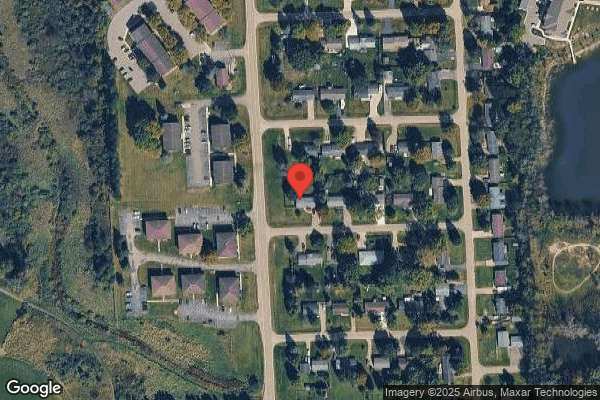
Understanding Severity Codes (click to expand)
Life-Threatening (Immediate Jeopardy)
J - Isolated K - Pattern L - Widespread
Actual Harm
G - Isolated H - Pattern I - Widespread
Potential for Harm
D - Isolated E - Pattern F - Widespread
No Harm (Minor)
A - Isolated B - Pattern C - Widespread

Questions to Ask on Your Visit

  • "Can I speak with families of current residents?"
  • "What's your RN coverage like on weekends and overnight?"

Our Honest Assessment

Strengths
  • • Licensed and certified facility. Meets minimum state requirements.
Concerns
  • • Multiple safety concerns identified: 5 harm violation(s), $130,913 in fines, Payment denial on record. Review inspection reports carefully.
  • • 49 deficiencies on record, including 5 serious (caused harm) violations. Ask about corrective actions taken.
  • • $130,913 in fines. Extremely high, among the most fined facilities in Michigan. Major compliance failures.
  • • Grade F (20/100). Below average facility with significant concerns.
Bottom line: Trust Score of 20/100 indicates significant concerns. Thoroughly evaluate alternatives.

About This Facility

What is Lapeer County Medical Care Facility's CMS Rating?

CMS assigns Lapeer County Medical Care Facility an overall rating of 3 out of 5 stars, which is considered average nationally. Within Michigan, this rating places the facility higher than 0% of the state's 100 nursing homes. This mid-range rating indicates the facility meets federal standards but may have areas for improvement.

How is Lapeer County Medical Care Facility Staffed?

CMS rates Lapeer County Medical Care Facility's staffing level at 5 out of 5 stars, which is much above average compared to other nursing homes. Staff turnover is 45%, compared to the Michigan average of 46%. This relatively stable workforce can support continuity of care.

What Have Inspectors Found at Lapeer County Medical Care Facility?

State health inspectors documented 49 deficiencies at Lapeer County Medical Care Facility during 2022 to 2025. These included: 5 that caused actual resident harm and 44 with potential for harm. Deficiencies causing actual harm indicate documented cases where residents experienced negative health consequences.

Who Owns and Operates Lapeer County Medical Care Facility?

Lapeer County Medical Care Facility is owned by a government entity. Government-operated facilities are typically run by state, county, or municipal agencies. The facility operates independently rather than as part of a larger chain. With 202 certified beds and approximately 159 residents (about 79% occupancy), it is a large facility located in Lapeer, Michigan.

How Does Lapeer County Medical Care Facility Compare to Other Michigan Nursing Homes?

Compared to the 100 nursing homes in Michigan, Lapeer County Medical Care Facility's overall rating (3 stars) is below the state average of 3.1, staff turnover (45%) is near the state average of 46%, and health inspection rating (2 stars) is below the national benchmark.

What Should Families Ask When Visiting Lapeer County Medical Care Facility?

Based on this facility's data, families visiting should ask: "Can I visit during a mealtime to observe dining assistance and food quality?" "How do you handle medical emergencies, and what is your hospital transfer rate?" "Can I speak with family members of current residents about their experience?"

Is Lapeer County Medical Care Facility Safe?

Based on CMS inspection data, Lapeer County Medical Care Facility has a clean safety record: no substantiated abuse findings (meaning no confirmed cases of resident harm), no Immediate Jeopardy citations (the most serious violation level indicating risk of serious injury or death), and is not on the Special Focus Facility watch list (a federal program monitoring the lowest-performing 1% of nursing homes). The facility has a 3-star overall rating and ranks #100 of 100 nursing homes in Michigan. While no facility is perfect, families should still ask about staff-to-resident ratios and recent inspection results during their visit.

Do Nurses at Lapeer County Medical Care Facility Stick Around?

Lapeer County Medical Care Facility has a staff turnover rate of 45%, which is about average for Michigan nursing homes (state average: 46%). Moderate turnover is common in nursing homes, but families should still ask about staff tenure and how the facility maintains care continuity when employees leave.

Was Lapeer County Medical Care Facility Ever Fined?

Lapeer County Medical Care Facility has been fined $130,913 across 2 penalty actions. This is 3.8x the Michigan average of $34,388. Fines at this level are uncommon and typically indicate a pattern of serious deficiencies, repeated violations, or failure to correct problems promptly. CMS reserves penalties of this magnitude for facilities that pose significant, documented risk to resident health or safety. Families should request specific documentation of what issues led to these fines and what systemic changes have been implemented.

Is Lapeer County Medical Care Facility on Any Federal Watch List?

Lapeer County Medical Care Facility is not on any federal watch list. The most significant is the Special Focus Facility (SFF) program, which identifies the bottom 1% of nursing homes nationally based on persistent, serious quality problems. Not being on this list means the facility has avoided the pattern of deficiencies that triggers enhanced federal oversight. This is a positive indicator, though families should still review the facility's inspection history directly.