Stratford Pines Nursing and Rehabilitation Center
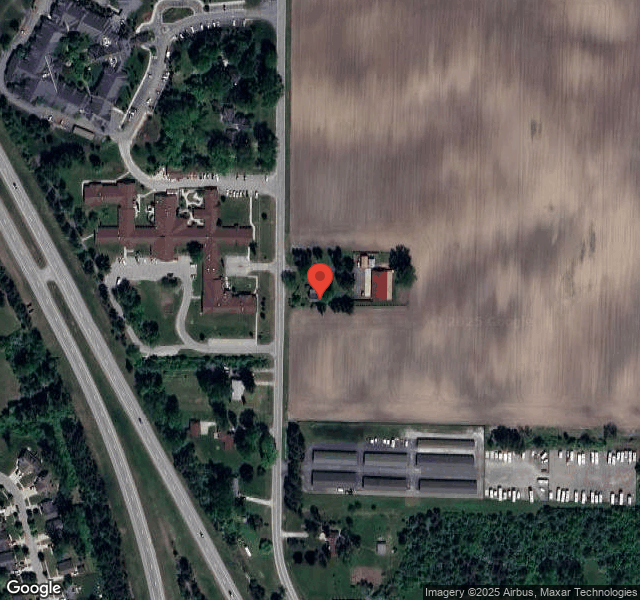

2121 Rockwell Drive, Midland, MI 48642 (989) 633-5350
For profit - Limited Liability company 100 Beds THE PEPLINSKI GROUP Data: November 2025
Trust Grade
48/100
#239 of 422 in MI
Last Inspection: January 2025

Within standard 12-15 month inspection cycle. Federal law requires annual inspections.

Overview

Stratford Pines Nursing and Rehabilitation Center holds a Trust Grade of D, indicating below-average performance with several concerns. It ranks #239 out of 422 facilities in Michigan, placing it in the bottom half, and #3 out of 3 in Midland County, meaning only one local option is better. The facility's trend is worsening, with issues increasing from 1 in 2024 to 16 in 2025. Staffing is a relative strength, rated 4 out of 5 stars, but the turnover rate is average at 53%, similar to the state average. However, there are serious issues, including a lack of supervision for a resident that led to a fatal fall, and inadequate monitoring of pressure sores for another resident, resulting in worsening conditions. While there are good aspects, such as average RN coverage, the presence of fines totaling $16,801 and these serious incidents highlight significant areas that families should consider.

Trust Score
D
48/100
In Michigan
#239/422
Bottom 44%
Safety Record
Moderate
Needs review
Inspections
Getting Worse
1 → 16 violations
Staff Stability
⚠ Watch
53% turnover. Above average. Higher turnover means staff may not know residents' routines.
Penalties
⚠ Watch
$16,801 in fines. Higher than 80% of Michigan facilities, suggesting repeated compliance issues.
Skilled Nurses
○ Average
Each resident gets 39 minutes of Registered Nurse (RN) attention daily — about average for Michigan. RNs are the most trained staff who monitor for health changes.
Violations
⚠ Watch
31 deficiencies on record. Higher than average. Multiple issues found across inspections.
★★★☆☆
3.0
Overall Rating
★★★★☆
4.0
Staff Levels
★★★★☆
4.0
Care Quality
★★★☆☆
3.0
Inspection Score
Stable
2024: 1 issues
2025: 16 issues

The Good

  • 4-Star Staffing Rating · Above-average nurse staffing levels
  • 4-Star Quality Measures · Strong clinical quality outcomes
  • Full Sprinkler Coverage · Fire safety systems throughout facility
  • No fines on record

Facility shows strength in staffing levels, quality measures, fire safety.

The Bad

3-Star Overall Rating

Near Michigan average (3.1)

Meets federal standards, typical of most facilities

Staff Turnover: 53%

Near Michigan avg (46%)

Higher turnover may affect care consistency

Federal Fines: $16,801

Below median ($33,413)

Minor penalties assessed

Chain: THE PEPLINSKI GROUP

Part of a multi-facility chain

Ask about local staffing decisions and management

The Ugly 31 deficiencies on record

2 actual harm
May 2025 3 deficiencies
CONCERN (D) 📢 Someone Reported This

A family member, employee, or ombudsman was alarmed enough to file a formal complaint

Potential for Harm - no one hurt, but risky conditions existed

Grievances (Tag F0585)

Could have caused harm · This affected 1 resident

**NOTE- TERMS IN BRACKETS HAVE BEEN EDITED TO PROTECT CONFIDENTIALITY** This citation pertains to intake number MI00151925 Based on observations, interviews and record review, the facility failed to r...

Read full inspector narrative →
**NOTE- TERMS IN BRACKETS HAVE BEEN EDITED TO PROTECT CONFIDENTIALITY** This citation pertains to intake number MI00151925 Based on observations, interviews and record review, the facility failed to respond timely to resident concerns for 2 Residents (R3 and R4) of 3 residents reviewed for concerns. Findings include: R4 Review of R4's admission assessment dated [DATE], revealed he was admitted to the facility on [DATE] and had diagnoses that included: traumatic subdural hemorrhage (brain injury) with loss of consciousness status unknown, cognitive communication deficit, difficulty walking, weakness, malaise (general feeling of discomfort, illness, or lack of well-being) and prostate cancer. During an interview with R4 and his wife on 5/7/25 at 1:15 AM they were concerned about meals, safety and lack of encouragement of activities since admission. R4 said he could not eat the food. He said he would not eat ground meat, the facility told him they did not have bacon, and the eggs were too dry. R4's wife brought him a cheeseburger, french fries and ice cream from a restaurant. R4's wife was very concerned because R4 had been in the hospital for the last 3 months and he had lost 50 pounds in the last year because he had cancer. R4's wife had been bringing snacks and meals every day because he would not eat the meat or most of the meals. R4 and his wife reported they had been complaining about the meals almost daily since admission. They did not recall seeing anyone from the dietary department since admission. They did not know how to file a concern form with the facility. R4 and his wife agreed to bring their concerns to management at this time. During an interview with the Dietary Manager (DM) E on 5/7/25 at 1:20 PM in R4's room, R4 and his wife reported the same concerns to DM E about the food and added that R4 wanted to be out of bed for breakfast and in the dining room for lunch and dinner. They added that R4 would not eat the food if it was cold. DM E explained that the food was served restaurant style in the dining room so the hot foods would be warmer than when he received them in his room. DM E said food preferences were to be completed on admission, and she did not have his food preferences. R4 and his wife said no one went over food preferences on admission. DM E found the food preferences paperwork on a table near the door in R4's room. When R4 complained about the ground meat she said she was following the Speech Therapist recommendations, and the Speech Therapist would have to evaluate him to change from ground meat to regular meat. During an interview with the Speech Therapist (ST) F on 5/7/25 at 1:50 PM in R4's room with R4 and his wife present, the ST F explained on admission she made his food orders as close to what she could do from his last hospitalization. ST F said the hospital had 7 different levels of diet and the facility only had 3. ST F saw R4 eat a french fry without any difficulty and saw that he had been eating a cheeseburger. She explained that based on his preferences she could change his diet. She saw the food preferences paperwork was still in his room and said normally she does complete that but for some reason she missed it. During an observation on 5/7/25 at 1:06 PM, R4 had lunch in his room on the bedside table. R4 was attempting to get into the bathroom and thought he had put the call light on, but the light was not on. The Surveyor assisted R4 with his call light. Certified Nurse Aide (CNA) G answered the call light. CNA G was asked if she had attempted to get R4 to the dining room for lunch and she said no he always ate in his room. (Request from 5/6/25 to eat in dining room for lunch and dinner was not communicated to the CNA). CNA G said R4 required the assistance of 2 people for transfers and left to get help. During an interview with the Director of Nursing (DON) on 5/8/25 at 11:00 AM, R4's food concerns, and desire for increased activity, food temperature, request to be up for meals and to the dining room were discussed. The DON said staff were aware of the need to complete concern forms and she was not aware of any concern forms for R4. She was not aware staff did not complete the food preferences or complete concern forms with R4 and his wife. R4 and his wife reported they had both made multiple complaints to staff about the food and wanted to be in the dining room for lunch and dinner. It was pointed out that after staff addressed the concerns on 5/7/25 they did not communicate to the Certified Nurse Aide that his preference was to eat in the dining room for lunch and dinner. No concern form was provided for the concerns made on 5/7/25 or previous complaints. R3 Review of R3's admission assessment dated [DATE] revealed she was admitted to the facility on [DATE] and had diagnoses that included: dementia, depression, and difficulty in walking. R3 was her own responsible party. During an interview with the DON on 5/8/25 at 10:28 AM, the surveyor asked the DON if she was aware of R3's requests to have family walk with her and have staff walk with her more. Record review revealed that R3 was discharged home with family on 4/11/25. The DON did not have personal knowledge of this request but was able to locate a care conference note dated 4/2/25 where the resident and family had requested to walk R3 to the bathroom daily instead of pushing her in the wheelchair. The note indicated the facility would not do this because they had determined it was not safe. The DON was not able to locate any reason why it was not safe for the Certified Nurse Aides (CNA's) to walk R3 to the bathroom as her care plan reflected. She only required 1 assist with a walker, family had been cleared to walk with her on 3/6/25 and the progress note dated 4/3/25 revealed she was able to walk 40 feet with contact guard assistance. The DON was not able to locate any risk/benefit information related to her request to be walked to the bathroom. Upon exit no information was located as to why the facility felt it was not safe for R3 to walk to the bathroom with the CNA's or any concern forms to address R3's concerns were provided. Review of R3's Activities of Daily Living (ADL) care plan dated 2/5/25 revealed, Ambulation: Therapy only resolved 2/14/25, 2/14/25 revealed, ambulation: one Assist with 2WW (two wheeled walker) follow with wheelchair. Review of R3's Interdisciplinary Documentation note dated 4/2/25 at 13:41 (1:41 PM) revealed, Resident and daughters state that Resident should be walked to the bathroom vs (verses) wheeled in wheelchair, and despite explanation as to why that would be unsafe daughter was talking over staff and was argumentative. Review of R3's Interdisciplinary Documentation note dated 4/3/25 at 10:56 AM revealed, Note Text: UR; (utilization review) PT/OT (Physical Therapy/Occupational Therapy), 1 PA (physical assistance with transfer with 2 WW (wheeled walker). Minimal assist with transfers. Ambulating max 40 ft (feet) CGA (contact guard assistance) with UB (upper body) ADL's (activities of daily living) Moderate assist with LB (lower body) ADL's.
CONCERN (D) 📢 Someone Reported This

A family member, employee, or ombudsman was alarmed enough to file a formal complaint

Potential for Harm - no one hurt, but risky conditions existed

Deficiency F0909 (Tag F0909)

Could have caused harm · This affected 1 resident

**NOTE- TERMS IN BRACKETS HAVE BEEN EDITED TO PROTECT CONFIDENTIALITY** This citation pertains to intake MI00151925 Based on observations, interviews and record review the facility failed to ensure th...

Read full inspector narrative →
**NOTE- TERMS IN BRACKETS HAVE BEEN EDITED TO PROTECT CONFIDENTIALITY** This citation pertains to intake MI00151925 Based on observations, interviews and record review the facility failed to ensure that 1 Resident (R4) of 4 residents reviewed for accident hazards met the required bed rail and mattress hazards entrapment assessments. Findings include: Review of R4's admission assessment dated [DATE], revealed he was admitted to the facility on [DATE] had diagnoses that included: traumatic subdural hemorrhage (brain injury) with loss of consciousness status unknown, cognitive communication deficit, difficulty walking, weakness and malaise (general feeling of discomfort, illness, or lack of well-being. Review of the Michigan Department of Consumer and Industry Services Guidelines for Use of Bed Rails in Long Term Care Facilities, dated March 1, 2001, revealed, II. Properly Fitted Mattresses and Initial Bed Rail Installation. A. Since the size of the resident varies, a long-term care facility must document that the equipment chosen was assessed in relation to the specific resident for whom it is used to avoid the possibility of serious injury or death from entrapment or slipping through gaps created by body weight, body size, or bed, rail, mattress configurations. The maximum acceptable gap of the resident must be recorded in the medical record at the time the bed rail is installed for that resident. B. In an occupied bed, the space between bed rail and mattress and between the mattress and head or foot board can be no greater than 2.5 inches on any side. If the medical record indicates a smaller gap is required, the Department will require the long-term care facility to comply with the smaller measurement. C. Foam edges are acceptable to reduce gaps if they meet the fire safety standards and are not worn or otherwise rendered ineffective. D. The long-term care facility may consider placing Velcro or other anti-skid material between the mattress and mattress deck to reduce mattress movement. III. Proper Maintenance of Bed Rails. When bed rails are used, the long care facility must document that it has monitored and maintained the mattress and bed rails as follows: A. On each of the first 5 days following initial use, the resident, bed frame, bed rails and mattress must be monitored by each shift to document proper fit of and to ensure that the maximum distance between components for that resident, as recorded in the medical record, is not exceeded. The monitoring must ensure that the resident's weight, movement, or bed position is not exceeded. The monitoring must ensure that the resident's weight, movement, or bed position is not creating gaps that could potentially entrap the resident's head or other body parts. If gaps in excess of the maximums acceptable for the residents are being created, the record must document corrective actions taken. On 5/7/25 at 8:40 AM, R4 was observed sitting at the edge of his bed eating. The mattress at the foot of the bed had shifted and 6 inches of the metal bed frame was exposed. The mattress was a specialty mattress for pressure relief that was plugged into the wall which controlled air pressure. The bed had half rails on the top portion of the bed that covered most of the top section of the bed. R4 had a dressing over his left anterior lower leg and bruises on his right leg. R4 did not know where he got the bruises and injuries and reported he had short term memory loss after suffering a head injury from falling. The back of R4's thighs were resting on the metal bed frame. The gap between side rail and mattress with R4 in a sitting position was 5 inches. The mattress was compressed significantly. R4 said he could not stand without help. No staff were in the room at that time. During an interview with the Unit Manager (UM) C on 5/7/25 at 9:10 AM, the surveyor expressed concern about the R4's mattress sliding and concern that the gap between the mattress and rail could cause an entrapment issue. A request for the facility bed safety policy was requested along with all documents related to R4's assessments for bed safety. During an interview with the Maintenance Director (MD) D and the Nursing Home Administrator (NHA) on 5/7/25 at 11:25 AM, the Surveyor expressed concern for R4's bed safety and again requested the facility policy for bed safety. MD D had a form that he completes on residents with bedrails that indicated maximum gaps for residents' beds with rails. MD D keeps the forms in a book in his office. We went to R4's room, R4 was not in bed at that time. The mattress on the bed easily slid with light touch and when it was slid to the far-right position at the top it had a 2 ¾ inches gap and MD D reported his form allows for 2 3/8 inches (Michigan regulation is 2.5 inches). The resident was not in bed so the compressed measurement could not be accurately measured. However, the mattress was easily compressed with one hand to measure 3.5 inches at that same point. Review of R4's, Assessment/evaluation for conformance to FDA's bed system entrapment zones revealed the assessment was only evaluated on one day 4/29 (no year) or time of day. There was no indication if R4 was in bed at the time of the assessment. The form indicated the type of bed. For rail type Assist and Mattress/Overlay Type Air. All boxes were checked except the Zone 5 which did not apply to this bed. Zone 4 was the space/gap that forms between the mattress compressed by the patient, and the lowest portion of the rail, at the end of the rail. A dimensional limit of less than 2 3/8 inches measured between that mattress support platform and the lowest portion of the rail at the end to prevent neck entrapment. In addition, the V-shaped opening under the rails may present a risk of entrapment due to wedging. Nursing homes are to report entrapment events at this zone to the FDA. This form did not include the distance between the mattress and the rail as required by the State of Michigan. The maximum acceptable gap of the resident must be recorded in the medical record at the time the bed rail is installed for that resident. B. In an occupied bed, the space between bed rail and mattress and between the mattress and head or foot board can be no greater than 2.5 inches on any side. If the medical record indicates a smaller gap is required, the Department will require the long-term care facility to comply with the smaller measurement. Review of R4's medical record revealed one Restraint/Enabler assessment dated [DATE] at 9:23 AM (after the surveyor identified bed concerns). The Assessment revealed that R4 had bilateral assist rails to promote independent mobility. These are an assistive device. They do not restrict movement or his field of view. The assessment did not include any measurements or discussion of entrapment concerns. No other assessments, measurements or orders were located to assess R4's bed rail entrapment risk.
CONCERN (E) 📢 Someone Reported This

A family member, employee, or ombudsman was alarmed enough to file a formal complaint

Potential for Harm - no one hurt, but risky conditions existed

Accident Prevention (Tag F0689)

Could have caused harm · This affected multiple residents

**NOTE- TERMS IN BRACKETS HAVE BEEN EDITED TO PROTECT CONFIDENTIALITY** This citation pertains to intake number MI00151925 Falls Based on observation, interview and record review, the facility failed ...

Read full inspector narrative →
**NOTE- TERMS IN BRACKETS HAVE BEEN EDITED TO PROTECT CONFIDENTIALITY** This citation pertains to intake number MI00151925 Falls Based on observation, interview and record review, the facility failed to provide adequate supervision, assistance and meaningful interventions to prevent falls for 2 residents (R1 & R6) of 4 residents reviewed for falls. Findings include: R1 Review of R1's admission record dated 5/8/25 revealed she was [AGE] years old, admitted to the facility on [DATE] and had diagnoses that included: Dementia, depression, difficulty in walking, and weaknesses. She was not her own responsible party. Review of R1's incident and accident report dated 1/21/25 at 23:00 (11:00 PM) revealed she had an unwitnessed fall. The description revealed, Called to room by CNA (Certified Nurse Aide), I observed R1 sitting on her bottom with her legs straight out in front of her. Her back was towards her bathroom door and her legs were facing her bed. R1 stated that she went to the bathroom and was trying to get back to her bed and she fell on her bottom. After Immediate Action Taken was Encourage resident to attend activities and come to common area for increased visibility. Staff interview revealed that R1 had been observed walking in her room at 10:30 PM and she was assisted to a chair, R1 refused assistance to the restroom. When that CNA returned, she found R1 scooting across the floor on her bottom. The root cause was increased confusion, self-ambulating from restroom to bed, without using call light or asking for staff assistance. No new intervention to prevent falls was located. Review of R1's incident and accident report dated 1/31/25 at 23:45 (11:45 PM) revealed she had an unwitnessed fall. The description revealed, Nurse made aware that resident had fall in room. Upon arrival, resident laying on floor by bed. When asked resident states I was seeing if I could walk. Interviews did not reveal any information about prior care or condition. It was unclear if she had been in bed, if she had slept or when she had last used the restroom. The immediate action taken revealed, touch pad call light added. The root cause was the resident room relocated x 3 over the last 2 weeks due to structural damage to facility, resulting in increased confusion to the resident. Review of R1's incident and accident report dated 2/5/25 at 6:15 AM, revealed she had an unwitnessed fall. The description revealed, Notified by CNA that R1 was observed on the floor in her room. Upon entering the room, observed R1 laying on her left side facing her bed with her lap blanket underneath her and her bed blanket on top of her. Her walker was to the left of her. I don't know what I was doing. I must have fallen from my bed. Immediate Action Taken revealed, Care plan reviewed and updated with pad alarm for immediate intervention as R1 does not use her call light and does not understand her limitations. The conclusion revealed, R1 was observed 15 minutes prior to the fall resting in her recliner, reading a book. She had been toileted less than 2 hours prior to the incident. The root cause was, R1 continues to be self-determined to transfer and ambulate. She is non-compliant with using call light for assistance. Resident was attempting to make her bed and her feet got caught in her blanket and she fell. The immediate intervention was the same as the fall on 1/31/25 which was to add a touch pad alarm. Review of R1's incident and accident report dated 2/6/25 at 9:20 AM revealed, Staff witnessed the resident tipping out of her wheelchair and yelled for help and ran to catch her. Staff managed to get a hand under her head but was not successful in preventing her head for striking the floor. The immediate action was to send R1 to the emergency room. The root cause was R1 was non-compliant with medication acceptance causing her to become hypotensive. No new intervention to prevent injury was located. Review of R1's incident and accident report dated 2/19/25 at 11:45 AM revealed, Resident was seated in the dining room as lunch was being served. This staff member was preparing meds (medications) at the med cart and heard a thunk sound and when I turned around, I observed this resident sitting on the floor next to her wheelchair in the dining room by the wall. Immediate action was to add a pad alarm to her wheelchair, bed and recliner. The root cause was R1 is self-determined. Review of R1's incident and accident report dated 3/14/25 at 19:15 (7:15 PM) revealed, Nurse was called to room R1's room where resident was observed laying on floor next to recliner head facing doorway, legs straight out towards the bed. The alarm pad was not in chair. Call light not on. Immediate action taken was reminders to put the alarm pad in place. The root cause was increased confusion related to UTI (urinary tract infection). Review of R1's incident and accident report dated 3/22/25 at 8:45 AM revealed, Resident was observed on the floor in front of her wheelchair in the dining room today. Staff heard a thud and turned to observe this resident on the floor. The resident appeared to be asleep in her wheelchair before the incident and could not tell us what had happened. The immediate action with to provide a different style wheelchair and having therapy evaluate positioning. The root cause was the resident was sleeping in her wheelchair, leaning forward and fell to the floor. During an interview with the Director of Nursing (DON) on 5/7/25 at 3:15 PM, R1's fall incident and accident reports were reviewed. The policy did not include doing an investigation or how to do a root cause. The DON was not always able to determine from the investigations what R1's behaviors were, or care was prior to her falls. Review of the falls and care plan revealed that R1 lacked safety awareness and required supervision during waking hours and needed to be in a supportive chair to prevent falling. The review of these records revealed some of the interventions were repeated at times, no new interventions were implemented at times and on one occasion an intervention that had been implemented was not in use. The DON did not know R1's wake or sleep patterns and was unaware of any structured activities or tolerance to being in areas where she could be observed when she was awake. When asked about meaningful interventions for each incident and how to prevent another fall, the DON could not elaborate the root cause and did not locate any interventions in R1's care plans to ensure R1 would be supervised when awake and anticipate her needs. R6 Review of R6's admission assessment dated [DATE] revealed she was [AGE] year-old, admitted to the facility on [DATE] and had diagnoses that included: epilepsy, dementia, depression, difficulty walking and weakness. R6 was not her own responsible party. R6 was observed in her nursing unit dining room on 5/6/25 at 12:00 noon. At approximately 12:20 PM, R6 wheeled herself out of the dining room to a restroom around the corner from the dining room. Four staff were in the dining room at that time assisting other residents eat at the far end of the dining room (they were not in eyesight when R6 left the dining room). R6 attempted to open the bathroom door and when she was not able to open it, she asked the housekeeper standing there with her cleaning cart for help to get into the bathroom. The housekeeper told her everyone is eating right now, and the housekeeper left the area without getting any staff to assist her. A few minutes later R1 asked the office staff sitting at the desk to help her get into the bathroom and that person said she could not help and left the area without getting R6 any help. R6 went back to her table to finish eating without getting any assistance to use the toilet. At approximately 12:30 PM, R6 wheeled herself over to the day room across from the dining room and transferred herself into a comfortable chair. R6 did not lock her wheelchair brakes and landed hard enough to make a thud when she landed in the chair. R6 had a strong urine smell that the Surveyor smelled from over 5 feet away when she was sitting in a comfortable chair. Review of R6's Activities of daily living (ADL) care plan dated revision on 12/18/24 revealed, R1 has altered functional mobility and ADL's related to advanced age with multiple comorbidities, decreased mobility and strength, recent illness, impaired cognition, high risk for falls and the need of staff assistance with transfers, mobility and toileting. It included the following interventions 1) initiated 6/22/22 able to leave on toilet: NO, 2) initiated 6/22/22 non-ambulatory, 3) transfer: Two assist (resident self-determines throughout the day; goals are to prevent injury. During an interview with the DON on 5/7/25 at 3:30 PM the observations of R6 not being within eyesight of staff while eating, leaving the dining room and attempting to get help to use the toilet were shared along with the unsafe transfer that was also unobserved by facility staff. R1 and R6 were both on the same nursing unit and the majority of the residents on that unit have dementia and lack safety awareness. The DON was disappointed that the staff R6 approached did not follow through with getting R6 help. The DON did not have any other information to add as to how the facility planned to ensure the residents on the Dementia unit would be provided with adequate supervision and assistance moving forward.
Jan 2025 13 deficiencies
CONCERN (D)

Potential for Harm - no one hurt, but risky conditions existed

Deficiency F0552 (Tag F0552)

Could have caused harm · This affected 1 resident

**NOTE- TERMS IN BRACKETS HAVE BEEN EDITED TO PROTECT CONFIDENTIALITY** Based on interview and record review, the facility failed to inform the resident and/or the resident's responsible party, in adv...

Read full inspector narrative →
**NOTE- TERMS IN BRACKETS HAVE BEEN EDITED TO PROTECT CONFIDENTIALITY** Based on interview and record review, the facility failed to inform the resident and/or the resident's responsible party, in advance of care, of the risks, benefits, and possible alternatives of treatment for the use of psychoactive medications for 1 of 1 resident (R71) reviewed for dementia care, resulting in the potential for the responsible party being uninformed of the resident's treatments and not able to choose to continue the treatments and/or choose an alternative preferred option. Findings include: A review of R71's admission Record, dated 1/29/25, revealed R71 was an [AGE] year-old resident admitted to the facility on [DATE]. In addition, the admission Record revealed multiple diagnoses that included Alzheimer's Disease, dementia with behaviors, depression, and anxiety. The admission Record also revealed R71 had a Financial Power of Attorney (Durable Power of Attorney Q) and listed the resident and Durable Power of Attorney (DPOA) Q as the responsible parties. A review of R71's Minimum Data Set (MDS) (a tool used for assessing a resident's care needs), dated 12/17/24, revealed a Brief Interview for Mental Status (BIMS) (a scale used to determine a resident's cognitive status) score of 13 which revealed R71 was cognitively intact. A review of R71's Physician Determination of Decision Making Capability, dated 5/31/24, revealed R71 had been determined unable to make medical treatment decisions by their attending physician and a supporting physician/licensed psychologist. A review of R71's Specific Durable Power of Attorney for Personal and Medical Care, dated 1/17/23, revealed R71 had designated DPOA R and DPOA S (alternative) as the individuals who were to make medical decisions for R71 if they could no longer make medical decisions. A review of R71's Durable Power of Attorney form, dated 1/17/23, revealed R71 had designated DPOA S and DPOA Q (alternative) as the individuals who were to make financial decisions for R71 if they could no longer make financial decisions. A second review of R71's admission Record, dated 1/29/25, failed to reveal any listing by name and/or contact information for DPOA R and/or DPOA S. A review of R71's January 2025 Medication Administration Record (MAR) revealed R71 was receiving Lexapro 20 milligrams (mg) for depression, Zyprexa 5 mg for delusions, and Ativan 0.5 mg for anxiety. A review of R71's Informed Consent for Medication for Lexapro, dated 8/12/24, revealed DPOA Q (R71's financial, not medical DPOA) had been informed on 8/8/24 of the reason for it's usage, the expected therapeutic goal, possible consequences of not taking the medication, the possible side effects of the medication's usage, and the ability to refuse to consent to R71 taking the medication at any time. A review of R71's Informed Consent for Medication for Zyprexa, dated 1/27/25, revealed DPOA Q (R71's financial, not medical DPOA) had been informed on 1/24/25 of the reason for it's usage, the expected therapeutic goal, possible consequences of not taking the medication, the possible side effects of the medication's usage, and the ability to refuse to consent to R71 taking the medication at any time. A review of R71's Informed Consent for Medication for Ativan, dated 1/27/25, revealed DPOA Q (R71's financial, not medical DPOA) had been informed on 1/24/25 of the reason for it's usage, the expected therapeutic goal, possible consequences of not taking the medication, the possible side effects of the medication's usage, and the ability to refuse to consent to R71 taking the medication at any time. A review of R71's progress notes, dated 3/14/24 to 1/30/25, failed to reveal any documentation that DPOA R and/or DPOA S had ever been contacted regarding R71's medical care/needs, including the risks, benefits, and possible alternatives of treatment for the use of psychoactive medications (medications that affect an individual's mental processes- e.g., antidepressants, anti-anxiety, and medications for delusions). In addition, R71's progress notes failed to reveal that the facility had ever talked to R71 specifically about the psychoactive medications she was taking. A review of R71's Interdisciplinary Documentation, dated 3/18/24, revealed R71's son (DPOA Q) informed the nurse that R71's other son (DPOA S- alternate medical decision maker) and his wife (DPOA R- primary medical decision maker) were R71's medical DPOA's. DPOA Q stated DPOA S had terminal cancer and could not make decisions for R71 anymore. The nurse told DPOA Q that she would relay the message to the social worker and have her call him. However, there was not any documentation that the message had been relayed to the social worker and/or that the social worker had followed up with DPOA Q regarding this information. During an interview on 1/29/25 at 1:40 PM, the Director of Nursing (DON) stated she called DPOA Q and he informed her that DPOA S passed away two days ago. She stated they do not have a phone number or contact information for DPOA R. The DON stated she was aware that DPOA Q had been notified every time that the facility needed medical decisions made, even though he was only listed as the Financial DPOA. The DON verified she could not find any documentation that DPOA R and/or DPOA S had participated in care conferences and/or been notified regarding making any medical decisions for R71, including the risks, benefits, and possible alternatives of treatment for the use of psychoactive medications.
CONCERN (D)

Potential for Harm - no one hurt, but risky conditions existed

Deficiency F0553 (Tag F0553)

Could have caused harm · This affected 1 resident

**NOTE- TERMS IN BRACKETS HAVE BEEN EDITED TO PROTECT CONFIDENTIALITY** Based on interview and record review, the facility failed to conduct a care conference timely for 1 of 18 sampled residents (R43...

Read full inspector narrative →
**NOTE- TERMS IN BRACKETS HAVE BEEN EDITED TO PROTECT CONFIDENTIALITY** Based on interview and record review, the facility failed to conduct a care conference timely for 1 of 18 sampled residents (R43), resulting in the potential for R43 and/or their responsible party not having an opportunity to participate in their person-centered plan of care and/or the planning process for their care. Findings include: A review of R43's admission Record, dated 1/29/25, revealed R43 was a [AGE] year-old resident admitted to the facility on [DATE]. In addition, R43's admission Record revealed multiple diagnoses that included a cerebral infraction (stroke), dementia, and depression. A review of R43's Minimum Data Set (MDS) (a tool used for assessing a resident's care needs), dated 11/12/24, revealed a Brief Interview for Mental Status (BIMS) (a scale used to determine a resident's cognitive status) score of 12 which revealed R43 was moderately cognitively intact. A review of R43's Physician Determination of Decision Making Capability, dated 8/16/24, revealed R43 had been determined to be unable to make medical treatment decisions by their attending physician and a supporting physician/licensed psychologist. A review of R43's electronic medical record, dated 8/8/24 to 1/30/24, revealed R43 had only one care conference on 8/12/24 (the admission care conference). A review of R43's progress notes, dated 8/12/24 to 1/29/25, failed to reveal any attempts by the facility to schedule a care conference for R43 after the initial admission care conference. During an interview on 01/30/25 at 11:50 AM, Social Services Director (SSD) F, confirmed R43 had not had a care conference where R43 and/or their responsible party would have an opportunity to participate in their person-centered plan of care and/or the planning process for their care since August 2024 (over 5 1/2 months ago). SSD F stated that they have not had one because R43 was going to court on 2/4/25 for guardianship and hopefully then we can finally get someone to come in to talk to about her care. SSD F further stated residents are supposed to have resident care conferences at least every 3 months, or sooner if the family requests one. A review of R43's Petition for Appointment of Guardian of Incapacitated Individual, dated 11/26/24, revealed the facility was petitioning the court to appoint a guardian because the current patient advocate is not acting consistent with the ward's (R43) best interests by not participating in care conferences. However, no care conferences had been scheduled, or attempted to be scheduled, since R43 was determined unable to make medical treatment decisions on 8/16/24. A review of R43's Notice of Hearing, dated 11/26/24, revealed R43 had a court date of 2/4/25 to petition for the appointment of a guardian. Therefore, according to SSD F, by the time the next care conference would be scheduled R43 would not have had a care conference in 6 months or more.
CONCERN (D)

Potential for Harm - no one hurt, but risky conditions existed

Deficiency F0578 (Tag F0578)

Could have caused harm · This affected 1 resident

**NOTE- TERMS IN BRACKETS HAVE BEEN EDITED TO PROTECT CONFIDENTIALITY** Based on interview and record review, the facility failed to notify the resident's responsible party of the resident's preferred...

Read full inspector narrative →
**NOTE- TERMS IN BRACKETS HAVE BEEN EDITED TO PROTECT CONFIDENTIALITY** Based on interview and record review, the facility failed to notify the resident's responsible party of the resident's preferred treatment options for 1 of 18 sampled residents (R71). Findings include: A review of R71's admission Record, dated 1/29/25, revealed R71 was an [AGE] year-old resident admitted to the facility on [DATE]. In addition, the admission Record revealed multiple diagnoses that included Alzheimer's Disease, dementia with behaviors, depression, and anxiety. The admission Record also revealed R71 had a Financial Power of Attorney (Durable Power of Attorney Q). A review of R71's Minimum Data Set (MDS) (a tool used for assessing a resident's care needs), dated 12/17/24, revealed a Brief Interview for Mental Status (BIMS) (a scale used to determine a resident's cognitive status) score of 13 which revealed R71 was cognitively intact. A review of R71's Physician Determination of Decision Making Capability, dated 5/31/24, revealed R71 had been determined unable to make medical treatment decisions by their attending physician and a supporting physician/licensed psychologist. A review of R71's Specific Durable Power of Attorney for Personal and Medical Care, dated 1/17/23, revealed R71 had designated Durable Power of Attorney (DPOA) R and DPOA S as the individuals who were to make medical decisions for R71 if she could no longer make medical decisions. A review of R71's Durable Power of Attorney form, dated 1/17/23, revealed R71 had designated DPOA S (primary) and DPOA Q (alternative) as the individuals who were to make financial decisions for R71 if they could no longer make financial decisions. A second review of R71's admission Record, dated 1/29/25, failed to reveal any listing by name and/or contact information for DPOA R and/or DPOA S (who are designated to make the medical decisions for R71). A review of R71's Resident Preferred Treatment Option form, dated 3/14/24, revealed the resident had chosen Status 3: The resident is to be hospitalized for any treatments that exceed the nursing home's capability and that are necessary to extend life or maintain comfort. Such treatments are not to include resuscitation. Surgical intervention is limited to conditions with a high probability of a successful outcome. A review of R71's progress notes, dated 3/14/24 to 1/30/25, failed to reveal any documentation that DPOA R and/or DPOA S (the medical DPOA's) had ever been contacted regarding R71's preferred treatment options. A review of R71's Interdisciplinary Documentation, dated 3/18/24, revealed R71's son (DPOA Q) informed the nurse that R71's other son (DPOA S- alternate medical decision maker) and his wife (DPOA R- primary medical decision maker) were R71's medical DPOA's. DPOA Q stated DPOA S had terminal cancer and could not make decisions for R71 anymore. The nurse told DPOA Q that she would relay the message to the social worker and have her call him. However, there was not any documentation that the message had been relayed to the social worker and/or that the social worker had followed up with DPOA Q regarding this information. During an interview on 1/29/25 at 1:40 PM, the Director of Nursing (DON) stated she called DPOA Q and he informed her that DPOA S passed away two days ago. She stated they do not have a phone number or contact information for DPOA R. The DON stated she was aware that DPOA Q had been notified every time that the facility needed medical decisions made, even though he was only listed as the Financial DPOA. The DON verified she could not find any documentation that DPOA R and/or DPOA S had ever been notified regarding R71's preferred treatment options.
CONCERN (D)

Potential for Harm - no one hurt, but risky conditions existed

Comprehensive Care Plan (Tag F0656)

Could have caused harm · This affected 1 resident

**NOTE- TERMS IN BRACKETS HAVE BEEN EDITED TO PROTECT CONFIDENTIALITY** Based on observation and interview, the facility failed to formulate and implement a comprehensive, personalized Care Plan for o...

Read full inspector narrative →
**NOTE- TERMS IN BRACKETS HAVE BEEN EDITED TO PROTECT CONFIDENTIALITY** Based on observation and interview, the facility failed to formulate and implement a comprehensive, personalized Care Plan for one resident reviewed for Care Plans (R15) resulting in a comprehensive Care Plan without individualized or measurable interventions to assist the Resident to attain or maintain the highest practicable physical and psychosocial well-being. Findings: R15 admitted to the facility 5/17/19 with diagnoses that included Multiple Sclerosis (an autoimmune central nervous system condition), History of Stroke, Hemiplegia (weakness to one side of the body) and Anxiety. Review of the Minimum Data Set (MDS) dated [DATE] revealed a Brief Interview for Mental Status (BIMS) score of 15 which indicated the Resident was cognitively intact. Review of the Care Plan for R15 reflected a Focus of (R15) is here as a long-term resident. (R15) has expressed a desire to discharge at times, however reports wanting to lose weight and become stronger before she feels comfortable doing so. Initiated 5/17/19 and revised 4/26/23. The facility's documented goal to achieve the Residents desire reflected, Physical and psychosocial needs regarding ongoing care needs and preferences will be addressed. This goal for the Resident's desire to lose weight and become stronger included two Interventions. (1) Arrange for Care Conferences . and (2) MDS Section Q reviewed with appropriate contact agency referral PRN (as needed). No further interventions to demonstrate measurable or a personalized resident-centered approach to promote or maintain the Resident's physical well-being as indicated in the Focus were located. Therefor, no meaningful revisions could be made to the plan of care. On 1/29/25 at 5:03 PM an interview was conducted with the Director of Nursing (DON). The DON was asked about the current Care Plan for R15 and requested any information of the facility efforts to attain the Residents goals or improve or preserve function, range of motion (ROM), and well-being. On 1/30/25 at 12:17 PM an interview was conducted with Social Services Director (SSD) F. SSD F reported that R15 likes to stay in her room and doesn't like to go to Activities. SSD F was reminded of the Care Planned focus for R15 and reported that R15, did, at one time, indicate she wanted to go home. SSD F was asked to review the Care Plan and report what efforts were being made for R15 toward her goals as the interventions listed do not appear to be personalized or measurable. SSD F reviewed the Care Plan and suggested that SSD H has known R15 prior to his involvement with the Resident and may be able to better answer the question. On 1/30/25 at 12:26 PM an interview was conducted with SSD H who reported that R15 likes to keep to herself and, despite indicating she wants to improve, the Resident does not put forth an effort. On 1/30/25 at 12:33 PM an interview was conducted with Clinical Care Coordinator (CCC) T who reported that staff do encourage R15 to get out of bed often. The Care Plan for R15 was discussed and CCC T was asked if staff perform any ROM with R15 to improve or maintain the Residents mobility or ROM. CCC T reported that Certified Nurse Aides (CNA) perform ROM daily with R15. Review of the EMR Tasks reflect ROM for R15 included 1) passive (without resident effort) range of motion of the left foot and 2) encourage to apply a resting hand splint to the left hand. The documentation reflected R15 often refused. There was no further documentation demonstrating a comprehensive effort to propel R15 toward the goals in the Care Plan. On 1/30/25 at approximately 12:45 PM, CCC T was informed of the ROM exercises of the foot and a splint assigned for R15 and was asked to provide any further documentation of facility efforts to maintain basic ROM for R15. CCC T indicated she would review the Resident's record and reported that at this time R15 was out of bed and in the common area. On 1/30/25 at 12:55 PM an interview was conducted with R15 in the common area. R15 was asked if staff were performing or having her perform any daily ROM exercises with her. R15 stated No. As of survey exit no additional information was received.
CONCERN (D)

Potential for Harm - no one hurt, but risky conditions existed

Quality of Care (Tag F0684)

Could have caused harm · This affected 1 resident

**NOTE- TERMS IN BRACKETS HAVE BEEN EDITED TO PROTECT CONFIDENTIALITY** Based on observation, interview and record review, the facility failed to address and provide assessments, catheter care, and wo...

Read full inspector narrative →
**NOTE- TERMS IN BRACKETS HAVE BEEN EDITED TO PROTECT CONFIDENTIALITY** Based on observation, interview and record review, the facility failed to address and provide assessments, catheter care, and wound care for one (R10) of three residents reviewed for skin conditions. Findings include: Resident #10 (R10) Review of a Face Sheet for R10 revealed she originally admitted to the facility on [DATE] and has pertinent diagnoses of infection and inflammatory reaction due to indwelling urethral catheter. Review of the Minimum Data Set (MDS) dated [DATE] revealed R10 is cognitively intact. In an interview on 1/28/25 at 12:20 PM, R10 was in the room and expressed recent concerns with her suprapubic catheter getting plugged up and leaking at the insertion site and not draining. She reported she had to wait until the next day to get it changed. During an observation and an interview on 1/29/25 at 10:48 AM, Licensed Practical Nurse (LPN) J removed a split 4x4 gauze that was used as a barrier between the suprapubic catheter and the insertion site. The nurse inserted a new split gauze over the open area of the wound, approximately the size of a marble. No measurements or assessment of the wound was observed. Review of a Skin assessment dated [DATE] (Monday) and locked on 1/29/25 (Wednesday) for R10 revealed she had 2 pressure ulcers and a suspected deep tissue injury. Assessment notes included: . s/p (status post) catheter patent and functions free of complication. No documentation indicating a wound at catheter insertion site. Review of the January Treatment Administration Record 2025 (TAR) for R10 revealed an order for Suprapubic Cath Care every shift. Empty Foley Catheter drainage Bag [every] shift & record output. Not marked as done on 1/11, 1/12, 1/21, 1/25, and 1/27. Review of an Order Summary for R10 revealed no orders for care of the catheter insertion site. In an interview on 1/29/25 at 3:43 PM, LPN J reported she last took care of R10 on Sunday (1/26/25) and her catheter insertion site was just a little red with little drainage, but no signs or symptoms of infection. Today she just had a little more drainage. LPN J reported she talked to the Nurse Practitioner this day who gave orders to start using a blue antimicrobial foam on the catheter insertion site. Review of the electronic medical record (EMR) on 1/30/25 for R10 revealed no new skin assessment of the suprapubic catheter insertion site, no new orders for wound care of the catheter insertion site, and no other documentation indicating it was addressed. Review of the Care Plan for R10 revealed: Interventions: Elimination: Suprapubic catheter to drainage, catheter care with soap and water with am/pm care and [as needed]. SKIN IMPAIRMENT LOCATION: coccyx, bilateral plantar feet, suprapubic catheter site, colostomy-notify nursing if dressings are soiled or falling off; . Focus: .potential for alteration in comfort related to decreased mobility, paralysis from he (sic) chest down, current suprapubic catheter . Focus: impaired skin integrity: Intervention: . Measure open areas upon admission, weekly, prn [as needed] ., re-evaluate treatment and resident condition prn with no improvement to wound appearance and/or measurements .
CONCERN (D)

Potential for Harm - no one hurt, but risky conditions existed

Deficiency F0688 (Tag F0688)

Could have caused harm · This affected 1 resident

Based on observation, interview, and record review, the facility failed to provide restorative care, range of motion, and/or positioning devices for one (R10) of two residents reviewed for positioning...

Read full inspector narrative →
Based on observation, interview, and record review, the facility failed to provide restorative care, range of motion, and/or positioning devices for one (R10) of two residents reviewed for positioning and mobility. Findings include: Resident #10 (R10) Review of a Face Sheet revealed R10 originally admitted to the facility and has pertinent diagnoses of quadriplegia, weakness, and rheumatoid arthritis. During an observation and an interview on 1/28/25 at 12:00 PM, R10 was in bed and her fingers were observed to have limited range of motion. R10 reported she is to have special gloves/braces that are to be put on each shift, but the staff do not put them on. The gloves were observed across the room on top of a stand. During an observation and an interview on 1/29/25 at 8:47 AM, R10 was observed in her room and not wearing her special gloves. She reported she did not wear her special gloves/braces last night or this morning. In an interview on 1/29/25 at 8:58 AM, Occupational Therapist (OT) P reported R10 does not have contractures but does have a weakness tone to her hands and receives restorative therapy. She is to wear finger flexion gloves for 30 minutes in the mornings and 30 minutes in the evenings. Staff were trained on how to put the gloves on. Review of an OT discharge summary for R10 dated 6/5/24 to 7/26/24 revealed: Summary Since Eval: [Patient] and Caregiver Training: Instructed patient and primary caregivers in restorative Nursing Program in order to prevent decline from current level of skill performance with 100% carryover demonstrated by primary caregivers. Discharge Status and Recommendations: . RNP (Restorative Nursing Program)/ FMP (Function, Motion, Prevention): Finger flexion gloves on 30 mins in a.m., 30 mins in p.m. [with] skin check prior to donning and after doffing. In an interview on 1/29/25 at 3:48 PM, Licensed Practical Nurse (LPN) J reported she just took off R10's flexion gloves. Any passive range of motion (PROM) services should be documented in her chart including when her flexion gloves are applied. LPN J reported R10 refuses at times. LPN J verified she did not see any such documentation. In an interview on 1/29/25 at 3:54 PM, R10 reported she has not received any PROM. Review of the Activities of Daily Living (ADL) Care Plan for R10 revealed: RESTORATIVE PROGRAM: Place finger flexion gloves on bilateral hands for 30 minutes in AM and 30 minutes in PM daily, initiated 7/22/24. No active or passive ROM in the care plan. Review of the Tasks in the electronic medical record (EMR) for R10 revealed the following tasks had no documentation showing it was completed: - Amount of minutes spent providing Range of Motion (active). -Amount of minutes spent providing splint or brace assistance. Review of the Restorative-Other program: Place finger flexion gloves on bilateral hands for 30 minutes in AM and 30 minutes in PM daily. Assess skin pre/post gloves and notify nurse with any observations task for R10 revealed there were 17 refusals check marked and 10 not applicable check marked. Some refusals and not applicable checks occurred between the hours of 2:00 AM and 6:00 AM. Review of the Progress notes for R10 revealed no documentation of the resident refusing her splints and no documentation addressing the Restorative-Other program task list addressing the refusals or if she was reapproached, or a root cause to her check marked refusal.
CONCERN (D)

Potential for Harm - no one hurt, but risky conditions existed

Respiratory Care (Tag F0695)

Could have caused harm · This affected 1 resident

**NOTE- TERMS IN BRACKETS HAVE BEEN EDITED TO PROTECT CONFIDENTIALITY** Based on observation, interview, and record review, the facility failed to ensure oxygen therapy was received for one (R10) of t...

Read full inspector narrative →
**NOTE- TERMS IN BRACKETS HAVE BEEN EDITED TO PROTECT CONFIDENTIALITY** Based on observation, interview, and record review, the facility failed to ensure oxygen therapy was received for one (R10) of three residents reviewed for respiratory care. Findings include: Review of a Face Sheet revealed R10 originally admitted to the facility on [DATE] and has pertinent diagnoses of chronic obstructive pulmonary disease (COPD), dependence on supplemental oxygen. In an observation and interview on 1/28/25 at 12:20 PM, R10 was in the room and reported she sometimes falls asleep, and the staff does not put her BiPAP (bilevel positive airway pressure, a noninvasive ventilation therapy) machine on at night. The BiPAP machine was observed on the nightstand next to R10's bed. Review of the Order Summary for R10 revealed no orders for a BiPAP machine. Review of the January 2025 Medication Administration Record (MAR) and the Treatment Administration Record (TAR) for R10 revealed no documentation her BiPAP machine was applied. Review of the Care Plan for R10 revealed: RESPIRATORY EQUIPMENT: oxygen and use of bi-pap at HS [bedtime], Date Initiated: 05/15/2023. Review of an Interdisciplinary Progress Note dated 11/18/24 for R10 revealed: She has occasional SOB (shortness of breath) while lying flat. Requires the use of Bipap. In an interview on 1/30/25 at 11:38 AM, the Director of Nursing (DON) reported R10 uses a BiPAP machine, verified that no active orders exist in the EMR, and noted that they appeared not to have been restarted when R10 returned from the hospital. The DON verified that there is not documentation to show R10 had had received her BiPAP therapy at night.
CONCERN (D)

Potential for Harm - no one hurt, but risky conditions existed

Deficiency F0698 (Tag F0698)

Could have caused harm · This affected 1 resident

**NOTE- TERMS IN BRACKETS HAVE BEEN EDITED TO PROTECT CONFIDENTIALITY** Based on interview and record review, the facility failed to 1) ensure clinical staff reviewed dialysis communication post dialy...

Read full inspector narrative →
**NOTE- TERMS IN BRACKETS HAVE BEEN EDITED TO PROTECT CONFIDENTIALITY** Based on interview and record review, the facility failed to 1) ensure clinical staff reviewed dialysis communication post dialysis and 2) ensure post dialysis monitoring for 1 resident (R11) of 1 resident reviewed for dialysis care. Findings include: Review of an admission Record revealed R11 admitted to the facility on [DATE] with pertinent diagnoses which included diabetes and kidney disease. Review of a current hemodialysis (treatment for kidney failure that removes waste and extra fluids from the blood) Care Plan intervention for R11, initiated 12/23/2019, revealed .Establish communication with dialysis center process of communication is as follows . Review of R11's Physician's Orders, active 1/29/2025, revealed R11 was dependent on hemodialysis every Monday, Wednesday, and Friday. In an interview on 1/29/2025 at 7:59 AM, Licensed Practical Nurse (LPN) C reported night shift prepared R11 to leave for the dialysis clinic. LPN C reported there was no communication paperwork that went back and forth between the facility and dialysis. LPN C reported she routinely took care of R11 after her dialysis treatments and never reviewed any documentation or communication from the dialysis clinic after R11 returned from dialysis. Review of R11's electronic medical record (EMR) on 1/29/2025 at 9:51 AM revealed dialysis communication forms had been uploaded into the EMR after dialysis. The EMR did not reveal any confirmation that these forms had been reviewed by clinical staff. Review of R11's Post Dialysis Assessment Care Plan, dated 1/13/2025, revealed .assess B/P (blood pressure) routinely post dialysis . Weight and temperature upon return from dialysis and PRN (as needed) . In an interview on 1/29/2025 at 2:43 PM, LPN C reported she never saw dialysis communication forms when R11 returned from the dialysis clinic. R11 reported front office staff scanned these into the EMR. In an interview on 1/29/2025 at 2:49 PM, the Director of Nursing (DON) reported nursing staff were required to review the dialysis communication forms upon R11's return from dialysis to ensure that important clinical communication was reviewed. In an interview on 1/29/2025 at 2:57 PM, Medical Records Manager (MRM) B reported she scanned dialysis communication forms into the EMR upon R11's return from dialysis and then destroyed the original copies. MRM B believed nursing staff reviewed these prior to them being given to her to scan. MRM B reported was not sure nursing staff was reviewing the dialysis communication forms and she planned to discuss the process with the DON. In an interview on 1/29/2025 at 3:15 PM, LPN C reported R11 returned from dialysis at lunch time. LPN C reported she had not yet documented R11's post dialysis assessment on the Post Dialysis Assessment Care Plan. LPN C reported she did not obtain new vital signs upon R11's return from dialysis. LPN C reported she routinely filled in the morning vital signs on the Post Dialysis Assessment Care Plan when R11 returned from dialysis. LPN C reported she had not reviewed any documentation from the dialysis clinic. In an interview on 1/29/2025 at 3:22 PM, the DON reported the weight, vital signs, and assessment were to be assessed after dialysis as the Post Dialysis Assessment Care Plan form directs. The DON confirmed nursing staff should be reviewing the dialysis communication form each time R11 returned from dialysis. Review of facility policy/procedure Dialysis Communication, effective December 2021, revealed .Ongoing provision of assessment, care planning and provision of care with the dialysis facility will be in collaboration with facility services. Communication tools, short term care plans and assessment collaboration with medication and nutritional services will be ongoing for the continuum of care .
CONCERN (D)

Potential for Harm - no one hurt, but risky conditions existed

Deficiency F0761 (Tag F0761)

Could have caused harm · This affected 1 resident

Based on observation, interview, and record review, the facility failed to ensure medications were properly labeled in 1 of 3 medication carts (Meadowbrook North Medication Cart) and 1 of 2 medication...

Read full inspector narrative →
Based on observation, interview, and record review, the facility failed to ensure medications were properly labeled in 1 of 3 medication carts (Meadowbrook North Medication Cart) and 1 of 2 medication rooms (Meadowbrook South Medication Room) inspected. Findings Include: During an observation on 01/29/25 at 08:15 AM, the Meadowbrook North Medication Cart (as identified by staff) was inspected with Licensed Practical Nurse (LPN) J. R47's Breo-Elipta 100 micrograms (mcg)/25 mcg discus was observed in a box labeled with R47's name. However, the discus itself was not labeled with any identifying information (e.g., resident's name or resident's room number) that would indicate who the discus belonged to should it get separated from the box. LPN J stated the nurses usually do not label the discus with the resident's name because it already comes to the facility in a box that is labeled. She stated they do at least label the discus with the resident's room number in case it gets separated from the box. LPN J verified that R47's discus was not labeled with her name and/or room number. During an observation on 01/30/25 at 09:45 AM, the Meadowbrook South Medication Room was inspected with Registered Nurse (RN) G. An open vial of Tuberculosis (TB) Purified Protein Derivative (PPD) was observed in a box with an open date of 1/20/25. However, the individual vial was not labeled with an open date. RN G verified this observation and stated if the vial had not been in the box, then she would not know when it was opened. RN G further stated she has seen individual TB vials labeled with an open date, but she did not know if the nurses were supposed to label them or not. RN G stated that the TB vials are good for only 5 days after they are opened. During an interview on 01/30/25 at 9:55 AM, LPN I stated she labels everything. LPN I stated individual TB vials are supposed to be labeled with an open date. She stated the TB vials are good for 30 days in the refrigerator (after she checked a pharmacy list of medications in a binder on the medication cart). LPN I also stated discus', vials, and inhalers in the medication cart are supposed to be labeled with the residents' names when they are opened. She stated, There's usually a tag to pull from somewhere with the patient's (resident's) name to place on the vial/discus/inhaler. During an interview on 01/30/25 at 10:46 AM, the Director of Nursing (DON) stated the nurses should be labeling individual vials, inhalers, and discus' with the resident's name when the boxes are opened. The DON also stated TB vials are supposed to be labeled with an open date. She stated she was not sure on the number of days a TB vial is good for after it is opened, but she can look it up on a sheet the pharmacy sends them with all the use by dates for different multi-use medications. A review of the TB PPD package insert, revised 3/16, revealed, Vials in use for more than 30 days should be discarded due to possible oxidation and degradation (lowered quality due to a chemical reaction when the solution comes into contact with oxygen in the air) which may affect potency (the dose required to produce the correct result).
CONCERN (D)

Potential for Harm - no one hurt, but risky conditions existed

Medical Records (Tag F0842)

Could have caused harm · This affected 1 resident

**NOTE- TERMS IN BRACKETS HAVE BEEN EDITED TO PROTECT CONFIDENTIALITY** R71 A review of R71's admission Record, dated 1/29/25, revealed R71 was an [AGE] year-old resident admitted to the facility on [...

Read full inspector narrative →
**NOTE- TERMS IN BRACKETS HAVE BEEN EDITED TO PROTECT CONFIDENTIALITY** R71 A review of R71's admission Record, dated 1/29/25, revealed R71 was an [AGE] year-old resident admitted to the facility on [DATE]. In addition, the admission Record revealed multiple diagnoses that included Alzheimer's Disease, dementia with behaviors, depression, and anxiety. A review of R71's Interdisciplinary Care Conference Documentation, dated 3/14/24 to 1/29/25, revealed R71 had care conferences on 3/15/24 (admission), 4/26/24 (other), and 9/26/24 (quarterly). A further review of R71's electronic medical (health) records (including progress notes), dated 9/26/24 to 1/29/25, failed to reveal that any care conferences were conducted after 9/26/24 (four months prior to the survey). During an interview on 01/30/25 at 11:39 AM, Social Services Director (SSD) F stated the facility had a care conference for R71 on 1/3/25 (approximately four weeks prior to the survey). SSD F stated he just had not gotten around to putting any documentation detailing the care conference into R71's medical record. SSD F showed the surveyor his care conference schedule (which SSD F verified was not part of the medical record) and the surveyor verified R71's care conference had been scheduled for 1/3/25. Timely documentation of the following types of information should be made and maintained in a patient's EHR (electronic health record) to support the ability of the health care team to ensure informed decisions and high quality care in the continuity of patient care . Communications with other health care professionals regarding the patient; Communication with and education of the patient, family, and the patient's designated support person and other third parties . Patient responses and outcomes, including changes in the patient's status; and Plans of care that reflect the social and cultural framework of the patient . Patient documentation frequently is used by professionals who are not directly involved with the patient's care. If patient documentation is not timely, accurate, accessible, complete, legible, readable, and standardized, it will interfere with the ability of those who were not involved in and are not familiar with the patient's care to use the documentation. (ANA's (American Nursing Association) Principles for Nursing Documentation- Guidance for Registered Nurses, 2010, www.nursingworld.org). R65 Review of the medical record reflects R65 admitted to the facility 7/30/24 with diagnoses that included Alzheimer's Disease and Parkinsons Disease. Review of the Minimum Data Set (MDS) dated [DATE] reflected R65 was unable to complete the cognitive evaluation and was determined to be impaired for daily decision making. The medical record reflected that a Durable Power of Attorney (DPOA) was on file. Review of the Electronic Medical Record (EMR) revealed the last Care Conference for R65 was documented on 8/13/24. This indicated that the next Quarterly Care Conference would have been conducted on or about December 2024. On 01/30/25 12:22 PM an interview was conducted with Social Services Director (SSD) F in his office. SSD F reported the facility calendar reflected a Care Conference for R65 was conducted on 11/7/24. SSD F was asked if the documentation was available in the EMR. SSD F stated, those notes are not in the computer. Based on interview and record review, the facility failed to maintain complete and accurate medical records for three residents (R9, R65, and R71) of 18 residents reviewed for accuracy of medical records. Findings include: R9 Review of an admission Record revealed R9 admitted to the facility on [DATE] with pertinent diagnoses which included muscle weakness and depression. Review of R9's care conference documentation in the electronic medical record (EMR) on 1/30/2025 at 9:38 AM revealed the last care conference was documented on 8/19/2024. In an interview on 1/30/2025 at 9:48 AM, Social Services Director (SSD) F looked at the care conference schedule and reported R9 had a care conference on 11/1/2024 but he did not document this in the EMR. SSD F showed me undated handwritten notes in a journal and indicated that those notes were from R9's 11/1/2024 care conference. SSD F reported he should have documented the care conference at the time it occurred, and he would enter the document as a late entry. In an interview on 1/30/2025 at 10:29 AM, Clinical Support (CS) A reported care conferences should be documented the same day or as soon as possible. CS A reviewed the EMR and reported R9 was at the hospital on [DATE] and could not have had a care conference on that day. A care conference note dated 11/1/2024 and locked on 1/30/2025 was viewed. SSD F entered the conversation and confirmed he had just documented this care conference note after our discussion. SSD F viewed the EMR with CS A and reported the care conference he documented as taking place on 11/1/2024 must have taken place on another date. SSD F reviewed his care conference schedule and reported R9's care conference had been rescheduled for 11/13/2024 because of his hospitalization and must have taken place on that date. SDD F was unable to confirm from his handwritten notes what day R9's care conference took place. Review of facility policy/procedure Medical Record Documentation Principles, revised September 2010, revealed .Entries should be made as soon as possible after an event or observation is made . Entry out of sequence procedure . When a pertinent entry was missed or not written in a timely manner . The current date and time of the entry is used . Identify or refer to the date and situation for which the additional information entry out of sequence is written .
CONCERN (D) 📢 Someone Reported This

A family member, employee, or ombudsman was alarmed enough to file a formal complaint

Potential for Harm - no one hurt, but risky conditions existed

Infection Control (Tag F0880)

Could have caused harm · This affected 1 resident

**NOTE- TERMS IN BRACKETS HAVE BEEN EDITED TO PROTECT CONFIDENTIALITY** Based on interview and record review, the facility failed to implement appropriate infection control interventions, and root cau...

Read full inspector narrative →
**NOTE- TERMS IN BRACKETS HAVE BEEN EDITED TO PROTECT CONFIDENTIALITY** Based on interview and record review, the facility failed to implement appropriate infection control interventions, and root cause analysis for one (R71) of three residents reviewed for urinary tract infections. Findings include: Review of a Face Sheet for R71 revealed she admitted to the facility on [DATE] with pertinent diagnoses of Alzheimer's disease, dementia with behavioral disturbances, and a history of urinary tract infections. In an interview on 1/29/25 at 2:04 PM, the Infection Preventionist/Registered Nurse (RN) O reported that their facility commonly sees urinary tract infections (UTI) and skin infections. Last month (December 2024), they recorded 9 urinary tract infections but observed no trends. Many incontinent residents including R71 reside on the [NAME] unit. RN O encourages more fluids for residents who get frequent UTI's. More information and any interventions for R71's UTI's was requested. RN O reported he provided staff with education pertaining to infection control every month via reading materials and will have them sign it. RN O reported they do audits on staff but did not provide specifics of what or when the last audit was such as hand hygiene audits, pericare audits, and prompt/appropriate incontinence care. Review of a Urinalysis history document for R71 revealed a history UTI's on 4/4/24, 4/6/24, 5/8/24, and 5/13/24. Review of the Infection Control Resident Surveillance record shows that R71 experienced a UTI in October 2024, November 2024, and January 2025. Each time, staff administered an antibiotic before receiving the cultures and sensitivities, which led to the initiation of another new antibiotic once the results arrived. Review of the Urinalysis collected on 10/10/24 for R71 revealed a positive result. A culture and sensitivity test were indicated, and the patient started on Cephalexin (Keflex, an antibiotic) on 10/11/24. The cultures, which resulted on 10/14/24 showed growth of Escherichia Coli (E. coli), Proteus Mirabilis, and Viridians Streptococcus bacteria, prompting a change in her antibiotic to Bactrim on 10/14/24. Review of the Urinalysis collected on 11/14/24 for R71 revealed a positive result. A culture and sensitivity test were indicated, and R71 started on Augmentin (an antibiotic) on 11/16/24. The cultures, which resulted on 11/17/24 showed growth of E. coli prompting a change in her antibiotic to Bactrim on 11/18/25. Review of the Urinalysis collected on 1/17/25 for R71 revealed a positive result. A culture and sensitivity test were indicated, and R71 started on Augmentin (an antibiotic) on 1/18/25. The cultures, which resulted on 1/19/25 showed growth of E. coli prompting a change in her antibiotic to Bactrim on 1/19/25. In an interview on 1/30/25 at 9:08 AM, RN O was queried about R71's frequent UTI's and E. coli as the main bacterial growth. RN O reported R71 is frequently resistive to receiving care. R71 will have more behaviors when she is feeling independent which waxes and wanes. When queried about the origins of E. coli and the correlation to UTI's and potential preventative measures, RN O did not have any comments. RN O reported if a resident is suspected of having a UTI, they collect a urine sample before starting a broad-spectrum antibiotic. Once the culture results return, they change to the appropriate antibiotic if indicated. Review of the Care Plan for R71 with the Focus has the potential for altered elimination related to decreased mobility and strength, a recent hospitalization due to a complicated UTI, a medical history of CKD, and kidney stones, and the need of staff assistance with transfers, toileting, and mobility. Date Initiated: 03/14/2024 and revised on: 03/21/2024 revealed interventions that included Bowel and bladder planning implemented. Review of the Activities of Daily Living (ADL) Care Plan for R71 revealed: ELIMINATION: Wears incontinence products, may use peanuts in brief, check and change before and after meals, HS [bedtime] with rounds and prn [as needed], assist when verbal or nonverbal indicators communicate toileting needs. Date Initiated: 03/14/2024 and last revised on: 10/16/2024. R71's Care Plans revealed no new interventions related to the prevention of UTI's were implemented despite the documented recurrent e. coli infections. Review of Fundamentals of Nursing ([NAME] and [NAME]) 11th edition revealed, Urinary tract infections (UTIs) are the fifth most common type of health care-associated infection .Escherichia coli, a bacterium commonly found in the colon, is the most common causative pathogen ([NAME], 2020). The risk for a UTI increases in the presence of .urinary and fecal incontinence, and poor perineal hygiene practices. [NAME], [NAME] A.; [NAME], [NAME] G.; Stockert, [NAME] A.; Hall, [NAME]. Fundamentals of Nursing - E-Book (p. 1229). Elsevier Health Sciences. Kindle Edition. Review of a policy titled Antimicrobial Stewardship last revised on 3/2020 revealed: It is the policy of this facility to utilize various antimicrobial stewardship strategies to improve the quality of antimicrobial therapy, minimize antimicrobial resistance, and optimize clinical outcomes. The facility will utilize antimicrobial stewardship strategies in combination with infection prevention and control efforts to limit the emergence and transmission of antimicrobial-resistant pathogens. Purpose: To preserve the effectiveness of antimicrobials, reduce avoidable adverse effects, minimize healthcare associated infection, and limit the emergence and transmission of antimicrobial-resistant pathogens. 2. Antimicrobial therapy should only be prescribed if clinically indicated according to signs and symptoms of infection and/or sepsis. b. Prompt antibiotic administration for septic residents can save lives; make every attempt to obtain appropriate cultures prior to administering antimicrobials. c. Residents who receive antimicrobial therapy are at increased risk of colonization and infection with Clostridium difficile d. Document indications for antimicrobial therapy in the interdisciplinary note and or medication administration record including the indication for treatment.
CONCERN (E)

Potential for Harm - no one hurt, but risky conditions existed

Accident Prevention (Tag F0689)

Could have caused harm · This affected multiple residents

**NOTE- TERMS IN BRACKETS HAVE BEEN EDITED TO PROTECT CONFIDENTIALITY** Based on observation, interview, and record review, the facility failed to follow policies and procedures for falls, implement m...

Read full inspector narrative →
**NOTE- TERMS IN BRACKETS HAVE BEEN EDITED TO PROTECT CONFIDENTIALITY** Based on observation, interview, and record review, the facility failed to follow policies and procedures for falls, implement meaningful care plan interventions, post fall neurological assessments, for two (R65 and R66), of three residents reviewed for accidents and supervision. Findings: R65 Review of the medical record reflected R65 admitted to the facility 7/30/24 with diagnoses that included Alzheimer's Disease and Parkinsons Disease. Review of the admission Minimum Data Set (MDS) dated [DATE] reflected the Resident was at risk for falls and had fallen twice since the admission date of 7/30/24. The cognitive evaluation conducted during the admission MDS of 8/6/24 for R65 reflected a Brief Interview for Mental Status (BIMS) score of 4. The following quarterly MDS of 11/5/24 reflected R65 was unable to complete the cognitive evaluation which indicated a cognitive decline since admission. On 1/29/24 at 9:44 AM, a request was submitted to the facility for the incident reports for R65 since 10/1/24. The facility provided documentation of ten incident reports of which nine were falls or suspected falls (10/21/24, 11/4/24, 12/1/24, 12/9/24,12/23/24, 12/27/24, 1/3/24, 1/4/24, 1/6/24), and one incident on 1/17/24 when R65 was found ambulating unsupervised. Review of the fall documentation of 12/27/24 at 9:00 AM reflected a staff member had just arrived at work and was putting away personal belongings. The staff member heard an audible alarm, came around a corner and observed R65 up walking, very unsteady on his feet and fell. The documentation reflected R65 was placed back into his chair, indicating that R65 was not supervised by staff prior to the arriving staff. Review of the incident documented 12/9/24 at 11:00 AM reflected staff identified a new bruise near the Resident's left eye measuring 2 centimeters (cm) x 4 cm, a reddened area on the top left of head, and a skin tear on the left shoulder. The documentation reflected R65 has been observed multiple times throughout the day attempting to self-ambulate. A Conclusion that an unwitnessed fall was suspected. The documentation reflected Neuros initiated (serial neurological evaluations) but no documentation of this was found in the EMR. The documentation reflected the Immediate Action was to have Therapy evaluate resident's ability to safely self-transfer from the floor to his bed/chair with no further documentation to indicate any immediate action was implemented to prevent future falls or increase supervision. The incident documented 12/27/24 at 9:00 AM revealed R65 had fallen while unsupervised. The Immediate Action documented reflected a referral was made to Therapy, the same as on 12/9/24. Review of the documentation of the falls R65 sustained on 10/21/24, 12/1/24, and 12/23/24 all revealed the same Immediate intervention to offer more activities and snacks (10/21/21 and 12/1/24), and encourage resident with activities (12/23/24). On 1/3/25 an unwitnessed fall was documented at 9:25 AM when R65 had slipped out of his chair in a common area. Following the fall the intervention implemented was to place a Dycem (a non-slip mat) in the Resident's chair to help prevent more falls. On 1/4/25 at 7:35 PM the fall documentation reflected R65 was observed slipping on to floor (sic). The documentation reflected, No Dycem in (R65's) chair at the time. Review of the non-fall incident documented on 1/17/24 at 3:30 AM reflected R65's Broda chair outside the Resident's bathroom door and he was standing in the bathroom. The documentation reflected R65 was .unattended, without his tab alarm attached to his shirt. The Resident was assessed and found to have a 2.4 cm x 4.2 cm abrasion on his right knee and an abrasion on his left knee. The documentation reflected R65 is severely cognitively impaired. Despite this and abrasions to the knees, staff accepted the Resident's explanation that I think I bumped it on the wall' (his knees) and that R65 said he did not fall. The documentation did not indicate why R65 was unsupervised in a Broda chair and not in his bed at 3:30 AM. Review of the medical record did not reflect that serial neurological checks were performed following this incident. On 1/30/25 at 1:19 PM an interview was conducted with the Director of Nursing (DON) in her office. The documentation of the incidents of R65 were reviewed. The DON was asked to provide any further information or documentation regarding these incidents. As of survey exit no additional information was provided. Review of a policy titled Accident/Incident Report Fall Management last revised 6/2018 revealed: Purpose: To establish a standard for accident/incident completion and to evaluate the facility responsibility to make every effort to decrease the likelihood of a recurrence by investigating incidents, understand how they occur and applying appropriate action. 5. The resident should not be moved until the initial evaluation is completed. If an injury is suspected, the resident should not be moved until Emergency Medical personnel arrive, unless prevention of such movement would result in increased risk for exacerbation of potential injury such as the case with a demented resident exhibiting behavior. d. the resident may be transferred via mechanical lift, backboard, or rolled onto a blanket and lifted by three or four caregivers to their bed. 6. It is recognized that not all falls can be prevented, the facility will utilize applicable elements of the systematic process of assessment, intervention, and monitoring to minimize fall risk and injury including: a. Fall risk screening b. Care plan interventions c. Evaluation of the response to interventions and balancing risk with the residents right to self-determination and independence d. Comfort Rounds and promotion of a culture of safety e. Assessment of sensory contributors f. Medication Review g. Orthostatic Hypotension h. Behavioral and Diagnosis risk factors i. History of falls with root cause analysis j. Pain management . 9. Following unusual occurrences, vital signs will be monitored as followed; a. Residents who have sustained a fall or resident observed on the floor resulting in no apparent injury will have their vitals taken immediately and as indicated by clinical assessment thereafter. b. A resident who sustains a head injury or suspected head injury will have the neurological assessment completed as indicated. c. Assessment will occur immediately and as indicated by the extend of the injury. Resident #66 (R66) Review of the Minimum Data Set (MDS) dated [DATE] for R66 revealed he admitted to the facility on [DATE] and is cognitively intact and has limited range of motion (LROM) on his upper extremity on one side. Review of the Electronic Medical Record (EMR) Diagnoses of weakness, difficulty walking, repeated falls, metabolic encephalopathy, orthostatic hypotension or metabolic encephalopathy, dementia, oxygen therapy, or fractures. Review of the Care Plan for R66 reveals no orthostatic hypotension or metabolic encephalopathy, dementia, oxygen therapy, or fractures. No transfers or mobility addressed before 1/2025. In an interview on 1/28/25 at 1:31 PM, the wife of R66 reported he had several falls at home and has had several falls here at the facility and broke some ribs. Review of the Incident/Accident Reports for R66 revealed the following unwitnessed falls: 9/6/24, 9/16/24, 9/28/24, 9/29/24, 10/8/24 at 4:25 AM, 10/15/24, 10/30/24, 11/7/24 at 11:00 AM, 11/7/24 at 10:30 PM, 11/12/24, 11/30/24, 12/4/24, and 1/12/25. Review of the Electronic Medical Record (EMR) for R66 revealed no post un-witnessed fall neurological checks for R66 for the following dates, 9/16/24, 9/29/24, 10/8/24, 11/7/24, 11/30/24, and 12/4/24. Review of the facility Neurological Assessment document revealed: FREQUENCY OF ASSESSMENT: Complete Neurological Assessment per facility policy. Use the following key for the frequency of neurological checks: Q [every] 15 minutes x 4 [hours]; Q 1hr [hour] x 4; Q 2hr x 8; Q 4hr x 6; Q 8hr x 3; then QD [every day] x4 (Total 7 days). Review of an Un-Witnessed Fall incident for R66 dated 9/6/24 at 6:45 PM revealed: Staff notified this nurse that resident was on the floor. Resident denied falling. Resident verbalized that he slipped out of his wheelchair. Root cause: [R66] denies falling, but rather slipping out of his wheelchair. [R66] has a Vitamin D deficiency identified in the hospital and was associated to recent falls. [R66] also has Orthostatic hypotension and metabolic encephalopathy. Resident is on Cholecalciferol for Vitamin D deficiency, midodrine for orthostatic hypotension. Conclusion: There is no violation of plan of care by staff. [R66] personal needs were met within one hour prior to the event. There is no allegation of abuse or neglect by [R66] or family. Care plan initiated for falls with interventions that included Encourage Non-skid Footwear shoes, Maintain personal items within reach, encourage to be in common areas between meals. Review of an Un-Witnessed Fall incident for R66 dated 9/16/24 at 1:45 PM revealed: . resident is on the floor between the toilet and the wheelchair, no shoes or socks on. [R66] stated he tripped transferring himself and lowered himself to the floor. Able to move all extremities on his own. Has scrape to left back. Root cause: Resident continues to self-transfer despite being a 1-assist with a 2-wheeled walker. [R66] was attempting to self-transfer in the bathroom without shoes or socks on, without using call light for assistance prior to ambulating, and slid down the wall and onto the floor. updated care plan for resident to be in common area between meals. Conclusion: There is no violation of plan of care by staff. Call light was in reach and wheelchair was functioning appropriately. [R66] personal needs were met within one hour prior to the event. There is no allegation of abuse or neglect by [R66] or family. Resident is receptive to interventions to decrease risk of injury yet continues to be self-determined to self-transfer. No new care plan interventions. Review of an Un-Witnessed Fall incident for R66 dated 9/28/24 at 8:00 PM revealed: During med pass this nurse heard a voice calling for help to get off the floor. This nurse ran to the room where the voice was coming from and found the resident sitting on the floor. Resident verbalized that he got up from his wheelchair to close the window shade and tripped over his wheelchair pedals and fell by his bed, then reached for the call light. Root cause: Continues to be self-determined and not use his call light and wait for assistance. Resident self-ambulated from his wheelchair and attempted to walk independently to the window to close the blind, and he tripped on his wheelchair pedals and fell onto the floor. Conclusion: There is no violation of plan of care by staff. [R66] personal needs were met within an hour prior to the event. There is no allegation of abuse or neglect by [R66] or family. Care plan interventions were: 9/28/24 [NAME] (sic) on wheelchair, Encourage toileting more frequently. Keep W/C (wheelchair) locked at bedside. Review of Un-Witnessed Fall incident for R66 dated 9/29/25 at 3:18 AM revealed: This nurse heard a voice screaming for help. I ran to the back hall and saw resident sitting in the doorway. He had a raised area and abrasion on his forehead, skin tear to his right nuckle (sic) and wrist. Resident verbalized that he was confused and didn't know where he was at the time. He got up out of bed to look for his wife and he hit his head on the floor. Root Cause: [R66] displayed increased confusion, Hospital Imaging results: CT head without contrast: Findings: Intracranial Hemorrhage . Small right frontal scalp contusion. Conclusion: There is no violation of plan of care by staff. [R66] personal needs were met within an hour prior to the event. There is no allegation of abuse or neglect by [R66] or family. No Care Plan interventions. Review of Un-Witnessed Fall incident for R66 dated 10/8/24 at 4:25 AM revealed: He stated he was attempting to transfer himself into his wheel chair (sic) from his bed to go to the bathroom but slipped and landed on the floor. He was able to reach his call-light to call for help. Root Cause: Resident is self determined and doesn't not (sic) use call light appropriately. Conclusion: New intervention is to keep wheelchair locked and at bedside and to encourage toileting more frequently. There is no violation of plan of care by staff. [R66] personal needs were met within an hour prior to the event. There is no allegation of abuse or neglect by [R66] or family. Intervention is already on the care plan from 9/28/24, no new intervention. Review of Un-Witnessed Fall incident for R66 dated 10/15/24 at 7:15 AM revealed: Root Cause: [R66] continues to be self-determined and was attempting to dress himself without asking staff for assistance. Resident states he was behind his wheelchair, attempting to change his shirt, and fell. Conclusion: There is no violation of plan of care by staff. [R66] personal needs were met within an hour prior to the event. There is no allegation of abuse or neglect by [R66] or family. Care plan interventions included: Reeducate resident regarding safety and the use of call light. Toilet riser with sides. Review of Un-Witnessed Fall incident for R66 dated 10/30/24 at 9:50 PM Staff notified this nurse that resident was on his knees by his bed. This nurse went to the room and saw resident on his knees. Call light was not on at the time of the fall. Residence (sic) verbalized that he was trying to get himself in to bed and he fell on his knees. Resident voiced that he does not need anyone's help to get in his bed. Root Cause: Resident continues to be self determined. Conclusion: There is no violation of plan of care by staff. [R66] personal needs were met within an hour prior to the event. There is no allegation of abuse or neglect by [R66] or family. Care Plan interventions included: Mattress on the floor by the bedside. Review of an Un-Witnessed Fall incident for R66 dated 11/7/24 at 11:00 AM revealed: Observed resident sitting on floor next to toilet and back resting on the wall. I was trying to go to the bathroom. Intervention: Frequent checks and offering toileting. Conclusion: There is no violation of plan of care by staff. [R66] personal needs were met within an hour prior to the event. There is no allegation of abuse or neglect by [R66] or family. The intervention is already on the care plan from 9/28/24. Review of an Un-Witnessed Fall incident for R66 dated 11/7/24 at 10:30 PM revealed: Staff notified this nurse that resident was on the floor in his room. Resident stated that he was trying to spread his blanket on his bed, and he fell out of his chair. Care plan was updated: Resident should not be left alone in room. Conclusion There is no violation of plan of care by staff. [R66] personal needs were met within an hour prior to the event. There is no allegation of abuse or neglect by [R66] or family. According to the care plan, his interventions dated 11/7/24 were: Resident should not be left alone by himself in the room. During this survey, R66 was observed alone in his room on 1/28/25 at 12:00 PM, 1/29/25 at 8:00 AM, 1/29/25 at 9:00 AM, 1/29/25 at 3:00 PM, and 1/30/25 at 11:00 AM. Resident was not observed outside his room in common areas with constant supervision. Review of an Un-Witnessed Fall incident for R66 dated 11/12/24 at 12:19 AM revealed: Resident observed on floor near recliner, yelling for help. Resident states he was going to the bathroom. Care Plan updated. Dycem (non-slip device) placed in recliner. Root Cause: Resident was attempting to self-ambulate from his recliner in the main living room to restroom without asking staff for assistance. [R66] does not recognize when his movements exceed his functional capabilities and attempts to self-transfer, despite being a 1-assist with a 2-wheeled walker for transfers and ambulation (not on care plan). Just prior to the event, [R66] was observed sleeping in his recliner by staff. Conclusion: There is no violation of plan of care by staff. [R66] personal needs were met within an hour prior to the event. Investigation does not include when his toileting needs were last met. The care plan intervention dated 11/11/24 (day before incident) included Dycem in recliner. Review of an Un-Witnessed Fall incident for R66 dated 11/30/24 at 2:36 AM revealed: Root cause: Resident has ulcerative colitis and had a flare up this morning. Resident had 5 watery stools. Resident was attempting to self-transfer to the toilet from his wheelchair and fell. He was attempting to provide care to self without using call light for staff assistance. Conclusion: There is no violation of plan of care by staff. [R66] personal needs were met within 30 minutes prior to the event. There was no care plan for ulcerative colitis and the previous care plan interventions were not followed. Review of an Un-Witnessed Fall incident for R66 dated 12/4/24 at 3:21 PM revealed: Root cause: [R66] was attempting to independently place his guitar into the guitar case that was on the floor in his room. He leaned forward in his wheelchair and fell forward onto the ground, resulting in abrasion to bilateral knees, right elbow skin tear, and abrasion to forehead. Care plan updated: If [R66] wants to play guitar, place case on bed for him to use contents without having to reach to the floor to not fall out of his wheelchair. This intervention is placed under Recreational Pursuits and was initiated on 11/19/24 by the social worker. Conclusion: There is no violation of plan of care by staff. [R66] personal needs were met within one hour prior to the event. Review of an Un-Witnessed Fall incident for R66 dated 1/12/25 at 8:13 PM, revealed: [R66] was heard by writer scream, Can somebody help me? . [R66] was found on all fours, hand and knees, kneeled in front of locked wheelchair (that had a Dycem pad securely flushed in wheelchair seat), with call light lying on the ground, next to the patient's hand . The writer kneeled down to help the patient and the patient arms gave out before she could reinforce the patients arms, and the patient hit his head approximately 2 from the ground on to the floor. Patient was then lowered to the ground . R66 had bruising on his forehead and wounds on his bilateral knees. Patient states, I was trying to pick things off the floor. I seen my remote and tried to grab it and slid out of my chair and I caught myself from hitting the floor. Care Plan updated to reinforce use of call light for staff assistance. Staff to continually re-educate. Conclusion: There is no violation of plan of care by staff. [R66] personal needs were met within one hour prior to the event. There is no allegation of abuse or neglect by resident or family. According to the Care plan, interventions on 1/13/25 included: Staff to continually reinforce call light use when resident needs assistance. Frequent rounding to offer resident assistance, reacher assistive device. Floor bed with high safety mattress. Anti-roll back to wheelchair. This was the last intervention that was revised on 1/28/25 during this survey. Review of a Physician Progress note dated 1/13/25 for R66 revealed: HPI (history of present illness): . history limited secondary to dementia. experiencing shortness of breath at times. Patient reports that oxygen is something new for him . patient also had a fall last night while sitting at the edge of the bed trying to grab something off the floor. Assessment/Plan: 1. Debility, 2. Orthostatic hypotension . 4. Anemia. Patient saturating well on 2 L (liters) O2 (oxygen) via nasal cannula, baseline does not require oxygen. Review of an Incident Report titled Other for R66 dated 1/16/25 at 2:57 PM revealed: Resident right rib pain to [Physician] on 1/14/25. X-ray on 1/15/25 shows acute nondisplaced fracture to right 10th rib. Review of a Physician Progress note dated 1/16/25 for R66 revealed: Assessment/Plan: 1. Debility, 2. Rib pain on right side, 3. Closed fracture of one rib of right side with routine healing, 4. History of fall, 5. Orthostatic hypotension. Review of the Care Plan for R66 revealed no specific fall care plan. The Activities of Daily Living (ADL) care plan revealed: FALL - RISK MANAGEMENT: Encourage Non-skid Footwear shoes, Maintain personal items within reach. encourage to be in common areas between meals. 9/28/24 [NAME] (sic) (Dycem-non-slip device) on wheelchair, Encourage toileting more frequently. Keep W/C locked at bedside. 10/15 Reeducate resident regarding safety and the use of call light. Toilet riser with sides. 10/30/24: Mattress on the floor by the bedside. 11/7/24: Resident should not be left alone by himself in the room. 11/11 Dycem in recliner 1/13: Staff to continually reinforce call light use when resident needs assistance. Frequent rounding to offer resident assistance, reacher assistive device. Floor bed with high safety mattress. Anti-roll back to wheelchair. Date Initiated: 09/06/2024. Revision on: 01/28/2025 No care plan interventions for falls on 9/16/24, 9/29/24, 10/8/24. In an interview on 1/30/25 at 9:37 AM, the Director of Nursing (DON) reported Staff know how to care for residents based on their care plans, which are inside the residents' closet doors in their rooms. When queried about the frequent falls R66 experienced, the lack of neurological checks after un-witnessed falls, the relevance of some interventions to fall prevention, and the repetitive copy-and-paste conclusions from the investigations stating There is no violation of plan of care by staff. [R66] personal needs were met within one hour prior to the event, the DON reported she did do a thorough investigation but may not be reflected in the reports provided. The DON reported she had more information in handwritten notes but were not available at this time or present in the EMR. She reported they addressed R66's falls in their interdisciplinary team (IDT) meetings. The DON acknowledged R66's care plan reflected frequent toileting, encourage to be in common areas, he is not to be left alone in his room, and encourage/educate call light use but these were not addressed in the investigation. The DON was informed that R66 was observed multiple times alone in his room and not in the common areas with supervision. The DON reported they are doing interventions but not always documenting it. When questioned about the call light intervention and the residents understanding of when or how to use it, the DON acknowledged the concern but did not have an answer. In an interview on 1/30/25 at 1:05 PM, the DON reported some of the falls that did not have neurological checks post un-witnessed falls had short term care plans in place where his vital signs and neurological assessments were done twice a day indicating the resident was being monitored, he just did not receive the frequent neurological checks. At the end that as of survey additional information was provided but did not address the concerns. Each patient has a different set of fall risk factors, so critical thinking must be applied during assessment to identify each patient's unique needs. [NAME], [NAME] A.; [NAME], [NAME] G.; Stockert, [NAME] A.; Hall, [NAME]. Fundamentals of Nursing - E-Book (p. 415). Elsevier Health Sciences. Kindle Edition. Risk for falls. As you assess both a patient's health care and home environments, you simultaneously consider presence of fall risks. The identification of fall risks (e.g., impaired balance, reduced visual acuity) is essential to determine the targeted interventions needed to prevent falls. There are many fall risk-assessment instruments used by health care agencies. Most tools include risk categories based on age, fall history, elimination habits, high-risk medications, mobility, and cognition. Some include assessment for presence of patient care equipment (such as indwelling catheter or IV infusion) that makes mobility awkward. At a minimum the assessment needs to be completed on admission, following a change in a patient's condition, after a fall, and when the patient is transferred (AHRQ, 2018). Patients who are at risk for falling require ongoing assessments. [NAME], [NAME] A.; [NAME], [NAME] G.; Stockert, [NAME] A.; Hall, [NAME]. Fundamentals of Nursing - E-Book (p. 420). Elsevier Health Sciences. Kindle Edition.
CONCERN (E)

Potential for Harm - no one hurt, but risky conditions existed

Food Safety (Tag F0812)

Could have caused harm · This affected multiple residents

**NOTE- TERMS IN BRACKETS HAVE BEEN EDITED TO PROTECT CONFIDENTIALITY** Based on observation, interview, and record review, the facility failed to ensure physical facilities and equipment were maintai...

Read full inspector narrative →
**NOTE- TERMS IN BRACKETS HAVE BEEN EDITED TO PROTECT CONFIDENTIALITY** Based on observation, interview, and record review, the facility failed to ensure physical facilities and equipment were maintained in proper condition potentially affecting all residents that receive food and beverages from the kitchen. Findings include: On 1/29/25 between 8:45 AM and 10:30 AM the following concerns were observed during a tour of the kitchen and kitchenette: Observation of the kitchenette located outside the kitchen revealed the following concerns were shared with Dietary Manager (DM) L. Observation of the hand washing area revealed a missing employee hand washing reminder sign. Review of the FDA 2017 Food Code Section, 6-301.14 Handwashing Signage. Reflected the following, A sign or poster that notifies FOOD EMPLOYEES to wash their hands shall be provided at all HANDWASHING SINKS used by FOOD EMPLOYEES and shall be clearly visible to FOOD EMPLOYEES. Observation of two water filters (located on the wall that supplies water to the ice and water machines) were found undated/labeled. During the observation/interview with the DM L revealed she was unaware of when the filters were last changed and was unsure how long the filters were good for. DM L was asked to provide information regarding how long the filters were good for and when they were last replaced. The information was not received prior to the end of survey. Review of the FDA 2017 Food Code Section, 5-204.13 Conditioning Device, Location. Reflected the following, A water filter, screen, and other water conditioning device installed on water lines shall be located to facilitate disassembly for periodic servicing and cleaning. Review of the FDA 2017 Food Code Section, 5-205.13 Scheduling Inspection and Service for a Water System Device. A device such as a water treatment device or backflow preventer shall be scheduled for inspection and service, in accordance with manufacturer's instructions and as necessary to prevent device failure based on local water conditions, and records demonstrating inspection and service shall be maintained by the PERSON IN CHARGE. Further observation of this area revealed, two drain lines coming off the fresh water supply lines were discharging water directly onto the flooring beneath the ice machine (not into the drain) resulting in some standing water and a white substance coating the flooring beneath the ice machine and along the wall. Review of the FDA 2017 Food Code Section, 6-501.12 Cleaning, Frequency and Restrictions. Reflects the following, (A) PHYSICAL FACILITIES shall be cleaned as often as necessary to keep them clean. Observation of the kitchen revealed the coving (throughout the kitchen) had been removed from along the floor/wall junctures. Resulting in the area no longer being smooth, non- absorbent and easily cleanable. Review of the FDA 2017 Food Code Section, 6-201.13 Floor and Wall Junctures, Coved, and Enclosed or Sealed. Reflected the following, (A) In FOOD ESTABLISHMENTS image cleaning methods other than water flushing are used for cleaning floors, the floor wall junctures shall be coved and closed to no longer than 1mm (one thirty-second inch). Further observation of the kitchen revealed the wall (located behind the steamer unit) needed repair due to visible wall joists resulting. The wall joists were visible because of missing and crumbling [NAME] board and missing coving along the floor/wall juncture. Review of the FDA 2017 Food Code Section, 6-501.11 Repairing. Reflected the following, PHYSICAL FACILITIES shall be maintained in good repair. Review of the FDA 2017 Food Code Section, 6-201.11 Floors, Walls, and Ceilings. Reflected the following, .floors, floor coverings walls, wall coverings, and ceilings shall be designed, constructed, and installed so they are SMOOTH and EASILY CLEANABLE.
Dec 2024 1 deficiency 1 Harm
SERIOUS (G) 📢 Someone Reported This

A family member, employee, or ombudsman was alarmed enough to file a formal complaint

Actual Harm - a resident was hurt due to facility failures

Accident Prevention (Tag F0689)

A resident was harmed · This affected 1 resident

**NOTE- TERMS IN BRACKETS HAVE BEEN EDITED TO PROTECT CONFIDENTIALITY** This citation pertains to intake # MI00148110 Based on interview and record review, the facility failed to provide increased sup...

Read full inspector narrative →
**NOTE- TERMS IN BRACKETS HAVE BEEN EDITED TO PROTECT CONFIDENTIALITY** This citation pertains to intake # MI00148110 Based on interview and record review, the facility failed to provide increased supervision for 1 of 5 resident's (Resident #1) reviewed for falls, resulting in a fall with neck fractures and subsequent death. Findings: Resident #1 (R1) Review of an admission Record revealed R1 was an [AGE] year-old male, admitted to the facility on [DATE], following a 13-day hospital stay for a left broken femur and multiple fractures of the pelvis. Other relevant diagnoses included highly impaired vision, hard of hearing, and chronic kidney disease. Review of R1's Hospital Discharge Summary dated [DATE] revealed, .Waxing and waning mentation, possible hospital delirium/sundowning: Issues with altered mental status possibly related to underlying dementia as well as need for pain medications with superimposed hospital delirium. Patient was alert and oriented x 3 upon evaluation during the day, difficulties happen at nighttime .Patient on day of discharge was doing very well. Alert and oriented x 3. Had no further issues with agitation at night. Pain was well controlled. Review of R1's admission Assessment dated [DATE] revealed R1 was alert and oriented to person, place, time, and situation .(R1) does have sundowners (confusion experienced in the evening through the night). Review of an Emar (electronic medication administration record) dated [DATE], revealed R1 was admitted to the facility and prescribed the following medications: Norco (an opiate pain reliever that causes sedation and confusion) 5-325 mg (milligrams) one tablet every 4 hours as needed, Robaxin (muscle relaxer that causes sedation) 500 mg one tablet by mouth four times a day, and Seroquel (an antipsychotic that causes sedation and confusion) 25 mg one tablet by mouth at night. The Seroquel had recently been prescribed and started while at the hospital due to possible hospital delirium/ sundowners. Review of a Provider Note dated [DATE] revealed, (R1) is at risk for falls due to medical condition and debility. Further review of the Emar, dated [DATE], reflected that R1 did not receive the prescribed pain medication Norco while at the facility until the morning of [DATE] at 7:49 AM. The last administered dose of Norco was given in the hospital, prior to R1's discharge to the facility, at 1:15 AM on [DATE], (R1 went greater than 2 days without prescribed pain medications). During an interview on [DATE] at 11:18 AM, Physical Therapist (PT) F reported that he assessed R1 on [DATE] following his admission. R1 was able to follow commands and stand but was unable to understand his weightbearing status and was made a hoyer lift transfer at that time. PT F reported that on [DATE] R1 was really confused and only bed mobility exercises were performed. During an interview on [DATE] at 9:42 AM, Nurse Practitioner (NP) D reported she had first assessed R1 on [DATE] and heard him moaning all day and visualized R1 throwing his legs over the bed and in constant motion which was likely indicative of pain. NP D reported that as she exited the facility on [DATE], she was notified by a licensed nurse that R1 was continuing to exhibit symptoms of pain and gave a verbal order to double the dose of Norco. NP D was not aware that the licensed nurses had not administered R1's Norco on [DATE] or [DATE]. During the same interview, NP D reported that she had ordered laboratory and diagnostic testing for R1 on [DATE] to ensure there was no other infectious process causing his agitation. NP D reported that she was not aware that when R1 admitted to the facility he was A&Ox3-4 and would have expected nursing staff to notify her of his change in mental status. NP D was not aware that the laboratory and diagnostic testing (chest x-ray) that were ordered on [DATE] had not been completed prior to R1's fall. Review of R1's Order Summary dated [DATE] revealed an increased order of Norco 5-325 mg two tablets by mouth every four hours as needed for pain. Review of R1's Care Conference Note dated [DATE] revealed, Resident was asleep and is currently in a mental state that prevents his participation .According to DPOA (durable power of attorney) A, resident was holding a conversation in the hospital and was very alert and oriented and had few memory issues .PT (physical therapist) F stated R1 had been unable to participate in therapy, and R1's decline has been very rapid . (There was no evidence that increased supervision/safety measures were implemented despite the Interdisciplinary Team noting a change in R1's cognitive status on [DATE]). Review of a Controlled Drug Receipt/Record/Disposition Form revealed that despite R1's acute change in cognition, R1 was given Norco 5-325 mg two tablets (the now ordered double dose) (a) on [DATE] at 7:49 AM and 4:00 PM, (b) on [DATE] at 3:12 AM, (c) on [DATE] at 3:37 AM and 7:55 PM, (d) on [DATE] at 1:04 AM, 7:10 AM, and 11:48 AM. Additionally on [DATE], R1 also received Robaxin 500 mg at 12:00 AM, 6:00 AM, and 12:00 PM. Both medications given during an acute change in condition, without increased supervision or safety measures put into place. Review of R1's Interdisciplinary Documentation dated [DATE] at 4:40 PM reflected that staff (a) heard a loud bang and entered R1's room, (b) found R1 laying on his left side on floor with feet still in the bed, (c) R1's face and head were reddened, (d) R1 had an abrasion to the top of the scalp, (e) moved R1 off the floor despite R1 not being able to answer any questions, and (f) received orders to send R1 to the emergency room. Review of R1's Hospital Documentation dated [DATE] revealed .Patient presenting as fall with multiple spinal fractures and with shock, suspect sepsis .It was reported that the patient was not at his typical neurologic (cognitive) baseline .septic shock, possibly secondary to sepsis due to pneumonia and urinary tract infection. Review of R1's Hospital Discharge Summary dated [DATE], revealed .Patient was noted to have injuries including C6 (sixth cervical vertebra) fracture, C7 fracture, possibly acute T1(first thoracic vertebra) and T2 compression fractures. Due to these injuries, the patient was admitted to the trauma service for admission .Discharge Condition: deceased . Review of R1's Death Certificate revealed the chain of events that directly caused the death .sudden death related to traumatic fall in adult resident facility. Spinal injuries include fractures, contusions, and compressions of the vertebral column, usually the result of trauma to the head or neck. The primary treatment after spinal injury is immediate immobilization to stabilize the spine and prevent cord damage. Stabilization of the head and neck is done prior to moving the victim to prevent secondary injuries such as paralysis from destabilization of a cervical vertebrae fracture . (Diseases: Causes and Diagnosis Current Therapy Nursing Management (4th ed.). Pennsylvania: Springhouse.).
Nov 2023 2 deficiencies 1 Harm
SERIOUS (G)

Actual Harm - a resident was hurt due to facility failures

Pressure Ulcer Prevention (Tag F0686)

A resident was harmed · This affected 1 resident

**NOTE- TERMS IN BRACKETS HAVE BEEN EDITED TO PROTECT CONFIDENTIALITY** Based on observation, interview, and record review, the facility failed to monitor and prevent the development and worsening of ...

Read full inspector narrative →
**NOTE- TERMS IN BRACKETS HAVE BEEN EDITED TO PROTECT CONFIDENTIALITY** Based on observation, interview, and record review, the facility failed to monitor and prevent the development and worsening of pressure sores for one Resident (R39) of four reviewed for pressure sores, resulting in undocumented monitoring and worsening of pressure sores and increased pain. Findings: The Minimum Data Set (MDS) dated [DATE] reflected R39 admitted to the facility 10/12/23 with diagnoses that included Heart Failure and Renal Insufficiency. The MDS section M, Skin Conditions, reflected R39 was at risk for developing pressure sores but had no pressure sores at the time of admission. The Electronic Medical Record (EMR) document titled Wound Measurement dated 11/11/23 at 11:50 AM reflected that two new pressure wounds were identified on the right and left buttocks of R39. The documentation reflected a pressure wound on the Right buttock that measured 0.7 x 0.5 x 0.5 centimeters (cm) and was determined to be a Stage II ulcer. The documentation reflected another pressure wound on the left buttock that measured 0.7 x 0.4 x 0.1 cm and was also determined to be a Stage II ulcer. The document showed that the question #10, Is there tunneling or undermining? was answered Yes. However, no description of this was included. The narrative portion showed that R39 was known to refuse to lay down and spends her time in a recliner. The narrative reflected, Will meet with team and discuss preventative measures . Review of the EMR Treatment Administration Record (TAR) for November 2023 for R39 reflected treatment of the two pressure sores with the application a topical ointment twice a day began on 11/12/23. No cover dressing was ordered. Review of the EMR reflected a Short Term Care Plan Wound and Skin was initiated on 11/11/23. This Care Plan listed only the left pressure injury but identified the wound as a Sheer and not a pressure injury. The document reflected 9. Document compliance with (treatment and response to (treatment) (as needed). And 11. Weekly / (as needed) measurement of the area. The document did not reveal any repositioning guidelines. The Short-Term Care Plan did reflect that R39 was compliant 25 out of 28 entries for repositioning compliance. Review of the comprehensive Care Plan revealed a focus issue that R39 is at risk for impaired skin . The Goal of this issue reflected R39 will show improvement of impaired skin as evidence by .decreased measurements and/or prevention of avoidable impaired skin . Interventions for this Focus include: Measure open areas upon admission, weekly, and (as needed), Re-evaluate treatment and resident condition (as needed) with no improvement to wound appearance and/or measurements, Skin inspections with am/pm care and showering report abnormal (skin) to the charge nurse, and Assist with Repositioning ., Neither the comprehensive Care Plan nor the Short-Term Care Plan defined a repositioning frequency when R39 was At risk for impaired skin, or when impaired skin had been identified. Although the Wound Measurement documentation of 11/11/23 reflected that R39 was known to refuse off-loading of pressure areas the Short-Term Care plan documentation reflected that the Resident was largely compliant with repositioning measures. However, this Care plan did not give direction on repositioning frequency or that the team had formulated a plan. Review of Fundamentals of Nursing ([NAME] and [NAME]) 10th edition revealed, Repositioning (turning) patients is a consistent element of evidence-based pressure injury prevention (EPUAP, NPIAP, PPPIA, 2019a). The twofold aim of repositioning should be to reduce or relieve pressure at the interface between bony prominence and support surface (bed or chair) and to limit the amount of time the tissue is exposed to pressure (Maklebust and [NAME], 2016. A standard turning interval of 1.5 to 2 hours does not always prevent pressure injury development; repositioning intervals are based on patient assessment. Some patients may need more frequent position changes, while other patients can tolerate every-2-hour position changes without tissue injury. When repositioning, use positioning devices to protect bony prominences (WOCN, 2016). [NAME], Review of the EMR Skin assessment dated [DATE] at 11:09 PM reflected only a surgical incision of the chest. The narrative portion of this Skin Assessment revealed no redness or open areas to body and did not include an assessment of the two Stage II pressure sores on the buttocks of R39. Review of the EMR Skin Assessment dated 11/21/23 at 1:17 PM reflected Chest, Scar. The narrative portion of this Skin Assessment reflected (R39) has four small open areas on her left and right buttocks that have (ointment) being applied twice a day. She has preventative measures in place. The document did not reveal what these preventative or curative measures were. The document did not reflect any description of the status of the two pressure sores originally identified on 11/11/23 or any data of the two new additional areas as indicated by the narrative. Review of the EMR Skin Assessment dated 11/29/23 did not identify any areas of concern but only a narrative review. The narrative review of the pressure wounds reflected identical wording as on 11/21/23 and the document did not include a description of the status of the four open areas indicated in the narrative. As of 11/30/23 the EMR did not reveal any documentation of measurements of the pressure sores since the areas were first identified on 11/11/23. On 11/30/23 at 9:29 AM an observation and interview were conducted in the room of R39 with the DON and Licensed Practical Nurse (LPN) B. During the encounter, during which the Doctor Ordered treatment was performed, R39 reported to the DON that her bottom hurts. R39 reported to the DON that she rated her pain at an 8 on the 1 to 10 pain scale with 10 being the worst pain. During the treatment the buttocks was exposed and revealed two areas of redness approximately 4 cm in diameter. Within these areas of redness were open areas that the DON measured. The DON reported that the open area on the right measured 3mm x 0.5 mm which reflected an increase of 2.3 mm in length. The area on the left measured 1mm x 0.5 mm which also reflected an increase of 0.3 mm. The DON reported that above the open area on the left was another open area that measured 0.5mm x 0.5 mm. The DON reported that a change in treatment was indicated. Review of the EMR Wound Measurement document dated 11/30/23 at 9:55 AM reflected the measurements of the three Stage II pressure injuries addressed by the DON had been documented in the EMR. Review of the EMR Doctor's Orders for R39 revealed a new Order for wound treatment dated 11/30/23 at 11:30 AM to include a dressing to the wounds on the buttocks.
CONCERN (D)

Potential for Harm - no one hurt, but risky conditions existed

Quality of Care (Tag F0684)

Could have caused harm · This affected 1 resident

**NOTE- TERMS IN BRACKETS HAVE BEEN EDITED TO PROTECT CONFIDENTIALITY** Based on interview and record review, the facility failed to ensure resident body weights were properly monitored and that docum...

Read full inspector narrative →
**NOTE- TERMS IN BRACKETS HAVE BEEN EDITED TO PROTECT CONFIDENTIALITY** Based on interview and record review, the facility failed to ensure resident body weights were properly monitored and that documented changes were addressed timely for two of three Residents (R39 and R65) reviewed for close monitoring of weights, resulting in weight fluctuations greater than 5 lbs to not be assessed and/or followed up on per doctor's orders and standards of practice. Findings: Resident #39 (R39) R39 was admitted to the facility 10/12/23. The Minimum Data Set (MDS) dated [DATE] reflected the Resident had pertinent diagnoses that included Heart Failure and Renal Insufficiency. The MDS reflected R39 was cognitively intact, and the Electronic Medical Record (EMR) reflected the Resident was responsible for her own medical decisions. Review of the EMR Doctor's Orders revealed an Order with a start date of 10/12/23 that If weight increases by more than 2-3 lbs. (pounds) on consecutive measurements or more than 5 lbs. (pounds) in a week let provider know every day-shift Monday, Wednesday, Friday for (Congestive Heart Failure). Review of the Treatment Administration Record (TAR) for R39 for November 2023 revealed on Monday 11/6/23, a weight of 162 lbs. was documented. On 11/8/23 a weight of 208 lbs. was recorded. This reflects a weight change of 46 lbs. (greater than 5 lbs. in one week). On Friday 11/10/23 the TAR reflected a documented weight of 170 lbs. This reflected an 8 lbs. difference from the weight of 162 lbs. on 11/6/23 and a significant difference from the weight documented on 11/8/23. The weight on 11/10/23 reflected an increase by more than 2-3 lbs. on consecutive measurements. Review of the EMR Progress Notes and Assessments did not reflect the Medical Provider had been contacted regarding the documented weight changes as ordered 10/12/23. The medical record did not reflect that Nursing staff had questioned the validity of the documented results to either assess the Resident or re-weight the Resident to ensure accuracy. On 11/29/23 at 4:47 PM a telephone interview was conducted with Registered Dietician (RD) E. RD E indicated she was reviewing the EMR of R39 during the telephone interview. RD E reported that this company requires weekly weights and We feel like we are on top of those things. Regarding the 46 lbs. weight increase from 11/6/23 to 11/8/23 for R39, RD E reported that there may be a fluid (issue) or problem with the scale, and we have to have weights that make sense. RD E reported that she was not sure why I did not pick up on that earlier but indicated she had been away on vacation. RD E reported that the Kitchen Manager also monitors weights, but no documentation was found in the EMR of R39 that reflected the Kitchen Manager had monitored weights in the absence of RD E. RD E Reported Our policy is if there is a 5lbs. weight difference from the previous (weight) then re-weigh within 24 hours. During the interview RD E reported she struck out the weight of 208 lbs. documented on 11/8/23. Following the telephone interview with RD E the EMR Weight Summary of R39 was reviewed. The Weight Summary reflected that on 11/29/23 at 4:50 PM the weight of 208 lbs. had been struck out and noted as Incorrect Documentation. This indicated that the weights had only been reviewed 21 days after these were documented and when questioned by the survey team. Resident #65 (R65) Review of the EMR Weight Summary for R65 reflected a documented weight of 110.7 lbs. on 11/2/23. On 11/7/23 the EMR reflected a weight of 122.3 lbs. which indicated a weight increase of approximately 12 lbs. In five days. On 11/29/23 a review of the EMR Progress Notes and Assessments for R65 did not reveal any documentation that the weight increase of greater than 10% had been noted or investigated since 11/7/23. During a telephone interview initiated at 4:47 PM on 11/29/23, RD E indicated that if the person taking the weights is not competent then incorrect weights may be obtained. RD E stated, Not sure why I didn't catch that one and indicated the weight documented on 11/7/23 should be struck out. Following the telephone interview with RD E the EMR Weight Summary for R65 was reviewed. The EMR document reflected the documentation of 11/7/23 had been stuck out and noted as being incorrect documentation on 11/29/23 at 5:15 PM.
Oct 2023 2 deficiencies
CONCERN (D) 📢 Someone Reported This

A family member, employee, or ombudsman was alarmed enough to file a formal complaint

Potential for Harm - no one hurt, but risky conditions existed

Deficiency F0658 (Tag F0658)

Could have caused harm · This affected 1 resident

**NOTE- TERMS IN BRACKETS HAVE BEEN EDITED TO PROTECT CONFIDENTIALITY** This citation pertains to intake #: MI00135979 Based on interview and record review, the facility failed to follow professional ...

Read full inspector narrative →
**NOTE- TERMS IN BRACKETS HAVE BEEN EDITED TO PROTECT CONFIDENTIALITY** This citation pertains to intake #: MI00135979 Based on interview and record review, the facility failed to follow professional standards of nursing practice for medication administration for 2 residents (Resident #115 and #116) reviewed for the provision of nursing services, resulting in medication not administered following physician ordered parameters, the lack of assessment, monitoring, and documentation and the potential for the worsening of medical conditions. Findings: Resident #114 (R114) Review of an admission Record revealed R114 was an [AGE] year-old female, originally admitted to the facility on [DATE], with pertinent diagnoses which included: hypertension. Review of R114's Order Summary revealed, Lisinopril Tablet 40 MG Give 1 tablet by mouth in the morning for HTN (hypertension) hold if systolic (top number) pressure (less than) 100 .Start Date 6/10/23. Review of R114's September Medication Administration Record revealed the following: On 9/1/23 R114's blood pressure was not assessed, and the lisinopril was administered. On 9/3/23 blood pressure of 97/56 and the lisinopril was administered. On 9/5/23 R114's blood pressure was not assessed, and the lisinopril was administered. On 9/7/23 R114's blood pressure was not assessed, and the lisinopril was administered. On 9/8/23 blood pressure of 97/50 and the lisinopril was administered. On 9/10/23 blood pressure of 98/54 and the lisinopril was administered. On 9/14/23 R114's blood pressure was not assessed, and the lisinopril was administered. On 9/18/23 R114's blood pressure was not assessed, and the lisinopril was administered. On 9/19/23 R114's blood pressure was not assessed, and the lisinopril was administered. On 9/21/23 R114's blood pressure was not assessed, and the lisinopril was administered. On 9/25/23 R114's blood pressure was not assessed, and the lisinopril was administered. Resident #116 (R116) Review of an admission Record revealed R116 was a [AGE] year-old female, originally admitted to the facility on [DATE], with pertinent diagnoses which included: hypertension. Review of R116's Order Summary revealed, Metoprolol Tartrate Tablet 25 MG Give 0.5 tablet by mouth in the morning for htn (hypertension) Hold if SBP (systolic blood pressure) less than 100 or heart rate less than 50. Start Date 2/22/23. Review of R116's September and October Medication Administration Record and Weights and Vitals Summary revealed the following: On 9/1/23 R116's blood pressure and heart rate were not assessed, and the metoprolol was administered. On 9/10/23 R116's blood pressure and heart rate were not assessed, and the metoprolol was administered. On 9/12/23 R116's blood pressure and heart rate were not assessed, and the metoprolol was administered. On 9/14/23 R116's blood pressure and heart rate were not assessed, and the metoprolol was administered. On 9/15/23 R116's blood pressure and heart rate were not assessed, and the metoprolol was administered. On 9/16/23 R116's blood pressure and heart rate were not assessed, and the metoprolol was administered. On 9/18/23 R116's blood pressure and heart rate were not assessed, and the metoprolol was administered. On 9/19/23 R116's blood pressure and heart rate were not assessed, and the metoprolol was administered. On 9/21/23 R116's blood pressure and heart rate were not assessed, and the metoprolol was administered. On 9/25/23 R116's blood pressure and heart rate were not assessed, and the metoprolol was administered. On 9/26/23 R116's blood pressure and heart rate were not assessed, and the metoprolol was administered. On 9/29/23 R116's blood pressure and heart rate were not assessed, and the metoprolol was administered. On 9/30/23 R116's blood pressure and heart rate were not assessed, and the metoprolol was administered. On 10/1/23 R116's blood pressure and heart rate were not assessed, and the metoprolol was administered. On 10/3/23 R116's blood pressure and heart rate were not assessed, and the metoprolol was administered. During an interview on 10/05/2023 at 11:53 AM, Director of Nursing confirmed that R114 and R116 received their anti-hypertensive medications outside of the physician ordered parameters. DON reported that education would be provided to licensed nurses regarding medication administration. Review of Fundamentals of Nursing ([NAME] and [NAME]) 10th edition revealed, Assessment of vital signs provides data to identify nursing diagnoses, implement planned interventions, and evaluate outcomes of care .Use vital sign measurements to determine indications for medication administration. For example, give certain cardiac drugs only within a range of pulse or BP (blood pressure) values .Know the acceptable vital sign ranges for your patients before administering medications . [NAME], [NAME] A.; [NAME], [NAME] Griffin; Stockert, [NAME] A.; Hall, [NAME]. Fundamentals of Nursing - E-Book (p. 467-468). Elsevier Health Sciences. Kindle Edition. Review of Fundamentals of Nursing ([NAME] and [NAME]) 10th edition revealed, Responsibility and accountability are other critical thinking attitudes essential to safe medication administration. Accept full accountability and responsibility for all actions surrounding the administration of medications. Do not assume that a medication that is ordered for a patient is the correct medication or the correct dose. Be responsible for knowing that the medications and doses ordered are correct and appropriate. You are accountable if you give an ordered medication that is not appropriate for a patient. Therefore, be familiar with each medication, including its therapeutic effect, usual dosage, anticipated changes in laboratory data, and side effects. [NAME], [NAME] A.; [NAME], [NAME] Griffin; Stockert, [NAME] A.; Hall, [NAME]. Fundamentals of Nursing - E-Book (p. 607). Elsevier Health Sciences. Kindle Edition.
CONCERN (D) 📢 Someone Reported This

A family member, employee, or ombudsman was alarmed enough to file a formal complaint

Potential for Harm - no one hurt, but risky conditions existed

Pressure Ulcer Prevention (Tag F0686)

Could have caused harm · This affected 1 resident

**NOTE- TERMS IN BRACKETS HAVE BEEN EDITED TO PROTECT CONFIDENTIALITY** This citation pertains to intake #: MI00132466, MI00132485, and MI00139262 Based on observation, interview, and record review, t...

Read full inspector narrative →
**NOTE- TERMS IN BRACKETS HAVE BEEN EDITED TO PROTECT CONFIDENTIALITY** This citation pertains to intake #: MI00132466, MI00132485, and MI00139262 Based on observation, interview, and record review, the facility failed to prevent facility acquired pressure injuries and provide pressure ulcer preventative care for 3 residents (Resident #109, #111, and #112) reviewed for the risk of and/or the development of pressure injuries, resulting in the development of avoidable pressure injuries and the potential for ongoing skin breakdown and overall deterioration in health status. Findings: Resident #109 (R109) Review of an admission Record revealed R109 was a [AGE] year-old female, originally admitted to the facility on [DATE], with pertinent diagnoses which included: dementia, weakness, difficulty in walking. Review of a Minimum Data Set (MDS) assessment for R109, with a reference date of 7/11/23 revealed a Brief Interview for Mental Status (BIMS) score of 99, out of a total possible score of 15, which indicated R109 was severely cognitively impaired. Review of the Functional Status revealed that R109 required limited 1-person physical assist for bed mobility, transferring, walking, and toileting. Review of the Skin Conditions revealed R109 was documented as not at risk of developing pressure ulcers. During an observation on 10/03/2023 at 10:51 AM, R109 was sitting in a cloth high-back chair in the dining room. There was a pressure reducing pad in place. During an observation on 10/03/2023 at 12:26 PM, R109 was sitting in a cloth high-back chair eating lunch in the dining room. There was a pressure reducing pad in place. During an observation on 10/03/2023 at 2:29 PM, R109 was sitting in a cloth high-back chair in the dining room. There was a pressure reducing pad in place. During an observation on 10/03/2023 at 3:18 PM, R109 was sitting in a cloth high-back chair in the dining room. There was a pressure reducing pad in place. During an observation on 10/04/2023 at 8:16 AM, R109 was sitting in a cloth high-back chair eating breakfast in the dining room. There was a pressure reducing pad in place. During an observation on 10/04/2023 at 10:45 AM, R109 was sitting in a cloth high-back chair in the dining room. There was a pressure reducing pad in place. During an observation on 10/04/2023 at 11:49 AM, R109 was sitting in a cloth high-back chair in the dining room. There was a pressure reducing pad in place. During an observation on 10/04/2023 at 12:49 PM, R109 was sitting in a cloth high-back chair eating lunch in the dining room. There was a pressure reducing pad in place. During an observation on 10/04/2023 at 1:59 PM, R109 was sitting in a cloth high-back chair in the dining room. There was a pressure reducing pad in place. During an observation on 10/04/2023 at 2:52 PM, R109 was sitting in a cloth high-back chair in the dining room. There was a pressure reducing pad in place. During an observation and interview on 10/04/2023 at 3:10 PM, Certified Nursing Assistant (CNA) A brought R109 to her bathroom to assist with toileting. The entirety of R109's buttock was bright red with the area surrounding her intergluteal cleft a deep ruddy red (approximately the size of the circumference of a softball). At the top right side of R109's intergluteal cleft there was an open area with a bright pink wound bed slightly smaller than the circumference of a pencil eraser. At the top left side of R109's intergluteal cleft there was an open area with a bright pink wound bed approximately the size of the circumference of a pencil eraser. CNA A was not familiar with R109 but reported all residents should be repositioned and/or pressure offloaded and changed at least every 2 hours or more frequently if indicated, including residents that prefer to remain seated in a chair. During an observation and interview on 10/05/2023 at 11:29 AM, Licensed Practical Nurse (LPN) B observed Resident 109's buttocks and confirmed that there were open areas at the top of R109's right intergluteal cleft and left intergluteal cleft. Review of R109's Skin Assessment dated 9/8/23 revealed, .no noted skin issues. Review of R109's Progress Note dated 9/14/23 revealed, A 1 cm stage 2 pressure sore was noted on Left buttock. No redness noted around wound border, appeared clean without drainage. wound was cleansed and an allevyn applied. Noted placed in physician book, and short term care plan initiated. Review of R109's Short Term Care Plan Wound & Skin dated 9/15/23 revealed, .(left) buttocks Stage 2 (sheering) 3cm x 1cm. Cleanse (left) wound (with) Normal Saline, pat dry. Apply dermaseptin (every) day. The short-term care plan did not include any positioning guidelines/other indicated approaches for the resident such as scheduled times for ambulation, offloading, toileting, etc. Review of the Documentation of Symptoms revealed from 9/15/23-9/29/23 licensed nurses documented that R109 was Compliant with Positioning Guidelines although positioning interventions/guidelines were not included as part of R109's short-term care plan or Electronic Health Record (EHR) care plan. Review of R109's Skin Assessment dated 9/15/23 revealed, .Pressure area to coccyx with dressing as ordered, short term care plan started. Wound measurements were not included. Review of R109's Wound Measurement dated 9/15/23 revealed, .Left Buttock-Friction/shearing Length 3.0 (cm) width 1 (cm) depth 0.1 (cm) Stage N/A . During shower and skin assessment (R109) was noted to have a 3.0 x 1.0 open area on her left buttock. This is the same area that has been open in the past. She has good nutrition, a cushion in the chair she sits in the dining room. She has a APM mattress in her room. She is mostly continent of bowel and bladder and wears a pull up for protection. She has fragile dki to her buttocks and staff applied barrier cream as needed. She does her own peri care and wiping when she toilets most of the time. Treatment at this time is a foam border with Medihoney and paper tape as the periwound is so fragile that any thing that adheres to the skin peels the skin off. Indicating R109 had a known history of pressure injury to her buttocks in the past putting her at high risk for pressure injuries. Review of R109's Wound Measurement dated 9/20/23 revealed, .Area to the left buttock that was originally friction has evolved to MASD (Moisture Associated Skin Damage). It is superficial and involves the coccyx. It is blanchable and the area is not painful to her. We are encouraging her to change her position in her chair and she is up and down using the bathroom. The treatment will change to Dermaseptin and no cover. Staff assist with her toileting and cleaning needs. She remains on her bottom throughout most of the day despite interventions. Note will be left to dietician. Review of R109's Skin Assessment dated 9/22/23 revealed, .Pressure area to coccyx with dressing as ordered, short term care plan started. Wound measurements were not included. Indicating the R109's pressure injury had not resolved as previously documented on the Wound Measurement dated 9/20/23. Review of R109's Wound Measurement dated 9/27/23 revealed, .Coccyx MASD . Indicating R109 did not have an open area to her buttocks. Review of R109's Skin Assessment dated 9/29/23 revealed, .She does continue to have an area to the coccyx that is open and we are using the Dermacerin applied after each incontinent episode. Wound measurements were not included. Indicating the R109's pressure injury had not resolved as previously documented on the Wound Measurement dated 9/27/23. Review of R109's Wound Measurement dated 10/4/23 at 3:22 PM revealed, .The area of MASD is much improved with no open areas noted. Treatment will continue as it is effective. The periwound is fragile but intact. There is no s/s (signs or symptoms) of infection. Staff are assisting with peri care frequently. (Note: negative skin assessment documented 12 minutes following surveyor observation of 2 new open pressure injuries). Review of R109's Care Plan located in the closet of her room revealed, SKIN: Apply barrier cream with incontinence care prn (as needed); inspect skin with bathing and care; report impaired skin integrity to charge nurse. Low air loss mattress .Revision on: 7/13/22 .SKIN: Heels elevated in bed as tolerated; Inspect heels with care and report to charge nurse as indicated, Low air loss mattress. Cushion to the chair she sits in at the dining room table .Revision on: 12/20/22 . The care plan did not indicate that R109 had a Stage II pressure injury as identified on the short-term care plan provided, the short-term care plan was not available in R109's bedroom closet. R109's Care Plan in the EHR did not include updated interventions to prevent the worsening of or prevention of new pressure injuries following the identification of the Stage II pressure injury on 9/15/23. Review of a Care Plan provided on 10/4/23 at 10:00 AM revealed an updated intervention of SKIN IMPAIRMENT LOCATION: coccyx-moisture associated skin damage Date Initiated: 10/4/23. Review of R109's Short Term Care Plan Wound & Skin dated 9/29/23 revealed, 9/20/23 stage 2 resolved has evolved to MASD to coccyx area . During an interview on 10/05/2023 at 9:04 AM, LPN B reported that R109 preferred to stay seating in the dining area in her chair throughout the day. LPN B reported that R109 should be ambulated and toileted at least every couple hours to prevent skin breakdown. During an interview on 10/05/2023 at 11:52 AM, Unit Manager (UM) H reported that R109 was able to move herself independently in bed and prefers to sit in the dining room in a chair. UM H reported that R109 was easily directable and would ambulate if she were asked. UM H reported that R109 would benefit from ambulating more frequently to assist with the healing of her current pressure injuries and the prevention of new pressure injuries. UM H reported that the facility staff utilized the Care Plans that were hung in resident rooms to direct patient care. Resident #111 (R111) Review of an admission Record revealed R111 was an [AGE] year-old female, originally admitted to the facility on [DATE], with pertinent diagnoses which included: difficulty walking, weakness, and muscle wasting. Review of a Minimum Data Set (MDS) assessment for R111, with a reference date of 8/22/23 revealed a Brief Interview for Mental Status (BIMS) score of 14, out of a total possible score of 15, which indicated R111 was cognitively intact. Review of the Functional Status revealed that R111 required extensive 2 person physical assist with bed mobility. Review of the Skin Conditions revealed R111 was documented as at risk of developing pressure ulcers but did not have any current pressure injuries. During an observation on 10/04/2023 at 10:43 AM, R111 was in bed with a pillow behind her left side positioning R111 to her right side. During an observation on 10/04/2023 at 12:47 PM, R111 was in bed with a pillow behind her left side positioning R111 to her right side. During an observation and interview on 10/04/2023 at 1:42 PM, R111 was in bed with a pillow behind her left side positioning R111 to her right side. R111 stated to this surveyor and Registered Nurse (RN) D that I've been ringing (the call light) and yelling. No one will help me R111 stated to RN D I need to change sides. R 111 reported that she had a sore the facility nurses were working on healing. R111 reported that her right hip area was burning from remaining in the same position for an extended period of time. R111 reported that she had initiated her call light approximately 45 minutes prior for assistance with repositioning but nobody was around to help me. Review of R111's Skin Assessment dated 9/15/23 revealed, .no redness or open areas noted to buttocks or coccyx. Review of R111's Skin Assessment dated 9/29/23 revealed, .Stage 2 to right buttocks dressing changed as ordered. Wound measurements were not included. Review of R111's Wound Measurement dated 9/25/23 revealed, right buttock pressure Length 1.3 (cm) Width 1.0 (cm) Depth 0.1 (cm) Stage II .(R111) has a new developing wound to her right buttocks. She is on an APM (alternating pressure mattress) mattress. She has noted a decline since her recent cholecystectomy surgery . Review of R111's Wound Measurement dated 9/29/23 revealed, right buttock pressure Length 1.3 (cm) Width 1.0 (cm) Depth 0.1 (cm) (no stage) . (R111) continues with wound to right buttocks. APM is in place. (R111) has been spending most of her time in bed related having a decline after her cholecystectomy surgery. Fluids have been ordered and administered .(R111) is encouraged to change position frequently to reduce pressure to her buttocks, verbalizes understanding. (Note: per MDS Functional ability R111 required extensive 2 person physical assist with bed mobility.) Review of R111's Short Term Care Plan Wound & Skin dated 9/24/23 revealed, Open area (right) buttocks 1.3 cm x 1.0 cm .encourage to stay off back and turn side to side on even hours & prn (as needed). Review of R111's Care Plan in the EHR did not include the intervention to encourage to stay off back and turn side to side on even hours & prn (as needed). Resident #112 (R112) Review of an admission Record revealed R112 was an [AGE] year-old female, originally admitted to the facility on [DATE], with pertinent diagnoses which included: stroke with left sided weakness. Review of a Minimum Data Set (MDS) assessment for R112, with a reference date of 9/19/23 revealed a Brief Interview for Mental Status (BIMS) score of 99, out of a total possible score of 15, which indicated R112 was severely cognitively impaired. Review of the Functional Status revealed that R112 required extensive 2 person assist with bed mobility. Review of the Skin Conditions revealed R112 was documented as at risk of developing pressure ulcers and had a current unhealed pressure ulcer. However, section M0300. Current Number of Unhealed Pressure Ulcers at Each Stage indicated R112 did not have a pressure injury. During an observation on 10/03/2023 at 11:11 AM, R112 was in bed on her back with no offloading devices in place. During an observation on 10/03/2023 at 2:33 PM, R112 was in bed on her back with no offloading devices in place. During an observation on 10/03/2023 at 3:21 PM, R112 was being assisted into her gerichair. During an observation on 10/04/2023 at 8:18 AM, R112 was in bed on her back with no offloading devices in place. Facility staff brought in her breakfast tray to assist her with the meal. During an observation on 10/04/2023 at 10:47 AM, R112 was in bed on her back with no offloading devices in place. During an observation on 10/04/2023 at 11:48 AM, R112 was in bed on her back with no offloading devices in place. During an observation on 10/04/2023 at 12:51 PM, R112 was in bed on her back with no offloading devices in place. Facility staff were feeding R112 lunch. During an observation on 10/04/2023 at 2:00 PM, R112 was in bed on her back with no offloading devices in place. During an observation on 10/04/2023 at 3:24 PM, R112 was in bed on her back with no offloading devices in place. During an observation on 10/05/2023 at 9:04 AM, R112 was in bed on her back with no offloading devices in place. During an observation on 10/05/2023 at 11:22 AM, R112 was in bed on her back with no offloading devices in place. R112 was loudly crying but was unable to verbalize her needs. During an observation on 10/05/2023 at 12:50 PM, R112 was in bed on her back with no offloading devices in place. Review of R112's Skin Assessment dated 9/26/23 revealed R112 did not have any skin integrity concerns. Review of R112's Progress Note dated 10/1/23 revealed, This writer when helping change resisent (sic) she has a 0.6cm X 0.6cm X < 0.1cm Shearing to the left buttocks. Order put in for Cleanse with soap and water, pat dry and apply Dermaseptin BID (twice a day) until healed. No noted pain. Resident does have looser stools that smear even after cleansing. Review of R112's Skin Assessment dated 10/3/23 revealed, .She also has two spots of sheering to the left buttocks . Review of R112's Wound Measurement dated 10/3/23 revealed, left buttock shearing lower Length 1.0 (cm) Width 3.0 (cm) Depth 0.1 (cm) Stage N/A .Left buttock shearing upper Length 2.1 (cm) Width 1.6 (cm) Depth 0.1 (cm) Stage N/A . Area noted by CNA while giving care. One was noted first then the 2nd the next day. They measure as noted above. She has been noted per staff to have continues stool that just sort of smears or leaks out continuously. It is not liquid or loose. It could be contributing to this as her buttocks are having to be cleaned and are exposed to fecal matter more frequently. She is on Miralax daily and will confer with Doctor to see if we can change her to every other day. Treatment is a 3x3 comfort form border to cover the areas and to change every 3 days and as needed until resolved. The peri area is fragile and dermaseptin was applied and will be done with her care. The is no s/s of infection. Review of R112's Progress Note dated 10/3/23 revealed, .Rst (resident) has developed less formed stools x 2 days, which is exacerbating her skin, and now she has shearing on her upper and lower buttock. Miralax was ordered to help form stool in an effort to decrease skin irritation. Rst's weight has increased slightly x last ninety days. Would suggest adding Prostat 30 ml BID until wound has healed. Rst is under hospice care so nutritional declines occur as prognosis progresses. Indicating the facility staff were aware of R112's increased risk of skin breakdown due to nutritional/weight decline and loose stools and did not implement interventions to prevent R112's pressure injury. Review of R112's Short Term Care Plan Wound & Skin dated 10/3/23 revealed, (left) buttocks 2 areas shearing. Cleanse areas (with) normal saline, pat dry apply border foam dressing (change) (every) 3 days & PRN. Repositioning/offloading interventions were not included. Review of R112's Care Plan in the EHR and the bedroom closet did not include the pressure injury identified on 10/1/23 and did not include interventions for repositioning/offloading pressure. R112's short-term care plan was not available in R109's bedroom closet. During an interview on 10/05/2023 at 11:52 AM, UM H reported that R112 would move constantly in her bed. It was reported to UM H that serial observations did not reflect that R112 would reposition herself in bed. UM H reported that R112 may be declining due to her end of life prognosis. During an interview on 10/05/2023 at 12:55 PM CNA C reported that residents in bed that require assistance with bed mobility are repositioned at least every 2 hours and residents that prefer to stay in their wheelchair or chair pressure should be assisted to offload pressure every 2 hours as part of the facility policy. During an interview via email on 10/05/2023 at 1:20 PM, Nursing Home Administrator reported that the facility only used Section M in the MDS as the formal skin assessment instrument/tool for identifying residents at risk of skin impairment and risk for pressure injury. Review of the facility policy Skin at Risk Assessment Documentation, Staging & Treatment last revised January 2020 revealed, Policy: It is the policy of this facility to assess resident risk factors for the development of impaired skin integrity and intervene as indicated utilizing the admission assessment, plan of care, and Minimum Data Set as formal assessment tools. It is the policy of this facility to assess skin on a regular basis to determine whether changes in the patient's skin condition have occurred. Weekly measurements and narrative assessments are conducted on existing pressure injuries. Purpose: To provide prompt identification and intervention for residents at risk of impaired skin integrity corresponding to risk factors. To limit the development of avoidable pressure ulcers and provide evidenced based guidance on effective strategies to promote pressure ulcer healing Procedure .k. Change the residents position every 2 hours and more frequently if redness or irritation of the skin develops .8. Individualize the resident goals and interventions as documented on the plan of care. Review of Fundamentals of Nursing ([NAME] and [NAME]) 10th edition revealed, Continually assess a patient's skin for breakdown and color changes such as pallor or redness. Consistently use a standardized assessment tool such as the Braden Scale. The screening tool identifies patients with a high risk for impaired skin integrity or early changes in the condition of patients' skin. Early identification allows for early intervention. Observe the skin often during routine care (e.g., when the patient is turned, during hygiene measures, and when providing for elimination needs). Frequent skin assessment, which can be as often as every hour and is based on patients' mobility, hydration, and physiological status, is essential to promptly identify changes in their skin and underlying tissues. [NAME], [NAME] A.; [NAME], [NAME] Griffin; Stockert, [NAME] A.; Hall, [NAME]. Fundamentals of Nursing - E-Book (p. 833). Elsevier Health Sciences. Kindle Edition. Review of Fundamentals of Nursing ([NAME] and [NAME]) 10th edition revealed, Repositioning (turning) patients is a consistent element of evidence-based pressure injury prevention (EPUAP, NPIAP, PPPIA, 2019a). The twofold aim of repositioning should be to reduce or relieve pressure at the interface between bony prominence and support surface (bed or chair) and to limit the amount of time the tissue is exposed to pressure (Maklebust and [NAME], 2016) .Change the immobilized patient's position according to tissue tolerance, level of activity and mobility, general medical condition, overall treatment objectives, skin condition, and comfort (EPUAP, NPIAP, PPPIA, 2019a). A standard turning interval of 1.5 to 2 hours does not always prevent pressure injury development; repositioning intervals are based on patient assessment. Some patients may need more frequent position changes, while other patients can tolerate every-2-hour position changes without tissue injury. When repositioning, use positioning devices to protect bony prominences (WOCN, 2016). [NAME], [NAME] A.; [NAME], [NAME] Griffin; Stockert, [NAME] A.; Hall, [NAME]. Fundamentals of Nursing - E-Book (p. 1255). Elsevier Health Sciences. Kindle Edition.
Nov 2022 10 deficiencies
CONCERN (D)

Potential for Harm - no one hurt, but risky conditions existed

Resident Rights (Tag F0550)

Could have caused harm · This affected 1 resident

**NOTE- TERMS IN BRACKETS HAVE BEEN EDITED TO PROTECT CONFIDENTIALITY** Based on observation, interview, and record review, the facility failed to maintain the dignity of 1 resident (R17), resulting i...

Read full inspector narrative →
**NOTE- TERMS IN BRACKETS HAVE BEEN EDITED TO PROTECT CONFIDENTIALITY** Based on observation, interview, and record review, the facility failed to maintain the dignity of 1 resident (R17), resulting in R17 not being treated with dignity when she asked for assistance with toileting. Findings include: A review of R17's admission Record, dated 11/21/22, revealed R17 was a [AGE] year-old resident admitted to the facility on [DATE]. In addition, R17's admission Record revealed multiple diagnoses that included a urinary tract infection (UTI), difficulty walking, and weakness. A review of R17's Minimum Data Set (MDS) (a tool used for assessing a resident's care needs), dated 8/30/22, revealed R17 had a Brief Interview for Mental Status (BIMS) (a scale used to determine a resident's cognitive status) score of 4 which revealed R17 was severely cognitively impaired. In addition, R17's MDS revealed she needed extensive physical assistance (resident involved in activity, staff provided weight-bearing support) of one staff member for toileting. During an observation on 11/17/22 at 9:20 AM, a bathroom door alarm was heard sounding down the Cambridge hallway. As the surveyor walked towards the sound of the alarm, the alarm was shut off. The surveyor heard a staff member tell a resident (later identified as R17) that she (the staff member) did not have time to help her (R17) right now and she will have to wait for someone to help her. Licensed Practical Nurse (LPN) F was seen walking out of R17's room and straight to the medication cart. During an interview on 11/17/22 at 9:25 AM, R17 stopped the surveyor in the hallway outside her room and asked, Who do I have to see to go to the bathroom? R17 stated she had tried to go into her bathroom but she shut the door in my face and walked out of my room. During an interview on 11/17/22 at 9:30 AM, LPN F stated she had been the staff member who went into R17's room and shut her bathroom door alarm off. She stated she had told R17 that she needed to wait to use the bathroom until she, or someone else, could help her. LPN F also stated she could hear R17 repeatedly asking to use the bathroom from where she was standing. When the surveyor asked LPN F if someone was going to help R17 and how long will she have to wait before someone helps her to the bathroom, LPN F stated, She'll just have to suffer while my meds (medications) are up (i.e. while her computer screen was open and she was preparing medications) and did not elaborate on when she (LPN F) or someone else was going to assist R17. LPN F then turned back to the computer screen that was open on the medication cart, continued to prepare medications, and continued to ignore R17's repeated requests to use the bathroom. During an observation on 11/17/22 at 9:35 AM (15 minutes after R17's bathroom door alarm was shut off), LPN F was heard in R17's room assisting her to the bathroom.
CONCERN (D)

Potential for Harm - no one hurt, but risky conditions existed

Deficiency F0578 (Tag F0578)

Could have caused harm · This affected 1 resident

**NOTE- TERMS IN BRACKETS HAVE BEEN EDITED TO PROTECT CONFIDENTIALITY** Based on interview and record review, the facility failed to obtain 2 advanced directives (R182 and R183) of 4 residents reviewe...

Read full inspector narrative →
**NOTE- TERMS IN BRACKETS HAVE BEEN EDITED TO PROTECT CONFIDENTIALITY** Based on interview and record review, the facility failed to obtain 2 advanced directives (R182 and R183) of 4 residents reviewed for advanced directives, resulting in potential for R182 and R183 to not have medical care needs be provided according to their wishes/choices. Findings include: R183 Review of 183's face sheet, dated 11/16/22 revealed she was a [AGE] year-old female that was admitted to the facility on [DATE] and had diagnoses that included: fractured left femur, meniere's disease (an inner ear disorder that causes vertigo (spinning sensation)., weakness and fall. R183 was her own responsible party. R182 Review of R182 Minimum Data Set (MDS), a nursing assessment tool dated 11/8/22. R182 was admitted to the facility on [DATE]. On 11/17/22 at 9:00 AM, the Director of Nursing (DON) was asked where the advanced directives were located for R182 and R183. The DON said on admission the advanced directives are obtained and placed in a book at the nurse's station for the physician to review and sign. The DON went to the nurse's station located the advanced directive book and no advanced directives were located for R182 and R183.
CONCERN (D)

Potential for Harm - no one hurt, but risky conditions existed

Deficiency F0676 (Tag F0676)

Could have caused harm · This affected 1 resident

**NOTE- TERMS IN BRACKETS HAVE BEEN EDITED TO PROTECT CONFIDENTIALITY** Based on observations, interviews, and record review, the facility failed to provide 2 Residents (R56 and R183) with activities ...

Read full inspector narrative →
**NOTE- TERMS IN BRACKETS HAVE BEEN EDITED TO PROTECT CONFIDENTIALITY** Based on observations, interviews, and record review, the facility failed to provide 2 Residents (R56 and R183) with activities of daily living based on his assessments and care plan, resulting in R183 not receiving showers as care planned and R56, not being provided adequate incontinence care and care for pressure relief. Findings include: R183 Review of 183's face sheet, dated 11/16/22 revealed she was a [AGE] year-old female that was admitted to the facility on [DATE] and had diagnoses that included: fractured left femur, meniere's disease (an inner ear disorder that causes vertigo (spinning sensation)., weakness and fall. R183 was her own responsible party. During an interview with R183 on 11/16/22 at 9:18 AM R 183 said she had not had a shower since admission and had not been told when she would get a shower. During an interview with Registered Nurse (RN) D on 11/16/22 at 9:30 AM, RN D checked the shower sheet and said R183 was scheduled to get shower on Tuesdays and Fridays in the evening. RN D looked at the shower documentation in R183's electronic medical record and confirmed she had not had a shower since admission and no reason was provided as to why she had not had a shower. Review of R183's shower documentation confirmed she had not received a shower from admission to 11/16/22. Resident #56 Review of R56's face sheet dated 11/17/22 revealed he was an [AGE] year-old male admitted to the facility on [DATE] and had diagnoses that included: Diabetes Mellitus, difficulty walking and weakness. R56 was his own responsible party. During an interview with R56 on 11/16/22 at 9:34 AM, R56 said he sat in his wheelchair for 9 hours yesterday waiting for the facility to provide him with a new mattress for his bed. R56 said his buttock was very sore today. R56 was in bed and on a specialty air mattress. The pump for the bed was hanging low and the top was pointed to the floor so the settings could not be read without pulling up on the pump. The pump was making a beeping noise. The air loss terminated light was on. R56 was flat on his back in bed and said he had been in that position all night. R56 put on his call light for assistance. On 11/16/22 at approximately 9:50 AM, Certified Nurse Aide (CNA) G and H responded to R56's call light and request for assistance. R56's brief was completely soaked, and his sheet was saturated under him. R56 had a smear of what appeared to be fecal matter in his wet brief. There was a dime size open area his skin over his left ischial area. CNA G and H confirmed he had not had a brief change or change in position since they started working this morning. They said he requires assistance of 2 people to walk because his knees occasionally buckle without any notice. CNA G and H walked R56 into the bathroom using a walker and provided his morning care. On 11/17/22 at 9:30 AM, R56 was in bed on a specialty mattress and the pump was not making any noise. The light for alternating pressure was on. R56 complained that his buttock still hurt and reported he was up in his chair for 10 hours yesterday while multiple nurses tried to get a mattress on his bed that functioned properly. R56 was on his back in bed and said he had been on his back all night. R56 said staff only come in to help him when he puts his call light on and said he cannot roll and stay off his buttock without assistance. R56 put on his call light for assistance and CNA G and Registered Nurse (RN) I responded. CNA G and RN I confirmed R56 did not have a brief change or change in position on their shift that morning. They walked R56 to the bathroom for care. R56's buttock was red, and he had a dime size open area on his left ischial area. Review of R56's care plan dated 11/4/22 revealed a care plan for, potential for impaired skin integrity related to presence of open wound with wound vac in place, decreased mobility, dx (diagnosis) of DM (diabetes mellitus) with potential for delayed healing, the use of medications with the potential to increase fragility and bruising of skin and the need for staff assistance with transfers, mobility and toileting. There were not interventions to limit up time in his wheelchair or to provide assistance with turning in bed located. There was no indication he had skin breakdown on his buttock.
CONCERN (D)

Potential for Harm - no one hurt, but risky conditions existed

Pressure Ulcer Prevention (Tag F0686)

Could have caused harm · This affected 1 resident

**NOTE- TERMS IN BRACKETS HAVE BEEN EDITED TO PROTECT CONFIDENTIALITY** Based on observations, interviews, and record review, the facility failed to prevent, assess and monitor 1 Resident (R56) for pr...

Read full inspector narrative →
**NOTE- TERMS IN BRACKETS HAVE BEEN EDITED TO PROTECT CONFIDENTIALITY** Based on observations, interviews, and record review, the facility failed to prevent, assess and monitor 1 Resident (R56) for pressure ulcers, resulting in R56 developing a stage 2 pressure ulcer and the potential for a deep tissue injury on his buttock. Findings include: Review of R56's face sheet dated 11/17/22 revealed he was an [AGE] year-old male admitted to the facility on [DATE] and had diagnoses that included: Diabetes Mellitus, difficulty walking and weakness. R56 was his own responsible party. During an interview with R56 on 11/16/22 at 9:34 AM, R56 said he sat in his wheelchair for 9 hours yesterday waiting for the facility to provide him with a new mattress for his bed. R56 said his buttock was very sore today. R56 was in bed and on a specialty air mattress. The pump for the bed was hanging low and the top was pointed to the floor so the settings could not be read without pulling up on the pump. The pump was making a beeping noise. The air loss terminated light was on. R56 was flat on his back in bed and said he had been in that position all night. R56 put on his call light for assistance. On 11/16/22 at approximately 9:50 AM, Certified Nurse Aide (CNA) G and H responded to R56's call light and request for assistance. R56's brief was completely soaked, and his sheet was saturated under him. R56 had a smear of what appeared to be fecal matter in his wet brief. There was a dime size open area his skin over his left ischial area. CNA G and H confirmed he had not had a brief change or change in position since they started working this morning. They said he requires assistance of 2 people to walk because his knees occasionally buckle without any notice. CNA G and H walked R56 into the bathroom using a walker and provided his morning care. On 11/17/22 at 9:30 AM, R56 was in bed on a specialty mattress and the pump was not making any noise. The light for alternating pressure was on. R56 complained that his buttock still hurt and reported he was up in his chair for 10 hours yesterday while multiple nurses tried to get a mattress on his bed that functioned properly. R56 was on his back in bed and said he had been on his back all night. R56 said staff only come in to help him when he puts his call light on and said he cannot roll and stay off his buttock without assistance. R56 put on his call light for assistance and CNA G and Registered Nurse (RN) I responded. CNA G and RN I confirmed R56 did not have a brief change or change in position on their shift that morning. They walked R56 to the bathroom for care. R56's buttock was red, and he had a dime size open area on his left ischial area. Review of R56's Nursing admission Assessment date 8/12/22, revealed he did not have any skin breakdown on his buttock on admission. Review of R56's skin assessment dated [DATE] revealed he had no skin breakdown on his buttock. Review of R56's progress noted from 11/11/22 to 11/17/22 at 10:38 AM did not reveal any notes that indicated R56 had skin breakdown on his buttock. Review of R56's physician orders revealed no order to treat skin breakdown on his buttock.
CONCERN (D)

Potential for Harm - no one hurt, but risky conditions existed

Deficiency F0757 (Tag F0757)

Could have caused harm · This affected 1 resident

**NOTE- TERMS IN BRACKETS HAVE BEEN EDITED TO PROTECT CONFIDENTIALITY** Based on interview and record review, the facility failed to follow through in a timely manner the physician's/ physician design...

Read full inspector narrative →
**NOTE- TERMS IN BRACKETS HAVE BEEN EDITED TO PROTECT CONFIDENTIALITY** Based on interview and record review, the facility failed to follow through in a timely manner the physician's/ physician designee's response to a monthly pharmacy review for 1 of 5 residents reviewed (R34), resulting in a delayed response to a pharmacy recommendation and the potential for serious adverse effects from medications. Findings include: A review of R34's admission Record, dated 11/17/22, revealed R34 was a [AGE] year-old resident admitted to the facility on [DATE]. In addition, R34's admission Record revealed multiple diagnoses that included dementia with behaviors. A review of R34's Pharmacist Recommendation to Prescriber (the form the pharmacist completes when they have a recommendation from a monthly medication review), dated 8/11/22 and signed by the physician's designee on 8/25/22, revealed a recommendation to re-evaluate four medications (magnesium oxide, lactobacillus rhamnosus, cholecalciferol, and aspirin) and possibly consider discontinuing these medications if the risks of continuing these medications outweigh the benefits. The rationale the pharmacist provided for this recommendation was R34 was receiving hospice/comfort care services and it is important to ensure that there is still a valid indication for the use of each medication; that each drug continues to be effective; that medications are dosed properly and can be administered correctly and practically; that the risk of interactions do not outweigh expected benefits of therapy; and that the duration of therapy is appropriate given the remaining life expectancy. The physician designee's response was Phone Hospice. A review of R34's electronic medical record, dated 8/1/22 to 11/21/22, failed to reveal any information that R34's hospice provider had been contacted regarding the pharmacist's recommendation on 8/11/22. A review of R34's medication administration records, dated 8/11/22 to 11/21/22, revealed R34 received magnesium oxide (a medication for vitamin/mineral deficiency) from 8/11/22 to 11/21/22 (except for being held from 9/16/222 to 9/23/22), lactobacillus rhamnosus (a medication used to prevent urinary tract infections) from 8/11/22 to 11/21/22, cholecalciferol (Vitamin D) from 8/11/22 to 11/21/22, and aspirin from 8/11/22 to 9/6/22. During an interview on 11/21/22 at 12:21 PM, the Director of Nursing (DON) stated she reviewed R34's electronic medical record and she could not locate any information that hospice was contacted regarding the pharmacy recommendation (dated 8/11/22) or that it was addressed. The DON stated R34 was currently no longer receiving hospice services and she had the physician address the recommendation from 8/11/22 today (11/21/22). A review of R34's Pharmacist Recommendation to Prescriber, dated 8/11/22 and signed by the physician on 11/21/22, revealed because R34 was no longer receiving hospice services she needed magnesium, lactobacillus, and cholecalciferol. The physician further noted R34 no longer needed aspirin. Therefore, R34 continued to receive aspirin for 12 days after the pharmacy recommendation was reviewed by a physician designee (26 days after the recommendation was made) and other medications (magnesium oxide, lactobacillus rhamnosus, and cholecalciferol) that placed R34 at increased risk of adverse effects for almost 3 months after the pharmacy recommendation was reviewed by a physician designee (3 months and 10 days after the recommendation was made) before the facility had R34's physician take action regarding R34's pharmacy recommendation.
CONCERN (D)

Potential for Harm - no one hurt, but risky conditions existed

Deficiency F0804 (Tag F0804)

Could have caused harm · This affected 1 resident

**NOTE- TERMS IN BRACKETS HAVE BEEN EDITED TO PROTECT CONFIDENTIALITY** Based on observation and interview, the facility failed to serve palatable food for 2 of 18 sampled residents (R26 and R48), res...

Read full inspector narrative →
**NOTE- TERMS IN BRACKETS HAVE BEEN EDITED TO PROTECT CONFIDENTIALITY** Based on observation and interview, the facility failed to serve palatable food for 2 of 18 sampled residents (R26 and R48), resulting in residents receiving cold and unpalatable meals and the potential for weight loss from residents not eating their meals. Findings include: R26 A review of R26's admission Record, dated 11/17/22, revealed R26 was an [AGE] year-old resident admitted to the facility on [DATE]. In addition, R26's admission Record revealed multiple diagnoses that included Vitamin D deficiency and weakness. A review of R26's Minimum Data Set (MDS) (a tool used for assessing a resident's care needs), dated 10/17/22, revealed R26 had a Brief Interview for Mental Status (BIMS) (a scale used to determine a resident's cognitive status) score of 13 which revealed R26 was cognitively intact. During an interview on 11/16/22 at 09:44 AM, R26 stated the food tastes terrible. She stated the food does not taste good (bland) and the presentation is terrible. R26 also stated meal trays arrive to the resident rooms cold. R26 stated because the food arrives to her room cold, she feels that she needs to eat in the dining room in order to receive warm meals. R48 A review of R48's admission Record, dated 11/17/22, revealed R48 was a [AGE] year-old resident admitted to the facility on [DATE]. In addition, R48's admission Record revealed multiple diagnoses that included dementia, dysphagia (difficulty swallowing), and weakness. A review of R48's MDS, dated [DATE], revealed R48 had a BIMS score of 14 which revealed R48 was cognitively intact. During an interview on 11/16/22 at 09:56 AM, R48 stated he receives his meals in his room. He stated his food always arrives to his room cold. On 11/16/22 at 11:45 AM, the Dietary Manager (DM) A was asked to take the temperature of the food on the tray. The food trays arrived on the 100 halls at 11:52 AM on an open cart. The last tray was served at 12:06 pm ant the roast beef temperature was 111.4 degrees Fahrenheit, and the mash potatoes were 106 degrees Fahrenheit. The North Hall trays arrived at 12:12 PM and the last tray was served at 12:25 PM. The last tray food temperatures were mash potatoes 125 degrees Fahrenheit and roast beef was 120 degrees Fahrenheit. DM A said none of the food temperatures were safe temperatures for serving food.
CONCERN (D)

Potential for Harm - no one hurt, but risky conditions existed

Medical Records (Tag F0842)

Could have caused harm · This affected 1 resident

**NOTE- TERMS IN BRACKETS HAVE BEEN EDITED TO PROTECT CONFIDENTIALITY** Based on observation, interview, and record review, the facility failed to: 1) maintain accurate medical records for 2 residents...

Read full inspector narrative →
**NOTE- TERMS IN BRACKETS HAVE BEEN EDITED TO PROTECT CONFIDENTIALITY** Based on observation, interview, and record review, the facility failed to: 1) maintain accurate medical records for 2 residents (R26 and R59) and 2) maintain the confidentiality of protected health information (PHI) for 1 resident (R34), resulting in inaccurate medication administration records, the potential for lack of medical record confidentiality, and the potential for unauthorized personnel accessing resident medical records. Findings include: Resident #26 (R26) A review of R26's admission Record, dated 11/17/22, revealed R26 was an [AGE] year-old resident admitted to the facility on [DATE]. In addition, R26's admission Record revealed multiple diagnoses that included Vitamin D deficiency, diabetes, depression, anxiety, hypertension, and diverticulosis. During an observation on 11/17/22 at 9:20 AM, the computer screen on the Cambridge Medication Cart was observed open to R26's electronic medication administration record (e-MAR). R26's personal health information (PHI) (name, room number, gender, date of birth , age, physician's name) and medications were visible to anyone walking by the medication cart or walking up the hallway. Staff were not visible in the area. During the observation of the Cambridge Medication Cart on 11/17/22 at 9:20 AM, a bathroom door alarm was sounding down the Cambridge hallway. The surveyor heard the alarm shut off and a staff member tell a resident (later identified as R17) that she (the staff member) did not have time to help them (R17) right now. The staff member told R17 they would have to wait for someone to help them. Licensed Practical Nurse (LPN) F was seen walking out of R17's room and straight to the Cambridge Medication Cart. During an interview on 11/17/22 at 9:30 AM, LPN F stated she normally does not leave her computer screen open when she walks away from the medication cart. LPN F stated she had left her computer screen open because R17's alarm was sounding. She stated, I only leave the screen open when there's an emergency or when an alarm is going off. She stated R17's alarm sounding was an emergency because she's so fast getting up. During an interview on 11/17/22 at 9:40 AM, the Director of Nursing (DON) stated staff are not supposed to leave their computer screens open when they walk away from the medication carts. She stated there is a button they can push to hide the screen so it cannot be read by anyone walking by the medication cart. During a second interview on 11/17/22 at 9:45 AM, the DON stated she spoke with LPN F. The DON stated LPN F told her she was answering R17's alarm and had left the computer screen open to a resident's e-MAR when she went to answer the alarm. The DON stated, Yes. She (LPN F) should have closed (hide) the computer screen. But it was an emergency. Resident #34 (R34) and Resident #59 (R59) A review of R34's admission Record, dated 11/17/22, revealed R34 was a [AGE] year-old resident admitted to the facility on [DATE]. In addition, R34's admission Record revealed multiple diagnoses that included dementia with behaviors, delusional disorders, visual hallucinations, and anxiety. A review of R59's admission Record, dated 11/17/22, revealed R59 was a [AGE] year-old resident admitted to the facility on [DATE]. In addition, R59's admission Record revealed multiple diagnoses that included diabetes, hypertension (high blood pressure), and headaches. During an observation on 11/15/22 at 5:05 PM, Licensed Practical Nurse (LPN) C was observed preparing R34's divalproex (a medication for delusional disorders) 125 milligrams (mg) 1 tablet for administration. After preparing the medication, LPN C handed the medication cup with the divalproex in it to LPN E (who was not present when LPN C prepared it and placed it in the medication cup) and told her she could give the medication to R34. LPN E then went into R34's room and administered the medication to her. During an observation on 11/15/22 at 5:30 PM, LPN C was observed preparing R59's Novolog insulin 14 units for administration. After preparing the medication, LPN C handed the insulin pen to LPN E (who was not present when LPN C prepared it) and told her she could administer the insulin to R59. LPN E then went into R59's room and injected the insulin into R59's abdomen. During an interview on 11/15/22 at 5:35 PM, LPN C stated she had prepared R59's other medications that were due (acetaminophen (Tylenol) 500 mg 2 tablets and carvedilol (a medication for high blood pressure) 12.5 mg) prior to the surveyor observing the insulin injection and LPN E had administered the medications for her. A review of R34's medication administration record (MAR), dated 11/15/22 at 1700 (5:00 PM), revealed LPN C documented she, not LPN E, had administered divalproex to R34 contrary to the surveyor's observation. A review of R59's MAR, dated 11/15/22 at 1600 (4:00 PM), revealed LPN C documented she, not LPN E, had administered acetaminophen and carvedilol to R59 contrary to LPN C's interview with the surveyor. A review of R59's MAR, dated 11/15/22 at 1730 (5:30 PM), revealed LPN C, not LPN E, had administered Novolog insulin to R59 contrary to the surveyor's observation. During an interview on 11/17/22 at 9:40 AM, the Director of Nursing (DON) stated LPN E did have computer access and should be documenting medications when she administers them. The DON stated nurses are not supposed to administer medications that another nurse prepared, especially if they were not present when the medications were prepared. She stated it is a nursing standard of practice. Clear, accurate, and accessible documentation is an essential element of safe, quality, evidence-based nursing practice . Documentation of nurses' (or other health care professional's) work is critical as well for effective communication with each other and with other disciplines. It is how nurses (or other health care providers) create a record of their services for use by payors, the legal system, government agencies, accrediting bodies, researchers, and other groups and individuals directly or indirectly involved with health care. It also provides a basis for demonstrating and understanding nursing's (or other health care providers') contributions both to patient care outcomes and to the viability and effectiveness of the organizations that provide and support quality patient care. (ANA's (American Nursing Association) Principles for Nursing Documentation- Guidance for Registered Nurses, 2010, www.nursingworld.org). A review of Fundamentals of Nursing (Tenth Edition, [NAME], [NAME], Stockert, Hall), dated 2021, revealed when administering medications, the nurse should check the patient's (resident's MAR for name, medication name and dosage, route of administration, and time of administration). The nurse should prepare and administer the medications. Finally, the nurse should document the medications, doses, routes, and times administered on the patient's MAR immediately after administration of the medications they had prepared (pp. 640 to 644).
CONCERN (E)

Potential for Harm - no one hurt, but risky conditions existed

Safe Environment (Tag F0584)

Could have caused harm · This affected multiple residents

**NOTE- TERMS IN BRACKETS HAVE BEEN EDITED TO PROTECT CONFIDENTIALITY** Based on observations, interviews and record review, the facility failed to provide 3 residents sampled with access to adequate ...

Read full inspector narrative →
**NOTE- TERMS IN BRACKETS HAVE BEEN EDITED TO PROTECT CONFIDENTIALITY** Based on observations, interviews and record review, the facility failed to provide 3 residents sampled with access to adequate lighting in their rooms when they were in bed, resulting in R56 not being able to find his call light when he needed assistance and R182 and R183 being frustrated that they could not independently turn their lights on/off when they were in bed, and the potential to affect all residents in the newer part of the facility. Findings include: R56 Review of R56's face sheet dated 11/17/22 revealed he was an [AGE] year-old male admitted to the facility on [DATE] and had diagnoses that included: Diabetes Mellitus, difficulty walking and weakness. R56 was his own responsible party. R56 was observed in bed on 11/16/22 at 9:38 AM. R56 said he needed help on 11/16/22 at 3:00 am and he was not able to turn on his light to find his call light button. R56 had an over the bed light but did not have a cord or anyway to turn on the at light or any other light in his room. During an interview with Certified Nurse Aide (CNA) G on 11/16/22 at 8:44 AM, CNA G said Residents on R56's hall can get a pull cord for the overhead lights if a work order is placed. During an interview with the Nursing Home Administrator (NHA) on 11/16/22 at noon the NHA said she would look into why all residents did not have pull cords for their overhead lights. Later in the day on 11/16/22 the NHA said when that part of the building was added each room was provided touch lamps and they were in the process of replacing the touch lamps. On 11/17/22 at 9:30 AM, R56 was in bed, and he had a new touch lamp on his night stand next to his bed. R56 said he cannot reach the touch lamp to operate it when he is in bed. R56 did not have any access to turn lights on/off when he was in bed. The facility provided several touch lamp assessments that were completed on 11/21/22. As of exit on 11/21/22, R56 did not have an assessment for use of his touch lamp provided. R183 Review of 183's face sheet, dated 11/16/22 revealed she was a [AGE] year-old female that was admitted to the facility on [DATE] and had diagnoses that included: fractured left femur, meniere's disease (an inner ear disorder that causes vertigo (spinning sensation)., weakness and fall. R183 was her own responsible party. During an interview on 11/16/22 at 9:09 AM, R183 expressed frustration with not being able to turn on her room light when she was in bed. Review of R183's progress note dated 11/21/22 at 15:56 revealed, Bedside touch lamp located on nightstand to the right side of R56's bed parallel to the assist bar. Education provided with instruction, demonstration, and teach-back on how turn the lamp on and off. She is able to demonstrate the dexterity and the ability to turn her lamp on and off. She is able to reach over her assist bars and reach the lamp without difficulty. R182 On 11/16/22 at 8:36 AM, R182 was interviewed in his room. R182 said he was frustrated with not being able to turn on his light when he was in bed. R182 had an overhead light but it did not have a cord or anyway for R182 to turn it on or off when he was in bed. During an interview with Certified Nurse Aide (CNA) G on 11/16/22 at 8:44 AM, CNA G said R182 can get a pull cord for the overhead light if a work order is placed. During an interview with the Nursing Home Administrator (NHA) on 11/16/22 at noon, the NHA said she would look into why all residents did not have pull cords for their overhead lights. Later in the day on 11/16/22 the NHA said when that part of the building was added each room was provided touch lamps and they were in the process of replacing the touch lamps. On 11/21/22 the facility provided some resident assessments for touch lamps but R182's assessment was not provided. Upon exit of the survey, no assessment for independent room light use for provided for R182.
CONCERN (E)

Potential for Harm - no one hurt, but risky conditions existed

Accident Prevention (Tag F0689)

Could have caused harm · This affected multiple residents

**NOTE- TERMS IN BRACKETS HAVE BEEN EDITED TO PROTECT CONFIDENTIALITY** Based on observations, interviews and record review, the facility failed to provide adequate supervision and assistance to preve...

Read full inspector narrative →
**NOTE- TERMS IN BRACKETS HAVE BEEN EDITED TO PROTECT CONFIDENTIALITY** Based on observations, interviews and record review, the facility failed to provide adequate supervision and assistance to prevent falls and safe bed rails/assist bars for 1 Resident (R61) and unknown number of residents in beds without proper bed rail/bed assist assessments, resulting in R61 having multiple falls and bruises on her leg and an unknown number of residents using bed without proper bed rail/bed assist assessments with the potential for injury and harm. Findings include: Review of R61's face sheet revealed she was an [AGE] year-old female admitted to the facility on [DATE] and had the following pertinent diagnoses: dementia, restless legs syndrome, difficulty in walking and repeated falls. R61 was not her own responsible party. On 11/16/22 at 10:54 AM, R61 was observed sitting on the edge of her bed. R61 legs were not covered. R61 had multiple bruises on her right leg that were at the same level of the bed rail on the right side of her bed. R61 was asked about the bruises on her right leg and said she gets them when she gets caught on the bed rail. There was a large gap between the right-side bed rail and the mattress (estimated at greater than 6 inches). R61's right leg was under the bed rail on the right side. The left side of the bed was up against the wall and there was no bed rail visible on the left side of the bed. On 11/16/22 at 11:05 AM, the large gap between R61's bedrail and leg bruising was reported to the Nursing Home Administrator (NHA) and request was made for bedrail policy, bed manufacture instructions, and R61's incident and accident reports for 6 months. The NHA was not able to locate a bed rail policy and said the maintenance director did the bed rail assessments. During an interview with Maintenance Director (MD) B on 11/21/22 at 9:30 AM, B provided an Assessment/evaluation for conformance to FDA's bed system entrapment zones for R61 dated 5/25/22. The form gave the make/model number/serial number of the bed. It provided the mattress and rail type. All the boxes for Zone 1 to Zone 7 were marked, yes. MD B had a juice container cover that measured 4 and ¾ inches and said he takes the cover and checks all zones. If the cover cannot go through any of the zones, he knows the gap in less than 4 and ¾ inches. MD B said he did not have any other information or instructions for completing a bed rail assessment. MD B was asked how the gap on R61's bed could have been greater than 4 ¾ inches on 11/16/22 and MD B said the rail on the other side of the bed must have been down to allow the mattress to slide. MD B said he replaced R61's bed on 11/17/22 but did not have another evaluation for that bed. MD B said R61 was still using a bed with a rail. MD B said he does not verify what the manufacture instructions are for gap information. MD B did not have any instruction manual for R61's current bed. MD B said the facility uses beds from at least 4 different manufactures. During an interview with Maintenance Director (MD) B on 11/21/22 at 9:30 AM, B provided an instruction manual for one of the 4 types of beds that were in use in the facility during the survey. On page 11 of that manual revealed, DANGER, Risk of Death, Injury, Or Damage. Patient entrapment from the use of bed side rails may cause injury or death. To avoid patient entrapment: - The (name of manufacture mattress) MUST fit firmly against the bed frame AND bed side rails to prevent patient entrapment. Follow the manufacturer's instructions. MD B confirmed that the way he assessed the gap for bed rails did not match the manufacturer's instructions. MD B confirmed he was not aware of the instructions for all 4 types of beds in use. During an interview with Maintenance Director (MD) B on 11/21/22 at 9:30 AM, MD B provided an instruction manual for one of the 4 types of bed that were in use in the facility during the survey. On page 8 of the instructions revealed, DANGER! Risk of Death, Injury, Or Damage. Bed accessories designed by other manufacturers have NOT been tested by (name of company). Use of non-company bed accessories may result in injury or death. - Use of ONLY (name of company) rails, mattresses, bed extenders and other accessories with (name of company) bed products. MD B said he could not find any information and did not know the manufacture of the assist rails the facility was using on this bed. MD B said as of this date he had taken 8 beds of this type out of service in the facility, but the beds were still located in the facility. MD B had not reviewed the instruction manuals for all beds in use in the facility at this time and he was not aware if the facility was following the manufacturer's instructions for all beds in use at this time. MD B was not sure how many beds were in use in the facility with rails and assist bars and said he had not evaluated them using the manufacturer's instructions. On 11/21/22 at 10:18 AM, the Director of Nursing (DON) provided a timeline of R61's falls from 7/30/22 to 10/31/22 and reported R61 had two more falls in the last two day. Falls that occurred on 7/30/22, 9/6/22, 10/7/22, 10/13/22 and 10/31/22 did not have any interventions identified or put in place after the fall that increase R61's supervision or assistance related to the falls. R61's latest Minimum Data Set (MDS), nursing assessment was reviewed during this interview, and it reflected R61 required assistance of one person for transfers, toilet use and ambulation. Documentation of the falls reflected R61 was not being supervised or assisted when these falls occurred. Incident and accident for the last two falls were not provided at the time if this interview. The DON said she was not aware of any interventions being placed after the last two falls that would anticipate R61's needs and provide her increased supervision or assistance. Review of R61's care plan revealed, R61 is a [AGE] year-old female that has altered functional mobility and ADL's related to hospital stay from a fall resulting in a left patella fracture. Medical history of asthma, anorexia nervosa, bulimia, nervosa, depression, COPD, restless leg, Dementia and low back pain. She is self-determined to complete ADL (activity of daily living) tasks without staff assistance. Her son is aware of her choices to remain independent despite the facility recommendations for preference to utilize staff assistance with ambulation and transfer, reaching items, or to receive an assessment with unplanned plane changes prior to getting herself up off the floor. She continues to exercise her right and choices. Dated 10/7/21. R61's face sheet revealed she was not her own responsible (lacked the ability to understand safety or her actions being unsafe). This care plan did not have any interventions in place to anticipate R61's mobility needs that required physical assistance. There was no indication after any of R61's falls that the care plan was updated to reflect her safety needs or to assist her in maintaining her highest level of function.
CONCERN (F)

Potential for Harm - no one hurt, but risky conditions existed

Food Safety (Tag F0812)

Could have caused harm · This affected most or all residents

Based on observation, interview and record review, the facility failed to maintain sanitary conditions in the kitchen resulting in an increased potential for cross contamination of food and foodborne ...

Read full inspector narrative →
Based on observation, interview and record review, the facility failed to maintain sanitary conditions in the kitchen resulting in an increased potential for cross contamination of food and foodborne illness, potentially affecting all residents who receive meal services out of the facility's total census of 73 residents. Findings include: 1. On 11/15/2022 at 11:33 AM, the juice machine's dispensing gun supplying thickened liquids was observed with visible dried thickened liquid on the interior and exterior of its nozzle. Upon observation the surveyor inquired with Dietary Manager, staff A, on the frequency in which the nozzles are cleaned and sanitized to which they stated, as needed, especially with the thickened liquid, but we have them on our cleaning schedule for Wednesday and Friday to be completely taken apart and sanitized. At this time the surveyor inquired if staff A thought the accumulation of dried thickened liquid was just from this morning to which they replied, I'm not sure, it could be. On 11/15/2022 at 11:38 AM, the number ten can opener's cutting blade was observed with visible debris on its surface. Upon observation staff A commented, yeah, we go through these blades at least once a month as they don't seem to hold up like they used to. I'll set it aside to be cleaned and replaced. On 11/15/2022 at 12:16 PM, four clean ready for use tulip style swirl cups were observed with an accumulation of dried food debris on the interior of their surfaces. On 11/15/2022 at 12:19 PM, upon interview with staff A regarding the current state of the tulip style swirl cups they stated, they must have just gone through the dishmachine recently because I went through them this morning everything was clean. I'll take them to be redone. Review of 2017 U.S. Public Health Service Food Code, Chapter 4-601.11 Equipment, Food-Contact Surfaces, Nonfood-Contact Surfaces, and Utensils directs that: (A) EQUIPMENT FOOD-CONTACT SURFACES and UTENSILS shall be clean to sight and touch. Pf 2. On 11/15/2022 at 11:34 AM, the surveyor inquired with Dietary Manager, staff A, if they could test the sanitizing solution of a wiping cloth bucket to verify its concentration to which they replied, yes, let me get the test strips. On 11/15/2022 at 11:44 AM, testing of the quaternary ammonium sanitizer concentration at the cooking station by staff A via a test strip revealed a concentration of zero. Upon observation staff A stated, that's strange I wonder if it's my test strips, these were made not too long ago. Let me check one of the other buckets by the dishes. On 11/15/2022 at 11:46 AM, testing of the quaternary ammonium sanitizer concentration at the dishwashing station by staff A via a test strip revealed a concentration of zero. Upon observation staff A stated, Now I'm curious. Let me get some new test strips from my office and I'll try it again. On 11/15/2022 at 11:49 AM, testing of the quaternary ammonium sanitizer concentration in the wiping cloth bucket by the dishwashing station by staff A via a test strip revealed a concentration of 0 ppm to which staff A stated, I'll make new sanitizer right now from our dispenser. On 11/15/2022 at 11:50 AM, testing of the newly dispensed quaternary ammonium sanitizer concentration in the wiping cloth bucket by staff A via a test strip revealed a concentration of 0 ppm to which they stated, I'll call my chemical company and see when they can come out to fix this. At this time the surveyor inquired with staff A if kept logs to monitor and verify the sanitizers proper concentration to which they replied, yes, we check it three times a day and it was checked this morning, but I don't see the log for it, just the dishmachine. On 11/15/2022 at 11:51 AM, upon further discussion with staff A the surveyor asked staff A how the facility verifies the dishmachine is sanitizing effectively to which they stated, we look at its temperature gauges and we have color changing stickers we put on plates to send through the machine. When they turn black we know it is hitting the required temperature. On 11/15/2022 at 11:53 AM, the surveyor asked staff A if they could verify the dishmachine is sanitizing properly based upon the current state of the automatic sanitizing dispensing system to which they replied, yes, I'll do it right now and let the staff know not to use the 3-compartment sink until I can talk to out chemical company. On 11/15/2022 at 11:56 AM, the color changing sticker sent through the dishmachine revealed it to be black in color along with its final rinse cycle reaching 183 degrees F. Upon observation staff A commented, good, we'll use that for sanitizing and I'll call our chemical company now. On 11/15/2022 at 12:09 PM, staff A informed they surveyor the that chemical company gave them instructions on how to manually mix the sanitizer to a solution concentration required by the food code to use before they could arrive onsite to address the automatic dispenser. At this time staff A further stated that they were about to attempt to mix their first batch if the surveyor would like to verify the solutions concentration to which the surveyor responded, yes, I would appreciate that. On 11/15/2022 at 12:11 PM, testing of the manually mixed quaternary ammonium sanitizer concentration in the wiping cloth bucket by staff A via a test strip revealed a concentration of 300 ppm to which they stated, much better, we try to keep always keep it between 200 ppm - 400 ppm. I'll talk to my staff about how to manually mix the sanitizer shortly. Review of 2017 U.S. Public Health Service Food Code, Chapter 4-501.114 Manual and Mechanical Warewashing Equipment, Chemical Sanitization Temperature, pH, Concentration, and Hardness directs that: A chemical SANITIZER used in a SANITIZING solution for a manual or mechanical operation at contact times specified under 4-703.11(C) shall meet the criteria specified under §7-204.11 Sanitizers, Criteria, shall be used in accordance with the EPA-registered label use instructions, P and shall be used as follows: (C) A quaternary ammonium compound solution shall: (1) Have a minimum temperature of 24oC (75oF), (2) Have a concentration as specified under § 7-204.11 and as indicated by the manufacturer's use directions included in the labeling, P
Understanding Severity Codes (click to expand)
Life-Threatening (Immediate Jeopardy)
J - Isolated K - Pattern L - Widespread
Actual Harm
G - Isolated H - Pattern I - Widespread
Potential for Harm
D - Isolated E - Pattern F - Widespread
No Harm (Minor)
A - Isolated B - Pattern C - Widespread

Questions to Ask on Your Visit

  • "Can I speak with families of current residents?"
  • "What's your RN coverage like on weekends and overnight?"

Our Honest Assessment

Strengths
  • • Licensed and certified facility. Meets minimum state requirements.
Concerns
  • • 31 deficiencies on record, including 2 serious (caused harm) violations. Ask about corrective actions taken.
  • • $16,801 in fines. Above average for Michigan. Some compliance problems on record.
  • • Grade D (48/100). Below average facility with significant concerns.
Bottom line: Trust Score of 48/100 indicates significant concerns. Thoroughly evaluate alternatives.

About This Facility

What is Stratford Pines Nursing And Rehabilitation Center's CMS Rating?

CMS assigns Stratford Pines Nursing and Rehabilitation Center an overall rating of 3 out of 5 stars, which is considered average nationally. Within Michigan, this rating places the facility higher than 0% of the state's 100 nursing homes. This mid-range rating indicates the facility meets federal standards but may have areas for improvement.

How is Stratford Pines Nursing And Rehabilitation Center Staffed?

CMS rates Stratford Pines Nursing and Rehabilitation Center's staffing level at 4 out of 5 stars, which is above average compared to other nursing homes. Staff turnover is 53%, compared to the Michigan average of 46%. RN turnover specifically is 56%, which is notably high. RNs provide skilled clinical oversight, so turnover in this role can affect medical care quality.

What Have Inspectors Found at Stratford Pines Nursing And Rehabilitation Center?

State health inspectors documented 31 deficiencies at Stratford Pines Nursing and Rehabilitation Center during 2022 to 2025. These included: 2 that caused actual resident harm and 29 with potential for harm. Deficiencies causing actual harm indicate documented cases where residents experienced negative health consequences.

Who Owns and Operates Stratford Pines Nursing And Rehabilitation Center?

Stratford Pines Nursing and Rehabilitation Center is owned by a for-profit company. For-profit facilities operate as businesses with obligations to shareholders or private owners. The facility is operated by THE PEPLINSKI GROUP, a chain that manages multiple nursing homes. With 100 certified beds and approximately 87 residents (about 87% occupancy), it is a mid-sized facility located in Midland, Michigan.

How Does Stratford Pines Nursing And Rehabilitation Center Compare to Other Michigan Nursing Homes?

Compared to the 100 nursing homes in Michigan, Stratford Pines Nursing and Rehabilitation Center's overall rating (3 stars) is below the state average of 3.1, staff turnover (53%) is near the state average of 46%, and health inspection rating (3 stars) is at the national benchmark.

What Should Families Ask When Visiting Stratford Pines Nursing And Rehabilitation Center?

Based on this facility's data, families visiting should ask: "Can I visit during a mealtime to observe dining assistance and food quality?" "How do you handle medical emergencies, and what is your hospital transfer rate?" "Can I speak with family members of current residents about their experience?"

Is Stratford Pines Nursing And Rehabilitation Center Safe?

Based on CMS inspection data, Stratford Pines Nursing and Rehabilitation Center has a clean safety record: no substantiated abuse findings (meaning no confirmed cases of resident harm), no Immediate Jeopardy citations (the most serious violation level indicating risk of serious injury or death), and is not on the Special Focus Facility watch list (a federal program monitoring the lowest-performing 1% of nursing homes). The facility has a 3-star overall rating and ranks #100 of 100 nursing homes in Michigan. While no facility is perfect, families should still ask about staff-to-resident ratios and recent inspection results during their visit.

Do Nurses at Stratford Pines Nursing And Rehabilitation Center Stick Around?

Stratford Pines Nursing and Rehabilitation Center has a staff turnover rate of 53%, which is 7 percentage points above the Michigan average of 46%. Moderate turnover is common in nursing homes, but families should still ask about staff tenure and how the facility maintains care continuity when employees leave.

Was Stratford Pines Nursing And Rehabilitation Center Ever Fined?

Stratford Pines Nursing and Rehabilitation Center has been fined $16,801 across 1 penalty action. This is below the Michigan average of $33,247. While any fine indicates a compliance issue, fines under $50,000 are relatively common and typically reflect isolated problems that were subsequently corrected. Families should ask what specific issues led to these fines and confirm they've been resolved.

Is Stratford Pines Nursing And Rehabilitation Center on Any Federal Watch List?

Stratford Pines Nursing and Rehabilitation Center is not on any federal watch list. The most significant is the Special Focus Facility (SFF) program, which identifies the bottom 1% of nursing homes nationally based on persistent, serious quality problems. Not being on this list means the facility has avoided the pattern of deficiencies that triggers enhanced federal oversight. This is a positive indicator, though families should still review the facility's inspection history directly.