Medilodge of Munising

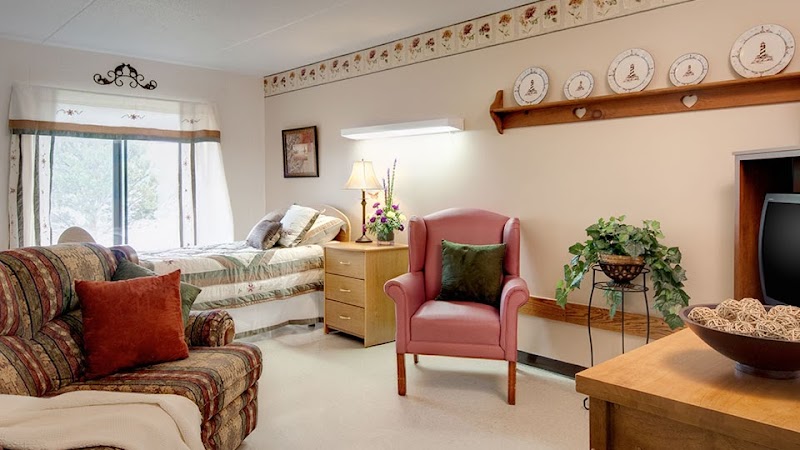
300 West City Park Drive, Munising, MI 49862 (906) 387-2273
For profit - Corporation 90 Beds MEDILODGE Data: November 2025 1 Immediate Jeopardy citation
Trust Grade
0/100
#387 of 422 in MI
Last Inspection: October 2024

Within standard 12-15 month inspection cycle. Federal law requires annual inspections.

Overview

Medilodge of Munising has received a Trust Grade of F, indicating serious concerns regarding its care and overall operation. It ranks #387 out of 422 nursing homes in Michigan, placing it in the bottom half of facilities statewide, although it is the only option in Alger County. The facility is showing signs of improvement, as the number of issues reported decreased from 27 in 2024 to 10 in 2025. Staffing is rated at 3 out of 5 stars, with a turnover rate of 49%, which is similar to the state average, suggesting some stability among staff. However, the facility has faced significant fines totaling $84,659, indicating ongoing compliance issues, and there are troubling incidents reported, including physical abuse of residents and failure to properly manage medications and pressure injuries, leading to serious health complications.

Trust Score
F
0/100
In Michigan
#387/422
Bottom 9%
Safety Record
High Risk
Review needed
Inspections
Getting Better
27 → 10 violations
Staff Stability
⚠ Watch
49% turnover. Above average. Higher turnover means staff may not know residents' routines.
Penalties
✓ Good
$84,659 in fines. Lower than most Michigan facilities. Relatively clean record.
Skilled Nurses
✓ Good
Each resident gets 51 minutes of Registered Nurse (RN) attention daily — more than average for Michigan. RNs are trained to catch health problems early.
Violations
⚠ Watch
64 deficiencies on record. Higher than average. Multiple issues found across inspections.
★☆☆☆☆
1.0
Overall Rating
★★★☆☆
3.0
Staff Levels
★★☆☆☆
2.0
Care Quality
★☆☆☆☆
1.0
Inspection Score
Stable
2024: 27 issues
2025: 10 issues

The Good

  • Full Sprinkler Coverage · Fire safety systems throughout facility
  • No fines on record

Facility shows strength in fire safety.

The Bad

1-Star Overall Rating

Below Michigan average (3.1)

Significant quality concerns identified by CMS

Staff Turnover: 49%

Near Michigan avg (46%)

Higher turnover may affect care consistency

Federal Fines: $84,659

Well above median ($33,413)

Moderate penalties - review what triggered them

Chain: MEDILODGE

Part of a multi-facility chain

Ask about local staffing decisions and management

The Ugly 64 deficiencies on record

1 life-threatening 5 actual harm
Jul 2025 1 deficiency
CONCERN (D) 📢 Someone Reported This

A family member, employee, or ombudsman was alarmed enough to file a formal complaint

Potential for Harm - no one hurt, but risky conditions existed

Accident Prevention (Tag F0689)

Could have caused harm · This affected 1 resident

**NOTE- TERMS IN BRACKETS HAVE BEEN EDITED TO PROTECT CONFIDENTIALITY** This deficiency pertains to MI00153258 Based on observation, interview, and record review the facility failed to use the appropr...

Read full inspector narrative →
**NOTE- TERMS IN BRACKETS HAVE BEEN EDITED TO PROTECT CONFIDENTIALITY** This deficiency pertains to MI00153258 Based on observation, interview, and record review the facility failed to use the appropriately sized sling with the mechanical lift, and provide adequate supervision during a transfer to prevent injury for one Resident (#1) of two residents reviewed for accident/hazards. This deficient practice resulted harm when R1 incurred deep purple bruises on arms and leg, an injured toe, discomfort during transfers and risk of additional injury during transfer. Findings include: Resident #1 (R1) Review of the Minimum Data Set (MDS) assessment for R1, dated 6/22/25, revealed admission to the facility on [DATE], with diagnoses that included the following, in part: Debility, cardiorespiratory conditions, heart failure, peripheral vascular disease (PVD), anxiety, post traumatic stress disorder (PTSD), chronic obstructive pulmonary disease (COPD), and morbid obesity. R1 scored 13 of 15 on the Brief Interview for Mental Status (BIMS) assessment, reflective of intact cognition, and was her own responsible party. R1 was totally dependent upon staff for all transfers. On 7/1/25 at 11:26 a.m., observation and interviews were completed during a transfer of R1 from the bed to an electric wheelchair. Certified Nurse Aide (CNA) F, assisted by CNA G and OT A used a blue sling with green binding surrounding the whole sling attached to a [Name Brand] 450 full mechanical lift. Prior to being transferred via mechanical lift, R1 was observed in bed with frank bleeding coming from the right second toe which was wrapped in what appeared to be Kerlix. Fresh, bright red, blood droplets were visible on the bed linens and inside the Kerlix dressing. When asked how the toe was injured R1 said it happened in the shower yesterday (6/30/25). R1 said she was finished with her shower and a CNA pushed her into the door frame on the way out of the shower door. When asked who the CNA was, R1 said it was CNA F who was present in the room and confirmed she had bumped R1's toe on the way out of the shower while the Resident was in a shower chair. CNA F and CNA G used blue sling (green banded) (presumed to be a large sling) to lift R1 from bed using the [Name Brand] 450 full mechanical lift. R1's abdominal sides were extending out the sides of the sling, and significant pressure was observed on R1's back, and lateral arms and legs. The sling hooks attached to the 450 mechanical lift, were fastened on the hooks farthest from the sling on the bottom, and closest to the sling on the top. When asked if they routinely used the [Name Brand] 450 mechanical lift, CNA F responded affirmatively, and R1 interjected, What? You are supposed to be using the [Name Brand] 600. When the bar comes down and my arms are kind of in front of me it [Name Brand 450] pinches me. When asked what size lift sling was being used, CNA F said it was a large sling. When asked how she knew it was a large sling, she said she didn't know and asked OT A what size the sling was. There was one missing label from the sling, and the other label was illegible. When asked what size sling R1 should be using, all staff present in the room were unsure. The sling appeared too small for R1, as it allowed her abdominal area to extend approximately 6 inches on each side, and the green binding did make contact on her arms and legs on and/or near the deep purple bruises on her arms and legs. CNA G assisted CNA F with the transfer. Review of R1's Care Plans revealed the following, in part: Focus: Resident has an ADL (activities of daily living) self-care performance deficit related to cognitive impairment, obesity, arthritis, cardiac status, and resp (respiratory) status. Revision on: 2/26/24 .Interventions . BATHING: 1 person assist, prefers showers 2x per week and PRN (as needed). Revision on: 1/21/2025 . TRANSFERS: with 2 person assist AND use of mechanical total lift and XXL blue or black sling per Invacare guidelines. Ensure that the sling that is used is full square sling per resident's preference. Revision on: 5/2/25 . Focus: Resident is at risk for abnormal bleeding or hemorrhage related to anticoagulant therapy, aspirin therapy. Date Initiated: 3/14/24 . Interventions: Observe for and report to MD (physician) as needed any signs & symptoms of abnormal bleeding . bruising . Report to Nurse any signs or symptoms of bleeding, such as . bruising, bleeding gums, excessive bleeding when shaving. Revision on: 12/19/24. Review of an Other Skin Injury incident report, dated 6/29/25 at 11:30 a.m., revealed the following Incident Description: Resident stated she wanted me to look at something, she showed me a deep purple large bruise to left inner upper arm, also one to right upper front leg, bruise to thigh area matched up with sling to the lift. Resident stated she believes the arm bruise is also related to the (mechanical lift) sling . Predisposing environmental Factors: Equipment . Predisposing Situation Factors : During Transfer . Resident states she believes bruising may be coming from the sling for the lift when being placed in wheelchair . Review of R1's Progress Notes, revealed the following, in part: 5/1/25 3:08 p.m., .while staff were trying to transfer resident from power chair into bed using the Hoyer lift, they were using the wrong sling with only 3 hooks on it and during transfer, her knee was smashed against the lift handle causing her pain . 5/2/25 1:10 p.m., .Resident expressed concerns about use of incorrect sling used to transfer resident to and from her wheelchair which caused increased pain to legs and side . Informed resident that staff would be educated to use square styled lift slings with resident at this time, Care plan updated to include specific style of sling to use with resident and communication placed at this time . 6/29/25 1:00 p.m., Asked by resident to look at her left upper arm, I noted a deep purple older bruise, no broken skin, no hematoma . she (R1) stated that she things it was either the sling to the mechanical lift or possibly when she went to the emergency room . While doing skin sweep, I also noticed another bruise to right upper thigh, the shape of the bruise matched up with the sling used to lift her . 6/29/25 5:00 p.m., A therapy referral is required for the following reasons .potential sling is causing pinching of skin and bruising . 6/29/25 7:00 p.m., Spoke with [Physician] and update given on new bruises, discussed with him that we thought sling was potential cause . 6/30/25 8:43 a.m., Bruising found to left upper, inner arm and on right side under abdominal skin fold. Resident (R1) stated that it's from the lift sling. 6/30/25 2:52 p.m., New wound orders entered for second toe, right foot. 7/1/25 1:27 p.m., Spoke with on call provider that confirmed he was notified about the injury. Treatment started 6/30/25. Resident noted with skin tear on the right second toe. During an interview on 7/1/25 at 1:05 p.m., RN H said there was no note related to R1's second toe on the right foot and the injury incurred in the shower chair. No Risk Management note was found by RN H at this time. During an interview on 7/1/25 at 1:45 p.m., Physical Therapy Assistant (PTA) J was asked to accompany this Surveyor to the mechanical lift sling storage area. Many of the green bound, blue slings had illegible or missing instructions. No instructions for assessing the correct sling size for residents was present in the storage room. During an interview on 7/1/25 at approximately 1:55 p.m., the Regional Director of Clinical Services K, Nursing Home Administrator (NHA), and Regional Consultant M were asked what mechanical lift and sling size should be used for a full-body lift for R1. Regional staff K and M both agreed an XXL sling with blue or black outer binding should be used with the [Name Brand] 600 mechanical lift. Discussed concern related to the use of the [Name Brand] 450 mechanical lift (that day 7/1/25) with a green bound sling, both Regional staff K and M expressed disbelief of this Surveyor's observations. Surveyor Notes compiled during the course of the survey were reviewed, and correctly identified the green bound sling, and the small [Name Brand] 450 were used for the transfer. Regional Director of Clinical Services K and Regional Consultant M said CNA F had verbally confirmed used of the [Name Brand] 600 and a blue or black bound sling, Both Regional staff K and M left the room to attempt to ascertain what sling was used. Regional staff K and M returned and acknowledged a green bound sling was still present underneath the resident, contrary to the verbal education of CNA F and care plan interventions present for R1's mechanical transfers. When asked for an incident report related to R1's second right toe injury due to staff error, Regional Director of Clinical Services K reviewed R1's Electronic Medical Record (EMR) and said no incident report was found. A progress note was found detailing the injury, without details at 1:27 p.m. today (7/1/25), entered by Registered Nurse (RN) H. RN H was made aware of the incident/injury to R1 on 6/30/25 by this Surveyor on 7/1/25 at 1:05 p.m., prior to her progress note entry. All Regional Staff K, L, and M, and the Interim NHA and new NHA expressed understanding of this Surveyors deficiency concerns related to accidents and hazards related to transfers using an incorrect sling size and mechanical lift. Review of the Safe Lifting and Movement of Residents policy, revised 1/1/2022, revealed the following, in part: A sufficient number of slings, in the sizes required by residents in need, will be available at all times . The transferring needs of residents shall be assessed on an ongoing basis. Resident transferring and lifting needs shall be documented in the care plan. Assessment of the residents' transferring needs shall include: A. Mobility of the resident (degree of dependency) B. Size of the resident C. Weight-bearing ability D. Cognitive status The Quality Assessment and Assurance Committee shall collect and evaluate data related to the frequency and types of injuries that occur during resident lifting and moving . Review of[Brand Name] Slings Optimal fit & Optima comfort brochure, dated 7/2023, revealed the following Selecting the right size information: Hip width and back height measured in the sitting position are the most important factors to select the right sling size .The client's weight needs to be considered mainly for the sling's maximum safe working load. It's inferior to indicate the right sling size . Sling colors on the brochure designated the following sizes: Red/XS, Orange/S, Yellow/M, Blue/L, Black/XL, and White/XXL. No slings bound with a green edge were referenced in this 2023 brochure.
Apr 2025 5 deficiencies
CONCERN (D) 📢 Someone Reported This

A family member, employee, or ombudsman was alarmed enough to file a formal complaint

Potential for Harm - no one hurt, but risky conditions existed

Deficiency F0635 (Tag F0635)

Could have caused harm · This affected 1 resident

**NOTE- TERMS IN BRACKETS HAVE BEEN EDITED TO PROTECT CONFIDENTIALITY** Based on observation, interview, and record review, the facility failed to ensure the receipt and transcription of physician ord...

Read full inspector narrative →
**NOTE- TERMS IN BRACKETS HAVE BEEN EDITED TO PROTECT CONFIDENTIALITY** Based on observation, interview, and record review, the facility failed to ensure the receipt and transcription of physician orders for immediate care upon admission of two Residents (R3 & R11) out of 9 residents reviewed for physician orders. This deficient practice resulted in lack of physician orders for necessary medications and treatments, and the potential for worsening of condition. Findings include: This deficiency pertains to Complaint Intake #MI00151891. Resident R3 Review of R3's Minimum Data Set (MDS) assessment, dated 3/2/25, revealed R3 was admitted to the facility on [DATE] with active diagnoses that included the following, in part: Alzheimer's disease, and visual loss. R3 had severely impaired cognition. During a telephone interview on 4/8/25 at 9:52 a.m., Complainant A reported the facility failed to provide necessary eye drop medications to R3 for approximately two weeks following their admission to the facility on [DATE]. Review of a pre-admission physician progress note for R3, dated 10/17/24, revealed the following Current Medications Taking, in part: Current Medications Taking . Timolol-Dorzolamide-Latanoprost 0.5 - 0.15 - 0.005% solution as directed Ophthalmic. Notes to Pharmacist: LEFT EYE . Active Problem List . Primary open angle glaucoma ([NAME]) of both eyes, mild stage . Visual loss . Clinical Notes: will continue with current meds to nursing home for care . Review of R3's Physician Order Summary, retrieved 4/8/25 at 1:37 p.m.,, revealed the following physician orders, in part: Cosopt Ophthalmic Solution 2-0.5% (Dorzolamide HCL-Timolol Maleate) Instill 1 drop in left eye every morning and at bedtime for comfort related to unspecified visual loss. This verbal physician order was dated 11/11/24 with a Start Date of 11/11/24. Latanoprost Ophthalmic Solution 0.005% (Latanoprost) Instill 1 drop in left eye at bedtime for comfort related to Unspecified Open-angle glaucoma, Stage Unspecified. Order and Start Date both 11/11/24. Both were started 12 days following admission. Review of R3's Progress Notes revealed the following, in part: 11/3/24 - Spoke with residents daughter who asked if [R3] was taking her eye drops, none had been ordered. I looked at home medication and can see she was taking them previously, spoke with [Physician] who ordered artificial tears qid (four times a day) one drop to both eyes daily. Family has asked that we contact eye doctor [Opthalmalogists Name] and get actual dosages and frequency and have it ok'd with [Physician] to start giving her the Timolol-Dorzolamide-Latanoprost. Did notice resident rubbing her eyes several times today. 11/4/24 - This writer called and spoke with [Opthalmologists Office Staff]. The are addressing the request from family for eye drops with him to see if she needs to remain on these. She was previously on timolol-Dorzolamide-0.5-2% 1 drop to left eye twice daily and Latanoprost .0005% 1 drop to left eye at bedtime .Waiting on a call back at this time. 11/4/24 - Pharmacy Medication Review Progress Note . Chart reviewed, recommendations sent to physician. 11/4/24 - This writer received a call back from [Opthalmologists Office Staff} stating that she (R3) should remain on the eye drops indefinitely to help protect the LEFT eye. Timolol-Dorzolamide 0.5-2% 1 drop to left eye twice daily and Latanoprost .0005% 1 drop to left eye at bedtime . 11/11/24 - Eye gtts (drops) as follow, Latanoprost 0.0005%, left eye daily at HS (hour of sleep) and Cosopt opth. solution 2-0.5%left eye BID (twice daily). Family is aware and [Physician] updated via fax. Review of R3's November 2024 Medication Administration Record (MAR), retrieved 4/8/25 at 1:42 p.m., revealed the Latanoprost Ophthalmic Solution 0.0005% and Cosopt Ophthalmic Solution 2-0.5% (Dorzolamide HCL-Timolol Maleate) both had a Start Date of 11/11/24, with no administration of these medications prior to that date. On 4/8/25 at 4:55 p.m., Senior Director of Nursing E was asked to review R3's 12-day delay in receipt of physician orders and administration of necessary eye medications for the Resident. On 4/8/25 at 9:11 a.m., when asked about the delay in the physician order and administration of R3's eye drops, Senior Director of Nursing E stated, I was not here at the time for [R3s'] eyedrops. I don't have a clear answer as to why it was not transcribed initially because it was on her (R3's) admission orders. Senior Director of Nursing E and the Nursing Home Administrator, both present at the interview, confirmed the medications should have been transcribed and available for administration upon admission. Resident R11 Review of R11s' admission Record revealed R11 was admitted to the facility on [DATE] with active diagnoses that included acute and chronic respiratory failure with hypoxia (lack of oxygen), pneumonia, and chronic obstructive pulmonary disease (COPD). R11 was her own responsible party and able to make her own medical decision. R11 used a wheelchair for mobility. On 4/8/25 at 10:15 a.m., R11 was observed sitting at a table in the dining room in their wheelchair playing cribbage with a family member. There was no oxygen tank, or equipment to hold an oxygen tank on R11's wheelchair. Two unidentified male staff members subsequently entered the dining room and looked at the residents wheelchair. One of the unidentified male staff members returned and placed an oxygen tank holder on the back of R11's wheelchair at approximately 11:00 a.m. On 4/8/25 at 11:40 a.m., Occupational Therapist (OT) O, was observed entering the dining room and checked R11s' blood oxygen level with a finger oxygen saturation device. OT O appeared to check R11s' oxygen (O2) saturation level several times. OT O stated, I am going to get the tubing (oxygen tubing to administer oxygen from the oxygen tank now on the back of R11's wheelchair). It (O2 saturation) was 87, and 88. The highest I can get it is 89. R11 was not wearing oxygen during the time they were in the dining room. Review of R11s' Physician Order Summary, retrieved 4/8/25 at 3:22 p.m., revealed a physician order for supplemental oxygen via nasal cannula was not present. No order for oxygen was found in R11's medical record. Review of R11s' Care Plans, retrieved 4/8/25 at 3:21 p.m., revealed the following interventions related to oxygen: Oxygen as ordered. Date Initiated: 3/30/25. Review of R11s' Progress Notes, retrieved 4/8/25 at 3:26 p.m., revealed the following entry, in part: 3/31/2025 04:48 (4:48 a.m.) . Resident was not wearing her oxygen. When I first checked her SpO2 (oxygen saturation) was 76. Oxygen placed at 3L (liters) . During an interview on 4/8/25 at approximately 3:50 p.m., when asked about the physician order for application of supplemental oxygen for R11 OT O said she was not sure if there was a physician order for oxygen for R11. During an interview on 4/8/25 at 4:55 p.m., Senior Director of Nursing E and the NHA were asked to review R11's physician orders for the presence of a physician order for supplemental oxygen. Senior Director of Nursing E was unable to find a physician order for oxygen for R11, but said she would continue to look. During an interview on 4/9/25 at 9:11 a.m., Senior Director of Nursing E, the DON and the NHA were present. All three agreed that there was no physician order for oxygen supplementation for R11 from her admission date of 3/29/25 through 4/8/25. Review of the Physician/Practitioner Orders - Consulting policy, reviewed/revised 3/20/24 revealed the following, in part: The attending physician shall authenticate orders for the care and treatment of assigned residents. 1. Consulting physician/practitioner orders are those orders provided to the facility by a physician/practitioner other than the resident's attending physician or physician/practitioner who is acting on behalf of the attending physician. A consulting physician/practitioner may include, but is not limited to, a resident's: . Ophthalmologist . nurse practitioner, clinical nurse specialist, or physician assistant to any of the above physicians . For consulting physician/practitioner orders received via telephone, the nurse will: a. Document the order on the physician order form, notating the time, date, name and title of the person providing the order, and the signature and title of the person receiving the order. b. Call the attending physician to verify the order. c. Document the verification of the order by entering the time, date, name and title of the physician/practitioner verifying the order, and the signature and title of the person receiving the verification order .d. Follow facility procedures for verbal or telephone orders including: noting the order, submitting to pharmacy, and transcribing to medication or treatment administration record .
CONCERN (D) 📢 Someone Reported This

A family member, employee, or ombudsman was alarmed enough to file a formal complaint

Potential for Harm - no one hurt, but risky conditions existed

ADL Care (Tag F0677)

Could have caused harm · This affected 1 resident

**NOTE- TERMS IN BRACKETS HAVE BEEN EDITED TO PROTECT CONFIDENTIALITY** Based on observation, interview and record review, the facility failed to ensure denture care and timely incontinence care were ...

Read full inspector narrative →
**NOTE- TERMS IN BRACKETS HAVE BEEN EDITED TO PROTECT CONFIDENTIALITY** Based on observation, interview and record review, the facility failed to ensure denture care and timely incontinence care were provided for one Resident (R3) of seven residents reviewed for assistance with Activities of Daily Living (ADLs). This deficient practice resulted in R3's inability to use their dentures, per the care plan, and an extended time in a urine saturated brief. Findings include: This deficiency pertains to Complaint Intake #MI00151891, which alleged inappropriate hygiene/grooming and dental care. Review of R3's Minimum Data Set (MDS) assessment, dated 3/2/25, revealed R3 was admitted to the facility on [DATE] with active diagnoses that included the following, in part: Alzheimer's disease, non-Alzheimer's dementia, depression, visual loss, bilateral hearing loss and need for assistance with personal care. R3 had severely impaired cognition and was dependent upon staff for assistance with eating, wheelchair mobility, and incontinence care. During a telephone interview on 4/8/25 at 9:52 a.m., Complainant A reported staff did not put R3's dentures in her mouth, and noted the dentures were found, by Complainant A, in a pink denture cup on a dry, discolored piece of paper towel with white, fuzzy tendrils that appeared to be white mold covering the dentures. Complainant A stated, [R3] needs to have her teeth in every day. On 4/8/25 at approximately 10:00 a.m., photos of R3's dentures were provided by Complainant A to show the condition of the dentures found in the facility. The photos depicted the condition of the dentures described by Complainant A. On 4/8/25 at 10:15 a.m., R3 was observed sitting in a wheelchair alone at a table. The back of R3's hair appeared uncombed, and she was slumped over to the left, with her head resting on her left shoulder. The television was positioned behind the Resident, and R3's eyes remained closed. On 4/8/25 at 11:01 a.m., an unidentified staff member placed a clothing protector on R3 without speaking to the Resident. R3 continued to sit slouched over to the left in the wheelchair. On 4/8/25 at 12:12 p.m., R3 received her meal tray, and was assisted by staff during dining. On 4/8/25 at 12:40 p.m., R3 was wheeled from the dining room down to the family room by Certified Nurse Aide (CNA) J and placed in front of a television. CNA J did not speak to R3. No other staff were present in the family room. Resident was left sitting slumped over to the left in wheelchair. No incontinence check was performed. On 4/8/25 at 1:13 p.m., R3 was wheeled from the family room to their resident room by CNA G. R3 was transferred via mechanical lift into a recliner. No incontinence checks or change was performed. Observation of R3 by this Surveyor was continual between 10:15 a.m. and 1:15 p.m. On 4/8/25 at 2:28 p.m., R3 was observed sleeping in the recliner with the door open. The room was silent. CNA L provided a chair from the dining room for this Surveyor to sit in a small alcove, approximately 10 feet from R3's door for visual observation of any staff entering or leaving R3's room. No staff were observed to enter or exit R3's room between 2:28 p.m. and 4:00 p.m. On 4/8/25 at 4:00 p.m., CNA G walked past this Surveyor in the hallway. CNA G was asked if R3 had been checked or changed for any incontinence needs. CNA G reported she had checked R3 at 3:45 p.m., and she was dry. When asked when R3 was last changed, CNA G said the Resident had been changed .right before lunch when we got her up . When asked if R3 had remained continent (dry and unsoiled) since 10:00 a.m. this morning, CNA G stated, No, we got her up right before lunch at 11:30 a.m. When informed R3 had been observed in the dining room from 10:15 a.m. until she was positioned in the recliner at 1:15 p.m., CNA G said she had made a mistake and now recalled she had checked R3 for incontinence at 2:45 p.m., not 3:45 p.m. CNA G was asked if we could check R3's incontinence brief and see if the Resident was still dry. On 4/8/25 at 4:05 p.m., CNA G checked R3's incontinence brief and stated, She is wet now. CNA G said staff do not document when they check the resident, only when they are wet and changed. On 4/8/25 at 4:15 p.m. CNA J and CNA G transferred R2 from the recliner to the bed for an incontinence brief change. CNA G touched R3's green sweat pants, turned to touch the seat of the recliner and confirmed that both the residents' pants and recliner were wet with urine. CNA G said sometimes the brief can get twisted, so it leaks. When R3's pants were pulled down the brief was not observed to be twisted, and R3 was incontinent of both urine and feces. On 4/8/25 at approximately 4:30 p.m., CNA G was asked if R3's dentures were in her mouth. CNA G stated. No, they are not. To be honest, when I put them in her mouth they just fall out. CNA G said R3's dentures were in her bedside table top drawer. Neither CNA G or CNA J could locate the Residents' dentures in the resident room. CNA G said she had not seen the dentures since the previous Wednesday (previous week). Review of R3's Care Plans revealed the following, in part: Resident has a dental problem related to no natural teeth. Date Initiated: 11/12/2024 . Interventions: . Encourage resident to wear dentures. Provide assistance as needed. Date Initiated: 11/12/2024. Resident has episodes of bladder and bowel incontinence related to dementia, depression, generalized weakness, impaired mobility. Date Initiated: 11/12/2024. Interventions: Assist resident with toileting needs. Date Initiated: 11/12/204. Check at regular intervals and change as needed. Date Initiated: 11/12/2024. On 4/8/25 at 4:55 p.m., the Nursing Home Administrator (NHA) and Senior Director of Nursing were asked for the location of R3's dentures. Both agreed they would have to ask staff to see where they were located. On 4/9/25 at 7:45 a.m., the NHA reported the dentures for R3 were found in the Staff Development Coordinator's (SDC's) office. When asked why the dentures were in the SDC's office, the NHA said she was unsure. During an interview on 4/9/25 at 9:18 p.m., the Director of Nursing (DON) was asked what the expectation was for timing of resident incontinence checks/changes by staff. The DON said the expectation was that incontinence check/changes would be performed every two hours by facility staff. When asked about the time period of six hours (between 10:15 a.m. and 4:15 p.m.) for R3, the DON said that would be unacceptable. During this interview the Senior DON, DON and NHA all requested to see the photographs provided by Complainant A, of R3's improperly stored and cleaned dentures. Upon review of the denture photos which showed white, fuzzy tendrils, appearing to be white mold on the teeth, the DON stated, From what I saw you would not want to put them in your mouth. The Senior DON, DON, and NHA all expressed understanding of the deficiency concerns related to ADL care for R3. Review of the Activities of Daily Living (ADLs) policy, reviewed 12/28/2023, revealed the following, in part: ,A resident who is unable to carry out activities of daily living receives the necessary services to maintain good nutrition, grooming, and personal and oral hygiene . The facility maintains individual objectives of the care plan through periodic review and evaluation.
CONCERN (D) 📢 Someone Reported This

A family member, employee, or ombudsman was alarmed enough to file a formal complaint

Potential for Harm - no one hurt, but risky conditions existed

Deficiency F0679 (Tag F0679)

Could have caused harm · This affected 1 resident

**NOTE- TERMS IN BRACKETS HAVE BEEN EDITED TO PROTECT CONFIDENTIALITY** Based on observation, interview and record review, the facility failed to provide meaningful activities to promote psychosocial ...

Read full inspector narrative →
**NOTE- TERMS IN BRACKETS HAVE BEEN EDITED TO PROTECT CONFIDENTIALITY** Based on observation, interview and record review, the facility failed to provide meaningful activities to promote psychosocial well-being for 1 resident (R3) of 4 residents reviewed for activities. This deficient practice resulted in social isolation for R3 who had both visual and bilateral hearing loss. Findings include: This deficiency pertains to Complaint Intake #MI00151891. Review of R3's Minimum Data Set (MDS) assessment, dated 3/2/25, revealed R3 was admitted to the facility on [DATE] with active diagnoses that included the following, in part: Alzheimer's disease, non-Alzheimer's dementia, depression, visual loss, and bilateral hearing loss. R3 had severely impaired cognition and was dependent upon staff for assistance with eating, wheelchair mobility, and incontinence care. During a telephone interview on 4/8/25 at 9:52 a.m., Complainant A expressed concern that R3 was left without human interaction for long periods of time and with the Resident's blindness and hearing loss she was left to sit without any type of engagement. On 4/8/25 at 10:15 a.m., R3 was observed sitting in a wheelchair alone at a table. The back of R3's hair appeared uncombed, and she was slumped over to the left, with her head resting on her left shoulder. The television was positioned behind the Resident. On 4/8/25 at 11:01 a.m., an unidentified staff member placed a clothing protector on R3 without speaking to the Resident. R3 continued to sit slouched over to the left in the wheelchair. On 4/8/25 at 12:40 p.m., R3 was wheeled from the dining room down to the family room by Certified Nurse Aide (CNA) J and placed in front of a television. CNA J did not speak to R3. No other staff were present in the family room. Resident was left sitting slumped over to the left in wheelchair. On 4/8/25 at 1:13 p.m., R3 was wheeled from the family room to their resident room by CNA G. R3 was transferred via mechanical lift into a recliner. No television or music was playing. On 4/8/25 at 2:28 p.m., R3 was observed to be sleeping in the recliner with the door open. The room was silent. Review of R3's Care Plans revealed the following interventions: Provide escort to/from activity programs as needed. Provide periodic friendly visits for increased socialization. Provide resident with activity calendar. Resident's preferred activities are (music). All Interventions were Initiated on 12/5/24. During an interview on 4/9/25 at 8:20 a.m., Activity Director P was asked what activities R3 like to participate in. Activity Director P said R3 enjoyed music and talking. Activity Director P printed out documentation of activities that R3 had participated in for the last 16 days. When asked about yesterday's activities (4/8/25) Activity Director P said R3 was documented as watching television in the dining room prior to lunch. This Surveyor informed Activity Director P R3 was positioned in the dining room with her back to the television for two hours prior to lunch, and questioned if it would be difficult to watch television if you were blind as R3 was. Documentation on the 16-day report included many activities listed with the number 8. When asked what the number 8 for activities meant, Activity Director P stated, other. The Director was unable to explain what activity was described by other or who had performed the activity with the resident. Activity Director P stated, I totally understand your concern with this Resident (R3). Activity Director P said she would be talking to her staff to ensure they were actively engaging R3, and documenting interactions and activities performed. Review of the Activities policy, reviewed 10/30/2023, revealed the following, in part: It is the policy of this facility to provide an ongoing program to support residents in their choice of activities based on their comprehensive assessment, care plan, and preferences of each resident. Facility sponsored group and individual activities, and independent activities will be designed to meet the interests of and support the physical, mental, and psychosocial well-being of each resident, as well as encourage both independence and interaction within the community.
CONCERN (D) 📢 Someone Reported This

A family member, employee, or ombudsman was alarmed enough to file a formal complaint

Potential for Harm - no one hurt, but risky conditions existed

Quality of Care (Tag F0684)

Could have caused harm · This affected 1 resident

**NOTE- TERMS IN BRACKETS HAVE BEEN EDITED TO PROTECT CONFIDENTIALITY** Based on interview and record review, the facility failed to follow physician orders for wound care for two Residents #6 and #7 ...

Read full inspector narrative →
**NOTE- TERMS IN BRACKETS HAVE BEEN EDITED TO PROTECT CONFIDENTIALITY** Based on interview and record review, the facility failed to follow physician orders for wound care for two Residents #6 and #7 of eight residents reviewed for physician orders. This deficient practice resulted in the potential for infection, possible harm to intact skin, and a delay in healing. Findings include: Resident #6 (R6) Review of the Minimum Data Set (MDS) assessment dated [DATE], revealed admission to the facility on 7/15/22, with active diagnoses that included peripheral vascular disease (a circulatory condition in which narrowed blood vessels reduce blood flow to the arms or legs) or peripheral arterial disease (a circulatory condition in which narrowed arteries reduce blood flow to the arms or legs) and heart failure. Further review of the MDS Section M revealed R6 had a venous/arterial ulcer (leg ulcer caused by impaired blood circulation). A review of Electronic Medical Record (EMR) on 4/8/25 revealed that a recommendation from a wound clinic on 9/24/24 read in part . apply primary dressing to wound .change dressing every other day. Review of EMR on 4/8/25 revealed a doctors order on 2/7/25 that read Treatment: Right Lower Extremity (RLE), if needed soak with NS (normal saline) to loosen, remove from below the knee and continue down. Gently wash with wound cleaner, pat dry. Apply shaving cream to BLE (bilateral lower extremities), soak for five minutes. Use warm H2O (water) and wash cloths to remove shaving cream. Apply Triamcinolone 1% ointment to wound bed, cover with xeroform and wrap with kerlix, secure with tape. Cover from toes to popliteal with tubigrip. and as needed for lost/soiled dressing and in the afternoon every other day for stasis ulcer. During an interview on 4/8/25 at 4:16 p.m., Licensed Practical Nurse (LPN)/Unit Manager M reported charting for wound care ordered by the physician would be in the Treatment Administration Record (TAR) in the EMR. A review of the TAR for R6 revealed that in February 2025, March 2025 and April 2025 the physician ordered treatment had not been completed on the following dates: 2/14/25, 2/20/25, 3/6/25, 3/12/25, 3/16/25 and 4/3/25. Resident #7 (R7) Review of the MDS assessment dated [DATE], revealed admission to the facility on 4/18/24, with active diagnoses that included: cancer, cirrhosis, and neurogenic bladder. Further review of Section M of the MDS revealed R7 has one stage 3 pressure ulcer (a deep, open wound that penetrates through the dermis and into the subcutaneous tissue, exposing fat), two unstageable pressure ulcers (a pressure injury where the full extent of the damage and depth is obscured), and an open lesion on a foot. Review of the TAR in the EMR on 4/8/25 revealed a doctors order for Santyl ointment 250 unit/gm (gram) Apply to sacral, left gluteal topically every day shift related to pressure ulcer of the sacral region, Stage 3 start date 3/12/25. A further review of doctors orders in the TAR revealed a treatment order: pressure, sacrum and inferior grouping. Wash with wound cleanser, pat dry. Skin prep peri-wound. Apply nickel thickness santyl over wound bed, cover with dampened sterile gauze, then dry sterile gauze and a border foam dressing everyday and PRN (when necessary) when soiled or removed. Everyday shift for skin impairment. The treatment had a start date of 3/12/25. A review of the TAR for R7 revealed in March of 2025 the physician ordered treatment had not been completed on 3/23/25 and 3/27/25. During an interview on 4/9/24 at 7:44 a.m., LPN/Unit Manager/Wound Care Nurse N acknowledged the physician ordered wound care had not been completed for R6 and R7 according to the TAR. During an interview on 4/9/25 at 9:05 a.m., the Director of Nursing (DON) acknowledged the physician ordered wound care was not completed for R6 and R7 according to the TAR. Review of facility policy titled Wound Treatment Management last reviewed/revised on 10/26/23 read in part, .To promote wound healing of various types of wounds, it is the policy of this facility to provide evidence based treatments in accordance with current standards of practice an physician orders .wound treatments will be provided in accordance with physician orders, including the cleaning method, type of dressing, and frequency of dressing change.
CONCERN (D) 📢 Someone Reported This

A family member, employee, or ombudsman was alarmed enough to file a formal complaint

Potential for Harm - no one hurt, but risky conditions existed

Deficiency F0687 (Tag F0687)

Could have caused harm · This affected 1 resident

R3 On 4/8/25 at 1:13 p.m., R3s' toenails were observed in the presence of CNA G. Both big toenails were observed to be very thick, yellowed, and curve/curled. CNA G agreed that it appeared the big toe...

Read full inspector narrative →
R3 On 4/8/25 at 1:13 p.m., R3s' toenails were observed in the presence of CNA G. Both big toenails were observed to be very thick, yellowed, and curve/curled. CNA G agreed that it appeared the big toenails had not been cut for a significant amount of time. CNA G agreed she would not be able to cut R3s' big toenails. Review of the Nail Care policy, reviewed/revised 8/20/2024, revealed the following, in part: 1. Assessments of resident nails will be conducted on admission and readmission to determine the resident's nail condition, needs, and preferences for nail care, if possible. a. Report unusual or abnormal conditions of the nails to the physician and the responsible party (e.g., curling, color changes, separation from the nailbed, redness, bleeding, pain, odor, infection, etc), . 4. Routine nail care, to include trimming and filing, will be provided on a regular basis and as need arises. 5. Principles of nail care: a. Nails should be kept smooth to avoid skin injury. b. Only podiatrists, physician/practitioners, or licensed nurse shall trim toenails for residents with diabetes or circulation problems . Based on observation, interview, and record review the facility failed to provide nail care including toenail trimming for four Residents ( #3, #8, #9 and one Confidential Resident [CR]) of four residents reviewed for nail care. This deficient practice resulted in unnecessary pain, untrimmed toenails and the potential for injury. Findings include: Confidential Resident Review of CR diagnoses included: Peripheral vascular disease, or peripheral arterial disease. R6 scored a 15 of 15 on the Brief Interview for Mental Status (BIMS) assessment reflective of intact cognition. During an interview on 4/8/25 at 9:55 a.m., CR reported the staff had trimmed her toenails about two weeks ago, but it had been almost a year since the last time her toenails had been trimmed. The nails were curved around the end of my toes, and I couldn't wear shoes anymore .when they finally cut them, it hurt my toes .when my socks even touched the end of my toes, I thought I would go right thru the ceiling . it hurt me. Resident #8 (R8) Review of R8's diagnoses included: diabetes mellitus, hypertension, and heart failure. R8 scored a 13 of 15 on the BIMS assessment reflective of intact cognition. During an observation on 4/8/24 at 11:33 a.m., R8 was sitting in the wheelchair in her room without socks or shoes on her feet. This surveyor observed that she had thick, long, and jagged toenails. When queried about her toenails being clipped, R8 reported she could not recall the last time the staff trimmed her toenails, but the staff does not cut them on the days she gets a shower. Resident #9 (R9) Review of R9's diagnoses included diabetes mellitus, paraplegia, and peripheral vascular disease or peripheral arterial disease. R9 scored a 15 of 15 on the BIMS assessment reflective of intact cognition. During an observation on 4/8/25 at 11:56 a.m., R9 was lying in her bed with her feet uncovered. This surveyor noted her toenails to be long and curled upwards. R9 was queried about when her toenails were last cut and R9 reported that her toenails do not usually get cut. During an interview on 4/8/25 at approximately 4:30 p.m. Social Services Designee F stated, if residents don't have citizens insurance, then they don't get seen for podiatry services. When asked about which residents receive Mobile Medical Podiatry, Social Services Designee F read off a list of residents who receive mobile medical podiatry. CR, R3, R8, and R9 were not on the list for Mobile Medical Podiatry. During an interview on 4/9/25 at 9:07 a.m., the Director of Nursing (DON) reported, resident's nails are supposed to be cut on the days a resident receives a shower.
Jan 2025 4 deficiencies
CONCERN (D) 📢 Someone Reported This

A family member, employee, or ombudsman was alarmed enough to file a formal complaint

Potential for Harm - no one hurt, but risky conditions existed

Deficiency F0624 (Tag F0624)

Could have caused harm · This affected 1 resident

**NOTE- TERMS IN BRACKETS HAVE BEEN EDITED TO PROTECT CONFIDENTIALITY** This citation pertains to Intake #MI00149352. Based on interview and record review the facility failed to implement and follow t...

Read full inspector narrative →
**NOTE- TERMS IN BRACKETS HAVE BEEN EDITED TO PROTECT CONFIDENTIALITY** This citation pertains to Intake #MI00149352. Based on interview and record review the facility failed to implement and follow their policy to ensure a safe and orderly discharge was provided for 1 Resident (#2) of 2 residents reviewed for discharge/transfers. This deficient practice resulted in an involuntary discharged into the community without sufficient preparation and orientation with the potential to disrupt the necessary care and services and the potential for homelessness. Findings include: Resident #2 (R2) Review of an admission Record revealed R2 was originally admitted to the facility on [DATE] with pertinent diagnoses which included: type 2 diabetes. Review of a Minimum Data Set (MDS) assessment for R2 with a reference date of 12/17/24 revealed a Brief Interview for Mental Status (BIMS) score of 15/15 which indicated R2 was cognitively intact. Review of a State Agency-Complaint Intake dated 1/7/2025 from Confidential Informant (CI) U revealed: CI U stated R2 left the faciity on [DATE] to travel to Texas to visit family for a vacation and confirmed with the Business Office Manager (BOM) there would be no issue with returning to the facility because R2 was self-pay. CI U stated acting Nursing Home Administrator (NHA) Regional Director of Operations (RDO) [Staff] T called R2 and informed him he would not be able to return to the facility due to his bill and was officially discharged on 12/17/24 when R2 left for Texas. CI U stated he was discharged without any discharge paperwork or medications. CI U stated it took a week of calling the facility before R2 was able to contact a nurse to get his medications called into a local pharmacy, and indicated R2 was beginning to feel ill without having his medications for a week. The Electronic Medical Record (EMR) revealed the facility initiated a Notice of Involuntary discharge which was served to R2 on 10/15/24, indicating there was no longer a need for services provided by the facility and for non-payment of services. A progress noted date 10/15/24 indicated this notice was provide to the resident, physician, and state Ombudsman. Review of the EMR revealed multiple progress notes indicating R2 had problems with cellulitis of the lower extremities which required multiple rounds of antibiotics and wound care. Email correspondence between the Previous NHA (S), Staff T and the facility's legal department dated 11/15/24 revealed NHA S communicated the facility had lost the Involuntary Discharge appeal. The facility legal department then responded to NHA S on 11/18/24, that the facility had failed to provide sufficient evidence to support the Involuntary Discharge and advised to start the process over. The EMR for R2 revealed a progress note dated 12/14/24 indicating the physician approved the resident to be on a leave of absence on vacation to (Out of State) from 12/17/24-12/30/24 and medications were called into his pharmacy so R2 could take his medications with him. An EMR progress note written by Staff T, dated 12/27/24, subsequently indicated R2 was discharged from the facility because he was private pay and did not wish to hold a bed at the facility while he was on vacation. The facility indicated R2 did not wish to consider it a therapeutic leave but rather a discharge. According to this note R2 was educated, to come back to the facility there would have to be readmit orders obtained from a physician. However, Staff T wrote this note 10 days after R2 had left the facility indicating these actions were not completed prior to the LOA. Staff T was unable to provide documentation to show R2 was educated and provided with appropriate follow-up and discharge instructions to ensure continuity of care was provided. On 1/30/25 at 1:15 PM., during an interview, CI V reported R2 left for a pre-approved (LOA) vacation to Texas on 12/17/24 and indicated while R2 was gone, he was somehow discharged . CI V reported R2 had planned on returning at the end of the month (December 2024), and he had been planning on looking at apartments and/or other living arrangements after his return. CI V reported R2 was very independent, but not quite ready or educated on caring for his catheter and was not set up to be discharged while he was on vacation. CI V reported his room, and belongings were as they were when he left, so there was no indication he wasn't coming back. On 1/30/25 at 3:15 PM., during an interview, Staff T reported R2 had been discussing a discharging from the facility with staff in the months leading up to 12/17/25 when R2 went to see his sister in Texas. Staff T reported the facility did not have R2 listed on an LOA. However, the EMR reflected a doctor approved LOA from 12/17/24-12/30/24. Staff T stated there was no process set up for the facility to allow residents to leave for that length of time. Staff T reported she had called R2 (while he was in Texas) and told him he would not be able to come back to the facility without being considered a new admission to the facility and he would need to have doctors' orders to readmit. Staff T stated he was technically discharged to his sisters, and that was considered a Safe discharge. However, the facility could not provide any discharge instructions received and signed by R2. Staff T reported R2 came back from Texas and called before he returned to the facility asking about the process for readmitting to the facility and Staff T reported she told R2 he needed to see his physician. Staff T stated R2 came to the facility to collect his belongings and confirmed R2 was not able to come into the facility once he was back. Staff T stated she believed R2 ended up staying at a hotel for a few nights. Staff T reported a few days later a local hospital Social Worker called to inform Staff T, R2 was homeless. Staff T stated they didn't see it as a planned discharge and stated it was more of an AMA (Against Medical Advice) situation. However, Staff T was unable to provide any AMA paperwork or notes reflecting this was an AMA discharge. Staff T stated it was an odd scenario and unfortunately, there was a lot of change over with the management and indicated the former DON and NHA failed to document properly. Staff T acknowledged previous management had not done an Involuntary Discharge before, so they failed to follow up with some of the requirements. Staff T stated the facility attorney suggested they start over, then the whole management change happened, then R2 went to Texas. Staff T acknowledged the Involuntary Discharge process was never restarted. Staff T confirmed the hospital had to help him with getting an apartment close to the facility. Staff T reported R2 had his own funds; he just chose to spend it differently rather than to pay the facility. Staff T reported R2 had a total unpaid amount of $100,000 write off for the facility. Staff T acknowledged previous management should have started the involuntary discharge planning long before it got that bad. Review of a facility Policy titled Involuntary Transfer and Discharge with a revision date of 1/1/2022 revealed: Policy: The purpose of this policy is to establish uniform guidelines relating to the involuntary transfer/discharge process, to ensure the resident's rights are properly observed and that proper notifications to all interested parties occurs . 1. Facility initiated transfers and discharges are permitted when : . b. The transfer or discharge is appropriate because the Resident's health has improved sufficiently so the resident no longer needs the services provided by the facility; . e. The resident has failed, after reasonable and appropriate notice to pay for (services); . 2. Before an involuntary discharge or transfer notice may be issued, the facility will verify that the reason for the discharge or transfer is one of those listed above, and that there is appropriate and adequate documentation in the resident file supporting the transfer or discharge. As appropriate this shall include documentation from the physician or medical specialist supporting the need for transfer or discharge. 5. The notice shall be in writing that the resident/resident representative can understand, and shall include: a. An explanation of the reason for the transfer or discharge b. Whether the resident is expected to return to the facility c. The transfer or discharge location d. The expected transfer or discharge date ; and e. An explanation of the resident's rights of appeal. 6. Unless it is an emergency situation, the resident shall be provided a minimum of 30 days' notice before the transfer or discharge shall occur. 7. The resident/resident representative shall be provided an opportunity to view the discharge location and may refuse the location, provided the reason for doing so is reasonable. 8. While the facility may issue an involuntary discharge notice for non-payment, the facility shall not act on the discharge for any resident who has filed a Medicaid application and awaiting a decision. 9. If the resident/resident representative has timely and properly filed an appeal, the facility shall not discharge the resident and shall contact the Legal Department for further guidance. 12. The facility will work with home health, hospice and other support agencies as needed to coordinate a safe discharge
CONCERN (D) 📢 Someone Reported This

A family member, employee, or ombudsman was alarmed enough to file a formal complaint

Potential for Harm - no one hurt, but risky conditions existed

Deficiency F0813 (Tag F0813)

Could have caused harm · This affected 1 resident

**NOTE- TERMS IN BRACKETS HAVE BEEN EDITED TO PROTECT CONFIDENTIALITY** This citation pertains to Intake #MI00149718 Based on observation, interview and record review, the facility failed to remove ex...

Read full inspector narrative →
**NOTE- TERMS IN BRACKETS HAVE BEEN EDITED TO PROTECT CONFIDENTIALITY** This citation pertains to Intake #MI00149718 Based on observation, interview and record review, the facility failed to remove expired foods from the mini-fridge for one Resident (#1) of one resident reviewed for storage of foods brought to residents by family and other visitors. This deficient practice resulted in the potential for expired food to be consumed and increasing the risk of food borne illness. Findings include: Resident #1 (R1) Review of an admission Record revealed R1, was originally admitted to the facility on [DATE] with pertinent diagnoses which included: type 2 diabetes. Review of a Minimum Data Set (MDS) assessment for R1 with a reference date of 12/19/24 revealed a Brief Interview for Mental Status (BIMS) score of 00/15 which indicated R1 was severely cognitively impaired. On 1/29/25 at 12:50 PM., a personal mini refrigerator in R1's room was observed containing numerous food items which were expired including: (Brand Name) yogurt 4 pack expired 9/4/24, a block of [NAME] jack cheese expired 2/3/24, a jar of mustard expired 12/5/24, a (Brand Name) cream raspberry yogurt expired 10/17/24, a container of spreadable butter expired on 6/28/24, a container of (Brand Name) spreadable butter expired on 3/9/24. There was also a baggie observed with a package of (Brand Name) smoked soft spreadable sausage marked with an open date of 12/11/24. There were pieces of meat outside of the original package which were molded inside the baggie. The open end of the original package with exposed meat product had green mold observed on it. There was also a single yogurt off brand raspberry with a best by 9/26/24, and fruit cups with peaches or oranges with a white substance on the bottom use by date of 7/25/24. There was no noted temperature log clipped on or near R1's mini-fridge. On 1/29/25 at 1:00 PM., a shelf was observed next to R1's mini fridge containing multiple snacks, including: 2 pieces of white bread in a bread bag with an expiration date of 1/24/25, 2 pieces of bread noted in a clear plastic garbage bag (noted to be the same garbage bag used by the facility for small garbage cans) the bread appeared to be white bread and was not labeled or dated. On the shelf were the following: a bag of plain ruffles chips with an expired date of 11/21/23, a bag of fritos expired on 6/18/24, a full bag of cheetos expired on 12/20/24, a small can of coffee expired on 7/18/24, a full unopened bag of pork rinds expired 11/27/24. The bedside table was observed heavily soiled with numerous open protein shakes with no open date observed on them and straws remaining in them. There was a quarter (¼) stick of butter, discolored, and nearly melted flat in its wrapper open to air with no date sitting on the visibly soiled nightstand. The nightstand drawer, which was slightly open, contained the following: Cherry (Brand Name) gelatin individual packs which had expired on 1/8/25, a 25-ounce bottle of (Brand Name) drink which expired on 10/25/24, and 9 small cans (Brand Name) juices which expired on 11/17/24. In an observation/interview on 1/29/25 at 1:10 PM., Licensed Practical Nurse (LPN) C was observed entering the room of R1 and removed her lunch tray off the bedside table. LPN C reported she was unsure who kept track of R1's snacks and mini fridge food items, but thought it might be the kitchen staff or housekeeping staff. In an interview on 1/29/25 at 1:20 PM., [NAME] E reported she was unsure who kept track of temperatures, refrigerated food items and snacks brought in by family or visitors of residents. [NAME] E reported she thinks the floor staff (Certified Nurse Aides CNA) or Housekeepers (Hsk) were responsible because typically dietary staff do not enter resident rooms. In an interview on 1/29/25 at 1:30 PM., Hsk F reported she was unsure who cleans and keeps track of residents who have mini fridges in their rooms and/or a lot of food items/snacks from outside sources. Hsk F reported she has not done this, or to her knowledge was it a housekeeping task. In an interview on 1/29/25 at 1:35 PM., R1 reported she was unsure who kept track of her foods in her room and refrigerator. R1 reported her daughter sends her snacks and she gets them in the mail. R1 reported she does not know what is expired in her room. In an interview on 1/29/25 at 1:45 PM., CNA H reported housekeeping staff was suppose to keep track of the residents refrigerators and food items brought in by family, visitors or when residents get food on their own. CNA H reported there were not many residents who have their own mini fridges in their rooms, but she has never been told it was part of her daily task. CNA H reported if she were to notice something expired she would let the resident know and discard it. CNA H reported R1 has a lot of food items in her room, and gets a lot of snacks in packages in the mail. CNA H reported R1 was particular about her food, and not sure if she would be able to notice if something was expired by the date on the package, but she (CNA H) thinks R1 would be able to tell if something was expired by the taste or appearance of the food. In an interview on 1/29/25 at 1:50 PM., Hsk Manager G reported the housekeeping department was not responsible for the mini fridges in resident rooms. Hsk Manager G reported he was unsure how many residents have mini fridges in their rooms, and/or how often they are checked for cleanliness and expired food items. Hsk Manager G reported he believes the CNAs keep track, but he was unsure. On 1/30/25 at 10:00 AM., R1's mini refrigerator in the room was observed with the same food items still inside as previously observed on 1/29/25 with the exception of the (Brand Name) spreadable sausage, which was no longer there. The shelf next to the mini fridge was noted with the same expired items as previously observed on 1/29/25. The bedside table remained heavily soiled with numerous open protein shakes with no open date, with straws in them. The same quarter (¼) stick of discolored butter, nearly melted flat in its original wrapper was open to air with no date, sitting on the visibly soiled nightstand. The nightstand drawer contained the same expired food items as observed on 1/29/25. Review of a facility Policy titled Resident Refrigerators with a revision date of 1/1/22 revealed: Policy: This facility does not provide a refrigerator in a resident's room. However, it is the policy of this facility to ensure safe and sanitary use of any resident-owned refrigerators when approved by the administrator for use in the facility. Policy Explanation and Compliance Guidelines: 1. Dormitory-sized refrigerators are allowed when approved by the administrator prior to admission in a resident's room under the following conditions: a. The refrigerator is inspected by maintenance personnel and deemed safe prior to use and upon routine inspections. b. The refrigerator maintains proper temperatures. c. The electrical cord is without damage and the grounding prong is intact. d. Sufficient space exists in the resident's room to accommodate the refrigerator without requiring the use of extension cord or multi-plug adapter. e. The resident complies with the facility's policy for use of the refrigerator. 2. Housekeeping staff shall record refrigerator temperatures daily on a temperature log attached to the refrigerator. a. A thermometer shall remain in the refrigerator. b. Temperatures will be at or below 41? F, and freezers will be cold enough to keep foods frozen solid to the touch (or in accordance with state regulations).c. If temperatures are out of range, maintenance staff shall be notified. All foods that require refrigeration will be discarded immediately, and remedies will be put into place. d. If problems persist with maintaining proper temperatures, the refrigerator shall be removed from use and the resident/family notified. 3. Housekeeping staff (or department assigned) shall clean the refrigerator daily and discard any foods that are out of compliance. Nursing staff shall clean up spills as needed or refer to housekeeping staff
CONCERN (E) 📢 Someone Reported This

A family member, employee, or ombudsman was alarmed enough to file a formal complaint

Potential for Harm - no one hurt, but risky conditions existed

Deficiency F0761 (Tag F0761)

Could have caused harm · This affected multiple residents

**NOTE- TERMS IN BRACKETS HAVE BEEN EDITED TO PROTECT CONFIDENTIALITY** Based on observation, interview and record review, the facility failed to: 1. Securely store an insulin pen following use for 1 ...

Read full inspector narrative →
**NOTE- TERMS IN BRACKETS HAVE BEEN EDITED TO PROTECT CONFIDENTIALITY** Based on observation, interview and record review, the facility failed to: 1. Securely store an insulin pen following use for 1 Resident ( #1), and 2. Secure 1 of 2 treatment carts reviewed for medication storage This deficient practice resulted in the potential misuse of resident medications and/or treatment supplies. Findings include: Resident #1 (R1) Review of an admission Record revealed R1, was originally admitted to the facility on [DATE] with pertinent diagnoses including: type 2 diabetes. Review of the Minimum Data Set (MDS) assessment for R1 with a reference date of 12/19/24 revealed a Brief Interview for Mental Status (BIMS) score of 00/15 which indicated R1 was severely cognitively impaired. On 1/29/25 at 12:50 PM., a pre-filled Lantus SoloStar Subcutaneous injectable pen with a marker date of 1/7/25, was observed laying on the bedside table of R1. The injectable pen had R1's name on it and approximately 150 units of insulin was observed remaining. Review of R1's Physicians Order dated 9/26/24 revealed: . Lantus SoloStar Subcutaneous Solution Pen-injector 100 UNIT/ML (Insulin Glargine) Inject 8 unit subcutaneously in the morning related to TYPE 2 DIABETES MELLITUS . On 1/29/25 at 1:00 PM., Licensed Practical Nurse (LPN) C was observed entering the room to check on R1 and removed her lunch tray off the bedside table. LPN C failed to notice or pick-up the insulin pen laying on the bedside table. In an interview on 1/29/25 at 1:10 PM., LPN C reported the insulin pen on R1's bedside table was most likely left there from earlier in the morning during medication pass. LPN C stated she did not recall leaving the medication there, and acknowledged no medications should ever be left on any of the residents bedside tables. On 1/30/25 at 9:50 AM., a treatment cart near the nurse's station on the end of the 200 hall near room [ROOM NUMBER] was observed unlocked. Numerous prescription powders and creams for individual residents were observed in the cart. Each drawer was completely accessible which contained different types of medical supplies, including wound supplies such as tapes, gauzes, prescription creams, prescription powders, individual normal saline, and band-aids. In the 2nd drawer down were prescription creams and powders including. Mupirocin 2%-for cellulitis, Imiquimod cream 5% for neoplasm of vulva, Triamcinolone 0.1% cream for redness itching, Diclofenac sodium 1% for pain, Clotrimazole 1 % cream, and Triple Antibiotic Cream, Muscle Rub. In an interview on 1/30/25 at 9:55 AM., LPN K reported the treatment and medication carts should always be locked when a nurse leaves them unattended. LPN K reported she was unsure who used the treatment cart on the 200 hall last. Review of a facility Policy titled Medication Storage with a revision date of 1/30/24 revealed: Policy: It is the policy of this facility to ensure all medications housed on our premises will be stored according to the manufacturer's recommendations and sufficient to ensure proper sanitation, temperature, light, ventilation, moisture control, segregation, and security. Policy Explanation and Compliance Guidelines 1. General Guidelines: a. All drugs and biologicals will be stored in locked compartments (i.e., medication carts, cabinets, drawers, refrigerators, medication rooms) under proper temperature controls. b. Only authorized personnel will have access to the keys to locked compartments c. During a medication pass, medications must be under the direct observation of the person administering medications or locked in the medication storage area/cart .
CONCERN (E) 📢 Someone Reported This

A family member, employee, or ombudsman was alarmed enough to file a formal complaint

Potential for Harm - no one hurt, but risky conditions existed

Safe Environment (Tag F0921)

Could have caused harm · This affected multiple residents

**NOTE- TERMS IN BRACKETS HAVE BEEN EDITED TO PROTECT CONFIDENTIALITY** This citation pertains to Intake #MI00149352. Based on observation, interview, and record review the facility failed to maintain...

Read full inspector narrative →
**NOTE- TERMS IN BRACKETS HAVE BEEN EDITED TO PROTECT CONFIDENTIALITY** This citation pertains to Intake #MI00149352. Based on observation, interview, and record review the facility failed to maintain equipment in good working order and failed to clean and sanitize resident equipment, resulting in an increased potential for spread of infections for residents utilizing equipment. Findings include: On 1/29/25 at 11:00 AM., 4 resident wheelchairs were observed in the bay side day room . All 4 wheelchairs were noted to be heavily soiled on the seat, arms, legs and overall components of the wheelchair. 1 motorized wheelchair was observed heavily soiled with food crumbs, dried spillage, and the seat cushion was noted to have holes in it. On 1/29/25 at 11:10 AM., a hoyer lift was observed outside of room [ROOM NUMBER]. The bag holding the sanitizing wipes was observed heavily soiled with dried crusted substances. The legs of the mechanical lift, and lift in general was observed with a heavy accumulation of dust and debris on it. In an interview on 1/29/25 at 1:45 PM., CNA H reported CNA staff and nurses are suppose to clean and sanitize resident equipment after each use. CNA H reported 3rd shift is responsible for cleaning and sanitizing wheelchairs. On 1/30/25 at 10:53 AM., a hoyer lift was observed on the 300 unit parked in an alcove. The lift was observed soiled on the blue cushion padding with a dried crusted substance. The base of the lift, legs and remote were noted to be visibly soiled with dirt and grime. On 1/30/25 at 11:00 AM., the bay side day room was observed with 4 resident wheelchairs. All 4 wheelchairs were noted to be heavily soiled on the seat, arms, legs and overall components of the wheelchair. 1 motorized wheelchair was noted to be heavily soiled with food crumbs, dried spillage, the seat cushion was noted to have holes in it. On 1/30/25 at 11:05 AM., a resident wheelchair was observed in the hallway, heavily soiled on the seat. The left arm rest had medical tape around the end of it where it was noted to be torn. The medical tape was clear and covering what appeared to be white gauze. The tape and gauze were both noted to be soiled, tattered and worn in appearance. On 1/30/25 at 11:18 AM., a hoyer lift was observed outside of room [ROOM NUMBER]. The bag holding the sanitizing wipes was observed heavily soiled with dried crusted substances. The legs, and lift in general was noted to have a heavy accumulation of dust and debris on it. On 1/30/25 at 11:25 AM., a hoyer lift was observed outside of room [ROOM NUMBER]. There was a blue pad on the lift noted to be soiled. The bag holding the sanitizing wipes was soiled with dried crusted substances. The base, legs and lift itself was noted to be visibly soiled. A vital sign machine was observed next to room [ROOM NUMBER] and the base of the machine was observed soiled with dust and debris. The finger probe for the pulse oximetry (measures blood oxygen in the body) was noted to be soiled on the surface that comes into contact with residents. There was also an individual thermometer observed soiled with grime and felt sticky when picked up. On 1/30/25 at 11:44 AM., 7 wheelchairs all varying in styles and size were observed near the alcove by the Social Services office. Three of the seven wheelchairs were heavily soiled with food crumbs, dried spillage on the arms, sides, wheels and handles. A sit to stand lift was observed with the base of the lift (where residents plant their feet) observed soiled with food crumbs, dried crusted substances dust and debris. The knee pad (which stabilizes residents as they are lifted) was observed with a white substance, crusted and dried on it. In an interview on 1/30/25 at 2:00 PM., LPN K reported CNAs and nursing staff are suppose to wipe down/sanitize resident shared equipment before and after each use. LPN K reported resident wheelchairs should be wiped down if noticeably soiled, and thoroughly cleaned on 3rd shift by the CNA staff. Review of a facility Policy titled Cleaning and Disinfection of Resident-Care Equipment with a revision date of 11/12/2024 revealed: Policy: Resident-care equipment can be a source of indirect transmission of pathogens. Reusable resident-care equipment will be cleaned and disinfected in accordance with current CDC recommendations in order to break the chain of infection. Definitions: Cleaning is the removal of visible soil from objects and surfaces and normally is accomplished manually or mechanically using water with detergents or enzymatic products. Disinfection is a process of eliminating microorganisms, except spores, from inanimate objects, usually by chemical means Reusable single-resident items are items that may be used multiple times, but for one resident only. Examples include bedpans, urinals, and disposable blood pressure cuffs/stethoscopes. Reusable multiple-resident items are items that may be used multiple times for multiple residents. Examples include stethoscopes, blood pressure cuffs, feeding tube pumps, and oxygen concentrators 3. Staff shall follow established infection control principles for cleaning and disinfecting reusable, noncritical equipment. General guidelines include: a. Verify whether the equipment is single use or reusable. Discard single-use items after use. b. Direct care staff are responsible for cleaning single-resident equipment when visibly soiled, and according to routine schedule. c. non-critical multi resident use items will be cleaned and disinfected on a routine basis per facility schedule and if visibly soiled .
Dec 2024 1 deficiency 1 Harm
SERIOUS (G) 📢 Someone Reported This

A family member, employee, or ombudsman was alarmed enough to file a formal complaint

Actual Harm - a resident was hurt due to facility failures

Quality of Care (Tag F0684)

A resident was harmed · This affected 1 resident

**NOTE- TERMS IN BRACKETS HAVE BEEN EDITED TO PROTECT CONFIDENTIALITY** This citation pertains to MI00148054: Based on interview and record review the facility failed to properly transcribe and admini...

Read full inspector narrative →
**NOTE- TERMS IN BRACKETS HAVE BEEN EDITED TO PROTECT CONFIDENTIALITY** This citation pertains to MI00148054: Based on interview and record review the facility failed to properly transcribe and administer medications per physicians orders for 1 Resident (#3) of 4 residents reviewed for quality of care, resulting in the lack of assessment, monitoring, and documentation and resulted in hospitalization and subsequent delay in treatment/resolution of the infection with the potential for worsening of condition. Findings include: Resident #3 (R3) Review of an admission Record revealed R3 was originally admitted to the facility on [DATE] with diagnoses including, osteomyelitis (bone infection), left ankle and foot. Review of a Minimum Data Set (MDS) assessment for R3 with an assessment reference date (ARD) of 11/5/24 revealed a Brief Interview for Mental Status (BIMS) score of 4/15 indicating R3 was severely cognitively impaired. In an interview on 12/4/24 at 10:00 AM., R3 reported he was recently admitted to the facility for Rehabilitation and Intravenous (IV) antibiotics for his PICC (Peripherally Inserted Central Catheter-Type of IV) line, and wound care for his left foot. R3 reported the facility nursing staff did not administer his IV-Antibiotics for approximately 5 days that were prescribe for his (foot/wound/bone infection) infection. R3 Reported he had been at the facility a few days and went out on a Leave of Absence (LOA) for overnight with his guardian (whom is also a family member) to spend the night. R3 reported the next day, while at his guardians he was feeling ill. R3 reported his guardian was worried about the way his left foot, and leg looked, she (guardian) took him to the (local hospital name) hospital. R3 reported he was treated for a few things, including the worsened infection in his left foot. R3 reported they (facility nursing staff) didn't give antibiotics in his IV, and they didn't clean his wound properly. R3 reported during his stay for a few days in the hospital the doctors there said, I was going to lose my foot if the infection doesn't get treated immediately. R3 reported the hospital doctor ordered antibiotics IV, to be given once returning to the facility. R3 reported he was very scared and concerned about his left foot. Review of R3's Hospital Discharge Paperwork dated 10/31/24, including a Physicians Order-dated 10/30/24 (from the hospital to the facility upon R3s admission to the facility) revealed: Physicians Order-10/30/24 cefTRIAXone Sodium Intravenous Solution Reconstituted 2 GM (grams) PICC line Use 2 gram intravenously every 24 hours for 6 weeks intended use for osteomyelitis left foot .further reviewed in the Hospital Discharge Paperwork discharge instructions on medications to remain on and follow up included: cefTRIAXone Sodium Intravenous Solution Reconstituted 2 GM Use 2 gram intravenously and Normal saline flush 10 ml (milliliters) to (IV/PICC) bid (twice daily) . Review of R3's facility Nursing Progress note revealed: 11/1/24 14:43 p.m., Resident (R3) has wound on left great toe. PICC line present in right arm Review of R3's Care Plan revealed: Date Initiated: 11/01/2024 .Focus: Resident (R3) requires enhanced barrier precautions related to surgical wound, and PICC line. Revision on: 11/14/2024 . Review of R3's November 2024's facility Medication Administration Record (MAR) revealed: Normal saline flush 10 ml to (IV/PICC) bid (twice daily) every morning and at bedtime .discontinue order when line is removed -Start Date 11/04/2024 . further review of the MAR revealed R3 received no NS flushes twice daily 11/1/24-11-4/24 Review of R3's November 2024's facility Medication Administration Record (MAR) revealed: Treatment: Surgical, left 1st metatarsal (Toe). Wash with wound cleanser, pat dry. Apply Xeroform (wound dressing material) to wound bed and cover with silicone bordered foam dressing. in the afternoon every other day for Skin impairment -Start Date 11/02/2024 1100 . Further review of R3's 11/2024 MAR revealed no nursing documentation that the wound care as ordered to treat was completed from 11/2/23-11/5/24. Review of R3's facility Nursing Progress note revealed: 11/5/24 15:31 p.m., called pt. (patients)- next of kin (guardian) and was notified that the antibiotic was being ran (administered) . (guardian) was thankful for the call In an interview/record review on 12/4/24 at 10:55 AM., Registered Nurse' (RN) M reported R3 had went home on a overnight when he first arrived at the facility, about 4-5 days after he admitted . RN M reported R3 had a PICC line and was at the facility for rehabilitation for PICC/IV antibiotics and wound care originally. RN M reported R3 went out early November with his guardian. RN M reported they became concerned about is wound and he was ill, so she took him the hospital. RN M reported R3's guardian reported that R3's wound and leg looked swollen and red. RN M reported according to the MAR and nurses' notes (which were reviewed together with this surveyor) RN M reported something got missed, the flush for the PICC line, and original antibiotic order for 10/30/24 should have been transcribed before actual admission or within a few hours of admitting . RN M reported it appears for R3 November 2024 MAR and nursing notes, the orders were not followed. RN M reported after R3 was back from the hospital she recalls R3 was upset and scared about his left leg and foot might be amputated. RN M reported had the original physician's orders been followed and transcribed properly R3 should have been getting his PICC line flushed twice daily with NS, and this antibiotic administered from date of admission which was 11/1/24. In an interview on 12/4/24 at 3:30 PM.,the Director Of Nursing (DON) reported R3's initial hospital discharge paperwork came through on 10/31/24 from the hospital where R3 was discharged from, on admission to the facility. The DON reported R3's PICC/IV line Antibiotic and NS flushes for the PICC was missed during transcription of the physicians' orders. The DON reported the nursing staff missed' or did not catch the physicians' orders because the paperwork was a lot different than the hospital discharge paperwork other local hospitals around the area usually send. The DON reported R3 did in fact go a few days without his IV-Antibiotics and PICC line flush. The DON reported R3 went out with family for a night and it was noticed his foot and leg were swollen and red, so the guardian took him to the hospital. The DON reported R3 should not have missed his medications, and the nursing staff did not follow policy and procedures to ensure proper transcription of medications are administered, and/or ordered if not in stock. Review of R3's facility Incident Reported dated 11/11/24 revealed: Description-(R3) was admitted to the facility on [DATE]. The resident (R3) was found to have missed the start of his IV antibiotic (abx) medication on 11/11/24, it wasn't started until 11/5/24 . Resident admitted to the facility on [DATE]. Staff did not see the order for the IV abx . Staff were interviewed . thru that weekend (nurses who worked R3's admission weekend) 11/2 and 11/3. He (R3) was noted to have a PICC in place, but this was not researched by staff at the time Antibiotic order was noted to be in the admission paperwork as a separate order. Staff consensus was that they never saw an order for it. Monday AM it was initiated - (multiple nurses on the incident reported) stated it was the first time they knew anything about the IV abx, although they saw the PICC line) It is noted that the guardian was updated when the abx was running. Management was not aware of the delay until 11/11/24. Review of Nursing References Materials for medication transcription and physicians ordered revealed: Nurses must obey the orders of the physician in charge of a patient, unless an order would lead a reasonable person to anticipate injury if it were carried out, according to [NAME] in Law Every Nurse Should Know, 5th Edition, page 98 The Professional Standard of Quality for documentation of the residents health care in a medical record is the information must be true and complete. Under no circumstances should erroneous records be removed from the overall record and new pages submitted. (Fundamentals of Nursing, Concepts, and Practice. Mosby. [NAME], P.A., [NAME], A.G., 1985) The nurse is obligated to follow the physician's orders unless they believe the order is in error or would be detrimental to the resident. (fundamentals of nursing, concepts, process, and practice, mosby, [NAME] a. [NAME], [NAME] g. [NAME], 1985) The nurse is obligated to follow the physician's orders unless they believe the order is in error or would be detrimental to the resident. (Fundamentals of Nursing, Concepts, Process, and, Practice, Mosby, [NAME], P., [NAME], A., 1985) . The six rights of medication administration include: 1) the right medication, 2) the right dose, 3) the right client, 4) the right route, 5) the right time, 6) the right documentation. To identify a client correctly, the nurse checks the medication administration form against the client's identification bracelet. When asking the client's name, the nurse should not merely speak the name and assume that the client's response indicates that he or she is the right person. Instead, the nurse asks the client to state his or her name. (Fundamentals of Nursing, 6th edition, 2005, pgs. 841-842.)
Oct 2024 16 deficiencies 2 Harm
SERIOUS (G) 📢 Someone Reported This

A family member, employee, or ombudsman was alarmed enough to file a formal complaint

Actual Harm - a resident was hurt due to facility failures

Pressure Ulcer Prevention (Tag F0686)

A resident was harmed · This affected 1 resident

**NOTE- TERMS IN BRACKETS HAVE BEEN EDITED TO PROTECT CONFIDENTIALITY** This deficiency pertains to Complaint Intake MI00146981. Based on observation, interview, and record review, the facility faile...

Read full inspector narrative →
**NOTE- TERMS IN BRACKETS HAVE BEEN EDITED TO PROTECT CONFIDENTIALITY** This deficiency pertains to Complaint Intake MI00146981. Based on observation, interview, and record review, the facility failed to provide necessary treatment and services to prevent the development and promote the healing of pressure injuries for three Residents (#29, #22, and #36) of three residents reviewed for wounds. This deficient practice resulted in the deterioration of a left heel pressure injury in one Resident (#29) resulting in gangrene, sepsis, and the need for surgical amputation. Findings include: Resident #29 (R29): Review of R29's electronic medical record (EMR) revealed initial admission to the facility on 8/15/22 with diagnoses including vascular dementia and type two diabetes. Review of R29's most recent Minimum Data Set (MDS) assessment dated [DATE], revealed a Brief Interview for Mental Status (BIMS) score of 6, indicative of severe cognitive impairment. On 10/22/24 at 10:25 AM, R29 was observed sitting at the nurses' station in a wheelchair. R29 was observed with a compression sleeve on her left lower limb which appeared to be amputated at approximately mid-shin down. Review of R29's weekly Skin Assessments revealed a new abnormal skin area located the second digit of the right foot on 10/23/23. Review of progress note dated 10/27/23 at 7:30 AM, read, in part: .called to room by CNA [certified nursing assistant] for report of pressure injury to left heel. Back of heel open with loss of first layer of skin, purple area to center of wound, skin around wound intact, small amount of clear liquid drainage mixed with scant amount of blood . The next documentation of R29's left heel wound was recorded on 3/21/24, labeled as an existing abnormal skin area, nearly 5 months after the initial identification of the skin impairment. Review of R29's initial Wound Evaluation, dated 10/27/24, read: Deep Tissue Injury .left heel . in-house acquired . area 16.61 cm2 [centimeters] . Review of Wound Care Clinic progress notes revealed the following orders: -1/24/24: Keep weight off of affected area/limb at all times . offload heels - wear pillow boot at all times . -3/11/24: Keep weight off of affected area/limb at all times . offload heels - wear pillow boot at all times . -4/24/24: Keep weight off of affected area/limb at all times . offload heels - wear pillow boot at all times . Review of R29's physician orders read, Blue boots to bilateral feet while in bed, initiated 3/19/24. Review of R29's Plan of Care revealed a Focus that read, Resident is at risk for impaired skin integrity . with the following intervention initiated 1/12/24: Apply offloading heel protectors in bed as resident tolerates. On 10/23/24 at 3:56 PM, an interview was conducted with Assistant Director of Nursing (ADON) I who stated R29's pressure reducing interventions included turning and repositioning, a specialty mattress, and an offloading padded boot. When asked the frequency in which the offloading boot should have been applied, ADON I stated, all the time. When asked why the care plan specified the heel protectors should be worn in bed only, ADON I stated the care plan was never revised to reflect updated interventions. ADON I verified the CNAs were not provided with the correct interventions. On 10/23/24 at 12:45 PM, an interview was conducted with CNA U who recollected R29 had a blue boot to protect her heel. When asked how often R29 was required to wear the boot, CNA U could not confirm R29 wore it at all times stating, I tried to make sure it was on during my shift, but we're often short staffed. Stuff like that can get missed Review of R29's Wound Evaluations, revealed the following: -5/21/24: Progress: Deteriorating . Wound shows signs of deterioration at this time including macerated skin to periwound [area surrounding wound], increased erythema [redness], increased purulent drainage at time of assessment . -5/28/24: Progress: Deteriorating . Wound continues to deteriorate. Noted increased purulent drainage, odor to wound after cleaning, macerated tissues to periwound. Provider updated and wound culture obtained. Results back and provider ordered new antibiotic . -7/15/24: Progress: Deteriorating . Wound noted with discoloration to wound bed. Wound itself shows no signs/symptoms of infection at this time. Consulted with wound clinic related to declining wound . -7/30/24: Progress: Deteriorating . Wound shows deterioration this week with increased slough to wound bed. Periwound red but blanchable. No warmth to touch. Resident states occasional pain to area . -8/12/24: Progress: Deteriorating . Wound measurement shows nominal change but visible deterioration this week with brown eschar forming over 70% of the wound bed. PCP [primary care physician] was informed and witnessed. Standing order to send resident to ER [emergency room] for evaluation if wound worsens . Review of R29's EMR revealed the following progress note: 8/19/24 at 10:40 AM: Wound to left heel has progressively worsened showing majority necrotic tissue with small area of bone showing . S/Sx [signs/symptoms] of localized infection present. Resident was sent to hospital for evaluation . Review of R29's plan of care revealed no updated care plan interventions since 1/12/24. Review of R29's ER History and Physical, dated, 8/20/24, read, in part: This patient presents with left foot diabetic gangrene with associated sepsis and is at increased risk of septic shock and death . Review of R29's hospital Discharge summary, dated [DATE], read, in part: .female .was admitted to our hospital on 8/20/24 with left calcaneal [heel] diabetic ulcer . patient given surgery here, it was felt that she will unlikely heal the left wound. Left below-knee amputation was recommended. She was taken to the OR [operating room] on 8/28/24 and underwent left below knee-amputation . On 10/24/24 at 9:01 AM, an interview was conducted with the Nursing Home Administrator (NHA) and Director of Nursing (DON) regarding R29's left heel pressure injury and subsequent amputation. The NHA and DON were unsure why the order for heel protection at all times was never reflected in R29's plan of care nor why updated interventions were not added despite deterioration of the wound. The DON could not explain R29's left heel injury was not documented on a skin assessment until 3/21/24 after initial identification on 10/27/23. The NHA stated, That's a big problem. Review of facility policy titled, Pressure Ulcer/Skin Breakdown - Clinical Protocol, reviewed 3/20/24, read, in part: .Because a resident at risk can develop a pressure ulcer/pressure injury (PU/PI) within hours of the onset of pressure, the at-risk resident needs to be identified and have interventions implemented promptly to attempt to prevent PU/PI . Resident #22 (R22) Review of R22's admission minimum data set (MDS), dated [DATE], revealed R22 did not have any open areas or impairments to their skin integrity, was at risk for developing pressure ulcers, and rejection of care. Review of R22's significant change MDS, dated [DATE], revealed R22 had developed one unstageable pressure ulcer and did not have any rejection of care. Review of R22's significant change MDS, dated [DATE], revealed R22 had developed a stage four pressure (severe skin tissue damage) ulcer. Review of R22's quarterly MDS, dated [DATE], revealed R22 had an existing stage four pressure ulcer and lacked any rejection of cares. On 10/21/24 at 1:16 PM, an observation was made of R22 lying in their bed. R22 had a wound vac device on their nightstand with a clear plastic tubing connected to the wound vac device. The plastic tubing was not connected to the other end of the wound dressing and was turned off. R22 was asked how long the wound vac had been turned off and replied, Since last night. On 10/21/24 at 1:30 PM, an interview was conducted with License Practical Nurse (LPN) M and was asked why R22 has wound care solution in their room that belongs to a different resident and replied, That is an excellent question. LPN M was asked why R22's wound vac is off and replied, The night shift nurse turned it off because it was alarming. All nurses have been educated on how to change R22's dressing and use the wound vac. I just don't trust them all to change R22's dressing and I just haven't gotten to it yet today. LPN M was asked what time they arrived at the facility today and replied, Eight o'clock this morning. Typically, we try and change them first thing in the morning. I found some supplies in the other storage room. I will change the dressing next. R22's wound vac dressing change was completed at 2:00 PM on 10/21/24 by LPN M. On 10/23/24 at 12:30 PM, an observation was made of R22 in their room sitting on the side of their bed eating lunch. R22 was asked if his wound vac was working properly today and replied, No, I shut it off because it was alarming. On 10/23/24 at 12:45 PM, an interview was conducted with LPN K and was asked if they were aware that R22's wound vac was turned off and replied, Yes, but I haven't had a chance to change the wound vac dressing. LPN K was asked if LPN M was aware so they could assist with the dressing change and replied, No. LPN M completed the dressing at 2:05 PM on 10/23/24 for R22 that was turned off at 10:00 AM. Review of R22's physician order, dated 8/27/24, read in part, NPWT (negative pressure wound therapy) [A treatment that uses a wound vac to help wounds heal] for coccyx: Change every Mon (Monday), Wed (Wednesday), Fri (Friday) days. Cleanse wound with wound cleanser, pat dry, apply skin sealant (skin prep) to peri wound, fill dead space with black foam, cover with sealant cover film and apply to NPWT tubing . Review of R22's physician order, dated 8/28/24, read in part, PRN (as needed); Coccyx. When Wound Vac fails or is not available. Wash gently with wound cleansing solution, pat dry. Apply calcium alginate to wound bed cover with ABD (abdominal) pad. Secure in place with tape . R22's as needed dressing change for their coccyx wound was not signed out on the treatment administration record (TAR) when the wound vac was turned off that evening. On 10/24/24 at 10:30 AM, an interview was conducted with the Director of Nursing (DON), and was asked what kind of dressing R22 had on when their wound vac had been turned off the night of 10/20/24 and replied, The night nurse did not apply the as needed dressing change. The nurse just took off the wound vac dressing, left the foam in place, covered the coccyx wound with an ABD pad, and secured the dressing with tape. The nurse did not do it correctly. Resident #36 (R36) Review of R36's quarterly MDS, dated [DATE], revealed no impairments to their skin or open areas. Review of R36's quarterly MDS, dated [DATE], revealed one unstageable open area of the skin and at risk for developing open areas or impairments of the skin. Review of R36's quarterly MDS, dated [DATE], revealed on stage three pressure ulcer of the skin, not present on admission, and lack any rejection of cares. On 10/21/24 at 12:35 PM, an interview was conducted with R36 in their room. R36 was lying in bed with the head of the bed up to approximately 80 degrees and was slouched down in an appearing uncomfortable position. R36 was asked if they had any open areas and replied, maybe so. R36 lacked any pillow behind her head during this observation. On 10/22/24 at 11:15 AM, an observation was made of R36 lying in their bed with the head of the bed at approximately a 70 to 80 degrees and was slouched down and hunched over asleep. On 10/24/24 at 8:45 AM, an observation was made of R36 lying in their bed with the head of the bed at approximately a 70 to 80 degrees and was slouched down and hunched over watching TV. R36 was asked if staff reposition them or remind them to reposition and replied, No. R36 was asked if they use a pillow behind their back to help offload and replied, I don't have a pillow behind my back. Should I have one? Review of R36's care plan, dated 8/29/24, read in part, .Focus: Resident has impaired skin integrity as evidence by: Stage 3 pressure ulcer (full thickness tissue loss) to upper spine .Interventions: Encourage resident to offload presure (sic) by repositioning self. Resident prefers to sit with head of bed at 30 - 45 degrees per .preference .Offer turn and Reposition, side to side (limit time on .back .) using pillows/wedge to prop behind back PRN (as needed) Review of R36's wound evaluation, dated 3/24/24, revealed an unstageable pressure ulcer that was six hours old, in house acquired, located on their spine, and measured 2.27 centimeters (cm) in length by 1.18 cm in width. Review of physical therapy consult note, dated 3/25/24, read in part, .Reason for screen: new ulcer to upper spine. Findings: PT (physical therapy) screen only. Pt. (patient) does not want therapy and is at baseline with functional mobility. Pt. does sit on EOB (edge of bed) frequently and rarely lays on .back per nurse . Review of R36's physician progress note, dated 4/4/24, revealed the lack of acknowledgement that R36 had any open areas or skin impairments, and the skin section of the progress note was blank. Review of R36's physician progress note, dated 4/18/24, read in part, .Asked to see patient for wound midback .wound midback approximately 2 cm x 0.5 cm, stage 2, minimal surrounding erythema (redness) .1. Wound care consult . Review of R36's wound clinic consult discharge instructions, dated [DATE], read in part, .Turn every 2 hours. Avoid position directing pressure to Wound site. Limit side lying to 30 degrees tilt. Limit HOB (head of bed) elevation to 30 degrees in bed . Review of R36's wound evaluation, dated 5/30/24, revealed a stage three pressure ulcer, in house acquired, located on their spine, and measured 0.83 cm length by 0.44 cm width by 0.2 cm depth. Review of R36's wound clinic consult note, dated 6/10/24, read in part, .Sharp debridement performed .Recheck in 1 month. Review of R36's wound clinic consult note, dated 8/6/24, read in part, .The wound is again covered with rather adherent slough. Sharp debridement performed .Recheck in 3 weeks. Review of R36's wound clinic consult note, dated 9/4/24, read in part, .She was placed on 10 days of doxycycline (antibiotic) at the nursing home for concern for wound infection. The wound had been improving the first 2 months of treatment, but then started to increase in size .claims .is not lying on it or pressing against it when seated. I would like staff to ensure this is the case .If .is leaning against it when seated, flat memory foam pillow should be used to offload pressure. Wound sharply debrided . return in 2 weeks for a recheck Review of R36's wound clinic consult note, dated 9/18/24, read in part, .measuring larger .continues to report .is not lying on it .Remainder of the wound sharply debrided .Ensure pressure is completely offloaded .Recheck in 1 month . Review of R36's wound evaluation, dated 10/21/24, revealed a stage 3 pressure ulcer to their spine, facility acquired, and measured 1.79 cm length by 1.65 cm width by 1.0 cm depth. On 10/24/24 at 9:21 AM, an interview was conducted with the Assistant Director of Nursing (ADON) / Registered Nurse (RN) I and was asked how R36's had developed a stage 3 pressure ulcer and replied, I am not sure. We identified there was an increase in pressure wounds around March and so we did a skin sweep and identified residents that had impaired skin or were at risk for breakdown. We added interventions for them at the time. That is when I believe R36's skin impairment was first identified. Interventions for turning and repositioning were added. We got rid of all the heavy absorbant pads because we felt they were adding extra moisture to the skin. The ADON / RN I was asked when the physician is made aware of newly identified open areas to residents' skin and replied, I would get the physician involved if a resident had a reddened skin area that was blanchable after the first few days it had not improved. The ADON / RN I was asked about wound vacs and staff training and replied, All nursing staff are trained on how to use and should be competent to do wound vac dressing changes. Wound vacs are a hit and miss for working. On 10/24/24 at 11:00 AM, an interview was conducted with the Director of Nursing (DON) and was asked if there were any added interventions to R36's care plan now that they were lying on their back more frequently and replied, No. I guess we need to have her evaluate by physical therapy again and see if they have any suggestions that would help with offloading. The DON confirmed R22's wound vac should not have been turned off for more than the amount of time to redress a new wound vac dressing and staff should be assessing proper function of the wound vac with every encounter with R22 and at a minimum of every two hours. Review of policy titled, Pressure Ulcer/Skin Breakdown - Clinical Protocol, dated 3/20/24, read in part, Policy: Based on the comprehensive assessment of a resident, a resident receives care, consistent with professional standards of practice, to prevent pressure ulcers and does not develop pressure ulcers unless the individual's clinical condition demonstrates that they were unavoidable; and a resident with pressure ulcers receives necessary treatment and services, consistent with professional standards of practice to promote healing, prevent infection, and prevent new ulcers from developing .
SERIOUS (G)

Actual Harm - a resident was hurt due to facility failures

Accident Prevention (Tag F0689)

A resident was harmed · This affected 1 resident

**NOTE- TERMS IN BRACKETS HAVE BEEN EDITED TO PROTECT CONFIDENTIALITY** This Deficient Practice Statement (DPS) has two parts: A and B. DPS A: Based on observation, interview, and record review, the...

Read full inspector narrative →
**NOTE- TERMS IN BRACKETS HAVE BEEN EDITED TO PROTECT CONFIDENTIALITY** This Deficient Practice Statement (DPS) has two parts: A and B. DPS A: Based on observation, interview, and record review, the facility failed to provide adequate supervision resulting in a fall with major injury for one Resident (#64) of five residents reviewed for accident hazards and supervision. This deficient practice resulted in serious bodily injury including a head laceration and a cervical (neck) fracture for Resident #64. Findings include: Resident #64 (R64): Review of R64's electronic medical record (EMR) revealed initial admission to the facility on 5/26/23 with diagnoses including osteoporosis, repeated falls, a stroke affecting the right dominant side, and toxic encephalopathy (a brain condition often resulting in changes in cognitive function). Review of R64's most recent Minimum Data Set (MDS) assessment dated [DATE], revealed a Brief Interview for Mental Status (BIMS) score of 8, indicative of moderate cognitive impairment. Review of R64's EMR revealed the following Nurse's Note: 10/20/24 at 2:15 PM: Resident had unwitnessed fall from wheelchair in front of 300 hall nurse desk, had large skin tear to forehead, left eye and left wrist .transferred per EMS [Emergency Medical Services] to emergency room for tx [treatment] and evaluation. On 10/23/24 at 11:50 AM, R64 was observed laying in bed with a large hematoma (bruise) to her left eye and a laceration across her forehead that had been secured with sutures (stiches). On 10/23/24 at 10:29 AM, an interview was conducted with Certified Nursing Assistant (CNA) E who verified she was familiar with R64's level of care. CNA E recalled responding to a fall code on 10/20/24 where she witnessed R64 on the floor with a bleeding laceration on her forehead. When asked R64's level of mobility, CNA E stated R64 for dependent for mobility and could not propel herself in a wheelchair. CNA E stated, Somebody placed her at the nurse's station for better supervision . I think this fall was after lunch, and residents are often placed at the nurse's station after lunch because there is only one care assistant [CNA] on the hall and the other is helping in the dining room. On 10/23/24 at 11:24 AM, a telephone interview was conducted with Registered Nurse (RN) O who verified she responded to the fall code for R64 on 10/20/24. RN O stated in previous days, R64 started trying to get out of bed and had sustained falls from bed, so she was brought to the nurses' station after lunch for increased supervision by the staff who were charting. RN O stated prior to the fall, she responded to a call light in a private resident room with the only CNA on duty on R64's unit. In the process of assisting in the private room, other RN O stated other staff must have left the nurses' station which left R64 unattended. RN O stated, We were spread too thin that day [in regard to staffing levels]. When asked if resident supervision is lacking when staffing level are short, RN O responded, Yes, definitely. On 10/23/24 at 2:18 PM, a phone interview was conducted with RN P who verified she was working on the hall adjacent to the nurses' desk by which R64 was stationed. RN P recollected responding to hearing a loud crash while in a nearby resident room and observing R64 laying on the floor. When asked about contributing factors to R64's fall, RN P stated, There was only one nursing aide on the hall that day Staffing has been challenging. Review of R64's EMR revealed the following entries: 1. Nurses' Notes on 10/22/2024 at 17:09 [5:09 PM]: Resident returned from hospital via EMS on comfort care .Resident with large, sutured laceration of the forehead, Scattered skin tears of the L [left] wrist .Resident mostly non-responsive but did open eyes with painful stimuli. Per MD [medical doctor] at hospital, resident has remained NPO [nothing by mouth] and is unable to swallow pills, food or drinks . 2. Pertinent Charting-Change in Condition note on 10/22/2024 at 20:59 [8:59 PM]: Change identified: decline with mental status and ADL [activities of daily living], unresponsive . 3. Pertinent Charting-Change in Condition note on 10/23/2024 at 9:49 AM [8:59 PM]: Originally identified change: Fall with change in mental status. Resident spent time in hospital following fall with head injury. Resident has returned to facility on comfort are with several skin issues, new C2 [second cervical (neck) vertebrae] fracture, change [in] LOC [level of consciousness] and new comfort care order for EOL [end-of-life] care. On 10/24/24 at 9:01 AM, an interview was conducted with the Nursing Home Administrator (NHA) and the Director of Nursing (DON) who confirmed low staffing levels and subsequent inadequate supervision has been an ongoing issue at the facility. Review of facility policy titled, Accidents and Supervision, revised 12/27/23, read, in part: .Supervision is an intervention and a means of mitigating accident risk. The facility provides adequate supervision to prevent accidents . DPS B: Based on observation, interview, and record review, the facility ensure supervision during smoke for one Resident (#15) of five residents reviewed for accident hazards and supervision. Findings include: Resident #15 (R15) Review of R15's electronic medical record (EMR) revealed initial admission to the facility on 8/12/24 with diagnoses including tobacco use, history of falling, chronic obstructive pulmonary disease (COPD), and vascular dementia. On 10/22/24 at 3:02 PM, R15 was observed sitting on a four-wheeled walker outside the main facility entrance smoking a cigarette unsupervised. On 10/23/44 at 4:45 PM, R15 was again observed sitting on a four-wheeled walker outside the main facility entrance smoking a cigarette unsupervised. On 10/23/24 at approximately 4:50 PM, facility management was made aware of R15's whereabouts and lack of supervision. Assistant Administrator R stated, That's [R15], he's allowed to smoke by himself. When asked about R15's smoking plan of care, Assistant Administrator R was unsure of R15's interventions. Review of R15's Plan of Care revealed the following Goal, initiated 8/12/24: Resident will smoke safely at the designated area(s) at scheduled times through the next review. An intervention, initiated 8/12/24 read, Observe the resident's safety during smoking. Review of facility policy titled, Smoking Policy Smoking Campus-Residents, reviewed 5/31/23, read, in part: It is the policy of this facility to establish and maintain safe resident smoking practices . Any restrictions placed on smoking privileges shall be noted on the care plan so that all personnel may be alert[ed] to smoking restrictions . Any resident with smoking privileges shall not be permitted to smoke without direct supervision of a responsible staff member, family member, visitor or volunteer worker and direct supervision must be provided throughout the entire smoking period . All smoking privileges shall be so noted on the care plan .
CONCERN (D)

Potential for Harm - no one hurt, but risky conditions existed

Free from Abuse/Neglect (Tag F0600)

Could have caused harm · This affected 1 resident

Based on interview and record review, the facility failed to protect residents from verbal abuse for one resident (R61) of four residents reviewed for abuse. This deficient practice resulted in mental...

Read full inspector narrative →
Based on interview and record review, the facility failed to protect residents from verbal abuse for one resident (R61) of four residents reviewed for abuse. This deficient practice resulted in mental distress and anguish after a staff member suggested the resident end his life. Findings include: The medical record for R61 revealed an admission date of 9/13/24 with diagnoses which included spinal stenosis (bone deterioration resulting in pressure/pain to the spine), repeated falls, pressure ulcer of the sacral region and heel , diabetes (T2DM), heart failure (CHF), and kidney disease (CKD), The Minimum Data Set (MDS) assessment included a Brief Interview for Mental Status (BIMS) score of 15 of 15 indicating cognitively intact. On 10/22/24 at 7:59 AM, R61 was asked about his interactions with the staff and the care he had been receiving. R61 stated one nurse said, When I get your age and have your problems I am going out in the woods and end it. He said he understood he had many problems, but he was upset stating that for her to say that was inappropriate. He was able to describe the nurse and the circumstances and stated he had told several staff members of this concern. The facility documented this incident occurred on 10/13/24 and reported it to the State Agency (SA) on 10/17/24. The facility investigation included a statement from R61 which read, She (Registered Nurse- RN W) came to me and told me I need to stop complaining about pain and using my call light so much. Some of the girls are not as gentle with moving me around. Some are good and others are rough. Then she told me that if I were in your shoes I would take myself out back and end it all. I felt it was very inappropriate and I don't want her to be my nurse anymore. I couldn't believe she said that. The facility investigation on this incident also contained disciplinary action taken by the facility for corrective action for RN W including the following for performance issues. - verbal counseling, - written warning, - final written warning, - termination There was a Recommendation for Discharge dated 3/29/18 with a final paragraph which read, Because of the above- as well as (RNW's) blatantly rude communication style with her coworkers and management, I see (RNW) as toxic to our team and unable to perform as a team player, non-compliant with regulatory tasks, and unwilling to grow or evolve as a nurse within our new company culture. A further statement was found in the incident investigation dated 4/13/18 which read, In conclusion, (RNW) has worked here a very long time . It also may be she's been a floor nurse long enough - too long? - and her talents could be better utilized in a management position, if she is willing. During an interview on 10/23/24 at 4:17 PM, Certified Nurse Aide (CNA) F stated she was interviewed regarding the behavior of RNW. CNA F stated while not present for the incident involving R61, she added Well that was not the first time she (RN W) talked to someone like that . She doesn't talk very nice to the residents. She should not be talking to our residents that way . She (RN W) has a harsh voice, like she is demanding. I don't want her talking to the residents like that, they can't help it. During an interview on 10/24/24 at 10:09 AM, Licensed Practical Nurse (LPN) M stated he heard about the incident between RN W and R61. LPN M was giving care to R61, and R61 stated the night nurse over the weekend said R61 was complaining about pain too much and if she was in the same position as he was, she would go out into the woods and end it all. LPN M stated, I would consider that abuse. During an interview on 10/24/24 at 10:40 AM, the Nursing Home Administrator (NHA) and Director of Nursing (DON) confirmed RN W had been repeatedly/educated and nearly terminated for inappropriate care issues. The facility allowed the member of the staff to continue to work. The facility policy titled, Abuse, Neglect and Exploitation dated as reviewed/revised 1/10/24 read in part: The facility will implement policies and procedures to prevent and prohibit all types of abuse, neglect, misappropriation of resident property, and exploitation that achieves: . B. Identifying, correction and intervening in situations in which abuse, neglect, exploitation, and/or misappropriation of resident property is more likely to occur with the deployment of trained and qualified, registered, licensed, and certified staff on each shift in sufficient numbers to meet the needs of the residents . H. Assigning responsibility for the supervision of staff for identifying inappropriate staff behaviors . .
CONCERN (D)

Potential for Harm - no one hurt, but risky conditions existed

Report Alleged Abuse (Tag F0609)

Could have caused harm · This affected 1 resident

Based on interview and record review the facility failed to report alleged abuse timely for two Residents (R61 and R124) out of four residents reviewed for abuse reporting to the State Agency (SA). Th...

Read full inspector narrative →
Based on interview and record review the facility failed to report alleged abuse timely for two Residents (R61 and R124) out of four residents reviewed for abuse reporting to the State Agency (SA). This deficient practice resulted in the potential for ongoing abuse. Findings include: The medical record for R61 revealed an admission date of 9/13/24 with diagnoses which included spinal stenosis (bone deterioration resulting in pressure/pain to the spine), diabetes, heart failure, and kidney disease. The Minimum Data Set (MDS) assessment included a Brief Interview for Mental Status (BIMS) score of 15 of 15 indicating R61 was cognitively intact. On 10/22/24 at 7:59 AM, R61 was asked about his interactions with the staff and the care he had been receiving. R61 stated one nurse said, When I get your age and have your problems I am going out in the woods and end it. He said he understood he had many problems, but he was upset stating that for her to say that was inappropriate. He was able to describe the nurse and the circumstances and stated he had told several staff members of this concern. During an interview on 10/24/24 at 10:09 AM, Licensed Practical Nurse (LPN) M, the unit manager stated, I heard about it (the incident between RN W and R61) after the weekend on Monday when I went in for care with him (R61). LPN M reported R61 said The night nurse over the weekend said I was complaining about pain too much and if she was in the same position, she would go out into the woods and end it all. LPN M stated, I would consider that abuse. LPN M stated, I started to look into it and asked questions, but lost track of things and was dealing with other things and didn't report it . I should have gone straight to (the Nursing Home Administrator NHA). During the facility investigation and staff interviews into the incident between R61 and RN W, a Trigger Event - Call Summary Worksheet was completed and revealed R124 experienced alleged abuse on 10/4/24 which was reported 10/17/24. On 10/23/24 at 4:17 PM, an interview was conducted with CNA F and reported the alleged abuse experienced by R124. CNA F stated on 10/4/24, R124 fell out of bed three times and RN W was frustrated for sure as she was behind in her med pass . She has a harsh voice. Like she is demanding. I don't want her talking to the residents like that. They can't help it. When CNA F was asked if RN W was abusive she said, I know about abuse . I certainly would think it was abuse. This CNA did not report the event of 10/4/24 to administration until she was asked about the incident of 10/14/24 with R61. This was not reported to the SA until 10/17/24. On 10/24/24 at 10:40 AM, the NHA and Director of Nursing (DON) confirmed the two events with R61 (on 10/14/24) and R124 (on 10/4/24), both involving RN W occurred on 10/13/24 and was reported to several staff members but was not reported to the SA until 10/17/24. The facility policy titled, Abuse, Neglect and Exploitation dated as reviewed/revised 1/10/24 read in part: .Reporting of alleged violations to the Administrator, state agency, adult protective services and to all other required agencies (e.g. law enforcement when applicable) within specified timeframes as required by state and federal regulations: a. Immediately, but not later than 2 hours after the allegation is made, if the events that cause the allegation involve abuse or result in serious bodily injury, or b. Not later than 24 hours if the events that cause the allegation do not involve abuse and do not result in serious bodily injury. .
CONCERN (D)

Potential for Harm - no one hurt, but risky conditions existed

Incontinence Care (Tag F0690)

Could have caused harm · This affected 1 resident

**NOTE- TERMS IN BRACKETS HAVE BEEN EDITED TO PROTECT CONFIDENTIALITY** Based on observation, interview, and record review, the facility failed to assess two residents (Resident #18, Resident #274) of...

Read full inspector narrative →
**NOTE- TERMS IN BRACKETS HAVE BEEN EDITED TO PROTECT CONFIDENTIALITY** Based on observation, interview, and record review, the facility failed to assess two residents (Resident #18, Resident #274) of two residents reviewed for the clinical need for urinary catheterization (a tube placed into the bladder to facilitate bladder drainage), leading to inappropriate or potentially unnecessary catheter usage. Findings include: Resident #18 (R18) A review of R18's Electronic Medical Record (EMR) indicated diagnoses of complex regional pain syndrome (chronic condition that causes severe pain dis-proportionate to the injury), morbid obesity (body mass index of 40 or higher), essential hypertension (high blood pressure not caused by medical conditions), fibromyalgia (chronic condition that causes widespread pain, fatigue, and sleep issues), osteoarthritis (degenerative joint disease), irritable bowel syndrome (chronic digestive disorder of the large intestine), sarcopenia (muscle mass, strength, and performance compromised by age), muscle weakness, rheumatoid arthritis(autoimmune disease of the joints causing loss of function), venous insufficiency (condition where veins in legs have trouble returning blood to the heart), depression. R18 was noted to have a BIMS (Brief Interview for Mental Status) of 15/15 identifying intact cognition. During a review of R18's orders it was noted R18 had an order placed on 7/12/24 to change indwelling catheter (Specify size: 16fr (French); balloon:10cc (cubic centimeter) r/t (related to) urinary retention. On 8/16/24 an order was placed for a urology consult per resident request for indwelling catheter and enlarged scrotum. A review of R18's clinical documentation does not indicate a referral has been made to a urologist. A review of R18's care plan indicated the indwelling catheter was placed due to urinary retention. There was not a diagnosis of urinary retention in R18's chart. While conducting an interview with R18 on 10/23/24 at 12:26 PM, R18 stated the catheter was placed after shoulder surgery on 6/3/24. R18 stated the catheter was in place due to urinary urgency, the need to get out of bed quickly, while being unable to get out of bed without help. R18 stated help from staff was not always quick enough, so the facility kept the indwelling catheter in place to help with dignity of not wetting himself or to have peri-care as many times in a day. Resident #274 (R274) A review of R274 EMR indicated R274 was admitted to the facility on [DATE], with diagnoses including cellulitis (skin infection) of right lower limb, lymphedema (swelling in the body due to build up of lymph fluid), chronic diastolic heart failure (heart is not able to pump enough blood to meet body's needs), paroxysmal atrial fibrillation (upper chambers of heart beat irregularly), morbid obesity (body mass index of 40 or higher), obstructive sleep apnea (throat muscles relax and narrow the airway during sleep, interrupting breathing) , essential hypertension (high blood pressure not caused by medical conditions), osteoarthritis (degenerative joint disease), and history of falls. R274 Nursing admission Evaluation Part 2 completed on 10/17/24 indicated that R274 had an indwelling catheter in place at this time. A review of R274's orders indicated an order placed 10/16/24 change catheter bag as needed A review of R274's care plan shows no indication that R274 has a catheter, or how to care for it. While conducting an interview with the Assistant Director of Nursing (ADON), the ADON stated they were not aware of R274 having an indwelling catheter. On 10/23/24 at 1:33 PM, R274 stated she had her catheter when she came from the hospital. R274 stated the catheter was placed due R274's inability to make it to the bathroom in time not to have a urinary accident. During an interview conducted on 10/23/24 at 3:00 PM, the NHA stated they did not have a policy regarding catheter usage, only catheter care procedures. This indicated no standardized process to evaluate residents for medical need of a catheter or to explore alternative continence management strategies.
CONCERN (D)

Potential for Harm - no one hurt, but risky conditions existed

Deficiency F0692 (Tag F0692)

Could have caused harm · This affected 1 resident

**NOTE- TERMS IN BRACKETS HAVE BEEN EDITED TO PROTECT CONFIDENTIALITY** Based on observation, interview and record review, the facility failed to ensure ongoing assessment and monitoring for weight fl...

Read full inspector narrative →
**NOTE- TERMS IN BRACKETS HAVE BEEN EDITED TO PROTECT CONFIDENTIALITY** Based on observation, interview and record review, the facility failed to ensure ongoing assessment and monitoring for weight fluctuations for two Residents (R61 and R124) of four residents reviewed for nutritional needs. This deficient practice resulted in the potential for inaccurate assessments, continued weight loss or gain, and physical decline. Findings include: Resident 61 (R61) During an interview on 10/22/24 at 7:51 AM, R61 stated he was eating well but not always getting what I want. When asked about his weight R61 stated, They are not weighing me as much as the hospital did, and was unsure of his current weight. The medical record for R61 revealed an admission date of 9/13/24 with diagnoses which included pressure ulcer of the sacral region, diabetes (T2DM), heart failure (CHF), kidney disease (CKD), high blood pressure (HTN) and gastro-esophageal reflux disease (GERD). On 9/17/24 a Minimum Data Set (MDS) assessment was completed. Section K of this document revealed a weight for R61 as 175 pounds. A corresponding initial assessment was completed in the medical record indicating a hospital weight of 79.4 kilograms (or 174.68 pounds). The care plan for R61 initiated on 9/16/24 included a focus of: Resident is at risk for altered nutritional status related to T2DM with/neuropathy, chronic sacral wound, GERD, HTN, CHF, . Date Initiated: 09/16/2024 Interventions for this risk included: Periodically obtain resident's weight, evaluate, and report to Dietitian, Physician/NP (Nurse Practitioner) /PA (Physician's Assistant) and responsible party of significant weight changes. Date Initiated: 09/16/2024 No initial weights taken in the facility were found in the medical record. On 9/30/2024 the Registered Dietitian (RD) B completed a Dietary Progress Note which read in part: Note Text: RD requests weight is acquired as resident is receptive, as resident does not have admission weight and admitted on 9/13. Resident's appetite is fair to good, but varies, and likely affected by recent COVID infection. Noted that he tested negative on 9/28. Resident receiving wound care on pressure wounds to sacrum and R (right) heel present (on) admission . On 10/1/24 a weight of 149 pounds was recorded in the medical record for R61. No other weights were found despite the last known weight from the hospital that had been used to calculate R61's nutritional needs by RD B was 175 pounds. Resident 124 (R124) On 10/21/24 at 12:37 PM, R124 was observed in the main dining room feeding herself. She did not finish her meal. The medical record for R124 revealed an admission date of 10/3/24 with diagnoses which included protein-calorie malnutrition, difficulty swallowing (dysphagia) following a stroke. On 10/4/24 a weight for R124 was recorded as 187 pounds. On 10/6/24, R124 was sent out to the hospital due to unresponsiveness and was returned/readmitted to the facility on [DATE] with additional diagnoses including, aspiration pneumonia due to inhalation of food and vomit. No weight was obtained upon readmission. On 10/20/2024, a nurse note documented Note Text: Resident vomited overnight and produced black, granular vomit all over her bed . R124 was sent out to the hospital after discussion with the on-call physician. R124 was readmitted on the same day. No weight was obtained upon readmission. On 10/21/24 the RD assessment for R124 included, Resident readmitted to facility after re-hospitalization . Reported issues with chewing and swallowing . Needs updated weight x (due to) readmission . RD recommends diet order update .Recommend magic cup order stay in place to provide additional kcal (calorie)/protein at meals RT (related to) malnutrition diagnosis . This assessment listed the weight for R124 as 187 pounds taken on 10/4/24. This weight was the only weight recorded in the medical record. This weight was obtained prior to the two hospital admissions and was the basis for the calculation of R124's nutritional needs. The care plan for R124 included a focus of: Resident is at risk for altered nutritional status related to hx (history) of aspiration pneumonia . pro-cal (calorie) malnutrition ; Interventions for this focus included: Periodically obtain resident's weight, evaluate, and report to Dietitian, Physician/NP/PA and responsible party of significant weight changes. Goals for this focus included: Resident will not have a significant weight loss through next review. During an interview on 10/23/24 at 12:15 PM, the Nursing Home Administrator (NHA) stated resident weights should be taken at least monthly, but weekly for those with pressure areas, and other issues. During a telephone interview on 10/24/24 at 8:33 AM, RD B stated she did have difficulty obtaining the resident's weights to complete assessments and track weight variations. The facility policy titled, Weight Monitoring and dated as last reviewed/revised on 10/26/23 read in part: .5. A weight monitoring schedule will be developed upon admission for all residents: a. Weights should be recorded at the time obtained. b. newly admitted residents - monitor weight weekly for 4 weeks. c. Residents with weight loss - monitor weight weekly . .
CONCERN (D)

Potential for Harm - no one hurt, but risky conditions existed

Medication Errors (Tag F0758)

Could have caused harm · This affected 1 resident

**NOTE- TERMS IN BRACKETS HAVE BEEN EDITED TO PROTECT CONFIDENTIALITY** DPS B: Based on interview and record review, the facility failed to conduct a timely gradual dose reduction (GDR) for psychotro...

Read full inspector narrative →
**NOTE- TERMS IN BRACKETS HAVE BEEN EDITED TO PROTECT CONFIDENTIALITY** DPS B: Based on interview and record review, the facility failed to conduct a timely gradual dose reduction (GDR) for psychotropic and anti-anxiety medications per physician recommendations for one Resident (#29) of five residents reviewed for unnecessary medications. This deficient practice resulted in the potential for adverse side effects and use for an excessive duration. Findings include: Resident #29 (R29): Review of R29's electronic medical record (EMR) revealed initial admission to the facility on 8/15/22 with diagnoses including vascular dementia, anxiety disorder, mood disorder, adjustment disorder, major depressive disorder, and post-traumatic stress disorder (PTSD). Review of R29's most recent Minimum Data Set (MDS) assessment, dated 9/10/24, revealed a Brief Interview for Mental Status (BIMS) score of 6, indicative of severe cognitive impairment. Review of R29's active medication list revealed: 1. Paxil Tablet, 40mg, one time per day, initiated November 2022, for major depressive order. 2. Abilify, 10mg, one time per day, initiated January 2023, for anxiety. Review of R29's behavioral health notes revealed the following recommendations: 1. 2/8/24: No recent adjustments in psychiatric medications are noted in review of EMR . Assessment & Plan . due for GDR Paxil . 2. 3/29/24: No recent adjustments in psychiatric medications are noted in review of EMR . Assessment & Plan . due for GDR Abilify . 3. 5/10/24: No recent adjustments in psychiatric medications are noted in review of EMR . Assessment & Plan . due for GDR Abilify . Review of the provider progress notes revealed R29 was seen by the facility physician on 2/22/24 and 4/19/24 without follow-up on GDR recommendations made by the behavioral health provider. On 5/16/24, the facility physician made a note stating No GDR @ [at] this time, pt [patient] stable . which was 98 and 48 days following the initial GDR recommendations for Paxil and Abilify, respectively. On 10/24/24 at 9:01 AM, an interview was conducted with the Nursing Home Administrator (NHA) and the Director of Nursing (DON) regarding timeliness of GDR recommendations. The NHA stated, The process was broken. The NHA stated the DON at the time was supposed to review documentation from behavioral health services then relay those recommendations to the facility physician who was then supposed to accept or decline the recommendations. The NHA went on to say there was a breakdown in this process. Both the NHA and DON verified a delay in response time in regard to GDR recommendations. Review of facility policy titled, Gradual Dose Reduction of Psychtropic Drugs, reviewed 10/26/23, read, in part: .Residents who use psychotropic drugs receive gradual dose reductions and behavioral interventions, unless clinically contraindicated, in an effort to discontinue these drugs . Opportunities during the care process to consider whether medications should be continued, reduced, discontinued, or otherwise modified include: .when the physician or prescribing practitioner evaluations the resident's progress . This deficient practice has two different DPS's. DPS A and DPS B. DPS A: Based on interview and record review the facility failed to obtain informed consent and obtain physician orders for psychotropic medication for Residents (R19 and R49) of four residents reviewed for unnecessary psychotropic medications. Resident #19 (R19) Review of the Minimum Data Set (MDS) assessment, dated 5/24/24, revealed R19 was admitted to the facility on [DATE] with a primary diagnosis of contact with and suspected exposure to Covid-19. On 10/23/24 at 4:36 PM, review of R19's electronic medical records (EMR) revealed R19 had a physician order for lorazepam 0.5 mg (milligram), give 0.5 mg by mouth every 8 hours as needed for anxiety related to generalized anxiety disorder for 2 weeks, start date 5/9/24 and stop date 5/23/24. Review of R19's EMR, physician order dated 7/18/24, revealed the following, lorazepam 0.5 mg, give 1 tablet by mouth every 24 hours as needed for anxiety and with an end date of 9/12/24. R19's order recap had a discontinued reason listed as: Needs to be reordered every 14 days. Review of R19's physician progress note, dated 7/18/24, lacked any documentation regarding the use of lorazepam and the need to continue therapy or how R19 was affected by the medication. Review of R19's pharmacy monthly review, dated 8/5/24, read in part, .This patient is on prn (as needed) lorazepam. Per CMS all prn psych meds have stop dates after 14 days. Please add stop date and revisit order every 14 days . Physician responded on 9/1/24 and verified a prn with continued renew every 14 days. Review of R19's controlled substance record sheets, dated 8/15/24 through 10/17/24, revealed that R19 received lorazepam 0.5 mg on 9/30/24 at 7:00 PM, 10/1/24 at 7:00PM, 10/3/24 at 7:00 PM, 10/8/24 at 7:00 PM, 10/9/24 at 7:00 PM, 10/10/24 at 7:00 PM, 10/14/24 at 7:20 PM, 10/15/24 at 7:25 Pm, and 10/17/24 at 7:00 PM. R19 received nine doses of lorazepam without a physician order. Review of R19's EMR, physician order dated 9/12/24, revealed the following, lorazepam 0.5 mg, give 1 tablet by mouth every 24 hours as needed for anxiety and with an end date of 9/26/24. Review of R19's consent to use psychotropic medication therapy, dated 5/17/23, revealed the lack of a dose as indicated on the consent sheet and was over a year old. The psychotropic medication lorazepam had been started and stopped several times without a renewed or updated consent in R19's EMR. Resident #49 (R49) Review of the MDS assessment, dated 5/8/23, revealed R49 was admitted to the facility on [DATE] with a primary diagnosis of contact with and suspected exposure to Covid-19. On 10/23/24 at 4:30 PM, review of R49's EMR revealed R49 had a physician order for lorazepam 1 mg, give 1 mg by mouth every 8 hours as needed for anxiety, start date 2/20/24 and end date 5/5/24. Review of R49's EMR, physician order dated 5/7/24, revealed the following, lorazepam 1 mg, give 1 mg by mouth every 8 hours as needed for anxiety for 14 days, and end date 5/21/24. Review of R49's EMR, physician order dated 5/22/24, revealed the following, lorazepam 1 mg, give 1 mg by mouth every 8 hours as needed for anxiety, and end date 6/19/24. Review of R49's pharmacy monthly review, dated 6/11/24, read in part, .This patient is on prn lorazepam. Per CMS all prn psych meds have stop dates after 14 days. Please add stop date and revisit order every 14 days . Physician responded on 6/19/24 and verified ok to make changes as above. Review of R49's EMR, physician order dated 6/19/24, revealed the following, lorazepam 1 mg, give 1 mg by mouth every 8 hours as needed for anxiety for 14 days, and end date 7/3/24. Review of R49's EMR, physician order dated 6/19/24, revealed the following, lorazepam 1 mg, give 1 mg by mouth every 8 hours as needed for anxiety for 14 days, and end date 7/3/24. Review of R49's EMR, physician order dated 7/16/24, revealed the following, lorazepam 1 mg, give 1 mg by mouth every 8 hours as needed for anxiety for 14 days, and end date 7/30/24. Review of R49's EMR, physician order dated 8/19/24, revealed the following, lorazepam 1 mg, give 1 mg by mouth every 8 hours as needed for anxiety for 14 days, and end date 9/2/24. Review of R49's controlled substance record sheets, dated 4/23/24 through 10/1/24, revealed that R49 received lorazepam 1 mg on 7/8/24 at 8:15 PM, 7/9/24 at 6:00PM, 7/11/24 at 7:00 PM, 8/13/24 at 12:50 PM, and 8/13/24 at 7:54 PM. R49 received five doses of lorazepam without a physician order. On 10/22/24 at 3:15 PM, an interview was conducted with the Nursing Home Administrator (NHA), and was asked if nurses should be administering medication without a physicians order, and replied, No. Medications that are administered all need a physicians order to be given. Review of facility policy titled, Medication Administration, dated 1/17/23, read in part, Policy: Medications are administered by licensed nurses, or other staff who are legally authorized to do so in this state, as ordered by the physician and in accordance with professional standards of practice, in a manner to prevent contamination or infection. Policy Explanation and Compliance Guidelines .10. Review MAR to identify medication to be administered. 11. Compare medication source with MAR to verify resident name, medication name, form, dose, route, and time of administration . Review of facility policy titled, Medication - Psychotropic, dated 10/30/23, read in part, Policy: Residents are not given psychotropic drugs unless the medication is necessary to treat a specific condition, as diagnosed and documented in the clinical record, and the medication is beneficial to the resident, as demonstrated by monitoring and documentation of the resident's response to the medication(s) .
CONCERN (E) 📢 Someone Reported This

A family member, employee, or ombudsman was alarmed enough to file a formal complaint

Potential for Harm - no one hurt, but risky conditions existed

Resident Rights (Tag F0550)

Could have caused harm · This affected multiple residents

**NOTE- TERMS IN BRACKETS HAVE BEEN EDITED TO PROTECT CONFIDENTIALITY** Based on observation, interview, and record review, the facility failed to provide a dignified existence regarding privacy durin...

Read full inspector narrative →
**NOTE- TERMS IN BRACKETS HAVE BEEN EDITED TO PROTECT CONFIDENTIALITY** Based on observation, interview, and record review, the facility failed to provide a dignified existence regarding privacy during care by failure to knock on doors or request permission before entering resident's rooms as expressed by 8 Residents (R6, R19, R25, R42, R45, R55, R61, and R67) of 9 residents reviewed for dignity and respect. This deficient practice resulted in frustration, embarrassment, and lack of privacy. Findings include: On 10/21/24 at 3:35 PM, the Activity Director S agreed to set up a group meeting with oriented residents who would be interested in sharing their views of the facility. On 10/22/24 at 10:30 AM, a group meeting was held with the President of Resident Council and seven other interested residents. A record review revealed all residents present had a recent Brief Interview for Mental Statis (BIMS) score in the range of 13-15 indicating they were cognitively intact. During the meeting, an issue concerning dignity was voiced by seven of the eight residents present. R42 stated the staff often did not knock during care or they just knocked and entered without receiving permission. R42 continued, stating the staff enter and come through the privacy curtain saying, It's just me while care was occurring (such as a bed bath), and it was embarrassing. R67 stated the staff was not waiting after knocking, they just come in. R19 said the staff either do not knock or knock very quietly and just enter the room. R67 said, All of us have had this happen. They (staff) just knock and walk (in). R19 added, My covers are off because I am hot, and they come in so quickly when they are at the door that I do not have time to cover back up. R6 added, They (staff) don't wait for permission, but just walk in. R45 said, Yes I have had that happen too. On 10/23/24 at 7:49 AM, the housekeeping staff was delivering clean clothes to the resident rooms. Staff T was observed to enter a room without knocking. Staff T was interviewed and acknowledged she did not knock but just proceeded into the room. The resident (R61) in the room was interviewed and stated staff just entered the room without knocking frequently. On 10/23/24 at 07:53 AM, Certified Nurse Aide (CNA) U was observed entering room [ROOM NUMBER] without knocking. The facility policy titled: Promoting/Maintaining Resident Dignity dated as reviewed 10/26/23 read in part, It is the practice of this facility to protect and promote resident rights and treat each resident with respect and dignity as well as care for each resident in a manner and in an environment, that maintains or enhances resident's quality of life by recognizing each resident's individuality. Compliance Guidelines: 1. All staff members are involved in providing care to residents to promote and maintain resident dignity and respect .
CONCERN (E)

Potential for Harm - no one hurt, but risky conditions existed

Transfer Notice (Tag F0623)

Could have caused harm · This affected multiple residents

**NOTE- TERMS IN BRACKETS HAVE BEEN EDITED TO PROTECT CONFIDENTIALITY** Resident #29 (R29): A review of the facility census revealed R29 was sent to an acute care hospital from [DATE] - 9/6/24 with th...

Read full inspector narrative →
**NOTE- TERMS IN BRACKETS HAVE BEEN EDITED TO PROTECT CONFIDENTIALITY** Resident #29 (R29): A review of the facility census revealed R29 was sent to an acute care hospital from [DATE] - 9/6/24 with the primary diagnosis of a left heel wound. A review of R129's progress notes revealed the following: 8/19/24: Wound to left heel has progressively worsened showing majority necrotic tissue with small area of bone showing Resident was sent to hospital for evaluation . Review of the Electronic Medical Record (EMR) for R29 revealed no written transfer notice. Resident #64 (R64): A review of the facility census revealed R64 was sent to an acute care hospital from [DATE] - 10/22/24 following a fall with injury. A review of R64's progress notes revealed the following: 10/20/24: Called by CNA [certified nursing assistant] to come quick resident was on the floor in front of her wheelchair laying on her right side with right arm behind her . had significant noted skin tear to forehead, left outer eye and left wrist .order to transfer to emergency room obtained .taken to [acute care hospital] . Review of the EMR for R64 revealed no written transfer notice. On 10/24/24 at 9:01 AM, an interview was conducted with the Nursing Home Administrator (NHA) who verified transfer notifications were not being completed. The NHA stated, I didn't realize it wasn't getting done. Review of facility policy titled, Involuntary Transfer and Discharge Policy reviewed 4/12/18, read, in part: .Notice concerning the transfer or discharge shall be provided to the resident, resident representative, long term care ombudsman, state survey agency, and the physician. A copy shall also be placed in the resident's file . Resident #22 (R22) Review of the Minimum Data Set (MDS) assessment, dated 12/6/23, revealed R22 was admitted to the facility on [DATE] with a primary diagnosis of sepsis (a potentially life-threatening condition that arises when the body's response to infection causes injury to its own tissues and organs). Review of R22's electronic medical records (EMR) revealed R22 was transferred out of the facility on 7/29/24 with a readmit back to the facility on 8/5/24. Review of R22's EMR revealed R22 was transferred to the emergency department (ED) for deteriorating wound 5/3/24 with a readmit back to the facility on 5/20/24. Review of R22's EMR revealed R22 was transferred to the ED from wound care clinic for deteriorating wound on 4/17/24 with a readmit back to the facility on 4/29/24. On 10/22/24 at 10:25 AM, R22 was asked about their transfers out and if they recalled it being two or three times in the last six months and replied, I do not recall. R22 was then asked if they recalled receiving any transfer paperwork and replied, Not that I remember. No one gave me any papers when I was sent to the hospital. Based on interview and record review, the facility failed to notify the Resident and Resident Representative in writing with the reason for a transfer out of the facility for four Residents (R124, R22, R29, R64) of four residents reviewed for transfers out of the facility. This deficient practice resulted in the potential for the Resident's Representatives to be uninformed regarding the Resident's conditions and location, as well as a potential for inappropriate discharge/transfers. Findings include: Resident 124 (R124) On 10/6/24, R124 was sent out to the hospital due to unresponsiveness and was returned/readmitted to the facility on [DATE]. On 10/20/2024, R124 was sent out to the hospital after discussion with the on-call physician. R124 was readmitted on the same day. A review of the Electronic Medical Record (EMR) for R124 revealed no written transfer notice. During an interview on 10/23/24 at 12:01 PM, the Nursing Home Administrator (NHA) and Regional Clinical Nurse (RN) N stated there currently was an interim social worker and she was not sending written notifications to the residents or family members regarding hospital transfers. RN N stated sending written notifications generally was the social worker function. .
CONCERN (E)

Potential for Harm - no one hurt, but risky conditions existed

Deficiency F0625 (Tag F0625)

Could have caused harm · This affected multiple residents

**NOTE- TERMS IN BRACKETS HAVE BEEN EDITED TO PROTECT CONFIDENTIALITY** Based on interview and record review, the facility failed to provide written notification of the bed-hold policy to residents or...

Read full inspector narrative →
**NOTE- TERMS IN BRACKETS HAVE BEEN EDITED TO PROTECT CONFIDENTIALITY** Based on interview and record review, the facility failed to provide written notification of the bed-hold policy to residents or their representatives prior to hospital transfer for five residents (Resident #18, Resident #124, Resident #64, Resident #22, and Resident #29) including details of duration of the bed-hold and conditions of readmission. Findings include: During a review of Resident #18's (R18) medical record, it was noted there was not a bed-hold document listed in R18's clinical documentation for his transfers to the emergency department on 10/11/24, or 10/12/24. While conducting an interview on 10/23/24 at 10:17 AM, R18 stated he did not recall being educated on his bed being held when he was sent to the hospital. R18 stated he just assumed it would be there waiting for him, since he had been in the facility since December of 2023. During an interview conducted on 10/23/24 at 11:55 AM, the Director of Nursing (DON) and Regional Clinical Nurse N could not locate the notice of bed holds in R18's chart. Resident #29 (R29): A review of the facility census revealed R29 was sent to an acute care hospital from [DATE] - 9/6/24 with the primary diagnosis of a left heel wound. A review of R129's progress notes revealed the following: 8/19/24: Wound to left heel has progressively worsened showing majority necrotic tissue with small area of bone showing Resident was sent to hospital for evaluation . A review of the Electronic Medical Record (EMR) revealed no evidence of a written bed hold notice provided to R29 or a Resident Representative. Resident #64 (R64): A review of the facility census revealed R64 was sent to an acute care hospital from [DATE] - 10/22/24 following a fall with injury. A review of R64's progress notes revealed the following: 10/20/24: Called by CNA [certified nursing assistant] to come quick resident was on the floor in front of her wheelchair laying on her right side with right arm behind her . had significant noted skin tear to forehead, left outer eye and left wrist .order to transfer to emergency room obtained .taken to [acute care hospital] . A review of the EMR revealed no evidence of a written bed hold notice provided to R64 or a Resident Representative. On 10/24/24 at 9:01 AM, an interview was conducted with the Nursing Home Administrator (NHA) who verified bed hold notifications were not being completed. The NHA stated, I didn't realize it wasn't getting done. Review of facility policy titled, Bed Hold Upon Transfer revised 2/1/22, read, in part: .Before a resident is transferred to the hospital or goes on therapeutic leave, the facility will provide to the resident and/or the resident representative written information that specifies: a. The duration of the bed hold policy . b. The reserve bed payment policy in the state plan policy . c. The facility policies regarding bed-hold periods to include allowing a resident to return to the next available bed . d. Conditions upon which the resident would return to the facility . The facility will keep a signed and dated copy of the bed-hold notice information given to the resident and/or resident representative in the resident's file. Resident #22 (R22) Review of the Minimum Data Set (MDS) assessment, dated 12/6/23, revealed R22 was admitted to the facility on [DATE] with a primary diagnosis of sepsis (a potentially life-threatening condition that arises when the body's response to infection causes injury to its own tissues and organs). Review of R22's electronic medical records (EMR) revealed R22 was transferred out of the facility on 7/29/24 with a readmit back to the facility on 8/5/24. Review of R22's EMR revealed R22 was transferred to the ED from wound care clinic for deteriorating wound on 4/17/24 with a readmit back to the facility on 4/29/24. On 10/22/24 at 10:25 AM, R22 was asked about their transfers out and if they recalled it being two or three times in the last six months and replied, I do not recall. R22 was then asked if they recalled receiving any bed hold paperwork and replied, Not that I remember. No one gave me any papers when I was sent to the hospital. Resident 124 (R124) On 10/6/24, R124 was sent out to the hospital due to unresponsiveness and was returned/readmitted to the facility on [DATE]. On 10/20/2024, R124 was sent out to the hospital after discussion with the on-call physician. R124 was readmitted on the same day. A review of the Electronic Medical Record (EMR) revealed no evidence a written bed hold notice was provided to R124 or the Resident Representative for R124's transfers to the hospital on [DATE] or 10/20/24.
CONCERN (E)

Potential for Harm - no one hurt, but risky conditions existed

Pharmacy Services (Tag F0755)

Could have caused harm · This affected multiple residents

**NOTE- TERMS IN BRACKETS HAVE BEEN EDITED TO PROTECT CONFIDENTIALITY** Based on observation, interview, record review, the facility failed to destroy discontinued schedule two medications in a timely...

Read full inspector narrative →
**NOTE- TERMS IN BRACKETS HAVE BEEN EDITED TO PROTECT CONFIDENTIALITY** Based on observation, interview, record review, the facility failed to destroy discontinued schedule two medications in a timely manner for three medications carts reviewed of four medication carts for medication storage and used another resident's medication on a different resident. On [DATE] at 1:16 PM, an observation was made of Resident #22 (R22) in their room. R22 was asked if it was alright to look around for their wound care supplies and replied, Yeah, sure go right ahead. In R22's closet an observation was made of another residents acetic acid 1000 milliliters solution. R22 was asked if the facility staff was using the solution on them and replied, Yes, they use that on my lower legs when they wrap them. Review of R22's physician order, dated [DATE], read in part, Acetic Acid Irrigation Solution 0.25% .Apply to BLE (bilateral lower extremities) topically in the afternoon every Tue (Tuesday), Fri (Friday) for edematous state . On [DATE] at 1:30 PM, an interview was conducted with Licensed Practical Nurse (LPN) M, and was asked why another resident's wound care supplies were in R22's room and being used on R22, and replied, That is an excellent question. It should not be in the room and should be stored in the wound care cart. R22 should have their own supplies. On [DATE] at 11:25 AM, a review of the medication cart for 100 hall was conducted. The narcotic sign put sheet was reviewed for as needed antipsychotic medications and was found to have a sign out sheet for Resident #19 (R19). The sign out sheet was for lorazepam 0.5 milligrams (mg), give 1 tablet by mouth every 24 hours as needed for anxiety. Review of R19's EMR, physician order dated [DATE], revealed the following, lorazepam 0.5 mg, give 1 tablet by mouth every 24 hours as needed for anxiety and with an end date of [DATE]. R19's lorazepam physician order was expired and had not been reordered. On [DATE] at 11:25 AM, a review of the medication cart for 300 hall was conducted. The narcotic sign put sheet was reviewed for as needed antipsychotic medications and was found to have a sign out sheet for Resident #49 (R49). The sign out sheet was for lorazepam 1 mg, give 1 tablet by mouth every 8 hours as needed for anxiety. Review of R49's EMR, physician order dated [DATE], revealed the following, lorazepam 1 mg, give 1 mg by mouth every 8 hours as needed for anxiety for 14 days, and end date [DATE]. R49's lorazepam physician order was expired and had not been reordered. On [DATE] at 11:25 AM, a review of the medication cart for 400 hall was conducted. The narcotic sign put sheet was reviewed for as needed antipsychotic medications and was found to have a sign out sheet for Resident #37 (R37) and Resident #66 (R66). The sign out sheets for R37 was for lorazepam 0.5 mg, give 1 tablet by mouth every 12 hours as needed for anxiety. The sign out sheets for R66 was for lorazepam 0.5 mg, give 1 tablet by mouth every 24 hours as needed for anxiety. Review of R37's EMR, physician order dated [DATE], revealed the following, lorazepam 0.5 mg, give 0.5 mg by mouth every 12 hours as needed for anxiety for 14 days, and end date [DATE]. R37's lorazepam physician order was expired and had not been reordered. Review of R66's EMR, physician order dated [DATE], revealed the following, lorazepam 0.5 mg, give 0.5 mg by mouth every 24 hours as needed for anxiety for 14 days, and end date [DATE]. R66's lorazepam physician order was expired and had not been reordered. Review of policy titled, Discontinued Medications, undated, read in part, Policy: When medications are discontinued by the prescriber or the resident is discharged and medications are not sent with the resident, the medications are stored in a secure and separate area from the active medications .Procedures: 1. The nurse documents the order to discontinued the medication in the resident's paper or electronic record. 2. Medications are removed from the medication cart or active supply immediately upon receipt of an order to discontinue (to avoid inadvertent administration) . Review of facility policy titled, Medication Administration, dated [DATE], read in part, Policy: Medications are administered by licensed nurses, or other staff who are legally authorized to do so in this state, as ordered by the physician and in accordance with professional standards of practice, in a manner to prevent contamination or infection. Policy Explanation and Compliance Guidelines .10. Review MAR to identify medication to be administered. 11. Compare medication source with MAR to verify resident name, medication name, form, dose, route, and time of administration .
CONCERN (E)

Potential for Harm - no one hurt, but risky conditions existed

Deficiency F0947 (Tag F0947)

Could have caused harm · This affected multiple residents

Based on interview and record review, the facility failed to ensure dementia training was completed by four of four Certified Nursing Assistants (CNAs) reviewed for annual training requirements. This ...

Read full inspector narrative →
Based on interview and record review, the facility failed to ensure dementia training was completed by four of four Certified Nursing Assistants (CNAs) reviewed for annual training requirements. This deficient practice resulted in the potential for unmet care needs and the potential to affect all residents with dementia in a current facility cenus of 65 residents. Findings include: Review of CNA in-service training logs were conducted for CNAs F, V, U, and E. The training transcripts of CNAs F, V, and U read: Dementia Care: Normal Aging vs. Alzheimer's/Dementia listed as incomplete with a due date of 9/30/24. CNA E's training transcript did not list any dementia training. On 10/24/24 at 10:53 AM, an interview was conducted with the Assistant Director of Nursing (ADON) I who stated there was no specific dementia training for nurse aides as it was included in a training course called, Challenging Behaviors. When asked about the course listed on the transcript titled, Dementia Care: Normal Aging vs. Alzheimer's/Dementia, ADON I stated he was unaware of the course and verified it was overdue for CNAs F, V, U, and E. Review of the Challenging Behaviors training transcript did not reveal education regarding dementia care. Review of the most recent Facility Assessment Tool, dated 7/2023 - 6/2024, read, in part: .Required in-service training for nurse aides. In service training must: .include dementia management training and resident abuse prevention training .
CONCERN (F) 📢 Someone Reported This

A family member, employee, or ombudsman was alarmed enough to file a formal complaint

Potential for Harm - no one hurt, but risky conditions existed

Deficiency F0725 (Tag F0725)

Could have caused harm · This affected most or all residents

**NOTE- TERMS IN BRACKETS HAVE BEEN EDITED TO PROTECT CONFIDENTIALITY** This deficiency pertains to Complaint Intake MI00146981. Based on observation, interview, and record review, the facility faile...

Read full inspector narrative →
**NOTE- TERMS IN BRACKETS HAVE BEEN EDITED TO PROTECT CONFIDENTIALITY** This deficiency pertains to Complaint Intake MI00146981. Based on observation, interview, and record review, the facility failed to provide sufficient staffing to address the care, needs, and safety of the entire facility population. This deficient practice resulted in unmet care needs and the potential for serious safety issues for all 65 residents of the facility. Findings include: Review of Complaint Intake MI00146981 submitted to the State Agency (SA) read, in part: Complainant is a staff member at [Facility Name]. Complainant states residents are being neglected by being left laying in wet and soiled beds, resident[s] are also not getting showers due to the facility not having enough staffing to keep up and handle the workload . Resident #42 (R42): Review of R42's electronic medical record (EMR) revealed initial admission to the facility on 7/15/22 with diagnoses including congestive heart failure and need for assistance with personal care. Review of R42's most recent Minimum Data Set (MDS) assessment, dated 9/13/24, revealed a Brief Interview for Mental Status (BIMS) score of 15, indicative of intact cognition. Review of MDS Section H, Bowel and Bladder, revealed always continent was selected for both urinary and bowel continence. Review of MDS Section F, Preferences for Customary Routine and Activities indicated how important is it to you to choose between a tub bath, shower, bed bath, or sponge bath as very important. On 10/23/24 at 10:52 AM, an interview was conducted with R42 who vocalized staffing concerns that impacted her daily cares and preferences. R42 stated on several occasions she has pushed her call button for toileting assistance only to endure a 40-60-minute response time. R42 stated, .I eventually just urinated in my brief. I just can't wait that long to use the bathroom. Another time, I had to resort to defecating in my brief . I feel like a barnyard animal. When asked if the floor staff provide a reason for the delay in response time, R42 responded, When the CNAs (certified nursing assistants) come in [the room], they usually apologize and tell me they're the only one [care assistant] on the hall, or they were helping somebody else, or they were helping a CNA on another hall because a resident requires 2 aides . R42 stated low staffing levels have also led to forfeiting a shower for a bed bath. R42 stated, I a lift [requires a mechanical lift to transfer]. So, I require two people [to operate the lift]. The facility is short-staffed, so I often get bed baths instead of going to the shower. When asked if she preferred showered, R42 stated, Yes. Review of R42's Plan of Care revealed a Focus which read, Resident has an ADL [activities of daily living] self-care deficit . with the following interventions: BATHING: 2-person assist, prefers showers 2x per week . TOILETING: 1 person assist TRANSFERS: 2-person assist, mechanical lift . Review of the Shower Task revealed R42 was given 4 bed baths out of 10 opportunities in a 30-day look back period. Resident #15 (R15) Review of R15's EMR revealed initial admission to the facility on 8/12/24 with diagnoses including vascular dementia, pressure ulcer of the sacral region, and history of falling. Review of R15's most recent MDS assessment, dated 8/18/24, revealed a BIMS score of 15, indicative of intact cognition. Review of MDS Section F, Preferences for Customary Routine and Activities indicated how important is it to you to choose between a tub bath, shower, bed bath, or sponge bath as very important. On 10/21/24 at 12:35 PM, R15 was observed in his room, sitting at the edge of the bed. R15 was wearing a sweater and sweatpants, both of which appeared to be soiled with food debris. R15 stated, It's really hard to get a shower around here. When asked about his last shower, R15 was unable to recall the exact date but recalled, Last time they asked [if R15 wanted a shower], I was watching a show I really like, which they know, so I think it was a ploy. R15 stated facility mark his shower opportunity as refused instead of offering an alternative time. Review of R15's Plan of Care revealed a Focus which read, Resident has an ADL self-care deficit . with the following interventions: BATHING: 1 person assist, prefers showers 2x per week . Review of the Shower Task revealed options Resident refused or not applicable was selected on 5 of the previous 12 shower opportunities. Resident #61 (R61) Review of R61's EMR revealed initial admission to the facility on 9/13/24 with diagnoses including pressure ulcers of the sacrum and right heel. Review of R61's most recent MDS assessment, dated 9/17/24, revealed a BIMS score of 15, indicative of intact cognition. On 10/23/24 at 12:54 PM an interview was conducted with R61 who stated he is supposed to receive help repositioning in bed every 2 hours to aid with pressure relief. R61 said, I will go for 5 hours on one side .it's just too long. It starts to get painful. I will put my call light on to remind them, but a CNA will come in sometimes and say 'I can't do it by myself, I need help from somebody else but she is the only one working on the hallway . They need more staff. Review of R61's Plan of Care revealed a Focus which read, Resident has an ADL [activities of daily living] self-care deficit . with the following intervention: BED MOBILITY: 2-person assist. An additional Plan of Care Focus read, Resident has impaired skin integrity as evidenced by: MASD [moisture-associated skin damage] to the sacrum, unstageable pressure injury to the right heel with the following intervention: Encourage/assist with turning and repositioning every 2 hours . Review of the Turning and Repositioning Task in a 2-week look back period between the hours of 8:00 PM - 8:00 AM revealed frequencies of repositioning (out of 6 possible care-planned opportunities): 10/10/24: 3 10/11/14: 2 10/12/24: 0 10/13/24: 1 10/14/24: 2 10/15/24: 0 10/16/24: 2 10/17/24: 1 10/18/24: 2 10/19/24: 1 10/20/24: 3 10/21/24: 2 10/22/24: 2 10/23/24: 1 On 10/23/24 at 10:13 AM, an interview was conducted with CNA Q who stated, Staffing is a nightmare. When asked how staffing shortages impact the facility residents, CNA Q stated, I'll work through my lunches and breaks and still not see everybody [residents] . I know for a fact residents are laying in wet briefs for long periods of time . I just don't have time to get to them. Showers are getting put off . and I know [R61] doesn't get repositioned as often as he should . Resident #64 (R64): Review of R64's EMR revealed initial admission to the facility on 5/26/23 with diagnoses including osteoporosis, repeated falls, a stroke affecting the right dominant side, and toxic encephalopathy (a brain condition often resulting in changes in cognitive function). Review of R64's most recent MDS assessment dated [DATE], revealed a BIMS score of 8, indicative of moderate cognitive impairment. Review of R64's EMR revealed the following Nurse's Note: 10/20/24 at 2:15 PM: Resident had unwitnessed fall from wheelchair in front of 300 hall nurse desk, had large skin tear to forehead, left eye and left wrist .transferred per EMS [Emergency Medical Services] to emergency room for tx [treatment] and evaluation. On 10/23/24 at 11:50 AM, R64 was observed laying in bed with a large hematoma (bruise) to her left eye and a laceration across her forehead that had been secured with sutures. On 10/23/24 at 10:29 AM, an interview was conducted with Certified Nursing Assistant (CNA) E who verified she was familiar with R64's level of care. CNA E recalled responding to a fall code on 10/20/24 where she witnessed R64 on the floor with a bleeding laceration on her forehead. When asked R64's level of mobility, CNA E stated R64 for dependent for mobility and could not propel herself in a wheelchair. CNA E stated, Somebody placed her at the nurse's station for better supervision . I think this fall was after lunch, and residents are often placed at the nurse's station after lunch because there is only one care assistant [CNA] on the hall and the other is helping in the dining room. On 10/23/24 at 11:24 AM, a telephone interview was conducted with Registered Nurse (RN) O who verified she responded to the fall code for R64 on 10/20/24. RN O stated in previous days, R64 started trying to get out of bed and had sustained falls from bed, so she was brought to the nurses' station after lunch for increased supervision by the staff who were charting. RN O stated prior to the fall, she responded to a call light in a private resident room with the only CNA on duty on R64's unit. In the process of assisting in the private room, other RN O stated other staff must have left the nurses' station which left R64 unattended. RN O stated, We were spread too thin that day [in regard to staffing levels]. When asked if resident supervision is lacking when staffing level are short, RN O responded, Yes, definitely. On 10/23/24 at 2:18 PM, a phone interview was conducted with RN P who verified she was working on the hall adjacent to the nurses' desk by which R64 was stationed. RN P recollected responding to hearing a loud crash while in a nearby resident room and observing R64 laying on the floor. When asked about contributing factors to R64's fall, RN P stated, There was only one nursing aide on the hall that day Staffing has been challenging. On 10/24/24 at 9:01 AM, an interview was conducted with the Nursing Home Administrator (NHA) and the Director of Nursing (DON) who verified low staffing levels has been an ongoing issue at the facility.
CONCERN (F)

Potential for Harm - no one hurt, but risky conditions existed

Food Safety (Tag F0812)

Could have caused harm · This affected most or all residents

Based on observation, interview and record review, the facility failed to store, prepare, distribute, and serve food in accordance with professional standards for food service safety. This deficient p...

Read full inspector narrative →
Based on observation, interview and record review, the facility failed to store, prepare, distribute, and serve food in accordance with professional standards for food service safety. This deficient practice has the potential to result in food borne illness among any and all 65 residents of the facility. Findings include: On 10/21/24 at approximately 12:20 PM during noon meal service, small bowl servings of potato salad were observed on a tray, at room temperature adjacent to the steam table serving line. The temperature of the potato salad was measured with a metal stem probe thermometer and found to be ranging from 46°F to 49°F. Eight small bowls of cottage cheese were observed being held next to the steam table waiting to be placed on residents' trays. The temperature of the cottage cheese was measured to be 47°F. Dietary [NAME] (DC) C was asked to take the temperature of the potato salad and cottage cheese with a facility thermometer. The potato salad was reported to be in the same range of 46-49°F and cottage cheese reported to be 45°F by [NAME] C. An interview with Kitchen Manager (KM) A was conducted regarding this issue. KM A stated the products would be disposed and proper holding had not been done. The FDA Food Code 2017 states: 3-501.16 Time/Temperature Control for Safety Food, Hot and Cold Holding. (A) Except during preparation, cooking, or cooling, or when time is used as the public health control as specified under §3-501.19, and except as specified under (B) and in (C ) of this section, TIME/TEMPERATURE CONTROL FOR SAFETY FOOD shall be maintained: (1) At 57°C (135°F) or above, except that roasts cooked to a temperature and for a time specified in 3-401.11(B) or reheated as specified in 3-403.11(E) may be held at a temperature of 54°C (130°F) or above; or (2) At 5ºC (41ºF) or less. On 10/21/24 at approximately 1:15 PM the refrigerator in the 200/300 halls' nourishment room was observed to have a package of Great Value rotisserie slice chicken. No identifying information was found on the package, including the resident it belonged to, the date it was placed in the refrigerator or any expiration or use by date. In the same refrigerator a bottle of pure maple syrup was observed in the door shelf and had an expiration date of 5/02/24. On 10/22/24 at approximately 07:16 AM an interview was conducted with KM A and Registered Dietitian (RD) B. Both were asked who was responsible for checking the nourishment refrigerators on the units. Both stated it was a shared duty between the dietary department and nursing. When asked when the last time the nourishment refrigerators were checked, KM A stated that the current morning they had. At approximately 7:35 AM RD B was observed in the 200/300 nourishment room disposing of the Great Value rotisserie chicken. When asked about the disposal, RD B stated she was unable to find an expiration date. When asked if any other products had been identified, RD B stated No. RD B was then directed to the container of syrup at which time, the expiration date was acknowledged and then the product was disposed. The FDA Food Code 2017 states: 3-501.17 Ready-to-Eat, Time/Temperature Control for Safety Food, Date Marking. (A) Except when PACKAGING FOOD using a REDUCED OXYGEN PACKAGING method as specified under § 3-502.12, and except as specified in (E) and (F) of this section, refrigerated, READY-TOEAT, TIME/TEMPERATURE CONTROL FOR SAFETY FOOD prepared and held in a FOOD ESTABLISHMENT for more than 24 hours shall be clearly marked to indicate the date or day by which the FOOD shall be consumed on the PREMISES, sold, or discarded when held at a temperature of 5ºC (41ºF) or less for a maximum of 7 days. The day of preparation shall be counted as Day 1. (B) Except as specified in (E) -(G) of this section, refrigerated, READY-TO-EAT TIME/TEMPERATURE CONTROL FOR SAFETY FOOD prepared and PACKAGED by a FOOD PROCESSING PLANT shall be clearly marked, at the time the original container is opened in a FOOD ESTABLISHMENT and if the FOOD is held for more than 24 hours, to indicate the date or day by which the FOOD shall be consumed on the PREMISES, sold, or discarded, based on the temperature and time combinations specified in (A) of this section and: Pf (1) The day the original container is opened in the FOOD ESTABLISHMENT shall be counted as Day 1; Pf and (2) The day or date marked by the FOOD ESTABLISHMENT may not exceed a manufacturer's use-by date if the manufacturer determined the use-by date based on FOOD safety. Pf (C) A refrigerated, READY-TO-EAT TIME/TEMPERATURE CONTROL FOR SAFETY FOOD ingredient or a portion of a refrigerated, READY-TO-EAT, TIME/TEMPERATURE CONTROL FOR SAFETY FOOD that is subsequently combined with additional ingredients or portions of FOOD shall retain the date marking of the earliest-prepared or first-prepared ingredient. On 10/22/24 at approximately 11:25 AM, [NAME] C placed a pan of roast beef in the steam table. After measuring the temperature [NAME] C placed the pan back into the steamer, stating it was not hot enough. At approximately 11:40 AM [NAME] C removed the pan from the steamer and placed it in the steam table. [NAME] C then placed a thermometer in the product and asked Is 159 degrees okay?. An interview was then initiated with [NAME] C asking her if the product was being reheated and what she understood was required for proper reheating temperature. [NAME] C stated that the roast beef was being reheated but stated she did not know what the proper reheating temperature was supposed to be. When instructed that the product was to be reheated to at least 165°F for 15 seconds, [NAME] C placed the pan back in the steamer. At approximately 11:50 AM [NAME] C removed the pan from the steamer placed a thermometer in the product and transferred it to the steam table. When asked what temperature she had measured, [NAME] C replied 166 degrees. The product was then measured by this writer with a metal stem probe thermometer and found the range of the temperature for the entire pan was between 126°F and 146°F. No temperature of any part of the product was at or above 165°F. [NAME] C was asked to again measure the product with a facility thermometer and was found that no part of the product was at or above 165°F. The FDA Food Code 2017 states: 3-403.11 Reheating for Hot Holding. (A) Except as specified under (B) and (C) and in (E) of this section, TIME/TEMPERATURE CONTROL FOR SAFETY FOOD that is cooked, cooled, and reheated for hot holding shall be reheated so that all parts of the FOOD reach a temperature of at least 74°C (165°F) for 15 seconds On 10/23/24 at approximately 8:15 AM, the ¾ copper drain line from the ice machine bin was traced from the bottom of the machine to a floor drain. The elbowed end of the drain line was observed to be submerged over 1 into the stand pipe of the floor drain and covered with black mold like substance. An interview with KM A was conducted at this time and asked if she was aware that the drain line from the ice machine was not appropriate. KM A stated she had previously discussed it with the maintenance director (MD) G and was planning to fix it soon. On 10/23/24 at approximately 10:10 AM an interview was conducted with MD G who stated that he had just been made aware of the drain line issue that morning, and the information had come after it had been brought to the attention of KM A. The FDA Food Code 2017 states: 5-205.12 Prohibiting a Cross Connection. (A) A PERSON may not create a cross connection by connecting a pipe or conduit between the DRINKING WATER system and a nonDRINKING WATER system or a water system of unknown quality.
CONCERN (F) 📢 Someone Reported This

A family member, employee, or ombudsman was alarmed enough to file a formal complaint

Potential for Harm - no one hurt, but risky conditions existed

Infection Control (Tag F0880)

Could have caused harm · This affected most or all residents

**NOTE- TERMS IN BRACKETS HAVE BEEN EDITED TO PROTECT CONFIDENTIALITY** Based on observation, record review, and interview the facility failed to implement enhanced barrier precautions (EBP) for 1 of ...

Read full inspector narrative →
**NOTE- TERMS IN BRACKETS HAVE BEEN EDITED TO PROTECT CONFIDENTIALITY** Based on observation, record review, and interview the facility failed to implement enhanced barrier precautions (EBP) for 1 of 3 residents reviewed for EBP. This deficient practice has the potential for development and transmission of Multidrug Resistant Organism (MDRO) infections. Findings Include: On 10/22/24, at 9:49 AM it was noted that there was no EBP outside of room [ROOM NUMBER] for bed A. Bed A was assigned to Resident 274 (R274). A review of records indicated R274 was admitted to the facility on [DATE], with diagnosis of cellulitis (skin infection) of right lower limb, lymphedema (swelling in the body due to build up of lymph fluid), chronic diastolic heart failure (heart is not able to pump enough blood to meet body's needs), paroxysmal atrial fibrillation (upper chambers of heart beat irregularly), morbid obesity (body mass index of 40 or higher), obstructive sleep apnea (throat muscles relax and narrow the airway during sleep, interrupting breathing) , essential hypertension (high blood pressure not caused by medical conditions), osteoarthritis (degenerative joint disease), and history of falls. R274 Nursing admission Evaluation Part 2 completed on 10/17/24 indicated that R274 had an indwelling catheter in place at this time. A review of R274's care plan indicated that there was no care plan for EBP for her catheter per standards of care. On 10/23/24 at 7:35 AM it was noted that there was no EBP outside of room [ROOM NUMBER]. On 10/23/24 at 8:00 AM it was noted that there was no EBP outside of room [ROOM NUMBER]. On 10/23/24 at 8:05 AM while conducting an interview with the Infection Preventionist (IP) nurse I stated, R274 should have EBP if R274 had an indwelling catheter. Lack of EBP put R274 at risk for 6 days for an MDRO infection during her catheter care.
MINOR (B)

Minor Issue - procedural, no safety impact

QAPI Program (Tag F0867)

Minor procedural issue · This affected multiple residents

Based on interview and record review, the facility failed to implement an effective Quality Assurance & Performance Improvement (QAPI) program that included development, monitoring, and evaluation of ...

Read full inspector narrative →
Based on interview and record review, the facility failed to implement an effective Quality Assurance & Performance Improvement (QAPI) program that included development, monitoring, and evaluation of adverse events to correct quality deficiencies and maintain sustained compliance. This deficient practice had the potential to affect all 65 residents in the facility. Findings Include: On 10/24/24 at 9:47 AM, an interview was conducted with the Nursing Home Administrator (NHA) who verified that the QAPI meetings were held monthly. When asked if they monitor adverse events, the NHA asked what did I mean? The NHA stated that she receives emails from the regional clinical nurse and the Director of Nursing. The NHA stated that the regional clinical nurse tells her what happened and what they should be doing. The NHA was unable to explain how medical errors or adverse resident events were identified, analyzed, corrected, or monitored to ensure desired outcomes through the QAPI process. Review of the facility policy titled, QAPI Plan, reviewed/revised 10/24/22 read, in part: It is the policy of this facility to systematically collect data as part of the QAPI program to ensure the care and services it delivers meet acceptable standards of quality in accordance with recognized standards of practice . Medical errors and adverse events are routinely tracked. Facility staff monitor residents for medical errors and adverse events in accordance with established procedures for the type of adverse event. An investigation will be conducted on each identified medical error or adverse event to analyze causes. Preventative actions and mechanisms will be implemented to prevent medical errors and adverse events, including feedback and education. Monitoring will be conducted to ensure desired outcomes are achieved and sustained .
Oct 2024 1 deficiency
CONCERN (D) 📢 Someone Reported This

A family member, employee, or ombudsman was alarmed enough to file a formal complaint

Potential for Harm - no one hurt, but risky conditions existed

Deficiency F0757 (Tag F0757)

Could have caused harm · This affected 1 resident

**NOTE- TERMS IN BRACKETS HAVE BEEN EDITED TO PROTECT CONFIDENTIALITY** This citation pertains to Intake MI00147081 Based on interview and record review, the facility failed to ensure an accurate indi...

Read full inspector narrative →
**NOTE- TERMS IN BRACKETS HAVE BEEN EDITED TO PROTECT CONFIDENTIALITY** This citation pertains to Intake MI00147081 Based on interview and record review, the facility failed to ensure an accurate indication to administer a laxative prior to administering for one Resident (R901) of one resident reviewed for unnecessary medications. Findings include: The Complaint Intake Unit received an allegation of Resident #901 (R901) receiving a laxative on 9/23/24 despite having daily bowel movements. As a result, R901 experienced diarrhea and bowel incontinence when she could not get to the bathroom timely. R901 was admitted to the facility on [DATE]. A quarterly Minimum Data Set (MDS) assessment dated [DATE] documented R901 was always continent of bowel and bladder. The MDS coded R901 as requiring assistance from staff for transferring to the toilet and toileting hygiene. A bowel elimination tracking document in R901's medical record revealed R901 had a medium-sized bowel movement on 9/20/24 and an extra-large bowel movement on 9/21/24. No bowel incontinence or diarrhea was documented on 9/23/24. The September Medication Administration Record (MAR) contained four laxative medications. Three of the laxatives were to be administered PRN (as needed), and one laxative was ordered to be administered one time only. None of the laxative medications were initialed as administered by a nurse. During an interview with Registered Nurse (RN) C on 10/1/24 at 1:52 p.m., RN C confirmed she was the nurse assigned to the care of R901 on 9/23/24. RN C said it was reported on 9/23/24 that R901 was on the list of residents who had not had a bowel movement. RN C said she called R901's physician and received an order for a one-time dose of Miralax, a laxative. RN C confirmed she did not perform an assessment of R901 but administered the laxative. RN C verified R901 had loose stools and experienced bowel incontinence because of the laxative administration on 9/23/24. RN C described R901 as being upset due to being incontinent of bowel. RN C said the bowel elimination tracking record for R901 did not have bowel movements recorded on 9/20/24, 9/21/24, and 9/22/24. RN C said she was informed after the administration of the laxative on 9/23/24 that R901 had bowel movements on 9/20/24 and 9/21/24. RN C said on 9/23/24 she had the Certified Nurse Aides (CNA) enter the bowel movements into R901's medical record for 9/20/24 and 9/21/24. RN C did not sign the Miralax order as administered on the MAR. The policy Medications - PRN dated 1/30/24 read, in part: .'PRN medication' refers to a medication that is taken as needed for a specific situation. It is not provided routinely and requires assessment for need and effectiveness. 'Indications for use' is the identified, documented clinical rationale for administering a medication that is based upon an assessment of the resident's condition .
Aug 2024 2 deficiencies
CONCERN (D) 📢 Someone Reported This

A family member, employee, or ombudsman was alarmed enough to file a formal complaint

Potential for Harm - no one hurt, but risky conditions existed

ADL Care (Tag F0677)

Could have caused harm · This affected 1 resident

**NOTE- TERMS IN BRACKETS HAVE BEEN EDITED TO PROTECT CONFIDENTIALITY** This deficiency pertains to Intake: MI00146075 Based on interview and record review, the facility failed to provide showers for ...

Read full inspector narrative →
**NOTE- TERMS IN BRACKETS HAVE BEEN EDITED TO PROTECT CONFIDENTIALITY** This deficiency pertains to Intake: MI00146075 Based on interview and record review, the facility failed to provide showers for one Resident (R5) of three residents reviewed for showers. Findings include: Resident #5 (R5) was admitted to the facility 7/8/24. R5's diagnoses included but were not limited to hemiplegia (paralysis on one side of the body) due to a stroke, urinary tract infection, dementia, cognitive communication deficit, and weakness. R5 was discharged from the facility on 7/25/24. The care plan was revised on 8/9/24, 15 days after R5 discharged from the facility, but did not include interventions for showering or bathing. An admission Minimum Data Set (MDS) assessment dated [DATE] documented R5 required moderate assistance from staff for showering and shower transfers. R5 was occasionally incontinent of bladder. The MDS did not code concerns with refusal or rejection of care, or behavioral difficulties. Certified Nursing Assistant (CNA) documentation revealed R5 was provided with one shower during the 17-day duration of stay in the facility. The documentation reflected the shower was provided on 7/19/24 and R5 required substantial/maximal assistance from staff to complete the task. Showering information was not found elsewhere in R5's health record. The Director of Nursing (DON) was interviewed on 8/21/24 at 11:45 a.m. The DON said residents are to receive showers twice per week unless otherwise documented in the care plan. When asked why R5 did not receive showers twice weekly while in the facility, the DON did not provide a response. When asked if showers were documented anywhere other than the CNA documentation task, the DON said, No. The aides [CNAs] document showers. The policy Activities of Daily Living (ADLs) dated 12/28/23 read, in part: .A resident who is unable to carry out activities of daily living receives the necessary services to maintain good .grooming, and personal .hygiene
CONCERN (D) 📢 Someone Reported This

A family member, employee, or ombudsman was alarmed enough to file a formal complaint

Potential for Harm - no one hurt, but risky conditions existed

Pressure Ulcer Prevention (Tag F0686)

Could have caused harm · This affected 1 resident

This deficiency pertains to Intake: MI00146243 Based on observation, interview, and record review, the facility failed to transcribe treatment orders and follow-up on wound clinic recommendations for ...

Read full inspector narrative →
This deficiency pertains to Intake: MI00146243 Based on observation, interview, and record review, the facility failed to transcribe treatment orders and follow-up on wound clinic recommendations for one Resident (R5) of three residents reviewed for pressure injuries. Findings include: During an interview on 8/20/24 at 12:15 p.m., Resident #6 (R5) said, I have a sore that looks like a big hole. I got it a couple months ago. R5 said the wound became infected and he was sent to the hospital. R5 confirmed the wound developed at the facility. R5 said, It was getting better when they had the vacuum on it. The Electronic Medical Record (EMR) for R5 revealed the development of a stage 4 (full-thickness skin and tissue loss with exposed or directly palpable fascia, muscle, tendon, ligament, cartilage or bone) pressure injury (PI) on the sacrum on 3/4/24. A Wound VAC (Vacuum-Assisted Closure - negative pressure wound therapy) was used beginning on 5/22/24. R5 was transferred to the hospital on 7/29/24 and was admitted to the Intensive Care Unit (ICU) due to sepsis (a life-threatening response to an infection) secondary to the infected stage 4 pressure injury on the sacrum. R5 returned to the facility on 8/5/24. The discharge instructions from the hospital included treatment orders to cleanse the wound on the sacrum and pack the wound with an antimicrobial gauze moistened with [name brand solution used to combat bacteria and facilitate wound healing]. The treatment order from the hospital was not transcribed by the facility into the EMR orders for R5. A review of the Treatment Administration Record (TAR) revealed the sacral wound was not documented as being treated until 8/7/24. No treatments to the sacrum were documented on the TAR or elsewhere in R5's EMR until 8/7/24. R5's attending physician at the facility completed a history and physical (H&P) examination dated 8/6/24. The H&P documented, in part: .follow up with wound care regarding wound VAC recommendation . A hand-written notation at the bottom of the H&P read, Processed and noted 8/18/24 and was signed by Licensed Practical Nurse (LPN) A. Wound care was observed completed by LPN A on R5's sacrum on 8/21/24 at 10:55 a.m. with the assistance of Registered Nurse (RN) B. The wound presented as a large, ulcerated stage 4 sacral PI. The wound had substantial undermining (significant erosion beneath the visible wound edges). LPN A said the wound was measured on 8/20/24. Measurements on 8/20/24 were 5.51 cm long, 5.14 cm wide, and 3.8 cm deep with 5.7 cm undermining. After the treatment, RN B was asked why R5 did not have the wound VAC in place. RN B responded, I don't know. I'm really surprised they didn't re-order the wound VAC. R5 went to the wound clinic on 8/19/24. The wound specialist's recommendations were in R5's health record and read, in part: .[R5] was hospitalized 7/29 - 8/5/2024 for sepsis .[R5] was discharged with the wound VAC to the sacrum, but this is not in place today .The VAC should be replaced upon return to the facility . There was no follow-up documentation in R5's health record regarding wound VAC placement as recommended by the wound clinic. R5's health record did not reveal an order to re-start the wound VAC as recommended by the wound clinic. There were no progress notes indicating R5's attending physician had been notified of the wound clinic recommendations for re-starting the wound VAC. On 8/21/24 at 11:40 a.m., RN B was asked if any follow up had been completed with the wound clinic recommendation for the wound VAC. RN B said he didn't know the wound clinic recommended the wound VAC. The wound clinic recommendations were shown to RN B. RN B replied, hmmm .I'll have to look into that. The Director of Nursing (DON) was interviewed on 8/21/24 at 11:45 a.m. The DON said nurses are expected to transcribe hospital discharge orders when residents are admitted or re-admitted to the facility. The DON said nurses are expected to contact the physician with consultant recommendations, including wound clinic recommendations, as soon as possible when the recommendations are received. The DON agreed R5 should have had treatments completed on 8/5/26 and 8/6/24. The DON agreed the wound clinic recommendations should have been followed up when R5 returned from the appointment on 8/19/24.
Jul 2024 5 deficiencies
CONCERN (D) 📢 Someone Reported This

A family member, employee, or ombudsman was alarmed enough to file a formal complaint

Potential for Harm - no one hurt, but risky conditions existed

Accident Prevention (Tag F0689)

Could have caused harm · This affected 1 resident

**NOTE- TERMS IN BRACKETS HAVE BEEN EDITED TO PROTECT CONFIDENTIALITY** This citation pertains to MI00145704 and MI00145755 Based on interview and record review, the facility failed to investigate the...

Read full inspector narrative →
**NOTE- TERMS IN BRACKETS HAVE BEEN EDITED TO PROTECT CONFIDENTIALITY** This citation pertains to MI00145704 and MI00145755 Based on interview and record review, the facility failed to investigate the root cause of injuries to three Residents (#5, #3, and #4) of three residents reviewed for resident safety/falls. Findings include: Resident #5 (R5) Review of R5's Minimum Data Set (MDS) assessment dated [DATE], revealed an admission to the facility on 8/16/22, with active diagnoses that included: cancer, anemia, hypertension, and renal insufficiency/renal failure/end stage renal disease. R5 scored a 2 of 15 on the Brief Interview for Mental Status (BIMS) assessment reflective of severe cognitive impairment. Review of R5's Incident report dated 6/29/24 revealed that R5 was found lying on her back on the bathroom floor in front of the toilet R5 was unable to give a description of incident. R5 was sent to the emergency room (ER) for x-ray of left hip/pelvis. The result of the x-ray revealed a left trochanter (hip) fracture. During an interview on 7/23/24 at 3:30 p.m., the Director of Nursing (DON) would not answer when queried about the root cause analysis of the fall. The DON would not answer when queried about the interventions or revisions to R5's care plan. Review of R5's care plan revealed no assessments for pain, no interventions for care following fractured left hip, nor interventions/revisions to minimize risks or hazards associated with falls. Resident #3 (R3) Review of R3's MDS assessment dated [DATE], revealed admission to the facility on 2/19/24, with active diagnoses that included: dementia, anxiety disorder, depression, and hypertension. R3 scored a 4 of 15 on the BIMS assessment reflective of severe cognitive impairment. Review of R3's Incident report dated 3/1/24 revealed that Certified Nursing Assistant (CNA) and R3 were in bathroom and R3 stopped standing. CNA helped R3 to the floor. During an interview on 7/23/24 at 2:28 p.m., the DON acknowledge that a root cause analysis of the fall on 3/1/24 was not completed and there were no interventions or revisions to R3's care plan. The DON stated, the care plan is not up to date. Review of R3's Incident report dated 7/7/24 revealed that R3 was found on the floor on the far side of the bed and was lying on right side with a bloody nose. R3 had a hematoma (collection of blood that pools outside of a blood vessel) above the right eye, developed black eyes, and R3's nose was crooked. R3 was sent to the hospital for a Computer Axial Tomography (CAT) scan. The results of the CAT scan revealed a nasal bone fracture. During an interview on 7/23/24 at 2:28 p.m , the DON acknowledged that a root cause analysis was not completed for the fall on 7/7/23. The DON said that no approaches were added to the fall care plan and the care plan should have been updated. Review of R3's care plan revealed no interventions or assessments for pain or interventions/revisions to minimize risks or hazards associated with falls. Resident #4 (R4) Review of R4's MDS assessment dated [DATE], revealed admission to the facility on 9/5/23 with active diagnoses that included: traumatic brain injury, seizure disorder/epilepsy, dementia, and hypertension. R4 scored a 3 of 15 on the BIMS assessment reflective of severe cognitive impairment. Review of R4's incident report dated 2/16/24 revealed that R4 was found sitting on the floor next to the bed. R4 was able to straighten legs, extend arms, and denied pain. During and interview on 7/23/24 at 3:37 p.m., the DON acknowledged there was nothing in the care plan regarding the fall and a root cause analysis for the fall was not completed. Review of R4's incident report dated 6/3/24 revealed that R4 was observed on the floor near the nurse station and had a laceration about the right eye. The laceration required steri-strips (adhesive wound closure strips) and R3 was not sent to the hospital. During an interview on 7/23/24 at 3:37 p.m., the DON said I am not seeing a root cause analysis for the fall, and I can't tell if the care plan was updated. Review of R4's care plan revealed no interventions for care regarding the laceration above R4's right eye and no interventions or revisions to minimize the risks or hazards associated with falls. Review of facility policy titled Falls-Clinical Protocol last revised . dated 11/2/23, read in part . interventions should be developed and implemented per the assessed needs . determine if there are new or additional risk factors and address as appropriate .and update the plan of care with the new or revised interventions.
CONCERN (D) 📢 Someone Reported This

A family member, employee, or ombudsman was alarmed enough to file a formal complaint

Potential for Harm - no one hurt, but risky conditions existed

Deficiency F0745 (Tag F0745)

Could have caused harm · This affected 1 resident

**NOTE- TERMS IN BRACKETS HAVE BEEN EDITED TO PROTECT CONFIDENTIALITY** This citation pertains to MI00145723 Based on observation, interview and record review, the facility failed to provide adequate ...

Read full inspector narrative →
**NOTE- TERMS IN BRACKETS HAVE BEEN EDITED TO PROTECT CONFIDENTIALITY** This citation pertains to MI00145723 Based on observation, interview and record review, the facility failed to provide adequate medically-related social services to one Resident #2 (R2) of one resident reviewed for social services care. This deficient practice resulted in the potential for psychosocial decline. Findings include: Resident #2 (R2) Review of R2's Minimum Data Set (MDS) assessment dated [DATE], revealed admission to the facility on 5/31/24, with active diagnoses that included: multiple sclerosis, depression, legal blindness, and neurogenic bladder. R2's MDS assessment revealed R2 is understood and understands and has clear comprehension. Review of a Facility Reported Incident revealed on 7/9/24 at 9:50 a.m., R2 was yelled at and cursed at by another resident when he was looking for his room. During an interview on 7/23/24 at 9:38 a.m., R2 revealed I was pretty upset when it happened .I was pretty worried about what could happen to me .the staff talked to me about it initially, but they haven't talked to me in quite a while .they offered for me to move to another room but it throws me off to move as I am legally blind . I just want to keep my area the same as I can get around easier. During an interview on 7/23/24 at 10:17 a.m., Social Services Designee (SSD) A stated I haven't talked with R2 about the incident since it happened . I did not add anything to the care plan regarding the incident .I did not do any trauma assessment. Social Services Designee A stated I do not see any interventions in the care plan for R2 and someone should have added something to the care plan. Review of facility policy titled Social Services date implemented 10/18/20, read in part ., the facility .will provide medically related social services to each resident, to attain or maintain the residents highest practicable physical, mental, and psychosocial well-being .providing or arranging for needed mental and psychosocial counseling services . meeting the needs of residents who are .coping with stressful events.
CONCERN (F) 📢 Someone Reported This

A family member, employee, or ombudsman was alarmed enough to file a formal complaint

Potential for Harm - no one hurt, but risky conditions existed

Deficiency F0725 (Tag F0725)

Could have caused harm · This affected most or all residents

**NOTE- TERMS IN BRACKETS HAVE BEEN EDITED TO PROTECT CONFIDENTIALITY** This citation pertains to MI00145314 and MI00145704 Based on observation, interview, and record review the facility failed to en...

Read full inspector narrative →
**NOTE- TERMS IN BRACKETS HAVE BEEN EDITED TO PROTECT CONFIDENTIALITY** This citation pertains to MI00145314 and MI00145704 Based on observation, interview, and record review the facility failed to ensure adequate numbers of staff to meet the needs of four Residents (#1, #3, #7, and #11) of four residents sampled for sufficient staffing. This deficient practice resulted in the potential for a decline in resident quality of life and/or quality of care, not receiving medications timely, and unmet care needs for all seventy-seven residents. Findings include: Resident #11 (R11) Review of R11's Minimum Data Set (MDS) assessment, dated 7/1/24 revealed admission to the facility on 1/29/24, with active diagnoses that included: coronary artery disease, heart failure, hypertension, anxiety disorder, and depression. R11 scored a 15 of 15 on the Brief Interview of Mental Status (BIMS) assessment reflective of intact cognition. During an interview on 7/23/24 at 1:40 p.m., R11 stated I am on water pills twice a day .I turned my light on one night I waited and waited, and no one came . I peed the bed because there is no help .they didn't come fast enough . I felt horrible and embarrassed but what was I supposed to do . I don't get my medications on time and wait half the day to get them I am not able to go to activities on the weekend as there is only one staff on and I am not able to get up . It takes 2 people to take care of me sometimes and they can't help me with the lack of staff. Resident #7 (R7) Review of R7's MDS assessment, dated 6/18/24 revealed admission to the facility on [DATE], with active diagnoses that included: hypertension, diabetes mellitus, paraplegia, anxiety disorder, and post traumatic stress disorder (PTSD). R7 scored a 15 of 15 on the BIMS assessment reflective of intact cognition. During an interview on 7/23/24 at 8:52 a.m., R7 stated the facility is understaffed .there is not enough .I have to wait a long time to get help. Resident #1 (R1) Review of R1's MDS assessment, dated 6/9/24 revealed admission to the facility on 3/5/24, with active diagnoses that included: anxiety, depression, anemia, and hyperlipidemia. R1 scored a 15 of 15 on the BIMS assessment reflective of intact cognition. During an interview on 7/22/24 at 1:19 p.m., R1 stated There is not enough staff here, sometimes only one or two at night . you can't get help . The facility needs to do something but all they care about is money. Resident #3 (R3) Review of R3's MDS assessment, dated 5/25/24 revealed admission to the facility on 2/19/24, with active diagnoses that included: dementia, anxiety disorder, depression, and hypertension. R3 scored a 4 of 15 on the BIMS assessment reflective of severe cognitive impairment. During a phone interview on 7/22/24 at 2:00 p.m., Durable Power of Attorney (DPOA) L stated One Saturday not too long ago there was only one aide working and R3 was soaked with urine .they do not have enough staff. During an interview on 7/22/24 at approximately 2:15 p.m., Certified Nursing Assistant (CNA) G stated, I have 27 residents and I am stressed and I don't mean to cry but I am by myself .This past Thursday I was by myself and then mandated to stay over and I was by myself for 15 hours .I feel alone. During an interview on 7/22/24 at 3:22 p.m., CNA G stated there are 6 people who need 2 people to transfer .when I don't have someone to help me I do it myself .I cant see having people sit in there urine or feces or have to be in bed all day .I don't want to get into trouble .When I helped a resident that needed 2 CNA's I wiped her the best I could but I couldn't get her over enough to do a good job .I have not gotten people up because I cant get my work done .I cant give them showers when I am by myself .so I don't do them as I can't leave my hallway. During an interview on 7/23/24 at 12:09 p.m., CNA H stated I have cried five times today .I just don't feel like I can take care of the residents like they need to be .there should be two CNA's on this wing and I am by myself. They say there are six CNA's today, but one person didn't show up. I wish I could help the residents more .the lights are on, and I can't be everywhere. During an interview on 7/23/24 at 7:33 a.m., Admissions/CNA scheduler B stated I schedule CNA staff on 6 a.m.-2 p.m. shift on a ratio of 1 CNA to 8 residents, 2 p.m.-10 p.m. shift using a ratio of 1 CNA to 10 residents, and the 10 p.m.-6 a.m. shift using a ratio of 1 CNA to 12 residents. Review of Direct Care Staffing Hours for CNA's revealed the number of CNA's per shift: 7/22/24 - 6 a.m.-2 p.m. shift there were 4 ½ CNA's, 2 p.m.-10 p.m. there were 4 ½ CNA's and 10 p.m.-6 a.m. there were 4 CNA's, to care for 77 residents. 7/20/24 - 6 a.m.-2 p.m. shift there were 5 CNA's, 2 p.m.-10 p.m. shift there were 5 CNA's, and 10 p.m.-6 a.m. shift there were 3 CNA's, to care for 76 residents. 7/19/24 - 6 a.m.-2 p.m. shift there were 5 CNA's, 2 p.m.-10 p.m. shift there were 5 CNA's, and 10 p.m.-6 a.m. shift there were 4 CNA's, to care for 74 residents. 7/18/24 - 6 a.m.-2 p.m. shift there were 4 ½ CNA's, 2 p.m.-10 p.m. shift there were 3 CNA's, and 10 p.m.-6 a.m. shift there were 2 CNA's, to care for 72 residents. 6/28/24 - 6 a.m.-2 p.m. shift there were 5 CNA's, 2 p.m.-10 p.m. shift there were 5 CNA's, and 10 p.m.-6 a.m. shift there were 3 CNA's to care for 73 residents. 6/18/24 - 6 a.m.-2 p.m. shift there were 6 CNA's, 2 p.m.-10 p.m. shift there were 6 CNA's and 10 p.m.-6 a.m. shift there were 4 CNA's to care for 76 residents. Review of the facility policy titled Emergency Staffing, date implemented 7/1/21 read in part .the number of staff required for meeting resident needs on a daily basis are determined through the facility assessment. Review of the Facility Assessment (FA) Tool for the facility, dated 11/2022 through 10/2023 provided to this surveyor does not indicate the number of staff required for meeting resident needs on a daily basis.
CONCERN (F) 📢 Someone Reported This

A family member, employee, or ombudsman was alarmed enough to file a formal complaint

Potential for Harm - no one hurt, but risky conditions existed

Staffing Information (Tag F0732)

Could have caused harm · This affected most or all residents

This citation pertains to MI00145314 and MI00145704 Based on observation, interview, and record review, the facility failed to complete and post the daily nurse staffing information. This deficient pr...

Read full inspector narrative →
This citation pertains to MI00145314 and MI00145704 Based on observation, interview, and record review, the facility failed to complete and post the daily nurse staffing information. This deficient practice resulted in the inability of residents and visitors to determine the number of staff available to provide resident care and had the potential to affect all 77 residents in the facility. Findings include: During an interview on 7/22/24 at 2:50 p.m., the Nursing Home Administrator ((NHA) was asked where the daily staffing posting was located. The NHA stated I don't know. During an observation on 7/22/24 at 3:15 p.m., the Regional Director of Clinical Services K was filling out the daily nursing staffing sheet for 7/22/24 and asked the staff at the nurses station to post the staffing sheet for 7/22/24 on the wall near the nurses station located near the entrance of the facility. A review of the direct care staffing hours (nursing staffing sheets) on 7/22/24 revealed no staffing information for day shift or afternoon shift on 7/13/24, 7/11/24, 6/23/24, 6/15/24, and 6/10/24. During an interview on 7/22/24 at approximately 4:30 p.m., the NHA acknowledged the daily nurse staffing sheet was not posted at the beginning of the shift. During an interview on 7/23/24 at 9:16 a.m., the DON acknowledged that the nursing staffing information is supposed to be posted daily by the nurses station located near the entrance of the facility.
CONCERN (F) 📢 Someone Reported This

A family member, employee, or ombudsman was alarmed enough to file a formal complaint

Potential for Harm - no one hurt, but risky conditions existed

Infection Control (Tag F0880)

Could have caused harm · This affected most or all residents

**NOTE- TERMS IN BRACKETS HAVE BEEN EDITED TO PROTECT CONFIDENTIALITY** This citation pertains to MI00145314 Based on observation, interview, and record review the facility failed to 1. Provide Perso...

Read full inspector narrative →
**NOTE- TERMS IN BRACKETS HAVE BEEN EDITED TO PROTECT CONFIDENTIALITY** This citation pertains to MI00145314 Based on observation, interview, and record review the facility failed to 1. Provide Personal Protective Equipment (PPE) that was readily available for staff 2. [NAME] PPE prior to entering a transmission-based precaution room. This deficient practice resulted in the potential for contamination and the spread of illness to residents and staff. Findings include: During an observation on 7/22/24 at approximately 12:45 p.m., the following resident rooms had signage regarding Transmission Based Precautions (TBP) related to active COVID-19 infection: 109, 110, 204, 206, 209, 210, and 214. During an observation on 7/22/24 at approximately 1:00 p.m., Licensed Practical Nurse (LPN) J entered a room of a resident on Transmission Based Precautions (TBP) with a gown, gloves, and a surgical mask. LPN J came out of the resident's room with the surgical mask around her ears and the mask pulled down under the chin. During an observation on 7/22/24 at 1:04 p.m., LPN J entered the same resident's room without wearing any PPE. During an observation on 7/22/24 at 1:28 p.m., Social Services Designee (SSD) A entered a residents room on TBP without donning any PPE. SSD A came out of room [ROOM NUMBER] with water mugs and placed them on a cart, grabbed another water mug, and entered another room to pass water to a resident in room [ROOM NUMBER] with TBP without donning PPE. During a phone interview on 7/22/24 at 2:00 p.m., the Durable Power of Attorney (DPOA) L stated No one wears a mask .my [confidential resident] is under quarantine. And this is day 8 without any masking and no staff were gowning up . I have been sitting with [confidential resident] without a mask .this was the first day they said I should wear one but it is at my discretion. I don't know why I have not been encouraged to wear one before .today a nurse told me that they did not have any masks available and then all of a sudden, they are wearing them. During an interview on 7/22/24 at approximately 2:15 p.m., Certified Nurses Assistant (CNA) F stated We do not have enough PPE supplies .especially on the weekends . it has been very hard .the PPE for Enhanced Barrier Precautions (EBP) is supposed to be in the residents' rooms but that doesn't always happen. During an interview on 7/22/24 at 2:20 p.m., CNA G stated I have been looking for PPE and I have to look around before I go in rooms . I had to look for masks this morning and we don't have anymore. During an observation on 7/22/24 at 2:24 p.m., A PPE supply cart had one gown left on the 200 wing with no N95's available. A second PPE cart on the 200 wing had no face shields and no N95's available. A third PPE cart on the 200 wing had no gowns or N95's available. A PPE cart on 100 wing did not have gowns or N95's available. A second cart on 100 wing did not have any face shields or N95's available. During an interview on 7/22/24 at 2:25 p.m., Registered Nurse (RN) H stated We are really not using PPE because we don't have any .we have told the Director of Nursing (DON) but nothing gets done .we wear gloves for EBP as it is the best we can do. An interview on 7/22/24 at 2:50 p.m., with the Nursing Home Administrator (NHA) and Regional Director of Clinical Services (RDCS) K revealed the following regarding PPE use. Regional Director of Clinical Services K stated we follow the guidance of the CDC and use gowns, face shields, N95's and gloves with residents that have COVID. A review of the facility policy titled COVID-19 Prevention, Response, and Reporting date implemented 8/20/20, read in part . it is the policy of this facility to ensure that appropriate interventions are implemented to prevent the spread of COVID-19 .HCP (health-care personnel) who enter the room of a resident with suspected or confirmed SARS-CoV-2(COVID) infection should adhere to standard precautions and use a NIOSH (National Institute for Occupational Safety and Health)-approved particulate respirator with N95 filters or higher, gown, gloves, and eye protection. A review of the facility policy titled Personal Protective Equipment date implemented 7/28/20, read in part . the central supply clerk is responsible for ordering and maintaining adequate PPE supplies and stocking in appropriate facility locations to ensure access to staff who need them .
May 2024 1 deficiency
CONCERN (D) 📢 Someone Reported This

A family member, employee, or ombudsman was alarmed enough to file a formal complaint

Potential for Harm - no one hurt, but risky conditions existed

Quality of Care (Tag F0684)

Could have caused harm · This affected 1 resident

Based on observation, interview, and record review, the facility failed to assess a change in condition for one Resident (R2) of three residents reviewed for a change in condition. Findings include: R...

Read full inspector narrative →
Based on observation, interview, and record review, the facility failed to assess a change in condition for one Resident (R2) of three residents reviewed for a change in condition. Findings include: Resident 2 (R2) A review of R2 Minimum Data Set (MDS) assessment, dated 3/9/24, revealed admission to the facility on 3/5/24 with active diagnoses that included: hereditary and idiopathic neuropathy, anxiety disorder, major depressive disorder, chronic pain, repeated falls, muscle weakness, and compression fracture of lumbar vertebra. R2 scored a 15 of 15 on the Brief Interview for Mental Status (BIMS) reflective of intact cognition. During an interview on 5/28/24 at approximately 11:00 a.m., R2 said the event happened around the 6th of May . I came into the building from outside, I was shaking uncontrollably and leaning up against the wall, it was so scary, I have never felt that way before, and something could have happened to me I have never been refused medical care before, but the nurse would not help me. Certified Nursing Assistant (CNA) D saw me and came to help me. CNA D went to the Licensed Practical Nurse (LPN) C working on the wing and she shook her head no and would not help me. R2 said he had filed a grievance with the Director of Nursing (DON) about his change in condition and lack of an assessment from the LPN. This surveyor attempted to call LPN C and left a voicemail with no returned call by survey exit. During an interview on 5/28/24 at 12:20 p.m., the DON acknowledged the resident had filled out a grievance and LPN C was educated on the prioritization of care. During a phone interview on 5/29/24 at 10:58 a.m., CNA D stated I have never seen him like that the resident was going down to his room, was leaning on the rail with his right arm and his left arm was shaking really bad. I asked him what was going on and asked if he needed help, he said yes. I told the nurse (LPN C) and the nurse said he just wanted attention and she was busy passing meds. I went back to the resident and comforted him for 10 to 15 minutes and then he was coming out of what he was going thru. After I comforted him, he seemed to be doing fine but he was upset that the LPN would not take care of him. During an interview on 5/29/24 at 11:30 a.m., the DON acknowledged LPN C was the nurse on the unit that day, and did not assess the resident for a change in condition, and there were not any progress notes or assessments in the medical record for R2 regarding a change in condition.
Apr 2024 1 deficiency 1 Harm
SERIOUS (G) 📢 Someone Reported This

A family member, employee, or ombudsman was alarmed enough to file a formal complaint

Actual Harm - a resident was hurt due to facility failures

Pressure Ulcer Prevention (Tag F0686)

A resident was harmed · This affected 1 resident

**NOTE- TERMS IN BRACKETS HAVE BEEN EDITED TO PROTECT CONFIDENTIALITY** Based on observation, interview, and record review, the facility failed to prevent the development of a pressure ulcer and provi...

Read full inspector narrative →
**NOTE- TERMS IN BRACKETS HAVE BEEN EDITED TO PROTECT CONFIDENTIALITY** Based on observation, interview, and record review, the facility failed to prevent the development of a pressure ulcer and provide pressure ulcer care per professional standards of practice for two Residents (R4 and R8) of three residents reviewed for pressure ulcer care. Findings include: This citation is linked to intake MI00143371. A review of the Electronic Medical Record (EMR) revealed R4 developed an in house acquired unstageable pressure ulcer area on 2/18/24 which subsequently worsened to an increased size and developed into a stage IV pressure ulcer. The pressure ulcer continued to deteriorate from 2/18/24 through 3/11/24 with worsening measurements. R4 developed a pressure ulcer wound infection, requiring hospitalization, antibiotics, intravenous pain medication, wound debridement, a wound vac, and colostomy placement. The facility failed to consistently measure wound care assessments, failed to follow physician wound care orders, failed to ensure a wound care clinic consult was done timely, failed to implement wound care interventions timely, failed to prevent wound infection, and failed to appropriately turn/reposition R4 for pressure relief. Review of R4's census, revealed an admission to the facility on 2/7/24 and discharged on 3/13/24. Review of R4's medical diagnoses, dated 2/7/24, revealed the following diagnoses: need for personal assistance, muscle weakness, pneumonia, fusion of spine, spinal stenosis cervical region and cervical disc disorder at C4 - C5 level with myelopathy, rheumatoid arthritis, and hallux valgus (a bony bump that forms on the joint at the base of the big toe). Review of R4's Minimum Data Set (MDS) assessment, dated 2/13/24, revealed functional abilities for toileting hygiene, shower/bath, upper and lower body dressing, putting on/off footwear, and rolling from left to right as a substantial/maximal assistance. R4 was dependent for transfers to chair to bed, toileting, and lying to sitting/sitting to lying. MDS Section E Behaviors, dated 3/13/24, revealed no rejection of care. Review of R4's electronic medical record (EMR), nursing assessment, dated 2/7/24, part I section V skin, revealed the following skin conditions; right heel - boggy (blanchable redness) and left buttocks - rash. No other skin condition or open areas were documented in the nursing assessment. Review of R4's EMR, skin assessment, dated 2/13/24, revealed no new abnormal skin areas and no existing abnormal skin areas. A subsequent wound evaluation for R4, dated 2/19/24, identified an unstageable pressure injury to the sacral coccyx area. The following measurements are for the same sacral/coccyx wound for R4 as follows: Review of R4's wound evaluation, dated 2/19/24, revealed a pressure injury, unstageable, measuring 12.47 cm (centimeters) in length x 12.83 cm wide. The wound was identified as one day old, in-house acquired. The surrounding tissue was described as excoriated (Wound picture showed a small amount of fecal matter in the rectal area and skin tissue appeared slough brown in color in the center. Edges near rectal area were white with small amounts of yellow color and edges around the wound were reddened.) and covered with foam boarded dressing. This was labeled as a new wound, healable, and the practitioner was notified. Review of R4's wound evaluation, dated 2/26/24, revealed a pressure injury, unstageable, measuring 10.37 cm x 10.71 cm (Area pictured appears larger and left side open towards lower torso. Center appeared brown/red in color and bordered edge on the right side had some spotty eschar noted and outer edges yellow slough with reddened edges). The evaluation noted a moderate amount of serosanguineous [blood mixed with light yellow color] drainage and turning and repositioning program was added to the care plan. Review of R4's wound evaluation, dated 3/4/24, revealed a pressure injury, unstageable, measuring 17.16 cm x 18.93 cm (Area pictured appears to now have depth, approximately 50% of the wound bed appeared to have eschar and increased redness to left buttocks surrounding area when compared to the previous pictured area). There was a heavy amount of purulent drainage with odor. Surrounding tissue had erythema and was noted to be fragile, pain was 3/10 [mild/moderate] intermittent, dressing appearance was saturated, and wound progress was deteriorating. Notes: New orders received to apply medihoney [medical grade honey dressing] to wound bed and new orders to send resident to wound clinic for consultation. Review of R4's wound evaluation, dated 3/9/24, revealed a stage 4 pressure ulcer, measuring 15.29 cm x 14.44 cm (Area pictured appears to have increased depth and a mixture of eschar/slough/tissue granulation. Surrounding redness appeared to be extending past the left gluteal cleft, and linens on resident bed in the photo revealed a large amount of drainage which appeared brownish and serosanguinous in color along with smaller amount of fecal matter). A heavy amount of serosanguinous drainage with a strong odor was documented. Surrounding tissue edges were noted to be non-attached, denuded [protected top layer missing] with erythema [redness], excoriated and fragile. Pain was rated 8/10 [severe] continuous. Wound progress was noted as deteriorating. Review of R4's care plan, dated 2/10/24, read in part, .Focus: Resident has impaired skin integrity as evidence by: Unstageable ulcer to coccyx (revised on 2/19/24) .bowel incontinence (revised on 3/5/24). Goal: Resident will show signs of healing and/or improvement .Interventions: Administer treatment(s) per orders .Assist resident with turning and repositioning .Turning schedule clock in room (revised 3/5/24) .Complete wound evaluation to observe the progress of the resident's skin condition .Pressure redistribution mattress to bed - low air loss mattress (date initiated 3/4/24). Provide incontinence care as needed (date initiated 3/4/24) .Wound consult as needed (date initiated 2/19/24) . Review of R4's physician order, dated 2/19/24, revealed the following, Coccyx, Left & Right buttocks - Gently cleanse with soap and water, pat dry. Apply skin prep and cover with boarder foam dressing. In the morning every Monday, Wednesday, Friday for pressure injury. Review of R4's physician order, dated 2/20/24, revealed the following, Coccyx area - Gently cleanse with soap and water, pat dry. Apply skin prep and cover with boarder foam dressing. In the morning for pressure injury. Review of R4's physician order, dated 3/5/24, revealed the following, Coccyx Pressure injury: 1. Wash wound with wound cleaner 2. Apply skin prep to periwound [skin surrounding wound] 3. Calcium alginate AG [silver] to wound bed 4. Cover with boarder foam dressing until medihoney is available every day shift. Review of R4's physician order, dated 3/5/24, revealed the following, Wound Care Clinic Consult .for unstageable wound to coccyx. *Note: Care plan stated the wound care consult was initiated on 2/19/24. Review of R4's physician order, dated 3/12/24, revealed the following, Coccyx Pressure injury: Wash wound with wound cleaner. Apply skin prep to periwound. Apply calcium alginate AG to wound bed. Fluffed AMD [anti-microbial dressing] gauze. Cover with boarder foam dressing until medihoney is available every day shift. Review of R4's progress note, dated 2/8/24 at 9:21 PM, read in part, [Physician M] in to see resident this am: [Physician M] wrotr (sic) as follows: 1.) Chest x-ray re: pneumonia, cough 2.) F/U (follow-up) with neurosurgery - per discharge order sheet 3.) F/U with Wound Care re: L toe ulcer - per discharge order sheet . Review of R4's progress note revealed the following: 2/18/24 at 5:44 AM, Large excoriated area to both butt cheeks and coccyx, complained of pain to site .bleeding redness and swelling noted . 2/19/24 at 2:48 AM, Unstageable pressure ulcer to coccyx and bilateral butt cheeks, 18 cm x 14 cm, complained of pain to area .center is dark purple and boggy as you extend out skin is open and with small amount of bleeding and serosanguinous drainage noted . 2/22/24 at 4:29 PM, .Wound deep red and black in color. Resident complained of increased pain in this area. 3/1/24 at 1:19 PM, .coccyx wound black with red/pink borders, foul smell .complained of pain when moved . 3/4/24 at 1:57 AM, .Wound to coccyx is getting deeper and larger, black soft very foul smell, complained of pain and burning . 3/5/24 at 1:42 PM, .Wound is worsening .Obtained consult to wound care clinic. 3/6/24 at 4:21 PM, .Resident on low air loss mattress. 3/7/24 at 12:40 PM, .Wound culture per MD (medical doctor). 3/9/24 at 5:11 AM, Resident is having large amount of purulent drainage with undermining to left buttock cheek, area is very warm to touch and has extremely foul smell, is close to rectum and you can hear a gas release sound when cleaning the rectal area . 3/9/24 at 7:16 AM, .site is getting worse daily and that it is draining large amounts of purulent matter, undermining noted, complained of pain 10/10 . 3/13/24 at 2:27 PM (late entry), Resident out to wound care appointment. Per wound care clinic resident was sent to [local hospital name] emergency department for treatment of sacral wound. Per [local hospital name] will require overnight stay. *Note: Wound care consult was 23 days after the intervention noted on the care plan and 8 days after the physician order written. Progress notes dated 2/7/24 through 3/13/24 lacked any documentation of non-compliance, behaviors, and/or refusals of care. Review of R4's admission history and physical, dated 2/7/24, completed by Physician M, read in part, .Physical examination: Wound left foot .addition comments: 1. Chest x-ray regarding: pneumonia/cough, 2. Follow-up with neurosurgery on order sheet, 3. Follow-up with wound care regarding left toe ulcer on order sheet .Signed off on 2/8/24 by nursing (unable to identify initials of Licensed Practical Nurse). *Note: Wound care consult was not completed by facility regarding left toe. Review of R4's physician communication fax, dated 2/20/24, read in part, Resident has acquired an unstageable ulcer to coccyx .looking for contributing factors such as ARF (acute respiratory failure), infection .Would like order for wound clinic consult please. Physician response: OK. Wound care consult. Signed 2/20/24. *Note: Physician agreed to the wound care consult on 2/20/24 and an order was not written for the wound care consult until 3/5/24. Review of R4's physician communication fax, dated 2/20/24, read in part, New unstageable pressure ulcer to coccyx and both butt cheeks 20 cm x 14 cm. Physician response: OK. Signed 2/20/24. Review of R4's physician progress note, dated 3/7/24, read in part, .Skin/wounds: Stage 4 coccyx pre .Assessment and plan: .4. Wound care consult. 5. Consider hyperbaric therapy, diverting colostomy. 6. Wound culture. Signed by Physician M and noted by Registered Nurse (RN) O. Review of R4's treatment administration record (TAR), dated 2/7/24 through 3/13/24, revealed three dressing changes were not documented as completed on 2/23/24, 2/29/24, and 3/4/24. There was an as needed dressing change order added on 3/4/24, however this was never documented as completed. Review of R4's Braden scale for predicting pressure sore risk, dated 2/7/24, revealed a risk for developing pressure sores. Review of R4's skilled nursing assessment, dated 2/13/24, revealed activities of daily living for rolling from left to right - substantial/maximum assistance. Review of R4's skilled nursing assessments, dated 2/13/24, 2/20/24, 2/22/24, 2/26/24, 3/3/24, and 3/4/24, revealed no documented education provided to R4 by nursing. Review of R4's wound culture, dated 3/11/24, revealed facility cultured coccyx wound positive for bacterial growth. Review of R4's task for turning and repositioning, dated 2/20/24 through 3/13/24, revealed the following: (*Times noted are when resident was documented as being turned and repositioned.) 1.) On 2/20/24 - not documented as turned between 2:21 AM and 2:00 PM, and not turned again between 8:00 PM and 3:08 AM (2/21/24), 2.) On 2/21/24 - not documented as turned between 9:05 AM and 12:03 PM, and not documented as turned again until 6:18 PM, 3.) On 2/22/24 - not turned between 3:26 AM and 8:03 PM, 4.) On 2/23/24 - not turned between 3:07 AM and 6:08 PM, and not turned again until 11:05 PM (last turned), 5.) On 2/24/24 - not documented as turned between 3:12 AM, and next turn was not until 2:00 PM, 6.) On 2/27/24 - not turned until 3:00 AM and then the next turn was not until 1:45 PM. *Note - Further review of turning documentation, dated 2/28/24 through 3/13/24 lacked multiple areas of documentation for turning and repositioning every two hours. Review of R4's hospital emergency department (ED) report, dated 3/13/24, revealed the following: Wound culture obtained was positive for bacterial growth, medications provided two different types of intravenous antibiotics, and an opioid hydromorphone 1 milligram for pain management related to pain 10/10. ED physician history and physical reported development of stage 4 pressure ulcer on coccyx with sacral exposure, necrotic tissue, and patient felt fatigued, weak, upset stomach, miserable, and low-grade fever. Also, reported wound care clinic thought he needed wound debridement and had not been on any antibiotics prior to hospital admission on [DATE]. Furthermore, extensive large sacral wound with exposed bone, and very malodorous. Review of R4's hospital physician exam report, dated 3/13/24, revealed the following: Stage 4 sacral pressure ulcer measuring 12 cm x 16 cm with deep tunneling, large amounts of yellow drainage, and bone appearing gray and soft. Will likely need surgical debridement. General surgery consulted and reviewed and agrees with needing debridement and placement of wound vac. Diagnoses of stage 4 pressure ulcer to the sacral region and osteomyelitis. Review of R4's hospital general surgeon report, dated 3/13/24, revealed the following: Postoperative sacral decubitus ulcer wound debridement measuring 15 cm x 15 cm. Wound vac not feasible related to wound close proximity to anal margin. Patient will most likely require diverting ostomy to avoid stooling into the wound. Review of R4's hospital operative report, dated 3/13/24, revealed the following procedure end-sigmoid colostomy. Review of R4's hospital records, dated 3/18/24, revealed the following placement of a wound vac on the sacral region. On 4/3/24 at 8:15 AM, an interview was conducted with Occupational Therapist (OT) L and was asked about R4 having a pressure reduction cushion in his wheelchair and replied, Nursing came to me on 3/7/24 and that is when a pressure reduction cushion was implemented. OT L was then asked how R4 transferred and what type of locomotion he was and replied, He was a lift the entire time he was here and used a wheelchair for locomotion. OT L stated that if he was aware R4 had a pressure ulcer on his coccyx sooner he would have implemented to nursing the need for a pressure reducing cushion but had not been notified until 3/7/24. OT L was asked if he recalled any type of dressing to R4's left foot and replied, Yes, I do believe he had some type of dressing on his foot. On 4/3/24 at 9:06 AM, a phone call was placed to Registered Nurse (RN) E who initially discovered the coccyx wound on R4 and there was no answer. A message was left for RN E to call this Surveyor back with call back number. *Note: no return call was received during the survey. On 4/3/24 at 9:55 AM, a phone call was placed to Licensed Practical Nurse (LPN) G regarding skilled assessment education and R4's wound. A message was left for LPN G to call this Surveyor back with call back number. At 10:30 AM LPN G came in to the facility to see this Surveyor for an interview. LPN G was asked if she recalled R4 having a dressing on his left foot and replied, I do not recall. LPN G was asked what kind of mattress R4 had on admission and replied, Just the usual pressure reducing mattress. LPN G was not sure about a wheelchair cushion and added the wound was not that bad in the beginning. LPN G indicated the wound was red and excoriated then ended up with an area that was necrotic where it opened up and they were applying a foam gauze dressing 10 cm x 10 cm and it was tunneled. The wound nurse does the wounds and works the floor on Thursdays, and she is not here today. *Note: Wound Care Nurse was unavailable for an interview. On 4/3/24 at 1:10 PM, an interview was conducted with Certified Nurse Assistant (CNA) O, and was asked if they recalled R4 and replied, Yes. CNA O was asked what kind of care R4 required and what kind of person he was like and replied, He was a good guy. He needed extensive assistance and used a lift for transfers to his wheelchair. CNA O was asked if he refused care or was difficult and replied, No. Not that I can recall. On 4/3/24 at 2:00 PM, an interview was conducted with the Director of Nursing (DON) and Regional Clinical Nurse (RCN) H. They were asked if the medihoney ever came in prior to R4 being sent to the wound clinic and admitted back to the local hospital. The DON replied, No. It came in about two weeks ago. I think it was 3/18/24. Both nurses were then asked what their expectation was on wound care documentation and if depth should have been measured sooner when R4's wound showed depth and replied, Yes. Depth should have been measure as soon as the wound presented with depth and wound measurements should have been consistent. The DON was asked why R4 was not seen at the wound clinic sooner and had no reply. Both nurses were asked if they knew how R4's coccyx wound got infected and replied, We do not know. The DON was asked how often dressing changes were being completed on R4 and replied, Twice a day and as needed. The DON was asked if the physician wound dressing change orders reflected that and replied, Nope, it was once a day. Should have been changed if it was saturated. I think there is only one extra change documented. There was a prn order added on 3/4/24 but there are no extra dressing changes signed out. Both nurses were asked what the expectation for wound dressing documentation was and replied, The nurses should be documenting each dressing change in the treatment record. Both nurses were asked if there was not a space to document wound dressing changes as needed then how did they know this was being completed twice or more a day and replied, We do not know. The DON stated physician M did not physically see R4's wound until 3/5/24 and the medical director was requesting that the rounding physician physically see the wound once a month and make a progress note. The DON went on to say that she felt the rounding physician was overwhelmed. Resident # 8 (R8) R8 developed an unstageable pressure ulcer to his coccyx area that was facility acquired and resulted in further deterioration of the wound with increased size and depth. R8 also had placement of a urinary catheter to help promote healing of the coccyx wound. Review of R8's census, revealed an admission to the facility on 1/16/24. Review of R8's medical diagnoses, dated 1/16/24, revealed the following diagnoses obesity, chronic obstructive pulmonary disease, cellulitis, and hypertension. Review of R8's MDS, dated [DATE], revealed functional abilities for shower/bath, upper and lower body dressing, and putting on/off footwear as a substantial/maximal assistance. R8 was partial/moderate assistance for toileting, transfers to chair to bed, and lying to sitting/sitting to lying. MDS section E Behaviors, revealed no rejection of care. MDS, dated [DATE], section E behaviors, revealed no rejection of care. The following measurements are for the same coccyx wound for R8 as follows: Wound evaluation, dated 3/4/24, revealed a pressure injury, unstageable, measuring 1.73 cm in length x 0.5 cm in width, seven hours old, in-house acquired, and progress new. Wound evaluation, dated 3/11/24, pressure injury, unstageable, measuring 1.85 cm in length x 0.86 cm in width x 2.1 cm in depth, seven days old, wound bed 80% slough, moderate amount of serosanguineous exudate, and practitioner notified. Wound evaluation, dated 3/18/24, pressure injury, unstageable, measuring 1.16 cm in length x 0.56 cm in width x 2.1 cm in depth, moderate amount of serosanguineous exudate, and practitioner notified. Wound evaluation, dated 3/24/24, pressure injury, unstageable, measuring 0.83 cm in length x 1.25 cm in width x 2.1 cm in depth, moderate amount of serosanguineous exudate, and practitioner notified. Wound evaluation, dated 4/2/24, pressure injury, unstageable, measuring 3.19 cm in length x 2.76 cm in width x 5.0 cm in depth, moderate amount of serosanguineous exudate, faint odor, and wond (sic) shows some deterioration. Measurements are larger this week. Faint odor noted after wound cleansed. Review of R8's care plan, dated 4/2/24, read in part, Focus: Resident has a need for indwelling catheter related to pressure ulcer(s) . Further review of R8's care plan, dated 3/22/24, read in part, Focus: Resident has impaired skin integrity as evidence by: .pressure injury to coccyx .Interventions: Air mattress 93/19/24) .administer treatment(s) per orders (2/22/24) . Review of physician order, dated, 3/5/24, revealed, Treatment: Coccyx Pressure Injury: 1. Wash with wound cleaner 2. Apply skin prep to periwound 3. Apply medihoney to wound bed 4. Cover with boarder foam dressing. Every day shift every 3 day(s) for skin impairment. Review of physician order, dated, 3/7/24, revealed, Treatment: Coccyx Pressure Injury: 1. Wash with wound cleaner 2. Apply skin prep to periwound 3. Apply hydrogel to wound bed 4. Cover with boarder foam dressing. Every day shift every 3 day(s) for skin impairment. Review of physician order, dated, 3/12/24, revealed, Treatment: Coccyx Pressure Injury: 1. Wash with wound cleaner 2. Apply skin prep to periwound 3. Apply hydrogel to wound bed 4. Apply fluffed gauze 5. Cover with boarder foam dressing. One time [11:00 AM] a day every 3 day(s) for pressure injury. Review of physician order, dated, 3/14/24, revealed, Treatment: Coccyx Pressure Injury: 1. Wash with wound cleaner 2. Apply skin prep to periwound 3. Apply hydrogel to wound bed 4. Apply fluffed gauze 5. Cover with boarder foam dressing. Every night shift every 3 day(s) for pressure injury. Review of R8's TAR, dated 3/1/24 through 3/31/24, revealed no documentation of a wound dressing change completed on 3/7/24 and 3/12/24. Review of R8's physician communication fax, dated 3/7/24, read in part, Resident has new pressure ulcer to buttocks .Please make note of wound and the deterioration of condition of wound. Review of R8's physician communication fax, dated 4/2/24, read in part, [R8] had large clot softball sized come out of his wound on his coccyx when his dressing was changed. Review of R8's progress note, dated 3/19/24, read in part, .Coccyx wound remains open. New order for foley placement to aide in wound healing . On 4/3/24 at 3:30 PM, an observation was made of R8's coccyx wound with RCN H and the DON. During the dressing change observation R8's wound was noted to have deteriorated and have a moderate amount of serosanguinous drainage. On 4/3/24 at 3:45 PM, an interview was conducted with the DON and RCN H, regarding the development of R8's coccyx pressure wound and stated that R8 developed the wound in the facility. The DON was asked if she was aware that a large clot was expelled from R8's coccyx wound on 4/2/24 and replied, No. I was not made aware of that. I will look into it. Review of policy titled, Wound Treatment Management, dated 10/26/23, read in part, Policy: To promote wound healing of various types of wounds, it is the policy of this facility to provide evidenced-based treatments in accordance with current standards of practice and physician orders. Policy Explanation and Compliance Guidelines: 1. Wound treatments will be provided in accordance with physician orders, including the cleansing method, type of dressing, and frequency of dressing change . Review of policy titled, Pressure Injury Prevention and Management, dated 1/1/22, read in part, Policy: This facility is committed to the prevention of avoidable pressure injuries and the promotion of healing of existing pressure injuries . Policy Explanation and Compliance Guidelines: .3. Assessment of Pressure Injury Risk .c. Assessment of pressure injuries will be performed by a licensed nurse, and documented in the medical record .4. Interventions for Prevention and to Promote Healing .c. Evidence-based interventions for prevention will be implemented for all residents who are assessed at risk or who have a pressure injury present. Basic or routine care interventions .include .i. Redistribute pressure (such as repositioning, protecting and /or offloading heels, etc.); . iii. Provide appropriate, pressure-redistributing, support surfaces .f. Interventions will be documented in the care plan and communicated to all relevant staff . Review of policy titled, Pressure Ulcer/Skin Breakdown-Clinical Protocol, dated 1/1/22, read in part, Policy: Based on the comprehensive assessment of a resident, a resident receives care, consistent with professional standards of practice, to prevent pressure ulcers and does not develop pressure ulcers .and a resident with pressure ulcers receives necessary treatment and services, consistent with professional standards of practice to promote healing, prevent infection . Policy Explanation and Compliance Guidelines: .4. The interdisciplinary team (IDT) will assess and document and individual's significant risk factors for developing PU/PI [pressure ulcer/pressure injury] .7. Continued assessment and management .PUSH [pressure ulcer scale for healing] tool completed on PU/PI weekly during the weekly wound measurements .15. The IDT team will review each pressure ulcer weekly for progress and changes .
Oct 2023 9 deficiencies
CONCERN (D) 📢 Someone Reported This

A family member, employee, or ombudsman was alarmed enough to file a formal complaint

Potential for Harm - no one hurt, but risky conditions existed

ADL Care (Tag F0677)

Could have caused harm · This affected 1 resident

**NOTE- TERMS IN BRACKETS HAVE BEEN EDITED TO PROTECT CONFIDENTIALITY** Resident #43 (R43) Review of R43's face sheet, revealed an original admission to the facility on [DATE], with medical diagnoses ...

Read full inspector narrative →
**NOTE- TERMS IN BRACKETS HAVE BEEN EDITED TO PROTECT CONFIDENTIALITY** Resident #43 (R43) Review of R43's face sheet, revealed an original admission to the facility on [DATE], with medical diagnoses including hypertension, kidney disease, dementia, and need for assistance with personal care. Review of the State Agency (SA) Investigation Report, dated 8/17/23, revealed an allegation of the facility failing to give the resident scheduled baths/showers. On 10/24/23 at 1:15 PM, an observation was made of R43 in her room. R43 was lying in her bed, dressed, covered in a blanket, and her hair was uncombed and disheveled. Review of R43's minimum data sets (MDS) assessment, dated 5/31/23 and 8/29/23, revealed the following: Under section G for activities of daily living (ADL) assistance, R43 required physical help in part of bathing activity with one-person physical assistance, and was not cognitively intact. Review of R43's [NAME] (Care Guide) for ADL's, date printed 10/26/23, revealed R43 was a one person assist for bathing and preferred a shower before lunch around 11:00 AM. Review of R43's care plan, dated 9/1/23, read in part, .Focus: Resident has an ADL self-care performance deficit related to activity intolerance, limited mobility .Interventions: BATHING: one person assistance, resident prefers showers before lunch, around 11:00 AM . Review of facility provided document, Shower schedule, dated 10/18/23, revealed R43 was to receive showers on Monday and Friday during day shift. Review of R43's point of care (POC) documentation, dated 8/1/23 through 10/26/23, revealed the following: a.) August 8/1/23 through 8/16/23 - lacked three bathing opportunities, b.) August 8/16/23 through 8/31/23 - lacked two bathing opportunities, c.) September 9/1/23 through 9/15/23 - documentation was not provided, d.) September 9/15/23 through 9/30/23 - lacked three bathing opportunities, e.) October 10/1/23 through 10/16/23 - lacked two bathing opportunities, f.) October 10/16/23 through 10/31/23 - lacked two bathing opportunities and were marked on the POC as XA indicating resident not available and RR indicating resident refused. Review of R43's progress notes, dated 8/1/23 through 10/26/23, revealed no documentation of R43 being unavailable for any shower or refusal of any bathing opportunity. Review of facility policy, Activities of Daily Living, dated 1/1/22, read in part, Policy: The facility will ensure a residents' abilities in ADLs do not deteriorate unless deterioration is unavoidable. This includes the resident's ability to: 1. Bathe, dress, and groom; 2. Transfer and ambulate; 3. Toilet; 4. Eat; and 5. Use speech, language or other functional communication systems. Policy Explanation and Compliance Guidelines: .3. A resident who is unable to carry out activities of daily living will receive the necessary services to maintain good nutrition, grooming, and personal and oral hygiene . This citation is related to: Intake ID: MI00138630, MI138719 & MI00139905 Based on interview and record review, the facility failed to provide timely showers and toileting assistance for three Residents (R43, R44 and C1) of 17 Residents reviewed for activities of daily living (ADL's) including showers and toileting. This deficient practice resulted in resident dissatisfaction, embarrassment, and the potential for poor hygiene,and uncleanliness. Findings include: On 8/10/23, an anonymous complaint was received by the State Agency (SA) with additional information provided 9/27/23, noting a lack of basic care including showers and failure to provide timely assistance to the toilet. On 8/11/23, an anonymous complaint was received by the SA with further information reported on 9/7/23, that Residents aren't being showered regularly, and Residents aren't being provided with toileting asst.(assistance) in a timely manner. During a confidential interview on 10/24/23 at 3:49 PM, family member W stated the facility did not provide enough staff to complete basic care such as regular showers, grooming and toileting. Resident #44 (R44) Review of R44's Minimum Data Set assessment (MDS), revealed an admission to the facility on 7/17/22, with medical diagnoses including congestive heart failure, hypertension, anxiety disorder, and depression. Under section E for rejection of care (such as ADL's), R44 was assessed as Behavior not exhibited. During an interview on 10/24/23 at 3:44 PM, R44 had just returned from an appointment outside of the facility and stated, It is almost 4:00 PM and my bed is not yet made. One person is not enough (to care for the residents on these two halls) During an interview on 10/26/23 at 3:30 PM, R44 stated she gets her showers only after holding the CNA (Certified Nurse Aid) responsible. R44 stated CNAs often ask her on scheduled shower dates Hi, it is your shower day, do you want a bed bath? R44 stated there were times when waiting for a wound dressing change that would be ok, but she had to be firm and state her desire was for a regular shower. R44 wondered if other residents who could not speak for themselves received a shower. The care plan for R44 was reviewed and noted the ADL care plan included an approach for one assist for showers and Honor resident's choices and preferences whenever possible. Confidential Resident (C1) During an interview with a Confidential Resident (C1) on 10/26/23 at 3:42 PM, it was reported that there were not enough staff to care for them. Multiple times they experienced long wait times after pressing the call light following an incontinence eposide in their bed. C1 stated they tried, but just could not hold it (the bladder) that long when they (CNAs) don't come. C1 went on to state It is embarrassing. Confidentiality was requested.
CONCERN (D)

Potential for Harm - no one hurt, but risky conditions existed

Quality of Care (Tag F0684)

Could have caused harm · This affected 1 resident

Based on interview and record review, the facility failed to implement an effective bowel management program for one Resident (R16) of one resident reviewed for bowel management. This deficient practi...

Read full inspector narrative →
Based on interview and record review, the facility failed to implement an effective bowel management program for one Resident (R16) of one resident reviewed for bowel management. This deficient practice resulted in the potential for a bowel related complications including impaction, obstruction and other bowel related issues. Findings include: Resident #16 (R16) Review of R16's face sheet, printed on 10/24/23, revealed an original admission date of 4/5/2019, with medical diagnoses including dementia, anxiety, epilepsy, cerebral infraction (stroke), and aphasia (loss of ability to understand or express speech). On 10/27/23 at 9:03 AM, a review of R16's, task list for bowel elimination description, dated 9/27/23 through 10/26/23, revealed the following: a.) No bowel movement between 9/29/23 - 10/4/23 = six days with no medication intervention, no progress notes, no assessments, and no communication to the doctor. b.) No bowel movement between 10/14/23 - 10/18/23 = five days with no medication intervention, no progress notes, no assessments, and no communication to the doctor. c.) No bowel movement between 10/22/23 - 10/26/23 at 4:30 PM = five days with no medication intervention, no progress notes, no assessments, and no communication to the doctor. Review of R16's care plan, dated 8/14/23, read in part, .Focus: Resident has an impaired gastrointestinal status .Interventions: .Observe for no BM (bowel movement) in 3 days .Observe and report to Physician .any abdominal pain, distention, tenderness .nausea/vomiting . On 10/26/23 at 3:55 PM, an interview was conducted with Licensed Practical Nurse (LPN) D. LPN D was asked if she had a bowel list and replied, I am not sure. It (bowel movement list) should be right here somewhere. Night shift prints it off for us. LPN D was unable to locate a bowel movement list. LPN D was asked if she did not have a bowel list what she did and replied, I just assume everone is fine and no one needs bowel aides. LPN D was asked about a bowel protocol or standing orders and replied, We make a note in the progress notes, add an order depending on how many days it has been since no bowel movement, and add to the rounding book for the doctor. We have standing orders. Review of standing orders, date revised 4/2019, read in part, .2.) Bowel Movement Protocol: a. If NO BM for 3 days, give 30 cc (cubic centimeters) [cc is the equal measurement of ml (milliliters)] M.O.M (milk of magnesium) PO (by mouth) in the morning of day 4. If no BOM (bowel of movement) on day 4, give Dulcolax suppository. If NO results from suppository, give Fleet Enema on AM (morning) of day 5. If NO results from Fleet Enema in 4 hours, contact physician . On 10/26/23 at 4:00 PM, an interview was continued with LPN Dwho was asked to print a bowel list like night shift would do and was unable to print a list as she was not sure how to complete this task. On 10/26/23 at 4:05 PM, an interview was conducted with the Director of Nursing (DON) who was asked to print a bowel list for the 300 Hall. The DON was able to provide a bowel list and reviewed the bowel list with this Surveyor. The DON agreed that R16 should have received bowel medication on three different occasions and did not. The DON also confirmed nurses were to add orders if residents were on the bowel list depending on the standing orders, a note should have been made, and the doctor should have been made aware in the rounding book. Rounding book was reviewed and no physician notes related to bowel issues were identified and communicated for R16. On 10/27/23 at 8:00 AM, an interview was conducted with Regional Director of Clinical Operations (RDCO) L, who stated the facility recognized there was an issue with bowel management yesterday (10/26/23). This Surveyor asked if the recognition was because it was brought up as a concern discovered by this Surveyor and she replied, Well yes actually it was. RDCO L was asked if the facility had a policy related to bowel management and replied, No. There are just standing orders.
CONCERN (D)

Potential for Harm - no one hurt, but risky conditions existed

Pressure Ulcer Prevention (Tag F0686)

Could have caused harm · This affected 1 resident

Based on observation, interview, and record review, the facility failed to provide pressure ulcer care per standards of practice for one Resident (R7) of one resident reviewed for wound care/pressure ...

Read full inspector narrative →
Based on observation, interview, and record review, the facility failed to provide pressure ulcer care per standards of practice for one Resident (R7) of one resident reviewed for wound care/pressure ulcers. This deficient practice resulted in the potential for poor wound healing, infection, and worsening of pressure ulcers. Findings include: Resident #7 (R7) Review of face sheet, date printed 10/24/23, revealed an original admission to the facility on 1/14/22, with medical diagnoses including spastic quadriplegic cerebral palsy (a form of cerebral palsy that affects both arms and legs and often the torso and face), intellectual disability, need for assistance with personal care, and neuromuscular dysfunction of bladder. Review of R7's Braden Scale for predicting pressure sore risk, dated 10/20/23, revealed completely limited sensory perception, and a score of 10 which indicated high risk. Review of R7's skin and wound assessment, dated 10/17/23, revealed a pressure ulcer stage 2 that developed on 10/17/23, measured 1.31 cm (centimeters) x 2.45 cm, and was noted to be in-house acquired. Review of R7's skin and wound assessment, dated 10/10/23, revealed a pressure ulcer stage 2 that developed one year ago, measured 1.19 cm x 0.66 cm, and was noted to be in-house acquired. Further review of skin wound measurements indicated worsening of pressure ulcer on 10/17/23 with measurements 1.35 cm x 3.46 cm in size. Review of R7's skin and wound assessment, dated 10/10/23, revealed a pressure ulcer stage 3 that developed two years ago, measured 0.93 cm x 1.29 cm, and was noted to be in-house acquired. Further review of skin wound measurements indicated worsening of pressure ulcer on 10/17/23 with measurements 2.83 cm x 1.23 cm in size and skin and wound measurements dated 10/24/23 with measurements 3.18 cm x 1.83 cm. On 10/25/23 at 1:00 PM, an observation was made of Licensed Practical Nurse (LPN) D providing wound dressing changes on R7 for his three pressure injuries. LPN D failed to initially wash her hands with soap and water, did not provide a barrier for wound care supplies which were laid upon the top of a nightstand dresser in R7's room. LPN D donned gloves, removed an old dressing from the left hip area, doffed her gloves, placed new gloves on, cleaned the wound on the left hip area and placed a new dressing on. *Note LPN D left her gloves on that she cleaned the wound with and replaced a new dressing with dirty gloves. LPN D then turned R7 on his left side to provide bowel incontinence care. Following that care, LPN D removed her gloves, sanitized her hands and reapplied new gloves. LPN D then removed the old dressing, cleaned the wound, and applied a new clean dressing to the right hip area with the same gloves. LPN D then proceeded to the sacral wound and removed the old dressing, cleaned the area, and reapplied a new dressing with the same gloves used to provide care on the right hip area. *Note LPN D failed to change gloves and sanitize her hands multiple times during the wound dressing changes performed on R7. Review of R7's care plan, dated 8/2/23, read in part, .Focus: Resident has impaired skin integrity as evidence by: presence of stage III pressure ulcer to left trochanter and stage II pressure ulcer to sacrum, stage 2 to right trochanter, related to immobility .Interventions: Administer treatment(s) per orders, assist resident with turning and repositioning every 2 hours .blue boots to feet at all times as resident allows, .low air loss bed - air mattress with pump placed on bed. Settings per resident comfort . On 10/25/23 at 2:15 PM, an interview was conducted with Regional Director of Clinical Operations (RDCO) L who was asked if glove changes and hand sanitizing should have been performed in between cleaning the wound and moving on to another wound. RDCO L replied, Yes. I seen that the nurse [LPN D] failed to change her gloves and perform hand hygiene multiple times during the wound care provided to him [R7] while I was standing in the room. Review of facility policy, titled Clean Dressing Change, dated 1/1/22, read in part, Policy: It is the policy of this facility to provide wound care in a manner to decrease potential for infection and/or cross-contamination. Physician's orders will specify type of dressing and frequency of changes. Policy Explanation and Compliance Guidelines: .3. Set up a clean field with needed supplies for wound cleansing and dressing application .5. Wash hands and put on clean gloves. 6. Place a barrier cloth or pad next to the resident, under the wound to protect the bed linen and other body sites. 7. Loosen the tape and remove the existing dressing. If needed to minimize skin stripping or pain, moisten with prescribed cleaning solution or use adhesive remover to remove tape. 8. Remove gloves, pulling inside out over the dressing. Discard into appropriate receptacle. 9. Wash hands and put on clean gloves. 10. Cleanse the wound as ordered, taking care to not contaminate other skin surfaces or other surfaces of the wound (i.e. clean outward from the center of the wound) .12. Wash hands and put on clean gloves .
CONCERN (D)

Potential for Harm - no one hurt, but risky conditions existed

Unnecessary Medications (Tag F0759)

Could have caused harm · This affected 1 resident

Based on observation, interview, and record review, the facility failed to maintain a medication administration error rate less than 5%, for 4 of 25 medication administrations. This deficient practice...

Read full inspector narrative →
Based on observation, interview, and record review, the facility failed to maintain a medication administration error rate less than 5%, for 4 of 25 medication administrations. This deficient practice resulted in a medication administration error rate of 16.00%, with the potential for medical complications related to resident medication treatments for various conditions. Findings include: On 10/26/23 at 9:30 AM, a medication administration was observed with Licensed Practical Nurse (LPN) G. The following was observed: LPN G was observed preparing two insulin pens for Resident #37 (R37). LPN G opened her cart and grabbed an insulin glargine (long acting insulin) pen, removed the cap, placed a needle on the end of the pen, and primed with 2 units holding the pen horizontal. LPN G then grabbed the liraglutide (type 2 diabetes/obesity medication) pen, removed the cap, and placed a needle on the end of the pen and primed with 2 units holding the pen horizontal. LPN G failed to clean the end of the pens with an alcohol swab prior to placing the needles on the end of the pens, and failed to prime the insulin pens vertically. R37 was given cholecalciferol 1000 units, one tab, dispensed orally. R37 was also given tamsulosin 0.4 mg (milligrams), one capsule, dispensed orally. Prior to administration LPN G was asked how many tabs of cholecalciferol and how many capsules of tamsulosin she had and replied, I see one capsule of the tamsulosin, and I am not sure how many tabs of cholecalciferol. I would need to check the order. R37 was given insulin glargine 43 units, subcutaneously in his abdomen. LPN G was observed to hold the injection site for 4 seconds post injection. R37's abdomen was observed to have a drop of clear fluid leaking from the injection site. LPN G failed to hold the injection site per manufacturer instructions for ten seconds. R37 was given liraglutide 1.2 mg, subcutaneously in his abdomen. LPN G was observed to hold the injection site for 3 seconds post injection. LPN G failed to hold the injection site per manufacturer instructions for six seconds. On 10/26/23 at 9:45 AM, a review of R37's physician orders with LPN G at the medication cart confirmed R37 should have been given two tabs of vitamin D 1000 units to total 2000 units and two capsules of tamsulosin 0.4 mg to total 0.8 mg. Review of R37's MAR (medication administration record), dated October 2023, revealed the following physician orders: a.) cholecalciferol tablet 1000 units, give 2 tablets by mouth in the morning .start date 11/1/2022, b.) insulin glargine 100 unit/ml (milliliter) solution pen-injector, inject 43 unit subcutaneously in the morning .start date 3/15/23, c.) tamsulosin capsule 0.4 mg, give 0.8 mg by mouth in the morning .start date 9/7/22 and, d.) liraglutide solution pen-injector 18 mg/3 ml, inject 1.2 mg subcutaneously in the morning .start date 3/10/23. On 10/27/23 at 9:30 AM, an interview was conducted with Skills Education Coordinator (SEC) M, who was about insulin administration. SEC M confirmed nursing was supposed to clean the tip of injection pens prior to needle application, and hold the needle in place post injection as directed by manufacturer's instructions to prevent leakage of medication from the injection site. Review of facility policy titled, Medication Administration, dated 1/1/2022, read in part, Policy: Medications are administered by licensed nurses, or other staff who are legally authorized to do so in this state, as ordered by the physician and in accordance with the professional standards of practice, in a manner to prevent contamination or infection. Policy Explanation and Compliance Guidelines: .10. Review MAR to identify medication to be administered. 11. Compare medication source with MAR to verify resident name, medication name, form, dose, route, and time of administration. NOTE - If medication dispensed in a different dose/quantity per dose (example ½ pill or give 2 pills) a sticker will be placed on the medication packaging to denote to check the MAR for clarification .14. Administer medication as ordered in accordance with manufacturer specifications . Review of manufacturer instructions and specifications for medication liraglutide injection pen, obtained on 10/27/23, from website: https://www.novo-pi.com/victoza.pdf#patient, read in part, .Important Information: .Step D. Prepare the Pen. Hold pen with needle pointing up. Tap cartridge gently with your finger a few times to bring any air bubbles to the top of the cartridge. Keep needle pointing up and press dose button until 0 mg lines up with pointer. Repeat steps .D, up to 6 times, until a drop of Victoza appears at the needle tip. Step E. Check the pen .wipe the rubber stopper with an alcohol swab .Step H. Injecting the dose .Keep the dose button pressed down and make sure that you keep the needle under the skin for a full count of 6 seconds to make sure the full dose is injected . Review of manufacturer instructions and specifications for medication insulin glargine injection pen, obtained on 10/27/23, from website: Lantus SoloStar Step-by-Step Guide | Lantus® (insulin glargine injection) 100 Units/mL, read in part, .Step 2. Attach the needle. Wipe the pen tip (rubber seal) with an alcohol swab .Step 3. Perform a safety test. Dial a test of 2 units. Hold the pen with the needle pointing up and lightly tap the insulin reservoir so the air bubbles rise to the top of the needle. This will help you get the most accurate dose. Press the injection button all the way in and check to see that insulin comes out of the needle .Step 5. Inject your dose .Use your thumb to press the injection button all the way down. When the number in the dose window returns to 0 as you inject, slowly count to 10 before removing .
CONCERN (E)

Potential for Harm - no one hurt, but risky conditions existed

Resident Rights (Tag F0550)

Could have caused harm · This affected multiple residents

**NOTE- TERMS IN BRACKETS HAVE BEEN EDITED TO PROTECT CONFIDENTIALITY** Based on observation, interview, and record review, the facility failed to provide a dignified dining experience for six Residen...

Read full inspector narrative →
**NOTE- TERMS IN BRACKETS HAVE BEEN EDITED TO PROTECT CONFIDENTIALITY** Based on observation, interview, and record review, the facility failed to provide a dignified dining experience for six Residents (R7, R10, R20, R28, R46, & R49) of 12 residents reviewed for dining. This deficient practice resulted in staff standing over residents while feeding them, lack of adequate feeding assistance & supervision resulting in food spillage and undignified care interactions. Findings include: Review of R7's Minimum Data Set (MDS) assessment, dated 7/22/23, revealed admission to the facility on 4/1/22. R7 required maximal assistance with feeding. The Brief Interview for Mental Status (BIMS) assessment revealed R7 was unable to participate, demonstrating severe cognitive impairment. Review of R10's MDS assessment, dated 7/18/23, revealed admission to the facility on 4/13/23. R10 was independent with eating. The BIMS assessment revealed a score of 2/15, which showed severe cognitive impairment. Review of R20's MDS assessment, dated 9/30/23, revealed admission to the facility on 4/29/21. R20 required maximal assistance with feeding. The BIMS assessment revealed R20 was unable to participate, demonstrating severe cognitive impairment. Review of R28's MDS assessment, dated 9/17/23, revealed admission to the facility on 9/20/19. R28 required maximal assistance with feeding. The BIMS assessment revealed a score of 3/15, which showed severe cognitive impairment. Review of R46's MDS assessment, dated 9/20/23, revealed admission to the facility on 6/18/23. R46 was dependent for feeding. The BIMS assessment revealed a score of 1/15, which showed severe cognitive impairment. Review of R49's MDS assessment, dated 9/30/23, revealed admission to the facility on [DATE]. R49 required supervision and cues for eating. The BIMS assessment revealed R49 was unable to participate, demonstrating severe cognitive impairment. During an observation on 10/24/23 at approximately 11:44 a.m., Certified Nurse Aide (CNA) J, was observed in the large dining room seated while assisting two dependent residents (R7 & R20) with eating their lunch meal at the assisted dining table. CNA J was observed feeding R7 with her right arm and externally rotating her opposite arm to feed R20. CNA J was not making eye contact and was partly turned away from R20. R28 was seated across at the same table from CNA J with R7 and R20 during the observations. R28 was not observed being assisted with eating at 11:44 a.m. and at 12:07 p.m., although she had her lunch tray in front of her. R 28 was not assisted until 12:28 p.m., when Registered Nurse (RN) K walked in the room and fed R28. R28 was completely dependent on RN K for feeding and was seated in a tilt-in-space type of wheelchair. During an observation on 10/24/23 at approximately 11:50 a.m., R49 was seated in the dining room alone at an adjacent table. R49 had barely eaten any food, and food spillage was noted on his tablecloth in front of him. During an observation on 10/24/23 at approximately 12:19 p.m., R49 wheeled away from his lunch meal. A hospitality aide arrived briefly and stood over R49, and encouraged him to eat, but then walked away soon after. Afterwards, R49 left his table a second time by pushing his wheelchair away, with his food barely touched. There was food spillage on his white tablecloth next to his plate, which appeared to be ground yellow corn spilled on table. This was not cleaned up by staff until after the meal was over. Surveyor asked R49 why he was leaving (the second time), and R49 could not clearly answer, with garbled and unclear speech, and disorientation was noted. R49 had consumed little of his lunch when a staff member returned at approximately 12:26 p.m. and moved R49 to the other side of the table, away from the spillage. It appeared this may have been why R49 was leaving the table, as R49 became actively engaged in eating his lunch once he was moved to the other side of the table, away from the spillage and soaked tablecloth and food. During an observation on 10/24/23 at approximately 12:25 p.m., CNA J was observed standing over residents R7, R20, and R28 while feeding them, and was walking around the assisted dining table, as R28 continued to remain across from the other residents in her wheelchair. Additional observations at lunch on 10/25/23 in the large dining room, beginning at approximately 12:05 p.m., revealed R10, R46, and R49 had barely consumed any beverages. It was apparent R46 and R49 required cueing with meals including liquids due to severe cognitive impairment, and R10 required set-up, at a minimum, as she was observed struggling to open her ice cream container, until staff intervened. All three wheeled (their wheelchairs) away from their lunch meal and had consumed inadequate fluids (one beverage or less) and did not drink their supplements. They did not receive encouragement to stay in the dining room and finish drinking their beverages. Additionally, R46 was observed to suddenly stand up from her wheelchair, with staff rushing over to assist, however she nearly lost her balance, as she was not being cued or assisted, and was sitting alone in the dining room when this incident occurred. During this same observation (on 10/25/23), R49 spilled approximately 20-25% of his meat off the left side of his plate, onto the tablecloth, and was not offered a protein or similar replacement. It appeared R49 may have benefitted from a scooped plate or plate guard to prevent spillage, or assistance and cueing with feeding, to ensure adequate intake. During an interview on 10/26/23 at 8:43 a.m., CNA J was asked about observations on 10/24/23, when they were assisting the residents in the dining room. CNA J acknowledged they did not perform adequate hand hygiene between residents, as they were the only staff in the dining room during much of the lunch meal, and believed it was more important to feed the residents timely so their food would not become cold and prevent the residents from standing up and falling. CNA J acknowledged they were standing over the residents at times, as they needed to feed them expediently. CNA J reported there were four residents who needed feeding assistance, including R46, R20, and R49 and several others who needed encouragement. CNA J explained R46 and R49 were at risk of falling due to standing up on their own without adequate supervision. CNA J confirmed RN K did not arrive to assist in the dining room to assist R28, until well after the dining had started and no other staff arrived to assist them with the other residents. CNA J reported staff assisted with tray pass on 10/24/23, but then they left immediately after. CNA J clarified typically there were two or more staff feeding the assisted residents in the large dining room during the duration of the lunch meal. During an interview on 10/26/23 at 8:53 a.m., CNA J was asked about observations on 10/25/23 regarding residents appearing to not receive adequate fluids. CNA J confirmed this did occur occasionally, including R7, who frequently communicated he was thirsty by placing his hand under his chin when they worked on his hall, and R20, who frequently appeared parched with dry lips and mouth when they were providing care. CNA J acknowledged she was touching the residents' clothing protectors and utensils without washing their hands, and reported they typically would have been doing more hand hygiene, but when working alone they focused on feeding the residents. CNA J confirmed R49 needed supervision, cueing, and encouragement to eat his meals and stay focused, and should have been supervised and assisted with all meals. CNA J stated it was also hard to focus both on food intake and fluid intake and chose to focus on the food intake. During an interview on 10/27/23 at 10:27 a.m., the Regional Director of Clinical Operations, RN B and the Senior Nursing Home Administrator, NHA A, reviewed each of the dining concerns with Surveyor. NHA A reported they understood the concerns. Review of the policy, Resident Rights, revised 1/1/2022, received from NHA A, revealed, Policy: Employees shall treat residents with kindness, respect, and dignity. 1. Federal and state laws guarantee certain rights to all residents of this facility. 2. Residents are entitled to exercise their rights and privileges to the fullest extent possible. 3. Our facility will make every effort to assist each resident in exercising his/her rights to assure that the resident is always treated with respect, kindness, and dignity . The policy requested related to dignified care and dining did not include a copy of resident-specific rights, per Surveyor request. Review of the document, [State] Know your Rights .Quality of Your Medical Care, undated, revealed, .You have the right to receive necessary nursing, medical and social services to reach your highest practicable level physical, mental, and social well-being, as determined by the comprehensive assessment and care plan .You have the right to adequate and proper care . Review of the policy, Dining and Resident Activity Rooms, reviewed 02/06/2022, received from NHA A, did not describe a dining process related to the provision of meal service to the facility residents, per Surveyor request.
CONCERN (E)

Potential for Harm - no one hurt, but risky conditions existed

Deficiency F0730 (Tag F0730)

Could have caused harm · This affected multiple residents

Based on interview, and record review, the facility failed to complete a performance review of each nurse aide at least once every 12 months. This deficient practice resulted in the potential for inad...

Read full inspector narrative →
Based on interview, and record review, the facility failed to complete a performance review of each nurse aide at least once every 12 months. This deficient practice resulted in the potential for inadequate resident care and unmet resident care needs for all 64 residents living in the facility. Findings include: On 10/27/23 at 8:50 AM, staffing records were reviewed with Human Resources Staff V. No annual evaluations were found for Certified Nurse Aides P, R, S, or T. During an interview on 10/27/23 at 9:49 AM, the Director of Nursing (DON) and the Regional Director of Clinical Services L confirmed the facility had not been completing annual evaluations. The DON stated, it's been a while since there have been yearly evaluations. During an interview on 10/27/23 at approximately 10:00 AM, the Nursing Home Administrator (NHA) stated the facility had not done annual performance reviews since he had begun his role approximately a year and a half ago. It was a system that was not in place and had not been implemented. On 10/27/23 at approximately 10:30 AM, Regional Administrative Consultant B reported there was not a policy for annual evaluations.
CONCERN (E)

Potential for Harm - no one hurt, but risky conditions existed

Deficiency F0761 (Tag F0761)

Could have caused harm · This affected multiple residents

Based on observation, interview, and record review, the facility failed to maintain medication storage room free of expired medications and securely store medications, for one of two medication rooms ...

Read full inspector narrative →
Based on observation, interview, and record review, the facility failed to maintain medication storage room free of expired medications and securely store medications, for one of two medication rooms and two of three medication carts reviewed for medication storage. This deficient practice resulted in the potential for administration of medications with reduced intended effect. Findings include: On 10/25/23 at 9:00 AM, an inspection was conducted on the 100 Hall medication cart. In the second drawer beneath the medication cards an observation was made of one loose fluoxetine 20 mg (milligram) capsule and two small white half tabs (unable to be identified). On 10/25/23 at 9:20 AM, an inspection was conducted on the 200 Hall medication cart with Licensed Practical Nurse (LPN) D. In the second drawer beneath the medication cards an observation was made of one loose hydroxyzine 25 mg capsule. LPN D confirmed that no loose pills should be kept in the medication carts and should be stored accordingly. On 10/25/23 at 9:40 AM, an inspection was conducted in the 200/300 medication storage room also referred to as Bayside Medication Storage Room. In the refrigerator an observation was made of one multi-dose vial of influenza vaccine afluria quadrivalent, 5 ml (milliliters) with lot number P100581938, which opened as evidenced by the vial cap being removed. The Influenza vial lacked a date in which it was originally opened. In the refrigerator a second multi-dose vial of tuberculin purified protein derivative (PPD), 1 ml, with lot number 61471, was dated opened on 8/23/23. On 10/25/23 at 10:00 AM, an interview was conducted with Registered Nurse (RN) E who was asked if the multi-dose vials should be dated when opened, and replied, Yes. RN E was asked how long the multi-dose vials are used after being opened and replied, I would have to check. On 10/25/23 at 10:05 AM, an interview was conducted with the Director of Nursing (DON) who was asked how long the multi-dose vials are good for after being opened and if they should be dated. The DON replied, Yes. All multi-dose vials should be dated. After the multi-dose vials are opened, they are only good for 30 days. The DON confirmed no loose pills should be found in the medication carts and should be always kept clean. Review of policy titled, Medication Storage, dated 1/1/2022, read in part, Policy: It is the policy of this facility to ensure all medications housed on our premises will be stored in the pharmacy and/or medication rooms according to the manufacturer's recommendations and sufficient to ensure proper sanitation, temperature, light, ventilation, moisture control, segregation, and security . Review of pharmacy documents for medication storage, titled Medications With Shortened Expiration Dates, dated 02/21, read in part, .Tuberculin PPD, diluted, injection .Vials in use more than 30 days should be discarded due to possible oxidation and degradation which may affect potency .Influenza virus .Once entered the multi-dose vial should be discarded after 28 days .
CONCERN (E) 📢 Someone Reported This

A family member, employee, or ombudsman was alarmed enough to file a formal complaint

Potential for Harm - no one hurt, but risky conditions existed

Safe Environment (Tag F0921)

Could have caused harm · This affected multiple residents

This citation is Related to: Intake ID: MI00138873 & MI00139037 Based on observation and interview the facility failed to provide a sanitary and functional environment for residents, staff and visitor...

Read full inspector narrative →
This citation is Related to: Intake ID: MI00138873 & MI00139037 Based on observation and interview the facility failed to provide a sanitary and functional environment for residents, staff and visitors as evidenced by: 1. The presence of mold in two shower stalls used by staff to provide showers to residents. 2. Deteriorating walls surrounding a housekeeping floor sink. 3. Broken plastic light fixture shield over a shower enclosure. This deficient practice has the potential to result in the spread of fungus spores and contribute to respiratory irritation/complications to residents and staff using the shower area. Findings include: 1. On 10/25/23 at approximately 9:32 AM observations were made in the 200 hall and 300 hall shower rooms, in response to complaints. Both shower rooms were constructed with ceramic tiled shower stalls, and included the half walls and floor. Along the wall/floor juncture, black colored mold like material was observed on the white caulking. At approximately 10:00 AM an interview with Maintenance Director MD A was conducted, and was asked if he had received any reports of mold in the shower rooms. MD A stated Not today. When asked if at any time it had been reported, MD A replied that it had been reported a while ago and had been addressed. At approximately 12:40 PM an interview was conducted with Environmental Services Director (ESD) C related to the shower enclosures. ESD C stated the housekeeping staff had tried to clean it but were unable to remove it. At approximately 12:25 PM, an interview with the Nursing Home Administrator (NHA), Regional Administrative Consultant (RAC) B, and MD A was conducted while in the 300 hall shower room. All acknowledged the presence of the mold in the caulking. At approximately 2:30 PM, an interview was conducted with (ESD) C. ESD C stated the staff attempted to clean the caulk in the shower enclosure but were unable to get it removed and felt the mold was growing from well behind the caulk line and in the crevice of the wall and floor junction. 2. On 10/26/23 at approximately 12:39 PM observations were made of the housekeeping closet near the 200/300 nurses' station. The wall area surrounding the floor sink was observed to be covered in a deteriorated fiber board. The fiber board appeared to be rotted and saturated due to the splash of the floor sink and not having any water proof material qualities. An interview with MD A was conducted who confirmed the material surrounding the floor sink was unacceptable. 3. On 10/25/23 at approximately 9:30 AM, the flourescent light fixture's plastic cover was observed to be broken and exposing the 4 bulbs within the fixture in the shower room for the 300 hall This fixture was located directly above the shower stall in the shower room. Given the extent of the missing pieces of the cover, this could allow for spraying water to enter the fixture around the bulbs and electrical components. This could result in electrical short circuits or broken glass falling onto residents and staff.
CONCERN (F)

Potential for Harm - no one hurt, but risky conditions existed

Room Equipment (Tag F0908)

Could have caused harm · This affected most or all residents

Based on observation and interview, the facility failed to maintain two refrigerators used for the storage of food in two nourishment rooms, in a safe and sanitary operating condition. This deficient ...

Read full inspector narrative →
Based on observation and interview, the facility failed to maintain two refrigerators used for the storage of food in two nourishment rooms, in a safe and sanitary operating condition. This deficient practice has the potential to result food spoilage or injury to staff using the damaged doors, and had the potential to impact all 64 residents. Findings include: On 10/25/23 at approximately 8:14 AM observations were made in the facility's two nourishment rooms, each located behind the respective nurses' station (100/400 and 200/300 halls). The refrigerator in the 200/300 nourishment room was observed to have a door which was completely deteriorated at the bottom edge, the metal was rusted and swinging freely in the air when opened. Additionally, the crisper drawers were missing and had been substituted with plastic resident bedside wash basins. Other cracks and broken plastic was observed on the door and shelving. The refrigerator in the nourishment room behind the 100/400 nurses' station was observed to have a door which was deteriorated at the bottom, as well as cracked and broken plastic on the interior of the door. These conditions rendered the two units unsafe for the storage of resident food. On 10/25/23 at approximately 12:25 PM an interview with the Nursing Home Administrator (NHA), regional administrative consultant (RAC) B, and Maintenance Director A was conducted in the nourishment rooms. All agreed both refrigerators should be replaced due to their condition.
Apr 2023 3 deficiencies
CONCERN (D) 📢 Someone Reported This

A family member, employee, or ombudsman was alarmed enough to file a formal complaint

Potential for Harm - no one hurt, but risky conditions existed

Resident Rights (Tag F0550)

Could have caused harm · This affected 1 resident

**NOTE- TERMS IN BRACKETS HAVE BEEN EDITED TO PROTECT CONFIDENTIALITY** This citation is linked to MI000135435 Based on observation, interview and record review, the facility failed to provide respect...

Read full inspector narrative →
**NOTE- TERMS IN BRACKETS HAVE BEEN EDITED TO PROTECT CONFIDENTIALITY** This citation is linked to MI000135435 Based on observation, interview and record review, the facility failed to provide respectful and dignified care for one Resident (R11) out of three residents reviewed for dignity. This deficient practice resulted in fearfulness, increased anxiety, and the potential for injury. Findings include: Review of the Investigative Summary detailing an allegation of mistreatment for R11, revealed the following, in part: .On 1/9/23, [Nursing Home Administrator (NHA)] was informed of an allegation of mistreatment (that occurred on 1/6/23 at 4:45 p.m.) according to Resident Advocacy Director (Staff) K. The incident occurred while [Staff K] was talking to [R11]. Staff K felt like CNA (Certified Nurse Aide) L was rough with [R11] . Staff K said CNA L was acting rushed and hurried and [R11] seemed to become agitated with the efforts. The Investigative Summary noted CNA L was re-educated on person centered care and customer service. Review of R11's Minimum Data Set (MDS) assessment, dated 1/10/23, revealed R11 was admitted to the facility on [DATE], with active diagnoses of arthritis, osteoporosis, non-Alzheimer's dementia, fracture of the lower end of the right radius (thicker and shorter bone in the forearm), intervertebral disc degeneration, pain in right hand, injury of right wrist and pain in right hip. R11 scored 2 of 15 on the Brief Interview for Mental Status (BIMS) reflective of severe cognitive impairment, and required extensive, one-person physical assistance with bed mobility, transfers, dressing, eating, and personal hygiene. R11 was dependent upon one-person assistance for toilet use and had functional limitations in range of motion (ROM) on one side of the upper and lower extremities. Review of handwritten Witness Statements related to the 1/6/23 allegation of mistreatment towards R11 included the following: 1. Dated 1/9/23 at 2:47 p.m., written by Staff K - [R11] is a new admit who has severe dementia . She (R11) stated she had to use the restroom and I rang her bell. [CNA L] came in and was talking in front of [R11] about their hall being short-staffed and that we shouldn't be getting new admits in. We had gotten [R11] in the bathroom and [CNA L] was not explaining to her calmly what she was going to do or to coach her as to what to do. She (CNA L) yanked her wheelchair and jerked it into place which then sent [R11] spiraling (with increased anxiety). When I (Staff K) was finally able to calm her down, [CNA L] was making rude comments and rolling her eyes . CNA L then grabbed her, R11 screamed 'You're hurting me', as [CNA L) tried to push her sideways onto the toilet. This was a very traumatic experience for R11 and . (her roommate who had seen everything transpire) . 2. Undated, written by Licensed Practical Nurse (LPN) M - [CNA L] was too aggressive, too fast, and it caused [R11] to get worked up. [LPN M] asked [CNA L] to leave the bathroom . [CNA L] was being insensitive and task oriented. She was being insensitive to a dementia resident in a new environment. Review of Nursing and Social Service Progress Notes found no reference to this incident on or near the date of occurrence, 1/6/23. Review of R11's Care Plans revealed the following, in part: The resident needs activities of daily living assistance related to: (nothing documented) Date Initiated: 01/09/2023, Revision on: 01/09/2023 .TOILET USE: The resident requires extensive assist of one staff with toileting needs and colostomy care by nursing staff. Date Initiated: 01/10/23 . TRANSFER: The resident requires extensive assist of one staff with transfers. Date Initiated: 01/09/2023. The resident is at risk for falls related to confusion, weakness and impaired mobility. Date Initiated: 01/09/2023, Revision on: 01/10/2023 . Use gait belt for transfers/walking. Date Initiated: 01/09/2023. Communication deficit r/t (related to) dementia. Date Initiated: 01/08/2023 .Anticipate and meet needs. Explain what is happening to resident before doing cares. Date Initiated: 01/08/2023. Revision on: 01/10/2023 . COMMUNICATION: Allow adequate time to respond. Repeat as necessary. Do not rush. Request clarification from the resident to ensure understanding . During an interview on 4/4/23 at 12:00 p.m., R11's Durable Power of Attorney (DPOA) O confirmed she visited R11 six out of seven days a week and acknowledge R11's dementia had really moved forward (progressed). During an observation on 4/4/23 at approximately 4:30 p.m., R11 had one-on-one supervision performed by an unidentified activity staff member who pushed R11's wheelchair around the facility. R11 was seen as she repeatedly attempted to stand up while in the wheelchair. Review of the Rights of Residents in [State Name] Nursing Facilities, dated 11/28/16, revealed the following, in part: Respect and Dignity: You have the right to be treated with respect and dignity, including . The right to reside and receive services in the facility with reasonable accommodation of your needs and preferences . During an interview on 4/5/23 at 11:10 a.m., Senior NHA N agreed with the acceptance and approval of past non-compliance (PNC) at F-550 (Dignity) for the mistreatment of R11 on her admission date of 1/6/23. The facility self-identified the deficiency related to mistreatment of R11 on 1/6/23 and reported the incident to the State Agency. The noncompliance occurred after the last standard (recertification) Plan of Correction completion date of 9/28/22. There is sufficient evidence of compliance as documented by staff education and audit documentation performed for four weeks following the deficiency identification. The facility was in substantial compliance at the time of the abbreviated survey conducted 4/4/23 through 4/5/23, therefore Past Non-Compliance was accepted and approved. Review of the facility PNC Worksheet revealed the following: 1. What Corrective action(s) will be done for residents found to have been affected by the deficient practice(s). Resident will be visited by Social Services to ensure resident has no psychosocial lasting effects from the incident. 2. How facility will identify other residents having potential to be affected by practice AND what corrective action will be taken. All residents have the potential to be affected by the practice. 3. What measures will be put in place or what systemic changes you will make to ensure that the deficient practice does not recur. Change in orientation process by using scenarios to teach what constitutes abuse. Place new signage by time clock and nurses' station about calling the Administrator when any form of abuse is suspected. Re-education on the reporting of abuse to all staff. 4. How the corrective action(s) will be monitored to ensure the deficient practices will not recur, i.e., what quality assurance program will be put in place. Weekly audits will be completed 5x (times)/week for 4 weeks or until substantial compliance is achieved. Results will be brought to QAPI monthly to ensure compliance, 2/7/23 4 weeks of audits completed with no issues identified. Staff know who the abuse coordinator is, the immediacy of reporting, and also to CALL the AC 24/7 if they feel they need to report abuse/neglect. This was run through QAPI on 2/6/23.
CONCERN (D) 📢 Someone Reported This

A family member, employee, or ombudsman was alarmed enough to file a formal complaint

Potential for Harm - no one hurt, but risky conditions existed

Investigate Abuse (Tag F0610)

Could have caused harm · This affected 1 resident

**NOTE- TERMS IN BRACKETS HAVE BEEN EDITED TO PROTECT CONFIDENTIALITY** This citation is linked to MI000134955 Based on interview and record review, the facility failed to investigate an allegation of...

Read full inspector narrative →
**NOTE- TERMS IN BRACKETS HAVE BEEN EDITED TO PROTECT CONFIDENTIALITY** This citation is linked to MI000134955 Based on interview and record review, the facility failed to investigate an allegation of neglect for one Resident (R1) of 18 residents reviewed for abuse allegation investigations. This deficient practice resulted in the potential for unidentified negative resident outcomes related to abuse and or neglect. Findings include: R1's Electronic Medical Record (EMR) revealed an admission date of 12/19/22 and medical diagnoses which included paraplegia (loss of movement or sensation to lower extremities), diabetes, and morbid obesity. R1 was transferred out to a hospital for an evaluation of his wounds on 12/27/22. R1's Minimum Data Set (MDS) assessment dated [DATE] revealed R1 had a Brief Interview for Mental Status (BIMS) score of 15/15, which indicated R 1 was cognitively intact. On 4/4/23 at 1:58 p.m., Occupational Therapist (OT) C said he had put R1's shoes on for him and had not put socks on prior to donning R1's shoes. OT C said the following morning, R1 had blisters on the bottom of his feet. Further review of R1's EMR revealed the following information: A Nursing admission Evaluation Skin Assessment dated 12/20/22 which indicated R1 had the following information pertaining to R 1's feet. Right first toe pressure .left first toe pressure . The documentation did not include any further documentation to indicate R1 had additional wounds on his feet upon admission to the facility on [DATE]. A Wound Evaluation dated December 21, 2022, contained the following information, in part, [wound]#3 blister lateral right foot, status: new, acquired: in house acquired .#4 blister right heel, status: new, acquired: in house acquired . A Nursing Note dated 12/21/23 contained the following information, in part, Res [Resident] asked physical therapist to tie his feet together when in W/C [wheelchair] yesterday, to prevent them from flopping off the side .Was found early this AM [a.m.] to have a large blister on lateral plantar [outer/bottom] of his R [Right] foot, as well as smaller blister on heel of R foot. Also has 7 cm [centimeter] wide red/purple strip running crosswise on plantar surface of R foot . An additional Nursing Note dated 12/27/23 included the following information, 11:30 [a.m.] left via ambulance for [name of local hospital] for evaluation of gangrene in lower extremities after being seen this a.m. by Physician T. During an interview with the Director of Nursing (DON) on 4/5/23 at 9:43 a.m. the DON provided an investigation folder regarding R1's concerns. The DON said R1's wife had notified them that she was filing a complaint with the State Agency, and she felt as though the facility had neglected to prevent the injuries and new wounds to R1's feet. Review of the investigation file revealed the folder did not contain any witness statements. A copy of the facility's Abuse, Neglect, and Exploitation policy with the most recent revision date of 1/1/22 contained the following information, in part, It is the policy of this facility to provide protection for the health, welfare, and rights of each resident by developing and implementing written policies and procedures that prohibit and prevent abuse, neglect, exploitation, and misappropriation of resident property .investigation of abuse, neglect, and exploitation .written procedures for investigation include 4. identifying and interviewing all involved persons, including the alleged victim, alleged perpetrator, witnesses, and others who might have knowledge of the allegation .6. Providing complete and thorough documentation of the investigation . During an interview with on 4/5/23 at 12:26 p.m., Senior NHA N reviewed the investigation folder and confirmed there should be witness statements present and if the statements were not in the folder, they probably had not been conducted.
CONCERN (D) 📢 Someone Reported This

A family member, employee, or ombudsman was alarmed enough to file a formal complaint

Potential for Harm - no one hurt, but risky conditions existed

Accident Prevention (Tag F0689)

Could have caused harm · This affected 1 resident

**NOTE- TERMS IN BRACKETS HAVE BEEN EDITED TO PROTECT CONFIDENTIALITY** This citation is linked to MI000134955 Based on observation, interview and record review, the facility failed to maintain a safe...

Read full inspector narrative →
**NOTE- TERMS IN BRACKETS HAVE BEEN EDITED TO PROTECT CONFIDENTIALITY** This citation is linked to MI000134955 Based on observation, interview and record review, the facility failed to maintain a safe environment to prevent accidents and injuries for one Resident (R1) of four residents reviewed for accidents and injuries. This deficient practice resulted in serious injuries related to unsafe transport, improper use of footwear equipment. Findings include: R1 R1's Electronic Medical Record (EMR) revealed an admission date of 12/19/22 and medical diagnoses which included paraplegia (loss of movement or sensation to lower extremities), diabetes, and morbid obesity. R1 was transferred out to a hospital for an evaluation of his wounds on 12/27/22. R1's Minimum Data Set (MDS) assessment dated [DATE] revealed R1 had a Brief Interview for Mental Status (BIMS) score of 15/15, which indicated R 1 was cognitively intact. On 4/4/23 at 1:43 p.m., an observation of the shower chairs was made with Certified Nurse Aide (CNA) A. Four shower chairs were observed in the shower room. Foot rests were not present on any of the shower chairs. CNA A explained if residents had to be lifted with a mechanical lift, they were transferred to a shower chair in their rooms and taken to the shower room via shower chair. CNA A said sometimes resident's feet would hang down and touch the floor. CNA A said when this happens, if another staff member would hold up the resident's legs while the resident was transported to the shower room. When asked what happened if another staff member was not available to assist, CNA A said, We do the best we can. CNA A could not recall if she had given R1 a shower while he was in the facility. On 4/4/23 at 1:53 p.m. Physical Therapy Assistant (PTA) B said there had been problems with trying to keep R1's feet from dropping off the side of his wheelchair. PTA B said R1 was compliant with his care and tried to protect his feet as best as he could. On 4/4/23 at 1:58 p.m., Occupational Therapist (OT) C said he had put R1's shoes on for him and had not put socks on prior to donning R 1's shoes. OT C said the following morning, R1 had blisters on the bottom of his feet. On 4/5/23 at 8:38 a.m. Licensed Practical Nurse (LPN) H reported R 1's feet would fall off the foot pedals on his wheelchair often. LPN H said there were times when a theraband (an elastic exercise band) was wrapped around his feet to prevent his feet from falling off the sides of his wheelchair. On 4/5/23 at 9:10 a.m., during a telephone interview, R1 said he did not have the blistering to his feet when he was admitted to the facility. R1 reported the staff at the facility would take a strap and wrap it around his ankles and then fasten it to the wheelchair at an attempt to keep his feet from dropping off the edges of his wheelchair. R1 said when he received a shower, the staff would transport him down the hall approximately 50 feet. R1 explained when he was transported via shower chair, his feet would drag on the floor because the shower chairs did not have foot rests. R1 confirmed he had not been placed in a reclining shower chair and staff had not ensured his feet were not off the floor when he was transported via shower chair. R1 said staff had not put socks on prior to putting his shoes on and the shoes had been applied with force. R1 indicated he was very unhappy with the care he received and was worried because he had developed blisters on his feet. R1 was aware that with him being diabetic, any type of injury to his feet would put him at high risk for developing complications which could lead to loss of his feet (due to having to have them amputated). Because of his concern with the injuries to his feet, R1 had insisted on getting transferred out to the hospital for evaluation of his wounds and was admitted for five days due to the extensive nature of his wounds. R1 said he did not want to return to the facility due to the poor care he received. Further review of R1's EMR revealed the following information: A Nursing admission Evaluation Skin Assessment dated 12/20/22 which indicated R1 had the following information pertaining to R 1's feet. Right first toe pressure .left first toe pressure . The documentation did not include any further documentation to indicate R1 had additional wounds on his feet upon admission to the facility on [DATE]. A Wound Evaluation dated December 21, 2022 contained the following information, in part, [wound]#3 blister lateral right foot, status: new, acquired: in house acquired .#4 blister right heel, status: new, acquired: in house acquired . A Nursing Note dated 12/21/23 contained the following information, in part, Res [Resident] asked physical therapist to tie his feet together when in W/C [wheelchair] yesterday, to prevent them from flopping off the side .Was found early this AM [a.m.] to have a large blister on lateral plantar [outer/bottom] of his R [Right] foot, as well as smaller blister on heel of R foot. Also has 7 cm [centimeter] wide red/purple strip running crosswise on plantar surface of R foot . An additional Nursing Note dated 12/27/23 included the following information, 11:30 [a.m.] left via ambulance for [name of local hospital] for evaluation of gangrene in lower extremities after being seen this a.m. by Physician T. During an interview with Senior Nursing Home Administrator (NHA) N on 4/5/23 at 12:26 p.m. Senior NHA N, R1's EMR was reviewed with Senior NHA N. Senior NHA N voiced awareness regarding the confusion of R1's feet being tied together and confirmed it was not appropriate. Senior NHA N verified two new skin injuries had occurred since R1 was admitted to the facility. Concerns around R1's feet being tied together, the improper use of footwear, and R1 being transported down the hall, all of which were contributing factors to the development of R1's skin injuries were shared with Senior NHA N Senior NHA N voiced understanding and said, I see what you're saying. The following information was retrieved from [Name of Attorneys and Counselor's] website on 4/6/23, in part, Footrests are a commonsense safety device for use with wheelchairs to prevent serious lower extremity injuries. Trips and falls account for more than 65% of wheelchair-related injuries, many of which occur when personnel fail to utilize footrests during resident transport .The Importance of Wheelchair Footrests .Footrests serve valuable purposes. They support the weight of the legs for those in the wheelchair, who often lack the strength to keep their legs from otherwise dragging. They also serve a valuable safety purpose by keeping the person ' s feet out of the way of the wheels, and from inadvertently getting caught under the wheelchair when it is pushed (which could cause the person from being thrown from the wheelchair). Wheelchair footrests are a common and vital feature in wheelchair safety. However, when footrests are not installed or improperly utilized, severe injuries can occur if a resident ' s legs get caught under the chair. When this happens, the resident can be propelled forward and out of the wheelchair, and the following injuries can result: Broken or fractured bones, Lacerations and Contusions, Brain bleeds and traumatic brain injuries,Crushed Limbs,Amputations,Death . (https://nursing-homelawyers.com/wheelchair-and-footrest-injuries).
Aug 2022 15 deficiencies 1 IJ
CRITICAL (J)

Immediate Jeopardy (IJ) - the most serious Medicare violation

Free from Abuse/Neglect (Tag F0600)

Someone could have died · This affected 1 resident

Based on observation, interview, and record review, the facility failed to prevent physical and verbal abuse (staff to resident) involving two Residents (R23 and R26) of six residents reviewed for abu...

Read full inspector narrative →
Based on observation, interview, and record review, the facility failed to prevent physical and verbal abuse (staff to resident) involving two Residents (R23 and R26) of six residents reviewed for abuse, with the potential to affect all residents in the facility. This deficient practice resulted in physical harm (broken leg) for R23, feelings of helplessness, embarrassment, and serious psychosocial harm. Findings include: R23 Review of R23's Electronic Medical Record (EMR) revealed admission to the facility on 1/21/22 with diagnoses including fracture of left femur (8/19/22), Urinary Tract Infection (UTI), post-traumatic stress disorder (PTSD), anxiety disorder, and muscle weakness. Her 6/18/22 Minimum Data Set (MDS) assessment revealed a Brief Interview for Mental Status (BIMS) score of 8/15 indicating mild cognitive impairment, and required extensive two person assist for bed mobility, extensive one-person physical assist for toileting, and total dependent two person assist for transfers. R23 was noted to be always incontinent of bowel and bladder. On 8/29/22 at approximately 12:30 p.m., an interview was conducted with R23. R23 stated that she felt staff were very quick to help her with Activities of Daily Living (ADL) cares (specifically toileting and positioning), and that they were in a rush to do things quickly. R23 stated that she was in a lot of pain due to a broken leg, and that staff were aware her leg was broken, but continued to rush through cares. R23 was observed attempting to reposition herself slightly in her bed and was wincing in pain. On 8/31/22 at approximately 9:00 a.m., an interview was conducted with R23 regarding her pain. R23 stated that she was in increasing pain due to her recent leg fracture. R23 began to describe an incident a few weeks ago when two nurses and a CNA (certified nurse aide) came into her room to obtain a urine sample using a straight catheter. R23 stated she originally told the staff members that she did not have to urinate, but that if they came back in an hour, she would be willing to attempt to give a urine sample at that time. R23 stated that the staff members refused to listen and began to hold her down and lift her legs to put a catheter in her. R23 said that she began to kick and scream, moving her body around because she did not want to have this procedure, when she was moving, her legs began to fall off the bed which at that point, one of the three staff members grabbed her leg and held it down. R23 stated that is when she heard and felt a 'pop' sound and knew something was wrong. A urine sample was not obtained before another staff member overheard from the hall way and stopped the procedure. R23 stated that the pain was so unbearable that she requested an x-ray and later found out that her leg was broken. R23 again was observed wincing in pain and requesting more pain medication for her leg pain. A review of R23's 8/19/22 Computed Tomography (CT) results revealed the following, in part, .CT Pelvis w/o (without) Contrast .Comparison 7/14/22 .Impression: There is a new subchondral fracture of the left superior femoral head . An interview was conducted with the Nursing Home Administrator (NHA) on 8/31/22 at 9:25 a.m. The NHA stated that they were made aware of R23's allegation of physical abuse by staff members on 8/12/22 and had completed a resident concern form about the incident. The NHA said that staff were attempting to get a urine sample and that R23 was moving around a lot and did not want the procedure done at that time. The NHA further stated that he interviewed R23 after being made aware of the incident and she told him that the staff were not rough and were not attempting to hurt her. The NHA stated that he did not report the incident to the State Agency (SA) as he did not feel there was physical abuse, and her diagnosis was a pathological fracture. The NHA further stated that he had educated staff to slow down if residents are resistant to care and attempt at later times if residents are refusing. A request was made for the resident concern form. An interview was conducted with Licensed Practical Nurse (LPN) W on 8/31/22 at 9:45 a.m. LPN W confirmed that the three members who attempted to obtain a urine sample from R23 were Registered Nurse (RN) A, LPN B and CNA C. LPN W stated that they failed to obtain a sample, and she was able to get it later that day. LPN W confirmed that R23 stated to have increase in pain after the first attempt to obtain a urine sample and spoke to her about the incident that happened with RN A, LPN B and CNA C. A review of the facility's Quality Assistance Form dated 8/12/22 for R23 read, in part, .resident reported to therapy and ss (social services) incident that happened last Friday when staff trying to obtain UA (urine analysis) .staff assigned to review: (NHA) .plans/actions: Administrator to begin investigation . There were two witness statements attached to the Quality Assistance Form written by Social Services (SS) K and Occupational Therapist (OT) Y. SS K witness statement read, in part, .Date: 8/12/22 Resident reported to writer that last Friday 2 nurses (LPN B, RN A) were in her room trying to obtain a UA. Resident reports that said nurses were pinning her down and nurse 1 had resident right leg over her shoulder. Resident reported that she told staff 'Leave me alone because that hurts, and I just peed so my bladder is empty'. Resident reports that another nurse came into room (LPN W) and told the other two nurses to leave resident along [sic]. Nurse (LPN W) able to obtain UA after about an hour per resident. Resident also reported that nurse (LPN B) grabbed her leg when rolling her over and since has had pain in her left upper hip region and would like an x-ray. Resident reports a stabbing pain starting from the left hip and shooting down into her left leg . OT Y witness statement read, in part, .was working with (R23) this day (8/12/22) for occupational therapy and at approximately 12:45 PM (R23) reported that her arm and leg hurt and reported 'I was in a fight the other day'. I asked her 'What do you mean?' R 23 reported 'there were two nurses and a CNA that were working with me and moving me around. I told them to stop, but they would not. They had my leg above my shoulder.' I asked, 'When did this happen?' (R23) reported 'last Friday', which would have been 8/5/22. I immediately informed the administrator, who requested that I complete this report. There were no further follow-up, investigations, or witness statements attached to this Quality Assurance Form as of 8/31/22. The three staff members identified by R23, (RN A, LPN B, and CNA C), continued to work at the facility and provide care to R23 until 8/31/22 when they were suspended pending a facility investigation. An interview was conducted with OT Y on 8/31/22 at approximately 3:30 p.m. OT Y stated that when R23 told him of the incident, she was visibly upset. OT Y stated that he went directly to the NHA who told him to write a statement in regard to what R23 had told him. Review of R23's 'Progress Notes' revealed the following: 8/2/22 6:04 p.m.: . Straight Cath (catheter) for urine culture, send results to urology. One time only for 1 day Start Time 8/2/22 End Date 8/3/22 8/6/22 12:02: .Send to ER (emergency room) for further evaluation r/t (related to) UA lab 2+ leukocytes results, decreasing BP (blood pressure), and recent unstable condition. 8/12/22 6:23 p.m.: .Writer spoke with resident r/t concern reported from therapy. 8/15/22 6:13 p.m.: N.O (new order) per (Physician X) labs reviewed. CT left hip ASAP regarding increased pain, increase oxycodone to 10mg (milligrams) po (by mouth) every 6 hours prn (as needed) pain. Prognosis grave. 8/15/22 7:51 p.m. c/o (complaints of) pain oxycodone 5 mg po given. 8/30/22 10:00 a.m.: refused to go to ultrasound appointment states she is into much pain and wants it rescheduled for later date. Review of a notification form to Physician X dated 8/9/22 read, in part, .Reason for notification .also is requesting to have X-ray of L (left) hip for pain? response: new or changes in orders: 1) X-ray L Hip .pain Physician Signature: 8/10/22. Review of R23's Physician Progress Note dated 8/15/22 at 9:40 a.m. read, in part, .diagnoses left hip pain -await x-ray, hip pain .assessment and plan: CT L hip pain ASAP, severe, oxycodone 10 mg 1 q (every) 6 hours prn pain, prognosis GRAVE . Confirmation from the NHA on 8/31/22 revealed that R23 did not receive an X-ray for her left hip pain and that the only result she did have was from the CT on 8/19/22, four days after Physician X ordered the CT. Review of R23's Medication Administration Record (MAR) for August 2022 revealed the following: On 8/3/22 at 0044 a signature was present for the physician order to obtain a UA sample via straight catheter for R23. R23's pain level questionnaire which was to be completed three times a day per physician order was not completed from 8/1/22 through 8/4/22. R23 then began to show an increase in pain from 8/6/22 through 8/30/22. R23's physician order for Acetaminophen 650 mg by mouth every 4 hours as needed for pain was reviewed from 8/1/22 through 8/31/22 and was used a total of 33 times with six of those times noted as being ineffective for controlling her pain. R23's physician order for oxycodone hcl tablet 5 mg 1 tablet by mouth every 6 hours as needed start dated 8/4/22 end date 8/15/22 was given a total of 19 times with four of those times noted as being ineffective for controlling her pain. R23's physician order for oxycodone hcl tablet 10 mg give 1 tablet by mouth every 6 hours as needed for pain start date 8/15/22 was given a total of 33 times with two times noted as being ineffective for controlling her pain. Review of R23's 'Care Plan' interventions read, in part, .observe and report changes in. withdrawal or resistance to care. Resident #26 The electronic medical record revealed Resident #26 was cognitively intact. During an interview on 8/29/22 at 12:31 p.m., Resident #26 said Nurse Aide (NA) S verbally abused him. The Resident said NA S would use vulgar language regularly and he asked NA S to stop as he was offended by the language. The Resident said NA S did not stop using vulgar language and on 8/28/22, NA S was so offensive and directed the language at him, that he could no longer tolerate the behavior and told the Administrator (NHA) NA S verbally abused him. During an interview on 8/30/22 at 11:31 a.m., the NHA confirmed the allegation and said NA S denied the allegation. During a follow up interview on 8/30/22 at 2:33 p.m., Resident #26 elaborated on the details of the abuse. The Resident said NA S regularly came into his room unannounced and swore at him, calling him names. The Resident said NA S once noted a news program on the television and said, 'I can't believe you are a Trump fan. How F#CK#NG stupid are you?' The Resident stated he told NA S, This is harsh on my ears. The Resident said he never used language like that in his whole life and felt very offended by it. The Resident said about three months prior, NA S was beating on the bathroom door yelling 'mother F#CK#R! I can't stand this F#CK#NG place!' Resident #26 said he questioned NA S's safety in the building. The Resident said the NHA asked him to write a statement, which he did and gave it to the NHA. The Resident said NA S called him a 'dirty mother F#CK#R' three different times. The Resident was visibly upset and had tears welled up in his eyes during this interview. He threw his hands up and asked how anybody could treat someone that way. The Resident said NA S came into his room at about 7:00 p.m. on 8/28/22, unannounced, and started rifling through things on the wheelchair and in the room including going through his clothes. When asked why, NA S started screaming he was looking for his phone and that nothing in the room belonged to the Resident anyway; he could go through whatever he wanted. The Resident said NA S called him a 'dirty mother F#CK#R' again. The Resident said, with tears in his eyes, It was so violent. The Resident said he rode a bus to see his daughter regularly. One of these rides there was a woman on the bus who he made conversation with, that turned out to be a relation of NA S's. The Resident said NA S asked him once if he spoke with the relative and he confirmed he did. NA S became very angry and swore and told him he had no right to speak with anyone related to him. The Resident said NA S swore at him repeatedly and went ballistic. The Resident said he finally yelled for NA S to get out of his room. During a phone interview on 8/31/22 at 1:34 p.m., NA S confirmed he was in Resident #26's room on 8/28/22 at around 7:00 p.m. looking for his phone. NA S immediately was defensive, angry and spoke very quickly and tangentially. NA S repeatedly interrupted this Surveyor's questions and began an angry, loud, political tangent and said he had the right to search for his phone. NA S did confirm he entered Resident #26's room unannounced and did not explain what he was doing until the Resident asked. NA S continued to raise his voice, interrupt questions, and speak very quickly and defensively and blamed Resident #26, saying he was not in his right mind. NA S denied ever engaging the Resident in political conversation, but then confirmed he did see the television news station and did engage the Resident in politics. NA S said he was entitled to his opinions and confirmed he swore in the room and at the Resident. NA S confirmed he was not yet certified as a nurse aide but had taken courses. When asked what he learned regarding entering a resident room, he confirmed he should knock and announce himself. NA S confirmed he did not knock or announce himself on 8/28/22. NA S also confirmed he was very angry at Resident #28 for speaking with a relative of his on a public bus and told the Resident the same. Again, NA S got very upset and angry, almost yelling that Resident #26 had no right to speak with anyone related to him. NA S again blamed Resident #26 for intruding on his life. NA S said Resident #26 was always complaining about something. During an interview on 8/30/22 at 3:05 p.m., Registered Nurse (RN) I confirmed she once intervened with NA S telling him political arguments with Residents was not appropriate, and that NA S was condescending and dismissive with Resident #26. RN I said she told NA S to walk away from political conversations. RN I said NA S did the minimum required work and always walked with his head hung down, mumbled, and did not make eye contact. During an interview on 8/31/22 at 9:02 a.m., Certified Nurse Aide (CNA) G said staff were not allowed to carry their personal cell phones on the floor. CNA G said NA S walked around hunched over, looking at the ground and didn't make eye contact. The Performance Improvement Form, dated 1/18/22, revealed NA S was disciplined by the Director of Nursing (DON) for not completing resident cares, routine rounds (checks on residents), and documentation. Other issues noted included infection control breaches and leaving the floor without communication with the charge nurse. The form revealed NA S's response to the discipline was I'm only one person. The discipline noted NA S became defensive and easily angered when being given directives, suggestions for improvement, or questioned about care. The form also noted previous concerns with NA S including counseling and education for the previous issues. NA S signed the form on 1/21/22. The facility investigation notes, undated, revealed NA S said in an interview he had the right to look for his phone. The witness statement, dated 8/29/22, signed by Resident #26, revealed, .Last night, Sunday, I had and unfortunate and repeated incident with [NA S] .For the past months this involved verbal outbursts .about working conditions, staff and disgust with our political system in which every other word was filled with FU, MFU, GD etc .I don't appreciate the constant language .last night's outburst was over the top! [NA S] came in my room unannounced and rifled through my clothes .this happened a second time and then a third time .[NA S] unleashed the most violent verbal abuse I've ever experienced in my life .at the top of his lungs screamed I can go through anything I want. I feed you, wipe your butt, dress you and a list of attacks .but all screaming at me . Review of the facility's Abuse, Neglect and Exploitation policy last reviewed/revised on 1/1/22 read, in part, It is the policy of this facility to provide protections for the health, welfare and rights of each resident by developing and implementing written policies and procedures that prohibit and prevent abuse, neglect, exploitation and misappropriation of resident property .the facility will designate an Abuse Coordinator in the facility who is responsible for reporting allegations or suspected abuse .to the state survey agency and other officials in accordance with state law. The facility will provide ongoing oversight and supervision of staff in order to assure that its policies are implemented as written .prevention of abuse, neglect and exploitation .assigning responsibility for the supervision of staff on all shifts for identifying inappropriate staff behaviors .possible indicators of abuse include .resident, staff or family report of abuse .physical injury of a resident, of unknown source .investigation of alleged abuse .an immediate investigation is warranted when suspicion of abuse, neglect or exploitation, or reports of abuse, neglect or exploitation occur. Written procedures for investigations include: 1) identifying staff responsible for the investigation .4) identifying and interviewing all involved persons, including the alleged victim, alleged perpetrator, witnesses, and others who might have knowledge of the allegations 5) focusing the investigation on determine if abuse, neglect, exploitation and/or mistreatment has occurred, the extent, and cause; and 6) Providing complete and thorough documentation of the investigation. Protection of Resident .responding immediately to protect eh alleged victim and integrity of the investigation, examining the alleged victim for any sign of injury, including a physical examination .increased supervision of the alleged victim and residents; room or staffing changes .protection from retaliation; providing emotional support and counseling to the resident during and after the investigation .reporting/response .reporting of all alleged violations to the Administrator, state agency, adult protective services and to all other required agencies .immediately, but not later than 2 hours after the allegation is made, if the events that cause the allegation involve abuse or result in serious bodily injury . An Immediate Jeopardy (IJ) began on 8/3/22, when facility staff held R23 down and attempted to obtain a urine sample. The IJ notification was communicated verbally to the Administrator, and Sr. DON E on 8/31/22 at 11:45 a.m. and was followed with an email copy with request for a removal plan. The removal plan was accepted on 8/31/22. An onsite verification of immediacy removal was made on 8/31/22. Facility Removal Plan 8/31/22 Identified staff members (RN A, LPN B and CNA C) have been immediately suspended pending investigation. An abuse investigation is currently in process 8/31/22 Resident #23 was evaluated by the primary care provider regarding pain medication and regimen for further orders 8/31/22 Resident #23 had a new pain assessment completed. 8/31/22 Therapy referral for pain management and positioning was completed. 8/31/22 Care plan will be reviewed and updated as needed regarding pain management. 8/31/22 All current residents residing in the facility will be reassessed for pain by the DON/designee. 8/31/22 Residents who report complaints of pain will have a review of his/her care plan by members of the IDT to ensure appropriate interventions are in place. Pain regimens will be reviewed and updated as needed with the provider. 8/31/22 Residents with a BIMS of 8 or higher will be interviewed by members of the IDT regarding procedures, specifically to determine if a procedure has been performed without his/her consent. 8/31/22 Residents who are unable to be interviewed will have a skin assessment completed to assess for signs of injury related to procedures. 8/31/22 The NHA and Director of Nursing were re-educated regarding abuse policy and procedure, including reporting requirements, by the Regional Senior Director of Nursing. 8/31/22 Abuse polices were reviewed by the NHA and DON and deemed appropriate. 8/31/22 NHA/designee is re-educating all staff on facility abuse policies, with ongoing oversight and monitoring of competency on all shifts seven days a week. And application with steps to take if a resident decline having a procedure completed. 8/31/22 Nurses will be re-educated, in addition to abuse policies, on pain management. Based on observation, interview, and record review on 8/31/22, the facility demonstrated removal of the immediacy during an onsite review. Although the IJ was removed on 8/31/22, the facility remained out of compliance at a scope and severity with the potential for more than minimal harm at an isolated level due to the inability to verify staff education, all policy updates, system changes, and sustained compliance.
SERIOUS (G)

Actual Harm - a resident was hurt due to facility failures

Deficiency F0697 (Tag F0697)

A resident was harmed · This affected 1 resident

Based on observation, interview, and record review, the facility failed to implement an effective pain management program for one Resident (R23) out of four reviewed for pain management. This deficien...

Read full inspector narrative →
Based on observation, interview, and record review, the facility failed to implement an effective pain management program for one Resident (R23) out of four reviewed for pain management. This deficient practice resulted in R23 experiencing new, increasing, and unrelieved pain. Findings include: On 8/29/22 at approximately 12:30 p.m., an interview was conducted with R23. R23 stated that she felt staff were very quick to help her with Activities of Daily Living (ADL) cares (specifically toileting and positioning), and that they were in a rush to do things quickly. R23 stated that she was in a lot of pain due to a broken leg, and that staff were aware her leg was broken, but continued to rush through cares. R23 was observed attempting to reposition herself slightly in her bed and was wincing in pain with movements. On 8/31/22 at approximately 9:00 a.m., an interview was conducted with R23 regarding her pain management. R23 stated that she was in increasing pain due to her recent leg fracture. R23 began to describe an incident a few weeks ago when two nurses and a CNA (certified nurse aide) came into her room to obtain a urine sample using a straight catheter. R23 stated she originally told the staff members that she did not have to urinate, but that if they came back in an hour, she would be willing to attempt to give a urine sample at that time. R23 stated that the staff members refused to listen and began to hold her down and lift her legs to put a catheter in her. R23 said that she began to kick and scream, moving her body around because she did not want to have this procedure, when she was moving, her legs began to fall off the bed which at that point, one of the three staff members grabbed her leg and held it down. R23 stated that is when she heard and felt a 'pop' sound and knew something was wrong. A urine sample was not obtained before another staff member overheard from the hall way and stopped the procedure. R23 stated that the pain was so unbearable that she requested an x-ray and later found out that her leg was broken. R23 again was observed wincing in pain and requesting more pain medication for her leg pain. Review of R23's Electronic Medical Record (EMR) revealed admission to the facility on 1/21/22 with diagnoses including fracture of left femur (8/19/22), Urinary Tract Infection (UTI), post-traumatic stress disorder (PTSD), anxiety disorder, and muscle weakness. Her 6/18/22 Minimum Data Set (MDS) assessment revealed a Brief Interview for Mental Status (BIMS) score of 8/15 indicating mild cognitive impairment, and required extensive two person assist for bed mobility, extensive one-person physical assist for toileting, and total dependent two person assist for transfers. R23 was also marked for receiving prn (as needed) pain medication and stating she had moderate pain per the verbal pain descriptor scale. A physician communication form for R23 dated 8/9/22 read, in part, .reason for notifications .also is requesting to have x-ray of L (left) hip for pain? response: x-ray of L hip related to pain . A physician progress note dated for R23 dated 8/15/22 read, in part, .diagnoses: left hip pain - await x-ray .assessment and plan: .CT L hip. ASAP. Severe pain .oxycodone 10 mg 1 tab q (every) 6 hours prn. Prognosis grave . A review of R23's Behavioral Care Solutions progress note dated 8/5/22 read, in part, .states her moods are 'crap' and blames this on her ongoing pain. She says her sleep and appetite are poor from pain as well. She is irritable, does not want to talk today unless she is getting more pain meds .PCP (primary care provider) to manage chronic pain . A review of R23's Progress Notes read, in part, the following: 8/5/22 3:40 p.m. event date 7/27/22 .open areas noted on right heal and left calf. Pinpoint open areas on coccyx/buttock. Description: Right heal 3cm (centimeters) x 2.5cm x 0.1 mm (millimeter) open area. No active drainage; left calf 2.4cmx1.7cm no active drainage. Multiple pinpoint open areas on buttock/coccyx area . There was no documentation of R23's pain level. 8/15/22 4:13 p.m.: N.O (new orders) per (Physician X) .CT Left Hip ASAP regarding increase pain, increase oxycodone to 10 mg (milligrams) po (by mouth) every 6 hours prn pain, prognosis grave. 8/15/22 5:13 p.m.: c/o pain oxycodone 5 mg po given 8/30/22 10:00 a.m.: refused to go to ultrasound appointment states she is into much pain and wants it rescheduled for later date. A review of R23's care plan revealed a pain care plan, (R23) is at risk for chronic pain related to spontaneous rupture of extensor tendons, unspecified lower leg, osteoarthritis date initiated 7/2/19. This care plan included interventions as followed: Give Tylenol 650 mg prn for breakthrough pain after oxycodone and ice therapy are given. Do not exceed 3000 mg in a 24-hour period date initiated: 4/17/18 .monitor and change fentanyl patch as ordered date initiated 4/26/22 .monitor/record/report to nurse resident complaints of pain or requests for pain treatment date initiated 12/17/18 .observe and report changes in usual routine, sleep patterns, decrease in functional abilities, decrease movement or range of motion, withdrawal, or resistance to care date initiated 4/11/18 . A review of R23's Medication Administration Record (MAR) for August 2022 the Resident had only prn medications ordered and no Fentanyl patch was recorded as being used by R23 on the MAR. A review of the facility policy titled, Pain Management revised on 1/1/2022 revealed, The facility will ensure that pain management is provided to residents who require such services, consistent with professional standards of practice, the comprehensive person-centered care plan, and the residents' goals and preferences .evaluate the resident for pain upon admission, during ongoing scheduled assessments, and with change in condition or status .identifying key characteristics of the pain: duration, frequency, location, onset, pattern, radiation .the resident's goals for pain management and his/her satisfaction with the current level of pain control .The following are general principles for prescribing analgesics in the long term care setting: .In most cases, prescribe at least one scheduled, not as needed (PRN), analgesic medication .reassess and adjust the dose to optimize pain relief while monitoring and trying to minimize or manage side effects .reassess patients with pain regularly based on the facility's established intervals for effectiveness and/or adverse consequences .if re-assessment findings indicate pain is not adequately controlled, revise the pain management regimen and plan of care as indicated .
CONCERN (D)

Potential for Harm - no one hurt, but risky conditions existed

Notification of Changes (Tag F0580)

Could have caused harm · This affected 1 resident

This citation pertain to Intake # MI00126870 Based on interview and record review, the facility failed to timely notify the residents' representatives, of significant changes in conditions, for two Re...

Read full inspector narrative →
This citation pertain to Intake # MI00126870 Based on interview and record review, the facility failed to timely notify the residents' representatives, of significant changes in conditions, for two Residents (R34 and R365) of two residents reviewed for notification of changes. This deficient practice resulted in a delay in notifications and/or lack of participation in medical care and treatment decisions by their respective resident representatives. Findings include: R34 According to R34's Minimum Data Set (MDS) assessment, dated 4/15/22, showed the following diagnoses: chronic obstructive pulmonary disease (COPD), coronary heart disease, heart failure, anxiety, and depression. R34's Brief Interview for Mental Status (BIMS) reflected severe impaired cognition. During a telephone interview on 8/30/22 at 9:58 a.m., R34's Responsible Party/Family Member (FM) V said the facility never called them to inform them of R34's rapid COVID-19 positive test result. FM V said they were eventually made aware after they had called the facility for a routine update on R34. FM V thought the facility may have called R34's Financial Conservator, in error, since they were listed first within the electronic medical record. Review of R34's laboratory result, dated 6/22/22, reflected a rapid COVID-19 positive test result. Review of R34's Progress Notes, between 6/22/22 through 6/27/22 showed no telephone and/or written notification was provided for R34's positive COVID-19 test result to FM V and to the attending care physician. During an interview on 8/31/22 at 5:18 p.m., the Senior Director of Nursing (DON) E, confirmed R34 was identified on June 2022 Infection Control Line-Listing Surveillance as testing positive for COVID-19 on 6/22/22. Senior DON E confirmed no evidence FM V was notified of the positive result and placement of R34 in isolation precautions. During an interview on 8/31/22 at 5:28 p.m., the DON confirmed R34's attending physician was not notified of the COVID-19 test result but clarified the facility's Medical Director was provided a list of residents who had tested positive. The DON confirmed R34's Responsible Party/ FM V was not notified of the COVID-19 test result obtained on 6/22/22. R365 Review of R365's MDS assessment, dated 11/23/21, showed an admission date of 11/17/21 to the facility with the following diagnoses: anemia, hypertension, diabetes, orthopedic aftercare for a hip fracture, and Parkinson's disease. R365 required one staff assistance for bed mobility and toilet use and two staff assistance for transfers and wheelchair locomotion. The same MDS assessment reflected R365's condition or chronic diseases did not indicate a life expectancy of six months or less. The BIMS score was 12/15 which indicated mild cognitive impairment. During a telephone interview on 8/31/22 at 3:32 p.m., Responsible Party/(FM) AA said she was totally caught off guard when she received a telephone call from the facility around midnight on 12/12/21and told her mother (R365) was not doing well. FM AA said she had not received a call on any previous day(s) to indicate her mother's condition had declined. The nurse discussed R365's advanced directives and asked if FM AA still wanted (R365) to be transferred to the emergency room. FM AA said she told the nurse to immediately transfer (R365) for evaluation and treatment. Review of R365's Progress Note, dated 12/12/21 at 14:03 (2:03 p.m.) read in part, refusing medications and med pass . will answer yes or no questions. Condition appears to have changed. Eye contact appropriate, awake, speech garbled. The previous Progress Note entry was on 12/9/22 at 17:55 (5:55 p.m.) which indicated R365 had returned from a follow-up orthopedic appointment. The was no indication in the electronic medical record the physician and FM AA were notified once R365's condition had changed. R365's next Progress Note entry, 12/13/21 at 00:32 (12:32 a.m.) read in part, condition has declined. She is unable to respond to verbal cues. She is starting having periods of apnea (breathing cessation) of 25 seconds. VS (vital signs) were T98.7 (temperature in Fahrenheit), P80 (pulse), R24 (respiratory) with periods of apnea. She is a DNR code status (do not resuscitate-allow natural death). Residents daughter was contacted and told of her conditionan (sp) code status. She wanted her mother sent to the Hospital. I called EMS (emergency medical services). Then I called (Physician X) . Review of R365 emergency note visit, dated 12/13/22 at 16:50 (4:50 p.m.) read in part, admitted to (nursing home) after a hip fracture. She was sent to (hospital) for being lethargic and unresponsive .Assessment/Plan .Acute UTI (urinary tract infection) .Encephalopathy acute (brain function affected) . During an interview on 8/31/22 at 4:19 p.m., the Director of Nursing (DON) was asked about R365's acute change of condition on 12/12/21. During an interview on 8/31/22 at approximately 4:25 p.m., the NHA pulled an investigation file regarding R365's care. R365 Progress Notes from 12/12/21 and 12/13/21 were reviewed with the NHA. The NHA confirmed R365's physician was not notified when the change of condition was first identified on 12/12/21 at 14:03 (2:03 p.m.) Progress Note. More than ten hours had elapsed before a physician was notified of R365's acute change of condition. Review of the facility's policy, Notification of Changes reviewed/revised 1/1/22, read in part, The facility must inform the resident, consult with the resident's physician and/or notify the resident's family member or legal representative when there is a change requiring such notification .Significant change in the resident's physical, mental, or psychological condition such as deterioration in health, mental or psychological status. This may include a. Life-threatening conditions, or b. Clinical complications.
CONCERN (D)

Potential for Harm - no one hurt, but risky conditions existed

Deficiency F0602 (Tag F0602)

Could have caused harm · This affected 1 resident

This citation pertains to Intake MI00130585 Based on interview and record review, the facility failed to ensure misappropriation of resident property did not occur for one resident (R54) of six reside...

Read full inspector narrative →
This citation pertains to Intake MI00130585 Based on interview and record review, the facility failed to ensure misappropriation of resident property did not occur for one resident (R54) of six residents reviewed for abuse. This deficient practice resulted in the disappearance of $378.00 via gift cards from the resident. Findings include: A Facility Reported Incident (FRI) was submitted to the state agency that reported R54 alleged he was missing approximately $378.00 in gift cards after giving the gift cards to Certified Nurse Aide (CNA) Z. A review of the facility's investigation dated 8/12/22 revealed a statement from R54 taken by Social Services (SS) K. This statement read, in part, .resident report that aide named (CNA Z) .resident reported that he and aide discussed ordering a refrigerator for his room. Resident reported that aide stated he had a laptop at home and could order him one. Resident reports that he gave aide 2 gift cards, 1 in the amount of $10 and the other in the amount of $368 over 2 weeks ago. Resident reports he has been asking aide for gift cards/if he ordered the refrigerator for him for the past 2 weeks .resident reported that when he asked the aide where the gift cards are at, the aide said, 'I went to get gas and my credit card would not work so I used your gift card as it was an emergency.' Resident reported he asked aide how much left on the cards and aide was reported to resident 'Not much, I went to 2 or 3 other stores then back to (gas station name) for fuel.' Resident reported that aide stated, 'I will pay you back .It has been 2-3 weeks and he has never brought back the cards.Resident reported to writer that he tried to settle things with aide but was not successful, so he reported to floor nurse and writer . Further review of the facility's investigation report revealed an interview with CNA Z conducted by the Nursing Home Administrator (NHA) and the Director of Nursing (DON). The statement read, in part, . (CNA Z) stated that (R54) gave him 2 gift cards about a week ago to use at (restaurant name). According to (CNA Z) no transaction ever occurred due to technical difficulties with the card. (CNA Z) stated that a few days later he used one of the gift cards at (grocery store name) to purchase some groceries in the amount of $40 because his card was not working. (CNA Z) stated that one card had $150 on it and the other had $87 on it. When asked, (CNA Z) stated he returned the gift cards to (R54) on 8/11/22 and placed them in the wallet of (R54). (NHA) asked (CNA Z) if he paid (R54) back and he stated 'no'. (NHA) did go to the room of (R54) to verify if the gift cards were in his wallet and they were not . A review of the electronic medical record (EMR) revealed R54's admission to the facility on 6/17/19 with diagnoses including multiple sclerosis. R54 was responsible for his own medical and financial decisions. An interview was conducted with R54 on 8/30/22 at approximately 12:00 p.m. R54 confirmed that he did give CNA Z two gift cards to purchase a refrigerator. R54 stated that CNA Z used the gift cards for his own personal use and did not reimburse him for the money used. R54 stated that he felt hurt about the situation because he thought he had a friendship with CNA Z CNA Z was terminated on 8/17/22. Review of the facility's Abuse, Neglect and Exploitation policy revised on 1/1/22 read, in part, It is the policy of this facility to provide protections for the health, welfare and rights of each resident by developing and implementing written policies and procedures that prohibit .misappropriation of resident property .
CONCERN (D)

Potential for Harm - no one hurt, but risky conditions existed

Report Alleged Abuse (Tag F0609)

Could have caused harm · This affected 1 resident

Based on interview and record review, the facility failed to report an allegation of physical abuse to the State Agency (SA) for one Resident (R23) of six resident reviewed for abuse reporting. This d...

Read full inspector narrative →
Based on interview and record review, the facility failed to report an allegation of physical abuse to the State Agency (SA) for one Resident (R23) of six resident reviewed for abuse reporting. This deficient practice resulted in abuse allegations to go unreported. Findings include: Review of R23's Electronic Medical Record (EMR) revealed admission to the facility on 1/21/22 with diagnoses including fracture of left femur (8/19/22), Urinary Tract Infection (UTI), post-traumatic stress disorder (PTSD), anxiety disorder, and muscle weakness. Her 6/18/22 Minimum Data Set (MDS) assessment revealed a Brief Interview for Mental Status (BIMS) score of 8/15 indicating mild cognitive impairment. On 8/31/22 at approximately 9:00 a.m., an interview was conducted with R23 regarding her pain management. R23 stated that she was in increasing pain due to her recent leg fracture. R23 began to describe an incident a few weeks ago when two nurses and a CNA (certified nurse aide) came into her room to obtain a urine sample using a straight catheter. R23 stated she originally told the staff members that she did not have to urinate, but that if they came back in an hour, she would be willing to attempt to give a urine sample at that time. R23 stated that the staff members refused to listen and began to hold her down and lift her legs to put a catheter in her. R23 said that she began to kick and scream, moving her body around because she did not want to have this procedure, when she was moving, her legs began to fall off the bed which at that point, one of the three staff members grabbed her leg and held it down. R23 stated that is when she heard and felt a 'pop' sound and knew something was wrong. A urine sample was not obtained before another staff member overheard from the hall way and stopped the procedure. R23 stated that the pain was so unbearable that she requested an x-ray and later found out that her leg was broken. R23 again was observed wincing in pain and requesting more pain medication for her leg pain. An interview was conducted with the NHA and Sr. Director of Nursing (DON) E on 8/31/22 at 9:25 a.m. The NHA confirmed that they were made aware of the incident between staff and R23 but did not report the allegation to the SA. A review of the facility's Abuse, Neglect and Exploitation policy revised on 1/1/22 read, in part, .the facility will have written procedures that include Reporting of all alleged violations to the Administrator, state agency, adult protective services and to all other required agencies (e.g., law enforcement when applicable) within specified timeframes: Immediately, but not later than 2 hours after the allegation is made, if the events that cause the allegation involve abuse or result in serious bodily injury .
CONCERN (D)

Potential for Harm - no one hurt, but risky conditions existed

Investigate Abuse (Tag F0610)

Could have caused harm · This affected 1 resident

Based on interview and record review, the facility failed to conduct thorough investigations for an alleged physical abuse for one Residents (R23) of six residents reviewed for abuse. This deficient p...

Read full inspector narrative →
Based on interview and record review, the facility failed to conduct thorough investigations for an alleged physical abuse for one Residents (R23) of six residents reviewed for abuse. This deficient practice resulted in the potential for inconclusive findings leading to unidentified resident needs and continued abuse. Findings include: Review of R23's Electronic Medical Record (EMR) revealed admission to the facility on 1/21/22 with diagnoses including fracture of left femur (8/19/22), Urinary Tract Infection (UTI), post-traumatic stress disorder (PTSD), anxiety disorder, and muscle weakness. Her 6/18/22 Minimum Data Set (MDS) assessment revealed a Brief Interview for Mental Status (BIMS) score of 8/15 indicating mild cognitive impairment, and required extensive two person assist for bed mobility, extensive one-person physical assist for toileting, and total dependent two person assist for transfers. R23 was noted to be always incontinent of bowel and bladder. On 8/31/22 at approximately 9:00 a.m., an interview was conducted with R23 regarding her pain management. R23 stated that she was in increasing pain due to her recent leg fracture. R23 began to describe an incident a few weeks ago when two nurses and a CNA (certified nurse aide) came into her room to obtain a urine sample using a straight catheter. R23 stated she originally told the staff members that she did not have to urinate, but that if they came back in an hour, she would be willing to attempt to give a urine sample at that time. R23 stated that the staff members refused to listen and began to hold her down and lift her legs to put a catheter in her. R23 said that she began to kick and scream, moving her body around because she did not want to have this procedure, when she was moving, her legs began to fall off the bed which at that point, one of the three staff members grabbed her leg and held it down. R23 stated that is when she heard and felt a 'pop' sound and knew something was wrong. A urine sample was not obtained before another staff member overheard from the hall way and stopped the procedure. R23 stated that the pain was so unbearable that she requested an x-ray and later found out that her leg was broken. R23's roommate (R35) was present during this interview and verified that R23's statement was true as she was present that day the staff attempted to obtain a urine sample. R35's 7/18/22 MDS assessment revealed a BIMS score of 14/15 indicating she was cognitively intact. An interview was conducted with the Nursing Home Administrator (NHA) on 8/31/22 at 9:25 a.m. The NHA stated was made aware of R23's allegation of physical abuse by staff members on 8/12/22 and had a resident concern form about the incident. The NHA stated that he did not report the incident to the State Agency (SA) as he did not feel there was physical abuse, and that R23's diagnosis was a pathological fracture. A request was made for the resident concern form. A review of the facility's Quality Assistance Form dated 8/12/22 for R23 read, in part, .resident reported to therapy and ss (social services) incident that happened last Friday when staff trying to obtain UA (urine analysis) .staff assigned to review: (NHA) .plans/actions: Administrator to begin investigation . There were two witness statements attached to the Quality Assistance Form written by Social Services (SS) K and Occupational Therapist (OT) Y. There were no further follow-up, investigations, or witness statements attached to this Quality Assurance Form as of 8/31/22. Review of the facility's Abuse, Neglect and Exploitation policy revised on 1/1/22 read, in part, .An immediate investigation is warranted when suspicion of abuse, neglect or exploitation, or reports of abuse, neglect or exploitation occur. Written procedures for investigations include identifying staff responsible for the investigation .identifying and interviewing all involved persons, including the alleged victim, alleged perpetrator, witnesses, and others who might have knowledge of the allegations .providing complete and thorough documentation of the investigation .
CONCERN (D)

Potential for Harm - no one hurt, but risky conditions existed

Deficiency F0679 (Tag F0679)

Could have caused harm · This affected 1 resident

Based on observation, interview and record review, the facility failed to ensure that meaningful activities were provided for one Resident (R50) out of seven residents reviewed for activities. This de...

Read full inspector narrative →
Based on observation, interview and record review, the facility failed to ensure that meaningful activities were provided for one Resident (R50) out of seven residents reviewed for activities. This deficient practice resulted in the potential for boredom and lack of stimulation. Findings include: Review of R50's Minimum Data Set (MDS) assessment, dated 12/14/21, showed an admission date of 12/8/21 with the following diagnoses: legal blindness, anxiety, depression, and diabetes. R50 required one staff for assistance with bed mobility, transfers, ambulation, and toileting. The Brief Interview for Mental Status (BIMS) reflected a score of 15/15 indicative of intact cognition. The same MDS assessment interview for activity preferences identified the following as very important: to have books, newspapers, and magazines to read, to be around animals such as pets, to keep up with the news, and to go outside to get fresh air when the weather is good. During an observation and interview on 8/29/22 at 12:33 p.m., R50 was found sitting in a bedside chair with his head hanging down. The radio was turned on a religious channel. R50 identified himself as being sight impaired and relayed his ability to read several forms of braille. When R50 was asked if the facility had provided any reading materials, R50 responded, No, it would be nice to have something here. When asked about the opportunity to go outside, R50 said he would need some help and indicated no one had offered. On 8/29/22 at 3:41 p.m., on 8/30/22 at 9:48 a.m., on 8/30/22 at 11:30 a.m., on 8/30/22 at 2:00 p.m., and on 8/31/22 at 1:00 p.m., R50 was observed sitting in a bedside chair with his head hanging down. Review of R50's activity care plan, shows all interventions were written and last revised on 12/14/21 which did not address his sight impairment for any of the interventions. During an interview on 8/30/22 at approximately 2:50 p.m., the Director of Nursing (DON) was asked to review R50's activity care plan within the electronic medical record and to identify how his sight impairment was addressed. The DON agreed the activity care plan did not incorporate activities, other than listening to the radio, for his sight impairment. When asked how R50 was expected to read the facility's Daily Chronicle and the monthly activity calendar which was provided to each resident within the facility, the DON confirmed the activity care plan did not address either material. The DON confirmed books on tape or braille materials were not included in the care plan. Review of R50's mental health visit, dated 8/16/22, read in part, He likes PT (physical therapy) and going on walks. He has not done much with activities . Wouldn't mind books on tape about chemistry and science. During an interview on 8/30/22 at 3:05 p.m., Activity Aide D confirmed R50's visual impairment was not addressed in the activity care plan. Activity Aide D said when she is working, she would read the Daily Chronicle to R50 and invite him to participate in group activities. When asked what happens in her absence, Activity Aide D said she did not know. When asked what accommodations were made for R50 to participate in BINGO, Activity Aide D did not answer the question. During an interview on 8/30/22 at approximately 3:20 p.m., R50 confirmed he would be interested in group activities such as BINGO if he had some sight assistance to participate. Review of the facility's policy, Resident Rights reviewed/revised 1/1/22, read in part, Residents are entitled to exercise their rights and privileges to the fullest extent possible.
CONCERN (D)

Potential for Harm - no one hurt, but risky conditions existed

Quality of Care (Tag F0684)

Could have caused harm · This affected 1 resident

This citation pertains to Intake #MI00126870 Based on interview and record review, the facility failed to ensure a change in condition was assessed and the physician notified, according to professiona...

Read full inspector narrative →
This citation pertains to Intake #MI00126870 Based on interview and record review, the facility failed to ensure a change in condition was assessed and the physician notified, according to professional standards of practice and facility policy, for one Resident (R365) of two residents reviewed for quality of care. This deficient practice resulted in further decline and emergent hospital transfer. Findings include: Review of R365's Minimum Data Set (MDS) assessment, dated 11/23/21, showed an admission date of 11/17/21 to the facility with the following diagnoses: anemia, hypertension, diabetes, orthopedic aftercare for a hip fracture, and Parkinson's disease. R365 required one staff assistance for bed mobility and toilet use and two staff assistance for transfers and wheelchair locomotion. The same MDS assessment reflected R365's condition or chronic diseases did not indicate a life expectancy of six months or less. The Brief Interview for Mental Status (BIMS) score was 12/15 which indicated mild cognitive impairment. During a telephone interview on 8/31/22 at 3:32 p.m., Responsible Party/Family Member (FM) AA said she was totally caught off guard when she received a telephone call from the facility around midnight on 12/12/21 and told her mother (R365) was not doing well. FM AA said she had not received a call on any previous day(s) to indicate her mother's condition had declined. The nurse discussed R365's advanced directives and asked if FM AA still wanted (R365) to be transferred to the emergency room. FM AA said she told the nurse to immediately transfer (R365) for evaluation and treatment. Review of R365's Progress Note, dated 12/12/21 at 14:03 (2:03 p.m.) read in part, refusing medications and med pass . will answer yes or no questions. Condition appears to have changed. Eye contact appropriate, awake, speech garbled. The previous Progress Note entry was on 12/9/22 at 17:55 (5:55 p.m.) which indicated R365 had returned from a follow-up orthopedic appointment. The was no indication in the electronic medical record the physician and FM AA were notified once R365's condition had changed. R365's next Progress Note entry, 12/13/21 at 00:32 (12:32 a.m.) read in part, condition has declined. She is unable to respond to verbal cues. She is starting having periods of apnea (breathing cessation) of 25 seconds. VS (vital signs) were T98.7 (temperature in Fahrenheit), P80 (pulse), R24 (respiratory) with periods of apnea. She is a DNR code status (do not resuscitate-allow natural death). Residents daughter was contacted and told of her conditionan (sp) code status. She wanted her mother sent to the Hospital. I called EMS (emergency medical services). Then I called (Physician X) . R365's blood pressure was not recorded in the Progress Note on 12/13/21 at 00:32 but was located within the vital sign's tabs on 12/13/21 at 01:14 (1:14 a.m.) as 80/50 (hypotensive-low blood pressure reading). R365's admission blood pressure on 11/17/21 was 138/48. The only previous vital signs recorded prior to the 12/13/21 Progress Notes were from 12/5/22. No vital signs were taken when the nurse identified a change of condition on 12/12/21 at 2:03 p.m. Review of R365 emergency note visit, dated 12/13/22 at 16:50 (4:50 p.m.) read in part, admitted to (nursing home) after a hip fracture. She was sent to (hospital) for being lethargic and unresponsive .Assessment/Plan .Acute UTI (urinary tract infection) .Encephalopathy acute (brain function affected) . During an interview on 8/31/22 at 4:19 p.m., the Director of Nursing (DON) was asked about R365's acute change of condition on 12/12/21. During an interview on 8/31/22 at approximately 4:25 p.m., R365's Progress Notes from 12/12/21 and 12/13/21 were reviewed with the NHA. The NHA confirmed R365's physician was not notified when the change of condition was first identified on 12/12/21 at 14:03 (2:03 p.m.) Progress Note. More than ten hours had elapsed before a physician was notified of R365's acute (sudden) change of condition. Review of the facility's policy, Notification of Changes reviewed/revised 1/1/22, read in part, The facility must inform the resident, consult with the resident's physician and/or notify the resident's family member or legal representative when there is a change requiring such notification .Significant change in the resident's physical, mental, or psychological condition such as deterioration in health, mental or psychological status. This may include a. Life-threatening conditions, or b. Clinical complications.
CONCERN (D)

Potential for Harm - no one hurt, but risky conditions existed

Accident Prevention (Tag F0689)

Could have caused harm · This affected 1 resident

Based on observation, interview, and record review, the facility failed to provide adequate supervision to prevent wandering and to develop and implement appropriate care plan interventions for one Re...

Read full inspector narrative →
Based on observation, interview, and record review, the facility failed to provide adequate supervision to prevent wandering and to develop and implement appropriate care plan interventions for one Resident (R24) of two residents reviewed for supervision. This deficient practice resulted in R24 wandering unsafely around the facility with the potential for injury. Findings include: Review of R24's Electronic Medical Record (EMR) revealed admission to the facility on 1/30/21 with diagnoses including dementia without behavioral disturbance. R24's 6/21/22 Minimum Data Set (MDS) assessment marked him as having no behaviors of wandering. On 8/29/22 at approximately 12:30 p.m., an interview was being conducted in Resident 23 and Resident 35's room (female room in the 300 hallway). During the interview, R24 entered the room yelling HEY! HEY! HEY! An unidentified staff member came into the room approximately one minute later to remove R24 from the female's room. Resident 35 stated, He (R24) likes to come in and watch the bird feeder. It can get annoying to have him come in all the time. R23 shook her head in agreement. On 8/30/22 at 10:00 a.m., a confidential resident group meeting was conducted. During this interview, residents expressed their frustration over R24's wandering into their rooms. The group interview was as follows: Resident C51 stated, (R24) comes in and out of our rooms all the time. If you have a bird feeder, he is there. He yells at you to 'Count the birds!' repeatedly. He steals things, and then staff go into his room every night and retrieve the things he steals. It is frustrating. Resident C50 agreed with Resident C51. Resident C53 stated, You never know where he (R24) is going to be, he just shows up, sometimes even at night. Resident C54 stated, I have had things taken from my room before by (R24). I do not like it one bit. I do not like the fact that he has more rights to come into my space. Resident C55 stated, He took my clothes one time. He went right through my closet and took them. During the main dining observation on 8/30/22 at approximately 11:35, R24 was observed to self-propel himself out of the main dining room and into the hallway. R24's hands were noted to be covered in dirt and debris from the wheels on his wheelchair and had very long fingernails with brown matter located underneath his nails and on his left palm. R24 continued to roll down the hallway until Certified Nurse Aide (CNA) U was observed pushing R24 back into the main dining room and up to a table. Review of R23's care plans read, in part, (R23) has an increase in anxiety due to cognitively impaired resident(s) entering room and personal space .interventions: Redirect wandering residents if seen entering (R23's) room. STOP sign placed on doorway, entering residents' room to help prevent wandering resident(s) from entering the room. There was no observation of a STOP sign on R23's door on 8/29/22 at approximately 12:00 p.m. and 8/31/22 at 2:20 p.m., respectively. Review of R24's progress notes from 8/1/22 through 8/31/22 read, in part, 8/4/22 11:48 a.m. Going into other residents' rooms continually touching their possessions, eating their food, startling people with loud vocalizations, eating baby powder on own side table, not oriented self-behavior or able to control behaviors. Aggravates residents continually. Per floor nurse and aide, resident found with another resident's dentures in mouth. Redirecting interventions continually by all staff ineffective. Review of R24's care plans read, in part, (R24) is intrusive at times with other resident due to his wandering (moves from table to table in the dining room) and his repeated verbalization of 'straighten up body' date initiated 10/22/21 . interventions: as able redirect (R24) when wandering in areas that are not community gathering areas, such as residents room date initiated 10/28/21, Resident is to be at feeding assistance table while in dining room date initiated 11/21/21, when in Dining Room staff should monitor his activity and redirect him away from other residents that do like intrusion date initiated 10/29/21 the resident is an elopement risk/a wandered r/t (related to) disease process (dementia) and impaired safety awareness date initiated 7/2/21 .interventions: distract resident from wandering by offering pleasant diversions, structured activities, food, conversation, television, book date initiated 7/2/21 . Review of the facility's Unsafe Wandering & Elopement Prevention revised 1/1/22 read, in part, Every effort will be made to prevent unsafe wandering and elopement episodes while maintain the least restrictive environment for residents .Interventions for unsafe wandering and elopement attempts will be entered onto the resident's care plan and medical record .
CONCERN (D)

Potential for Harm - no one hurt, but risky conditions existed

Medication Errors (Tag F0758)

Could have caused harm · This affected 1 resident

Based on interview and record review, the facility failed to perform a gradual dose reduction for one Resident (R50) of five residents reviewed for unnecessary medications. This deficient practice had...

Read full inspector narrative →
Based on interview and record review, the facility failed to perform a gradual dose reduction for one Resident (R50) of five residents reviewed for unnecessary medications. This deficient practice had the potential to prolong the administration of psychotropic medications, in a dose that was unnecessary to treat R50's underlying conditions. Findings include: Review of R50's Minimum Data Set (MDS) assessment, dated 7/25/22, showed the following diagnoses: legal blindness, anxiety, adjustment disorder, depression, and diabetes. R50 required one staff for assistance with bed mobility, transfers, ambulation, and toileting. The Brief Interview for Mental Status (BIMS) reflected a score of 15/15 indicative of intact cognition. Review of R50's pharmacy consultant's psychotropic medication review, dated 6/4/22, read in part: 1) . been on klonopin 1 mg (milligram) hs (bedtime) since 1/2022. Consider GDR (gradual dose reduction: stepwise tapering of a dose of a psychotropic medication to determine if symptoms, conditions, or risks can be managed by a lower dose) to 0.5 mg hs. 2) . been on remeron 15 mg hs since 12/2021. Consider GDR to 7.5 mg hs. 3) . been on celexa 10 mg qd (every day) since 12/2021. Consider GDR d/c (discontinue) med and reassess need. 4) . been on buspar 5 mg since 12/2021. Consider GDR to d/c med and reassess need. R50's attending physician responded to the pharmacy consultant's recommendations, on 6/9/22, by selecting the box for other and illegibly wrote, I will need to see pt (patient) before . Review of the next physician visit, dated 7/14/22 at 8 a.m., showed no evidence the pharmacy consultant's psychotropic medication GDRs were addressed and all the same medications remained at the same doses. During an interview on 8/31/22 at 1:16 p.m. Social Worker (SW) K said the interdisciplinary team (IDT) met weekly to discuss residents' behaviors and psychotropic GDR medication changes. When asked specifically about R50's pharmacy consultant's GDR recommendations from 6/4/22, SW K said the IDT do not routinely review pharmacist's GDR recommendations but instead waited until the attending physician had ordered any medication changes. SW K said the IDT would then be aware once the nurses entered the new medication changes in the electronic medical record (EMR) to closely monitor for any changes in behaviors. SW K was asked to review R50's medical record to see if R50's attending physician had addressed the psychotropic medication GDRs in July and/or August 2022 visits. During a follow-up interview on 8/31/22 at 3:41 p.m., SW K confirmed no additional physician documentation supported R50's psychotropic GDRs were addressed for July and August 2022. When asked when the facility would have expected the GDR recommendations to be addressed, SW K responded, Within a 30-day period. Review of the facility's policy, Addressing Medication Regimen Review Irregularities reviewed/revised 1/1/22, read in part, Irregularities include, but are not limited to, any drug that meets criteria for .'unnecessary drugs' .The report will be sent to the attending physician, the facility's medical director and director of nursing .The attending physician must document in the resident's medical record that the identified irregularity has been reviewed .If there is to be no change in the medication, the attending physician should document his or her rationale in the resident's medical record.
CONCERN (D)

Potential for Harm - no one hurt, but risky conditions existed

Unnecessary Medications (Tag F0759)

Could have caused harm · This affected 1 resident

Based on observation, interview and record review, the facility failed to safely administer medications at an error rate less than 5% for two Residents (#27 and #315) from two reviewed for medication ...

Read full inspector narrative →
Based on observation, interview and record review, the facility failed to safely administer medications at an error rate less than 5% for two Residents (#27 and #315) from two reviewed for medication administration. This deficient practice resulted in the potential for adverse clinical side effects and/or medication inefficacies. Findings include: On 8/30/22 at 8:13 a.m., Resident #27 was administered medications by Registered Nurse (RN) I. The Resident was given one tablet of tamsulosin 0.4 milligrams (mg). The electronic medical record physician order, dated 6/16/22, was absent a specific dose, and ordered one (no specified dose) tablet be given. During an interview on 8/30/22 at 10:42 a.m., RN I was asked how she knew what the correct dose was for the tamsulosin, and said she could not know. During an interview on 8/30/22 at 11:45 a.m., the Regional Director of Nursing (RDON) E confirmed the five Rs (right resident, right medication, right dose, right route, right time) must be evident on the MAR (medication administration record) for proper administration. RDON E also confirmed there was no original physician order available for clarification and the order, as was, was not sufficient for safe administration. On 8/30/22 at 8:36 a.m., RN T administered medications to Resident #315. The Resident was given a multivitamin with minerals; one tablet. The physician order, dated 8/15/22 revealed one tablet, multivitamin (no minerals). During an interview on 8/30/22 at 10:51 a.m., RN T said she always gave the multivitamin with minerals and that there used to be a red capped bottle in her cart that was a plain multivitamin without minerals, but she didn't have it anymore, and so just gave the mineral added vitamin. During an interview on 8/30/22 at 10:52 a.m., the DON confirmed a multivitamin and a multivitamin with minerals are two different things and required unique orders. The medication administration observation included 26 total opportunities with two errors, which resulted in an error rate of 7.69%.
CONCERN (D)

Potential for Harm - no one hurt, but risky conditions existed

Deficiency F0885 (Tag F0885)

Could have caused harm · This affected 1 resident

Based on interview and record review, the facility failed to notify the responsible party of a positive COVID-19 test result for one Resident (R34) of twenty residents reviewed for COVID-19. This defi...

Read full inspector narrative →
Based on interview and record review, the facility failed to notify the responsible party of a positive COVID-19 test result for one Resident (R34) of twenty residents reviewed for COVID-19. This deficient practice resulted in the lack of initial family member's awareness of a positive COVID-19 test result and the opportunity to make medical decisions regarding care. Findings include: According to R34's Minimum Data Set (MDS) assessment, dated 4/15/22, showed the following diagnoses: chronic obstructive pulmonary disease (COPD), coronary heart disease, heart failure, anxiety, and depression. R34's Brief Interview for Mental Status (BIMS) reflected severe impaired cognition. During a telephone interview on 8/30/22 at 9:58 a.m., R34's Responsible Party/Family Member (FM) V said the facility never called them to inform them of R34's rapid COVID-19 positive test result. FM V said they were eventually made aware after they had called the facility for a routine update on R34. Review of R34's laboratory result, dated 6/22/22, reflected a rapid COVID-19 positive test result. Review of R34's Progress Notes, between 6/22/22 through 6/27/22 showed no telephone and/or written notification was provided for R34's positive COVID-19 test result to FM V and to the primary care physician. During an interview on 8/30/22 at 12:56 p.m., Infection Preventionist (IP)/Registered Nurse (RN) L and the Director of Nursing (DON) confirmed individual residents' responsible parties were notified who had tested positive for COVID-19 and when the facility had any COVID-19 positive staff and/or other residents who were affected. RN L said the telephone notification would be documented in residents' progress notes. During an interview on 8/31/22 at 5:18 p.m., the Senior DON E, confirmed R34 was identified on June 2022 Infection Control Line-Listing Surveillance as testing positive for COVID-19 on 6/22/22. Senior DON E confirmed no evidence FM V was notified of the positive result and placed in isolation with transmission-based precautions. Review of the facility's policy Coronavirus Surveillance reviewed/revised 1/1/22, read in part, Resident and representatives will be kept up to date on the conditions inside the facility related to COVID-19 . Within 12 hours and subsequently: the occurrence of a single confirmed infection of COVID-19, or 3 or more residents or staff with new-onset of respiratory symptoms that occur within 72 hours.
CONCERN (E)

Potential for Harm - no one hurt, but risky conditions existed

Resident Rights (Tag F0550)

Could have caused harm · This affected multiple residents

Based on interview and record review, the facility failed to treat residents with dignity and respect and failed to provide an environment that promoted and enhanced residents quality of life and indi...

Read full inspector narrative →
Based on interview and record review, the facility failed to treat residents with dignity and respect and failed to provide an environment that promoted and enhanced residents quality of life and individuality for one Resident (#50) and five Resident Council Confidential Residents (C50, C51, C53, C54, and C55) from a total sample of 16 residents. This deficient practice resulted in feelings of inferiority, depression, and helplessness. Findings include: Resident #50 Review of Resident #50's (R50) Minimum Data Set (MDS) assessment, dated 7/25/22, revealed the following diagnoses for R50: legal blindness, anxiety, depression, and diabetes. R50 required one staff for assistance with bed mobility, transfers, ambulation, and toileting. The Brief Interview for Mental Status (BIMS) reflected a score of 15/15 indicative of intact cognition. During an interview on 8/30/22 at 3:25 p.m., R50 said he was looking into possibly transferring to another nursing home due to mistreatment by Certified Nurse Aide (CNA) H. R50 said CNA H would come into his room and say, 'How's everything going Bobble? R50 said when he finally had the courage he told CNA H that he did not care to be addressed by that name and asked CNA H who was in charge that evening. R50 said CNA H questioned him as to why he wanted to know who was in charge and CNA H did not provide an answer to his question. R50 said he felt CNA H had an attitude and treated him less than. R50 said when CNA H brought him his dinner tray CNA H would say Here's your slop! as he placed the tray on his over bed table. When asked if he shared his concerns about CNA H's mistreatment to any other facilty staff, R50 said he told Staff Q and Staff R. R50 confirmed he had not told the Nursing Home Administrator (NHA) nor the Director of Nursing (DON) . When asked why he did not share his concerns with administration, R50 responded that he was fearful of the ramifications. During an interview on 8/31/22 at 10:36 a.m., Staff Q and Staff R both confirmed that R50 had told them of verbal mistreatment by CNA H. Staff R confirmed they had witnessed an event and directly told CNA H to stop and encouraged R50 to go tell the NHA what had happened. When asked if either (Staff Q and/or Staff R) had reported their concerns with CNA H's mistreatment towards R50 to the NHA and Abuse Coordinator, neither one answered the question. Staff R then said, R50 didn't need to put up with that(CNA H's mistreatment). During an interview on 8/31/22 at 11:53 a.m., the Director of Nursing (DON) said residents should be addressed according to the resident's preference which would be identified in the electronic medical record. The DON confirmed she was not aware of any mistreatment by CNA H towards R50. When asked what staff should do when they either witnessed mistreatment and/or are told of mistreatment by residents, the DON said staff should immediately report the concerns to the Charge Nurse or herself (DON). During an interview on 8/31/22 at 1:32 p.m., Social Worker (SW) K confirmed R50 being addressed as Bobble (which R50 did not like) was not an acceptable way to address a resident. SW K said all residents need to be addressed how they wish to be addressed. When asked what the process was when staff witnessed and/or were made aware of any mistreatment towards residents, SW K said staff report the concerns to the Charge Nurse immediately. A telephone interview was attempted on 8/31/22 at 2:00 p.m. with CNA H but the phone number provided was not a working number. Review of the facility's policy, Resident Rights reviewed/revised 1/1/22, read in part, the resident is always treated with respect, kindness, and dignity .If any Staff member witnesses or becomes aware of any violation of this policy, they are required to immediately report it to their supervisor or the Administrator of the facility, and cooperate in any investigation that may be conducted. During the confidential group meeting on 8/30/22 at 10:00 a.m., the following Residents responded: Resident C50 stated, The staff are rude and short. They make you feel bad when you need something or have to go to the bathroom. Resident C51 stated, Some aides are just lazy. I take Lasix (water pill) and have to go every 20 minutes. Sometimes they (staff) leave me on a bed pan for 45 minutes. I end up getting a red mark on my bottom because they leave me on so long. Some nurses are rude too. They yell at me that I've already had snacks and said that I was supposed to be on a diet and shouldn't eat the things I want. It hurts my feelings when they say those things. I'm an adult, and I should be able to have what I want. Resident C53 stated, They won't listen to me about my choices or requests. I was told I had to wear these plain slippers when I don't want to. Staff are always in a rush. Resident C54 stated, Staff have problem using the lifts for transfers. They end up swinging you around like you are on a rollercoaster ride. They are so quick to get things done and just don't really seem to care. They aren't doing things right. Resident C55 stated, At night the call lights start going off and it takes them so long to get to you, like up to 30 minutes. It's really bad at night and weekends.
CONCERN (E)

Potential for Harm - no one hurt, but risky conditions existed

Deficiency F0582 (Tag F0582)

Could have caused harm · This affected multiple residents

Based on interview and record review, the facility failed to provide advance beneficiary notices (ABNs) to five Residents (#26, #45, #46, #48 and #55), from five reviewed for ABNs. This deficient prac...

Read full inspector narrative →
Based on interview and record review, the facility failed to provide advance beneficiary notices (ABNs) to five Residents (#26, #45, #46, #48 and #55), from five reviewed for ABNs. This deficient practice resulted in the potential for lost services, functional decline and upset due to the missed opportunity for appeal. Findings include: During a review of ABNs for Residents #26, #45, #46, #48 and #55, no ABNs were found. During an interview on 8/30/22 at 3:48 p.m., the Administrator (NHA) confirmed no ABNs were provided and the responsible staff member was off with COVID-19 with no one as back up. The NHA stated, We dropped the ball. The policy Advance Beneficiary Notices, dated 3/24/22, revealed, .It is the policy of this facility to provide timely notices regarding Medicare eligibility and coverage .Additional notices shall be issued to Medicare beneficiaries when appropriate .To ensure that the resident, or representative, has enough time to make a decision whether or not to receive the services in question .the notice shall be provided within two days of the last anticipated covered day .
CONCERN (E)

Potential for Harm - no one hurt, but risky conditions existed

Infection Control (Tag F0880)

Could have caused harm · This affected multiple residents

Based on observation, interview, and record review, the facility failed to maintain transmission based precautions (TBP) for one Resident (#315) and perform appropriate hand hygiene with meals (Reside...

Read full inspector narrative →
Based on observation, interview, and record review, the facility failed to maintain transmission based precautions (TBP) for one Resident (#315) and perform appropriate hand hygiene with meals (Resident #24). This deficient practice resulted in the potential for the spread of infection and disease. Findings include: Resident #315 On 8/30/22 at 8:50 a.m., Resident #315 was observed in the room with a Contact Precautions sign posted on the door outside the room. The sign indicated soap and water hand washing, gown, gloves and mask were required prior to entering the room. There was no cart with personal protective equipment (PPE) outside the room available for use. Registered Nurse (RN) T was observed administering medications to Resident #315. RN T entered the room without hand hygiene or PPE, and administered the medications to Resident #315. RN T then exited the room and performed hand hygiene using alcohol based hand sanitizer. RN T and Certified Nurse Aide (CNA) U were in the hallway and asked what the sign indicated. Neither CNA U or RN T knew why the Resident was in precautions. RN T said she thought TBP were discontinued, and said Resident #315 was having loose stools. CNA U said she confirmed the Resident was still on TBP and brought a PPE cart that had PPE supplies in it for staff use. On 8/30/22 at 8:59 a.m., RN T and Licensed Practical Nurse (LPN) B donned PPE and entered the room and boosted the Resident in bed. Neither staff performed hand hygiene prior to donning gloves. Both discarded the PPE, exited the room and used alcohol based hand sanitizer, but did not wash their hands with soap and water. When asked about the procedure, RN T stated, I have to find out what's going on in there. I have no clue. RN T then returned to the room with no PPE and touched the breakfast plate lid, then exited the room, with no soap and water hand hygiene. The policy Infection Prevention and Control Program, dated 1/1/22, revealed, .This facility has established and maintains an infection prevention and control program designed to provide a safe, sanitary, and comfortable environment and to help prevent the development and transmission of communicable diseases and infections .All staff are responsible for following all policies and procedures related to the program .Hand hygiene shall be performed in accordance with our facility's established hand hygiene procedures .All staff shall use .PPE according to established facility policy governing the use of PPE .A resident with an infection or communicable disease shall be placed on isolation precautions as recommended by current CDC (Centers for Disease Prevention and Control) guidelines . During a lunch observation on 8/30/22 beginning at 11:32 a.m., Certified Nurse Aide (CNA) G, CNA P, CNA J, Registered Nurse (RN) O, RN M, and Staff F passed meal trays to residents on the 400 hallway without the opportunity for residents to wash their hands prior to consuming their lunch meal. During an interview on 8/30/22 at 12:56 a.m., Infection Preventionist (IP) /RN L confirmed residents were provided an opportunity to wash their hands prior to meals with disposable wipes available in the dining room and on the meal delivery carts. Staff were expected to provide the wipes and assist residents, as needed. On 8/30/22 at approximately 3:00 p.m., RN L and IP/Assistant Director of Nursing (ADON) N informed this Surveyor that disposable wipes were available on top of all meal delivery carts and in the dining room to assist residents with cleaning their hands before and after meals. Review of facility provided, Head to Toe Infection Prevention for Residents undated, read in part, Wash your hands to prevent the spread of germs before and after meals . Review of the facility's policy Hand Hygiene reviewed/revised 1/1/22, read in part, Wash hands with soap and water whenever they are visibly dirty, before eating, and after using the restroom. Resident #24 During the main dining observation on 8/30/22 at approximately 11:35, Resident #24 (R24) was observed to self propel himself out of the main dining room and into the hallway. R24's hands were noted to be covered in dirt and debris from the wheels on his wheelchair and also had very long fingernails with brown matter located underneath his nails and on his left palm. R24 continued to roll down the hallway until Certified Nurse Aide (CNA) U was observed pushing R24 back into the main dining room and up to a table. R24 continued to have dirty hands during this observation and was never offered to wash his hands or use a sanitizing wipe prior to receiving his meal tray.
Understanding Severity Codes (click to expand)
Life-Threatening (Immediate Jeopardy)
J - Isolated K - Pattern L - Widespread
Actual Harm
G - Isolated H - Pattern I - Widespread
Potential for Harm
D - Isolated E - Pattern F - Widespread
No Harm (Minor)
A - Isolated B - Pattern C - Widespread

Questions to Ask on Your Visit

  • "What changes have you made since the serious inspection findings?"
  • "Can I speak with families of current residents?"
  • "What's your RN coverage like on weekends and overnight?"

Our Honest Assessment

Strengths
  • • Licensed and certified facility. Meets minimum state requirements.
Concerns
  • • Multiple safety concerns identified: 1 life-threatening violation(s), 5 harm violation(s), $84,659 in fines, Payment denial on record. Review inspection reports carefully.
  • • 64 deficiencies on record, including 1 critical (life-threatening) violation. These warrant careful review before choosing this facility.
  • • $84,659 in fines. Extremely high, among the most fined facilities in Michigan. Major compliance failures.
  • • Grade F (0/100). Below average facility with significant concerns.
Bottom line: Trust Score of 0/100 indicates significant concerns. Thoroughly evaluate alternatives.

About This Facility

What is Medilodge Of Munising's CMS Rating?

CMS assigns Medilodge of Munising an overall rating of 1 out of 5 stars, which is considered much below average nationally. Within Michigan, this rating places the facility higher than 0% of the state's 100 nursing homes. A rating at this level reflects concerns identified through health inspections, staffing assessments, or quality measures that families should carefully consider.

How is Medilodge Of Munising Staffed?

CMS rates Medilodge of Munising's staffing level at 3 out of 5 stars, which is average compared to other nursing homes. Staff turnover is 49%, compared to the Michigan average of 46%.

What Have Inspectors Found at Medilodge Of Munising?

State health inspectors documented 64 deficiencies at Medilodge of Munising during 2022 to 2025. These included: 1 Immediate Jeopardy (the most serious level, indicating potential for serious harm or death), 5 that caused actual resident harm, 57 with potential for harm, and 1 minor or isolated issues. Immediate Jeopardy findings are rare and represent the most serious regulatory concerns. They require immediate corrective action.

Who Owns and Operates Medilodge Of Munising?

Medilodge of Munising is owned by a for-profit company. For-profit facilities operate as businesses with obligations to shareholders or private owners. The facility is operated by MEDILODGE, a chain that manages multiple nursing homes. With 90 certified beds and approximately 66 residents (about 73% occupancy), it is a smaller facility located in Munising, Michigan.

How Does Medilodge Of Munising Compare to Other Michigan Nursing Homes?

Compared to the 100 nursing homes in Michigan, Medilodge of Munising's overall rating (1 stars) is below the state average of 3.1, staff turnover (49%) is near the state average of 46%, and health inspection rating (1 stars) is much below the national benchmark.

What Should Families Ask When Visiting Medilodge Of Munising?

Based on this facility's data, families visiting should ask: "What changes have been made since the serious inspection findings, and how are you preventing similar issues?" "Can I visit during a mealtime to observe dining assistance and food quality?" "How do you handle medical emergencies, and what is your hospital transfer rate?" "Can I speak with family members of current residents about their experience?" These questions are particularly relevant given the facility's Immediate Jeopardy citations.

Is Medilodge Of Munising Safe?

Based on CMS inspection data, Medilodge of Munising has documented safety concerns. Inspectors have issued 1 Immediate Jeopardy citation (the most serious violation level indicating risk of serious injury or death). The facility has a 1-star overall rating and ranks #100 of 100 nursing homes in Michigan. Families considering this facility should ask detailed questions about what corrective actions have been taken since these incidents.

Do Nurses at Medilodge Of Munising Stick Around?

Medilodge of Munising has a staff turnover rate of 49%, which is about average for Michigan nursing homes (state average: 46%). Moderate turnover is common in nursing homes, but families should still ask about staff tenure and how the facility maintains care continuity when employees leave.

Was Medilodge Of Munising Ever Fined?

Medilodge of Munising has been fined $84,659 across 1 penalty action. This is above the Michigan average of $33,925. Fines in this range indicate compliance issues significant enough for CMS to impose meaningful financial consequences. Common causes include delayed correction of deficiencies, repeat violations, or care failures affecting resident safety. Families should ask facility leadership what changes have been made since these penalties.

Is Medilodge Of Munising on Any Federal Watch List?

Medilodge of Munising is not on any federal watch list. The most significant is the Special Focus Facility (SFF) program, which identifies the bottom 1% of nursing homes nationally based on persistent, serious quality problems. Not being on this list means the facility has avoided the pattern of deficiencies that triggers enhanced federal oversight. This is a positive indicator, though families should still review the facility's inspection history directly.