Helen Newberry Joy HLTCU Golden Leaves Living Cent
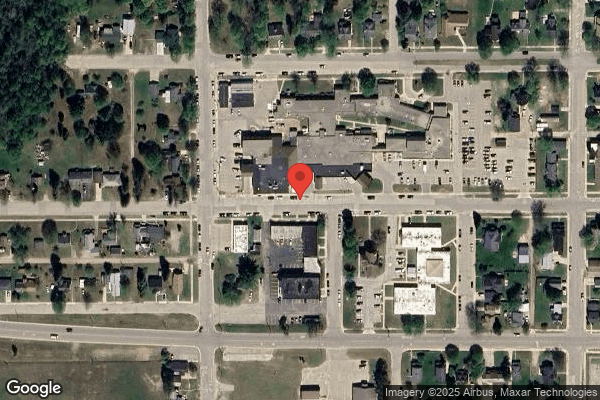
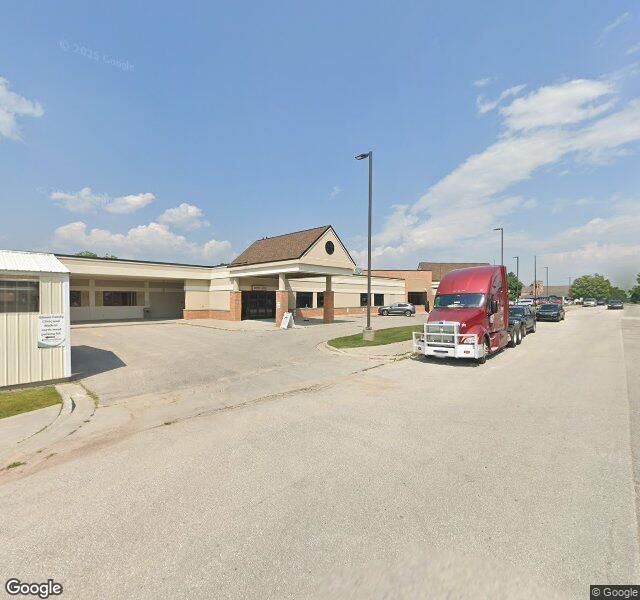
502 West Harrie Street, Newberry, MI 49868 (906) 293-9215
Non profit - Corporation 39 Beds Independent Data: November 2025
Trust Grade
11/100
#283 of 422 in MI
Last Inspection: June 2024

Within standard 12-15 month inspection cycle. Federal law requires annual inspections.

Overview

Helen Newberry Joy HLTCU Golden Leaves Living Center has received a Trust Grade of F, indicating significant concerns about the facility's care and operations. Ranking #283 out of 422 nursing homes in Michigan places it in the bottom half, and as the only facility in Luce County, it suggests families have limited options. The facility is improving, having reduced issues from 17 in 2024 to just 2 in 2025, which is a positive trend. Staffing is a relative strength, with a rating of 4 out of 5 stars and a turnover rate of 27%, well below the state average. However, there are serious concerns regarding resident safety, as incidents were reported where residents were exposed to potential abuse and inadequate monitoring of pressure injuries, leading to harm. Additionally, there is less RN coverage than 93% of other Michigan facilities, which is concerning as it may affect the quality of care.

Trust Score
F
11/100
In Michigan
#283/422
Bottom 33%
Safety Record
High Risk
Review needed
Inspections
Getting Better
17 → 2 violations
Staff Stability
✓ Good
27% annual turnover. Excellent stability, 21 points below Michigan's 48% average. Staff who stay learn residents' needs.
Penalties
⚠ Watch
$2,818 in fines. Higher than 94% of Michigan facilities. Major compliance failures.
Skilled Nurses
⚠ Watch
Each resident gets only 23 minutes of Registered Nurse (RN) attention daily — below average for Michigan. Fewer RN minutes means fewer trained eyes watching for problems.
Violations
⚠ Watch
35 deficiencies on record. Higher than average. Multiple issues found across inspections.
★★☆☆☆
2.0
Overall Rating
★★★★☆
4.0
Staff Levels
★★★☆☆
3.0
Care Quality
★★☆☆☆
2.0
Inspection Score
Stable
2024: 17 issues
2025: 2 issues

The Good

  • 4-Star Staffing Rating · Above-average nurse staffing levels
  • Low Staff Turnover (27%) · Staff stability means consistent care
  • Full Sprinkler Coverage · Fire safety systems throughout facility
  • No fines on record
  • Staff turnover is low (27%)

    21 points below Michigan average of 48%

Facility shows strength in staffing levels, staff retention, fire safety.

The Bad

2-Star Overall Rating

Below Michigan average (3.1)

Below average - review inspection findings carefully

Federal Fines: $2,818

Below median ($33,413)

Minor penalties assessed

The Ugly 35 deficiencies on record

5 actual harm
Jun 2025 2 deficiencies 2 Harm
SERIOUS (G) 📢 Someone Reported This

A family member, employee, or ombudsman was alarmed enough to file a formal complaint

Actual Harm - a resident was hurt due to facility failures

Safe Environment (Tag F0584)

A resident was harmed · This affected 1 resident

**NOTE- TERMS IN BRACKETS HAVE BEEN EDITED TO PROTECT CONFIDENTIALITY** This deficiency pertains to Intakes #MI00153229 and #MI00152446 Based on observation, interview, and record review, the facility...

Read full inspector narrative →
**NOTE- TERMS IN BRACKETS HAVE BEEN EDITED TO PROTECT CONFIDENTIALITY** This deficiency pertains to Intakes #MI00153229 and #MI00152446 Based on observation, interview, and record review, the facility failed to prevent one Resident (#3) of eight residents reviewed for homelike environment related to personal property from entering the rooms and taking personal possessions of other residents. This deficient practice resulted in Residents #2, #4, & #5 experiencing fear of continued resident to resident abuse, frustration, and emotional distress and items being taken from #7 and #8. Findings include: On 6/4/25 at 10:15 AM, the doorways to residents' room were observed with mesh-type barriers with stop sign notifications on the barriers. The barriers extended across the doorways and were secured with Velcro on each end to the doorframes. The Director of Nursing (DON) said the barriers were utilized to prevent Resident #3 (R3) from entering the rooms of other residents. Resident #2 (R2) On 6/4/25 and 6/5/25, the door to R2's room was observed with a sign indicating Do Not Enter. The door to the room was closed with a mesh barrier secured across the doorway. R2 was interviewed on 6/4/25 at 3:33 PM. R2 said the sign on the door and the barrier across the doorway was intended to prevent R3 from entering the room and taking R2's belongings. R2 said R3 constantly entered the rooms of other residents and either destroyed their belongings or removed their belongings. R2 said she was fearful of R3 due to R3 physically harming R2 by striking her in the head a couple months ago when R2 tried to prevent R3 from entering her room and taking her belongings. A progress note in R2's Electronic Medical Record (EMR), dated 4/14/25 at 3:27 PM read, in part: .Resident had an altercation with resident [R3] today. [R3] was attempting to get into resident's room. Resident then pushed her away. [R3] then went to hit resident in the right ear and made contact . A Minimum Data Set (MDS) assessment dated [DATE] documented R2 had a Brief Interview for Mental Status (BIMS - a test for cognitive status) of 15, signifying R2 was cognitively intact. The MDS indicated the short-term and long-term memory of R2 were intact, and R2 had no concern with memory or recall ability. An admission MDS dated [DATE] documented R2's preferences for customary routine in Section F0400.B. The question: How important is it to you to take care of your personal belongings had a documented response of being very important to R2. Resident #4 (R4) R4 was interviewed on 6/5/25 at 9:31 AM. R4 said she had difficulties with R3. When asked to provide an example, R4 said a few weeks prior she heard the resident in the next room calling out for help. She went to the room next door and observed R3 removing items from the room. R4 said she attempted to stop R3 from removing the items and R3 placed her hands around R4's neck and began choking her. R4 said the encounter shook her up. R4 said R3 entered her room on previous occasions and tried to take her personal items. R4 said R3 continually entered the rooms of other residents and took their belongings. A progress note in the EMR of R4 dated 5/18/25 at 6:35 PM read, in part: .Resident visibly shaken after (choking) [sic] altercation with resident [R3]. Resident states that she was 'trying to help.' Resident assessed for marks or bruises, none found . A progress note dated 5/18 at 7:35 PM read, in part: . She states she is nervous about going to sleep, she was reassured that she is safe. She voiced frustration .Stop sign was placed across her door . The EMR disclosed R4 was admitted to the facility 2/22/25. An admission MDS dated [DATE] documented a BIMS score of 14 indicating R4 had intact cognition. The MDS documented R4's preferences for customary routine in Section F0400.B. The question: How important is it to you to take care of your personal belongings had a documented response of being very important to R4. The most recent MDS dated [DATE] documented R4 had intact short-term and long-term memory and had no issues with memory or recall ability. Resident #5 (R5) R5 was interviewed on 6/5/25 at 9:42 AM. R5 said R3 came into her room and dumped her potted plants and began picking up her personal items. R5 said she began screaming and R4 came to the room to help by stopping R3 from taking the personal items. R5 said R3 started choking R4 so R5 started screaming again to gain staff assistance. R5 said, I'm so scared of [R3]! She got in here once and she can get in here again. She hurts people. I'm scared she's going to come in here at night when fewer people are around. A progress note in the EMR of R5 dated 5/18/25 at 6:35 PM read, in part: . Resident shaken after witnessing altercation between 2 residents. Resident states that [R3] came into her room and dumped out flowerpots and was scattering Kleenex . R5 was admitted to the facility 2/14/25. An admission MDS dated [DATE] documented a BIMS of 10 indicating R5 was moderately cognitively impaired. The MDS did not document concern with short-term or long-term memory impairment or R5's memory or recall ability. The MDS documented R5's preferences for customary routine in Section F0400.B. The question: How important is it to you to take care of your personal belongings had a documented response of being Very Important to R5. Resident #7 (R7) R7 was interviewed on 6/5/25 at 8:20 AM. R7 said R3 goes into residents' rooms and takes their things. R7 said R3 tried to enter her room previously but R7 was able to redirect R3 and deter R3 from removing items from their room. R7 was admitted to the facility 10/5/23. An annual MDS dated [DATE] documented a BIMS of 15. The MDS documented R7's preferences for customary routine in Section F0400.B. The question: How important is it to you to take care of your personal belongings had a documented response of being Somewhat Important to R7. A quarterly MDS dated [DATE] supported a BIMS of 15 and indicated R7 had no concern with short-term and long-term memory, and no concern with memory or recall ability. Resident #8 (R8) R8 was interviewed on 6/5/25 at 8:31 AM. R8 said, [R3] likes to come in my room and take my things. R8 said about a month ago, R3 entered her room and tried to take something from the room. When R8 tried to stop R3 from taking her belongings, R3 struck R8 in the head. R8 said she reported it, but nothing ever came of it aside from staff placing the barrier across the doorway of the room. R8 was admitted to the facility 8/27/24. An admission MDS dated [DATE] documented R8 was cognitively intact with a BIMS of 14. The MDS documented R8's preferences for customary routine in Section F0400.B. The question: How important is it to you to take care of your personal belongings had a documented response of being Somewhat Important to R8. An MDS dated [DATE] documented R8 had no concerns with short-term or long-term memory and had no concerns with memory or recall ability. Resident #3 (R3) An interview was attempted with R3 on 6/4/25 at approximately 11:00 AM. R3 became agitated and said, Why don't you go **** yourself! R3 was admitted to the facility 12/2/24. An MDS dated [DATE] documented a BIMS of 3, signifying R3 had severe cognitive impairment. The MDS documented R3 had behaviors including physical behaviors directed toward others, verbal behavioral symptoms directed toward others and other behavioral symptoms. The MDS coded R3 with wandering behaviors. Review of progress notes revealed 49 entries regarding R3 removing items from the rooms of other residents and/or wandering into the rooms of other residents: 12/4/24 at 11:30 PM, 12/5/24 at 12:42 AM, 12/5/24 at 8:49 PM, 12/6/24 at 8:00 PM, 12/8/24 at 5:07 PM, 12/9/24 at 1:55 AM, 12/9/24 at 10:04 PM, 12/10/24 10:12 PM, 12/12/24 at 1:11 AM, 12/13/24 at 12:54 AM, 12/14/25 at 9:16 PM, 12/22/24 at 8:34 AM, 12/25/24 at 5:56 PM, 12/30/24 at 6:42 PM, 1/6/25 at 6:46 PM, 1/10/25 at 2:35 AM, 1/1725 at 2:52 AM, 1/17/25 at 10:13 PM, 1/24/25 at 1:36 AM, 1/26/25 at 3:00 PM, 1/31/25 at 2:46 PM, 2/3/25 at 6:06 PM, 2/12/25 at 6:13 PM, 2/16/25 at 3:39 AM, 2/22/25 at 2:59 AM, 2/23/25 at 12:12 PM, 2/24/25 at 6:07 PM, 2/25/25 at 5:58 PM, 2/25/25 at 11:39 PM, 3/2/25 at 12:54 AM, 3/2/25 at 8:30 PM, 3/4/25 at 6:12 PM, 3/8/25 at 2:56 AM, 3/9/25 at 9:11 PM, 3/10/25 at 10:44 PM, 3/11/25 at 6:17 PM, 3/13/25 at 1:24 AM, 3/19/25 at 9:06 PM, 4/1/25 at 2:53 PM, 4/2/25 at 10:10 PM, 4/6/25 at 8:58 PM, 4/9/25 at 7:37 PM, 4/12/25 at 8:53 PM, 4/13/25 at 7:17 PM, 4/13/25 at 8:43 PM, 4/15/25 at 1:22 PM, 4/16/25 at 6:21 AM, 4/23/25 at 2:37 PM, and 5/18/25 at 6:35 PM. A behavior note in the EMR of R3 dated 4/13/25 at 7:17 PM read, in part: .resident is in and out of many resident rooms and is causing residents to be upset. She is taking things from residents rooms and walking out of rooms with them. She has upset a couple residents that (2) of them have swatted towards her to get out of their rooms and have yelled at her . A progress note dated 2/16/25 at 3:39 AM documented, in part: . Resident not sleeping tonight and if left by herself she goes straight into someone's room waking them, cursing them if they tell her to get out . A behavior note dated 2/12/25 at 6:13 PM documented, in part: . Resident has been wandering in/out of other residents [sic] room this shift, going through other residents [sic] belongings. Other residents are getting angry/frustrated with this resident and staff as well . A progress noted dated 1/24/25 at 1:36 AM read, Resident has been awake all night thus far. She is not sleeping and has been in and out of multiple residents' rooms and waking them up as well as startling them as it is late hours, and they are asleep. Multiple unsuccessful attempts to redirect resident. During an interview on 6/5/25 at 8:56 AM, Certified Nurse Aide (CNA) E said she witnessed R3 get verbally aggressive toward other residents, including raising her voice to them and using profanity loudly to other residents. CNA E said, Other residents [NAME] out of [R3's] way and keep their distance to try and avoid her. CNA E said it is almost impossible to keep R3 from going into other residents' rooms and taking their things because R3 wanders the halls almost constantly. Licensed Practical Nurse (LPN) G was interviewed on 6/5/25 at 10:08 AM. LPN G said R3 went into other residents' rooms at all times of the day and night. LPN G said, It's impossible to keep up with her. She [R3] takes their [other residents] things, and they [other residents] get mad. I can't blame them - I'd be mad too. LPN G said one resident threatened to hit [R3] because he was annoyed with R3 going into his room. The Director of Nursing (DON) was not available in the facility on 6/5/25. The Assistant Director of Nursing (ADON) was interviewed on 6/5/25 at 11:01 AM. When asked what was being done to keep R3 from going into residents' rooms and taking their belongings, The ADON said, I can't answer that - I don't have an answer. The ADON then said, Staff keep an eye on [R3] and get her out of residents' rooms when they see [R3] going into the rooms. When asked if residents in the facility have the right to maintain their personal possessions without fear of their possessions being destroyed or taken by another resident, the ADON replied, Yes - they absolutely have that right. The undated document issued by the Michigan Long Term Care Ombudsman Program My Rights as a Resident of a Nursing Home stated, in part: . My rights as a resident of a nursing home are guaranteed by both federal and state laws. The laws require nursing homes to promote and protect the rights of each resident and place a strong emphasis on individual dignity and choice. Living in a nursing home, I maintain all rights I had before becoming a resident of the home . I have the right to . privacy .live in a clean and safe space . Be free from verbal and physical abuse .
SERIOUS (G) 📢 Someone Reported This

A family member, employee, or ombudsman was alarmed enough to file a formal complaint

Actual Harm - a resident was hurt due to facility failures

Free from Abuse/Neglect (Tag F0600)

A resident was harmed · This affected 1 resident

**NOTE- TERMS IN BRACKETS HAVE BEEN EDITED TO PROTECT CONFIDENTIALITY** This deficiency pertains to Intakes #MI00152446 and #MI00153229 Based on interview and record review, the facility failed to en...

Read full inspector narrative →
**NOTE- TERMS IN BRACKETS HAVE BEEN EDITED TO PROTECT CONFIDENTIALITY** This deficiency pertains to Intakes #MI00152446 and #MI00153229 Based on interview and record review, the facility failed to ensure three Residents (#2, #4, and #7) of five residents reviewed for abuse were free from physical abuse by another Resident (#3) with a documented history of physical abuse of others. This deficient practice resulted in R2 and R4 experiencing fearfulness, frustration, and emotional distress, and R7 experiencing fear, pain and sustaining reddened areas on the neck after a choking event. Findings include: Two facility-reported incidents (FRI) regarding resident-to-resident altercations were reported to the state agency. #MI00152446 was reported on 4/14/25 and #MI00153229 was reported on 5/18/25. Both FRI listed Resident #3 (R3) as being involved in physical altercations with other residents. Intake #MI00152446 reported, in part: . DON [Director of Nursing] received call from RN [Registered Nurse] Supervisor that there was a resident-to-resident altercation. [Resident #2 (R2)] was sitting outside her room on her walker by her door. [R3] attempted to get into [R2] room. [R2] pushed [R3] away from door, RN Supervisor saw [R3] swing and hit [R2] in the side of head . R2 An interview was conducted with R2 on 6/4/25 at 3:33 PM. R2 said a couple of months ago she was sitting on the seat of her walker in the hallway outside her room waiting for the dining room to open. R2 said R3 tried to enter R2's room. R2 said when she tried to stop her, R3 hit her in the head with a closed hand and pulled on her arm which resulted in pain. R2 said she was afraid of R3 and feared she could be physically harmed again by R3. A progress note in R2's Electronic Medical Record (EMR), dated 4/14/25 at 3:27 PM read, in part: .Resident had an altercation with resident [R3] today. [R3] was attempting to get into resident's room. Resident then pushed her away. [R3] then went to hit resident in the right ear and made contact . A Minimum Data Set (MDS) assessment dated [DATE] documented R2 had a Brief Interview for Mental Status (BIMS - a test for cognitive status) of 15, signifying R2 was fully-cognitively intact. The MDS indicated the short-term and long-term memory of R2 were intact, and R2 had no concern with memory or recall ability. During an interview with Certified Nurse Aide (CNA) I on 6/5/25 at 11:48 AM, CNA I said he was present when R3 hit R2 in the hallway on 4/14/25. CNA I said R2 was sitting in the hallway outside her room and R3 tried to go into R2's room. R2 tried to stop R3 from entering the room and R3 hit R2. CNA I said, [R2] was pretty shaken up. CNA I said there were residents who were afraid of R3 because R3 was difficult to redirect. CNA I denied receiving resultant education after the resident altercations involving R3. When asked how staff knew what interventions to implement when R3 had increased behaviors, CNA I admitted there were no specific instructions or guidelines for staff to follow when R3 posed behavioral difficulties. Intake #MI00153229 reported, in part: . staff members were finishing up report and heard [Resident #5 (R5)] yelling for help. [Name of nurse redacted] and both NOC [night] shift CNAs went to her room to see what was going on. Upon entering room [R3] was seen with her hands on [Resident #4 (R4)] neck. [CNA] redirected [R3] out of room. It was noted that there were flowerpots dumped out in sink and tissues scattered on floor . R4 R4 was interviewed on 6/5/25 at 9:31 AM. R4 said a few weeks prior she heard R5 screaming for help from the room next door to R4's room. R4 went to R5's room and observed R3 removing items from the room. R4 said she attempted to stop R3 from removing the items and R3 placed her hands around R4's neck and began choking her. R4 said the encounter shook her up. A progress note in the EMR of R4 dated 5/18/25 at 6:35 PM read, in part: .Resident visibly shaken after (choking) [sic] altercation with resident [R3] . A progress note in the EMR of R4 dated 5/18/25 at 7:35 PM read, in part: . She states she is nervous about going to sleep, she was reassured that she is safe. She voiced frustration .Stop sign was placed across her door . The EMR disclosed R4 was admitted to the facility 2/22/25. An admission MDS dated [DATE] documented a BIMS score of 14 indicating R4 had intact cognition. The MDS revealed R4 had intact short-term and long-term memory and had no issues with memory or recall ability. R5 R5 was interviewed on 6/5/25 at 9:42 AM. R5 confirmed the statement provided by R4. R5 said R3 came into her room and dumped her potted plants then began picking up her personal items. R5 said she began screaming and R4 came to the room to help by stopping R3 from taking the personal items. R5 said R3 started choking R4 so R5 started screaming again to gain staff assistance. R5 said, I'm so scared of [R3]! She got in here once and she can get in here again. She hurts people. I'm scared she's going to come in here at night when fewer people are around. A progress note in the EMR of R5 dated 5/18/25 at 6:35 PM read, in part: . Resident shaken after witnessing altercation between 2 residents. Resident states that [R3] came into her room and dumped out flowerpots and was scattering Kleenex . CNA H was interviewed on 6/5/25 at 11:30 AM. CNA H said she was the CNA who responded to the event with R3 choking R4. CNA H said she heard R5 yelling for help and went immediately down the hall to the room and saw R3 choking R4. CNA H said she had to remove R3's hands from around R4's neck and then removed R3 from the room. CNA H said R4 and R5 were very upset by the incident. CNA H said she did not receive staff education after the altercation. Resident #7 (R7) R7 was interviewed on 6/5/25 at 8:20 AM. R7 said she was assaulted by R3 in the cafeteria when R3 approached her and started choking her. R7 said she had to pry R3's fingers off her neck. She said her neck hurt and she had red marks across her neck from R3's hands squeezing her neck. R7 said the attack was unprovoked. R7 said she was shocked by the incident but denied being fearful of R3. A progress note in the EMR of R3 dated 4/16/25 at 3:27 PM documented, in part: I was in the resident dining room .my back was to [R7] . I turned around and saw [R3] standing by [R7] and saying something I could not understand, but I could see the mad expression on [R3] face. I went over and told [R3] to be nice and not to touch anyone . I asked [R7] what had happened, and she stated that she had told [R3] to get away from her and then [R3] put her hands around [R7] neck . [R7] stated it hurt when [R3] squeezed her neck .I looked at [R7] neck and did see a red mark on each side of her neck. [R7] stated that she had tried to pull [R3] hands away, but it was hard to do . Activity Aide (AA) F was interviewed on 6/5/25 at 9:21 AM. AA F said R3 was aggressive with a lot of residents at certain times because R3 doesn't like to be told no and does not like to be redirected from the rooms of other residents. AA F said she was the employee in the dining room on 4/16/25 when R3 choked R7, and authored the progress note in R3's medical record on 4/16/25 at 3:27 PM. When asked regarding R7's reaction to the choking, AA F said R7's neck had reddened marks on both sides of her neck and R7 verbalized pain after the incident. AA F admitted there were residents in the facility who were afraid of R3 but said R7 told her she was not frightened of R3. AA F said she did not recall receiving education after the resident altercation. Resident #8 (R8) On 6/4/25 at 10:15 AM, the doorway to R8's room was observed with a mesh-type barrier with a stop sign notification on the barrier. The barrier extended across the doorway and was secured with Velcro on each end to attach each end of the barrier to the doorframe. R8 was interviewed on 6/5/25 at 8:31 AM. R8 said, [R3] likes to come in my room and take my things. R8 said about a month ago, R3 entered her room and tried to take something from the room. When R8 tried to stop R3 from taking her belongings, R3 hit R8 in the forehead. R8 said she reported it, but nothing ever came of it aside from staff placing the barrier across the doorway of the room. R8 denied being fearful of R3 and said she was not injured when she was struck by R3. There were no progress notes or mention in R8's EMR of R3 striking R8. On 6/5/25 at 8:40 AM, the Assistant Director of Nursing (ADON) was asked about the allegation conveyed by R8 that R3 had hit her. The ADON said nursing leadership had not been made aware of R8 saying she was hit by R3. R3 On 6/4/25 at approximately 10:15 AM, R3 was observed ambulating in the hallway. A staff member accompanied R3 with a hand around R3's arm to redirect the resident when R3 attempted to enter the rooms of other residents. An interview was attempted with R3 in her room on 6/4/25 at approximately 11:00 AM. R3 became agitated and said, Why don't you go **** yourself! Review of the EMR of R3 revealed an admission date of 12/2/24. The diagnoses of R3 included a diagnosis of severe vascular dementia with agitation. The most recent MDS, dated [DATE], documented a BIMS score of 3, signifying R3 had severe cognitive impairment. The MDS documented R3 had behaviors including physical behaviors directed toward others, verbal behavioral symptoms directed toward others, wandering and other behavioral symptoms. Further review of the EMR disclosed instances of physical altercations toward other residents perpetrated by R3. A behavior note in R3's EMR on 1/31/25 at 1:09 AM documented, in part: .resident to resident .where this resident smacked other said resident across LEFT [sic] side face .both residents need to be kept away from each other as best to avoid further altercations. An Alert Note in the EMR dated 2/18/25 at 9:30 AM read: Resident approached another resident this AM and started talking to her, she then put both her hands around her neck and began choking her. The two residents had to be separated by staff. This resident was escorted to the Day Room so that she could calm down. A progress note dated 4/14/25 at 3:29 PM reported, in part: . Resident was attempting to get into [R2] room, [R2] pushed resident away. This aggravated [R3] and she hit [R2] on the right side of the head . A behavior note of 5/18/25 at 6:35 PM documented, in part: This writer heard yelling and witnessed resident with her hands around another resident's neck. Resident taken out of room by CNA x 2 and multiple attempts to redirect were unsuccessful, resident was becoming verbally aggressive and trying to enter other residents' rooms. Resident became aggressive with CNA and multiple attempts to redirect were unsuccessful, resident was becoming verbally aggressive and trying to enter other residents' rooms. Resident became aggressive with CNA. Resident currently 1 on 1 [1:1 - oversight by a dedicated caregiver] in her room A report by the facility's contracted provider of psychiatric services dated 3/28/25 documented, in part: . [R3] poses a threat to herself and others due to her behavior . During an interview on 6/5/25 at 8:56 AM, CNA E said she witnessed R3 get verbally aggressive toward other residents, including raising her voice to them and using profanity loudly to other residents. CNA E said, Other residents just [NAME] out of [R3] way and keep their distance to try and avoid her. CNA E said it was almost impossible to keep R3 from going into other residents' rooms and taking their things because R3 wandered the halls almost constantly. Licensed Practical Nurse (LPN) G was interviewed on 6/5/25 at 10:08 AM. LPN G said R3 went into other residents' rooms at all times of the day and night. LPN G said, You can't keep up with her. She [R3] takes their [other residents] things, and they [other residents] get mad. I can't blame them - I'd be mad too. LPN G said one resident threatened to hit [R3] because he was annoyed with R3 going into his room. LPN G admitted there were residents who were afraid of R3 and specifically mentioned R4 was frightened of R3. LPN G said R3 could pose a danger to other residents. LPN G said R3 only received 1:1 care a few hours a day 5 days per week and R3's behaviors were ramping up and worsening. CNA J was interviewed on 6/5/25 at 11:59 AM. CNA J said, [R3] always goes into other people's rooms and takes things. She is excessive and gets upset when we tell her she can't go into their rooms and taking their stuff. She for sure needs somebody with her all the time. CNA J said the 1:1 was not working because R3 doesn't always have 1:1 care. CNA J said R3 yelled and swore at the other residents and a lot of residents were frightened of R3. CNA J said residents appeared to cower when R3 walked near them. CNA J said, Someone would need to be with [R3] all the time to keep the residents safe. CNA J said they did not have access to specific resident-centered interventions when R3 had increased behaviors. An interview statement was provided by Confidential Employee (CE) K on 6/5/25 at a time not disclosed to protect confidentiality as requested. CE K said, The only reason [R3] is on 1:1 supervision with staff right now is because the state is here. CE K said, [R3] gets triggered just by looking at her, and asserted the residents in the facility were afraid of R3. The Director of Nursing (DON) was not available in the facility on 6/5/25. The ADON was interviewed on 6/5/25 at 11:01 AM. The ADON said she was the nurse who witnessed the altercation between R3 and R2 on 4/14/25. The ADON said she was in the hallway and witnessed R3 try to get into R2's room. When R2 pushed R3 away from the door of the room, R3 hit R2 in the head. The ADON said she ran down the hall and broke up the altercation and R3 was placed on 1:1 care. The ADON said R2 was upset and crying and a CNA sat with R2 to calm her down. The ADON was asked how R3 choked R7 in the dining room on 4/16/25 if R3 was 1:1 with personal oversight by a staff member after physically hitting R2 on 4/14/25. The ADON said she didn't know but employees who provided oversight through 1:1 were required to document resident activity on a facility form. The ADON was asked to provide the form. The ADON left the interview to obtain the form but returned and said there was no documentation and the 1:1 ended before the choking event of R7 on 4/16/25. The ADON said a care plan was developed by the DON after the choking event of R7. The care plans of R3 were reviewed with the ADON. A care plan focus dated as created and initiated 4/16/25 read: I have the potential to be physically aggressive towards other residents and staff r/t anger, dementia, history of harm to others, poor impulse control. An intervention initiated 5/19/25 read [R5] is nervous when I am around d/t [due to] verbal altercation, please keep me out of her room. Another intervention dated 5/19/25 read: I have become physically aggressive with [R4], please monitor me when I am out and about and ensure that I am not entering her room. A care plan dated 12/19/24 had a focus that read: I have a behavior problem r/t [related to] wandering and entering other residents' rooms. The care plan had an intervention dated as initiated 2/19/25 for 15-minute checks continuously. The care plan was dated as resolved 3/16/25. When the ADON was asked the reason 15-minute checks were discontinued, the ADON said she wasn't sure and said the checks were probably discontinued because they weren't working. When asked what interventions were put in place on 3/16/25 to protect the residents in the facility if the 15-minute checks weren't working, the ADON responded, I don't have an answer to that. A care plan dated 12/19/25 had a focus that read: I have an ADL self-care performance deficit r/t confusion had an intervention dated as initiated 3/1/25 that read: Keep me away from residents [R2] and [R7]. We do not get along at times. The ADON was asked how interventions were evaluated and revised after each alleged or verified abuse occurrence. The ADON said R3's care plans were updated to keep R3 away from residents with whom R3 had altercations. The ADON was asked what was done proactively to protect all the residents in the facility from physical abuse by R3. The ADON said staff was expected to keep redirecting R3. When asked if redirection was successful in protecting the residents, the ADON said, Sometimes it is. The ADON said R3 was currently on continuous 1:1. The care plans for R3 did not document continuous 1:1, rather the care plan for physical aggression contained an intervention dated 4/16/25 that read, in part: Provide me with 1:1 during hours that I'm feeling more agitated, which is typically between 1500-2100 [3:00 PM - 9:00 PM] . The investigations submitted to the state agency (#MI00152446 and #MI00153229) were reviewed with the ADON. The investigation for #MI00152446 related to R3 hitting R2 on 4/14/25 documented, in part: .All staff have been educated on updates to care plans for both resident . The investigation for #MI00153229 regarding R3 choking R4 documented, in part: .All staff continue to be educated on behaviors and if they see any change in [R3] mood or increase wandering, they are to provide 1:1 until behaviors resolve . The ADON was asked for the education referenced in #MI00152446 and #MI00153229. An education document dated 4/16/25 was provided and reviewed. The document reflected required attendees were All Staff. There were 11 signatures on the document. The ADON was asked if 11 individuals constituted all staff. ADON said, No. When asked if there was additional documentation of all staff education, the ADON said, No. An education form dated 5/21/25 was reviewed with the ADON. The required attendees' section of the form listed LPN's and CNA's. The section of the form for participant attendance contained the signatures of six employees. The ADON was asked if the facility had a total of six LPNs and CNAs. The ADON said, No, there's a lot more than that. An employee schedule titled Long Term Care Bi-Weekly Schedule dated 5/25/25 through 6/7/25 contained the names of licensed nurses and CNAs in the facility. The ADON confirmed all nurses and CNAs employed by the facility were listed on the schedule. There were a total of 27 nurses and CNAs listed as current employees excluding the DON and ADON. The policy titled Abuse Policy dated as revised 6/1/24 documented, in part: . Each resident has the right to be free from all types of abuse . The [name of facility redacted] has a great interest in protecting residents and patients from abuse, neglect, exploitation, misappropriation or mistreatment no matter who is responsible for the harm . The [facility] is responsible for protecting all residents from nonemployees whenever it has or should have reasonably had a warning of the potential problem . All employees will be trained through orientation and on-going sessions on issues related to abuse prohibition practices such as: i. appropriate interventions to deal with aggressive and/or catastrophic reactions of residents . The facility will identify, correct and intervene in situations in which abuse, neglect and/or misappropriation is more likely to occur. i. Including an analysis of . 4. the assessment, care planning and monitoring of residents with needs and behaviors which might lead to conflict or neglect, such as residents with a history of aggressive behaviors, residents who have behaviors such as entering other residents' rooms .
Sept 2024 7 deficiencies
CONCERN (D) 📢 Someone Reported This

A family member, employee, or ombudsman was alarmed enough to file a formal complaint

Potential for Harm - no one hurt, but risky conditions existed

Deficiency F0604 (Tag F0604)

Could have caused harm · This affected 1 resident

**NOTE- TERMS IN BRACKETS HAVE BEEN EDITED TO PROTECT CONFIDENTIALITY** Based on observation, interview, and record review, the facility failed to ensure freedom from physical restraints for one Resid...

Read full inspector narrative →
**NOTE- TERMS IN BRACKETS HAVE BEEN EDITED TO PROTECT CONFIDENTIALITY** Based on observation, interview, and record review, the facility failed to ensure freedom from physical restraints for one Resident #10 (R10) of one resident reviewed for restraints. This deficient practice resulted in the restriction of freedom of movement, physical discomfort, and psychosocial distress. Findings include: Resident #10 (R10) Review of R10's Minimum Data Set (MDS) assessment dated [DATE], revealed admission to the facility on 8/29/23, with active diagnoses that included: Parkinson's disease, hypertension, dementia, and hyperlipidemia. R10 scored a 15 of 15 on the Brief Interview of Mental Status (BIMS) reflective of intact cognition. Review of R10's care plan last revised 5/4/24, read in part .Wander guard to left ankle to alert staff when I am near an exit door. During an interview on 9/26/24 at approximately 9:15 a.m., R10 stated, I don't know why that thing is on my ankle .it is tight on my ankle though and uncomfortable. During a review of R10's Elopement Risk Evaluation dated 8/30/24 revealed R10 scored a 1 out of 11 on the risk assessment, reflective of R10 being a low risk for elopement. During an interview on 9/26/14 at 9:42 a.m., Assistant Director of Nursing (ADON) B stated, R10 has the wander guard on her ankle to turn her around when she is by the door at the end of the hallway . she has never tried to leave .I cannot find a policy on wander guard's or a restraint policy . we don't have one. Review of facility policy titled Abuse Policy, read in part .the following actions or omissions constitute neglect whenever they result in a noticeable deterioration of the residents physical, mental or emotional wellbeing .leaving a resident restrained.
CONCERN (D) 📢 Someone Reported This

A family member, employee, or ombudsman was alarmed enough to file a formal complaint

Potential for Harm - no one hurt, but risky conditions existed

Accident Prevention (Tag F0689)

Could have caused harm · This affected 1 resident

**NOTE- TERMS IN BRACKETS HAVE BEEN EDITED TO PROTECT CONFIDENTIALITY** Based on observation, interview, and record review, the facility failed to implement appropriate interventions to prevent unsafe...

Read full inspector narrative →
**NOTE- TERMS IN BRACKETS HAVE BEEN EDITED TO PROTECT CONFIDENTIALITY** Based on observation, interview, and record review, the facility failed to implement appropriate interventions to prevent unsafe wandering and elopement for two Residents (#R9 and #R7) of two residents reviewed for elopement. This deficient practice resulted in continued unsafe supervision and two elopements from the facility. Findings include: This citation pertains to the intake #MI00147126 Resident #9 (R9) Review of R9's Minimum Data Set (MDS) assessment dated [DATE], revealed admission to the facility on [DATE], with active diagnoses that included: dementia, anxiety, depression, and hypertension. R9 scored a 14 of 15 on the Brief Interview of Mental Status (BIMS) reflective of intact cognition. Review of the Facility Reported Incident (FRI) dated 9/17/24, revealed that a Licensed Practical Nurse (LPN) who was backing up out of parking spot at 7:30am and saw resident in the parking lot. Further review of the FRI revealed that the door alert system did not alarm due to R9 removing her tether. The doors leading to the dining room were open for breakfast. R9 was seen by a LPN at 7:20 a.m. Review of the video footage revealed resident exited to the outside at 7:30 and remained near the door until 7:33a.m. Video footage revealed that R9 was being escorted back into the facility at 7:34 a.m. Review of the facility document titled Incident Report dated 9/17/24, revealed that R9 is independent in ambulatory status. The incident had occurred at 7:30a.m. and the incident was discovered at 7:34 a.m. There were no witnesses. During an interview on 9/24/24 at approximately 1:20p.m., The Chief Nursing Officer A demonstrated where the resident had eloped. The Chief Nursing Officer A stated, if the resident was wearing a tether, then alarm would have gone off .I don't know why the two exit doors down the hallway would not alarm when opened. During an observation on 9/25/24 at 11:48 a.m., revealed two doors opened at the end of the hallway with no staff present. R9's bedroom door was located two rooms away from the opened doors. When exiting the opened doors and turning left there was a short hallway that led to an exit door. When turning to the right from the exit door there was another short hallway that led to a second exit door that when opened led to the parking lot. During an interview on 9/25/24 at 11:56 a.m., R9 stated, I was trying to get out of the facility, and I made it . I know how to get out of here again because I can shut the alarm off on my door, it's just a little switch .I left because I wanted to go outside and see the flowers .I told them I chewed that bracelet off, but I used clippers . During an observation at 12:05 p.m., R9 opened her bedroom door and reached for the alarm at the top of her door to shut it off. This citation pertains to MiFri #57798 Resident #7 (R7) Review of R7's MDS assessment dated [DATE] revealed admission to the facility on 4/3/24, with active diagnoses that included dementia, diabetes mellitus, and renal insufficiency/renal failure/end stage renal disease (ESRD). R7 scored a 00 on the BIMS assessment reflective of severe cognitive impairment. Review of facility document titled Incident Report dated 9/25/24, revealed that at 5:26 p.m., R7 was found down a hallway near the emergency room (ER) doors of the hospital adjacent to the facility. The double doors at the end of the hallway leading to the dining room were opened and the resident exited during mealtime. One of the facility staff was in the dining room and the other staff were in resident rooms providing care. During an interview on 9/26/24 at approximately 8:00 a.m., Chief Nursing Officer A and Assistant Director of Nursing (ADON) B revealed that R7 had eloped from the facility. Chief Nursing Officer A stated, R7 went out the same doors as R9 did but turned to the right and walked down the hallway and was found by hospital staff . he had a tether, and the alarm was going off. During an observation on 9/26/24 at approximately 9:00 a.m., R7 had walked approximately 150 steps and passed 5 exits from the building before being observed by hospital staff walking down the hallway. During an interview on 9/26/24 at 9:44 a.m., Certified Nurse Aide (CNA) H stated, I didn't hear the alarms from the room I was in .the pager would alert me when the alarms go off .I keep the pager in the office as it doesn't work down the hallway anyway . I heard the alarm go off when I stepped in the hallway and saw someone bringing R7 back . I don't know how long R7 was gone. Review of Facility Policy titled Safety last revisited 6/1/24, read in part . exit door leading out of the facility are equipped with an alarm for residents who wear a tether.
CONCERN (D) 📢 Someone Reported This

A family member, employee, or ombudsman was alarmed enough to file a formal complaint

Potential for Harm - no one hurt, but risky conditions existed

Deficiency F0740 (Tag F0740)

Could have caused harm · This affected 1 resident

**NOTE- TERMS IN BRACKETS HAVE BEEN EDITED TO PROTECT CONFIDENTIALITY** Based on interview and record review, the facility failed to ensure behavioral health services were provided for one Resident #9...

Read full inspector narrative →
**NOTE- TERMS IN BRACKETS HAVE BEEN EDITED TO PROTECT CONFIDENTIALITY** Based on interview and record review, the facility failed to ensure behavioral health services were provided for one Resident #9 (R9) of three residents reviewed for behavioral health services. Findings include: Resident #9 (R9) Review of R9's Minimum Data Set (MDS) assessment dated [DATE], revealed admission to the facility on [DATE], with active diagnoses that included: dementia, anxiety, depression, and hypertension. R9 scored a 14 of 15 on the Brief Interview of Mental Status (BIMS) reflective of intact cognition. Review of R9's behavior notes with the following dates: read in part . 7/29/24, resident made several statements about her extreme guilt she was feeling, regarding certain events in her life .wanting to remain in her room and not come out. 7/30/24, resident has remained in her room today and refused to come out or turn on her tv, which she enjoys watching. Resident normally comes to the dining room for two meals a day. 8/3/24 resident came to nurses station agitated and having racing thoughts, requesting to call the police related to an incident that happened years ago . 8/5/24 resident continues with self-punishment related to her description of herself as I am a liar, I have done bad things and I cannot look anyone in the eye . 8/11/24 resident states, I don't deserve to live 8/20/24 resident pointing to multiple residents telling them, you are going to die . 8/22/24 resident up in hallway yelling we are all going to die because of her and saying she is coming out of her skin. 8/29/24 resident has been up and down all night yelling out in the hallways HELP! HELP! 8/30/24 R9 is very anxious and restless. 9/8/24 Resident started to go into other resident's rooms just before shift change. Resident started yelling out help help .everyone is going to die. During an interview on 9/25/24 at 7:48 a.m., the Chief Nursing Officer A stated, we do not have a social worker/designee for the residents here . we do not have any contract with any behavioral support agency . During an interview on 9/25/24 at 12:29 p.m., the Assistant Director of Nursing (ADON)B stated, R9's moods an behaviors have changed so much .we have not looked into a change of condition, reassessed her BIMS, we haven't added any new interventions into her care plan when her moods and behaviors changed, and we have not sent a referral to Behavioral Care Solutions (BCS) or any outside agencies to assess the change in behaviors . Review of Facility Assessment (FA) read in part .facility resources needed to provide competent support care for our resident population .behavioral and mental health providers, referrals to outlying providers . Review of facility policy titled Behavioral Program last reviewed 1/18/23, read in part . to ensure that residents with increased behaviors are identified and have interventions in place to prevent episodes of verbal or physical aggression .behavioral plan will be reviewed as needed.
CONCERN (D) 📢 Someone Reported This

A family member, employee, or ombudsman was alarmed enough to file a formal complaint

Potential for Harm - no one hurt, but risky conditions existed

Deficiency F0745 (Tag F0745)

Could have caused harm · This affected 1 resident

**NOTE- TERMS IN BRACKETS HAVE BEEN EDITED TO PROTECT CONFIDENTIALITY** Based on interview, and record review the facility failed to provide social services for two Residents #3 (R3) and #9 (R9) of th...

Read full inspector narrative →
**NOTE- TERMS IN BRACKETS HAVE BEEN EDITED TO PROTECT CONFIDENTIALITY** Based on interview, and record review the facility failed to provide social services for two Residents #3 (R3) and #9 (R9) of three residents reviewed for social services. This deficient practice resulted in the potential for psychosocial decline. Findings include: Resident #3 (R3) Review of R3's Minimum Data Set (MDS) assessment dated [DATE], revealed admission to the facility on 8/27/24, with active diagnoses that included depression, anxiety disorder, malnutrition, and hypertension. R3's mood interview revealed R3 had little interest or pleasure in doing things nearly every day, R3 felt down, depressed, or hopeless nearly every day and R3 felt bad about their self or felt they were a failure or felt they have let their self or their family down nearly every day. During an interview on 9/23/24 at 3:48 p.m., R3 stated, I have fears about things .and no one has come to see me or talk about my fears .there are things that have happened to me in the past . no one has talked with me about wanting to live near my brother. Review of R3's social service notes revealed no social service assessment, no social service notes, and no plans for R3's discharge. Resident #9 (R9) Review of R9's (MDS) assessment dated [DATE], revealed admission to the facility on [DATE], with active diagnoses that included: dementia, anxiety, depression, and hypertension. R9 scored a 14 of 15 on the Brief Interview of Mental Status (BIMS) reflective of intact cognition. Review of R9's behavior with the following dates: 7/29/24, read in part .resident made several statement about her extreme guilt she was feeling, regarding certain events in her life .wanting to remain in her room and not come out. 7/30/24 resident has remained in her room today and refused to come out or turn on her tv, which she enjoys watching. Resident normally come to the dining room for two meals a day. 8/3/24 resident came to nurses station agitated and having racing thoughts, requesting to call the police related to an incident that happened years ago . 8/5/24 resident continues with self-punishment related to her description of herself as I am a liar, I have done bad things and I cannot look anyone in the eye . 8/11/24 resident states, I don't deserve to live 8/20/24 resident pointing to multiple residents telling them, you are going to die . 8/22/24 resident up in hallway yelling we are all going to die because of her and saying she is coming out of her skin. 8/29/24 resident has been up and down all night yelling out in the hallways HELP! HELP! 8/30/24 R9 is very anxious and restless. 9/8/24 Resident started to go into other resident's rooms just before shift change. Resident started yelling out help help .everyone is going to die. During an interview on 9/25/24 at 7:48 a.m., the Chief Nursing Officer A stated, we do not have a social worker/designee for the residents here . Review of facility policy titled Social Service Procedure last reviewed 12/5/22, read in part .the social service designee will complete the admission assessment within one week of the residents admission .interview the resident and inform the resident of the social services that are available .on going assessment of the residents adjustment to the facility and therapeutic intervention if problems arise .the social worker designee may assist the resident .in finding and utilizing .mental health services .in addition to the social history, the social work designee will maintain progress notes in the residents medical record .if resident is able to be discharged from the facility, the social work designee will assist in planning alternative living arrangements.
CONCERN (D) 📢 Someone Reported This

A family member, employee, or ombudsman was alarmed enough to file a formal complaint

Potential for Harm - no one hurt, but risky conditions existed

Medication Errors (Tag F0758)

Could have caused harm · This affected 1 resident

Based on interview, and record review, the facility failed to obtain informed consent for psychotropic medications for two Residents (#7 and #9) out of three residents reviewed for unnecessary psychot...

Read full inspector narrative →
Based on interview, and record review, the facility failed to obtain informed consent for psychotropic medications for two Residents (#7 and #9) out of three residents reviewed for unnecessary psychotropic drug use. Findings include: Resident #7 (R7) Review of R7's face sheet, printed on 9/25/24, revealed admission to the facility on 4/3/24 with medical diagnoses including diabetes mellitus, dementia, and insomnia. R7's face sheet and medical records revealed a Durable Power of Attorney (DPOA) was activated and was not their own person. Review of R7's Minimum Data Set (MDS) assessment, dated 7/11/24, section C - cognition, revealed R7 had a Brief Interview for Mental Status (BIMS) that was unable to be completed and a score of 00 which indicated severe cognitive impairment. Review of physician order, read in part, Risperidone oral tablet 0.5 mg (milligram), give 1 tablet by mouth at bedtime related to dementia ., started on 4/3/24. Review of physician order, read in part, Risperidone oral tablet 1 mg, give 1 tablet by mouth two times a day related to dementia ., started on 5/28/24. On 9/26/24 at 11:35 AM, an interview was conducted with the (Assistant Director of Nursing) ADON. The ADON was asked if she had obtained informed consent from the family for R7 being placed and or increased risperidone. The ADON replied, I do not have a signed consent for R7 and was not aware that one needed to be obtained. The ADON confirmed that the facility did not have an acting Social Services Director at the time of the abbreviated survey. Resident #9 (R9) Review of R9's face sheet, printed on 9/25/24, revealed admission to the facility on 7/1/20 with medical diagnoses including hypertension, dementia, and depression. R9's face sheet and medical records revealed they were their own person. Review of R9's MDS assessment, dated 7/14/24, section C - cognition, revealed R7 had a Brief Interview for Mental Status (BIMS) that was unable to be completed and a score of 14 which indicated intact cognition. Review of physician order, read in part, haloperidol injection solution 5 mg, give 2.5 mg intramuscularly one time only related to anxiety disorder for one day ., started on 9/17/24. Review of physician order, read in part, lorazepam oral tablet 0.5 mg, give 1 tablet by mouth two times a day for anxiousness/restlessness ., started on 9/17/24. On 9/26/24 at 10:45 AM, an interview was conducted with the ADON. The ADON was asked if she had obtained informed consent from the resident R9 before being placed/given lorazepam or haloperidol. The ADON replied, I do not have a signed consent for R9 and was not aware that one needed to be obtained. The ADON confirmed that the facility did not have an acting Social Services Director at the time of the abbreviated survey. Review of policy, titled Psychotropic Medication Use, dated 8/6/24, read in part, Purpose: Physicians and providers will use psychotropic medications appropriately working with the interdisciplinary team to ensure appropriate use, evaluation and monitoring .Notify family/responsible party of any changes in medications .
CONCERN (D) 📢 Someone Reported This

A family member, employee, or ombudsman was alarmed enough to file a formal complaint

Potential for Harm - no one hurt, but risky conditions existed

Deficiency F0825 (Tag F0825)

Could have caused harm · This affected 1 resident

**NOTE- TERMS IN BRACKETS HAVE BEEN EDITED TO PROTECT CONFIDENTIALITY** Based on interview and record review, the facility failed to implement rehab services for one Resident #3 (R3) of three resident...

Read full inspector narrative →
**NOTE- TERMS IN BRACKETS HAVE BEEN EDITED TO PROTECT CONFIDENTIALITY** Based on interview and record review, the facility failed to implement rehab services for one Resident #3 (R3) of three residents reviewed for rehab services which resulted in a delay in assessment, treatment and a decline in physical mobility. Findings include: Resident #3 (R3) Review of R3's Minimum Data Set (MDS) assessment dated [DATE], revealed admission to the facility on 8/27/24, with active diagnoses that included depression, anxiety disorder, malnutrition, and hypertension. Review of MDS Section O-Special Treatments and Programs revealed zero minutes from Occupational Therapy (OT) and zero minutes from Physical Therapy (PT). Review of Discharge Summary from UP Health Systems [NAME] dated 8/26/24, read in part . Discharge Plan . physical deconditioning continue PT/OT. Review of facility Progress note dated 8/27/24, read in part . History and Physical (H & P) [Resident] continues to have weakness and gait difficulties and is quite deconditioned. [Resident] needs aggressive PT and OT. During an interview on 9/23/24 at 3:48p.m., R3 stated, I have not been seen by rehab, I want to walk and I need more assistance .I can't sit up by myself and I know I am getting weaker .I am afraid I will end up in a wheelchair and never improve .the staff said I can do more for myself but I can't. I have fallen because I am getting weaker. During a follow-up interview R3 stated, My balance is getting worse .I wobble when I walk .I am afraid of falling and hurting myself. During an interview on 9/24/24 at 2:08p.m, The Assistant Director of Nursing (ADON) B stated, The physical therapist and occupational therapist are on off and cannot be reached. During an interview on 9/24/24 at approximately 3:00p.m., Administrative Assistant F stated, I cannot find any therapy notes or assessment regarding R3 .I cannot find her admission paperwork. During an interview on 9/24/24 at 4:13 p.m., Chief Nursing Office A stated, There are standing orders for PT/OT .the Director of Nursing (DON) reviews the admission paperwork to ensure the Doctors orders are followed up on . I don't know where the admission paperwork is for R3 .there was a delay in therapy services for R3. During a phone interview on 9/25/24 at 8:03a.m., the DON stated, I don't remember when R3 was first admitted or if I reviewed her paperwork .I don't know what happened to the paperwork from the hospital .I couldn't tell you where R3's admission paperwork is located. During a phone interview on 9/25/24 at 8:13 a.m., this surveyor called UP Health Systems hospital for R3's paperwork sent to the facility. During an interview on 9/25/24 at 9:05 a.m., Licensed Practical Nurse (LPN) G stated, I was the admitting nurse for R3, and I did not ask the doctor to order PT/OT for R3 .PT and OT are not on the list of standing orders when residents are first admitted . I may have a copy of the standing orders somewhere. Review of facility policy titled Physicians Standing Orders last revised 3/23, read in part . Standing Orders: Physical Therapy, Occupational Therapy .evaluation and treatment as indicated. Review of facility policy titled Rehabilitative and Restorative Programs last revised 3/19/24, read in part . Residents receive a functional assessment on admission that serves as a basis for a formulation of resident care plan .those residents those PT and OT assessment reveals a need for a specific restorative program will be placed in one or more programs .
CONCERN (E) 📢 Someone Reported This

A family member, employee, or ombudsman was alarmed enough to file a formal complaint

Potential for Harm - no one hurt, but risky conditions existed

Deficiency F0625 (Tag F0625)

Could have caused harm · This affected multiple residents

Based on interview and record review, the facility failed to provide written notification of the facility bed hold policy for four Residents/Resident Representatives (R1, R4, R8, and R16) of four resi...

Read full inspector narrative →
Based on interview and record review, the facility failed to provide written notification of the facility bed hold policy for four Residents/Resident Representatives (R1, R4, R8, and R16) of four residents reviewed for notice of bed hold policy. Findings include: Review of the facility Electronic Medical Record (EMR) confirmed that R1 was discharged from the facility on 8/19/24 Review of the facility EMR confirmed R4 was discharged from the facility on 8/9/24 to acute care Review of the facility EMR confirmed R8 was discharged from the facility on 8/19/24 to acute care Review of the facility EMR confirmed R16 was discharged from the facility on 8/9/24 to acute care During an interview on 10/25/24 at 7:48 a.m., the Chief Nursing Officer A stated, the Director of Nursing (DON) and Assistant Director of Nursing (ADON) B take care of all .discharges, we do not have a social worker. During an interview on 9/25/24 at approximately 10:20 a.m., Administrative Assistant F stated, we have not given or sent a bed hold policy letter to residents or families since July of 2022 .I mail out all the information. During an interview on 9/26/24 at 8:33 a.m., the Chief Nursing Officer A stated, I don't believe we have completed notifications of bed hold policy or transfers in quite some time .I doubt we will be able to find anything. During an interview on 9/26/24 at 9:42 a.m., the Assistant Director of Nursing (ADON) B stated, we do not have any bed hold or transfer forms, we didn't know we had to do that .we do not have a bed hold policy. Review of facility policy titled Discharge and Transfer - Resident last revised on 7/21/24, read in part . purpose .transfer to medical surgical unit . to another facility other than an acute care hospital .for discharge .LPN/Social work designee notifies the family and/or guardian of the facility bed holding policy . The facility did not provide this Surveyor a bed hold policy before exit.
Jun 2024 9 deficiencies 2 Harm
SERIOUS (G)

Actual Harm - a resident was hurt due to facility failures

Pressure Ulcer Prevention (Tag F0686)

A resident was harmed · This affected 1 resident

**NOTE- TERMS IN BRACKETS HAVE BEEN EDITED TO PROTECT CONFIDENTIALITY** Based on observation, interview, and record review, the facility failed to assess and monitor pressure injuries, develop and imp...

Read full inspector narrative →
**NOTE- TERMS IN BRACKETS HAVE BEEN EDITED TO PROTECT CONFIDENTIALITY** Based on observation, interview, and record review, the facility failed to assess and monitor pressure injuries, develop and implement a plan of care for pressure injuries, and maintain infection control practices during dressing changes for One Resident (R14) of One resident reviewed for pressure injuries. This deficient practice resulted in harm when R14 experienced worsening of wounds and the development of three stage 3 pressure injuries. Findings include: Resident #14 (R14) was interviewed on 6/24/24 at 12:56 p.m. R14 was noted to be lying on his back in bed with the sides of his body pressed against the side rails on the bed. R14 said, they ordered me a new bed - it should have been here by now. R14 said a new bed had been ordered due to wounds on his buttocks. On 6/24/24 at approximately 2:00 p.m., the Director of Nursing (DON) said there were no pressure injuries in the facility. When asked for clarification, the DON reiterated the facility did not have any residents who had pressure injuries. When asked regarding wounds for R14, the DON responded, those are areas of shearing (skin damage that results when tissue layers laterally shift in relation to each other). R14 was re-admitted to the facility on [DATE] after eight days of hospitalization due to Sepsis (a potentially life-threatening condition due to infection). A form Skin Observation Tool - Licensed Nurse dated 4/28/24 documented R14 had three pressure injuries when he was readmitted to the facility from the hospital: a stage 2 pressure injury (Partial-thickness loss of skin with exposed dermis, presenting as a shallow open ulcer) on the posterior right thigh, a stage 2 pressure injury on the left posterior thigh, and a pressure injury to the gluteal area. The documentation did not indicate which side the pressure injury to the gluteal area was located or the stage of the pressure injury in the gluteal area. An admission Minimum Data Set (MDS) assessment dated [DATE] coded R14 as having one or more unhealed pressure injuries at Stage 1 or higher (skin with a localized area of non-blanchable redness). The MDS coded R14 as scoring 15 on a Brief Interview for Mental Status examination indicating R14 was cognitively intact. R14's medical record did not contain any documentation of wound assessments for the month of June 2024. The form Wound - Weekly Observation Tool (Licensed Nurses) was completed weekly for the month of May 2024. The last wound assessment in the medical record was completed on 5/30/24 and documented communication to update the physician on 5/31/24, the day after the document was completed. The assessment documented the wounds as shearing wounds. A wound assessment dated [DATE] described the wounds as shearing. The assessment of 5/3/24 documented the presence of granulation tissue and slough and documented 30% of the shearing was covered with necrosis and/or slough. On 6/25/24 at approximately 1:50 p.m., a different bed was observed in R14's room. The bed was a bariatric bed with a low air loss mattress. R14 said the new bed arrived earlier in the day. On 6/25/24 at 2:06 p.m., the nurse supervisor, Registered Nurse B (RN B), was observed completing wound care and dressing change to R14's wounds. RN B cleansed her hands and donned gloves before removing the existing dressing from R14's bilateral upper buttocks area. When the dressing was removed, three wounds were observed: one on the left intergluteal cleft adjacent to the inferior coccyx (tailbone), and two on the right intergluteal cleft lateral to the coccyx. The wounds were open with adipose (fat) tissue visible in the bases of the wounds. RN B said, this is much worse than the last time I saw [R14] and said R14's wounds had worsened to three stage 3 pressure injuries (full-thickness skin loss with visible subcutaneous fat and granulation tissue). RN B was asked to measure the wounds but responded, We don't measure - only the wound consultant measures. RN B cleansed the wounds wearing the same gloves she had on when removing the soiled dressing, patted the wounds dry, applied skin prep around the wounds then applied an absorbent dressing across the wounds without cleansing her hands or changing her gloves during these tasks. RN B was asked regarding the treatment and responded she would report to the wound care consultant so the consultant would assess the wounds and determine the appropriate treatment. On 6/25/24 at 2:26 p.m., RN B was asked about cleaning her hands and changing gloves when completing treatments. RN B responded she washed her hands after she set up the wound supplies and when she was finished with the treatment. RN B said, I didn't think about it (washing hands and changing gloves) while I was doing it (completing the treatment). The DON was interviewed on 6/25/24 at approximately 4:00 p.m. The DON said RN B had informed her about the worsening of R14's wounds. The DON was asked about wound measurements and assessment. The DON said, There's no reason we can't measure wounds - we're registered nurses. The DON said she did not know why there were no documented wound assessments for June 2024 and said the wound consultant had been in the facility and should have documented on R14's wounds. The DON said she had assessed R14's wounds and determined the wounds were not shearing. The DON said the wounds had advanced to three stage 3 pressure injuries but admitted she did not know when the three pressure injuries were initially identified. The DON said she had contacted R14's physician to change the treatment order due to necrotic tissue in the wound beds. When asked why a low air loss mattress had not been provided to R14 prior to today, the DON said she had not been made aware of the wound consultant's recommendation for a low air loss mattress until the previous week. She said the bed and mattress were immediately ordered when it came to her attention, and it was delivered on 6/25/24. The DON said the wound consultant would be in the facility to assess R14's wounds the following day, on 6/26/24. The DON was asked to inform the surveyor when the wound consultant arrived so the surveyor could interview the consultant. R14's care plan included a care plan for being at risk for skin breakdown but did not include actual skin breakdown or mention of pressure injuries. The care plan documented I am at risk for skin breakdown d/t (due to) previous history of cellulitis and diabetic ulcers. The bariatric bed was not included in the care plan interventions nor were a low air loss mattress or related interventions to prevent the development of pressure injuries or promote the healing of existing pressure injuries. On 6/26/24 at approximately 9:00 a.m., the DON conveyed the wound consultant would not be in the facility due to being on sick leave. The DON produced an email chain between herself and the wound consultant. An email from the DON to the wound consultant on 6/25/24 at 3:01 p.m. read in part: .the wounds have deteriorated. Now stage III. Are you or anyone else able to come today and assess? . The response from the wound consultant dated 6/25/24 at 6:11 p.m. read, in part: .I am out for several weeks due to injury, meaning no wound services to LTC (long term care) during that time . On 6/26/24, a weekly wound assessment was noted in R14's medical record dated 6/11/24. The assessment documented shearing to the buttocks with epithelial tissue, granulation tissue, and odor. The form was dated 6/11/24 but displayed as created and locked on 6/25/24. On 6/26/24, skin assessments were observed in R14's record dated 6/24/24 and 6/25/24. The assessment dated [DATE] documented two stage 2 sacral pressure injuries measuring 2.5 cm x 2.0 cm x 0.1 cm. The skin assessment on 6/25/24 documented three stage 3 pressure injuries: a stage 3 on the proximal right buttock measuring 2.7 cm x 1.0 cm x 0.1 cm, a stage 3 on the distal right buttock measuring 2.0 cm x 0.5 cm x (no depth documented), and a stage 3 on the left buttock measuring 4.5 cm x 4.0 cm x 0.1 cm. A nursing progress note dated 6/25/24 at 2:22 p.m. documented, Wound care performed today per orders. Resident's wounds classified as sheer [sic] in OT/WC (occupational therapy/wound consultant) documentation. Upon assessment, res has 1 stage 3 decub (pressure injury) on his left inner buttock and 2 stage 3 decubs on his right buttock. Wounds have slough to > (greater than) 90% of wound bed . A skin and wound progress note dated 6/25/24 at 7:02 p.m. documented No formal wound care services will be provided this week (6/24 - 6/28) as staff member out of office. Do not anticipate staff return until week of 7/15/24. Nursing staff to continue wound care management plan. The policy Skin and Wound Assessment dated 10/20 [sic] read, in part: .Purpose: 1. To maintain and/or improve the skin integrity of all residents .b. ALL [sic] residents that do have skin breakdowns and/or pressure ulcers receive necessary treatment and services to promote healing, prevent infection, and prevent the breakdown from recurring . A preventative care plan will be developed .4. All ulcers will be measured weekly and PRN (as needed) .
SERIOUS (G)

Actual Harm - a resident was hurt due to facility failures

Accident Prevention (Tag F0689)

A resident was harmed · This affected 1 resident

**NOTE- TERMS IN BRACKETS HAVE BEEN EDITED TO PROTECT CONFIDENTIALITY** Based on observation, interview, and record review, the facility failed to accurately assess, develop and revise care plan inter...

Read full inspector narrative →
**NOTE- TERMS IN BRACKETS HAVE BEEN EDITED TO PROTECT CONFIDENTIALITY** Based on observation, interview, and record review, the facility failed to accurately assess, develop and revise care plan interventions, provide adequate supervision, and investigate falls for root cause, to minimize the risk of fall recurrence for one Resident (R23) of two residents reviewed for falls. This deficient practice resulted in R23 experiencing multiple falls with numerous injuries including transfer to the emergency department for facial suturing. Findings include: Resident #23 (R23) was admitted to the facility on [DATE] with a diagnosis of severe Dementia with agitation. An admission Minimum Data Set (MDS) assessment dated [DATE] documented R23 as having a history of falls prior to admission to the facility. Section J1700 of the MDS documented R23 had a fall within the month prior to admission to the facility and had falls within 2-6 months prior to admission to the facility. On 6/24/24 at 2:10 p.m., a position change alarm box was observed on the head of R23's bed. R23 was observed ambulating in the hallway, occasionally leaning into the wall as he walked and entering other residents' rooms. An incident report dated 4/3/24 at 11:04 p.m. documented R23 fell in his room. There were no interventions documented on the incident report, baseline care plan, or nursing progress notes to identify and minimize risk of fall recurrence. An admission nursing assessment was not found in the medical record of R23. According to nursing progress notes on 4/4/24, R23 experienced another fall on 4/4/24 at 1:15 p.m. The fall resulted in multiple injuries including lacerations to the left eyebrow and left cheek, skin tears to the left elbow and left wrist, and a swollen, painful right ankle. R23 was sent to the emergency department and received 5 sutures to the facial laceration on the left eyebrow. An incident report was not located for the fall on 4/4/24. The baseline care plan was not updated with fall hazards or interventions to minimize the risk of fall recurrence. Documentation regarding causal factors or the root-cause of the fall was not located in the medical record. A care conference progress note on 4/10/24 at 3:09 p.m. documented R23 was at low risk for falls despite having 2 falls with injury within the previous 7 days and a history of falls prior to admission to the facility. The note read, in part: .Res low fall risk but subsequently had 2 falls days 1 and 2 after admission . A Physician progress note dated 5/8/24 at 11:46 a.m. documented, in part: .He is at high risk for falls, which he has had 2 since admission to LTC (long term care). One of which required stitches to his forehead . R23 fell again on 5/17/24 at 1:15 a.m. According to the incident report, R23 was found by staff on the floor in the bathroom of another resident. The incident report documented R23 sustained an abrasion injury to the top of the scalp. No other injuries were documented on the incident report. Nurses' notes on 5/17/24 at 1:13 p.m. documented R23 sustained an abrasion to the center of the forehead as a result of the fall. There were no nurses notes to clarify the location(s) of the injuries. Documentation regarding the causal factors of the fall was not located in the medical record. A fall re-assessment using a Morse Fall Scale was completed on 5/17/24. R23 scored 75 indicating high risk for falls. R23 had an unwitnessed fall in his room on 5/18/24 at 3:52 a.m. According to the incident report, the fall resulted in a skin tear injury to the left elbow. The incident report documented R23 was in bed sleeping when staff heard the bed alarm go off. The incident report read, in part: . Resident fell earlier this day shift, he has some bruising to his face/head. Writer observed a bruise earlier in his hair line. After the fall on night shift he had a bruise to his R [right] side of face and his nose . There was no incident report located for a fall on day shift on 5/17/24 or 5/18/24. Documentation regarding the potential hazards or causal factors of the fall was not located in the medical record. R23 fell in his room on 5/19/24 at 1:40 p.m. The incident report documented the resident was observed attempting to sit down and lost his balance. A care plan intervention was added on 5/20/24 for (brand name) alarm to bed to alert staff when I am up out of bed. The intervention was resolved on 5/27/24 with no other intervention implemented, and no documentation explaining the rationale for the discontinuance of the intervention on the care plan. R23's care plan was reviewed on 6/25/24 and documented, in part: I am at low risk for falls (Morse 15) r/t (related to) confusion. The care plan was not updated with the completion of the fall risk assessment on 5/17/24 to reflect R23's high fall risk. The falls care plan was dated as developed on 4/11/24. The interventions on the care plan for falls were all dated 4/11/24 except for an intervention initiated on 5/20/24 for a position change alarm. The Director of Nursing (DON) was interviewed on 6/25/24 at 9:23 a.m. The DON said a Risk Management Report (incident report) is completed after each fall, and care plans are updated after fall occurrences. The DON was asked if any investigations had been conducted for R23's falls. The DON admitted investigations had not been completed for R23's falls. The DON was asked if there was an incident report for the fall with injury requiring transfer to the emergency department on 4/4/24. The DON reviewed R23's medical record and said an incident report had not been completed. The DON was asked if there was an incident report for the day shift on 5/17/24 or 5/18/24 as referenced in the incident report of 5/18/24. The DON reviewed the record and said there were no additional incident reports on 5/17/24 aside from the fall on 5/17/24 at 1:15 a.m., and there were no additional incident reports on 5/18/24 aside from the one at 3:52 a.m. The DON was asked why a position change alarm box was on the head of R23's bed despite being discontinued on 5/27/24. The DON replied, There shouldn't be an alarm box. The DON explained R23 was a prison guard for years and responds quickly to the sound of alarms. The DON said the sound of an alarm is more likely to increase the chance of R23 falling. The DON was told the incident report of 5/18/24 documented the resident had a bed alarm, but the bed alarm wasn't added to the care plan until 5/20/24. When asked when the bed alarm was placed on the bed, the DON said, I'm not really sure. When asked about care plan updates, interventions, and root-cause of fall occurrences, the DON reviewed R23's record and said the care plans and interventions were not updated after falls. The DON and Nursing Supervisor (RN B) were interviewed on 6/26/24 at 10:45 a.m. RN B said she enters a progress note from the Fall Committee into a resident's medical records when a resident falls to document the cause of falls and the interventions implemented for the resident. A response was not received when asked why there was no documentation for root-causes or interventions for R23. The DON was asked the location of R23's admission nursing assessment. The DON looked in R23's medical record and said an admission nursing assessment had not been completed for R23. The DON said an admission nursing assessment is expected to be completed for all residents when admitted to the facility. The policy Falls and Suspected Falls dated as revised 12/5/23 read, in part: .Purpose: Establish care plans that provide a safe environment that minimizes risk for falls .A Care Plan will be developed with goals and interventions to decrease the potential for falls . The Fall Team Committee (FTC) will review all falls on a weekly basis. Falls with injuries requiring hospitalization will be reviewed by the Fall Team Subcommittee within 24 hours of the fall. Interventions and recommendations will be addressed by the attending physician and care plan will be reviewed and revised as needed .Investigation includes implementing any interventions deemed necessary to prevent recurrence. The Supervisor will investigate the fall .the Supervisor will update the care plan . A Care Plan will be developed with goals and interventions to decrease the potential for falls. Areas of focus will include, but are not limited to fall history, external factors, and internal factors that may contribute to falls and/or potential falls .The Nurse/LPN (Licensed Practical Nurse) shall complete a Clarity Report and Accidents & Injuries Report and Risk Management Assessment for each fall or suspected fall .Investigation includes implementing any interventions deemed necessary to prevent recurrence .The Supervisor will investigate the fall .Based on that review, the Supervisor will update the care plan and notify staff of changes and / or trends in falls .
CONCERN (D)

Potential for Harm - no one hurt, but risky conditions existed

Deficiency F0661 (Tag F0661)

Could have caused harm · This affected 1 resident

**NOTE- TERMS IN BRACKETS HAVE BEEN EDITED TO PROTECT CONFIDENTIALITY** Based on interview and record review, the facility failed to complete a discharge summary for one Resident (R24), of one residen...

Read full inspector narrative →
**NOTE- TERMS IN BRACKETS HAVE BEEN EDITED TO PROTECT CONFIDENTIALITY** Based on interview and record review, the facility failed to complete a discharge summary for one Resident (R24), of one resident reviewed for discharge from the facility. This deficient practice resulted in the potential for compromised continuity of care. Findings include: Review of R24's Progress Notes on 6/26/24 at 7:32 a.m., revealed the following, in part: 4/6/24 13:15 (1:15 p.m.) Resident (R24) discharged from facility to resume care at [Assisted Living Facility]. Belongings were packed and gathered by family. Medications and most recent medication list provided to resident at time of departure. Resident stable at time of d/c (discharge). Review of R24's Minimum Data Set (MDS) admission assessment, dated 3/7/24, revealed R24 was admitted to the facility on [DATE] with active diagnoses that included: arthritis, malnutrition, anxiety disorder, chronic obstructive pulmonary disease (COPD), and adult failure to thrive. R24 scored 14 of 15 on the Brief Interview for Mental Status (BIMS), reflective of intact cognition. During an interview on 6/26/24 at 8:05 a.m., the Director of Nursing (DON) was asked for discharge information for R24, including a physician order for discharge, recapitulation of stay, and medication reconciliation and instructions provided to the Resident (R24) and/or the Resident Representative at the time of discharge from the facility. The DON reviewed the entirety of R24's electronic medical record (EMR) and was unable to locate any of the requested discharge documentation for R24. The DON also reviewed the attached acute care hospital's EMR and was again unable to locate any physician order for discharge or any other documentation showing the discharge activity conducted with R24 and their Resident Representative. During an interview on 6/26/24 at approximately 8:15 a.m., the Assistant Director of Nursing (ADON) B was asked for the location of R24's discharge documentation. ADON B confirmed she had been present and performed R24's discharge on [DATE], but no discharge documentation was completed or retained in the medical record. Both ADON B and the DON acknowledged they were not aware of any discharge requirements that involved retaining or completing discharge documentation for residents. ADON B said that she was unaware of what was needed to document a resident discharge. The DON also acknowledged that she was not aware of what the discharge process was or what documentation was required to be prepared or retained at discharge. Review of the Discharge and Transfer - Resident policy, last revised 12/5/2022, revealed the following, in part: Discharge Home: 1. The attending physician makes the determination and orders the discharge. 2. The Social Work Designee initiates discharge planning for all residents . 5. The LPN Charge Nurse supervises the preparation of the resident for discharge. 6. The LPN Charge Nurse will demonstrate a Recapitulation of Stay of the resident utilizing the Discharge Checklist for Nursing. 7. The Discharge Checklist for Nursing will be reviewed with the resident/guardian prior to discharge and be signed by the resident/guardian and Discharging Nurse. A copy of the Discharge checklist for Nursing will be given to the family and a copy made for the residents' chart. Information to be included, but not limited to, medication administration, mobility, cognition, vital signs, current weight, discharge education, care plan resolution. 8. Nursing Staff will utilize the Discharge Documentation Outline as an aide to write their discharge documentation to demonstrate the resident's recapitulation of stay and condition prior to discharge. This form can be found on the Pulse, under Forms . 10. The physician completes the discharge summary. 11. The physician may provide prescriptions for medication. The resident or family may need directions for obtaining the medication. 12. The LPN Charge Nurse assures that personal property list is updated at time of discharge. 13. The Social Work Designee arranges for the disposition of personal possessions and trust accounts . 15. Social Work Designee documents in the Social Work progress notes the preparation and completion of discharge, including family and resident responses. 16. The LPN Charge Nurse obtains all the resident's records and forwards to the RN supervisor. 17. The Social Work Designee completes the LTCU (long term care unit) I-Team (interdisciplinary team) Discharge summary. 18. The Charge Nurse organizes the chart and forwards it to medical records . If resident is going against medical advice, refer to Discharge Against Medical Advice Policy 4.8 .
CONCERN (D) 📢 Someone Reported This

A family member, employee, or ombudsman was alarmed enough to file a formal complaint

Potential for Harm - no one hurt, but risky conditions existed

ADL Care (Tag F0677)

Could have caused harm · This affected 1 resident

Intake Number: MI00145187 Based on observation, interview, and record review the facility failed to follow resident person-centered care plans and Activity's of Daily Living (ADL) policy for two Resid...

Read full inspector narrative →
Intake Number: MI00145187 Based on observation, interview, and record review the facility failed to follow resident person-centered care plans and Activity's of Daily Living (ADL) policy for two Residents (R3, and R12) of 11 residents reviewed for ADL care. This deficient practice resulted in R3 sustaining injuries and R12 feeling rushed during ADL care and unmet care needs. Findings include: R3 An interview was conducted with R3 on 6/24/24 at 1:17 p.m. R3 stated that he was mistreated by Certified Nurse Aide (CNA) I. R3 was observed to have bruising, scrapes, and bandages to his right and left lower extremities. Review of the facility's investigation read, in part, 6/16/24 - 07:40 a.m., CNAs were is [sic] with (R3) to prepare him for breakfast and noticed multiple skin tears and bruises on right arm. CNA #1 asked what happened to his arm and (R3) responded that b**** from last night grabbed by [sic] arm hard and squeezed, I didn't have time to tell her to stop CNA #2 is a witness to resident's statement. 07:45 a.m. CNA #1 immediately reported this to RN (Registered Nurse) Supervisor, who went to (R3's) room to assess wounds, she noted multiple bruises and skin tears to right arm, which is his functional arm. (R3) told RN supervisor that NOC (night) shift CNA was being mean and when asked if he was made to feel unsafe, he answered yes. (R3) stated to RN Supervisor that (CNA I) had grabbed his arm, squeezed, and then pulled on him, causing a skin tear. She lost grip and grabbed his hand, causing second skin tear .also noted there was no draw sheet or chucks in use. 3:52 CNA I returned DON (Director of Nursing) phone call and was questioned regarding last night's occurrences. She admits to grabbing resident's arm to assist with transfers, she was on the other side of bed and had to go around bed to assist as he was too close to edge of bed. Grabbed arm and it slipped so she grabbed his hand to pull him over so he could assist with holding self on side. (CNA I) states that she did not notice skin tear until after care was provided. Review of R3's Care Plan read, in part, I have an ADL self-care performance deficit r/t (related to) CVA (Cerebrovascular Accident) with left sided weakness .I require assistance from 2 staff members to provide care during the night .My skin is fragile. Please turn and position me in bed using a draw sheet . An interview was conducted with CNA I on 6/26/24 at 7:30 a.m. CNA I confirmed she did not follow R3's care plan regarding turning, repositioning or the number of staff members required to perform R3's ADL care. R12 An interview was conducted with R12 on 6/26/24 at 8:06 a.m., who stated, I do not feel safe with (CNA I). She is too rough with her cares and treats me poorly. She grabs my arms too aggressively. I don't feel safe. Review of the facility's Standards of Care policy revised 6/1/24 read, in part, .Focus on Resident and not the task .Do not rush .For repositioning use draw sheet unless otherwise specified. Prevent shear injuries .
CONCERN (D)

Potential for Harm - no one hurt, but risky conditions existed

Deficiency F0700 (Tag F0700)

Could have caused harm · This affected 1 resident

Based on observation, interview, and record review, the facility failed to complete assessments to determine the need for bed rails for one Resident (R5) of two Residents reviewed for bed rail assessm...

Read full inspector narrative →
Based on observation, interview, and record review, the facility failed to complete assessments to determine the need for bed rails for one Resident (R5) of two Residents reviewed for bed rail assessments. This deficient practice resulted in the potential of entrapment, serious injury or harm, and/or death for all facility residents using bed rails without assessment of safety and appropriateness for medical conditions. Findings include: Review of R5's Electronic Medical Record (EMR) revealed admission to the facility on 4/7/22 with diagnoses including dementia and hemiplegia affecting left nondominant side. R5's 4/8/24 Minimum Data Set (MDS) assessment section P revealed she was not marked for the use of bed rails. On 6/24/24 at 1:03 p.m., an observation revealed R5 had bilateral (right and left side) bed rails attached and in the upright position on her bed. R5 was lying in her bed resting. On 6/25/24 at 1:41 p.m., an observation revealed R5's bed still had bilateral side rails attached and in the upright position. On 6/26/24 at 10:24 a.m., an observation of R5's bed was conducted with the Director of Nursing (DON). The DON confirmed that R5's bed did have bilateral side rails attached. The DON stated that R5 bed rails were to be zip tied to the bed and not in use as per R5's care plan. Review of R5's June 2024 physician orders revealed she did not have an order for the use of bed rails. Further review showed that R5 did not have a consent from her or her representative for the use of bed rails. Review of R5's care plans read, in part, I am at high risk for falls and become shaky when standing during transfers .I do not use bed rails . Review of the facility's Bed Rail Guidelines and Assessments revised on 1/18/23 read, in part, .If the IDT (interdisciplinary) team recommends the need for a bed rail to be implemented, the MDS Coordinator/Social Service Designee will obtain a physician order for the use of the bed rail .The MDS Coordinator/Social Service Designee will care plan the need for bed rail placement .The MDS Coordinator/Social Service Designee will utilize the Resident Bed Rail Consent Form if bed rails are to be implemented and maintain these records in the EMR/medical record .
CONCERN (E)

Potential for Harm - no one hurt, but risky conditions existed

Deficiency F0583 (Tag F0583)

Could have caused harm · This affected multiple residents

Based on observation, interview, and record review, the facility failed to ensure personal privacy during medication administration for 6 Residents (R7, R23, R9, R22, R15, and R6) of 7 residents obser...

Read full inspector narrative →
Based on observation, interview, and record review, the facility failed to ensure personal privacy during medication administration for 6 Residents (R7, R23, R9, R22, R15, and R6) of 7 residents observed during medication pass. This deficient practice resulted in the explanation and administration of resident medications within visual and auditory view of fellow mealtime diners and the absence of personal privacy. Findings include: The following observations of medication pass in the facility dining room identified the following medication administrations in the presence of multiple diners at the same table as the medication was being administered or injected. The medication cart was wheeled into the dining room for medication preparation and administration. 1. 6/24/24 at 4:18 p.m. (dinner served in dining room from 4:00 p.m. to 6:00 p.m.), R7 was administered a quick-acting insulin via insulin pen in her upper left arm while sitting at the dining room table. The insulin injection was given by Licensed Practical Nurse (LPN) D. Fellow diners were sitting to the left and to the right of R7 at the dining room table at the time of administration. On 6/25/24 at 7:30 a.m. LPN E administered oral medications and a long-acting insulin injection via insulin pen to R7. The insulin was injected into R7's left upper arm while R7 was seated at the dining room table with residents to their right and to their left. 2. 6/24/24 at 4:28 p.m., R23's blood glucose level was verified by LPN D using a continuous glucose monitor that scanned a small sensor worn on R23's upper arm. R23 was seated at a small, square dining room table with another resident at the time of the blood glucose check. 3. 6/24/24 at 4:52 p.m., R9 was administered long-acting insulin via an insulin pen in full view and hearing distance of the diners sitting next to her at the dining room table. LPN D stated, [Resident Name], I am going to give you a shot, as LPN D lifted up the front of R9's blouse and pulled down the top of her pants to expose her lower abdomen for the injection. While R9 had been pulled away from the table slightly, she was still in auditory and visual view of other diners. On 6/25/24 at 7:45 a.m., LPN E administered oral medications to R9 while she was seated at a dining room table with other residents. 4. 6/24/24 at 4:36 p.m., R22 was seating at a dining room table with four other residents when LPN D delivered crushed acetaminophen mixed in vanilla pudding to the table. LPN D told R22 the medication was [acetaminophen] in visual and auditory distance of the other four residents. 5. 6/24/24 at 4:42 p.m., R15 was administered three oral medications, crushed, and mixed in chocolate pudding, and a small cup of prepared laxative while seated with fellow diners. 6. 6/24/24 at 4:47 p.m., R6 was administered three oral medications, crushed, and mixed in chocolate pudding while seating in close proximity to fellow diners. Review of the facility Pharmacy - Medication Administration policy, reviewed 10/2020 revealed the following, in part: . Explain procedure to residents, position comfortably, and provide appropriate privacy . Procedure for Medication Administration via Injection . All General Procedures for Medication Administration apply .Explain procedure to resident and provide privacy . During an interview on 6/25/24 at 10:22 a.m., when asked about administering oral medications and insulin injections in the dining room the Director of Nursing (DON) stated, We always passed the meds in the dining room. When asked about personal privacy when medications are explained to the resident or injections are given, the DON stated, I agree about privacy (the lack of privacy) during the medication pass in the dining room. It will be corrected.
CONCERN (E)

Potential for Harm - no one hurt, but risky conditions existed

Unnecessary Medications (Tag F0759)

Could have caused harm · This affected multiple residents

Based on observation, interview, and record review, the facility failed to ensure a medication error rate less than 5 percent, with 8 errors identified, out of 25 medication administration opportuniti...

Read full inspector narrative →
Based on observation, interview, and record review, the facility failed to ensure a medication error rate less than 5 percent, with 8 errors identified, out of 25 medication administration opportunities observed. This deficient practice resulted in a medication error rate of 32 percent, and the potential for the administration of non-therapeutic doses of medication, and preparation of medication not according to manufacturer's instructions. Findings include: The following medication errors were observed: Error 1. R7 - During observation of preparation of a fast-acting insulin pen for R7 on 6/24/24 at 4:18 p.m., Licensed Practical Nurse (LPN) D placed the insulin pen needle on the pen hub (rubber seal) without cleansing the hub with alcohol. Error 2 and 3. R7 - During observation of preparation of a long-acting insulin pen for R7 on 6/25/24 at 7:30 a.m., LPN E placed the insulin pen needle on the pen hub without cleansing the hub with alcohol. LPN E primed the long-acting insulin pen by dialing the insulin pen to 40 units, while LPN E attempt to hold the injection button to expel only two units of the 40 as a primer. LPN E then administered the remaining insulin to R7. Error 4. R7 - During the 6/25/24 7:30 a.m., medication pass, a physician order for Januvia 100 mg (milligram) Tablet, give 1 tablet orally one time a day related to Type 2 Diabetes Mellitus Without Complications was not administered. LPN E looked in all of the medication cart drawers and could not find the prescribed medication. LPN E said the Januvia would be pulled from back-up because the medication was not in the cart. LPN E was asked to verify the administration status of the Januvia on 6/25/24 at 9:20 a.m., R7's Medication Administration Record (MAR) documented the Januvia was administered. When asked if the Januvia had been pulled from back-up and administered, LPN E acknowledged they had not retrieved the medication from back-up, and the MAR was check as administered in error for R7. Review of the facility Medication Administration policy, reviewed 10/2020, revealed the following, in part: . Documentation: - Document all medications administered including the dose, date, time, route, as applicable . Document if a medication is withheld or omitted for any reason . Errors 5, 6, and 7. R9 - During medication pass observation on 6/24/24 at 4:34 p.m., LPN D prepared a long-acting insulin pen for R9. LPN D placed the insulin pen needle on the hub without cleansing the hub with alcohol, the insulin pen was not primed prior to administration of insulin to R9, and the long-acting insulin pen injection button was held for approximately 5 seconds prior to removal of the insulin pen needle from the injection site. Review of the [long-acting insulin pen name] instructions, revealed the following, in part: .Wipe the pen tip (rubber seal) with an alcohol swab . Dial a test dose of 2 Units. Hold pen with the needle pointing up and lightly tap the insulin reservoir so the air bubbles rise to the top of the needle. This will help you get the most accurate dose. Press the injection button all the way in and check to see that insulin comes out of the needle. The dial will automatically go back to zero after you perform the test. If no insulin comes out, repeat the test 2 more times . Keep the pen straight, insert the needle into your skin. Use your thumb to press the injection button all the way down. When the number in the dose window returns to 0 as you inject, slowly count to 10 before removing. (Counting to 10 will make sure you get your full insulin dose. Release the button and remove the needle from your skin . Error 8. R15 - During medication pass observation on 6/24/24 at 4:42 p.m., LPN D prepared 17 grams of a powdered laxative in a small, paper cup. The cup was filled with approximately three ounces of water. Additional water would have not allowed for stirring of the laxative to combine with the water. Review of the [powdered laxative name] manufacturer's instructions for preparation, revealed the following, in part: .Stir and dissolve in any 4 to 8 ounces of beverage (cold, hot or room temperature) then drink . During an interview on 6/25/24 at 10:22 a.m., when asked about the above medication pass observations, the Director of Nursing (DON) stated, It is not proper procedure if they do not (cleanse the insulin pen) alcohol the hub. Priming is dialing (the insulin pen) to two (units of insulin), push to prime, and then turn to the prescribed amount of insulin. Nurses should be holding the pen for 10 seconds before removing it from the resident (per long-acting insulin pen manufacturer instructions) . At this same time the DON verified that the small, paper cup used for the powdered laxative preparation could not have four ounces placed in the cup without overflowing during stirring. The DON agreed the powdered laxative should be prepared according to manufacturer's instructions and said the facility would be getting larger cups so residents could drink eight ounces of water with the [powdered laxative].
CONCERN (F) 📢 Someone Reported This

A family member, employee, or ombudsman was alarmed enough to file a formal complaint

Potential for Harm - no one hurt, but risky conditions existed

Staffing Data (Tag F0851)

Could have caused harm · This affected most or all residents

Based on interview and record review the facility failed to report Payroll Based Journal (PBJ) information to CMS (Centers for Medicare and Medicaid). This deficient practice resulted in inaccurate re...

Read full inspector narrative →
Based on interview and record review the facility failed to report Payroll Based Journal (PBJ) information to CMS (Centers for Medicare and Medicaid). This deficient practice resulted in inaccurate reporting of staffing levels with the potential to affect all 21 residents. Findings include: Review of the CMS PBJ Staffing Data Report FY (fiscal year) Quarter 2 2024 (January 1- March 31) revealed the metric Failed to have Licensed Nursing Coverage 24 Hours/Day Triggered with Infraction dates being: 1/8, 1/9, 1/10, 1/11, 1/12, 1/15, 1/21, 2/5, 2/11. An interview was conducted on 6/26/24 at approximately 9:00 a.m., with Long Term Care Administrative Assistant/Staff H. Staff H acknowledged she was responsible for submitting information for the CMS PBJ report and when asked why the facility was triggered for failing to have licensed nurse coverage she stated, I was bad that week and messed up. Staff H stated that the facility had a COVID-19 outbreak with multiple staff members calling off sick and while that was happening that Director of Nursing (DON), Assistant Director of Nursing (ADON) were covering any shifts. Staff H stated that the DON and ADON are salary based and do not punch in and confirmed forgetting to take their hours into effect when submitting the CMS PBJ report. Staff H was unable to provide further documentation that proved coverage on those days or shifts.
CONCERN (F)

Potential for Harm - no one hurt, but risky conditions existed

Infection Control (Tag F0880)

Could have caused harm · This affected most or all residents

**NOTE- TERMS IN BRACKETS HAVE BEEN EDITED TO PROTECT CONFIDENTIALITY** The deficiency has two parts: A and B. Part A: Based on observation, interview, and record review the facility failed to implem...

Read full inspector narrative →
**NOTE- TERMS IN BRACKETS HAVE BEEN EDITED TO PROTECT CONFIDENTIALITY** The deficiency has two parts: A and B. Part A: Based on observation, interview, and record review the facility failed to implement appropriate infection prevention and control practices during medication administration for five Residents (R7, R23, R9, R22, and R6) of seven residents observed during medication pass. This deficient practice resulted in the potential for cross-contamination of infectious organisms and the spread of infectious diseases within the facility population. Findings include: The following medication pass infection control concerns were observed: On 6/24/24 at 4:18 p.m., Licensed Practical Nurse (LPN) D used a continuous blood glucose monitor placed in contact with R7's clothing, over the inserted blood glucose sensor in R7's right upper arm. LPN D returned to the medication cart and placed R7's continuous blood glucose monitor on the top of the medication cart with no barrier to prevent cross-contamination between R7's clothing and the medication cart. The monitor was not disinfected. LPN D began preparation of a fast-acting insulin pen but did not cleanse the pen hub with alcohol prior to placing the insulin pen needle on the pen. On 6/24/24 at 4:28 p.m., LPN D used a continuous blood glucose monitor placed in contact with R23's clothing, over the inserted blood glucose sensor in R23. LPN D returned to the medication cart and placed R23's continuous blood glucose monitor on the top of the medication cart with no barrier to prevent cross-contamination between R23's clothing and the medication cart. The monitor was not disinfected. On 6/24/24 at 4:34 p.m., LPN D, with bare hands, used a continuous blood glucose monitor placed in contact with R9's clothing, over the inserted blood glucose sensor in R9's upper arm. LPN D returned to the medication cart and placed R9's continuous blood glucose monitor on the top of the medication cart with no barrier to prevent cross-contamination between R9's clothing and the medication cart. The monitor was not disinfected. LPN D returned to prepare a long-acting insulin pen. The insulin pen needle was placed on the insulin pen with no cleansing with alcohol prior to placement on the insulin pen hub. LPN D donned gloves, without the performance of hand hygiene, administered R9's insulin and returned to the medication cart. LPN D doffed the gloves and began preparing R22's medication without the performance of hand hygiene. On 6/24/24 at 4:42 p.m., LPN D said she was getting hot. LPN D removed the black scrub jacket they had been wearing during the day, opened the third drawer down on the medication cart, where resident medications were stored, and tossed her scrub jacket on top of the resident medications. On 6/24/24 at 4:47 p.m., LPN D offered prepared crushed medications mixed in chocolate pudding for R6. LPN D touched R6's clothing protector with bare hands and offered R6 a drink of water and the prepared medications. LPN D returned to the medication cart and touched the computer mouse to document the medication administration without the performance of hand hygiene. LPN D opened the medication cart and began medication preparation for the next resident (unidentified) without hand hygiene. On 6/25/24 at 7:30 a.m., LPN E placed an insulin pen needle on a long-acting insulin pen without cleansing the insulin pen hub with alcohol. No hand hygiene was performed following preparation of the insulin pen, contact with the medication cart/handles, and computer mouse, prior to administration of the insulin to R7. During the preparation of R7's oral pills, LPN E opened the second drawer down on the medication cart to reveal her personal phone in a hot pink case. The phone appeared to be turned on and operational, as observed in the medication cart with resident medications. Review of the [long-acting insulin pen name] instructions, revealed the following, in part: .Wipe the pen tip (rubber seal) with an alcohol swab . Review of the Hand Hygiene policy, reviewed 7/7/23, revealed the following, in part: .All personnel at [Facility Name] will follow the hand hygiene policy. The premise of this policy is based on the CDC (Center for Disease Control) recommendations and will include plain soap and water hand washing, the use of anti-microbial soap and water hand washing and alcohol-based hand rubs and foams . Hand Decontamination is Required (using alcohol-based hand rubs or foam, or anti-microbial soap and water or plain soap and water hand washing): 1. (With) Routine decontamination of hands in all clinical settings. 2. Before contact with patients . 7. After removing gloves. 8. After contact with potentially contaminated surfaces . During an interview on 6/25/24 at 10:22 a.m., when asked about the above infection control concerns, the Director of Nursing (DON) stated, I heard about the lab coat in the medication cart. The DON confirmed placing used, worn clothing in the medication cart with resident medications was not acceptable. When asked about potential cross-contamination between resident clothing, the continuous blood glucose monitor and the top of the medication cart, the DON stated, You can't do that. You have to clean the sensor before you put it back on the medication cart. When asked about hand hygiene concerns the DON stated, She should be performing hand hygiene before donning clean gloves or preparing the next medication. The DON also confirmed that it was proper procedure in preparation of the insulin pen to clean the insulin pen hub with alcohol, and personal phones were not to be kept in the medication cart. Part B: Based on interview and record review, the facility failed to implement the developed water management plan for the control of legionella. This deficient practice has the potential to result in the spread of Legionella bacteria in the water supply system and respiratory infection in all 21 residents. Findings include: On 6/24/24 and 6/25/24 a review of the facility's Water Management Plan (WMP), dated December 08, 2023 was reviewed. The following control measures were specified in the WMP: 1A. 1. Confirm source water safety 2. 1. Confirm source water quality 1E. 1. Disinfectant 4A. 1. Heat 140°F at the water heaters 6A. 1. Flushing unoccupied Rooms; 2 Disinfectant; 3. Drain Shower Hoses. The section of the WMP identified as Program Control Summary Table identified the following monitoring method and frequency for the validation of the implementation of the plan's controls: Perform free chlorine test with [NAME] colorimeter, Monthly. For ice machines in the distribution system, change the filter, quarterly. Flushing unoccupied rooms; target flush time: 5 minutes at the fixtures. Weekly Disinfectant Free Residual oxidant (FRO): 0.2-4.0 ppm as Cl. (chlorine) monthly A document for water testing was reviewed in which a analysis for bacteria identified as Validation Test THAB analytical Report Summary dated indicated a positive result greater than 102. A retest was indicated on the sample result. On 6/25/24 at approximately 8:30 AM, an interview was conducted with the Director of Facilities (DOF) A regarding the collection of data identified in the WMP. DOF A was requested to provide documentation related to the above controls and monitoring. DOH A stated these were held by the facility's contractor and would provide them. A request for these documents was also made to the director of nursing on 6/25/24 at 3:00 PM. A document which monitored scald prevention and demonstrated temperatures less than 120°F was provided. No documentation related to the control measures, testing and frequency were provided to the survey team prior to the end of the survey. When the follow up sample result for the positive bacterial same was requested, DOH A stated the facility had not yet received the results. No evidence of corrective action regarding the positive bacterial sample was provided.
May 2024 1 deficiency
CONCERN (E) 📢 Someone Reported This

A family member, employee, or ombudsman was alarmed enough to file a formal complaint

Potential for Harm - no one hurt, but risky conditions existed

Accident Prevention (Tag F0689)

Could have caused harm · This affected multiple residents

**NOTE- TERMS IN BRACKETS HAVE BEEN EDITED TO PROTECT CONFIDENTIALITY** This citation has five deficient practice statements: Based on observation, interview, and record review, the facility failed to...

Read full inspector narrative →
**NOTE- TERMS IN BRACKETS HAVE BEEN EDITED TO PROTECT CONFIDENTIALITY** This citation has five deficient practice statements: Based on observation, interview, and record review, the facility failed to: 1. Provide adequate supervision to prevent one vulnerable Resident (#2) from eloping from the facility twice within a week of four residents reviewed for wandering and elopement risk. 2. Maintain properly functioning of fire safety doors. 3. Ensure a safe hazard free environment to reduce fall risk potential for Residents (#1 and #8) or two residents reviewed for falls. 4. Ensure beds were properly positioned in a safe distance to prevent burn skin injury for one Resident (#1) of 23 facility residents. 5. Ensure concrete entrance steps for visitors, staff, and residents was not broken and damaged to prevent potential injury. Findings include: This citation pertains to Intake #MI00143451, MI00144327, & MI00144455. Part 1: Review of Intake #MI00144327's Incident Summary, dated 4/28/24 at 5:00 PM, read in part, Call from [Licensed Practical Nurse B] at 1728 [5:28 PM] reporting a resident had eloped out the dining room doors and got outside through [NAME] Conference doors. [Certified Nurse Aide F] was bussing tables in resident dining room .[CNA Q] present in hallway [A] attending to alarm .CNA [B] turned and noticed door [#11] was propped open, she immediately went to door and entered hallway [[NAME] Conference hallway], she noticed door to the outside was closing and she went to door and found resident [R2] .standing outside door [exterior door] . Review of Intake #MI00144327's Investigation Summary, dated 5/2/24 at 11:07 AM, read in part, .Upon further assessment of door #11 by Maintenance and Security on site were called to assess the door immediately, they re-engaged the alarm .This alarm alerts staff in the nurses station and surrounding areas that the door is attempting to be opened .Parts for the keypad have been ordered and it will be repaired as soon as they arrive .Signage will be placed on the door to indicate this .Door #11 is now .and has been included on daily door checks that are being done by Activities and Restorative Aides . Review of R2's census, revealed an original admission on [DATE] into the facility. Review of R2's progress note, dated 4/22/24 at 12:19 PM, read in part, Evaluation: Elopement Score: 3.0 At Risk - History of elopement while at home: Yes. History of attempting to leave the facility without informing staff: Yes. Verbally expressed the desire to go home, packed belongings to go home or stayed near an exit door: Yes. Wanders: Yes . Review of progress note, dated 4/22/24 at 5:34 PM, read in part, .Resident admitted this afternoon .Resident is A&O x 1 [alert and oriented], mostly confused .Ambulatory and a high elopement risk. Wander guard placed on resident . Review of progress note, dated 4/22/24 at 5:42 PM, read in part, Late Entry .Resident observed by this writer re-entering facility from inside lobby door . Review of progress note, dated 4/28/24 at 9:22 PM, read in part, .resident had eloped out dining room doors and got outside .Wander guard is working properly at all doors except door #11, which is door resident eloped out . Review of R2's care plan, dated 5/7/24, read in part, Focus: I am a wandered, high elopement risk, and have eloped both from my home and SNF [skilled nursing facility] in the past .I am very quick and focused. Please communicate amongst staff so I am able to be located at all times .Focus: I have impaired cognitive function/dementia or impaired thought processes r/t [related to] Dementia. My most recent BIMs [brief interview for mental status] score is 0.0 .cue, reorient and supervise . Review of the Incident and Accident report, dated 4/28/24 at 5:00 PM, read in part, .Please specify 'Other' cause of event: Alarm was disabled, date unknown . On 5/13/24 at 11:30 AM, an observation was made with Unit Manger/Registered Nurse A of the facilities exit doors. RN A was asked to ensure all doors were working properly. RN A was unable to engage door #5 and door #4's magnet was not releasing or working properly. RN A was asked why the doors were not functioning properly and replied, I am not sure. The activities aide checks them every day. I will ask her if the doors were working properly when she checked them this morning. In the meantime, I will call maintenance and have them look at the doors. Review of video footage with the DON and RN A, dated 4/28/24, revealed R2 had exited the dining room door #11 without staff being aware and then proceeded to the exterior exit door off to the right. CNA B then went through door #11 and then noticed R2 outside of the exterior exit door and guides R2 back into the facility. On 5/13/24 at 1:30 PM, an interview was conducted with RN A and was asked if door #11 was engaged would R2 have eloped from the facility and replied, No. Door #11 should have been engaged. When we did the investigation, we discovered that door #11 had been disabled. We are not sure how long door #11 had been that way. On 5/14/24 at 1:40 PM, an interview was conducted with LPN B, and was asked to confirm her witness statement from 4/28/24. LPN B's witness statement, dated 4/28/24, read in part, CNA F found that door 11 was not working properly/alarming and had been left ajar. When she investigated she found [R2's initials] just outside the [NAME] exit door LPN B further explained that she was completing med pass at that time in the hall, CNA [Q] was in the hall escorting residents out of the dining room, and CNA [F] was bussing tables in the dining room area. Review of Intake #MI00144455's Incident Summary, dated 5/5/24 at 7:53 PM, read in part, At 1953 [7:53 PM] - DON was notified by Charge nurse that [R2's initials] had eloped from the facility .DON arrived at facility at 2050 [8:50 PM] and interviewed staff .[R2' initials] exited the first door w/o [without] any issues, this door alarms when resident is near door with a Wanderguard in place, door is able to be pushed open freely. The next door he pushed and .exited, this is the main entrance to facility . Review of Intake #MI00144455's Investigation Summary, dated 5/8/24 at 9:00 AM, read in part, .5/7/24 - DON contacted IT [information technology] to review video footage from front door. At 1938 [7:38 PM] resident is shown pushing and leaving front door, he ambulated down steps and to left of camera view. At 1941 [7:41 PM] staff is seen leaving front door after resident. 1943 [9:43 PM] Resident is escorted back into facility. After speaking with IT, the video footage showed he was able to push door open freely and not have to hold for 15 seconds .IT did come and check the door and it pushed open freely. Door was not re-engaged as it should .DON contacted Maintenance and they are repairing door . Review of R2's care plan, dated 5/7/24, read in part, .Focus: I am a wandering, high elopement risk, and have eloped both from my home and SNF [skilled nursing facility] in the past .Interventions .I am very quick and focused. Please communicate amongst staff so I am able to be located at all times . Review of R2's electronic medical record (EMR), revealed, the lack of a physician order for a Wanderguard and lacked a triggered task or order to assess/check R2's Wanderguard. Review of witness statement by CNA M, dated 5/5/24, read in part, I walked down from the bathroom and heard an alarm. It was the frount (sic) door alarm. [R10's name] came down and yelled that [R2's name] was outside . Review of witness statement by CNA G, dated 5/5/24, read in part, I went to do waters .Came out and heard an alarm going off, so we seen [R10's name] calling us saying [R2's name] was outside . On 5/13/24 at approximately 1:45 PM an attempt was made to call and confirm the witness statements from CNA G and CNA M, but Surveyor was unsuccessful, and messages were left for a return call. No returned calls were made by the time of survey exit. Review of the Incident and Accident report, dated 5/5/24 at 10:12 PM, read in part, .Please specify 'Other' cause of event: known wanderer . On 5/14/24 at 11:00 AM, an interview was conducted with R10 in her room and was asked about R2's second elopement and replied, I was just sitting in my recliner and I saw [R2's name] outside of the facility walking on the sidewalk and so I got up with my walker and walked down to the nurses station where I see the two CNA's and told them [R2's name] was outside of the facility walking on the sidewalk outside my window. On 5/14/24 at 11:15 AM, an interview was conducted with the DON, and was asked if R2 would have eloped if adequate supervision was made and replied, One of the staff members should have been present in the hall to supervise, but the nurse was in the medication room, one CNA was getting waters, and the other was in the bathroom. They should have had better communication, so they knew where one another was. The DON was asked if the facility had an elopement book or some identification for staff to care for identified elopement risk residents and replied, No, we don't have an elopement book. On 5/14/24 at 11:30 AM, during a continued interview with the DON, she was asked how the facility staff check the Wanderguards to ensure they are working properly and replied, Well we used to take the residents who wear them up to the tether doors to check them and check the expiration dates visually, but since the second elopement I ordered a tether transmitter tester on 5/6/24 and it came in on 5/8/24. Now the staff can use the transmitter and hold it up to the Wanderguard to ensure it is working. The DON was asked who was now responsible for checking the Wanderguards and how often and replied, The activities and/or the restorative aides and they are checked daily. Review of policy titled, Code Purple / Elopement, dated 5/16/23, read in part, .Definition of Elopement: Elopement occurs when a resident or patient leaves the premises or safe area without authorization .and/or any necessary supervision to do so.LTC [long term care] Procedure for Care of Resident at Risk for Elopement: .2. If resident is at risk for elopement, a tether will be placed. This will be care planned and placed in the task list .4. Rehab will check the operation of tethers monthly and as needed . Review of policy titled, Standards of Care, dated 4/30/24, read in part, General Standards of Care .Standards of Care - Safety Devices .5. New safety devices implementation requires a progress note to be written by the Charge Nurse and Rehab Coordinator notified . Review of policy titled, Door Alarms, dated 5/24, read in part, Purpose: Define procedure for use of door alarms to prevent elopement .4. Daily the Activity Aide will make checks on each door alarm system .5. Procedure: a. Walk through each door indicated holding a tether and verify proper function of alarm system . Review of user guide for wander management transmitters, dated 11/2018, read in part, .Testing and Care transmitter testing .weekly testing - The following testing is required for all transmitters in use on residents. 1. Test the operation of transmitters using the transmitter tester. NOTE: Never take a resident to a door to test their transmitter . Part 2: On 5/13/24 at 11:30 AM, an observation was made with RN A of all the exit doors and their locations. All exit doors were noted to have an additional pull tab alarm on the door handle. RN A was asked to ensure all the doors were working properly with this Surveyor. RN A was unable to engage door #5's alarm for 15 seconds and RN A was unable to have door #4's magnet release properly for the door to open. RN A stated that she would have the activities aide [CNA L] she if she could get the doors to work properly and have maintenance come and look at the doors to see if they were functioning properly. On 5/13/24 at 12:15 PM, an interview was conducted with RN A and was asked why the tab alarms were located on the front lobby entrance door and all the fire doors and replied, We added them after [R2's name] second elopement as an added precaution. On 5/13/24 at 1:00 PM, an observation was made of CNA L checking door #5 and it was noted that door #5 was very difficult to engage and open after the 15 second hold. CNA L was observed to add substantial force to door #5 to have it engage and open. CNA L was asked why she did not have maintenance check the function of the door and replied, I guess I just learned to deal with it and that is how the door was and I knew how to open it because I check it all the time. On 5/13/24 at 1:10 PM, an observation was made of CNA L checking door #4 and it was noted that door #4 was difficult to open and CNA L had to manipulate the door to get the magnet to release. On 5/13/24 at 1:20 PM, the Maintenance Supervisor (MS) I was observed checking door #5 and could not get the door to engage. CNA L had to show MS I how to open the door. During this time MS I had the two other maintenance crew members go and double check all the doors for functionality. Review of facility document titled, Daily Door Alarm Check, dated April 1 through April 30, 2024, revealed that door #11 had not been check for the entire month, door #9 had written info stating that the tether alarm not working on days 10, 17, 18, 19, 20, 21, 22, and 23, door #8 had written info stating that the RT [right] side of door not working prop. [properly], and lacked any door check for 4/19/24. Review of facility document titled, Daily Door Alarm Check, dated March 1 through March 31, 2024, revealed that door #11 had not been checked for the entire month and lacked any door checks on 3/24/24. Review of facility documents identified as, Work Orders, dated 4/11/24, 4/17/24, 4/18/24, 4/20/24, and 4/22/24, all revealed ticket submissions as high priority and indicated that the tether [Wanderguard] alarm was not working. On 5/14/24 at 9:00 AM, an observation was made with the DON of door #8. The DON and this Surveyor attempted to walk through door #8 when it would not engage. The DON called maintenance. Maintenance staff R came and had to adjust door #8 with a tool before he was able to get the door to engage, alarm, and open. On 5/14/24 at 11:15 AM, an interview was conducted with MS I, and was asked to provide copies of monthly fire drills. Copies were provided and reviewed. MS I was asked if he was conducting monthly fire drills then why were door #'s 4, 5, and 8 still not functioning properly and why door #11 was not found to be engaged until after R2 had eloped out that door and replied, Honestly, I cannot answer that. MS I was then asked about work orders and priority levels and replied, There is no policy on how fast they get completed. I am working on a process to get these completed sooner and ensure the doors are working properly. It has been a process. Review of policy titled, Door Alarms, dated 5/24, read in part, Purpose: Define procedure for use of door alarms to prevent elopement .4. Daily the Activity Aide will make checks on each door alarm system .5. Procedure: a. Walk through each door indicated holding a tether and verify proper function of alarm system .c. Implement second security system by applying a pull alarm to the door until system is deemed fully functional . Review of policy titled, Door, Locking System, dated 12/06/2022, read in part, Purpose: To ensure the safety of all residents through the proper usage of the Locking Door System .Procedure: 1. The locking door system needs to be engaged at all times . Part 3: Resident #8 (R8) On 5/13/24 at 12:56 PM, an observation was made of R8 sitting in her recliner with her front wheeled walker in front of her. R8's fall mat was on the floor in her room next to her bed and R8's call light was tucked underneath her pillow on her bed and out of her reach. On 5/13/24 at 1:00 PM, an interview was conducted with the DON, and was asked if the floor mat should be on the floor if R8 was not in bed and replied, No, that is a trip hazard. The DON immediately removed the mat from its place. Review of R8's care plan, printed on 5/13/24, read in part, .I am at risk for falls related my Morse Fall Scale score of 75, which is considered high .Interventions .Be sure that my call light is within reach .I require a safe environment with: even floors free from spills and/or clutter . Resident #1 (R1) On 5/13/24 at 1:15 PM, an observation was made of R1's room. R1 was not in her room, but it was noted that her floor mat was left on the floor next to her bed. On 5/14/24 at 8:30 AM, an observation was made of R1 sitting in her room in her wheelchair. R1's fall mat was observed on the floor in her room and her call light was pinned on an electrical cord on the electrical outlet and was out of her reach. Review of R1's care plan, date printed 5/13/24, read in part, .Focus: I am at risk for falls r/t [related to] Gait/balance problems and dementia .Interventions .Ensure that my call light is within reach .landing strip at bedside .The resident needs a safe environment with: even floors free from spills and/or clutter . On 5/14/24 at 8:35 AM, an interview was conducted with CNA H, and was asked if he thought R1 could reach her call light safely and with ease and replied, Well her floor mat should not be on the floor if she is not in bed and her call light is out of her reach. I feel it would be difficult for her to reach it in her wheelchair because she would have to go over the mat and might get caught of tip over. I will pick the mat up and get her the call light in case she needs anything. Review of policy titled, Standards of Care, dated 4/30/24, read in part, General Standards of Care .7. Keep rooms free of clutter and pathways clear and keep areas well-lit to help prevent falls .10. Call light within reach at all times . Part 4: Review of Intake #MI00143451's Incident Summary, dated 3/13/24 at 4:30 PM, read in part, .Resident [R1] was checked during rounds and discovered laying on her left side with leg up against the radiator. Charge nurse was immediately notified, reddened area was assessed and per documentation measured 80x54 cm [centimeters] with an open area in middle 21x32 cm w/o [without] any drainage . Review of Investigation Summary, dated 3/16/24 at 11:16 AM, read in part, .Root cause findings were: Bed was placed close to register d/t [due to] not having a policy in place for bed placement . Review of R1's wound picture, dated 3/13/24, revealed a left lower leg with redness and register marks indented in the skin with an open area in the center. Review of witness statement by CNA H, dated 3/13/24, read in part, .found resident [R1] in her room [ROOM NUMBER] on 3/13/24 at 4:30 AM in bed with leg on floor resting on the heater. When I moved her leg back up on the bed I noticed she had a burn from the heater . On 5/14/24 at 1:45 PM, an interview was conducted with CNA H, and was asked about his witness statement and bed placement for R1 during the incident and replied, Yes, the witness statement is accurate. CNA H showed this Surveyor how the bed was positioned for R1. CNA H stated that the bed was up close to the register and there was less than an inch between the bed and the register. CNA H further explained that R1's injury was about the size of a quarter to a fifth cent piece and that it had a blister in the middle. He was called in early and got to the facility around 3:00 AM and got report then did rounds and found R1 with her leg on the register around 4:30 AM. CNA H stated he worked at the facility back in September and did not recall any beds being up against or close to the registers and thought the policy had changed. On 5/14/23 at 2:15 PM, an observation was made of R1's room and her register. R1's register measured approximately 3.5 inches wide. CNA H had described R1's bed to be approximately one inch away from the register at the time the incident on 3/13/24 when she sustained a skin injury on her left lower leg from her register. Review of wound evaluation, dated 3/13/24 at 10:28 AM, read in part, .Front Left Lateral Lower Leg .In-House acquired .(lacked measurements) . Review of R1's care plan, date printed 5/14/24, read in part, .I have sustained a burn on my left lateral shin . Review of R1's progress noted, dated 3/13/24 at 3:04 PM, read in part, Staff notified me that resident developed a burn on her leg during the night when her leg was pressed up against the register .CNA states she had a blister which has broken. No drainage present. In the center of the burn she has an indentation where it appears her leg was against the opening in the grate on the register . On 5/14/24 at 2:30 PM an interview was conducted with the DON and was asked if resident beds should be up close to the registers to cause skin injury to residents' and replied, No. We revised the policy and now beds are to be three feet away from the registers in residents' rooms. Review of policy titled, Safety, dated 3/14/24, read in part, Purpose: To ensure a safe environment for all resident in the Long Term Care Unit. Procedure: .3. Bed Placement a. Bed remains in standard position under lights b. Bed will remain a minimum of 3 feet from radiator . Part 5: On 5/13/24 at 11:00 AM, an observation was made of a large area of concrete approximately 6 x 3 x 1 inches missing from the top approach of the facility entrance on the right side. On 5/13/24 at 12:50 PM, an interview was conducted with the MS I and was asked if the front entrance was safe and free from accidents and hazards and replied, No, the repair of the concrete on the front entrance is on my list of to do and we just haven't gotten to it yet.
Jul 2023 7 deficiencies
CONCERN (D)

Potential for Harm - no one hurt, but risky conditions existed

Deficiency F0578 (Tag F0578)

Could have caused harm · This affected 1 resident

**NOTE- TERMS IN BRACKETS HAVE BEEN EDITED TO PROTECT CONFIDENTIALITY** R4 R4 was admitted to the facility on [DATE] and had diagnoses including stroke and seizure disorder. A review of R4's most rece...

Read full inspector narrative →
**NOTE- TERMS IN BRACKETS HAVE BEEN EDITED TO PROTECT CONFIDENTIALITY** R4 R4 was admitted to the facility on [DATE] and had diagnoses including stroke and seizure disorder. A review of R4's most recent MDS assessment, dated 5/30/2023 revealed a score of 00 out of 15 on the Brief Interview for Mental Status (BIMS), indicating she had severe cognitive impairment. A review of R4's Do Not Resuscitate (DNR) Order, revealed the form was not signed by the Resident. Further review revealed the DNR Order, dated 4/28/2021, was signed by Family Member (FM) E on the line indicated for Patient Advocate Signature. A review of R4's Durable Power of Attorney (DPOA), dated 1/26/2018, revealed FM E was named as R4's attorney-in-fact (an agent authorized to act on behalf of another person). Further review of the DPOA authorization revealed the following, in part: Examples of [NAME] Given to my Attorney-In-Fact . Personal Care: 2. To engage and terminate medical personnel and to make any decision related to any or all health services until such time as I am unable to make or communicate informed decisions regarding medical treatment, the determination of which shall be evidenced in writing by my attending physician and another physician or licensed psychologist . I realize that only a patient advocate appointed under a Durable Medical Power of Attorney can act for me after it has been determined that I am unable to participate in medical treatment decisions. This is not such a document. A review of R4's medical record revealed a Medical Determination for Activation of Patient Advocate/Medical Durable Power of Attorney: Attending Physician Statement, revealed R4 was determined to be no longer capable of participating in medical treatment decision making, by her Attending Physician on 2/28/2023. The Statement was signed by a Supporting Physician on 6/20/2023. On 7/20/2023 at 11:25, the DON reported the facility did not have updated paperwork, to include a Durable Medical Power of Attorney and updated DNR order, on file since R4 was deemed unable to participate in decision-making, as confirmed by the Supporting Physician, on 6/20/2023. Based on interview and record review, the facility failed to accurately complete and annually review advanced directives (medical preferences regarding life sustaining interventions) for three Residents (#4, #11, #17) of three residents reviewed for advanced directives. This deficient practice resulted in the potential for inaccurate identification of the resident's medical care preferences. Findings include: R11 Review of R11's Electronic Medical Record (EMR) revealed admission to the facility on 2/6/23 with diagnoses including Alzheimer's disease with late onset, anxiety, and depression. Her 5/16/23 Minimum Data Set (MDS) assessment revealed a score of 3/15 on the Brief Interview for Mental Status (BIMS) score, indicating severed cognitive impairment. R11's EMR revealed she was a Do Not Resuscitate however, no Advance Directive form could be located for R11 before the exit date of 7/20/23. R17 Review of R17's EMR revealed admission to the facility on 5/18/22 with diagnoses including cerebral infarction. His 5/9/23 MDS assessment revealed he scored a 12/15 on the BIMS score, indicating he had mild cognitive impairment. R17 was noted to be his own decision maker for medical and financial needs. R17's EMR revealed he was a Full Code; however, no Advance Directive form could be located for R17 before the exit date on 7/20/23. An interview with the Director of Nursing (DON) was conducted on 7/20/23 at 11:20 a.m. The DON stated that they were unable to locate R11's Advance Directive form and could not provide documentation showing the code status was reviewed with the Durable Power of Attorney (DPOA). The DON also stated the facility had not completed an advance directive with R17 since he has been a resident at the facility. Review of the facility's Residents Right, Durable Power of Attorney policy reviewed on 1/20/23 read, in part, Each resident has the right to be fully informed in advance about his/her care and treatment, and of treatment that may affect the resident's well-being. Each resident has the right to participate in planning his/her care and treatment or changes in care and treatment unless adjudged incompetent or otherwise found to be incompetent under State law. In the case of a resident adjudged incompetent under the laws of [state name] by a court of competent jurisdiction, the rights of the resident are exercised by the person appointed under [state name] law to act on the resident's behalf .At the time each individual is admitted as a resident, the resident shall be provided with information regarding Advance Directives. The Long-Term Care Unit shall inquire of each resident, at the time of admission, whether the resident has executed an Advance Directive .Each resident shall be provided the opportunity to participate in the planning and acceptance of his/her own plan of care to the extent he/she is capable of being involved.
CONCERN (D) 📢 Someone Reported This

A family member, employee, or ombudsman was alarmed enough to file a formal complaint

Potential for Harm - no one hurt, but risky conditions existed

Comprehensive Care Plan (Tag F0656)

Could have caused harm · This affected 1 resident

**NOTE- TERMS IN BRACKETS HAVE BEEN EDITED TO PROTECT CONFIDENTIALITY** This citation pertains to intake MI00129471. Based on observation, interview and record review, the facility failed to develop a...

Read full inspector narrative →
**NOTE- TERMS IN BRACKETS HAVE BEEN EDITED TO PROTECT CONFIDENTIALITY** This citation pertains to intake MI00129471. Based on observation, interview and record review, the facility failed to develop and implement a comprehensive, person-centered care plan related to a history of physical and verbal abuse for one Resident (R9) of one resident reviewed for care planning. This deficient practice resulted in the potential for unmet care needs. Findings include: A review of the electronic medical record (EMR) revealed R9 was admitted to the facility on [DATE] and had diagnoses including chronic pain syndrome, anxiety disorder and depression. A review of R9's most recent Minimum Data Set (MDS) assessment, dated [DATE], revealed the Resident scored 14 out of 15 on the Brief Interview for Mental Status (BIMS), indicating she was cognitively intact. Further review of the MDS assessment revealed no indicators for mood and behavior, including delusions or hallucinations. On [DATE] at approximately 2:00 p.m., R9 was observed seated in a wheelchair in her room. During an interview at the time of the observation, R9 was queried about her family. R9 reported she had a daughter who lived nearby and visited her. R9 was observed with tears in her eyes as she turned her head away and stated she did not like to talk about her family. During an interview on [DATE] at 2:40 p.m., R9's Family Member (FM) A reported R9 became emotional and upset when talking about her past and her family. FM A stated R9 was physically, verbally, and mentally abused by her deceased spouse and most recently suffered physical and verbal abuse by another family member she lived with prior to admission to the facility. FM A reported, as R9's DPOA (Durable Power of Attorney), she instructed the former Director of Nursing (DON), Registered Nurse (RN) B, not to speak to R9 about her family for fear it would of trigger bad memories and upset R9. FM A stated R9 had difficulty making decisions and voicing her needs. A review of R9's Care Plan revealed no focused care areas or goals were formulated related to R9's past trauma from abuse. Further review of the care plan revealed no interventions were included for the identification of triggers to avoid re-traumatization. On [DATE] at 7:45 a.m., the Director of Nursing (DON) confirmed knowledge of R9's history of abuse. The DON reported staff were informed not to mention R9's spouse or estranged daughter to the R9 during care to prevent upsetting her. The DON acknowledged the facility failed to include information in R9's care plan to alert staff to the Resident's specific needs regarding the past trauma to prevent re-traumatization and to assist the resident with her psychosocial needs.
CONCERN (D)

Potential for Harm - no one hurt, but risky conditions existed

Pressure Ulcer Prevention (Tag F0686)

Could have caused harm · This affected 1 resident

**NOTE- TERMS IN BRACKETS HAVE BEEN EDITED TO PROTECT CONFIDENTIALITY** Based on observation, interview and record review, the facility failed to implement interventions to prevent pressure injuries f...

Read full inspector narrative →
**NOTE- TERMS IN BRACKETS HAVE BEEN EDITED TO PROTECT CONFIDENTIALITY** Based on observation, interview and record review, the facility failed to implement interventions to prevent pressure injuries for two Residents (R4, R15) of three residents reviewed for pressure injuries. This deficient practice resulted in the potential for impaired skin integrity and resulted in the development of pressure related injuries. Findings include: R4 R4 was admitted to the facility on [DATE] and had diagnoses including stroke and seizure disorder. A review of R4's most recent MDS assessment, dated 5/30/2023 revealed a score of 00 out of 15 on the Brief Interview for Mental Status (BIMS), indicating she had severe cognitive impairment. Further review of the MDS assessment revealed R4 required extensive-two-person assistance with bed mobility and transfers. Observations on 7/18/2023 at 12:38 p.m. and 2:47 p.m., revealed R4 lying supine (face up) in bed, sleeping, and covered with a blanket. A control panel for R4's air mattress (pressure relieving mattress) was observed to be attached to the foot of the resident's bed with the power cord plugged into the outlet on the right side of R4's bed. Further observation revealed the power switch for the air mattress was in the Off position and the green power indicator light was not lit. On 7/19/23 at 1:05 p.m., Certified Nurse Aide (CNA) F and CNA G were observed providing incontinence care to R4. During care, R4 was observed with a purple area of discoloration measuring approximately 0.5 inches in diameter, located on the upper portion of her left medial buttock. Once care was completed, CNA F and CNA G positioned R4 lying supine with a pillow placed under the Resident's knees and placed foam heel protectors on R4's feet. R4 was covered with a blanket. During the care and positioning of R4, the air mattress power switch was observed and remained in the Off position and the green power indicator light was not lit. CNA F and CNA G left the room without turning on the power to R4's air mattress. An observation on 7/19/2023 at 4:00 p.m., revealed R4 lying in the same position as previously observed at 1:05 p.m. The air mattress power switch was observed in the off position. On 7/20/2023 at 2:00 p.m., and observation with Registered Nurse (RN) D, revealed R4 was lying in bed sleeping. R4 was lying supine and covered with a blanket. The air mattress power switch was observed in the Off position. RN D confirmed the air mattress was turned off. RN D then turned the air mattress power switch to the On position and the green power indicator light lit up. The pump began to circulate the air throughout the mattress. RN D reported R4 had a history of pressure injury and was at risk of developing further pressure injuries. RN D stated the mattress should be on at all times R4 was in bed. A review of R4's most recent Braden Scale for Predicting Pressure Sore Risk assessment, dated 5/31/2023, revealed a score of 14, indicating she was at moderate risk for developing pressure injuries. A review of R4's Wound - Weekly Observation Tool, dated 5/27/2023, revealed the following, in part: Location: Left superior buttock . Type: Pressure. Pressure Ulcer Stage . II (2, partial thickness loss of skin) . Overall Impression: Healed. Current Treatment Plan . repositioning every 2 hours. A review of R4's care plan revealed the following, in part: I have the potential risk for impairment to skin integrity (related to) fragile skin, decreased mobility and incontinence. Date Initiated: 10/11/2022. Interventions: Assist me to turn and reposition (every) 2 hours and (as needed) for comfort. I have a pressure relieving mattress (air mattress) on my bed. R15 R15 was admitted to the facility on [DATE] and had diagnoses including epilepsy, stroke, and dementia. A review of R15's most recent MDS assessment, dated 4/10/2023 revealed she required extensive, one-person assistance with bed mobility and was totally depended on staff for transfers. R15's cognition was rated as severely cognitively impaired. An observation of R15's incontinence care was obtained on 7/19/2023 at 2:26 p.m., provided by CNA H and Resident Aide (RA) I. Upon the completion of care, CNA H and RA I positioned R15 on her right side with a pillow place under her left hip and one pillow placed between her knees. R15's knees were separated by the pillow and her right ankle, and the right lateral (outer) portion of her heel were resting directly on the bed with her left foot resting directly on top of the right. A query was made at the time of the observation as to whether R15 was to have her heels protected when in bed. CNA H reported he was unsure. CNA H and RA I left the room without further intervention. An observation on 7/20/2023 at 2:06 p.m., with RN D, revealed R15 lying in bed on her right side as previously observed. RN D lifted R15's blanket from the foot of the bed and revealed a pillow positioned between R15's knees. R15's right lateral ankle and heel and left medial (inner) ankle and heel were resting directly on the bed. RN D reported R15 had limited mobility and should have heel protection in place while in bed. A review of R15's Braden Scale for Predicting Pressure Sore Risk assessment, dated 7/12/2023, revealed she scored a 13 on the assessment, indicating a moderate risk for the development of pressure sores. A review of the facility policy titled Wound Care Guidelines, last reviewed 7/22/2022 and presented by the Director of Nursing (DON) as the facility's current policy, revealed the following, in part: General Nursing Care: Any patient in bed who is assessed to be at risk for developing pressure ulcers should be repositioned at least every 2 hours . Patients with impaired mobility are at risk for heel breakdown. Elevate heels off mattress and support calves and ankles with pillow or protective device float. If skin breakdown occurs, refer to algorithm for management . Moderate Risk: Pressure reduction support surface. Turn and reposition every 2 hours per schedule. Protect heels - Float.
CONCERN (D)

Potential for Harm - no one hurt, but risky conditions existed

Respiratory Care (Tag F0695)

Could have caused harm · This affected 1 resident

**NOTE- TERMS IN BRACKETS HAVE BEEN EDITED TO PROTECT CONFIDENTIALITY** Based on observation, interview, and record review, the facility failed to provide oxygen services per standards of practice and...

Read full inspector narrative →
**NOTE- TERMS IN BRACKETS HAVE BEEN EDITED TO PROTECT CONFIDENTIALITY** Based on observation, interview, and record review, the facility failed to provide oxygen services per standards of practice and per physician orders for one Resident (#18) of one resident reviewed for oxygen services. This deficient practice resulted in the potential for the development of respiratory complications, including infections. Findings include: Resident #18 (R18) Review of the Electronic Medical Record (EMR) revealed R18 admitted to the facility on [DATE] with diagnoses including congestive heart failure, hypertension, and anxiety disorder. Review of the 5/30/23 Minimum Data Set (MDS) assessment showed R18 scored an 15/15 on the Brief Interview for Mental Status (BIMS) score, indicating she was cognitively intact. R18 was marked as receiving oxygen therapy in the MDS assessment. On 7/18/23 at 2:20 p.m., R18 was observed sitting in her recliner chair in her room with a nasal cannula properly placed on her face and attached to an oxygen concentrator located between her recliner and bed. There was no date on the oxygen tubing. On 7/19/23 at 8:59 a.m., R18 was observed sitting in her recliner chair completing her breakfast meal. R18's nasal cannula was properly placed on her face and attached to an oxygen concentrator located between her recliner and her bed. There was no date on the oxygen tubing. On 7/20/23 at 9:19 a.m., an observation of R18's nasal cannula was conducted with this Surveyor and the Director of Nursing (DON). R18 was taking a shower and not in her room during this observation. R18's nasal cannula was observed draped over her recliner chair. The DON confirmed there was no date on the tubing and that R18's nasal cannula should have been placed in an oxygen bag when not in use to prevent infection. The DON stated that the facility's policy was that oxygen tubing was to be changed weekly with staff members using tape around the tubing to note the date it was changed. Review of the facility's Oxygen/Oxygen Administration policy revised on 12/6/22 read, in part, .The oxygen cannula will be changed every week by the Nursing Staff . The policy did not mention the proper storage of cannulas when not in use.
CONCERN (D) 📢 Someone Reported This

A family member, employee, or ombudsman was alarmed enough to file a formal complaint

Potential for Harm - no one hurt, but risky conditions existed

Deficiency F0699 (Tag F0699)

Could have caused harm · This affected 1 resident

**NOTE- TERMS IN BRACKETS HAVE BEEN EDITED TO PROTECT CONFIDENTIALITY** This citation pertains to intake MI00129471. Based on observation, interview and record review, the facility failed to ensure Re...

Read full inspector narrative →
**NOTE- TERMS IN BRACKETS HAVE BEEN EDITED TO PROTECT CONFIDENTIALITY** This citation pertains to intake MI00129471. Based on observation, interview and record review, the facility failed to ensure Resident (R9), a trauma survivor received care and services that accounted for experiences and failed to identify interventions to mitigate triggers for one Resident (R9) of one resident reviewed for trauma-informed care. This deficient practice resulted in the potential for re-traumatization and decline in psychosocial well-being. Findings include: A review of the electronic medical record (EMR) revealed R9 was admitted to the facility on [DATE] and had diagnoses including chronic pain syndrome, anxiety disorder and depression. A review of R9's most recent Minimum Data Set (MDS) assessment, dated [DATE], revealed the Resident scored 14 out of 15 on the Brief Interview for Mental Status (BIMS), indicating she was cognitively intact. Further review of the MDS assessment revealed no indicators for mood and behavior, including delusions or hallucinations. On [DATE] at approximately 2:00 p.m., R9 was observed seated in a wheelchair in her room. During an interview at the time of the observation, R9 was queried about her family. R9 reported she had a daughter who lived nearby and visited her. R9 was observed with tears in her eyes as she turned her head away and stated she did not like to talk about her family. During an interview on [DATE] at 2:40 p.m., R9's Family Member (FM) A reported R9 became emotional and upset when talking about her past and her family. FM A stated R9 was physically, verbally, and mentally abused by her deceased spouse and most recently suffered physical and verbal abuse by another family member she lived with prior to admission to the facility. FM A reported, as R9's DPOA (Durable Power of Attorney), she instructed the former Director of Nursing (DON) and Registered Nurse (RN) B, not to speak to R9 about her family for fear of triggering bad memories and upsetting R9. When asked if R9 had been provided social services support or a behavioral health referral, FM A reported R9 had an evaluation to determine competency in making decisions but nothing involving her emotional needs. During an interview on [DATE] at 7:45 a.m., the DON reported being aware of R9's traumatic past related to being abused by her deceased spouse. RN B, who was present during the interview, stated she was made aware R9 was abused by her spouse and another family member, but could not recall when she was notified. RN B confirmed R9 was hesitant to speak about her family and became upset when staff initiated conversations about R9's past. The DON confirmed R9 was not evaluated for past trauma upon admission or to date and did not have a care plan in place related to R9's past experiences or interventions in place to mitigate triggering her past trauma. The DON presented a form titled Trauma Inform (sic) Care History, and reported the form as the facility's trauma assessment. The DON confirmed the form was never used to assess R9 for trauma, nor was a formal social services assessment conducted upon R9's admission to the facility. The DON stated the only abuse assessment R9 received was a questionnaire she believed to be completed by either the activity aide or social services director upon admission. A request for the facility policy on trauma-informed care was requested at this time. A review of R9's Medicare Annual Wellness Visit, dated [DATE], revealed the following: When nurse completed the PHQ9 (depression assessment) . (R9) stated My daughter makes me feel that way, when asked if she felt bad or were a failure or let her family down. On [DATE] at approximately 10:30 a.m. the DON reported the facility did not have a specific policy related to trauma-informed care. The DON stated the facility's practice was to evaluate each resident for negative past experiences or trauma, and to develop a related plan of care and/or referral for behavioral services, if deemed appropriate. The DON was unsure why R9 was never fully evaluated considering the facility's knowledge of her past experience of abuse. A review of R9's Psychosocial admission Summary - Initial Psychosocial Assessment, undated and provided by the DON as the form completed by the activity aide or the former social services director upon admission, revealed no probes to assess R9's past experiences for trauma. Further review of the Assessment revealed section 7. Abuse/Neglect assessment and history, was blank. It was noted the name and title of the person who completed the form was also absent. During an interview on [DATE] at 4:00 p.m., RN B reported R9 was offered a referral to behavioral health services for assessment of her psychosocial health, but FM A declined the referral. When asked for documentation, RN B stated there was no documentation of the referral being offered or of FM A or R9's declination of the behavioral health services.
CONCERN (E) 📢 Someone Reported This

A family member, employee, or ombudsman was alarmed enough to file a formal complaint

Potential for Harm - no one hurt, but risky conditions existed

Staffing Information (Tag F0732)

Could have caused harm · This affected multiple residents

Based on observation, interview, and record review, the facility failed to complete and post the required accurate daily nurse staffing information. This deficient practice resulted in the inability o...

Read full inspector narrative →
Based on observation, interview, and record review, the facility failed to complete and post the required accurate daily nurse staffing information. This deficient practice resulted in the inability of residents and visitors to determine the number of staff available to provide resident care and had the potential to affect all 20 residents in the facility. Findings include: During an observation on 7/19/2023 at 9:00 a.m., a review of the Daily Nursing Staff sheet posted in the window of the main nurses' station revealed a staff posting for the previous day, dated 7/18/2023. A review of the previous 30 days of Daily Nursing Staff sheets, provided by the Director of Nursing (DON), revealed no postings were completed for the following dates: June (2023) 7, 8, 15, 18, 19, 28; and July (2023) 2, 4, 11, 15, 16, 17. It was noted staffing sheets were not completed or posted on 13 out of the past 30 days reviewed. On 7/19/2023 at 11:45 a.m., a query was made of the DON as to what the procedure was for completing and posting the daily staffing sheets. The DON reported the night nurse completed the Daily Nurse Staff sheets during the shift to be posted for the following day. The DON stated she was aware the staffing sheets were not consistently being completed and posted.
CONCERN (E)

Potential for Harm - no one hurt, but risky conditions existed

Deficiency F0761 (Tag F0761)

Could have caused harm · This affected multiple residents

Based on observation, interview and record review, the facility failed to appropriately store and label open medications in one of two medication storage rooms reviewed and failed to appropriately mon...

Read full inspector narrative →
Based on observation, interview and record review, the facility failed to appropriately store and label open medications in one of two medication storage rooms reviewed and failed to appropriately monitor temperatures in the medication storage refrigerator. This deficient practice resulted in the potential use of expired medications and decreased efficacy of refrigerated medications. Findings include: During an observation on 7/20/2023 a 10:00 a.m., review of Medication Room B with Licensed Practical Nurse (LPN) C, revealed a clear plastic food storage container in the upper cabinet of medication storage area. Further observation revealed 15 blue gel caplets of name-brand naproxen (nonsteroidal anti-inflammatory drug) inside the container. Upon inspection of the container, there was no name,and no date opened or expiration date listed. LPN C reported she was unsure who the medication belonged to, when it was opened, or when it would expire. During an observation on 7/20/2023 at 10:15 a.m., review of the facility refrigerated medications housed in a medical-grade refrigerator located in Medication Room A revealed the digital temperature reading on the front face of the refrigerator read 48 degrees Fahrenheit. A review of the Refrigerator Temp Log, attached to the front of the refrigerator revealed the log was from May 2023. Further review of the Log revealed the following: AM Check: 1. Write initials, time, and current temperature. Assess if within range. PM Check: 1. Write initials, time, and current temperature. Assess if within range. Circe any out-of-range temperatures. Act on all unacceptable temps and documents. Required Fridge Temperatures: 35-46 (degrees Fahrenheit). It was noted the log was missing temperature checks for 39 shifts during the month of May 2023. During an interview at the time of the observation, LPN C reported staff were no longer required to check the temperature of the refrigerator as the data was transmitted electronically and the facility was notified if the temperature fell out of range so corrective action could be taken. Further observation with LPN C revealed no back up thermometer located on or inside the medication refrigerator. The refrigerator was noted to be housing unopened insulin pens, influenza vaccine, as well as a locked box containing the facility back-up medication supply. On 7/20/2023 at 4:09 p.m., a request was made to review the medication refrigerator temperature logs for June and July 2023. The Director of Nursing (DON) reported the medication refrigerator data was unavailable for June and July 2023 due to the refrigerator being offline. The DON stated she was unable to determine if the refrigerator temperatures had fallen out of range while the refrigerator was offline. When asked how she could be sure the medications were still effective, the DON reported she was unsure. A review of the facility policy titled Pharmacy - Labeling of Medications, reviewed 12/5/2022, revealed the following, in part: The contents of any medication container having no label or with an illegible label shall be destroyed immediately . Over the counter medications for individual residents may be kept in a manufacturer's labeled container. These medications must be marked with the resident's name, room number. A review of the facility policy titled Pharmacy - Storage of Medications, reviewed 12/5/2022, revealed the following, in part: Biologicals and other medications requiring refrigeration shall be kept in a medication refrigerator within the medication room. The policy did not provide a procedure for assessing the medication refrigerator temperature.
Mar 2023 1 deficiency
CONCERN (D) 📢 Someone Reported This

A family member, employee, or ombudsman was alarmed enough to file a formal complaint

Potential for Harm - no one hurt, but risky conditions existed

Report Alleged Abuse (Tag F0609)

Could have caused harm · This affected 1 resident

This citation pertains to intake MI00134144. Based on interview and record review, the facility failed to report Injuries of Unknown Origin in a timely manner for one Resident (#25) of five residents ...

Read full inspector narrative →
This citation pertains to intake MI00134144. Based on interview and record review, the facility failed to report Injuries of Unknown Origin in a timely manner for one Resident (#25) of five residents reviewed for abuse. This deficient practice resulted in the potential for unidentified and continued abuse. Findings include: A review of Resident #25's Minimum Data Set (MDS) assessment, dated 10/17/2022, revealed the Resident scored three out of 15 (3/15) on the Brief Interview for Mental Status, indicating she had severe cognitive impairment. A review of Resident #25's electronic medical record (EMR) revealed the following: 1/4/2023, 10:13 a.m. - Writer was notified that (Resident #25) has bruises on wrist, physician notified. 1/7/2023, 6:05 p.m. - Incident Note: Resident sitting (out of bed) throughout this shift. There was bilateral bruising observed to wrist . A review of the facility incident investigation report, dated 1/13/2023, revealed the following: On 1/4/2023 at (10:13 a.m.) there is documentation in the medical record (Resident #25) has bruises on wrist and provider was notified. On 1/7/2023, the documentation was reviewed by nursing consultant' at that time the Director of Nursing (DON) was notified on 1/7/2023 at (6:39 p.m.) of the bruising noted to (Resident #25) bilateral wrists . There are multiple bruises in different phases of healing on her arms, face and wrist . (Resident #25), due to cognitive impairment, with a BIMS score of 3/15, is not able to verbalize any incidents resulting in bruising to bilateral wrists. A review of the State Agency (SA) intake information revealed the facility first reported the bruises of unknown origin on 1/8/2023 at 11:44 a.m. It was noted the facility reported the injuries more than two hours after the injuries were documented by staff on 1/4/2023 at 10:13 a.m. Further review of Resident #25's EMR revealed the following: 9/12/2022, 6:03 p.m. - Skin/Wound Note: Notified . resident (#25) has bruising. Resident has bruising noted to left inside arm next to armpit, resident's entire outside portion of left breast bruised black/blue and also bruise to lower left outside (shin) area of leg. During an interview on 3/09/2023 at 1:40 p.m., the DON reported the bruising found on Resident #25 on 1/4/2023 should have been reported to the SA as injuries of unknown origin within two hours of identification of the injuries. The DON was queried regarding reporting requirements for the bruising noted on Resident #25's left arm and breast as documented on 9/12/2022. The DON stated the injuries noted on 9/12/2022 were not reported to the SA. The DON reported the facility had determined, through investigation, the bruising to be contributed to use of a gait belt during a transfer. The DON stated the cause of the bruising was initially unknown and should have been reported to the SA within two hours of identification of the injuries on 9/12/2022 at 6:03 p.m. A review of the facility policy titled Abuse Policy, last revised on 5/21/2021, revealed the following: All staff members are to immediately report of any concerns, complaints, or allegations of abuse . All allegations must be reported immediately . The Director of Nursing or designee will then review concerns, complaints, or allegations. Based on the information available the Director of Nursing will report the toe State Agency . The facility will identify events such as suspicious bruising of resident . that may constitute abuse . The DON, RN (Registered Nurse) Supervisor or designee will determine if the incident is reportable to the (SA), within two hours of suspected abuse or neglect or an event that causes bodily harm to a resident.
Jun 2022 8 deficiencies 1 Harm
SERIOUS (G)

Actual Harm - a resident was hurt due to facility failures

Deficiency F0760 (Tag F0760)

A resident was harmed · This affected 1 resident

**NOTE- TERMS IN BRACKETS HAVE BEEN EDITED TO PROTECT CONFIDENTIALITY** This citation pertains to Intake MI00128890. Based on observation, interview and record review, the facility failed to ensure re...

Read full inspector narrative →
**NOTE- TERMS IN BRACKETS HAVE BEEN EDITED TO PROTECT CONFIDENTIALITY** This citation pertains to Intake MI00128890. Based on observation, interview and record review, the facility failed to ensure residents were free from significant medication errors for one Resident (#16) of one resident reviewed for medication errors. This deficient practice resulted in harm when Resident #16 received the wrong type of insulin, became unresponsive and required transfer for emergency treatment. Findings include: Resident #16 was admitted to the facility on [DATE] and had diagnoses including: diabetes and stroke. A review of Resident #16's most recent Minimum Data Set (MDS) Assessment, dated [DATE], revealed a Brief Interview for Mental Status (BIMS) score of 13 out of 15, indicating Resident #16 was cognitively intact. An observation on [DATE] at 3:19 p.m., revealed Resident #16 sitting on the edge of his bed. Resident #16 appeared thin with his face slightly sunken and collar bones protruding. When asked if he had any recent hospitalizations, Resident #16 reported he was recently sent to the emergency department (ED) after being administered the wrong insulin. Resident #16 stated he did not remember being transferred to the ED but he felt woozy for days, after the event. Resident #16 stated, I almost died. A review of Resident #16's ED Provider Assessment, dated [DATE] at 11:45, revealed the following, in part: Chief Complaint: Unresponsive . found in his room in an unresponsive state. He had eaten half of his breakfast and had been given his morning insulin, (point of care) glucose was reportedly less than 20 (normal range is 70-105) per long-term care staff .Rapid response was called, and the ER staff/code team responded to the resident's room. Found to be unresponsive to verbal and tactile stimulus but breathing, with a dilated fixed left pupil, strong pulse, and adequate perfusion of his extremities. 1 mg (milligram) of glucagon was administered subcu (subcutaneously), be he did not respond. He was subsequently brought to the emergency room for further evaluation and treatment, he remained unresponsive . Further review of Resident #16's ED Provider Assessment, dated [DATE] at 11:45 a.m., revealed the following, in part: IV was initiated and he was given D50W bolus with no response, (point of care) glucose increased to 100s and he had a transient moment of responsiveness, but remained confused and then was hyper somnolent for several hours. A nasopharyngeal airway was placed . Finally, nearly 4 hours after initial glucagon injection, he become responsive . Since this episode was not totally explainable by a simple injection of 10 units of long-acting (brand name redacted) insulin, his medications were reviewed. It appears that he may have inadvertently received 20 units of rapid acting (brand name redacted) (rapid-acting insulin), which better explains his profound hypoglycemia . Impression: 1. Profound hypoglycemia, possible due to inadvertent administration of rapid acting (brand name redacted) insulin instead of long-acting (brand name redacted) . A review of Resident #16's physician's orders revealed the following: Date ordered: [DATE], (brand name redacted, long-acting insulin), Insulin Pen, 100 unit/ml (milliliters): Inject 24 units . Subcutaneous 1 time per day at 10:00 (a.m.), for type 2 diabetes mellitus with diabetic neuropath . Date ordered: [DATE], blood sugars 4 times per day at 07:00. 11:00, 16:00, 20:00. Continue to monitor blood sugars as ordered. If stable after 1 week, may change to q a.m. (every morning) and hs (bedtime). During the review of Resident #16's physician's orders for [DATE] through [DATE], it was noted Resident #16 had never been prescribed a rapid-acting insulin. A review of Resident #16's Blood Sugar Recordings, on [DATE] at 9:00 a.m. with the Director of Nursing (DON), revealed no recorded blood sugar on the morning of [DATE], prior to Resident #16's insulin administration. The DON confirmed Resident #16's blood sugar should have been checked prior to administration of the Resident's 10:00 a.m. administration of insulin. The DON reported the facility confirmed Resident #16 had been administered a rapid-acting insulin instead of the long-acting insulin as ordered. The DON stated the nurse who administered the incorrect insulin was Licensed Practical Nurse (LPN) L. The DON reported LPN L was a contracted employee and no longer worked at the facility. The DON stated no contact information was available for LPN L. The DON stated nursing should be verifying they have the right medication for the right resident prior to administering any medications. A review of Resident #16's Life Event reported, dated [DATE] at 11:15 a.m., revealed the following : Event Type: Medication . Type of Medication Event: Wrong drug. Describe the Event: Writer walked past resident room and noticed resident hanging off bed. Writer then entered resident room and tried to get resident to respond . Resident was unresponsive. A review of the Root Cause Analysis, dated [DATE], and provided by the DON, revealed the following, in part: Incident Date: [DATE] . Rapid Response to (Resident #16's) room. Resident unresponsive . (point of care) blood sugar <20 (less than 20) . transported to ED for further care and evaluation. Once in ED (Physician M) raised concern that patient was not responding to interventions and inquired about possibility of him receiving a fast-acting insulin rather than the long acting (brand name redacted) he is prescribed. (Pharmacist N) interviewed (LPN L) who administered the insulin . Together, they walked to the medication cart. (LPN L) opened the cart and grabbed a (rapid-acting insulin) pen. (Pharmacist N) clarified with (LPN L) that she was certain that is what she administered to (Resident #16). (LPN L) was certain that it was the (rapid-acting insulin) and not (long-acting insulin). She also pointed out that the pens they were looking at belonged to a different resident with same first name but not last name. A review of Pharmacist N's statement, electronically signed on [DATE] at 12:55 p.m., revealed the following: I, (Pharmacist N), went to (facility) to determine what insulin and how much was administered to the patient. (LPN L) stated she gave 20 units of (long-acting insulin). I asked to see the medication, she then brought me to the medication cart and showed me a (rapid-acting insulin) pen. At that time, she realized that she did in fact administer the (rapid-acting insulin) instead of the (long-acting insulin). A review of Pharmacist N's statement, electronically signed and dated [DATE] A review of the facility policy titled Diabetic Policy - Insulin Administration/Documentation, last reviewed [DATE] and revised 4/2022, revealed the following, in part: Purpose: Monitoring for hyper and hypoglycemia to maintain consistent blood sugar results. Immediate treatment for urgent conditions. Improved diabetic care for Residents. Procedure: 1. Obtain a blood sugar according to resident orders, signs/symptoms of hypo and hyperglycemia . 3. Each med (insulin) should be checked by the nurse three times before administration. Compare the label to the emar (electronic medication administration record) when removing the med, compare the label when drawing the insulin, compare the label to the mar just before injection .
CONCERN (D)

Potential for Harm - no one hurt, but risky conditions existed

Transfer Notice (Tag F0623)

Could have caused harm · This affected 1 resident

**NOTE- TERMS IN BRACKETS HAVE BEEN EDITED TO PROTECT CONFIDENTIALITY** Based on interview and record review, the facility failed to notify the resident representative in writing for a transfer out of...

Read full inspector narrative →
**NOTE- TERMS IN BRACKETS HAVE BEEN EDITED TO PROTECT CONFIDENTIALITY** Based on interview and record review, the facility failed to notify the resident representative in writing for a transfer out of the facility for one resident (#7) of one resident reviewed for transfers out of the facility. This deficient practice resulted in the potential for the resident's representatives to be uninformed regarding the resident's condition and location, as well as a potential for inappropriate discharge/transfers. Findings include: A review of Resident #7's medical record revealed a transfer to the hospital on 5/21/22 with a readmission on [DATE]. There was not a written notification of transfer sent to Resident #7's representative. During an interview on 6/9/22 at 9:18 AM, the Director of Nursing (DON) reviewed the records and did not see a written notification for Resident #7. She did not believe the facility was currently sending written notifications to the resident representatives. A policy on resident transfers was requested. The facility policy titled Transfer of Residents to the ER (Emergency Room) dated as effective 11/30/20 was presented on 6/9/22. The policy did not include written notifications to the resident or resident representatives.
CONCERN (D)

Potential for Harm - no one hurt, but risky conditions existed

Deficiency F0676 (Tag F0676)

Could have caused harm · This affected 1 resident

**NOTE- TERMS IN BRACKETS HAVE BEEN EDITED TO PROTECT CONFIDENTIALITY** Based on observation, interview and record review, the facility failed to provide restorative, activities of daily living (ADL) ...

Read full inspector narrative →
**NOTE- TERMS IN BRACKETS HAVE BEEN EDITED TO PROTECT CONFIDENTIALITY** Based on observation, interview and record review, the facility failed to provide restorative, activities of daily living (ADL) assistance for one Resident (#12) of two residents reviewed for restorative services. This deficient practice resulted in the potential for further decline in function for Resident #12. Findings include: Resident #12 was admitted to the facility on [DATE] with diagnoses including: stroke, hypertension and depression. A review of Resident #12's most recent Minimum Data Set (MDS) Assessment, dated 4/04/2022, revealed Resident #12 scored 15 out of 15 (15/15) on the Brief Interview for Mental Status, indicating Resident #12 had fully intact cognition. Further review of the MDS Assessment revealed Resident #12 required one-person, physical assistance with bed mobility and walking. An observation on 6/07/2022 at 3:30 p.m., revealed Resident #12 lying in bed, wearing a hospital gown. Resident #12's left arm was lying flaccid on the bed next to the Resident. Resident #12 reported having a stroke prior to admission, which caused the left-side of his body to become weak. Resident #12 stated upon admission to the facility he was able to walk to the bathroom on his own but over time he lost all strength. Resident #12 reported he was not receiving assistance with ambulation or range of motion exercises on a regular basis as recommended by the facility's therapy department. A review of Resident #12's Physical Therapy Discharge Summary, dated 3/18/2022 at 8:47 a.m., revealed the following, in part: Discharge patient from PT with restorative program: once daily, ambulate with patient along rail on (right) to patient tolerance with min-mod (minimum-moderate) asst x 1. Seated ther ex (therapeutic exercise) including ankle pumps, LAQ marches, and hip adduction with pillow, requires assist with L LE (left lower extremity). A review of Resident #12's Care Plan revealed the following: Problem: Start Date: 07/29/21, at risk for impaired mobility r/t (related to) hx (history) of CVA (stroke) with left-sided impairments. Goal: Start Date: 04/08/22, Resident will maintain his ability to ambulate with 1 assist and walker. Goal Date: 07/08/22. Approach: Start Date: 07/29/21, ambulatory 1 assist with walker with w/c (wheelchair) . Problem: Start Date: 08/25/21 at risk for decreased mobility r/t CVA. Goal: Start Date: Participate in exercise program up to 5 days per week. Start Date: 10/21/21: Participate in ambulation program up to 3 days per week. Goal Date: 08/06/22. Approach: Start Date: 08/25/21: Participate in left digit extension stretch 1 x 10, PROM (passive range of motion) left wrist, elbow and shoulder flexion/extension 1 x 10. Start Date: 08/25/21: RA (restorative aide) exercise program 2 x 10 reps each for seated marching, seated knee ext (extension), hamstring curls, hip abd (abduction) 2 x 5 sit to stand with hemi-walker . RA to ambulate with resident a hemi-walker up to 300 ft (feet) up to 5 days per week . During an interview on 6/09/2022 at 9:23 a.m., Certified Nurse Aid (CNA) J reported being the Restorative Aide for the facility. CNA J stated he was often removed from his restorative duties to provide general care or fill CNA vacancies on the schedule. CNA J reported that when he did provide restorative services, he documented each encounter in the Resident's electronic medical record (EMR). CNA J stated Resident #12 rarely refused to participate in restorative care. A review of Resident #12's Therapy Mod 15 Report, dated 3/18/2022 to 6/09/2022 and provided by CNA J revealed the following: Active Range of Motion Restorative Care: no care provided from 4/08/2022 through 4/20/2022, 04/28/2022 through 5/09/2022. It was noted no care was documented as provided from 5/10/2022 through the end of the survey on 6/09/2022. Passive Range of Motion Restorative Care: no care provided from 4/08/2022 through 4/20/2022, 4/30/2022 through 5/09/2022, and from 5/31/2022 through the end of the survey on 6/09/2022. Walking Restorative Care: only 16 episodes of Resident #12 being provided assistance with ambulation from 3/18/2022 through 6/09/2022, it was noted no walking assistance was documented as provided from 4/8/2022 through 4/20/2022, 4/30/2022 through 5/09/2022 or from 5/31/2022 through the end of the survey on 6/09/2022. During an interview on 6/09/2022 at 10:20 a.m., the DON reported CNA J was often removed from restorative care to provide general care to residents when needed. The DON stated CNA J was the only CNA trained to provide restorative care, including therapeutic exercises and ambulation. The DON reported when CNA J was removed from restorative duties there was no one available to provide restorative care to residents. The DON confirmed the risk of Resident #12 experiencing further decline in functional abilities due to not receiving the restorative services recommended by Physical Therapy. The DON stated that any resident refusal for restorative care should be documented for each instance in the resident's EMR along with the reason for the refusal and education provided. A review of the facility policy titled Rehabilitative and Restorative Programs - Management, last reviewed 10/2020, revealed the following, in part: Purpose: Nursing care is directed toward conservation of abilities of residents, restoration of optimal levels of function and independence, adaptation to an altered lifestyle, and prevention of deterioration, and complications of disability . Procedure: 1. Restorative nursing services are provided 24 hours a day, seven days a week. 5. Those residents whose PT and OT (occupational therapy) Assessment reveals a need for a specific restorative program will be placed in one or more programs with consideration for the individual. 9. A specific measurable goal will be developed and incorporated, by PT/OT with approaches, into the Interdisciplinary Care Plan. 10. The plan will be implemented according to the Interdisciplinary care plan with written standards, policies, and procedures serve as a guide to the provision of nursing care.
CONCERN (D)

Potential for Harm - no one hurt, but risky conditions existed

Incontinence Care (Tag F0690)

Could have caused harm · This affected 1 resident

**NOTE- TERMS IN BRACKETS HAVE BEEN EDITED TO PROTECT CONFIDENTIALITY** . Based on observation, interview, and record review, the facility failed to ensure appropriate placement of an indwelling, urin...

Read full inspector narrative →
**NOTE- TERMS IN BRACKETS HAVE BEEN EDITED TO PROTECT CONFIDENTIALITY** . Based on observation, interview, and record review, the facility failed to ensure appropriate placement of an indwelling, urinary catheter collection bag according to facility policy and professional standards of practice for one Resident (#4) of two residents reviewed for catheter care. This deficient practice resulted in the potential for Resident #4 having an increased risk for urinary tract infections. Findings include: A review of the medical record revealed Resident #4 was admitted to the facility on [DATE] and had diagnoses including: diabetes type 2 with diabetic chronic kidney disease, retention of urine, depressive episodes, and history of urinary (tract) infections. A review of Resident #4's most recent Minimum Data Set (MDS) assessment dated [DATE] revealed Resident #4 was rarely / never understood and was coded for the use of an indwelling catheter. An observation on 6/7/22 at 3:48 PM, revealed Resident #4 lying in bed. Further observation revealed an indwelling urinary catheter collection bag attached to the left lower portion of Resident #4's bed. The catheter collection bag was observed in a porous cloth bag touching the floor underneath Resident #4's bed. An observation made with Registered Nurse (RN) K on 6/9/22 at 8:10 AM, revealed Resident #4 in bed and her indwelling urinary catheter collection bag in a porous cloth bag lying on the floor underneath her bed. RN K said, Ideally it should not be resting on the floor but the bed is in a low position and it must remain below the bladder - but the bed must be low to prevent a fall. There is a rationale for a bad thing. During an interview on 6/9/22 at 8:26 AM, Certified Nurse Aide (CNA) C said the privacy bag for Resident #4 was on the floor because the bed had to be low. CNA C stated, the catheter privacy bags usually should not touch the ground. On 6/09/22 at 8:31 AM, the Director of Nursing (DON) observed the porous privacy bag for Resident #4 resting on the floor and agreed it should not be that way. The DON donned gloves and raised it off the floor. The facility policy titled Catheter / Urine Drainage Bag Care dated as last reviewed on 10/9/2020, read in part: Assure that the urine collection bag and tubing is off the floor. .
CONCERN (E)

Potential for Harm - no one hurt, but risky conditions existed

Resident Rights (Tag F0550)

Could have caused harm · This affected multiple residents

**NOTE- TERMS IN BRACKETS HAVE BEEN EDITED TO PROTECT CONFIDENTIALITY** This citation pertains to Intake # MI00127952. Based on observation, interview, and record review, the facility failed to promot...

Read full inspector narrative →
**NOTE- TERMS IN BRACKETS HAVE BEEN EDITED TO PROTECT CONFIDENTIALITY** This citation pertains to Intake # MI00127952. Based on observation, interview, and record review, the facility failed to promote a dignified existence, as evidenced by failure to respond in a timely manner to a resident request for assistance (for Resident #4) and failure to knock on doors or request permission before entering resident's rooms (for Residents #6, #7, and #14) from a sample of 12 residents reviewed for dignity and respect. These deficient practices resulted in the potential for frustration and lack of resident privacy and respect. Findings include: Resident #4 A review of the medical record face sheet for Resident #4 revealed an admission date of 11/16/17 with diagnoses including rheumatoid and osteoarthritis, diabetes, malnutrition, kidney disease, depressive episodes, and weakness. The Minimum Data Set (MDS) assessment dated [DATE] indicated Resident #4 required extensive 2-person assist with bed mobility and transfers (for example from bed to chair etc). Resident #4 was observed on 6/7/22 at 3:49 PM, lying in bed with her head to the far-right side of the bed and her feet and legs dangling off the left side of the bed. The resident stated she was uncomfortable in this position, and she was in pain from arthritis. The flat call light pad was pushed. The resident also began calling out for help. At 4:06 PM, the call light was answered by Certified Nurse Aide (CNA) I who said resident repositioning was needed immediately as resident continued to be partially hanging out of her bed. An anonymous complaint was voiced to the State Agency on 4/20/22 which read in part, Complainant states staff aren't answering the residents call lights for long periods of time . and Complainant states staff don't acknowledge the resident. During an interview on 6/9/22 at 7:50 AM, Registered Nurse (RN) Supervisor A stated the expectations were staff should answer call lights in under 5 minutes. The facility policy titled: Call Lights, Resident's dated as reviewed 10/9/20 read in part, Purpose: . To respond promptly to resident's call for assistance . Procedure: 1. All nursing personnel must be aware of call lights at all times. 2. Answer ALL call lights promptly whether or not you are assigned to the resident . Residents #6, #7, and #14 A review of the medical record face sheet for Resident #14 revealed an admission date of 12/21/20 with diagnoses including spinal stenosis (causing back pain), osteoarthritis (effecting the left hip and knee), and recurring urinary tract infections (UTI). The MDS assessment dated [DATE] revealed a Brief Interview for Mental Status (BIMS) score of 13/15 indicating intact cognition. During an interview on 6/7/22 at 3:12 PM, Resident #14 stated the staff very seldom knocked on the room door but just entered. While the interview was conducted in Resident #14's room with the door closed, two different staff members (CNA I and CNA J) opened the door and entered the room without knocking or requesting permission to enter. On 6/8/22 at 4:54 PM, CNA G was observed to enter the room of Resident #7 and #6 without knocking or requesting permission to enter. CNA I entered the same room several minutes later and also did not knock or announce entry. On 6/9/22 at 7:35 AM, RN K was observed to enter Resident #7's room without knocking or announcing their presence. On 6/9/22 at 7:37 AM, CNA D was observed to enter Resident #14's room and did not knock or request permission to enter. During an interview on 6/09/22 at 10:32 AM, the Director of Nursing stated a knock or acknowledgment by staff was expected prior to entering a resident room. This was a standard of practice.
CONCERN (E)

Potential for Harm - no one hurt, but risky conditions existed

Deficiency F0886 (Tag F0886)

Could have caused harm · This affected multiple residents

Based on observation, interview, and record review, the facility failed to perform staff COVID-19 testing in a manner that was consistent with current standards of practice, including personal protect...

Read full inspector narrative →
Based on observation, interview, and record review, the facility failed to perform staff COVID-19 testing in a manner that was consistent with current standards of practice, including personal protective equipment donned by staff who perform COVID-19 testing, and compliance with COVID-19 antigen testing manufacturer's instructions for use. This deficient practice resulted in the potential for inaccurate staff and/or resident COVID-19 testing results, and the potential for COVID-19 spread within the facility. This deficiency has the potential to affect all residents tested for COVID-19 during the facility outbreak. Findings include: During an observation on 6/8/22 at 11:31 a.m., the Interim Director of Nursing (DON) performed a COVID-19 rapid antigen test on Certified Nurse Aide (CNA) B. The DON wore an N95 face mask and gloves but did not don eye protection or an isolation gown. During COVID-19 testing, CNA B removed her N95 face mask, and the DON swabbed around the inside of both nostrils three times quickly, for a total duration of approximately eight seconds. Review of the [Name Brand] COVID-19 AG (antigen) Card . Instructions For Use, Date of Last Revision: 2/2022, revealed the following, in part: . Proper sample collection, storage and transport are essential for correct results . Inadequate or inappropriate sample collection, storage, and transport may yield false test results . Wear appropriate personal protection equipment and gloves when running each test and handling patient specimens .To collect a nasal swab sample, carefully insert the entire absorbent tip of the swab (usually 1/2 to 3/4 of an inch [1 to 1.5 cm(centimeters)] into the nostril. Firmly sample the nasal wall by rotating the swab in a circular path against the nasal wall 5 times or more for a total of 15 seconds, then slowly remove from the nostril. Using the same swab, repeat sample collection in the other nostril . During an observation on 6/8/22 at 12:00 p.m., the DON performed a COVID-19 rapid antigen test on Registered Nurse (RN) A. The DON again wore an N95 face mask and gloves, without donning a gown or eye protection. The DON rotated the COVID-19 test swab three rotations in each nostril and placed the test swab into a specimen bag for transfer to the adjoining acute care hospital lab for test completion. Review of the Centers for Disease Control and Prevention (CDC's) Performing Broad-Based Testing for SARS-CoV-2 in Congregate Settings, Updated March 29, 2021, revealed the following, in part: .PPE requirements vary based on the staff's role in specimen collection and whether they will be at least 6 feet away from the person being tested . Gown, NIOSH-approved N95 equivalent or higher-level respirator (or mask if a respirator is not available), gloves, and eye protection are needed for staff collecting specimens or working within 6 feet of the person being tested . During an interview on 6/9/22 at 8:59 a.m., when asked what PPE should have been donned during staff COVID-19 testing, the DON stated, I should have had my gown and face shield on in conjunction with (my) gloves and mask in case someone was coughing during testing (with potential aerosolization of COVID-19 infectious organisms).
CONCERN (F)

Potential for Harm - no one hurt, but risky conditions existed

Deficiency F0727 (Tag F0727)

Could have caused harm · This affected most or all residents

Based on interview, and record review, the facility failed to assure a Registered Nurse (RN) was on duty eight consecutive hours a day, seven days a week. This deficient practice resulted in the poten...

Read full inspector narrative →
Based on interview, and record review, the facility failed to assure a Registered Nurse (RN) was on duty eight consecutive hours a day, seven days a week. This deficient practice resulted in the potential for inadequate coordination of care and negative clinical outcomes affecting all 26 residents currently residing in the facility. Findings include: On 6/7/22 at 2:30 PM, the facility staffing posting and staff schedule were reviewed. The schedule did not have RN coverage for 6/4/22 and 6/5/22. During an interview on 6/9/22 at 8:00 AM, RN Supervisor A agreed with the assessment there was no RN coverage for eight hours a day, seven days a week for the facility on June 4th and June 5th. A policy titled: Staffing Pattern dated as last revised 7/29/19 read in part, One Registered Nurse (Director of Nursing) works 8 hours per day, five (5) days per week. Two (2) Registered Nurses who work ten (10)hours a day/four (4) days a week; and eight (8) hours a day / five days per week. Additional RN coverage is provided on an ad hoc basis .
CONCERN (F)

Potential for Harm - no one hurt, but risky conditions existed

Infection Control (Tag F0880)

Could have caused harm · This affected most or all residents

During the breakfast meal on 6/8/22 at 7:24 AM, Resident #7 was observed to be eating in her room. She was not using utensils but scooping hot cereal out of her bowl into her mouth and scooping food o...

Read full inspector narrative →
During the breakfast meal on 6/8/22 at 7:24 AM, Resident #7 was observed to be eating in her room. She was not using utensils but scooping hot cereal out of her bowl into her mouth and scooping food off her plate by using only her curled fingers. Resident #7 was able to eat 100% of her breakfast this way. During observation of lunch on 6/8/22 at 11:27 AM, Resident #7 was eating in her room and again eating ground meat and mashed potatoes and gravy with her fingers and not utilizing utensils. During observation of lunch on 6/9/22 at 11:19 AM, Resident # 7 was seated in her room and had her meal delivered by CNA D and placed in front of her. CNA D left to assist other residents. CNA D was asked about Resident #7's and was unsure of her eating habits, as he was new. CNA D was asked if residents hands were washed prior to meals. CNA D said he had not assisted residents with hand hygiene. CNA D returned to Resident #7's room to observe the resident scooping her pureed potato salad and ground hamburger meat with her hands into her mouth. CNA D agreed that it was most important to help residents perform hand hygiene when they rely solely on their hands to eat. CNA D returned to a different room to feed another resident and did not assist Resident #7 with hand hygiene stating he would assist her when she was finished eating. During an interview on 6/8/22 at 4:50 PM, CNA G was asked about washing of resident's hands prior to meals. CNA G said handwashing was not part of the routine meal preparations for residents eating in their rooms. During an interview on 6/8/22 at 5:07 PM, CNA I stated Resident # 7 needed to have her hands washed prior to the meal as she eats with her fingers. During an interview on 6/9/22 at 9:01 AM, CNA E stated Resident #7 used her fingers a lot when she ate. The Care Plan for Resident #7 included, Distraction from meals r/t (related to) dementia. The goal for this problem was listed as: to consume at least 50% of meals. One approach for this goal was listed as: meals: assist with meal set up, needs verbal cues during meals and Ensure items are within reach (silverware, drinks and meal tray). The care plan did not include Resident #7 ate with hands/fingers only. The facility policy titled Standards of Care dated as last reviewed 10/2020, read in part: CAREGIVING STANDARDS OF CARE 1. Hand hygiene before and after Resident care. The DINING ROOM STANDARDS OF CARE did not include hand washing prior to meals. The facility policy titled Hand Hygiene dated as reviewed 4/20/22, instructed staff to wash hands: Before and after eating. Based on observation, interview, and record review, the facility failed to maintain infection control practices required for implementation of a complete and thorough infection control program as evidenced by the failure to: 1. Appropriately don and doff personal protective equipment (PPE). 2. Maintain transmission-based precautions (TBP), including timely posting of TBP signage and availability of PPE supplies for entrance and exit from identified TBP resident rooms. 3. Maintain clean and sanitary water pass supplies used for distribution of fresh water to facility residents; and 4. Perform resident hand hygiene prior to meal distribution. These deficient practices resulted in the potential for wide-spread transmission of infectious organisms and infections, including COVID-19 (a highly infectious respiratory disease) within the facility. Findings include: Protective Equipment During an observation on 6/8/22 at 11:31 a.m., the Interim Director of Nursing (DON) performed COVID-19 rapid antigen testing on Certified Nurse Aide (CNA) B in the second (interior) room in the Administrative Assistant office. The DON did not don a gown or eye protection (goggles or face shield) prior to performance of CNA B's COVID-19 test. During an observation and interview on 6/8/22 at 12:00 p.m., the DON returned from the attached acute care hospital cafeteria with a white, Styrofoam carry-out container, wearing an N-95 face mask. The DON entered the Administrative Assistant office (where staff were testing for COVID-19), placed the food container down on a desk, and performed COVID-19 testing on Registered Nurse (RN) A. The DON did not change her face mask and did not don a gown or eye protection during the COVID-19 sample retrieval from RN A's nostrils. The DON confirmed she had worn the same N-95 face mask, used in the facility during the active current COVID-19 outbreak, into the acute care hospital cafeteria, and back into the long-term care facility without a change of face mask. The DON stated, I did not change my mask out when I went to the hospital cafeteria, nor did I change it upon my return. During an observation on 6/8/22 at 12:07 p.m., a PPE container was present on Resident #2's room door, but no TBP signage was present on the door indicating Resident #2 was currently positive for COVID-19. PPE available in the PPE supply station did not include eye protection or N-95 masks. During an observation and interview on 6/8/22 at 12:23 p.m., CNA E donned PPE to enter Resident #2's room to deliver the lunch tray. CNA E confirmed there were no N-95 masks, nor any face shields in the PPE container on Resident #2's door. CNA E retrieved the necessary PPE from storage, and entered Resident #2's room, with the door left wide open with the meal delivery and set up. CNA E exited Resident #2's TBP room (positive for COVID-19) wearing potentially contaminated PPE. CNA E stated, .I don't have anywhere to put the dirty PPE. CNA E closed Resident #2's door and doffed (removed) her dirty PPE in the facility hallway, beginning with gloves, face shield and isolation gown. CNA E rolled the dirty PPE up into the isolation gown (other than the face shield that was sanitized in the hallway), removed the surgical mask covering an N-95 mask, and opened Resident #2's door placing the dirty PPE on a dresser inside the room. CNA E stated, It was either that (dirty PPE back into Resident #2's room) or walking down the hall (with dirty PPE) . During an observation on 6/8/22 at 3:12 p.m., Housekeeping (Staff) H exited Resident #2's now empty room. Staff H doffed dirty PPE in the hallway directly outside of Resident #2's former room. Staff H doffed the dirty gown, gloves, and N-95 mask and pulled a red plastic bag from the PPE container that hung on Resident #2's former room door. Staff H put all the dirty PPE into the red bag and tied it closed. When asked about eye protection while cleaning in the COVID-19 positive room, Staff H said she did not don a face shield or goggles when she donned PPE to go into the COVID-19 positive room because no eye protection was present in the PPE container on Resident #2's door. When asked about doffing dirty PPE inside the contaminated room, Staff H said there was no garbage in the room to dispose of the dirty PPE, so doffing in the hall was the only option. Staff H did not perform hand hygiene after exiting the room, after doffing dirty PPE, nor after carrying the dirty PPE in the tied red, hazardous waste bag. Staff H confirmed she had been working on the acute care hospital side of the building, and said she was returning to the acute care hospital side following cleaning of Resident #2's COVID-19 positive room. Review of the facility Novel Coronavirus Prevention and Response policy, revised 4/19/22, revealed the following, in part: Interventions to prevent the spread of respiratory germs within the facility . f. Educate staff on proper use of personal protective equipment and application of standard, contact, droplet, and airborne precautions, including eye protection. G. Promote easy and correct use of personal protective equipment (PPE) by: i. Posting signs on the door or wall outside of the resident room that clearly describe the type of precautions needed and required PPE. ii. Make PPE, including facemask, eye protection, gowns, and gloves, available immediately outside of the resident's room. iii. Position a trash can near the exit inside any resident room to make it easy to discard PPE . Transmission-Based Precautions During an interview and observation on 6/8/22 at 11:12 a.m., Interim Director of Nursing (DON) confirmed Resident #2 had tested positive for COVID-19 that morning following COVID-19 testing of Resident #2 based on symptoms of a runny nose. The DON prepared TBP signage and said Resident #2 would be transferred to a negative air pressure room in the attached acute care hospital. No TBP signage was posted at that time. During an observation on 6/8/22 at 12:07 p.m., no TBP signage was present on the door indicating Resident #2 was currently positive for COVID-19. Resident #2's lunch remained outside of the room in a disposable Styrofoam tray. During an observation on 6/8/22 at 12:15 p.m., unmasked Resident #2 (positive for COVID-19), opened her TBP room door from the inside, and said she was hungry. During an observation on 6/8/22 at 2:58 p.m., CNA G moved Resident #2 to the attached acute care hospital. No TBP signage was posted on Resident #2's door at this time. Water Pass Supply Sanitation During an observation and interview on 6/8/22 at 12:14 p.m., CNA C entered the facility Pantry. A red cooler, with a removable lid, contained ice for resident distribution, water, and a small, covered rectangular storage container for the ice scoop. The ice scoop was sitting in approximately 1/8th inch of water, and water was found inside of the ice scoop. CNA C confirmed the ice scoop should not be sitting or stored with water in it. During an interview on 6/8/22 at 3:52 p.m., the DON was asked about storage of the ice scoop in standing water. The DON said storage of the ice scoop in and with standing water would be an infection control issue, increase the potential for organism growth, and the potential to cause infections. When asked about doffing of dirty PPE, the DON said dirty PPE should be doffed in the potentially contaminated resident room, with a garbage by the door. The DON confirmed Housekeeper H should not be doffing dirty PPE in the hallway because of the risk of COVID-19 contamination. During an interview on 6/9/22 at 9:06 a.m., the DON agreed masks should be changed or covered with a surgical mask when staff move between the LTC facility and adjoining acute care hospital during COVID-19 outbreaks.
Understanding Severity Codes (click to expand)
Life-Threatening (Immediate Jeopardy)
J - Isolated K - Pattern L - Widespread
Actual Harm
G - Isolated H - Pattern I - Widespread
Potential for Harm
D - Isolated E - Pattern F - Widespread
No Harm (Minor)
A - Isolated B - Pattern C - Widespread

Questions to Ask on Your Visit

  • "What safeguards are in place to prevent abuse and neglect?"
  • "Can I speak with families of current residents?"
  • "What's your RN coverage like on weekends and overnight?"

Our Honest Assessment

Strengths
  • • $2,818 in fines. Lower than most Michigan facilities. Relatively clean record.
  • • 27% annual turnover. Excellent stability, 21 points below Michigan's 48% average. Staff who stay learn residents' needs.
Concerns
  • • Multiple safety concerns identified: Federal abuse finding, 5 harm violation(s), Payment denial on record. Review inspection reports carefully.
  • • 35 deficiencies on record, including 5 serious (caused harm) violations. Ask about corrective actions taken.
  • • Grade F (11/100). Below average facility with significant concerns.
Bottom line: This facility has a substantiated abuse finding. Extreme caution advised. Explore alternatives.

About This Facility

What is Helen Newberry Joy Hltcu Golden Leaves Living Cent's CMS Rating?

CMS assigns Helen Newberry Joy HLTCU Golden Leaves Living Cent an overall rating of 2 out of 5 stars, which is considered below average nationally. Within Michigan, this rating places the facility higher than 0% of the state's 100 nursing homes. A rating at this level reflects concerns identified through health inspections, staffing assessments, or quality measures that families should carefully consider.

How is Helen Newberry Joy Hltcu Golden Leaves Living Cent Staffed?

CMS rates Helen Newberry Joy HLTCU Golden Leaves Living Cent's staffing level at 4 out of 5 stars, which is above average compared to other nursing homes. Staff turnover is 27%, compared to the Michigan average of 46%. This relatively stable workforce can support continuity of care.

What Have Inspectors Found at Helen Newberry Joy Hltcu Golden Leaves Living Cent?

State health inspectors documented 35 deficiencies at Helen Newberry Joy HLTCU Golden Leaves Living Cent during 2022 to 2025. These included: 5 that caused actual resident harm and 30 with potential for harm. Deficiencies causing actual harm indicate documented cases where residents experienced negative health consequences.

Who Owns and Operates Helen Newberry Joy Hltcu Golden Leaves Living Cent?

Helen Newberry Joy HLTCU Golden Leaves Living Cent is owned by a non-profit organization. Non-profit facilities reinvest revenue into operations rather than distributing to shareholders. The facility operates independently rather than as part of a larger chain. With 39 certified beds and approximately 28 residents (about 72% occupancy), it is a smaller facility located in Newberry, Michigan.

How Does Helen Newberry Joy Hltcu Golden Leaves Living Cent Compare to Other Michigan Nursing Homes?

Compared to the 100 nursing homes in Michigan, Helen Newberry Joy HLTCU Golden Leaves Living Cent's overall rating (2 stars) is below the state average of 3.1, staff turnover (27%) is significantly lower than the state average of 46%, and health inspection rating (2 stars) is below the national benchmark.

What Should Families Ask When Visiting Helen Newberry Joy Hltcu Golden Leaves Living Cent?

Based on this facility's data, families visiting should ask: "What safeguards and monitoring systems are in place to protect residents from abuse or neglect?" "Can I visit during a mealtime to observe dining assistance and food quality?" "How do you handle medical emergencies, and what is your hospital transfer rate?" "Can I speak with family members of current residents about their experience?" These questions are particularly relevant given the substantiated abuse finding on record.

Is Helen Newberry Joy Hltcu Golden Leaves Living Cent Safe?

Based on CMS inspection data, Helen Newberry Joy HLTCU Golden Leaves Living Cent has documented safety concerns. The facility has 1 substantiated abuse finding (meaning confirmed case of resident harm by staff or other residents). The facility has a 2-star overall rating and ranks #100 of 100 nursing homes in Michigan. Families considering this facility should ask detailed questions about what corrective actions have been taken since these incidents.

Do Nurses at Helen Newberry Joy Hltcu Golden Leaves Living Cent Stick Around?

Staff at Helen Newberry Joy HLTCU Golden Leaves Living Cent tend to stick around. With a turnover rate of 27%, the facility is 19 percentage points below the Michigan average of 46%. Low turnover is a positive sign. It means caregivers have time to learn each resident's needs, medications, and personal preferences. Consistent staff also notice subtle changes in a resident's condition more quickly.

Was Helen Newberry Joy Hltcu Golden Leaves Living Cent Ever Fined?

Helen Newberry Joy HLTCU Golden Leaves Living Cent has been fined $2,818 across 1 penalty action. This is below the Michigan average of $33,107. While any fine indicates a compliance issue, fines under $50,000 are relatively common and typically reflect isolated problems that were subsequently corrected. Families should ask what specific issues led to these fines and confirm they've been resolved.

Is Helen Newberry Joy Hltcu Golden Leaves Living Cent on Any Federal Watch List?

Helen Newberry Joy HLTCU Golden Leaves Living Cent is not on any federal watch list. The most significant is the Special Focus Facility (SFF) program, which identifies the bottom 1% of nursing homes nationally based on persistent, serious quality problems. Not being on this list means the facility has avoided the pattern of deficiencies that triggers enhanced federal oversight. This is a positive indicator, though families should still review the facility's inspection history directly.