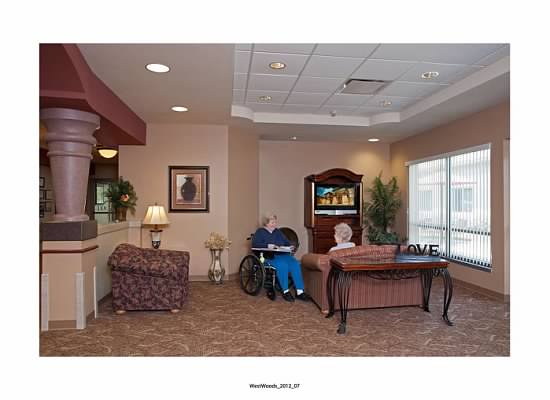
West Woods of Niles

1211 State Line Rd, Niles, MI 49120 (269) 684-2810
For profit - Limited Liability company 121 Beds THE PEPLINSKI GROUP Data: November 2025
Trust Grade
38/100
#260 of 422 in MI
Last Inspection: January 2025

Within standard 12-15 month inspection cycle. Federal law requires annual inspections.

Overview

West Woods of Niles has received a Trust Grade of F, indicating significant concerns and a poor overall reputation. It ranks #260 out of 422 nursing homes in Michigan, placing it in the bottom half of facilities statewide, but #3 out of 7 in Berrien County means there are only two local options that are better. The facility's performance is stable, with 7 issues noted in both 2024 and 2025, but it has reported serious concerns, including a failure to assess a resident's change in condition promptly, which delayed necessary medical treatment, and another case where a resident's pressure ulcer worsened, requiring hospitalization. Staffing appears to be a strength, with a turnover rate of 33%, which is below the state average, but the facility also faced $16,800 in fines, suggesting some compliance issues. Overall, while there are some strengths, such as average staffing ratings and quality measures, the serious incidents and poor trust grade raise significant red flags for families considering this home.

Trust Score
F
38/100
In Michigan
#260/422
Bottom 39%
Safety Record
High Risk
Review needed
Inspections
Holding Steady
7 → 7 violations
Staff Stability
○ Average
33% turnover. Near Michigan's 48% average. Typical for the industry.
Penalties
⚠ Watch
$16,800 in fines. Higher than 78% of Michigan facilities, suggesting repeated compliance issues.
Skilled Nurses
○ Average
Each resident gets 30 minutes of Registered Nurse (RN) attention daily — about average for Michigan. RNs are the most trained staff who monitor for health changes.
Violations
⚠ Watch
26 deficiencies on record. Higher than average. Multiple issues found across inspections.
★★★☆☆
3.0
Overall Rating
★★★☆☆
3.0
Staff Levels
★★★★☆
4.0
Care Quality
★★★☆☆
3.0
Inspection Score
Stable
2024: 7 issues
2025: 7 issues

The Good

  • 4-Star Quality Measures · Strong clinical quality outcomes
  • Full Sprinkler Coverage · Fire safety systems throughout facility
  • No fines on record
  • Staff turnover below average (33%)

    15 points below Michigan average of 48%

Facility shows strength in quality measures, fire safety.

The Bad

3-Star Overall Rating

Near Michigan average (3.1)

Meets federal standards, typical of most facilities

Staff Turnover: 33%

13pts below Michigan avg (46%)

Typical for the industry

Federal Fines: $16,800

Below median ($33,413)

Minor penalties assessed

Chain: THE PEPLINSKI GROUP

Part of a multi-facility chain

Ask about local staffing decisions and management

The Ugly 26 deficiencies on record

4 actual harm
Jan 2025 7 deficiencies
CONCERN (D)

Potential for Harm - no one hurt, but risky conditions existed

Deficiency F0582 (Tag F0582)

Could have caused harm · This affected 1 resident

Based on interview and record review the facility failed to provide a Skilled Nursing Facility-Advanced Beneficiary Notice of Non-coverage (SNF-ABN) and Notice of Medicare Non-Coverage (NOMNC) to 2 (R...

Read full inspector narrative →
Based on interview and record review the facility failed to provide a Skilled Nursing Facility-Advanced Beneficiary Notice of Non-coverage (SNF-ABN) and Notice of Medicare Non-Coverage (NOMNC) to 2 (Resident #26 and Resident #291) of 3 residents reviewed for proper notification related to Medicare A insurance coverage. Findings include: Resident #26 Review of an admission Record revealed Resident #26 had pertinent diagnoses which included: Chronic combined systolic (congestive) and diastolic (congestive) heart failure (increased fluid influences the heart's ability to pump), anxiety disorder, and dementia. Resident #291 Review of an admission Record revealed Resident #291 had pertinent diagnoses which included: spinal stenosis of the cervical region with surgical aftercare (surgical procedure on the neck). On 1/6/2025 at 10:22 AM., during entrance conference, a list of all discharged residents during the past 6 months, from Medicare A insurance coverage was requested from Nursing Home Administrator (NHA) A. On 1/6/2025 at 4:46 PM., NHA A provided an electronic copy of a list of discharged residents from Medicare A insurance coverage during the last 6 months. On 1/7/25 at 11:05 AM., this surveyor requested SNF Beneficiary Protection Notification Review document and all documented discharge information, including SNF-ABN and NOMNC forms for Resident #26 and Resident #291 from NHA A. On 1/7/25 at 9:49 AM., NHA A provided a completed SNF Beneficiary Protection Notification Review document for Resident #26 and Resident #291. NHA A had checked the boxes indicating a SNF-ABN and NOMNC forms were not provided to Resident #26, nor Resident #291 when they discharged from Medicare A insurance coverage. In an interview on 1/7/25 at 1:22 PM., Financial Services (FS) L reported Resident #26 and Resident #291 both should have received a NOMNC form indicating their coverage by Medicare A was ending. FS L reported she, NHA A, Administrative Assistant (AA) N and the admission coordinator were able to provide SNF-ABN and NOMNC forms to residents who were discharging from Medicare A services. FS L reported the responsibility of providing the forms was the admission coordinator. The position of admission coordinator was currently unfilled. In an interview on 1/7/25 at 1:50 PM., Administrative Assistant (AA) N reported she was in the role of admission coordinator for a time in September and October 2024 and she was unaware that NOMNC forms were to be provided to residents who had a planned discharge. AA N reported she was not in the role when Resident #26 nor Resident #291 were discharged from Medicare A insurance coverage. In an interview on 1/7/25 at 2:15 PM., NHA A reported she was aware no SNF-ABN nor NOMNC forms were provided to Resident #26 and Resident #291 prior to their discharge from Medicare A services. No SNF-ABN or NOMNC forms for Resident #26 and Resident #291 were provided by the time of exit.
CONCERN (D)

Potential for Harm - no one hurt, but risky conditions existed

Deficiency F0679 (Tag F0679)

Could have caused harm · This affected 1 resident

**NOTE- TERMS IN BRACKETS HAVE BEEN EDITED TO PROTECT CONFIDENTIALITY** Based on observation, interview and record review, the facility failed to provide consistent, meaningful and person centered act...

Read full inspector narrative →
**NOTE- TERMS IN BRACKETS HAVE BEEN EDITED TO PROTECT CONFIDENTIALITY** Based on observation, interview and record review, the facility failed to provide consistent, meaningful and person centered activities for 1 (Resident #29) of 2 reviewed for activities provided by the facility, resulting in the potential for loss of interaction, joy, self-esteem, growth, sense of wellbeing, autonomy, connectedness, identity, creativity, independence, pleasure, and comfort. Findings include: Resident #29 Review of an admission Record revealed Resident #29 was originally admitted to the facility on [DATE] with pertinent diagnoses which included persistent vegetative state. Review of Resident #29's Care Plan revealed, Per Social service interview: (Resident #29) . worked in fast food and retail. She enjoys music and church. (Resident #29) is dependent on staff for all activities and needs. Activity staff provide manicures, pedicures, music, church on TV or tablet. Date initiated: 4/9/20. Goal: In room activities of choice which include: Music, manicures, Reading books/magazines to her. Date Initiated: 4/9/20. Interventions: Assist to and from activities of choice as needed. Date Initiated: 4/9/20. Assist with reminiscing items, books and music Date Initiated: 4/9/20. Document and analyze activity preference and changes quarterly and prn (as needed) Date Initiated: 4/9/20. Engage in general conversation, state your name, position and purpose of visit prn. Date Initiated: 4/9/20. Provide assistance with outdoor patio activities weather permitting. Date Initiated: 4/9/20. Record activity attendance and analyze as needed to continue to evaluate a change in need. Date Initiated: 4/9/20. Review of Resident #29's Recreational Pursuits (Initial Assessment) dated 4/9/20 revealed, A. Past Activity Interests: 1. List activities/interests/hobbies the resident participated in: Per Social service interview: (Resident #29) prefers to be called (name redacted). She has 1 daughter and 3 sons. (Resident #29) worked in fast food and retail. She enjoys music and church. 2. Additional comments: (Resident #29) is dependent on staff for all activities and needs. B. Spiritual 1. List any spiritual activities the resident participated in: Church in house as scheduled. 2. Does the resident wish visits by the clergy of choice while in the home? Yes. 3. List the name and contact information: No contact information listed. C. Current activity participation. 1. Does the resident wish to participate in activities while in the home? Yes. 2. Does the resident wish to participate in group activities? yes. 3. Does the resident wish to go on outings? No. 4. Does the resident wish 1:1 with staff? yes. 5. Does resident like independent activities? Unknown. D. Limitations/Special Needs. 1. Activities should be modified to accommodate cognitive deficit? yes. 2. Activities should be modified to address communication deficit? Yes. 3. Activities should be modified to accommodate hearing deficit? no. 4. Activities should be modified to address visual deficit? No. 5. Assistance should be provided to get resident to the activity? yes. 6. If any of the above answered yes, please describe the accommodation that should be made to encourage/promote activity participation: this question was not answered. Review of Resident #29s Recreational Engagement reports revealed that Resident #29 had participated in 4 activities in the month of October 2024, 3 activities for the month of November 2024 and 3 activities for the month of December 2024. During an observation on 1/6/25 at 10:57 AM, Resident #29 was lying in bed awake. It was noted that Resident #29 did not have any music or television playing. There were no activity staff, or other facility staff in Resident #29's room interacting with Resident #29. During an observation 1/6/25 at 12:40 PM, Resident #29 was lying in bed awake. It was noted that Resident #29 did not have any music or television playing. There were no activity staff, or other facility staff in Resident #29's room interacting with Resident #29. During an observation on 1/7/25 at 1:16 PM, Resident #29 was lying in bed awake. It was noted that Resident #29 did not have any music or television playing. There were no activity staff, or other facility staff in Resident #29's room interacting with Resident #29. During an observation on 1/7/25 at 2:01 PM, Resident #29 was lying in bed awake. It was noted that Resident #29 did not have any music or television playing. There were no activity staff, or other facility staff in Resident #29's room interacting with Resident #29. During an observation on 1/8/25 at 10:24 AM, was lying in bed awake. It was noted that Resident #29 did not have any music or television playing. There were no activity staff, or other facility staff in Resident #29's room interacting with Resident #29. During an interview on 1/7/25 at 1:43 PM, Licensed Practical Nurse (LPN) JJ reported that Resident #29 was mostly bed bound and that facility staff only got Resident #29 up to provide her showers on her shower days. LPN JJ reported that Resident #29 enjoyed being up in her chair, but the activity department would only get her up for activities in the summer. LPN JJ reported that she would occasionally see activity staff come into Resident #29's room to paint her nails and toe nails, but she could not recall how long it had been since she had her nails done by the activity staff. LPN JJ was not able to report why the facility staff were not getting Resident #29 out of bed more often. During an interview on 1/9/25 at 10:09 AM, Certified Nursing Assistant (CNA) UU reported that She only ever saw Resident #29 up in her chair for activities during the summer months, or on her shower days. CNA UU reported that Resident #29 seemed to enjoy being in her geri chair, and she did not know why staff did not get her up more regularly. CNA UU reported that she hardly ever saw activity staff spending 1:1 time with Resident #29, and she mostly just laid in her bed. CNA UU reported that she had witnessed track with her eyes before, and that she felt that Resident #29 was much more coherent than some staff believed. CNA UU reported that she felt like Resident #29 would benefit from more activities. During an interview on 1/8/25 at 10:31 AM, LPN MM reported that Resident #29 was bed bound because she was in a vegetative state. LPN MM reported that she had not witnessed activity staff come to Resident #29's room and do any 1:1 activities with Resident #29. During an interview on 1/9/25 at 11:49 AM, CNA U reported that she did not know why Resident #29 never got out of her bed. CNA U reported that she never witnessed activity staff complete activities with Resident #29. During an interview on 1/8/25 at 12:45 PM, Clinical Care Coordinator (CCC) H reported that facility staff did not get Resident #29 out of bed routinely because positioning was difficult for Resident #29. CCCH was unable to report what type of activities staff were completing with Resident #29, or how often Activity staff were completing activities with Resident #29. During an interview on 1/9/25 at 10:13 AM, Therapy Manager (TM) VV reported that Therapy staff had not made any kind of recommendation for Resident #29 to not be up in her geri chair. TM VV reported that having Resident #29 up in her geri chair would be the appropriate for her. TM VV confirmed that they did not note positioning issues for Resident #29 with her most recent assessment. During an interview on 1/9/25 at 11:34 AM, Director of Nursing (DON) B reported that she did not know why facility staff were not getting Resident #29 up in her geri chair more often. DON B was not aware how often staff were providing activities for Resident #29. During an interview on 1/9/25 at 11:03 AM, Activities Director (AD) C reported that some of the benefits of activities for residents with cognitive deficits included sensory stimulation, improved mood, decreased boredom, feelings of happiness and sense of touch. AD C reported that the expectation was for staff to provide 1:1 visits with residents that did not get out of bed at least once a week for at least 15-20 minutes. AD C reported that she would like to see activities completed more often, but there were times with the expectation had not been met. AD C reported that she had contacted Resident #29's family to determine what kind of activities Resident #29 would enjoy. AD C was not able to confirm what kind of religion Resident #29 practiced, what kind of television shows Resident #29 enjoyed, and what kind music Resident #29 enjoyed, and reported that staff played oldies and summer fun music for her. AD C was not able to report why Resident #29 did not get out of bed. During an interview on 1/9/25 at 10:51 AM, Family Member (FM) RR reported that the facility staff had never reached out to her to determine what kind of activities Resident #29 would benefit from. FM RR reported that Resident #29 enjoyed rap, pop, R and B music. FM RR reported that Resident #29 used to love cooking and watching cooking shows such as Chef [NAME]. FM RR reported that Resident #29 was a very social person, and she felt like she would definitely enjoy being up in her chair and around others. FM RR reported that Resident #29 also loved reading very much and she felt that would very much enjoy having staff read books to her. Despite resident's cognitive status, their activity involvement was significantly related to better scores on care relationship, positive affect, restless tense behaviour, social relations, and having something to do. [NAME] D, de [NAME] J, Willemse B, Twisk J, Pot AM. Activity involvement and quality of life of people at different stages of dementia in long term care facilities. Aging Ment Health. 2016;20(1):100-9. doi: 10.1080/13607863.2015.1049116. Epub 2015 Jun 2. PMID: 26032736.
CONCERN (D) 📢 Someone Reported This

A family member, employee, or ombudsman was alarmed enough to file a formal complaint

Potential for Harm - no one hurt, but risky conditions existed

Accident Prevention (Tag F0689)

Could have caused harm · This affected 1 resident

**NOTE- TERMS IN BRACKETS HAVE BEEN EDITED TO PROTECT CONFIDENTIALITY** This citation pertains to intake MI00147700. Based on interview and record review, the facility failed to prevent the elopement ...

Read full inspector narrative →
**NOTE- TERMS IN BRACKETS HAVE BEEN EDITED TO PROTECT CONFIDENTIALITY** This citation pertains to intake MI00147700. Based on interview and record review, the facility failed to prevent the elopement and ensure the safety in 1 (Resident #238) of a total sample of 18 reviewed for accidents resulting in Resident #238 exiting the facility from a staff exit door and getting 30 feet away from the building before staff found her with the potential for serious harm, injury, and/or death. Findings include: Resident #238 Review of an admission Record revealed Resident #238 was originally admitted to the facility on [DATE] with pertinent diagnoses which included difficulty in walking. Review of Resident #238's Wandering Risk Assessment Scale dated 9/19/24 indicated that Resident #238 was identified as a high risk to wander, and the facility staff placed a wander guard device on her prophylacticly. Review of incident report dated 10/7/24 revealed, (Resident #238) exited the building and was accompanied by staff back into the facility. (Resident #238) was observed outside in the courtyard, in her wheelchair about 30 feet from the facility from the Apple exit door by CNA (Certified Nursing Assistant) W who was coming back from her break . (CNA W) had to let her (Resident #238) in due to her wander guard locking the door. (CNA W) escorted her (Resident #238) to the Sunshine room where she notified the nurse, Registered Nurse (RN) DD that (Resident #238) was in the courtyard. RN DD then notified Director of Nursing (DON) B, called a resident alert and took a head count for all other residents, completed a skin check, and took a set of vitals. (Resident #238) stated the door was open and she was going outside to call her sister because she gets better phone reception. CNA X exited the Apple door at 6:55 PM for her break and (Resident #238) was seen exiting behind her at 6:55 PM. CNA LL is at Apple nurses station and hears alarm, gets up and walks to the exit door where alarm is sounding and turns is off at 6:56 PM as she thought it was staff member CNA X who triggered the alarm as she had just told her she was going to break . During an interview on 1/8/25 at 1:17 PM, CNA W confirmed that she was the staff member that had found Resident #238 in the courtyard. CNA W' reported that she was on break and heard Resident #238 from where she was sitting and went to the gate and observed Resident #238 in her wheelchair about 30 feet from the facility door attempting to exit the facility's courtyard. CNA W reported that she assisted Resident #238 back into the facility, and that there were no alarms going off in the building. CNA W reported that she immediately told Resident #238's nurse that Resident #238 had exited the building, and they began a count of all other residents. During an interview on 1/8/25 at 1:09 PM, RN DD reported that he found out that Resident #238 had left the building when CNA W reported to him that she had just found Resident #238 in the courtyard. RN DD reported that after he assessed Resident #238 for injury and ensured all other residents in the facility were safe and accounted for, he checked the door to see how Resident #238 had gotten out. RN DD reported that he confirmed that Resident #238's wander guard was working and the door that Resident #238 had exited was also working. During an interview on 1/8/25 at 1:31 PM, CNA LL reported that she had been sitting at the nurses station closest to the door that Resident #238 had exited on 10/7/24. CNA LL confirmed that when the door alarm went off, she had assumed it was a staff member that had just left on break, and she went over to the door and turned off the alarm without checking to ensure that there were any residents outside of the facility. CNA LL confirmed that she was aware of the facility's elopement policy, and that she did not follow the policy when she reset the door alarm without ensuring that a resident had not exited the facility. During an interview on 1/8/25 at 2:00 PM, Nursing Home Administrator (NHA) A reported that she had discovered that the root cause for Resident #238's elopement was a staff member (CNA LL) had not followed the elopement policy. NHA A confirmed that CNA LL had turned off the door alarm when Resident #238 exited the facility, and she (CNA LL) had not checked to ensure that a resident had triggered the alarm. Review of the facility's Elopement Policy last revised February 2021 revealed, Policy: It is the policy of this facility to assess residents and plan their care to prevent foreseeable accidents related to wandering and exit seeking behaviors which has the potential to lead to elopement . 3. Response to a sounding door alarm. a. Check the alarm panel to determine which door has been triggered. DO NOT ASSUME someone else has already done this. b. Check the exit door for any exiting resident by means of a visual check. A visual check means observing the area around the exit and may require leaving the building and checking the grounds. c. If an exit door is triggered, the cause is evaluated and re-set after the resident is re-directed and their safety is assured. Consider the applicability of conducting a census count with an activated alarm. d. If unable to locate a resident, or in the event of an elopement drill, a building search is conducted. The Charge Nurse or designee shall announce Resident Alert, Room . Available employees are to report to their stations for assignments in this regard . The facility was granted a Past Non-Compliance at the time of exit due to no further like incidents had occurred, the facility re-trained pertinent staff, the Elopement policy was reviewed and deemed appropriate, and the facility had achieved sustained compliance. Therefore, no plan of correction will be required. During the onsite survey, past noncompliance (PNC) was cited after the facility implemented actions to correct the noncompliance which included re-training pertinent staff, completing elopement drills, and reviewing the elopement policy. The facility was able to demonstrate monitoring of the corrective action and maintained compliance.
CONCERN (D)

Potential for Harm - no one hurt, but risky conditions existed

Deficiency F0868 (Tag F0868)

Could have caused harm · This affected 1 resident

Based on interview and record review, the facility failed to ensure that that QAA (quality assessment and assurance) meetings had the Medical Director as a mandatory attendee at least quarterly result...

Read full inspector narrative →
Based on interview and record review, the facility failed to ensure that that QAA (quality assessment and assurance) meetings had the Medical Director as a mandatory attendee at least quarterly resulting in the potential for the Medical Director to not be notified of quality deficiencies occurring in the facility. Findings include: Review of the facility's Quality Assurance Performance Improvement Program policy last revised January 2015 revealed, Policy: With the support of the governing body and administration, it is the policy of this facility, to implement and maintain a Quality Assessment and Performance Improvement Program (QUAPI). QUAPI activities will involve members at all levels of the facilities organization to identify opportunities for improvement; address gaps in systems or processes; develop and implement an improvement or corrective plan; and continuously monitor the effectiveness of actions . 2. Governance and Leadership: a. The Quality Assurance Committee meets a minimum of monthly and is designated as the steering committee to oversee QUAPI and provide opportunity to actively engage the medical director in the process .c. The steering committee will enlist teams of caregivers across all levels and departments of the organization to identify potential concerns, and contribute to root cause analysis and performance improvement plans. And at a minimum will include i. The Administrator ii. The Director of Health Care Services. iii. A physician. iv. At least 3 other members of the facility staff . During an interview on 1/8/25 at 1:37 PM, Nursing Home Administrator (NHA) A reported that the facility did not have a Medical Director attend the QUAPI meetings for April, May, June and August and September 2024. NHA A reported that she was aware that the Medical Director was required to attend at least once per quarter, and that she had attempted to get the former Medical Director to attend on multiple occasions, but he still missed 5 months of attendance including one quarter. The facility was granted a Past Non-Compliance at the time of exit due to the new Medical Director attending QUAPI in 10/2024, 11/2024, and 12/2024, the facility re-educated pertinent staff, the QUAPI policy was reviewed and deemed appropriate, and the facility had achieved sustained compliance. Therefore, no plan of correction will be required. During the onsite survey, past noncompliance (PNC) was cited after the facility implemented actions to correct the noncompliance which included re-educating pertinent staff, reviewing the QUAPI policy, and ensuring that the new Medical Director attends at least one meeting quarterly. The facility was able to demonstrate monitoring of the corrective action and maintained compliance.
CONCERN (E)

Potential for Harm - no one hurt, but risky conditions existed

Deficiency F0882 (Tag F0882)

Could have caused harm · This affected multiple residents

Based on interview and record review, the facility failed to ensure that a qualified Infection Preventionist worked at least part-time at the facility, was provided sufficient time to perform the Infe...

Read full inspector narrative →
Based on interview and record review, the facility failed to ensure that a qualified Infection Preventionist worked at least part-time at the facility, was provided sufficient time to perform the Infection Preventionist role, and was present to properly assess, implement, and manage the Infection Prevention and Control Program. Findings include: Review of the facility's Infection Prevention and Control Program with a reference date of 3/2020, revealed: It is the policy of this facility to implement the Infection Prevention and Control Program utilizing a systematic, coordinated and continuous approach guided by OSHA regulations, and pertinent state, federal and local regulations pertaining to infection control. The Infection Prevention Manager has the authority to institute any surveillance, prevention, or control measure indicated. Review of a Facility Assessment with a reference date of 10/23/24 revealed: Evaluation of Infection Prevention and Control Program: .The Infection Preventionist is a dedicated position to the role. In an interview on 1/8/25 at 1:13pm, Infection Preventionist (IP) J reported she was behind on several of her responsibilities including offering covid 19 vaccinations to residents, tracking the use antibiotics for residents, and completing staff fit testing to ensure staff members were using the correct size particulate respirators when they entered isolation rooms. IP J reported approximately 10 residents were eligible and consented to receive the vaccination for a few weeks but she had not had time to complete the necessary steps to provide the vaccinations. IP J confirmed receiving the covid vaccination was very important at this time as the facility was currently experiencing a covid outbreak. IP J reported she had not completed any antibiotic stewardship indicators for the month of January 2025. IP J reported to be effective, monitoring of antibiotic use should be done daily. In an interview on 1/9/25 at 9:17am, IP J reported when she was hired for the role, she was told her time would be solely dedicated to the responsibilities of that role, but more recently was told she would have other duties based on the facility's census. IP J reported she had worked as a floor nurse 9 times in the recent weeks, been on-call 1-3 times per week, and had various other duties that interfered with her ability to maintain the responsibilities of her role as Infection Preventionist. In an interview on 1/9/25 at 11:57am, Nursing Home Administrator (NHA) A confirmed that IP J had worked as a floor nurse several times in recent weeks, that some requirements of the Infection Control program were not in compliance, and the IP J reported she was not able to complete all her responsibilities as the Infection Preventionist. Review of a list of residents waiting for the covid 19 vaccination, provided by the facility, revealed 10 residents were awaiting the covid 19 vaccination.
CONCERN (E)

Potential for Harm - no one hurt, but risky conditions existed

Deficiency F0887 (Tag F0887)

Could have caused harm · This affected multiple residents

Based on interview and record review, the facility failed to ensure COVID-19 immunizations were offered to 10 residents reviewed for COVID-19 immunizations, resulting in an increased risk for infectio...

Read full inspector narrative →
Based on interview and record review, the facility failed to ensure COVID-19 immunizations were offered to 10 residents reviewed for COVID-19 immunizations, resulting in an increased risk for infection, and the potential spread of COVID-19 infection to other residents, staff, and visitors. Findings include: Review of the facility's Covid-19 Vaccine Administration policy, with a reference date of May 2023 revealed: It is the policy of this facility to facilitate through partnership with the local health department, consulted pharmacy, and contracted pharmacy to provide the COVID-19 Vaccine according to standards set forth by the Center for Disease Control and Prevention. In an interview on 1/8/25 at 1:13pm, Infection Preventionist (IP) J reported she was behind on several of her responsibilities including offering covid 19 vaccinations to some residents. IP J reported the facility offered a round of covid vaccinations in October 2024, but there had not been follow up for residents who could not receive the vaccination at that time due to the lack of a consent form, or who were admitted after that time. IP J reported approximately 10 residents were eligible and had consented to receive the vaccination, but she had not had time to complete the necessary steps to provide the vaccinations. IP J confirmed receiving the covid vaccination was very important at this time as the facility was currently experiencing a covid outbreak. When further queried about the length of time that had passed since the residents had consented to the vaccination, IP J reported it had been at least a few weeks. IP J reported she had been delayed in ordering the vaccination because she was told she had to order at least 10 doses at a time. In an interview on 1/8/25 at 2:33pm, Pharmacy Representative (PR) TT reported any facility it serviced, including this facility, should stock covid vaccinations onsite. PR TT reported there was no minimum amount of vaccinations the facility could order at one time. In an interview on 1/9/25 at 9:17am, IP J confirmed the facility had not provided the covid 19 vaccination to several residents who had consented to having the vaccination. IP J reported the facility had not provided residents with a covid vaccination in a few months. IP J reported the facility did not have any covid vaccinations available onsite. Review of a list of residents waiting for the covid 19 vaccination, provided by IP J, revealed 10 residents were awaiting the covid 19 vaccination.
CONCERN (F)

Potential for Harm - no one hurt, but risky conditions existed

Infection Control (Tag F0880)

Could have caused harm · This affected most or all residents

**NOTE- TERMS IN BRACKETS HAVE BEEN EDITED TO PROTECT CONFIDENTIALITY** Based on observation, interview, and record review the facility failed to 1) implement transmission-based precautions for 1 (Res...

Read full inspector narrative →
**NOTE- TERMS IN BRACKETS HAVE BEEN EDITED TO PROTECT CONFIDENTIALITY** Based on observation, interview, and record review the facility failed to 1) implement transmission-based precautions for 1 (Resident #35) of 18 residents reviewed for isolation precautions, 2) properly clean and sanitize resident shared equipment and 3) ensure proper use of personal protective equipment (PPE) resulting in the potential for the spread of infection, cross-contamination, and disease transmission for residents residing in the facility. Findings include: Review of CDC's Core Infection Prevention and Control Practices for Safe Healthcare Delivery in All Settings, published 4/12/24 by the Centers for Disease Control and Prevention revealed: Adherence to infection prevention and control practices is essential to providing safe and high-quality patient care across all settings where healthcare is delivered .core practices include: clean and disinfect .frequently touched surfaces .ensure proper use of personal protective equipment .implement additional precautions (i.e., Transmission-Based Precautions) . 1. Transmission Based Precautions Resident #35 Review of an admission Record revealed Resident #35 was originally admitted to the facility on [DATE] with pertinent diagnoses which included need for assistance with personal care. Review of Resident #35's Orders revealed, Enteric Precautions every day for C-DIFF (Clostridium difficle, is a highly contagious germ that can cause diarrhea and inflammation of the colon.) Start date: 12/23/24. During an observation on 1/6/25 at 10:22 AM, Resident #35 was sitting in her room. It was noted that Resident #35's room door did not have any signs indicating that Resident #35 was in isolation precautions. It was also noted that there was not a cart outside of Resident #35's room door with personal protective equipment (PPE) in it for staff to wear when caring for Resident #35. During an observation on 1/6/25 at 10:26 AM, A staff member entered Resident #35's room to take Resident #35 to an activity outside of Resident #35's room. It was noted that the staff member did not don PPE prior to entering Resident #35's room. During an observation on 1/6/25 at 12:06 PM, It was noted that Resident #35 had a sign on her room door that stated Resident #35 was on contact precautions. It was also noted that a cart had been placed outside of Resident #35's room door with PPE for staff. During an interview on 1/6/25 at 12:13 PM, Licensed Practical Nurse (LPN) MM reported that Resident #35 had been on isolation precautions since 12/23/24. LPN MM reported that she did not see that Resident #35 was missing an isolation precautions sign on her door and a cart for PPE outside of her room earlier that morning. LPN MM confirmed that staff were required to don PPE prior to entering Resident #35's room. During an interview on 1/6/25 at 12:14 PM, Clinical Care Coordinator (CCC) H reported that Resident #35 had been missing a PPE cart and sign for her door earlier that day. CCC H reported that staff had removed the PPE cart and sign in error. CCC H confirmed that staff had not been following isolation precautions for Resident #35 as her room had been missing the sign to indicate she was on isolation precautions and there was not PPE available outside of her room. 2. Resident Shared Equipment During an observation on 1/6/25 at 10:27am, 3 mechanical lift devices were stored in the hallway of the 200 hall. Each shared piece of equipment was noted to be soiled with dust and debris on the frames. 2 of the devices had foot platforms where a resident would place their feet while using the device, and the platforms were soiled with dust, debris and particles of food. The padded knee block of one device was soiled with a dried white liquid. The padded hand grip, where a resident places their hands during use, was soiled with a dried white liquid. Each machine had a cannister holder mounted to it, but no cannisters were present. During an observation on 1/6/25 at 10:37am, Certified Nursing Assistant (CNA) S exited a resident room [ROOM NUMBER], with a mechanical lift device, pushed the device into room [ROOM NUMBER] and closed the door. The device was not cleaned between resident use. During an observation on 1/6/25 at 10:42am, CNA S exited room [ROOM NUMBER] with the mechanical lift and returned it to the hallway in the area where it was previously observed. The mechanical lift remained soiled in the same manner as it was previously observed. Resident #43, who had previously been in his bed in room [ROOM NUMBER], exited the room via wheelchair, pushed by an unidentified CNA. In an interview on 1/6/25 at 2:10pm, CNA S reported she was not sure when shared equipment, such as mechanical lifts, should be cleaned. When further queried, CNA S reported the shared equipment used to have cannisters of sanitizing wipes on them, but they no longer did, and she was unsure if sanitizing wipes were available anywhere else. CNA S confirmed she did not sanitize the shared equipment between uses when she transferred residents on this date. In an interview on 1/8/25 at 1:13pm, Infection Preventionist (IP) J reported it was important to sanitize any shared equipment between resident use to reduce the likelihood of cross contamination. IP J reported shared equipment should have cannisters of sanitizing wipes attached to the device and staff should disinfect the device after each use. 3. Personal Protective Equipment During an observation on 1/6/25 at 10:26am, a sign posted on the door frame of room [ROOM NUMBER] read: Under observation: face shield, N95, gown, gloves. During an observation on 1/6/25 at 10:32am, Licensed Practical Nurse (LPN) CC entered room [ROOM NUMBER] and wore a surgical mask for personal protective equipment (PPE). LPN CC was observed administering medication to the only resident in the room. In an interview on 1/6/25 at 10:37am, LPN CC reported she entered room [ROOM NUMBER] while only wearing a surgical mask for PPE and that the resident of the room was in isolation due to an exposure to a covid positive individual. When further queried about the type of PPE that was required to enter room [ROOM NUMBER], LPN C confirmed staff were required to wear an N95 mask, gown, gloves, and a face shield in effort to reduce the risk of a possible exposure to the covid 19 virus and accidental spread of the disease. LPN CC stated: You caught me. I forgot. During an observation on 1/6/25 at 11:04 am, Activity Aide (AA) D entered room [ROOM NUMBER] wearing a surgical mask and gloves. AA D exited the room a few minutes later and resumed preparing beverages for residents without performing hand hygiene. In an interview on 1/6/25 at 11:09am, AA D reported the resident in room [ROOM NUMBER] was in observation following an exposure to covid 19. When further queried about the PPE staff should wear when entering room [ROOM NUMBER], AA D reported staff should wear gown, gloves, face shield and N95 mask but stated the PPE guidelines were confusing. AA D confirmed she only wore a surgical mask for PPE when she entered room [ROOM NUMBER]. In an interview on 1/8/25 at 1:13pm, Infection Preventionist (IP) J reported staff members should wear gown, gloves, face shield and an N95 mask any time they enter a room that has an observation sign hanging on the door frame. IP J reported the facility placed residents in observation when they had been exposed to another individual who was covid positive. IP J reported staff were instructed to wear full PPE in rooms under observation in effort to reduce their likelihood of also having exposure to the virus and to reduce the potential for spreading it others. IP J confirmed that a resident in room [ROOM NUMBER] was under observation for covid on 1/6/25. When further queried, IP J reported the facility was not moving residents if their roommate had a covid exposure. IP J reported if one resident of a semi-private room had a covid exposure, staff should wear an N95 mask, face shield, gloves, and a gown anytime they enter the room, regardless of which resident they were their to assist. IP J reported all staff should wear a surgical mask that covers their nostrils and mouth while in the hallways or common areas of the facility at this time. During an observation on 1/6/25 at 10:13am, an unidentified staff member was observed walking through the 200 hall with a surgical mask resting below her nostrils. During an observation on 1/6/25 at 2:09pm, an unidentified nurse on the 200 hall was observed wearing a surgical mask with the mask resting below her nostrils. During an observation on 1/9/25 at 8:43am, an unidentified staff member was observed walking through the 200 hall with a surgical mask resting below her nostrils. During an observation on 1/9/25 at 10:09am an unidentified staff member from the housekeeping department was observed walking in the hallway with a surgical mask resting below her nostrils. During an observation on 1/6/25 at 12:44 PM, it was noted that a room [ROOM NUMBER] was on isolation precautions for Covid-19 observation. Outside of the room door was a PPE cart and a sign was placed on the door that indicated staff were required to wear a gown, gloves, face shield, and N-95 respirator prior to entering the room. At 12:45 PM, Certified Nursing Assistant (CNA) AA entered room [ROOM NUMBER] without donning any PPE. During an interview on 1/6/25 at 12:55 PM, CNA AA reported that she did not wear any PPE when entering the room. CNA AA reported that she did not know she was suppose to wear PPE prior to entering room [ROOM NUMBER]. CNA AA confirmed that she was aware that room [ROOM NUMBER] was on isolation precautions. During an observation on 1/6/25 at 12:57 PM, It was noted that a room [ROOM NUMBER] was on isolation precautions for Covid-19 observation. Outside of the room door was a PPE cart and a sign was placed on the door that indicated staff were required to wear a gown, gloves, face shield, and N-95 respirator prior to entering the room. At 12:57 PM, Financial Services (FS) L entered room [ROOM NUMBER] without donning PPE. At 1:00 PM, CNA AA entered room [ROOM NUMBER] without first donning PPE. During an observation on 1/9/25 at 9:04 AM, CNA U was noted to be walking down the 100 hall wearing her surgical mask improperly exposing her nose and mouth. During an observation on 1/6/25 at 2:46 PM, CNA GG was walking down the 100 hall wearing her surgical mask improperly exposing her nose and mouth. It was noted that when CNA GG saw this writer she said Oops and pulled her mask up to cover her mouth and nose. During an observation on 1/7/25 at 12:10 PM, CNA GG was walking down the 100 hall wearing her surgical mask improperly exposing her nose and mouth.
Jul 2024 4 deficiencies 2 Harm
SERIOUS (G) 📢 Someone Reported This

A family member, employee, or ombudsman was alarmed enough to file a formal complaint

Actual Harm - a resident was hurt due to facility failures

Quality of Care (Tag F0684)

A resident was harmed · This affected 1 resident

**NOTE- TERMS IN BRACKETS HAVE BEEN EDITED TO PROTECT CONFIDENTIALITY** This citation pertains to intake MI00143902 Based on interview and record review the facility failed to ensure a timely assessme...

Read full inspector narrative →
**NOTE- TERMS IN BRACKETS HAVE BEEN EDITED TO PROTECT CONFIDENTIALITY** This citation pertains to intake MI00143902 Based on interview and record review the facility failed to ensure a timely assessment for a change in condition in 1 (Resident #100) of 1 resident reviewed for timely assessment for a change in condition resulting in the delay of communication with a provider, delay of transfer to acute care setting for evaluation and a delay of treatment. Findings include: Resident #100 Review of an admission Record revealed Resident #100 had pertinent diagnoses which included: rhabdomyolysis (muscle breakdown that causes toxins to leak into the bloodstream), abnormalities of gait (walking) and mobility, and acidosis (blood becomes too acidic due to problems related to kidneys or lungs). Review of a Minimum Data Set (MDS) assessment for Resident #100, with a reference date of [DATE] revealed a Brief Interview for Mental Status (BIMS) score of 15/15 which indicated Resident #100 was cognitively intact. In a telephone interview on [DATE] at 3:49 PM., Family Member (FM) S reported that he had visited Resident #100 on the Friday before she was sent to the hospital, and Resident #100 was as good as she had been. FM S reported that Resident #100 was sent to the acute care hospital (Name Omitted) by the facility on the Monday after the visit. FM S reported that Resident #100 was sent to the local emergency room (Name Omitted) and was then transferred to a larger hospital (Name Omitted) in another town for further evaluation and treatment. FM S reported he received a call from the acute care hospital (Name Omitted) and the caller told him that he needed to get there pretty quickly, that Resident #100 had declined, and her condition was grave. FM S reported that Resident #100 died at the acute care hospital (Name Omitted) on Monday, [DATE]. Review of Progress Note/Alert Note for Resident #100 dated [DATE] at 22:49 PM., authored by Contract Nurse (CN) D revealed . Resident left arm observed swollen, red, and warm to touch, DR (doctor) called unable to contact, voice mail left, note put into Dr's book. Review of Progress Note/Alert Note for Resident #100 dated [DATE] at 5:04 AM., authored by CN D revealed .upon transferring resident to restroom resident stated she felt dizzy, resident was transferred back to bed, bp (blood pressure) was obtained 63/38 called MD (doctor), per dr order push fluids, lay head flat, and raise legs, recheck bp, 52/33, 69/37, 70/41. Resident showing no signs of distress, no signs of hypotension (low blood pressure). Resident stated laying back in bed she felt better. Resident stated she cannot consume large amounts of water due to a previous surgery, writer explained to resident the urgency of drinking water to help raise her bp. Resident in bed, comfortable .will continue to monitor bp throughout the day. Review of Progress Note/Interdisciplinary Documentation for Resident #100 dated [DATE] at 9:43 AM., revealed .complains of not feeling well, color is pallor, left hand is swollen, elevated on a pillow. Noted left hand open area clean with a small amount of drainage, left hand and arm almost up to the elbow is very warm to touch and red, skin turgus (turgor- skin's ability to change shape and return to normal) return is very slow. (Name Omitted) doctor was notified, left message about pts (patients) condition. Waiting for return call . Review of Progress Note/Interdisciplinary Documentation for Resident #100 dated [DATE] at 9:45 AM., revealed .pt had 4 large episodes of diarrea (diarrhea) with a foul smell, blood pressures times 5 within 30 min period runs 60/40 p85 (pulse) . Review of Progress Note/Interdisciplinary Documentation for Resident #100 dated [DATE] at 12:35 PM., revealed . Orders received from Dr. to send Resident #100 to the hospital for further evaluation of decreased B.P., weakness and fatigue and redness and warmth to the left arm. In an interview on [DATE] at 4:10 PM., Nurse Practitioner (NP) R reported that the nurses know to contact her directly if they are unable to reach an on-call provider. NP R reported that the nurses should not let the patient suffer, there needs to be some action to resolve the situation. In an interview on [DATE] at 4:22 PM., Licensed Practical Nurse (LPN) C reported when a call was placed to the on-call provider after hours, that call was answered by the call service. The call service would take note of the resident specific information, and then the call service would transfer the nurse call to the provider to speak to them. In an interview on [DATE] at 4:33 PM., Registered Nurse (RN) G reported that non-urgent resident situations are placed into the doctor's book. RN G reported that the provider looks at the doctor's book and follows up with requests when they are in the building. RN G reported that non-urgent things like a fall without injury or a resident request to see the doctor are things to put in the doctor's book. RN G reported that a decreased blood pressure or signs of an infection were not something that should go in the doctor book, for those situations the doctor should be called. In an interview on [DATE] at 4:33 PM., Infection Preventionist (IP) F reported that if the on-call provider did not call back within 5 minutes, the nurse should call back. The nurse practitioner was here every day during the week, and you could call her 24 hours a day 7 days a week. There was an on call answering service to use during non-business hours. IP F reported that she did not recall any staff having difficulties getting ahold of a provider after hours. In an interview on [DATE] at 9:37 AM., NP Q reported that the expectation was that if the on-call provider did not respond within 15 minutes, the nurse needed to call back. NP Q stated that if the symptoms were manageable with the resources available, then do that, if not send them to the hospital. NP Q stated If their vitals are crashing then they need to be sent out. NP Q reported that she would not question a resident transfer to the emergency room in an urgent situation. NP Q reported that she would expect that she or the on-call provider were notified of the resident transfer. In an interview on [DATE] at 10:04 AM., Clinical Care Coordinator (CCC) I reported that she did not recall what happened with Resident #100 before she was sent to the hospital. CCC I accessed Resident #100's online hospital record and reported that she was admitted to the ICU (Intensive Care Unit) for septic shock, cellulitis of the left upper arm and a UTI (urinary tract infection). In an interview on [DATE] at 11:35 AM., CCC I provided this surveyor a handwritten timeline related to Resident #100's condition prior to transfer to acute care hospital (Name Omitted). CCC I reported that from the first documented sign and symptom of infection were noted in Resident #100's left arm on [DATE] at 22:49 to the documented order to transfer to the emergency room on [DATE] at 12:35 PM., was too long for the resident to wait for physician order to transfer. In an interview on [DATE] at 1:19 PM., IP F reported that Resident #100's blood pressure reading was critical, and she should have been sent out. IP F reported that the nurse would call the on-call provider through the answering service, if they didn't call back, then the nurse should call again. IP F reported that if there still was no response from the on-call provider the nurse should have called the on-call manager for guidance. In a telephone interview on [DATE] at 2:38 PM., Call Center Coordinator (CCC) W reported that the on-call answering service does not have the option for a nurse calling in to leave a voice mail message (this is in contrast to CN D's written note). CCC W reported that the operator asks the nurse calling specific questions related to the patient such as name, date of birth , and reason for the call. The operator would then put the nurse calling on hold and would then call the provider on call. If the provider answered the phone the nurse's call was transferred to the provider. If there was no answer by the provider, the operator should instruct the nurse if they had not received a call back within 15 minutes to call again. CCC W reported that the operator would continue to reach out to the on-call provider every 15 minutes. If contact was not made with the on-call provider, the operator had instructions to continue to reach out to a provider every 15 minutes until someone was reached. CCC W reported that calls related to nursing home residents were considered priority calls. In a telephone interview on [DATE] at 3:28 PM., Director of Nursing (DON) B reported that she remembered Resident #100 going to the hospital. DON B reported that she went to look at Resident #100, remembered her arm was swollen, and the nurse had gotten an order to transfer her to the hospital for treatment. DON B reported that her expectations for contacting the on-call provider was to call and speak to them. DON B reported that if the nurse had to leave a voice mail for the on-call provider her expectation was that the nurse would call back until they spoke with an on-call provider. DON B reported that if the nurse could not get ahold of the on-call provider, the nurse should call her, she was available 24 hours a day, 7 days a week. This surveyor while on the phone with DON B read the progress note entries for Resident #100 from the dates of [DATE] and [DATE] and DON B reported that her expectations were that the nurse should have continued to try to contact the on-call provider regarding Resident #100's condition. DON B reported that nurse definitely should have called back to the on-call provider after the repeated blood pressure readings were low and Resident #100 should have been sent out to the hospital long before she was sent. DON B reported that Resident #100's blood pressure readings were low enough to be emergent and the nurse should have sent he to the hospital when her blood pressure readings did not improve. In a telephone interview on [DATE] at 3:57 PM., Certified Nurse Assistant (CNA) N reported that she recalled on the day Resident #100 was sent to the hospital from the facility, Resident #100 looked very pale, and she was very nauseous. CNA N stated I remember the nurse telling me Resident #100 was being sent to the hospital. I remember I checked her vitals and got her ready for the hospital, Resident #100 had loose stools (diarrhea), her blood pressure was very low, and her heart rate was high. In a telephone interview on [DATE] at 4:18 PM., CN D reported that she worked with Resident #100 on the night shift before she was transferred to the hospital. CN D reported that she made a note in the doctor book that Resident #100's arm was swollen. CN D reported that Resident #100's blood pressure was low, and she contacted the on-call provider. CN D reported that on-call provider gave her orders to push fluids, lay her head flat, and elevate her legs. CN D reported that she felt that Resident #100 needed to go to the hospital, and that her blood pressure was too low. This surveyor asked CN D if she called any nursing managers, or Resident #100's family, or the on-call provider again and CN D stated I don't remember calling anyone else, but I spoke to the other nurses, and no one said to do anything else. CN D stated, I learned after that night, you can call the family and ask would they want their family member sent to the hospital. CN D stated I don't know if I should have called back again and again to try to convince the on-call to send her (Resident #100) to the hospital, but I just monitored her all night. Review of ED Provider Note dated [DATE] revealed . diagnosis septic shock, urinary tract infection without hematuria (blood in the urine), Cellulitis of the left upper extremity, lactic acidosis, elevated liver function tests, AKI (acute kidney injury), Sepsis with multi-organ dysfunction . Review of H&P Notes dated [DATE] at 19:55 PM., revealed .speak with patient's family who stated they saw her on Friday (7/28) and that at that time she was able to ambulate and that her left arm had the healing wound but that it was not erythematous. They stated that she typically has some swelling in that forearm (midway) and hand that worsens with ambulating when she lets it hang down . Review of Critical Care History and Physical Exam dated [DATE] at 10:16 PM., revealed . 65 yo (year old) F (female) presented to (Name Omitted) ED (emergency department) 7/31 for generalized weakness, diarrhea, and abdominal pain. Hx (history of) L (left) forearm pressure ulcer now appearing cellulitic for the past several days. She was hypotensive on arrival, received 3L (liters) of IVF (intravenous fluids) .for septic shock. Urinalysis without a clean sample, nitrite positive however not convincing for infection, only other current source is LUE (left upper extremity) cellulitis . Review of ED to hosp-admission . dated [DATE] at 11:17 AM., revealed .patient's vitals are significant for severe hypotension of 63/39 .patient is significantly ill appearing pale .pulses are weak though 1+ .immediate concern for septic shock related to infection, likely cellulitis of the left upper extremity . patient leaving with EMS, vitals currently stable . Review of Physician Discharge as deceased Summary dated [DATE] at 6:17 AM., .admitted [DATE] .reason for admission septic shock .not long after ICU arrival pt lost pulses, PEA (pulseless electrical activity, a type of cardiac arrest that occurs when the heart stops beating due to weak electrical activity) arrest . ROSC (return of spontaneous circulation) was achieved after 10 minutes .discussed care with family member who requested that patient be made a DNR (do not resuscitate) .was noted to be in asystole again at 0611 when TOD (time of death) was called, patient without any heart tones auscultated, no central pulses .
SERIOUS (G) 📢 Someone Reported This

A family member, employee, or ombudsman was alarmed enough to file a formal complaint

Actual Harm - a resident was hurt due to facility failures

Pressure Ulcer Prevention (Tag F0686)

A resident was harmed · This affected 1 resident

This citation pertains to Intake MI00144494 Based on interview and record review the facility failed to prevent the worsening of a pressure ulcer in 1 (Resident #101) of 2 residents reviewed for press...

Read full inspector narrative →
This citation pertains to Intake MI00144494 Based on interview and record review the facility failed to prevent the worsening of a pressure ulcer in 1 (Resident #101) of 2 residents reviewed for pressure ulcers resulting in Resident #101 being sent to the hospital for evaluation and/or treatment. Findings include: Resident #101 Review of an admission Record revealed Resident #101 had pertinent diagnoses which included: pressure ulcer of the sacral region stage 4, osteomyelitis of the vertebra, sacral and sacrococcygeal region (infection of the vertebra bone in the sacral region), and functional quadriplegia (the complete inability to move). Review of a Minimum Data Set (MDS) assessment for Resident #101, with a reference date of 4/11/24 revealed a Brief Interview for Mental Status (BIMS) score of 13/15 which indicated Resident #101 was cognitively intact. Review of Wound Measurement 2.2 for Resident #101 dated 4/11/24 15:32 PM., revealed .sacral wound measures 13.9 X 14.6 X 4.2 stage IV present on admission .wet to dry dressing removed and wound vac placed as per hospital orders . Review of Office Visit (Name Omitted) for Resident #101 dated 4/19/24 revealed .Physical exam .wound length 10.6 cm (lying on left side), wound width 11 cm, wound depth 4.2cm .Negative Pressure Wound Therapy (wound vac, machine to apply constant pressure to a wound to promote healing) sacrum mid wound vac placement date 4/19/24 .cycle is continuous, target pressure is 150mm/HG . no signs of infection .Negative dressing pressure machine to sacral wound: cleanse with saline .apply adaptic to exposed bone, apply santyl (nickel thickness) to wound bed and NPWT (negative pressure wound therapy) at 150 mm/HG, change 3 x (times) a week and as needed . Review of Wound Measurements 2.2 for Resident #101 dated 4/19/24 14:49 PM., revealed .sacrum to coccyx wound-measuring 10.6 X 11X 4.2 .Large amount of tan serosanguineous (tan in color) drainage noted . Review of Wound Measurements 2.2 for Resident #101 dated 4/29/24 13:50 PM., revealed . sacrum to coccyx wound - measuring 13.6 X 14.2 X 3 . large amounts of tan serosanguineous drainage noted . Review of Wound Measurements 2.2 for Resident #101 dated 5/3/24 14:56 PM., revealed .new area observed to L (left) buttock during skin check. Area measured 2 X 4.8 X 0.1, areas is superficial, no drainage . Review of Physician Orders for Resident #101 dated 5/8/24 revealed .sacrum-cleanse with normal saline pack Dakins soaked kerlix wound, cover with ABD (abdominal) and secure with tape and change daily and PRN (as needed) . dated 5/9/24 .wound consult and possible surgical consult for pt (patient) bilateral lower extremities. Pt. has swelling on both feet and blisters under great toes . Review of Office Visit (Name Omitted) for Resident #101 dated 5/10/24 revealed .Left ischial (area of the buttock that covers the pelvic bone) wound, Stage 4 Sacral ulcer, malodor (foul odor), Left plantar (bottom of the foot) blister, Right heel pressure ulcer, Blister to right D1-D5 (base of the toes on the right foot) Erythema (redness) to the base of the right great toe . Patient with worsening sacral wound with known osteomyelitis. She is c/o (complaint of) nausea, fever, chills, and sweats. I feel it is prudent to ensure patient is not becoming septic (systemic infection of the blood). Updated the ER and we will send her by non-emergent EMS (emergency medical services). Review of Physician Orders for Resident #102 revealed .5/10/24: VO/TO (voice order/telephone order) transfer to ED (emergency department) for evaluation and treatment ordered on 5/13/24 . In an interview on 7/3/24 at 8:29 AM., Certified Nurse Assistant (CNA) J reported that Resident #101 had a wound on her buttock with a wound vac. CNA J reported that the wound vac was making the wound worse because the wound vac would dislodge from the wound. CNA J reported that Resident #101 was not able to reposition herself in bed or in the wheelchair, and she could wash her face, but not much else. CNA J reported that Resident #101 was dependent for all her cares. CNA J reported that Resident #101 did not like to get out of bed and when she was in her wheelchair she didn't like to go back to bed. CNA J did not indicate where this would be documented in the medical chart. In an interview on 7/3/24 at 8:43 AM., Licensed Practical Nurse (LPN) K reported that Resident #101 had a large wound on her buttock and had a wound vac. LPN K reported that the wound vac was making her wound worse. LPN K reported that Resident #101 did not like to be turned or repositioned in bed or in her wheelchair because it hurt her to move. LPN K reported that Resident #101's lack of turning and repositioning could contribute to the wound deteriorating, and continuing to have pressure on an existing wound would continue to cause the wound to get worse. LPN J did not indicate why this was not documented in the medical chart In an interview on 7/3/24 at 9:37 AM., Nurse Practitioner (NP) Q reported that Resident #101 had a wound on her sacral region, with a wound vac, that did get worse while she was in the facility. NP Q reported that she was unaware if Resident #101 allowed staff to provide care and position her. In an interview on 7/3/24 at 10:04 AM., Clinical Care Coordinator (CCC) I reported that Resident #101 was admitted with a stage 4 sacral wound and the wound vac was applied when she admitted to the facility. CCC I reported that Resident #101's wound was getting worse. CCC I reported that Resident #101 did not like to be positioned off her wound. CCC I reported that Resident #101 would tell staff no when staff asked to reposition her off her wound area. CCC I reported that Resident #101 was not being turned or repositioned as frequently as she should have been. CCC I reported that Resident #101's wound did deteriorate while she was in the facility and that she was developing other wounds where the wound vac drape was positioned. Review of Care plan for Resident #101 initiated 4/12/24 revealed focus .potential risk for impaired skin integrity related to stated IV pressure wound to sacrum .will show improvement of impaired skin integrity as evidence by no s/s (signs and symptoms) of infection and decreased measurements and/or prevention of avoidable impaired skin integrity .Interventions .assist with re-positioning with use of draw sheet as needed .bridge heels in bed if indicated .measure open areas on admission and weekly, PRN (as needed), pressure reducing cushion to wheel chair .pressure reducing mattress . Review of Care Plan for Resident #101 revealed no noted care plan interventions related to turning scheduled, repositioning schedule, wound vac use, or resident's choices or preferences related to mobility, repositioning, and/or turning. No noted care plan intervention related to resident refusal to be turned or repositioned in bed or wheelchair. No noted care plan related to the use of a wound vac. In a telephone interview on 7/3/24 at 1:50 PM., Registered Nurse (RN) G reported that Resident #101 didn't like to be moved or repositioned, it hurt her. RN G reported that she educated Resident #101 on the benefits of moving and repositioning off her wound. When asked by this surveyor if RN G documented Resident #101 preference to not be repositioned, RN G replied I do not recall documenting refusal of care. In an interview on 7/3/24 at 1:59 PM., CCC I reported that Resident #101 didn't like to be positioned on her sides, she didn't like to be moved, it hurt her. CCC I reported that Resident #101 preferred to be on her back when in bed and/or sitting in her wheelchair. This surveyor asked CCC I if the staff documented that Resident #101 was refusing to be repositioned in bed or in her wheelchair. CCC I reported she would find out where the refusal of care was documented. In an interview on 7/3/24 at 3:00 PM Nursing Home Administrator (NHA) A and CCC I were in NHA's office, and both were unable to provide any documentation that Resident #101 refused to be repositioned by staff in her bed and/or in her wheelchair. NHA A and CCC I were unable to provide a care plan for Resident #101 that had resident specific interventions related to positioning in bed and wheelchair.
CONCERN (D) 📢 Someone Reported This

A family member, employee, or ombudsman was alarmed enough to file a formal complaint

Potential for Harm - no one hurt, but risky conditions existed

Comprehensive Care Plan (Tag F0656)

Could have caused harm · This affected 1 resident

This citation pertains to intake MI00144494 Based on interview and record review the facility failed to develop care plan interventions to prevent the development of and/or worsening of pressure ulcer...

Read full inspector narrative →
This citation pertains to intake MI00144494 Based on interview and record review the facility failed to develop care plan interventions to prevent the development of and/or worsening of pressure ulcers and develop interventions for wound vac (a device that applies gentle pressure to assist with wound healing) use for 1 (Resident #101) of 2 residents reviewed for care plan interventions related to pressure wounds resulting in Resident #101's existing pressure ulcer worsening, and the development of additional pressure wound. Findings include: Resident #101 Review of an admission Record revealed Resident #101 had pertinent diagnoses which included: pressure ulcer of the sacral region stage 4, osteomyelitis of the vertebra, sacral and sacrococcygeal region (infection of the vertebra bone in the sacral region), and functional quadriplegia (the complete inability to move). Review of a Minimum Data Set (MDS) assessment for Resident #101, with a reference date of 4/11/24 revealed a Brief Interview for Mental Status (BIMS) score of 13/15 which indicated Resident #101 was cognitively intact. Review of Wound Measure 2.2 for Resident #101 dated 4/11/24 revealed .sacrum pressure wound present at admission .fragile-skin at risk for further breakdown .plan of care and person centered interventions in place yes .no complaints of pain during dressing change wet-to dry dressing removed and wound vac placed as per hospital order she is on an APM (alternating pressure mattress) mattress . Review of Physician Order for Resident #101 dated 4/11/2024 revealed .Apply moist to moist saline dressing gauzed packed to sacral wound until able to place wound Vac dressing, as needed for soilage or accidental removal . Review of Physician Order for Resident #101 dated 4/11/2024 revealed . Wound care: Apply NP (negative pressure) Wound Vacuum to sacrum wound at 125mm/hg 3/week (3 times a week) every day shift every Mon, Wed, Fri, for wound care . Review of Physician Order for Resident #101 dated 4/19/2024 revealed . Wound care apply Santyl to wound bed, apply adaptic layer to bone present in wound bed, and then apply NP wound vacuum to sacrum wound at 150mm/hg 3/week every day shift every Mon, Wed, Fri, for wound care . In an interview on 7/3/24 at 10:04 AM., Clinical Care Coordinator(CCC) I reported that Resident #101 was not being turned and repositioned, that Resident #101 preferred to be on her back in bed or sitting up in her wheelchair. Review of Care Plan for Resident #101 dated 4/11/24 revealed : .focus .potential for impaired skin integrity related to stage IV (4) pressure wound to sacrum .goal . will show improvement .interventions .assess postural alignment, weight distribution, sitting balance, and pressure redistribution .assist with repositioning . use a draw sheet .bridge heels in bed .pressure reducing cushion in wheelchair .pressure reducing mattress . Review of Care Plan for Resident #101 dated 4/11/24 revealed no noted person centered care plan interventions related to turning and/or repositioning, wound vac use, or resident's choices or preferences related to mobility, repositioning, and/or turning. In a telephone interview on 7/3/24 at 1:50 PM., Registered Nurse (RN) G reported that Resident #101 did not like to be moved or repositioned. RN G reported that she educated Resident #101 on the benefits of moving and repositioning off her wound. When asked by this surveyor if RN G documented Resident #101 preference to not be repositioned and the education she provide about being repositioned, RN G replied I do not recall documenting education or refusal of care. In an interview on 7/3/24 at 1:59 PM., CCC I reported that Resident #101 didn't like to be positioned on her sides, she didn't like to be moved. CCC I reported that Resident #101 preferred to be on her back when in bed and/or sitting in her wheelchair. This surveyor asked CCC I if there were any resident centered care plan interventions related to Resident #101's wound, positioning, wound vac use, or preferences for positioning. CCC I reported she would find out what Resident #101's care plan interventions were. Review of Care Plan for Resident #101 dated 4/11/24 revealed no noted care plan intervention related to resident refusal to be turned or repositioned in bed and/or wheelchair or wound vac use. In an interview on 7/3/24 at 3:00 PM with Nursing Home Administrator (NHA) A and CCC I, and both were unable to provide any documentation that Resident #101 refused to be repositioned by staff in her bed and/or in her wheelchair. NHA A and CCC I were unable to provide a care plan for Resident #101 that had resident specific interventions and/or preferences related to positioning in bed and wheelchair or the use of a wound vac.
CONCERN (D) 📢 Someone Reported This

A family member, employee, or ombudsman was alarmed enough to file a formal complaint

Potential for Harm - no one hurt, but risky conditions existed

Infection Control (Tag F0880)

Could have caused harm · This affected 1 resident

Based on observation, interview, and record review the facility failed to ensure infection control practices were maintained during wound care dressing change in 1 (Resident #102) of 1 resident review...

Read full inspector narrative →
Based on observation, interview, and record review the facility failed to ensure infection control practices were maintained during wound care dressing change in 1 (Resident #102) of 1 resident reviewed for wound care dressing changed resulting in the potential for the introduction of infection, cross-contamination, and disease transmission. Findings include: Resident #102 Review of an admission Record revealed Resident #102 had pertinent diagnoses which included: pressure ulcer of the sacral region stage 4, osteomyelitis of the vertebra, sacral and sacrococcygeal region (infection of the vertebra bone in the sacral region), and muscle weakness (generalized). Review of a Minimum Data Set (MDS) assessment for Resident #102, with a reference date of 3/22/24 revealed a Brief Interview for Mental Status (BIMS) score of 15/15 which indicated Resident #102 was cognitively intact. Review of Physician Orders for Resident #102 revealed . enhanced barrier precautions during high contact resident activities every shift for . wound care active on 3/28/24 .Wound care: coccyx- cleanse with normal saline, apply collagen to wound bed, and then pack lightly with calcium alginate and cover with bordered foam dressing. Change daily and PRN (as needed) for soiling saturation or accidental removal every day shift for wound care active on 6/25/24. During an observation on 7/3/24 at 10:58 AM., Licensed Practical Nurse (LPN) K and Infection Preventionist (IP) F were present in Resident #102's room, wearing gowns and gloves, performing wound care dressing change. LPN K removed the wound wash from the table clean supply area, sprayed wound wash directly into Resident #102's wound, wiped the wound with gauze, and replaced wound wash onto the table in the clean supply field. LPN K retrieved the bottle of Dakins solution with gloved hands from the clean supply area and poured the Dakins solution into a plastic med cup in the clean supply field, and then applied Dakins solution to the wound bed and wiped with gauze. LPN K, changed gloves and retrieved collagen from the clean supply table with gloved hands and applied the collagen to Resident #102's wound bed. With the same gloved hands, LPN K reached to move the gown she was wearing to expose the pocket of her left pant leg, and reached with gloved hands into the pocket to retrieve scissors. LPN K then used the scissors in her gloved hands to cut the calcium alginate to the size of the wound and then placed the scissors into the clean supply field and applied the calcium alginate to Resident #102's wound over the collagen in the wound bed. LPN K then retrieved the Allevyn (foam with boarder dressing) dressing from the clean supply field and applied it to cover the wound on Resident #102's sacral region. In an interview on 7/3/24 at 11:20 AM., LPN K reported that she did not know she was not to use the wound wash directly on the wound she was cleaning. LPN K reported that she should have poured the Dakins solution into the medication cup when she set up the clean supply field. She should not have reached for it with gloved hands. LPN K reported that she should not have used the scissors from her pocket. In an interview on 7/3/24 at 11:25 AM., IP F reported that LPN K should have used the medication cups in the clean supply field for the wound wash and the Dakins solution. IP F reported that she did not see LPN K pick up the Dakins and put it back into the clean supply field. IP F reported that her expectations were that LPN K should not have retrieved or used the scissors in her pocket during the wound dressing change without cleaning them before use and performing hand hygiene.
Mar 2024 2 deficiencies 1 Harm
SERIOUS (G) 📢 Someone Reported This

A family member, employee, or ombudsman was alarmed enough to file a formal complaint

Actual Harm - a resident was hurt due to facility failures

Accident Prevention (Tag F0689)

A resident was harmed · This affected 1 resident

This citation pertains to intake numbers MI00143061 and MI00143279. Based on interview and record review the facility failed to ensure that staff followed care planned interventions and professional s...

Read full inspector narrative →
This citation pertains to intake numbers MI00143061 and MI00143279. Based on interview and record review the facility failed to ensure that staff followed care planned interventions and professional standards of care for 2 residents (Resident #1 & #3) out of 5 residents reviewed for accidents and hazards, resulting in major injuries (fractures) after avoidable falls. Findings: Resident #1 (R1) Review of an admission record reflected R1 admitted to the facility with the following pertinent diagnoses: muscle weakness, abnormalities of gait and mobility, erosive osteoarthritis, difficulty walking and a need for assistance with personal care. Review of a Care Plan initiated on 12/13/2021 reflected R1 had Altered functional mobility and ADL's (Activities of Daily Living) related to her diagnoses. The care plan specified that R1 was to ambulate with therapy only (intervention initiated 6/19/23 and resolved on 2/26/24). FALL RISK MANAGEMENT interventions included in the ADL care plan indicated R1 was to have one person assistance with transfers. The care plan also indicated Resident (R1) chooses to walk with walker or push wheelchair on occasion even with reminding her that she needs assistance in facility with walking. Review of a Care Plan initiated on 12/14/21 reflected R1 was at risk for falls or injury related to impaired mobility. The goal of the care plan was to provide individualized interventions to attain the resident's (R1's) highest practicable well-being in keeping with their preferences and assessment for independence. Interventions to meet the goal included instructions for staff to refer to the ADL care plan for fall risk interventions. Review of a Witnessed Fall incident report dated 2/19/24 reflected Registered Nurse (RN) J was called to the room by Certified Nurse Aide (CNA) after R1 had fallen. The Resident Description reflected Resident stated that she was walking to her wheelchair, and she fell as she was turning around and fall forward on her right side. Resident stated, 'I hit my head and my hip hurts'. Review of a Facility Reported Incident (FRI) dated 2/19/24 reflected (R1) had a fall that resulted in fracture. (R1) had to use the restroom and was being assisted by (CNA T). As (CNA T) was assisting (R1) back to her bed from the bathroom, she attempted to lock the wheelchair which resulted in her letting go of (R1's) hand, and (R1) then lost her balance and fell to the floor. The investigation report revealed CNA T admitted she did not review R1's care plan prior to providing assistance to R1, did not use a walker, and did not use a gait belt. R1 was diagnosed with a right femur fracture that required surgical intervention to repair. During an interview on 3/14/24 at 7:25 a.m., R1 confirmed the details of the fall that resulted in her broken leg on 2/19/24. R1 said CNA T did not use a gait belt during the transfers and said she did not have her walker with her during the trip to the bathroom on 2/19/24. Resident #3 (R3) Review of an admission Record revealed R3 admitted to the facility with pertinent diagnoses that included: bipolar disorder, morbid (severe) obesity and dementia. Review of a Witnessed Fall incident report dated 3/1/24 reflected R3 sustained a fall from her bed when CNA K was changing R3 in the bed, rolled to her side away from her. R3 rolled off the bed and onto the floor. Investigation details included with the incident report reflected the following: Upon interview (CNA K) she stated that (R3) was in the bed and she was providing peri care. (CNA K) stated that the last time she rolled her to pull her pants up, the (R1) off the bed (sic), she tried to grab her by the back of her pants, but she (R1) kept going and landed onto the floor and onto her knees. The facility received notification from a hospital at 12:35 p.m. that R3 suffered an acute moderately displaced comminuted fracture of the distal femur (a broken leg). She (R3) also suffered a mild irregularity along the medial epicondyles may reflect acute mildly displaced fracture of the left elbow. During an interview on 3/14/24 at 2:10 p.m., the Director of Nursing (DON) reported that she was the first person to respond to CNA K's request for help after R3 rolled off the bed on 3/1/24. According to the DON, after R3 was stabilized and sent to the hospital, she interviewed CNA K who said that she rolled R3 away from her while providing peri care in the bed. When asked, the DON did not report any concerns with the technique CNA K used to care for R3 while rolling her in the bed. During an interview on 3/14/24 at 2:20 PM, Regional Nurse Consultant (RNC) V said she knew the standard of care while providing bed mobility with the assist of one staff person was to roll a resident/patient toward the caregiver and never away from the caregiver. If resident care cannot be provided while rolling the person toward that caregiver, then a second person should assist, to prevent the person from falling from the bed. RNC V said the facility reported R3's fall that resulted in fractures to the State Agency (SA) because she knew the standard of care had not been followed. RNC V and the DON both reported that facility wide education to all staff regarding the standard of care pertaining to bed mobility with one person assistance had not been started.
CONCERN (D) 📢 Someone Reported This

A family member, employee, or ombudsman was alarmed enough to file a formal complaint

Potential for Harm - no one hurt, but risky conditions existed

Resident Rights (Tag F0550)

Could have caused harm · This affected 1 resident

This citation pertains to intake number MI00143279. Based on interview and record review the facility failed to ensure medications were administered in a dignified manner for 1 resident (Resident #5)...

Read full inspector narrative →
This citation pertains to intake number MI00143279. Based on interview and record review the facility failed to ensure medications were administered in a dignified manner for 1 resident (Resident #5) when a nurse attempted to administer medications to a resident who was naked, suspended in a shower sling and having a bowel movement. Findings: Resident #5 (R5) Review of an admission Record reflected R5 admitted to the facility with diagnoses that included, muscle weakness, difficulty walking, mild dementia, mixed anxiety disorder and adjustment disorder with depressed mood. Review of a Care Plan initiated on 1/25/2023 reflected that R5 had altered functional mobility and ADL's (Activities of Daily Living) and was totally dependent on staff for bathing and transfers with a mechanical lift. During an interview on 3/14/24 at 10:17 a.m., the Director of Nursing (DON) reported she knew about an incident of undignified care for R5 from Licensed Practical Nurse (LPN) U as witnessed and reported by Certified Nursing Aides (CNA's) R and Q in September of 2023. The DON reported the concern involved a situation where LPN U opened a shower/spa room door without knocking and attempted to administer medications to R5 while R5 was naked, suspended in a mechanical lift/shower sling and having a bowel movement. The DON said she did not have any documentation, or an investigation pertaining to the incident and did not document a correction pertaining to LPN U. During an interview on 3/14/24 at 11:25 a.m., CNA R confirmed she was a witness to LPN U opening the shower/spa room door without knocking, leaving the door open, and attempting to pass medications to R5 who was naked, suspended in a mechanical lift and actively having a bowel movement. CNA R said she asked LPN U to shut the shower room door and reapproach R5 after the appropriate cares were provided. CNA R said that R5 did not enjoy getting out of bed at baseline and was uncomfortable in the mechanical lift to begin with and LPN U prolonged the experience for R5 as the result of her approach. CNA R said she was not asked to provide a witness statement or cooperate with a review or re-education about resident privacy and dignity related to this incident. During an interview on 3/14/24 at 11:35 a.m., CNA Q confirmed she was a witness to LPN U violating R5's privacy and attempting to pass medications to R5 in an undignified manner. CNA Q said that she reported the occurrence to the DON and as a result, LPN U wrote her up. During a follow-up interview on 3/14/24 at 12:00 p.m., the DON confirmed that LPN U attempted to write-up CNA Q regarding the shower/spa room incident with R5. The DON said she removed the write-up from CNA Q's employment record because the reprimand was baseless. The DON reported that she should have documented the incident and included a written record of the occurrence in LPN U's employment record.
Feb 2024 1 deficiency
CONCERN (D) 📢 Someone Reported This

A family member, employee, or ombudsman was alarmed enough to file a formal complaint

Potential for Harm - no one hurt, but risky conditions existed

Accident Prevention (Tag F0689)

Could have caused harm · This affected 1 resident

**NOTE- TERMS IN BRACKETS HAVE BEEN EDITED TO PROTECT CONFIDENTIALITY** This citation pertains to Intake # MI00142068. Based on interview, and record review, the facility failed to respond to an alarm...

Read full inspector narrative →
**NOTE- TERMS IN BRACKETS HAVE BEEN EDITED TO PROTECT CONFIDENTIALITY** This citation pertains to Intake # MI00142068. Based on interview, and record review, the facility failed to respond to an alarming exit door per policy/procedure to ensure resident safety in 1 of 3 residents (Resident #101) reviewed for wandering/supervision, resulting in an elopement and the potential for injury. Findings include: Review of an admission Record revealed Resident #101 was a male, with pertinent diagnoses which included heart failure, high blood pressure, diabetes, obstructive lung disease, dementia, stroke, muscle weakness, and difficulty walking. Review of a Minimum Data Set (MDS) assessment for Resident #101, with a reference date of 11/28/23, revealed a Brief Interview for Mental Status (BIMS) score of 6, out of a total possible score of 15, which indicated severe cognitive impairment. Review of a Wandering Risk Assessment Scale for Resident #101, dated 11/28/23, revealed .(Resident #101) is alert and oriented with confusion and forgetfulness at times. He is independent with wheelchair locomotion. He has had exit seeking behaviors in the past .due to this he wears a wonderguard (sic) is in place at this time . Resident #101 scored a 13 on this assessment, which indicated High Risk to Wander. Review of a current Care Plan for Resident #101 revealed the focus .(Resident #101) has altered functional mobility and ADL's (Activities of Daily Living) related to arthritic joints, cognitive deficit, and need for assistance with personal care. (Resident #101) is able to complete ADLs independently although at times guided maneuvering related to impaired balance is needed. Contributing factors include diabetes with polyneuropathy, PVD (peripheral vascular disease), and incontinence. He has the propensity to decline some aspects of care and treatment. (Resident #101's) niece is involved in his plan of care and is his POA (Power of Attorney) . revised 9/13/21, with interventions which included .EXIT SEEKING ALERT: Exit seeking alarm band protection device applied; follow guidelines for placement and function on the Treatment Administration Record . initiated 6/9/23. Review of a Progress Note for Resident #101, dated 12/21/23 at 5:10 AM, revealed .The writer went outside for break and looked over and seen (Resident #101) down by the white liquor store approximately 30 feet from the intersection. (Resident #101) was in his wheelchair. The writer called out to (Resident #101) at which point he stopped and looked in my direction. I went up to (Resident #101) and asked him where he was going and he said up the road. The writer asked (Resident #101) how he got outside and he stated that he pushed the buttons. The writer brought (Resident #101) back into the building and notified (Licensed Practical Nurse (LPN) K) .(Resident #101) is safe in the building at the nurses' station. (Clinical Care Coordinator (CCC) O) was notified and she is going to assist with writing the report and notify the proper individuals of this incident. There are no apparent injuries to (Resident #101) . In an interview on 1/31/24 at 2:15 PM, Registered Nurse (RN) M reported a pharmacy driver delivered medications at approximately 4:30 AM on 12/21/23. RN M reported they signed for the medications, then went to deliver the bins to the units and prepare for morning medication pass. Prior to medication pass at approximately 5:00 AM, RN M reported they went to take a break in their vehicle to make a phone call. RN M reported that's when they observed Resident #101 in his wheelchair on the far side of the property, in the driveway. RN M stated .I hollered at (Resident #101) and he stopped .(He) said he was was going up the road to help one of his friends fix their house . RN M reported Resident #101 could not say how he exited the facility. In an interview on 1/31/24 at 3:25 PM, CCC O reported they arrived to the facility on [DATE] at approximately 4:45 AM. CCC O stated .When I got here, I parked and was walking into the building and saw (Resident #101) .in the building . by the Front Street exit doors. CCC O reported they entered the building at the entrance near the administrative offices. CCC O reported when they arrived to the facility on [DATE], the pharmacy delivery vehicle was still parked near the building. CCC O reported they were at the nurses' station near Blueberry Lane when RN M arrived with Resident #101, and reported he was found outside. CCC O reported Resident #101 was assessed after the incident and no injuries were identified. CCC O reported a head count of all residents was completed at that time and everyone was accounted for. In an interview on 1/31/24 at 12:59 PM, LPN K reported they observed Resident #101 in the early morning on 12/21/23 between 4:00 AM and 5:00 AM, and stated .I saw him pass by me . LPN K reported this was a normal routine for Resident #101, who would often get up early and go up front to the activity room to drink coffee. LPN K stated .I heard the alarm go off (for the Front Street exit doors) . LPN K reported they responded to the alarming exit doors and observed the pharmacy bins inside the building. LPN K reported they turned the alarm off and stated I assumed it was the pharmacy (driver) that had set the alarm off . LPN K reported they then returned to their assigned unit and continued with medication administration. LPN K reported they did not observe anyone near the alarming exit doors, and did not step outside to check if a resident had exited the facility. In an interview on 1/31/24 at 1:41 PM, Certified Nursing Assistant (CNA) H reported Resident #101 would often get up early in the morning to drink coffee in the activity room, near the Front Street exit doors. CNA H reported the alarms on the Front Street exit doors sometimes go off when the pharmacy driver makes a delivery. CNA H reported the facility policy is to check outside the building when a door is alarming with no visible staff or residents nearby. CNA H reported after Resident #101 was found outside on 12/21/23 and returned to the facility, the staff did a head count to ensure all residents were accounted for. CNA H reported Resident #101 was wearing a jacket and baseball cap when he eloped on 12/21/23. In an interview on 2/1/24 at 10:21 AM, Director of Nursing (DON) B reported she was notified immediately of Resident #101's elopement on 12/21/23. DON B reported Resident #101 had voiced wanting to go .across the street . or .next door . in the past but was generally easy to redirect. DON B reported Resident #101 had no prior elopement attempts before the incident on 12/21/23. DON B reported after the elopement on 12/21/23, Resident #101 was placed on 1:1 supervision until day shift, when 15-minute checks were implemented for two days. DON B reported Resident #101 has a routine of getting up early to have coffee in the activity room. DON B reported all staff were reeducated on the Wandering Residents Exit Seeking Management policy/procedure, including the need to visually check outside of the building when responding to an alarming exit door. Review of the policy/procedure Wandering Residents Exit Seeking Management, dated 2/2021, revealed .It is the policy of this facility to assess residents and plan their care to prevent foreseeable accidents related to wandering and exit seeking behavior which has the potential to lead to elopement .RESPONSE TO A SOUNDING DOOR ALARM .Check the alarm panel to determine which door has been triggered .Check the exit door for any exiting resident by means of a visual check. A visual check means observing the area around the exit and may require leaving the building and checking the grounds . During the onsite survey, past noncompliance (PNC) was cited after the facility implemented actions to correct the noncompliance which included completion of wandering risk assessments for those residents identified as at risk for elopement, verification of placement and function of wanderguard bracelets on residents with current orders for the devices, and reeducation of all staff on the Wandering Residents Exit Seeking Management policy/procedure. The facility was able to demonstrate monitoring of the corrective action and maintained compliance.
Nov 2023 6 deficiencies
CONCERN (D)

Potential for Harm - no one hurt, but risky conditions existed

Comprehensive Care Plan (Tag F0656)

Could have caused harm · This affected 1 resident

**NOTE- TERMS IN BRACKETS HAVE BEEN EDITED TO PROTECT CONFIDENTIALITY** Based on observation, interview and record review the facility failed to ensure ADL (activities of daily living) care plan inter...

Read full inspector narrative →
**NOTE- TERMS IN BRACKETS HAVE BEEN EDITED TO PROTECT CONFIDENTIALITY** Based on observation, interview and record review the facility failed to ensure ADL (activities of daily living) care plan interventions were implemented for 1 (Resident #29) of 21 residents reviewed for care plans, resulting in pain and frustration due to inadequate assistance for bed mobility during incontinence care. Finding include: Review of an admission Record revealed Resident #29 was originally admitted to the facility on [DATE], with pertinent diagnoses which included: muscle weakness. Review of a Minimum Data Set (MDS) assessment for Resident #29, with a reference date of 11/7/23 revealed a Brief Interview for Mental Status (BIMS) score of 11, out of a total possible score of 15, which indicated Resident #29 was cognitively impaired. Review of Resident #29's Care Plan revealed, .altered functional mobility and ADL's .Interventions: .Bed Mobility: assist of two. Date initiated: 1/25/23 . In an interview on 11/27/23 at 01:13 PM, Resident #29 reported that she often times has a wet or soiled brief for hours, waiting for staff to answer her call light and provide incontinence care. Resident #29 reported that she was not able to reposition herself in bed, or to move her legs and stated, .my legs get hooked up when they roll me . During an observation on 11/28/23 at 02:28 PM in Resident #29's room, Certified Nursing Assistant (CNA) EE was preparing to provide incontinence care. CNA EE detached Resident #29's incontinence brief and used both of her gloved hands to roll Resident #29 onto her left side. Resident #29 was not able to turn herself, could not move her legs and was pressed firmly up against the hand rail of the bed and stated, Ouch! Resident #29 was trying to hold onto the handrail, but was not able to keep herself in place; CNA EE kept her left hand pressed firmly on Resident #29's hip in order to keep her positioned on her side during the incontinence care. Resident #29 reported that she could not lift her leg up to help, and that her feet were tangled. After the care was finished, Resident #29 verbalized that she wanted to get up into her chair, and CNA EE sighed and stated, .now I will have to go find someone to help me . In an interview on 11/29/23 at 10:07 AM, Clinical Care Coordinator-Registered Nurse (CCC-RN) K reported that Resident #29 should have 2 staff members to provide bed mobility during incontinence care, because the resident cannot help or move her legs and stated, .it is in her care plan . CCC-RN K added that Resident #29 often refused care because it was too painful. In an interview on 11/29/23 at 12:33 PM, CNA OO reported that Resident #29 does not refuse cares and stated, .as long as we have 2 people and are gentle with her . Review of Resident #29's Physical Therapy Discharge Summary dated 8/24/23, indicated that she required maximum assistance for bed mobility.
CONCERN (D)

Potential for Harm - no one hurt, but risky conditions existed

ADL Care (Tag F0677)

Could have caused harm · This affected 1 resident

Based on interview and record review, the facility failed to ensure ADL (Activities of Daily Living) care was provided timely/as scheduled per resident preference and plan of care for 2 (Residents #42...

Read full inspector narrative →
Based on interview and record review, the facility failed to ensure ADL (Activities of Daily Living) care was provided timely/as scheduled per resident preference and plan of care for 2 (Residents #42 and #54) of 4 residents reviewed for Activities of Daily Living (ADL) care, resulting in Resident #42 being left on the commode for an extended period, Resident #54 not consistently receiving showers as scheduled, and the potential for dissatisfaction with care. Findings include: Resident #42 Review of an admission Record revealed Resident #42 was a female, with pertinent diagnoses which included: chronic obstructive pulmonary disease (COPD) with (acute) exacerbation, chronic respiratory failure with hypoxia (not enough oxygen in the tissues), and orthostatic hypotension (low blood pressure upon standing). Review of a Minimum Data Set (MDS) assessment for Resident #42, with a reference date of 11/20/23 revealed a Brief Interview for Mental Status (BIMS) score of 15, out of a total possible score of 15, which indicated Resident #42 was cognitively intact. Further review of said MDS revealed Resident #42 required Supervision or touching assistance (Helper provides verbal cues and/or touching/steadying and/or contact guard assistance as resident completes activity .) for Toilet transfer (the ability to get on and off a toilet or commode). Review of Resident #42's current Care Plan revealed a focus of (Resident #42) has altered functional mobility and ADL's (activities of daily living) related to: weakness and debility, impaired gait and balance . with pertinent interventions which included ELIMINATION: Assist with toileting before and after meals, HS (bedtime) and prn (as needed). Prefers to use a commode last revised 12/12/22, and TRANSFER: One Assist date initiated 8/23/18. In an interview on 11/27/23 at 1:35 PM, Resident #42 reported earlier that morning staff had left her sitting on her commode for approximately 40 minutes. Resident #42 went on to say that was not the first time that had happened and that once I sat there for almost an hour. In an interview on 11/29/23 at 2:14 PM, Certified Nurse Aide (CENA) R reported on 11/27/23, she had placed Resident #42 on the commode and then went on her break. CENA R reported she had told the other 2 CENAs and the nurse who were working on the unit that day that Resident #42 was on the commode. CENA R reported found out later that the other 2 CENAs had not checked on Resident #42 before going to give a bed bath to another resident who required 2 staff to assist and, consequently, Resident #42 was left on the commode for an extended period. In an interview 11/29/23 at 2:23 PM, Director of Nursing (DON) B reported it was not acceptable to leave a resident on the commode for an extended period without checking on them. DON B reported when a staff member goes on break, the remaining staff on the unit were responsible to provide care for all the residents especially if they were told somebody was on the commode, they should check on the resident. Resident #54 Review of an admission Record revealed Resident #54 was a male, with pertinent diagnoses which included: hemiplegia and hemiparesis (muscle weakness or partial paralysis on one side of the body) following cerebral infarction (stroke) affecting left non-dominant side, difficulty in walking, and muscle weakness. Review of a Minimum Data Set (MDS) assessment for Resident #54, with a reference date of 10/30/23 revealed a Brief Interview for Mental Status (BIMS) score of 12, out of a total possible score of 15, which indicated Resident #54 was cognitively impaired. Further review of said MDS revealed Resident #54 required partial/moderate assistance with showering/bathing and personal hygiene. Review of Resident #54's current Care Plan revealed a focus of (Resident #54) is a long-term resident of the facility receiving convalescent care relate (sic) to PMH (past medical history) including essential HTN (high blood pressure), CAD (heart disease), CVA (stroke) with residual left-sided weakness . with pertinent interventions which included BATHING: One person assist with bathing, encouraging the resident to do as much for self as able date initiated 12/27/18. In an interview on 11/28/23 at 9:08 AM, Resident #54 reported he frequently hadn't received his scheduled showers. Review of Resident #54's scheduled Shower Assignment task revealed Resident #54 was to receive a shower on Wednesday and Saturday during the evening (2:00 PM - 10:00 PM) shift. Review of Resident #54's Shower Assignment task history (Shower History) for the period 11/1/23 - 11/29/23 revealed Resident #54 received a shower/bed bath 6 out of the 8 scheduled shower opportunities. In an interview on 11/29/23 at 10:40 AM, Clinical Care Coordinator (CCC) Z reviewed Resident #54's shower history for the period 11/1/23 - 11/29/23 with this surveyor and confirmed Resident #54 had not received 2 of his scheduled showers/bed baths during that timeframe. CCC Z reported Resident Council Members had brought a concern to the facility about not getting their scheduled showers a few months ago and that the facility had been working on the issue. CCC Z reported the issue had seemed to have gotten much better, but the facility continued to audit the showers on a regular basis. In an interview on 11/29/23 at 2:27 PM, Director of Nursing (DON) B reported there had been a problem with residents not receiving their scheduled showers and the facility has worked to correct the issue and it has improved but the issue was not completely fixed at this time.
CONCERN (D)

Potential for Harm - no one hurt, but risky conditions existed

Accident Prevention (Tag F0689)

Could have caused harm · This affected 1 resident

**NOTE- TERMS IN BRACKETS HAVE BEEN EDITED TO PROTECT CONFIDENTIALITY** Based on observation, interview, and record review the facility failed to provide adequate supervision for 1 (Resident #449) of ...

Read full inspector narrative →
**NOTE- TERMS IN BRACKETS HAVE BEEN EDITED TO PROTECT CONFIDENTIALITY** Based on observation, interview, and record review the facility failed to provide adequate supervision for 1 (Resident #449) of 4 residents reviewed for accidents/hazards, resulting in the potential for resident to sustain a fall with injury. Findings include: Resident #449: Review of an admission Record revealed Resident #449 was a male with pertinent diagnoses which included dementia, stroke, muscle weakness, reduced mobility, need for assistance with personal care, delirium, anemia, attention and concentration deficit, frontal lobe and executive function deficit (difficult to start or complete tasks), aphasia (loss of the ability to understand or express speech caused by brain damage, like with a stroke), dysphagia (damage to the brain responsible for production and comprehension of speech), and memory deficit. Review of current Care Plan for Resident #449, revised on 11/7/2023, revealed the focus, .(Resident #449) has altered functional mobility and ADLs related to: CVA (cerebral vascular accident- stroke) with Right- sided neglect .He has aphasia and is non-verbal at baseline . with intervention .AMBULATION: x1 assist .TRANSFER: one assist .LOCOMOTION: Assist to propel wheelchair .FALL-RISK MANAGEMENT: Encourage Non-skid footwear, Maintain personal items within reach .11/25/23: Floor mat next to bed . Review of Interdisciplinary Documentation dated 11/16/2023 at 7:16 PM, revealed, .(Resident #449) admitted to (LTC Facility) at approx. 1600. He is alert and oriented to self only. Non-verbal and does not follow directions or communicate needs. He is dependent for all care including feeding and fluid intake. He was assisted to bed, family visited shortly after .Fluids and call light in reach, staff providing comfort rounds to anticipate needs and provide cares accordingly . Review of Fall assessment dated 11/17/23, revealed, .(Resident #449) admits to (LTC Facility) from (Local Hospital) post acute hospitalization for a multi focal stroke with impaired mobility. Prior to this stroke, (Resident #449) was non-verbal but independent. He is currently non-verbal, does not follow directions, and is dependent for all adl's including feeding, peri-care, and bed mobility. He is an extensive x2 assist with transfers. He is at an increased risk for falls and or injury secondary to impaired cognition related to dementia, impaired mobility and function secondary to CVA with right sided neglect, incontinence, and the use of medications which can increase dizziness and drowsiness and impair mobility and function. The staff will assist with transfers and adls, side effects of medications will be reviewed and assessed, he will be encouraged to wear non-skid footwear, frequently used items and call light will be left within reach . Review of Telehealth - Asynchronous note dated 11/25/23 at 00:00 AM, revealed, .Nurse advised this 90 y.o. male (Resident #449) was ambulating with his tray table when he lost is balance and knelt down on the floor. No reported injury. Staff will continue to monitor for any adverse changes . Review of Interdisciplinary Documentation dated 11/26/2023 at 06:31 AM, revealed, .resident was on his knees in front of his bedside table. resident was assess for injury and pain. resident vitals was taken. resident able to move all extremities within normal limitations . During an observation on 11/27/23 12:24 PM, Resident #449 was seated in his wheelchair, along the wall, across from the nurse's station. At this time, no staff were noted to be on the hallway supervising residents. The nurse's cart was observed to be against the nurse's station and no nurse was present on the hallway. Resident #449 proceeded to get up from the wheelchair and ambulated independently down the hallway towards the dining room, which was approximately 50 feet down the hallway and then proceeded to enter the dining room. The entrance to the dining room was across the hall from the entry way to 200 hallway. Resident #449 was greeted by Certified Nursing Assistant (CNA) M at the entry way. CNA F was observed in the dining room and he approached Resident #449 and assisted him to be seated at a table in the dining room. During an observation on 11/27/23 at 12:28 PM, Registered Nurse (RN) C returned to the hallway. In an interiview on 11/27/23 at 12:28 PM, RN C reported the staff for the 300 hallway were herself, CNA F, CNA G, and CNA H. RN C reported lunch was being served right now. RN C reported the unit managers were on the hallways as well to assist with supervision and answering call lights. When queired if the unit manager was on the hallway at this time, she reported she was not. RN C reported there should always be someone on the hallway. In an interview on 11/27/23 at 12:30 PM, CNA F reported he was in the dining room to obtain trays for lunch for the residents on the hallway. He reported CNA G was in there assisting those residents who needed assistance with eating. He reported CNA H was in the dining room and she must have been in the back getting something for a resident. In an interview on 11/27/23 at 12:34 PM. CNA F reported Resident #449 was a new resident and he had came back from therapy and they left the resident seated there across from the nurse's station so he could be observed by staff. When queired on Resident #449's ambulation, CNA F reported he was able to walk but not down to the dining room by himself. During an observation on 11/27/23 at 12:36 PM, CNA H was observed walking down the hallway with two lunch trays in her hands and headed down the hallway to deliver to the residents. Review of Interdisciplinary Documentation dated 11/28/2023 at 07:44 AM, revealed, .He continues with therapy services. PHQ-9 score is 0 and resident does not indicate any distress, anxiety or depression, mostly restlessness. Family state that resident has always preferred to be busy . Review of Interdisciplinary Documentation dated 11/28/2023 at 07:48 AM, revealed, .SS (Social Services) met with (Resident #449) and family on 11/24/2023 Resident continues to get up and walk .encouraged to direct resident .Resident also has difficulties with on and off activities like can get up, not down etc . In an interview on 11/29/23 at 10:13 AM, CNA I reported the [NAME]/care plan for the resident was located in the closet of the resident. During an observation on 11/29/23 at 10:15 AM, observed Resident #449's care plan in the closet which indicated for ambulation he was a one person assist. In an interview on 11/29/23 at 10:51 AM, Clinical Care Coordinator (CCC) K reported we have the care plan we use to help ensure a resident's safety. For Resident #449, the interventions were the placement of a wandeguard, fall mat next to his bed, and if he gets up and walks staff would walk with him as he was a one person assist. In an interview on 11/29/23 at 10:53 AM, CCC K reported a staff member should always be on the hallway. The staff members on the hallway should have communicated with each other to ensure there was someone on the hallway. CCC K reported her office was on the hallway but she was not always there to assist with supervision and provide support with resident needs. CCC K stated, .Someone should have been on the floor to supervise the hallway .
CONCERN (D)

Potential for Harm - no one hurt, but risky conditions existed

Incontinence Care (Tag F0690)

Could have caused harm · This affected 1 resident

**NOTE- TERMS IN BRACKETS HAVE BEEN EDITED TO PROTECT CONFIDENTIALITY** Based on observation, interview, and record review, the facility failed to provide timely incontinence care and perform hand hyg...

Read full inspector narrative →
**NOTE- TERMS IN BRACKETS HAVE BEEN EDITED TO PROTECT CONFIDENTIALITY** Based on observation, interview, and record review, the facility failed to provide timely incontinence care and perform hand hygiene in accordance with standard infection control practices in 1 (Resident #29) of 1 resident reviewed for UTI's (urinary tract infections), resulting in the potential for skin breakdown and recurrent infection. Findings include: Review of an admission Record revealed Resident #29 was originally admitted to the facility on [DATE], with pertinent diagnoses which included: muscle weakness. Review of a Minimum Data Set (MDS) assessment for Resident #29, with a reference date of 11/7/23 revealed a Brief Interview for Mental Status (BIMS) score of 11, out of a total possible score of 15, which indicated Resident #29 was cognitively impaired. Review of Resident #29's Care Plan revealed, .altered functional mobility and ADL's .Interventions: .Elimination: Wears incontinence products, check and change before and after meals, HS (bedtime) with rounds and prn (as needed), assist when verbal and non-verbal indicators communicate toileting needs. Date initiated: 1/25/23 .Skin impairment location: redness to groin, chest, and sacrum. Date initiated 1/25/23. Revision on: 8/11/23 .potential for altered elimination related to: incontinence . Interventions: .Incontinence supplies used: Date initiated: 1/26/23 . The care plan did not indicated the type of incontinence supplies used. In an interview on 11/27/23 at 01:13 PM, Resident #29 reported that she often times has a wet or soiled brief for hours, waiting for staff to answer her call light and provide incontinence care. Resident #29 reported that she has had multiple UTI's over the past few months. In an interview on 11/28/23 at 01:19 PM, Resident #29 reported that the last time she had incontinence care was early that morning and stated, .it's time to do it again . During an observation on 11/28/23 at 02:28 PM in Resident #29's room, Certified Nursing Assistant (CNA) EE was preparing to provide incontinence care. CNA EE detached and pushed the incontinence brief down between Resident #29's legs. The brief was observed to be lined with a thick disposable pad, and had a strong odor of urine. CNA EE used a soapy washcloth to clean the front of Resident #29's peri-area, folding it after each wipe, and the last wipe had feces on it. CNA EE did not remove her gloves and then used both of her gloved hands to roll Resident #29 onto her right side. CNA EE washed Resident #29's buttocks multiple times with the washcloth, and had visible feces on her gloves. CNA EE then grabbed a tube of barrier cream and applied the cream to Resident #29's buttocks, all still wearing gloves grossly soiled with feces. CNA EE pushed her hand between Resident #29's legs to apply barrier cream, and there was more feces found. Resident #29 reported that she could not lift her leg up to help, and that her feet were tangled. Then CNA EE laid out a clean incontinence brief and placed a thick disposable pad inside of the brief, and was still wearing the same gloves. Resident #29 was then positioned on her back, and CNA EE separated Resident #29's legs to clean between then, again getting more feces on the already soiled washcloth and soiled gloves. CNA EE then attached the clean incontinence brief, still while wearing soiled gloves. In an interview on 11/29/23 at 01:48 PM, Infection Preventionist (IP) L reported that staff are expected to remove their gloves and wash their hands, if the gloves become soiled during incontinence care and stated, .and take their gloves off prior to touching other surfaces in the room . IP L reported that she conducts hand washing audits regularly and as needed if there are increased UTI's, and corporate performs annual competency evaluations. In an interview on 11/29/23 at 09:32 AM, Resident #29 reported that she didn't know staff were placing a pad inside of her incontinence brief and stated, .is that why the inside of my legs always hurt? . In an interview on 11/29/23 at 10:07 AM, Clinical Care Coordinator-Registered Nurse (CCC-RN) K reported that Resident #29 should not have a disposable pad inside of her incontinence brief and stated, .staff have been educated on double briefing and using pads inside of briefs . CCC-RN K reported that using the extra pads can contribute to UTI's and skin breakdown. In an interview on 11/29/23 at 12:33 PM, CNA OO reported that Resident #29 urinates frequently and that placing the additional pad inside of her brief was something that staff did regularly and stated, .no, she doesn't ask for it . Review of Resident #29's past Physician Orders revealed the following oral antibiotics for the treatment of UTI's, Cipro for 7 Days started on 11/21/23, Cefdinir for 7 Days started on 10/19/2023, Keflex for 7 Days started on 9/30/2023, and Augmentin for 7 Days started on 5/15/2023. Review of Resident #29's Emergency Department Course dated 10/16/23 revealed, .abdominal tenderness .Complaining of burning dysuria and abdominal pain. Given her age we ordered a CT (catscan) abdomen and pelvis which does demonstrate cystitis (inflammation of the bladder). Labs are overall unremarkable and reassuring but she does demonstrate a urinary tract infection . Review of the facility Incontinence Care Competency Skills revealed, 4. Use of Identified number of assistants .10. If gloves become visibly soiled/remove/discard/provide privacy/wash hands/and don gloves again. 11. Apply barrier cream if indicated .12. Apply the appropriate size brief .14. Do not touch anything with soiled gloves during or after procedure (ie., curtain, over bed table, clean linen, call bell, dresser drawer handles etc.) . According to Incontinence Care: Three Common Mistakes and How to fix them, Incontinence care is a vital part of overall skin care among the elderly population. When it comes to caring for your incontinent residents, it's essential to utilize products properly to promote the best skin outcomes .You should NOT use two body-worn absorptive products at the same time. This puts the microbiome (the normal organisms) at risk, trapping more heat and moisture against the skin making it more susceptible to breaking down. Briefs and pull-ups are designed to be used singularly; not to be layered upon one another . https://www.cardinalhealth.com/content/dam/corp/web/documents/data-sheet/cc-sh360-article-incontinence-mistakes.pdf
CONCERN (D)

Potential for Harm - no one hurt, but risky conditions existed

Respiratory Care (Tag F0695)

Could have caused harm · This affected 1 resident

Based on observation, interview, and record review the facility failed to follow physician orders related to the application of a Continuous Positive Aireway Pressure (CPAP - used to treat sleep apnea...

Read full inspector narrative →
Based on observation, interview, and record review the facility failed to follow physician orders related to the application of a Continuous Positive Aireway Pressure (CPAP - used to treat sleep apnea) in the evening in 1 (Resident #63) of 1 resident reviewed for CPAP use, resulting in the potential for respiratory distress while sleeping. Findings include: Review of an admission Record revealed Resident #63 had pertinent diagnoses which included obstructive sleep apnea, morbid obesity, and a history of Covid-19. Review of a Minimum Data Set (MDS) assessment for Resident #63, with a reference date of 10/31/23 revealed a Brief Interview for Mental Status (BIMS) score of 11/15 which indicated Resident #63 was cognitively intact. During an observation and interview on 11/27/23 at 1:33 PM., Resident #63 reported she could not remember the last time she wore her CPAP at night. Resident #63 reported that the staff did not put her CPAP on her at night. Resident #63's CPAP mask was observed in a bag on top of the CPAP machine, under a red towel on the bedside table. Resident #63 reported she did not wear the CPAP the previous night. Review of Physician Orders for Resident #63 revealed . Apply CPAP at 16cm H20 at HS and remove in AM. Connect to oxygen. Encourage and educate use of every night .every evening shift . related to obstructive sleep apnea . Place oxygen 2L at bedtime and check O2 sats nightly. every evening shift related to obstructive sleep apnea . During an interview on 11/28/23 at 2:53 PM., Certified Nurse Assistant (CNA) U reported that Resident #63 is able to direct her own care and would ask for her CPAP and/or her oxygen to be applied when she wanted it. During an interview on 11/28/23 at 2:58 PM., Clinical Care Coordinator/Registered Nurse (CCC/RN) J reported that Resident #63 is encouraged to use her CPAP daily. CCC/RN J reports that Resident #63 refuses to wear her CPAP almost every night. During an observation and interview on 11/28/23 at 3:05 PM., Resident #63 reported that the staff did not put her CPAP on her last night. Resident #63's CPAP mask was observed in a bag on top of the CPAP machine under a red towel on the bedside table. Review of Treatment Administration Record on 11/28/23 for Resident #63, for the month of November revealed documentation of application of Resident #63's CPAP mask by staff on every day except 11/4/23, which had been left blank, and 11/17/23 which revealed resident refusal. During an interview on 11/28/23 at 3:39 PM., Registered Nurse (RN) X reported that Resident #63 will refuse her CPAP often. RN X reported that Resident #63 is unable to apply her CPAP mask herself and requires help to apply her CPAP mask correctly. During an observation on 11/29/23 at 8:26 AM., Resident #63's CPAP mask was in a bag on top of the CPAP machine, under a red towel, a small throw blanket, and a pillow, all stacked on the bedside table. During an interview on 11/29/23 at 8:33 AM., Resident #63 reported she did not wear her CPAP last night. Review of Care Plan for Resident #63 revealed . Respiratory equipment: Apply CPAP at 16cm H20 at HS and remove in AM. Connect to oxygen. Encourage and educate use of every night. Declines to wear CPAP often, even when re approached, Date Initiated: 11/03/2023. Review of Treatment Administration Record on 11/29/23 for Resident #63, for the month of November revealed documentation of application of Resident #63's CPAP mask by staff on every day except 11/4/23, which had been left blank, and 11/17/23 and 11/28/23, which revealed resident refusal. Review of Facility Policy Non-Invasive Ventilation with a revision date of July 2011 revealed . to administer non-invasive ventilation according to physician order .
CONCERN (D)

Potential for Harm - no one hurt, but risky conditions existed

Medical Records (Tag F0842)

Could have caused harm · This affected 1 resident

**NOTE- TERMS IN BRACKETS HAVE BEEN EDITED TO PROTECT CONFIDENTIALITY** Based on interview and record review, the facility failed to ensure necessary clinical treatments were ordered and/or documented...

Read full inspector narrative →
**NOTE- TERMS IN BRACKETS HAVE BEEN EDITED TO PROTECT CONFIDENTIALITY** Based on interview and record review, the facility failed to ensure necessary clinical treatments were ordered and/or documented in 2 (Resident #77 & #448) of 2 residents reviewed for quality of care, resulting the potential for residents not receiving appropriate interventions. Findings include: Resident #77: Review of an admission Record revealed Resident #77 was a male with pertinent diagnoses which included pseudocyst of pancreas (fluid collection surrounded by a wall of fibrous & granulation tissue), acute kidney failure with medullary necrosis ( a disorder of the kidneys in which all or part of the openings of the collecting ducts enter the kidney and where urine flows inot the ureters), moderate protein calorie malnutrition, gall stones, pancreatitis (inflammation of the pancreas), spinal cord damage, heart failure, and muscle weakness. Review of current Care Plan for Resident #77, revised on 10/30/23, revealed the following interventions, .PHYSICIAN ORDERS: admission orders implemented as noted on the MAR (medication admininstration record), TAR (treatment admininstration record) and Medication section of the E-record . Review of Treatment Administration Record (TAR) for November 2023, revealed, .Drain bilateral drains Q shift. Keep the accordian device squeezed together every shift for surgical drains . Note: No physician order was in Resident #77's medical for this treatment. Review of Treatment Administration Record (TAR) for November 2023, revealed, .11/9/23: No documentation entered for Evening .Night shifts .11/10/23: No documentation entered for Day shift .11/16/23: No documentation entered for Evening .Night shifts .11/19/23, 11/23/23, & 11/24/23: No documentation entered for Night shift . Review of Orders dated 11/9/23, revealed, .Flush drains to right flank and right lower abdomen with 10 ml of sterile saline . Review of Treatment Administration Record (TAR) for November 2023, revealed, no documentation for this order. Review of Orders dated 11/9/23 revealed, .Change drain dressings to the right lower abdomen and right flank Q day shift and prn. Clean with NS and pat dry. Apply a small amount of triple antibiotic ointment. Cover with gauze and secure with tape .every day shift for surgical drains AND as needed for if soiled . Review of Treatment Administration Record (TAR) for November 2023, revealed, .Thursday, November 9 .No entry .Friday, November 10th .No entry . Review of Treatment Administration Record (TAR) for November 2023, revealed, no documentation of skin assessment was completed on 11/1/23. Resident was admitted on [DATE]. Review of Skin Assessments for Resident #77 revealed, no assessment was completed on 11/1/23. In an interview on 11/29/23 at 10:27 AM, Registered Nurse (RN) D reviewed the treatment administration record (TAR) for Resident #77 and reported the initial skin assessment would be completed at admission with additional skin observations for three days after the initial skin assessment. RN D reported Resident #77 had what looked like missing treatments due to the lack of documentation in the TAR. RN D reported treatments were documented in only in the TAR and a progress note would only be entered if the resident were out to the hospital or there was a reason as to why the treatment did not get done. In an interview on 11/29/23 at 10:45 AM, Clinical Care Coordinator (CCC) K reported after review of Resident #77's medical record there were gaps in the documentation of treatments for Resident #77 and that would indicate the treatments were not completed. CCC K reported if those treatments were not completed this would allow a back up of the draining and would create infection or continue to hold the infection inside of Resident #77. Resident #448: Review of an admission Record revealed Resident #448 was a male with pertinent diagnoses which included dementia, weakness, acute osteomyelitis of right ankle and foot, end stage renal disease, reduced mobility, adult failure to thrive, and diabetes. Review of Care Plan reviewed on 11/29/23, revealed, .(Resident #448) has the potential risk for impaired skin integrity related to: History of fragile skin, History of or actual impairment with chronic wound to the top of his head, amputated toes to his right foot, and impaired functional mobility . with the intervention .Measure open areas upon admission, weekly, prn .Re-evaluate treatment and resident condition prn with no improvement to wound appearance and/or measurements .Review medications that may contribute to lethargy/anorexia or cognitive change that may impact positioning, mobility and sensation . Review of Orders dated 11/20/23, revealed, .Right lateral foot: Cleanse with wound cleanser.Pat dry. Apply contact layer with silver. Secure with dry gauze and conform drressing. Change 3x week and as needed for soiled or disrupted dressing. 3x weekly every Mon, Wed, Fri Wound care . Review of Treatment Administration Record (TAR) for November 2023, revealed, no scheduled treatments following the order. Review of Orders dated 11/20/23, revealed, .Third great toe amp site: Cleanse with wound cleanser. Pat dry. Lightly pack with moistened hydrofera blue classic.Secure with dry gauze. and conform wrap. Change 3x week and as needed for soiled or disrupted dressing. 3x weekly every Mon, Wed, Fri for Amputated toe . Review of Treatment Administration Record (TAR) for November 2023, revealed, no scheduled treatments following the order. In an interview on 11/29/23 at 09:34, Licensed Pratical Nurse (LPN) E reported treatments were documented in the Treatment Administration Record (TAR). LPN E reviewed the TAR which revealed there was no documentation in the TAR which indicated there were treatments completed, dressings changed or any documented for his toe and his foot following the orders. In an interview on 11/29/23 at 09:57 AM, Director of Nursing (DON) B reported the orders had not been triggered on the TAR. When the order was not triggered to the TAR, there would be no prompt for the nurse to complete the ordered treatment. Since the order was not triggered, we were unsure if the dressing change had been done for Resident #448 as there was no documentation in the record of it being completed. DON B reported the nurse who entered the order would go back and double check the order, the Clinical Care Coordinator (CCC) would review the orders when the admission was completed and the DON would be the third check to ensure the orders were triggered on the TAR. DON B reported the orders for treatment were documented in the TAR and a progress note would not be entered in the resident's medical record for each treatment.
Feb 2023 1 deficiency 1 Harm
SERIOUS (G) 📢 Someone Reported This

A family member, employee, or ombudsman was alarmed enough to file a formal complaint

Actual Harm - a resident was hurt due to facility failures

Accident Prevention (Tag F0689)

A resident was harmed · This affected 1 resident

**NOTE- TERMS IN BRACKETS HAVE BEEN EDITED TO PROTECT CONFIDENTIALITY** This citation pertains to intake MI00133951. Based on interview, and record review, the facility failed to implement fall inter...

Read full inspector narrative →
**NOTE- TERMS IN BRACKETS HAVE BEEN EDITED TO PROTECT CONFIDENTIALITY** This citation pertains to intake MI00133951. Based on interview, and record review, the facility failed to implement fall interventions (utilize 2 staff for a 2 person transfer/assist with shower) for 1 of 3 residents (Resident #101) reviewed for accidents and hazards, resulting in a fall with a fracture of the left hip for Resident #101. Findings include: Review of an admission Record revealed Resident #101, was originally admitted to the facility on [DATE] with pertinent diagnoses which included: history of stroke affecting left side. Review of a Minimum Data Set (MDS) assessment for Resident #101, with a reference date of 11/28/22, revealed a Brief Interview for Mental Status (BIMS) score of 11/15 which indicated Resident #101 was cognitively intact. In an interview on 1/31/23 at Resident #101 reported she was getting a shower last month with Certified Nurse Aide (CNA) P. Resident #101 reported she was sitting in a shower chair, and had leaned forward to dry her hair, and all of a sudden the chair must of tipped forward and she started to fall forward. Resident #101 reported (CNA P) tried to prevent the fall, but it all happened so fast. Resident #101 reported (CNA P) immediately called for help, other staff and nurses came, assessed her and got her up. Resident #101 reported it was just an accident, (CNA P) did not do anything to hurt, or harm her. Resident #101 reported she broke her hip, but is now doing well, and can bear weight on it as tolerated. Review of a Facility Reported Incident (FRI) investigation dated 12/12/2022 revealed: Investigation: Statements from staff: Licensed Practical Nurse (LPN) M Staff Interview: (LPN M) Upon interview with (LPN M), she stated that on 12/11/22 she (LPN M) heard (CNA P) yelling for help from the shower room. (LPN M) stated that she ran down the hall to the shower room and when she entered, she observed (Resident #101) on the floor of the shower room, and she was halfway still in the shower chair, the top half of her body, and the bottom half on the floor, with the shower sling still underneath her. (CNA P) stated to (LPN M) that (Resident #101) fell forward and she (CNA P) couldn't catch her. (LPN M) stated that as she had entered another CNA (CNA L), heard (CNA P) calling for help as well, and ran to the shower room to see what was needed. (LPN M) stated that she and (CNA L) pulled the shower chair from underneath (Resident #101) as it was half tipped over and (Resident #101) was hanging off it and assisted (Resident #101) to a lying position on the floor so that she could assess her. (LPN M) stated that she assessed (Resident #101) extremities. (Resident #101) complained of left knee pain upon assessment and back pain. (LPN M) instructed (CNA L) to support (Resident #101) left knee at that time for comfort. No bruising or swelling noted to the knee. (LPN M) performed ROM to the left leg, and (Resident #101) complained of pain, but only to the knee. (LPN M) stated that (Resident #101) has chronic pain to this knee per her baseline, and no signs or symptoms of fracture or dislocation were observed to her knee. She (LPN M) stated that (Resident #101) did complain of a headache, as she stated that she hit her head on the wall when she fell. (LPN M) initiated neuro checks at that time .(Resident #101) had no complaints of pain or discomfort to any other area at that time, but (LPN M) assessed her back and did observe some bruising beginning to form on her back and wrapping to her left hip (Resident #101) stated that her headache had subsided and had no further c/o knee pain. Head to toe assessment performed and there were no signs or symptoms of fracture or dislocation observed at the time of assessment (Resident #101) has chronic residual pain to her left side secondary to CVA. She (Resident #101) takes routine pain meds and receives gel (pain medication lotion/gel) topically to her left leg and knee, which are the areas she (Resident #101) has the most pain. Noted purple discoloration to left hip/buttocks. Slight swelling observed, though (Resident #101) has swelling and pain to her left side which is chronic and her baseline. (CNA P) was with resident when fall occurred and stated that (Resident #101) hit her head on the shower wall when she fell. (Resident #101) required assist x3 including mechanical lift to get up from ground and into her wheelchair Staff interview (Certified Nurse Aide-CNA P) Upon interview with (CNA P) on 12/14 she (CNA P) stated that while in the shower room, she (CNA P) had washed (Resident #101) body and washed her (Resident #101) hair as well. (CNA P) stated that she was pulling the shower chair towards her (CNA P) to get (Resident #101s) hair dried, and she (CNA P) does not know exactly what caused the chair to tilt forward, but it did, and she (CNA P) believes that the loop from the shower sling got in front of the wheel, causing the chair to tip forward, but (Resident #101) fell forward halfway out of the chair and onto the floor. (CNA P) stated that she tried to stop or lower (Resident #101) to the floor as best as she (CNA P) could to keep her (Resident #101) from falling. When asked how (Resident #101) transfers, (CNA P) stated that she (Resident #101) is a two-person mechanical lift for transfers. (CNA P) stated that (Resident #101) is a 2 person for showers as well, though she (CNA P) performed her (Resident #101) shower by herself (CNA P) . Staff Interview (CNA L) Stated she (CNA L) heard (CNA P) yelling for help and she (CNA L) immediately responded and went into the shower room. She (CNA L) observed (Resident #101) halfway on the shower chair and half on the floor. She (CNA L) stated that she (CNA L) then assisted the charge nurse (LPN M) with lying (Resident #101) on the floor and the nurse assessed her and then she (CNA L) assisted with getting the sling beneath (Resident #101) and transferring her from the floor into her (Resident #101) wheelchair and then into bed Conclusion: Despite the facility preference of having two staff members present for bathing (through staff interviews several staff members were available to assist), (CNA P) chose to bath (Resident #101) independently which resulted in a fall from the shower chair with fracture. The facility can validate the care plan was not followed and there was no willful intent to abuse or neglect the resident (Resident #101). The resident (Resident #101) does not allege abuse and states the event was an accident . In an interview on 2/1/23 at 3:15 PM., Nursing Home Administrator (NHA) A reported the incident that happened on 12/12/2022 that resulted in a fall with a fracture for (Resident #101) was due to (CNA P) not following (Resident #101's) care plan and using 2 staff to shower (Resident #101). NHA A reported a throughout investigated was completed and reported to the State Agency. NHA A reported the facility immediately held in-services, and training for all staff on the importance of following resident care plans, and making sure to ask for help when needed. NHA A reported audits, training and updating care plans is an ongoing Quality Assessment and Assurance (QAA) Quality Assurance and Performance Improvement (QAPI) discussion and plan to reduce falls, falls with injury and following the person centered resident Care Plans. The facility was granted a Past Noncompliance as they had corrected the noncompliance prior to survey entry and sustained compliance thereafter.
Nov 2022 5 deficiencies
CONCERN (D)

Potential for Harm - no one hurt, but risky conditions existed

Safe Environment (Tag F0584)

Could have caused harm · This affected 1 resident

Based on observation, interview, and record review the facility failed to maintain a clean comfortable environment with clean, sanitized medical equipment for 1 resident (Resident #31) from a total sa...

Read full inspector narrative →
Based on observation, interview, and record review the facility failed to maintain a clean comfortable environment with clean, sanitized medical equipment for 1 resident (Resident #31) from a total sample of 21 residents resulting in the potential for cross contamination and bacterial harborage. Findings include: Resident #31: Review of an admission Record revealed Resident #31 was a female with pertinent diagnoses which included heart disease, abnormal posture, feeding difficulties, need for assistance with personal care, difficulty walking, muscle wasting and atrophy, macular degeneration, and blindness in one eye. Review of a Minimum Data Set (MDS) assessment for Resident #31, with a reference date of 10/17/22 revealed a Brief Interview for Mental Status (BIMS) score of 2 out of 15 which indicated Resident #31 was severely cognitively impaired. Review of current Care Plan for Resident #31, revised on 7/1/22, revealed the focus, .(Resident #31) requires extensive weight bearing assistance from staff for all her ADL's .Legally blind secondary to diagnoses of Macular degeneration and glaucoma .Prefers to remain in her recliner in her room during the day . with the intervention .08/17/20- Front of wheelchair raised up for safety .Skin Impairment: (Resident #31) has a pressure wound to her right lateral foot. Dressing changed as scheduled and PRN, notify nurse if dressing saturated, not in place or soiled and needs to be replaced .5/6/22 - padded foot buddy to wheelchair pedals . During an observation 11/15/22 at 1:29 PM, Resident #31 was observed seated in her blue recliner by the window. The recliner was observed to have built up dried food material on the tops of both arms, down the insides and outsides of the arms and down the slope of the arms on the face fronts of the chair. There was a clear glove located on the floor over by the grey recliner at the foot of her bed. There were crumbs all around the blue recliner she was seated in. A black foot buddy was stack on top of a blue foot buddy on the seat of the grey recliner. There were towels, wash cloths, and bed pads on the dresser next to the grey recliner. There were multiple miscellaneous items placed in a disorganized manner on the table next to the blue recliner. During an observation on 11/16/22 at 2:17 PM, Resident #31 was observed seated in her wheelchair covered with crochet blankets, her feet were exposed, and she had a bandage on her right root dated 11/15/22, her other foot had a non-slip sock on it. No foot buddy was noted on the wheelchair, and both were still stacked on the grey recliner at the foot of the resident's bed. The glove was still located on the floor at the foot of the bed. Resident #31 expressed she was very cold and two certified nursing assistants (CNA) came to assist the resident. Resident #31's pants have spilled red/orange liquid on the lap area, her tank top had dried food and crumbs on it. While CNA U and CNA P were preparing to lift the resident into her bed using a hoyer, transferred appropriately. Resident #31 stated, .Some (staff) say they will be right back, and they don't come back . During an observation of Resident #31's wheelchair revealed the wheelchair had dried food over the outsides of the seat along the pad, the spokes of the wheelchair wheels had dirt, debris, dust and dried food material built up on them. There appears to be dried yogurt down the left side of the wheelchair on the outside of the arm rest, down the outside and down the inside of the wheelchair side, on the seat next to the seat pad, down into the frame where the foot pedals were placed into the frame of the wheelchair, on the brake handle. Note: Resident #31 received a shower on 11/16/22 per the Task section in the medical record. In an interview on 11/16/22 02:38 PM, when queried, CNA U reported she believed housekeeping were the ones to clean the wheelchairs for the residents, as she had seen housekeeping. During an observation on 11/16/22 at 2:39 PM, there was noted to be crumbs around the resident's blue recliner and crumbs on the floor around her wheelchair. Resident #31 was placed in her blue recliner which was not cleaned and still had built up dried food material on the tops, insides, and outsides of both of the arm rests, as well as down the fronts of the arm rests on the outside face of the blue recliner. The arms, sides, and front were covered with built up dried food material so much, so it was difficult to see the blue material of the recliner. During an observation on 11/17/22 at 10:55 AM, Resident #31 was observed seated in the blue recliner which was observed to have built up dried food material on the tops of both arms, down the insides and outsides of the arms and down the slope of the arms on the face fronts of the chair. There was a clear glove located on the floor over by the grey recliner at the foot of her bed. There were crumbs all around the blue recliner she was seated in. During the observation, Resident #31's wheelchair had dried food over the outsides of the seat along the pad, the spokes of the wheelchair wheels had dirt, debris, dust and dried food material built up on them. There appears to be dried yogurt down the left side of the wheelchair on the outside of the arm rest, down the outside and down the inside of the wheelchair side, on the seat next to the seat pad, down into the frame where the foot pedals were placed into the frame of the wheelchair, on the brake handle. In an interview on 11/16/22 at 2:49 PM, Licensed Practical Nurse (LPN) CC reported the resident wheelchairs were cleaned on the midnight shift by the CNAs. In an interview on 11/16/22 at 2:53 PM, Director of Nursing (DON) B reported the certified nursing assistants would report to the charge nurse or the clinical coordinator the condition of the resident's chair and housekeeping would be contacted to take the chair out to be cleaned. DON B reported the resident's wheelchair would be cleaned the night prior their shower day on the midnight shift by the CNAs.
CONCERN (D)

Potential for Harm - no one hurt, but risky conditions existed

Comprehensive Care Plan (Tag F0656)

Could have caused harm · This affected 1 resident

**NOTE- TERMS IN BRACKETS HAVE BEEN EDITED TO PROTECT CONFIDENTIALITY** Based on observation, interview, and record review, the facility failed to implement a comprehensive, person-centered care plan ...

Read full inspector narrative →
**NOTE- TERMS IN BRACKETS HAVE BEEN EDITED TO PROTECT CONFIDENTIALITY** Based on observation, interview, and record review, the facility failed to implement a comprehensive, person-centered care plan for 1 resident (Residents #31) reviewed for care plans from a total sample of 21, resulting in a lack of service for residents to maintain their highest practicable physical, mental, and psychosocial well-being. Findings include: Review of the Long-Term Care Facility Resident Assessment Instrument 3.0 User's Manual, v1.16, Chapter 4: Care Area Assessment (CAA) Process and Care Planning, revealed .the comprehensive care plan is an interdisciplinary communication tool. It must include measurable objectives and time frames and must describe the services that are to be furnished to attain or maintain the resident 's highest practicable physical, mental, and psychosocial well-being. The care plan must be reviewed and revised periodically, and the services provided or arranged must be consistent with each resident 's written plan of care . .Gerontological nursing provides care that addresses mutually established goals for an older adult, his or her family, and health care team members. A comprehensive assessment, including strengths, limitations, and resources, provides a baseline of the older adult's health and functional status. Nursing diagnoses and interventions are selected to either maintain or enhance physical abilities and activity .and to create environments for psychosocial and spiritual well-being . [NAME], [NAME] A.; [NAME], [NAME] Griffin; Stockert, [NAME]; Hall, [NAME]. Fundamentals of Nursing, Tenth Edition - E-Book (Kindle Location 11794 of 76897). Elsevier Health Sciences. Resident #31: Review of an admission Record revealed Resident #31 was a female with pertinent diagnoses which included heart disease, abnormal posture, feeding difficulties, need for assistance with personal care, difficulty walking, muscle wasting and atrophy, macular degeneration (, and blindness in one eye. Review of a Minimum Data Set (MDS) assessment for Resident #31, with a reference date of 10/17/22 revealed a Brief Interview for Mental Status (BIMS) score of 2 out of 15 which indicated Resident #31 was severely cognitively impaired. Review of current Care Plan for Resident #31, revised on 7/1/22, revealed the focus, .(Resident #31) requires extensive weight bearing assistance from staff for all her ADL's .Legally blind secondary to diagnoses of Macular degeneration and glaucoma .Prefers to remain in her recliner in her room during the day . with the intervention .08/17/20- Front of wheelchair raised up for safety .Skin Impairment: (Resident #31) has a pressure wound to her right lateral (outer side of the foot) foot. Dressing changed as scheduled and PRN, notify nurse if dressing saturated, not in place or soiled and needs to be replaced .5/6/22 - padded foot buddy to wheelchair pedals . Review of Orders for Resident #31 dated 11/17/22, revealed, .Wound Care: Right Lateral Foot: Cleanse with Acetic Acid. Apply Collagen to wound bed, Cover with ABD and secure with kerlix and coban. Change every other day and PRN for soiling, saturation, or accidental removal .Every day shift every Tues, Thursday, Sat for wound . Review of Wound Progress Note dated 11/8/22, revealed, .She tends to keep her feet crossed on one another. She developed a wound on the right foot .Date of Onset: Reported on March 8, 2022 . Wound Assessment(s): Wound #5 Right, Lateral Foot is a Stage 4 Pressure Injury Pressure Ulcer and has received a status of Not Healed. Subsequent wound encounter measurements are 2.2cm length x 3.4cm width x 0.2cm depth, with an area of 7.48 sq cm and a volume of 1.496 cubic cm. There is a moderate amount of serous drainage noted which has no odor. The patient reports a wound pain of level 0/10. There is no change noted in the wound progression . Review of Wound Measurement dated 11/15/22, revealed, .Right, Lateral Foot is a Stage 4 Pressure Injury Pressure Ulcer and has received a status of Not Healed. Subsequent wound encounter measurements are 2.1cm length x 2.9cm width x 0.2cm depth, with an area of 6.09 sq cm and a volume of 1.218 cubic cm. There is a moderate amount of serous drainage noted which has no odor. The patient reports a wound pain of level 0/10. The wound is improving . During an observation on 11/16/22 at 2:17 PM, Resident #31 was observed seated in her wheelchair covered with crochet blankets, her feet were exposed, and she had a bandage on her right root dated 11/15/22, her left foot had a non-slip sock on it. Resident #31's wheelchair was not raised in the front and no foot buddy was noted on the wheelchair, both the blue and black foot buddies were stacked on the grey recliner at the foot of the resident's bed. In an interview on 11/16/22 02:38 PM, when queried, CNA U reported she was unsure what the two pads were on the grey recliner. CNA U reported she believed they were for the wheelchair for Resident #31. In an interview on 11/17/22 at 12:19 PM, Rehab Manager AA reported the resident's dated care cards were located in the resident's closet. This is where staff, who were taking care of a resident, would look to determine the resident's care needs. In an interview on 11/17/22 at 11:37 AM, Clinical Care Coordinator (CCC) R reported care plans for residents were updated by the CCCs for each of the residents in their assigned units. Review of the policy, Care Planning Process: Admission, Comprehensive & Short Term revised on 11/2017, revealed, .To ensure prompt assessment and delivery high standard Person-Centered Care and to communicate resident needs .3. Care Plans are initiated to address interventions for prevention of functional decline, rehabilitative and restorative care, health maintenance issues, skin care, discharge potential, safety and wandering/exit seeking behavior, nutritional, psychosocial, and comfort .d. Interventions are listed to provide the necessary care and services appropriate to accomplish the goal .
CONCERN (D)

Potential for Harm - no one hurt, but risky conditions existed

Respiratory Care (Tag F0695)

Could have caused harm · This affected 1 resident

Based on observation, interview, and record review, the facility failed to cleanse and store BiPAP equipment appropriately, failed to ensure oxygen tubing was labeled and dated properly for 1 resident...

Read full inspector narrative →
Based on observation, interview, and record review, the facility failed to cleanse and store BiPAP equipment appropriately, failed to ensure oxygen tubing was labeled and dated properly for 1 resident (Resident #51) of 3 reviewed for respiratory conditions, resulting in the potential for exacerbation of respiratory conditions, cross contamination, infection, and serious illness. Findings include: Resident #51 Review of an admission Record revealed Resident # 51 was a female with pertinent diagnoses which included acute respiratory failure with hypoxia (absence of enough oxygen), obstructive sleep apnea, heart failure, peripheral vascular disease, cellulitis (serious bacterial skin infection), muscle weakness, use of anticoagulants, need for assistance with personal care, and COPD. Review of a Minimum Data Set (MDS) assessment for Resident #51, with a reference date of 10/26/22, revealed a Brief Interview for Mental Status (BIMS) score of 15 out of 15 which indicated Resident #51 was cognitively intact. Review of MDS, .Section O: Respiratory Treatments: C. Oxygen Therapy- prior and during being a resident .G. No BiPAP/CPAP listed . Review of current Care Plan for Resident #51, revised on 10/21/22, revealed the focus, .Altered function mobility and ADLs (Activities of Daily Living) related to: (Resident #51) was admitted from (Local Hospital) for respiratory failure to dx (diagnosis) of heart failure . Note: No interventions listed for Oxygen or BiPAP/CPAP machine. Review of Order dated 10/20/22, revealed, .CHEST PAIN: Oxygen 2-4 L per minute per nasal cannula (2L per minute for residents with COPD) . Review of Order dated 10/20/22, revealed, .RESPIRATORY DISTRESS: Check oxygen saturation pm, start oxygen at 2L per minute per nasal cannula. Recheck oxygen saturation PRN and titrate oxygen to maintain oxygen saturation > 90%. Notify Health Care Practitioner PRN . Review of Medication Administration Record (MAR) for October 2022, revealed, no documentation of monitoring oxygen saturation levels. Review of Medication Administration Record (MAR) for November 2022, revealed no documentation of monitoring oxygen saturation levels. Review of Order dated 10/26/22, revealed, .BiPAP on whenever resident is not awake and at QHS (bedtime) . Review of the record failed to reveal any orders for: 1. Changing BiPAP filter machine, monthly, every day shift every 4 weeks on Sun for BiPAP care; 2. Cleanse BiPAP mask with warm water and soap, let air dry, daily every day shift for BiPAP care; 3. Wash BIPAP tubing and straps In warm soapy water, rinse well and allow to airdry out of direct sunlight, every day shift every Sun for BiPAP Care; 4. Wash BIPAP tubing, and straps weekly and hang dry every day shift every Sun for BiPAP Care. During an observation on 11/15/22 at 9:35 AM, Resident #51 was lying in her bed in her room. On the night stand next to the resident's bed was Resident #51's BiPAP machine with water in the reservoir, condensation on the reservoir, and the mask was laying on top of the BiPAP machine and nightstand with no barrier between the surfaces. Upon inspection of Resident #51's oxygen tubing it was dated 11/7/22. In an interview on 11/15/22 at 9:35 AM, Resident #51 reported a staff member came in on 11/14/22 and indicated they would return to change the resident's oxygen tubing and they never came back. Review of Order dated 10/26/22, revealed, .Order Summary: BiPAP on whenever resident is not awake and at QHS (every night at bedtime) . Review of Interdisciplinary Documentation dated 10/26/2022 at 1:51 PM, revealed, .She is here for respiratory failure with hypoxia, she is non-compliant with wearing her c pap at night she will wear it for short periods of time but states that she just doesn't like it .She keeps her O2 on at 2L with a POX (pulse oximetry readings) maintaining at 95% with O2 When O2 is taken off within 30 minutes without exercise her POX drops below 90% . Review of Interdisciplinary Documentation: admission MDS Assessment dated 10/31/2022 at 11:31AM, revealed, .(Resident #51) admits to (facility) for therapy needs post episode of acute respiratory failure with hypoxia. She has chronic diagnosis of morbid obesity with alveolar hypoventilation, combined systolic and diastolic congestive heart failure, pulmonary hypertension, a-fib, PVD, low back pain, heartburn, COPD, malignant neoplasm of bladder, urge incontinence, cervical spinal stenosis, neuralgia and neuritis, and muscle weakness .She requires continuous use of oxygen to maintain her O2 She is dependent with bed mobility, transfers, and bathing. She requires extensive assistance for dressing, personal hygiene needs, and wheelchair locomotion .A review of MDS based skin risk assessment scales, G Mobility, H Incontinence, I Diagnosis, K Nutrition, M Skin, N Medication & O Special Treatments reveal the following risk factors are present for the development of skin impairment: G- Reduced mobility. H- skin exposure to urinary and fecal incontinence. I- HTN, muscle weakness, hypoxia, morbid obesity, COPD, use of anticoagulants, OSA .(Resident #51) is a potential risk for falls related to hypoxia, HTN, CHF, A-fib, OSA, morbid obesity, other chronic conditions, and use of fall contributing medications .A review of her medical record has been completed and her care plan has been updated to reflect her needs, strengths, and preferences . During an observation on 11/15/22 at 9:35 AM, Resident #51 was lying in bed her BiPAP mask and tubing were laying across the top of the BiPAP machine with the mask laying on the top of the nightstand with no protective surface or placed in a plastic bag to maintain a sanitary environment. The reservoir on the machine contained water approximately halfway full with condensation on the sides of the reservoir. The date tag on the oxygen tubing was noted to be 11/7/22. In an interview on 11/15/22 at 9:36 AM, Resident #51 reported the nurse said that she would come back to change the tubing and they never did. During an observation on 11/15/22 at 11:06 AM, Resident #51's oxygen concentrator was running, there was a jug of distilled water on a wire rack on the wall above her nightstand, and in the wire rack were plastic bags in a roll. Resident #51's BiPAP mask and tubing were laying across the top of the BiPAP machine with the mask laying on the top of the nightstand with no protective surface or placed in a plastic bag to maintain a sanitary environment. The reservoir on the machine contained water approximately halfway full with condensation on the sides of the reservoir. During an observation on 11/16/22 at 10:22 AM, Resident #51 was observed lying in her bed, her BiPAP mask and tubing were laying across the top of the BiPAP machine with the mask laying on the top of the nightstand with no protective surface to maintain a sanitary environment. The reservoir on the machine contained water approximately halfway full with condensation on the sides of the reservoir. During an observation on 11/16/22 at 3:00 PM, Resident # 51 was in her bed supine position. Resident #51's her BiPAP mask was still on her nightstand hose over the machine. Still had water in it. BiPAP mask was on her table next to her machine with the tubing running along the top of the machine. The humidifier tank was filled approximately halfway with condensation on the sides of the tank. During an observation on 11/17/22 at 11:05 AM, Resident #51's BiPAP mask was on her table next to her machine with the tubing running along the top of the machine. The humidifier tank was filled approximately halfway with condensation on the sides of the tank. Resident #51 reported staff entered her room yesterday, 11/16/22, and changed her oxygen tubing and filter to the concentrator. In an interview on 11/16/22 at 3:19 PM, Licensed Practical Nurse (LPN) HH reported the BiPAP mask would be removed and cleaned by the nurse. LPN HH reported the mask would be cleaned with a sterile solution, placed on a sterile surface to dry and placed in plastic bag to prevent cross contamination. LPN HH reported when any water remained in the reservoir, the nurse would empty the water, sanitize and place on a sterile surface to protect the reservoir. LPN HH reported if water was left in the reservoir pathogens and germs could be in the water, or there could be development of mold and mildew in the reservoir. LPN HH reported the water should be fresh for when the resident uses the machine. In an interview on 11/17/22 at 11:37 AM, Clinical Care Coordinator (CCC) R reported the BiPAP mask care and cleaning of the equipment would be documented on the administration record for the resident. CCC R reported care plans for residents were updated by the CCCs for each of the residents in their assigned units. CCC R reported the facility would not want water in the reservoir because of the development of mold and pathogens. CCC R reported the facility's process for oxygen tubing was to be changed every Sunday night on third shift for all the residents in the facility. CCC R reported this process is standard practice. In an interview on 11/17/22 at 2:20 PM, Regional Clinical Nurse II reported there was no policy for oxygen and oxygen tubing, the facility would follow standard practice. Regional Clinical Nurse II reported the oxygen tubing would be changed every Sunday during the night shift. Review of the policy, Non-Invasive Ventilation, revised July 2011, revealed, .BiPAP (variable / bi-level positive airway pressure) delivers a higher pressure while breathing in, and a lower pressure while breathing out .Procedure: 1. Obtain a physician order for non-invasive ventilation, including recommended settings; 8. Notify the physician of changes in the resident's respiratory status as indicated by assessment .Infection Control .1. Clean the mask daily or after each use .a. Hand wash the mask components in lukewarm soapy water using pure soap (example Dove unscented soap) .b. Rinse the components well and allow them to air dry out of direct sunlight .c. To clean the valve membrane, immerse it in soapy water and gently rub the membrane and allow it to dry out of direct sunlight .d. Inspect the valve membrane for wear and deterioration .i. If the valve membrane is damaged, distorted, or torn, replace it with a new valve membrane .ii. Ensure the valve membrane is clean and dry before inserting it into the valve .1. Clean the head gear weekly: a. Hand wash the headgear in warm, soapy water, using pure soap, (example Dove unscented soap) .b. Rinse well and allow it to air dry out of direct sunlight .1. Equipment Maintenance: a. Change the mask every 3 months prn .i. The mask seal may be changed more frequently if indicated .b. Change the filter on the machine every month .
CONCERN (D)

Potential for Harm - no one hurt, but risky conditions existed

Deficiency F0804 (Tag F0804)

Could have caused harm · This affected 1 resident

Based on interviews and record reviews, the facility failed to provide food that was palatable and at an appetizing temperature in 1 (Resident # 70) of 4 residents,reviewed for concerns related to foo...

Read full inspector narrative →
Based on interviews and record reviews, the facility failed to provide food that was palatable and at an appetizing temperature in 1 (Resident # 70) of 4 residents,reviewed for concerns related to food, resulting in a decrease in resident meal satisfaction, feelings of frustration, and a potential for decrease in overall meal intake. Findings include: A review of an admission Record revealed Resident # 70, was a female, with pertinent diagnoses which included: anemia (lack of red blood cells), long term use (current) use of insulin, dysphagia (difficulty or discomfort in swallowing) and type 2 diabetes mellitus (a chronic condition that affects the way the body processes blood sugar). A review of a Brief Interview for Mental Status (BIMS) Assessment for Resident #70, dated 10/31/22, revealed a score of 12, out of a total possible score of 15, which indicated Resident #70 was moderately cognitively impaired. In an interview on 11/15/22 at 12:12pm, Resident #70 reported It takes them so long to deliver the food and it gets cold while we're waiting. Our meals come very late. Dinner comes as late 8pm. In a subsequent interview on 11/16/22 at 3:40pm, Resident #70 reported her evening meal was late again last night, served cold and half burnt. Resident # 70 reported she did not request a substitution for the meal because doing so would have caused a further delay in eating. The resident indicated she was concerned that due to her diabetes, if she waited longer to eat, she may have had an episode of hypoglycemia (a condition that requires immediate treatment, during which the blood sugar level is lower than the standard range). In an interview on 11/16/22 at 3:54 PM, Certified Nurse Aide (CNA) GG reported they were a CNA who worked on the 300 hall. CNA GG reported evening meals were served to residents in their rooms, that meal trays were served to the residents on the south side of the hall first and that, as a result, residents on the north side of the hall received their meal trays significantly later. CNA GG confirmed Resident #70 resided on the north side of the hall. CNA GG stated The residents get frustrated when their food is cold. In an interview on 11/17/22, at 1:12pm, Dietary Aide (DA) FF, who works the afternoon shift, reported the Residents eat in their room in the evening and the food carts are not insulated so the food loses heat. DA FF confirmed to surveyor that the 300 hall was the last hall served each day.
CONCERN (D)

Potential for Harm - no one hurt, but risky conditions existed

Safe Environment (Tag F0921)

Could have caused harm · This affected 1 resident

Based on observation and interview, the facility failed to ensure clean and sanitary medical equipment for 2 residents (Resident #26 and #36) from a total sample of 21 residents, resulting in the pote...

Read full inspector narrative →
Based on observation and interview, the facility failed to ensure clean and sanitary medical equipment for 2 residents (Resident #26 and #36) from a total sample of 21 residents, resulting in the potential for cross contamination, infections, and bacterial harborage. Findings include: Resident #26: During an observation on 11/16/22 at 3:06 PM, Resident #26 was observed lying in her bed. Her wheelchair was placed at the foot of her bed. The wheelchair frame was covered with dirt, dust, and debris. There was built up dirt, dust, and debris on the spokes of the wheelchair wheels. Observed dried food material on the seat, the back of the seat, and the sides under the arm rests of the wheelchair. During an observation on 11/17/22 at 11:08 AM, Resident #26's wheelchair was observed at the foot of her bed. Resident #26 was observed lying in her bed. The wheelchair frame was covered with dirt, dust, and debris. There was built up dirt, dust, and debris on the spokes of the wheelchair wheels. Observed dried food material on the seat, the back of the seat, and the sides under the arm rests of the wheelchair. Resident #36 During an observation on 11/16/22 at 3:06 PM, Resident #36 was observed lying in her bed. Her wheelchair was placed next to Resident #26's wheelchair out of her reach. The wheelchair had crumbs of various sized on the seat of the wheelchair on top of the wheelchair pad. There were crumbs of various sized along the sides of the wheelchair seat pad. The frame of the wheelchair had dust, dirt, and debris built up on it. The wheels and spokes of the wheelchair tires had built up dirt, dust, and debris on them. On the sides and the back of the wheelchair was various streaks and smears of dried material at various locations of those areas. In an interview on 11/16/22 02:38 PM, when queried, CNA U reported she believed housekeeping were the ones to clean the wheelchairs for the residents, as she had seen housekeeping. During an observation on 11/17/22 at 11:08 AM, Resident #36's wheelchair was lined up behind Resident #26's in the room out of Resident #36's reach. The wheelchair had crumbs of various sized on the seat of the wheelchair on top of the wheelchair pad. There were crumbs of various sized along the sides of the wheelchair seat pad. The frame of the wheelchair had dust, dirt, and debris built up on it. The wheels and spokes of the wheelchair tires had built up dirt, dust, and debris on them. On the sides and the back of the wheelchair was various streaks and smears of dried material at various locations of those areas. In an interview on 11/16/22 at 2:49 PM, Licensed Practical Nurse (LPN) CC reported the resident wheelchairs were cleaned on the midnight shift by the CNAs. In an interview on 11/16/22 at 2:53 PM, Director of Nursing (DON) B reported the certified nursing assistants would report to the charge nurse or the clinical coordinator the condition of the resident's chair and housekeeping would be contacted to take the chair out to be cleaned. DON B reported the resident's wheelchair would be cleaned the night prior their shower day on the midnight shift by the CNAs.
Understanding Severity Codes (click to expand)
Life-Threatening (Immediate Jeopardy)
J - Isolated K - Pattern L - Widespread
Actual Harm
G - Isolated H - Pattern I - Widespread
Potential for Harm
D - Isolated E - Pattern F - Widespread
No Harm (Minor)
A - Isolated B - Pattern C - Widespread

Questions to Ask on Your Visit

  • "Can I speak with families of current residents?"
  • "What's your RN coverage like on weekends and overnight?"

Our Honest Assessment

Strengths
  • • 33% turnover. Below Michigan's 48% average. Good staff retention means consistent care.
Concerns
  • • Multiple safety concerns identified: 4 harm violation(s). Review inspection reports carefully.
  • • 26 deficiencies on record, including 4 serious (caused harm) violations. Ask about corrective actions taken.
  • • $16,800 in fines. Above average for Michigan. Some compliance problems on record.
  • • Grade F (38/100). Below average facility with significant concerns.
Bottom line: Trust Score of 38/100 indicates significant concerns. Thoroughly evaluate alternatives.

About This Facility

What is West Woods Of Niles's CMS Rating?

CMS assigns West Woods of Niles an overall rating of 3 out of 5 stars, which is considered average nationally. Within Michigan, this rating places the facility higher than 0% of the state's 100 nursing homes. This mid-range rating indicates the facility meets federal standards but may have areas for improvement.

How is West Woods Of Niles Staffed?

CMS rates West Woods of Niles's staffing level at 3 out of 5 stars, which is average compared to other nursing homes. Staff turnover is 33%, compared to the Michigan average of 46%. This relatively stable workforce can support continuity of care.

What Have Inspectors Found at West Woods Of Niles?

State health inspectors documented 26 deficiencies at West Woods of Niles during 2022 to 2025. These included: 4 that caused actual resident harm and 22 with potential for harm. Deficiencies causing actual harm indicate documented cases where residents experienced negative health consequences.

Who Owns and Operates West Woods Of Niles?

West Woods of Niles is owned by a for-profit company. For-profit facilities operate as businesses with obligations to shareholders or private owners. The facility is operated by THE PEPLINSKI GROUP, a chain that manages multiple nursing homes. With 121 certified beds and approximately 99 residents (about 82% occupancy), it is a mid-sized facility located in Niles, Michigan.

How Does West Woods Of Niles Compare to Other Michigan Nursing Homes?

Compared to the 100 nursing homes in Michigan, West Woods of Niles's overall rating (3 stars) is below the state average of 3.1, staff turnover (33%) is significantly lower than the state average of 46%, and health inspection rating (3 stars) is at the national benchmark.

What Should Families Ask When Visiting West Woods Of Niles?

Based on this facility's data, families visiting should ask: "Can I visit during a mealtime to observe dining assistance and food quality?" "How do you handle medical emergencies, and what is your hospital transfer rate?" "Can I speak with family members of current residents about their experience?"

Is West Woods Of Niles Safe?

Based on CMS inspection data, West Woods of Niles has a clean safety record: no substantiated abuse findings (meaning no confirmed cases of resident harm), no Immediate Jeopardy citations (the most serious violation level indicating risk of serious injury or death), and is not on the Special Focus Facility watch list (a federal program monitoring the lowest-performing 1% of nursing homes). The facility has a 3-star overall rating and ranks #100 of 100 nursing homes in Michigan. While no facility is perfect, families should still ask about staff-to-resident ratios and recent inspection results during their visit.

Do Nurses at West Woods Of Niles Stick Around?

West Woods of Niles has a staff turnover rate of 33%, which is about average for Michigan nursing homes (state average: 46%). Moderate turnover is common in nursing homes, but families should still ask about staff tenure and how the facility maintains care continuity when employees leave.

Was West Woods Of Niles Ever Fined?

West Woods of Niles has been fined $16,800 across 2 penalty actions. This is below the Michigan average of $33,247. While any fine indicates a compliance issue, fines under $50,000 are relatively common and typically reflect isolated problems that were subsequently corrected. Families should ask what specific issues led to these fines and confirm they've been resolved.

Is West Woods Of Niles on Any Federal Watch List?

West Woods of Niles is not on any federal watch list. The most significant is the Special Focus Facility (SFF) program, which identifies the bottom 1% of nursing homes nationally based on persistent, serious quality problems. Not being on this list means the facility has avoided the pattern of deficiencies that triggers enhanced federal oversight. This is a positive indicator, though families should still review the facility's inspection history directly.