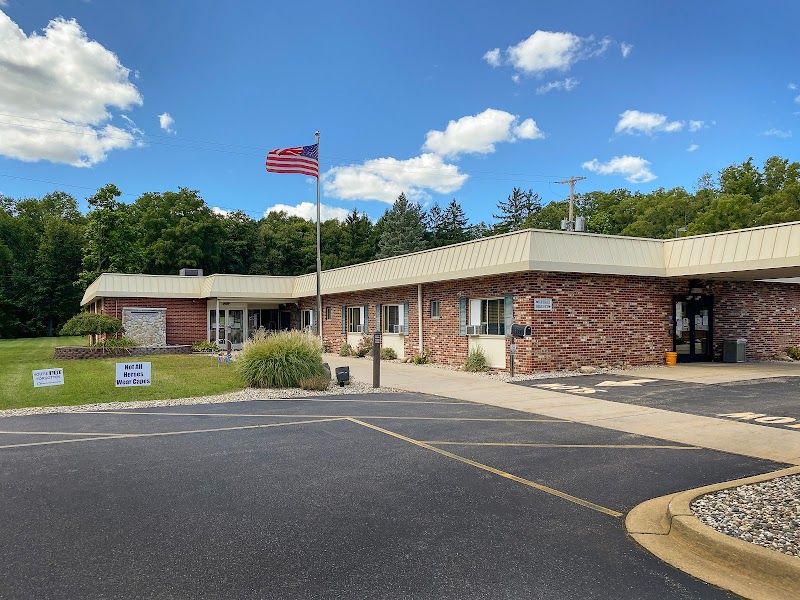
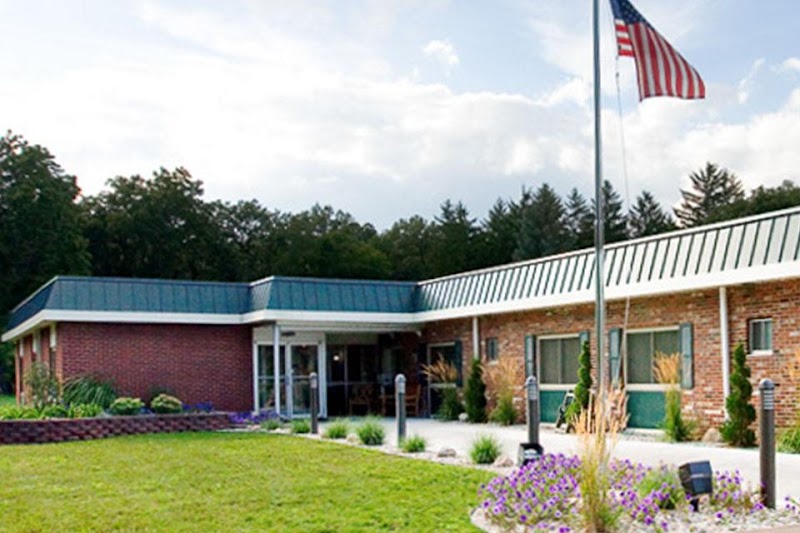
Life Care Center of Plainwell

320 Brigham St, Plainwell, MI 49080 (269) 685-9805
For profit - Corporation 119 Beds LIFE CARE CENTERS OF AMERICA Data: November 2025 2 Immediate Jeopardy citations
Trust Grade
0/100
#380 of 422 in MI
Last Inspection: October 2024

Within standard 12-15 month inspection cycle. Federal law requires annual inspections.

Overview

Life Care Center of Plainwell currently has a Trust Grade of F, indicating significant concerns and poor performance. It ranks #380 out of 422 facilities in Michigan, placing it in the bottom half, and #6 out of 6 in Allegan County, meaning there are no better local options. Although the facility is showing improvement, with the number of issues decreasing from 21 to 6, it still faces serious challenges, including $171,837 in fines, which is higher than 91% of Michigan facilities, suggesting compliance problems. Staffing is a relative strength, rated 4 out of 5 stars with a turnover rate of 42%, which is below the state average. However, there have been critical incidents, such as a resident being restrained for hours by staff, and another resident experiencing a severe medication error that led to hospitalization, highlighting significant risks and lapses in care.

Trust Score
F
0/100
In Michigan
#380/422
Bottom 10%
Safety Record
High Risk
Review needed
Inspections
Getting Better
21 → 6 violations
Staff Stability
○ Average
42% turnover. Near Michigan's 48% average. Typical for the industry.
Penalties
○ Average
$171,837 in fines. Higher than 56% of Michigan facilities. Some compliance issues.
Skilled Nurses
✓ Good
Each resident gets 48 minutes of Registered Nurse (RN) attention daily — more than average for Michigan. RNs are trained to catch health problems early.
Violations
⚠ Watch
82 deficiencies on record. Higher than average. Multiple issues found across inspections.
★☆☆☆☆
1.0
Overall Rating
★★★★☆
4.0
Staff Levels
★★★★☆
4.0
Care Quality
★☆☆☆☆
1.0
Inspection Score
Stable
2024: 21 issues
2025: 6 issues

The Good

  • 4-Star Staffing Rating · Above-average nurse staffing levels
  • 4-Star Quality Measures · Strong clinical quality outcomes
  • Full Sprinkler Coverage · Fire safety systems throughout facility
  • No fines on record
  • Staff turnover below average (42%)

    6 points below Michigan average of 48%

Facility shows strength in staffing levels, quality measures, fire safety.

The Bad

1-Star Overall Rating

Below Michigan average (3.1)

Significant quality concerns identified by CMS

Staff Turnover: 42%

Near Michigan avg (46%)

Typical for the industry

Federal Fines: $171,837

Well above median ($33,413)

Significant penalties indicating serious issues

Chain: LIFE CARE CENTERS OF AMERICA

Part of a multi-facility chain

Ask about local staffing decisions and management

The Ugly 82 deficiencies on record

2 life-threatening 5 actual harm
Jun 2025 3 deficiencies
CONCERN (D) 📢 Someone Reported This

A family member, employee, or ombudsman was alarmed enough to file a formal complaint

Potential for Harm - no one hurt, but risky conditions existed

Free from Abuse/Neglect (Tag F0600)

Could have caused harm · This affected 1 resident

This citation pertains to Intake MI00153382 Based on interview and record review, the facility failed to protect the resident's right to be free from physical abuse for 1 (Resident #102) of 7 resident...

Read full inspector narrative →
This citation pertains to Intake MI00153382 Based on interview and record review, the facility failed to protect the resident's right to be free from physical abuse for 1 (Resident #102) of 7 residents reviewed for abuse, resulting in Resident #101 punching Resident #102 in the face. Findings include: Resident #101 Review of an admission Record revealed Resident #101 was a male, with pertinent diagnoses which included: schizophrenia and autistic disorder. Review of a Minimum Data Set (MDS) assessment for Resident #101, with a reference date of 3/3/25 revealed a Staff Assessment for Mental Status assessment of Short- and Long-term Memory as Resident #101 having a Memory problem. Resident #102 Review of an admission Record revealed Resident #102 was a male, with pertinent diagnoses which included: major depressive disorder, single episode, moderate and generalized anxiety disorder. Review of a Minimum Data Set (MDS) assessment for Resident #102, with a reference date of 3/20/25 revealed a Brief Interview for Mental Status (BIMS) score of 13, out of a total possible score of 15, which indicated Resident #102 was cognitively intact. Review of a Facility Reported Incident (FRI) Incident Summary Report dated 5/12/25 at 7:52 PM revealed, Incident Summary On Monday, May 12, 2025, at approximately 6:40pm, it was reported to the Executive Director (ED A) that resident (Resident #101) came running out of his room and hit resident (Resident #102) on the right side of his face and then (Resident #101) dropped himself on the floor .A nurse examined (Resident #102) and there was some redness on his right cheek. (Resident #101) had a small laceration on his shin from contact with (Resident #102)'s wheelchair . In an interview on 6/17/25 at 10:17 AM, Business Office Manager (BOM) Q reported on 5/12/25 she had been the manager on duty for dinner and had come back to the Bridge unit from the dining room when she saw Resident #102 wheeling himself to the Bridge unit. BOM Q reported Resident #102 had asked her to push him up to the front corner across from where the Bridge nurses' station was. BOM Q reported she had turned around to let the nurse know that she had brought Resident #102 up front when out of the corner of her eye she saw Resident #101 run out of his room, grab Resident #102's shoulder, and hit Resident #102 in the face right over his cheek bone. BOM Q reported Resident #101 then put himself on the floor and continued to lay there. BOM Q reported there had not been any other staff in the hall, nor had there been anyone at the nurses' station until after the incident occurred. In an interview on 6/17/25 at 10:30 AM, Dietary Aide (DA) N reported she had witnessed the incident between Resident #101 and Resident #102. DA N reported she had been at the menu board right by the nurses' station changing the menu for the day. DA N reported out of the corner of her eye, she saw Resident #101 punch Resident #102. DA N reported besides herself, she had not seen any other staff in the hall at the time other than the staff member who was headed back toward the dining room. In an interview on 6/18/25 at 12:53 PM, Registered Nurse (RN) DD reported she had been the nurse for Resident #101 and Resident #102 on the evening of 5/12/25 when Resident #101 punched Resident #102 in the face. RN DD reported Resident #101 was known to go from one extreme to the other with no warning. RN DD reported she saw Resident #101 punch Resident #102 and separated them. RN DD reported to her knowledge they had not been doing any increased supervision with Resident #101 at the time of the incident because we didn't even think he could get up. RN DD explained she believed that staff had been using a sit-to-stand machine (a machine to assist a resident from seated to standing position) for transfers at the time. Review of Resident #101's Behavior Note dated 4/1/25 at 6:10 PM revealed, Note Text: Resident came walking out of room with BM (bowel movement) on hands. CNA (certified nurse aide) redirected resident to shower room to clean him up. Resident came up behind CNA, grabbed her from behind and would not let go. Other CNA came in and finally got him to release CNA . Review of Resident #101's Behavior Note dated 4/4/25 at 5:54 PM revealed, Note Text: pt (patient) kept putting himself on the floor then asking to get up then putting himself back on the floor. I went in to ask him if he was okay because it looked like he was crying and then he punched me in the face .Later, another CNA was trying to feed him and he was saying he was sorry for punching the other girl and then she asked why he did it and he swung at her and kept trying to hit her. Review of Resident #101's Behavior Note dated 4/28/25 at 4:14 PM revealed, Note Text: Patient up in wheelchair talking to nurse when he all of a sudden he started swinging at nurse and punched nurse 2 times in chest . Review of Resident #101's Care Plan with a focus of (Resident #101) is physically aggressive with staff, he bites, hits, kicks, scratches with a Date Initiated of 3/14/25 revealed no new interventions were initiated following Resident #101's behaviors as documented on 4/1/25, 4/4/25, and 4/28/25 in the Behavior Notes. Review of Resident #101's Behavior Note dated 5/12/25 at 5:45 PM revealed, Note Text: Patient came out of room and started running down the hallway with brief at ankles .stopped resident and pulled up his brief and this RN (registered nurse) obtained patients wheelchair and had patient sit in wheelchair. Patient would not speak with staff and was rocking back and forth in wheelchair. Wheeled to front desk where staff were present. Patient asked if he wanted lemonade and he replied yes. Staff gave patient a glass of lemonade and within 30 seconds a resident who was within 3 feet of patient started yelling. When RN look (sic) over patient had thrown his lemonade all over resident. Patient went back to not speaking and looking down towards lap. In an interview on 6/18/25 at 9:57 AM, Executive Director (ED) A reported the facility had not increased supervision for Resident #101 following the incident on 5/12/25 at 5:45 PM when he threw the lemonade at another resident. In an interview on 6/17/25 at 10:39 AM Registered Nurse Infection Preventionist (RNIP) D reported Resident #101 had schizophrenia and was autistic and he would be fine and then quickly he flips and then after he will lay himself on the floor and staff need to leave him without stimulation for 15-30 minutes and then he will be more cooperative to answer yes or no questions. Review of Resident #101's Event Note dated 6/17/25 at 9:32 PM revealed, Note Text: Resident observed on floor in front of and to the right of nursing station. Informed that he was ambulating independently then he had struck another resident (referring to Resident #102) in the face, unprovoked . Review of Resident #102's Event Note dated 6/17/25 at 9:32 PM revealed, Resident was struck in face by another resident (referring to Resident #101) walking down hallway. Pink area observed to right side of face below ear. Res (resident) denied pain. Res removed from area and provided snack per his request . Review of a current Care Plan for Resident #101 revealed a focus of (Resident #101) is physically aggressive with staff, he bites, hits, kicks, scratches. (Resident #101) can be physically aggressive with other residents: hitting, throwing drinks with a revision date of 5/13/25 and care planned interventions which included 15 minute checks with a date initiated of 5/13/25. Review of 15 Minute Check worksheets for the period 5/13/25 - 6/17/25 revealed no documentation that 15 minute checks had occurred on 6/17/25. In an interview on 6/18/25 at 1:50 PM, Executive Director (ED) A reported 15 minute checks had been initiated following the incident between Resident #101 and Resident #102 on 5/12/25. ED A confirmed there was no documentation of 15 minute checks having been completed on 6/17/25. ED A reported the purpose of 15 minute checks was so staff would put eyes on the resident every 15 minutes to make sure nothing negative was occurring and to make sure the resident needs were met.
CONCERN (D) 📢 Someone Reported This

A family member, employee, or ombudsman was alarmed enough to file a formal complaint

Potential for Harm - no one hurt, but risky conditions existed

Deficiency F0726 (Tag F0726)

Could have caused harm · This affected 1 resident

This citation pertains to intake number MI00151225 Based on interview and record review, the facility failed to ensure nursing staff had appropriate skill sets and completed required annual trainings,...

Read full inspector narrative →
This citation pertains to intake number MI00151225 Based on interview and record review, the facility failed to ensure nursing staff had appropriate skill sets and completed required annual trainings, resulting in the potential for the delivery of nursing and related services that did not support the attainment or maintenance of the Resident's highest practicable physical, mental, and psychosocial well-being. Findings include: Review of an Education and Training Requirements policy with a reference date of 10/3/24 revealed Policy: The facility will maintain an effective in-service and orientation program for: a. all associates .Procedure .6. Training, in-service, and education should be based on the needs of the facility and the facility assessment. 7. Competencies and skill sets will for all new and existing staff, be consistent with their expected roles. 8. The facility will need to ensure staff are trained to be able to interact in a manner that enhances the resident's quality of life and quality of care .9. The following training requirements should be met .annually .c. iii. Dementia Management and Resident abuse .13. The Staff Development Coordinator/designee will be responsible for maintaining training records . Review of a Facility Assessment with a reference date of 8/6/24 revealed: Diagnosis Potentially Treated at the Facility: Dementia-Alzheimer's or Non-Alzheimer's Dementia, Number of residents served during previous 2 quarters: 19, .Competent Support and Care for Resident Population, Topic: .Dementia and care of the cognitive impaired .Which staff are trained: All staff, Upon hire, annually and as needed. In an interview on 6/18/25, at 1:12pm, Certified Nursing Assistant (CNA) CC on 3/4/25 at approximately 9:30pm, Resident #103 began yelling for help in the hallway and as she walked toward him, she saw CNA S standing behind the resident as he sat in his wheelchair. CNA CC reported CNA S pulled the resident's gown up from the shoulder area, covering Resident #103's mouth for several seconds. CNA CC reported she arrived in front of Resident #103, crouched down to gain his attention and make eye contact with him, and he was almost calmed down when CNA S sprayed him with the aroma therapy mist. CNA CC reported CNA S sprayed an aroma therapy bottle toward Resident #103 and CNA CC, hitting them both in the face with the mist. CNA CC reported Resident #103 flipped out when the mist hit him. CNA CC reported the actions of CNA S made Resident #103 more upset and she should have not of sprayed him with anything. In an interview on 6/17/25 at 10:59am, CNA S reported on 3/4/25 at approximately 9:30pm, Resident #103 began yelling in the hallway near the rooms to which she was assigned. CNA S reported she was stressed because she thought the resident's yelling might awaken the other resident's she had already assisted to bed. CNA S confirmed she sprayed an aroma therapy mist on Resident #103. CNA S described working at the facility as very stressful because many residents had behaviors. When further queried about dementia care training provided by the facility, CNA S reported she did not recall receiving any dementia care training. Review of a (name of online training organization omitted) Training Report for CNA S with a reference date of 3/6/24-4/8/25 revealed the staff member did not complete 60 of 62 required trainings during the 13-month period. Incomplete trainings included: Alzheimer's Disease: The Facts, Challenging Behaviors: Care and Interventions for Individuals Experiencing Dementia, Cognitive Impairment: Advanced, Mental Health: Caring for the Older Adult in LTC (long-term care) and Understanding Dementia, along with many additional topics. In an interview on 6/17/25 at 2:03pm, Registered Nurse/Staff Development Coordinator (RN/SDC) C reported staff were assigned monthly computer-based trainings at the corporate level and until recently, staff completion of education assignments was not being monitored by the facility. RN/SDC C reported she recently learned that several staff members had not completed the required online trainings and due to the number of assignments, it would take time for them to complete them. RN/SDC C reviewed the (name of the online training organization omitted) Training Report for CNA S and confirmed the staff member had not completed 60 of 62 trainings in the 13 months. RN/SDC C reported staff could only complete the required trainings while in the facility and several staff had expressed difficulty finding an available computer. In an interview on 6/17/25 at 2:11pm, Human Resources Director (HRD) R confirmed any training topic marked as not attempted on (name of online training organization omitted) Training Report had not been completed. HRD R confirmed CNA S worked at the facility for more than 12 months and should have completed the assigned training but had not done so. In an interview on 6/18/25 at 2:06pm, Nursing Home Administrator (NHA) A confirmed CNA S had not completed most of the required computer-based training in the last 13 months, including the education related to dementia care. NHA A reported other than orientation training, the facility had no documentation of CNA S attending any in-person dementia care related training during her 13 months of employment. NHA A confirmed the facility had not tracked staff compliance with corporate assigned computer-based training until recently.
CONCERN (D) 📢 Someone Reported This

A family member, employee, or ombudsman was alarmed enough to file a formal complaint

Potential for Harm - no one hurt, but risky conditions existed

Deficiency F0744 (Tag F0744)

Could have caused harm · This affected 1 resident

**NOTE- TERMS IN BRACKETS HAVE BEEN EDITED TO PROTECT CONFIDENTIALITY** This citation pertains to intake number MI00151225 Based interview and record review, the facility failed to ensure individualiz...

Read full inspector narrative →
**NOTE- TERMS IN BRACKETS HAVE BEEN EDITED TO PROTECT CONFIDENTIALITY** This citation pertains to intake number MI00151225 Based interview and record review, the facility failed to ensure individualized approaches were provided to 1 (Resident #103) of 3 residents reviewed for dementia care, resulting in Resident #103 experiencing avoidable stress responses to care interventions. Findings include: Review of The Unmet Needs Model, [NAME]-[NAME] and [NAME] (1995), revealed that those with Dementia develop problem behaviors from an imbalance in the interaction between life-long habits and personality, current physical and mental states and less than optimal environmental conditions. Review of an admission Record revealed Resident #103 was originally admitted to the facility on [DATE] with pertinent diagnoses which included: metabolic encephalopathy (a change in how your brain works due to an underlying condition), dementia (a term used to describe a group of symptoms affecting memory, thinking, and social skills that interfere with daily life) and cognitive communication deficit (difficulty understanding and expressing thoughts through spoken or written words). Review of a Minimum Data Set (MDS) assessment for Resident #103 with a reference date of 2/20/25, revealed a Brief Interview for Mental Status (BIMS) score of 4/15 which indicated Resident #103 was severely cognitively impaired. Review of a Care Plan for Resident # 103 with a reference date of 2/19/25, revealed a focus/goal/interventions of: (Resident #103) has impaired cognitive ability r/t (related to) dementia dx (diagnosis). BIMS of 4. Goal: (Resident #103) will follow 1 to 2 step instructions. Interventions: Allow extra time for resident to respond to questions and instructions, Ask yes/no questions in order to determine resident's needs .Identify yourself at each interaction, face the resident when speaking and make eye contact, reduce distractions .the resident understands consistent, simple, directive sentences, provide the resident with necessary cues-stop and return if agitated. Review of an Incident Report for Resident #103 with a reference date of 3/4/25 revealed Incident Summary: On 3/4/25 .CNA (Certified Nursing Assistant) CC reported .she witnessed CNA S with an agitated resident, (Resident #103) who was yelling and making loud noises. CNA S had (Resident #103's) gown pulled up by the shoulders so it .covered his mouth .CNA S sprayed an essential oils type spray toward (Resident #103 and CNA CC) and was pretty close (sic) to their faces . In an interview on 6/18/25, at 1:12pm, CNA CC on 3/4/25 at approximately 9:30pm, Resident #103 began yelling for help in the hallway and as she walked toward him, she saw CNA S standing behind the resident as he sat in his wheelchair. CNA CC reported CNA S pulled the resident's gown up from the shoulder area, covering Resident #103's mouth for several seconds. CNA CC reported she arrived in front of Resident #103, crouched down to gain his attention and make eye contact with him, and he was almost calmed down when CNA S sprayed him with the aroma therapy mist. CNA CC reported CNA S sprayed an aroma therapy bottle toward Resident #103 and CNA CC, hitting them both in the face with the mist. CNA CC reported Resident #103 flipped out when the mist hit him. CNA CC reported Resident #103 became very angry and began trying to hit us, grabbed the railing in the hallway and would not let go. CNA CC reported it took several minutes for Resident #103 calm down after the incident. CC reported after she was able to get Resident #103's attention again, she told him they could go call his spouse together which was always his way of calming down. In an interview on 6/17/25 at 10:59am, CNA S reported on 3/4/25 at approximately 9:30pm, Resident #103 began yelling in the hallway near the rooms to which she was assigned. CNA S reported she was stressed because she thought the resident's yelling might awaken the other resident's she had already assisted to bed. CNA S confirmed she sprayed an aroma therapy mist on Resident #103. When queried about where she got the aroma therapy spray, CNA S reported she bought it at a pharmacy and brought it in to use on residents. CNA S described Resident #103 as out of control after she used the spray, as he began hitting the railing in the hallway, then refused to release his left hand from the railing and tried to hit the staff with his right arm. CNA S described working at the facility as very stressful because many residents had behaviors. When further queried about dementia care training provided by the facility, CNA S reported she did not recall receiving any dementia care training. In an interview on 6/17/25 at 2:32pm, Licensed Practical Nurse (LPN) W reported he arrived to assist with Resident #103 after her heard yelling coming from the hallway and ultimately assisted with getting the resident back to his own unit. LPN W reported CNA S had not asked him for permission to use aroma therapy mist on residents. In an interview on 6/18/25 at 9:03am, CNA EE reported CNA S provided his orientation when he started working at the facility and during that time, he witnessed CNA S spray aroma therapy mist on several residents. In an interview on 6/18/25 at 10:17am, Registered Nurse (RN) V reported on the night of 3/4/25 she saw Resident #103 upset and several staff members were trying to calm him down around 9:30pm. RN V reported she did not witness CNA S spraying Resident #103, but CNA S had told her previously that she used the aroma therapy mist on residents. RN V reported CNA S never asked her for permission to use the mist on residents. In an interview on 6/18/25 at 12:51pm, LPN/Unit Coordinator (LPN/UM) BB reported she worked on the night of 3/4/25 and CNA CC told her about the incident that took place involving Resident #103 and CNA S. LPN/UM BB reported CNA S had never asked her for permission to use aroma therapy mist on any residents. In an interview on 6/18/25 at 2:06pm, Nursing Home Administrator (NHA) A reported staff were assigned education courses, including education related to Dementia Care, on a computer-based training program. NHA A confirmed until recently, staff compliance with completion of the assigned trainings had not been monitored by the facility. NHA A confirmed that CNA S had not completed the required computer-based training related to caring for residents with dementia. Review of Physician Orders for Resident #103 revealed no orders for the use of aroma therapy products. Attempts to contact the facility's Medical Director were unsuccessful at the conclusion of the survey. Attempts to contact Resident #103's spouse were not successful at the conclusion of the survey. Review of a Care of the Cognitively Impaired (Dementia Care) policy with a reference date of 9/6/24 revealed Policy: The facility will provide dementia treatment and services which may include, both are not limited to the following: 1. Ensuring adequate medical care, diagnosis, and supports based on diagnosis; 2. Ensuring that the necessary care and services are person-centered and reflect the resident's goals, while maximizing the resident's dignity, autonomy .Procedure .Develop individualized interventions related to the resident's symptomology .
Jan 2025 3 deficiencies
CONCERN (D) 📢 Someone Reported This

A family member, employee, or ombudsman was alarmed enough to file a formal complaint

Potential for Harm - no one hurt, but risky conditions existed

Grievances (Tag F0585)

Could have caused harm · This affected 1 resident

**NOTE- TERMS IN BRACKETS HAVE BEEN EDITED TO PROTECT CONFIDENTIALITY** This citation pertains to MI00149054. Based on interview and record review, the facility failed to thoroughly investigate and r...

Read full inspector narrative →
**NOTE- TERMS IN BRACKETS HAVE BEEN EDITED TO PROTECT CONFIDENTIALITY** This citation pertains to MI00149054. Based on interview and record review, the facility failed to thoroughly investigate and resolve grievances for 1 resident (Resident #3) of 3 residents reviewed for missing items, resulting in the resident missing property and the potential for further unresolved grievances to occur. Findings include: Resident #3(R3) Review of the admission Record and Minimum Data Set (MDS) dated [DATE] revealed R3's original admission date to the facility was 3/22/2023 with diagnoses including dementia (impairment in brain function such as memory loss and judgement) and chronic kidney disease (long term condition that occurs when the kidneys are damaged and can't filter blood properly). Brief Interview for Mental Status (BIMS) reflected a score of 14 out of 15 which indicated R3 was cognitively intact (13 to 15 cognitively intact). During an interview on 1/27/2025 at 10:58 AM, R3 reported that he lost his wedding ring several months ago. He stated that he was married for 66 years and now it was gone and he was sad about it. Review of R3's Concern and Comment Form dated 10/24/2025 revealed Person Reporting Concern: {Social Services Director (SSD) AA} Report Date: 10/24/2024 Resident Name: (R3) Please describe in detail your concern, comment or commendation: (R3's) wedding ring is missing .Were you able to report this concern/comment to a staff member: Yes .Please provide staff member name: (SSD AA). Facility Investigation and Response: Person designated to investigate and follow-up with concern: {Central Supply Director (CSD) U} . Date/Time of initial contact with concerned party: 10/25/2024 .Investigation steps: looked in nightstand, under bed and in closet. Investigation findings: didn't find ring. Actions taken to resolve/respond to concern, Date/Time of findings/action plan shared with concerned party, concerned party's response to the action plan/outcome and Executive Director (ED) A's signature and date were all blank. During an interview on 1/29/2025 at 8:34 AM, Social Services Director (SSD) AA stated that R3 told her about his missing wedding ring and he said he had it and then it wasn't there anymore. She said the staff did a thorough search and didn't find it but they don't suspect theft. SSD AA stated that the facility will replace his ring. SSD AA said that concern forms come to her initially then she gives it to the appropriate department, the department head takes care of it and then it goes to ED A who makes sure it is resolved, signs it and returns it to SSD AA. SSD AA stated that she didn't get the completed concern form back from ED A. During an interview on 1/28/2025 at 4:20 PM, ED A stated that she was aware that there wasn't any follow-up completed on R3's missing ring which she realized when she gave a copy of the concern form to this surveyor.
CONCERN (D) 📢 Someone Reported This

A family member, employee, or ombudsman was alarmed enough to file a formal complaint

Potential for Harm - no one hurt, but risky conditions existed

Abuse Prevention Policies (Tag F0607)

Could have caused harm · This affected 1 resident

Deficiency Text Not Available

Read full inspector narrative →
Deficiency Text Not Available
CONCERN (D) 📢 Someone Reported This

A family member, employee, or ombudsman was alarmed enough to file a formal complaint

Potential for Harm - no one hurt, but risky conditions existed

Investigate Abuse (Tag F0610)

Could have caused harm · This affected 1 resident

Deficiency Text Not Available

Read full inspector narrative →
Deficiency Text Not Available
Oct 2024 9 deficiencies
CONCERN (D)

Potential for Harm - no one hurt, but risky conditions existed

Deficiency F0578 (Tag F0578)

Could have caused harm · This affected 1 resident

Based on interview and record review the facility failed to ensure accurate documentation of advance directives for 1 (Resident #5) of 18 residents reviewed for advance directive documentation. Findi...

Read full inspector narrative →
Based on interview and record review the facility failed to ensure accurate documentation of advance directives for 1 (Resident #5) of 18 residents reviewed for advance directive documentation. Findings include: Resident #5 Review of an admission Record revealed Resident #5 had pertinent diagnoses which included: multiple sclerosis (disabling disease of the brain and spinal cord (central nervous system)). Review of a Minimum Data Set (MDS) assessment for Resident #5, with a reference date of 8/26/2024 revealed a Brief Interview for Mental Status (BIMS) score of 13/15 which indicated Resident #5 was cognitively intact. Review of Resident #5's medical record on 10/8/24 at 12:35 PM., revealed a document titled Advance Directives/Medical Treatment Decisions signed by Resident #5 and dated 3/20/2020 with the selection of .I do not choose to formulate or issues any advance directives at this time . noted. No other advance directive form was noted in Resident #5's medical record. Review of Order Summary for Resident #5 revealed .DNR (do not resuscitate) with comfort measures . active 3/20/2024. Review of Care Plan for Resident #5 revealed Focus .Resident #5 has advance directives- DNR revised on 7/17/2024 .Goal . Resident #5's advance directives will be honored .dated 3/20/2020 . Interventions . Code status will be reviewed on a quarterly basis and PRN (as needed) initiated on 3/27/2020 . Resident #5 has decided to be a DNR initiated on 3/20/2024 . On 10/9/24 at 10:57 AM., review of Resident #5's hard chart/paper chart located at the nurse's station included in the front of the chart a blue piece of paper with the words Full Code printed on it encased in a plastic sleeve. In an interview on 10/9/24 at 10:57 AM., Registered Nurse (RN) H reported a resident's code status should be completed at admission by the admitting nurse. RN H reported any nurse could update a resident's code status when there was a change. RN H reported a resident's code status was not valid until it was signed by witnesses and the physician. In an interview on 10/9/24 at 11:03 AM., Licensed Practical Nurse (LPN) N reported any nurses could update a code status form. LPN N reported the physician had to sign a new order and the computer system needed to be updated. Review of Admission/readmission Note dated 3/1/2024 at 16:20 PM (4:20 PM) authored by LPN/MDS E revealed no notation regard discussion of advance directive. In an interview on 10/9/24 at 10:47 AM., Licensed Practical Nurse/ Minimum Data Set (LPN/MDS) E reported she had a conversation with Resident #5 regarding a changed in her code status when she returned to the facility following a hospital stay on 3/1/24 and that she would have documented in a progress note that conversation. LPN/MDS E reported she was unable to locate the signed copy of Resident #5's wishes to be a DNR. Review of Admission/readmission Note dated 3/1/2024 at 16:20 PM (4:20 PM) authored by LPN/MDS E revealed no notation regard discussion of advance directive. In an interview on 10/9/24 at 2:02 PM., Social Services Director (SSD) TT reported the nursing department does advance directives on admission. SSD TT stated I don't do them here. SSD TT reported code status is clarified during care conferences and care conferences are done about every three months. In an interview on 10/10/24 at 8:43 PM., LPN/MDS E reported she was unable to locate a copy of Resident #5's updated signed advance directives. At exit conference Nursing Home Administrator (NHA) A provide several printed papers from Resident #5's medial record to this surveyor as a demonstration of accurate documentation of Resident #5's advance directive wishes. Review of the papers from Resident #5's medical record provided by NHA A at exit conference revealed no noted advanced directive documentation signed by both Resident #5 and the physician indicating her wish to be a DNR. Review of facility policy titled Advance Directives with a review date of 11/28/2023 revealed .an advance directive is a written document prepared by the resident as to how he/she wants medical decisions to be made should he or she lost the ability to make decisions .each time the resident is admitted to the facility, quarterly, and when a change in condition is noted in the resident's condition, the facility should revie the advanced directive .should focus on if the existing advance directive and the advance directives match the current goals of care for the resident. The social services director or designee should document this conversation in the medical record and assist as needed with updating the documents that need revision .
CONCERN (D) 📢 Someone Reported This

A family member, employee, or ombudsman was alarmed enough to file a formal complaint

Potential for Harm - no one hurt, but risky conditions existed

Free from Abuse/Neglect (Tag F0600)

Could have caused harm · This affected 1 resident

**NOTE- TERMS IN BRACKETS HAVE BEEN EDITED TO PROTECT CONFIDENTIALITY** This citation pertains to intake#: MI00146614 Based on interviews, and record review, the facility failed to protect the reside...

Read full inspector narrative →
**NOTE- TERMS IN BRACKETS HAVE BEEN EDITED TO PROTECT CONFIDENTIALITY** This citation pertains to intake#: MI00146614 Based on interviews, and record review, the facility failed to protect the residents right to be free from abuse for 2 (Resident's #61 and #80) of 8 residents reviewed for abuse, resulting in residents experiencing physical restraint, physical and/or verbal aggression, fear, and emotional distress. Findings include: Review of a facility policy, Area of Focus: Abuse and Neglect with a reference date of 11/27/23, revealed: Each resident has the right to be free from abuse .this includes but is not limited to .physical or chemical restraint . Residents must not be subjected to abuse by .other residents . Resident #80 Review of an admission Record revealed Resident #80, was originally admitted to the facility on [DATE] with pertinent diagnoses which included: metabolic encephalopathy (serious condition that occurs when brain function is disrupted due to metabolic problems, irritability and agitation are symptoms of the condition), cognitive communication deficit (a difficulty with communication based by issues with memory, attention, problem solving), and anxiety disorder. Review of a Minimum Data Set (MDS) assessment for Resident #80, with a reference date of 7/23/24 revealed a Brief Interview for Mental Status (BIMS) score of 5/15 which indicated Resident #80 was severely cognitively impaired. Review of a Care Plan for Resident #80, with a reference date of 8/19/24, revealed a focus/goal/interventions of: Focus: (Resident #80) has potential to be physically aggressive due to dementia. Goal: The resident will not harm self or others through the review date. Interventions: analyze times of day, places, circumstances, triggers .modify environment .observe and report any s/sx (signs and symptoms) of resident posing danger to self and others . Review of a nursing Skilled Note with a reference date of 8/5/24 revealed Pt is confused and needs constant redirection . Review of a History of Present Illness report for Resident #80, authored by a contractual behavioral health services provider, with a reference date of 8/19/24 revealed: .on 8/10 she (Resident #80) grabbed roommates arm and was yelling at her, so she was moved to another room. On 8/16 she (Resident #80) pulled her roommate from her w/c (wheelchair) and onto the floor and laid on top of her to prevent her from leaving . In an interview on 10/8/24 at 1:42pm, Family Member (FM) CCC reported Resident #80 had gotten increasingly confused and argumentative since her admission to the facility. FM CCC reported Resident #80 thinks things are happening but she really has no idea what she's doing. Resident #61 Review of an admission Record revealed Resident #61, was originally admitted to the facility on [DATE] with pertinent diagnoses which included: cognitive communication deficit, depression, adjustment disorder with mixed anxiety and depression. Review of a Minimum Data Set (MDS) assessment for Resident #61, with a reference date of 9/2/24 revealed a Brief Interview for Mental Status (BIMS) score of 11/15 which indicated Resident #61 was moderately cognitively impaired. Section D of the MDS revealed Resident #61 experienced feeling down, depressed, or hopeless 2-6 days of the 14-day assessment period. Section E revealed Resident #61 did not display physical or verbal aggression toward others. Section GG revealed Resident #61 required the use of a wheelchair for mobility. Review of a Care Plan for Resident #61, with a reference date of 12/26/23, revealed a focus/goal/interventions of: Focus: Episodes of tearfulness regarding placement; resident demonstrating difficulty adjusting to SNF (skilled nursing facility) placement .Goal: (Resident #61 name) will have improved mood state happier, calmer appearance, no s/s (signs and symptoms) of depression, anxiety or sadness through next review. Interventions .observe mood to determine if problems seem to be related to external causes . Review of an Incident Report with a reference date of 8/16/24 revealed .at approximately 9:00pm (Certified Nursing Assistant EE) witnessed (Resident #61) being held down by (Resident #80) . (Resident #61) was on the floor, face up with her wheelchair next her and (Resident #80) was seen on top of her, holding her down. In an interview on 10/8/24 at 1:27pm, Resident #61 was unable to comment related to the incident that took place on 8/16/24, but did say I'm stuck here when asked about how she felt about being at the facility. In an interview on 10/9/24, at 1:01pm, Certified Nursing Assistant (CNA) EE reported on 8/16/24 at approximately 9:00pm she heard a female resident frantically calling for help over and over from the hallway. CNA EE reported she ran to the hall because the call for help sounded desperate and she found Resident #61 on the floor, restrained by Resident #80. CNA EE described Resident #61 as being restrained on the floor in a manner that looked like a wrestling hold, as Resident #80's knee applied force to Resident #61's outstretched right arm and Resident #80's hands applied force to the back of Resident #61's neck. CNA EE reported both residents said that Resident #80 pulled Resident #61 out of her wheelchair as she tried to exit their shared room and then restrained Resident #61 on the floor. CNA EE reported Resident #80 was very confused and kept saying she (Resident #61) is too drunk, and she can't go out tonight. When further queried, CNA EE reported Resident #61 cried and was fearful following the event, even after Resident #80 was removed from the area. CNA EE described Resident #61 as in shock about what happened to her. Attempts to contact Resident #61's guardian were unsuccessful prior to the completion of the survey. Using the reasonable person concept, though Resident #61 had decreased ability to verbally express his own thoughts due to her cognitive communication deficit, she clearly experienced emotional distress and fear following the physical altercation and restraint she experienced on 8/16/24.
CONCERN (D)

Potential for Harm - no one hurt, but risky conditions existed

Deficiency F0625 (Tag F0625)

Could have caused harm · This affected 1 resident

**NOTE- TERMS IN BRACKETS HAVE BEEN EDITED TO PROTECT CONFIDENTIALITY** Based on interview and record review, the facility failed to provide a bed-hold to 2 of 3 residents (Resident #41, and #2) revie...

Read full inspector narrative →
**NOTE- TERMS IN BRACKETS HAVE BEEN EDITED TO PROTECT CONFIDENTIALITY** Based on interview and record review, the facility failed to provide a bed-hold to 2 of 3 residents (Resident #41, and #2) reviewed for hospitalization, resulting in the potential for the residents to not return to their same room upon readmission. Findings include: Review of a facility Bed-Hold Policy last reviewed 9/5/24 revealed, Policy The Bed-hold policy should be given upon admission, upon transfer of a resident to the hospital (if in an emergency within 24 hours), or the resident goes on therapeutic leave of absence. The facility will provide written information to the resident or resident representative the nursing facility policy on bed-hold periods and the residents return to the facility to ensure that residents are made aware of a facility's bed-hold and reserve bed payment policy before and upon transfer to a hospital or when taking a therapeutic leave of absence from the facility . Resident #41 Review of an admission Record revealed Resident #41 was a male, readmitted to the facility on [DATE] with pertinent diagnoses which included: encounter for surgical aftercare following surgery on the skin and subcutaneous tissue and pain in left shoulder. Review of a Health Status Note for Resident #41 dated 7/1/24 at 4:11 PM revealed, Note Text: Dr. (name omitted) evaluated patient today, c/o (complaints of) increased swelling and pain of left shoulder. Gave orders for CT scan (a type of medical imaging that uses x-rays) with contrast of left shoulder and chest, for a mass. Offered to give patient an increase in pain medication, patient declined at this time. Will continue to monitor. Review of a Health Status Note for Resident #41 dated 7/15/24 at 12:18 AM revealed, Note Text: Received text from MD (medical doctor) stating that resident needed to go to ER (emergency room) r/t (related to) recent CT results of left shoulder showing a leaking abscess and DVT (deep vein thrombosis - a blood clot). Resident aware and in agreement. Review of Resident #41's medical record on 10/10/24 at 9:40 AM revealed no evidence that Resident #41 was provided a bed-hold for the hospitalization on 7/15/24. On 10/10/24 at 9:55 AM, Director of Nursing (DON) B was requested, via electronic correspondence, to provide a copy of Resident #41's bed-hold notice for his hospitalization on 7/15/24. On 10/10/24 at 10:25 AM, DON B responded to request, via electronic correspondence, that the facility was unable to locate the form. In an interview on 10/10/24 at 10:31 AM on the Bridge unit, Licensed Practical Nurse (LPN) S reported to this surveyor that blank bed-hold forms were located in a hanging file on the door behind the nurses' station and confirmed that residents who were sent to the hospital should have a bed-hold notice provided to them. R2 According to the Minimum Data Set (MDS) dated [DATE], scored 13/15 (cognitively intact) on his BIMS (Brief Interview Mental Status), with diagnoses included) Parkinson's (progressive brain disorder that causes movement problems, stiffness, and other issues such as hallucinations), seizures, bipolar disease manic depression (mental illness that causes extreme mood swings), and schizophrenia (Symptoms include psychosis, such as hallucinations, delusions, or disorganized thoughts or speech). Review of R2's medical record's section eINTERACT Transfers revealed the resident was transferred to the hospital 6 times in 2024 with no Bed Hold form provided to the resident on 5/27, 7/7, 9/5, 9/18, 10/3, and 10/5. During an interview and record review on 10/08/24 at 2:09 PM, R2 stated, I don't have a guardian. I was sent to the hospital last night and I don't have any paperwork that tells me I would have to pay for a room when I come back here. Reviewed paperwork on the resident's bedside table with the resident that was not a Bed Hold notification. During an interview and record review on 10/9/24 at 1:10 PM Director of Nursing (DON) B stated while reviewing R2's medical record, Bed Holds should be filled out with each transfer or admission to the hospital. The forms are to be kept at the nurse's station and filled out by the nurse and given to the resident or resident representative to reviewed and signed. The form is then given to Medical Records who then scans the form into the resident's medical record. I do not see a Bed Hold for any of (R2's) transfers. During an interview and record review on 10/9/24 at 1:15 PM, Unit Manager/Licensed Practical Nurse (UM/LPN) J stated, A Bed Hold Notification should be offered to each resident or their representative/guardian when they are transferred to the hospital. The policy is on the back of each notification to remind staff on how to handle the form. The UM then looked through Bridge Unit's filing drawer stating, Forms used by nurses are kept in a filing drawer for both of the nurse's stations. The Bed Hold form should be kept here. Looking twice through the files of forms that were in alphabetical order, the UM stated, I do not see the Bed Hold form in here. This is not my unit. During an observation, interview, and record review on 10/9/24 at 2:50 PM, Medical Records UU stated Bed Hold forms are uploaded in the eMAR when I get them. I scan them into resident medical records and save the paper copy so I can double-check they got into the eMAR. After the check is made, I destroy the paper copy. I looked earlier today with the DON and did not see anything (referring to Bed Hold forms) that was uploaded in the eMAR for (R2). I looked in the basket where I keep documents to be scanned and double-checked with the DON also, and there was nothing. I am pretty much caught up with all the documents that need to be scanned for all residents.
CONCERN (D)

Potential for Harm - no one hurt, but risky conditions existed

Deficiency F0657 (Tag F0657)

Could have caused harm · This affected 1 resident

Based on observation, interview and record review the facility failed to revise a person centered care plan for 1 (Resident #11) of 18 reviewed for person centered care plan revision resulting in an i...

Read full inspector narrative →
Based on observation, interview and record review the facility failed to revise a person centered care plan for 1 (Resident #11) of 18 reviewed for person centered care plan revision resulting in an inaccurate reflection of the resident's current care needs. Findings include: Resident #11 Review of an admission Record revealed Resident #11 had pertinent diagnoses which included: Pressure ulcer of the sacral region (the base of the spine just above the buttock) stage 3 (full-thickness loss of skin). Review of a Minimum Data Set (MDS) assessment for Resident #11, with a reference date of 8/16/24 revealed a Brief Interview for Mental Status (BIMS) score of 15/15 which indicated Resident #11 was cognitively intact. Review of Care Plan for Resident #11 revealed Focus .indwelling catheter: pressure wound coccyx, initiated on 9/4/2024 .intervention .has a 16 F (french) foley catheter with a 10 cc baloon, positon catheter bag and tubing below the level of the bladder . During an observation on 10/8/24 at 10:16 AM., Resident #11 was in bed in her room sleeping. No noted drainage bag for urine was observed. Review of Care Management Note IDT/RAR for Resident #11 dated 9/20/24 at 14:09 (2:09) PM., revealed Wound vac has been DC'd (discontinued) .foley catheter is also going to be removed . Review of Infection Note for Resident #11 dated 9/22/24 revealed .resident is . incontinent of bowel and bladder . During an observation on 10/9/24 at 11:21 AM., Resident #11 told Licensed Practical Nurse Unit Manager (LPNUM) J I have to pee. In an interview on 10/9/24 at 11:39 PM., Director of Rehab Services (DRS) II reported that Resident #11 was not continent of bowel or bladder and did not have a foley catheter. In an interview on 10/9/24 at 3:41 PM., LPNUM J reported Resident #11 was incontinent of bowel and bladder and did not have a foley catheter at this time. LPNUM J confirmed Resident #11 had a care plan in place for an indwelling catheter, and the care plan should have been updated when the indwelling catheter was no longer used.
CONCERN (D)

Potential for Harm - no one hurt, but risky conditions existed

Deficiency F0688 (Tag F0688)

Could have caused harm · This affected 1 resident

Based on interview and record review, the facility failed to consistently provide restorative exercises per therapy recommendations for 1 (Resident #76) of 1 resident reviewed for position/mobility, r...

Read full inspector narrative →
Based on interview and record review, the facility failed to consistently provide restorative exercises per therapy recommendations for 1 (Resident #76) of 1 resident reviewed for position/mobility, resulting in the potential for pain, stiffness, and avoidable decline. Findings include: Resident #76 Review of an admission Record revealed Resident #76 was a female, with pertinent diagnoses which included: hemiplegia and hemiparesis (muscle weakness or partial paralysis on one side of the body) following cerebral infarction (a stroke) affecting left non-dominant side. Review of a Minimum Data Set (MDS) assessment for Resident #76, with a reference date of 9/5/24 revealed a Brief Interview for Mental Status (BIMS) score of 15, out of a total possible score of 15, which indicated Resident #76 was cognitively intact. Further review of said MDS revealed Resident #76 had a Functional Limitation in Range of Motion of upper and lower extremity of one side. In an interview on 10/8/24 at 12:11 PM, Resident #76 reported she was paralyzed on her left side due to having had multiple strokes. Resident #76 reported she had received therapy for a while but not anymore because her insurance wouldn't pay for it. Resident #76 reported she now received restorative exercises on her left side instead. In an interview on 10/9/24 at 10:16 AM, Director of Rehabilitation Services (DRS) II confirmed Resident #76 was on a restorative program that was developed by therapy but administered by Restorative Aide (RA) T and overseen by Restorative Program Nurse (RPN) D. Review of a Restorative Nursing Communication Tool dated 8/9/24 for Resident #76 revealed, Problem: LUE (left upper extremity) tone from stroke, RUE (right upper extremity) weakness Goal: PROM (passive range of motion) to LUE in all planes, RUE exercises Days per week: 3-5x/wk (3 to 5 times per week) Minutes per day: 15 . Review of Resident #76's restorative treatment calendars (documentation of when restorative exercises were performed with Resident #76) from 8/13/24 (when documentation started) through 10/9/24 (date of review) revealed Resident #76 received her restorative exercises a total of 6 times out of 24 opportunities (8 weeks x a minimum of 3 times per week). In an interview on 10/9/24 at 10:28 AM, RPN D reported the restorative program had been inconsistent because RA T had had some days off work and because RA T had gotten pulled to the floor to work as a Certified Nursing Assistant (CNA) at times. RPN D reported she did not perform restorative exercises on residents (including Resident #76) in RA T's absence. In an interview on 10/9/24 at 1:24 PM, RA T reported she was the only restorative aide and when she had days off work, there was nobody to cover her restorative duties. RA T reported she got pulled to the floor to work as a CNA and to give residents their showers once or twice a week. RA T reported when a resident did not receive their restorative exercises as they should, their muscles could get stiff and affect their range of motion. In a follow-up interview on 10/10/24 at 8:17 AM, RPN D reported the facility had realized the restorative exercises had not been getting done consistently and that the facility had created a plan to get things caught up, but it was not yet fully implemented. In an interview on 10/10/24 at 9:47 AM, Director of Nursing (DON) B reported when the facility had done an audit of the restorative program in September, it was determined that there was room for improvement.
CONCERN (D)

Potential for Harm - no one hurt, but risky conditions existed

Incontinence Care (Tag F0690)

Could have caused harm · This affected 1 resident

**NOTE- TERMS IN BRACKETS HAVE BEEN EDITED TO PROTECT CONFIDENTIALITY** Based on observation, interview, and record review, the facility failed to ensure appropriate care for a resident with an indwel...

Read full inspector narrative →
**NOTE- TERMS IN BRACKETS HAVE BEEN EDITED TO PROTECT CONFIDENTIALITY** Based on observation, interview, and record review, the facility failed to ensure appropriate care for a resident with an indwelling foley catheter (tube inserted into the bladder to drain urine) in one resident (R63) of 1 residents reviewed for catheter care, resulting in the potential for urinary tract injury and/or infection. Findings include: According to the Minimum Data Set (MDS) dated [DATE], scored 13/15 (cognitively intact) on her BIMS (Brief Interview Mental Status) with diagnoses that included obstructive uropathy that required her to be dependent on staff for her ADLs (activities of daily living) and the use of an indwelling catheter. Review of R63's Order Summary dated 12/1/23, revealed, Change catheter bag as needed for infection, obstruction, or when the closed system is compromised. R63's Order Summary dated 7/22/24, revealed, Indwelling catheter to straight drainage. Size: 22 Fr (French referring to the size of the tubing) Bulb: 30 cc (amount of normal saline (NS) the balloon holds to keep it in place inside the bladder). Change for infection, obstruction or when the closed system is compromised as needed. Review of R63's Care Plan, revised on 7/26/2024, focused on urinary retention related to neurogenic bladder and the use of an indwelling urinary foley catheter (22 French (outer dimension of catheter tubing) with a 30cc balloon (keeps system in place in bladder) to gravity drain. The goal was for the resident to be/remain free from catheter-related trauma using interventions that included catheter care every shift, check tubing for kinks each shift, observe for and report to medical doctor for signs/symptoms of a UTI (urinary tract infection) including blood-tinged urine, cloudiness, and deepening of urine color. During an observation and interview on 10/08/24 at 10:14 AM, R63 was receiving incontinence and wound care when the resident was observed to have an indwelling catheter with a leg strap attached to the inside of her left thigh. No urine was visible in the tubing that connected the catheter and urine collection bag. The urine collection bag had 50 cc of dark red urine. R63's brief was saturated with a dark yellow urine. Certified Nursing Assistant (CNA) W stated, (R63's) catheter leaks all the time. It is not certain if the balloon is too small or what is going on. The catheter has not been changed in a while. The nurse, (Licensed Practical Nurse (LPN) N) knows the catheter leaks urine. She, (referring to R63), should not have to have a leaky catheter. She already has a pressure ulcer, and the leaking urine could cause more skin issues. During an observation and interview on 10/9/24 at 2:25 PM, R63 was receiving incontinence care. As CNAs FFF and BB began incontinence care, CNA FFF stated, (R63's) brief is saturated with urine even though she has an indwelling catheter. Her catheter leaking is an ongoing problem. The catheter has not been changed. The nurses know this is happening. Observed the resident's brief to be saturated with a dark colored urine. The protective pad and fitted sheet under the resident was also saturated with urine. The indwelling catheter was attached to a urine collection bag. The bag held 75 cc of dark red urine. During an interview on 10/10/24 at 10:30 AM, Director of Nursing (DON) B stated, I am not sure about (R63's) indwelling catheter leaking. You will have to check with her Unit Manager. During an interview and record review on 10/10/24 at 10:45 AM, Unit Manager/Licensed Practical Nurse (UM) J stated, I have talked about removing the catheter for (R63) which loosens up the bladder and lets the resident urinate. Removing the catheter has not happened yet and I've not heard anything else about what to do for the resident. R63's Progress Note dated 3/23/2024 07:20 AM, revealed, Health Status Note Text: Foley catheter changed at this time due to leaking. 16 F 30cc catheter inserted without difficulty. Draining amber colored urine. Review of facility procedure Indwelling Urinary Catheter (Foley) Care and Management reviewed 9/12/2024, revealed, .Monitor the catheter daily and assess for complications resulting from the use of an indwelling catheter such as symptoms of blockage with associated bypassing urine .Develop an individualized care plan based on assessment findings and revise as needed. For the resident with an indwelling urinary catheter, include a component to inform the resident and representative about the risks and benefits of catheter use and identify approaches to minimize the risk of infection by addressing personal hygiene measures, catheter/tubing/bag care, and educating the resident and representative regarding signs and symptoms of a urinary tract infection .inspect the urinary catheter system for disconnections and leakage because a sterile, continuously closed system is necessary to reduce the risk of CAUTI (catheter-associated urinary tract infection).Replace the catheter and drainage system using sterile no-touch technique when .leakage occurs .
CONCERN (D)

Potential for Harm - no one hurt, but risky conditions existed

Deficiency F0699 (Tag F0699)

Could have caused harm · This affected 1 resident

**NOTE- TERMS IN BRACKETS HAVE BEEN EDITED TO PROTECT CONFIDENTIALITY** Based on interview and record review the facility failed to identify Post Traumatic Stress Disorder (PTSD) triggers and develop ...

Read full inspector narrative →
**NOTE- TERMS IN BRACKETS HAVE BEEN EDITED TO PROTECT CONFIDENTIALITY** Based on interview and record review the facility failed to identify Post Traumatic Stress Disorder (PTSD) triggers and develop and implement care plan interventions to mitigate emotional triggers in 1 (Resident #47) of 5 reviewed for trauma informed care resulting in the potential for re-traumatization due to staff not being informed or knowledgeable of the resident's past trauma and unmet care needs. Findings include: Review of Witness Statement dated 8/29/2024 revealed I (Name Omitted) witnessed Resident #79 verbal assault and threaten Resident #47. The Resident #79 stated she would slap the shit out of you if Resident #47 did not shut the f*** up. The witness was noted to report Resident #79 repeated the threatening statement to Resident #47 more than once. Repeated attempts to contact witness were unsuccessful. Review of an admission Record revealed Resident #47 had pertinent diagnoses which included: Post traumatic stress disorder, dementia with psychotic disturbance, adjustment disorder with mixed disturbance of emotions and conducts, and obsessive-compulsive disorder. Review of a Minimum Data Set (MDS) assessment section C (Cognitive Patters) dated 6/29/24 for Resident #47, revealed memory problems, and cognitive skills for daily decision making severely impaired. Section E Behavior revealed Resident #47's behavior of verbal outbursts not directed towards others was significantly disruptive to care or living environment. Review of Resident #47's record revealed a diagnosis of PTSD on 1/25/2024 and no trauma informed care assessment after Resident #47 received a diagnosis of PTSD. Review of Care Plan for Resident #47 revealed no developed care plan with focus, goals or interventions related to PTSD or any possible triggers. Review of Social Service Assessment for Resident #47 dated 5/17/24 revealed .Does resident have a current psychiatric-related diagnosis .yes .Depression, Bipolar .Describe resident's current status .specifically address problem areas or interventions that social services is currently reviewing .has severe cognition impairment . There was no indication that Resident #47 has a diagnosis of PTSD or that Social Services was assessing Resident #47 for any triggers. On 10/8/24 at 9:06 AM., Resident #47 was observed in her wheelchair in her room and can be heard yelling out in a monosyllable AH type noise, no actual noted word in the vocalization. Resident #47 looked at this surveyor when her name was spoken but did not respond. Resident #47 continued to yell out. On 10/9/24 at 10:19 AM., Resident #47 was observed in her wheelchair in her room sitting with her legs crossed and her hands resting in her lap. Resident #47 appeared to be staring off in the distance, not focusing, and appeared to be groggy. Resident #47 did not respond when this surveyor spoke her name. In an interview on 10/9/24 at 10:22 AM., Licensed Practical Nurse (LPN) N reported Resident #47 has PTSD and was abused. LPN N reported she was unaware of any identified triggers. In an interview on 10/9/24 at 10:45 AM., LPN/Minimum Data Set (LPN/MDS) E reported Resident #47 was abused before she admitted to the facility. LPN/MDS E reported she was unaware of Resident #47's triggers. On 10/9/24 at 3:08 PM., Resident #47 was observed in her bed in her room with the door cracked open and Resident #47 was yelling out a monosyllable AH word/noise. Review of Progress Notes for Resident #47 dated 8/29/24 at 21:47 (9:47 PM) revealed .other resident was noted lining [leaning-sic] over this resident and telling her if you dont shut up I will shut you up. Other resident was removed from the room . Review of Incident Report for Resident #47 dated 8/29/2024 at 21:39 (9:39 PM) revealed .Resident was in her bed and an other resident came in her room and lined (sic) over her and told her if she didn't shut up she would shut her up . Review of a word document attached to an incident report for Resident #47 with no date revealed .I spoke with Resident #79 on [DATE], in the evening after it had been reported to me that she was found by a CNA over another resident's bed telling the resident to shut up or she would shut her up . In an interview on 10/10/24 at 9:26 AM., Registered Nurse/Infection Preventionist (RN/IP) K reported she was working on floor the night Resident #79 was noted by a CNA to be standing over Resident #47's bed yelling at her to shut up or she would shut her up. In an interview on 10/10/24 at 11:44 AM., LPN/Unit Manager (LPN/UM) J reported Resident #47 might have a diagnosis of PTSD, but she was unsure. LPN/UM J reviewed Resident #47's record and confirmed Resident #47 had a diagnosis of PTSD and no care plan or interventions in place related to her diagnosis of PTSD. LPN/UM J reported she had no knowledge of Resident #47's triggers. In an interview on 10/10/24 at 1:08 PM., Social Services Director (SSD) TT reported trauma assessments should be completed at admission and with a new diagnosis if indicated. SSD TT confirmed Resident #47 was diagnosed with PTSD in January of 2024 and she did not have a trauma informed assessment or a care plan following the diagnosis of PTSD. SSD TT reported care plans for residents are reviewed with each care conference about every 3 months. In an interview on 10/10/24 at 1:21 PM., SSD TT reported that Resident #79 standing over Resident #47's bed, yelling at her could be retraumatizing for Resident #47.
CONCERN (E)

Potential for Harm - no one hurt, but risky conditions existed

Infection Control (Tag F0880)

Could have caused harm · This affected multiple residents

**NOTE- TERMS IN BRACKETS HAVE BEEN EDITED TO PROTECT CONFIDENTIALITY** Resident #67 Review of an admission Record revealed Resident #67 had pertinent diagnoses which included: Gastrostomy (tube inser...

Read full inspector narrative →
**NOTE- TERMS IN BRACKETS HAVE BEEN EDITED TO PROTECT CONFIDENTIALITY** Resident #67 Review of an admission Record revealed Resident #67 had pertinent diagnoses which included: Gastrostomy (tube inserted into the stomach for administration of formula for nutrition) and dysphagia (difficulty swallowing). Review of a Minimum Data Set (MDS) assessment for Resident #67, with a reference date of 9/18/24 revealed a Brief Interview for Mental Status (BIMS) score of 14/15 which indicated Resident #11 was cognitively intact. Review of Order Summary for Resident #67 revealed .Enteral Feed Order in the evening Jevity 1.5 90 mL/hr (milliliters per hour) runs for 14 hours ordered on 7/26/2024 .Clean oxygen concentrator filter with soap and water weekly every Thursday . ordered 3/8/2024 . Enhanced barrier precautions diagnosis foley; g-tube every shift . ordered 4/3/24 . In observations on 10/8/24 10:20 AM. and 3:15 PM, 10/9/24 9:42 AM and 3:15 PM., and 10/10/24 at 8:22 AM., a feeding pump affixed to a pole located at Resident #67's bedside was noted to be soiled with dirt, debris and what appeared to splattered dried formula. An oxygen concentrator in Resident #67's room was noted to have what appeared to be splattered dried formula on the front of it. In an interview on 10/9/24 at 3:15 PM., Resident #67 reported he received formula through the feeding pump daily and he only used the oxygen as needed. In an interview on 10/10/24 at 9:38 AM., Housekeeping Assistant (HA) PP reported feeding pumps, poles, oxygen concentrators were a part of the monthly deep clean list, and fans should be wiped down daily if they were dusty. In an observation and interview on 10/10/24 at 11:31 PM., Housekeeping Supervisor (HS) OO observed the fan in Resident #11's room and confirmed it was soiled with dirt and debris and dust and needed to be cleaned. HS OO observed the feeding pump, pole, and oxygen concentrator in Resident #67's room and confirmed it was soiled with dirt, debris, and what appeared to be splattered formula and needed to be cleaned. HS OO reported feeding pumps, poles, and oxygen concentrators were to be cleaned by the CNAs and the fan should be dusted by housekeeping daily, and the blades of a fan cleaned monthly. Resident #11 Review of an admission Record revealed Resident #11 had pertinent diagnoses which included: Pressure ulcer of the sacral region (the base of the spine just above the buttock) stage 3 (full-thickness loss of skin). Review of a Minimum Data Set (MDS) assessment for Resident #11, with a reference date of 8/16/24 revealed a Brief Interview for Mental Status (BIMS) score of 15/15 which indicated Resident #11 was cognitively intact. Review of Order Summary Report for Resident #11 revealed .wound care to sacrum, cleanse wound with NS (normal saline) pat dry, apply hydrofera blue and cover with coversite changed Mondays, Wednesdays, and Fridays as needed for soiled, loose, or missing .order on 10/4/24 . Enhanced barrier precautions diagnosis wound and history of MDRO every shift for pressure ulcer, history of MDRO (multidrug resistant organism, an infection that is resistant to antibiotic treatments), and foley catheter . ordered on 9/20/24 . On 10/9/24 at 3:17 PM., Certified Nurse Assistant (CNA) V was observed in Resident #11's room, providing peri-care and was not wearing a gown. CNA V reported she should be wearing a gown since Resident #11 was under enhanced barrier precautions. Signage was observed on Resident #11's room door indicated the need for a gown and gloves to be worn during high contact cares, including incontinenence care. On 10/9/24 at 3:17 PM., Licensed Practical Nurse/Unit Manager (LPN/UM) J was observed applying a gown outside of Resident #11's room and entering Resident #11's room, placing dressing supplies onto a bedside table creating a clean field, and washing her hands. LPN/UM J was then observed exiting Resident #11's room, retrieving supplies from the treatment cart in the hallway outside of Resident #11's room, reentering Resident #11's room and applying gloves, and repositioning Resident #11 in bed. LPN/UM J did not perform hand hygiene before applying gloves. LPN/UM J was then observed touching Resident #11's sacral area wound with her gloved hands, then soaking gauze with normal saline both retrieved from the clean field on the bedside table with her gloved hands and cleaning Resident #11's wound. LPN/UM J was then observed depositing the soiled gauze used to clean Resident #11's wound into the clean field with clean supplies on the bedside table. LPN/UM J then removed her gloves and placed them on top of the soiled gauze in the clean field. LPN/UM J was observed reaching into her pocket under the disposable gown to retrieve scissors she then placed into the clean field on the bedside table. It was noted that the scissors were never cleaned by LPN/UM J during the care observation. In an interview on 10/9/24 at 3:33 PM., LPN/UM J reported she had placed the soiled gauze and gloves into the clean field, and she should have had the garbage or a bag available to place soiled supplies. LPN/UM J reported she should have retrieved and cleaned her scissors before she placed them into the clean field or used them, and she should have cleaned them when she was done. In an interview on 10/9/24 at 3:41 PM., Director of Nursing (DON) B reported her expectations were that soiled dressing supplies should not be placed into a clean dressing field and should be placed directly into a bag for disposal. DON B reported her expectations were that scissors were cleaned and placed into the clean supply field before a dressing change was started. In observations on 10/8/24 at 10:16 AM, and 3:15 PM., 10/9/24 at 9:30 AM, 11:30 AM., and 3:35 PM., and 10/10/24 at 8:35 AM., a pedestal fan located in Resident #11's room was soiled with dirt and debris on the base and the grate covering facing the resident. In an interview on 10/8/24 at 3:15 PM., Resident #11 reported she had the fan pointed at her so she can feel the air move. During a tour of the facility, at 9:41 AM on 10/10/24, with Maintenance Director (MD) QQ, it was found the housekeeping closet on the ambulance entrance hallway had hot water bleeding into the cold-water supply through the mixing valve of the eye wash station. Upon feeling the cold-water line of the faucet fixture the surveyor noted it was warm to the touch. MD QQ stated it might be from the eye wash station mixing valve, and that he would have to investigate. During a tour of the facility, at 9:44 AM on 10/10/24, observation of a mechanical room on the therapy hall found a water line coming out from the back of the closet to the front of the closet, near the floor, with an on and off valve, and made a 90 degree turn upwards and was cut at the end. At this time the valve was able to be turned on with water running through the line. MD QQ was unaware of the line in the closet. During a tour of the laundry room, at 10:34 PM on 10/10/24, it was observed that two light fixtures were found to not be shielded or protected from breakage. These light fixtures were over the clean laundry area where the dryers are located and where staff fold laundry. During a tour of the basement central supply, at 11:00 AM on 10/10/24, it was observed that a water line was found behind the storage rack for briefs. Although no handles were on the fixture, MD QQ was unsure about its presence or whether it was capped off or working. During a perimeter tour of the facility, starting at 2:17 PM on 10/10/24, it was observed that some outside hose bibs, on the south side of the facility, were found to have been left on and were connected to hoses and atmospheric vacuum breakers (AVB). AVB's are not approved for constant back pressure and will degrade the integrity of the device over time. On the [NAME] and North side of the facility, two outside hose bibs were found with a hose connected and turned off, but not protected by an AVB. Outside hose bibs should have some type of backflow prevention if a hose is to be attached between uses. Based on observation, interview, and record review, the facility failed to ensure an effective infection control program that included: 1. appropriate hand hygiene and glove use during resident care in 1 of 18 residents (R63), 2. cleaning and disinfecting of resident equipment for 3 of 18 residents (R36, Resident #67, and Resident #11), 3. implementation of Enhanced Barrier Precautions (EBP) per standards of practices for 1 of 18 residents (Resident #11) all reviewed for infection control, and 4. maintain an active and ongoing plan for reducing the risk of opportunistic pathogens of premise plumbing, resulting in the potential for cross-contamination, harborage of bacteria, and increased infections in a vulnerable population. Findings include: R63 According to the Minimum Data Set (MDS) dated [DATE], scored 13/15 (cognitively intact) on her BIMS (Brief Interview Mental Status) with diagnoses that included atrial fibrillation (abnormal heart rhythm) and Parkinson's disease Incontinence of bowel and bladder required her to be dependent on staff for her ADLs (activities of daily living). Section M-Skin Conditions indicated the resident had one unstageable pressure ulcer. Review of R63's Physician Orders dated 12/1/2023, indicated catheter care was to be provided every shift. Review of R63's Physician Orders dated 10/3/2024, indicated wound care to the resident's coccyx was to be provided daily. During an observation and interview on 10/08/24 at 10:14 AM of R63, CDC (Centers for Disease Control) EBP signage was on the outside of resident's door along with an isolation cart with PPE. No designated waste containers for gowns or contaminated waste were visible in the hall or room. The EBP signage indicated gown and gloves were to be worn for wound care. Hospice Registered Nurse (RN) XX and Certified Nursing Assistant (CNA) W gathered supplies for wound care then donned (put on) gown and gloves. After arranging supplies on resident's bedside table, RN XX rolled the resident onto her right side revealing fecal matter in the brief. RN XX then removed the urine and BM soiled brief from resident's left side, touching the resident's urinary catheter tube with her contaminated hands. RN XX then removed her gloves, and donned new gloves without performing hand hygiene. Observing the urine saturated bed sheets, RN XX pulled the sheets off the foot of the bed and rolled the soiled brief under resident. At this time, CNA V entered the room to assist. RN XX began putting clean sheets on at the foot of the bed while still wearing the gloves she used to roll the soiled brief under the resident. With CNA W and CNA V to the resident's right side, RN XX rolled the soiled sheets and briefs under the left side of resident. With the contaminated gloves still on, RN XX observed the dressing that covered a wound to the resident's coccyx to not be labeled or dated then removed it. RN XX removed her gloves, donned new ones without performing hand hygiene, and proceeded to clean the coccyx wound. After measuring the wound, RN XX removed her gloves, donned new gloves without performing hand hygiene, began to prepare a new dressing. She rummaged through resident's closet and her work bag looking for marker. While still wearing the same gloves, RN XX placed the optifoam dressing in the wound and labeled the cover dressing with an ink pen provided by CNA W. During this, R63 had a BM requiring RN XX to remove the optifoam and dressing. Both optifoam and dressing were laid on the bedside table without a protective barrier. The optifoam had exudates from wound. Using wipes, RN XX cleaned the BM from the resident's bottom, removed gloves, and donned new gloves without performing hand hygiene. Once again, RN XX placed the optifoam and dressing to the wound. While wearing the same gloves, RN XX folded the barrier/chuck pad, clean brief under resident and rolled her towards herself. CNA W assisted. RN XX then placed soiled items in the garbage and returned to the resident's bedside without removing contaminated gloves. CNA W began to put pillow case on pillow without changing gloves, until the resident was rolled onto her back at which time RN XX examined the PEG (g-tube) dressing with contaminated gloves. She then gave both CNAs wipes to clean the resident's front peri area of BM. CNA W used a washcloth with soap and water to clean BM. Again, the resident had a BM. RN XX rolled the resident onto her left side, cleaned the BM from around the dressing, removed her gloves, and donned new ones without performing hand hygiene. CNA V removed her gloves and donned new gloves without performing hand hygiene. RN XX used wipes to clean front resident's peri area, placed them in garbage and did not change gloves to assist with putting on a clean brief. RN and both CNAs boosted resident up in bed. RN XX placed a pillow between resident's knees. With same gloves, RN XX gathered leftover supplies from bedside table, while CNA W stated if R63's brief was saturated with urine if the indwelling catheter should be changed. RN XX stated she would check with her manager. RN XX stated, Hand hygiene should be done before staff enter room and after they leave, and in between changing gloves, I was able to do hand hygiene in between cares and changing out my gloves. It was noted RN XX had not performed hand hygiene when changing gloves. During an observation and interview on 10/9/24 at 2:15 PM, R63 was receiving incontinence care from CNA FFF and CNA BB. The resident's brief was saturated with urine along with BM (bowel movement). Both CNAs donned gown and gloves. CNA FFF used a wipe to clean the resident's front peri-area then used the same wipe to run up approximately 10 of the indwelling catheter tubing. The CNAs rolled the resident to her right side when they discovered the draw sheet (used to position resident) was wet with urine. Without changing gloves and performing hand hygiene, CNA FFF handed the urine bag to CNA BB on the resident's left side. Then both CNAs folded a clean draw sheet over the top of the resident and laid it on top of her. The resident was rolled to her left side and the wet draw sheet was removed from under her. Without removing gloves and performing hand hygiene, the CNAs placed the clean draw sheet and a protective pad underneath the resident. CNA FFF went to the resident's cupboard to retrieve a package of wet wipes, dropped wipes on the floor, picked them up and placed them in the garbage. Without changing gloves and performing hand hygiene, both CNAs placed a clean brief on R63, adjusted her gown over her, put a wedge behind her right back rolling her onto her left side, and placed pillows between her knees. Without changing gloves or performing hand hygiene, CNA FFF took the call light and handed it to CNA BB who placed it near the resident's hands and smoothed the sheets over the resident. CNA FFF stated, Hand hygiene should be done, and gloves changed when the gloves are soiled. I should have changed my gloves when I touched the catheter and call light. CNA BB stated, Hand hygiene and glove change should have been done after the catheter was touched and anytime the gloves are soiled. We, (referring to herself and CNA FFF) probably should have changed gloves when they touched the soiled areas. During an interview on 10/10/24 at 9:15 AM, RN Staff Training/Development D and RN/Infection Control Preventionist (ICP) K stated, Only a partial number of the facility's CNAs attended the Skills Fair last week that included hand hygiene during incontinence/pericare care. Hands should be cleaned before donning gloves. The Skills Fair taught staff to use washcloths with soap and water and to use the onion method which includes using one swipe down, fold over, another swipe down, until all clean sides of the washcloth are used. Staff were told to use the larger wipes to clean bowel movement. When staff go from a soiled area to a clean area, gloves should be removed and hand hygiene performed before putting on clean gloves. A wipe or washcloth should not be used to clean the peri area then used to clean the indwelling catheter tubing for infection control purposes. When a resident has a pressure ulcer and wears a brief that becomes saturated with urine, that soils the wound dressing, the brief and the dressing both have to be changed. Not changing the wound dressing could cause the wound to become infected and not heal. Resident equipment Review of R63's Physician Orders dated 7/8/2024, indicated the resident was to receive enteral feedings of Jevity 1.5, a tan-colored liquid, for 13 hours beginning at 7:00 PM and ending at 8:00 AM. Observed on 10/08/24 at 10:14 AM, R63's tube feeding pump, pole and base were splattered with a dried tan substance that resembled tube feeding. Observed on 10/08/24 at 12:35 PM, R63's tube feeding pump, pole and base were splattered with a dried tan substance that resembled tube feeding. Observed on 10/9/24 at 2:35 PM, R63's tube feeding pump, pole and base were splattered with a dried tan substance that resembled tube feeding. During an observation and interview on 10/10/24 at 8:15 AM, with Unit Manager (UM) J, stated while observing R63's tube feeding pump and pole, (R63's) probably should not have that on there. Anytime tube feeding gets on equipment it should be cleaned off for infection control purposes. That looks to be tube feeding on the pole, pump, the pole base, and even the floor. That should have been cleaned up by now since she (R63) was done with her feeding this morning.
CONCERN (F)

Potential for Harm - no one hurt, but risky conditions existed

Food Safety (Tag F0812)

Could have caused harm · This affected most or all residents

Based on observation, interview, and record review, the facility failed to store, prepare, distribute, or serve food in accordance with professional standards for food service safety. This deficient p...

Read full inspector narrative →
Based on observation, interview, and record review, the facility failed to store, prepare, distribute, or serve food in accordance with professional standards for food service safety. This deficient practice has the potential to result in food borne illness among all residents who consume food from the kitchen. Findings include: During a tour of the kitchen, at 8:35 AM on 10/9/24, it was observed that a full pan containing two beef roasts was found with a vented top in a shelf in the walk-in cooler. When asked when this item was cooled, Food Service Director (FSD) JJ stated it was cooked off yesterday and then cooled down. When asked if there was a cooling log for the item. FSD JJ stated that their cooling log is filled out with an erasable marker and it looks like it was erased when cleaning was being done. A temperature of the roast at this time was found to be 42.5F when checked with a rapid read thermometer. Additional food product temperatures were taken at this time and found to be between 37-38F in the walk-in cooler. The ambient air thermometer was found to be 38F. When asked who would have followed the cooling process for the beef roast, FSD JJ stated it was the pm cook yesterday. When asked if he was aware of the required time and temperature relationship for proper cooling. FSD JJ was unable to state the regulation requirement for time and temperature. When asked what needed to be done with the roast at this point, FSD JJ stated it will be discarded. During an interview with [NAME] LL, at 11:47 AM on 10/9/24, it was found that the roast was cooked off around 12:30 PM to 1:00 PM on 10/8/24, and that the product sat out for 30-40 minutes and then was vented and placed into the cooler. When asked what temperature the product was when placed into the cooler, [NAME] LL stated between 160F and 170F. When asked what time the product would have reached 41F. [NAME] LL was unsure and stated that he was not around for it to finish cooling. According to the 2017 FDA Food Code section 3-501.14 Cooling. (A) Cooked TIME/TEMPERATURE CONTROL FOR SAFETY FOOD shall be cooled: (1) Within 2 hours from 57ºC (135ºF) to 21ºC (70°F); and (2) Within a total of 6 hours from 57ºC (135ºF) to 5ºC (41°F) or less . According to the 2017 FDA Food Code section 3-501.15 Cooling Methods. (A) Cooling shall be accomplished in accordance with the time and temperature criteria specified under § 3-501.14 by using one or more of the following methods based on the type of FOOD being cooled: (1) Placing the FOOD in shallow pans; (2) Separating the FOOD into smaller or thinner portions; (3)Using rapid cooling EQUIPMENT; (4) Stirring the FOOD in a container placed in an ice water bath; (5) Using containers that facilitate heat transfer; (6) Adding ice as an ingredient; or (7) Other effective methods. (B) When placed in cooling or cold holding EQUIPMENT, FOOD containers in which FOOD is being cooled shall be: (1) Arranged in the EQUIPMENT to provide maximum heat transfer through the container walls; and (2) Loosely covered, or uncovered if protected from overhead contamination as specified under Subparagraph 3-305.11(A)(2), during the cooling period to facilitate heat transfer from the surface of the FOOD. Doing a tour of the kitchen, at 9:05 AM on 10/9/24, it was observed that the Qt-40 quaternary ammonium test strips were found to have expired on March 15, 2024. When asked if there were more test strips, FSD JJ stated that the backup strips in his office were also expired and that he will have to order more. According to the 2017 FDA Food Code section 4-302.14 Sanitizing Solutions, Testing Devices. A test kit or other device that accurately measures the concentration in MG/L of SANITIZING solutions shall be provided. During a tour of the kitchen, at 9:10 AM on 10/9/24, it was observed that a drawer containing clean utensils was found with excess accumulation of crumb debris. When asked how often the clean utensil drawers get cleaned, FSD JJ stated it gets done weekly and it gets logged by staff. Next to the clean utensil drawers were a stack of muffin tins that were found with excess debris and crumbs. When asked if staff use these tins, [NAME] NN stated that she hasn't seen them used in over year. During a tour of the kitchen, at 9:15 AM on 10/9/24, it was observed that the can opener on the cook line was found with an accumulation of black debris on the blade and holder that is attached to the table. When asked if it was used today, no staff acknowledge that they had used it yet. Observation of the pots and pans storage rack, at 9:18 AM on 10/9/24, found a bus tub container with an assortment of kitchen equipment. An interview with [NAME] NN and FSD JJ found that staff don't really use a lot of the items in the bus tub. Observation of the bus tub found a butter dispenser with a colander wheel for butter. When asked if anyone uses the butter wheel, [NAME] NN stated that one of the another cook uses it at times for toast, but she doesn't believe anyone else does. Underneath the wheel and inside the container a dead moth, crumb accumulation, and yellow sticky debris. During a tour of the preparation area, at 9:35 AM on 10/9/24, it was observed that another can opener was found with an accumulation of debris around the blade and holder of the unit. During a tour of the dish machine area, at 9:38 AM on 10/9/24, it was observed that the floor juncture under the dish machine was found missing vinyl coving and no longer protecting the juncture from water. Observation at this time found excess debris in this area, around and underneath the dish machine line. During a tour of the dry storage room, at 9:42 AM on 10/9/24, it was observed that an accumulation of dirt and grime was present around the perimeter of the floor and around and near the legs of storage racks. Under the right-side rack, when walking into the dry storage room, dried splatter debris was evident around the bottom wall and vinyl coving perimeter. According to the 2017 FDA Food Code section 4-601.11 Equipment, Food-Contact Surfaces, Nonfood-Contact Surfaces, and Utensils. (A) EQUIPMENT FOOD-CONTACT SURFACES and UTENSILS shall be clean to sight and touch. (B) The FOOD-CONTACT SURFACES of cooking EQUIPMENT and pans shall be kept free of encrusted grease deposits and other soil accumulations. (C) NonFOOD-CONTACT SURFACES of EQUIPMENT shall be kept free of an accumulation of dust, dirt, FOOD residue, and other debris. According to the 2017 FDA Food Code section 6-501.12 Cleaning, Frequency and Restrictions. (A)PHYSICAL FACILITIES shall be cleaned as often as necessary to keep them clean . During a tour of the dish machine area. at 9:39 AM on 10/9/24, it was found that the dish machine unit requires a 160F for the wash cycle, according to the dish machines manufacturer's data plate. Observation of the machine in use found that it was running between 155F-160F as staff were using it to clean dishes. Observation of the Dish Log, dated October 2024, found that 19 out of 24 logged wash temperatures were found to be below the required minimum of 160F. A return observation of the dish machine log, at 12:15 PM on 10/10/24, found additional dish machine wash temperatures logged below the required 160F minimum wash temperatures on the machine. According to the 2017 FDA Food Code section 4-501.110 Mechanical Warewashing Equipment, Wash Solution Temperature. (A) The temperature of the wash solution in spray type warewashers that use hot water to SANITIZE may not be less than: . (3) For a single tank, conveyor, dual temperature machine, 71oC (160oF)
Aug 2024 6 deficiencies
CONCERN (D) 📢 Someone Reported This

A family member, employee, or ombudsman was alarmed enough to file a formal complaint

Potential for Harm - no one hurt, but risky conditions existed

Free from Abuse/Neglect (Tag F0600)

Could have caused harm · This affected 1 resident

**NOTE- TERMS IN BRACKETS HAVE BEEN EDITED TO PROTECT CONFIDENTIALITY** This citation pertains to intake #'s MI00145569 & MI00146066 Based on interviews and record review, the facility failed to prote...

Read full inspector narrative →
**NOTE- TERMS IN BRACKETS HAVE BEEN EDITED TO PROTECT CONFIDENTIALITY** This citation pertains to intake #'s MI00145569 & MI00146066 Based on interviews and record review, the facility failed to protect the residents' right to be free from mental and verbal abuse by staff for 3 residents (Resident #102, 103, & 105) of 6 residents reviewed for abuse/neglect, resulting in verbal intimidation, and the potential for psychosocial harm. Findings include: This surveyor requested Concern and Grievance reports from the Nursing Home Administrator (NHA A) on 8/21/24, for Resident #102, #103, and #105. Resident #102 Review of an admission Record revealed Resident #102 was originally admitted to the facility on [DATE], with pertinent diagnoses which included: stroke. Review of a Minimum Data Set (MDS) assessment for Resident #102, with a reference date of 7/12/24 revealed a Brief Interview for Mental Status (BIMS) score of 14, out of a total possible score of 15, which indicated Resident #102 was cognitively intact. Review of Resident #102's Care Plan revealed no information related to the residents level of assistance with toileting, skin integrity intervetions, and/or risk for pressure ulcers. Review of Resident #102's a Witness Interview/Statement Form, dated 8/4/24 revealed, .Incident date/time: 8/3/24 NOC (night time) .person conducting interview: (Registered Nurse (RN) D). The following is a statement of the facts as reported by the above-named witness: Aide told me to not pee the bed while putting me on the bedpan. At the bottom of the form it was noted, (Certified Nursing Assistant (CNA) G) Terminated. This document was identified as a Concern/Grievance report, per NHA on 8/21/24. In an interview on 8/21/24 at 11:47 AM, RN D reported that she had written the report about Resident #102 because the resident's daughter was in the room, and reported that Resident #102 had been left on the bedpan all night, and then the resident had spoke up and stated that CNA G had told her that she better not pee in bed again, and then put the bedpan under her. RN G reported that MASD (moisture associated skin disorder) had been identified on the resident's buttocks prior to that day, and when she physically assessed the resident, the MASD was still present, but she was unsure if the condition had worsened as a result of being left on the bedpan for an extended period of time. RN D reported that the next day 8/4/24, another resident had reported a concern with CNA G, and that was the first time she realized that there may be a problem. RN D then reported Resident #102's concern to Unit Care Coordinator (UCC) F, and wrote the interview/witness statement noted in the previous paragraph. This surveyor attempted to interview UCC F via phone on 8/21/24 and 8/22/24, with no return call. In an interview on 8/20/24 at 8:50 AM, Family Member (FM) L reported that Resident #102 told her that CNA G had been rough with her, yelled at her about wetting in the bed, and left a bed pan under her all night. FM L reported that Resident #102 was not mobile in or out of bed due to a recent stroke, and was incontinent. Resident #103 Review of an admission Record revealed Resident #103 was originally admitted to the facility on [DATE], with pertinent diagnoses which included: stroke. Review of a Minimum Data Set (MDS) assessment for Resident #103, with a reference date of 7/15/24 revealed a Brief Interview for Mental Status (BIMS) score of 10, out of a total possible score of 15, which indicated Resident #103 was cognitively impaired. Review of Resident #103's Care Plan revealed, .Focus: Bowel incontinence. Date initiated 7/12/24, Interventions: .Assist with bowel elimination needs as needed. Date initiated: 7/12/24, Check resident every two hours and assist with toileting as needed. Date initiated: 8/20/24 .Focus: Urinary Incontinence: .chooses to not use a urinal for bladder elimination. Date initiated: 7/12/24, Revision on : 8/20/24. Interventions: Assist with incontinence care as needed .is able to notify staff when he has had an incontinent episode. Date initiated: 8/20/24. In an interview on 8/20/24 at 9:57 AM, Resident #103 reported that there are CNA's on the night shift that are rude and give him a hard time. Resident #103 reported about a specific concern; a couple weeks ago he was having frequent bowel movements during the night and had to press his call light multiple times to have his brief changed, the CNA told him that if he messed his pants again that he would just have to wait for the next shift, because she wasn't going to change him again. Resident #103 reported that he and Family Member (FM) O filled out a complaint form about the CNA with facility, and had not seen the CNA since. Resident #103 reported that CNA K was also very stern with him, it was her way or the highway, and CNA K told him that it was against the rules to not wear the facility gowns to bed. Resident #103 reported that he gets warm during the night and had to cut the strings on the gown to get it off, because CNA K tied it so tight. Review of Resident #103's Concern & Comment Form completed by Resident #103 and Director of Rehabilitation (DOR) J dated 8/2/24 at 10:32 AM revealed, Last week an aide from 3rd shift told him If you go again you are just going to have to wait for 1st shift. At the bottom of the form it was noted, CNA G Terminated. The form was submitted to this surveyor with the investigation and response portion incomplete, and then resubmitted with the following information added. Associate receiving concern/comment: (DON B) date: 8/5/24 at 10:00 AM .Investigation findings: employee was found to not provide customer service to (nursing home name) standards .immediate removal from concerned party assignment, employee terminated . In an interview on 8/20/24 at 4:07 PM, DOR J reported that Resident #103 and FM O reported the concern regarding a night shift CNA to her, during a therapy session. DOR J did not discuss the concern with anyone, she simply completed the concern form and gave it to the DON. In an interview on 8/20/24 at 4:00 PM, DON B reported that she had found Resident #103's concern form in her mailbox on 8/5/24 (3 days after it was completed), and did not interpret it as an allegation of abuse or neglect, and did not see a reason to report it to the State Agency. DON B reported that she completed the follow up portion of the concern form on 8/20/24. DON B reported that she would have expected the form be hand carried to NHA A and or DON B, to ensure a timely response to the resident's concern. DON B reported that CNA G was terminated following the complaint investigation, due to attendance concerns within her 90 day probation period. Resident #105 Review of an admission Record revealed Resident #105 was originally admitted to the facility on [DATE]. Review of a Minimum Data Set (MDS) assessment for Resident #105, with a reference date of 6/13/24 revealed a Brief Interview for Mental Status (BIMS) score of 13, out of a total possible score of 15, which indicated Resident #105 was cognitively intact. Review of Resident #105's Care Plan revealed, .Focus: Bowel incontinence. Date initiated: 6/9/24. Interventions: Assist with toileting as needed. Date initiated: 6/9/24 .Focus: Urinary incontinence. Date initiated: 6/9/24. Interventions: Assist with toileting as needed. Date initiated: 6/9/24 . In an interview on 8/21/24 at 10:37 AM, Resident #105 reported that she dreads when the night shift starts because the CNA's are not nice. Resident #105 reported that CNA G says, What do you want? and then acts like she is annoying her when she needs her incontinence brief changed. Resident #105 reported that CNA K is intimidating and told her that she (Resident #105) was not allowed to wear pajamas to bed, and then wakes her up and takes them off of her. Review of Resident #105's Witness Interview/Statement Form, dated 8/3/24, completed by CNA AA revealed, Incident date/Time 8/3/24 (no time) .Aide told me to not pee anymore so she didn't have to change me. In an interview on 8/21/24 at 9:42 AM, CNA G reported that on 8/4/24 she was informed on 8/4/24 by UCC F that she would need to work on the other unit, due to a resident complaint. CNA G reported that she worked for about 5 hours that night and then had to leave due to a family emergency. CNA G reported that she received a phone call the next day, and was terminated from the facility due to multiple resident complaints. CNA G reported that there were several residents that are heavy wetters and are on their call lights a lot during the night. In an interview on 8/21/24 at 3:00 PM, Licensed Practical Nurse (LPN) C reported that she was the manager on call the weekend of 8/2/24-8/4/24, and RN D called her on 8/4/24 to discuss care concerns reported by three residents regarding CNA G. LPN C reported that she had interviewed the staff that had taken the concerns from the residents, and then advised RN D to contact the abuse coordinator, NHA A regarding the concerns. LPN C reported that UCC F was also instructed to pull CNA G aside when she reported for work on 8/4/24, to educate her on customer service expectations. LPN C reported that she did not have the ability to submit a FRI (facility reported incident) to the State Agency, because she did not have a login. In an interview on 8/21/24 at 4:14 PM, Social Services Director (SSD) I reported that she had not been made aware of Resident #102, #103 and/or #105's reported concerns related to CNA G, and therfore had not followed up with these residents. In an interview on 8/21/24 at 8:00 AM, Nursing Home Administrator (NHA) A reported that CNA G was terminated on 8/5/24, due to not meeting customer service expectations for three residents that had expressed concerns, (Resident #102, #103, and #105). NHA A reported that following the reported concerns, she did not interview other residents, she did not interview staff that worked with CNA G, she did not know if anyone followed up with the residents, and she did not report the residents' concerns to the State Agency. NHA A reported there was no additional information to provide regarding the resident concerns.
CONCERN (D) 📢 Someone Reported This

A family member, employee, or ombudsman was alarmed enough to file a formal complaint

Potential for Harm - no one hurt, but risky conditions existed

Report Alleged Abuse (Tag F0609)

Could have caused harm · This affected 1 resident

**NOTE- TERMS IN BRACKETS HAVE BEEN EDITED TO PROTECT CONFIDENTIALITY** This citation pertains to intake #'s MI00145569 & MI00146066. Based on interview and record review, the facility failed to repor...

Read full inspector narrative →
**NOTE- TERMS IN BRACKETS HAVE BEEN EDITED TO PROTECT CONFIDENTIALITY** This citation pertains to intake #'s MI00145569 & MI00146066. Based on interview and record review, the facility failed to report allegations of abuse to the State Agency in a timely manner for 3 residents (Resident #102, #103, & #105) reviewed for abuse and neglect, resulting in the potential for continued violations involving mistreatment, neglect, or abuse going undetected, unreported, or without thorough investigation. Findings include: Resident #102 Review of an admission Record revealed Resident #102 was originally admitted to the facility on [DATE]. Review of a Minimum Data Set (MDS) assessment for Resident #102, with a reference date of 7/12/24 revealed a Brief Interview for Mental Status (BIMS) score of 14, out of a total possible score of 15, which indicated Resident #102 was cognitively intact. Review of Resident #102's a Witness Interview/Statement Form, dated 8/4/24 revealed, .Incident date/time: 8/3/24 NOC (night time) .person conducting interview: (Registered Nurse (RN) D). The following is a statement of the facts as reported by the above-named witness: Aide told me to not pee the bed while putting me on the bedpan. At the bottom of the form it was noted, (Certified Nursing Assistant (CNA) G) Terminated. This document was identified as a Concern/Grievance report, per Nursing Home Administrator (NHA) on 8/21/24. In an interview on 8/21/24 at 11:47 AM, RN D reported that she had written the report about Resident #102 because the resident's daughter was in the room, and reported that Resident #102 had been left on the bedpan all night, and then the resident spoke up and stated that Certified Nursing Assistant (CNA) G had told her that she better not pee in bed and then put the bedpan under her. RN D reported that the next day 8/4/24, another resident had reported a concern with CNA G, and that's when she realized that there may be a problem. RN D then reported Resident #102's concern to Unit Care Coordinator (UCC) F, and wrote the interview/witness statement noted in the previous paragraph. Resident #103 Review of an admission Record revealed Resident #103 was originally admitted to the facility on [DATE]. Review of a Minimum Data Set (MDS) assessment for Resident #103, with a reference date of 7/15/24 revealed a Brief Interview for Mental Status (BIMS) score of 10, out of a total possible score of 15, which indicated Resident #103 was cognitively impaired. In an interview on 8/20/24 at 9:57 AM, Resident #103 reported that there are CNA's on the night shift that are rude and give him a hard time. Resident #103 reported about a specific concern; a couple weeks ago he was having frequent bowel movements during the night and had to press his call light multiple times to have his brief changed, the CNA told him that if he messed his pants again that he would just have to wait for the next shift, because she wasn't going to change him again. Resident #103 reported that he and Family Member (FM) O filled out a complaint form about the CNA with facility, and have not seen that CNA since. Review of Resident #103's Concern & Comment Form completed by Resident #103 and Director of Rehabilitation (DOR) J dated 8/2/24 at 10:32 AM revealed, Last week an aide from 3rd shift told him If you go again you are just going to have to wait for 1st shift. At the bottom of the form it was noted, (CNA G Terminated). The form was submitted to this surveyor with the investigation and response portion incomplete, and then resubmitted with the following information on it. Associate receiving concern/comment: (Director of Nursing (DON) B) date: 8/5/24 at 10:00 AM .Investigation findings: employee was found to not provide customer service to (nursing home name) standards .immediate removal from concerned party assignment, employee terminated . In an interview on 8/20/24 at 4:07 PM, DOR J reported that Resident #103 and FM O reported the concern regarding a night shift CNA to her, during a therapy session. DOR J did not discuss the concern with anyone, she just completed the concern form and gave it to the DON. In an interview on 8/20/24 at 4:00 PM, DON B reported that she had found Resident #103's concern form in her mailbox on 8/5/24 (3 days after it was completed), and did not interpret it as an allegation of abuse or neglect, and did not see a reason to report it to the State Agency. Resident #105 Review of an admission Record revealed Resident #105 was originally admitted to the facility on [DATE]. Review of a Minimum Data Set (MDS) assessment for Resident #105, with a reference date of 6/13/24 revealed a Brief Interview for Mental Status (BIMS) score of 13, out of a total possible score of 15, which indicated Resident #105 was cognitively intact. In an interview on 8/21/24 at 10:37 AM, Resident #105 reported that she dreads when the night shift starts because the CNA's are not nice. Resident #105 reported that CNA G says, What do you want? and then acts like she is annoying her when she needs her incontinence brief changed. Review of Resident #105's Witness Interview/Statement Form, dated 8/3/24, completed by CNA AA revealed, Incident date/Time 8/3/24 (no time) .Aide told me to not pee anymore so she didn't have to change me. In an interview on 8/21/24 at 9:42 AM, CNA G reported that on 8/4/24 she was informed on 8/4/24 by UCC F that she would need to work on the other unit, due to a resident complaint. CNA G reported that she worked for about 5 hours that night and then had to leave due to a family emergency. CNA G reported that she received a phone call the next day, and was terminated from the facility due to multiple resident complaints. CNA G reported that there were several residents that are heavy wetters and are on their call lights a lot during the night. In an interview on 8/21/24 at 3:00 PM, Licensed Practical Nurse (LPN) C reported that she was the manager on call the weekend of 8/2/24-8/4/24, and RN D called her on 8/4/24 to discuss care concerns reported by three residents regarding CNA G. LPN C reported that she had interviewed the staff that had taken the concerns from the residents, and then advised RN D to contact the abuse coordinator, NHA A regarding the concerns. LPN C reported that UCC F was also instructed to pull CNA G aside when she reported for work on 8/4/24, to educate her on customer service expectations. LPN C reported that she did not have the ability to submit a FRI (facility reported incident) to the State Agency, because she did not have a login. In an interview on 8/21/24 at 8:00 AM, Nursing Home Administrator (NHA) A reported that CNA G was terminated on 8/5/24, due to not meeting customer service expectations for three residents that had expressed concerns, (Resident #102, #103, and #105). NHA A reported that following the reported concerns, she did not interview other residents, she did not interview staff that worked with CNA G, she did not know if anyone followed up with the residents, and she did not report the residents' concerns to the State Agency. NHA A reported there was no additional information to provide regarding the resident concerns. See F600 for additional information.
CONCERN (D) 📢 Someone Reported This

A family member, employee, or ombudsman was alarmed enough to file a formal complaint

Potential for Harm - no one hurt, but risky conditions existed

Investigate Abuse (Tag F0610)

Could have caused harm · This affected 1 resident

**NOTE- TERMS IN BRACKETS HAVE BEEN EDITED TO PROTECT CONFIDENTIALITY** This citation pertains to intake #'s MI00145569 & MI00146066. Based on interview and record review, the facility failed to thor...

Read full inspector narrative →
**NOTE- TERMS IN BRACKETS HAVE BEEN EDITED TO PROTECT CONFIDENTIALITY** This citation pertains to intake #'s MI00145569 & MI00146066. Based on interview and record review, the facility failed to thoroughly investigate and protect residents after allegations of abuse were made for 3 residents (Resident #102, #103, and #105) of 6 residents reviewed for abuse, resulting in the alleged perpetrator not being immediately suspended, an incomplete investigation, and the potential for future mistreatment or abuse. Findings include: Resident #102 Review of an admission Record revealed Resident #102 was originally admitted to the facility on [DATE], Review of a Minimum Data Set (MDS) assessment for Resident #102, with a reference date of 7/12/24 revealed a Brief Interview for Mental Status (BIMS) score of 14, out of a total possible score of 15, which indicated Resident #102 was cognitively intact. Review of Resident #102's a Witness Interview/Statement Form, dated 8/4/24 revealed, .Incident date/time: 8/3/24 NOC (night time) .person conducting interview: (Registered Nurse (RN) D). The following is a statement of the facts as reported by the above-named witness: Aide told me to not pee the bed while putting me on the bedpan. At the bottom of the form it was noted, (Certified Nursing Assistant (CNA) G) Terminated. This document was identified as a Concern/Grievance report, per NHA on 8/21/24. In an interview on 8/21/24 at 11:47 AM, RN D reported that she had written the report about Resident #102 because the resident's daughter was in the room, and reported that Resident #102 had been left on the bedpan all night, and then the resident spoke up and stated that Certified Nursing Assistant (CNA) G had told her that she better not pee in bed and then put the bedpan under her. RN D reported that the next day 8/4/24, another resident had reported a concern with CNA G, and that's when she realized that there may be a problem. RN D then reported Resident #102's concern to Unit Care Coordinator (UCC) F, and wrote the interview/witness statement noted in the previous paragraph. This surveyor attempted to interview UCC F via phone on 8/21/24 and 8/22/24, with no return call. In an interview on 8/20/24 at 8:50 AM, Family Member (FM) L reported that Resident #102 told her that CNA G had been rough with her, yelled at her about wetting in the bed, and left a bed pan under her all night. Resident #103 Review of an admission Record revealed Resident #103 was originally admitted to the facility on [DATE]. Review of a Minimum Data Set (MDS) assessment for Resident #103, with a reference date of 7/15/24 revealed a Brief Interview for Mental Status (BIMS) score of 10, out of a total possible score of 15, which indicated Resident #103 was cognitively impaired. In an interview on 8/20/24 at 9:57 AM, Resident #103 reported that there are CNA's on the night shift that are rude and give him a hard time. Resident #103 reported about a specific concern; a couple weeks ago he was having frequent bowel movements during the night and had to press his call light multiple times to have his brief changed, the CNA told him that if he messed his pants again that he would just have to wait for the next shift, because she wasn't going to change him again. Resident #103 reported that he and FM O filled out a complaint form about the CNA with facility, and have not seen the CNA since. Resident #103 reported that CNA K was very stern with him, it was her way or the highway, and CNA K told him that it was against the rules to not wear the facility gowns to bed. Resident #103 reported that he gets warm during the night and had to cut the strings on the gown to get it off, because CNA K tied it so tight. Review of Resident #103's Concern & Comment Form completed by Resident #103 and Director of Rehabilitation (DOR) J dated 8/2/24 at 10:32 AM revealed, Last week an aide from 3rd shift told him If you go again you are just going to have to wait for 1st shift. At the bottom of the form it was noted, (Certified Nursing Assistant (CNA) G) Terminated. The form was submitted to this surveyor with the investigation and response portion incomplete, and then resubmitted with the following information on it. Associate receiving concern/comment: (DON B) date: 8/5/24 at 10:00 AM .Investigation findings: employee was found to not provide customer service to (nursing home name) standards .immediate removal from concerned party assignment, employee terminated . In an interview on 8/20/24 at 4:07 PM, DOR J reported that Resident #103 and FM O reported the concern regarding a night shift CNA to her, during a therapy session. DOR J did not discuss the concern with anyone, she just completed the concern form and gave it to the DON. In an interview on 8/20/24 at 4:00 PM, DON B reported that she had found Resident #103's concern form in her mailbox on 8/5/24 (3 days after it was completed), and did not interpret it as an allegation of abuse or neglect, and did not see a reason to report it to the State Agency. DON B reported that she completed the follow up portion of the concern form on 8/20/24. DON B reported that she would have expected the form be hand carried to NHA A and or DON B, to ensure a timely response to the resident's concern. DON B reported that CNA G was terminated following the complaint investigation, due to attendance concerns within her 90 day probation period. Resident #105 Review of an admission Record revealed Resident #105 was originally admitted to the facility on [DATE]. Review of a Minimum Data Set (MDS) assessment for Resident #105, with a reference date of 6/13/24 revealed a Brief Interview for Mental Status (BIMS) score of 13, out of a total possible score of 15, which indicated Resident #105 was cognitively intact. In an interview on 8/21/24 at 10:37 AM, Resident #105 reported that she dreads when the night shift starts because the CNA's are not nice. Resident #105 reported that CNA G says, What do you want? and then acts like she is annoying her when she needs her incontinence brief changed. Resident #105 reported that CNA K is intimidating and told her that she (Resident #105) was not allowed to wear pajamas to bed, and then wakes her up and takes them off of her. Review of Resident #105's Witness Interview/Statement Form, dated 8/3/24, completed by CNA AA revealed, Incident date/Time 8/3/24 (no time) .Aide told me to not pee anymore so she didn't have to change me. In an interview on 8/21/24 at 9:42 AM, CNA G reported that on 8/4/24 she was informed on 8/4/24 by UCC F that she would need to work on the other unit, due to a resident complaint. CNA G reported that she worked for about 5 hours that night and then had to leave due to a family emergency. CNA G reported that she received a phone call the next day, and was terminated from the facility due to multiple resident complaints. CNA G reported that there were several residents that are heavy wetters and are on their call lights a lot during the night. In an interview on 8/21/24 at 3:00 PM, Licensed Practical Nurse (LPN) C reported that she was the manager on call the weekend of 8/2/24-8/4/24, and RN D called her on 8/4/24 to discuss care concerns reported by three residents regarding CNA G. LPN C reported that she had interviewed the staff that had taken the concerns from the residents, and then advised RN D to contact the abuse coordinator, NHA A regarding the concerns. LPN C reported that UCC F was also instructed to pull CNA G aside when she reported for work on 8/4/24, to educate her on customer service expectations. LPN C reported that she did not have the authorization to submit a FRI (facility reported incident) to the state. In an interview on 8/21/24 at 4:14 PM, Social Services Director (SSD) I reported that she had not been made aware of Resident #102, #103 and/or #105's reported concerns related to CNA G, and therefore had not followed up with these residents. In an interview on 8/21/24 at 8:00 AM, Nursing Home Administrator (NHA) A reported that CNA G was terminated on 8/5/24, due to not meeting customer service expectations for three residents that had expressed concerns, (Resident #102, #103, and #105). NHA A reported that following the reported concerns, she did not interview other residents, she did not interview staff that worked with CNA G, she did not know if anyone followed up with the residents, and she did not report the residents' concerns to the State Agency. NHA A reported there was no additional information to provide regarding the resident concerns. See F600 and F609 for additional information.
CONCERN (D) 📢 Someone Reported This

A family member, employee, or ombudsman was alarmed enough to file a formal complaint

Potential for Harm - no one hurt, but risky conditions existed

Pressure Ulcer Prevention (Tag F0686)

Could have caused harm · This affected 1 resident

**NOTE- TERMS IN BRACKETS HAVE BEEN EDITED TO PROTECT CONFIDENTIALITY** This citation pertains to intake # MI00146066. Based on interview, and record review, the facility failed to ensure care plan in...

Read full inspector narrative →
**NOTE- TERMS IN BRACKETS HAVE BEEN EDITED TO PROTECT CONFIDENTIALITY** This citation pertains to intake # MI00146066. Based on interview, and record review, the facility failed to ensure care plan interventions were in place per standard of care, to prevent the development of pressure ulcers for 1 resident (Resident #102) of 3 residents reviewed for pressure ulcers, resulting in the development of a Stage 2 pressure ulcer on the right buttock and a deep tissue injury (DTI) on the coccyx. Findings include: Resident #102 Review of an admission Record revealed Resident #102 was originally admitted to the facility on [DATE], with pertinent diagnoses which included: stroke. Resident #102 discharged on 8/4/24 to the hospital. Review of a Minimum Data Set (MDS) assessment for Resident #102, with a reference date of 7/12/24 revealed a Brief Interview for Mental Status (BIMS) score of 14, out of a total possible score of 15, which indicated Resident #102 was cognitively intact. Review of Resident #102's Care Plan revealed no information related to the residents level of assistance with toileting, skin integrity interventions, and/or risk for pressure ulcers. Review of Resident #102's Braden Assessments (assessment to predict pressure sore risk) dated 7/10/24 (admission), 7/19/24 and 7/26/24 indicated that the resident was at moderate risk, due to the following factors: Very limited ability to respond to pressure-related discomfort, skin was often very moist, very limited ability to change and control body position, chairfast (cannot walk), a potential problem for skin wounds due to friction and shearing, and urinary and bowel incontinence. In an interview on 8/20/24 at 2:59 PM, Licensed Practical Nurse-Unit Care Coordinator (LPN-UCC) E reported that Resident #102 did not have any pressure wounds when she admitted to the facility, and was at moderate risk to develop facility acquired pressure wounds. LPN-UCC E reported that Resident #102 should have had a care plan in place for skin integrity, pressure wound preventions, and/or incontinence care needs while she resided in the facility. LPN-UCC E reported that the expectation was that the nurse who completes the admissions assessment, has the responsibility to develop a baseline care plan immediately, and then the UCC should review the chart to ensure the appropriate care plan and orders were in place based on the resident's admission assessment. LPN-UCC E reported that Resident #102 was incontinent and unable to reposition herself to offload areas of pressure. LPN-UCC E reported that Resident #102 had developed MASD (moisture associated skin damage) on 7/25/24, and then on 8/1/24 a Stage 2 pressure ulcer was identified on her right buttock. LPN-UCC E reported that Resident #102's care plan was not updated to reflect these conditions and the physician did not assess these concerns prior to the resident's discharge. LPN-UCC E reported that there were no additional documentation to support compliance with pressure ulcer prevention. In an interview on 8/21/24 at 11:47 AM, Registered Nurse (RN) D reported that Resident #102 had reported being left on the bed pan all night on 8/3/24. RN G reported that MASD (moisture associated skin disorder) had been identified on the resident's buttocks prior to that day, and when she physically assessed the resident, the MASD was still present, but she was unsure if the condition had worsened as a result of being left on the bedpan for an extended period of time. In an interview on 8/20/24 at 8:50 AM, Family Member (FM) L reported that Resident #102 told her that CNA G had been rough with her, yelled at her about wetting in the bed, and had left a bed pan under her all night. FM L reported that Resident #102 was not mobile in or out of bed due to a recent stroke, and was incontinent. FM L reported that Resident #102 refused to get out of bed for therapy after developing a bed sore, due to pain from the sore. Review of Resident #102s Hospital Records dated 8/5/24 revealed, .Wound Care Note: .right buttock wound stage 2 pressure injury .Coccyx (tailbone) wound, DTI wound that is the size of a dime. Purple in color, no odor, no drainage . Review of Resident #102's Wound Note dated 8/1/24 indicated a newly acquired Stage 2 pressure wound on the right buttock. Review of Resident #102's Weekly Skin Observation dated 7/25/24 indicated new findings of MASD on buttocks. Review of Resident #102's admission Progress Note dated 7/10/24 revealed, .skin is very thin and fragile. She used the bedpan and needs assist with turns . Review of Resident #102's admission Skin Assessment dated 7/10/24 indicated no MASD, open areas, no wounds, and no areas of friction and/or shearing. In an interview on 8/22/24 at 2:49 PM, Director of Nursing (DON) reported that she was not able to find any additional information related to why Resident #102 did not have interventions in place prior to the development of her wounds.
CONCERN (D) 📢 Someone Reported This

A family member, employee, or ombudsman was alarmed enough to file a formal complaint

Potential for Harm - no one hurt, but risky conditions existed

Incontinence Care (Tag F0690)

Could have caused harm · This affected 1 resident

**NOTE- TERMS IN BRACKETS HAVE BEEN EDITED TO PROTECT CONFIDENTIALITY** This citation pertains to intake #MI00146066. Based on interview, and record review, the facility failed to maintain profession...

Read full inspector narrative →
**NOTE- TERMS IN BRACKETS HAVE BEEN EDITED TO PROTECT CONFIDENTIALITY** This citation pertains to intake #MI00146066. Based on interview, and record review, the facility failed to maintain professional standards of care, and provide adequate incontinence care in 2 of 3 residents (Resident #102 and #106) reviewed for incontinence care, resulting in MASD (moisture associated skin disorder). Findings include: Resident #102 Review of an admission Record revealed Resident #102 was originally admitted to the facility on [DATE]. Review of a Minimum Data Set (MDS) assessment for Resident #102, with a reference date of 7/12/24 revealed a Brief Interview for Mental Status (BIMS) score of 14, out of a total possible score of 15, which indicated Resident #102 was cognitively intact. Review of Resident #102's Care Plan revealed no information related to the residents level of assistance with toileting, urinary continence status, skin integrity interventions, and/or risk for pressure ulcers. Review of Resident #102's Braden Assessments (assessment to predict pressure sore risk) dated 7/10/24 (admission), 7/19/24 and 7/26/24 indicated that the resident was at moderate risk, due to the following factors: Very limited ability to respond to pressure-related discomfort, skin was often very moist, very limited ability to change and control body position, chairfast (cannot walk), a potential problem for skin wounds due to friction and shearing, and urinary and bowel incontinence. In an interview on 8/20/24 at 2:59 PM, Licensed Practical Nurse-Unit Care Coordinator (LPN-UCC) E reported that Resident #102 did not have any pressure wounds when she admitted to the facility, and was at moderate risk to develop facility acquired pressure wounds. LPN-UCC E reported that Resident #102 should have had a care plan in place for skin integrity, pressure wound preventions, and/or incontinence care needs while she resided in the facility. LPN-UCC E reported that the expectation was that the nurse who completes the admissions assessment, has the responsibility to develop a baseline care plan immediately, and then the UCC should review the chart to ensure the appropriate care plan and orders were in place based on the resident's admission assessment. LPN-UCC E reported that Resident #102 was incontinent and unable to reposition herself to offload areas of pressure. LPN-UCC E reported that Resident #102 had developed MASD (moisture associated skin damage) on 7/25/24, and then on 8/1/24 a Stage 2 pressure ulcer was identified on her right buttock. In an interview on 8/21/24 at 11:47 AM, Registered Nurse (RN) D reported that Resident #102 had reported being left on the bed pan all night on 8/3/24. RN G reported that MASD had been identified on the resident's buttocks prior to that day, and when she physically assessed the resident, the MASD was still present, but she was unsure if the condition had worsened as a result of being left on the bedpan for an extended period of time. In an interview on 8/20/24 at 8:50 AM, Family Member (FM) L reported that Resident #102 told her that CNA G had been rough with her, yelled at her about wetting in the bed, and had left a bed pan under her all night. FM L reported that Resident #102 was not mobile in or out of bed due to a recent stroke, and was incontinent. Review of Resident #102's Weekly Skin Observation dated 7/25/24 indicated new findings of MASD on buttocks. Review of Resident #102's admission Progress Note dated 7/10/24 revealed, .skin is very thin and fragile. She used the bedpan and needs assist with turns . Review of Resident #102's admission Skin Assessment dated 7/10/24 indicated no MASD, open areas, no wounds, and no areas of friction and/or shearing. In an interview on 8/22/24 at 2:49 PM, Director of Nursing (DON) reported that she was not able to find any additional information related to why Resident #102 did not have interventions in place prior to the development of her wounds. Resident #106 Review of an admission Record revealed Resident #106 was originally admitted to the facility on [DATE]. Review of a Minimum Data Set (MDS) assessment for Resident #106, with a reference date of 8/3/24 revealed a Brief Interview for Mental Status (BIMS) score of 15, out of a total possible score of 15, which indicated Resident #106 was cognitively intact. Review of Resident #106's Care Plan revealed, .Focus: .at risk for skin breakdown, infections and altered dignity d/t (due to) has urinary incontinence .Date initiated: 6/13/19. Revision on: 10/10/20 .Interventions: Assist with toileting as needed .Pericare (genitals) as needed. Date initiated 6/13/19. Revision on: 5/7/20 . There were no person centered interventions for incontinence care needs. In an interview on 8/21/24 at 11:14 AM, Resident #106 reported that she had developed a painful open area on her buttocks the day before due to her brief not being changed all day. Resident #106 reported that she had her call light on several times throughout that day, and the CNA's kept turning it off and saying that they would be back to change her brief. Review of Resident #106's Physician Orders revealed, apply to buttocks for MASD BID two times a day for MASD shearing. Order date: 8/20/24 . There was no medication name listed in the order. Review of Resident #106's Incontinence Task Record indicated that the resident was incontinent of urine for 35 of 49 entries over the past 30 days. In an interview on 8/21/24 at 3:25 PM, LPN C reported that she was not aware of Resident #106 having MASD concerns until this surveyor brought it to her attention, and to her knowledge the resident was still getting up to use the toilet. After reviewing Resident #106's record, LPN C reported that the resident had orders to apply an unknown topical treatment to her buttocks for MASD, entered by the night nurse the day before. LPN C edited the orders to reflect a topical Zinc (barrier cream) to be applied to the MASD. LPN C reported that standard of care is to check and change every two hours, when an incontinence brief is being used.
CONCERN (D) 📢 Someone Reported This

A family member, employee, or ombudsman was alarmed enough to file a formal complaint

Potential for Harm - no one hurt, but risky conditions existed

Deficiency F0692 (Tag F0692)

Could have caused harm · This affected 1 resident

**NOTE- TERMS IN BRACKETS HAVE BEEN EDITED TO PROTECT CONFIDENTIALITY** Based on interview, and record review, the facility failed to ensure timely monitoring of weight for a newly admitted resident a...

Read full inspector narrative →
**NOTE- TERMS IN BRACKETS HAVE BEEN EDITED TO PROTECT CONFIDENTIALITY** Based on interview, and record review, the facility failed to ensure timely monitoring of weight for a newly admitted resident at risk for malnutrition in 1 resident (Resident #105) of 6 residents reviewed for nutrition, resulting in a delay in identifying significant weight loss, and the potential for alteration in nutrition and hydration status. Findings include: Review of a facility policy, Weight monitoring, long term care dated 8/19/24 revealed, .a resident's weight should be recorded at the time of admission, weekly for 4 weeks, and then monthly .a decrease in weight of 5% or more in a month or of more than 10% in 6 months should be reported to the practitioner for further evaluation . Resident #105 Review of an admission Record revealed Resident #105 was originally admitted to the facility on [DATE]. Review of a Minimum Data Set (MDS) assessment for Resident #105, with a reference date of 6/13/24 revealed a Brief Interview for Mental Status (BIMS) score of 13, out of a total possible score of 15, which indicated Resident #105 was cognitively intact. Review of Resident #105's Care Plan revealed, .Focus: .has nutritional problem or potential nutritional problem r/t (related to) dysphagia (difficulty swallowing) malnutrition, adult FTT (failure to thrive), dementia, anemia, depression .altered texture diet, selective food preferences. Date initiated: 6/10/24. Interventions: .Observe for and report .significant weight loss: 3 lbs (pounds) in 1 week, > 5% in 1 month, >7.5% in 3 months . Review of Resident #105's Nutritional Assessment completed by Registered Dietician (RD) R dated 6/10/24 revealed, .Weight: 144.1 (pounds) .Resident with diagnosis of malnutrition and adult failure to thrive .monitor weight. Review of Resident #105's Weight Record revealed, 6/9/24 144.1 lbs, 7/1/24 134.3 lbs . Indicating a 6.8% weight loss in 3 weeks. There was no record of weights taken between these two dates. In an interview on 8/21/24 at 10:37 AM, Resident #105 reported that she did not like the food at the facility. In an interview on 8/22/24 at 10:54 AM, RD R reported that Resident #105 was at known risk for malnutrition upon admission and her weight loss since admission was not planned. RD R reported that ordering weekly weights was up to the nursing staff and she did not know if weights were monitored weekly with newly admitted residents. In an interview on 8/22/24 at 11:16 AM, Licensed Practical Nurse (LPN) C reported that newly admitted residents are weighed weekly for 4 weeks to establish a baseline weight and monitor for loss. LPN C reported that nursing staff would not normally weights and that those orders would be strictly based on the dietician recommendations. In an interview on 8/22/24 at 11:26 AM, Director of Nursing (DON) B reported that weights are monitored and recorded upon admission, weekly for 4 weeks and then monthly. DON B reported that the nurse that completes the resident's admission would be responsible for ensuring those orders are in place. DON B reported that Resident #105 did not have weekly weight monitoring orders in place.
Jun 2024 4 deficiencies
CONCERN (D) 📢 Someone Reported This

A family member, employee, or ombudsman was alarmed enough to file a formal complaint

Potential for Harm - no one hurt, but risky conditions existed

Comprehensive Care Plan (Tag F0656)

Could have caused harm · This affected 1 resident

Based on observation, interview, and record review the facility failed to implement a resident care plan in 1 (Resident #102) of 3 residents reviewed for care plan implementation, resulting in the pot...

Read full inspector narrative →
Based on observation, interview, and record review the facility failed to implement a resident care plan in 1 (Resident #102) of 3 residents reviewed for care plan implementation, resulting in the potential for a decline in oral intake of food, a decline in oral intake of fluids, and improper body alignment and/or comfort. Findings include: Review of an admission Record revealed Resident #102 had pertinent diagnoses which included: Parkinson's disease (a progressive disease that affects the nervous system and the parts of the body controlled by nerves), dementia, muscle weakness and lack of coordination. Review of a Minimum Data Set (MDS) assessment for Resident #102, with a reference date of 3/24/24 revealed a Brief Interview for Mental Status (BIMS) score of 13/15 which indicated Resident #102 was cognitively intact. Review of Physician Orders for Resident #102 revealed . adaptive device: pt (patient) to have lateral wedge cushion to R (right) side to decrease lateral leaning . started on 12/18/2023 . Review of Care plan for Resident #102 revealed . provide resident with assistance with eating and drinking . initiated on 1/14/24 .has an ADL self-care performance deficit .is receiving therapy to address . posture . initiated on 3/28/2023 .bed mobility .requires the assistance of one staff to turn and reposition in bed as necessary initiated on 7/18/2023 .at risk for falls r/t . decreased mobility, weakness, poor coordination .assist with ADLs as needed initiated on 1/14/2024 .body pillow to the outer edge of the bed when in bed initiated on 7/20/2023 .provide adaptive equipment or devices as needed initiated on 3/1/23 . When up, place in Geri chair to assist with positioning support initiated on 2/5/24 .encourage and assist to turn and reposition frequently while in bed as allows .position with pillows and/or assistive devices as indicated initiated 1/14/2024 . During an observation on 6/26/24 at 9:06 AM., Resident #102 was in bed, leaning to the right side of the bed with her right arm under her, pressed against the bed by her own body weight, and the right-side temporal area of her head was within a few inches of touching the wall. No pillows or other assistive devices for positioning were noted in place to assist Resident #102's body alignment while in bed. Resident #102's over the bed table was positioned over the bed with her breakfast tray present, no sip cup noted on the tray. A 480 ml styrofoam cup with a lid and straw with what appeared to be water in it was noted on the over the bed table. During an observation on 6/26/24 at 9:44 AM., Resident #102 was in bed, leaning to the right side of the bed with her right arm under her, pressed against the bed by her own body weight, and the right-side temporal area of her head was touching the wall. No pillows or other assistive devices for positioning were noted in place to assist Resident #102's body alignment while in bed. During an observation on 6/24/24 at 10:19 AM., Resident #102 was positioned on her back, leaning towards the right side of her bed with no noted assistive devices or pillows used for positioning. During an observation and interview on 6/26/24 at 12:22 PM., Resident #102 was in her Geri chair (a chair that can recline completely into a laying position with a footrest attached) in the reclined/laying position in her room, positioned on her back, knees bent at 45 degrees, and her feet flat on the seat cushion of the chair. Resident #102's neck was hyper-extended (positioned with the chin away from the body, looking up towards the ceiling) and the crown of her head was resting on the seat back of the Geri chair. No assistive devices or pillows for positioning were noted in use in the chair and there was no pillow under her head or neck. This surveyor asked Resident #102 if she was comfortable and she replied No. Resident #102's over the bed table was positioned at the foot of the Geri chair, out of reach of the resident. During an observation and interview on 6/26/24 at 3:13 PM., Resident #102 was in her room, sitting in her Geri chair, with the chair in the reclined/laying position, leaning to the left so far that her head and left shoulder were off the chair back. Resident #102 had a pillow behind her right shoulder, no other assistive devices or pillows were present in the chair for positioning. The surveyor asked Resident #102 if she was comfortable and she replied, Not really. Resident #102 was holding a s 480mL styrofoam cup with a plastic lid for a straw on it that was labeled ice with no date. No straw was present in the cup. During an observation and interview on 6/27/24 at 10:15 AM., CNA I repositioned Resident #102 while she was in bed, onto her back, and elevated the head of her bed to 90 degrees (straight up) and did not use any assistive devices or pillows to assist Resident #102 with her position. CNA I placed the over the bed table with a breakfast tray on it in front of Resident #102. In an interview on 6/27/24 at 12:59 PM., Director of Nursing (DON) B reported that her expectations were that staff would follow the policy and procedures related to repositioning residents. DON B reported that residents should be repositioned as necessary to promote body alignment and comfort. DON B reported that her expectation was that physician orders and care plan interventions be followed.
CONCERN (D) 📢 Someone Reported This

A family member, employee, or ombudsman was alarmed enough to file a formal complaint

Potential for Harm - no one hurt, but risky conditions existed

Deficiency F0692 (Tag F0692)

Could have caused harm · This affected 1 resident

Based on observation, interview, and record review the facility failed to ensure that a dependent resident had access to fluids for hydration in 1 (Resident #102) of 3 residents review for hydration s...

Read full inspector narrative →
Based on observation, interview, and record review the facility failed to ensure that a dependent resident had access to fluids for hydration in 1 (Resident #102) of 3 residents review for hydration status resulting in the potential for dehydration. Findings include: Resident #102 Review of an admission Record revealed Resident #102 had pertinent diagnoses which included: Parkinson's disease (a progressive disease that affects the nervous system and the parts of the body controlled by nerves), dementia, muscle weakness and lack of coordination. Review of a Minimum Data Set (MDS) assessment for Resident #102, with a reference date of 3/24/24 revealed a Brief Interview for Mental Status (BIMS) score of 13/15 which indicated Resident #102 was cognitively intact. During an observation on 6/26/24 at 10:19 AM., Resident #102 was in bed and Resident #102's over the bed table with a styrofoam cup of water was out of reach towards the foot of her bed. Resident #102's lips appear to be dry and cracked. During an observation and interview on 6/26/24 at 12:22 PM., Resident #102 was in her Geri chair (a chair that can recline completely into a laying position with a footrest attached) in the reclined/laying position in her room. Resident #102's lunch tray was on the over the bed table that was positioned against the dresser and at the foot of the Geri chair out of Resident #102's reach. Resident #102's lips appear dry and cracked. During an observation and interview on 6/26/24 at 3:45 PM., Resident #102 was in her room, sitting in her Geri chair, with the chair in the reclined/laying position, leaning to the left so that her head was off the chair. Her left shoulder appeared to be wet, there was liquid on the floor beneath her left shoulder that appeared to be water, that was covered with a towel, and Resident #102 was holding an empty styrofoam cup with the lid dislodged. Resident #102 stated I wanted a drink of water. Resident #102's over the bed table was noted to have the non-bar end at the left side of the Geri chair positioned perpendicular to the chair. A sip cup with handles and a lid with no date was noted out of Resident #102's reach on the other end of the table. During an observation on 6/27/24 at 8:38 AM., Resident #102 was noted in bed and her over the bed table was positioned at the foot of her bed out of Resident #102's reach with her breakfast tray, styrofoam cup of water, and a sip cup half full of water on the table. During an observation on 6/27/24 at 9:02 AM., Resident #102 was noted in bed and her over the bed table was positioned at the foot of her bed out of Resident #102's reach with her breakfast tray, styrofoam cup of water, and a sip cup half full of water on the table. During an observation on 6/27/24 at 9:20 AM., Resident #102 was noted in bed and her over the bed table was positioned at the foot of her bed out of Resident #102's reach with her breakfast tray, styrofoam cup of water, and a sip cup half full of water on the table. Resident #102's lips appear to be dry and cracked. In an interview on 6/27/24 at 10:15 AM., Certified Nurse Assistant (CNA) I reported that Resident #102 will not drink from the styrofoam cup, because she cannot pick the cup up. In an interview on 6/27/24 at 11:40 AM., CNA I reported that she had completed the water pass for her residents. CNA I reported that she had passed water to Resident #102, and it was in a styrofoam cup with a straw. CNA I reported that she did not provide Resident #102 with the sip cup that was half full on the bedside table this shift. In an interview on 6/27/24 at 12:59 PM., Director of Nursing (DON) B reported that her expectation was that water was passed to every resident at least twice a day. DON B reported the CNAs were assigned to complete water pass and nurses are to ensure that water was passed to all the residents. DON B reported that there was a list with special instructions for water pass in the pantry where water cups are prepped, and her expectation was that the sheet was followed. DON B reported that her expectation was that residents should always have access to drinkable water. Review of Care plan for Resident #102 revealed .Focus . at risk for dehydration, or potential fluid deficit related to early satiety, poor appetite and severe malnutrition .observe and report signs of dehydration .cracked lips .provide access to water whenever possible .initiated on 1/2/24 .all drinks to be in sip cups .initiated on 12/15/23 . Review of facility policy titled Hydration and Nutrition with a reviewed date of 8/24/23 revealed .fluid is available to residents at all times .
CONCERN (D) 📢 Someone Reported This

A family member, employee, or ombudsman was alarmed enough to file a formal complaint

Potential for Harm - no one hurt, but risky conditions existed

Deficiency F0810 (Tag F0810)

Could have caused harm · This affected 1 resident

Based on observation, interview, and record review the facility failed to provide assistive devices as ordered in 1 (Resident #102) of 3 residents reviewed for assistive devices, resulting in the pote...

Read full inspector narrative →
Based on observation, interview, and record review the facility failed to provide assistive devices as ordered in 1 (Resident #102) of 3 residents reviewed for assistive devices, resulting in the potential for a decline in oral intake of food and fluids. Findings include: Review of an admission Record revealed Resident #102 had pertinent diagnoses which included: Parkinson's disease (a progressive disease that affects the nervous system and the parts of the body controlled by nerves), dementia, muscle weakness and lack of coordination. Review of a Minimum Data Set (MDS) assessment for Resident #102, with a reference date of 3/24/24 revealed a Brief Interview for Mental Status (BIMS) score of 13/15 which indicated Resident #102 was cognitively intact. Review of Physician Orders for Resident #102 revealed Regular diet .all drinks in sip cups (cup with a lid and sip spout) plate guard . adaptive device: pt (patient) to have lateral wedge cushion to R (right) side to decrease lateral leaning . started on 12/18/2023 . Review of Care plan for Resident #102 revealed .Focus . at risk for dehydration, or potential fluid deficit related to early satiety, poor appetite and severe malnutrition .provide access to water whenever possible .encourage the resident to drink fluids of choice . provide resident with assistance with eating and drinking . initiated on 1/14/24 .has an ADL self-care performance deficit .is receiving therapy to address . posture . initiated on 3/28/2023 .provide adaptive equipment or devices as needed initiated on 3/1/23 . In an interview on 6/27/24 at 11:25 AM., Registered Dietician (RD) R reported that Resident #102 was to have a plate guard with all meals, a sip cup with all drinks at meals, and a sip cup with water at the bed side. RD R reported that dietary was to place the sip cups and plate guard on the meal trays and that CNAs were the ones that passed water at the bedsides. During an observation on 6/26/24 at 9:06 AM., Resident #102 was in bed, leaning to the right side of the bed with her right arm under her, pressed against the bed by her own body weight, and the right-side temporal area of her head was within a few inches of touching the wall. No pillows or other assistive devices for positioning were noted in place to assist Resident #102's body alignment while in bed. Resident #102's over the bed table was positioned over the bed with her breakfast tray present, no sip cup noted on the tray. A 480 ml styrofoam cup with a lid and straw with what appeared to be water in it was noted on the over the bed table. During an observation and interview on 6/26/24 at 12:22 PM., Resident #102 was in her Geri chair (a chair that can recline completely into a laying position with a footrest attached) in the reclined/laying position in her room, positioned on her back, knees bent at 45 degrees, and her feet flat on the seat cushion of the chair. Resident #102's neck was hyper-extended (positioned with the chin away from the body, looking up towards the ceiling) and the crown of her head was resting on the seat back of the Geri chair. No assistive devices or pillows for positioning were noted in use in the chair and there was no pillow under her head or neck. Resident #102's lunch tray was on the over the bed table, no sip cup or plate guard was noted on the lunch tray. Resident #102's over the bed table was positioned at the foot of the Geri chair, out of reach of the resident. During an observation and interview on 6/26/24 at 3:13 PM., Resident #102 was in her room, sitting in her Geri chair, with the chair in the reclined/laying position, leaning to the left so far that her head and left shoulder were off the chair back. Resident #102 had a pillow behind her right shoulder, no other assistive devices or pillows were present in the chair for positioning. Resident #102 was holding a s 480mL styrofoam cup with a plastic lid for a straw on it that was labeled ice with no date. No straw was present in the cup. During an observation and interview on 6/26/24 at 3:45 PM., Resident #102 was in her room, sitting in her Geri chair, with the chair in the reclined/laying position, leaning to the left so that her head was off the chair. Her left shoulder appeared to be wet, there was liquid on the floor beneath her left shoulder that appeared to be water, that was covered with a towel, and Resident #102 was holding an empty styrofoam cup with the lid dislodged. Resident #102 stated I wanted a drink of water. A sip cup with handles and a lid was noted out of Resident #102's reach on the other end of the table. In an interview on 6/27/24 at 10:15 AM., Certified Nurse Assistant (CNA) I reported that Resident #102 will not drink from the styrofoam cup, because she cannot pick the cup up. In an interview on 6/27/24 at 11:25 CNA K reported that there was a water pass census that informed CNAs if a resident needed a special liquid consistency, was on a fluid restriction, or needed a special cup for the water pass for each shift. Review of Water Pass Census dated for 6/26/24 revealed that Resident #102 has special instructions that included a sip cup. In an interview on 6/27/24 at 11:40 AM., CNA I reported that she had completed the water pass for her residents. CNA I reported that she had passed water to Resident #102, and it was in a 480 ml styrofoam cup with a straw. During an observation on 6/27/24 at 12:45 PM., Resident #102's lunch tray was on the over the bed table in her room. No plate guard or sip cup was noted on the tray.
CONCERN (D) 📢 Someone Reported This

A family member, employee, or ombudsman was alarmed enough to file a formal complaint

Potential for Harm - no one hurt, but risky conditions existed

Infection Control (Tag F0880)

Could have caused harm · This affected 1 resident

Based on observation, interview, and record review the facility failed to ensure that infection control enhanced barrier precautions were implemented in 1 (Resident #102) of 3 residents reviewed for i...

Read full inspector narrative →
Based on observation, interview, and record review the facility failed to ensure that infection control enhanced barrier precautions were implemented in 1 (Resident #102) of 3 residents reviewed for infection control resulting in the potential for the spread of infection, cross contamination, and disease transmission. Findings include: Review of an admission Record revealed Resident #102 had pertinent diagnoses which included: Parkinson's disease (a progressive disease that affects the nervous system and the parts of the body controlled by nerves), dementia, muscle weakness and lack of coordination. Review of a Minimum Data Set (MDS) assessment for Resident #102, with a reference date of 3/24/24 revealed a Brief Interview for Mental Status (BIMS) score of 13/15 which indicated Resident #102 was cognitively intact. During an observation on 6/26/24 at 9:06 AM., signage indicating the use of enhanced barrier precautions by staff when providing care to Resident #102 was noted posted on her room door. A clear and black plastic bin with three drawers stocked with yellow gowns and boxes of gloves and masks was noted in the hallway outside of Resident #102's room accessible to all staff. Review of Physician Orders for Resident #102 revealed . enhanced barrier precautions, foley g-tube every shift for foley, g-tube . ordered on 4/3/2024 . Review of Care Plan for Resident #102 revealed .Focus foley catheter .enhanced barrier precautions . initiated on 5/16/24 . During an observation and interview on 6/26/24 at 9:44 AM., Certified Nurse Assistant (CNA) M was observed in Resident #102's room providing personal care. CNA M was not wearing personal protective equipment (PPE) as indicated by the signage posted on Resident #102's room door. In an interview on 6/27/24 at 9:25 AM., CNA O reported that the enhanced barrier precautions signage posted on the door to Resident #102's room indicated the staff needed to wear a gown and gloves when providing personal care. In an interview on 6/27/24 at 9:35 AM., Licensed Practical Nurse (LPN) G reported that the enhanced barrier precaution signage posted on Resident #102's room door indicated the need for staff to wear a gown and gloves when providing personal care. During an observation on 6/27/24 at 10:15 AM., CNA I entered Resident #102's room, applied gloves, and preformed catheter care. CNA I did not apply a gown prior to providing catheter care to Resident #102. In an interview on 6/27/24 at 10:28 AM., CNA I reported that the enhanced barrier precautions signage on Resident #102's room door indicated that staff should wear a gown and gloves when performing personal care. This surveyor asked CNA I if she wore the PPE indicated on the signage posted on Resident #102's door when she provided catheter care to Resident #102 and CNA I replied, No, I did not put a gown on. In an interview on 6/27/24 at 10:35 AM., Registered Nurse/Infection Preventionist (RN/IP) E reported that her expectations were that a gown and gloves should be worn by any staff that was performing any of the care listed on the signage posted outside of the resident's room. RN/IP E reported that a gown and gloves should be worn when performing catheter care. In an interview on 6/27/24 at 12:59 PM., Director of Nursing (DON) B reported that her expectations were that enhanced barrier precautions should be used when providing residents who meet the criteria for enhanced barrier precautions when staff was providing personal care. Review of facility policy titled Enhanced Barrier Precautions with a review date of 6/3/24 revealed . the facility should use enhanced barrier precautions (EBP) as an additional MDRO mitigation strategy for residents who meet the criteria during high-contact resident care activities .indwelling medical devices examples include . urinary catheter, feeding tubes .Enhanced barrier precautions . targeted gown and glove use during high contact resident care activities .high contact care activities include bathing, dressing . medical device care or use .
Apr 2024 2 deficiencies
CONCERN (D) 📢 Someone Reported This

A family member, employee, or ombudsman was alarmed enough to file a formal complaint

Potential for Harm - no one hurt, but risky conditions existed

Free from Abuse/Neglect (Tag F0600)

Could have caused harm · This affected 1 resident

**NOTE- TERMS IN BRACKETS HAVE BEEN EDITED TO PROTECT CONFIDENTIALITY** This citation pertains to Intake MI0143736. Based on observation, interviews, and record review, the facility failed to protect ...

Read full inspector narrative →
**NOTE- TERMS IN BRACKETS HAVE BEEN EDITED TO PROTECT CONFIDENTIALITY** This citation pertains to Intake MI0143736. Based on observation, interviews, and record review, the facility failed to protect the resident's right to be free from verbal abuse by another resident in 1 of 3 sampled residents (Resident #103) reviewed for abuse, resulting in Resident #104 cussing and threatening physical violence to Resident #103. Findings include: Resident #103 Review of an admission Record revealed Resident #103 was a male, with pertinent diagnoses which included: muscle weakness, anxiety disorder, and essential (primary) hypertension (high blood pressure). Review of a Minimum Data Set (MDS) assessment for Resident #103, with a reference date of 3/21/24 revealed a Brief Interview for Mental Status (BIMS) score of 15, out of a total possible score of 15, which indicated Resident #103 was cognitively intact. Resident #104 Review of an admission Record revealed Resident #104 was a male, originally admitted to the facility on [DATE], with pertinent diagnoses which included: mild neurocognitive disorder due to known physiological condition with behavioral disturbance. Review of a Minimum Data Set (MDS) assessment for Resident #104, with a reference date of 1/24/24 revealed a Brief Interview for Mental Status (BIMS) score of 9, out of a total possible score of 15, which indicated Resident #104 was moderately cognitively impaired. Review of a FRI (Facility Reported Incident) document submitted to the State Agency by the facility revealed, . Intake Detail .Incident Summary On Sunday, March 24, 2024 at approximately 12:20pm, the Executive Director (also known as Nursing Home Administrator [NHA]) was notified by an LPN (Licensed Practical Nurse) that resident (Resident #104) made a verbal threat toward resident (Resident #103) stating that he was going to beat his (profanity omitted) if he (Resident #103) continues to take his stuff .Investigation Summary .On Sunday March 24, 2024 at approximately 12:20pm, The Executive Director .was notified by (LPN G) that (Resident #104) made a verbal threat toward (Resident #103) as told to her by Housekeeping Aide (HA) N. (LPN G) stated that (Resident #104) had a delusional episode again and described him as being very lethargic when he woke up and nice toward the nurse, but skittish toward everyone else. HA N states that she was in the hallway directly across from both resident rooms .heard (Resident #104) cussing out his neighbor (referring to Resident #103) .(Resident #103) had went into the bathroom and I heard (Resident #104) open the bathroom door and state I will beat your (profanity omitted) if you touch my stuff again. (Resident #104) proceeded to open and close the bathroom door cussing at (Resident #103) .(LPN G) asked him (referring to Resident #104) if he threatened his neighbor (referring to Resident #103) and he confirmed and said I told him I will beat his (profanity omitted) if he doesnt (sic) stop stealing from me .(LPN G) then talked with (Resident #103) and he collaborated the incident. (Resident #103) also said that he tried to explain to (Resident #104) that he has never gone into his room nor did he take anything of his (word omitted) and tried to explain that the two men do not wear the same size clothes .(Resident #104) has a history of altered social behaviors, verbal outbursts with inappropriate language and disrupting the care environment. Earlier in the month on March 10, he experienced confusion and made statements like the FBI/Police are coming in and then on March 11 (long before Resident #103 moved in) he was alert, but thought people had been in his room sealing his stuff and named clothing that was missing . In an interview on 4/10/24 at 11:15 AM, Resident #103 recalled the incident with Resident #104. Resident #103 reported it happened twice that day that Resident #104 had accused him of stealing his clothing. Resident #103 reported the first time it happened, Resident #104 had walked in on him while he was in the bathroom and was yelling at him and asked him why he was stealing his clothes. Resident #103 confirmed that Resident #104 had threatened him and stated he felt that Resident #104 had something going on in his head. Resident #103 reported the staff in the hall heard that and the nurse came in and talked to him and offered him a room change but he declined the offer because he felt why should he have to move since he didn't do anything. Resident #103 reported the second time it happened was that evening when he was in bed and Resident #104 started slamming the bathroom room and was staring at him with scary eyes. Resident #103 reported at that time Resident #104 was moved to a different room for the night. In an interview on 4/10/24 at 1:00 PM, Resident #104 was seated in his room in his wheelchair watching television. Resident #104 granted permission for this surveyor to enter his room. Resident #104 reported staff treats him good and things are going well. Resident #104 reported that there had been a time when somebody was taking his things but that was not happening anymore. In an interview on 4/10/24 at 11:40 AM, HA N was queried about the incident she witnessed on 3/24/24 between Resident #103 and Resident #104 and reported heard Resident #104 start screaming, heard the bathroom door get slammed shut and heard dresser drawers slam shut and then heard Resident #104 say to Resident #103 you mother (profanity omitted), quit stealing my (profanity omitted) or I am going to beat your (profanity omitted). HA N reported had witnessed Resident #104 have outbursts before but not to that extent. HA N reported had also heard Resident #104 cuss at people before but not to that extent either. In an interview on 4/12/24 at 12:18 PM, LPN G was queried about the incident between Resident #103 and Resident #104 that occurred on 3/24/24. LPN G reported was passing medications when she was alerted that one of the housekeepers had witnessed Resident #104 verbally threaten Resident #103. LPN G reported spoke to Resident #104 who stated he was aggravated that Resident #103 took his clothing and told her he wanted to beat Resident #103's (profanity omitted). LPN G reported Resident #104 did have periods of confusion and sometimes gave you a weird look and when you ask him where he was, he would always just say in his room. LPN G reported it was her understanding that Resident #104 used to reside in a Mission and that he tended to hide his things underneath his bed and his cellular phone underneath his table and that he thought people took his belongings. A review of Resident #104's current Care Plan was conducted on 4/10/24 at 12:21 PM and revealed a focus of, BEHAVIOR The resident has a behavior problem r/t (related to) Noted altered behaviors. Resident noted to access unauthorized areas; taking food. Altered social behaviors; verbal outbursts with inappropriate language disrupting care environment with peers and staff. Non-compliant with facility smoking policy with a Date Initiated of 12/26/23 and Revision on 3/28/24. The entirety of the Behavior Care Plan interventions included: Interventions initiated on 12/26/23: Administer medications as ordered.; Anticipate and meet The resident's needs.; If reasonable, discuss The resident's behavior, Explain/reinforce why behavior is inappropriate and/or unacceptable to the resident.; Intervene as necessary to protect the rights and safety of others. Approach/Speak in a calm manner. Divert attention. Remove from situation and take to alternate location as needed.; Observe for behavior episodes and attempt to determine underlying cause. Consider location, time of day, persons involved, and situations.; Praise any indication of The resident's progress/improvement in behavior.; Provide a program of activities that is of interest and accommodates residents status. One additional care planned intervention was initiated on 3/25/24 (following the incident) that included (Resident #104) was on a 1-1 supervision x 1 hr (hour), will continue 15 minute checks until further notice. The care plan did not include care planned focus or individualized interventions related to Resident #104's history of confusion and history of thinking people had been in his room stealing his clothing. Review of a Health Status note dated 3/10/24 at 9:46 PM revealed, Note Text: Pt (patient) had increased confusion and said the fbi/police were coming in . Review of a Health Status note dated 3/11/24 at 5:30 AM revealed, Note Text: Is alert but still thinks people have been in his room stealing stuff. States that is why he moved furniture around. Had an incont (incontinence) episode of urine requiring a complete bed change . During an observation 4/11/24 at 7:56 AM, Resident #104 was in his room sitting in his wheelchair. Observed Resident #104 roll himself out into the hallway and up to two staff members and loudly stated who the (profanity omitted) is going through my (profanity omitted). Resident #104 then proceeded to yell at the staff and said all you girls walk around all night, and you know what the (profanity omitted) is going on. I'm sick of this (profanity omitted). In an interview on 4/10/24 at 3:50 PM, Social Services Director (SSD) O was queried on how behaviors were tracked for residents. SSD O reported the nurse would write a behavior note and the nurse aides would chart on the behavior tracking on the computer under their tasks for the specific resident and observed behavior and then they could also fill out a paper copy of a behavior form to provide further explanation of the behavior and put it in the SSD box. SSD O reported behavior meetings were held weekly with the behavior management team to discuss reported behaviors. A review of Resident #104's Electronic Medical Record (EMR) was conducted on 4/11/24 at 9:42 AM for evidence of a behavior tracking task. No behavior tracking task was in place for Resident #104. In an interview on 4/10/24 at 4:07 PM, Nursing Home Administrator (NHA) A reported was not able to provide evidence that 15-minute checks had been completed for Resident #104 following the incident on 3/24/24 between Resident #103 and Resident #104. In an interview on 4/11/24 at 8:15 AM, Certified Nurse Aide (CNA) J reported worked with Resident #104 frequently. CNA J reported Resident #104 was not on behavior tracking. CNA J reported was unaware that Resident #104 had made verbal threats to any residents. In an interview on 4/11/24 at 8:54 AM, CNA K reported took care of Resident #104 almost every time that she worked. CNA K reported Resident #104 was not on behavior tracking. CNA K reported Resident #104 has not had any altercations with any other resident that she was aware of. In an interview on 4/11/24 at 10:52 AM, Director of Nursing (DON) B reported if a resident had behaviors, they should be on behavior monitoring which included the behavior tracking on the computer for the nurse aides. DON B reported it was important that behaviors were monitored to identify trends to implement individualized interventions to manage the behaviors and help the resident to be successful. DON B reported specifically for Resident #104, there was never a physician order put into place for 15-minute checks following the altercation with Resident #103 on 3/24/24 and that there was no documentation that the 15-minute checks had been completed. DON B reported Resident #104 was his own person and that he had been offered behavioral health services through their provider but declined the offer. DON B referred this surveyor to a Mood note dated 4/26/23 at 8:07 AM as evidence that Resident #104 declined behavioral health services. DON B was not able to provide evidence that Resident #104's legal guardian had been approached for behavioral health services for Resident #104 until 4/10/24 after the survey began. Review of a Mood Note dated 4/26/23 at 8:07 AM revealed, Note Text: Resident states he was feeling down when in the hospital, he has been feeling a little better knowing he is getting better. Resident does not wish to be seen by (behavioral health provider name omitted) services at this time, but will express to staff if this changes. (This note was written 2 days after the resident was originally admitted to the facility.) Review of Resident #104's Letters of Guardianship dated 2/17/23 to Family Member (FM) S revealed, In the matter of (Resident #104) .1. You have been appointed by the court as FULL guardian of the individual named above. There was no expiration date listed on the guardianship order.
CONCERN (D) 📢 Someone Reported This

A family member, employee, or ombudsman was alarmed enough to file a formal complaint

Potential for Harm - no one hurt, but risky conditions existed

Deficiency F0657 (Tag F0657)

Could have caused harm · This affected 1 resident

**NOTE- TERMS IN BRACKETS HAVE BEEN EDITED TO PROTECT CONFIDENTIALITY** This citation pertains to Intake MI0143736. Based on observation, interviews, and record review, the facility failed to update a...

Read full inspector narrative →
**NOTE- TERMS IN BRACKETS HAVE BEEN EDITED TO PROTECT CONFIDENTIALITY** This citation pertains to Intake MI0143736. Based on observation, interviews, and record review, the facility failed to update and revise the person-centered comprehensive care plan in a timely manner for 1 resident (Resident #104) of 5 residents reviewed for care plan revisions, resulting in the potential for physical, mental, and psychosocial unmet care needs. Findings include: Resident #104 Review of an admission Record revealed Resident #104 was a male, originally admitted to the facility on [DATE], with pertinent diagnoses which included: mild neurocognitive disorder due to known physiological condition with behavioral disturbance. Review of a Minimum Data Set (MDS) assessment for Resident #104, with a reference date of 1/24/24 revealed a Brief Interview for Mental Status (BIMS) score of 9, out of a total possible score of 15, which indicated Resident #104 was moderately cognitively impaired. Review of a Health Status note dated 3/10/24 at 9:46 PM revealed, Note Text: Pt (patient) had increased confusion and said the fbi/police were coming in . Review of a Health Status note dated 3/11/24 at 5:30 AM revealed, Note Text: Is alert but still thinks people have been in his room stealing stuff. States that is why he moved furniture around. Had an incont (incontinence) episode of urine requiring a complete bed change . Review of a FRI (Facility Reported Incident) document submitted to the State Agency by the facility revealed, . Intake Detail .Incident Summary On Sunday, March 24, 2024 at approximately 12:20pm, the Executive Director (also known as Nursing Home Administrator [NHA]) was notified by an LPN (Licensed Practical Nurse) that resident (Resident #104) made a verbal threat toward resident (Resident #103) stating that he was going to beat his (profanity omitted) if he (Resident #103) continues to take his stuff . During an observation 4/11/24 at 7:56 AM, Resident #104 was in his room sitting in his wheelchair. Observed Resident #104 roll himself out into the hallway and up to two staff members and loudly stated who the (profanity omitted) is going through my (profanity omitted). Resident #104 then proceeded to yell at the staff and said all you girls walk around all night, and you know what the (profanity omitted) is going on. I'm sick of this (profanity omitted). A review of Resident #104's current Care Plan was conducted on 4/10/24 at 12:21 PM and revealed a focus of, BEHAVIOR The resident has a behavior problem r/t (related to) Noted altered behaviors. Resident noted to access unauthorized areas; taking food. Altered social behaviors; verbal outbursts with inappropriate language disrupting care environment with peers and staff. Non-compliant with facility smoking policy with a Date Initiated of 12/26/23 and Revision on 3/28/24. The entirety of the Behavior Care Plan interventions included: Interventions initiated on 12/26/23: Administer medications as ordered.; Anticipate and meet The resident's needs.; If reasonable, discuss The resident's behavior, Explain/reinforce why behavior is inappropriate and/or unacceptable to the resident.; Intervene as necessary to protect the rights and safety of others. Approach/Speak in a calm manner. Divert attention. Remove from situation and take to alternate location as needed.; Observe for behavior episodes and attempt to determine underlying cause. Consider location, time of day, persons involved, and situations.; Praise any indication of The resident's progress/improvement in behavior.; Provide a program of activities that is of interest and accommodates residents status. One care planned intervention was initiated on 3/25/24 (following Resident's #104 verbal threat to another resident on 3/24/24) that included (Resident #104) was on a 1-1 supervision x 1 hr (hour), will continue 15 minute checks until further notice. The care plan did not include care planned focus or individualized interventions related to Resident #104's history of confusion, history of thinking people had been in his room stealing his clothing, or his verbal threat to another resident. In an interview on 4/11/24 at 10:52 AM, Director of Nursing (DON) B reported if a resident had behaviors, they should be on behavior monitoring which included the behavior tracking on the computer for the nurse aides. DON B reported it was important that behaviors were monitored to identify trends to implement individualized interventions to manage the behaviors and help the resident to be successful. DON B was queried about care planned interventions related to Resident #104's history of confusion, history of thinking people had been in his room stealing his clothing, or his verbal threat to another resident. DON B reported Resident #104 was already care planned for those specific behaviors. DON B reviewed Resident #104's current Care Plan for the focus of BEHAVIOR with this surveyor which revealed a revision that had been made on 4/11/24 by Social Services Director (SSD) O that included as part of the Focus that Resident #104 Makes statements that his belongings has been taken or someone has went through his belongings. The care planned intervention that had been initiated on 3/25/24 (following Resident's #104 verbal threat to another resident on 3/24/24) that included (Resident #104) was on a 1-1 supervision x 1 hr (hour), will continue 15 minute checks until further notice had been removed. All interventions created on 12/26/23 remained in place and no new interventions had been added.
Dec 2023 31 deficiencies 1 Harm
SERIOUS (G)

Actual Harm - a resident was hurt due to facility failures

Pressure Ulcer Prevention (Tag F0686)

A resident was harmed · This affected 1 resident

**NOTE- TERMS IN BRACKETS HAVE BEEN EDITED TO PROTECT CONFIDENTIALITY** Based on observation, interview and record review, the facility failed to prevent the further development of pressure ulcers for...

Read full inspector narrative →
**NOTE- TERMS IN BRACKETS HAVE BEEN EDITED TO PROTECT CONFIDENTIALITY** Based on observation, interview and record review, the facility failed to prevent the further development of pressure ulcers for 1 (Resident 78) of 3 residents reviewed for pressure ulcers, resulting in the development of 7 facility acquired pressure ulcers and worsening of existing pressure ulcers resulting in surgical intervention. Findings include: Review of an admission Record revealed Resident #78 was a female with pertinent diagnoses which included pressure ulcer of sacral region, stage 4, pressure ulcer of right ankle, stage 3, pressure ulcer of left heal, unstageable, stiffness of right hand, contracture right foot, contracture left foot, multiple sclerosis, urosepsis, gangrene, chronic pain, and cognitive communication deficit. Review of Care Plan for Resident #78, revised on 11/08/2023, revealed the focus, .(Resident #78) has actual skin impairment r/t (related to) MS (muscular sclerosis), poor oral intake, bed bound, and contractures . with the intervention .Foot cradle to the end of the bed, float blankets/sheets over the top to maintain pressure off the tops of her toes/feet .date initiated: 09/07/23 .Has a small pillow or standard pillow placed between knees to alleviate pressure .date initiated: 09/07/23 .Heelz up device, stack of pillows at the end of the bed to prop her LE (lower extremity), heels off the bed surface .date initiated: 07/14/23 .Prevalon boots to bilateral fee except with care as she will allow .date initiated: 09/07/23 .Turn and reposition as resident allows .date initiated: 3/23/23 .Wedge cushion to either side of (Resident #78) to assist with offloading pressure, reposition .(Resident #78) is staying in bed and not getting up in chair due to were her stage 4 is located on the buttocks .date initiated: 04/21/23 . Review of Skilled Note dated 3/11/23 at 2:43 PM, revealed, .Pt has MS without ability to use her right arm and requires total care .She is unable to move herself/feed herself. She is not able to communicate needs. Pt has a very large wound on her sacrum/stage 4 .Pt is very painful to touch . Review of Skilled Note dated 3/12/23 at 4:17 PM, revealed, .Takes two staff to turn her from side to side. She has a stage four wound that is a 75% of her buttocks/coccyx region with an area that is tunneled . Review of Skilled Note dated 3/15/23 at 12:43 PM, revealed, .Resident is receiving wound care with a wound vacto sacral/coccyx area. The right foot has an ulcer and the left heel is necrotic. These wounds were acquired prior to arrival to facility .Requires max assistance for ADLs, including feedings for meals . Review of Health Status Note dated 4/19/23 at 7:22 PM, revealed, .Found open area outer aspect right calf, appear to be a pooped (sic) blister .Measures: 3.2x1.7x0.1 . Review of Wound Assessment Details dated 4/20/23, revealed, .1. Medial coccyx .Stage 3 .2. Right Lateral Shin .Stage 2 .3. Right Ankle .Stage 2 .4. Right Lateral Foot .Stage 2 .5. Left Heel .Unstageable .6. Right Heel .Unstageable .Additional Orders: Off-Loading: Use/Wear offloading when in bed: - offload heels in bed and legs as much as possible. Wear prevalon boots at all times, even for transport .Specialty Bed/ Mattress for Pressure Reduction. - Please try to get patient sand bed, it will offload ulcer to promote healing .Turn every 2 hours. Avoid position directing pressure to wound site. Limit side lying to 30 degrees tilt. Limit HOB (head of bed) elevation to 30 degrees in bed .Turn Frequently .Avoid pressure at wound site . Review of Nutrition/Dietary Note dated 4/24/23 at 1:09 PM, revealed, .RD skin review: Facility acquired US to her right heel and her right inner foot; Stage IV to her sacrum; Stage IV to her left heel; stage III to her right ankle; Wounds are dressed and followed by her nurse .Diet: Regular .PO intake poor @ 0-25% most of the time .Dependent on staff for feeding .Resident has MS .She is bedbound .Wgt: 3/10 190#/69, BMI: 28.1 .Resident face appears thinner than her admission picture. Est. needs @ ABW 160#/73kg x 25- 30cal/kg = 1800-2190cal .Protein @ 1.3gm = 94.9gm Fluids: @ 30ml/kg = 2190ml PO intake does not appear to be meeting her needs .Writer spoke with resident during her noon meal, her tray was sitting at bedside. When asked if she was going to eat her lunch she stated no. She had Ensure, Milk, and Juice at bedside she had not drank her Ensure. It does appear that resident would need 1:1 feeding assistance even for her fluids. Both hands are curled into her palms. She answered only yes no questions and did not elaborate on any one subject. Due to poor intake weight loss is anticipated . Review of Health Status Note dated 4/27/23 at 2:34 PM, revealed, .Noted to have a new wound to her right palm, stage 2 noted . Review of Wound Assessment Details dated 4/28/23, revealed, .1. Medial coccyx .2. Right Lateral Shin .3. Right Ankle .(Worsened) .4. Right Lateral Foot .5. Left Heel .6. Right Heel .Additional Orders: Off-Loading: Use/Wear offloading when in bed: - offload heels in bed and legs as much as possible. Wear prevalon boots at all times, even for transport .Specialty Bed/ Mattress for Pressure Reduction. - Please try to get patient sand bed, it will offload ulcer to promote healing .Turn every 2 hours. Avoid position directing pressure to wound site. Limit side lying to 30 degrees tilt. Limit HOB (head of bed) elevation to 30 degrees in bed .Turn Frequently .Avoid pressure at wound site . Review of Skin/Wound Note dated 5/10/23 at 3:42 PM, revealed, .Dr. made aware of the change in rt (right) ankle wound and other skin disturbances noted upon skin assessment . Review of Wound Assessment Details dated 5/12/23, revealed, .1. Medial coccyx .2. Right Lateral Shin .(Worsened) .3. Right Ankle .4. Right Lateral Foot .5. Left Heel .(Worsened) .6. Right Heel .Additional Orders: Please order bilateral x-rays of heels .Off-Loading: Use/Wear offloading when in bed: - offload heels in bed and legs as much as possible. Wear prevalon boots at all times, even for transport .Order second set of prevalon boots if able so patient has set when additional set is being laundered .Specialty Bed/ Mattress for Pressure Reduction. - Please try to get patient sand bed, it will offload ulcer to promote healing .Turn every 2 hours. Avoid position directing pressure to wound site. Limit side lying to 30 degrees tilt. Limit HOB (head of bed) elevation to 30 degrees in bed .Turn Frequently .Avoid pressure at wound site . Note: After each Additional Order there were check marks indicating review with initials on the paper. Review of Wound Assessment Details dated 5/25/23, revealed, .1. Medial coccyx .2. Right Lateral Shin .3. Right Ankle .4. Right Lateral Foot .5. Left Heel .6. Right Heel .Additional Orders: Please order bilateral x-rays of heels .Off-Loading: Use/Wear offloading when in bed: - offload heels in bed and legs as much as possible. Wear prevalon boots at all times, even for transport .Order second set of prevalon boots if able so patient has set when additional set is being laundered .Specialty Bed/ Mattress for Pressure Reduction. - Please try to get patient sand bed, it will offload ulcer to promote healing .Turn every 2 hours. Avoid position directing pressure to wound site. Limit side lying to 30 degrees tilt. Limit HOB (head of bed) elevation to 30 degrees in bed .Turn Frequently .Avoid pressure at wound site . Review of Health Status Note dated 6/8/23 at 5:45 PM, revealed, .Enabler bars removed. Resident makes no movement to reposition self. Dependent upon staff for all ADL care, transfers, and mobility . Review of Wound Assessment Details dated 6/8/23, revealed, .1. Medial coccyx .2. Right Lateral Shin .3. Right Ankle .4. Right Lateral Foot .5. Left Heel .(Worsened) .6. Right Heel .Additional Orders: Off-Loading: Use/Wear offloading when in bed: - offload heels in bed and legs as much as possible. Wear prevalon boots at all times, even for transport .Order second set of prevalon boots if able so patient has set when additional set is being laundered .Specialty Bed/ Mattress for Pressure Reduction. - Please try to get patient sand bed, it will offload ulcer to promote healing .Turn every 2 hours. Avoid position directing pressure to wound site. Limit side lying to 30 degrees tilt. Limit HOB (head of bed) elevation to 30 degrees in bed .Turn Frequently .Avoid pressure at wound site . Review of Skin/Wound Note dated 6/14/23 at 1:40 PM, revealed, .Rt and left wound have worsened this week . Review of Wound Assessment Details dated 6/22/23, revealed, .1. Medial coccyx .2. Right Lateral Shin .3. Right Ankle .4. Right Lateral Foot .5. Left Heel .6. Right Heel . Review of Wound Assessment Details dated 7/6/23, revealed, .1. Medial coccyx .2. Right Lateral Shin .3. Right Ankle .5. Left Heel .6. Right Heel .(Worsened) . Review of Skin/Wound Note dated 7/7/23 at 2:14 PM, revealed, .1 wound worsen which was the right heel, note place in Dr. book to inform him of the change . Review of Skin/Wound Note dated 7/14/23 at 1:32 PM, revealed, .N.O. (new order) to d/c (discontinue) the prevalon boots and will continue with the heels up device and pillows as needed to prop her heels, feet off the bed surface. Dr. notified of the decline in the rt (right) heel wound . Review of Wound Assessment Details dated 7/27/23, revealed, .1. Medial coccyx .(Worsened) .2. Right Lateral Shin .3. Right Ankle .(Worsened) .5. Left Heel .6. Right Heel .(Worsened) .#7. Left Hip (New Wound- Acquired 7/27/23) .Additional Orders: PLEASE TURN EVERY 2 HOURS AND KEEP PREVALON BOOTS ON AT ALL TIMES . Review of Discharge Instructions dated 7/27/23, revealed, .Off-Loading: Specialty Bed/Mattress for Pressure Reduction .Turn every 2 hours. Avoid position directing pressure to Wound site. Limit side lying to 30-degree tilt. Limit HOB elevation to 30 degrees in bed. -when turning, make sure catheter is not under patient, it will cause a new wound .Turn frequently .Do not sit for long periods of time .Avoid pressure at wound site . Review of Skin/Wound Note dated 7/28/23 at 3:51 PM, revealed, .A new wound to the left hip area is present which is an intact blister . Review of Wound Assessment Details dated 8/9/23, revealed, .1. Medial coccyx .3. Right Ankle .5. Left Heel .6. Right Heel .#7. Left Hip .#8. Right Lateral Food: New - Acquired on 8/9/23 . Review of Nutrition/Dietary Note dated 8/11/2023 at 12:33 PM, revealed, .IDT RAR: Resident with several pressure injuries. On regular diet, Ensure BID with snack offer. Weight has remained stable at 182.4 lbs. x 3 months. BMI 26.9. PCC shows snack intake typically 0-50%. Eating avg 50% of meals. Sister and mom visit each night, bring food/supplements to resident. Total assist when eating . Review of Skilled Note dated 8/20/2023 at 00:31 AM, revealed, .Regular diet, Regular texture, Thin consistency. No s/s pain or discomfort noted. Routine Neurontin and morphine given @ HS .Right heel wound: cleanse with normal saline. Apply silvasorb to wound bed and apply mepilex dressing. Change daily. Right ankle: cleanse wound with normal saline. pat dry. Apply Silvasorb to wound. Cover with mepilex dressing. Medial coccyx wound care: Cleanse with normal saline. Apply hydrofera blue to wound bed, ABD pads(x3-4) over the hydrofera and cover with foam dressing. Change daily and when soiled or dislodged. if unable to get hydrofera blue initially apply Dakins soaked gauze to wound and cover with foam dressing .Left heel wound: cleanse with normal saline. Apply silvasorb gel to wound. Cover with Mepilex foam. Change Three times a week for wound care.Res Alert. Confusion noted. Most needs anticipated by staff. Dependent for ADLS, transfers, toileting and feeding. Foley in place and draining clear yellow urine. Colostomy Intact. Res turned every two hours as she allows. Prevalon boots in place to bilateral feet. One assist with feeding. Will eat finger foods. Accepted HS meds without difficulty. Resting in bed with eyes closed. Fluids and call light within reach . Review of (Local Hospital) Wound Healing and Hyperbaric Center Progress Note dated 08/30/23, revealed, .(Facility) was not able to keep a good seal on her wound vac, so they have been packing the wound with dakins moistened gauze for the past few weeks instead .She is no longer on a clinitron bed (sand bed - filled with silicone coated microspheres which resemble sand, warm air is forced up through those to create a fluid like state) but does have an air mattress .She does have access to prevalon boots, but does not always have them on .4/28: Right heel wound healed .5/12: New wound on left upper thigh from catheter .5/25: Xrays of heels negative for osteomyelitis .7/6: .Sacral wound .a few areas do probe close to bone at base in middle of wound .Wound #9 Right Hip (New) . Review of Order dated 8/16/23, revealed, .Bilateral Prevalon boots to be worn as resident allows every day and night shift for wounds. Review of Order dated 8/15/23, revealed, .Regular diet: Regular texture, Thin consistency, for diet . Review of Health Status Note at 8/18/2023 at 6:51 PM, revealed, .Note Text: Alert to self. Appetite and fluid intake remains poor. Refused lunch tray. Drinks within reach but resident makes no attempts to drink them herself . Review of Skilled Note dated 8/20/2023 at 00:31 AM, revealed, .Regular diet, Regular texture, Thin consistency .Right heel wound: cleanse with normal saline. Apply silvasorb to wound bed and apply mepilex dressing. Change daily .Right ankle: cleanse wound with normal saline. pat dry. Apply Silvasorb to wound. Cover with mepilex dressing. Medial coccyx wound care: Cleanse with normal saline. Apply hydrofera blue to wound bed, ABD pads(x3-4) over the hydrofera and cover with foam dressing. Change daily and when soiled or dislodged. if unable to get hydrofera blue initially apply Dakins soaked gauze to wound and cover with foam dressing .Left heel wound: cleanse with normal saline. Apply silvasorb gel to wound. Cover with Mepilex foam. Change Three times a week for wound care Res Alert. Confusion noted. Most needs anticipated by staff. Dependent for ADLS, transfers, toileting and feeding .One assist with feeding. Will eat finger foods .Fluids and call light within reach . Note: No further documentation of monitoring to determine appropriateness of finger foods. Review of Resident #78's food preferences for Breakfast: no eggs, ham; Lunch & Dinner: beets, chicken strips, ham, lemon/lime Jello, melon (except watermelon), pot pie, rice, sweet potato, vegetables .Preferences: Extra sauce, gravy, butter, cottage cheese, yogurt, juice of choice: (4 oz), 2 milk whole (8 oz) . Review of Menu - Week 1 provided on 12/4/23 the current menu rotation, revealed for Breakfast eggs were offered 5 out of the 7 days, 1 of the 7 days; Lunch: Sunday: Apple pork chop, honey roasted sweet potatoes, broccoli casserole, dinner roll, pie of the day, beverage of choice; Monday: Beef stew, tossed salad, biscuit, fruit crisp; Tuesday: Tuna noodle casserole, Italian vegetables, garlic bread, banana pudding w/topping; Wednesday: Fried chicken, mashed potatoes/gravy, seas cut green beans, dinner roll, fruit pie; Thursday: Catch of the day, French fries, creamy cole slaw, dinner roll, golden bread pudding; Friday: Roast beef/gravy, baked potato, lemon butter broccoli Florentine, dinner roll, brownie; Saturday: BBQ Chicken, mashed potatoes, herb cut green beans, dinner roll, frosted cupcake; Dinner: Sunday: Baked chicken, potatoes [NAME], saute summer squash, garlic toast, ice cream, beverage of choice, milk; Monday: Garlic pepper pork, macaroni & cheese, vegetable blend, breadstick, SL cheesecake; Tuesday: Baked honey glazed ham, green peas, seas SL carrots, cornbread, fresh baked cookies; Wednesday: Shrimp fettucine, marinated tomato, dinner roll, strawberry shortcake; Thursday: Turkey pot pie, seasoned zucchini, dinner roll, fruit cup; Friday: Soup [NAME] jour, crackers, egg salad sandwich, carrot raisin salad, peach fluff; Saturday: Tamale pie, seasoned beans, chop lettuce/tomatoes, dinner roll, fruit cobbler . In an interview on 12/04/23 at 12:30 PM, Certified Nursing Assistant (CNA) X reported the staff would pass out the meal trays to all the residents and when they were finished passing the trays, they would come back around and feed everyone who needed assistance. Review of Skin/Wound Note dated 8/23/2023 at 1:13 PM, revealed, .Noted that her rt ankle, lateral wound has reopened and is scabbed over . Review of Health Status Note dated 9/1/23 at 12:17 PM, revealed, .New wound on right hip, stage 2 pressure injury . Review of Health Status Note dated 9/1/23 at 2:58 PM, revealed, .Slow to respond, stares. Facial grimacing present. Each movement states Ouch .water within reach but no observation of her attempting to drink herself . Review of Health Status Note dated 9/4/23 at 10:12 AM, .States Ouch with repositioning or during care .Water within reach at bedside, makes no attempt to drink herself . Review of Nutrition/Dietary Note dated 9/5/23 at 7:46 AM, revealed, .Sister states that Juven isn't touched from the time she leaves it to when she arrives the next day .Resident loves the Juven .does not like to drink water .Will enter order for 120 m: fluid offer with med passes (milk, supplement drink, Juven, etc.) . Review of Order dated 9/5/23, revealed, .Magic cup one time a day for supplement . Review of Medication Administration Record (MAR) for November 2023, revealed, Resident #78 was offered the magic cup 13 days out of 30 days. The other days of the month were noted with an x in the box . Review of Medication Administration Record (MAR) for December 2023, revealed, .12/3/23, 12/4/23, 12/5/23, 12/6/23 was documented with an x . Review of Order dated 9/5/23, revealed, .Offer Peanut Butter and Jelly sandwich if resident consumes less than 25% of a meal .with meals for PO (by mouth) intake <25% . Review of Medication Administration Record (MAR) for November 2023, revealed, .0900: 11/24/23: O .1300: Refused on 11/24/23, 11/27/23 .1900: Refused on 11/24/23, 11/26/23, 11/27/23, and 11/28/23 . The other entries for the month at those times were noted with an x in the box . Review of Medication Administration Record (MAR) for December 2023, revealed, .0900, 1300, and 1900 times it was documented with an R on 12/7/23 1900, 12/8/23 1900, 12/9/23 1900, 12/10/23 1900 .other notation were completed with an x . Review of Order dated 9/5/23, revealed, .Arginaide Extra one time a day for supplement . Review of Skin/Wound Note dated 9/7/23 at 6:40 PM, revealed, .Noted changes to the right foot, heel, and new breakdown to her rt great toe . Review of Wound Clinic noted dated 9/13/23, revealed, .She was evaluated by (Medical Doctor) and (Wound Clinic) team. No surgery performed, but irrigating vac was placed in addition to use of a dinitron bed. Her sister (First Name) is with her today. States that (Facility) was not able to keep a good seal on the wound vac, so they have been packing the wound with dakins moistened gauze for the past few weeks instead. She is no longer on a clinitron bed but does have an air mattress. She does have access to prevalon boots but does not always have them on. Eating a general diet. She is diverted . Review of Wound Assessment Details dated 9/14/23, revealed, .1. Medial coccyx .3. Right Ankle .5. Left Heel .6. Right Heel .(Worsened) .8. Right Lateral Foot .(Worsened - Stage 3) .9. Right Hip .New - Acquired on 8/23/23 . Review of (Local Hospital) Wound Healing and Hyperbaric Center Progress Note dated 09/14/23, revealed, .4/28: Right heel wound healed .5/12: New wound on left upper thigh from catheter .9/13: New right heel and right lateral foot pressure wound .Assessment and Plan: New unstageable right heel wound and stage 3 right lateral foot wound. Surgical debridement of lateral foot wound with lodoflex placed. Foam over all open areas. Change dressings every 2 days and prn drainage. Of utmost importance is reducing pressure, continue air flow mattress. Continue prevalon boots at all times. Continue good protein intake. Recheck in 2 weeks . Review of Health Status Note dated 9/15/23 at 12:38 PM, revealed, .IDT RAR: Several wounds. DTI unchanged .unstageable on r (right) 5th toe worsening, unstageable on R heel worsening, stage 4 on coccyx worsening . Review of Nutrition /Dietary Note dated 9/15/23 at 2:43 PM, revealed, .RD offered pig in a blanket to the resident .resident able to eat them without assistance. RD checked in a few minutes later, and most were gone. Resident agreed to a second serving . Review of No Type Specified dated 9/22/23 at 12:19 PM, revealed, .Unstageable pressure wound on r 5th toe unchanged, unstageable pressure wound on right heel worsening . Review of Heath Status Note dated 9/24/23 at 2:44 PM, revealed .Fluids within reach on bedside table, no observation of resident attempting to drink herself . Resident Health Status Note dated 10/7/23 at 11:15 AM, revealed, .Up in cardiac chair for approximately 2 hours .Tolerated well .Weight via hoyer .153.6 pounds . Review of Wound Assessment Details dated 10/11/23, revealed, .1. Medial coccyx .6. Right Heel .8. Right Lateral Foot .10. Right Lateral ankle .New - Acquired on 9/29/23 .Stage 3 . Review of Visit Report Discharge Instruction Details dated 10/25/23, revealed, .Culture of right heel wound, no current antibiotic use .Wound #11: Left Heel (New) .Wound #13: Left buttock .Additional Orders: Please send patient on stretcher . Review of Health Status Note dated 10/23/23 at 6:54 PM, revealed, .Sister informed this writer resident refused supper tray provided here but sister brought here (sic) a philly cheese steak and corn - which she consumer 100% . Review of Wound Assessment Details dated 10/25/23, revealed, .1. Medial coccyx .6. Right Heel .8. Right Lateral Foot .10. Right Lateral ankle .New - Acquired on 9/29/23 .Stage 3 .11. Left Heel .New -Acquired 10/23/22 .Unstageable .12. Right Knee: New - Acquired on 10/23/22 .13. Left Buttock .New - Acquired on 10/23/23 .Stage 2 . Review of Physician Progress Note dated 10/25/23, revealed, .Patient presents for recheck of multiple wounds .Right heel gangrenous changes with cellulitis present, foul odor .Unstageable .Left Heel unstageable pressure wound .Sacrum chronic wound stable but new right buttock stage 2 pressure wound .Assessment and Plan: 1. Right heel: Augmentin x 10 days, urgent referral to (medical doctor) this will require surgical debridement .2. Sacral Wound with new buttock wound: Transport on stretcher .Rotate Q (every) 2 hours .Hydrofera blue on wounds .3. Recheck in 1-2 weeks. If right heel worsens, needs eval in ER (emergency room) . Review of Health Status Note 10/27/2023 at 09:01 AM, revealed, .Call received from (Physician Assistant) PA w/ the wound clinic. She stated that the culture returned that she did while (Resident #78) was at the Wound Clinic earlier this week. The culture shows proteus mirabilis and MRSA. N.O. received to d/c the Augmentin and start Bactrim DS 1 po q12 hours x 14 days. Call placed to (Power of Attorney), sister to inform her of the above. Review of Order dated 10/27/23, revealed, .Isolation: Enhanced Barrier Precautions Diagnosis: Phone infected wound every shift for infected wound . Review of (Local Hospital) Foot & Ankle Surgery Clinic Note dated 10/31/23, revealed, .Concern for nonhealing, exposed bone and inability to heal .Objective: On her right lower extremity she has a roughly half dollar size full-thickness right heel ulcer to bone. She has ankle joint contracture she has a palpable dorsalis pedis and posterior tibial pulse. No appreciable motor function but she sensate and painful. She has right fifth and first MTP joint ulcers as well. On the left side she has a heel ulcer .Assessment #1: chronic osteomyelitis right heel with likely involvement of the Achilles tendon and plantarflexion/ankle joint contracture .#2: right fifth and first MTP joint ulcers .#3 left heel ulcer .#4 multiple sclerosis .We discussed possible treatment options which could include continued conservative treatment and antibiotics/palliative care .Another option may be a partial calcanectomy (Amputation of the back part of the foot for the treatment of large ulcerations and osteomyelitis) and likely Achilles tendon debridement with attempt at secondary wound closure. Another option could be a below-knee amputation. I think a below-knee amputation would be the most reliable operation. I think continued expectant/conservative treatment is essentially palliative in nature and would ultimately lead to sepsis and possible death. Calcanectomy explained to the patient and her sister may be a 50-50 success rate given the extent of her ulcer. They wish, short of a below-knee amputation, to attempt a partial calcanectomy and debridement .Problem list: Methicillin resistant Staphylococcus aureus .MRSA collected from wound at 10/25/23 . Review of Skin/Wound Note at 11/1/2023 1:39 PM, revealed, .Per the assessments it is noted that the coccyx, right heel wound, and right foot (new) wound have worsened from the previous week . Review of Physician Orders Details dated 11/08/23, revealed, .Other Orders: Please send patient on stretcher .PATIENT NEED TO BE WEARING OFFLOADING PROTECTIVE BOOTS AT ALL TIMES. THESE NEED TO BE FOUND OR REPLACED IMMEDIATELY. PRESSURE MUST BE OFFLOADED FROM HEELS . Review of Wound Assessment Details dated 11/8/23, revealed, .1. Medial coccyx .6. Right Heel .(Worsened) .8. Right Lateral Foot .10. Right Lateral ankle .11. Left Heel .12. Right Knee .13. Left Buttock . Review of Health Status Note dated 11/11/23 at 3:13 PM, revealed, .Alert to self. Uncooperative with repositioning. Grabbing onto staff and bed linen. Pm pain medication adm. prior to wound care. All treatments completed as ordered. Coccyx dressing saturated thru linen. All linen changed .HOB (head of bed) elevated. Heel protectors on. Call light within reach. Fluids on bedside table in front of resident. She continues to make no effort to drink fluids herself . Review of Nutrition Quaterly Nutrition Data Collection dated 11/13/23, revealed, .Not drinking unless someone goes in there. Sister states that the resident does not like a lot of the food served, sister brings meals/snacks in to the resident. Sister provides high protein coffee/yogurt. Per sister, she is eating dinner every night as she is there with her Dining Assistance: Full-assist resident does not typically make attempts to eat or drink herself . Review of (Local Hospital) Progress Note Details dated 11/29/23, revealed, .9/27: Right heel wound worse .Patient drinking protein shakes and eating a good dinner daily .10/25: Patient isn't feeling well, transported via wheelchair van rather than stretcher and has been sitting up in a chair for hours. Has a new right buttock/perianal wound, stage .Of greatest concern is right heel unstageable wound. Odor present with cellulitis and boggy (sponginess, high fluid content), gangrenous changes. Left heel also with unstageable pressure wound .Wound #1 (Pressure Ulcer) Is located on the medial coccyx. A non-selective mechanical debridement with a total area debrided of 90 sq cm. was performed By (Physician Assistant),PA. Non-viable tissue was removed. The procedure was tolerated well with a pain level of 9 throughout and a pain level of 7 following the procedure. Post Debridement Measurements: 7.5cm length x 12cm width x 0.1cm depth; with an area of 90 sq cm and a volume of 9 cubic cm .Additional Orders: please send patient on stretcher .PATIENT NEEDS TO BE WEARING OFFLOADING PROTECTIVE BOOTS AT ALL TIMES. PRESSURE MUST BE OFFLOADED FROM HEELS .Assessment and Plan: Of utmost importance is reducing pressure, continue air flow mattress. Continue prevalon boots at all times . Review of Wound Clinic Progress Note dated 11/29/23, revealed, .Wound #14 Right Heel Is an acute Partial Thickness Surgical Wound and has received a status of Not Healed, initial wound encounter measurements are 9.5cm length x 0.2cm width x 0.1 cm depth, with an area of 1.9 sq cm and a volume of 0.19 cubic cm. No tunneling has been noted. No sinus tract has been noted. No undermining has been noted. There ¡5 a Scant amount of serous drainage noted which has no odor, The patient reports a wound pain of level 10/10. The wound margin is regular .Wound bed has No granulation, No slough. No eschar. No epithelialization .The periwound skin texture is normal, The periwound skin moisture Is normal. The periwound skin color is normal . Review of Skin/Wound Note daed 5:22 PM, revealed, .Blood blister noted to left hip 0.9x0.3 (Medical Doctor) notified. Order received for skin prep Q shift . During an observation on 12/04/23 at 10:52 AM, Resident #78 was lying in her bed, supine position with a slight tilt to the left side. There was a noted odor in the room upon entry. There was a rolling bedside table near the left side of the bed which was not easily reached from her positioning in the bed. There was a cup on the table labeled Juven (therapeutic nutrition powder for wound healing) with a post it note stated, Please do not throw out. There were observed to be multiple signs in the room prompting staff to place the rolling beside table near Resident #78 so she could reach the drinks. On the rolling bedside table, next to the mirror where staff would wash their hands, etc. Resident #78 was observed to have a prevalon boot on her right foot. Resident #78's lips were dry, and skin was flaking off her lips with no water on the rolling bedside table. There was a blue foot cradle propped against the wall by the window in her room. During an observation on 12/5/23 at 8:26 AM, Resident #78 was observed lying in her bed on her back with her legs bent to the left side. Resident #78 does have a contracted right leg. Resident #78's foot cradle was propped up against the wall by her dresser near the window in her room. There were no noted pillows under her legs. A styrofoam cup with water and a straw was on the rolling bed[TRUNCATED]
CONCERN (D)

Potential for Harm - no one hurt, but risky conditions existed

Resident Rights (Tag F0550)

Could have caused harm · This affected 1 resident

**NOTE- TERMS IN BRACKETS HAVE BEEN EDITED TO PROTECT CONFIDENTIALITY** Based on interview and record review the facility failed to ensure that staff treated residents with dignity and respect in 1(Re...

Read full inspector narrative →
**NOTE- TERMS IN BRACKETS HAVE BEEN EDITED TO PROTECT CONFIDENTIALITY** Based on interview and record review the facility failed to ensure that staff treated residents with dignity and respect in 1(Resident #23) of 7 residents reviewed for dignity, resulting in feelings of frustration and the potential for depression, loss of self-worth and an overall deterioration of psychological well-being. Findings include: Resident #23 Review of an admission Record revealed Resident #23, was originally admitted to the facility on [DATE] with pertinent diagnoses which included depression. Review of a Minimum Data Set (MDS) assessment for Resident #23 with a reference date of 10/3/23, revealed a Brief Interview for Mental Status (BIMS) score of 15/15 which indicated Resident #23 was cognitively intact. During an interview on 12/06/23 at 10:08 AM, Resident #23 reported that he had a bad interaction with a nurse the day before. Resident #23 reported that Registered Nurse (RN) ZZZ entered his room with his medication in a pill cup that she had her fingers in. Resident #23 reported that he asked RN ZZZ to dispose of the pills and provide pills that had not been touched by her since she was not wearing gloves and he did not observe her sanitize her hands. Resident #23 reported that RN ZZZ refused Resident #23's request and placed the medication cup in front of Resident #23's face, while repeating the words are you going to take them or not. Resident #23 reported that he felt like RN ZZZ just wanted to argue with him, and was not willing to hear his concerns related to taking medications that she had touched. Resident #23 reported that RN ZZZ had raised her voice to him, and he felt disrespected. Resident #23 began to cry when talking about the interaction, and said I am just so sick of being treated poorly by staff and nothing gets done about it. Resident #23 reported that RN F observed this interaction between RN ZZZ and Resident #23, and informed Resident #23 that she would be reporting the actions of RN ZZZ to the Nursing Home Administrator (NHA). During an interview on 12/06/23 at 11:17 AM, RN F reported that she had been training RN ZZZ the day before when she overheard RN ZZZ raising her voice at Resident #23. RN F reported she entered Resident #23's room and heard RN ZZZ say You can either take it (the medications) or not. RN F reported that she intervened and told RN ZZZ that it was not appropriate to argue with residents or treat them like that. RN F reported that Resident #23 was visibly upset. RN F reported that she did report the incident to the NHA shortly after. RN F reported that she cared for Resident #23 the remainder of the evening because Resident #23 did not feel comfortable with RN ZZZ. During an interview on 12/06/23 at 11:22 AM, NHA reported that she was made aware of the interaction between Resident #23 and RN ZZZ by RN F. NHA reported that she spoke with Resident #23 and informed him that she would be completing education with RN ZZZ. On 12/7/23 at 10:32 AM, this surveyor requested the education that was completed by NHA with RN ZZZ. Review of Education Acknowledgments Form dated 12/5/23, revealed, Training Topic: Resident interaction/communication. Type of training requested/needed: Stay calm, do not take it personally when resident upset; take opportunity to ask resident their preferences for care delivery so care can be delivered in a manner that makes resident comfortable/feel safe with care giver. Summary of training (to be completed by the trainer): (Resident #23) is very concerned about infection risk in general, has excessive cleanliness. As a new nurse to facility, he will have to develop trust. Give resident feeling of control by asking how he wants care given/meds delivered. If what he is asking doesn't sound right, ask nursing leadership for guidance. How objectives of training will be applied (to be completed by the associate): This section of form was not completed. Associate Acknowledgement Statement: I have been trained on communication with (Resident #23) and I understand the policies, procedures, and/or guidelines regarding said training. I have read and agree that the above summary of training was provided to me. I will apply this training as stated above. I agree that I am responsible for notifying my supervisor if additional training is needed. By signing this, I commit to follow the company's standards of performance and conduct to implement training provided herein. Additional comments: I plan to do as education above. Signed by RN ZZZ and Director of Nursing B on 12/7/23. During an interview on 12/11/23 at 9:37 AM, Resident #23 reported that he had not spoken with NHA regarding the interaction that had happened between him and RN ZZZ. Resident #23 reported that he had not talked to any other staff members but RN F regarding the interaction between him and RN ZZZ and he had not been made aware of the NHA or anyone else in the facility addressing the issue. Review of Facility's Dignity Policy last reviewed 9/25/23 revealed, Each resident has the right to be treated with dignity and respect. Interactions and activities with residents by staff, temporary agency staff, or volunteers must focus on maintaining and enhancing the resident's self-esteem, self-worth, and incorporating the resident's goals, preferences, and choices. Staff must respect the resident's individuality as well as, honor and value their input .
CONCERN (D)

Potential for Harm - no one hurt, but risky conditions existed

Deficiency F0558 (Tag F0558)

Could have caused harm · This affected 1 resident

**NOTE- TERMS IN BRACKETS HAVE BEEN EDITED TO PROTECT CONFIDENTIALITY** Based on observation, interview, and record review, the facility failed to ensure call lights were in reach for 2 (Resident #53,...

Read full inspector narrative →
**NOTE- TERMS IN BRACKETS HAVE BEEN EDITED TO PROTECT CONFIDENTIALITY** Based on observation, interview, and record review, the facility failed to ensure call lights were in reach for 2 (Resident #53, and #78) of 3 residents reviewed for accommodation of needs resulting in resident's inability to call for staff assistance with the potential for unmet care needs. Findings include: Resident #53 Review of an admission Record revealed Resident #53, was originally admitted to the facility on [DATE] with pertinent diagnoses which included muscle weakness and difficulty in walking. Review of a Minimum Data Set (MDS) assessment for Resident #53, with a reference date of 11/1/23 revealed a Brief Interview for Mental Status (BIMS) score of 10/15 which indicated Resident #53 was moderately cognitively impaired. Review of Resident #53's Care Plan revealed, (Resident #53) is at risk for falls d/t (due to) muscle weakness, difficulty walking, impaired balance, unsteady gait, incontinence, impaired cognition with poor safety awareness, pain, medications and h/o (history of) falls. Date Initiated: 07/28/2023. Interventions: .Call light within reach. Date Initiated: 07/28/2023 . During an interview and observation on 12/04/23 at 11:05 AM, Resident #53 was sitting in her recliner watching television with a tray table in front of her. Resident #53 reported that she usually had a call light at her tray table, but she could not find it. Resident #53's call light was hanging up over the light in her room and out of Resident #53's reach. During an observation on 12/04/23 at 1:30 PM, Resident #53's was in the same location as previous observation, and out of Resident #53's reach. During an interview on 12/06/23 at 2:39 PM, Certified Nursing Assistant FF reported that Resident #53 did use a call light when she needed assistance from staff. Resident #78: Review of an admission Record revealed Resident #78 was a female with pertinent diagnoses which included pressure ulcer of sacral region, stage 4, pressure ulcer of right ankle, stage 3, pressure ulcer of left heal, unstageable, stiffness of right hand, contracture right foot, contracture left foot, multiple sclerosis, urosepsis, gangerene, chronic pain, and cognitive communication deficit. Review of current Care Plan for Resident #78, revised on 3/14/23, revealed the focus, .Resident is at risk for falls r/t (related to) MS (multiple sclerosis), decreased mobility, narcotic pain medication, cognitive/communication deficits . with the intervention .Call light within reach . During an observation on 12/5/23 at 8:26 AM, Resident #78 was observed lying in her bed on her back with her legs bent to the left side. Resident #78 does have a contracted right leg. She does have water today on the rolling table next to her bed but it was not over the bed and unreachable by the resident. There was a post it note on the side of the cup with Juven with a notation of 12/4/23 on it. Observed the call light draped over the overhead light above the head of the bed, which was way out of her reach. During an observation on 12/5/23 at 2:00 PM, Resident #78 was observed in her room lying in her bed. Observed the call light draped over the overhead light above the head of her bed, which was way out of her reach. During an observation on 12/05/23 05:00 PM, Resident #78 observed lying in her bed with her call light hung over the overhead light over her bed, which was out of reach for Resident #78. During an observation on 12/07/23 03:13 PM observed Resident #78 lying in bed, supine position, right leg contracted, up and turned some to the left. she had a foot cradle under her feet with the bed sheet which was hung over the foot board of the bed with no tenting at the foot of the bed. Call light was hung over the overhead light above her bed, which was way out of reach for the resident. In an interview on 12/11/23 at 2:37 PM, Director of Nursing (DON) B reported for the DON to ensure the facility nursing staff were following orders and interventions, the aides were supposed to be checking on the residents, completed the check and changes, and ensured the resident's need were met and the nurses when they administered medications, completed assessments, performed treatments were all visually assessing the resident which were documented in the medical record, The Unit manager, night supervisors, assistant director of nursing complete visual observations and reviewing documentation of the staff were completing, assessing, and monitoring the resident's care. The care plans were modified during the IDT team meetings ensuring focuses and interventions were updated and triggered for the CNAs and Nurses to complete accurate documentation. According to https://journals.lww.com/ regarding call light use, It is one of the few means by which patients can exercise control over their care on the unit. When patients use the call light, it is usually to summon the nurse .Patients expect that when they push the call light button, a nursing staff member will answer or come to them.
CONCERN (D)

Potential for Harm - no one hurt, but risky conditions existed

Deficiency F0561 (Tag F0561)

Could have caused harm · This affected 1 resident

Based on observation, interview, and record review, the facility failed to accommodate a resident's right to make choices that were consistent with their assessment and plan of care for 1 of 2 sampled...

Read full inspector narrative →
Based on observation, interview, and record review, the facility failed to accommodate a resident's right to make choices that were consistent with their assessment and plan of care for 1 of 2 sampled residents (Resident #5) reviewed for resident choices, resulting in the resident not meeting their highest practicable level of well-being. Findings include: Review of an admission Record revealed Resident #5 was a female with pertinent diagnoses which included multiple sclerosis, paraplegia, stage 4 pressure ulcer of right buttock, tobacco use, anxiety and depression. Review of a Minimum Data Set (MDS) assessment for Resident #5, with a reference date of 9/20/23, revealed a Brief Interview for Mental Status (BIMS) score of 15 out of 15 which indicated Resident #5 was cognitively intact Review of current Care Plan for Resident #5, revised on 03/08/22, revealed the focus, .(Resident #5) has a history of being a smoker, she is aware of the risk vs benefits of being a smoker and has been educated on health concerns associated with smoking . with the intervention .Educate her and her family on non-smoking facility .Encourage her to not smoke if using medications/patches .Independent Resident will be encouraged to secure smoking paraphernalia . In an interview on 12/4/23 at 12:05 PM, Resident #5 reported the facility had talked to her about her smoking and being out of her chair for long periods of time. Review of Smoking Safety Evaluation dated 10/8/23, revealed, Resident #5 had demonstrated ability to safely smoke. Review of Behavior Note dated 10/21/2023 at 6:37 PM, revealed, .STAYS IN W/C MOST OF THE SHIFT OUT SIDE SMOKING. DOES NOT EAT SAYS THAT SHE DRINKS ENSURE WHICH IS AS GOOD AS THE MEAL .EDUCATING THE RESIDENT IS NOT EFFECTIVE . Review of Care Management dated 10/27/2023 at 2:37 PM, revealed, SS and DON talked to resident about her smoking and advised she would receive 30 day notice of discharge if she continued. DON also emphasized if she quit it would help her wounds. Resident agreed that she will no longer smoke . Review of Behavior Note dated 11/3/2023 at 3:47 PM, revealed, .SS and ED met with resident to discuss recent incidents related to vaping and smoking. We let her know we were looking at issuing 30 day notice of discharge. Resident understood. We discussed possible placement options and she indicated she would like tolook in (Area by the lake) area . Review of Behavior Note dated 11/6/2023 at 10:50 AM, revealed, .This writer drove by the facility on Saturday, November 4th at approximately 3:55pm and witnessed resident on the sidewalk that is in front of the (facility) sign smoking a cigarette . Review of Behavior Note dated 11/17/2023 at 5:06 PM, revealed, .Resident seen smoking in front of facility. ED and SS talked to her about it and said we are still looking for a smoking facility. She said she quit her vape pen and is down 3 cigarettes a day . Review of Behavior Note dated 11/19/2023 at 03:45 PM, revealed, .(Resident #5) was outside smoking in front of the (Facility) sign by the road. Resident was on the sidewalk. I reminded resident that she knew the rules and that she was not supposed to be smoking. She said that that only reason she was sitting where she was, was because she wanted to sit in the sun. I explained that she was not supposed to be smoking. She said I know . In an interview on 12/11/23 at 8:48am, Social Services Director (SSD) VV reported he was present when multiple residents were told they would be discharged from the facility if they continued to smoke on the public sidewalk in front of the facility. SSD VV reported the facility targeted the residents who smoked on the public sidewalk because the facility had complaints from other community members. SSD VV reported the local police department had spoken to those residents in the building who smoke. According to Your Rights and Protections as a Nursing Home Resident revealed, .At a minimum, Federal law specifies that nursing homes must protect and promote the following rights of each resident. You have the right to .Be Treated with Respect: You have the right to be treated with dignity and respect, as well as make your own schedule and participate in the activities you choose . https://downloads.cms.gov/medicare/your_resident_rights_and_protections_section.pdf
CONCERN (D)

Potential for Harm - no one hurt, but risky conditions existed

Notification of Changes (Tag F0580)

Could have caused harm · This affected 1 resident

**NOTE- TERMS IN BRACKETS HAVE BEEN EDITED TO PROTECT CONFIDENTIALITY** This citation pertains to intake MI00140935. Based on interview, and record review, the facility failed to notify the responsib...

Read full inspector narrative →
**NOTE- TERMS IN BRACKETS HAVE BEEN EDITED TO PROTECT CONFIDENTIALITY** This citation pertains to intake MI00140935. Based on interview, and record review, the facility failed to notify the responsible party of a change in resident condition in 1 of 19 residents (R45) reviewed for notification of changes, resulting in the resident representative not being made aware immediately of an accident resulting in the lack of ability to participate in timely medical decision-making. Findings include: Review of the policy/procedure Changes in Resident's Condition or Status, dated 8/9/23, revealed .This facility will notify the resident, his/her primary care provider, and resident/resident representative of changes in the resident's condition or status .A facility must immediately inform the resident; consult with the resident's physician; and notify, consistent with his or her authority, the resident representative(s) when there is .An accident involving the resident which results in injury and has the potential for requiring physician intervention . According to the Minimum Data Set (MDS) dated [DATE], R45 scored 4 out of a scale of 15 (severely cognitively impaired) on her BIMS (Brief Interview Mental Status), required the use of a wheelchair to self-ambulate around the facility with diseases that included Alzheimer's, dementia, and schizophrenia. Review of R45's Incident Report (IR) #1810 dated 10/22/2023 18:50 (6:50 PM), reported the resident's wheelchair's left wheel got caught in the leg of a mechanical lift. A skin tear (layers of skin separate or peel back) was noted to her LFA (left forearm). A message was left for the resident's representative. Agencies/People Notified .Family Member at 18:50 (6:50 PM). Review of R45's Progress Note 10/23/2023 02:30 (AM) Event Note reported the resident's wheelchair's left wheel got caught in the leg of a mechanical lift. A skin tear (layers of skin separate or peel back) was noted to her LFA (left forearm). A message was left for the resident's representative. Review of R45's Physician Note dated 10/23/2023 revealed, .Reason for Evaluation: I am asked by the nursing staff to evaluate patient's left forearm after a fall . Assessment: Dirty wound. Plan .Start doxycycline 100 mg b.i.d. (twice daily) x 7days . Review of R45' Medication Administration Record (MAR) 10/1/2023-10/31/2023 reported an order date 10/23/2023 1431 (2:31 PM) Doxycycline Hyclate Oral Tablet 100 mg give 1 tablet my mouth two times a day for skin tear for 7 days During an interview on 12/5/2023 at 12:08 PM, Family Member (FM) OOO stated, I was not notified that my mother had recently got a skin tear. In a second interview on 12/06/23 at 3:59 PM, FM OOO stated, I was not notified (R45) was placed on antibiotics. It surprises me that I was not notified because they have notified me of lesser important things.
CONCERN (D)

Potential for Harm - no one hurt, but risky conditions existed

Deficiency F0635 (Tag F0635)

Could have caused harm · This affected 1 resident

**NOTE- TERMS IN BRACKETS HAVE BEEN EDITED TO PROTECT CONFIDENTIALITY** Based on interview and record review, the facility failed to ensure that physician orders for immediate care were in place for 1...

Read full inspector narrative →
**NOTE- TERMS IN BRACKETS HAVE BEEN EDITED TO PROTECT CONFIDENTIALITY** Based on interview and record review, the facility failed to ensure that physician orders for immediate care were in place for 1( Resident #442) of 1 resident reviewed for new admission orders, resulting in missed assessments and monitoring for potential side effects related to use of psychotropic and pain medications. Findings include: Resident #442 Review of an admission Record revealed Resident #442, was originally admitted to the facility on [DATE] with pertinent diagnoses which included type 2 diabetes mellitus and chronic kidney disease. Review of Resident #442's Medication and Treatment Administration Orders revealed, Order: Ativan Oral Tablet 1 MG (Lorazepam) (anti-anxiety medication) Give 1 tablet by mouth every 4 hours as needed for anxiety Order Date: 12/01/2023. Order: Haloperidol Lactate Oral Concentrate 2 MG/ML (Haloperidol Lactate)(antipsychotic medication) Give 0.25 ml by mouth every 6 hours as needed for anxiety. Order Date 12/01/2023. Order: SEROquel Oral Tablet 50 MG (Quetiapine Fumarate) (antipyschotic medication) Give 1 tablet by mouth two times a day related to cerebrovascular disease. Order date: 12/01/2023. Gabapentin Oral Capsule 300 MG (Gabapentin) (Medication used to treat nerve pain). Give 1 capsule by mouth every 12 hours as needed for nerve pain. Order date: 12/01/2023. Morphine Sulfate (Concentrate) Solution (medication used for pain management) 20 MG/ML Give 5 milligram by mouth every 2 hours as needed for Pain .25 ml. Order Date: 12/01/2023. Review of Resident #442's Medication and Treatment Administration Orders did not reveal orders for monitoring for potential side effects related to Resident #442's use of psychotropic and pain medications. Review of Resident #442's Care Plan did not reveal any care plan focuses related to Resident #442's use of psychotropic and pain medications. During an interview on 12/06/23 at 10:57 AM, LPN M was unable to report any orders that the facility had in place to assess and monitor for potential side effects related to Resident #442's use of psychotropic and pain medications. During an interview on 12/06/23 at 3:08 PM, Unit Manager E reported that there were not orders in place for nursing staff to monitor for potential side effects of antipsychotic or pain medication for Resident #442. Unit ManagerE reported that Resident #442's care plan did not address his use of psychotropic and pain medications. Unit Manager E was not able to report any interventions that staff had in place to help guide Resident #442's care related to his use of psychotropic and pain medications. Unit Manager E was not able to report how nurses were assessing for potential side effects that Resident #442 may have experienced related to his use of psychotropic and pain medications. Unit Manager E reported that the orders and care plan should have been reviewed by the admitting nurse and himself, and that this was missed. During an interview on 12/11/23 at 1:03 PM, Assistant Director of Nursing (ADON) C reported that she had updated Resident #442's orders on 12/5/23, but she did not notice that Resident #442 did not have orders or care plans in place to guide Resident #442's care related to his use of psychotropic and pain medication. ADON C confirmed that Resident #442 should have had orders and a care plan in to help guide Resident #442's care related to his use of psychotropic and pain medications, and that this was missed.
CONCERN (D)

Potential for Harm - no one hurt, but risky conditions existed

Assessment Accuracy (Tag F0641)

Could have caused harm · This affected 1 resident

**NOTE- TERMS IN BRACKETS HAVE BEEN EDITED TO PROTECT CONFIDENTIALITY** Based on observation, interview, and record review the facility failed to ensure that Minimum Data Set (MDS) assessments were ac...

Read full inspector narrative →
**NOTE- TERMS IN BRACKETS HAVE BEEN EDITED TO PROTECT CONFIDENTIALITY** Based on observation, interview, and record review the facility failed to ensure that Minimum Data Set (MDS) assessments were accurate in 1 resident (Resident #54) of 18 sampled residents reviewed for Minimum Data Set (MDS) quarterly assessment, resulting in the potential for inaccuracy of treatments, interventions, and cares. Findings include: Review of an admission Record revealed Resident #54 had pertinent diagnoses which included other frontotemporal neurocognitive disorder (disorder affecting the frontal and temporal lobe of the brain), adjustment disorder with mixed disturbance of emotions (feeling sad and anxious both), unspecified dementia (disease that affects memory and thinking), and anxiety. Review of Health Status Note for Resident #54 dated 9/18/23 revealed .grunting loudly. Redirection ineffective .Face red and diaphoretic. Unable to comfort. Review of Behavior Note for Resident #54 dated 9/24/23 revealed .non-stop yelling out loudly . Review of Minimum Data Set for Resident #54 dated 9/29/23 revealed .section E related to behaviors indicated Resident #54 did not display any behaviors . Review of Care Plan for Resident #54 revealed Focus: . dx (diagnosis) of anxiety disorder .s/s (signs and symptoms) include yelling and restlessness .Goal: . free from discomfort or adverse reactions . Intervention: .may wear a weighted vest AS NEEDED when having verbal outbursts/anxiety. Does not have to wear longer than 4 hours at a time . Initiated on 10/4/23 During an interview on 12/11/23 at 1:08 PM., Registered Nurse/Minimum Data Set Coordinator (RN/MDSC) YYY reported the behavior information was directly inputted into the MDS assessment by the social worker. During an interview on 12/11/23 RN/MDSC YYY reported that Resident #54's MDS quarterly assessment dated [DATE] was inaccurate. During an observation on 12/4/23 at 12:24 PM., Resident #54 was yelling out while rolling independently in her wheelchair around the unit hallway. During an observation on 12/4/23 at 1:53 PM., Resident #54 was sitting in her wheelchair by the Woods Unit nursing station, eating chips, wearing a weighted vest weights resting on her legs, and occasionally yelling out.
CONCERN (D)

Potential for Harm - no one hurt, but risky conditions existed

PASARR Coordination (Tag F0644)

Could have caused harm · This affected 1 resident

**NOTE- TERMS IN BRACKETS HAVE BEEN EDITED TO PROTECT CONFIDENTIALITY** Based on observation, interview, and record review, the facility failed to confirm the Pre-admission Screening and Resident Revi...

Read full inspector narrative →
**NOTE- TERMS IN BRACKETS HAVE BEEN EDITED TO PROTECT CONFIDENTIALITY** Based on observation, interview, and record review, the facility failed to confirm the Pre-admission Screening and Resident Review (PASARR) Level II determination request was sent to the Community Mental Health Services Program (CMHSP) for a Level II OBRA review and/or evaluation for 2 residents (Resident #60 and #45) of 3 residents reviewed, resulting in the potential for the residents to not receive or have delayed mental health services. Findings include: Review of OBRA - Specialized Nursing Homes dated 2023, revealed, .This review process begins with the completion of a screening form (Level I DCH-3877) usually by a nursing facility, hospital, or community agency/provider. If the responses to the questions on the form indicate the presence of a mental illness and/or an intellectual/developmental disability (or a related condition), the person is referred to the local community mental health services program (your local OBRA Coordinator) to assess if a comprehensive evaluation (Level II) is needed. This evaluation and the evaluator's recommendation are reviewed by the State OBRA office and a final determination is made as to whether the person is appropriate for nursing facility admission/stay and whether specialized services mental health care is required . https://www.michigan.gov/mdhhs/keep-mi-healthy/mentalhealth/mentalhealth/obra Review of OBRA - Specialized Nursing Homes dated 2023, revealed, .If the facility does not receive a written determination within thirty (30) days of an admission, the facility must send a written reminder to the CMHSP and the MDHHS OBRA Office within forty-five (45) days of the admission. A copy of this notification must be retained in the resident's medical record . Resident #60: Review of an admission Record revealed Resident #60 was a female with pertinent diagnoses which included hallucinations, anxiety, mood disorder, depression, and dementia. Review of Preadmission Screening (PAS)/Annual Resident Review (ARR), Level I Screening for Resident #60, revealed, .Section II: Screening Criteria revealed, Resident #60 had 1. Current diagnosis or mental illness and 2. had received treatment for mental illness, 3. was prescribed antipsychotic or antidepressant medications within the last 14 days, and 4. presenting evidence of mental illness or dementia, including significant disturbances in thought, conduct, emotions, or judgemnet. Presenting evidence may include, but is not limited to, suicidal ideations, hallucinations, delusions, serious difficulty completing tasks, or serious difficulty interacting with others .Explain any Yes Anxiety, depression. Pt (patient) is seeing hallucinations. Medications include: Buspar (5mg/bi-daily), Zyprexa (2.5 mg/daily) .DISTRIBUTION: If any answer to items 1 - 6 in SECTION II is Yes, send ONE copy to the local Community Mental Health Services Program (CMHSP), with a copy of form DCH-3878 if an exemption is requested. The nursing facility must retain the original in the patient record and provide a copy to the patient or legal representative . Review of Mental Illness/Intellectual Disability/Related Condition Exemption Criteria Certification Level II Screening completed on 7/4/23, revealed, Exemption Criteria: Dementia: Yes, I certify the patient under consideration has dementia as established by clinical examination and evidence of meeting ALL 5 criteria below . Review of Resident #60's medical record revealed a PASARR Level II was completed on 7/4/2023, with no documentation indicating it had been sent to OBRA, and a letter had been received which indicated review of the submitted documentation granting the exemption or a completed Level II evaluation by the OBRA. In a interview on 12/11/23 at 8:39 AM, Social worker (SW) VV reported the he kept a binder of OBRA information and/or it was scanned into the resident' electronic medical chart. SW VV reported the Level I & Level II documents would be sent to the local OBRA for review. SW VV reported if the OBRA didn't get back to him within 30 days for the review to be processed, he would reach out to her again. SW VV reported he was unable to keep up with the PASARRs while at the facility and his experience while there was incredibly frustrating with the lack of support and education provided. R45 According to the Minimum Data Set (MDS) dated [DATE], R45 scored 4 out of a scale of 15 (severely cognitively impaired) on her BIMS (Brief Interview Mental Status), required the use of a wheelchair to self-ambulate around the facility with diseases that included Alzheimer's, dementia, and schizophrenia. During an interview on 12/11/2023 at 1:55 PM, Clinical Quality Coordinator DDD stated, The PASARRs, if done, should be found in the document section of the resident's medical chart. Review of R45's 2/25/2022 form DCH-3877 (Rev (revision) 8-19) (Mental Illness/Intellectual Developmental Disability/Related Conditions Identification) Level I Screening, reported, SECTION II-questions 1-6, Screening Criteria reported, the resident had YES to questions 1, 2, 3, and 4 with diagnoses that included Alzheimer's, dementia, major depressive disorder, and schizophrenia. Further review of the 2/25/2022 form DCH- 3877, reported, DISTRIBUTION: If any answer to items 1-6 in SECTION II is Yes, send ONE copy to the local Community Mental Health Services Program (CMHSP), with a copy of form DCH-3878 if an exemption is requested. The nursing facility must retain the original in the patient record and provide a copy to the patient or legal representative. Review of R45's medical record revealed a PASARR Level II was completed on 3/22/2022, with no documentation indicating it had been sent to OBRA requesting an exemption or that a letter from OBRA had been received, granting an exemption. Review of R45's medical record revealed on 2/8/2023 form DCH-3877 (Rev (revision) 8-19) (Mental Illness/Intellectual Developmental Disability/Related Conditions Identification) Level I Screening had been completed, reporting, SECTION II-questions 1-6, Screening Criteria reported, the resident had YES to questions 1, 2, 3, and 4 with diagnoses that included Alzheimer's, dementia, depression, and schizophrenia. Further review of R45's medical record revealed a PASARR Level II had not been completed for 2023 as indicated it should have been following the criteria indicated on the resident's 2/8/2023 form DCH 3877 Level I Screening.
CONCERN (D)

Potential for Harm - no one hurt, but risky conditions existed

Deficiency F0645 (Tag F0645)

Could have caused harm · This affected 1 resident

**NOTE- TERMS IN BRACKETS HAVE BEEN EDITED TO PROTECT CONFIDENTIALITY** Based on interview and record review the facility failed to ensure residents received annual Level 1 and follow up Level II PASA...

Read full inspector narrative →
**NOTE- TERMS IN BRACKETS HAVE BEEN EDITED TO PROTECT CONFIDENTIALITY** Based on interview and record review the facility failed to ensure residents received annual Level 1 and follow up Level II PASARR (pre-admission screening/annual resident review) to ensure appropriate mental health services were provided in 1 resident (Resident #71) reviewed for PASARR, resulting in the potential for Resident #71 not being placed in an appropriate setting or receive treatment specific for his mental health needs. Findings include: Resident #71 Review of an admission Record revealed Resident #71 was admitted on [DATE] and had pertinent diagnoses which included schizophrenia, anxiety disorder, and Parkinson's disease (a progressive disorder that affects the nervous system). Review of Resident #71 electronic record on 12/5/23 at 9:10 AM., revealed no PASARR Level I available. During an interview on 12/6/23 at 10:03 AM., Director of Nursing (DON) B reported that PASSAR should be located under the documents tab in a resident's record. DON B unable to locate PASSAR Level I in Resident #71's record. During an interview on 12/6/23 at 10:08 AM., DON B reported Resident #71's PASARR Level I screening was available on the OBRA (Ombudsman Budget Reconciliation Act) website, but was not in his medical record at this time. DON B reported that Resident #71 did not require a PASARR Level II screening due to Resident #71 being deemed exempt with a diagnosis of dementia. Review of Resident #71's electronic record revealed no diagnosis of dementia noted. During an interview on 12/6/23 at 10:08 AM., DON B provided a copy of Resident #71's PASARR Level I screening, dated 11/22/22, which indicated Resident #71 had diagnoses of schizophrenia. DON B reported Resident #71 should have had a Level II screening completed and was completed 12/9/22, but still on the OBRA website awaiting provider signature. During an interview on 12/6/23 at 10:15AM., DON B was unable to provide a copy of the required annual Level I due 11/2023 or proof of a completed Level II screening. During this interview, Corporate Business Manager (CBM) CCC reported that Resident #71 did not have a completed PASARR Level II nor an exemption letter from OBRA with a provider signature. During an interview on 12/11/23 at 8:33 AM., Social Service Assistant (SSA) VV reported that PASARR Level II screenings were sent to OBRA coordinators for processing. SSA VV reported that PASARR Level II screenings that needed signature(s) from either OBRA, or a provider were kept in a binder. SSA VV reported that he was responsible for the follow up and completion of the PASSAR Level II screening exemptions for residents with a diagnosis of dementia.
CONCERN (D)

Potential for Harm - no one hurt, but risky conditions existed

Deficiency F0655 (Tag F0655)

Could have caused harm · This affected 1 resident

**NOTE- TERMS IN BRACKETS HAVE BEEN EDITED TO PROTECT CONFIDENTIALITY** Based on interviews and record review, the facility failed to ensure a baseline care plan was in place for 1 (Resident #442) of ...

Read full inspector narrative →
**NOTE- TERMS IN BRACKETS HAVE BEEN EDITED TO PROTECT CONFIDENTIALITY** Based on interviews and record review, the facility failed to ensure a baseline care plan was in place for 1 (Resident #442) of 19 sampled residents, resulting in the potential for ineffective care to be provided to the resident. Findings include: Resident #442 Review of an admission Record revealed Resident #442, was originally admitted to the facility on [DATE] with pertinent diagnoses which included type 2 diabetes mellitus and chronic kidney disease. Review of Resident #442's Care Plan on 12/4/23 revealed, Focus areas: At risk for elopement. Date Initiated: 12/01/2023. Interventions: Add resident to the Elopement Book. Date Initiated: 12/01/2023. Encourage to participate in activities to divert from exit seeking behavior. Date Initiated: 12/01/2023. Frequent monitoring (specify frequency) Date Initiated: 12/01/2023. The resident has (Specify: impaired cognitive ability /impaired thought processes r/t) (sic) Date Initiated: 12/01/2023. Interventions: Allow extra time for resident to respond to questions and instructions. Date Initiated: 12/01/2023. Face and speak clearly when communicating with resident. Date Initiated: 12/01/2023. Speech Language Pathology referral. Date Initiated: 12/01/2023. Diabetes Mellitus: Date Initiated: 12/01/2023. Interventions: Diet as ordered. Date Initiated: 12/01/2023. Resident is at risk for falls. Date Initiated: 12/01/2023. Interventions: Assist with ADL as needed. Date Initiated: 12/01/2023. Call light within reach. Date Initiated: 12/01/2023. Complete fall risk assessment. Date Initiated: 12/01/2023. At risk for change in mood or behavior due to medical condition. Date Initiated: 12/01/2023. Interventions: Medications as ordered. Date Initiated: 12/01/2023. The resident has a terminal prognosis. Date Initiated: 12/01/2023. Interventions: Medication as ordered. Date Initiated: 12/01/2023. Offer diet and liquids as ordered. Date Initiated: 12/01/2023. Reposition for comfort as needed. Date Initiated: 12/01/2023. Treatment as ordered. Date Initiated: 12/01/2023. It was noted that Resident #442's Care Plan did not include dietary orders, therapy orders, social services, dietary instructions, Resident #442's transfer and mobility status, skin conditions, pain and psychotropic medication use, ADL (Activities of daily living care), discharge goals, or initial goals based on admission orders. During an interview on 12/06/23 at 10:57 AM, LPN M was unable to report any care plan interventions that the facility had in place for Resident #442 based on his initial goals. During an interview on 12/06/23 at 3:08 PM, Unit Manager E reported that Resident #442's baseline care plan was inadequate, and did not provide enough details for staff to effectively guide care for Resident #442. Unit Manager E reported that the admitting nurse missed entering the pertinent information needed for a baseline care plan. Unit Manager E reported that the unit manager was responsible for reviewing care plans, and that Resident #442's care plan was missed. During an interview on 12/07/23 at 10:54 AM, MDS Coordinator YYY reported that baseline care plans for residents should include pain, falls, skin conditions, dietary orders, and ADL care. MDS Coordinator YYY reported that Resident #442's care plan was inadequate and did not include all areas needed to guide care for staff. During an 12/07/23 11:38 AM, Director of Nursing (DON) B reported that the admitting nurse was responsible for completing the baseline care plan within 24 hours, and that this was missed for Resident #442. DON B confirmed that Resident #442's care plan was not complete or adequate enough to guide care for Resident #442.
CONCERN (D) 📢 Someone Reported This

A family member, employee, or ombudsman was alarmed enough to file a formal complaint

Potential for Harm - no one hurt, but risky conditions existed

Deficiency F0658 (Tag F0658)

Could have caused harm · This affected 1 resident

**NOTE- TERMS IN BRACKETS HAVE BEEN EDITED TO PROTECT CONFIDENTIALITY** Resident #53 Review of an admission Record revealed Resident #53, was originally admitted to the facility on [DATE] with pertine...

Read full inspector narrative →
**NOTE- TERMS IN BRACKETS HAVE BEEN EDITED TO PROTECT CONFIDENTIALITY** Resident #53 Review of an admission Record revealed Resident #53, was originally admitted to the facility on [DATE] with pertinent diagnoses which included muscle weakness and difficulty in walking. Review of Resident #53's Medication and Treatment Administration Record (MAR/TAR) revealed, Order: Left hand skin tear- cleanse with NS (normal saline), cover with Opsite (type of dressing pad) every 7 days and PRN (as needed). This order was last documented as completed on 12/3/23 by Licensed Practical Nurse (LPN) I. During an observation on 12/04/23 at 11:05 AM, Resident #53 was sitting in her recliner watching television. Her left hand cut was covered with an opsite pad which was dated 11/27/23. During an observation on 12/06/23 02:34 PM, Resident #53's left hand had the same opsite pad as previous observation which was dated 11/26/23. During an interview on 12/11/23 at 2:16 PM, LPN I reported that she had not changed the opsite pad on Resident #53's left hand on 12/4/23. LPN I reported that she did not know why she had documented that she had completed the opsite pad, when she had not. Resident #57 Review of an admission Record revealed Resident #57, was originally admitted to the facility on [DATE] with pertinent diagnoses which included muscle weakness. Review of a Minimum Data Set (MDS) assessment for Resident #77, with a reference date of 10/27/23 revealed a Brief Interview for Mental Status (BIMS) score of 15/15 which indicated Resident #57 was cognitively intact. Review of Resident #57's Medication and Treatment Administration Record (MAR/TAR) revealed, Order: Bilary drain (drain that allows flow out from a blocked bile duct into a collection bag outside of the body). Carefully remove old bandage covering the tube. Only remove the tape holding the tube in place if it is loose. If loose, replace tape to secure the tube. Wash surrounding skin with warm soap and water. Pat dry. Apply antibiotic ointment, place new gauze pad over the site and cover with tape. every day shift for wound care. This order was documented as completed on 11/30/23, 12/1/23, 12/2/23, 12/3/23 and 12/4/23. During an interview on 12/06/23 at 9:57 AM, Resident #57 reported that nursing staff were not monitoring his bilary drain, and were not changing the dressing that covered the drain site as often as they were suppose to, which made him feel frustrated. The dressing on Resident #57's bilary drain dressing was dated 11/29/23. Resident #57 reported that nursing staff were suppose to change the dressing daily. During an interview on 12/07/23 at 4:17 PM, LPN Q reported that she had not changed Resident #57's bilary drain dressing 12/4/23, but that she had documented that she had completed the dressing change. LPN Q was unable to explain why she had documented a treatment as completed even though she had not completed it. During an interview on 12/07/23 at 3:53 PM, Registered Nurse (RN) F reported that she had not changed Resident #57's dressing on 11/30/23, 12/5/23, or 12/6/23. RN F was unable to explain why she documented the dressing change as completed when she had not completed the dressing changes. Review of the facility's Nursing Documentation policy, last reviewed 8/10/23, revealed, The facility must ensure that nursing documentation is consistent with professional standards of practice, the state nurse practice act, and any state laws governing the scope of nursing practice . Medical Records: The medical record shall reflect a resident's progress toward achieving their person-centered plan of care objective and goals and the improvement and maintenance of their clinical, functional, mental and psychosocial status. Staff must document a resident's medical and non-medical status when any positive or negative condition change occurs, at a periodic reassessment and during the annual comprehensive assessment. The medical record must also reflect the resident's condition and the care and services provided across all disciplines to ensure information is available to facilitate communication among the interdisciplinary team. The medical record must contain an accurate representation of the actual experience of the resident and include enough information to provide a picture of the resident's progress, including his/her response to treatment and/or services, and change in his/her condition, plan of care goals, objectives and/or interventions . Resident #79 Review of an admission Record revealed Resident #79, was originally admitted to the facility on [DATE] with pertinent diagnoses which included unspecified dementia with other behavioral disturbance, muscle weakness, and personal history of traumatic brain injury. Review of Resident #79's Incident Reports revealed that Resident #79 had unwitnessed falls on the following dates: 6/29/23, two falls on 8/2/23, 8/21/23, 8/29/23, 9/17/23, 9/24/23, 9/30/23, and 10/19/23. Review of Resident #79's Neurological Checks (Neuro checks) revealed that neuro checks were not documented on 8/2/23 at 5:45 PM, 8/3/23 at 11:45 AM, 8/3/23 and 3:45 PM, 8/4 at 7:45 AM, 3:45 PM, and 11:45 PM, 8/5/23 at 11:45 PM, 8/20/23 at 4:45 PM, 8/23/23 at 8:45 PM, 8/30/23 at 9:00 AM, 1:00 PM and 5:00 PM, 8/31/23 at 9:00 PM, 9/18/23 at 6:15 PM, 9/19/23 at 10:15 AM, and 6:15 PM, 9/20/23 at 2:15 AM, 9/21/23 at 2:15 am, 10/3/23 at 9:15 PM and 10/19/23 at 12:00 AM. During an interview on 12/07/23 at 11:38 AM, Director of Nursing (DON) B reported that nursing staff were to complete neuro checks on all unwitnessed falls. DON B reported that after the unit manager reviewed each incident report, that she was responsible for reviewing and confirming each incident report had all required assessments and documentation completed. DON B confirmed that she was unaware that Resident #79 had missed several neuro checks, and that they had not been documented. DON B confirmed that she had not reviewed all of Resident #79's falls/incidents reports since June 2023. During an interview on 12/11/23 at 11:15 AM, Unit Manager E reported that he was responsible for reviewing incident reports before the DON. Unit Manger E reported that he was not aware that Resident #79 had several missing neuro assessments. Unit Manager E reported that the facility had issues with nurses completing neuro checks, and he had previously educated nursing staff on this. Unit Manager E reviewed the nursing documentation with this surveyor and confirmed that the assessments were not documented as completed, and Resident #79 had missed several neuro checks. During an interview on 12/11/23 at 11:48 AM, LPN M reported that if nurses did not enter the neuro assessments in EHR, then they were not completed. LPN M reviewed the documentation with this surveyor and reported that the neuro assessments had been missed as nothing was documented. During an interview on 12/11/23 at 12:03 PM, LPN L reported that if the neuro checks were not completed in the EHR, she had missed them. Review of the facility's Neurological Assessment last reviewed on 8/10/23 revealed, Policy: The Neurological Assessment (UDA) in (facility's EHR system) shall be initiated by a written physician's order for neurological checks or when indicated by a resident assessment (e.g., head injury, post fall, neurological decompensation). Procedure: The assessing nurse initiates the Neurological Check List UDA in the electronic health record and completes as indicated. 2. The nurse must initial/sign each documentation entry. 3. The nurse documents and reports any pertinent changes in the resident's neurological status immediately to the physician. 4. Interventions takes as a result of the assessment, as well as the initiation and completion of the assessment should be notes in the nurses' notes . This citation pertains to intake MI0040935 Based on observation, interview, and record review, the facility failed to follow professional standards of practice by 1.) not following McGeer's criteria for ordering an antibiotic for 1 resident (R45), 2.) documenting completion of wound dressing changes when they were not done for 2 residents (R53 and R57), 3.) not ensuring neurological checks were completed after unwitnessed falls for 1 resident (R79) of 19 residents reviewed for professional standards, resulting in the increase chance of R45 developing medicine-resistant bacteria, potential of R53 and R57 developing infection and R57, R53, and R79 developing worsening conditions and unmet care needs. Findings include: R45 According to the Minimum Data Set (MDS) dated [DATE], R45 scored 4/15 (severely cognitively impaired) on her BIMS (Brief Interview Mental Status), required the use of a wheelchair to self-ambulate around the facility with diseases that included Alzheimer's, dementia, and schizophrenia. Review of R45's Incident Report (IR) #1810 dated 10/22/2023 18:50 (6:50 PM), reported the resident's wheelchair's left wheel got caught in the leg of a mechanical lift. A skin tear (layers of skin separate or peel back) was noted to her LFA (left forearm). Review of R45's Physician Note dated 10/23/2023 revealed, .Reason for Evaluation: I am asked by the nursing staff to evaluate patient's left forearm after a fall . Assessment: Dirty wound. Plan .Start doxycycline 100 mg b.i.d. (twice daily) x 7days . Review of R45's Medication Administration Record (MAR) 10/1/2023-10/31/2023 reported an order date 10/23/2023 1431 (2:31 PM) Doxycycline Hyclate Oral Tablet 100 mg give 1 tablet my mouth two times a day for skin tear for 7 days. During an interview on 12/7/2023 at 4:10 PM Unit Manager/Licensed Practical Nurse (UM/LPN) H stated, I am the Unit Manager for (R45). I have trained nurses on how and why to use McGeer's Criteria for antibiotic use. The medical director has also been told how to use McGeer's when ordering antibiotics. I do not know why an antibiotic was ordered for (R45) on the same day she got a skin tear. During an interview on 12/7/2023 at 4:12 PM, LPN VVV stated, (Medical Director (MD)EEE) was in the facility on 10/23/2023 and saw R45's skin tear. It was on her left forearm. (MD EEE) saw it and gave me an order to enter for an antibiotic. I do not know why he ordered the antibiotic. I do not know if he looked or followed McGeer's Criteria.
CONCERN (D)

Potential for Harm - no one hurt, but risky conditions existed

ADL Care (Tag F0677)

Could have caused harm · This affected 1 resident

**NOTE- TERMS IN BRACKETS HAVE BEEN EDITED TO PROTECT CONFIDENTIALITY** Based on interview and record review, the facility failed to ensure a resident was consistently provided with showers/bathing fo...

Read full inspector narrative →
**NOTE- TERMS IN BRACKETS HAVE BEEN EDITED TO PROTECT CONFIDENTIALITY** Based on interview and record review, the facility failed to ensure a resident was consistently provided with showers/bathing for 1 of 4 residents (Resident #78) reviewed for activities of daily living, resulting in unmet personal hygiene needs with the potential for isolation, psychosocial harm, skin breakdown, harboring infection, and decreased self-esteem. Findings include: According to [NAME], [NAME] A.; [NAME], [NAME] Griffin; Stockert, [NAME]; Hall, [NAME]. Fundamentals of Nursing - E-Book (Kindle Locations 50742-50744). Elsevier Health Sciences. Kindle Edition.Personal hygiene affects patient's comfort, safety, and well-being. Hygiene care included cleaning and grooming activities that maintain personal body cleanliness and appearance. Personal hygiene activities which as taking a bath or shower and brushing and flossing the teeth also promote comfort and relaxation foster a positive self-image, promote healthy skin, and help prevent infection and disease . Resident #78: Review of an admission Record revealed Resident #78 was a female with pertinent diagnoses which included pressure ulcer of sacral region, stage 4, pressure ulcer of right ankle, stage 3, pressure ulcer of left heal, unstageable, stiffness of right hand, contracture right foot, contracture left foot, multiple sclerosis, urosepsis, gangerene, chronic pain, and cognitive communication deficit. Review of Care Plan for Resident #78, revised on 03/19/2023, revealed, .The resident has an ADL self-care performance deficit r/t (related to) MS (Multiple Sclerosis) bedfast . with the interventions .BATHING/SHOWERING: Provide sponge bath when a full bath or shower cannot be tolerated .Date Initiated: 03/19/2023 . BATHING/SHOWERING: total assist with bathing as scheduled Revision on: 03/19/2023 . During an observation on 12/04/23 at 10:52 AM, Resident #78 was in a gown still, face was greasy, hair appeared greasy and was in a short pony tail on top of her head. Resident #78 had a long thumb fingernail there was a dark brown streak in the bed of her thumb nail as well as her other fingernails . During an observation on 12/5/23 at 8:26 AM, Resident #78 was observed lying in her bed her hair appeared greasy still, it was in a short pony tail on the top of her head. Does not appear it had been combed as of yet. Resident #78's fingernails still contained dark brown streaks in the nail bed. During an observation on 12/07/23 at 11:12 AM, Resident #78 was observed lying in her bed. There was a noted odor in the room when this writer entered the room. Resident #78's hair appeared greasy and she had flakes in her hair. Review of Health Status Note dated 11/30/2023 at 8:01 PM, revealed, .Shampoo and shower given this afternoon . Review of Task: ADL - Bathing Monday and Thursday dated 12/06/23, revealed, the last time documented a shower was on 11/30/23, Thursday .12/4/23 not applicable - not given shower .11/28/23 - Bed bath .11/23/23: Sponge bath .11/21/23: Shower .11/20/23: not applicable; 11/16/23: Resident not available (Surgery day) .11/13/23: not applicable .11/10/23: bed bath .11/9/23 not applicable .11/8/23: not applicable .11/7/23: shower . In an interview on 12/06/23 10:17 AM, Certified Nursing Assistant (CNA) DDDD reported if the resident prefers to have a bed bath. CNA DDDD reported if the resident refused the shower/bath, the shower aide would reapproach, if the resident refused again then would inform the nurse. The nurse would then approach the resident about the refusal. CNA DDDD reported the CNAs would document in the electronic medical record if the resident had a shower, bed bath, sponge bath or refused. CNA DDDD reported if the resident refused the shower/bed bath but allowed us to wash their face, hands, peri areas, but not the full bed bath we would put it as a sponge bath. She reported they do a skin shower sheet as well to document any changes in the resident's skin. In an interview on 12/07/23 at 12:16 PM, Unit Clincal Coordinator (UCC) H reported if a resident refused to have a shower or a bed bath, the nurse would document in the progress notes of the refusal. UCC H reviewed the task section for the previous 30 days from this date for Resident #78 and reported from 11/7/23 to now, Resident #78 had a shower on 11/7, bed bath on 11/19, a shower on 11/21, bed bath on 11/23, bed bath on 11/28, and a shower on 11/30. In an interview on 12/11/23 at 2:37 PM, Director of Nursing (DON) B reported for the DON to ensure the facility nursing staff were following orders and interventions, the aides were supposed to be checking on the residents, completing the check and changes and the nurses when they administered medications, completed assessments, performed treatments were all visually assessing the resident which were documented in the medical record, The Unit manager, night supervisors, assistant director of nursing complete visual observations and reviewing documentation of the staff were completing, assessing, and monitoring the resident's care.
CONCERN (D)

Potential for Harm - no one hurt, but risky conditions existed

Accident Prevention (Tag F0689)

Could have caused harm · This affected 1 resident

**NOTE- TERMS IN BRACKETS HAVE BEEN EDITED TO PROTECT CONFIDENTIALITY** Resident #442 Review of an admission Record revealed Resident #442, was originally admitted to the facility on [DATE] with perti...

Read full inspector narrative →
**NOTE- TERMS IN BRACKETS HAVE BEEN EDITED TO PROTECT CONFIDENTIALITY** Resident #442 Review of an admission Record revealed Resident #442, was originally admitted to the facility on [DATE] with pertinent diagnoses which included type 2 diabetes mellitus and chronic kidney disease. In an observation on 12/04/23 at 10:39 AM, Resident #442 was sitting in his bed repeatedly calling out Mom. Resident #442's call light was twisted on the right side of his bed and out of his reach. Resident #442 had two skin tears on his left arm, a bandage on his right arm, and bruising noted around his right eye. Resident #442 continued to call out Mom but staff did not come in to assist him. Review of Resident #442's Incident Reports revealed, Incident Description: At 14:45 (2:45 PM) this nurse noted resident on his hands and knees in room on the floor, just inside the door. Resident Description: Resident unable to give description. Immediate action taken: resident was already attempting to stand up so staff assisted him to standing position. Resident ambulated to his bed. body check noted small skin tear on left wrist. noted 1 cm skin tear on right forearm and laceration above the right eye. neuro checks started. and vs (vital signs) wnl (within normal limits) . notes: resident is very confused and states I don't want to stay here . Review of Resident #442's Care Plan did not reveal any updated care plan interventions after Resident #442's fall. During an interview on 12/06/23 at 10:57 AM, Licensed Practical Nurse (LPN) M reported that she was not aware of any care plan intervention that the facility had put in place after Resident #442's fall to attempt to prevent further falls from happening. LPN M reported that she did not know much about Resident #442, but that she had to spend a lot of time with him due to his anxiety and that he (Resident #442) was a major fall risk. LPN M reported that she tried to keep Resident #442 near her as much as she could because she was concerned about him falling. During an interview on 12/07/23 at 11:38 AM, Director of Nursing (DON) B reported that the facility did not update Resident #442's care plan and initiate new interventions to try to prevent Resident #442 from further falls. Based on observation, interview, and record review, the facility failed to implement interventions to prevent falls after a fall in 1 (Resident #442 ) of 7 residents reviewed for accidents, resulting in a potential for additional skin tears and falls. Findings include:
CONCERN (D)

Potential for Harm - no one hurt, but risky conditions existed

Incontinence Care (Tag F0690)

Could have caused harm · This affected 1 resident

Based on observation, interview, and record review, the facility failed to ensure appropriate indwelling catheter care, monitoring the patency of the tubing, and collection bag for 1 (Resident #78) of...

Read full inspector narrative →
Based on observation, interview, and record review, the facility failed to ensure appropriate indwelling catheter care, monitoring the patency of the tubing, and collection bag for 1 (Resident #78) of 3 residents reviewed for indwelling catheter care, resulting in the potential of a urinary tract infection. Findings include: Review of an admission Record revealed Resident #78 was a female with pertinent diagnoses which included pressure ulcer of sacral region, stage 4, pressure ulcer of right ankle, stage 3, pressure ulcer of left heal, unstageable, stiffness of right hand, contracture right foot, contracture left foot, multiple sclerosis, urosepsis, gangrene, chronic pain, and cognitive communication deficit. Review of Care Plan for Resident #78, revised on 03/23/2023, revealed the focus, .The resident has indwelling foley catheter r/t (related to) stage 4 decubitus ulcer to the coccyx . with the intervention .Catheter care every shift. Date Initiated: 03/10/2023 .Check tubing for kinks at each encounter .Observe for and document for pain/discomfort due to catheter .Observe for and report to MD for s/sx (signs & symptoms) UTI: pain, burning, blood tinged urine, cloudiness, no output, deepening of urine color, increased pulse, increased temp, Urinary frequency, foul smelling urine, fever, chills, altered mental status, change behavior, change in eating patterns . Review of Cognitive Patterns/BIMS dated 3/14/23 at 8:31 AM, revealed, .Resident BIMS 5/15 presents with cognitive deficits r/t (related to) dx (diagnosis) of MS (multiple sclerosis), resident shows flat affect and is oriented x1 . Review of Skilled Note v.2 dated 3/16/23 at 10:10 PM, revealed, .Pts urine is currently a dark amber color this writer will notified the MD. Foley will be changed during final med pass of this writers shift . Review of Health Status Note dated 3/17/23 at 02:31 AM, revealed, .Pt found with 102.2 temp. Her foley was changed and no urine came out .Order obtained to transfer her to (Local Hospital) . Review of Skilled Note v.2 dated 3/17/23 at 2:58 PM, revealed, .She returned after receiving 2 liters of fluid according to family @ BS, ER has ordered Cefidinir 300 mg Q 12 x 10 days for UTI . Review of Health Status Note dated 5/6/23 at 11:30 AM, revealed, .Called to resident's room where this writer observed sheets soaked of what appears to be urine. [NAME] vaginal drainage noted during peri-care. Foley cath changed. Vaginal culture obtained .(Medical Doctor) notified .Order received to start Diflucan 150 mg po q day x 3 days . Review of Health Status Note dated 5/12/23 at 5:16 PM, revealed, .Vaginal culture and sensitivity back, positive for proteus mirabilis .New order received for Cipro 500 mg po BID x 7 days for vaginitis . Review of Infection Note dated 5/14/23 at 9:21 AM, revealed, .Continues of ABT for vaginitis, no s/s adverse reactions noted. Continues to have green vaginal discharge . Review of No Type Specified note dated 7/11/23 at 2:01 AM, revealed, .Called into resident's room to observe that resident foley catheter was pulled out and resident incontinent of urine. New foley placed, 18 french with 5 cc balloon . Review of Orders dated 8/16/23, revealed, .Change catheter bag as needed for infection, obstruction or when the closed system is compromised . Review of Orders dated 10/9/23, revealed, .Indwelling catheter to straight drainage. Size: 22 .Bulb: 30_ cc. Change for Infection, obstruction or when the closed system Is compromised as needed . Review of Orders dated 11/28/23, revealed, .Catheter care with soap and water every shift, Keep catheter bag placed below the level of the bladder . Review of Health Status Note dated 8/12/2023 at 5:37 PM, revealed, .Text: T- 99.3, P- 107, BP- 101/62, R-18 .Resident alert and responsive. Family states concern about resident not recognizing her. Resident is nonverbal. (Medical Doctor) notified by message by phone .Cloudy yellow urine in Catheter tubing noted . Review of Health Status Note dated 8/13/2023 at 02:58 PM, revealed, .Received resident in bed not responding to simple commands/questions. Sister at the bedside and voiced concerns that something was not right with her sister. Upon assessment per this writer, resident noted to have a blank stare, was warm to touch and not responding appropriately. Sister demanded she be sent to the hospital. (Medical Doctor) notified. New order received to transfer to ER for evaluation. Notified (UCC H), nurse on call. Spoke to (Registered Nurse) at (Local Hospital) to give report. Phone call to (Transport company) to request transfer .rapid COVID test performed with negative results. EMS arrived with two attendants. With staff assist, res was transferred to their stretcher and exited the building . Review of Urinalysis dated 8/13/23 at 2:33 AM, revealed, .Bacteria, UA: Present .Color, UA: Dark Yellow; Clarity: Cloudy; Protein, UA: 1+; Leuk Esterase: 2+; WBC, UA: .180/HPF - Normal range between (0 and 4); Epl Cell, UA: 3/HPF--Normal range between (0 to 1) . Review of Clinical Discharge Summary dated 8/15/23, revealed, .Diagnoses This Visit: Altered Mental Status .Fever .Sepsis due to Urinary tract infection . Review of History and Physical dated 8/16/23, revealed, .The patient was admitted to the hospital with a change in mental status. She was found to have sepsis, urinary tract infection . Review of Skilled Note v.2 dated 8/18/2023 at 01:37 AM, revealed, .Res alert with confusion. Most needs anticipated per staff. Total assistance with cares and ADL's. Foley patent and draining clear, yellow urine without complication. Hoyer lift with two assists for transfers. Eats meals with one assist. Res is able to eat finger foods at times. Antibiotics continue for UTI without adverse effects noted. Afebrile. Continues on routine meds for pain control. Fluids encouraged. Respirations even and non-labored. No s/s of respiratory distress. Res is currently in bed resting at this time. No c/o voiced . Review of Health Status Note dated 8/18/2023 at 6:51 PM, revealed, .Foley cath patent, draining amber colored urine. ATB therapy completed as ordered. No adverse reactions noted . Review of Skilled Note v.2 dated 8/20/2023 at 00:31AM, revealed, .Res Alert. Confusion noted. Most needs anticipated by staff .Foley in place and draining clear yellow urine . Review of Medication Administration Record (MAR) for October 23, revealed, .Indwelling catheter to straight drainage Size 16 .bulb 10cc .change for infection, obstruction, or when the closed system is compromised .changed on 10/5/23 . Review of Health Status Note dated 10/7/2023 at 11:15 AM, revealed, .Note Text: Foley oath changed with assist x4 d/t sheet and bed pads wet. Draining amber colored urine. Dressings changed as ordered. Resident appetite and fluid remains poor. Fluids at bedside. No observation of resident making attempts to drink fluids herself. Up in cardiac chair for approximately 2 hours. Tolerated well. Weight via hoyer 153.6 pounds. Abscess to right chest area resolved. Area open to air. No redness or drainage. Treatment order discontinued . Review of Medication Administration Record (MAR) for October 23, revealed, .Indwelling catheter to straight drainage Size 16 .bulb 10cc .change for infection, obstruction, or when the closed system is compromised .changed on 10/7/23 . Review of Health Status Note dated 10/15/2023 at 5:36 PM, revealed, .Residents sister noticed pink tinged sediment in foley tubing and requesting U/A. (Medical Doctor). Urine collected and taken to (Local Hospital) lab. Resident is a febrile at this time. Will continue to monitor. Review of Orders dated 10/15/23, revealed, .U/A C and S, pink tinged sediment in foley catheter tubing one time only for 1 day . Review of Medication Administration Record (MAR) for October 23, revealed, .Indwelling catheter to straight drainage Size 22 .bulb 30cc .change for infection, obstruction, or when the closed system is compromised .changed on 10/20/23 . Review of Culture Urine revealed, .Collected Date/Time: 10/15/23 at 5:00 PM, Received Date/Time: 10/16/23 at 2:55 PM, .Final Report: Multiple bacteria species present; possible contamination; suggest recollection, with timely delivery to the laboratory .Source: Clean Catch .Color: Yellow .Clarity: Cloudy .Protein, 2+ .Hemoglobin 3+ .Nitrite: Positive .Leuk Esterase: 1+ .RBC: 10 .(Reference Range 0-1) .WBC: 30 (Reference Range 0-9) .Bacteria: Present .Ca Oxal Cry: Present .Epi Cell .<1 . Review of Non-Routine Visit dated 10/23/23, revealed, .I am asked by the nursing staff to evaluate the patient's UA .the patient had a urine culture done. This UA was done after changing the catheter. It has contaminated urine .Plan: Palliative care consult .Will increase Remeron to 15 mg daily . Note: No documentation of follow up of hospice/palliative care services noted in the record. Review of Health Status Note dated 10/16/2023 at 5:57 PM, revealed, .Note Text: In bed per usual routine. HOB elevated. No s/s (signs and symptoms) of distress or discomfort noted. Foley cath patent, draining amber colored urine. Heels bridged. Repositioned at this time. Appetite and fluid intake poor. Makes no attempts to drink fluids positioned in front of her. Treatments completed as ordered. (Medical Doctor) here this afternoon notified of abnormal UA results. Awaiting C&S .Note: No order written to provide medication for Resident #78 due to the abnormal results. No order for antibiotic ordered for resident. Review of Culture Urine dated 10/20/23, revealed, .Collected: 10/20/23 at 05:40 AM .Received: 10/20/23 at 2:49 PM .Final Report: 50,000 - 100,000 cfu/ml Lactose fermentor .10,000-50,000 cfu/ml Lactose fermentor #2 .50,00 to 100, 00 cfu/ml Entercoccus species .10,000 to 50,000 cfu/ml Normal urogenital flora .Color: Yellow .Clarity: Cloudy .Protein: 2+ .Hemoglobin: 2+ .Nitrite: Positive .Leuk Esterase: 1+ .RBC: 16 . WBC: 30 .Bacteria: Present .Cry Unclass: Mod Amorphous . Review of Orders dated 10/23/23, revealed, .Palliative care consult discontinued on 10/23/23 . Review of Health Status Note dated 10/23/2023 at 3:04 PM, revealed, .No change in appetite or fluid intake. No s/s of distress or discomfort .(Medical Doctor) notified of residents continued poor appetite, fluid intake, non-healing wounds, and UA results. (Medical Doctor) recommended Hospice Services if ok with family. Note: No progress notes or follow through on discussion with family for the recommendation of hospice services. Order for palliative care consult was cancelled on 10/23/23. Review of Medication Administration Record (MAR) for November 23, revealed, Indwelling catheter to straight drainage Size 22 .bulb 30cc .change for infection, obstruction, or when the closed system is compromised .Order dated 10/9/23 . Note: No documentation of catheter changes for November 23. Review of Health Status Note dated 11/4/23 at 08:00 AM, revealed, .Foley catheter was leaking last evening, and small amount of blood noted in drainage bag tubing. Sister here and requesting U/A. Catheter was changed after multiple attempts by multiple nurses. No blood noted in tubing since catheter was changed, urine appears slightly cloudy. (Medical Doctor) notified of all of the above, declined request for U/A D/T resident is asymptomatic. Note: No notation of being changed on Medication Administration Record (MAR). Review of Non-Routine Visit note dated 11/6/23, revealed, .Reason for Evaluation: bladder spasms . Review of Health Status Note dated 11/11/23 at 3:13 PM, revealed, .Alert to self. Uncooperative with repositioning. Grabbing onto staff and bed linen. Pm pain medication adm. prior to wound care. All treatments completed as ordered. Coccyx dressing saturated thru linen. All linen changed. Appetite and fluid intake remains poor. HOB elevated. Heel protectors on. Call light within reach. Fluids on bedside table in front of resident. She continues to make no effort to drink fluids herself . Review of Health Status Note dated 11/27/23 at 04:23 AM, revealed, .Res foley change was effective, 550 out on this shift . Note: Not documented on Medication Administration Record (MAR). Review of Health Status Note dated 12/6/23 at 4:45 PM, revealed, .Foley cath patent, draining concentrated dark amber colored urine. No blood noted. Cath irrigated without difficulty. Foley cath bag changed . Review of Medication Administration Record (MAR) for December 23, revealed, .Change catheter bag as needed for infection, obstruction or when the closed system is compromised . Note: No documentation of the catheter bag being changed on 12/6/23. Review of Health Status Note dated 12/6/23 at 11:13 PM, revealed, .Statlock replaced to left leg . Review of Orders dated 12/6/23, revealed, .Irrigate catheter with 30 ml sterile water as needed for obstruction related to pressure ulcer of sacral region, stage 4; other muscle spasm . Note: no previous order for this action. During an observation on 12/04/23 at 10:52 AM, Resident #78's catheter bag was hanging from the bed frame and the tubing is looped down, There was sediment where it dips down and at the opening where it empties into the bag. The urine was an amber color with white cloudiness in it. The connection to the catheter bag from the tubing had sediment and encrustations all around it, there was sediment and encrustation running down the inside of the bag. The sediment and encrustations had varying colors which included white, yellow, and an orange color. During an observation on 12/5/23 at 8:26 AM, Resident #78 was observed lying in her bed. Her urine in the catheter tubing appeared with more whitish cloudiness, with urine that was amber colored. The catheter bag bottom was touching the floor. The tubing contained lots of sediment in the dip of the loop, encrustation lining the tubing, encrustation in the opening of the catheter bag as well as the catheter bag had a line of encrustation running down the inside of the bag. During an observation on 12/5/23 at 2:00 PM, Resident #78 was lying in her bed, same position as this morning. The bottom of the catheter bag was observed to be touching the floor. The catheter tubing has lots of sediment on the bottom of it. The urine was very cloudy, amber colored and streaks of red/orange in it with encrustations coating the top of the catheter bag opening, streaking down into the bag. During an observation on 12/05/23 05:00 PM, Resident #78 was observed lying in her bed, catheter tubing urine was observed to be white milky from the bottom of the dip up on left side leading to the bag and the right side coming down from her body for approximately 9 inches of the tubing. In the tubing there was encrustations lining the length of the tubing, there was sediment in the bottom of the dip of the tubing, encrustations/sediment which drained into the top of the catheter bag lining the top of the bag, and down into the bag lining the side where the urine drained into the bag. The urine was an amber color and had a cloudy appearance with slight tinges on pink streaked in the catheter bag opening and into the catheter bag. During an observation and interview on 12/06/23 at 8:51 AM, R78 was in bed awake. The top portion of the urinary tubing had condensation coating the tubing. Just before the bend of the tubing before it rose up to enter the bag was a collection of a white substance resembling sediment and pink-yellow urine resting in the bend of the tubing. Inside the bag were streaks of a red substance clinging to the sides with approximately 100 ml of dark reddish-pink, yellow urine. R78 reported she did not know why or how long she had the urinary catheter and was not in any pain or discomfort. During an observation and interview on 12/06/23 at 9:04 AM, Licensed Practical Nurse (LPN) J entered R78's room, washed her hands with soap and water then donned clean gloves. LPN observed foley catheter tubing at insertion site that ran between the resident's legs, reporting, There is a stat lock, but it has come off and is not holding the tubing. A new one will have to be put on. The tubing has sediment in it and so does the bag. There is about 100 ml of amber colored urine. The bag looks like it could be changed. I believe the bag was changed a week or two to get a sample. There is an order for PRN (as needed) for the bag to be changed. (R78) came to the facility with a stage IV pressure sore. It is still there but it is a lot smaller. During an observation on 12/06/23 at 02:30 PM, Resident #78 her catheter did have pinkish red in the catheter tubing and at the entry of the catheter bag on top of the bag there were remnants of blood, granulation/calcification whitish substance. There was white granulated sediment on the bottom of the catheter tubing where it looped down. There were reddish/pinkish streaks on the inside of the catheter urine collection bag as well as granulation coating the inside of the bag from the entry point at the top of the bag. In an interview on 12/06/23 at 02:46 PM, Licensed Practical Nurse (LPN) J reported it would take 5 people to catheter her, change the bag to get the fresh urine for a urine sample. LPN reported she thought the catheter had been changed recently and she reviewed the medical record which revealed it was last changed on 10/20/23. In an interview on 12/06/23 at 10:50 AM, LPN J reported the resident did have a stat lock that needed to be changed. Catheter tubing was noted to be in stat lock that was not secured to the resident's leg. In an interview on 12/07/23 08:55 AM, Family Member (FM) JJJ reported it was very difficult for Resident #78 to reach her rolling bedside table and that was why she had posted signs to have it moved within reach so she could get a drink with a straw if she needed to. FM JJJ reported they come in and they push the table away and don't place it back to where she can even reach it. FM JJJ reported every night first thing, she gave Resident #78 a drink of Juven. FM JJJ reported she had said something to all of them about lying Resident #78 on that catheter tube. FM JJJ reported the device which attached the tubing to her leg was sometime in place and sometimes it had not been. FM JJJ reported there were days she was so frustrated and dropping the f bomb .went off on the staff due to how she saw her sister like with the table out of reach, the kitchen still sent foods she would not eat time and time again. FM JJJ reported Resident #78 had one leg which was not going straight anymore. FM JJJ reported the catheter tubing appeared to have white stuff, blood in the tubing and Resident #78 has had 3-4 UTIs and in the hospital from them being so bad. FM JJJ reported middle of last week or the week before, the facility had changed her catheter because it was leaking. FM JJJ reported she believed her sister had a vaginal infection as there was a smell coming from her vagina. During an observation on 12/07/23 at 11:12 AM, Resident #78 was lying in her bed. The catheter tubing where it had dipped/looped down, approximately 9 inches had contained fluid which appeared to be a thick white milky substance, could not really see urine in the mixture, there were red streaks in the whitish/cloudy fluid and the tubing was covered with encrustations. There was a noted odor in the room, the catheter bag appeared to have been changed as it did not have the amount of sediment and encrustations on the area the tubing drained into the bag and on the inside of the bag. The urine in the bag was a dark amber color. The juven cup on her table was completely empty and the last noted date on the post it was 12/4. The Styrofoam cup on her rolling bedside table, which was not over her in the bed, contained water was completely full. In an interview on 12/07/23 at 11:23 AM, Certified Nursing Assistant (CNA) Y reported the catheter was drained every shift by the CNAs. CNA Y reported the catheter bag would be drained at the bottom of the bag, it gets wiped down with alcohol, her urine had a smell from when it was done this morning. CNA Y reported the stat lock was off of her leg and needed to get replaced. CNA Y reported when they see the cloudy urine, deep color, sediment, and encrustations of the tubing and bag they would report it to the nurse for them to come and perform an assessment. In an interview on 12/07/23 at 11:31 AM, Unit Care Coordinator (UCC) H reported the catheter bag was changed on 12/6/23, reported Resident #78 does not drink enough but she could possibly have had a UTI based on the appearance of the urine, but she did not have a fever at this time. She would need to have two or more symptoms to meet the criteria for a UTI, to call for a urine sample. In an interview on 12/7/23 at 11:59 AM, Unit Care Coordinator (UCC) H reported the facility would change the catheter to obtain a urine sample. In an interview on 12/07/23 at 11:59 AM, UCC H reported the catheter would be changed monthly per the order or per the urologist. we do preference change of the catheter and would obtain a urine sample that way. UCC H reported two back to backs for urine samples would indicate it was probably changed out. UCC H reported while she reviewed the progress notes and reported on 10/15 pink tinge, sedimentation, urine collected and taken to (lab), and reported the note didn't include on how it was performed. UCC H reported on 10/7/23 did a full change as it was leaking, and her sheets and bed were wet from the leaking. UCC H reported the completion of the order for catheter care would be documented on the medication administration record (MAR). UCC H reported the order was change bag as needed .Would change it when the closed system was compromised. In an interview on 12/07/23 at 12:30 PM, Unit Care Coordinator (UCC) H reported a catheter bag should not touch the floor as it is an infection control concern. In an interview on 12/11/23 at 12:53 PM, FM JJ reported she was not aware of the referral for palliative care services or for hospice services for Resident #78. FM JJ reported the facility had not been consistent with contacting her if there were changes in the condition of her sister. FM JJ was not aware of the development of a new wound on Resident #78's left hip. FM JJ reported there was a medication change that occurred and was not aware of it until she was having a conversation with staff about her sister and the information was presented to her. Review of document, Site: Urinary Tract: Symptomatic Urinary Tract Infection provided on 12/11/23, revealed, .B. Resident with Catheter: Two or more of: *fever or chills .*flank or suprapubic pain or tenderness .*change in character of urine .*change in mental or functional status .Conditions: Symptoms must be acute and if an appropriately collected and processed urine culture was taken and the resident was not receiving antibiotics at the time, then that culture must be positive .* For catheterized resident, no other source of fever is present .Comment: Asymptomatic bacteriuria (presence of bacteria in a urine sample due to bacterial colonization of the urinary tract and/or indwelling catheter) may be recorded separately . Review of policy Indwelling Urinary Catheter (Foley Management Surveillance Definitions McGreer's Criteria reviewed on 8/24/23, revealed, .4. Insertion, ongoing care, and catheter removal protocols that adhere to professional standards of practice and infection prevention and control procedures; .6. Ongoing monitoring for changes in condition related to potential CAUTI's, recognizing, reporting, and addressing such changes .Additional care practices related to catheterization: 2. Recognizing and assessing whether residents are at risk for other possible complications resulting from the continuing use of the catheter, such as obstruction resulting from catheter encrustation, urethral erosion, bladder spasms, hematuria, and leakage around the catheter .5. Keeping the catheter anchored to prevent excessive tension on the catheter, which can lead to uretheral tears or dislodging the catheter . Review of policy, :Surveillance Definitions for Urinary Tract Infections (UTIs) Revision history: 08/03/2018, revealed, .B. For residents with an indwelling catheter (both criteria 1 and 2 must be present) 1. At least 1 of the following sign or symptom sub-criteria .a. Fever, rigors, or new onset hypotension, with no alternate site of infection .b. Either acute change in mental status or acute functional decline, with no alternate diagnosis and leukocytosis .c. New onset suprapubic pain or costo-vertebral angle pain or tenderness .d. Purulent discharge form around the catheter or acute pain, swelling, or tenderness of the testes, epididymis, or prostate .2. Urinary catheter specimens for culture should be collected following replacement of the catheter (if current catheter has been in place for >14 d) . Note: the urinary catheter specimen for culture collection had not been completed with each catheter change of a catheter placed more than 14 days.
CONCERN (D)

Potential for Harm - no one hurt, but risky conditions existed

Deficiency F0692 (Tag F0692)

Could have caused harm · This affected 1 resident

**NOTE- TERMS IN BRACKETS HAVE BEEN EDITED TO PROTECT CONFIDENTIALITY** Based on observation, interview, and record review, the facility failed to ensure consistent availability of hydration and/or nu...

Read full inspector narrative →
**NOTE- TERMS IN BRACKETS HAVE BEEN EDITED TO PROTECT CONFIDENTIALITY** Based on observation, interview, and record review, the facility failed to ensure consistent availability of hydration and/or nutrition based on resident needs in 3 of 3 residents (Resident #27, #51, and #78) reviewed for nutrition/hydration, resulting in the potential for dehydration. Findings include: Resident #27 Review of an admission Record revealed Resident #27 was a female with pertinent diagnoses which included dementia, macular degeneration (loss in the center of the field of vision), heart failure, stroke, anxiety, osteoporosis (bones become weak and brittle), and cyst in right knee. Review of current Care Plan for Resident #27, revised on 6/27/23, revealed the focus, .Resident #27 is at risk for falls r/t (related to) deconditioning, h/o CVA, muscle weakness, limited vision, demetia with impaired cognition poor safety awareness & delusions/hallucinations at times due to dementia with the intervention .Blue mat to the floor surface next to the bed when in bed to decrease the risk of injury. Blu mat to wall to prevent injury d/t (due to) increased restlessness . During an observation on 12/04/23 at 11:30 AM, Resident #27 was lying in her bed on her left side facing the wall, behind her was a long body pillow or multiple pillows tucked in between the fitted sheet and the mattress. No blue mat was secured to the wall. Her water was placed on the tv stand in front of the window well out of her reach. During an observation on 12/5/23 at 8:23 AM, Observed Resident #27 lying in her bed, facing the wall with a body pillow tucked in between the sheet and the mattress, reaching up to the sky while mumbling. This writer noted her water was placed on the tv stand in front of the window to the room way out of reach for Resident #27. During an observation on 12/07/23 at 11:06 AM, Resident #27 was observed lying in her bed, supine position, with the rolling bedside table over her lap in the bed, with the head of the bed positioned at approximately 45 degrees. Resident #27's water was placed on the tv stand by the window well out of Resident #27's reach. R#27's water was full. During an observation on 12/07/23 at 03:18 PM, Resident #27 was observed lying in her bed, fall mat next to the bed, water on the tv stand out of reach and it had not been drunk yet today, still almost full, bed was in low position, body pillow was on the right side of her bed. During an observation on 12/11/23 at 11:23 AM, observed Resident #27 self propelling down the hallway by the activity room. Resident #27 kept repeating she was looking for water, [NAME] around the block, still no water. Resident #27 proceeded to turn around and head back towards the nurse's station. CNA Y came around the corner and observed Resident #27 and heard what she was repeating. She went to get her some water. In an interview on 12/11/23 at 11:29 AM, CNA Y reported Resident #27 had drank half of the cup of the big sytrofoam cups used for waters in the rooms. CNA Y reported she was thirsty. Resident #51: Review of an admission Record revealed Resident #51 was a female with pertinent diagnoses which included dementia, Alzheimer's disease, contracture, left hand, muscle weakness, and adult failure to thrive. Review of current Care Plan for Resident #51, revised on 3/28/21, (Resident #51) has potential for pain r/t (related to) impaired cognition, left hand contracture, CHF, edema, depression, impaired mobility and general age related changes . with the intervention .Ensure that her drinks are in front of her, within reach . Review of Nutrition: Assessment/Nutritional Data Collection dated 3/14/23, revealed, .9. Feeding/Dining Ability: e. Limited Assist .g. Total Assist .Conditions that would affect Hydration: f. Requires reminder to drink .h. Dependent on staff for fluids . Neither f or h were selected for Resident #51 even though she did require staff assistance for intake. During an observation on 12/04/23 at 11:30 AM, Resident #51 was observed seated in her wheelchair at the head of her bed, located by the privacy curtain between her and her roommate. Resident #51 had dirty pants on the front of them she had dried food and food smears on them. Her water was placed on the night stand near the doorway to her room out of reach from Resident #51. During an observation on 12/04/23 at 11:34 AM, Resident #51 was grimacing and when this writer queried if she was in pain and wanted to staff to lay her down, she nodded her head which indicated a yes answer. During an observation on 12/04/23 at 11:36 AM, Unit Care Coordinator (UCC) H responded to the call light activated for Resident #51. This writer shared Resident #51 had indicated she wanted to lay down and appeared painful based on her grimace. UCC H reported to Resident #51 the staff would lay her down after lunch as she grabbed her glasses from R51's lap and took them to the restroom to rinse them off. Not mentioning the food droplets and smeared streaks on Resident #51's pants. UCC H stated, Alright sweety, sound like a plan, proceeded to place the resident's feet on the foot pedals of her wheelchair and proceeded out of the room down the hallway to the dining room. UCC H did not offer her any water prior to ambulating her to the dining room. In an interview on 12/04/23 at 11:36 AM, UCC H reported Resident #51 UCC H reported Resident #51 required was very limited on her abilities, depends on her alertness and where she is at if she was able to perform some activities of daily living for herself with the food to be scooped into the spoon and cuing to take a bite of her food. Otherwise, she does require staff to assist her for meals. During an observation on 12/5/23 at 8:31 AM, Resident #51 was observed seated in the dining room with no water or other drinks. There was noted to be water on her night stand right by the entry way to her room. Breakfast was finished. During an observation on 12/5/23 at 1:51 PM, Resident #51 was being propelled down the hallway to the dining room. Her water was observed on the night stand near the entry wany to her room. During an observation on 12/07/23 at 11:06 AM, Resident #51 was observed in her room seated in her wheelchair, she had a blanket over her, she was dressed, foot pedals up on her chair. She was next to her foot of her bed by the privacy curtain between her and her roommate. Resident #51's water was observed on the night stand over by the doorway to the room well out of the reach of Resident #51. Resident #51's water was noted to be full. During an observation on 12/07/23 at 03:18 PM, Resident #51 was observed in her bed lying on her left side, and she had a rolled up washcloth in her left hand. She had an edge to the side of her bed, water was on the tray table next to her bed, it barely had any water missing out of it. Resident #78: Review of an admission Record revealed Resident #78 was a female with pertinent diagnoses which included pressure ulcer of sacral region, stage 4, pressure ulcer of right ankle, stage 3, pressure ulcer of left heal, unstageable, stiffness of right hand, contracture right foot, contracture left foot, multiple sclerosis, urosepsis, gangrene, chronic pain, and cognitive communication deficit. Review of Care Plan for Resident #78, revised on 9/5/2023, revealed the focus, .Potential risk for dehydration and alteration in nutritional status AEB: Stage IV pressure area to her coccyx, several wounds, dx of multiple sclerosis/contracted right hand, cognitive decline, poor intakes, significant weight loss, severe malnutrition . with the intervention .120 mL caloric fluid offer with med pass . Review of Care Plan for Resident #78, revised on 3/9/2023, revealed the focus, .The resident has an ADL self-care performance deficit r/t MS Bedfast . with the intervention .EATING: ext (extensive) assist with eating . Review of Nutrition/Dietary Note dated 4/24/23 at 1:09 PM, revealed, .RD skin review: Dependent on staff for feeding .Resident has MS .She is bedbound .Writer spoke with resident during her noon meal, her tray was sitting at bedside. When asked if she was going to eat her lunch she stated no. She had Ensure, Milk, and Juice at bedside she had not drank her Ensure. It does appear that resident would need 1:1 feeding assistance even for her fluids. Both hands are curled into her palms. She answered only yes no questions and did not elaborate on any one subject Review of Health Status Note dated 08/27/2023 at 2:57 PM, revealed, .Takes only sips of water. Cups within reach on table, resident makes no attempts to drink herself. Dependent upon staff forall ADL care, transfers, and mobility . Review of Health Status Note dated 9/1/23 at 2:58 PM, revealed, .Slow to respond, stares. Facial grimacing present. Each movement states Ouch .water within reach but no observation of her attempting to drink herself . Review of Health Status Note dated 9/4/23 at 10:12 AM, .States Ouch with repositioning or during care .Water within reach at bedside, makes no attempt to drink herself . Review of Nutrition/Dietary Note dated 9/5/23 at 7:46 AM, revealed, .Sister states that Juven isn't touched from the time she leaves it to when she arrives the next day .Resident loves the Juven .does not like to drink water .Will enter order for 120 m: fluid offer with med passes (milk, supplement drink, Juven, etc.) . Review of Heath Status Note dated 9/24/23 at 2:44 PM, revealed .Fluids within reach on bedside table, no observation of resident attempting to drink herself . Review of Infection Note dated 10/1/23 at 1:11 AM, revealed, .Poor fluid intake .Fluids and call light within reach . Review of Health Status Note dated 10/7/23 at 11:15 AM, revealed, .Fluids at bedside. No observation of resident making attempts to drink fluids herself . During an observation on 12/04/23 at 10:52 AM, Resident #78 was lying in her bed with a gown still on. There was a cup that stated it was Juven (nutrition powder for wound healing), to please do not throw out. There was multiple signs in the room to place the tray table back in her reach so she can reach her drinks. Resident #78's lips were dry and skin was flaking off her lips. Resident had dry patches on the right side of her face by her chin (dime sized) and on her cheek by her ear. During an observation on 12/5/23 at 8:26 AM, Resident #78 was observed lying in her bed on her back with her legs bent to the left side. Resident #78 does have a contracted right leg. She does have water today on the rolling table next to her bed but it was not over the bed and unreachable by the resident. There was a post it note on the side of the cup with Juven with a notation of 12/4/23 on it. During an observation on 12/5/23 at 2:00 PM, Resident #78 was observed in her room lying in the same position she was lying in this morning. Her table is out of reach, which has her water and the cup with Juven in it. During an observation on 12/07/23 at 11:12 AM, Resident #78 was lying in her bed. There was a blue post it note on the side of the cup with Juven with the last date of 12/4. The cup was completely empty. The water on the rolling bedside table was full. The rolling bedside table was out of reach as Resient #78 was not able to reach the water or the juven cup with the use of a straw. During an observation on 12/11/23 at 11:12 AM, Resident #78 was lying in a supine position in her bed, the sheet was touching her feet even though it was tented over the edge of the foot board. Both her water and Juven cups were full. Resident #78 reported she was painful, and her pain level was at a 10 and it was her whole body. This writer informed the LPN J of Resident #78's current pain level. During an observation on 12/11/23 at 11:17 AM, LPN J provided Resident #78 pain medications in a small container mixed in chocolate pudding. LPN J asked Resident #78 if she would like a drink of water, resident declined. This writer was informed LPN J, Resident #78 did not care for water. LPN J offered Resident #78 the Juven she had on the table and the resident accepted the Juven. Review of Nutrition Quaterly Nutrition Data Collection dated 11/13/23, revealed, .Not drinking unless someone goes in there. Sister states that the resident does not like a lot of the food served, sister brings meals/snacks in to the resident. Sister provides high protein coffee/yogurt. Per sister, she is eating dinner every night as she is there with her Dining Assistance: Full-assist resident does not typically make attempts to eat or drink herself . In an interview on 12/07/23 08:55 AM, Family Member (FM) JJJ reported it was very difficult for Resident #78 to reach her rolling bedside table and that was why she had posted signs to have it moved within reach so she could get a drink with a straw if she needed to. FM JJJ reported they come in and they push the table away and don't place it back to where she can even reach it. FM JJJ reported every night first thing, she gave Resident #78 a drink of Juven. In an interview on 12/11/23 at 11:27 AM, Dietary Aide OO reported Resident #78 did not have on her tray slip for her to receive a sippy cup, two handled cup. In an interview on 12/11/23 at 8:17 AM, Registered Dietician (RD) RR reported the menus were on a 4 week cycle. The dietary slips go out on trays, the CNAs used them to chart acceptance and they were shredded after they were finished. She has water and Juven, which her sister provided, which requires a lot of cueing to be done with her. RD RR reported Resident #78 does not have a sippy cup she used for drinking. Note: no monitoring for use of sippy cup noted in the medical record. In an interview on 12/11/23 at 2:41 PM, Director of Nursing (DON) B reported any time the staff leave the room of a resident, they would ask the resident if they want someting to drink, cued them to drink and reminded them to drink. DON B water was passed twice a day, there were drinks on the trays, and when the aides were picking up the trays if the nothing had been touched they would ask them if they would like them to leave the drink, and if they were seeing a trend they would notify the nurse, nurse would talk to the registered dietician and doctor to see if the facility need to do something differently.
CONCERN (D)

Potential for Harm - no one hurt, but risky conditions existed

Tube Feeding (Tag F0693)

Could have caused harm · This affected 1 resident

**NOTE- TERMS IN BRACKETS HAVE BEEN EDITED TO PROTECT CONFIDENTIALITY** Based on interview, and record review, the facility failed to ensure adequate care for residents who received enteral nutrition ...

Read full inspector narrative →
**NOTE- TERMS IN BRACKETS HAVE BEEN EDITED TO PROTECT CONFIDENTIALITY** Based on interview, and record review, the facility failed to ensure adequate care for residents who received enteral nutrition (tube feeding) in 1 (Resident #443) of 2 sampled residents reviewed for tube feeding, resulting in the potential for aspiration pneumonia. Findings include: Resident #443 Review of an admission Record revealed Resident #443, was originally admitted to the facility on [DATE] with pertinent diagnoses which included dysarthria (difficult or unclear articulation of speech) and following cerebral infarction (stroke). Review of Resident #442's Orders revealed, Enteral Feed Order: every shift Head of bed elevated at least 30 degrees. Order date: 11/13/2023. Review of Resident #443's Care Plan revealed, (Resident #443) requires tube feeding r/t (related to) Dysphagia (trouble swallowing), Swallowing problem. Date Initiated: 11/16/2023. Goal: (Resident #443) will be free of aspiration through the review date .(Resident #443) will remain free of side effects or complications related to tube feeding through review date . Interventions: (Resident #443) needs the HOB elevated 45 degrees during and thirty minutes after tube feed. Date Initiated: 11/16/2023 . Review of Resident #443's Progress Notes dated 11/18/23 at 7:21 A.M. and documented by Licensed Practical Nurse (LPN) M revealed, (Resident #443) found in bed at less than 15 degree angle with tube feeding disconnected from PEG tube. Unable to determine how long he was in this position. VSS (vital signs stable) at this time, will continue to monitor (Medical Director)) notified. Review of Resident #443's Progress Notes dated 11/18/23 at 1:23 PM and documented by LPN M revealed, (Resident #443) condition changed since this morning, temp of 99.68 F, diminished lung sounds throughout and greater at bases .Patient coughing but not able to expectorate at this time. (Medical Director) called and notified. Gave orders for Chest X-ray, CBC (complete blood count ) ,CMP (comprehensive metabolic panel ).Will continue to monitor . Review of Resident #443's Progress Notes dated 11/18/23 at 3:26 PM and documented by LPN M revealed, Attempted to draw (Resident #443) blood for ordered labs; unsuccessful x 3. (Medical Director) notified. Discussed (Resident #443's) condition: decreased response, lethargic, Vitals still the same as previously reported. Since unable to obtain labs and patient's decline, (Medical Director) gave orders to send (Resident #443) to ER for further evaluation . Review of Resident #443's Hospital Report dated 11/18/23 revealed, . Chief Complaint: (Resident #443)coming from (facility) who reports that pt had a fever of 101.2 with new cough, and they had concerns for aspiration r/t administering tube feeds while patient was laying flat just prior to arrival of EMS . During an interview on 12/06/23 at 10:57 AM, LPN M reported when she had found Resident #443 lying flat in his bed and his tube feed had been running. LPN M reported that she had no idea how long Resident #443 had been lying in flat while his tube feed was running, and she was very concerned with the potential for aspiration. LPN M reported that Resident #443 did not look well, and she advocated for him to go to the hospital due to her concerns regarding possible aspiration. During an interview on 12/04/23 at 2:50 PM, Confidential informant (CI) EEEE reported that they were concerned with their family member receiving tube feedings while lying flat. CI EEEE reported that they had observed their family lying flat in bed on multiple occasions while receiving tube feedings. CI EEE reported that they had reported their concerns to the nurse managers on several occasions. During an interview on 12/07/23 at 11:38 AM, Director of Nursing (DON) B reported that she was not aware that Resident #443 was sent to the hospital on [DATE] for concerns related to receiving a tube feeding while lying flat. DON B reported that she was responsible for reviewing the resident record after a resident was sent to the hospital, but she had missed reviewing Resident #443's record. DON B reported that she would have completed education with all staff on enteral feeding if she had realized that there was a concern that staff were not administering tube feedings properly. DON B was not able to report the last time that staff in the facility had been educated on enteral (tube) feeds.
CONCERN (D)

Potential for Harm - no one hurt, but risky conditions existed

Deficiency F0698 (Tag F0698)

Could have caused harm · This affected 1 resident

**NOTE- TERMS IN BRACKETS HAVE BEEN EDITED TO PROTECT CONFIDENTIALITY** Based on interview and record review the facility failed to ensure post dialysis (procedure that removes excess water, solutes, ...

Read full inspector narrative →
**NOTE- TERMS IN BRACKETS HAVE BEEN EDITED TO PROTECT CONFIDENTIALITY** Based on interview and record review the facility failed to ensure post dialysis (procedure that removes excess water, solutes, and toxins from the blood in people whose kidneys cannot perform these functions) assessment and monitoring were completed for 1 (Resident #441) of 1 resident reviewed for dialysis care, resulting in the potential of being unprepared for a decline in resident condition, due to adverse effects of dialysis. Findings include: Resident #441 Review of an admission Record revealed Resident #441, was originally admitted to the facility on [DATE] with pertinent diagnoses which included muscle weakness and end stage renal (kidney) disease. During an interview on 12/04/23 at 10:16 AM, Resident #441 reported that he went to dialysis three days a week, and he was unaware if nursing staff would come in and assess him when he returned from dialysis. During an interview on 12/06/23 at 10:57 AM, LPN M reported that nurses were responsible for completing an assessment when a resident returned from dialysis which included taking vital signs, checking the condition of the dialysis access site, and assessing the resident's overall status. LPN M reported that the nursing staff were required to document their assessment on the dialysis communication form that was sent between the facility and the dialysis facility, as well document their assessment in the electronic health record (EHR) under progress notes. Review of Resident #441's Dialysis Communication Forms revealed 1 communication form dated 12/4/23. The pre-dialysis portion was completed and dated 12/4/23 and the dialysis center communication and post dialysis communication was completed and dated 12/6/23. The facility was unable to provide any more communication forms for any other dialysis appointments that Resident #441 went to. During an interview on 12/11/23 at 9:57 AM, Dialysis Care Manager HHH reported that Resident #441 had gone to the facility for dialysis treatments on 12/1/23, 12/6/23. and 12/8/23. During an interview on 12/11/23 at 11:32 AM, LPN P reported that she was the nurse caring for Resident #441 on 12/1/23 but she did not complete a post dialysis assessment. LPN P reported that she thought another nurse may have completed the assessment, but she was not able to report who the other nurse could have been. During an interview on 12/11/23 at 12:03 PM, LPN L reported that she did not recall completing any recent post dialysis assessments for Resident #441. LPN L reported that if she had not completed the communication form, then she did not do the assessment. During an interview on 12/11/23 at 12:37 PM, Registered Nurse (RN) G reported that she had not completed the post dialysis assessment when she was caring for Resident #441 on 12/1/23. The facility was not able to provide any further evidence of completed dialysis communication forms or EHR record of post dialysis assessment by survey exit. Review of the facility's Dialysis policy last reviewed 11/29/23 revealed, .General Guidelines . Post-Dialysis 1. Obtain vital signs of resident upon return from dialysis and complete the Pre/Post Dialysis Communication Form. 2. Follow routine dialysis instructions on dialysis transfer form. 3. Transcribe any diet, medication, and/or orders received with resident from the dialysis facility .
CONCERN (D)

Potential for Harm - no one hurt, but risky conditions existed

Deficiency F0699 (Tag F0699)

Could have caused harm · This affected 1 resident

Based on interview, and record review the facility failed to identify PTSD (Post Traumatic Stress Disorder) triggers and implement interventions to mitigate triggers for 1 of 8 residents (Resident # 7...

Read full inspector narrative →
Based on interview, and record review the facility failed to identify PTSD (Post Traumatic Stress Disorder) triggers and implement interventions to mitigate triggers for 1 of 8 residents (Resident # 76) reviewed for trauma informed care, resulting in the potential risk of re-traumatization and unmet care needs. Findings include: Review of an Admissions Record for Resident #76 dated 2/8/23 revealed the resident was admitted to the facility with the following pertinent diagnoses: bipolar disorder (disorder associated with episodes of mood swings ranging from depressive lows to manic highs), anxiety disorder, dissociative disorder (mental disorder characterized by the existence of two or more different personality states), schizoaffective disorder(mental health condition including schizophrenia and mood disorder symptoms), Post Traumatic Stress Disorder (PTSD), and suicidal ideations (thoughts about self-harm). Review of a Minimum Data Set (MDS) assessment for Resident #76 dated 10/17/23 revealed a Brief Inventory for Mental Status (BIMS) assessment score of 15/15, which indicated the resident was cognitively intact. Section I of the MDS indicated Resident #76 had an active diagnosis of Post Traumatic Stress Disorder (PTSD). Review of a Care Plan dated 5/9/23 a focus/goal/interventions as follows: Focus: (Resident #76) is at risk for change in mood or behavior due to Bipolar and Schizoaffective Disorder. Goal: (Resident #76) desires to be consulted with decisions related to care. Interventions: medications as ordered; psychiatric consult as indicated. No focus/goal/interventions present for diagnosis of PTSD. Review of a Nursing admission Collection Tool for Resident #76 dated 2/9/23, revealed no indication of Resident's diagnosis of PTSD. Review of a Social Service Assessment for Resident #76 dated 10/30/23, section titled Social Service Intervention Status, question 11 indicated the only current medical diagnoses social services was addressing were the resident's schizoaffective disorder and depression. In an interview on 12/7/23 at 3:34pm, Licensed Practical Nurse (LPN) VVV reported she was not aware of Resident #76 having a diagnosis of PTSD and did not know any interventions to use in order to avoid re-traumatization of the resident. LPN VVV reported she cared for Resident #76 regularly several times per week. In an interview on 12/11/23 at 8:19am, Social Services Assistant (SSA) VV reported it was his responsibility to implement interventions to prevent further traumatization of residents who had a diagnosis of PTSD. SSA VV reported he did not know Resident #76 had a diagnosis of PTSD and thus was also not aware of any triggers that might result in the resident suffering re-traumatization while being cared for at the facility. When queried if resident psychosocial needs were going unmet, SSA VV stated 100% needs are not being met. In an interview on 12/11/23 at 10:57am, Resident #76 reported she has a diagnosis of PTSD that stemmed from childhood sexual abuse. Resident #76 began crying and stated, I don't want to complain, but I need a little more psychological support than I'm getting. Resident #76 reported she had not experienced any specific situations that had caused her to feel retraumatized at the facility but also didn't feel like the staff were mindful of her psychological needs. Review of a facility policy dated 8/22/23, titled Trauma-Informed Care revealed a policy statement: .Based on comprehensive assessment of a resident, this facility must ensure that residents .who have a history of post-traumatic stress disorder, receive appropriate treatment. Further review revealed under a section titled Implementing resident-driven care a statement: The facility should collaborate with resident trauma survivors .to develop an individualized plan of care .the facility should attempt to identify triggers which may re-traumatize the resident and develop interventions which minimize the effect of the trigger for the resident.
CONCERN (D)

Potential for Harm - no one hurt, but risky conditions existed

Deficiency F0744 (Tag F0744)

Could have caused harm · This affected 1 resident

Based on observation, interview, and record review the facility failed to provide dementia care treatment that included individualized care interventions that were monitored in 1 of 2 residents (Resid...

Read full inspector narrative →
Based on observation, interview, and record review the facility failed to provide dementia care treatment that included individualized care interventions that were monitored in 1 of 2 residents (Resident #54) reviewed for dementia care, resulting in facility staff not knowing if interventions were effective and/or appropriate and the potential for residents to attain or maintain their highest practicable physical, mental, and psychosocial well-being. Findings include: Review of an admission Record revealed Resident #54 had pertinent diagnoses which included other frontotemporal neurocognitive disorder (disorder affecting the frontal and temporal lobe of the brain), adjustment disorder with mixed disturbance of emotions (feeling sad and anxious both), unspecified dementia (disease that affects memory and thinking), and anxiety. Review of Behavior Notes for Resident #54 dated 7/26/23 revealed .yelled out continuously during am care . Review of Health Status Notes for Resident #54 dated 8/9/23 revealed .behaviors today of screaming/yelling out during care/feeding . Review of Health Status Note for Resident #54 dated 9/18/23 revealed .grunting loudly. Redirection ineffective .Face red and diaphoretic. Unable to comfort. Review of Behavior Note for Resident #54 dated 9/24/23 revealed .non-stop yelling out loudly . Review of Health Status Note for Resident #54 dated 10/4/23 revealed . resident continued grunting noises for hours at a time, uncooperative with care, and combative at times . Review of Care Management Note for Resident #54 dated 10/27/23 revealed . resident (b)ehaviors including wandering and crying out/moaning. Resident went from PRN (as needed) Xanax to BID (twice a day) . Review of Health Status Note for Resident #54 dated 10/30/23 reveals . new order received to increase Xanax to 0.25 to three times daily . Review of Orders-Administration Note for Resident #54 dated 11/24/23 revealed .Alprazolam (Xanax) tablet 0.25 mg give 1 tablet by mouth three times a day related to dementia . Review of Care Plan for Resident #54 revealed Focus: . has a communication problem r/t (related to) dementia . is rarely understood .goal: staff will anticipate needs on a daily basis . revised on 8/24/23. Focus: . dx (diagnosis) of anxiety disorder .s/s (signs and symptoms) include yelling and restlessness .Goal: . free from discomfort or adverse reactions . Intervention: administer anti-anxiety medications as ordered by physician .may wear a weighted vest AS NEEDED when having verbal outbursts/anxiety. Does not have to wear longer than 4 hours at a time . Initiated on 10/4/23 During an observation on 12/4/23 at 12:24 PM., Resident #54 was yelling out while rolling independently in her wheelchair around the unit hallway. Resident #54 had a weighted vest on, with the weights resting in her lap. No staff acknowledged resident. During an interview on 12/4/23 at 1:50 PM., Licensed Practical Nurse (LPN) J reported that Resident #54 would wear the weighted vest for anxiety and could wear it for 4 hours at a time. LPN J did not know what time the vest was applied to Resident #54. During an observation on 12/4/23 at 1:53 PM., Resident #54 was sitting in her wheelchair by the Woods Unit nursing station, eating chips, wearing a weighted vest weights resting on her legs, and occasionally yelling out. During an observation on 12/5/23 at 1:48 PM., Resident #54 was using her feet to propel herself in her wheelchair, along the hallway outside of the therapy room while yelling a single syllable ah. No staff present in the area. During an interview on 12/5/23 at 1:57 PM., Licensed Practical Nurse (LPN) O reported that Resident #54 has a diagnosis of PTSD (Post Traumatic Stress Disorder) and anxiety related to past experiences. LPN O reported that Resident #54's Xanax was increased yesterday and that occupation therapy uses the weight vest to help with anxiety. During an observation on 12/6/23 at 9:14 AM., Resident #54 was sitting in her wheelchair, outside of the dining room doorway, weighted vest was in place with weights resting on her legs, occasionally yelling. No staff present in the area. During an interview on 12/6/23 at 12:52 PM., Director of Rehab Services - OT (DRS-OT) JJ reported that Resident #54 discharged from therapy services on 11/3/23. DRS-OT JJ reported that Resident #54's weighted vest was initiated for anxiety and could be calming to the resident. DRS-OT JJ reported the weighed vest was applied like a shirt and the weights could be moved to the side to not be in contact with the Resident #54's body. DRS-OT JJ reported that orders for the use of the weight vest were not present in Resident #54's record and the use of the weight vest was not being monitored. During an interview on 12/6/23 at 1:19 PM., Licensed Practical Nurse/Unit Care Coordinator (LPN/UCC) H reported that the weighted vest is an intervention for restlessness and anxiety for Resident #54 and is related to her (Resident #54's) PTSD. LPN/UCC H reported the weighted vest was started by therapy, and sometimes it did work to calm her down. LPN/UCC reported that she did not know how Resident #54 was tolerating the use of the weighted vest, or how often it was used as an intervention because there was no monitoring of the weight vest use or effectiveness noted in Resident #54's record.
CONCERN (D)

Potential for Harm - no one hurt, but risky conditions existed

Deficiency F0757 (Tag F0757)

Could have caused harm · This affected 1 resident

**NOTE- TERMS IN BRACKETS HAVE BEEN EDITED TO PROTECT CONFIDENTIALITY** Based on interview and record review, the facility failed to ensure resident remained free from unnecessary mediations in 1 (Res...

Read full inspector narrative →
**NOTE- TERMS IN BRACKETS HAVE BEEN EDITED TO PROTECT CONFIDENTIALITY** Based on interview and record review, the facility failed to ensure resident remained free from unnecessary mediations in 1 (Resident #45) of 19 residents reviewed for antibiotic use, resulting in the potential of developing a medicine-resistant bacteria. Findings include: According to the Minimum Data Set (MDS) dated [DATE], R45 scored 4/15 (severely cognitively impaired) on her BIMS (Brief Interview Mental Status), required the use of a wheelchair to self-ambulate around the facility with diseases that included Alzheimer's, dementia, and schizophrenia. Review of R45's Incident Report (IR) #1810 dated 10/22/2023 18:50 (6:50 PM), reported the resident's wheelchair's left wheel got caught in the leg of a mechanical lift. A skin tear (layers of skin separate or peel back) was noted to her LFA (left forearm). Review of R45's Physician Note dated 10/23/2023 revealed, .Reason for Evaluation: I am asked by the nursing staff to evaluate patient's left forearm after a fall . Assessment: Dirty wound. Plan .Start doxycycline 100 mg b.i.d. (twice daily) x 7 days . Review of R45's Medication Administration Record (MAR) 10/1/2023-10/31/2023 reported an order date 10/23/2023 1431 (2:31 PM) Doxycycline Hyclate Oral Tablet 100 mg give 1 tablet my mouth two times a day for skin tear for 7 days. During an interview on 12/6/2023 at 9:55 AM, Nursing Home Administrator (NHA) A stated, The clinical team uses McGeer's for antibiotic use. I rely on the DON (Director of Nursing) and the Infection Control Preventionist to handle this area. During an interview on 12/6/2023 at 2:32 PM, Infection Preventionist (IP) E stated, When a resident has a wound it should have a culture and sensitivity done because it tells you what is growing (referring to bacteria) and what it is susceptible to so the right antibiotic can be ordered. Otherwise, the antibiotic will not be effective, or a superinfection could grow. The facility uses McGeer's Criteria before an antibiotic is ordered. Technically, the facility should be trying to get a culture and sensitivity I must get an order from the provider for a culture and antibiotic. IP E reviewed R45's medical records including Progress Notes, stating, (Medical Director (MD) EEE) wrote (R45) had a dirty wound. I do not know why the doctor put her on antibiotics. He looked at it the same day it happened. I did not look at the wound. I do not know if he followed McGeer's Criteria. IP E reviewed R45's vital signs dated 10/23/2023 at 06:45 (AM) that reported a temperature of 98.0 degrees F (Fahrenheit) which was within normal limits for the resident. It was noted, no temperature readings were taken between 10/23/2023 and 11/23/2023. IP E stated, (R45) did not have a McGeer's Criteria Infection Assessment Form or an SBAR (Situation, Background, Assessment, Recommendation; used to facilitate prompt and appropriate communication) when placed on the antibiotic) completed when an antibiotic was ordered for her. During an interview on 12/7/2023 at 10:47 AM, MD EEE stated, I follow McGeer's guidelines for antibiotic use. (R45) did not have a cut with sharp edges. There was serosanguineous drainage (a normal thin serum, often slightly yellow fluid that's mostly water, with a light pink tinge drainage of fluid from a wound). Residents have germs on their skin in a place like this. That is why I ordered the antibiotic. Review of an email sent from Nursing Home Administrator (NHA) A on 12/7/2023 at 12:23 PM, stated, The facility follows McGeer's Criteria for antibiotic use. There is not a SBAR for (R45) on 10/22/2023. During an interview on 12/7/2023 at 4:10 PM Unit Manager/Licensed Practical Nurse (UM/LPN) H stated, I am the Unit Manager for (R45). I have trained nurses on how and why to use McGeer's Criteria for antibiotic use. The medical director has also been told how to use McGeer's when ordering antibiotics. I do not know why an antibiotic was ordered for (R45) on the same day she got a skin tear. During an interview on 12/7/2023 at 4:12 PM, LPN VVV stated, (MD EEE) was in the facility on 10/23/2023, the same day she got the skin tear, and saw it on her left forearm. (MD EEE) gave me an order to enter for an antibiotic at that time. I do not know why he ordered the antibiotic. I do not know if he looked or followed McGeer's Criteria. Review of the facility's policy, Antibiotic Stewardship, reviewed 5/19/2023, reported, Policy: The antibiotic stewardship program promotes the appropriate use of antibiotics and includes a system of monitoring to improve resident outcomes and reduce antibiotic resistance. The means that the antibiotic is prescribed for the correct indication, dose, and duration to appropriately treat the resident while also attempting to reduce the development of antibiotic-resistant organisms and/or other adverse events .Antibiotic: a medication used to treat bacterial infections . Assessment of residents suspected of having an infection. The facility will utilize the McGeer Criteria when considering initiation of antibiotics. Provider Communication: It is encouraged that the standardized general SBAR form be used of all change in condition communication. Review of facility policy, Definitions of Infections for Surveillance Activities, reviewed 5/22/2023, revealed, .summary of definitions for long-term care (LTC) is adapted from definitions published by McGeer Criteria in 2018 .Identification of infection should not be based on a single piece of evidence but should always consider the clinical presentation and any microbiologic or radiologic information that is available .diagnosis by a physician alone is not sufficient for a surveillance definition of infection and must be accompanied by documentation of compatible signs and symptoms .Definitions for Constitutional Criteria in Residents of Long-Term Care Facilities (LTCFs) A. Fever 1. Single oral temperature >37.8 degree C (>100 degree F) or 2. Repeated oral temperatures >37.2 degree C (99 degree F) or rectal temperatures >37.5 degree C (99 degree F) or 3. Single temperature .1.1 degree C (2 degree F) over baseline any site (oral, tympanic, axillary) B. Leukocytosis 1. Neutrophilia (>14,000 leukocytes/mm3) or Left shift (>6% bands or >1,500 bands/mm3) C. Acute change in mental status from baseline (all criteria must be present) 1. Acute onset, 2. Fluctuating course (e.g., coming and going or changing in severity during the assessment), 3. Inattention (e.g., unable to keep track of discussion or easily distracted) AND 4. Either disorganized thinking (e.g., rambling conversation, unclear flow of ideas, unpredictable switches in subject) OR Altered level of consciousness (e.g., hyperalert, sleepy, drowsy, difficult to arouse, nonresponsive) D. Acute functional decline 1. A new 3-point increase in total activities of daily living (ADL) score (range 0-28) from baseline, based on the following 7 ADL items, each scored from 0 (independent) to 4 (total dependence) a. Bed mobility b. Transfer c. Locomotion within LTCF d. Dressing e. Toilet use f. Personal hygiene g. Eating Surveillance Definitions for Skin, Soft Tissue, and Mucosal Infections . Criteria Comments A. Cellulitis, soft tissue, or wound infection (at least 1 of the following criteria must be present) Presence of organisms cultured from the surface (e.g., superficial swab sample) of a wound in not sufficient evidence that the wound is infected. 1. Pus present at a wound, skin, or soft tissue 2. New or increasing presence of a least 4 of the following sign or symptom sub-criteria: a. Heat at the affected site b. Redness at the affected site c. Swelling at the affected site d. Tenderness or pain at the affected site e. Serous drainage (a clear fluid that leaks out of wounds) at the affected site f. One constitutional criterion Review of the facility's Resident Infection Assessment Form, undated and adapted from McGeer's criteria, reported a nurse was to complete the form, use it to contact the doctor, and submit it to the Infection Preventionist when completed.
CONCERN (D)

Potential for Harm - no one hurt, but risky conditions existed

Deficiency F0883 (Tag F0883)

Could have caused harm · This affected 1 resident

**NOTE- TERMS IN BRACKETS HAVE BEEN EDITED TO PROTECT CONFIDENTIALITY** Based on interview and record review, the facility failed to ensure residents were screened for eligibility to receive pneumococ...

Read full inspector narrative →
**NOTE- TERMS IN BRACKETS HAVE BEEN EDITED TO PROTECT CONFIDENTIALITY** Based on interview and record review, the facility failed to ensure residents were screened for eligibility to receive pneumococcal and influenza vaccinations and receive vaccination if eligible for 3 (Resident #19, #53 and #59) of 5 residents reviewed for vaccinations, resulting in the potential of acquiring, transmitting, or experiencing complications from pneumococcal pneumonia and/or influenza. Findings include: Resident #19 Review of an admission Record revealed Resident #19, was originally admitted to the facility on [DATE] with pertinent diagnoses which included moderate protein calorie malnutrition and muscle weakness. Review of Resident #19's Immunization Record on 12/11/23 revealed that Resident #19 was noted to have received Pneumovax dose 1 on 8/13/2009 as a historical vaccine, and Pneumovax dose #2 on 10/26/16 as a historical vaccine. During an interview on 12/5/23 at 2:30 PM with Director of Nursing (DON) B and Infection Preventionist (IP) E, DON B reported that Resident #19 had already received two doses of the pneumococcal series, so he was not due for any further pneumococcal vaccines. In a follow up interview on 12/06/23 at 9:31 AM, IP E reported that the facility was following current Center for Disease Control (CDC) guidelines for all immunizations. IP E reported that Resident #19 had received PPSV23 (pneumovax) pneumococcal vaccine in 2009, and the PCV13 (Prevnar 13) in 2016. This surveyor and IP E reviewed the current CDC vaccination recommendations together, and IP E reported that based on the current CDC guidance, it was recommended that Resident #19 receive 1 dose of the PCV20 or PPSV23 after 10/2021. IP E reported that he was not aware of this CDC guidance prior to the interview, and that the facility missed screening Resident #19 for pneumococcal vaccine eligibility and offering the vaccination. Resident #53 Review of an admission Record revealed Resident #53, was originally admitted to the facility on [DATE] with pertinent diagnoses which included muscle weakness and difficulty in walking. Review of Resident #53's Immunization Record on 12/11/23 revealed that Resident #53 had last received an influenza vaccine on 10/5/22, and had received Pnuemovax dose 1 on 11/12/2014 as a historical vaccine, and Pneumovax dose 2 on 5/11/2015. During an interview on 12/5/23 at 2:30 PM with Director of Nursing (DON) B and Infection Preventionist (IP) E, DON B reported that Resident #53 had already received two doses of the Pneumococcal series, so she was not due for any further pneumococcal vaccines. IP E and DON B reported that Resident #53's guardian had given consent for Resident #53 to receive the influenza vaccine on 10/18/23, and they did not know why the influenza vaccine had not been administered. In a follow up interview on 12/06/23 at 9:31 AM, IP E reported that Resident #53 had received PPSV23 (pneumovax) pneumococcal vaccine in 2014, and the PCV13 (Prevnar 13) in 2015. This surveyor and IP E reviewed the current CDC vaccination recommendations together, and IP E reported that based on the current CDC guidance, it was recommended that Resident #53 receive a dose of the PCV20 after 5/2020, and that the facility missed screening Resident #53 for pneumococcal vaccine eligibility and offering the vaccination. Resident #59 Review of an admission Record revealed Resident #59, was originally admitted to the facility on [DATE] with pertinent diagnoses which included cerebral palsy. Review of Resident #59's Immunization Record on 12/11/23 revealed that Resident #59 had last received an influenza vaccine on 11/25/22. During an interview on 12/5/23 at 2:30 PM with Director of Nursing (DON) B and Infection Preventionist (IP) E, IP E reported that Resident #59's guardian gave consent for Resident #59 to receive the influenza vaccination on 10/18/23. DON B reported that Resident #59's guardian wanted to wait for the facility to administer the vaccine due to Resident #59's recent illness. In an interview on 12/06/23 at 2:52 PM, Family Member (FM) LLL reported that they had expected that the influenza vaccine would be administered after the consent was signed, and that they had not made any requests to delay administering the influenza vaccine. FM LLL reported that they were unaware that Resident #59 had not received an influenza vaccine yet. Review of the Centers for Disease Control and Prevention (CDC) Pneumococcal Vaccine Recommendations, page dated 2/13/23, revealed .CDC recommends routine administration of pneumococcal conjugate vaccine (PCV15 or PCV20) for all adults 65 years or older who have never received any pneumococcal conjugate vaccine or whose previous vaccination history is unknown .If PCV15 is used, this should be followed by a dose of PPSV23 one year later. The minimum interval is 8 weeks and can be considered in adults with an immunocompromising condition, cochlear implant, or cerebrospinal fluid leak .If PCV20 is used, a dose of PPSV23 is NOT indicated .Retrieved from https://www.cdc.gov/vaccines/vpd/pneumo/hcp/recommendations.html. Review of the Centers for Disease Control and Prevention (CDC) Morbidity and Mortality Weekly Report (MMWR), Vol. 71 No. 4, dated 1/28/22, revealed .In 2021, 20-valent pneumococcal conjugate vaccine (PCV) (PCV20) .and 15-valent PCV (PCV15) .were licensed by the Food and Drug Administration for adults aged (18 years and older), based on studies that compared antibody responses to PCV20 and PCV15 with those to 13-valent PCV (PCV13) .Antibody responses to two additional serotypes included in PCV15 were compared to corresponding responses after PCV13 vaccination, and antibody responses to seven additional serotypes included in PCV20 were compared with those to the 23-valent pneumococcal polysaccharide vaccine (PPSV23) .On October 20, 2021, the Advisory Committee on Immunization Practices (ACIP) recommended use of either PCV20 alone or PCV15 in series with PPSV23 for all adults aged (65 years and older), and for adults aged 19-64 years with certain underlying medical conditions or other risk factors who have not previously received a PCV or whose previous vaccination history is unknown .Use of PCV20 alone or PCV15 in series with PPSV23 is expected to reduce pneumococcal disease incidence in adults aged (65 years and older) and in those aged 19-64 years with certain underlying conditions. Findings from studies suggested that the immunogenicity and safety of PCV20 alone or PCV15 in series with PPSV23 were comparable to PCV13 alone or PCV13 in series with PPSV23. Cost-effectiveness studies demonstrated that use of PCV20 alone or PCV15 in series with PPSV23 for adults at age [AGE] years was cost-saving. The new policy simplifies adult pneumococcal vaccine recommendations .and is expected to improve vaccine coverage among adults and prevent more pneumococcal disease . Retrieved from https://www.cdc.gov/mmwr/volumes/71/wr/pdfs/mm7104a1-H.pdf.
CONCERN (D)

Potential for Harm - no one hurt, but risky conditions existed

Deficiency F0887 (Tag F0887)

Could have caused harm · This affected 1 resident

**NOTE- TERMS IN BRACKETS HAVE BEEN EDITED TO PROTECT CONFIDENTIALITY** Based on interview and record review, the facility failed to ensure COVID-19 immunization were offered to 2 (Resident #53 and #5...

Read full inspector narrative →
**NOTE- TERMS IN BRACKETS HAVE BEEN EDITED TO PROTECT CONFIDENTIALITY** Based on interview and record review, the facility failed to ensure COVID-19 immunization were offered to 2 (Resident #53 and #59) out of 5 residents, reviewed for COVID-19 immunizations, resulting in the increased likelihood of severe infection and complications/death related to COVID-19. Findings include: Resident #53 Review of an admission Record revealed Resident #53, was originally admitted to the facility on [DATE] with pertinent diagnoses which included muscle weakness and difficulty in walking. Review of Resident #53's Immunization Record on 12/11/23 revealed that Resident #53 had last received SARS-COV-2 (Covid-19) Pfizer bivalent booster vaccine on 10/5/22. During an interview on 12/5/23 at 2:30 PM with Infection Preventionist (IP) E reported that Resident #53's guardian had given consent for Resident #53 to receive a Covid-19 vaccine on 10/18/23, and he did not know why the vaccine had not been administered. IP E reported that it had just been missed. Resident #59 Review of an admission Record revealed Resident #59, was originally admitted to the facility on [DATE] with pertinent diagnoses which included cerebral palsy. Review of Resident #59's Immunization Record on 12/11/23 revealed that Resident #59 had last received SARS-COV-2 (Covid-19) Moderna bivalent booster vaccine on 9/6/22. During an interview on 12/5/23 at 2:30 PM with Director of Nursing (DON) B and Infection Preventionist (IP) E, IP E reported that Resident #59's guardian gave consent for Resident #59 to receive the Covid-19 vaccination on 10/18/23. DON B reported that Resident #59's guardian wanted to wait for the facility to administer the vaccine due to Resident #59's recent illness. In an interview on 12/06/23 at 2:52 PM, Family Member (FM) LLL reported that they had expected that the Covid-19 vaccine would be administered after the consent was signed, and that they had not made any requests to delay administering the Covid-19 vaccine. FM LLL reported that they were unaware that Resident #59 had not received an Covid-19 vaccine yet.
CONCERN (D)

Potential for Harm - no one hurt, but risky conditions existed

Deficiency F0947 (Tag F0947)

Could have caused harm · This affected 1 resident

Based on interview and record review, the facility failed to ensure Certified Nurse Aides (CNA's) completed the required 12 hours of training to ensure continued competence in 1 of 5 CNA's reviewed fo...

Read full inspector narrative →
Based on interview and record review, the facility failed to ensure Certified Nurse Aides (CNA's) completed the required 12 hours of training to ensure continued competence in 1 of 5 CNA's reviewed for competency, resulting in the potential for a decrease in resident safety. Findings include: Review of Facility Assessment dated October 2023, revealed . all education is prepared by (facility name) for quality consistency and adherence to standards of practice across all sites .Training includes: communication, resident rights, abuse/neglect/exploitation, infection control, culture change, required standard training, resident change in conditions, cultural competency . Review of employee file for CNA V revealed a hire date of 6/22/22. Review of Training Course Assignment for CNA V revealed all annually required in-services were assigned and all but one was listed as incomplete or not attempted. During an interview on 12/11/23 at 12:18 PM., HR Director (HRD) YY reported that CNAs are required to complete in-services annually. HRD YY reported that in-services are assigned by both the HR director and by a corporate individual. HRD YY reported that a corporate individual would assign annual required in-services to CNAs on their work anniversary date and those assigned were sufficient to meet the required 12 hours per year. HRD YY reported that CNAs should complete assigned in-services within 30 days of assignment. Review of Staff development annual planning calendar dated 2023 revealed .the following courses would be auto assigned to employees on their work anniversaries, code of conduct, HIPPA, TIPS. QAPI, resident rights, communication, dementia, survey preparedness, infection control, antibiotic stewardship, abuse prevention, abuse, neglect and exploitation, cyber security, Life Care 401k, respect in the workplace, psychosocial needs of the resident, person-centered admission, trauma informed care, and drug division . During an interview on 12/11/23 at 11:49 AM., Staff Development Coordinator (SDC) D reported that staff training was coordinated between human resources and corporate. SDC D reported that she did not have anything to do with the online in-service program. SDC D reported that the annual assigned in-services met the 12 hours needed for certification renewal for CNAs. During an interview on 12/11/23 at 12:38 PM., HDR YY reported that she would get an email monthly that included a list of employees that were overdue on their required in-services. HRD YY reported that she was the only person who received emails regarding overdue employee in-services and that she relied on the monthly communication to keep track of overdue employee in-services. HRD YY reported there was a report that could be run regarding overdue employee in-services and that she did not have any kind of tracking system for assigned or completed in-services. HRD YY reported monitoring of in-service completion was a dual role by human resources and staff development coordinator. Review of Facility Assessment dated October 2023, revealed . staff educator/development-Employee Health . This position is an R.N whose responsibilities include the planning, development, and coordination of new nurse/CENA orientation. Also, the organization, evaluation, tracking and in-services of mandatory education and competencies of the staff . Review of facility policy, Education and Training Requirements with a revision date of 9/21/23 revealed .the facility will maintain an effective in-service and orientation program for all associates . The Staff Development Coordinator or designed plans and directs an effective orientation, training, and evaluation program . The training program includes orientation for new staff and ins-service education for staff .The facility will need to ensure staff are trained to be able to interact in a manner that enhances the resident's quality of life and quality of care . training requirements should be met prior .providing services to residents, annually, and as needed .
CONCERN (E)

Potential for Harm - no one hurt, but risky conditions existed

Comprehensive Care Plan (Tag F0656)

Could have caused harm · This affected multiple residents

**NOTE- TERMS IN BRACKETS HAVE BEEN EDITED TO PROTECT CONFIDENTIALITY** Based on observation, interviews, and record review, the facility failed to develop and implement person centered comprehensive ...

Read full inspector narrative →
**NOTE- TERMS IN BRACKETS HAVE BEEN EDITED TO PROTECT CONFIDENTIALITY** Based on observation, interviews, and record review, the facility failed to develop and implement person centered comprehensive care plans for 5 (Resident #79, #27, #51, #45 and #8) of 5 residents reviewed for care plans, resulting in the potential for residents not being able to achieve their highest practicable level of physical and psychosocial wellbeing. Findings include: Resident #79 Review of an admission Record revealed Resident #79, was originally admitted to the facility on [DATE] with pertinent diagnoses which included unspecified dementia with other behavioral disturbance. Review of Resident #79's Care Plan did not reveal a focus area related to Resident #79's dementia diagnosis. During an interview on 12/06/23 at 3:08 PM, Unit Manager E reported that Resident #79 did not have a care plan related to his dementia diagnosis. Unit Manager E was not able to report any interventions that the facility had in place to help guide care related to Resident #79's dementia diagnosis. Unit Manager E reported that the unit managers and MDS nurse were responsible for reviewing resident care plans, and that this had been missed. During an interview on 12/07/23 at 10:54 AM, MDS Coordinator YYY reported that Resident #79 did not have a dementia care plan in place. MDS Coordinator YYY reported that the Unit Manager and MDS Coordinator were responsible for reviewing and updating resident care plans, and that this was missed for Resident #79. During an interview on 12/07/23 at 11:38 AM, Director of Nursing (DON) B reported that the MDS Coordinator was responsible for creating care plans, and that Resident #79 should have had a dementia care plan in place, and this was missed. Resident #8 Review of an admission Record dated 5/1/23 revealed Resident #8 was admitted to the facility with the following pertinent diagnoses: muscle weakness, attention, and concentration deficit, alzheimer's disease (progressive mental deterioration), and polyneuropathy (nerve damage in multiple areas of the body causing a change in sensation). Review of a Minimum Data Set (MDS) assessment dated [DATE] revealed Resident #8 requires maximal assistance to self-propel a wheelchair 50- 150'. Section M of the MDS revealed Resident #8 had one or more skin injuries at the time of the assessment. Review of a Care Plan for Resident #8 dated 11/24/23 revealed a focus/goal/intervention(s) as follows: Focus: (Resident name) is at risk for break in skin integrity. Goal: Maintain intact skin with no skin breaks. Interventions: Treatment as ordered. Geri-sleeves as resident allows to prevent skin tears. Review of a Kardex for Resident #8 revealed no direction for nurses/nursing assistants regarding use of geri-sleeves. Review of physician's orders for Resident #8 revealed an order that stated: geri-sleeves, both arms, when up in wheelchair, start date 11/10/23. Review of a progress note dated 11/10/23 revealed statement: Resident with additional skin tears, started geri-sleeve for protection .Resident self-propels wheelchair around facility and has a history of getting arms caught between wheelchair and handrail. During an observation on 12/5/23 at 10:09am, Resident #8 had 3 2x3 bandages on his forearms, mild bruising noted on both forearms. During an observation on 12/5/23 at 1:51pm, Resident #8 was up in his wheelchair, no protective geri-sleeves on his arms. In an interview on 12/5/23 at 1:53pm, Family Member (FM) AAAA reported Resident #8 often had open areas on his arms and that his skin was so thin, if he bumps his arms on anything they bleed. During an observation on 12/6/23 at 12:48pm, Resident #8 was self-propelling his wheelchair, using both arms that were not covered by geri-sleeves, outside the dining room. Resident #8's wheelchair was parallel to the wall, with a 3' gap between the wall and his wheelchair tire. Resident 8's right arm was against the surface of the wall as he continued to push the wheelchair. A staff member continuing walking but stated (Resident's name) watch your arm, you're going to get it stuck, as she passed by. During an observation on 12/6/23 at 1:03pm, Resident #8 was self-propelling his wheelchair using both arms, in the hallway near his room, not wearing the protective geri-sleeves, and attempting to navigate around multiple obstacles in the hallway. In an interview on 12/7/23 at 3:53pm, Certified Nursing Assistant (CENA) Z reported Resident #8 wore geri-sleeves for his circulation and she did not know how often/when he was supposed to wear them. In an interview on 12/7/23 CENA BBBB reported it was his understanding Resident #8 wore geri-sleeves to avoid him picking at his skin. CENA BBBB reported he did not know when the resident was supposed to wear the geri-sleeves. Review of the Long-Term Care Facility Resident Assessment Instrument 3.0 User's Manual V1.17, Chapter 4, revealed, .the facility must develop a comprehensive care plan for each resident that includes measurable objectives and timetables to meet a resident's medical, nursing, and mental and psychosocial needs that are identified in the comprehensive assessment. The services that are to be furnished to attain or maintain the resident's highest practicable physical, mental, and psychosocial well-being . Resident #27 Review of an admission Record revealed Resident #27 was a female with pertinent diagnoses which included dementia, macular degeneration (loss in the center of the field of vision), heart failure, stroke, anxiety, osteoporosis (bones become weak and brittle), and cyst in right knee. Review of current Care Plan for Resident #27, revised on 6/27/23, revealed the focus, .Resident #27 is at risk for falls r/t (related to) deconditioning, h/o CVA, muscle weakness, limited vision, demetia with impaired cognition poor safety awareness & delusions/hallucinations at times due to dementia with the intervention .Blue mat to the floor surface next to the bed when in bed to decrease the risk of injury. Blu mat to wall to prevent injury d/t (due to) increased restlessness . During an observation on 12/04/23 at 11:30 AM, Resident #27 was lying in her bed on her left side facing the wall, behind her was a long body pillow or multiple pillows tucked in between the fitted sheet and the mattress. No blue mat was secured to the wall. During an observation on 12/5/23 at 8:23 AM, Observed Resident #27 lying in her bed, facing the wall with a body pillow tucked in between the sheet and the mattress, reaching up to the sky while mumbling. This writer noted her water was placed on the tv stand in front of the window to the room way out of reach for Resident #27. There was no blue mat observed on the way next to Resident #27's bed. During an observation on 12/5/23 at 1:51 PM, Resident #27 was lying in her bed yelling out, CNA EE was in the room waiting for additional staff to come assist with repositioning and provide peri care for Resident #27. No blue mat was noted on the wall next to Resident #27's bed. CNA EE reported she was lying on her left side facing the wall. CNA EE reported the resident's family comes on the weekends to visit with her. CNA Y came to the room to assist CNA EE with Resident #27. CNA Y reported she was a fighter and her yelling like that was us not hurting her, she was very hard of hearing and that was part of why she yells like that. During an observation on 12/07/23 at 11:06 AM, Resident #27 was observed lying in her bed, supine position, with the rolling bedside table over her lap in the bed, with the head of the bed positioned at approximately 45 degrees. Resident #27's water was placed on the tv stand by the window well out of Resident #27's reach. R#27's water was full. During an observation on 12/07/23 at 03:18 PM, Resident #27 was observed lying in her bed, fall mat next to the bed, water on the tv stand out of reach and it had not been drunk yet today, still almost full, bed was in low position, body pillow was on the right side of her bed. No blue mat was noted on the left side of her bed on the wall. Resident #51: Review of an admission Record revealed Resident #51 was a female with pertinent diagnoses which included dementia, Alzheimer's disease, contracture, left hand, muscle weakness, and adult failure to thrive. Review of current Care Plan for Resident #51, revised on 3/8/21, revealed the focus, .(Resident #51) is at risk for falls r/t (related to) cognitive impairment with poor safety awareness, impaired communication, impaired vision, imcontinence of bowel and bladder, impaired balance, muscle weakness, left hand contracture . with the intervention .If (Resident #51) is up for meals, then offer to lay down for a nap in between as she fatigues quickly .(Resident #51) needs total assist with all care needs, anticipate her needs . During an observation on 12/04/23 at 11:30 AM, Resident #51 was observed seated in her wheelchair at the head of her bed, located by the privacy curtain between her and her roommate. Resident #51 had dirty pants on the front of them she had dried food and food smears on them. Her water was placed on the night stand near the doorway to her room out of reach from Resident #51. During an observation on 12/04/23 at 11:34 AM, Resident #51 was grimacing and when this writer queried if she was in pain and wanted to staff to lay her down, she nodded her head which indicated a yes answer. During an observation on 12/04/23 at 11:36 AM, Unit Care Coordinator (UCC) H responded to the call light activated for Resident #51. This writer shared Resident #51 had indicated she wanted to lay down and appeared painful based on her grimace. UCC H reported to Resident #51 the staff would lay her down after lunch as she grabbed her glasses from R51's lap and took them to the restroom to rinse them off. Not mentioning the food droplets and smeared streaks on Resident #51's pants. UCC H stated, Alright sweety, sound like a plan, proceeded to place the resident's feet on the foot pedals of her wheelchair and proceeded out of the room down the hallway to the dining room. UCC H did not offer her any water prior to ambulating her to the dining room. In an interview on 12/04/23 at 11:36 AM, UCC H reported Resident #51 UCC H reported Resident #51 required was very limited on her abilities, depends on her alertness and where she is at if she was able to perform some activities of daily living for herself with the food to be scooped into the spoon and cuing to take a bite of her food. Otherwise, she does require staff to feed her for her meals. During an observation on 12/5/23 at 8:31 AM, Resident #51 was observed seated in the dining room with no water or other drinks. There was noted to be water on her night stand right by the entry way to her room. Breakfast was finished. During an observation on 12/5/23 at 1:51 PM, Resident #51 was being propelled down the hallway to the dining room. Her water was observed on the night stand near the entry wany to her room. During an observation on 12/07/23 at 11:06 AM, Resident #51 was observed in her room seated in her wheelchair, she had a blanket over her, she was dressed, foot pedals up on her chair. She was next to her foot of her bed by the privacy curtain between her and her roommate. Resident #51's water was observed on the night stand over by the doorway to the room well out of the reach of Resident #51. Resident #51's water was full. During an observation on 12/11/23 at 8:12 AM, Resident #51 was not observed in her room at this time. Resident #51 was observed seated in the dining room eating breakfast. During an observation on 12/11/23 at 11:23 AM, Resident #51 was observed seated in the dining room with no water or other fluids in front of her. In an interview on 12/11/23 at 2:37 PM, Director of Nursing (DON) B reported for the DON to ensure the facility nursing staff were following orders and interventions, the aides were supposed to be checking on the residents, completing the check and changes and the nurses when they administered medications, completed assessments, performed treatments were all visually assessing the resident which were documented in the medical record, The Unit manager, night supervisors, assistant director of nursing complete visual observations and reviewing documentation of the staff were completing, assessing, and monitoring the resident's care. DON B reported she participated in the daily huddles, morning meetings, and the Interdisciplinary team meetings where any changes were discussed and follow up was determined. The care plans were modified during the IDT team meetings ensuring focuses and interventions were updated and triggered for the CNAs and Nurses to complete accurate documentation. R45 According to the Minimum Data Set (MDS) dated [DATE], R45 scored 4/15 (severely cognitively impaired) on her BIMS (Brief Interview Mental Status), required the use of a wheelchair to self-ambulate around the facility with diseases that included Alzheimer's, dementia, and schizophrenia. Review of R45's Incident Report (IR) #1810 dated 10/22/2023 18:50 (6:50 PM), reported the resident's wheelchair's left wheel got caught in the leg of a mechanical lift. A skin tear (layers of skin separate or peel back) was noted to her LFA (left forearm). Review of R45's Physician Note dated 10/23/2023 revealed, .Reason for Evaluation: I am asked by the nursing staff to evaluate patient's left forearm after a fall . Assessment: Dirty wound. Plan .Start doxycycline 100 mg b.i.d. (twice daily) x 7 days . Review of R45' Medication Administration Record (MAR) 10/1/2023-10/31/2023 reported an order date 10/23/2023 1431 (2:31 PM) Doxycycline Hyclate Oral Tablet 100 mg give 1 tablet my mouth two times a day for skin tear for 7 days. Review of R45's Care Plan did reveal a person-centered treatment plan for the resident's skin tear and use of antibiotics.
CONCERN (E)

Potential for Harm - no one hurt, but risky conditions existed

Deficiency F0679 (Tag F0679)

Could have caused harm · This affected multiple residents

**NOTE- TERMS IN BRACKETS HAVE BEEN EDITED TO PROTECT CONFIDENTIALITY** Resident #21 Review of an admission Record revealed Resident #21 had pertinent diagnoses which included: major depressive disord...

Read full inspector narrative →
**NOTE- TERMS IN BRACKETS HAVE BEEN EDITED TO PROTECT CONFIDENTIALITY** Resident #21 Review of an admission Record revealed Resident #21 had pertinent diagnoses which included: major depressive disorder (persistent feelings of sadness), muscle weakness, and dementia (neurocognitive disorder that affects the memory and thinking). During an observation on 12/4/23 at 10:32 AM., Resident #21 was in bed, awake, and counting out loud. No other noise noted in her room. During an observation on 12/4/23 at 1:28 PM., Resident #21 was sitting in her wheelchair in her room in silence. During an observation on 12/5/23 at 10:00 AM., Resident #21 was lying in bed, sleeping. No other noise noted in room. Review of Activity Log (2023) for Resident #21 revealed .recorded entry for one-to-one activities included on 8/13 asked MDS questions . 11/23 attempted to talk to her about what she's thankful for .12/4 checked in and talked to her . Review of Group Activity Log for Resident #21 revealed .group activity attendance on 4 days in the month of September 2023, 6 days in the month of October 2023, 3 days in the month of November 2023, and no attendance during December 2023. Review of Care Plan for Resident #21 revealed Focus area .I participate in some scheduled group activities .I will need 1:1 visits if there is a decrease in activity attendance: Goal includes I will attend group activities 2-3 times a week, I will be offered 1:1 activities as needed: Interventions include .Independently I enjoy listening to the television and music . Revision on 11/21/23 by Activities Director (AD) UU. Review of activity log and group activity log 2023' for Resident #21 revealed inconsistent activity offering and participation. During an observation on 12/6/23 at 9:12 AM., Resident #21 was in bed eating breakfast in silence. Resident #29 Review of an admission Record revealed Resident #29 had pertinent diagnoses which included: cerebrovascular disease (stroke), aphasia (inability to form words), and anxiety disorder. During an observation on 12/4/23 at 12:29 PM., Resident #29 was in bed sleeping. Television was on and turned up. During an observation on 12/5/23 at 10:10 AM., Resident #29 was sitting in wheelchair in room watching television. Review of Activity Log (2023) for Resident #29 revealed .recorded entry for one-to-one activities included on 10/25 Resident sleeping . 11/13 Talked to Resident #29 about helping to pass out itinerary for the am . 11/23 attempted to ask him what he was thankful for .11/25 talked to him and calmed him down .12/1 attempted to read to him . Review of Group Activity Log for Resident #2 revealed .group activity attendance on no days in the month of September 2023, no days in the month of October 2023, 1 day in the month of November 2023, and no attendance during December 2023. Review of Care Plan for Resident #29 revealed . focus area . (Resident #29) declines invites to most scheduled group activities and prefers to independent activity of choice in room .goal - will maintain involvement in cognitive stimulation, social activities .interventions- continue 1:1 visits two time per week as tolerated . Review of activity log and group activity log 2023' for Resident #29 revealed inconsistent activity offering and participation. During an interview on 12/6/23 at 3:41 PM., AD UU reported that the expectations for residents who did not attend group activities was to participate in one-to-one activities. AD UU reported that she evaluated the group participation documentation from the week before on Monday and created the one-to-one schedule for the current week. During an interview on 12/7/23 at 11:29 AM., AD UU reported that one-to-one activities documentation, including participation and refusal wasn't being done. Review of facility policy Therapeutic Activities Program with a review date of 9/21/23 revealed .individual or independent programming ensures that all residents who are unable or unwilling to participate in group programs have consistent, goal-oriented and individualized recreation opportunities. All residents have a need for engagement in meaningful activities . Resident #82 Review of an admission Record dated 6/2/23 revealed Resident #82 was admitted to the facility with the following pertinent diagnoses: Alzheimer's disease (progressive mental deterioration due to generalized degeneration of the brain), and major depressive disorder. Review of a Minimum Data Set (MDS) assessment dated [DATE] revealed Resident #82 scored 6/15 on a Brief Inventory for Mental Status (BIMS) assessment which indicated he had severe cognitive impairment. Section B of the assessment revealed the resident was usually able to make himself understood and usually understood others. Section E of the MDS revealed Resident #82 had no behavioral symptoms during the 14-day assessment period. Review of a Care Plan dated 6/19/23 revealed a focus/goal/intervention(s) as follows: Focus: (Resident #82) is dependent on staff for meeting emotional, intellectual, physical, and social needs due to cognitive deficits and physical limitations. Goal: Resident will maintain involvement in cognitive stimulation, social activities as desired. Interventions: all staff to converse with resident while providing care, assist with arranging community activities, encourage ongoing family involvement. Leisure interests listed in Resident #82's care plan included: animals, drawing, fancy lettering, fast card games, computer use, writing, exercise, upbeat music, educational programs, volunteering, board games, dominoes. Review of an Activities Evaluation dated 6/4/23 revealed Resident #82 had a lifelong pattern of engaging in social interaction. The resident worked as a Customer Relations Manager, belonged to a social club, and indicated cultural events and group discussions were very important to him. Resident #82 also reported listening to music and volunteering were very important activities in his life. Review of physician orders revealed an order for Resident #82 to be in medical isolation from 11/29/23-12/6/23 due to a respiratory infection. Review of a progress note dated 12/5/23 revealed Resident #82 was confused and upset, reported he was being held hostage and confined, that he felt everything was being taken from him and that he doesn't get to see anyone anymore. The resident began to cry at that point. During on observation on 12/5/23 at 11:28am, Resident #82 was lying on his bed, dressed for the day, awake, with his hands folded across his chest. His facial expression was flat with furrowed eyebrows. The television was on in his room, no source for music was present, no leisure supplies noted. In an interview on 12/5/23 at 11:30am, Resident #82 reported he was frustrated and bored to death because he had nothing to do and could not leave the room. Resident reported he normally enjoyed assisting with activities, greeting visitors in the lobby, walking around the facility and he liked to stay busy. Resident #82 reported he had to move to a temporary room when his isolation began, and he wanted his activity supplies from his room, but no one brought them. Resident #82 stated if I had the things from my room, at least I'd have something to do. Resident #82 reported no one had visited him regularly during his medical isolation. Resident #82 reported the staff came to check on him from time to time, but they were busy and could not stay to socialize. In an interview on 12/6/23 at 1:24pm, Licensed Practical Nurse (LPN) M was queried about Resident #82's emotional state during his isolation. LPN M stated It's killing him to be in there. He's a social butterfly. LPN M reported the resident had gotten more confused, was experiencing periods of anger which was unusual for him. LPN M reported she reached out to the activities department to get Resident #82 some word puzzles because she was concerned about his psychosocial well-being. LPN M reported she had not seen any other interventions implemented to address Resident #82's psychosocial needs during his period of isolation. In an interview on 12/7/23 at 11:29 am, Activities Director (AD) UU reported Resident #82 was a little social butterfly. AD UU reported she thought Resident #82 had been a police officer and as a result he enjoyed patrolling the facility. The resident enjoyed walking around the facility daily, liked to be around people, enjoyed group activities and loved to help others. AD UU reported during his isolation, Resident #82 received an activity packet, of which he completed portions of 2 wordsearch puzzles and activities staff had helped another resident call Resident #82. AD UU was not able to provide documentation of these interventions. When queried about the possibility of using an electronic device to allow Resident #82 to socialize and participate in group activities virtually, AD UU reported the facility had devices that would support Resident #82 participating virtually but she did not think of that. Review of a Record of One-to-One Activities document for Resident #82 revealed 2 interactions: 12/1 dropped off activity packet. Happy. 12/4 checked in with (Resident #82)- ready to be out of iso (sic). A column labeled time spent next to these entries was blank. Review of Revolutionizing the Experience of Home by Bringing Well-Being to Life: The [NAME] Alternative Domains of Well-Being, Copyright 2012, Rev. 2020, revealed The [NAME] Alternative defined one domain of wellness as Connectedness- the state of being connected; alive .engaged, involved . without meaningful interactions the individual can become disconnected .develop loneliness, helplessness, and boredom. Based on observation, interview and record review, the facility failed to provide consistent, meaningful and person-centered activities for 7 of 7 residents (Resident #27, #51, #78, #63, #82, #21, and #29) reviewed for activities provided by the facility, resulting in the potential for loss of interaction, joy, self-esteem, growth, sense of wellbeing, autonomy, connectedness, identity, creativity, independence, pleasure, and comfort. Findings include: Resident #27: Review of an admission Record revealed Resident #27 was a female with pertinent diagnoses which included dementia, macular degeneration (loss in the center of the field of vision), heart failure, stroke, anxiety, osteoporosis (bones become weak and brittle), and cyst in right knee. Review of current Care Plan for Resident #27, revised on 6/1/23, revealed the focus, .(Resident #27) is able to express her wants and needs. Confusion noted at times, identifies as Catholic .She enjoys being outdoors, watching television, and being around dogs. She receives frequent visits from family. She often declines invites to scheduled group activities, but at times will attend socials/parties, outdoor activities, and music activities, with encouragement .(Resident #27) enjoys wheeling herself around the facility .(Resident #27) receives invites and assistance to scheduled group activities, as well as, 1:1 visits, as tolerated, from activity staff . with the intervention .Check often with (Resident #27) to see if any additional supplies are needed for independent activities of choice .Continue 1:1 visits two times per week, as tolerated .Continue to invite (Resident #27) to scheduled activities .(Resident #27) needs assistance/escort to activity functions .Establish and record (Resident #27's) prior level of activity involvement and interests by talking with (Resident #27) caregivers, and family on admission and as necessary .Explain to (Resident #27) the importance of social interaction, leisure activity time, Encourage (Resident #51's) participation by inviting (Resident #27) to scheduled group activities .Provide (Resident #27) with activities calendar .Provide (Resident #27) with materials to facilitate independent activities .Remind (Resident #51) of activities and upcoming events . During an observation on 12/04/23 at 11:30 AM, Resident #27 was lying in her bed on her left side facing the wall, behind her was a long body pillow or multiple pillows tucked in between the fitted sheet and the mattress. The TV was not on in the room. During an observation on 12/5/23 at 8:23 AM, Observed Resident #27 lying in her bed, facing the wall with a body pillow tucked in between the sheet and the mattress, reaching up to the sky while mumbling. This writer noted her water was placed on the tv stand in front of the window to the room way out of reach for Resident #27. During an observation on 12/5/23 at 1:51 PM, Resident #27 was lying in her bed yelling out, CNA EE was in the room waiting for additional staff to come assist with repositioning and provide peri care for Resident #27. No blue mat was noted on the wall next to Resident #27's bed. CNA EE reported she was lying on her left side facing the wall. CNA EE reported the resident's family comes on the weekends to visit with her. CNA Y came to the room to assist CNA EE with Resident #27. CNA Y reported she was a fighter and her yelling like that was us not hurting her, she was very hard of hearing and that was part of why she yells like that. During an observation on 12/06/23 at 11:00 AM, Resident #27 was self-ambulating down the hallway yelling. During an observation 12/06/23 at 2:05 PM, Resident #27 was observed self-ambulating down the hallway in her wheelchair, feet up on the footrests, with a stuffed animal on her lap as she was yelling, .get her off, go up the back way, to the ground . During an observation on 12/07/23 at 11:06 AM, Resident #27 was observed lying in her bed, supine position, with the rolling bedside table over her lap in the bed, with the head of the bed positioned at approximately 45 degrees. Resident #27's water was placed on the tv stand by the window well out of Resident #27's reach. R#27's water was full. Her TV was not on in the room. During an observation on 12/07/23 at 03:18 PM, Resident #27 was observed lying in her bed, fall mat next to the bed, water on the tv stand out of reach and it had not been drunk yet today, still almost full, bed was in low position, body pillow was on the right side of her bed. Review of Record of One to One Activities revealed, .10/09 read daily devotion to her .10/11 talked about how much she crying misses her parents & siblings .12/04 read daily devotion together .2/21 walked the halls together .4/03 spent time in activity room, chatted .4/27 walked around facility very upset .5/22 walked around facility then calming down very upset .10/15 family visit .1128 hand massage .12/1 read to resident . Note: No year documented. Review of Individual Resident Daily Participation Record for September 23, revealed, .9/14, outdoors .9/15, cooking and baking .9/19, music, social/parties, food/drink .9/21, family/friend visits . Review of Individual Resident Daily Participation Record for October 23, revealed, .10/4, bingo .10/15, family/friend visits . Review of Individual Resident Daily Participation Record for November 23, revealed, .11/9, movies, television, food/drink .11/12, family/friends visit, 11/15, social/parties .11/19, religious services .11/22, gardening .1125, social parties . Review of Individual Resident Daily Participation Record for December 23, revealed, none documented as of 12/6/23. Resident #51: Review of an admission Record revealed Resident #51 was a female with pertinent diagnoses which included dementia, Alzheimer's disease, contracture, left hand, muscle weakness, and adult failure to thrive. Review of current Care Plan for Resident #51, revised on 6/1/23, revealed the focus, .(Resident #51) has difficulty expressing her wants and needs .She identifies as Protestant and attended United Church in (Local town). She participates in some scheduled group activities including socials/parties, music activities, sensory activities, and sometimes playing the keyboard .(Resident #51) received 1:1 visits, as tolerated, from activity staff, and frequent visits from sons . with the intervention .Check often with (Resident #51) to see if any additional supplies are needed for independent activities of choice .Establish a record (Resident #51's) prior level of activity involvement and interests by talking with the resident, caregivers, and family on admission and as necessary .Introduce (Resident #51) to residents with similar background, interests, and encourage/facilitate interaction .Invite (Resident #51) to scheduled activities .Provide a program of activities that is of interest and empowers (Resident #51) by encouraging/allowing choice, self-expression and responsibility,. Provide activities that are: Compatible with physical and mental capabilities, compatible with known interests, and preferences, adapted as needed (such as large print, holders if resident lacks hand strength, task segmentation, compatible with individual needs and abilities and age appropriate .Provide (Resident #51) with activities calendar .Provide (Resident #51) with materials to facilitate independent activities .Remind (Resident #51) of activities and upcoming events . During an observation on 12/04/23 at 11:30 AM, Resident #51 was observed seated in her wheelchair at the head of her bed, located by the privacy curtain between her and her roommate. Resident #51 had dirty pants on the front of them she had dried food and food smears on them. Her water was placed on the night stand near the doorway to her room out of reach from Resident #51. During an observation on 12/04/23 at 11:36 AM, Unit Care Coordinator (UCC) H responded to the call light activated for Resident #51. This writer shared Resident #51 had indicated she wanted to lay down and appeared painful based on her grimace. UCC H reported to Resident #51 the staff would lay her down after lunch as she grabbed her glasses from R51's lap and took them to the restroom to rinse them off. Not mentioning the food droplets and smeared streaks on Resident #51's pants. UCC H stated, Alright sweety, sound like a plan, proceeded to place the resident's feet on the foot pedals of her wheelchair and proceeded out of the room down the hallway to the dining room. UCC H did not offer her any water prior to ambulating her to the dining room. During an observation on 12/5/23 at 8:31 AM, Resident #51 was observed seated in the dining room with no water or other drinks. There was noted to be water on her night stand right by the entry way to her room. Breakfast was finished. During an observation on 12/5/23 at 1:51 PM, Resident #51 was being propelled down the hallway to the dining room. Her water was observed on the night stand near the entry wany to her room. During an observation on 12/05/23 at 4:58 PM, Resident #51 was observed in the dining room at the same table she was at at approximately 2:00 PM. During an observation on 12/07/23 at 11:06 AM, Resident #51 was observed in her room seated in her wheelchair, she had a blanket over her, she was dressed, foot pedals up on her chair. She was next to her foot of her bed by the privacy curtain between her and her roommate. Resident #51's water was observed on the night stand over by the doorway to the room well out of the reach of Resident #51. Resident #51's water was full. During an observation on 12/11/23 at 8:12 AM, Resident #51 was not observed in her room at this time. Resident #51 was observed seated in the dining room eating breakfast. During an observation on 12/11/23 at 11:23 AM, Resident #51 was observed seated in the dining room with no water or other fluids in front of her. No activities currently happening. Review of Record of One to One Activities for the last 6 months revealed, .6/2, attended movie & concession, attended lyric challenge, watched tv in dining room .6/3, attended bingo - passive engagement .6/5, watched [NAME], read daily devotion .6/14, read daily devotion to her .6/16, attended movie & popcorn .6/19, read daily devotion to her .6/20, visit with son .6/23, attended movie & popcorn .6/26, read daily devotion to her .6/27, attended coffee social, watched movie in dining room, listened to music - active engagement .6/28, visit with son .7/3 tuned tv to catholic mass and read daily devotion .8/09, assisted her with lunch .11/13, played on the keyboard and participated in hymn singing - happy .12/04, read daily devotion to her .11/30, back rub .12/2 .Attempted to ask resident about Christmas gift ideas - no answer - talked to her . Review of Individual Resident Daily Participation Record for September 23, revealed, .9/17, social/parties .9/26, music . Review of Individual Resident Daily Participation Record for October 23, revealed, .10/4, bingo, television .10/13, current events/news, group discussion .10/14, food drinks .10/15, religious studies, sing along . Review of Individual Resident Daily Participation Record for November 23, revealed, .11/15, beauty/barber, social/parties .11/19, music, religious services .11/22, board games, gardening .11/30, shopping . Review of Individual Resident Daily Participation Record for December 23, revealed, .12/4, arts/crafts, bingo, nails . Resident #78: Review of an admission Record revealed Resident #78 was a female with pertinent diagnoses which included pressure ulcer of sacral region, stage 4, pressure ulcer of right ankle, stage 3, pressure ulcer of left heal, unstageable, stiffness of right hand, contracture right foot, contracture left foot, multiple sclerosis, urosepsis, gangrene, chronic pain, and cognitive communication deficit. Review of current Care Plan for Resident #51, revised on 3/8/21, revealed the focus, .(Resident #78) is dependent on staff for meeting emotional, intellectual, physical, and social needs due to physical limitations. Identifies as Christian .(Resident #78) noted in assessment that she enjoys time with her dog, arts/crafts, beauty/barber, bingo, board games, cards, computer use, cooking/baking, cultural events, dominoes, family/friends visits, gardening, knitting/crocheting, music, radio, religious services, shopping, social/parties, sports, TV, and walking . with the intervention .All staff to converse with resident while providing care .Assist with arranging community activities. Arrange transportation. Encourage ongoing family involvement, Invite the resident's family to attend special events, activities, meals .Establish and record the resident's prior level of activity involvement and interests by talking with the resident, caregivers, and family on admission and as necessary . During an observation on 12/04/23 at 10:52 AM, Resident #78 was lying in her bed, supine position with a slight tilt to the left side. There was a noted odor in the room upon entry. There was a rolling bedside table near the left side of the bed which was not easily reached from her positioning in the bed. There was a cup on the table labeled Juven (therapeutic nutrition powder for wound healing) with a post it note stated, Please do not throw out. There were observed to be multiple signs in the room prompting staff to place the rolling beside table near Resident #78 so she could reach the drinks. On the rolling bedside table, next to the mirror where staff would wash their hands, etc. Resident #78 was observed to have a prevalon boot on her right foot. Resident #78's lips were dry, and skin was flaking off her lips with no water on the rolling bedside table. There was a blue foot cradle propped against the wall by the window in her room. No activities on the rolling table, no music, and the tv was not on. During an observation on 12/5/23 at 8:26 AM, Resident #78 was observed lying in her bed on her back with her legs bent to the left side. Resident #78 does have a contracted right leg. Resident #78's foot cradle was propped up against the wall by her dresser near the window in her room. There were no noted pillows under her legs. A styrofoam cup with water and a straw was on the rolling bedside table this morning. Her catheter still looks the same as yesterday with more cloudiness to it, tons of sediment in the tubing and calcification all over the top of the opening in the bag. Bag is touching the floor. She does have water today on the rolling table next to her bed. The hair still looks kind of greasy still the same ponytail yesterday. No activities on the rolling table, no music, and the tv was not on. During an observation on 12/5/23 at 2:00 PM, Resident #78 was observed lying in the same position she was lying in this morning. Her table is out of reach, which has her water and her Juven on it. She is still dressed in a hospital gown; right hand is contracted. Resident #78's foot cradle was still propped up against the wall in the same position as yesterday. No activities on the rolling table, no music, and the tv was not on. During an observation on 12/6/023 at 8:51 AM, Resident #78 was in bed without a wedge to either side, no foot cradle under her heels, or a pillow between her knees. It was noted, the resident's knees were touching each other. No activities on the rolling table, no music, and the tv was not on. During an observation on 12/06/23 at 02:30 PM, Resident #78 was lying in her bed supine position with a slight angle on to her left side. There was a sheet over her which was draped over the end of the foot board but not tented over her feet with the sheet laying on top of her feet. her catheter it does have pinkish red in the catheter tubing and at the entry of the catheter bag on top of the bag there were remnants of blood, granulation/calcification whitish substance. There was white granulated sediment on the bottom of the catheter tubing where it looped down. There were reddish/pinkish streaks on the inside of the catheter urine collection bag as well as granulation coating the inside of the bag from the entry point at the top of the bag. Observed the sheet draped over the end of the foot board of the bed but not tented over her feet, foot bolster in place, and prevalan boots were on her feet but he sheet laid on the top of the boots. Resident #78 was lying at an angle with weight on her left side. No activities on the rolling table, no music, and the tv was not on. During an observation on 12/07/23 at 11:12 AM, Resident #78 was observed lying in her bed. Blue wedges were observed stuffed in the open spaces of the folded up camping chairs her family had brought in to sit in as there were no other chairs in the room. No activities on the rolling table, no music, and the tv was not on. During an observation on 12/07/23 at 03:13 PM, Resident #78 was observed in bed supine position, right leg contracted, up and turned some to the left. Resident #78's bed sheet which was hung over the foot board of the bed with no tenting at the foot of the bed. No activities on the rolling table, no music, and the tv was not on. During an observation on 12/11/23 at 11:12 AM, Resident #78 was lying in a supine position in her bed, the sheet was touching her feet even though it was tented over the edge of the foot board. Both her water and Juven cups were full. Resident #78 reported she was painful, and her pain level was at a 10 and it was her whole body. This writer informed the LPN J of Resident #78's current pain level. During an observation on 12/11/23 at 11:17 AM, LPN J provided Resident #78 pain medications in a small container mixed in chocolate pudding. LPN J asked Resident #78 if she would like a drink of water, resident declined. This writer was informed LPN J, Resident #78 did not care for water. LPN J offered Resident #78 the Juven she had on the table and the resident accepted the Juven. No activities on the rolling table, no music, and the tv was not on. Review of Record of One to One Activities since admission 3/10/23 revealed, .3/20, met to discuss activities and preferences .4/27, assisted with lunch chatted about how she's doing .11/23, attempted to talk about what she is thankful for .11/30, stopped to see how she was doing. She said good . Review of Individual Resident Daily Participation Record for September 23, revealed, .11/19, family/friends visit . Review of Individual Resident Daily Participation Record for October 23, revealed, no documented activity participation. Review of Individual Resident Daily Participation Record for November 23, revealed, .11/16, family/friends visit .11/19, family/friends visit, religious services .11/22, family/friends visit . Review of Individual Resident Daily Participation Record for December 23, revealed, .12/1, family/friends visit .12/4, family/friends visit . Resident #63: Review of an admission Record revealed Resident #63 was a female with pertinent diagnoses which included dementia with behavioral disturbances, physical debility, delusional disorder, muscle weakness, history of falling, dysphagia (damage to the brain responsible for production and comprehension of speech), and polyneuropathy (multiple peripheral nerves become damaged, numbness, burning pain, pins and needles sensation). Review of current Care Plan for Resident #63, revised on 11/13/23, revealed the focus, .I want to be invited to group activities such as, manicures, socials/parties, food activities, and music activities .I will need assistance to and from activities. I will receive 1:1 visits, as needed . with the intervention .For 1:1 visits, I would enjoy: music, manicures, being outdoors, snacks, being read to and reminiscing .I prefer the following TV channels: Western channel .I would like to be invited to the following group activities: manicures, church services, food activities, social parties/events, and musical programs .Independently: I love music, being outdoors, being around animals, wheeling myself around the building, phone calls with family, and watching old television/movies .Introduce me to residents with similar background, interests, and encourage/facilitate interaction . Review of Order Summary revealed, no order for isolation due to COVID positive on 11/24/23. During an observation on 12/04/23 at 12:25 PM, observed signs on the door to Resident #63's room indicated PPE donning and doffing, sign to Keep the door closed, Stop sign to see the nurse. During an observation on 12/06/23 10:00 AM Resident #63 was observed lying in her bed, on her left side, with her eyes closed. During an observation on 12/06/23 03:00 PM, Resident #63 was observed in her room seated in her wheelchair, dressed, tennis shoes, eyes were closed. During an observation on 12/11/23 at 8:09 AM, Resident #63 was obser[TRUNCATED]
CONCERN (E) 📢 Someone Reported This

A family member, employee, or ombudsman was alarmed enough to file a formal complaint

Potential for Harm - no one hurt, but risky conditions existed

Quality of Care (Tag F0684)

Could have caused harm · This affected multiple residents

**NOTE- TERMS IN BRACKETS HAVE BEEN EDITED TO PROTECT CONFIDENTIALITY** Resident #53 Review of an admission Record revealed Resident #53, was originally admitted to the facility on [DATE] with pertine...

Read full inspector narrative →
**NOTE- TERMS IN BRACKETS HAVE BEEN EDITED TO PROTECT CONFIDENTIALITY** Resident #53 Review of an admission Record revealed Resident #53, was originally admitted to the facility on [DATE] with pertinent diagnoses which included muscle weakness and difficulty in walking. Review of Resident #53's Medication and Treatment Administration Record (MAR/TAR) revealed, Order: Left hand skin tear- cleanse with NS (normal saline), cover with Opsite (type of dressing pad) every 7 days and PRN (as needed). This order was last documented as completed on 12/3/23 by Licensed Practical Nurse (LPN) I. During an observation on 12/04/23 at 11:05 AM, Resident #53 was sitting in her recliner watching television. Her left hand cut was covered with an opsite pad which was dated 11/26/23. During an observation on 12/06/23 02:34 PM, Resident #53's left hand had the same opsite pad as previous observation which was dated 11/26/23. During an observation and interview on 12/06/23 at 3:05 PM, Unit Manager E observed the bandage on Resident #53's left hand, and reported that the date on the opsite pad should have reflected the last date that LPN I had documented that is was changed, which was 12/4/23, and that the bandage had not been changed. During an interview on 12/11/23 at 2:16 PM, LPN I reported that she had not changed the opsite pad on Resident #53's left hand on 12/4/23. LPN I reported that she did not know why she had documented that she had completed the opsite pad, when she had not. Resident #442 Review of an admission Record revealed Resident #442, was originally admitted to the facility on [DATE] with pertinent diagnoses which included type 2 diabetes mellitus. Review of Resident #442's Hospice Physician Order dated 12/1/23 revealed, Order Description: Facility nurse to cleanse wound to right hand with normal saline 0.9%, pat dry with gauze. Apply dry gauze to wound and secure with paper tape. Change daily and if soiled. Hospice nurse to assess weekly. Review of Resident #442's Active Orders did not reveal any wound care orders for Resident #442's right hand. During an interview on 12/11/23 10:00 AM, Unit Manager E confirmed that the facility never entered the wound care order for Resident #442's right hand. Unit Manager E reported that the order should have been entered by the nurse that pulled the order from the fax machine. Unit Manger E reported that he was not sure which nurse was responsible for pulling the order from the fax machine, or how this was missed. Resident #57 Review of an admission Record revealed Resident #57, was originally admitted to the facility on [DATE] with pertinent diagnoses which included muscle weakness. Review of a Minimum Data Set (MDS) assessment for Resident #77, with a reference date of 10/27/23 revealed a Brief Interview for Mental Status (BIMS) score of 15/15 which indicated Resident #57 was cognitively intact. Review of Resident #57's Medication and Treatment Administration Record (MAR/TAR) revealed, Order: Bilary drain (drain that allows flow out from a blocked bile duct into a collection bag outside of the body). Carefully remove old bandage covering the tube. Only remove the tape holding the tube in place if it is loose. If loose, replace tape to secure the tube. Wash surrounding skin with warm soap and water. Pat dry. Apply antibiotic ointment, place new gauze pad over the site and cover with tape. every day shift for wound care. This order was documented as completed on 11/30/23, 12/1/23, 12/2/23, 12/3/23 and 12/4/23. During an interview on 12/06/23 at 9:57 AM, Resident #57 reported that nursing staff were not monitoring his bilary drain, and were not changing the dressing that covered the drain site as often as they were suppose to, which made him feel frustrated. The dressing on Resident #57's bilary drain dressing was dated 11/29/23. Resident #57 reported that nursing staff were suppose to change the dressing daily. During an interview on 12/06/23 at 3:08 PM, Unit Manager E reported that Resident #57's dressing should have been dated for 12/6/23. Unit Manager E confirmed that nursing staff were documenting the dressing change as completed but that they were not completing the dressing change. During an interview on 12/07/23 at 4:17 PM, LPN Q reported that she had not changed Resident #57's bilary drain dressing 12/4/23, but that she had documented that she had completed the dressing change. LPN Q was unable to explain why she had documented a treatment as completed even though she had not completed it. During an interview on 12/07/23 at 3:53 PM, Registered Nurse (RN) F reported that she had not changed Resident #57's dressing on 11/30/23, 12/5/23, or 12/6/23 RN F was unable to explain why she documented the dressing change as completed when she had not completed the dressing changes. Review of the facility's Nursing Documentation policy, last reviewed 8/10/23, revealed, The facility must ensure that nursing documentation is consistent with professional standards of practice, the state nurse practice act, and any state laws governing the scope of nursing practice . Medical Records: The medical record shall reflect a resident's progress toward achieving their person-centered plan of care objective and goals and the improvement and maintenance of their clinical, functional, mental and psychosocial status. Staff must document a resident's medical and non-medical status when any positive or negative condition change occurs, at a periodic reassessment and during the annual comprehensive assessment. The medical record must also reflect the resident's condition and the care and services provided across all disciplines to ensure information is available to facilitate communication among the interdisciplinary team. The medical record must contain an accurate representation of the actual experience of the resident and include enough information to provide a picture of the resident's progress, including his/her response to treatment and/or services, and change in his/her condition, plan of care goals, objectives and/or interventions . Resident #79 Review of an admission Record revealed Resident #79, was originally admitted to the facility on [DATE] with pertinent diagnoses which included unspecified dementia with other behavioral disturbance, muscle weakness, and personal history of traumatic brain injury. Review of Resident #79's Incident Reports revealed that Resident #79 had unwitnessed falls on the following dates: 6/29/23, two falls on 8/2/23, 8/21/23, 8/29/23, 9/17/23, 9/24/23, 9/30/23, and 10/19/23. Review of Resident #79's Neurological Checks (Neuro checks) revealed that neuro checks were not documented on 8/2/23 at 5:45 PM, 8/3/23 at 11:45 AM, 8/3/23 and 3:45 PM, 8/4 at 7:45 AM, 3:45 PM, and 11:45 PM, 8/5/23 at 11:45 PM, 8/20/23 at 4:45 PM, 8/23/23 at 8:45 PM, 8/30/23 at 9:00 AM, 1:00 PM and 5:00 PM, 8/31/23 at 9:00 PM, 9/18/23 at 6:15 PM, 9/19/23 at 10:15 AM, and 6:15 PM, 9/20/23 at 2:15 AM, 9/21/23 at 2:15 am, 10/3/23 at 9:15 PM and 10/19/23 at 12:00 AM. During an interview on 12/07/23 at 11:38 AM, Director of Nursing (DON) B reported that nursing staff were to complete neuro checks on all unwitnessed falls. DON B reported that after the unit manager reviewed each incident report, that she was responsible for reviewing and confirming each incident report had all required assessments and documentation completed. DON B confirmed that she was unaware that Resident #79 had missed several neuro checks, and that they had not been documented. DON B confirmed that she had not reviewed all of Resident #79's falls/incidents reports since June 2023. During an interview on 12/11/23 at 11:15 AM, Unit Manager E reported that he was responsible for reviewing incident reports before the DON. Unit Manger E reported that he was not aware that Resident #79 had several missing neuro assessments. Unit Manager E reported that the facility had issues with nurses completing neuro checks, and he had previously educated nursing staff on this. Unit Manager E reviewed the nursing documentation with this surveyor and confirmed that the assessments were not documented as completed, and Resident #79 had missed several neuro checks. During an interview on 12/11/23 at 11:48 AM, LPN M reported that if nurses did not enter the neuro assessments in EHR, then they were not completed. LPN M reviewed the documentation with this surveyor and reported that the neuro assessments had been missed as nothing was documented. During an interview on 12/11/23 at 12:03 PM, LPN L reported that if the neuro checks were not completed in the EHR, she had missed them. Review of the facility's Neurological Assessment last reviewed on 8/10/23 revealed, Policy: The Neurological Assessment (UDA) in (facility's EHR system) shall be initiated by a written physician's order for neurological checks or when indicated by a resident assessment (e.g., head injury, post fall, neurological decompensation). Procedure: The assessing nurse initiates the Neurological Check List UDA in the electronic health record and completes as indicated. 2. The nurse must initial/sign each documentation entry. 3. The nurse documents and reports any pertinent changes in the resident's neurological status immediately to the physician. 4. Interventions takes as a result of the assessment, as well as the initiation and completion of the assessment should be notes in the nurses' notes . Resident #8 Review of an admission Record dated 5/1/23 revealed Resident #8 was admitted to the facility with the following pertinent diagnoses: acute on chronic combined systolic and diastolic congestive heart failure (weakened and stiff heart muscle condition causing the heart to not contract normally, resulting in fluid collecting in the body), adult failure to thrive (state of decline that is multifactorial and may be caused by chronic concurrent conditions), venous insufficiency (improper functioning of the vein valves in the leg, causing swelling). Review of a Minimum Data Set (MDS) assessment dated [DATE] revealed Resident #82's primary reason for admission was his cardiorespiratory condition. Active diagnoses included: coronary artery disease (condition causing narrowing of arteries thus reducing blood flow), heart failure, renal insufficiency (condition in which the kidneys don't remove fluid properly). Review of a Care Plan for Resident #8 dated 9/21/23, revealed the following focus/goal/intervention(s): (Resident name) has Congestive Heart Failure. May experience weight fluctuations related to diuretic medications. Goal: The resident will verbalize less difficulty breathing through the review date. Interventions: Cardiac medications as ordered. Weight monitoring as ordered. Review of physician orders for Resident #8 revealed an order that stated: CHF (congestive heart failure): weekly weight, every day-shift Tuesday. Start date 10/24/23. Review of a weight summary document for Resident #8 revealed no weights recorded from 10/20-11/8/23. Based on the physician orders, the resident should have been weighed twice during that period. The weight summary reflected no weights recorded between 11/8-11/21/23. Based on the physician orders, the resident should have been weighed twice during that period. The weight summary reflected no weights recorded between 11/22-12/4/23. Based on physician orders, Resident #8 should have been weighed once during that period. In an interview on 12/6/23 at 9:54am, Registered Dietitian (RD) RR reported the physician ordered weekly weights for Resident #8 to monitor the potential for hypervolemia (condition in which the liquid portion of the blood is too high causing weight gain, swelling, shortness of breath). RD RR reported without weekly weight documentation there was a potential for Resident #8 to gain or lose a significant amount of weight and not receive the indicated medical interventions. According to [NAME], [NAME] A.; [NAME], [NAME] Griffin; Stockert, [NAME]; Hall, [NAME]. Fundamentals of Nursing - E-Book (Kindle Locations 20717-20719). Elsevier Health Sciences. Kindle Edition, The health care provider (physician or advanced practice nurse) is responsible for directing medical treatment. Nurses follow health care providers' orders unless they believe that the orders are in error, violate agency policy, or are harmful to the patient. Based on observation, interview, and record review, the facility failed to: 1.)monitor and complete documentation of weights for 1 residents (Resident #8), 2. obtain orders and complete wound dressing changes for 3 residents (Resident #53, Resident #442, and Resident #57) and, 3.) complete neurological checks following a fall for 1 resident (Resident 79) of 6 residents reviewed for quality of care, resulting in potential for negative resident outcomes. Findings include:
CONCERN (E)

Potential for Harm - no one hurt, but risky conditions existed

Deficiency F0740 (Tag F0740)

Could have caused harm · This affected multiple residents

**NOTE- TERMS IN BRACKETS HAVE BEEN EDITED TO PROTECT CONFIDENTIALITY** Resident #54: Review of an admission Record revealed Resident #54 had pertinent diagnoses which included other frontotemporal ne...

Read full inspector narrative →
**NOTE- TERMS IN BRACKETS HAVE BEEN EDITED TO PROTECT CONFIDENTIALITY** Resident #54: Review of an admission Record revealed Resident #54 had pertinent diagnoses which included other frontotemporal neurocognitive disorder (disorder affecting the frontal and temporal lobe of the brain), adjustment disorder with mixed disturbance of emotions (feeling sad and anxious both), unspecified dementia (disease that affects memory and thinking), and anxiety. Review of Behavior Notes for Resident #54 dated 7/26/23 revealed .yelled out continuously during am care . Review of Health Status Notes for Resident #54 dated 8/9/23 revealed .behaviors today of screaming/yelling out during care/feeding . Review of Health Status Note Resident #54 dated 9/15/23 revealed .per social services director, resident was seen by Name Omitted on 9/14 . Review of Health Status Note for Resident #54 dated 9/18/23 revealed .grunting loudly. Redirection ineffective .Face red and diaphoretic. Unable to comfort. Review of Behavior Note for Resident #54 dated 9/20/23 revealed .resident was exhibiting behaviors and may need medication adjustments . need to contact name omitted to see if a recommendation can be made for medication adjustment . still waiting to hear back . Review of Behavior Note for Resident #54 dated 9/24/23 revealed .non-stop yelling out loudly . Review of Communication for Resident #54 dated 9/26/23 revealed . discussed medications along with behaviors with guardian .Guardian made aware of Name Omitted monitoring resident, awaiting recommendations . Review of Minimum Data Set for Resident #54 dated 9/29/23 revealed .section E related to behaviors indicated Resident #54 did not display any behaviors . Review of Health Status Note for Resident #54 dated 10/4/23 revealed . resident continued grunting noises for hours at a time, uncooperative with care, and combative at times . Review of Health Status Note for Resident #54 dated 10/5/23 revealed . message left for guardian . repetitive noises .striking out at staff with care .resident to receive Name Omitted services . Review of Health Status Note for Resident #54 dated 10/5/23 revealed . return call from guardian .is in agreement to have (Resident#54) seen by Name Omitted and to provide recommendations . Review of assessment provided by Name Omitted for Resident #54 dated 10/5/23 revealed .(Resident #54) makes ongoing moaning noises and does not stop .patient would need to be medically clear, make sure that she does not have a UTI (urinary tract infection) or perhaps is delirious . During an interview on 12/6/23 at 1:19 PM., Licensed Practical Nurse/Unit Care Coordinator (LPN/UCC) H reported that she was not aware of the request for medical clearance for Resident #54 as requested by Name Omitted. LPN/UCC H reported that no testing has been completed to rule out a UTI or delirium. LPN/UCC reported that social services would receive recommendations from Name Omitted and would pass recommendations on to the clinical IDT team. During a telephone conference interview on 12/7/23 at 10:36 AM., Nursing Home Administrator (NHA) A reported Name Omitted notes and recommendations should be followed up by social services. NHA A reported that social services should share information with the clinical team. NHA A reported that social services was ultimately responsible for the follow up on recommendations from Name Omitted. During a telephone conference interview on 12/11/23 at 08:33 AM., Social Service Assistant (SSA) VV reported the reports from Name Omitted were submitted to him via electronic communication (email). SSA VV reported the only way he would know if a resident needed to be medically cleared would be if Name Omitted indicated the need for medical clearance. SSA VV reported that Name Omitted recommendations were submitted to him and he did not follow up on any recommendations made. During an interview on 12/11/23 at 10:09 AM., Director of Nursing (DON) B reported that she did not receive reports from Name Omitted. DON B reported that reports were sent to social services for follow up. During an interview on 12/11/23 at 1:08 PM., Registered Nurse/Minimum Data Set Coordinator (RN/MDSC) YYY reported the behavior information was directly inputted into the MDS assessment by the social worker. During an interview on 12/11/23 RN/MDSC YYY reported that Resident #54's MDS quarterly assessment dated [DATE] was inaccurate. Based on observation, interview, and record review, the facility failed to ensure 6 (Resident #79, #27, #60, #76, #83, and #54 ) of 8 residents reviewed for behavioral health received behavioral health care services resulting in Resident #79 being hospitalized due to physical aggression and a potential for the other residents to experience a decline in their psychosocial well-being. Findings include: Resident #79 Review of an admission Record revealed Resident #79, was originally admitted to the facility on [DATE] with pertinent diagnoses which included unspecified dementia with other behavioral disturbance, anxiety, depression and adjustment disorder with mixed disturbance of emotions and conduct. Review of Resident #79's Care Plan revealed, Focus: (Resident #79) is/has potential to be verbally aggressive with staff during care/activities r/t (related to) dx (diagnosis) of traumatic brain injury that affects his mental and emotional state. He has been noted to make sexual, racial and demining remarks to staff at times. Date Initiated: 04/04/2023. Interventions: Analyze of key times, places, circumstances, triggers, and what de-escalates behavior and document. Date Initiated: 04/04/2023. Assess and anticipate resident's needs: food, thirst. toileting needs, comfort level, body positioning, pain etc. Date Initiated: 04/04/2023. Assess resident's coping skills and support system. Date Initiated: 04/04/2023. Assess resident's understanding of the situation. Allow time for the resident to express self and feelings towards the situation. Date Initiated: 04/04/2023. Give the resident as many choices as possible about care and activities. Date Initiated: 04/04/2023. Observe for behaviors. Document observed behavior and attempted interventions. Date Initiated: 04/04/2023. Provide positive feedback for good behavior. Emphasize the positive aspects of compliance. Date Initiated: 04/04/2023. Psychiatric/Psychogeriatric consult as indicated. Date Initiated: 04/04/2023. Focus: (Resident #79) has a behavior problem false accusations of staff not caring for him/refusing to give care, staff not answering questions, yelling at him and staff being rude, perseverating on past concerns with staff and peers. He also has a behavior problem of throwing items around the room (trays, urinal, ect.) r/t dx of traumatic brain injury. Date Initiated: 04/12/2023. Interventions: Administer medications as ordered. Date Initiated: 04/12/2023. Anticipate and meet The resident's needs. Date Initiated: 04/12/2023. Assist the resident to develop more appropriate methods of coping and interacting. Encourage the resident to express feelings appropriately. Date Initiated: 04/12/2023. Educate the resident/family/caregivers on successful coping and interaction strategies. Date Initiated: 04/12/2023. Explain all procedures to the resident before starting and allow the resident time to adjust to changes. Date Initiated: 04/12/2023. If reasonable, discuss The resident's behavior. Explain/reinforce why behavior is inappropriate and/or unacceptable to the resident. Date Initiated: 04/12/2023. Intervene as necessary to protect the rights and safety of others. Approach/Speak in a calm manner. Divert attention. Remove from situation and take to alternate location as needed. Date Initiated: 04/12/2023. Observe for behavior episodes and attempt to determine underlying cause. Consider location, time of day, persons involved, and situations. Date Initiated: 04/12/2023. Please explain all care step by step before and during contact, implement other staff as needed, remind resident why specific help is needed. Date Initiated: 04/12/2023. Praise any indication of The resident's progress/improvement in behavior. Date Initiated: 04/12/2023. Provide a program of activities that is of interest and accommodates residents status. Date Initiated: 04/12/2023. Focus: At risk for change in mood or behavior due to medical condition. Date Initiated: 03/27/2023. Interventions: Consult with resident on preferences regarding customary routine. Medications as ordered. Psychiatric consult as indicated. Review of Resident #79's Health Status Note dated 12/1/23 revealed, Resident violent with staff this week during care, sent to ER, no new orders upon readmission. Seen by psychiatrist on 11/28 with instructions to work on coping skills. Psychiatrist reviewing medical history, awaiting recommendations. Resident also continues to call 911 at nighttime Review of Resident #79's Health Status Note dated 11/12/23 revealed, Resident's family member called facility to inform (Resident #79) that his mother had passed away suddenly this morning. No emotional or behavioral changes have been observed at this Social worker notified. Will continue to monitor Review of Resident #79's Health Status Note dated 10/27/23 revealed, Resident discussed to to (sic) falls and behaviors. He has made multiple comments that he is bored and just wants someone to talk to. He yells out for help right after you walk out of his room. he is forgetful and asks to use the bathroom [ROOM NUMBER] minutes after you took him. He calls 911 stating he is being held here against his will and when the police show up he tells them to get out of his room. He falls because he doesn't wait for staff to assist him. he needs constant reminding to use his call light and when you tell him to use his call light he gets upset and tells you to get out of his room. Review of Resident #79's Behavior Note dated 12/9/23 revealed, (Resident #79) calling out for help since start of shift. Writer and staff have answered call light and assisted with residents needs. Resident called 911, despite staff in residents room assisting with needs. On call supervisor notified. Will continue to monitor. Review of Resident #79's Behavior Note dated 12/9/23 revealed, (Resident #79) was awake for entire shift, constantly called out loudly, help get me outa here. Several redirections attempted,unsuccessfully. Resident called the police/911 3 times. One time was because he needed the urinal. Patient requested a PB&J sandwich, I gave him one, he complained about it and told me I needed to get him the f*** out of here. Review of Resident #79's Behavior Note dated 11/28/23 revealed, Resident seen by (Local behavioral services) via phone eval with SS (Social services) present. When asked by psych Dr why (Resident #79) acted out on 11/26/23 (Resident #79) said it was because I was depressed and I snapped. (Psychiatrist) asked (Resident #79) what would help and resident said cannabis edibles/gummies. The Dr encouraged (Resident #79) to work on coping skills if he feels that upset again and that the use of edibles could be discussed with nursing and guardian with her main concern related to their use being that we need to make sure their usage is tracked and regulated (mg, quantity, etc). Review of Resident #79's Behavior Note dated 10/26/23 revealed, (Resident #79) made call to 911 to inform them that we were holding him against his will. Uniformed officer arrived at facility and attempted to explain to this resident that he needed the extra help and support that the staff here could give him. Resident told the police officer to get the h*** out of here if you aren't going to help me either Review of Resident #79's Behavior Note dated 10/21/23 revealed, (Resident #79) was sitting at the nurses station yelling Help Can you Please Help Me to visitors walking past him. CNAs on the unit have toileted him, gotten him in and out of bed at least twice in 60 min, gotten him in and out of his room while in the wheelchair, this nurse has pushed him in his wheelchair into his room and from his room to the hallway at least 6 times inside of 30 min. Resident slid himself to the front edge of his wheelchair and started to yell down the hallway because he was falling out of his wheelchair because No one will help me CNA let resident know she had to go grab another CNA because she wasn't able to scootch him back sitting up right in his chair by herself and resident as soon as the CNA turned out of the door and into the hallway slid himself to the floor from his wheelchair provider notified, DPOA notified. Review of Resident #79's Behavior Note dated 10/21/23, (Resident #79) yelling constantly at the aids and the nurses on the hall wanting in his room and out of his room or in the bathroom resident wants the person to stop what they are doing right now and attend to him after telling this nurse that he was just bored out of his mind this morning. resident will get moved to the hallway from his room or he will move himself to the hallway and start yelling help immediately for someone to move him back into his room. when the second nurse tried to help him on one of the occasions resident looked at her and said ya stupid B****! Nurse asked if he would please not use that language and resident returned with B**** what are you gonna say about it? this nurse spoke with resident letting him know that the staff members are here to try and help him with his needs but do not deserve to be talked to in that direction or with that language he said to this nurse whatever and started yelling Help again. Review of Resident #79's Behavior Note dated 10/17/23 revealed, (Resident #79) is hollering out help somebody please just help me constantly when this nurse or other staff have approached to ask what he is needing help with resident states I'm bored staff has offered to bring resident down for activities that he may enjoy but resident refuses to go this nurse offered to help resident use the urinal due to him being a 2 person transfer and other clinical staff were in other resident rooms at the time helping other residents, resident refused to use the urinal and stated I'll just wait for them to help this nurse stated are you sure resident stated he was and continued to holler out for help. Review of Resident #79's Behavior Note dated 9/22/23 revealed, (Resident #29) once again made a call to 911 to inform them that we were holding him against his will and wouldn't give him any food or water. I explained to the 911 operator about (Resident #79) being a resident in a Nursing Home and that he was NPO (nothing by mouth) in preparation of his upcoming Ultra sound. Review of Resident #79's Behavior Note dated 9/20/23, revealed, Per 2 CENAs working unit . (Resident #79) verbally abusive towards staff, calling staff (explicit names). Resident combative with staff, slapping staff and squeezing their wrists. Left resident safe and staff returned when he is calmer. Review of Resident #79's Behavior note dated 9/7/23 revealed, (Resident #29) has made multiple phone calls to 911 this shift, complaining that he is being held against his will. This nurse spoke to the 911 operator to inform that resident resides in a Nursing home and he is being taken care of by competent staff. Review of Resident #79's Behavior Monitoring Tasks revealed that Resident had documented behaviors on 8 days between the dates of 11/12/23 and 12/12/23. Review of Resident #79s Incident Reports dated 11/25/23 at 11:13 PM revealed, Incident Description: I was passing medications when I heard our CNA (Certified Nursing Assistant) screamed out for help. I then ran into (Resident #79) room to find (CNA) getting her hair pulled by (Resident #79) in the bathroom. (Resident #79) was on the sit to stand and she was attempting to wipe (Resident #79) while on the toilet. (Resident #79) then grabbed ahold of her hair and would not let go. There was another nurse and aide all trying to get him to let go of her hair. (Resident #79) was extremely aggressive and stating that he was not letting go. We finally got (Resident #79) fist undone enough for her to get away. (CNA) now has a swollen wrist and being seen at (local hospital) for further evaluation. While trying to calm (Resident #79) down myself and other nurse got him onto the bed and he seemed calmer. (Nurse) was trying to put his boxers on when he grabbed ahold of her hair as well and would not let go. I then called for help and two aids came in to assist me with getting him to let go. (Resident #79) said he was going to hurt us all. (Resident #79) was calling the cops and if anyone came close to him he was going to hurt them worse. I made sure (Resident #79) was safe, left the room, made sure all staff were safe, and then notified (Director of Nursing), (Resident #79's DPOA), and (Medical Doctor EEE ) of the situation. (Medical Doctor EEE) told me to send him to the ER because he is a danger to our staff and himself. Review of Resident #79's Emergency Visit Note dated 11/26/23 revealed, (Resident #79) presenting to the ED (Emergency Department) with reports of aggressive behavior. (Resident #79) reportedly assaulted multiple staff at (facility), where (Resident #79 has been staying. (Resident #79) reports that he has been frustrated with his living situation and has been trying to get out of there and go somewhere else to stay. (Resident #79) reports that he assaulted staff because he saw it as a way of getting out of his living situation . (Resident #79)presenting with aggressive behaviors toward staff. My resident discussed the symptoms with (Resident #79's) power of attorney. (Resident #79) has been more aggressive. (Resident #79) will be welcome back to (facility) however they are concerned that in 6 hours (Resident #79) the patient will be more aggressive again . Review of Resident #79's Non-Routine Visit dated 11/27/23 completed by Medical Doctor (MD) EEE revealed, .Subjective: (Resident #79) is status post ER visit. (Resident #79) was sent for inappropriate aggressive behavior towards staff. He was pulling the nursing staff's hair . (Resident #79) was sent to the ER and then came back. (Resident #79) has inappropriate behavior with anger issues. I appreciate the ER work up . Assessment: Inappropriate behavior. Plan: Will get ER record of evaluation. During an interview on 12/06/23 at 10:57 AM, Licensed Practical Nurse (LPN) M reported that Resident #79 had frequent behaviors and could become aggressive quickly. LPN M reported that Resident #79 would call 911 often, throw himself onto the floor, and act out towards staff. LPN M was not aware if Resident #79 was working with any behavioral health care providers, or what interventions staff had tried to help with Resident #79's behaviors. During an interview on 12/06/23 at 3:08 PM, Unit Manager E reported that Resident #79 had seen a local behavioral care service provider previously, but he did not know how often. Unit Manager E did not know if the facility was currently collaborating with the local behavioral care service provider. Unit Manager E was not able to report any interventions that were put in place regarding Resident #79's behaviors prior to and after he was sent to the hospital on [DATE]. Unit Manager E reported that a new medication was started for Resident #79 on 12/4/23, after Genesight testing was completed in October 2023 (Psychotropic test that evaluates DNA to determine potential medication outcomes), but he did not believe this medication change was not recommended by a local behavioral care service provider. During an interview on 12/07/23 at 11:38 AM, Director of Nursing (DON) B reported that Resident #79 was seen by local behavioral care services provider on 11/28/23 which was requested by the facility after Resident #79 returned from the hospital. DON B reported that the psychiatrist that saw Resident #79 on 11/28/23 did not know what medications Resident #79 was on, so she had made a list of the medications and sent that to the psychiatrist on 11/29/23. DON B reported that she did not know if anyone had followed up with the local behavioral care services provider for recommendations after the medication list was sent on 11/29/23. DON B reported that the facility had not made any changes or put new interventions in place for Resident #79's behaviors after Resident #79 returned to the facility on [DATE]. DON B reported that she believed that Resident #70 may have been triggered by the recent passing of his mother. DON B reported that the facility social worker met with Resident #79 was on 11/13/23 to inform Resident #79 that his mother passed away, and she did not know if anyone had been checking in with Resident #79 after that. DON B reported that she did not know how often Resident #79 had seen the local behavioral care services provider prior to 11/28/23 or how often the facility was meeting and collaborating with them to manage Resident #79's behaviors. The facility provided two notes from the local behavioral care service provider which were dated 8/9/23 and 8/29/23. Review of Resident #79's Behavioral care note dated 8/29/23 revealed, . Assessment and Plan: Follow up PRN (as needed). During an interview on 12/11/23 at 10:26 AM, Medical Director EEE reported that he was not aware if Resident #79 was being followed by local behavioral care service provider. Medical Director EEE was not able to report if he had collaborated with local behavioral care service provider regarding Resident #79's behaviors, care, or medications. Medical Director EEE reported that he was aware of Resident #79's behaviors, but could not report any interventions he had recommended to help Resident #79. Medical Director EEE was not able to report if any changes had been made for Resident #79 after he was hospitalized on [DATE]. Medical Director EEE reported that he did feel that Resident #79 was a good candidate for receiving care from the local behavioral care service provider. During an interview on 12/11/23 at 8:19 AM, Social Services Assistant (SSA) VV reported that he was responsible for contacting the local behavioral health care services provider for treatment when referrals were submitted. SSA VV reported that the local behavioral health care services provider would generally see residents within a week of the referral being submitted. SSA VV reported that Resident #79 had only been seen by the local behavioral health care services provider in August and in November after he was sent to the hospital. SSA VV reported that the facility had not been following up with the local behavioral health care services provider for Resident #79. SSA VV was not aware of any intervention that were made for Resident #79 after he returned from the hospital. This surveyor requested the last six months of notes from the local behavioral health care services provider for Resident #79. The facility did not provide further documental by exit. Resident #76: Review of an Admissions Record for Resident #76 dated 2/8/23 revealed the resident was admitted to the facility with the following pertinent diagnoses: bipolar disorder (disorder associated with episodes of mood swings ranging from depressive lows to manic highs), anxiety disorder, dissociative disorder (mental disorder characterized by the existence of two or more different personality states), schizoaffective disorder(mental health condition including schizophrenia and mood disorder symptoms), Post Traumatic Stress Disorder (PTSD), and suicidal ideations (thoughts about self-harm). Review of a Minimum Data Set (MDS) assessment for Resident #76 dated 10/17/23 revealed a Brief Inventory for Mental Status (BIMS) assessment score of 15/15, which indicated the resident was cognitively intact. Review of a Care Plan dated 5/9/23 a focus/goal/interventions as follows: Focus: (Resident #76) is at risk for change in mood or behavior due to Bipolar and Schizoaffective Disorder. Goal: (Resident #76) desires to be consulted with decisions related to care. Interventions: medications as ordered; psychiatric consult as indicated. In an interview on 12/11/23 at 8:19am, Social Services Assistant (SSA) VV reported it was his responsibility to coordinate behavioral health services for the residents. SSA VV reported the current behavioral health services provider did not have a credentialed provider who could offer in person counseling to the residents. SSA VV reported residents who needed behavioral health support were seen with a virtual visit and no residents were currently receiving scheduled, ongoing counseling support. When queried if resident behavioral health needs were going unmet, SSA VV stated 100% needs are not being met. In an interview on 12/11/23 at 10:57am, Resident #76 reported she prior to coming to the facility she had received weekly counseling services to support her behavioral health needs. Resident #76 reported she had lifelong mental health issues and relied on counseling services to maintain emotional stability. Resident #76 reported she received 1 virtual behavioral health visit since her admission to the facility on 2/8/23. Resident #76 reported she felt counseling would benefit her during this time as she was coping with a loss of her independence and life changing medical issues. Resident #76 cried as she discussed the stressors she had faced since her admission to the facility and stated, I need more emotional support than I'm getting. Review of a facility policy, titled Are of Focus: Behavioral Health Recommendations revealed under a section titled Behavioral Health Services a statement: Each resident must receive, and the facility must provide the necessary behavioral health services to attain or maintain the highest practicable .mental and psychosocial well-being. Resident #83: Review of an admission Record dated 7/10/23 revealed Resident #83 was admitted to the facility with the following pertinent diagnoses: adult failure to thrive (a state of decline that is multifactorial and may be caused by concurrent diseases and functional impairments), anorexia nervosa (eating disorder characterized by disturbed perception of body image), adjustment disorder with mixed anxiety and depressed mood (excessive reactions to stress that involve negative thoughts and strong emotions), and personal history of nicotine dependence (addition to tobacco products caused by the drug nicotine). Review of a Minimum Data Set (MDS) assessment dated [DATE], revealed Resident #83 earned a Brief Inventory for Mental Status (BIMS) score of 15/15 which indicated the resident was cognitively intact. Review of a contractual behavioral health consultation report dated 8/28/23 revealed Resident #83 was experiencing depression and anxiety related to her medical issues and recent loss of independence. Resident #83 described herself as struggling with feelings of irritability, worry, anxiety and sadness. At that time, future sessions were recommended as needed. No additional behavioral health documentation for Resident #83 was present. Review of a behavioral health assessment dated [DATE] Resident #83 had a history of substance abuse, longstanding diagnosis of an eating disorder, was coping with the recent death of her best friend. Resident #83 was assessed as experiencing borderline range clinical depression and clinician indicated Resident #83 would benefit from regular counseling. In an interview on 12/5/23 at 3:55pm, Resident #83 reported she requested assistance from Social Services Assistant (SSA) VV to receive routine psychological counseling. Resident #83 reported she had benefitted from counseling in the past and felt she needed the support to improve her psychosocial wellbeing. Resident #83 reported feelings of sadness, frustration, and helplessness related to her medical issues. Resident #83 also voiced feeling worried that her mood might worsen and impact her motivation for therapy. Resident #83 reported she asked several times for assistance from SSA VV but had waited more than 6 weeks for follow up and had not received additional counseling. Resident #83 reported she would prefer to meet with a counselor in person but would be willing to receive virtual visits if held in a private setting. In an interview on 12/11/23 at 8:19am, SSA VV reported it was the responsibility of his role to coordinate behavioral health care for the residents. SSA VV reported referrals for behavioral care were done via email and usually resulted with an appointment for the resident within a week. SSA VV reported Resident #83's request had fallen through the cracks and had not been fulfilled. When further queried, SSA VV reported the current contractual behavior health provider did not have a credentialed provider that could provide in-person counseling sessions. SSA VV reported he was unsure how long the resident had been waiting for follow up, but it was likely over a month. Resident #27: Review of an admission Record revealed Resident #27 was a female with pertinent diagnoses which included dementia, anxiety, depression macular degeneration (loss in the center of the field of vision), heart failure, stroke, osteoporosis (bones become weak and brittle), and cyst in right knee. Review of current Care Plan for Resident #27, revised on 9/11/23, revealed the focus, .(Resident #27) has a behavior problem (tearfulness, crying episodes, delusions, sundowning, refusing personal care) r/t dementia, and depression. Has episodes where she is looking for kids . (Resident #27) also is at risk for physical aggression towards peers and staff with increased confusion .(Resident #27) will have fewer than three episodes of tearfulness per month by review date . with the intervention .Administer medications as ordered .Anticipate and meet needs .(Resident #27) tends to sleep in some days, Allow her to sleep until she arises on her own, Then approach to provide care and provide something to eat as she will allow .Explain all procedures before starting and allow time to adjust to changes .If (Resident #27) appears to be agitated, Please remove her from the situation, placement to a calm, quiet area .Observe for behavior episodes and attempt to determine underlying cause. Consider location, time of d[TRUNCATED]
CONCERN (E)

Potential for Harm - no one hurt, but risky conditions existed

Deficiency F0745 (Tag F0745)

Could have caused harm · This affected multiple residents

**NOTE- TERMS IN BRACKETS HAVE BEEN EDITED TO PROTECT CONFIDENTIALITY** Based on interview and record review the facility failed to provide medically related social services to 2 resident (Resident #7...

Read full inspector narrative →
**NOTE- TERMS IN BRACKETS HAVE BEEN EDITED TO PROTECT CONFIDENTIALITY** Based on interview and record review the facility failed to provide medically related social services to 2 resident (Resident #79, Resident #83) of 18 sampled residents resulting in residents not receiving requested psychological support services and the potential for a decline in psychological well-being. Findings include: Resident #76 Review of an Admissions Record for Resident #76 dated [DATE] revealed the resident was admitted to the facility with the following pertinent diagnoses: bipolar disorder (disorder associated with episodes of mood swings ranging from depressive lows to manic highs), anxiety disorder, dissociative disorder (mental disorder characterized by the existence of two or more different personality states), schizoaffective disorder(mental health condition including schizophrenia and mood disorder symptoms), Post Traumatic Stress Disorder (PTSD), and suicidal ideations (thoughts about self-harm). Review of a Minimum Data Set (MDS) assessment for Resident #76 dated [DATE] revealed a Brief Inventory for Mental Status (BIMS) assessment score of 15/15, which indicated the resident was cognitively intact. Section I of the MDS indicated Resident #76 had active diagnoses of: Post Traumatic Stress Disorder (PTSD), Anxiety Disorder, Bipolar Disorder, and Schizophrenia. Review of a Care Plan dated [DATE] a focus/goal/interventions as follows: Focus: (Resident #76) is at risk for change in mood or behavior due to Bipolar and Schizoaffective Disorder. Goal: (Resident #76) desires to be consulted with decisions related to care. Interventions: medications as ordered; psychiatric consult as indicated. Review of a behavioral health consultation report dated [DATE] revealed Resident #76 reported she was having problems adjusting . and was assessed as having adjustment issues related to her placement and loss of independence. The treatment plan at that time was will follow up as needed. In an interview on [DATE] at 10:57am, Resident #76 reported she had been working with a psychological counselor weekly prior to her admission to the facility. Resident #76 reported she requested SSA VV assist her with scheduling routine psychological services several times since her admission, but no follow up had been done. Resident #76 began to cry and stated, I don't want to complain, but I need a little more psychological support than I'm getting. Before I came here, I was living on my own and driving. I nearly died in the hospital, now I'm on dialysis and living in a nursing home. In an interview on [DATE] at 8:19am, SSA VV reported he could not keep up with the responsibilities of his role and it was likely Resident #76's referral for counseling fell through the cracks. SSA VV reported he had 1 day of training for the role and was flying blind while trying to do the job. Resident #83 Review of an admission Record dated [DATE] revealed Resident #83 was admitted to the facility with the following pertinent diagnoses: adult failure to thrive (a state of decline that is multifactorial and may be caused by concurrent diseases and functional impairments), anorexia nervosa (eating disorder characterized by disturbed perception of body image), adjustment disorder with mixed anxiety and depressed mood (excessive reactions to stress that involve negative thoughts and strong emotions). Review of a Minimum Data Set (MDS) assessment dated [DATE], revealed Resident #83 earned a Brief Inventory for Mental Status (BIMS) score of 15/15 which indicated the resident was cognitively intact. Review of a contractual behavioral health consultation report dated [DATE] revealed Resident #83 was experiencing depression and anxiety related to her medical issues and recent loss of independence. Resident #83 described herself as struggling with feelings of irritability, worry, anxiety and sadness. At that time, future sessions were recommended as needed. No additional behavioral health documentation for Resident #83 was present. In an interview on [DATE] at 3:55pm, Resident #83 reported she requested assistance from Social Services Assistant (SSA) VV to receive routine psychological counseling. Resident #83 reported she had benefitted from counseling in the past and felt she needed the support to improve her psychosocial wellbeing. Resident #83 reported feelings of sadness, frustration, and helplessness related to her medical issues. Resident #83 also voiced feeling worried that her mood might worsen and impact her motivation for therapy. Resident #83 reported she asked several times for assistance from SSA VV but had waited more than 6 weeks for follow up and had not received additional counseling. In an interview on [DATE] at 8:19am, SSA VV reported it was the responsibility of his role to coordinate behavioral health care for the residents. SSA VV reported referrals for behavioral care were done via email and usually resulted with an appointment for the resident within a week. SSA VV reported Resident #83's request had fallen through the cracks and had not been fulfilled. SSA VV reported he was unsure how long the resident had been waiting for follow up, but it was likely over a month. Review of a facility policy titled Social Services Personnel dated [DATE] revealed under a section labeled Procedure, item 9. Stated: Provide or arrange for needed mental and psychological counseling services.
CONCERN (E)

Potential for Harm - no one hurt, but risky conditions existed

Infection Control (Tag F0880)

Could have caused harm · This affected multiple residents

**NOTE- TERMS IN BRACKETS HAVE BEEN EDITED TO PROTECT CONFIDENTIALITY** Resident #78 Review of an admission Record revealed Resident #78 had pertinent diagnoses which included pressure ulcer of the sa...

Read full inspector narrative →
**NOTE- TERMS IN BRACKETS HAVE BEEN EDITED TO PROTECT CONFIDENTIALITY** Resident #78 Review of an admission Record revealed Resident #78 had pertinent diagnoses which included pressure ulcer of the sacral region, (wound on the lower part of the back and to part of the buttock), multiple sclerosis, (a disease that affects the central nervous system), and a history of sepsis (blood poisoning). During an observation on 12/6/23 at 10:20 AM, Licensed Practical Nurse/ Unit Care Coordinator (LPN/UCC) H removed the soiled dressing from Resident #78's right foot, cleansed wound with dakins solution (antiseptic wound cleanser), dried wound with gauze, and applied aquacel (antimicrobial wound dressing), wrapped right foot with kerlix (gauze wrap), and secured dressing with tape. LPN/UCC H did not changed gloves or perform hand hygiene at any time between the removal of the soiled dressing and the application of a clean dressing. During an observation on 12/6/23 at 10:30 AM., LPN/UCC H removed the soiled dressing from Resident #78's right heel, cleansed wound with dakins solution, dried wound with gauze, and applied aquacel and a padded barrier to the heel, wrapped heel in kerlix and secured dressing with tape. LPN/UCC H did not changed gloves or perform hand hygiene at any time between the removal of the soiled dressing and the application of a clean dressing. During an observation on 12/6/23 at 10:34 AM., LPN/UCC H removed the soiled dressing from Resident #78's sacral region, cleansed wound with dakins solution, dried wound with gauze. LPN/UCC H reported large amount of serosanguinous drainage (fluid discharge from a wound that is pale or pink in color) on the removed dressing. LPN/UCC H applied hydrofera blue (antibacterial wound dressing) to wound bed and covered with a mepilex (foam absorbent dressing). LPN/UCC H did not changed gloves or perform hand hygiene at any time between the removal of the soiled dressing and the application of a clean dressing. Review of Physician Orders for Resident #78 revealed . isolation enhanced barrier precautions infected wound every shift . Review of facility policy Hand Hygiene with a revised date of 6/13/2023 reveled .procedure 2. Associates perform hand hygiene (even if gloves are used) in the following situations: a. Before and after contact with the resident b. after contact with blood, body fluids, or visibly contaminated surfaces; . e. Before performing a procedure such as an aseptic task ( . dressing care). Review of facility policy Wound-Management, long-term care Lippincott procedures with no reference date revealed .routine dressing changes - hand hygiene, yes, gloves clean wound care supplies and instrument maintain supplies as clean and maintain instruments as clean . Based on observation, interview, and record review, the facility failed to: 1.) implement an effective infection control program 2.) don the appropriate Personal Protective Equipment (PPE) when entering resident rooms which required PPE 3.) provide water needed for hand washing and daily hygiene care in 1 of 2 residents (Resident #57), 4. ) follow the infection control protocols when performing resident care in 1 of 2 residents (Resident #78) and, 5.) properly handle storage of open and exposed linens in spa rooms, cleaning products/linens/ and personal hygiene products and 6.) properly clean linen bins in the laundry room per facility infection control protocols, resulting in the potential for further development and transmission of communicable diseases and infections. Findings include: During an interview on 12/5/23 at 2:30 PM with Director of Nursing (DON) B and Infection Preventionist (IP) E, IP E reported that he had been in the position since April 2023, but he was not able to report how often he spent completing infection control tasks every week, or what tasks he was regularly completing for the infection prevention program. IP E reported that the facility had identified their first case of Covid-19 on 11/16/23 when a staff member tested positive. IP E reported that the first case identified among residents in the facility was on 11/18/23 and by 11/21/23, the facility was in what IP E considered widespread status. By 12/5/23 the facility had 21 cases of Covid-19 among the residents in the facility. IP E reported that 4 residents had been hospitalized due to Covid-19. IP E was not able to provide any line listings, maps, contract tracing, or evidence that showed how the Covid-19 infections were being monitored or how the facility had attempted to control the spread of Covid-19. IP E and DON B were not able to report how they were working to mitigate a further spread of Covid-19 in the facility, or why the facility was not able to keep the spread of Covid-19 to isolated incidents. IP E and DON B were not able to report how the facility's current infection prevention standards and polices were based on the facility assessment. IP E reported that the facility was currently moving residents that had been exposed and tested negative to another room if their roommate had tested positive. DON B reported that if they moved a resident that had tested negative, but had been exposed to Covid-19 in with another resident, it would only be if that resident had also been exposed. DON B reported that the facility was passively screening visitors, and requiring all staff to self screen for Covid-19 symptoms before entering the facility. During a follow up interview on 12/06/23 at 9:31 AM, IP E was able to show line listings for all facility infections for the month of November 2023. IP E was not able to provide line listings for any other months, and reported he would have to find them. IP E reported that when a resident tested positive for Covid-19, the resident would begin a course of antiviral's and vitamins if they were experiencing symptoms, and that the facility was not providing antiviral's or vitamins for Covid-19 positive residents without symptoms. IP E reported that he had been reaching out to the health department for each new identified case, but had not received guidance from the health department on ways to mitigate the spread of Covid-19 in the facility. IP E reported that neither he or DON B had reached out to the state of Michigan's Infection Prevention Resource and Assessment team (IPRAT) for guidance on the current Covid-19 outbreak in the facility. On 12/7/23 at 8:32 AM, the facility provided the monthly line listings for September 2023. On 12/7/23 at 11:59 AM, the facility provided the monthly line listings for October 2023. Review of the (Local County Health department communication) dated 11/22/23 that was sent to DON B revealed, .The (facility) has shared it's current mitigation measures through the (local county health department) mitigation survey, These include: contact tracing, Hvac system updated, UV light for sterilization, isolating residents, private room unless cohorting positive residents, staff will leave and not return for 7 day (7 if they have no symptoms and test negative and 10 days if they test positive at 7 days and have no symptoms), N95 and eye wear, gown, gloves, face shields are used when caring for a resident that has tested positive, housekeeping increasing cleaning on high touched areas, encouraging masks for residents and visitors to wear masks but it is not required for them, staff are required to wear masks and eye wear, signage posted for visitors and email sent out to all family members notifying them of positive cases at the facility, testing will be 3x a week for staff and residents and will test is someone gets symptoms before the time, flu swabs as well if they have symptoms to out that. (The local health care department also recommends the following mitigation strategies to further reduce risk at your facility: Universal masking for residents and staff regardless of the vaccination status, at least 14 days from 11/15/23, which was the last known exposure in this setting. If additional connected cases are identified, our recommendation is to extend this period to that it is at least 14 days from the newest exposure identified, promoting Covid-10 vaccination for staff and residents, improving ventilation in the facility, rigorous handwashing protocols, implementing enhanced cleaning and disinfecting of the facility, daily symptom screening for staff and visitors before entering the facility, ensuring that staff who are experiencing Covid-19 symptoms will remain home or be sent home should they become symptomatic, physical distancing, perform testing for all residents and staff exposed regardless of vaccination status and if negative against 5-7 days later, if additional cases are identified, testing should continue on affected units or facility-wide every 3-7 days in addition to room restriction and full PPE use for care of residents who are not up to date with all recommended Covid-19 vaccine doses until there are no new cases for 14 days, consider an antiviral medication for positive patients in the first 48 hours, Additionally, (the local health department) recommends LTCF (long term care facilities) connect with MDHHS-iPRAT team when a facility is experiencing a large outbreak. The iPRAT team offers expert level of support and assistance that is specific to the type of facility and nature of the outbreak, which provides and strengthens infection prevention, infection control strategies and risk-reducing plans During an interview and observation on 12/04/23 at 11:29 AM, Licensed Practical Nurse (LPN) Q entered into Resident room [ROOM NUMBER] wearing gloves and a face mask. LPN Q was not wearing a gown. LPN Q did not sanitize her hands prior to entering room [ROOM NUMBER]. There was an isolation cart noted outside of room [ROOM NUMBER] which contained masks, gowns, face shields, and gloves. There were two signs noted on the door of room [ROOM NUMBER]. The first sign stated Aerosol-Generating procedure in progress. PPE required to enter: hand hygiene, gown, gloves, N95, eye wear. The second sign stated: Enhanced Barrier Precautions. everyone must: clean their hands, including before entering and when leaving the room. Providers and staff must also: Wear gloves and a gown for the following high-contact resident care activities. Dressing, bathing/showering, transferring, changing linens, providing hygiene, changing briefs or assisting with toileting, device care or use: central line, urinary catheter, feeding tube, tracheostomy, wound care, any skin opening requiring a dressing. At 11:33 AM, LPN Q exited room [ROOM NUMBER] without performing hand hygiene. LPN Q reported that she did not wear a gown in the room because she was only taking vital signs for the resident in the room, and therefore she was not required to. On 12/04/23 at 11:40 AM, the resident in room [ROOM NUMBER] turned their call light on and Certified Nursing Assistant (CNA) CCCC and Assistant Director of Nursing (ADON) C was observed sanitizing their hands, and donning a gown, gloves, and mask prior to entering room [ROOM NUMBER]. In an interview on 12/04/23 at 11:55 AM, ADON C reported that all staff were expected to don a gown when entering room [ROOM NUMBER] because the resident was on enhanced barrier precautions and also had an aerosol generating procedure being completed in his room. ADON C reported that she considered taking vitals on a resident as an activity that would require wearing a gown as part of the PPE, and the aerosol generating procedure required wearing a gown. Resident #57 Review of an admission Record revealed Resident #57, was originally admitted to the facility on [DATE] with pertinent diagnoses which included muscle weakness. Review of a Minimum Data Set (MDS) assessment for Resident #77, with a reference date of 10/27/23 revealed a Brief Interview for Mental Status (BIMS) score of 15/15 which indicated Resident #57 was cognitively intact. During an interview and observation on 12/04/23 at 3:00 PM, Resident #57, who was on Covid-19 isolation precautions, reported that the sink in his room had been broken for over a week. The sink had a bag over it with a note that stated not to use it. Resident #57's room was noted to have several pieces of paper, straw wrappers, food particles, and dirt spots on his floor. Resident #57 reported that he had been making due without a sink by using hand sanitizer, but he had not been able to perform daily hygiene activities such as brush his teeth, wash his face, or wash his hands with soap and water. Resident #57 reported that staff had not been bringing him water to complete these tasks. During an observation on 12/05/23 at 1:26 PM, Resident #57's room was noted to be in the same condition as previous observation. Resident #57's sink remained out of order. During an interview on 12/5/23 at 2:30 PM with Director of Nursing (DON) B and Infection Preventionist (IP) E reported that they were unaware that Resident #57's sink remained out of order. Review of the facility's Infection Prevention and Control Program (IPCP) and Plan last reviewed 5/19/23, revealed, . General Procedures . 2. The facility administration, infection preventionist, and medical director should ensure that current infection control standards of practice are based on recognized guidelines and facility assessment. These standards should be incorporated in the Infection Prevention and Control Program (IPCP). 3. The facility has established/implemented a surveillance plan, based on a facility assessment, for identifying, tracking, monitoring, and/or reporting of infections, communicable diseases and outbreaks. 4. The program includes early detection, management of a potentially infectious, symptomatic resident requires laboratory testing and/or the implementation of appropriate TBP/PPE (the plan may include tracking this information in an infectious disease log). The plan uses evidence-based surveillance criteria (e.g., revised McGeer Criteria) to define infections and the use of a data collection tool. 5. The plan includes ongoing analysis of surveillance data and documentation of follow-up activity in response. The facility has a process for communicating at time of transfer to an acute care hospital or other healthcare provider the diagnosis to include the infection or multidrug-resistant organism colonization status, special instructions or precautions (eg., antibiotics), laboratory, and/or radiology test results, treatment, and discharge summary . 7. Ensure staff follow the IPCP's standards, policies, and procedures (e.g., hand hygiene and appropriate use of PPE) while other needs are specific to particular roles, responsibilities, and situations . During the initial tour of the facility, with Maintenance Director (MD) PP, starting at 1:35 PM on 12/4/23, observation of the medical supply room found an accumulation of paper trash and debris on the floor underneath the open wire storage racks. During the initial tour of the facility, at 1:38 PM on 12/4/23, observation of the 100 hall shower room found two stacks of wash cloths stored open and exposed on a cloth chair next to the whirlpool tub and sink and on top of the head of the tub. An interview with Maintenance Director (MD) PP found that there is a linen closet on the hallway right outside of the door. Further review of the shower room found an open bottle of pop on the sink and an open bag of gummy bears on an overbed stand. During the initial tour of the facility, at 1:48 PM on 12/4/23, observation of the 200 hall spa room found an open and exposed stack of towels stored next to the whirlpool spa, the plastic cabinet used to store personal hygiene products, cleaning products, and clean linens, was found to have these items commingled. Observation of the inside of the cabinet found clean linens next to shampoo, body wash, and menthol relieving gel. During the initial tour of the facility, at 1:58 PM on 12/4/23, observation of the clean utility room found two packages of catheters on the floor underneath the open wire rack shelving. During a tour of the laundry room, at 2:04 PM on 12/4/23, observation of three clean linen bins found an accumulation of washcloths, used gloves, paper trash, a candy wrapper, and dirt and debris under the bottom barriers of the bins. During a revisit to the 200 hall spa room, at 1:13 PM on 12/6/23, found the room with an open and exposed stack of wash cloths and towels stored next to the whirlpool spa. Observation of the plastic cabinet used to store personal hygiene products, cleaning products, and clean linen, found these items commingled and not separated to reduce the risk of contamination.
CONCERN (E)

Potential for Harm - no one hurt, but risky conditions existed

Antibiotic Stewardship (Tag F0881)

Could have caused harm · This affected multiple residents

**NOTE- TERMS IN BRACKETS HAVE BEEN EDITED TO PROTECT CONFIDENTIALITY** Based on interview and record review, the facility failed to 1.) Implement and operationalize an antibiotic stewardship program ...

Read full inspector narrative →
**NOTE- TERMS IN BRACKETS HAVE BEEN EDITED TO PROTECT CONFIDENTIALITY** Based on interview and record review, the facility failed to 1.) Implement and operationalize an antibiotic stewardship program and 2.) failed to ensure appropriate use of an antibiotic for 2 (Resident # 441 and #45) of 5 residents reviewed for antibiotic use, resulting in the potential for inappropriate antibiotic utilization and antibiotic resistance. Findings include: During an interview on 12/5/23 at 2:30 PM with DON B and IP E reported that the facility followed McGeer 's criteria (screening tool to meet criteria for definitive infections) for ordering antibiotics. DON B reported that the facility only prescribed antibiotics after a culture had been completed or if the resident was meeting SIRS criteria (a screening tool used to identify septic patients). IP E was not able to report how he was monitoring antibiotic use in the facility. IP E and DON B were not able to provide any documentation for how the facility was monitoring antibiotic use among residents in the facility. On 12/07/2023 at 7:54 AM, this surveyor requested documentation of antibiotic surveillance that had been completed for the last 3 months for each resident that was on an antibiotic. The facility did not provide this documentation of the antibiotic surveillance by the exit of survey. Review of the facility's Antibiotic Stewardship Report, which was provided by the facility on 12/7/23 at 11:40 AM, revealed, Antibiotic Stewardship Report: This report assist with the outcome measures which can be tracked and trended by nursing homes to monitor the impact of their antibiotic stewardship programs . This report contained the amount of residents receiving antimicrobials each month at the facility. It was noted that the Line Listings and Antibiotic Stewardship Report provided by the facility did not include SBAR (situation, background, assessment, and recommendation) information, if the resident met McGeer's or SIRS criteria, what, if any diagnostic/lab cultures had been initiated, monitoring of the antibiotic use, and response to antibiotic for each resident that was noted to have been on antibiotic therapy. It was also noted that the Antibiotic Stewardship Report noted that 24 residents in the facility had received antibiotics in the month of November 2023, but only 11 residents were listed on the facility's Line Listing report for receiving antibiotics for the month of November 2023. Resident #441 Review of an admission Record revealed Resident #441, was originally admitted to the facility on [DATE] with pertinent diagnoses which included muscle weakness and end stage renal (kidney) disease. Review of Resident #441's Medication Administration Orders revealed, Order: Sulfamethoxazole-Trimethopim (Bactrim) (antibiotic medication) oral tablet 400-80 MG. Give one tablet by mouth one time a day every Tue, Thu, and Sat for infection. Start date: 11/28/23. During an interview on 12/5/23 at 2:30 PM, IP E was not able to report why Resident #441 was on an antibiotic, or what the antibiotic was being used to treat. DON B reported that Resident #441 was admitted on the antibiotic, but was also not able to report what the antibiotic was being used to treat. Review of the Facility's Line Listings for the month of November revealed that Resident #441 was not listed on the report. During an interview on 12/11/23 at 10:26 AM, Medical Director (MD) EEE reported that he was unaware that Resident #441 was still taking the Bactrim. MD EEE reported that he had asked staff to discontinue the medication over a week ago, because there was no indication for the use. MD EEE reported that he had asked one of the nurses to discontinue the medication, but he did not know which nurse he had asked. MD EEE confirmed that he did not follow up to confirm that the medication had been discontinued. During an interview on 12/11/23 at 11:15 AM, IP E confirmed that Resident #441's Bactrim order was active, and that he was not aware that MD EEE had requested that the order be discontinued. Review of the facility's Antibiotic Stewardship Program policy last reviewed 5/1/923 revealed, The antibiotic stewardship program promotes the appropriate use of antibiotics and includes a system of monitoring to improve resident outcomes and reduce antibiotic resistance. This means that the antibiotic is prescribed for the correct indication, dose, and duration to appropriately treat the resident while also attempting to reduce the development on antibiotic-resistant organisms and/or other adverse advents. The program will be managed and overseen by the Infection Preventionist .Procedure: 1. Leadership commitment and accountability- The Infection Preventionist, Director of Nursing, Pharmacy Consultant, and Medical Director are the facility leads responsible for promoting and overseeing antibiotic stewardship activities .3. Action. A. prescription record keeping. Dose, duration, and indication of each antibiotic prescription will be documented in the medical record for each resident. B. Assessment of residents suspected of having an infection. The facility will utilize the McGeer Criteria when considering initiation of antibiotics. C. Provider communication. It is encouraged that the standardized general SBAR form be used for all change in condition communication. D. Antibiotic time-out. At 72 hours after antibiotic initiation or first dose in the facility, each resident should be reassessed for consideration of antibiotic need. At this time, each resident should be assessed for consideration of antibiotic need. At this time, laboratory testing results, response to therapy and resident condition will be considered. E. Multi-drug resistant infections. The AST will design and utilize systems to identify residents with multidrug-resistant organisms (MDROs) by review of microbiology culture results, 2) alert staff and providers, and 3) document in cases if inter-facility transfer. F. Interventions for syndrome-specific antibiotic use and antibiotic prophylaxis. The AST will identify actions to directly impact inappropriate antibiotic use for specific syndromes for prophylactic indications. 4. Tracking. A. Process measures for tracking antibiotic stewardship track how and why antibiotics are prescribed. Process measures include review of SBAR's and other clinical documentation during clinical meetings and ongoing reviews of completeness of prescribing documentation to include dose, route, duration, and indication for use. B. Contain a system of reports related to monitoring antibiotic usage and resistance data .C. Summarizing antibiotic resistance (e.g., antibiogram) based on laboratory data from, for example, the 18 months; and/or D. Tracking measures of outcome surveillance related to antibiotic use (e.g., C,difficle, MRSA, and/or CRE) E. Track adverse outcomes associated with inappropriate use of antibiotics that may include but are not limited to adverse drug events and drug interactions (e.g., allergic rash, anaphylaxis or death). 5. Reporting. A. The facility should provide feedback (e.g., verbal, written note in the record) to prescribing practitioners regarding antibiotic resistance data, their antibiotic use and their compliance with facility antibiotic use protocols to improve prescribing practices and resident outcomes. B. Feedback on prescribing practices and compliance with facility antibiotic use protocols may include information from medical record reviews for new antibiotic starts to determine whether the resident had signs or symptoms of an infection; laboratory tests ordered and the results; order documentation including the indication for use (i.e., whether or not the infection or communicable disease has been documented), dosage, and duration; and clinical justification for the use of an antibiotic beyond the initial duration ordered such as review of laboratory reports/cultures in order to determine if the antibiotic remains indicated or if the adjustments to therapy should be made (e.g., more than narrow spectrum antibiotic) . R45 According to the Minimum Data Set (MDS) dated [DATE], R45 scored 4/15 (severely cognitively impaired) on her BIMS (Brief Interview Mental Status), required the use of a wheelchair to self-ambulate around the facility with diseases that included Alzheimer's, dementia, and schizophrenia. Review of R45's Incident Report (IR) #1810 dated 10/22/2023 18:50 (6:50 PM), reported the resident's wheelchair's left wheel got caught in the leg of a mechanical lift. A skin tear (layers of skin separate or peel back) was noted to her LFA (left forearm). Review of R45's Physician Note dated 10/23/2023 revealed, .Reason for Evaluation: I am asked by the nursing staff to evaluate patient's left forearm after a fall . Assessment: Dirty wound. Plan .Start doxycycline 100 mg b.i.d. (twice daily) x 7 days . Review of R45's Medication Administration Record (MAR) 10/1/2023-10/31/2023 reported an order date 10/23/2023 1431 (2:31 PM) Doxycycline Hyclate Oral Tablet 100 mg give 1 tablet my mouth two times a day for skin tear for 7 days. During an interview on 12/6/2023 at 9:55 AM, Nursing Home Administrator (NHA) A stated, The clinical team uses McGeer's for antibiotic use. I rely on the DON (Director of Nursing) and the Infection Control Preventionist to handle this area. During an interview on 12/6/2023 at 2:32 PM, Infection Preventionist (IP) E stated, When a resident has a wound it should have a culture and sensitivity done because it tells you what is growing (referring to bacteria) and what it is susceptible to so the right antibiotic can be ordered. Otherwise, the antibiotic will not be effective, or a superinfection could grow. The facility uses McGeer's Criteria before an antibiotic is ordered. Technically, the facility should be trying to get a culture and sensitivity. I must get an order from the provider for a culture and antibiotic. IP E reviewed R45's medical records including Progress Notes, stating, (Medical Director (MD) EEE) wrote (R45) had a dirty wound. I do not know why the doctor put her on antibiotics. He looked at it the same day it happened. I do not know if he followed McGeer's Criteria. IP E reviewed R45's vital signs dated 10/23/2023 at 06:45 (AM) that reported a temperature of 98.0 degrees F (Fahrenheit) which was within normal limits for the resident. It was noted, no temperature readings were taken between 10/23/2023 and 11/23/2023. IP E stated, (R45) did not have a McGeer's Criteria Infection Assessment Form or an SBAR (Situation, Background, Assessment, Recommendation; used to facilitate prompt and appropriate communication) when placed on the antibiotic) completed when an antibiotic was ordered for her. During an interview on 12/7/2023 at 10:47 AM, MD EEE stated, I follow McGeer's guidelines for antibiotic use. (R45) did not have a cut with sharp edges. There was serosanguineous drainage (a normal thin serum, often slightly yellow fluid that's mostly water, with a light pink tinge drainage of fluid from a wound). Residents have germs on their skin in a place like this. That is why I ordered the antibiotic. During an interview on 12/7/2023 at 4:10 PM Unit Manager/Licensed Practical Nurse (UM/LPN) H stated, I am the Unit Manager for (R45). I have trained nurses on how and why to use McGeer's Criteria for antibiotic use. The medical director has also been told how to use McGeer's when ordering antibiotics. I do not know why an antibiotic was ordered for (R45) on the same day she got a skin tear. Review of R45's Progress Notes reported the resident remained on antibiotics on 10/24/2023 03:35 (AM), 10/24/2023 14:48 (2:48 PM), 10/25/2023 15:30 (1:30 PM), 10/26/2023 1:11 (AM), 10/26/2023 18:30 (6:30 PM), 10/26/2023 22:42 (10:42 PM), 10/28/2023 01:39 (AM), 10/30/2023 03:13 (AM), and 10/30/2023 14:24 (2:24 PM). Review of R45's laboratory results revealed no wound or other source of infection cultures.
CONCERN (F)

Potential for Harm - no one hurt, but risky conditions existed

Food Safety (Tag F0812)

Could have caused harm · This affected most or all residents

Based on observation, interview, and record review the facility failed to: 1. Clean food and non-food contact surfaces to sight and touch; 2. Ensure the installation of an air gap; 3. Properly datemar...

Read full inspector narrative →
Based on observation, interview, and record review the facility failed to: 1. Clean food and non-food contact surfaces to sight and touch; 2. Ensure the installation of an air gap; 3. Properly datemark and discard food product; and 4. Ensure all hand sinks have hot water. These conditions resulted in an increased risk of contaminated foods and an increased risk of food borne illness that affected 88 residents who consume food from the kitchen. Findings Include: 1. During the initial tour of the facility, at 9:48 AM on 12/4/23, observation of the two door Traulson freezer found accumulation of spotted black debris on the top portion of the door gasket seals. During the initial tour of the facility, at 9:50 AM on 12/4/23, it was observed that the two door true cooler was found with an accumulation of spotted black debris on the top portion of the door gasket seals. During the initial tour of the facility, at 9:52 AM on 12/4/23, it was observed that non-food contact areas of the drink station were found with an accumulation of splash debris on the underside spouts of the coffee machine. During the initial tour of the of the of the ice machine, at 10:15 AM on 12/4/23, an interview with [NAME] NN found that maintenance takes care of the ice machine cleaning. At this time, it was observed that an orange tan colored debris had accumulated along the inside plastic lip that hangs over the ice cubes. This debris was able to be wiped off with a white disposable paper towel. During the initial tour of the bridge kitchenette, at 10:18 AM on 12/4/23, it was observed that the refrigerator was found with some accumulation of debris and juice staining on the inside door and main shelf of the unit. According to the 2017 FDA Food Code section 4-601.11 Equipment, Food-Contact Surfaces, Nonfood-Contact Surfaces, and Utensils. (A) EQUIPMENT FOOD-CONTACT SURFACES and UTENSILS shall be clean to sight and touch. (B) The FOOD-CONTACT SURFACES of cooking EQUIPMENT and pans shall be kept free of encrusted grease deposits and other soil accumulations. (C) NonFOOD-CONTACT SURFACES of EQUIPMENT shall be kept free of an accumulation of dust, dirt, FOOD residue, and other debris. 2. During the initial tour of the kitchen, at 9:50 AM 12/4/23, it was observed that the sanitizer compartment of the three-compartment sink was directly connected to the waste water line. No observed air gap was present and visible. When asked if there was ever an air gap under the three compartment sink, [NAME] NN was unsure. During an interview with Maintenance Director (MD) PP, at 3:10 PM on 12/6/23, the surveyor found that MD PP was aware that there was no air gap at the three compartment sink, but was told it was grand-fathered in when he brought it up to previous staff after hire. The surveyor asked if there was a spot in the basement or dining room (on the other side of the wall as the three compartment sink) where it could be gapped out of sight, MD PP stated there was not. According to the 2017 FDA Food Code section 5-402.11 Backflow Prevention. (A) Except as specified in (B), (C), and (D) of this section, a direct connection may not exist between the SEWAGE system and a drain originating from EQUIPMENT in which FOOD, portable EQUIPMENT, or UTENSILS are placed . 3. During a tour of the Bridge Kitchenette, at 10:18 AM on 12/4/23, observation of the refrigeration unit found an open container of Butter Pecan Med Pass 2.0 with no discard date, an open container of thicken pomegranate juice with no discard date, and a container of hard boil eggs dated for 12/1 to 12/15. When asked how long hard boil eggs should be dated for , [NAME] NN stated seven days. During a tour of the [NAME] Kitchenette, at 10:25 am on 12/4/23, observation of the refrigeration unit found an open container of thickened pomegranate juice with no discard date, a leftover bag of fast food dated 11/30 to 12/2, and a container of hard boiled eggs dated 11/27 to 12/14. A review of the thickened juice found the manufacture states it .may be kept for up to 7 days. According to the 2017 FDA Food Code section 3-501.17 Ready-to-Eat, Time/Temperature Control for Safety Food, Date Marking. (A) Except when PACKAGING FOOD using a REDUCED OXYGEN PACKAGING method as specified under § 3-502.12, and except as specified in (E) and (F) of this section, refrigerated, READY-TOEAT, TIME/TEMPERATURE CONTROL FOR SAFETY FOOD prepared and held in a FOOD ESTABLISHMENT for more than 24 hours shall be clearly marked to indicate the date or day by which the FOOD shall be consumed on the PREMISES, sold, or discarded when held at a temperature of 5ºC (41ºF) or less for a maximum of 7 days. The day of preparation shall be counted as Day 1. (B) Except as specified in (E) -(G) of this section, refrigerated, READY-TO-EAT TIME/TEMPERATURE CONTROL FOR SAFETY FOOD prepared and PACKAGED by a FOOD PROCESSING PLANT shall be clearly marked, at the time the original container is opened in a FOOD ESTABLISHMENT and if the FOOD is held for more than 24 hours, to indicate the date or day by which the FOOD shall be consumed on the PREMISES, sold, or discarded, based on the temperature and time combinations specified in (A) of this section and: (1) The day the original container is opened in the FOOD ESTABLISHMENT shall be counted as Day 1; and (2) The day or date marked by the FOOD ESTABLISHMENT may not exceed a manufacturer's use-by date if the manufacturer determined the use-by date based on FOOD safety . According to the 2017 FDA Food Code section 3-501.18 Ready-to-Eat, Time/Temperature Control for Safety Food, Disposition. (A) A FOOD specified in 3-501.17(A) or (B) shall be discarded if it: (1) Exceeds the temperature and time combination specified in 3-501.17(A), except time that the product is frozen; (2) Is in a container or PACKAGE that does not bear a date or day; or (3) Is inappropriately marked with a date or day that exceeds a temperature and time combination as specified in 3501.17(A) . 4. During a revisit tour of the kitchen, at 10:10 AM on 12/6/23, it was observed that the hand sink, closest to the Dietary Managers office, was found to have little to no hot water servicing it. At this time, the temperature of the hot water at the hand sink would only reach 74F when measured with a rapid read thermometer. An interview with [NAME] MM, at 10:12 AM on 12/6/23 found that the hot water to that hand sink has not worked very well since she started here years ago. Observation of the dry storage room, at 10:13 AM on 12/6/23, found that the hot water line to the hand sink was running through a mixing valve located in the dry storage room ceiling, which most likely had failed. An interview with MD PP, at 3:12 PM on 12/6/23, found that he was unaware of any issues regarding the lack of hot water to the hand sink in the kitchen. According to the 2017 FDA Food Code section 5-202.12 Handwashing Sink, Installation. (A) A HANDWASHING SINK shall be equipped to provide water at a temperature of at least 38C (100F) through a mixing valve or combination faucet .
Sept 2023 13 deficiencies 2 IJ
CRITICAL (J) 📢 Someone Reported This

A family member, employee, or ombudsman was alarmed enough to file a formal complaint

Immediate Jeopardy (IJ) - the most serious Medicare violation

Investigate Abuse (Tag F0610)

Someone could have died · This affected 1 resident

**NOTE- TERMS IN BRACKETS HAVE BEEN EDITED TO PROTECT CONFIDENTIALITY** This citation has two deficiency practice statements, A & B. Deficiency Practice Statement A This citation pertains to Intake # ...

Read full inspector narrative →
**NOTE- TERMS IN BRACKETS HAVE BEEN EDITED TO PROTECT CONFIDENTIALITY** This citation has two deficiency practice statements, A & B. Deficiency Practice Statement A This citation pertains to Intake # MI00139066. Based on interview, and record review, the facility failed to provide protection for a resident after an incident of staff to resident abuse in 1 of 1 resident (Resident #114) reviewed for abuse, resulting in an Immediate Jeopardy when on 7/18/23, Certified Nurse Aide (CNA) C restrained Resident #114 to his wheelchair for several hours and other staff and management were aware of the incident, but allowed CNA C continued access to Resident #114 and 57 additional vulnerable residents without any education for the staff or protection for the residents. Findings include: Resident #114 Review of an admission Record revealed Resident #114 had pertinent diagnoses which included repeated falls, dementia, Alzheimer's disease, and cognitive communication deficit. Review of a Minimum Data Set (MDS) assessment for Resident #114, with a reference date of 8/3/23 revealed a Brief Interview for Mental Status (BIMS) score of 3/15 which indicated Resident #114 was severely cognitively impaired. Review of the facility reported incident filed by Senior Executive Director (SED) DDD on 7/18/23 at 10:30 AM revealed . Incident .CNA (Certified Nurse Assistant) observed Resident #114's mechanical lift sling utilized as a restraint. 2 CNAs on the unit were suspended pending investigation . Review of facility reported investigation filed by SED DDD on 7/18/23 at 5:43 PM, revealed . Investigation .CNA C and CNA D assisted Resident #114 into his wheelchair via mechanical lift. CNA D provided Resident #114 a gown that was placed over the sling . CNA D put sling straps up over Resident #114's shoulders . the straps were never tied to the wheelchair . The facility is not able to substantiate this misperception by observation. The two associates that were suspended have been returned to duty . Review of Witness Interview/ Statement Form provided by CNA C on 7/18/23 at 10:37 AM, revealed . straps were over his legs, super big sling, didn't know what to do w/ (with) it . I put it up on the handles (bottom straps) . attached to the push handles it was me that did it . This indicated the resident was restrained to the wheelchair. Review of Witness Interview/Statement Form provided by CNA D on 7/18/23 at 12:36 PM, revealed . I came back sling was up above his shoulders, he was naked . I got him a gown. Put it on him, did not remove sling/straps put gown over him & straps. He was wheeling back and forth throughout building all night. No use of bathroom . don't think we toileted him or changed him all NOC (night) . During an interview on 9/12/23 at 2:46 PM, CNA X reported that she saw Resident #114 on the morning of 7/18/23 restrained to his wheelchair. CNA X reported she located Resident #114 on the morning of 7/18/23 sitting in his wheelchair, by the barber shop, asleep. CNA X reported Resident #114 was wearing a gown. CNA X reported she saw the hoyer (mechanical lift) sling leg straps were coming up between Resident #114's legs, crossed over his chest in the shape of an X over his shoulders, and tied to the push handles of his wheelchair. CNA X reported that the hoyer sling was next to Resident #114's chest and the gown was over the hoyer sling. CNA X reported she told CNA C and CNA D that the hoyer sling could not be tied to the wheelchair like that and the response of CNA D was that Resident #114 falls too much and CNA C laughed. During an interview on 9/11/23 at 1:29 PM, CNA C was asked if she recalled a situation that involved Resident #114 and him being restrained to his wheelchair that was reported on 7/18/23. CNA C stated Yeah, that was me, I did that. CNA C reported that Resident #114 was found on the floor next to his bed and CNA C was assisted by CNA D to transfer Resident #114 into his wheelchair using a hoyer with a sling. CNA C reported that the hoyer sling was left under the resident after the transfer. During a telephone interview on 9/12/23 at 5:08 PM, Family Member (FM) ZZ reported when she arrived at the facility on 7/18/23 to visit, Infection Prevention (IP) G asked her into his office and told her that Resident #114 had been restrained with a hoyer sling in his wheelchair last night. During an interview on 9/13/23 at 12:10 PM, IP G reported that he did have a conversation with Resident #114 family member after the situation on 7/18/23. IP G reported that he told FM ZZ that there was a potential for abuse towards Resident #114. IP G reported that he told FM ZZ that it was possible that Resident #114 was restrained to his wheelchair with a hoyer sling last night. During a telephone interview on 9/18/23 at 4:19 PM, Senior Executive Director (SED) DDD reported she spoke to CNA C who stated she was having difficulty removing the sling from the resident and she told me she tried to toss the leg straps over his shoulders, but they didn't stay because it is a high back wheelchair. SED DDD reported that CNA C reported that she did it again and it connected with the handle of the wheelchair, and it stayed. SED DDD reported that CNA C stated it was very loose. The strap over his shoulder was loose and they stayed in place by being hooked on the handles. Review of the Wednesday 7/19/23 schedule revealed CNA C was scheduled to work 7 PM to 6 AM and CNA D was scheduled to work 10 PM to 4 AM, returning to work following their suspension pending investigation. Review of the August 2023 Schedules revealed CNA C was scheduled to work 15 days during the month of August 2023. CNA D was scheduled to work 14 days during the month of August 2023. During an observation on 9/11/23 at 1:29 PM, CNA C was present and providing care and services to the residents of the facility. During a telephone interview on 9/11/23 at 3:38 PM, CNA D stated she was scheduled to work that evening at 6 PM and was the only CNA scheduled on the Bridge unit and would have an assignment of possibly 32 residents. On 9/12/23 at 5:00 PM, NHA A was verbally notified and received a written notification of the Immediate Jeopardy that began on 7/18/23 and was identified on 9/12/23 due to the facility's failure to prevent likelihood of further abuse and protect residents assigned to CNA C and CNA D after it was confirmed that the staff member had applied a physical restraint and the other staff member was aware of the physical restraint that was applied to Resident #114. A written plan for removal for the Immediate Jeopardy was received on 9/13/23 and the following was verified on 9/14/23: * The two CNAs C and D caring for resident #114 were suspended immediately pending investigation on July 18, 2023. Both CNA C and D left the facility at 6:04 am on 7/18/2023. * Resident 114 was assessed by a nurse on July 18, 2023 at 11:55 am, no restraints of any kind were being utilized at that time. * Residents requiring use of sling lifts were reviewed on July 18, 2023 for proper use and none at that time were used in a manner other than per policy. * On July 19, 2023, education was provided to the CNAs C and D caring for Resident #114 on the proper use of sling lifts including the following: manufacturer's recommendations, the appropriate sizing, tucking in the straps at residents sides when in chair to reduce hazards, notification to nurse for non-compliance or accident hazards. After receiving the education, the CNAs returned to duty on 7/19/2023. * Residents requiring use of sling lifts were reviewed again on 9-12-23 for proper use and none were used in a manner other than per policy. Interviewable residents were interviewed on 9-12-23 regarding the use of sling lifts residents did not verbalized improper use of sling lifts by facility staff. * All facility staff (direct and non-direct care) will be educated on the facility abuse policy and restraint policy beginning on 9-12-2023 and will not be allowed to work until the training has been received. As of 4:00 pm on 9/13/2023, 93 staff members have received the education out of 134 total. * The facility abuse training includes definitions and activities of abuse, prohibition, identification, reporting procedures and facility processes for investigating, including removal of the alleged perpetrator(s) by a supervisor to safeguard the resident(s). * The abuse education provided included the understanding of indications of distress, discomfort or negative thoughts and/or reactions. * Residents were visually inspected and restraints are not in use on 9-12-2023. Residents transferring utilizing a mechanical lift will be monitored randomly by licensed nurses or designee, on a daily basis for eight weeks to assure slings are utilized and positioned properly. The director of nursing is responsible for ongoing monitoring. * CNAs C and D were re-suspended on 9-12-2023. * The facility Medical Director is aware of this plan and is in agreement on 9-12-2023 Although the Immediate Jeopardy was removed on 9/13/23, the facility remained out of compliance at a scope of isolated and severity of no actual harm with the potential for more than minimal harm that is not immediate jeopardy due the fact that not all facility staff have received the education and sustained compliance has not been verified by the State Agency. Deficiency Practice Statement B This citation pertains to Intake # MI00139073 & # MI00139098. Based on observation, interview, and record review, the facility failed to thoroughly investigate situations involving potential neglect in 2 of 7 residents (Resident #115 & #116) reviewed for abuse/neglect, resulting in incomplete facility investigations and a lack of documentation. Findings include: Resident #115 Review of an admission Record revealed Resident #115 was a female, with pertinent diagnoses which included dementia, high blood pressure, peripheral venous insufficiency, depression, muscle weakness, and debility. Review of a Minimum Data Set (MDS) assessment for Resident #115, with a reference date of 7/25/23, revealed a Brief Interview for Mental Status (BIMS) score of 3, out of a total possible score of 15, which indicated severe cognitive impairment. Further review of this MDS assessment revealed Resident #115 required one person extensive assistance for transfers, with unsteady balance, only able to stabilize with staff assistance. Review of a current Care Plan for Resident #115 revealed the focus .(Resident #115) has an ADL (Activities of Daily Living) self-care performance deficit r/t (related to) impaired mobility, muscle weakness, dementia with impaired cognition . revised 10/17/22, with interventions which included .TRANSFER: Assist x 1 with gait belt. Uses a standard w/c (wheelchair) when up . revised 10/17/22. In an observation and interview on 9/11/23 at 2:17 PM, Certified Nursing Assistant (CNA) DD and CNA HHH assisted Resident #115 with toileting in her room. Noted a wound dressing in place on Resident #115's left shin. Observed CNA DD and CNA HHH utilize a sit-to-stand lift to transfer Resident #115 from her wheelchair to the toilet. CNA HHH reported Resident #115 has utilized a sit-to-stand lift for transfers for over a year. CNA HHH stated in regard to Resident #115's left shin wound .there is a skin tear . Review of an Event Note for Resident #115, dated 8/11/23 at 6:28 PM, revealed .Resident noted with skin tear to left shin. Approximately 6cm in length. Cleansed with sterile normal saline. Surface wound noted. Pat dry with sterile gauze. Mepilex applied. Resident c/o (complained of) discomfort during wound cleansing. Tender to touch left leg . No documentation noted to indicate if the Physician or family/responsible party were notified of the wound. In an interview on 9/11/23 at 2:40 PM, Licensed Practical Nurse (LPN) O reported in regard to Resident #115's left shin wound .I came Saturday (8/12/23). When I took the dressing off I saw a wound I did not think was a small skin tear .Kind of huge to just have Mepilex . LPN O reported she contacted the Physician on 8/12/23 and received orders to send Resident #115 out to the hospital. LPN O reported the hospital staff called to ask what happened and .I didn't have any information . LPN O reported bone was visible in the wound and stated in regard to the dressing in place .I thought the treatment was not right . LPN O reported Resident #115 was sent to the local hospital, however .They couldn't do anything there . and Resident #115 ended up being sent to a larger hospital for treatment. LPN O described the wound as .kind of scary . and reported the edges of Resident #115's skin were folded, with muscle and bone exposed. LPN O reported Resident #115 appeared to be aware of the wound, and didn't want anyone to touch the area. LPN O reported she was initially asked to evaluate the wound by CNA III, and reported when she checked the medical record there was no order for a wound treatment in place. Review of an Order Summary Report for Resident #115, of all active, completed, and discontinued orders, revealed no physician order was obtained for a treatment to the left shin wound on 8/11/23. Review of a Health Status Note for Resident #115, dated 8/12/23 at 5:42 PM, revealed .resident had foam dressing to her left shin was saturated removed the foam dressing noted a wound very deep and white material exposed notified (Physician Name) he assess (sic) the wound ordered to send the resident to ER (Emergency Room) for sutures. NOTIFIED DAUGHTER .she requested to send her mother to (Local Hospital Name). covered the wound with non adhesive pad and wrapped with kerlex (sic). notified on call nurse manager .transferred her to ER via (Ambulance Service Name) at 1500 (3:00 PM) . Review of a Health Status Note for Resident #115, dated 8/12/23 at 4:48 PM, revealed .received the call from ER spoke with charge nurse she said she was glad that we send her (Resident #115) out that seems like her wound is [NAME] (sic) deep to the shin bone she also said she may have to go to main hospital but he will keep us informed . Review of an Emergency Physician Documentation note for Resident #115, dated 8/12/23 at 6:58 PM, revealed .Patient is a [AGE] year-old female with a past medical history of dementia, debility, hypertension, hyperlipidemia .She comes to the emergency department today for a laceration to her left shin. Per EMS report, patient fell while being transferred yesterday and caught her left shin on unknown object. I spoke with nurse at facility .She stated that she went to care for the wound today. She unbandaged the wound and saw that the wound extended to the bone. She was not present when this incident happened, but she was very concerned about the severity of the wound .Physical Exam .Skin: Large laceration to left shin, approximately 7 cm, jagged in nature .it does appear to go to the bone .The wound is retracted, there is involved muscle visualized . Review of an Emergency Physician Documentation note for Resident #115, dated 8/12/23 at 8:46 PM, revealed .Patient is a [AGE] year-old female presenting to the emergency department today for wound to left lower extremity .Patient is demented, unable to obtain further history from her .It appears that the wound occurred yesterday while transferring the patient however was unable to speak with anyone who was present at the time of transfer to obtain further history .I am concerned about possible neglect as this is a very large wound extending to the bone, was not brought to medical attention until today .I did call and speak with (Physician Name) of the trauma service at (Hospital Name). The wound is very large, extending to the bone, retracted, happened greater than 24 hours ago, I do not feel it is appropriate to close the wound primarily here in the ER. She will need evaluation by trauma surgery due to the severity of the wound . Review of a Hospital Operative Report for Resident #115, dated 8/12/23 at 11:20 PM, revealed .Procedure: Laceration repair .Left leg laceration measured 7 cm x 5 cm with exposure of bone below .Laceration was irrigated with 100 cc of normal saline. Fascial layer was closed with 3-0 Vicryl in interrupted fashion. Skin was closed with 3-0 nylon with vertical mattress sutures. Incision was dressed with Xeroform, gauze, and wrapped with Kerlix .Patient tolerated repair without complication . Review of a Health Status Note for Resident #115, dated 8/13/23 at 2:38 PM, revealed .resident returned from hospital at around (1:50 PM) alert .dressing to left shin is intact dry old blood stain present . Review of a Physician Note for Resident #115, dated 8/14/23, revealed .This is a [AGE] year old .female who had major trauma to the left leg .transferred to (Hospital Name) for repair of a multilayer wound. Patient has not been started on any antibiotics. Patient has a more than 24 hour open wound, has a high risk for infection .Will start patient on Cipro (antibiotic) . In an interview on 9/13/23 at 9:24 AM, CNA III reported she witnessed the incident that caused Resident #115's laceration to her left shin. CNA III reported on 8/11/23, she and CNA HHH went to Resident #115's room to .get her up for the day . CNA III reported Resident #115 didn't want her to touch her, so CNA HHH assisted Resident #115 with a one person stand-pivot transfer from her bed to her wheelchair. CNA III reported she heard a thump and looked down to see a wound on Resident #115's left shin. CNA III reported Resident #115 did not fall, and was uncertain what her leg hit to cause the wound. CNA III stated the wound .looked terrible . and reported bone was visible. CNA III reported CNA HHH went to notify the nurse of the incident. CNA III stated in regard to Resident #115's wound .She should have went out (to the hospital) that day . CNA III reported CNA HHH did not utilize a gait belt for the transfer. CNA III reported facility management did not ask for a witness statement until days later, after Resident #115 went to the hospital. In an interview on 9/13/23 at 10:52 AM, Registered Nurse (RN) FFF reported she was the nurse assigned to Resident #115 on 8/11/23. RN FFF reported Resident #115 was trying to get out of bed so she asked the CNA's to go in and assist. RN FFF stated .I think they did not use the proper transfer technique . RN FFF reported a CNA notified her after the transfer that Resident #115 had a skin tear. RN FFF stated in regard to Resident #115's wound .It was bleeding but it was a surface wound .It wasn't deep. I cleaned it with saline and I put a dressing on it . RN FFF reported she did not notify the Physician of the wound or obtain an order for a wound treatment. RN FFF reported she was unsure if family was notified, and stated that information would be in the progress notes. RN FFF reported she was not asked to provide a statement after the incident. RN FFF reported she did not complete an incident/accident report related to the wound on Resident #115's left shin. RN FFF stated .I wrote a nurse's note . In an interview on 9/13/23 at 11:52 AM, LPN Unit Care Coordinator I reported she was notified of Resident #115's left shin wound on 8/12/23 by LPN O. LPN Unit Care Coordinator I stated .The CNA had brought it to her attention that there was a dressing on her left shin area . LPN Unit Care Coordinator I reported it was a .significant injury . and reported she was not notified of the incident on 8/11/23. LPN Unit Care Coordinator I reported she initiated an incident/accident report related to Resident #115's wound on 8/12/23, and directed LPN O to contact the Physician and get an order for a wound treatment. LPN Unit Care Coordinator I reported the Physician gave orders to send Resident #115 to the hospital. LPN Unit Care Coordinator I reported Resident #115 requires a one-person staff assist for transfers using a gait belt. LPN Unit Care Coordinator I reported she interviewed staff that worked on 8/11/23 to identify what occurred, completed a reenactment of the transfer, and checked her furniture/equipment for sharp edges. LPN Unit Care Coordinator I reported she was unsure if a gait belt was utilized for Resident #115's transfer on 8/11/23 that resulted in an injury. LPN Unit Care Coordinator I reported Resident #115's left shin wound later became infected, resulting in the need for antibiotics. Reviewed of an Incident/Accident Report for Resident #115, dated 8/11/23 at 10:30 AM, revealed .Incident Description .(Resident #115) was noted with a skin tear to left shin, approximately 6 cm in length .Immediate Action Taken .Nurse cleansed skin tear with NS (Normal Saline), pat dried and mepilix (sic) applied .Resident Taken to Hospital? N (No) .Predisposing Situation Factors .During Transfer . Noted the staff member who prepared the report was LPN Unit Care Coordinator I. The report did not indicate any issues/noncompliance related to the transfer, erroneously stated the resident was not sent to the hospital, and did not contain details to indicate the severity of Resident #115's left shin wound. Noted per the report, the Physician was notified of the wound on 8/12/23 at 1:14 PM, and Resident #115's family member was notified of the wound on 8/12/23 at 3:30 PM. Both more than 24-hours after the original incident which resulted in Resident #115's left shin wound. In an interview on 9/14/23 at 10:25 AM, CNA HHH reported she completed Resident #115's transfer from her bed to her wheelchair on 8/11/23, which resulted in an injury to her left shin. CNA HHH stated .her (Resident #115's) leg scraped against mine . CNA HHH described the wound as .a little skin tear, maybe an inch . and reported no bleeding from the wound. In an interview on 9/14/23 at 10:33 AM, with Administrator A and Director of Nursing (DON) B, DON B reported she was notified of Resident #115's wound on 8/14/23 during morning meeting. DON B reported she was told the wound occurred .during transfer . DON B reported LPN Unit Care Coordinator I would have been responsible to complete the investigation. Reviewed the witness statements obtained as part of the facility investigation into Resident #115's left shin wound. Noted only CNA HHH and CNA III were interviewed as part of the investigation. DON B reported Resident #115 requires one person staff assistance for transfers with a gait belt. Resident #116 Review of an admission Record revealed Resident #116 was a female, with pertinent diagnoses which included dementia, obstructive lung disease, diabetes, atrial fibrillation (an irregular heart rate which causes poor blood flow), depression, and anxiety. Review of a Minimum Data Set (MDS) assessment for Resident #116, with a reference date of 8/2/23, revealed a Brief Interview for Mental Status (BIMS) score of 3, out of a total possible score of 15, which indicated severe cognitive impairment. Review of a Health Status Note for Resident #116, dated 8/15/23 at 8:32 AM, revealed .CNA (Certified Nursing Assistant) brought resident to my office and stated Something (sic) not right with her. Vital signs obtained and WNL (Within Normal Limits). Eyes closed, when her name is called her eye (sic) [NAME] and will attempt to open them and will open briefly with fast blinks and eyes gazed over and if able to open her eyes then they close. Unable to verbally respond. x 2 CNA's TF (transfer) into bed from w/c (wheelchair) stating that she did bear her weight with their assistance and once in bed, eyes closed again. Called (Physician Name) orders to TF (transfer) to (Hospital Name) for eval (evaluation) and tx (treatment) .(Emergency Transport) called with report and (Hospital Emergency Room) report given as well. CNA's with resident at this time . Review of an EMS (Emergency Medical Services) Patient Care Report for Resident #116, dated 8/15/23, revealed .Dispatched Priority One to (Facility Name) Nursing Home for a [AGE] year old female with altered mental status. On arrival the patient is found supine in her bed with snoring, slow respirations. The facility nurse reports the patient was up this morning acting normal for her. She was given her dailey (sic) medications and now they are unable to keep her awake. Facility staff denies providing the patient with any type of narcotic .Initial assessment reveals patient only responds to painful stimuli .pupils are equal, pinpoint and non reactive .respirations are slow .IV established and 1/2 dose of Narcan provided slowly. Respirations began to increase and patient started to awake, within 3-5 minutes the patient was awake and asking where she was going . Review of an Emergency Department Note for Resident #116, dated 8/15/23, revealed XXX[AGE] year-old female with a history of dementia, diabetes, hypertension, and hyperlipidemia presenting to the emergency department after found at her facility unarousable. Patient is arousable in this facility at this time. I believe that this is most likely a mixup of patient's drugs given she became arousable after 1 mg of Narcan so a urine drug screen is pending . Review of a Urine Drug Screen for Resident #116, collected 8/15/23 at 1:53 PM, revealed a positive result for Methadone. Review of an Emergency Department Note for Resident #116, dated 8/15/23, revealed .Patient is a [AGE] year-old female with a history of dementia and diabetes. Presenting to the emergency department for evaluation of likely accidental overdose and altered mental status. Responded to Narcan. UDS (Urine Drug Screen) positive for methadone .On my evaluation, patient was brought apneic and slow to respond and somnolent .Given methadone intoxication, ABG (Arterial Blood Gas Test) previously that showed hypercapnia (high levels of carbon dioxide in the blood), patient given another Narcan bolus IV and another ABG was ordered. This showed still persistent hypercapnia. Given patient's (persistent) dyspnea still after second Narcan bolus in the ER which is third total for today, patient is started on Narcan drip and BiPAP. Patient will be admitted to the ICU service . Review of a Hospital Progress Note for Resident #116, dated 8/15/23, revealed .This is a [AGE] year-old admitted to the ICU on BiPAP with a Narcan drip after presumed accidental methadone ingestion at her nursing home earlier today . Review of a Hospitalist Progress Note for Resident #116, dated 8/16/23, revealed .This is a [AGE] year-old with a history of mental retardation, dementia, borderline personality disorder presenting from her nursing home for altered mental status. The patient is altered and unable to participate in any of the history .Reportedly patient was in her usual state of health until she was found to be altered today by care at her nursing care facility. She was brought to the ER for further evaluation. She was somnolent. EMS noted that she had pinpoint pupils that she did receive Narcan which improved her mental status. Methadone is not noted to be one of her medications on her chart. It is believed that she accidentally received the patient's medicines . Review of a Hospital Progress Note for Resident #116, dated 8/16/23, revealed .ICU Attending Addendum .67f ([AGE] year-old female) with cognitive disorder, dementia, bipolar, htn (hypertension) .who presented to the ED (Emergency Department) encephalopathic, hypoventilating requiring BiPAP after accidental administration of methadone at her nursing home. She is somnolent, arousable on the BiPAP/narcan infusion .We will continue narcan infusion given extended duration of symptoms, wean BiPAP as tolerated .The patient has an acute impairment of respiratory/neurologic organ systems such that there is a probability of imminent or life-threatening deterioration of the patient's condition. Narcan infusion, BiPAP, f/u (follow-up) blood gas diagnostic and or therapeutic interventions were performed to prevent further life-threatening deterioration or organ system failure . Review of a Physician Note for Resident #116, dated 8/17/23, revealed .This patient is readmitted from the hospital. The patient had a change in mental status. The patient was admitted to the hospital. The diagnoses applied by the hospitalist included accidental overdose .The patient was found to have methadone in her system. The patient is not on methadone. Unknown source of methadone present, drug error versus medication error . In an interview on 9/13/23 at 11:52 AM, Licensed Practical Nurse (LPN) Unit Care Coordinator I reported she took over the hall assignment on 8/15/23 at approximately 8:30 AM, which included Resident #116. LPN Unit Care Coordinator I reported the day shift nurse went home early due to illness. LPN Unit Care Coordinator I reported shortly after she took over the assignment, a CNA brought Resident #116 to her for an assessment. LPN Unit Care Coordinator I reported Resident #116 .definitely was not responding . and identified a change in level of consciousness. LPN Unit Care Coordinator I stated Resident #116 .would open her eyes and shut them immediately . LPN Unit Care Coordinator I reported she spoke with the physician and the guardian for Resident #116, and she (Resident #116) was sent to the emergency [TRUNCATED]
CRITICAL (J) 📢 Someone Reported This

A family member, employee, or ombudsman was alarmed enough to file a formal complaint

Immediate Jeopardy (IJ) - the most serious Medicare violation

Deficiency F0760 (Tag F0760)

Someone could have died · This affected 1 resident

**NOTE- TERMS IN BRACKETS HAVE BEEN EDITED TO PROTECT CONFIDENTIALITY** This citation pertains to Intake # MI00139098. Based on interview, and record review, the facility failed to ensure residents ar...

Read full inspector narrative →
**NOTE- TERMS IN BRACKETS HAVE BEEN EDITED TO PROTECT CONFIDENTIALITY** This citation pertains to Intake # MI00139098. Based on interview, and record review, the facility failed to ensure residents are free from significant medication errors in 1 of 6 residents (Resident #116) reviewed for medication administration resulting in an Immediate Jeopardy when, beginning on 8/15/23 at approximately 8:00 AM, Resident #116 was identified to have a decreased level of consciousness and was sent to the hospital. Resident #116 was found to have Methadone (an opioid) in her system, due to receiving another resident's 30 mg dose of Methadone, resulting in hospitalization in the ICU (Intensive Care Unit - provides care and life support for acutely ill/injured patients) on BiPAP (Bilevel Positive Airway Pressure - a device that helps with breathing) with a Narcan drip (a medication used to treat an opioid overdose), and the likelihood of further life-threatening deterioration in condition. Findings include: Review of the policy/procedure Administration of Medications, dated 8/24/23, revealed .The facility will ensure medications are administered safely and appropriately per physician order to address residents' diagnoses and signs and symptoms .The facility must ensure that its .Residents are free of any significant medication errors .Staff who are responsible for medication administration will adhere to the 10 Rights of Medication Administration .Right Drug .Every drug administered must have an order from the provider .Right Resident .Controlled substances should be signed out from the descending count sheet and documented on the MAR (Medication Administration Record) for each routine and PRN (as needed) dose of medication administered .Be aware high-alert and hazardous medications .High-alert medications include, but are not limited to .Opioids . Review of an admission Record revealed Resident #116 was a female, with pertinent diagnoses which included dementia, obstructive lung disease, diabetes, atrial fibrillation (an irregular heart rate which causes poor blood flow), depression, and anxiety. Review of a Minimum Data Set (MDS) assessment for Resident #116, with a reference date of 8/2/23, revealed a Brief Interview for Mental Status (BIMS) score of 3, out of a total possible score of 15, which indicated severe cognitive impairment. Review of a Health Status Note for Resident #116, dated 8/15/23 at 8:32 AM, revealed .CNA (Certified Nursing Assistant) brought resident to my office and stated Something (sic) not right with her. Vital signs obtained and WNL (Within Normal Limits). Eyes closed, when her name is called her eye (sic) [NAME] and will attempt to open them and will open briefly with fast blinks and eyes gazed over and if able to open her eyes then they close. Unable to verbally respond. x 2 CNA's TF (transfer) into bed from w/c (wheelchair) stating that she did bear her weight with their assistance and once in bed, eyes closed again. Called (Physician Name) orders to TF (transfer) to (Hospital Name) for eval (evaluation) and tx (treatment) .(Emergency Transport) called with report and (Hospital Emergency Room) report given as well. CNA's with resident at this time . Review of an EMS (Emergency Medical Services) Patient Care Report for Resident #116, dated 8/15/23, revealed .Dispatched Priority One to (Facility Name) Nursing Home for a [AGE] year old female with altered mental status. On arrival the patient is found supine in her bed with snoring, slow respirations. The facility nurse reports the patient was up this morning acting normal for her. She was given her dailey (sic) medications and now they are unable to keep her awake. Facility staff denies providing the patient with any type of narcotic .Initial assessment reveals patient only responds to painful stimuli .pupils are equal, pinpoint and non reactive .respirations are slow .IV established and 1/2 dose of Narcan provided slowly. Respirations began to increase and patient started to awake, within 3-5 minutes the patient was awake and asking where she was going . Review of an Emergency Department Note for Resident #116, dated 8/15/23, revealed XXX[AGE] year-old female with a history of dementia, diabetes, hypertension, and hyperlipidemia presenting to the emergency department after found at her facility unarousable. Patient is arousable in this facility at this time. I believe that this is most likely a mixup of patient's drugs given she became arousable after 1 mg of Narcan so a urine drug screen is pending . Review of a Urine Drug Screen for Resident #116, collected 8/15/23 at 1:53 PM, revealed a positive result for Methadone. Review of an Emergency Department Note for Resident #116, dated 8/15/23, revealed .Patient is a [AGE] year-old female with a history of dementia and diabetes. Presenting to the emergency department for evaluation of likely accidental overdose and altered mental status. Responded to Narcan. UDS (Urine Drug Screen) positive for methadone .On my evaluation, patient was brought apneic and slow to respond and somnolent .Given methadone intoxication, ABG (Arterial Blood Gas Test) previously that showed hypercapnia (high levels of carbon dioxide in the blood), patient given another Narcan bolus IV and another ABG was ordered. This showed still persistent hypercapnia. Given patient's (persistent) dyspnea still after second Narcan bolus in the ER which is third total for today, patient is started on Narcan drip and BiPAP. Patient will be admitted to the ICU service . Review of a Hospital Progress Note for Resident #116, dated 8/15/23, revealed .This is a [AGE] year-old admitted to the ICU on BiPAP with a Narcan drip after presumed accidental methadone ingestion at her nursing home earlier today . Review of a Hospitalist Progress Note for Resident #116, dated 8/16/23, revealed .This is a [AGE] year-old with a history of mental retardation, dementia, borderline personality disorder presenting from her nursing home for altered mental status. The patient is altered and unable to participate in any of the history .Reportedly patient was in her usual state of health until she was found to be altered today by care at her nursing care facility. She was brought to the ER for further evaluation. She was somnolent. EMS noted that she had pinpoint pupils that she did receive Narcan which improved her mental status. Methadone is not noted to be one of her medications on her chart. It is believed that she accidentally received the patient's medicines . Review of a Hospital Progress Note for Resident #116, dated 8/16/23, revealed .ICU Attending Addendum .67f ([AGE] year-old female) with cognitive disorder, dementia, bipolar, htn (hypertension) .who presented to the ED (Emergency Department) encephalopathic, hypoventilating requiring BiPAP after accidental administration of methadone at her nursing home. She is somnolent, arousable on the BiPAP/narcan infusion .We will continue narcan infusion given extended duration of symptoms, wean BiPAP as tolerated .The patient has an acute impairment of respiratory/neurologic organ systems such that there is a probability of imminent or life-threatening deterioration of the patient's condition. Narcan infusion, BiPAP, f/u (follow-up) blood gas diagnostic and or therapeutic interventions were performed to prevent further life-threatening deterioration or organ system failure . Review of a Physician Note for Resident #116, dated 8/17/23, revealed .This patient is readmitted from the hospital. The patient had a change in mental status. The patient was admitted to the hospital. The diagnoses applied by the hospitalist included accidental overdose .The patient was found to have methadone in her system. The patient is not on methadone. Unknown source of methadone present, drug error versus medication error . In an interview on 9/13/23 at 11:52 AM, Licensed Practical Nurse (LPN) Unit Care Coordinator I reported she took over the hall assignment on 8/15/23 at approximately 8:30 AM, which included Resident #116. LPN Unit Care Coordinator I reported the day shift nurse went home early due to illness. LPN Unit Care Coordinator I reported shortly after she took over the assignment, a CNA brought Resident #116 to her for an assessment. LPN Unit Care Coordinator I reported Resident #116 .definitely was not responding . and identified a change in level of consciousness. LPN Unit Care Coordinator I stated Resident #116 .would open her eyes and shut them immediately . LPN Unit Care Coordinator I reported she spoke with the physician and the guardian for Resident #116, and she (Resident #116) was sent to the emergency room. LPN Unit Care Coordinator I reported the hospital completed a drug test and Resident #116 tested positive for Methadone. LPN Unit Care Coordinator I reported Resident #116 does not take Methadone. LPN Unit Care Coordinator I reported there is only one resident on the unit who takes Methadone (Resident #113). LPN Unit Care Coordinator I reported Director of Nursing (DON) B was notified of the incident. LPN Unit Care Coordinator I reported she completed an investigation and brought .all the information that I could compile . to DON B. LPN Unit Care Coordinator I reported DON B planned to follow-up with the night shift nurse, LPN GGG. LPN Unit Care Coordinator I stated she .never heard the outcome . of that interview. Review of an Order Summary Report of all active, completed, and discontinued medications for Resident #116, printed 9/13/23, revealed no physician order for Methadone or any other opioid/controlled substance. Reviewed incident/accident reports for the past three months for Resident #116. No incident/accident report noted related to a significant medication error on 8/15/23. In an interview on 9/14/23 at 10:33 AM with Administrator A and DON B, Administrator A reported there is only one resident in the facility who takes Methadone (Resident #113). Administrator A reported the facility investigated the incident involving Resident #116 on 8/15/23, and determined there were no missed doses of Methadone that could have resulted in an overdose for Resident #116. Administrator A reported the resident at the facility with the ordered Methadone is alert and able to identify if any medications are missed. Administrator A reported facility staff audited the narcotics for the entire facility, checked Resident #116's room, reviewed Resident #116's ordered medications, and checked visitor logs. Administrator A stated .We really have no idea where that (the positive result for Methadone for Resident #116) would have come from . In an interview on 9/14/23 at 11:54 AM, LPN GGG reported she worked the night shift from 8/14/23 to 8/15/23 and was assigned to Resident #116. LPN GGG reported she had observed Resident #116 that morning and stated .She was fine .She was up and about . LPN GGG reported she was shocked to hear what had happened to Resident #116, and reported no one interviewed her or obtained a statement about the events of that shift related to Resident #116. LPN GGG reported Resident #116 does not take any narcotics, but she does have some ordered morning medications. LPN GGG stated .A lot of times I'll give her morning medications for the next shift .She's usually up pretty early . LPN GGG stated in regard to anything unusual with her morning medication pass .I know one of the mornings I though I had pulled his dose (referring to Resident #113 with an order for Methadone) .I remember I thought I had pulled it (the Methadone), then pulled it again. It wasn't there . LPN GGG reported it had been a busy morning between call lights, staffing, and trying to get residents up and about. LPN GGG reported Resident #116 has a tendency to .bug you until you giver her her pills . LPN GGG stated .maybe (I) got distracted when she (Resident #116) came for her meds . Review of the Controlled Substances Proof of Use forms for the controlled medication .Methadone HCL 10 mg tablet . for Resident #113, revealed three tablets of Methadone HCL 10 mg were signed out twice (a second dose was pulled) the morning of 8/15/23 at approximately 5:00 AM by LPN GGG. Review of the Controlled Substances Proof of Use form for the controlled medication .Clonazepam 0.5 mg tablet . for Resident #113, revealed one tablet of Clonazepam 0.5 mg was signed out twice (a second dose was pulled) the morning of 8/15/23 at approximately 5:00 AM by LPN GGG. Review of the Controlled Substances Proof of Use form for the controlled medication .Pregabalin (Lyrica) 225 mg capsule . for Resident #113, revealed one capsule of Pregabalin 225 mg was signed out twice (a second dose was pulled) the morning of 8/15/23 at approximately 5:00 AM by LPN GGG. Reviewed facility investigation into overdose incident involving Resident #116 on 8/15/23. Noted LPN GGG was not interviewed as part of the investigation. On 9/14/23, Administrator A was notified of an Immediate Jeopardy that began on 8/15/23 when Resident #116 experienced a significant medication error, which resulted in a Methadone overdose and hospitalization in the ICU on BiPAP with a Narcan drip. On 9/18/23, this surveyor verified the facility completed the following to remove the Immediate Jeopardy: 1. Resident #116 was sent to the hospital on 8/15/23 upon change in mental status and returned to the facility on 8/17/23. 2. An audit was completed which identified only one resident in the facility on Methadone as of 9/14/23. 3. On 9/14/23, discussed with the Pharmacist regarding that with any narcotic taper, the Pharmacist will do a 30-day wean instead of a 21-day step. Will only send a month at a time and will decrease the number of narcotic cards and pink sheets which decreases the risk of medication error. 4. The facility is investigating the possibility of Pharmacy delivering a 15-day supply of controlled substances instead of a of 30-day supply. 5. Licensed Nursing Staff will be in-serviced on Medication Administration Policy which ensures medications are administered safely and appropriately per physician order to address residents' diagnoses and (Pharmacy Name) Clinical Nursing Note on F760 Significant Medication Errors by 9/15/23. Nursing staff will not be able to work until they have completed the training. As of September 15, 2023 at 7:25 PM, 21 out of 33 nurses have been educated. 6. Licensed Nursing Staff will be in-serviced on How to Do a Medication Error Investigation, creating a New Event for report process, and discussion on how to decrease interruptions during medication pass by 9/15/23. Nursing staff will not be able to work until they have completed the training. As of September 15, 2023 at 7:25 PM, 19 out of 33 nurses have been educated. 7. During medication error investigation training, it was presented that Interruptions during med pass can increase the risk of medication errors. Please be aware and work to minimize interruptions while you are preparing a resident's medications. All staff were sent a mass communication regarding refraining from interrupting nurses while preparing medications and unless a phone call for a nurse is time sensitive, to take a message. They too were made aware that decreasing interruptions decreases the risk of medication errors. 8. The Medication Administration Policy was reviewed by the DON and Regional Clinical Services Director and this is the policy that the nurses were educated on. 9. The facility Medical Director is aware of this plan and is in agreement on 9/15/23. Although the immediate jeopardy was removed on 9/15/23, the facility remained out of compliance at a scope of isolated and severity of actual harm that is not Immediate Jeopardy due to the fact that education had not yet been completed and sustained compliance had not yet been verified by the State Agency.
SERIOUS (G) 📢 Someone Reported This

A family member, employee, or ombudsman was alarmed enough to file a formal complaint

Actual Harm - a resident was hurt due to facility failures

Deficiency F0604 (Tag F0604)

A resident was harmed · This affected 1 resident

This citation pertains to intake #MI00139066 Based on observation, interview, and record review the facility failed to prevent the use of a physical restraint in 1 (Resident #114) of 1 resident review...

Read full inspector narrative →
This citation pertains to intake #MI00139066 Based on observation, interview, and record review the facility failed to prevent the use of a physical restraint in 1 (Resident #114) of 1 resident reviewed for restraint use, resulting in potential for injury, seclusion, and/or psychological harm. Findings include: Review of an admission Record revealed Resident #114 had pertinent diagnoses which included repeated falls, dementia, Alzheimer's disease, and cognitive communication deficit. Review of a Minimum Data Set (MDS) assessment for Resident #114, with a reference date of 8/3/23 revealed a Brief Interview for Mental Status (BIMS) score of 3/15 which indicated Resident #114 was severely cognitively impaired. During an observation on 9/11/23 at 12:06 PM Resident #114 was in bed with the head of bed elevated, with a tray table over the bed and his lap with lunch present. Resident #114 was eating. Hoyer sling was present in a high back wheelchair in the room. Resident #114 was unable to confirm if that was his wheelchair. During an interview on 9/11/23 at 1:29 PM, Certified Nurse Assistant (CNA) C was asked if she recalled a situation that involved Resident #114 and him being restrained to his wheelchair that was reported on 7/18/23. CNA C stated Yeah, that was me, I did that. CNA C reported that Resident #114 was found on the floor next to his bed and CNA C was assisted by CNA D to transfer Resident #114 into his wheelchair using a mechanical lift (hoyer) with a sling. CNA C reported that the hoyer sling was left under the resident after the transfer. CNA C stated I was showing the nurse how big the sling was by putting the leg straps from between his legs, across his shoulder (in an x fashion across his body) and hooked the loops of the sling onto the handles of his wheelchair. I was making a joke about how big the sling was and he rolled away from me, and I forgot I put the straps over his shoulder and onto the handles. CNA C reported that Resident #114 was not assisted to the bathroom during her shift. CNA C reported that Resident #114 would not have been able to remove the sling loops from the wheelchair handles. CNA C reported that Resident #114 was a high fall risk. During an interview on 9/11/23 at 1:51 PM, CNA Z reported that Resident #114 was assigned to her on her shift on 7/18/23. CNA Z reported that Resident #114 was found on the floor, and she asked CNA C and CNA D for help to transfer Resident #114 via hoyer and sling. CNA Z reported that CNA C and CNA D completed the hoyer transfer for Resident #114. CNA Z reported that it was an agency nurse assigned that night. CNA Z reported that Resident #114 was able to stand with assistance. CNA Z reported that Resident #114 is a high fall risk. During a telephone interview on 9/11/23 at 2:14 PM, Family Member (FM) ZZ reported she was notified by Infection Preventionist (IP) G that Resident #114 was transferred with a hoyer lift and the belt was left in his wheelchair. FM ZZ reported she was told Resident #114 was restrained in his wheelchair. FM ZZ reported she was very angry when she heard Resident #114 was restrained to his wheelchair. FM ZZ reported that Resident #114 is able to stand, and staff transfer him without a hoyer when she is present. FM ZZ reported that Resident #114 gets up on his own frequently. Review of Care Plan for Resident #114 revealed ADL (activities of daily living) assistance and therapy services needed to maintain or attain highest level of function. Resident wishes to attain prior level of function. Transfer x 2 person assist, initiated 5/2/23. Functional goal care plan . has limited physical mobility r/t (related to) gait difficulty.will maintain current level of mobility of walking 50-200 ft using 4 wheeled walker with gait belt and 1assist through review date, Walking program #2 . will participate with his restorative program by ambulating (walking) 50-200 ft using 4 wheeled walker with assist and gait belt for at least 15 minutes daily x 3-5 days a week revision and initiated 7/10/23 . is at risk for falls initiated on 5/2/23, orient resident to room, supervised at all times when in the bathroom initiated 5/2/23. Review of Kardex for Resident #114 revealed .Transfer x2 person assist, assist with toileting as needed. Review of Progress Notes for Resident #114 revealed no noted documentation of transfer status change to a mechanical lift. During an observation on 9/11/23 at 2:48 PM Resident #114 was in bed with the head of bed elevated, with a tray table over the bed over his lap. Hoyer sling was present in a high back wheelchair in the room. Resident #114 was sleeping. During a telephone interview on 9/11/23 at 3:38 PM CNA D reported Resident #114 was sitting on the floor on the night on 7/18/23 and she assisted CNA C to use the hoyer to transfer Resident #114 to his wheelchair. CNA D reported that Resident #114 was unclothed at the time of the transfer, and she retrieved a gown to place on him once he was sitting in his wheelchair. CNA D reported that the hoyer sling was left under Resident #114 in his wheelchair. CNA D reported that Resident #114 is a hoyer lift for transfers. CNA D reported when she put the gown on Resident #114 the hoyer sling was still in his wheelchair. CNA D reported that Resident #114 falls often. During an interview on 9/12/23 at 11:37 AM, Director of Rehab Services (DRS) MM reported that therapy will evaluate residents for a transfer status and communicate to the unit mangers, minimum data set nurse, case manager, and/or floor nurses. The floor nurses can request an evaluation of a resident's transfer status. DRS MM denied receiving any request for transfer status evaluation of Resident #114. During an interview on 9/12/23 at 12:10 PM, IP G reported Resident #114 is a hoyer transfer. IP G reported that an agency nurse downgraded Resident #114's transfer status but didn't follow the proper steps to involve the therapy department. During an interview on 9/12/23 at 2:46 PM, CNA X reported that she saw Resident #114 on the morning of 7/18/23 restrained to his wheelchair. CNA X reported she located Resident #114 on the morning of 7/18/23 sitting in his wheelchair, by the barber shop, asleep. CNA X reported Resident #114 was wearing a gown, with a hoyer sling behind him. CNA X reported she saw the hoyer sling leg straps were coming up between Resident #114's legs, crossed over his chest in the shape of an X over his shoulders, and tied to the push handles of his wheelchair. CNA X reported that the hoyer sling was next to Resident #114's chest and the gown was over the hoyer sling. CNA X reported she told CNA C and CNA D that the hoyer sling could not be tied to the wheelchair like that and the response of CNA D was that Resident #114 falls too much and CNA C laughed. Review of Resident #114 incident reports revealed Resident #114 had experienced 12 falls between 5/2/23 and 9/12/23. During an interview on 9/12/23 at 3:03 PM Agency Nurse/Licensed Practical Nurse (AN/LPN) R reported she worked on 7/18/23 and recalled seeing Resident #114 up in his wheelchair, but no other details. AN/LPN R reported Resident #114 was a hoyer lift for transfer, could propel himself in his wheelchair, did have frequent falls, and was not combative with care. During a telephone interview on 9/12/23 at 5:08 PM, FM ZZ reported Resident #114 would have been p***ed off if he had been restrained to a wheelchair. He would have fought and swung his arms to be released, and he would have cried because he would not understand why he was being tied down. FM ZZ reported that Resident #114 gets up a lot when he isn't supposed to. FM ZZ reported when she arrived at the facility on 7/18/23 to visit, IP G asked her into his office and told her that Resident #114 had been restrained with a hoyer sling in his wheelchair last night. During an interview on 9/13/23 9:30AM, IP G reported that he did have a conversation with Resident #114 family member after the situation on 7/18/23. IP G reported that he told FM ZZ that there was a potential for abuse towards Resident #114. IP G reported that he told FM ZZ that it was possible that Resident #114 was restrained to his wheelchair with a hoyer sling last night. During an observation and interview on 9/18/23 at 10:15 AM, Resident #114 was sitting in a high back wheelchair by the Bridge Nurse's Station. CNA W and LPN M reported that Resident #114 had used this same high back wheelchair since May of 2023. Review of Witness Interview/ Statement Form provided by CNA C on 7/18/23 revealed . straps were over his legs, super big sling, didn't know what to do w/ (with) it . I put it up on the handles (bottom straps) . attached to the push handles it was me that did it . Review of Witness Interview/Statement Form provided by CNA D on 7/18/23 revealed . I came back sling was up above his shoulders, he was naked . I got him a gown. Put it on him, did not remove sling/straps put gown over him & straps. He was wheeling back and forth throughout building all night. No use of bathroom . don't think we toileted him or changed him all NOC (night) . During a telephone interview on 9/18/23 at 4:19 PM Senior Executive Director (SED) DDD (who completed the investigation) reported when I spoke to CNA C she stated she was having difficulty removing the sling from the resident and she told me she tried to toss the leg straps over his shoulders, but they didn't stay because it is a high back wheelchair. SED DDD reported that CNA C reported that she did it again and it connected with the handle of the wheelchair, and it stayed. SED DDD reported that CNA C stated it was very loose. The strap over his shoulder was loose and they stayed in place by being hooked on the handles. Review of facility policy Physical Restraint Use reviewed 9/12/23 revealed The intent is for each resident to attain and maintain his/her highest practicable well-being in an environment that prohibits the use of physical restraints for discipline or convenience, prohibits the use of physical restraints to unnecessarily inhibit the resident's freedom of movement or activity . definition of physical restraint- Any manual method of physical or mechanical device, equipment, or material that meets all of the following criteria: a. is attached or adjacent to the resident's body, b. cannot be removed easily by the resident (meaning it can be removed intentionally by the resident in the same manner as it was applied by the staff); and c. Restricts the resident's freedom of movement or normal access to his/her body .
SERIOUS (G) 📢 Someone Reported This

A family member, employee, or ombudsman was alarmed enough to file a formal complaint

Actual Harm - a resident was hurt due to facility failures

Quality of Care (Tag F0684)

A resident was harmed · This affected 1 resident

**NOTE- TERMS IN BRACKETS HAVE BEEN EDITED TO PROTECT CONFIDENTIALITY** This citation pertains to Intake # MI00139073. Based on observation, interview, and record review, the facility failed to ensure...

Read full inspector narrative →
**NOTE- TERMS IN BRACKETS HAVE BEEN EDITED TO PROTECT CONFIDENTIALITY** This citation pertains to Intake # MI00139073. Based on observation, interview, and record review, the facility failed to ensure timely and appropriate wound care for a laceration obtained during a transfer in 1 of 3 residents (Resident #115) reviewed for accidents/hazards, resulting in delayed wound closure, hospitalization, and a wound infection. Findings include: .The health care provider (physician or advanced practice nurse) is responsible for directing medical treatment. Nurses follow health care providers' orders unless they believe that the orders are in error, violate agency policy, or are harmful to the patient . [NAME], [NAME] A.; [NAME], [NAME] Griffin; Stockert, [NAME]; Hall, [NAME]. Fundamentals of Nursing - E-Book (Kindle Locations 20717-20719). Elsevier Health Sciences. Kindle Edition. Review of the policy/procedure Documentation & Assessment of Wounds, dated 3/31/23, revealed .A wound assessment/documentation is required to occur at a minimum 'weekly'. Nurses performing the treatment would perform a prn (as needed) assessment/documentation if noted change has occurred . Review of an admission Record revealed Resident #115 was a female, with pertinent diagnoses which included dementia, high blood pressure, peripheral venous insufficiency, depression, muscle weakness, and debility. Review of a Minimum Data Set (MDS) assessment for Resident #115, with a reference date of 7/25/23, revealed a Brief Interview for Mental Status (BIMS) score of 3, out of a total possible score of 15, which indicated severe cognitive impairment. Further review of this MDS assessment revealed Resident #115 required one person extensive assistance for transfers, with unsteady balance, only able to stabilize with staff assistance. Review of a current Care Plan for Resident #115 revealed the focus .(Resident #115) has an ADL (Activities of Daily Living) self-care performance deficit r/t (related to) impaired mobility, muscle weakness, dementia with impaired cognition . revised 10/17/22, with interventions which included .TRANSFER: Assist x 1 with gait belt. Uses a standard w/c (wheelchair) when up . revised 10/17/22. In an observation and interview on 9/11/23 at 2:17 PM, Certified Nursing Assistant (CNA) DD and CNA HHH assisted Resident #115 with toileting in her room. Noted a wound dressing in place on Resident #115's left shin. Observed CNA DD and CNA HHH utilize a sit-to-stand lift to transfer Resident #115 from her wheelchair to the toilet. CNA HHH reported Resident #115 has utilized a sit-to-stand lift for transfers for over a year. CNA HHH stated in regard to Resident #115's left shin wound .there is a skin tear . Review of an Event Note for Resident #115, dated 8/11/23 at 6:28 PM, revealed .Resident noted with skin tear to left shin. Approximately 6cm in length. Cleansed with sterile normal saline. Surface wound noted. Pat dry with sterile gauze. Mepilex applied. Resident c/o (complained of) discomfort during wound cleansing. Tender to touch left leg . In an interview on 9/11/23 at 2:40 PM, Licensed Practical Nurse (LPN) O reported in regard to Resident #115's left shin wound .I came Saturday (8/12/23). When I took the dressing off I saw a wound I did not think was a small skin tear .Kind of huge to just have Mepilex . LPN O reported she contacted the Physician on 8/12/23 and received orders to send Resident #115 out to the hospital. LPN O reported the hospital staff called to ask what happened and .I didn't have any information . LPN O reported bone was visible in the wound and stated in regard to the dressing in place .I thought the treatment was not right . LPN O reported Resident #115 was sent to the local hospital, however .They couldn't do anything there . and Resident #115 ended up being sent to a larger hospital for treatment. LPN O described the wound as .kind of scary . and reported the edges of Resident #115's skin were folded, with muscle and bone exposed. LPN O reported Resident #115 appeared to be aware of the wound, and didn't want anyone to touch the area. LPN O reported she was initially asked to evaluate the wound by CNA III, and reported when she checked the medical record there was no order for a wound treatment in place. Review of an Order Summary Report for Resident #115, of all active, completed, and discontinued orders, revealed no physician order was obtained for a treatment to the left shin wound on 8/11/23. Review of a Health Status Note for Resident #115, dated 8/12/23 at 5:42 PM, revealed .resident had foam dressing to her left shin was saturated removed the foam dressing noted a wound very deep and white material exposed notified (Physician Name) he assess (sic) the wound ordered to send the resident to ER (Emergency Room) for sutures. NOTIFIED DAUGHTER .she requested to send her mother to (Local Hospital Name). covered the wound with non adhesive pad and wrapped with kerlex (sic). notified on call nurse manager .transferred her to ER via (Ambulance Service Name) at 1500 (3:00 PM) . Review of a Health Status Note for Resident #115, dated 8/12/23 at 4:48 PM, revealed .received the call from ER spoke with charge nurse she said she was glad that we send her (Resident #115) out that seems like her wound is [NAME] (sic) deep to the shin bone she also said she may have to go to main hospital but he will keep us informed . Review of an Emergency Physician Documentation note for Resident #115, dated 8/12/23 at 6:58 PM, revealed .Patient is a [AGE] year-old female with a past medical history of dementia, debility, hypertension, hyperlipidemia .She comes to the emergency department today for a laceration to her left shin. Per EMS report, patient fell while being transferred yesterday and caught her left shin on unknown object. I spoke with nurse at facility .She stated that she went to care for the wound today. She unbandaged the wound and saw that the wound extended to the bone. She was not present when this incident happened, but she was very concerned about the severity of the wound .Physical Exam .Skin: Large laceration to left shin, approximately 7 cm, jagged in nature .it does appear to go to the bone .The wound is retracted, there is involved muscle visualized . Review of an Emergency Physician Documentation note for Resident #115, dated 8/12/23 at 8:46 PM, revealed .Patient is a [AGE] year-old female presenting to the emergency department today for wound to left lower extremity .Patient is demented, unable to obtain further history from her .It appears that the wound occurred yesterday while transferring the patient however was unable to speak with anyone who was present at the time of transfer to obtain further history .I am concerned about possible neglect as this is a very large wound extending to the bone, was not brought to medical attention until today .I did call and speak with (Physician Name) of the trauma service at (Hospital Name). The wound is very large, extending to the bone, retracted, happened greater than 24 hours ago, I do not feel it is appropriate to close the wound primarily here in the ER. She will need evaluation by trauma surgery due to the severity of the wound . Review of a Hospital Operative Report for Resident #115, dated 8/12/23 at 11:20 PM, revealed .Procedure: Laceration repair .Left leg laceration measured 7 cm x 5 cm with exposure of bone below .Laceration was irrigated with 100 cc of normal saline. Fascial layer was closed with 3-0 Vicryl in interrupted fashion. Skin was closed with 3-0 nylon with vertical mattress sutures. Incision was dressed with Xeroform, gauze, and wrapped with Kerlix .Patient tolerated repair without complication . Review of a Health Status Note for Resident #115, dated 8/13/23 at 2:38 PM, revealed .resident returned from hospital at around (1:50 PM) alert .dressing to left shin is intact dry old blood stain present . Review of a Physician Note for Resident #115, dated 8/14/23, revealed .This is a [AGE] year old .female who had major trauma to the left leg .transferred to (Hospital Name) for repair of a multilayer wound. Patient has not been started on any antibiotics. Patient has a more than 24 hour open wound, has a high risk for infection .Will start patient on Cipro (antibiotic) . In an interview on 9/13/23 at 9:24 AM, CNA III reported she witnessed the incident that caused Resident #115's laceration to her left shin. CNA III reported on 8/11/23, she and CNA HHH went to Resident #115's room to .get her up for the day . CNA III reported Resident #115 didn't want her to touch her, so CNA HHH assisted Resident #115 with a one person stand-pivot transfer from her bed to her wheelchair. CNA III reported she heard a thump and looked down to see a wound on Resident #115's left shin. CNA III reported Resident #115 did not fall, and was uncertain what her leg hit to cause the wound. CNA III stated the wound .looked terrible . and reported bone was visible. CNA III reported CNA HHH went to notify the nurse of the incident. CNA III stated in regard to Resident #115's wound .She should have went out (to the hospital) that day . In an interview on 9/13/23 at 10:52 AM, Registered Nurse (RN) FFF reported she was the nurse assigned to Resident #115 on 8/11/23. RN FFF reported Resident #115 was trying to get out of bed so she asked the CNA's to go in and assist. RN FFF stated .I think they did not use the proper transfer technique . RN FFF reported a CNA notified her after the transfer that Resident #115 had a skin tear. RN FFF stated in regard to Resident #115's wound .It was bleeding but it was a surface wound .It wasn't deep. I cleaned it with saline and I put a dressing on it . RN FFF reported she did not notify the Physician of the wound or obtain an order for a wound treatment. In an interview on 9/13/23 at 11:52 AM, LPN Unit Care Coordinator I reported she was notified of Resident #115's left shin wound on 8/12/23 by LPN O. LPN Unit Care Coordinator I stated .The CNA had brought it to her attention that there was a dressing on her left shin area . LPN Unit Care Coordinator I reported it was a .significant injury . and reported she was not notified of the incident on 8/11/23. LPN Unit Care Coordinator I reported she initiated an incident/accident report related to Resident #115's wound on 8/12/23, and directed LPN O to contact the Physician and get an order for a wound treatment. LPN Unit Care Coordinator I reported the Physician gave orders to send Resident #115 to the hospital. LPN Unit Care Coordinator I reported Resident #115's left shin wound later became infected, resulting in the need for antibiotics. Reviewed of an Incident/Accident Report for Resident #115, dated 8/11/23 at 10:30 AM, revealed .Incident Description .(Resident #115) was noted with a skin tear to left shin, approximately 6 cm in length .Immediate Action Taken .Nurse cleansed skin tear with NS (Normal Saline), pat dried and mepilix (sic) applied .Resident Taken to Hospital? N (No) .Predisposing Situation Factors .During Transfer . Noted the staff member who prepared the report was LPN Unit Care Coordinator I. In an interview on 9/14/23 at 10:25 AM, CNA HHH reported she completed Resident #115's transfer from her bed to her wheelchair on 8/11/23, which resulted in an injury to her left shin. CNA HHH stated .her (Resident #115's) leg scraped against mine . CNA HHH described the wound as .a little skin tear, maybe an inch . and reported no bleeding from the wound. In an observation and interview on 9/18/23 at 1:27 PM, observed wound care for Resident #115 completed by LPN O. Observed a large healing laceration to Resident #115's left shin. Observed LPN O cleanse the wound with normal saline, apply a wet-to-dry dressing, and wrap the area with a bandage. LPN O reported when she first observed Resident #115's left shin wound on 8/12/23 .it was so much worse . LPN O reported Resident #115 received several rounds of antibiotics to treat a wound infection to the left shin wound. Review of a Health Status Note for Resident #115, dated 8/14/23 at 6:51 PM, revealed .new order for cipro 500 mg (antibiotic) received for left shin wound . Review of a Health Status Note for Resident #115, dated 8/17/23 at 6:44 PM, revealed .atb (antibiotics) continued as ordered for left shin infected skin (tear) .dressing changed warm to the touch .distal to the wound extremity is slightly red .(serosanguineous) drainage noted resident does c/o (complain of) pain during the dressing change . Review of an Infection Note for Resident #115, dated 8/19/23 at 11:05 PM, revealed .continues on antibiotic therapy for leg wound with no adverse reactions noted. Lower extremity swollen and sore per patient . Review of a Health Status Note for Resident #115, dated 8/21/23 at 1:37 PM, revealed .Call placed to (Hospital Surgical Department) and spoke with a representative in regards to our concerns with the condition of her LLE (Left Lower Extremity) ie: area is warm to touch, increased edema to leg into feet/toes, suture line has a darken area (Bluish/purpura) and skinsloughing at the top of the incision line. This writer explained to the (representative) that she has been on cipro (an antibiotic) and today being her last day. She took the info and phoned (Physician Name) and (Physician Name) returned (the call) stating that if we are concerned with an infection then to send her to the ER and to continue with the appt (appointment) with them on 8/29. Nurse aware and will pass onto the Dr this afternoon . Review of a Health Status Note for Resident #115, dated 8/21/23 at 2:11 PM, revealed .resident is alert and oriented to self atb (antibiotics) continued as ordered for left leg wound infection .dressing changed brownish drainage .blisters around the suture line .macerated around the incision line . Review of a Health Status Note for Resident #115, dated 8/21/23 at 7:00 PM, revealed .(Physician Name) in to see residents wound on left lower extremity. Orders received to send to (Hospital Emergency Room) for further evaluation and treatment. Daughter .called and informed of transfer. 911 called and transferred resident to (Hospital Name) ER . Review of a Health Status Note for Resident #115, dated 8/21/23 at 10:58 PM, revealed .(Hospital Name) ER doctor called and said patient was going to be admitted for further treatment . Review of the Census information revealed Resident #115 readmitted to the facility on [DATE]. Review of a Health Status Note for Resident #115, dated 9/8/23 at 5:51 AM, revealed .CNA reported residents left foot red and swollen. Upon assessment noted swelling/redness and warmth to left foot beneath bandaging. Notified oncoming nurse and nurse manager and put on doctors list to be addressed. Denies pain at this time. Left leg elevated up on pillows. Pedal pulse present . Review of a Health Status Note for Resident #115, dated 9/8/23 at 9:21 AM, revealed .Charge nurse notified this writer per her assessment of (Resident #115's) LLE this leg is red, warm to touch. Informed (Physician Name) of the above and N.O. (New Orders) for tx (treatment) include bactrim DS x 15 days and Doxycycline x 10days (two different antibiotics) and follow up with surgical group .
SERIOUS (G) 📢 Someone Reported This

A family member, employee, or ombudsman was alarmed enough to file a formal complaint

Actual Harm - a resident was hurt due to facility failures

Accident Prevention (Tag F0689)

A resident was harmed · This affected 1 resident

**NOTE- TERMS IN BRACKETS HAVE BEEN EDITED TO PROTECT CONFIDENTIALITY** This citation pertains to Intake # MI00139073. Based on observation, interview, and record review, the facility failed to utiliz...

Read full inspector narrative →
**NOTE- TERMS IN BRACKETS HAVE BEEN EDITED TO PROTECT CONFIDENTIALITY** This citation pertains to Intake # MI00139073. Based on observation, interview, and record review, the facility failed to utilize a gait belt to ensure a safe transfer in 1 of 3 residents (Resident #115) reviewed for accidents/hazards, resulting in a leg laceration, hospitalization, and a wound infection. Findings include: .A gait belt provides a secure way to steady or guide patients who need assistance with ambulation when transferring or walking . [NAME], [NAME] A.; [NAME], [NAME] Griffin; Stockert, [NAME]; Hall, [NAME]. Fundamentals of Nursing - E-Book (Kindle Locations 25912-25913). Elsevier Health Sciences. Kindle Edition. Review of the policy/procedure Incident and Reportable Event Management, dated 9/14/23, revealed .The facility to the best of its ability strives to provide an environment that is free from accident hazards over which the facility has control and provides supervision and assistive devices to each resident to prevent avoidable accidents . Review of an admission Record revealed Resident #115 was a female, with pertinent diagnoses which included dementia, high blood pressure, peripheral venous insufficiency, depression, muscle weakness, and debility. Review of a Minimum Data Set (MDS) assessment for Resident #115, with a reference date of 7/25/23, revealed a Brief Interview for Mental Status (BIMS) score of 3, out of a total possible score of 15, which indicated severe cognitive impairment. Further review of this MDS assessment revealed Resident #115 required one person extensive assistance for transfers, with unsteady balance, only able to stabilize with staff assistance. Review of a current Care Plan for Resident #115 revealed the focus .(Resident #115) has an ADL (Activities of Daily Living) self-care performance deficit r/t (related to) impaired mobility, muscle weakness, dementia with impaired cognition . revised 10/17/22, with interventions which included .TRANSFER: Assist x 1 with gait belt. Uses a standard w/c (wheelchair) when up . revised 10/17/22. In an observation and interview on 9/11/23 at 2:17 PM, Certified Nursing Assistant (CNA) DD and CNA HHH assisted Resident #115 with toileting in her room. Noted a wound dressing in place on Resident #115's left shin. Observed CNA DD and CNA HHH utilize a sit-to-stand lift to transfer Resident #115 from her wheelchair to the toilet. CNA HHH reported Resident #115 has utilized a sit-to-stand lift for transfers for over a year. CNA HHH stated in regard to Resident #115's left shin wound .there is a skin tear . Review of an Event Note for Resident #115, dated 8/11/23 at 6:28 PM, revealed .Resident noted with skin tear to left shin. Approximately 6cm in length. Cleansed with sterile normal saline. Surface wound noted. Pat dry with sterile gauze. Mepilex applied. Resident c/o (complained of) discomfort during wound cleansing. Tender to touch left leg . No documentation noted to indicate if the Physician or family/responsible party were notified of the wound. In an interview on 9/11/23 at 2:40 PM, Licensed Practical Nurse (LPN) O reported in regard to Resident #115's left shin wound .I came Saturday (8/12/23). When I took the dressing off I saw a wound I did not think was a small skin tear .Kind of huge to just have Mepilex . LPN O reported she contacted the Physician on 8/12/23 and received orders to send Resident #115 out to the hospital. LPN O reported the hospital staff called to ask what happened and .I didn't have any information . LPN O reported bone was visible in the wound and stated in regard to the dressing in place .I thought the treatment was not right . LPN O reported Resident #115 was sent to the local hospital, however .They couldn't do anything there . and Resident #115 ended up being sent to a larger hospital for treatment. LPN O described the wound as .kind of scary . and reported the edges of Resident #115's skin were folded, with muscle and bone exposed. LPN O reported Resident #115 appeared to be aware of the wound, and didn't want anyone to touch the area. LPN O reported she was initially asked to evaluate the wound by CNA III, and reported when she checked the medical record there was no order for a wound treatment in place. Review of an Order Summary Report for Resident #115, of all active, completed, and discontinued orders, revealed no physician order was obtained for a treatment to the left shin wound on 8/11/23. Review of a Health Status Note for Resident #115, dated 8/12/23 at 5:42 PM, revealed .resident had foam dressing to her left shin was saturated removed the foam dressing noted a wound very deep and white material exposed notified (Physician Name) he assess (sic) the wound ordered to send the resident to ER (Emergency Room) for sutures. NOTIFIED DAUGHTER .she requested to send her mother to (Local Hospital Name). covered the wound with non adhesive pad and wrapped with kerlex (sic). notified on call nurse manager .transferred her to ER via (Ambulance Service Name) at 1500 (3:00 PM) . Review of a Health Status Note for Resident #115, dated 8/12/23 at 4:48 PM, revealed .received the call from ER spoke with charge nurse she said she was glad that we send her (Resident #115) out that seems like her wound is [NAME] (sic) deep to the shin bone she also said she may have to go to main hospital but he will keep us informed . Review of an Emergency Physician Documentation note for Resident #115, dated 8/12/23 at 6:58 PM, revealed .Patient is a [AGE] year-old female with a past medical history of dementia, debility, hypertension, hyperlipidemia .She comes to the emergency department today for a laceration to her left shin. Per EMS report, patient fell while being transferred yesterday and caught her left shin on unknown object. I spoke with nurse at facility .She stated that she went to care for the wound today. She unbandaged the wound and saw that the wound extended to the bone. She was not present when this incident happened, but she was very concerned about the severity of the wound .Physical Exam .Skin: Large laceration to left shin, approximately 7 cm, jagged in nature .it does appear to go to the bone .The wound is retracted, there is involved muscle visualized . Review of an Emergency Physician Documentation note for Resident #115, dated 8/12/23 at 8:46 PM, revealed .Patient is a [AGE] year-old female presenting to the emergency department today for wound to left lower extremity .Patient is demented, unable to obtain further history from her .It appears that the wound occurred yesterday while transferring the patient however was unable to speak with anyone who was present at the time of transfer to obtain further history .I am concerned about possible neglect as this is a very large wound extending to the bone, was not brought to medical attention until today .I did call and speak with (Physician Name) of the trauma service at (Hospital Name). The wound is very large, extending to the bone, retracted, happened greater than 24 hours ago, I do not feel it is appropriate to close the wound primarily here in the ER. She will need evaluation by trauma surgery due to the severity of the wound . Review of a Hospital Operative Report for Resident #115, dated 8/12/23 at 11:20 PM, revealed .Procedure: Laceration repair .Left leg laceration measured 7 cm x 5 cm with exposure of bone below .Laceration was irrigated with 100 cc of normal saline. Fascial layer was closed with 3-0 Vicryl in interrupted fashion. Skin was closed with 3-0 nylon with vertical mattress sutures. Incision was dressed with Xeroform, gauze, and wrapped with Kerlix .Patient tolerated repair without complication . Review of a Health Status Note for Resident #115, dated 8/13/23 at 2:38 PM, revealed .resident returned from hospital at around (1:50 PM) alert .dressing to left shin is intact dry old blood stain present . Review of a Physician Note for Resident #115, dated 8/14/23, revealed .This is a [AGE] year old .female who had major trauma to the left leg .transferred to (Hospital Name) for repair of a multilayer wound. Patient has not been started on any antibiotics. Patient has a more than 24 hour open wound, has a high risk for infection .Will start patient on Cipro (antibiotic) . In an interview on 9/13/23 at 9:24 AM, CNA III reported she witnessed the incident that caused Resident #115's laceration to her left shin. CNA III reported on 8/11/23, she and CNA HHH went to Resident #115's room to .get her up for the day . CNA III reported Resident #115 didn't want her to touch her, so CNA HHH assisted Resident #115 with a one person stand-pivot transfer from her bed to her wheelchair. CNA III reported she heard a thump and looked down to see a wound on Resident #115's left shin. CNA III reported Resident #115 did not fall, and was uncertain what her leg hit to cause the wound. CNA III stated the wound .looked terrible . and reported bone was visible. CNA III reported CNA HHH went to notify the nurse of the incident. CNA III stated in regard to Resident #115's wound .She should have went out (to the hospital) that day . CNA III reported CNA HHH did not utilize a gait belt for the transfer. In an interview on 9/13/23 at 10:52 AM, Registered Nurse (RN) FFF reported she was the nurse assigned to Resident #115 on 8/11/23. RN FFF reported Resident #115 was trying to get out of bed so she asked the CNA's to go in and assist. RN FFF stated .I think they did not use the proper transfer technique . RN FFF reported a CNA notified her after the transfer that Resident #115 had a skin tear. RN FFF stated in regard to Resident #115's wound .It was bleeding but it was a surface wound .It wasn't deep. I cleaned it with saline and I put a dressing on it . RN FFF reported she did not complete an incident/accident report related to the wound on Resident #115's left shin. RN FFF stated .I wrote a nurse's note . In an interview on 9/13/23 at 11:52 AM, LPN Unit Care Coordinator I reported she was notified of Resident #115's left shin wound on 8/12/23 by LPN O. LPN Unit Care Coordinator I stated .The CNA had brought it to her attention that there was a dressing on her left shin area . LPN Unit Care Coordinator I reported it was a .significant injury . and reported she was not notified of the incident on 8/11/23. LPN Unit Care Coordinator I reported she initiated an incident/accident report related to Resident #115's wound on 8/12/23, and directed LPN O to contact the Physician and get an order for a wound treatment. LPN Unit Care Coordinator I reported the Physician gave orders to send Resident #115 to the hospital. LPN Unit Care Coordinator I reported Resident #115 requires a one-person staff assist for transfers using a gait belt. LPN Unit Care Coordinator I reported she was unsure if a gait belt was utilized for Resident #115's transfer on 8/11/23 that resulted in an injury. LPN Unit Care Coordinator I reported Resident #115's left shin wound later became infected, resulting in the need for antibiotics. Reviewed of an Incident/Accident Report for Resident #115, dated 8/11/23 at 10:30 AM, revealed .Incident Description .(Resident #115) was noted with a skin tear to left shin, approximately 6 cm in length .Immediate Action Taken .Nurse cleansed skin tear with NS (Normal Saline), pat dried and mepilix (sic) applied .Resident Taken to Hospital? N (No) .Predisposing Situation Factors .During Transfer . Noted the staff member who prepared the report was LPN Unit Care Coordinator I. The report did not indicate any issues/noncompliance related to the transfer. In an interview on 9/14/23 at 10:25 AM, CNA HHH reported she completed Resident #115's transfer from her bed to her wheelchair on 8/11/23, which resulted in an injury to her left shin. CNA HHH stated .her (Resident #115's) leg scraped against mine . CNA HHH described the wound as .a little skin tear, maybe an inch . and reported no bleeding from the wound. In an interview on 9/14/23 at 10:33 AM, with Administrator A and Director of Nursing (DON) B, DON B reported she was notified of Resident #115's wound on 8/14/23 during morning meeting. DON B reported she was told the wound occurred .during transfer . DON B reported Resident #115 requires one person staff assistance for transfers with a gait belt. In an observation and interview on 9/18/23 at 1:27 PM, observed wound care for Resident #115 completed by LPN O. Observed a large healing laceration to Resident #115's left shin. Observed LPN O cleanse the wound with normal saline, apply a wet-to-dry dressing, and wrap the area with a bandage. LPN O reported when she first observed Resident #115's left shin wound on 8/12/23 .it was so much worse . LPN O reported Resident #115 received several rounds of antibiotics to treat a wound infection to the left shin wound. Review of a Health Status Note for Resident #115, dated 8/14/23 at 6:51 PM, revealed .new order for cipro 500 mg (antibiotic) received for left shin wound . Review of a Health Status Note for Resident #115, dated 8/17/23 at 6:44 PM, revealed .atb (antibiotics) continued as ordered for left shin infected skin (tear) .dressing changed warm to the touch .distal to the wound extremity is slightly red .(serosanguineous) drainage noted resident does c/o (complain of) pain during the dressing change . Review of an Infection Note for Resident #115, dated 8/19/23 at 11:05 PM, revealed .continues on antibiotic therapy for leg wound with no adverse reactions noted. Lower extremity swollen and sore per patient . Review of a Health Status Note for Resident #115, dated 8/21/23 at 1:37 PM, revealed .Call placed to (Hospital Surgical Department) and spoke with a representative in regards to our concerns with the condition of her LLE (Left Lower Extremity) ie: area is warm to touch, increased edema to leg into feet/toes, suture line has a darken area (Bluish/purpura) and skinsloughing at the top of the incision line. This writer explained to the (representative) that she has been on cipro (an antibiotic) and today being her last day. She took the info and phoned (Physician Name) and (Physician Name) returned (the call) stating that if we are concerned with an infection then to send her to the ER and to continue with the appt (appointment) with them on 8/29. Nurse aware and will pass onto the Dr this afternoon . Review of a Health Status Note for Resident #115, dated 8/21/23 at 2:11 PM, revealed .resident is alert and oriented to self atb (antibiotics) continued as ordered for left leg wound infection .dressing changed brownish drainage .blisters around the suture line .macerated around the incision line . Review of a Health Status Note for Resident #115, dated 8/21/23 at 7:00 PM, revealed .(Physician Name) in to see residents wound on left lower extremity. Orders received to send to (Hospital Emergency Room) for further evaluation and treatment. Daughter .called and informed of transfer. 911 called and transferred resident to (Hospital Name) ER . Review of a Health Status Note for Resident #115, dated 8/21/23 at 10:58 PM, revealed .(Hospital Name) ER doctor called and said patient was going to be admitted for further treatment . Review of the Census information revealed Resident #115 readmitted to the facility on [DATE]. Review of a Health Status Note for Resident #115, dated 9/8/23 at 5:51 AM, revealed .CNA reported residents left foot red and swollen. Upon assessment noted swelling/redness and warmth to left foot beneath bandaging. Notified oncoming nurse and nurse manager and put on doctors list to be addressed. Denies pain at this time. Left leg elevated up on pillows. Pedal pulse present . Review of a Health Status Note for Resident #115, dated 9/8/23 at 9:21 AM, revealed .Charge nurse notified this writer per her assessment of (Resident #115's) LLE this leg is red, warm to touch. Informed (Physician Name) of the above and N.O. (New Orders) for tx (treatment) include bactrim DS x 15 days and Doxycycline x 10days (two different antibiotics) and follow up with surgical group .
CONCERN (D) 📢 Someone Reported This

A family member, employee, or ombudsman was alarmed enough to file a formal complaint

Potential for Harm - no one hurt, but risky conditions existed

Notification of Changes (Tag F0580)

Could have caused harm · This affected 1 resident

**NOTE- TERMS IN BRACKETS HAVE BEEN EDITED TO PROTECT CONFIDENTIALITY** This citation pertains to Intake # MI00139073. Based on interview, and record review, the facility failed to notify the responsi...

Read full inspector narrative →
**NOTE- TERMS IN BRACKETS HAVE BEEN EDITED TO PROTECT CONFIDENTIALITY** This citation pertains to Intake # MI00139073. Based on interview, and record review, the facility failed to notify the responsible party of a change in resident condition in 1 of 4 residents (Resident #115) reviewed for notification of changes, resulting in the primary physician and representative not being made aware immediately of an accident resulting in a significant wound, and the lack of ability to participate in timely medical decision-making. Findings include: Review of the policy/procedure Changes in Resident's Condition or Status, dated 8/9/23, revealed .This facility will notify the resident, his/her primary care provider, and resident/resident representative of changes in the resident's condition or status .A facility must immediately inform the resident; consult with the resident's physician; and notify, consistent with his or her authority, the resident representative(s) when there is .An accident involving the resident which results in injury and has the potential for requiring physician intervention . Review of an admission Record revealed Resident #115 was a female, with pertinent diagnoses which included dementia, high blood pressure, peripheral venous insufficiency, depression, muscle weakness, and debility. Review of a Minimum Data Set (MDS) assessment for Resident #115, with a reference date of 7/25/23, revealed a Brief Interview for Mental Status (BIMS) score of 3, out of a total possible score of 15, which indicated severe cognitive impairment. Further review of this MDS assessment revealed Resident #115 required one person extensive assistance for transfers, with unsteady balance, only able to stabilize with staff assistance. Review of a current Care Plan for Resident #115 revealed the focus .(Resident #115) has an ADL (Activities of Daily Living) self-care performance deficit r/t (related to) impaired mobility, muscle weakness, dementia with impaired cognition . revised 10/17/22, with interventions which included .TRANSFER: Assist x 1 with gait belt. Uses a standard w/c (wheelchair) when up . revised 10/17/22. Review of an Event Note for Resident #115, dated 8/11/23 at 6:28 PM, revealed .Resident noted with skin tear to left shin. Approximately 6cm in length. Cleansed with sterile normal saline. Surface wound noted. Pat dry with sterile gauze. Mepilex applied. Resident c/o (complained of) discomfort during wound cleansing. Tender to touch left leg . No documentation noted to indicate if the Physician or family/responsible party were notified of the wound. In an interview on 9/11/23 at 2:40 PM, Licensed Practical Nurse (LPN) O reported in regard to Resident #115's left shin wound .I came Saturday (8/12/23). When I took the dressing off I saw a wound I did not think was a small skin tear .Kind of huge to just have Mepilex . LPN O reported she contacted the Physician on 8/12/23 and received orders to send Resident #115 out to the hospital. LPN O reported the hospital staff called to ask what happened and .I didn't have any information . LPN O reported bone was visible in the wound and stated in regard to the dressing in place .I thought the treatment was not right . LPN O reported Resident #115 was sent to the local hospital, however .They couldn't do anything there . and Resident #115 ended up being sent to a larger hospital for treatment. LPN O described the wound as .kind of scary . and reported the edges of Resident #115's skin were folded, with muscle and bone exposed. LPN O reported Resident #115 appeared to be aware of the wound, and didn't want anyone to touch the area. LPN O reported she was initially asked to evaluate the wound by CNA III, and reported when she checked the medical record there was no order for a wound treatment in place. Review of an Order Summary Report for Resident #115, of all active, completed, and discontinued orders, revealed no physician order was obtained for a treatment to the left shin wound on 8/11/23. Review of a Health Status Note for Resident #115, dated 8/12/23 at 5:42 PM, revealed .resident had foam dressing to her left shin was saturated removed the foam dressing noted a wound very deep and white material exposed notified (Physician Name) he assess (sic) the wound ordered to send the resident to ER (Emergency Room) for sutures. NOTIFIED DAUGHTER .she requested to send her mother to (Local Hospital Name). covered the wound with non adhesive pad and wrapped with kerlex (sic). notified on call nurse manager .transferred her to ER via (Ambulance Service Name) at 1500 (3:00 PM) . Review of an Emergency Physician Documentation note for Resident #115, dated 8/12/23 at 6:58 PM, revealed .Patient is a [AGE] year-old female with a past medical history of dementia, debility, hypertension, hyperlipidemia .She comes to the emergency department today for a laceration to her left shin. Per EMS report, patient fell while being transferred yesterday and caught her left shin on unknown object. I spoke with nurse at facility .She stated that she went to care for the wound today. She unbandaged the wound and saw that the wound extended to the bone. She was not present when this incident happened, but she was very concerned about the severity of the wound .Physical Exam .Skin: Large laceration to left shin, approximately 7 cm, jagged in nature .it does appear to go to the bone .The wound is retracted, there is involved muscle visualized . In an interview on 9/13/23 at 9:24 AM, CNA III reported she witnessed the incident that caused Resident #115's laceration to her left shin. CNA III reported on 8/11/23, she and CNA HHH went to Resident #115's room to .get her up for the day . CNA III reported Resident #115 didn't want her to touch her, so CNA HHH assisted Resident #115 with a one person stand-pivot transfer from her bed to her wheelchair. CNA III reported she heard a thump and looked down to see a wound on Resident #115's left shin. CNA III reported Resident #115 did not fall, and was uncertain what her leg hit to cause the wound. CNA III stated the wound .looked terrible . and reported bone was visible. CNA III reported CNA HHH went to notify the nurse of the incident. CNA III stated in regard to Resident #115's wound .She should have went out (to the hospital) that day . CNA III reported CNA HHH did not utilize a gait belt for the transfer. In an interview on 9/13/23 at 10:52 AM, Registered Nurse (RN) FFF reported she was the nurse assigned to Resident #115 on 8/11/23. RN FFF reported Resident #115 was trying to get out of bed so she asked the CNA's to go in and assist. RN FFF stated .I think they did not use the proper transfer technique . RN FFF reported a CNA notified her after the transfer that Resident #115 had a skin tear. RN FFF stated in regard to Resident #115's wound .It was bleeding but it was a surface wound .It wasn't deep. I cleaned it with saline and I put a dressing on it . RN FFF reported she did not notify the Physician of the wound or obtain an order for a wound treatment. RN FFF reported she was unsure if family was notified, and stated that information would be in the progress notes. In an interview on 9/13/23 at 11:52 AM, LPN Unit Care Coordinator I reported she was notified of Resident #115's left shin wound on 8/12/23 by LPN O. LPN Unit Care Coordinator I stated .The CNA had brought it to her attention that there was a dressing on her left shin area . LPN Unit Care Coordinator I reported it was a .significant injury . and reported she was not notified of the incident on 8/11/23. LPN Unit Care Coordinator I reported she initiated an incident/accident report related to Resident #115's wound on 8/12/23, and directed LPN O to contact the Physician and get an order for a wound treatment. LPN Unit Care Coordinator I reported the Physician gave orders to send Resident #115 to the hospital. Reviewed of an Incident/Accident Report for Resident #115, dated 8/11/23 at 10:30 AM, revealed .Incident Description .(Resident #115) was noted with a skin tear to left shin, approximately 6 cm in length .Immediate Action Taken .Nurse cleansed skin tear with NS (Normal Saline), pat dried and mepilix (sic) applied .Resident Taken to Hospital? N (No) .Predisposing Situation Factors .During Transfer . Noted the staff member who prepared the report was LPN Unit Care Coordinator I. The report did not indicate any issues/noncompliance related to the transfer, erroneously stated the resident was not sent to the hospital, and did not contain details to indicate the severity of Resident #115's left shin wound. Noted per the report, the Physician was notified of the wound on 8/12/23 at 1:14 PM, and Resident #115's family member was notified of the wound on 8/12/23 at 3:30 PM. Both more than 24-hours after the original incident which resulted in Resident #115's left shin wound.
CONCERN (D) 📢 Someone Reported This

A family member, employee, or ombudsman was alarmed enough to file a formal complaint

Potential for Harm - no one hurt, but risky conditions existed

Free from Abuse/Neglect (Tag F0600)

Could have caused harm · This affected 1 resident

This citation pertains to Intake #: MI00136331. Based on interview and record review, the facility failed to protect the resident's right to be free from staff to resident verbal abuse in 1 (Resident ...

Read full inspector narrative →
This citation pertains to Intake #: MI00136331. Based on interview and record review, the facility failed to protect the resident's right to be free from staff to resident verbal abuse in 1 (Resident #107) of 5 residents reviewed for abuse, resulting in the potential for emotional distress. Findings include: Review of an Incident Summary report received by SA (State Agency) on 2/1/23 at 8:18 PM revealed, Incident Summary An allegation was reported where a nurse overheard a CNA (also referred to as CENA) say you better not touch me which made her run around the corner of her desk at the nurses station where she saw the CNA move toward a resident saying don't touch me - you won't mess with me or I will kick your (profanity omitted) (profanity omitted). The nurse immediately intervened and had the employee go down the hall and told him his behavior was unacceptable . Resident #107 Review of an admission Record revealed Resident #107 was a male, with pertinent diagnoses which included: unspecified dementia moderate with agitation, adjustment disorder with mixed disturbance of emotions and conduct, psychotic disorder with hallucinations due to known physiological condition, depression, and anxiety disorder. Review of a Minimum Data Set (MDS) assessment for Resident #107, with a reference date of 11/22/22 (most (most recent prior to incident) revealed a Brief Interview for Mental Status (BIMS) score of 03, out of a total possible score of 15, which indicated Resident #107 was severely cognitively impaired. Review of Resident #107's Care Plan in place at the time of the incident revealed a focus of (Resident #107) has a behavior problem, verbal/physical aggression, wandering, vocalizations of exiting facility, vocalizations of hurting others r/t (related to) dx (diagnosis) of Dementia with agitation, adjustment disorder, traumatic cerebral edema brain injury and psychotic disorder with hallucinations with care planned interventions which included Intervene as necessary to protect the rights and safety of others. Approach/Speak in a calm manner. Divert attention. Remove from situation and take to alternate location as needed with a date initiated of 1/13/23. Review of an Investigation Summary report received by SA on 2/9/23 at 6:28 PM revealed, Investigation Summary .An allegation was reported to (Nursing Home Administrator NHA A) and upon first interview on February 1, 2023 with (Human Resources Director (HRD) CCC), (Registered Nurse (RN) H) stated she overheard (Certified Nursing Assistant (CENA, CNA) BBB) say to (Resident #107) get the (profanity omitted) away from me. (RN H) then stated she got up from her desk and saw (CENA BBB) step toward (Resident #107) and say you don't know who you are messing with and don't put your hands on me. In a second statement written later in the day from (RN H) she says that she overheard (CENA BBB) say you better not touch me. Shen then got up from her desk and saw (CENA BBB) step toward resident (Resident #107) and said Don't touch me you wont mess with me or I will kick your (profanity omitted) (profanity omitted) .On February 1, 2023, (NHA A) .asked (CENA BBB) about the night in question. The residents were in bed and the other aide was on break. He states that he was eating a snack on the hall when (Resident #107) came out into the hallway packing his stuff and saying that he was leaving. (CENA BBB) told (Resident #107) he cant let him leave upon which (Resident #107) got really upset and hit and pushed (CENA BBB) causing him to react saying don't put your hands on me and then the nurse came around the corner and spent time trying to calm the resident down. After receiving his statement, (CENA BBB) was put on an immediate suspension pending investigation .It has been determined that the CNA failed to diffuse the situation appropriately and did not adhere to professional standards and has been separated from employment . Review of CENA BBB's Termination Form revealed, Date February 10, 2023 .Current Incident Description and Supporting Details Document factual details of the incident including dates. Verbal abuse allegation occurred on 1/23/23 and reported on 2/1/23. (CENA BBB) was heard/seen yelling at a resident you better not touch me or get the (profanity omitted) away from me. Also stated you don't know who you are messing with - don't put your hands on me or don't mess with me or I will kick your (profanity omitted) (profanity omitted). This interaction occured (sic) after (CENA BBB) told the resident that he could not do what he wanted to do (leave the building). Investigation was inconclusive for abuse as it is believed (CENA BBB) was reacting to being grabbed by the resident involved . In an interview on 9/13/23 at 9:48 AM, RN H reported CENA BBB was sitting in the hallway (out of sight) eating a snack when RN H overheard CENA BBB start yelling at Resident #107. RN H reported CENA BBB said the resident had touched his arm and so he told the resident to get away from him. RN H reported she wrote down what CENA BBB said at the time so she would remember. RN H referred to her notes and reported CENA BBB told the patient to get the (profanity omitted) away and reported CENA BBB was threatening to hit the resident. RN H stated, basically, after that time, I was one to one with this patient because he would not go to sleep and he was so agitated and he was packing his things and trying to leave the building because of the incident. In an interview on 9/13/23 at 2:30 PM, NHA A reported at the time of the incident, the other aide on duty had been on break and RN H and CENA BBB had been the only staff on the unit. NHA A reported CENA BBB had been suspended once facility was made aware of the abuse allegation and that CENA BBB did not return telephone calls from facility during the investigation. NHA A reported CENA BBB had ultimately been terminated because he was violating other policies about eating on the unit and how he did engage with a resident (Resident #107). This surveyor made multiple attempts on 9/13/23 to contact CENA BBB to no avail. Review of the policy Abuse - Identification of Types last reviewed 7/18/23 revealed, Policy It is the policy of this facility to identify abuse, neglect, and exploitation of residents and misappropriation of resident property .Definition Abuse - is defined as the willful infliction of injury, unreasonable confinement, intimidation, or punishment with resulting physical harm, pain or mental anguish It includes verbal abuse .Willful - is defined as the individual must have acted deliberately, not that the individual must have intended to inflict injury or harm .Mental or Verbal Abuse Mental abuse is the use of verbal or nonverbal conduct which causes or has the potential to cause the resident to experience humiliation, intimidation, fear, shame, agitation, or degradation .2. Verbal abuse may be considered to be a type of mental abuse. Verbal abuse includes the use of oral, written, or gestured communication, or sounds, to residents within hearing distance, regardless of age, ability to comprehend, or disability. a. Examples of mental and verbal abuse include, but are not limited to .iii. Yelling or hovering over a resident, with the intent to intimidate; iv. Threatening residents .
CONCERN (D) 📢 Someone Reported This

A family member, employee, or ombudsman was alarmed enough to file a formal complaint

Potential for Harm - no one hurt, but risky conditions existed

Abuse Prevention Policies (Tag F0607)

Could have caused harm · This affected 1 resident

This citation pertains to Intake #: MI00136331. Based on interview and record review, the facility failed to implement the abuse policy regarding timely notification of a staff to resident abuse to th...

Read full inspector narrative →
This citation pertains to Intake #: MI00136331. Based on interview and record review, the facility failed to implement the abuse policy regarding timely notification of a staff to resident abuse to the abuse coordinator in 1 (Resident #107) of 5 residents reviewed for abuse, resulting in delayed reporting of the incident to the State Agency, delayed initiation of an investigation of the allegation, and allowed the alleged perpetrator to continue to work with Resident #107 and other vulnerable residents. Findings include: Resident #107 Review of an admission Record revealed Resident #107 was a male, with pertinent diagnoses which included: unspecified dementia moderate with agitation, adjustment disorder with mixed disturbance of emotions and conduct, psychotic disorder with hallucinations due to known physiological condition, depression, and anxiety disorder. Review of a Minimum Data Set (MDS) assessment for Resident #107, with a reference date of 11/22/22 (most recent prior to incident) revealed a Brief Interview for Mental Status (BIMS) score of 03, out of a total possible score of 15, which indicated Resident #107 was severely cognitively impaired. Review of an Incident Summary report received by SA (State Agency) on 2/1/23 at 8:18 PM revealed, Date of Alleged Event: 01/23/2023 Time: 11:59 PM .Incident Summary An allegation was reported where a nurse overheard a CNA (also referred to as CENA) say you better not touch me which made her run around the corner of her desk at the nurses station where she saw the CNA move toward a resident saying don't touch me - you won't mess with me or I will kick your (profanity omitted) (profanity omitted). The nurse immediately intervened and had the employee go down the hall and told him his behavior was unacceptable . In an interview on 9/13/23 at 9:48 AM, Registered Nurse (RN) H reported was the nurse on duty at the time of the incident and that Certified Nursing Assistant (CENA) BBB was the CENA on duty. RN H reported CENA BBB was sitting in the hallway (out of sight) eating a snack when RN H overheard CENA BBB start yelling at Resident #107. RN H reported CENA BBB said the resident had touched his arm and so he told the resident to get away from him. RN H reported she wrote down what CENA BBB said at the time so she would remember. RN H referred to her notes and reported CENA BBB told the patient to get the (profanity omitted) away and reported CENA BBB was threatening to hit the resident. RN H reported told CENA BBB his behavior was unacceptable and instructed CENA BBB to go down the hallway. RN H reported CENA BBB was not sent home but did not work with Resident #107 for the remainder of his shift because basically, after that time, I (RN H) was one to one with this patient because he would not go to sleep, and he was so agitated and he was packing his things and trying to leave the building because of the incident. RN H reported felt that since CENA BBB did not work with the resident for the remainder of his shift, it was okay that he had not been sent home immediately. RN H reported left a note in the book for the Director of Nursing (DON) but did not call anyone at the time. RN H reported imagined the DON would have taken care of the situation but realized when returned to work after being off for a few days and saw CENA BBB on the schedule for the following weekend, that there had been a communication breakdown. RN H reported hadn't handled the situation exactly the way it should have been handled. RN H reported should have called the NHA immediately and sent CENA BBB home because he was yelling at and threatening the resident. RN H reported leaving a note for the DON was not the appropriate procedure to report an allegation of abuse. RN H stated, I never dreamed that she (referring to the DON) wouldn't take care of it. In an interview on 9/13/23 at 2:30 PM, NHA A reported the incident occurred on 1/23/2023 at 11:59 PM but the facility was not made aware of the incident until approximately 2/1/2023 at 1:15 PM when RN H questioned the scheduling coordinator as to why CENA BBB was on the schedule for the following weekend. NHA A reported the scheduling coordinator had come into the morning meeting and asked if anyone had gotten a note from RN H about a verbal incident with CENA BBB. NHA A stated, we hadn't. NHA A reported RN H should have called to report the incident to her immediately at which point CENA BBB would have been sent home and the facility could have reported it to the SA and started the investigation immediately. Review of the policy Abuse - Reporting and Response - No Crime Suspected last reviewed 7/18/23 revealed, Policy .The facility will ensure that all staff are aware of reporting requirements and to support an environment in which staff and others report all alleged violations of mistreatment, exploitation, neglect or abuse, including injuries of unknown source, and misappropriation of resident property. Staff will be made aware of their rights to report without fear of retaliation .Procedure Reporting . 2. All alleged or suspected violations involving mistreatment, abuse, neglect, injuries of unknown origin .will be immediately reported to the administrator and/or director of nursing. a. All associates are mandated to immediately report suspected resident abuse and/or neglect to their immediate supervisor and/or facility representative .Reporting Time Frames .a. For alleged violations of abuse or if there is resulting serious bodily injury, the facility must report the allegation immediately, but no later than 2 hours after the allegation is made .
CONCERN (D) 📢 Someone Reported This

A family member, employee, or ombudsman was alarmed enough to file a formal complaint

Potential for Harm - no one hurt, but risky conditions existed

Deficiency F0658 (Tag F0658)

Could have caused harm · This affected 1 resident

This citation pertains to Intake # MI00138569. Based on interview, and record review, the facility failed to adhere to professional standards related to accurate transcription of physician orders in 1...

Read full inspector narrative →
This citation pertains to Intake # MI00138569. Based on interview, and record review, the facility failed to adhere to professional standards related to accurate transcription of physician orders in 1 (Resident #113) of 23 residents reviewed for professional standards, resulting in missed medication(s) dose(s). Findings include: Review of an admission Record revealed Resident #113 had pertinent diagnoses which included Paraplegia (paralysis of the lower half of the body) and chronic pain. Review of a Minimum Data Set (MDS) assessment for Resident #113, with a reference date of 8/18/23 revealed a Brief Interview for Mental Status (BIMS) score of 15/15 which indicated Resident #113 was cognitively intact. During an interview on 9/11/23 at 3:09 PM, Resident #113 reported that on the evening of 7/28/23 he did not receive his evening dose of Methadone. Resident #113 reported that in the evening on 7/28/23 he told the agency nurse that was assigned to him that he should receive 4 Methadone tablets with his evening medications. Resident #113 reported the agency nurse told him the doctor changed the order. Resident #113 reported that he took the Methadone three (3) times a day, once in the morning, afternoon, and late evening and that he was working with his doctor to wean off the Methadone. Resident #113 reported that the next day was the beginning of the next dosage change. Review of Physician Orders for Resident #113 revealed an order for Methadone HCL 10 mg (milligram) tablets, give four (4) tablets by mouth three times a day for pain from an auto accident. This order had no end date. Review of Medication Administration record for Resident #113 revealed an order for Methadone HCL 10 mg tablets, give 4 tablets by mouth at bedtime for pain for 21 days. This order began on 7/8/23 and ended on 7/27/23. (NOTE the order should have ended on 7/29/23). Review of Medication Administration record for Resident #113 revealed an order for Methadone HCL 10 mg tablets, give 4 tablets by mouth at bedtime for pain for 21 days. This medication order was scheduled to begin on 7/29/23 and end on 8/18/23. Review of Medication Administration Record for Resident #113 for the date of 7/28/23 revealed Methadone was not ordered nor administered on 7/28/23 at 21:00 (9:00 PM). Review of Controlled Substance Proof of Use sheet dated 7/20/23 revealed instructions were Methadone HCL 10 mg tablets give 4 PO (by mouth) QHS (every evening) for 21 days . no tablets were signed out for administration during the evening hours on 7/28/23. During an interview on 9/12/23 at 2:40 PM, Director of Nursing (DON) B reported she took the verbal order from Medical Director (MD) FF and entered the order into the electronic medical record (EMR). DON B stated the order was Methadone HCL 10 mg, give 4 tablets by mouth three times a day for 21 days, to begin on 7/8/23. DON B stated the EMR program auto fills the duration and the order ended before the 9:00 PM dose. (DON B did not note this at the time she entered the order). DON B confirmed that Resident #113's Methadone HCL 10mg tablet was not scheduled to be administered on 7/28/23 at 9:00 PM and it should have been. During a telephone interview on 9/12/23 at 2:45 Agency Nurse/Licensed Practical Nurse (AN/LPN) R reported she was assigned to care for Resident #113. AN/LPN R reported that Resident #113 told her he was supposed to get Methadone with his evening medications and Licensed LPN P who was working that night confirmed that Resident #113 usually takes Methadone in the evening. AN R reported she followed the medication administration record and Methadone was not ordered for Resident #113 that night. On 9/12/23 2:33 PM a telephone call was placed to LPN P with no return call by the time of survey exit. During a telephone interview on 9/13/23 at 11:44 AM, MD FF reported he did not remember any call regarding Resident #113 during a night in July. MD FF reported he recalled a conversation with a nurse regarding Resident #113, the medication Methadone, and a medication error. MD FF did not recall what the error was, but that an error occurred. Review of Progress Notes for Resident #113 revealed no documentation noted on 7/28/2023 regarding the missed medication or a phone call to the attending physician.
CONCERN (D) 📢 Someone Reported This

A family member, employee, or ombudsman was alarmed enough to file a formal complaint

Potential for Harm - no one hurt, but risky conditions existed

Medical Records (Tag F0842)

Could have caused harm · This affected 1 resident

This citation pertains to Intake # MI00138569. Based on interview, and record review, the facility failed to ensure that resident's medical records were accurate in 1 resident (Resident #113) of 23 re...

Read full inspector narrative →
This citation pertains to Intake # MI00138569. Based on interview, and record review, the facility failed to ensure that resident's medical records were accurate in 1 resident (Resident #113) of 23 residents reviewed for accuracy of medical records, resulting in Resident #113 not consistently receiving his medications with the potential for a diminished medical outcome. Findings include: Review of an admission Record revealed Resident #113 had pertinent diagnoses which included Paraplegia (paralysis of the lower half of the body) and chronic pain. Review of a Minimum Data Set (MDS) assessment for Resident #113, with a reference date of 8/18/23 revealed a Brief Interview for Mental Status (BIMS) score of 15/15 which indicated Resident #113 was cognitively intact. Review of Physician Orders for Resident #113 revealed an order for Methadone HCL 10 mg (milligram) tablets, give four (4) tablets by mouth three times a day for pain from an auto accident. This order ended on 7/7/23. Review of Medication Administration record for Resident #113 revealed an order for Methadone HCL 10 mg give 4 tablets by mouth at bedtime for pain for 21 days. This order began on 7/8/23 and ended on 7/27/23. (NOTE-the order should have ended on 7/28/23). Review of Medication Administration record for Resident #113 revealed an order for Methadone HCL 10 mg give 4 tablets by mouth at bedtime for pain for 21 days. This medication order began on 7/29/23 and ended on 8/18/23. Review of Medication Administration Record for Resident #113 for the date of 7/28/23 revealed Methadone was not ordered to be administered on 7/28/23 at 21:00 (9:00 PM). During an interview on 9/12/23 at 2:40 PM, Director of Nursing (DON) B reported she took the verbal order from Medical Director (MD) FF and entered the order into the electronic medical record (EMR). DON B stated the order was Methadone HCL 10 mg tablets, give 4 tablets by mouth three times a day for 21 days. DON B reported the weaning scheduled began on 7/8/23. DON B reported the order for Methadone HCL 10 mg tablets, give 4 tablets by mouth at bedtime for pain for 21 days should have included a dose in the evening hours on 7/28/23. DON B confirmed Resident #113's Methadone HCL 10 mg was not scheduled for the evening hour dose on 7/28/23. Review of Controlled Substance Proof of Use sheet dated 7/20/23 revealed 4 Methadone tablets were signed out for administration to Resident #113 on 7/28 at 5:00AM and 3 Methadone tablets were signed out for administration to Resident #113 at 13:00 (1:00 PM). No Methadone tablets were signed out for administration during the evening hours of 7/28/23. Review of Medication Administration Record for Resident #113 for the date of 7/28/23 revealed Methadone was not administered on 7/28/23 at 21:00 (9:00 PM). During a telephone interview on 9/13/23 at 11:44 AM, MD FF reported Resident #113 is being weaned from his Methadone and takes it three times a day. MD FF did not remember any call regarding Resident #113 during a night in July. MD FF reported he recalled a conversation with a nurse regarding Resident #113, the medication Methadone, and a medication error. MD FF did not recall what the error was, but that an error occurred. Review of Medication Administration Record for the month of July revealed there was no order in place for the administration of Methadone to Resident #113 during the evening hours on 7/28/23. Review of Progress Notes for Resident #113 revealed no documentation noted on 7/28/2023 regarding missed medication or call to attending physician.
CONCERN (E) 📢 Someone Reported This

A family member, employee, or ombudsman was alarmed enough to file a formal complaint

Potential for Harm - no one hurt, but risky conditions existed

Resident Rights (Tag F0550)

Could have caused harm · This affected multiple residents

Based on observation, interviews, and record review, the facility failed to provide an environment that promoted and enhanced resident dignity and respect in 5 (Resident #108, #118, #119, #121, and #1...

Read full inspector narrative →
Based on observation, interviews, and record review, the facility failed to provide an environment that promoted and enhanced resident dignity and respect in 5 (Resident #108, #118, #119, #121, and #123) of 9 residents reviewed for dignity/respect, resulting in long call light wait times, staff behaviors that did not promote dignity and respect to or in the presence of residents, and feelings of frustration, embarrassment, and loss of self-worth for the residents thus impacting their quality of life. Findings include: Resident #108 Review of an admission Record revealed Resident #108 was a male, with pertinent diagnoses which included: other lack of coordination, morbid (severe) obesity, difficulty walking, anxiety disorder, and muscle weakness. Review of a Minimum Data Set (MDS) assessment for Resident #108, with a reference date of 7/10/23 revealed a Brief Interview for Mental Status (BIMS) score of 15, out of a total possible score of 15, which indicated Resident #108 was cognitively intact. Further review of said MDS revealed Resident #108 required extensive, one-person physical assist for bed mobility, dressing, toilet use, and personal hygiene and that Resident #108 was occasionally incontinent of bowel and bladder. Review of Resident #108's current Care Plan revealed a focus of (Resident #108) has an ADL (activities of daily living) self-care performance deficit r/t (related to) muscle weakness, low endurance, fatigue, SOB (shortness of breath), morbid obesity, anxiety limitations, abnormal labs and medications with care planned interventions which included: TOILET USE: Assist x 1. Has a bariatric commode that he uses, and needs assist with urinal last revised on 4/19/23. During an observation on 9/13/23 beginning at 8:47 AM, this surveyor entered the hall where Resident #108 resided and noted that Resident #108's call light was activated. There was a nurse at the other end of the hall standing at the medication cart. Noted Restorative Aide (RA) W walked past Resident #108's room, failed to respond to the activated call light, and turned the corner to go to the next hall. Registered Dietitian (RD) OO and Food Service Director (FSD) NN then walked past Resident #108's room, failed to respond to the activated call light, and turned the corner to go to the next hall. Activities Director (AD) TT then walked past Resident #108's room, failed to respond to the activated call light, and walked to the nurses station. RA W again walked past Resident #108's room and did not respond to Resident #108's activated call light. AD TT walked back down the hall from the nurses station, past Resident #108's room, and did not respond to the activated call light. FSD NN returned from the other hall, walked past Resident #108's room and did not respond to the activated call light. At no time during the observation did the nurse at the other end of the hall respond to Resident #108's activated call light, and remained standing at the medication cart. In an interview on 9/18/23 at 3:20 PM, Resident #108 reported over the weekend, he had to wait a long time to be taken to the bathroom to have a bowel movement. Resident #108 reported there had been times when he had had to wait so long for assistance that I have soiled myself. It makes me feel not good. Resident #118 Review of an admission Record revealed Resident #118 was a female, with pertinent diagnoses which included: anxiety disorder and depression. Review of a Minimum Data Set (MDS) assessment for Resident #118, with a reference date of 8/31/23 revealed a Brief Interview for Mental Status (BIMS) score of 15, out of a total possible score of 15, which indicated Resident #118 was cognitively intact. In an interview on 9/12/23 at 12:26 PM, Resident #118 reported call light wait time had been up to an hour and a half on night shift. Resident #118 reported staff were often on their personal cell phones at night instead of providing care. Resident #118 reported times when staff have responded to her call light, told her they would be right back, and never came back. In an interview on 9/14/23 at 10:20 AM, Resident #118 reported waited over an hour the previous evening for staff to respond to her call light and when the nursing assistant responded, she simply said what do you want? Resident #118 reported it made her feel like certain staff did not want to be there. Resident #119 Review of an admission Record revealed Resident #119 was a male, with pertinent diagnoses which included: hemiplegia and hemiparesis (muscle weakness or partial paralysis on one side of the body) following cerebral infarction (stroke) affecting right dominant side, muscle weakness, and unspecified lack of coordination. Review of a Minimum Data Set (MDS) assessment for Resident #119, with a reference date of 8/6/23 revealed a Brief Interview for Mental Status (BIMS) score of 15, out of a total possible score of 15, which indicated Resident #119 was cognitively intact. In an interview on 9/13/23 at 8:14 AM, Resident #119 reported some of the evening staff at the facility was rude and that they were short in the way that they talk. Resident #119 reported felt that some of the aides did not listen to his concerns and it is like they don't care. Resident #119 reported sometimes when he called for help (referring to activating his call light) it took staff a long time to respond. Resident #119 reported has mentioned concerns to the nurses all the time but that nothing ever got resolved. Resident #119 stated, I guess they don't like me. Resident #121 Review of an admission Record revealed Resident #121 was a female, with pertinent diagnoses which included: depression. Review of a Minimum Data Set (MDS) assessment for Resident #121, with a reference date of 7/12/23 revealed a Brief Interview for Mental Status (BIMS) score of 14, out of a total possible score of 15, which indicated Resident #121 was cognitively intact. Review of the document (Resident #121) Concerns submitted to SA (State Agency) by facility revealed, 7/25 Expressed concerns .hears them (referring to CENAs [Certified Nursing Assistants]) talking in the hall complaining about residents - requested cottage cheese and told too busy-overheard someone ask for help to bathroom and they were told not their job .(CENA Z) refuses to help - threw blanket on bed and said I can unfold myself - not her job to take to bathroom .Week of August 21 .(CENA Z) helping with Bingo and got mad and had outburst (raised voice, swearing) toward the staff in front of residents .On September 12 .(Resident #121) expressed .Caught aides taking turns sleeping - taking naps . In an interview on 9/14/23 at 10:25 AM, Resident #121 reported had some concerns about the care or lack thereof especially on second shift. Resident #121 reported felt staff pretended like they didn't see her call light on, and instead ignored it for long periods. Resident #121 reported has complained to NHA A but felt that nothing seemed to get done to improve the situation. Resident #121 reported has overheard staff members talking about residents and their families in a disrespectful way in the hallway and at the nurses station. Resident #121 stated, I am to the point, I dread night shift, so as soon as the nurse comes in, I get all of my night meds (medications) so I don't have to ask for anything. Resident #121 reported one night had even observed staff sleeping at the nurses station. Resident #121 reported when staff don't treat her with respect, it made her feel angry. Resident #121 recalled an incident when CENA Z was assisting with BINGO, the charge nurse came and asked CENA Z to answer call lights, and after the nurse left, CENA Z had an outburst in front of the residents and started yelling and swearing. Resident #121 reported Activities Assistant (AA) UU was present and observed CENA Z's outburst. Resident #121 reiterated that she should not have to dread for second shift to come on. In an interview on 9/14/23 at 10:52 AM, AA UU was queried about CENA Z's outburst during BINGO and reported that several nurses had come down to tell CENA Z that she should not be in BINGO because she had call lights to answer. AA UU reported after Licensed Practical Nurse (LPN) K had come down and told CENA Z she needed to answer call lights and then left, CENA Z stood up out of the chair and loudly yelled something like that nurse got me (profanity omitted) up. I will quit right now. AA UU reported CENA Z kept using the F word and stated, I know she said I don't know why they talk to me this (profanity omitted) way. AA UU reported the residents heard her and that there were probably 15 residents in BINGO that day. AA UU reported did not report CENA Zs behavior because I guess I didn't want her to know I said something. AA UU reported that was typical behavior for CENA Z and reported has observed similar behavior from CENA Z in the dining room during meal times and in the hallways. Resident #123 Review of an admission Record revealed Resident #123 was a male, with pertinent diagnoses which included: morbid (severe obesity), difficulty in walking, muscle weakness, and depression. Review of a Minimum Data Set (MDS) assessment for Resident #123, with a reference date of 7/3/23 revealed a Brief Interview for Mental Status (BIMS) score of 15, out of a total possible score of 15, which indicated Resident #123 was cognitively intact. Further review of said MDS revealed Resident #123 required extensive, one-person physical assistance for toilet use. Review of a current Care Plan for Resident #123 revealed a focus of (Resident #123) has an ADL (activities of daily living) self-care performance deficit r/t (related to) recent prolonged hospitalization d/t (due to) MVA (motor vehicle accident), critical illness myopathy (muscle weakness, stiffness, cramps, and spasms), fatigue, low endurance, pain, SOB (shortness of breath), morbid obesity and co-morbidities with interventions which included Toilet Use: Assist x 1-2 and Encourage the resident to use bell to call for assistance with a date initiated of 7/5/22. Review of the document (Resident #123) Concerns submitted to SA (State Agency) by facility revealed, .September 16, 2023: The ED (Executive Director also referred to as Nursing Home Administrator [NHA]) was notified by the Manager on Duty that (Resident #123) was upset that the aides did not answer his call light for 40 minutes .He said the aides were rude and made him wait 40 minutes . In an interview on 9/19/23 at 9:19 AM, Resident #123 reported when he put his call light on, someone should come and check on him. Resident #123 reported he has had to wait more than 40 minutes before, and that was not good. Resident #123 reported times when he had put his call light on to request a beverage and staff told him they would get him something but never came back. Resident #123 recalled multiple times when he had been up in his wheelchair and requested to get transferred to his bed because he was in pain and was told he would have to wait because staff was busy, but then saw the same staff down at the nurses station a few moments later talking and joking amongst themselves. Resident #123 reported he has had to use the restroom on himself because he has had to wait so long. Resident #123 had been tearful throughout the interview but became even more so and visibly shaken when speaking about this incident. At the conclusion of the interview, Resident #123 reported that something needed to be done and that he was tired of being mistreated this way. In an interview on 9/13/23 at 2:46 PM, Nursing Home Administrator (NHA) A reported that all staff were responsible for responding to resident call lights. NHA A reported certain staff were not trained to perform direct resident care, but all staff were expected to address a call light that was on. NHA A reported, at the very least, staff should poke their heads in the room to acknowledge that the call light was on and to make sure the resident was safe. In a follow up interview on 9/18/23 at 2:43 PM, NHA A reported it was never appropriate for staff to yell in front of residents or cuss in the presence of residents. NHA A reported cell phone use by staff had been a concern and had been discussed at previous staff meetings. NHA A reported the facility management had been telling staff they need to crack down on the cell phone use, but haven't really been consistent about doing so. NHA A reported thought residents have reported that they have heard swearing in the hallways. In an interview on 9/18/23 at 8:38 AM, CENA DD reported residents have complained to them that staff routinely don't answer call lights on the evening shift. CENA DD reported has often found residents wet and soiled when reported for first shift and has even found soiled sheets with a shower padding over it to cover up the mess with the resident still in the bed. In an interview on 9/19/23 at 9:42 AM, CENA BB reported residents have complained that their call lights took forever to be answered. Review of the Resident Council Meeting minutes dated 3/22/23 revealed a concern related to 3rd shift call light response. Review of the Resident Council Meeting minutes dated 4/12/23 revealed a concern related to aides laughing at station (referring to nurses station) instead of answering call lights. Review of the Resident Council Meeting minutes dated 5/17/23 revealed a concern related to 2nd and 3rd shift call lights. Review of the Resident Council Meeting minutes dated 6/14/23 revealed a concern related to aides still texting on phone ear buds during care. Review of the Resident Council Meeting minutes dated 7/19/23 revealed a concern related to aides being on phones texting and not coming back. Review of the Resident Council Meeting minutes dated 8/23/23 revealed a concern related to aides being on phone talking on headset.
CONCERN (E) 📢 Someone Reported This

A family member, employee, or ombudsman was alarmed enough to file a formal complaint

Potential for Harm - no one hurt, but risky conditions existed

Deficiency F0602 (Tag F0602)

Could have caused harm · This affected multiple residents

This citation pertains to intake #MI00136333 and #MI00136123. Based on interview and record review the facility failed to prevent misappropriation of medications and personal funds in 6 residents (Re...

Read full inspector narrative →
This citation pertains to intake #MI00136333 and #MI00136123. Based on interview and record review the facility failed to prevent misappropriation of medications and personal funds in 6 residents (Resident #108, #109, #110, #111, #122, and #106) of 6 sampled residents reviewed for misappropriation of personal items, resulting in the potential for ineffective pain management and a loss of financial security. Findings include: Resident #108 Review of an admission Record revealed Resident #108 had pertinent diagnoses which included Surgical aftercare following surgery on the genitourinary system and encounter for attention to other artificial opening of the urinary tract. Review of a Minimum Data Set (MDS) assessment for Resident #108, with a reference date of 7/10/23 revealed a Brief Interview for Mental Status (BIMS) score of 15/15 which indicated Resident #108 was cognitively intact. Resident #109 Review of an admission Record revealed Resident #109 had pertinent diagnoses which included diabetes and chronic kidney disease. Review of a Minimum Data Set (MDS) assessment for Resident #109, with a reference date of 4/9/23 revealed a Brief Interview for Mental Status (BIMS) score of 9/15 which indicated Resident #109 was moderately cognitively impaired. Resident #110 Review of an admission Record revealed Resident #110 had pertinent diagnoses which included diabetes and peripheral vascular disease. Review of a Minimum Data Set (MDS) assessment for Resident #110, with a reference date of 6/4/23 revealed a Brief Interview for Mental Status (BIMS) score of 15/15 which indicated Resident #110 was cognitively intact. Resident #111 Review of an admission Record revealed Resident #111 had pertinent diagnoses which included dementia without behaviors, with psychotic disturbances, mood disturbance, and anxiety. Review of a Minimum Data Set (MDS) assessment for Resident #111, with a reference date of 9/29/23 revealed Resident #111 was unable to participate in an interview. Resident #122 Review of an admission Record revealed Resident #122 had pertinent diagnoses which included Parkinson's disease (disease that decrease the motor functions of the body). Review of facility reported incident submitted on 3/25/23 revealed . Nursing staff started to look at delivery of medications and it appears we may have an unaccounted card of medications . During an interview on 9/11/23 at 2:55 PM, Resident #110 reported she remembered being told months ago that her Norco was taken. Resident #110 reported she has had no other missing medications that she knows of, and her pain is well managed. Resident #110 reported she can take Tylenol and Norco for her pain and the nurses bring it to her when she asks for it. Review of Physicians Orders for Resident #110 on 9/11/23 revealed an order for Hydrocodone-Acetaminophen (Norco) Tablet 5-325 mg (milligrams), give 1 tablet by mouth every 6 hours as needed for chronic pain. During an interview on 9/11/23 at 3:03 PM, Resident #108 reported that he does take pain medication Norco as needed. Resident #108 reported that he takes Norco once in a great while and the only reason it was not available for him to take is because it was too soon to have another dose. Resident #108 reported he can have Norco more than once a day. Review of Physicians Orders for Resident #108 on 9/11/23 revealed an order for Hydrocodone-Acetaminophen (Norco) Tablet 7.5-325 mg, give 1 tablet by mouth every 8 hours as needed for chronic pain. During an interview on 9/11/12 at 3:35 PM Resident #111 did not verbalize any words. Resident #111 shook her head no when ask are you in pain? Review of Physician Orders for Resident #111 on 9/11/23 revealed no current order for Hydrocodone-Acetaminophen (Norco). Review of Medication Administration Record for March 2023 for Resident #111 revealed an order for hydrocodone-Acetaminophen (Norco) Tablet 7.5-325 mg, give 1 tablet by mouth every 8 hours for pain. Residents #109 and #122 no longer reside in the facility. Review of Medication Administration Record for March 2023 for Resident #109 revealed an order for Hydrocodone-Acetaminophen (Norco) Tablet 7.5-325 mg, give 1 tablet by mouth four times a day for pain. Review of Medication Administration Record for March 2023 for Resident #122 revealed an order for Hydrocodone-Acetaminophen (Norco) Tablet 5-325 mg, give 1 tablet by mouth three times a day for pain. During an interview on 9/12/23 at 11:48 AM, Licensed Practical Nurse (LPN) J reported the process for receiving narcotic medications from the pharmacy includes verifying the medication, resident name, and count against the delivery manifest. Then the medication was placed into the locked drawer of the medication cart and the count sheet was placed into the binder. Two nurses must sign when narcotic medications were received. Counts should be completed at the beginning and end of each shift with both nurses signing that the count was accurate. LPN J reported that there were missing narcotics in March of 2023. During an interview on 9/12/23 at 12:10 PM, Infection Preventionist (IP) G reported that any nurse can take orders from the provider. IP G reported that a nurse can put orders into the electronic medical record and a second nurse must confirm orders prior to the order being active. IP G reported that the label is removed from an existing medication card and is faxed to pharmacy for reorder. IP G reported that there were missing narcotics in March of 2023. During an interview on 9/13/23 at 9:57 AM, Director of Nursing (DON) B reported that Agency Nurses received an education on narcotic count sheets and medication cart expectations on their day of orientation. During an interview on 9/13/23 at 10:36 AM, Nursing Home Administrator (NHA) A reported that Agency LPN (AN/LPN) EE was not reported to the licensing board of Michigan related to suspicions with misappropriation of medications. During a telephone interview on 9/13/23 at 10:46 AM, AN/LPN EE reported that there were discrepancies with narcotic counts and missing narcotic medications when she was assigned to work in the building in March 2023. AN/LPN EE reported no one from the facility spoke to her directly no did anyone speak to her agency regarding the discrepancies. AN/LPN EE stated I don't know anything about the situation. During an interview on 9/13/23 at 2:54 PM, Nursing Home Administrator (NHA) A reported that all staff were educated on misappropriation policy. During an interview on 9/13/23 at 3:55 PM, DON B reported that the medication diversion was discovered because a whole card of medications and the count sheet all disappeared at the same time. DON B reported that AN/LPN EE recreated the count sheet. Review of Narcotic Drawer Medication Audit completed by facility staff dated 3/29/23 revealed that Resident #108, Resident #109, and Resident #110 were missing complete cards of Hydrocodone-Acetaminophen (Norco). Review of DM Timeline revealed Resident #109's Norco was reordered on 3/16/23. On 3/20/23 Resident #109 had 12 Norco tablets and 120 were dispensed by pharmacy on 3/6/23. On 3/23/23 Licensed Practical Nurse/Unit Care Coordinator (LPN/UCC) I left an investigation she had completed outlining discrepancies of narcotics with the then director of nursing. On 3/24/23 DON B counted narcotics with AN/LPN EE and the count sheet was recreated. The start count was changed and no off going nurse signed the recreated sheets. On 3/24/23 NHA A retrieved the investigation LPN/UCC completed from the then director of nursing's office. During an interview on 9/18/23 at 9:22 AM, IP G reported that each card of narcotics was counted in the drawer and then each pill was counted by two nurses at each shift change. The pharmacy delivers during the late-night hours. The narcotic books and drawers of each cart were audited by someone in leadership Monday through Friday, that process started in March. During an interview on 9/18/23 at 9:47 AM, LPN K reported that each card of narcotics was counted in the drawer and then each pill is counted by two nurses at each shift change. When narcotics are delivered, they must be signed for by two nurses. LPN K reported there were missing narcotics in March of 2023. During an interview on 9/18/23 LPN/UCC I reported that audits are completed on narcotic books Monday through Friday. Audits are completed by a member of leadership. LPN/UCC I reported the cards are counted and then the individual pills are counted. If there is a delivery that must be logged into the sheet. If there was a card that was completed the card was removed. Both delivery and subtraction should be signed for by two nurses. LPN/UCC I stated There was a drug diversion by an agency nurse that happened in the spring. I don't know how many residents, but it was but it was several and I don't know how many drugs but there were many tablets . During an interview on 9/18/23 at 10:35 AM, NHA A provided total Norco tablet loss in March 2023 which was Resident #108, 30 tablets, Resident #109, 59 tablets, Resident #110, 30 tablets, Resident #111, 24 tablets, and Resident #122, 31 tablets. Total missing Norco tablets were 174. During an interview on 9/18/23 at 3:44 PM, NHA A reported that she was not aware that the cards of medications were missing until Friday (3/24/23) night when the DON B was present. NHA A reported she reached out to the then director of nursing who told NHA A that LPN/UCC I had been looking into something, but they were busy on Tuesday (3/21/23) and she wasn't clear on the details. NHA A reported she contacted her team and began a full investigation. The team was present in the building on Saturday (3/25/23) and it was very clear we had a problem. NHA A reported she filed a report with the (Name Omitted) local authorities and the (Name Omitted) federal authorities. A whole house audit was conducted on 3/27/23 by then director of nursing. NHA A reported the whole thing started when LPN 'O went to reorder Norco for Resident #109 and was notified by pharmacy it was too soon to refill. During an interview on 9/18/23 at 4:38 PM LPN O reported that she pulled the reorder tab for Resident #109's Norco on 3/16/23 and faxed to pharmacy for a refill. LPN O reported when she returned to work on 3/20/23 Resident #109's Norco had not arrived, and she called the pharmacy who told her it was too soon to reorder. LPN O reported she informed LPN/UCC I of the reorder problem. During an interview on 9/18/23 at 4:39 PM, LPN/UCC I reported that the missing Norco was reported as soon as it was discovered. It was discovered on a Friday. During an interview on 9/18/23 at 4:45 PM, LPN/UCC I reported that LPN O had reported to her on Tuesday (3/21/23) or Wednesday (3/22/23) of the week that narcotic medications were missing for Resident #109. LPN/UCC I reported that she gathered information on the missing medications and provided the information to the then director of nursing on Thursday (3/23/23). During an observation and interview on 9/19/23 at 8:45 AM, LPN K revealed a narcotic count of 75 cards in the Woods cart 200-216. During an observation and interview on 9/19/23 at 9:21 AM, LPN O revealed a narcotic count of 51 cards in the Woods cart 217-233. During an observation and interview on 9/19/23 at 9:40 AM, LPN M revealed a narcotic count of 30 cards in the Bridge Cart 1. During an observation and interview on 9/19/23 at 9:50 AM, LPN J revealed a narcotic count of 51 cards in the Bridge Cart 2. During an interview on 9/19/23 at 11:58 AM, Registered Nurse/Director of Clinical Services (RN/DCS) GG reported that the Proof of Use sheet for Resident #109's Norco dated 3/7/23 revealed there were 12 tablets left unused from that card and those 12 tablets were never accounted for nor located during the facilities' investigation. Resident #106 Review of an admission Record revealed Resident #106 was a male, with pertinent diagnoses which included: alcohol dependence with alcohol-induced persisting dementia, adjustment disorder with anxiety, and cognitive communication deficit. Review of a Minimum Data Set (MDS) assessment for Resident #106, with a reference date of 11/21/22 revealed a Brief Interview for Mental Status (BIMS) score of 12, out of a total possible score of 15, which indicated Resident #106 was moderately cognitively impaired. Resident #118 Review of an admission Record revealed Resident #118 was a female, with pertinent diagnoses which included: anxiety disorder and depression. Review of a Minimum Data Set (MDS) assessment for Resident #118, with a reference date of 8/31/23 revealed a Brief Interview for Mental Status (BIMS) score of 15, out of a total possible score of 15, which indicated Resident #118 was cognitively intact. Review of an Incident Summary report received by SA (State Agency) on 12/22/22 at 9:54 PM revealed, Incident Summary Resident, (Resident #106), asked staff member, (Certified Nursing Assistant (CENA) AAA), to go to the store to get him some snacks before the impending blizzard arrived. He gave her his bank card. (CENA AAA) returned from the local (store name omitted) grocery store with multiple snacks and returned the bank card. (Resident #106) noticed that the receipt located in one of the sacks was only for a $2.99 bag of cheese curls which is not one of the products that was delivered. There was another receipt (the type that dispenses from an ATM machine) for an attempted $160 cash withdrawal. It was denied .(Resident #106) brought his concern to the Unit Manager's attention and Social Services and the Executive Director (ED) (also referred to as Nursing Home Administrator [NHA]). The ED conducted interviews with (Resident #106), (CENA AAA) and two other staff members working with (CENA AAA). The guardian was contacted and he is providing transaction information from the bank card. The local authorities were notified and are investigating. (CENA AAA) was put on suspension pending outcome of the full investigation which will be forthcoming. Review of an Investigation Summary report received by SA (State Agency) on 1/4/23 at 8:19 PM revealed, .On December 22, it was reported that (Resident #106) asked a CNA on duty (CENA AAA) to go to the store to get him some snacks before the impending blizzard arrived. He provided (CENA AAA) his bank card. (CENA AAA) returned from the local (store name omitted) grocery store with multiple snacks .and returned the bank card along with two receipts. (Resident #106) noticed that one of the receipts was for an attempted ATM withdrawal for $160 dollars which was declined. The other receipt was for a $2.99 bag of cheese curls. (Resident #106) brought his concern about the attempted cash withdrawal to the Unit Manager's attention, (Licensed Practical Nurse (LPN) G) .(LPN G) saw two grocery sacks in the trash and searched the trash but found no receipts for the food purchased .(LPN G) then notified the Social Services Director, (SSD EEE), who met with (Resident #106) and then (NHA A) was notified .(NHA A) interviewed (Resident #106) with (LPN G) present. (Resident #106) stated that he trusted (CENA AAA) and asked her to get some snacks. When she returned with his items, he found the receipt for the declined ATM withdrawal .At 4:15 pm, (NHA A), along with (Human Resources Associate (HRA) CCC) then interviewed (CENA AAA) .she states that (Resident #106) asked her to go to the store. She told him she doesn't go to the store for people. He said he tried to go on the bus in the morning but couldn't and he needed some cookies and macaroni salad and potato salad and there was a storm coming so she said okay, no problem and went to the store .She stated she told the nurse on the unit that she was going to the store. When asked what she purchased she replied: potato salad, macaroni salad, three cans of sardines, Fig Newtons, windmill cookies, and a pack of cigarettes. She stated that she gave (Resident #106) two receipts - one for the food items and another for the cigarettes . (NHA A) then met with (CENA CC) who was working the unit along with (CENA AAA) .(CENA CC) states that based on the tray pass time it was probable that (CENA AAA) went to the store around 12:30 pm .The receipts that (Resident #106) did have were time stamped 12:48:55pm and 12:50:18pm respectively .(NHA A) notified the (name omitted) Public Safety department .contacted (Resident #106)'s guardian (Guardian T), and left a voice message asking him to call back .The guardian returned the call and spoke with (LPN G). He provided info (information) on the bank statements that three charges were made at (store name omitted) that day: $2.99 (cheese curls), $106.58 and 125.97. (NHA A) spoke with the guardian on December 23, and he emailed her copies of the bank statements .On December 25, 2022, (NHA A) .received a phone call from (CENA AAA). She asked if she was going to get in trouble .(CENA AAA) then said that when she went on her 15-minute break, (Resident #118) stated that she wanted to go to the store because her friend never showed up to take her. (CENA AAA) drove (Resident #118) to the store in her car. She didn't know if that was okay or not. (Resident #118) got some things .(Resident #118) asked to speak with (NHA A) that same day, December 25, 2022 .She said she wanted to tell (NHA A) .she went to the store with a CNA. When asked what was purchased, (Resident #118) said there was a list of stuff for (Resident #106) and I got some products - lots of products. (Resident #118) would not give any specifics and said she threw away all of her receipts and bags. When asked if she actually went inside of the store to shop, she said she stayed in the car and the CNA purchased her things for her .On January 3, (NHA A) and (HRA CCC) called (CENA AAA) .She was asked to explain the cash withdrawals on the purchases as revealed by the bank statement. (CENA AAA) states as I said in the beginning, I didn't get the debit card from (Resident #106), I got it from (Resident #118). She says she thought it was (Resident #118)'s card she was buying stuff with. (Resident #118) gave her a list of things needed. (Resident #118) had the debit number from (Resident #106). (Resident #118) said he owed her $200. (CENA AAA) added if you ask (Resident #106), he will say he gave the card to (Resident #118) not me . (NHA A) and (HRA CCC) then went to see (Resident #106) to follow up and ask him to share what happened again and he was consistent with his original statement from December 22, 2022. He is confident he gave his card stupidly to an aide .He stated he is embarrassed by the whole situation and doesn't want anyone else to know .It was inquired if any money was owed to which he responded he does not owe anyone money. He is angry that he was taken advantage of .the facility can validate that the associate, (CENA AAA) took possession of (Resident #106)'s bank card and while in her possession, the card was used inappropriately . In an interview on 9/12/23 at 12:26 PM, Resident #118 reported CENA AAA had taken her to the store on 12/22/22. Resident #118 reported CENA AAA had gone into the store and purchased her items for her while she stayed in the car. Resident #118 reported she gave CENA AAA her own bank card and the card PIN number for her purchases. Resident #118 reported did not ask CENA AAA to withdraw cash for her for any reason. In an interview on 9/12/23 at 1:45 PM, Guardian T reported the bank statement for the card showed that $100.00 was taken out of 2 separate transactions. Guardian T reported had supplied the facility with a copy of the bank statement to prove the withdrawals. Guardian T reported Resident #106 was embarrassed that the incident happened but has since moved on from it and reported did not feel that Resident #106 would be able to provide any useful additional information to the investigation at this point because it was months ago. In an interview on 9/13/23 at 8:19 AM, LPN G was queried about the incident and reported remembered was sitting in the office working when heard Resident #106 come up from his room and ask what was going on, why is this on my receipt? LPN G reported Resident #106 showed him the receipts. LPN G reported (CENA AAA) was seated across the hall at the nurses station at the time and stood up and grabbed the receipts and said oh look, nothing was taken. LPN G reported Resident #106 had reported to him that CENA AAA had gone to get him some groceries earlier. LPN G reported went with Resident #106 to his room to look into the matter further and then reported to NHA A. LPN G reported all CENA AAA would say was that nobody took any money from him and referred to the receipt that said no money was given. LPN G reported was out of the investigation after that. A review of Investigation Supporting Documentation provided by facility revealed the following: A copy of a receipt dated 12/22/22 at 12:48:57 totaling $2.99 from (store name omitted) grocery store for cheese curls. A copy of a withdrawal from checking slip dated 12/22/22 at 12:50:18 Amount Requested $160.00 Amount Dispensed $0.00 (Transaction was not approved). A copy of Resident #106's Bank Statement with 3 entries on 12/22/22 at (store name omitted) grocery store: (1) for Purchase $6.58 Cash Back $100.00 (Total -$106.58); (2) Purchase $25.97 Cash Back $100.00 (Total -$125.97); (3) -$2.99. Review of a Termination Form for CENA AAA dated 1/4/23 revealed, Current Description and Supporting Details Document factual details of the incident including dates: On December 22, 2022 (CENA AAA) took a 15 minute break off campus, did not punch out prior to leaving campus, drove a resident (Resident #118) to the grocery store in her car, utilized a debit card from a resident (Resident #106) and bank statements provided by (Resident #106)'s guardian show $100 cash back was received on two transactions in which the resident has no accounting for the cash. An investigation was conducted internally and (name omitted) Public Safety Department is also investigating . Review of the Police Report - Supplement #1 revealed, I went to (store name omitted) and made contact with management there. I advised them that I was investigating a fraud case, reference (Resident #106)'s debit card being used by (CENA AAA). I had received the (bank name omitted) account information from (Resident #106)'s guardian, (Guardian T) .There was a cash withdraw of $100 at approximately 12:45:56 p.m. On 12/22/2022 the suspect, (CENA AAA), was dressed in camouflage and wearing a surgical mask makes this purchase. The video was taken in as evidence. The second purchase was by (CENA AAA). The time was 12:54. The purchase was for $25.97 .The balance was put on the victim's card .Also the suspect withdrew $100 cash back from the same card. This video is also taken into evidence . In an interview on 9/13/23 at 2:47 PM, NHA A reported Resident #106 talked to her about the incident after the fact and that Resident #106 had told her that he was embarrassed by the incident and angry and upset that the aide had done that to him.
CONCERN (E) 📢 Someone Reported This

A family member, employee, or ombudsman was alarmed enough to file a formal complaint

Potential for Harm - no one hurt, but risky conditions existed

Report Alleged Abuse (Tag F0609)

Could have caused harm · This affected multiple residents

**NOTE- TERMS IN BRACKETS HAVE BEEN EDITED TO PROTECT CONFIDENTIALITY** This citation pertains to Intake # MI00139066, # MI00139073, # MI00136333, & # MI00139098. Based on observation, interview, and ...

Read full inspector narrative →
**NOTE- TERMS IN BRACKETS HAVE BEEN EDITED TO PROTECT CONFIDENTIALITY** This citation pertains to Intake # MI00139066, # MI00139073, # MI00136333, & # MI00139098. Based on observation, interview, and record review, the facility failed report timely and accurately to the State Agency required reportable incidents in 8 (Resident #114, #108, #109, #110, #111, #122, #115, & #116) of 10 residents reviewed for reporting, including inappropriate use of a restraint (Resident #114), misappropriation of resident medications (Resident #108, #109, #110, #111, & #122), an improper transfer with major injury/delayed wound care (Resident #115), and a significant medication error resulting in hospitalization (Resident #116), resulting in the potential for additional reportable incidents to go unreported, investigations continuing to be inaccurately reported to the State Agency, and/or cause a delay in the investigative process. Findings include: Resident #114 Review of an admission Record revealed Resident #114 had pertinent diagnoses which included repeated falls, dementia, Alzheimer's disease, and cognitive communication deficit. Review of a Minimum Data Set (MDS) assessment for Resident #114, with a reference date of 8/3/23 revealed a Brief Interview for Mental Status (BIMS) score of 3/15 which indicated Resident #114 was severely cognitively impaired. Review of facility reported incident filed by Senior Executive Director (SED) DDD on 7/18/23 at 5:43 PM revealed Certified Nurse Assistant (CNA) C and CNA D assisted Resident #114 into his wheelchair via mechanical lift. CNA D provided Resident #114 a gown that was placed over the sling . CNA D put sling straps up over Resident #114's shoulders . the straps were never tied to the wheelchair . The facility is not able to substantiate this misperception by observation. The two associates that were suspended have been returned to duty . Review of Witness Interview/ Statement Form provided by CNA C on 7/18/23 at 10:37 AM revealed . straps were over his legs, super big sling, didn't know what to do w/ (with) it . I put it up on the handles (bottom straps) . attached to the push handles it was me that did it (restrained the resident) . During an interview on 9/11/23 at 1:29 PM, CNA C was asked if she recalled a situation that involved Resident #114 and him being restrained to his wheelchair that was reported on 7/18/23. CNA C stated Yeah, that was me, I did that. CNA C reported that Resident #114 was found on the floor next to his bed and CNA C was assisted by CNA D to transfer Resident #114 into his wheelchair using a mechanical lift (hoyer) with a sling. CNA C reported that the hoyer sling was left under the resident after the transfer. CNA C stated I was showing the nurse how big the sling was by putting the leg straps from between his legs, across his shoulder (in an x fashion across his body) and hooked the loops of the sling onto the handles of his wheelchair. I was making a joke about how big the sling was and he rolled away from me, and I forgot I put the straps over his shoulder and onto the handles. CNA C reported that Resident #114 was not assisted to the bathroom during her shift. CNA C reported that Resident #114 would not have been able to remove the sling loops from the wheelchair handles. Review of Witness Interview/Statement Form provided by CNA D on 7/18/23 12:36 PM revealed . I came back sling was up above his shoulders, he was naked . I got him a gown. Put it on him, did not remove sling/straps put gown over him & straps. He was wheeling back and forth throughout building all night. No use of bathroom . don't think we toileted him or changed him all NOC (night) . During a telephone interview on 9/11/23 at 3:38 PM CNA D reported Resident #114 was sitting on the floor on the night on 7/18/23 and she assisted CNA C to use the hoyer to transfer Resident #114 to his wheelchair. CNA D reported that Resident #114 was unclothed at the time of the transfer, and she retrieved a gown to place on him once he was sitting in his wheelchair. CNA D reported that the hoyer sling was left under Resident #114 in his wheelchair. CNA D reported that Resident #114 is a hoyer lift for transfers. CNA D reported when she put the gown on Resident #114 the hoyer sling was still in his wheelchair. CNA D reported that Resident #114 falls often. During an interview on 9/12/23 at 2:46 PM, CNA X reported that she saw Resident #114 on the morning of 7/18/23 restrained to his wheelchair. CNA X reported she located Resident #114 on the morning of 7/18/23 sitting in his wheelchair, by the barber shop, asleep. CNA X reported Resident #114 was wearing a gown, with a hoyer sling behind him. CNA X reported she saw the hoyer sling leg straps were coming up between Resident #114's legs, crossed over his chest in the shape of an X over his shoulders, and tied to the push handles of his wheelchair. CNA X reported that the hoyer sling was next to Resident #114's chest and the gown was over the hoyer sling. CNA X reported she told CNA C and CNA D that the hoyer sling could not be tied to the wheelchair like that and the response of CNA D was that Resident #114 falls too much and CNA C laughed. During an interview on 9/18/23 at 4:19 PM SED DDD reported that CNA C told me she tried to toss the leg straps over Resident #114's shoulder but they didn't stay because it is a high back wheelchair. SED DDD reported that CNA C told her she did it again and it was very loose, but it connected with the handle of the wheelchair and stayed. The strap over his shoulder was loose. The straps stayed in place by being hooked on the handles. SED DDD reported that she did not find intent in what the CNAs were doing during her investigation. Review of facility reported incident filed by SED DDD on 7/18/23 at 5:43 PM, . the straps were never tied to the wheelchair and review of Witness Interview/ Statement Form provided by CNA C on 7/18/23 at 10:37 AM, .straps were over his legs, super big sling, didn't know what to do w/ (with) it . I put it up on the handles (bottom straps) . attached to the push handles it was me that did it . which revealed inaccurate reported information to the State Agency. Resident #108 Review of an admission Record revealed Resident #108 had pertinent diagnoses which included Surgical aftercare following surgery on the genitourinary system and encounter for attention to other artificial opening os the urinary tract. Review of a Minimum Data Set (MDS) assessment for Resident #108, with a reference date of 7/10/23 revealed a Brief Interview for Mental Status (BIMS) score of 15/15 which indicated Resident #108 was cognitively intact. Resident #109 Review of an admission Record revealed Resident #109 had pertinent diagnoses which included diabetes and chronic kidney disease. Review of a Minimum Data Set (MDS) assessment for Resident #109, with a reference date of 4/9/23 revealed a Brief Interview for Mental Status (BIMS) score of 9/15 which indicated Resident #109 was moderately cognitively impaired. Resident #110 Review of an admission Record revealed Resident #110 had pertinent diagnoses which included diabetes and peripheral vascular disease. Review of a Minimum Data Set (MDS) assessment for Resident #110, with a reference date of 6/4/23 revealed a Brief Interview for Mental Status (BIMS) score of 15/15 which indicated Resident #110 was cognitively intact. Resident #111 Review of an admission Record revealed Resident #111 had pertinent diagnoses which included dementia without behaviors, with psychotic disturbances, mood disturbance, and anxiety. Review of a Minimum Data Set (MDS) assessment for Resident #111, with a reference date of 9/29/23 revealed Resident #111 was unable to participate in an interview. Resident #122 Review of an admission Record revealed Resident #122 had pertinent diagnoses which included Parkinson's disease (disease that decrease the motor functions of the body). Review of facility reported incident revealed the details included misappropriation that was substantiated by the facility that occurred on 3/22/23 and was reported on 3/25/23. Incident was submitted to the State Agency (SA) on 3/25/23 at 5:09 PM and investigation was submitted on 4/3/23 at 6:28 PM. During an interview on 9/18/23 at 4:38 PM Licensed Practical Nurse (LPN) O reported that on 3/20/23 Resident #109's Norco had not been delivered by the pharmacy and she was told it was too soon to reorder. LPN O reported she informed Licensed Practical Nurse/ Unit Care Coordinator (LPN/UCC) I of the problem reordering Resident #109's Norco. During an interview on 9/18/23 at 4:45 PM, LPN/UCC I reported that LPN O had reported to her on Tuesday (3/21/23) or Wednesday (3/22/23) that narcotic medications were missing for Resident #109. LPN/UCC I reported that she investigated the missing medications and provided the information she gathered to the then director of nursing on Thursday (3/23/23). During an interview on 9/18/23 at 3:44 PM, NHA A reported that she was not aware that the medication cards were missing until Friday (3/24/23) night when DON B was present. NHA A reported she reached out to the then director of nursing who told NHA A that LPN/UCC I had been looking into something, but they were busy on Tuesday (3/21/23). NHA A reported she wasn't clear on the details. NHA A reported she contacted her team and began a full investigation. NHA A reported the team was present in the facility won Saturday (3/25/23) and it was very clear we had a problem. NHA A reported the whole thing started when LPN 'O went to reorder Norco for Resident #109 and was notified by pharmacy it was too soon to refill on 3/20/23. Review of facility reported incident revealed the facility reported the incident occurred on 3/22/23 at 1:00 PM and it was reported to the state agency on 3/25/23 at 09:00 with an amendment to 3:30 by NHA A. Review of the policy/procedure Abuse - Reporting and Response, dated 7/18/23, revealed .The facility will report alleged violations related to mistreatment, exploitation, neglect, or abuse, including injuries of unknown source and misappropriation of resident property and report the results of all investigations to the proper authorities within prescribed timeframes . Resident #115 Review of an admission Record revealed Resident #115 was a female, with pertinent diagnoses which included dementia, high blood pressure, peripheral venous insufficiency, depression, muscle weakness, and debility. Review of a Minimum Data Set (MDS) assessment for Resident #115, with a reference date of 7/25/23, revealed a Brief Interview for Mental Status (BIMS) score of 3, out of a total possible score of 15, which indicated severe cognitive impairment. Further review of this MDS assessment revealed Resident #115 required one person extensive assistance for transfers, with unsteady balance, only able to stabilize with staff assistance. Review of a current Care Plan for Resident #115 revealed the focus .(Resident #115) has an ADL (Activities of Daily Living) self-care performance deficit r/t (related to) impaired mobility, muscle weakness, dementia with impaired cognition . revised 10/17/22, with interventions which included .TRANSFER: Assist x 1 with gait belt. Uses a standard w/c (wheelchair) when up . revised 10/17/22. In an observation and interview on 9/11/23 at 2:17 PM, Certified Nursing Assistant (CNA) DD and CNA HHH assisted Resident #115 with toileting in her room. Noted a wound dressing in place on Resident #115's left shin. Observed CNA DD and CNA HHH utilize a sit-to-stand lift to transfer Resident #115 from her wheelchair to the toilet. CNA HHH reported Resident #115 has utilized a sit-to-stand lift for transfers for over a year. CNA HHH stated in regard to Resident #115's left shin wound .there is a skin tear . Review of an Event Note for Resident #115, dated 8/11/23 at 6:28 PM, revealed .Resident noted with skin tear to left shin. Approximately 6cm in length. Cleansed with sterile normal saline. Surface wound noted. Pat dry with sterile gauze. Mepilex applied. Resident c/o (complained of) discomfort during wound cleansing. Tender to touch left leg . In an interview on 9/11/23 at 2:40 PM, Licensed Practical Nurse (LPN) O reported in regard to Resident #115's left shin wound .I came Saturday (8/12/23). When I took the dressing off I saw a wound I did not think was a small skin tear .Kind of huge to just have Mepilex . LPN O reported she contacted the Physician on 8/12/23 and received orders to send Resident #115 out to the hospital. LPN O reported the hospital staff called to ask what happened and .I didn't have any information . LPN O reported bone was visible in the wound and stated in regard to the dressing in place .I thought the treatment was not right . LPN O reported Resident #115 was sent to the local hospital, however .They couldn't do anything there . and Resident #115 ended up being sent to a larger hospital for treatment. LPN O described the wound as .kind of scary . and reported the edges of Resident #115's skin were folded, with muscle and bone exposed. LPN O reported Resident #115 appeared to be aware of the wound, and didn't want anyone to touch the area. LPN O reported she was initially asked to evaluate the wound by CNA III, and reported when she checked the medical record there was no order for a wound treatment in place. Review of an Order Summary Report for Resident #115, of all active, completed, and discontinued orders, revealed no physician order was obtained for a treatment to the left shin wound on 8/11/23. Review of a Health Status Note for Resident #115, dated 8/12/23 at 5:42 PM, revealed .resident had foam dressing to her left shin was saturated removed the foam dressing noted a wound very deep and white material exposed notified (Physician Name) he assess (sic) the wound ordered to send the resident to ER (Emergency Room) for sutures. NOTIFIED DAUGHTER .she requested to send her mother to (Local Hospital Name). covered the wound with non adhesive pad and wrapped with kerlex (sic). notified on call nurse manager .transferred her to ER via (Ambulance Service Name) at 1500 (3:00 PM) . Review of an Emergency Physician Documentation note for Resident #115, dated 8/12/23 at 6:58 PM, revealed .Patient is a [AGE] year-old female with a past medical history of dementia, debility, hypertension, hyperlipidemia .She comes to the emergency department today for a laceration to her left shin. Per EMS report, patient fell while being transferred yesterday and caught her left shin on unknown object. I spoke with nurse at facility .She stated that she went to care for the wound today. She unbandaged the wound and saw that the wound extended to the bone. She was not present when this incident happened, but she was very concerned about the severity of the wound .Physical Exam .Skin: Large laceration to left shin, approximately 7 cm, jagged in nature .it does appear to go to the bone .The wound is retracted, there is involved muscle visualized . Review of an Emergency Physician Documentation note for Resident #115, dated 8/12/23 at 8:46 PM, revealed .Patient is a [AGE] year-old female presenting to the emergency department today for wound to left lower extremity .Patient is demented, unable to obtain further history from her .It appears that the wound occurred yesterday while transferring the patient however was unable to speak with anyone who was present at the time of transfer to obtain further history .I am concerned about possible neglect as this is a very large wound extending to the bone, was not brought to medical attention until today .I did call and speak with (Physician Name) of the trauma service at (Hospital Name). The wound is very large, extending to the bone, retracted, happened greater than 24 hours ago, I do not feel it is appropriate to close the wound primarily here in the ER. She will need evaluation by trauma surgery due to the severity of the wound . Review of a Hospital Operative Report for Resident #115, dated 8/12/23 at 11:20 PM, revealed .Procedure: Laceration repair .Left leg laceration measured 7 cm x 5 cm with exposure of bone below .Laceration was irrigated with 100 cc of normal saline. Fascial layer was closed with 3-0 Vicryl in interrupted fashion. Skin was closed with 3-0 nylon with vertical mattress sutures. Incision was dressed with Xeroform, gauze, and wrapped with Kerlix .Patient tolerated repair without complication . Review of a Health Status Note for Resident #115, dated 8/13/23 at 2:38 PM, revealed .resident returned from hospital at around (1:50 PM) alert .dressing to left shin is intact dry old blood stain present . Review of a Physician Note for Resident #115, dated 8/14/23, revealed .This is a [AGE] year old .female who had major trauma to the left leg .transferred to (Hospital Name) for repair of a multilayer wound. Patient has not been started on any antibiotics. Patient has a more than 24 hour open wound, has a high risk for infection .Will start patient on Cipro (antibiotic) . In an interview on 9/13/23 at 9:24 AM, CNA III reported she witnessed the incident that caused Resident #115's laceration to her left shin. CNA III reported on 8/11/23, she and CNA HHH went to Resident #115's room to .get her up for the day . CNA III reported Resident #115 didn't want her to touch her, so CNA HHH assisted Resident #115 with a one person stand-pivot transfer from her bed to her wheelchair. CNA III reported she heard a thump and looked down to see a wound on Resident #115's left shin. CNA III reported Resident #115 did not fall, and was uncertain what her leg hit to cause the wound. CNA III stated the wound .looked terrible . and reported bone was visible. CNA III reported CNA HHH went to notify the nurse of the incident. CNA III stated in regard to Resident #115's wound .She should have went out (to the hospital) that day . CNA III reported CNA HHH did not utilize a gait belt for the transfer. In an interview on 9/13/23 at 10:52 AM, Registered Nurse (RN) FFF reported she was the nurse assigned to Resident #115 on 8/11/23. RN FFF reported Resident #115 was trying to get out of bed so she asked the CNA's to go in and assist. RN FFF stated .I think they did not use the proper transfer technique . RN FFF reported a CNA notified her after the transfer that Resident #115 had a skin tear. RN FFF stated in regard to Resident #115's wound .It was bleeding but it was a surface wound .It wasn't deep. I cleaned it with saline and I put a dressing on it . In an interview on 9/13/23 at 11:52 AM, LPN Unit Care Coordinator I reported she was notified of Resident #115's left shin wound on 8/12/23 by LPN O. LPN Unit Care Coordinator I stated .The CNA had brought it to her attention that there was a dressing on her left shin area . LPN Unit Care Coordinator I reported it was a .significant injury . and reported she was not notified of the incident on 8/11/23. LPN Unit Care Coordinator I reported she initiated an incident/accident report related to Resident #115's wound on 8/12/23, and directed LPN O to contact the Physician and get an order for a wound treatment. LPN Unit Care Coordinator I reported the Physician gave orders to send Resident #115 to the hospital. LPN Unit Care Coordinator I reported Resident #115 requires a one-person staff assist for transfers using a gait belt. LPN Unit Care Coordinator I reported she was unsure if a gait belt was utilized for Resident #115's transfer on 8/11/23 that resulted in an injury. LPN Unit Care Coordinator I reported Resident #115's left shin wound later became infected, resulting in the need for antibiotics. Reviewed of an Incident/Accident Report for Resident #115, dated 8/11/23 at 10:30 AM, revealed .Incident Description .(Resident #115) was noted with a skin tear to left shin, approximately 6 cm in length .Immediate Action Taken .Nurse cleansed skin tear with NS (Normal Saline), pat dried and mepilix (sic) applied .Resident Taken to Hospital? N (No) .Predisposing Situation Factors .During Transfer . Noted the staff member who prepared the report was LPN Unit Care Coordinator I. The report did not indicate any issues/noncompliance related to the transfer, erroneously stated the resident was not sent to the hospital, and did not contain details to indicate the severity of Resident #115's left shin wound. In an interview on 9/14/23 at 10:33 AM, with Administrator A and Director of Nursing (DON) B, DON B reported she was notified of Resident #115's wound on 8/14/23 during morning meeting. DON B reported she was told the wound occurred .during transfer . DON B reported LPN Unit Care Coordinator I would have been responsible to complete the investigation. Administrator A reported the incident was not reported to the State Agency. Administrator A stated .We knew how the injury occurred . DON B reported Resident #115 requires one person staff assistance for transfers with a gait belt. Resident #116 Review of an admission Record revealed Resident #116 was a female, with pertinent diagnoses which included dementia, obstructive lung disease, diabetes, atrial fibrillation (an irregular heart rate which causes poor blood flow), depression, and anxiety. Review of a Minimum Data Set (MDS) assessment for Resident #116, with a reference date of 8/2/23, revealed a Brief Interview for Mental Status (BIMS) score of 3, out of a total possible score of 15, which indicated severe cognitive impairment. Review of a Health Status Note for Resident #116, dated 8/15/23 at 8:32 AM, revealed .CNA (Certified Nursing Assistant) brought resident to my office and stated Something (sic) not right with her. Vital signs obtained and WNL (Within Normal Limits). Eyes closed, when her name is called her eye (sic) [NAME] and will attempt to open them and will open briefly with fast blinks and eyes gazed over and if able to open her eyes then they close. Unable to verbally respond. x 2 CNA's TF (transfer) into bed from w/c (wheelchair) stating that she did bear her weight with their assistance and once in bed, eyes closed again. Called (Physician Name) orders to TF (transfer) to (Hospital Name) for eval (evaluation) and tx (treatment) .(Emergency Transport) called with report and (Hospital Emergency Room) report given as well. CNA's with resident at this time . Review of an EMS (Emergency Medical Services) Patient Care Report for Resident #116, dated 8/15/23, revealed .Dispatched Priority One to (Facility Name) Nursing Home for a [AGE] year old female with altered mental status. On arrival the patient is found supine in her bed with snoring, slow respirations. The facility nurse reports the patient was up this morning acting normal for her. She was given her dailey (sic) medications and now they are unable to keep her awake. Facility staff denies providing the patient with any type of narcotic .Initial assessment reveals patient only responds to painful stimuli .pupils are equal, pinpoint and non reactive .respirations are slow .IV established and 1/2 dose of Narcan provided slowly. Respirations began to increase and patient started to awake, within 3-5 minutes the patient was awake and asking where she was going . Review of an Emergency Department Note for Resident #116, dated 8/15/23, revealed XXX[AGE] year-old female with a history of dementia, diabetes, hypertension, and hyperlipidemia presenting to the emergency department after found at her facility unarousable. Patient is arousable in this facility at this time. I believe that this is most likely a mixup of patient's drugs given she became arousable after 1 mg of Narcan so a urine drug screen is pending . Review of a Urine Drug Screen for Resident #116, collected 8/15/23 at 1:53 PM, revealed a positive result for Methadone. Review of an Emergency Department Note for Resident #116, dated 8/15/23, revealed .Patient is a [AGE] year-old female with a history of dementia and diabetes. Presenting to the emergency department for evaluation of likely accidental overdose and altered mental status. Responded to Narcan. UDS (Urine Drug Screen) positive for methadone .On my evaluation, patient was brought apneic and slow to respond and somnolent .Given methadone intoxication, ABG (Arterial Blood Gas Test) previously that showed hypercapnia (high levels of carbon dioxide in the blood), patient given another Narcan bolus IV and another ABG was ordered. This showed still persistent hypercapnia. Given patient's (persistent) dyspnea still after second Narcan bolus in the ER which is third total for today, patient is started on Narcan drip and BiPAP. Patient will be admitted to the ICU service . Review of a Hospital Progress Note for Resident #116, dated 8/15/23, revealed .This is a [AGE] year-old admitted to the ICU on BiPAP with a Narcan drip after presumed accidental methadone ingestion at her nursing home earlier today . Review of a Hospitalist Progress Note for Resident #116, dated 8/16/23, revealed .This is a [AGE] year-old with a history of mental retardation, dementia, borderline personality disorder presenting from her nursing home for altered mental status. The patient is altered and unable to participate in any of the history .Reportedly patient was in her usual state of health until she was found to be altered today by care at her nursing care facility. She was brought to the ER for further evaluation. She was somnolent. EMS noted that she had pinpoint pupils that she did receive Narcan which improved her mental status. Methadone is not noted to be one of her medications on her chart. It is believed that she accidentally received the patient's medicines . Review of a Hospital Progress Note for Resident #116, dated 8/16/23, revealed .ICU Attending Addendum .67f ([AGE] year-old female) with cognitive disorder, dementia, bipolar, htn (hypertension) .who presented to the ED (Emergency Department) encephalopathic, hypoventilating requiring BiPAP after accidental administration of methadone at her nursing home. She is somnolent, arousable on the BiPAP/narcan infusion .We will continue narcan infusion given extended duration of symptoms, wean BiPAP as tolerated .The patient has an acute impairment of respiratory/neurologic organ systems such that there is a probability of imminent or life-threatening deterioration of the patient's condition. Narcan infusion, BiPAP, f/u (follow-up) blood gas diagnostic and or therapeutic interventions were performed to prevent further life-threatening deterioration or organ system failure . Review of a Physician Note for Resident #116, dated 8/17/23, revealed .This patient is readmitted from the hospital. The patient had a change in mental status. The patient was admitted to the hospital. The diagnoses applied by the hospitalist included accidental overdose .The patient was found to have methadone in her system. The patient is not on methadone. Unknown source of methadone present, drug error versus medication error . In an interview on 9/13/23 at 11:52 AM, Licensed Practical Nurse (LPN) Unit Care Coordinator I reported she took over the hall assignment on 8/15/23 at approximately 8:30 AM, which included Resident #116. LPN Unit Care Coordinator I reported the day shift nurse went home early due to illness. LPN Unit Care Coordinator I reported shortly after she took over the assignment, a CNA brought Resident #116 to her for an assessment. LPN Unit Care Coordinator I reported Resident #116 .definitely was not responding . and identified a change in level of consciousness. LPN Unit Care Coordinator I stated Resident #116 .would open her eyes and shut them immediately . LPN Unit Care Coordinator I reported she spoke with the physician and the guardian for Resident #116, and she (Resident #116) was sent to the emergency room. LPN Unit Care Coordinator I reported the hospital completed a drug test and Resident #116 tested positive for Methadone. LPN Unit Care Coordinator I reported Resident #116 does not take Methadone. LPN Unit Care Coordinator I reported there is only one resident on the unit who takes Methadone (Resident #113). LPN Unit Care Coordinator I reported Director of Nursing (DON) B was notified of the incident. LPN Unit Care Coordinator I reported she completed an investigation and brought .all the information that I could compile . to DON B. LPN Unit Care Coordinator I reported DON B planned to follow-up with the night shift nurse, LPN GGG. LPN Unit Care Coordinator I stated she .never heard the outcome . of that interview. Review of an Order Summary Report of all active, completed, and discontinued medications for Resident #116, printed 9/13/23, revealed no physician order for Methadone or any other opioid/controlled substance. Reviewed incident/accident reports for the past three months for Resident #116. No incident/accident report noted related to a significant medication error on 8/15/23. In an interview on 9/14/23 at 10:33 AM with Administrator A and DON B, Administrator A reported there is only one resident in the facility who takes Methadone (Resident #113). Administrator A reported the facility investigated the incident involving Resident #116 on 8/15/23, and determined there were no missed doses of Methadone that could have resulted in an overdose for Resident #116. Administrator A reported the resident at the facility with the ordered Methadone [TRUNCATED]
Oct 2022 11 deficiencies 1 Harm
SERIOUS (G)

Actual Harm - a resident was hurt due to facility failures

Deficiency F0760 (Tag F0760)

A resident was harmed · This affected 1 resident

**NOTE- TERMS IN BRACKETS HAVE BEEN EDITED TO PROTECT CONFIDENTIALITY** Based on interview and record review the facility failed to keep residents free from significant medication errors for 1 of 8 re...

Read full inspector narrative →
**NOTE- TERMS IN BRACKETS HAVE BEEN EDITED TO PROTECT CONFIDENTIALITY** Based on interview and record review the facility failed to keep residents free from significant medication errors for 1 of 8 residents (Resident #28) reviewed for administration of antipsychotic medications, resulting in a oversedation, loss of focus, time and the ability to eat and sleep as usual and the potential for increased psychiatric behaviors, delayed efficacy of medication, and the risk of severe neutropenia (absolute neutrophil count (ANC) less than 500/µL), can lead to serious and fatal infections .) associated with clozapine treatment, as well as a change in condition for Resident #28. Findings include: Review of the Antipsychotic Medication-Clozaril protocol revealed: The Clozapine REMS (Risk Evaluation and Mitigation Strategy) a safety program required by the Food and Drug Administration (FDA) to manage the risk of severe neutropenia associated with clozapine treatment .Severe neutropenia (absolute neutrophil count (ANC) less than 500/µL), can lead to serious and fatal infections .) https://www.newclozapinerems.com/home . Resident #28 Review of an admission Record revealed Resident #28 was originally admitted to the facility on [DATE] with pertinent diagnoses which included: schizophrenia. Review of a Minimum Data Set (MDS) assessment for Resident #28, with a reference date of 8/7/22 revealed a Brief Interview for Mental Status (BIMS) score of 14/15 which indicated Resident #28 was cognitively intact. In an interview on 10/16/22 at 12:07 PM., Resident #28 reported staff nurses missed about 4 days of his antipsychotic medication Clozaril because they missed the laboratory blood draw necessary to receive the medication Clozaril from the pharmacy. Resident #28 reported when he goes without that medication Clozaril he looses all focus, doe not eat, cannot sleep, becomes agitated and looses track of time and awareness of surroundings. Resident #28 reported he if goes without the Clozaril too long he begins to get bad thoughts. Resident #28 reported after missing the medication Clozaril for days, and then starting back up on the medication it can take another week to get regulated on how he feels. Resident #28 I don't like missing my medications, especially that one, it (clozaril) is a very important one for me (Resident #28). Resident #28 reported he has been taking 300 mg of Clozaril for a while, and the medication itself for over 10 years. Review of Resident #28's Electronic Medical Record(EMR) revealed: Physicians Order-(Resident #28) Order Summary: 8/3/2022 21:00 cloZAPine Tablet 100 MG (antipsychotic medication) Give 3 100 mg tablets by mouth at bedtime related to schizophrenia Review of Resident #28's Electronic Medical Record (EMR) revealed: Progress Note dated 9/23/22 at 22:03 PM., (Resident #28) received clozapine tonight for the first time in a few weeks, around 1800, at 2145 (Resident #28) appeared off, snoring with eyes shut, but requesting to go to the bathroom, (Resident #28) cannot sit up in bed, generalized weakness but can follow commands. VS WNL (vital signs within normal limits). will continue to monitor (this progress note was documented by Licensed Practical Nurse (LPN) RR) Review of Resident #28's EMR revealed no order for monthly CBC/ANC (complete blood count/absolute neutrophil count) in Resident #28 EMR, nor did the facility provide the order once requested on 10/17/22 at 3:00 PM from Registered Nurse/Unit Manager (RN/UM) Q. Review of Resident #28's EMR revealed no Pharmacy Recommendations in Resident #28's EMR. In an interview on 10/17/22 at 3:02 PM., Registered Nurse/Unit Manager (RN/UM) Q reported the pharmacy does monthly medication review and puts in recommendations including blood levels. RN/UM Q reported the Progress Note dated 9/23/22 at 22:03 PM was not (Resident #28's) normal behavior. The progress note dated 9/23/22 indicated that something was wrong with (Resident #28) that evening. RN/UM Q reported that was not his (Resident #28's) normal affect., (Resident #28's) can usually sit up. RN/UM Q reported she was unaware of the need for Clozaril to have monthly CBC/ANC lab draws/monitoring. RN/UM Q reported she was unaware if (Resident #28's) went without his Clozaril for weeks or not. RN/UM Q reported that the progress note dated 9/23/22 would indicated that something quite serious may have been going on that evening with (Resident #28's), but she (RN/UM) Q had not heard of that in any report since that progress note had been put into (Resident #28's) EMR. In an interview on 10/17/22 at 3:15 PM., Nurse Practitioner (NP) VV reported that Clozaril (antipsychotic medication) was a regulated medication and must have a Complete Blood Count (CBC/ANC) lab draws (per protocol for each individual patient/resident prescribed clozaril) before the medication can be re-ordered and delivered from the pharmacy. NP VV reported it is extremely important to monitor for this medication due to the fact that this drug (clozaril) can put can cause neutrophils in the blood to significantly decreased, causing severe neutropenia which can result in the body becoming increasingly prone to serious infections. In an interview on 10/18/22 at 1:10 PM.,Pharmacist (Phrm) DDD reported in the pharmacy system for the facility (name omitted) (Resident #28) prescription was showing that Clozaril 100 mg tables were shipped out on 8/4/22 in 3 packages of 28 tablets for a total of 84 tablets that were delivered. Phrm DDD reported the next shipment to the facility for (Resident #28) was not shipped/delivered to the facility until 9/22/22 for 3 packages of 28 tablets totaling 84 tablets. Phrm DDD reported the medication is regulated by the The Clozapine REMS (Risk Evaluation and Mitigation Strategy) system. Phrm DDD reported the reason (Resident #28) did not get his clozaril prior to 9/22/22 was due to the REMS registry not having laboratory (blood work WBC/ANC) results) required to dispense the clozaril medication. Phrm DDD reported all pharmacists/pharmacy dispensing clozaril, and all prescriber's/physicians prescribing clozaril are required to be registered with the REMS registry and the blood-work (WBC/ANC) must be received for the pharmacy to dispense the medication to any patient taking clozaril. Pharm DDD reported (Resident #28's) lab work (WBC) was not received/available to him (facility pharmacy consultant) until 9/19/22 in which then the medication was prepared and delivered to the facility where (Resident #28) resides. Phrm DDD reported he had no notes in his system of staff calling or inquiring about the medication (clozaril) for (Resident #28) not being available. Phrm DDD reported typically that is something that he would have caught on his monthly Monthly Medication Regimen Reviews (MMRR) for the facility residents, but due to the fact (Resident #28) was a newer admission, his MMRR would not have been due until later in September 2022. Phrm DDD reported this incident is something of extremely high importance he will educate the facility on going forward. In an interview on 10/18/22 at 1:49 PM., Resident #28 reported he is about due for my blood work now. Resident #28 reported when he missed the doses of clozaril a few weeks ago he lost all focus, couldn't think straight, and couldn't eat or sleep. Resident #28 reported he has been on the medication (clozaril) for a long time and without it he get extremely dis-regulated. Resident #28 reported it is very important to get the lab work completed because without it, he cannot get the medication (clozaril). In an interview on 10/18/22 at 1:54 PM., LPN/UCC - Unit Care Coordinator PP reported he was unaware of the REMS registry, and not familiar with the clozaril medication regulations and need for bloodwork. LPN/UCC PP reported he found out yesterday that the nursing staff are suppose to be monitoring the medication, and ensuring Resident #28 gets his monthly WBC/ANC in order to receive the clozaril medication. In an interview on 10/18/22 at 2:40 PM., LPN RR reported he worked 9/23/22 and had put the progress note in about (Resident #28) not receiving his clozaril for a couple weeks. LPN RR reported that evening he gave the 3-100 mg tablets of clozaril to (Resident #28) and shortly afterwards he (Resident #28) was acting really weird. LPN RR reported the clozaril was given to (Resident #28) about 8-PM. LPN RR reported the Certified Nurse Aide (CNA) had come to him (LPN RR) about (Resident #28's) behavior/condition which was completely out of the ordinary for him (Resident #28) per the CNA. LPN RR reported he recalls the CNA was concerned that he (Resident #28) was acting odd shortly after the medication administration, and he (Resident #28) couldn't keep his eyes open. LPN RR reported he went to assess (Resident #28) and was concerned because he appeared and looked sick, he (Resident #28) couldn't sit up all the way and he (Resident #28) looked drunk. LPN RR reported he (Resident #28) looked like he just took a really strong sedative medication, he (Resident #28) kept trying to open his eyes but couldn't. LPN RR reported he is an agency nurse so he then went to the other nurse on the other unit who was a regular employee (LPN RR could not recall what nurse). LPN RR reported he had asked the other nurse about (Resident #28) and if this was a normal situation, or if this was something concerning that he should be sent to the Emergency Room (ER). LPN RR reported the other nurse reported (Resident #28) had been without his clozaril for a few weeks. LPN RR reported the other nurse told LPN RR that tonight (9/23/22) was the first time he (Resident #28) would have received the 300 mg's of clozaril in a while. LPN RR reported he took (Resident #28's) vital signs and continued to monitor as the other nurse did not feel there was concern to send (Resident #28) to the hospital. LPN RR reported he parked his medication cart outside (Resident #28's) doorway and once he was toileted he went to sleep, and once he was asleep he was really really asleep. LPN RR reported he thought throughout the shift that if (Resident #28's) that perhaps that medication should have been titrated (slowly reintroduced to the body-dose reduction) after that long of going without it. LPN RR reported he did feel a bit worried about (Resident #28) as he was so completely out of it, wobbly, and not himself LPN RR reported he had worked with (Resident #28) earlier in the night, he was able to talk, made sense, and usually is a funny, very communicative resident. LPN RR reported he worked the next couple day, and (Resident #28) appeared to be snowed a bit, lethargic, and not focused and needed more assistance than usual. LPN RR reported he had not heard anything of the event after that evening, or the following day despite him putting the progress note. In an interview/record review on 10/18/22 at 3:51 PM., Director of Nursing (DON) B reported the facility failed to ensure proper protocol for the administration of the Antipsychotic Medication-Clozaril. was followed for (Resident #28). DON B reported the the physicians order of the Antipsychotic Medication-Clozaril should have included the importance of monitoring the medication per the The Clozapine REMS-program. as well as the proper laboratory blood monitoring for the pharmacy to dispense. DON B reported we (facility nursing staff, physicians, nurse practitioners, and physicians were not fully aware of the The Clozapine REMS-program. DON B and this surveyor reviewed Resident #28's Medication Administration Record (MAR) for the month of September 2022 which revealed Resident #28 missed the 300 mg dose of clozaril from 9/16/22- 9/22/22 During record review and interview on 10/18/22 at 4:10 PM., Resident #28's MARs for August 2022 and September 2022 and laboratory reported (WBC completed) dated 9/9/22 and received 9/19/22 were reviewed and further revealed that Resident #28 was checked/documented by nursing staff for receiving his Clozaril 300 mg from September 1st-19th 2022 on Resident #28's MAR. In an interview Phrm DDD reported he is unsure how Resident #28 would have received his clozaril during 9/1/22-9/19/22 when only 84 clozaril tablets were delivered on 8/4/22 (which would provide enough 3-100 mg (300 mg) clozaril tablets per night until 8/31/22. Phrm DDD further reported (Resident #28's) laboratory blood drawn was not completed per Resident #28's EMR until 9/9/22 and not received by the pharmacy/facility until 9/19/22). Phrm DDD reported per the REMS program the pharmacy is registered and cannot dispense the clozaril until the WBC/ANC laboratory results are received (9/19/22). Phrm DDD reported the facility pharmacy (which he Phrm DDD is the consulting pharmacist) did not ship/deliver another 84 clozaril 100 mg (300 mg per night) tablets for (Resident #28) until 9/22/22 late evening/early morning 9/23/22.
CONCERN (D)

Potential for Harm - no one hurt, but risky conditions existed

Safe Environment (Tag F0584)

Could have caused harm · This affected 1 resident

Based on observation, interview, and record review the facility failed to maintain a clean, orderly, and comfortable environment for 1 of 18 residents (Resident #29) resulting in the unkempt resident ...

Read full inspector narrative →
Based on observation, interview, and record review the facility failed to maintain a clean, orderly, and comfortable environment for 1 of 18 residents (Resident #29) resulting in the unkempt resident rooms with the potential for cross contamination and bacterial harborage as well as a negative psychosocial outcome for the resident impacting their quality of life. Findings include: Resident #29: Review of an admission Record revealed Resident #29 was a male with pertinent diagnoses which included right and left artificial hip joints, hearing loss, cataract (clouding of the eye) diabetes, kidney disease stage 4, edema, heart failure, and lack of expected normal physiological development in childhood. Review of a Minimum Data Set (MDS) assessment for Resident #29, with a reference date of 8/12/22, revealed a Brief Interview for Mental Status (BIMS) score of 9 out of a total possible score of 15, which indicated Resident #29 was moderately cognitively impaired. Review of current Care Plan for Resident #29, revised on 9/14/19, revealed the focus, .(Resident #29) is at risk for falls with related injury R/T (related to) unsteady gait, impaired balance, impaired cognition with poor safety awareness, DM with neuropathy, CHF with BLE (bilateral lower extremities) edema, chronic pain, chronic kidney disease, medications, and abnormal labs . with the intervention .Remind (Resident #29) and reinforce awareness: Educate/remind (Resident #29) to request assistance prior to ambulation .provide environmental adaptations .Teaching to include safety measures to reduce fall risk .Keep call light and frequently uses items within reach .Provide/observe use of adaptive devices . During an observation on 10/16/22 at 10:27 AM, Resident #29 was in his room seated in his recliner which was on the right side of his designated area, near the window ledge, and there was a bed along the wall, behind his recliner, which had a couple cardboard boxed on it with multiple craft items in them, a bed pillow without a pillow case, blue string of big puffy pillowy cushions strung together, and blue wedge, multiple other loose items stacked in the middle to the end of the bed which was near the privacy curtain dividing the room. The curtain was pulled back and on Resident #29'side of the curtain next to the nightstand, which was next to the resident's recliner, was a bariatric wheelchair with bed pad, towels, reacher, and a seat cushion on it. This wheelchair belonged to Resident #1. Behind the wheelchair was a stack of items which prevented nursing staff to be able to come around the to the left side of Resident #1's bed or to be able to reach to turn off the call light. There as a black stand fan on the left side of Resident #1's bed as well. At the end of Resident #1's bed was a wide, clear and black three drawer plastic dresser. Resident #1's bariatric bed was placed at an angle in the room with his head towards the upper left-hand corner of the room and his feet facing towards the bottom right side of the room. Resident #29 had his wheelchair placed, with the seat facing him, in front of his recliner for transferring himself. There was a walker in front of his nightstand as well. There were three 12 packs of diet Mt. Dew lined up along wall where the insert dresser/closet area was on the right side of the entry to the room just passed the bathroom door. During an observation on 10/16/22 10:39 AM, Medical Records Director (MRD) II entered the room to answer the call light which was on. MRD II went to turn off the call light but was not able to reach it due to the number of items blocking access to the call light system on the wall behind the wheelchair and other items in the middle of the room. MRD II was directed by Resident #1 to use the reacher which was sitting on the wheelchair to turn off the call light. During an observation on 10/17/22 at 2:08 PM, Resident #29 was observed seated in his wheelchair at the entryway to his room. Resident #29 attempted to back up his wheelchair but had a hard time maneuvering his wheelchair between the wide plastic dresser, Resident #1's bed, and the wall on the other side of the walkway to his designated space. Resident #29 was unable to turn his wheelchair around to be able maneuver over to his side of the room due to the dresser, bed and wall and the limited amount of space. Resident #29 kept running into the bed and then the wide plastic dresser at the end of Resident #1's bed. After multiple attempts he was able to back up passed the bed and wide dresser. Resident #29 was able to turn around as he made it to the area by the bariatric wheelchair and the nightstand on his side of the room. In an interview on 10/17/22 at 2:22 PM, Unit Manager (UM) U reported the room was a safety concern with all the items and for Resident #29 it was not a homelike environment and the area for him she considered it his apartment, his space and it should be clear of items from the other resident in the room. During an observation on 10/18/22 at 10:14 AM, observed Resident #29's bed was removed from the room as well as the boxes he had for his craft supplies which were on the bed. His roommate's bariatric wheelchair was still located on Resident #29's side of the room on the other side of the privacy curtain which divides the room. The wide 3 drawer plastic dresser had been moved over more towards the left side of the bed footrest. There were multiple items stacked on the wheelchair such as pillows, blankets, and other items. The space behind the wheelchair was still congested with roommate's items and would still interfere with accessing the call light and assisting residents. In an interview on 10/18/22 at 3:08 PM, Director of Nursing (DON) B reported the bed and the items on the bed had been removed from the room. The facility had been looking at obtaining some shelves or an organizational system, like bins for Resident #29 to easily access his craft items. This writer informed DON B there were multiple items present in the room which were still concerning for safety reasons and interfered with the homelike environment for Resident #29.
CONCERN (D)

Potential for Harm - no one hurt, but risky conditions existed

PASARR Coordination (Tag F0644)

Could have caused harm · This affected 1 resident

**NOTE- TERMS IN BRACKETS HAVE BEEN EDITED TO PROTECT CONFIDENTIALITY** Based on interview and record review, the facility failed to ensure annual PASARR assessment was completed timely for one (1) re...

Read full inspector narrative →
**NOTE- TERMS IN BRACKETS HAVE BEEN EDITED TO PROTECT CONFIDENTIALITY** Based on interview and record review, the facility failed to ensure annual PASARR assessment was completed timely for one (1) resident (R40) of two (2) residents reviewed for PASARR, resulting in the potential for this resident to not maintain or achieve their highest practicable psychosocial well-being. Findings include: According to the Minimum Data Set (MDS) assessment dated [DATE], R40 scored 10/15 (moderately cognitively impaired), on his BIMS (Brief Interview for Mental Status) with diagnoses that included an anxiety disorder, depression other than bipolar, and manic depression bipolar disease. Review of R40's medical record revealed a PASARR Level I and Level II were last completed on 7/19/2021. During an interview and record review on 10/18/2022 at 12:00 PM, Social Services Director (SSD) Z stated On the list for residents that need a PASARR screening, I see (R40) needs them done. He was due 7/20/2022. I have looked in his hard chart and eMAR (electronic Medical Chart) and I do not see one. I have a few other places to look. Surveyor requested SSD Z to provide R40's PASARR screenings due 7/20/2022 by survey exit. During an interview on 10/18/2022 at 2:20 PM, SSD Z stated (R40) has mental health diagnoses without the diagnosis of dementia. He needs to have a PASARR done, and he did not have it done.
CONCERN (D)

Potential for Harm - no one hurt, but risky conditions existed

Comprehensive Care Plan (Tag F0656)

Could have caused harm · This affected 1 resident

**NOTE- TERMS IN BRACKETS HAVE BEEN EDITED TO PROTECT CONFIDENTIALITY** Based on observation, interview, and record review, the facility failed to develop and implement a comprehensive, person-centere...

Read full inspector narrative →
**NOTE- TERMS IN BRACKETS HAVE BEEN EDITED TO PROTECT CONFIDENTIALITY** Based on observation, interview, and record review, the facility failed to develop and implement a comprehensive, person-centered care plan for 2 of 18 residents (Residents #60 and #66) reviewed for care plan development/implementation, lack of service for residents to maintain their highest practicable physical, mental, and psychosocial well-being and decline in uncommunicated care needs. Findings include: Review of the Long-Term Care Facility Resident Assessment Instrument 3.0 User's Manual V1.17, Chapter 4, revealed, .the facility must develop a comprehensive care plan for each resident that includes measurable objectives and timetables to meet a resident's medical, nursing, and mental and psychosocial needs that are identified in the comprehensive assessment. The services that are to be furnished to attain or maintain the resident's highest practicable physical, mental, and psychosocial well-being . Resident #60: Review of an admission Record revealed Resident #60 was a female with pertinent diagnoses which included dementia, osteoarthritis (cartilage at the end of bones deteriorates), and lack of coordination. Review of a Minimum Data Set (MDS) assessment for Resident #60, with a reference date of 8/24/22, revealed a Brief Interview for Mental Status (BIMS) score of 6 out of a total possible score of 15, which indicated Resident #60 was severely cognitively impaired. Review of current Care Plan for Resident #60, revised on 5/30/21, revealed the focus, .(Resident #60) is at risk for falls d/t (due to) impaired cognition with poor safety awareness, impaired balance, unsteady gait, OA (osteoarthritis), DM (Diabetes), and medications . with the interventions .Bed in lowest position when in bed. Blue mat to floor surface when in bed .Grip strips to the floor surface next to the side of the bed . Review of Incident dated 9/14/22 at 4:30 AM, revealed, .Unwitnessed: Residents roommate bed 2 turned on call light .CENA, immediately went into room observed resident from bed 1on floor, lying on right side. Assessed resident: Resident (c/o pain on touching extremities .received ok to obtain x-ray of right & left hip .Placed floor mat on floor, bed in lowest position . During an observation on 10/16/22 at 9:58 AM, Resident #60 was observed transferring self from wheelchair to her bed. No grip strips were noted next to her bed. During an observation on 10/16/22 at 11:34 AM, Resident #60 was observed lying in her bed with her eyes closed. Resident #60's bed was not in the lowest position, no blue fall mat noted next to the bed, and no grip strips were noted on the floor in front of resident's bed. During an observation on 10/16/22 at 2:40 PM, Resident #60 was observed lying in her bed with her eyes closed. Resident #60's bed was not in the lowest position, no blue fall mat noted next to the bed, and no grip strips were noted on the floor in front of resident's bed. During an observation 10/17/22 at 10:05 AM, Resident #60 was observed lying in her bed. The bed was not in the lowest position, no blue fall mat was noted next to the bed, and no grip strips were next to the bed. During an observation on 10/17/22 at 1:58 PM, Resident #60 was observed lying in her bed. The bed was not in the lowest position, no blue fall mat was noted next to the bed, and no grip strips were next to the bed. During an observation on 10/18/22 at 10:17 AM, Resident #60 was observed lying in her bed. No blue fall mat was noted next to the bed, no grip strips were next to the bed, and the bed was not in the lowest position. During an observation on 10/18/22 at 1:22 PM, Resident #60 was observed sitting up in her bed sewing a pair of pants. Resident #60's bed was not low to the ground, no blue fall mat was noted, and no grip strips were located next to her bed. In an interview on 10/18/22 at 2:26 PM, Unit Manager (UM) U reported Resident #60 should not have a fall mat next to her bed. Review of the medical record for Resident #60, UM U reported she did not remember creating the care plan intervention. Review of the medical record by UM U she reported the resident had a fall when in isolation due to being diagnosed with COVID. UM U stated, .I will have therapy go and do a screen on her to see if her pre-COVID abilities are her current level of abilities .And if necessary, revise the care plan . Resident #66: Review of an admission Record revealed Resident #66 was a female with pertinent diagnoses which included fibromyalgia (widespread musculoskeletal pain accompanied by fatigue, sleep, memory, and mood issues), neuropathy (weakness, numbness, and pain from nerve damage), restless leg syndrome, history of falling, tremor, and right artificial knee joint. Review of a Minimum Data Set (MDS) assessment for Resident #66, with a reference date of 9/28/22, revealed, a Brief Interview for Mental Status (BIMS) score of 12 out of a total possible score of 15, which indicated Resident #66 was moderately cognitively impaired. Review of Incident dated 4/30/22 at 3:07 PM, .Resident observed sitting on the floor. Assessment by this writer full ROM to all 4 extremities completed c/o pain 2 out of 10 generalized in Bilateral lower extremities, not of new onset Incontinent Care provided for (Resident #66) .and the she was assisted to bed with 2 max staff assist and bed adjusted to lowest position vital signs obtained and are stable .Resident states I was just seeing if I could walk on my own, I was going to open my door . Review of Incident dated 8/10/22 at 1:45 PM, revealed, .Observed resident lying on floor beside bed .Resident stated, I was trying to walk .Resident returned to facility from (Local hospital) ER at 0900 this am .Dx: UTI. ATB ordered .Blue mat beside bed .Bed in lowest position . Review of current Care Plan for Resident #66, revised on 8/10/22, revealed the focus, .(Resident #66) is at risk for falls r/t (related to) impaired mobility, incontinence, medication side effects muscle weakness, epilepsy, non-ambulatory, impaired balance and pain . with the interventions .Bed to be placed in low position when in bed .Blue mat to the floor surface not to the bed when in bed .Educated to use call light and that walking is not safe . During an observation on 10/16/22 at 11:31 AM, Resident #66 was observed lying in her bed which was not in a low position, and the blue fall mat was folded in half leaning against resident's dresser by the entry way to the room. During an observation on 10/17/22 at 4:59 PM, Resident #66 was observed lying in her bed, watching television. Resident #66's bed was not in a low position and the blue fall mat was next to her bed at the foot of her bed, but at the head of the bed it was pushed away due to the rolling table placed over resident in bed. During an observation on 10/18/22 at 01:21 PM, Resident #66 was observed lying in her bed, head of the bed was approximately 70 degrees, with her eyes closed. Resident's bed was not low to the ground. In an interview on 10/18/22 at 10:41 AM, Certified Nursing Assistant (CNA) J reported nursing staff were able to view the interventions for a resident by viewing the [NAME] located in the electronic medical record. CNA J stated, .It lets you know everything for each resident .Like transferring, eating, turning . In an interview on 10/18/22 at 1:26 PM, CNA KK reported the interventions for residents were located in the electronic medical record under the system accessible for CNAs. In an interview on 10/18/22 at 1:33 PM, Licensed Practical Nurse (LPN) K reported if an intervention was needed to be added to a care plan, nurses were able to make changes to the care plan. In an interview on 10/18/22 at 3:02 PM, Director of Nursing (DON) B reported floor nurses were able to update a care plan and usually the information was relayed to the unit managers to also make updated changes to the care plans. DON B reported the MDS Coordinator was responsible for updating care plans, auditing the care plans to remove any information which was no longer pertinent.
CONCERN (D)

Potential for Harm - no one hurt, but risky conditions existed

Deficiency F0657 (Tag F0657)

Could have caused harm · This affected 1 resident

**NOTE- TERMS IN BRACKETS HAVE BEEN EDITED TO PROTECT CONFIDENTIALITY** Based on observation, interview, and record review, the facility failed to update a person-centered comprehensive care plan for ...

Read full inspector narrative →
**NOTE- TERMS IN BRACKETS HAVE BEEN EDITED TO PROTECT CONFIDENTIALITY** Based on observation, interview, and record review, the facility failed to update a person-centered comprehensive care plan for accurate location of dialysis graft for 1 of 18 residents (Resident #18) reviewed for comprehensive care plans, resulting in being unaware of resident needs and providing improper care. Findings include: According to the Minimum Data Set (MDS) assessment dated [DATE], R48 scored 15/15 (cognitively intact), on his BIMS (Brief Interview for Mental Status), including the ability to make his needs known, understands others, impairment in one arm and leg, and required dialysis for end stage renal disease. During an observation and interview on 10/16/22 11:59 AM, R48 was sitting on the edge of his bed with no shirt on. His lower right forearm had gauze wrapped around it. Hanging down from a bandage on his upper right chest was a clamped tube. Neither bandage was dated. R48 stated, I go off site for dialysis. I have a AV fistula (arteriovenous (AV) fistula is an irregular connection between an artery and a vein) in my right arm. I had to have a vascular catheter (large bore central venous catheter line) put in my right chest because part of my dialysis catheter got infected. Staff took my blood pressure over the dialysis graft and ruptured it. It got infected. I needed emergency surgery to repair it. Observed R48 to have a left arm amputation above the elbow and just below shoulder. Review of R48's Order Summary revealed Dialysis patient. Receives dialysis .Do not take BP (blood pressure) on right forearm with fistula/shunt .active order 8/2/022 .monitor rt (right) fore arm staples and s/s (signs/symptoms) of infection every day and night shift for surgical incision .right forearm - remove dressing daily. Apply a clean dry dressing to incision site and change 1 day (every day) and PRN (as needed). Every 24 hours as needed for AV repair, drain site . Review of R48's Care Plan for Dialysis, revised 10/16/2019, did not indicate fistula or AV vascular catheter site. Review of R48's Care Plan Risk for Complications d/t (due to) ESRD (End Stage Renal Disease) with dialysis, revised on 10/16/2019, revealed interventions which included Check VITAL SIGNS per orders . There is no documentation where his blood pressure should be taken, or where his fistula or AV vascular catheter sites are located. Review of R48's [NAME] indicated his vital signs should be taken but did not indicate where blood pressure should be taken or where the fistula and AV vascular catheter sites are located. During an interview on 10/17/2022 at 12:00 PM, Unit Manager U stated (R48) has a fistula for dialysis in his lower right forearm. He does not have a left arm or right lower leg. Blood pressures cannot be taken over the fistula. (R48) had an abscess at the fistula site recently and had part of it removed. He now has a vascular catheter in his right upper chest. He has not said anything to me about blood pressures being taken on his arm. I assumed they are taken on his lower left leg. During an interview on 10/18/2022 at 1:21 PM, Director of Nursing (DON) B stated (R48) should have on his [NAME] (guide to direct CNAs care of residents) where blood pressure should be taken on him. He only has one arm with an AV fistula in the lower forearm. He only has his left leg and that should be used to take his blood pressure. Blood pressures should not be taken over where the fistula is.
CONCERN (D)

Potential for Harm - no one hurt, but risky conditions existed

Deficiency F0742 (Tag F0742)

Could have caused harm · This affected 1 resident

**NOTE- TERMS IN BRACKETS HAVE BEEN EDITED TO PROTECT CONFIDENTIALITY** Based on interview and record review, the facility failed to assure that staff consistently implement effective mental health ca...

Read full inspector narrative →
**NOTE- TERMS IN BRACKETS HAVE BEEN EDITED TO PROTECT CONFIDENTIALITY** Based on interview and record review, the facility failed to assure that staff consistently implement effective mental health care and approaches per physician orders and resident needs in 1 of 18 residents (Resident #28) reviewed for mental health needs, resulting in the potential for an decrease in mental health well-being. Findings include: Review of an admission Record revealed Resident #28 was originally admitted to the facility on [DATE] with pertinent diagnoses which included: schizophrenia. Review of a Minimum Data Set (MDS) assessment for Resident #28, with a reference date of 8/7/22 revealed a Brief Interview for Mental Status (BIMS) score of 14/15 which indicated Resident #28 was cognitively intact. Review of Resident #28's Electronic Medical Record(EMR) revealed: Physicians Order-(Resident #28) Order Summary: 8/3/2022 21:00 cloZAPine Tablet 100 MG (antipsychotic medication) Give 3 100 mg tablets by mouth at bedtime related to schizophrenia In an interview on 10/16/22 at 12:07 PM., Resident #28 reported staff nurses missed about 4 days of his antipsychotic medication Clozaril because they missed the laboratory blood draw necessary to receive the medication Clozaril from the pharmacy. Resident #28 reported when he goes without that medication Clozaril he loses all focus, cannot sleep, becomes agitated and loses track of time and awareness of surroundings. Resident #28 reported if he goes without the Clozaril too long he begins to get bad thoughts. Resident #28 reported after missing the medication Clozaril for days, and then starting back up on the medication it can take another week to get regulated on how he feels. Resident #28 stated .I don't like missing my medications, especially that one, it is a very important one for me (Resident #28) . Resident #28 reported he has been taking 300 mg of Clozaril for a while, and the medication itself for over 10 years. Review of the Medication Administration Report (MAR) notes dated 9/16/22, 9/17/22, 9/18/22, revealed cloZAPine Tamplet 100 mg. Give 3 tablets by mouth at bedtime related to SCHIZOPHRENIA. On order. On 9/19/22 the document revealed, .pharmacy says they cant send it . On 9/21/22 the document revealed awaiting from pharmacy . Review of the MAR dated 9/1/22-9/30/22 revealed Resident #28 did not received clozapine as ordered from 9/16/22 - 9/22/22, but began recieving the ordered dose on 9/23/22. Review of the medical record revealed no indication that the physician was notified of Resident #28 not receiving the ordered medication. Review of the Progress Note dated 9/23/22 at 9:59 pm revealed, resident recieved cloZAPine tonight for the first time in a few weeks around 6:00pm . In an interview on 10/18/22 at 1:10 PM.,Pharmacist (Phrm) DDD reported in the pharmacy system for the facility (name omitted) (Resident #28) prescription was showing that Clozaril 100 mg tables were shipped out on 8/4/22 in 3 packages of 28 tablets for a total of 84 tablets that were delivered. Phrm DDD reported the next shipment to the facility for (Resident #28) was not shipped/delivered to the facility until 9/22/22 for 3 packages of 28 tablets totaling 84 tablets. Phrm DDD reported the medication is regulated by the The Clozapine REMS (Risk Evaluation and Mitigation Strategy) system. Phrm DDD reported the reason (Resident #28) did not get his clozaril prior to 9/22/22 was due to the REMS registry not having laboratory (blood work WBC/ANC) results) required to dispense the clozaril medication. Phrm DDD reported all pharmacists/pharmacy dispensing clozaril, and all prescriber's/physicians prescribing clozaril are required to be registered with the REMS registry and the blood-work (WBC/ANC) must be received for the pharmacy to dispense the medication to any patient taking clozaril. Pharm DDD reported (Resident #28's) lab work (WBC) was not received/available to him (facility pharmacy consultant) until 9/19/22 in which then the medication was prepared and delivered to the facility where (Resident #28) resides. Phrm DDD reported he had no notes in his system of staff calling or inquiring about the medication (clozaril) for (Resident #28) not being available. Review of the manufacturer Prescribing information (no date) revealed, Information for Patients: Physicians are advised to discuss the following issues with patients for whom they prescribe CLOZARIL: .Patients should be informed that if they miss taking CLOZARIL for more than 2 days, they should not restart their medication at the same dosage, but should contact their physician for dosing instructions .Discontinuation of Treatment: In the event of planned termination of CLOZARIL therapy, gradual reduction in dose is recommended over a 1-2 week period . found at : https://www.accessdata.fda.gov/drugsatfda_docs/label/2005/019758s054lbl.pdf. Review of Resident #28's Electronic Medical Record (EMR) on 10/16/22 revealed Resident #28's Care Plans, dated 8/3/22 & 8/14/22 PM., did not have a developed Focus area for the Antipsychotic Medication-Clozaril which needs to be carefully monitored. In an interview on 10/18/22 at 3:51 PM., Director of Nursing (DON) B reported the facility failed to develop a Person Centered-Individualized Care Plan for (Resident #28) for the use of the Antipsychotic Medication-Clozaril. DON B reported the Focus area of the Antipsychotic Medication-Clozaril-Care Plan should have included the importance of monitoring the medication per the The Clozapine REMS-program. DON B reported we (facility nursing staff, physicians, nurse practitioners, and physicians) were fully not aware of The Clozapine REMS-program. DON B reported Resident #28 missed just over 7 days of a 300 mg per night dose. Review of the manufacturer Prescribing information (no date) revealed, Information for Patients: Physicians are advised to discuss the following issues with patients for whom they prescribe CLOZARIL: .Patients should be informed that if they miss taking CLOZARIL for more than 2 days, they should not restart their medication at the same dosage, but should contact their physician for dosing instructions .Discontinuation of Treatment: In the event of planned termination of CLOZARIL therapy, gradual reduction in dose is recommended over a 1-2 week period .
CONCERN (D)

Potential for Harm - no one hurt, but risky conditions existed

Deficiency F0888 (Tag F0888)

Could have caused harm · This affected 1 resident

Based on interview and record review, the facility failed to ensure staff were either fully vaccinated for COVID-19 or had been granted a qualifying exemption from COVID-19 vaccination, resulting in t...

Read full inspector narrative →
Based on interview and record review, the facility failed to ensure staff were either fully vaccinated for COVID-19 or had been granted a qualifying exemption from COVID-19 vaccination, resulting in the potential to affect all 80 residents who reside in the facility. Findings include: Review of the facility, COVID-19 Staff Vaccination Matrix on 10/16/22, revealed Dietary Aide FFF had requested a medical exemption. Review of Dietary Aide FFF requested Medical Exemption indicted Cancer in remission and concern with immune system as the reason for the exemption. The Medical Exemption had been granted with a notation of review again after medical appointment. There was not a completed and signed document by a physician included with the medical exemption request. The attached request for medical exemption completed by Dietary Aide FFF was dated 8/5/22. Signed by Previous Administrator WW on 8/11/22. In an interview on 10/17/22 at 3:00 PM, Human Resources Director (HR) NN reported she did not have a physician attestation and signature for Dietary Aide FFF and she would reach out to the staff member to obtain the completed physician attestation as the staff member was to see their provider in September 2022 to obtain the physician attestation. In an interview on 10/18/22 at 1:05 PM, Human Resources Director NN informed this writer the facility would not be able to provide the physician statement for the request for medical exemption for Dietary Aide FFF. HRD NN reported Infection Preventionist JJ spoke with the employee in question and reported we would have to separate from the employee. In an interview on 10/18/22 at 2:48 PM, Executive Director (ED) BBB reported she would contact corporate office to confirm if they had received the request for medical exemption for Dietary Aide FFF. ED BBB reported the requests for exemption would be submitted to a committee which reviews the exemptions and either approves or denies them. ED BBB reported the local human resources department was not responsible for approving exemptions. In an interview on 10/18/22 at 3:22 PM, ED BBB reported there was a misunderstanding by the local human resources as to the medical exemption request approval. ED BBB reported typically the executive director or nursing home administrator would be responsible for maintaining the exemptions separate from the employee file. ED BBB reported there were email exchanges in earlier/mid-August 2022 which discussed the request which did not include HRD NN but did include Previous Administrator WW. ED BBB stated, .Sorry we dropped the ball on this . Review of policy COVID-19 (SARS-CoV-2) Vaccination Program Policy for Associates revised on 2/20//22, revealed, .Newly Hired Associates under Federal Mandate: The facility will ensure that newly hired associates on or after the initial deadline will have; 2. Have a pending , or been granted a qualifying exemption .Prior to providing any care, treatment, or other services for the facility and/or it's residents .The facility will ensure that newly hired associates on or after the secondary deadline will have; 2. Been granted a qualifying exemption . Note: .(Secondary Deadline) February 28, 2022 - All of the above requirements plus: 100% of staff have received the necessary doses to complete the vaccine series (i.e., one dose of a single-dose vaccine or all doses of a multiple vaccine series) or have been granted a qualifying exemption, or are identified as having a temporary delay as recommended by the CDC, the facility is compliant under the rule .
CONCERN (D)

Potential for Harm - no one hurt, but risky conditions existed

Smoking Policies (Tag F0926)

Could have caused harm · This affected 1 resident

**NOTE- TERMS IN BRACKETS HAVE BEEN EDITED TO PROTECT CONFIDENTIALITY** Based on observation, interview, and record review, the facility failed to implement their smoking policy for in 2 of 6 resident...

Read full inspector narrative →
**NOTE- TERMS IN BRACKETS HAVE BEEN EDITED TO PROTECT CONFIDENTIALITY** Based on observation, interview, and record review, the facility failed to implement their smoking policy for in 2 of 6 residents (R43 and R37) reviewed for smoking, resulting in the possession of hazardous smoking paraphernalia inside the facility. Findings include: R43 According to the Minimum Data Set (MDS) assessment dated [DATE], R43 scored 15/15 (cognitively intact) on her BIMS (Brief Interview for Mental Status) with diagnoses that included multiple sclerosis. During observation and interview on 10/16/22 at 12:32 PM, R43 entered her room using her electric wheelchair. A pack of cigarettes was visible in a transparent bag she was carrying on her lap. The resident stated, I am a smoker. Residents are not allowed to keep our smokes when we are not going out to smoke. During an observation on 10/16/22 at 12:36 PM, R43 was talking to Agency Licensed Practical Nurse (LPN) SS outside her room with a transparent plastic bag on top of her lap with cigarettes visible. During an observation on 10/16/22 at 1:53 PM, R43 was driving her electric wheelchair down 200 hall to dining room with transparent plastic bag on top of her lap with cigarettes visible. During an observation on 10/16/22 at 2:22 PM, R43 was talking to Agency LPN SS at the Woods Unit nursing station with a transparent plastic bag on top of her lap with cigarettes visible. Review of R43's Care Plan, revised 3/8/2022, revealed resident had a history of smoking with a goal of not suffering injury from this practice. Interventions to prevent injury from smoking was to store her smoking supplies in the nursing station med (medication) room. During an interview on 10/17/2022 at 12:00 PM, Unit Manager (UM) U stated Residents can go out to smoke three times a day around mealtimes. Residents are given their cigarettes and lighter to go out and smoke and when they come back in, they are to give them back to the nurse or me. Residents agreed to this at a recent Resident Council meeting. Staff put the cigarettes and lighter up in the med room until the next time they want to go out. Review of Resident Council Minutes, dated 6/7/2022, indicated the smoking policy was discussed, with three of six identified residents that smoke in attendance. R43 was not one of them. Review of R43's Progress Note 3/8/2022 14:26 (2:26 PM) revealed COMMUNICATION .Resident educated on this date of smoking policy, to keep smoking products locked in med room at nursing station and fire blanket that is available for her use if she wishes. Resident is agreeable and states understanding. R37 According to the Minimum Data Set (MDS) assessment dated [DATE], R37 scored 15/15 (cognitively intact) on his BIMS (Brief Interview for Mental Status), with diagnoses that included manic depression and schizophrenia. During an observation and interview on 10/18/2022 at 10:10 AM, R37 was in the Activity Room with peers watching television. In front pocket of hooded sweatshirt was a pack of cigarettes. Resident stated, I keep them with me during the day so when I smoke, I got them with me.
CONCERN (E)

Potential for Harm - no one hurt, but risky conditions existed

Deficiency F0886 (Tag F0886)

Could have caused harm · This affected multiple residents

Based on observation, interview, and record review, the facility failed to: 1.) conduct COVID-19 testing based on CMS and MDHHS guidance, 2.) follow specimen testing and collection guidance, and 3.) d...

Read full inspector narrative →
Based on observation, interview, and record review, the facility failed to: 1.) conduct COVID-19 testing based on CMS and MDHHS guidance, 2.) follow specimen testing and collection guidance, and 3.) document COVID-19 testing results in an appropriate amount of time, resulting in the potential for the delay in the identification of a COVID 19 infection and subsequent spread of COVID 19 in a vulnerable population affecting all 80 residents and the staff at the facility. Findings include: Review of Centers for Disease Control (CDC) guidance, Specimen Collection & Handling of Point of Care and Rapid Tests updated as of 12/13/21, revealed, .For personnel handling specimens but not directly involved in the collection (e.g., self-collection) and not working within 6 feet of the patient, follow Standard Precautions. It is recommended that personnel wear well-fitting cloth masks, facemasks, or respirators at all times while at the point-of-care site where the testing is being performed .Disinfect surfaces within 6 feet of the specimen collection and handling area before, during, and after testing and at these times: Before testing begins each day; Between each specimen collection; At least hourly during testing; When visibly soiled; In the event of a specimen spill or splash; At the end of every testing day .After the Test: Read and record results only within the amount of time specified in the manufacturer's instructions. Do not record results from tests that have not been read within the manufacturer's specified timeframe . https://www.cdc.gov/coronavirus/2019-ncov/lab/point-of-care-testing.html#anchor_1615507063966. Review of BinaxNOW COVID-19 Ag Card, revealed, .Visually read test results 15 to 30 minutes after the swab is inserted and the card is closed for processing. Results may be invalid if read before 15 minutes or after 30 minutes. Using a timer will assist with ensuring proper time is given for specimen processing. Avoid cross-contamination between specimens, which includes decontaminating surfaces before processing another specimen .7. Treat all specimens as potentially infectious. Follow universal precautions when handling samples, this kit and its contents .Test Procedure: 1. Hold extraction reagent bottle vertically. Hovering ½ inch above the top hole, slowly add 6 drops to the top hole .Open the test card just prior to use, lay it flat, and perform assay as follows. The test card must be flat when performing testing, do not perform testing with the test card in any other position . In an interview on 10/16/22 at 3:20 PM, Receptionist MM reported the staff were responsible for testing themselves, sometimes she would document the tests for them, otherwise the staff would come back, read the results of the test and document the results. Receptionist MM reported the facility staff were testing twice a week. During an observation on 10/17/22 at 11:57 AM, Activities Assistant (AA) CC performed a self-test using BinaxNOW rapid test and placed the testing card on a non-protective surface contaminating the table. In an interview on 10/17/22 at 11:57 AM, Activities Assistant CC reported she was completing testing today as one of her two required tests for the week. AA CC reported she had been working already today and was informed to begin twice a week testing again after she had been ill with COVID. No sanitization wipes were on the table to perform sanitization after use for the pen, table, and other surfaces in the testing area. AA CC did perform hand hygiene after testing, she did not use any gloves during the test. During an observation on 10/17/22 at 1:54 PM, two used BinaxNOW rapid test cards were observed on a non-protective surface with no barrier at the table where testing was performed. One test card had the name of Certified Nursing Assistant N which had their name and time noted as 1:40 PM on the card. The second test had the name of Floor Tech W with no date or time taken noted on the test card. Neither staff member was present to read their test once 15 minutes was completed. Review of the Test results document on 10/17/22 at 4:49 PM, revealed the column with the staff members name, test date and results indicated both tests were documented as negative. During an observation on 10/18/22 at 12:55 PM, Housekeeping Assistant HH picked up her testing card, threw it in the trash. No barrier was noted under the test or observed to be thrown away. No sanitizing wipes were used to sanitize the area including the table and pen. In an interview on 10/18/22 at 1:44 PM, Certified Nursing Assistant G reported the test card for the BinaxNOW rapid test would be brought with them to their station and they would read it after the 15 minutes was up. In an interview on 10/18/22 at 1:49 PM, Certified Nursing Assistant E reported 5 drops would be used in the test card from the extraction reagent bottle. During an observation on 10/18/22 at 2:14 PM, there was a used BinaxNOW test card on the testing table with no name, date, or time on it, as well as no barrier in place, and no staff member was present. Infection Preventionist JJ walked up to the box with the test cards in them and placed some back in the box, did not inspect the card on the table. Certified Nursing Assistant (CNA) GGG, with a blue surgical mask on, came from the 100 hallway walked over to the plastic bin located by the front door, did not perform hand hygiene, opened a drawer and grabbed an N95 mask from the drawer. Receptionist M walked over to the testing table grabbed the unmarked used BinaxNOW test in her hand with no gloves, walked over to the nurse's station circled back carrying the test at a 45-degree angle to the floor, it was not flat as recommended in the instructions, and placed it down at her desk, donned gloves and grabbed wipes, and placed the used test card in the waste receptacle. Receptionist M stated, .I have to throw it away because I don't know who's it was . In an interview on 10/18/22 at 9:26 AM, AA CC reported the infection preventionist provided education to the staff on who to complete the self-test for COVID using the BinaxNOW tests. AA CC stated, .I write my name, date and time on the test, we wait 15 minutes before we read the test results . In an interview on 10/18/22 at 11:15 AM, Infection Preventionist (IFP) JJ reported when testing the staff had been completing routine testing twice per week due to the county positivity rate. IFP JJ with the routine testing the staff would complete the swabbing and insert the swab into the testing card after adding 6 drops of the reactant agent. The receptionist would keep an eye on the test and document on the testing form whether the test was positive or negative. IFP JJ reported education on testing was completed at orientation, if the facility sees an issue with how the test was performed then she would complete one to one education and the instructions on how to perform the test were included in the BinaxNOW testing kit box. IFP JJ reported the test would be read after 15 minutes. When queried on how long the test would be viable to report an accurate test result, IFP JJ reported there was not a duration of time after 15 minutes when would no longer be viable for accurate results. IFP JJ reported when queried in regard to a barrier being used under a test waiting for results, IFP JJ stated, .We have never done that . In an interview on 10/18/22 at 2:53 PM, Director of Nursing (DON) B reported when a staff member tests themselves, they were to stay with the test until the 15 minutes was up to verify their results. DON B reported expectation would be staff would date and time their test cards. DON B reported staff were able to test anytime during their shift (and not necessarily prior to resident contact) and if they happened to test positive the facility would do contact tracing to determine what resident may have been affected by positive staff member. Review of policy, COVID-19 (SARS-CoV2) HCP Testing, revised on 2/18/22, revealed, .Facilities must demonstrate compliance with the testing requirements. To do so, facilities should do the following: oFor symptomatic HCP, document the date(s) and time(s) of the identification of signs or symptoms, when testing was conducted, when results were obtained, and the actions the facility took based on the results .oUpon identification of a new COVID-19 case in the facility (i.e., outbreak), document the date the case was identified, the date that all other staff are tested, the dates that staff who tested negative are retested, and the results of all tests .oFor staff routine testing, document the facility's level of community transmission, the corresponding testing frequency indicated (e.g., every week), and the date each level of community transmission was collected. Also, document the date(s) .Facility should use their community transmission level as the trigger for HCP testing frequency. Level of COVID -19 Community Transmission Substantial Minimum Testing Frequency Twice a week .High Minimum Testing Frequency: Twice a week .
CONCERN (F)

Potential for Harm - no one hurt, but risky conditions existed

Food Safety (Tag F0812)

Could have caused harm · This affected most or all residents

Based on observation, interview, and record review, the facility failed to maintain safe and sanitary conditions in the kitchen regarding labeling, dating, and discarding of expired food items, and mo...

Read full inspector narrative →
Based on observation, interview, and record review, the facility failed to maintain safe and sanitary conditions in the kitchen regarding labeling, dating, and discarding of expired food items, and monitoring of refrigerator/freezer temperatures and sanitizer concentration to ensure safe food preparation/storage, potentially affecting all those who receive meal services from the kitchen, resulting in the potential for cross-contamination of food and development of food-borne illness. Findings include: In an observation on 10/16/22 at 10:04 a.m., noted two large white rolling bins below a food prep counter in the center of the main facility kitchen. Observed one bin contained sugar and the second bin contained flour. No open/prepared dates noted on bins to indicate when the sugar/flour was removed from the original packaging, and no use by dates noted on the bins to indicate when the contents should be discarded. In an interview on 10/16/22 at 10:05 a.m., [NAME] V stated .I honestly don't know when (the flour) was put in (the bin) . [NAME] V stated .We don't use (the flour) very often . [NAME] V reported the sugar/flour bins should be labeled with open/prepared dates and use by dates. [NAME] V reported if staff are unsure of the use by date for a food item, it should be discarded. Review of a Use by Date Guide posted in the main facility kitchen, dated 1/13/2017, revealed .The following guide can be used to determine a use by date when labeling opened or unopened food that must be used within a certain time frame .Flour, opened/unopened .6 months .Sugar, Granulated .1 year . In an observation on 10/16/22 at 10:11 a.m., noted a wet/soiled towel on the floor of the walk-in cooler. Observed visible scattered food debris on the floor of the walk-in cooler. Observed an unlabeled plastic container of chicken noodle soup, with no open/prepared date or use by date. Review of a Use by Date Guide posted in the main facility kitchen, dated 1/13/2017, revealed .The following guide can be used to determine a use by date when labeling opened or unopened food that must be used within a certain time frame .Soup, Canned, opened .3 days . In an observation on 10/16/22 at 10:19 a.m., in the dry storage room near the main facility kitchen, noted a plastic container of Bread Crumbs with a prepared date of 4/6/22 and a use by date of 10/5/22. Observed an opened bag of powdered sugar, within an unlabeled plastic container, with no open/prepared or use by date noted on the package. Observed a 1 Gallon container of Kikkoman Soy Sauce with an open date of 4/11/22 and a use by date of 10/11/22. Observed an opened 20-ounce bag of Original Ripple Potato Chips with no open or use by date noted on the package. Review of a Use by Date Guide posted in the main facility kitchen, dated 1/13/2017, revealed .The following guide can be used to determine a use by date when labeling opened or unopened food that must be used within a certain time frame .opened containers of food in the dry storage area should be placed in an enclosed container, labeled, and dated .Bread Crumbs, opened .6 months .Sugar, Powdered opened/unopened .1 year .Soy Sauce, opened .6 months .Chips, Potato opened .7 days . In an observation on 10/17/22 at 12:17 p.m., noted two large white rolling bins below a food prep counter in the center of the main facility kitchen. Observed one bin contained sugar and the second bin contained flour. No open/prepared dates noted on bins to indicate when the sugar/flour was removed from the original packaging, and no use by dates noted on the bins to indicate when the contents should be discarded. In an observation on 10/17/22 at 12:42 p.m., noted a wet/soiled towel on the floor of the walk-in cooler. Observed visible scattered food debris on the floor of the walk-in cooler. In an observation on 10/17/22 at 12:48 p.m., in the dry storage room near the main facility kitchen, noted a plastic container of Bread Crumbs with a prepared date of 4/6/22 and a use by date of 10/5/22. Observed a 1 Gallon container of Kikkoman Soy Sauce with an open date of 4/11/22 and a use by date of 10/11/22. Review of the Pot and Pan Sink Sanitizer Concentration Log, for October 2022, revealed missing entries (no data) for Breakfast, Lunch, and Dinner on 10/8/22 and 10/9/22. Review of the policy/procedure Sanitation and Maintenance, dated 4/22/22, revealed .The Director of Food and Nutrition Services is responsible for ensuring that the department is maintained according to the standards of sanitation and in compliance with federal, state and local requirements .The facility must .Store, prepare, distribute and serve food in accordance with professional standards for food service safety .Physical facilities are cleaned as often as necessary to keep them clean .Manual ware washing .A three-compartment sink, if available, will be utilized to wash, rinse and sanitize pots/pans and utensils effectively .The sanitizer concentration should be recorded a minimum of three times per day on the pot/pan sink Sanitizer Concentration Log . Review of the Refrigerator/Freezer Temperature Log, for October 2022, revealed 100 missing entries (no data), from a total of 187 opportunities. In an interview on 10/18/22 at 10:36 a.m., Registered Dietitian (RD) P reported food items are checked daily for expiration dates. RD P stated regarding the missing entries on the Pot and Pan Sink Sanitizer Concentration Log and the Refrigerator/Freezer Temperature Log .We have had staffing shortages . so other departments have been helping in the kitchen. RD P stated .Some of it is a lack of education . In an observation and interview on 10/18/22 at 10:45 a.m., in the dry storage room near the main facility kitchen, noted a plastic container of Bread Crumbs with a prepared date of 4/6/22 and a use by date of 10/5/22. Observed a 1 Gallon container of Kikkoman Soy Sauce with an open date of 4/11/22 and a use by date of 10/11/22. RD P reported all food items should be labeled with open/prepared and use by dates. In an observation and interview on 10/18/22 at 10:48 a.m., noted two large white rolling bins below a food prep counter in the center of the main facility kitchen. Observed one bin contained sugar and the second bin contained flour. No open/prepared dates noted on bins to indicate when the sugar/flour was removed from the original packaging, and no use by dates noted on the bins to indicate when the contents should be discarded. RD P reported the bins of sugar/flour should be labeled with open/prepared dates and use by dates. In an observation and interview on 10/18/22 at 10:52 a.m., noted a wet/soiled towel on the floor of the walk-in cooler. Dietary Aide C reported the condensation in the walk-in cooler gets on the floor, causing a wet area, so staff put down towels to soak up the water. RD P reported maintenance would be notified.
CONCERN (F)

Potential for Harm - no one hurt, but risky conditions existed

Infection Control (Tag F0880)

Could have caused harm · This affected most or all residents

**NOTE- TERMS IN BRACKETS HAVE BEEN EDITED TO PROTECT CONFIDENTIALITY** During an observation on 10/16/22 at 11:03 AM, Certified Nursing Assistant (CNA) Y was observed with an N95 on with the bottom s...

Read full inspector narrative →
**NOTE- TERMS IN BRACKETS HAVE BEEN EDITED TO PROTECT CONFIDENTIALITY** During an observation on 10/16/22 at 11:03 AM, Certified Nursing Assistant (CNA) Y was observed with an N95 on with the bottom strap missing. In an interview on 10/16/22 at 11:04 AM, CNA Y reported she was unvaccinated and had received training on proper personal protective equipment (PPE) donning and doffing. When queried about the bottom strap of her N95 she stated, .It must've snapped off . During an observation on 10/16/22 at 11:05 AM, CNA BB was observed with both straps of her N95 going straight back under her ears to the back of her head. CNA BB was observed to be wearing a 3M Vflex Particulate Respirator and Surgical Mask and the front of the mask appeared flat and protruded out appearing like a duck bill. In an interview, CNA BB reported she worked for an agency prior to being hired as a staff member in June 2022. CNA BB reported the staff were wearing N95s and face shields on the halls. During an observation on 10/17/22 at 10:56 AM on the hallway by the Woods nurse's station, CNA E was observed with both straps overlapping and appearing as one strap which went straight back under her ears. CNA E was observed to be wearing a 3M Vflex Particulate Respirator and Surgical Mask and the front of the mask appeared flat and protruded out appearing like a duck bill. During an observation on 10/17/22 at 11:29 AM, Licensed Practical Nurse (LPN) LL was observed on the Woods hallway at the medication cart. LPN LL was observed to be wearing an N95 mask with both red straps overlapping with them going straight under her ears to the back of her head. In an interview, LPN LL reported the county rate had been high and the staff were required to wear an N95 mask. LPN LL reported the facility had several types of masks and if she had observed a staff member not wearing the mask appropriately, she would have reminded them on the proper use of the mask. In an interview on 10/17/22 at 11:57 AM, Receptionist M reported the staff had received lots of education on PPE use and they were wearing N95 masks due to the county positivity rate. Receptionist M was observed wearing a 3M Vflex Particulate Respirator and Surgical Mask with both straps straight back under her ears, the front of the mask appeared flat and protruded out appearing like a duck bill. In an interview on 10/18/22 at 1:29 AM, Housekeeping Assistant HH reported the staff were trained by the infection preventionist on how to don a face mask with a strap at the top of your head, a strap on the bottom of your head, behind your neck. Housekeeping Assistant HH reported she had been working at the facility for a few months. In an interview on 10/18/22 at 1:33 PM, Licensed Practical Nurse (LPN) K stated, .It is common sense on how to wear a mask, we were not in-serviced on how to don a face mask . In an interview on 10/18/22 at 1:44 PM, CNA G reported as a recent new employee she as educated on the proper way to don a face mask. CNA G stated, .One strap goes up and one strap goes down . In an interview on 10/18/22 at 11:18 AM, Infection Preventionist (IFP) JJ reported the facility educated staff members during orientation on how to don and doff PPE. IFP JJ reported she had not done an education with long term hired staff with the proper donning and doffing of face masks even though the facility utilizes multiple different N95s. IFP JJ reported she completed 2-3 audits for PPE use in the recent months including 4 -6 staff members in those audits from a total staff count of 135. During an observation and interview on 10/16/22 at 10:17 AM, Agency Licensed Practical Nurse (LPN) SS was at Woods Unit medication cart wearing a blue surgical mask. The LPN stated, I am not vaccinated. I am wearing a surgical mask. I was told I had to wear a KN95 mask. I should be wearing a KN95. I came to work this morning and have been working since 6:00 AM . During an observation on 10/16/2022 at 10:24 AM, Medical Records Director II was on Woods Unit wearing a KN95 mask with top band under her ears and bottom band under her chin. During an observation on 10/16/22 11:51 AM, Certified Nursing Assistant (CNA) Y was on Woods Unit passing lunch trays to residents while wearing a KN95 mask with only one strap of two (2) under her ears. During an observation on 10/16/2022 at 2:22 PM, CNA GG was sitting at the Woods Unit Nursing Station along with two residents and Agency LPN SS. CNA GG was wearing a KN95 mask under her nose. When she saw this Surveyor, she pulled the mask up over nose. Based on observation, interview, and record review, the facility failed to ensure effective Infection Control techniques and protocols were followed for: 1.) cleaning and sanitizing resident shared equipment, 2.) appropriate glucose monitor cleaning, and 3.) proper use of Personal Protective Equipment (PPE) in 1 of 1 resident (Resident #128) reviewed for Transmission Based Precautions (not Covid-19 related infections), resulting in visibly soiled equipment and the potential for serious highly contagious infections to be spread to a vulnerable population. Findings include: In an observation on 10/17/22 at 11:48 AM., noted a sit to stand lift parked near room [ROOM NUMBER]. The base of the lift was soiled with dust and debris. Noted the frame which raises the lift had a dried smeared brown stuck on substance that appeared to be feces. The knee area (where residents place their knees to stabilize while being stood up) was noted to be visibly soiled with areas of dried stuck on substances. The sheep skin covered belt (attached to the knee area) was heavily soiled, and appeared dingy. In an observation on 10/18/22 at 9:50 AM., noted a sit to stand lift parked outside room [ROOM NUMBER]. The lift base was soiled, the sheep skin covering the belt on the straps that attach around the residents legs when being lifted (attached to the knee stabilizers) was heavily soiled and appeared dingy. In an observation on 10/18/22 at 10:20 AM., noted a sit to stand lift parked near room [ROOM NUMBER]. The base of the lift was soiled with dust and debris. The knee area was noted to be visibly soiled with areas of dried stuck on substances. The sheep skin covered belt was heavily soiled, and appeared dingy. In an observation on 10/17/22 at 2:40 PM., Certified Nurse Aide (CNA) S noted at nurses station, then walking down Woods unit with N95 mask positioned below her nose. In an interview on 10/17/22 at 2:42 PM., CNA S reported the N95 mask should always be worn properly and above the nose area, covering both mouth and nose. In a medication administration observation on 10/17/22 at 12:38 PM., noted Licensed Practical Nurse (LPN) SS took the glucose monitoring machine (GMM) (checks resident blood sugars) out of the medication cart and placed it in her pocket. LPN SS took the glucose monitoring machine out of her pocket placing it back on the medication cart, which was visibly soiled with crushed pill dust, and dried liquid medication spillage. LPN SS then wiped the glucose monitoring machine quickly with a sanitizing wipe less than 20 seconds. LPN SS then took new blood glucose strip (catches blood from a finger poke-placed into the end of the glucose monitoring machine) out to check a residents blood sugar. LPN SS took the blood glucose machine into the resident's room and placed it on the bedside table. LPN SS then checked the resident's blood sugar, removed the blood glucose strip, discarded it, and placed the glucose monitoring machine in her pocket. LPN SS then returned to the medication cart, took the GMM out of her pocket placing it on top of the visibly soiled medication cart. LPN SS took a sani-wipe from the drawer and quickly-less than 3 seconds wiping the GMM and then placing the GMM back onto the visibly soiled medication cart top. In an observation/interview on 10/17/22 at 12:45 PM., LPN SS showed this surveyor the sanitizing wipes stored in the medication cart. The sanitizing wipes had a large circle on the front of the container stating 1 minute contact time. LPN SS reported that the sanitizing wipes have a 1 minute contact time to kill the bacteria/germs. LPN SS reported that 1 minute contact time means that the surface of whatever is being wiped and sanitized with those specific sani-wipes must remain wet for 1 minute to be effective. LPN SS reported she did not wipe the blood glucose monitoring machine for one minute, or leave it wrapped up in the wipe for 1 minute as it should have been per the manufacturers recommendations. LPN SS reported the sanitizing wipes should remain on top of the medication cart during medication pass, and especially blood glucose monitoring to ensure no potential bacteria, germs, and spreadable diseases infect and or leave spores on surfaces and reusable medical equipment such as the glucose monitoring machines. LPN SS reported the top of the medication cart, the surrounding areas of the medication cart such as garbage can top, sharps container, drawer handles, pill crushers and any visibly soiled areas should be wiped and left wet for 1 minute often throughout medication administration passes. LPN SS reported she did not follow proper infection control technique during this medication administration pass. Resident #128 Review of an admission Record revealed Resident #128 was originally admitted to the facility on [DATE] with pertinent diagnoses which included: C-Diff (also known as Clostridium Difficile or C. Difficile). Review of a Minimum Data Set (MDS) assessment for Resident #128, with a reference date of 10/11/22, revealed a Brief Interview for Mental Status (BIMS) score of 10/15 which indicated Resident #128 was cognitively intact. Review of Resident #128's Electronic Medical Record (EMR) 10/8/22 Order Summary revealed .Isolation Contact Precautions every shift for C-Diff . (Highly contagious-C. diff is a germ (bacterium) that causes diarrhea and colitis (an inflammation of the colon). C. diff infection can be life-threatening.) In an observation on 10/18/22 at 9:19 AM., observed Activity Aide (AA) F walk into Resident #128's room without donning Personal Protection Equipment (PPE). Noted a PPE cart and signage on the door to use full PPE, mask, gloves, gown, and foot booties before entering the room. In an interview on 10/18/22 at 9:22 AM., AA F reported she didn't even notice the cart or sign on the door. AA F reported she had not worked in a while and did not know Resident #128 was on contact precautions for C-Diff. In an interview on 10/18/22 at 10:07 AM., Infection Control Preventionist (ICP) JJ reported all staff should be slowing down and paying attention to the PPE carts outside of certain resident rooms. ICP JJ reported Resident #128's PPE cart and door signage is clear on what staff should be doing prior to entering his room.
Understanding Severity Codes (click to expand)
Life-Threatening (Immediate Jeopardy)
J - Isolated K - Pattern L - Widespread
Actual Harm
G - Isolated H - Pattern I - Widespread
Potential for Harm
D - Isolated E - Pattern F - Widespread
No Harm (Minor)
A - Isolated B - Pattern C - Widespread

Questions to Ask on Your Visit

  • "What changes have you made since the serious inspection findings?"
  • "What safeguards are in place to prevent abuse and neglect?"
  • "Can I speak with families of current residents?"
  • "What's your RN coverage like on weekends and overnight?"

Our Honest Assessment

Strengths
  • • 42% turnover. Below Michigan's 48% average. Good staff retention means consistent care.
Concerns
  • • Multiple safety concerns identified: Federal abuse finding, 2 life-threatening violation(s), 5 harm violation(s), $171,837 in fines. Review inspection reports carefully.
  • • 82 deficiencies on record, including 2 critical (life-threatening) violations. These warrant careful review before choosing this facility.
  • • $171,837 in fines. Extremely high, among the most fined facilities in Michigan. Major compliance failures.
  • • Grade F (0/100). Below average facility with significant concerns.
Bottom line: This facility has a substantiated abuse finding. Extreme caution advised. Explore alternatives.

About This Facility

What is Life Care Center Of Plainwell's CMS Rating?

CMS assigns Life Care Center of Plainwell an overall rating of 1 out of 5 stars, which is considered much below average nationally. Within Michigan, this rating places the facility higher than 0% of the state's 100 nursing homes. A rating at this level reflects concerns identified through health inspections, staffing assessments, or quality measures that families should carefully consider.

How is Life Care Center Of Plainwell Staffed?

CMS rates Life Care Center of Plainwell's staffing level at 4 out of 5 stars, which is above average compared to other nursing homes. Staff turnover is 42%, compared to the Michigan average of 46%. This relatively stable workforce can support continuity of care.

What Have Inspectors Found at Life Care Center Of Plainwell?

State health inspectors documented 82 deficiencies at Life Care Center of Plainwell during 2022 to 2025. These included: 2 Immediate Jeopardy (the most serious level, indicating potential for serious harm or death), 5 that caused actual resident harm, and 75 with potential for harm. Immediate Jeopardy findings are rare and represent the most serious regulatory concerns. They require immediate corrective action.

Who Owns and Operates Life Care Center Of Plainwell?

Life Care Center of Plainwell is owned by a for-profit company. For-profit facilities operate as businesses with obligations to shareholders or private owners. The facility is operated by LIFE CARE CENTERS OF AMERICA, a chain that manages multiple nursing homes. With 119 certified beds and approximately 88 residents (about 74% occupancy), it is a mid-sized facility located in Plainwell, Michigan.

How Does Life Care Center Of Plainwell Compare to Other Michigan Nursing Homes?

Compared to the 100 nursing homes in Michigan, Life Care Center of Plainwell's overall rating (1 stars) is below the state average of 3.1, staff turnover (42%) is near the state average of 46%, and health inspection rating (1 stars) is much below the national benchmark.

What Should Families Ask When Visiting Life Care Center Of Plainwell?

Based on this facility's data, families visiting should ask: "What changes have been made since the serious inspection findings, and how are you preventing similar issues?" "What safeguards and monitoring systems are in place to protect residents from abuse or neglect?" "Can I visit during a mealtime to observe dining assistance and food quality?" "How do you handle medical emergencies, and what is your hospital transfer rate?" These questions are particularly relevant given the facility's Immediate Jeopardy citations and the substantiated abuse finding on record.

Is Life Care Center Of Plainwell Safe?

Based on CMS inspection data, Life Care Center of Plainwell has documented safety concerns. The facility has 1 substantiated abuse finding (meaning confirmed case of resident harm by staff or other residents). Inspectors have issued 2 Immediate Jeopardy citations (the most serious violation level indicating risk of serious injury or death). The facility has a 1-star overall rating and ranks #100 of 100 nursing homes in Michigan. Families considering this facility should ask detailed questions about what corrective actions have been taken since these incidents.

Do Nurses at Life Care Center Of Plainwell Stick Around?

Life Care Center of Plainwell has a staff turnover rate of 42%, which is about average for Michigan nursing homes (state average: 46%). Moderate turnover is common in nursing homes, but families should still ask about staff tenure and how the facility maintains care continuity when employees leave.

Was Life Care Center Of Plainwell Ever Fined?

Life Care Center of Plainwell has been fined $171,837 across 2 penalty actions. This is 4.9x the Michigan average of $34,797. Fines at this level are uncommon and typically indicate a pattern of serious deficiencies, repeated violations, or failure to correct problems promptly. CMS reserves penalties of this magnitude for facilities that pose significant, documented risk to resident health or safety. Families should request specific documentation of what issues led to these fines and what systemic changes have been implemented.

Is Life Care Center Of Plainwell on Any Federal Watch List?

Life Care Center of Plainwell is not on any federal watch list. The most significant is the Special Focus Facility (SFF) program, which identifies the bottom 1% of nursing homes nationally based on persistent, serious quality problems. Not being on this list means the facility has avoided the pattern of deficiencies that triggers enhanced federal oversight. This is a positive indicator, though families should still review the facility's inspection history directly.