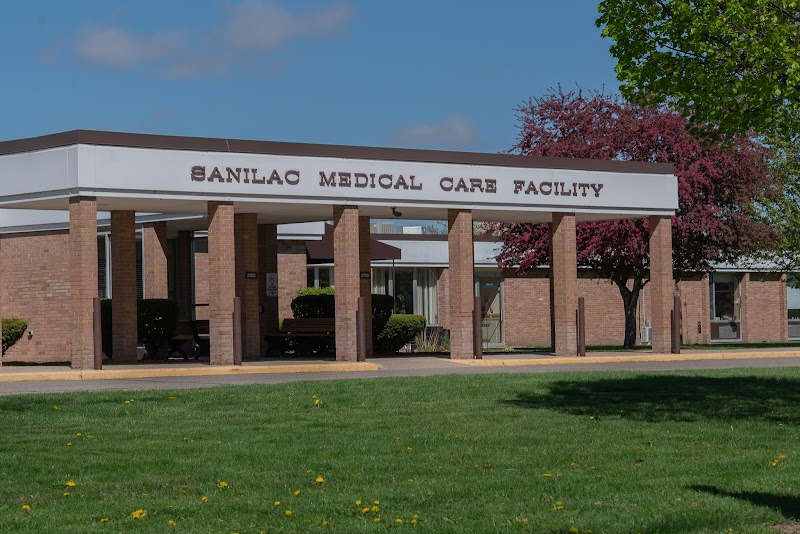
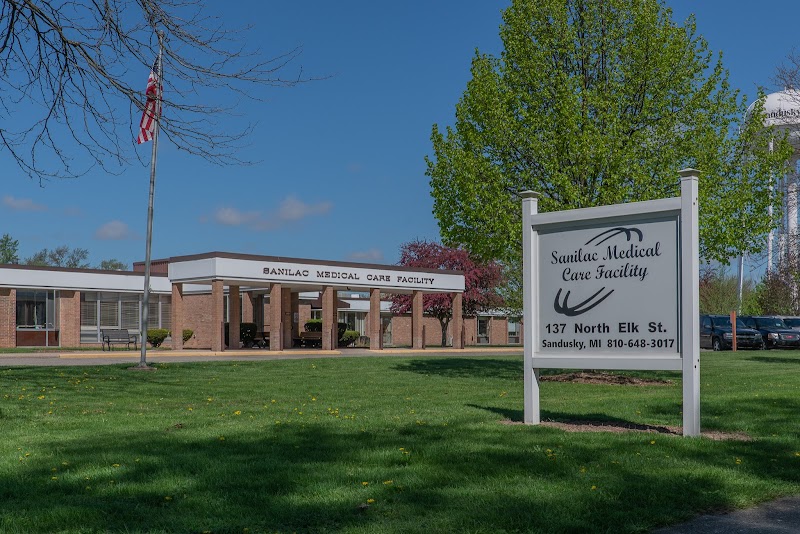
Sanilac Medical Care Facility

137 North Elk Street, Sandusky, MI 48471 (810) 648-3017
Government - County 104 Beds Independent Data: November 2025
Trust Grade
43/100
#334 of 422 in MI
Last Inspection: July 2024

Within standard 12-15 month inspection cycle. Federal law requires annual inspections.

Overview

Sanilac Medical Care Facility has a Trust Grade of D, indicating below-average performance with some notable concerns. It ranks #334 out of 422 nursing homes in Michigan, placing it in the bottom half of facilities statewide, and it is ranked #3 out of 3 in Sanilac County, meaning only one local option is better. While the facility is improving, having reduced its issues from 15 in 2024 to just 1 in 2025, there are still serious concerns. Staffing is a strong point, with a 4-star rating and a low turnover rate of 26%, significantly better than the state average of 44%. However, there are some troubling incidents, such as a resident developing an unstageable pressure ulcer due to inadequate documentation and assessment, and another resident was improperly lowered to the floor, raising safety concerns. Additionally, the facility has less RN coverage than 88% of Michigan facilities, which could affect the quality of care.

Trust Score
D
43/100
In Michigan
#334/422
Bottom 21%
Safety Record
Moderate
Needs review
Inspections
Getting Better
15 → 1 violations
Staff Stability
✓ Good
26% annual turnover. Excellent stability, 22 points below Michigan's 48% average. Staff who stay learn residents' needs.
Penalties
✓ Good
No fines on record. Clean compliance history, better than most Michigan facilities.
Skilled Nurses
⚠ Watch
Each resident gets only 27 minutes of Registered Nurse (RN) attention daily — below average for Michigan. Fewer RN minutes means fewer trained eyes watching for problems.
Violations
⚠ Watch
38 deficiencies on record. Higher than average. Multiple issues found across inspections.
★★☆☆☆
2.0
Overall Rating
★★★★☆
4.0
Staff Levels
★★★★☆
4.0
Care Quality
★★☆☆☆
2.0
Inspection Score
Stable
2024: 15 issues
2025: 1 issues

The Good

  • 4-Star Staffing Rating · Above-average nurse staffing levels
  • 4-Star Quality Measures · Strong clinical quality outcomes
  • Low Staff Turnover (26%) · Staff stability means consistent care
  • Full Sprinkler Coverage · Fire safety systems throughout facility
  • No fines on record
  • Staff turnover is low (26%)

    22 points below Michigan average of 48%

Facility shows strength in staffing levels, quality measures, staff retention, fire safety.

The Bad

2-Star Overall Rating

Below Michigan average (3.1)

Below average - review inspection findings carefully

The Ugly 38 deficiencies on record

2 actual harm
Aug 2025 1 deficiency
CONCERN (D) 📢 Someone Reported This

A family member, employee, or ombudsman was alarmed enough to file a formal complaint

Potential for Harm - no one hurt, but risky conditions existed

Free from Abuse/Neglect (Tag F0600)

Could have caused harm · This affected 1 resident

**NOTE- TERMS IN BRACKETS HAVE BEEN EDITED TO PROTECT CONFIDENTIALITY** Based on observation, interview and record review, the facility failed to prevent verbal abuse for one (Resident #40) of 19 resi...

Read full inspector narrative →
**NOTE- TERMS IN BRACKETS HAVE BEEN EDITED TO PROTECT CONFIDENTIALITY** Based on observation, interview and record review, the facility failed to prevent verbal abuse for one (Resident #40) of 19 residents reviewed for abuse, resulting in refused care, frustration with the likelihood of increased behavioral disturbances. Findings include:This citation pertains to intake 2594908 On 8/19/2025, at 12:10 PM, Resident #40 was asked if they were happy with their room and Resident #40 offered, that it was a new room. Resident #40 complained there was a girl that worked there and that they had laughed at their grandmother. Resident #40 offered, that they always say hi to them but this girl has got it in for me. Resident #40 was unable to detail the girl's appearance other than she wore pink outfits. On 8/19/2025, at 12:30 PM, the Director of Nursing (DON) offered, they called CNA H to interview them regarding Resident #40 as they left out of the facility prior to the DON arriving. The DON stated, that CNA H was alerted they would be reported for verbal abuse and that CNA H stated, no worries, I quit. On 8/19/2025, at 10:00 AM, a record review of Resident #40's electronic medical record revealed an admission on [DATE] with diagnoses that included Stroke, Dysphagia, adjustment disorder with anxiety and major depressive disorder. Resident #40 required assistance with all Activities of Daily Living and had recently been deemed incompetent to make medical decisions for themselves. A review of the care plan The resident uses psychotropic medication(s) to manage symptoms of their psychiatric disorder(s). Date Initiated: 02/28/2025 Goal My symptoms/behaviors will be reduced using a combination of psychotropic medication(s) and nonpharmacological interventions through the review date. Date Initiated: . Approaches/Tasks . Provide me with a non-confrontational environment for care. Date Initiated: 02/28/2025 . On 8/20/2025, at 9:20 AM, Resident #40 was resting in bed on back and denied any abuse complaints that day. On 8/20/2025, at 3:27 PM, a phone interview was conducted with CNA I who witnessed the verbal abuse towards Resident #40. CNA I stated, earlier that day they were in caring for Resident #40 and had asked CNA H to bring in the hoyer and assist with a transfer out of the bathroom. CNA I asked Resident #40 if CNA H could assist with the transfer and Resident #40 stated, Nope, get out. At that time, CNA I witnessed, CNA H open the bathroom door hastily and stated to Resident #40, I did nothing to you and you tried to kill me as CNA H attempted to slam the bathroom door shut but CNA H quickly stopped the door from slamming, opened back up and stated to Resident #40, You're crazy and slammed the bathroom door shut before leaving out of the room. CNA I stayed with Resident #40 who complained about CNA H stating, she hates me and that she's out to get me. CNA I completed cares for Resident #40 and propelled them down to the dining room. As CNA I pushed Resident #40 into the dining room, CNA H was overhead and observed pointing towards both Resident #40 and CNA I and loudly stated, and that dumb ass over there wants to call me crazy when she's the crazy one. She tried to kill me. She thinks my grandma's here, and she doesn't even know what she's talking about. CNA I continued to propel Resident #40 towards a dining table and CNA H further stated loudly, At least I'm an independent woman and do things for myself and get my own drinks. CNA I was asked if Resident #40 overheard the abuse and CNA I stated, yes and had to provide reassurance of everyone needs to get along to the resident. CNA I called the Director of Nursing (DON) and alerted of the verbal abuse towards Resident #40 by CNA H . On 8/20/2025, at 10:34 AM, a phone interview was conducted with CNA H regarding the verbal abuse allegation towards Resident #40. CNA H was asked if they called Resident #40 a dumb ass and CNA H stated, they were going to help with a Hoyer lift and the resident said I couldn't help her and that Resident #40 told CNA I they didn't want me to care for her because I was mean to her grandma. She's not right. A week ago, she tried to stab me with a pen. She isn't cognitive. CNA H was asked if they called the resident crazy and CNA H stated, I did not call her crazy. CNA H was asked to explain what happened next and CNA H stated, the resident was on the toilet and they left to the dining room where they were putting meal trays on the cart. CNA H admitted to venting loudly and did admit saying this is some dumb shit. CNA H was asked if there were residents in the dining room and CNA H stated, yes, but they had their back to the residents, was approximately 10 feet away and didn't use resident names. CNA H was asked why they would be accused of verbal abuse and CNA H stated, the nurse has it out for them and that they did not swear in Resident #40's room, that was crazy and further stated, they knew venting in the dining room was wrong and they did not do what they are being accused of.
Jul 2024 15 deficiencies 2 Harm
SERIOUS (G) 📢 Someone Reported This

A family member, employee, or ombudsman was alarmed enough to file a formal complaint

Actual Harm - a resident was hurt due to facility failures

Pressure Ulcer Prevention (Tag F0686)

A resident was harmed · This affected 1 resident

**NOTE- TERMS IN BRACKETS HAVE BEEN EDITED TO PROTECT CONFIDENTIALITY** This Citation pertains to Intake Numbers MI00140471 and MI00142854. Based on observation, interview, and record review the facil...

Read full inspector narrative →
**NOTE- TERMS IN BRACKETS HAVE BEEN EDITED TO PROTECT CONFIDENTIALITY** This Citation pertains to Intake Numbers MI00140471 and MI00142854. Based on observation, interview, and record review the facility failed to ensure comprehensive documentation and evaluation to prevent the development of an unstageable facility-acquired pressure ulcer for one resident (Resident #63) of seven residents reviewed for alterations in skin integrity, resulting in Resident #63 acquiring and developing an unstageable pressure ulcer. Findings include: Resident #63: During initial tour on 6/25/2024, Resident #63 was observed sitting in bed visiting with his wife. He stated his goal was to return home but know he has some work to do before that can occur. On 6/25/2024 at approximately 1:30 PM, a review was completed of Resident#63's medical records and it revealed he initially admitted to the facility on [DATE] with multiple readmissions with diagnoses that included, Chronic Osteomyelitis, Diabetes, Acute Kidney Failure, Metabolic Acidosis, Monoplegia, Pressure Ulcer of Sacral Region, Stage 4, Bipolar disorder, Anxiety and Agoraphobia. Resident #63 is alert and oriented and able to make his needs known. Further review was complete of the records the resident discharged from the facility on 3/14/2024 and readmitted on [DATE]. On 06/27/24 at 09:00 AM, an interview was conducted with Wound Nurse J regarding Resident #63's coccyx/sacrum wound. Nurse J explained he readmitted to the facility on [DATE] and the area was documented at MASD on admission, 3/19/2024 and 4/5/2024. The area was not documented on the initial nursing admission assessment and there was not consistent, ongoing assessment/monitoring of the area. The wound developed as an unstageable coccyx wound that was facility acquired. Further review was conducted of Resident #63's record and yielded the following results: Progress Notes: 4/6/2024 at 12:36: .Noted resident's coccyx excoriated area now open with slough and necrotic tissue covering wound bed . 4/23/2024 at 08:24: .Coccyx Sacrum large necrotic unstageable pressure ulcer, staged at stage 4 per wound clinic however wound base is not visible with wound bed being 100% necrotic grey attached slough and scattered eschar noted, wound edges are irregular and non-rolling, large amount of purulent grey dark bloody drainage noted soaked entire dressing, however no odor noted, with noting BM was also in wound base as wound is very close to anus . 5/7/2024 at 07:32: .Coccyx wound has decreased some still remains unstageable with necrotic grey slough and eschar scattered throughout . Care Plan Revisions: .FA (facility acquired) unstageable to coccyx sacrum . admission Assessment 3/18/2024: .wound to foot . There was no documentation regarding coccyx/sacrum skin alterations. Skin Observation Assessments: 3/19/2024: .intra-gluteal cleft- masd .MASD skin noted to intra-gluteal clef and peri area. Will continue to monitor and apply barrier cream after toileting . It can be noted after reviewed March 2024 MAR (Medication Administration Record) it showed the order for barrier cream was not ordered until 3/30/2024. 3/25/2024: There were skin concerns documented. 3/29/2024: There were skin concerns documented. 4/5/2024: Sacrum 11 x 3.1 x 0- MASD .Area remains present with MASD. Area appears to be getting smaller .Odor continues, moderate amount of drainage noted. 4/6/2024: Coccyx- pressure- unstageable .Resident noted with open area to sacral/coccyx, area previously presented at irritation from fecal contact; resident has been sitting in recliner without relief of pressure. Wound care initiated and message to wound nurse for assessment . 4/12/2024: .Sacrum presents with both beefy red, necrotic, and slough . There were no measurements listed. 4/20/2024: Coccyx- Pressure . There were no measurements listed. 4/23/2024: .Coccyx/sacrum- Pressure- 8.2 cm x 7.5 cm UTD (unable to determine) - Unstageable .Coccyx Sacrum large necrotic unstageable pressure ulcer, staged at stage 4 per wound clinic however would base is not visible with wound bed being 100% necrotic grey attached slough and scattered eschar noted ,wound edges are irregular and non -rolling, large around of purulent grey dark bloody drainage notes soaked entire dressing . 5/2/2024: Coccyx/sacrum- Pressure- 8.2 cm x 7 UTD- Unstageable . Coccyx Sacrum large necrotic unstageable pressure ulcer, staged at stage 4 per wound clinic however would base is not visible with wound bed being 100% necrotic grey attached slough and scattered eschar noted ,wound edges are irregular and non -rolling, mod amount of sero/sang grey tinged bloody drainage noted . 5/7/2024: Coccyx/sacrum- Pressure- 7.5 cm x 6.9 cm x UTD- Unstageable . Coccyx Sacrum large necrotic unstageable pressure ulcer, staged at stage 4 per wound clinic however would base is not visible with wound bed being 100% necrotic grey attached slough and scattered eschar noted, wound edges are irregular and non -rolling, mod amount of sero/sang grey tinged bloody drainage noted . 5/17/2024: Coccyx/sacrum-Pressure-7.5 cm x 6.8 cm x UTD Unstageable . Coccyx Sacrum large necrotic unstageable pressure ulcer, staged at stage 4 per wound clinic however would base is not visible with wound bed being 100% necrotic grey attached slough and scattered eschar noted ,wound edges are irregular and non -rolling, mod amount of sero/sang grey tinged bloody drainage noted . When the wound was acquired there the wound measurements were not consistently documented. Wound Clinic Notes: 3/25/2024: There was no mention of coccyx wounds. 4/15/2024: wound care for L (left) foot and BIL buttocks wounds . Wound #5 status open. Original cause of wound was Pressure Injury. The date acquired was: 3/1/2024. The wound is currently classified as Category/Stage IV wound with etiology of Pressure Ulcer and is located on Right Medial Coccyx. The wound measures 5.2 cm length x 7.3 cm width 3.1 cm depth .There is a medium amount of purulent drainage noted . 4/22/2024: .Wound #5 status open. Original cause of wound was Pressure Injury. The date acquired was: 3/1/2024. The wound is currently classified as Category/Stage IV wound with etiology of Pressure Ulcer and is located on Right Medial Coccyx. The wound measures 6.3 cm length x 5.6 cm width x 3.3 cm depth . 4/29/2024: .Stage 4 coccyx wound which was surgically debrided while inpatient. Patient has a lot of necrotic non viable tissue present to wound bed of coccyx wound. Wound debridement was done today .Wound #5 status open. Original cause of wound was Pressure Injury. The date acquired was: 3/1/2024. The wound has been in treatment 2 weeks. The wound is currently classified as Category/Stage IV wound with etiology of Pressure Ulcer and is located on the Right Medial Coccyx. The wound measures 7.2 cm length x 6.7 cm width x 4 cm depth; 37.888 cm ^2 area and 151.55 cm ^3 volume .foul odor after cleansing was noted .There is a small (1-33%) amount of necrotic tissue within the wound bed including Eschar and Adherent slough . 5/6/2024: .Pressure ulcer of right buttock, stage 4 . 5/13/2024: .Pressure ulcer of right buttock, stage 4 . On 6/27/2024 at 11:00 AM Resident #63's wound was observed in the presence of Wound Nurse J. Resident observed lying in bed on back, air mattress on bed, resident turned to left side, he said he can't turn to the right side because he does not have a grab bar on that side and can't turn himself over that way. He has a small grab bar on the upper left side of his bed. Resident with dressing dated 6/26/2024- dressing with copious amount brown drainage and a very foul smell. The wound nurse was asked about it and she said it was wound drainage and she thought it might be infected. She said the resident was routinely seen by the wound clinic and they did not culture the wound on his last visit. The resident was observed to have a large wound between the gluteal folds- the wound nurse said she completed measurements, and they were in the chart Skin Observation dated 6/25/2024. The wound was approximately 4 cm x 2 cm with depth. Very near the resident's anus. The wound was bright red with some yellow and black necrosis. The nurse cleansed the wound with normal saline and applied the dressing: triad paste to outside of wound, calcium alginate silver to wound bed and abd pad over top. The resident was asked if he already had the wound on admission and he stated, No. I got it here. He said he came to the facility for wounds on his feet and then developed the wound on his sacrum. He said he has trouble turning in bed, fell out of bed and then had been sitting for prolonged periods of time in a bedside recliner. He said the wound developed after that. On 07/01/24 at 01:06 PM, an interview was conducted with Nurse Practitioner I regarding Resident #63's coccyx/sacrum wound. Nurse Practitioner I stated the wound began at the facility. Review was completed of the facility policy entitled, A.M and H.S. Care, revised 11/4/21. The policy stated, .Inspect residents' skin for redness and open areas during care. Report any changes in condition to charge nurse . Review was completed of the facility policy entitled, Wound Care, revised 6/24/29. The policy stated, All new wounds noted will be measured by the wound care nurse or designee within one business day .Wound care nurse to document wound progress note with all new admission that skin assessment was reviewed and skin treatments are in place ordered.
SERIOUS (G) 📢 Someone Reported This

A family member, employee, or ombudsman was alarmed enough to file a formal complaint

Actual Harm - a resident was hurt due to facility failures

Accident Prevention (Tag F0689)

A resident was harmed · This affected 1 resident

**NOTE- TERMS IN BRACKETS HAVE BEEN EDITED TO PROTECT CONFIDENTIALITY** Resident #38: A review of Resident #38's medical record revealed an admission into the facility on 2/29/24 with diagnoses that i...

Read full inspector narrative →
**NOTE- TERMS IN BRACKETS HAVE BEEN EDITED TO PROTECT CONFIDENTIALITY** Resident #38: A review of Resident #38's medical record revealed an admission into the facility on 2/29/24 with diagnoses that included fracture of right femur, obesity, osteoporosis, unsteadiness on feet, difficulty in walking, and muscle weakness. The Minimum Data Set assessment revealed the Resident had a Brief Interview for Mental Status (BIMS) score of 12/15 that indicated intact cognition. Further review of Resident #38's medical record of progress note dated 5/2/24, (Physician's Assistant) notified of possible injury from lowering resident to the floor. Order obtained for Right Knee x-ray and Right hip x-ray for post-fall [lowered to floor from standing position] . Progress note dated 5/3/24, Phone call to (hospital). Spoke with (Nurse's name), floor nurse. Verified per (Doctor's name) resident does not have an Acute Femur Fracture . A review of the Facility Reported Incident revealed the following: Alleged Action: On 5/2/2024 resident (name and medical record number (Resident #38)) was being assisted by CNA (certified nursing assistant also CENA), (name of CNA) with transferring from the side of her bed to her wheelchair. As (name of Resident) was being assisted with sitting on the edge of the bed with gait belt being applied and 2 wheeled rolling walker present, resident slipped resulting in the resident being lowered to the floor with the assistance of CNA, (name). (Resident's name) complained of pain in the right knee/leg immediately post incident with resident receiving PRN (as needed) Oxycodone for pain management. An X-ray of the right knee was obtained with results showing Postsurgical change with a spiral lucency of the distal femur suspicious for fracture. At the time the incident had occurred, it was noted that CNA, (name) was not following the residents plan of care as resident required assist of 2 using a 2 wheeled rolling walker for all transfers. The Resident was sent to a second hospital, and it was determined she did not have a fracture though she was admitted with sepsis, urinary tract infection, right lower leg cellulitis and acute diverticulosis. The Resident was re-admitted into the facility on 5/8/24. A review of the facility incident report revealed date and time 5/2/24 at 10:15 AM. Incident Description Staff called this writer into resident's room, reported resident lowered to floor after attempting to transfer from bed to WC (wheelchair). Resident found sitting at 90-degree angle on floor, leaning against bed, with both legs bent at the knees, to the right. Resident stated CENA was getting her up for therapy, was sitting on the side of the bed and when CENA helped stand her up, she felt her legs give out. CENA and resident's husband assisted lowering her to the floor On 6/26/24 at 1:42 PM, an interview was conducted with Corporate Compliance Staff, regarding the investigation for Resident #38's fall on 5/2/24. The Staff reported the Resident was getting ready to get up for therapy, husband was in room, sitting on edge of the bed, was being assisted into wheelchair by CNA D, Resident had stood up from the bed and stated she was going down, and assisted to the floor by the CNA. When asked what the Resident's transfer status was at that time, the Staff reported the transfer status was two-person assist with rolling walker or Hoyer lift. The Staff was asked if the CNA had followed the plan of care and indicated the CNA had been by themselves and should have had two staff assisting. When asked why he was not following the plan of care the Staff stated, He could not give me a definitive answer. The Staff reported the husband had not had training in transferring the Resident. The Staff reported the Resident had gone for x-rays at the emergency room, findings indicated post-surgical change and suggestive of a fracture and the Resident was transferred to another hospital from order from the surgeon where it was determined there was not a fracture. The Staff reported that the CNA who had not followed the plan of care for Resident #38 had been suspended until further investigation and was given education. On 6/27/24 at 10:45 AM, an observation was made of Resident #38 in bed with a gown on. The Resident indicated she was to go out again today for a bone density test. The Resident answered questions and engaged in conversation. The Resident was asked about the fall when the Resident had been lowered to the floor. The Resident explained the CNA was helping her into the wheelchair from the bed, had a gait belt on, felt like she was slipping when going to the wheelchair and stated, I ended up on the floor. When asked if one CNA was helping her, the Resident indicated one CNA and stated, They were supposed to have two, and explained that she had been a Hoyer lift and therapy had worked with her on transferring with the walker and they said that was ok, to transfer with the two-person assist. The Resident stated, Now since the accident, they have me getting up with the Hoyer lift now. On 6/27/24 at 1:00 PM, an interview was conducted with Assistant Director of Nursing, Education Nurse C regarding education of staff post Resident #38's fall on 4/2/24. The Education Nurse indicated that a message was sent to all Nursing Staff CNA/RN/LPN: There is new education in Relias CNA Closet Guideline and Transfer Education. Please complete this ASAP. Thank you, dated 5/6/2024. A review of the list of staff that completed the training from the facility document titled, Learner Status, revealed, the course assigned to 107, course completed on time 43, Course completed late 29 and course not complete overdue 35, with a total completion of 67.29% and total compliance % of 40.19%. When asked when the educations due was, the Education Nurse the due date was for 2 weeks and that some staff had not completed the education and stated, it is way past the due date. On 6/27/24 at 2:15 PM, an interview was conducted with the Director of Nursing (DON) regarding Resident #38 being lowered to the floor by the CNA on 4/2/24. A review of the CNA not following the plan of care for two-person assist was reviewed. The education provided to staff was reviewed with the DON that not all education was completed by the staff assigned. The DON reported that the Restorative Nurse started doing spot checks for transfers and staff were following transfer status. This Citation pertains to Intake Numbers MI00144103 and MI00144517. Based on observation, interview and record review, the facility failed to ensure appropriate interventions were in place, interventions were followed and supervision was provided to prevent falls with injury for 2 residents (Resident #38, and Resident #44) of 5 residents reviewed for falls, resulting in Resident #38 falling during a transfer, having pain and a decline in transfer status to a Hoyer lift, and Resident #44 sustaining fractures in her right foot during a transfer. Findings Include: Resident #44: Accidents: On 6/25/24 at 10:56 AM, Resident #44 was observed sitting in a wheelchair in her room. She was alert and talkative. She said she broke some of her toes on her right foot during a transfer in the bathroom. She said she was supposed to have 2 people help her with the transfer and only one staff member assisted her; She stated, I have a twist it board to stand on with transfers and my foot wasn't on it quite right. They said I broke my toes. A record review of the Face sheet and Minimum Data Set (MDS) assessment indicated Resident #44 was admitted to the facility on [DATE] and recently readmitted on [DATE] with diagnoses: history of a stroke, right sided weakness, heart disease, diabetes, COPD, peripheral vascular disease, hypothyroidism, bipolar disorder, dementia, neuropathy, history of falls, unsteadiness on feet, displaced fracture of third metatarsal (toe) right foot 4/9/2024, displace fracture of fourth metatarsal (toe) right foot 4/9/2024. The MDS assessment dated [DATE] revealed the resident had full cognitive abilities with a Brief Interview for Mental Status (BIMS) score of 15/15 and the resident was dependent with transfers. A record review of an incident investigation for Resident #44 revealed the following: Resident #44 complained of pain in right foot on 4/7/2024. An x-ray was ordered 4/8/2024 that identified a fracture of distal fourth metatarsal (toe) and a fracture of the third metatarsal right foot. Initially the resident said she did not know how it happened. The resident continued to experience pain and Norco (pain medication) was ordered every 6 hours. An ortho consult was ordered and the resident was ordered to transfer via an electronic lift/Hoyer. The facility interviewed all staff assigned to the resident's hall during a 3 day period 4/5/2024-4/7/2024. Nurse E said on 4/7/2024 she was called to the shower room by an aide because Resident #44 was complaining of pain on the top of her right foot and was unable to put weight on the foot and stand up. It took 3 staff to assist her to transfer. At that time the physician was notified and x-rays were ordered. Nurse E said the resident had also complained of pain to her right foot on 4/6/2024 and requested something for pain. The facility interviewed Certified Nursing Assistant/CNA R on 4/10/2024, she was assigned to care for Resident #44 on 4/5/2024, she said the resident complained of pain during a toilet transfer on 4/5/2024. She said when the resident sat down on the toilet, she said her right foot twisted. She said it hurt at the time, but didn't complain about it for the rest of the night. CNA R said the resident would voice concerns about her right foot at times, because that was the side she had weakness on. The CNA said the resident did twist her foot at times. On 4/12/2024 CNA S was interviewed and said she was assigned to Resident #44 on 4/6/2024 and 4/7/2024 and said the resident complained of pain and needed 3 staff to assist her with transferring. On 4/12/2024 the resident was seen by the orthopedic surgeon and was ordered a EZ Tracker [NAME] boot to be worn for 6 weeks. A review of the physician orders for Resident #44 identified the following: 3/21/2024: Transfers- . Toilet and Shower chair transfers- assist of two. A review of the Care Plans for Resident #44 provided, The resident has an ADL (activities of daily living) self-care performance deficit related to Hemiplegia and Hemiparesis (weakness) following a CVA (stroke), dementia, with Intervention: Transfers: . 2 assist for toileting using stand and pivot disc. On 6/25/24 at 2:43 PM PM Corporate Compliance Officer B was interviewed related to Resident #44.-She said the resident started complaining of pain in her right foot about 4/5/2024 asking the nurse for Tylenol; after a couple days the pain increased. The resident initially said she had not injured it: no fall and she did not bump it. An x-ray was ordered and identified fractures on the right foot 3rd and 4th toes 4/8/2024. The right foot was re-x-rayed 5/9/24 and identified healing, although not yet healed. She said the facility interviewed staff from several days and shifts and identified Certified nurse aide R on 4/5/2024 as transferring the resident by herself with 1 assist. She said the aide was using a twist transfer board that the resident stood on. The Corporate Compliance Officer B said the aide received a reprimand from the Director of Nursing/DON in writing for transferring the resident in the bathroom by herself with 1-assist when she was supposed to have 2-assist. On 7/1/2024 at 11:30 AM, the DON was interviewed about Resident #44 fracturing two toes on her right foot during a transfer in the bathroom. The DON said CNA R had confirmed she transferred Resident #44 with 1 assist in the bathroom and then the resident complained of pain in her right foot. The DON said the CNA was reprimanded for not following the resident's plan of care, as she needed 2 assist with the toileting transfer.
CONCERN (D)

Potential for Harm - no one hurt, but risky conditions existed

Deficiency F0552 (Tag F0552)

Could have caused harm · This affected 1 resident

**NOTE- TERMS IN BRACKETS HAVE BEEN EDITED TO PROTECT CONFIDENTIALITY** Based on observation, interview and record review the facility failed to obtain informed consent prior to initiating antipsychot...

Read full inspector narrative →
**NOTE- TERMS IN BRACKETS HAVE BEEN EDITED TO PROTECT CONFIDENTIALITY** Based on observation, interview and record review the facility failed to obtain informed consent prior to initiating antipsychotic medication for two residents (Resident #25 and Resident #32) of three residents sampled for antipsychotic medication use, resulting in the resident and/or responsible party not being informed of the risk versus benefit of antipsychotic medication use prior to initiation. Findings include: Resident #25 (R25): Resident #25 is [AGE] years old and admitted to the facility on [DATE] with diagnoses that include Alzheimer's disease, dementia with agitation, anxiety and major depressive disorder. R25 has a Brief Interview for Mental Status (BIMS) score of 7, indicating severe cognitive impairment. On 06/25/24 at 04:30 PM, R25 was observed wandering in and out of multiple resident rooms in their wheelchair. R25 was yelling hello as they entered each room and they were looking for someone named [NAME]. This surveyor approached R25 and asked them who [NAME] was and if I could help them find her. R25 responded with jumbled speech and the response did not make sense. R25 continued to go room to room until staff intervened and led her back to the common area. On 06/27/24 at 09:33 AM, record review revealed R25 is followed by Behavioral Care Solutions (psych group that cares for residents at the facility) and is on Seroquel for mood disorder, Paroxetine for depression and Clonazepam for anxiety for 14 days with a stop date of 06/28/24. On 06/27/24 at 09:40 AM record review revealed R25 started on Seroquel 50mg on 03/28/24, Paroxetine 40mg started on 05/03/24 and Clonazepam 0.25mg started on 6/14/24. No progress notes or assessments were able to be located for the initiation of Clonazepam for 14 days. There was no documentation present that the resident or responsible party was notified of the initiation of Clonazepam. On 06/27/24 at 9:45 AM record review revealed consents are present for Seroquel and Paroxetine, the consents were dated 04/04/24, one week after admission date of 03/28/24. Seroquel was initiated on admission on [DATE], no documentation was present that the resident or responsible party was informed of the medication upon admission. There was no consent present for Clonazepam 0.25mg which was initiated on 06/14/24 for 14 days. Resident #32 (R32): Resident #32 is [AGE] years old and admitted to the facility on [DATE] with diagnoses that include dementia, post traumatic stress disorder and adjustment disorder with mixed anxiety and depressed mood. Resident #32 has a BIMS score of 3, indicating severe cognitive impairment. On 06/27/24 at 11:13 AM, record review revealed R32 was started on Ativan 1mg every 6 hours as needed for anxiety on 06/14/24 for 14 days with a stop date of 06/28/24. There was no documentation present in the electronic health record (EHR) that the responsible party or resident was informed of the treatment prior to initiation. A consent form was signed on 06/19/24, five days after the medication was initiated. On 06/27/24 at 11:16 AM an interview was conducted with the Director of Nursing (DON). The DON was asked if the staff should call the responsible parties for cognitively impaired residents for changes in psychotropic medication to inform them. The DON stated, yes the responsible parties should be informed prior to initiation of psychotropic medication. The DON then stated that recently they have been educating nursing staff to be sure they are informing families of med changes and documenting their notification of families with changes. On 07/01/24 the policy titled Use of Psychotropic Medications was provided by the facility. Review of the policy revealed: 3. Residents and/or representatives shall be educated on the risks and benefits of psychotropic drug use and the appropriate party to sign the consent regarding the psychotropic medication(s) being given.
CONCERN (D)

Potential for Harm - no one hurt, but risky conditions existed

Deficiency F0561 (Tag F0561)

Could have caused harm · This affected 1 resident

**NOTE- TERMS IN BRACKETS HAVE BEEN EDITED TO PROTECT CONFIDENTIALITY** Based on observation, interview and record review the facility failed to accommodate resident choice in Guardianship for 1 resid...

Read full inspector narrative →
**NOTE- TERMS IN BRACKETS HAVE BEEN EDITED TO PROTECT CONFIDENTIALITY** Based on observation, interview and record review the facility failed to accommodate resident choice in Guardianship for 1 resident (#16) of 27 residents reviewed for resident choice, resulting in Resident #16 becoming upset and worried that she would not have someone to look out for her when her wishes were not considered. Findings Include, Resident #16 Choices On [DATE] at 9:30 AM, during a tour of the facility, Resident #16 was observed getting ready for the day. She was sitting in her wheelchair, dressed and preparing to attend an activity in the dining room. She said she spent most of her day in the facilities activities and that is what she enjoyed doing. She said she had some issues to discuss. Resident #16 said she was upset because the facility was suing her to remove her Guardian, who is her sister and replace her with a public guardian. The resident said they had to go to court twice and there is another hearing with an attorney over the resident losing her Medicaid eligibility and not having her bill paid. She said her bills had been paid by Medicaid until a waiver for Medicaid eligibility, that was enacted during the Covid-19 Pandemic in 2020, expired in September of last year/2023. She said it was confusing and her sister had not had to apply for Medicaid re-eligibility before and then her Medicaid lapsed. She said her Medicaid was reinstated in [DATE], but she said she was so upset about this, that it was all she could think about. Resident #16 said she tried to talk to the billing department about the situation and court hearings and was told, That's just the way it is. A record review of the Face sheet and Minimum Data Set (MDS) assessment indicated Resident #16 was admitted to the facility on [DATE] with diagnoses: quadriplegia at vertebra C5-C7, rheumatoid arthritis, diabetes, fibromyalgia, hypertension, anxiety, depression, atrophy left eye, cataract right eye, chronic pain, weakness. The MDS assessment dated [DATE] revealed the resident had full cognitive abilities with a Brief Interview for Mental Status (BIMS) score of 15/15 and the resident needed assistance with all care. On [DATE] at 3:30 PM, during an interview with Social Services H about Resident #16's Guardian/Conservator I , she said the resident had the same guardian during her stay at the facility since 2019: it was her sister. She said there had never been any issues with the resident's guardian, until she lost her Medicaid eligibility in [DATE]. She said the resident's Guardian I did a lot for the resident, visiting her often and bringing her what she needed. She said the guardian tried to reapply for Medicaid, but there was too much money in the resident's account. She said the guardian and resident were trying to find a handicap accessible van, to accommodate the resident on outings with her family, but they were having trouble finding a van. She said months went on, the money wasn't spent, and the bill was not paid to the facility. The Social Services H said she was asked by the Interim Administrator T to file a petition with the court to remove the resident's Guardian H as Conservator (overseer of the resident's finances) and appoint a predetermined conservator chosen by the facility. On [DATE] at 3:48 PM, [NAME] Staff U was interviewed about Resident #16. She said in [DATE] the facility received a Medicaid billing denial. Resident #16's Medicaid eligibility was checked in [DATE], and she no longer qualified for Medicaid. She said the amount the Resident received from Medicaid was $10,050/month. She said she called the sister/Guardian about it. Biller U said MDHHS (Michigan Department of Health and Human Services) had halted redeterminations for Medicaid eligibility during Covid. She said last fall that stopped and each person or their representative had to check on their own. She said she believed a notice went out to residents/representatives, but she wasn't sure. She said the resident and Guardian had cashed out a retirement policy and the guardian was trying to buy a van-handicap accessible. She said it would cost about $20,000 to find a van, but they could not find one. The biller said in December there was a conversation with the resident or representative about the Medicaid ineligibility because of too much money in the resident's account. She said the Guardian made payments towards the bill beginning in [DATE]. Another payment was received in [DATE] and [DATE] and the resident's Medicaid eligibility was restored in [DATE]. The Biller U said there had been no prior issues with the resident's payment prior to the discontinuance of the Covid-19 eligibility waiver. She said Resident #16 had had the same Guardian since [DATE], since the resident came to the facility. Biller U said there was still an outstanding balance for the resident's bill. During the interview with Biller U on [DATE] at 3:48 PM, she said both herself and Biller V went to court twice about the matter. She said it was very difficult. She said a local attorney was now hired to attend the next hearing over the resident's Conservatorship in court on [DATE]. A review of the court documents identified the following: [DATE]: A Petition to Modify Conservatorship/Adult was filed in court by Social Services H in the matter of removing Resident #16's Guardian related to the unpaid expenses at the facility. The document requested a specific named facility nominated person to be the Conservator. [DATE]: A court document titled, Order Appointing Person To Review/Investigate Guardianship, for Resident #16. The court order was for review of the resident's Guardianship. On [DATE] at 11:45 AM, the Interim Administrator T and Administrator in training were interviewed about Resident #16's court hearings related to past due Medicaid payments. The Interim Administrator T said he had requested a court order to remove Resident #16's Guardian/Conservator because of the past due bills. The Administrator T was asked if he attended the court hearings and he said he had not, that the 2 billers had went to court. Reviewed with the Administrators that Resident #16 was very upset about this situation, as she did not want to lose her sister as her Guardian for Healthcare. They both said the billers and Social Services had talked to the resident. The Administrators were asked if they had met with the resident and her representative to discuss the court hearings with the resident, as the resident thought her Guardian for Healthcare was being changed. The Administrators said they had not spoken with the resident or her Guardian. The Administrators were asked if there had been any issues with Resident #16's Guardian in the past and they both said there had been no issues. The Administrator in Training said the resident's Guardian was also the facilities Nurse Practitioner/NP. She said they had no issues with the NP's care of Resident #16 or other residents. The Interim Administrator T said a new Conservator for finances was requested at the court hearings, not a Guardian for Healthcare. During the interview with The Interim Administrator T, he said the billing department said they were not comfortable discussing the matter in court after the first 2 hearings and the facility obtained an attorney in [DATE] for the next hearing in July. At the time of the interview the Administrators were asked for copies of any documentation of conversations between the facility, resident and Guardian related to the resident's bill, guardianship and court hearings. A review of the documents received from the facility provided the following: The billing department Collection notes created by Billers U and V indicated there was no documentation of billing issues for Resident #16 until [DATE]: 3 months after Medicaid eligibility was denied. A note dated [DATE] said the Guardian I spoke with the billing office and said she was attempting to find a van for the resident for $20,000. Beginning in [DATE], the billing department documented conversations with the resident or her Guardian. On [DATE] Biller V documented that she had went to court to represent the facility related to Resident #16's bill and Biller V stated, I requested that (the county public Guardian) be put in place due to resident's overdue balance . Per the Interim Administrator, during the interview on [DATE] at 11:45 AM, the facility had not requested to change the Resident's guardian. They only wanted a Conservator for finances. On [DATE] 12:52 PM, Resident #16's Guardian/conservator I was interviewed about the resident's bill and court hearings. She said she was court appointed as the resident's Guardian and had been her Guardian since 2019. She said the facility did not tell her for a few months that there was too much money in Resident #16's account and it affected her Medicaid eligibility. She stated, They tried to catch me in the hall when I was seeing patients. They never sat down with me. Then I asked for a payment plan. She had never had a patient pay until now. There were no bills. They said the I was neglecting my sister. I went to the court hearings. They did not come to me. They are trying to remove me from caring for her. My sister is devastated by this. We were blindsided. We thought 'Work with us, explain it.' They were getting the bills and never said anything about it. I had no idea. She said the facility was attempting to remove her as healthcare Guardian also. She said the court documents said they were trying to remove her from conservator and guardian both. A review of the document titled, CMS (Centers for Medicare and Medicaid Services), Nursing Home Toolkit: Nursing Homes-A Guide for Medicaid Beneficiaries', Families and Helpers, dated [DATE] provided, .People living in a Nursing home have the right to be treated with dignity and respect . Nursing home beneficiary rights and protections under the law include, but are not limited to, the right to: . Be treated with dignity and respect . Participate in making choices in care . Quality of Life: The Social Security Act requires nursing home to care for beneficiaries in a manner that emphasizes their quality of life and ensures dignity, respect, and choice .
CONCERN (D)

Potential for Harm - no one hurt, but risky conditions existed

Deficiency F0657 (Tag F0657)

Could have caused harm · This affected 1 resident

**NOTE- TERMS IN BRACKETS HAVE BEEN EDITED TO PROTECT CONFIDENTIALITY** Resident #6 (R6): Resident #6 is [AGE] years old and admitted to the facility on [DATE] with diagnoses that include Alzheimer's ...

Read full inspector narrative →
**NOTE- TERMS IN BRACKETS HAVE BEEN EDITED TO PROTECT CONFIDENTIALITY** Resident #6 (R6): Resident #6 is [AGE] years old and admitted to the facility on [DATE] with diagnoses that include Alzheimer's disease, vascular dementia, weakness and a history of falls. Resident #6 has a Brief Interview for Mental Status (BIMS) score of 3, indicating severe cognitive impairment. On 06/27/24 at 02:29 PM, R6 was observed sleeping in bed, R6 had the left side of their bed against the wall, there was a body pillow on the right side of their body. A wheelchair was observed to be about 5 feet from the foot of the bed by the dresser, no leg rests were on the wheelchair and the seat had miscellaneous items on it. On 06/27/24 at 02:32 PM, record review revealed R6 had a care plan for being at risk for falls and actual falls. The actual falls care plan indicated that R6 had their most recent fall on 01/04/24 with no injury. The interventions included placing the wheelchair at the foot of the bed with the seat facing the head of the bed when the resident is in the bed at all times. This is to facilitate safe transfer as the resident self transfers. This was last revised on 03/20/24. On 06/27/24 at 02:43 PM, record review of incidents revealed that R6 has sustained falls since 01/04/24: -On 01/04/24, R6 was observed on the floor leaned against the bed. The incident report did not have an intervention to prevent future falls. -On 05/16/24, R6 was observed on the floor between the bed and wheelchair, no injuries noted and there was no care plan intervention listed on the incident and accident form. -On 05/31/24, R6 was observed sitting on the floor by the bed, no injuries noted, resident stated they had to go to the bathroom. The care plan intervention was to place a pressure alarm pad to bed. Care plan wasn't updated until 6/4/24. On 06/27/24 at 04:15 PM, it was verified with the Director of Nursing (DON) that fall interventions in the resident room were not in place. Wheelchair was located by the dresser and not near the end of the bed. On 07/01/24 at 08:11 AM, RR of care plans for falls revealed that the most recent fall was on 01/04/24. Surveyor was unable to locate care plan interventions for falls that correlated to the most recent falls. Care plan was last updated 06/04/24 for a fall on 05/31/24. This is in the at risk for falls care plan and not the actual falls care plan. Resident #32 (R32): Resident #32 is [AGE] years old and admitted to the facility on [DATE] with diagnoses that include dementia, post traumatic stress disorder and adjustment disorder with mixed anxiety and depressed mood. Resident #32 has a BIMS score of 3, indicating severe cognitive impairment. On 07/01/24 at 08:17 AM, record review revealed R32 has sustained multiple falls since admission to the facility on [DATE]: -On 04/16/24, R32 was observed on the floor in the living room/open area in a kneeling position, no injury was noted and the fall was unwitnessed. The intervention was to change the pressure pad alarm to tab alarm while the resident is in the wheelchair or in bed. A review of the 'risk for falls care plan revealed the resident uses a pressure alarm to the wheelchair and bed. Date initiated 03/30/24 and last revised on 05/21/24. -On 05/02/24, R32 was observed on the floor in the living room area, no injury was noted and the fall was unwitnessed. The intervention on the incident report was to educate staff on the importance of toileting every two hours and for someone to remain in common areas when residents are in that area. A review of the risk for falls care plan revealed no intervention was entered to correlate with the date of the fall. -On 05/20/24, R32 was observed on the floor of their room after a certified nursing assistant (CNA) responded to the sound of R32's wheelchair alarm going off. R32 had some slight pain in their buttocks but overall no injury was noted and the fall was unwitnessed. There was no intervention listed on the incident form. -On 05/21/24, R32 was observed sliding out of their wheelchair by nursing staff. No injury was noted and the fall was witnessed. The intervention was to place dycem(item that prevents sliding) on the recliner. On 07/01/24 at 09:51 AM, an interview was conducted with the DON. The DON was asked who updates care plans after a fall. The DON stated that the floor nurse is responsible to update it at the time of the incident, then it is reviewed in morning meeting and updates are made if necessary. The DON was asked why there were no interventions put in place after some of the residents falls. The DON stated they did not know why. The DON was asked about the appropriateness of an intervention that was put in place in place for sliding out of the wheelchair, the intervention was to add dycem to the reclining chair. The DON stated that the intervention was not appropriate for the fall. A review of the policy titled Resident incident- Reporting and Monitoring, revised 10/12/23, revealed: 6. The restorative nurse or designee will investigate all incidents in a timely manner, next scheduled working day if not present at time of incident. Additional, appropriate interventions will be implemented per Restorative Nurse or designee, when applicable in an attempt to prevent recurrence. Based on observation, interview and record review, the facility failed to update/revise individualized, person-centered care plans to reflect changing care needs for three residents (Resident #2, Resident #6, and Resident #32), of 30 residents reviewed for care plans, resulting in the potential for unmet care needs. Findings Include: Resident #2: Accidents On 6/25/2024 at 12:56 PM, Resident #2 was observed sitting in a wheelchair in his room. He was alert but did not answer any questions. A record review of the Face sheet and Minimum Data Set (MDS) assessment indicated Resident #2 was admitted to the facility on [DATE] and had multiple discharges and readmissions with the most recent readmission on [DATE] with diagnoses: history of traumatic brain injury, paraplegia, chronic kidney disease, kidney stones, urinary catheter, history of seizures, gastrostomy tube, hypothyroidism, and anxiety. The MDS assessment dated [DATE] revealed the resident had severe cognitive dysfunction and needed assistance with all care. A record review on 6/27/24 at 1:42 PM, revealed Resident #2 had fallen 3 times in the past 12 months: 8/24/23, 5/31/24, and 6/25/24. 8/24/2023 at 12:55 AM: . resident was found on the floor . he was yelling when entering room found resident on the floor face down left arm straight out and right arm under resident. The tab alarm was not going off and was still attached to alarm . no injury . both center tab and outer ring had teeth marks on it from resident chewing . Immediate Action Taken: Resident not to wear gowns to bed, to be in tee shirts only to prevent from chewing on tab clip . 5/31/2024 at 11:00 PM: . resident was found lying on the floor next to his bed . lying on the floor in between his bed and floor mat. It appeared that the floor mat got moved out farther from the bed by resident. Resident was lying on his back on the floor. It was noted body pillow was not in place per orders . 6/25/2024 at 3:41 PM, . Resident had unwitnessed fall from bed onto floor mat. No injuries . A review of the Care Plans for Resident #2 identified the following: The resident has had actual falls since admission into (facility), date initiated and revised 8/25/2022 with 3 interventions: Continue interventions on the at-risk plan, date initiated and revised 8/25/2022; For no apparent acute injury, determine and address causative factors of the fall, date initiated and revised 8/25/2022; Physical therapy and or Occupation therapy screening recommended following each fall in order to address the resident's strength and mobility if applicable, date initiated and revised 8/25/2022. There were no additional interventions on the Fall Care Plan. The Care Plans were not updated with interventions to aid in preventing future falls after the falls on 8/24/2023, 5/31/2024 and 6/25/2024. There was no mention of fall mats or resident alarms. On 6/27/2024 at 2:45 PM, the Resident #2's Fall Care Plan was reviewed with Restorative Nurse P. Reviewed with Nurse P the 3 dates the resident had fallen. She said Restorative would update this Care Plan and said she would look at it. Hospitalization A record review of the Face sheet and Minimum Data Set (MDS) assessment indicated Resident #2 was admitted to the facility on [DATE] and had multiple discharges and readmissions with the most recent readmission on [DATE] with diagnoses: history of traumatic brain injury, paraplegia, chronic kidney disease, kidney stones, urinary catheter, history of seizures, gastrostomy tube, hypothyroidism, and anxiety. The MDS assessment dated [DATE] revealed the resident had severe cognitive dysfunction and needed assistance with all care. A record review of Resident #2's medical record, indicated he had multiple hospitalizations in 2024, related to a change of condition and urinary tract infections. In addition he had several transfers to the emergency room without overnight stays for a change in condition. On 6/27/24 at 8:50 AM, Infection Prevention and Control/IPC Nurse A was interviewed about Resident #2. She said the resident had frequent urinary tract infections (UTI's) and most recently A UTI that went on and on. The IPC said it was recently identified that the resident had Pseudomonas aeruginosa in his urine. She said the resident had received ciprofloxacin multiple times, Keflex, Bactrim then gentamicin (all antibiotics). The IPC said the antibiotics were not effective until the resident received gentamicin. She said it was on April 22nd, 2024 when the resident's most recent UTI started. She said he had episodes when his temperature would drop and a change of condition, they would send him to the hospital and he was found to be septic (CDC (Centers for Disease Control): Sepsis is the body's extreme response to an infection. It is a life-threatening medical emergency.) A review of the Care Plans for Resident #2 identified the following: Urinary Tract Infection with culture result MDRO (Multi-Drug Resistant Organism) Pseudomonas aeruginosa, date initiated and revised 5/28/2024, with 1 intervention: Monitor laboratory results, date initiated 5/28/2024. Resident #2 had received multiple antibiotics since December 2023 for Urinary Tract Infections (UTI). The first Care Plan mentioning a positive urine culture was 5/28/2024. The resident also had positive urine cultures in December 2023 and March 2024. In addition, he received antibiotics for potential signs and symptoms of a urinary tract infection with no monitoring if the antibiotics were appropriate to an infectious organism. A review of the facility policy titled, Resident Care Plans, dated November 2, 2021 revealed, Policy: All residents will have a comprehensive person-centered care plan, consistent with resident rights, that includes measurable objectives and timeframes .
CONCERN (D) 📢 Someone Reported This

A family member, employee, or ombudsman was alarmed enough to file a formal complaint

Potential for Harm - no one hurt, but risky conditions existed

ADL Care (Tag F0677)

Could have caused harm · This affected 1 resident

**NOTE- TERMS IN BRACKETS HAVE BEEN EDITED TO PROTECT CONFIDENTIALITY** This Citation pertains to Intake Number MI00140471. Based on observation, interview and record review the facility failed to ens...

Read full inspector narrative →
**NOTE- TERMS IN BRACKETS HAVE BEEN EDITED TO PROTECT CONFIDENTIALITY** This Citation pertains to Intake Number MI00140471. Based on observation, interview and record review the facility failed to ensure nail care was routinely provided for one resident (Resident #68) of 4 residents reviewed for Activities of Daily Living (ADL), resulting in Resident #68 having long, soiled, fingernails and long, cracked toenails. Findings Include, Resident #68 Activities of Daily Living On 6/25/24 at 12:51 PM, during a tour of the facility, Resident #68 was observed to have her left foot with long, cracked toenails. Her fingernails were extremely long and soiled. The resident said she couldn't trim them herself, but her granddaughter helped trim a couple of her toenails, although she couldn't trim 2 of them because the toenails were too long and difficult to cut. When asked if the staff assisted her, she said they had not trimmed them in a while. A review of the Face sheet and Minimum Data Set (MDS) assessment for Resident #68, indicated the resident was admitted to the facility on [DATE] with diagnoses: kidney failure, right above the knee amputation, Stage 4 sacral pressure ulcer, weakness, depression, intestinal fistula, colostomy, Pulmonary hypertension, and atrial fibrillation. A review of the MDS assessment dated [DATE] revealed the resident had full cognitive abilities with a Brief Interview for Mental Status (BIMS) score of 15/15 and she needed substantial/maximal assistance with hygiene care. A review of the Care Plan for Resident #68 revealed the following: The resident has an ADL self-care performance deficit related to pain, date initiated and revised 5/15/2024, with Interventions: Bathing/showering: Avoid scrubbing and pat dry sensitive skin, date initiated 5/17/2024. There was no mention of nail care. The resident has actual impairment to skin integrity of the Sacrum . Resident is at moderate risk for impairment in skin integrity related to age, skin fragility and thinness, decreased mobility, dry skin, . date initiated 5/15/2024 and revised 5/16/2024 with Interventions: . keep fingernails trimmed, clean and filed . dated initiated 5/16/2024. On 7/01/24 at 11:19 AM, the Director of Nursing was interviewed about Resident #68's lack of nail care. She said nail care was supposed to be provided with the resident's shower. She said if the resident was diabetic only nurses could cut them, and if they couldn't then podiatry could help with the toenails. The Director of Nursing said she would provide staff education on nail care. A review of the facility policy titled, A.M. (morning) and H.S. (night time) Care, dated November 4, 2021 provided the following, Personal care will be provided in a consistent manner to all residents daily . There was no mention of nail care.
CONCERN (D) 📢 Someone Reported This

A family member, employee, or ombudsman was alarmed enough to file a formal complaint

Potential for Harm - no one hurt, but risky conditions existed

Quality of Care (Tag F0684)

Could have caused harm · This affected 1 resident

**NOTE- TERMS IN BRACKETS HAVE BEEN EDITED TO PROTECT CONFIDENTIALITY** This Citation pertains to Intake Numbers MI00142202 and MI00144560. Based on interview and record review, the facility failed to...

Read full inspector narrative →
**NOTE- TERMS IN BRACKETS HAVE BEEN EDITED TO PROTECT CONFIDENTIALITY** This Citation pertains to Intake Numbers MI00142202 and MI00144560. Based on interview and record review, the facility failed to assess and monitor hydration status timely and notify family for one resident (Resident #376) of one resident assessed for Intravenous (IV) fluids, resulting in an undocumented amount of IV fluids administered, no family notification and ultimately hospitalization. Findings include: Resident #376: On 6/26/24, at 10:15 AM a review of Resident #376's electronic medical record revealed an admission on [DATE] with diagnoses that included Diabetes Type 2, Dysphagia and Chronic Kidney Disease. A review of a laboratory result verified on 1/10/2024 . Sodium Lvl (level) Value 158 (H) .Ref. Range/Units 135 - 145 . A review of the Medication Administration Record 1/1/2024 - 1/31/2024 revealed no entry for the 1 liter or normal saline intravenous documented. A review of the IV Assessment Effective Date: 01/11/2024 16:48 . Location of IV Right Forearm . Type of IV Solution 0.9 % sodium Chloride . Bolus . there was no documentation noted as to how much the resident received and or how fast the IV solution was to be infused. A review of the progress notes revealed . 1/9/2024 12:46 . Per (Physician assistant) CBC, BMP, TSH to be collected r/t significant weight loss within a month. 1/11/2024 08:18 . Resident labs resulted. Valued indicate dehydration. (Physician Assistant) called and voicemail left . 1/11/2024 11:47 . Clinical addressed lab results. Per (Physician Assistant), we will give 1L(liter) bolus to resident . 1/11/2024 16:47 . PIV insertion completed. Resident tolerated well. Assist of one needed. 22 g placed without difficulty. Patent and infusing without difficulty . 1/11/2024 20:38 . IV NS infusing as ordered. IV site clear . 1/12/2024 06:333 . resident removed i.v. at 0130, no bleeding noted, site cleansed and covered with band aid . 1/13/2024 15:20 . 700 hall cart nurse . asked this writer to assess resident. Resident is noted to have a fever at this time. Resident is resting in bed comfortable. (Physician Assistant) and at this time we will continue to monitor patient. BP 110/62 p 56 r 18 temp 99.8. [NAME] sounds clear active bowel sounds noted. Educated floor staff to push fluids. Resident was tested for Covid and is negative at this time . 1/13/2024 19:11 . Resident was admitted to (local hospital) this evening. Per Clinical Nurse Family was in visiting and did request resident be admitted to the hospital. This Nurse did call hospital and give them report. Clinical Nurse sent paper work and resident was taken over to the hospital. On 6/26/24, at 4:06 PM, the Director of Nursing (DON) was interviewed regarding Resident #376's condition prior to their discharge to the hospital. The DON was asked how much of the 1 liter of NS did the resident receive and the DON offered that the facility generally does an IV sheet. A review of Resident #376's electronic medical record along with the DON revealed no IV sheet and no other documentation as to how much of the IV fluids Resident #376 received prior to pulling it out. The DON was asked if they were aware the resident pulled out their IV and the DON offered, yes and that they don't think the resident got the whole amount. The DON planned to look for an IV sheet that may have not been scanned to the electronic medical record. On 6/26/24, at 4:30 PM, the DON offered that they didn't find any documentation as to how much IV fluid Resident #376 received prior to pulling out the IV. On 6/27/24, at 1:30 PM, a record review of Resident #376's hospital documents revealed a diagnosis of Hypernatremia (high blood sodium) with a level of 161 . Physical Exam: . Not responding . Dry mucus membranes . Date of Service 1/13/2024 Time: 1802 . 1853 lab called with critical sodium level of 161 . On 6/27/24, at 3:43 PM, the DON was asked if Resident #376's family was made aware of the IV; the need for it and that the resident pulled it out, and the DON stated, no.
CONCERN (D)

Potential for Harm - no one hurt, but risky conditions existed

Respiratory Care (Tag F0695)

Could have caused harm · This affected 1 resident

**NOTE- TERMS IN BRACKETS HAVE BEEN EDITED TO PROTECT CONFIDENTIALITY** Based on observation, interview and record review, the facility failed to provide oxygen per physician's order and store nebuliz...

Read full inspector narrative →
**NOTE- TERMS IN BRACKETS HAVE BEEN EDITED TO PROTECT CONFIDENTIALITY** Based on observation, interview and record review, the facility failed to provide oxygen per physician's order and store nebulizer equipment sanitarily for one resident (Resident #35) of three residents reviewed for respiratory needs, resulting in oxygen administration provided of improper dosage with the likelihood of decreased oxygenation and infection. Findings include: Resident #35: On 6/25/24, at 10:54 AM, Resident #35 was resting in bed. Their oxygen concentrator was dialed to 5 liters of oxygen and was on via a nasal cannula. Their nebulizer mask was lying on top of their nightstand face down. On 6/25/24, at 2:44 PM, a record review of Resident #35 electronic medical record revealed an admission on [DATE] with diagnoses that included Chronic Obstructive Pulmonary Disease, Stroke and Congestive Heart Failure. Resident #35 required assistance with all Activities of Daily Living and had intact cognition. A review of the physician orders revealed Apply Oxygen at 6 liters/min per nasal cannula with humidified H20 continuously every day and night shift Start Date 5/1/2024 . On 6/27/24, at 8:54 AM, Resident #35 is sitting in their wheelchair with their oxygen on via nasal cannula. The concentrator was dialed to 5 liters. On 6/27/24, at 10:46 AM, Education Nurse C was interviewed regarding Resident #35's oxygen administration. Education Nurse C was asked to explain if the concentrator delivered the ordered 6 liters and Education Nurse C stated, no it only goes to 5 liters and offered that the facility could provide the ordered 6 liters. A further review of the physician orders revealed the 6 liter oxygen order was discontinued. A new oxygen order was placed that revealed Apply Oxygen at 5 liters/min per nasal cannula with humidified H20 continuously every day and night shift . Status Active Start Date 6/27/2024 . failed to provide oxygen per physician order for Resident #35.
CONCERN (D)

Potential for Harm - no one hurt, but risky conditions existed

Deficiency F0698 (Tag F0698)

Could have caused harm · This affected 1 resident

**NOTE- TERMS IN BRACKETS HAVE BEEN EDITED TO PROTECT CONFIDENTIALITY** Based on observation, interview and record review the facility failed to ensure coordination of dialysis care for one resident (...

Read full inspector narrative →
**NOTE- TERMS IN BRACKETS HAVE BEEN EDITED TO PROTECT CONFIDENTIALITY** Based on observation, interview and record review the facility failed to ensure coordination of dialysis care for one resident (Resident #26) of 1 resident reviewed for dialysis services, resulting in a lack of assessment for the left arm Dialysis fistula, dressing and site, resulting in the potential for unidentified complications. Findings Include: Resident #26: Dialysis A record review Face sheet and Minimum Data Set (MDS) assessment for Resident #26 indicated the resident was admitted to the facility on [DATE] with several discharges to the hospital and readmissions. The latest readmission was 2/6/2024 with diagnoses: history of a stroke, right side weakness, kidney stones, respiratory failure, COPD, diabetes, chronic kidney disease, renal dialysis dependence, morbid obesity, and heart failure. The MDS assessment dated [DATE] revealed the resident had full cognitive abilities with a Brief Interview for Mental Status (BIMS) score of 15/15 and the resident needed assistance with all care. On 6/25/24 at 11:20 AM, during a tour of the facility, Resident #26 was observed lying in bed. She said she attended dialysis offsite on Mondays, Wednesdays and Fridays. She said she would take a packet of papers to dialysis and brings back a packet of papers from dialysis. A review of the facilities Hemodialysis Communication Forms indicated the dialysis access site location and instructions for post dialysis dressing changes was missing on most of the forms. The forms did not indicate the type of dialysis access site the resident had or where it was located to aid in assessment. The dialysis center had an entry on the form title, Instructions for Care of Access Site and Removal of Fistula Dressing, that they were supposed to complete after the resident finished dialysis for the day and prepared to return to the facility. The section was usually blank. There was no option if the resident did not have a fistula. A review of the physician orders indicated there was no mention of Resident #26's dialysis access site. A review of the Medication Administration Record and Treatment Administration Record for Resident #26 for the month of June 2024 provided the following: Post-Dialysis Assessment: Document in nurses progress note regarding the fistula site for signs and symptoms of bleeding, removal of dressing, positive thrill/bruit, full vitals and general appearance within 1 hour of return from dialysis. Notify physician for any complications. One time a day every Monday, Wednesday, Friday for Post dialysis related to End stage renal disease, start date 11/10/2023. The nurses wrote yes in the box and documented the resident's vital signs, but there was no progress note with the assessment of the dialysis site. There was also no specification on where the fistula was located. A review of the Care Plans for Resident #26 identified the following: I attend Hemodialysis at . dialysis center . three times a week on Monday, Wednesday, Friday-chair time 6:25 AM - 9:55 AM, for End Stage Renal Disease . The resident has had a mechanical complication of surgically created A/V (arteriovenous) fistula to LUE (left upper extremity), date initiated and revised 3/25/2024 with Interventions: Complete post-dialysis assessment at time of return from dialysis: document fistula site, s/s of bleeding, removal of dressing, positive thrill/bruit, full (set) of vitals and general appearance to be completed one hour of return from dialysis. Notify PCP (primary care provider) with any concerns or changes, date initiated 3/25/2024. On 7/1/2024 at 11:25 AM, the Director of Nursing was interviewed about the lack of nursing assessment of Resident #26's dialysis access site. Reviewed the dialysis communication form, did not have an entry to identify the type and location of the dialysis access site and the dialysis center nurses were not consistently documenting there portion of the assessment on the form. Also reviewed with the Director of Nursing, that the Treatment Administration Record (TAR) indicated the nurses were supposed to document in a progress note within 1 hour after the resident returned to the facility from dialysis, but they were not documenting an assessment of the resident's dialysis access site and the TAR did not indicate where the resident's fistula was located. She said she would look into it. A review of the facility policy titled, Dialysis, Hemodialysis: Proper assessment and care of residents/patients receiving hemodialysis, dated November 3, 2021 provided, Complete Hemodialysis Communication Form and send to dialysis center with resident/patient . 1.) Upon return from Dialysis: Retrieve Hemodialysis Communication Form from resident/patient and note any changes/updates; 2.) Assess dialysis site; 3.) Complete assessment on resident . 5.) Every shift fistula sight checks and dressing monitoring . Assess daily and feel for the thrill or use the stethoscope to listen for the bruit and monitor for signs/symptoms of infection . assess for peripheral edema .
CONCERN (D) 📢 Someone Reported This

A family member, employee, or ombudsman was alarmed enough to file a formal complaint

Potential for Harm - no one hurt, but risky conditions existed

Medication Errors (Tag F0758)

Could have caused harm · This affected 1 resident

**NOTE- TERMS IN BRACKETS HAVE BEEN EDITED TO PROTECT CONFIDENTIALITY** This Citation pertains to Intake Number MI00142721. Based on interview and record review, the facility failed to operationalize ...

Read full inspector narrative →
**NOTE- TERMS IN BRACKETS HAVE BEEN EDITED TO PROTECT CONFIDENTIALITY** This Citation pertains to Intake Number MI00142721. Based on interview and record review, the facility failed to operationalize policies and procedures to mitigate potential adverse consequences of psychotropic medications for one resident (Resident #377) of two residents reviewed for behaviors, resulting in a lack of baseline laboratory testing prior to the initiation of multiple psychotropic medications, ongoing in facility monitoring, and identification of potential adverse consequences in a timely manner with Resident #377 suffering decreased liver and kidney function, and a decline in overall health. Findings include: Resident #377: Review of Intake documentation dated as received 2/12/24 revealed Resident #377 was 57-years old male with dementia and including the allegations that Resident #377 was over sedated, and their health had rapidly and drastically declined including no longer being able to walk and talk. The intake detailed the facility is giving (Resident #377) Risperdal (antipsychotic medication commonly used to treat schizophrenia and bipolar disorder) which causes them to be hunched over, and a sleeping medication. Information within the intake revealed the complainant believed the facility was keeping (Resident #377) drugged up so they won't have to deal with them. The intake revealed they did not believe the facility was used to taking care of a younger man with dementia. Record review revealed Resident #377 was originally admitted to the facility on [DATE] with diagnoses which included early onset Alzheimer's disease, Pick's disease (also called frontotemporal dementia (FTD)- rare neurodegenerative disease that is similar to Alzheimer's disease but effects specific areas of the brain and is the most common type of dementia in individuals younger than 60), and dementia. Review of the Minimum Data Set (MDS) assessment dated [DATE] revealed the Resident was severely cognitively impaired, ambulated independently without an assistive device, and required supervision and/or set up assistance with toileting/personal hygiene activities. The MDS further revealed the Resident displayed no hallucinations and/or delusions but did display wandering, physical and verbal symptoms directed towards others as well as other behavioral symptoms not directed toward others one to three days during the seven-day look back period which did not have a negative impact on the Resident or others. Further record review revealed Resident #377 was transferred to the local hospital on 2/12/24 due to behaviors and a change in medical condition. Resident #377 was transferred from the local hospital emergency room to a tertiary hospital where they passed away on 2/15/24. Review of Resident #377's Face sheet revealed the following diagnoses were added to the Resident's medical record while at the facility: - Psychotic Disorder with Delusions due to Known Physiological Condition on 1/17/24 - Major Depressive Disorder, Single Episode, Moderate on 1/15/24 - Anxiety Disorder on 1/17/24 - Wandering in Diseases Classified Elsewhere on 1/10/24 Review of admission documentation in Resident #377's Electronic Medical Record (EMR) dated 11/30/23 revealed the Resident was admitted to the facility directly from home. Resident #377 was not taking any psychotropic medications when they were admitted to the facility. Review of Resident #377's Order Summary documentation in the EMR revealed the Resident was started on Ativan, Haldol, Klonopin, Lexapro, Lurasidone, Olanzapine (Zyprexa), Risperdal, and Trazadone at the facility. A detailed review revealed the following psychoactive medication orders: - Ativan Injection Solution 2 mg (milligram)/mL (milliliter) .Inject 1 mg intramuscularly one time only for anxiety/aggressive behavior . Completed . (Ordered: 11/30/23; Discontinued: 11/30/23). Note: Liver and kidney function should be monitored during prolonged therapy. - Ativan Solution 2 mg/mL . Inject 1 mg intramuscularly one time only for Anxiety/Aggression for 1 day (Ordered: 11/30/23; Discontinued: 12/1/23) - Ativan Oral Tablet 0.5 mg . Give 1 tablet by mouth every 8 hours as needed for anxiety . for 14 Days (Ordered: 11/30/23; Discontinued: 12/5/23) - Ativan Oral Tablet 0.5 mg . Give 1 tablet by mouth every 6 hours as needed for anxiety . for 14 Days (Ordered: 12/5/23; Discontinued: 12/19/23) - Ativan Oral Tablet 0.5 mg . Give 1 tablet by mouth every 6 hours as needed for anxiety . for 14 Days (Ordered: 12/19/23; Discontinued: 1/2/24) - Ativan Oral Tablet 0.5 mg . Give 0.5 mg by mouth one time only . Completed . (Ordered: 12/25/23; Discontinued: 12/26/23) - Ativan Oral Tablet 0.5 mg . Give 1 tablet by mouth every 6 hours as needed for anxiety . for 14 Days (Ordered: 1/2/24; Discontinued: 1/15/24) -Ativan Oral Tablet 0.5 mg . Give 1 tablet by mouth two times a day for Anxiety/agitation (Ordered: 1/4/24; Discontinued: 1/22/24) - Ativan Oral Tablet 0.5 mg . Give 1 tablet by mouth every 6 hours as needed for anxiety . for 14 Days (Ordered: 1/15/24; Discontinued: 1/22/24) - Ativan Oral Tablet 1 mg . Give 1 tablet by mouth every 4 hours as needed for anxiety/agitation related to Dementia . for 14 Days (Ordered: 1/22/24; Discontinued: 1/31/24) - Ativan Oral Tablet 1 mg . Give 1 tablet by mouth two times a day related to dementia . (Ordered: 1/22/24) - Ativan Oral Tablet 1 mg . Give 1 tablet by mouth every 4 hours as needed for anxiety/agitation related to Dementia . for 14 Days (Ordered: 1/31/24) - Ativan Injection Solution 2 mg (milligram)/mL (milliliter) .Inject 1 mg intramuscularly Inject 1 mg intramuscularly every 8 hours as needed for Anxiety-severe agitation for 14 days . (Ordered: 1/31/24) - Ativan Solution 2 mg/mL . Inject 1 mg intramuscularly every 8 hours as needed for anxiety/agitation for 7 Days (Ordered: 12/1/23; Discontinued: 1/8/24) - Haloperidol (Haldol) Tablet 1 mg . Give 1 tablet by mouth three times a day related to Dementia . (Ordered: 1/17/24; Discontinued: 1/22/24). Note: Electrocardiogram (EKG - recording of electrical signals of the heart) should be monitored as medication may interfere with the electrical signals in the heart and prolong the QT interval. May also increase liver enzymes. - Haloperidol Tablet 5 mg . Give 1 tablet by mouth three times a day related to Dementia . (Ordered: 1/22/24; Discontinued: 1/29/24) - Haloperidol Tablet 10 mg . Give 1 tablet by mouth two times a day for anxiety (Ordered and Discontinued: 2/7/24) - Haloperidol Tablet 10 mg . Give 1 tablet by mouth two times a day for Anxiety and severe agitation (Ordered: 1/29/24; Discontinued: 2/7/24) - Klonopin Oral Tablet 0.5 mg . Give 2 tablet by mouth one time only for anxiety for 1 Day (Ordered: 1/12/24; Completed: 1/13/24). Note: Medication is known to increase liver function test values and decrease [NAME] Blood Cell (WBC- cells which fight infection) count. - Klonopin Oral Tablet 1 mg . Give 1 tablet by mouth at bedtime for anxiety/agitation (Ordered: 1/11/24; Discontinued: 1/17/24) - Lexapro Oral Tablet 10 mg . 1 tablet by mouth one time a day for anxiety (Ordered 11/30/23; Discontinued: 1/4/24). Note: Medication may increase liver enzymes. - Lexapro Oral Tablet 20 mg . 1 tablet by mouth one time a day for anxiety (Ordered: 1/4/24) - Lurasidone . 20 mg . 1 tablet by mouth one time a day for agitation (Ordered: 1/31/24). Note: Medication may cause cardiac arrhythmias and decreased renal function. - Olanzapine . 5mg . 1 tablet by mouth one time a day for anxiety (Ordered: 2/7/24). Note: Medication may affect liver function and testing results. - Risperdal . 2 mg . Give 1 tablet by mouth one time a day related to dementia .for 3 Days (Ordered: 12/5/23; Discontinued: 12/9/23). Note: Medication may affect liver function and testing results and should be used cautiously in individuals with prolonged QT intervals on EKG. - Risperdal . 2 mg . Give 1 tablet by mouth two times a day related to dementia . (Ordered: 12/5/23; Start Date: 12/9/23; Discontinued: 2/2/24). The discontinuation reason listed was, reduced per POA (Power of Attorney) request. - Risperdal . 2 mg . Give 0.5 tablet by mouth two times a day related to dementia . (Ordered: 2/2/24; Discontinued: 2/7/24) - Trazadone . 100 mg . 1 tablet by mouth at bedtime for insomnia (Ordered: 1/11/24). Medication may affect liver function and testing results. - Trazadone . 50 mg . 1 tablet by mouth at bedtime for insomnia (Ordered: 1/8/24; Discontinued: 1/11/24) The following laboratory testing results were present in Resident #377's EMR: Review of laboratory testing results in Resident #377's EMR revealed no diagnostic laboratory testing and/or EKG at the time of admission to the facility. Review of laboratory testing in the EMR revealed the following: Collection Date: 2/4/24; Reported Date: 2/6/24: Complete Blood Count (CBC) and Complete Metabolic Panel (CMP) blood tests. -The CBC showed a slightly elevated [NAME] Blood Count (WBC- indicative of infection) at 10.86 (normal is 4.00 to 10.50), elevated neutrophils (type of WBC which elevate during infection, inflammation, and stress) at 82.9 (normal 42.2- 75.2), decreased lymphocyte (type of WBC which protect body from infection) at 8.9 (normal 20.5 to 51.1) and slightly decreased Red Blood Count (RBC - cells which transport oxygen) of 4.36 (normal 4.70 to 6.00). -The CMP revealed Resident #377's Blood Urea Nitrogen (BUN- amount of nitrogen in blood, high levels can indicate kidney damage) was 30 (normal 9-20), Aspartate Aminotransferase (enzyme released into blood when liver is damaged) was 232 (normal is 17-59), and Alanine Aminotransferase (ALT- elevated levels indicate liver damage) was 97 (normal is 0 to 50). Collection Date: 2/8/24; Reported Date: 2/9/24: Hepatic Function Panel was completed. The results showed and elevated AST level of 63. Review of hospital documentation for Resident #377 revealed the facility sent the Resident to hospital emergency room (ER) three times on 1/16/24, 1/26/24, and 2/12/24. Review of laboratory testing completed in the ER revealed the following: - 1/16/24: CBC was completed and showed RBC level of 4.26, decreased lymphocyte level of 16.2, and elevated neutrophil level of 6.67. CMP completed which showed and elevated BUN - 23.3 and elevated serum creatinine (test used to assess kidney function) - 1.40 (normal is 0.66 to 1.25). - 1/26/24: CBC completed which showed decreased RBC level of 4.53, decreased lymphocyte level of 15.6, and elevated monocyte (type of WBC which fight infection) of 11. - 2/12/24 at 7:55 AM: CBC showed elevated WBC of 16.38, elevated neutrophils, decreased lymphocytes, and elevated monocytes. The CMP showed elevated sodium level (may be caused by dehydration and some medications), elevated BUN at 47.2, elevated serum creatinine at 2.56, elevated AST level of 270, elevated ALT level of 110, and elevated total bilirubin (can be caused by medications, liver or gallbladder dysfunction) of 1.4 (normal is 0.2 to 1.3). A review of documentation in the EMR revealed no documentation related to baseline and/or initial monitoring prior to initiation of psychotropic medications. An interview was completed with Family Member Witness G on 6/27/24 at 7:24 AM. When queried regarding Resident #377, Witness G stated, (Resident #377) passed away. When queried regarding the Resident's care at the facility, Witness G stated, There honestly needs to be more attention to early onset Alzheimer's. When asked what they meant, Witness G replied, They (staff) need more training related to early onset Alzheimer's disease and stated, I think (Resident #377) was a little bit to much for the facility. When queried regarding behavior interventions in the facility, Witness G stated, Started antipsychotic pills. With further inquiry regarding psychoactive medications, Witness G verbalized the Resident was not taking anything when they were admitted to the facility. Witness G stated, The drugs (psychotropic medications) were a little stupid. Witness G was asked what they meant and revealed the facility just kept adding medications. With further inquiry, Witness G revealed the Resident was walking when they entered the facility and was only in a wheelchair when they were sent to the hospital and ultimately passed away from infection and pneumonia. Witness G stated, The drugs (psychotropic) medications) caused (Resident #377's) back to hunch, but I think in all that they missed the pneumonia. Witness G was asked to clarify what they were saying regarding the Resident's back hunching and revealed the Resident would not stand up straight. Witness G then stated, We knew something was wrong, but we didn't know what. When queried if the facility obtained their consent prior to starting psychotropic medications, Witness G stated, Told me something but did not explain the side effects. When queried who told them that a hunched back was a side effect of the psychotropic medications, Witness G revealed a nurse at the facility but were unable to recall their name. When queried if facility staff discussed ongoing monitoring of the medications, such as blood tests, Witness G revealed they were not aware of potential effects of the psychotropic medications which would necessitate blood tests. An interview was conducted with the Assistant Director of Nursing (ADON) on 6/27/24 at 4:34 PM. When queried regarding Resident #377's behaviors, the ADON verbalized the Resident was very young, strong, and active in comparison to the typical Alzheimer's/dementia residents in the facility. When asked if Resident #377 was admitted to the facility on any psychotropic medications, the ADON confirmed they were not. Resident #377's psychotropic medications, including the dosages and dates of initiation were reviewed with the ADON at this time. When queried regarding the volume and dosages of the psychotropic medications initiated, the ADON confirmed Resident #377 was placed on multiple psychotropic medications. The ADON was asked if the medications ordered/administered at the facility have potential affects on liver and kidney function and confirmed they do. Resident #377's laboratory testing results were reviewed with the ADON at this time. The ADON confirmed the abnormal results including abnormal liver and kidney function. When queried if baseline laboratory tests were completed prior to initiation of psychotropic medications, the ADON revealed the EMR, and verbalized baseline testing was not completed. When asked if an EKG had been completed, due to the potential for QT prolongation, the ADON revealed it was not and stated the facility does not typically complete baseline EKG's. With further inquiry, the ADON revealed baseline labs for Resident #377 should have been completed but may have been missed because the Resident was admitted from home rather than coming from a hospital setting. When queried regarding facility policy/procedure related to consent for psychotropic medications and if the potential side effects should be reviewed with the resident/resident representative, the ADON confirmed they should be. When queried regarding Witness G saying they were not really made aware of the side effects of the medications, Witness G verbalized education should be provided for each medication. Review of facility policy/procedure entitled, Use of Psychotropic Medications (Dated: 11/1/21) revealed, Residents are not given psychotropic drugs unless the medication is necessary to treat a specific condition, as diagnosed and documented in the clinical record . 3. Residents and/or representative shall be educated on the risks and benefits of psychotropic drug use and the appropriate party to sign the consent .
CONCERN (D)

Potential for Harm - no one hurt, but risky conditions existed

Unnecessary Medications (Tag F0759)

Could have caused harm · This affected 1 resident

Based on observation, interview and record review, the facility failed to ensure a medication error rate of less than 5% when two medications were omitted for Resident #224 and nine medications were n...

Read full inspector narrative →
Based on observation, interview and record review, the facility failed to ensure a medication error rate of less than 5% when two medications were omitted for Resident #224 and nine medications were not administered timely for Resident #224 and Resident #322, from a total of 42 opportunities, resulting in a medication administration error rate of 26.19% with the potential for adverse reactions or exacerbation of conditions related to the omission of the medications or medications not given timely. Findings include: Resident #224: On 6/27/24 at 9:11 AM, during observation of medication administration task, Nurse L was observed to prepare medication for Resident #224. The Nurse prepared the Residents medication and put them in a cup. The Protonix 40mg delayed release was not available. When asked why the medication was not available, Nurse L indicated that it had to be ordered and they did not have it available in the facility. The Nurse retrieved the Resident's inhaler from the box with the Residents name on the inhaler and box. The Nurse had to retrieve medication from the medication storage room refrigerator. Prior to retrieving the refrigerated medication, the Nurse wrote the Resident's name on the cup of medications and placed the cup and the inhaler in a top drawer of the medication cart. The Nurse retrieved the medication from the med room refrigerator and took out the cup of medications from the top drawer and administered the medications to the Resident who was at the medication cart waiting for their medication. The Nurse did not retrieve the inhaler from the top drawer or administer the inhaler to the Resident. At 9:12 AM, the Resident was waiting at the medication cart and an observation was made of Nurse L administering the oral medication to Resident #224. The Resident was waiting for the medication and had Therapy staff that was taking him to therapy. The medication received included: Augmentin ES-600 5 ml (milliliters). Calcium Carbonate chewable 500 mg (milligram) tablet. Prednisone 10 mg tablet. Fenasteride 5 mg tablet. Flomax 0.4 mg capsule. Psyllium Husk powder, 6 gm (grams) mixed in water. A review of Resident #224's medication orders and scheduled administration times revealed the following: -An order for Augmentin ES-600 oral suspension, give 5 ml (milliliters) by mouth every 12 hours for post-surgery for 7 days and was scheduled to be given at 7:00 AM. The medication was given over two hours late. -An order for Protonix tablet delayed release 40 mg, give 1 tablet by mouth two times a day for GI (gastrointestinal) upset and scheduled at 7:30 AM. The medication was not given due to not being ordered or available in the facility. -An order for Calcium Carbonate tablet chewable 500 mg, give 1 tablet by mouth before meals for GI upset and scheduled at 7:30 AM. The medication was given over an hour late and the Resident was heading to therapy. -An order for Symbicort inhalation aerosol, 2 puff inhale orally two times a day for SOB (shortness of breath), COPD (chronic obstructive pulmonary disease). The medication was not given during the observation of medication administration. Resident #322: On 6/27/24 at 9:26 AM, an observation was made of Nurse L setting up medication and administering medication to Resident #332. The medication included: Aspirin EC (enteric coated) 81 mg. Acetaminophen 325 mg, two tablets. Omeprazole DR (delayed release) 20 mg. Prednisone 10 mg, two tablets. Folic Acid 1 mg tablet. Lexapro 10 mg tablet. Lispro insulin 16 Units SQ (subcutaneous). A review of Resident #322's medication orders and scheduled administration times revealed the following: - Aspirin EC tablet, Delayed Release 81 mg, give 1 tablet by mouth one time a day for supplement, scheduled at 8:00 AM. The medication was given late. -Acetaminophen 325 mg, give two tablets by mouth three times a day for pain, scheduled at 8:00 AM. The medication was given late. -Omeprazole DR (delayed release) 20 mg capsule, give 1 tablet by mouth one time a day for GI upset, scheduled at 8:00 AM. The medication was given late. -Prednisone 10 mg, give two tablets by mouth one time a day related to bullous pemphigoid for 14 days scheduled at 8:00 AM. The medication was given late. -Folic Acid 1 mg tablet, give 1 tablet by mouth one time a day for supplement, scheduled at 8:00 AM. The medication was given late. -Lexapro oral tablet 10 mg, give 1 tablet by mouth one time a day related to depression, scheduled at 8:00 am. -Insulin Lispro 100 units/ml, inject 16 Units subcutaneously three times a day related to Type 1 diabetes mellitus with hyperglycemia. On 6/27/24 at 9:35 AM, at the conclusion of the observation of medication administration task with Nurse L, the Nurse was asked about the medication left in the top drawer of the medication cart. The Nurse had opened the drawer where she had placed the medication. Resident #224's inhaler was in the drawer with another resident's medication that was placed in a cup. The Nurse was asked about the inhaler for Resident #224 and indicated she had not given it and reported she would give it to the Resident when he came back from therapy. The electronic medical record (EMR) showed the medication on the computer with a red background for Resident #322 that indicated they had not been given timely. When asked about the red background on the EMR for Resident #322 and for Resident #224, Nurse L indicated they were given late and stated, I started late and didn't get to them. On 6/27/24 at 11:07 AM, an interview was conducted with the Clinical Supervisor (CS) E regarding late medications. The late medications during medication administration observation were reviewed with the CS. The CS indicated that many of the medications would be late due to Residents not wanting to wake up early or leave of absence. The CS indicated that the medication was to be given within two hours of when it was scheduled, one hour before scheduled and one hour after scheduled. The CS indicated that the 400 hall was a heavy floor, can't get it done in two hours, and that some of the early meds that need to be taken early, try to get to them first thing but that does not always happen.
CONCERN (D)

Potential for Harm - no one hurt, but risky conditions existed

Deficiency F0761 (Tag F0761)

Could have caused harm · This affected 1 resident

Based on observation, interview and record review, the facility failed to store medications, including a narcotic medication, properly during the medication administration task of the survey, resultin...

Read full inspector narrative →
Based on observation, interview and record review, the facility failed to store medications, including a narcotic medication, properly during the medication administration task of the survey, resulting in improper medication storage with the potential of drug diversion. Findings include: On 6/27/24 at 9:12 AM, during observation of medication administration task, Nurse L was observed to prepare medication for a resident. The Nurse prepared the Residents medication and put them in a cup. The Nurse retrieved the Resident's inhaler from the box with the Residents name on the inhaler and box. The Nurse had to retrieve medication from the medication storage room refrigerator. Prior to retrieving the refrigerated medication, the Nurse wrote the Resident's name on the cup of medications and placed the cup and the inhaler in a top drawer of the medication cart. Inside the top drawer was another cup of medications with a Resident's name written on the cup. The Nurse retrieved the medication from the med room refrigerator and took out the cup of medications from the top drawer and administered the medications to the Resident. The Nurse did not retrieve the inhaler or administer the inhaler to the Resident. The inhaler had been removed from the box it had been stored in and left in the top drawer of the medication cart. The other Residents medication remained in the drawer. On 6/27/24 at 9:35 AM, at the conclusion of the observation of medication administration task with Nurse L, the Nurse was asked about the medication left in the top drawer of the medication cart. The Nurse explained that she had gotten the medication out for the Resident, but he had gone into the bathroom and had set the medication in a cup inside the top drawer of the medication cart. A review of the medications revealed ten medications with one of the medications being Lyrica (a controlled substance). The Nurse was asked about facility policy about storage of medication left in a cup in the medication cart and was unaware of facility policy. When asked about the controlled substance not stored under two locks, the Nurse indicated that controlled substances should be under two locks. When asked when the Lyrica was signed out, the Nurse indicated that the controlled substance was signed out at 8:30 AM. On 6/27/24 at 2:27 PM, an interview was conducted with the Director of Nursing (DON) regarding facility policy of leaving medication in the drawer of the medication cart. The DON indicated that medication should not be left for more than a short time in the medication cart and that narcotic medication should be stored in the narcotic storage in the medication cart under two locked areas. A review of facility policy titled, Medication Storage and Maintenance Requirements, dated 7/20/16, revealed, .Procedure: .Inhalers A. Keep inhaler-in-use stored in cart in the original box with the top removed from the box . B. Keep stored inside of original box in which product is dispensed-for aide of maintaining Universal Precautions: provides barrier to contaminants . A review of facility policy titled, Pharmaceutical and Medication Procedures, dated 8/19/2010, revealed, .General Policy: .7. Dispensing Medications a. The Charge Nurse shall set up medications directly from the medication administration record. b. The Charge Nurse shall dispense the medications . c. The Charge Nurse should dispense medications to the resident from the medication cart and she/he should remain with the resident to make certain the medications are swallowed. 8. Narcotics, Sedatives, Depressants and Stimulants: a. All narcotic drugs are to be kept in a locked narcotic box in a medication room, or in locked box on medication cart .
CONCERN (D)

Potential for Harm - no one hurt, but risky conditions existed

Antibiotic Stewardship (Tag F0881)

Could have caused harm · This affected 1 resident

**NOTE- TERMS IN BRACKETS HAVE BEEN EDITED TO PROTECT CONFIDENTIALITY** Resident #21: During initial tour on 6/25/2024, Resident #21 was observed enjoying this lunch. He shared he admitted to the faci...

Read full inspector narrative →
**NOTE- TERMS IN BRACKETS HAVE BEEN EDITED TO PROTECT CONFIDENTIALITY** Resident #21: During initial tour on 6/25/2024, Resident #21 was observed enjoying this lunch. He shared he admitted to the facility in January and since then has been on many antibiotics due to recurrent UTI (urinary tract infection). On 6/25/2024 at approximately 3:30 PM, a review was conducted of Resident #21's medical record and it indicated he admitted to the facility on [DATE] with diagnoses that included, Diabetes, Peripheral Vascular Disease, Heart Failure, Arthritis and Abdominal Aortic Aneurysm. Further review was completed of Resident #21's record which yielded the following: MAR (Medication Administration Record): Ciprofloxacin HCI Tablet 250 MG (milligrams) give two tablets by mouth every 12 hours for infection for 7 days. Resident #21 was administered the medication from 5/4/2024 to 5/11/2024. Progress Notes: 5/3/2024 at 11:05: Phone call to .PA-C, regarding CBC from yesterday for cardiac clearance .WBC (white blood cell) elevated (14.15). Resident c/o low pelvic pain, abd (abdominal) discomfort .Order obtained for urinalysis C&S (culture and sensitivity) . 5/3/2024 at 17:50: Urine sample collected using sterile technique for UA (urinalysis) and C &S due to increase WBC count . 5/4/2024 at 15:55: N/O (new order) for antibiotic received .r/t (related to) + U/A. Put on Cipro 250 mg pending culture results. Per lab results expected to be in Monday . 5/5/2024 at 15:17: Received urine culture results from .lab with final report of no significant growth, sent message to .PA-C. 5/6/2024 at 12:43: Resident remains on abx (antibiotic). 5/6/2024 at 13:00: Message received from .PA-C. Order obtained for CT scan abd/pelvis (kidney stones) without contrast . 5/8/2024 at 03:01: antibiotic therapy continues, no side effected noted. There was no other documentation located that provided rationale to why Resident #21 remained on the antibiotic Cipro after the culture received on 5/5/2024 showed no growth. On 6/27/2024 at 10:30 AM, an interview was conducted with Infection Control Nurse A regarding Resident #21's antibiotic usage in May 2024. Nurse A explained the Cipro was stated on 5/4/2024 due to an elevated white blood count, lower pelvic pain and abdominal discomfort. The culture resulted on 5/5/24 and there was no growth. Nurse A stated she thought Cipro was discontinued but after reviewing the MAR it indicated Resident #21 received the antibiotic for the entire scheduled duration. After review of the chart there was no other documentation within the timeframe of the medications that provided justification for the continued use after the culture showed no growth. May 2024 Line Listing: - Type of infection: UTI: Signs and symptom: Lower pelvic pain, abd (abdominal) discomfort; Date noted: 5-4-2024; Diagnostic/Tests treatments: Cipro 250 mg; C&S: no growth; Crit (criteria) not met. Circled it stated, Stopped. Revised McGreer Criteria for Infection Surveillance Checklist: - Indicated Resident #21 did not meet UTI criteria Based on interview and record review, the facility failed to implement a comprehensive antibiotic stewardship and monitoring program for two residents (Resident #2 and Resident #21) of two residents reviewed, resulting in inappropriate use of antibiotics. Findings include: Resident #2: On 6/25/2024 at 12:56 PM, Resident #2 was observed sitting in a wheelchair in his room. He was alert, but did not answer any questions. A record review of the Face sheet and Minimum Data Set (MDS) assessment indicated Resident #2 was admitted to the facility on [DATE] and had multiple discharges and readmissions with the most recent readmission on [DATE] with diagnoses: history of traumatic brain injury, paraplegia, chronic kidney disease, kidney stones, urinary catheter, history of seizures, gastrostomy tube, hypothyroidism, and anxiety. The MDS assessment dated [DATE] revealed the resident had severe cognitive dysfunction and needed assistance with all care. A record review of Resident #2's medical record, indicated he had multiple hospitalizations, including February and March 2024, related to a change of condition and urinary tract infections. On 6/27/24 at 8:50 AM, Infection Prevention and Control/IPC Nurse A was interviewed about Resident #2. She said the resident had frequent urinary tract infections (UTI's) and most recently A UTI that went on and on. The IPC said it was recently identified that the resident had Pseudomonas aeruginosa in his urine. She said the resident had received ciprofloxacin multiple times, Keflex, Bactrim then gentamicin (all antibiotics). The IPC said the antibiotics were not effective until the resident received gentamicin. She said it was on April 22nd, 2024 when the resident's UTI's started. She said he had episodes when his temperature would drop and a change of condition, they would send him to the hospital and he was found to be septic (CDC (Centers for Disease Control): Sepsis is the body's extreme response to an infection. It is a life-threatening medical emergency.) During the interview on 6/27/2024 at 8:50 AM, with IPC Nurse A she was asked if urinalysis' had been performed and if there were any cultures and sensitivities (C&S) for any positive urinalysis for Resident #2. (The laboratory tests were used to aid in identifying specific infectious organisms and to assist the providers in ordering the most effective antimicrobial for the infection to treat the infection and prevent the development of a Multi-Drug Resistant Organism/MDRO). She reviewed 4 results: 12/11/2023 urine C&S positive for two results for proteus mirabilis (a bacteria): The resident received Ciprofloxacin and Cefuroxime. 3/3/2024 C&S positive for <10,000 CFU/ml candida albicans (yeast); 3/6/2024 50,000-100,000 CFU/ml candida albicans; The resident did not receive antifungal treatment for the yeast infections from 12/11/2023, instead he continued to receive a variety of antibiotics. 5/23/2024 >100,000 Pseudomonas aeruginosa (a bacteria). The Pseudomonas was identified as an Multi-Drug Resistant Organism (MDRO) on the laboratory report. The resident was treated with gentamicin. There were no laboratory reports around 4/22/2024, the timeframe the IPC Nurse A said the resident began to again experience signs and symptoms of a UTI and receive a additional antibiotics. During the interview on 6/27/2024 at 9:10 AM, the IPC Nurse A said Resident #2 was also sent to the emergency room on multiple occasions in 2024 for changes of condition. On those occasions he would not stay overnight in the hospital but would return to the facility. She said the emergency room/ER would often give him an antibiotic and send him back to the facility. The IPC Nurse was asked if she monitored the occurrences to the ER, reviewed the urinalysis and C&S reports and the antibiotics received to see if they were appropriate. She said she did not and often she did not see the lab results. She said this contributed to the numerous variety of antibiotics the resident received, until he was diagnosed with an MDRO on 5/23/2024. The IPC Nurse A said Resident #2 had multiple hospitalizations related to pneumonia, UTI, and chronic kidney issues, in 2024. She said the resident was scheduled to have a kidney removed in June 2024, but he was diagnosed with a UTI and the procedure was rescheduled. She said he recently had another UTI. During the interview with IPC Nurse A on 6/27/2024 at 9:15 AM, she was asked if Resident #2's antibiotic usage and frequent UTI's was reviewed with the providers and in the Infection Control Committee meeting. The IPC said there had been no ICC meetings since she took over the role in February 2024. She was asked if this was reviewed at the Quality Assurance meetings and she said not since she took over in February 2024. She said antibiotics were not reviewed for appropriateness with the providers, and the providers were not always including the reason for the antibiotic use in the orders. A review of the IPC notes/Infection notes for Resident #2, revealed the IPC did not document routinely related to the resident's infections. The IPC charted the resident was starting Cipro on 12/6/2023, but not why; there was no additional mention of the antibiotics/antimicrobial's the resident received or what they were for. On 7/01/24 at 2:05 PM, Nurse Practitioner/NP I was interviewed related to Resident #2's repeated UTI infections and antibiotic use. She said the IPC A didn't speak with her about Resident #2's antibiotic use. The NP said there were no Infection Control Committee meetings. The NP said it would have been helpful to sit down and discuss this. The resident's antibiotic use was reviewed with the NP: reviewed there were not always urinalysis or culture and sensitivity results for each antibiotic ordered. The NP said the antibiotic use usually started at the ER or hospital. A review of the facility policy titled, Infection Prevention and Control Program, dated July 20, 2021 provided, (The facility) . will establish and maintain an effective Infection control Program (ICP) including an Infection Control Program Committee as directed in the [NAME]/APIC Guideline: Infection Prevention and Control in the Long Term Care Facility . The ICP Committee shall be responsible for the oversight of the Infection Prevention and Control Program . The ICP will include: . Antibiotic review and stewardship . A review of the facility policy titled, Antimicrobial Stewardship, dated July 20, 2021 revealed, The antibiotic stewardship program will promote actions that are designed to optimize the treatment of infections while reducing the adverse events associated with antibiotic use as directed by the CDC . Antibiotic use and resistance data will be reviewed in the IPC meetings and QA if indicated . Antibiotic stewardship activities will be led by the IPC nurse . Antibiotic orders will be reviewed and tracked by IPC nurse .
CONCERN (E) 📢 Someone Reported This

A family member, employee, or ombudsman was alarmed enough to file a formal complaint

Potential for Harm - no one hurt, but risky conditions existed

Deficiency F0658 (Tag F0658)

Could have caused harm · This affected multiple residents

**NOTE- TERMS IN BRACKETS HAVE BEEN EDITED TO PROTECT CONFIDENTIALITY** This Citation Pertains to Intake MI00142721 Based on observation, interview and record review, the facility failed to administe...

Read full inspector narrative →
**NOTE- TERMS IN BRACKETS HAVE BEEN EDITED TO PROTECT CONFIDENTIALITY** This Citation Pertains to Intake MI00142721 Based on observation, interview and record review, the facility failed to administer a nebulizer treatment according to professional standards for Resident #35, administer medications as prescribed by the physician for Resident #224 and Resident #322, and ensure standards of practice for appropriate diagnosis and use of multiple psychotropic and antipsychotic medications for Resident #377, of seven residents reviewed for medication administration and five residents reviewed for medication regimen review, resulting in Resident #35 not assessed prior to administration or monitored during the duration of a nebulizer treatment with the potential for complications to go unnoticed, untreated or not receive the prescribed amount of medication used to treat lung disease, the potential for exacerbation of medical conditions for Resident #35, Resident #224 and Resident #322, and inappropriate diagnosis and treatment for Resident #377. Findings include: Resident #35: On 6/27/24 at 8:40 AM, an observation was conducted during the medication administration task of the survey of Nurse L preparing to give Resident #35 an Albuterol 2.5mg (milligrams)/3 ml (milliliters) breathing treatment. Resident #35 was sitting up in their wheelchair. The Nurse put the medication into the medication chamber of the nebulizer that was attached to a mask. The Nurse put the mask on the Resident, turned on the nebulizer at 8:45 AM and left the room. The Nurse was not insight of Resident #35. Nurse L continued with her medication pass. On 6/27/24 at 8:50 AM, an observation was made of CNA B entering Resident #35's room. The CNA left the room and had shut the door. The Resident was not insight of Nurse L who had administered the nebulizer treatment nor did Nurse L monitor the inhalation therapy. On 6/27/24 at 8:55 AM, CNA B entered the Resident #35's room with another surveyor and closed the door. Surveyor observation of CNA and Resident #35 On 6/27/24 at 8:55 AM, an observation was made of Resident #35 sitting in their wheelchair and had a nebulizer mask on receiving a nebulizer treatment. The Nurse was not in the room. The CNA was observed to remove the nebulizer mask from the Resident, shut the nebulizer machine off and laid the mask on the bedside table. The CNA performed morning care for the Resident. At 9:18 AM, on the completion of AM care, CNA B was queried regarding the nebulizer treatment. The CNA stated, I have to have the nurse do it. On 6/27/24 at 9:18 AM, CNA B and the surveyor were observed to leave Resident #35's room. Nurse L was not informed of the discontinuation of the nebulizer treatment. The Nurse did not check on the Resident after the AM care was given. On 6/27/24 at 10:15 AM, an interview was conducted with Assistant Director of Nursing, Education Nurse C regarding the administration of nebulizer treatments and facility policy. The Education Nurse was asked about standards of practice of assessment of lungs and vital signs. The Education Nurse indicated that the lung sounds should be assessed and vital signs taken prior to receiving the nebulizer treatment and the Nurse should monitor the Resident while the breathing treatment was given. A review of the facility policy that the Education Nurse indicated they followed revealed the following with a title Performance Checklist Skill 21.8 Using Small-volume Nebulizers, Assessment: .5. Assessed pulse, respirations, breath sounds, pulse oximetry, and peak flow measurements if ordered . 12. Had patient take a deep breath; encouraged brief, end-inspiratory pause; had patient exhale passively: .b. Reminded patient to repeat breathing pattern until drug was completely nebulized . Evaluation: 1. Assessed patient's respirations, breath sounds, cough effort, sputum production, pulse oximetry . On 6/27/24 at 10:56 AM, an interview was conducted with Nurse L regarding Resident #35's nebulizer treatment and facility policy. When asked about assessment of lung sounds, pulse, respirations and O2 saturation, the Nurse stated, I didn't know we had to do that. The Nurse was asked about not staying with the Resident during the treatment and if the Resident had received the full treatment. The Nurse stated, Yes, I should be sure he gets it all. An observation was made with Nurse L of Resident #35's room. The Resident was not in the room at that time. The nebulizer mask was assembled and laying on its side on the bedside table. An observation was made of the medication chamber with a small amount of liquid in the chamber. The Nurse stated, I can see some of the liquid still in there. The Nurse was asked about storage of the nebulizer and the Nurse reported they store them inside a bag. When asked if they rinsed and dried the nebulizer equipment prior to storage, the Nurse stated, No not usually, we just put it in the bag. A review of the facility policy titled, Nebulizer Equipment, dated 10/27/21, revealed, Policy: Nebulizer equipment will be properly cleaned and stored to prevent contamination and the potential for spread of infection. Procedure: Equipment for the treatment of respiratory conditions will be disassembled, cleaned, and stored in the Resident's room after every use . e. Wash, in Resident bathroom, using warm water and using a wash basin/barrier. d. Rinse thoroughly, pat excess water with paper towels. e. Allow to air dry on a barrier with second barrier covering the equipment. f. May store in respiratory bag once completely dry . Resident #224: On 6/27/24 at 9:11 AM, during observation of medication administration task, Nurse L was observed to prepare medication for Resident #224. The Nurse prepared the Residents medication and put them in a cup. The Protonix 40mg delayed release was not available. When asked why the medication was not available, Nurse L indicated that it had to be ordered and they did not have it available in the facility. The Nurse retrieved the Resident's inhaler from the box with the Residents name on the inhaler and box. The Nurse had to retrieve medication from the medication storage room refrigerator. Prior to retrieving the refrigerated medication, the Nurse wrote the Resident's name on the cup of medications and placed the cup and the inhaler in a top drawer of the medication cart. The Nurse retrieved the medication from the med room refrigerator and took out the cup of medications from the top drawer and administered the medications to the Resident who was at the medication cart waiting for their medication. The Nurse did not retrieve the inhaler from the top drawer or administer the inhaler to the Resident. At 9:12 AM, the Resident was waiting at the medication cart and an observation was made of Nurse L administering the oral medication to Resident #224. The Resident was waiting for the medication and had Therapy staff that was taking him to therapy. The medication received included: Augmentin ES-600 5 ml (milliliters). Calcium Carbonate chewable 500 mg (milligram) tablet. Prednisone 10 mg tablet. Fenasteride 5 mg tablet. Flomax 0.4 mg capsule. Psyllium Husk powder, 6 gm (grams) mixed in water. A review of Resident #224's medication orders and scheduled administration times revealed the following: -An order for Augmentin ES-600 oral suspension, give 5 ml (milliliters) by mouth every 12 hours for post-surgery for 7 days and was scheduled to be given at 7:00 AM. The medication was given late. -An order for Protonix tablet delayed release 40 mg, give 1 tablet by mouth two times a day for GI (gastrointestinal) upset and scheduled at 7:30 AM. The medication was not given due to not being ordered or available in the facility. -An order for Calcium Carbonate tablet chewable 500 mg, give 1 tablet by mouth before meals for GI upset and scheduled at 7:30 AM. The medication was given late and the Resident was heading to therapy. -An order for Symbicort inhalation aerosol, 2 puff inhale orally two times a day for SOB (shortness of breath), COPD (chronic obstructive pulmonary disease). The medication was not given during the observation of medication administration. Resident #322: On 6/27/24 at 9:26 AM, an observation was made of Nurse L setting up medication and administering medication to Resident #332. The medication included: Aspirin EC (enteric coated) 81 mg. Acetaminophen 325 mg, two tablets. Omeprazole DR (delayed release) 20 mg. Prednisone 10 mg, two tablets. Folic Acid 1 mg tablet. Lexapro 10 mg tablet. Lispro insulin 16 Units SQ (subcutaneous). A review of Resident #322's medication orders and scheduled administration times revealed the following: - Aspirin EC tablet, Delayed Release 81mg, give 1 tablet by mouth one time a day for supplement, scheduled at 8:00 AM. The medication was given late. -Acetaminophen 325 mg, give two tablets by mouth three times a day for pain, scheduled at 8:00 AM. The medication was given late. -Omeprazole DR (delayed release) 20 mg capsule, give 1 tablet by mouth one time a day for GI upset, scheduled at 8:00 AM. The medication was given late. -Prednisone 10 mg, give two tablets by mouth one time a day related to bullous pemphigoid for 14 days scheduled at 8:00 AM. The medication was given late. -Folic Acid 1 mg tablet, give 1 tablet by mouth one time a day for supplement, scheduled at 8:00 AM. The medication was given late. -Lexapro oral tablet 10 mg, give 1 tablet by mouth one time a day related to depression, scheduled at 8:00 am. -Insulin Lispro 100 units/ml, inject 16 Units subcutaneously three times a day related to Type 1 diabetes mellitus with hyperglycemia. On 6/27/24 at 9:35 AM, at the conclusion of the observation of medication administration task with Nurse L, the Nurse was asked about the medication left in the top drawer of the medication cart. The Nurse had opened the drawer where she had placed the medication. Resident #224's inhaler was in the drawer with another resident's medication that was placed in a cup. The Nurse was asked about the inhaler for Resident #224 and indicated she had not given it and reported she would give it to the Resident when he came back from therapy. The electronic medical record (EMR) showed the medication on the computer with a red background for Resident #322 that indicated they had not been given timely. When asked about the red background on the EMR for Resident #322 and for Resident #224, Nurse L indicated they were given late and stated, I started late and didn't get to them. On 6/27/24 at 11:07 AM, an interview was conducted with the Clinical Supervisor (CS) E regarding late medications. The late medications during medication administration observation were reviewed with the CS. The CS indicated that many of the medications would be late due to Residents not wanting to wake up early or leave of absence. The CS indicated that the medication was to be given within two hours of when it was scheduled, one hour before scheduled and one hour after scheduled. The CS indicated that the 400 hall was a heavy floor, can't get it done in two hours, and that some of the early meds that need to be taken early, try to get to them first thing but that does not always happen. When asked about the facility policy for the administration of nebulizer treatments, the CS reported that the Nurse was to assess lungs sounds, check SPO2, before and after administration of the nebulizer treatment. Resident #377: Review of Intake documentation dated as received 2/12/24 revealed allegations that Resident #377 was over sedated. The intake specified, (Resident #377's) health has declined drastically in two weeks. (Resident #377) can no longer walk or talk. The intake detailed the facility is giving (Resident #377) Risperdal (antipsychotic medication commonly used to treat schizophrenia and bipolar disorder) which causes them to be hunched over, and a sleeping medication. Information within the intake revealed the complainant believed the facility was keeping (Resident #377) drugged up so they won't have to deal with them. The intake revealed the Resident was 57-years old male with and they did not believe the facility was used to taking care of a younger man with dementia. Record review revealed Resident #377 was originally admitted to the facility on [DATE] with diagnoses which included early onset Alzheimer's disease, Pick's disease (also called frontotemporal dementia (FTD)- rare neurodegenerative disease that is similar to Alzheimer's disease but effects specific areas of the brain and is the most common type of dementia in individuals younger than 60), generalized anxiety, and dementia. Review of the Minimum Data Set (MDS) assessment dated [DATE] revealed the Resident was severely cognitively impaired, ambulated independently without an assistive device, and required supervision and/or set up assistance with toileting/personal hygiene activities. The MDS further revealed the Resident displayed no hallucinations and/or delusions but did display wandering, physical and verbal symptoms directed towards others as well as other behavioral symptoms not directed toward others one to three days during the seven-day look back period which did not have a negative impact on the Resident or others. Review of Resident #377's Face sheet revealed the diagnoses, Psychotic Disorder with Delusions due to Known Physiological Condition and Anxiety Disorder were added to the Resident's medical record while at the facility on 1/17/24. Review of Resident #377's Electronic Medical Record (EMR) revealed an Attending Physician's admission and Annual Assessment dated 11/30/23 which detailed, Diagnosis: Pick's Disease - front temporal lobe dementia with behavioral disturbance, generalized anxiety . Pleasant [AGE] year-old . male . has been living at home until now. (Spouse) is still working and is finding it difficult to take care of him at home . (Resident #377) is currently on no medications . quite agitated and behavioral when family was trying to leave him (at facility) . was very upset . lashing out at staff and facility. 1 mg (milligram) Ativan (anti-anxiety medication) IM (intramuscular injection) was given and did calm down . Assessment/Plan . Very behavioral and argumentative and swearing and lashing out at family and staff . did give Ativan . still very alert and active. Going to start Lexapro (antidepressant) 10 mg daily as well as Ativan 0.5 mg every 8 hours as needed . does appear to look as a regular visitor . will be seeing (Mental Health Provider) as well . Review of Resident #377's Electronic Medical Record (EMR) revealed the following admission Documentation: - 11/30/23 12:50 PM: Nurses Note Narrative . Resident arrived to facility @ 12:30pm via private vehicle. Resident and family were escorted to 700 hall and sat in TV room to wait for Admission's Coordinator. Resident was calm until family went to leave. Resident became verbally combative with family and staff. Pushing on doors, yelling, unable to redirect resident. Resident became physically aggressive with family. Notified (Physician Assistant [PA]). Obtained order for 1 mg (milligram) Ativan (controlled medication used to treat anxiety and agitation) to be given IM (intramuscular injection) STAT . - 12/6/23 at 10:20 AM: Social Service Assessment . 1. Psychosocial: (Resident #377) came to the facility from home . was previously living with (Family Member G) but (Family Member G) is unable to care for him due to his Alzheimer's Disease. (The Resident) is a poor historian and is unable to give information . is known in the community as having worked at (Car Dealership) in the collision department for many years. He enjoys sports, hunting, and fishing . 2. Behavior . has had difficulty adjusting to being placed at the facility for long term care . behaviors are dementia related . (Mental Health Provider) and PCP (Primary Care Provider) are monitoring . Mood . scored 0/27 on PHQ-9 assessment indicating . no depressive symptoms . The following care plans pertaining to psychoactive medications were present in Resident #377's EMR: - The resident uses psychotropic medications Risperdal (antipsychotic medication indicated for the treatment of schizophrenia and bipolar disorder) and Haldol (antipsychotic medication indicated for the treatment of schizophrenia) r/t Alzheimer's disease with psychotic disturbance (Initiated: 12/7/23; Revised: 1/17/24). Haldol was added to the care plan as the revision on 1/17/24. Note: Both Risperdal and Haldol have black box warnings from the Food and Drug Administration (FDA) detailing the medications are not approved for the treatment of patients with dementia-related psychosis and may increase risk of death. - The resident uses anti-anxiety medications Ativan (controlled benzodiazepine class medicine used to treat anxiety) r/t Anxiety Disorder (Initiated and Revised: 12/7/23) - The resident uses antidepressant medication Lexapro (medication used to treat depression and anxiety) r/t Poor adjustment to admission to the facility. Resident also has a DX (diagnosis of Alzheimer's Disease with Psychotic Disturbance (Initiated and Revised: 12/7/23) Note: The diagnosis Alzheimer's Disease with Psychotic Disturbance was not included on Resident #377's face sheet/diagnosis list. An interview was completed with Social Services Director H on 6/26/24 at 2:27 PM. When queried if they recalled Resident #377, Director H verbalized they did and stated they were admitted directly from home to the facility because, Their (spouse) couldn't handle them at home. When asked about their stay at the facility, Director H replied, (Resident #377) could be aggressive with other residents and staff. When asked what happened to the Resident, Director H replied, Went out to the hospital, was put on Hospice and never came back. When queried if Resident #377 was receiving psychotropic medications, Director H confirmed they were. With further inquiry, Director H disclosed Resident #377 was not taking any psychotropic medications upon admission and all psychoactive medications were initiated at the facility. Resident #377's psychoactive medication consents and related documentation were requested from Director H at this time. At 2:54 PM on 6/26/24, Social Services Director H provided a paper consent form for Resident #377 titled, Informed Consent Psychotropic Medications. The form was signed by Resident #377's Representative Family Member Witness G and Social [NAME] Director H on 2/8/24. The Health Care Provider signed the consent form on 2/26/24. The consent included five medication names with no doses and/or administration routes. When asked if all the medications listed were started on 2/8/24, Director H replied, No. Director H was asked why the consent was dated 2/8/24 if the medications were not started then and stated, We get rid of old consents and only keep the new ones. When asked why, Director H replied, I don't know, just what we do. Review of the provided Informed Consent Psychotropic Medications form dated 2/8/24 for Resident #377 detailed, The resident's physician has ordered, or is considering ordering the following psychotropic medication (s) . Olanzapine (brand name - Zyprexa-antipsychotic medicine for treatment of schizophrenia and bipolar disorder), Ativan, Lurasidone (brand name- Latuda- antipsychotic medication indicated for the treatment of schizophrenia and bipolar disorder), Lexapro, Trazodone (indicated to treat major depressive disorder). Related Diagnosis: Psychotic Disorder with Delusions, Anxiety, Major Depressive Disorder . Therapeutic Classification: Antianxiety . Antidepressant . Antipsychotic . Note: Both Olanzapine (Zyprexa) and Lurasidone (Latuda) have black box warnings from the FDA specifying the drugs are not approved for the treatment of patients with dementia-related psychosis and may increase risk of death. When queried if all the psychoactive medications which had been prescribed and/or administered to Resident #377 were listed on the consent form, Director H did not reply. When asked why Haldol and Risperdal were listed on the Resident's care plan but included on the provided consent, Director H repeated prior statement that the facility only maintains the most recent psychotropic medication consent. Director H was then asked how they were able to show that informed consent was obtained prior to initiation of all medications and revealed they were not. When queried why multiple antipsychotic medications were initiated, Director H revealed the medications were started due to Resident #377's behavior. With further inquiry, Director H revealed Resident #377 was very confused, wanted to leave the facility, and would become very agitated and aggressive with others. When queried what non-pharmacologic interventions were attempted prior to medication initiation, Director H indicated staff attempted to redirect the Resident. When asked about revision and implementation of personalized interventions, Director H restated staff would attempt to redirect the Resident but did not provide specific interventions. Director H then stated the Resident had been sent to the hospital ER more than once due to their behaviors. Director H was asked how many times Resident #377 was sent to the ER related to behaviors and indicated it was more than once but were unsure without reviewing the EMR. When asked what happened when the Resident was sent to the ER related to behaviors, Director H relayed the ER would simply send the Resident back to the facility. A timeline of all Resident #377's non-pharmacological and pharmacological interventions were requested as well as the facility policies/procedures related to Dementia/Alzheimer's care and Psychoactive Medications at this time. Review of Resident #377's Order Summary documentation in the EMR revealed the Resident was started on Ativan, Haldol, Klonopin, Lexapro, Lurasidone, Olanzapine (Zyprexa), Risperdal, and Trazadone at the facility. A detailed review revealed the following psychoactive medication orders: - Ativan Injection Solution 2 mg (milligram)/mL (milliliter) .Inject 1 mg intramuscularly one time only for anxiety/aggressive behavior . Completed . (Ordered: 11/30/23; Discontinued: 11/30/23) - Ativan Solution 2 mg/mL . Inject 1 mg intramuscularly one time only for Anxiety/Aggression for 1 day (Ordered: 11/30/23; Discontinued: 12/1/23) - Ativan Oral Tablet 0.5 mg . Give 1 tablet by mouth every 8 hours as needed for anxiety . for 14 Days (Ordered: 11/30/23; Discontinued: 12/5/23) - Ativan Oral Tablet 0.5 mg . Give 1 tablet by mouth every 6 hours as needed for anxiety . for 14 Days (Ordered: 12/5/23; Discontinued: 12/19/23) - Ativan Oral Tablet 0.5 mg . Give 1 tablet by mouth every 6 hours as needed for anxiety . for 14 Days (Ordered: 12/19/23; Discontinued: 1/2/24) - Ativan Oral Tablet 0.5 mg . Give 0.5 mg by mouth one time only . Completed . (Ordered: 12/25/23; Discontinued: 12/26/23) - Ativan Oral Tablet 0.5 mg . Give 1 tablet by mouth every 6 hours as needed for anxiety . for 14 Days (Ordered: 1/2/24; Discontinued: 1/15/24) -Ativan Oral Tablet 0.5 mg . Give 1 tablet by mouth two times a day for Anxiety/agitation (Ordered: 1/4/24; Discontinued: 1/22/24) - Ativan Oral Tablet 0.5 mg . Give 1 tablet by mouth every 6 hours as needed for anxiety . for 14 Days (Ordered: 1/15/24; Discontinued: 1/22/24) - Ativan Oral Tablet 1 mg . Give 1 tablet by mouth every 4 hours as needed for anxiety/agitation related to Dementia . for 14 Days (Ordered: 1/22/24; Discontinued: 1/31/24) - Ativan Oral Tablet 1 mg . Give 1 tablet by mouth two times a day related to dementia . (Ordered: 1/22/24) - Ativan Oral Tablet 1 mg . Give 1 tablet by mouth every 4 hours as needed for anxiety/agitation related to Dementia . for 14 Days (Ordered: 1/31/24) - Ativan Injection Solution 2 mg (milligram)/mL (milliliter) .Inject 1 mg intramuscularly Inject 1 mg intramuscularly every 8 hours as needed for Anxiety-severe agitation for 14 days . (Ordered: 1/31/24) - Ativan Solution 2 mg/mL . Inject 1 mg intramuscularly every 8 hours as needed for anxiety/agitation for 7 Days (Ordered: 12/1/23; Discontinued: 1/8/24) - Haloperidol (Haldol) Tablet 1 mg . Give 1 tablet by mouth three times a day related to Dementia . (Ordered: 1/17/24; Discontinued: 1/22/24) - Haloperidol Tablet 5 mg . Give 1 tablet by mouth three times a day related to Dementia . (Ordered: 1/22/24; Discontinued: 1/29/24) - Haloperidol Tablet 10 mg . Give 1 tablet by mouth two times a day for anxiety (Ordered and Discontinued: 2/7/24) - Haloperidol Tablet 10 mg . Give 1 tablet by mouth two times a day for Anxiety and severe agitation (Ordered: 1/29/24; Discontinued: 2/7/24) - Klonopin Oral Tablet 0.5 mg . Give 2 tablet by mouth one time only for anxiety for 1 Day (Ordered: 1/12/24; Completed: 1/13/24) - Klonopin Oral Tablet 1 mg . Give 1 tablet by mouth at bedtime for anxiety/agitation (Ordered: 1/11/24; Discontinued: 1/17/24) - Lexapro Oral Tablet 10 mg . 1 tablet by mouth one time a day for anxiety (Ordered 11/30/23; Discontinued: 1/4/24) - Lexapro Oral Tablet 20 mg . 1 tablet by mouth one time a day for anxiety (Ordered: 1/4/24) - Lurasidone . 20 mg . 1 tablet by mouth one time a day for agitation (Ordered: 1/31/24) - Olanzapine . 5mg . 1 tablet by mouth one time a day for anxiety (Ordered: 2/7/24) - Risperdal . 2 mg . Give 1 tablet by mouth one time a day related to dementia .for 3 Days (Ordered: 12/5/23; Discontinued: 12/9/23) - Risperdal . 2 mg . Give 1 tablet by mouth two times a day related to dementia . (Ordered: 12/5/23; Start Date: 12/9/23; Discontinued: 2/2/24). The discontinuation reason listed was, reduced per POA (Power of Attorney) request. - Risperdal . 2 mg . Give 0.5 tablet by mouth two times a day related to dementia . (Ordered: 2/2/24; Discontinued: 2/7/24) - Trazadone . 100 mg . 1 tablet by mouth at bedtime for insomnia (Ordered: 1/11/24) - Trazadone . 50 mg . 1 tablet by mouth at bedtime for insomnia (Ordered: 1/8/24; Discontinued: 1/11/24) Review of Resident #377's EMR revealed Family Member Witness G was Resident #377's elected and activated Durable Power of Attorney (DPOA). Review of documentation in Resident #377's EMR demonstrated behaviors were not documented daily in progress notes. Additionally, the Behavioral Monitoring and Interventions report from 1/1/24 to 6/2/24 revealed no documentation of any behaviors and/or interventions and no behavior monitoring documentation was present in the scanned section of the EMR. Review of Mental Health Provider documentation in Resident #377's EMR revealed the following: -- 12/21/23: Social Worker Note: Complaint: Picks disease . Disposition: (Resident #377) is trying to engage self- level of frustration gets high and that is when his anger and agitation increases Has a hard time with word finding and engaging in conversations. This has been a process up until he could no longer manager at home . outbursts seem to be a build of thoughts in his mind that he is not able to express. Encourage activity level . - 1/15/24 PA Note: Complaint: agitation pacing, aggressive, poor concentration . spoke with staff . has not improved . according to nursing staff, has declined. The holidays were overwhelming for him . attention is poor . does not retain information. Redirection is hit and miss . Demeanor: Impulsive . Judgement: Impaired . Insight: Impaired . Impulse Control: Impaired . Speech: Word finding . cannot express anger or frustration . Thought Process: Disorganized . Flight of Ideas: It is difficult to determine what he is thinking . Memory . Severe Impairment . Mood: Distressed, aggressive, angry, combative, aggressive, sad, irritable . Trouble staying asleep . Assessment and Plan: Major depression disorder, single episode . Plan: 1:1 supportive care . - 1/17/24: PA Note: Complaint: aggressive behavior, choking staff member . Current Medications: Trazadone . 100 mg (at bedtime), Lexapro . 20 mg, Risperdal . 2 mg (two times per day), Ativan 0.5 . (Two tablets . every six hours PRN .) Changes in psychiatric and/or other relevant medications include the following: Started on Lexapro (start date: 11/30/23). Ativan PRN ordered by PCP (Primary Care Provider) . (Resident #377) has since started being physically aggressive, grabbing CNA by the throat against the wall. Redirection and Ativan use not effective. Was sent to ER . came back with no new orders recommending . start Haldol 1 mg TID (three times a day) .met with resident in person today . Demeanor: Impulsive, Resistant, Oppositional . Judgement: Impaired . Insight: Impaired . Impulse Control: Impaired . Speech: Disorganized . Thought Process: Disorganized . Thought Content: Delusional Material Not Expressed . Memory . Severe Impairment . Mood: anxious, angry, irritable . Delirium: + Present (Believes he is able to go home, does not know he has severe dementia. Does know know his own reality [sic]) . Assessment and Plan: Major depression disorder, single episode . Plan: 1:1 supportive care . Anxiety disorder . Plan: Lexapro; Ativan PRN 14 days . Dementia . Picks Disease . Plan: Supportive Care . Psychotic disorder with delusions due to known physiological condition (new). Plan: Haldol . Recommending . non-pharmacologic interventions such as: creating a calm environment and removing stressors when possible . implementing soothing rituals. Limit caffeine use. Avoiding environmental triggers noise, glare, and background distraction can act a triggers . Check for pain, hunger, thirst, full bladder, fatigue, infections . Making sure the room is at a comfortable temperature. Being sensitive to fears, misperceived threats and frustration with expression what is wanted. Simplifying tasks and routines, Providing an opportunity for exercise. Document any symptoms of aggression . - 1/29/24: PA Note: Complaint: agitation . seen my request of staff and PCP for immediate action . patient continues to have psychosis, delusions with agitation, hitting, refusing care, throwing items, resisting care/medications, striking staff member . Picks disease dementia. Last visit Haldol was increased . seen wandering in memory care unit, staff continues to provide one on one care, they state he continues with stated agitation, Ativan PRN very little help . Demeanor: Impulsive, Resistant, Oppositional . Judgement: Impaired . Insight: Impaired . Impulse Control: Impaired . Speech: Disorganized . Thought Process: Disorganized . Thought Content: Delusional Material Not Expressed .
CONCERN (E)

Potential for Harm - no one hurt, but risky conditions existed

Infection Control (Tag F0880)

Could have caused harm · This affected multiple residents

**NOTE- TERMS IN BRACKETS HAVE BEEN EDITED TO PROTECT CONFIDENTIALITY** Resident #45 (R45): On 06/25/24 at 10:45 AM, R45's catheter drainage bag was observed inside a dignity bag and the dignity bag i...

Read full inspector narrative →
**NOTE- TERMS IN BRACKETS HAVE BEEN EDITED TO PROTECT CONFIDENTIALITY** Resident #45 (R45): On 06/25/24 at 10:45 AM, R45's catheter drainage bag was observed inside a dignity bag and the dignity bag is sitting on the floor of the room. On 06/26/24 at 12:35 PM, R45's catheter bag was observed located inside of a dignity bag and sitting directly on the floor of the room. On 06/26/24 at 01:19 PM, an interview was conducted with Certified Nursing Assistant (CNA) 'F'. CNA 'F' was asked if the dignity bag should be sitting directly on the floor of the room? CNA 'F' stated they didn't think it should be resting on the floor but that other staff always leave it that way. CNA 'F' then stated they don't agree with it being on the floor. CNA 'F' was asked what they could do to prevent the dignity bag from touching the floor. CNA F' stated that sometimes they will leave the bed up a bit so the catheter bag does not touch the floor. CNA 'F' stated they would immediately get the catheter bag off of the floor. On 6/25/24, at 11:38 AM, CNA D was observed in room [ROOM NUMBER] with gloves on. CNA D assisted the resident in bed 2 to a seated position and then walked over to the resident in bed 1. CNA D assisted the resident in bed 1 into their wheelchair. CNA D stopped and walked back to the Resident in bed 2 and placed the foot pedals on their wheelchair. CNA D removed their gloves and did not perform hand hygiene. CNA D then walked back to the resident in bed 1, grabbed the urinary catheter drainage bag and attached it underneath the wheelchair. CNA D then tied up the trash and walked it to the dirty utility room. CNA D left out of the dirty utility room, entered the nutrition room and took a drink of water. CNA D was asked where they perform hand hygiene and CNA D stated, in the residents rooms. CNA D still had not performed hand hygiene. CNA D exited the nutrition room and walked down to room [ROOM NUMBER], entered the room and walked to the bedside to assist another CNA with incontinence care. CNA D was asked where they washed their hands and CNA D stated, in the bathroom. CNA D entered the bathroom. The sink was dry of water. CNA D turned on the water and performed hand hygiene. On 6/27/24, at 10:42 AM, Education Nurse C was alerted of the observation of CNA C caring for multiple residents without performing hand hygiene and Education Nurse C offered that the staff should wash hands before and after glove use and in-between residents. On 6/27/24, at 10:57 AM, Nurse E was asked for an observation of Resident #62's dressing to their back. Nurse E was placing full blood specimen tubes into the centrifuge. Nurse E turned on the centrifuge and then walked to Resident #62's room. Nurse E assisted Resident #35 to a standing position, pulled up their shirt and touched their back approximately 2 inches from their skin wound that was exposed. Nurse E left out of the room, walked back to the office and removed a blood tube from the centrifuge, placed it into a plastic lab bag and then into the refrigerator. Nurse E did not perform hand hygiene during any of the above tasks. Based on observation, interview and record review, the facility failed to implement and operationalize a comprehensive infection control program encompassing outcome and process surveillance and failed to ensure readily available hand hygiene supplies, hand hygiene performance and catheter care per professional standards of practice, resulting in a lack of tracking of potential infections, a lack of accurate and comprehensive infection control tracking, surveillance and data monitoring/analysis and the likelihood for the spread of microorganisms and illness to all 71 facility residents. Findings include: On 6/26/24 at 1:50 PM, a tour of the 400-hall of the facility was completed. No hand sanitizer dispensers were observed in the hallway and/or in the resident rooms in the hallway. On 6/26/24 at 2:03 PM, Certified Nursing Assistant (CNA) X and another facility staff member were observed in Resident #41's room. Resident #41 was sitting in a recliner chair. The staff member was observed touching items in the room and then exited the room without performing hand hygiene. They proceeded to enter the clean linen room and returned to Resident #41's room with supplies. CNA X remained in the room and continued to assist the Resident and touch them without gloves. The staff member who went to the clean utility observed this Surveyor upon returning to Resident #41's room. Upon entering the room, they handed CNA X a pair of gloves. CNA X donned the gloves without performing hand hygiene. An interview was conducted with Resident #41 on 6/26/24 at 2:08 PM in their room. A strong, foul, yeasty odor was present in the room. The Resident was observed to have wounds on both of their legs. When asked, Resident #41 revealed they required staff assistance for ambulation and transfers. A hand sanitizer dispenser was not observed in their room. When queried if staff wash their hands when they enter the room, before providing care to them, Resident #41 verbalized staff do not wash their hands in their room but they do not know what they do in the hall. When queried if staff wash their hands and/or use hand sanitizer prior to leaving their room after they have provided care, Resident #41 stated, No, they just take their gloves off. An interview and review of the facility Infection Control (IC) program and data was completed on 6/27/24 at 11:07 AM with IC Licensed Practical Nurse (LPN) A. When queried regarding process surveillance for hand hygiene, LPN A revealed audits are completed once a week. Upon request to review the hand hygiene surveillance audit forms, LPN A provided a summary indicating the total number of audits completed. When queried where the actual audit forms were, LPN A replied, Do not keep the forms. When queried how they knew what dates/times, shifts, and staff were audited if they did not maintain the audit forms, LPN A indicated they did not know. LPN A was then asked how the audits are completed and verbalized they ask staff to wash their hands and ensure they are using correct procedure. When queried regarding random observations on various shifts, including night shift, LPN A verbalized understanding of the value of random observations. LPN A was then queried how staff are able to easily perform hand hygiene when there in no hand sanitizer in the hallway and/or in resident rooms on the 400 hall of the facility, LPN A revealed there used to be hand sanitizer dispensers in the hallway, but they had been removed for painting and had not been put back on the walls. When queried if they observed staff not performing hand hygiene due to the lack of hand sanitizer dispensers, LPN A indicated they had not. When queried regarding observations of staff not performing hand hygiene in Resident #41's room and not wearing gloves, LPN A indicated that was incorrect and verbalized staff should have worn gloves and performed hand hygiene. LPN A was then queried regarding the facility IC committee and stated, Not met since I've started. When asked if they discuss the facility IC data anywhere, LPN A replied, Provide summary in the QA meeting. With further inquiry regarding what is discussed related to IC after they provide their monthly summary, LPN A revealed there are no questions or discussion regarding the data and/or program. LPN A was asked who attends the QA meeting when they report the IC data and replied, The DON (Director of Nursing), Administrator, Corporate Compliance, MDS (Minimum Data Set) Nurse, Therapy, Social Work, Department head of housekeeping/laundry, Activities Director, and the ADON (Assistant Director of Nursing). When queried if the Medical; Director Physician attends, LPN A replied, Through Video. With further inquiry regarding process surveillance, LPN A revealed they do audits for the Med fridge, glucometers, and wheelchair cleaning. When queried if audits are completed in the kitchen and laundry area, LPN A stated, No. When queried regarding their role in monitoring for Legionella, LPN A stated, I don't have anything to do with it. When queried regarding surveillance of reusable medical equipment, LPN A revealed they do not monitor reusable medical equipment. The monthly summary for May 2024 was reviewed and detailed there were 10 infections during the month including two bronchitis, one pneumonia, Four Urinary Tract Infections (UTI) including one with an indwelling urinary catheter, three skin infections, and one eye infection. The summary further that nine out of 10 infections meet McGeers Criteria. A review of the line listing for May 2024 revealed a list of 11 Residents who had all received antibiotics therapy. When queried if any residents had been diagnosed and treated for a fungal infection during May 2024, LPN A revealed they did not know. When queried if they track individuals who are being treated with anti-fungal medication related to a fungal infection as part of their IC surveillance, LPN A stated, No. When asked why they did not, LPN A replied, I was told not to. When asked if fungal infections are able to be spread from person to person, LPN A verbalized they could. When queried if a vital aspect of the IC program includes mitigation of microorganism spread, LPN A confirmed it is and verbalized that they understood the rationale for monitoring and tracking fungal infections. When queried how they track and monitor Residents with potential infections, who are not receiving antibiotics, LPN A revealed they do not have a process in place for monitoring residents not receiving antibiotics. An interview was completed with the DON on 7/1/24 at 1:29 PM. When queried regarding the facility IC program including surveillance and monitoring, the DON validated and confirmed concerns but did not provide further explanation. Resident #2: On 6/25/2024 at 12:56 PM, Resident #2 was observed sitting in a wheelchair in his room. He was alert, but did not answer any questions. A record review of the Face sheet and Minimum Data Set (MDS) assessment indicated Resident #2 was admitted to the facility on [DATE] and had multiple discharges and readmissions with the most recent readmission on [DATE] with diagnoses: history of traumatic brain injury, paraplegia, chronic kidney disease, kidney stones, urinary catheter, history of seizures, gastrostomy tube, hypothyroidism, and anxiety. The MDS assessment dated [DATE] revealed the resident had severe cognitive dysfunction and needed assistance with all care. A record review of Resident #2's medical record, indicated he had multiple hospitalizations and emergency room visits in 2024 related to a change of condition and urinary tract infections. On 6/27/24 at 8:50 AM, Infection Prevention and Control/IPC Nurse A was interviewed about Resident #2. She said the resident had frequent urinary tract infections (UTI's) and most recently A UTI (urinary tract infection) that went on and on. The IPC said it was recently identified that the resident had a Multi-Drug Resistant Organism: Pseudomonas aeruginosa in his urine: it was diagnosed on [DATE]. On 6/27/2024 at 9:41 AM, during a tour of the facility, multiple residents were observed to be in Transmission Based Precautions, including Enhanced Barrier Precautions on the 300 and 500 halls. Personal Protective Equipment was observed hanging organizers on the residents' doors, but there was no readily accessible hand sanitizer in the hallways. Several staff and nurses were interviewed and said hand sanitizer was available on the nurses' medication carts, but Hall 300 had no medication cart visible on 6/27/24 at 9:41 AM. The 500 Hall had a medication cart in the hallway, but the hand sanitizer was situated to the back of the cart behind some of the nurse's other supplies. It was not accessible to staff, residents and visitors. Resident #26: Pressure Ulcer/Injury On 6/25/24 at 11:25 AM, during a tour of the facility, Resident #26 was observed lying in bed. She said she had a wound on left foot. A record review Face sheet and Minimum Data Set (MDS) assessment for Resident #26 indicated the resident was admitted to the facility on [DATE] with several discharges to the hospital and readmissions. The latest readmission was 2/6/2024 with diagnoses: history of a stroke, right side weakness, kidney stones, respiratory failure, COPD, diabetes, chronic kidney disease, renal dialysis dependence, morbid obesity, and heart failure. The MDS assessment dated [DATE] revealed the resident had full cognitive abilities with a Brief Interview for Mental Status (BIMS) score of 15/15 and the resident needed assistance with all care. On 6/27/24 at 10:57 AM, wound care for Resident #26 was observed with Nurse J. She said the resident had an ongoing diabetic ulcer on the bottom of her left foot. The Nurse J and a nurse's aide were observed donning (putting on) Personal Protective Equipment/PPE, but there was no hand sanitizer near the PPE. They were asked about performing hand hygiene prior to applying their PPE and both stopped donning the PPE and went into the bathroom to wash their hands. There was no hand sanitizer near the PPE storage to aid in performing hand hygiene per standards of practice to prevent the spread of infection. On 6/27/2024 at 11:45 AM, the Director of Nursing/DON was interviewed about hand hygiene observations, reviewed there was a lack of accessible hand sanitizer to aid in performing hand hygiene prior to donning PPE. She said she would go out and look in the hallways and see what she could do. A review of the facility policy titled, Hand Hygiene, dated June 13, 2001, revealed the following, . Hand hygiene is the single most important means of preventing the spread of infection in the facility . When to perform Hand Hygiene . Before beginning work. Before eating . Before and after caring for each resident . before changing dressing and after dressing change . after removing gloves . Alcohol-based hand rubs are the preferred method for hand hygiene in most situations .
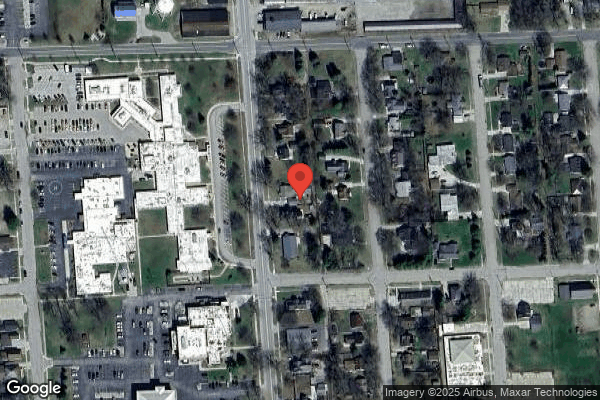
Jun 2023 9 deficiencies
CONCERN (D)

Potential for Harm - no one hurt, but risky conditions existed

Pressure Ulcer Prevention (Tag F0686)

Could have caused harm · This affected 1 resident

Based on observation, interview and record review, the facility failed to prevent moisture associated skin damage for one resident (Resident #49), resulting in pain and discomfort and the likelihood f...

Read full inspector narrative →
Based on observation, interview and record review, the facility failed to prevent moisture associated skin damage for one resident (Resident #49), resulting in pain and discomfort and the likelihood for the development of a pressure injury to the skin. Findings include: Record review of the facility 'Wound Care' policy dated 8/29/2019 revealed that all new wounds noted will be measure by wound care nurse or designee within one business day. Record review of the facility Treatment Nurse' job description (undated) revealed the primary purpose of the job position is to provide primary skin care to residents un the medical direction and supervision of the resident's attending physician. The wound care and treatment nurse goal: to reduce workload with charge/art nurse, improve wound care, decrease facility acquired pressure ulcers, assist with management of moisture associated skin damage, and assist with the duties of the wound care/infection control department. Resident: #49: In an observation on 06/22/23 at 09:59 AM the state surveyor observed bilateral buttocks with damaged areas bleeding with wiping of buttocks, Cream/barrier applied. Foley catheter noted in place. Certified Nursing Assistants (CNA) O and P continued with peri care. Resident #49 called out ow, ow with each wipe of the buttock's bleeding areas. Observation and interview on 06/23/23 at 06:37 AM with Registered Nurse (RN) Q, a Unit Manager, revealed that the tube feeding of Jevity 1.5 Cal at 85ml/hr. was infusing and a Foley catheter was in place held with a leg band in place. Resident #49 stated it hurts, ow, ow with each wipe. RN Q performed peri care, with Bowel Material noted loose. During and after cleaning, there was bleeding of wounds noted. RN Q stated that she would call them stage II open area from incontinence associated dermatitis. RN Q stated the facility has a wound nurse Licensed Practical Nurse (LPN) G, and there is no treatment in place. RN Q stated that she would recommend a treatment for those wounds of bilateral buttocks stage II wounds noted. Observation and interview was conducted on 06/23/23 at 10:04 AM with Licensed Practical Nurse (LPN) G in Resident #49's room. Resident #49 was up in a chair out of the room. LPN G and the state surveyor observed a tan plastic air mattress was being applied to Residents #49's bed. LPN G stated that she ordered the air mattress to be put on the bed, maintenance dropped it off. The fall pressure alarm will have to go under the air mattress. I need to update the care plan to include it. Record review of Resident #49's Medication Administration Record (MAR) and Treatment Administration Record (TAR) for the month of June 2023, revealed on 6/23/2023 an order to monitor dressing to bilateral coccyx folds for proper placement. Treatment order: Dated 6/26/2023 revealed cleanse bilateral coccyx folds with normal saline, pat dry, apply thin layer of Triad paste and 4 x 4 Opti foam dressing everyday shift on Monday, Wednesday, and Fridays.
CONCERN (D)

Potential for Harm - no one hurt, but risky conditions existed

Infection Control (Tag F0880)

Could have caused harm · This affected 1 resident

Based on interview and record review, the facility 1) Failed to ensure that the Infection Control program analyzed monthly resident and staff infections completely and accurately, and 2) Failed to put...

Read full inspector narrative →
Based on interview and record review, the facility 1) Failed to ensure that the Infection Control program analyzed monthly resident and staff infections completely and accurately, and 2) Failed to put complete COVID precautions in place (stopping the use of fans turned on in the hallways of the main unit) on 06/27/23, when 5 residents (Resident #1, Resident #22, Resident #27, Resident #35 and Resident #129) became positive with COVID-19, resulting in the likelihood for cross contamination of medications in the medication cart, cross contamination of COVID from resident-to-resident, and the likelihood of an increase in resident infections with resident illnesses and hospitalizations. Findings Include: On 6/22/23 at 10:53 a.m., the Infection Control program and tracking, graphs, and analysis for the months of 3/23, 4/23, and 5/23 was reviewed accompanied by Infection Control/IC Nurse, RN C. Review of month's 3/23 and 4/23, revealed no analysis of the data collected. Also, no staff illnesses compared to resident infections analysis was found. Review of the month 5/23, revealed data was not completed and no analysis per data collected was found. Also, no staff illnesses compared to resident infections analysis was found. Review of the staff call-in sheet's date 3/23 through 6/23, revealed only documentation of daily call-in's; no IC notes at all indicating review. Review of the data collection from month's 3/23, 4/23 and 5/23, revealed no documentation at all regarding employee call-ins or employee illnesses. Review of the facility IPC Quarter Summary report dated 1/23, 2/23 and 3/23, reported Pneumonia rates are rising. The infection rate for January was 0.47% and is up to 0.94%. UTI (urinary tract infections, non-catheter) Cath rate has increased. January 1/87% and is now 3/27% in March. This report was being used as the complete analyzing of facility infections for the 3 months; no documentation of staff illnesses was found in this report. During an interview done on 6/22/23 at 11:00 a.m., Infection Control Nurse C stated I have only been doing this job for 6 months; no one has come and shown me how to do it. I don't write up anything (analysis) at the end of the month, I just look in the computer if I need to and find things. When IC Nurse C was questioned why she does not do an analysis, she said I was never told to do one. The computer program does it for me. During an interview done on 6/27/23 at 10:27 a.m., the Administrator stated, She is new, we are working on analyzing now. Upon reviewing IC computer data and reports dated 3/23, and 4/23, they revealed data only (numbers of each type of infection); no data analysis of resident infections and resident infections correlated to staff illnesses was found. Review of the facility Infection Prevention and Control policy dated July 20, 2021, reported Surveillance program including surveillance of infections and identification of clusters or trends according to standardized definitions, (and) data collection. Roles of the ICP (Infection Control Practitioner) Nurse: Data Collection and analysis recorded on monthly worksheets, surveillance, and analysis Monthly and quarterly reports: Data analysis, employee health issues, environmental rounds (and) implement interventions based on surveillance needs or concerns., employee health. During the survey on 6/27/23, there was a total of x 5 cases of residents (on the main unit) and x 8 cases of staff who turned positive for COVID. Upon observation of the main unit done on 6/27/23 at approximately 8:00 a.m., 3 fans were blowing in the hallways. The unit had x 5 confirmed COVID cases and the fans were blowing the air around in all hallways (likelihood for cross contamination); this surveyor observed the Infection Control nurse walking off the main unit just prior to entering the unit. Review of the facility COVID documentation dated 6/28/23, the number of resident's who converted to positive for COVID on the main unit was 11. During the survey, one surveyor did not sign in daily nor take their temperature on the mandatory entrance screening sheet and no one addressed the surveyor on this issue.
CONCERN (D)

Potential for Harm - no one hurt, but risky conditions existed

Antibiotic Stewardship (Tag F0881)

Could have caused harm · This affected 1 resident

**NOTE- TERMS IN BRACKETS HAVE BEEN EDITED TO PROTECT CONFIDENTIALITY** Based on interview and record review, the facility 1) Failed to ensure monitoring and analyzing of resident illnesses and antibi...

Read full inspector narrative →
**NOTE- TERMS IN BRACKETS HAVE BEEN EDITED TO PROTECT CONFIDENTIALITY** Based on interview and record review, the facility 1) Failed to ensure monitoring and analyzing of resident illnesses and antibiotic usage, and 2) Failed to ensure that resident infections met the accepted McGeer criteria, indicating that signs and symptoms were documented as meeting the criteria, resulting in the likelihood of resident infections not meeting the McGeer definition of infection and not meeting the criteria for antibiotic usage, adverse side effects from antibiotics, and over antibiotic usage with the possibility for antibiotic resistance, and increased resident illnesses. Findings Include: Review of the facility Resident Infections for the Month of March 2023, revealed a total of 17 resident infections with antibiotic usage of 19 (non-COVID) resident infections that did not meet the McGeer criteria for antibiotic usage. No tracking for asymptomatic UTI infections nor reassessment after treatment in 2 to 3 days for appropriateness of antibiotic usage was found. Most of the resident infections did not have any documentation of signs/symptoms, and no rational for antibiotic usage. Review of the facility Resident Infections for the Month of April 2023, revealed a total of 12 resident infections with antibiotic usage of 12 (non-COVID) resident infections that did not meet the McGeer criteria for antibiotic usage. Most of the resident infections did not have any documentation of signs/symptoms and no rational for antibiotic usage. No tracking for asymptomatic UTI infections nor reassessment after treatment in 2 to 3 days for appropriateness of antibiotic was found. There was no resident line-listing documentation given to this surveyor for the month of May 2023. During an interview done on 6/22/23 at 11:00 a.m., Infection Control Nurse C stated I have only been doing this job for 6 months; no one has come and shown me how to do it. IC Nurse C said she did not document if the antibiotics met the [NAME] criteria, and did not follow-up with the Medical Director regarding facility resident antibiotic usage that did not meet [NAME] criteria. Review of the facility Antimicrobial Stewardship policy dated July 29, 2021, reported The antibiotic stewardship program will promote actions that are designed to optimize the treatment of infections while reducing the adverse events associated with antibiotic use as directed by the CDC. Antibiotic orders will be reviewed and tracked by IPC nurse (Nurse C). Reassessment of empiric antibiotics is conducted after 2 to 3 days for appropriateness and necessity factoring in results of diagnostic tests, laboratory reports and/or changes in the clinical status of the resident. Review of the facility Infection Prevention and Control policy dated July 20, 2021, reported Antibiotic review and stewardship. Roles of the ICP (Infection Control Practitioner) Nurse: Data Collection and analysis recorded on monthly worksheets, surveillance, and analysis with the use of the revised McGeer criteria to define infections. Monthly and quarterly reports: Data analysis, employee health issues, environmental rounds (and) implement interventions based on surveillance needs or concerns., employee health. The facility antibiotic stewardship will implement to improve antibiotic prescribing practices and reduce inappropriate use. Each action implemented to improve antibiotic use is expected to reduce adverse events, prevent emergence of resistance, and lead to better outcomes for residents. Review of the facility Infection Control Coordinator job description (un-dated), revealed the Infection Control Practitioner is responsible for monitoring, data collection, the analysis, and corrective plans regarding resident infections and staff illnesses.
CONCERN (E)

Potential for Harm - no one hurt, but risky conditions existed

Resident Rights (Tag F0550)

Could have caused harm · This affected multiple residents

**NOTE- TERMS IN BRACKETS HAVE BEEN EDITED TO PROTECT CONFIDENTIALITY** Based on observation, interview, and record review the facility failed to ensure dignity by not ensuring that 7 residents' (Resi...

Read full inspector narrative →
**NOTE- TERMS IN BRACKETS HAVE BEEN EDITED TO PROTECT CONFIDENTIALITY** Based on observation, interview, and record review the facility failed to ensure dignity by not ensuring that 7 residents' (Resident #2, Resident #22, Resident #27, Resident #43, Resident #64, Resident #70, and Resident #128) call lights were within reach, of 24 resident's sampled, resulting in decreased safety while left in the room alone without a way to contact staff in an emergency, and feelings of anger, frustration, decreased dignity and fear of being left alone. Findings Include: Review of the facility Call Button/Activator: Accessibility and Timely Response/Resident Call Pagers (includes call lights), reported This policy is to assure residents to call for assistance. Assess the arrangement of furniture in the resident's room to assure proper call button/activator placement. Determine if the call light is easily accessible, determine if the resident has the call button/activator within reach of his/her bed. During observations made on 6/23/23 from 6:10 a.m., through 6:15 a.m., a total of 5 residents (Residents #2, #27, #43, #70 and #128) were found to not have their call lights within reach to activate if necessary. Resident #43: Review of the Face Sheet and BIMS (cognitive assessment) dated 6/9/23, revealed Resident #43 was [AGE] years old, admitted to the facility on [DATE], and was not able to make her own healthcare decisions. The resident's diagnosis included, heart failure, end stage renal disease, peripheral vascular disease, chronic kidney disease, Dementia, depression, and Alzheimer's Disorder. -At 6:10 a.m., Resident #43 was observed in bed with the call light found on the floor. The resident was not able to reach the call light. Review of the Face Sheet and BIMS dated 6/16/23, revealed Resident #128 was [AGE] years old, alert, admitted to the facility on [DATE]. The resident's diagnosis included, heart failure, end stage renal disease, stroke, kidney cancer, myelodysplastic syndrome, history of MI, muscle weakness, and a history of falling. -At 6:11 a.m., Resident #128 was observed in bed with the call light found at the end of their bed; they were not able to reach the call light. Resident #2: Review of the Face Sheet, and BIMS dated 3/17/23, revealed resident #2 was [AGE] years old, severely cognitively impaired, totally dependent on staff for Activities of Daily Living (ADL) and admitted to the facility on [DATE]. The resident's diagnosis included, paraplegia, chronic kidney disease, epilepsy, Dysphagia, muscle weakness, traumatic brain injury, anxiety, and mood disorder. -At 6:12 a.m., Resident #2 was observed in bed with the call light found sitting by the TV, not within reach. Review of the Face Sheet, and BIMS dated 4/26/23, revealed resident #27 was [AGE] years old, alert, and admitted to the facility on [DATE]. The resident's diagnosis included, diabetes, heart block (left branch), high blood pressure, polyosteoarthritis, Dysphagia, adjustment disorder, dependence on enabling machines, heart failure, muscle weakness, repeated falls, and depression. -At 6:13 a.m., Resident #27 was observed in bed with the call light found hanging over the top of the bed, not within reach of the resident. Review of the Face Sheet, and BIMS dated 5/1/23, revealed Resident #70 was severely cognitively impaired, dependent on staff for all ADL's, and admitted to the facility on [DATE]. The resident's diagnosis included, diabetes, occlusion of right carotid artery, disc degeneration, muscle weakness, difficulty walking, Dysphagia, depression, and mood disorder. -At 6:15 a.m., Resident #70 was observed in bed with the call light found hanging from the wall and touching the floor, not within reach of the resident. Resident #64: Review of the face Sheet, and BIMS dated 6/23/23, revealed Resident #64 was [AGE] years old, confused, admitted to the facility on [DATE] and was dependent on staff for all ADL's. The resident's diagnosis included, diabetes, absence of right leg below knee, heart disease, chronic lung disease, vascular Dementia, pain (right hip), depression and mood disorder. -On 6/27/23 at 7:42 a.m., Resident #64 stated It takes them over an hour to get to me when I put my call light on. This weekend I put my call light on and waited over an hour for them to answer; it makes me angry; I am getting used to it. Resident #22: Review of the Face Sheet, and BIMS dated 6/7/23, revealed Resident #22 was [AGE] years old, alert, dependent on staff for all ADL's, and admitted to the facility on [DATE]. The resident's diagnosis included, quadriplegia, subluxation of C4/C5, rheumatoid arthritis, Dysphagia, diabetes, abnormal posture, pain right and left knee's, muscle weakness, non-ambulatory, attention-deficit disorder, depression, and anxiety. -On 6/27/23 at 7:40 a.m., Resident #22 stated It's been so far today about 45 minutes since I put my light on. The resident said no one has come to help her. Review of the facility Resident Council Meeting notes dated May 30, 2023, reported Concern over some call light times waiting too long at times. During an interview done on 6/27/23 at 1030 a.m., the Administrator stated, I was not aware of the call light complaint. No follow-up was done regarding the resident council complaint of response times to call lights was done. During an interview done on 6/27/23 at 11:48 a.m., Social Worker J stated No one talked to me about lights not being answered timely; Compliance Officer does that. During an interview done on 6/27/23 at 11:55 a.m., Compliance Officer I stated I don't recall receiving anything from the council meetings; however, when I do receive complaints regarding call light times it's around mealtimes. We have educated CNA's on answering them timely. We discontinued call light response times in the QA about 3 months ago. Review of the facility Promoting/Maintaining Resident Dignity policy dated 11/22/2022, reported It is the practice of this facility to protect and promote resident rights and treat each resident with respect and dignity as well as care for reach resident in a manner and in an environment that maintains or enhances resident's quality of life by recognizing each resident's individuality. Respond to requests for assistance in a timely manner.
CONCERN (E)

Potential for Harm - no one hurt, but risky conditions existed

Incontinence Care (Tag F0690)

Could have caused harm · This affected multiple residents

**NOTE- TERMS IN BRACKETS HAVE BEEN EDITED TO PROTECT CONFIDENTIALITY** Based on observation, interview and record review, the facility failed to properly identify and treat Urinary Tract Infections (...

Read full inspector narrative →
**NOTE- TERMS IN BRACKETS HAVE BEEN EDITED TO PROTECT CONFIDENTIALITY** Based on observation, interview and record review, the facility failed to properly identify and treat Urinary Tract Infections (UTI) for five residents (Resident #11, Resident #13, Resident #49, Resident #59, and Resident #176), resulting in the likelihood for urinary tract infections to be mistreated with prolonging of illnesses or hospitalizations. Findings include: Record review of the facility 'Infection Control Coordinator' job description (undated) revealed that the infection control coordinator will plan, develop, organize, implement, evaluate, coordinate and direct facility infection control program in accordance with current rules, regulations and guidelines that govern such requirements in long-term care facility. Ensure that the facility is in compliance with current CDC, OSHA, and local regulations concerning infection control . Record review of the facility provided 'McGeers criteria for infection surveillance checklist' dated 2012 revealed constitutional criteria for infection of: fever, leukocytosis, acute mental status change and acute functional decline. Urinary Tract Infections with or without indwelling catheter, had criteria (signs or symptoms) to meet which included urine specimen and culture. Selected comments: In the absence of a clear alternate source of infection, fever, or rigors with a positive urine culture result in the non-catheterized resident or acute confusion in the catheterized resident will often be treated as UTI. However, evidence suggests that most of these episodes are likely not due to infection of a urinary source. Record review of the 'Nursing Drug Handbook 2017' page 1594 to 1595, antibiotics laboratory test monitored cultures and sensitivities, WBC (white blood count) with differential. Specimen and sensitivities will determine cause of the infection and the best treatment. Multiple Resident Concerns: Resident #11: Observation on 6/22/2023 during the initial tour of the 700-Hall Dementia Unit revealed that Resident #11 was noted to be resting in bed with a catheter observed at bedside. Record review of Resident #11's January progress notes, dated 1/13/2023 at 1:08 PM, revealed the resident returned from urology appointment with a script for Macrobid 100 mg oral twice daily for 2 weeks with no diagnosis indicated. Call placed to urologist office with no response. Record review of Resident #11's January progress notes, dated 1/13/2023 at 1:33 PM, revealed no return call from urologist at this time. Call placed to Physician Assistant (PA) regarding new orders received from urologist to change Foley catheter every 4 weeks and was not completed today per urology did not have any. Also received an order for Macrobid 100 mg [NAME] x (times 2 weeks with no diagnosis. The progress note discussed McGeers criteria and Resident #11 was placed on UTI (Urinary Tract Infection) monitoring. PA did not want to send a urine sample at this time as the resident is not have sign/symptoms of UTI. Record review of Resident #11's progress notes, dated 1/16/2023 at 12:35 PM, revealed a call was placed to the Physician Assistant (PA) regarding resident noted at 12:30 PM to be in the bathroom with Certified Nurse Assistant (CNA) sitting on the toilet and became unresponsive with his hands limp next to his side, pallor in color, BP (blood pressure) 96/42, pulse 87, 98% on room air, respirations 16, blood glucose 130. further review of Resident #11's notes revealed a blood pressure of 80/42, with emesis noted and intravenous fluids were started. In a record review of Resident #11's progress note, dated 1/17/2023 at 12:40 PM, the nurse noted making a phone call to the urologist's office about orders sent on 1/13/2023 and left a voice message for a return call. Record review of Resident #11's progress note, dated 1/17/2023 at 1:15 PM, revealed that the PA noted that the Foley catheter does not appear to have been changed on the 13th (1/13/2023) as ordered. With residents change in consciousness and unresponsive episode that he also experienced hypotension on 1/16/2023 along with an indwelling catheter, resident would meet McGeers criteria to check urine for UTI. New orders to change Foley catheter and obtain urine sample for culture and sensitivity. Also start Macrobid 100mg oral twice daily for 14 days. Record review of Resident #11's January Medication Administration Record (MAR) revealed that on 1/17/2023 through 1/20/2023 the resident received Macrobid 100mg oral for UTI. Then on 1/21/2023 was switched to Ampicillin 500mg every six hours for 10 days for UTI. Record review of Resident #11's urine culture and sensitivity, dated 1/20/2023, revealed Proteus Marbillis was resistant to Macrobid and susceptible to Ampicillin antibiotic. Record review of Resident #11 June 2023 progress notes, dated 6/21/2023 at 8:36 AM, noted gross hematuria (blood) and sediment in Foley catheter. A urine sample was collected and sent to the lab. Record review of Resident #11's progress notes, dated 6/23/2023 at 12:35 PM, revealed the urinalysis came back with positive bacteria. Record review of the June 2023 MAR revealed ertapenem 1 gram intermuscular once daily for 7 days was ordered on 3/26/2023 for UTI. In an interview on 06/23/23 at 01:17 PM regarding Resident #11's recurrent urinary tract infections (UTI) Registered Nurse/Infection Control Preventionist (RN/ICP) C revealed that the resident is catheterized and did have a UTI in January 2023 with the organism of Proteus mirabilia and was treated with Macrobid prior to culture and sensitivity coming back. Currently Resident #11 has a tear from the catheter at the tip of the penis and we sent a urine sample for analysis. Resident #13: Record review of Resident #13's Medication Administration Record for January 2023 revealed on 1/4/2023 Ciprofloxacin 250mg antibiotic oral one time daily was started for urinary tract infection (UTI). Resident #13 was noted to have received four doses of the antibiotic. Then on 1/9/2023 the antibiotic was switched to ceftriaxone (Rocephin) 1 gram intermuscular one time daily for 10 days. In an interview and Record review on 6/23/2023 at 1:35 PM with Registered Nurse/Infection Control Preventionist (RN/ICP) C regarding Resident #13's January 4, 2023, infection control line listing, noted klebsiella pneumonia and was being treated with antibiotic Cipro 250mg started on 1/4/2023, and on 1/9/2023 was switched to ceftriaxone (Rocephin) 1 gram IV every day. RN/ICP C stated that the physician choose to treat empirically prior to culture results. Resident #49: Observation on 06/22/23 at 09:59 AM the state surveyor observed bilateral buttocks with damaged areas bleeding with wiping of buttocks, Cream/barrier applied. Foley catheter noted in place. Certified Nursing Assistants (CNA) O and P continued with peri care. Observation on 06/23/23 at 06:37 AM with Registered Nurse (RN) Q a Unit Manager revealed that the tube feeding of Jevity 1.5Cal at 85ml/hr. was infusing and a Foley catheter was in place held with a leg band in place. In an interview and records review on 06/23/23 at 01:00 PM with Registered Nurse/Infection Control Preventionist (RN/ICP) C regarding Resident #49's infection control antibiotic line listing for February 2023 revealed that on 2/16/2023 the resident was treated with Macrobid 100mg twice daily for urinary tract infection (UTI). Record review of the 2/15/2023 urine culture noted mixed flora indicative of contamination and did not meet the McGeers criteria. Record review of Resident #49's progress notes, dated 4/12/2023 at 1:38 PM, noted the resident to have an emesis. Record review of progress note, dated 4/12/2023 at 3:29 PM, noted a large emesis and physician notified. Record review of Resident #49's progress note, dated 4/16/2023 at 8:45 AM, resident was found unresponsive and sweaty, temperature 99.7. Resident #49 was sent to the emergency room (ER) at local hospital. Progress notes on 4/16/2023 at 9:51 AM noted Resident #49's Foley catheter was changed in the ER department. Record review of Resident #49's April 2023 infection control antibiotic line listing noted on 4/16/2023 Resident #49 was started on ertapenem 1 gram intramuscular for 10 days. There were no organisms noted on the antibiotic line listing to be treated. Record review of Resident #49's 5/15/2023 urine culture and sensitivity revealed Providencia stuartil and proteus mirabilis organisms. Record review of Resident #49's May 2023 infection control antibiotic line listing noted that on 5/12/2023 Resident #49 was started on ertapenem 1 gram intramuscular for 10 days. The line listing noted the resident was treated to times once for 10 days and once for 7 days within 30 days. There were no organisms noted on the antibiotic line listing to be treated. An interview on 6/23/2023 at 1:0 PM with Registered Nurse/Infection Control Preventionist (RN/ICP) C regarding Resident #49's recurrent urinary tract infections revealed the resident had a catheter and was treated in February, April, and May 2023. Record review of the facility infection control line listing revealed that the resident did not meet the criteria and that the UTI was in-house acquired. In an interview on 06/27/23 at 09:44 AM, the Director of Nursing (DON) was aware of physician's empirical treatments of urinary tract infections and the likelihood for growth of multi-drug resistant organisms (MDRO). Resident #59: Record review of Resident #59's antibiotic line listing, dated 2/5/2023, revealed that the resident was started on Macrobid 100mg oral twice daily for urinary tract infection (UTI). Resident #59 received two doses. Resident #59 was switched to Ciprofloxacin 500mg every 24 hours for 7 days for UTI due to his renal function. There was no culture and sensitivity obtained. McGeer's criteria for infections was not met. Resident #176: Observation on 6/22/2023 during the initial tour of the 700-Hall dementia unit, revealed that Resident #176 was noted to reside on the dementia unit in room [ROOM NUMBER]. The Resident #176 was noted to be seated up in a chair. Observation and interview on 06/22/23 at 10:20 AM with Licensed Practical Nurse (LPN) K included a review of the 700-Hall medication cart and revealed there to be 1% lidocaine bottle open and used with no open date noted on bottle. LPN K stated that it is used for the Rocephin IM for Resident #176 who is being treated for Urinary Tract Infection (UTI). The state surveyor observed other medications in the cart which were not dated and Fluticasone 50mcq for unsampled Resident #39 was opened and used with no open date noted on bottle or box container. Record review of Resident #176's June 20, 2023, urinalysis lab results revealed there was no culture or sensitivity performed. In an interview on 6/23/2023 at 1:40 PM with Registered Nurse/Infection Control Preventionist (RN/ICP) C regarding Resident #176's Rocephin 1 gram IM treatment for urinary tract infection the RN C stated that the resident does not meet the criteria for infection treatment.
CONCERN (E)

Potential for Harm - no one hurt, but risky conditions existed

Deficiency F0757 (Tag F0757)

Could have caused harm · This affected multiple residents

**NOTE- TERMS IN BRACKETS HAVE BEEN EDITED TO PROTECT CONFIDENTIALITY** Based on interview and record review, the facility failed to obtain adequate indication for the use of treatment with antibiotic...

Read full inspector narrative →
**NOTE- TERMS IN BRACKETS HAVE BEEN EDITED TO PROTECT CONFIDENTIALITY** Based on interview and record review, the facility failed to obtain adequate indication for the use of treatment with antibiotics for 5 residents (Resident #11, Resident #13, Resident #49, Resident #59, and Resident #176), resulting in the likelihood for urinary tract infections to be mistreated and prolonged illnesses or hospitalizations. Findings include: Record review of the facility 'Antimicrobial Stewardship' policy, dated 7/20/2021, revealed the facility antibiotic stewardship will implement to improve antibiotic prescribing practices and reduce inappropriate use . Each action implemented to improve antibiotic use is expected to reduce adverse events, prevent emergence of resistance, and lead to better outcomes for residents. Accountability: Antibiotic stewardship activities will be led by the Infection Control Preventionist (ICP) nurse who will use the medical director, pharmacists, laboratory, health department, infectious disease consultants, Director of Nursing or CDC as supportive resources as needed. Laboratory testing shall be in accordance with current standards of practice. Reassessment of empiric antibiotics are conducted after 2-3 days for appropriateness and necessity, factoring in results of diagnostic tests, laboratory reports and/or changes in clinical status of the resident . Record review of the CMS (Center for Medicare & Medicaid Services) Beer's list of potentially harmful drugs in the elderly noted nitrofurantoin (Macrobid, Macrodantin) can cause nephrotoxicity. Resident #11: Observation on 6/22/2023 during the initial tour of the 700-Hall Dementia Unit revealed that Resident #11 was noted to be resting in bed with a catheter noted at bedside. Record review of Resident #11's January progress notes, dated 1/13/2023 at 1:08 PM, revealed the resident returned from urology appointment with a script for Macrobid 100mg oral twice daily for 2 weeks with no diagnosis indicated. Call placed to urologist office with no response. Record review of Resident #11's January progress notes, dated 1/13/2023 at 1:33 PM, revealed no return call from urologist at this time. Call placed to Physician Assistant (PA) regarding new orders received from urologist to change Foley catheter every 4 weeks and was not completed today per urology did not have any. Also received an order for Macrobid 100mg [NAME] x (times 2 weeks with no diagnosis. The progress note discussed McGeers' criteria and Resident #11 was placed on UTI (Urinary Tract Infection) monitoring. PA did not want to send a urine sample at this time as the resident is not have sign/symptoms of UTI. Record review of Resident #11's progress notes, dated 1/16/2023 at 12:35 PM, revealed a call was placed to the Physician Assistant (PA) regarding resident noted at 12:30 PM to be in the bathroom with Certified Nursing Assistant (CNA) sitting on the toilet and became unresponsive with his hands limp next to his side, pallor in color, BP (blood pressure) 96/42, pulse 87, 98% on room air, respirations 16, blood glucose 130. further review of Resident #11's notes revealed a blood pressure of 80/42, with emesis noted and intravenous fluids were started. In a record review of Resident #11's progress note, dated 1/17/2023 at 12:40 PM, the nurse noted making phone call to the urologist's office about orders sent on 1/13/2023 and left a voice message for a return call. Record review of Resident #11's progress note, dated 1/17/2023 at 1:15 PM, revealed that the PA noted the Foley catheter does not appear to have been changed on the 13th (1/13/2023) as ordered. With resident's change in consciousness and unresponsive episode that he also experienced hypotension on 1/16/2023 along with an indwelling catheter, resident would meet McGeers criteria to check urine for UTI. New orders to change Foley catheter and obtain urine sample for culture and sensitivity. Also start Macrobid 100mg oral twice daily for 14 days. Record review of Resident #11's January Medication Administration Record (MAR) revealed that on 1/17/2023 through 1/20/2023 the resident received Macrobid 100mg oral for UTI. Then on 1/21/2023 was switched to Ampicillin 500mg every six hours for 10 days for UTI. Record review of Resident #11's urine culture and sensitivity, dated 1/20/2023, revealed Proteus Marbillis was resistant to Macrobid and susceptible to Ampicillin antibiotic. Record review of Resident #11 June 2023 progress notes, dated 6/21/2023 at 8:36 AM, noted gross hematuria (blood) and sediment in Foley catheter. A urine sample was collected and sent to the lab. Record review of Resident #11's progress notes, dated 6/23/2023 at 12:35 PM, revealed the urinalysis came back with positive bacteria. Record review of the June 2023 MAR revealed ertapenem 1 gram intermuscular once daily for 7 days was ordered on 3/26/2023 for UTI. An interview on 06/23/23 at 01:17 PM with Registered Nurse/Infection Control Preventionist (RN/ICP) C regarding Resident #11's recurrent urinary tract infections (UTI) revealed that the resident is catheterized and did have a UTI in January 2023 with the organism of Proteus mirabilia and was treated with Macrobid prior to culture and sensitivity coming back. Currently Resident #11 has a tear from the catheter at the tip of the penis and we sent a urine sample for analysis. Resident #13: Record review of Resident #13's Medication Administration Record for January 2023 revealed on 1/4/2023 Ciprofloxacin 250mg antibiotic oral one time daily was started for urinary tract infection (UTI). Resident #13 was noted to have received four doses of the antibiotic. Then on 1/9/2023 the antibiotic was switched to ceftriaxone (Rocephin) 1 gram intermuscular one time daily for 10 days. An interview and record review on 6/23/2023 at 1:35 PM with Registered Nurse/Infection Control Preventionist (RN/ICP) C, regarding Resident #13's January 4, 2023, infection control line listing, noted klebsiella pneumonia and was being treated with antibiotic Cipro 250mg started on 1/4/2023, and on 1/9/2023 was switched to ceftriaxone (Rocephin) 1 gram IV every day. RN/ICP C stated that the physician choose to treat empirically prior to culture results. Resident #49: In an observation on 06/22/23 at 09:59 AM, the state surveyor observed bilateral buttocks with damaged areas bleeding with wiping of buttocks, Cream/barrier applied. Foley catheter noted in place. Certified Nursing Assistants (CNA) O and P continued with peri care. Observation on 06/23/23 at 06:37 AM with Registered Nurse (RN) Q, a Unit Manager, revealed that the tube feeding of Jevity 1.5Cal at 85ml/hr. was infusing and a Foley catheter was in place held with a leg band in place. An interview and records review on 06/23/23 at 01:00 PM with Registered Nurse/Infection Control Preventionist (RN/ICP) C, regarding Resident #49's infection control antibiotic line listing for February 2023, revealed that on 2/16/2023 the resident was treated with Macrobid 100mg twice daily for urinary tract infection (UTI). Record review of the 2/15/2023 urine culture noted mixed flora indicative of contamination and did not meet the McGeers' criteria. Record review of Resident #49's progress notes, dated 4/12/2023 at 1:38 PM, noted the resident to have an emesis. Record review of progress note, dated 4/12/2023 at 3:29 PM, noted a large emesis and the physician was notified. Record review of Resident #49's progress note, dated 4/16/2023 at 8:45 AM, resident was found unresponsive and sweaty, temperature 99.7. Resident #49 was sent to the emergency room (ER) at local hospital. Progress notes on 4/16/2023 at 9:51 AM noted Resident #49's Foley catheter was changed in the ER department. Record review of Resident #49's April 2023 infection control antibiotic line listing noted on 4/16/2023 Resident #49 was started on ertapenem 1 gram intramuscular for 10 days. There were no organisms noted on the antibiotic line listing to be treated. Record review of Resident #49's 5/15/2023 urine culture and sensitivity revealed Providencia stuartil and proteus mirabilis organisms. Record review of Resident #49's May 2023 infection control antibiotic line listing noted on 5/12/2023 Resident #49 was started on ertapenem 1 gram intramuscular for 10 days. The line listing noted the resident was treated to times once for 10 days and once for 7 days within 30 days. There were no organisms noted on the antibiotic line listing to be treated. An interview on 6/23/2023 at 1:0 PM with Registered Nurse/Infection Control Preventionist (RN/ICP) C, regarding Resident #49's recurrent urinary tract infections, revealed the resident had a catheter and was treated in February, April, and May 2023. Record review of the facility infection control line listing revealed that the resident did not meet the criteria and that the UTI was in-house acquired. In an interview on 06/27/23 at 09:44 AM with the Director of Nursing (DON) was aware of physician's empirical treatments of urinary tract infections and the likelihood for growth of multi-drug resistant organisms (MDRO). Resident #59: Record review of Resident #59's antibiotic line listing dated 2/5/2023 revealed that the resident was started on Macrobid 100mg oral twice daily for urinary tract infection (UTI). Resident #59 received two doses. The Resident #59 was switched to Ciprofloxacin 500mg every 24 hours for 7 days for UTI due to his renal function. There was no culture and sensitivity obtained. McGeers criteria for infections not met. Resident #176: Observation on 6/22/2023 during the initial tour of the 700-Hall Dementia Unit, revealed that Resident #176 was noted to reside on the Dementia Unit in room [ROOM NUMBER]. Resident #176 was noted to be seated up in a chair. Observation and interview on 06/22/23 at 10:20 AM with Licensed Practical Nurse (LPN) K included a review of the 700-Hall medication cart and revealed there to be 1% lidocaine bottle open and used with no open date noted on the bottle. LPN K stated that it is use for the Rocephin IM for Resident #176 who is being treated for Urinary Tract Infection (UTI). The state surveyor observed other medications in the cart, which were not dated, including Fluticasone 50mcq for unsampled Resident #39, which was opened and used with no open date noted on bottle or box container. Record review of Resident #176's June 20, 2023, urinalysis lab results revealed there was no culture or sensitivity performed. In an interview on 6/23/2023 at 1:40 PM with Registered Nurse/Infection Control Preventionist (RN/ICP) C, regarding Resident #176's Rocephin 1 gram IM treatment for urinary tract infection, RN C stated that the resident does not meet the criteria for infection treatment.
CONCERN (E)

Potential for Harm - no one hurt, but risky conditions existed

Deficiency F0761 (Tag F0761)

Could have caused harm · This affected multiple residents

300/700 Hall Medication Carts: Observation and interview was conducted on 06/22/23 at 09:11 AM with Registered Nurse L who was working the 300-Hall medication cart. RN L stated that she took the medic...

Read full inspector narrative →
300/700 Hall Medication Carts: Observation and interview was conducted on 06/22/23 at 09:11 AM with Registered Nurse L who was working the 300-Hall medication cart. RN L stated that she took the medication cart over when she came in to work this morning at 8:00 AM. There was a call-in for the day shift and the night nurse Licensed Practical Nurse (LPN) M worked until 8:30 AM and he did not pass any medications this morning, so most of the 7:00 and 8:00 o'clock medications are late. No, there were no blood sugars done before breakfast on the 300 Hall. RN L stated that she was playing catch-up. Observation of the 300-Hall medication cart revealed multiple opened multi-dose medications with no open dates or identified by resident. An observation and interview on 06/22/23 at 10:14 AM on the 400 Hall revealed Licensed Practical Nurse (LPN) N to be in the same 300 Hall medication cart as RN L. Licensed Practical Nurse (LPN) N stated that she was helping out to get the medications passed, we still have a lot to get done. They (medications) are all late. Observation and interview on 06/22/23 at 10:20 AM with Licensed Practical Nurse (LPN) K included a review of the 700-Hall medication cart and revealed there to be 1% lidocaine vial/bottle open and used with no open date noted on bottle. LPN K stated that it is use for the Rocephin IM for Resident #176 who is being treated for Urinary Tract Infection (UTI). The state surveyor observed other medications in the cart which were not dated, including Fluticasone 50mcq for unsampled Resident #39, which was opened and used with no open date noted on bottle or box container. Record review of the facility 'Medication Storage and Maintenance Requirements' policy, dated 8/28/2019, revealed preservation of medication will be assured via proper storage and maintenance. Injectable medications: A.) Multi-dose Vials (MDV). (a.) Vials will be labeled as MDV . (c.) Indicate date on label when initially opened. Based on observation, interview and record review, the facility 1) Failed to ensure that controlled medication shift change sheets, dated 06/23, had the correct daily count for 2 medication carts (Cart 300 and Cart 600/800), and 2) Failed to ensure a clean and sanitary medication cart (Cart 600/800), resulting in the likelihood for missing narcotics, residents not receiving pain medications (narcotics) per orders and increased pain for a census of 74 residents. Findings Include: Observation of the 600/800 medication cart accompanied by Nurse, LPN B done on 6/22/23 at 10:19 a.m., revealed crushed medications and papers in the bottom of the second drawer. During an interview done on 6/22/23 at 10:30 a.m., Nurse B stated The night nurse cleans it (medication carts). Observation of the 600/800-medication cart narcotic shift count sheet dated 6/23, done on 6/22/23 at 10:19 a.m., revealed no documentation for shift narcotic sheet (the reconciliation sheet) dated 6/19/23 at 1800; nor was an outgoing nurse signature (Nurse, LPN H) found for the same day. Nurse H had not documented a narcotic count or signed his name on the shift change sheet. There was a total of x 7 blank spaces found on the shift change narcotic count sheet. Observation of the 300-medication cart narcotic shift count sheet dated 6/23, done on 6/22/23 at 10:25 a.m., revealed no documentation for shift narcotic count sheet (the reconciliation sheet) dated 6/19/23 at 1800; nor was an outgoing nurse signature (Nurse, LPN H) found for the same day. Nurse H had not documented a narcotic count or signed his name on the shift change sheet. There was a total of x 8 blank spaces and x 1 oncoming space with the letter B as a nurse signature found. During an interview on 6/27/23 at 9:00 a.m., Nurse, LPN H stated I was under a lot of stress and overlooked it (not signing out on the shift narcotic count sheet dated 6/23). During an interview on 6/23 23 at approximately 1:30 p.m., the Director of Nursing/DON informed this surveyor that no nurse had come to her and informed her that Nurse H had not documented a narcotic count and signed the narcotic shift change sheet on 6/19/23. During a second interview on 6/27/23 at 9:30 a.m., the DON stated, It's unacceptable. During an interview on 6/27/23 at 10:27 a.m., our pharmacy is supposed to be doing monthly audits. I did not know about the narcotic sheets. Review of the facility Controlled Substance Reconciliation policy, dated February 1, 2022, reported The incoming and outgoing nurses will account for the controlled substances in the cart with which they will be leaving or otherwise taking over. Both nurses will account for the number of count sheets, baggies or box with multiple vials enclosed, bottle or individual vials or ampules all bearing the same Rx number/date. This will be accomplished by reconciling count sheets. Review of the facility Maintenance and Cleanliness of Medication Carts policy, dated July 20, 2016, reported Daily maintenance of the medication carts are the responsibility of the charge nurses using the cart. At the end of each shift the medication cart is to be cleaned and restocked for the oncoming shift.
CONCERN (F)

Potential for Harm - no one hurt, but risky conditions existed

Food Safety (Tag F0812)

Could have caused harm · This affected most or all residents

Based on observation, interview and record review, the facility 1) Failed to ensure that food preparation and kitchen equipment were maintained in a sanitary manner and in good working condition, and ...

Read full inspector narrative →
Based on observation, interview and record review, the facility 1) Failed to ensure that food preparation and kitchen equipment were maintained in a sanitary manner and in good working condition, and 2) Failed to ensure that kitchen dish machine temperature logs were completed, resulting in an increased potential for food borne illness with possible hospitalization and with the potential to affect the census of 74 residents who consume nutrition from the facility kitchen. Findings include: During the initial kitchen tour on 6/22/23 at 8:00 a.m., accompanied by [NAME] D, the following was observed: -At 8:15 a.m., a large bag of open whipped cream with no dates at all was found in the cooler. -At 8:17 a.m., the large can opener had chipping silver paint on the blade. -At 8:30 a.m., the produce cooler was observed to have food, excessive crumbs, dirt and pieces of paper on the bottom of it. It had not been cleaned the night prior. During an interview done on 6/22/23 at 8:17 a.m., Dietary Manager F stated The stock person cleans it (the cooler) on Wednesdays and Friday's. They are supposed to clean it when it's dirty. -At 8:20 a.m., an opened box of zucchini was found with no dates on it at all. During an interview done on 6/22/23 at 8:20 a.m., Dietary Manager F stated We usually don't put dates on them because they are usually gone before then (the use-by date). -At 8:30 a.m., found a loaf of bread in the freezer with an expiration date of 6/18/23; past date. -At 8:32 a.m., found a broken gray bottom shelf in the freezer. -At 8:37 a.m., found 7 black bananas' sitting out in the kitchen. The fruit was completely black. -At 8:40 a.m., the juice machine had dried on juice the machine. During an interview done on 6/22/23 at 8:40 a.m., Dietary Manager F stated the number 9 person is supposed to clean it (juice machine). -At 8:43 a.m., the large floor mixer covered and ready for use was found to have food particles on the attachment area, directly over the bowel. Review of the facility Food and Supply Storage policy dated 1/23, revealed the kitchen was to use put best-by or use-by when they open food items; foods past the use-by date should be discarded. Review of the facility kitchen dishwasher temperature record log dated 6/23, revealed missing temp's on 6/7/23, 6/17/23 (and on ) 6/18/23. The temperature must be maintained when sanitizing dishes and a daily log kept to ensure appropriate water temperatures. Review of the facility Dish Machine Temperature Record dated 6/23, reported the wash water had to be 150 to 160 degree, and the rinse water temp had to be, 180 to 194 degrees. Review of the facility kitchen cleaning jobs staff initial sheet dated 5/23, revealed half of the sheets were left blank, not documented as completed. According to the 2017 FDA Food Code: Section 3-501.17, Ready-to-Eat, Time/Temperature Control for Safety Food, Date Marking. (A) Except when PACKAGING FOOD using a REDUCED OXYGEN PACKAGING method as specified under § 3-502.12, and except as specified in (E) and (F) of this section, refrigerated, READY-TO EAT, TIME/TEMPERATURE CONTROL FOR SAFETY FOOD prepared and held in a FOOD ESTABLISHMENT for more than 24 hours shall be clearly marked to indicate the date or day by which the FOOD shall be consumed on the PREMISES, sold, or discarded when held at a temperature of 5ºC (41ºF) or less for a maximum of 7 days. The day of preparation shall be counted as Day 1. 4-202.11 Food-Contact Surfaces. (A) Multiuse FOOD-CONTACT SURFACES shall be: (1) SMOOTH; (2) Free of breaks, open seams, cracks, chips, inclusions, pits, and similar imperfections; (3) Free of sharp internal angles, corners, and crevices; (4) Finished to have SMOOTH welds and joints; 4-602.11 Equipment Food-Contact Surfaces and Utensils. (A) EQUIPMENT FOOD-CONTACT SURFACES and UTENSILS shall be cleaned: (5) At any time during the operation when contamination may have occurred.
CONCERN (F)

Potential for Harm - no one hurt, but risky conditions existed

Deficiency F0865 (Tag F0865)

Could have caused harm · This affected most or all residents

Based on interview and record review, the facility failed to effectively conduct a Quality Assurance and Performance Improvement program for all residents residing within the facility, resulting in 1)...

Read full inspector narrative →
Based on interview and record review, the facility failed to effectively conduct a Quality Assurance and Performance Improvement program for all residents residing within the facility, resulting in 1) A physician prescribing antibiotics prior to laboratory results, 2) Inconsistent narcotic counts, 3) Resident Council grievances, 4) Infection rate action plans and 5) Call lights within reach for residents' use, all with the likelihood for residents' frustration. Findings include: Record review of the facility 'Quality Assessment and Assurance Committee' policy, dated 9/13/2021, revealed that the governing board of the facility potentates high-quality resident care by requiring and supporting the establishment of the Quality Assessment and Assurance Committee as a permanent committee of the facility. The Quality Assessment and Assurance Committee is advisory to the administration and the governing board of the facility. The Quality Assessment and Assurance Committee has the full authority of the governing board to implement the QAA program of the facility including but not limited to, the following: Identify negative and positive outcomes on direct resident care, establish criteria and standards of practice within the defined standard of practice of professional organizations, health code regulations and federal requirements, as applicable to the institution. Record review of the '(Facility name) QAPI Plan' policy, dated 1/23/2018, revealed that the Quality Assurance and Process Improvement (QAPI) plan provides guidance for our QA program so the facility may provide those they serve with the highest quality of care and the best quality of life attainable. Quality assurance performance improvement principles will assist the interdisciplinary team's decisions to promote quality of care, quality of life, resident choice, and person-centered care. Focus will include systems that affect resident and family satisfaction, quality of life for residents living in and persons working at the facility. QAPI activities will be integrated through all continuum of care and services of the facility. They will work together to address all concerns and strive to improve our care and services to better meet the needs of our residents needing assist with medications, bathing, dressing and all other activities of daily living. Facility Tasks: In an interview and record review on 06/27/23 at 09:25 AM with the Nursing Home Administrator (NHA) and the Corporate Compliance/Ethics Officer I, the facility QA committee process was reviewed. The NHA was the coordinator of QA and that the committee members meet monthly the last week of the month. Committee members included: Director of Nursing, Corporate Compliance, staff Education, housekeeping, dietitian, activities, medical director. There was no mention of direct care providers such as floor nurses or certified nurse assistants involved with the QA committee. The NHA stated that the committee identifies, through stand-up morning meetings or grievances from residents or staff, issues of concern. Record review of the QA monthly meeting November 2022: signature sheet was conducted. There no signature sheets, related to the QA meeting from December 2021 through late October 2022. The NHA stated that those were done by phone conferencing due to COVID. The committee data is gathered through Quads and are data collection. We review at the start of every meeting, and we decided if to continue or make changes, or tweak the process. The state surveyor inquired about current Process Improvement Plans (PIP) and the NHA stated the falls and skin were the current issues. The state surveyor inquired about concerns identified throughout the survey process by surveyors: Narcotic counts consistent- No audits of narcotic sheets done by the facility. The audits would be done by pharmacy services, and she would give us a report. There were no issues that the NHA was aware of. Infection control rates- The NHA stated that the infection control Preventionist analyses the data, since she has taken over the infection control. She is collecting the data, and does summaries. The State surveyor asked the NHA to read the January 2023 infection control rates brought to the QA committee. The NHA stated that there was no summary of total infection rates for the month that was brought to QA. The State surveyor asked if you have to know the rates to identify the issue and create an action plan. The NHA stated that there was no action plan that month for infections. Increased Urinary Tract Infection rates with no action plan and no PIP was discussed. The State Surveyor asked for the February 2023 infection control rate and there were none presented from the QA notes binder. The NHA stated that the Infection control rates are only discussed quarterly. Increased antibiotic usage- The State Surveyor inquired about the increased antibiotic usage, information brought forward from another surveyor. The NHA stated that she was not aware of the issue and that there was no PIP plan for the increased antibiotic usage in building. The NHA was not aware of Resident #176 treatment with Intramuscular Rocephin for Urine Analysis (UA) with no culture and sensitivity (C&S) report. The NHA stated that standard of care it to not treat the with no C&S. The NHA agreed with the state surveyor that the facility multi-drug resistant organisms (MDRO) rate will go up. The NHA and Corporate compliance both stated that an Action Plan will have to be formulated and planned with the physicians, Infection Control Preventionist (ICP) and staff on the floor, the front line that take antibiotic orders and that there is no culture to let the ICP know. There was no mention of correcting the antibiotic empirical usage with the facility's physicians. Current COVID outbreak- NHA stated that it started in 300 Halls on Friday (6/23/2023), started contact tracing, analysis ICP, started testing with other residents that had exposure. His hallway door was open while surveyor was on the floor for observation on Friday. NHA stated that as of that day (6/23/2023) the facility had 13 people who were positive with COVID-5 Residents and 9 staff members. The NHA was notified of resident room's doors open to the hallways. Resident council grievances- Record review of the facility provided Resident Council meeting notes revealed: January 2023- 1.) Residents would like to know the dates of physicians' visits. 2.) Room trays are cold. 3.) 600 Hall-complaints of breakfast being late. There were no attendee/resident names or sign-in sheet noted. February 2023 Resident Council meeting notes revealed that there was no note for the previous month's resident-voiced concerns or how they were addressed or remedied. New February 2023 resident concerns: 1.) shower rooms are not picked up and shower room toilets are being flushed. 2.) 600 Hall meals are still cold. 3.) not getting meal orders right. 4.) no silverware on trays. 5.) What can be done about resident spitters on walls, floors, windows and during meals. 6.) Who took the microwave away and why? There were no attendee/resident names or sign-in sheet noted. March 2023 Resident Council meeting notes revealed that there was no note for the previous month's resident-voiced concerns or how they were addressed or remedied. New March 2023 resident concerns: 1.) main end filling hall trays before serving residents in the dining room. 2.) 600 Hall-no CNA in dining room if assistance is needed. 3.) CNA's are always on their phones. 4.) Call light logs and waiting too long on afternoon shift. 5.) nurses and CNA's sitting at nursing station talking and laughing when help is needed. There were no attendee/resident names or sign-in sheet noted. April 2023 Resident Council meeting notes revealed that there was no note for the previous month's resident-voiced concerns or how they were addressed or remedied. New April 2023 resident concerns: 1.) burnt toast. There were no attendee/resident names or sign-in sheet noted. May 2023 Resident Council meeting notes revealed that there was no note for the previous month's resident-voiced concerns or how they were addressed or remedied. New May 2023 resident concerns: 1.) Call light times waiting too long. There were no attendee/resident names or sign-in sheet noted. The NHA stated that from Resident Council we would get the issues not the residents name, and the activities person would take care of the matters. Typically, we respond to the issue and then activities staff would take it back to the Resident Council meeting. Feedback to residents is done by whom? The NHA stated that she has attended the Resident Council meetings and listened to the residents' concerns, we discussed therapy services and Medicare B was explained. The PIP's and the framework are what we work by. There was no mention of PIP's for recurrent cold food items, recurrent call light concerns, or staff phone use while in resident care areas. The Corporate compliance office I was asked about the facility having an effective Quality Assurance Program. The Corporate Compliance Officer I stated that, No, not after this enlightenment, we do not seem to have a working QA program. There are some areas of improvement that need to be worked on.
Mar 2023 2 deficiencies
CONCERN (D) 📢 Someone Reported This

A family member, employee, or ombudsman was alarmed enough to file a formal complaint

Potential for Harm - no one hurt, but risky conditions existed

Free from Abuse/Neglect (Tag F0600)

Could have caused harm · This affected 1 resident

**NOTE- TERMS IN BRACKETS HAVE BEEN EDITED TO PROTECT CONFIDENTIALITY** This Citation Pertains to Intake Number MI00134079. Based on observation, interview and record review, the facility failed to pr...

Read full inspector narrative →
**NOTE- TERMS IN BRACKETS HAVE BEEN EDITED TO PROTECT CONFIDENTIALITY** This Citation Pertains to Intake Number MI00134079. Based on observation, interview and record review, the facility failed to prevent staff-to-resident abuse for one resident (Resident #3) of six residents reviewed for abuse resulting in Resident #3 experiencing inappropriate verbal, and aggressive interaction with staff, with the potential for psychosocial distress (using the reasonable person concept) and injury. Findings include: Resident #3: A review, of Resident #3's medical record, revealed an admission into the facility on 1/2/23 with diagnoses that included polyosteoarthritis, dementia, depression, anxiety disorder, muscle weakness, history of falling and fracture of left pubis and history of traumatic fracture. A review of the Minimum Data Set assessment, dated 1/10/23, revealed the Resident had severely impaired cognition and needed extensive assistance with two-person physical assist with bed mobility, transfer, dressing and toilet use. Further review of the medical record revealed the Resident was admitted from the hospital after having a fall and had a fracture to the left arm and left pelvis with a sling to be worn to left arm. The Resident resided in the 700 hall Memory Care Unit at the facility. A review of facility documents of an investigation, signed by the Director of Nursing (DON), for Resident #3 revealed the following: -Dated 1/4/23, On 01/03/2023 at approximately 09:39 PM, this writer received a telephone call from (Nurse E); (Nurse E) was in-house at (name of facility) and assigned to the 300/600 Hall Medication Cart. At that tie, (Nurse E) informed this writer that CENA's (CNA L and CNA J), whom were assigned to the 700 Hall Memory Care Unit, reported that (Nurse K), had acted inappropriately towards a resident with staff being uncomfortable with the situation. This writer inquired regarding the details of the situation with (Nurse E), informing this writer that resident (#3 and medical record #), had thrown water onto (Nurse K), with (Nurse K), then forcefully hitting the cup of water from the hands of resident MR# (Resident #3) and onto the floor in response to (Resident #3's) actions. CENA (CNA L and CNA J) verified this as these two Nursing Staff members were present during the time in which this writer spoke to (Nurse E). This writer advised (Nurse E) that this writer needed to consult with (Administrator (NHA)) and would then again contact (Nurse E) with further instructions. At approximately 09:43 PM on 01/02/2023, this writer contacted (NHA) and informed the Administrator of the details of the event that had been provided to this writer. This writer and (NHA), agreed to immediately send (Nurse K) home for the remainder of the shift as well as to remove (Nurse K) from the Nursing Schedule pending completion of an internal investigation. -At approximately 10:30 PM on 01/03/2023, this writer arrived to (facility) and immediately began employee interviews. At approximately 10:36 AM, this writer spoke to (CNA J) with (CNA J) stating that this employee had been located in the 700 Hall Living Room and sitting on the couch on the East side of the Living Room with (Nurse K) positioned at the 700 Hall Medication Cart in the East Hallway of the 700 Hall Memory Care Unit near room [ROOM NUMBER] on 01/03/2023 at approximately 09:04 PM, CENA (CNA L) and CENA (CNA G) were also standing in this general area. Per (CNA J), resident (#3) and resident (name) were located within 5-10 feet from (Nurse K), with each resident being positioned facing this LPN; residents (#3) and (name of Resident) were approximately 2-5 feet apart. Per (CNA J) resident (#3)was holding a cup of water with (Resident #3) handing the cup of water to (Resident name). Per (CNA J), this was observed per (Nurse K), with (Nurse K), taking the cup from (Resident name) and handing the cup to (Resident #3) while stating matter-of-factly, Don't hand her trash. She does not want your trash. As stated per (CNA J), (Nurse K) had turned and began to walk away from resident (#3) when (Resident #3) was suddenly noted to throw water onto the back of (Nurse K). Per (CNA J), (Nurse K) immediately turned around and stated, Are you kidding me?! with bilateral fists being closed and (Nurse K), breathing heavily. After approximately a 5-10 second delay, (Nurse K), reportedly used an open hand and forcefully struck the cup that resident (#3) was holding with bilateral hands causing the cup and remaining water to fall to the floor; (CNA J) was unable to accurately determine if any direct contact was made with the person of resident (#3) . (CNA L) stating, That was uncalled for. (CNA L) then immediately removed (Resident #3) from the area with resident (#3) being placed next to (CNA J), for monitoring. As observed by (CNA J), resident (#3) appeared angry as evidenced by (Resident #3)asking in a gruff voice with a furrowed brow Why did she do that? . -At approximately 11:10 PM, on 01/03/2023, this writer spoke to (CNA L) with (CNA L) also corroborating events as reported by (CNA J) and (CNA G) . Of note, (CNA L) reported that this employee was taking a garbage bag to the Dirty Utility Room following the occurrence of this incident with (Nurse K), sating, I was wrong, but you don't have the right to reprimand me in this situation. (CNA L) reported replying, I do because it was wrong and I am advocating for my resident. -On 01/04/2023 at approximately 01:00 AM, this writer received a telephone call from (Nurse K) . At that time, (Nurse K) stated, I am going to make a long story short. (Resident #3) was trying to give water to (Resident name) and I said no, no, no, if you (Resident #3) don't want it, it is garbage. You can't give her (resident name) garbage. Next thing I know, (Resident #3) threw water on me and I knocked the cup out of her hands. It was a knee-jerk reaction and I did not do it very nicely, This writer inquired as to whether or not physical contact was made with (Resident #3's) person with (Nurse K) denying the same. (Nurse K) further stated, I know I shouldn't have done it. I normally wouldn't have, but it was crazy and she (Resident #3) was getting on my nerves. This writer asked (Nurse K) to elaborate on the 700 Hall Memory Care Unit being crazy with (Nurse K) replying, A lot of people were up and people were cranky. (Resident #3) was trying to holler at (Resident name and MR number). I pulled her (Resident #3) towards me because I didn't want her hollering at (Resident name) and calling him [NAME]. She (Resident #3) was being snotty, trying to take her gown and sling off, and insisting (Resident name) was [NAME]. I didn't feel good to begin with and I snapped. This writer requested to re-read the interview notes that this writer had taken as so documented above to confirm accuracy with (Nurse K), verifying the accuracy of this writer's written interview notes. This writer informed (Nurse K) that the behavior and actions demonstrated this evening towards a resident were undoubtedly unacceptable, inappropriate, and would not be tolerated . Further review of facility documents of investigation for Resident #3 revealed the following: -Dated 1/4/23, On this date at approximately 8:02 am, this writer (Nurse A), Corporate Compliance/Ethics/Grievance Officer, walked into my office and observed a note sitting on my desk on top of my keyboard. Upon review of the note, it was noted to be from Director of Nursing (DON) (Name) stating that she has attached the initial report and statements from witnesses from an incident that had occurred on 1/3/2023 at 9:04 PM on the 700 hall. (DON) also requested that this writer let the Nursing Scheduler, (Staff T) know that LPN (Nurse K) is removed from the schedule pending the completion of the investigation. She also requested that Social Service Director (SSD B) be notified and follow-up with the resident on this date, tomorrow, and Friday for a 3-day assessment and document. -Dated 1/5/23, . At 12;28 pm, Director of Nursing, (name) placed a telephone call to (Nurse K) . (Name of DON) noted that given some thought and staff interviews, it was believed that her actions were not the result of a knee-jerk reaction. (Name of DON) informed (Nurse K) that it was reported that after the water was thrown on her back, it which (Nurse K) replied, It was not on my back, it was on my right side. Upon review of her notes, (DON) corrected herself and continued stating, (name of Nurse K) immediately bulged her fists and there was a 5-10 second delay before the cup was knocked out of the resident's hand. (Nurse K) immediately stated oh no they were not bulged! I bent down immediately to pick up the cup. I was angry at being called out in public. (DON) noted that per staff interviews, she was not called out in public until after the incident took place and when the other staff intervened. She also noted that it was reported that (Nurse K) looked angry when the water was thrown on her . -Dated 1/6/23, a letter to Nurse K, from DON, that revealed, . It is the facility's responsibility to ensure that all staff are trained and are knowledgeable in how to react and respond appropriately to resident behavior. All staff are expected to be in control of their own behavior, are to behave professionally, and should appropriately understand how to work with the nursing home population. It is also not acceptable for an employee to claim his/her action was reflexive or a knee-jerk reaction and was not intended to cause harm. Retaliation by staff is abuse, regardless of whether harm was intended . The letter was signed by Nurse K, DON and the Corporate Compliance/Ethics/Grievance Officer A. On 3/1/23 at 9:30 AM, Resident #3 was observed on the 700 hall Memory Care Unit. The Resident was dressed and seated in a wheelchair. The Resident was pleasant but did not engage in meaningful conversation. The Resident was observed later attempting to pull herself in her wheelchair by using the railing on the wall. The Resident was observed in the vicinity of other Residents and staff and did not appear to be fearful or show aggression towards others. On 3/1/23 at 1:51 PM, an interview was conducted with CNA J regarding Resident #3 and the incident on 1/3/23. The CNA indicated she was on the 700 unit on 1/3/23 and was sitting on the couch charting. The CNA reported Nurse K was standing at the medication cart, she saw the Nurse take the cup of water from a Resident and gave it back to Resident #3 who had given it to the other Resident, the Nurse had told Resident #3 that the other Resident didn't want her garbage. The CNA reported that the Nurse had turned around to go back to her cart and Resident #3 had thrown water at the Nurse. The CNA stated, The Nurse got angry and smacked the cup out of her hand, and She reacted with anger, and I was uncomfortable with how she reacted. The CNA reported she had told the DON that she was uncomfortable with how the Nurse reacted in anger. The CNA stated, The way she was treating her (Resident #3), she had dementia. She didn't know what she was doing and the nurse, she reacted in anger. The CNA indicated she was unsure if the Nurse came in contact with the Resident or just the cup, but indicated the Nurse had forcibly knocked the cup out of the Resident's hands. The CNA indicated that the Resident was taken away from the Nurse and the situation. The CNA was asked about reporting the incident and indicated that they (CNA's) reported it right away after the Resident was away from the situation and had reported to Nurse E on the other hall who had called the DON. On 3/1/23 at 2:37 PM, an interview was conducted with CNA L regarding Resident #3 and the incident on 1/3/23. When asked to recount the incident the CNA reported that Nurse K had her cart parked sideways along the wall, two Residents were about 5 feet away from her and were handing this cup of water back and forth. The Nurse had taken the cup of water out of (Residents name) and handed it to Resident #3 with the Nurse saying to the Resident, 'Stop giving her your trash' and she turned back towards the cart. The CNA indicated that Resident #3 had taken the cup and threw water onto the Nurse and stated, Not all of it but it hit the side of her (Nurse K). The Nurse turned around and said, 'Are you kidding me'. The CNA reported that the Nurse stood there in front of Resident #3 stiff with hands down in closed fists, breathing heavy, then raised her hand above her head. She lifted up her right hand, open, above her head and slapped the cup out of (Resident #3's) hands, and stated, She swung, it was a full force swing at the cup that was in her hands. The CNA reported that Water splashed everywhere, 10 to 15 feet, and the cup went flying. The CNA reported that when the Resident threw the water at the Nurse, there was still water in the cup and stated, She didn't empty the cup when she threw it at the nurse, only some of it. The CNA indicated that Resident #3's left arm was broken, she was holding the cup in both hands, and that the left arm had a sling on it. The CNA indicated that she had said that was uncalled for and the Nurse indicated that it was and the CNA stated, I said it was uncalled for from you, and the Nurse stated that it was not abuse, that she did not hit the Resident. The CNA indicated they had moved the Resident away from the Nurse. The CNA reported the Nurse approached her a second time and told her she had no right to reprimand her and the CNA stated, I told her yes I do, I am advocating for a resident that can't talk for herself. The CNA reported they went to the Nurse on the other hall and told her of the incident. The CNA was asked if the reaction of Nurse K to Resident #3 was an abuse allegation that needed to be reported, the CNA stated, Oh yes, 100% it needed to be reported. On 3/2/23 at 1:06 PM, an interview was conducted with the NHA and the DON regarding abuse from Nurse K to Resident #3's on 1/3/23. A review of the Nurse getting water thrown at her and the Nurse forcefully hitting the cup out of the hands of Resident #3, who had a known history of fracture to the left arm, was wearing a sling, and the CNAs reporting of the alleged violation was reviewed. A review of the facility policy titled, Abuse Prevention Policy and Procedure, date revised 4/8/22, revealed, Policy: It is the policy of this facility to provide protections for the health, welfare and rights of each resident by developing and implementing written policies and procedures that prohibit and prevent abuse, neglect, exploitation and misappropriation of resident property . IV Identification of Abuse, Neglect and Exploitation: .B. Possible indicators of abuse include, but are not limited to: .5. Verbal abuse of a resident overheard 6. Physical abuse of a resident observed 7. Psychological abuse of a resident observed .
CONCERN (D) 📢 Someone Reported This

A family member, employee, or ombudsman was alarmed enough to file a formal complaint

Potential for Harm - no one hurt, but risky conditions existed

Report Alleged Abuse (Tag F0609)

Could have caused harm · This affected 1 resident

**NOTE- TERMS IN BRACKETS HAVE BEEN EDITED TO PROTECT CONFIDENTIALITY** This Citation Pertains to Intake Number MI00134079. Based on observation, interview and record review, the facility failed to op...

Read full inspector narrative →
**NOTE- TERMS IN BRACKETS HAVE BEEN EDITED TO PROTECT CONFIDENTIALITY** This Citation Pertains to Intake Number MI00134079. Based on observation, interview and record review, the facility failed to operationalize policies and procedures of reporting allegations of staff-to-resident abuse to the State Agency for one resident (Resident #3) of six residents reviewed for abuse, resulting in abuse going unreported with the potential of continued abuse and placed residents residing in the facility at risk for abuse. Findings include: Resident #3: A review, of Resident #3's medical record, revealed an admission into the facility on 1/2/23 with diagnoses that included polyosteoarthritis, dementia, depression, anxiety disorder, muscle weakness, history of falling and fracture of left pubis and history of traumatic fracture. A review of the Minimum Data Set assessment, dated 1/10/23, revealed the Resident had severely impaired cognition and needed extensive assistance with two-person physical assist with bed mobility, transfer, dressing and toilet use. Further review of the medical record revealed the Resident was admitted from the hospital after having a fall and had a fracture to the left arm and left pelvis with a sling to be worn to left arm. The Resident resided in the 700 hall Memory Care Unit at the facility. A review of facility documents of an investigation, signed by the Director of Nursing (DON), for Resident #3 revealed the following: -Dated 1/4/23, On 01/03/2023 at approximately 09:39 PM, this writer received a telephone call from (Nurse E); (Nurse E) was in-house at (name of facility) and assigned to the 300/600 Hall Medication Cart. At that time, (Nurse E) informed this writer that CENAs (CNA L and CNA J), whom were assigned to the 700 Hall Memory Care Unit, reported that (Nurse K), had acted inappropriately towards a resident with staff being uncomfortable with the situation. This writer inquired regarding the details of the situation with (Nurse E), informing this writer that resident (#3 and medical record #), had thrown water onto (Nurse K), with (Nurse K), then forcefully hitting the cup of water from the hands of resident MR# (Resident #3) and onto the floor in response to (Resident #3's) actions. CENA (CNA L and CNA J) verified this as these two Nursing Staff members were present during the time in which this writer spoke to (Nurse E). This writer advised (Nurse E) that this writer needed to consult with (Administrator (NHA)) and would then again contact (Nurse E) with further instructions. At approximately 09:43 PM on 01/02/2023, this writer contacted (NHA) and informed the Administrator of the details of the event that had been provided to this writer. This writer and (NHA), agreed to immediately send (Nurse K) home for the remainder of the shift as well as to remove (Nurse K) from the Nursing Schedule pending completion of an internal investigation. -At approximately 10:30 PM on 01/03/2023, this writer arrived to (facility) and immediately began employee interviews. At approximately 10:36 AM, this writer spoke to (CNA J) with (CNA J) stating that this employee had been located in the 700 Hall Living Room and sitting on the couch on the East side of the Living Room with (Nurse K) positioned at the 700 Hall Medication Cart in the East Hallway of the 700 Hall Memory Care Unit near room [ROOM NUMBER] on 01/03/2023 at approximately 09:04 PM, CENA (CNA L) and CENA (CNA G) were also standing in this general area. Per (CNA J), resident (#3) and resident (name) were located within 5-10 feet from (Nurse K), with each resident being positioned facing this LPN; residents (#3) and (name of Resident) were approximately 2-5 feet apart. Per (CNA J) resident (#3)was holding a cup of water with (Resident #3) handing the cup of water to (Resident name). Per (CNA J), this was observed per (Nurse K), with (Nurse K), taking the cup from (Resident name) and handing the cup to (Resident #3) while stating matter-of-factly, Don't hand her trash. She does not want your trash. As stated per (CNA J), (Nurse K) had turned and began to walk away from resident (#3) when (Resident #3) was suddenly noted to throw water onto the back of (Nurse K). Per (CNA J), (Nurse K) immediately turned around and stated, Are you kidding me?! with bilateral fists being closed and (Nurse K), breathing heavily. After approximately a 5-10 second delay, (Nurse K), reportedly used an open hand and forcefully struck the cup that resident (#3) was holding with bilateral hands causing the cup and remaining water to fall to the floor; (CNA J) was unable to accurately determine if any direct contact was made with the person of resident (#3) . (CNA L) stating, That was uncalled for. (CNA L) then immediately removed (Resident #3) from the area with resident (#3) being placed next to (CNA J), for monitoring. As observed by (CNA J), resident (#3) appeared angry as evidenced by (Resident #3)asking in a gruff voice with a furrowed brow Why did she do that? . -At approximately 11:10 PM, on 01/03/2023, this writer spoke to (CNA L) with (CNA L) also corroborating events as reported by (CNA J) and (CNA G) . Of note, (CNA L) reported that this employee was taking a garbage bag to the Dirty Utility Room following the occurrence of this incident with (Nurse K), sating, I was wrong, but you don't have the right to reprimand me in this situation. (CNA L) reported replying, I do because it was wrong, and I am advocating for my resident. -On 01/04/2023 at approximately 01:00 AM, this writer received a telephone call from (Nurse K) . At that time, (Nurse K) stated, I am going to make a long story short. (Resident #3) was trying to give water to (Resident name) and I said no, no, no, if you (Resident #3) don't want it, it is garbage. You can't give her (resident name) garbage. Next thing I know, (Resident #3) threw water on me and I knocked the cup out of her hands. It was a knee-jerk reaction and I did not do it very nicely, This writer inquired as to whether or not physical contact was made with (Resident #3's) person with (Nurse K) denying the same. (Nurse K) further stated, I know I shouldn't have done it. I normally wouldn't have, but it was crazy and she (Resident #3) was getting on my nerves. This writer asked (Nurse K) to elaborate on the 700 Hall Memory Care Unit being crazy with (Nurse K) replying, A lot of people were up and people were cranky. (Resident #3) was trying to holler at (Resident name and MR number). I pulled her (Resident #3) towards me because I didn't want her hollering at (Resident name) and calling him [NAME]. She (Resident #3) was being snotty, trying to take her gown and sling off, and insisting (Resident name) was [NAME]. I didn't feel good to begin with and I snapped. This writer requested to re-read the interview notes that this writer had taken as so documented above to confirm accuracy with (Nurse K), verifying the accuracy of this writer's written interview notes. This writer informed (Nurse K) that the behavior and actions demonstrated this evening towards a resident were undoubtedly unacceptable, inappropriate, and would not be tolerated . Further review of facility documents of investigation for Resident #3 revealed the following: -Dated 1/4/23, On this date at approximately 8:02 am, this writer (Nurse A), Corporate Compliance/Ethics/Grievance Officer, walked into my office and observed a note sitting on my desk on top of my keyboard. Upon review of the note, it was noted to be from Director of Nursing (DON) (Name) stating that she has attached the initial report and statements from witnesses from an incident that had occurred on 1/3/2023 at 9:04 PM on the 700 hall. (DON) also requested that this writer let the Nursing Scheduler, (Staff T) know that LPN (Nurse K) is removed from the schedule pending the completion of the investigation. She also requested that Social Service Director (SSD B) be notified and follow-up with the resident on this date, tomorrow, and Friday for a 3-day assessment and document. -Dated 1/5/23, . At 12;28 pm, Director of Nursing, (name) placed a telephone call to (Nurse K) . (Name of DON) noted that given some thought and staff interviews, it was believed that her actions were not the result of a knee-jerk reaction. (Name of DON) informed (Nurse K) that it was reported that after the water was thrown on her back, it which (Nurse K) replied, It was not on my back, it was on my right side. Upon review of her notes, (DON) corrected herself and continued stating, (name of Nurse K) immediately bulged her fists and there was a 5-10 second delay before the cup was knocked out of the resident's hand. (Nurse K) immediately stated oh no they were not bulged! I bent down immediately to pick up the cup. I was angry at being called out in public. (DON) noted that per staff interviews, she was not called out in public until after the incident took place and when the other staff intervened. She also noted that it was reported that (Nurse K) looked angry when the water was thrown on her . -Dated 1/6/23, a letter to Nurse K, from DON, that revealed, . It is the facility's responsibility to ensure that all staff are trained and are knowledgeable in how to react and respond appropriately to resident behavior. All staff are expected to be in control of their own behavior, are to behave professionally, and should appropriately understand how to work with the nursing home population. It is also not acceptable for an employee to claim his/her action was reflexive or a knee-jerk reaction and was not intended to cause harm. Retaliation by staff is abuse, regardless of whether harm was intended . The letter was signed by Nurse K, DON and the Corporate Compliance/Ethics/Grievance Officer A. On 3/1/23 at 9:30 AM, Resident #3 was observed on the 700 hall Memory Care Unit. The Resident was dressed and seated in a wheelchair. The Resident was pleasant but did not engage in meaningful conversation. The Resident was observed later attempting to pull herself in her wheelchair by using the railing on the wall. The Resident was observed in the vicinity of other Residents and staff and did not appear to be fearful or show aggression towards others. On 3/1/23 at 1:51 PM, an interview was conducted with CNA J regarding Resident #3 and the incident on 1/3/23. The CNA indicated she was on the 700 unit on 1/3/23 and was sitting on the couch charting. The CNA reported Nurse K was standing at the medication cart, she saw the Nurse take the cup of water from a Resident and gave it back to Resident #3 who had given it to the other Resident, the Nurse had told Resident #3 that the other Resident didn't want her garbage. The CNA reported that the Nurse had turned around to go back to her cart and Resident #3 had thrown water at the Nurse. The CNA stated, The Nurse got angry and smacked the cup out of her hand, and She reacted with anger, and I was uncomfortable with how she reacted. The CNA reported she had told the DON that she was uncomfortable with how the Nurse reacted in anger. The CNA stated, The way she was treating her (Resident #3), she had dementia. She didn't know what she was doing and the nurse, she reacted in anger. The CNA indicated she was unsure if the Nurse came in contact with the Resident or just the cup but indicated the Nurse had forcibly knocked the cup out of the Resident's hands. The CNA indicated that the Resident was taken away from the Nurse and the situation. The CNA was asked about reporting the incident and indicated that they (CNAs) reported it right away after the Resident was away from the situation and had reported to Nurse E on the other hall who had called the DON. On 3/1/23 at 2:37 PM, an interview was conducted with CNA L regarding Resident #3 and the incident on 1/3/23. When asked to recount the incident the CNA reported that Nurse K had her cart parked sideways along the wall, two Residents were about 5 feet away from her and were handing this cup of water back and forth. The Nurse had taken the cup of water out of (Residents name) and handed it to Resident #3 with the Nurse saying to the Resident, 'Stop giving her your trash' and she turned back towards the cart. The CNA indicated that Resident #3 had taken the cup and threw water onto the Nurse and stated, Not all of it but it hit the side of her (Nurse K). The Nurse turned around and said, 'Are you kidding me'. The CNA reported that the Nurse stood there in front of Resident #3 stiff with hands down in closed fists, breathing heavy, then raised her hand above her head. She lifted up her right hand, open, above her head and slapped the cup out of (Resident #3's) hands, and stated, She swung, it was a full force swing at the cup that was in her hands. The CNA reported that Water splashed everywhere, 10 to 15 feet, and the cup went flying. The CNA reported that when the Resident threw the water at the Nurse, there was still water in the cup and stated, She didn't empty the cup when she threw it at the nurse, only some of it. The CNA indicated that Resident #3's left arm was broken, she was holding the cup in both hands, and that the left arm had a sling on it. The CNA indicated that she had said that was uncalled for and the Nurse indicated that it was, and the CNA stated, I said it was uncalled for from you, and the Nurse stated that it was not abuse, that she did not hit the Resident. The CNA indicated they had moved the Resident away from the Nurse. The CNA reported the Nurse approached her a second time and told her she had no right to reprimand her, and the CNA stated, I told her yes I do, I am advocating for a resident that can't talk for herself. The CNA reported they went to the Nurse on the other hall and told her of the incident. The CNA was asked if the reaction of Nurse K to Resident #3 was an abuse allegation that needed to be reported, the CNA stated, Oh yes, 100% it needed to be reported. On 3/2/23 at 1:06 PM, an interview was conducted with the NHA and the DON regarding abuse from Nurse K to Resident #3's on 1/3/23. A review of the Nurse getting water thrown at her and the Nurse forcefully hitting the cup out of the hands of Resident #3, who had a known history of fracture to the left arm, was wearing a sling, and the CNAs reporting of the alleged violation was reviewed. When asked about reporting the allegations to the State Agency, the NHA indicated they had not reported the incident and indicated they had not determined abuse. It was reviewed with the NHA and DON of reporting allegations of abuse to the State Agency. A review of the facility policy titled, Abuse Prevention Policy and Procedure, date revised 4/8/22, revealed, Policy: It is the policy of this facility to provide protections for the health, welfare and rights of each resident by developing and implementing written policies and procedures that prohibit and prevent abuse, neglect, exploitation and misappropriation of resident property . VII. Reporting/Response: A. The facility will have written procedures that include: 1. Reporting of all alleged violations to the Administrator/On Call Designee, state agency, adult protective services and to all other required agencies [e.g., law enforcement when applicable] within specified timeframes: a. Immediately, but not later than 2 hours after the allegation is made, despite if injury occurred .
Oct 2021 11 deficiencies
CONCERN (D)

Potential for Harm - no one hurt, but risky conditions existed

Deficiency F0578 (Tag F0578)

Could have caused harm · This affected 1 resident

**NOTE- TERMS IN BRACKETS HAVE BEEN EDITED TO PROTECT CONFIDENTIALITY** Based on interview and record review, the facility failed to document in the medical record and obtain a physician's order for r...

Read full inspector narrative →
**NOTE- TERMS IN BRACKETS HAVE BEEN EDITED TO PROTECT CONFIDENTIALITY** Based on interview and record review, the facility failed to document in the medical record and obtain a physician's order for resident's wishes for Advance Directives related to emergent and end-of-life care of life sustaining measures for one resident (Resident #51) of one resident reviewed for Advance Directives, resulting in potential miscommunication of code status options and wishes related to end of life choices to not be honored. Findings include: Resident #51: A review of Resident #51's medical record revealed an admission into the facility on [DATE] with a re-admission on [DATE] with diagnoses that included Parkinson's Disease, chronic kidney disease, Alzheimer's Disease, atrial fibrillation and aortic aneurysm. Further review of Resident #51's medical record revealed an order, dated [DATE], of an Order Type: Advance Directive for FULL CODE. The Resident had a Power of Attorney (POA). A review of Resident #51's document titled Medical Advance Directive For (Resident #51), revealed the following: -Date signed [DATE], with handwritten directives of .I DO WANT: CPR, Feeding Tube, IV, Hemodialysis. Above the signatures was the handwritten directives of I DO NOT WANT: Ventilator/Life Support. The Medical Advance Directive was signed by the Resident's POA. -Date signed [DATE] by the Attending Physician, with handwritten directives of .I DO WANT: CPR, Feeding Tube, IV, Hemodialysis, and handwritten directives of I DO NOT Want: Ventilator/LIFE SUPPORT. The Medical Advance Directive was signed by the Resident's POA. On [DATE] at 1:06 PM, an interview was conducted with Social Worker (SW) E regarding Resident #51's advance directives in the medical record. A review, of the order for the Full Code and the signed Medical Advance Directive documents, was conducted with the SW. The SW was unsure if the directives for not wanting the Ventilator/Life Support could be put into the medical record as specific directives. The SW explained that the Nurses put the code status order from the orders which indicated Full Code. A review of other Resident's advance directives in the medical record revealed that other Resident's had specific directives listed in the Code Status in the electronic medical record. The SW stated, It looks like it was never added to (Resident #51's) code status order. When queried if the directive of not wanting ventilator and life support should be added to the advance directive/code status, the SW stated, Yes, I would say so. A review of the facility policy for the subject, Advance Directives-Durable Power of Attorney for Health Care, Designation Form and patient Advocate, dated [DATE], revealed, . 2. The resident of legal representative, upon admission, will be asked if he or she has executed any of the following: a. A living will. b. A written Durable Power of Attorney for medical and health care decisions . d. Any other advanced directives for medical and health care decisions. (Facility name) will record the resident's or legal representative's answer in writing which will become part of his or her medical file . 6. Advance directives will be reviewed annually by the Facility .
CONCERN (D)

Potential for Harm - no one hurt, but risky conditions existed

Deficiency F0657 (Tag F0657)

Could have caused harm · This affected 1 resident

**NOTE- TERMS IN BRACKETS HAVE BEEN EDITED TO PROTECT CONFIDENTIALITY** Based on observation, interview and record review, the facility failed to ensure care plan interventions were evaluated for effe...

Read full inspector narrative →
**NOTE- TERMS IN BRACKETS HAVE BEEN EDITED TO PROTECT CONFIDENTIALITY** Based on observation, interview and record review, the facility failed to ensure care plan interventions were evaluated for effectiveness and updated with changes for two residents (Resident #29 and Resident #47) of twenty-two resident's reviewed for Care Plans, resulting in Resident #29 without interventions for transmission based precautions and, Resident # 47 without updated interventions for increased need for assistance with eating that could lead to discomfort and a decline in condition. Findings Include: Resident #29: A record review of the Face Sheet and Minimum Data Set (MDS) assessment indicated Resident #29 was admitted to the facility on [DATE] and readmitted [DATE] with diagnoses: Heart failure, dysphagia, atrial fibrillation, diabetes, Alzheimer's, arthritis, history of a stroke, hypothyroidism, neuromuscular dysfunction of the bladder, and hearing loss. The MDS assessment dated [DATE] revealed the resident had full cognitive abilities with a Brief Interview for Mental Status (BIMS) score of 14/15 and needed assistance with all care except for eating. On 9/30/21 at 3:05 PM, an Enhanced Contact Precautions sign was observed on the door of Resident #29's room. A hanging Personal Protective Equipment (PPE) container was on the door by the sign and a hamper was outside the door with clean isolation gowns. The resident was observed sitting in a wheelchair in his room. Upon donning PPE and entering the room, the Resident was asked if staff or visitors to his room wore PPE and he said, Like you? The resident was asked why he was in precautions, and he shook his head and said he didn't know. A record review of the resident's medical record identified an order dated 10/1/21 for Enhanced Barrier Precautions ESBL (Extended Spectrum Beta Lactamase producing organism- a Multi-Drug Resistant Organism (MDRO)) Urine: Gowns and gloves with all resident and environmental care, both removed before leaving the room, & perform hand hygiene. Designated equipment in room. Resident may leave room after wheelchair disinfected & hand hygiene performed. First note on 4/1/21. On 10/1/21 at 2:00 PM the Infection Prevention and Control Nurse was interviewed on why Resident #29 was placed in Contact precautions. She said he had several urine culture that identified an MDRO ESBL infection in his urine- with the last urine culture on 9/3/21 A review of the Care Plans for Resident #29, on 10/1/21 revealed the following: Resident has history of UTI's (urinary tract infections), date initiated 4/22/20 and revision on 1/18/21 with Interventions: There were 4 interventions all dated 8/5/2020. There was no mention of any type of Isolation precautions including Enhanced Contact Precautions for an MDRO ESBL infection. The resident has Foley Catheter related to Neuro-dysfunction of the bladder, BPH (benign prostatic hypertrophy), date initiated 9/8/20 and revised 2/7/21 with Interventions: There was no mention of the resident having an MDRO ESBL infection or being placed in Isolation precautions. On 10/5/21 at 10:40 AM, the IPC Nurse and Director of Nursing/DON were interviewed about Resident #29 being in precautions with no mention of it on the Care Plans. The IPC Nurse said the resident had been in precautions for months. Reviewed with the IPC Nurse and DON that the Care Plans had not been updated to reflect that. Resident #47: On 9/30/21 at 12:25 PM and 10/1/21 at 12:31 PM, Resident #47 was observed sitting in a high back Broda chair in the dining room. He was at a table with 6 other residents. His lunch was observed in front of him on a plate on the table both days. On 9/30/21 he was heard chanting a song and appeared restless. On 10/1/21 he slept through the entire meal. On each day there were 2 staff members attempting to assist the 7 residents with their lunch. A staff member attempted to assist Resident #47 with his lunch on 9/30/21, but when he resisted, they stopped. He was then taken back to his room without eating. On 10/1/21 no one attempted to assist him. His food was untouched; then he was returned to his room still sleeping in his chair. A record review of the Face Sheet and MDS assessment dated [DATE] indicated Resident #47 was originally admitted to the facility on [DATE] with diagnoses: Epilepsy, COPD, Hypothyroidism, dysphagia, dry eye syndrome of bilateral lacrimal glands, heart failure, weakness, severe intellectual disabilities, mood disorder and legally blind. The MDS assessment revealed the resident needed extensive to total assistance with all care and extensive 1-person assistance with eating. A review of the Care Plans for Resident #47 provided the following: The Resident has an ADL (activities of daily living) self-care performance deficit related to restlessness and agitation, severe intellectual disabilities . date initiated and revised 5/22/18 with Interventions: Eating: The resident requires set-up to limited assistance by 1 staff to eat, date initiated and revised 10/16/18. The resident's ability to feed himself had declined considerably since this intervention was enacted; It had not been updated to reflect the most recent MDS assessment findings. The resident has potential nutritional and hydration problem . dependence for feeding assistance . date initiated 12/8/20 and revised 9/21/21 with Interventions: None of the interventions describe the resident's need for extensive 1-person assistance or what to do if the resident becomes agitated during the meal. On 10/01/21 at 2:49 PM, during an interview with Registered Dietitian she said the resident was now receiving Hospice care and his weight was typically in the 150's. His current weight was 143.8 lbs. She said he could be resistive with care and stated, I called the Hospice nurse on 9/20/21, she recommended a monthly weight and added an Ensure (supplement) at that time, with his meal. During the interview on 10/1/21 with the Registered Dietitian D. The MDS assessment dated [DATE] was reviewed. It said the resident needed extensive 1-person assistance with eating, but the ADL care plan said the resident needed set-up to limited assistance. There was also little information on the Nutrition Care Plan to assist the staff in ensuring Resident #47 received the appropriate amount of eating assistance to maintain his nutritional status. A review of the policy titled, Resident Care Plans, dated December 5, 2016, provided, All Residents will have a comprehensive care plan that identifies the problems or special needs of the individual, goals to be accomplished, methods or approaches to be used for their achievement . 2. The Comprehensive Care Plan is designed to . f. Prevent declines in resident's functional status . Any change shall be written into the plan of care as a revision .
CONCERN (D)

Potential for Harm - no one hurt, but risky conditions existed

Deficiency F0688 (Tag F0688)

Could have caused harm · This affected 1 resident

**NOTE- TERMS IN BRACKETS HAVE BEEN EDITED TO PROTECT CONFIDENTIALITY** Based on observation, interview and record review, the facility failed to ensure range of motion (ROM) and ambulation was provid...

Read full inspector narrative →
**NOTE- TERMS IN BRACKETS HAVE BEEN EDITED TO PROTECT CONFIDENTIALITY** Based on observation, interview and record review, the facility failed to ensure range of motion (ROM) and ambulation was provided for three Residents (#3, 17 and 36) of three reviewed for limited ROM, resulting in Residents not receiving planned services to maintain their current level of function and mobility and the potential to have a decrease in physical mobility, range of motion and an overall decreased level of functioning. Findings include: Resident #3: A review of Resident #3's medical record revealed an admission into the facility on 2/10/20 and re-admission on [DATE] with diagnoses that included right above the knee amputation, effusion left knee, heart failure, atrial fibrillation, diabetes, reduced mobility, pain in left knee, muscle weakness, depression, need for assistance with personal care and difficulty walking. A review of the Minimum Data Set (MDS) assessment revealed a Brief Interview of Mental Status (BIMS) score of 12 indicating moderate cognitive impairment and needed extensive assistance with bed mobility, dressing and toilet use. A review of Resident #3's medical record of the task for ROM: AROM (active range of motion) to BUE (bilateral upper extremities)/BLE (bilateral lower extremities) 10 reps (repetitions) TO EACH JOINT DAILY, revealed no documented amount of minutes spent providing Range of Motion, for a look back of 30 days. The task had a date initiated on 8/27/2020. On 9/30/21 at 12:20 PM, an observation was made of Resident #3 lying in bed. The Resident had a brace on the left leg and reported that they were trying to straighten out his leg before he gets his prosthesis for the right leg. The Resident was asked about exercises to his hands and indicated he did some on his own. Resident #17: A review of Resident #17's medical record revealed an admission into the facility on [DATE] with a re-admission on [DATE] with diagnoses that included cellulitis, diabetes, stroke, heart disease, hemiplegia and hemiparesis following cerebral infarction affecting right dominant side, depression, anxiety, and muscle weakness. A review of the MDS revealed the Resident had moderately impaired cognition and needed extensive assistance with bed mobility, transfers, dressing, eating and personal hygiene. A review of Resident #3's medical record of the task for ROM revealed no documented amount of minutes spent providing Range of Motion for a look back of 30 days. On 9/30/21 at 1:30 PM, an observation was made of Resident #17 sitting in her chair. The Resident's right arm was propped up and did not move the arm. When asked if she had movement on the right arm the Resident denied having movement and stated, I had a stroke. On 9/30/21 at 2:36 PM, an interview was conducted with CNA (Certified Nursing Assistant) G regarding ROM exercises for Resident #3. The CNA stated, He does some as we get him dressed and cleaned up. The CNA was asked about Resident #17 and ROM exercises. The CNA reported that Resident #17 does ROM as much as she will tolerate, and indicated the Resident does not always do the ROM. The CNA indicated that ROM was attempted when assisting with dressing for Resident #17. On 10/5/21 at 3:32 PM, an interview was conducted with Restorative Nurse J regarding ROM exercises for Resident #3. A review of the task for ROM revealed a lack of documentation of ROM completed for the last 30 days. The Nurse indicated that the CNAs do ROM whenever they have time in their shift no specific time and stated, I am sure they are doing it, it's a standard of care, unless PT (physical therapy) says otherwise, and we have to follow the doctors guidelines. The task and order for ROM was reviewed and the Nurse indicated that the order did not indicate the CNA or Nurse to perform the task and stated, therefore it did not trigger to be completed or documented. It's a standard of practice to do the ROM with care. The CNAs would be doing them, they haven't documented it because it because it was not triggered for them to document. They should be documenting it. If someone would have said it was missing, we could have taken care of this before now. A review of Resident #17 medical record with the Restorative Nurse J was completed of the ROM task that revealed no documented ROM completed in the last 30 day look back. The Nurse stated, It's the same scenario (as Resident #3). I will complete hers also. The CNA was not triggered to complete the ROM task or document that the Resident had received ROM exercises. Resident #36: A review of Resident #36's medical record, revealed an admission into the facility on 1/24/19 with a re-admission on [DATE] with diagnoses that included fracture of upper end of left humerus, stroke, chronic kidney disease, dependence on renal dialysis, heart failure, diabetes, need for assistance with personal care, unsteadiness on feet, muscle weakness and difficulty in walking. A review of the MDS revealed the Resident had intact cognition and needed extensive assistance with bed mobility, dressing and toilet use and needed limited assistance of two person physical assist to walk in the room. A review of Resident #36's medical record revealed an order that was initiated on 5/2/21 with a revision on 9/14/21 for Ambulation-Assist of 1 with a 4WRW (wheeled rolling walker) AFO (ankle foot orthoses) on LLE (left lower extremity) 150-200 feet with wheelchair to follow 2x (times) a day. Another order, initiated on 2/18/21 with a revision on 9/14/21 revealed, Mobility: AROM (active range of motion) BUE (bilateral upper extremities) and BLE (bilateral lower extremities), 10 reps each joint daily. A review of Resident #36's medical record of the Task: Mobility: AROM BUE and BLE, 10 reps each Joint Daily, with a 30 day look back revealed a lack of documentation of the completion of the ordered task with No Data Found. A review of Resident #36's medical record of the Task: Assist of 1 with a 4WRW AFO on LLE 150-200 feet with wheelchair to follow 2 x a day, with a 30 day look back with a date of 9/7/21 to 10/5/21, revealed the following: -Nine entries documented with 15 minutes of the amount of minutes spent training and skill practice in walking. -One 10 minute entry for the amount of minutes spent training and skill practice in walking. -One entry with Resident not available. -Twenty entries of Resident Refused. -Twenty entries of Not Applicable. There was a lack of documentation to explain the Not Applicable entries in the Ambulation task, and a lack of documentation regarding the Resident's refusals. On 9/30/21 at 1:05 PM, an interview was conducted with Resident #36. The Resident was observed sitting up in her wheelchair. When asked about exercises, the Resident stated, They want me to walk more, and pointed over to her walker and reported she will use the walker with staff and indicated she did not walk daily. On 10/5/21 at 3:17 PM, an interview was conducted with Nurse J regarding Resident #36 and the ambulation and ROM exercises. A review of the ROM task revealed a lack of documentation for the ROM exercises completed. A review of the Ambulation task revealed multiple refusals and not applicable. The Nurse indicated the Resident had many refusals in the last 30 days and very few walking sessions with the CNAs. The Nurse stated, I will find out why so many NAs (not applicable) and get back with you. The Nurse indicated that there should be documentation for the refusals and the NAs but with review of the progress notes there was a lack of any notes to explain the NAs or the refusals. Resident #36's care plan was reviewed with the Nurse that indicated a lack of updated interventions or assessment of the NAs or refusals. On 10/5/21 at 4:55 PM, an interview was conducted with the Administrator (NHA) regarding Resident #3 and 17's lack of ROM exercises documented. The NHA reported that ROM was a standard of practice, and the CNAs should be completing the task with cares. Resident #36's ambulation task was reviewed with the NHA of the lack of the Resident not getting the exercises as ordered and no assessment or interventions with a lack of care plan updates regarding the not applicable and refusals documented in the ambulation task. A review of facility policy with the subject Range of Motion, dated 10/27/2016, revealed, Policy: All residents of (name of facility) will receive range of motion services under the supervision of a licensed nurse to increase the range of motion and/or prevent further decrease in range of motion . 1. Active range of motion [AROM] . h. Document .2. Active assist range of motion [A/ROM] . i. Document . 3. Passive range of motion [PROM] . m. Document .
CONCERN (D)

Potential for Harm - no one hurt, but risky conditions existed

Deficiency F0692 (Tag F0692)

Could have caused harm · This affected 1 resident

**NOTE- TERMS IN BRACKETS HAVE BEEN EDITED TO PROTECT CONFIDENTIALITY** Based on observation, interview and record review the facility failed to ensure interventions were enacted to promote nutrition ...

Read full inspector narrative →
**NOTE- TERMS IN BRACKETS HAVE BEEN EDITED TO PROTECT CONFIDENTIALITY** Based on observation, interview and record review the facility failed to ensure interventions were enacted to promote nutrition and prevent weight loss for 2 residents (#'s 32 and 47) of 5 monitored for food or nutrition, resulting in Residents (#'s 32 and 47) lacking timely assistance with meals, which could lead to weight loss and a decline in condition and quality of life. Findings Include: Resident #32 A record review of the Face sheet and Minimum Data Set (MDS) assessment for Resident #32 indicated she was admitted to the facility on [DATE] and readmitted on [DATE] with diagnoses: Alzheimer's, heart disease, dysphagia (difficulty swallowing), GERD, blindness one eye, hearing loss bilaterally and need for assistance with personal care. The MDS assessment dated [DATE] revealed the resident had severe cognitive loss and needed assistance with all care including 1-person assistance with supervision and cueing with eating. On 9/29/21 at 11:57 AM, Resident #32 was observed sitting at a table in the dining room for lunch with 6 other residents. She appeared very thin. Two Nurse aides T and U) were sitting at the table each assisting a resident with eating. They were asked if all the residents at the table needed assistance and said, Yes, but (Resident #32) could feed herself with cueing/prompting. The resident had picked at her meal, with a few bites eaten. Nurse Aide U came over and sat beside the resident and encouraged her to eat. Resident #32 picked up her fork and began to eat. When Nurse Aide U moved to sit by a different resident to assist them with eating, Resident #32 stopped eating and just moved her fork around her plate and then set it down and just sat there. She had eaten very little. On 9/29/21 at 12:20 PM, during the dining observation in the Main Dining room with Resident #32, there were 3 Nurse Aides assisting 8 residents with eating: 2 nurse aides with 7 residents and 1 nurse aide for a resident at another table. There were no nurses in the dining room. Additional staff were assisting with passing trays, but not assisting the residents with eating. A record review of the Weights and Vitals, for Resident #32 indicated she was admitted to the facility 2/6/21 and weighed 114.7 lbs. On 4/12/21 she weighed 110.8 lbs. then had a weight gain and on 7/2/21 weighed 121.9 lbs. The resident began to lose weight and weighed 109.2 lbs. on 8/4/21. On 9/9/21 she weighed 111.0 lbs. and on 9/27/21 she weighed 110.6 lbs. On 10/1/21 at 12:34 PM, Resident #32 was observed with her meal tray sitting in front of her; there was no food eaten. There were no staff at the table to assist. A staff member sat down and began assisting another resident; there were 7 residents at the table who needed assistance to eat. A review of the Care Plans for Resident #32 provided the following: The resident has potential nutritional problem related to (lack of teeth) on upper jaw, varying oral intake, diagnosis of Alzheimer's and weight loss, date initiated 5/11/21 and revised 8/9/21 with Interventions: Provide, serve regular texture diet with thin liquids and small portions .Monitor intake and record .Provide redirection back to meal as necessary . date initiated 8/9/21 and revised 9/10/21. The resident has an ADL (activities of daily living) self-care performance deficit related to Dementia, date initiated and revised 2/4/21 with Interventions: Eating: The resident is able to: Feed herself after set up assistance, dated initiated and revised 2/4/21. The Care Plan had not been updated to identify the resident's need for cueing and encouragement. A review of the Tasks documentation in the electronic medical record (emr) from 9/7/21 to 10/5/21 identified documentation for most meals, as the resident needing, One-person physical assistance. The Tasks documentation for Amount Eaten was usually 0-25% or Resident Refused. The Amount Eaten for lunch on 9/29/21, 9/30/21 and 10/1/21 all said Resident Refused. The Support Needed for eating for 9/29/21, 9/30/21 and 10/1/21, revealed Resident Refused on 9/29/21 and One-person physical assist on 9/30/21 and 10/1/21. Registered Dietitian D was interviewed on 10/1/21 at 2:31 PM related to Resident #32's weight and stated, (She) had a little bit of a weight gain and weighed ~121 lbs. then we decreased the med pass supplement and changed to a small portion diet. She would say, Look at all this food they give me. During the interview with the Dietitian on 10/1/21 at 2:31 PM, a July 30, 2021, dietary note was reviewed for Resident #3 and the Dietitian stated, She said she was tired, complains of pain, not eating as well, intake declining, added her to weekly weights, occupational and speech therapy consult, changed her seat in the dining room. We wanted more supervision and encouragement. She can feed self with encouragement; added a shake with meals. Her intake with meals remains very low. She drinks the shake well. She was also changed to a larger Ensure supplement with more calories. During the interview on 10/1/21 the Dietitian stated, The encouragement of food hasn't really been effective. I moved her to that table because there were staff to cue her. Reviewed with the Dietitian the observations from 9/29/21-10/1/21. There were 2 staff assisting 7 residents and Resident #32 was not receiving the cueing assistance/encouragement that may have enabled her to eat more. The Dietitian D had provided a variety of interventions, but Resident #32 was not being consistently assisted to receive those interventions and receive their benefits. Resident #47 On 9/30/21 at 12:25 PM and 10/1/21 at 12:31 PM, Resident #47 was observed sitting in a high back Broda chair in the dining room. He was at a table with 6 other residents. His lunch was observed in front of him on a plate on the table both days. On 9/30/21 he was heard chanting a song and appeared restless. On 10/1/21 he slept through the entire meal. On each day there were 2 staff members attempting to assist the 7 residents with their lunch. A staff member attempted to assist Resident #47 with his lunch on 9/30/21, but when he resisted, they stopped. He was then taken back to his room without eating. On 10/1/21 no one attempted to assist him. His food was untouched; then he was returned to his room still sleeping in his chair. A record review of the Face Sheet and MDS assessment dated [DATE] indicated Resident #47 was originally admitted to the facility on [DATE] with diagnoses: Epilepsy, COPD, Hypothyroidism, dysphagia, dry eye syndrome of bilateral lacrimal glands, heart failure, weakness, severe intellectual disabilities, mood disorder and legally blind. The MDS assessment revealed the resident needed extensive to total assistance with all care and extensive 1-person assistance with eating. A review of the Care Plans for Resident #47 provided the following: The Resident has an ADL (activities of daily living) self-care performance deficit related to restlessness and agitation, severe intellectual disabilities . date initiated and revised 5/22/18 with Interventions: Eating: The resident requires set-up to limited assistance by 1 staff to eat, date initiated and revised 10/16/18. The resident's ability to feed himself had declined considerably since this intervention was enacted; It had not been updated to reflect the most recent MDS assessment findings. The resident has potential nutritional and hydration problem . dependence for feeding assistance . date initiated 12/8/20 and revised 9/21/21 with Interventions: None of the interventions describe the resident's need for extensive 1-person assistance or what to do if the resident becomes agitated during the meal. A review of the Tasks: Amount Eaten for Resident #47, identified he was usually marked for eating 0-25% for each meal and occasionally 26-50%. On 9/29/21 he was marked for Resident refused for breakfast and supper and 0-25% for lunch. 9/30/21 and 10/1/21 were marked Resident Refused for all meals. A review of the Weights and Vitals, indicated Resident #47 weighed 152.9 lbs. on 4/1/21; 138 lbs. on 9/16/21 and 141 lbs. on 10/1/21. On 10/01/21 at 2:49 PM, during an interview with Registered Dietitian she said the resident was now receiving Hospice care and his weight was typically in the 150's. His current weight was 143.8 lbs. (9/21/21). She said he could be resistive with care and stated, I called the Hospice nurse on 9/20/21, she recommended a monthly weight and added an Ensure (supplement) at that time, with his meal. Reviewed with the Dietitian the observations made on 9/29/21, 9/30/21 and 10/1/21 where the resident received little to no assistance with meals and was then removed from the dining room. She said she was not aware that this occurred. During an interview with the Director of Nursing on 10/1/21 at 3:30 PM related to the lack of resident assistance in the dining room or nursing supervision, she said she would check into this. Reviewed with the Director of Nursing that 2 staff for 7 residents didn't allow for all residents to have a warm meal or the assistance they needed. A Nutrition/Dietary Note, dated 10/5/21 at 2:05 PM revealed, (Resident #47) refused original meal offered this date at lunch. He had prior preference of macaroni and cheese which was today's alternate meal. Pureed macaroni and cheese offered to (him) and he did consume 100% of this item. He also accepted Ensure when mixed with hot cocoa. Care Plan and meal ticket updated. A review of the facility policy titled, Food and Nutrition Services, dated August 29, 2019 provided, (The facility) is committed to establish and maintain the highest quality of care in Food and Nutrition Services; Dining services will be provided .
CONCERN (D)

Potential for Harm - no one hurt, but risky conditions existed

Respiratory Care (Tag F0695)

Could have caused harm · This affected 1 resident

**NOTE- TERMS IN BRACKETS HAVE BEEN EDITED TO PROTECT CONFIDENTIALITY** Based on observation, interview and record review the facility failed to ensure portable oxygen tanks were replaced when the gag...

Read full inspector narrative →
**NOTE- TERMS IN BRACKETS HAVE BEEN EDITED TO PROTECT CONFIDENTIALITY** Based on observation, interview and record review the facility failed to ensure portable oxygen tanks were replaced when the gage showed they were in the red section for 1 (#34) of 3 residents reviewed for respiratory and oxygen therapy, resulting in the potential for Resident #34 to receive an inadequate amount of oxygen to meet their needs, which could lead to adverse effects including respiratory distress. Findings Include: Resident #34 A record review of the Face Sheet and Minimum Data Set assessment indicated Resident #34 was admitted to the facility on [DATE] with diagnoses: History of a stroke, History of brain and pancreatic cancer, COPD, Dementia, weakness, hypothyroidism, hypertension and depression. The MDS assessment dated [DATE] revealed the resident had a mild cognitive deficit and needed assistance with all care. On 9/29/21 at 11:52 AM Resident #34 was observed sitting at a table in the dining room waiting for lunch. An oxygen tank was attached to the back of his wheelchair set on 2 liters per minute. The oxygen tank gauge was in the red zone on the tank. An interview with Nurse Aide P, on 9/29/21 at 12:36 PM related to oxygen tank gauges in the red zone revealed, If it's close, we will change it; even before it's red. Centers For Disease Control and Prevention (CDC), Coronavirus Disease 2019 (Covid-19); Demonstration: How to Monitor Oxygen Level and Deliver Oxygen Therapy; . check the pressure gauge to make sure the needle isn't in the red zone . On 9/29/21 at 12:55 PM, Nurse J was interviewed about portable oxygen tanks. She was asked who was responsible for placing the oxygen tanks on the resident's wheelchairs and who replaced them if they were empty. She said the portable oxygen tanks lasted about 4 hours when full and the nurses or nurse aides could replace them when the gauge was in the red. On 9/30/21 at 12:32 PM, Resident #34 was observed having lunch in the dining room. His oxygen tank was set on 3 liters and the tank was approximately 1/8 full. On 10/1/21 at 12:25 PM, the resident was observed in the dining room for lunch. The oxygen tank on the back of his wheelchair was marked in the red zone. Nurse Aide V approached the resident and began to assist him from the dining room. The Nurse Aide was asked about the oxygen tank gauge being in the red zone and said, You can check it to see if it still has oxygen. She removed the oxygen tubing from the tank and held her hand up to the tank and said see you can hear it. It is working. I asked how she would know if it was flowing at an appropriate rate for the resident or barely putting out oxygen and she did not know. A review of the physician orders for Resident #34 provided, Administer oxygen 2.0 liter/minute (per nasal cannula) continuous, every shift, dated 6/28/21. A review of the Care Plans for Resident #34 revealed the following: The resident has COPD, date initiated 5/18/18 and revised 2/15/21 with Interventions: Oxygen settings: O2 via nasal cannula @ 2 liters continuous to keep resident's O2 saturation at or above 90%, date initiated 5/18/18 and revised 3/20/19. On 10/5/21 at 4:05 PM, the Director of Nursing was interviewed about the portable oxygen tanks, she said she the tanks should be replaced when the gauge was in the red. A review of the facility policy titled, Portable oxygen, dated July 13, 2017 Portable oxygen will be available for use either by concentrator or small oxygen cylinder . How to be used: Small Oxygen Cylinder- .staff member to replace cylinder if below 100 cu. (cubic) ft (feet) level . This is in the red zone.
CONCERN (D)

Potential for Harm - no one hurt, but risky conditions existed

Deficiency F0698 (Tag F0698)

Could have caused harm · This affected 1 resident

**NOTE- TERMS IN BRACKETS HAVE BEEN EDITED TO PROTECT CONFIDENTIALITY** Based on observation, interview and record review, the facility failed to assess resident's condition and monitor vital signs up...

Read full inspector narrative →
**NOTE- TERMS IN BRACKETS HAVE BEEN EDITED TO PROTECT CONFIDENTIALITY** Based on observation, interview and record review, the facility failed to assess resident's condition and monitor vital signs upon return to the facility after dialysis treatments for one resident (#36) of one reviewed for dialysis, resulting in the potential of adverse effects of receiving dialysis treatments to go unrecognized and untreated. Findings include: A review of Resident #36's medical record, revealed an admission into the facility on 1/24/19 with a re-admission on [DATE] with diagnoses that included fracture of upper end of left humerus, stroke, chronic kidney disease, dependence on renal dialysis, heart failure, diabetes, need for assistance with personal care, unsteadiness on feet, muscle weakness and difficulty in walking. A review of the MDS revealed the Resident had intact cognition and needed extensive assistance with bed mobility, dressing and toilet use and needed limited assistance of two person physical assist to walk in the room. Further review of the medical record indicated the Resident went to dialysis treatments in the morning on Monday, Wednesday and Friday. On 9/30/21 at 12:27 PM, an observation was made of Resident #36 sitting up in the wheelchair in their room. When asked about dialysis, the Resident indicated she went out of the facility for dialysis treatments three times a week. When asked about the time of when she leaves and returns to the facility, the Resident reported she went out about 6:00 to 6:30 in the morning and returned before lunch time. The Resident indicated she received breakfast before leaving and was back before lunch was served. A review of Resident #36's medical record of the Hemodialysis Communication Form revealed a form with the top portion completed by the nursing home prior to the Resident going to dialysis with the Resident's name, significant changes since last dialysis, vital signs, weight, blood sugar, dietary concerns, medication information, and psychosocial issues. The second portion was completed by the dialysis unit and included information on medication, weights, vital signs and an area for new orders and dietary concerns. The forms lacked assessment or instruction on the access site and/or dressing. Upon review of the medical record, vital signs were not documented as monitored upon return of the Resident from dialysis before the noon meal. A review of the Treatment Administration Record, revealed a scheduled entry for post dialysis monitoring of the fistula sight for swelling, bleeding or discoloration every day shift Monday, Wednesday, Friday for maintenance. The medical record lacked assessment/removal of the dressing to the fistula. A review of Resident #36's medical record of progress notes revealed a note dated 9/17/21 at 14:47 (2:47 PM), Patient is sick to participate in restorative program. The progress notes revealed a lack of assessment regarding being sick and vital signs documented at 16:38 (4:38 PM). The Resident's Hemodialysis Communication Form indicated the Resident had dialysis on 9/17/21. Further review of the progress notes revealed a note dated 8/13/21 at 15:10 (3:10 PM), Patient refused to participate in restorative today, she state that she don't feel to good today. The progress notes revealed a lack of assessment regarding not feeling well. The Resident's Hemodialysis Communication Form indicated the Resident had dialysis on 8/13/21 and there was a lack of vital signs documented upon return to the facility after dialysis treatment. On 10/5/21 at 10:15 AM, an interview was conducted with the Director of Nursing (DON) regarding Resident #36's post dialysis assessment. The indicated that vital signs were a part of the assessment and stated, They should be monitoring the vital signs when the resident returns. Resident #36's medical record was reviewed with the DON. The review revealed a lack of vital signs documented upon the Resident's return with the next set of vital signs not obtained until the administration of medication later in the afternoon scheduled at 1700 (5:00 PM). The DON indicated the Resident returned from dialysis before the lunch meal around 11:00 AM. The DON reported that the vital signs should be taken when the Resident returns from dialysis treatments and that five or six hours later would be too long to monitor for complications from receiving dialysis. A review of the Resident complaint of not feeling well on a day the Resident had gone out for dialysis treatment was reviewed with the DON. The DON reviewed the medical record and reported a lack of assessment on that day of why the Resident was not feeling well. The DON reported that the dialysis communication sheets were not identified with the correct date in the medical record under the miscellaneous and stated, I will have her fix that and then have the orders tightened up. They should be documenting the vital signs when she comes back. A review of the facility policy of the subject of Dialysis, Hemodialysis, dated 6/25/19, revealed, . Upon Return From Dialysis: .2. Assess dialysis site. 3. Complete assessment on resident . 5. Every shift fistula sight checks and monitoring . Assessment of Dialysis Resident: . 2. Assess resident/patient lungs as indicated for rales or Rhonchi. Notify physician/dialysis center if resident/patient is complaining of shortness of breath. Note: This may indicate too much fluid intake or resident losing body weight . 6. Document any unusual observations.
CONCERN (D)

Potential for Harm - no one hurt, but risky conditions existed

Medication Errors (Tag F0758)

Could have caused harm · This affected 1 resident

**NOTE- TERMS IN BRACKETS HAVE BEEN EDITED TO PROTECT CONFIDENTIALITY** Based on interview and record review, the facility failed to provide a clinical justification for initiation and document ration...

Read full inspector narrative →
**NOTE- TERMS IN BRACKETS HAVE BEEN EDITED TO PROTECT CONFIDENTIALITY** Based on interview and record review, the facility failed to provide a clinical justification for initiation and document rationale for extending the as needed (PRN) order for Haldol (Haloperidol, an antipsychotic medication used to treat certain types of mental disorders) and Ativan (Lorazepam, used to treat anxiety, insomnia, or sleep difficulty) and failed to obtain timely, informed consent from the resident representative for the use of Haldol for one Resident (#48) of five reviewed for medication regimen reviews, resulting in the potential for unnecessary medications, adverse side effects and a lack of awareness of the resident representative about the risks of treatment regimens. Findings include: A review of Resident #48's medical record revealed an admission into the facility on 6/17/16 with a re-admission on [DATE] with diagnoses that included Alzheimer's Disease, heart disease, dementia, adjustment disorder with mixed anxiety and depressed mood, depression, anxiety disorder, need for assistance with personal care and reduced mobility. A review of the Minimum Data Set assessment revealed the Resident had severely impaired cognition. Further review of the medical record revealed the Resident had a family member who was the Resident's responsible party and Power of Attorney (POA). Review of Resident #48's medical record, revealed orders for the following: -Haloperidol 0.5 MG (milligrams), give 1 tablet by mouth every 6 hours as needed for agitation, with an order start date on 9/17/21. This medication carries a Black Box warning by the Food and Drug Administration for side effect of Tardive Dyskinesia (a neurological disorder characterized by abnormal involuntary movement of muscles). -Lorazepam 0.5 MG, give 0.5 mg by mouth every 6 hours as needed for restlessness, with an order start date on 9/17/21. A review of Resident #48's medical record of the document titled, Informed Consent Psychotropic Medications, revealed a consent for Haloperidol .5 mg. Related Diagnosis: Agitation . Antipsychotic Potential side effects include but not limited to: Tardive dyskinesia, seizure disorder, chronic constipation, glaucoma, diabetes, and/or jaundice. Warning: Increased mortality in elderly patients with dementia . The Information Acknowledgement and Consent lacked indication for consent or decline use of the medication. The document was signed by the Responsible Party, dated 9/25/2021 with staff signature dated 9/21/21 and a received date on 9/30/2021. On 10/6/21 at 11:10 AM, an interview was conducted with the Director of Nursing (DON) regarding Resident #48's order for the Haldol and Ativan PRN dated 9/17/21. The DON was asked regarding documentation to support the justification and the target behaviors for the order for Haldol and Ativan and documented rationale by the prescribing practitioner for extending the as needed anti-anxiety medication lorazepam and antipsychotic medication haloperidol. A review of the medical record revealed a lack of the documentation. A review of the consent for Haloperidol was reviewed with the DON. The DON stated, There should be a verbal consent when we started the medication, then they (the consent documentation) are sent out, but we don't always get them back right away. Further review of the medical record, revealed a lack of verbal consent documentation of the Haldol and Ativan PRN orders. The DON reported that the Informed Consent Psychotropic Medications did not indicate consent of use on the document and stated, I see it was not marked. We will take care of that and I will get with the Doctor on the other (rationale for extending the as needed medication for lorazepam and haloperidol). When queried why the medication was ordered with no documentation of behaviors at the time the medication was ordered, the DON reported she thought it was a hospice order and stated, We don't use that (Haldol) unless there are real issues with behavior . We try to catch any PRNs. A review of the progress notes revealed a lack of documentation of why the Haldol and Ativan was ordered as prn. The DON stated, It is something that we try to head off at the door, but the admissions nurse is new to the role. I will talk to him about it. On 10/6/21 at 11:48 AM, an interview was conducted with Admissions Nurse N regarding the order transcribed for the Haldol and Ativan PRN for Resident #48. The Nurse indicated the order was a hospice order, was a hospice nurse recommendation and stated, I got the order from the hospice nurse who gave verbal notes. Normally I write down who I got the orders from, but I did not in this case. I am aware of the 14 day stop date except I did not know that it was followed with hospice.
CONCERN (D)

Potential for Harm - no one hurt, but risky conditions existed

Infection Control (Tag F0880)

Could have caused harm · This affected 1 resident

**NOTE- TERMS IN BRACKETS HAVE BEEN EDITED TO PROTECT CONFIDENTIALITY** Based on observation, interview and record review, the facility failed to ensure Infection Prevention and Control standards of p...

Read full inspector narrative →
**NOTE- TERMS IN BRACKETS HAVE BEEN EDITED TO PROTECT CONFIDENTIALITY** Based on observation, interview and record review, the facility failed to ensure Infection Prevention and Control standards of practice were followed for 1). Infection surveillance and identification of need for Transmission Based Precautions for two residents (Resident #29 and Resident #47); 2). Cleaning of respiratory nebulizer equipment after use for one resident (Resident #19) and 3). Hand Hygiene after a staff member removed soiled gloves for one resident (Resident #19), from a census of 58 residents, resulting in the potential for spread of infection, which could cause serious illness. Findings Include: Resident #29: A record review of the Face Sheet and Minimum Data Set (MDS) assessment indicated Resident #29 was admitted to the facility on [DATE] and readmitted [DATE] with diagnoses: Heart failure, dysphagia, atrial fibrillation, diabetes, Alzheimer's, arthritis, history of a stroke, hypothyroidism, neuromuscular dysfunction of the bladder, and hearing loss. The MDS assessment dated [DATE] revealed the resident had full cognitive abilities with a Brief Interview for Mental Status (BIMS) score of 14/15 and needed assistance with all care except for eating. On 9/30/21 at 3:05 PM, an Enhanced Contact Precautions sign was observed on the door of Resident #29's room. A hanging Personal Protective Equipment (PPE) container was on the door by the sign and a hamper was outside the door with clean isolation gowns. The resident was observed sitting in a wheelchair in his room. Upon donning PPE and entering the room, the Resident was asked if staff or visitors to his room wore PPE and he said, Like you? The resident was asked why he was in precautions, and he shook his head and said he didn't know. A record review of the resident's medical record identified an order dated 10/1/21 for Enhanced Barrier Precautions ESBL (Extended Spectrum Beta Lactamase producing organism- a Multi-Drug Resistant Organism (MDRO)) Urine: Gowns and gloves with all resident and environmental care, both removed before leaving the room, & perform hand hygiene. Designated equipment in room. Resident may leave room after wheelchair disinfected & hand hygiene performed. First note on 4/1/21. On 10/1/21 at 2:00 PM the Infection Prevention and Control Nurse was interviewed on why Resident #29 was placed in Contact precautions. She said he had several urine culture that identified an MDRO ESBL infection in his urine- with the last urine culture on 9/3/21. A review of the laboratory reports for Resident #29 indicated the following: 7/17/21: Urine Specimen from Unknown Collection: 7/15/21 1010 received; Verified: 7/17/21 0839- Mixed flora (Multiple Species present); Comments: Indicative of Contamination. 9/3/21: Urine Specimen from Foley Cath Unspecified: Collected: 9/3/21 0830; Verified 9/4/21 1047- Mixed flora (Multiple Species present); Comments: Indicative of Contamination. 9/3/21: Urine Specimen from Foley Cath Unspecified. Collected 0830; Received 0932 Verified: 9/9/21 0652- >100,000 CFU (colony forming units)/ml Klebsiella pneumoniae ssp (species), > 100,000 CFU/ml Klebsiella Pneumoniae ssp, 10,000-50,000 CFU/ml Morganella morganii. The Klebsiella pneumonia ssp results were positive for an ESBL. The resident had multiple urine cultures collected that identified a contaminated specimen. Then after 6 days another culture grew 3 organisms. Per Centers for Disease Control and Prevention (CDC) guidance, National Healthcare Safety Network (NHSN), January 2021 recommends placing a new Foley catheter for those persons with an existing Foley catheter greater than 14 days, prior to obtaining a urine culture to reduce the probability of a contaminated urine culture. McGeer's Criteria for Long term care facilities protocol for determination of urinary tract infections, updated 2012, indicates a urine specimen should be collected following placement of the catheter (if current catheter has been in place for at least 14 days.) and Urine specimens for culture should be processed as soon as possible, preferably within 1-2 hours . Refrigerated specimens should be cultured within 24 hours. A review of the Care Plans for Resident #29, on 10/1/21 revealed the following: Resident has history of UTI's (urinary tract infections), date initiated 4/22/20 and revision on 1/18/21 with Interventions: There were 4 interventions all dated 8/5/2020. There was no mention of any type of Isolation precautions including Enhanced Contact Precautions for an MDRO ESBL infection. The resident has Foley Catheter related to Neuro-dysfunction of the bladder, BPH (benign prostatic hypertrophy), date initiated 9/8/20 and revised 2/7/21 with Interventions: There was no mention of the resident having an MDRO ESBL infection or being placed in Isolation precautions. On 10/5/21 at 10:40 AM, the IPC Nurse and Director of Nursing/DON were interviewed about Resident #29 being in precautions with no mention of it on the Care Plans. The IPC Nurse said the resident had been in precautions for months for an ESBL (extended spectrum beta lactamase producing) Klebsiella infection in the urine from September 2021 and he also had a positive culture months previously in the hospital. Reviewed with the IPC Nurse and DON their process for urine sample collection. The IPC nurse said a new Foley catheter should be inserted prior to collection. Reviewed with the IPC Nurse and DON that the urine samples did not indicate if they were collected from a New Foley and therefore may not be a valid source of identification of infection. The IPC said, the resident was placed in Contact precautions based on the culture results from 9/3/21 and prior. She was asked how long the resident had been in precautions and she said the precautions had been ongoing. The DON and IPC nurse were asked if the resident needed to be in precautions for so long based on the results identified. The IPC nurse said the resident had received antibiotics multiple times based on the urine cultures. The DON and IPC Nurse were asked if staff had received training related to urinary tract infection signs and symptoms and proper management of Foley catheters and said the training had been ordered on 10/1/21. On 10/5/21 at 4:44 PM, the IPC Nurse indicated Resident #29 did not have a physician order for Contact precautions prior to 10/1/21 but had been in precautions since May 2021. A review of the facility policy titled, Catheterization- Bladder: Indications for use, Insertion and Maintenance, date reviewed 8/12/98 and revised 3/11/2020, . insert lubricated catheter into opening until urine flows into catheter . Place opposite end of catheter into specimen container if specimen is required . Urine specimens will be obtained with a syringe using the port area . Catheter change performed every six weeks or per (physician) order. A review of the physician notes for the resident's stay at the facility did not mention isolation precautions. Resident #47: On 9/30/21 at 12:25 PM and 10/1/21 at 12:31 PM, Resident #47 was observed sitting in a high back Broda chair in the dining room. He was at a table with 6 other residents. His lunch was observed in front of him on a plate on the table both days. On 9/30/21 he was heard chanting a song and appeared restless. On 10/1/21 he slept through the entire meal. On each day there were 2 staff members attempting to assist the 7 residents with their lunch. A staff member attempted to assist Resident #47 with his lunch on 9/30/21, but when he resisted, they stopped. He was then taken back to his room without eating. On 10/1/21 no one attempted to assist him. His food was untouched; then he was returned to his room still sleeping in his chair. A record review of the Face Sheet and MDS assessment dated [DATE] indicated Resident #47 was originally admitted to the facility on [DATE] with diagnoses: Epilepsy, COPD, Hypothyroidism, dysphagia, dry eye syndrome of bilateral lacrimal glands, heart failure, weakness, severe intellectual disabilities, mood disorder and legally blind. The MDS assessment revealed the resident needed extensive to total assistance with all care and extensive 1-person assistance with eating. During an interview with the Infection Prevention and Control Nurse (IPC) on 10/1/21 at 12:05 PM, she said Resident #47 had conjunctivitis and was receiving antibiotic eye drops for redness and drainage. The IPC nurse was asked if he was in any type of precautions to limit resident and staff exposure to the eye infection and she stated, No. CDC: 2007 Guideline for Isolation Precautions: Preventing Transmission of Infectious Agents in Healthcare Settings, Last update: July 2019, . LCTF (long-term care facilities) are different from other healthcare settings in that elderly patients at increased risk for infection are brought together in one setting and remain in the facility for extended periods of time . Documented LTCF outbreaks have been caused by various viruses . conjunctivitis . prompt detection and implementation of control measures are required Resident #19: On 9/29/21 at 10:00 AM during a tour of the facility, a nebulizer mouthpiece and tubing was sitting the resident's bedside table; both were soiled and not resting on a barrier to prevent contamination of the respiratory equipment. On 9/30/21 at 1:04 PM, the nebulizer was again on the bedside table uncovered mouthpiece and it was still soiled. A record review of the Face Sheet and Minimum Data Set (MDS) assessment indicated Resident #19 was initially admitted to the facility on [DATE] and readmitted on [DATE] with diagnoses: History of a stroke, Dementia, Cognitive Communication Deficit, Prostate Cancer, COPD, GERD, hypertension, weakness, history of falls and anxiety. The MDS assessment dated [DATE] revealed the resident had moderate cognitive decline and needed assistance with all care. On 9/30/21 at 1:32 PM, the resident was heard to have a congested cough and said I have a cough. He said it was new and complained of not wanting to get out of bed. He ate lunch in bed. On 10/1/21 at 11:20 AM, the resident said he felt better. Nurse J was observed during administration of Resident #19's respiratory nebulizer treatment. His respiratory mouthpiece and tubing fell on the floor; Nurse J obtained a new tubing, mouthpiece and mask kit. The resident said he prefers the mouthpiece with tube over the mask- Nurse J was asked what is done with the device after treatment and said, It goes in a bag with a paper towel after we clean it off. I'll get a new bag too. The nurse was then observed placing all of the nebulizer equipment in the resident's sink and turning the water on. She was asked if that was a clean location to clean the equipment and said, I'm not done yet. The nurse changed her gloves and did not wash her hands prior to donning new gloves. She then put hand soap on her fingers and began cleaning inside the respiratory equipment while it was still in the sink. When she finished, she placed the equipment inside a paper towel and prepared to put it in a plastic bag. She was asked if it was dry, and she said No. and laid it on the night stand. Discussed with the Nurse that the inside of the bathroom sink was not clean, and she did not wash her hands. 10/5/21 at 12:45 during an interview with the IPC Nurse and DON, discussed the nebulizer cleaning observed with Nurse J. A policy for cleaning the equipment was requested. A review of the facility policy titled, Nebulizer Equipment, dated February 20, 2017 provided, Nebulizer equipment will be properly cleaned and stored to prevent contamination and the potential for spread of infection . Wash in resident bathroom, using warm water and soap; rinse thoroughly, dry with paper towels; wipe mouthpiece or mask with alcohol wipes; allow to dry in storage container with a paper towel covering the equipment; equipment must be labeled with the resident's name and date of first use . The policy did not say to lay the equipment in the sink or to place in a plastic bag that is prone to growing bacteria when wet.
CONCERN (E)

Potential for Harm - no one hurt, but risky conditions existed

ADL Care (Tag F0677)

Could have caused harm · This affected multiple residents

**NOTE- TERMS IN BRACKETS HAVE BEEN EDITED TO PROTECT CONFIDENTIALITY** Based on observation, interview and record review, the facility failed to provide toileting and incontinence care timely for Res...

Read full inspector narrative →
**NOTE- TERMS IN BRACKETS HAVE BEEN EDITED TO PROTECT CONFIDENTIALITY** Based on observation, interview and record review, the facility failed to provide toileting and incontinence care timely for Resident #27 and assist with eating a meal for Resident #48 of eight residents reviewed for Activities of Daily Living (ADL) and nutrition and residents in the confidential resident group that voiced concerns of not having call lights answered timely, resulting in incontinent episodes, with the potential for skin irritation and breakdown, frustration, anger and embarrassment for Resident #27 and residents in the confidential resident group and the potential for weight loss, poor nutrition and feelings of hunger for Resident #48. Findings include: Resident #27: A review of Resident #27's medical record revealed an admission into the facility on [DATE] and a re-admission on [DATE] with diagnoses that included fracture of lower end of right femur, Covid-19, difficulty in walking, need for assistance with personal care, anxiety and fluid overload. Review of the Minimum Data Set assessment revealed the Resident had intact cognition and needed extensive assistance with bed mobility, transfers, dressing, toilet use and personal hygiene. A review of Resident #27's care plan revealed a problem of The resident has bladder incontinence r/t (related to) impaired Mobility, date revision on 1/18/21, with interventions that included: -Monitor/document/report PRN (as needed) any possible causes of incontinence: bladder infection, constipation, loss of bladder tone, weakening of control muscles, decreased bladder capacity, diabetes, stroke, medication side effects, date of revision on 1/3/2020. -Offer to assist the resident with toileting before and after meals, before and after an activity, before bed, and per the resident's request, date of revision on 1/3/20. -Offer to assist the resident with toileting every two hours around the clock while awake and per the resident's request, date of revision on 1/3/20. A review of Resident #27's care plan revealed a problem of The resident is on diuretic therapy medication r/t hypertension, date of revision 1/3/20, with interventions that included: -Monitor/document/report PRN adverse reactions to Diuretic therapy: dizziness, postural hypotension, fatigue, and an increased risk for falls, date of revision on 1/3/20. -Report pertinent lab results to MD (doctor) ., date of revision on 1/3/20. On 9/29/21 at 3:05 PM, an interview was conducted with Resident #27. When asked about toileting needs, the Resident reported she was on a water pill and incontinent of urine due to no one answering my call light. When asked how long she had waited for the call light to be answered, the Resident stated, It can be longer then half an hour. I can have the call light on and sometimes I have to go out and look in the hall to find someone . They don't answer the call light and there have been times I can't make it, I had to go. Sometimes I get a water pill and when I have to go, I have to go but they don't always answer the light . Sometimes I go and after I am done, I have to go again, that's with the water pill. The Resident was asked if staff come in every two hours to check on toileting needs and the Resident stated, They never ask if I need to go. I have to push the buzzer and wait. The Resident reported she used the call light to let the staff know she needed to go to the bathroom, the call light was not always answered fast enough, and she had urinary incontinence when they didn't take her to the bathroom quick enough. On 9/29/21 at 3:30 PM, an interview was conducted with Nurse L regarding Resident #27 toileting needs. The Nurse reported that she heard the Resident voiced she had to wait for the call light to be answered and stated, She likes to have it answered right away. After a meal, it is really busy. When asked about incontinence, the Nurse reported the Resident had soiled herself, and stated, if she gets up to the bathroom in time, she is continent. When queried if the Resident was checked and changed every two hours, the Nurse reported they didn't think the resident was a check and change and stated, She can use the call light, for assistance needed to go to the bathroom. On 10/1/21 at 1:00 PM an interview was conducted with the Unit Manager, Nurse F regarding Resident #27's toileting needs. When queried regarding Resident #27's urinary continence, the Nurse reported most of the time she is continent. Sometimes she really has to go. She is on a diuretic every other day. A review Resident #27's care plan revealed a lack of interventions for the Resident's needs of more frequent toileting with diuretic use. When queried regarding the lack of interventions to address the increased need for toileting when the Resident takes the diuretic, the Nurse reported that the CNAs (certified nursing assistants) should be asking the Resident every two hours for toileting needs and indicated the care plan reflected the two hours but indicated the care plan did not address the increased need for toilet use with the use of the diuretic. On 10/1/21 at 1:13 PM, an interview was conducted with CNA G regarding Resident #27's urinary continence. The CNA reported the Resident had some incontinence at night mostly but most of the time she was continent of bladder. The CNA reported the Resident had complained that her light was not answered timely, and that maintenance had come up to fix the call light a couple weeks ago. When queried regarding the Resident's toileting schedule, the CNA stated, She puts the light on. She keeps her door shut. She will put the call light on when she has to go. When queried regarding checking for toileting needs every two hours, the CNA reported that the Resident lets them know when she has to go to the bathroom and stated, She is not checked every two hours, and reported they go in more then every two hours, she will call when she needs to go and that the Resident usually says in the morning that she is getting it (the diuretic medication) and she goes every hour on the hour. Resident #48: A review of Resident #48's medical record revealed an admission into the facility on 6/17/16 with a re-admission on [DATE] with diagnoses that included Alzheimer's Disease, heart disease, dementia, adjustment disorder with mixed anxiety and depressed mood, depression, anxiety disorder, need for assistance with personal care and reduced mobility. A review of the Minimum Data Set assessment revealed the Resident had severely impaired cognition and needed limited assistance with one person physical assist for eating. On 09/30/21 during dining observation on Hall 800 dining room, Resident #48 was sitting in a chair with a meal tray in front on a table. Multiple staff in the dining room was serving lunch. Resident #48 was observed eating a small amount of food (about 10%) and the rest of the lunch was just sitting at the table and wasn't eaten. Staff did not approach the resident and did not ask if she needed assistance with the meal or would like a substitution. Confidential Resident Group On 10/1/21 at 2:06 PM, a meeting was held with 14 Residents for Confidential Resident Group interview. The group of residents was asked if they get the help and care they need without waiting a long time and does staff respond to your call light timely. Multiple Residents complained of having to wait for the call light to be answered for a half an hour or longer with a couple Residents reporting wait times of more than an hour. Residents indicated long wait times of 30 minutes or more were consistent multiple days of the week and on every shift with mealtimes being the biggest problem to get assistance when needed. One Resident stated, I waited an hour then wet in my pants. The group was asked how many had incontinent episodes of bowel and/or bladder when they had the call light on to ask for assistance to the bathroom. Four of the 14 Resident's reported accidents due to call lights not answered timely and two Residents voiced being left on the toilet for extended times with one Resident that stated, I waited an hour on the toilet after I was done, and my butt hurt. A policy was requested regarding ADL care and a policy titled, A.M. and H.S. Care, was reviewed but did not have directive regarding toileting needs. A policy for call lights was requested but was indicated by the Administrator that the facility did not have a policy regarding call lights. A review of facility policy with the subject of Standards of Care, dated 6/11/2019, revealed, .All resident will be provided with a high quality of care following accepted standards of nursing care . A review of the facility policy with the subject of Resident Care Plans, dated 12/5/2016, revealed, .All Residents will have a comprehensive care plan that identifies the problems or special needs of the individual, goals to be accomplished, methods or approaches to be used for their achievement, and identify the professional services responsible for each element of care .
CONCERN (E)

Potential for Harm - no one hurt, but risky conditions existed

Quality of Care (Tag F0684)

Could have caused harm · This affected multiple residents

**NOTE- TERMS IN BRACKETS HAVE BEEN EDITED TO PROTECT CONFIDENTIALITY** Based on observation, interview and record review, the facility failed to ensure Hospice care and services was documented in the...

Read full inspector narrative →
**NOTE- TERMS IN BRACKETS HAVE BEEN EDITED TO PROTECT CONFIDENTIALITY** Based on observation, interview and record review, the facility failed to ensure Hospice care and services was documented in the medical record for 4 residents (#'s 19, 29, 47 and 56) of 4 reviewed for Hospice care, resulting in the potential for unmet care needs due to a lack of communication. Findings Include: Resident #19: On 9/30/21 at 1:33 PM, during a tour of the facility, Resident #19 was observed sitting in a wheelchair in his room. He was able to answer some simple questions but did not know about a Hospice nurse or nurse aide providing care for him. A record review of the Face Sheet and Minimum Data Set (MDS) assessment indicated Resident #19 was initially admitted to the facility on [DATE] and readmitted on [DATE] with diagnoses: History of a stroke, Dementia, Cognitive Communication Deficit, Prostate Cancer, COPD, GERD, hypertension, weakness, history of falls and anxiety. The MDS assessment dated [DATE] revealed the resident had moderate cognitive decline and needed assistance with all care. A review of the physician orders for Resident #19 provided, Admit to . Hospice 2/3/21: Diagnosis Prostate Cancer, dated revised 9/21/21. A review of the Care Plans for Resident #19 provided the following: Resident has elected to have services provided by . Hospice Agency, date initiated 2/3/21 and revised 2/16/21 with Interventions: Resident has care provided once a week by hospice RN, date initiated 2/3/21; and Resident will have care provided by hospice (aide) to perform bathing needs, date initiated 2/3/21. A review of the Tasks tab in the electronic medical record (emr), related to showers for Resident #19 indicated the resident had received 3 showers from 9/10/21 to 10/4/21 over a 30 day look back period. This was less than one a week (9/13/21, 9/24/21 and 9/27/21). Four entries indicated Not Applicable. A review of the Hospice plan of care book at the nurse's desk identified a Plan of Care Update Report, dated 8/25/2. It identified vital signs for 8/3/21, 8/12/21, 8/17/21 and 8/24/21. There was no mention of activities of daily living care (adl's) provided by a nurse aide. There were no additional documents in the hospice book for Resident #19. Further record review of the emr and paper chart for Resident #19 did not identify any documentation of nurse aide visits and the care provided. On 10/5/21 at 1:20 PM, during an interview with Nurse O said the Hospice nurses do not chart in the resident's medical record at the facility. They chart in the Hospice computer tablet. She said to look in the Miscellaneous tab in the emr for the resident Hospice notes. There were no nurse or nurse aide visit notes/documentation. 10/5/21 1645 Interviewed DON rt lack of Hospice notes/none in chart. She said she would look and call Hospice the next day to ask about notes. There was no communication of services provided in the resident's medical record. A log book at the desk had sporadic charting of visists by aides and included all residents together some without dates. Unable to identify care and services the resident received from hospice. Resident #29 A record review of the Face Sheet and Minimum Data Set (MDS) assessment indicated Resident #29 was admitted to the facility on [DATE] and readmitted [DATE] with diagnoses: Heart failure, dysphagia, atrial fibrillation, diabetes, Alzheimer's, arthritis, history of a stroke, hypothyroidism, neuromuscular dysfunction of the bladder, and hearing loss. The MDS assessment dated [DATE] revealed the resident had full cognitive abilities with a Brief Interview for Mental Status (BIMS) score of 14/15 and needed assistance with all care except for eating. On 9/30/21 at 3:05 PM, an Enhanced Contact Precautions sign was observed on the door of Resident #29's room. A hanging Personal Protective Equipment (PPE) container was on the door by the sign and a hamper was outside the door with clean isolation gowns. The resident was observed sitting in a wheelchair in his room. Upon donning PPE and entering the room, the Resident was asked if staff or visitors to his room wore PPE and he said, Like you? The resident was asked why he was in precautions, and he shook his head and said he didn't know. Resident #29 was asked if he received Hospice services and he wasn't sure. A record review of the physician orders for Resident #29 revealed, Admit resident to the care of .Hospice, dated 5/11/21. A review of the Care Plans for Resident #29 identified the following: Resident has elected to have services provided by .Hospice Agency, dated and revised 5/4/21 with Interventions: Contact (Hospice) . with any changes in resident's condition, date initiated 5/4/21. There were no other interventions listed. There was no identification of Hospice services to be offered or how often. A review of the Tasks tab in the emr revealed ADL- Bathing Monday & Friday AM Hospice. A 30 day review of Did the resident receive a bath or shower? indicated Resident #29 received 4 showers and 1 bath from 9/10/21 to 9/27/21. The 30 day look back period was 9/5/21 to 10/6/21. There was no documented bathing activity from 9/28/21 to 10/6/21. A review of the Hospice plan of care in book at the nurses desk identified a Plan of care document related to Resident #29's admission to Hospice with weekly nurse and, twice weekly nurse aide visits. A record review of the paper chart and emr for Resident #29 did not reveal documentation of Hospice services provided. Resident #47 On 9/30/21 at 12:25 PM and 10/1/21 at 12:31 PM, Resident #47 was observed sitting in a high back Broda chair in the dining room. He was at a table with 6 other residents. His lunch was observed in front of him on a plate on the table both days. On 9/30/21 he was heard chanting a song and appeared restless. He was then taken back to his room without eating. On 10/1/21 no one attempted to assist him. His food was untouched; then he was returned to his room still sleeping in his chair. A record review of the Face Sheet and MDS assessment dated [DATE] indicated Resident #47 was originally admitted to the facility on [DATE] with diagnoses: Epilepsy, COPD, Hypothyroidism, dysphagia, dry eye syndrome of bilateral lacrimal glands, heart failure, weakness, severe intellectual disabilities, mood disorder and legally blind. The MDS assessment revealed the resident needed extensive to total assistance with all care and extensive 1-person assistance with eating. A review of the physician orders for Resident #47 revealed, Admit to .Hospice on 12/4/20, diagnosis: COPD, dated 12/7/20. A review of the Care Plans for Resident #47 provided, . has elected to have services provided by .Hospice Agency, dated 12/7/20 and revised 3/11/21 with Interventions: Resident has care provided once a week by Hospice RN, date initiated 12/7/20 and Resident will have care provided by Hospice (nurse aide) to perform bathing needs, date initiated 12/7/20. A review of the Task emr documentation for Resident #47 revealed the following: ADL- Bathing Monday and Friday AM, showers to be completed by Hospice aid. A 30 day look back from 9/6/21 to 10/6/21 identified 2 showers (9/13/21 and 9/24/21) and 1 bed bath received by the resident (9/27/21) On 10/5/21 at 12:57 PM, Nurse B provided a book at the desk with a Hospice Plan of Care dated 8/12/21; The Plan said there would be a Nurse weekly and Aide twice weekly for care. There was a lack of documentation to indicate when the care occurred and what it entailed. A record review of the paper chart and emr did not identify hospice visit charting from the nurse or aide in the charts. There was an 8/25/21 Plan of care document in the emr Miscellaneous documents tab, but no indication of when the resident received services or what they were. Resident #56 A record review of the Face Sheet and MDS assessment for Resident #56 identified an admission date to the facility on 8/24/21 with diagnoses: Dementia, COPD, anxiety, weakness, need of assistance with personal care, hx seizures, history of a brain tumor and history of falls. The MDS assessment dated [DATE] indicated the resident had severe cognitive loss and needed assistance with all care. On 9/29/21 at 3:58 PM, Resident #56 was observed lying on her bed with a staff member sitting in the room. The resident needed 1:1 observation per Restorative Nurse Aide P due to increased behaviors and falls. A review of the physician orders provided, Evaluation for .Hospice, dated 9/27/21. A review of a progress note dated 9/28/21 at 7:30 PM, Late Entry: Resident has been admitted to .Hospice Services On 10/5/21 a record review of the resident's Hospice chart at the nurse's desk revealed a Hospice services plan. There was no daily nurse or nurse aide charting to identify when the resident received Hospice services or what the services were. On 10/5/21 at 10:20 AM, during an interviewed with Nurse O at the nurse's desk, she said the Hospice book at the desk had some information; there was a plan of care. The residents paper chart only had hospital records the rest was blank. Nurse Osaid Hospice nurses charted in their own tablet and did not provide a copy to the facility. On 10/5/21 at 4:45 PM, the Director of Nursing (DON) was interviewed about the lack of Hospice care documentation in the residents' medical records and said she would look for the Hospice notes. There was no communication of services provided in the resident's medical record. A logbook at the desk had sporadic charting of visits by aides and included all residents together some without dates; Unable to identify care and services the resident received from hospice. The DON said she had not located the documents and would call the Hospice offices to have them sent over. On 10/6/21 the DON provided copies of Hospice notes that were received from the Hospice office. There were many nurses and Social Worker notes and few nurse aide notes with scant identification of care provided to the residents. Sometimes the nurse aides only had the clock time spent in the facility and driving to and from the facility. A review of the facility policy titled, Hospice Services, dated June 25, 2019 provided, In the final stages of life, (the facility) and Hospice staff will strive to help the dying resident to live their final days to the fullest while meeting their physical, psychosocial and spiritual needs . (the facility) holds the belief that the quality of the resident's life is as important as the quantity . Hospice will assume the responsibility for determining appropriate course of hospice care . (the facility) is responsible to continue to furnish 24 hour room and board care, meeting the resident's personal and nursing needs . A hospice plan of care must be established . must identify the care and services that are needed and specifically identify which provider is responsible for performing respective functions .
CONCERN (E)

Potential for Harm - no one hurt, but risky conditions existed

Deficiency F0725 (Tag F0725)

Could have caused harm · This affected multiple residents

**NOTE- TERMS IN BRACKETS HAVE BEEN EDITED TO PROTECT CONFIDENTIALITY** Based on observation, interview and record review, the facility failed to provide sufficient nursing staff for 58 of 58 Resident...

Read full inspector narrative →
**NOTE- TERMS IN BRACKETS HAVE BEEN EDITED TO PROTECT CONFIDENTIALITY** Based on observation, interview and record review, the facility failed to provide sufficient nursing staff for 58 of 58 Residents that reside in the facility, resulting in sampled Residents (#27, 36 and 42), Confidential Staff and Confidential Resident Group voiced concerns of insufficient staff, long call light wait times, unmet care needs and incontinence due to call lights not answered timely. Findings include: Resident #27 A review of Resident #27's medical record revealed an admission into the facility on [DATE] and a re-admission on [DATE] with diagnoses that included fracture of lower end of right femur, Covid-19, difficulty in walking, need for assistance with personal care, anxiety and fluid overload. Review of the Minimum Data Set assessment revealed the Resident had intact cognition and needed extensive assistance with bed mobility, transfers, dressing, toilet use and personal hygiene. On 9/29/21 at 3:05 PM, an interview was conducted with Resident #27. When asked about toileting needs, the Resident reported she was on a water pill and incontinent of urine due to no one answering my call light. When asked how long she had waited for the call light to be answered, the Resident stated, It can be longer than half an hour. I can have the call light on and sometimes I have to go out and look in the hall to find someone . They don't answer the call light and there have been times I can't make it, I had to go. Sometimes I get a water pill and when I have to go, I have to go but they don't always answer the light . Sometimes I go and after I am done, I have to go again, that's with the water pill. The Resident was asked if staff come in every two hours to check on toileting needs and the Resident stated, They never ask if I need to go. I have to push the buzzer and wait. The Resident reported she used the call light to let the staff know she needed to go to the bathroom, the call light was not always answered fast enough, and she had urinary incontinence when they didn't take her to the bathroom quick enough. A review of Resident #27's Advanced Statistical Call Analysis . of the date, time and elapsed time of the call light included the following: -9/8/21 at 6:41 PM of 43 minutes. -9/10/21 at 11:01 AM of 35 minutes. -9/11/21 at 11:22 AM of 43 minutes. Resident #36 A review of Resident #36's medical record, revealed an admission into the facility on 1/24/19 with a re-admission on [DATE] with diagnoses that included fracture of upper end of left humerus, stroke, chronic kidney disease, dependence on renal dialysis, heart failure, diabetes, need for assistance with personal care, unsteadiness on feet, muscle weakness and difficulty in walking. A review of the MDS revealed the Resident had intact cognition and needed extensive assistance with bed mobility, dressing and toilet use and needed limited assistance of two-person physical assist to walk in the room. On 9/30/21 at 1:11 PM, an observation was made of Resident #36 up in her wheelchair in her room. The Resident was asked about sufficient staffing and stated, They don't have enough staff, and indicated long call light times. The Resident stated, I have waited for longer then half an hour, even longer than one hour. A review of Resident #36's Advanced Statistical Call Analysis . of the date, time and elapsed time of the call light included the following: -9/8/21 at 5:39 AM of 33 minutes -9/11/21 at 8:37 AM of 28 minutes. -9/11/21 at 1:17 PM of 40 minutes. -9/11/21 at 5:41 PM of 34 minutes. -9/11/21 at 10:24 PM of 27 minutes. -9/12/21 at 7:50 AM of 28 minutes. Resident #42 A review of Resident #42's medical record, revealed an admission into the facility on 8/25/20 with diagnoses that included obesity, neuropathy, reduced mobility, difficulty in walking, muscle weakness, depression and anxiety. A review of the Minimum Data Set assessment revealed the Resident had intact cognition and needed limited assistance with transfers and personal hygiene and extensive assistance with toilet use. On 9/29/21 at 3:30 PM, an interview was conducted with Nurse L regarding sufficient staffing. The Nurse reported they had two CNAs on the 800 hall until they sent someone to help. When asked if Residents' needs were met when there was two CNAs on the 800 hall, the Nurse stated, It's hard with two CNA's to be honest. When queried regarding issues the Nurse reported the CNAs were giving a shower to a resident that was a two assist, and then she had to dress a wound after the shower, and it had taken all three staff with call lights not getting answered timely and indicated that Resident #42 had his call light on for about an hour this morning. A review of Resident #36's Advanced Statistical Call Analysis . of the date, time and elapsed time of the call light included the following: -9/6/21 at 4:19 AM of 55 minutes. -9/6/21 at 2:41 PM of 32 minutes. -9/6/21 at 4:24 PM of 48 minutes. -9/6/21 at 7:09 PM of 39 minutes. -9/10/21 at 10:42 AM of 89 minutes. -9/10/21 at 1:56 PM of 68 minutes. -9/10/21 at 6:18 PM of 49 minutes. -9/11/21 at 8:48 AM of 34 minutes. -9/11/21 at 1:07 PM of 48 minutes. -9/11/21 at 2:02 PM of 50 minutes. -9/11/21 at 8:26 PM of 77 minutes. -9/12/21 at 12:55 PM of 36 minutes. -9/28/21 at 8:23 AM of 28 minutes. -9/29/21 at 10:15 AM of 62 minutes. Confidential Resident Group On 10/1/21 at 2:06 PM, a meeting was held with 14 Residents for Confidential Resident Group interview. The group of residents was asked if they get the help and care they need without waiting a long time and does staff respond to your call light timely. Multiple Residents complained of having to wait for the call light to be answered for a half an hour or longer with two Residents reporting wait times of more than an hour. Residents indicated long wait times of 30 minutes or more were consistent multiple days of the week and on every shift with mealtimes being the biggest problem to get assistance when needed. One Resident stated, I waited an hour then wet in my pants. The group was asked how many had incontinent episodes of bowel and/or bladder when they had the call light on to ask for assistance to the bathroom. Four of the 14 Resident's reported accidents due to call lights not answered timely and two Residents voiced being left on the toilet for extended times with one Resident that stated, I waited an hour on the toilet after I was done, and my butt hurt. When asked if he had the call light on in the bathroom, the Resident reported he put it on when he was ready to get off the toilet. The group was asked if they had other concerns and multiple Residents reported staffing concerns with not enough staff. The group was asked who had concerns of not enough staff and it was unanimous that there was not enough help. The group reported they get quality care and personalized care but not all needs were met timely indicating the long response times with call lights some of the time. The group agreed they get the care but it not always timely. The group indicated the shower CNA was no longer available to assist with showers, but all agreed they were still getting their shower with some Residents that indicated they had to wait for their CNA to be available and one that got only one shower not the regular two showers. Other comments made from the group included: CNAs and Nurses are burnt out, They are tired, They work 12 and 16 hour shifts a lot, everyday someone has to stay over, They have to stay over to meet the bare minimum, We used to have three CNAs, now we usually only have two (Resident indicated the 800 hall unit), They work their butts off, Just not enough of them, and You can tell they are burnt-out. When queried regarding nighttime snacks, the group reported that you have to ask for them, with two Residents who did not get snacks reported they were not aware they had to ask for them and one Resident stated, There is not enough CNAs to be able to go around and ask everyone if they want snacks. One Resident reported a delay of meals due to not enough staff to bring Residents down to the dining room. A review of a Confidential Resident Group Advanced Statistical Call Analysis . of the date, time and elapsed time of the call light included the following: -9/10/21 at 6:04 AM of 28 minutes. -9/10/21 at 8:08 PM of 31 minutes. -9/11/21 at 9:05 PM of 99 minutes. -10/1/21 at 9:47 PM of 46 minutes. A review of a Confidential Resident Group Advanced Statistical Call Analysis . of the date, time and elapsed time of the call light included the following: -9/10/21 at 9:13 AM of 30 minutes. -9/10/21 at 12:25 PM of 33 minutes. -9/10/21 at 3:52 PM of 99 minutes. -9/11/21 at 9:27 AM of 26 minutes. -9/12/21 at 4:39 PM of 88 minutes. -10/1/21 at 11:42 AM of 59 minutes. -10/1/21 at 7:31 PM of 27 minutes. An interview with Confidential Staff M regarding sufficient staffing. The Staff was asked about staffing of CNAs in the 800 hall. The Staff reported they are often short staffed and stated, worked with 2 CNAs when there should be 3 CNAs on day shift and afternoon shift. When queried regarding what issues arise with 2 CNAs on, the Staff indicated answering call lights was an issue and stated, It's harder to get to everyone in a quick manner. It makes it difficult to take breaks or lunches, you don't necessarily get to take a break. It's much better with 3 (CNAs) down there. The Staff indicated that mealtimes were difficult with trying to assist with Residents eating and the ones that had yellow bands (Residents that need supervision with meals). The Staff was questioned if mealtime was difficult to get lights answered. The Staff responded that it was difficult and that with the Residents needing assist to eat, the call lights were not answered timely and stated, we try to answer when someone is done eating. It's non-stop. When asked about the call light system, the Staff indicated the call would come on a pager that the CNAs carried, you would look at the pager or the screen at the nurses station to see who has their call light on, if it is not answered then the nurse's paper would alert the nurse of a call light on and if it still was not answered then it would go to administration. When queried what an ideal response times to answer a call light, the Staff stated, As soon as possible, within 5 minutes is ideal. An interview with Confidential Staff S regarding sufficient staffing. The Staff stated, On day shift, we are OK unless there are call ins. Afternoon shift, that's a problem. We get mandated to stay over, and indicated they will still work short. When queried regarding how often they are mandated to stay, the Staff reported, Three to four times a week. The Staff indicated that some staff would volunteer but usually someone has to stay over every day for an extra 4 hours onto their shift. The Staff indicated that they are scheduled to work 5 days a week, 8-hour shift and when mandated or volunteer to stay, they would work 12-hour shift three to four times a week and then one or two days as an 8-hour shift. The Staff was asked if they can handle that kind of schedule. The Staff stated, I get wore-out. I get tired. I really like my job and the Residents and the staff that I work with. It is what it is. The Residents need to be taken care of. When asked if Residents had incontinent episodes due to call lights not answered timely. The Staff reported they knew of a couple, yes, when you can't get there timely. On 10/6/21 at 2:53 PM, an interview was conducted with Nursing Secretary (NS) Q regarding Nurse and CNA staffing of direct care staff. NS was asked about ideal staffing for the census of 57 to 60. The NS indicated that the ideal was to have 3 nurses on every shift, one for the 300 hall and half of the 400 hall, one for the 500 hall and half of the 400 hall and one on the 800 hall, for 8-hour shifts. For CNAs, the ideal was 8 on days and afternoons with one on the 300 hall, 2 on the 400 hall, one on the 500 hall and 3 on the 800 hall. Ideal CNAs on the nightshift 5 for approximately 60 Residents. The Nursing Staff Daily Assignment was reviewed for 10/5/21 with the Nursing Secretary that revealed 3 CNAs on day shift for the 800 hall with one CNA also scheduled to take Residents out of the facility for dialysis and doctors' appointments, the NS stated, that CNA helps out as needed. Afternoon shift revealed, 2 CNAs on the 800 hall for half the shift. Nightshift had two nurses on. A review of 10/4/21 revealed 2 CNAs on the 800 hall on day shift, 2 on the 800 hall for half the shift on afternoon shift, 2 Nurses on for half the shift on nightshift with 3 CNAs on and one CNA on the one-to-one Resident to staff. Review of 10/3/21 revealed 2 CNAs for the 800 hall, 2 nurses on half the shift with 2 CNAs on the 800 hall for the afternoon shift and 4 CNAs on half the shift with one of those assigned to the one to one. A review of 10/2/21 revealed, 2 CNAs on the 800 hall for half the shift and 2 CNAs for the 800 hall on afternoon shift, and 4 CNAs on the nightshift. A review of 10/1/21 revealed 2 CNAs scheduled for the 800 hall on day and afternoon shift. The NS was asked if they meet the ideal staffing and indicated they don't always make the ideal staffing numbers. When queried if there was enough staff to meet the Residents' needs, the NS stated, Do I think we have enough, no, I think we are burning them out. I hate to ask them (to work over or pick up shifts) but we need someone here. The NS reported mandating staff to stay for a 12-hour shift or work a double with the next day off. When asked how often nursing staff is mandated, the NS reported that out of a 5-day work week, they might have 3 days they are mandated to stay and it could be up to 4 days, and stated, The CNAs are doing the best to their ability. On 10/6/21 at 4:00, an interview was conducted with the Administrator (NHA) regarding sufficient staff and call light response times. The NHA reported awareness of the call light response times as an issue and had addressed the issue in QAPI meetings. A policy for staffing was requested but was not received prior to the exit of the survey.
Understanding Severity Codes (click to expand)
Life-Threatening (Immediate Jeopardy)
J - Isolated K - Pattern L - Widespread
Actual Harm
G - Isolated H - Pattern I - Widespread
Potential for Harm
D - Isolated E - Pattern F - Widespread
No Harm (Minor)
A - Isolated B - Pattern C - Widespread

Questions to Ask on Your Visit

  • "Can I speak with families of current residents?"
  • "What's your RN coverage like on weekends and overnight?"

Our Honest Assessment

Strengths
  • • No fines on record. Clean compliance history, better than most Michigan facilities.
  • • 26% annual turnover. Excellent stability, 22 points below Michigan's 48% average. Staff who stay learn residents' needs.
Concerns
  • • 38 deficiencies on record, including 2 serious (caused harm) violations. Ask about corrective actions taken.
  • • Grade D (43/100). Below average facility with significant concerns.
Bottom line: Trust Score of 43/100 indicates significant concerns. Thoroughly evaluate alternatives.

About This Facility

What is Sanilac Medical Care Facility's CMS Rating?

CMS assigns Sanilac Medical Care Facility an overall rating of 2 out of 5 stars, which is considered below average nationally. Within Michigan, this rating places the facility higher than 0% of the state's 100 nursing homes. A rating at this level reflects concerns identified through health inspections, staffing assessments, or quality measures that families should carefully consider.

How is Sanilac Medical Care Facility Staffed?

CMS rates Sanilac Medical Care Facility's staffing level at 4 out of 5 stars, which is above average compared to other nursing homes. Staff turnover is 26%, compared to the Michigan average of 46%. This relatively stable workforce can support continuity of care.

What Have Inspectors Found at Sanilac Medical Care Facility?

State health inspectors documented 38 deficiencies at Sanilac Medical Care Facility during 2021 to 2025. These included: 2 that caused actual resident harm and 36 with potential for harm. Deficiencies causing actual harm indicate documented cases where residents experienced negative health consequences.

Who Owns and Operates Sanilac Medical Care Facility?

Sanilac Medical Care Facility is owned by a government entity. Government-operated facilities are typically run by state, county, or municipal agencies. The facility operates independently rather than as part of a larger chain. With 104 certified beds and approximately 77 residents (about 74% occupancy), it is a mid-sized facility located in Sandusky, Michigan.

How Does Sanilac Medical Care Facility Compare to Other Michigan Nursing Homes?

Compared to the 100 nursing homes in Michigan, Sanilac Medical Care Facility's overall rating (2 stars) is below the state average of 3.1, staff turnover (26%) is significantly lower than the state average of 46%, and health inspection rating (2 stars) is below the national benchmark.

What Should Families Ask When Visiting Sanilac Medical Care Facility?

Based on this facility's data, families visiting should ask: "Can I visit during a mealtime to observe dining assistance and food quality?" "How do you handle medical emergencies, and what is your hospital transfer rate?" "Can I speak with family members of current residents about their experience?"

Is Sanilac Medical Care Facility Safe?

Based on CMS inspection data, Sanilac Medical Care Facility has a clean safety record: no substantiated abuse findings (meaning no confirmed cases of resident harm), no Immediate Jeopardy citations (the most serious violation level indicating risk of serious injury or death), and is not on the Special Focus Facility watch list (a federal program monitoring the lowest-performing 1% of nursing homes). The facility has a 2-star overall rating and ranks #100 of 100 nursing homes in Michigan. While no facility is perfect, families should still ask about staff-to-resident ratios and recent inspection results during their visit.

Do Nurses at Sanilac Medical Care Facility Stick Around?

Staff at Sanilac Medical Care Facility tend to stick around. With a turnover rate of 26%, the facility is 20 percentage points below the Michigan average of 46%. Low turnover is a positive sign. It means caregivers have time to learn each resident's needs, medications, and personal preferences. Consistent staff also notice subtle changes in a resident's condition more quickly. Registered Nurse turnover is also low at 25%, meaning experienced RNs are available to handle complex medical needs.

Was Sanilac Medical Care Facility Ever Fined?

Sanilac Medical Care Facility has no federal fines on record. CMS issues fines when nursing homes fail to meet care standards or don't correct problems found during inspections. The absence of fines suggests the facility has either maintained compliance or corrected any issues before penalties were assessed. This is a positive indicator, though families should still review recent inspection reports for the full picture.

Is Sanilac Medical Care Facility on Any Federal Watch List?

Sanilac Medical Care Facility is not on any federal watch list. The most significant is the Special Focus Facility (SFF) program, which identifies the bottom 1% of nursing homes nationally based on persistent, serious quality problems. Not being on this list means the facility has avoided the pattern of deficiencies that triggers enhanced federal oversight. This is a positive indicator, though families should still review the facility's inspection history directly.