Medilodge of Sault Ste. Marie

1011 Meridian Road, Sault Ste. Marie, MI 49783 (906) 635-1518
For profit - Corporation 106 Beds MEDILODGE Data: November 2025 2 Immediate Jeopardy citations
Trust Grade
0/100
#388 of 422 in MI
Last Inspection: January 2025

Within standard 12-15 month inspection cycle. Federal law requires annual inspections.

Overview

Medilodge of Sault Ste. Marie has received a Trust Grade of F, indicating significant concerns about the quality of care provided. They rank #388 out of 422 nursing homes in Michigan, placing them in the bottom half of facilities statewide, but #1 out of 2 in Chippewa County means they are the best option locally. The facility is improving, having reduced issues from 23 in 2024 to 16 in 2025, but there are still serious safety concerns. Staffing is a relative strength with a 4 out of 5-star rating, though a 56% turnover rate is concerning as it exceeds the state average. The facility has incurred $78,403 in fines, which is higher than 81% of Michigan facilities, highlighting ongoing compliance issues. Notably, there have been critical incidents where residents were able to leave the facility unsupervised, posing serious risks to their safety. Additionally, a resident did not receive timely care for a surgical wound, leading to a secondary surgery. While the staffing levels are generally good with more RN coverage than 79% of facilities, these weaknesses in safety and care cannot be overlooked.

Trust Score
F
0/100
In Michigan
#388/422
Bottom 9%
Safety Record
High Risk
Review needed
Inspections
Getting Better
23 → 16 violations
Staff Stability
⚠ Watch
56% turnover. Above average. Higher turnover means staff may not know residents' routines.
Penalties
✓ Good
$78,403 in fines. Lower than most Michigan facilities. Relatively clean record.
Skilled Nurses
✓ Good
Each resident gets 54 minutes of Registered Nurse (RN) attention daily — more than average for Michigan. RNs are trained to catch health problems early.
Violations
⚠ Watch
72 deficiencies on record. Higher than average. Multiple issues found across inspections.
★☆☆☆☆
1.0
Overall Rating
★★★★☆
4.0
Staff Levels
★★★★☆
4.0
Care Quality
★☆☆☆☆
1.0
Inspection Score
Stable
2024: 23 issues
2025: 16 issues

The Good

  • 4-Star Staffing Rating · Above-average nurse staffing levels
  • 4-Star Quality Measures · Strong clinical quality outcomes
  • Full Sprinkler Coverage · Fire safety systems throughout facility
  • No fines on record

Facility shows strength in staffing levels, quality measures, fire safety.

The Bad

1-Star Overall Rating

Below Michigan average (3.1)

Significant quality concerns identified by CMS

Staff Turnover: 56%

Near Michigan avg (46%)

Frequent staff changes - ask about care continuity

Federal Fines: $78,403

Well above median ($33,413)

Moderate penalties - review what triggered them

Chain: MEDILODGE

Part of a multi-facility chain

Ask about local staffing decisions and management

Staff turnover is elevated (56%)

8 points above Michigan average of 48%

The Ugly 72 deficiencies on record

2 life-threatening 3 actual harm
Jun 2025 2 deficiencies 1 Harm
SERIOUS (G) 📢 Someone Reported This

A family member, employee, or ombudsman was alarmed enough to file a formal complaint

Actual Harm - a resident was hurt due to facility failures

Quality of Care (Tag F0684)

A resident was harmed · This affected 1 resident

This citation pertains to intake MI00153461. Based on interview, and record review, the facility failed to implement a timely dressing change to a post-operative surgical area, correctly document an i...

Read full inspector narrative →
This citation pertains to intake MI00153461. Based on interview, and record review, the facility failed to implement a timely dressing change to a post-operative surgical area, correctly document an initial skin assessment, and communicate a change in wound condition to facility physician for one resident (Resident #11) of six residents reviewed for quality of care. This deficient practice resulted in a secondary surgery which included an incision and drainage and re-closure of the wound, antibiotics, and hospital admission. Findings include: Resident #11 (R11) Review of R11's admission face sheet, dated 6/18/25, revealed an admission to the facility on 2/1/25 with diagnoses including fracture of the right hip, fusion of the spine, diabetes mellitus, adrenal insufficiency, and arthritis. The discharge date was recorded as 2/12/25. On 6/17/25 at 7:24 PM, an interview was conducted with Complainant I regarding the intake allegations and replied, I begged the facility to change the dressing on my back from my spinal surgery. The nurses told me they were only to do the dressing on my right hip. Finally, they did after several days. The nurse did not do the dressing change on my back on 2/7/25. I went to have a follow-up appointment on my hip on 2/11/25 and I asked the orthopedic doctor to please look at my back because I was having increased pain in my back. The orthopedic surgeon looked at my back and stated that the incision was reddened, had some yellow drainage, and asked if the facility could get in contact with my back surgeon immediately. I had the facility staff take a picture of my back and the back surgeon's office called me and told me to get to the emergency room at 6:00 AM on 2/13/25, down state where I had my original back surgery done. On 2/13/25, the back surgeon took me to the operating room and washed out my back incision and put me on intravenous antibiotics for four days. I was discharged home on the fourth day (2/17/25) with oral antibiotics that I had to take until the beginning of March. R11 stated she was originally admitted to the facility after a fall at home and fracturing her right hip. Review of R11's hospital discharge, dated 1/13/25 revealed the reason for hospitalization was a L(lumbar)4-5 and L5-S(sacral)1 lumbar fusion on 1/10/25 and was discharged to home on 1/13/25. Review of the hospital history of present illness document, dated 2/13/25, read in part, .Sutures (to back surgery on 1/10/25) were apparently removed in rehab (nursing facility) all at once .patient began experiencing incisional drainage .Assessment/Plan .Discussed option of local rehab post-operatively so we can progressively remove sutures one at a time, which is what I recommend in patients on chronic steroids . Review of emergency room visit, dated 2/13/25 at 10:28 AM, read in part, .Patient has back surgery about a month ago and was sent in by (back surgeon's name) for infected incision site on the back .Patient developed infection lower back complains of pain .Back: There is tenderness lower back area incision site there is some wound dehiscence and swelling erythema (redness) .Case was discussed with (back surgeon's name) patient will be admitted and taken to OR (operating room) for cleanout of wound. Patient will be given vancomycin pharmacy to dose . Review of R11's hospital discharge, dated 2/17/25, revealed the reason for hospitalization was, the patient underwent a lumbar fusion last month. Past few days, patient began experiencing incisional drainage. She was admitted to hospital for wound washout and ID (incision and drainage) recommendations. Patient had a lumbar wound washout on 2/14/25. (name brand drain) removed today. Surgical site infection. Wound infection. Review of R11's discharge summary from the local hospital, dated 2/1/25, read in part, .R (right) hip dressing in place post op [operation] . some dried blood on dressing but no surrounding erythema. Sutures on back noted from recent back surgery. Good wound healing and no dehiscence noted . Review of admission report to facility from local hospital, dated 2/1/25, read in part, .Fall at home, R (right) hip fx (fracture) - post op day 4 .Skin & Wounds: Small dressing, upper buttock, foam dressing . Review of nursing admission evaluation, Section V. Skin, dated 2/1/25 at 3:48 PM, read in part, .Other, right midline buttock, pressure . Further review of the nursing admission evaluation revealed no documentation of R11's post-operative back incision. Review of R11's facility physician order, dated 2/3/25 at 11:00 AM, revealed an order to monitor wound to central lower back, wash with wound cleanser, pat dry and cover with foam dressing daily and PRN (as needed), in the afternoon for the wound present from admission. R11 had their first surgical back wound care dressing change on 2/3/25 on the third day of her initial admission date to the facility. No dressing change was provided on 2/7/25 and on 2/11/25 which was marked as 9in the electronic medical record (EMR), indicating a nursing note was associated with the treatment. Further review of the EMR revealed no nurses note was documented. Review of R11's physician progress note, dated 2/4/25 at 3:27 PM, read in part, .admitted for therapy services s/p (status post) hospitalization for fall with .fracture of the right hip joint. She continues participating with therapies per orders .Plan: Continue with therapies as directed, update provider with changes or concerns. The physician note lacked any documentation of observing the surgical back wound that was still in the healing process. Review of R11's progress note, dated 2/5/25 at 1:22 PM, read in part, .Nursing .dehiscence to surgical wound to lower back . Review of R11's physician progress note, dated 2/6/25 at 10:53 AM, Patient continues participating with therapy as ordered .Assessment: femur fracture, admission .Plan: No changes to plan of care . The physician note lacked any documentation of observing the surgical back wound that was dehiscence. Review of R11's facility physician order, dated 2/6/25 at 11:00 AM, revealed an order to cleanse surgical incision to spine with wound cleaner, pat dry, apply medi-honey to wound bed, then cover with silicone dressing, change daily and PRN, in the afternoon for wound. Review of R11's post op orthopedic progress note for right hip fracture, dated 2/12/25 at 12:06 PM, read in part, .Patient and her husband wanted me to look at her lumbar incision when she had lumbar surgery approximately 4 weeks ago does appear to be having some wound dehiscence and some mild drainage from the area .she in independent enough now to be stable at home we will refill her pain medications for I have urged her to go see her spine surgeon as soon as possible and she may need a washout of that wound . Review of R11's progress note, dated 2/12/25 at 1:03 PM, read in part, .Nursing .dehiscence to surgical wound to lower back, daily wound care . Review of R11's progress note, dated 2/12/25 at 4:55 PM, read in part, Wound care asked to go to resident's room and follow up on surgical incision to back .Nurse asked how the incision has been feeling resident states that she is having more pain. Resident's (sic) states a nurse has told her that she will not receive treatment to that surgical incision due to it being from another surgeon's office .removed dressing, light drainageon (sic) dressing, skin around wound is reddened, slough in wound bed . Review of R11's progress note, dated 2/12/25 at 7:13 PM, read in part, (back surgeon's name) office phoned and inquired about surgical incision .(back surgeon's name) office would like to see her in ER (emergency room) .tomorrow . On 6/18/25 at 11:00 AM, an interview was conducted with Nurse Practitioner (NP) J, who was asked if they were notified or were made aware R11 had a post-op spinal incision and whether they assessed the site. NP Jreplied, I don't recall one on R11's back. If I observed that area, I would have stated in my provider notes under assessments that I had. NP J was asked if they were notified of R11's surgical back incision dehiscence, and replied, No, if it is not in my notes, I was not made aware. I would have referred the wound care nurse to the original surgeon for further direction and wound dressing care orders. On 6/18/25 at 12:35 PM, during an interview, the Director of Nursing (DON) was asked if skin assessments should be accurately documented by nursing and replied, Yes. R11's skin assessment was incorrectly documented. The DON was asked the expectation should floor staff identify a new wound or deterioration of an existing wound and replied, The nurse should have called the physician and notified them and make a progress note indicating the communication such as new orders. The DON was asked if R11 should have had back wound dressing change orders on the first day of their admission and replied, Yes. The DON was asked if the physician should have been made aware of R11's wound dehiscence and replied, Yes. The nurse should also document the response of the physician. Review of policy titled, Wound Treatment Management, dated 10/30/20, read in part, Policy: To promote wound healing of various types of wounds, it is the policy of this facility to provide evidence-based treatments in accordance with current standards of practice and physician orders. Policy Explanation and Compliance Guidelines: 1. Wound treatments will be provided in accordance with physician orders, including the cleansing method, type of dressing, and frequency of dressing change. 2. In the absence of treatment orders, the licensed nurse will notify physician to obtain treatment orders .
CONCERN (D) 📢 Someone Reported This

A family member, employee, or ombudsman was alarmed enough to file a formal complaint

Potential for Harm - no one hurt, but risky conditions existed

Safe Environment (Tag F0584)

Could have caused harm · This affected 1 resident

This citation pertains to intake MI00153461. Based on observation, interview, and record review the facility failed to maintain a safe, sanitary community shower room area for the facility population....

Read full inspector narrative →
This citation pertains to intake MI00153461. Based on observation, interview, and record review the facility failed to maintain a safe, sanitary community shower room area for the facility population. Findings include: On 6/17/25 at 7:24 PM, an interview was conducted with Complainant I regarding their concerns about a recent short stay at the facility. The complainant stated the D-Hall shower had mold growing around the shower drain and at the base of the shower, and it, looked disgusting and was gross. The complainant felt the facility was doing a very poor job cleaning and was mortified to take a shower in the shower room. Complainant I stated they were glad they were in a shower chair during their shower to avoid making direct contact with the shower floor. On 6/18/25 at 8:00 AM, an observation of the D-hall shower room found mold in the double shower along the base of the shower on the right and back side and around the shower drain. On 6/18/25 at 8:05 AM, an interview was conducted with Certified Nurse Aide (CNA) F who was responsible for assisting with showers. CNA F was asked what they thought of the mold in the shower room and replied, It is yucky, and I would not leave it that way at my house. CNA F was asked about a cleaning scheduled for the shower room and replied, It is cleaned daily and then once a month it gets a deep clean. On 6/18/25 at 8:10 AM, during an interview, Housekeeping Manager H was asked when then monthly deep cleaning was scheduled and who completed the last deep cleaning, and replied, There is a sign-off sheet on the cleaning cart. Housekeeping Manger H confirmed the deep cleaning in the D-hall shower room was completed on 6/12/25 by Housekeeper E. Housekeeping Manager H was asked if the mold visualized in the D-hall shower room was an acceptable homelike environment and replied, No, it is not. It needs to be re-caulked. I would not want mold in my shower at home. On 6/18/25 at 8:13 AM, during an interview, Housekeeper E was asked if they noticed the mold in the D-hall shower room when they did the deep cleaning on 6/12/25 and stated they had not noticed the mold. Housekeeper E was asked their course of action should they notice mold and they were unable to answer. On 6/18/25 at 9:30 AM, during an interview, Maintenance Director C was asked if they were made aware of any mold in the D-hall shower room and replied, No, I haven't received any work orders or text alerts notifying me of any mold in the shower room. On 6/18/25 at 9:45 AM, during an interview, Regional Director of Operations (RDO) G confirmed no messages or alerts were sent to maintenance regarding mold in any of the shower rooms in the past year. On 6/18/25 at 10:00 AM, during an interview, the Nursing Home Administrator (NHA) was asked about the mold in the D-hall shower room and replied, The whole building needs an overhaul. There should not be mold in any of the shower rooms. The shower rooms need to be re-caulked.
Feb 2025 2 deficiencies
CONCERN (E) 📢 Someone Reported This

A family member, employee, or ombudsman was alarmed enough to file a formal complaint

Potential for Harm - no one hurt, but risky conditions existed

Free from Abuse/Neglect (Tag F0600)

Could have caused harm · This affected multiple residents

. This citation pertains to intakes MI00150502 and MI00150541. Based on interview and record review, the facility failed to protect residents' rights to be free from abuse for four Residents (#21, #22...

Read full inspector narrative →
. This citation pertains to intakes MI00150502 and MI00150541. Based on interview and record review, the facility failed to protect residents' rights to be free from abuse for four Residents (#21, #22, #23, #26) of four residents reviewed for sexual abuse. Findings include: Resident #20 (R20), Resident #21 (R21), Resident #22 (R22) On 2/11/25, the State Agency (SA) received an initial facility reported incident summary which stated, Resident (R20) kissed (R22) on the cheek. (R20) also touched resident (R21) on the thigh. An Investigation Summary was received by the SA on 2/20/25 and read in part, R20 had multiple diagnoses including dementia with agitation, dementia with psychotic disturbance, and adjustment disorder with mixed anxiety and depressed mood. R20 had a Brief Interview for Mental Status (BIMS) score of 8, indicating moderate cognitive impairment. R22 had multiple diagnoses including Parkinson's disease with mood disturbance and a BIMS score of 14 indicating intact cognition. R21 had multiple diagnoses including dementia, anxiety disorder, depression, cognitive communication deficit, and a BIMS score of 5 indicating severe cognitive impairment. The investigation summary stated, The incident was reported to (the SA) as abuse. Resident #23 (R23), R20, R21, R22 On 2/14/25, the SA received an additional initial facility reported incident summary which stated, Resident (R20) touched (R22) on the thigh near the genital area. Before we had the opportunity to get (R20) on a 1:1 (a system to closely monitor R20) he touched (R23) on the breast . An Investigation Summary was received by the SA on 2/24/25 indicating R23 had multiple diagnoses including dementia, psychotic disturbance, mood disturbance and anxiety, major depressive disorder and a BIMS score of 0 indicating severe cognitive impairment. The investigation summary stated, The incident was reported to (the SA) as abuse. On 2/26/25 at 9:45 AM, CNA A was interviewed in the presence of the Nursing Home Administrator (NHA) per CNA A's request. CNA A could not give the details of the date, time of day (morning or afternoon) or location of either incident. CNA A said she saw R20 touch R21 high up on her legs and reported that to the NHA. After this happened, she witnessed R20 touching another resident on her breast and reported it to the NHA. On 2/26/25 at 11:12 AM, CNA B was interviewed regarding R20's behaviors. CNA B had been listed on the SA report. CNA B stated R20 and R21 previously held hands frequently and the staff would redirect them. CNA B recalled she witnessed R20 just talking to R23 and the next thing I knew he was feeling up on her boobs right in the nursing circle (where the staff meet and work). CNA B stated R20 had both hands on the top of R23's shirt and yet R23 did not really react. CNA B stated they . kind of agreed it was inappropriate . for R20 to touch a female resident's breast like that. Resident #26 (R26), R20, R21 During a phone interview on 2/26/25 at 11:22 AM, CNA C stated she had seen R20 rubbing his arm on R26 at the nursing circle. R20 was facing R26 and was rubbing R26's upper arm. CNA C separated them as it was part of R26's care plan and CNA C reported this incident to the NHA. The medical record for R26 was reviewed and included a care plan which read in part, Focus of Resident (R26) has an impaired mood/psychiatric status related to depression/anxiety Date Initiated: 08/02/2023 Revision on: 08/02/2023. Resident prefers not to have (R20) within personal space during activities, nursing circle. Redirect (R20) away from her or assist resident to room. Date Initiated: 07/25/2024 During an interview on 2/26/25 at 12:20 PM, Social Service Staff E reported she was aware of these incidents with R20 including R21, R26, and others. Staff E stated R20 had touched legs, touched breasts and patted legs. Staff E stated the interdisciplinary team had discussed the incidents. R20, R21, R23 On 2/26/25 at 1:52 PM, CNA F was interviewed regarding R20's behavior. CNA F stated during lunch (uncertain date) R20 was sitting at the same table as R21 and rubbed on R21's thigh and one hand moved up to her private area. CNA F stated, We moved (R21) away to another table and (R20) snuck over to (R21's) table, and he did it again. We moved (R21) again. (R21) said something and (R20) started yelling. CNA F said after lunch R20 was leaving the dining room and wheeled into the nursing circle and sat next to R23. CNA F said, I looked up and saw (R20) had his hand under (R23's) shirt. CNA F explained R23 does not wear a bra so R20 was directly touching R23's breast. The residents were separated, and it was reported to management. During an interview on 2/26/25 at 3:15 PM, the NHA stated there had not been an evaluation as to whether R21, R22, R23 or R26 had the capacity to consent to the advances of R20. The NHA stated these residents were confused and did not have capacity to consent. The events were confirmed to have occurred and the NHA stated R20 had willfully touched the female residents. The facility policy titled, Abuse, Neglect and Exploitation dated as revised on 1/10/2024 read in part: III. The facility will implement policies and procedures to prevent and prohibit all types of abuse .A. Establishing a safe environment that supports, to the extent possible, a resident's consensual sexual relationship and by establishing policies and protocols for preventing sexual abuse. This may include identifying when, how, and by who determinations of capacity to consent to a sexual contact will be made and where this documentation will be recorded . .
CONCERN (E) 📢 Someone Reported This

A family member, employee, or ombudsman was alarmed enough to file a formal complaint

Potential for Harm - no one hurt, but risky conditions existed

Investigate Abuse (Tag F0610)

Could have caused harm · This affected multiple residents

. This citation pertains to intakes MI00150502 and MI00150541. Based on interview and record review, the facility failed to thoroughly investigate allegations of sexual abuse for one Resident (#20) of...

Read full inspector narrative →
. This citation pertains to intakes MI00150502 and MI00150541. Based on interview and record review, the facility failed to thoroughly investigate allegations of sexual abuse for one Resident (#20) of one resident reviewed for sexual abuse. This deficient practice resulted in the potential for additional exposure to sexual abuse for cognitively impaired resident, including Residents (#21, #22, #23, #26). Findings include: On 2/11/25, the State Agency (SA) received an initial facility reported incident summary which stated, Resident (R20) kissed (R22) on the cheek. (R20) also touched resident (R21) on the thigh. An Investigation Summary was received by the SA on 2/20/25. The investigation summary stated, The incident was reported to (the SA) as abuse. The one witness listed in the report was documented as Certified Nurse Aide (CNA) A. On 2/14/25, the SA received an additional initial facility reported incident summary which stated, Resident (R20) touched (R22) on the thigh near the genital area. Before we had the opportunity to get him (R20) on a 1:1 (a system to closely monitor R20) he touched (R23) on the breast . An Investigation Summary was received by the SA on 2/24/25. The investigation summary stated, The incident was reported to (the SA) as abuse. The two witnesses listed were CNA A and CNA B. On 2/26/25 the investigation folders were examined. There were three witness statements present CNA A, CNA C and CNA F. - CNA A: the entire statement read: 2/14/25 I saw resident (R20) touching ladies between legs and breast. Signed by CNA A and dated 2/14/25. - CNA C: the entire statement read: 2/11/25 I saw (R20) kiss resident (R22) on the cheek and touch resident (R21) on her leg. No signature was present on the witness statement, but a sticky note was affixed with the name of CNA C on it. - CNA F: the entire statement read: 2/14/25 I saw (R20) touching other residents between legs and touching breasts of the residents. Signed by CNA F and not dated. On 2/26/25 at 9:45 AM, CNA A was interviewed in the presence of the Nursing Home Administrator (NHA) per CNA A's request. CNA A could not give the details of the date, time of day (morning or afternoon) or location of either incident. CNA A said she saw R20 touch R21 high up on her legs and reported that to the NHA. After this happened, she witnessed R20 touching another resident on her breast and reported it to the NHA. On 2/26/25 at approximately 10:00 AM, the NHA was asked about CNA A's statement at 9:45 AM. The NHA acknowledged the lack of details given. The NHA did not have a more complete statement containing the details of the date, time of day (morning or afternoon) or location of either incident. The witness statement was only one line and was dated 2/14/24. There was not a witness statement dated 2/11/25 (the date of the previous incident) although CNA A was listed on both SA incident reports. On 2/26/25 at 11:12 AM, CNA B was interviewed regarding R20's behaviors. CNA B had been listed on the SA report as a witness. CNA B recalled she witnessed R20 (unsure of the date) just talking to R23 and the next thing I knew he was feeling up on her boobs right in the nursing circle (where the staff meet and work). There was not a witness statement from CNA B in the investigation file. During a phone interview on 2/26/25 at 11:22 AM, CNA C stated she had seen R20 rubbing his arm on R26 at the nursing circle. R20 was facing R26 and was rubbing R26's upper arm. CNA C separated them as it was part of R26's care plan and CNA C reported this incident to the NHA. The witness statement in the investigation file for CNA C was a typed sentence 2/11/25 I saw (R20) kiss resident (R22) on the cheek and touch resident (R21) on her leg. No signature was present on the witness statement, but a sticky note was affixed with the name of CNA C on it. The witness statement involved R22, but the interview conducted with CNA C, involved a different incident with R20 and R26. There was no investigation of the report of R20 touching R26. On 2/26/25 at 1:52 PM, CNA F was interviewed regarding R20's behavior. CNA F stated during lunch (uncertain date) R20 was sitting at the same table as R21 and rubbed on R21's thigh and one hand moved up to her private area. CNA F stated, We moved (R21) away to another table and (R20) snuck over to (R21's) table, and he did it again. We moved (R21) again. (R21) said something and (R20) started yelling. CNA F said after lunch R20 was leaving the dining room and wheeled into the nursing circle and sat next to R23. CNA F said, I looked up and saw (R20) had his hand under (R23's) shirt. CNA F explained R23 does not wear a bra so R20 was directly touching R23's breast. The residents were separated, and it was reported to management. During an interview on 2/26/25 at 3:02 PM, the NHA was asked about the two incidents reported to the SA. There were two separate incidents involving R20 touching two female residents at separate times. The NHA stated staff had reported all the events. He was unsure of the exact time the incidents were reported and could not recall the names of the staff who reported each event. One witness statement had been signed and the NHA did not know who gave the statement and could not read the signature. He had spoken with the employees who made the reports but had not documented the details. The facility policy titled, Abuse, Neglect and Exploitation dated as revised on 1/10/2024 read in part: .An immediate investigation is warranted when suspicion of abuse, neglect or exploitation, or reports of abuse neglect or exploitation occur. B. Written procedures for investigations include: . 4. Identifying and interviewing all involved persons, including the alleged victim, alleged perpetrator, witnesses, and others who might have knowledge of the allegations .
Jan 2025 12 deficiencies
CONCERN (D) 📢 Someone Reported This

A family member, employee, or ombudsman was alarmed enough to file a formal complaint

Potential for Harm - no one hurt, but risky conditions existed

Free from Abuse/Neglect (Tag F0600)

Could have caused harm · This affected 1 resident

Based on interview and record review, the facility failed to protect a resident from verbal abuse for one Resident (#37) of four residents reviewed for abuse. This deficient practice resulted in menta...

Read full inspector narrative →
Based on interview and record review, the facility failed to protect a resident from verbal abuse for one Resident (#37) of four residents reviewed for abuse. This deficient practice resulted in mental distress and anguish after a staff member used inappropriate language towards a resident. Findings include: This citation is linked to Facility Reported Incident (FRI) MI00148016. Resident #37 (R37) Review of R37's electronic medical record (EMR) revealed initial admission to the facility on 2/16/22 with diagnoses including cerebral infarction (a stroke referring to damage to tissues in the brain due to loss of oxygen), dementia, muscle weakness (generalized), difficulty walking, and need for assistance with personal care. Record review of R37's most recent Minimum Data Set (MDS) assessment, dated 11/1/24, revealed a Brief Interview for Mental Status (BIMS) score of 10, indicative of moderate cognitive impairment. Review of the FRI submitted to the State Agency (SA) included an incident summary which read, in part: .received report from [Certified Nursing Assistant (CNA) M] that two non-certified aides were in the shower room nearby and overheard C.N.A. [N] in the resident's room yelling and swearing at resident about defecating in his pants and immediately came to get C.N.A. [M] to intervene. Per C.N.A. [M], they heard C.N.A. [N] state this is the fourth f*ck*ng time you f*ck*ng did this .Upon receiving report .immediately went to resident's [R37] room to ensure resident safety. When asked if there was a C.N.A. in the room yelling at him resident stated Yes, [CNA 'N'] . On 1/8/25 at 9:11 AM, an interview was conducted with R37 who verified the allegation details. R37 stated, I put my light on to use the bathroom and (CNA N) came in and told me I had to wait and turned my TV off and left. I had an accident in my pants. (CNA N) later returned to my room and then started to curse and yell at me loudly. R37 was asked how that made them feel and replied, It made me feel bad. On 1/8/25 at 12:30 PM, an interview was conducted with Nursing Assistant G who verified their witness statement details. Nursing Assistant G stated, I was in the shower room at the start of B-hall when I heard yelling. The yelling sounded vulgar and there was swearing. I came out and got another aide to assist. On 1/8/25 at 12:45 PM, an interview was conducted with Regional Clinical Nurse K who verified the allegation details. Regional Clinical Nurse K stated, (CNA N) should not have acted out at R37 the way they did, and that kind of staff behavior is unacceptable. On 1/8/25 at 12:55 PM, an interview was conducted with CNA D who verified their witness statement details. CNA D stated, I was working on D-hall near the nurses' station, and I heard yelling. The yelling was coming from a B-hall resident's room and sounded hostile. I heard (CNA N) say b*llsh*t and other curse words. On 1/8/25 at 2:10 PM, an interview was conducted with the Nursing Home Administrator (NHA) who verified the allegation details. The NHA stated, (CNA N's) behavior was unacceptable, and their employment was terminated without hesitation. On 1/8/25 at 3:45 PM, an attempt was made to confirm CNA M's witness statement, dated 11/3/24 which read in part, CNA came frantically looking for me to diffuse a situation .down B-hall. I walked into a residents [R37] room and a CNA [CNA N] was yelling at the resident and cursing at the resident. You [R37] can't f*ck*ng expect your CNAs to come here and do that .I relieved the CNA [CNA N] . Review of R37's Plan of Care revealed the following focus, initiated on 8/4/23: Resident has an ADL [activities of daily living] self-care performance deficit related to dementia .upper body weakness .personal hygiene: 2 person-assist, toileting: 2 person-assist . Review of policy titled, Abuse, Neglect and Exploitation, date implemented 01/01/2021, read in part, Policy: It is the policy of this facility to provide protections for the health, welfare and rights of each resident by developing and implementing written policies and procedures that prohibit and prevent abuse, neglect, exploitation and misappropriation of resident property .
CONCERN (D)

Potential for Harm - no one hurt, but risky conditions existed

Deficiency F0688 (Tag F0688)

Could have caused harm · This affected 1 resident

. Based on observation, interview, and record review the facility failed to provide appropriate treatment and services to increase range of motion and/or to prevent further decrease in range of motion...

Read full inspector narrative →
. Based on observation, interview, and record review the facility failed to provide appropriate treatment and services to increase range of motion and/or to prevent further decrease in range of motion for one Resident (#25) of one resident reviewed for limited range of motion. This deficient practice had the potential for development and/or worsening of contractures, pain, and skin breakdown. Findings include: Resident #25 (R25) Review of R25's Electronic Medical Record (EMR) revealed admission to the facility on 2/23/22 with diagnoses including cerebral palsy, contractures, lack of coordination, and dementia. The most recent Minimum Data Set (MDS) assessment, dated 11/25/24, revealed a Brief Interview for Mental Status (BIMS) score of 0, indicative of severe cognitive impairment. During a room visit on 1/7/25 at 12:47 PM, R25 was alert but non-verbal in bed grasping his TV remote with his clenched fists. He did not have any protective device such as a rolled cloth in his contracted closed fists to prevent skin breakdown. When asked if he could open his fists, he did not make eye contact or respond. During a room visit on 1/7/25 at 3:40 PM, R25 again was in bed gripping the TV remote and did not have any protective device such as a rolled cloth in his contracted closed fists to prevent skin breakdown. On 1/9/25 at 1:23 PM, Licensed Practical Nurse (LPN) X accompanied this surveyor to the room of R25 and confirmed R25 had contractures in both hands and did not have any interventions in place to prevent further decline. During an interview on 1/9/25 at 1:40 PM, the Director of Rehabilitation (DOR) (Staff) Y stated R25 was on case load and received treatment until 9/2/24 for contractures but had no treatment since that date. Staff Y stated she was just alerted R25 needed restorative therapy for his contractures. The care plan for R25 included a focus of Resident has pain related to contractures, cerebral palsy, dysthymic disorder (depressive disorder). Date Initiated: 08/11/2023 Revision on: 08/11/2023. Upon review of the care plan there were no interventions to prevent further decline of the contractures or to prevent negative outcomes due to the contractures. During an interview on 1/9/25 at 1:17 PM, Regional Clinical/Registered Nurse (RN) K stated the facility was working on putting a restorative program together and R25 was on the list to be included but it had not started. The facility provided a policy titled Restorative Nursing Programs dated as last reviewed/revised on 1/1/2022 which read in part: .The following types of residents could benefit from a Restorative Program(s) but not limited to: Contracture prevention and/or management . .
CONCERN (D)

Potential for Harm - no one hurt, but risky conditions existed

Deficiency F0745 (Tag F0745)

Could have caused harm · This affected 1 resident

Based on interview and record review, the facility failed to provide adequate medically related social services for one Resident (R36) of four residents reviewed for social services care. Findings inc...

Read full inspector narrative →
Based on interview and record review, the facility failed to provide adequate medically related social services for one Resident (R36) of four residents reviewed for social services care. Findings include: Resident 36 (R36) Review of R36's electronic medical record (EMR) revealed initial admission to the facility on 5/31/24 with diagnoses including dementia, hypertension, and cognitive communication deficit. Record review of R36's most recent Minimum Data Set (MDS) assessment, dated 9/4/24, revealed a Brief Interview for Mental Status (BIMS) score of 1, indicative of severe cognitive impairment. Review of the Facility Reported Incident (FRI) submitted to the State Agency (SA) dated 12/28/24 included an incident summary which read, in part: .[R36] was behind resident [Resident #50 (R50)] in the hall and reached up to grab resident [R50] on the shoulder, grabbing at his t-shirt and causing scratches to his right upper back and shoulder . Review of R36's Plan of Care revealed the following focus, initiated on 6/1/24: Resident has impaired communication . maintain eye contact, approach resident from the front, pay attention to resident's body language and facial expressions . According to the facility incident report, dated 12/28/24, read in part [R50] was exiting the dining room and was grabbed by another resident [R36]. [R50] has scratch on right back and a pinch mark on his right forearm. 'Someone grabbed and twisted my arm, and I don't know why they did that to me . Review of R36's progress note, dated 12/28/24, read in part [R50] exiting dining room in his w/c (wheelchair) self-ambulating. Another resident [R36] exiting at the same time and bumping into resident [R50]. [R50] becoming aggressive to other (sic) resident [R36], physically grabbing . [R36] by his t-shirt collar and pulling . Review of R36's interdisciplinary progress note, dated 12/31/24, read in part .requested medication review of pharmacist r/t (related to) resident reaching up and then scratching another resident in a congested area. This resident is nonverbal . On 1/8/25 at 3:55 PM, an interview was conducted with the Director of Nursing (DON) who was asked if altercations between residents occurred what interventions were put in place to ensure residents were psychosocially stable and additional altercations do not occur. The DON replied, Social services will do an initial follow up with both residents and care plans are updated. The DON was asked if R36's care plan was updated and replied, Yes, and social services did the follow ups. The DON was asked to show where R36's care plan was updated and was unable to as R36's care plan was never updated following the resident-to-resident altercation. On 1/8/25 at 4:05 PM, an interview was conduced with Social Services Director P who was asked if she spoke with R36 after the incident on 12/28/24 and replied, I should have. If I did, I would have made a progress note regarding it. Social Services Director P was asked if she could look for a progress note and provide it to this Surveyor. Social Service Director was unable to produce documentation by the end of the survey that supported they had provided adequate medically related social services to R36. Social Services Director was unable to produce requested documentation by the end of the survey. Review of policy titled, Behavior Management Program, dated 10/27/23, read in part .Policy Explanation and Compliance Guidelines: 1.) Procedure .The team will explore the root cause of behavior/mood. The team will identify target behaviors and an individualized plan of care .
CONCERN (D)

Potential for Harm - no one hurt, but risky conditions existed

Unnecessary Medications (Tag F0759)

Could have caused harm · This affected 1 resident

**NOTE- TERMS IN BRACKETS HAVE BEEN EDITED TO PROTECT CONFIDENTIALITY** Based on observation, interview, and record review the facility failed to ensure their medication error rate was below 5% when t...

Read full inspector narrative →
**NOTE- TERMS IN BRACKETS HAVE BEEN EDITED TO PROTECT CONFIDENTIALITY** Based on observation, interview, and record review the facility failed to ensure their medication error rate was below 5% when three medication errors were observed from a total of 26 opportunities for one Resident (#7) of two residents reviewed for medication administration. This deficient practice resulted in a medication error rate of 11.54%. Findings include: Resident 7 (R7) Review of the medical record revealed R7 admitted to the facility on [DATE] with diagnoses including diabetes mellitus, heart disease, sleep apnea, and hypertension. Record review of R7's most recent Minimum Data Set (MDS) assessment, dated 12/7/24, revealed a Brief Interview for Mental Status (BIMS) score of 15, indicative of intact cognition. On 1/9/25 at 8:20 AM, Registered Nurse (RN) C was observed preparing and administering medications to R7. RN C prepared two insulin glargine pens, one with 9 units and the other with 16 units to total a total of 25 units. RN C also prepared an insulin needle for R7 with 4 units of insulin lispro and a carvedilol (blood bressure medication) 6.25 mg (milligrams) oral tablet. RN C administered the insulins to R7 holding each site for only two seconds. R7's skin at all three injections sites post injection was observed to have a clear liquid leaking from the sites. RN C checked R7's blood pressure at 105/50 and pulse at 81 and administered the carvedilol. Review of R7's Medication Administration Record (MAR), dated January 2025, revealed an order for carvedilol 6.25 mg, give one tablet by mouth every morning and at bedtime for HNT (hypertension). Hold for SBP (systolic blood pressure) less than 120 or diastolic BP (blood pressure) less than 50, and with start date of 12/17/24. On 1/9/25 at 9:00 AM, an interview was conducted with RN C who was asked if she was aware R7 had blood pressure parameters for the carvedilol and replied, I took R7's blood pressure and pulse. RN C was asked to review the order and replied, I don't know why the computer system allowed me to give the medication if the blood pressure was not in the range. I better call the doctor and make them aware and recheck (R7's) blood pressure and pulse in a little while. Review of How to Use Your Insulin Glargine Pen revealed: Step 5. Inject Your Dose: Use your thumb to press the injection button all the way down. When the number in the dose window returns to zero as you inject, slowly count to 10 before removing. (Counting to 10 will make sure you get your full insulin dose.) Review of Instructions for Use Insulin Lispro Injection via Vial and Needle: Step 11: Push down on the plunger to inject your dose. The needle should stay in your skin for at least 5 seconds to make sure you have injected all of your insulin dose. RN C when providing a medication pass for R7 resulted in three total errors, including two for not holding the insulin pen needle in in place for the recommended time to ensure proper delivery for each insuin type, and one for administering the carvedilol outside of the parameters for administration. On 1/9/25 at 9:10 AM, an interview was conducted with Regional Clinical Nurse K who asked how RN C did with their medication pass and was made aware of the errors RN C had made and replied, Oh, well they normally do not work the floor. I will follow up with them and educate. Review of the facility policy titled Medication Administration, dated 1/1/22, read in part, Policy: Medications are administered . as ordered by the physician and in accordance with professional standards of practice . Policy Explanation and Compliance Guidelines .8. Obtain and record vital signs, when applicable or per physician orders. When applicable, hold medications for those vital signs outside the physician's prescribed parameters .14. Administer medication as ordered in accordance with manufacturer specifications .
CONCERN (D)

Potential for Harm - no one hurt, but risky conditions existed

Infection Control (Tag F0880)

Could have caused harm · This affected 1 resident

Based on observation, interview, and record review, the facility failed to ensure effective infection control practices and the appropriate use of personal protective equipment (PPE) for two Residents...

Read full inspector narrative →
Based on observation, interview, and record review, the facility failed to ensure effective infection control practices and the appropriate use of personal protective equipment (PPE) for two Residents (#9 and #38) of seven residents reviewed for infection prevention and control. This deficient practice resulted in the potential transmission of communicable disease and infectious organisms to all 74 residents residing in the facility. Findings include: Resident #38 (R38) On 1/7/25 at approximately 11:35 a.m., R38's room was observed with three signs posted on the door indicating isolation for contact precautions, airborne precautions, and droplet precautions. The door to the room was open, and two residents were observed in the room (R38 and R38's room mate). The sign for airborne precautions read, in part: .Door to room must remain closed . There was no indication on the signage indicating which isolation precaution pertained to which resident. Resident #9 (R9) At approximately 11: 38 a.m. on 1/7/25, R9's room was noted to have four signs posted on the door indicating isolation for contact precautions, airborne precautions, enhanced barrier precautions (EBP), and droplet precautions. The door to the room was open and two residents were noted in the room (R9 and R9's roommate). The sign for airborne precautions read, in part: .Door to room must remain closed . There was no indication on the signage indicating which isolation precaution pertained to which resident. On 1/7/25 at approximately 11:40 a.m., Certified Nurse Aide (CNA) D said the two residents residing in R38's room and the two residents residing in R9's room had COVID-19. CNA D confirmed she was assigned on 1/7/25 to the D-hall where R38 and R9 resided. CNA D said she was not usually assigned to the D-hall and was unfamiliar with the residents, but she was working with Licensed Practical Nurse (LPN) F and CNA Q who were familiar with the residents. During an interview on 1/7/25 at 12:11 p.m., LPN F said there were two residents on D-hall who had COVID-19: R38 and R9. LPN F was asked how staff who do not routinely work on the D-hall or newly hired staff would know which resident in each room had COVID-19. LPN F responded, That's a good question . the CNA's wouldn't know unless a nurse told them. LPN F confirmed he had not provided information regarding residents who had COVID-19 to CNA D and did not provide CNA D with any instructions regarding PPE or isolation precautions for R38 and R9. On 1/7/25 at 1:45 p.m., CNA Q was asked why the door to R9's room had EBP signage. CNA Q responded, Because the resident has COVID. When asked why an EBP sign wasn't posted on the door to R38's room that also housed a resident with COVID-19, CNA Q responded, There should be a sign - it must have fell off. The Director of Nursing (DON) and Regional Nurse K were interviewed on 1/7/25 at 1:49 p.m. When asked why EBP is posted on the door of R9's room, the Regional Nurse said the roommate of R9 was on EBP due to hemodialysis. When asked if residents with COVID-19 were on EBP the DON said, No. That's something else entirely. When told CNA Q said residents with COVID-19 were on EBP, the DON said, I'll educate them. When asked how staff would know which resident was in which precautions the DON said, We'll need to perfect that process and did not provide an answer for how staff would know about the precautions. The DON was asked why airborne precautions signage was posted on doors of residents with COVID-19. The DON said, The airborne precautions sign is only there to direct the staff to keep the door to the room shut. When told the doors to R38's room and R9's room were observed open the DON said, The goal is to have the door closed. The door should be closed. The DON said some residents need the door to the room open for supervision, and indicated the plans of care would contain information if a door needed to be open for increased monitoring or medical necessity. The care plans for R38 and R38's roommate were reviewed on 1/7/25 at approximately 2:05 p.m. The care plans did not include interventions to keep the door to the room open. The care plans for R9 and R9's roommate were reviewed on 1/7/25 at approximately 2:10 p.m. The care plans did not include interventions to keep the door to the room open. The door to R38's room was observed open on 1/7/25 at 11:35 a.m., 1/7/25 at 12:56 p.m., 1/7/25 at 1:45 p.m., 1/8/25 at 7:50 a.m., 1/8/25 at 9:01 a.m., 1/8/25 at 9:34 a.m., 1/8/24 at 12:35 p.m., and 1/9/25 at 7:45 a.m. The door to R9's room was observed open on 1/7/25 at 11:38 a.m., 1/7/25 at 1:45 a.m., 1/8/25 at 9:01 a.m., 1/8/25 at 9:34 a.m., 1/8/25 at 10:13 a.m., and 1/9/25 at 7:47 a.m. On 1/8/25 at 9:34 a.m., CNA S was asked if PPE was available in the rooms of residents on transmission-based precautions. CNA S said, No - all the PPE is kept in the carts outside the doors in the hallway. On 1/8/25 at 1:00 p.m., CNA S took the meal tray for R38 from the tray cart to R38's room. CNA S placed the meal tray on an isolation cart containing PPE. The tray was placed atop a pink, plastic bin labeled dirty that contained a face shield. After donning PPE from the isolation cart, CNA S picked up the tray from atop the plastic bin and entered R38's room. CNA S set the tray on R38's over bed table and assisted R38 with meal set up. CNA S left R38's bedside and went to the doorway of the room where CNA D provided CNA S with the meal tray for R38's roommate. CNA S took the tray to R38's roommate and assisted the resident with meal set-up without changing PPE. CNA D was asked why the pink plastic bin containing a face shield was labeled dirty. CNA D said the face shield had been worn in R38's room but had not yet been sanitized. The policy COVID-19 Prevention, Response and Reporting dated as last reviewed/revised on 5/26/24 read, in part: .It is the policy of this facility to ensure that appropriate interventions are implemented to prevent the spread of COVID-19 .The facility will establish a process to identify and manage individuals with suspected or confirmed SARS-CoV-2 infection . residents, however, should not be cohorted with residents with confirmed SARS-CoV-2 infection unless they are confirmed to have SARS-CoV-2 infection through testing . Residents with suspected or confirmed SARS-CoV-2 infection should be placed in a single-person room when possible and available with the door kept closed . If cohorting, only residents with the same respiratory pathogen should be housed in the same room . On 1/7/25 at 10:50 a.m., a clear plastic garbage bag filled with refuse was observed on the floor in the A-hall outside a door with posted isolation signage. Housekeeper R (HKP R) was in the open doorway of the room wearing a gown, gloves, N95 mask, and face shield. HKP R said the resident in the room with isolation signage had COVID-19 and said she placed the bag on the floor to throw away when she was finished cleaning the room. On 1/8/25 at 2:12 p.m., HKP R exited a room on A-hall where a resident with COVID-19 resided and walked down and across the hallway to the housekeeping cart wearing a gown, gloves, N95 mask, and a face shield. HKP R was asked why she was wearing PPE in the hallway. HKP R pointed to the room she had exited and said, The resident in that room has COVID and we wear all the equipment. I'm still working in there. I just had to get some things from my cart. On 1/9/25 at 10:28 a.m., the DON was asked about placing garbage bags on the floor in the hallway. The DON said refuse bags were to be placed in the larger garbage containers for disposal and confirmed garbage bags should never be placed directly on the floor. The DON said, That is not our policy or practice. On 1/9/25 at 1:22 p.m., the DON was asked about the staff exiting rooms of residents in transmission-based precautions wearing PPE that had been worn inside the room. The DON said, They're following the instructions on the outside of the door to wear the PPE, but they're not following the instructions posted on the inside of the door to remove PPE before exiting. The DON confirmed PPE should not be worn from a resident's room into the hallway, and said the expectation is to remove PPE prior to exiting a resident's room. The policy Transmission-Based (Isolation) Precautions dated as last reviewed/revised on 12/27/23 read, in part: .It is our policy to take appropriate precautions to prevent transmission of pathogens .Donning personal protective equipment (PPE) upon room entry and discarding before exiting the room is done to contain pathogens . The Centers for Disease Control (CDC) Infection Control Guidance: SARS-CoV-2 guidelines found at: www.cdc.gov/covid/hcp/infection-control/?CDC states, in part: .Recommended infection prevention and control (IPC) practices when caring for a patient with suspected or confirmed SARS-CoV-2 infection . The door should be kept closed (if safe to do so) .
CONCERN (E)

Potential for Harm - no one hurt, but risky conditions existed

Safe Environment (Tag F0584)

Could have caused harm · This affected multiple residents

Based on observation, interview and record review the facility failed to provide a safe and sanitary environment for 6 of 6 residents of a total census of 74, who had personal refrigerators in their r...

Read full inspector narrative →
Based on observation, interview and record review the facility failed to provide a safe and sanitary environment for 6 of 6 residents of a total census of 74, who had personal refrigerators in their rooms. This deficient practice has the potential to result in personal food spoilage and contribute to an overall unsanitary condition in the rooms. Findings include: On 1/7/25 between 3:00 PM and 4:30 PM, resident rooms were observed for the presence of personal refrigerators. Six residents were identified having personal refrigerators which stored both perishable (lunch meats, dairy products, etc.) and non-perishable foods (canned beverages). Rooms identified with personal refrigerators were: A2; B7, B5, D9, D8, and D15. None of the six observed refrigerators were provided with a thermometer. Internal temperature measurements were made with an infrared thermometer which detected temperatures varying between 37°F and 54°F. No evidence of temperature logs were observed in proximity to the refrigerator units. On 1/8/25 at approximately 8:00 AM, a list of all residents having personal refrigerators in their rooms was requested from the Nursing Home Administrator (NHA) and assistant Administrator (AA) B. AA B stated We don't keep a list of those. NHA and AA B were requested to identify and produce a list of all residents in the facility who were keeping personal refrigerators in their rooms. At approximately 9:20 AM, the NHA provided a list of the residents the facility was aware of, who had personal refrigerators in their rooms. Only A8, B5, and B7 were identified by the facility, as those known to have refrigerators. When asked why three rooms were missed when identifying those with refrigerators, no response was forthcoming. On 1/7/25 at approximately 3:20 PM, a policy for the use of personal refrigerators in resident rooms was requested from the NHA. At approximately 3:55 PM, the policy was uploaded into the State Agency (SA) secured electronic document retrieval site. The policy named: Resident Refrigerators Revised on 01/01/2022 BY PHC, written and downloaded from The Compliance Store, LLC was reviewed. The policy provided by the facility included the following requirements to be followed when a personal refrigerator was used in a residents' room: 1. Dormitory-sized refrigerators are allowed when approved by the administrator prior to admission in a resident's room under the following conditions: a. The refrigerator is inspected by maintenance personnel and deemed safe prior to use and upon routine inspections. b. The refrigerator maintains proper temperatures. c. The electrical cord is without damage and the grounding prong is intact. d. Sufficient space exists in the resident's room to accommodate the refrigerator without requiring the use of extension cord or multi-plug adapter. e. The resident complies with the facility's policy for use of the refrigerator. 2. Housekeeping staff shall record refrigerator temperatures daily on a temperature log attached to the refrigerator. a. A thermometer shall remain in the refrigerator. b. Temperatures will be at or below 41° F, and freezers will be cold enough to keep foods frozen solid to the touch (or in accordance with state regulations). c. If temperatures are out of range, maintenance staff shall be notified. All foods that require refrigeration will be discarded immediately and remedies will be put into place. d. If problems persist with maintaining proper temperatures, the refrigerator shall be removed from use and the resident/family notified. 3. Housekeeping staff (or department assigned) shall clean the refrigerator daily and discard any foods that are out of compliance. Nursing staff shall clean up spills as needed or refer to housekeeping staff. 4. Residents and staff shall comply with safe food handling and storage principles: a. Perishable foods such as dairy products, meat, and processed foods made with perishable foods or eggs will be stored immediately upon receipt. b. Leftovers shall be dated upon receipt and discarded within three days. c. Foods with use-by dates shall be discarded accordingly. d. Any food with potential concerns (i.e. smell, packaging, appearance, frozen foods are not solid to touch) shall be discarded. e. Food shall be in covered containers or securely wrapped. f. Raw meat or eggs are not allowed in a resident's refrigerator. Processed meats in original containers are allowed (i.e. lunch meat). 5. Accommodations shall be made for the resident to be present for temperature checks. On 1/7/25 at approximately 4:10 PM, an interview with housekeeping supervisor (HS) A was conducted and asked if housekeeping staff monitored the temperature of residents' personal refrigerators. HS A stated We don't do that. .
CONCERN (E) 📢 Someone Reported This

A family member, employee, or ombudsman was alarmed enough to file a formal complaint

Potential for Harm - no one hurt, but risky conditions existed

Deficiency F0657 (Tag F0657)

Could have caused harm · This affected multiple residents

. Based on interview, and record review, the facility failed to ensure care plans were updated promptly and revised appropriately for four Residents (R15, R24, R25, and R36) out of 18 Resident care pl...

Read full inspector narrative →
. Based on interview, and record review, the facility failed to ensure care plans were updated promptly and revised appropriately for four Residents (R15, R24, R25, and R36) out of 18 Resident care plans reviewed. This deficient practice resulted in care plans which did not reflect resident needs. Findings include: Resident #15 (R15) On 11/5/24 a Facility Reported Incident (FRI) was submitted to the State Agency (SA) which read in part, Incident Summary: Resident #23 (R23) was witnessed yelling (obscenities) at resident (R15) staff immediately intervened and separated the 2 residents. The care plan for R15 included a Focus: Resident has impaired cognitive function related to disorganized thinking, Traumatic Brain Injury. Date Initiated: 08/03/2023. This care plan was updated 1/8/25 with an intervention to prevent further altercations which read, Make sure (initials of R23) is not seated close to resident (R15). Redirect resident by offering coffee or going for a walk when frustrated. During an interview on 1/9/25 at 10:44 AM, Certified Nurse Aide (CNA) V stated she worked throughout the building and knew R15. When asked to identify the resident with the initials listed in the care plan who should be seated further away from R15, CNA V named two residents with the care planned initials but was not sure who the care plan was referring to. During an interview on 1/9/25 at 10:47 AM, CNA W stated she worked with R15 at times and named one resident with the initials as stated in the care plan, but those initials were not of R23. During an interview on 1/9/25 at 10:50 AM, Nurse Aide (NA) Q stated she knew R15 but did not know who had the initials listed on the care plan for R15 to avoid. NA Q asked if the initials referred to a male or a female resident as she could think of one of each with the stated initials. Neither resident stated by NA Q were R23. During an interview on 1/9/25 at 1:16 PM, the Regional Clinical Registered Nurse (RN) K stated she had updated the care plan yesterday (1/8/25) and . did not update the care plan at the time (of the resident-to-resident altercation on 11/5/24). Resident #24 (R24) Review of R24's electronic medical record (EMR) indicated an initial admission to the facility on 3/4/2022 with diagnoses including complete traumatic below the left knee amputation, diabetes and neuromuscular dysfunction of the bladder. During an interview on 1/8/25 at 8:42 AM, R24 stated he had been out to the hospital a few times due to his catheter and he continued to have a catheter for urinary elimination. The nursing progress notes for R24 on 11/30/2024 read in part, . Dr (name) called about resident continuous bleeding around foley cath (catheter) and blood collection in cath bag. Dr. (name) giving V.O. (verbal orders) to send resident and to contact family to help support resident needs. Resident brother (name) contacted and agrees he wants resident sent to ER (emergency room) . The care plan for R24 included a focus of alteration in elimination related to need for supra pubic catheter related to neurogenic bladder. Date initiated: 2/8/24 with the last revision 2/8/24. The goal for this care plan focus had been revised on 5/10/24, but the interventions had not been revised since 2/15/24. R24's care plan also included another focus of Resident has need for a suprapubic catheter. Date initiated 9/17/24 with all interventions dated as initiated 9/17/24. There were no intervention updates after the hospitalization on 11/30/24. During an interview on 1/9/25 at 11:48 AM, Registered Nurse (RN) K stated she had reviewed the care plan for R24 and there was no updated care plan interventions to prevent dislodging of the catheter so that another hospital admission could be avoided. She stated the expectation was a care plan should be updated after a hospitalization to include interventions to prevent rehospitalization. Resident #25 (R25) Review of R25's EMR revealed admission to the facility on 2/23/22 with diagnoses including cerebral palsy, contractures, lack of coordination, and dementia. The most recent Minimum Data Set (MDS) assessment, dated 11/25/24, revealed a Brief Interview for Mental Status (BIMS) score of 0, indicative of severe cognitive impairment. During a room visit on 1/7/25 at 12:47 PM, R25 was alert but non-verbal in bed grasping his TV remote with his clenched fists. He did not have any protective device such as a rolled cloth in his contracted closed fists to prevent skin breakdown. When asked if he could open his fists, he did not make eye contact or respond. During a room visit on 1/7/25 at 3:40 PM, R25 again was in bed gripping the TV remote and did not have any protective device such as a rolled cloth in his contracted closed fists to prevent skin breakdown. The care plan for R25 included a focus of Resident has pain related to contractures, cerebral palsy, dysthymic disorder (depressive disorder).Date Initiated: 08/11/2023 Revision on: 08/11/2023. Upon review of the care plan there were no interventions to prevent further decline of the contractures or to prevent negative outcomes due to the contractures. During an interview on 1/9/25 at 1:13 PM, the Director of Nursing (DON) revealed that she had reviewed the medical record and did not find anything in the care plan for services to prevent contractures or prevent further decline. The DON stated, I am not finding how to wash them (hand contractures) or care for them (hand contractures). It was her expectation that this would be part of the care plan. Resident 36 (R36) Review of R36's EMR revealed initial admission to the facility on 5/31/24 with diagnoses including dementia, hypertension, and cognitive communication deficit. Record review of R36's most recent Minimum Data Set (MDS) assessment, dated 9/4/24, revealed a Brief Interview for Mental Status (BIMS) score of 01, indicative of severe cognitive impairment. Review of the FRI submitted to the State Agency (SA) included an incident summary dated 12/28/24, which read, in part: .[R36] was behind resident [Resident #50 (R50)] in the hall and reached up to grab resident [R50] on the shoulder, grabbing at his t-shirt and causing scratches to his right upper back and shoulder . Review of R36's Plan of Care revealed the following focus, initiated on 6/1/24: Resident has impaired communication .maintain eye contact, approach resident from the front, pay attention to resident's body language and facial expressions . On 1/8/25 at 3:55 PM, an interview was conducted with the Director of Nursing (DON) who was asked, if altercations between residents occur, what interventions take place to ensure residents are psychosocially stable and additional altercations do not occur. The DON replied, Social services will do an initial follow up with both residents and care plans are updated. The DON was asked if R36's care plan was updated and replied, Yes, and social services did the follow ups. The DON was asked to show where R36's care plan was updated and was unable to do so. The DON then acknowledged R36's care plan was never updated following the resident-to-resident altercation. The facility policy titled Comprehensive Care Plans dated as reviewed/revised 6/30/22, read in part: It is the policy of this facility to develop and implement a comprehensive person-centered care plan for each resident, consistent with resident rights, that includes measurable objectives and timeframes to meet a resident's medical, nursing, and mental and psychosocial needs that are identified in the resident's comprehensive assessment. Review of policy titled, Behavior Management Program, dated 10/27/23, read in part .Policy Explanation and Compliance Guidelines: 1.) Procedure .The team will explore the root cause of behavior/mood. The team will identify target behaviors and an individualized plan of care .
CONCERN (E)

Potential for Harm - no one hurt, but risky conditions existed

Respiratory Care (Tag F0695)

Could have caused harm · This affected multiple residents

Resident #57 (R57) Review of R57's electronic medical record (EMR) revealed initial admission to the facility on 4/26/24 with diagnoses including lung cancer, pneumonia, and anxiety. Record review of ...

Read full inspector narrative →
Resident #57 (R57) Review of R57's electronic medical record (EMR) revealed initial admission to the facility on 4/26/24 with diagnoses including lung cancer, pneumonia, and anxiety. Record review of R57's most recent Minimum Data Set (MDS) assessment, dated 10/31/24, revealed a Brief Interview for Mental Status (BIMS) score of 12, indicative of intact cognition. On 1/7/25 at 11:30 AM, an observation was made of R57 lying in her bed with a nasal cannula (soft plastic tubing to infuse oxygen through the nose) on, infusing 10 liters of oxygen via oxygen concentrator. R57's oxygen concentrator was connected to a bubbler (a container that holds water to emit humidified oxygen through a nasal cannula). R57's bubbler reservoir was observed empty. R57 was asked if they were aware that their bubbler was empty replied, No, is that why my nose is so dry? On 1/7/25 at 4:30 PM, an observation was made of R57's oxygen concentrator bubbler and the reservoir remained empty with a date of 1/2/25 on the outside. R57 had a gallon container of water next to their oxygen concentrator on the floor to the right of the machine. On 1/7/25 at 4:05 PM, an interview was conducted with Licensed Practical Nurse (LPN) E who was asked if R57's bubbler should be empty and replied, No, I will go and check it out. Review of R57's physician order summary, dated 4/26/24 through 1/7/25, revealed no orders for oxygen, use/maintenance of an oxygen humidifier (bubbler), or for changing the oxygen tubing/filter. Review of Hospice visit notes, dated 4/20/24 through 12/31/24, revealed R57 had been utilizing 5 to 10 liters of oxygen since her admission. Review of Hospice Plan of Care Update Report, dated 12/16/24, revealed an oxygen recommendation order for R57 for 2 to 5 liters as needed with an original date of 4/20/24. Review of R57's Plan of Care revealed the following focus, initiated on 4/29/24: Resident has an impaired pulmonary/respiratory status .Oxygen as ordered . On 1/7/25 at 4:15 PM, an interview was conducted with Regional Clinical Nurse K who was asked if R57 had an oxygen order and how long R57 had been utilizing oxygen and stated, R57 has been on oxygen since their admission to the facility. I do not see an oxygen order and there should be one. Regional Clinical Nurse K was asked if R57 had a high flow nasal cannula to deliver the high flow rate of 10 liters and replied, I am not sure, but I will ask the oxygen company if that is necessary for the high flow. Review of the facility policy titled, Oxygen Administration, dated 10/26/23, read in part Policy: Oxygen is administered to resident who need it, consistent with professional standards of practice, the comprehensive person-centered care plans, and the residents' goals and preferences .Policy Explanation and Compliance Guidelines: 1.) Oxygen is administered under orders of a physician .Other infection control measure include .c. Change humidifier bottle when empty, every 72 hours, or as recommended by the manufacturer .11.) Staff shall notify the physician of any changes in the resident's condition, including changes in vital signs, oxygen concentrations, or evidence of complications associated with the use of oxygen. Based on observation, interview, and record review, the facility failed to appropriately store and label respiratory equipment, provide supplemental oxygen, and provide Continuous Positive Airway Pressure (CPAP) therapy according to physicians' orders for four Residents (#31, #46, #7, and #57) of four residents reviewed for respiratory care services. Findings include: Resident #31 (R31) On 1/7/25 at 11:50 a.m., R31 was observed wearing a nasal cannula (a tube used to deliver supplemental oxygen). The cannula tubing was observed dated 12/25/24. The oxygen concentrator was observed set to deliver 2.5 liters per minute (lpm) of supplemental oxygen. Physician's orders for R31 included an order for oxygen tubing/filter change every week to be changed by [name of oxygen supplier] weekly during rounds on Thursdays. Another physician's order for R31 read Oxygen: RUN @ [2]L (liters)/MIN (minute) VIA [X]N/C (nasal Cannula) . [X] CONTINUOUS. On 1/8/25 at 2:45 p.m., R31's O2 (oxygen) concentrator was set to deliver 3 lpm of supplemental O2. R31 said she did not know who changed the flow rate of oxygen. R31 said, It should be at two [LPM]. R31 had a respiratory care plan intervention for oxygen as ordered. Resident #46 (R46) On 1/7/25 at 12:53 p.m., a CPAP was observed atop the bedside stand in R46's room. The CPAP mask was not in a bag and did not have a barrier beneath it. The medical record of R46 did not contain a physician's order for the CPAP. There were no directions for care and maintenance of the CPAP on the Medication Administration Record (MAR), Treatment Administration Record (TAR), or elsewhere in R46's medical record. A progress note dated 9/13/24 at 11:49 a.m., read in part: .(R46) complained of CPAP mask not fitting properly. This writer provided (R46) with new CPAP mask and hose. Nurse was notified. Staff to assist with adjustment to ensure proper fit at HS [night] . There was no other documentation in the record mentioning the CPAP. On 1/9/25 at 12:55 p.m., Regional Nurse K said she could not definitively determine the length of time R46 had utilized a CPAP in the facility or when it was implemented for R46. Regional Nurse K confirmed the only notation of the CPAP in R46's medical record was the progress note on 9/13/24. No additional documentation could be located to determine if the CPAP mask and tubing had been changed since 9/13/24. No documentation was found regarding the CPAP settings, maintenance or instructions for use. Resident #7 (R7) On 1/9/25 at 8:20 a.m., a CPAP was observed atop the bedside stand in R7's room. The CPAP mask was not in a bag and did not have a barrier beneath it. A review of physician's orders on 1/9/25 did not reveal any orders for the CPAP. There was no care plan mentioning the CPAP. There were no directions for the care and maintenance of the CPAP on the MAR, TAR, or elsewhere in R7's medical record. The Director of Nursing (DON) was interviewed on 1/7/25 at 1:49 p.m. The DON confirmed physicians' orders are required for the use of supplemental oxygen and CPAPs. The DON said CPAP masks are expected to be cleaned daily and should be rinsed, allowed to air dry on paper towels, then placed in a bag when not in use. The DON said oxygen tubing should be changed and dated weekly. During a follow-up interview on 1/9/25 at 10:28 a.m., the DON said the facility did not have standing orders for supplemental oxygen or parameters when flow rates for supplemental oxygen delivery would be adjusted. The DON said supplemental oxygen is expected to be delivered at the rate set in a physician's order. The policy CPAP/BiPAP (Bilevel Positive Airway Pressure)/NIPPV (Non-Invasive Positive Pressure Ventilation) Support dated 1/1/21 read, in part: .Review the physician's order to determine the oxygen concentration or liter flow, and the pressure (CPAP, IPAP and EPAP) for the machine .Documentation 1. General assessment (including vital signs, oxygen saturation, respiratory, circulatory and gastrointestinal status) prior to procedure; 2. Time NIPPV was started; duration of the therapy; 3. Mode and settings for the CPAP/BiPAP; .
CONCERN (E)

Potential for Harm - no one hurt, but risky conditions existed

Deficiency F0761 (Tag F0761)

Could have caused harm · This affected multiple residents

Based on observation, interview, and record review, the facility failed to: 1. Secure one topical medication, 2. Securely lock a treatment cart and, 3. Store medications properly for one of two medic...

Read full inspector narrative →
Based on observation, interview, and record review, the facility failed to: 1. Secure one topical medication, 2. Securely lock a treatment cart and, 3. Store medications properly for one of two medication carts reviewed for medication storage. This deficient practice had the potential for medication errors, drug diversion, and ingestion of medications inappropriate for consumption for cognitively impaired residents. Findings include: On 1/7/25 at 11:58 AM, an observation was made of an unlocked and unattended treatment cart on the A-hall. This Surveyor opened the treatment cart which contained eight topical medication creams and various wound care supplies. One of the wound care supplies normal saline 500 ml (milliliters) was opened with approximately 300 ml of liquid and had no date to show when it was opened. On 1/7/25 at 12:07 PM, an observation was made of R21 in her room. R21 was sitting in her wheelchair. During an observation of R21's bathroom a topical medication cream identified as Nystat (Nystatin [topical antifungal agent] was observed sitting on a ledge. Review of R21's physician order, dated 10/23/24, revealed an order for Nystat External Cream 100000 unit/GM (gram), apply to groin topically every morning and at bedtime for redness. Review of R21's Quarterly Nursing Assessment, dated 11/15/24, revealed in Section O. Medications, Question 1. Self-Administration of Medications - Does not wish to self-administer medications. On 1/7/25 at 2:15 PM, an interview was conducted with Licensed Practical Nurse (LPN) E who was asked about cognitively impaired and wandering residents on the A-hall unit and the medication treatment cart and replied, Yes, there are cognitively impaired residents on the A-hall unit and the medication treatment cart should be locked unless attended. On 1/8/25 at 8:05 AM, an observation was made of the D-hall medication cart and the following was observed: a.) One medication cup of crushed medications in the top drawer, unlabeled for an unidentified resident, b.) One white, round pill loose in the second drawer and identified as escitalopram (antidepressant) 10 mg, c.) One white, oblong pill (with identifiers as TEVA and 22/10) loose in draw two and identified as sucralfate (medication for stomach ulcers) 1000 mg, d.) A 20 oz (ounce) water bottle with a red substance identified as the floor nurse's beverage, stored in the bottom drawer of the medication cart, e.) One orange round pill (with identifier 30) loose in the second drawer and identified as nifedipine (blood pressure medication) extended release 30 mg and, f.) One round yellow (with identifier P) loose in the second drawer and identified as aspirin 81 mg enteric coated Review of policy titled, Medication Storage, dated 1/30/24, read in part Policy: It is the policy of this facility to ensure all medications housed on our premises will be stored according to the manufacturer's recommendations and sufficient to ensure proper sanitation, temperature, light, ventilation, moisture control, segregation, and security. Policy Explanation and Compliance Guideline: 1. General Guidelines: a. All drugs and biologicals will be stored in locked compartments .
CONCERN (F)

Potential for Harm - no one hurt, but risky conditions existed

Deficiency F0725 (Tag F0725)

Could have caused harm · This affected most or all residents

**NOTE- TERMS IN BRACKETS HAVE BEEN EDITED TO PROTECT CONFIDENTIALITY** On 1/8/25 at 10:06 AM, a confidential group meeting was held with eight residents who wished to remain anonymous. The topic of s...

Read full inspector narrative →
**NOTE- TERMS IN BRACKETS HAVE BEEN EDITED TO PROTECT CONFIDENTIALITY** On 1/8/25 at 10:06 AM, a confidential group meeting was held with eight residents who wished to remain anonymous. The topic of staffing and resident care was discussed. One Resident (C1) stated there were not enough staff to meet the needs of the residents and felt they often had to wait too long after using the call light. When asked if they had experienced any specific problems, C1 expressed frustration and replied, Sometimes you have no choice but to go in your pants. During an interview on 1/7/25 at approximately 12:40 PM, confidential family member (FM) T was noted to have the call light on for her mother to use the bathroom. FM T stated it had been on for some time and no one had answered it yet. The call light was answered at 12:47 PM, but the staff member had to leave to get another staff member to assist. FM T said the facility was short staffed and stated her mother was in the same clothes for four days. FM T said her mom had experienced a stomachache the night before and no one had ever come. During an interview on 1/7/25 at 2:48 PM, family member (FM) U stated R178 had to wait over an hour for care and worried that he might poop his pants. . Based on interview, and record review the facility failed to maintain sufficient nursing staff as evidenced by confidential resident and family interviews and payroll data analysis. This deficient practice resulted in embarrassment and worry on the part of residents whose needs were not met with potential to impact all 74 residents living in the facility. Findings include: A review of the Payroll-Based Journal (PBJ) report indicated excessively low staffing levels and a one star staffing rating in the fourth quarter (July1-September 30). A review of the facility's Facility Assessment Tool for Medilodge of [NAME] Ste. [NAME] 08/2023 through 07/2024 indicated Each hall is staffed based on resident acuity. Resident acuity is discussed each morning at the IDT (Interdisciplinary Team) morning meeting. IDT discusses current resident acuity on each unit, admission planned for the next 48 hours and discharges planned for the next 48 hours. Staffing levels are adjusted based on the evaluation of acuity. The charge nurse may adjusted (sic) staffing levels and assignments at any time based on the acuity of the residents residing in the facility Day shift 6-7 CNA's (Certified Nursing Assistants) 3 nurses Afternoon shift 6-7 CNA's 2-3 nurses Night shift 4-5 CNA's 2-3 nurses A review of the staffing list from 8/10/24 indicated four CNAs were scheduled with one CNA indicated as no call no show for the day shift. Leaving just three CNAs to work the four halls. The night shift only had three CNAs scheduled to work the four halls. A review of the staffing list from 8/11/24 indicated five CNAs were scheduled for the day shift with one no call no show and one WNBI (Will Not Be In) leaving three to work the four halls. The night shift had three CNAs scheduled with one WNBI. Leaving two CNAs scheduled to work the four halls. A review of the staffing list from 8/25/24 indicated four CNAs were scheduled for the day shift, with a fifth CNA noted to work 8a-12p to work the four halls. Notations at the bottom stated carry over 2X CNA from night shift 6a-10a. There was no indication to specify which day the two night shift CNA's were to be carried over, nor if they carried any CNA's over. A review of the staffing list from 9/14/24 indicated two CNAs were scheduled with a third covering 6a-10a and fourth CNA coming in at 10a-6p. This allowed for three CNAs for the entire day shift. 8/10/24, 8/11/24, 8/25/24, and 9/14/24 do not follow the facility assessment's staffing requirements. While conducting an interview on 1/9/25 at 12:25 PM, CNA O stated the facility was short staffed 85% of the time, especially on weekends. CNA O stated that there was extra help on 1/9/25 as the facility offered monetary incentive to staff to help cover while state was here. CNA O stated monetary incentives were not typically offered to help cover shifts when they were short staffed. CNA O stated three CNAs were scheduled on the floor 1/9/25 when there are normally six to seven. CNA O stated they were a bit shorter due to the COVID outbreak, but didn't feel this was too unusual. Staffing during these periods fell below the facility's established minimum staffing plan and did not adequately account for resident acuity or care needs.
MINOR (C)

Minor Issue - procedural, no safety impact

Deficiency F0575 (Tag F0575)

Minor procedural issue · This affected most or all residents

. Based on observation, interview, and record review the facility failed to ensure the contact information for the Office of the State Long-Term Care Ombudsman was posted in a form and manner accessib...

Read full inspector narrative →
. Based on observation, interview, and record review the facility failed to ensure the contact information for the Office of the State Long-Term Care Ombudsman was posted in a form and manner accessible to residents and resident representatives. This deficient practice affected all 74 residents residing in the facility. Findings include: On 1/8/25 at 10:00 AM a confidential group meeting was held with eight residents. During the discussion, the residents stated they were unfamiliar with the Ombudsman and did not know how to contact the Office of the State Long-Term Care Ombudsman. After the meeting, the public postings were observed. The contact information for the ombudsman was not provided. During an interview on 1/8/25 at 1:30 PM, the Nursing Home Administrator (NHA) stated he did not see the ombudsman information posted. A policy for facility posting was requested. During an interview on 1/8/25 at 2:11 PM, the policy again was requested from the Assistant NHA B. There was not a policy for this procedure. .
MINOR (C)

Minor Issue - procedural, no safety impact

Staffing Information (Tag F0732)

Minor procedural issue · This affected most or all residents

Based on interview and record review, the facility failed to reflect the actual hours worked by nursing staff (nurses and certified nursing assistants), this has the potential to affect all 74 residen...

Read full inspector narrative →
Based on interview and record review, the facility failed to reflect the actual hours worked by nursing staff (nurses and certified nursing assistants), this has the potential to affect all 74 residents within the facility. This deficient practice resulted in necessary staffing information not being available to residents and visitors. Findings include: A record review was conducted of the facility's daily staffing positing dated 1/7/25, 1/8/25, 1/9/25 revealed the hours and numbers of the licensed staff, Registered Nurses (RN), Licensed Practical Nurses (LPN), and non-licensed staff (CNA (sic) Certified Nursing Assistants) for day and night shifts. The posting indicated it was to be posted 2 hours prior to shift start. There was no indication of actual hours worked on the sheet for the day and night shifts. While conducting an interview on 1/9/25 at approximately 9:33 AM, the DON showed the daily staffing posting, stating that it included all staff present with hours worked in facility. The DON stated they had a nurse that was to cover that morning that did not come in due to illness. The daily staffing posting did not indicate hours adjusted from the nurse who called in for licensed staff.
Jul 2024 6 deficiencies 1 IJ
CRITICAL (J) 📢 Someone Reported This

A family member, employee, or ombudsman was alarmed enough to file a formal complaint

Immediate Jeopardy (IJ) - the most serious Medicare violation

Accident Prevention (Tag F0689)

Someone could have died · This affected 1 resident

This deficiency pertains to Facility Reported Incident (FRI) MI00145815. Based on observation, interview, and record review, the facility failed to prevent, detect, and respond to an elopement result...

Read full inspector narrative →
This deficiency pertains to Facility Reported Incident (FRI) MI00145815. Based on observation, interview, and record review, the facility failed to prevent, detect, and respond to an elopement resulting in the likelihood of serious harm, injury, impairment, or death for two Residents #4 and #5 (R4, R5) of three residents reviewed for elopement. Findings Include: The Immediate Jeopardy began on 7/13/24 at 6:18 PM when R4 and R5 eloped from the facility undetected and whose location was subsequently identified and reported to be on a thoroughfare by a facility visitor. Regional Director of Operations F was notified of the immediate jeopardy on 7/25/24 at 4:27 PM. At that time, a written plan of correction for removal was requested from the facility. This surveyor confirmed by interview and record review that the immediacy was removed on 7/25/24 at 5:45 PM, however, noncompliance remains at the potential for more than minimal harm due to sustained compliance which has not been verified by the State Agency (SA). Resident #4 (R4): Review of R4's electronic medical record (EMR) revealed admission to the facility on 5/16/24 with diagnoses including Alzheimer's Disease and diabetes. Record review of R4's most recent Minimum Data Set (MDS) assessment, dated 5/20/24, revealed a Brief Interview for Mental Status (BIMS) score of 7, indicative of severe cognitive impairment. Review of MDS Section GG, Functional Abilities and Goals, revealed R5 was unable to ambulate (walk) due to a medical condition or safety concern. Review of R4's plan of care revealed the following focus, initiated 5/17/24: Resident is at risk for elopement . with the following intervention: Resident wears Wanderguard; monitor placement/function. Resident #5 (R5): Review of R5's EMR revealed admission to the facility on 5/16/24 with diagnoses including vascular dementia, congestive heart failure, and adjustment disorder with anxiety. Record review of R5's most recent Minimum Data Set (MDS) assessment, dated 5/20/24, revealed a Brief Interview for Mental Status (BIMS) score of 13, indicative of intact cognition. Review of R5's plan of care revealed the following focus, initiated 5/17/24: Resident is at risk for elopement . with the following intervention: Resident wears Wanderguard; monitor placement/function. On 7/23/24 at 11:15 AM, R4 was observed ambulating in the corridor outside her room with a staff member closely following. A wanderguard was observed on R4's left wrist. An interview was attempted and R4 was unable to answer questions related to the FRI. On 7/30/24 at approximately 12:40 PM, R4 was observed pushing R5 in a wheelchair throughout the facility corridors with a staff member closely following. A wanderguard was observed on R4 and R5's left and right wrists, respectively. Review of the FRI submitted to the SA included an incident summary which read, in part: .On 7/13/24, [R4] had assisted [R5] outside of the facility by a door held open by a visitor. Staff outside witnessed the residents and went to accompany them back into the facility. Another visitor saw them exit the facility and notified the nurses . Per the camera footage, residents [R5] and [R4] were outside on the sidewalk 7 minutes in which at that time they were accompanied inside the facility with staff . The wanderguard bracelets were removed per [R4], she took it off as they were annoying . The alarm did not go off in the facility as a visitor held the door open. Through investigation it was shown that this was not a true elopement as the visitor did open and hold the door open and the residents were wanting to go for a walk outside . This was not an elopement . On 7/23/24 at 1:07 PM, a phone interview was conducted with Licensed Practical Nurse (LPN) A who verified she was on duty at the time R4 and R5 eloped from the facility. LPN A stated she was standing at the nursing circle giving report to the oncoming nurse [Registered Nurse (RN) B] when a facility visitor approached her and RN B and notified them R4 and R5 were outside the facility. LPN A reported she and RN B ran outside and observed R4 pushing R5 in a wheelchair eastbound in a westbound lane on a roadway adjacent to the facility. When LPN A was asked if the door alarm sounded prior to R4 and R5's exit, she stated she couldn't recall as visitors were constantly coming in and out of the facility and the alarm sounds each time. LPN A stated, We don't have a receptionist. The alarm sounding has just become normal for us. When asked if R4 or R5 had a history of exit seeking behaviors, LPN A confirmed R5 attempted to exit the facility before. On 7/25/24 at 9:49 AM, a phone interview was conducted with RN B who confirmed she was receiving report from LPN A at the nurse's circle when a facility visitor approached them and stated, Do you know [R4 and R5] are outside? RN B stated she and LPN A immediately responded and, [R4 and R5] were nowhere to be found. RN B continued, We went to the end of the driveway and then to the left where there's an adjacent side road. RN B stated Certified Nursing Assistant (CNA) C was approaching R4 and R5 after spotting them when leaving work. RN B stated, I kept thinking to myself, how is this possible? They are supposed to have wanderguards. RN B stated after examination, neither R4 nor R5 were wearing wanderguards. On 7/24/24 at 2:41 PM, an interview was conducted with CNA C who confirmed she observed R4 pushing R5 in a wheelchair in the roadway when she was exiting the employee parking lot in her vehicle at the end of her shift. CNA C stated, I saw [R4] pushing [R5] in the road . they hit a pothole, and I immediately parked my car and ran toward them. It looked like [R5] was either going to fall out of his chair or was going to try to stand up to navigate the pothole. Review of R4's progress notes revealed the following entries: 1. 5/16/24: .res [resident] started to leave the facility stating she could not stay here . When resident redirected, she gets upset and verbalizing of going home . Writer obtained wander guard order for elopement . 2. 5/17/24: ELOPEMENT: resident left front doors with writer + [and] Resident Advocate (RA) following. Writer +RA offering support, encouragement, reassurance but resident refusing to come back. Writer gave call out to staff at door to call the police . 3. 7/15/24: IDT [interdisciplinary team] met and reviewed resident related to recent elopement .Resident attempted elopement on the day she admitted to this facility but was able to be redirected and a wanderguard was placed, however resident did exit the facility the next day on 5/17/2024 with staff present .On the evening of 7/13 staff were alerted by a visitor that a resident was outside with another resident. Staff immediately responded and found them southeast of the front main entrance . their wander guards were removed. Staff were unable to locate the missing wander guards and it is unclear if this resident removed both wanderguards . On 7/24/24 at 3:15 PM, video footage of the elopement was reviewed by this surveyor with the Director of Nursing (DON). The following written timeline was provided to this surveyor: 18:12:00 [6:12:00 PM] - Residents left the building. 18:13:30 [6:12:30 PM] - [Employee, later identified as CNA D] shuts off door alarm. 18:19:00 - Residents return in [sic] to front door. On 7/25/24 at 1:00 PM, a phone interview was conducted with CNA D who verified she shut off the door alarm on 7/13/24 at the time of the elopement. CNA D stated, I should have used my CNA brain, but I didn't look around [for residents], I just shut it [the alarm] off . I had no education . I didn't know what residents were allowed in or out . when I was there, the alarm would go off constantly and somebody would just go and blindly shut it off [without checking for residents] . I was just shutting the alarm off because it was chaotic, and I didn't look around because everybody was doing it [shutting off the alarm without looking] throughout the day . On 7/25/24 at 2:15 PM, a follow-up interview was conducted with the DON who confirmed R4 and R5 were found in the road. The DON verified CNA D turned off the door alarm according to the video footage. When asked why it was reported to the SA that R4 and R5 were found on the facility sidewalk and the door alarm did not sound, the DON replied, I don't know. On 7/24/24 at 3:39 PM, an interview was conducted with Regional Director of Operations F who verified she was the author of the facility reported incident submitted to the SA. Regional Director of Operations F stated, I didn't do a good job explaining it [the elopement event] in the report. Regional Director of Operations F clarified R4 and R5 were initially spotted in the roadway, not on the facility sidewalk as originally reported. Regional Director of Operations F added, The first time I watched the video footage was yesterday [7/23/24] . I didn't think the alarm went off until I watched the video. I wasn't there [at the facility] when the investigation happened, I guess it was just an assumption [that the facility alarm did not sound]. On 7/24/24 at 4:17 PM, an email was received by Regional Director of Operations F that read, in part: Please see attached 5 day [report] that was revised from my original 5 day that had non accurate information in it. Review of the revised incident summary read, in part: .residents [R5] and [R4] were outside where they exited on the sidewalk and rounded down the road left on [street name] . The door was held open by a visitor, the alarm was silenced by an employee . Review of Facility Policy titled Accidents and Supervision, revised 12/27/24 read, in part: .Identification of Hazards and Risks .all staff .are to be involved in observing and identifying potential hazards in the environment and the risk of a resident having an avoidable accident . implementation of interventions .this process includes .ensuring that the interventions are put into action .educating staff .monitoring and modification processes include .ensuring that interventions are implemented correctly and consistently .supervision is an intervention and a means of mitigating accident risk. The facility provides adequate supervision to prevent accidents . The Immediate Jeopardy which began on 7/13/24 was removed on 7/24/24 at 5:45 PM when the facility took the following actions to remove the immediacy. The Facility Removal Plan read: 1. Education was completed with all staff prior to their next shift worked regarding elopement risk and alarm fatigue. Any staff new at the facility will be educated prior to their shift regarding the residents at risk for elopement and orientation to the exit door and alarm. 2. A perimeter walk through was completed; all doors were noted to be secured. 3. Door codes were changed. 4. There is an employee stationed to monitor the front door from 8am-8pm with the door to be locked after to ensure safety until the front entry way is renovated to include a second set of doors alarmed.
SERIOUS (G) 📢 Someone Reported This

A family member, employee, or ombudsman was alarmed enough to file a formal complaint

Actual Harm - a resident was hurt due to facility failures

Free from Abuse/Neglect (Tag F0600)

A resident was harmed · This affected 1 resident

**NOTE- TERMS IN BRACKETS HAVE BEEN EDITED TO PROTECT CONFIDENTIALITY** This deficiency pertains to Complaint Intake MI00145750 and Facility Reported Incident (FRI) MI00145875. Based on observation, i...

Read full inspector narrative →
**NOTE- TERMS IN BRACKETS HAVE BEEN EDITED TO PROTECT CONFIDENTIALITY** This deficiency pertains to Complaint Intake MI00145750 and Facility Reported Incident (FRI) MI00145875. Based on observation, interview, and record review, the facility failed to prevent two separate incidents of resident-to-resident sexual abuse for four Residents (Residents #1, #2, #4, and #5) of nine residents reviewed for abuse and neglect. This deficient practice resulted in psychosocial harm when Resident #2 experienced ongoing feelings of embarrassment, anxiety, and fear. Findings Include: Resident #2 (R2): Review of R2's electronic medical record (EMR) revealed initial admission to the facility on 3/16/21 with diagnoses including quadriplegia (paralysis that affects all limbs and body from the neck down), dysarthria (difficulty speaking), adjustment disorder with anxiety, and post-traumatic stress disorder (PTSD). Record review of R2's most recent Minimum Data Set (MDS) assessment, dated 6/21/24, revealed a Brief Interview for Mental Status (BIMS) score of 9, indicative of moderate cognitive impairment. Resident #1 (R1): Review of R1's EMR revealed initial admission to the facility on 1/22/21 with diagnoses including dementia and personal history of behavioral disorders. Record review of R1's most recent MDS assessment, dated 7/2/24, revealed a BIMS score of 5, indicative of severe cognitive impairment. Review of the FRI submitted to the SA included an incident summary which read, in part: Residents [R2] and [R1] were in the dining room together when [R2] reported that [R1] was rubbing her hair then her leg and started rubbing towards her private area and she told him to stop . The police were notified as the alleged complaint was sexual abuse. [Licensed Practical Nurse (LPN) J] interviewed [R2] who stated I told him [R1] to stop, and he did not stop and touched my vaginal area . [R2] does have PTSD as she has a history of being a victim of sexual assault which has triggered from this event .She [R2] was strangled and left for dead in 1983 and was also assaulted from a partner . On 7/23/24 at 11:15 AM, an interview was conducted with R2 who verified the allegation details. R2 stated, Another resident, [R1], touched me inappropriately .touched my hair and private area. I told him to stop .he didn't stop . it made me feel bad and embarrassed. I didn't want to say anything or talk about it because I was embarrassed . On 7/23/24 at 1:49 PM, an interview was conducted with Activities Director (AD) K who verified she was the staff member whom R2 reported the altercation. Activities Director (AD) K stated R2 reported R1 rubbed her hair, leg, and vaginal area and did not stop despite R2's request to do so. On 7/23/24 at 2:10 PM, an interview was conducted with Social Services Director (SSD) L who verified R2's history of domestic abuse, rape, and strangulation that resulted in PTSD. Social Services Director (SSD) L confirmed R2 experienced prolong feelings of embarrassment following the incident with R1. When asked if R1 exhibited similar inappropriate behaviors in the past, SSD L stated, one other time. Review of an Incident and Accident reported dated 3/30/24, previously investigated by the State Agency (SA), revealed R1 was observed rubbing the buttocks of a female resident, R6, in her private room. On 7/23/24 at 3:01 PM, an interview was conducted with LPN J who confirmed she observed R1 sitting awfully close to R2 in the dining room around the time of the incident. LPN J continued R1 and R2 were sitting, too close for comfort. LPN J stated she removed R1 from the dining room but was not aware R1 had already made physical contact with R2. Review of R2's progress notes revealed the following entries: 1. 7/16/24: Social services met with [R2] to follow up on alleged incident that occurred on 7/15/24 .She did express that she was embarrassed of the incident . 2. 7/17/24: Social Services spoke with [R2] regarding the alleged incident that occurred on 07/15/24 .She expressed that she was still embarrassed about the incident . Review of R2's Plan of Care revealed the following focus, initiated 8/18/23: Resident has an impaired mood/psychiatric status related to depression, PTSD. Res [resident] states not known triggers - staff states resident gets very upset with things she perceives as sexual ie; if people wink at her, blow her a kiss etc can make her feel threatened r/t [related to] her past hx [history]. R2 plan of care reflected no updated interventions following the event with R1 on 7/15/24. Review of a police report from the local law enforcement agency read, in part: .on 7/15/24 at approximately 1728 hours [5: 28 PM], Officers were advised of a possible inappropriate touching that occurred at the senior living center . I personally investigated a similar situation with the same subject . I spoke with [R2] . [R2] advised that [R1] toucher [sic] her hair and her leg. [R2] advised [R1] tried to reach under her blank and touch her vagina . [R1's Legal Guardian M] advised this is the 2nd time she's been called from something like this . [Guardian M] advised there is a serious staffing problem here at [facility name] . On 7/23/24 at 2:10 PM, an interview was conducted with Legal Guardian M who verified a previous incident occurred between R1 and a separate resident. Legal Guardian M stated R1 was not supposed to be in the dining room due to similar past behaviors. Legal Guardian M advised, The facility is understaffed. Review of R1's plan of care revealed the following intervention, initiated 8/7/23: **RESIDENT IS NOT TO EAT IN DINING ROOM AT ANY TIME** . Review of R1's behavioral symptom charting in the days leading up to the incident with R2 on 7/15/24 indicated R1 exhibited 7 instances of grabbing, one instance of threatening behavior, and 13 instances of sexually inappropriate behavior in a 21-day look-back period. Review of R1's [NAME] (a documentation system that enables direct-care staff to easily reference key patient information that direct their nursing care) did not reveal R1's history of sexually inappropriate behavior nor did it outline any behavioral interventions. On 7/23/24 at approximately 3:00 PM, an interview was conducted with Regional Director of Clinical Services H regarding the incident between R1 and R2. When asked how direct-care staff were made aware of R1's behavioral history, Regional Director of Clinical Services H indicated staff is alerted to previous history by word-of-mouth. Regional Director of Clinical Services H was asked how new staff would be aware of R1's history if not reported during every shift change to which she replied, It is assumed they know given he is a 1:1 [receiving direct supervision from 1 staff member]. When asked if staff would be better equipped to prevent future incidents if R1's history was reflected in his [NAME], Regional Director of Clinical Services H replied, I hear what you're saying. Regional Director of Clinical Services H was unsure why R1 was stationed in the dining room at the time of the 7/15/24 incident, despite his care planned intervention to not eat in the dining room. Resident #4 (R4): Review of R4's electronic medical record (EMR) revealed admission to the facility on 5/16/24 with diagnoses including Alzheimer's Disease and diabetes. Record review of R4's most recent MDS assessment, dated 5/20/24, revealed a BIMS score of 7, indicative of severe cognitive impairment. Resident #5 (R5): Review of R5's EMR revealed admission to the facility on 5/16/24 with diagnoses including vascular dementia, congestive heart failure, and adjustment disorder with anxiety. Record review of R5's most recent MDS assessment, dated 5/20/24, revealed a BIMS score of 13, indicative of intact cognition. On 7/30/24 at 10:30 AM, a telephone interview was conducted with Certified Nursing Assistant (CNA) O regarding the protocol for reporting allegations of abuse. CNA O stated during a shift on 7/30/24 she walked into R5's room and observed him lying in bed with his pants pulled down and genitalia exposed. CNA O stated she observed R4 standing beside the bed. When asked if a sexual act was being performed, CNA O stated, I'm not entirely sure . I don't think so. R5 had a washcloth near so she may have been performing peri-care. When asked her next steps, CNA O stated she notified the floor nurse on duty, LPN A, and informed Regional Director of Clinical Services G by telephone. CNA O stated, I was really upset by the whole thing. Review of R4 and R5's EMR revealed no documentation of the event. On 7/30/24 at 12:12 PM, a telephone interview was conducted with LPN A who vaguely recalled the incident. LPN A stated that she informed the Director of Nursing (DON) but did not document the allegation. When asked why the incident was not documented, LPN A stated, The days are just too busy. I don't have time. I usually have around 29 residents to care for. On 7/30/24 at 11:40 AM, an interview was conducted with Regional Director of Clinical Services G who verified she received a call from CNA O on 7/14/24 with details regarding the incident between R4 and R5. Regional Director of Clinical Services G stated she informed CNA O to notify the abuse coordinator. When asked if she had any further involvement, Regional Director of Clinical Services G stated, It's a new building for me, so I don't know the residents. That why I told her [CNA O] to follow up with the abuse coordinator. When asked if there was any follow-up following the allegation, Regional Director of Clinical Services G stated, There was a call, but I don't know what came of it. Review of facility policy titled, Abuse, Neglect and Exploitation, revised 1/10/24 read, in part: .The facility will implement policies and procedures to prevent and prohibit all types of abuse, neglect, misappropriation of resident property, and exploitation that achieves: .establishing a safe environment .by establishing policies and protocols for preventing sexual abuse . Review of facility policy titled, Residents' Rights and Quality of Life, revised 1/1/22 read, in part: .Our residents have the right .to be free from verbal, sexual, physical and mental abuse . Review of facility policy titled, Trauma Informed Care, revised 10/30/23 read, in part: .the facility will account for residents' experiences, preferences, and cultural differences in order to eliminate or mitigate triggers that may cause re-traumatization of the resident. Potential causes of re-traumatization by staff may include . Failing to provide adequate safety . Care plans will be initiated/updated to address those identified. Individualized approaches will be identified, and interventions put into place .
CONCERN (D) 📢 Someone Reported This

A family member, employee, or ombudsman was alarmed enough to file a formal complaint

Potential for Harm - no one hurt, but risky conditions existed

Report Alleged Abuse (Tag F0609)

Could have caused harm · This affected 1 resident

This deficiency pertains to Complaint Intake MI00145750. This Deficient Practice Statement (DPS) has two parts: A and B. DPS A: Based on interview and record review, the facility failed to report an a...

Read full inspector narrative →
This deficiency pertains to Complaint Intake MI00145750. This Deficient Practice Statement (DPS) has two parts: A and B. DPS A: Based on interview and record review, the facility failed to report an allegation of potential sexual abuse for one Resident (#5) of nine residents reviewed for abuse. This deficient practice resulted in no investigation into the allegation of abuse by the State Agency (SA) and the potential for continued abuse. Findings include: Resident #4 (R4): Review of R4's electronic medical record (EMR) revealed admission to the facility on 5/16/24 with diagnoses including Alzheimer's Disease and diabetes. Record review of R4's most recent MDS assessment, dated 5/20/24, revealed a BIMS score of 7, indicative of severe cognitive impairment. Resident #5 (R5): Review of R5's EMR revealed admission to the facility on 5/16/24 with diagnoses including vascular dementia, congestive heart failure, and adjustment disorder with anxiety. Record review of R5's most recent MDS assessment, dated 5/20/24, revealed a BIMS score of 13, indicative of intact cognition. On 7/30/24 at 10:30 AM, a telephone interview was conducted with Certified Nursing Assistant (CNA) O regarding the protocol for reporting allegations of abuse. CNA O stated during a shift on 7/30/24 she walked into R5's room and observed him lying in bed with his pants pulled down and genitalia exposed. CNA O stated she observed R4 standing beside the bed. When asked if a sexual act was being performed, CNA O stated, I'm not entirely sure . I don't think so. R5 had a washcloth near so she may have been performing peri-care. When asked her next steps, CNA O stated she notified the floor nurse on duty, LPN A, and informed Regional Director of Clinical Services G by telephone. CNA O stated, I was really upset by the whole thing. Review of R4 and R5's EMR revealed no documentation of the event. On 7/30/24 at 12:12 PM, a telephone interview was conducted with LPN A who vaguely recalled the incident. LPN A stated that she informed the Director of Nursing (DON) but did not document the allegation. When asked why the incident was not documented, LPN A stated, The days are just too busy. I don't have time. I usually have around 29 residents to care for. On 7/30/24 at 11:40 AM, an interview was conducted with Regional Director of Clinical Services G who verified she received a call from CNA O on 7/14/24 with details regarding the incident between R4 and R5. Regional Director of Clinical Services G stated she informed CNA O to notify the abuse coordinator. When asked if she had any further involvement, Regional Director of Clinical Services G stated, It's a new building for me, so I don't know the residents. That why I told her [CNA O] to follow up with the abuse coordinator. When asked if there was any follow-up succeeding the allegation, Regional Director of Clinical Services G stated, There was a call, but I don't know what came of it. On 7/30/24 at approximately 11:50 AM, an interview was conducted with the Nursing Home Administrator (NHA) regarding his expectation on reporting allegations of sexual abuse. The NHA stated all allegations of abuse should be reported to him immediately. After a brief investigation, the NHA stated the allegation should be reported to the SA. When asked if the incident between R4 and R5 should have been reported to the SA, the NHA replied, Yes. DPS B: This deficiency pertains to Facility Reported Incident (FRI) MI00145815. Based on interview and record review, the facility failed to provide an accurate investigation regarding the elopements for two Residents #4 and #5 (R4, R5) of three residents reviewed for elopement. Resident #4 (R4): Review of R4's electronic medical record (EMR) revealed admission to the facility on 5/16/24 with diagnoses including Alzheimer's Disease and diabetes. Record review of R4's most recent Minimum Data Set (MDS) assessment, dated 5/20/24, revealed a Brief Interview for Mental Status (BIMS) score of 7, indicative of severe cognitive impairment. Resident #5 (R5): Review of R5's EMR revealed admission to the facility on 5/16/24 with diagnoses including vascular dementia, congestive heart failure, and adjustment disorder with anxiety. Record review of R5's most recent Minimum Data Set (MDS) assessment, dated 5/20/24, revealed a Brief Interview for Mental Status (BIMS) score of 13, indicative of intact cognition. Review of the FRI submitted to the SA included an incident summary which read, in part: .On 7/13/24, [R4] had assisted [R5] outside of the facility by a door held open by a visitor. Staff outside witnessed the residents and went to accompany them back into the facility. Another visitor saw them exit the facility and notified the nurses . Per the camera footage, residents [R5] and [R4] were outside on the sidewalk 7 minutes in which at that time they were accompanied inside the facility with staff . The wanderguard bracelets were removed per [R4], she took it off as they were annoying . The alarm did not go off in the facility as a visitor held the door open. Through investigation it was shown that this was not a true elopement as the visitor did open and hold the door open and the residents were wanting to go for a walk outside . This was not an elopement . On 7/25/24 at 9:49 AM, a phone interview was conducted with Registered Nurse (RN) B who confirmed she was receiving report from Licensed Practical Nurse (LPN) A at the nurse's circle when a facility visitor approached them and stated, Do you know [R4 and R5] are outside? RN B stated she and LPN A immediately responded and, [R4 and R5] were nowhere to be found. RN B continued, We went to the end of the driveway and then to the left where there's an adjacent side road. RN B stated Certified Nursing Assistant (CNA) C was approaching R4 and R5 after spotting them when leaving work. RN B stated, I kept thinking to myself, how is this possible? They are supposed to have wanderguards. RN B stated after examination, neither R4 nor R5 had wanderguards donned. On 7/24/24 at 2:41 PM, an interview was conducted with CNA C who confirmed she observed R4 pushing R5 in a wheelchair in the roadway when she was exiting the employee parking lot in her vehicle at the end of her shift. CNA C stated, I saw [R4] pushing [R5] in the road . they hit a pothole, and I immediately parked my car and ran toward them. It looked like [R5] was either going to fall out of his chair or was going to try to stand up to navigate the pothole. On 7/24/24 at 3:15 PM, video footage of the elopement was reviewed by this surveyor with the Director of Nursing (DON). The following written timeline was provided to this surveyor: 18:12:00 [6:12:00 PM] - Residents left the building. 18:13:30 [6:12:30 PM] - [Employee, later identified as CNA D] shuts off door alarm. 18:19:00 - Residents return in [sic] to front door. On 7/25/24 at 1:00 PM, a phone interview was conducted with CNA D who verified she shut off the door alarm on 7/13/24 at the time of the elopement. CNA D stated, I should have used my CNA brain, but I didn't look around [for residents], I just shut it [the alarm] off . I had no education . I didn't know what residents were allowed in or out . when I was there, the alarm would go off constantly and somebody would just go and blindly shut it off [without checking for residents] . I was just shutting the alarm off because it was chaotic, and I didn't look around because everybody was doing it [shutting off the alarm without looking] throughout the day . On 7/25/24 at 2:15 PM, a follow-up interview was conducted with the DON who confirmed R4 and R5 were found in the road. The DON verified CNA D turned off the door alarm according to the video footage. When asked why it was reported to the SA that R4 and R5 were found on the facility sidewalk and the door alarm did not sound, the DON replied, I don't know. On 7/24/24 at 3:39 PM, an interview was conducted with Regional Director of Operations F who verified she was the author of the facility reported incident submitted to the SA. Regional Director of Operations F stated, I didn't do a good job explaining it [the elopement event] in the report. Regional Director of Operations F clarified R4 and R5 were initially spotted in the roadway, not on the facility sidewalk as originally reported. Regional Director of Operations F added, The first time I watched the video footage was yesterday [7/23/24] . I didn't think the alarm went off until I watched the video. I wasn't there [at the facility] when the investigation happened, I guess it was just an assumption [that the facility alarm did not sound]. On 7/24/24 at 4:17 PM, an email was received by Regional Director of Operations F that read, in part: Please see attached 5 day [report] that was revised from my original 5 day that had non accurate information in it. Review of the revised incident summary read, in part: .residents [R5] and [R4] were outside where they exited on the sidewalk and rounded down the road left on [street name] . The door was held open by a visitor, the alarm was silenced by an employee . Review of facility policy titled, Incidents and Accidents Reporting, revised 8/11/22 read, in part: It is the policy of this facility for staff to use utilize electronic and/or approved forms to report, investigate, and review any accidents or incidents that occur or allegedly occur, on facility property and may involve or allegedly involve a resident . The purpose of incident reporting is: Assuring that appropriate and immediate interventions are implemented and corrective actions are taken to prevent recurrences and improve the management of resident care . Meeting regulatory requirements for analysis and reporting of incidents and accidents . Incidents that rise to the level of abuse, misappropriation, or neglect, will be managed and reported according to the facility's abuse prevention policy . The nurse/designee will enter the incident/accident information into the appropriate form/system within 24 hours of occurrent and will document all pertinent information . Documentation should include the date, time, nature of the incident, location, initial findings, immediate interventions, notifications and orders obtained or follow-up interventions . Review of facility policy titled, Abuse, Neglect and Exploitation, revised 1/10/24 read, in part: .The facility will have written procedures that include: reporting of alleged violations to the Administrator, state agency .within specified timeframes as required by state and federal regulations . The Administrator will follow up with government agencies, during business hours, to confirm the initial report was received, and to report the results of the investigation when final within 5 working days of the incident, as required by state agencies .
CONCERN (D) 📢 Someone Reported This

A family member, employee, or ombudsman was alarmed enough to file a formal complaint

Potential for Harm - no one hurt, but risky conditions existed

Investigate Abuse (Tag F0610)

Could have caused harm · This affected 1 resident

Based on interview and record review, the facility failed to investigate an allegation of potential sexual abuse between two Residents (Residents #4 and #5) of nine residents reviewed for abuse. Find...

Read full inspector narrative →
Based on interview and record review, the facility failed to investigate an allegation of potential sexual abuse between two Residents (Residents #4 and #5) of nine residents reviewed for abuse. Findings include: Resident #4 (R4): Review of R4's electronic medical record (EMR) revealed admission to the facility on 5/16/24 with diagnoses including Alzheimer's Disease and diabetes. Record review of R4's most recent MDS assessment, dated 5/20/24, revealed a BIMS score of 7, indicative of severe cognitive impairment. Resident #5 (R5): Review of R5's EMR revealed admission to the facility on 5/16/24 with diagnoses including vascular dementia, congestive heart failure, and adjustment disorder with anxiety. Record review of R5's most recent MDS assessment, dated 5/20/24, revealed a BIMS score of 13, indicative of intact cognition. On 7/30/24 at 10:30 AM, a telephone interview was conducted with Certified Nursing Assistant (CNA) O regarding the protocol for reporting allegations of abuse. CNA O stated during a shift on 7/30/24 she walked into R5's room and observed him lying in bed with his pants pulled down and genitalia exposed. CNA O stated she observed R4 standing beside the bed. When asked if a sexual act was being performed, CNA O stated, I'm not entirely sure . I don't think so. R5 had a washcloth near so she may have been performing peri-care. When asked her next steps, CNA O stated she notified the floor nurse on duty, LPN A, and informed Regional Director of Clinical Services G by telephone. CNA O stated, I was really upset by the whole thing. Review of R4 and R5's EMR revealed no documentation of the event. On 7/30/24 at 12:12 PM, a telephone interview was conducted with LPN A who vaguely recalled the incident. LPN A stated that she informed the Director of Nursing (DON) but did not document the allegation. When asked why the incident was not documented, LPN A stated, The days are just too busy. I don't have time. I usually have around 29 residents to care for. On 7/30/24 at 11:40 AM, an interview was conducted with Regional Director of Clinical Services G who verified she received a call from CNA O on 7/14/24 with details regarding the incident between R4 and R5. Regional Director of Clinical Services G stated she informed CNA O to notify the abuse coordinator. When asked if she had any further involvement, Regional Director of Clinical Services G stated, It's a new building for me, so I don't know the residents. That why I told her [CNA O] to follow up with the abuse coordinator. When asked if there was any follow-up succeeding the allegation, Regional Director of Clinical Services G stated, There was a call, but I don't know what came of it. When asked it the incident should have been investigated, Regional Director of Clinical Services G stated, Yes. On 7/30/24 at approximately 11:50 AM, an interview was conducted the Nursing Home Administrator (NHA) regarding his expectation on reporting allegations of sexual abuse. The NHA stated all allegations of abuse should be reported to him immediately. After a brief investigation, the NHA stated the allegation should be reported to the SA. When asked if the incident between R4 and R5 should have been investigated the NHA replied, Yes. Review of facility policy titled, Incidents and Accidents Reporting, revised 8/11/22 read, in part: .The nurse/designee will enter the incident/accident information into the appropriate form/system within 24 hours of occurrent and will document all pertinent information . Documentation should include the date, time, nature of the incident, location, initial findings, immediate interventions, notifications and orders obtained or follow-up interventions .
CONCERN (F) 📢 Someone Reported This

A family member, employee, or ombudsman was alarmed enough to file a formal complaint

Potential for Harm - no one hurt, but risky conditions existed

Employment Screening (Tag F0606)

Could have caused harm · This affected most or all residents

This deficiency pertains to Complaint Intake MI00145457. Based on interview and record review, the facility failed to report an employee's criminal conviction to the Stage Agency (SA). This deficient ...

Read full inspector narrative →
This deficiency pertains to Complaint Intake MI00145457. Based on interview and record review, the facility failed to report an employee's criminal conviction to the Stage Agency (SA). This deficient practice resulted in the potential to jeopardize the safety and welfare of all 69 residents of the facility. Findings include: On 7/25/24 at 9:24 AM, a phone interview was conducted with a confidential staff member who expressed concern that a different confidential employee [Confidential Staff R] had a criminal conviction involving brandishing a firearm in public that was unknown to facility administration. The confidential staff member verbalized concern regarding the safety of the facility residents. On 7/30/24 at 11:40 AM, an interview was conducted with the Nursing Home Administrator (NHA), Regional Director of Clinical Services G, and Regional Director of Clinical Services F who stated they were unaware of Confidential Staff R's criminal conviction. The NHA stated, We [administration] were under the impression the charges were dropped. On 7/30/24 at approximately 11:55 AM, an interview was conducted with the Confidential Staff R who verified the criminal conviction. Confidential Staff R asserted previous administration was notified of the charge. No evidence of notification to previous or current administrative staff was provided by the time of survey exit. Review of the Facility Employee Handbook, dated January 2024 read, in part: .All employees are required to immediately notify their Facility Administrator of any arrests and any convictions of any kind . Review of facility policy titled, Abuse, Neglect and Exploitation, revised 1/10/24 read, in part: It is the policy of this facility to provide protections for the health, welfare, and rights of each resident .The facility will have written procedures that include: .Reporting to the state nurse aide registry or licensing authorities any knowledge it has of any actions by a court of law which would indicate an employee is unfit for service .
CONCERN (F) 📢 Someone Reported This

A family member, employee, or ombudsman was alarmed enough to file a formal complaint

Potential for Harm - no one hurt, but risky conditions existed

Deficiency F0725 (Tag F0725)

Could have caused harm · This affected most or all residents

This deficiency pertains to Complaint Intakes MI00145340 and MI00145457. Based on observation, interview and record review, the facility failed to provide sufficient staffing to address the care, need...

Read full inspector narrative →
This deficiency pertains to Complaint Intakes MI00145340 and MI00145457. Based on observation, interview and record review, the facility failed to provide sufficient staffing to address the care, needs, and safety of the entire facility population. This deficient practice resulted in unmet care needs and the potential for serious safety issues for all 69 residents of the facility. Findings include: Review of Complaint Intake MI00145457 submitted to the State Agency (SA) read, in part: .I am an RN [Registered Nurse N] . are we are currently understaffed. We have been understaffed for some time, but it has gotten to the point where it is unsafe for our residents . Last Friday [6/28/24] on night shift there was only 1 LPN [Licensed Practical Nurse] and 3 CNAs [Certified Nursing Assistants] in the building caring for 80 residents. Our DON [Director of Nursing] was aware of this and said she was coming in to help but then she stopped answering her phone and never showed up. Review of timecards from 6/28/24 - 6/29/24 revealed LPN P was the sole nurse on duty for 4.5 hours (2:00 AM - 6:30 AM) with a facility census of 77 residents. Review of the Facility Assessment, reviewed 11/24/22, revealed a staffing plan that indicated the total number of licensed nursing providing direct care on the midnight shift was 3. On 7/29/24 at 9:08 AM, a telephone interview was conducted with RN Q who reported ongoing concerns with understaffing, especially during the night shift. RN Q stated, Very frequently at night, one nurse is in charge of up to 45 residents . when it's brought up to management, it's brushed under the rug . Things are getting missed and not getting done . I have several reports of residents telling me how neglected they feel. When asked what care elements are being missed, RN Q indicated incontinence care, daily hygiene, and skin and wound treatments were frequently delayed. On 7/30/24 at approximately 9:15 AM, an interview was conducted with R9 on his perception of staffing levels. R9 stated he will frequently wait a week or more to receive a shower despite requests. R9 revealed staff will ask him to shower in early morning hours when other residents are sleeping due to staffing problems. R9 stated when he requests to receive assistance in the shower at a more appropriate time, staff generally charts that he refused. R9 stated, I've finally resorted to waiting until I stink so bad, they [facility staff] can't stand smelling me . There's more than one way to skin a cat. Review of R9's Shower/bathe task revealed he was offered 5 shower opportunities in a 30-day look-back window (7/3/24 to 7/30/24). R9 received a shower on 7/3/24, was documented as refusing a shower on 7/10/24, 7/23/24, and 7/26/24. On 7/30/24, R9's shower task was marked Not Applicable with no further explanation. On 7/30/24 at approximately 9:25 AM, an interview was conducted with R8 regarding staffing levels. R8 stated she frequently must wait 30 minutes or more for assistance after activating her call light. R8 indicated she frequently waits several hours during the night shift to receive assistance with incontinence care, requiring her to lay in a soiled brief for extended periods. R8 stated, There just isn't enough staff. On 7/30/24 at approximately 9:45 AM, an interview was conducted with R7 who stated she was admitted to the facility after a hip surgery and went an extended period without getting the surgical staples removed. Review of R9's orthopedic follow-up summary, dated 6/17/24 read, in part: .[R9] will follow-up in orthopedics in 6 weeks. Staples should be removed at [facility name] today [6/19/24] and Steri-Strips applied. Review of R9's progress notes, revealed the following entry on 7/1/24 by LPN J: Staples removed from right trochanter [hip area] . On 7/30/24 at 9:51 AM, an interview was conducted with LPN J regarding the 14-day delay in R9's staple removal. LPN J verified the delay and indicated it was due to both a communication error as well as low staffing. LPN J indicated that cares fall through the cracks due to inadequate staffing levels. On 7/30/24 at 11:40 AM, an interview was conducted with the Nursing Home Administrator (NHA), Regional Director of Clinical Services G, and Regional Director of Clinical Services H regarding staffing level concerns. Regional Director of Clinical Services H verified a ratio of 1 LPN to 77 resident residents for approximately 4.5 hours from 6/28/24 - 6/29/24 and stated, It was unacceptable and not our standards. Regional Director of Clinical Services H did not know why the DON did not provide coverage despite the request. Review of facility policy titled, Quality of Care revised 1/1/22 read, in part: .each facility must have sufficient nursing staff to provide nursing and related services to attain or maintain the highest practicable physical, mental, and psychosocial well-being of each resident, as determined by resident assessments and plans of care .
Jun 2024 2 deficiencies
CONCERN (D) 📢 Someone Reported This

A family member, employee, or ombudsman was alarmed enough to file a formal complaint

Potential for Harm - no one hurt, but risky conditions existed

Pharmacy Services (Tag F0755)

Could have caused harm · This affected 1 resident

This citation pertains to MI000145229: Based on interview, and record review, the facility failed to implement its policy and assure the timely administration and physician notification of unavailabl...

Read full inspector narrative →
This citation pertains to MI000145229: Based on interview, and record review, the facility failed to implement its policy and assure the timely administration and physician notification of unavailable ordered medications for two residents (R1 and R11) from a total sample of 3 residents reviewed for medication administration. This deficient practice resulted in delayed administration of ordered antibiotics without physician notification to combat known infections. Findings include: On 6/21/24, the State Agency (SA) received a complaint regarding the administration of antibiotics for urinary tract infections for Resident #1 (R1). The Electronic Medical Record (EMR) of R1 revealed an admission date of 5/23/24 with diagnoses which included a personal history of urinary tract infections (UTI). The physician orders for R1 included Nitrofurantoin Macrocrystal Capsules (an antibiotic) to be given twice a day for seven days with a start date of 6/18/24 at 20:00 (8:00 PM). The Medication Administration Record (MAR) indicated the medication was not available and was not given on 6/18/24 at 8:00 PM or 6/19/24 at 8:00 AM. The first administration of this medication was on 6/19/24 at 8:00 PM. The nursing progress notes of 6/18/24 at 20:04 (8:04 PM) read in part: Late Entry: Note Text; Resident to start abx (antibiotic) for UTI, medication that was ordered is not the same med that we had in back up . Writer called pharmacy to see if meds were interchangeable and was told no they were not the same . Med on delivery for Wednesday (6/19/24) . The nursing progress notes of 6/19/24 at 04:27 (AM) read in part: .c/o (complaint of) urinary frequency, urgency. Will start on (antibiotic) BID (twice per day) x 7 days, awaiting delivery from pharmacy. The nursing progress notes of 6/19/24 at 08:48 (AM) read in part: Note text: . (antibiotic) for 7 days MED NA (Medication not available). The nursing progress notes of 6/19/24 at 16:04 (4:04 PM) read in part: Note text: . Treatment starting tonight as Abx just arrived from pharmacy. During an interview on 6/26/24 at 2:20 PM, the Director of Nursing (DON) stated she was aware the floor nurse contacted the pharmacy, but did not contact the physician. She said notification of the provider was an expectation to discuss the delay and if another medication should be used in place of the missing medication. The EMR for R11 revealed an admission date of 5/29/24 with a primary diagnosis of enterocolitis (inflammation of the intestines) due to clostridium difficile (a bacteria). On 6/26/24 the physician progress notes written at 14:59 (2:59 PM) revealed, Patient is seen for a followup (sic) of continued loose stools. She will resume vancomycin (antibiotic) as she has a recent history of such . Orders given for vancomycin oral solution 250 mg (milligrams) QID (four times per day) x 30 days follow up with provider for continued need. The medication was on the MAR to be administered at 1600 (4:00 PM), 2000 (8:00 PM), 0800 (8:00 AM) and 1200 (noon). The MAR revealed the antibiotic ordered was not given at 4:00 PM or 8:00 PM on 6/26/24. The medication was not given until the following day 6/27/24 at 8:00 AM. The nursing progress notes of 6/26/24 at 23:43 (11:43 PM) read in part: Note Text: Vancomycin .Give 5 ml (milliliters) by mouth four times a day related to ENTEROCOLITIS .Not yet delivered by pharmacy. During an interview on 6/27/24 at 12:19 PM, Licensed Practical Nurse (LPN) C stated she had administered vancomycin this morning at 8:00 AM and it was the first dose delivered for this order as it had just come in from the pharmacy. The EMR was reviewed for R11 and no documentation indicated the physician had been alerted that there would be a delay in the administration of the medication. The facility policy titled: Medications - Unavailable dated as reviewed/revised on 1/31/24 was obtained from the Nursing Home Administrator (NHA). This policy read in part: Medications may be unavailable for a number of reasons. Staff shall take immediate action when it is known that the medication is unavailable: a. Determine reason for unavailability . b. Notify physician of inability to obtain medication upon notification or awareness that medication is not available. Obtain alternative treatment orders and/or specific orders for monitoring resident while medication is on hold. .
CONCERN (E) 📢 Someone Reported This

A family member, employee, or ombudsman was alarmed enough to file a formal complaint

Potential for Harm - no one hurt, but risky conditions existed

Deficiency F0809 (Tag F0809)

Could have caused harm · This affected multiple residents

This citation pertains to MI00145233. Based on observation, interview, and record review, the facility failed to provide meals at regular times in accordance with resident preferences and expectation...

Read full inspector narrative →
This citation pertains to MI00145233. Based on observation, interview, and record review, the facility failed to provide meals at regular times in accordance with resident preferences and expectations for five residents (R2, R4, R6, R12 and R13) of 8 residents reviewed for timely meal delivery. This deficient practice resulted in frustrated hungry residents. Findings include: On 6/25/24 a complaint was filed with the State Agency (SA) which alleged the meals were not served in a timely manner with the evening meal arriving as late as 7:00 PM. On 6/26/24 at 12:15 PM, an observation of the noon meal revealed the main dining room trays were being served. Several residents on the A Hall had chosen to eat in their rooms and were waiting for their meals. On 6/26/24 at 12:22 PM, Resident #2 (R2) was visiting with his wife in his room. His wife stated she was here daily and said the facility serves the dining room first and then the hall trays are served. Sometimes R2 goes to the dining room, but often prefers to eat in his room. R2's wife stated, there is often a long wait. R2's wife stated, He gets frustrated. R2 was observed to receive his lunch at 1:15 PM. On 6/26/24 at 12:26 PM, R4 was in his room on A Hall and stated, Where is lunch? I have been waiting for it. The A Hall lunch cart was delivered to the hall at 1:10 PM. On 6/26/24 at 1:22 PM, R6 was in his room on B Hall and after answering several questions said, Where is my lunch anyway? His lunch was delivered minutes later, and his roommate received his lunch at 1:26 PM. During an interview on 6/26/24 at 1:09 PM, the Registered Dietitian (RD) F stated the cart order changes so no hall has to be last every time. The main dining room is always served first and then the rehab hall but the other three halls are rotated in order. The main dining room service starts around noon and the trays should be out to the halls by around 12:30 PM. RD F said there was not a policy, but there was a schedule posted that the facility would provide. On 6/27/24 at 11:24 AM, 11 residents were in the main dining room. When asked what they were doing, R12 responded they were waiting for lunch. There were no beverage service or other activities going on. The TV was off, and the residents were just sitting at the dining room tables. Later on 6/27/24 at 11:45 AM, 24 residents were waiting for lunch. Two residents had a beverage, but another unidentified resident asked, Where is the coffee? R12 said We have to wait quite a while to get meals. R12 went on to say, Maybe they are short of help? Other residents at the table did not have beverages and nodded their heads in agreement. On 6/27/24 at 12:48 PM, the first hall cart was delivered. The last food cart was delivered to the hall at 1:15 PM. The last tray on that cart was delivered at 1:31 PM by Certified Nurse Aide (CNA) K to R13. CNA K said the meal trays often arrived a bit late. R13 interrupted CNA K and said, The food is always late. It is extremely late. The posted facility meal schedule was presented and was titled: DINING ROOM MEAL SERVING TIMES. The schedule was as follows: BREAKFAST 7:15 am Room Trays to Follow LUNCH 12:00 pm Room Trays to Follow DINNER 5:15 pm Room Trays to Follow
Apr 2024 3 deficiencies 1 Harm
SERIOUS (G) 📢 Someone Reported This

A family member, employee, or ombudsman was alarmed enough to file a formal complaint

Actual Harm - a resident was hurt due to facility failures

Accident Prevention (Tag F0689)

A resident was harmed · This affected 1 resident

**NOTE- TERMS IN BRACKETS HAVE BEEN EDITED TO PROTECT CONFIDENTIALITY** Based on observation, interview, and record review, the facility failed to provide adequate supervision to prevent a fall with i...

Read full inspector narrative →
**NOTE- TERMS IN BRACKETS HAVE BEEN EDITED TO PROTECT CONFIDENTIALITY** Based on observation, interview, and record review, the facility failed to provide adequate supervision to prevent a fall with injury for one Resident (R3) of three residents reviewed for falls. This deficient practice resulted in hospitalization where R3 required ten staples placed in the back of his head to close a laceration and then subsequently required transfer to a higher level of care hospital due to a subdural hematoma requiring an intensive care stay. Findings include: This citation is linked to intake MI00143648. On 4/16/24 an email was sent to the complainant regarding the allegations of the intake. No email was returned, no phone number was attached to the report from the State Agency, and the complainant was unable to be called via phone. Review of the SA intake MI00143648, dated 3/29/24, revealed - A concern for R3 and frequent falls at the facility in a short period of time. Complainant stated, This last fall that occurred 03/26/2024 at around 2:21 am when called I was told that (R3) had falling (sic) and suffered a laceration to his head and that they would be sending him to the emergency room at (local hospital). I then received a call from (local hospital) stating that my father (R3) suffered a brain bleed due to the fall and that he would be shipped to (higher level of care hospital). Staff knew going in that my father was a fall risk, he was on the fall risk ward yet in 7 days he suffered 3 falls and 1 slide out of his chair . The (sic) were also made very, very aware of him trying to get up for the bathroom at night causing falls. When they came for a home visit prior to his enrollment at [facility name] again it was mentioned that the overnight hours are the hardest because he attempts to get out of bed to use the bathroom this is when his falls occur. I hate making this complaint but the first fall may have been an accident, the second fall shouldn't have happened let alone within 2 days and the 3rd fall was just plain and simple disregard to the needs of my father being met . Review of R3's Minimum Data Set (MDS) admission assessment, dated 3/22/24, revealed R3 was admitted to the facility on [DATE] with diagnoses including dementia, depression, history of falling, hearing loss, insomnia, and weakness. R3 was independent for eating and rolling from left to right. R3 required partial assistance with toileting, dressing, footwear, personal hygiene, walking 10, 50, and 150 feet, and showering and supervision with transfers. R3 was able to participate in the Brief Interview for Mental Status (BIMS) assessment, showing severe cognitive impairment and scoring 00/15. The sensory assessment revealed R3 was sometimes understood, and sometimes able to understand. Review of R3's MDS significant change, dated 4/14/24, revealed R3 had declined and now required assistance with eating needing supervision or touching or cues. For toileting hygiene, putting on footwear and upper body dressing R3 now required substantial or maximal assistance. R3 also required supervision or maximal assistance for walking 10 feet and was unable to ambulate further than 10 feet. Review of R3's accident and incident report, dated 3/26/24 at 2:05 AM, revealed R3 was found by Licensed Practical Nurse (LPN) I who thought she saw R3 in the hall, but it was R3's roommate. R3's roommate had alerted LPN I of R3's fall. R3 was observed lying on the floor in urine in his room after an unwitnessed fall. LPN I had assumed that R3 had slipped in his urine and fell. R3 was observed to have an 8 cm (centimeter) gash to the back of his skull and a skin tear to his right elbow. R3 was bleeding from his head wound. R3 was sent to the local Emergency Department (ED). Review of R3's ED report, dated 3/26/24 at 3:05 AM, read in part, .Diagnosed with an 8 cm vertical left occipital laceration, oozing blood no arterial hemorrhaging, tenderness of the scalp with boggy edema surrounding this laceration .Using local lidocaine was able to staple this closed with a total of 10 staples placed. He does localize to pain 5/10 .Discharge plan acute intra-cranial hemorrhage and dementia .Disposition transfer to acute care hospital .CT (computed tomography) scan performed with findings of an acute hematoma in the medial left temporal lobe measuring 2 x 1.5 x 1.5 cm with an estimated volume 2.25 cm. discharged on 3/26/24 at 6:57 AM to another acute care hospital . Review of R3's history and physical, dated 3/26/24 at 1:09 PM, read in part, .presents to [hospital initials] ED as a level 2 activated trauma following an unwitnessed fall .With the intracranial findings noted, our facility was contacted for possible transfer .His daughter states .he has been having more and more falls .Assessment/Plan: Level 2 trauma - unwitnessed fall, intracranial hemorrhage, advanced dementia, frequent falls .admit to intensive care unit . Review of R3's consultation [secondary follow-up] CT from higher level of care hospital, dated 3/26/24 at 1:18 PM, read in part, .Impression: There is a globular area hyperdensity which is seen along the medial left temporal lobe with a surrounding rim .this area is measuring 2.4 x 1.9 x 1.7 cm with volume of 4.06 ml, and has the appearance of a possible hemorrhagic infarction . * Note increase in subdural hematoma size. Review of R3's Electronic Medical Record (EMR) showed a fall evaluation report, dated 3/18/24, which revealed a score of 26 indicating fall interventions were required and high fall risk. Review of LPN Is witness statement, dated 3/26/24, revealed, Aide was on lunch and float Aide was starting to head down A wing .Aide called for nurse to come .Resident lying on the floor .had an 8 cm gash to back of his skull .Resident did not have slipper socks on. Review of Certified Nurse Aide (CNA) O witness statement, dated 3/26/24, revealed, Aide last saw resident in bed sleeping at 1:25 AM. Aide was finishing up her lunch break when the incident occurred . Review of CNA P witness statement, dated 3/26/24, revealed, Aide just finished assisting a resident to the bathroom on D hall at the time of the fall and was at the Nurses Circle, when nurse saw a resident in A hall, standing in the doorway. Aide went to see if resident needed assistance and called for Nurse when she noticed roommate on the floor. Resident had blood on hand and blood on floor. Floor was wet with urine, but resident's brief was dry. Aide took a washcloth and applied pressure until she could be relieved. On 4/17/24 at 1:10 PM a call was placed to LPN I for an interview regarding R3's fall and no answer and message was left for return call and no returned phone call back to this Surveyor. On 4/18/24 at 10:25 AM a second call was placed to LPN I for an interview regarding R3's fall and no answer and message was left for return call and no returned phone call back to this Surveyor. On 4/18/24 at 10:28 AM a call was placed to CNA O for an interview regarding R3's fall and no answer and message was left for return call and no returned phone call back to this Surveyor. On 4/18/24 at 10:30 AM a call was placed to CNA P for an interview regarding R3's fall and no answer and message was left for return call and no returned phone call back to this Surveyor. Review of R3's task for bladder elimination, dated 3/25/24, revealed, prior to R3's fall he was last checked for urinary continence was at 9:52 AM and task for bowel and bladder last toileted was at 4:34 PM. No other elimination charting could be found in the EMR. Review of R3's progress note, dated 3/28/24 at 4:33 PM, read in part, .Resident drowsy, wanting to sleep, complaining of pain/soreness from laceration site with 10 staples in situ (on site). Foley catheter attached to leg bag in situ. Received report from [local hospital name and nurse] .Had brain bleed. Left temporal subdural bleed .DON given report. Review of R3's progress note, dated 3/28/24 at 5:46 PM, revealed, Called [facility physician's name] reviewed readmission .Review potential for hospice addition with resident daughter tomorrow and follow up with [facility physician's name] regarding her decision. Review of R3's progress note, dated 4/2/24 at 4:45 PM, read in part, [Occupational Therapy] screened resident at meal time. Patient requires scoop plate at meals to improve independence and assistance with meal overall due to coordination deficits .will follow progress and evaluate as needed. * Note: A significant decline from original baseline. Review of physician order, dated 3/18/24, read in part, Regular diet. Regular texture. Regular fluid, thin consistency. * Note: R3 required no special plate on original admission. Review of progress note, dated 4/3/24 at 10:44 AM, read in part, Resident had a hard time getting up this morning .this resident had no trunk control to hold himself up .laid back to bed. Resident unable to follow commands to eat or take medications . * Note: This was also a significant decline from baseline where R3 was originally a 1 person assist for transfers. Review of progress note, dated 4/3/24 at 11:33 AM, read in part, .Practitioner gives orders to ship to ER for treatment and evaluation. Review of progress note, dated 4/3/24 at 4:20 PM, read in part, Resident arrived via EMS (emergency medical services). New diagnosis of UTI (urinary tract infection) .new orders for antibiotics . Review of progress note, dated 4/4/24 at 1:41 PM, read in part, admitted to [hospice company name] services. Daughter .signed DNR (do not resuscitate). Comfort meds ordered . Review of physical therapy evaluation, dated 3/19/24, revealed, R3 had fall risk, poor safety awareness, and confusion. Daughter is unable to care for patient due to advanced dementia and multiple falls at home. Patient is ambulatory with 1 - 2 person assist. Functional mobility assessment - ambulation walk 10 feet substantial/maximum assistance. Review of R3's ADL care plan, date initiated 3/18/24, read in part, Focus: Resident has an ADL (activity of daily living) self-care performance deficit related to cognitive impairment .dementia .generalized weakness, history of falls, poor balance .Interventions: .requires reminders (initiated 3/19/24) .Ambulation: 1 person assist (initiated 3/18/24) .Bed Mobility: Supervision (initiated 3/18/24) .Toileting: 1 person assist. Offer to assist with toileting every 2 hours and as needed (initiated 3/18/24) .Transfers: 1 person assist (initiated 3/18/24) .Encourage resident to use call light when assistance is needed (initiated 3/18/24) .Resident uses a manual wheelchair for locomotion (initiated 3/18/24) . Review of R3's Fall Prevention care plan, date initiated 3/18/24, read in part, Focus: Resident is a risk for falls/injury related to bladder incontinence .generalized weakness, high risk for falls, history of falls .inability to use call light due to confusion .Interventions: .keep gripper socks on when in bed (initiated 3/26/24) .Ensure the resident's room is free from accident hazards (initiated 3/18/24) .Non-skid footwear to reduce the risk of slipping .(initiated 3/19/24) . Review of R3's Elimination care plan, date initiated 3/18/24, read in part, Focus: Resident has episodes of bladder/bowel incontinence .Interventions: .Assist resident with toileting needs (initiated 3/19/24), Check at regular intervals and change as needed (initiated 3/22/24) . Review of R3's accident and incident reports, dated 3/18/24 through 3/23/24, revealed, R3 had three falls prior to his last fall on 3/26/24 which resulted in the injury to the back of the head and the subdural hematoma. R3 had fallen on 3/18/24 the day of his admission to the facility, again on 3/19/24 the day after his admission, and again on 3/23/24 four days after his admission. *Note R3's admission room was down B hall and after his first fall he was placed on the falling star A hall. * Note: Complainant point out that falls while trying to toilet were the main reasons family could no longer keep R3 at home safely. On 4/18/24 at 11:40 AM, an interview was conducted with the Director of Nursing (DON) and was asked about R3 and his frequent falls in a short period of time after being admitted on [DATE] and had fallen four times in a week. The DON replied, Yes. He is one of our falling stars and that is why he is down A hall. There is always supposed to be a staff member on that hall listening, watching, and monitoring resident needs. The DON was then asked if there was a staff member present during the time and date of the R3's most recent fall on 3/26/24. The DON replied, No. Someone should have been down there. The aide assigned was at lunch, the nurse was at the nurses' circle and the aide that was relieving the aide that was assigned was not yet on the A hall. Review of policy titled, Fall Prevention Program, dated 10/26/23, read in part, Policy: Each resident will be assessed for the risk of falling and will receive care and services in accordance with the level of risk to minimize the likelihood of falls .Policy Explanation and Compliance Guidelines: .6. When a resident experiences a fall, the facility will: e. Review the resident's care plan and update as indicated . Review of policy titled, admission to the Facility, dated 2/1/22, read in part, Policy: The facility will admit only those residents whose medical and nursing care needs can be met. This decision is based on both the needs of the community and the facility's clinical competencies. Admissions are accepted 24 hours a day, 7 days a week. Policy Explanation and Compliance Guidelines: .4. The objective of our admissions policies are to: a. Provide uniform guidelines for admitting residents to the facility; utilizing the clinical review/admit guide b. Admit residents who can be adequately cared for by the facility c. Address concerns of residents and families during the admission process . On 4/18/24 at 12:15 PM, an exit conference was held with the DON, the Nursing Home Administrator (NHA), the Regional Clinical Consultant Registered Nurse, and the Regional NHA. During the exit conference this Surveyor voiced her concerns of her findings related to the Abbreviated Survey process. On 4/18/24 at 1:10 PM, approximately one hour after exit the Regional Clinical Consultant Registered Nurse attempted to dispute concerns and called this Surveyor on her work cell phone stating she had further documentation regarding the witness statement for CNA O regarding R3's fall. The Regional Clinical Consultant Registered Nurse stated she re-interviewed CNA O later, on 3/26/24, regarding CNA Os witness statement. Regional Clinical Nurse Consultant Registered Nurse indicated CNA O stated R3 was toileted at 12:00 AM. The Regional Clinical Consultant Registered Nurse added the updated witness statement to the Egress system post survey. In review of the document at the bottom of the original witness statement from CNA O, dated 3/26/24, read in part, .(added documentation by Regional Clinical Consultant Registered Nurse) Interviewed [CNA O] again 3/26/24 at 5:30 PM then written over with 6:30 PM. Resident was toileted approximately 12:00 AM. [signed by the Regional Clinical Consultant Registered Nurse and not signed or initialed by CNA O]. *Note: Document was added to Egress system at 1:24 PM on 4/18/24 after survey exit had taken place.
CONCERN (D) 📢 Someone Reported This

A family member, employee, or ombudsman was alarmed enough to file a formal complaint

Potential for Harm - no one hurt, but risky conditions existed

Incontinence Care (Tag F0690)

Could have caused harm · This affected 1 resident

**NOTE- TERMS IN BRACKETS HAVE BEEN EDITED TO PROTECT CONFIDENTIALITY** Based on observation, interview, and record review the facility failed to obtain physician order for indwelling catheter device ...

Read full inspector narrative →
**NOTE- TERMS IN BRACKETS HAVE BEEN EDITED TO PROTECT CONFIDENTIALITY** Based on observation, interview, and record review the facility failed to obtain physician order for indwelling catheter device for one Resident (R3) of three reviewed for bowel and bladder care. On 4/17/24 at 11:00 AM, an observation was made of R3 in his room lying in his bed with an indwelling catheter bag hanging off the left side of his bed. On 4/17/24 at 12:20 PM, an interview was conducted with Certified Nurse Aide (CNA) H and was asked why R3 had an indwelling urinary catheter and replied, I would have to ask the nurse, but he has had it ever since he came back from the hospital. Review of R3's progress notes, dated 3/18/24 through 4/17/24, revealed, an original admission on [DATE] to the facility, a transfer out to a local hospital on 3/26/24, and a return to the facility on 3/28/24. Review of R3's progress note, dated 3/28/24 at 4:33 PM, read in part, Resident arrived .transferred to bed .has indwelling catheter . Review of R3's progress note, dated 3/28/24 at 5:46 PM, read in part, Called [facility physician's name] reviewed readmission . Review of R3's progress note, dated 4/6/24 at 4:37 AM, read in part, This nurse being alerted by CNA that resident sitting on the side of his bed with his brief partially removed and his foley cath (catheter) in his hand, removed from his urethra. Upon inspection of cath, balloon completely collapsed and intact .new 14f coude (special tip) cath placed . Review of R3's progress note, dated 4/14/24 at 12:38 AM, read in part, Resident observed pulling on foley cath .balloon deflated and foley removed. New 14 Fr foley inserted . Review of R3's physician orders, dated April 1 through April 30, 2024, revealed no physician order for an indwelling catheter. Review of R3's care plan, dated 4/16/24, read in part, .Resident has a need for indwelling catheter related to obstructive uropathy .change catheter and drainage system as clinically indicated per orders . On 4/18/24 at 7:55 AM, an observation was made of R3 receiving direct care from CNA E and non-certified CNA F. R3 was being assisted from his wheelchair to his bed by both staff members. R3's catheter bag was observed to have blood-tinged urine in the collection bag. R3 was also observed to have a wet spot on the front of his pants near his brief area. CNA E was asked why R3's pants were wet when he had a urinary catheter and CNA E removed R3's pants to inspect R3's brief which was also wet. CNA E proceeded to provide incontinence and catheter care to R3 when R3's catheter fell out onto the bed. CNA E threw the catheter in the trash, asked non-certified CNA F to stay with R3, and proceeded to find the nurse. On 4/18/24 at 8:30 AM, an interview was conducted with Registered Nurse Educator (RN) D and was asked about R3's catheter being replaced and replied, I am gathering supplies for that now. First, I need to review the order to see what size I need. RN D went to review the order for R3's catheter replacement and found no physician order for R3's indwelling catheter. RN D was asked why R3 did not have an order for indwelling catheter and replied, I am not sure, but there needs to be an order. I will have to call the physician and get an order. On 4/18/24 at 9:00 AM, an interview was conducted with the Director of Nursing (DON) and was asked if the use of an indwelling catheter required a physician's order and replied, Yes. Review of policy titled, Catheterization, dated 1/1/22, read in part, Policy: It is the policy of this facility to ensure that a resident who is continent of bladder on admission receives services and assistance to maintain continence unless his/her clinical condition is or becomes such that continence is not possible to maintain. An indwelling urinary catheter will be utilized only when a resident's clinical condition demonstrates that catheterization was necessary. Policy Explanation and Compliance Guidelines: 1. Urinary catheterization will be performed in accordance with current standards of practice to minimize risk for bacterial contamination or urethral trauma .2. The use of an indwelling urinary catheter will be in accordance with physician orders, which will include the diagnosis or clinical condition making the use of the catheter necessary, size of the catheter and balloon, and frequency of change .
CONCERN (E) 📢 Someone Reported This

A family member, employee, or ombudsman was alarmed enough to file a formal complaint

Potential for Harm - no one hurt, but risky conditions existed

Infection Control (Tag F0880)

Could have caused harm · This affected multiple residents

This deficient practice has two different DPS statements labeled part A and B. DPS A Based on observation, interview, and record review the facility failed to properly don personal protective equipme...

Read full inspector narrative →
This deficient practice has two different DPS statements labeled part A and B. DPS A Based on observation, interview, and record review the facility failed to properly don personal protective equipment (PPE) for three Residents (R3, R9, and R10) who were placed in Enhanced Barrier Precaution (EBP) rooms of three reviewed for infection control. This citation is linked to intakes MI00142467 AND MI00142753. On 4/16/24 at 12:35 PM, an interview was conducted with Complainant M and was asked about the nature of the allegations. Complainant M replied, There was an isolation room near my room in the same hallway and staff was not putting on protective gowns or shields and I am not sure what the person had. I think maybe Covid-19, but then they would come and assist me. I don't feel like that was right. The staff should have been wearing protection. On 4/17/24 at 10:50 AM, a facility tour was taken, and the following observations were made locating residents for sample who were in EBP rooms down three different hallways. On 4/17/24 at 11:00 AM, an observation was made of R3 in his room lying in his bed with an indwelling catheter bag hanging off the left side of his bed. R3's door was labeled as EBP and instructions for donning PPE and doffing PPE were also on the outside of R3's door. R3 had no PPE cart outside of his door and no PPE cart on the inside of R3's room and no gowns or shield were observed inside the room during an inspection to attempt to locate staff PPE supplies. On 4/17/24 at 11:13 AM, an observation was made of R9's room entry door and was labeled as isolation for EBP and had instructions regarding proper PPE donning and doffing requirements. R9's room was inspected for PPE storage and lacked any PPE in the room closet or anywhere stored for staff use. On 4/17/24 at 11:15 AM, an interview was conducted with R9 and was asked if staff ever wore a gown or other personal protective equipment when providing direct care and replied, No. Staff don't put a gown on when they come in here and dress me or provide catheter care. Review of R9's minimum data set (MDS) admission assessment, dated 4/10/24, revealed that R9 was cognitively intact. Review of R9's physician order, dated 4/17/24, read in part, .Enhanced barrier precautions secondary to indwelling medical device . On 4/17/24 at 11:45 AM, an observation was made of Certified Nurse Aide (CNA) N who was observed assisting R9 into his wheelchair and lacked any PPE. On 4/17/24 at 12:40 PM, an interview was conducted with CNA J and was asked about EBP rooms down Hallway E and if she was utilizing the PPE for providing direct care on residents identified as being on EBP. CNA J replied, No. I don't normally work down this hall. I am not sure why that room has that label of EBP on it or which resident is on the precautions. On 4/17/24 at 12:20 PM, an interview was conducted with Certified Nurse Aide (CNA) H and was asked about the EBP rooms and why some had carts outside of them and some did not. CNA H replied, The ones with the carts outside of their rooms have a bacteria, virus, or microorganism of some sort and the ones without the carts outside the door do not. If there was no cart, then the personal protective equipment is kept inside the room in the closet. On 4/17/24 at 1:13 PM, an observation was made of R10's room entry door and was labeled as isolation for EBP and had instructions regarding proper PPE donning and doffing requirements. R10 had PPE in his closet, but none had been opened and his trash was free from any PPE trash. On 4/17/24 at 1:15 PM, an interview was conducted with R10 and was asked if staff ever wore a gown or other personal protective equipment when providing direct care and replied, No. Staff don't put a gown on when they come in here and dress me or provide catheter care. Review of R10's MDS admission assessment, dated 2/18/24, revealed that R10 was cognitively intact. Review of R10's physician order, dated 4/17/24 at 11:25 AM, read in part, .Use enhanced barriers while performing high-contact activity with the resident due to wounds . On 4/18/24 at 7:55 AM, an observation was made of R3 receiving direct care from CNA E and non-certified CNA F whom both lacked proper PPE and neither was wearing a gown. R3 was being assisted from his wheelchair to his bed by both staff members. R3's catheter bag was observed to have blood-tinged urine in the collection bag. R3 was also observed to have a wet spot on the front of his pants near his brief area. CNA E was asked why R3's pants were wet when he had a urinary catheter and CNA E removed R3's pants to inspect R3's brief which was also wet. CNA E proceeded to provide incontinence and catheter care to R3 when R3's catheter fell out onto the bed. CNA E threw the catheter in the trash, asked non-certified CNA F to stay with R3, and proceeded to find the nurse. On 4/18/24 at 8:40 AM, an interview was conducted with Registered Nurse Educator (RN) D and was asked if staff were to be wearing PPE when entering EBP rooms and providing care. RN D replied, Yes. I just talked with the staff down Hallway A and told them they need to be wearing the PPE. Staff did not know. I just educated the rest of the staff on the other halls because I noticed they were not doing this, and they did not see or understand the isolation signs on the doors and some were confused as to which bed was under isolation. On 4/18/24 at 2:45 PM, an interview was conducted with the Director of Nursing (DON) and was asked if staff should be wearing PPE in EBP isolation rooms. The DON replied, Yes. When providing direct care of high contact care. They need to be putting a gown, shield, and gloves on. Review of R3's physician order, dated 4/17/24 at 10:58 AM, read in part, .Enhanced barrier precautions secondary to indwelling medical device . Review of physician orders for R3, R9, and R10, revealed EBP orders were added to the electronic medical record on 4/17/24 after this Surveyor asked for infection control policies for transmission-based precautions and enhanced barrier precaution policies and began the abbreviated survey task at 10:20 AM on 4/17/24. Review of policy titled, Enhanced Barrier Precautions, dated 3/26/24, read in part, Policy: It is the policy of this facility to implement enhanced barrier precautions for the prevention of transmission of multidrug-resistant organisms. Definitions: Enhanced barrier precautions refers to an infection control intervention designated to reduce transmission of multidrug-resistant organisms that employs targeted gown and gloves used during high-contact resident care activities. Policy Explanation and Compliance Guidelines: .2. Initiation of Enhanced Barrier Precautions .b. Even if the resident is not known to be infected or colonized with MDRO, an order for enhanced barrier precautions will be obtained for residents with any of the following: i. Wounds .ii. Indwelling medical device .urinary catheters .3. Implementation of Enhanced Barrier Precautions may include but is not limited to - a. Make gowns and gloves readily available near or outside of the resident's room . DPS B Based on interview and record review the facility failed to maintain an effective infection control program for the testing, prevention, and management of tuberculosis for five Residents (R1, R3, R6, R7, and R8) of five reviewed for infection control. This citation is linked to intakes MI00142467 AND MI00142753. On 4/16/24 at 12:35 PM, an interview was conducted with Complainant M and was asked about the nature of the allegations and replied, When I was admitted they never even did a TB (tuberculosis) test on me. Review of R1's physician orders, dated January 2024, read in part, .Pending confirmation Tuberculin PPD (purified protein derivative) Solution, inject 0.1 ml (milliliters) intradermally one time only for tuberculosis screening until 1/24/24 .read/record results 48-72 hours in millimeters .Read PPD results in mm (millimeters) Document in immunizations one time only for tuberculosis screening until 1/27/24 . Review of R1's immunizations, date printed 4/17/24, revealed the lack of any immunizations or PPD testing recorded. Review of R1's medication administration record (MAR), dated January 2024, revealed the lack of any PPD test administered, but had the PPD reading signed out on 1/27/24 at 6:57 AM. Review of R3's physician orders, dated 3/1/24 through 4/17/24, lacked any orders for PPD tuberculosis testing. Review of R6's dated 4/3/24 through 4/17/24, lacked any orders for PPD tuberculosis testing. Review of R7's dated 4/5/24 through 4/17/24, lacked any orders for PPD tuberculosis testing. Review of R8's dated 4/8/24 through 4/17/24, lacked any orders for reading a PPD tuberculosis test. On 4/17/24 at 2:45 PM during an interview the DON/Infection Control Preventionist was asked about TB PPD testing. The DON replied, Tuberculosis testing is to be done on admission . and stated orders are added by admitting nurse but at times she has .to add them because they did not add them and there is no reason it should not be done on admission unless resident has had a recent chest x-ray to rule out tuberculosis. The DON provided an admission check list which included the orders for tuberculosis testing to be performed on new residents. The DON was then asked about R3's tuberculosis test not being added in to physician orders and replied, I do not know why it was not added or completed. The DON stated, R6 was just added today and was not sure why. The DON confirmed she was not sure why R1 was read when there was obviously no test administered. Review of the facility document titled, Nurse admission Checklist, undated, read in part, .admission task .2 step TB (PPD) orders and read TB orders and trigger evaluation/annual screening . On 4/17/24 at 3:00 PM, an interview was conducted with Regional Clinical Consultant Registered Nurse and was asked why she had just added orders to residents EMR and replied, Well I just thought I would do some new admission audits while I was here. Orders for TB PPD testing added after surveyor requested the tuberculosis policy on 4/17/24 after starting the abbreviated survey process. Review of policy tilted, Tuberculosis Program, dated 12/7/23, read in part, Policy: The Facility's Tuberculosis (TB) program includes, but is not limited to infection control, screening and testing, prevention and management .Policy Explanation and Compliance Guidelines: 1. Infection Control: The TB infection control plan is part of the facility's overall infection control plan and designed to ensure the following: a. Prompt detection of infectious TB residents .4. TB screening is defined as a process that includes a TB risk assessment, symptom evaluation, TB testing for M. tuberculosis infection .8. Newly admitted residents a. All residents shall be have an annual risk assessment, symptom assessment and a 2 step TST or 1 IGRA upon admission. b. TST test shall be administered read within 48 - 72 hours and given 1 to 3 weeks apart . Review of policy titled, Infection Prevention and Control Program, dated 10/24/22, read in part, Policy: This facility has established and maintains an infection prevention and control program designed to provide a safe, sanitary, and comfortable environment, and to help prevent the development and transmission of communicable diseases and infections as per accepted national standards and guidelines .Policy Explanation and Compliance Guidelines: .15. Annual Review: a. The facility will conduct an annual review of the infection prevention and control program, including associated programs and policies and procedures based upon the facility assessment which includes any facility and community risk. b. Following review, the infection and prevention control program will be updated as necessary. On 4/18/24 at 12:15 PM, an exit conference was held with the DON, the Nursing Home Administrator (NHA), the Regional Clinical Consultant Registered Nurse, and the Regional NHA. During the exit conference this Surveyor voiced her concerns of her findings related to the Abbreviated Survey process. The Regional Clinical Consultant Registered Nurse stated that she had spoken to her colleague regarding the TB testing on newly admitted residents into the facility and state requirements. An email document was provided from a State Agency staff, originally dated 8/17/23, reviewed and read in part, There are not requirements in the state administrative rules for patient/resident TB testing .It is expected that a facility does a risk assessment .and put a policy in place for your facility .
Jan 2024 12 deficiencies 1 IJ
CRITICAL (J) 📢 Someone Reported This

A family member, employee, or ombudsman was alarmed enough to file a formal complaint

Immediate Jeopardy (IJ) - the most serious Medicare violation

Accident Prevention (Tag F0689)

Someone could have died · This affected 1 resident

**NOTE- TERMS IN BRACKETS HAVE BEEN EDITED TO PROTECT CONFIDENTIALITY** This Deficient Practice Statement (DPS) has two parts: A and B. DPS A: This deficiency pertains to Facility Reported Incident (F...

Read full inspector narrative →
**NOTE- TERMS IN BRACKETS HAVE BEEN EDITED TO PROTECT CONFIDENTIALITY** This Deficient Practice Statement (DPS) has two parts: A and B. DPS A: This deficiency pertains to Facility Reported Incident (FRI) MI00142212. Based on observation, interview, and record review, the facility failed to provide adequate supervision resulting in an elopement with the likely serious harm, injury, impairment or death for one Resident (#49) of one resident reviewed for accidents/hazards. Findings Include: The Immediate Jeopardy began on 1/10/24 at 7:23AM when R49 was observed ambulating northbound in a southbound lane by an employee (Staff V) driving into work. Regional Senior Administrator GG was notified of the immediate jeopardy on 1/23/24 at 4:40PM. At that time, a written plan of correction for removal was requested from the facility. This surveyor confirmed by interview and record review that the immediacy was removed on 1/23/24 at 5:40PM, however, noncompliance remained at the potential for more than minimal harm due to sustained compliance which has not been verified by the State Agency (SA). Resident #49 (R49): Review of R49's electronic medical record (EMR) revealed a most recent admission to the facility on 9/29/23 with diagnoses including Parkinson's Disease with dyskinesia (uncontrolled, involuntary movements), cognitive communication deficit, dementia, difficulty in walking, and history of falling. Record review of R49's most recent Minimum Data Set (MDS) assessment dated [DATE], revealed a Brief Interview for Mental Status (BIMS) score of 12, indicative of moderate cognitive impairment. On 1/22/24 at 11:27AM, R49 was observed sitting in a wheelchair in his room, brushing his teeth at the sink. A wander guard was observed on R47's right ankle and a four-wheel walker was stationed next to him. R49 declined to answer questions related to the FRI. Review of the FRI submitted to the SA included an incident summary which read, in part: .On the morning of 1/10/23 (sic), resident [R49] was observed exiting the facility in the front parking lot by kitchen staff, [Dietary Cook, W]. [Dietary [NAME] W] immediately notified [the NHA]. [The NHA] was in the facility and immediately responded and came outside and walked outside with [R49]. [R49] was adamant that he was going to go across the street to the college and see his mother who was coming to visit. [The NHA] accompanied [R49] to the college to ensure safety. [R49] was not left alone . [R49] was dressed appropriately for weather conditions. He was wearing boots, jeans, and a fleece lined jacket with a long sleeve undershirt .temperature was 23 degrees Fahrenheit with no precipitation .cameras were reviewed identifying that [R49] put the code in the door to open it to disable the alarm when he exited the facility . Review of Wunderground.com for daily weather history near the facility at; https://www.wunderground.com/history/daily/us/mi/[city name]/KANJ/date/2024-1-10, revealed a temperature of 23 degrees Fahrenheit with a wind speed of 15 miles per hour (mph) gusting to 25 mph. A will chill temperature was calculated as low as 6.7 degrees Fahrenheit according to the National Weather Service Wind Chill Calculator at the approximate time of R49's elopement from the facility. On 1/22/24 at 3:20PM, an interview was conducted with the NHA. The NHA stated he was sitting in his office when the Director of Nursing (DON) and Licensed Practical Nurse (LPN) X notified him that Dietary [NAME] W observed [R49] unsupervised outside the facility. The NHA reported he immediately exited the facility and saw R49, at the end of the driveway. The NHA stated he was unable to redirect R49 back to the facility, therefore elected to continue walking with him to ensure safety. The NHA stated, I crossed the road with [R49] and eventually entered [University Name] Recreation Center. The NHA acknowledged R49 was left unsupervised for approximately 7 (seven) minutes despite stating R49, was not left alone in the initial incident summary report submitted to the SA. When the NHA was asked if R49's safety was at risk during the 7 (seven) minutes he was left unattended the NHA responded, It's hard to say. He [R49] was ambulatory and dressed appropriately .He [R49] would know enough to not walk out into traffic. On 1/22/24 at approximately 3:30PM, the NHA confirmed the initial report of R49 entering the code to disable the exit door alarm per facility cameras. A request to view the camera footage was made at this time. The NHA stated he would retrieve the footage. Review of Administrative Progress Note by the NHA dated 1/10/24 at 11:00PM read: At approximately 7:23 AM, facility staff member arriving to work observed resident ambulating in facility driveway to the North [NAME] (sic) and alerted staff inside the building. NHA immediately exited building on foot to accompany resident, who was still withinthe (sic) facility driveway ambulating toward the university. Upon review of facility surveillance cameras, resident noted to exit front door at approximately 0723 [7:23AM] and NHA joined resident outside at 0731 [7:31AM]. NHA unable to redirect resident back to facility and continued walking with him to the nearby university building. NHA called for staff to bring facility transportation to the university for resident transport back, however NHA and 3 additional staff were unable to persuade resident to return. Resident's family member happened to be in vicinity and was able to persuade resident to accompany him to local restaurant for coffee and breakfast before return to facility . On 1/22/24, at 3:32PM, an interview was conducted with the DON. The DON stated she was in the general vicinity of the front lobby when Staff V ran into the facility. The DON stated that it was announced R49 was in the facility parking lot. The DON stated she immediately notified the NHA who located R49 at the end of the driveway. The DON soon after received a call from the NHA requesting the facility transport van. The DON stated, It snowed the night before, so it took awhile to clear off the van. The DON reported she found R49 and the NHA across the street at the [University Name] Recreation Center and was able to coax R49 inside the building. On 1/22/24 at approximately 3:43PM, an interview was conducted with Dietary Cook, W. When Dietary [NAME] W was asked for her account of witnessing R49 outside the facility, she stated, I don't know what they're talking about. I didn't witness that event . On 1/22/24 at 3:45PM, an interview was conducted with Staff V. Staff V reported she was driving into work at approximately 7:30AM when she saw an elderly person walking with a four-wheel walker against traffic in the roadway. Staff V stated she, recognized the walk right away [as R49] but was unable to safely exit her vehicle to tend to him. Staff V stated, I was sandwiched between two school buses, and couldn't get out of my car in the roadway. I rolled down the window and tried to tell him [R49] to stay put, but I don't think he heard me. Staff V reported she parked her vehicle near the entrance of the facility, ran inside, and immediately reported to LPN X that R49 was in the roadway. Staff V said, I was scared to death the school bus might hit him, that was the concern. On 1/22/24 at 5:54PM, a follow-up phone interview was conducted with Staff V who stated, They [facility] didn't have any idea he [R49] was out there. Nobody was out there looking for him [R49] .it was bad weather that morning. It had snowed overnight . On 1/22/24 at 3:59PM a follow-up interview was conducted with the NHA and Regional Senior Administrator GG. The NHA stated, I don't have the video [camera footage from R49 exiting the facility], it was erased . When asked why video evidence from a facility reported incident wasn't saved, Regional Senior Administrator GG stated, I don't know. We [facility] know he put the [door] code in himself and that's all the video says. We only wanted that video to determine our plan of action. We didn't think a state surveyor would want to see that. At this time, the NHA revealed that the staff member who witnessed R49 outside the facility was Staff V, not Dietary [NAME] W as originally reported on both the facility reported incident and in his prior verbal interview statement. On 1/22/24 at 6:03PM, a phone Interview with was conducted with Family Member AA who stated they were exercising at the [University] recreation area when a nurse approached him and told him his brother [R49] was in the building. Family Member AA stated, I looked over and saw him and was shocked .I was able to coax him into my vehicle and we went to get coffee at a drive-thru to calm him down . I brought him back to the facility . it was very difficult to get him out of my vehicle .He initially wouldn't get out of my vehicle, so I took him for another ride, then I eventually got him to back in [the facility]. On 1/23/24 at 7:19 AM, Regional Senior Administrator GG approached this surveyor and stated, I suspended [the NHA] last night and I will be the acting interim administrator. When the elopement initially happened, a trigger call was completed. I believe he [NHA] gave us the accurate information then and then obtained different information that he withheld. I don't believe he [NHA] had malicious intent. The incident was validated that he [R49] was in the parking lot at the time. When I spoke to [Staff V] on the phone last night [1/22/24], it was reported the resident was not in the parking lot. He [R49] was on the west side of the road, which means he crossed the road. When Regional Senior Administrator GG was asked if the NHA gave a false written statement and verbal testimony, she stated, I believe the resident crossed [the road] and came back .so the NHA could have seen him in the parking lot. Regional Senior Administrator GG was asked if she viewed witness statements or talked with any witnesses after the elopement to which she replied, No, I would base the findings off the administrator's word .I might as well be the administrator if I was expected to interview everybody. Regional Senior Administrator GG stated, I found these on [NHA]'s desk this morning and gave this surveyor a hand-written witness statement. Review of a witness statement written by Staff V dated 1/10/24 at 7:35AM read: Spotted Resident [R49] walking down [Street name] w (with)/ his 4ww (four wheel-walker); [I] parked + (and) hurried into to inform Nursing (mgt) [management] LPN X of observed occurrence. On 1/23/24 at 4:01 PM an interview was conducted with LPN X. LPN X recounted, I was sitting right here in my office and I saw [Staff V] frantically walk in .She told me she was pretty sure she saw [R49] walking in the middle of the street . On 1/24/24 at 12:03PM, an interview was conducted with R49 who recalled the events that occurred on the morning of 1/10/24, stating, It was time to go for a walk, that's all .I went out the front door .I used to walk across the street, so I went over there .I crossed the road. R49 was asked if he utilized the sidewalk to which he replied, It was snowing and blowing so hard, there was no sidewalk. I was walking on the road. I saw two yellow busses on the road. R49 was asked at what point an employee from the facility approached him and he replied, The first time somebody came up to me was in the road .that administrator [NHA], he said, 'What are you doing? Aren't you freezing?' R49 confirmed he was wearing a black fleece coat, black shoes, and no hat or gloves. R49 stated, I wasn't dressed for it [the weather] . My hands were freezing holding on to the walker. R49 was asked the purpose of the band (wander guard) that was observed fastened around his ankle to which he replied, It rings a bell off if I get close to the door .I'm going to take my scissors and cut it off. When it gets nicer out, I might leave again. During an observation on 1/25/24 at approximately 8:15AM, the elopement path was walked with Staff V. The driveway was asphalt with many holes and uneven surfaces, covered with ice and snow, sloping steeply to the main road. Staff V indicated the condition of the parking lot and road had much more snow and ice on the morning of the elopement (1/10/24) and expressed surprise that R49 ambulated to the roadway without a fall. Staff V indicated the exact location of R49 in the roadway when he was spotted from her vehicle on 1/10/24. Staff V expressed concern regarding danger from the road traffic given the time of day, stating it was dark, the resident [R49] had black clothing on, and it was rush hour for a nearby university and elementary school. Staff V stated, Like I said, I was sandwiched between two school buses. Review of Wunderground.com for daily weather history near the facility at; https://www.wunderground.com/history/daily/us/mi/[city name]/KANJ/date/2024-1-10, revealed a sunrise at 8:30AM, approximately 1 hour after the elopement reported on 1/10/24 at 7:23AM. During an observation on 1/25/24 at approximately 9:10AM, measurements of the elopement path were taken by this surveyor with a measuring wheel. It was determined R49 was spotted approximately 509 feet from the facility exit and approximately 108 feet down the road from the end of the facility's Northwest driveway. On 1/25/24 at 9:20AM, a follow-up interview was conducted with Family Member AA. Family Member AA stated, He [R49] was not dressed for the cold weather. The first thing he told me when he got in the truck was to put the heated seat on. Sh** happens, but this shouldn't have happened. On 1/25/24 at 8:50AM, an interview was conducted with LPN Y who was the floor nurse on R49's hall the morning of the elopement. LPN Y stated, The first time I knew [R49] was gone was when his roommate told me .I saw him in his wheelchair at the end of the hall approximately 20 minutes prior to hearing he left the facility . LPN Y was asked if a door alarm alerted around the time of his elopement. LPN Y replied, The green button [visitor button to silence the alarm] on the outside was working at the time and that's why it was eventually disabled [after the elopement]. It was suspected he [R49] pushed it to stop the alarm. On 1/25/24 at approximately 9:44AM, an interview was conducted with Maintenance Director, A. Maintenance Director A was asked why the green button was disabled on the outside of the building to which he replied, The green button was disabled because it was thought the resident [R49] has pushed it when he left the facility to silence the alarm. Review of R49's most recent Risk of Elopement/Wandering Review dated 11/23/24 indicated the following inaccuracies: 1.a. Is the resident cognitively impaired with poor decision-making skills (i.e. intermittent confusion, cognitive deficits, or disoriented?) 2. No was selected by the assessor. Review R49's MDS assessment dated [DATE], revealed a BIMS score of 12, indicative of moderate cognitive impairment. 2.b. Does the resident have a pertinent diagnosis of Dementia, OBS (organic brain syndrome), Alzheimer's, Delusions, Hallucinations, Anxiety Disorder, Manic Depression or Schizophrenia? 2. No was selected by the assessor. Review of R49's medical record revealed both, Unspecified dementia and vascular dementia diagnoses. 3.c. Does the resident have any hearing, vision, or communication problems? 2. No was selected by the assessor. Review of R49's medical record revealed a cognitive communication deficit diagnosis. On 1/23/24 at 12:08PM, an interview was conducted the Regional Director of Clinical Services (RDCS) D who was asked what criteria a resident had to meet to determine the need for a wander guard. RDCS D stated the determination was based on the Risk of Elopement/Wandering Review assessment. When asked if there was an objective measure to determine if a person would benefit from a wander guard, RDCS D stated, No. It is subjective and based on the opinions of the IDT (interdisciplinary team) .There is no standardized system. On 1/25/24 at 12:41 PM, a follow-up interview was conducted with RDCS D who acknowledged the inaccuracies in R49's Risk of Elopement/Wandering Review assessment. RDCS D stated that the inaccuracies could have impacted care planned interventions for R49 and other residents at risk for elopement due to inaccurate assessments. On 1/25/24 at 8:50AM, a follow-up interview was conducted with LPN Y who was asked if the facility conducted a head count following the elopement on 1/10/24. LPN Y stated no official head count was conducted. Review of a facility policy titled, Unsafe Wandering & Elopement Prevention revised 1/1/2022 read, in part: Should an employee discover that a resident is missing from the facility, .the Licensed nurse will assign a staff member to begin a head count of all current residents . The licensed nurse will also; .validate the head count is accurate and all residents are accounted for. Record review did not reveal verification of a head count following the elopement on 1/10/24. The Immediate Jeopardy which began on 1/10/24 was removed on 1/23/24 when the facility took the following actions to remove the immediacy. The Facility Removal Plan read: 1. Elopement binder was reviewed to ensure they included all the required information and were updated accordingly on 1/10/2024. 2. All doors were noted to be secured on 1/10/2024. 3. An in-service education program will be conducted by the Regional Nurse Consultant and the Director of Nursing Services with licensed staff including MDS Coordinator(s) addressing how to complete elopement assessments. (Completion date 1.23.2024). 4. The elopement policy was reviewed and deemed appropriate on 1.10.24. (Completion date 1.23.2024). 5. Elopement drills to be conducted weekly for 4 weeks, then quarterly to ensure ongoing compliance. 6. Education completed by Administrator/designee to the facility staff on: a. Elopement Policies and Procedures b. Changes in resident behaviors that may contribute to elopement behavior/notification of Supervisor when changes are identified. c. Elopement Books 7. An Adhoc (sic) QAPI meeting was held and reviewed plan and policy. These were deemed appropriate by the committee. (Completion date 1.23.2024). DPS B Based on interview and record review the facility failed to provide adequate supervision to prevent a fall with major injury resulting in harm for one Resident (R13) of four residents reviewed for accidents. This deficient practice resulted in an unwitnessed fall with facial trauma, fractured nose, and significant facial bruising. Findings include: On 1/22/24 at 12:49 p.m., R13 was observed as he was pushed into the dining room by facility staff. Bruises to R13's face were present on his upper right forehead and middle and lower left cheek. The Resident appeared to have had a recent fall. Review of R13's Minimum Data Set (MDS) assessment, dated 11/9/23, revealed R13 was admitted to the facility on [DATE] with diagnoses that included Chronic Obstructive Pulmonary Disease (COPD), cervical disc degeneration and history of falling. On this Significant Change MDS the Brief Interview for Mental Status was not completed, however, R13 was documented with severely impaired cognition. Resident R13 used a wheelchair for mobility. Review of R13's admission Record revealed he was documented as his own responsible party, with no activated Durable Power of Attorney. Review of R13's Incident/Accident reports for January 2023, revealed the following, in part: 1/3/24 4:10 a.m., Unwitnessed fall in Resident's room. Resident was found on the floor facing downward toward the floor on his right side, legs toward the door and unable to describe what happened. Resident complained of right shoulder pain. Incurred a skin tear to his right elbow and redness to right forehead. No injuries observed post incident. 1/3/24 3:38 p.m., Unwitnessed fall in Resident's room. Bleeding Laceration to right side of forehead. Physician was notified and R13 was transported to the Emergency Department (ED). Care Plan updated to reflect, Encourage [R13] to be in common areas when up in wheelchair. 1/9/23 6:00 a.m., Unwitnessed fall in Resident's room. Incident Description: at nursing circle for shift report and aide yelling to come, resident in on floor face down against the wall under TV, gushing blood from his LEFT nostril and midforehead/between eyebrows, and laceration to RIGHT bridge nose, facial, nose and head swelling, prior suture line to RIGHT forehead re-opened and bleeding. Resident unable to give description . Resident Taken to Hospital: Y (yes) . Other Info: resident sat in his chair and he self- transferred to floor. Resident was in chair for a moment unwitnessed . Pain Level: 10 . Review of a Standard of Care (SOC) Fall Review for R13, dated 1/18/24, revealed the following, in part: Date and Time of Fall: 1/9/24 06:00 (6:00 a.m.) . Resident fell from wheelchair in his room. Resident had been restless. CNAs got him up into WC (wheelchair) for a shower. They left the room and were in another resident's room for approximately 15 minutes. Upon completing cares on the other resident, they observed {R13} on the floor in his room next to his wheelchair . 3. Was there an injury - yes. Injury Description: Resident sustained a nasal fracture, prior suture line re-opened above R (right) eye and bleeding (from fall on 1/3/24), two lacerations bleeding to face 1) between eyebrows, and 2) Right side superior nose. Laceration between eyebrows required suturing . Review of one of R13's previous falls on 1/3/24 at 4:10 p.m., revealed the following Investigation Summary details, in part: Resident discovered on floor with laceration to forehead. Resident sent to Emergency Department. Three sutures to forehead. Resident returned to facility . The injury was determined to be from his fall from his chair and interventions were put in place to help decrease this type of incident happening again such as putting things within reach and encouraging him to be in common areas. Review of 1/9/24 fall investigation summary revealed, in part: Resident was waiting for shower in wheelchair in resident room. Resident was visualized approximately 10 minutes prior to fall. Visible laceration noted to face. Physician notified immediately. Resident sent to emergency department for evaluation. Fall resulted in nasal fracture . CNAs involved included [CNA O] and [CNA P] (who) had taken care of [R13] approximately 10 minutes prior to his fall, toileting him, positioning him in his chair with a blanket, his call light and an over-bed table with a snack and drink within his reach. [CNA O] and [CNA P] left [R13's] room to assist another resident for approximately 10 minutes. After leaving that room, they returned to [R13's] room to take him down for a shower. While the CNAs were assisting the other resident, R13 had fallen from his chair to the floor. During an interview on 1/24/24 at 3:17 p.m., CNA O was asked about R13's fall from a wheelchair on 1/9/24. CNA O stated, He (R13) was on A hall. He was yelling and trying to climb out of bed. We got him up and put him in his (wheel) chair put his foot pedals on and the foot buddy on. It wasn't 6:00 a.m. (yet) as [the shower aide] was not here to do the showers. We went to get someone else up and had left him (R13) in his room (in his wheelchair), and it was at most 10-15 minutes to get the other resident up and in his chair. He (R13) had (on) a gown with a sheet and a blanket and his brief. He was an easy shower. He was in his regular wheelchair . I was aware he had fallen previously. I had asked what the stitches were in his head and one of the aides said he had fallen a few days prior . I didn't know he fell twice on 1/3/24. That was my week off, so I did not know anything about that. I had not gotten report yet (on 1/9/24), CNA P had me come in early to get people up . I got report after he had fallen; when my partner got to the facility, and she got here at six . We were never told that he was not to be left in his room until after this fall. We work week on and week off - so he fell twice when I was off. Afterwards (after R13's fall) . one of the day shift nurses said, 'Oh how did he fall when he was not to be left in his room when he was up in his chair' . Review of R13's Fall Care Plan, with revisions, revealed the following intervention revisions, in part: 1/4/24 (after having two falls on 1/3/24) Do not leave [R13] unattended in room while in wheelchair. Date Initiated: 1/4/24, Revision on: 1/4/24. 1/4/24 Encourage [R13] to be in common areas while in wheelchair. Date Initiated: 1/4/24, Revision on: 1/4/24. 1/4/24, Encourage [R13] to be in common areas while in wheelchair. Offer to assist to bed when in room. Date Initiated: 1/4/24, Revision on: 1/16/24. Review of R13's Progress Notes, revealed the following, in part: 1/9/24 06:58 (6:58 a.m.), .Resident had been yelling out . and restless for the last hour of shift. He had just been sat in his wheelchair to get ready for a shower when aides had left resident for a short time to help another resident. When they came back into room, this resident was on the floor face down with gross amount of blood on the floor . Severe facial swelling started after 5 minutes of being with resident. Eyes started to swell. Kept talking to resident to keep him alert. 911 called within 2 minutes of this writer in room. EMR arrive 0615 (6:15 a.m.) and pressure bandage was applied and wrapped to head due to gross bleeding from head/forehead. Gauze placed in nose to plug. No vitals were obtained due to emergency of situation. 1/9/24 12:26 p.m., Resident returned to facility via EMS. Call placed to . ER . advised CT of the head and neck were performed both were negative except for the nasal fracture. Local anesthetic was given prior to suture placement for facial laceration repair . Continue fall precautions . Remove sutures in 7 days (1/16/2024). Nasal fracture to heal over the next 1 to 2 weeks and does not require any specific care. Review of R13's January 2024 Medication Administration Record (MAR) revealed the following physician orders and days of administration: 1. Ativan Oral Tablet 0.5 mg, Give 0.5 mg by mouth every 4 hours as needed for and (sic) of life comfort until 01/23/2024. Start Date 1/9/24 (Date of Fall). Ativan was administered one time each day on January 9th, 10th, 13th, and 14th. No other administration of this medication was documented. 2. Morphine Sulfate Solution 20 mg/ml, Give 0.25 ml by mouth every 4 hours as needed for SOB (shortness of breath)/Pain. Give Roxanol liquid 0.25 ml (5mg) every 4 hours as needed for pain. This prescription was administered, for pain levels on the following days: January 9th, Pain 10 and 7, administered twice. January 10th, Pain 5,5, and 5, administered three times. January 11th, Pain 5 and 5, administered twice. January 13th, Pain 5, administered once. January 14th, Pain 3, administered once. No other administration of this medication was documented prior to R13's fall or through the end of the survey in January of 2024. During an interview on 1/29/24 at 3:52 p.m., Regional Senior Administrator GG reviewed R13's Fall Care Plan interventions with this Surveyor and acknowledged R13's care plan was not followed following updates on 1/4/24, resulting in major injury.
CONCERN (D)

Potential for Harm - no one hurt, but risky conditions existed

Resident Rights (Tag F0550)

Could have caused harm · This affected 1 resident

Based on interview and record review the facility failed to ensure the exercise of resident rights for one Resident (R170) of 17 residents reviewed for resident rights. This deficient practice prevent...

Read full inspector narrative →
Based on interview and record review the facility failed to ensure the exercise of resident rights for one Resident (R170) of 17 residents reviewed for resident rights. This deficient practice prevented R170 from exercising her resident right and desire to have family members present during a telehealth visit. Findings include: Review of R170s Minimum Data Set (MDS) assessment, dated 1/16/24, revealed admission to the facility on 1/12/24 with active diagnoses that included osteoporosis, pubis fracture, anxiety, and depression. The Brief Interview for Mental Status (BIMS) score was 6 of 15 on the admission MDS, reflective of severe cognitive impairment. A BIMS score completed on the day of discharge, 1/25/24, was 12 of 15, indicative of moderate cognitive impairment. Review of R170's admission Record revealed R170 was their own responsible party and did not have an activated Durable Power of Attorney or Guardian making their decisions. During an interview on 1/25/24 at 9:18 a.m., Family Member (FM) I reported they were related to R170. FM I said they were discharging R170 from the facility that day to reside with family. When asked about any issues with care or services during the two weeks she was living in the facility, FM I stated, My [relative] wanted to talk to a psych (psychiatric) nurse, so they set up a tele-meeting to talk with a [psychiatric provider]. I thought we (family members) were going to be able to go into the meeting with [R170]. (Staff J) came down with the tablet and (Staff J) said we had to leave. We were told we could not be in the meeting . We had to leave the room and (Staff J) stayed in the room - how does she get to stay in the room and a family member could not stay in the room. She (R170) was not afforded that opportunity to have family stay and we would have felt a lot better about that. I went to Staff J afterwards and said what went on, and she said they wanted her (R170's) words - and I said now we do not know what was asked and said, and you (Staff J) were in there and you are a total stranger in there. (Staff J) said, 'that is what we want - we want a stranger in there with her who has no connection'. I told her (Staff J) that was wrong . During an interview on 1/25/24 at 10:06 a.m., R170 was asked if she wanted or was asked by facility staff if she wanted family members present during the psychiatric examination via telehealth. R170 said she did not recall being asked, but she would have wanted her family present. FM I, FM K, and FM L, were all present at the time of this interview. FM K stated, (Staff J) told us we had to leave during the [psychological] telehealth visit. We wanted to be with her. R170 was then observed nodding her head up and down in confirmation and said she wanted her family to be with her during the telehealth visit. During an interview on 1/29/24 at 1:46 p.m., Staff J was asked about the process and procedure for telehealth visits. Staff J stated, Any resident can do telehealth visits. They sign a consent to have a psych analysis done, and a consent to meet with the provider through telehealth . I normally stay if they have a cognitive or hearing deficit that would impede the integrity of the visit. When asked about the presence of family members during the visits, Staff J continued, If the resident wants them to be present at the visit - they can be present. I asked [R170] if she wanted her family to be present. When asked if she had documented R170's response, Staff J stated, No I did not document that . I told them to leave prior to asking her. They (family members) were told they had to leave. Review of the undated Federal Rights of Nursing Center Residents Requirements for Nursing Facilities provided by the facility on 1/29/24, revealed the following, in part: Exercise of Rights. The resident has the right to exercise his or her rights as a resident of the facility and as a citizen or resident of the United States. 1. The facility must ensure that the resident can exercise his or her rights without interference, coercion, discrimination, or reprisal from the facility. 2. The resident has the right to be free of interference, coercion, discrimination, and reprisal from the facility in exercising his or her rights and to be supported by the facility in the exercise of his or her rights as required . During an interview on 1/29/24 at 3:52 p.m., Regional Senior Administrator GG said she understood the concerns related to infringement of resident rights for R170.
CONCERN (D) 📢 Someone Reported This

A family member, employee, or ombudsman was alarmed enough to file a formal complaint

Potential for Harm - no one hurt, but risky conditions existed

Assessment Accuracy (Tag F0641)

Could have caused harm · This affected 1 resident

**NOTE- TERMS IN BRACKETS HAVE BEEN EDITED TO PROTECT CONFIDENTIALITY** Based on observation, interview, and record review, the facility failed to ensure accuracy of a Minimum Data Set (MDS) assessmen...

Read full inspector narrative →
**NOTE- TERMS IN BRACKETS HAVE BEEN EDITED TO PROTECT CONFIDENTIALITY** Based on observation, interview, and record review, the facility failed to ensure accuracy of a Minimum Data Set (MDS) assessment, quarterly nursing assessments (including elopement and fall risk assessments), and nutritional assessments for two residents (Resident #49 and #31) of 16 sampled residents reviewed for comprehensive assessments. This deficient practice resulted in the potential for unmet care needs including inadequate supervision to prevent elopement and inadequate nutritional interventions to prevent unnecessary weight loss. Findings include: This deficiency pertains to Facility Reported Incident (FRI) MI00142212. Resident #49 (R49): Review of R49's electronic medical record (EMR) revealed a most recent admission to the facility on 9/29/23 with diagnoses including Parkinson's Disease with dyskinesia (uncontrolled, involuntary movements), cognitive communication deficit, dementia, difficulty in walking, and history of falling. Record review of R49's most recent Minimum Data Set (MDS) assessment dated [DATE], revealed a Brief Interview for Mental Status (BIMS) score of 12, indicative of moderate cognitive impairment. Review of the FRI submitted to the Stage Agency (SA) included an incident summary which read, in part: .On the morning of 1/10/23 (sic), resident [R49] was observed exiting the facility in the front parking lot by kitchen staff, [Dietary Cook, W]. [Dietary [NAME] W] immediately notified [the NHA]. [The NHA] was in the facility and immediately responded and came outside and walked outside with [R49]. [R49] was adamant that he was going to go across the street to the college .cameras were reviewed identifying that [R49] put the code in the door to open it to disable the alarm when he exited the facility . Review of R49's most recent Risk of Elopement/Wandering Review dated 11/23/24 indicated the following inaccuracies: 1. a. Is the resident cognitively impaired with poor decision-making skills (i.e. intermittent confusion, cognitive deficits, or disoriented?) 2. No was selected by the assessor. Review of R49's MDS assessment dated [DATE], revealed a BIMS score of 12, indicative of moderate cognitive impairment. 2. b. Does the resident have a pertinent diagnosis of Dementia, OBS (organic brain syndrome), Alzheimer's, Delusions, Hallucinations, Anxiety Disorder, Manic Depression or Schizophrenia? 2. No was selected by the assessor. Review of R49's medical record revealed both, Unspecified dementia and vascular dementia diagnoses. 3. c. Does the resident have any hearing, vision, or communication problems? 2. No was selected by the assessor. Review of R49's medical record revealed a cognitive communication deficit diagnosis. On 1/25/24 at 12:41 PM, an interview was conducted with Regional Director of Clinical Services (RDCS) D who acknowledged the inaccuracies in R49's Risk of Elopement/Wandering Review assessment. RDCS D stated that the inaccuracies could have impacted care planned interventions for R49 and other residents at risk for elopement due to inaccurate assessments. Review of R49's Fall Risk Evaluation dated 1/10/24 indicated the following inaccuracy: History of falls: 1. During the last 90 days, the resident had . 2. 1 - 2 falls was selected by the assessor. Review of Accident and Incident reports revealed R49 experienced 3 falls in the previous 90 days on 1/9/24, 1/7/24, and 11/29/23. Review of R49's Fall Risk Evaluation embedded in the Nursing Quarterly/Significant Change Assessment dated 11/23/23 indicated the following inaccuracy: History of falls: 1. During the last 90 days, the resident had . a. No falls was selected by the assessor. Review of Fall Assessments revealed R49 experienced a fall on 10/2/23, approximately 2 months prior to the fall risk evaluation. Review of R49's Fall Risk Evaluation embedded in the Nursing Quarterly/Significant Change Assessment dated 9/2/23 indicated the following inaccuracy: History of falls: 1. During the last 90 days, the resident had . a. No falls was selected by the assessor. Review of Fall Assessments revealed R49 experienced a fall on 8/12/23, less than a month prior to the fall risk evaluation. Resident #31 (R31): Review of R31's electronic medical record (EMR) revealed initial admission the facility on 12/4/23 with diagnoses including fracture of the right femur, congestive heart failure, and osteoporosis (a condition in which bones become weak and brittle). Review of R31's most recent Minimum Data Set (MDS) assessment dated [DATE], revealed a Brief Interview for Mental Status (BIMS) score of 11, indicative of moderate cognitive impairment. On 1/23/24 at 12:59 PM, R31 was observed in a wheelchair in her room with a meal of chopped chicken Dijon, parslied rice, spinach, a slice of buttered bread, apple cobbler, an 8 oz (ounce) glass of water, an 8 oz glass of red nutritious juice drink, and a vanilla magic cup (a frozen nutritional supplement intended to add calories and protein to one's diet) placed on a tray on white dishware in front of her. R31 was observed attempting to spear the plastic lid that had initially covered the apple cobbler with a fork. R39 asked this surveyor, What am I stabbing here? Am I near my food?' When asked if she could see the meal on her tray, R39 stated, I can't see much of anything. Review of R31's most recent MDS dated [DATE], revealed R31's vision (defined as ability to see in adequate light) as, adequate - sees fine detail, including regular print in newspapers/books. Review of the Nutrition Data Collection/Evaluation dated 12/27/23 indicated R31's vision status as, sees adequately. Review of a therapy note to the interdisciplinary team on 1/10/24 at 13:18 (1:18 PM) read, in part: Participating in PT (Physical Therapy)/OT (Occupational Therapy), continues with visual deficits, low appetite/intake . Review of Occupational Therapy Evaluation and Plan of Treatment dated 12/5/23 read in, part: .Functional Skills Assessment - Activities of Daily Living (ADLs) & Instrumental ADLs . .Eating = Supervision or touching assistance . Review of Occupational Therapy Evaluation and Plan of Treatment dated 12/27/23 read in, part: .Functional Skills Assessment - Activities of Daily Living (ADLs) & Instrumental ADLs . .Eating = Setup or clean-up assistance (with modifications for vision) . Review of Nursing admission Evaluation dated 12/4/23 read, in part: Vision Status. 4. Resident's ability to see in adequate light and with glasses if used. The assessor indicated, b. Moderately impaired - limited vision, but can identify objects. On 1/24/24 at 9:34 AM, an interview was conducted with Registered Dietitian (RD) DD who acknowledged R31's lack of appetite and stated, She [R31] has terrible eyesight. When RD DD was asked why R31's visual status was marked as adequate in both the Nutrition Data Collection/Evaluation and MDS dated [DATE] but moderately impaired on the Nursing admission Evaluation, RD DD was uncertain but stated, it should be corrected [to reflect the impairment]. On 1/25/24 at 9:24 AM, an interview was conducted with Occupational Therapist (OT) FF who acknowledged R31's visual deficits and stated after her initial evaluation (on 12/5/23) she made a recommendation for R31 to utilize a red plate when dining to assist with food contrast and color discrimination. Review of R31's dietary orders initiated on 12/6/23 read, Directions: for diet orders, red plate.
CONCERN (D)

Potential for Harm - no one hurt, but risky conditions existed

Quality of Care (Tag F0684)

Could have caused harm · This affected 1 resident

**NOTE- TERMS IN BRACKETS HAVE BEEN EDITED TO PROTECT CONFIDENTIALITY** Resident #9 (R9): On 1/22/24 at 12:41PM, R9 was observed semi-reclined in a geriatric-chair (a padded chair with a wheeled base...

Read full inspector narrative →
**NOTE- TERMS IN BRACKETS HAVE BEEN EDITED TO PROTECT CONFIDENTIALITY** Resident #9 (R9): On 1/22/24 at 12:41PM, R9 was observed semi-reclined in a geriatric-chair (a padded chair with a wheeled base with the functionality to recline at various angles) in the facility dining room. R9 was reclined at roughly 45 degrees with maximal right lateral neck flexion (R9's right ear was positioned near her right shoulder) while eating lunch. At 12:48PM, R9 experienced an approximate 30 second coughing episode after taking a bite of tropical fruit. Based on observation, interview, and record review, the facility failed to ensure appropriate Quality of Care per professional standards of practice for one Resident (R9) of two residents reviewed for quality of care for adequate seating and positioning for pressure relief and completion of activities of daily living (adls). This deficient practice resulted in pain and feelings of frustration and helplessness. Findings include: Review of R9's Minimum Data Set (MDS) assessment revealed R9 was admitted to the facility on [DATE], with diagnoses including quadriplegia (paralysis that affects all a person's limbs and body from the neck down), anoxic brain damage (brain injury caused by a complete lack of oxygen to the brain), neurogenic bladder (lack of bladder control from neurological compromise), adjustment disorder with anxiety, depression, muscle weakness, muscle spasm, and aphasia (a communication disorder from brain damage). The assessment revealed R9 required moderate assistance with eating, maximal assistance with oral hygiene, and was dependent bed mobility and transfers. The assessment revealed R9 had range of motion impairment on one upper extremity and both lower extremities. The Brief Interview for Mental Status (BIMS) assessment revealed a score of 12/15, which showed R9 was moderately cognitively impaired. During an observation on 1/22/24 at 3:20 p.m., R9 was seated in a Geri-chair (a fixed institutional recliner positioning chair with limited pressure relief capacity) without a wheelchair cushion or pressure relief overlay, with a mechanical full lift sling underneath her. Her neck was leaning to her right side nearly on her shoulder, and there was a palm protector splint in her left hand, which appeared contractured. Certified Nurse Aide (CNA) BB was with R9, and reported they were taking R9 to the facility BINGO activity, however R9 asked to speak with Surveyor before leaving. During an interview on 1/22/24 at approximately 3:35 p.m., R9 reported she was very uncomfortable in her Geri-chair, and said, My hip really hurts. R9 showed Surveyor her left hip on the sling, and reported this was uncomfortable, as the sling was cutting into her bottom. R9 stated she was missing her ROHO (air) seat cushion (for pressure relief) for over a month, and staff were aware, as she requested it frequently. R9 reported she did not want to go to BINGO and wanted to lie down instead. R9 reported she had told nursing staff her wishes when she needed to lie down after her food digested after each mealtime and was encouraged to stay up frequently instead. R9 attempted to push her soft touch padded call light to lie down and was unable to provide enough pressure to activate. R9 reported she would like to brush her own teeth, and it was important to her to assist to feed herself but was struggling from discomfort. During a follow-up interview on 1/22/24 at approximately 3:40 p.m., CNA BB reported they were unaware R9 wanted to lie down. When Surveyor asked about R9's ROHO seat cushion, CNA BB reported they did not know where it was and did not know it was missing. Review of the Electronic Medical Record (EMR) revealed R9 was her own responsible person and made her own decisions regarding her care. During an interview on 1/24/24 at 11:00 a.m., CNA BB was asked if they had followed up regarding R9's missing ROHO seat cushion. CNA BB responded, [R9] is not care planned to have a ROHO in that chair [her current Geri-chair]. I believe she did have a ROHO in her old chair [electric wheelchair observed in her room]. CNA BB also clarified they left the blue mechanical lift full body sling underneath R9 when she was up in the Geri-chair. Review of R9's Care Plan, accessed on 1/22/24, revealed no mention of a ROHO seat cushion or pressure relieving cushion or surface when she was up in the Geri-chair. During an interview on 1/24/24 at 12:20 p.m., R9 was observed in the main dining room seated in her Geri-chair in front of the table eating lunch. Her head was leaning laterally to her right side, nearly touching her left shoulder. R9 was wearing a soft neck pillow which did not support her neck adequately to achieve a more upright or midline posture. R9 was feeding herself a peanut butter and jelly sandwich using her right hand. She coughed while feeding herself. R9 was drinking from adaptive lidded cups. During an interview on 1/24/24 at 1:04 p.m., Physical Therapist (PT) T was asked about R9's positioning in the Geri-chair in the dining room for feeding, and her neck posture. It was noted by PT T that R 9 was leaning well past midline at the trunk, and her neck was resting nearly on her right shoulder. PT T reported R9 needed adjustment of her positioning for proper posture for eating. CNA BB and PT T repositioned R9 with her permission, with much improved positioning observed post the intervention, confirmed by PT T. After the repositioning, R9's neck was laterally flexed ½ the distance from her ear to her shoulder, and her trunk achieved a midline posture, and she was seated more upright for feeding. No coughing was heard after the postural adjustment. During a follow-up interview on 1/24/24 at approximately 1:20 p.m., PT T was asked about R9 not having a pressure-relief cushion. PT T reported due to dependence for pressure-relief, R9 should have had a ROHO seat cushion in her Geri-chair, which she did have ordered at one point. PT T confirmed R9 was on there therapy caseload for lower extremity and neck range of motion, and they had not noticed there was not a ROHO cushion in R9's wheelchair. PT T stated staff had not reported removal of this intervention and indicated this would not have been recommended by therapy. Surveyor asked why R9 was not in an alternate positioning chair to provide pressure relief. PT T acknowledged R9 would have benefited from a Broda type chair (a dynamic offloading positioning chair), or a tilt-in-space wheelchair (an electric or manual pressure redistribution wheelchair with a tilting function), and stated they would follow-up. PT T acknowledged R9 would have benefited from an alternate seating system by improved positioning capabilities, improved pressure relief, and improved neck and trunk positioning. During an observation on 1/24/24 at 4:18 p.m., R9 was observed watching a movie in the activity room positioned in her Geri-chair, with a ROHO cushion underneath her. During an interview on 1/25/24 at 11:04 a.m., with the Regional Senior Administrator GG, and Regional Clinical Director D, acknowledged the concerns related to R9's fixed recliner positioning in the Geri-chair, including her lack of ability to relieve her own pressure, lack of pressure relief cushion or overlay prior to Surveyor intervention, discomfort from the Hoyer sling, coughing during meals, difficulty using her call light, and poor trunk and neck posture. Surveyor clarified this affected R9's positioning for safe feeding, her ability to access her touch pad call light, and the potential to affect other adls and optimal environmental access, given her quadriplegia diagnosis and cognition. Regional Senior Administrator GG acknowledged they should have therapy evaluate alternate seating and positioning for R9, including a tilt in space wheelchair verses a Broda positioning chair. Review of the article, Are Geri Chairs Adequate for Positioning?, accessed 1/30/24, brodaseating.com, revealed, A Clinical Perspective . Geri chairs do not provide adequate postural support, even for users with the most basic positioning needs. While many Geri chairs offer a basic, fixed reclining function, they aren't as adjustable or user friendly as a true positioning wheelchair. Reclining can also cause skin sheer in some instances. Furthermore, leaving a patient in a reclined position for a substantial part of the day doesn't supply the true physical and social benefits of getting out of bed, keeping users oriented towards the ceiling. Geri chairs can cause pressure injuries. Geri chairs don't have good pressure-relieving qualities, either .Falls are often documented with Geri chairs .When it comes to comfort and safety, . always recommends a Broda positioning wheelchair over a Geri-chair .If you had chairs like Broda offers with infinite adjustability and positioning pads, you'd be able to alter them from patient to patient and meet each person's specific [positioning] needs . Review of the policy, Provision of Quality Care, revised 1/01/2022, provided by Regional Senior Administrator GG, revealed, Based on comprehensive assessments, the facility will ensure the residents receive treatment and care by qualified persons in accordance with professional standards of practice, the comprehensive person-centered care plans, and the resident's choices. Policy Explanation and Compliance Guidelines: 1. Each resident will be provided care and services to attain or maintain his/her highest practicable physical, mental, and psychosocial well-being. 2. A comprehensive care plan will be developed for each resident in accordance with procedures for development of the care plan. 3. Responsibility for interventions on the care plan will be clearly identified. 4. Qualified persons will provide the care and treatment in accordance with professional standards of practice, the resident's care plan, and the resident's choice .
CONCERN (D)

Potential for Harm - no one hurt, but risky conditions existed

Incontinence Care (Tag F0690)

Could have caused harm · This affected 1 resident

**NOTE- TERMS IN BRACKETS HAVE BEEN EDITED TO PROTECT CONFIDENTIALITY** Based on observation, interview, and record review, the facility failed to ensure hygienic catheter care and services to prevent...

Read full inspector narrative →
**NOTE- TERMS IN BRACKETS HAVE BEEN EDITED TO PROTECT CONFIDENTIALITY** Based on observation, interview, and record review, the facility failed to ensure hygienic catheter care and services to prevent urinary tract infections (UTIs) for one Resident (R29) of two residents reviewed for catheter care. This deficient practice resulted in the potential for cross-contamination of infectious organisms and the increased likelihood of UTIs. Findings include: Resident R29 Review of R29's Minimum Date Set (MDS) assessment, dated 12/23/23, revealed R29 was admitted to the facility on [DATE], with active diagnoses that included obstructive uropathy and UTI. R29 scored 5 of 15 on the Brief Interview for Mental Status (BIMS) reflective of severe cognitive impairment. R29 was able to be understood and understand others. Suprapubic catheter and peri care was observed on 1/24/24 at 9:45 a.m., performed by Certified Nurse Aides (CNA) N and M. CNA N performed the care, with the physical assistance of CNA M. Both CNAs washed their hands and donned clean gloves. CNA N placed a wet washcloth in a plastic bag on the foot of R29's bed. Both CNA N and CNA M touched R29 and the bed linen, positioned R29, pulled R29's pants down prior to rolling the Resident onto their left side. CNA N used the same, now dirty gloves, to clean around R29's suprapubic catheter opening, and catheter tubing. A light, red residue (resembling dried, bloody urine) encircled the suprapubic catheter opening. CNA N used the same cloth multiple times to repeatedly wipe the area to remove the dried drainage material. CNA N obtained another wet washcloth from the clean bag with her dirty gloves, and cleaned R29's bilateral groin creases, penis, and scrotum. CNA N obtained a clean, dry towel without any hand hygiene or donning of clean gloves and dried R29's suprapubic catheter and peri area. CNA N' and M then worked together to remove R29's dirty incontinence brief, put on a clean brief, and cleanse R29's right excoriated right buttock (with open areas of skin) with dirty gloves. A cooling menthol cream was applied to R29's open, excoriated right buttocks with CNA N's dirty gloves. During the observation CNA N touched R29's penis, catheter, groin, buttocks, clothing, and environmental surfaces such as the overbed table, bedside table, and electronic bed remote all without any hand hygiene or donning of any clean gloves. No hand hygiene was performed between peri care and wound care for R29's excoriated right buttock. Both CNA N and CNA M removed their dirty gloves without the performance of hand hygiene after removal. CNA N touched the mechanical lift, the lift sling, the residents clothing, and the wheelchair footrests after their gloves were removed. New gloves were donned by CNA N and CNA M with no hand sanitation observed. During an interview on 1/24/24 at 10:03 a.m., both CNA N and CNA M acknowledged they did not wash their hands or perform hand hygiene during the above observation of peri care, buttock wound care, dressing, suprapubic catheter care, dressing R29, or making the bed. CNA N nodded her head up and down in agreement they did not perform hand hygiene at all during the morning cares provided to R29. Both acknowledged they should have performed hand hygiene following contact with an area considered dirty, peri care, suprapubic catheter site, and drying with the clean cloth or moving to another body site. They both said they understood the importance of hand hygiene in infection prevention related to UTIs and wounds. Review of the Hand Hygiene policy, reviewed/revised 12/13/2023, revealed the following, in part: Policy: All staff will perform proper hand hygiene procedures to prevent the spread of infection to other personnel, residents, and visitors. This applies to all staff working in all locations within the facility . 2. Hand hygiene is indicated and will be performed under the conditions listed in, but not limited to, the attached hand hygiene table . The use of gloves does not replace hand hygiene. If your task requires gloves, perform hand hygiene prior to donning gloves, and immediately after removing gloves . During an interview on 1/25/24 at approximately 2:45 p.m., the above observation was discussed with Regional Director of Clinical Services D, who acknowledge hand hygiene was a necessary component of catheter care. Review of the Hand Hygiene Table, on the back of the Hand Hygiene policy above, revealed the following, in part: Either Soap or Water of Alcohol Based Hand Rub (in these) Conditions: Between resident contacts. After handling contaminated objects . Before applying and removing personal protective equipment (PPE), including gloves . Before and after handling clean or soiled dressings, linens, etc. After handling items potentially contaminated with blood, body fluids, secretions, or excretions. When, during resident care, moving from a contaminated body site to a clean body site .
CONCERN (D)

Potential for Harm - no one hurt, but risky conditions existed

Deficiency F0692 (Tag F0692)

Could have caused harm · This affected 1 resident

**NOTE- TERMS IN BRACKETS HAVE BEEN EDITED TO PROTECT CONFIDENTIALITY** Based on observation, interview, and record review, the facility failed to implement nutritional interventions for one (Resident...

Read full inspector narrative →
**NOTE- TERMS IN BRACKETS HAVE BEEN EDITED TO PROTECT CONFIDENTIALITY** Based on observation, interview, and record review, the facility failed to implement nutritional interventions for one (Resident #31) of sixteen residents reviewed for nutrition and hydration. This deficient practice resulted in the potential for unnecessary weight loss. Findings include: Resident #31 (R31): Review of R31's electronic medical record (EMR) revealed initial admission the facility on 12/4/23 with diagnoses including fracture of the right femur, congestive heart failure, and osteoporosis (a condition in which bones become weak and brittle). Review of R31's most recent Minimum Data Set (MDS) assessment dated [DATE], revealed a Brief Interview for Mental Status (BIMS) score of 11, indicative of moderate cognitive impairment. Review of R31's weight history revealed she weighed 123.0 lbs. (pounds) on 12/5/23 and weighed 106.2 lbs. on 1/2/24 for a total weight loss of 16.8 lbs. This resulted in a 13.7% weight loss within an approximate 30-day period. On 1/23/24, R31 weighed 95.2 lbs., which represented an additional 8.8 lb. weight loss. This totaled a 27.8 lb. or a 22.6% weight loss in a 49-day period. Review of R31's dietary orders initiated on 12/6/23 read, Directions: for diet orders, red plate. On 1/22/24 at 1:28 PM, R31 was observed sitting in a wheelchair in her room with a meal tray sitting in front of her on an overbed table. A hamburger on a bun, a serving of French fries, a full bowl of cottage cheese, and a full bowl of fruit were all observed on white dishware. R31 consumed two bites of her hamburger, or roughly 5% of the entire meal in total. On 1/22/24 at 1:34 PM, an interview was conducted with R31 who indicated she was finished with her meal. R31 stated, .I've lost so much weight since I've been here. On 1/23/24 at 12:59PM, R31 was observed in a wheelchair in her room with a meal of chopped chicken Dijon, parslied rice, spinach, a slice of buttered bread, apple cobbler, an 8oz (ounce) glass of water, an 8oz glass of red nutritious juice drink, and a vanilla magic cup (a frozen nutritional supplement intended to add calories and protein to one's diet) placed on a tray on white dishware in front of her. R31 was observed attempting to spear the plastic lid that had initially covered the apple cobbler with a fork. R39 asked this surveyor, What am I stabbing here? Am I near my food?' When asked if she could see the meal on her tray, R39 stated, I can't see much of anything. On 1/23/24 at approximately 1:15PM, an interview was conducted with certified nursing assistant (CNA) O who verified that intakes were recorded for R31. This surveyor reviewed R31's lunch tray with CNA O who acknowledged, it doesn't look like she ate anything. CNA O was asked if R31 had difficulty seeing her meal or if she required cueing to encourage increased intake to which she replied, No, she just doesn't have much of an appetite. Review of R31's plan of care read a focus initiated 12/5/23 that read, in part: Resident is at risk for altered nutritional status . Intervention: Provide assistance with meals as needed . On 1/24/24 at approximately 8:15 AM, R31 was observed sitting in her wheelchair in a family room located on the right-side of the ingress to the dining room after the breakfast meal. R31's white plate was observed on a table near the back of the dining room with two sausage links cut into bite sized pieces, pancakes cut into bite sized pieces, two half slices of toast, an 8 oz glass of apple juice, a coffee cup with a lid and straw, and two 8oz glasses of red nutritious juice drink. Approximately 10% of the meal was eaten and one nutritious juice drink was consumed. On 1/24/24 at approximately 8:18 AM, a follow-up interview was conducted with R31 regarding her breakfast meal. R31 reported she ate, 2 bites of pancake and a cup of juice. When asked if she thought she would eat more if she had assistance, R31 replied, maybe. Review of a dietary note written on 1/10/24 at 14:06 (2:06PM) read, in part: .resident continues to have poor appetite and altered taste .resident is concerned with her weight loss and does not want to lose more weight, but struggles with finding the desire to eat .RD [registered dietitian DD] recommends a consult with MD (medical doctor) about ordering Remeron (an antidepressant often prescribed to stimulate appetite or to increase body weight) to increase appetite. Will f/u (follow up) on that order. Review of subsequent physician notes dated 1/12/24 and 1/17/24 and a NP/PA (nurse practitioner/physician assistant) note dated 1/15/24 did not indicate follow up with the recommendation of Remeron secondary to decreased appetite made by RD DD. Review of a therapy note to the interdisciplinary team on 1/10/24 at 13:18 (1:18PM) read, in part: Participating in PT (Physical Therapy)/OT (Occupational Therapy), continues with visual deficits, low appetite/intake . Review of Nutrition Data Collection/Evaluation dated 12/27/23 indicated R31's vision status as, sees adequately. Review of R31's most recent MDS dated [DATE], revealed R31's vision (defined as ability to see in adequate light) as, adequate - sees fine detail, including regular print in newspapers/books. Review of Nursing admission Evaluation dated 12/4/23 read, in part: Vision Status. 4. Resident's ability to see in adequate light and with glasses if used. The assessor indicated, b. Moderately impaired - limited vision, but can identify objects. On 1/24/24 at 9:34 AM, an interview was conducted with RD DD who acknowledged R31's lack of appetite and stated, She [R31] has terrible eyesight. RD DD explained she tried to educate staff to place R31's straws in cups and ensure plates are in her visual field but, it doesn't always get done. RD DD stated that R31 has a red plate order to assist with food contrast and color discrimination in an effort to increase intake. RD DD was unsure why R31's meals were served on white dishware. When RD DD was asked why R31's visual status was marked as adequate in both the Nutrition Data Collection/Evaluation and MDS dated [DATE] but moderately impaired on the Nursing admission Evaluation, RD DD was uncertain but stated, it should be corrected [to reflect the impairment]. RD DD was asked the process that was followed when a recommendation is made to a provider to which she replied, it is discussed with the unit manager (LPN X) or written in the provider book. When asked if there was follow up from a provider regarding her Remeron recommendation, RD DD replied, not that I can see. On 1/25/24, at approximately 8:20AM an interview was conducted with LPN X/Unit Manager. LPN X/Unit Manager verified the process of communication of recommendations to providers as either writing the recommendation in the provider book or verbally alerting the unit manager. LPN X/Unit Manager verified R31's Remeron recommendation was never followed up by a physician. Review of a Nutrition/Hydration note written on 1/15/24 at 9:41PM revealed R31 continued to report loss of appetite following the failure for a provider follow up on the Remeron recommendation: .resident was still reporting loss of appetite . Review of R31's meal ticket on 1/22/24 and 1/23/24 indicated Adap. (Adaptive) Equip. (equipment): cup w/ (with) lid, straw. Instructions for straw placement, meal set-up, or a red plate were not indicated on R31's meal tickets. Review of R31's Weight Summary revealed the following entries: 1.12/5/23: 123.0 lbs. (scale: wheelchair) 2.12/27/23: 104.0 lbs. (scale: wheelchair) 3.1/2/24: 106.2 lbs. (scale: wheelchair) 4.1/22/24: 103.6 lbs. (scale: wheelchair) 5.1/23/24: 95.2 lbs. (scale: standing) No documented weights were recorded the weeks of 12/12/23, 1/8/24, and 1/15/24. Review of facility policy titled, Weight Monitoring revised 10/26/23 read, in part: .5. A weight monitoring schedule will be developed upon admission for all residents: .b. Newly admitted residents - monitor weekly for 4 weeks .c. Residents with weight loss - monitor weight weekly.
CONCERN (D)

Potential for Harm - no one hurt, but risky conditions existed

Deficiency F0710 (Tag F0710)

Could have caused harm · This affected 1 resident

**NOTE- TERMS IN BRACKETS HAVE BEEN EDITED TO PROTECT CONFIDENTIALITY** Based on observation, interview, and record review, the facility failed to ensure the physician was notified and involved in imp...

Read full inspector narrative →
**NOTE- TERMS IN BRACKETS HAVE BEEN EDITED TO PROTECT CONFIDENTIALITY** Based on observation, interview, and record review, the facility failed to ensure the physician was notified and involved in implementing nutritional interventions for significant weight loss in one (Resident #31) of 16 sampled residents. This deficient practice resulted in the lack of physician coordination related to nutritional decline. Findings Include: Resident #31 (R31): Review of R31's electronic medical record (EMR) revealed initial admission the facility on 12/4/23 with diagnoses including fracture of the right femur, congestive heart failure, and osteoporosis (a condition in which bones become weak and brittle). Review of R31's most recent Minimum Data Set (MDS) assessment dated [DATE], revealed a Brief Interview for Mental Status (BIMS) score of 11, indicative of moderate cognitive impairment. On 1/22/24 at 1:28 PM, R31 was observed sitting in a wheelchair in her room with a meal tray sitting in front of her on an overbed table. A hamburger on a bun, a serving of French fries, a full bowl of cottage cheese, and a full bowl of fruit were all observed on white dishware. R31 consumed two bites of her hamburger, or roughly 5% of the entire meal in total. On 1/22/24 at 1:34 PM, an interview was conducted with R31 who indicated she was finished with her meal. R31 stated, .I've lost so much weight since I've been here. Review of R31's weight history revealed she weighed 123.0 lbs. (pounds) on 12/5/23 and weighed 106.2 lbs. on 1/2/24 for a total weight loss of 16.8 lbs. This resulted in a 13.7% weight loss within an approximate 30-day period. On 1/23/24, R31 weighed 95.2 lbs., which represented an additional 8.8 lb. weight loss. This totaled a 27.8 lb. or a 22.6% weight loss in a 49-day period. Review of Physician Notes dated from 12/6/23 to 1/17/24 revealed five physician visits that provided no documentation related to weight loss or nutritional interventions for R31. Review of a dietary note written on 1/10/24 at 14:06 (2:06 PM) read, in part: .resident continues to have poor appetite and altered taste .resident is concerned with her weight loss and does not want to lose more weight, but struggles with finding the desire to eat .RD [registered dietitian DD] recommends a consult with MD (medical doctor) about ordering Remeron (an antidepressant often prescribed to stimulate appetite or to increase body weight) to increase appetite. Will f/u (follow up) on that order. Review of subsequent physician notes dated 1/12/24 and 1/17/24 and a NP/PA (nurse practitioner/physician assistant) note dated 1/15/24 did not indicate follow up with the recommendation of Remeron secondary to decreased appetite made by RD DD. On 1/24/24 at 9:34 AM, an interview was conducted with RD DD who was asked the process that was followed when a recommendation is made to a provider to which she replied, it is discussed with the unit manager [Licensed Practical Nurse (LPN) X] or written in the provider book. When asked if there was follow up from a provider regarding her Remeron recommendation RD DD replied, not that I can see. On 1/25/24, at approximately 8:20 AM, an interview was conducted with LPN X/Unit Manager. LPN X/Unit Manager verified the process of communication of recommendations to providers as either writing the recommendation in the provider book or verbally alerting the unit manager. LPN X/Unit Manager verified R31's Remeron recommendation was never followed up by a physician. Review of facility policy titled, Weight Monitoring revised 10/26/23 read, in part: .7: Documentation: a. The physician should be informed of a significant change in weight and may order nutritional interventions. b. The physician should be encouraged to document the diagnosis or clinical conditions that may be contributing to the weight loss . Review of facility policy titled, Nutritional Management revised 1/1/22 read, in part: .5. Monitoring/revision: . .d. The physician will be notified of: .i. Significant changes in weight, intake, or nutritional status .
CONCERN (D)

Potential for Harm - no one hurt, but risky conditions existed

Pharmacy Services (Tag F0755)

Could have caused harm · This affected 1 resident

**NOTE- TERMS IN BRACKETS HAVE BEEN EDITED TO PROTECT CONFIDENTIALITY** Based on observation, interview, and record review, the facility failed to acquire and administer medications to meet the need o...

Read full inspector narrative →
**NOTE- TERMS IN BRACKETS HAVE BEEN EDITED TO PROTECT CONFIDENTIALITY** Based on observation, interview, and record review, the facility failed to acquire and administer medications to meet the need of two Residents (R26 & R58) of five residents reviewed during medication administration observation. This deficient practice resulted in the potential for infection and adverse medication side effects. Findings include: Review of R26's Minimum Data Set (MDS) assessment, dated 11/26/23, revealed R26 was admitted to the facility on [DATE] with active diagnoses that included non-Alzheimer's dementia, anxiety disorder and depression. A Brief Interview for Mental Status (BIMS) was not completed, however R26 was documented with severely impaired cognition, usually understood and able to understand others. During an observation on 1/25/24 at 10:29 a.m., Registered Nurse (RN) F prepared R26's medications. RN F removed a blister pack of Citalopram (antidepressant medication), 40 milligram (mg) tablets out of the medication drawer and popped one pill into a plastic 30 cubic centimeter (cc) cup. RN F handed this Surveyor the blister pack for review and continued to review the physician orders on the computer and prepare additional medications. When asked to clarify that R26 was receiving a dose of 40 mg of Citalopram, RN F stated, Did they change her dose? and reviewed the electronic physician orders. RN F said the physician order for R26's Citalopram was 20 mg, not 40 mg, and looked through all of the medication cart drawers for a blister pack of R26 of Citalopram 20 mg. No blister pack of Citalopram 20 mg was found in the medication cart. During an interview at this same time, RN F, following review of the physician orders, said the order had been changed on 11/21/23 to 20 mg instead of 40 mgs of Citalopram. One 30-day blister pack of Citalopram 40 mg had been delivered to the facility on [DATE]. RN F obtained two 10 mg Citalopram from the facility back-up supply. RN F stated, It (physician order) was changed in November. I don't know why the 40's (40 mg Citalopram tablets) are still in the cart. RN F acknowledged she had most likely administered the Citalopram 40 mg's to R26 in the past, because they were the only blister pack of Citalopram in the medication cart. She was unaware it was the incorrect dosage, per physician orders. Review of R26's Physician Orders revealed the following, in part: Citalopram Hydrobromide Tablet 20 mg, give 1 tablet by mouth in the morning for depression, Communication Method: Verbal, Order Status: Active, Order Date: 11/20/23, Start Date: 11/21/23. During an interview on 1/25/24 at 10:44 a.m., Regional Director of Clinical Services (Regional) D confirmed R26 was prescribed Citalopram 20 mgs since 11/21/23, with the 40 mg Citalopram blister pack delivered to the facility on [DATE]. Regional D said the correct dose with the correct prescription on the blister pack would be ordered immediately. During a telephone interview on 1/25/24 at 11:09 a.m., Pharmacy Technician H at the [Pharmacy] Med Support Center confirmed the 40 mg citalopram order had been discontinued in late November. One thirty-day supply of Citalopram 20 mg blister pack had been delivered on 11/20/23. No December order for Citalopram 20 mg was placed by the facility, but an order had just been placed that day (1/25/24). Pharmacy Technician H said they would have sent 20 mg tablets for administration to R26, they would not have anticipated the facility would cut 40 mg tablets in half. Pharmacy Technician H stated, We only use whole pills. Pharmacy Technician H said since November of 2023, the facility had 1 blister pack of 20 mg Citalopram, and 1 blister pack of 40 mg Citalopram, both 30-day supplies. Review of the Citalopram 40 mg Tab blister pack revealed nine (9) pills remained, out of thirty. One 40 mg pill had been popped and discarded on 1/25/24, leaving 20 tablets potentially administered of the incorrect dosage since 11/19/23. Review of the back-up medication supply Transactions by Patient report dated 1/25/24 at 9:33 a.m., provided by Regional D on 1/29/24, revealed two (2) Citalopram 10 mg tablets had been pulled from the emergency back-up supply for R26 between 10/1/23 and 1/25/24. Review of R26's November 2023 Medication Administration Record (MAR) revealed one refusal of Citalopram on November 20th, and 10 doses administered between 11/21/23 and 11/30/23. Review of R26's December 2023 MAR revealed 10 refusals of Citalopram with 20 doses administered. Review of R26's January 2024 MAR revealed Citalopram was administered 20 times, with 4 refusals. All MARs reviewed between November 2023 and January 2024 revealed 50 doses of Citalopram were administered to R26 since the time the physician order had been changed to Citalopram 20 mg on 11/20/23. Sixty (60) doses of Citalopram (30 days of 20 mg Citalopram, and 30 days of 40 mg Citalopram) were available for use in the facility via resident-specific blister pack. The Citalopram 40 mg blister pack had 10 doses remaining prior to one being popped out on 1/25/24 which indicated Citalopram 40 mg was administered multiple times to R26, not in accordance with physician orders. During an interview on 1/29/24 at approximately 4:00 p.m., when asked about the facilities administration of Citalopram 40 mg during the time the physician had ordered Citalopram 20 mgs, Regional Director of Clinical Services (RDCS) D acknowledged the documentation of the medication available for administration and R26's MARs documented administration indicated Citalopram 40 mgs had been administered to R26 on multiple (exact number unknown) occasions. R58 Observation of insulin pen preparation and administration to Resident #58 (R58) on 1/25/24 at 8:21 a.m., showed Registered Nurse (RN) F attempted to administer 30 units of Lantus (long-acting insulin) to R58 when the insulin pen failed to activate completely. During an interview at this same time, RN F was asked how much insulin was expelled from the insulin pen into R58's arm. RN F said Approximately 2 units. RN F said she needed to go to the medication room and get a new insulin pen for R58. After the new insulin pen was prepared for administration, RN F entered R58's room, set the insulin pen down on the counter surrounding R58's sink, without a barrier, while performing hand sanitation. RN F picked up the now potentially contaminated insulin pen with her gloved hands and administered the insulin to R58. The insulin pen was returned to the top of the medication cart, again with no barrier, and placed directly into the medication cart with no disinfection. During an interview on 1/25/24 at 8:30 a.m., RN F acknowledged she had set the insulin pen down on a potentially contaminated environmental surface. RN F said she did not know what else she could have done with the insulin pen. When asked about setting the insulin pen on a barrier, rather than directly on a dirty environmental surface, RN F said she would do that the next time. Review of the Medication Error policy, revised 1/24/24, revealed the following, in part: Policy: It is the policy of this facility to provide protection for the health, welfare, and rights of each resident by ensuring the residents receive care and services safely in an environment free of significant medication errors. Definitions: Medication error means the observed or identified preparation or administration of medications or biologicals which is not in accordance with the prescriber's order; manufacturer's specifications (not recommendations) regarding the preparation and administration of the medication or biological; or accepted professional standards and principles which apply to professionals providing services. .2. The facility will consider factors indicating errors in medication administration, including, but not limited to, the following: . Medication administered not in accordance with the prescriber's order. Examples include, but are not limited to . Medication omission . (and) Medication administered not in accordance with professional standards and principles .
CONCERN (D)

Potential for Harm - no one hurt, but risky conditions existed

Unnecessary Medications (Tag F0759)

Could have caused harm · This affected 1 resident

**NOTE- TERMS IN BRACKETS HAVE BEEN EDITED TO PROTECT CONFIDENTIALITY** Based on observation, interview, and record review, the facility failed to ensure a medication error rate less than five percent...

Read full inspector narrative →
**NOTE- TERMS IN BRACKETS HAVE BEEN EDITED TO PROTECT CONFIDENTIALITY** Based on observation, interview, and record review, the facility failed to ensure a medication error rate less than five percent with three observed medication errors out of 26 opportunities. This deficient practice resulted in a medication error rate of 11.5 percent and an increased likelihood for medications to be improperly prepared, administered, and/or omitted from residents' medication regimens. Findings include: R26 Review of R26's Minimum Data Set (MDS) assessment, dated 11/26/23, revealed R26 was admitted to the facility on [DATE] with active diagnoses that included non-Alzheimer's dementia, anxiety disorder and depression. A Brief Interview for Mental Status (BIMS) was not completed, however R26 was documented with severely impaired cognition, usually understood and able to understand others. During an observation on 1/25/24 at 10:29 a.m., Registered Nurse (RN) F prepared R26's medications. RN F removed a blister pack of Citalopram (antidepressant medication), 40 milligram (mg) tablets out of the medication drawer and popped one pill into a plastic 30 cubic centimeter (cc) cup. RN F handed this Surveyor the blister pack for review and continued to review the physician orders on the computer and prepare additional medications. When asked to clarify that R26 was receiving a dose of 40 mg of Citalopram, RN F stated, Did they change her dose? and reviewed the electronic physician orders. RN F said the physician order for R26's Citalopram was 20 mg, not 40 mg, and looked through all of the medication cart drawers for a blister pack of R26 of Citalopram 20 mg. No blister pack of Citalopram 20 mg was found in the medication cart. R33 On 1/25/24 at 8:33 a.m., Licensed Practical Nurse (LPN) E set up medications for R33 that included: nasal spray, fluconazole, aspirin, Wellbutrin, vitamin D, stool softener, Jardiance, Lexapro, Megestrol, Metformin, and Xanax. LPN E administered all but two larger white pills to R33. LPN E told R33 the two remaining pills were .Tylenol for your pain . and asked if R33 wanted to consume the pills or if she did not want them at that time. R33 again asked what they were for, and LPN E said they were Tylenol for pain. R33 nodded her head back and forth showing that she did not want the Tylenol at that time. Upon return to the medication cart on 1/25/24 at approximately 8:45 a.m., LPN E was going to discard the two pills, identified to R33 as Tylenols when she was asked what the pills were, once again, by this Surveyor. LPN E said Tylenol. When asked how they could be Tylenol when no Tylenol was prepared and placed in the medication cup for R33, LPN E paused and reviewed the medication administration documentation on the computer. LPN E confirmed no Tylenol had been prepared for R33 and said the medications remaining in the cup must be R33's Metformin (one pill) and Megestrol (one pill). LPN E said she would return to R33 and administered the omitted medications. Review of R33's January 2024 Physician Order Summary, revealed the following, in part: Megestrol Acetate Oral Tablet 40 mg, give 40 mg by mouth every morning and at bedtime for appetite stimulant, Order Date 1/15/2024. Metformin HCL Oral Tablet 500 mg, give 500 mg by mouth two times a day for diabetes related to Type 2 diabetes mellitus with diabetic chronic kidney disease. Administer with Food. Review of the Medication Error policy, revised 1/24/24, revealed the following, in part: Policy: It is the policy of this facility to provide protection for the health, welfare, and rights of each resident by ensuring the residents receive care and services safely in an environment free of significant medication errors. Definitions: Medication error means the observed or identified preparation or administration of medications or biologicals which is not in accordance with the prescriber's order; manufacturer's specifications (not recommendations) regarding the preparation and administration of the medication or biological; or accepted professional standards and principles which apply to professionals providing services. .2. The facility will consider factors indicating errors in medication administration, including, but not limited to, the following: . Medication administered not in accordance with the prescriber's order. Examples include, but are not limited to . Medication omission . (and) Medication administered not in accordance with professional standards and principles .
CONCERN (D)

Potential for Harm - no one hurt, but risky conditions existed

Infection Control (Tag F0880)

Could have caused harm · This affected 1 resident

**NOTE- TERMS IN BRACKETS HAVE BEEN EDITED TO PROTECT CONFIDENTIALITY** Based on observation, interview, and record review, the facility failed to ensure staff donned appropriate personal protective e...

Read full inspector narrative →
**NOTE- TERMS IN BRACKETS HAVE BEEN EDITED TO PROTECT CONFIDENTIALITY** Based on observation, interview, and record review, the facility failed to ensure staff donned appropriate personal protective equipment (PPE) for one (Resident #16) of one residents reviewed for Enhanced Barrier Precautions (EBP). This deficient practice resulted in the potential for the spread of infectious organisms to a vulnerable resident. Findings include: Resident #16 (R16): Review of R16's electronic medical record (EMR) revealed initial admission to the facility on 8/24/21 with diagnoses including diabetes mellitus, acute osteomyelitis (an infection in the bone) of the left ankle and foot and acquired absence of the right leg below the knee (amputation). Review of R16's most recent Minimum Data Set (MDS) assessment dated [DATE] revealed a Brief Interview for Mental Status (BIMS) score of 15, indicative of intact cognition. On 1/22/24 at 11:10 AM, a sign was observed on the door of R16's room titled, Enhanced Barrier Precautions. The signage indicated: Everyone Must: Clean their hands, before entering and when leaving the room . .Providers and staff must also: Wear gloves and a gown for the following High-Contact Resident Care Activities: -Dressing -Bathing/Showering -Transferring -Changing Linens -Providing Hygiene -Changing briefs or assisting with toileting -Device care or use: central line, urinary catheter, feeding tube, tracheostomy -Wound Care: any skin opening requiring a dressing. On 1/22/24 at approximately 11:11 AM, certified nursing assistant (CNA) BB was observed entering R16's room without PPE. On 1/22/24 at approximately 11:24 AM, CNA BB was observed exiting R16's room. CNA BB indicated she was performing cares which included assisting with a brief change. R16 was observed lying in bed with her left foot wrapped in surgical gauze. On 1/22/24 at 11:25 AM, an interview was conducted with R16 who reported she recently had her left great toe amputated and had a current wound on her left heel. R16 was asked if care assistants donned a gown and gloves when performing cares to which she replied, No, only when the nurses change my dressing [gauze on left foot]. On 1/22/24 at 11:39 AM, an interview was conducted with CNA BB who was asked the expectation for PPE to be worn while performing cares in resident rooms with EBP. CNA BB stated, to gown and glove up. CNA BB confirmed a gown and gloves were required when performing brief changes. CNA BB was asked the reason for not donning the proper PPE prior to performing a brief change and peri-care for R16 to which she replied, As far as I know, that [EBP] should be over today. The sign is still on the door but there is no bin with PPE outside her room, so I didn't gown up. On 1/22/24 at 11:47 AM, an interview was conducted with the floor nurse responsible for R16's care, Licensed Practical Nurse (LPN) Z, who was asked if R16 was currently placed on EBP infection control interventions. LPN Z stated, As far as I know, she [R16] should be coming off EBP today. Our NP (nurse practitioner) should be rounding on her later. He will make the determination if she comes off precautions. LPN Z was asked if R16 should be on EBP until seen by the NP. LPN Z stated, yes. Review of a nursing SOC (standard of care) infection note dated 1/15/24 at 7:28 AM read, in part: Type of infections/Signs & symptoms: Skin infection .Precaution type: Enhanced Barrier secondary to hx (history) [of] MDRO (multi-drug-resistant organisms) . Review of R16's orders revealed an order discontinued on 11/29/23 that read, enhanced barrier precautions with dressing change and high contact resident care activities as needed secondary to MDRO in heel. On 1/24/24 at 9:45 AM, an interview was conducted with the Director of Nursing/Infection Preventionist (DON/IP). The DON/IP confirmed R16 was on EBP due to MDRO in her left foot. The DON/IP was unable to locate active orders for EBP. The DON/IP stated, It's my fault [no active EBP orders] . I forgot to put in another order . When asked what the PPE expectations were for EBP, the DON/IP stated nursing staff would be expected to wear, a gown and gloves with dressing changes. If it was draining, the CNAs would gown and glove up for cares, but hers [R16's wound] is contained. When questioned how direct care staff would know if R16 wound was draining if they aren't responsible for wound care management, the DON/IP said it should be given in report or, they should ask. On 1/24/24 at approximately 9:55 AM, the signage indicating R16 was on EBP was observed with the DON/IP. The DON/IP confirmed the sign stated that PPE should be donned while performing high-contact cares regardless of the drainage status of the wound. Review of facility policy titled, Enhanced Barrier Precautions (EBP), revised 8/31/23 read, in part: It is the policy of this facility to consider implementation of enhanced barrier precautions for the prevention of transmission of multi--resistant organisms based on the clinical presentation of the resident . .Initiation of Enhanced Barrier Precautions . b. An order for enhanced barrier precautions may be obtained for residents the facility has determined present an increased risk of transmission or acquisition of a MDRO . .Implementation of Enhanced Barrier Precautions may include . a. Make gowns and gloves readily available . d. The Infection Preventionist will incorporate periodic monitoring and assessment of adherence to determine the need for additional training and education . High-contact resident care activities to consider include . providing personal hygiene .changing briefs or assisting with toileting
CONCERN (D) 📢 Someone Reported This

A family member, employee, or ombudsman was alarmed enough to file a formal complaint

Potential for Harm - no one hurt, but risky conditions existed

Deficiency F0895 (Tag F0895)

Could have caused harm · This affected 1 resident

**NOTE- TERMS IN BRACKETS HAVE BEEN EDITED TO PROTECT CONFIDENTIALITY** This deficiency pertains to Facility Reported Incident (FRI) MI00142212. Based on interview and record review, the facility fail...

Read full inspector narrative →
**NOTE- TERMS IN BRACKETS HAVE BEEN EDITED TO PROTECT CONFIDENTIALITY** This deficiency pertains to Facility Reported Incident (FRI) MI00142212. Based on interview and record review, the facility failed to maintain a compliance and ethics program for one (Resident #49) of one residents reviewed for a Facility Reported Incident. This deficient practice resulted in an inaccurate depiction of a facility reported elopement incident to the State Agency (SA). Findings include: Resident #49 (R49): Review of R49's electronic medical record (EMR) revealed a most recent admission to the facility on 9/29/23 with diagnoses including Parkinson's Disease with dyskinesia (uncontrolled, involuntary movements), cognitive communication deficit, dementia, difficulty in walking, and history of falling. Record review of R49's most recent Minimum Data Set (MDS) assessment dated [DATE], revealed a Brief Interview for Mental Status (BIMS) score of 12, indicative of moderate cognitive impairment. Review of the FRI submitted to the SA included an incident summary which read, in part: .On the morning of 1/10/23 (sic), resident [R49] was observed exiting the facility in the front parking lot by kitchen staff, [Dietary Cook, W]. [Dietary [NAME] W] immediately notified [the Nursing Home Administrator (NHA)]. [The NHA] was in the facility and immediately responded and came outside and walked outside with [R49]. [R49] was adamant that he was going to go across the street to the college and see his mother who was coming to visit. [The NHA] accompanied [R49] to the college to ensure safety. [R49] was not left alone . On 1/22/24 at 3:20 PM, an interview was conducted with the NHA who stated he was sitting in his office when the Director of Nursing (DON) and Licensed Practical Nurse (LPN) X notified him Dietary [NAME] W observed [R49] unsupervised outside the facility. The NHA reported he immediately exited the facility and saw R49, at the end of the driveway. The NHA stated, I crossed the road with [R49] and eventually entered [University Name] Recreation Center. The NHA acknowledged R49 was left unsupervised for approximately 7 (seven) minutes despite stating R49, was not left alone in the initial incident summary report submitted to the SA. When the NHA was asked if R49's safety was at risk during the 7 (seven) minutes he was left unattended the NHA responded, It's hard to say .He [R49] would know enough to not walk out into traffic. On 1/22/24 at approximately 3:43 PM, an interview was conducted with Dietary Cook, W who was asked for her account of witnessing R49 outside the facility. Dietary [NAME] W stated, I don't know what he's [NHA] talking about. I didn't witness that event . On 1/22/24 at 3:59 PM a follow-up interview was conducted with the NHA and Regional Senior Administrator GG. The NHA revealed that the staff member who witnessed R49 outside the facility was Staff V, not Dietary [NAME] W as originally reported on both the facility reported incident and in his verbal testimony. Review of Administrative Progress Note by the NHA dated 1/10/24 at 11:00 PM read: At approximately 7:23 AM, facility staff member arriving to work observed resident ambulating in facility driveway to the North [NAME] (sic) and alerted staff inside the building. NHA immediately exited building on foot to accompany resident, who was still withinthe (sic) facility driveway ambulating toward the university . On 1/22/24, at 3:32 PM, an interview was conducted with the DON who stated she was in the general vicinity of the front lobby when Staff V ran into the facility. The DON stated that it was announced R49 was in the facility parking lot. On 1/24/24 at 12:03 PM, an interview was conducted with R49 who recalled the events that occurred on the morning of 1/10/24, stating, It was time to go for a walk, that's all .I went out the front door .I used to walk across the street, so I went over there .I crossed the road. R49 was asked if he utilized the sidewalk to which he replied, It was snowing and blowing so hard, there was no sidewalk. I was walking on the road . R49 was asked at what point an employee from the facility approached him and he replied, The first time somebody came up to me was in the road .that administrator [NHA], he said, 'What are you doing? Aren't you freezing?' The following interviews were conducted with non-managerial staff (direct care staff): 1. On 1/22/24 at 3:45 PM, an interview was conducted with Staff V who reported she was driving into work at approximately 7:30 AM when she saw an elderly person walking with a four-wheel walker against traffic in the roadway. Staff V reported she parked her vehicle near the entrance of the facility, ran inside, and immediately reported to LPN X that R49 was in the roadway. 2. On 1/23/24 at 4:01 PM an interview was conducted with LPN X who recounted, I was sitting right here in my office and I saw [Staff V] frantically walk in .She told me she was pretty sure she saw [R49] walking in the middle of the street . 3. On 1/25/24 at 8:50 AM, an interview was conducted with LPN Y who was the floor nurse on R49's hall the morning of the elopement. LPN Y stated, The first time I knew [R49] was gone was when his roommate told me .I asked LPN X if [R49] was gone and she said a staff member saw him walking on the road . The verbal testimony from R49 and three different direct care staff (Staff V, LPN X, and LPN Y) all differed from managerial testimony (the NHA and DON) in that R49 was first observed ambulating in a major thoroughfare rather than the facility parking lot. On 1/23/24 at 7:19 AM, Regional Senior Administrator GG approached this surveyor and stated, I suspended [the NHA] last night and I will be the acting interim administrator. When the elopement initially happened, a trigger call was completed. I believe he [NHA] gave us the accurate information then and then obtained different information that he withheld. I don't believe he [NHA] had malicious intent. The incident was validated that he [R49] was in the parking lot at the time. When I spoke to [Staff V] on the phone last night [1/22/24], it was reported the resident was not in the parking lot. He [R49] was on the west side of the road, which means he crossed the road. When Regional Senior Administrator GG was asked if the NHA gave a false written statement and verbal testimony, she stated, I believe the resident crossed [the road] and came back .so the NHA could have seen him in the parking lot. Regional Senior Administrator GG was asked if she viewed witness statements or talked with any witnesses after the elopement to which she replied, No, I would base the findings off the administrator's word .I might as well be the administrator if I was expected to interview everybody. Regional Senior Administrator GG did not explain why Staff V was subsequently contacted by facility administration for interview on the evening of 1/22/24. Regional Senior Administrator GG stated, I found these on [NHA]'s desk this morning and gave this surveyor a hand-written witness statement. Review of a witness statement written by Staff V dated 1/10/24 at 7:35 AM read: Spotted Resident [R49] walking down [Street name] w/ (with) his 4ww (four wheel-walker); [I] parked + (and) hurried into to inform Nursing (mgt) [management] LPN X of observed occurrence. Review of the FRI submitted to the SA included an incident summary which read, in part: .cameras were reviewed identifying that [R49] put the code in the door to open it to disable the alarm when he exited the facility . Review of Administrative Progress Note by the NHA dated 1/10/24 at 11:00 PM read: .Upon review of facility surveillance cameras, resident noted to exit front door at approximately 0723 [7:23 AM] . On 1/22/24 at approximately 3:30 PM, the NHA confirmed the initial report of R49 entering the code to disable the exit door alarm per facility cameras. A request to view the camera footage was made at this time. The NHA stated he would retrieve the footage. On 1/22/24 at 3:59 PM a follow-up interview was conducted with the NHA and Regional Senior Administrator GG. The NHA stated, I don't have the video [camera footage from R49 exiting the facility], it was erased . When asked why video evidence from a facility reported incident wasn't saved, Regional Senior Administrator GG stated, I don't know. We [facility] know he put the [door] code in himself and that's all the video says. We only wanted that video to determine our plan of action. We didn't think a state surveyor would want to see that. On 1/25/24 at 8:50 AM, an interview was conducted with LPN Y who was the floor nurse on R49's hall the morning of the elopement. LPN Y was asked if a door alarm alerted around the time of his elopement. LPN Y replied, The green button [visitor button to silence the alarm] on the outside was working at the time and that's why it was eventually disabled [after the elopement]. It was suspected he [R49] pushed it to stop the alarm. On 1/25/24 at approximately 9:44 AM, an interview was conducted with Maintenance Director, A who was asked why the green button was disabled on the outside of the building to which he replied, The green button was disabled because it was thought the resident [R49] had pushed it when he left the facility to silence the alarm. On 1/24/24 at 12:43 PM, this Surveyor attempted call to the NHA for clarification surrounding the elopement event. The call was not answered and was subsequently disconnected. On 1/24/24 at 12:48 PM, this surveyor attempted to call the NHA a second time for clarification surrounding the elopement event. The call was again not answered and was subsequently disconnected. Review of an undated Facility Policy titled, Compliance and Ethics Programs, revealed the following: This facility is committed to compliance and has designed, implemented, and enforced a compliance and ethics program for promoting quality of care and preventing and detecting criminal, civil, and administrative violations . .Policy Explanation and Compliance Guidelines: As part of the facility's culture of compliance, established standards of conduct apply to everybody involved in the company . .5. As part of an operating organization with five or more facilities, additional components of the facility's compliance and ethics training include: .Mandatory annual training on the facility's compliance and ethics program . Review of Competency trainings revealed the NHA completed the education on Basics of Corporate Compliance on 11/6/23 at 4:15 PM.
CONCERN (E)

Potential for Harm - no one hurt, but risky conditions existed

Deficiency F0923 (Tag F0923)

Could have caused harm · This affected multiple residents

Group Meeting Residents: During a group meeting to review Resident Council on 1/23/24 at 2:00 p.m., Confidential group residents were asked about any environmental odors. Four Residents (C-1, C-2, C-...

Read full inspector narrative →
Group Meeting Residents: During a group meeting to review Resident Council on 1/23/24 at 2:00 p.m., Confidential group residents were asked about any environmental odors. Four Residents (C-1, C-2, C-3, and C-4) reported they were bothered by strong body odors permeating their hallways in the mornings, when residents were waiting for their daily care. Residents C-1, C-2, C-3, and C-4 collectively reported the odors were offensive, smelled of feces, and lasted at least two to three hours. Residents collectively reported they would appreciate this being addressed. Based on observation and interview, the facility failed to ensure exhaust ventilation was functioning in resident bathrooms, on two halls, serving 48 of a total 64 residents. This deficient practice has the potential to result in noxious odors permeating the resident environment rendering the living conditions unpleasant and uncomfortable. Findings include: On 1/22/24 at 11:45 AM, noxious odors were noted throughout the A and D halls. On 1/22/24 at 4:30 PM, in response to the presence of continued noxious odors on the A wing, an investigation was initiated into determining the functioning of the exhaust ventilation system for resident bathrooms. The bathrooms serving the following rooms were inspected for functioning exhaust by placing a paper towel over the ceiling mounted duct cover and determining if there was adequate negative pressure to hold the paper in place. The failure to hold the towel in place was deemed a failure for that bathroom's exhaust system. This failure was noted in the bathrooms serving the following resident rooms: A Hall 3/5; 10/12; 11/13; 14/16; 15/17 D Hall; 3/5; 9/11; 10/12; 14; 16 On 1/23/24 at 7:55 AM, additional observations of the above rooms' bathrooms were made to determine if exhaust ventilation was functional. Using the same method as defined above, the same bathrooms were observed to have no functioning exhaust. At 10:45 AM an interview was conducted with Maintenance Director (MD) A who conducted a similar test for bathroom exhaust function and confirmed there was not any negative pressure in the duct resulting in a failure of exhaust from the bathroom. MD A stated he was unaware of the non-functioning exhaust system. When asked about the frequency of testing and observing for the functioning of the exhaust, MD A stated he observed the exhaust system motors once a month and tested on e bathroom exhaust at the same time. When asked when the last check of the exhaust had been conducted, MD A stated I think last week. MD A was requested to investigate the cause of the failure and share the information with the survey team. No information was shared with the survey team by day's end. On 1/24/24 at 8:30 AM an interview was conducted with the Regional Director of Maintenance (RDM) B concerning the non-functional bathroom exhaust. RDM B shared the information that the motors responsible for the exhaust ventilation for A and D halls were burned out. RDM B was informed that documentation for the monitoring of the exhaust had been requested the previous day, had not been provided and asked to documentation for the monitoring of the exhaust system. At 11:24 AM, a computer generated report sheet was provided and indicated the exhaust fans had been checked on 1/16/24 by MD A. At 11:45 AM this same day, an interview was conducted with RDM B and asked about the likelihood that two motors for the exhaust would burn out at the same time. RDM B stated it was unlikely that both motors would fail in a short time frame. RDM B confirmed that each hall was provided with its own exhaust motor, and all resident bathrooms would be affected on both halls, including those bathrooms which were inaccessible to test during the survey due to privacy concerns of the residents.
Oct 2023 1 deficiency
CONCERN (D) 📢 Someone Reported This

A family member, employee, or ombudsman was alarmed enough to file a formal complaint

Potential for Harm - no one hurt, but risky conditions existed

Pressure Ulcer Prevention (Tag F0686)

Could have caused harm · This affected 1 resident

**NOTE- TERMS IN BRACKETS HAVE BEEN EDITED TO PROTECT CONFIDENTIALITY** This Citation Pertains to Intake Number: MI00138909 Based on interview and record review the facility failed to properly assess,...

Read full inspector narrative →
**NOTE- TERMS IN BRACKETS HAVE BEEN EDITED TO PROTECT CONFIDENTIALITY** This Citation Pertains to Intake Number: MI00138909 Based on interview and record review the facility failed to properly assess, stage, and implement treatment for newly developed pressure ulcers for two Residents (R1 and R2) of two residents reviewed for pressure ulcers. This deficient practice resulted in delay in treatment and the potential for worsening pressure ulcers. Findings include: R1 (Resident #1) On 10/9/23 at 1:38 p.m. an interview was conducted with Complainant E who stated that R1 developed a pressure ulcer while staying at the facility. Complainant E stated R1 had discharged from the facility in August 2023. Review of R1's Electronic Medical Record (EMR) revealed admission to the facility on 8/8/23 with diagnoses including metabolic encephalopathy, right femur fracture, and type 2 diabetes. R1's 8/12/23 Minimum Data Set (MDS) assessment revealed he scored an 8/15 on the Brief Interview for Mental Status (BIMS) score indicating he had moderate cognitive impairment. R1 required one staff supervision for bed mobility and transfers. Section M of the 8/12/23 MDS assessment revealed R1 was at risk for developing pressure ulcers and was admitted with one stage II pressure ulcer. Review of R1's Nursing admission Evaluation - Pat 1 - V 5 dated 8/8/23 read, in part, Skin: Does the resident have any identified skin conditions/wounds: yes .site: sacrum type: pressure . The length, width, depth, and stage were noted to be left unanswered. Review of R1's progress note dated 8/8/23, written by Licensed Practical Nurse (LPN) A read, in part, Resident comes from [hospital name] with Rt (right) hip fracture. ORIF (open reduction and internal fixation) on July 20, 2020, w/o (without) incident. Staple removed before admission and surgical incisions are ota (open to air). Resident also has a pressure ulcer to coccyx . An interview was conducted with LPN A on 10/9/23 at 1:55 p.m. LPN A confirmed he performed the skin assessment on R1 and did not measure or stage the pressure ulcer during admission. Review of R1's Skin/Wound in the EMR revealed that a picture and wound measurements were taken on 8/11/23. Review of R1's physician orders for August 2023 read, in part, .Wound care to right buttock fold: cleanse with wound cleanser. Apply skin prep. Apply foam dressing. Change daily and prn (as needed) soiling. Start Date: 8/15/23. There were no additional orders for the treatment of R1's pressure ulcer from 8/8/23 through 8/15/23. An interview was conducted Registered Nurse (RN) B on 10/9/23 at 2:15 p.m. RN B stated she was the wound nurse for the facility and did take pictures of R1's wound on 8/11/23 (three days after admission). RN B stated she did not make a progress note for R1 during his stay at the facility and could not explain why R1's wound treatment was entered eight days after admission. R2 (Resident #2) Review of R2's EMR revealed admission to the facility on 5/9/23 with diagnoses including fracture of right tibia and fibula, muscle weakness, and difficulty in walking. R2's MDS assessment dated [DATE], revealed he scored a 9/15 on the BIMS score, indicating moderate cognitive impairment. R2 required extensive two person assist for bed mobility and transfers and was noted to have one unstageable pressure ulcer during the look back period of this assessment. Review of R2's Progress Notes read, in part, 9/6/23 .New wound identified to right ankle area after removing leg cast. Reported to shift supervisor due to cast rubbing on skin, cast has been kept off for the night. 9/21/23 .Event Date: 9/21/23 Location of skin area being documented: right ankle. Description: New stage II pressure ulcer to right ankle. Appears to have been caused by friction from leg brace .Received orders to cleanse wound and apply foam dressing, change Tuesday, Thursday, Saturday and as needed. Wound is approx. (approximately) 2 cm (centimeters) round, circular shape. No depth. Wound bed clean. Interventions: Remove leg brace at night. Place ABD pad between brace and area of friction when patient OOB (out of bed) and weight bearing. Review of R2's Treatment Administration Record (TAR) for September 2023 revealed the wound treatment order above was not started until 9/23/23. An interview was conducted with Senior Administrator/Staff F and Regional Nurse/Staff G on 10/10/23 at approximately 10:00 a.m. Both Staff F and Staff G confirmed that there was a breakdown in initiating treatments for newly developed pressure ulcers at the facility. Review of the facility's Pressure Ulcer/Skin Breakdown - Clinical Protocol implemented 10/30/22 read, in part, .a resident with pressure ulcers receives necessary treatment and services, consistent with professional standards of practice to promote healing, prevent infection, and prevent new ulcers from developing An admission evaluation helps identify residents at risk of developing pressure ulcer/pressure injury (PU/PI), and residents with existing PU/PIs .Initial Screen .Complete the Nursing Data Evaluation and/or admission skin assessment upon admission to the facility (Skin assessment portion completed preferably within the first 8 hours of admission); All PU/PI or other skin related issues are measured and documented (electronic medical record in EMR facilities); Staging will be documented per National Pressure Ulcer Advisory Panel (NPUAP) and Resident Assessment Instrument (RAI) guidelines. Complete the Norton Plus or standardized skin risk assessment upon admission . Review of the facility's Wound Treatment Management policy implemented 10/30/20 read, in part, To promote wound healing of various types of wounds, it is the policy of this facility to provide evidence-based treatments in accordance with current standards of practice and physician orders .Wound treatments will be provided in accordance with physician orders, including the cleansing method, type of dressing, and frequency of dressing change. In the absence of treatment orders, the licensed nurse will notify physician to obtain treatment orders. This may be the treatment nurse, or the assigned licensed nurse in the absence of the treatment nurse .The effectiveness of treatments will be monitored through ongoing assessment of the wound. Considerations for needed modifications.
May 2023 4 deficiencies
CONCERN (D) 📢 Someone Reported This

A family member, employee, or ombudsman was alarmed enough to file a formal complaint

Potential for Harm - no one hurt, but risky conditions existed

Free from Abuse/Neglect (Tag F0600)

Could have caused harm · This affected 1 resident

**NOTE- TERMS IN BRACKETS HAVE BEEN EDITED TO PROTECT CONFIDENTIALITY** This citation pertains to Intake #MI00135970. Based on observation, interview, and record review, the facility failed to preven...

Read full inspector narrative →
**NOTE- TERMS IN BRACKETS HAVE BEEN EDITED TO PROTECT CONFIDENTIALITY** This citation pertains to Intake #MI00135970. Based on observation, interview, and record review, the facility failed to prevent employee to resident abuse for one Resident (#10) of eight residents reviewed for abuse. This deficient resulted in actual physical abuse for Resident #10, and had the potential for undetected abuse and adverse outcomes for vulnerable residents. Findings include: Review of Resident #10's face sheet revealed Resident #10 was admitted to the facility on [DATE], with diagnoses including Pick's disease (a severe neurodegenerative form of dementia), altered mental status, Lyme disease (a tick-borne disease), kidney failure, and acute respiratory failure. Review of Resident #10's Minimum Data Set (MDS) assessment, dated 04/15/23, revealed Resident #10 required supervision for bed mobility, transfers, eating, and walking, extensive two-person assistance for dressing, toileting, and hygiene, and was always incontinent. The Brief Interview for Mental Status (BIMS) assessment was unable to be completed, which showed severe cognitive and memory impairment. The Behavior section showed Resident #10 demonstrated physical and verbal behaviors directed towards others and wandering behaviors occurred one to three days during the assessment period, and Resident #10 had delusions. Review of Resident #10's investigation summary, related to an employee to resident incident on 04/15/23, revealed Staff M observed Licensed Practical Nurse (LPN) N shove Resident #10 on the back in an abusive manner. This occurred after Resident #10 had briefly exited the A hall emergency exit door, upon reentering the facility with Certified Nurse Aide (CNA) O and LPN N. The incident was reported on 04/15/23 at 7:53 p.m. to the Nursing Home Administrator (NHA), who immediately suspended LPN N, who then resigned from their position. The local police were notified. The NHA reviewed the camera footage of the incident and substantiated the abuse allegation. Other residents on the halls were interviewed for abuse per the investigation summary. The investigation showed Resident #10 was unable to be interviewed however had no psychosocial effect or signs of physical symptoms. Review of Resident #10's Incident and Accident report, dated 04/15/23 at 18:45 (6:45 p.m.), revealed Resident #10 exited out the A hall door, which was witnessed by CNA O, LPN N, and Staff M. The report described LPN N and CNA O escorted Resident #10 back into the building. Staff M observed LPN N shove Resident #10 into the building upon reentry by pushing him forcefully on his back. Pre-disposing Situation Factors showed Resident #10 was an active exit seeker. Review of Resident #10's skin assessment, dated 04/16/23, revealed Resident #10 had no apparent skin issues (three days after) the incident; none was found prior in the Electronic Medical Record (EMR) or upon request. Review of Resident #10's physician note, dated 04/18/23, revealed, [Resident #12] is seen for follow up of recent attempt to elope where he was allegedly was pushed back into building by a staff member [LPN N]. [Resident #12] is ambulating per baseline. [Resident #12's] mood is pleasant and unchanged. [Resident #12] has had no behaviors which indicate fear. [Resident #12] denies pain . During a phone interview on 05/02/23 at 4:30 p.m., CNA O was asked about Resident #10's exiting from the facility on 04/15/23. CNA O reported when Resident #10 exited the facility they went out right after them and tried to get Resident #10 back into the building. They stated Resident #10 declined to reenter the facility and punched them in the chest. CNA O confirmed prior to Resident #10 eloping the alarm had sounded. CNA O described Resident #10 stopping five to six feet from the exit door once outside. CNA O did not witness the actions of LPN N or Staff M, as they were recovering from being punched in their chest. During an observation on 05/02/23 at 6:00 p.m., Surveyor viewed the employee to resident incident on 04/15/23 between Resident #10 and LPN N on facility video camera footage, with the DON and Staff R Resident #10 quickly exited the A hall emergency exit door on 04/15/23. The video timestamp of exit was 20:14 (8:14 p.m.), however the DON reported the camera timestamp was not correct. CNA O was seen quickly following Resident #10 out the door seconds later, followed by LPN N and Staff M. Shortly after, LPN N was observed pushing Resident #10 back into the building at the door entry/threshold. LPN N had an open hand in the air prior to striking Resident #10 on the back. Their physical contact with Resident #10 appeared to be a forceful slap in the air, verses a guiding or stabilizing contact, where their hand would have stayed on Resident #10's back. Resident #10 did not appear to have a reaction, other than leaning forward slightly. The DON conveyed LPN N forcefully pushed Resident #10 into the building after they were already past the doorway. The door alarm was heard audibly sounding, and after Resident #10 was safely in the facility, LPN N turned off the red alarm box at the upper right corner of the A hall exit door with a key. The DON confirmed the facility management had substantiated abuse, with no harm as Resident #10 reportedly had no physical or psychosocial outcome per facility investigation. During an interview on 05/03/23 at 12:13 p.m., Staff M was asked about the employee to resident incident towards Resident #10 on 04/15/23. Staff M described how he heard the alarm sound and walked outside the A hall exit door after LPN N and CNA O, to assist Resident #10 return to the facility. When they started walking back into the building, they saw LPN N forcefully push Resident #10 on the back in the doorway. Staff M reported this was highly inappropriate and unnecessary, as Resident #10 was already in the building. Staff M stated they could tell it [the push] was done out of frustration with Resident #10, so they immediately reported the incident to the Administrator. Staff M clarified they would describe the incident as abuse, as LPN N was upset she had to go and deal with the situation [Resident #10 exiting from the building] and took it out on Resident #10. During an interview on 05/04/23 at approximately 8:15 a.m., the NHA and DON were asked about their investigation findings related to Resident #10 and the employee to resident incident on 04/15/23. The DON reported when she and the NHA watched the video that night, they determined Resident #10 was indeed forcefully pushed by LPN N. They clarified it appeared Resident #10 slightly jilted forward upon reentry, and they considered this physical abuse. The DON confirmed Resident #10 had no bruising, harm, or psychosocial outcome. The NHA added LPN N was defensive when asked about the incident and gave an immediate resignation. The NHA and DON reported their final decision to substantiate physical abuse towards Resident #10 was made by them and their corporate/regional staff during a trigger [event] call. The NHA clarified the door alarms worked effectively to alert staff Resident #10 had exited the facility door, and Resident #10 was quickly returned to the facility. The DON confirmed they were aware CNA O had been punched outside the facility by Resident #10, and acknowledged he could become combative at times, mainly during care. During an interview on 05/04/23 at 6:45 p.m., Police Officer BB returned Surveyor call regarding the employee to resident incident perpetrated towards Resident #10 by LPN N. Officer BB recalled the incident and reported they had spoken to the NHA the night of the incident (on 04/15/23), and reviewed video footage. Officer BB shared after watching the incident footage, it appeared there was some force was used against Resident #10, which caused him to move forward at an extra pace. Officer BB clarified LPN N's contact with Resident #18's back did not look like a steadying hand; and appeared it was a forceful push. Officer BB added LPN N met them at the facility door when they arrived and declined to be interviewed. It was their understanding LPN N had quit and no longer worked at the facility. Officer BB reported they contacted Resident #10's responsible party, who stated they did not want to pursue any additional investigation, so Officer BB closed the investigation. During a phone interview on 05/04/23 at approximately 7:30 p.m. (when Surveyor call was returned), Family Member (FM) CC confirmed the facility reported incident description was shared with them as earlier described and clarified they had not seen any significant change in Resident #10's function since the incident. They were satisfied the involved employee (LPN N) no longer worked at the facility and had declined further police investigation into the incident when the incident occurred and had no care concerns. Review of LPN N's personnel file yielded no concerns, and LPN N had completed abuse and dementia training, including communication training for persons with dementia. Review of the policy, Abuse, Neglect, and Exploitation, date revised 10/24/2022, It is the policy of this facility to provide protection for the health, welfare, and rights of each resident by developing and implementing written policies and procedures that prohibit and prevent abuse, neglect, exploitation, and misappropriation of resident property .Abuse means the willful infliction of injury, unreasonable confinement, intimidation, or punishment with resulting physical harm, pain, or mental anguish, which can include staff to resident abuse .Willful means the individual must have acted deliberately, not that the individual must have intended to inflict injury or harm .Physical Abuse includes but is not limited to hitting, slapping, punching, biting, and kicking. It also includes controlling behavior through corporal punishment .III. Prevention of Abuse, Neglect, and Exploitation .B. Identifying, correcting, and intervening in situations in which abuse, neglect, exploitation, and/or misappropriation of resident property is more likely to occur with the deployment of trained and qualified, registered, licensed, and certified staff on each shift in sufficient numbers to meet the needs of the residents, and assure that the staff assigned have knowledge of the individual resident's care needs and behavioral symptoms .D. The identification, ongoing assessment, care planning for appropriate interventions, and monitoring of residents with needs and behaviors which might lead to conflict or neglect .
CONCERN (D) 📢 Someone Reported This

A family member, employee, or ombudsman was alarmed enough to file a formal complaint

Potential for Harm - no one hurt, but risky conditions existed

Deficiency F0726 (Tag F0726)

Could have caused harm · This affected 1 resident

This citation relates to Intake #MI00134355. Based on interview and record review, the facility failed to ensure competent and sufficient nursing staff (Certified Nurse Aide staff) were in the facili...

Read full inspector narrative →
This citation relates to Intake #MI00134355. Based on interview and record review, the facility failed to ensure competent and sufficient nursing staff (Certified Nurse Aide staff) were in the facility when a Certified Nurse Aide (CNA AA) abandoned their shift and resident hall without management notification. This deficient practice resulted in lack of ensuring adequate nursing aide staff and resident care coverage prior to CNA AA exiting the facility, with the potential to affect all facility residents. Findings include: During a phone interview on 05/04/23 at approximately 12:15 p.m., Licensed Practical Nurse (LPN) Y reported Certified Nurse Aide (CNA) AA walked off their shift evening shift at 6:10 p.m. last Thursday (4/27/23), when LPN Y reported they had requested a schedule/hall change, post management approval. Per LPN Y, CNA AA did not agree with the schedule change, as they had been scheduled for B hall and wanted A hall per their prior schedule and walked out of the facility. LPN Y reported the Director of Nursing (DON) was made aware at that time CNA AA walked off their shift without their approval, and confirmed they would address the concern. LPN Y clarified at that point there was no aide on B hall, and they worked as the aide to cover basic care needs for residents on their hall, and delayed their medication pass for at least 35 minutes, until another aide could relieve them of resident care responsibilities at 6:45 p.m LPN Y reported there were 70 residents for the facility census on the shift. LPN Y reported management were letting many things go at the facility, and nursing staff were leaving (quitting) in high numbers due to incidents such as these. LPN Y reported they were concerned CNA AA did not receive any disciplinary action for abandoning their shift and remained employed at the facility without any consequences. During a phone interview on 05/05/23 at 4:59 p.m., CNA AA confirmed they had walked off their shift due to the schedule change sometime during the week of April 24th (2023). CNA AA reported they were frustrated with the schedule change, as they believed it was related to favoritism, with LPN Y preferring to work with another aide on their hall. CNA AA stated they had arrived for their split shift (day and evening shift) at 2:00 p.m. and wanted to keep their assigned hall and residents. CNA AA confirmed they had not reported abandoning their shift to facility management until after they had left the building and had not though about resident consequences. CNA AA clarified they received no write up or disciplinary action for abandoning their shift and residents. Review of CNA AA's Nursing Assistant Orientation/Competency Checklist, dated 06/30/22, received from the DON (when CNA training and competencies including orientation documents were requested) revealed no mention of any education related to this concern. During an interview on 05/05/23 at approximately 6:00 p.m., the DON was asked about the incident, and confirmed they were aware CNA AA had walked off their shift. The DON clarified CNA AA had not received any disciplinary action, as they believed the facility had adequate nursing aide staff coverage. The DON and management team reported they would add this component to their staff training, and understood the concern with this deficiency not being a part of nursing aide orientation and competencies. Review of the policy, Nursing Services and Sufficient Staff, revised 01/01/22, revealed, It is the policy of the facility to provide sufficient staff with appropriate competencies and skill sets to assure resident safety and attain or maintain the highest practicable physical, mental, and psychosocial well-being of each resident. The facility's census, acuity, and diagnoses of the resident population will be considered based on the facility assessment. 1. The facility will supply services by sufficient numbers of each of the following personnel types on a 24-hour basis to provide nursing care to all residents in accordance with resident care plans. A. Except when waived, licensed nurses, and b. Other nursing personnel, including but not limited to nurse aides .4. Providing care includes but is not limited to, assessing, evaluating, planning, and implementing resident care plans and responding to resident's needs .5. The facility must ensure that nurses aides are able to demonstrate competency in skills and techniques necessary to care for residents' needs, as identified through resident assessments, and described in the plan of care .
CONCERN (E) 📢 Someone Reported This

A family member, employee, or ombudsman was alarmed enough to file a formal complaint

Potential for Harm - no one hurt, but risky conditions existed

Resident Rights (Tag F0550)

Could have caused harm · This affected multiple residents

**NOTE- TERMS IN BRACKETS HAVE BEEN EDITED TO PROTECT CONFIDENTIALITY** This citation relates to Intake #MI00134908. Based on observation, interview, and record review, the facility failed to provide...

Read full inspector narrative →
**NOTE- TERMS IN BRACKETS HAVE BEEN EDITED TO PROTECT CONFIDENTIALITY** This citation relates to Intake #MI00134908. Based on observation, interview, and record review, the facility failed to provide dignified care for six Residents (#10, #11, #18, #19, #23, and #25) of thirteen residents reviewed for dignity. This deficient practice resulted in Resident #10 wearing worn footwear, Residents #10, #11, and #18 being left wet at night, Resident #19 experiencing undignified communication, Resident #23 experiencing lack of timely call light answering, and #25 experiencing their privacy being compromised. Findings include: Resident #10 Review of Resident #10's Minimum Data Set (MDS) assessment, dated 04/15/23, revealed Resident #10 was admitted to the facility on [DATE], with diagnoses including dementia, kidney failure, and respiratory failure. Resident #10 required supervision for bed mobility, transfers, eating, and walking, extensive two-person assistance for dressing, toileting, and hygiene, and was always incontinent. The Brief Interview for Mental Status (BIMS) assessment was unable to be completed, which showed severe cognitive and memory impairment. The Behavior section showed Resident #10 demonstrated physical and verbal behaviors directed towards others and wandering behaviors occurred one to three days during the assessment period, and Resident #10 had delusions. During an observation on 05/02/23 at 1:10 p.m. through 1:20 p.m., Resident #10 was ambulating ad lib with Staff L in the facility hallways. Resident #10 demonstrated poor eye contact and did not respond to a greeting. It was noted Resident #10 was wearing slippers, with the right slipper frayed in the front and back of the sole. Resident #10's right foot was observed slipping from the slipper, as the opening was gaping wide since the sole had worn unevenly. The slippers appeared old and worn and presented a dignity and safety concern, given Resident #10 was frequently observed ambulating during the survey. During an observation on 05/02/23 at approximately 2:30 p.m., Resident #10 was observed ambulating in the dining room with the Director of Nursing (DON). The DON concurred Resident #10's right slipper sole was frayed and worn and could present a safety concern when observed with Surveyor. During an interview on 05/03/23 at approximately 11:00 a.m., Occupational Therapist (OT) V, with the Rehabilitation Director, Speech Language Pathologist (SLP) U, was asked if Resident #10's slippers were a safety concern, given the worn, frayed sole. OT V acknowledged the worn sole would be a safety concern for Resident #19, given he was ambulatory, and needed to be replaced. Resident #10 and Resident #18 Review of Resident #18's MDS assessment, dated 04/16/23, revealed Resident #18 was admitted to the facility on [DATE], and had diagnoses including Alzheimer's disease, dementia, anxiety, and depression. Resident #18 was independent with set up for bed mobility, transfers, eating, and walking, eating, and two-person assistance for dressing, toileting, and hygiene. The BIMS assessment revealed a score of 3/15, which showed Resident #18 had severe cognitive impairment. The behavioral assessment was marked for physical and verbal behaviors directed towards others occurring daily, and rejection of care and wandering behaviors occurring daily. Resident #18 was marked as always incontinent of bowel and bladder. During observations on 05/02/23 at 1:56 a.m. and 1:59 p.m., Resident #18 was observed ambulating aimlessly, with poor eye contact and lack of focus. During an interview on 05/02/23 at approximately 3:05 p.m., Certified Nurse Aide (CNA) I reported they learned during (shift change) report (on 05/02/23) Resident #10 was not changed all night because he was sleeping. CNA I stated, [Resident #10] and [Resident #18] don't get touched [changed] at night . CNA I reported both residents resisted cares but they still believed they should be changed at least once a night. CNA I added, .The expectation [to change a resident] is every two hours but even every six hours would be ok .Today both residents [Resident #10 and #18] were left wet . CNA I reported Resident #18 was found laying on top of her bedding and soaked through two briefs, her pants, the bedding and down to the mattress. CNA I stated, [Resident #18] wasn't changed since I changed her yesterday [Resident #10] had [on] a brief, and a pullup, and both were soaked to his pants [since he got up]. CNA I clarified the night CNA [unnamed] told them they didn't change either of them because if they're sleeping, they left them wet. CNA I reported sometimes at night there are only two to three aides to cover the care needs of about 70 residents (census today), and the nurses could not help as they were passing meds on both halls, and the low staffing prevented resident cares from being completed timely. CNA I reported Resident #10's 1:1 assistant called off the last two days, and there was no one to replace them. During a phone interview on 05/02/23 at approximately 4:50 p.m., CNA O reported they sometimes found residents with their briefs saturated when they came on their shift and had concerns with residents being repositioned appropriately and timely, given staffing limitations. During an interview on 05/03/23 at 12:25 p.m., Staff M was asked about resident care and supervision during their shift. Staff M conveyed there were typically three aides that worked at night (night shift) however occasionally only there were only two aides. Staff M reported Resident #10 was care planned in their [NAME] only to be changed if he was awake, but they believed Resident #10 should be changed regularly. Staff M stated Resident #10 wet heavily and needed to be changed at night, as this could cause skin conditions potentially. Staff M confirmed Resident #10 did not have a 1:1 sitter at night and stated it would be better if he had someone with him, as he could hurt himself or someone else, since he was confused. Staff M explained both Resident #10 and Resident #18 should be watched more carefully, as they were ambulatory and confused, and both always needed someone with them for their safety to prevent an incident or accident. During a phone interview on 05/04/23 at approximately 12:10 p.m., LPN Y reported managers had told them not to change Resident #10 and Resident #18 at night, because of their behaviors. LPN Y reported Resident #10 woke up regardless of when he was wet, and Resident #18 was getting frequent Urinary Tract Infections (UTI's), so they did not believe this solved the problem. Review of the EMR confirmed Resident #10 had frequent UTI's during the past few months. During a (return) phone interview on 05/04/23 at approximately 7:30 p.m., CNA T reported management had told them not to change Resident #10 and Resident #18, if they were sleeping, even if they were wet, since they wandered at night. CNA T reported on Tuesday morning (05/02/23) , the aide did not touch them the whole shift, and they were soaked when they woke up. CNA T added they had witnessed Resident #10 walking around at night, with his brief hanging down soaked with urine earlier this week. CNA T stated, .It is a combination of short staffing and how they [Resident #10 and Resident #18] get aggressive [during cares]. Resident #11 Review of Resident #11's MDS assessment, dated 03/25/23, revealed Resident #11 was admitted to the facility on [DATE], with diagnoses including dementia, kidney disease, diabetes, arthritis, and depression. Resident #11 was dependent for transfers, toileting, and hygiene, and was always incontinent. The BIMS assessment was unable to be completed, which revealed Resident #11 had severe cognitive impairment. Resident #11 did not have a pressure ulcer per the assessment. During a phone interview on 05/04/23 at approximately 12:15 p.m., LPN Y reported some residents were not getting repositioned regularly, including Resident #11, who was frequently found in a wet brief, and staff missed cleaning her inner skin folds frequently, which concerned them. Resident #19 Review of Resident #19's MDS assessment, dated 04/17/23, revealed Resident #19 was admitted to the facility on [DATE], with diagnoses including Cerebral Palsy. Resident #19 was dependent for transfers, toileting, and hygiene, and was always incontinent of bladder, and frequently incontinent of bowel. The BIMS assessment revealed a score of 11/15, which showed Resident #19 had moderate cognitive impairment. The sensory assessment revealed Resident #19 was able to understand others with clear comprehension, and sometimes made himself understood (requiring extra time to communicate his needs). The behavioral assessment revealed Resident #19 demonstrated physical and verbal behaviors directed towards others, and other behaviors not directed towards others, and rejection of care. Resident #19 had range of motion limitations of his bilateral upper and lower extremities (contractures were observed). Resident #19 had no pressure ulcers. During an interview on 05/03/23 at 9:40 a.m., Resident #19 was asked about his care in the facility. Resident #19 reported last night (05/02/23) his aide had yelled at him when positioning him. Surveyor reported Resident #19's concerns to facility management. The DON followed up with Surveyor at approximately 11:15 a.m. and reported per their interview with Resident #19 the incident occurred a week ago, with Resident #19 corroborating reporting CNA T yelled at him. The DON clarified they and management had not been made aware, and nursing staff interviews did not substantiate abuse, however they would investigate further. During an interview on 05/05/23 at approximately 1:00 p.m., the management team including the NHA, DON, and corporate staff, reported they substantiated CNA T had demonstrated customer service concerns related to undignified communication with residents on three occasions, including Resident #19 on 05/02/23. The NHA and DON provided evidence of written disciplinary actions to CNA T, and understood the concern related to lack of dignified resident care interactions. During a phone (return call) interview on 05/04/23 at approximately 7:20 p.m., CNA T denied yelling at Resident #19, and denied verbal abuse. Resident #23 Review of Resident #23's MDS assessment, dated 02/11/23, revealed Resident #23 was admitted to the facility on [DATE], with diagnoses including heart failure, kidney disease, lung disease, and hemiparesis (one-sided weakness). Resident #23 required total dependence with transfers, and extensive two-person assistance with bed mobility and toileting. Resident #23 was occasionally incontinent of urine, and frequently incontinent of bowel. Resident #23 had no behaviors, and no pressure ulcers. The BIMS assessment revealed a score of 15/15, which showed Resident #23 was cognitively intact. During an interview on 05/04/23 at 5:39 p.m., Resident #23 was asked about his care at the facility. Resident #23 stated about call light answering, I'm lucky if they answer it at all .It doesn't matter. They forget about me, When asked to clarify further, Resident #23 reported he frequently waited for 45 minutes during the day and close to an hour in the evening to be cleaned up after a bowel movement, which caused him frustration and feelings of hopelessness. During a phone interview on 05/04/23 at 7:20 p.m., CNA T reported there was short staffing on the night shift. CNA T clarified while they could get their residents checked and changed, it was not always timely, and could take up to 45 minutes to answer call lights and provide incontinence care. CNA added it sometimes took three to four hours to turn residents, as they were solely responsible for the care of up to 37 residents on the night shift, about ½ the residents in the building, when there were only two aides scheduled at night. CNA T reported they were concerned residents' skin conditions may worsen due to staff shortages on the night shift. Resident #25 Review of Resident #25's MDS assessment, dated 04/01/23, revealed they were admitted to the facility on [DATE], with diagnoses including cancer, kidney disease, dementia, seizure disorder, and depression. Resident #25 required supervision with bed mobility, toileting, and walking, and one-person assistance with transfers. The BIMS assessment revealed Resident #25 scored 10/15, which showed Resident #25 had moderate cognitive impairment. The sensory assessment revealed Resident #25 made herself understood and could understand others with clear comprehension. Resident #25 was interviewable and oriented to her situation and surroundings. During an interview on 05/05/23 at 3:23 p.m., Resident #25 was asked about their care in the facility. Resident #25 reported she had a concern with Resident #18, and stated, [Resident #18] came in here yesterday. It's getting to be a pretty bad habit. I just told [Resident #18] right out, 'This is not your room. You have to go to your own room' .[Resident #18] goes around touching stuff . Resident #25 reported this made her feel, Invaded. Disturbed .[Resident #18] did go over there [to her dresser] and touched those bottles of lotion .It bothered me. I said, That's my stuff. Resident #25 conveyed she believed Resident #18 could steal something from her room, which upset them. Surveyor reported Resident #25's privacy concerns to the facility management following the interview. Review of the policy, Promoting/Maintaining Resident Dignity, revised 01/01/22, revealed, It is the practice of this facility to protect and promote resident rights and treat each resident with respect and dignity as well as care for each resident in a manner and environment, that maintains or enhances resident's quality of life by recognizing each resident's individuality. Compliance Guidelines: 1. All staff members are involved in providing care to residents to promote and maintain resident dignity and respect resident rights .The resident's former lifestyle and personal choices will be considered when providing care and services to meet the resident's needs and preferences. 5. When interacting with a resident, pay attention to the resident as an individual .10. Speak respectfully to residents; avoid discussions about residents that may be overheard. 12. Maintain resident privacy .14. Each resident will be provided equal access to quality care regardless of diagnosis, severity of condition, or payment source. Review of the policy, Call lights: Accessibility and Timely Response, revised 01/01/22, revealed, The purpose of this policy is to assure the facility is adequately equipped with a call light at each residents' bedside, toilet .to allow residents to call for assistance .7. All staff members who see or hear an activated call light are responsible for responding. If the staff member cannot provide what the resident desires, the appropriate personnel should be notified. Review of the policy, Nursing Services and Sufficient Staff, revised 01/01/22, revealed, It is the policy of the facility to provide sufficient staff with appropriate competencies and skill sets to assure resident safety and attain or maintain the highest practicable physical, mental, and psychosocial well-being of each resident. The facility's census, acuity, and diagnoses of the resident population will be considered based on the facility assessment. 1. The facility will supply services by sufficient numbers of each of the following personnel types on a 24-hour basis to provide nursing care to all residents in accordance with resident care plans. A. Except when waived, licensed nurses, and b. Other nursing personnel, including but not limited to nurse aides .4. Providing care includes but is not limited to, assessing, evaluating, planning, and implementing resident care plans and responding to resident's needs .
CONCERN (E) 📢 Someone Reported This

A family member, employee, or ombudsman was alarmed enough to file a formal complaint

Potential for Harm - no one hurt, but risky conditions existed

Deficiency F0740 (Tag F0740)

Could have caused harm · This affected multiple residents

**NOTE- TERMS IN BRACKETS HAVE BEEN EDITED TO PROTECT CONFIDENTIALITY** This citation related to Intake #MI00134355. Based on observation, interview, and record review, the facility failed to prevent...

Read full inspector narrative →
**NOTE- TERMS IN BRACKETS HAVE BEEN EDITED TO PROTECT CONFIDENTIALITY** This citation related to Intake #MI00134355. Based on observation, interview, and record review, the facility failed to prevent wandering, exit-seeking, and aggressive behaviors for two Residents (#10 and #18) of nine residents reviewed for behavioral health care. This deficient practice resulted in an injury to Resident #17, feelings of frustration for Resident #23, and fearfulness for Resident #24, with the potential for serious adverse outcomes, including residents not achieving their highest practicable level of physical, mental, and psychosocial well-being. Findings include: Resident #10 Review of Resident #10's face sheet revealed Resident #10 was admitted to the facility on [DATE], with diagnoses including Pick's disease (a severe neurodegenerative form of dementia), altered mental status, kidney failure, and acute respiratory failure. Review of Resident #10's Minimum Data Set (MDS) assessment, dated 04/15/23, revealed Resident #10 required supervision for bed mobility, transfers, eating, and walking, and extensive two-person assistance for dressing, toileting, and hygiene. Resident #10 was always incontinent. The Brief Interview for Mental Status (BIMS) assessment was unable to be completed, which showed severe cognitive impairment and memory compromise. The Behavior section showed physical and verbal behaviors directed towards others and wandering behaviors occurred one to three days during the assessment period, and delusions. During an observation on 05/02/23 at 1:10 p.m. through 1:20 p.m., Resident #10 was ambulating ad lib with Staff L in the facility hallways. Resident #10 demonstrated poor eye contact and did not respond to a greeting. During an observation on 05/02/23 at 2:13 p.m., and 2:25 to 2:30 p.m., Resident #10 walked the facility halls with staff, and was observed to try opening a facility door without success after redirection by staff. At 2:30 p.m., Resident #10 was observed ambulating in the dining room without purpose and staff redirection away from environmental hazards. The Director of Nursing (DON) attempted to engage Resident #10 in an activity by cueing Resident #10 without success. During an interview on 05/02/23 at approximately 1:40 p.m., Registered Nurse (RN) C revealed they had concerns about Resident #10 being at high risk for elopement, as he wandered throughout the entire facility, and did not have a 1:1 sitter at all the time (24 hours a day), as was designated per his physician orders. RN C reported Resident #10 continuously opened exit doors and had eloped from the facility several times, and it was challenging managing his wandering and exit seeking behaviors out of the facility outer doors (eight), and they did not believe they could maintain his safety. RN C showed Surveyor a form to document supervision of Resident #10 and conveyed they and their CNA (Certified Nurse Aide) cannot always complete the form, and they didn't have today's form yet. RN C reviewed the last week's behavioral tracking logs with Surveyor, per request. It was noted there were sections which were incomplete on most forms (not initialed). RN C reported they could not provide a 1:1 for Resident #10 themselves, as they had the other residents on B and E hall to oversee. RN C reported when they turned the incomplete forms in to the DON and Medical Records staff, they were being told the forms were not complete, and asked to complete them. RN C reported they did not want to fill in what they did not witness, i.e., the times Resident #10 was roaming unsupervised in the facility. RN C further reported the wander alert monitor Resident #10 only alerted at the front door, and not the side hall/wing doors. RN C stated when Resident #10 eloped on 04/15/23 he eloped out the A hall wing door, and he frequently went out the C hall wing door, both of which they reported did not alert loudly (especially given their assigned halls were B hall and E hall). RN C stated Resident #10 was constantly moving and wandering, and was fast, so although they heard an alarm go off at the central alarm box at the nurses' station, it took them some time to figure out which exit door was opened. RN C reported this was a concern as they needed to recover Resident #10 quickly for his safety. RN C emphasized Resident #10 highly needed the 1:1 staff to ensure his safety, due to severe cognitive impairment, he was actively exit seeking, and was not easily redirectable. RN C clarified Resident #10 was not oriented (except sometimes to his name) and was fully dependent for his cares due to his disorientation, confusion, and wandering behaviors. RN C reported Resident #10's Care Planned interventions were generally not successful for Resident #10, other than supervision by a 1:1 staff. During an interview on 05/02/23 at 2:20 p.m., the DON was asked for the 1:1 supervision logs for Resident #10 for the past month. The DON clarified there was an order for a 1:1 sitter for Resident #10 all the time and reported they should have changed the order to a 1:1 assist while awake, which was the accurate description. The DON reported the hospitality aides, activity aides, nursing staff, etc. provided the 1:1 to Resident #10, and he had a 1:1 attendant until he went to bed and was sleeping. The DON reported they did have a regularly scheduled 1:1 aide who was with Resident #10 on weekdays during the day. When asked for a copy of the 1:1 attendant schedule, the DON reported they did not formally have this reflected on the main nursing staff schedules, or on a separate schedule. The DON reported they could only show Surveyor the hospitality aide schedule and would need to piece together the other times and dates. Surveyor asked about the door alarm system in the facility, with DON describing the alarms being centrally activated and sounding at the outer door exit locations as well. When asked why to wander alert mechanisms were not at all the side doors (where Resident #10 had eloped), the DON stated, I don't have a reason. The DON later clarified the facility and corporate management believed the current dual alarm system on facility exit doors was an effective system to prevent Resident #10 from eloping, and potential elopements from the facility by other residents, especially given the wired alarm system had a central alarm at the nurses' station, with a digital monitor which showed which facility exit door was opened, along with battery or magnetic alarm units located on all facility exit doors, which were checked regularly. During an interview on 05/02/23 at 2:47 p.m., CNA I was asked about Resident #10 and any behavioral concerns. CNA I explained the past two days Resident #10 did not have a 1:1 attendant and did not have one today until State (Surveyors) walked in the door on this date. CNA I reported Resident #10 had wandered into other resident rooms and frequently walked to the ends of the halls and looked out the (clear glass) doors, and usually turned back around on his own. CNA I reported Resident #10 was walking into other resident rooms on the other wings, not just their own wing. CNA I clarified they did not know Resident #10 was a 1:1 supervision until today, when they found the 1:1 log stuffed in a door in the nurse's room. CNA I reported they knew Resident #10 had been a 1:1 supervision in the past but had not been aware he was currently a 1:1 as this had not been done in the past two days on their day shift. CNA I reported Resident #10 had a 1:1 scheduled for him they learned for five days a week, however, this was not designated on their schedule, so they never knew which days it was, and stated, I don't know who's coming, to complete the 1:1 supervision with Resident #10. CNA I acknowledged they were struggling to ensure the safety of Resident #10 and reported there had been essentially no effective interventions to prevent Resident #10's wandering and exit-seeking behaviors (per Resident #10's Care Plan) other than the 1:1 supervision. During an interview on 05/03/23 at approximately 3:40 p.m., Staff W reported they worked most weekdays during the day shift for eight hours as Resident #10's 1:1 aide. Staff W stated they were not aware of any evening or night shift 1:1 staff assigned to Resident #10 when they left their shift daily. Staff W confirmed Resident #10 was frequently exit seeking and reported Resident #10 exited the facility one night about a month ago, however staff did get him back into the facility, in addition to Resident #10's witnessed exit from the facility on 04/15/23. Staff W described how they struggled to engage Resident #10 in activities and had not been educated in sensory type activities (sensory stimulation or modulation activities to engage the senses by calming the nervous system and preventing sensory overload). Staff W reported they were not aware of any sensory activities and would be eager to learn as they had not found any effective activities to engage Resident #10's short attention span. Staff W explained Resident #10 just walked the halls aimlessly and without purpose. Staff W had observed Resident #10 appeared to try to engage in his environment but had been unsuccessful. Staff W confirmed they had not received instruction from activity staff in sensory activities or any successful activities where Resident #10 could effectively engage. Staff W conveyed they had not been working the past couple days as Resident #10's 1:1 sitter as they had called off work. During an interview on 05/03/23 at 5:50 p.m., the Activity Director, Staff X, was asked about activities which engaged Resident #10, and if they had completed any sensory activities per Resident #10's Care Plan, and severe cognitive impairment and sensory needs. Staff X acknowledged Resident #10 liked music, and walking, however they could not complete the 1:1 's with residents (1:1 activities) including Resident #10 as they had lost an activity aide staff in the past few months and were subsequently short workers in the activities department. Staff X reported they had tried a sensory block (board with familiar everyday activities) however this had not been effective to engage Resident #10's attention. Staff X clarified they were newer to their position and were still learning their role. Staff X explained while they had completed a couple videos for dementia training on the facility computer training program, they did not fully understand sensory activities, or how to engage Resident #10 or residents with severe cognitive impairment successfully in the activities program. Staff X confirmed they would benefit from in-person dementia care and sensory activity training and additional education, as they assumed their position without having the opportunity to complete hands-on dementia training and sensory training. Staff X reported they were eager to learn effective activity interventions for residents with severe cognitive impairment and had not worked with the therapy department or any other department to coordinate how to successfully engage Resident #10 in meaningful individualized activities, given his severe cognitive and sensory impairment. During a second interview on 05/02/23 at 3:30 p.m. with RN C, per their request, RN C expressed concerns about Resident #10's charting expectations for his behavioral symptoms. RN C reported they would chart truthfully when there was no 1:1 sitter available for Resident #10, when this recently occurred, as they wanted to cover themselves if concerns arose. RN C stated there had been a place to chart in the Electronic Medical Record (EMR) when Resident #10 had a 1:1 assist, however, it had recently disappeared. When they charted there was no 1:1 available, RN C reported the DON told them they could not chart this, as it did not look good for the facility. RN C stated they responded, I'm not here to make the facility look good or bad; I feel it's necessary to say [chart] if I have 23 residents [and cannot provide the 1:1 assistance], and there is a doctor order and Care Plan intervention [for the 1:1 sitter], [Resident #10's] supposed to have a 1:1 to maintain his safety. RN C clarified their definition of a 1:1 was someone [a staff member] who was there specifically for Resident #10 and dedicated to visually observe Resident #10 during their shift. RN C reported they believed every door should have a wander guard as that was the loudest alarm, and it took them additional time to go to the centrally located alarm box and see which door was opened by Resident #10. Review of Resident #10's physician orders, accessed on 05/02/23, revealed Resident #10 was designated to have a 1:1 sitter around the clock, specified as two times a day for the 1:1 sitter. Review of Resident #10's behavioral logs for a 30 day look back, accessed 05/03/23, showed Resident #10 demonstrated pushing behaviors, yelling behaviors, kicking and hitting, and wandering behaviors. Review of Resident #10's resistance to care log during the same time period showed Resident #10 was frequently resistant to staff care, physically aggressive, and demonstrated wandering behaviors including attempts to exit the building. Resident #18 Review of Resident #18's face sheet revealed Resident #18 was admitted to the facility on [DATE], with diagnoses including dementia with psychotic disturbance, depression, and vitamin deficiencies. . Review of Resident #18's MDS assessment, dated 04/16/23, revealed Resident #18 required was independent with set up for bed mobility, transfers, eating, and walking, eating, and two-person assistance for dressing, toileting, and hygiene. The behavioral assessment was marked for physical and verbal behaviors directed towards others occurring daily, and rejection of care and wandering behaviors occurring daily. The BIMS assessment revealed a score of 3/15, which showed Resident #18 had severe cognitive impairment. During an observation on 05/02/23 at 1:36 p.m., Resident #18 was observed in her room, seated in a recliner lounge chair. Resident #18 had her lunch tray was in front of her, and she had eaten little. Resident #18 was asked how the food was, and she said her plate was full, and to split the food with the kids. There were no children or others in the room. During an interview on 05/02/23 at 1:40 p.m., Registered Nurse (RN) C was asked about Resident #18's limited lunch intake. RN C attempted to engage Resident #18 in conversation, and Resident #18 demonstrated word salad type speech, which was unintelligible. RN C reported after the observation Resident #18 was generally non-interviewable and could not answer most questions but did try to communicate her needs. When asked about Resident #18 wandering behaviors, RN C reported she was frequently up and looking around her house (the facility) but did not typically attempt to exit and wandered throughout the facility. During observations on 05/02/23 at 1:56 a.m. and 1:59 p.m., Resident #18 was observed quickly and aimlessly walking the facility halls without purpose, unaccompanied by staff. During an interview on 05/02/23 at approximately 3:00 p.m., CNA I reported while they had never seen Resident #18 exit the facility, Resident #18 was frequently going into other resident rooms. CNA I stated, You don't know what [Resident #18's] going to do. [Resident #18] went into a resident's room and punched them in the face about three to four weeks ago, and I heard the other resident had a black eye . CNA I clarified this was Resident #17, who was bedbound, and on another facility hall wing (D hall) than Resident #18, who resided on B hall. Review of Resident #18's behavioral logs for a 30 day look back, accessed 05/03/23, showed Resident #18 demonstrated resistance to care log showed Resident #18 was frequently resistant to staff care, physically aggressive, and demonstrated wandering behaviors. Review of Resident #18's progress notes since 2/01/23 showed multiple incidents of resident aggression and wandering into resident rooms, including aggressive and physical behaviors towards residents and staff, including just prior to the 03/11/23 resident-to-resident incident, when Resident #18 threw a hairbrush at Resident #17's eye. Review of Resident #18's social services quarterly note, dated 03/06/23, revealed, [Resident #18] has been resistive to care and exit seeking. [Resident #18] has been assigned a 1:1 supervision .[Resident #18] has been intrusive into other residents' rooms .She has been resistive to care and has been wandering . The interventions recommended included walking and chocolate ice cream; no activity or more personalized, meaningful recommendations were noted. Review of social services progress notes since 02/01/23 showed no effective behavioral interventions shared with nursing staff to address Resident #18's undirected wandering and aggressive behaviors towards residents and nursing staff, or care coordination and staff education. Resident #17 Review of Resident #17's face sheet revealed Resident #17 was admitted to the facility on [DATE], with diagnoses including respiratory failure, lung disease, atrial fibrillation, peripheral vascular disease, obesity, COVID-19, major depressive disorder, Alzheimer's disease, and muscle weakness. . Review of Resident #17's MDS assessment, dated 04/05/23, revealed Resident #17 required two-person assistance for bed mobility, dressing, toileting, and hygiene, and was dependent for transfers. Resident #17 had a catheter for urination. The BIMS assessment revealed a score of 13/15, which showed Resident #17 was cognitively intact. During an interview on 05/02/23 at approximately 5:00 p.m., Resident #17 was asked about any concerns with any facility residents. Resident #17 responded, [Resident #18]; she comes in and sits down [Resident #18] used my hairbrush and really hit me really hard; it was bleeding . and said it left quite a bit of bruising and some scarring, and showed Surveyor her left eye. Surveyor observed Resident #17's left eye and side of her face and did not see any scarring or residual bruising or marks from the resident-to-resident incident about six weeks ago reportedly. Resident #17 was asked about her vision which she said was not affected by the injury. Resident #17 added, It happened a month ago, and she had, a little pain from the incident. Resident #17 reported, [Resident #18] walks in and out of my room, and sits in the chair [by the door]; it scares me a little bit [currently], and said, I was pretty scared [when the incident happened]. Surveyor asked about there being no soft Velcro stop sign in her doorway, per Resident #17's Care Plan. Resident #17 stated, Yes, I had one . Surveyor asked if Resident #17 felt safe in the facility, and Resident #17 responded, No. If I see [Resident #18], I think about it [the incident] .[Resident #18] was walking around [in her room] and sits in my chair .I'm scared when she does. It happened the day before yesterday . Resident #17 was observed in her bed during the interview, wearing oxygen. Resident #17 was asked if she needed assistance to get out of her bed. Resident #17 reported she did not get out of bed often, and would not be able to defend herself, as she was dependent for transfers on a lift and had only one leg she could use [as she had an amputated left leg, above knee amputation]. During an observation on 05/02/23 at approximately 6:20 p.m., the DON agreed to accompany Surveyor to Resident #17's room. The DON observed the Resident #17's doorway and room. There was no Stop Sign or Velcro anchoring present during this second observation, per Resident #17's Care Plan and personal preference to keep Resident #18 from entering her room with the stop sign intervention. Review of Resident #17's Care Plan, accessed 05/02/23, revealed no interventions to protect them from Resident #18 or any interventions which addressed Resident #17's fearfulness of Resident #18, with the exception of the stop sign on their door for privacy, dated 03/14/23. Review of Resident #18's Care Plan, accessed 05/02/23, revealed no interventions to prevent them from perpetrating or targeting Resident #17 in another resident-to-resident incident. Further review of Resident #18's Care Plan revealed, [Resident #18] is at risk for injury r/t [related to] wandering and an elopement risk r/t impaired safety awareness and dementia. [Resident #18] wanders aimlessly, [Resident #18] has the potential to wander into other's rooms due to dementia diagnosis with psychotic disturbance, mood disturbance, and anxiety and depression .Revision on 02/23/2023 .During instances of intrusive behaviors, wandering into other's space, redirect [Resident #18] to a safe space, assess for unmet needs, i.e. hunger, thirst, need to toilet, pain, etc Offer safe area for [Resident #18] to wander, activities of interest, snack, drink, etc . Review of Resident #17's accident and incident report, dated 03/11/23 at 16:00, revealed Resident #18 was found in Resident #17's room, after the nurse (Licensed practical Nurse [LPN] Z) heard yelling and found Resident #17 had bruising and a small laceration under her left eye. Per Resident #17, Resident #18 had thrown her hairbrush at Resident #17 with lotion on it and hit Resident #17 in the left eye. Resident #17 was found crying and upset. Resident #18 was removed from Resident #17's room after the incident by the nurse. During a phone interview on 05/04/23 at 11:54 a.m., LPN Y reported they charted on the resident-to-resident incident on 03/11/23, so LPN Z could attend to Resident #17 due to her medical needs and alarm. LPN Y reported Resident #18 had a 1:1 (attendant) at that time but had been walking on her own. LPN Y reported they and LPN Z heard a yell, and LPN Z was told by Resident #17 what happened, and she had lotion on her face and had already started to bruise and swell under the eye. Resident #17 told LPN Z how Resident #18 had come into her room and threw her hairbrush at her and hit her under the eye. LPN Y reported they called the physician and got the ok for an ice pack. LPN Y observed Resident #17's eye, which had bruising the size of a silver dollar underneath her eye; the eye was not bloodshot or bleeding. Her pain was 5 out of 10 (10 being the highest pain). Resident #18 was still roaming around afterwards per LPN Y. LPN Y reported there had been an incident just prior with staff when Resident #17 was abusive with staff and left a bite mark on their arm when they were trying to change her. LPN Y witnessed the bite, and the involved staff quit their position because of the incident. LPN Y reported Resident #18 threw items at the staff, and on another shift laid in another resident's bed and saturated it with urine. Surveyor asked if Resident #17 was sent out to the hospital for an x-ray to rule out a fracture; LPN Y responded she was treated with ice, although the provider was made aware of the injury. The EMR was reviewed and no evidence of an x-ray or diagnostic testing was found after the incident, or skin assessment. The DON later confirmed this. LPN Y further clarified Residents #10 and Resident #18 were combative and aggressive, and stated, There really isn't anything we can do that can comfort them. LPN Y reported medications had been tried and had not changed their behaviors, including the prn/as needed medications. LPN Y was unable to verbalize any Care Planned interventions which effectively addressed either resident's behaviors, which they were described as unmanageable on the afternoon/night shift. LPN Y reported the managers were aware of both residents behaviors and staff's unsuccessful attempts to manage their behaviors. LPN Y shared nursing staff had been told not to document their behaviors, and they had been brought into the nursing management office and personally told not to document Resident #10's and Resident #18's behaviors. LPN Y stated, I'm not going to say they were doing great when they were walking into [other] resident rooms and they are doing something they are not supposed to be doing; I document those things. LPN Y reported she had significant safety concerns when Resident #10 and Resident #18 wandered into other resident rooms. LPN Y reported they were eating other residents' food, taking their personal items, standing over residents, eating the pudding on the med cart, yanking medications cards out of their hands, and had thrown water and food on them. Moreover, LPN Y added they are being resistant to taking their medications, which potentially affected their behaviors. LPN Y reported the nursing managers were aware of nursing staff concerns, and they had asked them to falsify their supervision charting for Resident #10 and #18 when they had not seen them in an hour, and there was no 1:1 staff available for the evening/night shift. LPN Y added, Sometimes we [nursing staff] find them in someone else's bed [another resident's bed]. LPN Y reported their behaviors and lack of supervision either with 1:1 staff or 15 minutes checks caused them high concern, and some nurses had reportedly resigned or been terminated when they brought forward concerns about these residents' safety and inadequate supervision. LPN Y had concerns there would be few nurses left to care for the residents, and they didn't know who would replace the nurses who quit. During an observation on 05/04/23 at 5:22 p.m., Resident #18 was observed in another resident's room on B hall, which was adjacent to her room, and unoccupied. During a (return) phone interview on 05/04/23 at 8:31 p.m., LPN Z confirmed they intervened when Resident #17 reported Resident #18 struck her in the left eye with lotion and a hair brush, on 03/11/23, and there was a red mark on Resident #17's left eye. LPN Z reported they concluded Resident #17 kept their hairbrush on their windowsill with the lotion, and Resident #18 must have walked over to window, squirted lotion on the hairbrush, and threw the hairbrush at Resident #17's left eye from the side of the room near the door. Resident #17 was in their bed as she doesn't get up. LPN Z stated, [Resident #18] is walking around all day, all the time . LPN Z reported Resident #18 was in the room when they arrived, and they assisted Resident #18 out of Resident #17's room, before they could attend to Resident #17. They discovered the incident when Resident #17 earlier yelled, Nurse, and they found Resident #17's face red and covered with lotion. LPN Z reported Resident #17 had anxiety normally and was concerned this caused her more anxiety. LPN Z reported they called Resident #17's son per their wishes, and he was a little upset the incident occurred. Surveyor attempted to interview Resident #17's son, and did not receive a call back by the end of the survey. LPN Z further stated, [Resident #18] is violent .I talked to [the NHA]. LPN Z reported Resident #18 and Resident #10 should always have a 1:1 staff, 24 hours a day. LPN Z reported Resident #10 moved quickly and was combative with cares and did enter other resident rooms. LPN Z added Resident #18 and Resident #10 continued to take items off their medication cart, including pudding, boxes of gloves, tissues, and straws, and said it would be impossible to hide everything on their medication cart, and they cannot stand at their medication cart at all times, as they provided resident care as well as passing the medications. LPN Z explained Resident #18 often chose a resident room to enter and slept in empty beds, and scared the residents on their halls, as she would stand in front on them in their bed, and some residents were stuck in their beds, like Resident #17. LPN Z described how Resident #18 has been in [Resident #24's] room multiple times, and [Resident #24] will be shaky . The residents shouldn't have to be able to defend themselves, and I don't think these people should live in fear . LPN Z added they did not believe this was an appropriate placement for Resident #10 and Resident #18, given their behaviors, combativeness, and aggressiveness towards other residents. LPN Z reported very good nurses were quitting because of these residents, and some were reportedly terminated or suspended when they complained. LPN Z reported Resident #17 has had a psychosocial affect from the incident and stated, Since the incident occurred, [Resident #17] has remained scared of Resident #18 as Resident #18 has been down her hall, and she doesn't have a leg [has an amputation] and can't get up on her own and is defenseless . LPN Z conveyed there were no effective care plan interventions which were successful for these two residents on their night shift, as they were aggressive, unsafe and needed 1:1 assists/supervision LPN Z reported the nursing management were not staffing enough nursing aide staff for the night shift, especially given these two residents needed individual supervision. During an interview on 05/05/23 at 2:14 p.m. with Surveyor., Resident #17 stated, [Resident #18] just walked by my doorway awhile ago. I got the willies inside. I told the girls [aides], and they said, We know . I feel scared, a little bit . Surveyor immediately notified facility and corporate management of Resident #17's expressed concerns. Resident #23 Review of Resident #23's MDS assessment, dated 02/11/23, revealed Resident #23 was admitted to the facility on [DATE], with diagnoses including heart failure, kidney disease, lung disease, and hemiparesis (one-sided weakness). Resident #23 required total dependence with transfers, and extensive two-person assistance with bed mobility and toileting. Resident #23 was occasionally incontinent of urine, and frequently incontinent of bowel. Resident #23 had no behaviors, and no pressure ulcers. The BIMS assessment revealed a score of 15/15, which showed Resident #23 was cognitively intact. During an interview on 05/04/23 at 5:39 p.m., Resident #23 was asked about their stay at the facility. Resident #23 reported, The walkers [residents who walked into his room unsupervised] .the women [Resident #18] grabs stuff anywhere and starts throwing it. She's throwing paper and she throws it at me. When I tell her to stop, she does not leave. I've had to block what she's going to throw with my dressing stick. I try not to hit her . When asked who does this, Resident #23 stated, [Resident #18]. Resident #23 confirmed there had been no physical contact or altercation between himself and Resident #18. Resident #23 reported this occurred during the day, and nursing staff both nurses and aides were aware as when he pushed his call light sometimes they would assist her out of his room. Resident #23 added Resident #10 came into his room frequently also, and looked around, around 5:00 to 5:30 am. in the morning, unaccompanied by staff. Resident[TRUNCATED]
Jan 2023 28 deficiencies
CONCERN (D)

Potential for Harm - no one hurt, but risky conditions existed

Deficiency F0578 (Tag F0578)

Could have caused harm · This affected 1 resident

Based on interview and record review the facility failed to provide proper assessment to identify proper components of advance directives and desired life saving measures for one (Resident #28) of rev...

Read full inspector narrative →
Based on interview and record review the facility failed to provide proper assessment to identify proper components of advance directives and desired life saving measures for one (Resident #28) of reviewed for advance directives. This deficient practice resulted in the potential for inaccurate advance directive and desired life saving measures. Findings include: Resident #28's Electronic Medical Record (EHR) revealed an admission date of 12/09/20 and medical diagnoses which included dementia, falls and malnourishment. Resident #28's record contained a Decision Making Determination form dated 2/19/2021 which deemed Resident #28 incapable of making decisions due to dementia. During an interview with Regional Director of Operations and the Nursing Home Administrator (NHA) on 1/26/23 at 10:52 AM, the Regional Director of Operation said competency evaluations should be performed annually unless they have a guardian, and confirmed Resident #28 did not have a guardian. The NHA confirmed there were no more recent competency evaluations performed for Resident #28. The Regional Director of Operations reported there was no advance directive policy available at this time.
CONCERN (D)

Potential for Harm - no one hurt, but risky conditions existed

Deficiency F0582 (Tag F0582)

Could have caused harm · This affected 1 resident

Based on interview and record review, the facility failed to obtain resident representative signatures for the notice of non-coverage for covered Medicare services for three Residents (#59, #700, #701...

Read full inspector narrative →
Based on interview and record review, the facility failed to obtain resident representative signatures for the notice of non-coverage for covered Medicare services for three Residents (#59, #700, #701) out of three residents reviewed for notification of non-coverage. This deficient practice resulted in the potential for lack of time for residents to appeal their non-coverage decision. Findings include: A review of the Advanced beneficiary Notices (ABN - A form that shows when covered services are going to lapse and how to appeal the decision) revealed the following: Resident #59's ABN document revealed services were going to end 9/8/22. A telephone conversation was documented to have occurred on 9/6/22, but the signature of receipt was not signed and there was only one facility representative to have been on the telephone conversation. Resident #700's ABN document revealed services were going to end on 9/24/22. A telephone conversation was documented to have occurred on 9/22/22, but the signature of receipt was not signed and there was only one facility representative to have been on the telephone conversation. Resident #701's ABN document revealed services were going to end on 12/21/22. A telephone conversation was documented to have occurred on 12/19/22, but the signature of receipt was not signed and there was only one facility representative to have been on the telephone conversation. On 1/25/23 at approximately 3:10 p.m., an interview was conducted with Social Services Director/Staff O. Staff O confirmed that she did not keep mail receipts from sending out the ABN notifications to residents' representatives and did not have a second witness to confirm that a telephone conversation had occurred.
CONCERN (D) 📢 Someone Reported This

A family member, employee, or ombudsman was alarmed enough to file a formal complaint

Potential for Harm - no one hurt, but risky conditions existed

Free from Abuse/Neglect (Tag F0600)

Could have caused harm · This affected 1 resident

**NOTE- TERMS IN BRACKETS HAVE BEEN EDITED TO PROTECT CONFIDENTIALITY** This citation refers to intake MI#00130853: Based on observation, interview, and record review, the facility failed to prevent a...

Read full inspector narrative →
**NOTE- TERMS IN BRACKETS HAVE BEEN EDITED TO PROTECT CONFIDENTIALITY** This citation refers to intake MI#00130853: Based on observation, interview, and record review, the facility failed to prevent abuse for two Residents (#8 and #50] by Resident #39, out of 12 residents reviewed for abuse. This deficient practice resulting in intimidation and being ran into by an electric wheelchair, and having the potential for further altercation, injury, and fearfulness. Findings include: A review of R39's medical record revealed he admitted to the facility on [DATE] with diagnoses including cerebral palsy, hypertension, and contractures. A review of the 1/15/23 Minimum Data Set (MDS) assessment revealed he scored 14/15 on the BIMS assessment, indicating intact cognition. A review of the behavior section revealed R39 was having hallucinations as well as exhibiting physical behaviors (four to six days during the lookback period) and verbal and other behaviors (one to three days during the lookback period). Under the Behavior section of E0600. Impact on Others R39 was marked as 1. Yes for the question of Did any of the identified symptom(s): A. Put others at significant risk for physical injury? and in the Change in Behaviors section (E1100) was marked for having worsening behaviors. On 1/24/23 at approximately 3:23 p.m., R39 was observed to drive his electric wheelchair up to this surveyor and asked who this surveyor was. R39 told this surveyor to come look at his room. R39 then used his electric wheelchair at a fast speed and bumped the wheelchair footrests against the wall as he was trying to turn around. R39 then drove his electric wheelchair at a rapid speed down to his room. R39 showed this survey damage to his heat, wall, and floor. R39 was asked if he had reported this to anyone and shook his head to indicate 'no'. A review of a facility reported incident for a resident-to-resident altercation between R39 and R8 dated 7/22/22 was reviewed and revealed the following: On 7/22/22 (R39) ran into (R8) with his electric wheelchair, this was witnessed by (Name of the Administrator). (The Administrator) immediately separated the residents and asked (R39) to please continue down the hall. (R39) backed up and again ran into (R8) with his electric wheelchair . She (R8) was upset that he (R39) ran into her with his wheelchair . Spoke with (R39) who stated he did not like the way (R8) was talking to him . did not want to explain . (Name of Police Officer) reminded (R39) that he could not use his wheelchair as a threat to other residents or staff . (R39) moved to a separate hall due to him and (R8) being neighbors on D Hall . A review of an interview/witness statement from the 7/22/22 incident revealed, (R8) feels like (R39) ran into her intentionally and that he is rude. She wants to be moved away from (R39) as quickly as possible. (R8) wants the police called. (R8) states she hadn't said anything to (R39) he just ran into her. A review of an interview/statement from the 7/22/22 incident from R39 revealed, (R39) denies running into (R8). (R39) states he doesn't like the way (R8) spoke to him . A review of a facility reported incident for a second resident to resident altercation between R39 and R8 dated 8/30/22 revealed, . (R39) was sitting in the middle of the hallway so nobody could pass by. (R39) was asked to proceed so that other staff/residents could go down the hall. (R39) became upset and drove his electric wheel chair into (R8) .(R8) is upset and doesn't like that (R39) ran into her with his electric chair . DON (Director of Nursing) spoke to (R39) who stated that (R8) was in his way . (Name of Police Officer) came to the facility and spoke with (R39) . A review of the incident report for this event revealed that R39 was located in the same room for the 8/30/22 event, indicating that he had not moved rooms. A review of R8's medical record revealed she admitted to the facility on [DATE] with diagnoses including Type 2 Diabetes, dementia, and chronic kidney disease. A review of the 11/3/22 MDS assessment revealed she scored 13/15 on the BIMS assessment, indicating moderately intact cognition. A review of the 8/30/22 investigation revealed that no witness statements had been provided. An incident and accident report for R39 dated 12/25/22 at 11:10 p.m. revealed, CNA standing by resident looking for power cord for electric wheelchair, resident had been chasing cnas in chair earlier, at this time resident ran over cnas foot . resident agitated and was trying to run staff down with wheelchair . A review of R39's progress notes revealed the following: On 9/2/22 (R39) has used his wheelchair several times as a weapon, running into other residents when he is agitated . (R39) refuses to consult with (name of behavior health provider). He denies throughout the consultation, that any such event took place despite 2 witnesses. Staff to keep an eye out for (R39) when he is roaming the hallways and in dining room and will do the best they can to anticipate his behaviors and prevent an escalation. On 11/23/22 . Resident does have behaviors when staff attempting to redirect. Sometimes will block staff . sometimes will intimidate other residents . On 1/27/23 at 1:12 p.m., R8 was interviewed in her room about the incidents with R39. When asked if she recalled R39 running in to her, R8 reported, Oh yeah I remember and visibly shook her head side to side. R8 denied R39 running into her again after the 8/30/23 incident. R8 was asked if she felt safe now that she was back on the same hall with R39 and had to propel past his room every day to get to her room and she stated, I suppose so. I told him, 'I'll be your friend, but you can't hit me. On 1/26/23 at 6:36 p.m., an interview was conducted with the Senior Administrator A and the Administrator regarding R39's resident to resident incidents. Senior Administrator A confirmed that R39 had hit R8 with his electric wheelchair on two separate occasions. The Administrator reported that after the first incident they had removed the wheelchair, but that because of the Ombudsman it was given back as he is not able to use a regular wheelchair due to his condition. The Administrator reported he was reviewed by therapy because it was thought that he wasn't able to use the chair safely, but per the Administrator, He can use the wheelchair very well however. Senior Administrator A reported that she was called when R39 started to intimate the staff but reports she was never told that he was also intimidating other residents, and that the 12/25 incident was R39 running over a staff members foot. The Administrator and Senior Administrator A were asked what the facility was doing to keep the residents safe from R39 and Senior Administrator A reported the following: R39 had been educated multiple times, and they had increased his supervision. The Administrator reported that the facility had adjusted the speed of the electric wheelchair but that someone was coming in from the outside and turning the speed back up. On 1/27/23 at 9:20 a.m., an interview was conducted with Licensed Practical Nurse (LPN) I. LPN I was asked about R39's behaviors. LPN I reported that she R39 had not always had these behaviors, but he is very persistent and argumentative with staff and acts like he is a security guard. LPN I reported that he was chasing the staff down and ran over her own foot in December of 2022. LPN I was asked if she had ever observed R39 acting out toward other residents and reported she had been sitting at the nurse's circle and observed him wheeling very fast in his electric chair out of the dining room and almost hitting the other residents. When asked about why R39 and R8 were currently residing on the same unit now, despite interventions for them to be separate, LPN I reported that she did not know why, but that the facility frequently moved residents regardless of behavioral concerns. When asked if she had ever seen a family or visitor turning R39's wheelchair speed up, LPN I reported that she had been told by the staff that R39 could adjust the speed himself. On 1/31/23 a review of R39's progress notes revealed the following: 1/29/23 Writer (The Administrator) was notified that resident (R39) ran over another residents foot with electric wheelchair. Resident interviewed and he stated that she (other resident) was walking in the hallway by the dining room, and he accidentally ran over her foot and that there was no ill intent. Staff attempted to turn wheelchair speed down as he was exhibiting unsafe awareness. Resident is able to turn chair speed back up. Staff removed the electric chair due to exhibits of poor safety awareness and provided resident with a manual (wheelchair). 1/30/23 . (R39) demanded electric wheelchairs be brought back to his room. Yelling at CNAs 'I am your boss bring me my chairs' . 1/30/23 IDT (Interdisciplinary Team) met today to review mobility, psychosocial, behaviors and care plan as a whole in regard to recent removal of electric wheelchair . unsafe usage includes speeds that are too fast for congregate living setting, inability to slow and stop timely, encroaching on personal space of others with the wheelchair and unwillingness to change . 1/31/23 .He (R39) again said he was sorry if happened, but 'it wasn't my fault'. On 1/31/23 at approximately 3:45 p.m., the Administrator was asked if R39 had hit a resident with his wheelchair again. The Administrator reported that he had. When asked if this incident had been reported to the state agency, the Administrator reported that it had not, because they didn't feel that R39 meant to do it and he denied doing it on purpose. When asked why the other two incidents of R39 hitting R8 were reported then, despite R39 also denying that he did those on purpose, and the Administrator stated that they just didn't feel it was the same. The Administrator reported that Resident 50 (R50) who was hit by R39 did not even recall the incident anymore but that the guardian also didn't feel it was abuse. The Administrator reported that after discussions during the survey they felt that after this incident it was a safety issue, and after the incident they removed the wheelchair. The Administrator was asked why then if the team realized on 1/27/22 that R39 could not safely operate the wheelchair was it not removed then, instead of waiting for another incident to occur. The Administrator provided no answer. A review of R50's medical record revealed she admitted to the facility on [DATE] with diagnoses including dementia, high blood pressure, and chronic obstructive pulmonary disease (COPD). A review of the 12/26/22 MDS assessment revealed she scored 4/15 on the BIMS assessment, indicating severely impaired cognition. A review of the facility policy titled, Resident to Resident Altercations reviewed/revised on 1/1/22 revealed, All forms of abuse, including resident to resident abuse, must be reported immediately to the Nursing Supervisor, the Director of Nursing Services and to the Administrator . A thorough evaluation/investigation must be completed to determine if in fact abuse has occurred . 1. Facility staff will monitor residents for aggressive/inappropriate behavior towards other residents, family members, visitors, or staff . 2. Should a resident be observed/accused of abusing another resident, our facility will implement the following actions: . Ultimate determination of cause (of behavior) should be made by a qualified practitioner, who may be the Attending Physician, a Nurse Practitioner, a Psychiatrist, etc; . Develop a care plan that includes interventions to prevent the reoccurrence of such incidents, including the appropriate management of any underlying conditions . Report findings, and corrective measures to appropriate agencies as outlined in our facility's abuse reporting policy .
CONCERN (D) 📢 Someone Reported This

A family member, employee, or ombudsman was alarmed enough to file a formal complaint

Potential for Harm - no one hurt, but risky conditions existed

Report Alleged Abuse (Tag F0609)

Could have caused harm · This affected 1 resident

**NOTE- TERMS IN BRACKETS HAVE BEEN EDITED TO PROTECT CONFIDENTIALITY** This citation refers to intake MI#00130853 and MI00133487: Based on observation, interview, and record review, the facility fail...

Read full inspector narrative →
**NOTE- TERMS IN BRACKETS HAVE BEEN EDITED TO PROTECT CONFIDENTIALITY** This citation refers to intake MI#00130853 and MI00133487: Based on observation, interview, and record review, the facility failed to ensure that injuries of unknown origin and abuse were reported to the state agency for three Residents (#39, #51, #176) out of twelve residents reviewed for abuse. This deficient practice resulted in the potential for further abuse and injury to occur. Findings include: Resident #39 (R39) A review of R39's medical record revealed he admitted to the facility on [DATE] with diagnoses including cerebral palsy, hypertension, and contractures. A review of the 1/15/23 MDS assessment revealed he scored 14/15 on the BIMS assessment, indicating intact cognition. A review of the behavior section revealed R39 was having hallucinations as well as exhibiting physical behaviors (four to six days during the lookback period) and verbal and other behaviors (one to three days during the lookback period). Under the Behavior section of E0600. Impact on Others R39 was marked as 1. Yes for the question of Did any of the identified symptom(s): A. Put others at significant risk for physical injury? and in the Change in Behaviors section (E1100) was marked for having worsening behaviors. On 1/24/23 at approximately 3:23 p.m., R39 was observed to drive his electric wheelchair up to this surveyor and asked who this surveyor was. R39 told this surveyor to come look at his room. R39 then used his electric wheelchair at a fast speed and bumped the wheelchair footrests against the wall as he was trying to turn around. R39 then drove his electric wheelchair at a rapid speed down to his room. R39 showed this survey damage to his heat, wall, and floor. R39 was asked if he had reported this to anyone and shook his head to indicate 'no'. R39's concerns of his damaged room were reported to the survey team, but another surveyor reported that R39 had in fact already told him about the issues. A review of a facility reported incident investigation for a resident-to-resident altercation between R39 and R8 dated 7/22/22 was reviewed and revealed the following: On 7/22/22 (R39) ran into (R8) with his electric wheelchair, this was witnessed by (Name of the Administrator). (The Administrator) immediately separated the residents and asked (R39) to please continue down the hall. (R39) backed up and again ran into (R8) with his electric wheelchair . She (R8) was upset that he (R39) ran into her with his wheelchair . Spoke with (R39) who stated he did not like the way (R8) was talking to him . did not want to explain . (Name of Police Officer) reminded (R39) that he could not use his wheelchair as a threat to other residents or staff . (R39) moved to a separate hall due to him and (R8) being neighbors on D Hall . A review of an interview/witness statement from the 7/22/22 incident from R8 revealed, (R8) feels like (R39) ran into her intentionally and that he is rude. She wants to be moved away from (R39) as quickly as possible. (R8) wants the police called. (R8) states she hadn't said anything to (R39) he just ran into her. A review of an interview/statement from the 7/22/22 incident from R39 revealed, (R39) denies running into (R8). (R39) states he doesn't like the way (R8) spoke to him . A review of a facility reported incident for a second resident to resident altercation between R39 and R8 dated 8/30/22 revealed, . (R39) was sitting in the middle of the hallway so nobody could pass by. (R39) was asked to proceed so that other staff/residents could go down the hall. (R39) became upset and drove his electric wheel chair into (R8) .(R8) is upset and doesn't like that (R39) ran into her with his electric chair . DON (Director of Nursing) spoke to (R39) who stated that (R8) was in his way . (Name of Police Officer) came to the facility and spoke with (R39) . A review of the incident report for this event revealed that R39 was located in the same room for the 8/30/22 event, indicating that he had not moved rooms. A review of the 8/30/22 investigation revealed that no witness statements had been provided. An incident and accident report for R39 dated 12/25/22 at 11:10 p.m. revealed, CNA standing by resident looking for power cord for electric wheelchair, resident had been chasing cnas in chair earlier, at this time resident ran over cnas foot . resident agitated and was trying to run staff down with wheelchair . A review of R39's progress notes revealed the following: On 9/2/22 (R39) has used his wheelchair several times as a weapon, running into other residents when he is agitated . (R39) refuses to consult with (name of behavior health provider). He denies throughout the consultation, that any such event took place despite 2 witnesses. Staff to keep an eye out for (R39) when he is roaming the hallways and in dining room and will do the best they can to anticipate his behaviors and prevent an escalation. On 11/23/22 . Resident does have behaviors when staff attempting to redirect. Sometimes will block staff . sometimes will intimidate other residents . On 1/27/23 at 1:12 p.m., R8 was interviewed in her room about the incidents with R39. When asked if she recalled R39 running in to her, R8 reported, Oh yeah I remember and visibly shook her head side to side. R8 denied R39 running into her again after the 8/30/23 incident. R8 was asked if she felt safe now that she was back on the same hall with R39 and had to propel past his room every day to get to her room and she stated, I suppose so. I told him, 'I'll be your friend, but you can't hit me. On 1/26/23 at 6:36 p.m., an interview was conducted with the Senior Administrator A and the Administrator regarding R39's resident to resident incidents. Senior Administrator A confirmed that R39 had hit R8 with his electric wheelchair on two separate occasions. The Administrator reported that after the first incident they had removed the wheelchair, but that because of the Ombudsman it was given back as he is not able to use a regular wheelchair due to his condition. The Administrator reported he was reviewed by therapy because it was thought that he wasn't able to use the chair safely, but per the Administrator, He can use the wheelchair very well however. Senior Administrator A reported that she was called when R39 started to intimidate the staff but reports she was never told that he was also intimidating other residents, and that the 12/25 incident was R39 running over a staff members foot. The Administrator and Senior Administrator A were asked what the facility was doing to keep the residents safe from R39 and Senior Administrator A reported the following: R39 had been educated multiple times, and they had increased his supervision. The Administrator reported that the facility had adjusted the speed of the electric wheelchair but that someone was coming in from the outside and turning the speed back up. On 1/27/23 at 9:20 a.m., an interview was conducted with Licensed Practical Nurse (LPN) I. LPN I was asked about R39's behaviors. LPN I reported that she R39 had not always had these behaviors, but he is very persistent and argumentative with staff and acts like he is a security guard. LPN I reported that he was chasing the staff down and ran over her own foot in December of 2022. LPN I was asked if she had ever observed R39 acting out toward other residents and reported she had been sitting at the nurse's circle and observed him wheeling very fast in his electric chair out of the dining room and almost hitting the other residents. When asked about why R39 and R8 were currently residing on the same unit now, despite interventions for them to be separate, LPN I reported that she did not know why, but that the facility frequently moved residents regardless of behavioral concerns. When asked if she had ever seen a family or visitor turning R39's wheelchair speed up, LPN I reported that she had been told by the staff that R39 could adjust the speed himself. On 1/31/23 a review of R39's progress notes revealed the following: 1/29/23 Writer (The Administrator) was notified that resident (R39) ran over another residents foot with electric wheelchair. Resident interviewed and he stated that she (other resident) was walking in the hallway by the dining room, and he accidentally ran over her foot and that there was no ill intent. Staff attempted to turn wheelchair speed down as he was exhibiting unsafe awareness. Resident is able to turn chair speed back up. Staff removed the electric chair due to exhibits of poor safety awareness and provided resident with a manual (wheelchair). 1/30/23 . (R39) demanded electric wheelchairs be brought back to his room. Yelling at CNAs 'I am your boss bring me my chairs' . 1/30/23 IDT (Interdisciplinary Team) met today to review mobility, psychosocial, behaviors and care plan as a whole in regard to recent removal of electric wheelchair . unsafe usage includes speeds that are too fast for congregate living setting, inability to slow and stop timely, encroaching on personal space of others with the wheelchair and unwillingness to change . 1/31/23 .He (R39) again said he was sorry if happened, but 'it wasn't my fault'. On 1/31/23 at approximately 3:45 p.m., the Administrator was asked if R39 had hit a resident with his wheelchair again. The Administrator reported that he had. When asked if this incident had been reported to the state agency, the Administrator reported that it had not, because they didn't feel that R39 meant to do it and he denied doing it on purpose. When asked why the other two incidents of R39 hitting R8 were reported then, despite R39 also denying that he did those on purpose, and the Administrator stated that they just didn't feel it was the same. The Administrator reported that Resident 50 (R50) who was hit by R39 did not even recall the incident anymore but that the guardian also didn't feel it was abuse. The Administrator reported that after discussions during the survey they felt that after this incident it was a safety issue, and after the incident they removed the wheelchair. The Administrator was asked why then if the team realized on 1/27/22 that R39 could not safely operate the wheelchair was it not removed then, instead of waiting for another incident to occur. The Administrator provided no answer. A review of R50's medical record revealed she admitted to the facility on [DATE] with diagnoses including dementia, high blood pressure, and chronic obstructive pulmonary disease (COPD). A review of the 12/26/22 MDS assessment revealed she scored 4/15 on the BIMS assessment, indicating severely impaired cognition. Resident #51 (R51) A review of R51's medical record revealed he admitted to the facility on [DATE] with diagnoses including aphasia, history of stoke, and right-side weakness. A review of the 10/28/22 admission MDS assessment revealed he scored 2/15 on the BIMS assessment, indicating severely impaired cognition. This assessment also revealed he required extensive assistance of two or more staff for bed mobility, transfers, and toileting. R51 was also documented as requiring the extensive assistance of one staff to walk in his room. On 1/24/23 at 3:19 p.m., R51 was observed lying in bed. When attempting to interview R51 he waived away this writer. R51's bed was at normal height. A review of a 1/4/23 Radiology Report for R51 revealed, Acute mildly displaced oblique intra-articular fracture third digit proximal phalanx base/shaft junction. Acute mildly displaced transverse fracture fourth digit . A review of the 1/9/23 Orthopedics visit note for R51 revealed the following, [AGE] year-old male seen today for his right hand patient injured himself when he got out of his wheelchair and try (sic) to walk fell on his face and onto his hand complain of pain about the third and fourth metacarpals x-rays reveal fracture of the base of the 3rd metacarpal intra-articular non-displaced as well as a fracture through the base of the fourth metacarpal . patient to be placed into a cast on his right hand and wrist incorporating the third fourth and fifth metacarpals . This note indicated the fractures were from a fall. A review of the PT Evaluation & Plant of Treatment for R51 dated 1/18/23 revealed, .referred to skilled therapy d/t (due to) recent fall. Pt sustained acute fracture on right 3rd and fourth digit (proximal phalanx). Pt underwent hard cast on right hand. Skilled therapy needed to assess for platform walker and maintain functional mobility . A review of R1's progress notes revealed the first documentation on the hand injury was in a provider progress note dated 12/29/22 which revealed, . Skin: ecchymosis, pain, and swelling noted to right hand four digits . Practitioner gives orders to x-ray right hand r/t (related to) swelling and pain. Further review of the progress notes reveals no documentation of how the hand fracture occurred. A review of R51's fall reports revealed he had no documented falls after 12/3/22. A review of R51's Incident and Accident Reports revealed a fall on 12/3/22 at 5:10 a.m., where R51 was found sitting on the floor at the end of his bed with a cut to the bridge of his nose. A review of a Facility Reported Incident investigation file for the fall on 12/3/22 which resulted in a facial fracture revealed the following: . Cognitive status: Severely Impaired. BIMS: 2 . On 12/3/22 (R51) was found on the floor by the end of his bed during rounds . (R51) was self-transferring and had an unwitnessed fall. (R51) was found to have a laceration to the left eyebrow and laceration on the bridge of his nose . sent out to (name of Emergency Department) . Upon return it was reported that (R51) had acute bilateral anterior nasal fractures with overlying soft tissue swelling . There was no indication in this investigation that there was any injury to R51's hand. A review of a progress note by Speech Language Pathologist (SLP) N dated 12/6/22 revealed, Resident is unable to fully participate in a BIMS assessment of cognition due to expressive aphasia. Patient is able to understand written language and understand verbal expression from caregiver/staff/family. Patient has a functional cognition to understand safety recommendations per assessment from SLP; however, demonstrates impulsivity disregarding safety recommendations. A review of a progress note dated 1/24/23 revealed, . Resident has difficulty communicating and would like patience with his words. Sometimes he uses the word NO when he means YES. On 1/26/23 at 8:50 a.m., Senior Administrator A was asked if R51's hand fracture was reported to the state agency. On 1/26/23 at 9:20 a.m., Senior Administrator A reported that it was not reported because the facility knew what happened. Senior Administrator A reported that the restorative aide reported to the therapy director that he had bumped into the wall with his hand and brought him to the therapy department. Senior Administrator A reported the Administrator had a soft file (non-reported investigation) she could bring. When asked how R51 was able to articulate what happened with his expressive aphasia and BIMS of 2 indicating cognitive impairment, Senior Administrator A reported R51 acted it out. On 1/26/23 at 9:35 a.m., the Administrator brought in the investigation file for R51. When asked why there was nothing in R51's record as to the origin of the hand fracture, the Administrator reported there was not a reason, but that it had not been reported because it wasn't a fall or injury of unknown origin. The Administrator brought in Speech Language Pathologist (SLP) M who reported that she was the one that R51 was brought to when the restorative aide found him in pain. SLP M reported R51 could answer yes/no questions, and when she asked him if he bumped his wheelchair and hand into the wall he stated yes. SLP M and the Administrator were asked if the resident was able to report where or when it occurred, and SLP M reported that R51 could probably say. The Administrator was asked how they were sure that R51 just bumped his hand if there are conflicting statements and documentation stating that he has difficulty communicating and sometimes gets yes/no questions confused. The Administrator provided no further comment. During this interview it was discovered that the facility had not fully investigated the origin of the hand fracture, and therefore it would be considered an injury of unknown origin. A review of the internal facility investigation for R51's hand fracture revealed no documentation of when or where he bumped the wall and did not address the statements in the orthopedic notes or physical therapy notes that the fracture came from a fall. Resident #176 (R176) A review of R176's medical record revealed she admitted to the facility on [DATE] with diagnoses including history of falling, dementia, and adjustment disorder with depressed mood. A review of the 5/3/22 MDS assessment revealed she scored 13/15 on the BIMS assessment, indicating moderately intact cognition. This assessment indicated she required extensive assistance of two or more staff for bed mobility and transfers and did not ambulate during the assessment period with impairment on one side of her lower body. A review of R176's Fall Risk Evaluation dated 6/6/22 revealed that R176 was marked as Yes for the question of whether she had experienced a cognition change in the past 90 days. Further review of R176's medical record revealed she was transferred to the hospital without return to the facility on 7/21/22. A review of a Nurse Practitioner note dated 7/14/22 revealed, Patient is seen for large bruising to left breast . she has had several falls recently . A review of R176's progress revealed the following: On 7/12/22 She is yelling from room calling for help. Went into room to ask her to use call light earlier in shift stating that other residents were trying to sleep. Stated to her that we would need to get her up if she was going to not use call light and continue to yell out. She continued to yell out from her room. Aides got her up, was combative with aides initially. While out at nursing circle continued to yell out . yelling out (profanity) and why (sic - when) another nurse went to console her and called her a (profanity) and that she (R176) was going to slap her (nurse) in the face (R176) put her fist up towards the nurses face . On 7/13/22 Spoke with (R176) this morning about her disrespect and abuse of the staff and calling out rather than using the call light. Educated on the difference between a voice and a call system throughout the hospital. (R176's) response was Then just ship me out of here . A review of an Accident and Incident report for R176 dated 7/14/22 revealed the following: Injury of __ (left blank) . Noted to have a large dark purple bruis (sic) 3.5 (inches) x 3 (inches) to her lt (left) inner breast. Also 4 circular open areas with redness surrounding areas 1) 1.5 x 0.8 cm 2) 2.5 x 1.3 cm 3) 1 x 0.5 cm 4) 0.8 x 0.4 cm & (and) 2 linear open areas 1) 0.5 x 0.2 cm 2) 0.2 x 0.2 cm. Resident asleep and unaware of these issues Called Administrator at 0215 & message left . Bruise . Right Trochanter (hip) . possibly open areas to hip from rubbing in w/c (wheelchair) or commode . No witnesses found . A review of an Accident and Incident Report dated 7/10/22 at 12:45 a.m. revealed, Memory impaired. Physically impaired. Decision making impaired . Confused/disoriented. Was incident witnessed - No. Location: Residents room. Observed on floor. Self-Transfer . Resident found sitting on the matt (sic) on the floor. Stated she was trying to get up as she needed to go to the bathroom. Body assess (assessment) completed. No Injuries . Was a mobility device used? Yes. Type: assist bars . Were bed rails present? Yes. Position: Up . Action Taken: Resident Education . On 1/26/23 at 6:54 p.m., the Administrator and Senior Administrator A were asked why R176's large left breast bruise found on 7/14/22 had not been reported to the state agency as an injury of unknown origin. The Administrator reported that they had not reported the breast bruise because they knew the origin. When asked how they knew that the Administrator reported it was from a fall. The administrator provided a copy of the Nurse Practitioner note dated 7/14/22 that referred to R174 having frequent falls. The Administrator was asked to provide more information on how they determined the large bruise was just from a fall and from abuse or an injury of unknown origin. On 1/27/23 at approximately 10:27 a.m , an interview was conducted with the DON and Administrator about R176's bruise. The DON reported she had made a timeline and reported that R176 had bed rails and her bed was against the wall facing the door. The DON stated, With her position on the mat we came to the conclusion that she hit that (the mobility bar). When asked if R176 had reported that to be true, the DON reported that R176's confusion level changed daily, and that R176 did not report hitting the bed rail. When asked if that was in fact deemed to be the cause of the bruise, where was the documentation of the bruise cause and the re-evaluation of the mobility bars. The DON reported the bars were there to assist her when staff were assisting her up. The DON reported there was not documentation, but that there had been a discussion in July of 2022 (about the mobility bars) but they . didn't know if it was the (bed) rails or something else. When asked then if it was an injury of unknown origin, why the facility had not fully investigated and reported it to the state agency, the DON stated, With multiple falls we felt we could correlate it. No further documentation or witness statements were provided. A review of the facility policy titled, Abuse, Neglect, and Exploitation reviewed/revised on 10/24/22 revealed, . III Prevention of Abuse, Neglect, and Exploitation . D. The identification, ongoing assessment, care planning for appropriate interventions, and monitoring of residents with needs and behaviors which might lead to conflict or neglect .6. Providing complete and thorough documentation of the investigation . VII Reporting/Response: . 1. Reporting of all alleged violations to the Administrator, state agency . A review of the facility policy titled, Resident to Resident Altercations reviewed/revised on 1/1/22 revealed, . A thorough evaluation/investigation must be completed to determine if in fact abuse has occurred . 1. Facility staff will monitor residents for aggressive/inappropriate behavior towards other residents, family members, visitors, or staff . 2. Should a resident be observed/accused of abusing another resident, our facility will implement the following actions . Report findings, and corrective measures to appropriate agencies as outlined in our facility's abuse reporting policy .
CONCERN (D) 📢 Someone Reported This

A family member, employee, or ombudsman was alarmed enough to file a formal complaint

Potential for Harm - no one hurt, but risky conditions existed

Investigate Abuse (Tag F0610)

Could have caused harm · This affected 1 resident

**NOTE- TERMS IN BRACKETS HAVE BEEN EDITED TO PROTECT CONFIDENTIALITY** This citation refers to intake MI#00133487 and MI00132858: Based on interview and record review, the facility failed to ensure t...

Read full inspector narrative →
**NOTE- TERMS IN BRACKETS HAVE BEEN EDITED TO PROTECT CONFIDENTIALITY** This citation refers to intake MI#00133487 and MI00132858: Based on interview and record review, the facility failed to ensure that allegations and incidents of abuse, neglect, or injury of unknown origin were fully investigated for three Residents (#51, #60, #176) out of twelve residents reviewed for abuse. This deficient practice resulted in the potential for further abuse, neglect, or injuries to reoccur. Findings include: Resident #51 (R51) A review of R51's medical record revealed he admitted to the facility on [DATE] with diagnoses including aphasia, history of stoke, and right-side weakness. A review of the 10/28/22 admission MDS assessment revealed he scored 2/15 on the BIMS assessment, indicating severely impaired cognition. This assessment also revealed he required extensive assistance of two or more staff for bed mobility, transfers, and toileting. R51 was also documented as requiring the extensive assistance of one staff to walk in his room. On 1/24/23 at 3:19 p.m., R51 was observed lying in bed. When attempting to interview R51 he waived away this writer. R51's bed was at normal height. A review of a 1/4/23 Radiology Report for R51 revealed, Acute mildly displaced oblique intra-articular fracture third digit proximal phalanx base/shaft junction. Acute mildly displaced transverse fracture fourth digit . A review of the 1/9/23 Orthopedics visit note for R51 revealed the following, [AGE] year-old male seen today for his right hand patient injured himself when he got out of his wheelchair and try (sic) to walk fell on his face and onto his hand complain of pain about the third and fourth metacarpals x-rays reveal fracture of the base of the 3rd metacarpal intra-articular non-displaced as well as a fracture through the base of the fourth metacarpal . patient to be placed into a cast on his right hand and wrist incorporating the third fourth and fifth metacarpals . This note indicated the fractures were from a fall. A review of the PT Evaluation & Plant of Treatment for R51 dated 1/18/23 revealed, .referred to skilled therapy d/t (due to) recent fall. Pt sustained acute fracture on right 3rd and fourth digit (proximal phalanx). Pt underwent hard cast on right hand. Skilled therapy needed to assess for platform walker and maintain functional mobility . A review of R1's progress notes revealed the first documentation on the hand injury was in a provider progress note dated 12/29/22 which revealed, . Skin: ecchymosis, pain, and swelling noted to right hand four digits . Practitioner gives orders to x-ray right hand r/t (related to) swelling and pain. Further review of the progress notes reveals no documentation of how the hand fracture occurred. A review of R51's fall reports revealed he had no documented falls after 12/3/22. A review of R51's Incident and Accident Reports revealed a fall on 12/3/22 at 5:10 a.m., where R51 was found sitting on the floor at the end of his bed with a cut to the bridge of his nose. A review of a Facility Reported Incident investigation file for the fall on 12/3/22 which resulted in a facial fracture revealed the following: . Cognitive status: Severely Impaired. BIMS: 2 . On 12/3/22 (R51) was found on the floor by the end of his bed during rounds . (R51) was self-transferring and had an unwitnessed fall. (R51) was found to have a laceration to the left eyebrow and laceration on the bridge of his nose . sent out to (name of Emergency Department) . Upon return it was reported that (R51) had acute bilateral anterior nasal fractures with overlying soft tissue swelling . There was no indication in this investigation that there was any injury to R51's hand. A review of a progress note by Speech Language Pathologist (SLP) N dated 12/6/22 revealed, Resident is unable to fully participate in a BIMS assessment of cognition due to expressive aphasia. Patient is able to understand written language and understand verbal expression from caregiver/staff/family. Patient has a functional cognition to understand safety recommendations per assessment from SLP; however, demonstrates impulsivity disregarding safety recommendations. A review of a progress note dated 1/24/23 revealed, . Resident has difficulty communicating and would like patience with his words. Sometimes he uses the word NO when he means YES. On 1/26/23 at 8:50 a.m., Senior Administrator A was asked if R51's hand fracture was reported to the state agency. On 1/26/23 at 9:20 a.m., Senior Administrator A reported that it was not reported because the facility knew what happened. Senior Administrator A reported that the restorative aide reported to the therapy director that he had bumped into the wall with his hand and brought him to the therapy department. Senior Administrator A reported the Administrator had a soft file (non-reported investigation) she could bring. When asked how R51 was able to articulate what happened with his expressive aphasia and BIMS of 2 indicating cognitive impairment, Senior Administrator A reported R51 acted it out. On 1/26/23 at 9:35 a.m., the Administrator brought in the investigation file for R51. When asked why there was nothing in R51's record as to the origin of the hand fracture, the Administrator reported there was not a reason, but that it had not been reported because it wasn't a fall or injury of unknown origin. The Administrator brought in Speech Language Pathologist (SLP) M who reported that she was the one that R51 was brought to when the restorative aide found him in pain. SLP M reported R51 could answer yes/no questions, and when she asked him if he bumped his wheelchair and hand into the wall he stated yes. SLP M and the Administrator were asked if the resident was able to report where or when it occurred, and SLP M reported that R51 could probably say. The Administrator was asked how they were sure that R51 just bumped his hand if there are conflicting statements and documentation stating that he has difficulty communicating and sometimes gets yes/no questions confused. The Administrator provided no further comment. During this interview it was discovered that the facility had not fully investigated the origin of the hand fracture, and therefore it would be considered an injury of unknown origin. A review of the internal facility investigation for R51's hand fracture revealed no documentation of when or where he bumped the wall and did not address the statements in the orthopedic notes or physical therapy notes that the fracture came from a fall. Resident #60 (R60) A review of R60's medical record revealed she admitted to the facility on [DATE] with diagnoses including adult failure to thrive, cognitive communication deficit, and history of femur and vertebral fractures. A review of the 11/3/22 MDS assessment revealed she scored 13/15 on the BIMS assessment, indicating moderately intact cognition. A review of a Hospital Progress note for R60 dated 9/20/22 revealed, .Acute closed fracture of left hip . s/p (status post - after) fall from standing . consulted orthopedic surgery for which she went for ORIF (surgical repair) on 9/22 (2022) A review of a facility reported incident investigation for R60 dated 9/20/22 revealed, On 9/20/22, Resident (R60) experienced an unwitnessed fall. At approximately 11:45 a.m., (R60) was found on the floor at the bedside face up . Assessed (R60) and notified 911 of emergent transfer to (name of Hospital) for evaluation because (R60) complained of left hip pain . (R60) stated she fell out of bed but she couldn't remember what she was trying to do. Recently confused due to UTI (urinary tract infection) with new medication change on 9/19/22 . interventions were put in place to assist in this injury not occurring again and care plans were updated accordingly . A review of R60's Fall Care plan initiated 7/27/22 revealed, (Name of R60) is at risk for falls related to weakness and recurrent falls at home, fall resulting in fracture to left hip, vertigo A review of the Care Planned fall interventions prior to the 9/20/22 fall that should have been in place included: . Bed in low position when not providing care (8/29/22) . Bed wheels locked at all times, unless transporting or moving (8/29/22) . Determine causative factors of fall and resolve or minimize (8/29/22) . Further review of the interventions on this care plan revealed that no interventions were put in place after her fall with fracture on 9/20/22 as the facility investigation had stated. No new interventions were added until 12/27/22 after R60 had another fall for, Staff to provide belongings within reach at bedside including (R60's) shoes. A review of the Incident and Accident report for this fall dated 9/20/22 revealed that the only potential causative factor marked was, Recent Change in Medications/New. A review of R60's electronic medical record (EMR) revealed no initial or post fall was completed for the 9/20/22 fall. The facility investigation of the 9/20/22 fall did not document or discuss the last time that R60 was toileted, if R60 was continent at the time she was found, or what position the bed was in at the time of the incident. Without determining whether the care planned fall interventions were implemented by staff, the facility failed to rule out that neglect had occurred. On 1/27/23 at approximately 10:05 a.m., the Administrator and Director of Nursing (DON) were asked why R60 had no initial or post-fall eval for the 9/20/22 fall with fracture. The DON reported that the Resident went to the hospital but didn't return until 10/7/22 and so the fall evaluations had not been triggered. When asked what new interventions had been implemented, the DON reported that she did not believe that they had added any new interventions. The DON reported there were hiccups with the new fall evaluation system. The DON and Administrator were asked about missing components of the investigation and whether or not the care planned fall interventions had been in place and reported they understood the concern. Resident #176 (R176) A review of R176's medical record revealed she admitted to the facility on [DATE] with diagnoses including history of falling, dementia, and adjustment disorder with depressed mood. A review of the 5/3/22 MDS assessment revealed she scored 13/15 on the BIMS assessment, indicating moderately intact cognition. This assessment indicated she required extensive assistance of two or more staff for bed mobility and transfers and did not ambulate during the assessment period with impairment on one side of her lower body. A review of R176's Fall Risk Evaluation dated 6/6/22 revealed that R176 was marked as Yes for the question of whether she had experienced a cognition change in the past 90 days. Further review of R176's medical record revealed she was transferred to the hospital without return to the facility on 7/21/22. A review of a Nurse Practitioner note dated 7/14/22 revealed, Patient is seen for large bruising to left breast . she has had several falls recently . A review of R176's progress revealed the following: On 7/12/22 She is yelling from room calling for help. Went into room to ask her to use call light earlier in shift stating that other residents were trying to sleep. Stated to her that we would need to get her up if she was going to not use call light and continue to yell out. She continued to yell out from her room. Aides got her up, was combative with aides initially. While out at nursing circle continued to yell out . yelling out (profanity) and why (sic - when) another nurse went to console her and called her a (profanity) and that she (R176) was going to slap her (nurse) in the face (R176) put her fist up towards the nurses face . On 7/13/22 Spoke with (R176) this morning about her disrespect and abuse of the staff and calling out rather than using the call light. Educated on the difference between a voice and a call system throughout the hospital. (R176's) response was Then just ship me out of here . A review of an Accident and Incident report for R176 dated 7/14/22 revealed the following: Injury of __ (left blank) . Noted to have a large dark purple bruis (sic) 3.5 (inches) x 3 (inches) to her lt (left) inner breast. Also 4 circular open areas with redness surrounding areas 1) 1.5 x 0.8 cm 2) 2.5 x 1.3 cm 3) 1 x 0.5 cm 4) 0.8 x 0.4 cm & (and) 2 linear open areas 1) 0.5 x 0.2 cm 2) 0.2 x 0.2 cm. Resident asleep and unaware of these issues Called Administrator at 0215 & message left . Bruise . Right Trochanter (hip) . possibly open areas to hip from rubbing in w/c (wheelchair) or commode . No witnesses found . A review of an Accident and Incident Report dated 7/10/22 at 12:45 a.m. revealed, Memory impaired. Physically impaired. Decision making impaired . Confused/disoriented. Was incident witnessed - No. Location: Residents room. Observed on floor. Self-Transfer . Resident found sitting on the matt (sic) on the floor. Stated she was trying to get up as she needed to go to the bathroom. Body assess (assessment) completed. No Injuries . Was a mobility device used? Yes. Type: assist bars . Were bed rails present? Yes. Position: Up . Action Taken: Resident Education . On 1/26/23 at 6:54 p.m., the Administrator and Senior Administrator A were asked why R176's large left breast bruise found on 7/14/22 had not been reported to the state agency as an injury of unknown origin. The Administrator reported that they had not reported the breast bruise because they knew the origin. When asked how they knew that the Administrator reported it was from a fall. The administrator provided a copy of the Nurse Practitioner note dated 7/14/22 that referred to R174 having frequent falls. The Administrator was asked to provide more information on how they determined the large bruise was just from a fall and from abuse or an injury of unknown origin. On 1/27/23 at approximately 10:27 a.m , an interview was conducted with the DON and Administrator about R176's bruise. The DON reported she had made a timeline and reported that R176 had bed rails and her bed was against the wall facing the door. The DON stated, With her position on the mat we came to the conclusion that she hit that (the mobility bar). When asked if R176 had reported that to be true, the DON reported that R176's confusion level changed daily, and that R176 did not report hitting the bed rail. When asked if that was in fact deemed to be the cause of the bruise, where was the documentation of the bruise cause and the re-evaluation of the mobility bars. The DON reported the bars were there to assist her when staff were assisting her up. The DON reported there was not documentation, but that there had been a discussion in July of 2022 (about the mobility bars) but they . didn't know if it was the (bed) rails or something else. When asked then if it was an injury of unknown origin, why the facility had not fully investigated and reported it to the state agency, the DON stated, With multiple falls we felt we could correlate it. No further documentation or witness statements were provided as evidence to show that the injury of unknown origin was investigated thoroughly.
CONCERN (D) 📢 Someone Reported This

A family member, employee, or ombudsman was alarmed enough to file a formal complaint

Potential for Harm - no one hurt, but risky conditions existed

Comprehensive Care Plan (Tag F0656)

Could have caused harm · This affected 1 resident

**NOTE- TERMS IN BRACKETS HAVE BEEN EDITED TO PROTECT CONFIDENTIALITY** This citation refers to intake MI#00130392: Based on interview and record review, the facility failed to ensure that a care plan...

Read full inspector narrative →
**NOTE- TERMS IN BRACKETS HAVE BEEN EDITED TO PROTECT CONFIDENTIALITY** This citation refers to intake MI#00130392: Based on interview and record review, the facility failed to ensure that a care plan was developed for bedrails for one Resident (#176) out of three reviewed for bed rail care plans. This deficient practice resulted in the potential for injury or accident and unmet care needs. Findings include: Resident #176 (R176) A review of R176's medical record revealed she admitted to the facility on [DATE] with diagnoses including history of falling, dementia, and adjustment disorder with depressed mood. A review of the 5/3/22 Minimum Data Set (MDS) assessment revealed she scored 13/15 on the Brief Interview for Mental Status (BIMS) assessment, indicating moderately intact cognition. This assessment indicated she required extensive assistance of two or more staff for bed mobility and transfers and did not ambulate during the assessment period with impairment on one side of her lower body. Further review of R176's medical record revealed she was transferred to the hospital without return to the facility on 7/21/22. A review of an Accident and Incident report for R176 dated 7/14/22 revealed the following: Injury of __ (left blank) . Noted to have a large dark purple bruis (sic) 3.5 (inches) x 3 (inches) to her lt (left) inner breast . A review of an Accident and Incident Report dated 7/10/22 at 12:45 a.m. revealed, Memory impaired. Physically impaired. Decision making impaired . Confused/disoriented. Was incident witnessed - No. Location: Residents room. Observed on floor. Self-Transfer . Resident found sitting on the matt (sic) on the floor. Stated she was trying to get up as she needed to go to the bathroom . Was a mobility device used? Yes. Type: assist bars . Were bed rails present? Yes. Position: Up . A review of a Nurse Practitioner note dated 7/14/22 revealed, Patient is seen for large bruising to left breast . she has had several falls recently . On 1/27/23 at approximately 10:27 a.m , an interview was conducted with the DON and Administrator about R176's bruise. The DON reported she had made a timeline and reported that R176 had bed rails and her bed was against the wall facing the door. The DON stated, With her position on the mat we came to the conclusion that she hit that (the mobility bar). A review of R176's physicians orders revealed an order dated 5/23/22 as follows: Type: [X] Bilateral Mobility Bars that help with bed positioning, transferring r/t (related to) weakness. A review of R176's care plan revealed a care plan initiated on 7/22/22 that revealed, (Name of R176) bed environment has been adapted with bilateral mobility bards, which allow bed positioning, transferring, and independence Evaluate the need for the resident's bed modification(s) every: (left blank) . This care plan and all of its interventions were not initiated until 7/22/22 at which point R176 was already transferred to the hospital and approximately two months after the mobility bars were implemented. A review of the facility policy titled, Proper Use of Bed Rails reviewed/revised on 10/24/22 revealed, . 2. The resident assessment must include an evaluation of the alternatives that were attempted prior to the installation or use of a bed rail and how these alternatives failed to meet the resident's assessed needs. 3. The resident assessment must also assess the resident's risk from using bed rails. Examples of the potential risks with the use of bed rails include a. Accident hazards (e.g., falls, entrapment, or other injuries sustained from attempts to climb over, around, between, or through the rails, or over the footboard). B. Barrier to residents from safely getting out of bed . e. Skin integrity issues . Ongoing Monitoring and Supervision . c. The interdisciplinary team will make decisions regarding when the bed rail will be used or discontinued, or when to revise the care plan to address any residual effects of the bed rail .
CONCERN (D) 📢 Someone Reported This

A family member, employee, or ombudsman was alarmed enough to file a formal complaint

Potential for Harm - no one hurt, but risky conditions existed

Deficiency F0657 (Tag F0657)

Could have caused harm · This affected 1 resident

**NOTE- TERMS IN BRACKETS HAVE BEEN EDITED TO PROTECT CONFIDENTIALITY** This citation refers to intake MI#00133487, 00132858: Based on observation, interview, and record review, the facility failed to...

Read full inspector narrative →
**NOTE- TERMS IN BRACKETS HAVE BEEN EDITED TO PROTECT CONFIDENTIALITY** This citation refers to intake MI#00133487, 00132858: Based on observation, interview, and record review, the facility failed to ensure that care plans were revised to meet resident needs related to falls and alarms for two Residents (#51, #60) out of 12 reviewed for care plans. This deficient practice resulted in the potential for unmet care needs and further falls or injuries. Findings include: Resident #51 (R51) A review of R51's medical record revealed he admitted to the facility on [DATE] with diagnoses including aphasia, history of stoke, and right-side weakness. A review of the 10/28/22 admission Minimum Data Set (MDS) assessment revealed he scored 2/15 on the Brief Interview for Mental Status (BIMS) assessment, indicating severely impaired cognition. This assessment also revealed he required extensive assistance of two or more staff for bed mobility, transfers, and toileting. R51 was also documented as requiring the extensive assistance of one staff to walk in his room. On 1/24/23 at 3:19 p.m., R51 was observed lying in bed. When attempting to interview R51 he waived away this writer and did not answer any questions for this surveyor. R51's bed was noted to be at normal height. A review of the 10/25/22 PT (Physical Therapy) Evaluation & Plan of Treatment, . Pt (patient) is pleasantly confused and unable to rely pertinent information . The 12/2/22 Patient Discharge Summary, .DC (discharge) at same facility with 24-hour care. Pt referred to RNP (restorative nursing program) Restorative program established Restorative ambulation program, Restorative transfer program .Prognosis to Maintain CLOF (current level of function) = excellent with participation in RNP. On 1/26/23 at 11:50 a.m., an interview was conducted with Restorative Aide K and Transportation Aide L. When asked about the restorative program, Restorative Aide K reported that the restorative aides get pulled first to help with appointments/transports. Restorative Aide K reported that she was pulled from doing restorative care to go on appointments on the previous day (1/25/23) and that it happens frequently. Restorative Aide K reported that she is unable to perform restorative services for all or any of the residents when that happens. A review of R51's care plan for falls initiated on 10/24/22 revealed a new fall intervention dated 12/6/22 after his fall with facial fracture of, Referral to restorative for strengthening. On 1/27/23 at 8:50 a.m., Senior Administrator A was asked to provide documentation of R51 receiving Restorative Nursing Services. Senior Administrator A reported there was no documentation in the chart but would provide anything if they found it in a paper record. At the time of exit on 1/31/23 at approximately 3:00 p.m., no Restorative documentation for R51 was provided. A review of the facility policy titled, Restorative Nursing Programs revised/reviewed on 1/1/22 revealed, . Restorative documentation requirements include: Incorporated into the plan of care which is part of the clinical record. Goals that are based on evaluation reflecting the resident's objective . Further review of R51's care plan revealed the following concerns: A review of R51's bladder incontinence care plan developed 11/1/22 revealed an intervention dated 11/1/22 for Ensure the resident has unobstructed path to the bathroom, despite care planned interventions that he requires assistance to the bathroom and education to use the call light for assistance. R51 also had an intervention dated 11/1/22 that revealed, Limit fluids 2-3 hours prior to bedtime. A review of R51's care plan for risk of fluid deficit revealed an intervention of, Ensure (name of R451) has access to (honey thickened fluids whenever possible) dated 10/25/22. R51 at the time of the survey was not receiving honey thickened liquids. This care plan conflicts with the care plan for bladder incontinence to limit fluids before bed. Resident #60 (R60) A review of R60's medical record revealed she admitted to the facility on [DATE] with diagnoses including adult failure to thrive, cognitive communication deficit, and history of femur and vertebral fractures. A review of the 11/3/22 MDS assessment revealed she scored 13/15 on the BIMS assessment, indicating moderately intact cognition. A review of a Hospital Progress note for R60 dated 9/20/22 revealed, .Acute closed fracture of left hip . s/p (status post - after) fall from standing . consulted orthopedic surgery for which she went for ORIF (surgical repair) on 9/22 (2022) A review of a facility reported incident investigation for R60 dated 9/20/22 revealed, On 9/20/22, Resident (R60) experienced an unwitnessed fall. At approximately 11:45 a.m., (R60) was found on the floor at the bedside face up . Assessed (R60) and notified 911 of emergent transfer to (name of Hospital) for evaluation because (R60) complained of left hip pain . interventions were put in place to assist in this injury not occurring again and care plans were updated accordingly . A review of R60's Fall Care plan initiated 7/27/22 revealed, (Name of R60) is at risk for falls related to weakness and recurrent falls at home, fall resulting in fracture to left hip, vertigo A review of the Care Planned fall interventions prior to the 9/20/22 fall that should have been in place included: . Bed in low position when not providing care (8/29/22) . Bed wheels locked at all times, unless transporting or moving (8/29/22) . Determine causative factors of fall and resolve or minimize (8/29/22) . Further review of the interventions on this care plan revealed that no interventions were put in place after her fall with fracture on 9/20/22 as the facility investigation had stated. No new interventions were added until 12/27/22 after R60 had another fall for, Staff to provide belongings within reach at bedside including (R60's) shoes. On 1/27/23 at approximately 10:05 a.m., the Administrator and Director of Nursing (DON) were asked about R60's fall. The DON reported that R60 went to the hospital on 9/20/22 but didn't return until 10/7/22 and so the fall evaluations had not been triggered in the computer. When asked what new interventions had been implemented to prevent further falls and injuries, the DON reported that she did not believe that they had added any new interventions. The DON reported there were hiccups with the new fall evaluation system.
CONCERN (D) 📢 Someone Reported This

A family member, employee, or ombudsman was alarmed enough to file a formal complaint

Potential for Harm - no one hurt, but risky conditions existed

Deficiency F0676 (Tag F0676)

Could have caused harm · This affected 1 resident

**NOTE- TERMS IN BRACKETS HAVE BEEN EDITED TO PROTECT CONFIDENTIALITY** This citation refers to intake MI#00133487: Based on observation, interview, and record review, the facility failed to ensure th...

Read full inspector narrative →
**NOTE- TERMS IN BRACKETS HAVE BEEN EDITED TO PROTECT CONFIDENTIALITY** This citation refers to intake MI#00133487: Based on observation, interview, and record review, the facility failed to ensure that restorative services were provided as a fall intervention for one Resident (#51) out of eight residents reviewed for activities of daily living. This deficient practice resulted in the potential for loss of strength and more falls. Findings include: Resident #51 (R51) A review of R51's medical record revealed he admitted to the facility on [DATE] with diagnoses including aphasia, history of stoke, and right-side weakness. A review of the 10/28/22 admission Minimum Data Set (MDS) assessment revealed he scored 2/15 on the Brief Interview for Mental Status (BIMS) assessment, indicating severely impaired cognition. This assessment also revealed he required extensive assistance of two or more staff for bed mobility, transfers, and toileting. R51 was also documented as requiring the extensive assistance of one staff to walk in his room. On 1/24/23 at 3:19 p.m., R51 was observed lying in bed. When attempting to interview R51 he waived away this writer. R51's bed was at normal height. A review of Occupational Therapy Documentation revealed the following: On a 10/25/22 OT Evaluation and Plan of Treatment the therapist noted, Safety awareness = impaired. A review of therapy documentation for the certification period of 10/25/22 - 11/23/22 revealed the following documentation: 10/25/22 PT Evaluation & Plan of Treatment, . Pt (patient) is pleasantly confused and unable to rely pertinent information . The 12/2/22 Patient Discharge Summary, .DC (discharge) at same facility with 24-hour care. Pt referred to RNP (restorative nursing program) Restorative program established Restorative ambulation program, Restorative transfer program .Prognosis to Maintain CLOF (current level of function) = excellent with participation in RNP. A review of the PT Evaluation & Plant of Treatment for R51 dated 1/18/23 revealed, .referred to skilled therapy d/t (due to) recent fall. Pt sustained acute fracture on right 3rd and fourth digit (proximal phalanx). Pt underwent hard cast on right hand. Skilled therapy needed to assess for platform walker and maintain functional mobility . On 1/26/23 at 11:50 a.m., an interview was conducted with Restorative Aide K and Transportation Aide L. When asked about the restorative program, Restorative Aide K reported that the restorative aides get pulled first to help with appointments/transports. Restorative Aide K reported that she was pulled from doing restorative care to go on appointments on the previous day (1/25/23) and that it happens frequently. Restorative Aide K reported that she is unable to perform restorative services for all or any of the residents when that happens. A review of a Facility Reported Incident investigation file for the fall on 12/3/22 which resulted in a fracture revealed the following: . Cognitive status: Severely Impaired. BIMS: 2 . On 12/3/22 (R51) was found on the floor by the end of his bed during rounds . (R51) was self-transferring and had an unwitnessed fall. (R51) was found to have a laceration to the left eyebrow and laceration on the bridge of his nose . sent out to (name of Emergency Department) . Upon return it was reported that (R51) had acute bilateral anterior nasal fractures with overlying soft tissue swelling . (R51) stated that after using the urinal he noticed his pants were wet, (R51) transferred himself and fell at the end of his bed . he hit his nose/eyebrow on the headboard . Due to (R51's) diagnosis of aphasia he is unable to communicate clearly, however; (R51) can be somewhat understood, answer yes/no, and was able to reenact the incident . (R51) was referred to our Restorative Therapy program. Care plans were reviewed, and updated as necessary. A review of an undated witness statement by Licensed Practical Nurse (LPN) S revealed that she found R51 on the floor. Her statement read in part, . on the floor at the end of his bed . Resident stated he was okay and that he was trying to transfer himself. A review of a 1/4/23 Radiology Report for R51 revealed, Acute mildly displaced oblique intra-articular fracture third digit proximal phalanx base/shaft junction. Acute mildly displaced transverse fracture fourth digit . A review of R51's care plan for falls initiated on 10/24/22 revealed a new fall intervention dated 12/6/22 after his fall with facial fracture for, Referral to restorative for strengthening. On 1/27/23 at 8:50 a.m., Senior Administrator A was asked to provide documentation of R51 receiving Restorative Nursing Services. Senior Administrator A reported there was no documentation in the chart, but would provide anything if they found it in a paper record. At the time of exit on 1/31/23 at approximately 3:00 p.m., no Restorative documentation for R51 was provided. A review of the facility policy titled, Restorative Nursing Programs revised/reviewed on 1/1/22 revealed, . Restorative documentation requirements include: Incorporated into the plan of care which is part of the clinical record. Goals that are based on evaluation reflecting the resident's objective. Monthly review by a licensed nurse (state specific) with documentation that addresses progress toward goal and/or maintenance of current abilities, any refusals or inability to participate . Documentation of implementation should be completed on the Restorative Service Delivery Record or EMR as applicable: This includes each description of the intervention or modality to be provided. Time in minutes each time provided. Staff initials each time provided. Comments if refused, withheld or change in status . Monthly (or more often if goals are shorter than 30 days) note from a licensed nurse .
CONCERN (D) 📢 Someone Reported This

A family member, employee, or ombudsman was alarmed enough to file a formal complaint

Potential for Harm - no one hurt, but risky conditions existed

Quality of Care (Tag F0684)

Could have caused harm · This affected 1 resident

**NOTE- TERMS IN BRACKETS HAVE BEEN EDITED TO PROTECT CONFIDENTIALITY** This citation refers to intake MI#00130740: Based on interview and record review, the facility failed to ensure that hospital di...

Read full inspector narrative →
**NOTE- TERMS IN BRACKETS HAVE BEEN EDITED TO PROTECT CONFIDENTIALITY** This citation refers to intake MI#00130740: Based on interview and record review, the facility failed to ensure that hospital discharge recommendations for diagnostic follow-up were followed or addressed for one Resident (#76) out of three reviewed for quality of care. This deficient practice resulted in Resident #76 not receiving a consult or testing for cancer for three months after it was recommended. Findings include: Resident #76 (R76) A review of R76's medical record revealed she admitted to the facility on [DATE] with diagnoses including diabetes type 2, hypertension, and diverticulitis. A review of the 9/26/22 quarterly Minimum Data Set (MDS) assessment revealed she scored 15/15 on the Brief Interview for Mental Status (BIMS) assessment indicating intact cognition. A review of the 6/22/22 Hospital Discharge Summary found in R76's electronic record revealed in part, . Orthopedics recommended outpatient MRI to further evaluate her left proximal humerus mass, we suggest outpatient MRI and outpatient orthopedics follow-up for this . A review of an emergency room visit note dated 9/14/22 revealed, . I did receive a facsimile report from (name of hospital) outlining an admission from 06/04/2022 to 06/22/2022 . outpatient MRI of the left proximal humerus was recommended. The patient was discharge to rehabilitation at (name of Facility) . I called (Physician M), the provider assigned to this patient .to discuss the aptient's (sic- patients) recurrent abdominal pain, and with elevated calcium, proteinuria (protein in the urine), and report of an abnormal left proximal humerus day ., I voiced my concern about a possible underlying malignancy such as myeloma. He states he will be working with (name of facility) for outpatient work-up and possible referral . On 1/26/22 at 6:54 p.m., the DON and Administrator were asked to provide the facility's follow up on whether R174 was referred to oncology and what testing was completed. A 10/11/22 Abdominal MRI for R76 revealed in part, . there is thickening with mild irregularity and enhancement of the wall of the common bile duct . A possible occult biliary mass cannot be ruled out. Recommend clinical correlation with further evaluation . This MRI was completed almost three months after the recommendation made in June 2022. On 1/27/22 at approximately 10:40 a.m., the DON and Administrator were asked to provide oncology documentation on whether or not R176 was found to have cancer or not and why the diagnostics were not done when she first arrived to the facility in June 2022. On 1/27/22 at 12:57 p.m., the DON provided an Oncology visit note dated 10/3/22 with a follow-up appointment recommend for three weeks after. The DON was unable to state why the recommendation to follow-up with an outpatient MRI due to suspect cancer was missed on admission.
CONCERN (D)

Potential for Harm - no one hurt, but risky conditions existed

Tube Feeding (Tag F0693)

Could have caused harm · This affected 1 resident

**NOTE- TERMS IN BRACKETS HAVE BEEN EDITED TO PROTECT CONFIDENTIALITY** Based on observation, interview and record review, the facility failed to safely administer tube feeding for one Resident (#17) ...

Read full inspector narrative →
**NOTE- TERMS IN BRACKETS HAVE BEEN EDITED TO PROTECT CONFIDENTIALITY** Based on observation, interview and record review, the facility failed to safely administer tube feeding for one Resident (#17) of one resident reviewed for tube feeding administration. This deficient practice resulted in the potential for aspiration, pneumonia, and unnecessary hospital admission. Findings include: Resident #17 A review of the face sheet for Resident #17 revealed readmission to the facility on [DATE] with diagnoses including acute respiratory failure, hypoxia (low oxygen), pneumonia, hemiplegia (one sided paralysis), hemiparesis (one sided weakness), transient ischemic attack (mini stroke), cerebral infarction (stroke), gastrostomy, dysphagia (difficulty swallowing), subarachnoid hemorrhage (bleeding inside the head), slurred speech, and gastro-esophageal reflux disease (heart burn). On 1/25/23 at 8:59 a.m., Resident #38 was observed resting in bed with the tube feeding pump turned off and tube feeding remained in the bag. On 1/25/23 at 2:41 p.m., the tube feeding was running and the tubing and bag set up was dated, but nothing was written on the bag to indicate the formula, rate, or which resident was to receive the tube feeding. Licensed Practical Nurse (LPN) BB was asked about placing the proper information on the tube feeding bag and acknowledged the information missing. When asked about the total amount infused for the day, this surveyor and LPN BB observed 4451 ml infused on the pump screen. LPN BB confirmed the tube feeding pump volume infused should be cleared daily. LPN BB confirmed Resident #17 had not received that much tube feeding for the day On 1/26/23 at 8:15 a.m., LPN V was observed administering a 240 ml(milliliter) water flush, two medications dissolved in approximately 30 ml of water, 30 ml water flushes in between medications, and Miralax powder dissolved in 240 ml of water. LPN V then started the tube feeding at 200 ml/hr. The head of the bed was elevated was approximately 15 degrees during this entire observation and LPN V listened to bowel sounds before administration, but never checked for gastric tube placement. During a follow-up interview on 1/26/23 at 8:45 a.m., LPN V was asked how she felt about the position of the head of the bed. LPN V agreed with the concern and subsequently raised the head of the bed to approximately 30 degrees. During an interview on 1/26/23 at 10:00 a.m., the Director of Nursing (DON) stated she was not aware of the concern with the head of bed for Resident #17 only being approximately 15 degrees elevated during water bolus, medication, and tube feeding administration. The DON confirmed the head of the bed should be elevated to 30 degrees at a minimum. During a follow-up interview on 1/26/23 at 11:30 a.m., LPN V stated she forgot to check the residual (contents left in the stomach) for Resident #17 this morning. LPN V stated she really did not know where this would be documented. A review of the Electronic Medical Record (EMR) for Resident #17 revealed no evidence of documenting residuals in the electronic Medication Administration Record (eMAR), electronic Treatment Administration Record (eTAR), or the progress notes reviewed from 12/27/22 through 1/26/23. On 1/26/23 at 1:30 p.m., an interview was conducted with Registered Nurse (RN) CC, LPN H, and Nurse Practitioner (NP) DD. During the interview the team acknowledged the concern regarding the rate at which the tube feeding was running and the staff not checking for residuals posed an aspiration concern. The team stated they would attempt to incorporate checking residuals into the care provided to Resident #17 and an order would be put in place as long as he doesn't refuse them. A review of the Dysphagia care plan for Resident #17, with a revised date of 8/23/21, read in part: (Resident #17) requires tube feeding r/t(related to) Dysphagia . (Revision on: 8/23/21) . -Check for tube placement and gastric contents/residual volume per facility protocol and record . (Revision on: 12/9/20) . -Monitor/document/report to Nurse/MD(doctor) PRN(as needed) any s/sx of: Aspiration- fever, SOB(shortness of breath), tube dislodged, infection at tube site, self-extubation, tube dysfunction or malfunction, abnormal breathing/lung sounds, . (Date Initiated 8/23/21) . - . (Resident #17) needs the HOB(head of bed) elevated 45 degrees during and thirty minutes after the tube feed. (Date Initiated: 8/23/21) A review of the Respiratory care plan for Resident #17, initiated on 11/30/22, read in part: (Resident #17) is at risk for aspiration pneumonia r/t tube feeding and oral suction needs . (Revision on 11/30/22) (Resident #17) will not have further episodes of aspiration pneumonia . (Revision on 11/30/22) . -Maintain head of bed in upright position when tube feeding is infusing. Avoid lying (Resident #17) in supine position when tube feeding infusing as this can cause immediate aspiration of feeding into the lungs. (Revision on: 11/30/22) A review of the facility policy Medication Administration via Enteral Tube, with a revised date of 1/1/22, read in part: It is the policy of this facility to ensure the safe and effective administration of medications via enteral feeding tubes by utilizing best practice guidelines . . 9. Procedure . e. Elevate the bed to a comfortable working height and place the patient in Fowler's position(semi-seated position 45-60 degrees) . . h. Enteral tube placement must be verified prior to administering any fluids or medication . A review of the facility policy Flushing a Feeding Tube, with a revised date of 6/30/22, read in part: It is the policy of this facility to ensure that staff providing care and services to the resident via a feeding tube are aware of, competent in and utilize facility protocols regarding feeding nutrition and care. Feeding tube care and services will be provided in accordance with resident needs and professional standards of practice . . 5. Elevate the bed to a comfortable working height and place the patient in Fowler's position . . 9. Prior to flushing the feeding tube, the administration of medication or providing tube feedings, the nurse verifies the proper placement of the feeding tube by completing the following: a. Draw back on syringe to slowly obtain 5 - 10 ml of aspirate, allow aspirate to return to the stomach then flush with 30 ml of water as ordered. 10. After tube placement has been verified, continue process of administering medications, feeding or water, as directed by the physician . 13. Prevent aspiration risk by keeping the head of bed elevated at a minimum of 30 degrees or as ordered .
CONCERN (D) 📢 Someone Reported This

A family member, employee, or ombudsman was alarmed enough to file a formal complaint

Potential for Harm - no one hurt, but risky conditions existed

Deficiency F0700 (Tag F0700)

Could have caused harm · This affected 1 resident

**NOTE- TERMS IN BRACKETS HAVE BEEN EDITED TO PROTECT CONFIDENTIALITY** Based on interview and record review, the facility failed to ensure that bed rails were reviewed, care planned, and determined t...

Read full inspector narrative →
**NOTE- TERMS IN BRACKETS HAVE BEEN EDITED TO PROTECT CONFIDENTIALITY** Based on interview and record review, the facility failed to ensure that bed rails were reviewed, care planned, and determined to be appropriate after an injury occurred for one Resident (R176) out of two Residents reviewed for bed rails. This deficient practice resulted in the potential for the bed rails to have caused injury and for further injury to have occurred. Findings include: Resident #176 (R176) A review of R176's medical record revealed she admitted to the facility on [DATE] with diagnoses including history of falling, dementia, and adjustment disorder with depressed mood. A review of the 5/3/22 Minimum Data Set (MDS) assessment revealed she scored 13/15 on the Brief Interview for Mental Status (BIMS) assessment, indicating moderately intact cognition. This assessment indicated she required extensive assistance of two or more staff for bed mobility and transfers and did not ambulate during the assessment period with impairment on one side of her lower body. Further review of R176's medical record revealed she was transferred to the hospital on 7/21/22 without return to the facility. A review of an Accident and Incident report for R176 dated 7/14/22 revealed the following: Injury of __ (left blank) . Noted to have a large dark purple bruis (sic) 3.5 (inches) x 3 (inches) to her lt (left) inner breast. Also 4 circular open areas with redness surrounding areas 1) 1.5 x 0.8 cm 2) 2.5 x 1.3 cm 3) 1 x 0.5 cm 4) 0.8 x 0.4 cm & (and) 2 linear open areas 1) 0.5 x 0.2 cm 2) 0.2 x 0.2 cm. Resident asleep and unaware of these issues Called Administrator at 0215 & message left . Bruise . Right Trochanter (hip) . possibly open areas to hip from rubbing in w/c (wheelchair) or commode . No witnesses found . A review of an Accident and Incident Report dated 7/10/22 at 12:45 a.m. revealed, Memory impaired. Physically impaired. Decision making impaired . Confused/disoriented. Was incident witnessed - No. Location: Residents room. Observed on floor. Self-Transfer . Resident found sitting on the matt (sic) on the floor. Stated she was trying to get up as she needed to go to the bathroom. Body assess (assessment) completed. No Injuries . Was a mobility device used? Yes. Type: assist bars . Were bed rails present? Yes. Position: Up . Action Taken: Resident Education. A review of a Nurse Practitioner note dated 7/14/22 revealed, Patient is seen for large bruising to left breast . she has had several falls recently . On 1/26/23 at 6:54 p.m., the Administrator and Senior Administrator A were asked why R176's large left breast bruise found on 7/14/22 had not been reported to the state agency as an injury of unknown origin. The Administrator reported that they had not reported the breast bruise because they knew the origin. When asked how they knew that the Administrator reported it was from a fall. The administrator provided a copy of the Nurse Practitioner note dated 7/14/22 that referred to R174 having frequent falls. The Administrator was asked to provide more information on how they determined the large bruise was just from a fall and from abuse or an injury of unknown origin. On 1/27/23 at approximately 10:27 a.m , an interview was conducted with the DON and Administrator about R176's bruise. The DON reported she had made a timeline and reported that R176 had bed rails and her bed was against the wall facing the door. The DON stated, With her position on the mat we came to the conclusion that she hit that (the mobility bar). When asked if R176 had reported that to be true, the DON reported that R176's confusion level changed daily, and that R176 did not report hitting the bed rail. When asked if that was in fact deemed to be the cause of the bruise, where was the documentation of the bruise cause and the re-evaluation of the mobility bars. The DON reported the bars were there to assist her when staff were assisting her up. The DON reported there was no documentation, but that there had been a discussion in July of 2022 (about the mobility bars) but they . didn't know if it was the (bed) rails or something else. When asked then if it was an injury of unknown origin, why the facility had not fully investigated and reported it to the state agency, the DON stated, With multiple falls we felt we could correlate it. A review of R176's physicians orders revealed an order dated 5/23/22 as follows: Type: [X] Bilateral Mobility Bars that help with bed positioning, transferring r/t (related to) weakness. A review of R176's Evaluation for Use of Side Rails dated 5/11/22 revealed the use of a 1/4 left and 1/4 right mobility bars. There were no follow-up assessments found in the medical record. A review of R176's care plan revealed a care plan initiated on 7/22/22 that revealed, (Name of R176) bed environment has been adapted with bilateral mobility bards, which allow bed positioning, transferring, and independence Evaluate the need for the resident's bed modification(s) every: (left blank) . This care plan and all of its interventions were not initiated until 7/22/22 at which point R176 was already transferred to the hospital and approximately two months after the mobility bars were implemented. A review of the facility policy titled, Proper Use of Bed Rails reviewed/revised on 10/24/22 revealed, . 2. The resident assessment must include an evaluation of the alternatives that were attempted prior to the installation or use of a bed rail and how these alternatives failed to meet the resident's assessed needs. 3. The resident assessment must also assess the resident's risk from using bed rails. Examples of the potential risks with the use of bed rails include a. Accident hazards (e.g., falls, entrapment, or other injuries sustained from attempts to climb over, around, between, or through the rails, or over the footboard). B. Barrier to residents from safely getting out of bed . e. Skin integrity issues . Ongoing Monitoring and Supervision . c. The interdisciplinary team will make decisions regarding when the bed rail will be used or discontinued, or when to revise the care plan to address any residual effects of the bed rail .
CONCERN (D)

Potential for Harm - no one hurt, but risky conditions existed

Drug Regimen Review (Tag F0756)

Could have caused harm · This affected 1 resident

Based on interview and record review, the facility failed to address timely pharmacy recommendation for one Resident (#55) of five residents reviewed for unnecessary medications. This deficient practi...

Read full inspector narrative →
Based on interview and record review, the facility failed to address timely pharmacy recommendation for one Resident (#55) of five residents reviewed for unnecessary medications. This deficient practice resulted in the potential for undesirable therapeutic effects of medications administered. Findings include: A review of the pharmacy recommendations for Resident #55, dated 4/2/22, read in part: 1) This patient is on Isosorbide Dinitrate 30 mg(milligrams) qd(daily). This is a bid(twice daily)-tid(three times daily) drug that is often mistaken for Imdur(Isosorbide Mononitrate) which is a qd drug. Please clarify and change to Imdur 30 mg qd if indicated . 3) This patient is on Xarelto 20 mg hs(bedtime). this medication must be taken with food to be absorbed properly. Please change to 20 mg qd with a meal . Imdur 30 mg po qd would have had better therapeutic effect throughout the day due to it's sustained release. Resident #55 was on this medication for hypertension per LPN H. A review of the active orders for Resident #55 in the Electronic Medical Record (EMR) revealed the following: Xarelto 20 mg was ordered to be given by mouth at bedtime for anticoagulant, with an order date of 3/26/22. On 1/27/23 at 11:15 a.m., Licensed Practical Nurse (LPN) H Unit Manager, was asked to follow-up on whether the pharmacy recommendations for Resident #55, dated 4/2/22 were considered and whether the physician was made aware of them and changes made as necessary. During a follow-up interview on 1/27/23 at 11:44 a.m., LPN H stated she had contacted Physician M who told her he never recalled seeing or addressing the 4/2/22 pharmacy recommendation. LPN H stated Physician M apologized for missing this recommendation, and immediately recommended blood pressures to be evaluated twice daily for 1 week and then Physician M would review them and address the Isosorbide Dinitrate recommendation at that time. LPN H stated she was also given an order to immediately change the administration time of the Xarelto 20 mg to administration with the evening meal. LPN H stated there was no way to adequately assess the necessity of changing the Isosorbide Dinitrate now as the facility currently only take blood pressures on residents once daily so there is no way to tell whether or not Resident #55's blood pressure necessitated the change.
CONCERN (D)

Potential for Harm - no one hurt, but risky conditions existed

Unnecessary Medications (Tag F0759)

Could have caused harm · This affected 1 resident

Based on observation, interview and record review, the facility failed to ensure safe and accurate administration of medications for three Residents (#17, #33, & #375) of seven residents reviewed for ...

Read full inspector narrative →
Based on observation, interview and record review, the facility failed to ensure safe and accurate administration of medications for three Residents (#17, #33, & #375) of seven residents reviewed for medication administration. This defient practice had the potential for undesireable therapeutic effects of medications ordered for residents. Findings include: On 1/25/23 at 5:04 p.m., Registered Nurse EE was observed performing blood sugar testing and insulin administration for Resident #33. RN EE obtained a blood sugar reading of 215. RN EE returned to the medication cart and determined Resident #33 required a total of seven units of Insulin Aspart. Resident #33 had an order for a standard 5 units of Insulin Aspart with meals and required two units of converage per the sliding scale (insulin based on blood sugar). RN EE dialed up two units on the insulin pen and proceeded to state she was priming the pen. No needle tip was attached to the insulin pen prior to priming the pen. Directly following administration RN EE was asked why she had not attached a needle tip to the insulin pen prior to priming. RN EE then acknowledged she had primed the pen incorrectly. On 1/25/23 at 5:21 p.m., Licensed Practical Nurse (LPN) FF was observed preforming insulin adminstration for Resident #375. LPN FF primed the insulin pen sideways prior to dialing up and administering 2 units of Humalog Kwikpen. Directly following administration, LPN FF was asked if she was aware insulin pens should be primed vertically with the needle tip up. LPN FF stated she was not aware insulin pens needed to be primed in this fashion. On 1/26/23 at 8:15 a.m., LPN V was observed performing a feeding tube flush, adminstration of medications, and tube feeding administration for Resident #17. The feeding tube was flushed with 240 ml(milliliters) of water then administration of three medications were performed including Zoloft 50 mg, Vitamin D3 10 mcg(micrograms[400 units]) and Miralax 17 gm(grams) in 120 ml. LPN V then started the tube feeding formula at 200 ml/hr following medication administration. The Miralax 17 gm powder was measured while holding the measuring cap in the air. The head of the bed was elevated was approximately 15 degrees during this entire observation and LPN V listened to bowel sounds before administration, but never checked for gastric tube placement. LPN acknowledged powders and liquids should be measured on a flat surface for accuracy. During a follow-up interview on 1/26/23 at 8:45 a.m., LPN V was asked how she felt about the position of the head of the bed. LPN V agreed with the concern and subsequently raised the head of the bed to approximately 30 degrees. During an interview on 1/26/23 at 10:00 a.m., the Director of Nursing (DON) stated she was not aware of the concern with the head of bed for Resident #17 only being approximately 15 degrees elevated during water bolus, medication, and tube feeding administration. The DON confirmed the head of the bed should be elevated to 30 degrees at a minimum. During a follow-up interview on 1/26/23 at 11:30 a.m., LPN V stated she forgot to check the residual (contents left in the stomach) for Resident #17 this morning. LPN V stated she really did not know where this would be documented. A review of the Electronic Medical Record (EMR) for Resident #17 revealed no evidence of documenting residuals in the electronic Medication Administration Record (eMAR), electronic Treatment Administration Record (eTAR), or the progress notes reviewed from 12/27/22 through 1/26/23. On 1/26/23 at 1:30 p.m., an interview was conducted with Registered Nurse (RN) CC, LPN H, and Nurse Practitioner (NP) DD. During the interview the team acknowledged the concern regarding the rate at which the tube feeding was running and the staff not checking for residuals posed an aspiration concern. The team stated they would attempt to incorporate checking residuals into the care provided to Resident #17 and an order would be put in place as long as he doesn't refuse them. A review of the Humalog Kwikpen manufacturer's instructions, provided by the facility, with a revised date of 4/2020, read in part: . Step 3: -Select a new Needle. -Pull off the Paper Tab from the Outer Needle Shield. Step 4: -Push the capped Needle straight onto the Pen and twist the Needle on until it is tight . . Priming your Pen Prime before each injection. -Priming you Pen means removing the air from the needeand cartridge that may collectduring normal use and ensures that the Pen is working correctly. -If you do not prime before each injection, you may get too much or too little insulin. -To prime your Pen, turn the Dose Knob to select 2 units. Step 7: -Hold your Pen with the needle pointing up. Tap the Cartridge Holder gently to collect air bubbles at the top. Step 8: -Continue holding your Pen with the needle pointing up. Push the Dose Knob in until it stops and 0 is seen in the Dose Window. Hold the Dose Knob in a count to 5 slowly. You should see insulin at the tip of the Needle. -If you do not see insulin, repeat priming steps 6 to 8, no more than 4 times. -If yo still do not see insulin, change the Needle and repeat priming steps 6 to 8 . A review of the facility policy Medication Administration via Enteral Tube, with a revised date of 1/1/22, read in part: It is the policy of this facility to ensure the safe and effective administration of medications via enteral feeding tubes by utilizing best practice guidelines . . 9. Procedure . e. Elevate the bed to a comfortable working height and place the patient in Fowler's position(semi-seated position 45-60 degrees) . . h. Enteral tube placement must be verified prior to administering any fluids or medication . A review of the facility policy Flushing a Feeding Tube, with a revised date of 6/30/22, read in part: It is the policy of this facility to ensure that staff providing care and services to the resident via a feeding tube are aware of, competent in and utilize facility protocols regarding feeding nutrition and care. Feeding tube care and services will be provided in accordance with resident needs and professional standards of practice . . 5. Elevate the bed to a comfortable working height and place the patient in Fowler's position . . 9. Prior to flushing the feeding tube, the administration of medication or providing tube feedings, the nurse verifies the proper placement of the feeding tube by completing the following: a. Draw back on syringe to slowly obtain 5 - 10 ml of aspirate, allow aspirate to return to the stomach then flush with 30 ml of water as ordered. 10. After tube placement has been verified, continue process of administering medications, feeding or water, as directed by the physician . 13. Prevent aspiration risk by keeping the head of bed elevated at a minimum of 30 degrees or as ordered . A review of the facility policy excerpt from the facility pharmacy provider, provided by the Regional Director of Clinical Operations (RDCO)for medication delivery read in part: . 4. For liquid medications: . b. Pour the correct amount of medication directly into . measuring device . measure the volume on a flat surface at eye level . A total of 4 errors occurred in 25 opportunities for a total medication error rate of 15.38%.
CONCERN (D)

Potential for Harm - no one hurt, but risky conditions existed

Deficiency F0800 (Tag F0800)

Could have caused harm · This affected 1 resident

**NOTE- TERMS IN BRACKETS HAVE BEEN EDITED TO PROTECT CONFIDENTIALITY** Based on interview and record review, the facility failed to provide resident with choices pertaining to sugar free snacks for t...

Read full inspector narrative →
**NOTE- TERMS IN BRACKETS HAVE BEEN EDITED TO PROTECT CONFIDENTIALITY** Based on interview and record review, the facility failed to provide resident with choices pertaining to sugar free snacks for three (Confidential Resident #1, #2, and #3) of seven residents reviewed. This deficient practice resulted in the potential for improper choice of snacks which could result in increased blood sugar and weight gain. Findings include: Confidential Resident #1 Confidential Resident #1's Electronic Medical Record EMR) revealed medical diagnoses which included diabetes, depression, and anxiety. Confidential Resident #1's Minimum Data Set (MDS) assessment dated [DATE] indicated a Brief Interview for Mental Status (BIMS) score of 15/15, indicating Confidential Resident #1 was cognitively intact. Confidential Resident #1's care plan included the following information, in part, [Confidential Resident #1] has Diabetes Mellitus [Confidential Resident #1] will have no complications related to diabetes through the review date. Dietary consult for nutritional regimen and ongoing monitoring. Discuss meal times, portion sizes, dietary restrictions, snacks allowed in daily nutritional plan, compliance with nutritional regimen .Encourage resident to practice good general health practices: lose weight if overweight, stop smoking, compliance with dietary restrictions, compliance with treatment regimen, adequate sleep and exercise, good hygiene and oral care Identify areas of non-compliance or other difficulties in resident diabetic management. Modify the problem area so that it may be more manageable for the resident/family. Provide and document teaching to resident/family/caregiver address identified roadblocks to compliance .Offer substitutes for foods not eaten . Confidential Resident #2 Confidential Resident #2's EMR revealed medical diagnoses included diabetes, end stage renal disease, and dialysis. Resident #1's MDS assessment dated [DATE] contained BIMS score of 15/15, indicating Confidential Resident #2 was cognitively intact. Confidential Resident #2's care plan contained the following information, in part, {Confidential Resident #2] has Type 2 Diabetes .Dietary consult for nutritional regimen and ongoing monitoring . Discuss meal times, portion sizes, dietary restrictions, snacks allowed in daily nutritional plan, compliance with nutritional regimen . Encourage resident to practice good general health practices: lose weight if overweight, stop smoking, compliance with dietary restrictions, compliance with treatment regimen, adequate sleep and exercise, good hygiene and oral care. Confidential Resident #3 Confidential Resident #3's EMR contained medical diagnoses which included morbid obesity, depression, and difficulty walking. Confidential Resident #3's MDS assessment dated [DATE] included a BIMS score of 15/15, which meant Confidential Resident was cognitively intact. Confidential Resident # 3's care plan contained the following information, in part, [Confidential Resident # 3] will safely masticate and swallow diet of least restrictive consistency on a daily basis .[ Confidential Resident #3] will meet with the RD [Registered Dietician] weekly to discuss diet, progress and to form new goals. [Confidential Resident #3] will consume adequate nutrition on a daily basis to have safe, planned and gradual weight loss while maintaining skin integrity. [Confidential Resident #3] goal is to get <400 LBS Provide diet as ordered: (carbohydrate controlled diet, regular textures, thin liquids).,RD to provide continued diet education to promote weight loss . A Dietary Progress Notes note dated 10/27/2022 included the following information Spoke with [Confidential Resident #2] today regarding weight loss education. Resident has continued to order multiple desserts and sandwiches on top of main entrée for most meals, this has halted her weight loss efforts. today we spoke about limiting to just one dessert and choosing either a sandwich or the main entrée. resident was agreeable. talked about, even though she isn't diabetic, how harmful overeating carbohydrates is for longevity and weight loss alike. resident was very receptive and emotional about her weight and mortality, mentioning that her parents have already lost a child to similar circumstances. will continue to educate and encourage resident. RD available as needed. During an interview with Dietary Director (Staff C) on 01/25/23 at 10:15 AM, Staff C reported sugar free snack alternatives such as chips, cookies and puddings were not available for residents. Staff C said she probably order sugar free snacks to provide adequate alternatives for residents who may desire these. Neither the facility's Residents' Rights and Quality of Life or Promoting/Maintaining Resident Dignity policies addressed the right to food preferences.
CONCERN (D) 📢 Someone Reported This

A family member, employee, or ombudsman was alarmed enough to file a formal complaint

Potential for Harm - no one hurt, but risky conditions existed

Medical Records (Tag F0842)

Could have caused harm · This affected 1 resident

**NOTE- TERMS IN BRACKETS HAVE BEEN EDITED TO PROTECT CONFIDENTIALITY** This citation refers to intake MI#00131067: Based on interview and record review, the facility failed to document one Resident (...

Read full inspector narrative →
**NOTE- TERMS IN BRACKETS HAVE BEEN EDITED TO PROTECT CONFIDENTIALITY** This citation refers to intake MI#00131067: Based on interview and record review, the facility failed to document one Resident (#174)'s death, including time, date, circumstances, and who pronounced the death, in the medial record, out of six closed records reviewed. This deficient practice resulted in incomplete documentation of death and the potential for unmet care needs or neglect to have occurred. Findings include: A review of R174's medical record revealed she admitted to the facility on [DATE] with diagnoses including respiratory failure, pulmonary fibrosis, and chronic obstructive pulmonary disease. A review of the [DATE] Minimum Data Set (MDS) assessment revealed she scored 11/15 on the Brief Interview for Mental Status (BIM) assessment indicating moderately intact cognition. A review of R174's last progress notes revealed the following: [DATE] Order Note: The system has identified this order as being outside of the recommended dose for this drug: Scopolamine Patch 72 Hour 1 MG (milligram)/3DAYS. Apply 1 patch transdermally (on the skin) in the morning every 3 day(s) for secretions 1-2 patches every 3 days. [DATE] 11:10 p.m., Event date: [DATE] Originally identified pain type: Unrelieved Pain morphine PRN (as needed) given for breathing. [DATE] Note Text: Significant change opened for [DATE], however resident deceased prior to assessment being completed, assessment closed and DIF (death in facility) opened, completed and will be submitted. A review of R174's assessments section revealed no documentation of R174's death. A review of R174's full electronic medical record revealed no documentation of her death. On [DATE] at 5:49 p.m., an interview was conducted with Senior Administrator A, the Director of Nursing (DON), and the Nursing Home Administrator (NHA). When asked about R174's death and lack of documentation, the DON reported that R174 passed while on hospice and that they would request documentation. When asked if there should be a note indicating time of death as well as a release of body document, the DON confirmed there should be. The DON was asked to provide all documentation pertaining to R174's death. On [DATE] at 9:55 a.m., the DON and NHA provided hospice documentation, but it also did not have any documented information on R174's death. When asked if the facility had been able to find any of their own documentation, the Administrator reported they had not. The DON was asked to provide the death certificate and to obtain a copy of the release of body that should have been sent with the mortician. The DON reported she did not know for certain who pronounced R174 deceased , and the DON was asked to provide this information prior to the exit conference. On [DATE] at approximately 2:15 p.m., the DON provided a copy of the death certificate and copy of the release of body for R174. The death certificate revealed that R174 expired on [DATE] at 9:45 a.m., but the was not signed by the physician until [DATE] and was not filed until [DATE]. The copy of the Record of Death and Mortician's Receipt revealed XXX[DATE] 09:45 a.m. Nurse Present at time of death: (Licensed Practical Nurse (LPN) I) . This record indicated that the body was released to the mortician on [DATE] at 3:10 p.m. At the time of the exit conference, the names of the staff who pronounced R174 expired were not provided. A review of the facility policy titled, Death of a Resident revised on [DATE] revealed, .1. A resident may be declared death by a Licensed Physician or Registered Nurse with physician authorization in accordance with state law. 2. All information pertaining to a resident's death (i.e., time of death, the name and title of individual pronouncing the resident dead, etc.) must be recorded on the nurses' notes. 3. The Attending Physician must complete and file a death certificate with the appropriate agency within twenty-four (24) hours of the resident's death or as may be prescribed by state law . the release (of body) must be filed in the resident's medical record. 9. All records must be completed and forwarded to Medical Records for disposition.
CONCERN (E)

Potential for Harm - no one hurt, but risky conditions existed

Safe Environment (Tag F0584)

Could have caused harm · This affected multiple residents

Based on observation and interview, the facility failed to provide maintenance services necessary to maintain a sanitary, orderly and comfortable environment as evidenced by: A. The lack of functiona...

Read full inspector narrative →
Based on observation and interview, the facility failed to provide maintenance services necessary to maintain a sanitary, orderly and comfortable environment as evidenced by: A. The lack of functional night lighting in 8 of 15 observed resident rooms. B. The failure to replace or repair closet doors in 12 of 15 observed resident rooms. C. The failure to repair extensive wall damage in 9 observed resident rooms. This deficient practice has the potential to result in residents inability to safely navigate their rooms during the dark hours and residents feeling unable to control their living environment. Findings include: On 1/24/22 and 1/25/22 observations were made of residents' rooms environmental conditions. The following residents' rooms were observed to have non-functioning wall mounted night lights, and/or wall mounted night lights which were completely blocked by furniture. A Hall: 5, 8, 16 D Hall: 4, 5, 11, 16, 15. On 1/24/22 and 1/25/22 observations were made of residents' rooms environmental conditions. The following residents' rooms were observed to have recessed closet spaces in which the bi-fold doors were either missing or damaged: A5; A9; A6; A2; A12; A14 and D1 D4; D9; D12; D11, D16 On 1/24/22 and 1/25/22 observations were made of residents' rooms environmental conditions. The following residents' rooms were observed to have extensive wall damage, including pitted and gouged drywall, plastic wall protector rails which had been forcefully removed gouging the underlying gypsum board and one resident's room heating unit with the metal housing detached and exposing the internal mechanical working components: D4, D11, D12, D14, A5, (near the base of closet doors) A2, near bed and under sink A8, A9; near head of bed A2: front housing panel on heating unit disconnect and not secured. On 1/25/22 at 9:30 AM an interview was conducted with Senior Administrator A and the Regional Maintenance supervisor (RMS) F who acknowledged the conditions and attributed them to the absence of a facility maintenance staff person. RMS F stated our maintenance director walked out on us about a month ago.
CONCERN (E)

Potential for Harm - no one hurt, but risky conditions existed

Transfer Notice (Tag F0623)

Could have caused harm · This affected multiple residents

**NOTE- TERMS IN BRACKETS HAVE BEEN EDITED TO PROTECT CONFIDENTIALITY** Based on interview and record review, the facility failed to notify the Resident and Representative in writing within a reason t...

Read full inspector narrative →
**NOTE- TERMS IN BRACKETS HAVE BEEN EDITED TO PROTECT CONFIDENTIALITY** Based on interview and record review, the facility failed to notify the Resident and Representative in writing within a reason timeframe for a transfer out of the facility for four Residents (Resident #38, Resident #44, Resident #72, and Resident #424) of four residents reviewed for transfers out of the facility. This deficient practice resulted in the potential for the Resident's Representatives to be uninformed regarding the Resident's conditions and locations, as well as a potential for inappropriate discharge/transfers. Findings include: Resident #38 (R38) A medical record review revealed Resident #38 was transferred to the hospital on [DATE] with seizure activity. The medical record did not indicate a written notification of transfer was given to R38 or sent to their representative. Resident #44 (R44) A medical record review revealed Resident #44 was transferred to the hospital on 8/15/22 with liquid emesis for two days and pea soup consistency stool and urine. The medical record did not indicate a written notification of transfer was given to R44 or sent to their representative. Resident #72 (R72) A medical record review revealed Resident #72 was transferred to the hospital on [DATE] with low blood pressure, increased heart rate, decreased oxygen level and unresponsive. The medical record did not indicate a written notification of transfer was given to R72 or sent to their representative. Resident #424 (R424) A medical record review revealed Resident #424 was transferred to the hospital on [DATE] with trouble breathing and decreased oxygen level. The medical record did not indicate a written notification of transfer was given to R424 or sent to their representative. Review of facility ran report titled, Discharge Return Expected / Transfer Out to Hospital - Return Expected Report, from January through December 2022, revealed there had been approximately 80 transfers out to the hospital. During an interview on 1/25/23 at approximately 4:00 PM, the Director of Nursing (DON) was asked how often transfer notification were sent to the ombudsman and who was responsible for this task and responded, The notifications are sent out monthly by the Social Services Director. On 1/25/23 at 4:15 PM, an interview was conducted with the Social Services Director (SSD) GG. The SSD GG was asked if she had sent out any notifications of transfers to the ombudsman or provided the resident with a written copy since she has assumed the role as SSD and responded, I did not know I had to do that. The SSD GG was asked how long she had been working as the SSD and responded, Since January of 2022. During an interview on 1/25/23 at 5:05 PM, the Nursing Home Administrator (NHA) acknowledged the facility was deficient in written notification of the reason for the transfer to the resident or responsible party, bed hold notifications and notifications to the ombudsman. The NHA further replied that it was the responsibility of the social services director, and she has a monthly reminder on the first of every month to complete this task and was not sure why it was not being completed. The NHA confirmed that the written notification is to be given to the resident being transferred out and should also be documented in the medical record. Review of facility document titled, Transfer Notice, undated, read in part, .Copies of this notice will be sent to the State Long-Term Care Ombudsman as soon as practicable, but no later than 30 days from the date of Transfer .
CONCERN (E)

Potential for Harm - no one hurt, but risky conditions existed

Deficiency F0625 (Tag F0625)

Could have caused harm · This affected multiple residents

**NOTE- TERMS IN BRACKETS HAVE BEEN EDITED TO PROTECT CONFIDENTIALITY** Based on interview and record review, the facility failed to provide written notification of the facility bed hold policy for fo...

Read full inspector narrative →
**NOTE- TERMS IN BRACKETS HAVE BEEN EDITED TO PROTECT CONFIDENTIALITY** Based on interview and record review, the facility failed to provide written notification of the facility bed hold policy for four Residents/Resident Representatives (#38, #44, #72, and #424) of four residents reviewed for written notification of bed hold policy. This deficient practice resulted in the potential for unexpected incurment of charges and the potential for financial hardship. Findings include: Resident #38 (R38) A medical record review revealed Resident #38 was transferred to the hospital on [DATE] with seizure activity. The medical record did not indicate a written notification of bed hold policy was given to R38 or sent to their representative. Resident #44 (R44) A medical record review revealed Resident #44 was transferred to the hospital on 8/15/22 with liquid emesis for two days and pea soup consistency stool and urine. The medical record did not indicate a written notification of bed hold policy was given to R44 or sent to their representative. Resident #72 (R72) A medical record review revealed Resident #72 was transferred to the hospital on [DATE] with low blood pressure, increased heart rate, decreased oxygen level and unresponsive. The medical record did not indicate a written notification of bed hold policy was given to R72 or sent to their representative. Resident #424 (R424) A medical record review revealed Resident #424 was transferred to the hospital on [DATE] with trouble breathing and decreased oxygen level. The medical record did not indicate a written notification of bed hold policy was given to R424 or sent to their representative. During an interview on 1/25/23 at approximately 4:00 PM, the Director of Nursing (DON) was asked how often transfer notification were sent to the ombudsman, how often the bed hold notifications were provided to residents, and who was responsible for this task and responded, The notifications are sent out monthly by the Social Services Director. The bed hold policy is to be given prior to the transfer out to the resident. On 1/25/23 at 4:15 PM, an interview was conducted with the Social Services Director (SSD) GG. The SSD GG was asked if she had sent out or provided a written copy of any notifications of bed hold policy to the resident or representative and responded, I did not know I had to do that. The SSD GG was asked how long she had been working as the SSD and responded, Since January of 2022. During an interview on 1/25/23 at 5:05 PM, the Nursing Home Administrator (NHA) acknowledged the facility was deficient in written notification of the reason for the transfer to the resident or responsible party, the bed hold policy notifications, and notifications to the ombudsman. Review of facility policy titled, Bed Hold Prior to Transfer, dated 2/1/2022, read in part, .It is the policy of this facility to provide written information to the resident and / or the resident representative regarding bed hold polices prior to transferring a resident to the hospital or the resident goes on therapeutic leave .1.) The facility will have a process in place to ensure residents and / or their representatives are made aware of the facility's bed hold and reserve bed payment policy well in advance of being transferred to the hospital .3.) The facility will provide written information about these policies to residents and / or resident representatives prior to and upon transfer for such absences .
CONCERN (E)

Potential for Harm - no one hurt, but risky conditions existed

Pressure Ulcer Prevention (Tag F0686)

Could have caused harm · This affected multiple residents

**NOTE- TERMS IN BRACKETS HAVE BEEN EDITED TO PROTECT CONFIDENTIALITY** Based on observation, interview and record review, the facility failed to ensure interventions to address skin breakdown were pr...

Read full inspector narrative →
**NOTE- TERMS IN BRACKETS HAVE BEEN EDITED TO PROTECT CONFIDENTIALITY** Based on observation, interview and record review, the facility failed to ensure interventions to address skin breakdown were properly followed for four Residents (#15, #17, #44, & #55) of four residents reviewed for pressure injuries. This deficient practice resulted in the potential for new, redevelopment, and/or worsening of existing pressure and/or skin breakdown. Findings include: Resident #15 A review of the Electronic Medical Record (EMR) face sheet for Resident #15 revealed admission to the facility on [DATE] with diagnoses including hemiplegia (one-sided paralysis), hemiparesis (one-sided weakness), and peripheral vascular disease (vessel disease of the limbs). On 1/24/23 at 3:15 p.m., Resident #15 was observed resting in bed with a device (heels up) designed to float heels sitting on the floor. A low air loss mattress pump was also observed hanging from the foot board which was not on or functioning. On 1/25/23 at 9:25 a.m., Resident #15 was observed laying in bed with the heels up device placed under knees and her heels were resting on the bed. The low air loss mattress pump was off. A review of the Minimum Data Set (MDS) assessment for Resident #15 dated 1/3/23 revealed the following: Section M: M0150: 1 (at risk for development of pressure injuries) M1200: A, B, C (pressure reduction devices for the chair & bed and turning/repositioning program) A review of the impaired skin integrity care plan in the EMR for Resident #15 read in part: (Resident #15) has potential impairment to skin integrity of the following location boney (sic) prominence and heels r/t (related to) immobility . Impaired skin integrity in the form of moisture associated skin dermatitis related to moisture associated skin damage (MASD) to buttocks r/t loose stools. (Revision on: 12/16/22) . -Air mattress to bed as (Resident #15) allows . (Revision on 1/16/23) . -Float heels blue booties and heels up cushion during the following times (while in bed) as (Resident #15) allows . (Revision on: 1/16/23) . A review of the progress notes for Resident #15 revealed the following 12/16/22 (4:10 p.m.) wound care nurse saw (Resident #15) for turning assistance. A noted heel boggy. CNA (Certified Nurse Aide) present and obtained a float cradle (heels-up device) and blue booties both were applied . (Author Registered Nurse (RN) X Unit Manager) During an interview on 1/25/23 at 10:50 a.m., Family Member (FM) U stated Resident #15 has had pressure areas on her bottom in the past, but they have healed. During this interview, this Surveyor and FM U were in the room of Resident #15 and FM U also observed the low air loss mattress pump was not on. FM U stated she was also curious as to why the low air loss mattress pump was not on. During an observation and interview on 1/25/23 at 4:00 p.m., the Director of Nursing (DON) was shown the low air mattress pump was not functioning for Resident #15. The DON investigated the problem with this surveyor and determined the machine was not plugged in. The DON acknowledged the concern of care planned interventions not being implemented. Resident #15 also did not have the heels up device in place and the DON stated sometimes the staff alternate use of the heels up device if the residents object to their use. Resident #15 had no objection to the use of the heels up device when asked in the presence of the DON. blue foot bridge under her and raised no objection. The DON was informed both of these interventions were observed not in place on 1/24/23 and 1/25/23. The DON stated Resident #15 no longer spent much time out of the bed and agreed the interventions should be in place to prevent skin breakdown. Resident #17 A review of the EMR face sheet for Resident #17, revealed re-admission to the facility on [DATE] with diagnoses including hemiplegia and hemiparesis. On 1/24/23 at 3:28 p.m., Resident #17 was observed resting in bed with a low air loss mattress pump located attached to the foot of the bed. The mattress pump was observed not functioning and appeared as though it was not on. On 1/25/23 at 9:05 a.m., Resident #17 was observed resting in bed and the low air loss mattress pump was observed not functioning which appeared to be off. Resident #17 stated he was getting bad on his backside because he was unable to turn from side to side due to his tube feeding, stating it would go into his lungs. A review of the Minimum Data Set (MDS) assessment for Resident #17 dated 12/3/22 revealed the following: Section C: C0500: BIMS (Brief Interview for Mental Status[Assessment]) Summary Score: 13 (intact cognition) Section M: M0150: 1 (at risk for development of pressure injuries) M1040: H (MASD) M1200: A, B, C, H (pressure reduction devices for the chair & bed, turning/repositioning program, and application of ointments/medications) A review of the impaired skin integrity care plan in the EMR for Resident #17 read in part: (Resident #17) has potential impairment to skin integrity of the following location boney (sic) prominence r/t immobility . Impaired skin integrity in the form of moisture associated skin dermatitis related to moisture associated skin damage (MASD) to buttocks r/t loose stools. (Revision on: 12/16/22) . -Pressure Redistribution Mattress to Bed as (Resident #17) allows. (Date Initiated: 1/16/23) . -Float heels while resident is in bed using blue booties, Use foot cradle to keep heels off of the bed as (Resident #15) allows . (Revision on: 1/16/23) . During an observation and interview on 1/25/23 at 4:00 p.m., the Director of Nursing (DON) was shown the low air mattress pump was not functioning for Resident #17. The DON investigated the problem with this surveyor and determined the machine was not plugged in. The DON acknowledged the concern of care planned interventions not being implemented. The DON was informed the low air mattress intervention was observed not in place on 1/24/23 and 1/25/23. The DON stated Resident #17 had a pressure injury in the past that had since resolved. On 1/26/23 at 8:15 a.m., Resident #17 was observed with bilateral pressure reduction boots sitting on the bed and were not on his feet. Resident #17 stated the staff forgot to put them back on. There was no heels up device located under Resident #17's feet. Resident #17 stated he did not tell staff he was not willing to have any of the above interventions in place. Resident #44 A review of the EMR face sheet for Resident #44 revealed admission to the facility with diagnoses including osteomyelitis (bone infection) of the sacral region, pressure ulcer of sacral region stage 4, local infection of the skin and subcutaneous tissue, and hemiplegia. On 1/25/23 at 8:07 a.m., Resident #44 was observed resting in bed. Resident #44 stated he had a pressure injury area on his buttocks. Resident #44 stated the pressure injury was there because he was laying in one position too long and that it was all the way to the bone at one time, but is now less than 2 cm(centimeters) deep. On 1/26/23 at 8:00 a.m., Licensed Practical Nurse (LPN) V was observed performing wound care for Resident #44. LPN V placed a tube of brown substance (Iodosorb Cream) ordered for inside the wound bed into the wound with a cotton tip applicator. The substance however did not remain in the wound and landed on the skin surface near the wound opening. LPN V noticed the substance had not remained in the wound and proceeded to place the substance back in the wound with her gloved fingertip and then finished the dressing. LPN V washed her hands at appropriate intervals three different times during the procedure, but for no more than seven seconds each time. LPN V almost immediately placed her hands under the running water after application of the soap each time and began rinsing and scrubbing at the same time. During a follow-up interview on 1/26/23 at 8:10 a.m., LPN V acknowledged she was not washing her hands for very long. When asked how long hand washing should be performed, LPN V was unable to accurately state how long hand washing should be performed and made a guess of 2 minutes. LPN V also acknowledged she should not have put the brown substance ordered for inside the wound back into the wound after it touched the exterior skin surface. During an interview on 1/26/23 at 10:00 a.m., the DON acknowledged the concern of placing the ordered brown substance for inside the wound back into the wound after it fell out of the wound and was laying on an exterior skin surface. The DON acknowledged this action posed a risk of infection from skin surface microbes. The DON was asked for the facility policy on pressure ulcer wound care which was provided. Resident #55 A review of the EMR face sheet for Resident #55 revealed admission to the facility on 3/14/22 with diagnoses including muscle weakness, difficulty walking, papulosquamous (skin lesions red or purple in color) disorder and morbid obesity. A review of the Minimum Data Set (MDS) assessment for Resident #17 dated 12/3/22 revealed the following: Section M: M0150: 1 (at risk for development of pressure injuries) M1200: A, B, C, H (pressure reduction devices for the chair & bed, turning/repositioning program, and application of ointments/medications) A review of the impaired skin integrity care plan in the EMR for Resident #17 read in part: (Resident #55) is at risk for impaired skin integrity in the form of moisture associated skin dermatitis) related to specified papulosquamous disorders . (Revision on 1/25/23) . No pressure reduction device type was care planned for Resident #55. On 1/24/23 at 1:56 p.m., Resident #55 was observed resting in his bed after coming back from lunch in the dining room. A pressure reduction air cushion ([brand name]) was observed resting on the sitting surface of Resident #55's wheelchair with the cushion cover completely unzipped and the cushion was hanging out approximately 5 inches. Resident #55 had transferred from the wheelchair to the bed by unknown means and the urinary catheter collection bag attached to his urinary catheter remained located inside a privacy bag located under the wheelchair. A pair of lounge pants was suspended on the tubing due to the tension on the tubing. During an interview on 1/25/23 at 10:35 a.m., FM W stated the facility had called him to say he had a pressure injury on his buttocks about 6 months ago. FM W stated he thought it healed up about a month later. During an interview on 1/25/23 at 3:17 p.m., the DON stated Resident #55 had excoriation on admission on [DATE]. The DON stated Resident #55 also had an abrasion on his buttocks that was approximately 3 weeks old, but was documented as healed as of 1/24/22. PM Excoriation on admission 3/14/22 admission date, and has a recent abrasion which was 3 weeks old but is healed as of yesterday. A review of the facility policy Pressure Ulcer/Skin Breakdown with a revised date of 1/1/22 read in part: Based on the comprehensive assessment of a resident, a resident receives care, consistent with professional standards of practice, to prevent pressure ulcers .
CONCERN (E) 📢 Someone Reported This

A family member, employee, or ombudsman was alarmed enough to file a formal complaint

Potential for Harm - no one hurt, but risky conditions existed

Accident Prevention (Tag F0689)

Could have caused harm · This affected multiple residents

**NOTE- TERMS IN BRACKETS HAVE BEEN EDITED TO PROTECT CONFIDENTIALITY** Resident #55 A review of the Electronic Medical Record (EMR) face sheet for Resident #55 revealed admission to the facility on 3...

Read full inspector narrative →
**NOTE- TERMS IN BRACKETS HAVE BEEN EDITED TO PROTECT CONFIDENTIALITY** Resident #55 A review of the Electronic Medical Record (EMR) face sheet for Resident #55 revealed admission to the facility on 3/14/22 with diagnoses including muscle weakness, difficulty in walking, and adjustment disorder with anxiety. On 1/24/23 at 1:59 p.m., Resident #55 was observed resting in bed and had bilateral floor mats in place next to his bed. The wheelchair of Resident #55 was located at the edge of the left hand floor mat approximately three feet away from Resident #55 causing tension in the urinary catheter tubing. Resident #55's pants were off and suspended on the outstretched urinary catheter collection bag tubing causing additional tension on the tubing. Resident #55's urinary catheter collection bag was still located under the wheelchair in a privacy bag. The wheelchair was located approximately three feet from Resident #55's bed. There was no anti-rollback device noted attached to the wheelchair of Resident #55. It appears as though Resident #55 had self transferred into bed to lay down and removed his own pants which were hanging from the urinary catheter tubing. The floor mat prevented Resident #55's wheelchair from being able to be closer to the bed. The floor mat posed a risk for further falls for Resident #55 when he self-transfers to the bed with the floor mat on the floor. A review of the most recent Minimum Data Set (MDS) assessment for Resident #55, dated 12/19/22, revealed a fall with injury except major in the last quarter. A review of the fall investigation reports requested and provided by the facility revealed the following: 1/3/23 at 2:03 p.m., (Resident #55) observed sitting on bathroom floor in front of the toilet stating he was trying to go to the bathroom. 9/14/22 at 8:30 p.m., (Resident #55) was found on the floor on the right side of the bed against the wall stating he was trying to go to the bathroom. The immediate action was to place the bed in a low position and place mats on both sides of the bed. Resident #55 sustained a laceration to the right elbow. 8/22/22 at 1:59 a.m., (Resident #55) observed sitting on the floor next to his bed and stated he slid to the floor landing on his butt. 7/20/22 at 1:43 p.m., (Resident #55) was observed sitting on the floor by his bed and the wheelchair was directly behind him. Resident #55 stated he was reaching for his foot pedal and kept moving forward to the ground. A review of the Risk for Falls care plan for Resident #55 read in part: (Resident #55) is at risk for falls related to: poor strength, poor safety awareness, impulsivity at times and agitation at times which leads to impulsive behavior or refusal of assistance . (Revision on: 7/22/22) . - Keep wheelchair within reach at bedside and toilet, make sure wheelchair is locked (Date Initiated: 1/16/23) . On 1/25/23 at 1:47 p.m. Resident #55 had just returned to his room from the lunch meal and the floor mat was observed in place on the floor next to the bed. Resident #55 was observed attempting to get his wheelchair to roll over the floor mat so he could get near his bed. During an interview on 1/26/23 at 4:15 p.m., Licensed Practical Nurse (LPN) V stated Resident #55 had a history of getting up out of his wheelchair independently at times to get into his bed and to the bathroom. When asked if Resident #55 was care planned to have floor mats in place next to his bed, LPN V stated she was not sure and looked in the EMR. LPN V stated she could find no intervention for floor mats located in the care plan. This Surveyor informed LPN V about the above observations with Resident #55 laying in bed on 1/24/23 with outstretched catheter tubing and pants hanging from the tube and on 1/25/22 with Resident #55 attempting to roll over the floor mat. LPN V agreed the floor mats seemed to pose a risk for further falls and injury for Resident #55. During an interview on 1/26/23 at 4:20 p.m., Registered Nurse (RN) Z stated she would look in the EMR to see when and if Resident #55 was supposed to have floor mats in place. RN X then stated she could not find any such intervention in Resident #55's care plan in the EMR. When asked why the floor mats were in place for Resident #55, RN X stated she would go and ask the DON who was in charge of the falls program. During an interview on 1/26/23 at 4:22 p.m., Certified Nurse Aide (CNA) AA, was asked if she knew why Resident #55 had floor mats in place. CNA AA then proceeded to look in her care delivery guide for Resident #55 and stated they were not listed as an intervention and did not know why they were in place. CNA AA stated she felt there was a lack of communication problem within the facility. On 1/26/23 at 4:37 p.m., RN Z returned and stated the DON had not put floor mats in place and also did not know why they were there. RN Z and CNA Y then communicated with each other and then to this Surveyor stating they recalled a prior resident who had passed away who was in that room who did have fall mats in place. RN Z and CNA Y concluded the mats must not have been removed from the room who were for the previous resident and staff must have assumed the mats were for Resident #55. RN Z was informed of the observation on 1/24/23 at 1:59 PM. RN Z agreed they should not be in place and they posed a hazard for Resident #55. Resident #70 Review of Resident #70's medical record revealed admission to the facility on 1/10/23 with diagnoses including: dementia without behaviors, depression, and muscle weakness. Resident #70's 1/14/23 MDS assessment revealed she was unable to complete the BIMS score but was noted by staff to have severely impaired cognition. Resident #70 was noted to have 1-3 days of physical behavioral symptoms directed toward others and was marked 'yes' to putting others at significant risk for physical injury, significantly intrude on the privacy or activity of others, and significantly disrupt care or living environment. Under the assessment of Wandering, Resident #70 was noted to wander daily. Resident #70 was independent with ambulation. On 1/24/23 at approximately 1:20 p.m., Resident #70 was observed being redirected back to her room from staff after attempting to enter other resident rooms. An interview conducted with LPN I on 1/27/23 at approximately 10:00 a.m. revealed that Resident #70's behaviors continue to wander the facility and disrupt other residents. LPN O stated that Resident #70 would benefit from a one-to-one staff supervision, but there is not enough staff on their shifts to provide that care. An interview conducted with Resident #14 and Resident #54 on 1/27/23 at approximately 12:30 p.m. revealed that Resident #70 frequently enters their room and disrupts their daily life. Both residents stated that she will enter the room without permission and go through their belongings, unplug their television, and strip their beds of their sheets to climb into their bed. Resident #14 stated that she receives most of the interactions with Resident #70 because she is closest to the door. Both Residents stated that it causes them grief when Resident #70 enters their rooms and believe that Resident #70 requires more supervision from staff or to be placed down another hallway. Review of Resident #70's 'progress notes' dated 1/10/23 - 1/31/23 read, in part, 1/11/23 .behavior displayed: wandering, confusion . (Resident #70) is uneducable. Will monitor and document intervention that are successful . 1/13/23 .Resident presenting with exit-seeking behaviors. This nurse and multiple staff had to reorient and assist resident back to safe areas of facility due to resident attempting to walk outside. Resident is alert to self with hx (history) of severe dementia. Resident has wanderguard in place. No evidence of learning when educated on safely and elopement. 1/13/23 .wanders into other resident rooms. 1/14/23 .Resident with exit seeking behavior, does not like to be re-oriented, becomes agitated. Became physically aggressive with this nurse .became physically aggressive with CNA attempting to check and change . 1/14/23 .Resident very restless and intrusive to other residents. Wandering into other resident rooms. Going through their belongings. Much redirection provided. 1/15/23 .Resident wandering through shared bathroom into adjacent room upsetting residents in that room. Then resident wandered into a male resident's room upsetting this gentleman. Resident also noted to be messing with lift machine in the hall causing safety concerns . 1/15/23 .Resident wandering, exit seeking behavior. Wander guard remains in place and functioning. Resident became physically aggressive with 2 CNA's during check and change. Difficult to redirect when wandering into resident's rooms. Wanders into resident rooms, sitting on bed, going through their personal belongings . 1/16/23 .physician progress notes .She is noted to wander frequently and is a high risk for elopement requiring a wander guard. She at times becomes physically aggressive .patient is counseled and encouraged. Practitioner gives no new orders. 1/20/23 .resident continues wandering behaviors and going into other resident rooms with no invitation/permission, several unsuccessful attempts at redirection made. 1/22/23 .resident had wandering behaviors and walked into several resident rooms that were not her own causing distress and was not able to be easily redirected. 1/24/23 .resident had a bowel movement in another resident's room. The resident tried to clean herself and left the soiled cloth on the sink. 1/25/23 .Resident was wandering throughout the evening. She was found coming out of another resident's room and unknown how long she'd been in there but was over 5 minutes because I had been in hallway at med cart for approx. that time without seeing her in hallway. 1/26/23 .Resident continues wandering behaviors into several resident rooms that were not her own causing distress to those residents. When redirection to her room attempted resident became agitated, angry, and tried to walk out of an exit door while swearing and yelling at Nurse . 1/29/23 .resident observed to be angry this morning. Wandering around in resident's rooms opening doors and slamming them closed when redirection is attempted . Review of Resident #70's 'care plan' dated 1/13/23 and revised on 1/17/23 read, in part, (Resident #70) is a wanderer and an elopement risk r/t (related to) impaired safety awareness and dementia. (Resident #70) wanders aimlessly, (Resident #70) has the potential to wander into other's rooms due to dementia diagnosis .Goal: (Resident #70) will not exit the facility or enter an unsafe area unattended through the review date .Interventions: Direct (Resident #70) from wandering by offering pleasant diversions, structed activities, food, conversation, television, book .(Resident #70) has a wander guard .Monitor for fatigue and weight loss .Observed for acute process which may increase wandering . This citation refers to intake MI#00133487, 00132858, 00133004: Based on observation, interview, and record review, the facility failed to adequately investigate falls and incidents to ensure implementation of appropriate fall interventions, ensure that fall interventions were in place and revised as appropriate to prevent further falls, or provide supervision for six Residents (#37, #51, #55, #60, #70, #76, ) out of 12 reviewed for falls and incidents. This deficient practice resulted in R51's fall resulting in a facial fracture with the risk for further falls and the potential for injuries or incidents. Findings include: Resident #37 (R37) and Resident #76 (R76) A review of R37's medical record revealed she admitted to the facility on [DATE] with diagnoses including unspecified dementia without behavioral disturbance, history of stroke, major depression, and anxiety disorder. A review of the 11/29/22 Minimum Data Set (MDS) assessment revealed she scored 0/15 on the Brief Interview for Mental Status (BIMs) assessment, indicating severely impaired cognition. This assessment indicated her behaviors as follows: hallucinations, delusions, and wandering (1-3 days in the seven-day lookback period). This assessment also indicated that she could walk in her room and facility with the supervision of one staff. A review of a facility reported incident investigation dated 10/26/22 between R37 and R76 revealed the following: . On 10/26/22, resident (R37) entered resident (R76's) room. (R37) was fidgeting with (R76's) blanket, when (R76) asked her to stop and to leave her room. (R37) and (R76) had a verbal exchange, (R37) removed (R76's) pillow from under the blanket and struck her (R76) in the face with pillow. (Name of CNA T overheard and immediately entered the room and intervened . (R37) was removed from 15 minute checks, and placed on a one to one. (R37) remains on a one to one only when awake, continue 15 minute checks while asleep. Door alarms were placed on (R37's) room/bathroom door . A review of an incident report for R37 and a previously admitted Resident #49 (R49) revealed that on 3/27/22 R37 was found placing a pillow on R49's head while she was in bed. After this incident, R49 was put on one-to-one supervision. A review of R37's physician orders revealed no orders for one-to-one supervision, indicating a lack of information on when R37 switched to 15-minute checks prior to the 10/26/22 incident. A review of R37's Care Plan for behaviors dated 3/28/22 revealed, (R37) has potential to be physically aggressive or agitated r/t (related to) dementia, depression, and poor impulse control . resident to be on 1:1 monitoring r/t behaviors (initiated 3/29/22). On 1/26/23 at approximately 5:30 p.m., Senior Administrator A was asked to provide an order for R37's one to one and information on her door alarm. On 1/26/23 at 5:49 p.m., Senior Administrator A reported there was no order for the one to one, but that the staff were educated on it. Senior Administrator A reported that the care plan was not accurate for R37 as it showed an active intervention dated 3/29/22 that R37 was on a one-to-one supervision program. On 1/27/23 at approximately 9:40 a.m., Licensed Practical Nurse (LPN) I was asked about how the staff were handling doing the one-on-one supervision during the evening shift. LPN I indicated that there are usually enough staff to provide the one-on-one supervision, so they have to wing it. LPN I reported the goal is to have four to five CNAs on the night shift, but sometimes there are only two. On 1/27/23 at approximately 10:10 a.m., an interview was conducted with the Administrator and DON. When asked about the supervision and incidents for R37, the DON reported the following: R37 quickly became a one-to-one supervision after she had her first resident incident with R49. R37 was a wanderer and required a smaller, less stimulating environment and that they had tried to find a facility that would better meet her needs but were not able to. R37 was sent to a psych hospital but they made very few changes. R37 was changed from a one-to-one supervision to just having 15-minute checks and staff were educated on how to do that. Then R37 had another resident-to-resident incident with R76 so the one-to-one supervision was reinstated while awake, 15-minute checks when asleep, and an alarm on her door. There are usually hospitality aides that sit with R37 one to one during the day, but occasionally they have to pull a CNA from the floor to provide it. On 1/27/23 at approximately 12:25 p.m., the DON provided the following: A physician order for R37 dated 7/18/22 stating, Direct line of sight Staff to maintain visual line of sight, re-directing if necessary. A physician order dated 8/3/22 stating, 15 minute checks - notify DON if resident has increased agitation or physical aggression. A review of a 10/8/22 progress note for R37 revealed, Resident is extremely intrusive to other residents and staff. Much verbal redirection and pleasant distractions given and are only slightly effective. A review of a 10/15/22 progress note for R37 revealed, Resident more actively wandering in PM shift . A review of a 10/18/22 order note for R37 revealed, 15 minute checks - notify DON if resident has increased agitation of physical aggression . increased behaviors, in residents room, eating their food from food tray in the other residents room. Upsetting other residents. A review of a 10/23/22 progress note for R37 revealed, Resident (R37) continues to be very intrusive to staff and other resident's space . grabbing things off of medication and treatment carts and attempting to stickin (sic) her mouth . redirection given multiple times and is ineffective. Review of progress notes on the following dates documented R37 wandering into other residents' rooms with varying degrees of being able to be re-directed: 9/1/22, 9/12/22, 9/23/22, 9/25/22, 10/2/22, 10/8/22, 10/12/22, 10/13/22, 10/14/22, 10/15/22, 10/17/22, 10/18/22, 10/19/22, 10/20/22, 10/22/22, 10/23/22, and 10/24/22. This shows a pattern of increasing behaviors and need for additional supervision to protect the privacy and well-being of the other facility residents. A review of the facility policy titled, Accidents and Supervision reviewed/revised on 8/11/22 was provided upon request for a policy on Resident Supervision. This policy revealed in part, . 5. Supervision. Supervision is an intervention and a means of mitigating accident risk. The facility will provide adequate supervision to prevent accidents. Adequacy of supervision: a. Defined by type and frequency. b. Based on individual resident's assessed needs and identified hazards in the resident environment. Resident #51 (R51) A review of R51's medical record revealed he admitted to the facility on [DATE] with diagnoses including aphasia, history of stoke, and right-side weakness. A review of the 10/28/22 admission MDS assessment revealed he scored 2/15 on the BIMS assessment, indicating severely impaired cognition. This assessment also revealed he required extensive assistance of two or more staff for bed mobility, transfers, and toileting. R51 was also documented as requiring the extensive assistance of one staff to walk in his room. On 1/24/23 at 3:19 p.m., R51 was observed lying in bed. When attempting to interview R51 he waived away this writer. R51's bed was at normal height. A review of Occupational Therapy Documentation revealed the following: On a 10/25/22 OT Evaluation and Plan of Treatment the therapist noted, Safety awareness = impaired. A review of therapy documentation for the certification period of 10/25/22 - 11/23/22 revealed the following documentation: 10/25/22 PT Evaluation & Plan of Treatment, . Pt (patient) is pleasantly confused and unable to rely pertinent information . The 12/2/22 Patient Discharge Summary, .DC (discharge) at same facility with 24-hour care. Pt referred to RNP (restorative nursing program) Restorative program established Restorative ambulation program, Restorative transfer program .Prognosis to Maintain CLOF (current level of function) = excellent with participation in RNP. A review of the PT Evaluation & Plant of Treatment for R51 dated 1/18/23 revealed, .referred to skilled therapy d/t (due to) recent fall. Pt sustained acute fracture on right 3rd and fourth digit (proximal phalanx). Pt underwent hard cast on right hand. Skilled therapy needed to assess for platform walker and maintain functional mobility . On 1/26/23 at 11:50 a.m., an interview was conducted with Restorative Aide K and Transportation Aide L. When asked about the restorative program, Restorative Aide K reported that the restorative aides get pulled first to help with appointments/transports. Restorative Aide K reported that she was pulled from doing restorative care to go on appointments on the previous day (1/25/23) and that it happens frequently. Restorative Aide K reported that she is unable to perform restorative services for all or any of the residents when that happens. A review of R51's Incident and Accident Reports revealed he had four falls as follows: A fall on 10/31/22 at 2:44 p.m., where R51 was found on the bathroom floor and the resident reported, 'I was trying to get to the toilet from my wheelchair'. The Incident report revealed no new interventions or root cause of the fall besides, Ambulating without Assist. A fall on 11/1/22 at 2:21 p.m. with the Incident Report noting, Received notification from CNA's resident fell in common bathroom on B hall. Resident was left to go to the bathroom and advised to use call light for assistance. Upon CNA going back in bathroom to check on resident, resident was found on the floor in front of his wheelchair . of note wheelchair brakes were unlocked. Resident stated he didn't think the cord worked when he pulled it so he was attempting to self transfer . No new interventions were noted on this assessment, but a care plan intervention was added 11/1/22 to . offer toileting upon risking, before and after meals, before bed and as needed. A fall on 11/2/22 at 3:30 a.m., where R51 was noted on his knees on the floor pointing toward his urinal on the bedside dresser . The intervention noted on the Incident report was for a floor mat to be put on the right side of his bed. A care plan intervention was added 11/2/22 for, .not to be left unattended in the bathroom, staff to remain with him at all times in bathroom. (R51) prefers to keep his urinal within reach on bedside table. The fall on 12/3/22 at 5:10 a.m. where R51 was found sitting on the floor at the end of his bed with a cut to the bridge of his nose. A review of a Facility Reported Incident investigation file for the fall on 12/3/22 which resulted in a fracture revealed the following: . Cognitive status: Severely Impaired. BIMS: 2 . On 12/3/22 (R51) was found on the floor by the end of his bed during rounds . (R51) was self-transferring and had an unwitnessed fall. (R51) was found to have a laceration to the left eyebrow and laceration on the bridge of his nose . sent out to (name of Emergency Department) . Upon return it was reported that (R51) had acute bilateral anterior nasal fractures with overlying soft tissue swelling . (R51) stated that after using the urinal he noticed his pants were wet, (R51) transferred himself and fell at the end of his bed . he hit his nose/eyebrow on the headboard . Due to (R51's) diagnosis of aphasia he is unable to communicate clearly, however; (R51) can be somewhat understood, answer yes/no, and was able to reenact the incident . (R51) was referred to our Restorative Therapy program. Care plans were reviewed, and updated as necessary. A review of an undated witness statement by Licensed Practical Nurse (LPN) S revealed that she found R51 on the floor. Her statement read in part, . on the floor at the end of his bed . Resident stated he was okay and that he was trying to transfer himself. A review of an undated witness statement by Certified Nurse Aide (CNA) R revealed in part, I checked on (Name of R51) about 15 minutes before . when checking on him he seemed content, and had no concerns. A review of the facility investigation file revealed no indication of whether R51's call light had been on or for how long. The investigation did not indicate whether R51 was found with the new pants he was trying to change into or if he was found to be incontinent. The investigation did not indicate where R51's urinal was at the time of the fall or if it had been used or was empty supporting LPN S's statement. A review of a progress note by Speech Language Pathologist (SLP) N dated 12/6/22 revealed, Resident is unable to fully participate in a BIMS assessment of cognition due to expressive aphasia. Patient is able to understand written language and understand verbal expression from caregiver/staff/family. Patient has a functional cognition to understand safety recommendations per assessment from SLP; however, demonstrates impulsivity disregarding safety recommendations. A review of a 1/4/23 Radiology Report for R51 revealed, Acute mildly displaced oblique intra-articular fracture third digit proximal phalanx base/shaft junction. Acute mildly displaced transverse fracture fourth digit . A review of a Training Log/Sign In Sheet dated 11/2/22 revealed a Fall Intervention education regarding R51. The training objectives were, 1. Staff to remain with resident while in the bathroom at all times. 3. Urinal to be within reach. This was signed off by eight CNA's and two RNAs. CNA R who was caring for R51 and LPN S who found R51 on the floor on 12/3/22 did not sign showing they completed this education. A review of the 1/9/23 Orthopedics visit note for R51 revealed the following, [AGE] year-old male seen today for his right hand patient injured himself when he got out of his wheelchair and try (sic) to walk fell on his face and onto his hand complain of pain about the third and fourth metacarpals x-rays reveal fracture of the base of the 3rd metacarpal intra-articular non-displaced as well as a fracture through the base of the fourth metacarpal . patient to be placed into a cast on his right hand and wrist incorporating the third fourth and fifth metacarpals . This note indicated the fractures were from a fall. A review of R51's care plan for falls initiated on 10/24/22 revealed a new fall intervention dated 12/6/22 after his fall with facial fracture for, Referral to restorative for strengthening. On 1/27/23 at 8:50 a.m., Senior Administrator A was asked to provide documentation of R51 receiving Restorative Nursing Services. Senior Administrator A reported there was no documentation in the chart but would provide anything if they found it in a paper record. At the time of exit on 1/31/23 at approximately 3:00 p.m., no Restorative documentation for R51 was provided. A review of the facility policy titled, Fall Prevention Program reviewed 1/20/22 revealed, Each resident will be assessed for the risks of falling and will receive care and services in accordance with the level of risk to minimize the likelihood of falls . 3. The nurse will indicate the resident's fall risk and initiate interventions on the resident's baseline care plan . interventions will be monitored for effectiveness. B. The plan of care will be revised as needed . 6. When any resident experiences a fall, the facility will: a. Assess the resident. B. Complete a post-fall assessment. C. Complete an incident report. D. Notify the physician and family. E. Review the residents care plan and update as indicated. F. Document all assessments and actions. G. Obtain witness statements in the case of injury. Resident #60 (R60) A review of R60's medical record revealed she admitted to the facility on [DATE] with diagnoses including adult failure to thrive, cognitive communication deficit, and history of femur and vertebral fractures. A review of the 11/3/22 MDS assessment revealed she scored 13/15 on the BIMS assessment, indicating moderately intact cognition. A review of a Hospital Progress note for R60 dated 9/20/22 revealed, .Acute closed fracture of left hip . s/p (status post - after) fall from standing . consulted orthopedic surgery for which she went for ORIF (surgical repair) on 9/22 (2022) A review of a facility reported incident investigation for R60 dated 9/20/22 revealed, On 9/20/22, Resident (R60) experienced an unwitnessed fall. At approximately 11:45 a.m., (R60) was found on the floor at the bedside face up . Assessed (R60) and notified 911 of emergent transfer to (name of Hospital) for evaluation because (R60) complained of left hip pain . (R60) stated she fell out of bed but she couldn't remember what she was trying to do. Recently confused due to UTI (urinary tract infection) with new medication change on 9/19/22 . interventions were put in place to assist in this injury not occurring again and care plans were updated accordingly . A review of R60's Fall Care plan initiated 7/27/22 revealed, (Name of R60) is at risk for falls related to weakness and recurrent falls at home, fall resulting in fracture to left hip, vertigo A review of the Care Planned fall interventions prior to the 9/20/22 fall that should have been in place included: . Bed in low position when not providing care (8/29/22) . Bed wheels locked at all times, unless transporting or moving (8/29/22) . Determine causative factors of fall and resolve or minimize (8/29/22) . Further review of the interventions on this care plan revealed that no interventions were put in place after her fall with fracture on 9/20/22 as the facility investigation had stated. No new interventions were added until 12/27/22 after R60 had another fall for, Staff to provide belongings within reach at bedside including (R60's) shoes. A review of the Incident and Accident report for this fall dated 9/20/22 revealed that the only potential causative factor marked was, Recent Change in Medications/New. A review of R60's electronic medical record (EMR) revealed no initial or post fall was completed for the 9/20/22 fall. The facility investigation of the 9/20/22 fall did not document or discuss the last time that R60 was toileted, if R60 was continent at the time she was found, or what position the bed was in at the time of the incident. Without determining whether the care planned fall interventions were implemented by staff, the facility failed to rule out that neglect had occurred. On 1/27/23 at approximately 10:05 a.m., the Administrator and Director of Nursing (DON) were asked why R60 had no initial or post-fall eval for the 9/20/22 fall with fracture. The DON reported that the Resident went to the hospital but didn't return until 10/7/22 and so the fall evaluations had not been triggered. When asked what new interventions had been implemented, the DON reported that she did not believe that they had added any new interventions. The DON reported there were hiccups with the new fall evaluation system. The DON and Administrator were asked about missing components of the investigation and whether or not the care planned fall interventions had been in place and reported they understood the concern.
CONCERN (E)

Potential for Harm - no one hurt, but risky conditions existed

Incontinence Care (Tag F0690)

Could have caused harm · This affected multiple residents

**NOTE- TERMS IN BRACKETS HAVE BEEN EDITED TO PROTECT CONFIDENTIALITY** Based on observation, interview and record review, the facility failed to ensure urinary catheter bags and tubing were maintaine...

Read full inspector narrative →
**NOTE- TERMS IN BRACKETS HAVE BEEN EDITED TO PROTECT CONFIDENTIALITY** Based on observation, interview and record review, the facility failed to ensure urinary catheter bags and tubing were maintained in a sanitary manner for four Residents (#24, #31, #55, & #59) of four residents reviewed for urinary catheters. This deficient practice resulted in the increased potential for urinary catheter associated infections, and the potential for dislodgement. Findings include: Resident #31 A review of the Electronic Medical Record (EMR) face sheet for Resident #31 revealed admission to the facility on [DATE] with diagnoses including pneumonia, and urinary tract infection (UTI). There was no qualifying diagnosis listed on the face sheet for the urinary catheter. A review of the Minimum Data Set (MDS) assessment for Resident #15 dated 1/3/23 revealed the following: Section C: C0500 BIMS (Brief Interview for Mental Status [assessment]) Summary Score: 13 (intact cognition) On 1/24/23 at 2:52 p.m., Resident #31 was asked about her urinary catheter. Resident #31 stated she has had the urinary catheter for approximately the last six months, but did not know why she had the catheter. Resident #55 stated she did have problems with a UTI in the past. The catheter bag and tubing was observed under the bed spilling out of a privacy bag and the tubing and part of the collection bag were in contact with the floor. On 1/24/23 at 4:47 p.m., the tubing and collection bag for the urinary catheter was observed and remained in contact with the floor under the bed. Resident #55 A review of the EMR face sheet for Resident #55 revealed admission to the facility on 3/14/22 with diagnoses including benign prostatic hypertrophy (enlarged prostate), chronic kidney disease stage III, obstructive and reflux uropathy (blockage of the urethral tract), other difficulties with micturition (urine production), and acute kidney failure. On 1/24/23 at 1:59 p.m., Resident #55 was observed resting in bed and had bilateral floor mats in place next to his bed. The wheelchair of Resident #55 was located at the edge of the left hand floor mat approximately three feet away from Resident #55 causing tension in the urinary catheter tubing. Resident #55's pants were off and suspended on the outstretched urinary catheter collection bag tubing causing additional tension on the tubing. Resident #55's urinary catheter collection bag was still located under the wheelchair in a privacy bag. The wheelchair was located approximately three feet from Resident #55's bed. There was no anti-rollback device noted attached to the wheelchair of Resident #55. It appears as though Resident #55 had self transferred into bed to lay down and removed his own pants which were hanging from the urinary catheter tubing. The floor mat prevented Resident #55's wheelchair from being able to be closer to the bed. The floor mat posed a risk for further falls for Resident #55 when he self-transfers to the bed with the floor mat on the floor. On 1/24/23 at 3:15 p.m., Resident #55 was observed in the same condition as described above and the door to the room was almost completely closed. The door to the room was wide open on the prior observation. A review of the EMR care plan for Resident #55 revealed no interventions to address the use of a catheter securement device or to assure there was no unnecessary tension on the catheter tubing. A review of the facility policy Catheterization, with a revised date of 1/1/22 read in part: . 6. Indwelling urinary catheters will be utilized in accordance with current standards of practice, with interventions to prevent complications to the extent possible. Possible complications include, but are not limited to : urinary tract infection, blockage of the catheter, expulsion of the catheter, pain discomfort, and bleeding. 7. The plan of care will address the use of an indwelling urinary catheter, including strategies to prevent complications. Resident #24 Resident #24's EMR revealed admission to the facility on 1/20/21 with diagnoses including: dementia, malignant neoplasm of prostate, muscle weakness, neuromuscular dysfunction of bladder, and overflow incontinence. Resident #24's 1/16/23 MDS assessment revealed a BIMS score of 9/15 indicating mild cognitive impairment. Resident #24 was also marked on the MDS for the use of an indwelling catheter. On 1/24/23 at 3:35 p.m., Resident #24 was observed self-propelling down the A-hallway in his wheelchair. Resident #24's indwelling catheter tubing was noted to be dragging on the floor as he was moving down the hallway. When Resident #24 would use his left foot to self-propel, he would place his left foot overtop of the tubing pushing it down into the ground. Resident #24 continued this motion down A-hallway and towards the main dining room. On 1/26/23 at 8:40 a.m., Resident #24 is observed in his room from the hallway. Resident #24 had his pants pulled down to the floor, exposing himself to the hallway to place cream onto his buttocks and prostate area. When asked if Resident #24 needed anything, he responded that he was in pain and was attempting to relieve that pain with cream. This Surveyor went to retrieve the nurse for assistance. CNA O and this Surveyor returned to Resident #24's room to find him lying in bed with his pants back on. It was observed that Resident #24's catheter tubing was now being pulled up and over the top of Resident #24's pants and into the drainage bag attached to the bed. When asked where the pain was located, Resident #24 stated that he had a tear somewhere in his lower area causing him to have pain but did not want a nurse to observe it at this time. CNA O and this Surveyor exited the room to notify the nurse. CNA O did not notice the placement of Resident #24's catheter tubing until asked by this Surveyor if the placement was appropriate. On 1/26/23 at approximately 9:05 a.m., Resident #24 was observed in his bed resting. When asked if the pain had resolved, Resident #24 stated that when this type of pain happens, the best thing for him to do is to lay flat in bed and relax. It was still observed that his catheter tubing was on the outside of his pants. When asked if he was to have a leg strap, which helps keep the placement of the catheter, Resident #24 responded yes, but he hasn't had a leg strap on since last Friday. An observation of Resident #24's leg confirmed that there was not a leg strap or anchor placed onto either of his legs. An interview was conducted with RN Q on 1/26/23 at approximately 9:10 a.m. RN Q confirmed that Resident #24 had been having complaints of pain and the physician ordered a UA (urinary analysis) to rule out a UTI (urinary tract infection) and an order to change the catheter tubing. When asked if Resident #24 should have a leg strap for the catheter tubing, RN Q responded yes. Review of Resident #24's 'care plans' revised on 3/14/22 read, in part, (Resident #24) has Indwelling Catheter r/t (related to) cancer diagnosis, catheter associated risk for UTI, Neurogenic bladder .Goal: (Resident #24) will be/remain free from catheter related trauma through review date .Interventions .Position catheter bag and tubing below the level of the bladder and away from entrance room door .provide for gravity drainage . Resident #59 Review of Resident #59's EMR revealed an admission date of 6/8/22 and diagnoses including: benign prostatic hyperplasia with lower urinary tract symptoms, flaccid neuropathic bladder, and weakness. Resident #59's 12/13/22 MDS assessment revealed a BIMS score of 8/15 indicating mild cognitive impairment. Resident #59 was also marked on the MDS for the use of an indwelling catheter. On 1/24/23 at 3:50 p.m., Resident #59 was observed sitting by the nurses' station in his wheelchair. Resident #59's catheter tubing was noted to be resting on the floor with the catheter drainage bag attached to his wheelchair in a privacy bag. Review of Resident #59's 'care plans' revised on 6/13/22 read, in part, (Resident #59) has functional bladder incontinence r/t neurogenic bladder, indwelling foley catheter in place .interventions .provide catheter care q (every) shift .
CONCERN (E)

Potential for Harm - no one hurt, but risky conditions existed

Respiratory Care (Tag F0695)

Could have caused harm · This affected multiple residents

**NOTE- TERMS IN BRACKETS HAVE BEEN EDITED TO PROTECT CONFIDENTIALITY** Based on observation, interview and record review, the facility failed to maintain respiratory equipment per standards of practi...

Read full inspector narrative →
**NOTE- TERMS IN BRACKETS HAVE BEEN EDITED TO PROTECT CONFIDENTIALITY** Based on observation, interview and record review, the facility failed to maintain respiratory equipment per standards of practice for four Residents (Resident #35, Resident #42 Resident #65, and Resident #374). This deficient practice resulted in potential for respiratory infection and exacerbation of respiratory conditions. Findings include: Resident #35 (R35) A review of the Electronic Medical Record (EMR) face sheet for Resident #35, revealed admission to the facility on [DATE] with diagnoses including chronic respiratory failure, weakness, hypertension (high blood pressure), shortness of breath, and anemia (lack of blood). On 1/24/23 at 1:23 PM, an observation was made of Resident #35's room. R35 had an oxygen concentrator (a device to deliver oxygen) with oxygen tubing and a bubbler (humidification delivery system) hooked up to it and the tubing was not in use and draped across the top of the bed. There was a storage bag for the oxygen tubing under R35's bed and was undated. The floor in R35's room had food crumbs and debris. There were also two gallon jugs of distilled water; one under the sink that was 2/3 full and the other next to the right side of the bed that was 1/3 full and neither gallon jugs had an open date on them. Review of the EMR for Resident #35, accessed on 1/24/23, revealed R35 had an upper respiratory infection of pneumonia on 11/25/22. On 1/25/23 at 8:23 AM, an observation was made of Resident #35 in his room. R35 was lying in his bed with his oxygen on via concentrator and the bubbler was noted to be empty and not supplying him with humidified oxygen. A second set of oxygen tubing was observed dated 1/19/23 not in use and wrapped on the back of his wheelchair. No storage bag was viable on the back of the wheelchair for proper storage of the oxygen tubing. On 1/25/23 at 12:16 PM, a second observation was made of Resident #35 in his room. R35 was utilizing his oxygen concentrator and his bubble remained empty. On 1/25/23 at 2:40 PM, an observation was made of Resident #35's room. R35 was not in his room at this time and his oxygen concentrator was on and his oxygen tubing was draped over the top of him bed and not in an appropriate storage bag. Resident #42 (R42) A review of the Electronic Medical Record (EMR) face sheet for Resident #35, revealed admission to the facility on [DATE] with diagnoses including chronic respiratory failure, chronic obstructive pulmonary disease (COPD) (a chronic inflammatory disease that causes obstructed airflow from the lungs), and dependence on supplemental oxygen. On 1/24/23 at 1:30 PM, an observation was made of Resident #42's room. R42 was lying in his bed with oxygen tubing in his nares via an oxygen concentrator with a bubbler. R42 also had a gallon jug of distilled water 1/3 full and was undated. On 1/25/23 at 9:00 AM, a second observation was made of Resident #42's room. R42's gallon of distilled water was still undated. Resident #65 (R65) A review of the Electronic Medical Record (EMR) face sheet for Resident #65, revealed admission to the facility on 1/6/2023 with diagnoses including COPD, pulmonary fibrosis (damaged or scarred lung tissue), airway disease, and chronic respiratory failure. On 1/24/23 at 1:39 PM, an observation was made of Resident #65 in his room. R65 was lying in his bed and was receiving oxygen via oxygen concentrator and oxygen tubing. R65 also had a nebulizer on top of his nightstand on the left side of his bed. R65's nebulizer was connected to oxygen tubing and a device that holds medication to deliver a breathing treatment. There was visible condensation in the medication cup of the tubing for the nebulizer and was undated. A second set of nebulizer tubing was in a bag dated 1/24/23. On 1/24/23 at approximately 3:00 PM, Resident #65 was observed to be receiving a breathing treatment via nebulizer machine. R65 was using the old tubing and the new tubing set was observed on the nightstand in the bag. Follow up observation post treatment, revealed the nebulizer tubing connected and not rinsed out. Resident #374 (R374) A review of the Electronic Medical Record (EMR) face sheet for Resident #374, revealed admission to the facility on 1/20/2022 with diagnoses including COPD, pneumonia, acute respiratory failure, and hypertension (high blood pressure). On 1/24/23 at 1:35 PM, an observation was made of Resident #374 in his room. R374 was lying in his bed and receiving oxygen via oxygen concentrator and oxygen tubing. The oxygen tubing was undated. R374 also had a nebulizer machine in his room on his nightstand and the tubing was connected to the mouthpiece and undated. On 1/25/23 at 8:55 AM, an observation was made of Resident #374's wheelchair in the hallway. R374's wheelchair had an oxygen tank on the back with oxygen tubing connected to it and was not currently being utilized by R374. The oxygen tubing was draped over the back of the wheelchair and a unidentified resident was being wheeled by in the same hallway and actively coughing and sneezing as he wheeled past R374's wheelchair. During an interview on 1/25/23 at 11:40 AM, with Unit Manager / Registered Nurse (RN) CC, RN CC confirmed that oxygen equipment should be dated when replace and or opened, nebulizer equipment should be rinsed after each use and set to dry on a paper towel, and medications need a physician order. During an interview on 1/25/23 at 12:10 PM, with Director of Nursing (DON). The DON confirmed that respiratory medications need a physician order, should not be left in the room, and respiratory equipment should be dated, properly stored and replaced weekly. Review of facility policy titled, Oxygen Concentrator, dated 1/1/2022, read in part, .k. Keep turned off when set up for use in the resident's room, but not actively in use . Review of facility policy titled, Nebulizer Therapy, read in part, .p. Disassemble and rinse the nebulizer water and allow to air dry .c. Disassemble parts after every treatment. d. Rinse the nebulizer cup and mouthpiece with water. e. Shake off excess water. f. Air dry on an absorbent towel. g. Once completely dry, store the nebulizer cup and the mouthpiece in a zip lock bag. h. Change nebulizer tubing every seventy-two hours .
CONCERN (E)

Potential for Harm - no one hurt, but risky conditions existed

Deficiency F0761 (Tag F0761)

Could have caused harm · This affected multiple residents

**NOTE- TERMS IN BRACKETS HAVE BEEN EDITED TO PROTECT CONFIDENTIALITY** Resident #22 (R22) A review of the Electronic Medical Record (EMR) face sheet for R22, revealed admission to the facility on 6/2...

Read full inspector narrative →
**NOTE- TERMS IN BRACKETS HAVE BEEN EDITED TO PROTECT CONFIDENTIALITY** Resident #22 (R22) A review of the Electronic Medical Record (EMR) face sheet for R22, revealed admission to the facility on 6/21/2022 with diagnoses including chest pain on breathing, psoriasis (a condition in which skin cells build up and form scales and itchy dry patches), and hypertension (high blood pressure). On 1/24/23 at 1:48 PM, and observation was made of Resident #22 in his room. R22 was sitting in his wheelchair with his bedside table in front of him and he was applying a cream to his hands and rubbing them together. R22 was asked about the type of cream he was using and stated it was for his skin condition and his skin is dry and itchy. R22's hand cream was identified as triamcinolone acetonide 0.1% (a strong steroid cream). R22 was also observed to have a second cream on his nightstand to the right of his bed. The second cream was identified as Nystatin (a antifungal cream). On 1/25/23 at 9:06 AM, an observation was made of Resident #22's room and both creams remained in his possession at this time. Record review of the electronic medical record (EMR), accessed on 1/25/23, for Resident #22, revealed no assessment to self-administer medications, no care plan to self-administer medications, and no approval from the interdisciplinary team. R22's Nursing admission Evaluation - Part 3, Section B, dated 5/3/22, revealed no desire to self-administer medications. Resident #35 (R35) A review of the EMR face sheet for Resident #35, revealed admission to the facility on [DATE] with diagnoses including chronic respiratory failure, weakness, hypertension (high blood pressure), shortness of breath, and anemia (lack of blood). On 1/25/23 at 8:23 AM, an observation was made of Resident #35's room and there was a bottle of eye drops on his nightstand to the right of his bed. R35's eye drops were identified to be a [Name Brand] of lubricating type for dry eyes. Record review of the electronic medical record (EMR), accessed on 1/25/23, revealed Resident #35 did not have a physician order for lubricating eye drops. Further record review of the EMR, revealed no assessment to self-administer medications, no care plan to self-administer medications, and no approval from the interdisciplinary team. R35's Nursing admission Evaluation - Part 3, Section B, dated 10/20/22, revealed no desire to self-administer medications. Resident #374 (R374) A review of the Electronic Medical Record (EMR) face sheet for R374, revealed admission to the facility on 1/20/2022 with diagnoses including chronic obstructive pulmonary disease (COPD) (a chronic inflammatory disease that causes obstructed airflow from the lungs), pneumonia, acute respiratory failure, and hypertension (high blood pressure). On 1/24/23 at 1:35 PM, an observation was made of R374 in his room. R374 was observed to have an inhaler on his bedside table and was identified to be albuterol sulfate (rescue breathing steroid inhaler) 90 mcg (micrograms). R374 was asked if he had used the inhaler and responded, Yes. I used the inhaler yesterday. Record review of the electronic medical record (EMR), accessed on 1/25/23, for Resident #374, revealed no assessment to self-administer medications, no care plan to self-administer medications, and no approval from the interdisciplinary team. Resident #376 (R376) A review of the Electronic Medical Record (EMR) face sheet for R376, revealed admission to the facility on 1/18/2022 with diagnoses including acute and chronic respiratory failure, COPD, and hypertension (high blood pressure). On 1/24/23 at 2:07 PM, an observation was made of R376 in her room. R376 was lying in her bed resting quietly. R376 was observed to have several various creams in her room; clotrimazole antifungal 1%, calmoseptine, peri guard, and menthol zinc oxide cream. A bottle of sterile water 500 ml (milliliters) was also observed, opened and undated. Record review of the electronic medical record (EMR), accessed on 1/25/23, for R376, revealed no assessment to self-administer medications, no care plan to self-administer medications, and no approval from the interdisciplinary team. R376's Nursing admission Evaluation - Part 3, Section B, dated 12/21/22, revealed no desire to self-administer medications. On 1/25/23 at 11:40 AM, an interview was conducted with Unit Manager / Registered Nurse (RN) CC. RN CC confirmed that residents need a physician order for all medications and if residents are self-administering medications need to be assessed and care planned. On 1/25/23 at 12:10 PM, an interview was conducted the Director of Nursing (DON). The DON confirmed that the process for residents to self-administer medications was first to have the desire to self-administer, approval from the physician with corresponding order to do so, care planned, assessment and approval from the interdisciplinary team. Review of facility policy titled, Medication - Resident Self-Administration, dated 1/1/2022, read in part, Policy: It is the policy of this facility to support each resident's right to self-administer medication. A resident may only self-administer medications after the facility' interdisciplinary team has determinized which medications may be self-administered safely .2.) Resident's preference will be documented on the appropriate form and placed in the medical record .5.) Upon notification of the use of bedside medication by the resident, the medication nurse records the self-administration on the MAR (Medication Administration Record) .12.) The care plan must reflect resident self-administration and storage arrangements for such medications . Review of facility policy titled, Medication Storage, dated 1/1/2022, read in part, Policy: It is the policy of this facility to ensure all medications housed on our premises will be stored in the pharmacy and / or medication rooms according to the manufacturer's recommendations and sufficient to ensure proper sanitation, temperature, light, ventilation, moisture control, segregation, and security .a. All drugs and biological will be stored in locked compartments .c .medications must be under the direct observation of the person administering medications . Review of facility policy titled, Medication Administration, dated 1/1/2022, read in part, Policy: Medications are administered by licensed nurses, or other staff who are legally authorized to do so in this state, as ordered by the physician and in accordance with professional standards of practice, in a manner to prevent contamination or infection .2.) Cover and date fluids and food .15.) Observe resident consumption of medication . Resident #4 Resident #4's Electronic Medical Record (EMR) revealed an admission date of 9/24/21 and medical diagnoses which included attention and concentration deficit, pain, lack of coordination and weakness. On 01/24/23 at approximately 12:35 PM Resident #4 was observed in the hallway in electric wheelchair, housekeeping staff in Resident #4's room cleaning. On 01/24/23 at 01:41 p.m. a medication cup containing three tablets were present on Resident #4's bedside table. Resident #4 reported staff leaves the medications in a cup for her to take with her lunch. Resident #4 said the nurse had left them about an hour ago. During an interview on 01/24/23 at 01:46 PM, Registered Nurse (RN) G said Resident #4 received her medication one time during the day shift. The medications included vitamin D, vitamin C, acetaminophen, lutein (a nutritional supplement for eyes), and pantaprozole (medication for gastric esophageal reflux). The medications are taken to Resident #4 in the morning and left with her until she is ready to take them. Further review of Resident #4's EMR revealed Self-Administration of Medications Evaluation of Resident's Ability had been performed on Resident #4 on 1/17/23. The evaluation contained the following information, in part, Observations and comments, increased confusion on a daily basis, unsafe to leave medications at bedside for self administration, will often forget to take medications .comments generalized decline in cognitive status, unsafe to leave medications at bedside often forgets to take her medications, vision is declining. On 01/25/23 at 08:47 AM, Licensed Practical Nurse (LPN) H said it was not safe to leave medication at Resident #4's bedside because she could not be trusted to take them. LPN H said Resident #4 often fell asleep and forgot to take her medication. Based on observation, interview and record review, the facility failed to properly store and secure medications and biologicals for six Residents (#4, #22, #24, #35, #374, & #376) and two of four medication carts. This deficient practice resulted in the potential for toxic chemical contamination of medications and invasive medical devices. This deficient practice also resulted in the potential for resident exposure to medications and biologicals in excess of physician orders and unauthorized access to those without physician orders. Findings include: On 1/26/23 at 11:45 a.m., the D hall medication cart was observed for medication storage with Licensed Practical Nurse (LPN) V. There were multiple creams and topical powders stored in a drawer with oral medications. There was also germicidal disposable wipes and chemical hot packs stored in the oral medication drawer. During an interview on 1/26/23 at 12:00 p.m., the Director of Nursing (DON) was shown the concerns of topical creams and powders stored with oral medications as well as the germicidal wipes being stored in the same area. When asked if this was acceptable practice, the DON stated the way things were stored was not ideal and indicated these items should be stored in the treatment cart (topical powders and creams). The DON acknowledged the germicidal wipes being toxic and that the wipes should not be stored in with oral medications. On 1/26/23 at 12:24 p.m., the A hall medication cart was observed for medication storage with Registered Nurse (RN) Q. Brimonidine (eye drops) and Bimatoprost (eye drops) were stored in the same plastic bag with Basaglar (insulin) for Resident #24. There was also a container of toxic germicidal wipes stored in a drawer and sitting on top of IV (intravenous) access supplies. There was also an unknown powder present on the needle packaging. The powder was detected while handling the IV access packaging and powder which was observed flying into the air when the packaging was picked up and turned over. A multi-dose vial of Lidocaine 5% was found in the medication cart opened and undated. RN Q stated the Lidocaine vial was likely opened for administration of an intra-muscular medication, but could not tell this Surveyor for whom or when. RN Q stated the vial should have been dated and labeled for the resident it was used for when it was opened and stated it should have been removed from the cart. A review of the facility Medication Storage policy, with a revised date of 1/1/22, read in part: It is the policy of this facility to ensure all medications housed on our premises will be stored in the pharmacy and/or medication rooms according to manufacturer's recommendations and sufficient to ensure proper sanitation, temperature, light, ventilation, moisture control, segregation, and security . 1. General Guidelines: a. All drugs and biologicals will be stored in locked compartments (i.e., medication carts, cabinets, drawers, refrigerators, medication rooms) under proper temperature controls. b. Only authorized personnel will have access to the keys to locked compartments (see attached listing) . . 3. External Products: Disinfectants and drugs for external use are stored separately from internal and injectable medications. 4. Internal Products: Medications to be administered by mouth are stored separately from other formulations (i.e., eye drops, ear drops, injectable) .
CONCERN (F) 📢 Someone Reported This

A family member, employee, or ombudsman was alarmed enough to file a formal complaint

Potential for Harm - no one hurt, but risky conditions existed

Staffing Information (Tag F0732)

Could have caused harm · This affected most or all residents

Based on observation, interview, and record review, the facility failed to ensure that up-to-date staffing information was posted daily with the potential to affect all 75 residents residing in the fa...

Read full inspector narrative →
Based on observation, interview, and record review, the facility failed to ensure that up-to-date staffing information was posted daily with the potential to affect all 75 residents residing in the facility. This deficient practice resulted in residents, families, and visitors being unaware of the daily staffing levels. Findings include: On 1/25/22 at 10:33 a.m., the daily staff posting clipboard was observed on the wall near the nurse's station. A review of the date on the document revealed 10/26/22. During the observation of the staff posting, Clinical Consultant J asked if there was a question about the posting. When informed that the document appeared to be outdated, Clinical Consultant J reported that it was impossible as she reported she had just checked it. Clinical Consultant J took the staff posting clipboard down from the wall and walked away. On 1/25/22 at 10:45 a.m., the staff postings for the past three months were requested. On 1/25/22 at 11:48 a.m., Senior Administrator A reported that after the facility switched to a printed staff posting sheet in October 2022 the facility had stopped posting the staffing on the wall. Senior Administrator A reported that the Administrator had been printing them to the nurse's station and had just assumed that the nurses were posting it on the wall. Senior Administrator A reported the staff would be educated to hang the staff postings daily so all the residents/visitors could see them.
CONCERN (F)

Potential for Harm - no one hurt, but risky conditions existed

Deficiency F0801 (Tag F0801)

Could have caused harm · This affected most or all residents

Based on observation, interview and record review, the facility failed to ensure the dietary manager had the necessary competencies to oversee the kitchen functions, including monitoring and understan...

Read full inspector narrative →
Based on observation, interview and record review, the facility failed to ensure the dietary manager had the necessary competencies to oversee the kitchen functions, including monitoring and understanding dishwashing activities and ensuring menus were followed related to required amounts, portion sizes and documentation of food provided to the residents. This deficient practice has the potential to result in food borne illness, avoidable weight loss and insufficient nutrition among any and all 74 residents. Findings include: On 1/24/23 at 12:45 PM, the initial tour of the kitchen was conducted along with Dietary Manager (DM) C. While observing the mechanical dish machine, DM C was asked if the machine was a high or low temperature type sanitizing machine. DM C stated I don't know. The three compartment sink was then observed and DM C was asked what sanitizing chemical was being used to sanitize the food contact surfaces in the sanitizing solution. DM C pointed at a container above the sink. When asked if she knew what the chemical was DM C stated No. On 1/25/23 at approximately 10:00 AM, observations of the mechanical dish machine were made and determined the machine was a high temperature sanitizing type. This type of machine requires a series of cycles of hot water to ensure that food contact surfaces are properly sanitized by the surface reaching a minimum temperature of 165°F. Dietary Aide E was conducting dish washing activities by placing soiled dishes, plates, cups, glasses and utensils on the cassettes and pushing them into the stationary single compartment machine. Three cycles were observed, none of which reached a final rinse temperature, as registered on the digital read on the machine, above 158°F. A review of the data plate on the machine stated the minimum final rinse temperature (sanitize cycle) was 180°F. A DishTemp maximum registering thermometer was placed on the cassette and allowed to measure a complete cycle of washing, rinsing and sanitizing. Upon exit from the machine, the DishTemp thermometer read 148°F. An interview was conducted with DA E at this time and asked if this reading on the maximum registering thermometer was acceptable. DA E stated that's what it is all the time. At 10:20 AM an interview with DM C was conducted related to the monitoring of the dish machine temperature. When shown the DishTemp results, DM C was requested to state what the proper temperature was to be. DM C stated I'm not sure. A log was located hanging from a refrigerator labeled: Irreversible Thermometer Log for High Temp Dish machine and was for January 2023. This log was used to document the readings from the DishTemp maximum registering thermometer used by the facility. On 9 occasions from 1/1/23 through 1/24/23 the documented temperatures were below 165°F, indicating improper sanitizing of food contact surfaces by the machine. DM C acknowledged she did not review the logs and did not know what the proper temperature was supposed to be. The proper temperature for sanitizing was not present on the form, nor was any corrective action requirement when the machine failed to meet the proper parameters. DM C explained further, the facility was having problems with hot water from the boilers and they had switched cycles to two minutes. When asked to explain the difference between the cycles, DM C stated cycle 2 is two minutes. DM C was unsure if the change in cycles resolved the sanitizing temperature issue. On 1/25/23 at 11:30 AM observations of the noon meal were made. Dietary [NAME] (DC) D was observed removing a pan of cooked beef from the oven. DC D was asked if there were additional pans of the meat to serve the residents. DC D stated No. This is it. When asked how much beef was prepared for the meal DC D stated Two five pound packages. When asked if she felt that was enough for the census of 75 (current facility census), DC D stated I hope so. At 11:40 AM an interview was conducted with DM C related to the amount of food prepared for the noon meal. When asked, DM C was not aware of the census of the facility (75). A review of the menu for the noon meal identified as BBQ Beef 3 OZ SCR, stated for 75 servings, 17 pounds of beef was to be prepared. When asked to see production menus, which would document the amount of food prepared and served at each meal, along with the census for that meal, DM C stated We don't do that. When asked again about documentation for amounts of food served, DM C acknowledged the facility had not documented any amount of food prepared or served and was not aware if the cooks were preparing the proper amounts of food at each meal. DM C stated, related to the census, Well, there are eight or ten residents who don't eat the main meal and get alternates. DM C was requested to provide evidence of certified training which she had completed. DM C provided a certificate dated January 7, 2023 from the National Registry of Food Safety Professionals and certified DM C as a Food Safety Manager. The certificate included competency evaluation of the test taken. Under Needs Review included: Actively Managing Controls in a Food Establishment; Managing the Physical Food Establishment/Equipment Design and Maintenance; and Managing Cleaning and Sanitizing Activities. The curriculum of the education was requested, to which a small paperback book titled Food Safety Management Principals was provided. A review of this book demonstrated there had been no training in ordering, menu planning or following, or documentation of food usage for a long term care facility kitchen.
CONCERN (F)

Potential for Harm - no one hurt, but risky conditions existed

Menu Adequacy (Tag F0803)

Could have caused harm · This affected most or all residents

Based on observation, interview and record review, the facility failed to ensure that prepared meals were adequate and sufficient in amount of food prepared and served, as well as documenting food usa...

Read full inspector narrative →
Based on observation, interview and record review, the facility failed to ensure that prepared meals were adequate and sufficient in amount of food prepared and served, as well as documenting food usage to ensure all residents received a balanced and adequate diet. This deficient practice has the potential to result in inadequate nutrition to any and all 74 residents in the facility. Findings include: On 1/25/23 at 11:30 AM observations of the noon meal were made. Dietary [NAME] (DC) D was observed removing a pan of cooked beef from the oven. DC D was asked if there were additional pans of the meat to serve the residents. DC D stated No. This is it. When asked how much beef was prepared for the meal DC D stated Two five pound packages. When asked if she felt that was enough for the census of 75, DC D stated I hope so. At 11:40 AM an interview was conducted with DM C related to the amount of food prepared for the noon meal. When asked, DM C was not aware of the census of the facility (75). A review of the menu for the noon meal identified as BBQ Beef 3 OZ SCR, stated for 75 servings, 17 pounds of beef was to be prepared. When asked to see production menus, which would document the amount of food prepared and served at each meal, along with the census for that meal, DM C stated We don't do that. When asked again about documentation for amounts of food served, DM C acknowledged the facility had not documented any amount of food prepared or served and was not aware if the cooks were preparing the proper amounts of food at each meal. DM C stated, related to the census, Well, there are eight or ten residents who don't eat the main meal and get alternates. The menu, which identified 17 pounds of meat, for 75 servings, equals 3.63 ounces of pre-cooked beef per resident. The ten pounds used equals 2.13 ounces per serving.
CONCERN (F)

Potential for Harm - no one hurt, but risky conditions existed

Food Safety (Tag F0812)

Could have caused harm · This affected most or all residents

Based on observation, interview and record review, the facility failed to store, prepare, distribute, and serve food in accordance with professional standards for food service safety as evidenced by: ...

Read full inspector narrative →
Based on observation, interview and record review, the facility failed to store, prepare, distribute, and serve food in accordance with professional standards for food service safety as evidenced by: 1. Failing to ensure the mechanical dish machine was properly sanitizing food contact surfaces, including plates, glasses, flatware and cooking utensils. 2. Failing to ensure hot water was supplied to the hand sink in the kitchen. 3. Failing to ensure food was properly labeled in the refrigerator used to store food brought in by visitors for residents. 4. Failing to ensure the dietary manager demonstrated adequate knowledge concerning food service sanitation This deficient practice has the potential to result in food borne illness among any or all 74 residents in the facility. Findings include: 1. On 1/24/23 at 12:45 PM, the initial tour of the kitchen was conducted along with Dietary Manager (DM) C. While observing the mechanical dish machine, DM C was asked if the machine was a high or low temperature type sanitizing machine. DM C stated I don't know. The three compartment sink was then observed and DM C was asked what sanitizing chemical was being used to sanitize the food contact surfaces in the sanitizing solution. DM C pointed at a container above the sink. When asked if she knew what the chemical was DM C stated No. On 1/25/23 at approximately 10:00 AM, observations of the mechanical dish machine were made and determined the machine was a high temperature sanitizing type. This type of machine requires a series of cycles of hot water to ensure that food contact surfaces are properly sanitized by the surface reaching a minimum temperature of 160°F. Dietary Aide E was conducting dish washing activities by placing soiled dishes, plates, cups, glasses and utensils on the cassettes and pushing them into the stationary single compartment machine. Three cycles were observed, none of which reached a final rinse temperature, as registered on the digital read on the machine, above 158°F. A review of the data plate on the machine stated the minimum final rinse temperature (sanitize cycle) was 180°F. A DishTemp maximum registering thermometer was placed on the cassette and allowed to measure a complete cycle of washing, rinsing and sanitizing. Upon exit from the machine, the DishTemp thermometer read 148°F. An interview was conducted with DA E at this time and asked if this reading on the maximum registering thermometer was acceptable. DA E stated that ' s what it is all the time. At 10:20 AM an interview with DM C was conducted related to the monitoring of the dish machine temperature. When shown the DishTemp results, DM C was requested to state what the proper temperature was to be. DM C stated I ' m not sure. A log was located hanging from a refrigerator labeled: Irreversible Thermometer Log for High Temp Dishmachine and was for January 2023. This log was used to document the readings from the DishTemp maximum registering thermometer used by the facility. On 9 occasions from 1/1/23 through 1/24/23 the documented temperatures were below 160°F, indicating improper sanitizing of food contact surfaces by the machine. DM C acknowledged she did not review the logs and did not know what the proper temperature was supposed to be. The proper temperature for sanitizing was not present on the form, nor was any corrective action requirement when the machine failed to meet the proper parameters. DM C explained further, the facility was having problems with hot water from the boilers and they had switched cycles to two minutes. When asked to explain the difference between the cycles, DM C stated cycle 2 is two minutes. DM C was unsure if the change in cycles resolved the sanitizing temperature issue. The FDA Food Code 2017 states: 4-501.110 Mechanical Warewashing Equipment, Wash Solution Temperature. (A) The temperature of the wash solution in spray type warewashers that use hot water to SANITIZE may not be less than: (1) For a stationary rack, single temperature machine, 74°C (165°F); 4-501.112 Mechanical Warewashing Equipment, Hot Water Sanitization Temperatures. (A) Except as specified in (B) of this section, in a mechanical operation, the temperature of the fresh hot water SANITIZING rinse as it enters the manifold may not be more than 90°C (194°F), or less than: (1) For a stationary rack, single temperature machine, 74°C (165°F); 4-302.13 Temperature Measuring Devices, Manual and Mechanical Warewashing: (B) In hot water mechanical WAREWASHING operations, an irreversible registering temperature indicator shall be provided and readily accessible for measuring the UTENSIL surface temperature 4-302.13 Temperature Measuring Devices, Manual Warewashing. Water temperature is critical to sanitization in warewashing operations. This is particularly true if the sanitizer being used is hot water. The effectiveness of cleaners and chemical sanitizers is also determined by the temperature of the water used. A temperature measuring device is essential to monitor manual warewashing and ensure sanitization. Effective mechanical hot water sanitization occurs when the surface temperatures of utensils passing through the warewashing machine meet or exceed the required 71°C(160°F). Parameters such as water temperature, rinse pressure, and time determine whether the appropriate surface temperature is achieved. Although the Food Code requires integral temperature measuring devices and a pressure gauge for hot water mechanical warewashers, the measurements displayed by these devices may not always be sufficient to determine that the surface temperatures of utensils are reaching 71°C(160°F). The regular use of irreversible registering temperature indicators provides a simple method to verify that the hot water mechanical sanitizing operation is effective in achieving a utensil surface temperature of 71ºC (160ºF). 2. On 1/25/23 at approximately 10:00 AM, the only hand sink in the kitchen was observed to provide only cold water. The hot water valve was turned on and let run for two minutes, with the maximum temperature measured was 61°F. An interview with Dietary Aide (DA) E was conducted at this time and asked if the water would get warmer. DA E stated the water was always cold. Again at 10:56 AM the same hand sink in the kitchen was used to wash hands. After over two minutes the maximum temperature measured was 60°F. On 1/25/23 at approximately 12:15 PM, an interview with Registered Dietitian (RD) B was conducted related to the water at the hand sink. RD B stated he had allowed the water to run from the hot water valve for over five minutes and had never received water warmer than 75°F. At 1:30 PM an interview with the Regional Maintenance Director (RMD) F was conducted. RMD F stated there had been a problem with a circulation pump functioning which had contributed to the lack of hot water to the hand sink. The FDA Food Code 2017 states: 2-301.12 Cleaning Procedure. B) FOOD EMPLOYEES shall use the following cleaning procedure in the order stated to clean their hands and exposed portions of their arms, including surrogate prosthetic devices for hands and arms: (1) Rinse under clean, running warm water; (2) Apply an amount of cleaning compound recommended by the cleaning compound manufacturer; (3) Rub together vigorously for at least 10 to 15 seconds (4) Thoroughly rinse under clean, running warm water 3. On 1/24/23 at 1:18 PM, the refrigerator used to store food, brought by visitors, for residents was observed to have a plastic container of unidentified food. The container had only the name of a resident, lacking any date brought in or expiration date. A review of the policy provided by the facility: Use and Storage of Food Brouht in by Family or Visitors, dated 01/01/2022 reads: All food items that are already prepared by the family or visitor brought in must be labeled with content and dated. The prepared food must be consumed by the resident within 3 days. If not sonsumed within 3 days, food will be thrown away by facility staff. 4, On 1/24/23 at 12:45 PM, the initial tour of the kitchen was conducted along with Dietary Manager (DM) C. While observing the mechanical dish machine, DM C was asked if the machine was a high or low temperature type sanitizing machine. DM C stated I don ' t know. The three compartment sink was then observed and DM C was asked what sanitizing chemical was being used to sanitize the food contact surfaces in the sanitizing solution. DM C pointed at a container above the sink. When asked if she knew what the chemical was DM C stated No. On 1/25/23 at approximately 10:00 AM, observations of the mechanical dish machine were made and determined the machine was a high temperature sanitizing type. This type of machine requires a series of cycles of hot water to ensure that food contact surfaces are properly sanitized by the surface reaching a minimum temperature of 160°F. Dietary Aide E was conducting dish washing activities by placing soiled dishes, plates, cups, glasses and utensils on the cassettes and pushing them into the stationary single compartment machine. Three cycles were observed, none of which reached a final rinse temperature, as registered on the digital read on the machine, above 158°F. A review of the data plate on the machine stated the minimum final rinse temperature (sanitize cycle) was 180°F. A DishTemp maximum registering thermometer was placed on the cassette and allowed to measure a complete cycle of washing, rinsing and sanitizing. Upon exit from the machine, the DishTemp thermometer read 148°F. An interview was conducted with DA E at this time and asked if this reading on the maximum registering thermometer was acceptable. DA E stated that ' s what it is all the time. At 10:20 AM an interview with DM C was conducted related to the monitoring of the dish machine temperature. When shown the DishTemp results, DM C was requested to state what the proper temperature was to be. DM C stated I ' m not sure. A log was located hanging from a refrigerator labeled: Irreversible Thermometer Log for High Temp Dishmachine and was for January 2023. This log was used to document the readings from the DishTemp maximum registering thermometer used by the facility. On 9 occasions from 1/1/23 through 1/24/23 the documented temperatures were below 160°F, indicating improper sanitizing of food contact surfaces by the machine. DM C acknowledged she did not review the logs and did not know what the proper temperature was supposed to be. The proper temperature for sanitizing was not present on the form, nor was any corrective action requirement when the machine failed to meet the proper parameters. DM C explained further, the facility was having problems with hot water from the boilers and they had switched cycles to two minutes. When asked to explain the difference between the cycles, DM C stated cycle 2 is two minutes. DM C was unsure if the change in cycles resolved the sanitizing temperature issue. The FDA Food Code 2017 states: 2-102.11 Demonstration. Based on the RISKS inherent to the FOOD operation, during inspections and upon request the PERSON IN CHARGE shall demonstrate to the REGULATORY AUTHORITY knowledge of foodborne disease prevention, application of the HAZARD Analysis and CRITICAL CONTROL POINT principles, and the requirements of this Code. The PERSON IN CHARGE shall demonstrate this knowledge by: (C) Responding correctly to the inspector's questions as they relate to the specific FOOD operation. The areas of knowledge include: (11) Explaining correct procedures for cleaning and SANITIZING UTENSILS and FOOD-CONTACT SURFACES of EQUIPMENT;
CONCERN (F)

Potential for Harm - no one hurt, but risky conditions existed

Infection Control (Tag F0880)

Could have caused harm · This affected most or all residents

Based on observation, interview, and record review, the facility failed to ensure appropriate infection control practices for complete surveillance for infection control tracking and employee contact ...

Read full inspector narrative →
Based on observation, interview, and record review, the facility failed to ensure appropriate infection control practices for complete surveillance for infection control tracking and employee contact tracing of illnesses and maintain sanitary conditions with hand hygiene during point of care testing. These deficient practices had the potential to result in the transmission of infectious organisms and the development of new or recurring infections in all 74 facility residents. Findings include: On 1/26/23 at 10:30 PM, this Surveyor reviewed the infection control program mapping and line listing for January 2022 through current date and revealed the following: a.) For the Month of September and October 2022, no monthly summary (of infections) within the facility was present, no line listing (of infections) was present, and no mapping (of infections) was present. b.)For the Month of November 2022, no monthly summary (of infections) within the facility was present, the mapping was incomplete (missing two resident infections), and the line listing was incomplete (missing one resident infection type and date acquired). c.)For the Month of December 2022, no monthly summary (of infections) within the facility was present, no investigation outbreak, and the mapping and line listing did not reflect the number of infections compared to residents with infections (mapping 28 infections and line listing 34 infections). d.)For the Month of January 2023, one infection acquired on the 19th that is not on the line listing or mapping yet (a week ago). On 1/26/23 at 11:15 AM, an interview was conducted with the Director of Nursing (DON). The DON was asked if there were any summaries for the Months of September through December of 2022, and responded, September and October there are not any summaries. November and December are in the computer but are not completed. The DON stated that she was responsible for infection control during September and October of 2022. The former infection control person departed the end of August 2022. On 1/26/23 at 12:20 PM, an interview was conducted with the Infection Control Preventionist (ICP) / Registered Nurse (RN) HH. RN HH was asked if there was an outbreak of infection for the Months of September and October of 2022 and responded, I would have to look. RN HH confirmed that she was not doing infection control tracking in real time. RN HH stated that she started doing infection control September 15, 2022. RN HH was asked about the January 2023 mapping and line listing. RN HH was asked about an infection that was acquired on the 19th and was not yet on the line listing and responded, I was off on the 20th and have not added the infection to the map or list yet. RN HH was asked if she was concerned that the monitoring for infections was not completed for the Months of September and October of 2022 and responded, Yes. On 1/26/23 at 5:00 PM, an interview was conducted with the DON and RN HH regarding the infection control program. RN HH was asked to explain how she tracked infections within the facility and responded, I go into PCC [point click care the electronic medical records system] on the dashboard and it has a list of all the residents on antibiotics and usually pick all active ones over the past seven days and do this specifically twice a week when the doctor has been rounding. RN HH was asked if residents that are on antibiotics make her mapping and line listing at this time and responded, Only for residents that have a true infection. RN HH was asked about viruses and responded, Yes, those ones to. Medication classes list pull out a report for active medications with resident names. That's how I know who's on infection watch. RN HH was asked about signs and symptoms of infections presented by residents and responded, Hold off on them until they are proven positive and have a side sheet of names of residents to watch. Mapping is done not as often as it should. Update the mapping twice a month. RN HH was asked if she understood what the mapping was used for and responded, I do understand why the mapping is done. I keep track of it in real time in my head. I was not familiar with the program in the beginning. RN HH was asked about a wandering resident from A-hall that frequently wandered down D-hall and acquired the influenza virus in December 2022 during the influenza outbreak within the facility. RN HH confirmed that she did not make the line listing or mapping and should have been on the infection control and tracking during December 2022. RN HH was asked when the line listings go into the infection control book for tracking and responded, Weekly in November I was adding them and then in December I started to make a running list every week. The DON was asked about a resident who acquired signs and symptoms of respiratory infection and was tested for Covid-19 made the line list for November 2022 and responded, No. I do not see him on the line list. The resident was a false positive. False positives should be put on the line list that would be important. The DON stated that the current infection control staff was to be trained by the old infection control staff when she started in September 2022, but the old infection control staff never returned to train the new infection control staff. The current infection control staff was sent to a sister facility for training in November 2022. The contact tracing for the Month of December 2022 was reviewed with the DON and RN HH. The December 2022 influenza outbreak contact tracking indicated who the staff or resident was, the room they were located, date onset or tested positive, post 72-hour onset date, and when precautions were removed. The contact tracing lacked where the staff person worked, when they last worked, and who they worked with (residents and staff). The DON was asked if she felt the contact tracking was adequate and responded, We need to do a better job. Two hands in the infection control program are not the best thing but we are trying to pull it together. [Interview concluded approximately 6:15 PM] Review of facility policy titled Infection Prevention and Control Program, dated 10/24/22, read in part, Policy: This facility has established and maintains an infection prevention and control program designed to provide a safe, sanitary, and comfortable environment, and to help prevent the development and transmission of communicable diseases and infections as per accepted national standards and guidelines .1.) The designated Infection Preventionist is responsible for oversight of the program and serves as a consultant to our staff on infectious diseases, resident room placement, implementing isolation precautions, staff and resident exposures, surveillance, and epidemiological investigations of exposures of infectious diseases .3.) Surveillance: a. A system of surveillance is utilized for prevention .b. The Infection Preventionist serves as a leader in surveillance activities, maintains documents of incidents, findings . Review of facility policy titled Infection Outbreak Response and Investigation, dated 1/1/2022, read in part, Policy: The facility promptly responds to outbreaks of infectious diseases within the facility to stop transmission of pathogens and prevent additional infections .3.) Outbreak investigation: a. When the existence of an outbreak has been established, and investigation will begin. b. The Infection Preventionist will be responsible for coordinating all investigation activities. c. A case definition will be developed in order to identify other staff and residents who may be affected. Criteria for developing a case definition include: i. Person - key characteristics the patients share in common ii. Place - the location associated with the outbreak iii. Time - period of time associated with illness onset for the cases under investigation iv. Clinical features - objective signs and symptoms, such as sudden onset of fever and cough. d. A line list about each person affected by the outbreak will be maintained .f. A summary of the investigation will be documented . On 1/25/23 at 4:30 p.m., Registered Nurse (RN) EE was observed performing hand hygiene following blood sugar testing with a Point of Care (POC) device, for Resident #32. RN EE dispensed liquid soap into her hands from a soap dispenser near the sink and then proceeded to simultaneously lather and rinse her hands at the same time for approximately 8 seconds. On 1/25/23 at 5:04 p.m., RN EE was observed performing hand hygiene before and after blood sugar testing with a POC device as well as insulin administration. RN EE performed handwashing by dispensing liquid soap into her hands from a soap dispenser near the sink and then proceeded to simultaneously lather and rinse her hands for approximately 5 seconds before the procedure and approximately 7 seconds after the procedure. When asked how long hand washing should be performed before rinsing hands, RN EE stated 20 seconds. When asked if she could tell how long she thought she had performed hand washing for, RN EE acknowledged she was too fast and stated only for a few seconds. This Surveyor stated hand washing was observed for approximately 5 seconds prior to the blood sugar testing with the POC device and approximately 7 seconds after the testing was completed. On 1/26/23 at 8:15 a.m., Licensed Practical Nurse (LPN) V was observed performing feeding tube water flush, medication administration, and tube feeding administration. LPN V was observed performing hand hygiene prior to starting and between tasks for a total of three times. During these observations, LPN V dispensed liquid soap into her hands from a soap dispenser near the sink and then proceeded to simultaneously lather and rinse her hands at the same time for approximately 5 seconds each time. When asked how long hand washing should be performed before rinsing hands, LPN V was not sure of the answer and guessed incorrectly. When asked if she could tell how long she thought she had performed hand washing for, LPN V acknowledged she was too fast and stated only for a few seconds. This Surveyor stated hand washing was observed for approximately 5 seconds for each of the three opportunities and LPN V agreed with that observation and acknowledged the concern.
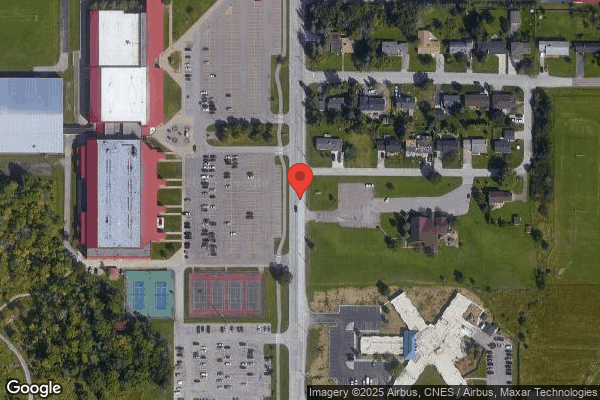
Understanding Severity Codes (click to expand)
Life-Threatening (Immediate Jeopardy)
J - Isolated K - Pattern L - Widespread
Actual Harm
G - Isolated H - Pattern I - Widespread
Potential for Harm
D - Isolated E - Pattern F - Widespread
No Harm (Minor)
A - Isolated B - Pattern C - Widespread

Questions to Ask on Your Visit

  • "What changes have you made since the serious inspection findings?"
  • "What safeguards are in place to prevent abuse and neglect?"
  • "Why is there high staff turnover? How do you retain staff?"
  • "Can I speak with families of current residents?"
  • "What's your RN coverage like on weekends and overnight?"

Our Honest Assessment

Strengths
  • • Licensed and certified facility. Meets minimum state requirements.
Concerns
  • • Multiple safety concerns identified: Federal abuse finding, 2 life-threatening violation(s), 3 harm violation(s), $78,403 in fines, Payment denial on record. Review inspection reports carefully.
  • • 72 deficiencies on record, including 2 critical (life-threatening) violations. These warrant careful review before choosing this facility.
  • • $78,403 in fines. Extremely high, among the most fined facilities in Michigan. Major compliance failures.
  • • Grade F (0/100). Below average facility with significant concerns.
Bottom line: This facility has a substantiated abuse finding. Extreme caution advised. Explore alternatives.

About This Facility

What is Medilodge Of Sault Ste. Marie's CMS Rating?

CMS assigns Medilodge of Sault Ste. Marie an overall rating of 1 out of 5 stars, which is considered much below average nationally. Within Michigan, this rating places the facility higher than 0% of the state's 100 nursing homes. A rating at this level reflects concerns identified through health inspections, staffing assessments, or quality measures that families should carefully consider.

How is Medilodge Of Sault Ste. Marie Staffed?

CMS rates Medilodge of Sault Ste. Marie's staffing level at 4 out of 5 stars, which is above average compared to other nursing homes. Staff turnover is 56%, which is 10 percentage points above the Michigan average of 46%. High turnover can affect care consistency as new staff learn residents' individual needs.

What Have Inspectors Found at Medilodge Of Sault Ste. Marie?

State health inspectors documented 72 deficiencies at Medilodge of Sault Ste. Marie during 2023 to 2025. These included: 2 Immediate Jeopardy (the most serious level, indicating potential for serious harm or death), 3 that caused actual resident harm, 65 with potential for harm, and 2 minor or isolated issues. Immediate Jeopardy findings are rare and represent the most serious regulatory concerns. They require immediate corrective action.

Who Owns and Operates Medilodge Of Sault Ste. Marie?

Medilodge of Sault Ste. Marie is owned by a for-profit company. For-profit facilities operate as businesses with obligations to shareholders or private owners. The facility is operated by MEDILODGE, a chain that manages multiple nursing homes. With 106 certified beds and approximately 72 residents (about 68% occupancy), it is a mid-sized facility located in Sault Ste. Marie, Michigan.

How Does Medilodge Of Sault Ste. Marie Compare to Other Michigan Nursing Homes?

Compared to the 100 nursing homes in Michigan, Medilodge of Sault Ste. Marie's overall rating (1 stars) is below the state average of 3.1, staff turnover (56%) is near the state average of 46%, and health inspection rating (1 stars) is much below the national benchmark.

What Should Families Ask When Visiting Medilodge Of Sault Ste. Marie?

Based on this facility's data, families visiting should ask: "What changes have been made since the serious inspection findings, and how are you preventing similar issues?" "What safeguards and monitoring systems are in place to protect residents from abuse or neglect?" "How do you ensure continuity of care given staff turnover, and what is your staff retention strategy?" "Can I visit during a mealtime to observe dining assistance and food quality?" These questions are particularly relevant given the facility's Immediate Jeopardy citations, the substantiated abuse finding on record, and the facility's high staff turnover rate.

Is Medilodge Of Sault Ste. Marie Safe?

Based on CMS inspection data, Medilodge of Sault Ste. Marie has documented safety concerns. The facility has 1 substantiated abuse finding (meaning confirmed case of resident harm by staff or other residents). Inspectors have issued 2 Immediate Jeopardy citations (the most serious violation level indicating risk of serious injury or death). The facility has a 1-star overall rating and ranks #100 of 100 nursing homes in Michigan. Families considering this facility should ask detailed questions about what corrective actions have been taken since these incidents.

Do Nurses at Medilodge Of Sault Ste. Marie Stick Around?

Staff turnover at Medilodge of Sault Ste. Marie is high. At 56%, the facility is 10 percentage points above the Michigan average of 46%. High turnover means new staff may not know residents' individual needs, medications, or preferences. It can also be disorienting for residents, especially those with dementia who rely on familiar faces. Families should ask: What is causing the turnover? What retention programs are in place? How do you ensure care continuity during staff transitions?

Was Medilodge Of Sault Ste. Marie Ever Fined?

Medilodge of Sault Ste. Marie has been fined $78,403 across 4 penalty actions. This is above the Michigan average of $33,863. Fines in this range indicate compliance issues significant enough for CMS to impose meaningful financial consequences. Common causes include delayed correction of deficiencies, repeat violations, or care failures affecting resident safety. Families should ask facility leadership what changes have been made since these penalties.

Is Medilodge Of Sault Ste. Marie on Any Federal Watch List?

Medilodge of Sault Ste. Marie is not on any federal watch list. The most significant is the Special Focus Facility (SFF) program, which identifies the bottom 1% of nursing homes nationally based on persistent, serious quality problems. Not being on this list means the facility has avoided the pattern of deficiencies that triggers enhanced federal oversight. This is a positive indicator, though families should still review the facility's inspection history directly.