
Royalton Manor, LLC

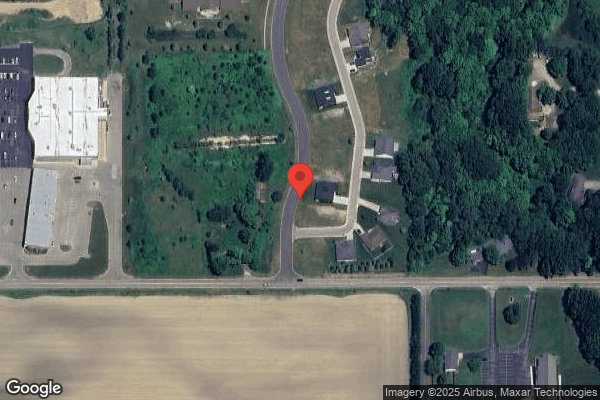
288 Peace Blvd, St Joseph, MI 49085 (269) 556-9050
For profit - Corporation 123 Beds CIENA HEALTHCARE/LAUREL HEALTH CARE Data: November 2025
Trust Grade
0/100
#411 of 422 in MI
Last Inspection: April 2025

Within standard 12-15 month inspection cycle. Federal law requires annual inspections.

Overview

Royalton Manor, LLC in St. Joseph, Michigan has received a Trust Grade of F, indicating poor performance with significant concerns about care quality. Ranked #411 out of 422 facilities in Michigan, this places them in the bottom half of nursing homes statewide, and they are the lowest-ranked facility in Berrien County. Although the facility's trend is improving, having decreased the number of issues from 28 in 2024 to 16 in 2025, it still reported serious deficiencies, including failing to provide timely medical care after a resident's fall and improperly using physical restraints that led to increased anxiety and mobility restrictions. Staffing here is average with a 3/5 star rating and a turnover rate of 50%, while they boast good RN coverage that exceeds 87% of other facilities in Michigan. However, the alarming $308,646 in fines indicates ongoing compliance problems, which is higher than 96% of facilities in the state.

Trust Score
F
0/100
In Michigan
#411/422
Bottom 3%
Safety Record
High Risk
Review needed
Inspections
Getting Better
28 → 16 violations
Staff Stability
⚠ Watch
50% turnover. Above average. Higher turnover means staff may not know residents' routines.
Penalties
⚠ Watch
$308,646 in fines. Higher than 83% of Michigan facilities, suggesting repeated compliance issues.
Skilled Nurses
✓ Good
Each resident gets 53 minutes of Registered Nurse (RN) attention daily — more than average for Michigan. RNs are trained to catch health problems early.
Violations
⚠ Watch
64 deficiencies on record. Higher than average. Multiple issues found across inspections.
★☆☆☆☆
1.0
Overall Rating
★★★☆☆
3.0
Staff Levels
★☆☆☆☆
1.0
Care Quality
★☆☆☆☆
1.0
Inspection Score
Stable
2024: 28 issues
2025: 16 issues

The Good

  • Full Sprinkler Coverage · Fire safety systems throughout facility
  • No fines on record

Facility shows strength in fire safety.

The Bad

1-Star Overall Rating

Below Michigan average (3.1)

Significant quality concerns identified by CMS

Staff Turnover: 50%

Near Michigan avg (46%)

Higher turnover may affect care consistency

Federal Fines: $308,646

Well above median ($33,413)

Significant penalties indicating serious issues

Chain: CIENA HEALTHCARE/LAUREL HEALTH CARE

Part of a multi-facility chain

Ask about local staffing decisions and management

The Ugly 64 deficiencies on record

5 actual harm
Jun 2025 1 deficiency
CONCERN (D) 📢 Someone Reported This

A family member, employee, or ombudsman was alarmed enough to file a formal complaint

Potential for Harm - no one hurt, but risky conditions existed

Deficiency F0726 (Tag F0726)

Could have caused harm · This affected 1 resident

**NOTE- TERMS IN BRACKETS HAVE BEEN EDITED TO PROTECT CONFIDENTIALITY** This citation pertains to MI00152746. Based on interview and record review, the facility failed to ensure nursing staff had appr...

Read full inspector narrative →
**NOTE- TERMS IN BRACKETS HAVE BEEN EDITED TO PROTECT CONFIDENTIALITY** This citation pertains to MI00152746. Based on interview and record review, the facility failed to ensure nursing staff had appropriate skill sets for medication administration for 1 resident (Resident #1) of 4 residents reviewed for medication administration, resulting in the potential for residents residing in the facility to be unable to maintain the highest practicable physical, mental and psychosocial well-being and the potential for decreased resident safety. Findings include: Resident #1 (R1) Review of the admission Record and Minimum Data Set (MDS) dated [DATE] revealed R1 admitted to the facility on [DATE] with pertinent diagnoses including osteomyelitis of vertebra, lumbar region (inflammation of the bone in the spine). Brief Interview for Mental Status (BIMS) reflected a score of 15 out of 15 which indicated R1 was cognitively intact (13 to 15 cognitively intact). She was discharged on 5/2/2025 from the facility. During a phone interview on 6/25/2025 at 11:02 AM, R1 stated that she had a PICC line (peripherally inserted central catheter; long, thin, flexible tube inserted into a vein in your upper arm, usually above the elbow and threaded into a large vein into your heart) prior to admission and was on antibiotics which were administered through the PICC line due to an infection in her lumbar region. R1 reported that on 4/1/2025 she was waiting for therapy to work with her when Licensed Practical Nurse (LPN) K went into her room and administered antibiotics (ertapenem) through her PICC line. R1 saw initials on the antibiotics B.W. and it wasn't cephazolin which was her ordered antibiotic. R1 stated she told a CNA (Certified Nursing Assistant) and then LPN K that the antibiotics weren't hers and told her to take it out. R1 stated that LPN K said she grabbed the wrong medication. Review of R1's physician orders revealed Cefazolin in sodium chloride intravenous (IV) solution 2-0.9 gm (gram)/100ml (milliliters)-% (percent) (Cefazolin sodium in sodium chloride) use 2 grams intravenously every 8 hours for sepsis. Start date 3/28/2025. Review of the Medication and Treatment Incident Report dated 4/1/2025 revealed Resident: (R1). Date reported: 4/1/2025. Date Discovered: 4/1/2025 by resident, told CNA Description of Event: Resident alerted CNA, CNA looked for attending nurse and could not (find her), and found staff developer who entered room, found ertapenem IV (intravenous) ball labeled to resident with initials P.W. Resident had stopped infusion. Resident confirms she has no med (medication) allergies, line was flushed. Nurse notified, NP (Nurse Practitioner) notified, VS (vital signs) obtained. Medication Error: Wrong Drug. Medication Error Classification: Error occurred, resulted in need for increased monitoring, no harm. The form was signed by LPN K and the Medical Director. Review of LPN K's Licensed Nurse Department Orientation Checklist on her date of hire of 3/27/2025 revealed IV therapy: hypodermoclysis (method of fluid administration where fluids are injected under the skin rather than intravenously) with LPN K's initials. Documentation on IVs, Identification of IVs midline, PICC lines, and how to identify valved and non-valved, flush protocol and how to write orders, IV pump usage/set up/troubleshoot, tubing change, mediports, TPN (total parenteral nutrition; all nutrients/nutrition are provided directly into the bloodstream through a catheter), IV back-up cart did not have LPN K's initials next to them. The checklist was signed on 3/29/2024 by LPN K and Staff Development Coordinator (SDC) I. Review of the Licensed Nurse Competency Evaluation {RN (Registered Nurse) and LPN} which was completed 4/3/2024 revealed the section IV therapy (Peripheral lines and PICC) . all 9 lines related to that section were either left blank, had a line through it or NA (not applicable) written on it. The checklist was signed by LPN K. Review of the Charge Nurse Job Description revealed .Essential Functions and Job Responsibilities 2. Provides safe and accurate medication related interventions to residents. A. Administers and documents medications and treatments according to each resident's medication schedule using current standards of medication pass technique. Medication administration includes .X. IV therapy. During an interview on 6/26/2025 at 11:50 AM, LPN K reported that on 4/1/2025 she got R1's medication from the refrigerator since it was an antibiotic and she thought she verified that but she obviously missed it and gave the wrong medication to R1. LPN K stated that she wasn't aware of the medication error until R1 pointed it out to her. LPN K said she received 1:1 education by SDC I after the error. Review of the Disciplinary Action Record Work Rules Form dated 4/1/2025 revealed .Written Warning #1. Date of Infraction: 4/1/2025 Failure to administer correct medication to resident. Failure to adhere to rights of medication administration. Nurse administered incorrect medication via IV route. Medication was labeled to give to another resident. No harm came to the resident as a result, but we must work to reduce errors in medication administration. Specific Plan for improvement .Adhere to medication administration guidelines and policy The form was signed by LPN K and SDC I on 4/1/2025. During an interview on 6/26/2025 at 10:41 AM, SDC I reported that he filled out the Medication and Treatment Incident Report dated 4/1/2025 and filled out the Disciplinary Action Record Work Rules Form. SDC I said that LPN K was getting medications ready and didn't look at label with the resident name and the name of the medication. SDC I stated that R1 was frustrated when she found out she was given the wrong medication, so the medication was unhooked and the PICC line was flushed. He said R1 didn't have any adverse signs or symptoms. The correct medication was given 1-2 hours later. SDC I stated that LPN's can give medications through the PICC line but they need to be educated and trained on how to do it. SDC I stated if there isn't a resident with a unique condition at the time of orientation, return demonstration may not be able to be done and but they will talk about the procedure. During an interview on 6/26/2025 at 9:25 AM, Nurse Practitioner (NP) U stated that LPN K said she pulled the wrong antibiotics for R1 and thought it was the only one in the refrigerator. NP U said that R1 was monitored afterwards and no harm was identified. During an interview on 6/26/2025 at 10:40 AM, Director of Nursing (DON) B reported that LPN K did not receive any PICC line education or training since her orientation which started on 3/27/2024 besides her 1:1 education after the medication error. When discussing LPN K's Licensed Nurse Competency Evaluation (RN and LPN) which was completed 4/3/2024 and the section of IV therapy (peripheral lines and PICC) either having blanks, a line through it or NA (not applicable) on the different areas, DON B didn't have anything to say about it. DON B stated that they educated and did training for all nurses after the incident and they will be starting a skills fair for nurses to ensure they have the skills set needed to take care of residents with unique conditions. Review of the Medication Administration Policy with a revision date of 10/17/2023 revealed .2. Verify the medication label against the medication administration record for resident name, time, drug, dose, and route. A. The nurse is responsible to read and follow precautionary instructions on prescription labels .4. Follow safe preparation practices .b. Never administer medications supplied for one resident to another resident . During the onsite survey, past noncompliance (PNC) was cited after the facility implemented actions to correct the noncompliance which included education with nursing staff on proper medication administration with a PICC line. The facility was able to demonstrate monitoring of the corrective action and maintained compliance.
Apr 2025 12 deficiencies 1 Harm
SERIOUS (G)

Actual Harm - a resident was hurt due to facility failures

Deficiency F0604 (Tag F0604)

A resident was harmed · This affected 1 resident

**NOTE- TERMS IN BRACKETS HAVE BEEN EDITED TO PROTECT CONFIDENTIALITY** Based on observation, interview, and record review, the facility failed to ensure a resident was free from physical restraints i...

Read full inspector narrative →
**NOTE- TERMS IN BRACKETS HAVE BEEN EDITED TO PROTECT CONFIDENTIALITY** Based on observation, interview, and record review, the facility failed to ensure a resident was free from physical restraints imposed for the purpose of convenience in 1 of 1 resident (Resident #11) reviewed for restraints, resulting in the restriction of mobility, episodes of anxiety and frustration, a potential for decline in physical functioning, and an increased risk of injury. Findings include: Review of Physical restraint in older people: an opinion from the Early Career Network of the International Psychogeriatric Association, October 2023, www.researchgate.net , revealed: .The fundamental rationale for employing physical restraints is ostensibly to ensure the safety of the patient .common justi?cations for resorting to physical restraints include: . To reduce the risk of falls or accidents in ambulant patients with safety concerns .These well-intended motives, however, are not supported by the evidence. On the contrary, many studies show that restraints do not prevent falls and can instead increase the likelihood of injury from falls ([NAME], et al., 2011). Review of Restraint Definition and Examples, [NAME] D [NAME], OTR/L, 2015, phsyicaltherapy.com revealed: .examples of restraints: .A reclining geri-chair (a specialized reclining chair which cannot be propelled by the user, and restricts movement in a resident that is able to propel in a manual wheelchair) would be considered an example of a restraint .An upright geri-chair with a lap tray .that prevents the resident from rising from the seat .they are not able to stand up. Review of an admission Record revealed Resident #11 was originally admitted to the facility on [DATE] with pertinent diagnoses which included: alzheimer's disease (disease causing progressive deterioration of cognitive skills), anxiety disorder (excessive worry and fear that are persistent, intense, and often out of proportion to the situation), major depressive disorder (persistent depressed mood or loss of interest in activities causing significant impairment in daily life) and edema (buildup of fluid in the body's tissue, most commonly in the legs and feet). Review of a Minimum Data Set (MDS) assessment for Resident #11 with a reference date of 1/7/25, revealed a Brief Interview for Mental Status (BIMS) score of 99 which indicated Resident #11 was unable to complete the evaluation. Section E revealed Resident #11 did not exhibit behavioral symptoms of verbal/vocal screaming or making disruptive sounds during the 14-day assessment period. Section GG revealed Resident #11 could ambulate 10' with supervision or light touching assistance and could propel a standard wheelchair up to 150' with moderate assistance. Section M revealed Resident #11 was at risk for developing pressure ulcers. Section P revealed no physical restraints were used on Resident #11. Review of a Care Plan for Resident # 11 with a reference date of 1/30/25, revealed a focus/goal/interventions of: (Resident #11) is at risk for complications due to they (sic) require use of a Gerichair (sic) w/tray (with tray) to enable her up related to multiple falls. Goal: (Resident #11) will be free from complications related to the use of Gerichair w/tray through next review. interventions: Apply Gerichair w/tray when up and release tray after meals or when in bed .Release and reposition q2 hours, with supervised meals, supervised activities and with toileting. During an observation on 4/15/25 at 9:21 am, Resident #11 sat in a geri-chair in the common area of the memory care unit. The arms of the geri-chair pushed against a table and the brakes locked. Resident #11 sat upright, supported her torso with her trunk muscles with her back unsupported. Resident #11 rocked her trunk back and forth as a staff member passed by and said to her (Resident #11's name) what's wrong? We're going to do a history activity in twenty minutes. Resident #11's feet hung unsupported above the floor with her feet extended, causing her toes to point toward the floor. Resident #11's feet appeared swollen. During an observation on 4/15/25 at 9:58 am, Resident #11 sat unsupported at the edge of her bed with the geri-chair parked against the wall across from the foot of her bed. A lap tray for the geri-chair was propped against the wall. No staff were in her room and the call light was activated. In an interview on 4/15/25 at 12:15pm, Certified Nursing Assistant (CNA) U reported the nursing and hospice staff decided to use a geri-chair with a table across it for Resident #11 after the resident had multiple falls. When asked if the resident seemed upset about using the geri-chair with the lap tray, CNA U reported Resident #11 hates it. CNA U reported Resident #11 was not able to get out of the chair with the lap tray in place and frequently made statements such as get me out of here while in the chair. CNA U reported Resident #11 was less frustrated if the geri-chair did not have the tray on it but was pushed up against a table, although the resident still could not stand when she was in this position. In an interview on 4/15/25 at 1:49pm, Social Services Director (SSD) T reported Resident #11 started using the geri-chair after she had been hospitalized and returned too weak to maintain good trunk control. SSD T reported Resident #11's strength had improved, and she could now sit unsupported. When queried regarding the use of the lap tray across the chair, SSD T confirmed the lap tray was affixed across Resident #11's lap at times and to her knowledge, was used so Resident #11 could pursue tabletop leisure interests. SSD T reported the geri-chair and tray were not used to reduce Resident #11's fall risk and she was not aware of any negative response the resident had to it. In an interview on 4/16/25 at 9:27am Activity Aide (AA) E reported Resident #11 had become more anxious and agitated in recent months. When further queried, AA E reported in the past Resident #11 was very proud of her independence and felt the resident was experiencing more distress now due to her loss of independence and the inability to move around as much. In an interview on 4/16/25 at 9:32am, CNA HH reported Resident #11 was screaming out, calling staff names and hitting at them more frequently than she had a few months ago. CNA HH described Resident #11 as irritated with the lap tray when it was on her chair. In an interview on 4/16/25 at 9:51am, CNA U reported Resident #11 frequently pounded on the lap tray of the geri-chair and stated, get me out of this thing. CNA U reported Resident #11 had regained the strength she lost during a recent hospitalization, could walk short distances again and had been found with one leg over the lap tray of the geri-chair as she tried to get out of it unassisted. CNA U reported the use of the geri-chair and lap tray had been detrimental to Resident #11's mood and described it as agitating to the resident. CNA U reported Resident #11 had difficulty expressing her thoughts but the resident commonly, clapped her hands and said yay! when CNA U removed the lap tray in preparation to transfer the resident out of the geri-chair. During an observation on 4/16/25 at 10:16am, Resident #11 sat in a geri-chair with a hard plastic lap tray affixed across her lap in the common area of the memory care unit. 2 staff members sat next to Resident #11. In an interview on 4/16/25 at 10:20am, Resident #11 was asked about the geri-chair and although she did not verbally respond, she grabbed the lap tray of the chair and rattled it side to side several times. During an observation on 4/16/25 at 10:46am, Director of Nursing (DON) B walked past Resident #11 as she sat in the common area of the memory care unit, in the geri-chair with the lap tray affixed across her lap, as she engaged in a supervised activity. DON B waved to Resident #11. In an interview on 4/16/25 at 10:51am, Registered Nurse/Hospice Care Coordinator (RNCC) GG reported Resident #11 was provided with the geri-chair in February 2025 after a hospitalization. RNCC GG reported Resident #11 needed the geri-chair for trunk support and to maintain proper positioning while eating but she did not recommend the use of the tray table. RNCC GG reported it was her expectation that the facility would communicate to her if Resident #11 regained her strength and could sit unsupported or if the resident began to express any distress related to using the geri-chair. RNCC GG reported it was important that the facility share this type of information because the resident would need to be reassessed to see if another type of wheelchair would better meet her needs. RNCC GG stated we want her to be more mobile and more independent if she can be because that will maintain her best quality of life. RNCC GG reported she was not aware the facility was using the lap-tray on Resident #11's geri-chair, that doing so would be considered a restraint and could be detrimental to the resident's overall psychosocial well-being. RNCC GG stated She (Resident #11) is already behavior prone, and we should not do anything that makes her more anxious. When further queried, RNCC GG reported that Resident #11 being found with her leg over the lap-tray indicated she felt anxious and trapped and increased her risk of falling. In an interview on 4/16/25 at 11:19am, RN Unit Manager (UM) X reported she did not know why a geri-chair and lap-tray had been implemented for Resident #11. UM X reported the lap tray should be removed anytime the resident voices that she wants it off, and that Resident #11 cannot remove the tray herself. UM X reported she had heard Resident #11 multiple times as she banged on the lap-tray and said repeatedly that she wanted to lay down. UM X reported the staff usually assisted Resident #11 to bed at that time. UM X reported she was not aware Resident #11 had been found with one of her legs over the lap-tray as she tried to climb out of the geri-chair, which put her at greater risk for injury, and that staff were expected to report this type of information to her. In an interview on 4/16/25 at 12:05pm, DON B reported the facility implemented the use of a geri-chair with a lap tray for Resident #11 in effort to reduce the number of falls the resident had. DON B reported Resident #11 had become very restless, at times wanted to lay down or get up every 15 minutes and the staff did not have time to assist her with doing that, so the geri-chair was implemented. DON B reported the intent for use of the geri-chair and lap-tray was to keep Resident #11 comfortable but out of her room and in one place. DON B reported the only other way to keep Resident #11 safe would have been to assign 1 staff member to her and that was not feasible. When asked about Resident #11's current ability to sit unsupported, DON B reported he believed her core isn't strong and he was unsure if the resident was able to stand up. DON B reported Resident #11's most recent Physical Restraint Reduction assessment was 1/29/25. When asked if staff members had reported Resident #11 having any behaviors related to the geri-chair and the lap tray, DON B did not respond. When further queried about any anxiety the resident had exhibited because of the use of the geri-chair and lap tray, DON B stated she was banging on the tray this morning, saying she wanted to go to bed when I tried to talk to her. DON B reported when Resident #11 banged on the lap tray and asked to go to bed during his interaction with her on this date, he responded by consoling her. In an interview on 4/16/25 at 2:26pm, AA Z reported she had seen Resident #11 trying to get out of the geri-chair at times and that the resident could not remove the lap-tray on her own. Review of a Physical Restraint Reduction Assessment for Resident #11 with a reference date of 1/29/25 revealed 2. Is the resident a candidate for restraint reduction? Yes. 2a. If yes, what actions are going to be taken (include less restrictive measure to be used and start date for when reduction is going to begin) .1/29/25 remove tray table q (every) 2 hours and prn (as the situation demands) and when in supervised activity. Review of a Nursing Progress Notes for Resident #11 revealed: 4/11/25 at 6:59pm, Banging hands on tray and yelling. 4/10/25 at 4:14am, resident .trying to get up out of her chair this shift .we found a chair just like hers because she (sic) getting out of this one . 4/9/25 at 5:35pm, clamp that hold tray onto geri-chair broke off . 3/30/25 at 2:15am, Resident have(sic) been yelling and beating on her table . 3/28/25 at 2:00pm, Res started yelling and banging the board on her chair, hard to be redirected. 3/25/25 at 9:00pm, Resident was very agitated beating on table and yelling out. 3/25/25 at 9:40am, Yelling out nonsensical statements, hitting lap tray with her hand, unable to redirect. 3/25/24 at 1:48am, she have (sic) been hitting on the table and getting out of her recliner chair yelling out to get up we have taken her to the bathroom and laid her down when she asked and she would get up from bed in 5-10min after we put her in because she asked to go to bed, she is up in recliner chair at this time because we caught her getting out of bed . 3/16/25 at 3:35am resident .was yelling to get up and hitting the table she got out of her chair . Review of a Behavior Monitoring Log with a reference date of 1/1-1/31/25 revealed Resident #11 demonstrated behavioral symptoms (frequent crying, repeated movements, yelling, wandering, grabbing, hitting) 38 times during the 31-day period. Review of Physician Orders for Resident #11 with a reference date of 1/29/25 revealed Geri chair with lap tray to enable her to be up with reduction in falls. Review of a Behavior Log for Resident #11 with a reference date range of 3/18/25-4/15/25 revealed the resident displayed behavioral symptoms (frequent crying, repeated movements, yelling, wandering, grabbing, hitting) 97 times during the 30-day period. Review of a facility Restraint Management policy with a reference date of 3/7/23 revealed Policy: Restraints are not used unless the resident has medical symptoms that warrant the use of the restraint. Overview: Physical restraints are not used for the purpose of .convenience .physical restraints include .lap trays the resident cannot easily remove .placing a resident in a chair .that prevents a resident from rising .Guidelines .8. Residents using physical restraints will have a Physical Restraint Reduction Evaluation completed .with any significant change of condition for the use and appropriateness of physical restraints. Attempts to contact Resident #11's legal guardian were unsuccessful at the time of the completion of the survey. Using the reasonable person concept, though Resident #11 could not recall and verbalize the degree of emotional distress she experienced because of being physically restrained, she clearly demonstrated a desire to be free from the chair and lap tray that limited her movement, and experienced increased anxiety from the confinement.
CONCERN (D)

Potential for Harm - no one hurt, but risky conditions existed

Deficiency F0692 (Tag F0692)

Could have caused harm · This affected 1 resident

**NOTE- TERMS IN BRACKETS HAVE BEEN EDITED TO PROTECT CONFIDENTIALITY** Resident #31 In an interview on 04/14/25 at 11:42 AM, Resident #31 reported that he thought he had been losing weight and compla...

Read full inspector narrative →
**NOTE- TERMS IN BRACKETS HAVE BEEN EDITED TO PROTECT CONFIDENTIALITY** Resident #31 In an interview on 04/14/25 at 11:42 AM, Resident #31 reported that he thought he had been losing weight and complained about the food being cold. Resident #31 reported that he was recently admitted to the facility following two surgeries, and that he may have lost the weight because of the surgeries. Review of Resident #31's Weight Record revealed a significant weight loss indicated by 164.3# (pounds) recorded on 4/11/2025, 185# on 4/10/2025, and 195# on 3/19/2025 (admission date). The record indicated 3 weeks lapsed between the first and second time that the resident was weighed. In an interview on 04/16/25 at 10:40 AM, Licensed Practical Nurse (LPN) OO reported that the nurse enters the weight in the record as reported by staff, but that Certified Nursing Assistant (CNA) NN and the dietician manage and address any concerns. In an interview on 04/16/25 at 10:43 AM, CNA NN reported that Resident #31 was still on a weekly weight list, but that she was not sure about his weight loss. CNA NN reported that Dietary Manager (DM) MM followed up with weight concerns. In an interview on 04/16/25 at 10:52 AM, DM MM reported that Resident #31's weight loss should have been addressed immediately, but that he had not been aware of it and had not spoken to the resident. In a subsequent interview on 04/16/25 at 10:58 AM, DM MM reported that they would be re-weighting Resident #31 to establish an accurate baseline weight. DM MM reported that when residents admit to the facility they should be weighed weekly for the first 4 weeks, then monthly and as needed. DM MM reported that this policy was not followed for Resident #31. Based on interview and record review, the facility failed to ensure timely and consistent weight monitoring and complete and accurate documentation for 2 residents (Resident #100, Resident #31) of 5 residents reviewed for nutritional status resulting in undetected weight changes and potential for nutritional status decline and unmet nutritional needs. Findings include: Resident #100 (R100) Review of the admission Record and Minimum Data Set (MDS) dated [DATE] revealed R100 admitted to the facility on [DATE] with diagnoses including weakness and dysphagia (difficulty swallowing). Brief Interview for Mental Status (BIMS) reflected a score of 99 which indicated it could not be complete due to R100's severe cognitive impairment. On 4/14/2025 at 2:36 PM, R100 was observed to be lying in bed and was unable to respond to questions. An empty can of Jevity 1.5 (nutritional supplement) and a syringe was inside a plastic cup on the bedside table. Review of physician orders revealed Enteral feed (method delivering nutrition directly into the gastrointestinal tract via a tube) four times a day for Tube Feed Jevity 1.5 via PEG (percutaneous endoscopic gastronomy tube, a feeding tube inserted directly into the stomach through the abdominal wall which allows liquid nutrition , fluids and medications to be delivered directly to the stomach by passing the mouth and esophagus used for feeding liquid nutrition directly into tube) bolus of 235 mL (milliters)/1 can to provide 940 mL/4 cans total volume {1420 kcal (calories)}. Nothing By Mouth diet, Nothing By Mouth texture, Nothing By Mouth consistency. Review of R100's weight records: 4/1/2025 08:34 142.9 Lbs (pounds) 3/25/2025 14:34 143.0 Lbs 3/24/2025 12:51 142.8 Lbs 3/21/2025 17:48 150.2 Lbs 3/18/2025 09:57 151.0 Lbs 3/11/2025 14:01 151.0 Lbs 3/7/2025 20:24 152.8 Lbs The weight record revealed on 3/7/2025 R100 weighed 152.8 pounds and on 4/1/2025 R100 weighed 142.9 pounds which was a 6.48 % (percent) significant weight loss. There were no other weights obtained since 4/1/2025. Resident at Risk progress note on 4/4/2025 documented by Dietary Manager (DM) MM revealed Reviewed Clinical Indicator: Resident (R100) triggered for weight loss. Action Taken: RD (Registered Dietitian) referred to review enteral feedings. Response to Previous Actions Taken: In attendance, dietary, social work, and nursing. There was no additional documentation in R100's chart after 4/4/2025 from the RD or DM MM regarding the weight loss and that the physician was aware/notified of the weight loss. Review of R100's Care Plan revealed there was no documentation regarding her weight loss. There was no RD documentation in R100's chart since the admission Nutrition Evaluation that was completed 3/18/2025. During an interview on 4/15/2025 at 11:56 AM, Dietary Manager (DM) MM stated that he isn't a Certified Dietary Manager (CDM) and isn't taking classes to become certified. DMMM stated when a resident is triggered for weight loss, he will put any interventions in, document the best he can, refer the resident to the RD and he will attend the Resident at Risk meetings. DMMM stated that he put a note in regarding R100's weight loss and let the RD know about it. He said there should be a note in the chart and he looked for any documentation in R100's chart and could not find anything. DM LL stated that the RDs work remotely and RD EE was the main corporate RD and there are several float RDs. During an interview on 4/15/2025 at 1:01 PM, Corporate RD EE acknowledged that DM MM wasn't a CDM. She said that she tries to get to the facility 1-2 times a year and that there are 2 other RDs that assist remotely with charting and clinical documentation but they are full time RDs in other buildings and are stretched thin. RD EE stated that they are having trouble finding a RD to cover the building and can't find an agency RD. She stated that DM MM attends the clinical meetings and consults the RDs if needed. RD EE stated that the other RD did R100's admission assessment. She also said that the expectation was to address weight loss timely and before additional weight loss happens. RD EE stated that enteral feeding documentation was completed monthly by the RD but if weight loss was found in between it should be addressed and documented right away. RD EE stated that she couldn't say R100's weight loss wasn't addressed but it was not documented in her chart. During an interview on 4/16/2025 at 9:23 AM, Director of Nursing (DON) B stated that weekly weights should be done when a resident has significant weight loss and the RD should document this weight loss in the resident's chart. When discussing R100's weight loss, DON B agreed that there wasn't a note by the RD regarding her weight loss in her chart. DON B' also agreed that there was no documentation that the physician was notified about the weight loss. Review of the Weight Management Policy with a revision date of 9/22/2023 revealed .5. Residents determined to be at risk or have significant weight changes will be weighed on a weekly basis. Residents at risk are .c. Residents receiving a tube feeding with significant weight changes f. residents with insidious weight loss- 5% in one month .8. Once an insidious weight loss is identified, the RD. further assesses the guest/resident and makes recommendations as indicated to prevent/treat unintended weight loss. 11. A 'Resident at Risk' meeting will be conducted at least monthly by the Interdisciplinary Team and any changes documented in the care plan at the meeting.
CONCERN (D)

Potential for Harm - no one hurt, but risky conditions existed

Deficiency F0694 (Tag F0694)

Could have caused harm · This affected 1 resident

**NOTE- TERMS IN BRACKETS HAVE BEEN EDITED TO PROTECT CONFIDENTIALITY** Based on observation, interview, and record review, the facility failed to adhere with professional standards of practice in ass...

Read full inspector narrative →
**NOTE- TERMS IN BRACKETS HAVE BEEN EDITED TO PROTECT CONFIDENTIALITY** Based on observation, interview, and record review, the facility failed to adhere with professional standards of practice in assuring the appropriate aseptic, dating/labeling, and resident-specific treatment plan for infection control practices for IV (intravenous (within a vein)) fluids for 2 residents (R302 and R301) of two residents reviewed for PICC (a peripherally inserted central catheter inserted through a vein in the upper arm and moved to a large blood vessel near the heart) line dressing change, resulting in the potential of contracting an infection. Findings include: R302 According to the Minimum Data Set (MDS) dated [DATE], R302 was cognitively intact with a score of 13/15 on her BIMS (Brief Interview Status). Diagnoses included rotavirus (common cause of severe diarrhea and vomiting). Review of R302's Order Summary -6/9/25 Change transparent dressing PICC as needed for IV maintenance . -6/9/25 change transparent dressing to PICC every day shift every 7 days for IV maintenance -It was noted there were no physician's orders for Contact Precautions and/or Enhanced Barrier Precautions for R302's. Review of R302's Care Plan revealed there was no resident-centered treatment care plan for the PICC line, rotavirus, or transmission-based precautions. According to the State Operations Manual (SOM), .In addition to adhering to professional standards of practice, facilities are responsible to administer IV therapy according to the resident-centered care plan . During an observation and interview on 6/11/26 at 8:10 AM, R302's door had a CDC Contact Precautions sign for Transmission Based Precautions. Registered Nurse (RN) D was changing the right arm PICC line dressing for R302. RN D was wearing a disposable gown that was not fastened and was falling into the area she was working. The ties for the gown were dragging on the ground and the nurse would step on the ties and cause the nurse to trip on several occasions. On her hands, RN D was wearing clear nitrite gloves. The sterile gloves that came with the PICC line dressing kit were still in their protective packaging. There was not barrier underneath the sterile supplies for the PICC line dressing change. RN D stated she did not use the sterile gloves in the sterile PICC line dressing kit because she did not like wearing them. While removing the old transparent dressing, it became stuck to the nitrite gloves the nurse was wearing. It was observed at this time, the old dressing was not labeled or dated. After peeling the old dressing off the nitrite gloves, RN D peeled the backing off the new sterile dressing which also stuck to the nitrite gloves. This caused the dressing once applied over the PICC line insertion site to have wrinkles and gaps where it met the skin, causing exposure to pathogens and germs. RN D became frustrated and stated she did not like the dressing results and left the room to retrieve another PICC line dressing kit. During an observation and interview on 6/11/25 at 8:28 AM, Director of Nursing (DON) B and RN D entered R302's room wearing a disposable gown that was not fastened. The gown fell forward while examining R302's PICC dressing exposing his street clothing and touching the resident's arm. DON B stated, PICC line dressing change is a sterile procedure. A sterile barrier should be in place during the dressing change. Sterile procedure should be in place during the entire dressing change. RN D was wearing nitrite gloves and a disposable gown was not fastened and hung in front of her with the ties dragging on the floor. RN D stated, I did not wear the sterile gloves during the first dressing change I did. I like the nitrite gloves better. I did not have a sterile barrier under the sterile supplies during the procedure either. At this time, DON B left the room to retrieve a PICC line dressing kit. RN D assisted R302 to the bathroom, her gown was untied and falling forward exposing her clothing and falling into her field of work. The ties of the gown were dragging on the floor. RN D then straightened R302's bed and assisted the resident back to the bed after resident used the restroom. The ties of RN D's gown became tangled in R302's legs and the nurse had to untangle them. The bed controller and call light fell to the floor. The RN stepped on both controller and call light along with the bottom and the ties of her gown. After assisting R302, RN D exited the room and DON B entered bringing a sterile PICC line dressing kit. It was noted, the DON did not tie his gown with the ties dragging on the floor and the gown falling forward into his field of work. While prepping and performing the PICC dressing change, DON B placed the old dressing, used chlorhexidine swabs, removed gloves, and packaging on the blanket lying on top of R302 without a barrier or garbage bag. R302 reminded DON B to place the date on the new dressing after he finished for infection prevention. The dressing was changed yesterday but no one dated it. DON B agreed with R302 that it should be done. DON B left the room in gown and sterile gloves to get a marker to date dressing at 9:02 AM returning at 9:08 AM wearing a gown unfastened and clean gloves with no mask. DON B stated after leaving R302's room, (RN 'D) should have used sterile fields and sterile gloves. The PICC line is an open line for infection. Gowns should be secured so they do no fall into the field that is being worked on. Masks should be worn in R302's room because she is on Contact Precautions. R301 According to the MDS dated [DATE], R301 was cognitively intact as indicated with a score of 13/15 on his BIMS. Diagnoses included sepsis. Review of R301's Order Summary dated -5/29/25 Change transparent dressing PICC as needed for IV maintenance . -5/29/25 Change transparent dressing to PICC every day shift every 7 days for IV maintenance Review of R301's Care Plan, dated 5/9/25, focus: Risk for Complications of IV therapy .Site of midline: right upper arm .The goal for the resident was no not have any complications related to IV therapy using interventions that included change dressings to midline site per physician orders and check dressing at site right upper arm per facility policy. During an observation and interview on 6/11/25 at 9:59 AM, Licensed Practical Nurse (LPN) F donned a gown that she did not fasten and prepared to administer IV medications into R301's PICC line. It observed at this time the dressing covering the PICC line insertion site was not dated or labeled. R301 stated, The dressing was changed yesterday and should be dated so nurses can keep track of it and no infection gets in it. LPN F stated, Dressings should be dated for infection control purposes. During the time LPN F was administering the IV medication, her gown was falling forward and touching the PICC line and medication bulb. Review of R301's Medication/Treatment Administration Record dated 6/1/25-6/30/25 indicated the resident's dressing change was not documented for 6/9/25. The last documented dressing change was 6/6/25 during the night. It was noted medication was administered 21 times between 6/6/25 PM and the time LPN F administering medication to R301 on 6/11/25 at 9:59 AM. According to the CDC (Centers for Disease Control) https://www.cdc.gov/ .Gown . Fasten in back of . waist .to minimize the risk of contamination . During an interview on 6/11/25 at 10:13 AM, LPN F stated, All dressings should be labeled and dated for infection control prevention. A PICC line dressing is done with sterile field and gloves for infection prevention. Staff have had education for this recently. During an interview and record review on 6/11/25 at 11:39 AM DON B stated, PICC line dressing change and medication administration was part of the POC (Plan of Correction) that the facility recently had to do. (RN D) received that education. Reviewed an orientation checklist for RN D for PICC line dressing changes dated 3/19/25. During an interview on 6/11/25 at 11:55 AM, DON B and Staff Development (SD) N reported licensed nurses were given facility policy and procedure to read and follow-up with a test for the facility's most recent POC. SD N reported RN D passed the test on May 29, 2025. SD N also reported a hands-on demonstration on how to perform a PICC line dressing change was offered but not mandatory to all licensed nursing staff with no staff volunteering to participate. Review of facility policy/procedure How to Care for a Peripherally Inserted Central Catheter (PICC) dated 2025, revealed, .Having a PICC increases your risk of infection. That is why it is so important to take care of it . You need sterile gloves .Everyone should wash their hands well with soap and water before touching the PICC. This helps avoid spreading germs .wash your hands again. Put on sterile gloves (the procedure indicated this should be done after the old dressing was removed) .
CONCERN (D)

Potential for Harm - no one hurt, but risky conditions existed

Deficiency F0883 (Tag F0883)

Could have caused harm · This affected 1 resident

**NOTE- TERMS IN BRACKETS HAVE BEEN EDITED TO PROTECT CONFIDENTIALITY** Based on interview and record review, the facility failed to ensure residents who were eligible for recommended vaccines were of...

Read full inspector narrative →
**NOTE- TERMS IN BRACKETS HAVE BEEN EDITED TO PROTECT CONFIDENTIALITY** Based on interview and record review, the facility failed to ensure residents who were eligible for recommended vaccines were offered vaccinations in a timely manner for 2 residents (Resident #101& #206) out of 5 residents reviewed for immunizations resulting in lack of documentation and the potential for developing vaccine preventable disease. Findings include: Resident #101 Review of Resident #101's Immunizations revealed, no record of Influenza or Pneumococcal historical records, education, and or consents offered. In an interview on 04/16/25 at 01:45 PM, Infection Preventionist (IP) KK reported that she had not gotten to Resident #101. IP KK reported that immunizations should have been discussed upon admission on [DATE], but there was no record of it. Resident #206 Review of Resident #206's Immunizations revealed, that the resident received 2 doses of pneumococcal historically as follows: PPSV23 on 06/17/2019, and Prevnar 13 on 11/03/2016. There was no record of Influenza, and no record of education and/or consents offered. In an interview on 04/16/25 at 01:45 PM, Infection Preventionist (IP) KK reported that she had not gotten to Resident #206. IP KK reported that immunizations should have been discussed upon admission on [DATE], but there was no record of it.
CONCERN (D)

Potential for Harm - no one hurt, but risky conditions existed

Deficiency F0887 (Tag F0887)

Could have caused harm · This affected 1 resident

**NOTE- TERMS IN BRACKETS HAVE BEEN EDITED TO PROTECT CONFIDENTIALITY** Based on interview and record review, the facility failed to ensure COVID-19 immunization were offered to 2 (Resident #101 & #20...

Read full inspector narrative →
**NOTE- TERMS IN BRACKETS HAVE BEEN EDITED TO PROTECT CONFIDENTIALITY** Based on interview and record review, the facility failed to ensure COVID-19 immunization were offered to 2 (Resident #101 & #206) of 5 residents, reviewed for COVID-19 immunizations, resulting in lack of documentation and the increased likelihood of severe infection and complications/death related to COVID-19. Findings include: Resident #101 Review of Resident #101's Immunizations revealed, no record of Covid-19 vaccine received, education provided, and/or consents on record. In an interview on 04/16/25 at 01:45 PM, Infection Preventionist (IP) KK reported that she had not gotten to Resident #101. IP KK reported that immunizations should have been discussed upon admission on [DATE], but there was no record of it. Resident #206 Review of Resident #206's Immunizations revealed, that the resident received 4 doses of Covid-19 vaccination historically prior to admission. The record did not include any documentation related to further Covid-19 booster education, declinations, or consents. In an interview on 04/16/25 at 01:45 PM, Infection Preventionist (IP) KK reported that she had not gotten to Resident #206. IP KK reported that immunizations should have been discussed upon admission on [DATE], but there was no record of it.
CONCERN (E)

Potential for Harm - no one hurt, but risky conditions existed

Safe Environment (Tag F0584)

Could have caused harm · This affected multiple residents

**NOTE- TERMS IN BRACKETS HAVE BEEN EDITED TO PROTECT CONFIDENTIALITY** Based on observation and interview, the facility failed to maintain resident rooms (227, 216, 225, 222, 213) with clean floors, ...

Read full inspector narrative →
**NOTE- TERMS IN BRACKETS HAVE BEEN EDITED TO PROTECT CONFIDENTIALITY** Based on observation and interview, the facility failed to maintain resident rooms (227, 216, 225, 222, 213) with clean floors, floors and dining chairs in the memory unit, and 2 of 2 residents (R6 and R87) with clean wheelchairs reviewed for environment resulting in decreased satisfaction of living conditions. Findings include: Observed on 4/14/25 at 9:49 AM, in room [ROOM NUMBER] along the wall/floor perimeter of room was dust, dirt, food, and paper debris Observed on 4/14/25 at 10:27 AM, in room [ROOM NUMBER] along the wall/floor perimeter of room was dust, food, and paper debris. Observed on 4/14/25 at 9:54 AM, in room [ROOM NUMBER] along the wall/floor perimeter of room was dust, food, and paper debris Observed on 4/14/25 at 12:11 PM, behind the handrail next to room [ROOM NUMBER], was a plastic drink lid with a red liquid on it. On the wall next to the lid was a dried red substance that had ran down the wall to the floor. Observed on 4/14/25 at 12:30 PM, the alcove floor on 200 hall, to have paper and food debris. Observed on 04/16/25 at 7:44 AM, room [ROOM NUMBER] along the wall/floor perimeter of room was dust, food, and paper debris Observed on 4/16/25 at 8:01 AM room [ROOM NUMBER] along the wall/floor perimeter of room was dust, food, straws, and debris. Under bed-2 was an accumulation of personal items, dust, debris, and pieces of paper. During an interview on 4/16/25 at 10:52 AM, Housekeeping II stated, Housekeeping daily duties are first to always respect the residents. This is their home. I sweep and mop floors. Floors should be swept every day all the way around the room if possible and behind the doors. Resident #87 Review of an admission Record revealed Resident #87 was originally admitted to the facility on [DATE] with pertinent diagnoses which included: adjustment disorder with mixed disturbance of emotions and conduct (short-term mental and behavioral condition that occurs when someone has an unhealthy reaction to a stressful life change). Review of a Minimum Data Set (MDS) assessment for Resident #87 with a reference date of 1/10/25, revealed a Brief Interview for Mental Status (BIMS) score of 12/15 which indicated Resident #87 was moderately cognitively impaired. In an interview on 4/16/25, at 10:39am, Resident #87 reported the chairs in the dining area needed to be cleaned more often. Resident #87 then ran her right thumb across the frame of the dining chair in which she sat, turned her thumb over, looked at the dust and debris that had transferred to her thumb from the frame of the chair, and stated Yuck!. Resident #87 also voiced that she had noticed several brown stains on the carpet and stated, I don't have to shampoo the floors anymore, but someone needs to do it here. During an observation on 4/16/25 at 10:46am, the frames and legs of 17 of 19 dining chairs were soiled with dried white and brown liquid as well as dust and debris. 7 of the 10 dining table bases were soiled with dried white and brown liquid, crumbs, dust, and debris. During an observation on 4/15/25 at 10:16am multiple dried brown stains were noted on the carpet in the entryway area of the memory care unit. During an observation on 4/15/25 at 10:18am, 7 dried brown stains were noted on the carpet in the common area of the memory care unit, where residents were seated. During an observation on 4/15/25 at 10:22am, the emergency exit door, in the common area of the memory care unit, was heavily soiled with dried yellow liquid that covered the width of the door. During an observation on 4/15/25 at 10:24am, a large dried yellow stain, approximately 2x3' was noted on the carpet, near the center of the entryway area of the memory care unit. Resident #6 (R6) Review of the admission Record and Minimum Data Set (MDS) dated [DATE] revealed R6's initial admission date was 4/12/2022 with diagnoses including depression and anxiety. Brief Interview for Mental Status (BIMS) reflected a score of 13 out of 15 which indicated R6 was cognitively intact (13 to 15 cognitively intact). During an observation and interview on 4/14/2025 at 10:25 AM, R6 stated that her wheelchair was dirty and she doesn't remember if it had been cleaned and it was probably never cleaned as far as she knows. It was observed that her wheelchair was dirty with crumbs on the handles and dried up food and crumbs were underneath her wheelchair pad. R6 stated that she picks at the dirt and crumbs on her wheelchair to get it off. Further observations on 4/15/2025 at 8:28 AM and 4/16/2025 at 8:15 AM revealed that R6's wheelchair was still dirty and crumbs and dried up food was still underneath the wheelchair cushion. During an interview on 4/15/2025 at 8:42 AM, Certified Nursing Assistant (CNA) O stated that third shift CNAs clean the wheelchairs and if any CNA notices the wheelchair are dirty after meals, they should clean it at that time instead of waiting for third shift to clean it. CNA O said a resident shouldn't be put in a dirty wheelchair. During an interview on 4/15/2025 at 8:44 AM, Licensed Practical Nurse (LPN) J stated that third shift deep cleans the wheelchairs according to a schedule and if any CNA notices a dirty wheelchair after meals, they should clean it right then. During an interview on 4/15/2025 at 8:53 A, CNA Q who was also the CNA Preceptor stated that third shift cleans the wheelchairs. CNA Q said that the book at the nurses' station had the CNA night shift duties and one of them was cleaning the wheelchairs. CNA Q stated that there wasn't a list of rooms and the wheelchairs that need to be cleaned but they are supposed to clean the wheelchairs in their group after the resident goes to bed. During an interview on 4/16/2025 at 8:34 AM, CNA S and CNA P stated that the expectation was for the night shift CNAs to clean the wheelchairs unless they notice it was dirty after a meal then they should clean it. Review of the sheet Night Shift Duties revealed CNA Duties: clean wheelchairs There was no specific schedule posted for the CNAs to follow. Review of R6's Task: Wheelchair Cleaning/Audit Room was created and revised by Director of Nursing (DON) B on 12/7/2023. Review of the task for the last 30 days revealed Resident's wheelchair/gerichair has been cleaned No data found. During an interview on 4/16/2025 at 8:48 AM, DON B stated that wheelchairs are cleaned by the night shift team and it correlates with the resident's shower days. DON B said the night shift used to clean the wheelchairs in their specific group but now it was correlated with resident shower days. DON B stated that the CNAs have a scrub brush and the wheelchair should be hosed down in the shower room and wheelchair pads and underneath them should be cleaned at that time. He stated that R6 refuses showers at times but this surveyor pointed out that it shouldn't matter since the night shift CNAs clean the wheelchairs on shower days when the resident was in bed and DON B said you are correct. DON B said cleaning the equipment/wheelchairs was a challenge.
CONCERN (E)

Potential for Harm - no one hurt, but risky conditions existed

Deficiency F0658 (Tag F0658)

Could have caused harm · This affected multiple residents

**NOTE- TERMS IN BRACKETS HAVE BEEN EDITED TO PROTECT CONFIDENTIALITY** Based on observation, interview, and record review the facility failed to follow professional standards of practice during medic...

Read full inspector narrative →
**NOTE- TERMS IN BRACKETS HAVE BEEN EDITED TO PROTECT CONFIDENTIALITY** Based on observation, interview, and record review the facility failed to follow professional standards of practice during medication administration for 2 (Resident #101 & #207) residents of 2 reviewed for medication administration, resulting in inaccurate documentation of medications, late/missed medications, and the potential for the worsening of medical conditions and residents not meeting their highest practicable level of wellbeing. Findings include: Resident #101 In an interview on 04/15/25 at 09:36 AM, Infection Preventionist-Unit Manager (IP-UM) KK reported that Resident #101 had a blood infection and was on an IV (medication administered directly into a vein) antibiotic for 32 days. IP-UM KK reported that the resident was supposed to have the IV medication at 9:00 AM, but that she was not sure if it had been administered yet that day. In an interview on 04/15/25 at 09:51 AM, Resident #101 reported that she had eaten her breakfast earlier, and had not taken her morning medications yet. During an observation of IV medication administration on 04/15/25 at 09:56 AM for Resident #101. Registered Nurse (RN) JJ was at the medication cart gathering supplies to administer an IV medication. RN JJ had a bag of Daptomycin-Sodium Chloride (antibiotic mixed with normal saline) IV solution 700-0.9mg/100ml with tubing attachments and a syringe of normal saline in one hand, and retrieved a cup containing 6 pills from the medication cart. The resident's medication administration record (MAR) was observed on the computer screen and revealed that several medications were already signed out as administered. RN JJ entered Resident #101's room and asked the resident where her IV pole was and asked When did you get back from the hospital? Resident #101 did not understand and stated, I just got back last night .I will need applesauce for my pills . RN JJ then exited the room to obtain an IV pole and applesauce. At 10:10 RN JJ was back in the resident's room, handed the resident the cup of pills, hung the IV medication on the pole, flushed the resident's PICC line (a long tube inserted into a vein in the upper arm that is threaded into a larger vein leading to the heart, used to administer medications) and then attached the IV medication tubing to the PICC line. In an interview on 04/15/25 at 10:12 AM, RN JJ reported that Resident #101 received the following 6 medications during the morning medication pass at 10:10 AM: Buspirone (antidepressant), Cetirizine (allergy), Eliquis (blood thinner), Lactobacillus (probiotic), Oxybutynin (bladder control) , and Celebrex (anti-inflammatory). RN JJ reported that the only medication that was not given as scheduled was Tramadol (controlled medication for pain), because it was not in the cart, and she would have to go pull it from back up. RN JJ reported that she had signed out the medications as administered when she pulled them from the drawer earlier that day. Review of Resident #101's Physician Orders for current date of 4/15/25 revealed: Daptomycin-Sodium Chloride IV solution 700-0.9mg/100ml once a day at 9:00 AM, to be administered over 1 hour. Normal Saline IV flush 10 ml prior to and after infusion of Daptomycin. Buspirone 7.5 mg upon (upon rising: when the resident wakes up in the morning) Cetirizine 10 mg upon. Eliquis 5 mg upon. Lactobacillus upon. Oxybutynin 10 mg upon. Celebrex 10 mg upon. Senna (stool softener) 8.6-50 mg upon. Miralax (for constipation) 17 gram by mouth upon. Metformin (to manage blood sugar) 500mg 2 pills upon. Duloxetine (antidepressant) 60 mg upon. Amiodarone (abnormal heart rate) 200 mg upon. Torsemide (edema) 100 mg upon. Tramadol (narcotic pain medication) 50 mg upon. Review of Resident #101's Medication Administration Record (MAR) for 4/15/25 revealed the following medications and times they were administered by RN JJ: Daptomycin-Sodium Chloride IV solution 700-0.9mg/100ml at 9:50 AM Normal Saline IV flush at 9:50 AM and 9:51 AM Buspirone at 9:51 AM Cetirizine at 9:51 AM Eliquis at 9:51 AM Lactobacillus at 9:51 AM Oxybutynin at 9:51 AM Celebrex at 9:51 AM with a pain level of 5. Senna at 9:51 AM Miralax at 9:51 AM Metformin at 9:51 AM Duloxetine at 10:56 AM Amiodarone at 10:57 AM Torsemide documented as 5 (not given, see nurse notes) at 10:56 AM and there was no follow up explanation recorded. Tramadol documented as 5 (not given, see nurse notes) at 9:53 AM and there was no follow up explanation recorded. This surveyor noted that Senna, Metformin, and Miralax were not administered during the observation at 9:51 AM or during the observation at 10:10 AM. Duloxetine and Amiodarone were documented as administered late, but not observed. Torsemide and Tramadol were documented as not given, with no explanation. During an observation on 04/15/25 at 01:30 PM Resident #101 was lying in bed and her IV medication was still attached to her PICC line. The bag of solution appeared empty, but the tubing still had solution in it. The medication was ordered to run for a total of 1 hour (11:10 AM), which was approximately 2 hours earlier. In an interview on 04/15/25 at 1:45 PM, RN JJ reported that she had just returned from her break, but that Resident #101's IV medication was still running when she left the unit for her break. RN JJ was observed disconnecting the IV tubing, flushing the line with normal saline. RN JJ reported that this was her first time with this type of IV and she could not explain how long it was supposed to run or how the system works. Additionally, RN JJ reported that she had administered Tramadol to Resident #101 at approximately 12:00 PM after retrieving it from the backup supply. RN JJ could not verify this and then reported that she had not gotten an order for the late medication, so she was not able to document it as administered. In an interview on 04/15/25 at 02:01 PM, IP-UM KK reported that UPON RISING is defined as when the resident wakes up, or between 4 AM and 10 AM for medication administration. IP-UM KK reported that all medications should first be pulled from the medication cart, administered to the resident, and then signed out on the MAR. IP-UM KK reported that sometimes residents refuse medications, so it's important to only document them as administered AFTER they have been accepted by the resident. IP-UM KK reported that she had not been notified that Resident #101 had medications that were not available, and/or that she had any missed medications for that day. IP-UM KK reported that any time a medication is late, the physician should be notified and a progress note should be written in the record. In an interview on 04/15/25 at 02:10 PM, Director of Nursing (DON) B reported that IV antibiotics should be flushed as soon as possible after the medication finishes running so that it doesn't irritate the vein. DON B reported that if Tramadol was not available in the resident's supply of medications, the nurse could get an order to pull it from the backup box. Observation of the medication back up boxes did not reveal any orders for Tramadol, or any indication that RN JJ had pulled any medications for Resident #101. DON B approached RN JJ to ask about the Tramadol for Resident #101, and could not get a clear answer from RN JJ. DON B asked for a moment to talk to NHA A and figure out what happened. A few moments later, DON B reported that RN JJ apparently took Tramadol from Resident #207's medication supply, and administered it to Resident #101. DON B reported that this would be reported to the state agency and a full investigation would be started. Resident #207 During an observation of medication administration on 04/15/25 at 10:20 AM, RN JJ opened the top drawer of the medication cart and grabbed a handful of medications that were wrapped in foil, but not labeled with a resident name. RN JJ reported that she had pulled the medications from Resident #207's supply earlier that morning, but then had to do Resident #101's IV antibiotic, so she had put the pills in the drawer. Observation of RN JJ placing the following medications in a cup: Metoprolol (blood pressure medication) 50 mg, Eliquis (anticoagulant) 5 mg, Bupropion (antidepressant) ER (extended release) 300mg, Lisinopril (blood pressure) 10 mg, Oxybutynin (urinary retention) ER 10 mg, Stool softener 100mg and Aspirin 81 mg. Then prepared Lantus (insulin) 10 units to administer by injection. RN JJ entered Resident #207's room and stated, Where would you like your insulin? Your hand or abdomen? Resident #207 answered that she would like it in her arm. RN JJ administered the Lantus insulin in Resident #207's right upper arm, and handed the resident the cup of pills. This surveyor noted that RN JJ mispoke and said hand, when she should have said arm. Review of Resident #207's current Physician Orders for 4/15/25 revealed: Aspirin 81 mg at 9:00 AM Bupropion ER 300mg at 9:00 AM Lantus Insulin 10 units at 9:00 AM Lisinopril 10 mg at 9:00 AM Med Pass 120 ml (nutritional supplement drink) at 9:00 AM Oxybutynin ER 10mg at 9:00 AM Eliquis 5 mg at 9:00 AM Stool Softener at 9:00 AM Metoprolol 50 mg at 9:00 AM Miralax (for constipation) upon rising Senna (for constipation) at 9:00 AM. This surveyor noted that Senna, Miralax, and Med Pass were not observed given during the observation at 10:20 AM, and the remainder of the medications were administered greater than 1 hour following the ordered administration time of 9:00 AM. Review of the facility policy Medication Administration dated 10/17/2023 revealed, .4. Follow safe preparation practices. a. Prepare medications immediately prior to administration. b. Never administer medications supplied for one resident to another resident .6. Administer medications within 60 minutes of the scheduled time. Unless otherwise specified by the physician, routine medications are administered according to the established medication administration schedule for the facility. For example, if the medication is ordered for 8:00 a.m., it must be given between 7:00 a.m. and 9:00 a.m. in order to be considered timely . Review of Fundamentals of Nursing ([NAME] and [NAME]) 10th edition revealed, .After administering a medication, immediately document which medication was given on a patient's MAR per agency policy to verify that it was given as ordered. Inaccurate documentation, such as failing to document giving a medication or documenting an incorrect dose, leads to errors in subsequent decisions about patient care. For example, errors in documentation about insulin often result in negative patient outcomes .Never document that you have given a medication until you have actually given it. Document the name of the medication, the dose, the time of administration, and the route on the MAR . [NAME], [NAME] A.; [NAME], [NAME] Griffin; Stockert, [NAME] A.; Hall, [NAME]. Fundamentals of Nursing - E-Book (p. 609-610). Elsevier Health Sciences. Kindle Edition.
CONCERN (E)

Potential for Harm - no one hurt, but risky conditions existed

Deficiency F0726 (Tag F0726)

Could have caused harm · This affected multiple residents

**NOTE- TERMS IN BRACKETS HAVE BEEN EDITED TO PROTECT CONFIDENTIALITY** Based on observation, interview, and record review, the facility failed to ensure that all licensed nursing staff remained compe...

Read full inspector narrative →
**NOTE- TERMS IN BRACKETS HAVE BEEN EDITED TO PROTECT CONFIDENTIALITY** Based on observation, interview, and record review, the facility failed to ensure that all licensed nursing staff remained competent and possessed the technical and communication skill sets necessary to provide nursing and related services to meet the residents' needs in 2 of 2 resident (Resident #207 and Resident #101) resulting in mismanagement of controlled substances, and the potential for all residents residing in the facility to not attain or maintain their highest practicable level of physical, mental, functional and psychosocial well-being. Findings include: Resident #207 During an observation of medication administration on 04/15/25 at 10:20 AM, RN JJ opened the top drawer of the medication cart and grabbed a handful of medications that were wrapped in foil, but not labeled with a resident name. RN JJ reported that she had pulled the medications from Resident #207's supply earlier that morning. RN JJ placed the pills in a cup, then prepared Lantus (insulin) 10 units to administer by injection. RN JJ entered Resident #207's room and stated, Where would you like your insulin? Your hand or abdomen? Resident #207 answered that she would like it in her arm. It was noted that RN JJ referred to the arm as hand. Resident #101 During an observation on 04/15/25 at 01:30 PM Resident #101 was lying in bed and her IV medication (Daptomycin-Sodium Chloride IV solution 700-0.9mg/100ml) was attached to her PICC line (tube inserted into a vein in the upper arm that is threaded into a larger vein leading to the heart, used to administer medications). The bag of solution was empty, but the tubing still had solution in it. The medication was ordered to run for a total of 1 hour, then flushed with normal saline. Review of Resident #101's Physician Orders for current date of 4/15/25 revealed: Daptomycin-Sodium Chloride IV solution 700-0.9mg/100ml once a day at 9:00 AM, to be administered over 1 hour, and Tramadol 50mg upon rising. In an interview on 04/15/25 at 1:45 PM, RN JJ reported that this was her first time with this type of IV and she could not explain how long it was supposed to run or how the system works. Additionally, RN JJ reported that she had administered Tramadol late to Resident #101 at approximately 12:00 PM after retrieving it from the back up supply. RN JJ could not verify this and then reported that she had not gotten an order for the late medication, so she was not able to document it as administered. In an interview on 04/15/25 at 02:10 PM, Director of Nursing (DON) B reported that IV antibiotics should be flushed as soon as possible after the medication finishes running so that it doesn't irritate the vein. In addition to that DON B reported that if Tramadol was not available in the resident's supply of medications, the nurse could have gotten an order to pull it from the backup box. Observation of the medication back up boxes did not reveal any orders for Tramadol, or any indication that RN JJ had pulled any medications for Resident #101. DON B approached RN JJ to ask about the Tramadol for Resident #101, and could not get a clear answer from RN JJ. DON B asked for a moment to talk to Nursing Home Administrator (NHA) A and to figure out what happened. A few moments later, DON B reported that RN JJ apparently took Tramadol from another resident's (Resident #207) medication supply, and administered it to Resident #101. DON B reported that this would be reported to the state agency and an investigation would be started. This surveyor requested to inspect medication carts and review controlled substance inventory sheets for the entire facility. In an interview on 04/15/25 at 03:03 PM, RN JJ reported that she had not documented any of the controlled substances that she had administered that day on the corresponding controlled substance inventory sheets; she had written them all down on a piece of paper and was going to do it before she left that day. In an interview on 04/16/25 at 09:43 AM, DON B reported that he had investigated and determined that RN JJ had made multiple errors in documentation of controlled substance administration, and did not follow professional standards and/or facility policy related to controlled substance administration and documentation for several residents. DON B reported at that time he had also determined that RN JJ had used Tramadol 50 mg from Resident #207, and administered it to Resident #101, and had not documented it as administered to Resident #101. DON B continued to explain what he had concluded; RN JJ pulled Tramadol 50 mg from the back up supply and attempted to put it back into Resident #207's medication card, RN JJ had pulled Tramadol 100 mg from Resident #102 and administered it to a resident with orders for Tramadol 50 mg. DON B concluded that there were actual medication errors in addition to not following professional standards and facility policy. DON B reiterated that attempts were being made to verify what actually happened but it was inconsistent and not clear at that time. This surveyor requested to further review Resident #207's Tramadol inventory. During inspection and review of Resident #207's Controlled Substance Inventory on 04/16/25 at 10:00 AM along with DON B revealed that RN JJ had signed out ONE Tramadol 50mg tablet, but the resident's MAR indicated that RN JJ had administered THREE separate doses of Tramadol 50 mg to Resident #207 that day. Review of RN JJ's employee file revealed a hire date of 3/13/24 and a completed orientation checklist of job responsibilities. The file did not include any competency evaluations after orientation. In an email on 04/16/25 at 10:37 AM, Nursing Home Administrator (NHA) A reported that RN JJ did not have an annual competency evaluation on record. In an interview on 04/16/25 at 12:30 PM, Staff Development/Educator (SD-E) LL reported that he, along with DON B had been working to start the licensed nurse annual competency evaluations, but had not gotten to them yet. Then in a subsequent interview with SD-E LL on 4/16/25 at 1:00 PM, reported that the facility policy did not complete licensed nurse competency evaluations, only certified nursing assistant evaluations. SD-E LL could not answer how the facility ensured that licensed nursing staff remained competent to provide resident care. Review of the facility policy Medication Administration dated 10/17/2023 revealed, .4. Follow safe preparation practices. a. Prepare medications immediately prior to administration. b. Never administer medications supplied for one resident to another resident .6. Administer medications within 60 minutes of the scheduled time. Unless otherwise specified by the physician, routine medications are administered according to the established medication administration schedule for the facility. For example, if the medication is ordered for 8:00 a.m., it must be given between 7:00 a.m. and 9:00 a.m. in order to be considered timely . Review of Fundamentals of Nursing ([NAME] and [NAME]) 10th edition revealed, .After administering a medication, immediately document which medication was given on a patient's MAR per agency policy to verify that it was given as ordered. Inaccurate documentation, such as failing to document giving a medication or documenting an incorrect dose, leads to errors in subsequent decisions about patient care. For example, errors in documentation about insulin often result in negative patient outcomes .Never document that you have given a medication until you have actually given it. Document the name of the medication, the dose, the time of administration, and the route on the MAR . [NAME], [NAME] A.; [NAME], [NAME] Griffin; Stockert, [NAME] A.; Hall, [NAME]. Fundamentals of Nursing - E-Book (p. 609-610). Elsevier Health Sciences. Kindle Edition. Review of the Fundamentals of Nursing revealed, Maintain a running count of narcotics by counting them whenever dispensing them. If you find a discrepancy, correct and report it immediately. Use a special inventory record each time a narcotic is dispensed. Records are often kept electronically and provide an accurate ongoing count of narcotics used, wasted, and remaining. [NAME], [NAME] A.; [NAME], [NAME] Griffin; Stockert, [NAME]; Hall, [NAME]. Fundamentals of Nursing - E-Book (Kindle Locations 38278-38281). Elsevier Health Sciences. Kindle Edition.
CONCERN (E)

Potential for Harm - no one hurt, but risky conditions existed

Pharmacy Services (Tag F0755)

Could have caused harm · This affected multiple residents

**NOTE- TERMS IN BRACKETS HAVE BEEN EDITED TO PROTECT CONFIDENTIALITY** Based on interview and record review, the facility failed to maintain clear and concise controlled substance count and failed to...

Read full inspector narrative →
**NOTE- TERMS IN BRACKETS HAVE BEEN EDITED TO PROTECT CONFIDENTIALITY** Based on interview and record review, the facility failed to maintain clear and concise controlled substance count and failed to accurately document administration of controlled substances impacting 9 residents (Resident #101, #207, #102, #36, #206, #86, #62, #43, #18) in 2 of 6 medication carts reviewed, resulting in the potential for overdose and/or ineffective management of pain, and the potential for drug diversion of controlled substances. Findings include: In an interview on 04/15/25 at 10:12 AM, Registered Nurse (RN) JJ reported that Resident #101 had not received her Tramadol (controlled medication for pain) with her other morning medications because it was not in the medication cart, and she would have to go pull it from back up. RN JJ reported that she had signed out the Tramadol as not available in the resident's chart. Review of Resident #101's Physician Orders for current date of 4/15/25 revealed: Tramadol (narcotic pain medication) 50 mg upon rising. Review of Resident #101's Medication Administration Record (MAR) for 4/15/25 indicated that Tramadol 50 mg was documented as 5 (not given, see nurse notes) at 9:53 AM and there was no follow up explanation recorded. During an observation on 04/15/25 at 01:30 PM Resident #101 was lying in bed and reported that she was not sure if she had gotten her Tramadol yet. In an interview on 04/15/25 at 1:45 PM, RN JJ reported that she had administered Tramadol to Resident #101 at approximately 12:00 PM, after retrieving it from the backup supply. RN JJ could not verify with the MAR and then reported that she had not gotten an order for the late medication, so she was not able to document it as administered. In an interview on 04/15/25 at 02:01 PM, Infection Preventionist-Unit Manager (IP-UM) KK reported that UPON RISING is defined as when the resident wakes up, or between 4 AM and 10 AM for medication administration. IP-UM KK reported that she had not been notified that Resident #101 had medications that were not available, and/or that she had any missed medications for that day. IP-UM KK reported that any time a medication is late, the physician should be notified and a progress note should be written in the record. IP-UM KK reported that medications should be documented on the MAR immediately following the resident receiving the medication. In an interview on 04/15/25 at 02:10 PM, Director of Nursing (DON) B reported that if Tramadol was not available in the resident's supply of medications, the nurse could have gotten an order to pull it from the backup box. Observation of the medication back up boxes did not reveal any orders for Tramadol, or any indication that RN JJ had pulled any medications for Resident #101. DON B approached RN JJ to ask about the Tramadol for Resident #101, and could not get a clear answer from RN JJ. DON B asked for a moment to talk to Nursing Home Administrator (NHA) A and to figure out what happened. A few moments later, DON B reported that RN JJ apparently took Tramadol from another resident's (Resident #207) medication supply, and administered it to Resident #101. DON B reported that this would be reported to the state agency and an investigation would be started. This surveyor requested to inspect medication carts and review controlled substance inventory sheets for the entire facility. In an interview on 04/15/25 at 03:03 PM, RN JJ reported that she had not document any of the controlled substances that she had administered that day on the corresponding controlled substance inventory sheets; she had written them all down on a piece of paper and was going to do it before she left for the day. During an observation on 04/15/25 at 3:03 PM on 100 hall of RN JJ's medication cart/narcotic box to verify controlled substance medication counts, revealed the following discrepancies: 1. Resident # 207: Tramadol 50 mg 7 pills in card, and the corresponding controlled substance sheet indicated 9 pills left in the card. Two pills were unaccounted for. 2. Resident # 102: Tramadol 100 mg had 27 pills in the card and 28 indicated on the sheet. One pill was unaccounted for. 3. Resident # 206: Clonazepam (antianxiety controlled medication) had 26 pills in the card and 27 indicated on the sheet. One pill was unaccounted for. 4. Resident # 86: Oxycodone (controlled pain medication) 5 mg had 11 pills in the card and 13 indicated on the sheet. Two pills were unaccounted for. 5. Resident # 36: Morphine 30 mg ER had 25 pills in the card and 26 indicated on the sheet. In addition for Resident #36: Hydrocodone/Acetaminophen (controlled medication for pain) 5-325 mg had 19 pills in the card and 20 pills indicated on the sheet. Two pills were unaccounted for. 6. Resident # 62: Hydromorphone (controlled pain medication) 8 mg had 14 pills in the card and 16 indicated on the sheet. Two pills were unaccounted for. During an observation on 04/15/25 at 3:23 PM on 200 hall, of Licensed Practical Nurse (LPN) J's medication cart/narcotic box to verify controlled substance medication counts, revealed the following discrepancies: 1. Resident # 43: Oxycodone 10 mg had 23 pills in the card and 22 pills indicated on the sheet. LPN J reported that she had signed out the medication, but then the resident refused it. Subsequent review of Resident #43's MAR indicated that he received the medication and that LPN J documented that it was effective. LPN J's explanation and the documentation on the controlled substance log were conflicting. 2. Resident #18: Tramadol 50 mg had 5 pills in the card and 4 pills indicated on the sheet, and Lorazepam (controlled medication for antianxiety) 1 mg had 29 pills in card and 30 pills indicated on the sheet. LPN J's explanation was that she may have accidentally given the medication to a different resident with the same order. In an interview on 04/16/25 at 09:43 AM, DON B reported that he had investigated and determined that RN JJ and LPN J had made multiple errors in their documentation of controlled substance administration, and did not follow professional standards and/or facility policy related to controlled substance administration and documentation for several residents. DON B reported at that time he had also determined that RN JJ had used Tramadol 50 mg from Resident #207, and administered it to Resident #101, but had not documented it as administered to Resident #101. DON B continued to explain what he had concluded; RN JJ pulled Tramadol 50 mg from the back up supply and attempted to put it back into Resident #207's medication card, RN JJ had pulled Tramadol 100 mg from Resident #102 and administered it to a resident with orders for Tramadol 50 mg. DON B concluded that there were actual medication errors in addition to not following professional standards and facility policy. DON B reiterated that attempts were being made to verify what actually happened but it was inconsistent and not clear at that time. This surveyor requested to further review Resident #207's Tramadol inventory. During inspection and review of Resident #207's Controlled Substance Inventory on 04/16/25 at 10:00 AM along with DON B revealed a sheet for Tramadol 50mg tablets (the same one from the day before) that there were 5 pills remaining in the card. The Tramadol card also contained 5 pills. The sheet indicated that Resident #207 had received a total of FOUR Tramadol 50 mg pills on 4/15/25, but the resident's MAR indicated that she had received a total of SIX Tramadol 50 mg pills on 4/15/25. There was only one entry on the sheet from RN JJ on 4/15/25 at 1:00 PM, but the MAR indicated that RN JJ had administered Tramadol on 4/15/25 at 10:59 AM, 12:32 PM and 4:56 PM. DON B reported that his understanding was that RN JJ documented a couple of the Tramadol doses on other resident's inventory sheets. Review of the Fundamentals of Nursing revealed, Maintain a running count of narcotics by counting them whenever dispensing them. If you find a discrepancy, correct and report it immediately. Use a special inventory record each time a narcotic is dispensed. Records are often kept electronically and provide an accurate ongoing count of narcotics used, wasted, and remaining. [NAME], [NAME] A.; [NAME], [NAME] Griffin; Stockert, [NAME]; Hall, [NAME]. Fundamentals of Nursing - E-Book (Kindle Locations 38278-38281). Elsevier Health Sciences. Kindle Edition. Review of Fundamentals of Nursing ([NAME] and [NAME]) 10th edition revealed, After administering a medication, immediately document which medication was given on a patient's MAR per agency policy to verify that it was given as ordered .Never document that you have given a medication until you have actually given it. Document the name of the medication, the dose, the time of administration, and the route on the MAR. [NAME], [NAME] A.; [NAME], [NAME] Griffin; Stockert, [NAME] A.; Hall, [NAME]. Fundamentals of Nursing - E-Book (p. 609-610). Elsevier Health Sciences. Kindle Edition.
CONCERN (E)

Potential for Harm - no one hurt, but risky conditions existed

Infection Control (Tag F0880)

Could have caused harm · This affected multiple residents

**NOTE- TERMS IN BRACKETS HAVE BEEN EDITED TO PROTECT CONFIDENTIALITY** Based on observation, interview, and record review, the facility failed to: 1.) ensure adequate hand hygiene with Enhanced Barri...

Read full inspector narrative →
**NOTE- TERMS IN BRACKETS HAVE BEEN EDITED TO PROTECT CONFIDENTIALITY** Based on observation, interview, and record review, the facility failed to: 1.) ensure adequate hand hygiene with Enhanced Barrier Precautions for 1 (R54) of 12 residents reviewed, 2.) ensure proper transportation of clean linen, 3.) maintain cleanliness of resident-shared equipment, and 4.) maintain an effective water management program to prevent Legionella, resulting in the potential for harborage and cross-contamination of infectious pathogens to a vulnerable population. Findings include: According to R54's Minimum Data Set (MDS) dated [DATE], the resident was cognitively intact with a score of 15/15 on the BIMS (Brief Interview Mental Status). Review of R54's Skin and Wound Evaluation dated 4/2/25, indicated the resident had a stage 2 pressure wound to her sacrum. During an observation and interview on 4/14/25 at 9:58 AM, Resident #54's room had Enhanced Barrier Precautions (EBP) signage on the door with a 3-drawer isolation cart outside of room. On the top of the cart was a bottle of hand sanitizer. Activities Aide (AA) N entered R54's room, went to the roommate, picked up a water cup, shook it, set it down, and walked out of the room. AA N did not perform hand hygiene going in or out of room and was wearing artificial nails that extended ¼ inch beyond fingertips. AA N reported she did not know there was an EBP sign posted on R54's door, what the signage was for, or which resident in the room was on EBP or why. During an observation and interview on 4/14/25 at 10:01 AM, Certified Nursing Assistant (CNA) S, was carrying clean towels and wash cloths under her left upper arm, touching both her shirt and exposed skin. CNA S entered R54's room without performing hand hygiene, went to the resident's bed area, left a towel and wash cloth on the resident's dresser and exited the room without performing hand hygiene. CNA S was wearing artificial nails that extended ¼ inch past the fingertips. CNA S reported she thought R54 and roommate had to be retested because there was some kind of virus going around. On 4/14/25 at 10:10 AM, AA N reported she had gone to another staff and inquired what the EBP signage meant, stating The signage on the door means that only the aides and nurses that are doing direct patient care need to gown up and put gloves on. I do not do direct care, so I do not need to gown up. When asked about performing hand hygiene entering and exiting R54's, and after touching R54's roommate's water cup, AA N did not have a response. According to https://www.cdc.gov/, Enhanced Barrier Precautions (EBP) are an infection control intervention designed to reduce transmission of resistant organisms .The CDC (Centers for Disease Control) recommends hand hygiene as a crucial component of Enhanced Barrier Precautions (EBP), a targeted approach to preventing the spread of multidrug-resistant organisms (MDROs) in nursing homes .Never carry soiled linen against the body. Resident-Shared Equipment Observed on 4/14/25 at 12:30 PM, the alcove on 200 hall, four resident-shared mechanical lifts, one straight chair, bed pan, blanket riser, air purifier, and a clean linen cart. Mechanical life #4 had dirt, dust, and various colored debris on the foot stand. The black plastic knee rest has splatters of a light-colored dried substance. A container of Clorox Bleach Germicidal Wipes was in a clear plastic bag attached to the mechanical lift. Observed on 4/14/25 at 12:47 PM, Mechanical Lift #10 had a dried, brown-colored substance on the hydraulic and base. On the left leg of the lift was exposed glue covered with dirt and debris. On the left leg was a rubber cover. During an interview on 4/16/25 at 9:46 AM, Infection Preventionist (IP) KK stated, Resident-shared equipment including mechanical lifts are to be cleaned after each use to prevent cross-contamination of infection. All staff regardless of what they do here at the facility, should be aware of Precaution signs on resident doors. All staff when entering and exiting rooms should perform hand hygiene especially since we have an outbreak of Covid and have a few residents that have recently had loose stools and Norovirus. Towels and linens should not be carried next to the staff's body, it should not be carried that way because of infection control reasons. Legionella During an interview on 4/16/25 at 11:55 AM, Maintenance Director, I stated, I have been here at the facility for 6-weeks and I do not know where any of the logs are about running water for Legionella's disease. I do not know anything about taking water samples for the free chlorine testing or do I know where the facility's process is for Legionella's. I know (Maintenance Assistant)C) says he runs water in the nine off-line rooms but there are no logs for that. Review of facility policy Legionnaire's Disease revised 2/1/2024, revealed, 'The facility will utilize sound engineering and housekeeping practices to minimize growth of and exposure to the Legionella bacteria and other water-borne pathogens. Legionellosis is a respiratory disease caused by Legionella bacteria .To minimize the potential for growth of and exposure to the legionella bacteria, facilities will adhere to the following standards: Utilize an approved contractor to perform water chemistry sampling for whirlpools/tubs and cooling towers according to manufacturer recommendation .CLEANING FREQUENCIES AND PROCEDURES: Remove shower heads and sink aerators in all bathing areas and resident rooms every other month and replace with spare devices or cleaned and disinfected devices. For cleaning fully submerse and soak removed items in a solution of an EPA registered product for Legionella pneumophila for the appropriate contact time per manufacturer's instructions. Repeat process every other month and document in TELs (communication service for work orders). In accordance with manufacturer's operations and maintenance protocols, periodically discharge or blow down water from boilers, hot water heaters, heat exchangers, and other domestic water tanks. This will facilitate the removal of suspended solids and sludge which may harbor the legionella bacteria .Domestic water boilers, heat exchangers, and tanks will be inspected and cleaned annually by a qualified technician in accordance with manufacturer's recommendations .MINIMIZING STAGNATION IN THE DOMESTIC WATER SYSTEM: Remove dead legs in the system whenever possible by removing piping to abandoned .showers and other fixtures .For resident rooms with beds off-line .flush toilets and run faucets and shower heads for a minimum of 3 minutes monthly . According to the Chlorine Residual Testing Fact Sheet, CDC SWS Project, Chlorine Residual Testing, .the presence of chlorine residual in drinking water indicates that: 1) a sufficient amount of chlorine was added initially to the water to inactivate the bacteria and some viruses that cause diarrheal disease; and, 2) the water is protected from recontamination during storage. The presence of free residual chlorine in drinking water is correlated with the absence of disease-causing organisms, and thus is a measure of the potability of water.
CONCERN (F)

Potential for Harm - no one hurt, but risky conditions existed

Deficiency F0801 (Tag F0801)

Could have caused harm · This affected most or all residents

Based on interview and record review, the facility failed to employ a staff with appropriate credentials to supervise and manage the dietary department resulting in the potential for food service sani...

Read full inspector narrative →
Based on interview and record review, the facility failed to employ a staff with appropriate credentials to supervise and manage the dietary department resulting in the potential for food service sanitation failures, food borne illness and for clinical areas of dietary needs of all residents being compromised and unmet. Findings include: During a tour of the kitchen on 4/15/2025 at 11:56 AM, Dietary Manager (DM) MM stated that he wasn't a Certified Dietary Manager (CDM) and wasn't taking classes to become certified. He said he had experience working in long term care but doesn't have the national certification for a food service manager or associates degree or higher in food service management. DM MM said he was only ServSafe certified right now. DM MM stated that the facility does not have a full-time Registered Dietitian (RD) but a RD was available by phone when questions arise. DM MM said he had only seen a RD a few times in the last 2 years he worked at the facility. Review of DM MM's ServSafe credentials revealed he completed the ServSafe Food Handler online course on 7/10/2023 and did not complete a course of study in management. During an interview on 4/15/2025 at 1:01 PM, Corporate RD EE acknowledged stated that DM MM wasn't a CDM. She said that she tries to get to the facility 1-2 times a year and that there are 2 other RDs that assist remotely with charting and clinical documentation but they are full time RDs in other buildings and are stretched thin. RD EE stated that they are having trouble finding a RD to cover the building and can't find an agency RD. She stated that DM EE attends the clinical meetings even though he wasn't a certified dietary manager and consults the RDs if he had questions.
CONCERN (F)

Potential for Harm - no one hurt, but risky conditions existed

Food Safety (Tag F0812)

Could have caused harm · This affected most or all residents

Based on observation, interview and record review, the facility failed to ensure proper label and dating of foods in the kitchen resulting in the potential to spread food borne illness to all resident...

Read full inspector narrative →
Based on observation, interview and record review, the facility failed to ensure proper label and dating of foods in the kitchen resulting in the potential to spread food borne illness to all residents that consume food from the kitchen. Findings include: During the initial tour of the kitchen and nourishment areas on 4/14/2025 at 9:39 AM, the following was observed: The food pantry by the kitchen which contains resident food items contained the following: A small plastic container of chicken salad, open with a date of 4/7/2025 and no use by date. A small plastic container of deviled eggs, open with a date of 4/7/2025 and no use by date. A galloon of 2% milk, open with no label and date. During a full kitchen tour on 4/15/2025 at 10:23 AM, the following was observed in the walk-in refrigerator: Cheddar cheese slices in plastic gallon bag with a use by date of 4/7/2025. Sausage in a metal pan partially covered with aluminum foil. According to the 2022 FDA Food Code section 3-501.17 Ready-to-Eat, Time/Temperature Control for Safety Food, Date Marking. (A) Except when PACKAGING FOOD using a REDUCED OXYGEN PACKAGING method as specified under § 3-502.12, and except as specified in (E) and (F) of this section, refrigerated, READY-TOEAT, TIME/TEMPERATURE CONTROL FOR SAFETY FOOD prepared and held in a FOOD ESTABLISHMENT for more than 24 hours shall be clearly marked to indicate the date or day by which the FOOD shall be consumed on the PREMISES, sold, or discarded when held at a temperature of 5ºC (41ºF) or less for a maximum of 7 days. The day of preparation shall be counted as Day 1. (B) Except as specified in (E) -(G) of this section, refrigerated, READY-TO-EAT TIME/TEMPERATURE CONTROL FOR SAFETY FOOD prepared and PACKAGED by a FOOD PROCESSING PLANT shall be clearly marked, at the time the original container is opened in a FOOD ESTABLISHMENT and if the FOOD is held for more than 24 hours, to indicate the date or day by which the FOOD shall be consumed on the PREMISES, sold, or discarded, based on the temperature and time combinations specified in (A) of this section and: (1) The day the original container is opened in the FOOD ESTABLISHMENT shall be counted as Day 1; and (2) The day or date marked by the FOOD ESTABLISHMENT may not exceed a manufacturer's use-by date if the manufacturer determined the use-by date based on FOOD safety . Review of the Food Purchasing and Storage Policy with a revision date of 12/10/2024 revealed 5. Perishable Food Storage: . All food items in refrigerators will be properly dated, labeled, and placed in containers with lids, will be wrapped, or stored in sealed food storage bags.
Feb 2025 3 deficiencies
CONCERN (D) 📢 Someone Reported This

A family member, employee, or ombudsman was alarmed enough to file a formal complaint

Potential for Harm - no one hurt, but risky conditions existed

Resident Rights (Tag F0550)

Could have caused harm · This affected 1 resident

**NOTE- TERMS IN BRACKETS HAVE BEEN EDITED TO PROTECT CONFIDENTIALITY** This citation pertains to MI00148844. Based on interview and record review, the facility failed to protect the resident's right ...

Read full inspector narrative →
**NOTE- TERMS IN BRACKETS HAVE BEEN EDITED TO PROTECT CONFIDENTIALITY** This citation pertains to MI00148844. Based on interview and record review, the facility failed to protect the resident's right to dignity and respect in 1 resident (Resident #5) of 4 residents reviewed for dignity, resulting in the potential for feelings of diminished self-worth, sadness, and frustration. Findings include: Resident #5 (R5) Review of the admission Record and Minimum Data Set (MDS) dated [DATE] revealed R5's initial admission date to the facility was 3/10/2024 with diagnoses including Alzheimer's disease, dementia, depression and anxiety. Brief Interview for Mental Status (BIMS) reflected a score of 15 out of 15 which indicated R5 was cognitively intact (13 to 15 cognitively intact). During an interview on 2/19/2025 at 2:37 PM, Licensed Practical Nurse (LPN) MM stated that back in December 2024 (thought it was around 12/9/2024), she was working the floor and she heard Nursing Home Administrator (NHA) A in R5's room. LPN MM reported that NHA A was being rude and mean to R5 and called her a liar. LPN MM said that R5 was crying after the interaction and she tried to console her. LPN MM stated when she was consoling R5, R5 asked her if she heard NHA A correctly when he called her a liar and LPN MM told her that was what she heard. R5 told LPN MM that she saw a resident (R9) hit another resident (R1) and she told NHA A and he said she was lying and that it didn't happen. LPN MM then told Social Services (SS) S what happened. During an interview on 2/19/2025 at 11:05 AM, SS S stated that LPN MM told her that NHA A was verbally abusive to R5 and he told R5 that what she saw didn't occur and NHA A called R5 a liar and made her cry. SS S wasn't sure if this was reported to the State Agency. SS S stated during the morning meeting that all department heads attend, it was discussed that R5 told R1's daughter that she saw R9 hit R1. NHA A stated in the meeting that he was going to talk to R5 about this since he didn't think it happened. When further queried, SS S reported that R5 doesn't fabricate or make things up for as long as she had known her. During an interview on 2/18/2025 at 10:57 AM, R5 was asked about the incident that occurred in December and she stated that she saw something and said something and NHA A got mad at her and told her she wasn't being truthful about what she saw. R5 said he hurt her feelings. During an interview on 2/19/2025 at 1:34 PM, Certified Nursing Assistant (CNA) E stated that she worked with R5 when she first got to the facility and she had no recollection of her making up stories. During an interview on 2/19/2025 at 1:36 PM, Certified Nursing Assistant (CNA) K stated that she worked with R5 for the last 6 months, and she does not recall any behaviors and she doesn't believe that she makes anything up. During an interview on 2/19/2025 at 1:51 PM, Certified Nursing Assistant (CNA) L stated that R5 was nice and she had no issues with her or noted any behaviors that she knows of. During an interview on 2/19/2025 at 1:55 PM, Certified Nursing Assistant (CNA) NN stated that she had no recollection of R5 making up stories of any kind or exaggerating. During an interview on 2/19/2025 at 2:07 PM, Certified Nursing Assistant (CNA) GG stated that she didn't hear her make up any stories. Review of R5's care plan with a creation date of 12/9/2024 and put in by Minimum Data Set nurse (MDS) T revealed Focus: (R5) has an actual behavior problem R/T: making false accusations about (R9) and vocalizing anger about this resident. During an interview on 2/19/2025 at 1:32 PM, MDS T stated that additions to care plans are done in morning clinical meetings and that's where they make updates and she puts in what she is told to put in. She stated she put the new care plan in R5's chart regarding false accusations of R9 during the clinical meeting on 12/9/2024 but didn't listen to the reason why. During an interview on 2/20/2025 at 10:30 PM, Business Office Manager (BOM) Q reported that in morning meeting in December (couldn't remember the date) it was brought up that R5 witnessed R9 hit R1 and NHA A was going to talk to R5 about it. BOM Q stated that R5 likes to gossip and talk about everybody and she tells a lot of lies. During an interview on 2/19/2025 at 1:55 PM, NHA A was unaware of an allegation of verbal abuse towards him since it wasn't reported to him or corporate and he couldn't recall something of that nature. NHA A stated that R5 told him R9 hit R1 and he spoke to a nurse who said she didn't see it. NHA A reported that R5 had a history of making things up. He said when he talked to R5 about the incident, she said it didn't happen. Further review of R5's chart didn't reveal any other documentation of R5 making false accusations about residents or staff before or after 12/9/2024. Review of R5's behavioral consulting group documentation for visits completed on 12/21/2024, 1/20/2025 and 2/2/2025 did not reveal any concerns regarding fabrication or made-up stories.
CONCERN (D) 📢 Someone Reported This

A family member, employee, or ombudsman was alarmed enough to file a formal complaint

Potential for Harm - no one hurt, but risky conditions existed

Deficiency F0658 (Tag F0658)

Could have caused harm · This affected 1 resident

**NOTE- TERMS IN BRACKETS HAVE BEEN EDITED TO PROTECT CONFIDENTIALITY** This citation pertains to Intake #MI00146234 Based on interview and record review the facility failed to adhere to professional ...

Read full inspector narrative →
**NOTE- TERMS IN BRACKETS HAVE BEEN EDITED TO PROTECT CONFIDENTIALITY** This citation pertains to Intake #MI00146234 Based on interview and record review the facility failed to adhere to professional standards related to ensuring physician orders were in place, monitoring nephrostomy tubes, and providing timely nephrostomy tube care for 1 (Resident #3) of 8 residents reviewed for professional standards resulting in delayed order placement, monitoring, and care of nephrostomy tubes. Findings include: Resident #3 Review of an admission Record revealed Resident #3 was a male, who was originally admitted to the facility on [DATE] and had pertinent diagnoses which included: malignant neoplasm of the posterior wall of the bladder (cancer of the bladder that had spread to other areas of the body), severe sepsis (systemic infection of the blood), and infection and inflammatory reaction due to nephrostomy catheter (infection resulting from nephrostomy catheters (tubes placed through the skin in the back directly into the kidneys to drain urine). Review of Nurse's Note for Resident #3 dated 7/26/24 at 17:44 pm, (5:44 pm) revealed . Bilateral (on both sides of the body) nephrostomy sites covered with split gauze ( a piece of gauzed that cut on one side and able to surround a tube) and transparent film (clear sticky plastic) dressing, no shadowing (discoloring on the gauze) noted on dressings, urine bags have yellow and clear urine . Review of Order Summary for Resident #3 revealed Record output of each nephrostomy tube each shift; with a start date of 7/30/24; and Nephrostomy tube care bilateral- check bilateral tubes to ensure each suture is still in place and that tubes are still secured to resident. Clean bilateral tubes and around insertion site with NS (normal saline) then pat dry completely before applying a thin layer of TAO (triple antibiotic ointment) to insertion site. Apply new split sponge gauze that is secure to resident around the tube at the insertion site every shift; with a start date of 8/1/2024. In an interview on 2/18/25 at 1:18 pm, Licensed Practical Nurse (LPN) P reported admission orders, including wound care or other special device orders should be entered by the admitting nurse. In an interview on 2/18/25 at 1:35 pm, LPN M reported the admission nurse was responsible for entering a resident's orders, and when a resident did not have orders at admission, the nurse should call the facility on-call provider and obtain orders. In an interview on 2/18/25 at 1:42 pm, Registered Nurse (RN) N reported a resident's discharge papers were the facilities admission orders and the admitting nurse should enter the orders. RN N reported if a resident admitted on a Friday, they should not go all weekend without orders. In an interview on 2/18/25 at 11:14 am, Wound Nurse (WN) V reported she did not enter any orders regarding nephrostomy tube care or monitoring. WN V reported the admitting nurse should have entered in the orders regarding Resident #3's nephrostomy tubes. WN V confirmed Resident #3 did not have orders in place to monitor or provide care to his nephrostomy tubes until 8/1/24, 5 days after he admitted to the facility on [DATE]. In an interview on 2/18/25 at 11:45 AM., Director of Nursing (DON) B reported the admitting nurse was responsible for entering resident orders, including wound care or special devices at admission. DON B reported if a resident did not arrive with orders the admitting nurse should reach out to the on-call provider to obtain orders. DON B reported Resident #3 should have had orders for monitoring and care of his nephrostomy tubes at admission. Review of How to Care for your Nephrostomy Tube from Resident #3's medical record revealed .Your nephrostomy tube will be on your back or side. You will need help when taking care of your skin .Keep the open area where the tube comes out of your skin dry .clean the site each day or every other day. Cleaning your nephrostomy tube site: you will need .soap or other cleaner, split gauze dressings, antibacterial ointment .Place a new dressing: apply one sterile 4 x 4 split gauze pad around the tube .your drainage system .empty your bag when it is half full . In an interview on 2/19/25 at 12:20 pm, this surveyor and DON B reviewed the How to Care for your Nephrostomy Tube document located in Resident #3's medical record and DON B confirmed that Resident #3 should have had an order in place upon admission related to nephrostomy tube care and monitoring. Review of Resident #3's medical record revealed no noted documentation regarding the monitoring of, providing care to, or completed dressing changes to bilateral nephrostomy tubes between the dates of 7/26/24 and 7/31/24.
CONCERN (D) 📢 Someone Reported This

A family member, employee, or ombudsman was alarmed enough to file a formal complaint

Potential for Harm - no one hurt, but risky conditions existed

Deficiency F0691 (Tag F0691)

Could have caused harm · This affected 1 resident

**NOTE- TERMS IN BRACKETS HAVE BEEN EDITED TO PROTECT CONFIDENTIALITY** This citation pertains to Intake #MI00146234 Based on interview and record review the facility failed to ensure proper care for ...

Read full inspector narrative →
**NOTE- TERMS IN BRACKETS HAVE BEEN EDITED TO PROTECT CONFIDENTIALITY** This citation pertains to Intake #MI00146234 Based on interview and record review the facility failed to ensure proper care for nephrostomy catheter (tubes placed through the skin in the back directly into the kidneys to drain urine) in 1 (Resident #3) of 1 resident reviewed for nephrostomy catheter care resulting in the potential for decreased effectiveness, catheter dislodgement, and/or infection. Findings include: Resident #3 Review of an admission Record revealed Resident #3 was a male, who was originally admitted to the facility on [DATE] and had pertinent diagnoses which included: malignant neoplasm of the posterior wall of the bladder (cancer of the bladder that had spread to other areas of the body), severe sepsis (systemic infection of the blood), and infection and inflammatory reaction (systemic infection) due to nephrostomy catheter (tube). Review of Nurse's Note for Resident #3 dated 7/26/24 at 17:29 pm, (5:29 pm) revealed Resident#3 arrived about 4pm .alert and oriented to place and time .is able to verbalize needs . Review of Nurse's Note for Resident #3 dated 7/26/24 at 17:44 pm, (5:44 pm) revealed . Bilateral (on both sides of the body) nephrostomy sites covered with split gauze ( a piece of gauzed that cut on one side and able to surround a tube) and transparent film (clear sticky plastic) dressing, no shadowing (discoloring on the gauze) noted on dressings, urine bags have yellow and clear urine . Review of Skilled Care Note for Resident #3 dated 7/27/24 at 14:18 pm, (2:18 pm) revealed no noted documentation regarding resident #3's bilateral nephrostomy tubes. Review of How to Care for your Nephrostomy Tube from Resident #3's medical record revealed .Your nephrostomy tube will be on your back or side. You will need help when taking care of your skin .Keep the open area where the tube comes out of your skin dry .clean the site each day or every other day. Cleaning your nephrostomy tube site: you will need .soap or other cleaner, split gauze dressings, antibacterial ointment .Place a new dressing: apply one sterile 4 x 4 split gauze pad around the tube .your drainage system .empty your bag when it is half full . Review of ED Provider Note (Emergency Department) dated 8/7/24 for Resident #3 dated 8/7/24 revealed .history of stage IV (4) bladder cancer .requiring placement of bilateral nephrostomy tubes . He (Resident #3) currently has no complaints other than his dissatisfaction regarding his current situation at (Name Omitted) facility, He (Resident #3) stated that he does not want to return to that facility as the staff does not regularly change his nephrostomy tube dressings . Review of Order Summary for Resident #3 revealed Record output of each nephrostomy tube each shift; with a start date of 7/30/24; and Nephrostomy tube care bilateral- check bilateral tubes to ensure each suture is still in place and that tubes are still secured to resident. Clean bilateral tubes and around insertion site with NS (normal saline) then pat dry completely before applying a thin layer of TAO (triple antibiotic ointment) to insertion site. Apply new split sponge gauze that is secure to resident around the tube at the insertion site every shift; with a start date of 8/1/2024. In an interview on 2/18/25 at 1:18 pm, Licensed Practical Nurse (LPN) P reported admission orders, including wound care or other special device orders should be entered by the admitting nurse. LPN P reported admission orders came with the resident when they arrived at the facility. LPN P reported if information was missing the nurse should contact the discharge location for clarification and follow up. LPN P reported a resident with nephrostomy tubes should have orders in place for care of the nephrostomy tubes. In an interview on 2/18/25 at 1:35 pm, LPN M reported orders come with the resident when they admit to the facility. LPN M reported when a resident did not have orders at admission, the nurse should call the discharge location or the facility on-call provider and obtain orders. LPN M reported physician orders are needed for the care of nephrostomy tubes. In an interview on 2/18/25 at 1:42 pm, Registered Nurse (RN) N reported a resident's discharge papers were the facilities admission orders. RN N reported if the resident did not have orders when they arrived at the facility, the nurse should call the discharging nurse for clarification. RN N reported if a resident admitted on a Friday, they should not go all weekend without orders. RN N reported nephrostomy tubes should have orders for care and monitoring. In an interview on 2/18/25 at 11:14 am, Wound Nurse (WN) V reported she would assess a resident when the admission paperwork or the admission nurse indicated a resident had a wound, a dressing, or a special device. WN V reported she recalled she had to call the discharging facility regarding Resident #3's nephrostomy tube care. WN V reviewed Resident #3's medical record and reported she had entered documentation on 8/1/24 as a late entry, regarding Resident #3's admission on [DATE] indicating the presence of Resident #3's nephrostomy tubes and dressings, WN V reported she did not enter any orders regarding the care or monitoring of Resident #3's nephrostomy tubes. WN V reported the admitting nurse should have entered in the orders regarding Resident #3's nephrostomy tubes. WN V confirmed Resident #3 did not have orders in place to monitor or provide care to his nephrostomy tubes until 8/1/24, 5 days after he admitted to the facility on [DATE]. In an interview on 2/18/25 at 11:45 am, Director of Nursing (DON) B reported the admitting nurse was responsible for entering resident orders, including wound care or special devices at admission. DON B reported if a resident did not arrive with orders the admitting nurse should reach out to the on-call provider to obtain orders. DON B reported Resident #3 should have had orders for monitoring and care of his nephrostomy tubes at admission. In an interview on 2/19/25 at 12:20 pm., DON B provided reference material from [NAME] that revealed nephrostomy tube dressing should be changed every 2 to 7 days. This surveyor reviewed the How to Care for your Nephrostomy Tube document located in Resident #3's medical record with DON B that revealed clean the site each day or every other day and DON B confirmed that Resident #3 should have had an order in place upon admission for dressing changes to his bilateral nephrostomy tubes for every day or every other day. Review of Resident #3's medical record revealed no noted documentation regarding the monitoring of, providing care to, or completed dressing changes to bilateral nephrostomy tubes between the dates of 7/26/24 and 7/31/24.
Oct 2024 1 deficiency 1 Harm
SERIOUS (G) 📢 Someone Reported This

A family member, employee, or ombudsman was alarmed enough to file a formal complaint

Actual Harm - a resident was hurt due to facility failures

Quality of Care (Tag F0684)

A resident was harmed · This affected 1 resident

**NOTE- TERMS IN BRACKETS HAVE BEEN EDITED TO PROTECT CONFIDENTIALITY** This citation pertains to intake #MI00147013 Based on observations, interview, and record review the facility failed to provide ...

Read full inspector narrative →
**NOTE- TERMS IN BRACKETS HAVE BEEN EDITED TO PROTECT CONFIDENTIALITY** This citation pertains to intake #MI00147013 Based on observations, interview, and record review the facility failed to provide prompt medical care after a fall for 1 (Resident #100) of 4 residents reviewed for falls resulting in Resident #100 experiencing significant pain, suffering, and a delay in emergent care after a fall with fracture. Findings include: Resident #100 Review of an admission Record revealed Resident #100, was originally admitted to the facility on [DATE] with pertinent diagnoses which included: age-related osteoporosis (disease that causes the bones to become weak and more likely to break), alzheimer's disease (disease that causes loss of cognitive abilities), fracture of pelvis, and falls. Review of a Minimum Data Set (MDS) assessment for Resident #100, with a reference date of 7/17/24 revealed a Brief Interview for Mental Status (BIMS) score of 99 which indicated Resident #100 was unable to complete the assessment. Section E of the MDS revealed Resident #100 did not reject care during the assessment period. Section GG revealed Resident #100 ambulated up to 50' with supervision and no device. Review of a Care Plan for Resident #100, with a reference date of 7/10/23, revealed a focus/goal/interventions of: Focus: (Resident #100) is at risk for fall related injury and falls R/T (related to) hx (history) of multiple falls .Goal: Will be free from injury related falls .Interventions: Encourage resident to be out in common area when seen ambulating .redirect resident with activity when beginning to wander . Review of an Incident Report for Resident #100 with a reference date of 9/16/24 revealed at 8:00pm, the resident had a witnessed fall during which she landed on her bottom. A section titled Injuries Observed at Time of Incident revealed no injuries observed at time of incident. Review of a Change of Condition Evaluation for Resident #100, written by LPN E on 9/17/24 at 12:48am, a section titled Signs and Symptoms Identified revealed: fall, pain, trauma .right leg is turned outward and shorter than left leg significantly . Review of a Pain Scale report for Resident #100 revealed the resident's pain level was assessed as an 8 out of 10 by LPN E on 9/17/24 at 1:08am. Review of Resident #100's medical record revealed no Change of Condition Evaluation, or post fall assessment completed by RN D for the resident's fall on 9/16/24. Review of Resident #100's physician's orders revealed an order for a two view right hip x-ray was entered by LPN E at 12:28am. Review of a Radiology Report for Resident #100 with a reference date and time of 9/17/24 at 1:03am revealed: Findings: there is an acute communicated right femoral intertrochanteric fracture (hip fracture) . In an interview, Emergency Medical Technician (EMT) G reported he cared for Resident #100 as she was transported to the local acute care hospital on 9/17/24 at approximately 1:15am. EMT G reported Resident #100 yelled out in pain with any movement and had an obvious shortening and rotation of her right leg. Review of a History and Physical report for Resident #100 with a reference date of 9/17/24, from a local emergency room, revealed Extremities: Exam of right lower extremity reveals diffuse tenderness (widespread pain) with any hip movement, shortening and external rotation of the leg . Review of a Physician Discharge Summary for Resident #100, from a local acute care hospital, with a reference date of 9/20/24, revealed a summary of hospital stay: .femur fracture with intramedullary nailing (surgical repair) on 9/17/24 . During an observation on 10/2/24 at 3:49pm, Resident #100 sat in the community room in a wheelchair, wore a hospital gown, grimaced and furrowed her brow, as she rubbed her right upper thigh. In an interview on 10/3/24, at 9:18am, Registered Nurse (RN) D reported she was the nurse who responded when Resident #100 fell on 9/16/24 at 8:00pm. RN D reported Resident #100 was lying on her right side in the hallway near her room. When queried about assessing Resident #100 for injuries while she was on the floor, RN D stated At that time I didn't do an assessment. I wanted to get her off the floor. RN D reported she and 2 Certified Nursing Assistants (CNAs) lifted Resident #100 into a wheelchair and then transferred her to bed. RN D reported she assessed Resident #100 as she laid in bed and at that time, noticed Resident #100's right foot had an outward rotation which was an indication of a potential fracture. When further queried, RN D reported she did not pursue getting an order to transport Resident #100 to the hospital because she thought it was protocol to get an x-ray first. RN D reported she could not recall if she informed the provider of Resident #100's outward leg rotation. In an interview on 10/3/24 at 12:37pm, Certified Nursing Assistant (CNA) M she responded when Resident #100 fell on 9/16/24. CNA M described Resident #100 as hysterical, yelling Ow repeatedly as she laid on the floor. CNA M reported she, RN D, and another CNA assisted Resident #100 to standing but the resident could not bear weight on her right leg and was ultimately transferred to a wheelchair. CNA M reported Resident #100 grimaced and pointed to her right leg as she sat in the wheelchair. In an interview on 10/3/24 at 2:57pm, Certified Nursing Assistant (CNA) K reported Resident #100 complained of hip pain immediately after her fall on 9/16/24. CNA K reported prior to the fall, Resident #100 could walk without assistance but after the fall, the resident could not bear weight on her right leg. CNA K reported Resident #100 struggled to verbally express herself due to her dementia, but in the hours after her fall, she appeared painful, refused to allow anyone to touch her, guarded her leg, and repeatedly said I fell, I fell. In an interview on 10/3/24, at 8:50am, Licensed Practical Nurse (LPN) E reported on 9/16/24 a few hours after the fall, RN D asked LPN E to come take a look at Resident #100 and at that time, RN D also asked if she should call a provider to inquire about getting an x-ray for the resident. LPN E reported when she assessed Resident #100, the resident was complaining of pain in her right leg, had a shortening and rotation of her right leg, and could not tolerate passive range of motion to the extremity. LPN E reported a resident who fell should never be moved prior to the completion of a thorough assessment for injury and that a failure to properly assess the resident could result in lack of identification of injuries and the development of complications. LPN E reported Resident #100 should have gone to the hospital immediately after her fall. In an interview on 10/3/24 at 11:15am (RN) C reported a full assessment should be completed immediately after a resident fall, prior to moving the resident. If the resident was painful or has a gross anomaly such as foot rotation or shortening of a leg, the physician should be contacted immediately, and the resident should be sent to the emergency room for further evaluation. In an interview on 10/3/24 at 2:19pm, Director of Nursing (DON) B reported a post fall assessment should be completed by the nurse prior to moving a resident who had fallen. The post fall assessment should include taking vital signs, assessing for pain, performing range of motion, checking pedal pulses, visual inspection for physical injuries. Upon completion of the assessment, the nurse should then report the findings to the primary care provider and take the action of the provider as directed. In an interview on 10/3/24 at 8:34am, Family Member (FM)/Durable Power of Attorney (DPOA) I for Resident #100 reported he received notification of the resident's fall on 9/16/24 at approximately midnight. When queried about his wishes for Resident #100 regarding hospitalization, FM I reported he wanted Resident #100 to be transported to the emergency room for evaluation if she fell and appeared to have an injury. FM I reported he believed it would have been in Resident #100's best interest to go to the hospital at the time of the fall. FM I reported Resident #100 had intense pain prior to the surgical repair of the hip fracture that she suffered during the fall on 9/16/24. In an interview on 9/17/24 at 2:35pm, Medical Director (MD) F reported a resident who had a rotation or shortening of a leg after a fall should be transported to the emergency room immediately because those were signs of a serious injury.
Aug 2024 6 deficiencies
CONCERN (D) 📢 Someone Reported This

A family member, employee, or ombudsman was alarmed enough to file a formal complaint

Potential for Harm - no one hurt, but risky conditions existed

Transfer Requirements (Tag F0622)

Could have caused harm · This affected 1 resident

**NOTE- TERMS IN BRACKETS HAVE BEEN EDITED TO PROTECT CONFIDENTIALITY** This citation pertains to intake MI00145692 Based on interview and record review the facility failed to ensure proper procedure ...

Read full inspector narrative →
**NOTE- TERMS IN BRACKETS HAVE BEEN EDITED TO PROTECT CONFIDENTIALITY** This citation pertains to intake MI00145692 Based on interview and record review the facility failed to ensure proper procedure for a facility-initiated discharge for 1 (Resident #106) of 1 resident reviewed for facility-initiated discharge resulting in the untimely and unapproved discharge of the resident from the facility. Findings include: Review of an admission Record revealed Resident #106 had pertinent diagnoses which included: alzheimer's disease with last onset, dementia with mood disturbances, and generalized anxiety disorder. Review of a Minimum Data Set (MDS) assessment for Resident #106, with a reference date of 7/15/24 revealed a Brief Interview for Mental Status (BIMS) score of 2/15 which indicated Resident #106 was severely cognitively impaired. Review of Notice of involuntary transfer or discharge and facility-initiated discharge for nursing homes for Resident #106 dated 6/10/2024 revealed facility completed sections to include .date of notice was 6/10/2024 .proposed discharge date was 7/15/2024 .reason for discharge was nonpayment of resident stay . Review of Notice of involuntary transfer or discharge and facility-initiated discharge for nursing homes for Resident #106 dated 6/10/2024 revealed Transfer or Discharge Timeline, Discharge Plan .If Michigan Department of Licensing and Regulatory Affairs ([NAME]) determines that a transfer or discharge is authorized, the resident should not be required to transfer or discharge from the facility before the 34th day following receipt of the notice . prior to any involuntary transfer or discharge, a transfer or discharge plan must be prepared by the nursing home and approved by [NAME] . Review of Facility involuntary transfer/discharge plan for Resident #106 revealed date of counseling provided to resident prior to transfer was 6/29/24 and the form was signed by facility representative Social Worker (SW) G on 6/10/24. On 7/26/24 review of Social Services Note for Resident #106 dated 6/26/24 at 11:09 AM., authored by SW G revealed .reached out to family regarding the discharge that will happen on 7/15/2024. Family did not answer .left a voicemail requesting call back . On 7/26/24 review of Social Services Note for Resident #106 dated 7/15/24 at 16:14 PM., authored by SW G revealed .spoke with residents guardian and he stated he has arranged (Name Omitted) transport for her discharge . In an interview on 7/26/24 at 2:23 PM., SW G reported that the discharge papers for Resident #106 were submitted to the state, they were denied a couple of times, and then it was accepted. SW G reported the facility had the approval from [NAME] for Resident #106's discharge. When asked for the approval letter, SW G reported that she did not have the approval letter. In an interview on 7/26/24 at 3:08 PM., Accounts Receivable Coordinator (ARC) LL reported that the facility did receive approval from the [NAME] for the involuntary discharge of Resident #106. ARC LL was asked the approval letter form [NAME] and ARC LL produced the Notice of involuntary transfer or discharge and facility-initiated discharge for nursing homes for Resident #106. ARC LL reported that she believed this form was the approval for discharge and that she had not received any other letter regarding Resident #106's discharge. On 7/26/24 at 4:15 PM., when this surveyor left the building for the day, the facility was unable to provide this surveyor with a copy of an approval letter from [NAME] that indicated Resident #106's discharge plan had been accepted and Resident #106 could be discharged from the facility. On 7/30/24 at 08:00 AM., NHA A provided to this surveyor a letter from [NAME] that revealed .this letter approves the involuntary transfer discharge plan for Resident #106 .the resident may be transferred or discharged according to the approved plan on 7/30/2024 . In an interview on 7/30/24 at 8:05 AM., NHA A reported that Resident #106 was discharged from the facility on 7/15/2024. Review of Census in Resident #106's medical record indicated Resident #106 discharged from the facility on 7/15/24. Review of Licensing and Regulatory Affairs/Involuntary Transfer/Discharge Overview website at the following link, Involuntary Transfer/Discharge Overview (michigan.gov), on 8/1/24 revealed .[NAME] will provide written approval of the acceptance of the proposed transfer or discharge plan . the approval of the proposed transfer or discharge plan shall be placed into the Resident's medical record . Review of electronic communications (emails) from [NAME]-BHCS-Involuntary Transfer dated 7/30/2024 revealed .the discharge plan (for Resident #106) was submitted 7/29/2024 .sent an approval letter yesterday (7/29/2024) .they (the facility) discharged Resident #106 on 7/15/2024 without a plan in place .that would be noncompliance .
CONCERN (D) 📢 Someone Reported This

A family member, employee, or ombudsman was alarmed enough to file a formal complaint

Potential for Harm - no one hurt, but risky conditions existed

Transfer Notice (Tag F0623)

Could have caused harm · This affected 1 resident

Based on interview and record review the facility failed to provide written notice of transfer for 1 (Resident #101) of 2 resident reviewed for hospital transfers, resulting in the potential for the r...

Read full inspector narrative →
Based on interview and record review the facility failed to provide written notice of transfer for 1 (Resident #101) of 2 resident reviewed for hospital transfers, resulting in the potential for the resident and/or the resident's representative to be unaware of the resident's transfer out of the facility, the reason for the resident's transfer out of the facility, and/or the resident's rights. Findings include: Resident #101 Review of an admission Record revealed Resident #101 had pertinent diagnoses which included: repeated falls, altered mental status, and adult failure to thrive. Review of a Minimum Data Set (MDS) assessment for Resident #101, with a reference date of 6/17/24 revealed a Brief Interview for Mental Status (BIMS) score of 3/15 which indicated Resident #101 was severely cognitively impaired. Review of eINTERACT SBAR Summary for Providers for Resident #101 dated 6/22/24 at 12:33 PM., revealed ' . the change in condition .abnormal vital signs .tired, weak, confused or drowsy .recommendations: Send to the ER for further evaluation . In an electronic communication (email) on 7/31/24 at 1:01 PM., to Nursing Home Administrator (NHA) A this surveyor requested the notice of transfer forms that were provided to Resident #101 for the transfers to the hospital. In an interview on 7/31/24 at 1:53 PM., Regional Clinical Coordinator (RCC) II reported that the transfer notices were in a folder at each of the nurse's stations and the nurses were not giving them to residents or resident representatives prior to any transfer or discharge from the building. Review of facility policy Transfer and Discharge with a revision date of 3/26/2024 revealed .notice must be made as soon as practicable before transfer or discharge when: .his or her needs cannot be met in the facility (i.e., emergency transfer to an acute care facility) .
CONCERN (D) 📢 Someone Reported This

A family member, employee, or ombudsman was alarmed enough to file a formal complaint

Potential for Harm - no one hurt, but risky conditions existed

Deficiency F0658 (Tag F0658)

Could have caused harm · This affected 1 resident

Based on interview and record review the facility failed to ensure professional nursing standards of documentation were maintained in 1 (Resident #101) of 12 reviewed for professional nursing standard...

Read full inspector narrative →
Based on interview and record review the facility failed to ensure professional nursing standards of documentation were maintained in 1 (Resident #101) of 12 reviewed for professional nursing standards resulting in the potential for inaccurate assessment, lack of monitoring a condition, and incomplete communication of care needs. Findings include: Resident #101 Review of an admission Record revealed Resident #101 had pertinent diagnoses which included: repeated falls, altered mental status, and adult failure to thrive. Review of a Minimum Data Set (MDS) assessment for Resident #101, with a reference date of 6/17/24 revealed a Brief Interview for Mental Status (BIMS) score of 3/15 which indicated Resident #101 was severely cognitively impaired. Review of eINTERACT SBAR summary for Providers for Resident #101 dated 6/22/2024 at 12:33 PM., revealed .Nursing observations, evaluation, and recommendations are, Resident has had 500 ml viqa (via) hyoerdermaclesis (hypodermoclysis - infusion of fluids into the subcutaneous (under the skin) tissue.) and then an additional 500ml running currently . Review of Physician Orders for Resident #101 revealed .initiate hypodermoclysis access and administer 500 ml normal saline at 100ml/hr .Verbal .6/21/24 . In an interview on 7/31/24 at 11:25 AM., Director of Nursing (DON) B reported that hypodermoclysis was something they used in the building to help rehydrate a resident. DON B reported that there was recent education provided by Staff Development Coordinator (SDC) KK regarding the procedure. DON B reported that hypodermoclysis requires a physician order and needs to be documented in the resident's medical records. DON B stated if wasn't charted it wasn't done. In an interview on 8/1/24 at 9:16 AM., Registered Nurse (RN) T reported that documenting a resident's condition in a progress note was the only way you can document the things you did for the resident, and so the staff that comes after you knows what you did for the resident. In an interview on 8/1/24 at 9:25 AM., Nurse Practitioner (NP) FF reported that hypodermoclysis requires a physician order to be administered, and she recalled that only one resident in the building had the procedure completed. This surveyor asked NP FF if Resident #101 was the resident that received hypodermoclysis and NP FF stated No, Resident #101 did not. In an interview on 8/1/24 at 9:27 AM., Licensed Practical Nurse (LPN) L reported that one resident did receive hypodermoclysis, and Resident #101 was not the resident that received hypodermoclysis. In an interview on 8/1/24 at 9:32 AM., Infection Prevention/Assistant Director of Nursing (IP/ADON) N reported that Resident #101 did not have the procedure of hypodermoclysis. IP/ADON N reported that when the procedure of hypodermoclysis was performed it should be documented in a resident's record. IP/ADON N stated if it wasn't documented, it didn't happen. IP/ADON N reported that her expectation was that all procedures and monitoring of resident's conditions were documented in the resident's record. In a telephone interview on 8/1/24 at 9:52 AM., DON B reported that Resident #101 would have been a candidate to receive hypodermoclysis, but he was unsure if Resident #101 had the procedure. DON B stated I would have to differ to what the record says, if Resident #101's records says he had hypodermoclysis, then he had it. DON B reported that SDC KK was the staff member that would have performed the procedure and would have provided the education to staff about hypodermoclysis. In a telephone interview on 8/1/24 at 10:00 AM., LPN K reported that Resident #101 did receive hypodermoclysis for 1or 2 days before he was transferred to the emergency room. LPN K reported that DON B or SDC KK obtained the physician order and performed the procedure to start hypodermoclysis. In an interview on 8/1/24 at 10:35 AM., LPN Y reported that he observed SDC KK start and administer hypodermoclysis on Resident #101. LPN Y reported that the procedure demonstration was an educational training and in-service about the procedure. In an interview on 8/1/24 at 10:59 AM., NHA A reported that he recalled the education and demonstration that was provided to nurses by the SDC KK and that there was a sign in sheet and education material regarding hypodermoclysis. Review of Medication Administration Record for Resident #101 for June of 2024 revealed no noted documentation regarding initiating hypodermoclysis access or the administration of 500ml of normal saline. Review of Progress Notes for Resident #101 revealed no noted documentation regarding the procedure of initiating hypodermoclysis. Review of Employee In-Service/Education Attendance Record dated 6/21 presented by SCD KK for the topic of Hypodermoclysis, revealed 7 nurses attended, including LPN K' and LPN Y and the last point of the education was .document the procedure .
CONCERN (D) 📢 Someone Reported This

A family member, employee, or ombudsman was alarmed enough to file a formal complaint

Potential for Harm - no one hurt, but risky conditions existed

Quality of Care (Tag F0684)

Could have caused harm · This affected 1 resident

This citation pertains to Intake MI00145627. Based on interview and record review, the facility failed to ensure a resident received timely treatment for an infection in 1 (Resident #103) of 4 residen...

Read full inspector narrative →
This citation pertains to Intake MI00145627. Based on interview and record review, the facility failed to ensure a resident received timely treatment for an infection in 1 (Resident #103) of 4 residents reviewed for quality of care, resulting in Resident #103 not receiving antibiotic treatment for a urinary tract infection for 10 days after the infection was confirmed. Findings include: Review of an admission Record revealed Resident #103 was a female, with pertinent diagnoses which included: Paroxysmal Atrial Fibrillation (irregular heartbeat), Heart Failure (a condition in which the heart doesn't pump blood as well as it should), and Chronic Kidney Disease Stage 3 (a disease in which the kidneys don't filter excess waste and fluid from the blood effectively). Review of a Nurses Note for Resident #103 dated 6/29/24 at 7:06 PM revealed, Note Text: Patient has positive urine culture result. Awaiting plan for treatment. [A positive urine culture indicated the resident had a UTI (urinary tract infection)]. Review of a Communication Log to provider (physician, nurse practitioner) revealed an entry on 6/29/24 regarding Resident #103 that read, + (positive) urine culture w/ (with) symptoms that was initialed and dated by Nurse Practitioner (NP) FF on 6/29. Review of a Physician Order dated 7/10/24 revealed, a Prescriber Entered order for Resident #103 for Nitrofurantoin Macrocrystal (an antibiotic) Oral Capsule 100 MG (milligrams) (Nitrofurantoin Macrocrystal) Give 100 mg (milligrams) by mouth every 6 hours for UTI until 7/16/2024 23:59 (11:59 PM). Review of Resident #103's Order Summary Report Order Status: Active, Completed, Discontinued revealed no other physician ordered treatments for Resident #103's UTI. There was an active order dated 2/13/24 for the antibiotic Bactrim Tablet 400-80 (Sulfamethoxazole-Trimethroprim) Give 1 tablet by mouth two times a day for lifetime use for osteomyelitis (a bone infection) suppression which was not for the treatment of Resident #103's UTI. In an interview on 7/31/24 at 10:47 AM, Licensed Practical Nurse (LPN) Y reported when a resident had test result that required attention, the lab would call the facility and notify the nurse and then send the report. LPN Y reported the process for notifying the provider of a positive urine culture called in by the lab was that if the provider was in house (meaning at the facility), the nurse would verbally notify the provider, but if the provider was not available or if it was after hours, the provider on-call would be notified by the nurse via telephone. LPN Y reported if the provider did not respond back to the notification, there was also a binder on each unit that had a Communication Log for the nurse to document notes about residents for the physician. LPN Y reported the provider would typically wait for the infection sensitivity report to also come back from the lab to know what antibiotic the infection was susceptible to in order to make sure correct antibiotic was prescribed. LPN Y reported the provider would then notify the nurse of the new order for treatment which would then be entered into the computer. LPN Y reported the nurse would also put a note in the resident's electronic medical record under progress notes. Review of Resident #103's Urinalysis / Urine Culture report revealed the culture was received by (lab name omitted) on 6/27/24 and results were reported on 6/29/24. Review of Resident #103's electronic medical record Results tab revealed the Urinalysis / Urine Culture report was uploaded on 6/30/2024 at 12:22 PM. In an interview on 7/31/24 at 11:58 AM, Nurse Practitioner (NP) FF reported nursing staff was supposed to call her or verbally notify her (when in the building) with any resident test results, at which point an order for treatment would be initiated. NP FF reported after hours, the nurses would notify the physician on-call of the results. NP FF reported each nursing unit also had a binder where nurses could write a communication about a resident issue that needed to be addressed, including test results. NP FF reviewed the Communication Log entry on 6/29/24 for Resident #103 and reported she had acknowledged that the resident had a positive result on 6/29/24 but that she had to wait for the paper copy of the report with the sensitivity. NP FF reported she had been instructed by the facility not to order an antibiotic for a UTI until she got the paper copy. NP FF reported when the facility received the paper copy of the test results, they uploaded the paper copy into the electronic medical record at which point she would check the results and order the proper antibiotic. NP FF reported Resident #103's antibiotic treatment for her UTI should have been started before 10 days after the result. In an interview on 7/31/24 at 1:30 PM, Regional Clinical Coordinator (RCC) II reported resident laboratory tests results, including urinalysis reports, got uploaded to the facility's electronic medical record directly from (lab name omitted). RCC II reviewed Resident #103's electronic medical record with this surveyor and confirmed the urinalysis and culture sensitivity were uploaded on 6/30/24. RCC II reported had discovered that NP FF hadn't ordered the urinalysis for Resident #103; rather, an on-call provider for the group had ordered it and that since NP FF hadn't ordered the urinalysis herself, she didn't know that it needed to be followed up on. In an interview on 7/31/24 at 3:26 PM, Infection Preventionist (IP) N reported NP FF didn't have to wait until she got the printed copy of results because she had access to the results in the electronic medical record. IP N reported treatment for Resident #103's UTI should have been initiated sooner.
CONCERN (D) 📢 Someone Reported This

A family member, employee, or ombudsman was alarmed enough to file a formal complaint

Potential for Harm - no one hurt, but risky conditions existed

Deficiency F0757 (Tag F0757)

Could have caused harm · This affected 1 resident

Based on interview and record review, the facility failed to consistently and timely monitor for antibiotic medication efficacy and adverse reaction in 1 (Resident #103) of 1 resident reviewed for med...

Read full inspector narrative →
Based on interview and record review, the facility failed to consistently and timely monitor for antibiotic medication efficacy and adverse reaction in 1 (Resident #103) of 1 resident reviewed for medication monitoring, resulting in the potential for unrecognized side effects or ineffective treatment. Findings include: Review of an admission Record revealed Resident #103 was a female, with pertinent diagnoses which included: Paroxysmal Atrial Fibrillation (irregular heartbeat), Heart Failure (a condition in which the heart doesn't pump blood as well as it should), and Chronic Kidney Disease Stage 3 (a disease in which the kidneys don't filter excess waste and fluid from the blood effectively). Review of a Nurses Note for Resident #103 dated 6/29/24 at 7:06 PM revealed, Note Text: Patient has positive urine culture result. Awaiting plan for treatment. (A positive urine culture indicated the resident had a UTI (urinary tract infection)). Review of a Physician Order dated 7/10/24 revealed, a Prescriber Entered order for Resident #103 for Nitrofurantoin Macrocrystal (an antibiotic) Oral Capsule 100 MG (milligrams) (Nitrofurantoin Macrocrystal) Give 100 mg (milligrams) by mouth every 6 hours for UTI until 7/16/2024 23:59 (11:59 PM). Review of a Nurses Note for Resident #103 dated 7/12/24 at 6:42 PM revealed, Note Text: Antibiotic continued for UTI with no adverse reaction denies pain upon urination no urgency or burning. Will continue to monitor and assist the resident. Review of Resident #103's Progress Notes from 7/10/24 through 7/16/24 (antibiotic treatment period) revealed no subsequent documentation related to antibiotic adverse reaction or efficacy was found. A physician Progress Note dated 7/15/24, .Patient seen in for follow-up visit .Patient being seen for low diastolic ranges in B/p (blood pressure) . was noted with no assessment of Resident #103's UTI treatment efficacy. Review of Resident #103's current Care Plan revealed a focus of (Resident #103) is at risk for complications r/t (related to) has Urinary Tract Infection (UTI) Abnormal Labs (specify), Urine changes (specify: cloudy, concentrated, odor, sediment, hematuria) with dates initiated and revised of 7/15/2024, goal of Will be free from signs and symptoms of UTI without complications by the review date with dates initiated and revised of 7/15/2024, and interventions, all of which were initiated on 7/15/24, included Administer antibiotic therapy as ordered. Observe/document for side effects and effectiveness; Encourage adequate fluid intake as tolerated; Observe/document/report to physician PRN (as needed) for s/sx (signs and symptoms) of UTI: Frequency, Urgency, Malaise, foul smelling urine, dysuria, Fever, nausea and vomiting, flank pain, Supra-pubic pain, Hematuria, Cloudy urine, Altered mental status, Loss of appetite, Behavioral changes; Obtain labs/diagnostics as ordered. Report abnormal results to to (sic) the physician; Obtain vital as ordered/facility protocol; Resident requires (Specify: reminders with hand washing after being toileted and before and after meals). It should be noted the care plan was developed and implemented 5 days after Resident #103's antibiotic treatment for UTI began. Further, a review of Resident #103's Care Plan revision history revealed no previous care planned focus, goals, or interventions related to Resident #103's UTI and antibiotic treatment. In an interview on 8/1/24 at 10:17 AM, Infection Preventionist (IP) N reported a resident who was prescribed an antibiotic should be monitored daily to ensure their condition was improving and to make sure they didn't have any side effects from the medication. IP N reported it was important to know if the resident was not improving because the provider would need to be notified in case the antibiotic needed to be changed or if further testing should be done. When queried as to how daily monitoring was documented, IP N reported every resident on an antibiotic should have a Sepsis Screening Evaluation completed by the nurse every day for 21 days. IP N reported said evaluations showed up in the electronic medical record under the Evaluations tab. IP N reported the monitoring was to be continued beyond the course of the antibiotic to make sure the infection had resolved. A review of Resident #103's electronic medical record on 8/1/24 at 10:44 AM revealed no Sepsis Screening Evaluation had been completed for Resident #103 since 4/11/2022.
CONCERN (D) 📢 Someone Reported This

A family member, employee, or ombudsman was alarmed enough to file a formal complaint

Potential for Harm - no one hurt, but risky conditions existed

Medical Records (Tag F0842)

Could have caused harm · This affected 1 resident

**NOTE- TERMS IN BRACKETS HAVE BEEN EDITED TO PROTECT CONFIDENTIALITY** Based on interview and record review the facility failed to maintain clear, concise, and accurate medical records in 3 (Resident...

Read full inspector narrative →
**NOTE- TERMS IN BRACKETS HAVE BEEN EDITED TO PROTECT CONFIDENTIALITY** Based on interview and record review the facility failed to maintain clear, concise, and accurate medical records in 3 (Resident #101, Resident #106, and Resident #104) of 12 residents reviewed for clear, concise, and accurate medical records resulting in an incomplete record of care needs, and the potential for a diminished medical outcome. Findings include: Resident #101 Review of an admission Record revealed Resident #101 had pertinent diagnoses which included: repeated falls, altered mental status, and adult failure to thrive. Review of a Minimum Data Set (MDS) assessment for Resident #101, with a reference date of 6/17/24 revealed a Brief Interview for Mental Status (BIMS) score of 3/15 which indicated Resident #101 was severely cognitively impaired. Review of eINTERACT SBAR summary for Providers for Resident #101 dated 6/22/2024 at 12:33 PM., revealed .Nursing observations, evaluation, and recommendations are, Resident has had 500 ml viqa (via) hyoerdermaclesis (hypodermoclysis - infusion of fluids into the subcutaneous (under the skin) tissue.) and then an additional 500ml running currently . Review of Physician Orders for Resident #101 revealed .initiate hypodermoclysis access and administer 500 ml normal saline at 100ml/hr .Verbal .6/21/24 . In a telephone interview on 8/1/24 at 10:00 AM., Licensed Practical Nurse (LPN) K reported that Resident #101 did receive hypodermoclysis for 1or 2 days before he was transferred to the emergency room. LPN K reported that Director of Nursing (DON) B or Staff Development Coordinator (SDC) KK obtained the physician order and performed the procedure to start hypodermoclysis. In an interview on 8/1/24 at 10:35 AM., LPN Y reported that he observed SDC KK start and administer hypodermoclysis on Resident #101. LPN Y reported that the procedure demonstration was an educational training and in-service about the procedure. Review of Medication Administration Record for Resident #101 for June of 2024 revealed no noted documentation regarding initiating hypodermoclysis access or the administration of 500ml of normal saline. Review of Progress Notes for Resident #101 revealed no noted documentation regarding the procedure of initiating hypodermoclysis. Review of Employee In-Service/Education Attendance Record dated 6/21 presented by SCD KK for the topic of Hypodermoclysis, revealed 7 nurses attended, including LPN K' and LPN Y and the last point of the education was .document the procedure . Resident #106 Review of an admission Record revealed Resident #106 had pertinent diagnoses which included: alzheimer's disease with last onset, dementia with mood disturbances, and generalized anxiety disorder. Review of a Minimum Data Set (MDS) assessment for Resident #106, with a reference date of 7/15/24 revealed a Brief Interview for Mental Status (BIMS) score of 2/15 which indicated Resident #106 was severely cognitively impaired. In an interview on 7/26/24 at 2:23 PM., Social Worker (SW) G reported that she sent referrals for Resident #106's potential transfer to other facilities. SW G reported that she spoke with Resident #106's guardian about upcoming discharge, equipment that Resident #106 needed for discharge, and home care needs. SW G reported that she offered home care services to be set up for the resident and the guardian denied needing these things for Resident #106's discharge. SW G reported that she offered to set up transportation for Resident #106 at discharge and those needs were denied by the guardian. On 7/26/24 review of Social Services Note for Resident #106 dated 6/26/24 at 11:09 AM., authored by SW G revealed .reached out to family regarding the discharge that will happen on 7/15/2024. Family did not answer .left a voicemail requesting call back . On 7/26/24 review of Social Services Note for Resident #106 dated 7/15/24 at 16:14 PM., authored by SW G revealed .spoke with residents guardian and he stated he has arranged (Name Omitted) transport for her discharge . On 7/26/24 review of Resident #106's medical record revealed no other documentation noted regarding the resident's discharge from the facility. On 7/26/24 review of Nurses Notes for Resident #106 dated 7/15/24 at 20:03 PM., revealed .Day shift RN (Name Omitted) reported patient sent to (name omitted) hospital from facility . On 7/26/24 review of Nurses Notes for Resident #106 dated 7/15/24 at 22:58 PM., revealed .patient being admitted to (Name Omitted) hospital from facility . In an interview on 7/26/24 at 12:18 PM., Registered Nurse (RN) W reported that he was working the day Resident #106 discharged from the facility. RN W reported that he did not transfer her to the hospital as she had no reason to go to the hospital and he did not have discharge instructions for Resident #106. RN W reported that (Name Omitted) ambulance picked Resident #106 up at the facility on 7/15/24, and that he did not document anything regarding Resident #106 leaving the building. In an interview on 7/30/24 at 8:05 AM., NHA A reported that Resident #106 was discharged from the facility on 7/15/2024. In an interview on 7/30/24 at 4:35 PM., DON B reported the Resident #106's discharge was smooth, and her discharge packet was sent with the (Name Omitted) ambulance that transported her home. DON B reported that his expectation was that any resident discharge from the building should be documented in the resident records. In an interview on 7/31/24 at 11:25 AM., DON B stated .if it wasn't charted it wasn't done . On 8/1/24 review of Resident #106's medical record revealed . Late Entry . social services note .effective date 7/12/24 10:34AM . created date 7/29/24 10:38:28 . created by SW G . called (Name Omitted) regarding discharge the is set for Monday 7/15 . called (Name Omitted) and he stated that she (Resident #106) is unable to come home and that a referral for DME and homecare is not necessary because she (Resident #106) will not be coming to their home . In an interview on 8/1/24 at 9:32 AM., Infection Preventionist/Assistant Director of Nursing (IP/ADON) N stated .if it wasn't documented then it didn't happen. IP/ADON N reported that her expectation was that resident conditions were documented in thier medical records. Resident #104 Review of an admission Record revealed Resident #104 was a female, readmitted to the facility on [DATE] with pertinent diagnoses which included: urinary tract infection and pulmonary embolism (blood clot in an artery in the lung). Review of Resident #104's electronic medical record revealed Resident #104 was present in the facility on 6/16/24 to 7/3/24 and was hospitalized from [DATE] to 7/8/24. Review of a Blood Pressure Summary Report for Resident #104 revealed no blood pressure values entries between 6/16/24 to 7/3/24. Entry on 6/16/24 revealed a value of 126/78. Review of an O2 Sats (oxygen saturation) Summary Report for Resident #104 revealed no O2 sats values entries between 6/16/24 to 7/3/24. Entry on 6/16/24 revealed a value of 96% (percent). Review of a Pulse Summary Report for Resident #104 revealed no pulse values entries between 6/16/24 to 7/3/24. Entry on 6/16/24 revealed a value of 66 bpm (beats per minute). Review of a Respirations Summary Report for Resident #104 revealed no respiration values entries between 6/16/24 to 7/3/24. Entry on 6/16/24 revealed a value of 16 Breaths/min (breaths per minute). Review of a Temperature Summary Report for Resident #104 revealed no temperature readings entries between 6/16/24 and 7/3/24. Entry on 6/16/24 revealed a temperature reading of 97.4 degrees Fahrenheit. Review of Resident #104's Progress Note titled eINTERACT SBAR Summary for Providers note dated 6/24/24 at 5:17 AM revealed, Situation: The Change in Condition/s (CIC) reported on this CIC Evaluation are/were Food and/or fluid intake (decreased or unable to eat and/or drink adequate amounts) Functional decline (worsening function and/or mobility) Weight Loss At the time of evaluation resident/patient vital signs, weight and blood sugar were: - Blood Pressure: BP 126/78 6/16/24 .-Pulse: P 76 6/16/24 .-RR (Respiration Rate) R 16.0 6/16/24 .-Temp: T 97.4 6/16/24 .Puise Oximetry: O2 96% (percent) 6/16/24 .Nursing observations, evaluation, and recommendations are: patient has had a significant decrease in PO (by mouth) intake. At the writing of this note patient has had a 30 LB (pound) weight loss since October. Increasedlethargy (sic) and decline in mobility . It should be noted that vital signs readings in note were from 6/16/24. In an interview on 8/1/24 at 9:24 AM, Licensed Practical Nurse (LPN) Y reported a resident Change of Condition (CIC) was created based on nursing judgement and gave examples of abnormal vital signs, altered mental status, and weight loss. LPN Y reported the nurse generated the CIC in the computer and part of the form automatically populated with the resident's most current vital signs entries from the electronic medical record. LPN Y reported the computer form allowed for editing of the vital signs and when completing the form, if the vital signs information was not current, the nurse should take a new set of vital sign measurements and enter it into the form. In an interview on 8/1/24 at 9:33 AM, Registered Nurse (RN) O reported a Change of Condition form would be generated when a resident reported something was wrong that was outside of their normal disease processes or when the nurse identified something out of the ordinary for that resident. RN O reported as part of the change of condition assessment, the nurse would complete a symptom assessment, obtain a current set of vital signs readings, check blood pressure, etc. and then contact the Director of Nursing, the Nursing Home Administrator, and the physician. Review of a facility-provided document titled Change in status, identifying and communicating, long-term care revealed In a long-term care setting, any change from baseline in a resident's status must be identified and addressed. A resident is more likely to return to baseline status and avoid complications when a condition is recognized early so that it can be treated .A change in status may happen quickly in just minutes or slowly over hours or days .A focused, thorough assessment of the resident's condition can help identify a recurring fluctuation in symptoms-such as a change in blood pressure or increased confusion-that happens at the same intervals daily. At a minimum, assessment should include: .obtaining vital signs .
Jun 2024 1 deficiency
CONCERN (D) 📢 Someone Reported This

A family member, employee, or ombudsman was alarmed enough to file a formal complaint

Potential for Harm - no one hurt, but risky conditions existed

Accident Prevention (Tag F0689)

Could have caused harm · This affected 1 resident

**NOTE- TERMS IN BRACKETS HAVE BEEN EDITED TO PROTECT CONFIDENTIALITY** Based on interview and record review, the facility failed to ensure safe transfer in 1 of 3 residents (Resident #101) reviewed f...

Read full inspector narrative →
**NOTE- TERMS IN BRACKETS HAVE BEEN EDITED TO PROTECT CONFIDENTIALITY** Based on interview and record review, the facility failed to ensure safe transfer in 1 of 3 residents (Resident #101) reviewed for falls resulting in an unsafe transfer, fall and potential for injury. Findings include: Review of the Face Sheet and Minimum Data Set (MDS) dated [DATE] revealed R101's initial admission date was 2/20/2024 and had diagnoses of pulmonary embolism (condition where one or more arteries become blocked by a blood clot) and anxiety. Brief Interview for Mental Status (BIMS) reflected a score of 9 out of 15 which indicated R101 had moderate cognitive impairment (8-12 moderately impaired). During an interview on 6/4/2024 at 2:54 pm, R101 was sitting in her wheelchair and was confused and unable to answer questions regarding her falls. Review of the R101's Fall Report dated 5/26/2024 at 2130 revealed CNA (Certified Nursing Assistant (CNA II)) called writer into resident's room (R101) stating that she had to ease resident to the floor because resident (R101) was off balance when she was helping resident (R101) to transfer from her bed to her w/c (wheelchair) at 2130 (9:30 PM). Under immediate action taken, Staff will transfer resident with two persons using a gait belt. Educated CNA on proper transfer approach. Review of Post Fall Evaluation dated 5/26/2024, under #7 revealed, What type of assistance was guest/resident receiving at the time of fall? The box labeled other was checked and said, Assisted with less help than care plan describes. Under #10, Gait assist devices at time of fall: None. Under root cause of this fall, Describe initial intervention to prevent future falls: CNA (CNA II) instructed by writer to use two people and gait belt when transferring resident per care plan. New interventions after IDT (interdisciplinary) review, Educate CNA on reading the [NAME]. Review of Certified Nursing Assistant Department Orientation Checklist for CNA II revealed Body mechanics, Positioning and Transfers which included gait belts was discussed on 1/23/2024 and signed off by CNA II and the Staff Development Coordinator/Designee on 1/25/2024. During an interview on 6/5/2024 at 2:20 PM, CNA II stated that she was trying to get R101 to the bathroom and R101 lost her balance so she was lowered to the floor. When asked if she used a gait belt, CNA II said, I think so. CNA II also reported that she didn't know R101 was changed to a 2 person assist because she was a 1 person assist until recently. On 6/6/2024 at 8:35 AM, Certified Occupational Therapist Assistant (COTA) MM was finishing working with R101 in therapy and reported that she had leg weakness and a cognitive decline so a gait belt should be used with all transfers with her. COTA MM said, Gait belts should be used with all transfers in general. During an interview on 6/6/2024 at 8:50 AM, Therapy Director (TD) LL stated that gait belts should be used for every transfer. Review of R101's care plan revealed, substantial/maximal assistance with two helpers with a revision date of 5/24/2024 made by Regional Registered Nurse (RRN) HH. During an interview on 6/5/2024 at 2:35 PM, DON B stated that a gait belt should be used with all transfers and if he sees something he will follow up with education and correct the behavior. DON also stated that CNA II was provided education since she was unclear if R101 was a 1 or 2 person transfer. He said that he wasn't sure if CNA II used a gait belt during the transfer. While reviewing R101's chart, DON B verified that RRN HH changed R101 to a 2 person assist from a 1 person assist on 5/24/2024. DON B stated that CNAs are trained and know how to look at the [NAME]. Review of the Physical Function Policy with an origination date of 3/1/2013 and a revision date of 8/15/2023 under guidelines #6 revealed staff uses gait belts for safety during transfers, as needed.
Apr 2024 20 deficiencies 1 Harm
SERIOUS (G) 📢 Someone Reported This

A family member, employee, or ombudsman was alarmed enough to file a formal complaint

Actual Harm - a resident was hurt due to facility failures

Pressure Ulcer Prevention (Tag F0686)

A resident was harmed · This affected 1 resident

**NOTE- TERMS IN BRACKETS HAVE BEEN EDITED TO PROTECT CONFIDENTIALITY** This citation pertains to intake #MI00137836 Based on observation, interview, and record review the facility failed to prevent t...

Read full inspector narrative →
**NOTE- TERMS IN BRACKETS HAVE BEEN EDITED TO PROTECT CONFIDENTIALITY** This citation pertains to intake #MI00137836 Based on observation, interview, and record review the facility failed to prevent the development of and worsening of pressure ulcers in 2 resident (Resident #9 and Resident #13) of 2 residents reviewed for pressure ulcers resulting in the development of (3) facility acquired pressure ulcers and the worsening of existing pressure ulcer. Findings include: Resident #9 Review of an admission Record revealed Resident #9 had pertinent diagnoses which included: type 2 diabetes, and peripheral vascular disease (the narrowing of blood vessels away from the heart in arms and legs), and cerebellar stoke syndrome (when circulation to the cerebellum (part of the brain) is impaired (blocked)). Review of a Minimum Data Set (MDS) assessment for Resident #9, with a reference date of 1/4/24 revealed a Brief Interview for Mental Status (BIMS) score of 8/15 which indicated Resident #9 was moderately cognitively impaired. Review of Progress Notes for Resident #9 dated 8/22/23 at 12:05 PM., revealed .a previous wound that is now reopened. The wound is on the right lateral ankle measuring 1cm x 1.4 cm x 0.3, draining a small amount of pus mixed with serosanguinous drainage (thin watery drainage with a light red or pink hue) . Review of Progress Notes for Resident #9 dated 8/22/23 at 14:46 PM., revealed . new order for Keflex 500mg 3 x daily x 10 days and to clean and dress wound with CaAg (Calcium Alginate) and border gauze daily. Review of Progress Notes for Resident #9 dated 8/22/23 at 15:34 PM., revealed .new chronic recurring right outer ankle pressure wound . does not get out of bed . body habitus causes her outer feet and ankle to always be touching the bed. History of refusal of care . Review of Progress Notes for Resident #9 dated 8/25/23 at 12:54 PM., revealed .continues with ABT (antibiotics) for infection to the outer right ankle wound. Dressing to area changed as ordered . Review of Progress notes for Resident #9 dated 9/26/23 at 15:52 PM., revealed . Resident seen by wound care (Name Omitted) to re-evaluate wound on right lateral ankle. Evidence shown wound is healed. Review of Care Plan for Resident #9 revealed .at risk for skin breakdown/pressure injury r/t (related to) decreased mobility . does not always allow for her feet to be floated in bed .created on 10/11/2017 . revision on 8/23/24 . Review of wound provider Progress Note Details for Resident #9 dated 1/2/24 revealed .Right Lateral Ankle, onset 8/29/23, context Pressure, supportive surface, sponge boots, offloading pillows . Wound #8 Lateral Ankle is a stage 4 Pressure Injury Pressure Ulcer . Initial wound encounter measurements 2.5 cm length x 2 cm width x 0.3 cm depth . Float heals while n bed- specifically float the ankle. The pillow should not be touching the ankle but be above the calf .measurements post skin/subcutaneous tissue level surgical debridement with a total area of debrided of 1 sq cm muscle and subcutaneous were removed along with devitalized tissue: necrotic/eschar. Debridement Measurements: 2.5 cm length x 2 cm width x 0.3 depth . Review of Progress Notes for Resident #9 dated 1/3/24 at 20:04 PM., revealed .no new skin issues reported or noted at this time . Review of Progress Notes for Resident #9 dated 1/9/24 at 9:34 AM., revealed .on 1/3 staff found stage 4 wound on residents right ankle due to resident external hip rotation of right leg causing resident ankle to lie flat on the bed. Residents wound exposing hardware in ankle .right ankle x-ray, apply skin prep to bilateral heels Q (every) shift, elevate while in bed with pillow to offload heels, every shift for preventative, cleanse right lateral ankle with wound cleanser, pat dry, apply hydrofera blue (cutting to the size of the wound only) cover with foam border gauze. Change Tues, Thu, Sat and as needed if soiled . Review of Progress Notes for Resident #9 dated 1/16/24 at 21:31PM., revealed .Resident sent to (Name omitted) acute care hospital at 1635 per (Name Omitted), wound doctor, d/t (due to) infection/exposed hardware to right ankle . Review of Progress Notes for Resident #9 dated 1/27/24 at 6:44 AM., revealed .continue wound tx (treatment) to right lateral ankle as ordered . Review of wound provider Progress Note Details for Resident #9 dated 1/30/24 revealed .Right Lateral Ankle, onset 8/29/23, context Pressure, saw orthopedic surgeon last week, surgery to remove hardware, possible wound vac on 1/31 . Wound #8 Lateral Ankle is a stage 4 Pressure Injury Pressure Ulcer . The wound is deteriorating .Float heals while n bed- specifically float the ankle. The pillow should not be touching the ankle but be above the calf .measurements 3 X 2.5 X 0.6 .refer to ortho for surgical intervention. Review of Progress Notes for Resident #9 dated 1/31/24 at 22:57 PM., revealed . post -op assessment . dsg. (dressing) on right foot in place, wound vacuum is functioning properly with draining fresh red discharge .Order of doxycycline (antibiotic) po (by mouth) continue for 60 days . Review of Case Information for Resident #9 from (Name Omitted) acute care hospital with surgery note dated for 1/31/24 at 9:54 AM., revealed .removal hardware lower body right ankle lateral aspect .preoperative diagnosis right 3 x 3 cm lateral ankle wound . postoperative diagnosis right 3 x 3 lateral ankle wound . name of operation . application of right lateral ankle wound VAC . Review of Progress Notes for Resident #9 dated 1/31/24 at 22:57 PM., revealed . post -op assessment . dsg. (dressing) on right foot in place, wound vacuum is functioning properly with draining fresh red discharge .Order of doxycycline (antibiotic) po (by mouth) continue for 60 days . Review of Orders for Medications as directed and reviewed for Resident #9 dated 2/27/24 as ordered from (Name Omitted) wound clinic revealed .return to wound clinic in one week . Wear sage boots . Review of Progress Notes for Resident #9 dated for 3/12/24 revealed .wound care provided to R ankle sight .some undermining noted . current dressing change orders as prescribed by wound care clinic . In an interview on 3/25/24 at 3:10 PM., Registered Nurse/Unit Manager/Wound Nurse (RN/UM/WN) M reported that Resident #9 was seen weekly at the wound clinic and her dressing was to be changed daily. During an observation on 3/26/24 at 9:20 AM., Resident #9's wound to the lateral right ankle was visualized. Right lower extremity had extreme dentition due to the pressure of the moon boot and edema in the right lower extremity. A foul odor was noted through a surgical mask and the dressing was noted to be saturated with drainage and no date. The foam of the dressing was black in color and the wound was noted to have red in color and dried drainage surrounding the wound. RN/UM/WN M was observed vigorously scrubbing Resident #9's skin surrounding the wound on the right lateral ankle to remove the dried drainage. In an interview on 3/26/24 at 9:40 AM., RN/UM/WN M reported that Resident #9's dressing to her right ankle should have been changed last night and it was not. RN/UM/WN M reported that the dressing had no date, it was saturated and should have been changed. Review of Progress notes for Resident #9 dated for 3/26/24 revealed .wound care provided to R lateral ankle site. Moderate serosanguinous drainage noted to dressing, some odor noted .Continue current dressing orders per wound care clinic, next appointment scheduled for 4/3/24 . In an interview on 3/26/24 at 9:55 AM., Director of Nursing (DON) B reported that Resident #9's wound began as pressure but was reclassified as surgical after surgical intervention. DON B reported that Resident #9 was to be seen by the wound clinic weekly, and had appointments scheduled on 2/19, 2/23, 2/27 and 3/5. Resident #9 was last seen by the wound clinic on 2/27/24. DON B reported that Resident #9 missed appointments at wound clinic due to lack of transportation. Review of Progress note dated 3/26/24 at 10:48 AM., revealed . wound care clinic next appointment scheduled for 4/3/24 . Review of Care plan for Resident #9 revealed Focus - at risk for skin breakdown/pressure injury r/t (related to) decreased mobility . Float heels, R foot pillow boot, as she will allow . initiated 10/2018, revised on 7/2022 .Heel protector boot to right foot . Created and Initiated on 3/25/24 .has actual skin impairment to skin integrity r/t decreased mobility; R lateral ankle wound initiated on 1/16/24 .Goal - Will have no complications r/t wounds on the R Lateral malleolus initiated on 1/16/24 . interventions -Follow facility protocols for treatment of injury initiated on 1/16/24, Observe for s/s (signs and symptoms) of infection . observe location, size and treatment of skin injury . Treatment to skin impairment per orders initiated on 1/16/24 . Review of Care Plan for Resident #9 revealed no noted care plan interventions in place related to post-surgical intervention of the right lateral ankle wound and/or the use of a wound vac, and/or the additional wound care clinic specialist (name omitted) and/or antibiotic use. In an interview on 3/26/24 at 10:55 AM., MDS coordinator (MDSC) R reported that she was the person that updates care plans if they need to be updated. MDSC R reported that care plans should be updated quarterly, with significant changes, and if there is an identified need for the care plan to be updated. MDSC R reported that any wound would require an individual care plan with person centered interventions. MMSC R reported that the director of nursing and wound nurse can also update care plans. In an interview on 3/26/24 at 11:12 AM., DON B reported that care plans can be updated by all nursing staff and IDT team. Resident #13 Review of an admission Record revealed Resident #13 had pertinent diagnoses which included: dementia with other behavioral disturbance, alzheimer's disease with late onset, muscle wasting, and protein calorie malnutrition. Review of a Minimum Data Set (MDS) assessment for Resident #13, with a reference date of 1/8/24 revealed a Brief Interview for Mental Status (BIMS) score of 3/15 which indicated Resident #13 was severely cognitively impaired. Review of Braden Scale for Resident #13 dated for 1/13/24 revealed high risk 12.0 . no subsequent Braden Scale assessments noted in Resident #13's record. Review of Skin and Wound Evaluation for Resident #13 dated for 2/22/24 revealed .pressure wound, unstageable: obscured full-thickness skin and tissue loss . to right elbow .in-house acquired .New . Review of Nurses Notes for Resident #13 dated for 2/22/24 12:22 PM., revealed New pressure ulcer noted to R elbow .Dressing change orders placed as well as orders for elbow protector to be in place at all times as she allows . Review of Progress Note for Resident #13 dated for 2/25/24 5:59 AM., revealed .resident has a stage II pressure ulcer to back of left knee measuring 2 x 2 x 0.1 . Review of Skin and Wound Evaluation for Resident #13 dated for 2/27/24 revealed .pressure wound, unstageable: obscured full-thickness skin and tissue loss . to right elbow .in-house acquired .manual measurements included 1.2 X 0.8 X 0.1 . Review of Resident at Risk for Resident #13 dated for 2/27/24 revealed new wound found to R elbow . Review of wound provider Progress Note Details for Resident #13 dated for 2/27/24 revealed .wound location right elbow, left medial knee .date of onset February 2024, context pressure .wound #14 right elbow is an unstageable pressure injury observed full-thickness skin and tissue loss pressure ulcer .initial wound encounter measurements are 1.2 cm length X 0.8 cm width X 0.1 cm depth . Wound #15 Left, Medial Knee is an unstageable pressure injury obscured full-thickness skin and tissue loss pressure ulcer .initial wound encounter measurements are 2.1 cm length x 2.2 cm width x 0.1 cm depth . Facility pressure ulcer prevention protocol .place pillow between knees while in bed to offload lower limbs off load heels per facility protocol . Review of Physician Order for Resident #13 dated for 2/28/24 revealed Ensure that a pillow is always place between knees when in bed . Elbow protector to R (right) elbow as resident allows . Review of Skin and Wound Evaluation for Resident #13 dated for 2/27/24 revealed .pressure wound, unstageable: obscured full-thickness skin and tissue loss . to left popliteal Fossa, Medial .in-house acquired .new .manual measurements included 2.1 X 2.2 X 0.1 .reinforced turning and repositioning every 2 hours with pillow between knees . Review of wound provider Progress Note Details for Resident #13 dated for 3/11/24 revealed .wound location right elbow, left medial knee .date of onset February 2024, context pressure .wound #14 right elbow is an unstageable pressure injury observed full-thickness skin and tissue loss pressure ulcer .wound encounter measurements are 1 cm length X 0.7 cm width X 0.2 cm depth . Wound #15 Left, Medial Knee is an unstageable pressure injury obscured full-thickness skin and tissue loss pressure ulcer .wound encounter measurements are 2.2 cm length x 2.3 cm width x 0.5 cm depth . Facility pressure ulcer prevention protocol .place pillow between knees while in bed to offload lower limbs off load heels per facility protocol . Review of wound provider Progress Note Details for Resident #13 dated for 3/21/24 revealed .wound location right elbow, left medial knee, right lateral knee .date of onset February 2024 and March 2024, context pressure .wound #14 right elbow is an unstageable pressure injury observed full-thickness skin and tissue loss pressure ulcer . wound encounter measurements are 0.9 cm length X 0.9 cm width X 0.2 cm depth . Wound #15 Left, Medial Knee is an unstageable pressure injury obscured full-thickness skin and tissue loss pressure ulcer . wound encounter measurements are 2 cm length x 2.7 cm width x 0.4 cm depth . Wound #16 Right Lateral Knee is an unstageable pressure injury obscured full-thickness and tissue loss pressure ulcer . initial wound encounter measurements 1.8 cm length X 1.5 cm width X 0.1 cm depth . Facility pressure ulcer prevention protocol .place pillow between knees while in bed to offload lower limbs off load heels per facility protocol . Review of Total Body Skin Assessment for Resident #13 dated 3/25/24 at 1:20 AM., revealed .continues with stage 3 to left posterior knee and stage 2 to right lateral knee and right elbow with treatments in place . During an observation on 3/24/24 at 1:16 PM., Resident #13 was sitting in her wheelchair, in her room, next to her bed. Resident #13's arms are both inside the arms of the wheelchair pressed against the wheelchair arms. Resident #13 did not have heel protectors in place on both feet. During an observation on 3/25/24 at 8:09AM., Resident #13 was sitting in her wheelchair, in her room, next to her bed. Resident #13's right arm is inside her wheelchair arm rest and resting against the chair. Resident #13 did not have heel protectors in place on both feet. During an observation on 3/25/24 at 9:59AM., Resident #13 was sitting in her wheelchair, in the dining room with activities personnel. Resident #13 was noted to have a wedge-shaped pillow in the right side of her wheelchair between her body and the side of the wheelchair. Resident #13 did not have heel protectors in place on both feet. In an interview on 3/25/24 at 3:07 PM., Registered Nurse/Unit Manager/Wound Nurse (RN/UM/WN) M reported that Resident #13 was seen weekly by wound specialist at the facility. During an observation on 3/26/24 at 8:14 AM., Resident #13 was sitting in her wheelchair, in her room, next to her bed. Resident #13 has a wedge-shaped pillow or her right side along with an elbow protector in place on her right elbow. Resident #13's right elbow was wedged next to the arm rest of the wheelchair. During an observation on 3/26/24 at 9:36 AM., Resident #13 was observed sitting in her wheelchair in the dining room with a black in color padded board noted in the left side of her wheelchair. During an interview on 3/26/24 at 3:23 PM., RN/UM/WN M reported that Resident #13 used the black padded board for positioning in her wheelchair. Review of [NAME] for Resident #13 on 3/27/24 revealed .Resident Care . reposition approx. q2 (every 2) hours .bathing resident was dependent .bed mobility . resident was dependent, provide extensive assistance to reposition frequently and as needed .skin, bilateral heel protectors, cure to reposition self as needed. Follow facility policies/protocols for prevention/treatment of impaired skin integrity. observe skin with showers/care .turn/reposition resident as needed and PRN . During an observation on 3/26/24 at 4:05 of Resident #13's wound dressing change it was noted the left knee was visualized to have tendon exposed. In an interview on 3/26/24 at 4:05 Registered Nurse/Unit manager/Wound Nurse (RN/UM/WN) M reported that Resident #13 wound was on the inner aspect of her left knee from her legs being pressed together. During an observation on 3/26/24 at 4:10 PM., Wound Care Medical Doctor (WCMD) RRR verbalized during wound care that Resident #13's tendon was exposed in the wound present on the left lateral knee and scraping for debridement was not recommended. WCMD RRR pointed to an area inside of Resident #13's wound on the lateral left knee as stated, that is the tendon. During an interview on 3/26/24 at 4:45 PM., RN/UM/WN M reported that Resident #13's wounds are pressure related. RN/UM/WN M reported that Resident #13's bony knees pressing against each other is the how the wound on her lateral left knee occurred. RN/UM/WN M stated I know where the breakdown was, the wounds were not being done. I'm just grateful her wounds didn't deteriorate further. Review of wound provider Progress Note Details for Resident #13 dated for 3/27/24 revealed .wound location right elbow, left medial knee, right lateral knee .date of onset February 2024 and March 2024, context pressure .wound #14 right elbow is an unstageable pressure injury observed full-thickness skin and tissue loss pressure ulcer . wound encounter measurements are 1.6 cm length X 1.2 cm width X 0.1 cm depth . Wound is deteriorating . Wound #15 Left, Medial Knee is an unstageable pressure injury obscured full-thickness skin and tissue loss pressure ulcer . wound encounter measurements are 2.5 cm length x 2.7 cm width x 0.8 cm depth .Wound is deteriorating .Wound #16 Right Lateral Knee is an unstageable pressure injury obscured full-thickness and tissue loss pressure ulcer .wound encounter measurements 2.7 cm length X 2.5 cm width X 0.1 cm depth .Wound #17 Left, Lateral knee is partial thickness skin tear .initial wound encounter measurements are 1.9 cm length X 2.3 cm width X 0.1 cm depth . Facility pressure ulcer prevention protocol .place pillow between knees while in bed to offload lower limbs off load heels per facility protocol . In an interview on 3/27/24 at 1:40 PM., Occupational Therapist (OT) SSS reported that Resident #13 was not receiving therapy services but was evaluated at family request. OT SSS reported that when Resident #13 was seen in October of 2023 for wheelchair positioning and to preserve skin integrity. OT SSS reported that Resident #13 had contractures when she admitted to the facility. OT SSS reported that the most recent evaluation of Resident #13 resulted in a high back wheelchair, cushion to the wheelchair seat, lateral support to be used on either left or right side, and a wedge cushion for trunk support while in her wheelchair. Review of Care plan for Resident #13 revealed no noted interventions related to lateral support or a wedge cushion use, nor an actual present wound. In an interview on 4/2/24 at 1:20 PM., Family Member (FM) MMM reported that the staff does not know how to position Resident #13 in her wheelchair. FM MMM reported that every staff member does it differently, FM MMM reported that the staff needs to be educated on the wheelchair positioning needs of Resident #13. During an observation on 1:20 PM., Resident #13 was sitting in her wheelchair in her room with a black padded board on the left side of her body in the wheelchair, a wedge-shaped cushion on the right side of her body, elbow protector noted on right elbow, right elbow wedged between the wedge-shaped cushion and the wheelchair arm rest, a board noted on the foot rests under Resident #13's heels and no heel protectors noted on both feet and both arm rests of the wheelchair are wrapped with ace bandages. During an interview on 4/2/24 at 2:34 PM., Director of Nursing (DON) B reported that care plans were just continued during the review and not updated to reflect the resident specifics. DON B stated I know there is an issue with care plans. In an interview on 4/2/24 at 3:02 PM., RN/UM/WN M reported that anyone with a wound should have a care plan in place. RN/UM/WN M reported that she did not know that there were different care plans for the risk of pressure ulcers and actual pressure ulcers. In an interview on 4/3/24 at 8:41 AM., when asked what does follow facility policies/protocols for the prevention/treatment of impaired skin integrity means, RN/UM/WN M and DON B reported whatever the policy says to do, such as redness apply z-guar (barrier cream) let the DON know, do an incident report, put information into the doctor's book. DON B reported that the policies can be accessed on every desktop. DON B reported that facility policy does not include resident specific interventions. Review of Care Plan for Resident #13 revealed problem . actual impaired skin integrity .interventions: repositioned every hour when in w/c .initiated 3/29/24 .to be turned every 2 hours when in bed .initiated on 3/29/24 . wear elbow protector tor right elbow at all times, document any refusals .initiated 3/28/24 .bed mobility, resident is dependent with one helper, this is including rolling side to side, lying to sitting on side of bed, and sitting to lying, initiated on 1/18/2024 . has an actual impaired skin integrity related to pressure injury. Site: R elbow, L posterior knee, right lateral knee, stage: unstageable . dated initiated 3/15/2024 .interventions conduct skin assessments weekly and measure area (s) and document characteristics .observe for signs of infection .requires occupational therapy r/t decline in W/C positioning .will present with good upright and midline posture with use of W/C positioning equipment with reported of no skin breakdown .selection of positioning equipment and staff education and training .initiated on 3/29/24 . Review of Timeline provided by DON B regarding Resident #13's wound care revealed .prevention of pressure ulcer interventions in place prior to 1/13/24 included heel protectors 4/26/23, pressure reduction cushion to w/c 5/2/23, pressure reduction mattress 3/22/23. Prevention from 1/13/24 to 2/25/24 included, TX (treatment) to right elbow pressure ulcer with wound care referral 2/22/24. Prevention from 2/25/24 to 3/15/24-elbow protectors ordered, 2/28/24, heel protectors ordered 2/28/24, pillow between knees ordered 2/28/24, care plan updated to address wound prevention 3/15/24 . Review of facility policy Skin Management dated 12/15/2022 revealed .the facility should identify and implement interventions to prevent development of clinically unavoidable pressure injuries .resident with wound and/or pressure injury and those at risk for skin compromise are identified, evaluated and provided appropriate treatment to promote prevention and healing .appropriate preventative measures will be implemented on guests/resident identified at risk an the interventions are documented on the car plan .if the guest/resident is at risk for or has a pressure injury the comprehensive care plan may address . preventative devices, preventative skin care, positioning requirements .the licensed nurse will document preventative measures on the care plan/[NAME] .the DON (Director of Nursing)/designee will document any changes in the care plan/[NAME] at the meeting . Review of Fundamentals of Nursing ([NAME] and [NAME]) 8th edition revealed, .Positioning interventions reduce pressure and shearing force to the skin. Elevating the head of the bed to 30 degrees or less decreases the chance of pressure ulcer development from shearing forces .patient's need repositioning on a schedule of at least every 2 hours .Some patients are able to sit in a chair. Make sure to limit the total amount of time they sit to 2 hours or less. [NAME], P. A., [NAME], A. G., Stockert, P. A., & Hall, A. (2014). Fundamentals of Nursing (8th ed). St. Louis: Mosby. p. 1196-1197.
CONCERN (D) 📢 Someone Reported This

A family member, employee, or ombudsman was alarmed enough to file a formal complaint

Potential for Harm - no one hurt, but risky conditions existed

Deficiency F0558 (Tag F0558)

Could have caused harm · This affected 1 resident

**NOTE- TERMS IN BRACKETS HAVE BEEN EDITED TO PROTECT CONFIDENTIALITY** This citation pertains to intake MI00143316 Based on observation, interview, and record review, the facility failed to ensure ac...

Read full inspector narrative →
**NOTE- TERMS IN BRACKETS HAVE BEEN EDITED TO PROTECT CONFIDENTIALITY** This citation pertains to intake MI00143316 Based on observation, interview, and record review, the facility failed to ensure accommodations for specific care needs were meant for 1.) call light was accessible to 1 resident (R20) of 21 residents reviewed for accommodations of needs, resulting in the potential of unmeet care needs. Findings include: R20 According to the Minimum Data Set (MDS), dated [DATE], R20 scored 4/15 (severely cognitively impaired) on her BIMS (Brief Interview Mental Status), and diagnoses that included dementia, seizure disorder, and anxiety. Observed on 3/24/24 at 11:52 AM, R20 lying on her right side in bed with a soft-touch call light pinned above her right shoulder out of her sight and reach. Observed on 3/25/24 at 9:30 AM, R20 lying on her back in bed with a soft-touch call light pinned above her right shoulder out of her sight and reach. During an interview on 3/27/24 at 2:20 PM, Infection Control Preventionist (ICP) Z stated, I do Staff Development right now and educate staff that call lights should be where resident can reach it, no matter their cognition. Most low BIMS (Brief Interview Mental Status for cognition) do not use the call light but once in a while they do. We talk about call lights in orientation as well. Acceptable call light wait time should not be more than 5 minutes because there could be a medical emergency. Observed on 3/27/24 at 3:06 PM, R20 in a Geri-chair in her room with a soft touch call light on the bed behind her out of her sight and reach. During an interview on 3/27/24 at 3:08 PM, Licensed Practical Nurse (LPN) T stated, Residents need service and are here to get care. The call light for all residents should always be within reach no matter their cognition. During an observation on 3/24/24 at 10:05 AM, the North dining room bathroom call light string was wrapped 5-times around the grab bar next to the toilet making it not accessible to someone that could have fallen to the floor while getting off the toilet. During an observation on 3/24/24 at 1:30 PM, the North dining room bathroom call light string was wrapped 5-times around the grab bar next to the toilet making it not accessible to someone that could have fallen to the floor while getting off the toilet. During an observation and interview on 3/25/24 at 8:00 AM, the North dining room bathroom call light string was wrapped 5-times around the grab bar next to the toilet making it not accessible to someone that could have fallen to the floor while getting off the toilet. During an observation and interview on 3/25/24 at 8:45 AM, the North dining room bathroom call light string was wrapped 5-times around the grab bar next to the toilet making it not accessible to someone that could have fallen to the floor while getting off the toilet. There were approximately 12 residents in the room eating breakfast, one of which was independent ambulating and transferring their self to and from a dining chair. Certified Nursing Assistant (CNA) II stated, Residents are allowed to use this bathroom. During an observation and interview on 3/25/24 at 3:40 PM, the North dining room bathroom call light string was wrapped 5-times around the grab bar next to the toilet making it not accessible to someone that could have fallen to the floor while getting off the toilet. Review of a Call Lights policy with a reference date of 2/15/22 revealed statements: Call lights will be placed within the guest's/resident's reach and answered in a timely manner .answer the resident promptly .turn off the light if you are able to meet the resident request .
CONCERN (D) 📢 Someone Reported This

A family member, employee, or ombudsman was alarmed enough to file a formal complaint

Potential for Harm - no one hurt, but risky conditions existed

Free from Abuse/Neglect (Tag F0600)

Could have caused harm · This affected 1 resident

**NOTE- TERMS IN BRACKETS HAVE BEEN EDITED TO PROTECT CONFIDENTIALITY** This citation pertains to intake: MI00140381 Based on observations, interviews, and record review, the facility failed to protec...

Read full inspector narrative →
**NOTE- TERMS IN BRACKETS HAVE BEEN EDITED TO PROTECT CONFIDENTIALITY** This citation pertains to intake: MI00140381 Based on observations, interviews, and record review, the facility failed to protect the residents' right to be free from staff to resident physical and mental abuse for 1 resident (Resident #185) and resident to resident physical abuse for 1 (Resident #68) of 11 residents, resulting in abuse with the potential for psychosocial harm. Findings include: Review of an admission Record revealed Resident #185 was a female with pertinent diagnoses which included dementia and anxiety. In an interview on 3/25/24 at 4:50 PM, Complainant NNN reported the certified nursing assistant (CNA) VVV was wrestling the remote out of Resident #185's hand. Resident was telling her I just want to hold it, let me hold it while she was attempting to pry it out of her hands. This was observed by a housekeeper who reported it to the unit manager. The unit manager reported the incident to the Administrator who believed it was a misunderstanding and the CNA was not that type of person. Resident was discharged but she was unable to remain at the accepting facility and was brought back to facility the same day of discharge. CNA VVV was assigned to work in her room area. The Unit manager informed CNA VVV she would have to be re-assigned to work another assignment. The Administrator over heard the conversation and stated the staff member was good and to keep her where she was assigned. CNA VVV provided care to the resident following the incident with no education provided prior to the assignment. In an interview on 04/03/24 at 09:21 AM, Housekeeper J reported she was in the room cleaning the room. Resident #185 was lying in the bed and CNA VVV was observed standing over her, wrestling with Resident #185 as she tried to pull the call light out of her hand. Housekeeper J reported CNA VVV pulled so hard on the call light cord, she almost pulled the resident out of the bed. Housekeeper J reported CNA VVV was telling Resident #185 she did not need the call light, telling her to stop, you don't need nothing and while she stated those things she was speaking to her in a condensing, reprimanding voice/tone. Resident #185 was upset and told her to leave her alone, and to just let her keep it (the call light) in her hand. Housekeeper J reported that was not how a resident should have been treated. Review of medical record contained no documentation that a staff to resident incident occurred between Resident #185 and CNA VVV. On 3/26/24 at 9:30 AM,tThis writer requested documentation of the incident and investigation occurring on 10/5/23 from current Administrator A. This writer was informed on 03/27/24 at 12:39 PM, unable to locate a facility reported incident (FRI) for the incident for Resident #185. In an interview on 03/27/24 at 10:40 AM, Former Administrator QQQ reported CNA VVV was terminated. Former Administrator QQQ reported with her concern for abuse she (CNA VVV) was let go. Former Administrator QQQ reported Resident #185 did not like CNA VVV responding to her call lights, said something to her and the CNA acted inappropriately towards the resident. This writer attempted to contact CNA VVV on 04/03/24 at 09:37 AM but did not receive a call back prior to exiting the facility. Resident #68 Review of an admission Record revealed Resident #68 was a female with pertinent diagnoses which included Alzheimer's disease, dementia, and history of adult physical and sexual abuse. Review of current Care Plan for Resident #68, revised on 5/30/23, revealed the focus, .(Resident #68) is at risk for wandering out the door r/t (related to): impaired cognition and she presents like a visitor . with the intervention .Facility will utilize stop sign in doorways of other resident rooms to discourage resident from wandering into resident room .Observe wandering behavior and attempted diversional interventions when wandering into inappropriate locations such as other resident rooms when not invited, behind nurses stations, shower rooms, attempts at exiting facility .Provide reassurance/redirect as needed when in an area resident should not be in. Use a calm approach .Provide structural activities, toileting, walking inside and outside with supervision as needed . Review of Incident Report dated 12/25/24 at 06:16 AM, revealed, .this resident woke another resident from 315-1 by pounding on walls and going in and out of rooms, this resident met the other resident in the hallway and during verbal altercation this resident received a slap from the resident from room [ROOM NUMBER]-1 to the face, facility administrator and don notified . Review of Nurses Note dated 12/25/2023 at 04:39 AM, .pt has been walking up and down the hall all night . while I was on the phone notifying the facility administrator, resident was yelling at the other residents and this resident was struck in the face by the resident from 315-1, notified administrator of that as well . In an interview on 04/02/24 at 12:33 PM, Registered Nurse (RN) CC reported Resident #43 hit Resident #68 in the face. Resident #68 had been agitated all night and had not slept and he was on the phone with the provider to inform them of the events which had occurred when Resident #43 asked Resident #68 if she saw her hand and what she thought Resident #43 was going to do with it, then she slapped her across her face. RN CC reported the CNA intervened and the residents were separated. Review of policy, Abuse Prohibition revised on 9/9/2022, revealed, .To assure guests/residents are free from abuse, neglect, exploitation, or mistreatment, the facility shall monitor guest/resident care and treatments on an on-going basis. It is the responsibility of all staff to provide a safe environment for the guests/residents .Allegations of guest/resident abuse, exploitation, neglect, misappropriation of property, adverse event, or mistreatment shall be thoroughly investigated and documented by the Administrator, and reported to the appropriate state agencies, physician, families, and/or representative. The subject of abuse should be routinely and openly discussed. Guests/residents will be educated concerning the commitment of the facility to deal quickly and effectively with abuse or suspected abuse incidents on admission and at least annually thereafter .Staff members, volunteers, family members, and others shall immediately report incidents of abuse and suspected abuse, and should be assured that they will be protected against repercussions. Abuse can be guest/resident-to-guest/resident, staff-to-guest/resident, family-to-guest/resident, visitor-to-guest/residents, etc .Examples of physical altercations .Resident-to-Resident physical altercations that must be reported include, any willful action .Willful actions include but are not limited to the following: hitting, slapping, shoving .*Willful Action: *The action itself was deliberate or non-accidental, not that the individual intended to inflict injury or harm .
CONCERN (D) 📢 Someone Reported This

A family member, employee, or ombudsman was alarmed enough to file a formal complaint

Potential for Harm - no one hurt, but risky conditions existed

Comprehensive Care Plan (Tag F0656)

Could have caused harm · This affected 1 resident

This citation pertains to intake MI00137836 Based on observation, interview, and record review the facility failed to develop person centered care plans related to skin integrity and pressure ulcers f...

Read full inspector narrative →
This citation pertains to intake MI00137836 Based on observation, interview, and record review the facility failed to develop person centered care plans related to skin integrity and pressure ulcers for 1 resident (Resident #13) of 18 residents sampled for person centered care plans resulting in the the potiental for unmet care needs. Findings include: Review of an admission Record revealed Resident #13 had pertinent diagnoses which included: dementia with other behavioral disturbance, alzheimer's disease with late onset, muscle wasting, and protein calorie malnutrition. Review of Skin and Wound Evaluation for Resident #13 dated for 2/22/24 revealed .pressure wound, unstageable: obscured full-thickness skin and tissue loss . to right elbow .in-house acquired .New . Review of Care plan for Resident #13 revealed no noted care plan for an acutal wound. Review of Braden Scale for Resident #13 dated for 1/13/24 revealed high risk 12.0 . no subsequent Braden Scale assessments noted in Resident #13's record. In an interview on 3/25/24 at 3:07 PM., Registered Nurse/Unit Manager/Wound Nurse (RN/UM/WN) M reported that Resident #13 was seen weekly by (Name Omitted) wound specialist at the facility. Review of Kardex for Resident #13 on 3/27/24 revealed .Resident Care .bed mobility . resident was dependent .follow facility policies/protocols for prevention/treatment of impaired skin integrity . In an interview on 3/26/24 at 10:55 AM., MDS coordinator (MDSC) R reported that she was the person that updates care plans if they need to be updated. MDSC R reported that care plans should be updated quarterly, with significant changes, and if there is an identified need for the care plan to be updated. MDSC R reported that a wound would require an individual care plan with person centered interventions. MMSC R reported that the director of nursing and wound nurse can also update care plans. In an interview on 3/26/24 at 1:19 PM., RN Consultant (RN/C) KKK reported that she updated care plans for residents yesterday. In an interview on 4/2/24 at 1:20 PM., Family Member (FM) MMM reported that the staff does not know how to care for Resident #13. During an interview on 4/2/24 at 2:34 PM., Director of Nursing (DON) B reported that care plans were just continued during the review and not updated to reflect the resident specifics interventions. DON B stated I know there is an issue with care plans. In an interview on 4/2/24 at 3:02 PM., RN/UM/WN M reported that anyone with a wound should have a care plan in place. RN/UM/WN M reported that she did not know that there were different care plans for the risk of pressure ulcers and actual pressure ulcers. In an interview on 4/3/24 at 8:41 AM., when asked what does follow facility policies/protocols for the prevention/treatment of impaired skin integrity means, RN/UM/WN M and DON B reported whatever the policy says to do. DON B reported that facility policy does not include resident specific interventions. Review of facility policy Care Planning dated 6/24/2021 revealed .the care plan must be specific, resident centered, individualized and unique to each resident .oriented towards preventing avoidable declines . manage risk factors .if the resident has refused treatment, dos the care plan reflect the facility's efforts to find alternative means to address the problem .involve and communicate the needs of the resident with the direct care staff .
CONCERN (D) 📢 Someone Reported This

A family member, employee, or ombudsman was alarmed enough to file a formal complaint

Potential for Harm - no one hurt, but risky conditions existed

Deficiency F0657 (Tag F0657)

Could have caused harm · This affected 1 resident

**NOTE- TERMS IN BRACKETS HAVE BEEN EDITED TO PROTECT CONFIDENTIALITY** Resident #9 Review of an admission Record revealed Resident #9 had pertinent diagnoses which included: type 2 diabetes, and per...

Read full inspector narrative →
**NOTE- TERMS IN BRACKETS HAVE BEEN EDITED TO PROTECT CONFIDENTIALITY** Resident #9 Review of an admission Record revealed Resident #9 had pertinent diagnoses which included: type 2 diabetes, and peripheral vascular disease (the narrowing of blood vessels away from the heart in arms and legs), and cerebellar stoke syndrome (when circulation to the cerebellum (part of the brain) is impaired (blocked)). Review of a Minimum Data Set (MDS) assessment for Resident #9, with a reference date of [DATE] revealed a Brief Interview for Mental Status (BIMS) score of 8/15 which indicated Resident #9 was moderately cognitively impaired. Review of Braden Scale for Resident #9 dated for [DATE] completed as quarterly assessment revealed score of 14.0 and moderate risk for the development of skin impairment. Review of Kardex for Resident #9 revealed .Follow facility policies/protocols for the prevention/treatment of skin breakdown . Review of Care Plan for Resident #9 revealed no noted care plan interventions in place related to post-surgical intervention of the right lateral ankle wound and/or the use of a wound vac. Review of Case Information for Resident #9 from (Name Omitted) acute care hospital with surgery note dated for [DATE] at 9:54 AM., revealed .removal hardware lower body right ankle lateral aspect . application of right lateral ankle wound VAC (Vacuum assisted closure is a method of decreasing air pressure around a wound to assist with healing) . Review of Progress Notes for Resident #9 dated [DATE] at 22:57 PM., revealed . post -op assessment . dsg. (dressing) on right foot in place, wound vacuum is functioning properly with draining fresh red discharge . In an interview on [DATE] at 3:10 PM., Registered Nurse/Unit Manager/Wound Nurse (RN/UM/WN) M reported that Resident #9 no longer had a wound VAC. In an interview on [DATE] at 9:55 AM., Director of Nursing (DON) B reported that care plans are updated quarterly and in IDT meetings. In an interview on [DATE] at 10:55 AM., MDS coordinator (MDSC) R reported that she was the person that updates care plans if they need to be updated. MDSC R reported that any wound would require an individual care plan with person centered interventions. MDSC R reported that the director of nursing and wound nurse can also update care plans. In an interview on [DATE] at 11:12 AM., DON B reported that care plans can be updated by all nursing staff and IDT team. DON B stated This (sic) is a point of education that we are working on. In an interview on [DATE] at 1:19 PM., RN Consultant (RN/C) KKK reported that she updated care plans for residents yesterday. Review of facility policy Care Planning dated [DATE] revealed .the care plan must be specific, resident centered, individualized and unique to each resident .oriented towards preventing avoidable declines . mange risk factors .if the resident has refused treatment, dos the care plan reflect the facility's efforts to find alternative means to address the problem .involve and communicate the needs of the resident with the direct care staff . This citation pertains to intake MI00137836. Based on observation, interview, and record review, the facility failed to update and revise the person-centered comprehensive care plan in a timely manner for two residents ( R186 and R9 ) of 21 residents reviewed for care plan revisions, resulting in the potential for physical, mental, and psychosocial unmet care needs. Findings include: R186 According to the Minimum Data Set (MDS) dated [DATE], R186 scored 1/15 on her BIMS (Brief Interview Mental Status) with diagnoses that included coronary artery disease, diabetes, dementia, and Parkinson's disease. Review of R186's Do-Not-Resuscitate Order dated [DATE], indicated the resident and her guardian authorized that in the event R186's heart and breathing should stop, no person shall attempt to resuscitate her. Review of R186's Care Plan, Advanced Directives, date revised [DATE], indicated (R186) wanted CPR/Full Code with the goal of her advanced directives honored through the next review date of [DATE]. To meet this goal, interventions to be used included advanced directives to be honored in emergency situations ([DATE]) and code status will be reviewed upon admission, quarterly, significant change, and at the desire of the resident or responsible party ([DATE]). During an interview and record review on [DATE] at 9:34 AM, Social Worker (SW) O stated while reviewing R186's medical records, Code status needs to be updated yearly and is discussed quarterly at a resident's care conference. If the resident or their representative wish for DNR or make changes, a new form has to be signed. During the resident's yearly code status review, if DNR is chosen, a new form has to be signed at that time as well. I have found in R186's medical records that in 6/2022 her representative wished the resident to be a full code. In 10/2023 the representative wished the resident to be DNR. The form was signed by the physician and guardian. The code status DNR was put in her orders and should have been updated in her care plan. R186's Advanced Directive care plan is not correct. It was not updated in October of 2023. The care plan is important to make sure the facility is doing patient-centered care.
CONCERN (D)

Potential for Harm - no one hurt, but risky conditions existed

Deficiency F0658 (Tag F0658)

Could have caused harm · This affected 1 resident

**NOTE- TERMS IN BRACKETS HAVE BEEN EDITED TO PROTECT CONFIDENTIALITY** Based on observation, interview, and record review the facility failed to ensure residents received care in accordance with prof...

Read full inspector narrative →
**NOTE- TERMS IN BRACKETS HAVE BEEN EDITED TO PROTECT CONFIDENTIALITY** Based on observation, interview, and record review the facility failed to ensure residents received care in accordance with professional standards of nursing practice (provide antibiotics and dressing changes as ordered) for 2 of 21 residents (Resident #79 and Resident #77) reviewed for following of physician's orders resulting in the potential for the worsening of a condition and a delay in treatment. Findings include: Resident #79 Review of an admission Record with a reference date of 3/15/24 revealed Resident #79 was admitted to the facility with the following pertinent diagnoses: need for assistance with personal care, difficulty walking, urge incontinence (urine leakage caused by strong desire to void), and muscle weakness. Review of a Minimum Data Set (MDS) assessment with a reference date of 3/21/24 revealed a Brief Inventory for Mental Status (BIMS) score of 14/15 which indicated Resident #79 was cognitively intact. Review of a Care Plan with a reference date of 3/1/24 revealed a focus/goal/interventions of: Focus:(Resident #79) is occasionally incontinent of bladder .Goal: Will be free of complications .UTI (urinary tract infection) .Interventions: brief usage . check every 2 hours for incontinence . Review of a Nurses Note with a reference date of 3/24/24 at 6:14pm revealed: Resident very confused, complaining of dizziness .(physician's name) gave orders to send to emergency room. Review of an After Visit Summary from a local hospital with a reference date of 3/24/24 revealed Resident #79 was diagnosed with altered mental status and acute cystitis (infection of the bladder), was prescribed cephalexin 500mg (an oral antibiotic) for treatment of the condition and discharged back to the facility. Discharge instructions included .medicines help treat the bacterial infection .take your medication as directed . Review of a facility Provider Progress Note with a reference date of 3/25/24 revealed Patient had gone to hospital and returned back(sic) to facility today with a new diagnosis of UTI (urinary tract infection). Patient started on (name brand omitted) cephalexin 500mg, twice a day for 7 days. Review of a Nurses Note with a reference date of 3/26/24 at 2:15am revealed Pt (patient) had altered mental status this evening .we heard her scream from her room .she was on her hands and knees next to her bed .confused .trying to go to bathroom . sent to the ER (emergency room) for evaluation of her altered mental status. Review of a History of Present Illness summary from a local hospital with a reference date of 3/26/24 at 5:41am revealed: Patient diagnosed with a urinary traction infection 2 days ago .antibiotics were not started as they were not ready . Review of a Medication Administration Record (MAR) revealed Resident #79 did not receive her initial dose of cephalexin 500mg as ordered on 3/25/24. Resident #79 did not receive the initial dose of the antibiotic until 5pm on 3/26/24. In an interview on 3/26/24 at 11:19am, Registered Nurse (RN) FF reported the facility had a back up box of antibiotics that included 500 mg doses of cephalexin. RN FF reported the facility kept antibiotics onsite to avoid a delay in treatment of infection, and that once a physician's order was received, the nurse should use a backup box dose to initiate treatment as soon as possible. RN FF reported a delay in treatment of an infection could cause the illness to worsen, and a resident's condition to deteriorate. During an observation on 3/27/24 at 10:22am, Resident #79 sat in her wheelchair next to her bed and held an emesis basin in one hand. In an interview on 3/27/24 at 10:24am, Resident #79 reported she felt nauseous, dizzy, and weak and was worried about her health and her ability to obtain her goal of going home. In an interview on 3/27/24 at 2:40pm, Director of Nursing (DON) B confirmed that the facility did not provide Resident #79's initial dose of cephalexin until 3/26/24 although she returned from the hospital with an order for the medication on 3/24/24. Resident #77 Review of an admission Record with a reference date of 11/29/23 revealed Resident #77 was admitted to the facility with the following pertinent diagnoses: diabetes, diabetic peripheral angiopathy (disease of the blood vessels) with gangrene (death of body tissue), complete traumatic amputation of two or more [NAME] lesser toes, traumatic amputation of two or more left lesser toes, major depressive disorder, and adjustment disorder. Review of a Minimum Data Set (MDS) assessment with a reference date of 3/5/24 revealed a Brief Inventory for Mental Status (BIMS) score of 13/15 for Resident #77 which indicated the resident was cognitively intact. Section M of the MDS revealed Resident #77 had surgical wounds that required wound care including application of dressings to his feet. Review of a Care Plan with a reference date of 11/29/23 revealed a focus/goal/interventions: Focus: (Resident #79) has actual impairment of the skin integrity related to bilateral vascular wounds .Goal: Will have no complications .Interventions: Followed by wound clinic, observe for symptoms of infection of area, observe location, size and treatment of skin injury, report abnormalities .to physician . Review of physician orders for Resident #77 revealed wound care instructions: LEFT DORSAL FOOT: Cleanse with NS (normal saline), apply (sponge dressing) to wound bed. Secure with dry gauze, wrap with (bandage), secure with tape. Change daily and PRN (as needed) if soiled or removed. RIGHT FOOT AND HEEL: Cleanse with NS (normal saline), pat dry. Apply (name brand) ointment to wound bed. Cover with sponge dressing, secure with dry gauze, wrap with (bandage) and secure with tape, change daily and PRN if soiled or removed. RIGHT ANKLE: Cleanse with NS (normal saline), apply (sponge dressing) to wound bed. Cover with dry gauze, wrap with bandage, secure with tape. Change daily and PRN if soiled or removed. every day(sic) shift for wound care. All orders had a start date of 2/29/24 and an end date of 3/12/24. In an interview on 3/24/24 at 10:22am, Resident #77 reported he had several wounds on both of his feet and ankles and the bandages were changed about every other day. In an interview on 3/27/24 at 1:14pm, Resident #77 reported he was aware that his dressings were supposed to be changed daily but some days the dressing changes were not done, and he wanted them to be changed per the physician's orders. Resident #77 reported he never refused to have the dressings changed. Review of a Treatment Administration Record (TAR) for March 2024 revealed between March 1-12, 2024, Resident #77's wound care was not completed on 5 of the 11days he was available for wound care. In an interview on 4/2/24 at 1:29pm, Unit Manager (UM) R reviewed the TAR and confirmed wound care was not documented for Resident #77 on 3/4/24, 3/9/24, 3/10/24 or 3/11/24. UM R reported she was unsure why Resident #77's wound care was not completed and stated, they must have gotten missed. Review of the Fundamentals of Nursing revealed, The health care provider (physician or advanced practice nurse) is responsible for directing medical treatment. Nurses follow health care providers' orders unless they believe that the orders are in error, violate agency policy, or are harmful to the patient. [NAME], [NAME] A.; [NAME], [NAME] Griffin; Stockert, [NAME]; Hall, [NAME]. Fundamentals of Nursing - E-Book (Kindle Locations 20717-20719). Elsevier Health Sciences. Kindle Edition.
CONCERN (D)

Potential for Harm - no one hurt, but risky conditions existed

Deficiency F0679 (Tag F0679)

Could have caused harm · This affected 1 resident

**NOTE- TERMS IN BRACKETS HAVE BEEN EDITED TO PROTECT CONFIDENTIALITY** Based on observation, interview and record review, the facility failed to provide sufficient organized group activities, variety...

Read full inspector narrative →
**NOTE- TERMS IN BRACKETS HAVE BEEN EDITED TO PROTECT CONFIDENTIALITY** Based on observation, interview and record review, the facility failed to provide sufficient organized group activities, variety of supplies and equipment, and meet activity needs and interests important to 2 (Resident #21, #36) of 7 residents reviewed for activities, resulting in potential for loss of interaction, joy, connectedness and identity in the facility's memory care unit. Findings include: Resident #21: Review of an admission Record revealed Resident #21 was a male with pertinent diagnoses which included Alzheimer's disease, dementia, hearing loss, cataracts - bilateral, low back pain, dyslexia (learning disability where your brain processes written language differently, affects reading and language skills) and [NAME] (inability to read or comprehend their own written language) Review of current Care Plan for Resident #21, revised on 7/10/2018, revealed the focus, .(Resident #21) is very focused on mechanical, electrical, taking things apart. He is very curious by nature and walks about frequently . with the intervention .Encourage (Resident #21) to participate in scheduled activities on unit .provide (Resident #21) a monthly activity calendar .Redirect (Resident #21) to activity in progress as needed .Redirect (Resident #21) back to common area or dining area as needed when he is meandering around unit .2 busy boxes taken on dementia unit encourage resident to use them (5/9/23) . Review of Nurses Notes dated 12/5/23 at 2:30 PM, revealed, .disruptive during musical activity, wandering in activity area, going by musician trying to touch his guitar, moving chairs around, pushing another res. out of activity area in w/c (wheelchair), difficult to redirect . Review of Nurses Notes dated 1/1/24 at 11:56 AM, revealed, .redirected several times from moving furniture in living room and dining room, redirections last very short period . Review of Nurses Notes dated 1/20/24 at 1:54 PM, revealed, .wandering DR (dining room) taking food from other res. staff encouraged res. several times, to sit and eat his own lunch .attempting to move furniture in living room and DR. redirected multiple times by multiple staff members, redirections do not last, difficult to redirect . Review of Progress Notes dated 2/22/24 at 00:00 AM, revealed, .Due to his cognitive deficits, he can be difficult to redirect but does best when staff stands in his sight line and physically guides him . Review of Nurses Notes dated 3/2/24 at 5:43 PM, revealed, .wandered into 318-2 and urinated on bed . In an interview on 04/03/24 at 02:34 PM, Maintenance Director ZZZ reported there were busy boxes on the memory care unit over by the radio. During an observation on the memory care unit, there were no busy boxes in the corner by the radio as indicated by the maintenance director. In an interview on 04/03/24 at 02:36 PM, Director of Nursing (DON) B reported the busy boxes should be in the corner as pointed out by the maintenance person. Resident #36: Review of an admission Record revealed Resident #36 was a female with pertinent diagnoses which included Alzheimer's disease, dementia, insomnia, and skin picking disorder. Review of current Care Plan for Resident #36, revised on 8/17/23, revealed the focus, .(Resident #36) is at risk for fall related injury and falls r/t (related to) confusion, debility, weakness . with the intervention .Provide resident with activities that may minimize the potential for falls while providing diversion and distraction .When observed getting up and ambulating on her own go assist her, offer to toilet her, ambulate with her to help stabilize her to help try to prevent her from falling . Review of Kardex dated 4/3/24, revealed, .Activities: Encourage to wear appropriate visual aids (glasses) are available to support resident's participation in activities .Invite, encourage and assist to out of room activities to increase mental stimulation and socialization .Provide resident with activities that may minimize the potential for falls while providing diversion and distraction . During an observation on 03/25/24 at 09:31 AM, this writer asked Certified Nursing Assistant (CNA) FFFF where Resident #36 was at this time. CNA FFFF went to Resident #36's room and she was not a sleep in her room. CNA FFFF began to search room by room for Resident #36. At 9:43 AM, went to room [ROOM NUMBER] and she was found sleeping in the resident's bed. During an observation on 03/26/24 at 10:07 AM, CNA P reported she had found her making the bed for room [ROOM NUMBER]. This writer observed Resident #36 in one group activity for the duration of the survey and did not observe Resident #36 participating in independent activities. Resident #36 was up for meals and then back to her room to sleep. In an interview on 4/3/23 at 12:53 PM, Licensed Practical Nurse (LPN) T reported the music calms them down. We try to keep them calm. LPN T reported there was a lot of religious stuff and what about those residents who were not religious. LPN T reported the activity aide had them sing a lot of hymns and there was a preacher here frequently. LPN T reported the activity aide had them listening to Ms. [NAME] who was a children's show with children's music. In an interview on 03/27/24 at 02:34 PM, Activity Aide (AA) X reported she would sit at the tables with those residents who were high fall risks and completed coloring or busy activities. AA X reported there was a cabinet with activity cabinet which would have activities for the staff to do with the residents. When queried about the busy boxes for Resident #21, AA X reported the boxes would be in the cabinet. This writer and AA X proceeded to the cabinet and there was a black tool box with 3 large plastic colored screws in it, no other items. AA X reported the maintenance department was supposed to build work benches for Resident #21 but they never came. When queried whether activities were completed with the residents after 4:00 PM when she leaves, AA X reported the nursing staff were supposed to do activities with the residents but she didn't think they did. On the table where the residents complete activities there was a baby doll, pictures of residents on the wall behind it, and on the tv was animals with baby animals. In an interview on 04/03/24 at 02:27 PM, Activity Director LL reported the memory care unit does the same every day, except Tuesday when religious services take place, they do not follow the activity calendar for the facility. She reported it was for continuity of care for the residents, and it was good for them. Review of the South Unit Daily Activity Schedule revealed, .6:30 - 9:00 AM: Morning greeting (wake up & get up), Freshen Up (1), BREAKFAST .9:00 - 9:30 AM: News & Views, Sit and Fit Exercises .10:00 - 11:00 Church/Devotions, Table games .11:00 AM - 1:30 PM: Freshen Up (1), Assist with setting up tables/clean up, LUNCH .1:30 - 2:00 PM: Quiet time & Rest .2:00 - 3:00 PM: Small groups .3:00 - 6:30 PM: Film Classics, Freshen Up (1), Dinner Music, DINNER .6:30 - 7:00 PM: Group Activities with Staff, such as .Sing -A-Long, Bunko, Lucky Dog, Match Game, Ball Toss .7:00 - 9:30 PM: Freshen Up (1), Late Night Snack & Tea Time, Enchanted Evenings (2) .(1) Freshen Up: Washing face/hands, changing soiled clothing as needed, grooming hair .(2) Enchanted Evenings: Brushing teeth, putting on pajamas, etc Types of Group/Individual Activities That Can Be Led By Non-Activity Staff: Arts & Crafts, coloring, music, trivia, games, ball toss, puzzles, light housekeeping, card games, sing-a-longs, folding laundry, reading mail & magazines .As of 1/30/24 . During an observation on 04/03/24 at 01:13 PM, observed the activities cabinet on the memory care unit and observed a beach ball, couple of balloons, basket of items to fold, big dice, 6 puzzles, and an egg carton with fake eggs in it, a bottle of bubbles, the blue tool box had 3 big screws in it, baby doll clothes, a bag of socks, and box of blankets to fold. In a drawer was a few baby doll clothes but no baby dolls in the cabinet. On the bottom shelves of the cabinet had more puzzles, 8 boxes and 2 more which were open, No puzzles with big pieces, no magazines, picture books, markers/colored pencils, no photo albums resident specific likes, etc.
CONCERN (D)

Potential for Harm - no one hurt, but risky conditions existed

Incontinence Care (Tag F0690)

Could have caused harm · This affected 1 resident

**NOTE- TERMS IN BRACKETS HAVE BEEN EDITED TO PROTECT CONFIDENTIALITY** Based on observation, interview, and record review, the facility failed to ensure appropriate supra-pubic catheter care for 1of ...

Read full inspector narrative →
**NOTE- TERMS IN BRACKETS HAVE BEEN EDITED TO PROTECT CONFIDENTIALITY** Based on observation, interview, and record review, the facility failed to ensure appropriate supra-pubic catheter care for 1of 2 residents (R40) reviewed for catheter care, resulting in the potential of an urinary tract infection. Findings include: According to the Minimum Data Set (MDS) dated [DATE], R40 had diagnoses that included neurogenic bladder that required an indwelling catheter. Review of R40's Order Summary, revised date 3/24/24, revealed Suprapubic catheter 18 FR to dependent drainage related to neurogenic bladder. Review of R40's Care Plan, dated 8/22/23, focus At Risk for Urinary Tract Infection and catheter-related trauma: history of UTI with MSSA, has supra-pubic 18 FR catheter related to neurogenic bladder with history of urethral inflammation from catheter and kidney cyst. The goal was R40 not to show signs or symptoms of urinary infect. Interventions to meet this goal included provide catheter care per policy. During an observation and interview on 3/24/24 at 12:00 PM, R40 was sitting in his room visiting with his wife who is also his roommate. The resident had a supra pubic catheter with a urine bag that had a hard plastic graduated cylinder attached to it. The urine bag was not in privacy bag. The bag and tubing were lying on the floor under the resident's wheelchair. During an interview on 3/25/24 at 8:23 AM, Director of Nursing (DON) B stated, (R40) has a Suprapubic catheter that drains into a hard plastic container that can be used to measure output. During an observation, interview, and record review on 3/25/24 at 12:38 PM, Registered Nurse (RN) UU stated, (R40) has a supra pubic catheter because he retains urine. Observed the resident's supra pubic insertion site which appeared clean and dry. Then observed the tubing from the insertion site to the urine bag. The catheter bag was hanging from the frame touching the floor not in a privacy bag. The tubing was lying on the floor as well. Reviewed R40's medical record with RN who stated, Catheter care is done daily in the morning. During an observation on 3/26/24 at 2:20 PM, R40 was in the North dining room playing Bingo with activity staff and peers. The catheter's urine bag was not in a privacy bag. The urine bag and tubing were resting on the floor under the resident's wheelchair. During an interview on 3/27/24 at 2:24 PM, Infection Control Preventionist (ICP) Z stated, Catheter bags should be in a privacy bag. The bag when not in a privacy bag should not be on the floor. Neither should the tubing. It is an infection control issue. During an observation on 3/27/24 at 3:18 PM, R40 was in the North dining hall with his wife and peers. The catheter urine bag was not in a privacy bag, and hung from the frame of the wheelchair where it was visible. Review of facility policy, Catheter Associated Urinary Tract Infection (CAUTI) Prevention, revised date 8/17/2021, revealed, .To ensure appropriate technique in the care and maintenance of indwelling catheters .Keep the collection bag and tubing off the floor .
CONCERN (D)

Potential for Harm - no one hurt, but risky conditions existed

Deficiency F0699 (Tag F0699)

Could have caused harm · This affected 1 resident

**NOTE- TERMS IN BRACKETS HAVE BEEN EDITED TO PROTECT CONFIDENTIALITY** Based on observation, interview, and record review the facility failed to identify post traumatic stress disorder (PTSD) trigger...

Read full inspector narrative →
**NOTE- TERMS IN BRACKETS HAVE BEEN EDITED TO PROTECT CONFIDENTIALITY** Based on observation, interview, and record review the facility failed to identify post traumatic stress disorder (PTSD) triggers and develop individualized care plan interventions to mitigate triggers for 1 (Resident #68) of 21 residents reviewed for trauma informed care, resulting in the potential of re-traumatization due to staff not being informed and knowledgeable of the resident's past trauma. Findings include: Review of an admission Record revealed Resident #68 was admitted with pertinent diagnoses which included Alzheimer's disease, dementia, and history of adult physical and sexual abuse. Review of current Care Plan for Resident #68, revised on 5/30/23, revealed the focus, .(Resident #68) has experienced sexual abuse in her past . with the interventions .Encourage resident/guest to be involved in activities and be engaged with others as possible and desired .Establish and maintain a trusting relationship .Maintain a calm non-threatening relationship by listening to the resident/guest .Move slowly and avoid sudden movements. Observed nonverbal expressions of hesitation or discomfort when attempting ADL (activities of daily living) care. Reassure her of her safety and indicate the care that is to be given . Review of Task - Behavior revealed no triggers for trauma or person centered interventions to assist with addressing any possible triggers for the history of abuse. Review of Social Service History/Evaluation dated 8/9/23, revealed, .Trauma: 2. Have you experienced a traumatic event (e.g. military event, survivors of a disaster, survivors of abuse, history of homelessness, history of imprisonment, etc.) and/or suffer from Post Traumatic Stress Disorder (PTSD)? 1. Yes (any distressing or disturbing experience, historical or present, which has had lasting consequences) .Abused as a child .4. Did you exhibit any symptoms due to the traumatic event/PTSD (from discussion with resident/guest and/or family or through observation)? .1. Agitation, outbursts of anger, irritability .3. Hostility .6. Coping Mechanism: 2. Reassurance .3. Distraction . Review of the [NAME] on 04/02/2024 at 1:49 PM, with SW O revealed, Resident Care or Behavior/Mood sections of the [NAME] did not mention the resident had a history of trauma and did not provide specific triggers or interventions for the certified nursing assistants (CNAs) to be aware of or to utilize when they provided care to the resident to prevent traumatization. Review of Minimum Data Set (MDS) dated [DATE], revealed, .Section E: Behaviors .Rejection of Care - Presence and Frequency .Did the resident reject evaluation of care .(e.g. ADL assistance) .3. Behavior of this type occurred daily . Review of (Mental Health Services Provider) note dated 3/5/24, revealed, .Have you experienced any form of abuse? Emotional abuse- yes: Physical abuse - yes; Sexual abuse - yes . Review of Nurses Notes dated 1/25/24 at 11:36 AM, revealed, .cna reported res started to scream at them during toileting and dressing, was cooperative but screamed the whole time care was being done . Review of Nurses Notes dated 1/29/2024 at 10:07 AM, revealed, .woke up, wandered out into hall with brief around her ankles, was difficult to redirect back to her room, yelling at cnas, combative and uncooperative with care, care stopped, attempting to walk into hallway naked, this writer in to assist, res. encouraged to get dressed, res. started to yell nonsensical things in nurses face and pushed nurse away, res. walked out into hallway naked and staff immediatley followed her to hall and attempting to get her to go back to room, care and dressing was completed with 2 cnas, multiple rest breaks and reassurance, res. cont. to yell . Review of Nurses Notes dated 2/4/2024 at 1:24 PM, revealed, .inc of bm, was uncooperative and combative with inc. care, refused to sit on toilet, took 2 staff to provide care while res. standing in BR and attempting to walk out into hall without brief on and bm on buttocks, one staff constantly providing redirections and reassurance while other washed res. and put on new brief, res. swung at cna, both staff walked away when res. began to get combative, after she swung at cna, res. yelled thank you i love you in very loud angry tone . Review of Nurses Notes dated 3/3/2024 at 11:25 AM, revealed, .rec'd shower this shift, part way through shower res. began to scream and yell, and attempted to walk out of shower and room with no clothes on, took 2 cnas to get care completed, one reassure and distracted/redirected while other provided care, wandered unit, has had no loud outbursts after shower, would not sit down to eat, ate while wandering unit, no s/s (signs/symptoms) discomfort . Review of Nursing Summary dated 3/4/24, revealed, .(Resident #68) was assessed while walking on the memory care unit prior to breakfast .She does not verbalize pain and has no non-verbal S/S of pain. She often exhibits behaviors of crying, yelling, repeating movements, hitting, pushing, grabbing, wandering, abusive language, threatening behavior, and refusing care. She is incontinent x 2 and often takes 2 staff members to provide Incontinence care due to behaviors .Recent medication changes include a GDR (gradual dose reduction) of celexa, increasing her melatonin, and Increasing her risperdal . During an observation on 04/02/24 at 04:23 PM, Resident #68 went to grab a chocolate pudding out of another resident's hand. RN UU intervened by gently placing his hand on Resident #68's left wrist/upper forearm as he was talking to her and Resident #68 became very distraught, backing away from him, grimacing face, crying out telling the nurse she did not like him, to get away from her. In an interview on 04/03/24 at 12:53 PM, Licensed Practical Nurse (LPN) T reported Resident #68 had been sleeping all morning and she got her up to eat lunch as she missed breakfast. LPN T reported she attempted to get Resident #68 to allow her to change her brief as she just woke up but she would not allow her to do so. LPN T reported it was usually a two staff job to get Resident #68 to get her brief changed or ADL care as she does not like anyone to touch her, she does touch and hug others but she had to be the person initiated the touch. LPN T reported she was not aware of the trauma history for Resident #68. In an interview on 04/02/2024 at 1:49 PM, Social Worker (SW) O reported the social service evaluation was completed at admission as well as quarterly. SW O reviewed the care plan for specific triggers and interventions for staff to utilize when there was a reactive response, especially to touch, as Resident #68 does not like to be touched. SW O reported there were no specific interventions to address the trauma triggers. SW O reported during the clinical meeting, the staff would discuss all the residents on the memory care unit and what interventions or approaches were working for the residents and what was not. SW O reported the care plan would be modified to with new interventions with new interventions. SW O reported she did not include specific interventions to address resident's behaviors at times those may not work as the resident may not respond to an intervention on a bad day and then staff won't utilize it further as it didn't work. .According to the National Institute on Mental Health, 2019, PTSD is a disorder that some people develop after experiencing a shocking, scary, or dangerous event. It is natural to feel afraid during and after a traumatic situation. This fear triggers many split-second changes in the body to respond to danger and help a person avoid danger in the future. The fight or flight response is typical reaction meant to protect a person from harm. Nearly everyone will experience a range of reactions after trauma, yet most people will recover from those symptoms naturally Those who continue to experience problems may be diagnosed with PTSD (Post Traumatic Syndrome). People who have PTSD may feel stressed or frightened even when they are no longer in danger . https://www.nimh.nih.gov/health/publications/post-traumatic-stress-disorder-ptsd/ptsd-508-05172017_38054.pdf
CONCERN (D)

Potential for Harm - no one hurt, but risky conditions existed

Drug Regimen Review (Tag F0756)

Could have caused harm · This affected 1 resident

Based on interview and record review, the facility failed to ensure the attending physician reviewed and responded to the registered pharmacist's monthly medication regimen review recommendations for ...

Read full inspector narrative →
Based on interview and record review, the facility failed to ensure the attending physician reviewed and responded to the registered pharmacist's monthly medication regimen review recommendations for 1 (Resident #20) of 5 residents reviewed for medication regimen review, resulting in the registered pharmacist's recommendations not being addressed and the potential for negative medication side effects as a result of unaddressed recommendations. Findings include: Review of an admission Record revealed Resident #20 was a female, with pertinent diagnoses which included: unspecified dementia, unspecified severity, with other behavioral disturbance; psychotic disorder with delusions due to known physiological condition; residual schizophrenia; major depressive disorder; and generalized anxiety disorder. Review of a Physician's Order for Resident #20 revealed, SEROquel Oral Tablet 25 MG (milligrams) (Quetiapine Fumarate) Give 1 tablet by mouth two times a day for (sic) give with 50 mg seroquel for a total of 75 mg, twice daily hospice order The order had a start date of 4/6/23 and a discontinued date of 12/18/23. Review of the Consultant Pharmacist Consultation report dated 7/18/23 for Resident #20 revealed, .Recommendation: Please attempt a gradual dose reduction of Quetiapine to 75 mg in AM & 50 mg HS (bedtime) with the end goal of discontinuation . There was a section at the end of the report for Physician's Response to accept the recommendations, modify the recommendations, or decline the recommendations. There was no physician's response recorded for this recommendation. Review of the Consultant Pharmacist Consultation report dated 8/22/23 for Resident #20 revealed, .Recommendation: Please attempt a gradual dose reduction of Quetiapine to 75 mg in AM & 50 mg HS with the end goal of discontinuation . There was a section at the end of the report for Physician's Response to accept the recommendations, modify the recommendations, or decline the recommendations. There was no physician's response recorded for this recommendation. Review of the Consultant Pharmacist Consultation report dated 10/19/23 for Resident #20 revealed, .THIRD REQUEST .Recommendation: Please attempt a gradual dose reduction of Quetiapine to 75 mg in AM & 50 mg HS with the end goal of discontinuation . There was a section at the end of the report for Physician's Response to accept the recommendations, modify the recommendations, or decline the recommendations. There was no physician's response recorded for this recommendation. Review of a current Physician's Order for Resident #20 revealed, Haloperidol Lactate Concentrate Give 1 mg by mouth two times a day for Behavior Disturbance Pharmacy Active 2/12/2024 Review of the Consultant Pharmacist Consultation report dated 3/21/24 for Resident #20 revealed, 2ND REQUEST .Please attempt a gradual dose reduction of Haloperidol to 0.5 mg BID (twice a day) with the end goal of discontinuation . There was a section at the end of the report for Physician's Response to accept the recommendations, modify the recommendations, or decline the recommendations. There was no physician's response recorded for this recommendation. In an interview on 4/3/24 at 2:39 PM, Registered Nurse Consultant/Former Interim Director of Nursing (RNC) KKK was requested to provide evidence that the pharmacy recommendations for Resident #20 per the Consultant Pharmacist Consultation reports dated 7/18/23, 8/22/23, 10/19/23, and 3/21/24 had been reviewed and addressed by the attending physician. RNC KKK reported did not have documentation that these recommendations were followed up on nor could she prove that they had been reviewed. No further documentation was provided by the facility as evidence that the pharmacy recommendations for Resident #20 were addressed prior to the survey exit date of 4/3/24.
CONCERN (D)

Potential for Harm - no one hurt, but risky conditions existed

Deficiency F0761 (Tag F0761)

Could have caused harm · This affected 1 resident

Based on observation, interview, and record, the facility failed to ensure proper labeling and storage of medications in 2 of 2 medication rooms (medication room located on central and south unit) rev...

Read full inspector narrative →
Based on observation, interview, and record, the facility failed to ensure proper labeling and storage of medications in 2 of 2 medication rooms (medication room located on central and south unit) reviewed for medication labeling and storage, resulting in the potential for residents to receive expired medications with altered potency and decreased efficacy. Finding include: During an observation on 3/25/24 at 12:51 PM., in a cabinet of stored stock medications, in the south medication room revealed 4 boxes of stock medication, acetaminophen suppositories 650 mg, 12 suppositories in each box, with an expiration date of 12/2023 and in another cabinet of stored stock medications 1 box with single dose packages of bio-freeze muscle relief ointment (total packaging 100 doses) open with doses missing, with an expiration date of 10/2022. In an interview on 3/25/24 at 12:55 PM., Registered Nurse (RN) NN reported that she was unsure who was to remove expired stock medications from the medication room. RN NN reported medications stored together on the counter in the medication room were in preparation for return to pharmacy. RN NN reported that the medications are stocked and maintained by the person who orders supplies. During an observation on 3/25/24 at 1:15 PM., in a cabinet of stored stock medications in the central medication room revealed 2 boxes of stock medication, acetaminophen suppositories 650 mg, 12 suppositories in each box, with an expiration date of 12/2023. In an interview on 3/25/24 at 1:15 PM., RN UU reported that he was unsure who was responsible to removed expired stock medications from the medication room. RN UU reported medications stored together on the counter in the medication room were in preparation for return to pharmacy. RN UU reported that expired medications should not be stored in the cabinet with other stock medications. In an interview on 3/25/24 at 1:27 PM., Director of Nursing (DON) B reported that the floor nurses were responsible for checking the expiration date of stock medications, and the central supply individual is responsible for maintaining and removing expired medications from medication rooms. DON B reported that he was unsure of the process to remove, return, or destroy expired stock medications. In an interview on 3/26/24 at 8:35 AM., Central Supply (CS) WW reported that she was responsible for ordering house stock medications. CS WW reported that she should monitor and remove any expired medications from the medication rooms. CS WW reported that she had now removed the expired acetaminophen suppositories from both medication rooms, and she should have removed them before they expired. Review of facility policy LTC Facility's Pharmacy Services and Procedures Manual with the most recent revision date of 8/7/23 revealed .facility should ensure that medications and biologicals that: (1) have an expired date on the label .are stored separate from other medications until destroyed or returned to the pharmacy or supplier .
CONCERN (D)

Potential for Harm - no one hurt, but risky conditions existed

Deficiency F0805 (Tag F0805)

Could have caused harm · This affected 1 resident

Based on observation, interview and record review, the facility failed to assess and provide foods that met the residents needs in 1 of 21 residents (Resident #12) reviewed for meals, resulting in the...

Read full inspector narrative →
Based on observation, interview and record review, the facility failed to assess and provide foods that met the residents needs in 1 of 21 residents (Resident #12) reviewed for meals, resulting in the resident having weight loss and inability to maintain the ability to eat independently. Findings include: Review of an admission Record with a reference date of 4/27/19 revealed Resident #12 was admitted to the facility with the following pertinent diagnoses: alzheimer's disease (condition causing progressive cognitive deficits), adult failure to thrive, and generalized anxiety disorder. Review of a Minimum Data Set (MDS) assessment with a reference date of 1/15/24 revealed Resident #12 was rarely/never understood and could not complete a Brief Inventory for Mental Status (BIMS) assessment. Section C of the MDS revealed Resident #12 had short and long-term memory deficits. Section GG of the MDS revealed Resident #12 was dependent (helper does all the effort) to use suitable utensils to bring food or liquid to the mouth. Review of a Care Plan with a reference date of 5/4/19 revealed a focus/goal/interventions of: Focus: (Resident #12) is at risk for alterations in nutrition related to .psych meds with potential change in appetite .alzheimer's disease .history of refusing assistance with meals .significant weight loss .Goal: (Resident #12) will maintain adequate nutrition status .Interventions: Supplements as ordered .obtain weights .RD (Registered Dietitian) to evaluate and make recommendations . Review of an Oral Intake Report with a reference date of 3/5-4/2/24 revealed Resident #12 consumed an average of 50-75% of her meals. Review of a Nutritional Re-evaluation with a reference date of 1/18/24, completed by Registered Dietitian (RD) WWW revealed Resident #12 had a significant weight loss of 9.2 pounds and a supplement was adjusted to minimize her weight loss. In an interview on 4/3/24 at 11:27am, Registered Dietitian (RD) WWW reported Resident #12 had a significant weight loss during the previous quarter. RD WWW reported it was best for a resident get their nutritional needs met by food rather than supplements however this resident was on several supplements because she was resistant to being fed and could feed self with utensils if she chose to do so. When further queried, RD WWW reported finger foods would be an appropriate recommendation for resident's who could no longer use utensils but were able/preferred to feed themselves. RD WWW reported she provided remote services to the facility 1 day per week and gathered information about resident preferences and needs from chart review and as needed through communication with staff. RD WWW reported she had not observed Resident #12 while she ate, but believed the resident could use utensils. During an observation on 3/27/24 at 12:55pm, Resident #12 was seated at a dining table melodic vocalizations as she attempted to reach for food on a plate in front of her. Resident #12 could not bring her torso to an upright position and could only reach with food with her fingertips. Resident #12 placed fingertips in mashed potatoes and then placed her fingers tips in her mouth. Resident #12 repeated this action several times while she continued to vocalize sounds at an elevated tone of voice. A staff member joined Resident #12 and assisted her by loading a spoon and bringing it up to Resident #12's mouth. Resident #12 consumed approximately 30% of the meal. During an observation on 4/3/24 at 1:02pm, Resident #12 sat at a dining table, lunch was placed in front of her, and a staff member put a spoon in Resident #12's hand. Resident #12 attempted to load the spoon with macaroni and cheese then dropped the utensil. Resident #12 began picking up macaroni and cheese with two fingers and bringing small amounts of food to her mouth. Resident #12 made vocalizations that had an anxious undertone as she attempted to feed herself macaroni and cheese and chopped spinach with her hands. In an interview on 4/2/24 at 2:31pm, Competency Evaluated Nursing Assistant (CENA) JJ reported Resident #12 fed herself when she was served food she could pick up, but Resident #12 was not always served finger foods. When further queried, CENA JJ reported Resident #12 could no longer feed herself a meal while using utensils. CENA JJ reported Resident #12 preferred to feed herself and resisted assistance at times. In an interview on 4/3/24 at 1:19pm, CENA II reported the facility no longer consistently provided finger foods to residents who ate with their hands and as a result some residents had lost their independence with eating. CENA II reported she did not know why finger foods were no longer being offered. CENA II reported she felt Resident #12 would do well with finger foods because she preferred to feed herself and could do so with that type of food. Review of current physician orders for Resident #12 revealed orders: 3/6/24(brand name) nutritional shake two times per day, 2/28/24 frozen nutritional treat two times a day, 1/18/24 nutritional juice drink two times a day, 4/27/19 regular diet, regular texture, thin liquids. Review of a Nutritional Supplementation policy with a reference date of 10/20/21 revealed a statement: Supplements will be considered a last resort measure after .food alternates and liberalizing the diet has been attempted .food preferences shall be considered before using .nutritional supplements. Review of Finger Food for Dementia Patients, published by Dementia Nutrition Solutions, dementianutrition.com, 2024 revealed: Using finger food for dementia patients .allows them independence in eating and can increase overall food intake Finger foods can help a person with dementia in a variety of ways .Increased food intake at meals and snacks, improved acceptance of foods, promoting independence in eating, honoring food preferences . observing behavior and preferences at mealtime is key in finding useful strategies to improve nutrition . When a person frequently tries to pick up foods with their hands, finger foods would likely be beneficial to them. A person with dementia may make an attempt to pick up foods that are typically eaten with a utensil, like mashed potatoes, for example. This is a loud-and-clear signal to change to finger food options .
CONCERN (E) 📢 Someone Reported This

A family member, employee, or ombudsman was alarmed enough to file a formal complaint

Potential for Harm - no one hurt, but risky conditions existed

Resident Rights (Tag F0550)

Could have caused harm · This affected multiple residents

**NOTE- TERMS IN BRACKETS HAVE BEEN EDITED TO PROTECT CONFIDENTIALITY** This citation pertains to intake: MI00143316. Based on observations, interview, and record review, the facility failed to mainta...

Read full inspector narrative →
**NOTE- TERMS IN BRACKETS HAVE BEEN EDITED TO PROTECT CONFIDENTIALITY** This citation pertains to intake: MI00143316. Based on observations, interview, and record review, the facility failed to maintain the dignity and respond to resident call lights timely in 4 (Resident #79, Resident #77, Resident #11, and Resident #382 ) of 21 residents, resulting in residents experiencing a fear of falling, anxiety about potential bladder incontinence, and concern about receiving a timely response in the event of a medical emergency. Findings include: Review of Fundamentals of Nursing ([NAME] and [NAME]) 8th edition revealed, Promote Dignity and Self-Esteem. A sense of dignity includes a person's positive self-regard .attending to the patient's physical appearance promotes dignity and self-esteem. Cleanliness, absence of body odors, and attractive clothing give patients a sense of worth .allow patients to make decisions such as how and when to administer personal hygiene .and timing of nursing interventions. [NAME], P. A., [NAME], A. G., Stockert, P. A., & Hall, A. (2014). Fundamentals of Nursing (8th ed.). St. Louis: Mosby. p. 721. Resident #79 Review of an admission Record with a reference date of 3/15/24 revealed Resident #79 was admitted to the facility with the following pertinent diagnoses: need for assistance with personal care, difficulty walking, urge incontinence (urine leakage caused by strong desire to void), and muscle weakness. Review of a Minimum Data Set (MDS) assessment with a reference date of 3/21/24 revealed a Brief Inventory for Mental Status (BIMS) score of 14/15 which indicated Resident #79 was cognitively intact. Section D of the MDS revealed Resident #79 experienced feeling down, feeling poorly about herself nearly every day during the 14-day assessment period. Section GG revealed Resident #79 required moderate (helper does less than half the effort) for transfers to the toilet. Section H revealed Resident #79 had occasional urinary incontinence and frequent bowel incontinence. Review of a Care Plan with a reference date of 3/1/24 revealed a focus/goal/interventions of: (Resident #79) is at risk for discomfort .receives diuretic therapy (drug that increases production of urine), Goal: (Resident #79) will be free of any discomfort or adverse effects of diuretic therapy, Interventions: administer medication as ordered .observe for side effects . Review of a Medication Administration Report (MAR) with a reference date of March 2024, revealed Resident #79 received a diuretic medication at 8am and 1pm each day. Review of a Call Lights policy with a reference date of 2/15/22 revealed statements: Call lights will be placed within the guest's/resident's reach and answered in a timely manner .answer the resident promptly .turn off the light if you are able to meet the resident request . During an observation on 4/2/24 at 1:01pm, Resident #79 sat next to her bed in a wheelchair with a standard sensitivity call light by her side. In an interview on 4/2/24 at 1:03pm, Resident #79 reported she had experienced long delays in getting assistance when she activated her call light. Resident #79 reported she experienced urinary urgency (sudden need to empty the bladder) but frequently when she activated her call light, staff did not arrive for long periods of time, and she became very stressed while waiting because she did not want to have an accident. Resident #79 reported she felt frustrated because she could not safely take herself to the bathroom, but she had been incontinent while waiting at times. Resident #79 stated this is no way to be when she described the situation. Review of a call light log with a reference date of 3/11-3/26/24 revealed 9 occurrences in which the response time to Resident #79's call light was greater than 25minutes including: 3/12/24 at 1:50pm, Resident #79's call light was activated for 39 minutes. 3/15/24 at 5:03pm, Resident #79's call light was activated for 1 hour and 46 minutes. 3/15/24 at 11:32pm, Resident #79's call light was activated for 3 hours and 14minutes. 3/16/24 at 2:31pm, Resident #79's call light was activated for 28 minutes. 3/16/24 at 5:55pm, Resident #79's call light was activated for 49 minutes. 3/19/24 at 9:16pm, Resident #79's call light was activated for 36 minutes. 3/20/24 at 10:05pm, Resident #79's call light was activated for 40 minutes. 3/22/24 at 5:16pm, Resident #79's call light was activated for 3 hours and 32 minutes. In an interview on 4/3/24 at 9:49am, Competency Evaluated Nursing Assistant (CENA) I reported staff were not always able to answer call lights within an acceptable timeframe. Resident #77 Review of an admission Record with a reference date of 11/29/23 revealed Resident #77 was admitted to the facility with the following pertinent diagnoses: chronic respiratory failure, major depressive disorder, cerebral infarction due to occlusion of left middle cerebral artery, diabetes, adjustment disorder, and cardiac arrest. Review of a Minimum Data Set (MDS) assessment with a reference date of 3/5/24 revealed a Brief Inventory for Mental Status (BIMS) score of 13/15 for Resident #77 which indicated the resident was cognitively intact. Section GG of the MDS revealed Resident #77 required moderate assistance (helper does less than half the effort) to transfer from his bed to wheelchair. Review of a Care Plan with a reference date of 11/29/23 revealed focus/goal/interventions: Focus:(Resident #77) is at risk for cardiac complications, Goal: Will be free from chest pain .Interventions: Administer medication per order, observe for adverse reactions, symptoms of cardiac distress, chest pain, heartburn, nausea, vomiting, shortness of breath . Review of a physician's order with a reference date of 3/12/24 revealed Resident #77 wanted to be a full code, wanted to have cardiopulmonary resuscitation if his heart stopped. In an interview on 3/24/24 at 10:22am, Resident #77 reported he experienced long call light wait times and when asked about the longest time he had waited, Resident #77 responded 3 hours. Resident #77 reported he felt frustrated when he activated his call light and no one came to check on him. In an interview on 4/2/24 at 2:06pm, Resident #77 again reported he had waited up to 3 hours for staff to respond after he activated his call light. Resident #77 stated I worry about what would happen if I had an emergency and the staff did not respond to his call light within a few minutes. Review of a call light log with a reference date of 3/1-3/31/24 revealed 12 occurrences in which the response time to Resident #77's call light was greater than 25 minutes including: 3/2/24 at 7:22am, Resident #77's call light was activated for 2 hours and 57minutes. 3/4/24 at 10:42am, Resident #77's call light was activated for 2 hours and 21minutes. 3/5/24 at 7:18am, Resident #77's call light was activated for 2 hours and 49 minutes. 3/7/24 at 6:24pm, Resident #77's call light was activated for 1 hour and 1 minute. 3/8/24 at 12:09pm, Resident #77's call light was activated for 30 minutes. 3/11/24 at 7:02am, Resident #77's call light was activated for 39 minutes. 3/15/24 (time not provided), Resident #77's call light was activated for 31 minutes. 3/24/24 at 10:25am, Resident #77's call light was activated for 51minutes. 3/26/24 at 12:13am, Resident #77's call light was activated for 47 minutes. 3/27/24 at 9:31pm, Resident #77's call light was activated for 1 hour and 5 minutes. 3/28/24 at 2:04pm, Resident #77's call light was activated for 32 minutes. 3/29/24 (time not provided), Resident #77's call light was activated for 2 hours and 35 minutes. Review of Resident Council minutes with a reference date of 3/22/24 revealed residents voiced a concern that staff response time to an activated call light ranged from 30 minutes to 2 hours. Resident #11: Review of an admission Record revealed Resident #11 was a male with pertinent diagnoses which included congestive heart failure, respiratory failure, stroke, chronic kidney failure, muscle wasting and atrophy (gradual decline), and lower urinary tract symptoms [frequency, urgency, urge incontinence and nocturia (frequent urination)]. Review of current Care Plan for Resident #11, revised on 1/10/24, revealed the focus, .(Resident #11) has a functional ability deficit and requires assistance with self care/mobility R/T (related to): fatigue/weakness, impaired balance, impaired mobility, SOB (short of balance) . with the intervention .Encourage resident to use bell/call light to call for assistance .Keeps 2 urinals at bedside per his choice. Empty as needed . Review of Orders dated 2/6/24 for Resident #11 revealed, .Lasix Oral Tablet 20 MG .Give by mouth in the evening for Edema . Note: Lasix helps reduce the amount of excess fluid on the body by increasing the amount of urine produced. In an interview on 03/25/24 at 10:03 AM, Resident #11 reported the staff do not come to answer his call light. He reported he used a urinal to go to the bathroom in. Resident #11 reported he had two urinals because he had to use the bathroom frequently as he was on a water pill and would go about every 20 minutes. Resident #11 reported no one comes to his room after 11:00 PM, and was unsure how many staff were working on that shift. Resident #11 illuminated his light while this writer was in the room. Resident #11 reported the staff keep him waiting, every day this happens. He reported there were times he had to dump urine from one of the urinals to the other to the top so he would be able to have some space to urinate in. Resident #11 expressed frustration with the lack of response to his call light as well as the embarrassment of urinating on himself. He reported he had called the desk before for help and he would get hung up on or told someone would be there to assist him. Resident #11 reported they knew he took a water pill and had to urinate frequently and stated .they don't care, they know that . Resident #11 reported he worried about the two urinals being full and having to go and not being able to hold it, urinating on myself. Note: This writer was in Resident #11's room for 25 minutes after he activated the call light and no staff member had come to assist. Multiple staff members had walked passed his room and did not come in and ask if he needed assistance. During an observation on 03/25/24 at 10:26 AM, this writer observed the call light was illuminated on the alert screen for Resident #11's room. In an interview on 03/25/24 at 10:26 AM, Nurse Consultant KKK reported the nurse and peers would assist covering for the CNA who was responsible for that room. This writer observed MDS Coordinator R walked passed Resident #11's room and spoke to Nurse Consultant KKK at the nurse's station. In an interview MDS Coordinator R reported the nursing staff would have to come to the nurse's station to see who's light had been activated or look at the banner at the end of the hallways on each side of the nurse's station to see which rooms' call lights were activated. MDS Coordinator R reported the nursing staff do not have pagers or phones to alert them to the call lights. Review of the Call light report for Resident #11's room revealed, on 3/13/24 at 6:09 AM it was illuminated for 4 hours, 13 minutes, at 11:09 AM it was illuminated for 2 hours, 17 minutes. R382 According to R382's admission Record, dated 3/10/24, indicated the resident's diagnoses included osteoarthritis of both knees, generalized anxiety disorder, and repeated falls. Review of R382's Care Plan, dated 3/15/24, Functional Ability Deficit related to impaired mobility and impaired balance. The goal was to improve or maintain current level of function. Interventions for transfers to meet goals included substantial/maximal assistance with one helper. Toileting hygiene interventions reported the resident was dependent. Review of R382's [NAME] (resident-specific care guide), as of 4/3/24, revealed, Toileting .partial/moderate assist. During an interview on 3/25/24 at 8:04 AM, R382 stated, On the weekend (3/23/24) I had to wait on the toilet for an hour. I used my call light. I had Covid then. When I was younger, I was a CNA (Certified Nursing Assistant/Aide) and that is not how it is to be. I almost fell off the toilet because my legs went weak. It took two aides to help me off the toilet and back in my wheelchair. I can transfer myself but that day I needed some help and that is just took too long to wait for help. I fell four times at home, and I do not need to fall here. I am waiting for surgery on my knees, and I do not want to hurt them. Review of the facility's Call Light Log summary revealed on 3/23/24 at 7:56:45 AM, R382's call light was on for 53:37 minutes. During an interview on 3/27/24 at 2:20 PM, Infection Control Preventionist (ICP) Z stated, Acceptable call light wait time should not be more than 5 minutes because there could be a medical emergency. During an interview on 4/2/24 at 1:10 PM, CNA C stated, On a weekend morning I noticed (R382's) call light was on and answered it. I found her in her room, sliding almost all the way out of her wheelchair. (CNA demonstrated with a chair the position of the resident with the top of her shoulders and neck barely in the seat of the wheelchair). She had not locked the brakes. I'm not sure who saw her last, but I was in the hall helping another resident. There were two CNAs on the hall. I had to get another staff to help me boost the resident back up into the wheelchair. During an interview on 4/2/24 at 1:40 PM, Director of Nursing (DON) B stated, Expectations for call light response is about 10 minutes. Sometimes it can be longer when staff are helping other residents. Nursing Home Administrator (NHA) A stated, At times, the call light log could reflect a long call light time. Review of R382's Progress Note, dated 3/11/2024 at 00:00, indicated the resident was admitted the day before for rehabilitation related to multiple falls at home.
CONCERN (E) 📢 Someone Reported This

A family member, employee, or ombudsman was alarmed enough to file a formal complaint

Potential for Harm - no one hurt, but risky conditions existed

Report Alleged Abuse (Tag F0609)

Could have caused harm · This affected multiple residents

**NOTE- TERMS IN BRACKETS HAVE BEEN EDITED TO PROTECT CONFIDENTIALITY** This citation pertains to Intakes: MI00140381 and MI00139615. Based on interview and record review, the facility failed to imple...

Read full inspector narrative →
**NOTE- TERMS IN BRACKETS HAVE BEEN EDITED TO PROTECT CONFIDENTIALITY** This citation pertains to Intakes: MI00140381 and MI00139615. Based on interview and record review, the facility failed to implement policies and procedures for immediate reporting to the State Agency for 4 (Residents #10, #185, #38, and #68) of 9 residents reviewed for abuse reporting, resulting in the potential for further instances of abuse going undetected, unreported, or without thorough investigation. Findings include: Resident #10 Review of a Minimum Data Set (MDS) assessment for Resident #10, with a reference date of 5/23/23 (current at time of occurrence) revealed a Brief Interview for Mental Status (BIMS) score of 2, out of a total possible score of 15, which indicated Resident #10 was severely cognitively impaired. Review of a FRI (Facility Reported Incident) received via online on 8/15/23 at 11:06 AM revealed, .Summary of the incident: On 8/11/23 at approximately 08:00 am (Certified Nurse Aide (CNA) P) noticed that (Resident #10) had a bruise on her outer right hip. (CNA P) went and reported finding to (Registered Nurse (RN) D). (RN D) went to (Resident #10)'s room and assessed (Resident #10). During her assessment she noticed there was also a bruise on her inner right thigh .Investigation Summary Investigation Conclusion .Time line developed. Timeline: 8-11-23 At 8:45am (RN D) received report from (CNA P) of a bruise on right outer hip of (Resident #10). Upon completion of Head to Toe skin assessment by (RN D), a dark bruise to inner thigh was discovered. All findings were documented. (NP (Nurse Practitioner) DDDD) was notified, present in facility, and assessed resident at 09:20. When asked by nurse what happened, she (referring to Resident #10) provided no answer. When asked by NP if she fell, she said yes. NP ordered stat R (right) hip and femur x-ray .21:51 (9:21) pm returned from ER (emergency room) with findings of no fx (fracture) to R hip, question mildly displaced fx of the greater trochanter (bony protuberance at the upper part of the thigh bone) .While in ER, Patient was interviewed and denied any previous falls or right hip injury and did not recall when she may have injured R hip .On 8-15-2023 at Morning meeting, Administrator and DON (Director of Nursing) discovered physician had stated in a physician note Possible Fall Out of Bed. At that time we reported incident of unknown origin . In an interview on 3/27/24 at 9:29 AM, Registered Nurse Consultant/Former Interim Director of Nursing (RNC) KKK was queried about the timing of reporting of Resident #10's injury of unknown source. RNC KKK reported per the regulations, you are supposed to report any injuries within 2 hours and that the facility knew they had been late in reporting the incident. RNC KKK reported would have to ask Former Nursing Home Administrator (FNHA) QQQ why it was not reported timely. In an interview on 3/27/24 at 10:20 AM, FNHA QQQ reported had not reported the injury of unknown source for Resident #10 initially because they thought they had an explanation for it but when the physician had stated in a physician note possible fall out of bed but no falls had been reported by staff for this resident, the facility felt the injury needed to be reported to the State. FNHA QQQ reported all bruises should be reported within 24 hours if it is an unknown origin. Resident #185 In an interview on 3/25/24 at 4:50 PM, Complainant NNN reported the certified nursing assistant (CNA) VVV was wrestling the remote out of Resident #185's hand. Resident was telling her I just want to hold it, let me hold it while she was attempting to pry it out of her hands. This was observed by a housekeeper who reported it to the unit manager. The unit manager reported the incident to the Administrator who believed it was a misunderstanding and the CNA was not that type of person. Resident was discharged but she was unable to remain at the accepting facility and was brought back to facility the same day of discharge. CNA VVV was assigned to work in her room area. The Unit manager informed CNA VVV she would have to be re-assigned to work another assignment. The Administrator over heard the conversation and stated the staff member was good and to keep her where she was assigned. CNA VVV provided care to the resident following the incident with no repercussions to her behavior. Complainant NNN reported the Unit manager had told the Administrator she needed to report the incident to the state agency and the Administrator did not report it. In an interview on 04/03/24 at 09:21 AM, Housekeeper J reported she was in the room cleaning the room. Resident #185 was lying in the bed and CNA VVV was observed standing over her, wrestling with Resident #185 as she tried to pull the call light out of her hand. Housekeeper J reported CNA VVV pulled so hard on the call light cord, she almost pulled the resident out of the bed. Housekeeper J reported CNA VVV was telling Resident #185 she did not need the call light, telling her to stop, you don't need nothing and while she stated those things she was speaking to her in a condensing, reprimanding voice/tone. Resident #185 was upset and told her to leave her alone, and to just let her keep it (the call light) in her hand. Housekeeper J reported that was not how a resident should have been treated. Housekeeper J reported she informed the nurses on duty of what had happened and nothing was done. Housekeeper J reported when she returned to work there was nothing done about the situation so she went and informed the unit manager about what had happened to Resident #185. On 3/26/24 at 9:30 AM, this writer requested documentation of the incident and investigation occurring on 10/5/23 from current Administrator A. This writer was informed on 03/27/24 at 12:39 PM, unable to locate a facility reported incident (FRI) for the incident for Resident #185. In an interview on 03/27/24 at 10:40 AM, Former Administrator QQQ (on duty at time incident occurred) reported CNA VVV was terminated. Former Administrator QQQ reported yes was a reportable and with her concern for abuse she (CNA VVV) was let go. Resident #38 During an observation on 03/27/24 at 04:05 PM, observed Resident #68 strike Resident #38 in the back shoving her out of the way which caused Resident #38 to stumble and have to catch her balance. Resident #68 was observed to be walking with CNA GGGG. Registered Nurse (RN) D was observed seated at the nurse's station as she looked in the direction of the incident. The nurse consultant (NC) KKK was leaning in the opening at the desk while she looked at the surveyor. Review of the medical records for Resident #38 and Resident #68 revealed no indication of an incident occurring on that date around that time involving Resident #38 and Resident #68. In an interview on 4/3/24 at 1:51 PM, Social Worker O reported she did not receive report of an incident between Resident #38 and Resident #68. This writer attempted to contact CNA GGGG on 04/03/24 at 12:18 PM, unable to reach them or leave a voice message. In an interview on 04/02/24 at 04:27 PM, Director of Nursing (DON) B reported he was unaware of an incident occurring between Resident #38 and Resident #68. DON B reported If we had to write reports on all interactions we would be writing a bunch of reports. This incident was not investigated or reported to the State Agency. Resident #68 Review of Incident Report dated 12/25/24 at 06:16 AM, revealed, .this resident woke another resident from 315-1 by pounding on walls and going in and out of rooms, this resident met the other resident in the hallway and during verbal altercation this resident received a slap from the resident from room [ROOM NUMBER]-1 to the face, facility administrator and don notified . In an interview on 04/02/24 at 12:33 PM, Registered Nurse (RN) CC reported Resident #43 hit Resident #68 in the face. Resident #68 had been agitated all night and had not slept and he was on the phone with the provider to inform them of the events which had occurred when Resident #43 asked Resident #68 if she saw her hand and what she thought Resident #43 was going to do with it, then she slapped her across her face. RN CC reported the CNA intervened and the residents were separated. In an interview on 04/02/24 01:54 PM, Director of Nursing (DON) reported the staff would notify him provider, and family and complete the post fall which was a handwritten document. The nurse would complete an incident report and made adjustment to the care plan interventions. The incident would be reviewed the next morning during the morning report, the interdisciplinary team (IDT) would be the first to review the falls, injuries of unknow origin, staff to resident incidents, and resident to resident incidents. the IDT team would discuss the immediate care plan intervention to determine if it was appropriate, if not the team would adjust the care plan and on the incident reports last page would be the outcome of the discussion from the IDT team meeting. This incident was not investigated or reported to the State Agency.
CONCERN (E)

Potential for Harm - no one hurt, but risky conditions existed

Deficiency F0730 (Tag F0730)

Could have caused harm · This affected multiple residents

Based on interview, and record review, the facility failed to complete annual performance reviews for 2 Certified Nursing Assistants (CNA's) (CNA's DD and FFFF) of 5 reviewed for regular in-service tr...

Read full inspector narrative →
Based on interview, and record review, the facility failed to complete annual performance reviews for 2 Certified Nursing Assistants (CNA's) (CNA's DD and FFFF) of 5 reviewed for regular in-service training, resulting in the potential for unidentified CNA performance concerns, a lack of training related to staff performance review outcomes, and the potential for unmet care needs. Findings include: In an interview on 3/25/24 at 9:15am, Director of Nursing (DON) B reported he had worked at the facility for six months and had filled in as a floor nurse regularly because the facility had difficulty filling unfilled nursing shifts. As a result, DON B reported he had not completed some responsibilities of his role. In an interview on 3/26/24 at 2:15pm, Staff Development Coordinator (SDC) Z reported all new CNA's underwent competency evaluations during their orientation but to her knowledge, no other evaluations had been completed in the past year. SDC Z reported no competency evaluations/trainings had been completed for CNA's that had been hired prior to the previous year. Review of a list of CNA performance evaluations with their most recent completion dates, provided by Nursing Home Administrator (NHA) A, revealed CNA's DD and FFFF had not received a performance appraisal in 2023. Review of Staff Hire Date list provided by NHA A revealed CNA DD had been employed by the facility since 9/7/22, and CNA FFFF had been employed by the facility since 10/5/22. Review of the Employee Performance Appraisal form used by the facility revealed if the CNA's had received performance appraisals, they would have been evaluated in the areas of performance standards, job knowledge, job skills, problem solving, communication, employee attitude towards job, and dependability. In an interview on 3/26/24 at 2:15pm, Staff Development Coordinator (SDC) Z reported all new CNA's underwent competency evaluations during their orientation but to her knowledge, no other evaluations had been completed in the past year. SDC Z reported no competency evaluations/trainings had been completed for CNA's that had been hired prior to the previous year. SDC Z reported it was important to offer ongoing staff training based on staff performance concerns, but she had not been able to do so because she regularly worked as a floor nurse due to shortage of staff. Review of The Essentials Guide to Healthcare Performance Reviews, www.hrforhealth.com , 2024, revealed The benefits of healthcare performance reviews go beyond creating a better experience for your team .the most important (benefit) is performance reviews lead to improved performance .greater productivity and better overall experience for your patients.
CONCERN (E)

Potential for Harm - no one hurt, but risky conditions existed

Deficiency F0804 (Tag F0804)

Could have caused harm · This affected multiple residents

**NOTE- TERMS IN BRACKETS HAVE BEEN EDITED TO PROTECT CONFIDENTIALITY** In an interview on 3/25/24 at 11:52 AM regarding resident complaints of cold food, Dietary Manager DM VV reported the base warme...

Read full inspector narrative →
**NOTE- TERMS IN BRACKETS HAVE BEEN EDITED TO PROTECT CONFIDENTIALITY** In an interview on 3/25/24 at 11:52 AM regarding resident complaints of cold food, Dietary Manager DM VV reported the base warmer (the base is an insulated disk that is heated up and placed under the food plate to keep hot food hot) for the plates broke last week but that there was a work order for it to be repaired. DM VV reported knew the residents could tell the difference in food temperature when the bases were used under the plates. In an interview on 3/25/23 at 2:01 PM, DM VV reported did not have an alternate plan to ensure the resident foods remained hot enough while waiting for the base warmer to be repaired. Based on observation and interview, the facility failed to provide food in a palatable and appetizing temperature for four residents ( R45, R56, R382, and R40) of 21 residents reviewed for food temperature and palatability, resulting in reported meal dissatisfaction and the potential for decreased food acceptance and nutritional decline. Findings include: R45 According to the Minimum Data Set (MDS) dated [DATE], R45 scored 13/15 (cognitively intact) on his BIMS (Brief Interview Mental Status, did not have impairment in either of his arms, and had diagnoses that included cancer, heart failure, and renal insufficiency. During an observation and interview on 3/24/24 at 11:27 AM, R45 stated, Me and wife share this room and are the last room in the hall. The food is cold by the time it gets too us. This morning, I wanted the sausage so badly and when I took a bite of it I almost threw up because it was cold and that made it taste bad. I have steadily lost weight because of the cold food. Review of R45's Weight Summary revealed on 1/16/24 he weighed 111.4#, 2/2/24 he weighed 108.2#, and on 3/7/24 he weighed 108.2#. During an interview on 3/25/24 at 12:26 PM, R45 stated, Breakfast this morning was cold. It was a good meal ruined by being cold. R56 According to the Minimum Data Set (MDS) dated [DATE], R56 scored 6/15 (moderately cognitively impaired) on her BIMS (Brief Interview Mental Status), was independent with eating, and had diagnoses that included malnutrition (protein or calorie) or at risk for malnutrition. During an observation and interview on 3/25/24 07:55 AM, R56 stated, When food comes to me in my room, it is usually cold. It does not taste good, and it is not a good way to start the day. R382 According to R382's admission Record, 3/10/24, the resident's diagnoses included osteoarthritis of both knees, generalized anxiety disorder, and repeated falls. During an interview on 3/25/24 at 8:04 AM, R382 stated, When food comes to me it is more often cold. It does not taste good cold. Why can't they serve me warm food? R40 According to the Minimum Data Set (MDS) dated [DATE], R40 scored 4/15 (severely cognitively impaired) on his BIMS (Brief Interview Mental status) with diagnoses that included renal insufficiency and hyperlipidemia. During an observation and interview on 3/26/24 at 1:40 PM, staff delivered R40's lunch to him in his room. Resident stated, I don't want that lunch. It is cold. R40's roommate stated, I'm hungry. I don't why lunch is so late today.
CONCERN (E)

Potential for Harm - no one hurt, but risky conditions existed

Infection Control (Tag F0880)

Could have caused harm · This affected multiple residents

**NOTE- TERMS IN BRACKETS HAVE BEEN EDITED TO PROTECT CONFIDENTIALITY** Resident #62: During an observation on 03/25/24 at 09:28 AM, Resident #62 was observed ambulating in the hallway towards her ro...

Read full inspector narrative →
**NOTE- TERMS IN BRACKETS HAVE BEEN EDITED TO PROTECT CONFIDENTIALITY** Resident #62: During an observation on 03/25/24 at 09:28 AM, Resident #62 was observed ambulating in the hallway towards her room and this writer observed white cloth wrapped around the brake handles on each side of her wheelchiar secured in place by what appeared to be black electrical tape. Resident #50: During an observation on 04/03/24 at 12:19 PM, Resident #50 was observed in the hallway by the ice cream parlor and the his right arm rest on his wheelchair was cracked throughout the pad and broken open creating an opportunity for contamination. In an interview on 03/26/24 at 11:03 AM, Maintenance Director ZZZ reported the logs ins for submitting maintenance requests were located at the nurse's stations and all the staff were trained on how to submit requests for maintenance in the electronic system. Based on observation, interview, and record review, the facility failed to follow infection prevention standards of practice for 1.) adequately identify positive and exposed Covid-19 residents for 2 of 3 residents (R66 and R18), 2.) appropriate use of personal protective equipment (PPE) for Transmission-Based Precautions residents for 3 of 3 residents (R382, R66, R18) of 21 residents reviewed for infection control, and 3.) cleaning, disinfection, maintaining resident-shared and resident-specific equipment, resulting in the potential for the spread of infection, cross-contamination, and disease transmission to a vulnerable population. Findings include: Review of facility policy Multi-Route Transmission-Based Precautions effective 11/22/22, revealed, .Transmission-Based Precautions .are to be used in addition to standard precautions for residents who may be infected .with certain infectious agents for which additional precautions are needed to prevent infection transmission .For some diseases that have multiple routes of transmission (e.g., SARS (Covid-19)), more than one Transmission-Based Precautions category may be used. When used either singly or in combination, they are always used in addition to Standard Precautions Standard Precautions .use of common sense practices and personal protective equipment (PPE) that .prevent the spread of infection .properly handling and properly cleaning and disinfecting resident care equipment, clean and disinfect the environment appropriately .Contact Precautions .use with known or suspected infections that represent an increased risk for contact transmission .Use PPE appropriately .for all interactions that may involve contact with the resident or resident's environment. Donning PPE prior to entering the room .If common use of equipment for multiple residents .clean and disinfect equipment before use on another resident .Droplet Precautions .with known or suspected to be infected with pathogens transmitted by respiratory droplets .Use PPE appropriately . Review of a list of residents currently on Precautions as of 3/24/24 provided by the facility, indicated (R382) was Covid-19 positive starting 3/13/24 through 3/23/24 along with (R66) Covid-19 positive starting 3/17/24 through 3/27/24. It was noted that no other resident(s) were indicated to be on precautions. R382 According to R382's admission Record, 3/10/24, the resident's diagnoses included osteoarthritis of both knees, generalized anxiety disorder, and repeated falls. Review of R382's Care Plan dated 3/19/24, revealed a focus Covid-19 infection confirmed 3/13/24. The goal was to have symptoms resolved without complications. Interventions to meet this goal included droplet isolation per facility protocol (3/18/24) Observed on 3/24/24 at 9:50 AM, R382's room had Contact and Droplet Precautions signage on the door. The signage indicated that upon entering the room, gown, gloves, N95 mask or higher, and face shield or goggles were to be donned (put on). During an observation and interview on 3/24/24 at 9:57 AM, Certified Nursing Assistant (CNA) YY entered R382's room without donning PPE. The CNA walked to resident's bedside to retrieve a breakfast tray. R382 asked CNA YY What about isolation? CNA replied, I know. But the nurses said you tested negative and were off isolation. Doesn't that feel good to be off isolation? Your door can be open now too. The CNA exited the room without performing hand and left the door open. During an interview on 3/24/24 at 10:00 AM, Registered Nurse (RN) OO stated, (R382) tested negative yesterday (3/23/24). The ICP (Infection Control Preventionist) has not told staff the resident is off of isolation, so we are to treat her as being on isolation. During an interview on 3/27/24 at 2:20 PM, Infection Control Preventionist (ICP) Z stated, (R382) tested positive for Covid-19 on March 13 (2024). During an observation and record review on 3/24/24 at 11:17 AM, R66 and R18 shared a room with Contact and Droplet Precautions signage on the door. The signage indicated gown, gloves, N95 mask, and face shield or goggles were to be worn upon entering. Outside of the door was an isolation cart. The privacy curtain between the two residents was open. Review of R382's Progress Note, dated 3/14/2024 at 00:00 AM, revealed, . just tested positive for COVID . Patient on isolation for 10 days. R66 According to the Minimum Data Set (MDS) dated [DATE], R66 scored 4/15 (severely cognitively impaired) had diagnoses that included coronary heart disease, renal insufficiency, Alzheimer's disease, and dementia. Review of R66's Order Summary dated 3/17/24, revealed, Contact and Droplet Isolation (Transmission Based Precautions) related to COVID-19. Review of R66's Care Plan, revision 3/19/24, revealed a focus of Covid-19 .infection confirmed 3/17/24. The goal was to have symptoms resolved without complications. Interventions to meet the goal included droplet/contact isolation per facility protocol as will allow. Review of R66's [NAME] (resident-specific care guide for CNA use) as of 4/24/24, revealed, .Resident Care: Droplet/Contact Isolation per facility protocol as will allow . R18 According to the Minimum Data Set (MDS) dated [DATE], R18 scored 15/15 (cognitively intact) on his BIMS (Brief Interview Mental Status) with diagnoses that included heart failure, renal insufficiency, and diabetes. Review of R18's Order Summary dated 3/18/24, revealed, Contact and Droplet Isolation (Transmission Based Precautions) r/t (related to) Covid-19. Review of R18's Care Plan, revision 3/19/24, revealed a focus of Covid-19 has the potential for developing Covid-19 infection related to possible direct/close contact with a positive resident/roommate. The goal was to remain free of signs/symptoms of Covid-19. Interventions to meet the goal included Place on contact and droplet isolation. During an interview on 3/25/24 at 12:37 PM, RN UU stated, I work with (R18 and R66). (R66) has Covid and is on isolation until March 27 (2024). (R18) does not have Covid. (R18 and R66) are roommates. The person that does not have Covid should be treated like their roommate that does have Covid and put them both in isolation for 10 days. Observed on 3/25/24 at 1:37 PM, CNA BBB and CNA KK preparing to enter R66's room complaining of only having size small gloves to use. CNA KK donned her first pair of small gloves with her fingernails ripping through the gloves. She then donned another pair of small gloves over the ripped first pain. Neither CNA donned a face shield. Observed the isolation cart outside of the resident's room to only one box of gloves in size small with no face shields or goggles available for staff use. Observed on 3/26/24 at 1:40 PM, CNA BBB delivering lunch to R66 and R18 without donning face shield/goggles. During an observation on 3/27/24 at 10:32 PM, a housekeeping aide entering R66's and R18's room to clean without donning face shield/goggles. During an interview on 3/27/24 at 2:20 PM, ICP Z stated, No other residents other than (R66 and R382) have had Covid. (R66) tested positive for Covid on March 17 (2024). He got it from (R382) a new admission on (3/10/24) and tested positive on March 13th (2024). I was working on the day staff tested (R66) and (R18). (R66) was positive and (R18) was negative and has always been negative. Staff put the wrong information for (R18) in his chart. (R18) was exposed to Covid-19 and should be treated as positive. The PPE that is to be worn when entering a positive Covid or exposed/suspected Covid room is gown, gloves, N95 mask, and face shield, or goggles. Central Supply restocks the isolation cart, but nurses know where to get the supplies. During an observation and interview on 4/2/24 at 1:20 PM, CNA YY entered R18's room to transfer him with the sit to stand #8. Upon exiting room, the CNA wiped down the upper frame and handles of the lift. CNA YY stated, I cleaned all the parts of the sit-to-stand that was touched; the arms, handles, where the resident's knees go, and the controller. Shared Equipment Review of facility's policy Cleaning and Disinfecting Multi-Use Resident Equipment, revised 10/11/2023 revealed, .Cleaning and disinfection are essential for ensuring that multi-use medical equipment does not transmit infectious pathogens to residents .Disinfection describes a process that eliminates many or all pathogenic microorganisms .on inanimate objects and are usually disinfected through the use of liquid chemicals . Observed 3/24/24 at 10:00 AM, East 200-hall alcove to housing Lift #15 with a clear empty bag attached to it. Lift #226 did not have a clear plastic bag attached to it. No disinfectant wipes/cleaner were within sight. Observed on 3/24/24 at 10:07 AM, CNA C exiting room [ROOM NUMBER] with a sit-to-stand transfer lift #8. The door of the room had Contact-Droplet Precautions signage. Attached to the lift was an empty clear plastic bag. A blue transfer sling laid across the top of it. The CNA parked the device next to two mechanical lifts (Hoyer) in the alcove. The CNA did not disinfectant the lift and started to walk away. Then, CNA C stated, The lifts are to be wiped down after each use with disinfectant wipes. I normally use these wipes, (walked over to room [ROOM NUMBER] and picked up an empty bleach wipe container with no top and no wipes in it. I do this when I come out of a room after every use of a lift. The first bed in room [ROOM NUMBER] (R18) is Covid-19 positive, the resident (R66) I just transferred does not have Covid, so I do not have to wear the same PPE as his roommate. The CNA then walked away from the alcove without cleaning the sit-to-stand lift. Observed on 3/24/24 at 10:14, CNA C carried a container of bleach wipes to the #8 lift and wiped the handles of the lift with a bleach wipe but no other part of the resident-shared equipment. The lift was splattered with dried brown and white substances with dust, dirt, and debris on the base and where feet are placed. The CNA then placed the container of disinfectant wipes on the ledge next to the empty container by room [ROOM NUMBER] and walked away. During an interview on 3/24/24 at 10:51 AM, CNA YY stated, Only one resident, (R66) on the entire 200 hall uses the sit-to-stand. He does not have Covid. So, the lift is kept here in the alcove. Observed 3/25/24 at 12:47 PM, East 200 Hall alcove housing mechanical lift #226 with no clear plastic bag for disinfectant and no bleach wipes in the vicinity. Observed on 3/27/24 at 11:32 AM, resident-shared equipment, sit-to-stand #8 and mechanical lift #17 splattered with dried brown and white substances with dust, dirt, and debris on the base and where feet are placed. During an interview on 3/27/24 at 2:20 PM, ICP Z stated, Resident-shared equipment should be cleaned every time they leave the room. All lifts should be cleaned every time they leave a room especially the Covid rooms. A staff in-service was held in January 2024 on Covid cleaning. Cleaning and disinfecting resident-shared equipment is an infection control issue to prevent spreading germs. Observed 4/02/24 at 1:14 PM, the East 200 Hall alcove housing sit-to-stand #8 and mechanical lift #7, both splattered with dried brown and white substances with dust, dirt, and debris on the base and where feet are placed. Observed on 4/2/24 at 1:30 PM, the East 200 Hall alcove housing sit-to-stand #8 splattered with dried brown and white substances with dust, dirt, and debris on the base and where feet are placed. Review of facility Employee In-Service/Education Attendance Record dated January 2024, indicated the summary content for infection control was attended by CNAs II, BB, YY, I. It was noted housekeeping staff was not included.
CONCERN (E)

Potential for Harm - no one hurt, but risky conditions existed

Safe Environment (Tag F0921)

Could have caused harm · This affected multiple residents

**NOTE- TERMS IN BRACKETS HAVE BEEN EDITED TO PROTECT CONFIDENTIALITY** In an interview on 4/3/24 at 10:51 AM, Housekeeping Supervisor (HS) ZZ reported it was an expectation that resident bathrooms we...

Read full inspector narrative →
**NOTE- TERMS IN BRACKETS HAVE BEEN EDITED TO PROTECT CONFIDENTIALITY** In an interview on 4/3/24 at 10:51 AM, Housekeeping Supervisor (HS) ZZ reported it was an expectation that resident bathrooms were cleaned every day. HS ZZ reported housekeepers were supposed to clean and disinfect the entire toilet, including the bolts and the bowl and that the bathroom floor, including around the toilet, should be mopped every day. During an observation on 03/26/24 at 1:09 PM, revealed, This writer entered room [ROOM NUMBER] entered the restroom and observed the toilet seat had dried brown solid material on the back hinge connection of the seat and the lid, there was dried solid brown material on the front of the toilet seat, there was dried brown materila under the toilet seat at the back where the hinge was located, and dried brown solid material in a streak on the back of the toilet bowl rim leading to the toilet. The base of the toilet had dried splattered liquid with black material in it, the calking aroudn the base of the toilet had dried, streaked brown material around approximately 2/3rds of the base, the floor in front of the toilet had dried liquid material which had dirt/debris/hair in it. There was hair on the floor at various locations around the toilet. The baseboard and wall where the toilet paper holder was located had dried material on the wall, dirt/debris which had gotten wet and dried. The baseboard grooves had built up dust/debris on it. The right side of the sink basin had dried brown solid matieral streaked on it. In room [ROOM NUMBER], the toilet had dried liquid material with dirt/debris and hair in it. There were dried splatters on the floor in front of the bowl. Where the bolts to secure the toilet to the floor were there was dirt/debris and hair located there. The shower floor had dried brown solid material on it it various scattered locations, the shower seat had dried brown solid material. The green non slip waffled cushion was pressed over in the corner of the shower seat where it meets the wall, not hung up to dry or drain. In room [ROOM NUMBER], the floor around the the toilet was sticky and had dried liquid material in front of base of the toilet. There was dirt/debris and hair along he sides of the toilet base. Based on observation, interview, and record review, the facility failed to keep the environment free from the accumulation of debris on resident's bathroom and bed area floors and toilets, resulting in the potential of bacterial harborage, a safe sanitary environment, and a possible decreased satisfaction of living conditions. Findings include: Review of facility policy, Housekeeping Services revised date 2/22/2023, revealed, To promote a sanitary environment . frictional cleaning .thorough scrubbing will be used for all environmental surfaces that are being cleaned in resident care areas .Routine Cleaning of Horizontal Surfaces .in resident care areas, cleaning of non-carpeted floors . will be done daily and more frequently if spillage or visible soiling occurs .Infection Prevention .Housekeeping Services play a large role in maintaining a clean health care environment . Observed on 3/25/24 at 7:45 AM, room [ROOM NUMBER]'s had an accumulation of mixed dried and wet dark brown substances all the way around the toilet base. Observed on 3/25/24 at 12:45 PM, room [ROOM NUMBER]'s had an accumulation of mixed dried and wet dark brown substances all the way around the toilet base. During an interview on 3/25/24 at 12:48 PM, Registered Nurse (RN) UU reported he was assigned to East 200 hall and housekeeping had been on the unit earlier in the day. Observed on 3/25/24 at 12:52 PM, room [ROOM NUMBER]'s toilet had a riser seat. [NAME] substance around base of toilet. Toilet seat and riser with dried brown substance on front of toilet bowl. Bathroom floor with dirt and debris. 03/27/24 02:04 PM Observed on 3/25/24 at 12:53 PM, room [ROOM NUMBER] to have two clear bags, one with soiled towels from a brief change and the other, soiled clothing, on the bathroom floor. The resident was not in the room. Observed on 3/25/24 at 12:58 PM, room [ROOM NUMBER]'s bathroom had a plastic graduated cylinder and female urinal on the floor behind toilet. The caulking, a discolored brown, around the base of the toilet was cracked with some areas missing. A wheelchair cushion was on the floor in the corner by the door with dried white and tan substances splattered on it. Observed on 3/25/24 at 1:02 PM, room [ROOM NUMBER]'s toilet had a riser seat. On the porcelain seat of the toilet were splatters of a dried yellowish-orange substance resembling urine and a brown substance resembling feces. Observed on 3/25/24 at 1:06 PM, room [ROOM NUMBER]'s toilet base had cracked and missing caulking that was a discolored brown form an accumulation of dried and wet substances. In the bed area on the floor next to the door leading to the hall, was a bed pan with a dried clear substance covering it. Observed on 3/25/24 at 1:11 PM, room [ROOM NUMBER]'s bathroom floor had dried white splatters resembling paint and a dried liquid substance in front of and to the right side of the toilet. The caulking around the base of the toilet at the floor was mostly missing. Dust and debris were accumulated along the floorboards and in the corners of the bathroom and bed area. Observed on 3/25/24 at 1:13 PM, room [ROOM NUMBER]'s bathroom door, inside and outside, had splatters of tan and brown colored dried substances. On the floors of the bathroom and bed area were dirt, dust, and debris and along the floorboards and in the corners. Observed on 3/25/24 at 1:25 PM, room [ROOM NUMBER]'s bathroom to have three empty plastic basins strewn on the floor, and another basin that held a toilet plunger and toilet brush both emitting a foul odor. Multiple disposable gloves were on the floor. No waste basket was in the bathroom.
CONCERN (E)

Potential for Harm - no one hurt, but risky conditions existed

Deficiency F0947 (Tag F0947)

Could have caused harm · This affected multiple residents

Based on interview and record review, the facility failed to implement an effective in-service training program for nurse aides that supported mandatory nurse aide attendance, tracked participation, a...

Read full inspector narrative →
Based on interview and record review, the facility failed to implement an effective in-service training program for nurse aides that supported mandatory nurse aide attendance, tracked participation, and ensured continuing competence for 5 Certified Nurse Aides (identified as CNAs I, FFFF, F, HHHH and DD) of 6 CNAs whose in-service training files were reviewed, resulting in the potential for unmet resident care needs. Findings include: Review of The Importance of Continuing Education Credits in Healthcare, www.leaderstat.com, 2024, revealed: According to The Institute For Health Care Improvement, CE (continuing education) is a vehicle for spreading best practices and how to improve patient outcomes. In an interview on 3/26/24 at 2:15pm, Staff Development Coordinator (SDC) Z reported she had worked at the facility for a year but had filled in as a floor nurse regularly, conducted new employee orientation three times a week, had not been able to fulfil some of her job responsibilities, and had not tracked Certified Nursing Assistant (CNA) compliance for the 12 hours of required annual training. In an interview on 4/3/24 at 9:49am CNA I reported the facility scheduled time during the staff's workday to complete required trainings but when there was not enough staff to cover, it was not possible to complete the trainings. In an interview on 3/26/23 at 2:49pm, Nursing Home Administrator (NHA) was asked to provide training records for all CNA's. In an interview on 4/3/24 at 12:15pm, SDC Z reported upon review, the facility had a compliance rate on annual computer-based training requirements of 49% for CNA training. When queried about in person training that had been provided in the last 12 months, SDC Z' reported the facility had provided 2 in-person training sessions. SDC Z reported no competency-based training had been provided to CNA's who had worked at the facility greater than 12 months. SDC Z reported although many staff had not completed the required 12 hours of annual training, they were still allowed to provide care because the facility did not have other staff to cover. Review of staff Training Transcripts provided by NHA A revealed the following in-service training hours were completed within the required 12-month period: CNA I: 2/26/23-2/26/24: 5.75 training hours completed. CNA FFFF: 10/5/22-10/5/23: no training record provided. CNA F: 8/6/22-8/6/23: 0 training hours completed. CNA HHHH: 5/26/22-5/26/23: 7.10 training hours completed. CNADD: 9/7/22-9/7/23: 9 training hours completed.
CONCERN (F)

Potential for Harm - no one hurt, but risky conditions existed

Food Safety (Tag F0812)

Could have caused harm · This affected most or all residents

Based on observation, interview, and record review, the facility failed to: 1. Ensure food product was stored off the floor; 2. Clean food and non-food contact surfaces to sight and touch; 2. Ensure g...

Read full inspector narrative →
Based on observation, interview, and record review, the facility failed to: 1. Ensure food product was stored off the floor; 2. Clean food and non-food contact surfaces to sight and touch; 2. Ensure general repair of the kitchen; and 4. Ensure staff practices to prevent service line contamination were followed. These conditions resulted in an increased risk of contaminated foods and an increased risk of food borne illness that affected 78 residents who consume food from the kitchen. Findings Include: 1. Food Storage: During an observation/interview on 3/24/24 at 9:26 AM during the initial kitchen/food service tour in the dry storage area, noted 3 stacked cases of canned food product placed directly on the floor. DM VV reported deliveries were received on Tuesdays and Thursdays and that he just hadn't had a chance to put those cases of food away yet. DM VV reported food product should not be stored directly on the floor. 2. Surfaces not clean: During an observation/interview on 3/24/24 at 9:35 AM during the initial kitchen/food service tour in the cooler, noted a storage rack with trays of pre-poured cups of juice. The rack was soiled with dried spillage and dried food debris. DM VV agreed that the rack was soiled and reported he would need to get it cleaned. During an observation/interview on 3/25/24 at 12:26 PM, observed the same storage rack with trays of pre-poured cups of juice and pre-cut and plated desserts. The rack had not yet been cleaned. DM VV reported thought it had gotten cleaned the day before but agreed that it had not been. 3. General Repair: During an observation/interview on 3/25/24 at 12:26 PM during lunch tray line service, noted a missing tile in the ceiling across from the food preparation area. Also noted a missing tile in the ceiling near the entrance of the freezer. DM VV reported did not realize the tiles had not been put back yet and that maintenance had been in the kitchen working on the ceiling the day before. 4. Staff Practices: During a follow-up revisit to the kitchen on 3/25/24 at 11:33 AM, noted DM VV at the hot food side of the tray line and Dietary Aide (DA) Y at the cold food area of the tray line setting up for lunch service. Observed DA Y pick up a bottle of water, take a drink, and place the bottle of water back down on the cold food prep table. At 11:43 AM, DA Y took another drink of water from the bottle and placed the bottle of water back down on the cold food prep table. During an observation on 3/25/24 at 2:01 PM, this surveyor walked back into the kitchen to speak with DM VV and observed Cook CCCC standing at the end of the tray line eating food with a spoon from a Styrofoam cup. When [NAME] CCCC noticed this surveyor had observed her, she moved the cup so that it was under her arm and then turned toward the corner of the wall so that her back was facing this surveyor. In an interview on 3/25/24 at 2:04 PM, DM VV reported DA Y should not have been drinking water at the tray line and that she had since been re-educated. DM VV reported the cook should not have been eating food on the tray line, and went on to say that all staff had been educated on this before. DM VV reported it was not acceptable and they know that. According to the 2017 FDA Food Code section 6-403.11Designated Areas. (A)Areas designated for EMPLOYEES to eat, drink, and use tobacco shall be located so that FOOD, EQUIPMENT, LINENS, and SINGLESERVICE and SINGLE-USE ARTICLES are protected from contamination .
Apr 2023 7 deficiencies
CONCERN (D)

Potential for Harm - no one hurt, but risky conditions existed

Deficiency F0583 (Tag F0583)

Could have caused harm · This affected 1 resident

**NOTE- TERMS IN BRACKETS HAVE BEEN EDITED TO PROTECT CONFIDENTIALITY** Based on observation, interview, and record review, the facility failed to ensure confidential resident health information was p...

Read full inspector narrative →
**NOTE- TERMS IN BRACKETS HAVE BEEN EDITED TO PROTECT CONFIDENTIALITY** Based on observation, interview, and record review, the facility failed to ensure confidential resident health information was protected and private for 3 of 6 residents (Residents #12, #26, and #32) reviewed for privacy and federally regulated HIPAA (Healthcare Insurance Portability and Accountability Act), resulting in the potential for unauthorized disclosure of protected health information. Findings include: Resident #32 In an observation on 4/04/23 at 7:50 AM., during medication administration for Resident #32, Licensed Practical Nurse (LPN) I was observed leaving the medication cart after setting up Resident #32's medications and entering Resident #32's room. LPN I walked away from the medication cart, leaving the laptop computer screen which displayed personal medical information for Resident #32 viewable. LPN I did not lock the computer screen. The unlocked screen displayed medication orders and medical diagnoses for Resident #32. LPN I quickly exited Resident #32's room and walked to the opposite end of the hall to obtain additional supplies. The computer screen remained unlocked the entire duration that LPN I was on the opposite end of hall. It was noted the computer screen view was in a position that anyone walking past the medication cart could easily view the screen. Resident #26 In an observation on 4/04/23 at 9:05 AM., an unattended medication cart was noted sitting in the hallway outside of room [ROOM NUMBER]. On top of the medication cart was a computer with the screen unlocked which displayed resident's (#26) medical diagnoses and medication orders. It was noted that the computer screen view was in a position that anyone walking past the medication cart could easily view the screen. Resident #12 In an observation on 4/04/23 at 11:51 AM., an unattended medication cart was noted sitting in hallway outside of room [ROOM NUMBER] with computer on top of the cart. The computer screen was unlocked with Resident #12's medical diagnoses and medication orders in view. It was noted that the computer screen view was in a position that anyone walking past the medication cart could easily view the screen. In an interview on 4/05/23 12:49 PM., Registered Nurse ( RN) F reported that the computer screens should be locked to ensure privacy of resident medical information and HIPAA compliance. Review of a facility Policy with a revision date of 9/30/2021 revealed: HIPAA (Healthcare Insurance Portability and Accountability Act) Policy Regarding Use and Disclosure of PHI (Protected Health information) for Treatment . The purpose of this policy is to set forth the standards for the use of a patient (the individual) Protected Health Information (PHI) for treatment, payment, and health care operation purposes
CONCERN (D)

Potential for Harm - no one hurt, but risky conditions existed

Free from Abuse/Neglect (Tag F0600)

Could have caused harm · This affected 1 resident

**NOTE- TERMS IN BRACKETS HAVE BEEN EDITED TO PROTECT CONFIDENTIALITY** Based on observation, interview, and record review, the facility failed to provide an environment free from neglect for 1 reside...

Read full inspector narrative →
**NOTE- TERMS IN BRACKETS HAVE BEEN EDITED TO PROTECT CONFIDENTIALITY** Based on observation, interview, and record review, the facility failed to provide an environment free from neglect for 1 resident (Resident #62) of 6 residents reviewed for abuse/neglect resulting in staff neglecting to serve Resident #62 her entire breakfast meal, causing stomach pain, feelings of hunger, frustration and the potential for increased hunger pains, weight loss, and loss of necessary nutrients. Findings include: Review of an admission Record revealed Resident #62, was originally admitted to the facility on [DATE] with pertinent diagnoses which included: Dementia. Review of a Minimum Data Set (MDS) assessment for Resident #62, with a reference date of 3/14/2023 revealed a Brief Interview for Mental Status (BIMS) score of 3/15 which indicated Resident #62 was cognitively impaired. Further review of Resident #62's MDS revealed for eating Resident #62 needed supervision and set up assistance with meals. During an interview on 4/05/23 at 12:43 PM., Resident # 62 stated: I did not get my breakfast this morning, not even a cup of coffee. Resident #62 reported she was unsure why. Resident #62 reported she can feed herself and eats her meals in the dining room. Resident #62 reported today it took staff a long time to get her up and dressed. Resident #62 stated They (staff) were busy at that time. Resident #62 reported if there are not enough staff, there is only so much they (staff on the memory care unit) can do. Resident #62 stated I thought once I was up at the table someone would bring my breakfast, I was starving to death, I didn't even get so much as a cup of coffee my stomach hurt and was growling it was frustrating, but I realize they (staff) were very busy. During an interview on 4/05/23 at 10:47 AM., Certified Nurse Aide (CNA) O reported Resident #62 did not receive her breakfast tray. CNA O reported the Memory Care Unit is extremely understaffed for the acuity level of the unit. CNA O reported they (CNA O & CNA S) were the only 2 CNA's on the unit working this morning. CNA O reported they (CNA O & CNA S) were getting other 2-person assist residents up for breakfast. CNA O reported she just finished getting her last resident up (Resident #62) at almost 11:00 am, and she (CNA O) had been working for 4 hours. CNA O reported when breakfast trays arrived the nurse (Registered Nurse (RN) F) told us (CNA O & CNA S) we had to stop getting people up because the other breakfast trays were getting cold, we asked the nurse (RN F) to help, and she did not help pass trays or assist with getting residents up for breakfast. CNA O reported she asked (RN F) if by chance she (RN F) had passed Resident #62's meal tray, as well as asking CNA S and Activity Aide (AA) V if either of them were able to get Resident #62's meal tray to her. CNA O reported none of the 3 staff she had asked if (Resident #62) received her breakfast had given (Resident #62) her breakfast. CNA O stated we neglected to pass an entire meal to her (Resident #62). CNA O stated I am really sorry; this should never happen to any resident. CNA O reported she recently assisted Resident #62 to the dining room table and offered (Resident #62) a snack before lunch. CNA O reported she believes (Resident #62's) breakfast tray was left on the meal cart the entire time, and then was picked up by dietary staff. In an interview on 4/05/23 at 2:10 PM., Dietary Aide (DA) X reported Resident #62's breakfast tray came back this morning and was not touched. DA X reported her full meal was intact, and nothing was eaten off the tray, the coffee cup was still full. DA X reported no staff came into kitchen at any time to requested another breakfast tray, a warm up of the meal or any for Resident #62. During an interview on 4/05/23 at 12:39 PM., Activity Aide (AA) V reports that Resident #62 was able to feed herself and is a set up with supervision. AA V reported (Resident #62) did not get a breakfast tray this morning because she (Resident #62) was not up and out of bed while meal trays were being passed. AA V reported (Resident #62) is usually up and in the dining room for breakfast. AA V reported she was unsure what happened and stated: I am not an aide, so I don't really know what's going on, and why (Resident #62) did not get her meal. AA V reported she noticed (Resident #62) up at the dining room table at approximately 11:00 AM. AA V reported she did not offer (Resident #62) breakfast, or a snack, even though she had been informed by (CNA O) that she (Resident #62) did not receive breakfast. AA V reported the CNA's are responsible for that. During an interview on 4/05/23 at 12:49 PM., Registered Nurse (RN) F reported the CNA's (CNA O & CNA S) informed her (RN F) that (Resident #62) needed assistance to get up out of bed, and to the dining room for breakfast. RN F reported she was unsure of what time that was. RN F reported she was unable to assist the staff with breakfast meals getting passed, because she was busy passing medications, and watching other residents in the dining room who are high risk for falls and behaviors. RN F reported they (CNA O & CNA S) did let me know again that she (Resident #62) still needed breakfast and I (RN F) told them to take care of the remaining trays. RN F stated: I must have gotten distracted this morning when (Resident #62) missed her breakfast RN F admitted she should have called another unit or managers to ask for assistance, but it was very chaotic. RN F reported we (all of the memory care unit staff) failed Resident #62. In an interview on 4/05/23 at 1:10 PM., CNA S reported she was made aware that (Resident #62) did not receive her breakfast meal from (CNA O). CNA S reported we (CNA O & CNA S) then informed the nurse (RN F) they needed help passing breakfast trays and getting residents up for breakfast. CNA S reported (RN F) did nothing to help, and told them to stop getting residents up, and to start passing breakfast trays before the food got cold. CNA S reported Resident #62's meal tray never left the meal cart, and she never received her (Resident #62's) breakfast. CNA S stated I feel horrible, we neglected to feed a resident. Review of a facility Policy titled Abuse Prohibition Policy with a revision date of 9/9/2022 revealed: Neglect is the failure of the facility, its employees or service providers to provide goods and services to a guest/resident that are necessary to avoid physical harm, pain, mental anguish or emotional distress. Neglect occurs when the facility is aware, or should have been aware of, goods or services that a guest/ resident(s) requires but the facility fails to provide them to the guest(s)/resident(s), resulting in physical harm, pain, mental anguish, or emotional distress
CONCERN (D)

Potential for Harm - no one hurt, but risky conditions existed

Accident Prevention (Tag F0689)

Could have caused harm · This affected 1 resident

Based on observation, interview and record review, the facility failed to provide adequate supervision and effective interventions for 1 Resident (Resident # 24) of 4 reviewed for accidents, resulting...

Read full inspector narrative →
Based on observation, interview and record review, the facility failed to provide adequate supervision and effective interventions for 1 Resident (Resident # 24) of 4 reviewed for accidents, resulting in a potential for serious injury. Findings include: A review of an admission Record revealed Resident #24 was admitted with pertinent diagnoses that included: Alzheimer's Dementia (progressive disease resulting in progress cognitive decline), delusions (false belief or judgement about external reality). A review of a Minimum Data Set Assessment (MDS) for Resident #24, dated 2/22/23 revealed a Brief Inventory of Mental Status (BIMS) assessment score of 99 which indicated Resident #24 was not able to complete the assessment due to cognitive impairment. Section F of the MDS revealed Resident # 24 was ambulatory without a device and required supervision when ambulating. Section GG of the MDS revealed Resident #24 could ambulate 150 feet. A review of a nursing progress note dated 3/13/23 revealed Resident #24 was found fidgeting with an electrical outlet, with a metal utensil, while unsupervised in the common area of the memory care unit. The staff were alerted by another resident saying you're going to get electrocuted, fine, die if you want to. The nursing note revealed that Resident #24 has a history of taking off outlet covers, and maintenance was notified to put on an outlet cover. The nurse notified the social worker of the situation. A review of a Resident at Risk progress note dated 3/14/23 revealed the Reviewed Clinical Indicator: Resident was stopped by staff when trying to mess with outlets with a spoon, Action Taken: Intervention to look for covers for outlets to keep resident safe. During on observation on 4/4/23 at 1:09pm, 8 electrical outlets in the common areas of the memory care unit, were found with no safety covers in place and nothing plugged into the receptacles. In an interview on 4/4/23 at 3:51 pm, Certified Nursing Assistant (CENA) O reported she worked full time on the memory care unit and knew Resident #24 well. CENA O reported she Resident #24 had removed multiple outlet plate covers with a metal utensil since being admitted to the unit. CENA O reported the outlet plate covers were recently replaced but prior to their replacement, which took several days, the outlet box, which held live electrical wires, was left uncovered. In an interview on 4/5/23 at 9:09am, Activity Assistant V reported Resident #24 had removed outlet covers multiple times with his metal dining utensils. Activity Assistant V reported the activity staff had not been able to find anything that occupies (Resident #24). In an interview on 4/5/23 at 9:29am, Registered Nurse (RN) F reported that Resident #24 was a retired Engineer and frequently tried to fix things on the unit. RN F stated (Resident #24) likes to do things with his hands. RN F reported concern about being able to keep Resident #24 safe at times due to his history of fixing the electrical outlets. In an interview on 4/5/23 at 11:36 am, Certified Nursing Assistant (CENA) S, reported on 3/13/23 she and another CENA were returning to the common area of the memory care unit when they heard a Resident yelling Fine, want to die, die. You're going to get electrocuted. CENA S reported Resident #24 was trying to stick a metal utensil in an outlet near the television in the common area. CENA reported that Resident #24 had previously removed plastic safety covers from the outlets and the outlet plate covers using metal utensils. CENA S reported neither the outlet safety covers, nor the plate covers were replaced immediately, replacement took more than a day. In an interview on 4/5/23 at 11:51 am, Maintenance Director CC reported Resident #24 had removed both the safety covers and the electrical outlet plate covers multiple times. While touring the memory care unit, Maintenance Director CC identified one of the electrical outlets Resident #24 frequently tampered with and stated, We put the little table in front of that outlet but (Resident #24) does move furniture to get to the outlets. Maintenance Director CC confirmed that many electrical outlets in the common area of the memory care unit did not have safety covers in place and added that Resident #24 had likely removed the safety covers. Maintenance Director CC said the only safety covers that had been attempted were the plastic safety covers that Resident #24 was able to remove. Maintenance Director CC reported the facility may need to cover the outlets with a plastic encasement to prevent Resident #24 from accessing them.
CONCERN (D) 📢 Someone Reported This

A family member, employee, or ombudsman was alarmed enough to file a formal complaint

Potential for Harm - no one hurt, but risky conditions existed

Deficiency F0725 (Tag F0725)

Could have caused harm · This affected 1 resident

**NOTE- TERMS IN BRACKETS HAVE BEEN EDITED TO PROTECT CONFIDENTIALITY** In an interview on 4/4/23 at 2:11pm, Certified Nursing Assistant (CENA) R reported part of Activities of Daily Living Care (ADL'...

Read full inspector narrative →
**NOTE- TERMS IN BRACKETS HAVE BEEN EDITED TO PROTECT CONFIDENTIALITY** In an interview on 4/4/23 at 2:11pm, Certified Nursing Assistant (CENA) R reported part of Activities of Daily Living Care (ADL's) should include assisting female Residents with removal of unwanted facial hair. CENA R stated The women should have their facial hair removed if that want to but staff end up taking short cuts because there is so much to do and sometimes ADL's just don't get done. CENA R reported sometimes there is not of enough staff in the memory care unit to complete grooming. In an interview on 4/5/23 at 11:36 am, Certified Nursing Assistant (CENA) S reported that staffing for the memory care unit usually consists of 2 CENA's and 1 nurse. CENA S reported many Residents on the unit require 2 staff members for assistance with toileting and transfers, when that happens the Residents in the common areas are often left unsupervised. CENA S reported she and the other CENA were away from the common area, caring for a Resident who needed assistance of 2 staff and when CENA S returned, a Resident was trying to stick a metal utensil in an electrical outlet. In an interview on 4/5/23 at 1:53 pm, Registered Nurse (RN) F on the memory care unit reported several new Residents require additional supervision because they are mobile and exhibit poor safety awareness and she is concerned. RN F stated We need more staff to be able to give them the quality of care they deserve, and to keep them safe. Based on observation, interview, and record review, the facility failed to ensure adequate staff on the memory care unit to meet resident needs for 1 residents (Resident #62) reviewed for staffing resulting in Resident #62 missing an entire breakfast meal, and resident care and needs not being consistently met and the potential for negative outcomes. Findings include: Review of Fundamentals of Nursing ([NAME] and [NAME]) 8th edition revealed: Burnout is the condition that occurs when perceived demands outweigh perceived resources ([NAME] et al., 2013a). It is a state of physical and mental exhaustion that often affects health care providers because of the nature of their work environment. Over time, giving of oneself in often intense caring environments sometimes results in emotional exhaustion, leaving a nurse feeling irritable, restless, and unable to focus and engage with patients ([NAME] et al., 2013b) .Compassion fatigue impacts the health and wellness of nurses and the quality of care provided to patients .When a nurse experiences ongoing stressful patient relationships, he or she often disengages ([NAME] et al., 2011) .It is not uncommon for nurses who are experiencing compassion fatigue to become angry or cynical and have difficulty relating with patients and co-workers (Young et al., 2011). [NAME], [NAME] A.; [NAME], [NAME] Griffin; Stockert, [NAME]; Hall, [NAME]. Fundamentals of Nursing - E-Book (Kindle Locations 1671-1672). Elsevier Health Sciences. Kindle Edition Review of an admission Record revealed Resident #62, was originally admitted to the facility on [DATE] with pertinent diagnoses which included: Dementia. Review of a Minimum Data Set (MDS) assessment for Resident #62, with a reference date of 3/14/2023 revealed a Brief Interview for Mental Status (BIMS) score of 3/15 which indicated Resident #62 was cognitively impaired. Further review of Resident #62's MDS revealed for eating Resident #62 needed supervision and set up assistance with meals. During an interview on 4/05/23 at 12:43 PM., Resident #62 stated: I did not get my breakfast this morning, not even a cup of coffee. Resident #62 reported she was unsure why, but thinks it was due to short staffing. Resident #62 reported she can feed herself and eats her meals in the dining room. Resident #62 reported today it took staff a long time to get her up and dressed. Resident #62 stated They (staff) were busy at that time. Resident #62 reported if there are not enough staff, there is only so much they (staff on the memory care unit) can do. Resident #62 stated I thought once I was up at the table someone would bring my breakfast, I was starving to death, I didn't even get so much as a cup of coffee my stomach hurt and was growling it was frustrating, but I realize they (staff) were very busy. During an interview on 4/05/23 at 10:47 AM., Certified Nurse Aide (CNA) O reported Resident #62 did not receive her breakfast tray. CNA O reported the Memory Care Unit is extremely understaffed for the acuity level of the unit. CNA O reported they (CNA O & CNA S) were the only 2 CNA's on the unit working this morning. CNA O reported she just finished getting her last resident up (Resident #62) at almost 11:00 am. CNA O reported the memory care unit was so busy and has a lot of residents how are 2 person assists, behavioral residents, residents who wander and are at high risk for falls. CNA O reported it's (the memory care unit) extremely overwhelming at times. CNA O reported about 80% of the falls happen when we don't have enough staff currently have 2 assist Residents which means both aides are off the floor- at least 8-10 are 2 people assist. During an interview on 4/05/23 at 12:39 PM., Activity Aide (AA) V reported (Resident #62) did not get a breakfast tray this morning because she (Resident #62) was not up and out of bed while meal trays were being passed. AA V reported there was just enough staff on the memory care unit to adequately provide good care, and supervision to the population and acuity level on the memory care unit. During an observation on 4/5/23 at 12:40 PM., noted only 1 CNA (CNA S) on the memory care unit assisting a resident in their room, 1 Activity Aide (AA V) passing lunch liquids (juice, coffee, water), 1 Registered Nurse (RN) F at the medication cart with her back turned to the dining room where multiple residents were seated at dining tables. This surveyor noted CNA O was walking in with a personal take out meal for her (CNA O's) lunch. In an observation on 4/05/23 at 1:00 PM., AA V was observed in the memory care units dining room calling out to (Activity Director (AD) U) I need help! I am all by myself . AD U was observed hollering back across the dining room to AA V Are you passing out lunch? You (AA V) aren't supposed to pass out trays and leave the floor . AA V replied to AD U .I (AA V) am doing it all, passing lunch trays and getting coffee .this is exactly how it was for breakfast too, one aide had to leave the floor and I think the other aide is on break. During an interview on 4/05/23 at 12:49 PM., Registered Nurse (RN) F reported the CNA's (CNA O & CNA S) informed her (RN F) that (Resident #62) needed assistance to get up out of bed, and to the dining room for breakfast. RN F reported she was unable to assist the staff with breakfast meals getting passed, because she was busy passing medications, and watching other residents in the dining room who are high risk for falls and behaviors. RN F reported there was so much going on this morning and most the residents on the memory care unit need 2 staff assists, high risk for falls and many with residents with behaviors. During an interview on 4/5/23 at 1:02 PM., AA V reported she was unsure where one of the aides was (CNA S) was and the other aide (CNA O) was on her lunch break. In an interview on 4/05/23 at 1:10 PM., CNA S reported she was made aware that (Resident #62) did not receive her breakfast meal from (CNA O). CNA S reported they (memory care unit staff) have let other unit staff know its very difficult to get everything done on the memory care unit, we have also informed management that more staff is needed. CNA S reported there used to be 4 aides on the unit, and the acuity was not as high when there were 4 aides than it is now. CNA S reported Resident #62's meal tray never left the meal cart, and she never received her (Resident #62's) breakfast. CNA S reported there should never be less than 5 qualified (able to do cares, assist with transfers, toileting, and feed residents) 1 nurse and 4 CNA's, and qualified staff from either other units, or management should be on the memory care unit for all meal times, due to the acuity of the residents resident on the memory care unit.
CONCERN (E) 📢 Someone Reported This

A family member, employee, or ombudsman was alarmed enough to file a formal complaint

Potential for Harm - no one hurt, but risky conditions existed

Resident Rights (Tag F0550)

Could have caused harm · This affected multiple residents

**NOTE- TERMS IN BRACKETS HAVE BEEN EDITED TO PROTECT CONFIDENTIALITY** Resident #5 Review of an admission Record revealed Resident #5 was admitted to the facility with pertinent diagnoses that includ...

Read full inspector narrative →
**NOTE- TERMS IN BRACKETS HAVE BEEN EDITED TO PROTECT CONFIDENTIALITY** Resident #5 Review of an admission Record revealed Resident #5 was admitted to the facility with pertinent diagnoses that included: Unspecified Dementia and anxiety disorder. Review of a Minimum Data Set (MDS) assessment dated [DATE] revealed a Brief Inventory of Mental Status (BIMS) score of 3 for Resident #5, which indicated Resident #5 is severely cognitively impaired. Section B of the MDS revealed Resident #5 had the ability to verbally express ideas and wants. Section E of the MDS revealed Resident #5 did not reject care. Section G of the MDS revealed Resident #5 required extensive assistance for grooming. In an observation on 4/4/23 at 12:15pm, Resident #5 was seated at a dining table with her peers, appropriately dressed, several ¼ inch facial whiskers were present on Resident #5's chin and upper lip. During an interview on 4/4/23 at 1:12pm, Resident #5 was asked if she was bothered by her facial whiskers, Resident #5 replied I'd like to get rid of them. Resident #41 Review of an admission Record revealed Resident # 41 was admitted to the facility with pertinent diagnoses that included: Alzheimer's Disease (disease characterized by progressive mental deterioration). Review of a Minimum Data Set (MDS) assessment dated [DATE], revealed a Brief Inventory of Mental Status (BIMS) assessment score of 3, which indicated Resident #41 was severely cognitively impaired. Section B of the MDS revealed Resident #41 had the ability to verbally express ideas and wants. Section E of the MDS revealed Resident #41 rejected care occasionally. Section G of the MDS revealed Resident #41 required extensive assistance for grooming. During an observation on 4/4/23 at 12:16pm, Resident #41 was observed sitting at a dining table, appropriately dressed but was several facial whiskers on her chin, length of ¼ inch. During an interview on 4/4/23 at 1:19pm, Resident #41 was asked if she was bothered by her facial hair. Resident #41 rubbed both palms against her facial whiskers and stated, I don't like this but I have to wear it anyway. Resident #50 Review of an admission Record revealed Resident #50 was admitted to the facility with pertinent diagnoses that included: Unspecified Dementia (a condition characterized by progressive decline in mental functioning), Unspecified Psychosis (condition resulting in loss of contact with reality), and adjustment disorder (emotional and/or physical distress that occurs after a stressful life event). Review of a Minimum Data Set (MDS) assessment dated [DATE] revealed a Brief Inventory of Mental Status (BIMS) assessment score of 3, which indicated Resident #50 was severely cognitively impaired. Section B of the MDS revealed Resident #50 had the ability to verbally express ideas and wants. Section E of the MDS revealed Resident #50 did not reject care. Section G of the MDS revealed Resident #50 required extensive assistance for grooming. In an observation on 4/4/23 at 2:14pm, Resident #50 was walking down the hall in the memory care unit, several 1/4 inch facial whiskers were noted on her chin and upper lip. In an interview on 4/4/23 at 2:15 pm, Resident #50 was asked if she was bothered by her facial whiskers. Resident #50 stated I don't like them and I pull on them, she then demonstrated by pulling on individual whiskers on her face. In an interview on 4/4/23 at 2:11pm, Certified Nursing Assistant (CENA) R reported activities of daily living (ADL) care should include removal of unwanted facial hair for women, if they want it removed. CENA R reported at times this does not get done because the staff are too busy. In an interview on 4/4/23 at 3:51pm, Certified Nursing Assistant (CENA) O reported that Resident #5 and Resident #50 do not refuse care. CENA O reported that Resident #41 at times needs to be reapproached to allow Activities of Daily Living (ADL) care to be completed but did allow it as well. A review of a facility policy entitled Guest/Resident Dignity & Personal Privacy dated 4/19/22 revealed a section labeled Policy which stated, The facility provides care for Residents in a manner that respects and enhances each Resident's dignity . Under a section labeled Information the policy stated, Dignity means that .staff carries out activities that assist the Resident in maintaining and enhancing his or her self-esteem and self-worth. Under a section labeled Procedure, bullet point g stated Groom appropriately and to the Resident's desire. Based on observation, interview, and record review the facility failed to maintain resident dignity by responding to calls for assistance and/or providing necessary grooming in 4 of 4 residents (Resident #53, #5, #41, and #50) reviewed for dignity, resulting in the potential for decreased feelings of self-worth. Findings include: Resident #53 Review of an admission Record revealed Resident #53 admitted to the facility on [DATE] with pertinent diagnoses which included Chron's Disease, constipation, depression, and anxiety. Review of a Minimum Data Set (MDS) assessment for Resident #53, with a reference date of 2/24/2023 revealed a Brief Interview for Mental Status (BIMS) score of 14, out of a total possible score of 15, which indicated Resident #53 was cognitively intact. Review of a current activities of daily living Care Plan intervention for Resident #53, with a revision date of 10/11/2021, directed staff to use extensive assistance of one staff with incontinence care. In an interview on 4/3/2023 at 11:58 AM, Resident #53 reported that she waits up to 90 minutes for her call light to be answered, causing her to sit in wet and soiled briefs for extended periods of time. Resident #53 reported that she will call the nursing station desk with her phone after waiting for about an hour to request assistance. Resident #53 reported that she calls after waiting about 20 minutes if she is soiled. Resident #53 reported that sitting in wet and soiled briefs for extended periods of time makes her feel lousy and terrible. In an interview on 4/4/2023 at 8:19 AM, Resident #53 reported that she waits about two times per week for 60 to 90 minutes for her call light to be answered.
CONCERN (E)

Potential for Harm - no one hurt, but risky conditions existed

Infection Control (Tag F0880)

Could have caused harm · This affected multiple residents

**NOTE- TERMS IN BRACKETS HAVE BEEN EDITED TO PROTECT CONFIDENTIALITY** In an observation on 4/3/23 at 12:27 PM., noted room [ROOM NUMBER] bed 1's call light was visibly soiled with a brown dried subs...

Read full inspector narrative →
**NOTE- TERMS IN BRACKETS HAVE BEEN EDITED TO PROTECT CONFIDENTIALITY** In an observation on 4/3/23 at 12:27 PM., noted room [ROOM NUMBER] bed 1's call light was visibly soiled with a brown dried substance on it. In an observation on 4/4/23 at 11:36 AM., noted room [ROOM NUMBER] bed 1's call light was visibly soiled with a brown dried substance on it. Based on observation, interview, and record review, the facility failed to ensure 1) resident-shared equipment was properly cleaned/sanitized 2) commonly used/touched items were cleaned/sanitized 3) bathroom in the facility were maintained in sanitary conditions resulting in the potential for cross-contamination and bacterial harborage, and the spread of infection to a vulnerable population. Findings include: Review of a facility Policy with a revision date of 9/9/2022 titled Environmental Cleaning and Disinfection . Routine cleaning and disinfection of frequently touched or visibly soiled surfaces in common areas, guest/resident rooms and at the time of discharge .Note: privacy curtains should be changed when visibly dirty and should be laundered or disinfected with an EPA-registered disinfectant per curtain and disinfectant manufacturer's instructions .Routine cleaning and disinfection of guest/resident care equipment including equipment shared among guests/ residents (e.g., blood pressure cuffs, rehabilitation therapy equipment, blood glucose meters, etc.) In an observation on 4/03/23 at 12:06 PM., noted a sit to stand in an alcove across from 205. The base of the lift was soiled with food crumbs, dust and debris. Noted 2 hoyer lifts next to the sit to stand lifts. both bases were noted to be soiled with dust and debris, the handle bars were noted to be soiled with grime and stuck on substances. The hoyer lift marked central 8 was note to have a dark brown dried splattered substance on the base, and legs of the lift. In an observation on 4/03/23 at 12:36 PM., noted 5 Workstation on Wheels (WOW's) located in the hallways on the various units were heavily soiled on the keyboards. The keyboards had dust, debris and food crumbs on them, and in-between the keys. The base area (where the laptop sits) was noted to have a heavy buildup up dust and debris. The handheld mouse(s) to control the curser on the laptops were noted have have a grime buildup on them. During an interview on 4/3/23 at 12:40 PM., Certified Nurse Aide (CNA) Q reported resident shared equipment such as hoyer lifts, sit to stand lifts, wheelchairs, and vital machines are to be sanitized with a sanitizing wipe before and after each use. In an observation on 4/04/23 at 10:19 AM., noted a sit to stand in an alcove across from 205. The base of the lift was soiled with food crumbs, dust and debris. Noted 2 hoyer lifts next to the sit to stand lifts. both bases were noted to be soiled with dust and debris, the handle bars were noted to be soiled with grime and stuck on substances. The hoyer lift marked central 8 was note to have a dark brown dried splattered substance on the base, and legs of the lift. In an observation on 4/04/23 at 10:25 AM., noted 5 Workstation on Wheels (WOWs) located in the hallways on the various units were heavily soiled on the keyboards. The keyboards had dust, debris and food crumbs on them, and in-between the keys. The base area (where the laptop sits) was noted to have a heavy buildup up dust and debris. The handheld mouse(s) to control the curser on the laptops were noted have have a grime buildup on them. During an observation on 4/04/23 at 3:00 PM., noted in room [ROOM NUMBER] the toilet noted to have a dark yellow sediment inside with a ring of approximately an inch thick of a sandy colored substances. The floor had numerous paper towels which were soiled with a yellow dried substance on the, and the garbage was overflowing. During an interview on 4/4/23 at 3:10 PM., Housekeeper (Hsk) Y reported the resident shared equipment was to be cleaned and sanitized by the nursing staff. Hsk Y reported housekeeping department was responsible for cleaning resident rooms, and common areas. Hsk Y reported resident room cleaning consists of all commonly touched areas such as remote controls, call lights, stabilizer bars on beds, bedside tables, bathrooms and floors which was to completed daily for each resident room. During an observation on 4/04/23 at 3:14 PM., room [ROOM NUMBER] dark water came out of sink, with small black particles. In an observation on 4/04/23 at 3:18 PM., noted in room [ROOM NUMBER] the bathroom toilet was heavily soiled with a dark ring with a dirt like substance as well as dark amber colored water. The water when turned on came out of the faucet and was brown in color with dark black particles coming out of faucet when the water was first turned on. In an observation on 4/04/23 at 3:23 PM., noted in room [ROOM NUMBER] the bathroom sink when the water when turned on came out of the faucet and was brown in color with dark black particles coming out of faucet. Noted next to the toilet was a white blanket between the toilet and wall which was stuck to the floor was visibly soiled with a dried yellow substance on various areas of the blanket. In an observation on 4/04/23 at 3:26 PM., noted in the bath/shower near room [ROOM NUMBER] had multiple wheelchairs, shower chairs and resident equipment which were all heavily soiled. An over the toilet riser was noted to have a large amount of what appeared to be smeared dark brown substance on the toilet seat, both the top and bottom of the seat, as well as the handle/stabilizer bars.
CONCERN (F)

Potential for Harm - no one hurt, but risky conditions existed

Food Safety (Tag F0812)

Could have caused harm · This affected most or all residents

Based on observation, interview, and record review the facility failed to: 1. Adequately clean the main ice machine; 2. Ensure proper working order of the dish machine; 3. Properly store an item requi...

Read full inspector narrative →
Based on observation, interview, and record review the facility failed to: 1. Adequately clean the main ice machine; 2. Ensure proper working order of the dish machine; 3. Properly store an item requiring refrigeration; and 4. Ensure potentially hazardous foods properly cool. These conditions resulted in an increased risk of contaminated foods and an increased risk of food borne illness that affected 65 residents who consume food from the kitchen. Findings Include: 1. During a tour of the kitchen, at 10:05 AM on 4/3/23, it was observed that an increased amount of black debris accumulation was observed on the plastic lip of the ice machine. When asked who cleans the ice machine, DM GG stated that maintenance takes care of the ice machine. During a tour of the kitchen, at 10:25 AM on 4/3/23, it was observed that the top of the convection oven showed an increased amount of crumb and debris accumulation. According to the 2017 FDA Food Code section 4-601.11 Equipment, Food-Contact Surfaces, Nonfood-Contact Surfaces, and Utensils. (A) EQUIPMENT FOOD-CONTACT SURFACES and UTENSILS shall be clean to sight and touch. (B) The FOOD-CONTACT SURFACES of cooking EQUIPMENT and pans shall be kept free of encrusted grease deposits and other soil accumulations. (C) NonFOOD-CONTACT SURFACES of EQUIPMENT shall be kept free of an accumulation of dust, dirt, FOOD residue, and other debris. 2. During an interview with DM GG, at 10:31 AM on 4/3/23, it was found that the facility does not have an irreversible thermometer in order to ensure the accuracy of the dish machine. A review of the dish machine data plate found that it requires a minimum temperature of 150F for the wash cycle and 180F for the rinse cycle. A review of the March and April Dish Machine High Temperature Log (temperatures recorded for breakfast, lunch, and dinner every day) found five wash temperatures recorded below the minimum requirement and 39 sanitizing rinse temperatures recorded below the minimum requirement. When asked if he had been notified of any issues the last couple months, DM GG stated No. According to the 2017 FDA Food Code section 4-703.11 Hot Water and Chemical. After being cleaned, EQUIPMENT FOOD-CONTACT SURFACES and UTENSILS shall be SANITIZED in: .(B) Hot water mechanical operations by being cycled through EQUIPMENT that is set up as specified under §§ 4-501.15, 4-501.112, and 4-501.113 and achieving a UTENSIL surface temperature of 71C (160F) as measured by an irreversible registering temperature indicator . According to the FDA Food Code section 4-501.112 Mechanical Warewashing Equipment, Hot Water Sanitization Temperatures. (A) Except as specified in (B) of this section, in a mechanical operation, the temperature of the fresh hot water SANITIZING rinse as it enters the manifold may not be more than 90C (194F), or less than: .(2) For all other machines, 82C (180oF). 3. During a tour of the kitchen, at 10:45 AM on 4/3/23, it was observed that an open container of BBQ sauce was found stored on the wire rack shelving of the dry storage room. Observation of the container found that it was opened on 3/26/23 and that the bottle states Refrigerate After Opening. According to the 2017 FDA Food Code section 3-501.16 Time/Temperature Control for Safety Food, Hot and Cold Holding. (A) Except during preparation, cooking, or cooling, or when time is used as the public health control as specified under §3-501.19, and except as specified under (B) and in (C ) of this section, TIME/TEMPERATURE CONTROL FOR SAFETY FOOD shall be maintained: .(2) At 5ºC (41ºF) or less. 4. During a tour of the kitchen, at 12:08 PM on 4/3/23, a review of the facilities Cooling / Reheating Log, dated January and February 2023, found that food should cool from 135F to 70F within 2 hours, Then 70F to 41F within 2 hours. Further review of the log found the following products, times, and temperatures: Ham, cooled on 1/10/23, was found to be 119F after two hours, Potatoes, cooled on 1/10/23, were found to be 123F after two hours, and Beef Stroganoff, cooled on 2/23/23, was found to be 123F after two hours. According to the 2017 FDA Food Code section 3-501.14 Cooling. (A) Cooked TIME/TEMPERATURE CONTROL FOR SAFETY FOOD shall be cooled: (1) Within 2 hours from 57ºC (135ºF) to 21ºC (70°F); and (2) Within a total of 6 hours from 57ºC (135ºF) to 5ºC (41°F) or less.
Feb 2023 13 deficiencies 2 Harm
SERIOUS (G) 📢 Someone Reported This

A family member, employee, or ombudsman was alarmed enough to file a formal complaint

Actual Harm - a resident was hurt due to facility failures

Quality of Care (Tag F0684)

A resident was harmed · This affected 1 resident

**NOTE- TERMS IN BRACKETS HAVE BEEN EDITED TO PROTECT CONFIDENTIALITY** Based on observation, interview and record review the facility failed to ensure residents received care in accordance with treat...

Read full inspector narrative →
**NOTE- TERMS IN BRACKETS HAVE BEEN EDITED TO PROTECT CONFIDENTIALITY** Based on observation, interview and record review the facility failed to ensure residents received care in accordance with treatment orders and professional standards for non-pressure wounds in 2 of 3 residents (Resident #100 and #13) reviewed for quality of care, resulting in the worsening of existing wound for Resident #100 and a delay in treatment of a new wound for Resident #13. Findings Include: Review of a Minimum Data Set (MDS) assessment for Resident #100, with a reference date of 1/12/23 revealed resident originally admitted to the facility on [DATE], and a Brief Interview for Mental Status (BIMS) score of 13, out of a total possible score of 15, which indicated Resident #100 was cognitively intact. Review of the Functional Status revealed that Resident #100 required extensive assistance of 2 staff for toileting and was frequently incontinent of bowel and bladder. Review of Resident #100's Care Plan revealed, .actual impaired skin, integrity and abrasion on left elbow, open area to left hip and buttock related to periods of incontinence .Date Initiated 3/23/22. Revision on 3/19/23 .Interventions: .Treatment as ordered to each area. Date Initiated 3/17/23 . In an interview on 3/28/23 at 10:24 A.M., Licensed Practical Nurse (LPN) D reported that Resident #100 had several wounds; left hip that was being treated with Medi-Honey (topical for wound healing) and a wound covering, left buttock that was being treated with Exuderm (protective wound covering), an area on his left 2nd toe, and an area on his left elbow. LPN D reported that the wound dressings were due to be changed and would be completed later that day by the wound doctor. In an interview on 3/28/23 at 10:31 A.M., Resident #100 reported that he had sores on his bottom and that they burn. Resident #100 was in his room sitting in his wheelchair. In an interview on 3/28/23 at 10:38 A.M., Wound Nurse (WN) C reported that the wound doctor was not able to come in that day, and that WN C would be completing the wound evaluations and dressing changes. WN C reported that Resident #100 had several wounds that were being managed; an Unstageable Pressure Ulcer on his left hip, MASD (moisture associated skin damage) on his left buttock, an infected wound on his left 2nd toe, and a skin tear on his left elbow. In an interview on 3/28/23 at 11:42 A.M., Resident #100 reported that the wounds on his bottom are very aggravating. Resident #100 was in his room sitting in his wheelchair as previously observed. This surveyor informed Resident #100 that staff would be in soon to look at his wounds, and Resident #100 stated, Good .its burning . During an observation and interview on 3/28/23 at 11:52 A.M. Resident #100 was transferred into bed and observed lying in bed on his right side. Resident #100's buttocks were observed with a bandage on the left hip dated 3/25/23 and an open wound on the left middle buttock that did not have a bandage on it. WN C reported that the wound on Resident #100's left middle buttock was supposed to be covered with Exuderm and that WN C was not aware that the dressing was missing. The wound was measured by WN C and revealed, 3.8 cm x 1.2 cm. WN C reported that the wound had gotten bigger and that WN C wound need to get a larger dressing for it. WN C applied a large Exuderm dressing that covered the wound and the surrounding area. WN C reported that the wound was new last week and it was a lot smaller at that time. WN C reported that it was very important to keep moisture away from the wound, and that he would look at the treatment records to make sure that the wound dressings have been completed every 3 days as ordered. In an interview on 3/28/23 at 12:37 P.M., Certified Nursing Assistant (CNA) K reported that she was not aware that Resident #100's wound dressing was missing. CNA K reported that Resident #100 was continent, stayed dry, often tried to toilet himself and did not like to wear an incontinence brief. In an interview on 3/28/23 at 12:39 P.M., LPN D reported that he had not been informed that Resident #100's wound dressing was missing and stated, .if I had, then I would have put one on him . Review of Resident #100's Treatment Administration Record (TAR) revealed the current treatments for buttocks were as follows: 1. Inzo (barrier cream) to buttocks q (every) shift and PRN (as needed) with incontinent episodes. every shift for Redness Start Date 10/11/2022 at 10:00 P.M. 2. Open area to left buttock to be cleansed with NS, pat dry, apply hydrocolloid (for wound healing) dressing 3x week and PRN for soiled, removed, or saturated dressing. every day shift every Tue, Thu, Sat for treatment Start Date 03/23/2023 at 6:00 A.M. Review of Resident #100's Wound Note dated 3/21/23 revealed, .MASD .Left buttock .in-house acquired .new .Length 1.0 cm Width 0.5 cm .healable .Staff educated on importance of incontinence care and turning/repositioning every 2 hours as well as notifying nurse if dressing becomes removed, soiled or saturated. Review of Resident #100's Wound Note dated 3/28/23 revealed, .MASD .Left buttock .in-house acquired .1 week .Length 3.8 cm Width 1.2 cm .healable .Staff educated on importance of incontinence care and offering toileting to resident approximately every 2 hours. Also notifying nurse if dressing becomes removed, soiled or saturated. Resident #100's wound had worsened. Review of Resident #100's Total Body Skin Assessment dated 3/28/23 at 6:13 A.M. (completed by the third shift licensed nurse (LPN H) indicated, no new skin conditions and no additional comments related to existing wounds or wound dressings. An attempt was made to contact LPN H via phone on 3/28/23 at 3:47 P.M.; no return call received. Resident #13 Review of a Minimum Data Set (MDS) assessment for Resident #13 with a reference date of 1/4/23 revealed an original admission date of 7/1/22, and a Brief Interview for Mental Status (BIMS) score of 10, out of a total possible score of 15, which indicated Resident #13 was cognitively impaired. Review of the Functional Status revealed that Resident #13 required extensive assistance of 2 staff for bed mobility and toilet use, and was always incontinent of bowel and bladder. Review of Resident #13's Care Plan revealed, .At risk for skin breakdown and urinary tract infection related to bladder incontinence. Date initiated 7/13/22. Interventions: .Provide incontinence care with each incontinent episode. Apply moisture barrier as indicated. Date Initiated 7/13/22 . In an interview on 3/28/23 at 10:15 A.M., Resident #13 was lying in her bed with the HOB (head of bed) at approximately 45 degrees. Resident #13 reported that her buttocks were always sore, and that the CNA's get some kind of salve from the nurse's station and smear it all over her bottom and stated, .it stops the burning .works pretty good if I sit still . In an interview on 3/28/23 at 10:24 A.M., LPN D reported that Resident #13 has a treatment in place for a fungal infection on her breasts and groin and stated, .I haven't heard anything about her having a breakdown on her bottom .she is not getting any treatments on her bottom . During an observation on 3/28/23 at 12:34 P.M. Resident #13 was sitting in her wheelchair in her room. During an observation and interview on 3/28/23 at 2:23 Resident #13 was sitting in her wheelchair in her room. Resident #13 reported that her butt hurts and she hoped to lay down soon. Resident #13 reported that if the CNA didn't put the salve on her bottom, she would not be able to sleep because the burning is so bad. During an observation on 3/28/23 at 2:26 P.M. Resident #13 was transferred to bed by CNA G and CNA L, CNA L then left the room and CNA G prepared to provide incontinence care to Resident #13. Resident #13's buttocks were observed red with deep creases from her brief and/or clothing, and there was a large patch of skin on Resident #13's left upper thigh that was bright red, with several open areas and was bleeding. Resident #13 stated, .it burns really bad .feels like its on fire .I keep telling everybody .it even hurts me to sit down in the chair . CNA G reported that they (CNA's) were putting Inzo on it, and that the nurse was aware. This surveyor requested that WN C observe. WN C observed Resident #13's bottom at 2:37 P.M. and reported that he had not previously been made aware of this concern, and proceeded to obtain supplies to treat the area. Review of Resident #13's subsequent Wound Evaluation dated 3/28/23 revealed, MASD .in-house acquired .new 3/28/23 .6.0 cm length 2.9 cm width .bleeding .pink or red .healable . Review of the facilities Plan of Correction related to Treatment/Services to Prevent/Heal Pressure Ulcer revealed .Residents who are incontinent and require assistance with turning and repositioning have the potential to be affected. Skin sweep of all current residents completed on 2-22-23 and skin issues identified were appropriately addressed, Licensed Nurses will be re-educated on Facility Skin Management Program. Nurse Aides will be re-educated on standard of care in regards to incontinence care and turning and repositioning. QA (quality assurance) committee reviewed Skin Management policy and deemed appropriate, In Morning Clinical Meeting, completion of weekly skin assessments are verified and reviewed for compliance. Rounds will be completed randomly by DON/Designee to ensure incontinence care and turning and repositioning is provided. Rounds will be documented 5 times weekly for 2 weeks, 3 times weekly for 2 weeks, then weekly for 3 months. Results will be summarized and presented to monthly QA committee for further recommendations, Compliant by 3-8-23, Licensed Administrator will be responsible for compliance.
SERIOUS (G) 📢 Someone Reported This

A family member, employee, or ombudsman was alarmed enough to file a formal complaint

Actual Harm - a resident was hurt due to facility failures

Pressure Ulcer Prevention (Tag F0686)

A resident was harmed · This affected 1 resident

**NOTE- TERMS IN BRACKETS HAVE BEEN EDITED TO PROTECT CONFIDENTIALITY** Based on observation, interview, and record review the facility failed to provide preventative care consistent with professional...

Read full inspector narrative →
**NOTE- TERMS IN BRACKETS HAVE BEEN EDITED TO PROTECT CONFIDENTIALITY** Based on observation, interview, and record review the facility failed to provide preventative care consistent with professional standards of practice for 1 resident (Resident #10), out of a total sample of 15 residents, resulting in the avoidable development of a facility acquired stage 3 pressure ulcer and the potential for further skin breakdown, infection, and an overall deterioration in health status. Findings include: Review of an admission Record revealed Resident #10 admitted to the facility on [DATE] with pertinent diagnoses which included congestive heart failure, cardiomyopathy, and anxiety. Review of a Minimum Data Set (MDS) assessment for Resident #10, with a reference date of 12/20/2022 revealed Resident #10 was totally dependent on staff for toileting and personal hygiene. Review of a current incontinence Care Plan intervention for Resident #10, initiated 12/15/2022, directed staff that resident uses disposable briefs and requires to be checked for incontinence every two hours and as needed. Review of a current activities of daily living Care Plan intervention for Resident #10, initiated 12/30/2022, directed staff that resident requires total dependence of one staff for personal hygiene and toilet use. Review of wound timeline for Resident #10 provided by the facility revealed that Resident #10 was identified as having MASD (moisture associated skin damage) on her left buttock on 12/15/2022 and treatment was initiated for barrier cream after each episode of incontinence. In an interview on 2/6/2023 at 12:21 PM, Registered Nurse (RN) D reported that she worked on 12/25/2022 with only 2 other nurses and 2 CNAs for the whole building. RN D reported that residents were complaining about missed care and long wait times to be changed. RN D stated, I literally ran my butt off, no break, it was kind of a disaster. In an interview on 2/6/2023 at 1:59 PM, CNA EE reported that she worked as the only aide on south hall on 12/25/2022, stating that it went terrible. CNA EE reported that she worked with Registered Nurse Y, who had COVID and kept leaving the floor because she was coughing and throwing up. CNA EE reported that residents went without being fed, she was not able to check and change residents every two hours, and showers were not completed. In an interview on 2/6/2023 at 2:32 PM, CNA F reported that she worked on day shift on 12/25/2022 as the only CNA on central. CNA F reported that it was not possible to check and change, toilet, or turn residents every 2 hours. CNA F stated, somebody should have came and helped. In a telephone interview on 2/7/2023 at 8:19 AM, Licensed Practical Nurse (LPN) E reported that he worked on 12/24/22 and 12/25/22, stating that it was hectic. LPN E reported that good staffing on central is with 4 CNA's, 3 is doable, 2 is not safe, and 1 is not possible. LPN E stated, with one CNA, we are lucky to get one round done, reporting that residents wouldn't get cleaned at times, wouldn't get showers, check and changes, or turning, and feeding would not be possible. LPN E stated, I can honestly tell you that weekend (Christmas weekend) was really rough, it's other times too, even without COVID, working with 2 CNAs on central. In a telephone interview on 2/8/2023 at 4:59 PM, CNA K reported that he stayed over to help on day shift on 12/24/2022 after working night shift the previous night and was the only CNA working central unit. CNA K reported that 2-hour check and changes, repositioning, and showers could not be done this shift. In a telephone interview on 2/8/2023 at 7:45 AM, Licensed Practical Nurse (LPN) M reported that she stayed over to help on 12/25/2022 and there were only two CNAs in the building. LPN M reported that she did not have any aide down here hall, stating I wasn't able to give good care, just the bare minimum. LPN M reported that she could not do two-hour check and changes or showers. Further review of Resident #10's wound timeline revealed that a wound was identified on her left buttock on 1/5/2023 with orders placed for wound care, and hospice authorized a wound care evaluation. Review of Resident #10's Nurses Note, dated 1/5/2023 at 3:24 PM, revealed that a new wound was identified on Resident #10's left buttock. Review of Resident #10's wound evaluation on 1/10/2023 by Wound Physician RR revealed .The patient is an [AGE] year old female admitted to (facility) on 12/14/22 . Nursing staff noted a wound on the buttock and a consult was placed for Wound Specialist to eval and treat . Wound #1 Left Buttock is a Stage 3 Pressure Injury Pressure Ulcer and has received a status of Not Healed . Initial wound encounter measurements are 3.8cm length by 1.8cm width by 0.1cm depth . In an observation and interview on 2/7/2023 at 3:07 PM, RN CC and Wound Physician RR evaluated and dressed left buttock wound. Wound Physician RR reported that the wound measured 0.8cm by 0.8cm by 0.1cm. Review of facility policy/procedure Skin Management, effective 12/15/2022, revealed .Guests/residents with wounds and/or pressure injury and those at risk for skin compromise are identified, evaluated and provided appropriate treatment to promote prevention and healing. Ongoing monitoring and evaluation are provided to ensure optimal guest/resident outcomes . Review of the Fundamentals of Nursing ([NAME] and [NAME]) revealed, Continual exposure of the skin to body fluids increases a patient's risk for skin breakdown and pressure ulcer formation .exposure to urine, bile, stool, ascitic fluid, and purulent wound exudate carries a moderate risk for skin breakdown, especially in patients who have other risk factors such as chronic illness or poor nutrition. [NAME], [NAME] A.; [NAME], [NAME] Griffin; Stockert, [NAME]; Hall, [NAME]. Fundamentals of Nursing - E-Book (Kindle Locations 71867-71870). Elsevier Health Sciences. Kindle Edition.
CONCERN (D) 📢 Someone Reported This

A family member, employee, or ombudsman was alarmed enough to file a formal complaint

Potential for Harm - no one hurt, but risky conditions existed

Resident Rights (Tag F0550)

Could have caused harm · This affected 1 resident

**NOTE- TERMS IN BRACKETS HAVE BEEN EDITED TO PROTECT CONFIDENTIALITY** This citation pertains to MI00134158. Based on interview and record review the facility failed promote resident dignity in 2 res...

Read full inspector narrative →
**NOTE- TERMS IN BRACKETS HAVE BEEN EDITED TO PROTECT CONFIDENTIALITY** This citation pertains to MI00134158. Based on interview and record review the facility failed promote resident dignity in 2 residents (Resident #2 and #7) out of a total sample of 15 residents, resulting in feelings of frustration and sadness and the potential for feelings of diminished self-worth. Findings include: Review of the Fundamentals of Nursing ([NAME] and [NAME]) revealed, Continual exposure of the skin to body fluids increases a patient's risk for skin breakdown and pressure ulcer formation .exposure to urine, bile, stool, ascitic fluid, and purulent wound exudate carries a moderate risk for skin breakdown, especially in patients who have other risk factors such as chronic illness or poor nutrition. [NAME], [NAME] A.; [NAME], [NAME] Griffin; Stockert, [NAME]; Hall, [NAME]. Fundamentals of Nursing - E-Book (Kindle Locations 71867-71870). Elsevier Health Sciences. Kindle Edition. Resident #2 Review of an admission Record revealed Resident #2 admitted to the facility on [DATE] with pertinent diagnoses which included Alzheimer's Disease, anxiety, and depression. Review of a Minimum Data Set (MDS) assessment for Resident #2, with a reference date of 12/30/2022 revealed a Brief Interview for Mental Status (BIMS) score of 3, out of a total possible score of 15, which indicated Resident #2 was severely cognitively impaired. In an interview on 2/7/2023 at 12:44 PM, Activity Aide X reported that she witnessed an event between Certified Nursing Assistant (CNA) Q and Resident #2 on 1/28/2023. Activity Aide X reported that Resident #2 was attempting to move from a lounge chair into her wheelchair when CNA Q rocked the lounge chair back onto the two back legs and began singing a lullaby to her. Activity Aide X reported that Resident #2 said put me down about 3 times, but that CNA Q waited about 10 or 15 seconds to put her chair back down. Activity Aide X reported that a different CNA assisted Resident #2 from her lounge chair into her wheelchair after CNA Q put the chair back down. In an interview on 2/7/2023 at 4:32 PM, CNA Q reported that Activity Aide X called to him because Resident #2 was sitting on the edge of her chair. CNA Q reported that he came from the back, reached over the back of the chair, pulled the chair onto the back legs while holding onto Resident #2's pants, and sang rock a bye baby to her. CNA Q reported that he was attempting to calm Resident #2. In an interview on 2/8/2023 at 12:45 PM, NHA A reported that after investigating the incident between CNA Q and Resident #2, CNA Q was disciplined and provided education regarding resident safety and dignity. Resident #7 Review of an admission Record revealed Resident #7 admitted to the facility on [DATE] with pertinent diagnoses which included infective endocarditis, congestive heart failure, and difficulty walking. Review of a Minimum Data Set (MDS) assessment for Resident #7, with a reference date of 12/19/2022 revealed a Brief Interview for Mental Status (BIMS) score of 11, out of a total possible score of 15, which indicated Resident #7 was moderately cognitively impaired. Further review of same MDS assessment revealed Resident #7 required extensive staff assistance with toileting and personal hygiene. In an interview on 2/2/2023 at 12:25 PM, Resident #7 reported that there was a recent incident with a CNA who was very rough when changing his brief. Resident #7 stated she was going to change my underwear, when she helped roll me, she just threw me, roughly, she just did it, did not explain or ask. Resident #7 reported that he thought this was unprofessional. Resident #7 reported that in a separate incident on 2/1/2023, the nurse answered his call light and told him that a CNA would return to assist him with his soiled brief. Resident #7 reported that a CNA did not return until much later at 11:00 AM. Resident #7 stated that this made him feel like they don't give a shit. Review of facility policy/procedure Guest/resident Dignity & Personal Privacy, effective 5/1/2022, revealed .The facility provides care for guests/residents in a manner that respects and enhances each guest's/resident's dignity, individuality, and right to personal privacy . 'Dignity' means that when interacting with guests/residents, staff carries out activities that assist the guest/resident in maintaining and enhancing his or her self-esteem and self-worth .
CONCERN (D) 📢 Someone Reported This

A family member, employee, or ombudsman was alarmed enough to file a formal complaint

Potential for Harm - no one hurt, but risky conditions existed

Deficiency F0559 (Tag F0559)

Could have caused harm · This affected 1 resident

**NOTE- TERMS IN BRACKETS HAVE BEEN EDITED TO PROTECT CONFIDENTIALITY** This citation pertains to MI00134181. Based on interview and record review, the facility failed to notify the resident represent...

Read full inspector narrative →
**NOTE- TERMS IN BRACKETS HAVE BEEN EDITED TO PROTECT CONFIDENTIALITY** This citation pertains to MI00134181. Based on interview and record review, the facility failed to notify the resident representative in a timely manner of room change for 1 of 2 residents (Resident #8) out of a total sample of 15 residents, resulting in resident representatives not being updated in a timely manner. Findings include: Review of an admission Record revealed Resident #8 admitted to the facility on [DATE] with pertinent diagnoses which included Alzheimer's Disease and depression. Review of a Minimum Data Set (MDS) assessment for Resident #8, with a reference date of 1/30/2023 revealed that Resident #8 was unable to complete a Brief Interview for Mental Status (BIMS) assessment and instead staff performed a Staff Assessment for Mental Status which revealed that Resident #8 was severely cognitively impaired. In a telephone interview on 2/1/2023 at 3:12 PM, Family Member of Resident #8 MM reported that she was not contacted by the facility when her mother recently changed rooms. In an interview on 2/9/2023 at 8:48 AM, DON B reported that Family Member MM was not notified of Resident #8's room change on 12/20/2022. DON B stated, someone should have notified (Family Member MM). Review of facility policy/procedure Notification of Change, revised 12/12/2022, revealed .The facility must inform the guest/resident; consult with the guest's/resident's physician; and notify, consistent with his or her authority, the guest/resident representative(s) when there is a change in status .a change in status would include the following .An accident involving the guest/resident .a change in room or roommate assignment .
CONCERN (D) 📢 Someone Reported This

A family member, employee, or ombudsman was alarmed enough to file a formal complaint

Potential for Harm - no one hurt, but risky conditions existed

Notification of Changes (Tag F0580)

Could have caused harm · This affected 1 resident

**NOTE- TERMS IN BRACKETS HAVE BEEN EDITED TO PROTECT CONFIDENTIALITY** Based on interview and record review, the facility failed to notify the resident representative in a timely manner of a fall and...

Read full inspector narrative →
**NOTE- TERMS IN BRACKETS HAVE BEEN EDITED TO PROTECT CONFIDENTIALITY** Based on interview and record review, the facility failed to notify the resident representative in a timely manner of a fall and room change for 1 resident (Resident #4) out of a total sample of 15 residents, resulting in resident representatives not being updated in a timely manner as is the right of every resident. Findings include: Review of an admission Record revealed Resident #4 admitted to the facility on [DATE] with pertinent diagnoses which included Parkinson's Disease, dementia, and psychotic disorder with delusions. Review of a Minimum Data Set (MDS) assessment for Resident #4, with a reference date of 12/12/2022 revealed that Resident #4 was unable to complete a Brief Interview for Mental Status (BIMS) assessment and instead staff performed a Staff Assessment for Mental Status which revealed that Resident #4 was severely cognitively impaired. In a telephone interview on 2/1/2023 at 3:12 PM, Family Member of Resident #4 JJ reported that she was notified that her mother fell much later the evening of a fall, instead of the time that it occurred. In an interview on 2/8/2023 at 11:00 AM, Director of Nursing (DON) B reported that Family Member JJ was concerned about not being notified about Resident #4's fall until later that day. DON B reported that the expectation is for representative notifications to happen immediately.
CONCERN (D) 📢 Someone Reported This

A family member, employee, or ombudsman was alarmed enough to file a formal complaint

Potential for Harm - no one hurt, but risky conditions existed

Abuse Prevention Policies (Tag F0607)

Could have caused harm · This affected 1 resident

Based on interview and record review, the facility failed to ensure staff implemented policies and procedures for timely reporting of allegations of abuse for 1 residents (Resident #7) out of a total ...

Read full inspector narrative →
Based on interview and record review, the facility failed to ensure staff implemented policies and procedures for timely reporting of allegations of abuse for 1 residents (Resident #7) out of a total sample of 15 residents, resulting in abuse allegations not being reported to the state survey agency within the two-hour required timeframe. Findings include: Review of facility investigation of FRI #49451 revealed that Resident #7 reported an allegation of possible abuse to Physician TT on 12/19/2022. Physician TT did not report this allegation to NHA A until the morning of 12/21/2022. NHA A reported this allegation to the state survey agency on 12/21/2022 at 3:50 PM. In an interview on 2/8/2023 at 10:54 AM, NHA A reported that she tries to report allegations of abuse to the state agency immediately and within two hours, but that this is not always possible. Review of facility policy/procedure Abuse Prohibition Policy, effective 10/14/2022, revealed .The staff will report any allegations or suspicions of mistreatment, abuse, neglect, exploitation, misappropriation of property, and injuries of unknown source to the Administrator and DON immediately . The Administrator or designee will notify the guest's/resident's representative. Also, any State or Federal agencies of allegations per state guidelines (2 hours if abuse allegation) .
CONCERN (D) 📢 Someone Reported This

A family member, employee, or ombudsman was alarmed enough to file a formal complaint

Potential for Harm - no one hurt, but risky conditions existed

Report Alleged Abuse (Tag F0609)

Could have caused harm · This affected 1 resident

Based on interview and record review, the facility failed to report suspected abuse timely for 3 residents (Resident #2, #5, and #7) out of a total sample of 15 residents, resulting in abuse allegatio...

Read full inspector narrative →
Based on interview and record review, the facility failed to report suspected abuse timely for 3 residents (Resident #2, #5, and #7) out of a total sample of 15 residents, resulting in abuse allegations not being reported to the state survey agency within the two-hour required timeframe. Findings include: Resident #2 Review of facility investigation of FRI #49915 revealed that Resident #2 reported an abuse allegation to Medical Records S on 1/29/2023 at 9:00 AM and NHA A submitted the allegation report on MI-FRI on 1/29/2023 at 12:38 PM. In an interview on 2/7/2023 at 1:08 PM, Medical Records S reported that she immediately notified NHA A of Resident #2's allegation that a man shook her when Resident #2 told her this on the morning of 1/29/2023. Resident #5 Review of facility investigation of FRI #49374 revealed that Resident #5 reported an abuse allegation to nursing staff on 12/15/2022 at 7:35 AM and NHA A submitted the allegation report on MI-FRI on 12/15/2022 at 4:24 PM. Resident #7 Review of facility investigation of FRI #49451 revealed that Resident #7 reported an allegation of possible abuse to Physician TT on 12/19/2022. Physician TT reported this allegation to NHA A on the morning of 12/21/2022. NHA A reported this allegation to the state survey agency on 12/21/2022 at 3:50 PM. In an interview on 2/8/2023 at 10:54 AM, NHA A reported that she tries to report allegations of abuse to the state agency immediately and within two hours, but that this is not always possible. Review of facility policy/procedure Abuse Prohibition Policy, effective 10/14/2022, revealed .The staff will report any allegations or suspicions of mistreatment, abuse, neglect, exploitation, misappropriation of property, and injuries of unknown source to the Administrator and DON immediately . The Administrator or designee will notify the guest's/resident's representative. Also, any State or Federal agencies of allegations per state guidelines (2 hours if abuse allegation) .
CONCERN (D) 📢 Someone Reported This

A family member, employee, or ombudsman was alarmed enough to file a formal complaint

Potential for Harm - no one hurt, but risky conditions existed

Medication Errors (Tag F0758)

Could have caused harm · This affected 1 resident

**NOTE- TERMS IN BRACKETS HAVE BEEN EDITED TO PROTECT CONFIDENTIALITY** This citation pertains to MI00133040. Based on interview and record review, the facility failed to prevent medication from being...

Read full inspector narrative →
**NOTE- TERMS IN BRACKETS HAVE BEEN EDITED TO PROTECT CONFIDENTIALITY** This citation pertains to MI00133040. Based on interview and record review, the facility failed to prevent medication from being given past the ordered stop date for 1 resident (Resident #4) out of a total sample of 15 residents, resulting in the administration of unnecessary medication and the potential for adverse drug interactions and side effects. Findings include: Review of an admission Record revealed Resident #4 admitted to the facility on [DATE] with pertinent diagnoses which included Parkinson's Disease, dementia, and psychotic disorder with delusions. Review of a Minimum Data Set (MDS) assessment for Resident #4, with a reference date of [DATE] revealed that Resident #4 was unable to complete a Brief Interview for Mental Status (BIMS) assessment and instead staff performed a Staff Assessment for Mental Status which revealed that Resident #4 was severely cognitively impaired. In a telephone interview on [DATE] at 3:12 PM, Family Member of Resident #4 JJ reported that DON B contacted her to report that Resident #4 had been given medication left in the medication cart after it had been discontinued. Review of facility Medication And Treatment Incident Report, dated [DATE], revealed that Resident #4's Ativan order was written on [DATE] and expired [DATE] and Resident #4 continued to receive doses after the expiration date. Review of Physician Order for Resident #4 revealed that Ativan was ordered to be given PRN (as needed) from [DATE] through [DATE]. Review of Controlled Substances Proof of Use revealed #30 Ativan 1 mg tablets dispensed on [DATE], ordered to be given by mouth three times a day as needed. 11 doses were signed out as dispensed to Resident #4 after the order stop date on [DATE], [DATE], [DATE], [DATE], [DATE], [DATE], [DATE], [DATE], [DATE], [DATE], and [DATE]. In an interview on [DATE] at 11:00 AM, Director of Nursing (DON) B reported that the Ativan was left in the medication cart because the medication card did not have the two week stop date. DON B reported that the Ativan was pulled from the medication cart when the incident was reported in October.
CONCERN (D) 📢 Someone Reported This

A family member, employee, or ombudsman was alarmed enough to file a formal complaint

Potential for Harm - no one hurt, but risky conditions existed

Deficiency F0883 (Tag F0883)

Could have caused harm · This affected 1 resident

**NOTE- TERMS IN BRACKETS HAVE BEEN EDITED TO PROTECT CONFIDENTIALITY** Based on interview and record review the facility failed to offer the pneumococcal and influenza vaccine timely for 2 residents ...

Read full inspector narrative →
**NOTE- TERMS IN BRACKETS HAVE BEEN EDITED TO PROTECT CONFIDENTIALITY** Based on interview and record review the facility failed to offer the pneumococcal and influenza vaccine timely for 2 residents (Resident #12 and #13) out of a total sample of 15 residents, resulting in the potential for residents to contract and spread preventable diseases. Findings include: Resident #12 Review of an admission Record revealed Resident #12 admitted to the facility on [DATE]. In an interview on 12/9/2023 at 9:23 AM, DON B reported that there is no documentation that Resident #12 was offered the influenza or pneumococcal vaccine. DON B reported that these vaccines should have been offered as part of the admission process. Resident #13 Review of an admission Record revealed Resident #13 admitted to the facility on [DATE]. In an interview on 12/9/2023 at 9:23 AM, DON B reported that there is no documentation that Resident #13 was offered the pneumococcal vaccine. DON B reported that this vaccine should have been offered as part of the admission process. Review of facility policy/procedure Immunizations: Influenza (Flu) Vaccination of Guest/Residents, effective 5/26/2022, revealed .It is the policy of this facility that, annually, guests/residents will be offered immunization against influenza . Every admission is screened using the criteria contained within the standing protocol and given the vaccine if indicated, after receiving education regarding the vaccine . Review of facility policy/procedure Immunizations: Pneumococcal Vaccination (PPV) of Guest/Residents, effective 3/23/2022, revealed .Each guest's/resident's pneumococcal immunization status will be determined upon admission or soon afterwards, and will be documented in the guest's/resident's medical record . All guests/residents with undocumented or unknown pneumococcal vaccination status will be offered the vaccine .
CONCERN (F) 📢 Someone Reported This

A family member, employee, or ombudsman was alarmed enough to file a formal complaint

Potential for Harm - no one hurt, but risky conditions existed

Deficiency F0725 (Tag F0725)

Could have caused harm · This affected most or all residents

This citation pertains to intake number MI00130794, MI00133405, MI00133545, MI00133563, and MI00133830. Based on interview and record review, the facility failed to ensure adequate staff to meet resid...

Read full inspector narrative →
This citation pertains to intake number MI00130794, MI00133405, MI00133545, MI00133563, and MI00133830. Based on interview and record review, the facility failed to ensure adequate staff to meet resident needs in 3 residents (Resident #3, #4, and #11) from a total sample of 15 residents resulting in unmet resident needs and the potential for all residents to be affected. Findings include: Review of a Nursing Staff Report provided by the facility reviewing nursing staff from 12/18/2022 to 2/2/2023 revealed that there were 2 CNAs(Certified Nursing Assistants) and 3 nurses on day shift 12/24/2022 to care for 63 residents, 2 CNAs and 3 nurses on afternoon shift on 12/24/2022 to care for 63 residents, 2 CNAs and 3 nurses on day shift on 12/25/2022 to care for 63 residents, and 3 CNAs and 3 nurses on second shift on 12/25/2022 to care for 63 residents. Review of worked schedules confirmed these staffing levels and the staff responsible for the care of residents on these shifts. In an interview on 2/2/2023 at 11:35 AM, Registered Nurse CC reported that it requires at least 3 nurses and 6 CNAs to provide baseline resident care on 1st and 2nd shift. There are typically at least 4 CNAs on central and 2 CNAs on south. In an interview on 2/6/2023 at 12:21 PM, Registered Nurse (RN) D reported that she worked on 12/25/2022 with only 2 other nurses and 2 CNAs for the whole building. RN D reported that residents were complaining about missed care and long wait times to be changed. RN D reported that feeding residents is difficult when only 2 CNAs are working. RN D stated, I literally ran my butt off, no break, it was kind of a disaster. In an interview on 2/6/2023 at 1:26 PM, RN CC reported that turning residents every two hours when staffing isn't good can be difficult. In an interview on 2/6/2023 at 1:59 PM, CNA EE reported that she worked as the only aide on south hall on 12/25/2022, stating that it went terrible. CNA EE reported that she worked with Registered Nurse Y, who had COVID and kept leaving the floor because she was coughing and throwing up. CNA EE reported that Registered Nurse Y told her that she was forced to work that day. CNA EE reported that a resident fell that day because she was needing to be changed and she was late to care for this resident because the resident required two staff assistance for care. CNA EE reported that residents went without being fed, she was not able to check and change residents every two hours, and showers were not completed. In an interview on 2/6/2023 at 2:32 PM, CNA F reported that she worked on day shift on 12/25/2022 as the only CNA on central. CNA F reported that it was not possible to check and change, toilet, or turn residents every 2 hours. CNA F stated, somebody should have came and helped. In a telephone interview on 2/7/2023 at 8:19 AM, Licensed Practical Nurse (LPN) E reported that he worked on 12/24/2022 and 12/25/2022, stating that it was hectic. LPN E reported that good staffing on central is with 4 CNA's, 3 is doable, 2 is not safe, and 1 is not possible. LPN E stated, with one CNA, we are lucky to get one round done, reporting that residents wouldn't get cleaned at times, wouldn't get showers, check and changes, or turning, and feeding would not be possible. LPN E stated, I can honestly tell you that weekend (Christmas weekend) was really rough, it's other times too, even without COVID, working with 2 CNAs on central. LPN E reported that staff with 3 dots on the schedule are mandated to stay over for 4 hours, stating they just don't stay, they say they have kid or family things and just leave. In a telephone interview on 2/8/2023 at 4:59 PM, CNA K reported that he stayed over to help on day shift on 12/24/2022 after working night shift the previous night and was the only CNA working central unit. CNA K reported that 2-hour check and changes, repositioning, and showers could not be done this shift. In a telephone interview on 2/8/2023 at 7:45 AM, Licensed Practical Nurse (LPN) M reported that she stayed over to help on 12/25/2022 and there were only two CNAs in the building. LPN M reported that she did not have any aide down here hall, stating I wasn't able to give good care, just the bare minimum. LPN M reported that she could not do two hour check and changes or showers. In an interview on 2/8/2023 at 3:21 PM, Scheduler DD reported that she attempts to schedule 6 CNAs on 1st and 2nd shift, 4 for central and 2 for south, and 3 nurses, two for central and 1 for south. Scheduler DD reported that the facility uses the dot system for mandating staff, requiring staff to stay 4 hours over if someone calls in. Scheduler DD reported that staff with dots called in on Christmas weekend. Scheduler DD reported that the facility is not currently using contractual staff because they are not reliable, and the contractual company was not sending staff. In an interview on 2/7/2023 at 8:52 AM, Director of Nursing (DON) B reported that 6 CNAs and 3 nurses are needed on day shift and afternoon shift. DON B reported that the facility mandate procedure is for dotted staff on the schedule to stay over. Shower Documentation Review of Resident #3's Shower/Bathing documentation from 12/1/2022 to 2/8/2023 showed missing shower documentation on 12/1/2022, 12/5/2022, 12/8/2022, 12/12/2022, 12/15/2022, 12/19/2022, 12/22/2022, 12/26/2022, 12/29/2022, 1/2/2023, 1/9/2023, 1/12/2023, 1/16/2023, 1/23/2023, 1/26/2023, 1/30/2023, 2/2/2023, and 2/6/2023. Review of Resident #4's Shower/Bathing documentation from 12/1/2022 to 2/8/2023 showed missing shower documentation on 12/12/2022, 12/15/2022, 12/19/2022, 12/22/2022, 1/2/2023, 1/12/2023, 1/19/2023, 1/26/2023, 1/30/2023, and 2/2/2023. Review of Resident #11's Shower/Bathing documentation from 12/1/2022 to 2/8/2023 showed missing shower documentation on 12/5/2022, 12/12/2022, 12/14/2022, 12/19/2022, and 1/25/2023. In an interview on 2/8/2023 at 11:00 AM, DON B reported that all residents get showers twice a week. DON B reported that showers did not occur during the outbreak. DON B reported that any holes in shower documentation would be a combination of showers either not being done or not documented. Review of facility policy/procedure Nursing Staffing, revised 9/9/2022, revealed .The nursing services department provides 24-hour nursing services. The facility ensure sufficient nursing staff with the appropriate competencies and skills sets to provide nursing and related services to assure guest/resident safety and attain or maintain the highest practicable physical, mental, and psychosocial well-being of each guest/resident, as determined by guest/resident assessments and individual plans of care and considering the number, acuity and diagnoses of the facility's guest/resident population in accordance with the facility assessment.
CONCERN (F) 📢 Someone Reported This

A family member, employee, or ombudsman was alarmed enough to file a formal complaint

Potential for Harm - no one hurt, but risky conditions existed

Infection Control (Tag F0880)

Could have caused harm · This affected most or all residents

This citation pertains to intake number MI00130794, MI00133405, MI00133545, MI00133563, MI00133830, and MI00134181. Based on interview and record review, the facility failed to 1) ensure proper access...

Read full inspector narrative →
This citation pertains to intake number MI00130794, MI00133405, MI00133545, MI00133563, MI00133830, and MI00134181. Based on interview and record review, the facility failed to 1) ensure proper access and use of Personal Protective Equipment (PPE) during a facility COVID-19 outbreak 2) prevent COVID positive staff from working with COVID negative residents unnecessarily, and 3) post clear signage communicating precautions to staff, resulting in potential for increased cross contamination and placing the entire resident population at higher risk of infection. Findings include: In an interview on 2/6/2023 at 12:21 PM, Registered Nurse (RN) D reported that she worked during the recent facility COVID outbreak on central hall. RN D reported that there was a time that staff did not have access to gowns and began the day working with residents in isolation without gowns. RN D reported that Nursing Home Administrator A unlocked the gowns. In an interview on 2/6/2023 at 1:59 PM, CNA EE reported that she worked during the recent facility COVID outbreak. CNA EE reported that she did not always have access to gowns. CNA EE reported that for the first two weeks of the outbreak, staff were not aware which residents were positive and which residents were negative for COVID, going in and out of COVID positive resident's rooms with regular face masks. CNA EE reported that N-95 masks were not available for the first couple weeks of the outbreak, stating it was chaotic. In an interview on 2/6/2023 at 2:17 PM, CNA O reported that the first resident tested positive for COVID on 12/16/2022, but there were no precautions until right before Christmas. CNA O reported that staff were wearing K-95 masks, but this was not being enforced, and N-95 masks were not available until January. In a telephone interview on 2/8/2023 at 7:45 AM, Licensed Practical Nurse (LPN) M reported that she worked during the facility COVID outbreak. LPN M reported that there were times that staff were reusing gowns because they were kept locked up, until staff were able to access fresh PPE. LPN M reported that LPN J worked after testing positive for COVID with COVID negative residents. In an interview on 2/8/2023 at 4:42 PM, LPN J reported that she developed congestion and a cough while working her shift on 12/20/2022 and tested positive for COVID during her shift at approximately 8:00 PM. LPN J reported that she notified former Infection Preventionist (IP) C, who instructed her to continue working her shift. LPN J reported that former IP C told her that if she left work, it would be considered abandonment, stating we all probably have it anyways. LPN J reported that she finished out her shift and was working with COVID negative residents. LPN J reported that she notified Director of Nursing (DON) B of this incident after her shift, and that DON B stated, she (former IP C) should not have done that, write me a statement. In an interview on 2/9/2023 at 8:48 AM, DON B reported that LPN J told her about her conversation with former IP C after her shift at approximately 10:47 PM on 12/20/2022. DON B reported that former IP C should have sent LPN J home and should not have threatened her with abandonment. DON B reported that LPN J was working with COVID negative residents unnecessarily that evening. In an interview on 12/9/2023 at 12:46 PM, Housekeeping Aide SS reported that there were times during the COVID outbreak that gowns and shields were not available to staff. In an interview on 2/7/2023 at 8:52 AM, DON B stated, apparently there were issues with PPE. DON B reported that the PPE was being stored in a shed outside and was provided to staff within 15 minutes of administration being notified. Review of facility policy/procedure Multi Route Transmission Based Precautions, effective 11/22/2022, revealed .Use droplet precautions for guests/residents with known or suspected to be infected with pathogens transmitted by respiratory droplets that are generated by a guest/resident who is coughing, sneezing or talking. This can include . COVID-19 .
CONCERN (F) 📢 Someone Reported This

A family member, employee, or ombudsman was alarmed enough to file a formal complaint

Potential for Harm - no one hurt, but risky conditions existed

Deficiency F0882 (Tag F0882)

Could have caused harm · This affected most or all residents

Based on interview and record review, the facility failed to ensure the Infection Preventionist completed specialized training in infection prevention and control, resulting in the potential for knowl...

Read full inspector narrative →
Based on interview and record review, the facility failed to ensure the Infection Preventionist completed specialized training in infection prevention and control, resulting in the potential for knowledge deficits pertaining to current infection prevention and control standards and infectious disease outbreaks. Findings include: According to the Centers for Medicare and Medicaid Services (CMS) COVID-19 Focused Survey for Nursing Homes Infection Prevention, Control & Immunizations pathway, dated 10/26/2022, the Infection Preventionist is required to complete specialized training in infection control. In a telephone interview on 2/7/2023 at 12:01 PM, former Infection Preventionist (IP) C reported that she was the facility Infection Preventionist beginning when she was hired until she resigned from her position in January of 2023. Former IP C reported that she did not have an Infection Preventionist certification. In an interview on 2/9/2023 at 9:12 AM, DON B reported that former IP C began as the facility Infection Preventionist on 8/24/2022 and continued in this role until she resigned from duty in January. DON B reported that former IP C was given a timeframe to complete her Infection Preventionist certificate but was not sure if this was completed. In an interview on 2/9/2023 at 9:31 AM, Nursing Home Administrator A reported that she could not locate former Infection Preventionist C's Infection Preventionist certificate.
CONCERN (F) 📢 Someone Reported This

A family member, employee, or ombudsman was alarmed enough to file a formal complaint

Potential for Harm - no one hurt, but risky conditions existed

Deficiency F0887 (Tag F0887)

Could have caused harm · This affected most or all residents

Based on interview and record review, the facility failed to offer the Bivalent COVID-19 booster timely to the entire resident population, resulting in the higher likelihood of infection and complicat...

Read full inspector narrative →
Based on interview and record review, the facility failed to offer the Bivalent COVID-19 booster timely to the entire resident population, resulting in the higher likelihood of infection and complications from COVID-19. Findings include: In an interview on 2/8/2023 at 2:04 PM, DON B reported that all residents were eligible for the COVID-19 Bivalent booster in October of 2022. DON B reported that this vaccine was available to the facility by 11/1/2022, but not offered to residents by former Infection Preventionist (IP) C. DON B reported that she should have ensured that former (IP) C offered the Bivalent booster to the residents in a timely manner. Review of facility policy/procedure Guests/Resident COVID-19 Vaccination, effective 9/12/2022, revealed .Procedure for Additional Booster Doses . The vaccine administrator will identify guests/residents that would qualify to receive the additional dose or booster dose of COVID-19 Vaccine .
Understanding Severity Codes (click to expand)
Life-Threatening (Immediate Jeopardy)
J - Isolated K - Pattern L - Widespread
Actual Harm
G - Isolated H - Pattern I - Widespread
Potential for Harm
D - Isolated E - Pattern F - Widespread
No Harm (Minor)
A - Isolated B - Pattern C - Widespread

Questions to Ask on Your Visit

  • "Can I speak with families of current residents?"
  • "What's your RN coverage like on weekends and overnight?"

Our Honest Assessment

Strengths
  • • Licensed and certified facility. Meets minimum state requirements.
Concerns
  • • Multiple safety concerns identified: 5 harm violation(s), $308,646 in fines, Payment denial on record. Review inspection reports carefully.
  • • 64 deficiencies on record, including 5 serious (caused harm) violations. Ask about corrective actions taken.
  • • $308,646 in fines. Extremely high, among the most fined facilities in Michigan. Major compliance failures.
  • • Grade F (0/100). Below average facility with significant concerns.
Bottom line: Trust Score of 0/100 indicates significant concerns. Thoroughly evaluate alternatives.

About This Facility

What is Royalton Manor, Llc's CMS Rating?

CMS assigns Royalton Manor, LLC an overall rating of 1 out of 5 stars, which is considered much below average nationally. Within Michigan, this rating places the facility higher than 0% of the state's 100 nursing homes. A rating at this level reflects concerns identified through health inspections, staffing assessments, or quality measures that families should carefully consider.

How is Royalton Manor, Llc Staffed?

CMS rates Royalton Manor, LLC's staffing level at 3 out of 5 stars, which is average compared to other nursing homes. Staff turnover is 50%, compared to the Michigan average of 46%.

What Have Inspectors Found at Royalton Manor, Llc?

State health inspectors documented 64 deficiencies at Royalton Manor, LLC during 2023 to 2025. These included: 5 that caused actual resident harm and 59 with potential for harm. Deficiencies causing actual harm indicate documented cases where residents experienced negative health consequences.

Who Owns and Operates Royalton Manor, Llc?

Royalton Manor, LLC is owned by a for-profit company. For-profit facilities operate as businesses with obligations to shareholders or private owners. The facility is operated by CIENA HEALTHCARE/LAUREL HEALTH CARE, a chain that manages multiple nursing homes. With 123 certified beds and approximately 97 residents (about 79% occupancy), it is a mid-sized facility located in St Joseph, Michigan.

How Does Royalton Manor, Llc Compare to Other Michigan Nursing Homes?

Compared to the 100 nursing homes in Michigan, Royalton Manor, LLC's overall rating (1 stars) is below the state average of 3.1, staff turnover (50%) is near the state average of 46%, and health inspection rating (1 stars) is much below the national benchmark.

What Should Families Ask When Visiting Royalton Manor, Llc?

Based on this facility's data, families visiting should ask: "Can I visit during a mealtime to observe dining assistance and food quality?" "How do you handle medical emergencies, and what is your hospital transfer rate?" "Can I speak with family members of current residents about their experience?"

Is Royalton Manor, Llc Safe?

Based on CMS inspection data, Royalton Manor, LLC has a clean safety record: no substantiated abuse findings (meaning no confirmed cases of resident harm), no Immediate Jeopardy citations (the most serious violation level indicating risk of serious injury or death), and is not on the Special Focus Facility watch list (a federal program monitoring the lowest-performing 1% of nursing homes). The facility has a 1-star overall rating and ranks #100 of 100 nursing homes in Michigan. While no facility is perfect, families should still ask about staff-to-resident ratios and recent inspection results during their visit.

Do Nurses at Royalton Manor, Llc Stick Around?

Royalton Manor, LLC has a staff turnover rate of 50%, which is about average for Michigan nursing homes (state average: 46%). Moderate turnover is common in nursing homes, but families should still ask about staff tenure and how the facility maintains care continuity when employees leave.

Was Royalton Manor, Llc Ever Fined?

Royalton Manor, LLC has been fined $308,646 across 3 penalty actions. This is 8.5x the Michigan average of $36,165. Fines at this level are uncommon and typically indicate a pattern of serious deficiencies, repeated violations, or failure to correct problems promptly. CMS reserves penalties of this magnitude for facilities that pose significant, documented risk to resident health or safety. Families should request specific documentation of what issues led to these fines and what systemic changes have been implemented.

Is Royalton Manor, Llc on Any Federal Watch List?

Royalton Manor, LLC is not on any federal watch list. The most significant is the Special Focus Facility (SFF) program, which identifies the bottom 1% of nursing homes nationally based on persistent, serious quality problems. Not being on this list means the facility has avoided the pattern of deficiencies that triggers enhanced federal oversight. This is a positive indicator, though families should still review the facility's inspection history directly.