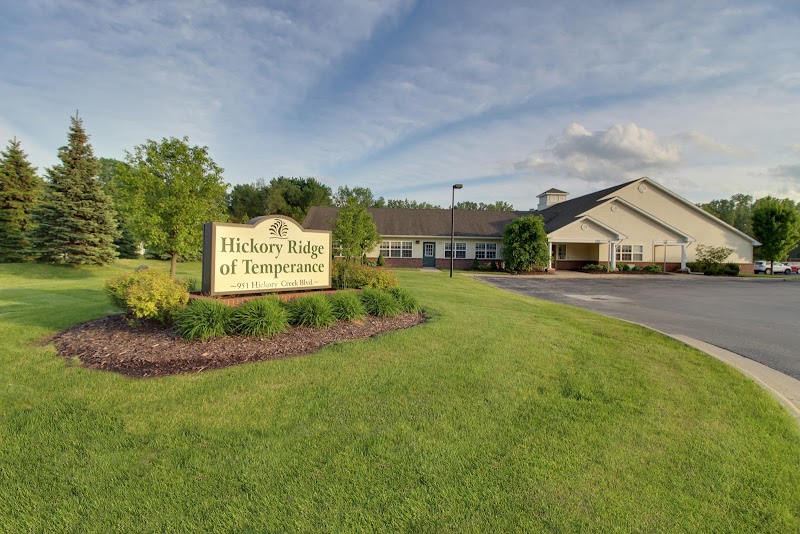
Hickory Ridge of Temperance
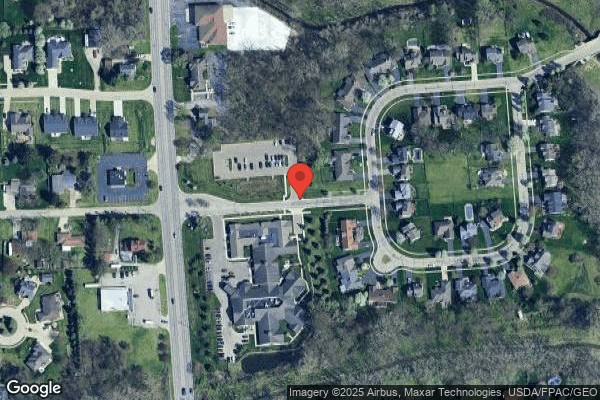

951 Hickory Creek Boulevard, Temperance, MI 48182 (734) 206-8200
For profit - Corporation 88 Beds CIENA HEALTHCARE/LAUREL HEALTH CARE Data: November 2025
Trust Grade
85/100
#26 of 422 in MI
Last Inspection: March 2025

Within standard 12-15 month inspection cycle. Federal law requires annual inspections.

Overview

Hickory Ridge of Temperance has a Trust Grade of B+, which means it is above average and generally recommended for families considering long-term care. The facility ranks #26 out of 422 nursing homes in Michigan, placing it in the top half of the state, and it is #2 out of 7 in Monroe County, indicating that only one other local option is better. The trend is improving, with the number of identified issues decreasing from 3 in 2024 to 2 in 2025. Staffing is a strong point here, earning 4 out of 5 stars with a turnover rate of 38%, which is below the state average, suggesting that staff members are experienced and familiar with the residents. Although there are no fines on record, there have been concerns such as improper disposal of garbage potentially attracting pests and delays in responding to resident call lights, which can lead to frustration. Additionally, there was a noted failure in maintaining proper infection control practices, with staff not always using personal protective equipment correctly. Overall, while the facility has many strengths, these specific incidents highlight areas that need attention.
Trust Score
B+
85/100
In Michigan
#26/422
Top 6%
Safety Record
Low Risk
No red flags
Inspections
Getting Better
3 → 2 violations
Staff Stability
○ Average
38% turnover. Near Michigan's 48% average. Typical for the industry.
Penalties
✓ Good
No fines on record. Clean compliance history, better than most Michigan facilities.
Skilled Nurses
○ Average
Each resident gets 37 minutes of Registered Nurse (RN) attention daily — about average for Michigan. RNs are the most trained staff who monitor for health changes.
Violations
⚠ Watch
13 deficiencies on record. Higher than average. Multiple issues found across inspections.
★★★★★
5.0
Overall Rating
★★★★☆
4.0
Staff Levels
★★★☆☆
3.0
Care Quality
★★★★★
5.0
Inspection Score
Stable
2024: 3 issues
2025: 2 issues

The Good

  • 4-Star Staffing Rating · Above-average nurse staffing levels
  • Full Sprinkler Coverage · Fire safety systems throughout facility
  • No fines on record
  • Staff turnover below average (38%)

    10 points below Michigan average of 48%

Facility shows strength in staffing levels, fire safety.

The Bad

Staff Turnover: 38%

Near Michigan avg (46%)

Typical for the industry

Chain: CIENA HEALTHCARE/LAUREL HEALTH CARE

Part of a multi-facility chain

Ask about local staffing decisions and management

The Ugly 13 deficiencies on record

Mar 2025 2 deficiencies
CONCERN (D)

Potential for Harm - no one hurt, but risky conditions existed

Deficiency F0658 (Tag F0658)

Could have caused harm · This affected 1 resident

**NOTE- TERMS IN BRACKETS HAVE BEEN EDITED TO PROTECT CONFIDENTIALITY** Based on observation, interview, and record review, the facility failed to obtain a complete order for the application and remov...

Read full inspector narrative →
**NOTE- TERMS IN BRACKETS HAVE BEEN EDITED TO PROTECT CONFIDENTIALITY** Based on observation, interview, and record review, the facility failed to obtain a complete order for the application and removal of a topical pain patch for one resident (R57) of 29 residents observed during Medication Administration (med pass), resulting in the potential of causing the resident to be overly medicated and skin breakdown. Findings include: On 3/4/2025 at 9:34 a.m., an observation was made with Licensed Practical Nurse (LPN) B during morning Med Pass to R57 on the South (100's Hallway). LPN B' was observed walking out of R57's room and said, I just remove the other patch. LPN B was asked what part of the body the other patch was applied. LPN B said the patch was removed from R57's right hip. R57 was observed lying in bed and alert. LPN B was observed applying a topical patch (Salonpas pain patch) to R57's right hip. On 3/4/2025 at 9:50 a.m. LPN B was asked during an interview what were the instructions for applying and taking off the patch. LPN B said, I follow the physician's orders when applying and removing the patch. LPN B reviewed R57's medication administration record (MAR) and explained the order documented to apply to right hip topically one time a day for pain and remove per schedule and LPN B explained the patch is taken off at 9:59 a.m. and the new patch is applied at 10:00 a.m. LPN B was asked the length of time R57 goes without the patch. LPN B said, One minute. LPN B was asked should the patch be on for twenty-three hours and fifty-nine minutes without resting the affected area? LPN B said I have seen some patches stay on for twelve hours and some twenty-four hours, it just depends on the physician's orders. According to the electronic medical record, R57 was admitted to the facility on [DATE] with diagnoses of effusion to right hip, Bursitis of right hip, and unilateral primary osteoarthritis. R57's quarterly' Minimum Data Set (MDS) with a reference date of 2/26/2025 indicated R57 had intact cognition with a BIMS (brief interview for mental status) score of 15/15. Physician's orders revealed, Salonpas pain relief patch external (Menthol-Methyl Salicylate) Apply to right hip topically one time a day for pain and remove per schedule with the start date of 2/8/2025. Review of R57's care plans with last review date of 2/24/2025 had the following: -R57 is at risk for pain and has chronic pain related to a stage four pressure injury, right hip bursitis, and right hip effusion. -R57 is at risk for impaired skin integrity/pressure injury .risk for further skin breakdown due to protruding hip bones . On 3/5/2025 at 3:00 p.m. the Director of Nursing (DON) was informed of the concern regarding the application of the pain patch. The DON said I will review and follow up with the manufacturer directions. On 3/5/2025 at 3:26 p.m. the DON entered the conference room and read the pain patch Manufacturer's insertion instructions which stated, Remove patch from the skin after the most eight hours application. The DON stated, with the instructions on the insert from the manufacturer, the patch should not have been left on over eight hours at a time. The DON added the doctor would not have ordered this order this way if the nurse had notified the physician and had the order changed. On 3/5/2025 at 3:35 p.m. a medication administration policy was requested from the DON. The medication administration policy was not provided prior to exiting the facility on 3/5/2025 at 4:15 p.m.
CONCERN (F)

Potential for Harm - no one hurt, but risky conditions existed

Garbage Disposal (Tag F0814)

Could have caused harm · This affected most or all residents

Based on observation, interview, and record review the facility failed to properly dispose of refuse and maintain cleanliness of garbage and refuse areas resulting in the potential harborage of pests....

Read full inspector narrative →
Based on observation, interview, and record review the facility failed to properly dispose of refuse and maintain cleanliness of garbage and refuse areas resulting in the potential harborage of pests. This deficient practice has the potential to affect all 79 residents in the facility. Findings include: On 3/04/25 at 10:10 a.m., during an observation of the environment with Dietary Manager (DM) A, the following observations at the garbage area located near the kitchen door of the facility were made: 1. Left and right side of the garbage dumpster was observed with trash that consisted of soiled gloves, paper, plastic cups and lids, straws, salt and pepper packs, and condiment packs. 2. Left and right-side doors to dumpster were open. 3. Raw onion top was on the ground in front of the dumpster. 4. A broom was propped against the dumpster. 5. Behind the dumpster was more soiled gloves, plastic cups and lids, straws, food wrappers, condiment packs, plastic ware (spoons), paper, and wet cardboard. DM A was queried about the condition of the garbage area and said it was used by the entire building. DM A was uncertain the department responsible for maintaining the garbage area cleanliness, It may be maintenance or housekeeping. On 3/5/25 at 3:10 p.m. the Director of Nursing (DON) reported the following: the housekeeping department was responsible for cleaning the garbage area especially after the garbage is picked up. The garbage truck dumps the can and leave garbage on the ground each time it's picked up. The Maintenance department assist at times, but the responsibility is primarily housekeeping's. The garbage area is supposed to be cleaned six days a week except Sunday. The DON was queried should the garbage bags be closed properly to prevent garbage from falling out of them. The DON stated, I don't go there and check, so I don't know. The DON said the facility did not have a Garbage Disposal policy however is addressed in the Housekeeping policy. Review of the facility's policy titled Housekeeping Services last revised 2/28/25 documented in part the following: Trash: The area surrounding the dumpster will be kept free from debris. When transporting garbage to the dumpster staff will ensure the area is clean and free from debris.
Jan 2024 3 deficiencies
CONCERN (D)

Potential for Harm - no one hurt, but risky conditions existed

Deficiency F0655 (Tag F0655)

Could have caused harm · This affected 1 resident

**NOTE- TERMS IN BRACKETS HAVE BEEN EDITED TO PROTECT CONFIDENTIALITY** Based on observation, interview, and record review, the facility failed to develop a comprehensive care plan for anticoagulant t...

Read full inspector narrative →
**NOTE- TERMS IN BRACKETS HAVE BEEN EDITED TO PROTECT CONFIDENTIALITY** Based on observation, interview, and record review, the facility failed to develop a comprehensive care plan for anticoagulant therapy for one resident (R330) of 25 reviewed for comprehensive care plans, resulting in the potential for lack of assessment of skin and mucus membranes. Findings include: On 1/23/24 at 11:09 AM during observation and interview of R330, both hands were noted to be discolored on the anterior side covering the entire surface. R330 said It's been that way for years because of the blood thinners. Review of resident's MDS (minimum data set) record revealed, R330 admitted to the facility on [DATE] with pertinent diagnosis of renal failure and was receiving dialysis. Upon record review of MAR (medication administration record): Eliquis Oral Tablet 2.5 MG (blood thinner) 2.5 mg administer two times each day. Clopidogrel Bisulfate Oral Tablet 75 MG (blood thinner). Give 75 mg by mouth each morning for blood clot. Review of R330 EHR (electronic health record) did not include a care plan regarding anticoagulant (blood thinner). On 1/25/24 at 03:17 PM during interview the Director of Nursing (DON) explained there should be a specific anticoagulant care plan for R330 to monitor for skin issues and there were none. On 1/25/24 at 3:20 PM the DON presented a policy which indicated residents on an anticoagulant should have an anticoagulant care plan because the skin needs to be monitored. Review of the facility's policy titled Anticoagulant Therapy dated September 18, 2023, documented the following: Anticoagulant therapy is utilized ss a prophylaxis and treatment of venous thrombosis, pulmonary embolism, thrombolytic disorders, atrial fibrillation with embolism, and prophylaxis of systemic embolism after myocardial infarction. They inhibit the development of a thrombus. Throughout anticoagulant therapy monitor the resident for signs and symptoms of bleeding. If signs and symptoms of bleeding are noted hold anticoagulant medication and notify physician immediately. Documentation: 1. Physician order 2. Progress notes 3. Coumadin flow sheet, if applicable 4. Medication administration record 5. Resident care plan.
CONCERN (D) 📢 Someone Reported This

A family member, employee, or ombudsman was alarmed enough to file a formal complaint

Potential for Harm - no one hurt, but risky conditions existed

Pressure Ulcer Prevention (Tag F0686)

Could have caused harm · This affected 1 resident

**NOTE- TERMS IN BRACKETS HAVE BEEN EDITED TO PROTECT CONFIDENTIALITY** This citation pertains to intake MI00136764. Based on interview and record review the facility failed to provide interventions t...

Read full inspector narrative →
**NOTE- TERMS IN BRACKETS HAVE BEEN EDITED TO PROTECT CONFIDENTIALITY** This citation pertains to intake MI00136764. Based on interview and record review the facility failed to provide interventions to prevent the development of a heel pressure ulcer for one resident (R277) out of five residents reviewed for pressure ulcers resulting in R277 developing a deep tissue pressure ulcer injury to the left heel. Findings include: The State Agency received a complaint that the resident developed a pressure ulcer of the left heel that required hospitalization while residing in the facility. Record review of R277's closed Electronic Health Record (EHR) revealed R277 admitted to the facility on [DATE] with diagnoses that included dementia, encephalopathy, muscle weakness, and altered mental status. Review of the admission Minimum Data Set (MDS) dated [DATE], revealed R277 had severely impaired cognition and required extensive two person assistance with bed mobility. The MDS indicated R277 did not have any pressure sores and/or wounds upon admission. A Braden Scale assessment on 3/30/23 revealed a score of 18 which indicated a low risk for developing pressure ulcers. An initial skin assessment on 3/29/23 revealed R277 had no wounds upon admission. A nursing progress note dated 4/12/23 revealed, Writer asked to assess resident's left heel. Posterior left heel is open, draining clear pink fluid. Base of heel is dark purple, tender to touch per resident. Left lateral ankle is swollen with light blue discoloration. On call contacted, New orders for wound care is in PCC, (EHR) and to follow up with wound care. A wound care practitioner note dated 4/13/23 revealed, Left heel blister with DTI length 8.5 width 8.5 wound bed moist, color pink/maroon, wound edges attached, drainage moderate, surrounding skin intact. Deep tissue injury is defined: Persistent non-blanchable deep red, maroon or purple discoloration Intact or non-intact skin with localized area of persistent non-blanchable deep red, maroon, purple discoloration or epidermal separation revealing a dark wound bed or blood filled blister. Pain and temperature change often precede skin color changes. This injury results from intense and/or prolonged pressure and shear forces at the bone-muscle interface. The wound may evolve rapidly to reveal the actual extent of tissue injury. (npuap, 2016). Review of the physician orders dated 4/12/23 documented to cleanse left heel normal saline pat dry, apply adaptic, abd wrap (gauze pad) with kerlix, cleanse left heel cleans left heel with normal saline, pat dry. Apply triple antibiotic ointment to open area of left heel. Cover with xeroform, and foam dressing daily and as needed, med boot at all times, check for placement every shift, apply betadine-soaked gauze to left heel. Cover with ABD pads, wrap with rolled gauze and secure with tape daily and as needed. Record Review of the Care Plan revealed the following Focus: (R277) is at risk for impaired skin integrity/pressure injury R/T: incontinence, decreased mobility, initiated 3/29/23 and revised on 4/5/23 for care refusals . document and report abnormal findings to physician initiated 3/29/23, cue to reposition self as needed initiated 3/29/23, educate resident/family/caregivers as to cause of impaired skin integrity, including transfer/position requirements, importance of taking care during ambulating/mobility, good nutrition and frequent repositioning initiated 3/30/23 follow facility policies /protocols for the prevention/treatment of impaired skin integrity initiated 3/29/23, observe sliding down in the chair and assist to reposition in chair as needed initiated 3/30/23 . use draw sheet or pad to assist with positioning initiated 3/30/23. However, none of the interventions listed on the care plan addressed R277's heels. On 1/25/24 at 10:54 AM the facility's wound care nurse, Licensed Practical Nurse (LPN) A and Director of Nursing (DON) reviewed R277's EHR and stated the left heel wound was open on 4/12/23 but was not staged since the wound had a blister cap on it. LPN A and the DON agreed R277 did not have any wounds upon admission to the facility and discharged to the hospital on 4/16/23 due to R277's family member's concern regarding the left heel wound. When queried if the interventions on the care plan were effective for preventing R277's heel wound neither LPN A nor the DON provided an answer. On 1/25/24 at 2:00 PM the DON provided a timeline of interventions initiated for R277 on 4/12/23 once the wound was identified but explained that the current interventions were not in place prior to the development of R277's heel pressure ulcer. Review of the facility policy titled Skin Management origination date of 5/1/2010, revised 7/14/2021 revealed in part It is the policy that the facility should identify and implement interventions to prevent development of clinically unavoidable pressure injuries. Appropriate preventative measures will be implemented on guests/residents identified at risk and the interventions are documented on the care plan. The interdisciplinary team considers whether the guest/resident exhibits conditions or is receiving treatments that may place the guest/resident at higher risk of developing pressure injury or complicate their treatment. Such conditions may include: Cognitive impairments. Impaired/decreased mobility and decreased functional ability Bowel and or bladder incontinence Guest refusal of some aspect of care and /or treatment The DON/designee will document any changes in the care plan/[NAME].
CONCERN (D)

Potential for Harm - no one hurt, but risky conditions existed

Infection Control (Tag F0880)

Could have caused harm · This affected 1 resident

**NOTE- TERMS IN BRACKETS HAVE BEEN EDITED TO PROTECT CONFIDENTIALITY** Based on observation, interview, and record review the facility failed to follow the standards of infection control for (1) prop...

Read full inspector narrative →
**NOTE- TERMS IN BRACKETS HAVE BEEN EDITED TO PROTECT CONFIDENTIALITY** Based on observation, interview, and record review the facility failed to follow the standards of infection control for (1) proper hand hygiene, (2) glove use, and (3) proper storage of a nebulizer mask (used for breathing tratments), for one resident (R15) out of 24 residents reviewed for infection control, resulting in the potential for placing a vulnerable population at high risk for cross-contamination and infection. Findings include: Review of an admission Record revealed, R15 admitted to the facility on [DATE] with pertinent diagnoses which included Dementia, Chronic Respiratory Failure with Hypoxia, and Chronic Obstructive Pulmonary Disease (COPD). Review of a Minimum Data Set (MDS) assessment, with a reference date of 11/18/23 revealed R15 had severe cognitive impairment with a Brief Interview for Mental Status (BIMS) score of 8, out of a total possible score of 15 and required oxygen therapy. In an observation on 1/23/24 at 10:04 a.m., Certified Nursing Assistant (CNA) B exited a resident's room while wearing gloves. CNA B took off the gloves, entered R15's room, and put on new gloves without performing hand hygiene. A bag of soiled linen sat on the floor next to R15's bed. In an observation on 1/23/24 at 10:06 a.m., R15's nebulizer mask with a small amount of liquid in the bottom of the mask attachment hung off a lamp shade and was not in stored in a bag. In an interview on 1/23/24 at 10:10 a.m., CNA B reported when you remove gloves, hand sanitizer should be used. In an observation on 1/23/24 at 10:39 a.m., CNA B exited a resident's room, removed gloves, and did not perform hand hygiene. In an observation on 1/23/24 at 1:04 p.m., R15's nebulizer mask with a small amount of liquid in the bottom of the mask attachment hung off a lamp shade and was not stored in a bag. In an observation on 1/24/24 at 11:26 a.m., R15's nebulizer mask with a small amount of liquid in the bottom of the mask attachment hung off a lamp shade and was not stored in a bag. In an interview on 1/24/24 at 11:27 a.m., Licensed Practical Nurse (LPN) C reported R15 receives a breathing treatment every six hours as needed. LPN C reported nebulizer mask should be stored in a bag when not in use. In an interview on 1/25/24 at 9:06 a.m., the Director of Nursing (DON) reported the policy for oxygen use pertains to nebulizer mask. The DON then reported the nurse should clean, dry, and place a nebulizer mask in a bag after use. In an observation on 1/25/24 at 9:41 a.m., CNA B and D prepared to perform ADL (activities of daily living) care for R15. R15 had a large bowel movement. CNA B cleaned R15's peri area and buttocks. CNA B did not perform hand hygiene or change gloves before the application of new brief or clean linen to R15's bed. In an observation on 1/25/24 at 9:53 a.m., CNA B removed gloves and did not perform hand hygiene. Review of Physicians order revealed, R15 had an order Ipratropium-Albuterol Inhalation Solution (breathing treatment) 3 ml inhale orally every 6 hours as needed for SOB (shortness of breath)/wheezing with a start date of 11/14/23. In an interview on 1/25/24 at 2:09 p.m., Infection Control Preventionist E reported hand hygiene should be performed before going in a room, before and after contact with a resident, and before and after glove use. Review of an Hand Hygiene policy revised 10/11/23 revealed, Policy: To decrease the risk of transmission of infection by appropriate hand hygiene . Hand hygiene should be performed: Before and after contact with the resident; Before performing an aseptic task; After contact with blood, body fluids, visibly contaminated surfaces or after contact with objects in the resident's room; After removing personal protective equipment (e.g., gloves, gown, facemask): After using the restroom; and Before meals Staff involved in direct resident contact must perform hand hygiene (even if gloves are used) . Review of an Use of Oxygen policy revised 8/17/21 revealed Policy: To promote guest/resident safety in administering oxygen. The following guidelines will be observed in oxygen administration . III. The O2 cannula or mask, when not in use, should be stored in a clean bag. Bag should be changed weekly .
Nov 2022 2 deficiencies
CONCERN (D) 📢 Someone Reported This

A family member, employee, or ombudsman was alarmed enough to file a formal complaint

Potential for Harm - no one hurt, but risky conditions existed

Deficiency F0655 (Tag F0655)

Could have caused harm · This affected 1 resident

**NOTE- TERMS IN BRACKETS HAVE BEEN EDITED TO PROTECT CONFIDENTIALITY** Based on interview and record review the facility failed to initiate a base line care plan for falls upon admission, affecting o...

Read full inspector narrative →
**NOTE- TERMS IN BRACKETS HAVE BEEN EDITED TO PROTECT CONFIDENTIALITY** Based on interview and record review the facility failed to initiate a base line care plan for falls upon admission, affecting one resident (610) out of three residents reviewed for baseline care plans (interventions), resulting in the potential for injury during a fall and unmet needs. Findings include: Record review revealed R610 was admitted into the facility on [DATE] with a pertinent diagnosis of fracture of left femur from a fall at home. According to the Minimum Data Set (MDS) dated [DATE], R610 had impaired cognition and was extensive assist with most Activities of Daily Living (ADLS). Record review of hospital provider discharge paperwork After Visit Summary dated 10/29/22, documented R610, Reason for visit- Fall from bed. Record review revealed resident had a fall on 10/29/22 and was sent to nearby hospital. Further review revealed resident had no base line care plan and no current care plan interventions to prevent falls until 11/2/22. On 11/3/22 at 1:22 PM with Director of Nursing (DON), when asked if a baseline care plan should be implemented after admission to the facility, DON said Yes. After reviewing fall care plans for R610 it was confirmed that the resident did not have a baseline care plan for falls. When asked the reason for implementing base line care plans after admission, she said, To meet the resident's potential needs. Record review of policy titled Care Planning last revised on 6/24/21 documented the following: .A Baseline Care Plan will be developed within 48 hours identifying any immediate needs, initial goals and interventions needed to provide effective and person-centered care .
CONCERN (D) 📢 Someone Reported This

A family member, employee, or ombudsman was alarmed enough to file a formal complaint

Potential for Harm - no one hurt, but risky conditions existed

Deficiency F0658 (Tag F0658)

Could have caused harm · This affected 1 resident

**NOTE- TERMS IN BRACKETS HAVE BEEN EDITED TO PROTECT CONFIDENTIALITY** Citation pertains to MI00128964 Based on interview and record review the facility failed to 1. Assess and monitor a resident aft...

Read full inspector narrative →
**NOTE- TERMS IN BRACKETS HAVE BEEN EDITED TO PROTECT CONFIDENTIALITY** Citation pertains to MI00128964 Based on interview and record review the facility failed to 1. Assess and monitor a resident after an admission 2. Administer antibiotics as ordered by a physician, effecting two residents (602 and 610) out of 14 residents reviewed for quality of care, resulting in the potential for a change in condition and decreased therapeutics of antibiotics. Findings include: R602 A complaint was made to the State Agency that R602 had missed a dose of antibiotics. Record review revealed R602 was admitted to the facility on [DATE] with a pertinent diagnosis of Peritonitis (inflammation of abdominal wall). According to the Minimum Data Set (MDS) dated [DATE], R602 had intact cognition and needed extensive assistance with most Activities of Daily Living (ADLS). Record review of Medication Administration Record (MAR) dated for March 2022 revealed R602 was ordered Meropenem Chloride Solution (antibiotic) Infuse 1 gram/100 ml (milliliters) two times a day, it was to be given at 600 (6:00AM) and 1800(6:00PM). Further review revealed no documentation of the antibiotic being administered at 1800 on March 3, 2022. Record review of R602's Nursing Progress Notes for the Month of March revealed no documentation that the physician was made aware of the missed dose. R610 Record review revealed R610 was admitted into the facility on [DATE] with a pertinent diagnosis of fracture of left femur from a fall at home. According to the Minimum Data Set (MDS) dated [DATE], R610 had impaired cognition and was extensive assist with most Activities of Daily Living (ADLS). Record review of R610's Progress Notes and Vital Signs revealed no documentation of R610's vital signs until 10/29/22 at 6:13 PM. Record review revealed that Nursing Assessment dated 10/27/22 had not been completed as of 11/2/22. During interview on 11/2/22 at 1:22 PM with Director of Nursing (DON), when asked if resident's vital sign should be monitored upon admission and each shift, DON said, Yes. When asked the purpose of assessing and monitoring the vital signs of residents, DON said, To see if there is a change in the residents' condition. After reviewing documents for R610 it was confirmed that vitals were not taken until the following day. When asked if medications should be administered as the physician orders, DON said, Yes. After reviewing the MAR and Nursing progress notes it was confirmed that R602 had missed a dose of antibiotics. When asked how nursing verified that a dose has been given, DON said, The nurse will sign the MAR.
Oct 2022 6 deficiencies
CONCERN (D)

Potential for Harm - no one hurt, but risky conditions existed

Deficiency F0578 (Tag F0578)

Could have caused harm · This affected 1 resident

**NOTE- TERMS IN BRACKETS HAVE BEEN EDITED TO PROTECT CONFIDENTIALITY** Based on interview and record review, the facility failed to ensure an Advanced Directive was in place timely for two (R50 and R...

Read full inspector narrative →
**NOTE- TERMS IN BRACKETS HAVE BEEN EDITED TO PROTECT CONFIDENTIALITY** Based on interview and record review, the facility failed to ensure an Advanced Directive was in place timely for two (R50 and R203) of three residents reviewed for Advance Directives (legal documents that allow a person to identify decisions about end-of-life care ahead of time), resulting in the potential for a resident's preferences for medical care to not be followed by the facility or other healthcare providers. Findings Include: Resident #50 Review of an admission Record revealed, R50 admitted to the facility on [DATE] with pertinent diagnosis which included Dementia with Behavioral Disturbance. Review of a Minimum Data Set (MDS) assessment, with a reference date of 10/4/22, revealed R50 had no cognitive impairment with a Brief interview for Mental Status (BIMS) score of 13 out of a total possible score of 15. Review of Electronic Health Record (EHR) revealed, R50 did not have an Advance Directive. In an interview on 10/12/22 at 3:07 p.m., Social Services (SS) E reported R50 was a full code by default. SS E then reported R50 does not have a completed Advance Directive. SS E reported Advance Directives should be completed within 72 hours of admission. In an interview on 10/13/22 at 1:08 p.m., Social Worker (SW) F reported Advance Directives should be completed with admission. SW F then reported the form is completed by the nurse and the Social Worker ensures it was completed. Resident #203 Review of an admission Record revealed, R203 originally admitted to the facility on [DATE] with pertinent diagnosis which included Enterocolitis due to C-Diff (contagious disease with germs that cause diarrhea and inflammation of the colon). Review of Electronic Health Record (EHR) revealed, R203 did not have an Advance Directive. In an interview on 10/12/22 at 3:07 p.m., SS E reported R203 was a full code by default. SS E confirmed R203 did not have an completed Advance Directive in the code status book on the unit. Review of a Resident Code Status form provided by the facility revealed, R203 elected code status Do-Not-Resuscitate Order (DNR) with a signed date of 10/13/22. Review of a Do-Not-Resuscitate Order with a signed date of 10/13/22 revealed, R203 and a witness signed the order. The order was not signed by the Physician. In an interview on 10/13/22 at 1:22 p.m., SW F reported R50 and R203 should have completed an Advance Directive prior to 10/13/22. In an interview on 10/14/22 at 11:09 a.m., Licensed Practical Nurse (LPN) G reported the Advance Directive is in the admission packet. LPN G then reported that the Social Worker is responsible for completing the Advance Directive form. In an interview on 10/14/22 at 11:17 a.m., Director of Nursing B reported the nurses were responsible for Advance Directives on admission. Review of a Code Status policy with a revised date of 11/1/17 revealed, Policy: All residents upon admission and/ or re-admission will have a Resident Code Status Form completed to determine whether to initiate a Full Code Status or a Selective Code Status. Procedure: 1. All residents upon admission will be asked if they have a Advance Directive. 2. A Resident Code Status Form is to be completed within 24-72 hours of admission .
CONCERN (D)

Potential for Harm - no one hurt, but risky conditions existed

Deficiency F0698 (Tag F0698)

Could have caused harm · This affected 1 resident

**NOTE- TERMS IN BRACKETS HAVE BEEN EDITED TO PROTECT CONFIDENTIALITY** Based on interview and record review, the facility failed to monitor the fistula site and failed to consistently complete post d...

Read full inspector narrative →
**NOTE- TERMS IN BRACKETS HAVE BEEN EDITED TO PROTECT CONFIDENTIALITY** Based on interview and record review, the facility failed to monitor the fistula site and failed to consistently complete post dialysis assessments for one (R5) of one resident reviewed for dialysis services, resulting in the potential for undetected complications associated with receiving dialysis, including bleeding, infection, and site failure. Findings include: Review of an admission Record revealed, R5 originally admitted to the facility on [DATE] and readmitted on [DATE] with pertinent diagnosis which included End Stage Renal, Dependence on Renal Dialysis. Review of a Minimum Data Set (MDS) assessment, with a reference date of 7/8/22 revealed R5 had cognitive impairment with a Brief interview for Mental Status (BIMS) score of 3 out of a total possible score of 15 and required dialysis. Review of Physician orders revealed, R5 had no order to monitor the dialysis site or check bruit (a rumbling sound you can hear) and thrill (rumbling sensation that you can feel). Review of a Care Plan with focus (R5) is at risk for complications R/T (related to) needs dialysis due to : ESRD (End Stage Renal Disease) . with a revised date of 8/10/21. Interventions included, check and change dialysis access daily per physician order and check bruit and thrill to RUE (Right Upper Extremity) every shift. Review of an Hemodialysis Communication Form from August 2022 through October 2022 revealed, the facility did not assess R5's dialysis access site consistently on return from dialysis. The access site was not assessed on the following dates: August- 8/1, 8/5, 8/8, 8/10, 8/12, 8/15, 8/17, 8/22, 8/26, 8/29 September- 9/2, 9/5, 9/7, 9/12, 9/13, 9/16, 9/19, 9/21, 9/23, 9/26, 9/28, 9/30 October-10/5, 10/7, 10/11 In an interview on 10/14/22 at 11:05 a.m., Licensed Practical Nurse (LPN) G reported R5's fistula site should be checked before and after dialysis. LPN G then reported dialysis communication forms are completed prior to dialysis and on return. R5's access site should be checked and documented on the communication form. In an interview on 10/14/22 at 11:12 a.m., Director of Nursing (DON) B reported dialysis fistula monitoring should be on the physician orders and should be documented as completed daily. DON B reported it is important to check the dialysis site to ensure there are no issues after dialysis. Review of Hemodialysis policy with a revised dated of 10/1/19 revealed, Guest/residents receiving hemodialysis will be assessed pre and post treatment and receive necessary interventions . Guidelines 1. Obtain a physician's order for hemodialysis . 4. The facility completes the appropriate section of the hemodialysis communication form prior to guest/resident receiving each dialysis session and again when the guest/resident returns from hemodialysis. 5. Evaluate the guest/resident daily for dialysis access site and possible complications including . b. Thrill- palpation of fistula site, it can be described as a purring vibration. c. Bruit- a continuous, machine-like sound that can be heard during auscultation with a stethoscope. It can also be described as a 'whooshing' or a high pitched 'whistling' .
CONCERN (D)

Potential for Harm - no one hurt, but risky conditions existed

Deficiency F0726 (Tag F0726)

Could have caused harm · This affected 1 resident

Based on interview and record review, the facility failed to ensure 2 of 4 Certified Nurse Assistants (CNA's) had annual (yearly) Competency evaluations (to determine whether the CNA was able to demon...

Read full inspector narrative →
Based on interview and record review, the facility failed to ensure 2 of 4 Certified Nurse Assistants (CNA's) had annual (yearly) Competency evaluations (to determine whether the CNA was able to demonstrate the skills necessary for resident care), resulting in the potential for unmet care needs. Findings Include: Record review of a document titled, CNA Competency Evaluation with Staff Development Nurse Registered Nurse (RN) C on 10/13/22 at 2:12 PM , RN C, reported that a competency evaluation was conducted annually for all CNA's due the month of hire. Review of CNA H with a date of hire(DOH) of 5/28/21 CNA Competency Evaluation form documented that CNA H's last competency evaluation was 6/3/21. Review of CNA I with a hire date of 8/9/14 did not have CNA competency evaluation for years 2021 or 2022. RN C confirmed the competency evaluations were past due and reported working on getting caught up. In an interview on 10/14/22 at 12:15 PM, the Director of Nursing (DON) reported having alot of work to do with training. Review of the facility's policy titled, Staff Development dated 5/1/22 documented, 1. The Staff Development Coordinator provides training and orientation to assist staff in performing their assigned functions .9. A competency evaluation will be completed annually for all certified nurse aides/state tested nursing assistants. Training will be added to the calendar based on the weakness identified.
CONCERN (D)

Potential for Harm - no one hurt, but risky conditions existed

Deficiency F0730 (Tag F0730)

Could have caused harm · This affected 1 resident

Based on interview and record review, the facility failed to ensure 12 hours of in-service education was provided for 3 of 4 Certified Nurse Assistance (CNA's H, I, and O) reviewed for annual training...

Read full inspector narrative →
Based on interview and record review, the facility failed to ensure 12 hours of in-service education was provided for 3 of 4 Certified Nurse Assistance (CNA's H, I, and O) reviewed for annual training, resulting in the potential for care performance concerns. Findings Include: Record review of the CNA's transcript training with Staff Development Nurse, Registered Nurse (RN) C, it was reported that resident abuse prohibition and dementia care training was provided annually and included in 12 in-service education for all CNA's, due the month of hire. 1. CNA H with a date of hire (DOH)- 5/28/21. Transcript Training documented CNA H had .5 in-service hours over the 12 month look back service training time period. CNA H had no abuse or dementia training since hire date. 2. CNA I with a DOH- 8/9/14. Transcript Training documented CNA I had 7.5 in-service hours over the 12 month look back service training time period. CNA I's last abuse and dementia training was 9/15/21. 3. CNA O with a DOH- 7/19/19. Transcript Training documented CNA O had 2.5 in-service hours over the 12 month look back service training time period. CNA O's last abuse training was 9/13/21. RN C confirmed the training hours and content were past due and reported working on getting caught up. In an interview on 10/14/22 at 12:15 PM, the Director of Nursing (DON) reported having alot of work to do with training, but the new In-service Director (RN C) is trying to catch up. Review of the facility's policy titled, Staff Development dated 5/1/22 documented, 1. The Staff Development Coordinator provides training and orientation to assist staff in performing their assigned functions .5. The annual training schedule should include programs relating to but not limited to: .Abuse Prohibition; Elder Justice Act, Dementia Care 8. Nurse aides are provided no less than 12 hours of in-service education per year from the employees date of hire.
CONCERN (E)

Potential for Harm - no one hurt, but risky conditions existed

Deficiency F0558 (Tag F0558)

Could have caused harm · This affected multiple residents

**NOTE- TERMS IN BRACKETS HAVE BEEN EDITED TO PROTECT CONFIDENTIALITY** This citation has two deficient practices. Deficient practice number 1. Based on interview and record review, the facility faile...

Read full inspector narrative →
**NOTE- TERMS IN BRACKETS HAVE BEEN EDITED TO PROTECT CONFIDENTIALITY** This citation has two deficient practices. Deficient practice number 1. Based on interview and record review, the facility failed to respond to call lights timely in multiple resident rooms (Rooms 118, 120, 121,122, 127, 144, 145, 146, 148, 156, 172, 173, 174, 175, 177, 181,197, and Therapy Room Bathroom) resulting in complaints of slow staff call light response times for one resident (R30) from a total of 19 residents reviewed for accommodation of needs and the potential for long wait times and resident frustration. Findings Include: On 10/12/22 at 12:18 PM R30 complained that his call light was not answered last Tuesday for almost 4 hours. R30 said, They do not answer the call lights timely. There is no light or bell that alerts them that I need assistance. The call light goes to the desk or someplace else. Review of R30's alarm event report dated 10/4/22 at 9:26 AM, revealed R30 to room (staff responding to an activated call light) response was 3 hours and 5 minutes. Review of the alarm event report dated 10/12/22 to 10/13/22 (2 days of the survey) revealed the following staff to room response times: 10/12/22; Room (Rm) 145B- 1 hour (hr) 01 minutes (min) Rm 156B-1 hr 10 min Rm 148B-1 hr 06 min Rm 173B-1 hr 06 min Therapy Room Bathroom-1 hr 23 min Rm 146-1 hr 00 min Rm 144-1 hr 35 min Rm 122B-1 hr 57 min Rm 172B-1 hr 34 min Rm 197-1 hr 37 min Rm 121B-1 hr 28 min Rm 177B- 1 hr 20 min Rm 127B- 1 hr 27 min Rm 118B-1 hr 26 min 10/13/22; Rm 148A- 2 hr 17 min Rm 146- 1 hr 00 min Rm 175- 2 hr 7 min Rm 120B- 1 hr 28 min Rm 181A- 1 hr 06 min Rm 148B- 1 hr 02 min Rm 144- 1 hr 20 min Rm 174B- 1 hr 24 min Review of the Resident Council meeting minutes dated 9/22/22 documented, Nursing: call lights not answered timely (especially evenings). During an interview on 10/14/22 at 12:57 PM, with the Director of Nursing (DON) and Maintenance Director (MD) C, the MD reported when the call light is activated it sends a page to all employees via a pager system. MD C reported that staff have to hold the call light button down, once it's addressed to have light turn off, otherwise it stays on. MD C confirmed that if the call light it not turned off/reset, the resident cannot reactivate it. When asked about the alarm event report documenting long call light activation times, the DON said, It's a mixture of staff not responding timely and not turning off call light when addressing residents needs. The DON stated that a reasonable call light response time should be As quickly as possible. Approximately 15-20 minutes. During an interview on 10/14/22 at 3:30 PM, the Resident Council President confirmed call lights not being answered timely was discussed in the September 2022 meeting. In an interview on 10/14/22 at 3:42 PM, the DON indicated the call light concern from Resident Council had not been discussed with the Interdisciplinary Team Members. Review of the facility's Call Light policy dated 4/1/22 documented, 3. Go to the location of the call light, and turn off the light if you are able to meet the guest/resident request . Review of the facility's Guest/Resident Rights and Facility Responsibilities policy dated 5/1/22 documented, 3. Reasonable Accommodation. The right to reside and receive services in the facility with reasonable accommodation of guest/resident needs and preferences except when to do so would endanger the health and safety of the guest/resident or other guests/residents. Deficient practice number 2. Based on observation, interview, and record review the facility failed to accommodate the needs of one resident (R60) of two residents reviewed for accommodation of needs when the facility declined to provide a bedside commode for the resident after several requests and a fall during toileting that resulted in the resident expressing fear of falling again and frustration with the preference to use a bedside commonde being unmet. Findings include: On 10/13/22 at 8:48 AM R60 was observed in her room sitting up in bed. R60 said she was upset and wanted to leave the facility because they declined to provide her with a bedside commode. R60 said, I fell yesterday after trying to use the toilet with the assistance of a Physical Therapist. I told him that I was not ready to walk 20 feet to the toilet on my first time out of bed. I asked if we could try a bedside commode that was closer to the bed and he said 'no'. I can't even put weight on my left leg yet. I am a bigger lady, and I don't have the arm strength to use the walker to hold my body up and hop on my right leg 20 feet to use the toilet. I kept telling him this and he insisted I walk to the toilet anyway. I did try but ended up falling on the way back to the bed. I asked them for a bedside commode again and they won't do it. They say I must walk all the way to the toilet or use a bed pan. I'm not trying that again just yet, so now I use a bedpan. I'm not refusing to get therapy I'm just asking for a bedside commode that is closer to the bed. According to the Electronic Medical Record (EMR) R60 admitted to the facility on [DATE] with diagnosis of displaced bimalleolar fractures of left lower leg (fractures of lower tibia and fibula near the ankle) and anxiety disorder. The admission orders indicated R60 was non-weight bearing (NWB) on the left leg and prescribed antianxiety medications daily. A review of the hospital's admission notes dated 10/11/22 at 9:50 AM revealed the following Physical Therapist notes; Gait distance: patient was able to stand, but unable to take any steps while maintaining NWB status of the Left lower leg, limiting factors to gait is weakness. According to the facility's therapy notes dated 10/12/22 at 5:29 PM, Patient is struggling to follow NWB ., provided education and used knee support walker to train walking to the bathroom and back .Due to fatigue the patient was unable to weight bear with UE (Upper Extremities) and her RLE (Right Lower Extremity) . and was assisted to go on her knees. On 10/13/22 at approximately 9:15 AM during an interview with Therapy Director (TD) K and unit manager Registered Nurse (RN) J, TD K confirmed that R60 had a controlled dissent during therapy on 10/12/22 when the resident's knees hit the floor after returning from the toilet. TD K acknowledged that R60 had requested a bedside commode but that was not recommended and would not be provided even though the toilet was 20 feet away from the resident's bed. TD K said, We don't want the CNAs (certified nursing assistants) doing pivot transfers with her (R60) from the bed to a bedside commode. We took the walker away too. TD K could not explain why a bedside commode could not be used during therapy with therapy staff assistance. On 10/14/22 at 12:28 PM R60 was observed in bed without a walker or bedside commode in her room. R60 said she did not understand why she could not have a bedside commode for toileting. I'm not going to try to get up without assistance. I want to get better, not worse. At this point I should just go home to recover. The toilet is closer to my own bed and couch than it is in here. On 10/14/22 at 1:47 PM, TD K confirmed that a bedside commode would not be provided for R60, despite several requests from the resident.
CONCERN (E)

Potential for Harm - no one hurt, but risky conditions existed

Infection Control (Tag F0880)

Could have caused harm · This affected multiple residents

**NOTE- TERMS IN BRACKETS HAVE BEEN EDITED TO PROTECT CONFIDENTIALITY** Based on observation, interview, and record review, the facility failed to maintain proper infection control practices by ensuri...

Read full inspector narrative →
**NOTE- TERMS IN BRACKETS HAVE BEEN EDITED TO PROTECT CONFIDENTIALITY** Based on observation, interview, and record review, the facility failed to maintain proper infection control practices by ensuring staff properly used PPE (Personal Protective Equipment) for one resident(R203) of one resident reviewed for Infection Control, potentially resulting in the spread of a highly contagious virus which could affect residents residing on the unit. Findings include: In an observation on 10/12/22 at 10:15 a.m., R203 had a sign on the room door which read DROPLET & CONTACT PRECAUTIONS . Wash hands before entering and when leaving. Required: Gown and Gloves put on before entry and discard before exit. Eye Protection on & Masks: Make sure the eyes, nose and mouth are covered before entry, and remove before room exit. A box with PPE (Personal Protective Equipment) hung on the door. R203's family member was observed entering the room and wore only a mask. In an interview on 10/12/22 at 10:16 a.m , Occupational Therapist (OT) P reported staff does not need to wear additional PPE (gloves, gown) unless they are providing care. In an interview on 10/12/22 at 10:18 a.m., Infection Control Nurse C reported everyone entering the room must wear a gown and gloves for protection due to R203 having C-Diff (highly contagious disease with germs that cause diarrhea and inflammation of the colon). In an observation on 10/12/22 at 10:30 a.m., Licensed Practical Nurse (LPN) Q entered R203's room with medication. LPN Q did not put on a gown or gloves before entering the room. LPN Q stood near R203's bed and administered medication. In an interview on 10/12/22 at 10:33 a.m., LPN Q reported staff should wear gown and gloves when entering R203's room. Review of an admission Record revealed, R203 admitted to the facility on [DATE] with pertinent diagnosis which included Enterocolitis due to C-Diff. Review of a Progress Note with a date of 10/5/22 at 3:06 p.m. revealed, . Resident placed on isolation precautions for C-Diff, resident taking oral antibiotics . In an interview on 10/14/22 at 2:43 p.m., Director of Nursing (DON) B reported when entering a droplet/contact precaution room staff must wear full PPE which included face shield, gown, gloves, and a mask. Review of a Droplet Precautions policy with a revised date of 9/9/22 revealed, Policy: Droplet Precautions shall be used in addition to Standard Precautions for guests/residents with infections that can be transmitted by droplets .PPE A. A mask should be worn when entering the guest's/resident's room or cubicle. B. Eye protection is goggles or face shield . Review of a Contact Precautions policy with a revised date of 9/9/22 revealed, Policy: It is the intent of this facility to use contact precautions in addition to Standard Precautions for guests/residents known or suspected to have serious illnesses easily transmitted by direct guest/resident contact or by contact with items in the guest's/resident's environment . Gloves, Gowns, and Hand Hygiene A. Health care personnel caring for guests/residents on Contact Precautions should wear gloves and a gown for all interactions that may involve contact with the guest/resident or potentially contaminated areas in the guest's/resident's environment .
Understanding Severity Codes (click to expand)
Life-Threatening (Immediate Jeopardy)
J - Isolated K - Pattern L - Widespread
Actual Harm
G - Isolated H - Pattern I - Widespread
Potential for Harm
D - Isolated E - Pattern F - Widespread
No Harm (Minor)
A - Isolated B - Pattern C - Widespread

Questions to Ask on Your Visit

  • "Can I speak with families of current residents?"
  • "What's your RN coverage like on weekends and overnight?"

Our Honest Assessment

Strengths
  • • Grade B+ (85/100). Above average facility, better than most options in Michigan.
  • • No major safety red flags. No abuse findings, life-threatening violations, or SFF status.
  • • No fines on record. Clean compliance history, better than most Michigan facilities.
  • • 38% turnover. Below Michigan's 48% average. Good staff retention means consistent care.
Concerns
  • • 13 deficiencies on record. Higher than average. Multiple issues found across inspections.
Bottom line: Generally positive indicators. Standard due diligence and a personal visit recommended.

About This Facility

What is Hickory Ridge Of Temperance's CMS Rating?

CMS assigns Hickory Ridge of Temperance an overall rating of 5 out of 5 stars, which is considered much above average nationally. Within Michigan, this rating places the facility higher than 99% of the state's 100 nursing homes. This rating reflects solid performance across the metrics CMS uses to evaluate nursing home quality.

How is Hickory Ridge Of Temperance Staffed?

CMS rates Hickory Ridge of Temperance's staffing level at 4 out of 5 stars, which is above average compared to other nursing homes. Staff turnover is 38%, compared to the Michigan average of 46%. This relatively stable workforce can support continuity of care.

What Have Inspectors Found at Hickory Ridge Of Temperance?

State health inspectors documented 13 deficiencies at Hickory Ridge of Temperance during 2022 to 2025. These included: 13 with potential for harm.
Who Owns and Operates Hickory Ridge Of Temperance?

Hickory Ridge of Temperance is owned by a for-profit company. For-profit facilities operate as businesses with obligations to shareholders or private owners. The facility is operated by CIENA HEALTHCARE/LAUREL HEALTH CARE, a chain that manages multiple nursing homes. With 88 certified beds and approximately 80 residents (about 91% occupancy), it is a smaller facility located in Temperance, Michigan.

How Does Hickory Ridge Of Temperance Compare to Other Michigan Nursing Homes?

Compared to the 100 nursing homes in Michigan, Hickory Ridge of Temperance's overall rating (5 stars) is above the state average of 3.2, staff turnover (38%) is near the state average of 46%, and health inspection rating (5 stars) is much above the national benchmark.

What Should Families Ask When Visiting Hickory Ridge Of Temperance?

Based on this facility's data, families visiting should ask: "Can I visit during a mealtime to observe dining assistance and food quality?" "How do you handle medical emergencies, and what is your hospital transfer rate?" "Can I speak with family members of current residents about their experience?"

Is Hickory Ridge Of Temperance Safe?

Based on CMS inspection data, Hickory Ridge of Temperance has a clean safety record: no substantiated abuse findings (meaning no confirmed cases of resident harm), no Immediate Jeopardy citations (the most serious violation level indicating risk of serious injury or death), and is not on the Special Focus Facility watch list (a federal program monitoring the lowest-performing 1% of nursing homes). The facility has a 5-star overall rating and ranks #1 of 100 nursing homes in Michigan. While no facility is perfect, families should still ask about staff-to-resident ratios and recent inspection results during their visit.

Do Nurses at Hickory Ridge Of Temperance Stick Around?

Hickory Ridge of Temperance has a staff turnover rate of 38%, which is about average for Michigan nursing homes (state average: 46%). Moderate turnover is common in nursing homes, but families should still ask about staff tenure and how the facility maintains care continuity when employees leave.

Was Hickory Ridge Of Temperance Ever Fined?

Hickory Ridge of Temperance has no federal fines on record. CMS issues fines when nursing homes fail to meet care standards or don't correct problems found during inspections. The absence of fines suggests the facility has either maintained compliance or corrected any issues before penalties were assessed. This is a positive indicator, though families should still review recent inspection reports for the full picture.

Is Hickory Ridge Of Temperance on Any Federal Watch List?

Hickory Ridge of Temperance is not on any federal watch list. The most significant is the Special Focus Facility (SFF) program, which identifies the bottom 1% of nursing homes nationally based on persistent, serious quality problems. Not being on this list means the facility has avoided the pattern of deficiencies that triggers enhanced federal oversight. This is a positive indicator, though families should still review the facility's inspection history directly.