ST JOHNS ON FOUNTAIN LAKE
1771 EAGLE VIEW CIRCLE, ALBERT LEA, MN 56007 (507) 373-2040
Non profit - Church related 84 Beds Independent Data: November 2025 1 Immediate Jeopardy citation
Trust Grade
26/100
#260 of 337 in MN
Last Inspection: November 2024

Within standard 12-15 month inspection cycle. Federal law requires annual inspections.

Overview

St. Johns on Fountain Lake has received a Trust Grade of F, indicating significant concerns about the facility's overall quality of care. It ranks #260 out of 337 nursing homes in Minnesota, placing it in the bottom half statewide, and #2 out of 3 in Freeborn County, meaning only one local option is rated higher. However, the facility's trend is improving, as issues reported decreased from 15 in 2024 to just 3 in 2025. Staffing stands out as a strength, with a 5/5 star rating and a turnover rate of 35%, which is below the Minnesota average, suggesting that staff members are experienced and familiar with the residents. On the downside, the facility has faced $16,448 in fines, reflecting average compliance issues, and it has less registered nurse coverage than 79% of Minnesota facilities, which could impact the quality of care. Specific incidents of concern include a critical finding where the facility failed to properly administer medications, resulting in 11 incorrect doses over a week. Additionally, there were serious issues with transferring residents, where one resident fell during a transfer that should have involved two staff members, and another resident had a pressure ulcer that was not adequately monitored or addressed in their care plan. While staffing is a positive aspect, these incidents highlight significant weaknesses that families should consider when researching this nursing home.

Trust Score
F
26/100
In Minnesota
#260/337
Bottom 23%
Safety Record
High Risk
Review needed
Inspections
Getting Better
15 → 3 violations
Staff Stability
○ Average
35% turnover. Near Minnesota's 48% average. Typical for the industry.
Penalties
⚠ Watch
$16,448 in fines. Higher than 97% of Minnesota facilities. Major compliance failures.
Skilled Nurses
✓ Good
Each resident gets 54 minutes of Registered Nurse (RN) attention daily — more than average for Minnesota. RNs are trained to catch health problems early.
Violations
⚠ Watch
27 deficiencies on record. Higher than average. Multiple issues found across inspections.
★★☆☆☆
2.0
Overall Rating
★★★★★
5.0
Staff Levels
★★☆☆☆
2.0
Care Quality
★☆☆☆☆
1.0
Inspection Score
Stable
2024: 15 issues
2025: 3 issues

The Good

  • 5-Star Staffing Rating · Excellent nurse staffing levels
  • Full Sprinkler Coverage · Fire safety systems throughout facility
  • No fines on record
  • Staff turnover below average (35%)

    13 points below Minnesota average of 48%

Facility shows strength in staffing levels, fire safety.

The Bad

2-Star Overall Rating

Below Minnesota average (3.2)

Below average - review inspection findings carefully

Staff Turnover: 35%

11pts below Minnesota avg (46%)

Typical for the industry

Federal Fines: $16,448

Below median ($33,413)

Minor penalties assessed

The Ugly 27 deficiencies on record

1 life-threatening 2 actual harm
Aug 2025 3 deficiencies 1 IJ
CRITICAL (J) 📢 Someone Reported This

A family member, employee, or ombudsman was alarmed enough to file a formal complaint

Immediate Jeopardy (IJ) - the most serious Medicare violation

Deficiency F0760 (Tag F0760)

Someone could have died · This affected 1 resident

**NOTE- TERMS IN BRACKETS HAVE BEEN EDITED TO PROTECT CONFIDENTIALITY** Based on interview and document review the facility failed to ensure medications were administered according to physician orders...

Read full inspector narrative →
**NOTE- TERMS IN BRACKETS HAVE BEEN EDITED TO PROTECT CONFIDENTIALITY** Based on interview and document review the facility failed to ensure medications were administered according to physician orders for 1 of 3 residents (R1) reviewed for medication administration. The facility's failures resulted in a significant medication error and an Immediate Jeopardy (IJ) situation for R1 who did not receive an increased dose of Torsemide (treat fluid overload related to heart or kidney disease) ordered by the physician. R1 was admitted to the hospital cardiac intensive care unit (ICU) for worsening congestive heart failure where she remained at the time of the survey. The IJ began on 7/9/25 when staff failed to administer an increased dose of Torsemide as ordered, due to not following the rights of medication administration. This resulted in 11 incorrect doses between 7/9/25 and 7/16/25. The Administrator and Director of Nursing were notified of the IJ on 8/6/25 at 1:22 p.m. The facility implemented corrective action prior to the survey on 7/21/25 to prevent reoccurrence, so the IJ was issued at past non-compliance.Findings include R1's face sheet date 8/6/25, identified diagnoses of hypertensive heart disease with heart failure (a condition where high blood pressure that causes the heart to weaken), atrial fibrillation (irregular, often rapid heart rate that causes poor blood flow), prosthetic (artificial) heart valve , presence of a defibrillator (a device that provides an electric shock to the heart to get out of abnormal rhythm), and chronic liver disease (progressive deterioration of the liver). R1's quarterly Minimum Data Set (MDS) dated [DATE], identified R1 was taking a diuretic and had moderate cognitive impairment.R1's cardiac focus care plan revised on 3/28/25, identified R1 has congestive heart failure, atrial fibrillation, venous insufficiency, prosthetic heart valve, and a cardiac defibrillator. R1's goals included, will be free of cardiac complications. Corresponding interventions included, fluid restriction of 1500 ml, give cardiac medications as ordered, monitor intake and output, monitor vital signs (weekly and as needed), monitor and document sign and symptoms of congestive heart failure, and weight monitoring daily. R1's physician orders for cardiac management orders included:-Torsemide (diuretic medication) 40 milligram (mg) tablet give 1 tablet two times a day related to congestive heart failure. Hold if systolic blood pressure (top number in a blood pressure reading) was less than 100 mmHg (start date 5/19/25, stop date 7/9/25)-Torsemide 40 mg tablet give 1 1/2 tablets (total of 60 mg) two times per day for congestive heart failure. Hold if SBP less than 100 mmHg (start date of 7/9/25, stop date 7/17/25) -Spironolactone (diuretic medication) oral tablet 25 milligram give 1/2 tablet by mouth in the morning.R1's physician assistant note dated 7/9/25, identified R1 had been seen due to crackles (abnormal breath sounds described as popping, bubbling, or crackling) in lungs and increase weights. R1's Torsemide (diuretic) was increased from forty milligram (mg) twice daily to Torsemide sixty mg twice daily. R1's progress note dated 7/16/25, identified R1's face was edematous, had become short of breath, and oxygen level was 86% (normal range is typically between 95-100%) and needed supplemental oxygen. R1 was seen by in house physician and sent to the emergency department (ED) for evaluation. R1's nursing home physician note dated 7/16/25, identified R1 had been seen due to increased oxygen needs and swelling of the face. R1 had a history of congestive heart failure and had been taking Torsemide (a diuretic) at 40mg twice daily. R1 was seen on 7/8/25 due to an exacerbation of congestive heart failure and Torsemide dose was increased to 60mg twice daily. A chest X-Ray obtained showed pleural effusions and cardiomegaly consistent of congestive heart failure. Since that time, R1's dose had not been increased to 60mg, and had several doses of blood pressure medications held due to blood pressures less than 100 systolic. R1 had not had weights recorded since 7/9/25, but she has gained several pounds since admission in March. R1 was markedly edematous with significant pitting edema to mid back, tense and distended abdomen, facial edema, and increased oxygen needs. R1 had not been receiving increased diuretic doses as ordered on 7/9/25 and needed urgent evaluation in the emergency department. R1's emergency management services (EMS) note on 7/16/25, identified R1 had a new onset of shortness of breath and found to be hypoxic at 86% on oxygen at 2 liters/min (L/min). Nursing staff stated R1 had not been taking her diuretic as suspected to low blood pressure, but staff was unaware of how often R1 took the diuretic. R1 complained of shortness of breath and chest pain. R1 had reported the shortness of breath started the last day or so. R1 also had pitting edema (2+) located in upper legs and abdomen. R1's emergency department (ED) note dated 7/17/25, identified R1 presented to the ED due to increased shortness of breath and increased bilateral leg swelling. R1 was normally on 2 L/min of oxygen via nasal cannula and was increased to 3 L/min due to oxygen saturations at 86%. R1 had not been taking prescribed diuretics due soft blood pressures (hypotension). R1's physical exam revealed pitting edema noted on upper legs and abdomen, abdominal distention with abdominal pain rated 10/10 on a pain scale, and course (abnormal lung sounds characterized by gurgling or bubbling noises) breath sounds. ED laboratory tests identified NT-Pro BNP (blood test used to diagnose and manage heart failure) was significantly elevated, increased from prior test and venous pCO2 (measure of the amount of carbon dioxide dissolved in venous blood) increased from baseline. R1's computed tomography (CT) identified cardiomegaly (enlarged heart) with increased volume of ascites (excessive abdominal fluid), small bilateral pleural effusions, anasarca (generalized swelling), and interstitial pulmonary edema in lung bases. Findings suspicious for volume overload in the setting of congestive heart failure. R1's hospital note dated 7/20/25, identified R1 presented in the ED on 7/16/25 with shortness of breath and was admitted to the intensive care unit for critical care for acute for decompensated heart failure, pleural effusions, and ascites. R1 received diuresis with intravenous Lasix (diuretic), R1 was at high risk for life threatening deterioration in condition. During an interview on 8/5/25 at 10:06 a.m., physician (MD) stated on 7/16/25 she was asked by the nursing staff to evaluate R1 due to increased shortness of breath and having a puffy face. MD explained she examined R1, R1's edema was significant and recommended R1 be seen in the ED for evaluation. R1's swelling was significant and shocking that did not just happen overnight, she sent him to the ED for further evaluation. After R1 left with the ambulance she asked nursing staff to retrieve R1's Torsemide prescription cards to verify the dose she was receiving. MD discovered the prescription cards with the order date of 7/9/25 did not have any doses removed from the prescription cards and some older prescription cards of 40mg twice daily were still present in R1 medication storage area. MD notified the director of nursing (DON) immediately of the discovery and informed DON that R1 had not received any of the increased Torsemide order from the 7/9/25 increase, seven days. R1's medication administration record (MAR) for July 2025 identified the physician order that directed to administer 60 mg of Torsemide twice daily but hold if systolic blood pressure is below 100. Although the MD reported finding no 60 mg doses had been given after they were ordered, R1's MAR between 7/9/25 and 7/6/25, indicated 11 doses of 60 mg Torsemide had been administered and 4 doses were held due to low blood pressure for evening doses on 7/13/25, 7/14/25, and morning dose on 7/16/25. Facility pharmacy email dated 7/31/25, included medication delivery records of medications that the facility had returned for repackaging. The record identified on 5/22/25 the facility had returned195- 20 mg Torsemide tablets to have them repackaged to the Torsemide 40 mg twice daily which were returned to the facility later that day (accounting for 97 doses or 48 days of twice daily doses without doses held). During an interview on 7/31/25 at 3:14 p.m., licensed practical nurse (LPN)-B stated on 7/12/25 the trained medication aide had come to her to question R1's Torsemide 40 mg twice daily prescription card not matching the MAR, LPN-B looked at the card without looking at the physician order to verify the correct dose. LPN-B instructed the TMA to administer the wrong dose of Torsemide. Then on 7/16/25 MD had requested to see R1's prescription cards for her Torsemide orders and after observing the cards she identified some discrepancies on the cards verses what was ordered. R1's prescription card of the Torsemide 60 mg twice daily had no doses removed from it and R1 had not received any of the increase doses of Torsemide. During an interview on 8/1/25 at 1:28 p.m., registered nurse (RN)-E stated she had made two different medication errors for R1's Torsemide order on 7/11/25 and 7/15/25. RN-E reported to the DON she had administered the incorrect dose of 40 mg verses the ordered 60 mg for both errors. RN-E had made the error because the old prescriptions of R1's Torsemide had not been removed from the medication storage, she must have just grabbed the wrong ones and not completed the rights of medication administration prior to giving them to R1. RN-E had not identified the medication card was the incorrect dose in contrast to the physician order. RN-E was unaware she had made an error until the DON brought it to her attention. After the notification, RN-E did not fill out a medication error report nor was she directed to. During an interview on 8/1/25 at 8:17 a.m., registered nurse (RN)-C stated the causal analysis of R1's medication error was due to the previous prescription card not being removed from the medication storage and that the nurses did not perform the rights of medication administration to ensure the correct dose was being given to R1.During an interview on 8/5/25 at 12:41 p.m., physician assistant (PA) stated she had increased R1's diuretic on 7/8/25 due to increased weights and crackles in her lungs. The missed doses of the diuretic could have added to her worsening congestive heart failure causing her to be hospitalized . This type of error would be considered a significant error because people with her type of heart failure could die if not given the correct medication.During an interview on 8/5/25 at 10:06 a.m., medical doctor (MD) stated a resident with congestive heart failure even just missing few doses of a diuretic could put them at risk for serious harm or even death.During an interview on 8/25/25 at 3:32 p.m., consulting pharmacist (CPharm) stated even if there were only a few missed or incorrect doses of a diuretic for a person who was on the verge of worsening CHF exacerbation would be considered a significant error due to risk of being hospitalized or even causing poor outcomes for the resident. CPharm further stated if the rights of medication administration had been followed this error could have been caught sooner and the facility needed to re-educate nurses to ensure the rights of medication administration are being followed.Review of the facility's Medication Error Reports 7/9/25 through 7/15/25 did not identify R1's medication errors that had been made between 7/9/25 and 7/15/25. R1's Medication Error Report dated 7/16/25, identified R1 was given Torsemide 40 mg twice daily. Medication error made by several different staff member and reason for error was the order was misread. In review of the medication error documentation there was no indication of development and implementation of corrective measures to prevent and/or mitigate the risk of recurrent errors until after R1's medication error was identified on 7/16/25. During an interview on 7/31/25 at 3:59 p.m., DON stated she was informed of R1's Torsemide medication errors by MD on 7/16/25. Upon completing an investigation into the error, she believed some of the nurses had administered the correct doses of 60 mg from an April 2025 medication card that had not been appropriately dispositioned tabs had been returned and repackaged. However, DON did not have any documentation of the prescription numbers or the exact doses she believed were administered. DON identified the cause of the error was the previous medication card of 40 mg twice daily was not removed from the med cart and staff were not performing the rights of medication administration. During a follow up interview on 8/5/25 at 12:00p.m., DON stated a system change had not been made prior to R1's medication error on 7/16/25 even though there were errors regarding disposition of medication and the rights of medication administration. After identification of R1's medication errors, the facility began re-education nursing staff on the rights of medication administration/preventing errors and created a new order checklist to ensure that the medications disposition was being done with any new order. The facility also implemented medication pass audits weekly to ensure appropriate medication disposition and the rights of medication administration were followed. In addition, consulting pharmacist was scheduled to provide additional medication administration education to nursing staff. Review of the facility's Medication Administration Procedure Policy dated 5/2024, identified the purpose to ensure proper consistent medication administration. With the procedure as follows:-When in doubt about dosage or effect of medication, always refer to the original physician order, Drug Reference Book on nursing unit or to the Pharmacist. If there are any questions, HOLD the medication and consult the nurse in charge or attending physician.-Follow the Seven Rights when you are administering medication to the individuals you are caring for: Right Person; Right Medication; Right Dose; Right Time; Right Route; Right Reason; Right DocumentationThe Immediate jeopardy was issued at PNC (past non-compliance) after it was verified the facility implemented the following prior to the survey:-Re-educated all nursing staff on proper medication administration/preventing medication starting 7/17/25. -Order checklist had been created on 7/21/25 to ensure nurses remove old medication from the resident's medication storage. -Audits of medication passes and medication changes began on 7/21/25 to ensure the medication have been removed with no further errors identified. Plan for auditing will be done Monday-Friday for 4 weeks, and monthly thereafter and will report findings to QAPI.-Consulting pharmacist has an in-service scheduled for 8/11/25 to educate on medication administration/preventing medication errors.
CONCERN (D) 📢 Someone Reported This

A family member, employee, or ombudsman was alarmed enough to file a formal complaint

Potential for Harm - no one hurt, but risky conditions existed

Quality of Care (Tag F0684)

Could have caused harm · This affected 1 resident

**NOTE- TERMS IN BRACKETS HAVE BEEN EDITED TO PROTECT CONFIDENTIALITY** Based on observation, interview, and document review the facility failed to comprehensively assess and monitor signs/symptoms of...

Read full inspector narrative →
**NOTE- TERMS IN BRACKETS HAVE BEEN EDITED TO PROTECT CONFIDENTIALITY** Based on observation, interview, and document review the facility failed to comprehensively assess and monitor signs/symptoms of fluid overload and failed to implement interventions including notification of changes to the physician for 1 of 3 residents (R3) who had diagnosis of congestive heart failure (CHF) reviewed for change of condition. Findings include:R3's face sheet dated 8/6/25, identified diagnoses of chronic diastolic heart failure (a condition in which the heart does not pump as well as it should), atrial fibrillation (an irregular, often rapid heart rate that commonly causes poor blood flow), and chronic kidney disease (longstanding disease of the kidneys leading to failure).R3's significant change MDS dated [DATE], identified R3 was independent with transfers, had intact cognition, and received diuretic medication. R3's cardiac focus care plan dated 4/21/25, included the following interventions:-fluid restriction: 2000 milliliters (ml) within 24 hours.-give cardiac medications as ordered.-monitor vital signs (weekly and as needed). Notify physician of significant abnormalities.-monitor/document/report as needed any signs/symptoms of congestive heart failure: dependent edema of legs and feet, periorbital edema, shortness of breath (SOB) upon exertion, cool skin, dry cough, distended neck veins, weakness, weight gain unrelated to intake, crackles and wheezes upon auscultation of lungs, orthopnea, weakness and/or fatigue, increased heart rate, lethargy and disorientation. -weight monitoring daily. R3's physician orders were as followed: -compression stockings on in morning and off at bedtime-start date of 4/23/25.-Daily weights-start date of 4/3/25 .-Fluid restriction of 2000 milliliters (ml) within twenty-four hours-start date of 4/1/25.-Furosemide (diuretic) 20 mg, give two tablets once daily-start date of 4/2/25 with end date of 5/23/25. -Furosemide (diuretic) 40 mg, give one tablet two times per day-start date 5/24/25 with end date of 7/18/25. - Furosemide (diuretic) 20 mg tablets, give three tablets in the morning for congestive heart failure-start date of 7/19/25.-Ipratropium-Albuterol nebulizer (bronchodilators; opens airways to make breathing easier) four times per day for asthma-start date of 4/1/25.-Albuterol sulfate inhaler (bronchodilators; opens airways to make breathing easier)-give two puffs every 6 hours as needed for wheezing-start date of 4/1/25-Albuterol sulfate nebulizer (bronchodilators; opens airways to make breathing easier)-administer three ml every 6 hours as needed for wheezing-start date of 4/1/25. In review of R3's weights from 7/15/25 through 8/4/25, identified R3's weights were taken according to the physician's order except on 7/30/25 and 8/3/25 and identified the following:-7/27/25: 322 pounds-7/28/25: 321 pounds-7/29/25: 321.5 pounds-7/30/25: weight not obtained.-7/31/25: 321 pounds-8/1/25: 319.5 pound-8/2/25: 318.5 pounds-8/3/25: No weight obtained (refused).-8/4/25: 320 pounds Review of R3's record between 7/15/25 through 8/5/25 did not identify that edema monitoring was consistently documented. R3's progress note dated 8/1/25 at 11:41 a.m., identified R3's weight had been trending up over the last three days. R3's lung sounds had slight wheezes, although this is his baseline and does have three plus pitting edema to bilateral lower extremities-although it is his baseline. Today his weight is down two pounds. Will monitor his weight over the weekend and if his weight goes up with get him in for an acute visit and will continue to monitor. R3's record between 4/1/25 through 8/4/25 did not identify R3's goal weight nor baselines of lower extremity edema. Although R3's record dated 8/1/25 identified R3 had bilateral 3+ pitting edema, it did not identify the locations/extent of the edema other than lower extremities. Even though vital signs (heart rate, blood pressure, oxygen saturations) were obtained once and were within normal limits, there was no indication a comprehensive respiratory assessment was completed nor evident R3 was assessed and/or administered an as needed (PRN) breathing treatment for wheezing in accordance with physician orders. Further not evident R3's physician was notified, nor evident monitoring for edema and respiratory assessments were completed until 8/3/25.R3's progress note dated 8/3/25 at 5:45 a.m., identified R3 had three plus pitting edema to left foot as well as swelling to left thigh. R3's right foot had two plus pitting edema. Audible wheezing noted and crackles (abnormal breath sounds characterized by clicking, bubbling, or crackling noise) in bilateral lungs, complaining of feeling tired, breathing fast and unable to catch his breath. R3 was coughing throughout the night and was given an as needed cough syrup. Nurse suggested to R3 that he be sent to the ED for evaluation, however, R3 refused. R3 was educated on the importance of following fluid restriction, elevating legs, and using incentive spirometer. R3's progress note dated 8/3/25 at 11:35 p.m., identified R3 had worsening congestive heart failure symptoms of increased shortness of breath, coughing, bilateral crackles, and bilateral edema to lower extremities. R3 was unable to catch his breath after walking from bathroom to the recliner. R3 was given scheduled nebulizer, given as needed cough syrup, offered oxygen, however, R3 refused the application of oxygen. R3 was offered to be sent to the ED and/or have a telehealth visit, however, R3 refused. R3 stated, What are they going to do for me there, that you guys can't do for me here. R3 was provided education on the risk versus benefits of visiting ED and verbalized the understanding of the risks of worsening heart complications and worsening respiratory distress. Although R3's record dated 8/3/25 identified R3 had edema to specified location with the amount no further assessment was included even though there was an increase in edema in the left lower extremity with increased adventitious breath/lung sounds, coughing, rapid breathing with shortness of breath, and R3 complained of being tired, there was no indication the physician was notified. Additionally, there was no indication R3 was provided with as needed breathing treatments for wheezing and shortness of breath nor evaluation of the effectiveness of the education that was provided. Although, R3's vital signs were obtained twice and were within normal limits on 8/3/25, R3's record did not indicate any further monitoring and assessments of R3's congestive heart failure symptoms until 15 hours later on 8/4/25. Review of R3's medication administration record (MAR) from 8/1/25 through 8/4/25, identified R3 was administered as need cough syrup three times and did not identify any as needed albuterol inhaler and/or nebulizers were administered. R3's progress note on 8/4/25 at 2:30 p.m., identified a communication to physician was sent due to R3 having signs and symptoms of CHF: weight gain, bilateral lower extremity edema up to thighs, and increased shortness of breath. R3 had attempted to be sent to the emergency department (ED), but refused, therefore a telehealth (remote healthcare) visit was performed with a physician.R3's physician telehealth visit note dated 8/4/25, identified R3 has several months of increasing weight gain. Diuretic had been increased on 6/21/25, despite this R3 had gained three kilograms in the past two days (amount of weight. gain was not consistent with R3's weight record) with increasing shortness of breath and edema in lower extremities up to his thighs. At first discussed increasing R3's diuretic and having him seen by the nurse practitioner the next day, however, nursing was concerned about R3's symptoms and refusal for transfer to ED. R3 agreed to be sent to the ED for evaluation to receive IV diuretic and have blood work. R3's emergency department (ED) note dated 8/4/25, identified R3 had been seen due to concerns of increase weight and worsening shortness of breath. Vital signs in ED were notable for mild tachypnea (fast breathing) of twenty-nine breaths per minute, wheezes, and rhonchi (abnormal breath sound, often indicating presence of fluid or mucus in the airway). R3's chest X-Ray report dated 8/4/25, identified cardiogenic (something originating in or caused by the heart or a cardiac condition), pulmonary edema (a condition caused by excess fluid in the lungs) with associated small pleural effusion ( a buildup of fluid between the tissues that ling the lungs and the chest). R3's breathing showed signs of improvement after receiving IV Lasix (diuretic) suggesting R3 may benefit from up titration of his daily Lasix to help better manage his congestive heart failure and R3 was discharged back to the skilled nursing facility. During an interview on 8/5/25 at 2:33 p.m., licensed practical nurse (LPN)-C stated R3's weights had been trending up and she noted wheezing in his lungs. LPN-C informed registered nurse (RN)-F about R3's symptoms and was instructed to monitor R3's symptoms over the weekend, if he had worsening symptoms then she would have R3 seen for an acute physician visit on Monday. LPN-C was unsure of what exactly R3's baseline was for weights, lung sounds, and edema. LPN-C reviewed the progress note dated 8/1/25 that she wrote and was unable to articulate how she determined R3 was at his baseline for weights, edema, and lung sounds in the absence of information in the record. LPN-C stated when she came to work on 8/4/25, R3 was worse then when she had seen him on 8/1/25. R3 had worsening edema in his legs, cough, and shortness of breath. LPN-C felt R3 was very unstable and attempted to have R3 seen for an acute visit with a physician, but was unable to schedule, so had telehealth physician visit instead. During an interview on 8/5/25 at 2:23 p.m., LPN-G stated on 8/3/25 R3 was not doing well. R3 had crackles in lungs, worsening edema, cough, and shortness of breath that would indicate worsening CHF. LPN-G did not notify the physician of her findings, however, did recommended to R3 he be seen in the ED for evaluation, but R3 declined to be sent to the ED in fear of being hospitalized .During an interview on 8/5/25 at 2:51 p.m., RN-C stated R3' s change of condition began on 8/1/25, however, the physician had not been notified until 8/4/25 and should have been notified sooner. RN-C further stated R3 should have been monitored closely for worsening symptoms of CHF and updated the physician accordingly and was unable to identify in R3's medical record consistent documentation of a comprehensive assessment or timely physician notification. During an interview on 8/6/25 at 3:22 p.m., family member (FM)-F stated when she met R3 at the ED on 8/4/25, R3 was pale in color, extremely short of breath, she could hear rattling in his chest and was completely out of it. R3 had told the ED physician that this was his baseline, however, that was not R3's baseline. FM-F stated R3 had a fear of being sent to the ED because he did not want to be hospitalized , however, he was getting in trouble when she saw him. FM-F stated when R3 was at home she would know he was having worsening heart failure symptoms when he began to have noisy breathing and would notify the physician right away to see if they could keep on top of his symptoms to possible avoid a hospitalization. During an interview on 8/5/25 at 12:41 p.m., physician assistant (PA) stated residents with a diagnosis of congestive heart failure need to be monitored closely to be able to identify worsening CHF and notify the physician promptly of any changes in their health to prevent further decline of the resident. A follow up interview on 8/6/25 at 11:00 a.m., PA stated if she had been notified sooner of R3's worsening edema and shortness or breath, it would not have changed the outcome for R3 and he still may have eventually needed to get the IV diuretic. During an interview on 8/5/25 at 12:06 p.m., director of nursing (DON) stated her expectation would be for the provider to be notified immediately of any change in the residents' health status and to monitor the resident closely to possibly prevent decline. DON further stated she is in the process of training nursing staff on signs and symptoms of congestive heart failure and the correct procedures to perform in the event a resident has a change in condition. Review of the facility's Change of Condition-Resident Physician/Nurse Practitioner (NP) Policy dated 8/23, identified the attending physician or nurse practitioner will be notified of changes in resident's condition or health status.Definitions:-Short term change of condition: A change in the residents' health or functioning that is expected to resolve or be reversed with minimal intervention or is an established, predictable, cyclical pattern associated with a previously diagnosed condition.-Significant change of condition: A major deviation from the most recent evaluation that may affect multiple areas of functioning of health that is not expected to be short term or imposes significant risk to the resident. -Examples, but not limited to, observations or changes of condition to be reported: Changes in behavior/mental health Cognitive &/or behavior changes Change in sleep pattern Pain /Fever Eating/appetite changes Change in ADL needs Change in O2/Oxygen sat/breathing Wounds/skin issues New medications Mobility changes Falls Change in hearing, vision, or speech Bowel/bladder changesThe facility identified a procedure with the following:-Seven days per week, attending physician/nurse practitioner (NP) or physician/NP on call is to be notified of condition or health changes via phone, fax, or NP board. Fax and phone numbers available in each nurse area.-Notify nurse on duty of any change of condition. Then nurse on duty will notify nurse manager or director of nursing (DON) if needed.-Notify family member of any change in condition.-Document time of call/fax to provider/NP, reason for call, and results/orders received.-Update resident care plan with new or additional changes in care.
CONCERN (D) 📢 Someone Reported This

A family member, employee, or ombudsman was alarmed enough to file a formal complaint

Potential for Harm - no one hurt, but risky conditions existed

Pharmacy Services (Tag F0755)

Could have caused harm · This affected 1 resident

Based on observation, interview, and document review the facility failed to maintain documentation of actual disposition of medications to include: residents name, medication name, strength, prescript...

Read full inspector narrative →
Based on observation, interview, and document review the facility failed to maintain documentation of actual disposition of medications to include: residents name, medication name, strength, prescription number, quantity, date of disposition, and involved staff and method of destruction for 1 of 5 residents (R1) reviewed for medication disposition. Findings include:R1's face sheet date 8/6/25, identified diagnoses of hypertensive heart disease with heart failure (a condition where high blood pressure that causes the heart to weaken), atrial fibrillation (irregular, often rapid heart rate that causes poor blood flow), prosthetic (artificial) heart valve , presence of a defibrillator (a device that provides an electric shock to the heart to get out of abnormal rhythm), and chronic liver disease (progressive deterioration of the liver). R1's physician orders included:-Torsemide (diuretic) forty milligram (mg) tablet give 1 tablet two times a day related to congestive heart failure. Hold if systolic blood pressure (top number in a blood pressure reading) was less than 100 mmHg. (start date of 5/19/25 through 7/9/25).-Torsemide 40 mg tablet give 1 1/2 (60mg total) tablets two times per day for congestive heart failure. Hold if SBP less than 100 mmHg. (start date of 7/9/25 through 7/17/25). Facility pharmacy email dated 7/31/25, identified pharmacy record of a delivery on 7/9/25 of Torsemide prescription (RX) (# 2399736) containing 96 (20 mg) tablets. During an interview on 8/5/25 at 10:06 a.m., R1's physician (MD) on 7/16/25 discovered R1's 7/9/25 Torsemide prescription cards did not have any doses removed and a previously ordered Torsemide cards of 40mg twice daily were still present in R1's medication storage area. MD removed the cards and instructed nurse to give the cards to the director of nursing (DON) to assist in her investigation of a possible medication error. MD did take photos of the Torsemide cards and sent them to the DON on 7/16/25. Review of photo images of R1's Torsemide prescription that were taken on 7/16/25 identified the following: -Rx: 2369106-two cards of Torsemide 20 mg tablet with directions of take 2 tablets by mouth twice daily with 32 tablets remaining. (dispensed on 5/22/25)-Rx: 2399736 -two cards of Torsemide 20 mg tablets with directions to take 3 tablets by mouth twice daily with 96 tablets remaining. (dispensed on 7/9/25) R1's medication error report dated 7/16/25, identified R1 had been given Torsemide 40 mg instead of the prescribed Torsemide 60mg from 7/9/25 through 7/16/25.During an interview on 7/31/25 at 3:48 p.m., registered nurse (RN)-A stated when a medication is destroyed they complete a medication destruction log which contains the resident name, prescription numbers, quantity of medication destroyed. Once the form is filled out then the medications are place in the Med Safe (a medication disposal system) and then the completed log is scanned into the resident's chart. RN-A stated R1's medical record did not identify that R1's Torsemide was destroyed on the 7/23/25 log. During an interview on 7/31/25 at 3:59 p.m., DON stated after she completed an investigation into R1's Torsemide medication error, she proceeded to destroy four prescription cards into the medication destruction bin called Med Safe, however, did not document the prescription numbers, quantity, and date of the destruction. During a follow up interview on 8/5/25 at 5:06 p.m., DON stated after a discussion with the consulting pharmacist (CPharm) she will be creating a medication destruction log for R1's Torsemide that was wasted, however, will be only including an undetermined quantity she destroyed. R1's medication destruction record dated 7/23/25, included multiple of R1 medications that had been destroyed however, did not identify documentation of the destruction of Torsemide (RX: 2369106 and 2399736). During an interview on 8/6/25 at 4:01 p.m., consulting pharmacist (CPharm) stated all medications that are delivered to the facility are property of the resident. When any medication needs to be dispositioned in the medication destruction bin, a log must be completed to include the resident name, date, prescription number, quantity, signature of staff responsible for the disposition, and the documentation of the medication disposition must be maintained in the resident's record. CPharm stated the DON informed him that R1's torsemide had not been properly documented at the time of destruction and he recommended to document that an unknown amount of R1's torsemide had been destroyed and placed in R1's medical record. Review of the facility's Medication Destruction Policy/Procedure dated 8/25, identified the following:-Non-controlled medications should be recorded in the medical record. A licensed nurse should record the name of the medication, prescription number, amount of medication, and date in the medical record.-Medications that meet criteria will be appropriately disposed of using the MedSafe receptacle that is affixed and permanently placed.
Nov 2024 5 deficiencies
CONCERN (D)

Potential for Harm - no one hurt, but risky conditions existed

Notification of Changes (Tag F0580)

Could have caused harm · This affected 1 resident

**NOTE- TERMS IN BRACKETS HAVE BEEN EDITED TO PROTECT CONFIDENTIALITY** Based on interview and document review the facility failed to notify the physician of neck pain following a fall for 1 of 1 resi...

Read full inspector narrative →
**NOTE- TERMS IN BRACKETS HAVE BEEN EDITED TO PROTECT CONFIDENTIALITY** Based on interview and document review the facility failed to notify the physician of neck pain following a fall for 1 of 1 resident (R25) reviewed for accidents. Findings include: R25's facesheet printed 11/6/24, included diagnoses including Parkinsonism (condition that affects movement), pneumonia, atrial fibrillation (the heart's upper chambers beat chaotically and irregularly), displaced fracture of second cervical vertebra (broken bone in the neck region of the spine) and fracture of nasal bones. R25's significant change Minimum Data Set (MDS) assessment dated [DATE], included a brief interview for mental status score of 15 indicating intact cognition, uses walker and wheelchair and is dependent for toileting, dressing, and substantial/maximal help for transfers. R25 does not walk. R25 had one fall with major injury. R25's care plan undated, indicated the resident required extensive assistance assist of one and a gait belt to stand pivot transfer and wears a cervical (C)-collar related to neck fracture per physicians order. R25 is at risk for falls and injuries related to impaired balance and mobility, cognitive impairments and exhibits poor safety awareness and self transfers. Interventions for fall included administer medications, supplements as ordered, complete fall risk assessment on admission and as needed per facility policy, follow facility fall protocol, pharmacy consult to evaluate medications, sign in room reminding to ask for assistance, dycem (non slip material) to wheel chair, reacher, autolock brakes added to wheelchair, chair at bedside when in bed and wheelchair bag for storage. R25's current physician orders included: C-collar on at all times dated 8/14/24. On interview and observation 11/4/24 at 3:24 p.m., R25 was sitting in his wheelchair in his room. R25 had on a rigid C-collar on his neck. R25 stated it seems like a long time ago when he fell and broke neck but still has to wear C-collar. R25 indicated he was reaching for something and fell out of his chair. R25 denied any pain currently. A Post Fall Evaluation dated 8/3/24 at 11:43 a.m., no identifier present who completed the form, indicated R25 had an unwitnessed fall at 11:00 a.m. in his room reaching for an item. R25 had an abrasion to his mid forehead 4 centimeters (cm) by 2 cm and a skin tear to left back of hand. The provider was notified by fax. Wheelchair was unlocked and call light was on when resident found. R25 stated he was reaching for paper on the floor that was out of reach. R25 complained of some mild pain in his right foot. Communication was sent via fax to physician including fall with abrasion to mid forehead 4 cm by 2 cm left open to air. Skin tear to the back of left hand cleansed with normal saline and band aid applied. Resident was reaching for a piece of paper on the floor and fell forward out of wheelchair unwitnessed. Please note fall with head protocol being followed, abrasion to mid forehead left open to air, and is it okay to cleanse skin tear to back of left hand daily with normal saline and apply Band-Aid? R25's nursing progress note by licensed practical nurse (LPN)-H dated 8/3/24 at 3:36 p.m., indicated monitoring resident post fall with head abrasion frontal lobe (forehead). At 3:15 p.m., R25 is complaining of neck pain sitting in wheelchair at the time of examination. Declined tylenol for pain. Gently palpitated cervical spine; resident had no pain with palpitation. Resident unable/unwilling to elaborate on pain. Did confirm it was new since fall. Had no complaints of neck pain on prior vital sign checks or that was noted by the nursing assistants. Checked all four extremities for numbness and tingling and R25 denied. Demonstrated movement and strength; equal. Palpitated muscles on sides of neck and did not complain of pain. Offered cool pack and R25 declined. Offered two times very clearly to have him sent to the emergency room for evaluation of neck fracture due to hitting his head on floor. He said no both times. Stated I just want to lay down. Staff assisted him to lay down and he did complain of pain when doing this even when his head was put back up at 45 degrees. Continue to monitor and offer pain relief. R25's nursing progress note by LPN-H on 8/3/24 at 4:43 p.m., indicated cool packs were applied to cervical spine for complaints of pain post fall. See previous notes. R25's nursing progress note by LPN-H on 8/3/24 at 5:22 p.m., indicated resident continue to state his neck is hurting; explained it may be a muscle sprain from his fall. Has only been 45 minutes since Tylenol was given. Continue to monitor and treat pain with as needed treatments. R25's nursing progress note by LPN-H on 8/3/24 at 10:48 p.m., included following up on neck pain from fall at 11 a.m. today. Resident complaining of more severe pain when he is rolling in bed or with bed mobility. States minimal pain when still. Gave cool pack at 10:05 p.m. for 20 minutes to upper back/lower neck. Resident indicated it helped some. Tylenol last given at 4:40 p.m. Does not have any other as needed pain relieving treatments available. Still denies any pain/numbness/tingling in all externalities. Passed on to night shift to give as needed extra strength Tylenol when able to do so. R25's nursing progress note by registered nurse (RN)-G on 8/4/24 at 7:20 a.m., included resident slept poorly. States has worse pain to posterior (back) of neck, especially with repositioning/turning to sides when changing undergarments. Swelling and hematoma (collection of blood outside of blood vessels due to injury or trauma) to forehead/frontal lob 4 x 2 cm x 0.5 cm depth. Arouses easily and is alert and oriented to self and place. Hand grasps are equal, speech clear. Concern with need for imaging (X-rays) so notified on call physician at 3:10 a.m., who gave order to transfer resident to the emergency department (ER). Notified family member at 3:00 a.m., who gave permission to send. Ambulance called at 3:17 a.m. and transported at 3:35 a.m. An ED note 8/4/24 at 9:33 a.m., included diagnosis of fall with abrasion to scalp, fracture of second cervical vertebrae, fracture of orbit (upper face bone), nasal fracture, also with frontal bone fracture (forehead region of the skull). R25's nursing progress note 8/4/24 at 11:15 a.m., indicated R25 was sent to ER for evaluation due to complaints of neck pain on night shift. R25 just returned now, wearing C-collar to be kept on at all times for 14 days. R25 was started on Augmentin (antibiotic) for pneumonia. On interview 11/5/24 at 2:36 p.m., medical doctor (MD)-F, R25's doctor, indicated a fall with neck pain requires evaluation in the ED as soon as possible. Even if the neck pain onset was hours after the fall, the provider should have been notified immediately when he started complaining of neck pain. MD-F stated R25 could have lost mobility or even his life by delaying the immobilization of his neck. On interview 11/5/24 at 3:27 p.m., licensed practical nurse (LPN)-D indicated if someone started complaining of neck pain after hitting their head he would notify the provider immediately and transfer to the ER even if the neck pain wasn't initially present. On interview 11/5/24 at 3:33 p.m., LPN-E indicated the provider should be notified right away if a resident fell and then later complains of neck pain especially if the resident hit their head. On interview 11/5/24 at 3:44 p.m., LPN-F indicated any time a resident complains of neck pain after a fall, the physician should be notified and the resident sent to the ED. On interview 11/5/24 at 4:18 p.m., registered nurse (RN)-E, also identified as nurse manager, indicated the provider was initially contacted when R25 fell, but confirmed the nurse should have notified the physician again when R25 began complaining of neck pain. RN-E added LPN-H did offer to send him to the ED but he refused. On interview 11/6/24 at 10:40 a.m., the director of nursing (DON) after reviewing R25's medical record confirmed the provider should have been notified when R25 began having neck pain. A policy on notification to physician was requested but not received.
CONCERN (D)

Potential for Harm - no one hurt, but risky conditions existed

Pressure Ulcer Prevention (Tag F0686)

Could have caused harm · This affected 1 resident

**NOTE- TERMS IN BRACKETS HAVE BEEN EDITED TO PROTECT CONFIDENTIALITY** Based on observation, interview, and document review the facility failed to ensure weekly comprehensive skin assessments with me...

Read full inspector narrative →
**NOTE- TERMS IN BRACKETS HAVE BEEN EDITED TO PROTECT CONFIDENTIALITY** Based on observation, interview, and document review the facility failed to ensure weekly comprehensive skin assessments with measurements were completed for 1 of 3 residents (R59) reviewed for pressure ulcers. Findings include: R59's significant change in status Minimum Data Set (MDS) assessment dated [DATE], indicated cognitively intact, required substantial/maximal assistance with toileting, transfers, shower/bathe, dressing, personal hygiene, utilized a wheelchair, frequently incontinent of urine and bowel, diagnoses included: type one diabetes, cancer, hypertension (high blood pressure), renal insufficiency (poor function of the kidneys), chronic kidney disease; at risk for developing pressure ulcers, two unstageable pressure injuries presenting as deep tissue injury (full thickness skin and tissue loss), treatments included: pressure reducing device for chair and bed and pressure ulcer care. R59's care plan printed 11/6/24, indicated stage two pressure injury (partial-thickness skin loss) on both left and right heels, interventions included: follow facility protocols for treatment of injury, monitor/document location, size and treatment of skin injury, report abnormalities, failure to heal, s/sx (signs/symptoms)of infection, maceration etc. to MD (medical doctor), pressure relieving/reducing mattress, pressure relieving/reducing chair, cushion to protect the skin while in bed and sitting in chair, weekly treatment documentation to include measurement of each area of skin breakdown's width, length, depth, type of tissue and exudate and any other notable changes or observations. R59's document titled skin only evaluation dated 9/12/24, did not indicate concerns or skin abnormatilities of R59's heels or feet. R59's document titled Braden Scale for Predicting Pressure Ulcer Risk Evaluation dated 10/3/24, indicated R59 was not at risk for developing pressure ulcers. R59's progress notes indicated : 10/10/24 at 4:12 p.m., licensed practical nurse (LPN)-A indicated R59 has pressure ulcers on both heels, sent for air mattress and pillow under both feet to elevate heels. 10/24/2024 at 2:59 p.m., LPN-C indicated open areas bilateral heels, diabetic, Rt (right) 2 cm (centimeters) x 4 cm, Lt (left) 4 cm x 3.5 cm, no drainage, Mepilex (absorbent foam dressing) applied, recommendations: to be assessed by wound nurse. 10/28/24 at 4:39 p.m., LPN-B indicated recommendations from nurse practitioner (NP)-A, known as the wound nurse, wound one and two: left posterior heel and right medial heel, cleanse wound, and peri wound with ns (normal saline), pat dry, apply collagen sheet, cover with dry bordered dressing, agreed, and signed by physician assistant (PA)-B. 11/05/2024 4:11 p.m., registered nurse (RN)-A indicated R59 and POA (power of attorney) requesting a wound clinic referral to her wound on the right heel. SBAR (situation, background, assessment, and recommendation/request communication) filled out for MD/NP (medical doctor/nurse practitioner) to advise/address R59's documents titled Skin Check indicated: 10/10/2024 at 4:00 p.m., LPN-A new skin issue left heel, pressure ulcer / injury, acquired in-house, not painful, length: 4 cm width 4.5 cm depth 0 cm; right heel issue type stage two pressure ulcer / injury - partial thickness skin loss with exposed dermis. wound acquired in-house, wound is new, no signs and symptoms of infection, not painful, length 3 cm width 2.5 cm depth 0 cm, additional care: heel suspension / protection device. 10/12/2024 at 1:14 a.m., RN-A indicated left heel pressure ulcer / injury, wound acquired in-house, not painful, length 4 cm width 4.5 cm depth 0 cm, right heel pressure ulcer / injury, stage two partial thickness skin loss with exposed dermis, wound acquired in-house, length 3 cm width 2.5 cm depth 0 cm, heel suspension / protection, additional care: air flow pad, skin loss with exposed dermis (middle layer of the skin), boggy, additional care: heel suspension/ protection device, air flow pad. 10/24/2024 at 2:41 p.m., LPN-C indicated left heel pressure ulcer / injury, unstageable pressure injuries presenting as deep tissue injury, wound acquired in-house, unknown how long the wound has been present, no signs and symptoms of infection, painful, 4 cm length, 3.5 cm width, 0.1 cm depth, granulation (development of new tissue): 20%, slough (shedding dead surface cells from the skin): 80%, surrounding tissue: dry / flaky, cool, dressing saturation: none, cleansing solution: normal saline, primary dressing: hydrocolloid (moisture-retentive dressings), right heel pressure ulcer / injury unstageable pressure injuries presenting as deep tissue injury, acquired in-house, unknown how long the wound has been present, no signs and symptoms of infection, painful: yes, medicate prior dressing change, 2 cm length, 4 cm width, 0.1 cm, cleansing solution: normal saline, primary dressing: foam, additional care: heel suspension / protection device. 11/05/2024 at 4:37 p.m., RN-C, known as the nurse manager, indicated skin is pale in color, skin is fragile, normal skin turgor, medial left heel, stage two pressure ulcer / injury, partial thickness skin loss with exposed dermis, wound acquired in-house on 10/10/2024, no signs and symptoms of infection, painful with dressing change, medicate prior dressing change, length 4.8 cm, width 4 cm, depth 0.2 cm, epithelial: 20%, slough: 20%, eschar: 60%, moderate sanguineous exudate, surrounding tissue: maceration; stage two right heel pressure ulcer / injury partial thickness skin loss with exposed dermis wound acquired in-house 10/10/2024, no signs and symptoms of infection, painful at dressing change, length 1.5 cm, width 1.5 cm, depth 0.2 cm, epithelial: 50%. granulation: 30%, slough: 20%, peri wound: rolled edge surrounding tissue: maceration. edema: no swelling or edema, skin issue education: change clothing / briefs, turn every two hours. R59's visit report document dated 10/25/24, RN-D, wound care nurse, indicated wound one: left, posterior heel is a stage two pressure injury/pressure ulcer acquired on 10/24/24, and has received a status of not healed, initial wound encounter measurements are 4 cm length x 3.5 cm width x 0.1 cm depth, with an area of 14 sq (square) cm and a volume of 1.4 cubic cm moderate amount of drainage, wound bed has 1-25 %, granulation, 76-100% epithelialization, no slough and no eschar present, DTI (deep tissue injury) present, autolytic debridement performed; wound two right, medial heel is a stage two pressure injury pressure ulcer acquired on 10/24/2024, and has received a status of not healed, wound encounter measurements are 2 cm length x 4 cm width x 0.1 cm depth, with an area of 8 sq cm and a volume of 0.8 cubic cm, moderate amount of drainage noted, wound bed has 26-50%, granulation, 26-50% slough, 1-25% epithelialization; wound #1 - left, posterior heel - pressure ulcer cover wound with bordered super absorbent 3.5 (inches) x 4 (inches) every day for 25 days; wound #2 - right, medial heel - pressure ulcer cover wound with bordered super absorbent 3.5 x 4 every day for 25 days apply wound with collagen sheet 2 x 2 every day for 25 days. R59's treatment administration record (TAR), dated 10/1/24-10/31/24, skin check on bath day: document any bruise, rash, or open area. On 10/17/24, the TAR documentation indicated a 5, which indicated hold/see progress notes. R59's progress notes failed to indicate a documented comprehensive skin check. R59's TAR dated 11/1/24-11/30/24, indicated weekly wound assessment B/L(bilateral lower heels every day shift every Saturday with a start date of 11/2/24. R59's TAR date 11/2/24, was blank and documentation in R59's chart of a weekly wound assessment was found for 11/2/24. On 11/5/24 at 8:34 a.m., R59 was lying on an air mattress in bed on and positioned on her back, with foam cushioned boots. R59 stated she was a diabetic and had ongoing problems with her feet, had an amputated toe, and recently broke her ankle prior to coming to the facility. R59 stated she had sores on her heels due to diabetes. R59 verified she wore cushioned boots in bed and while in the wheelchair, and staff repositioned her in bed. On 11/5/24 at 8:34 a.m., nursing assistant (NA)-A and NA-B stated R59 always wore cushioned boots. NA-A stated R59's heels were also floated while in bed. NA-A and NA-B were observed to provide morning cares for resident and removed boots and when morning cares were complete cushioned boots were replaced and R59 was transferred to the wheelchair. NA-A stated the NA's were responsible to inform the nurse when residents had changes in the skin. On 11/5/24 at 11:24 a.m., RN-C, known as the nurse manager, confirmed R59 had bilateral heel pressure ulcers acquired at the facility. RN-C stated the heel ulcers were discovered on 10/10/24, and further stated R59 had a decline in health prior to admission to the facility. RN-C stated R59 at times would refuse position changes, and R59 would not want to get out of bed some days. RN-C stated interventions included cushioned boots and floating heels. RN-C confirmed a comprehensive skin assessment was not completed weekly as expected after 10/10/24, and stated the next weekly assessment was 10/24/24. RN-C stated R59's wound had not worsened and were unavoidable due to her decline in health, and refusal for repositioning. On 11/5/24 at 1:38 p.m., RN-D, facility consulting wound nurse, stated she came to the facility and completed wound care on residents. RN-D stated weekly comprehensive skin checks were expected and documented by the facility. RN-D stated with R59's diagnoses, medications, and poor perfusion the pressure ulcers were most likely not avoidable. RN-D further stated without further diagnostic tests hard to determine if the wounds were pressure related or related to poor blood flow. RN-D stated due to comorbidities, decline in health and diet, put her at risk for skin breakdown. On 11/5/24 at 4:33 p.m., R59 was seated in a wheelchair at dining table with cushion boots on feet. On 11/6/24 at 9:26 a.m., the director of nursing (DON) and administrator stated weekly skin checks were expected and documented and confirmed the weekly skin check after 10/10/24, was not completed until 10/24/24. The DON stated pressure ulcers should be measurement weekly with a comprehensive assessment. The DON stated wounds were discussed during IDT (interdisciplinary team) meetings. The DON stated R59 was at risk for pressure related concerns due to her diagnoses. On 11/6/24 at 11:09 a.m., PA-C stated R59 was prone to skin break down due to comorbidities including diabetes, and stated the facility was expected to complete weekly comprehensive wound assessments that included measurements. On 11/06/24 at 11:38 a.m., LPN-B confirmed R59 had bilateral heel ulcers and confirmed weekly comprehensive skin assessments with measurements were expected weekly, and stated she was aware that R59 had skin assessments that were not documented to include the measurements and comprehensive description. The facility Pressure Injury policy dated 9/2019, indicated: To provide appropriate assessment and prevention of pressure injuries, as well as receive the necessary treatment and services to promote healing, prevent infection and prevent any new pressure injuries from developing. Based on the resident's Comprehensive Skin Assessment, St John's will utilize prevention and assessment interventions to assure that a resident entering the center without pressure injuries does not develop a pressure injury unless the resident's individual clinical condition demonstrates that this was unavoidable, and this information will be documented in the medical record. Upon noticing a pressure injury, complete a Wound Assessment and Braden Scale in the EMAR under assessments. Add an order to complete a Wound Assessment in the EMAR weekly. Start interventions as ordered/needed. Notify PCP or in-house NP of new pressure injury. Notify family of new pressure injury. Notify dietary of new pressure injury. Consult PCP, in-house NP, Nurse Manager, visiting wound nurse or Wound Clinic as needed for treatment. Complete a new Wound Assessment Weekly. Document weekly and PRN in the Interdisciplinary Nursing notes on the size, drainage, odor, pain, surrounding tissue, and treatment. Review at IDT meetings. When area is fully healed, update Plan of Care, PCP, and document in the Interdisciplinary Nursing notes
CONCERN (D)

Potential for Harm - no one hurt, but risky conditions existed

Drug Regimen Review (Tag F0756)

Could have caused harm · This affected 1 resident

**NOTE- TERMS IN BRACKETS HAVE BEEN EDITED TO PROTECT CONFIDENTIALITY** Based on interview and document review the facility failed to act upon the consultant pharmacist's recommendation for 2 of 5 res...

Read full inspector narrative →
**NOTE- TERMS IN BRACKETS HAVE BEEN EDITED TO PROTECT CONFIDENTIALITY** Based on interview and document review the facility failed to act upon the consultant pharmacist's recommendation for 2 of 5 residents (R55, R59) reviewed for unnecessary medications. Findings include: R59's significant change in status Minimum Data Set (MDS) assessment dated [DATE], indicated cognitively intact, required substantial/maximal assistance with toileting, transfers, shower/bathe, dressing, personal hygiene, utilized a wheelchair, frequently incontinent of urine and bowel, diagnoses included: type one diabetes cancer, hypertension (high blood pressure), renal insufficiency (poor function of the kidneys), and chronic kidney disease. R59's document title Medication Regimen Review Report dated 9/21/24, consulting pharmacist (CP)-A indicated potential medication need: R59 with diabetes mellitus type one and CKD3 (chronic kidney disease stage 3) does not receive ACEI/ARB (angiotensin converting enzyme inhibitor and angiotensin receptor blocker therapy is a combination of two types of prescription medications that are commonly used to treat a variety of conditions therapy including chronic kidney disease), presence of albuminuria (sign of kidney disease and means that you have too much albumin in your urine) is unknown from records, no allergy/intolerance to ACEI/ARB noted in records. Recommendation: please follow-up on whether ACEI/ARB therapy is indicated for this individual. Order clarification: order for ASA (aspirin) 81 upon admission of 8/12/24, no indication for use nor stop date if applicable. On 11/6/24 at 11:30 a.m. R59's paper chart was located in the nursing station and included the CP-A's recommendation dated 9/21/24. R59's provider and nursing orders were reviewed and lacked documentation the facility had addressed CP-A recommendations. On 11/6/24 at 11:48 a.m., registered nurse (RN)-C, known as the nurse manager stated CP-A emailed the director of nursing (DON) with resident pharmacy recommendations. RN-C stated she was not part of the pharmacy recommendations process, and confirmed R59's recommendation dated 9/21/24, was not addressed as expected. On 11/6/24 at 12:02 p.m., the director of nursing (DON) stated she received a monthly email from CP-A with resident's pharmacy and medication recommendations. The DON stated the email was forwarded to the health unit coordinator (HUC)-D who printed the recommendations and placed a hard copy of the pharmacy recommendation for the provider to address when next at the facility. The DON stated the provider was expected to address the pharmacy recommendations, and further stated she was responsible to ensure pharmacy recommendations were addressed. The DON confirmed R59's pharmacy recommendations dated 9/21/24, were not addressed as expected by the provider. R55's quarterly MDS assessment dated [DATE], indicated moderately impaired cognition, required maximal to moderate assistance with toileting, transfers and walking. Medications included anticoagulant, antidepressant, diuretic, anticonvulsant, and hypoglycemic. Active diagnoses included fractures, atrial fibrillation, heart failure, anemia, hypertension, renal insufficiency, diabetes, and chronic obstructive pulmonary disease. No psychiatric/mood disorder was indicated including anxiety or depression. R55's Medication Regimen Review Report dated 6/24/24, CP-A indicated potential medication need: R55 is taking duloxetine (antianxiety, antidepressant medication) with indication of cognitive impairment as diagnosis, is inappropriate. Please link to an appropriate indication, or clarify with a provider if no indication for use has been issued. A progress note from pharmacy consultant dated 7/30/24, indicated medical record reviewed (MRR) with no concerns reported. A progress note from 9/10/24, included indication for duloxetine requested previously and this is second notice due to non-response. Inappropriate indication of cognitive impairment is currently linked to this agent. A progress note dated 10/20/24, included duloxetine inappropriate indication for use. This is 3rd notice issued. Administrative nursing staff emailed to ensure this is resolved. R55's provider orders last signed 10/23/24, by medical doctor (MD)-F, included duloxetine delayed release particles 30 mg one capsule one time a day for cognitive impairment. Initial order date of 6/5/24. On interview 11/6/24 at 12:47 p.m., RN-C, known as the nurse manager stated she is not involved in pharmacy reviews and added the director of nursing and the health unit coordinator (HUC) is responsible for those. On interview 11/6/24 at 12:56 p.m., the DON indicated it is the responsibility of both nurse managers to get the pharmacy recommendations completed. The DON then clarified stating RN-C started her employment in August 2024 and hasn't been trained on pharmacy reviews yet. The DON stated the pharmacy recommendations are electronically mailed (email) to her. The DON stated she does remember getting an email about R55's duloxetine recommendations but had not acted on the recommendation at this time. On 11/6/24 at 12:05 p.m., a phone call was placed to CP-A and a voicemail was left and return phone call was not received from CP-A. Facility Medication Regimen Reviews policy dated 5/19, indicated: The consultant pharmacist performs a medication regimen review (MRR) for every resident in the facility receiving medication. The goal of the MRR is to promote positive outcomes while minimizing adverse consequences and potential risks associated with medication. The MRR involves a thorough review of the resident's medical record to prevent, identify, report and resolve medication related problems, medication errors and other irregularities, for example: medications ordered in excessive doses or without clinical indication; medication regimens that appear inconsistent with the resident's stated preferences; duplicative therapies or omissions of ordered medications; inadequate monitoring for adverse consequences; potentially significant drug-drug or drug-food interactions; potentially significant medication-related adverse consequences or actual signs and symptoms that could represent adverse consequences; incorrect medications, administration times or dosage forms; or other medication errors, including those related to documentation. Within 24 hours of the MRR, the consultant pharmacist provides a written report to the attending physicians for each resident identified as having a non-life threatening medication irregularity. The report contains: the resident's name; the name of the medication; the identified irregularity; and the pharmacist's recommendation. An irregularity refers to the use of medication that is inconsistent with accepted pharmaceutical services standards of practice; is not supported by medical evidence; and/or impedes or interferes with achieving the intended outcomes of pharmaceutical services. It may also include the use of medication without indication, without adequate monitoring, in excessive doses, and or in the presence of adverse consequences.
CONCERN (E)

Potential for Harm - no one hurt, but risky conditions existed

Food Safety (Tag F0812)

Could have caused harm · This affected multiple residents

Based on observation and interview, the facility failed to maintain holding temperatures for hot foods of 135 degrees Fahrenheit or greater. In addition, the facility failed to ensure dietary staff fo...

Read full inspector narrative →
Based on observation and interview, the facility failed to maintain holding temperatures for hot foods of 135 degrees Fahrenheit or greater. In addition, the facility failed to ensure dietary staff followed appropriate infection control practices during food prep and meal service in the kitchen. This had the potential to affect 22 of 22 residents residing on the unit. Findings include: On 11/4/24 at 5:14 p.m., during observation, two baking sheets of cooked cheese quesadillas were sitting on the stove top, one tray completely covered, and one partially covered with aluminum foil. Surveyor asked cook (C)-A to re-temp the cheese quesadillas approximately five minutes after removing them from the oven and leaving one baking sheet partially uncovered. Cheese quesadillas were temped at 136 degrees Fahrenheit on initial removal from the oven and dropped to 127 degrees Fahrenheit on recheck. On 11/4/24 at 5:20 p.m., during interview with the culinary services manager (CSM) stated that she would not expect the quesadillas to be out of the oven and cooling down partially uncovered. The cheese quesadillas should have been in the oven on warm to hold the appropriate temperature for the resident's food. The culinary services manager stated the cheese quesadilla's will now need to be warmed up in the microwave before the residents receive their meal. On 11/4/24 at 5:22 p.m., during interview, C-A stated the quesadillas should have been kept in the oven on warm and recognized the potential for the quesadillas to cool down by leaving them on stove top partially uncovered. On 11/5/24 at 9:02 a.m., during observation, C-B prepared bacon for breakfast and placed it in a frying pan on top of the stove. The frying pan of bacon was kept on the warm burner via stove top without a lid/cover. On 11/5/24 at 9:05 a.m., during observation, C-B took the bacon temperature while it was on the warm burner (already cooked) and the holding temperature was 119.9 degrees Fahrenheit. On 11/6/24 at 11:40 a.m., during interview, the CSM stated foods that are hot need to be held at 165 degrees Fahrenheit and reheated to 165 degrees Fahrenheit. After looking on a cell phone, the CSM stated the quesadillas and bacon should have been held at 135 degrees Fahrenheit and acknowledged the foods prepared in the 3rd floor kitchen were not at adequate holding temperatures despite the food being cooked. Facility Food Temperatures policy undated, indicated all hot food items must be cooked to appropriate internal temperatures, held, and served at a temperature of at least 135 degrees Fahrenheit. Hot food items may not fall below 135 degrees Fahrenheit after cooking, unless it is an item which is to be rapidly cooled to below 41 degrees Fahrenheit and reheated to at least 165 degrees Fahrenheit prior to serving. Infection Control On 11/4/24 at 5:16 p.m., during observation, C-A was cutting a cheese quesadilla with a pizza cutter, initially C-A did not have gloves on. After touching the quesadillas with bare hands, C-A realized gloves were needed and stopped what C-A was doing to don gloves before continuing food preparation. The cheese quesadilla was not discarded. On 11/4/24 at 5:25 p.m., during observation, C-A placed fingers inside of a soup bowl, where food had the potential to be in contact with the same surface, removed a quesadilla from the microwave, and proceeded to cut the quesadilla without washing hands and/or donning gloves. On 11/4/24 at 5:29 p.m., C-A and another staff member collided in the kitchen. This incident caused C-A to drop a glass bowl of peaches. C-A proceeded to sweep up the broken glass bowel and peaches with a broom and dustpan, grabbed a cardboard box out of the garbage can in the kitchen and placed it on the floor, dumped the broken glass and peaches from the dustpan into a clear garbage bag and then placed the garbage bag in the cardboard box. Further, C-A placed the cardboard box (with broken glass and peaches) on the countertop next to the sink. C-A then proceeded to place hands on the serving counters and did not wash them or use alcohol-based hand sanitizer. Finally, C-A took the cardboard box of broken glass and peaches to the appropriate garbage. C-A did not wash hands after bringing the cardboard box to the garbage and proceeded to take a clean skillet pan out of the cupboard, put the aluminum foil back over the quesadillas, and placed the quesadillas back into the oven on warm. On 11/4/24 at 7:30 p.m., during interview C-A stated hands should have been washed after removing the garbage from the kitchen and before preparing food/removing pans. On 11/6/24 10:36 a.m., during interview the director of nursing (DON) stated staff need to re-educated on infection control immediately. The DON further stated infection control concerns have the potential to affect all residents living on that unit. On 11/6/24 11:44 a.m., during interview the CSM stated education has been started for the dietary staff. Facility Hand Hygiene policy undated, indicated hand hygiene is the most important single procedure for preventing the spread of infection. Hand hygiene is known to reduce patient morbidity and mortality from healthcare acquired infections. Hand washing with soap and water whenever hands are visibly dirty, before eating, and after using the restroom. The facility's hand hygiene policy also indicated general indications for alcohol-based hand sanitizer that include after touching a resident or resident's immediate environment, contaminated surfaced, and immediately after glove removal.
CONCERN (F)

Potential for Harm - no one hurt, but risky conditions existed

Infection Control (Tag F0880)

Could have caused harm · This affected most or all residents

**NOTE- TERMS IN BRACKETS HAVE BEEN EDITED TO PROTECT CONFIDENTIALITY** Based on observation and interview, the facility failed to ensure proper infection control practices were followed for 1 of 1 re...

Read full inspector narrative →
**NOTE- TERMS IN BRACKETS HAVE BEEN EDITED TO PROTECT CONFIDENTIALITY** Based on observation and interview, the facility failed to ensure proper infection control practices were followed for 1 of 1 resident (R54) when his urinary drainage bag was observed laying on the floor. Further, loose, and contaminated laundry was observed having been sent down the laundry chute without being secured in a laundry/plastic bag. This had the potential to affect all 68 residents who resided in the facility. Findings include: R54's facesheet printed on 11/6/24, included diagnoses of dementia, benign prostatic hyperplasia (an enlarged prostate gland that causes urinary difficulty), and retention of urine. R54's quarterly Minimum Data Set (MDS) assessment dated [DATE], indicated R54's BIMS (brief interview for mental status) score was 99 indicating R54 could not complete the interview. R54 had clear speech, could usually understand, and be understood. R54 had an indwelling urinary catheter. R54 was dependent on staff for activities of daily living. R54's physician orders dated 8/22/24, included urinary catheter: 16F (French) 10 cc (cubic centimeter) balloon for BPH (benign prostatic hyperplasia) with obstruction and urinary retention. R54's care plan dated 8/22/24, indicated R54 had a foley (a type of urinary catheter) indwelling catheter related to BPH with obstruction, and to connect to leg bag during the day and gravity drainage bag at night. Position catheter bag and tubing below the level of the bladder and away from entrance room door. During an observation on 11/6/24 at 8:58 a.m., R54 was in bed with his eyes closed. His entire urinary catheter bag was laying on the carpeted floor next to his bed. During an observation and interview on 11/6/24 at 9:19 a.m., the catheter bag was still on floor after licensed practical nurse (LPN)-G exited room after giving R54 medications. Together with LPN-G, returned to R54's room. When asked if it was acceptable to have the catheter bag laying on the floor, LPN-G replied, I wondered that too and I don't think so. LPN-G donned gloves and hooked the catheter bag to the bed frame. LPN-G did not know who placed the bag on the floor and stated she found it in that location when she went into the room to give R54 his medications. LPN-G stated leaving the catheter bag on the floor could cause bacteria to get in the system and cause a UTI (urinary tract infection). During an interview on 11/6/24 at 10:03 a.m., registered nurse (RN)-F who was also the infection preventionist and staff development nurse, stated nursing staff were trained on orientation to make sure urinary catheter bags were not placed on the floor. RN-F stated the catheter bag could not rest on the floor or lay on the floor as bacteria could enter the port and migrate to the resident causing a UTI. During an interview on 11/6/24 at 11:14 a.m., RN-C who was also a nurse manager, stated staff were expected to hang the catheter bag on the bed frame and not allow it to rest on or lay on the floor; doing so could result in an infection. During an interview on 11/6/24, at 12:42 p.m., the director of nursing (DON) and the administrator were informed of findings. The DON stated catheter bags were never to be placed on the floor and staff had been trained to hang the bag on the bed frame or other surface to prevent that from occurring. The DON acknowledged a catheter bag laying on the floor could result in a UTI to the resident. Facility Catheter Care (Indwelling) policy with revised date of 3/22, indicated the purpose of the policy was to prevent infection. The policy did not include proper positioning of a urinary drainage bag and/or to keep the bag off the floor. LAUNDRY During an interview on 11/5/24 at 8:51 a.m., laundry aide (LA)-B stated resident linens were sent to the basement via a laundry chute located on each floor. Resident's personal clothing were done in unit laundry rooms. During an observation on 11/6/24 at 7:38 a.m., in the basement, the small room where laundry was deposited via laundry chutes from three floors was observed. The room had two yellow carts on wheels, positioned side by side. The carts were full of plastic bags of linen. In addition to the plastic bags, were loose towels and cloth gowns. On the floor were small pieces of maroon colored fabric resembling napkins. During a telephone interview on 11/6/24 at 8:06 a.m., facilitated by environmental services director (EVS)-H, laundry coordinator (LC)-H stated linens placed down the chute should be bagged. During an observation on 11/6/24 at 8:09 a.m., with EVS-H, together observed the laundry chute room. The cloth napkins had been picked up off the floor and were in one of the carts. EVS-H acknowledged the loose towels and gowns in the carts, along with the plastic bagged linens. During an interview on 11/6/24 at 8:21 a.m., LA-B admitted staff did not always bag the linen - they were supposed to but were probably in a hurry and just tossed them down the chute. LA-B stated she usually saw loose towels, gowns, and washcloths; blankets and sheets were usually bagged. During an observation on 11/6/24 at 8:26 a.m., observed linen and garbage chutes on third floor across from the service elevator. There was no signage to inform staff not to place loose laundry down the chute. During an interview on 11/6/24 at 8:30 a.m., community assistant (CA)-C stated she threw loose linen, like towels down the laundry chute, adding that linen only needed to be bagged if there was biohazard or fecal material on them. During an interview on 11/6/24 at 9:14 a.m., CA-D stated linen should be placed in a plastic bag first before putting it down the chute, adding she was aware that sometimes staff threw laundry down the chute that wasn't bagged. During an interview 11/6/24 at 10:02 a.m., RN-F, who was also the infection preventionist, was informed of findings and stated staff were not supposed to throw loose linen down the laundry chute in order to prevent the potential spread of infection. During an interview on 11/6/24 at 12:42 p.m., the director of nursing (DON) and administrator were informed of findings. The DON stated staff were aware to put linen in a plastic bag first before putting it down the chute; that it was an infection control concern if staff were carrying contaminated linen against their uniform. The DON stated laundry staff usually informed her when loose linens were being sent down the chute. Facility Soiled Linen Handling and Transportation policy dated 1/2020, indicated the purpose was to prevent contamination of laundry personnel, surfaces, and residents while handling soiled linens. Soiled linens were to be collected and transported in a sealed plastic bag to prevent spread of contaminants. The policy did not include procedure for placing soiled linen down the chute.
Sept 2024 1 deficiency
CONCERN (D) 📢 Someone Reported This

A family member, employee, or ombudsman was alarmed enough to file a formal complaint

Potential for Harm - no one hurt, but risky conditions existed

Infection Control (Tag F0880)

Could have caused harm · This affected 1 resident

**NOTE- TERMS IN BRACKETS HAVE BEEN EDITED TO PROTECT CONFIDENTIALITY** Based on observation, interview, and record review the facility failed to utilize enhanced barrier precautions (EBP) for 2 of 5 ...

Read full inspector narrative →
**NOTE- TERMS IN BRACKETS HAVE BEEN EDITED TO PROTECT CONFIDENTIALITY** Based on observation, interview, and record review the facility failed to utilize enhanced barrier precautions (EBP) for 2 of 5 residents (R1, R2) observed with personal cares. Findings include: Per the Centers for Disease Control (CDC) dated 6/28/24: EBP are indicated during high contact care activities for residents with infection or colonization with a CDC targeted multi-drug resistant organisms (MDRO) (when contact precautions do not apply) or for any resident who has a chronic wound and/or indwelling medical device. High-contact resident care activities include dressing, bathing/showering, transferring, toileting, providing hygiene, changing linens or briefs, device care or use: central line, urinary catheter, feeding tube, tracheostomy/ventilator, or wound care: generally, for residents with a chronic wound(s), not skin breaks or tears covered with an adhesive bandage (e.g., Band-Aid) or similar dressing. R1's face sheet dated 9/24/24, identified diagnoses of bullous pemphigoid (rare skin condition that causes large, fluid-filled blisters). R1's significant change Minimum Data Set (MDS) dated [DATE], identified severe cognitive impairment. R1 required assist (A) of one person for dressing, bathing, and hygiene. R1's wound care visit dated 9/17/24, identified R1 had left first and second toe ulceration in the setting of bullous pemphigoid. R1 had wound debridement (removal of dead or infected tissue from wound to promote healing) performed. R1's care plan dated revised 9/20/24, identified wound management to left foot. A second area focused on enhanced barrier precautions revised on 9/17/24, identified staff to follow standard precautions, including proper handwashing techniques, to minimize microorganism transmission enhanced barrier precautions will be used in addition to standard precautions during high contact care activities. During an observation and interview on 9/24/24 at 11:36 a.m., clinical manager (CM)-A applied gait belt to R1, transferred R1 from recliner to wheelchair, and wheelchair to toilet without EBP. CM-A assisted with pulling brief down. CM-A washed hands and put gloves on. CM-A stated direction for using EBP would be located on the computer. CM-A verified she should be wearing EBP as she was performing high contact cares. CM-A put gown on, assisted R1 with toilet hygiene. CM-A removed gown and gloves and assisted R1 from wheelchair to recliner. During an observation on 9/20/24 at 12:12 p.m., nursing assistant (NA)-A observed putting gait belt around R1, transferred R1 from recliner to wheelchair, wheelchair to toilet, and toilet to wheelchair after performing toilet hygiene. NA-A did not use EBP for high contact care. During an interview on 9/20/24 at 2:37 p.m., NA-C stated EBP instructions for residents could be found on the inside of the residents' cabinet door and in the care plan. R2's face sheet dated 9/24/24, identified malignant neoplasm of bladder (bladder cancer), hydronephrosis (urine unable to drain from a kidney properly causing the kidney to swell), absence of other parts of the urinary tract. R2's significant change MDS dated [DATE], identified severe cognitive impairment. R2 required two staff with transfers, assist of one staff with cares. R2's care plan revised 6/4/24, identified R2 had a urostomy. A second area focused on enhanced barrier precautions revised on 9/17/24, identified staff to follow standard precautions, including proper handwashing techniques, to minimize microorganism transmission enhanced barrier precautions will be used in addition to standard precautions during high contact care activities. During an observation on 9/20/24 at 1:12 p.m., NA-A and NA-B transferred R2 from wheelchair to recliner. NA-A and NA-B did not wear EBP for high contact care. During an interview on 9/24/24 at 1:45 p.m., infection preventionist (IP)-A stated education on EBP was provided at every meeting to nursing staff along with audits of staff. IP-A stated management staff are working on processes to ensure residents on EBP have the processes in place. During an interview on 9/24/24 at 2:10 p.m., Director of Nursing (DON) stated it was her expectation that EBP would be followed and that it was in easy to locate places. The facility EBP policy and procedure dated 4/1/24, identified EBP was used to reduce the transmission of MDRO. 3.Nursing staff will implement EBPs for residents who have a wound or indwelling medical device. a.Wounds: include chronic wounds such as pressure ulcers, diabetic foot ulcers, unhealed surgical wounds, and venous stasis ulcers, c. Indwelling medical devices include central line catheters, peripherally inserted central line catheters (PICC), feeding tubes, and tracheostomies, d. Indwelling medical devices do not include peripheral IV lines, healed ostomies, dialysis shunts that do not have access to the outside of the body, or port-a-caths. 4. High-contact resident care activities include dressing, bathing, showering, transferring, changing linens, changing briefs, or assisting with toileting, device care or use, and wound care. PROCEDURE: 1. Enhanced Barrier Precautions (EBP) requires staff to use gloves and gowns during close contact resident care for residents who have a history of or colonization with a CDC-targeted MDRO. 4. If the resident is colonized with or has a history of infection of a MDRO, nursing staff will implement EBP. 5. If the resident has a wound or indwelling medical device, nursing staff will implement EBP. 6. If nursing staff becomes aware of the resident's history of or colonization with a MDRO, nursing staff will implement EBP. 7. Post appropriate signate for type of precautions, signage is located inside bottom cubby of resident's room. 8. Gowns, gloves, and hand sanitizer will be readily accessible for use outside the resident's room. 9. The IP/Designee will provide staff, residents and/or resident representatives with education regarding the purpose of EBP. 10. When EBP is initiated for a resident, this will be communicated to staff in the Special Instructions section on Point Click Care and on EMAR. 14. EBPs are in the resident's [NAME]
Jul 2024 1 deficiency 1 Harm
SERIOUS (G) 📢 Someone Reported This

A family member, employee, or ombudsman was alarmed enough to file a formal complaint

Actual Harm - a resident was hurt due to facility failures

Accident Prevention (Tag F0689)

A resident was harmed · This affected 1 resident

**NOTE- TERMS IN BRACKETS HAVE BEEN EDITED TO PROTECT CONFIDENTIALITY** Based on interview and document review the facility failed to safely use a full body mechanical lift per manufacturer's recommen...

Read full inspector narrative →
**NOTE- TERMS IN BRACKETS HAVE BEEN EDITED TO PROTECT CONFIDENTIALITY** Based on interview and document review the facility failed to safely use a full body mechanical lift per manufacturer's recommendations for 1 of 3 residents (R1) reviewed who used a mechanical lift. This resulted in harm when R1 fell from a full body mechanical lift causing ongoing pain in shoulders and neck region. In addition the facility failed to ensure comprehensive assessments were completed to determine proper sling size for 3 of 3 residents (R1, R2, and R3) who required transfers with a mechanical lift. Findings include: R1's quarterly Minimum Data Set (MDS) dated [DATE], indicated R1 was alert and with diagnosis of quadriplegia, bilateral range of motion impairment to both upper and lower extremities. R1 was dependent with all activities of daily living (ADLs) except for eating, which required set up only and used a electric wheelchair independently. R1's Nursing Assessment for Total Mechanical lift dated 4/13/24 indicated R1 was deemed unsafe to use standing lift. The assessment directed staff to use the Hoyer lift (brand of full body mechanical lift) with two staff assist. The assessment did not address sling size and type. R1's care plan dated 7/10/24, directed staff to transfer R1 with a Hoyer lift with two staff, but did not identify size or type of sling to use during transfers. R1's progress notes dated 7/5/24 at 11:45 p.m., indicated at 11:10 p.m. R1 fell from Hoyer sling during transfer. R1 reported he had hit his head and his upper back. R1 rated his pain at 7/10 and was given Tylenol. Nurse discussed with R1 option of going into the emergency room (ER) to be further evaluated for any injuries, R1 declined further ER evaluation multiple times. No visible injuries noted. No swelling, redness or bruising noted anywhere at this time. Director of nursing (DON) notified by phone. Fall protocol worksheet initiated and continue to monitor. R1's Post Fall Evaluation dated 7/6/24 at 7:46 a.m., indicated R1 vocalized a pain rating of 7/10 and was a new issue. No further documentation noted. R1's situation background assessment, and recommendation (SBAR) progress note dated 7/9/24 at 10:44 a.m. identified R1 had a fall on 7/5/24, within the last week has had an increase in pain in the back and neck, recommendation to be seen at the clinic and have a CT scan completed to rule out fractures. R1's progress note dated 7/9/24 at 11:47 a.m., indicated R1 left the facility at 11:00 a.m. and returned at 2:45 p.m. R1's hospital After Visit Summary dated 7/9/24 indicated R1 was seen in the emergency room for back pain. R1 was administered an injection of Ketoralac 15 milligrams (mg) (non-steroidal anti-inflammatory medication to relieve pain). Imagining tests were completed with no new findings or fractures. New orders included: Tylenol 1000 milligrams (mg) every 6 hours for pain, could also take 600 mg of ibuprofen every 6 hours, and use topical over the counter patches such as lidocaine or Salonpas and over the counter ointments/creams Voltaren gel or Asper to assist with pain control. Apply ice and/or heat for 20 minutes at a time multiple times per day and can alternate ice and heat. R1's medication administration record (MAR) was reviewed for June and July 2024. The June MAR included a physician order for Acetaminophen (Tylenol) hydrocodone (narcotic pain medication) 325/5 milligrams (mg) three times a day; R1's average pain rating was marked 4 and 5 out of 10 scale (10 being the most severe). June's MAR also identified an order for as needed (PRN) Tylenol 1000 mg every two hours; MAR identified one administration on 6/22/24 for pain level of 8 out of 10. July's MAR identified the aforementioned orders. The pain rating for the scheduled Acetaminophen/hydrocodone identified increased pain ratings between 7/5/24 and 7/11/24 after the fall. R1 reported pain 6/10 on five occasions and 7/10 pain on 4 occasions. July's MAR also identified R1 was administered PRN Tylenol on 10 occasions between 7/5/25 through 7/11/24; R1 reported pain rated 6/10 prior to one administration, pain rated 7/10 prior to eight administrations, and pain rated 8/10 prior to one administration. R1's Nursing Assessment for Total Mechanical lift dated 7/25/24 indicated R1 was deemed unsafe to use standing lift; R1 could follow commands but not always cooperative. The summary included: Hoyer lift was appropriate and effective in transfers using two assist due to medical diagnoses. The assessment did not address the sling size or type. During an interview on 7/25/24 at 11:22, R1 recalled his fall from the lift on 7/5/24. R1 stated nursing assistant (NA)-B and NA-H were transferring him from his wheelchair to his bed with a mechanical lift when the right shoulder sling loop/strap came off the lift causing him to fall to the floor. R1's voice became rigid and abrasive as he explained his frustration that he had to go the hospital several days later on 7/9/24 to make sure nothing was broke even though he continued to have pain currently from this fall. During an interview on 7/25/24 at 4:00 p.m., NA-B indicated on 7/5/24 at approximately 11:00 p.m. NA-H was helping him transfer R1 from his wheelchair to his bed. NA-B explained R1 was raised into the air and while the lift was pushed toward the bed, the right upper lift strap came off the lift hook causing R1 to fall approximately 3 feet to the floor. NA-B indicated they connected the sling to the lift the normal way, NA-B connected his side and NA-H connected her side. NA-B was not able to articulate why the strap came off of the lift and did not identify tension was checked prior to moving the lift away from the wheelchair. The NA's called for the nurse over the radio. RN-H arrived to the room and they used the same lift to get R1 off the floor and into bed after RN-H did an assessment. NA-B stated R1 was complaining of pain in his neck and back. NA-B indicated staff used whatever sling was in the room and was not able to articulate how sling sizes were determined. NA-B indicated the lift was not removed from operation per for a safety inspection immediately following the fall. During an interview on 7/25/24 at 4:07 p.m., NA-H indicated on 7/5/24 she was assisting NA-B with R1's bedtime cares. We (NA-H and NA-B) were transferring R1 from his chair to his bed. They moved the lift away from the chair and that is when the right upper sling strap, which was on NA-B's side of the lift, came off causing R1 to fall backwards to the floor. Initially NA-H thought the sling broke, but everything was fine. NA-H indicated the loop must not have been all the way around the hook and more resting on top of the hook, indicating they had not checked for the tension prior to moving. NA-H stated they called for the nurse immediately. RN-H responded, she checked R1 for injury and checked the lift to make sure it worked. After that was done, a different sling was used to get R1 off the floor into bed. R1 was complaining of pain in his upper back and shoulder area. NA-H indicated staff used whatever sling was in the room and was not able to articulate how sling sizes was determined. NA-H further stated the lift was not removed from the floor for inspection after the incident. The facility's fall investigation was reviewed; the investigation did not address and/or identify if the appropriate sling size and type that was used at the time of R1's transfer. The facility's Vulnerable Adult Investigation Form for NA-H dated 7/6/24 at 10:30 a.m. signed by DON indicated NA-H, reported We were putting resident to bed and hook up sling to the hoyer, we made sure the sling was attached. We lifted resident up and one of the straps snapped off, and resident rolled out the right side onto the floor The investigation form for NA-B dated 7/6/24 at 9:00 signed by DON indicated NA-B reported We were putting [resident room number] to bed like we always do. We made sure all the straps were hooked up. Resident [was] also checking to make sure he wasn't caught on anything and we started to lift him up and the strap on the right back snapped off and resident rolled out the right side onto his back .He was 2-3 feet up and it happened so fast there was nothing we could do. Both NA-H and NA-B's forms included Re-Education: discussed and educated CNA on the importance of checking and double checking the straps are properly hooked to hoyer. NOC [night] nurse on duty at the time of the fall educated staff on importance of checking straps during transfer. Nurse also observed res [resident] transfer in the a.m. with staff and hoyer. During an interview on 7/25/24 at 2:27 p.m., RN-H stated she was called to R1's room around 11:00 p.m. on 7/5/24, because R1 had fallen from a mechanical lift. RN-H entered the room, R1 was on the floor beside the bed on his back. R1 was alert and oriented, she did not observe any obvious injuries, however, R1 complained of pain in his upper back and neck area but refused to go the ED. RN-H inspected both the lift and the sling. She did not see anything wrong with either but used a different sling to get R1 off the floor. RN-H stated she thought a large size sling was used for both transfers however could not say for sure. RN-H indicated the facility did not have an assessment or system for determining sling sizes however she would make sure the sling covered the shoulders to upper thighs. RN-H indicated the lift was not removed from the floor because she had found it was in working order. RN-H had not asked maintenance to inspect the lift, nor was the transfer sling inspected. RN-H further indicated that R1 was continuing to have on going pain and had gone to the emergency room on 7/9/24 and was found to not have any injuries. Review of the facility's maintenance logs for the Hoyer mechanical lifts for the months of June and July indicated all lifts were checked on 6/5/24, one lift was checked on 7/8/24, three days after R1's fall. The records indicated the remaining lifts were inspected on 7/25/24. The facility was using EZ-Way brand lifts rather than Hoyer brand lifts. R3's quarterly MDS dated [DATE], indicated R3 did not have cognitive impairment. R3 had no impairment of upper or lower extremities. R3 was dependent with all transfers and did not walk. R3's Nursing Assessment for Total Mechanical lift dated 6/21/22, indicated R3 required a Hoyer lift with two staff assistance. The assessment did not address size and type of sling. R3's ADL care plan 6/21/24 directed staff to transfer R3 with Hoyer lift with two staff. The care plan did not include the sling size and type that R3 required. R3's Nursing Assessment for Total Mechanical dated 7/25/24, indicated R3 required a Hoyer lift with two staff assistance. The summary included: Hoyer lift is appropriate and effective for transfers and two assist due to resident's decline in mobility. This assessment also did not address sling size and type. During an observation on 7/25/24 at 12:56 p.m., R3 sat in her recliner with a green sling underneath her. This sling size was extra-large per manufactures sizing guide on mechanical lift outside of room. During an observation on 7/25/24 at 1:11 p.m., nurse manager (NM)-A entered R3's room and verified that the sling R3 was sitting on was extra large in size. NM-A was not aware of how to measure for the appropriate sling size and type and indicated there was no process in place for completing sling assessments. During an interview on 7/25/24 at 3:20 p.m., EZ-Way lift representative (LR)- A stated the sling R3 was sitting on, was not the correct sling size. LR-A stated R3 should be a large sling size and not extra large. R2's quarterly MDS dated [DATE], R2 had severe cognitive impairment. R2's diagnoses included hip fracture, Alzheimer's disease, and dementia. R2 was dependent for ADLs except required moderate assistance with eating. R2 had impairment on one side of her lower extremities and used a manual wheelchair. R2's Nursing Assessment for Total Mechanical lift dated 6/20/24, indicated R2 required a Hoyer lift with two staff assistance. The assessment did not address size and type of sling. R2's ADL care plan 6/20/24, for transfers directed staff to use a Hoyer lift with two staff. The care plan did not identify sling size and type that R2 required. R2's Nursing Assessment for Total Mechanical lift dated 7/25/24, indicated R2 required a Hoyer lift with two staff assistance. The assessment continued to lack mention of size and type of sling. During an interview on 7/25/24 at 10:25 a.m., NA-A stated an unawareness of how to properly determine sling size and would use the sling that was in the resident's rooms. NA-A thought nursing or therapy decided the sling size. During an interview on 7/25/24 at 10:51 a.m., NA-M indicated the sling size was dependent on the size and weight of the person. NA-M would check the sling size chart on the lift against the resident's weight. She would use whatever sling was in the room unless she questioned the fit. During an interview on 7/25/24 at 5:50 p.m., Administrator and DON both indicated if there was not anything wrong with the lift and the sling the cause of the fall would be operator error. DON and Administrator expected staff to follow the manufacturers recommendations for safety. Stated there had not previously been a process in place to determine proper sling size and staff were expected to follow the manufacturer's instructions. During an interview on 7/25/24 at 3:20 p.m., EZ-Way lift representative (LR)-A explained staff needed to check the tension of the sling loops/straps by touching each one to make sure they were secured onto the lift. This check is completed while the resident is being lifted and still on/over the surface that they are being raised off of. LR-A stated the correct sling sizes were important to prevent falls and injuries to both residents and staff. Additionally, with the correct sling size, the staff can obtain better resident placement in chair and bed without pushing or pulling on resident. EZ-Way Smart Lift Operator Manual included the following: WARNING: For safe operation of the EZ Way Lifts, the lift must be used by trained personnel in accordance with operators manual, video, and training checklist to avoid injury to patient. -do not modify the sling design in any way, make the accessories used with each lift are appropriate for both the patient and the transferring situation, -the sling size is calculated using the resident weight, height, and girth, a proper fir will involve judgement of the caregiver, - proper sling placement include top of sling at the shoulder level and the base of the sling two inches below the tail bone, -while lifting the patient upward, continue until there is tension on the sling legs, making sure all the loops on the sling are securely hooked on the hanger bars before moving resident from over the surface transferring from, -all EZ Way equipment must be maintained regularly by competent staff according to the maintenance checklist provided.
Apr 2024 2 deficiencies
CONCERN (D) 📢 Someone Reported This

A family member, employee, or ombudsman was alarmed enough to file a formal complaint

Potential for Harm - no one hurt, but risky conditions existed

Comprehensive Care Plan (Tag F0656)

Could have caused harm · This affected 1 resident

**NOTE- TERMS IN BRACKETS HAVE BEEN EDITED TO PROTECT CONFIDENTIALITY** Based on interview and document review, the facility failed to ensure a comprehensive care plan was developed, and maintained to...

Read full inspector narrative →
**NOTE- TERMS IN BRACKETS HAVE BEEN EDITED TO PROTECT CONFIDENTIALITY** Based on interview and document review, the facility failed to ensure a comprehensive care plan was developed, and maintained to ensure appropriate level care was provided to 1 of 3 residents (R1) reviewed for activities of daily living. Findings include: R1's admission Minimum Data set (MDS) dated [DATE], identified R1 had moderately impaired cognition, was able to understand others and be understood, did not have any behaviors or rejections of cares in the assessment period. R1 also had a condition or disease with a life expectancy of less than 6 months. R1's care plan, dated 2/28/24, indicated impaired physical mobility related to weakness, impaired balance, history of falls, terminal illness. R1's goals included will participate in transfers and ambulation as able. Interventions included R1 was 1 assist with transfers and transfer belt and walker, was able to walk in room and hall with 1 assist and transfer belt; revision on 3/18/24 added to include second staff to follow with wheelchair when walking. R1's progress note dated 3/22/24 at 12:43 p.m., stated new therapy recommendation from hospice for nursing to continue to transfer with front wheeled walker and gait belt for all mobility and assist second staff to follow with wheelchair. Distance as tolerated. R1's progress note dated 3/29/24 at 6:43 p.m., indicated, [R1] had a significant change of condition within the last 24 hours. [R1] was unable to express wants and needs and unable to verbally communicate, drooling noted on left side of mouth and was staring in one direction. Unable to walk decline in mobility from baseline. [family member] updated and [R1] was sent to emergency room [ER] for evaluation and treatment. R1's progress note dated 3/29/24 at 11:09 a.m., included resident returned from ER and was unable to communicate R1 started on Cefdinir 300 mg (antibiotic) for urinary tract infection. R1's [NAME] summary printed 4/16/24 at 7:14 p.m., indicated resident was dependent with 1 assist for transfers and walker. Resident could be up as tolerated with assistance. R1's record did not include an assessment or development and implementation of care plan goals and interventions that identified R1's needs after the facility identified a decline in overall health status. During an interview on 4/17/24 at 10:25 a.m., clinical manager (CM)-A stated R1 was up and walking with one assist until revised on 3/18/24 with fall intervention to have a second staff follow with wheelchair when walking R1. CM-A stated she was familiar with R1 and identified R1 was unable to walk or verbalize needs when she had the change of condition and was sent to the hospital on 3/29/24. CM-A stated R1 had returned to the facility on 3/29/24 and still had not returned to her previous baseline after her change in condition that caused her to go to the hospital. CM-A stated she was unable to locate a comprehensive assessment completed on R1 after the change of condition and her return to the facility. R1 would not have been a one assist for transfers and or mobility after 3/29/24 and could not find changes in R1's care plan or documentation that would have accurately reflected the assistance R1 would have needed for mobility. CM-A stated it is an expectation that nursing staff follow the care plan of the residents but a mobility assessment had not been completed for R1 and R1's care plan was not accurate for her level of care related to mobility and activities of daily living (ADL's) on or after 3/29/24. During an interview on 4/17/24 at 1:37 p.m., director of nursing (DON) stated, R1 would not have been assist of one or been able to walk after her last hospital visit. DON stated there should have been a comprehensive assessment completed on residents who return from hospital visits to re-establish baselines with changes of condition or changes in mobility. DON recognized the need to complete assessments and the facility was already working on a plan for improvement. During an interview on 4/17/24 at 2:23 p.m., administrator stated she recognized the facility needed to work on creating better care plans for residents and had a current performance improvement plan (PIP) in place for care planning in the facility. Administrator stated the reason a PIP was in place for care plans was the management team had already recognized the need for improvement. Administrator stated she would expect nurses to complete a comprehensive assessment when a resident has a change in condition and would expect the care plan to reflect those changes. A facility policy titled Care Planning-Interdisciplinary Team, revision date 3/2022, was provided. The policy indicated the interdisciplinary team was responsible for the development of resident care plans. Implementation and interpretation on the policy included: 1. Resident care plans are developed according to the timeframes and criteria established by §483.21. 2. Comprehensive, person-centered care plans are based on resident assessments and developed by an interdisciplinary team (IDT). 3. The IDT includes but is not limited to: a. the resident's attending physician. b. a registered nurse with responsibility for the resident. c. a nursing assistant with responsibility for the resident. d. a member of the food and nutrition services staff. e. to the extent practicable, the resident and/or the resident's representative; and f. other staff as appropriate or necessary to meet the needs of the resident, or as requested by the resident. 4. The resident, the resident's family and/or the resident's legal representative/guardian or surrogate are encouraged to participate in the development of and revisions to the resident's care plan. 5. Care plan meetings are scheduled at the best time of the day for the resident and family when possible. 6. If it is determined that participation of the resident or representative is not practicable for development of the care plan, an explanation is documented in the medical record.
CONCERN (D) 📢 Someone Reported This

A family member, employee, or ombudsman was alarmed enough to file a formal complaint

Potential for Harm - no one hurt, but risky conditions existed

Pharmacy Services (Tag F0755)

Could have caused harm · This affected 1 resident

Based on interview and document review the facility failed to administer medication per physician order and failed to evaluate and address the medication errors to prevent recurrent medication errors ...

Read full inspector narrative →
Based on interview and document review the facility failed to administer medication per physician order and failed to evaluate and address the medication errors to prevent recurrent medication errors for 1 of 3 residents (R1) reviewed for medication administration. Findings include: R1's admission Minimum Data set (MDS) dated , 2/13/24 identified R1 had moderate cognitive impairment, was able to understand others and be understood, did not have any behaviors or rejections of cares in the assessment period. R1 also had a condition or disease with a life expectancy of less than 6 months. R1's March and April 2024 medication administration record (MAR) included the physician order for Ativan 2 milligrams (mg) per 1 milliliter (ml) (mg/ml) solution, sublingual (below tongue) SL / by mouth (PO) give 0.5 ml (1 mg) every 4 hours (q4h) for end-of-life comfort. May give PO or SL. Document indicated medication was given three times on 3/3/24 and six times on 4/4/24. R1's March medication administration record (MAR) included the physician order for Ativan 2 milligrams (mg) per milliliter (ml) (mg/ml) solution, by mouth (PO) as needed (PRN) give 0.5 ml (1 mg) every 2 hours (q2h) for anxiety-for end-of-life comfort. MAR documented one dose given on 3/3/24. Facility document titled medication error report dated 4/4/24, indicated errors occurred on multiple am and p.m. the date of error was 4/3/24. Document indicated Ativan 2 mg/ml dose given was wrong, provider had been notified and indicated, ok to give next scheduled dose. Measures taken to prevent recurrence of similar errors was noted to provide re-education and would investigate labeling on bottle and how the order was interpreted. R1's record lacked documentation of monitoring of R1 for response to overdose and/or vital signs taken before next dose was given. Further not evident the facility completed a causal analysis of what lead to the errors and develop strategies to prevent recurrent errors. During an interview on 4/17/24 at 2:56 p.m., director of nursing (DON) stated, she had been informed of the medication error to R1 on 4/4/24 when the nurse who had found the error reported R1 had been getting double the doses of Ativan. DON stated she had been informed the error had happened multiple times but had not been informed who had made the medication errors. DON stated she had not yet investigated, provided education, or put anything in place to prevent similar medication errors from reoccurring. DON indicated in the future she would make sure to investigate and provide education to prevent further medication errors. DON reviewed R1's record and identified monitoring and assessing of R1 had not occurred after the error, but she had inquired if the nurse had informed the provider of the error. The nurse had confirmed they had notified the provider and had been directed to continue with R1's current medication orders unchanged. During an interview on 4/17/24 at 2:23 p.m., administrator stated she would expect nurses to follow the medication administration policy and would refer medication errors to the DON for follow-up and or corrections. Facility policy revised 9/19, titled Medication Error Policy, indicated: · A Medication Error Report sheet will be completed on any medication/treatment error involving wrong dosage, wrong time, wrong resident, wrong route, wrong medication, pharmacy error, charting omission, transcription error, or any near miss. · The error report will be started and completed as much as possible by the nurse finding the error. · The error report will be signed by the person responsible for the error. The person responsible will also complete, Measures taken to prevent the recurrence of similar error(s). · The physician or NP will be notified, and sign medication error report. · Follow up will be on an as needed basis (labs, vital signs, neuro checks, etc.), depending on the nature of the error. · The error will be countersigned by the unit Nurse Manager and given to the Director of Nursing. · The Director of Nursing will be responsible for having it reviewed by the Medical Director and pharmacist.
Jan 2024 6 deficiencies 1 Harm
SERIOUS (G)

Actual Harm - a resident was hurt due to facility failures

Pressure Ulcer Prevention (Tag F0686)

A resident was harmed · This affected 1 resident

**NOTE- TERMS IN BRACKETS HAVE BEEN EDITED TO PROTECT CONFIDENTIALITY** R68's Diagnosis Report printed on 1/11/24, included hemiplegia (partial paralysis on one side of the body) following a stroke, p...

Read full inspector narrative →
**NOTE- TERMS IN BRACKETS HAVE BEEN EDITED TO PROTECT CONFIDENTIALITY** R68's Diagnosis Report printed on 1/11/24, included hemiplegia (partial paralysis on one side of the body) following a stroke, protein-calorie malnutrition, anemia, and end-stage renal disease requiring dialysis. A PU was not included in the admission diagnoses from 8/11/23. A PU of sacral region, stage II, was added on 12/20/23. R68's comprehensive skin assessment dated [DATE], was completed upon admission. The assessment indicated R68 had a Braden risk score of 15, indicating mild risk for PU development. The skin assessment indicated R68 had a red coccyx; no open lesions and no current PU. The form indicated weekly, and PRN skin assessments were to be completed, to notify the provider of concerns, and to remind and assist R68 to off-load buttocks. Weekly skin assessments and off-loading had not been added to R68's care plan or orders. R68's admission Minimum Data Set (MDS) assessment dated [DATE], indicated R68 was cognitively intact; could understand and be understood. R68 was at risk for PU development, but had no unhealed PU's. R68 was dependent upon staff for most activities of daily living (ADL's). R68's care plan dated 8/22/23, indicated R68 was at risk for alterations in skin integrity due to impaired mobility, incontinence, and multiple medical issues. Interventions included monitoring [skin] for breakdown with cares/bath. Lower head of bed to decrease friction/shearing, wrinkle free bedding. In addition, R68's care plan indicated R68 had impaired physical mobility related to weakness. Staff were to reposition R68 every two hours when in bed or chair. Further, staff were to assist R68 per her request for transferring, wiping, and pericare after incontinence. Progress note dated 9/24/23, indicated R68 had an open area to coccyx measuring 2.3 x 1.5 cm (centimeters). Abd (abdominal) pad applied for protection; resident off-loading with pillows while in bed. During document review, the next time a skin assessment was documented was on 9/24/23, six weeks after admission and when R68 returned from a seven-day hospitalization. The skin assessment indicated R68 had an open area to the coccyx measuring 2.3 x 1.5 cm, and the open area had been acquired before admission. This conflicted with the admission skin assessment conducted on 8/11/23, which indicated a red coccyx -- no open skin. The skin assessment form indicated staff would continue weekly and PRN skin assessments, weekly wound assessments, and would update the provider with any changes. The weekly skin assessments had not been added to the care plan or orders. R68's physician orders dated 10/3/23, indicated wound care: Mepilex foam dressing, every shift change, every three days or PRN (as needed) for open area to coccyx. Documentation of skin assessments varied regarding whether R68 had a PU to the coccyx at the time of admission or if it was acquired after admission: --An admission comprehensive skin assessment dated [DATE], indicated a red coccyx. No open lesions, no current PU. --The admission MDS dated [DATE], indicated no unhealed PU's. --A comprehensive skin assessment dated [DATE], indicated the open area on coccyx was acquired before admission. --Wound assessment flowsheets dated 9/26/23, 10/23/23, 11/2/23 and 1/10/24, indicated the wound was present upon admission. --Wound assessment flowsheets dated 11/15/23 and 1/8/24, indicated the wound was not present upon admission. A total of eight skin assessments had been documented from admission on [DATE] to 1/10/24, and conducted by five different nurses. During an observation and interview on 1/8/24 at 3:57 p.m., R68 was lying in bed with the head of the bed elevated approximately 30-45 degrees. R68 had a naso-gastric (NG) tube in place, not attached to a supplemental feeding. An alternating air pressure mattress was observed on the bed. R68 stated she had a PU on her bottom which was acquired after she moved into the facility on 8/11/23. R68 admitted she usually rested in bed in her current position - supine with head of the bed elevated. During an observation on 1/10/24 at 8:41 a.m., with registered nurse (RN)-B, observed R68's PU to coccyx. The PU was a pink circular wound, approximately the size of a quarter on the coccyx. The skin appeared in intact, no exudate, no odor. RN-B measured the PU to be 2 x 2 cm and stated it was healing well. During an interview on 11/10/24 at 8:57 a.m., RN-B stated R68 had been admitted to the facility on [DATE], and arrived with a red coccyx but did not have open areas on her coccyx. RN-B, while looking in the electronic medical record (EMR) stated the first time an open area to R68's coccyx was documented was on 9/24/23. The first note by a provider regarding the open area was on 10/3/23, nine days after it was observed by nursing staff. During an interview on 1/10/24 at 10:57 a.m., medical doctor (MD)-B, who was familiar with R68, stated R68 would be at risk for PU development due to co-morbidities and that she would expect regular skin monitoring and repositioning for any resident who had mobility issues. MD-B was not able to say if R68's PU had been preventable. During an interview on 1/10/24 at 11:05 a.m., the director of nursing (DON) stated since R68 had a red coccyx upon admission, she would have been at risk for skin breakdown. The DON stated once staff identified the red coccyx, staff should have put an order in the EMR for weekly skin monitoring, and a provider should have been informed of any skin concerns. The DON admitted these actions had not been taken. The DON admitted no skin monitoring or assessments had been documented between R68's admission on [DATE] and 9/24/23, when the PU was discovered. The DON stated the care plan should have included something about monitoring bony prominence's, education on importance of repositioning. The first progress note identifying a provider was aware of skin concerns was on 10/3/23, and treatment orders were received. It was possible the PU was acquired during hospitalization from 9/16/23 to 9/24/23, however, not able to determine this since the only documentation of R68's skin on 8/11/23, indicated a red coccyx, no open skin. An After Visit Summary from the hospital dated 9/24/23, did not mention skin concerns or PU's. The facility Skin Assessment protocol dated 2/17/20, included: -Weekly full head to toe skin assessment must be completed on the resdient's bath day indicted on the bath schedule. Skin assessment should be charted under bath/skin note in the progress notes. - Skin assessment needs to include: - Color of the skin and any redness. Redness over a bony prominence is present indicate whether it is blanchable or not -Skin integrity/any breakdown -All bony prominence's scapula, sacrum, heels, elbows, occiput, ankles, knees, hips and ears -Wounds and bruising new and existing. Include location, measurements, color, how the resident thinks the got it, any intervention and if there is any pain or swelling. Follow-up on wounds and bruising noted in previous skin assessment. A Pressure Injury policy and procedure last revised 9/19, included: - Upon noticing a pressure injury, complete a Wound Assessment and Braden scale. - Add an order to complete a Wound Assessment in the EMAR weekly -Start interventions as ordered/needed -Notify MD or in house NP of new pressure injury -Noisy family of new PU -Notify dietary of new pressure injury -Consult MD or in house NP, nurse manager, visiting wound nurse or wound clinic as needed for treatment -Complete a new Wound Assessment weekly -Document weekly and as needed in the nursing notes on size, drainage, odor, pain, surrounding tissue and current treatment -Review at interdisciplinary team meetings Based on observation, interview and document review, the facility failed to assess, monitor and implement pressure relieving interventions for 2 of 2 resident (R71, R68) who developed pressure ulcers. The facility failure resulted in R71 sustaining harm when the resident developed an unstageable pressure ulcer to left gluteus (butt cheek) along with three additional stage II pressure ulcers on gluteus. Findings include: Pressure Ulcer stages defined by the Minimum Data Set (MDS) per Center Medicare/Medicaid Services: Stage II pressure ulcers (Partial thickness loss of dermis presenting as a shallow open ulcer with a red-pink wound bed, without slough. May also present as an intact or open/ ruptured blister.) Unstageable pressure ulcer: (Full-thickness skin and tissue loss in which the extent of tissue damage within the ulcer cannot be confirmed because it is obscured by slough or eschar.) R71's Record of Admission, printed 1/10/24, indicated admission to the facility on [DATE], with diagnoses per the Diagnosis Report Sheet including: end stage renal disease with dependence on renal dialysis, orthopedic aftercare after acquired absence of right great toe and other right toe (1st and 2nd toes), reduced mobility, diabetes mellitus, heart failure, anemia (deficiency of health red blood cells in blood), morbid obesity (excessive body fat), and urgency of urination. R71's admission Nursing Comprehensive Skin assessment dated [DATE], indicated Braden Risk score (a scale that measures the risk of developing pressure ulcers) of 13 which indicated a mild risk. Other risk factors included assistance with activities of daily living, non-compliance with diet, fluids, mobility, head of bed elevated majority of the day and psychotropic drug use. Skin conditions and treatments included bruises, and surgical wound. Assessment of potential problem areas was blank. Areas found on assessment included abrasion on left gluteal fold 4 centimeter (cm) x 1.2 cm, bruises and incision from amputation on right foot. No additional comprehensive skin assessments were completed per electronic medical record. R71's Wound Assessment completed by licensed practical nurse (LPN)-D on 11/17/23 at 12:21 p.m., included a left gluteal fold wound present on admission and identified as other non-pressure wound. Contributing factors included resident is incontinent. Wound is 4 cm x 1.2 cm with no tunneling or infection present. Nursing interventions included other and under treatment identified R71 was placed on the nurse practitioner board for orders. There was no indication the provider was notified of the new wound and change in skin condition R71's admission Minimum Data Set (MDS) dated [DATE], indicated R71 had intact cognition, understood and understands, requires partial to moderate assistance with rolling left and right and lying to sitting on the side of bed and dependent with ability move from sitting on side of bed to lying flat on the bed. R71 was depend on all transfers. R71 was occasionally incontinent of stool and was continent of urine. R71 is at risk of developing PU and currently has no PU's but does have a surgical wound. Skin and ulcer treatments included a pressure reducing device for the bed and surgical wound care. A progress note 11/21/23 at 2:54 p.m., by dietary manager (DM) included appetite was not good at times and has chewing, swallowing, taste changes and mouth pain. R71 is not on a supplement at this time. R71's Braden Scale (standardized assessment tool used to assess and document risk for developing pressure injuries) was completed on 11/23/23, with a score of 15 indicating mild risk for skin breakdown. Although the Braden Scale assessment indicated mild risk, the skin assessment indicated risk factors of impaired mobility, cardiovascular disease, end stage renal disease, obesity, diabetes and requires assistance with ADLS. R71 also had a gluteal abrasion on admission. In addition, there were other discrepancies between the assessments. The MDS indicated resident was continent of urine, progress notes indicated R71 required assist of one changing incontinent pads and was incontinent of loose stools. R71's plan of care dated 12/4/23, included R71 was at risk for alteration in skin integrity bruising, skin tears related to impaired mobility, multiple medication problems, diabetes, dialysis, obesity, occasional incontinence, anticoagulant therapy and requires assistance with ADL's. The care plan also included alteration in skin integrity related to surgical wound from right 1st and 2nd toe amputations on 11/2/23, and dialysis access site of right upper arm. Interventions included: Monitor for breakdown with cares and bath. Mobility per care plan. Use pressure reducing measures as needed. Lower head of bed, and keep bedding wrinkle free. Toilet per care plan, lotion to dry skin with cares. Dietician to evaluate nutrition status as needed and encourage adequate fluid and food. Treatment to surgical wound per medical doctor (MD) orders. Update provider if concerns noted. Monitor for bruising and bleeding. On 1/3/24 an alternating air mattress and pressure reducing wheelchair cushion was added. The care plan failed to direct staff on the frequency for R71's repositioning, transferring or toileting plan to reduce the risk of pressure ulcers. On 12/6/23, Butt paste (topical medication for diaper rash and skin irritations) was ordered four times a day as needed to irritated peri rectal area and inner thighs from nurse practitioner (NP)-D. On 12/10/23 at 11:16 p.m., a progress note by LPN-C indicated wound open area of right inner thigh, and on left medial buttock measure 2.5 x 2 cm and wound on right medical buttock measuring 1.5 cm by 1 cm and 0.8 cm depth. Also has an unstageable ulcer on lateral left buttock measuring 2.5 cm x 3 cm. Hydrocolloid dressing was applied to areas on buttocks and zinc oxide (butt paste) applied to area on inner thigh. Review of the medical record lacked notification to the provider regarding the development of PU and no new interventions were initiated . A Wound assessment dated [DATE] at 11:24 p.m. by LPN-C included: an unstageable PU on left lateral buttock, not present on admission. Eschar (dry, hard, leathery tissue that is not part of wound healing process and must be removed to support healing) present over 90% of wound bed and full thickness. Contributing factors included non-compliance, personal habits, non weight bearing, in bed most of the day with limited offloading (technique used to protect wounds from getting worse due to added weight on the area). Wound is 2.5 x 3 cm with no tunneling and 90% eschar present with pink wound edges. Nurse interventions included chair cushion. Current wound treatment indicated R71 was placed on nurse practitioner board to be addressed at next visit. On 12/14/23 at 1:47 p.m., a progress note by NA-B, also identified as health unit coordinator, included a wound unstagable pressure ulcer to left lateral buttock 2.5 x 3 cm with 90% eschar. Also has open areas bilateral medial buttock with left 2.5 cm x 2 cm and right 1.5 cm x 1 cm and 1.5 and 0.8 cm. and hydrocolloid dressing applied. Recommendations included dressing order please. Physician orders were okay for Mepilex to areas and to change every 3 days and as needed and to be discontinued to when healed. On 12/23/23 at 1:05 a.m., a Wound Assessment by registered nurse (RN)-F indicated right gluteal fold, pressure ulcer stage 2. Appearance of wound indicated area difficult to measure, reddened friable tissue with some open macerated areas on right gluteal fold. A second wound on left gluteal fold identified as PU, stage 2 with measurements of 1 cm x 0.5 cm with 100% slough present and some maceration and friable tissue noted surrounding the wound. A 3rd wound on left lateral buttock identified as PU, not staged and documented as not applicable (NA). Wound is 0.5 cm x 0.75 cm with no tunneling present. A fourth wound identified on left center buttock indicated PU and unstageable related to eschar, slough. Wound is 4 cm x 4 cm x 0.3 depth. Unable to determine if tunneling is present without debridement. Slough was 85% with eschar present for 15% of wound around edge. Nursing comments included frequent incontinent loose stools. Resident placed on nurse practitioner list for review of possibly adding pressure reducing mattress for resident. Although an additional wound was identified, no additional interventions were added at this time. The director of nursing (DON) reviewed and signed wound assessment on 12/28/23. On 12/29/23 a Braden scale was completed with a score of 14 which indicated moderate risk for skin breakdown. No additional interventions were added. A Wound assessment dated [DATE] at 12:40 p.m. by LPN-D included right buttock PU stage 3 not present on admission. Wound was 1 cm x 1 cm with depth 0.3 cm. Drainage was present and surrounding tissue was red. A second wound included left buttock which was not present on admission and was PU stage 3. Medical provider was checked as being notified, but there was no indication the medical provider had made any changes or comments about R71's PU. A progress note dated 1/4/24 at 3:01 p.m., by NA-B indicated right wound was 4 cm x 4 cm, granulation with slough covering wound bed with moderate drainage. Bloody and odorous. Severe pain present and current treatment not effective. Wound clinic appointment not until January 24th this month. Nurse Practitioner (NP)-D ordered collagen, Zeroform and Mepilex to be completed every other day and as needed. A progress note 1/5/24 at 3:35 p.m., indicated registered dietician (RD) was consulted due to R71's skin breakdown on buttock region. R71 continued on therapeutic diet, a new weight was requested due to fair to poor appetitive at times. Nutritional supplement provided at dialysis when available. RD recommend a high protein healing supplement to support wound healing and protein levels. Although a progress note on 11/21/23 at 2:54 p.m., by dietary manager (DM) identified poor appetite and concerns of chewing, swallowing, taste changes and mouth pain. There was no indication any nutritional changes were completed even though she was admitted to the facility with a pressure ulcer on 11/23. R71's significant change MDS dated [DATE], indicated R71 has 1 unhealed PU, and 2 stage 3 PU's not present on admission. A pressure reducing device for chair and bed is present and turning and repositioning program. R71's Care Area Assessment (CAA) dated 1/5/23, indicated R71 is at risk for PU's and requires staff assistance to move sufficiently to relieve pressure over any one site. R71 is confined to bed or chair all or most of the time. R71 needs special mattress or seat cushion to reduce of relieve pressure and requires regular schedule of turning. Observation and interview 1/8/24 at 1:42 p.m., R71 stated she has a PU from laying on the bars of the bed. R71 added she could feel the bars on her buttock, in the area of sores. She could feel the bars through the mattress. R71 stated she didn't have a wound when she came here and at the hospital they were putting a protective heart shaped dressing on her bottom but they didn't do that here. She has a dressing on it now that she has an open area and has an appointment on 1/24/24 to see wound care. R71 stated I don't think it is very deep but deep enough. R71 was laying on her back in the bed with head of bed (HOB) at 30 degrees. R71 indicated she turns herself in the bed without assistance from staff but sometimes has to call for help to get a pillow tucked behind her to keep her on her side. R71 has an alternating air mattress present on her bed. Observation and interview 1/8/24 at 5:38 p.m., LPN-B indicated R71 had a loose bowel movement (BM) and her dressings came off her buttocks. At 5:51 p.m., R71 rolled to her left side with partial assistance from LPN-B and used the grab bar to keep herself in position. One dressing on mid left gluteal area remained intact. Wounds without dressings were measured and described by LPN-B and included: -Right gluteal area measured 0.5 centimeter (cm) by 0.5 cm. Slough (non-viable tissue) was present on wound bed. -Left lateral gluteal area 0.75 cm by 1 cm with slough present. -Left gluteal fold measured 1 cm by 0.75 cm with slough present. -Left mid gluteal area dressing was removed by LPN-B who described a moderate amount of white with brown tinged drainage present, which had a slight odor. LPN-B cleansed the wound with saline and 4x4 gauze pad and indicated the skin was red around the wound bed area. Measurements were completed and were 6 cm by 5 cm with a 1 cm hole in upper left portion of the wound. LPN-B indicated there is tunneling present but did not attempt to measure the tunneling. LPN-B indicated this was an unstageable PU due to wound bed being covered with slough. Collagen powder (healing gel that keeps out bacteria) was applied to all 4 wounds, Zeroform (non adhering dressing) placed then Mepelix (highly absorbent form dressing) covering. LPN-B was unsure if the wounds were improved or worsened as this is her first time changing the dressings. R71 indicated there was some discomfort with changing of the dressings but otherwise she tries to position herself so she is comfortable. Observation and interview 1/9/24 at 3:28 p.m., with R71 indicated she had just returned from dialysis and was sitting in her wheelchair with her head in her hands. R71 indicated she is always tired after dialysis and her blood pressure was low again during dialysis. R71 indicated she had diarrhea this morning so took Immodium (medication used to treat sudden diarrhea), and only passed gas during her dialysis today. R71 indicated when she is at dialysis if she has a loose stool, she will just wait until she gets back to the facility to be changed because she can see how busy the staff are and doesn't want to bother them. R71 indicated at dialysis she can lay down in the chair or can sit up and controls that herself. R71 indicated no one has educated her to try to stay off her buttock or not to sit for long periods of time and generally will try to find a position that is the most comfortable. At 3:50 p.m., NA-A and NA-E entered the room and using a lift assisted R71 to her bed. R71 was then lying on her back with HOB at 20 degrees. Interview 1/9/24 at 4:00 p.m., nursing assistant (NA)-A indicated R71 is capable of turning herself so is not on a turning program but sometimes will call for assistance if incontinent. NA-A indicated they use a lift to transfer her to her wheelchair for dialysis and upon return but she rarely gets into a chair per her request. During interview on 1/9/24 at 3:55 p.m., LPN-A indicated she was not aware R71 had PU's but it should all be documented in her medical record. LPN-A was not aware of any offloading program or of the wound care treatment but indicated she could look that up in the medical record if needed. During observation on 1/10/24 at 7:11 a.m., R71 was lying in bed and appears to be lying on her back with HOB flat. During interview on 1/10/24 at 9:20 a.m., NA-I indicated R71 is able to turn and reposition herself independently and will call for assistance if needed. NA-I indicated staff use a lift when she needs to get out of bed, otherwise she uses a bed pan. During interview on 1/10/24 at 10:44 a.m., medical doctor (MD)-B indicated she wasn't aware that R71 was so immobile and believed she was able to bear weight on her good leg and should have been more active. MD-B indicated R71's immobility put her at a higher risk for developing pressure ulcers along with incontinent liquid stool. MD-B stated the skin breakdown isn't unexpected, but the severity was preventable. MD-B added interventions should have been put into place once a PU was identified to prevent further breakdown not just wound treatment. MD-B indicated she had not seen R71's PU's. During interview on 1/10/24 at 11:05 a.m., R71 again indicated she repositions herself and staff do not come in to assist unless she calls for help. R71 indicated initially on admission she layed on her back a lot because her surgical wound on her foot had to be elevated. R71 indicated the first time she actually stood up was 2 days ago when therapy assisted her. R71 stated she rarely sits in the chair due to being incontinent of diarrhea and finds it easier to, with assist from staff, to use the bed pan if she is in the bed. R71 denied every refusing to reposition in the bed. R71 added she hasn't had a shower or bath since she was admitted due to her surgical wound needing to be closed with scab off prior to any bathing. R71 did indicated she has had all bed baths. During interview on 1/10/24 at 11:25 a.m., NP-D indicated skin breakdown wasn't completely unexpected but the severity should have been prevented by off loading pressure. NP-D indicated once one wound was identified the facility should have done more to prevent the other three from developing. NP-D indicated the facility has to make sure R71 is truly offloading if they aren't doing that currently and not just rely on R71 to turn herself. NP-D added he was aware of the wounds, but not the severity or of any tunneling and added he has not seen the wounds. During interview on 1/10/24 at 10:00 a.m., the DON confirmed R71 should have been put on an off loading schedule and the staff are responsible to ensure offloading is being completed. The DON confirmed education with R71 should have occurred with importance of offloading and repositioning. The DON confirmed R71 was on a regular facility mattress, which are supposed to prevent skin breakdown, until the air mattress arrived on 1/4/24. The DON added the plan of care did not include a repositioning program and no new interventions were put in place prior to or after initial PU's were identified.
CONCERN (D)

Potential for Harm - no one hurt, but risky conditions existed

Deficiency F0552 (Tag F0552)

Could have caused harm · This affected 1 resident

**NOTE- TERMS IN BRACKETS HAVE BEEN EDITED TO PROTECT CONFIDENTIALITY** Based on observation, interview and document review, the facility failed to ensure 1 of 1 resident (R19) was notified of lab and...

Read full inspector narrative →
**NOTE- TERMS IN BRACKETS HAVE BEEN EDITED TO PROTECT CONFIDENTIALITY** Based on observation, interview and document review, the facility failed to ensure 1 of 1 resident (R19) was notified of lab and x-ray results when requested. Findings include: R19's quarterly Minimum Data Set (MDS) assessment dated [DATE], indicated R19 had no cognitive impairments, no behaviors, independent with eating, oral hygiene, dressing, personal hygiene, and mobility; required partial/moderate assistance with toileting, bathing, utilized a wheelchair, diagnoses included: heart failure, chronic respiratory failure, and sleep apnea. R19's care plan reviewed 12/13/23, indicated alteration in thought process r/t (related to) primary diagnosis of fibromyalgia (disorder that causes pain and tenderness throughout the body), obstructive pulmonary disease (airflow blockage and breathing-related problems), congestive heart failure, chronic bronchitis, good recall ability, indicating no concerns with memory/cognition and interventions included encourage independent decisions, offer information as needed, keep consistent staff and environment as much as possible. R19's progress note dated 12/26/23 at 2:51 p.m., health unit coordinator (HUC)-A indicated R19 complains pain in knuckles right index finger, thumb, right hand knuckles swelling, pain goes down to wrist; physician orders see fax lab ordered, new lab orders connective tissue disease cascade (inflammation that involves the joints, skin), CRP (c-reactive protein test checks for inflammation in the body) and uric acid (high levels can indicate gout which is a type of inflammatory arthritis that causes pain and swelling in your joints), to be drawn next lab day. R19's progress note dated 12/28/23 at 4:30 p.m., HUC-A indicated findings thumb arthritis, there is narrowing of the interphalangeal joint, no fracture displacement, impression: finger arthritis. R19's progress notes dated 1/3/24 at 7:07 a.m., HUC-A indicated lab results per certified nurse practitioner (CNP)-C, labs reviewed, CNP-D notified, and can decide if he wants any further referral based on patient hand pain symptoms. R19's document of X-ray results dated 12/28/23, indicated finger arthritis, document included signatures of HUC-A and licensed practical nurse (LPN)-A dated 12/28/23. R19's document of lab results dated 1/2/24, indicated CNP-C received and reviewed R19's lab/test results and CNP-C indicated labs reviewed, CNP-D notified and can decide if he wants any further referral based on patient hand pain symptoms, the document was dated 1/3/24 and signed by HUC-A. During an interview and observation on 1/8/23 at 5:30 p.m., R19 was seated in her room and stated she had labs and x-rays done a week or two ago and has asked numerous nursing staff the results and stated she had not received the results or heard from the doctor. R19 stated she would like to know the results of her blood work and X-ray of her right finger as it continues to cause her pain, swelling, and stiffness. Observed R19 attempt to bend her right hand index finger and observed the knuckle and finger swollen and difficulty bending her finger. R19 further stated the pain, swelling, or stiffness had not worsened. During an interview and observation on 1/9/24 at 3:40 p.m., R19 stated right index finger continues to be stiff and sore and the goes into the knuckle. R19 stated she asks nursing staff daily about the results of the blood work and X-ray that was completed a week or more ago, and has not had a response. R19 stated she has not had the same nurse to be able to follow up with the previous nurses she has requested the results from. During an interview on 1/9/24 at 4:34 p.m., the director of nursing (DON) stated when lab and X-ray results were received via fax, the HUC was expected to notify the nurse and the nurse should notify the resident of the results. The DON stated the nurse was expected to document when a resident was notified of lab or X-ray results. On 1/10/24 at 8:08 a.m., registered nurse (RN)-C stated the facility practice was when lab results returned to the facility via fax the HUC notifies the nurse and the nurse signs off on the paper results and and places the results in the residents paper chart. RN-C confirmed the nurse would be responsible for informing and updating the resident of the results. On 1/10/24 at 8:16 a.m., HUC-A stated lab or X-ray results are received via fax, and the HUC will sign off on the results and place the results in the resident's paper chart and leaves a colored tab that notifies the nurse to sign off on the results. HUC-A stated the nurse was responsible for updating the resident and family regarding results. On 1/10/24 at 8:44 a.m., RN-D stated today R19 mentioned that she had lab and X-ray awhile ago and had not received results. RN-D stated she was not sure what the labs or X-ray results were for and would have to follow up with the DON. On 1/10/24 at 12:35 p.m., during a follow up interview the DON stated the provider was expected to follow up with the R19 regarding X-ray and lab results, however would expect the nurse to follow up and contact the doctor when R19 requested the results. The DON further stated staff should have been aware of R19's previous requests of wanting her results of lab and X-rays, the DON further stated with the inconsistent staff the notification could possibly be overlooked. The DON was unaware R19 had expressed wanting to be notified of the results and expected nursing staff to contact the provider when a resident requested lab results The facility Health, Medical Condition and Treatment Options, Informing Residents policy dated 2/21, indicated Policy Statement: Every resident is informed of his or her total health status, medical condition and options for treatment and/or care. Policy Interpretation and Implementation: 1. Each resident is informed/of his/her health status and medical condition, including diagnosis, treatment recommendations and prognosis, in advance of treatment and on an on-going basis. If a resident has an appointed representative, the representative is also informed. 2. The resident's attending physician, the facility's medical director, or the director of nursing services is responsible for informing the resident of his or her medical condition. 3. The person informing the resident/representative of his or her medical condition is required to present such information a format, language and cultural context that the resident/representative can easily understand. This includes, but is not limited to: a. communicating in plain language; b. explaining technical and medical terminology in a way that makes sense to the resident; 4. Information about the resident's health status is presented at times that are convenient and useful for the resident/representative such as when he or she is asking questions, raising concerns or when a change of treatment is proposed.
CONCERN (D)

Potential for Harm - no one hurt, but risky conditions existed

Deficiency F0688 (Tag F0688)

Could have caused harm · This affected 1 resident

**NOTE- TERMS IN BRACKETS HAVE BEEN EDITED TO PROTECT CONFIDENTIALITY** Based on observation, interview and document review, the facility failed to provide services to restore, maintain and prevent lo...

Read full inspector narrative →
**NOTE- TERMS IN BRACKETS HAVE BEEN EDITED TO PROTECT CONFIDENTIALITY** Based on observation, interview and document review, the facility failed to provide services to restore, maintain and prevent loss of range of motion (ROM) for 2 of 2 residents (R23 and R40) reviewed for limited ROM. Findings include: R23's Diagnosis Report sheet included diagnoses of hemiplegia (paralysis of one side of the body) and hemiparesis (weakness on one side of the body) following cerebral infarction (poor blood flow to the brain causing cell death) affecting right dominate side, type two diabetes mellitus with chronic kidney disease, dementia, mild with mood disturbance and contracture (permanent tightening of the muscles, tendons, skin causing the joints to shorten and stiffen) of right hand. R23's quarterly Minimum Data Set (MDS) assessment dated [DATE], identified R23 as having a brief interview for mental status (BIMS) of 10 (meaning moderate impairment in cognition). R23 had no behaviors including rejection of care. R23 usually is understood and understands. R23 had impairment on one side of upper and lower extremities and required partial to substantial assistance with activities of daily living but totally depend for transfers. R23's care plan last reviewed 12/19/23, identified R23 as having impairment of physical mobility related to cerebral infarction affecting right side, history of fracture of femur, contracture of right hand and weakness and impaired balance. Interventions included: Per occupational therapy (OT), resting hand splint to right upper extremity on at night. May wear splint during the day per resident request. Passive range of motion (PROM) and stretching to right wrist and fingers per OT instructions twice daily, morning and night. An Occupational Therapy (OT) evaluation and treatment plan dated 10/3/23, indicated patient tolerates active and passive range of motion to right upper extremity joints. R23 has a resting splint in the past and stated she does not want to wear one of these. Patient tolerates a rolled up washcloth for up to 2 hours and then will take out. Patient agrees to wear a palm protector at night. OT wrote restorative nursing plan directions and communicated to staff and to patient wearing recommendations. A Restorative Nursing Program dated 10/3/23, for R23, included please put right palm guard on patient at night. Monitor any redness or discomfort. Goal is to prevent skin breakdown and further contracture in right hand. A treatment record, printed 1/10/24, indicated right hand arm splint apply for two hours after meals per therapy. Palm guard on every night, please assure palm is cleansed before apply at HS. Observation and interview on 1/8/24 at 1:16 p.m., R23's was sitting in her wheelchair in room with fingers of right hand curled inwards toward her palm of her hand but fingernails did not put pressure on the palm. R23 indicated staff do not complete range of motion on her right hand or fingers. R23 said she will play around with her hand and fingers and demonstrated by grasping her right fingers with her left hand and tried to straighten them. R23 was able to open her fingers from her hand but was not able to straighten them. R23 stated they are getting stiffer. R23 stated she has worn a splint in the past but is not sure what happened to it and she would be willing to try wearing it at night. Observation 1/8/24 at 7:20 p.m., R23 was in her bed with lights off. No palm protector on right hand. Observation and interview 1/9/24 at 10:49 a.m., R23 was in the hallway in her wheelchair. R23's right fingers remain curled inwards towards the palm of hand. Nothing on right hand except a right arm sleeve on lower and upper arm. Interview on 1/9/24 at 1:30 p.m., occupational therapist (OT) indicated she has not had R23 on her therapy list so isn't aware of treatment for R23's right hand contracture. Interview on 1/9/24 at 4:56 p.m., nursing assistant (NA)-A indicated R23 wears her splint (rigid or flexible device that maintains a position of a moveable part) off and on throughout the day. NA-A added they do try to complete ROM but R23 doesn't always allow it to be done. Interview on 1/9/24 at 4:59 p.m., NA-G indicated she was unsure about ROM or a splint for R23. Interview on 1/9/24 at 5:02 p.m., registered nurse (RN)-E indicated R23 should wear a splint after meals for 2 hours per the medical record. Observation and interview on 1/10/24 at 7:08 a.m., R23 was lying in her bed. Right arm has multiple Band-Aides present. No splint or palm protector (allows free finger movement and prevents nail to palm contact and skin breakdown of the palm) on her right hand. R23 indicated she did not wear a splint or palm protector during the night and did not refuse to wear one. Interview on 1/10/24 at 7:14 a.m., RN-E indicated the task list indicated R23 is to wear a splint for 2 hours after meals. RN-E was not sure what the plan of care says. RN-E was shown palm protector that was in R23's bathroom. Observation on 1/10/24 at 8:31 a.m., NA-H indicated R23 used to have a blue splint but is unsure what happened to that. NA-H indicated she now wears a palm protector which is supposed to put on at night and if R23 wants to during the day also. Interview on 1/10/24 at 9:45 a.m., the director of nursing (DON) confirmed the care plan, and treatment orders have varying treatments present and is unsure what R23 should be wearing at this time and will address this issue. The DON indicated therapy was instructed when writing restorative nursing recommendations to give her, the health unit coordinator a copy and put one in the residents packet outside of their room. The DON confirmed it is her responsibility to update the care plan, treatment orders and communicate any changes with staff. R40's diagnosis report sheet included diagnoses of multiple sclerosis (MS) (inflammation to nerve fibers making it difficult for the brain to send out signals), dementia with agitation, and chronic kidney disease. contracture (permanent tightening of the muscles, tendons, skin causing the joints to shorten and stiffen) of right hand. R40's annual MDS assessment dated [DATE], identified R40 as having a brief interview for mental status (BIMS) of 8 (meaning moderate impairment in cognition). R40 had no behaviors for rejection of care. R40 usually is understood and understands. R40 had impairment on one side of upper extremity and required partial to substantial assistance with activities of daily living. R40's care plan dated last reviewed 9/12/23, identified R40 as having impairment of physical mobility related to MS, anemia, .weakness, and dementia. Interventions included; left and right arm/hand exercises daily per instructions. Active and passive range of motion (ROM) program daily with the assist of staff. Assist with application of palm guards daily and remove at night. Monitor for appropriate positioning of hand as needed. An OT evaluation and treatment plan dated 11/10/23 indicated R40 tolerated roll to left upper extremity during the daytime and ROM was completed to left upper extremity active and passive to elbow, forearm, wrist, digits. A Caregiver Education sheet dated 10/27/23 included: Patient demonstrates ability to participate in left upper extremity active and passive range of motion program daily with the assist of staff. Program located in room. Please assist with donning palm guard daily and remove at night at this time. Monitor for appropriate positioning on hand as needed. Observation and interview on 1/8/24 at 12:29 p.m., R40 was sitting in a chair in room with fingers of her left hand curled inwards toward the palm of her hand with fingernails pushing on the palm of her hand. R40 was able to take her right hand and move her fingers away from the palm of her left hand. 3 red areas present in palm where fingernails had been. R40 indicated staff do not complete range of motion on her left hand or fingers but she can move them when she feels like it. R40 did not have a palm protector or roll in her hand. Observation 1/9/24 at 11:28 a.m., R40 was in dining room in her wheelchair at a table. No palm protector on her left hand. Left hand fingers were curled into the palm of her hand. Observation and interview 1/9/24 at 2:19 p.m., a family member (FM)-F indicated he placed the palm roll in R40's hand when he got here around 1:00 p.m. today because R40 did not have it in her hand. When questioned, FM-F indicated R40 would not remember to put it in herself and he frequently has to put it in her hand when he gets here. FM-F indicated he doesn't do any ROM on R40's left hand. FM-F indicated staff are supposed to do it, but he doesn't think it is happening at all. During interview on 1/9/24 at 2:10 p.m., occupational therapy (OT)-A indicated R40 does not use a palm protector or splint but uses a roll (gauze pads wrapped with tape) that was made for her to wear as she refused anything else. OT-A indicated R40 is supposed to use the roll in her left hand during the day and she has exercises that are to be done on her left extremity daily. OT-A indicated R40 is currently receiving therapy services related to weakness and a fall but is not related to contracture of her hand. Interview on 1/9/24 at 5:00 p.m., NA-A indicated R40 puts the roll in her hand and does her own ROM exercises. Interview on 1/10/24 at 7:18 a.m. NA-I indicated R40's husband completes the ROM to R40's fingers and hands. R40 puts the roll in her hand and takes it out herself every day. During observation on 1/10/24 at 11:18 a.m., R40 was sitting in a chair in her room with her left fingers folded in towards the palm of her hand. No roll was present in her hand. Interview on 1/10/24 at 7:48 a.m., DON indicated she wasn't aware the palm guard was no longer being used and the roll was being used. The DON indicated she is responsible for updating the care plans but wasn't notified of the change. The DON indicated therapy was recently instructed when writing restorative nursing recommendations to give her, the health unit coordinator and one in the residents packet outside of their room. The DON confirmed if ROM is recommended from therapy it should be done by staff. The facility Range of Motion policy and procedure dated July 2017 included: - Residents with limited range of motion will receive treatment and services to increase and/or prevent a further decrease in ROM. -Residents with limited mobility will receive appropriate services, equipment and assistance to maintain or improve mobility unless reduction in mobility is unavoidable. -As part of the comprehensive assessment, the nurse will identify conditions that place the resident at risk for complications related to ROM including: -pain -skin integrity issues -muscle wasting and atrophy -contractures or other complications that could cause or contribute to immobility, impaired ROM or injury from falls. -The care plan will be developed by the interdisciplinary team based on the comprehensive assessment and will be revised as needed. -The care plan will include specific interventions, exercises and therapies to maintain, prevent avoidable decline in and/or improve mobility and range of motion. -The care plan will include the type, frequency, and duration of interventions, as well as measurable goals and objectives.
CONCERN (D)

Potential for Harm - no one hurt, but risky conditions existed

Deficiency F0698 (Tag F0698)

Could have caused harm · This affected 1 resident

**NOTE- TERMS IN BRACKETS HAVE BEEN EDITED TO PROTECT CONFIDENTIALITY** Based on observation, interview and document review, the facility failed to consistently monitor and assess a resident for poten...

Read full inspector narrative →
**NOTE- TERMS IN BRACKETS HAVE BEEN EDITED TO PROTECT CONFIDENTIALITY** Based on observation, interview and document review, the facility failed to consistently monitor and assess a resident for potential complications related to dialysis treatment and failed to ensure consistent communication with the dialysis facility for 1 of 1 resident (R71) reviewed for dialysis. Findings include: R71's facesheet printed on 1/10/24, included diagnoses of dependence on renal dialysis (a treatment for failing kidneys to remove fluid and waste from the blood), diabetes mellitus type two and anemia (deficiency of healthy red blood cells) in chronic kidney disease. R71's significant change Minimum Data Set (MDS) assessment dated [DATE], indicated R71 was cognitively intact, had clear speech, was understood and able to understand. R71 did not walk and required substantial to maximum assist with activities of daily living, partial to moderate assist with rolling, and was totally dependent for transfers. R71's care plan dated 12/4/23, indicated R71 was at risk for complications related to dialysis. Interventions included medications, treatments, diet, lab and dialysis per medical doctor (MD). Monitor for risks, such as infection, bleeding, hematoma (blood-filled swelling). Assess access site and bruit (sound heard with blood moving through a vessel) daily. Notify MD/dialysis unit of risks. No blood pressure on access extremity, right arm. If access site bleeds, apply direct sterile pressure with 4x4 gauze for ten minutes. If continues or blood is oozing from catheter site, notify dialysis unit/send to emergency department. If bleeding stops place Band-Aid and monitor. Dialysis does site care for chest catheter. Physician orders dated 11/15/23, included hemodialysis three times per week. Remove white gauze dressing before bed three times a week in the evening after dialysis. Another order dated 11/15/23 indicated remove Band-Aid from access site the morning after dialysis three times per week. A nursing order dated 11/14/23 indicated weekly weight on bath day every week. A provider order dated 1/3/24, indicated check weight on non-dialysis days 7-3 shift. During observation and interview on 1/8/24 at 1:26 p.m., R71 indicated her dialysis schedule is Tuesday, Thursday and Saturday. R71 indicated her fistula (a surgical connection between artery and a vein that allows blood to flow through it. It is preferred type of access for hemodialysis) is in her right upper arm and she removes the dressing after dialysis treatments before bed. R71 indicated she takes an orange folder to dialysis from the facility but is unsure what is in it. R71 stated when she comes back the nursing assistants (NA) assist her back to bed when they get time and she doesn't see a nurse until her medications are due and no assessments or vital signs are completed. R71 added the nurses don't look at her fistula site until bedtime or whenever they get time. During observation and interview on 1/9/24 at 11:08 a.m., R71 was observed not in the facility. NA-B indicated R71 was at dialysis treatment. During observation and interview on 1/9/24 at 3:25 p.m., R71 returned from dialysis in her wheelchair and was placed in her room. An orange folder was taken to the nurses station. by unidentified facility staff. R71 indicated her blood pressure was low again today during dialysis and they didn't even take any water off, just cleaned my blood. R71 showed access site on right upper arm, which was covered by 4x4 gauze and paper tape. No drainage was present. R71 indicated staff do not check her fistula site when she returns but they do check it and listen once a day and confirmed she is the one who removes the 4x4 gauze dressing around 7 p.m. R71 indicated she tries to eat breakfast before she leaves for dialysis but it doesn't always happen. R71 added dialysis doesn't allow patient's to eat there. R71 stated she doesn't get offered a snack and she usually just waits until supper to eat something. During observation on 1/9/24 at 3:50 p.m., nursing assistant (NA)-A and NA-E entered R71's room and using a mechanical lift and transferred R71 to her bed. NA-A indicated R71 usually is tired when she returns and wants to lay down. NA-A indicated if something wasn't right with R71 after dialysis, she would notify the nurse. NA-A indicated they do not do vital signs upon R71's return or look at her fistula site. During interview on 1/9/24 at 3:55 p.m., licensed practical nurse (LPN)-A indicated she had not assessed R71's dialysis access site since R71 returned and will remove R71's fistula dressing prior to bed time. LPN-A indicated there are no orders to do vital signs, or assess or check access site so she has not completed those things. LPN-A was questioned on what is sent with R71 to dialysis and LPN-A indicated she doesn't know what is sent with R71. During interview on 1/10/24 at 9:34 a.m., NA-B, also identified as health unit coordinator, indicated they send the St. John's Lutheran Home Progress Notes from Dialysis sheet with R71 to dialysis. NA-B indicated once in awhile the dialysis center will request an updated order sheet so that will get sent, but that is all that is sent with R71. The orange folder included a St. John's Lutheran Home Progress Notes from Dialysis. A note dated 1/9/24, from dialysis indicated pre and post weights both as 101.7 (did not include unit of measurement) and nurse practitioner was contacted by dialysis dietician asking that R71 be on an unrestricted diet and have Nepro (nutritional shakes for people on dialysis) ordered for her. Additional entries on the progress notes included: 11/16/23 from dialysis indicated R71 is saying she has loose stools. Request she get Immodium (medication used to treat sudden diarrhea) prior to being sent to dialysis. 11/18/23 no issues 11/21/23 no issues, blood pressure 119/71 11/30/23 Start weight (wt) 108.4 kilograms (kg), Post treatment wt 105.8 kg. 12/2/23 Pre wt 108 kg, Post 107.4 kg. No issues 12/5/23 Pre wt 108 kg, post 107.2 kg. No issues 12/7/23 no complications No further documentation until 1/9/24. Entries were not signed by dialysis staff. During record review vital signs were completed 1/9/24 prior to dialysis with pulse 68, respirations 18, blood pressure 115/84 and blood sugar 87. Review of weights included 11/14/23, 249 pounds (pds), 11/17/23, 240.7 pds and 1/5/24, 218.1 pds. During interview on 1/10/24 at 10:00 a.m., the director of nursing (DON) indicated she would expect a progress notes for nurses to document on, a face sheet, medication list and what medications have been given to R71, and physician orders each time R71 goes to dialysis for dialysis team. The DON was unsure what dialysis should communicate upon return and indicated she would need to check further into that. The DON indicated she doesn't believe staff do an assessment or vital signs upon R71's return, other than checking the fistula site for bleeding. During interview on 1/10/24 at 11:05 a.m., R71 indicated she removed her fistula dressing last evening herself. A phone call to dialysis was completed with message left and no return call received. A Memorandum of Understanding Mayo Clinic Dialysis Services Patients Who Are Residents in Long-Term Care Facilities/Nursing Homes included date and patient name which were both blank. The purpose of this document is to answer questions about dialysis patients and their unique needs. Routine questions can be sent by written communication with the patient to the dialysis unit. In general, questions of an urgent or acute natures should be phones to the dialysis unit charge nurse, who can then contact the nephrology provider. If bleeding from fistula site, apply direct pressure. Nursing home staff should call 911 immediately if bleeding time is more than 1-2 minutes or if the nurse is unable to control bleeding from the access. Vital signs should be performed as per routine for nursing home patients. Blood pressure cuff and tourniquet should not be applied to extremity with dialysis access. Blood pressure, weights, pulse and temperature will be determined during each visit to the dialysis unit. Redundancy with nursing home routine may be eliminated. The facility Hemodialysis policy and procedure undated, included: - Any resident receiving hemodialysis must have a service control/memo of understand with the dialysis facility. The contract is individualized to each resident and must be obtained with initiation of dialysis services. -Remove the resident's white gauze dressing before bed on the evening of his/her dialysis treatment. -Remove the band-aids the next morning -If resident begins to bleed from access site,, apply direct pressure with sterile 4x4 for approximately 10 minutes. -If site continues to bleed continue pressure for another 10-15 minutes. -If site continues to bleed heavily, call the Dialysis Unit, or if closed sent resident to the emergency department. -If bleeding stops, put another band-aid over the site, and monitor periodically for further bleeding. *Prior to dialysis, staff to offer resident snack options and a meal following their appointment.
CONCERN (E)

Potential for Harm - no one hurt, but risky conditions existed

Deficiency F0565 (Tag F0565)

Could have caused harm · This affected multiple residents

Based on observation, interview, and document review, the facility failed to ensure resident concerns identified at resident council meetings were addressed and residents notified of a resolution or o...

Read full inspector narrative →
Based on observation, interview, and document review, the facility failed to ensure resident concerns identified at resident council meetings were addressed and residents notified of a resolution or ongoing measures to ensure compliance. This affected all 11 residents (R10, R11, R13, R15, R16, R32, R43, R45, R46, R50, and R57) who attended resident council. Findings include: Review of the 10/6/23, 11/7//23, and 12/12/23, resident council meeting minutes identified residents (R10, R11, R13, R15, R16, R32, R43, R45, R46, R50, and R57) voiced concerns regarding perceived lack of adequate staffing. There were no follow-up notes, in the subsequent resident council meetings regarding any action to be taken by the facility or any resolution. On 1/9/24, at 2:45 p.m. meeting was held with surveyor and resident council members R13, R15, R43, R45, R46, R50, R57 in attendance. Residents stated the council group met on a monthly basis and specific departmental concerns were discussed and departments failed to address or respond to any concerns or questions the residents present. During meeting R43 identified concerns with staffing and no follow up by the facility. Interview on 1/9/23, at 3:10 p.m., with R43 identified grievances were not acted upon promptly by the facility and no resolution was offered. We have asked and complained about staffing issues and they never get back to the council about what's being done about it. The communication is lacking and needs to improve. Interview on 1/10/23, at 10:57 a.m., with activities director (AD) stated that she reviews, edits, and forwards the minutes to the director of nursing (DON) who taken forwards any concerns to the department supervisors. The AD indicated nursing and activities were responsible for follow up back to the residents. The AD confirmed the facility had no system to follow up with the concerns expressed from one meeting to the next and discussed going forward the process would change to follow up with the residents' concerns discussed during resident council. Interview on 1/10/24 at 11:54 a.m., with DON identified she was aware of resident concerns expressed at resident council meetings regarding staffing. The facility was working on hiring more staff. The DON further stated that she does follow up with department supervisors for resolutions but acknowledge there is not a formal process to inform residents or the resident council of updates, solutions, etc. That information had not been shared with residents at a council meeting, but it should have been in order for resident council to be aware of action taken to address their concerns. Interview on 1/10/23 at 12:11 p.m., with administrator acknowledged the lack of a formal process to follow up on the resident's concerns after they are addressed by department supervisors and administrators. The A stated that either herself or the DON will speak with, either in person or via email, with department supervisors regarding concerns, resolutions, outcomes, etc. The A further stated that resident's concerns are important so the facility will improve communication, add old business to meetings and meeting minutes, to address better follow through. The facility Resident Council policy dated 1/10/24, identified the purpose of the resident council was to provide a forum for discussion of concerns and suggestions for improvement. Questions and concerns raised at the meetings shall be noted in the minutes and a response from the appropriate department head shall be sought by the next meeting.
CONCERN (F)

Potential for Harm - no one hurt, but risky conditions existed

Infection Control (Tag F0880)

Could have caused harm · This affected most or all residents

Based on observation, interview and document review, the facility failed to follow Centers for Medicare and Medicaid Services (CMS) and Centers for Disease Control (CDC) guidelines to prevent the spre...

Read full inspector narrative →
Based on observation, interview and document review, the facility failed to follow Centers for Medicare and Medicaid Services (CMS) and Centers for Disease Control (CDC) guidelines to prevent the spread of Covid-19, failed to ensure appropriate use of personal protective equipment (PPE) when staff were observed not an wearing N-95 mask in the room of 1 of 1 resident (R20) in transmission based precautions (TBP) for Covid-19; failed to doff (remove) PPE per guidelines when staff were observed removing all PPE after exiting the room of a resident (R20) in TBP for Covid-19 for 1 of 1 resident (R20); failed to ensure precautions posted on resident room doors followed CMS and CDC recommendations for 1 of 1 resident (R20); failed to ensure all staff were fit-tested for use of N-95 masks; this had the potential to affect all 73 residents who resided in the facility. Findings include: Upon arrival to the facility on 1/8/24 at 10:40 a.m., a sign on the entrance door indicated masks were required and there was one case of COVID-19. During an interview on 1/8/24 at 10:45 a.m., with the registered nurse (RN)-A who identified as the infection prevention nurse, confirmed R20 was the only current COVID-19 case at the facility and was on TBP. RN-A explained all other residents on third floor had previously tested positive for COVID-19 and were out of isolation. RN-A stated masks were only required on third floor of the facility due to no other cases of COVID-19 the other floors. During an observation on 1/8/24 at 1:29 p.m., R20's door was closed, and a sign was posted and indicated enhanced respiratory precautions and instructed gown, facemask or N95 respirator for aerosol generating procedures and ICU care, eye protection, one pair of gloves. A PPE cart was located outside of R20's room and included disinfecting wipes, eye protection, gloves, regular medical grade face masks, gowns, and the cart failed to include N95 masks. Further, placed on top of the PPE cart included paper instructions for donning and doffing, the instructions failed to indicate N95 mask instructions. On 1/8/24 at 3:13 p.m., R20's room was observed, and no garbage was located inside R20's room to discard PPE prior to exiting the room. Outside of R20's room a clean PPE cart was observed closest to R20's door and next to the clean PPE cart was a garbage closet to the hallway. During observation and interview on 1/8/24 at 6:23 p.m., nursing assistant (NA)-A exited R20's room with gown, gloves, regular mask, and eye protection, walked past the clean PPE cart, then removed her PPE and discarded her PPE in the garbage located outside of R20's room next to the hallway. NA-A completed hand hygiene and placed a new medical grade mask on. NA-A stated she was not required to wear a N95 mask in R20's room, and stated she changed her mask after exiting resident rooms who were placed in TBP. NA-A further stated she would wear a N95 mask if provided by the facility, but the facility did not provide staff with N95 masks and were not available in the PPE cart. During observation and interview on 1/8/24 at 6:23 p.m., NA-C donned PPE including gown, gloves, eye protection, and regular medical grade face mask and failed to wear a N-95 mask and entered R20's room. NA-C was observed in R20's room and seated next to his bed and and assisted R20 with his meal and wore a regular mask. NA-C stated she would like to wear a N95 mask, but the facility did not provide the N95 masks, and confirmed there was not garbage inside of R20's by the door to discard PPE. NA-C stated the facility practice was to remove PPE after exiting the room of a resident on TBP. During interview on 1/8/24 at 6:43 p.m., RN-A, also identified as infection preventionist, stated when a resident becomes positive for COVID-19 the facility posts a sign on the resident door that indicated enhanced respirator precautions and confirmed the sign did not include N95 mask. RN-A stated she was not sure when she found the sign she used, but stated it was found on the Internet from MDH (Minnesota Department of Health). RN-A was observed to search the Internet on her computer and found an enhanced respiratory precautions information and sign from MDH that indicated N95 respirator. RN-A stated she was not aware N95 were required and thought it was a recommendation versus a regulation. RN-A stated the N95 masks were not placed in the PPE carts for residents on TBP with COVID-19, however stated the facility did have N95 masks available, and further stated the facility had not done employee fit testing for N95 masks. RN-A stated staff were expected to doff immediately outside of the of COVID-19 TBP resident rooms, and was not aware that doffing of gown and gloves should take place immediately inside of the resident room. During an observation on 1/9/24 at 11:08 a.m., R20's door was observed with different enhanced respiratory precautions sign from yesterday and indicated gown, N95 respirator or higher level respirator, eye protection, one pair of gloves and N95 masks were observed in the PPE cart outside of R20's room. During an observation and interview on 1/9/24 at 11:11 a.m., NA-D and NA-E exited R20's room with full PPE that included gown, gloves, regular mask, and eye protection, and removed PPE outside of the room. NA-D confirmed R20 was on TBP for COVID-19 and a N95 mask was not required, and stated the facility had not instructed her to wear an N95 mask when entering COVID-19 resident rooms. NA-D stated she had not had any fit testing at the facility. NA-D stated all PPE is taken off outside of R20's room. NA-E stated a N95 mask should be worn in resident rooms with COVID-19, and further stated she wore a regular mask because she cannot breathe with the N95 mask, and confirmed she was fitted for N95 mask at another facility. NA-E stated PPE should be removed inside of the resident room. During an observation and interview on 1/9/24 at 11:22 a.m., NA-F donned PPE and failed to wear a N95 mask and entered R20's room, at 11:26 a.m., NA-F exited the room with gown, gloves, eye protection and medical grade face mask and discarded all PPE outside of the room, completed hand hygiene and placed on new medical grade face mask. NA-F stated she had worked at the facility for two days and was in training, and stated prior to today the N95 masks had not been in R20's PPE cart. NA-F further stated last week the facility had 11 residents in TBP due to COVID-19 and N95 masks were not worn. NA-F stated she would assume the N95 were expected to be worn since they were in the PPE cart, but she had not been educated to wear the masks, FIT tested or instructed on how to wear an N95 mask. NA-F stated facility practice was to remove all PPE outside of resident rooms. NA-F stated she also followed another employee and learned how to don and doff (take off) PPE from other staff members. On 1/9/24 at 11:51 a.m., RN-A stated she placed a new sign on R20's door that indicated N95 masks when entering R20's room, and placed N95 masks in the PPE cart. RN-A confirmed the facility or herself had not educated staff to wear the N95 mask, when entering resident rooms placed on TBP for COVID-19. On 1/9/24 at 12:10 p.m., during an interview the DON stated would expect staff to wear mask, gown, gloves, and face shield when entering a resident on TBP with COVID-19, and was not facility practice to wear N95 mask as was a recommendation. The DON stated she had been at the facility for a year and was not aware of any FIT testing that had occurred. The facility was not able to provide any documentation employees of the facility had been fit tested. The facility Isolation and Transmission Based Precautions policy dated 11/28/23, indicated: 3. Enhanced respiratory precautions are required for residents with known or suspected COVID-19 infection. Residents should be in a private room with the door closed and not share a bathroom. Because transmission requires close contact, a gown, face mask, or particulate respirator (for aerosol generating procedures), Eye protection and gloves are recommended to be worn by persons within six feet of the infected or suspected person. The facility Donning and Doffing PPE policy dated 1128/23, indicated Supplies: Gowns Face Mask or N95 respirator Eye protection-face shield or goggles Gloves Proper sequence doffing (Removing PPE.) PPE and caring for residents with confirmed or suspected COVID-19 (If the facility is following PPE, optimizing for extended or reuse, follow facility procedure: 1. Remove gloves, taking care not to contaminate hands. 2. The gown is removed next, removing the gown away from the body in a manner to prevent contamination. a. Roll down into a ball, ensuring the contaminated side is rolled inward. b. Dispose in waste receptacle. c. If reusable gown is used, once removed, placed in soil laundry container. 3. Perform hand hygiene upon exiting room 4. Once outside the resident room, remove eye protection ( face shield or goggles) being careful not to touch the front of the shield or goggles. a. Sanitize eye protection with bleach or peroxide wipe. 5. Remove face mask by untying (or removing ear loops) while being careful not to touch the outside of the mask. a. Dispose of face mask in waste receptacle. i. Place N 95 in paper bag for reuse with the same resident. b. DON face mask for universal masking 6. Perform hand hygiene.
Sept 2023 2 deficiencies
CONCERN (D) 📢 Someone Reported This

A family member, employee, or ombudsman was alarmed enough to file a formal complaint

Potential for Harm - no one hurt, but risky conditions existed

Deficiency F0554 (Tag F0554)

Could have caused harm · This affected 1 resident

**NOTE- TERMS IN BRACKETS HAVE BEEN EDITED TO PROTECT CONFIDENTIALITY** Based on observation, interview, and document review, the facility failed to ensure the care plan was followed for self-administ...

Read full inspector narrative →
**NOTE- TERMS IN BRACKETS HAVE BEEN EDITED TO PROTECT CONFIDENTIALITY** Based on observation, interview, and document review, the facility failed to ensure the care plan was followed for self-administration of medications for 1 of 1 residents (R3) whose medications were left at R3's bedside. Findings include: R3's quarterly Minimum Data Set (MDS) dated [DATE], identified R3 had diagnoses of progressive neurological conditions and did not have cognitive impairment. R3's care plan dated 8/3/23, included R3 was not responsible for self-administration of medications as it was physically impossible but was able to self-administer a nebulizer treatment after a nurse prepares. During an observation on 9/20/2023, at 11:01 a.m. R3's call light was on, R3 was in the bathroom, and R3's family member (FM)-A sat in a chair next to the bed. On top of the bedside table there was a paper souffle cup that contained eight medications. No staff were present. FM-A stated R3 was put on the toilet by the nurse about five minutes ago. During an observation on 9/20/23, at 11:05 a.m. nursing assistant (NA)-A entered R3's room and assisted him off the toilet and into his bed. NA-A took R3's medications in the cup and handed them to R3 assisting him by holding his beverage cup while he attempted to swallow his medications. NA-A was unable to identify what medications were in the cup. NA-A stated the nurse had left the medications in the room for R3 to take so, she was helping R3 to take them. During an interview on 9/20/23, at 11:14 a.m. licensed practical nurse (LPN)-A indicated earlier this morning she set R3's medications on his bedside table and administered R3's nebulizer treatment. When she returned to remove the nebulizer she assisted R3 to the bathroom, however did not realize R3 had not taken his medications. LPN-A was to aware NA-A had provided the medication to R3. LPN-A stated an awareness if R3 had the ability to self-administer medications in pill form until she reviewed R3's record. She then R3 was not able to self-administer his medications and she should not have left the medications in his room. During an interview on 9/20/23, at 3:14 p.m. director of nursing (DON) stated if a resident did not have an order to self-administer medications the nurse should stay with the resident until the medications are taken and the medications should not be left in the room. Facility Policy, Self Administration of Medication Policy, dated 9/2029, indicated the facilities policy is to provide the opportunity to qualified resident to self administer medications. To self administer residents must have a written nurse practitioner or physician order allowing self medication.
CONCERN (D) 📢 Someone Reported This

A family member, employee, or ombudsman was alarmed enough to file a formal complaint

Potential for Harm - no one hurt, but risky conditions existed

Infection Control (Tag F0880)

Could have caused harm · This affected 1 resident

Based on observation, interview and document review, the facility failed to ensure hand hygiene was maintained during cares for 1 of 1 resident (R3) observed during personal cares. Findings include: ...

Read full inspector narrative →
Based on observation, interview and document review, the facility failed to ensure hand hygiene was maintained during cares for 1 of 1 resident (R3) observed during personal cares. Findings include: During on observation on 9/20/23, at 11:01 a.m. nursing assistant (NA)-A entered R3's room to answer his call light and noted R3 to be sitting in the bathroom on the toilet. NA-A put on gloves, assisted R3 to stand, and obtained wipes to clean R3's bottom as he had a bowel movement. With gloves on NA-A wiped R3's bottom removing the stool. Using the same gloves NA-A had used during peri-cares, NA-A assisted R3 to pull up his underwear and pants. She then grabbed his walker and held his catheter bag while assisting him back to his bed. NA-A then laid the catheter bag on R3's bed and pulled the bedside table out of the way. NA-A then assisted R3 to sit on his bed and lifted his legs up into the bed. NA-A then removed her gloves but held them in her hand and without performing hand hygiene NA-A gave R3 his medications and a drink from his beverage cup that were sitting on the bedside table. NA-A then took the medication cup and placed it in her dirty gloves and threw the gloves away. NA-A then touched the bedside table placing it close to R3 and placed R3's call light within reach. During an interview on 9/20/23, at 11:15 a.m. NA-A confirmed she had not performed appropriate hand hygiene after providing R3 personal cares. NA-A further indicated even after she had removed her gloves her hands were considered dirty and she had touched R3's legs, medicine cup, and drink. NA-A stated she had not cleaned or sanitized her hands until after she had left R3's room. During an interview on 9/20/23, at 3:14 p.m. director on nursing (DON) stated, staff should be removing gloves and washing or sanitizing hands after all peri-cares. Facility policy, Hand Hygiene, dated 2/1/22, identified hand hygiene general indication for hand washing/Alcohol-Based Sanitizer; immediately before touching a resident, before performing a aseptic task, before moving from work on a soiled body site to a clean body site on the same resident, after touching a resident or the residents immediate environment, after contact with blood or body fluids or contaminated surfaces, immediately after glove removal.
Sept 2023 1 deficiency
CONCERN (D) 📢 Someone Reported This

A family member, employee, or ombudsman was alarmed enough to file a formal complaint

Potential for Harm - no one hurt, but risky conditions existed

Quality of Care (Tag F0684)

Could have caused harm · This affected 1 resident

**NOTE- TERMS IN BRACKETS HAVE BEEN EDITED TO PROTECT CONFIDENTIALITY** Based on interview and record review, the facility failed to ensure symptoms of respiratory impairment were assessed and acted u...

Read full inspector narrative →
**NOTE- TERMS IN BRACKETS HAVE BEEN EDITED TO PROTECT CONFIDENTIALITY** Based on interview and record review, the facility failed to ensure symptoms of respiratory impairment were assessed and acted upon for 1 of 1 resident (R1) reviewed for change in condition when staff failed update provider with residents change in oxygen saturation. Findings include: R1's hospital Discharge summary dated [DATE], indicated R1's was admitted with a diagnosis of pneumonia, hospital course summary indicated R1 presented to the ED with shortness of breath, fever, and weakness. Additional diagnosis included atrial fibrillation with anticoagulation therapy, anxiety, apnea sleep obstructive, asthma with chronic obstructive pulmonary disease, atherosclerotic heart disease, congestive heart failure, osteopenia, prothesis aortic and heart valves, spondylolisthesis or the lumbar region, spondylosis of the cervical region, dementia with unspecified behavioral disturbances, and a brain injury from a motor vehicle accident in 2001. Disposition to Saint John's skilled nursing facility for subacute rehabilitation. Physical examination indicated SpO2 (is a measurement of how much oxygen your blood is carrying as a percentage of the maximum it could carry) 91%, condition as stable. R1's physician orders dated 8/21/23-9/21/23, indicated R1's was on three liters of oxygen continuous via nasal canula, every shift, Symbicort 160/4.5 inhale twice a day for Chronic obstructive pulmonary disease (COPD) (group of diseases that cause airflow blockage and breathing-related problems) BiPAP/CPAP auto set at night. Use per home setting. R1's vital signs record dated 8/21/23-8/23/23, indicated R1's O2%'s as follows. 8/21/23, at 5:30 p.m. 93% on 02 8/21/23, at 10:34 p.m. 88% on 02 8/21/22, at 11:44 p.m. 94% on 02 8/22/23, at 3:09 a.m. 95% on 02 8/22/22, at 10:48 a.m. 87% on room air 8/22/22, at 11:42 a.m. 94% on 02 8/22/22, at 11:42 a.m. 94% on 02 8/22/22, at 5:14 p.m. 87% on 02 8/22/22, at 6:10 p.m. 87% on 02 8/22/22, at 10:37 p.m. 83% on room air 8/23/22, at 4:31 a.m. 81% on (none indicated) R1's progress note dated 8/21/23, at 11:19 p.m. indicated R1 had been in bed all shift and had refused his supper. The note indicated R1 was feeling cold and was on three liters of oxygen with O2 saturation running between 87-93%. R1's progress note dated 8/22/23, at 3:13 p.m. indicated R1 had self-transferred to the toilet, removed his oxygen, and was found in the bathroom short of breath. The note did not indicate what the O2 saturation was at indicated in the progress note. R1's progress note dated 8/22/23, at 11:45 p.m. indicated R1 had shaved himself, brushed his teeth with setup, ate his meal and his oxygen was running in the low 80's with room air and no oxygen. R1 was not complaining of shortness of breath but was pursed lip breathing. The note lacked indication that provider was informed of low O2 saturation or any assessment that was completed. R1's progress note dated 8/23/23, at 4:31 a.m. indicated R1 was found with his oxygen off around 3:00 a.m. noticed to be having dyspnea (intense tightening in the chest, air hunger, difficulty breathing, breathlessness or a feeling of suffocation) O2 saturation recorded at 58% and improved to 81% by 4:30 a.m. R1's progress note dated 8/23/23, at 7:07 a.m. indicated R1 found on the floor at approximately 4:30 a.m. after falling. O2 saturation recorded at 82%. R1 stated he was freezing and started vomiting on the floor. Resident was in too much pain and ambulance was called to assist and R1 was currently in the emergency room (ER). R1's hospital Discharge summary dated [DATE] indicated R1 was admitted on [DATE] for fall resulting in an intracranial hemorrhage that was stable and did not require surgical intervention and would need to follow-up with R1's primary care provider to discuss benefits and risks of anticoagulation therapy. In addition, R1 sustained multiple rib and a femur fracture. During an interview on 9/6/23, at 2:21 p.m. registered nurse (RN)-A stated if a resident has a low O2 saturation of below 90% she would apply oxygen and make a progress note and she would check back in around 15 minutes and if the resident hadn't improved depending on the situation, she would call the provider. RN-A stated if a resident were at a 50% O2 saturation, she would use the standing orders and increase oxygen to three liters and call for ambulance. RN-A stated she would do what the ambulance dispatch told her to do until they arrived at the facility. She would complete a set of vital signs, including lung sounds and give the provider an update. Would want to know why the O2 is dropping. Would try to stay with the resident or get someone to stay with the resident while I went to make the phone call. During an interview on 9/6/23, at 3:05 p.m. director of nursing (DON) stated the nurse on the floor should have notified the provider right away and done further assessment when she noted the oxygen had initially dropped below 87%. The DON stated she was unable to locate any further assessments and or documentation of interventions that had been completed. The DON stated R1 should have been checked on at least every 10-15 minutes with the O2 being unstable. The DON stated the facility had not followed the change of condition policy and the provider should have been notified and/or the ambulance should have been called sooner. During an interview on 9/6/23, at 4:10 p.m. rounding physician (RP) stated she would have expected R1's O2 saturations to be rechecked any time they were under 89% and a full assessment completed by the nurse at that time. RP stated R1 should have been sent in 911 on 8/22/23 after the low O2 had been obtained and supplemental oxygen applied. RP stated knowing R1 had recently returned from the hospital she would have expected a lower side of O2 in the 80's but would have wanted a call from the facility at that time to put in interventions to try and raise his oxygen saturation. RP stated providers had not been called about R1's condition on 8/22/23 and was not informed till 9/7/23 (today). During an interview on 9/7/23, at 9:44 a.m. licensed practical nurse (LPN)-A stated during the 8/22/23-8/23/23 shift R1's O2 saturations had gone up and down. LPN-A stated she had first noticed R1 when he had taken his CPAP mask off and she had checked his 02 level at around 12:45 p.m.-1:00 a.m. and that was the first time she had noted his levels to be at around 58% so she had applied 3 liters of oxygen via nasal canula at that time. LPN-A stated she stayed in the room [ROOM NUMBER]-15 minutes and waited till the saturation had come up to the 70's. LPN-A stated she had contacted the nurse from the 3rd floor to come and help because she had been worried. LPN-A stated she felt the 70's were still not enough and raised the O2 to 3.5 liters per minute and checked back every 10-15 minutes and it seemed to only go up and down about 2% to 76-78%. LPN-A stated she then came back and R1 had self-transferred and seemed more comfortable, but he was breathing faster. LPN-A stated she had asked the 3rd floor nurse (LPN)-B if she should send R1 to the ER and she had responded, no. LPN-A stated she had checked on R1 one time before his fall and he was watching TV and appeared relaxed. LPN-A stated she had gone to begin her 6:00 a.m. medication pass around 5:00 a.m. and had only given one person their medications when she heard R1 yelling in the hallway, she went to help him, and he had fallen. She stated LPN-B had to help her with the protocol and paperwork to have him sent to the ER. LPN-A stated she had been informed by the nurse on the previous shift that R1's O2's had been stable even without his oxygen, so she had been surprised when it was dropping so fast. LPN-A could not state why she had not notified the provider when R1's health status had changed. During an interview on 9/7/23, at 10:54 a.m. RN-B stated she had assisted LPN-A on the shift R1 was sent to the ER and felt his oxygen had been low because R1's CPAP did not have a port for oxygen. RN-B stated R1's oxygen readings were running the mid 50's that night and she remembered helping to apply his oxygen and it getting to the 60's before she returned to her unit. RN-B stated she could not remember times but could recall she had not spoken to LPN-A again until R1 had fallen. RN-B stated she would call the provider if she noticed a change in condition, but it can take over an hour on the night shift to get a call back and would have sent R1 to the ER if his oxygen saturations had not returned to baseline with in 10-15 min. Facility policy titled Change of Condition-Resident Physician/NP Notification Policy, revised 8/23, indicated attending physician/NP or MD/NP on call will be notified with changes in resident's condition or health status. Policy stated providers were to be notified with short-term and long-term change of conditions in residents, which included change in 02/oxygen sat/breathing as a significant change of condition.
Mar 2023 6 deficiencies
CONCERN (D)

Potential for Harm - no one hurt, but risky conditions existed

Resident Rights (Tag F0550)

Could have caused harm · This affected 1 resident

**NOTE- TERMS IN BRACKETS HAVE BEEN EDITED TO PROTECT CONFIDENTIALITY** Based on observation, interview, and review of facility policy, the facility failed to promote a dignified dining experience for...

Read full inspector narrative →
**NOTE- TERMS IN BRACKETS HAVE BEEN EDITED TO PROTECT CONFIDENTIALITY** Based on observation, interview, and review of facility policy, the facility failed to promote a dignified dining experience for 1 of 1 resident (R17) reviewed for dignity in dining. Staff failed to offer or provide meal assistance to the resident, who was seated with another resident who was eating their meal. In addition, staff failed to provide promptly assistance and reapply the resident's nasal cannula. Findings include: Review of the facility's policy titled, The Person Centered Dining Approach, dated 2013, specified, Each person is treated like a special individual, with focus on individualizing all interactions, interventions and care including food, nutrition and dining. R17's admission Record, located in the resident's Electronic Medical Record (EMR), revealed R17 was admitted to the facility on [DATE], with diagnoses which included dementia and obstructive pulmonary disease. R17's quarterly Minimum Data Set (MDS), with an Assessment Reference Date (ARD) of 12/14/22, located in the resident's EMR, specified the resident required set up help with eating and was able to make herself understood and being able to understand others. R17's care plan, provided by the facility staff, revealed a Problem/Strength area initiated on 06/07/22, that specified R17 had an Alteration in thought processes. A goal specified R17 Will have all needs anticipated and met daily. A care plan intervention directed all staff to Anticipate/meet needs daily. Make every effort to bring resident to meals in the dining room and to activities. Continuous observation beginning on 03/06/23, at 5:25 p.m. revealed R17 was seated in the second-floor dining room with her evening meal on the dining room table. On 03/06/23, at 5:26 p.m. nursing assistant (NA)-B was observed to offer R17 a couple bites of the meal and then walked away from the table. Observation on 03/06/23, at 5:34 p.m. revealed R17's nasal cannula fell from her nose. Observation on 03/06/23, at 5:39 p.m. revealed R17 was still not eating her meal when NA-X walked past her carrying bowl of soup for another resident and the NA-X appeared unaware R17's nasal cannula was not in place. Observation on 03/06/23, at 5:41 p.m. revealed R17 was still seated at the dining room table not eating her meal and holding her nasal cannula in her left hand as her tablemate continued to eat her meal. On 03/06/23 at 5:47 p.m., NA-W was observed to assist R17's tablemate, who had finished eating her meal, from the dining room. R17 was observed still seated at the dining room table not eating or being assisted by staff to eat her meal. Observation on 03/06/23, at 5:50 p.m. revealed R17 was reaching towards her food on the table but was unable to reach her food or eating utensils. At 5:51 p.m., registered nurse (RN)-A was asked if R17 needed assistance with eating. RN-A stated R17 could sometimes feed herself, and sometimes she needed assistance with eating her meal. Observation at 5:54 p.m., revealed RN-A walked over to R17 and asked if she wanted to eat anymore of her supper meal, and R17 replied, Yes. RN-A was observed to reapply the resident's nasal cannula. At 5:55 p.m., RN-A sat next to R17 and started to feed her and R17 ate bites of pears. Observation on 03/06/23 at 6:07 p.m. revealed R17 continued to eat her meal slowly while being assisted by RN-A. When RN-A asked R17 if she was getting full the resident replied, No. RN-A was observed to continue to feed R17 her evening meal. During an interview on 03/06/23, at 6:51 p.m. NA-B stated R17 had experienced a decline in condition over the past week to week and a half, and she had not been wanting to eat much. NA-B verified that during the evening meal of 03/06/23, she only offered R17 a couple bites of the meal, and then walked away before the resident finished her meal. NA-B explained that she should have sat down with R17 to provide her with assistance with her evening meal, but she got sidetracked with serving meal trays to other residents who were eating in their room. During an interview on 03/06/23, at 6:17 p.m., RN-A stated that staff should have recognized that R17 needed assistance with her meal and offered R17 prompting and cueing to eat, as well as assistance when needed. During an interview on 03/06/23 at 6:36 p.m., the director of nursing (DON) stated if a resident was not eating a meal, she would expect the staff to provide prompting, cueing, and find out if the resident needed assistance when eating.
CONCERN (D)

Potential for Harm - no one hurt, but risky conditions existed

Deficiency F0698 (Tag F0698)

Could have caused harm · This affected 1 resident

**NOTE- TERMS IN BRACKETS HAVE BEEN EDITED TO PROTECT CONFIDENTIALITY** Based on observation, interview, document review, and facility policy review, the facility failed to coordinate services and mak...

Read full inspector narrative →
**NOTE- TERMS IN BRACKETS HAVE BEEN EDITED TO PROTECT CONFIDENTIALITY** Based on observation, interview, document review, and facility policy review, the facility failed to coordinate services and make arrangements for the provision of meals for 1 of 1 resident (R16) reviewed for dialysis, when the resident was out of the facility to receive dialysis treatment. Findings include: Review of the facility's policy titled, Renal Diets, dated 2013, revealed, The RD [Registered Dietitian] or designee will discuss the individual's needs with the dialysis RD, and request a copy of the dialysis daily meal plan/pattern, or refer to the facility's Diet/Nutrition Care Manual as appropriate. R16's admission Record, provided by the facility, revealed R16 was admitted to the facility on [DATE], with diagnoses which included chronic kidney disease. R16's Physician Orders, located in the resident's electronic medical record (EMR), revealed current orders for R16 to receive hemodialysis three times per week and a renal diet. R16's annual Minimum Data Set (MDS) with an Assessment Reference Date (ARD) of 01/05/23, located in the resident's EMR, specified the resident received dialysis. The resident had a Brief Interview for Mental Status (BIMS) score of 12/15, which indicated the resident had moderate cognitive impairment. R16's care plan, provided by the facility, revealed a Problem/Strength area initiated on 05/22/20, that specified R16 required dialysis related to renal failure. A care plan goal specified that R16 Will be monitored for complications/infections. Will receive dialysis/diet/fluids/meds/Tx [treatment] per MD [physician] order. The care plan did not address how the facility was going to provide R16 with a lunch meal or meal alternative when she received dialysis treatments three times per week and was out of the facility from 10:00 a.m. to 3:00 p.m. During an interview on 03/07/23 at 9:57 a.m., R16 stated that she is transported to dialysis every Monday, Wednesday, and Friday. R16 explained that on the days she receives dialysis treatments, she eats breakfast at 9:00 a.m., leaves the facility to be transported to dialysis at 10:00 a.m., returns to the facility at around 3:00 p.m., and eats her evening meal at 5:30 p.m. R16 stated that she gets hungry on the days that she receives dialysis treatments because the facility does not provide lunch or any food for her to take to dialysis and she does not eat from 9:00 a.m. to 5:30 p.m., when she receives her evening meal. During an additional interview on 03/08/23 at 10:04 a.m., R16 stated that she was getting ready to go to dialysis. R16 stated she had a good breakfast, but the facility did not provide her with any food to take to dialysis. Observation on 03/08/23 at 10:15 a.m. revealed R16 was being assisted onto the transport van by the van driver for transport to dialysis. R16 was observed to not have any food to take with her to the dialysis center. During an interview on 03/09/23 at 12:45 p.m., the dietary manager (DM) confirmed the dietary department did not provide R16 with any food to take to her dialysis treatments. The DM stated that she would communicate further with R16 and the dialysis center to develop a lunch meal plan for R16 for the three days per week when she receives dialysis treatments.
CONCERN (E)

Potential for Harm - no one hurt, but risky conditions existed

Safe Environment (Tag F0921)

Could have caused harm · This affected multiple residents

Based on observation, interview, and review of cleaning lists, the facility failed to keep the oven and drawer, microwave oven, and refrigerator clean in the facility's third-floor satellite kitchen B...

Read full inspector narrative →
Based on observation, interview, and review of cleaning lists, the facility failed to keep the oven and drawer, microwave oven, and refrigerator clean in the facility's third-floor satellite kitchen B. This failure had the potential to affect 14 residents who consumed food from this kitchen. Findings include: Review of the facility's undated cleaning list titled, Daily Dining Room Cleaning List, revealed, All tasks are to be done after each meal. Tasks on the dining room cleaning list included; Clean out microwave, Refrigerator is to be clean inside and outside and restocked, and AM (morning) shift needs to reset the oven (for cleaning) for 2 hours at the end of shift. 1. Observation made during the initial inspection of the facility's third-floor satellite kitchen B on 03/06/23 from 2:40 p.m. to 2:50 p.m., revealed the following: a. The inner cooking compartment and inner door of the kitchen oven was unclean with dried food spills. Additionally, the drawer under the oven was unclean, with accumulated loose dried food debris and dried food spills. b. The kitchen's microwave oven was unclean with dried food splatters in its inner cooking compartment. c. The kitchen's refrigerator was unclean with accumulated dried spills and sticky substances. 2. Additional observation of the facility's third-floor satellite kitchen B on 03/08/23 at 12:31 p.m., revealed the following: a. The microwave oven was unclean with dried food splatters in its inner cooking compartment. b. The kitchen's refrigerator was unclean with accumulated dried spills and sticky substances. During an interview on 03/08/23 at 12:31 p.m., the dietary manager (DM) stated that staff are expected to keep the equipment in the third-floor satellite kitchen B, including the oven, microwave, and refrigerator, clean.
CONCERN (F)

Potential for Harm - no one hurt, but risky conditions existed

Food Safety (Tag F0812)

Could have caused harm · This affected most or all residents

Based on observation, interview, and policy review, the facility failed to date bread products with an expiration date or use by date when they were removed from their original box, and to close bread...

Read full inspector narrative →
Based on observation, interview, and policy review, the facility failed to date bread products with an expiration date or use by date when they were removed from their original box, and to close bread packages prior to storage. This had the potential to affect all 53 residents who consumed bread products from the kitchen. Findings include: Review of the facility's policy titled, Food Storage, dated 2013, specified, All foods should be covered, labeled and dated. All foods should be checked to assure that foods (including leftovers) will be consumed by their safe use by dates, or frozen (where applicable), or discarded. 1. a. Observation during the initial kitchen inspection on 03/06/23 from 2:05 p.m. to 2:30 p.m., of food stored in the kitchen's reach-in freezer revealed 16 undated packages of hot dog buns, two undated packages of hamburger buns, and one undated package of cranberry bread. b. Observation during the initial kitchen inspection on 03/06/23 from 2:05 p.m. to 2:30 p.m., of food stored in one of the kitchen's reach-in refrigerators revealed 35 undated 24-ounce packages of sliced bread. Interview with the dietary manager (DM) on 03/06/23 at 2:15 p.m., revealed she was unable to determine the expiration dates of these undated packages of hotdog buns, hamburger buns, sliced bread, and cranberry bread. The DM stated the expiration date of the bread products was printed on their original box and staff should date the bread product when they remove it from the box. 2. Observation during the initial third-floor satellite kitchen inspection on 03/06/23 at 2:40 p.m., revealed a drawer that contained two undated 24-ounce packages of sliced bread that were very hard, one undated and opened package of hamburger buns, one undated and opened package of hot dog buns, and one undated and opened package of rolls. Interview with the DM on 03/06/23 at 2:50 p.m., revealed she was unable to determine the expiration dates of the undated packages of sliced bread, hamburger buns, hotdog buns and rolls stored in this drawer. The DM again explained the expiration date of a bread product is printed on its original box and staff should date the bread products when they are removed from its box. The DM also stated the opened packages of hamburger buns, hot dog buns and rolls should have been closed by staff before being stored in this drawer.
MINOR (C)

Minor Issue - procedural, no safety impact

Deficiency F0727 (Tag F0727)

Minor procedural issue · This affected most or all residents

Based on interview and document review, the facility failed to ensure there was a Registered Nurse (RN) on duty for eight consecutive hours per day. This failure had the potential to affect resident a...

Read full inspector narrative →
Based on interview and document review, the facility failed to ensure there was a Registered Nurse (RN) on duty for eight consecutive hours per day. This failure had the potential to affect resident assessments, care, and treatments for all the 53 residents in the facility. Findings include: Review of the facility-provided daily staffing sheets for 02/26/23 through 03/11/23 revealed that on Sunday, 02/26/23, there was no RN scheduled to work that day on any shift. There were only Licensed Practical Nurses working on 02/26/23, the day that the facility failed to have an RN on duty for eight consecutive hours. During an interview on 03/08/23 at 4:30 p.m. the director of nursing (DON) confirmed, There was no RN scheduled to work .there was no RN coverage for 24-hours. Further interview with the DON revealed that, Staffing is based against the facility assessment. A request was made for the DON to provide policies and procedures related to clinical staffing. In response, the DON referred to the facility assessment. Review of the undated, St. John's on Fountain Lake Facility Assessment, document revealed that it failed to address the need for the facility to have an RN on duty for eight consecutive hours.
MINOR (C)

Minor Issue - procedural, no safety impact

Deficiency F0868 (Tag F0868)

Minor procedural issue · This affected most or all residents

Based on interview, review of facility documentation, and review of facility policy, the Quality Assurance (QA) committee failed to ensure required members of the committee attended the quarterly meet...

Read full inspector narrative →
Based on interview, review of facility documentation, and review of facility policy, the Quality Assurance (QA) committee failed to ensure required members of the committee attended the quarterly meetings. This failure had the potential to affect all 53 residents who currently resided in the facility. Findings include: Review of the facility sign-in log for the Quality Assurance Meeting, dated 07/19/22 and held for the second quarter review, revealed the Medical Director failed to attend the meeting. Review of the facility sign-in log for the Quality Assurance Meeting, dated 01/17/23 and held for the fourth quarter review, revealed both the Administrator and the Director of Nursing (DON) failed to attend the meeting. Review of the facility document titled, Quality Assurance and Performance Improvement [QAPI], dated 2021 [sic], revealed, It is the facility policy to develop a QAPI plan in accordance with Federal Guidelines to describe how the facility will address clinical care, residents' quality of life and resident's choice and is based on the scope and complexity services defied by the Facility Assessment .Procedure: 3. The facility maintains documentation and can demonstrate evidence that the program meets CMS (Center for Medicare and Medicaid) requirements. 5. The Quality Assessment and Assurance Committee consists at a minimum of: a. The director of nursing services; b. The Medical Director or his/her designee; c. At least three other members of the facility's staff, at least one of who must be the administrator (sic) . On 03/09/23 at 5:20 p.m., an interview with the administrator was conducted. During interview, the administrator stated The QAPI committee meets quarterly and is attended by the medical director, DON, administrator and department heads. When the sign-in logs were reviewed, the administrator confirmed, administrator and the DON failed to attend the 01/17/23 quarterly meeting. The Administrator also verified that the Medical Director failed to attend the 07/19/22 quarterly meeting.
Understanding Severity Codes (click to expand)
Life-Threatening (Immediate Jeopardy)
J - Isolated K - Pattern L - Widespread
Actual Harm
G - Isolated H - Pattern I - Widespread
Potential for Harm
D - Isolated E - Pattern F - Widespread
No Harm (Minor)
A - Isolated B - Pattern C - Widespread

Questions to Ask on Your Visit

  • "What changes have you made since the serious inspection findings?"
  • "Can I speak with families of current residents?"
  • "What's your RN coverage like on weekends and overnight?"

Our Honest Assessment

Strengths
  • • 35% turnover. Below Minnesota's 48% average. Good staff retention means consistent care.
Concerns
  • • Multiple safety concerns identified: 1 life-threatening violation(s), 2 harm violation(s). Review inspection reports carefully.
  • • 27 deficiencies on record, including 1 critical (life-threatening) violation. These warrant careful review before choosing this facility.
  • • $16,448 in fines. Above average for Minnesota. Some compliance problems on record.
  • • Grade F (26/100). Below average facility with significant concerns.
Bottom line: Trust Score of 26/100 indicates significant concerns. Thoroughly evaluate alternatives.

About This Facility

What is St Johns On Fountain Lake's CMS Rating?

CMS assigns ST JOHNS ON FOUNTAIN LAKE an overall rating of 2 out of 5 stars, which is considered below average nationally. Within Minnesota, this rating places the facility higher than 0% of the state's 100 nursing homes. A rating at this level reflects concerns identified through health inspections, staffing assessments, or quality measures that families should carefully consider.

How is St Johns On Fountain Lake Staffed?

CMS rates ST JOHNS ON FOUNTAIN LAKE's staffing level at 5 out of 5 stars, which is much above average compared to other nursing homes. Staff turnover is 35%, compared to the Minnesota average of 46%. This relatively stable workforce can support continuity of care.

What Have Inspectors Found at St Johns On Fountain Lake?

State health inspectors documented 27 deficiencies at ST JOHNS ON FOUNTAIN LAKE during 2023 to 2025. These included: 1 Immediate Jeopardy (the most serious level, indicating potential for serious harm or death), 2 that caused actual resident harm, 22 with potential for harm, and 2 minor or isolated issues. Immediate Jeopardy findings are rare and represent the most serious regulatory concerns. They require immediate corrective action.
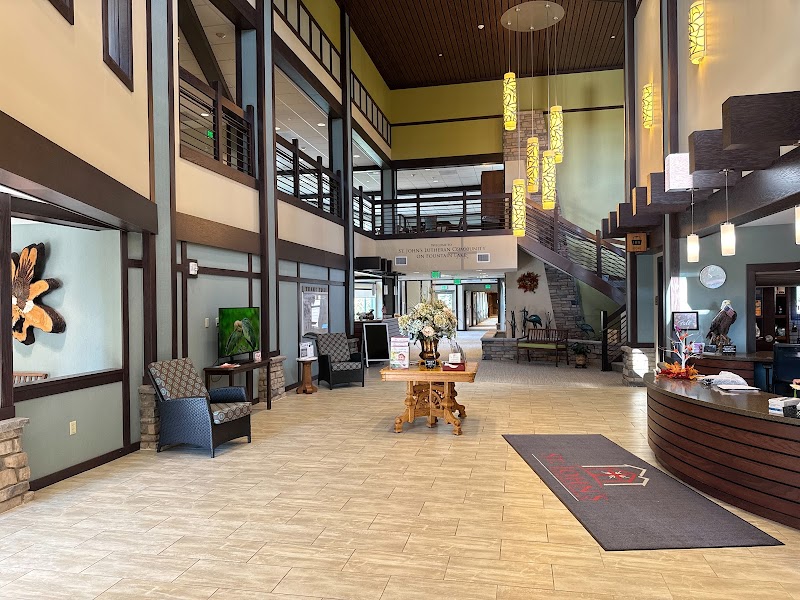
Who Owns and Operates St Johns On Fountain Lake?

ST JOHNS ON FOUNTAIN LAKE is owned by a non-profit organization. Non-profit facilities reinvest revenue into operations rather than distributing to shareholders. The facility operates independently rather than as part of a larger chain. With 84 certified beds and approximately 70 residents (about 83% occupancy), it is a smaller facility located in ALBERT LEA, Minnesota.

How Does St Johns On Fountain Lake Compare to Other Minnesota Nursing Homes?

Compared to the 100 nursing homes in Minnesota, ST JOHNS ON FOUNTAIN LAKE's overall rating (2 stars) is below the state average of 3.2, staff turnover (35%) is significantly lower than the state average of 46%, and health inspection rating (1 stars) is much below the national benchmark.

What Should Families Ask When Visiting St Johns On Fountain Lake?

Based on this facility's data, families visiting should ask: "What changes have been made since the serious inspection findings, and how are you preventing similar issues?" "Can I visit during a mealtime to observe dining assistance and food quality?" "How do you handle medical emergencies, and what is your hospital transfer rate?" "Can I speak with family members of current residents about their experience?" These questions are particularly relevant given the facility's Immediate Jeopardy citations.

Is St Johns On Fountain Lake Safe?

Based on CMS inspection data, ST JOHNS ON FOUNTAIN LAKE has documented safety concerns. Inspectors have issued 1 Immediate Jeopardy citation (the most serious violation level indicating risk of serious injury or death). The facility has a 2-star overall rating and ranks #100 of 100 nursing homes in Minnesota. Families considering this facility should ask detailed questions about what corrective actions have been taken since these incidents.

Do Nurses at St Johns On Fountain Lake Stick Around?

ST JOHNS ON FOUNTAIN LAKE has a staff turnover rate of 35%, which is about average for Minnesota nursing homes (state average: 46%). Moderate turnover is common in nursing homes, but families should still ask about staff tenure and how the facility maintains care continuity when employees leave.

Was St Johns On Fountain Lake Ever Fined?

ST JOHNS ON FOUNTAIN LAKE has been fined $16,448 across 1 penalty action. This is below the Minnesota average of $33,243. While any fine indicates a compliance issue, fines under $50,000 are relatively common and typically reflect isolated problems that were subsequently corrected. Families should ask what specific issues led to these fines and confirm they've been resolved.

Is St Johns On Fountain Lake on Any Federal Watch List?

ST JOHNS ON FOUNTAIN LAKE is not on any federal watch list. The most significant is the Special Focus Facility (SFF) program, which identifies the bottom 1% of nursing homes nationally based on persistent, serious quality problems. Not being on this list means the facility has avoided the pattern of deficiencies that triggers enhanced federal oversight. This is a positive indicator, though families should still review the facility's inspection history directly.