Good Samaritan Society - Woodland
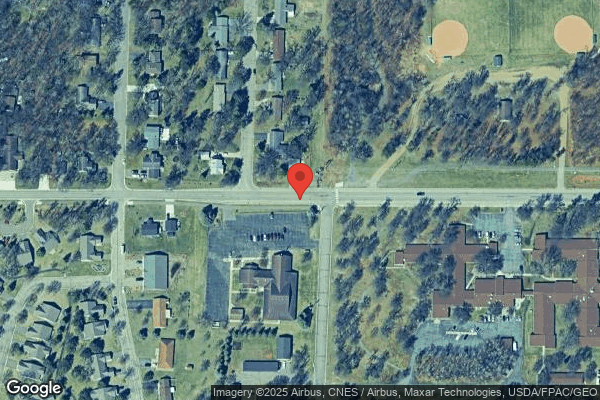
100 BUFFALO HILLS LANE, BRAINERD, MN 56401 (218) 829-1429
Non profit - Corporation 40 Beds GOOD SAMARITAN SOCIETY Data: November 2025
Trust Grade
75/100
#118 of 337 in MN
Last Inspection: June 2025

Inspected within the last 6 months. Data reflects current conditions.

Overview

Good Samaritan Society - Woodland in Brainerd, Minnesota has a Trust Grade of B, which indicates it is a solid choice among nursing homes. It ranks #118 out of 337 facilities in the state, placing it in the top half, and #2 out of 3 in Crow Wing County, suggesting only one local option is better. The facility's trend is stable, as they reported one issue in both 2024 and 2025, which shows consistency in their operations. Staffing is a strong point here, with a 4/5 star rating and a turnover rate of 42%, which is on par with the state average, indicating that staff remain relatively stable. There have been no fines recorded, showing good compliance with regulations. However, there are some concerns. The facility had a serious incident where a resident fell while trying to transfer independently due to delayed toileting assistance, resulting in a head injury that required emergency care. Additionally, there were findings of delayed meal assistance for some residents who needed help during dining, which could impact their overall experience. While the facility has good RN coverage, with more RN support than 83% of Minnesota facilities, these incidents suggest room for improvement in resident care responsiveness.
Trust Score
B
75/100
In Minnesota
#118/337
Top 35%
Safety Record
Moderate
Needs review
Inspections
Holding Steady
1 → 1 violations
Staff Stability
○ Average
42% turnover. Near Minnesota's 48% average. Typical for the industry.
Penalties
✓ Good
No fines on record. Clean compliance history, better than most Minnesota facilities.
Skilled Nurses
✓ Good
Each resident gets 72 minutes of Registered Nurse (RN) attention daily — more than 97% of Minnesota nursing homes. RNs are the most trained staff who catch health problems before they become serious.
Violations
✓ Good
Only 4 deficiencies on record. Cleaner than most facilities. Minor issues only.
★★★★☆
4.0
Overall Rating
★★★★☆
4.0
Staff Levels
★★★★☆
4.0
Care Quality
★★★★☆
4.0
Inspection Score
Stable
2024: 1 issues
2025: 1 issues

The Good

  • 4-Star Staffing Rating · Above-average nurse staffing levels
  • 4-Star Quality Measures · Strong clinical quality outcomes
  • Full Sprinkler Coverage · Fire safety systems throughout facility
  • No fines on record
  • Staff turnover below average (42%)

    6 points below Minnesota average of 48%

Facility shows strength in staffing levels, quality measures, fire safety.

The Bad

Staff Turnover: 42%

Near Minnesota avg (46%)

Typical for the industry

Chain: GOOD SAMARITAN SOCIETY

Part of a multi-facility chain

Ask about local staffing decisions and management

The Ugly 4 deficiencies on record

1 actual harm
Jun 2025 1 deficiency 1 Harm
SERIOUS (G)

Actual Harm - a resident was hurt due to facility failures

Accident Prevention (Tag F0689)

A resident was harmed · This affected 1 resident

**NOTE- TERMS IN BRACKETS HAVE BEEN EDITED TO PROTECT CONFIDENTIALITY** Based on observation, interview and document review, the facility failed to ensure staff responded to resident request for toile...

Read full inspector narrative →
**NOTE- TERMS IN BRACKETS HAVE BEEN EDITED TO PROTECT CONFIDENTIALITY** Based on observation, interview and document review, the facility failed to ensure staff responded to resident request for toileting assistance in a timely manner for 1 of 4 residents (R23) reviewed for falls. This resulted in actual harm for R23 who fell while attempting to transfer independently, resulting in a head laceration which required emergency medical care. The facility implemented corrective action prior to the survey, therefore, the deficient practice was issued at past non-compliance. Findings include: R23's admission Minimum Data Set (MDS) dated [DATE], identified R23 had intact cognition. R23 was occasionally incontinent of bladder, continent of bowel and required maximum assistance to transfer and toilet. R23 was unable to ambulate. R23's care plan dated 4/1/25, identified R23 was at risk for falls related to activity intolerance. A goal was listed for R23 to be free of injury. Intervention included to allow R23 to make position changes slowly due to orthostatic blood pressure changes. A second intervention was added on 6/2/25, which directed staff to ensure R23 was wearing appropriate footwear. The care plan identified R23 had a self care deficit and required assistance of one to transfer and toilet. Interventions included to transfer R23 with assist of one and a mechanical stand aid and to toilet every three hours. A progress note on 5/29/25, identified R23 was found lying on the floor of her room next to her recliner. R23 had a large laceration to her forehead and R23 was sent to the emergency room to be evaluated. R23 stated she was going to go to the bathroom when she fell. R23 did not have shoes or gripper socks on at the time. Her call light was utilized prior to her fall and staff reported R23 was told she was next in line for assistance. R23 returned from the emergency room at 11:28 p.m. with eleven sutures to the laceration at the center of her forehead and purple bruising started to appear. R23's Fall Scene Huddle Worksheet dated 5/29/25, identified R23 was found on the floor in her room at 7:55 p.m., after having tried to self transfer. R23's recliner was all the way up in the elevated position and R23 was wearing socks on her feet. R23 was incontinent of urine and stated she had to go to the bathroom. Staff had offered to assist R23 to use the bathroom prior to supper and had declined the need. R23 was last toileted at 2:23 p.m. Nursing assistant (NA)-C last checked with R23 at 6:37 p.m. and notified R23 she would be the next resident to be assisted. The Summary Call Data by Room dated 5/26/25, identified identified R23 had put on her call light at 7:18 p.m. and the call light was turned off 38 minutes later when she was found on the floor. R23's Resident Event Abstract dated 5/29/25, identified an unobserved fall had occurred. R23 had stated she was going to go to the bathroom. R23's call light had been used prior to the fall and staff reported they had told R23 she would be next to be assisted to the bathroom and get ready for bed. On 6/1/25, at 5:10 p.m. R23 was seated in a wheelchair in her room, waiting for supper service. R23 had a laceration on the center of her forehead from her hairline to above her eyebrows that had sutures holding the edges together. Bruising was also noted surrounding the laceration. R23 stated she had fallen a few days before and hit her head on the bedside table. During interview on 6/2/25, at 3:29 p.m. NA-A stated she worked the evening of 5/29/25. She remembered it had gotten really busy with all the resident call lights. R23 had put her call light on but it had just been so busy that evening. During interview on 6/2/25, at 3:30 p.m. NA-B stated R23 would always ring her call light to go to the bathroom and at times staff would tell her they would be back in just a minute and R23 would wait. NA-B had never seen R23 attempt to take herself to the bathroom. When interviewed on 6/2/25, at 3:37 p.m. trained medication assistant (TMA)-A stated R23 would put on her call light when needed to use the bathroom and at times staff would tell her they would be back in a minute and R23 would always wait for staff to return. TMA-A had never known R23 to make self transfer attempts. During interview on 6/2/25, at 4:30 p.m. NA-D stated R23 needed assistance to go to the bathroom and was always continent of urine. R23 would ring her call light when needed to go to the bathroom and sometimes, would wheel to the doorway to look for help to the bathroom, if she was in her wheelchair. NA-D heard R23 had to wait a long time for assistance to the bathroom that evening and finally just tried to go on her own. When interviewed on 6/2/25, at 4:57 p.m. registered nurse (RN)-A stated she was working on the evening R23 had fallen. R23 had put on her call light and the NA went in and told her she would be the next to be assisted to bed and then they found her on the floor. R23's recliner was fully upright and RN-A thought she had been trying to stand and fell. Staff asked her before and after supper if she had wanted to use the bathroom and she had declined. R23 was not able to bear weight and had regular socks on, not gripper socks. RN-A assessed R23's injury and had sent her to the emergency room to be evaluated. During interview on 6/3/25, at 12:00 p.m. the director of nursing (DON) stated she had reviewed the facility video the night of R23's fall and spoken with staff who worked that evening. Staff entered R23's room and told her she was next to be assisted to bathroom and bed; however, staff assisted two other residents to bed first. The DON checked to see who the two residents were that were assisted before R23 and both residents had behaviors of anxiety, hollering out and were a high fall risk, so the staff put them to bed first. In the meantime, R23 had decided she could not wait and attempted to go herself. The DON reviewed the incident with all the NA's involved and provided education that call lights were a priority over putting residents to bed and the importance of toileting residents when they requested it. The DON stated she had also educated staff at shift change to approach R23 more directly when attempting to assist her to the bathroom instead of just asking. When a staff member saw a resident call light on, they were to check in frequently with the resident and/or get on their walkie's when a call light was on and needed to be addressed and request help. The staff on other wings needed to answer call lights and help out. During the fall investigation it was determined the the cause of R23's fall was because the call light was not addressed timely. Staff had checked in with her and told her they would be back to assist but did not get back to her timely. The staff were educated on answering call lights promptly and responding immediately to resident's request to be assisted to the bathroom. The facility' corrective actions were confirmed through a sample of other residents reviewed for falls, including R23, and verbal interviews with staff and management to affirm education was completed. R23's medical record was reviewed and verified R23 had been comprehensively assessed for fall risk, and the IDT review process was being completed since R23's fall. There were no other concerns identified regarding falls during the onsite survey. The facility policy Fall Prevention and Management dated 4/8/25, directed staff to care plan appropriate interventions to prevent falls and communicate fall risks and interventions to prevent a fall before it occurred. The facility policy Call Light dated 7/29/24, identified a purpose to ensure residents always had a method for calling for assistance and to promptly answer resident's call lights. When a resident's call light was observed, staff were to go to the resident's room promptly and respond to the resident's request as soon as possible.
Apr 2024 1 deficiency
CONCERN (D)

Potential for Harm - no one hurt, but risky conditions existed

ADL Care (Tag F0677)

Could have caused harm · This affected 1 resident

**NOTE- TERMS IN BRACKETS HAVE BEEN EDITED TO PROTECT CONFIDENTIALITY** Based on observation, interview and document review, the facility failed to ensure timely toileting assistance for 1 of 1 reside...

Read full inspector narrative →
**NOTE- TERMS IN BRACKETS HAVE BEEN EDITED TO PROTECT CONFIDENTIALITY** Based on observation, interview and document review, the facility failed to ensure timely toileting assistance for 1 of 1 resident (R16) reviewed for activities of daily living and was dependent on staff. Findings include: R16's significant change Minimum Data Set (MDS) dated [DATE], identified R16 had moderately impaired cognition. R16 was dependent on staff for all toileting needs and was always incontinent of bowel and bladder. R16's care plan with revision date 2/15/24, directed staff to check and change for total incontinence every two hours. Continuous observations were conducted on 4/23/24, from 2:00 p.m. through 5:05 p.m. the following was identified: -At 2:04 p.m. R16 was sitting in his wheelchair waiting for the activity program Bingo to begin. -At 2:30 p.m. R16 was attending the activity program. -At 3:19 p.m. R16 was wheeled from the activity room to the nurses station. No staff had approached R16 during his attendance at activities. -At 3:46 p.m. R16 remained sitting in his wheelchair at the nurses station. -At 4:15 p.m. R16 remained sitting in his wheelchair at the nurses station. -A 4:35 p.m. R16 remained sitting in his wheelchair at the nurses station. -At 5:00 p.m. R16 remained sitting in his wheelchair at the nurses station. No staff had approached him since his return from activities. -At 5:05 p.m. trained medication assistant (TMA)-A approached R16 and wheeled R16 to the dining room without offering assist with toileting. TMA-A stated R16 needed to be checked and changed for toileting every two hours. If R16 had not been assisted with toileting prior to activities, that would be a problem. When the residents returned from activities it was shift change, ambulating residents and answering call lights, so checking R16 might have gotten missed. The morning shift would have recorded when they last check and changed R16. TMA-A stated the documentation identified R16 was last been checked and changed for incontinence care at 1:53 p.m. R16 had been due to be toileted at 3:00 p.m. which was not documented as completed. -At 5:10 p.m. TMA-A approached R16 in the dining room and offered to assist him with toileting. R16 agreed and was assisted back to his room to provide incontinence care. TMA-A and nursing assistant (NA)-A assisted R16 into bed using a mechanical lift. TMA-A assisted R16 to turn on his side and removed a soiled incontinence product that had visible urine present in the brief. Red crease marks were visible on the back of R16 thighs from his chair straps. R16 was assisted with peri-care and a new incontinence product was applied. R16 was assisted back to his wheelchair and to the dining room for supper. When interviewed on 4/24/24, at 2:25 p.m. registered nurse (RN)-A stated R16 was care planned for check and change every two hours and it would be a problem if he went longer than two hours. It was scheduled on the aides plan of care to do so every two hours. The toileting schedule in the electronic medical record would change color if it was past due, so it would alert staff to the task. It was important to check and change residents as per their care plan to prevent skin breakdown and R16 had very fragile skin. During interview on 4/24/24, at 4:00 p.m. the director of nursing (DON) stated it was her expectation the nursing assistant would follow the residents plan of care for toileting needs and if they were having difficulty meeting that expectation they should reach out to the charge nurses or administrative staff for help. The facility policy Activities of Daily Living dated 12/4/23, identified any resident who was unable to carry out activities of daily living would receive necessary services to maintain good nutrition, grooming, personal and oral hygiene. Toileting included assistance on and off toilet, use of bedpan, urinal or commode; cleansing after elimination; changing any protective pads; and adjusting clothing after toileting.
Mar 2023 2 deficiencies
CONCERN (D)

Potential for Harm - no one hurt, but risky conditions existed

Resident Rights (Tag F0550)

Could have caused harm · This affected 1 resident

**NOTE- TERMS IN BRACKETS HAVE BEEN EDITED TO PROTECT CONFIDENTIALITY** Based on observation, interview and document review, the facility failed to provide timely meal assistance to promote a dignifie...

Read full inspector narrative →
**NOTE- TERMS IN BRACKETS HAVE BEEN EDITED TO PROTECT CONFIDENTIALITY** Based on observation, interview and document review, the facility failed to provide timely meal assistance to promote a dignified dining experience for 3 of 4 residents (R13, R21) observed who required staff assistance. Findings include: R13's significant change Minimum Data Set (MDS) dated [DATE], identified R13 had severe cognitive impairment and needed extensive assistance from staff to eat. R13's undated, face sheet included diagnoses of hemiplegia (paralysis of one side of the body), weakness, dementia, and a contracture of the right hand. R13's care plan dated 12/28/22, identified R13 had an activities of daily living (ADL) deficit and directed staff to set up the meal, R13 needed assistance of one, and directed staff to encourage R13 to participate with eating with cueing. R21's quarterly MDS dated [DATE], specified R21 had severe cognitive impairment and needed limited assistance from staff to eat. R21's undated, face sheet included diagnoses of dementia, Parkinson's, and tremors. R21's care plan, dated 3/8/23, directed staff to set up meals, use a lipped plate, two-handled cup with lid, built up utensils and assist with feeding as needed R21 and R13 were observed during a continuous observation on 3/15/23, from 8:17 a.m. to 8:33 a.m. during the breakfast meal. - At 8:17 a.m., NA-E delivered a meal to R21, which included oatmeal, pancakes and ham that was cut up into bite sized pieces . NA-E left the area to assist other residents. At 8:21 a.m., R21 was feeding himself. R21's right arm was shaking as R21 was attempting to feed himself oatmeal using his spoon. When R21 was bringing his spoon to his mouth the oatmeal fell onto his clothing protector and lap. R21 was able to get a minimal amount of oatmeal into their mouth to eat. At 8:24 a.m., R21 attempted to take another spoon full of oatmeal and brought it to his mouth. R21's hand was shaking and R21 dropped oatmeal onto their clothing protector. R21 continued in the same manner while feeding himself, staff were in the area and made no attempts to assist the resident. At 8:33 a.m., 16 minutes later, NA-E approached R21, sat next to the resident, and assisted him to finish his meal. - At 8:18 a.m., NA-D delivered R13 a meal which included juice, oatmeal, pancakes and ham which were cut up into bite size pieces. NA-D left the area to assist other residents. At 8:21 a.m. R13 was feeding himself, his right arm was shaking as he was attempting to feed himself a pancake using his fork. As R13 was bringing his fork to his mouth the pancake fell onto his clothing protector and lap. R13 was able to get a minimal amount of pancake to eat. At 8:24 a.m. R13 attempted to gather a spoon full of oatmeal and brought it to his mouth. R13's hand was shaking and R13 dropped the oatmeal onto his clothing protector. R13 continued in the same manner while feeding himself, staff were in the area and made no attempts to assist. At 8:33 a.m., 15 minutes later, NA-D approached R13, sat next to the resident, and assisted him to finish his meal. During an interview on 3/16/23, at 8:14 a.m., staff coordinator stated staff should always serve residents who could feed themselves first. Residents who required assistance should be served their meals last so staff could assist them. During an interview on 3/16/23, at 8:33 a.m. the director of nursing stated one staff member was assigned to two residents when assisting with meals and should be sitting by the resident within five minutes of the meal being served, otherwise residents could be embarrassed. A policy on meal preparation and service was requested, none was provided.
CONCERN (D)

Potential for Harm - no one hurt, but risky conditions existed

Comprehensive Care Plan (Tag F0656)

Could have caused harm · This affected 1 resident

Based on interview and document review, the facility failed to ensure a comprehensive care plan was developed to reduce the risk for the spread of herpes simplex virus for 1 of 1 resident (R10) identi...

Read full inspector narrative →
Based on interview and document review, the facility failed to ensure a comprehensive care plan was developed to reduce the risk for the spread of herpes simplex virus for 1 of 1 resident (R10) identified with a communicable disease. Findings include: R10's undated, face sheet identified R10 had a diagnosis of herpes simplex virus, an infection that causes painful blisters or ulcers in the perineum area and was contagious when the vesicles are open. R10's pressure ulcer Care Area Assessment (CAA), dated 10/31/22, identified R10 was at risk for skin alteration and integrity and continued with a chronic red groin (Herpes Simplex) with much better control since admission. R10's undated order summary included an order for Valtrex (medication used to suppress herpes virus) 500 milligrams (mg) tablet by mouth daily for herpes simplex virus, with a start date of 9/16/22. R10's undated, care plan did not identify R10's history of herpes simplex including goals and intervention to direct staff on infection control precautions required during an active infections. During an interview on 3/15/23, at 2:45 p.m. the director of nursing stated R10 was on a prophylaxis medication of Valtrex for comfort and to reduce flare-ups of a herpes outbreak. R10's history of herpes simplex was not of on the care plan and should have been.
Understanding Severity Codes (click to expand)
Life-Threatening (Immediate Jeopardy)
J - Isolated K - Pattern L - Widespread
Actual Harm
G - Isolated H - Pattern I - Widespread
Potential for Harm
D - Isolated E - Pattern F - Widespread
No Harm (Minor)
A - Isolated B - Pattern C - Widespread

Questions to Ask on Your Visit

  • "Can I speak with families of current residents?"
  • "What's your RN coverage like on weekends and overnight?"

Our Honest Assessment

Strengths
  • • No fines on record. Clean compliance history, better than most Minnesota facilities.
  • • 42% turnover. Below Minnesota's 48% average. Good staff retention means consistent care.
Concerns
  • • 4 deficiencies on record, including 1 serious (caused harm) violation. Ask about corrective actions taken.
Bottom line: Generally positive indicators. Standard due diligence and a personal visit recommended.

About This Facility

What is Good Samaritan Society - Woodland's CMS Rating?

CMS assigns Good Samaritan Society - Woodland an overall rating of 4 out of 5 stars, which is considered above average nationally. Within Minnesota, this rating places the facility higher than 99% of the state's 100 nursing homes. This rating reflects solid performance across the metrics CMS uses to evaluate nursing home quality.
How is Good Samaritan Society - Woodland Staffed?
CMS rates Good Samaritan Society - Woodland's staffing level at 4 out of 5 stars, which is above average compared to other nursing homes. Staff turnover is 42%, compared to the Minnesota average of 46%. This relatively stable workforce can support continuity of care.

What Have Inspectors Found at Good Samaritan Society - Woodland?

State health inspectors documented 4 deficiencies at Good Samaritan Society - Woodland during 2023 to 2025. These included: 1 that caused actual resident harm and 3 with potential for harm. Deficiencies causing actual harm indicate documented cases where residents experienced negative health consequences.

Who Owns and Operates Good Samaritan Society - Woodland?

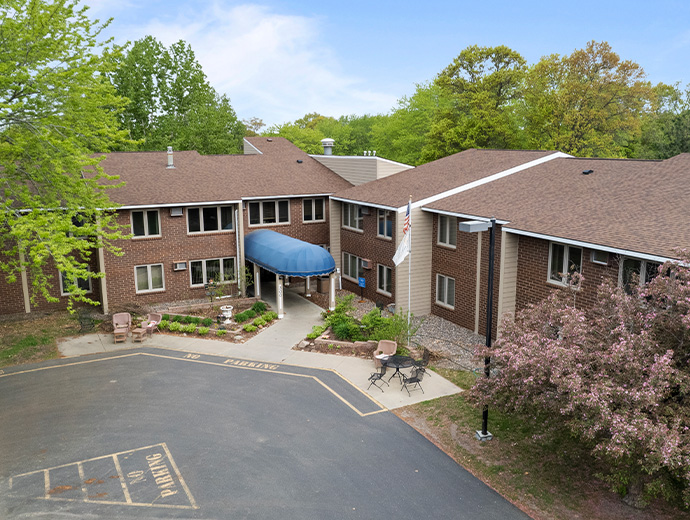
Good Samaritan Society - Woodland is owned by a non-profit organization. Non-profit facilities reinvest revenue into operations rather than distributing to shareholders. The facility is operated by GOOD SAMARITAN SOCIETY, a chain that manages multiple nursing homes. With 40 certified beds and approximately 38 residents (about 95% occupancy), it is a smaller facility located in BRAINERD, Minnesota.

How Does Good Samaritan Society - Woodland Compare to Other Minnesota Nursing Homes?

Compared to the 100 nursing homes in Minnesota, Good Samaritan Society - Woodland's overall rating (4 stars) is above the state average of 3.2, staff turnover (42%) is near the state average of 46%, and health inspection rating (4 stars) is above the national benchmark.

What Should Families Ask When Visiting Good Samaritan Society - Woodland?

Based on this facility's data, families visiting should ask: "Can I visit during a mealtime to observe dining assistance and food quality?" "How do you handle medical emergencies, and what is your hospital transfer rate?" "Can I speak with family members of current residents about their experience?"

Is Good Samaritan Society - Woodland Safe?

Based on CMS inspection data, Good Samaritan Society - Woodland has a clean safety record: no substantiated abuse findings (meaning no confirmed cases of resident harm), no Immediate Jeopardy citations (the most serious violation level indicating risk of serious injury or death), and is not on the Special Focus Facility watch list (a federal program monitoring the lowest-performing 1% of nursing homes). The facility has a 4-star overall rating and ranks #1 of 100 nursing homes in Minnesota. While no facility is perfect, families should still ask about staff-to-resident ratios and recent inspection results during their visit.

Do Nurses at Good Samaritan Society - Woodland Stick Around?

Good Samaritan Society - Woodland has a staff turnover rate of 42%, which is about average for Minnesota nursing homes (state average: 46%). Moderate turnover is common in nursing homes, but families should still ask about staff tenure and how the facility maintains care continuity when employees leave.

Was Good Samaritan Society - Woodland Ever Fined?

Good Samaritan Society - Woodland has no federal fines on record. CMS issues fines when nursing homes fail to meet care standards or don't correct problems found during inspections. The absence of fines suggests the facility has either maintained compliance or corrected any issues before penalties were assessed. This is a positive indicator, though families should still review recent inspection reports for the full picture.

Is Good Samaritan Society - Woodland on Any Federal Watch List?

Good Samaritan Society - Woodland is not on any federal watch list. The most significant is the Special Focus Facility (SFF) program, which identifies the bottom 1% of nursing homes nationally based on persistent, serious quality problems. Not being on this list means the facility has avoided the pattern of deficiencies that triggers enhanced federal oversight. This is a positive indicator, though families should still review the facility's inspection history directly.