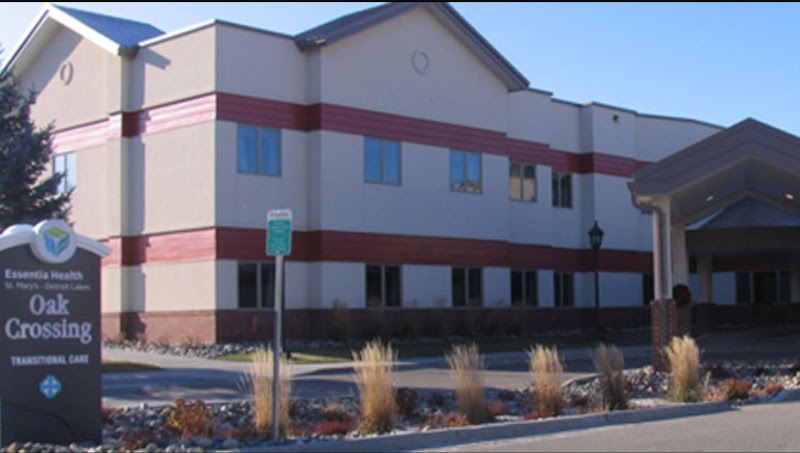
Essentia Health Oak Crossing

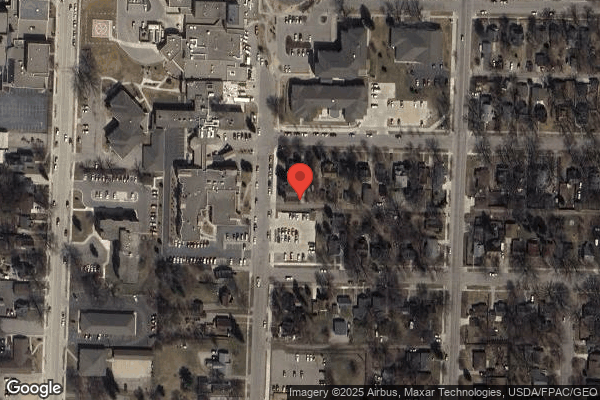
1040 LINCOLN AVENUE, DETROIT LAKES, MN 56501 (218) 844-0700
Non profit - Corporation 94 Beds ESSENTIA HEALTH Data: November 2025 1 Immediate Jeopardy citation
Trust Grade
69/100
#109 of 337 in MN
Last Inspection: October 2024

Within standard 12-15 month inspection cycle. Federal law requires annual inspections.

Overview

Essentia Health Oak Crossing has a Trust Grade of C+, which indicates it is slightly above average among nursing homes. It ranks #109 out of 337 facilities in Minnesota, placing it in the top half, and #3 out of 4 in Becker County, meaning only one local option is rated higher. The facility is on an improving trend, with issues decreasing from four in 2024 to just one in 2025. Staffing is a strong point, earning a perfect score of 5 out of 5 stars with a turnover rate of 28%, significantly lower than the state average. However, there are some concerns, including a critical incident where a resident eloped from the facility for four hours, and issues with sanitation in the water and ice machines, which could pose health risks. Additionally, there was a finding regarding inadequate hand hygiene practices for a resident needing assistance, which could also lead to health complications.

Trust Score
C+
69/100
In Minnesota
#109/337
Top 32%
Safety Record
High Risk
Review needed
Inspections
Getting Better
4 → 1 violations
Staff Stability
✓ Good
28% annual turnover. Excellent stability, 20 points below Minnesota's 48% average. Staff who stay learn residents' needs.
Penalties
✓ Good
$7,446 in fines. Lower than most Minnesota facilities. Relatively clean record.
Skilled Nurses
✓ Good
Each resident gets 86 minutes of Registered Nurse (RN) attention daily — more than 97% of Minnesota nursing homes. RNs are the most trained staff who catch health problems before they become serious.
Violations
⚠ Watch
12 deficiencies on record. Higher than average. Multiple issues found across inspections.
★★★★☆
4.0
Overall Rating
★★★★★
5.0
Staff Levels
★★★★☆
4.0
Care Quality
★★★☆☆
3.0
Inspection Score
Stable
2024: 4 issues
2025: 1 issues

The Good

  • 5-Star Staffing Rating · Excellent nurse staffing levels
  • 4-Star Quality Measures · Strong clinical quality outcomes
  • Low Staff Turnover (28%) · Staff stability means consistent care
  • Full Sprinkler Coverage · Fire safety systems throughout facility
  • No fines on record
  • Staff turnover is low (28%)

    20 points below Minnesota average of 48%

Facility shows strength in staffing levels, quality measures, staff retention, fire safety.

The Bad

Federal Fines: $7,446

Below median ($33,413)

Minor penalties assessed

Chain: ESSENTIA HEALTH

Part of a multi-facility chain

Ask about local staffing decisions and management

The Ugly 12 deficiencies on record

1 life-threatening
Jul 2025 1 deficiency
CONCERN (D) 📢 Someone Reported This

A family member, employee, or ombudsman was alarmed enough to file a formal complaint

Potential for Harm - no one hurt, but risky conditions existed

Infection Control (Tag F0880)

Could have caused harm · This affected 1 resident

**NOTE- TERMS IN BRACKETS HAVE BEEN EDITED TO PROTECT CONFIDENTIALITY** Based on observation, interview, and document review the facility failed to ensure appropriate hand hygiene was performed during...

Read full inspector narrative →
**NOTE- TERMS IN BRACKETS HAVE BEEN EDITED TO PROTECT CONFIDENTIALITY** Based on observation, interview, and document review the facility failed to ensure appropriate hand hygiene was performed during personal cares for 1 of 1 residents (R3) reviewed for hand hygiene. Finding include: R3's care plan dated 6/3/25, identified he had an activities of daily living (ADLS) deficit related to impaired cognition, impaired mobility, and incontinence. Staff were directed to offer and assist with toilet upon rising, before and after meals, check on him every two hours at night and assist to toilet on 1:00 a.m. rounds. Stay with resident while in bathroom, do not leave alone. Transfer with assist of one and walker. He required assist of one for personal hygiene and toileting. History of urinary tract infection. R3's quarterly Minimum Data Set (MDS) dated [DATE], identified R3 had severe impaired cognition and no behaviors. R3 required partial/moderate assistance chair/bed to chair transfer and substantial/maximal assistance with personal hygiene, shower/bathe, upper and lower body dressing, personal hygiene, lying to sitting, sit to stand, ambulation upto10 feet, toilet transfer, and used a manual wheelchair for mobility. R3 was frequently incontinent of bowel and bladder. He had diagnoses that included non-traumatic brain dysfunction, cancer, and dementia. During an observation on 7/9/25 at 2:41 p.m., R3 laid in bed covered with sheet and blanket. At 2:45 p.m., nursing assistant (NA)-A entered his room, asked if he needed to use the bathroom prior to going downstairs to activities, and he responded yes. NA-A did not sanitize her hands, assisted him up to the edge of the bed, applied a transfer belt, shoes over his gripper socks, and placed his walker in front of him. NA-A held onto the transfer belt with one hand and R3 stood up, grabbed his walker, pivoted, and lowered himself down on the wheelchair. R3's bottom sheet was moderately saturated with urine. NA-A grabbed the wheelchair handles, pushed R3 into the bathroom, and applied gloves. R3 placed his hands on the grab bar located on the wall and pulled himself up while NA-A held onto the transfer belt with one hand and with the other hand NA-A pulled down R3's pants and incontinent brief saturated with urine. R3 lowered himself onto the toilet. NA-A removed the soiled brief, R3's shoes, and urine soiled pants. NA-A placed the dirty brief in a garbage bag, soiled pants into another bag, applied a clean brief and pulled it up to R3's thighs while he sat on the toilet. Without changing gloves, NA-A walked from bathroom to R3's closet, grabbed a clean pair of pants, went back to bathroom, placed pants over R3's feet, pulled them up over the brief located on R3's thighs, and placed shoes back on R3's feet. NA-A removed the gloves, did not sanitize hands, grabbed her walkie with her left hand and requested clean sheets. While R3 sat on toilet NA-A walked over to the dresser, pulled open the drawer, and removed a package of wipes, and applied clean gloves. She cued R3 to stand up, held onto the transfer belt, R3 grabbed the bar on the wall and stood up by the toilet. NA-A wiped rectal area with wipes, did not wipe the front peri area, pulled up the brief and R3's pants. NA-A place her hand on his shoulder and other hand under transfer belt, as R3 lowered himself down onto the wheelchair, NA-A removed transfer belt and her gloves. NA-A did not sanitize her hands, flushed the toilet and hung transfer belt on bar located on the wall outside the bathroom. NA-A grabbed the footrests, placed them on the wheelchair, lifted R3's left foot up and onto footrest. NA-A bagged bathroom garbage, opened bottom drawer, placed the package of wipes inside, and closed the drawer. NA-B entered the room, sanitized his hands, applied gloves and stripped R3's soiled bed linens, wiped down the bed mattress, and placed linens in a bag. NA-A pushed R3 out of the bathroom, closed the bathroom door, and activated the door alarm. NA-A did not sanitize her hands and exited the room while she pushed R3 in the wheelchair down the hallway to the elevator. At 2:56 p.m., NA-A arrived back on second floor, walked over to the NA charting area and sanitized her hands. During an interview on 7/9/25 at 3:37 p.m., NA-A stated she entered R3's room without sanitizing her hands and assisted R3 to the bathroom. She placed gloves on and removed R3's urine soiled pants and brief. With the same gloves on grabbed a pair of pants out of the closet, placed them on R1, removed the gloves, did not sanitize hands, grabbed a package of wipes form the drawer and placed clean gloves on. She wiped R3's front peri area and rectal area with wipes, pulled up R3's pants, lowered R3 back into his wheelchair, removed the transfer belt, and removed the dirty gloves. Without sanitizing her hands, she pushed R3 out of his room in his wheelchair down the hallway to the elevator and brought R3 downstairs. She came back up to second floor and then realized she had not completed hand hygiene from the time she entered R3's room, completed cares, exited his room, went downstairs via elevator, until she came back upstairs. She felt she had messed up and should have sanitized her hands more often. NA-A stated staff were expected to have completed hand hygiene when entering and exiting a resident room, after removal of gloves, leaving the bathroom, and should have offered R3 hand hygiene prior to leaving his room. Good hand hygiene was expected for infection control and help prevent infections. During an interview on 7/11/25 at 10:18 a.m., infection preventionist, registered nurse (RN)-A stated staff were expected to use the foam hand sanitizer outside of the resident room, foam in and out and after gloving, between peri cares and other ADL's after going to potential body fluids. Hand hygiene was expected to prevent transmission of germs to animate objects, self, frequently touched areas, resident to resident, staff, and anyone else that became in contact with those surfaces. Without proper hand hygiene germs could have been spread and would lead to infections due to transmission of microbes and potential to cause illness and disease. During an interview on 7/11/25 at 10:45 a.m., director of nursing (DON) stated staff were expected to sanitize hand hygiene before entering and exiting a resident's room, with cares anytime they are finished cleaning a dirty area such as peri cares, assist with toileting or any hygiene, and after removal of gloves. Staff were expected to remove gloves as soon as they completed peri cares, made sure resident was safe, and then sanitize hands to prevent the spread of infection. Facility policy Hand Hygiene dated 11/10/23, identified hand hygiene practices for healthcare workers can help prevent the transmission of microbial pathogens and aid in the reduction of healthcare associated infections. All healthcare works must perform hand hygiene: before patient contact or contact with the patient's environment, before entering a patient's room, before touching a patient, before touching any object or furniture in the patient zone, after patient contact, after touching a patient or any object or furniture in the patient environment, before clean/aseptic procedure, after body fluid exposure, when moving form a contaminated body site to a clean body site during patient care, before putting on gloves, and after removing gloves or other personal protective equipment (PPE). Gloves are not to be used in place of hand hygiene.
Oct 2024 4 deficiencies
CONCERN (D)

Potential for Harm - no one hurt, but risky conditions existed

Deficiency F0578 (Tag F0578)

Could have caused harm · This affected 1 resident

**NOTE- TERMS IN BRACKETS HAVE BEEN EDITED TO PROTECT CONFIDENTIALITY** Based on interview and document review, the facility failed to ensure advanced directives for emergency care and treatment were ...

Read full inspector narrative →
**NOTE- TERMS IN BRACKETS HAVE BEEN EDITED TO PROTECT CONFIDENTIALITY** Based on interview and document review, the facility failed to ensure advanced directives for emergency care and treatment were accurately reflected in all areas of the resident's medical record to ensure residents wishes would be implemented correctly in an emergency for 3 of 25 residents (R10, R60, R68) reviewed for advanced directives. Findings Include: R10 R10's admission Minimum Data Set (MDS) dated [DATE], identified R10 was cognitively intact and had diagnoses which included: heart failure, diabetes mellitus, and respiratory failure. Review of R10's electronic medical record (EMR) identified the following: -R10's dashboard Profile (banner viewed on computer screen) identified Advance Directive: do not resuscitate (DNR). -R10's Physician Order Report identified Advance Directive: Full Code, order date [DATE]. -R10's scanned in Provider Orders For Life-Sustaining Treatment (POLST) signed [DATE], identified Attempt Resuscitation/Cardiopulmonary resuscitation (CPR). Review of R10's paper chart identified the following: -R10's POLST signed [DATE], identified Do Not Attempt Resuscitation/DNR (Allow Natural Death). R60 R60's Prospective Payment System (PPS) MDS dated [DATE], identified R60 was cognitively intact and had diagnoses which included: heart failure, displaced transverse fracture of shaft of left femur (thigh bone), and respiratory failure. Review of R60's EMR identified the following: -R60's dashboard Profile identified Advance Directive: Full Code. -R60's Physician Order Report identified Advance Directive: Full Code, order date [DATE]. -R60's scanned in POLST signed [DATE], identified Do Not Attempt Resuscitation/DNR (Allow Natural Death), with attachment date of [DATE]. -R60's scanned in POLST signed [DATE], identified Attempt Resuscitation/CPR, with attachment date of [DATE]. Review of R60's paper chart identified the following: -R60's POLST signed [DATE], identified Attempt Resuscitation/CPR. R68 R68's significant change MDS dated [DATE], identified R68 was cognitively intact and had diagnoses which included: diabetes mellitus, chronic kidney disease and amputation. Review of R68's EMR identified the following: -R68's dashboard Profile identified Advance Directive: DNR. -R68's Physician Order Report identified Advance Directive: Full Code, order date [DATE]. -R68 had lacked a scanned POLST in EMR Review of R68's paper chart identified the following: -R68's POLST signed [DATE], identified Do Not Attempt Resuscitation/DNR (Allow Natural Death). During an interview on [DATE] at 9:05 a.m. R68 indicated he wanted CPR if needed. R68 stated he was pretty confused when he first arrived at the facility, and indicated he thought he had told the facility staff he wished to have CPR if needed, however could not remember who he had spoken to. During an interview on [DATE] at 9:09 a.m., R10 stated she did not want CPR, and registered nurse (RN)-A had discussed this with her. During an interview on [DATE] at 11:25 a.m., RN-C indicated her usual practice was to locate a resident's code status on the EMR banner, which identified the advanced directives, or in the paper chart in the nurses station. During an interview on [DATE] at 11:25 a.m., RN-H indicated her usual practice to locate a resident's code status was on the EMR banner, face sheet, or the paper chart POLST, or the POLST scanned into the computer, which ever was quicker. RN-H stated if it said Full Code, she would initiate CPR and call for help, and if it said DNR, she would contact the family and provider. During an interview on [DATE] at 11:43 a.m., registered nurse (RN)-B stated her usual practice to locate a resident's code status was to look on the computer and indicated the dashboard profile. RN-B stated the usual practice was to ask the residents and/or family members to fill out a POLST on admission. RN-B indicated if a resident was transferred, they would give an oral report of the resident's code status, and send a copy of their POLST. During an interview on [DATE] at 11:14 a.m. RN-A confirmed the above findings. RN-A stated R10's scanned POLST identified Full Code, and that could be a problem, because someone could initiate CPR which did not follow R10's wishes for DNR. RN-A verified R60's latest scanned EMR POLST , which was scanned into EMR on [DATE], identified DNR, which was not her most recent POLST, and did not match her EMR banner or orders for Full Code. RN-confirmed R68's EMR banner identified DNR, but R68's physician orders identified Full Code, then confirmed director of nursing (DON) had updated R68's orders on [DATE], to DNR. RN-A indicated if a resident's banner, orders, or POLST did not match, it could cause a resident to receive CPR if they were DNR, or a resident who's wishes were for CPR, to not receive it. During an interview on [DATE] at 12:10 p.m. DON confirmed the above findings. DON confirmed R10's most recent POLST was not scanned into her EMR and did not match her orders or banner, which could cause someone to assume it was R10's most recent POLST. DON confirmed R60's most recent scanned POLST for DNR was not current, and could cause someone to not follow R60's current wishes for CPR. DON confirmed R68's orders were for Full Code, and did not match R68's banner or POLST. DON confirmed she had updated R68's order to DNR on [DATE]. DON stated the facility's usual practice was to complete a POLST at the time of a resident's admission or change of status. Then the process was to put the POLST in their paper chart, add their code status to the EMR banner, obtain orders, and then scan the POLST into their EMR. The facility policy titled Advanced Care Planning (POLST) dated 4/24, identified upon admission, the nurse would identify if the resident had an advanced directive or not, and determine the resident's wishes to formulate an advanced directive. All advance directive document copies would be obtained and located in the medical record. A POLST would be completed upon admission, and reviewed upon readmission, quarterly and with significant changes and as needed. Changes would be documented on the face sheet. Upon completion of the POLST a copy would be placed in the front of the resident's paper chart, with a notation awaiting provider signature. Once the provider had reviewed and signed, a copy would be scanned into the EMR and the original would remain in the front of the paper chart. Once signed the code status would be recorded in the EMR on the face sheet under advanced directives, and the code status would appear on the resident banner.
CONCERN (D)

Potential for Harm - no one hurt, but risky conditions existed

Pressure Ulcer Prevention (Tag F0686)

Could have caused harm · This affected 1 resident

**NOTE- TERMS IN BRACKETS HAVE BEEN EDITED TO PROTECT CONFIDENTIALITY** Based on observation, interview and document review, the facility failed to appropriately implement identified pressure relievin...

Read full inspector narrative →
**NOTE- TERMS IN BRACKETS HAVE BEEN EDITED TO PROTECT CONFIDENTIALITY** Based on observation, interview and document review, the facility failed to appropriately implement identified pressure relieving interventions to promote healing for 1 of 3 resident (R1) reviewed with current, recurring, stage three (3) pressure ulcer on R1's left heel. Stage 3 pressure ulcer; full thickness tissue loss. Subcutaneous fat may be visible but bone, tendon or muscle is not exposed. Slough may be present but does not obscure the depth of tissue loss. May include undermining or tunneling. Slough; non-viable yellow, tan, gray, green or brown tissue; usually moist, can be soft, stringy and mucinous in texture. Slough may be adherent to the base of the wound or present in clumps throughout the wound bed. Findings include: R1's quarterly Minimum Data Set (MDS) dated [DATE], identified R1 had moderate cognitive impairment and had diagnoses which included aphasia (a disorder that could affect how a person communicated. It may impact speech, as well as the way a person may write and understand both spoken and written language) following cerebral infarction (stroke), dementia, severe, with psychotic disturbance, chronic kidney disease, stage three, congestive heart failure, anemia (not having enough healthy red blood cells or hemoglobin to carry oxygen to the body's tissues.). Indicated R1 required limited assistance from one staff for bed mobility and extensive assistance of one staff for transfers and toileting. Identified R1 was at risk for pressure ulcers, had a current stage three pressure ulcer. Indicated pressure relieving interventions of pressure relieving devices for bed and chair and identified R1 received treatments to her stage three pressure ulcer. R1's significant change Care Area Assessment (CAA) dated 11/29/23, identified R1 required extensive assistance with dressing, transfers, bed mobility and grooming. Indicated R1 was alert, easily forgetful, required frequent cues and reminders. Identified R1 was at risk for pressure ulcer development and pressure ulcer care being provided to left heel included dressing change as ordered. R1's care plan dated 10/19/23, identified R1 had an unstageable deep tissue injury (purple or maroon area of discolored intact skin due to damage of underlying soft tissue. The area may be preceded by tissue that is painful, firm, mushy, boggy, warmer or cooler as compared to adjacent tissue to the left heel). R1's care plan dated 6/17/24, identified wound to left heel was now a stage three pressure ulcer. R1's care plan directed facility staff to free float (remove weight from an area) R1's heels in bed and recliner and encourage R1 to wear post op shoe to left foot when up. R1's care plan directed facility staff to administer treatments as ordered and assist R1 to reposition every two hours. Review of R1's Braden Scale (tool used to determine risk for pressure ulcer development) dated 8/26/24, identified R1 was at low risk for developing pressure ulcers. Review of R1's pressure ulcer event report dated 10/18/23, identified R1 was at risk for developing pressure ulcers with interventions in place of: turning and repositioning every two hours, free float heels with heel lift cushion and pressure relief boots on at all times. The pressure ulcer report further identified the following: -10/15/23, R1 had a suspected deep tissue injury to the left heel, purple area of intact skin, boggy to the touch. Thin blister over dark wound bed. -10/18/23, nurse practitioner (NP) identified an unstageable pressure ulcer to R1's left heel and ordered Mepilex dressing to R1's left heel, change the dressing every three days and as needed. -11/1/23, R1 had a large black area to the left heel and Mepilex dressing was applied. -11/15/23, R1 had a deep tissue injury to the left heel that measured 6 centimeters (cm) in length by 6cm in width with a thin blister over the area that had opened. Mepilex dressing was applied. -11/17/23, referral to podiatry for R1's left heel pressure ulcer. -11/20/23, orders from podiatry for R1: paint left heel with Betadine and cover with Mepilex border dressing. Change dressing every three days and as needed. Continue with prevalon boots for offloading. -11/22/23, R1 had an excoriated (damaged or to remove part of the surface of the skin) pressure ulcer to left heel and Mepilex was placed on heel. -12/8/23, R1's left heel unstageable pressure ulcer measured 1.4cm in length by 1.4cm in width. Wound base was dark purple/black necrotic tissue (Necrosis is the death of tissues of the body. Necrotic tissue forms when tissue is not getting enough blood as a result of circumstances like injury, infection, or chemical exposure. The resulting damage cannot be reversed). Betadine applied and Mepilex dressing placed on left heel. -12/22/23, R1's left heel unstageable pressure ulcer remained unchanged in measurement of 1.4cm in length and 1.4cm in width. Wound base remained dark purple/black necrotic tissue. Betadine applied and Mepilex dressing place on left heel. Review of R1's Wound Management Report revealed the following: -9/13/24, R1's left heel stage 3 pressure ulcer measured 0.5cm in length by 0.5cm in width. -9/21/24, R1's left heel stage 3 pressure ulcer measured 0.5cm in length by 0.5cm in width. -9/24/24, R1's left heel stage 3 pressure ulcer measured 0.5cm in length by 0.5cm in width. -10/4/24, R1's left heel stage 3 pressure ulcer measured 0.5cm in length by 0.5cm in width. Pressure ulcer covered entirely with slough. -10/10/24, R1's left heel stage 3 pressure ulcer measured 0.5cm in length by 0.5cm in width. Area in center of pressure ulcer was a yellow scab. -10/15/24, R1's left heel stage 3 pressure ulcer measured 0.5cm in length by 0.5cm in width. Pressure ulcer covered with white scabbed area. -10/23/24, R1's left heel stage 3 pressure ulcer measured 1cm in length by 1cm in width. Necrotic tissue covered 25% of pressure ulcer. On 2/12/24, podiatry note identified the following orders: -Change dressing to R1's left heel to iodosorb for antimicrobial and exudate management. -R1's should offload left heel at all times. -R1 had declined to wear the prevalon boots, ok to wear post-op shoe to left foot. -Follow up with podiatry in one month. On 3/25/24, podiatry note identified the nursing home was unable to get iodosorb due to cost and continued with mepilex border dressing to R1's left heel. R1's left heel pressure ulcer measured 1.5cm in length by 1/7cm in width by 0.3cm in depth. The podiatry note further identified the following orders: -offloading of R1's left heel was most important to help heal. -Post op shoe only when up. -Keep left heel floated when R1 was in bed and when R1 was sitting in chair. -Follow up with podiatry in one month. On 4/22/24, podiatry note identified R1's left heel unstageable pressure ulcer measured 1.2cm in length by 1.5cm in width by 0.3cm in depth. The podiatry note further identified the following orders: -R1 must continue to offload left heel and limit use of the post op shoe. -Continue with Mepilex dressing to R1's left heel every three days and as needed. -Follow up with podiatry in one month. On 5/20/24, podiatry note identified R1's left heel unstageable pressure ulcer measured 1cm in length by 1cm in width by 0.3cm in depth. The podiatry note further identified the following orders: -R1 to continue to offload left heel. -Continue with Mepilex dressing to R1's left heel every three days and as needed. -Follow up with podiatry in one month. On 6/18/24, podiatry note identified R1's left heel unstageable pressure ulcer measured 1cm in length by 1cm in width by 0.2cm in depth. The podiatry note further identified the following orders: -R1 to continue to offload left heel. -Continue with Mepilex dressing to R1's left heel every three days and as needed. -Follow up with podiatry in six weeks. On 8/1/24, podiatry note identified R1's left heel unstageable pressure ulcer measured 0.5cm in length by 0.5cm in width by 0.2cm in depth. The podiatry note further identified the following orders: -R1 to continue to offload left heel. -Continue with Mepilex dressing to R1's left heel every three days and as needed. -Follow up with podiatry in one month. Review of R1's physician visit note dated 7/30/24, identified R1 had a pressure ulcer to the left heel that was being offloaded by facility nursing staff. The facility untitled, undated, care sheets identified R1's heels were to be free floated in bed and recliner-wear post op shoe when up. During an observation on 10/22/24 at 11:10 a.m., R1 was sitting in the recliner in R1's room with eyes closed, blanket on lap, feet flat on the floor with post op shoe on left foot and regular shoe on right foot. During an observation on 10/22/24 at 1:29 p.m., R1 was sitting in the recliner in R1's room looking at pictures, blanket on lap, feet flat on the floor with post op shoe on left foot and regular shoe on right foot. During an observation on 10/22/24 at 4:30 p.m., R1 was sitting in the recliner in R1's room looking at pictures, blanket on lap, feet flat on the floor with post op shoe on left foot and regular shoe on right foot. During an observation on 10/23/24 at 9:29 a.m., R1 was sitting in the recliner in R1's room looking at pictures, blanket on lap, feet flat on the floor with post op shoe on left foot and regular shoe on right foot. Registered nurse (RN)-F entered R1's room and provided pressure ulcer measurements and treatment. RN-F placed sock and post op shoe back onto R1's left foot and set R1's foot onto the floor. RN-F did not offer or attempt to offload R1's feet prior to leaving R1's room. During an observation on 10/23/24 at 11:18 a.m., R1 was sitting in the recliner in R1's room looking at pictures, blanket on lap, feet flat on the floor with post op shoe on left foot and regular shoe on right foot. During an interview on 10/23/24 at 11:51 a.m., nursing assistant (NA)-E verified R1 had a pressure ulcer to her left heel. NA-E stated R1 would complain about shoes being too tight and NA-E would remove the shoes and allow R1 to sit in recliner without shoes on. NA-E stated the care plan and care sheet identified that R1 was to wear the post op shoe for an intervention and there were no other interventions. NA-E reviewed facility care sheet with surveyor and agreed the care sheet identified R1 was to have heels free floated in bed and recliner. NA-E stated she was unaware of this intervention. During an interview on 10/23/24 at 12:47 p.m., RN-F verified R1 had a pressure ulcer to the left heel. RN-F confirmed current measurements of R1's left heel pressure ulcer completed earlier today. RN-F stated the facility policy was to update the RN Care Coordinator (RNCC) with changes to pressure ulcers. RN-F stated she did not feel the change in measurement was a concern as the pressure ulcer had been improving. RN-F stated interventions for R1 were to have a wedge under the heels while in bed so R1's heels were floating, to wear the post op shoe when up and put a pillow under R1's feet when R1 was not walking. During an interview on 10/23/24 at 12:55 p.m., RN-E the (RNCC) verified R1 had a stage 3 pressure ulcer to the left heel. RN-E stated the expectation of nursing was to measure pressure ulcers weekly and update the (RNCC) and doctor with any changes. RN-E verified nursing staff would follow the care plan interventions for R1 to promote healing/prevent worsening of pressure ulcer. RN-E confirmed R1 had a podiatry appointment on 8/1/24 with an order to follow up with podiatry in one month. RN-E was unable to verify why R1 lacked a follow up podiatry appointment. Follow up observation/interview at 1:47 p.m., RN-E entered R1's room. R1 was sitting in the recliner with feet flat on the floor with post op shoe on left foot and regular shoe on right foot. RN-E measured R1's left heel pressure ulcer: 1cm in length by 1.3cm in width. RN-E verified the pressure ulcer had 25% black necrotic tissue present and a hard yellow scab crusted area. RN-E stated a podiatry appointment for R1 would be made and RNCC would update the primary doctor. On 10/23/24 at 2:06 p.m., a voice message was left for R1's podiatrist by surveyor. During an interview on 10/23/24 at 2:10 p.m., R1's primary medical doctor (MD) confirmed R1 had a stage 3 pressure ulcer to the left heel managed by podiatry. MD stated the expectation that facility nursing staff update MD and podiatry with changes. MD confirmed the expectation that nursing staff would update when not following care plan interventions and podiatry orders of offloading R1's heels. MD verified it was important for nursing staff to update the MD and podiatrist on changes so treatment may be adjusted and prevent decline or infection. During an interview on 10/23/24 at 2:34 p.m., director of nursing (DON) verified R1 had a facility acquired stage 3 pressure ulcer. DON confirmed the expectation of nursing staff to update family and R1's providers of changes in order to make treatment changes and care plan updates. DON verified this was important to promote healing and prevent infection. A facility policy for pressure ulcers was requested, however was not provided.
CONCERN (D)

Potential for Harm - no one hurt, but risky conditions existed

Accident Prevention (Tag F0689)

Could have caused harm · This affected 1 resident

**NOTE- TERMS IN BRACKETS HAVE BEEN EDITED TO PROTECT CONFIDENTIALITY** Based on observation, interview, and document review, the facility failed to identify the root cause of falls, implement appropr...

Read full inspector narrative →
**NOTE- TERMS IN BRACKETS HAVE BEEN EDITED TO PROTECT CONFIDENTIALITY** Based on observation, interview, and document review, the facility failed to identify the root cause of falls, implement appropriate interventions and follow care planned interventions for 2 of 3 residents (R 29, R127) who had multiple falls in the facility. Findings include: R29 R29's quarterly Minimum Data Set (MDS) assessment dated [DATE], identified R29 had diagnoses that included hypertension, Diabetes Mellitus, and dementia. Indicated R29 had mildly impaired cognition. Indicated R29 required maximal assistance with toileting, moderate assistance with dressing and hygiene, and assistance with transfers. R29 utilized a walker and a wheelchair. Identified R29 had fallen since admission with injury. R29's significant change Care Area Assessment (CAA) dated 2/29/24, identified R29 had delusional disorder, alcohol abuse, and a history of falling. Indicated R29 was at risk for falls due to her impaired mobility, cognition, psychotropic medication use, and incontinence. Resident required one assist with transfers. R29 had attempted self-transfer and has had falls in the past. Recent fall with hip and wrist fracture. Due to R29's cognition, R29 did not remember to wait for assistance. R29 required assistance with transfers and toileting. R29 had past falls with hip and wrist fractures. R29 was at risk for urinary incontinence due to impaired cognition and impaired mobility. R29 required one assist with toileting. Staff were to offer toileting every two hours and as needed. Fall interventions in place included; assuring room was free of clutter and obstacles, call light within reach, encouraged to use the call light to request assist with mobility, carpet to floor, frequently used items within reach, staff to staff with when in the bathroom, encouraging gripper socks when not wearing shoes, hourly rounding, and skid strips in front of the toilet. R29 required assistance with transfers and toileting. R29 had past falls with hip and wrist fractures. Review of R29's most recent care plan revised 10/22/24, revealed the following interventions: Offer and assist to the bathroom every two hours and as needed (PRN), Dycem (anti-slip material) underneath the TABS alarm pad and on the top of the alarm pad in the wheelchair to decrease sliding, blood pressure monitoring in the morning for five days and review with the provider, auto-lock brakes on wheelchair, bed, wheelchair, recliner TABS alarms to alert staff to her movements, gripper strips placed on the floor alongside bed and in front of the recliner, bathroom door alarm to alert staff when self-transferred into the bathroom, sign on bathroom door saying please use the walker as a reminder, call light within reach, encourage use of call light to request assistance with mobility, carpet to floor in room, check room before leaving to ensure call light, water, phone, TV remote, etc. is in reach, assure room was free of clutter and obstacles, do not leave alone in the bathroom, encourage resident to wear gripper socks when not wearing shoes, hourly rounding, skid strips to the bathroom in front of toilet. R29's care sheet, untitled, undated, identified R29 was to be toileted with assist of one staff with front front-wheeled walker every two hours and as needed (PRN). Indicated to not leave alone in the bathroom. Review of R29's fall incident reports dated 7/27/24, to 10/17/24, revealed the following: - Unwitnessed fall on 7/27/24 at 2:30 p.m., R29 fell in the bathroom while attempting to self-transfer. R29 was found kneeling in front of the toilet; resident on their elbows on the toilet with pants down. R29 was clean and dry. The call light and tab alarm had activated. R29 was unable to tell writer how she got there but communicated that her knees hurt. No footwear on at time of fall. Pain stopped after getting off the floor. Incision area redressed with no pain or drainage noted. The report lacked the time R29 had been toileted last. Interventions were to ensure R29 did not remove gripper socks and review the bathroom door alarm report to see if there were any consistent times the resident was toileting. The report lacked any new interventions added R29's care plan. - Witnessed fall on 8/12/24 at 9:26 a.m., R29 fell in the bathroom while self-transferring and refused staff assistance. The last time toileted was at 7:13 a.m., 13 minutes after the two hour toileting plan. R29 was incontinent of stool. R29's blood pressure (BP) was 87/50. Intervention was a new order from the nurse practitioner to hold Lisinopril (medication for high blood pressure) for two weeks and then follow up with the nurse practitioner. The report lacked revisions or changes made to the care plan related to the every two hour toileting plan. - Unwitnessed fall on 10/5/24 at 6:40 a.m., R29 was found lying on her left side with pants and brief pulled down. Incontinent of urine. TAB alarm on bed was going off. [NAME] off to the side of pt. Gripper socks on. The report identified R29 had last been toileted at 4:00 a.m. Stated she was going to use the bathroom. In addition, R29 stated she slipped all over. R29 complained of pain in lower back and left hip. BP 111/55 initially then 79/46 upon sitting in wheelchair. Pt unable to stand for standing BP. Required assist of three staff to get up off floor. Heart rate (HR) 50 initially then 52 in wheelchair. Sent to emergency room (ER) per provider Dr. [NAME]. - Unwitnessed fall on 10/17/24 at 6:00 p.m., R29 fell in the resident's room out of her wheelchair. The call light was on, gripper socks were on. Attempting to self-transfer. The last time toileted was at 3:00 p.m. Incontinent of urine and stool. Intervention placed for a Dycem to the wheelchair on top of the tab alarm and continue with every two-hour toileting and as-needed toileting. Review of R29's incident reports lacked new interventions to the care plan related to revising the toileting plan as needed to reduce the likelihood of further falls. Review of R29's progress notes dated 7/27/24, through 10/18/24, revealed the following: - 7/27/24 at 2:48 p.m., resident had an unwitnessed fall at 1430. Found kneeling in front of toilet with pants down. Complained of pain in knees but went away after getting off floor. Incision looked good. Some redness to bilateral knees. No pain. Stated she did not hit head. Neuros range of motion (ROM) and vital signs (VS) within normal limits (WNL). Currently resting in bed. - 8/1/24 at 11:20 a.m., interdisciplinary team (IDT) note identified R29 self-transferred to the bathroom and was not able to tell the staff why. Was continent at the time, was barefoot and may have slipped on the floor. Pintail intervention was to apply the gripper socks and to run the bathroom door alarm report. It was identified the alarm had been on for seven minutes which included the time staff assisted R29 off the floor. Staff would review the report to see if there was any consistent times with toileting. - 8/12/24 at 9:26 a.m., nurse called to R29's room as R29 refused gait belt/help from staff. R29 fell while transferring to toilet, staff present, did not hit head. No injuries noted, Blood pressure slightly low. Neuros (neurological vital signs) within normal limits. Strength within normal limits. Incontinent of bowel movement at the time of the fall. - 8/14/24 at 11:27 a.m., IDT note identified R29 refused staff assitance with applying the gait belt to her while transferring her. In addition, R29's BP was noted to be low. Initial intervention was for staff to monitor BP for five days and report results to provider. - 8/20/24 at 12:29 p.m., new orders obtained from provider to hold lisinopril (medication used to reduce BP), and review BP's in two weeks. - 10/5/24 at 7:17 a.m., staff heard R29 yelling into hallway at 6:40 a.m. Upon entering room, R29 was lying on the floor on left side with brief and pants around ankles. Pt was incontinent of urine. BP 111/55 while on floor then 79/46 when in wheelchair. Heart rate 50 on floor 52 in wheelchair. R29 complained of pain in left hip and lower back. R29 was wearing gripper socks. TAB alarm was going off for bed. Placement of walker suggests R29 used incorrectly. Called provider on call. New orders as follows: Send to ER for eval due to fall. R29 aware and went to ER. - 10/5/24 at 10:26 a.m., resident fall reviewed with direct care staff. Current interventions include carpet to room with gripper strips along bed and in front of recliner and toilet. Do not leave alone in bathroom, bathroom door alarm, wheelchair with auto lock breaks, tabs to bed, wheelchair and recliner, hourly rounding and sign in bathroom to please use walker. Current toileting was every two hours and as needed. Will pace a five-day bowel and bladder tracker to determine if she may benefit from a toileting plan. - 10/5/24 at 1:27 p.m., R29 admitted to Fargo due to L1 compression fracture. - 10/5/24 at 2:40 p.m., IDT note identified resident self-transferred in her room, most likely attempting to the bathroom as she was incontinent of urine. Brief and pants were down around her knees most likely causing the fall. Initial intervention was reviewed normal daily routine with direct care staff. Initiate bowel and bladder tracker to determine new toileting habits upon return from the hospital. - 10/8/24 at 6:25 p.m., resident returned from the hospital today following a Keyholes to her lumbar spine. R29 transfers with one assist and a walker. She moves slowly and is unsteady. R29 has orders for physical therapy, occupational therapy (PT/OT) to evaluate and treat. She has carpet on the floor in her room. She is currently wearing gripper socks. There are gripper strips on the floor in front of her recliner and one gripper strip by her bed. There are no gripper strips on the floor in front of her toilet. Maintenance request put in to have the gripper strips put down in front of the toilet and more gripper strips put by the bed. She has a history of self-transferring. She has TABS alarms on her bed, recliner and wheelchair. There is an alarm on her bathroom door to alert staff when she self-transfers to the bathroom. She has auto lock brakes on her wheelchair. She has a manual recliner which she did not sit in today. R29 wants to use the side rails on her bed because she says she likes to grab onto them. R29 has two call lights. One is a box on her rolling table and the other is a regular call light cord on her bed. She is able to activate them with cueing and encouragement. However, she does not remember to use them when she needs assistance. R29 on hourly rounding so staff can anticipate her needs. Staff remain with her when she is on the toilet. They offer toileting every two hours, but she will refuse to go at times. A bowel and bladder tracker was started due to her recent fall. She has a Roam Alert bracelet on her left wrist. R29 has been very confused and tearful since she returned. - 10/17/24 at 8:22 p.m., R29 was attempting to stand, and she slid from her wheelchair onto the floor. R29 had a scratch on her left side from the wheelchair. She is currently in her bed resting without any pain at this time. - 10/18/2024 11:47 a.m., Reviewed bowel and bladder tracker that was just completed. There was insufficient information to determine a toileting plan. Staff will continue to offer toileting every two hours and PRN. Review of R29's ER provider notes dated 10/8/24 , revealed the following: - Associated symptoms include abdominal pain. Fall at nursing home (NH)- moderate dementia and poor historian. Complained of back pain. Impression: Acute mild to moderate anterior wedge compression fracture of L1. No retropulsion (displacement of a vertebral fracture fragment into the spinal canal.) Review of R29's discharge summary on 10/8/24, revealed the following: - [AGE] year old female with dementia, hypertension cardiac disease, complaining of back pain after fall. During evaluation, patient confused. Not oriented. Did not remember falling. Did not remember having any back pain or abdominal pain. Did not remember any other symptoms. Patient admitted with status post fall with closed compression fracture of L1 vertebra. CT (computerized tomography): acute mild to moderate anterior wedge compression fracture of L1. No discrete acute thoracic fracture, however, evaluation is limited by osteopenia (reduced bone density). MRI (magnetic resonance imaging) lower spine shows acute mild anterior wedge compression fracture of L1. Neurosurgery recommended kyphoplasty. Status post kyphoplasty on 10/7/24. Patient hemodynamically stable for discharge. Continue with PT/OT. During an interview on 10/23/24 at 11:26 a.m., nursing assistant (NA)-D indicated R29 was every two-hour toilet and could not be left alone in the bathroom. During an interview on 10/23/24 at 11:04 a.m., NA-C indicated staff were supposed to offer the toilet every two hours. During an interview on 10/23/24 at 1:32 p.m., NA-A stated nursing assistants would communicate with the nurse when R29 refused to toilet. Nursing assistants documented when a resident had been toileted on a toileting sheet. Nursing assistants would bring the toileting sheets to the nurse's station and the registered nurse care coordinator (RNCC) would review the sheets. NA-A indicated R29 required every two hour repositioning and staff would offer toileting at that time. Staff were expected to walk by her room every hour to check on R29. If R29 was sleeping, staff would let her sleep, and would offer toileting when she was restless. During an interview on 10/23/24 at 1:16 a.m., licensed practical nurse (LPN)-A indicated R29 had had a fall with an injury on 10/5/24. The facility was expected to put a new intervention in place after each fall. LPN-A was unable to verify what the new intervention was put in place after the 10/5/24 fall. During an interview and document review on 10/23/24 at 8:38 a.m., registered nurse (RN)-E indicated the facility process was for the RNCC to put in a note in the electronic health record (EHR) after a resident fall occurred. RN-E stated R29 was on an every two-hour toileting plan and R29 would refuse at times. The facility did not have a process in place for nursing assistants to document when a resident refused toileting. RN-E indicated when R29 would self-transfer, there was a door alarm and alarms on the chair and bed to alert staff. Review of the facility incident reports with RN-E revealed the following: The fall on 7/27/24, staff noted the bathroom door alarm was sounding and R29 was found on the floor. RN-E was unable to verify when R29 had last been toileted. A bathroom alarm door report was completed after the fall on 7/27/24. No new interventions were put in place after RNCC reviewed the alarm door report and the every two hour toileting plan remained on the care plan. On 8/12/24, R29 fell while staff were assisting R29 to the bathroom at 9:26 a.m. R29 had last been toileted at 7:13 a.m. R29 was toileted 13 minutes after the two-hour toileting time. R29's blood pressure was noted to be low when R29 fell, the provider held R29's Lisinopril for two weeks and blood pressures were monitored. The Lisinopril was later discontinued by the provider. No new toileting interventions were placed on the care plan and the every two hour toileting plan remained in place On 10/5/24, R29 self-transferred to the bathroom and was found on the floor. R29 was found with brief down and was incontinent of urine. R29 had last been toileted at 4:00 a.m., 40 minutes past the every two hour toileting schedule that was in place. R29 was hospitalized with a compression fracture as a result of the fall that occurred. The interdisciplinary team (IDT) reviewed all the interventions to ensure they were still appropriate. RNCC put out a five-day bowel and bladder assessment to be completed after R29 returned from the hospital. After the review, RN-E stated R29 remained on the every two-hour toileting plan. RN-E stated the fall on 10/17/24, the bowel and bladder tracker had been reviewed and it was decided that the every two-hour toileting plan continued to be an appropriate intervention. In addition, a Dycem (a non-stick rubber-like material that could be used to stabilize surfaces) was placed in R29's wheelchair. R127 R127's face sheet identified R127 was admitted to the facility on [DATE], and had diagnoses which included: dementia, delirium, history of falling and posterior displaced Type II dens fracture (cervical fracture). R127's John Hopkins Fall Risk Assessment Tool dated 10/16/24, identified R127 was high risk for falls and had a history of falls prior to admission. R127's Fall-Prevention Analysis Tool, dated 10/16/24 identified R127's trends of prior falls- were at assisted living, getting out of bed. R127 received new at risk medications including oxycodone (opioid), Trazodone (antidepressant), Zoloft (antidepressant), and Seroquel (antipsychotic). Interventions initiated at that time were hourly rounding, TABS, and wander guard. R127's care plan revised 10/23/24, identified R127 was at risk for falls related to impaired cognition, impaired mobility, altered balance, incontinence, and diagnoses of history of falls, weakness, seizures, and pain. R127's interventions included assure room was free of clutter and obstacles, call light within reach, carpet to floor in room, encourage resident to wear gripper socks when not wearing shoes, hourly rounding, skid strips to bathroom in front of toilet, and TAB alarm to bed and wheelchair to alert staff of R127's needs when not using call light, with additional interventions added 10/22/24 and 12/23/23. R127's care plan also identified R127 had mobility and activities of daily living (ADL) deficit with interventions which included C-collar as R127 allowed, assistance with transfers, bathing, dressing, hygiene and toileting. R127 had a terminal condition with prognosis of less than six months to live with hospice as ordered. The facility untitled, undated, care sheet identified R127's safety interventions included TAB on w/c, recliner, bed, roam alert, and hourly rounding. During an observation on 10/21/24 at 1:36 p.m., R127 was in his wheelchair in his room, dressed in street clothes, and had removed his gripper socks, which he held in his hands, then placed on bedside table. Bare feet on floor, smiling, talking nonsensical to surveyor. Nursing assistant (NA)-A knocked and entered room, stated R127's TAB alarm was going off, and assisted R127 to reposition in his wheelchair, then left room, without re-applying R127's gripper socks, which continued to lay on his bedside table. During an observation on 10/21/24 at 4:51 p.m., R127 was laying on dining room floor, wheelchair next to him with staff members around him. Emergency medical services (EMS) staff arrived, and R127 hollered out, and moved legs and arms, while EMS staff were assisting R127 to a sling, then onto a stretcher. During an observation on 10/22/24 at 9:02 a.m., R127 was laying in bed covered with blankets and no shirt, with a high back Broda wheelchair next to the foot of the bed. R127's eyes were closed, the door was open, lights were off. During an observation on 10/22/24 at 1:20 p.m., two staff members were in R127's room, one was leaving, the other staff member was showing R127 how to use the call light. R127 had a C collar around his neck, was dressed in street clothes sitting in the Broda wheelchair, with feet elevated, a pillow under his knees and one on his lap. R127 was alert, and the television was on. At 1:44 p.m. R127 was lying on the floor partly in his doorway, a pillow was under his head and RN-H was in his room taking R127's vital signs. R127's wheelchair was between him and the bed. At 1:51 p.m. RN-H, NA-A and NA-C assisted R127 off the floor with the Hoyer lift, and transferred R127 to bed. RN-A entered room, and began asking questions about the fall to the staff members in the room, while RN-H completed an assessment of R127. R127 denied any pain at that time, and did not express signs of pain or discomfort. Review of R127's incident reports from 10/17/24 to 10/22/24, revealed the following: -on 10/17/24 at 9:00 p.m., R127 was found lying on the floor in front of the bathroom door in his room at the foot of the bed. R127's wheelchair TAB alarm went off. R127 unable to communicate what led to the fall. No injuries. Bed TAB alarms set and placed, call light within reach. -on 10/18/24 at 11:55 p.m., trained medication aide (TMA) walked by R127's room as TABS alarm went off, R127 was standing in doorway when lost balance and fell to the floor as witnessed by TMA. Abrasion to left upper back. Place wheelchair by bed when in bed. -on 10/19/24 at 10 p.m., R127 unwitnessed fall, R127 type of fall- out of bed, slid out of chair, no injuries. R127 assisted to bed. -on 10/21/24 at 4:40 p.m., R127 found face down on dining room floor, gripper socks in place. R127 hit head on the floor and left shoulder noted to be painful to touch. R127 did not tolerate being moved by staff, EMS contacted to assist with getting R127 off floor. R127 transported to emergency department. -on 10/22/24 at 1:45 p.m. unwitnessed fall, in R127's room, fell out of wheelchair. Review of R127's incident reports from 10/17/24, to 10/19/24, lacked documentation of a comprehensive assessment. Review of R127's progress notes from 10/16/24 to 10/22/24, identified the following: -10/17/24 at 6:11 a.m., R127 attempted to self transfer and was found on floor in room laying in front of the bathroom/sink area around 9:00 p.m. No injuries, bed TAB alarms set and in place. -10/19/24 at 5:56 a.m., TMA walked by R127 room as TABS went off, was standing in doorway when lost balance and fell to floor, witnessed by TMA. Abrasion to left upper back, no other injuries. -10/19/24 at 10:00 p.m., R127 slid out of chair, aides assisted and placed in bed, sleeping well. -10/20/24 at 6:23 a.m., R127 awake since 2 a.m. with terminal restlessness. Refused Seroquel, took morphine (opioid), continues to self transfer and refuse cares from staff, will continue to re-approach and notify day staff. -10/21/24 at 12:49 p.m., interdisciplinary team (IDT) reviewed falls from 10/1724, 10/18/24, and 10/19/24. On 10/17/24, R127 found on floor in front of bathroom door by bathroom sink, staff responded to TAB alarms, did not have call light on. R127 last toileted at 8 p.m. On 10/18/24, staff walked by room as tabs alarm went off and found standing in doorway when lost balance and fell. On 10/19/24, slid out of chair at 10:00 p.m. Any further root cause analysis: poor cognition, safety awareness, weakness, need for assistance with ADLs and hospice. Initial interventions implemented, staff to assist to bed around 8:30 p.m. Has the intervention been effective? yes. -10/21/24 at 1:13 p.m., John Hopkins Fall Risk and Fall Prevention Analysis Tool Observation reviewed by IDT. High fall risk, previous falls at assisted living when getting out of bed. Current fall interventions include upon admission silent tab alarms to bed/wheelchair and recliner, carpet flooring, gripper strips in front of toilet, gripper socks when not wearing shoes and keeping frequently used items in reach. Previous falls reviewed by IDT and staff to assist to bed around 8:30 p.m. Care plan updated. -10/21/24 at 5:02 p.m., Staff heard R127 fall in dining room, was laying on the floor with his left arm/shoulder behind him did not hit head. R127 guarding left arm and shaking. R127 did not tolerate being moved by staff and unable to get Hoyer (mechanical lift) sling in place. EMS contacted to assist with getting R127 from floor. Hospice updated, who stated to give dosage of morphine and they would send someone to evaluate. EMS placed C collar on R127 and transported to emergency department. -10/21/24 at 9:20 p.m., R127 returned from emergency department at 7:00 p.m., new orders: other interventions for fall, tilt Broda wheelchair. Family wish to not seek treatment and utilize comfort measure. -10/22/24 at 2:13 a.m., R127 restless, continued to attempt to remove neck brace, attempted self transfer out of bed (OOB). Transferred to commons area via wheelchair. Given snack, call placed to hospice, ok per family to remove neck brace for comfort and alleviate agitation. -10/22/24 at 4:24 p.m., one time only occupational therapy (OT) evaluation completed. Provided R127 with auto-lock manual wheelchair, which allowed R127 to self propel using lower extremities, if desired with supervision. OT also placed Dycem (non-slip material) under wheelchair cushion to prevent R127 from sliding. Arms also elevated to provide extra comfort/support and prevent leaning. OT informed nursing of changes via e-mail and also encouraged staff to reach out if further questions or concerns. -10/22/24 at 6:59 p.m., R127 laying in doorway of room, on left side. R127 was previously in Broda chair. No injuries noted, assisted off floor with Hoyer lift and placed in bed. One to one provided by staff at this time. Review of R127's progress notes from 10/16/24 to 10/22/24, identified the following. -On 10/17/24, R127's Progress Notes lacked documentation of a comprehensive assessment and a review or adjustment of the current fall preventions interventions. -On 10/18/24, R127's Progress Notes lacked documentation of a comprehensive assessment and a review or adjustment of the current fall preventions interventions. --On 10/19/24, R127's Progress Notes lacked documentation of a comprehensive assessment and a review or adjustment of the current fall preventions interventions. -On 10/21/24, during IDT review a root cause analysis indicated R127 had falls on 10/17/24, 10/18/24, and 10/19/24, related to poor cognition, safety awareness, weakness, and need for assistance with ADLs and hospice. The analysis further indicated falls occurred from both bed and chair. Staff to assist to bed around 8:30 p.m. The note lacked further analysis of R127's falls and indicated interventions were effective. -On 10/21/24, and 10/22/24, R127 had additional falls. During interview on 10/22/24 at 2:03 p.m., TMA/NA-C stated the Broda was a new wheelchair for R127 after R127 fell last evening. NA-C indicated she had observed R127, then within two minutes R127's tab alarm was going off, and found him on the floor. NA-C indicated they had last checked and changed R127 at 11:45 a.m. before lunch, then when brought back to his room had repositioned him and he was dry at that time. NA-C stated R127's fall interventions were the TAB alarms in bed and wheelchair, hourly rounding and indicated she checked on him more frequently. NA-C stated R127 often refused his medications, and felt that may have also contributed to R127's falls. NA-C stated resident interventions were listed on the facility care sheets, and if NA-C had questions, she would ask the nurse. During an interview on 10/22/24 at 2:13 p.m., RN-H stated had been notified of R127's fall so completed an assessment. RN-H indicated was not very familiar with R127, so was unaware of current fall prevention interventions in place. RN-H stated was aware R127 had fallen yesterday, and had TAB alarms in place. During an interview on 10/22/24 at 2:24 p.m., NA-A stated was present when R127 fell yesterday, and hospice had ordered the Broda wheelchair for R127, which was new that day. NA-A stated R127's fall interventions included TAB alarms, hourly checks, and bed in low position. During an interview on 10/23/24 at 11:46 a.m. clinical coordinator RN-A reviewed R127's falls with surveyor. RN-A stated hourly rounds and TAB alarms were initiated when R127 was admitted due to history of falls prior to admission. RN-A indicated R127's fall on 10/17/24, included a new intervention to assist R127 to bed around 8:30 p.m. R127's fall on 10/18/24, did not identify new interventions. R127's fall on 10/19/24, did not identify new interventions. RN-A stated R127's root cause for those three falls was poor cognition, safety awareness, and weakness. RN-A stated she was not a part of the IDT meetings to review R127's falls, and confirmed the IDT fall review on 10/21/24 identified R127's interventions were effective. RN-A indicated felt R127's interventions were not effective, since R127 fell again on 10/21/24, and 10/22/24. RN-A verified the new intervention for R127 to be assisted to bed around 8:30, was not included on the facility care sheets, which were updated and printed daily. RN-A also reviewed R127's care plan and confirmed no additional fall interventions were in place. RN-A indicated hospice had been involved in R127's falls and had recently adjusted medications, and added the Broda wheelchair. RN-A stated R127 fell from the Broda wheelchair yesterday, so they now got OT involved who initiated a new wheelchair with anti-lock breaks. RN-A stated she had also now added a perimeter mattress for R127. During an interview on 10/23/24 at 12:24 p.m., director of nursing (DON) stated the usual facility practice for fall prevention included on admission a fall risk assessment to be completed, then if moderate or high risk, they completed the Fall Prevention Analysis Tool which was reviewed the by the IDT team huddle meeting, to determine if immediate interventions put in place by the nurse were appropriate. DON indicated her expectations was when a resident fell, the nurse assessed the resident for injuries, and discussed with team what precipitated the fall and what interventions to put in place. DON indicated the IDT team reviewed the falls the next day to evaluate the documentation of the fall, interventions in place, and to brainstorm for additional interventions. DON stated R127's IDT fall review meeting on 10/21/24, included to add assisting R127 to bed at 8:30 p.m. which was then added to the care plan. DON confirmed the IDT meeting on 10/21/24, documented the interventions in place were effective, but then indicated they answered the question when the new intervention was put in place, so it was not a good response to assume it was effective. DON indicated the root cause of R127's falls was cognition, and indicated R127 required more supervision, which they had implemented last evening after R127's last fall, with one to one staff supervision. DON indicated the facility would continue one to one supervision until R127 was more settled to the facility, and they were now reviewing R127 for possible pain as well. During a follow-up interview and document review on 10/23/24 at 12:58 p.m., DON verified that the care plan identified R29 was to be toileted every two hours. Each incident report was reviewed with the DON. DON reviewed the fall from 7/27/24 at 2:30 p.m., and was not able to verify when R29 had last been toileted. The 7/27/24 incident report lacked documentation of when R29 had last been toileted. DON reviewed the fall from 8/12/24 at 9:26 a.m. The report identified the last time R29 had been toileted was at 7:13 a.m., R29 was toileted 13 minutes after the two-hour toileting time. Bowel and bladder assessment reviewed and no changes were made to the care plan related to toileting needs. DON verified the 10/5/24 fall that R29 continued to be on an every two-hour toileting plan. R29 had last been toileted at 4:00 a.m., and R29 fell at 640 a.m. DON verified that R29 should have been toileted at 6:00 a.m. DON verified on 10/5/24 resident was 40 minutes over due to be toileted. No changes were made to the toileting plan after the fall. DON verified R29's fall on 10/17/24 at 6:00 p.m., was 60 minutes overdue. Dycem in wheelchair was put in place right after the fall, as R29 fell from wheelchair. DON stated R29 did refuse toileting at times and stated the facility did not have a process to document that. The facility policy titled Fall Prevention And Follow Up dated 8/7/24, identified the purpose to prevent falls and/or reduce the total number of falls. The policy identified a pre-admission screen for risk would be completed, and would be communicated to staff to assure interventions were put in place at time of admission. The policy identified when a [TRUNCATED]
CONCERN (F)

Potential for Harm - no one hurt, but risky conditions existed

Food Safety (Tag F0812)

Could have caused harm · This affected most or all residents

**NOTE- TERMS IN BRACKETS HAVE BEEN EDITED TO PROTECT CONFIDENTIALITY** Based on observation, interview and document review, the facility failed to maintain the water and ice machines in a sanitary ma...

Read full inspector narrative →
**NOTE- TERMS IN BRACKETS HAVE BEEN EDITED TO PROTECT CONFIDENTIALITY** Based on observation, interview and document review, the facility failed to maintain the water and ice machines in a sanitary manner to prevent potential contamination for 69 residents who currently received water and ice from the ice machines. In addition, the facility failed to maintain the coffee machine on the Meadow [NAME] unit in a sanitary manner to prevent potential contamination for the residents who currently used the coffee machine. Findings include: On 10/21/24 at 11:49 a.m., an initial tour was conducted on all units and the following concerns were identified: -The water and ice machine located outside the main dining room on the Meadow [NAME] unit was observed to have an encrusted hard white flaky substance build up under the ice and water dispenser. The tip of the ice dispenser had an encrusted hard white flaky substance around the inside and the outside of the ice dispenser. The grate inside of the tray of the ice machine had an encrusted hard white flaky substance build up on top of the grate where the ice and water came out. -The coffee machine located outside of the main dining room on the Meadow [NAME] unit was observed to have an encrusted hard white flaky substance build up on the center nozzle where the hot water was dispensed. -The sink located outside the main dining room on the Meadow [NAME] unit observed to and encrusted hard white flaky substance build up covering the entire sink and facet. -The water and ice machine located outside the main dining room on the Harbor Springs unit was observed to have an encrusted hard white flaky substance build up under the ice and water dispenser. The tip of the ice dispenser had an encrusted hard white flaky substance around the inside and the outside of the ice dispenser. The grate inside of the tray of the ice machine had an encrusted hard white flaky substance build up on top of the grate where the ice and water came out. -The water and ice machine located outside the main dining room on the Cedar Ridge unit was observed to have an encrusted hard white flaky substance build up under the ice and water dispenser. The tip of the ice dispenser had an encrusted hard white flaky substance around the inside and the outside of the ice dispenser. The grate inside of the tray of the ice machine had an encrusted hard white flaky substance build up on top of the grate where the ice and water came out. During observations on 10/21/24 at 4:55 p.m. and 6:08 p.m., the water and ice machines continued to have an encrusted hard white flaky substance build up on them. The coffee machine continued to have an encrusted hard white flaky substance build up on the center nozzle. The sink continued to have an encrusted hard white flaky substance build up covering the entire sink and facet. During an observation and interview on 10/23/24 at 8:01 a.m., dietary supervisor (DS) confirmed the above findings and indicated the encrusted hard white flaky substance build up was lime scale and it had been an issue for awhile. DS stated the ice and water machines all needed to be cleaned to remove the build up. During a follow-up interview on 10/23/24 at 8:13 a.m., DS indicated the coffee machine was cleaned but the sink and ice machines still needed to be cleaned. DS stated there were weekly cleaning schedules but it did not include de-scaling the ice and water machines, sink or coffee machine. During an interview on 10/23/24 at 1:48 p.m., dietary manager (DM) confirmed the above findings and indicated she was aware there was a lime scale build up on the sink. DM indicated she was not aware of the lime scale build up on the coffee machine. DM stated she would need to talk to the ice and water machines service provider to help get them cleaned. Review of facility policy titled, Cleaning & Sanitation, dated 7/22, indicated equipment and utensils used in food preparation, storage, and service would be cleaned and sanitized to prevent the transmission of disease organisms to consumers. The facility indicated the coffee maker manufacturer was Folgers and all ice and water machines were Hoshizake America Inc. The facility was not able to locate manufacturer's manuals for any machine.
Dec 2023 4 deficiencies
CONCERN (D)

Potential for Harm - no one hurt, but risky conditions existed

Deficiency F0554 (Tag F0554)

Could have caused harm · This affected 1 resident

**NOTE- TERMS IN BRACKETS HAVE BEEN EDITED TO PROTECT CONFIDENTIALITY** Based on observation, interview, and document review, the facility failed to ensure residents were assessed for the ability to s...

Read full inspector narrative →
**NOTE- TERMS IN BRACKETS HAVE BEEN EDITED TO PROTECT CONFIDENTIALITY** Based on observation, interview, and document review, the facility failed to ensure residents were assessed for the ability to self administer medications for 2 of 7 residents (R21, R46) reviewed for medication administration. Findings include: R21 R21's annual Minimum Data Set (MDS) dated 10/23, identified R21 was independent with cognitive skills for daily decision making and had diagnoses which included: hypertension (high blood pressure), peripheral vascular disease (narrowing of blood vessels other than the heart), thyroid disorder (functioning of the thyroid gland) and depression. Indicated R21 required supervision to partial assistance with dressing and bathing. R21's care plan dated 12/12/23, identified R21 was unable to self-administer medications. R21's Physician Order Report dated 11/6/23, included: -Tylenol 325 milligram (mg) take two tablets three times a day. -Cetirizine 5 mg daily. -Vitamin D3 125 mcg (5,000 unit) take two tablets daily. -Levothyroxine 137 micrograms (mcg) daily. -Furosemide 40 mg daily. -Zoloft 50 mg daily. -Calcium carbonate-vitamin D3 600 mg-200 unit daily. -Eliquis 5 mg twice a day. R21's electronic health record (EHR) revealed a self-administration assessment (SAM) dated 10/25/2018, which identified R21 would not self-administer any medications or treatments. R21's EHR lacked a current SAM. During an observation on 12/12/23 at 9:38 a.m., licensed practical nurse (LPN)-A provided R21 with the eight medications listed above at the dining table. LPN-A left the medications in a medication cup next to R21, exited the dining room and returned the med cart to the medication room. During an interview on 12/12/23 at 1:45 p.m., registered nurse (RN)-A supervisor reviewed R21's EHR and was unable to find a current SAM or a physician order for self-administration of medications. RN-A stated the medications should not have been left with R21 for self administration. During an interview on 12/12/23 at 2:38 p.m., LPN-A stated she usually returned to check on R21 in three to five minutes after leaving the medications for R21 to self-administer. LPN-A reviewed R21's care plan and indicated R21's care plan identified R21 was unable to self administer medications. R46 R46's quarterly MDS dated [DATE], identified R46 had severe cognitive impairment and had diagnoses which included; cancer, renal insufficiency (kidney dysfunction), dementia and anxiety. R46's care plan dated 12/11/23, indicated R46 had an altered respiratory status and had a history of refusing or removing oxygen and nebulizer treatments. R46's Physician Order Report dated 11/6/23, included: -Ipratropium-Albuterol solution 2.5 mg/3 ml. Inhalation of 1 vial three times a day. R46's EHR revealed a SAM dated 1/10/2022, which identified R46 would not be self-administering any medications or treatments. During an observation on 12/13/23 at 7:16 a.m., RN-B placed the vial of medication listed above in a nebulizer, applied the nebulizer with a mask to R46's face, turned nebulizer machine on and exited the room. At 7:52 a.m., R46's door was closed and the nebulizer machine could still be heard running. During an interview on 12/13/23 at 8:02 a.m., RN-B stated residents had a SAM in the chart indicating if they could self-administer medications and residents who were cognitively impaired would not be self-administering medications. (RN)-B verified she would check the canister on the nebulizer to see if the medication had been completed to ensure the resident had received the medication. While interviewing at 8:05 a.m., (RN-B) returned to R46's room, opened the door, stated the nebulizer was off and closed the door. During a follow up interview on 12/13/23 at 1:04 p.m., RN-B stated she turned the nebulizer on for residents, set a timer for 10 minutes, left them alone during the nebulizer administration and returned to the room in ten minutes after the nebulizer was completed. RN-B stated a nurse did not have to stay with a resident during a nebulizer treatment regardless if they had a SAM identifying they could self- administer or not. During an interview on 12/13/23 at 10:52 a.m., consultant pharmacist (CP) stated a resident would require a physician order to self-administer medications and a SAM completed identifying they were able to self-administer medications safely. In addition, CP stated it was expected the facility followed their protocol/procedure to ensure the resident was safe to self-administer medications. During an interview on 12/13/23 at 1:15 p.m., the director of nursing (DON) stated residents were able to self administer medications after they had been assessed to safely self administer their medications and a physician's order had been obtained. DON verified the expectation of a nurse would be to stay with a resident who had not been evaluated to self administer medications independently to ensure all medications and treatments were taken as ordered. The facility policy titled Medication Self-Administration dated 10/2023, indicated the interdisciplinary team (IDT) would assess each resident's cognitive and physical abilities to determine whether self-administering medications was safe and clinically appropriate for the resident including being left alone with oral or respiratory medications. If the IDT determined it was safe and appropriate for the resident to self-administer their medications, it would be documented in the medical record and in the care plan and and order obtained from the physician.
CONCERN (D) 📢 Someone Reported This

A family member, employee, or ombudsman was alarmed enough to file a formal complaint

Potential for Harm - no one hurt, but risky conditions existed

ADL Care (Tag F0677)

Could have caused harm · This affected 1 resident

**NOTE- TERMS IN BRACKETS HAVE BEEN EDITED TO PROTECT CONFIDENTIALITY** Based on observation, interview and document review, the facility failed to provide assistance with personal hygiene for 1 of 3 ...

Read full inspector narrative →
**NOTE- TERMS IN BRACKETS HAVE BEEN EDITED TO PROTECT CONFIDENTIALITY** Based on observation, interview and document review, the facility failed to provide assistance with personal hygiene for 1 of 3 residents( R14) reviewed for activities of daily living (ADL)'s. Findings include: R14's significant change Minimum Data Set (MDS) dated [DATE], identified R14 had moderate cognitive impairment and had diagnosis which included cerebral Palsy, arthritis, and hypertension (elevated blood pressure). Identified R14 required moderate assistance with activities of daily living (ADL's) which included bed mobility, transfers, and personal hygiene. R14's current care plan last revised 10/17/23, indicated R14 had deficits with ADL's related to impaired cognition. Indicated staff were to assist R14 with shaving as needed. R14's comprehensive Care Area Assessment (CAA) dated 11/4/23, identified R14 required moderate assistance with ADL's. During an observation on 12/11/23 at 12:38 p.m , R14 was lying in bed and had several red one inch long facial hairs present on his cheeks, chin and above his lips. During an interview on 12/11/23 at 3:24 p.m , family member (FM)-A stated R14 always shaved every day. FM-A stated he had been in to visit R14 last week and noted R14's facial hair was long. FM-A indicated R14 would appreciate assistance with shaving. During an observation on 12/12/23 at 9:26 a.m., R14 was seated in a stationary chair in his room and continued to have several red one inch long facial hairs present on his cheeks, chin, and above is lips. During an observation on 12/12/23 at 10:23 a.m., R14 was seated in a stationary chair in his room and continued to have several red one inch long facial hairs present on his cheeks, chin, and above his lips. During an interview on 12/12/23 at 10:25 a.m., R14 stated he did not want to grow a beard and would have liked some assistance with shaving. During an interview on 12/12/23 at 10:38 a.m., nursing assistant (NA)-A stated R14 required staff assistance to shave facial hair. NA-A stated she had assisted R14 with cares that morning however had not offered to assist R14 with shaving and was unsure of the last time R14 had been shaved. During an interview on 12/12/23 at 11:10 a.m., registered nurse (RN)-C stated R14 required staff assistance to shave facial hair. RN-A verified R14 had several long facial hairs and was unsure when the last time R14 had been shaved. RN-A stated her expectation was R14 would have been shaved daily or when facial hair was present. During an interview on 12/12/23 at 11:19 a.m., director of nursing (DON) indicated R14 required staff assistance with shaving. DON stated her expectation was R14 would have been shaved daily or when facial hair was present. Review of a facility policy titled SNF: Activities if Daily Living (ADL's) standards of care undated, indicated residents with facial hair would be shaved daily or when hair was visible.
CONCERN (D)

Potential for Harm - no one hurt, but risky conditions existed

Infection Control (Tag F0880)

Could have caused harm · This affected 1 resident

**NOTE- TERMS IN BRACKETS HAVE BEEN EDITED TO PROTECT CONFIDENTIALITY** Based on observation, interview and document review, the facility failed to implement hand hygiene for 3 of 7 residents (R46, R4...

Read full inspector narrative →
**NOTE- TERMS IN BRACKETS HAVE BEEN EDITED TO PROTECT CONFIDENTIALITY** Based on observation, interview and document review, the facility failed to implement hand hygiene for 3 of 7 residents (R46, R48, and R16) observed during medication administration. Findings include: R46's quarterly Minimum Data Set (MDS) dated [DATE], identified R46 had severe cognitive impairment and diagnoses which included: cancer, renal insufficiency, dementia, and anxiety. Identified R46 required substantial/maximal assistance with dressing, personal hygiene and showering/bathing. R48's quarterly MDS dated [DATE], identified R48 had moderate cognitive impairment and diagnoses which included: hip and knee replacement, hypertension (high blood pressure), Alzheimer's dementia and depression. Identified R48 required substantial/maximal assistance with dressing, personal hygiene and showering/bathing. R16's quarterly MDS dated [DATE], indicated R16 was cognitively intact and diagnoses which included: heart failure, diabetes, hypertension. Identified R16 was independent with personal hygiene, substantial/maximal assistance with upper body dressing and showering/bathing. During an observation on 12/13/23 at 7:16 a.m., registered nurse (RN)-B entered R46's room and administered medications in pudding with a spoon to R46, placed gloves on, administered eye drops to R46, removed gloves, discarded them, started the nebulizer, placed the nebulizer mask on R46 while touching her hair and face and returned to the medication cart without completing hand hygiene. RN-B opened the medication cart drawer, removed R48's medication cards, placed the pills into a plastic medication cup, locked the medication cart and proceeded to the dining room. RN-B placed the cup of medications on the dining table next to R48, walked to the nearby sink, filled plastic water glass, brought the glass to R48 and proceeded back to the medication cart without completing hand hygiene. At 7:33 a.m., RN-B unlocked the medication cart, pulled out R16's bottles of medications, set them on top of the medication cart, applied a glove to her left hand and placed medications in a plastic medication cup. At 7:49 a.m., RN-B sanitized hands with hand sanitizer on medication cart for the first time during this observation, locked the cart, went to the medication room, unlocked the door and retrieved a container of vital protein collagen powder stock supply. RN-B brought the container to the med cart, removed two scoops out of the container using a plastic medication cup, placed into a plastic drinking cup, locked the medication cart, took two pill bottles for R16 off of the medication cart along with the cup of powder and the cup of medications. RN-B walked to the end of the hall, took the vital signs machine,went to the dining room, set up the pill bottles, placed the cup of medications and cup of protein powder on the table next to R16. RN-B took R16's blood pressure, pulse, temperature and oxygen saturation level. RN-B sanitized vitals equipment, opened two bottles of medications and placed the medications in a plastic med cup and set the cup in front of R16 to take. RN-B did not sanitize hands after administering R46's, R48's or R16's medications. During an interview on 12/13/23 at 1:04 p.m., RN-B confirmed she had not sanitized her hands after completing medication administration, prior to touching items on the medication cart and prior to administering/preparing R48's and R16's medications. RN-B stated the usual practice was to sanitize hands when staff entered and left a resident's room or before after providing medications. During an interview on 12/13/23 at 1:15 p.m., director of nursing (DON) confirmed the expectations for staff was to complete hand hygiene before and after gloving and between medication administrations per the CDC (Center for Disease Control) recommendations to prevent the spread of infection. Review of the facility policy titled Hand Hygiene dated 3/6/23, identified the facility considered hand hygiene the primary means to prevent the spread of infections. The policy identified when hand hygiene was to be performed which included; before and after direct contact with residents, before preparing or handling medications, after removing gloves.
CONCERN (D)

Potential for Harm - no one hurt, but risky conditions existed

Deficiency F0883 (Tag F0883)

Could have caused harm · This affected 1 resident

**NOTE- TERMS IN BRACKETS HAVE BEEN EDITED TO PROTECT CONFIDENTIALITY** Based on interview and document review, the facility failed to ensure 1 of 5 resident (R51, R56) was offered or received pneumoc...

Read full inspector narrative →
**NOTE- TERMS IN BRACKETS HAVE BEEN EDITED TO PROTECT CONFIDENTIALITY** Based on interview and document review, the facility failed to ensure 1 of 5 resident (R51, R56) was offered or received pneumococcal vaccinations in accordance with the Center for Disease Control (CDC) recommendations reviewed for immunizations. Findings include: Review of the current CDC recommendations dated 3/15/2023, revealed older adults who received Pneumococcal conjugate vaccine (PCV13) at any age and Pneumococcal polysaccharide vaccine (PPSV23) before age [AGE] years, the CDC recommended they receive one dose of PCV20 or PPSV23. Review of R51's facesheet identified R51, age [AGE] was admitted to the facility on [DATE]. Review of R51's Minnesota Immunization Information Connection (MIIC) undated, identified R51 had received the PPSV23 on 10/24/2006. R51's medical record lacked documentation R51 had been offered or received the PCV20 vaccine or another dose of the PPSV23. Review of R56's facesheet identified R56, age [AGE] was admitted to the facility on [DATE]. Review of R56's MIIC undated, identified R56 had received the PPSV23 on 7/22/2014, and the PCV13 on 7/27/2016. R56's medical record lacked documentation R56 had been offered or received the PCV20 vaccine or another dose of the PPSV23. During an interview on 12/12/23 at 2:54 p.m., infection preventionist (IP) confirmed R51 and R56 had not been offered or received the pneumococcal vaccines as recommended by the CDC. IP stated her expectation was the facility would offer and administer all vaccinations per CDC recommendations. During an interview on 12/12/23 at 3:40 p.m., director of nursing (DON) stated she was aware of the CDC recommendations for the pneumococcal vaccinations. DON confirmed R51 and R56 had not been offered or received the pneumococcal vaccinations as recommended by the CDC. DON stated her expectation would have been that all residents would have been offered and received all pneumococcal vaccines per Centers For Disease Control (CDC) recommendations. Review of a facility policy titled SNF Vaccination of residents-Influenza, pneumococcal, revised 8/22, indicated pneumococcal vaccinations would be offered and administered to all eligible residents as appropriate.
Nov 2023 1 deficiency 1 IJ
CRITICAL (J) 📢 Someone Reported This

A family member, employee, or ombudsman was alarmed enough to file a formal complaint

Immediate Jeopardy (IJ) - the most serious Medicare violation

Accident Prevention (Tag F0689)

Someone could have died · This affected 1 resident

**NOTE- TERMS IN BRACKETS HAVE BEEN EDITED TO PROTECT CONFIDENTIALITY** ELOPEMENT Based on interview and document review, the facility failed to ensure supervision for 1 of 3 residents (R1) reviewed f...

Read full inspector narrative →
**NOTE- TERMS IN BRACKETS HAVE BEEN EDITED TO PROTECT CONFIDENTIALITY** ELOPEMENT Based on interview and document review, the facility failed to ensure supervision for 1 of 3 residents (R1) reviewed for accidents. This failure resulted in an immediate jeopardy (IJ) when R1 eloped from the facility and was not discovered missing for two hours, despite being on hourly checks. The IJ began on 11/7/23, when R1 eloped from the facility and was out of the facility for four hours and found by law enforcement approximately 2.4 miles away from the facility. The facility administrator and director of nursing (DON) were notified of the IJ at 5:30 p.m. on 11/22/23. The facility implemented corrective action by 11/9/23, prior to the start of the survey and was issued as past non-compliance. R1's admission Minimum Data Baseline (MDS) dated [DATE], identified slightly impaired cognition, sometimes preferred social isolation, and behavioral symptoms not directed towards others such as pacing and yelling one of three days during the look back period. R1 also hallucinated (perceptual experiences in the absence of real external sensory stimuli) and had delusions (misconceptions or beliefs that are firmly held, contrary to reality). R1 exhibited daily wandering that placed him at significant risk of getting to a potentially dangerous place (e.g., stairs, outside facility) and significantly intruded on the privacy of activities of others. R1 required supervision/touching assistance with ambulation and personal hygiene and partial/moderate assistance with all transfers (toilet, sit to stand, chair/bed to chair). R1's diagnoses included Parkinson's, psychotic disorder, and shortness of breath or trouble breathing with exertion (walking and transferring). R1 was administered antipsychotic medications and had one fall since admission to facility with minor injuries. R1 had a door alarm in place to his room. R1's Care Area Assessment (CAA) dated 11/7/23, identified R1 had poor safety awareness, hallucinations and was forgetful. R1 required cues and reminders which were not always effective. R1 had delusions, hallucinations, paranoia, and wandering. R1 was placed on scheduled rounding, alarm on his door, and a wander guard. R1's behaviors are not new, hallucinated, paranoia, delusions which increased risk for falls. R1 had been wandering on the unit, made comments of leaving, taking and selling home and things, not agreeable to wander guard, alarm placed on door to alert staff if he left his room. One on one provided during the night and current fall interventions included hourly rounding. R1's admission Nurse Intake - Nurse to Nurse Report document dated 11/1/23, identified alert and orientated, forgetful at times, no behaviors, and self-transfers. R1's care plan dated 11/2/23, identified R1 was at risk for elopement due to exit seeking, attempting to leave, cognitive impairment, wandering, impaired safety awareness, and physical capability to leave. Nursing interventions directed staff to have completed hourly rounding. Additionally, R1 displayed behaviors such as hallucinations and wandered into other resident rooms, exit seeking, packing belongings, and stating he was going to leave. Staff were directed to provide reassurance, redirection, and hourly rounding. R1's care plan updated 11/8/23 (following elopement), identified roam alert bracelet placed on right ankle. Staff were directed to have checked for placement and function every shift and in case the roam alert system failed, every 15-minute checks would be implemented. R1's picture posted at facility entrances and nurse's station to alert staff of elopement risk. R1's elopement assessment dated [DATE] at 9:11 a.m. identified R1 reported hallucinations and ambulatory, with no elopement risk factors identified. R1's fall risk assessment dated [DATE] at 1:24 p.m. identified R1 had altered awareness of immediate physical environment and lack of understanding of one's physical and cognitive limitations. R1 required assistance or supervision for mobility, transfers, and ambulation. R1 was identified as a moderate risk for falls. R1's Montreal Cognitive Assessment (MOCA) dated 11/3/23, revealed a score of 17/30 and indicated moderate cognitive impairment. R1's physician orders identified: -11/8/23, Roam alert bracelet to right ankle. Nursing to check daily for function and placement once a day 6:30 a.m. to 2:30 p.m. -11/11/23, Document in progress notes every shift on safety, wandering, exit seeking, behavior, and checks/rounding every shift, night, days, and evenings. R1's electronic treatment administration record (TAR) identified: -11/8/23, Roam alert bracelet to right ankle. Nursing to check daily for function and placement. Staff signed off TAR each day from 11/8/23, through 11/16/23, during the 6:30 a.m. through 2:30 p.m. shift. R1's progress notes identified: -11/1/23, at 7:08 p.m. R1 wandered on the unit, comments made about wanting to leave. R1 said people were selling his home and things and trying to steal his room, wanted to call cops. R1 found wandering in a resident's room across the hall sitting on the bed. R1 was not agreeable to a wander guard or agreeable to staying the night. Placed an alarm on R1's door so that staff were aware of when R1 left his room. Contacted R1's sister and indicated R1 had a history of confusion and hallucination, did not feel R1 was safe at home and felt he should remain in the facility for therapy. -11/1/23 at 8:02 p.m. R1 confused and wandering. -11/1/23 at 10:18 p.m. R1 demonstrated impaired balance, functional mobility, and activities of daily living. -11/2/23 at 12:46 a.m. R1 continued to be one on one assist, restless, exit seeking, and difficult to redirect. R1 attempted to pack items and bring them out to the car. -11/2/23 at 10:40 a.m. R1 was seen by provider due to hallucinations, behaviors, and confusion. -11/2/23 at 2:42 p.m. Occupational therapy (OT) recommended assist of one with front wheeled walker (FWW) with all ADLS and functional mobility. -11/2/23 at 4:49 p.m. Physical therapy (PT) daily note: R1 actively hallucinating, indicated he saw two people that sat underneath the sink. R1 cognition limited participation in PT today. -11/2/23 at 8:14 p.m. R1 transfers with assistance of one and FWW and frequently self- transfers. R1 required hourly rounding. -11/3/23 at 10:17 a.m. John Hopkins fall risk score of 9. Indicated moderate fall risk. Has been wandering the unit making comments about leaving, and refused wander guard. One on one provided during the night. -11/5/23 at 5:29 a.m. R1 self-transferred out into hallway looking for his sister to pack up his belongings. -11/5/23 at 9:38 p.m. R1 required stand by assist while in hallway when distracted or performing turns, does demo some scissoring gait and instability when crossing legs over. -11/5/25 at 10:34 p.m. R1 started to get agitated with staff and not being able to leave. -11/6/23 at 12:54 a.m. R1 exit seeking, unable to redirect, and very agitated and tried to get through all exits. On-call nurse practitioner notified and prescribed Seroquel. -11/6/23 at 2:25 a.m. R1 continued to be one on one with staff, tried to find an exit to start his mail route as he was a retired mail carrier. Contacted nurse practitioner (NP). Gave Haldol, continue to monitor, and follow up with provider in morning. -11/6/23 at 8:35 a.m. R1 was confused at times, required frequent cues and reminders. R1 had poor safety awareness and exit seeks with redirection not always being effective. R1 required one on one staff supervision. R1 has Parkinson's with tremors and occasional hallucinations. -11/6/23 at 13:22 p.m. R1 continued to exit seek. Stand by assist in hallways needed. R1 was not easily directed. -11/6/23 at 6:21 p.m. attempted to place wander guard and R1 refused placement on self and walker. R1 continued to seek exits throughout the day, not easily redirected. -11/6/23 at 11:15 p.m. R1 tried to elope out of the exit door by room [ROOM NUMBER]. R1 was able to open the door. Staff attempted to get R1 back inside. R1 was agitated and refused to come back in. R1 then agreed to come back into building and every 15-minute rounds were completed. Staff nurse attempted to place wander guard on and R1 refused. The hourly rounding sheet indicated hourly rounds were completed from 11/6/23 at 2:00 p.m. until 11/7/23 at a.m. but no documentation after that time. There was no documentation indicating 15 minute checks were completed during this time other than the above progress note. -11/7/23 at 1:32 p.m. OT daily note. R1 had an attempt elopement yesterday. R1 remembered leaving the building but then thought he did not want to get in trouble, so he came back in. R1 stated he wanted to go home. R1 unaware he was in Detroit Lakes and not in [NAME] Rapids where he lived. OT had concerns and wanted R1 to have increased supervision due to his Parkinson's, balance, and impaired cognition. R1 and his sister were both open to higher level of care such as assisted living facility (ALF) than home upon discharge. -11/7/23 at 5:58 p.m. R1 was assist of one with FWW and continued to self-transfer often despite fall risk education. R1 had urinated in a mug then dumped it in the garbage can in his room. R1 unable to explain why he urinated in a mug. R1 stated, well I will be leaving here soon. The hourly rounding sheet indicated hourly round were completed from 11/7/23 at 12:00 a.m. until 11/8/23 at 6:00 a.m. and again at 10:30 p.m. when R1 returned back to facility after elopement. There was no documentation indicating 15 minute checks or hourly checks were completed during this time other than the above progress notes. -11/7/23 at 10:08 p.m. R1 was not seen in his room at 8:20 p.m. to give medications. Staff indicated they had seen him approximately one hour ago. Building was searched for 15 minutes, security, director of nursing, police department, and sister were called. Staff called R1's cell phone and no answer. The video footage showed R1 left the facility at 6:30 p.m. -11/7/23 at 10:50 p.m. Police had found R1 at the bowling alley in Detroit Lakes and now back in his room. -11/7/23 at 11:34 p.m. updated DON, house supervisor, and NP of R1's return to the facility. -11/8/23 at 1:26 a.m. R1 returned to facility at 10:50 p.m. reported he fell when he was walking outside of facility. R1 had a small abrasion on outer right hand 3 centimeters (cm) in length. R1 complained of minor mid rib pain on right side. R1 agree to a roam alert placement on his right ankle. Roam alert tested and was in working order after staff applied it. R1 was placed on every 15-minute checks throughout the night. The hourly rounding sheet indicated hourly rounds were completed on 11/7/23 from 10:50 p.m. until 11/8/23 at 6:00 a.m. There was no documentation indicating 15 minute checks were completed during this time other than the above progress note. 11/8/23 at 6:05 a.m. progress notes indicated slept all night in bed neurological ok. -11/8/23 at 8:38 a.m. explained risks and benefits of elopement prevention device. -11/8/23 at 11:36 a.m. NP visit on site with R1. Behaviors and exit seeking /elopement. -11/8/23 at 1:12 p.m. Referral to behavioral health, Mille Lacs behavioral health unit. May have a discharge tomorrow. -11/8/23 at 2:14 p.m. PT daily note. R1 had wander guard on and reported he fell three times while out last night. R1 felt the falls were caused by shortness of breath and general fatigue. Safety concerns come with cognition and mental health and licensed social worker (LSW) was going to look for an ALF with a locked door policy. -11/8/23 at 5:00 p.m. Place a sheet at nursing assistant (NA) desk for staff. Began written documentation of every 15-minute checks. Staff will write time R1 was last checked, location, as well as the staff member that checked on him. The hourly rounding sheet indicated hourly rounds were completed on 11/8/23 from 12:00 a.m. to 5:00 a.m. and from 2:00 p.m. through 8:00 p.m. Every 15 minute rounding sheet indicated 15 minute rounds were completed on 11/8/23 from 5:00 p.m. through 9:45 p.m. There was no documentation indicating 15 minute checks were completed between 5:00 a.m. and 2:00 p.m. (9 hours) and 9:45 p.m. until 12:00 a.m. during this time other than the above progress note. Nurse practitioner (NP)-A admission visit on 11/2/23, identified R1 as alert, cooperative, and noted to have some cognitive impairment, unable to recall specific events. Last night R1 had hallucinations with increased behaviors, on-call provider contacted and gave order for low-dose Seroquel times two, which was effective. R1 had been on Seroquel prior to hospitalization, however noncompliant with taking it. NP-B visit on 11/6/23, identified R1 remained confused. Sister at bedside during visit and voiced concern about him going home and he had history of hallucinations. Over the weekend R1 became increasingly agitated, exit seeking, and hallucinated. R1 required a one-time dose as needed (PRN) of Haldol (rebalances dopamine to improve thinking, mood, and behavior) and did provide relief. NP-B visit on 11/8/23, identified on 11/7/23, R1 again became exit seeking and was able to leave the facility building. R1 walked across town. Local police department was notified, located R1, and brought him back to the facility. R1 stated he knew what he was doing, just wanted a walk, decided to walk to bowling alley, but stated he stopped there as he was unsure that this was where he was supposed to be. R1 may benefit from a memory care/security unit. NP-B visit on 11/15/23, identified nursing reported R1 seemed more stable but his behaviors became worse at night. A wander guard was placed on R1 so an alarm will sound if he left the facility without staff knowing. R1's care conference dated 11/8/23 at 10:03 a.m., identified R1 had periods of forgetfulness and hallucinations. R1 had wandering tendencies and exit seeking behaviors. R1 would like to return home but 24-hour supervision was needed at this time. R1's family member (FM) was concerned of a discharge home as his cognition had already declined prior to admission related to hallucinations and called law enforcement. Sister would like R1 to be moved to a memory facility. During an interview on 11/20/23 at 11:42 p.m., NA-B stated upon admission R1 was presented with cognitive impairment, forgetfulness, and possibly behaviors. NA-B stated R1 refused the wander guard, all NA's tried to get him to wear it, and knew R1 was going to escape, it was expected. NA-B stated they informed three of the nurses R1 was not appropriate for the transitional care unit (TCU) and facility was not staffed to complete frequent checks continuously for a long period of time. NA-B indicated she had set her alarm on her watch so that it would go off every hour and R1 would be checked on. NA-B indicated not sure what happened for those two hour prior to when the nurse realized R1 had left the building. NA-B stated hourly checks allowed him to leave because that was a lot of time in between checks but was hard to check on R1 more frequently when it had been so busy on the floor that night. NA-B stated last time R1 was seen was when NA-C completed evening cares and assisted him to the bathroom around 6:15 p.m. NA-B also stated once R1 had returned to the facility a wander guard was applied and every 15-minute checks were started. During an interview on 11/20/23 at 3:04 p.m., NA-A stated R1 was on hourly checks on 11/7/23, when he left the facility. NA-A indicated NA-B had told her she had seen R1 last time around 6:30 p.m. NA-A stated she was the only NA on that floor that night that knew what R1 looked like. R1 had refused a wander guard and his picture was not posted in the book for identification. NA-A also stated the staff were expected to check on R1 hourly, document, and should have been competed as a team collectively but that was not being done. NA-A stated we were extremely busy that night and could have used more staff to monitor R1 frequently. NA-A stated staff had initialed the hourly rounding document indicated they had checked on R1 and trusted those staff. NA-A verified on 11/7/23, stayed at work until R1 was found and brought back to facility around 10:30 p.m. NA-A stated R1 had mixed cognition, knew he went for a walk, but was confused and did not recall where he went. NA-A also stated R1 was stand by assist with a wheeled walker for ambulation. NA-A indicated R1 was dressed appropriately for the weather with blue jeans, sweatshirt, and shoes but missed his Parkinson's medications so his hands shook. NA-A indicated they had worked with R1 two days after the elopement and every 15-minute checked were being completed diligently by staff. Additionally, NA-A stated on 11/6/23, R1 had gotten out of the facility through the exit door at around 2:00 p.m. when it was still light outside. NA-A stated R1 had been pretty restless, walked up and down the hallways, visited with the Chaplin, and then stated he wanted to go home. NA-A watched him open the exit door at the end of the hallway and walk outside. NA-A indicated along with staff nurse R1 was immediately brought back into the facility. Following that incident, NA-A indicated R1 had an alarm on his room door but refused to wear a wander guard. R1 did not like the door alarm so it was removed. No other interventions were added when the door alarm was removed, just hourly checks were continued. During an interview on 11/20/23 at 4:30 p.m., NA-C stated R1 was confused and unable to make his own decisions to leave the facility building safely by himself in the dark. NA-C stated they had worked 11/6/23, when R1 went out the exit door at the end of the hallway. NA-C stated a bunch of NA's ran to the door and talked R1 into coming back into the building. NA-C stated the temperature on 11/7/23, the evening R1 left the facility, was in the 30's and R1 wore a short-sleeved shirt, blue jeans, and a jacket. NA-C stated R1 sat on his bed at 6:00 p.m. in his room and that was the last time she saw him. NA-C indicated R1 had talked about leaving that day, kept saying he needed to go out and get the mail and check on his bank account. NA-C stated R1 was on rounding checks but not scheduled hourly. NA-C indicated they had checked on R1 approximately four times prior to him leaving the facility. NA-C stated she was stuck in one room with a resident from 6:30 p.m. to 7:30 p.m. and was not sure who completed the checks on R1 during that time. NA-C indicated she had returned to work the next day and R1 was on every 15-minute checks. During a telephone interview on 11/21/23 at 10:43 a.m., police officer (PO) stated he was notified on 11/7/23 at 8:46 p.m. R1 had left the facility and unknown as to whereabouts. PO stated it was approximately 40 degrees outside and dark. PO indicated during the search he was contacted around 9:05 p.m. by a nursing home across town and informed him a citizen had cited a male that matched R1's description, area was checked, and unable to locate him at that time. PO also stated the police department searched the entire town and found him at the bowling alley at 10:25 p.m. fully dressed in gray hooded sweatshirt, shoes, and jeans. PO stated his co-worker picked R1 up from the bowling alley and indicated he was slightly confused, pleasant, and tried to get to the airport. PO stated R1 was shaky and denied being cold. During an interview on 11/21/23 at 10:53 a.m. registered nurse (RN)-B stated R1 required supervision and a gait belt when out of his room ambulating due to unsteady gait. RN-B verified R1 was a risk for elopement, always talked about leaving the facility, and was able to physical exit the facility. RN-B stated R1 was on every two-hour check when first admitted to facility then changed within the first day to hourly checks when he got close to entry doors and tried to exit. RN-B stated R1 wanted to leave facility more after his sister visited. RN-B stated on 11/7/23, hourly checks had been completed on R1, refused wander guard, and wanted to check the mail. RN-B stated R1 was informed mail was not delivered on Sundays and was redirected easily. RN-B stated R1's door alarm was removed by maintenance a few days prior to his elopement and not sure of the exact reason and if any other interventions were implemented. RN-B indicated NA's were responsible to complete hourly checks and expected to document them. RN-B stated she trusted the NA's and did not check during the shift or at the end of the shift to see if they had been completed. RN-B also stated R1 was unable to make his own decisions, oriented to self only, disoriented to place thought he was in [NAME] or Park Rapids, lacked understanding of outside safety, and required redirection often. RN-B stated R1 would not be considered safe outside by himself in the dark. RN-B stated last time she saw R1 on 11/7/23, was at 6:00 p.m. located in the dining room eating supper. RN-B indicated R1 was switched from hourly checks on 11/8/23, around 12:00 p.m. to every 15-minutes checks. RN-B made a document in which staff could document every 15-minute checks and that documentation started at 5:10 p.m. RN-B stated R1 allowed staff to apply a wander guard to his ankle following the elopement incident. During an interview on 11/21/23 at 2:21 p.m. nurse manager (RN)-A stated R1 required assist of one and supervision during ambulation outside his room. RN-A indicate R1's cognition early morning clear and towards evening had gotten worse, like sundowners. RN-A stated R1 talked about leaving the facility when he was admitted , elopement assessment was completed earlier in the day 11/1/23 during admission process and later in the day R1's cognition changed and started to wander. RN-A stated R1 was placed on hourly rounding and offered a wander guard the first day or two and refused. RN-A stated staff were expected to document hourly rounds were completed in the progress notes each shift to assure they were being completed and keep R1 safe. RN-A verified R1 became more confused, wandered, and increased exiting seeking within a couple days after admission. RN-A stated NP saw R1 added Seroquel and Depakote (mood stabilizer) and should have helped with behaviors and seemed to have helped some. RN-A stated eventually a referral was completed to move R1 to a behavioral unit but no bed available. RN-A stated R1 was on Seroquel prior to admission to the facility and NP followed him closely to get him back on track. RN-A indicated staff were expected to have completed frequent checks on R1, not sure how often that was maybe hourly rounding. RN-A verified R1 attempted to exit the fire door on 11/6/23, then eloped from facility on 11/7/23. RN-A stated R1's progress notes indicated on 11/7/23, last seen by staff was around 6:00 p.m. urinated in a cup and stated I'll be leaving here soon. RN-A stated nothing more was documented after that until more than two hours later and when staff nurse went to administer R1's medications and he could not be located. RN-A stated she would have expected staff to have completed one on ones after that last entry on 11/7/23 at 6:00 p.m. and it may have provided distraction and could have possibly prevented the elopement that evening. RN-A verified R1 had impaired cognition and was unsafe being outside by himself in the dark. RN-A stated R1's was placed on 15 minute checks following the elopement but his care plan was not updated until 11/8/23 because she was not working and was the one who changed the care plan. During an interview on 11/21/23 at 3:27 p.m., licensed practical nurse (LPN)-A stated she attempted to locate R1 to administer medications around 8:30 p.m. on 11/7/23 but was unable to find him. LPN-A stated an NA indicated they last saw R1 approximately one and one-half hours ago and a building search was initiated and DON, police department (PD), on call NP, and FM were notified. LPN-A stated she provided a picture and description of R1 to the police department. LPN-A stated R1 was located at the local bowling alley across town and dropped off at the facility after 10:00 p.m. by the PD. LPN-A stated R1 was talkative, friendly, tired from his walk, and not sure what his orientation was, another nurse completed his assessment while she went to assist in another area of the facility. LPN-A also stated every 15-minute checks were initiated, and staff were expected to document those checks to ensure he was safe. During a telephone interview on 11/22/23 at 10:20 a.m., FM stated R1 had gotten weaker during his hospital stay and once he moved to the nursing home, he seemed more confused and had increased hallucinations. FM stated R1 did not want to go to the nursing home and had to be reminded he needed to get stronger in order to go back home. FM stated when she visited R1, she noticed an increase in restlessness, heightened agitation, and wanted to go home with her. FM stated she had concerns about R1 being out in the community by himself with the increase in confusion, hallucinations, poor balance with a chance of falling, was dark and cold out, and could have gotten really hurt. FM stated she thought the facility would keep a closer eye on him and he would be safe there. During an interview on 11/22/23 at 11:32 a.m. licensed social worker (LSW) verified R1 scored a 17 out of 30 on the MOCA assessment and on the Brief Interview for Mental Status (BIMS) showed a score of 10. LSW stated both fell in line with R1 required oversight, cueing, reminders, and unable to make appropriate or safe decisions on his own. LSW verified R1 could possibly function at a higher level if he had remained in the same environment but when he came to a new town and indicated he was going for a walk could not manage his way back to point A where he started without cues. LSW stated R1 had a history that was more severe and was not initially disclosed to us, however the hallucinations and forgetfulness were disclosed upon admission and reason why the door alarm was placed, wander guard was offered and refused, and hourly rounds were to be completed. LSW also stated R1's hallucinations were more prominent in the evenings and after the first four days at this facility R1 had an increase of hallucinations. LSW stated R1 could have a conversation and does understand but during the conversation it would be appropriate then all of a sudden, he would say he saw children under the sink, would be variable, and got worse in the evening, like sundowners. During an interview on 11/22/23 at 1:01 p.m. DON indicated as soon as staff identified R1 as an elopement risk his picture should have been placed on the list at the nurse's station but never occurred to staff to do this because it was not a standard thing to do unless they had the roam alert. DON stated R1 refused the roam alert and at the end of the first day (11/1/23) R1 was identified to be at risk for elopement (said he wanted to leave). DON stated a door alarm was placed on R1's room door so that staff knew where he was at and when he exited his room. DON also stated staff were expected to complete hourly checks on R1 and document them on a work sheet, nurse was responsible to assure those checks were being done and then ultimately me. DON stated the staff nurse was expected to document a summary progress note for every shift indicating the hourly rounds were being completed. DON indicated she had spoken to staff and was told the hourly rounding was completed but do not have the documentation to prove that it was. DON stated obviously on 11/7/23 there was a gap of 2 ½ hours where it had not been done and not sure why. DON verified that was when R1 exited the front door without alarms. DON stated no changes in care plan on checks were made until after the elopement because we thought what we were doing was working. DON also stated R1 continued to wander and talked about leaving the facility and redirection had been effective until 11/7/23. We were able to keep him kept calm and safe. DON stated after R1 was located and returned back to the facility, every 15-minute checks should have been completed by staff and documented in the progress notes by the nurse to keep R1 safe. DON verified R1's care plan changes occurred: 11/2/23, hourly rounding, 11/8/23, changed to every 15 minute checks, roam alert applied to right ankle, posted picture, 11/8/23, every 15-minute rounding. Facility policy titled Skilled Nursing Facility Elopement Prevention dated 12/2022, identified elopement as resident who leave the facility or care/area unit unattended or without prior authorization that are at risk for injury or harm will be considered to have eloped. All residents will be assessed through the admission process. Information used in this evaluation process includes orientation, ability to follow directions, decision making ability, any observed restlessness, wandering, or exit seeking behaviors. Residents with dementia or impaired cognition will be placed on a secured neighborhood whenever possible. The past noncompliance immediate jeopardy began on 11/7/23. The immediate jeopardy was removed, and the deficient practice corrected by 11/09/23, after the facility implemented a systemic plan that included the following actions: R1 was re-assessed for elopement risk and a Wander Guard was placed on 11/7/23; 15 minute checks were started on 11/8/23. The facility re-educated staff on knowledge of residents who are high risk for elopement, to alert the director of nursing if resident refused the use of the roam alert so an alternative method to protect the resident could be initiated, and to complete hourly or 15 minute checks if care planned. Education verified through interview and training records. ACCIDENTS Based on interview, observation and document review, the facility failed to maintain routine maintenance per manufacturer's guidelines on resident ceiling lifts for 1 of 3 residents (R2) reviewed for transfers using a ceiling lift. This failure resulted in an Immediate Jeopardy (IJ) when R2's ceiling lift malfunctioned during a transfer, causing R2 to drop from a ceiling lift during a transfer, which resulted in bruising and increased pain. The IJ began on 11/11/23, when R2 was being transferred from the toilet with ceiling lift and a vital cord on the ceiling lift snapped, causing R2 to fall, land on the toilet bowl, resulting in bruising to R2's perineal and buttocks and have significant pain. The IJ was identified on 11/22/23, and the facility administrator and director of nursing (DON) were notified of the IJ at 5:30 p.m. on 11/22/23. The facility implemented immediate corrective action on 11/11/23, prior to the start of the survey and was therefore issued as Past Noncompliance. Manufacturer's Guidelines for Ceiling lifts used at facility indicated: Owner's manual 2022, version of the C-625 ceiling lift manual identified general inspection and preventive maintenance guidelines: EACH USE -Prior to each use the C625 lift and associated track, accessories, and slings must be visually inspected (e.g. no signs of fraying or breaking along the entire length of the strap, the stitching on lift strap where it connects to the carry bar, slings will show no signs of unusual wear and tear, hand control cable was not kinked, twisted, knotted, disconnected or damaged, all functions on hand control work correctly, no cuts, dents, or sharp edges on the carry bar that may damage the sling straps, lift has no unusual sounds when the carry bar was moved up or down or lift moved left to right, and ensure end stops were installed at each end of the track). MONTHLY -To be completed by user visual inspection as noted in the Each Use section above. With no one in the sling nor attached to the lift, check that the lift moves freely along the entire length of the track. SEMI-ANNUALLY -To be completed by user in high frequency transfer areas (more than 1500 lifts per year) or situations where heavier than normal clients are regularly lifted, maintenance should be also completed every six months. It is recommended that
May 2023 1 deficiency
CONCERN (D) 📢 Someone Reported This

A family member, employee, or ombudsman was alarmed enough to file a formal complaint

Potential for Harm - no one hurt, but risky conditions existed

Report Alleged Abuse (Tag F0609)

Could have caused harm · This affected 1 resident

**NOTE- TERMS IN BRACKETS HAVE BEEN EDITED TO PROTECT CONFIDENTIALITY** Based on interview and document review, the facility failed to immediately report to the State Agency (SA) and immediately repor...

Read full inspector narrative →
**NOTE- TERMS IN BRACKETS HAVE BEEN EDITED TO PROTECT CONFIDENTIALITY** Based on interview and document review, the facility failed to immediately report to the State Agency (SA) and immediately report to the administrator an allegation of physical abuse no later than 2 hours, for 1 of 3 residents (R1) reviewed for abuse. Findings include: R1's significant change Minimum Data Set (MDS) dated [DATE], identified R1 had diagnoses which included heart failure, hypertension, non traumatic brain dysfunction and was moderately cognitively impaired. Indicated R1 required extensive assistance from staff with activities of daily living (ADL's) which included bed mobility, transfers, dressing, personal hygiene and toileting. R1's care plan revised on 5/1/23, indicated R1 was a vulnerable adult due to her diagnoses and dependency. The care plan directed staff to immediately report concerns of abuse/neglect to facility personal and to review the abuse plan as needed to identify changes in risk factors and vulnerability. Review of the facility Resident/Patient Grievance Form dated 4/22/23, identified on 4/21/23, at 8:00 p.m. nursing assistant (NA)-B answered R1's call light who requested assistance to get ready for bed. NA-B asked for assistance from other staff with R1 via the walkie talkie. NA-A approached R1's room while NA-B stood outside the door of R1's room. When NA-A entered R1's room, R1 was seated on the edge of her bed, crying and the standing frame lift was positioned in front of her. NA-A asked R1 what happened and R1 stated I have never been treated so rough in my life. NA-A indicated R1 and NA-B went back and forth describing what had happened when finally NA-B stated, screw this I'm leaving and immediately left R1's room. NA-A stated R1 informed her while completing evening cares NA-B was rough when providing cares to R1's bottom while she was standing in the standing frame lift. R1 continued to cry and NA-A informed R1 she had the right to refuse cares at any point and ensured R1 was comfortable prior to exiting her room. NA-A indicated she was not able to find registered nurse (RN)-A after she completed cares to report the incident to her and verified it had not been reported at that time. Review of the nursing home Incident Report #352062 submitted to the SA identified physical abuse (conduct intended to produce pain/injury or rough handling) occurred on 4/21/23, when NA-B was providing evening cares. R1 reported she was unhappy with the care provided and asked for another NA to assist. The request was granted. On 4/22/23, R1 was overheard speaking to other residents about the care she received and her dislike for NA-B. A nurse spoke to R1 and she denied concerns and stated she did not want to get anyone in trouble. Abuse was not suspected at the time as R1 would not provide details. On 4/23/23, registered nurse (RN)-D spoke with R1 and she was tearful while she described the care she had received and indicated it was extremely rough. R1 stated NA-B yelled at her, fine, if you don't want me to take care of you, I wont and slammed the door when she left her room. R1 requested NA-B not work with her in the future and the report was filed to the SA at that time. The report identified the incident occurred on 4/21/23, at 8:00 p.m. and was reported to the SA on 4/23/23, at 12:32 p.m. over 40 hours and 32 min after the incident had been reported to staff. During an interview on 5/2/23, at 9:44 a.m. R1 indicated there was a staff member who caused trouble for everyone and NA-B did not assist her anymore. R1 stated the staff member was in a hurry all the time, was not patient and was rough when providing cares. R1 indicated the incident happened a few weeks ago on the evening shift when the staff member became angry at her and walked out of her room. R1 stated she felt she was not completing tasks fast enough for this staff member and R1 indicated she attempted to re-direct the staff person. The staff person was sarcastic and R1 believed the staff person had swore at her. R1 indicated she asked for another nurse to come in and assist her with her cares after that incident. During an interview on 5/2/23 at 1:54 p.m., NA-A indicated on 4/21/23, at about 8:00 p.m., NA-B called her into R1's room for assistance. When she arrived to R1's room, NA-B stood outside the door of R1's room and R1 was seated on the edge of her bed wearing her night gown with the standing frame lift positioned in front of her. NA-B indicated in a frustrated manner she had attempted to complete cares per R1's routine however it had not worked. NA-A approached R1 and noted her face was red and she had multiple tears running down her face. NA-A indicated she had asked NA-B if R1's cares had been completed for the evening and she stated they had been. NA-A indicated she spoke to R1 and R1 indicated NA-B had been rough with her and did not elaborate on what happened. NA-A stated R1 and NA-B went back and forth about what had happened and both were talking at the same time. NA-A indicated R1 said, I have not been treated so rough before. NA-A completed R1's cares, NA-B appeared very upset, angry/frustrated, stated screw this and exited the room. NA-A indicated she ensured R1 was comfortable, informed her she had the right to refuse and could request care from a different NA if she wanted to and exited her room. NA-A indicated she had informed RN-B R1 had a rough night with NA-B and had to fill in to assist her with cares. NA-A stated when she returned to work the next day on 4/22/23, around 2:00 p.m. she completed a grievance form regarding the incident and had spoke to licensed practical nurse (LPN) and RN-C about the incident. NA-A verified she had not reported the incident immediately when it had happened. During an interview on 5/2/23, at 3:54 p.m. RN-C indicated on 4/22/23 at about 2:30 p.m., NA-A informed her about an incident that happened the night before when NA-B provided cares to R1. NA-A stated R1 and NA-B were not getting along and R1 cried. RN-C indicated she asked NA-A to complete a grievance form and to provide to the administrator. RN-C stated she had called the administrator and was unable to reach her. The director of nursing (DON) was then notified due to the incident possibly being a vulnerable adult report. RN-C indicated she would expect staff to follow the facility policy and to report the incident immediately to her, the administrator and to report the incident to the SA within two hours. RN-C verified the incident should have been reported to the SA the night before when it happened. During an interview on 5/3/23 at 10:43 a.m., the DON confirmed the above findings and indicated she and the administrator were notified on 4/22/23, in the afternoon of the potential allegation of abuse. The DON indicated the facility's usual process was for staff to report any allegations of abuse immediately to the charge nurse. The DON stated the charge nurse was expected to immediately contact the director on call (administrator or the DON) and submit the report to the SA in a timely manner. The DON indicated she expected staff to follow the facility policy, to report any allegations of abuse to the administrator and herself immediately and to the SA within two hours. On 5/3/23, the administrator was not available for an interview. Review of the facility's policy titled, Abuse, Neglect, Mistreatment and Misappropriation of Resident Property undated, indicated the facility would ensure all alleged violations involving abuse, neglect, exploitation or mistreatment, including injures of unknown source and misappropriation of property would be reported immediately, but not later that two hours after the allegation was made, if the events that caused the allegation involved abuse or resulted in serious bodily injury and to the administrator.
Feb 2023 1 deficiency
CONCERN (D)

Potential for Harm - no one hurt, but risky conditions existed

Respiratory Care (Tag F0695)

Could have caused harm · This affected 1 resident

**NOTE- TERMS IN BRACKETS HAVE BEEN EDITED TO PROTECT CONFIDENTIALITY** Based on observation, interview, and document review, the facility failed to ensure respiratory equipment was properly cleaned a...

Read full inspector narrative →
**NOTE- TERMS IN BRACKETS HAVE BEEN EDITED TO PROTECT CONFIDENTIALITY** Based on observation, interview, and document review, the facility failed to ensure respiratory equipment was properly cleaned and maintained per physician's orders for one of one residents (R56) reviewed for respiratory care. This deficient practice had the potential of increasing the R56's risk of respiratory complications. Findings include: Review of R56's Face Sheet located in the resident's electronic medical record (EMR), revealed R56 was admitted to the facility on [DATE], with diagnoses which included malignant neoplasm (cancer) of left lung and emphysema. Review of R56's admission Minimum Data Set (MDS) with an Assessment Reference Date (ARD) of 01/10/22, identified a Brief Interview for Mental Status (BIMS) score of three out of 15 indicating R56 was severely cognitively impaired. Review of R56's Physician Orders located in the resident's EMR, revealed the following order: respiratory care: replace oxygen tubing, cannula and bubbler. Clean out filter on oxygen concentrator and allow to dry before replacing. Do not date the supplies. By signing off the electronic medication administration (EMAR) record you are ensuring this task was completed. Once a day on Saturday. Review of the EMAR indicated staff were signing off as completed on the EMAR. During an observation and interview on 02/13/23, at 3:35 p.m. R56 confirmed she was administered oxygen therapy. R56's oxygen concentrator filter on the back was observed to be unclean and covered with dust (color was gray). R56 had oxygen administered via nasal cannula. During an interview and observation on 02/14/23, at 4:08 p.m. in R56's room with the director of nursing (DON), revealed the licensed practical nurses (LPNs) and registered nurses (RNs) were responsible for the weekly changing of the tubes, changing/cleaning filters, and general care of the oxygen concentrator. The DON stated she expected the filters to be cleaned every two weeks and signed off on the EMAR. Further, DON stated her expectations were for the filters to be kept free of dust. The DON observed R56's filter and confirmed the filter was not clean and was covered in dust. DON attempted to open the filter cover and was unable to do so. DON stated she was unable to determine when the last time the cover had been opened or the filter had been cleaned. Review of the facility's policy titled Oxygen Supplies and Equipment - Cleaning and Replacement dated 11/17/19, identified oxygen regulators, concentrators, and nebulizer machines would be cleaned weekly by wiping down with a sanitizing wipe. Oxygen concentrator filters would be cleaned weekly with warm water and allowed to dry before placing them back in the machine.
Understanding Severity Codes (click to expand)
Life-Threatening (Immediate Jeopardy)
J - Isolated K - Pattern L - Widespread
Actual Harm
G - Isolated H - Pattern I - Widespread
Potential for Harm
D - Isolated E - Pattern F - Widespread
No Harm (Minor)
A - Isolated B - Pattern C - Widespread

Questions to Ask on Your Visit

  • "What changes have you made since the serious inspection findings?"
  • "Can I speak with families of current residents?"
  • "What's your RN coverage like on weekends and overnight?"

Our Honest Assessment

Strengths
  • • 28% annual turnover. Excellent stability, 20 points below Minnesota's 48% average. Staff who stay learn residents' needs.
Concerns
  • • Multiple safety concerns identified: 1 life-threatening violation(s). Review inspection reports carefully.
  • • 12 deficiencies on record, including 1 critical (life-threatening) violation. These warrant careful review before choosing this facility.
Bottom line: Mixed indicators with Trust Score of 69/100. Visit in person and ask pointed questions.

About This Facility

What is Essentia Health Oak Crossing's CMS Rating?

CMS assigns Essentia Health Oak Crossing an overall rating of 4 out of 5 stars, which is considered above average nationally. Within Minnesota, this rating places the facility higher than 99% of the state's 100 nursing homes. This rating reflects solid performance across the metrics CMS uses to evaluate nursing home quality.

How is Essentia Health Oak Crossing Staffed?

CMS rates Essentia Health Oak Crossing's staffing level at 5 out of 5 stars, which is much above average compared to other nursing homes. Staff turnover is 28%, compared to the Minnesota average of 46%. This relatively stable workforce can support continuity of care.

What Have Inspectors Found at Essentia Health Oak Crossing?

State health inspectors documented 12 deficiencies at Essentia Health Oak Crossing during 2023 to 2025. These included: 1 Immediate Jeopardy (the most serious level, indicating potential for serious harm or death) and 11 with potential for harm. Immediate Jeopardy findings are rare and represent the most serious regulatory concerns. They require immediate corrective action.

Who Owns and Operates Essentia Health Oak Crossing?

Essentia Health Oak Crossing is owned by a non-profit organization. Non-profit facilities reinvest revenue into operations rather than distributing to shareholders. The facility is operated by ESSENTIA HEALTH, a chain that manages multiple nursing homes. With 94 certified beds and approximately 70 residents (about 74% occupancy), it is a smaller facility located in DETROIT LAKES, Minnesota.

How Does Essentia Health Oak Crossing Compare to Other Minnesota Nursing Homes?

Compared to the 100 nursing homes in Minnesota, Essentia Health Oak Crossing's overall rating (4 stars) is above the state average of 3.2, staff turnover (28%) is significantly lower than the state average of 46%, and health inspection rating (3 stars) is at the national benchmark.

What Should Families Ask When Visiting Essentia Health Oak Crossing?

Based on this facility's data, families visiting should ask: "What changes have been made since the serious inspection findings, and how are you preventing similar issues?" "Can I visit during a mealtime to observe dining assistance and food quality?" "How do you handle medical emergencies, and what is your hospital transfer rate?" "Can I speak with family members of current residents about their experience?" These questions are particularly relevant given the facility's Immediate Jeopardy citations.

Is Essentia Health Oak Crossing Safe?

Based on CMS inspection data, Essentia Health Oak Crossing has documented safety concerns. Inspectors have issued 1 Immediate Jeopardy citation (the most serious violation level indicating risk of serious injury or death). The facility has a 4-star overall rating and ranks #1 of 100 nursing homes in Minnesota. Families considering this facility should ask detailed questions about what corrective actions have been taken since these incidents.

Do Nurses at Essentia Health Oak Crossing Stick Around?

Staff at Essentia Health Oak Crossing tend to stick around. With a turnover rate of 28%, the facility is 17 percentage points below the Minnesota average of 46%. Low turnover is a positive sign. It means caregivers have time to learn each resident's needs, medications, and personal preferences. Consistent staff also notice subtle changes in a resident's condition more quickly. Registered Nurse turnover is also low at 15%, meaning experienced RNs are available to handle complex medical needs.

Was Essentia Health Oak Crossing Ever Fined?

Essentia Health Oak Crossing has been fined $7,446 across 1 penalty action. This is below the Minnesota average of $33,153. While any fine indicates a compliance issue, fines under $50,000 are relatively common and typically reflect isolated problems that were subsequently corrected. Families should ask what specific issues led to these fines and confirm they've been resolved.

Is Essentia Health Oak Crossing on Any Federal Watch List?

Essentia Health Oak Crossing is not on any federal watch list. The most significant is the Special Focus Facility (SFF) program, which identifies the bottom 1% of nursing homes nationally based on persistent, serious quality problems. Not being on this list means the facility has avoided the pattern of deficiencies that triggers enhanced federal oversight. This is a positive indicator, though families should still review the facility's inspection history directly.