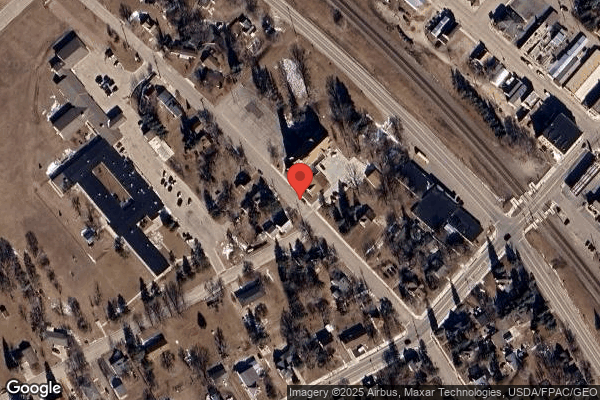
Frazee Care Center

219 WEST MAPLE AVENUE, FRAZEE, MN 56544 (218) 334-4501
Non profit - Corporation 42 Beds Independent Data: November 2025 2 Immediate Jeopardy citations
Trust Grade
54/100
#112 of 337 in MN
Last Inspection: November 2024

Within standard 12-15 month inspection cycle. Federal law requires annual inspections.

Overview

Frazee Care Center has received a Trust Grade of C, indicating it is average among nursing homes, sitting in the middle of the pack. It ranks #112 out of 337 facilities in Minnesota, which places it in the top half, but it is last in Becker County at #4 of 4 facilities. The facility is currently experiencing a worsening trend, with the number of issues increasing from 7 in 2023 to 11 in 2024. Staffing is a strength, rated 4 out of 5 stars with a 21% turnover rate, significantly lower than the state average, suggesting stable staff who know the residents well. However, a concerning $23,786 in fines is higher than 85% of Minnesota facilities, indicating potential compliance issues. Additionally, critical incidents include a resident suffering severe burns due to inadequate smoking safety measures and another resident's advance directives being poorly documented, risking unwanted medical interventions. Overall, while there are strengths in staffing and care quality, the facility's recent trend in issues and serious incidents raise significant concerns for prospective families.

Trust Score
C
54/100
In Minnesota
#112/337
Top 33%
Safety Record
High Risk
Review needed
Inspections
Getting Worse
7 → 11 violations
Staff Stability
✓ Good
21% annual turnover. Excellent stability, 27 points below Minnesota's 48% average. Staff who stay learn residents' needs.
Penalties
✓ Good
$23,786 in fines. Lower than most Minnesota facilities. Relatively clean record.
Skilled Nurses
✓ Good
Each resident gets 72 minutes of Registered Nurse (RN) attention daily — more than 97% of Minnesota nursing homes. RNs are the most trained staff who catch health problems before they become serious.
Violations
⚠ Watch
19 deficiencies on record. Higher than average. Multiple issues found across inspections.
★★★★☆
4.0
Overall Rating
★★★★☆
4.0
Staff Levels
★★★★★
5.0
Care Quality
★★★☆☆
3.0
Inspection Score
Stable
2023: 7 issues
2024: 11 issues

The Good

  • 4-Star Staffing Rating · Above-average nurse staffing levels
  • 5-Star Quality Measures · Strong clinical quality outcomes
  • Low Staff Turnover (21%) · Staff stability means consistent care
  • Full Sprinkler Coverage · Fire safety systems throughout facility
  • No fines on record
  • Staff turnover is low (21%)

    27 points below Minnesota average of 48%

Facility shows strength in staffing levels, quality measures, staff retention, fire safety.

The Bad

Federal Fines: $23,786

Below median ($33,413)

Minor penalties assessed

The Ugly 19 deficiencies on record

2 life-threatening
Nov 2024 3 deficiencies
CONCERN (D)

Potential for Harm - no one hurt, but risky conditions existed

Assessment Accuracy (Tag F0641)

Could have caused harm · This affected 1 resident

**NOTE- TERMS IN BRACKETS HAVE BEEN EDITED TO PROTECT CONFIDENTIALITY** Based on observation, interview and document review, the facility failed to accurately code the oral/dental section of the Minim...

Read full inspector narrative →
**NOTE- TERMS IN BRACKETS HAVE BEEN EDITED TO PROTECT CONFIDENTIALITY** Based on observation, interview and document review, the facility failed to accurately code the oral/dental section of the Minimum Data Set (MDS) for identified dental issues for 1 of 1 residents (R13) reviewed for dental services. Findings include: R13's quarterly MDS dated [DATE], identified R13 had severe cognitive impairment, and diagnoses which included: Alzheimer's disease, anxiety, and depression. R13's significant change MDS dated [DATE], identified R13 had no natural teeth or fragments. R13's significant change Care Area Assessment (CAA), dated 2/15/24, identified R13 lacked natural teeth, did not report complications and denied need for dental check-up at that time. Identified R13 wore upper dentures and staff were to assist with cleaning and placement as needed and R13 refused lower dentures. R13's Dental/Oral Data Collection Tool dated 5/6/24, identified R13 only wore upper dentures, no teeth lower jaw, and did not wish dental visit as nothing had worked in the past and was fine. R13's Dental/Oral Data Collection Tool dated 8/5/24, identified R13 only wore upper dentures, no teeth lower jaw, and did not wish dental visit as nothing had worked in the past and was fine. R13's Dental/Oral Data Collection Tool dated 8/22/24, identified R13 had own teeth and upper partial. R13 was seen by ATD hygienist, likely root tips in upper right (UR) and decay in upper left (UL). R13 mandible (lower jaw) was edentulous (toothless) with minimal ridge remaining. R13's Dental/Oral Data Collection Tool dated 11/4/24, identified R13 only wore upper dentures, no teeth lower jaw, and did not wish dental visit as nothing had worked in the past and was fine. R13's care plan revised 8/20/24, identified R13 was at risk for complications with deficits with activities of daily living (ADL)s related to current medical/physical status. R13's interventions included set up, assist of one as needed for hygiene and oral care completed. R13's care plan identified at risk for complications with dental status, and upper dentures and no teeth on bottom. Interventions included to coordinate arrangements for dental care, transportation as needed/as ordered. provide dental care as needed. R13's Apple Tree Dental Oral/Dental Assessment Form dated 8/22/24, identified likely root tips in upper right UR and decay in upper left UL. Mandible was edentulous with minimal ridge remaining. R13 would like to see doctor of dental surgery (DDS) for broken teeth. During an observation on 11/4/24 at 11:40 a.m., R13 was sitting in recliner in room, eyes closed, dressed in street clothes. Partial was noted in water in dental cup by sink. During an interview on 11/6/24 at 9:30 a.m., registered nurse (RN)-A confirmed R13's Dental/Oral Data Collection Tool had been completed on 11/4/24. R13 stated R13 had upper dentures, did not want dental visit and staff assisted her to brush her dentures. RN-A reviewed R13's electronic medical record, verified R13 was seen by Apple Tree Dental in August and FM-A wanted R13 to be seen by DDS for root tips in UR and decay in UL. At 12:31 p.m., during follow up interview, RN-A verified had just assessed R13, and verified R13 had two upper natural teeth that needed some treatment and R13 wore a partial. RN-A stated MDS's were completed off site and RN-A confirmed her assessment completed on 11/4/24, was not accurate. During an interview on 11/6/24 at 12:06 p.m., director of nursing (DON) confirmed the above findings of R13's Dental/Oral Data Collection Tool dated 11/4/24, and MDS was not accurate. DON stated the expectation was assessments and MDS were to be completed accurately. The facility policy titled Nursing Documentation (General) revised 2/23, identified the facility would document in a standardized manner of the care and services provided to a resident. The policy identified MDS completion as per Centers for Medicare & Medicaid Services (CMS) and Medicare guidelines. Back-up documentation from nursing staff was also completed.
CONCERN (D)

Potential for Harm - no one hurt, but risky conditions existed

Dental Services (Tag F0791)

Could have caused harm · This affected 1 resident

**NOTE- TERMS IN BRACKETS HAVE BEEN EDITED TO PROTECT CONFIDENTIALITY** Based on interview and document review, the facility failed to provide arrangements for follow-up care with a dentist for 1 of 1...

Read full inspector narrative →
**NOTE- TERMS IN BRACKETS HAVE BEEN EDITED TO PROTECT CONFIDENTIALITY** Based on interview and document review, the facility failed to provide arrangements for follow-up care with a dentist for 1 of 1 residents (R13) reviewed for dental care. Findings include: R13's quarterly Minimum Data Set (MDS) dated [DATE], identified R13 had severe cognitive impairment, and diagnoses which included: Alzheimer's disease, anxiety, and depression. R13's significant change MDS dated [DATE], identified R13 had no natural teeth or fragments. R13's significant change Care Area Assessment (CAA), dated 2/15/24, identified R13 lacked natural teeth, and did not report complications and denied need for dental check-up at that time. Identified R13 wore upper dentures and staff were to assist with cleaning and placement as needed and R13 refused lower dentures. R13's Dental/Oral Data Collection Tool dated 8/22/24, identified R13 had own teeth and upper partial. R13 was seen by ATD hygienist, likely root tips in UR and decay in UL. R13 mandible (lower jaw) was edentulous (toothless) with minimal ridge remaining. R13's Dental/Oral Data Collection Tool dated 11/4/24, identified R13 only wore upper dentures, no teeth lower jaw, and did not wish dental visit as nothing had worked in the past, and was fine. R13's care plan revised 8/20/24, identified R13 was at risk for complications with deficits with activities of daily living (ADL)s related to current medical/physical status. R13's interventions included set up, assist of one as needed for hygiene and oral care completed. Identified at risk for complications with dental status, and upper dentures and no teeth on bottom. Interventions included to coordinate arrangements for dental care, transportation as needed/as ordered. Provide dental care as needed. R13's Apple Tree Dental Oral/Dental Assessment Form dated 8/22/24, identified likely root tips in upper right (UR) and decay in upper left (UL). Mandible was edentulous with minimal ridge remaining. R13 would like to see doctor of dental surgery (DDS) for broken teeth. R13's progress notes reviewed from 8/1/24 to 11/6/24, identified the following; -8/22/24 at 11:31 a.m., R13 seen today by ATD hygienist. Likely root tips in upper right UR and decay in UL. R13 would like to see DDS for broken teeth. -9/24/24 at 4:34 p.m., writer followed up with family member (FM)-A regarding resident dental hygienist review. FM-A suggested to follow through with R13 to be seen by DDS for evaluation. R13's progress notes lacked follow up for DDS evaluation was scheduled or completed. During a telephone interview on 11/04/24 at 12:39 p.m., family member (FM)-A indicated the facility had spoken to her about having R13 seen by a dentist and she had stated she wanted the appointment to be scheduled. FM-A was not aware if an appointment had been scheduled. During an interview on 11/6/24 at 9:30 a.m., registered nurse (RN)-A stated R13 had upper dentures, did not want a dental visit and staff assisted her to brush her dentures. RN-A reviewed R13's electronic medical record, verified R13 was seen by Apple Tree Dental in August and FM-A wanted R13 to be seen by DDS. During an interview on 11/6/24 at 10:10 a.m., social services director (SSD)-A confirmed a call had been placed to FM-A and had agreed R13 was to be seen by DDS. SSD-A stated it was tied up in paper work, and stated she had not yet finished faxing the request for R13 to be scheduled to be seen by DDS. SSD-A confirmed an appointment had not been scheduled. During an interview on 11/6/24 at 12:06 p.m., director of nursing (DON) stated SSD scheduled follow up appointments and transportation. DON confirmed R13 and FM-A had wanted a follow up appointment with DDS to be scheduled. DON stated if there were no sores or concerns noted, she would expect dental appointment requests be followed up on within a couple of weeks. DON indicated if the family or resident gave the approval to be seen by DDS, DON would expect the appointment to be scheduled within a couple of weeks. DON confirmed an appointment for R13 had not been completed. The facility policy titled Dental Services, revised 8/22, identified the community provided or obtained, from an outside resource, routine and emergency dental services to meet the needs of each resident. The community would assist the resident in making appointments by arranging transportation to and from the dentist's office.
CONCERN (E)

Potential for Harm - no one hurt, but risky conditions existed

Accident Prevention (Tag F0689)

Could have caused harm · This affected multiple residents

**NOTE- TERMS IN BRACKETS HAVE BEEN EDITED TO PROTECT CONFIDENTIALITY** Based on observation, interview and document review, the facility failed to implement interventions for 1 of 1 residents (R28) w...

Read full inspector narrative →
**NOTE- TERMS IN BRACKETS HAVE BEEN EDITED TO PROTECT CONFIDENTIALITY** Based on observation, interview and document review, the facility failed to implement interventions for 1 of 1 residents (R28) who had repeated falls in the facility and remained at high risk for falls. In addition, the facility failed to ensure an environment that was free of accident hazards, related to hot water temperatures in 4 of 6 resident rooms (R6, R10,R13, R185) tested for safe water temperatures. This deficient practice had the ability to affect all 4 residents who used water from the water faucets. Findings include: FALLS R28's quarterly Minimum Data Set (MDS) dated [DATE], identified R28 had moderate cognitive impairment and had diagnoses which included diabetes mellitus (DM), hypertension (elevated blood pressure), and anxiety disorder. Indicated R28 required supervision with toileting and transfers. Identified R28 had one fall since the last assessment. R28's annual Care Area Assessment (CAA) dated 8/2/24, identified R28 had reduced safety awareness and required staff assistance during transfers and ambulation. Identified staff would proceed with supportive care and functional status would be addressed in care plan. R28's Fall Risk Screening Tool dated 9/23/24, identified R28 had three or more falls in the past six months and was at high risk for falls. R28's care plan revised 10/2/24, identified R28 had a history of falls and was non compliant with therapy recommendations for ambulation and transfers. R28's interventions included: encourage resident to use Front wheeled walker when transferring in room, Call light positioned for easy access and staff to place w/c legs in wheelchair bag on back of w/c when resident in room to prevent from tripping on them. Identified R28 required assistance with dressing, toilet use, and transfers. R28's [NAME] undated, identified staff were to place wheelchair legs ( foot pedals) in wheelchair bag on back of wheelchair when resident was in her room to prevent from tripping on them. Review of R28's progress notes from 7/1/24 to 11/4/24, identified the following: -7/12/24 at 6:25 p.m., found sitting on the floor with legs out in front of her facing recliner. R28 stated she was transferring from wheelchair to the recliner and tripped and fell. R28 had several skin tears to right arm and elbow, no other injuries noted. Intervention: staff to place wheelchair legs in wheelchair bag when R28 was in her room. -8/4/24 at 8:00 p.m., found laying on left side with back towards the bed in room. R28 stated she was trying to turn oxygen concentrator on. two skin tears to left forearm, no other injuries noted. Intervention: oxygen concentrator moved next to bedside. -10/1/24 at 4:50 p.m., found on floor next to nightstand. Skin tear to left forearm, no other injuries noted. R28 was self transferring. Intervention: anti roll backs on wheelchair. -10/11/24 at 9:00 a.m., Found on floor in room. R28 attempted to place clothes in hamper and fell on floor. Intervention: Therapy screen, lowered back of wheelchair seat. During an observation on 11/4/24 at 1:27 p.m., R28 was seated in her room in a recliner with a wheelchair on her right side which had two foot pedals applied and a large empty black bag on the back of the wheelchair. During an observation on 11/4/24 at 3:47 p.m., R28 was coming out of the bathroom in her room seated in a wheelchair which had two foot pedals applied and a large empty black bag on the back of the wheelchair. During an observation on 11/5/24 at 8:48 a.m., R28 was seated in her room in a recliner with a wheelchair on her left side which had two foot pedals applied and a large empty black bag on the back of the wheelchair. During an observation on 11/5/24 at 9:53 a.m., R28 remained seated as noted above in her recliner with a wheelchair on her left side which had two foot pedals applied and a large empty black bag on the back of the wheelchair. During a joint interview on 11/5/24 at 9:55 a.m., nursing assistant (NA)-A and registered nurse (RN) -C verified R28 was seated in a recliner in her room with a wheelchair next to her which had two foot pedals applied. NA-A stated the foot pedals should not have been on R28's wheelchair because she had tripped on the wheelchair pedals and fell in the past. RN-C stated her expectation was that R28's wheelchair foot pedals would have been placed in the black bag behind R28's wheelchair anytime R28 was in her room. During an interview on 11/5/24 at 10:05 a.m., RN manager (RN-M) verified R28 had several falls in the facility. RN-C stated one of R28's falls had been related to R28 tripping over her wheelchair pedals while in her room therefore R28's wheelchair pedals were to be placed in the bag on the back of R28's wheelchair anytime R28 was not being transported by staff. RN-M indicated her expectation was that care planned interventions would have been followed. During an interview on 11/5/24 at 1:19 p.m., director of nursing (DON) verified R28 had several falls in the facility. Verified R28's wheelchair pedals were to be placed in a bag in the back of the wheelchair anytime R28 was in her room as a fall intervention. DON indicated her expectation was that care planned interventions would have been followed. HOT WATER On 11/4/24 at 12:02 p.m., during resident screening the water temperature in R6, R10, R13, and R185, felt very warm to the touch after running water for only a few minutes. On 11/4/24 at 12:32 p.m., maintenance director (MD) verified the water in R6, R10, R13, and R185's room felt too hot and used a thermometer to measure the water temperatures using the facility thermometer in resident rooms registered as follows: -R6's room [ROOM NUMBER] water was 122.2 degrees F. -R10's room [ROOM NUMBER] water was 122 degrees F. -R13 room [ROOM NUMBER] water was 122.2 degrees F. -R185 room [ROOM NUMBER] water was 122 degrees F. During an interview on 11/4/24 at 2:40 p.m., registered nurse (RN)-C verified all four residents were at risk for potential burns when the water was too hot. During an interview on 11/5/24 at 8:00 a.m. MD verified the above rooms were too hot according to State and Federal guidelines. MD stated he had completed random audits of water temps in the past month. MD stated at some point in the last month, the aerators ( a device that screws into a faucet to control the amount of water that comes out of the faucet) had been adjusted so there was more hot water coming from the faucets than should have been which could affect the temperature of the water coming from the above faucets. MD stated his expectation was that the water temperatures in all resident rooms would not exceed federal guidelines as water over 120 degrees F. had the potential to burn someone. During an interview on 11/5/24 at 1:16 p.m., administrator stated his expectations were that the water temperatures would remain within the Federal guidelines. Review of a facility policy titled Accidents/Falls-HDGR reviewed 11/23, identified the facility strived to promote safety, dignity, and overall quality of life for its residents by providing an environment that was free from any hazards for which the facility had control and by providing appropriate supervision and interventions to prevent avoidable accidents. Identified, resident care plans should be evaluated and updated with each fall with a new and applicable intervention based on root cause. The focus was to be on prevention and maintaining a safe environment. further identified the resident's individualized care plan was to be updated with any changes or new interventions post fall/incident/accident, communicated to appropriate staff, and implemented. The facility policy Water Temperatures dated 1/22, identified [NAME] Care Center would check hot water temperatures at least once a week randomly to ensure water temperatures were between 105-120 degrees F. (or as specified by State requirements). Indicated staff were to check resident rooms at the end of each wing on a rotating basis per facility policy.
Feb 2024 7 deficiencies
CONCERN (D)

Potential for Harm - no one hurt, but risky conditions existed

Deficiency F0554 (Tag F0554)

Could have caused harm · This affected 1 resident

**NOTE- TERMS IN BRACKETS HAVE BEEN EDITED TO PROTECT CONFIDENTIALITY** Based on observation, interview, and document review, the facility failed to ensure residents were assessed for the ability to s...

Read full inspector narrative →
**NOTE- TERMS IN BRACKETS HAVE BEEN EDITED TO PROTECT CONFIDENTIALITY** Based on observation, interview, and document review, the facility failed to ensure residents were assessed for the ability to self administer medications (SAM) for 1 of 3 residents (R3) reviewed for medication administration. Findings include: R3's significant change Minimum Data Set (MDS) dated [DATE], indicated R3 was cognitively intact. Identified R3 had diagnoses which included heart failure, anxiety and depression. Indicated R3 required moderate assistance of one staff with toileting and personal hygiene. Review of R3's electronic health record (EHR) revealed a SAM assessment had not been completed and R3 did not have an order for self administration of medications. R3's Physician's Telephone Orders dated 2/5/24, and signed 2/12/24, directed staff to administer DuoNeb (medication used to relax the muscles in the airways and increase air flow to the lungs) four times daily (QID) for seven days then as needed (PRN) for wheezing and shortness of breath (SOB). R3's Medication Administration Record (MAR) dated 2/1/24 to 2/9/24, indicated R3 was taking Ipratropium-albuterol inhalation solution (DuoNeb) 0.5-2.5 3 milligrams (mg) per 3 milliliters (ml). R3's order further indicated R3's order began on 2/5/24 at 8:00 p.m., and ended 2/12/24 at 4:00 p.m. R3's order for DuoNeb was changed to PRN following the physician's telephone order on 2/12/24. R3's care plan dated 12/21/23, indicated staff were to observe R3 for changes in cognition, level of alertness, confusion and forgetfulness. Identified staff were to reorient R3 as needed. During an observation on 2/12/24 at 11:33 a.m., registered nurse (RN)-A verified R3's DuoNeb order, retrieved the DuoNeb from the medication cart, locked the medication cart and walked to R3's room. RN-A knocked on R3's door, entered the room, explained the medication to R3, opened the DuoNeb and poured the solution into the nebulizer container. RN-A handed the nebulizer container to R3, turned the nebulizer machine on and informed R3 she would be back in ten minutes to shut the machine off. RN-A exited R3's room, returned to medication cart and signed off that the DuoNeb had been administered. RN-A stated R3 is only taking this medication for seven days so she just does it by herself. During an observation on 2/12/24 at 11:49 a.m., RN-A returned to R3's room, knocked on door, entered R3's room and shut the nebulizer machine off. RN-A took the nebulizer container from R3, disassembled the nebulizer container, washed it out in the sink and placed it on a wash cloth next to the nebulizer machine to dry. During an interview on 2/13/24 at 8:59 a.m., R3 stated she she had been receiving DuoNeb treatments since she acquired an illness. R3 indicated she did not know how often she was receiving the medication. R3 stated she had not been taught how to use the nebulizer machine. R3 verified nursing staff did not remain in the room with her while the treatment was being administered. She stated nursing staff turned the nebulizer machine on, handed her the nebulizer and left the room right after handing it to her. R3 indicated nursing staff returned to her room once the nebulizer treatment was completed to turn the machine off. During an interview on 2/13/24 at 9:27 a.m., RN-A verified R3's order for DuoNeb's for seven days. RN-A confirmed she set R3's nebulizer treatment up, handed the nebulizer container to R3, turned the nebulizer machine on and set her timer to return to R3's room when the treatment was finished. RN-A sated she had checked on R3 however did not stay in R3's room during the entire administration. RN-A confirmed R3 did not have a SAM assessment completed and did not have an order for self administration. RN-A stated if a resident did not have a SAM assessment or an order for self administration, staff were required to stay in the room during the entire administration. During an interview on 2/13/24 at 1:24 p.m., director of nursing (DON) confirmed the above findings and indicated staff should have been following the facility policy. DON stated her expectations were staff would assess residents for the ability to complete self administration of medications. DON indicated if the resident did not have a SAM assessment or physician's orders, staff were expected to remain with the resident during the entire administration. Facility policy titled Self Administration of Medications revised 1/23, indicated an individual resident may self-administer medication if the resident requested and the interdisciplinary team had determined that self-administration was clinically appropriate. Staff were to complete a self-administration of medication tool. If the team determined that self-administration was clinically appropriate, staff would obtain a physician's order for resident to self-administer each specific medication that the resident had been qualified to self-administer. In addition, staff would update the resident's care plan to indicate the resident's choice to self-administer medications.
CONCERN (E) 📢 Someone Reported This

A family member, employee, or ombudsman was alarmed enough to file a formal complaint

Potential for Harm - no one hurt, but risky conditions existed

Deficiency F0583 (Tag F0583)

Could have caused harm · This affected multiple residents

During an observation on 2/12/24 at 11:21 a.m., RN-B removed R10's medications from the medication cart located on the 200's wing. RN-B walked away from the medication cart while the computer screen r...

Read full inspector narrative →
During an observation on 2/12/24 at 11:21 a.m., RN-B removed R10's medications from the medication cart located on the 200's wing. RN-B walked away from the medication cart while the computer screen remained open with R10's eMAR visible. RN-B went into the day room to administer R10's medications. During that time RN-B administered R10's medications, one resident wheeled up to the medication cart and had the potential to see R10's confidential eMAR information. During an observation on 2/12/24 at 11:26 a.m., RN-B removed R20's medication from the the medication cart. RN-B walked away from the mediation cart while R20's eMAR remained open. During the time R20's eMAR was open and unattended, one resident walked by the medication cart and had the potential to view R20's confidential eMAR information. During an interview on 2/14/24 at 2:42 p.m., RN-B stated her normal process was to close the computer or lock the computer screen when she left the medication chart. RN-B verified she did not keep R10's and R20's eMAR information confidential when she left the computer screens open and visible and walked away. During an interview on 2/13/24 on 1:26 p.m., director of nursing (DON) confirmed the above findings and indicated due to Health Insurance Portability and Accountability Act of 1996,(HIPAA) computer screens should always be locked and care sheets should not be left visible. DON stated her expectations were staff would follow the policy for privacy. Review of facility policy titled Privacy and Confidentiality revised 11/16, identified the resident had a right to personal privacy and confidentiality of his or her personal and medical records. The resident had a right to secure and confidential personal and medical records. Resident records were limited to the use of the staff and would be safeguarded at all times to ensure confidentiality. Review of facility policy titled Medication Administration revised 11/22, identified staff were to place medication administration books or laptop/computer on top of cart; when unattended records should be closed for privacy. Based on observation, interview, and document review, the facility failed to ensure confidential information was not readily available for all residents, staff, and visitors to view for 17 of 17 residents (R26, R3, R21, R28, R86, R6, R11, R22, R5, R14, R27, R8, R31, R9, R30, R20 and R10) residing on the 100's wing whose confidential information was observed to be visible on two open computer screens and a resident care sheet in a common area. Findings include: During an observation on 2/12/24 at 11:26 a.m., a resident care sheet for the 100's unit was observed on top of the medication cart with the sheet facing right side up and information visible to anyone walking by. Resident care sheet identified first and last names for R26, R3, R21, R28, R86, R6, R11, R22, R5, R14, R27, R8, R31, R9, R30, R20 and R10 , room numbers, vitals and medication notes. Registered nurse (RN)-A returned to the medication cart at 11:31 a.m., wrote on the resident care sheet, and kept the care sheet information right side up with the information still visible. RN-A opened electronic medical record (eMAR) documentation system, moved over to another medication cart and opened the eMAR documentation system. Resident information including names, room numbers and diagnoses from residents who resided in the 100's wing as noted above, were visible on the computer screen. RN-A walked away from both medication carts, entered the medication room behind the nurses's station and closed the door. The screen from the eMAR remained open and the care sheet remained visible to others who walked by. RN-A returned to the medications carts, walked around the front of both medication carts and down the hall into the therapy room while the screen from the computer and care sheet continued to be visible to others who walked by. RN-A returned to the medication carts at 11:36 a.m., reviewed the open eMAR documentation system on the medication cart RN closed the laptop on the medication cart. RN-A moved over to the other medication cart and started to dispense medications. RN-A dispensed medications, locked the laptop screen on the medication cart, placed a kleenex box over the care sheet and walked down the 100's hallway. Both medication carts were located in front of the nurses station at the end of the 100's wing hallway. Five unidentified staff and two visitors were observed passing the front of both medication carts during the observation. During an interview on 2/13/24 at 9:31 a.m., RN-A indicated she was unaware she had left the residents' care sheet visible and computer screens open when she walked away from the medication carts. RN-A confirmed she walked away from both carts to provide assistance elsewhere. RN-A revealed she used the resident care sheet to track residents' vitals and store information about medication administration. RN-A indicated it was important to ensure residents' personal information was not visible to others and RN-A would be more cautious with personal information.
CONCERN (E) 📢 Someone Reported This

A family member, employee, or ombudsman was alarmed enough to file a formal complaint

Potential for Harm - no one hurt, but risky conditions existed

Deficiency F0658 (Tag F0658)

Could have caused harm · This affected multiple residents

**NOTE- TERMS IN BRACKETS HAVE BEEN EDITED TO PROTECT CONFIDENTIALITY** R4's physician order summary dated 1/31/24, identified the following medications were ordered: Antacid suspension 30 ml by mouth...

Read full inspector narrative →
**NOTE- TERMS IN BRACKETS HAVE BEEN EDITED TO PROTECT CONFIDENTIALITY** R4's physician order summary dated 1/31/24, identified the following medications were ordered: Antacid suspension 30 ml by mouth every six hours as needed. Cranberry tablet 400 mg by mouth daily. Dilaudid 2 mg by mouth twice daily. Doxepin 25 mg by mouth daily. Famotidine 20 mg by mouth twice daily. Fetzima 60 mg by mouth once daily. Haloperidol 2 mg by mouth once daily and 3 mg by mouth once daily. Levothyrozine 150 mcg by mouth once daily. Milk of Magnesia 30 cc by mouth every 24 hours as needed. Miralax 17 gm by mouth once daily. Senna Plus one tablet by mouth twice daily. Seroquel 200 mg by mouth once daily and 100 mg by mouth once daily. Simethicone 125 mg by mouth every four hours as needed. Trazodone 150 mg by mouth once daily. Tylenol 650 mg by mouth twice daily and twice daily as needed. Vistaril 50 mg by mouth three times daily. R10's physician order summary dated 12/19/23, identified the following medications were ordered: Buspirone 7.5 mg by mouth twice daily. Depakote sprinkles 250 mg by mouth at bedtime daily. Donepezil 5 mg by mouth daily. Effexor XR 225 mg by mouth daily. Lactulose 30 ml by moth daily and every 24 hours as needed. Levothyroxine 225 mcg by mouth daily. Lyrica 150 mg by mouth twice daily. Milk of Magnesia 30 ml by mouth every 24 hours as needed. Miralax 17 gm by mouth twice daily. Morphine sulfate oral solution 2.5 mg buccally (placing the medication between the gum and cheek) every two hours as needed and three times a daily. Namenda 10 mg by mouth twice daily. Oyster Calcium 500 mg by mouth three times a day. Relafen 750 mg by mouth twice daily. Risperidone 0.25 mg by mouth once daily and 0.5 mg by mouth once daily. Senna-Plus two tablets by mouth twice daily. Tylenol 650 mg by mouth four times a day. Vitamin D 2000 mg by mouth daily. R13's physician order summary dated 2/9/24, identified the following medications wre ordered: Senna Plus two tablets by mouth as needed. Remeron 15 mg by mouth daily. Metoprolol 25 mg by mouth twice daily. Metamucil one packet by mouth as needed daily. Melatonin 6 mg by mouth daily at bedtime. Magnesium Oxide 400 mg by mouth daily. Magnesium Citrate 10 ounces by mouth as needed every seven days if no bowel movement. Fluoxetine 80 mg by mouth once daily. Robitussin Mucus plus Chest Congestion 10 ml by mouth every four hours as needed. Glycopyrrolate 1 mg by mouth every six hours as needed. Furosemide 40 mg by mouth once daily. Divalproex Sodium 500 mg by mouth once daily. Ferrous Sulfate 325 mg by mouth once daily-do not crush. Metronidazole 500 mg by mouth twice daily for three days beginning 2/9/24. Eliquis 5 mg by mouth twice daily. Ciprofloxacin 500 mg by mouth twice daily for three days beginning 2/9/24. Aspirin 81 mg by mouth once daily. R14's physician order summary dated 12/19/23, identified the following medications were ordered: Aspirin 325 mg by mouth daily. DocQLace 100 mg by mouth daily. I-Vite multi-vitamin by mouth twice daily. Keppra 500 mg by mouth in the morning and 750 mg by mouth in the evening. Lipitor 10 mg by mouth daily. Metformin 500 mg twice daily. Norvasc 10 mg by mouth daily. Proscar 5 mg by mouth daily. Tylenol 650 mg by mouth every six hours as needed. During an observation and interview on 2/11/24 at 4:09 p.m., RN-C unlocked medication cart, opened second drawer from top which revealed two white paper medication cups with multiple medications already present in both of them. The paper cups were located at the rear of the drawer, sliding back and forth when drawer opened and closed, and were labeled with black marker and was illegible. RN-C stated, I am the only nurse on the 200 and 300 wing, you can watch my medication pass however I have many of them already dished up. RN-C stated the two paper medication cups were for R13 and R14. RN-C indicated he was unable to verify what medications were in each residents pre-dished medication cups and, stated, I would have to look up the residents medication orders to see what is ordered for the evening. In addition, RN-C indicated he was unable to verify what the black marker identified on the cups and stated, there are certain residents that I always pre-dish medications early and will give the medications later when they are due to be given. One medication cup was observed to have crushed medications only. RN-C unlocked the controlled medication drawer on the right side of medication cart which revealed two paper medication cups with multiple medications in each cup. The cups moved around in the drawer when opened, were labeled with a black marker which was illegible. RN-C stated the medication cups were for R4 and R10 and locked in the controlled drawer due to having controlled substances ordered. When asked why medications were pre-dished, RN-C stated, That's just how it is done in the nursing home. RN-C indicated he was unable to verify what medications were in each residents pre-dished medication cup without checking each residents medications orders. During an interview on 2/13/24 at 2:13 p.m., pharmacy consultant confirmed the standard of practice recommended not to dish up medications prior to administering them and medications should be given closest to the time ordered. During an interview and observation on 2/13/24 at 12:14 p.m., director of nursing (DON) confirmed R6's Fluticasone-Salmeterol inhaler label included instructions to rinse mouth after use. DON stated it was important for residents to rinse their mouth after use to prevent problems with their mouth. DON stated her expectation was for nursing staff to follow R6's orders. During an interview on 2/13/24 at 2:43 p.m., DON stated the expectation for nursing staff was they would not setup medications ahead of time and would not dish up narcotics or crush medications ahead of time. The practice could result in medication errors including a resident receiving the wrong medication and possible injury. R6's Fluticasone-Salmeterol inhaler box instructions which included: to rinse your mouth with water after breathing in the medicine. Spit out the water. Do not swallow it. R6's Fluticasone-Salmeterol inhaler pharmacy label instructions included: to inhale 1 puff into lungs twice a day (BID), rinse mouth after use. The facility policy titled Medication Administration revised 11/22, identified it was the community's policy to administer all medications and treatments in a safe and effective manner. The policy procedure instructions included staff were to read medication orders on the medication sheet and to compare the label with medication sheet. The policy lacked instructions for inhaled medication administration. In addition, the policy stated to proceed with the cart to the resident's room area, for solid medications, remove medication container (blister pack or bottle) and compare label with medication sheet. Place appropriate dosage into medication cup. Re-read label and medication sheet and return drug to its proper location (triple check). Administer medication to resident. Repeat procedure with each resident who was to receive medications. Review of the facility policy titled medication labeling and storage revised 11/22, lacked instructions on pre-dishing and storing medications in the medication cart prior to medication administration. Review of the facility policy titled medications-controlled revised 11/22, identified controlled substances were signed out upon dispensing of the medication. Based on observation, interview and document review, the facility failed to follow standards of practice related to medication administration for 1 of 1 resident (R6) observed to receive an inhalation medication, and 4 of 4 residents (R4, R13, R14, R15) observed for medication administration. Findings include: R6's quarterly Minimum Data Set (MDS) dated [DATE], identified R6 was cognitively intact, and had diagnoses which included: chronic obstructive pulmonary disease (COPD), respiratory failure and heart failure. Identified R6 received oxygen therapy. R6's comprehensive care plan dated 2/13/24, identified R6 required staff assistance with dressing, hygiene and transfers. Indicated R6 had diagnosis of COPD, with goals which included: would be free of serious complications related to respiratory disease and following doctor of medicine (MD) orders. R6's Order Summary Report signed 1/16/24, identified Fluticasone-Salmeterol (steroid) Aerosol Powder Breath Activated 250-50 microgram (MCG)/dose-1 puff inhale orally two times a day for COPD. Rinse mouth after each use. During an observation on 2/13/24 at 7:13 a.m., R6 was dressed in street clothes seated in her electric wheelchair in front of a table in her room. Registered nurse (RN)-A entered R6's room carrying an oxygen tank, which she applied to the back of R6's wheelchair. RN-A observed R6 take her oral medications from two paper medication cups, while taking sips of water. Nursing assistant (NA)-A entered the room and asked R6 if she needed anything. RN-A instructed R6 to take two inhalers, one which included the Fluticasone-Salmeterol inhaler R6 took the puffs of inhalers as prescribed. RN-A took the two inhalers and exited the room. R6 was not observed to rinse her mouth out and RN-A had not instructed R6 to rinse her mouth as ordered after taking the Fluticasone-Salmeterol inhaler. During an interview on 2/13/24 at 9:16 a.m., R6 indicated she received the Fluticasone-Salmeterol inhaler twice a day, which she had used at home prior to coming to the facility. R6 confirmed she had not rinsed her mouth after receiving the inhaler earlier that morning. R6 stated she was aware she was supposed to rinse her mouth after its use and had rinsed her mouth after using the inhaler once in a while at her home. R6 indicated she had not been reminded by facility staff to rinse her mouth out after the inhaler administration for a couple of years. During an interview on 2/13/24 at 9:43 a.m., RN-A confirmed she had not instructed R6 to rinse her mouth after receiving the Fluticasone-Salmeterol inhaler. RN-A stated she had not seen the order instructions to rinse mouth after use. RN-A indicated it was important to rinse the mouth after a steroid inhaler was received to prevent mouth sores. During a phone interview on 2/13/24 at 11:45 a.m., pharmacy consultant (PC)-A stated it was very important to rinse the mouth after using a Fluticasone-Salmeterol inhaler because it was a steroid. PC-A indicated it could cause Thrush, a fungal infection inside the mouth. PC-A stated the label on the Fluticasone-Salmeterol inhaler should include instructions to rinse after use. PC-A indicated it was her expectation that nursing staff would instruct the resident to rinse their mouth after use, and if they were unable to rinse their mouth, staff would use a toothette to cleanse their mouth after use. PC-A stated she would include reminders in her monthly report to the facility. During an interview and observation on 2/13/24 at 12:14 p.m., director of nursing (DON) confirmed R6's Fluticasone-Salmeterol inhaler label included instructions to rinse mouth after use. DON stated it was important for residents to rinse their mouth after use to prevent problems with their mouth. DON stated her expectation was for nursing staff to follow R6's orders. R6's Fluticasone-Salmeterol inhaler box instructions which included: to rinse your mouth with water after breathing in the medicine. Spit out the water. Do not swallow it. R6's Fluticasone-Salmeterol inhaler pharmacy label instructions included: to inhale 1 puff into lungs twice a day (BID), rinse mouth after use. The facility policy titled Medication Administration revised 11/22, identified it was the community's policy to administer all medications and treatments in a safe and effective manner. The policy procedure instructions included staff were to read medication orders on the medication sheet and to compare the label with medication sheet. The policy lacked instructions for inhaled medication administration. In addition, the policy stated to proceed with the cart to the resident's room area, for solid medications, remove medication container (blister pack or bottle) and compare label with medication sheet. Place appropriate dosage into medication cup. Re-read label and medication sheet and return drug to its proper location (triple check). Administer medication to resident. Repeat procedure with each resident who was to receive medications.
CONCERN (E)

Potential for Harm - no one hurt, but risky conditions existed

Deficiency F0761 (Tag F0761)

Could have caused harm · This affected multiple residents

**NOTE- TERMS IN BRACKETS HAVE BEEN EDITED TO PROTECT CONFIDENTIALITY** During an observation/interview on [DATE] at 4:55 p.m., registered nurse (RN)-C entered medication storage room, opened refriger...

Read full inspector narrative →
**NOTE- TERMS IN BRACKETS HAVE BEEN EDITED TO PROTECT CONFIDENTIALITY** During an observation/interview on [DATE] at 4:55 p.m., registered nurse (RN)-C entered medication storage room, opened refrigerator and took out a box with a vial of Mantoux solution, (Tuberculin Purified Protein Derivative), verified the solution had been opened and accessed. RN-C confirmed the box and the vial did not have a date on them of when opened and placed into use. RN-C verified a label on the box and the vial stated to date when opened and discard after being opened for 30 days. During an interview on [DATE] at 2:13 p.m., pharmacy consultant (PC) indicated it was the responsibility of the facility to ensure all insulin pens were dated and discarded following manufacturer's recommendations. PC indicated Basaglar Solution Insulin pens, Lantus Solostar Solution Insulin pens and Insulin Glargine pens expired after 28 days being open at room temperature. PC stated her expectations were for the facility to have medications properly labeled with resident information and to follow manufacturer's recommendations for expiration dates. In addition, pharmacy consultant indicated the pharmacy applied a label on the Mantoux box and vial as a reminder to staff to date once opened and discard after 30 days of being opened. Pharmacy consultant verified the expectation of nursing was to date the Mantoux solution once opened and discard after 30 days of being opened. Stated per manufacturer direction, the stability of tuberculin purified protein derivative was for 30 days after opened and would then be discarded. During an interview on [DATE] at 2:43 p.m., director of nursing (DON) confirmed the above findings and indicated her expectations were for staff to follow facility policy and manufacturer's recommendations. DON stated she would expect staff to date all insulin pens when they were opened and discard when they expired. DON indicated she would expect all nursing staff passing medications to review expiration dates during medication passes. DON stated the facility did not have a process in place to ensure medications were being stored properly. In addition, DON verified the expectation of nursing staff would be to date the box and vial of Mantoux solution once opened. DON stated the solution would not be safe to use after 30 days of being opened. Review of facility policy titled Medication Labeling and Storage revised 11/22, medications were labeled in accordance with state and federal laws and include the expiration date when applicable. Labels included the residents name, drug name, dose, frequency, route instructions for use, and expiration date. Review of manufactures specifications for In-use Pen, store the pen you are currently using at room temperature [up to 86° Fahrenheit (F) (30°Celsius (C))] and away from heat and light. Throw away the pen you are using after 28 days, even if it still has insulin left in it. Review of manufacturer's specific for use, 3 ml single-patient-use SoloStar in use pen expires 28 days after opening. Review of manufacturer's specifications for use, 3 ml single-patient-use insulin glargine in use pen expires 28 days after opening. Review of facility policy titled, Drugs and Biological Storage-Labeling, dated [DATE], identified drugs and biologicals were to labeled in accordance with current accepted professional standards, including the appropriate accessory and cautionary instructions and the expiration data when applicable. Based on observation, interview, and document review, the facility failed to ensure insulin pens were accurately dated when opened for 2 of 3 residents (R11 and R136) who received insulin injections and insulin pens were disposed of past expiration date for 1 of 3 residents (R9) who received insulin injections. Further, the facility failed to ensure correct labeling on one refrigerated medication in 1 of 2 refrigerators reviewed for medication storage. Findings include: R11 R11's quarterly review Minimum Data Set (MDS) dated [DATE], indicated R11 had diagnoses which included diabetes mellitus (DM), malnutrition and anxiety. Indicated R11 required moderate assistance of one staff with toileting and personal hygiene. R11's signed physician's orders from [DATE] to [DATE], indicated R11 a physician's order for lantus (long acting insulin medication to control blood sugar) 10 units in the morning (AM) and 10 units at bedtime (HS) / evening (PM). R11's order audit report from [DATE], indicated R11's order was for Insulin Glargine Subcutaneous Solution 100 units/ml, inject 10 units subcutaneously two times a day for DM. R9 R9's significant change MDS dated [DATE], indicated R9 had diagnoses which included end stage renal disease (disease of the kidneys), DM and anxiety. Indicated R9 required extensive assistance of one staff with toileting, transfers and personal hygiene. R9's signed physician's orders dated [DATE], lacked an order for Basaglar KwikPen Subcutaneous Solution 100 units/ml (long acting insulin medication to control blood sugar. R9's order audit report from [DATE], indicated R9's order for Basaglar KwikPen Subcutaneous Solution 100 units/ml, inject 7 unites subcutaneous one time a day for type 2 DM, hold and notify provider if blood sugar (BS) is below 80 had been discontinued. R136 R136's signed Order Summary Report dated [DATE], indicated R136 had a diagnosis of type 2 diabetes mellitus (DM) and had a physician's order for Insulin Glargine Subcutaneous Solution 100 units/ml (long acting insulin medication to control blood sugar, inject 25 units subcutaneously at bedtime for DM. During an observation and interview on [DATE] at 4:15 p.m., while completing medication storage of the medication carts with registered nurse (RN)-B, the top drawer of medication cart A1 contained an Insulin Glargine Subcutaneous Solution 100 units/ml insulin pen for R136 which was not dated. In the top drawer of medication cart A2, an Insulin Glargine Subcutaneous Solution 100 units/ml insulin pen for R11 was noted with no date and a Basaglar KwikPen Subcutaneous Solution 100 units/ml insulin pen for R9 which identified it had been opened on [DATE] and contained no expiration date. RN-B confirmed the outdated insulin pen and undated insulin pens . RN-B stated R11, R9 and R136 had current orders for insulin and stated yes we are giving them. RN-B indicated her usual process had been to open insulin pens and date them right away. RN-B stated she thought insulin pens were good for 30 days after opening and the facility used a cheat sheet do confirm expiration dates. During an interview on [DATE] at 2:13 p.m., pharmacy consultant (PC) indicated it was the responsibility of the facility to ensure all insulin pens were dated and discarded following manufacturer's recommendations. PC indicated Basaglar Solution Insulin pens, Lantus Solostar Solution Insulin pens and Insulin Glargine pens expired after 28 days being open at room temperature. PC stated her expectations were for the facility to have medications properly labeled with resident information and to follow manufacturer's recommendations for expiration dates.
CONCERN (E)

Potential for Harm - no one hurt, but risky conditions existed

Infection Control (Tag F0880)

Could have caused harm · This affected multiple residents

During an observation on 2/11/24 at 5:53 p.m., R13 was observed laying in bed for wound care. Registered nurse (RN)-C entered R13's room for a scheduled wound dressing change. RN-C applied gloves, ope...

Read full inspector narrative →
During an observation on 2/11/24 at 5:53 p.m., R13 was observed laying in bed for wound care. Registered nurse (RN)-C entered R13's room for a scheduled wound dressing change. RN-C applied gloves, opened R13's dresser, removed saline solution and 4x4 gauze and placed onto bedside table. RN-C tore the top off three package's of 4x4 gauze. RN-C removed saline bottle cover and poured saline into the 4x4 packages, removed the 4x4's from the packages and placed the 4x4's into a stack on R13's bedside table. RN-C pushed the bedside table that was near the dresser over to R13's bed. RN-C removed a soiled dressing from R13's right knee. R13's knee was observed to be bleeding. RN-C applied pressure to R13's right knee with the soiled gauze. RN-C removed the soiled gauze and a few drops of blood from the actively bleeding wound went onto the bed sheets. RN-C used wound cleanser and sprayed the open wound on R13's knee, approximately a silver dollar amount of blood was observed to spray onto R13's bed sheets. RN-C set the wound cleanser bottle on R13's bedside table, the bottle was observed to have numerous splatters of blood present on the spout, handle and front of bottle. RN-C opened an ointment of bacitracin with soiled gloves, put gloved finger on end of ointment tube and expelled ointment onto his gloved finger. RN-C put ointment on right knee which was still actively bleeding. RN-C set ointment on bedside table, removed backing from a foam dressing with adhesive edges and applied to R13's right knee. RN-C put gloved finger on ointment, expelled ointment onto gloved finger and applied ointment to R13's left knee that had three abrasions each approximately the size of a penny and were left open to air. RN-C lowered the head of the bed using electric hand control and assisted trained medication aide (TMA)-A to roll R13 onto his left side. RN-C retrieved the same wound spray bottle from bedside table, sprayed two wounds on R13's left buttock and one wound on R13's right buttock area. RN-C used one single 4x4 dry gauze to dry all three wounds, placed ointment on gloved finger and applied to all three wounds. RN-C applied the three wet 4x4 gauze pads and placed one over each wound, opened two abdominal pad dressings and secured dressings with tape to buttocks. RN-C took gloves off, discarded into trash bin, picked up black marker from bedside table, dated and initialed R13's right knee dressing. RN-C assisted TMA-A to move R13 onto his back, put a blanket on R13 and raised the head of the bed using the electric hand control. RN-C set wound supplies on R13's dresser, left R13's room. RN-C was not observed to wash or sanitize hands when entering R13's room, during any of the wound cares, or prior to leaving R13's room. During an interview on 2/13/24 at 12:15 p.m., infection preventionist (IP) stated the expectation of nursing staff when completing wound cares was to practice good hand hygiene, remove gloves when needed and ensure the environment was sanitary. During an interview on 2/13/24 at 1:19 p.m., director of nursing (DON) indicated she was not aware laundry was being handled and transported as noted above. DON stated her expectations were for staff to be sanitizing or washing their hands before they entered a resident's room and when they left a resident's room. DON indicated staff were expected to follow the policies that had been put in place regarding transporting of linen and hand washing. Review of facility policy titled Linen Handling dated revised 11/2022, when handling, storing, processing, and transporting linens, facility personnel use procedures designed to prevent the spread of infection. Wash hands, apply gloves before handling soiled linen and hands are washed after handling dirty laundry and prior to handling clean laundry. Review of facility policy titled Handwashing revised 11/2022, identified the facility required staff to wash their hands after each direct resident contact for which handwashing was indicated by accepted professional practice. As per recommendations from the CDC guidelines. Alcohol-based hand sanitizers were the most effective products for reducing the number of germs on the hands of healthcare providers. Based on observation, interview, and document review, the facility failed to ensure personal laundry and linen were transported in a manner that prevented risk of contamination for 3 of 3 hallways observed for linen transportation. In addition, the facility failed to ensure hand hygiene occurred during the laundry and linen distribution. Further, the facility failed to ensure infection prevention practices including hand hygiene were followed during wound cares for 1 of 1 residents (R13) observed for wound cares. Findings include: Review of Centers for Disease Control (CDC ) guidance, Appendix D - Linen and Laundry Management updated 5/4/23, identified linens must be sorted, packaged, transported, and stored in a manner that prevented risk of contamination by dust, debris, soiled linens or soiled items. Review of Centers for Disease Control (CDC) guidance titled Hand Hygiene in Healthcare Settings reviewed 4/28/23, identified hand hygiene protected residents receiving care and helped prevent the spread of germs. During an observation on 2/12/24 at 9:24 a.m., housekeeping aid (HA)-B took one pair of pants and one shirt out of the uncovered linen cart, brought into R30's room, placed in closet, brought two hangers out of the room and placed the hangers on the outside handle of the cart. HA-B pushed the uncovered linen cart down the 100's hallway, took one pair of pants, one shirt out of the linen cart, brought into R5's room, placed in closet, brought two hangers out of the room and placed them on the outside linen cart handle. HA-B pushed the uncovered linen cart down the hallway, took one shirt, one pair of pants out of the linen cart, brought into R22's room, placed in closet and walked back to the cart. HA-B pushed the uncovered linen cart down the hallway to the 200's rooms. HA-B took two shirts from the linen cart, entered R10's room, placed into the closet, grabbed two hangers from closet and placed on linen cart handle. HA-B entered R1's room, picked a pair of socks off the floor, placed them into the hamper in R1's room, grabbed two hangers from closet and placed them on the linen cart handle. HA-B continued to push the uncovered linen cart down the hallway past R24 in a wheelchair, grabbed one shirt, one pair of pants from linen cart, brought into R25's room and placed into closet. R24 entered R25's room in wheelchair, HA-B used both wheelchair handles and wheeled R24 out of R25's room into R24's room. HA-B exited R24's room, went to the linen cart, grabbed one shirt, one pair of pants out of the linen cart, brought into R24's room and put them in the closet. HA-B grabbed two hangers from R24's room, assisted R24 with her glasses, exited R24's room and placed the hangers on the handle of the linen cart. An unknown resident was pushed by the open linen cart in a bath chair while HA-B removed one blanket from the linen cart, placed on her knee, grabbed another blanket from the linen cart and placed under her left arm. HA-B walked down the hallway with both blankets, entered R7's room, placed one blanket in the chair, exited room, walked into R1's room, placed the blanket in the chair and exited the room. HA-B walked back to the linen cart, pushed the uncovered linen chart down the hallway. HA-B removed one shirt and walked back down the hall and placed R7's shirt in the closet. HA-B returned to the linen cart and pulled the uncovered linen cart down the hallway to the 300's rooms. HA-B grabbed one shirt, one pair of pants from the linen cart, entered R18's room, placed clothing in closet, grabbed two hangers from closet and placed them on the linen cart handle. HA-B moved the uncovered linen cart further down the hallway, grabbed one shirt, one pair of pants, brought into R20's room, placed them in closet, grabbed two hangers from closet and hung them on the linen cart handle. HA-B grabbed one shirt, one pair of pants, brought into R13's room, placed them in closet, removed two hangers from closet and placed them on the linen cart handle. HA-B pulled the cover down over the cart and pushed the cart back to the laundry room. HA-B did not sanitize her hands and the cart remained uncovered during the entire observation. During an observation on 2/12/24 at 2:03 p.m., housekeeping supervisor (HA)-A was observed removing laundry from the laundry cart, delivered laundry to R2's room, placed laundry in R2's closet and exited R2's room. HA-A removed laundry from the cart, did not sanitize hands, delivered laundry to R4's room, placed laundry in R4's closet and exited R4's room. HA-A removed laundry from cart, knocked on R24's door, placed laundry in R24's closet and exited R24's room. HA-A returned to laundry cart in hall, removed laundry from cart, knocked on R25's door, placed laundry in R25's closet and exited R25's room. HA-A removed laundry from cart, delivered laundry to R29's room, placed laundry in R29's closet, assisted R29 to put glasses on, exited R29's room and returned to laundry cart without sanitizing hands. HA-A removed laundry from cart, knocked on R13's door, touched handles on R13's wheelchair to move out of way of closet, placed laundry in R13's closet and exited R13's room. HA-A removed laundry from cart, knocked on R7's door, placed laundry in R7's closet and exited R7's room. HA-A stopped in R1's room and visited with R1, exited R1's room with dirty laundry, returned to laundry cart and placed dirty linen on bottom shelf of laundry cart. HA-A removed laundry from cart, knocked on R23's door, opened door, placed laundry in R23's closet and exited R23's room. HA-A pushed laundry cart down hall, stopped at linen closet in hall, opened linen door, delivered four pairs of gripper socks to shelf in closet, closed linen door and pushed laundry cart down hall. HA-A removed laundry from cart, knocked on R18's door, placed laundry in R18's closet, exited R18's room and went directly to R20's room with the rest of the laundry observed being carried. HA-A knocked on R20's door, opened door, placed laundry in R20's closet and exited R20's room. R18 asked HA-A why she had not received lunch and was hungry. HA-A entered R18's room, visited with R18, then went into the dining room toward the kitchen and returned a few minutes later to R18's room followed by a dietary staff who brought food. HA-A pushed laundry cart to the laundry room. HA-A did not sanitize her hands during the entire observation. During an interview on 2/12/24 at 2:10 p.m., HA-A verified she removed laundry from the cart, placed the laundry in the residents' closets and did not sanitize her hands. HA-A stated the purpose of completing hand hygiene was to prevent the spread of infection between residents. During an interview on 2/13/24 at 7:47 a.m., HA-B verified she did not keep the laundry cart covered the entire time while transporting the cart down the hallway for rooms in the 100's, 200's and 300's. She revealed she did not keep the cart covered because the hallways are not vacuumed and she did not want the dust going into the clean linens. HA-B stated she carried residents clothing from the cart to residents rooms, hung in closet and grabbed hangers from closets. HA-B confirmed she walked down the 200's hallway with one clean blanket in her hand and one clean blanket tucked under the left arm to deliver to residents' rooms. HA-B indicated she only sanitized her hands at the beginning and then again at the end of the clothing pass. During a follow-up interview on 2/13/24 at 8:00 a.m., HA-B indicated she did not wear gloves when she collected soiled linen because she did not see the need to throw gloves away all the time. She stated she only sanitized her hands at the end of laundry pick-up and did not sanitize them in between residents. During an interview on 2/13/24 at 12:15 p.m., infection preventionist (IP) indicated she was not aware linen and laundry was being transported uncovered and staff did not sanitize their hands between residents. IP indicated her expectations were for staff to sanitize their hands between each resident during laundry distribution. IP stated she would expect staff to follow the rules and policies for laundry, handling laundry and dispensing laundry. IP stated she would expect staff to let someone in management know if they were unable to complete their jobs safely and while following infection prevention guidelines.
CONCERN (F)

Potential for Harm - no one hurt, but risky conditions existed

Staffing Data (Tag F0851)

Could have caused harm · This affected most or all residents

Based on interview and document review, the facility failed to submit complete and accurate data for staffing information based on payroll during Quarter 4 (July 1st-September 30th, 2023) to the Cente...

Read full inspector narrative →
Based on interview and document review, the facility failed to submit complete and accurate data for staffing information based on payroll during Quarter 4 (July 1st-September 30th, 2023) to the Centers for Medicare and Medicaid Services (CMS), according to specifications established by CMS. This deficient practice had the potential to affect all 33 residents residing in the facility. Finding include: Reviews of the Payroll-Based Journal Report (PBJ) [NAME] report 1705D Quarter 4 from 7/1/23-9/20/23, identified excessively low weekend staffing. Review of the staffing timecards identified staff, their position, and total hours worked. During the review of time cards from 7/1/23-9/20/23, revealed a shortage on 7/23/23, from 3:20 p.m. to 6:54 p.m. On 2/12/24 at 2:47 p.m., the administrator provided a change of schedule slip for 7/23/23. The change of schedule slip identified the director of nursing (DON) came in to cover the shift for registered nurse (RN)-D. The change of schedule slip was signed by DON and RN-D on 7/23/23. A review of the facility's schedule slips and timecards identified discrepancies with the low weekend hours between facility schedules, timecards and the PBJ report. During an interview on 2/12/24 at 10:23 a.m., the administrator stated the DON covered the shift on 7/23/23. The DON received a salary and did not punch a time card when she worked. The administrator verified without the DON providing a timecard punch, the date submitted to the PBJ was inaccurate. Review of a policy titled PBJ-Payroll Based Journal dated May 2020, indicated the community would electronically submit the CMS complete and accurate direct care staffing information, including information for agency and contract staff, based on payroll and other verifiable and auditable data in a uniform format according to specifications established by CMS.
MINOR (C) 📢 Someone Reported This

A family member, employee, or ombudsman was alarmed enough to file a formal complaint

Minor Issue - procedural, no safety impact

Deficiency F0577 (Tag F0577)

Minor procedural issue · This affected most or all residents

Based on observation, interview and document review, the facility failed to ensure three years of survey results were readily accessible to residents and visitors. This deficient practice had the pote...

Read full inspector narrative →
Based on observation, interview and document review, the facility failed to ensure three years of survey results were readily accessible to residents and visitors. This deficient practice had the potential to affect all 33 residents currently residing in the facility. Findings include: During an observation on 2/12/24 at 10:00 a.m., a survey results book was located affixed to the wall in the main lobby of the facility, by the front door. The survey results book had survey results from the 2019, 2020, 2021, 2022, and 2023 recertification surveys. The survey results book lacked the deficiency from the 8/8/23, complaint investigation. During an interview on 2/12/24 at 10:23 a.m., assistant administrator (AA)-1 verified the 8/8/23, deficiency from the complaint investigation was not located in the survey book. During an interview on 2/12/24 at 10:31 a.m., administrator stated he was unaware the deficiencies from complaint investigations needed to be included in the survey results book for residents to review when requested. Review of a facility policy titled Examination of survey results dated May 2020, identified the three preceding years of surveys, certifications, and complaint investigations completed by the state and/or federal surveyors would be available for review.
Feb 2024 1 deficiency
CONCERN (D) 📢 Someone Reported This

A family member, employee, or ombudsman was alarmed enough to file a formal complaint

Potential for Harm - no one hurt, but risky conditions existed

Pressure Ulcer Prevention (Tag F0686)

Could have caused harm · This affected 1 resident

**NOTE- TERMS IN BRACKETS HAVE BEEN EDITED TO PROTECT CONFIDENTIALITY** Based on interview and document review, the facility failed to have a system in place to assure protocols for periodic evaluatio...

Read full inspector narrative →
**NOTE- TERMS IN BRACKETS HAVE BEEN EDITED TO PROTECT CONFIDENTIALITY** Based on interview and document review, the facility failed to have a system in place to assure protocols for periodic evaluation (at least weekly), which include wound measurements and other wound characteristics, were completed and documented for 1 of 1 resident (R2) reviewed for pressure injury. Findings include: R2's significant change Minimal Data Set (MDS) dated [DATE], indicated R2 was admitted to the facility on [DATE], and diagnoses included anemia, end stage renal disease and had severely impaired cognition. Significant change MDS also indicated R2 did not exhibit any behaviors, was determined to be at risk of developing pressure ulcers and had two stage 2 pressure ulcers and one unstageable pressure ulcer. R2's care plan dated 1/31/24, identified R2 had actual complications with impaired skin integrity with interventions that included encouraging a high protein diet, staff to complete daily dressing changes and wound monitoring, provide education to R2 and family regarding offloading, waffle cushion for recliner, encourage nap in bed during day time, float heels, pressure reduction cushion in wheelchair, pressure reduction mattress on bed, heel protectors while in bed, and reposition every two hours while in bed or chair and as needed. R2 discharged the facility on 9/25/23. Review of R2's treatment administration record (TAR) dated 9/1/23 through 9/30/23, indicated R2 had an order for skin management requiring weekly body observation form to be completed every day shift, every two weeks for prevention as of 7/28/23. R2's Weekly Skin Check Tools indicated: -On 7/14/23, pressure wound to right outer ankle remained, and improvement has been noted as area was scabbed over and smaller in size. Right heel wound remained, and improvement was noted by a dry blister, no drainage, odor, warmth, or redness present and R2 denied having pain. -On 7/28/23, pressure wound to right outer ankle remains, and improvement noted as area had a scab and was smaller in size and nearly resolved. Right heel pressure wound remains improvement noted as the blister was gone and no odor, redness, warmth, or drainage present. -On 8/11/23, right outer ankle and right heel wounds remained, and see wound round documentation for further information. -On 9/8/23, right outer ankle and right heel wounds remained, and see weekly wound round documentation for further information. R2's record lacked evidence Weekly Skin Check Tool was completed every two weeks, as ordered, and lacked evidence of wound measurements and wound characteristics. R2's Weekly Wound Round Documentation indicated: -On 6/14/23, identified a stage 2 right outer ankle pressure wound which measured 0.75 centimeters (cm) x 0.5 cm and depth was 0.25 cm. Wound bed was noted to have granulation, surround tissue was intact, no drainage, odor, or undermining/tunneling present. Wound was identified to be stable. -On 6/28/23, identified a stage 2 right heel pressure wound which measured 4.5 cm x 4.2 cm and depth was 0. Wound bed was noted to have eschar, surrounding tissue was intact, no drainage, odor, or undermining/tunneling present. Further, wound was noted to be improving. In addition, R2's right outer ankle pressure wound was a stage two and measured 0.5 cm x 0.5 cm and depth was 0.1 cm. Wound bed was described as having epithelial tissue and granulation, surround tissue was intact, no drainage, odor, or undermining/tunneling noted. Wound was noted to be improving. -On 7/21/23, identified a stage 2 right heel pressure wound which measured 3.0 cm x 2.6 cm and depth was 0. Wound bed was noted to have eschar, surrounding tissue was intact, no drainage, odor or undermining/tunneling present. Wound was noted to be improving. Further, stage 2 right outer ankle pressure wound measured 0.3 cm by 0.2 cm depth was not identified. Wound base was noted to have eschar, surrounding tissue was intact, no drainage, odor, or undermining/tunneling was present. Wound was noted to be improving. -On 8/2/23, identified a stage 2 right heel pressure wound which measured 1.8 cm x 1.2 cm and depth was 0. Wound base was noted to have epithelial tissue and granulation, surround tissue was intact, no drainage, odor, or undermining/tunneling was present. Wound was noted to be improving. Further, R2's ankle wound was noted to have a scab and 0.1 cm eschar only. -On 8/10/23, identified stage 2 right heel pressure wound which measured 1.4 cm x 1.0 cm and depth was 0. Wound base was noted to have epithelial tissue and granulation, surround tissue was intact, no drainage, odor, or undermining/tunneling was present. Wound was noted to be stable. Further, R2's right ankle had a scab and was almost healed. -On 9/11/23, identified an unstageable right heel pressure wound which measured 4.3 cm x 4.1 cm and depth was 0. Wound base was noted to have eschar, surrounding tissue was intact, no drainage, odor, or undermining/tunneling was present. Wound was noted to be declining. Further, R2's right outer ankle wound measured 2 cm x 2 cm and depth was 0.2 cm. Additional information included nurse practitioner (NP)-A had assessed the wounds the last two weeks and staff were monitoring wounds closely. -On 9/14/23, identified an unstageable right heel pressure wound which measured 4.3 cm x 4.1 cm and depth was 0. Wound bed was noted to have eschar, surrounding tissue was intact, no drainage, odor or undermining/tunneling was present. Wound was noted to be declining. Further, R2's outer ankle pressure wound measured 3.5 cm x 2 cm and depth was 0.2 cm. -On 9/19/23, identified an unstageable right heel pressure wound which measured 4.5 cm x 4.3 cm and depth was 0. Wound bed was noted to have eschar, surrounding tissue was intact, no drainage, odor or undermining/tunneling was present. Wound was noted to be declining. Further, R2's right outer ankle pressure wound measured 2.2 cm x 2.3 cm and depth was 0.2 cm. R2's record lacked evidence of staff assessing R2's wounds on her outer ankle or heel at least weekly, as required. Review of R2's provider Progress Notes indicated: -On 8/2/23, R2 was seen by NP-A and had complaints of pain in right heel. R2 was admitted to the facility with an unstageable wound. The area had dried up and sloughed away. There was a remaining area that was scabbed. Further, progress note indicated the skin impairment was a right heel blister site healing which was measured approximately 1 cm and directed staff to continue dressing for protection. -On 8/23/23, R2 was seen by NP-A who noted R2 had a chronic wound to her right heel, which was unstageable, describing the wound as mostly dry occasionally some drainage. Staff were using a foam heel cup to the area. R2 was noted to have another area to the lateral surface of her right ankle, which was approximately the size of a dime, with 100% slough. R2 had reported some discomfort to the area. NP-A noted no concerns for erythema or infection. During an interview on 2/1/24 at 10:13 a.m., registered nurse (RN)-A stated licensed floor nurses were expected to update the director of nursing (DON) with concerns or updates related to any wounds. RN-A stated the DON was in the wound care nurse role and would assess including obtaining measurements of each wound weekly. However, RN-A stated licensed nursing staff at times have completed the wound assessments but only when asked by the DON. On 2/1/24 at 11:14 a.m., RN-B stated licensed nursing staff were expected to complete weekly skin assessments on each resident's bath day and notify the DON with concerns or changes. Further, RN-B stated if a resident had a wound identified the wound would be assessed weekly including obtaining measurements which would be completed by the DON who was overseeing all wounds at the time. RN-B stated licensed nurses were able to complete the wound assessment if the DON directed them to do so. On 2/1/24 at 1:33 p.m., DON stated due to position changes and hiring a new nurse manager the team was discussing delegation of tasks and who was going to oversee wounds. At this time, DON stated licensed floor nurse would be expected to update DON if there are any changes with a resident's wound when they complete the dressing changes/treatments. DON confirmed facility Weekly Wound Documentation was not completed weekly. If the wound was identified as acute or chronic would then determine how often the wound assessment was completed and if there have been no changes the wound would be assessment monthly. If the wound was identified as acute and needing constant observation or having signs of infection, then staff would be expected to complete the Weekly Wound Documentation weekly to ensure the wound was improving. Further, DON stated R2 had wounds on her feel that would heal then open back up again. DON confirmed R2's wounds were not chronic, and staff were not assessing them weekly, only if staff noted large changes. DON was not unsure why licensed staff did not complete wound assessments between 8/10/23 and 9/11/23 and was not aware of any concerns brought up by licensed staff regarding the wound getting worse. In addition, DON stated licensed nurses would be expected to complete Weekly Skin assessment for each resident on their scheduled bath day and if the resident was identified to have a pressure wound then the Weekly Wound assessment would be completed by the nurse manager and again stated if the wound was chronic the assessment would be completed monthly but if there were changes to the wound then the assessment would be weekly. On 2/1/24 at 4:15 p.m. NP-A stated R2 was admitted to the facility with the pressure wounds and other medical concerns had impacted wound healing. NP-A stated she was onsite at the facility weekly and staff would converse with her regarding residents with wounds. Further, NP-A stated she would expect an RN to assess each resident's wound once a week as well as with each dressing change and if there were any changes to the wound then would expect to be notified. Review of facility policy titled Pressure Ulcer/Skin Integrity revised 4/22, indicated facility would ensure a resident with pressure ulcers received necessary treatment and services, consistent with professional standards of practice, to promote healing, prevent infection and prevent new ulcers from developing. Skin inspections would be completed upon admission, and thereafter, a skin inspection would be completed to identify preexisting, or potential areas of skin breakdown and routine skin inspections would be completed and documented in the resident's electronic medical record. The frequency of skin inspection would be based on the resident's individual needs or risk factors. Further, policy indicated wound documentation was more detailed than routine skin documentation and shall include information related to the wound based on a clinical assessment. The policy lacked evidence of a process or staff direction on how often a wound should be comprehensively assessed and who was expected to complete the clinical assessment to meet regulatory requirements.
Jun 2023 1 deficiency 1 IJ
CRITICAL (J) 📢 Someone Reported This

A family member, employee, or ombudsman was alarmed enough to file a formal complaint

Immediate Jeopardy (IJ) - the most serious Medicare violation

Accident Prevention (Tag F0689)

Someone could have died · This affected 1 resident

**NOTE- TERMS IN BRACKETS HAVE BEEN EDITED TO PROTECT CONFIDENTIALITY** Based on observation, interview and document review, the facility failed to ensure 3 of 6 residents (R1, R2, R3) were appropriat...

Read full inspector narrative →
**NOTE- TERMS IN BRACKETS HAVE BEEN EDITED TO PROTECT CONFIDENTIALITY** Based on observation, interview and document review, the facility failed to ensure 3 of 6 residents (R1, R2, R3) were appropriately re-assessed to safely smoke independently at the facility and failed to ensure implementation of smoking interventions. This resulted in an Immediate Jeopardy when R1 sustained fourth degree burns to the left side of face, left side of neck, left shoulder, left arm, left chest, left abdomen, and left upper leg when she was left outside to smoke with out a smoking apron on, dropped a spark from her cigarette on her left side which set fire to her clothing. The immediate jeopardy began on 6/10/23, at approximately 7:55 p.m. when R1 was found by staff outside the facility, under a covered patio, on fire resulting in hospitalization and fourth degree burns. The immediate jeopardy was identified on 6/15/23, and the administrator was notified of the immediate jeopardy on 6/15/23, at 4:10 p.m. The immediate jeopardy was removed on 6/12/23, and the deficient practice was corrected prior to the start of the survey and was therefore issued at past noncompliance. Findings include: R1's admission Record indicated she admitted to the facility on [DATE]. The admission Record identified diagnosis that included hemiplegia (one-sided paralysis), hemiparesis (partial weakness or inability to move on one side of the body) and nicotine dependence. R1's quarterly Minimum Data Set (MDS) dated [DATE], identified intact cognition and indicated she required limited assistance from staff for locomotion on and off the unit. R1's MDS indicated she had impairments of her upper and lower extremities on one side. R1's Smoking Evaluation Tool dated 2/24/23, identified the following question: Resident smokes safely (Does not allow ashes or lit material to fall while smoking, inhaling or holding smoking item. Remains alert and aware while smoking. Does not forget he/she is smoking or falls asleep holding item. Does not endanger self or others while smoking. Does not burn furniture, clothing, skin, self or others. Turns oxygen off prior to lighting cigarette. Smokes only in designated areas). The question was answered no, however the assessment indicated R1 was a safe smoker who could smoke independently and unsupervised and required a smoking apron. R1's Smoking Evaluation Tool dated 5/23/23, identified a question: Resident smokes safely (Does not allow ashes or lit material to fall while smoking, inhaling or holding smoking item. Remains alert and aware while smoking. Does not forget he/she is smoking or falls asleep holding item. Does not endanger self or others while smoking. Does not burn furniture, clothing, skin, self or others. Turns oxygen off prior to lighting cigarette. Smokes only in designated areas). The assessment indicated R1 could smoke independently or with set-up and indicated she must wear a smoking apron at all times. R1's care plan dated 10/4/22, indicated she had a tendency to be non-compliant with the facility smoking policy and procedure. The care plan directed staff to remind R1 of the potential negative outcomes related to her choice of not smoking in the dedicated area and wearing a smoking apron. The care plan further directed staff to provide reminders to wear the smoking apron. R1's care plan was revised 6/11/23, and identified a critical injury from smoking. The care plan indicated per assessment R1 was unable to smoke per facility policy. R1's Progress Notes identified the following: 2/13/23, Per nursing assistant (NA) on 2/11/23, R1 refused lunch so she could smoke. The NA went to follow up with R1 and noted R1 must have flicked an ash into her purse because it (purse) was smoking. The NA dumped out R1's purse and a few tissues were smoldering along with the purse. 2/15/23, Staff had a discussion with R1 about not being able to go outside to smoke until an assessment could be done. R1 voiced that she was safe to smoke and the previous incident had been an accident. Staff voiced concern that although it had been an accident, the outcome could have been much worse so for now R1 was unable to smoke. 2/24/23, Smoking evaluation was completed per R1's request so she could smoke again. The results were as follows: R1 could not bring a purse out to smoke. R1 would have smoking materials on the nurses cart at all times and could have one cigarette and lighter when she went out then had to return the lighter after. R1 was to dress warmly and could put phone for emergency in her right coat pocket. R1 must wear smoking apron. Will wear doorbell to alert staff when she needed assistance getting over the threshold outside and would not bring smoked cigarettes or butts back into the facility. R1 was directed to put the cigarettes out in the snow on the ledge and throw onto the snowy ground. 4/19/23, NA reported R1 was asking staff and other residents to pick up cigarette butts for her to smoke. 6/2/23, Staff discussed smoking privileges at the facility and concerns from family member that R1 could only have two cigarettes at a time when she went outside. 6/10/23, Trained medication aide (TMA) went outside to administer medications to R1. As the TMA got to the outside door he noted fire under the covered patio and when he got outside realized it was R1 who was on fire and ran toward her and attempted to pat the fire out on the left side of her neck. The TMA then began removing clothing that was on fire. The TMA used R1's soda to dump on her and the clothes to extinguish the fire. The TMA called for assistance and emergency services were called. R1 was flown to Hennepin County Medical Center. Per staff, R1 was last seen at about 6:00 p.m. coming inside the facility wearing a smoking apron. 6/12/23, R1's family member reported R1 had been switched to comfort focused care with a goal to return to facility. Staff was able to get information from the hospital nurse who reported R1 sustained 4th degree burns and required dressing changes multiple times per day. During observation on 6/16/23, at 8:07 a.m. R1 was lying in bed with her eyes closed. R1 had a blanket covering the lower half of her body. R1 had no hair, had multiple bandages covering part of her face and neck and bandages covering her entire left arm and hand. R2's admission Record indicated an admission date of 3/27/20. The admission Record identified diagnosis that included Hemiplegia, hemiparesis and tobacco use. R2's annual MDS dated [DATE], indicated he had intact cognition, required extensive assistance with transfers and supervision with locomotion. R2's MDS indicated he had impairments to both his upper and lower extremities on one side of his body. R2's Smoking Evaluation Tool dated 3/30/23, identified the following question: Resident utilizes ashtray safely and properly (Gets ashes into ashtray. Does not cause/allow sparks or lit tobacco to fall anywhere but into the ashtray). The box was checked no however, the evaluation indicated R2 was a safe smoker and could smoke unsupervised. The use of a smoking apron was not indicated. R2's care plan dated 5/16/23, identified a risk for injury related to smoking. The care plan directed nursing to store smoking materials and indicated R2 required a smoking apron. The care plan was updated 6/11/23, and indicated all residents who smoke must be supervised. R2's Progress Notes identified the following: 4/7/23, Staff provided R2 with education about the facility smoking area and that he could not be smoking outside other residents windows. Staff reminded R2 that if he chose not to use the designated smoking area his privileges could be revoked. 5/5/23, R2 was seen outside tipped over in his wheel chair. R2 said his wheel went off the sidewalk onto the grass and caused his chair to tip over backwards. 5/15/23, NA reported R2 had gone out to smoke without a smoking apron which resulted in burn holes in the the mechanical lift sling and R2's pants. Staff had an in-depth conversation with R2 who stated, I am too lazy to put it on, but I will wear it if someone helps me put it on. Decision made to have R2's smoking materials placed in the medication cart so he would have to have a smoking apron put on. R3's admission Record indicated she admitted to the facility on [DATE], with diagnosis that included muscle weakness. R3's significant change MDS dated [DATE], identified intact cognition. The MDS indicated R3 required supervision with locomotion on and off the unit and indicated she had lower extremity impairment on one side. R3's Smoking Evaluation Tool dated 5/15/23, indicated she could safely smoke independently but must request smoking materials from staff. R3's care plan dated 3/16/22, identified a risk for injuries related to smoking. The care plan directed staff to assess for safe smoking practices on admission, quarterly and as needed. R3's care plan was revised 6/12/23, to include all residents required to be supervised and have dedicated smoking times. R3's Progress Notes identified the following: 3/8/23, Staff found cigarette ashes in R3's bed, cigarettes on the floor in her room and it appeared R3 had put a cigarette out on the plastic part of her cigarette pack. R3 stated she did not remember lighting a cigarette in bed after being shown the ashes on her sheets. Staff reviewed the smoking policy with R3 and completed a smoking assessment. R3 continued to be a safe smoker but her cigarettes would be stored in the medication cart. 5/16/23, R3 fell out of her wheelchair outside while smoking . R3 stated she had been reaching down to get her cigarettes that she dropped. A NA found R3 face first on the ground. During interview on 6/15/23, at 1:45 p.m. the director of nursing (DON) stated smoking assessments were completed on admission, quarterly and if a policy change occurred. The DON said staff watched the resident while smoking to see how they did. The DON stated after R1 had the incident when she dropped the spark in her purse, she felt the interventions put in place at that time made R1 safe to continue smoking independently. The DON stated after R2 burned holes in his clothing he was assessed to need a smoking apron and felt that would make R2 safe to smoke independently also. When asked who monitored the residents to ensure the interventions were implemented the DON said she felt like the staff and the residents themselves were responsible. In regard to R3 falling out of her wheel chair while outside smoking and finding ashes in her bed along with burned plastic on her cigarette pack, The DON said staff removed R3's smoking materials and placed them in the medication cart. The DON was unable to articulate why supervision of smoking was not implemented following R1, R2 and R3's demonstrations of unsafe smoking. On 6/15/23, at 2:09 p.m. NA-A stated she remembered bringing R1 outside to smoke about 2:30 p.m. on 6/10/23, and she put a smoking apron on her. NA-A said she saw R1 at about 4:30 p.m. before dinner but did not recall seeing her after that time. NA-A said R1 could get herself out the door and said at that time there had been no restrictions on her smoking but said R1 needed to wear a smoking apron because she was one of the two residents that would burn themselves. On 6/15/23, at 2:14 p.m. NA-B stated she did not know how R1 had gotten outside and said R1 usually sat outside most of the day. NA-B said when she saw R1 just before 6:00 p.m. she had a smoking apron on and said when R1 went back outside she was not wearing one. NA-B said R1 had trouble getting over the threshold to get outside. NA-B said the only person staff worried about when smoking was R2 because he had burned a couple holes in the mechanical lift sling. NA-B said R1 and R2 were the only residents that needed a smoking apron. NA-B stated the incident with R1's purse was the reason she got the smoking apron. During interview on 6/15/23, at 2:22 p.m. TMA-A stated on the evening of 6/10/23, he went outside to bring R1 her medications. TMA-A stated when he got outside he saw a fire and initially thought it was the picnic table. He said when he got closer he realized R1 was on fire. TMA-A stated he tried to put the fire out and ended up ripping off R1's clothing, dumped her pop on her and radioed for help. TMA-A said he thought R1 had been outside for about an hour and had not been wearing a smoking apron when the fire started. TMA-A said R1 had been wearing a shirt, sweatshirt and a blue nylon scarf. Facility policy [NAME] Care Center Complex Resident Smoking Policy dated 5/5/21, indicated all residents who want to smoke or use tobacco products at the facility will be assessed by a nurse for safety and appropriateness upon admission to the facility, quarterly and as needed. Each resident will be assessed for physical, cognitive, mood and behavior factors that may affect a resident's ability to independently and safely smoke while at the facility. The policy identified the designated smoking area and indicated from 6:00 a.m. to 10:00 p.m. was open smoking. The past noncompliance immediate jeopardy began on 6/10/23. The immediate jeopardy was removed, and the deficient practice corrected on 6/12/23, after the facility implemented a systemic plan that included the following actions: - All residents in the facility who smoked were re-assessed for safety. - The facility implemented designated smoking times with staff supervision for all residents and implemented smoking audits. - The door leading out to the smoking area was equipped with a fire extinguisher, a fire blanket and additional smoking aprons. - The facility's smoking policy was updated to include: All residents will be supervised while smoking and taken outside at the designated times. - Staff education was implemented and ongoing and was verified through observation, interview and document review.
Mar 2023 6 deficiencies 1 IJ
CRITICAL (J)

Immediate Jeopardy (IJ) - the most serious Medicare violation

Deficiency F0578 (Tag F0578)

Someone could have died · This affected 1 resident

**NOTE- TERMS IN BRACKETS HAVE BEEN EDITED TO PROTECT CONFIDENTIALITY** Based on observation, interview, and document review, the facility failed to ensure resident advance directives were accurately ...

Read full inspector narrative →
**NOTE- TERMS IN BRACKETS HAVE BEEN EDITED TO PROTECT CONFIDENTIALITY** Based on observation, interview, and document review, the facility failed to ensure resident advance directives were accurately documented in the clinical record to reflect the residents' current wishes which affected 1 of 17 residents (R20) reviewed for advanced directives. This deficient practice resulted in an immediate jeopardy (IJ) for R20 who would have received cardiopulmonary resuscitation (CPR), contrary to their wishes, in the absence of a pulse or respirations. The IJ began on [DATE], when R20's electronic health record (EHR) main screen and orders identified R20 was to have CPR however, R20's updated POLST signed on [DATE], identified R20's wishes of do not resuscitate (DNR). The administrator, assistant administrator and director of nursing (DON) were notified of the IJ on [DATE], at 5:39 p.m. The IJ was removed on [DATE], at 1:55 p.m. when the facility had implemented corrective action, however non-compliance remained at the lower scope and severity level of D, isolated with no actual harm but potential to cause more than minimal harm. Findings include: R20's annual Minimum Data Set (MDS) dated [DATE], identified R20 had mild cognitive impairment and diagnoses which included: hypertension, emphysema (lung condition that causes shortness of breath) and Alzheimer's disease. R20's care plan revised [DATE], identified R20's advanced directives to be followed per medical provider (MD) orders. The care plan indicated the POLST would be reviewed as needed and placed in the front of R20's paper chart. R20's POLST signed by the medical provider on [DATE], identified DNR, scanned into R20's EHR. R20's POLST signed by the medical provider on [DATE], identified CPR, which was located in R20's paper medical record and in addition was scanned into R20's EHR. The paper chart lacked the most current updated POLST from [DATE]. Review of R20's EHR orders on [DATE], at 5:16 p.m. identified the order for CPR which had a revision date of [DATE]. The EHR lacked an order for DNR. Review of R20's progress notes from [DATE], to [DATE], identified the following: -[DATE], at 12:50 p.m. discussion with R20's guardian regarding R20's POLST and goals of care, provider felt R20 was more appropriate for DNR status as R20 did not desire any further medical interventions for care and did not wish to leave the facility. R20's guardian agreed and R20's POLST was changed to DNR. During an interview on [DATE], at 12:07 p.m. registered nurse (RN)-B indicated in the event a resident did not have a pulse or respirations, RN-B would refer to the resident's paper chart for code status. RN-B reviewed R20's paper chart and confirmed R20's POLST identified CPR was to be administered. RN-B stated the facility had instructed staff to follow the POLST in the paper chart. During an interview on [DATE], at 12:19 p.m. RN-A stated in the event of a resident experiencing cardiac arrest, staff were instructed to refer to POLST in the resident's paper chart. RN-A confirmed R20's POLST identified CPR and RN-A stated she would call 911 and begin CPR on R20 in the event of cardiac arrest. During an interview on [DATE], at 1:38 p.m. RN-C stated in the event a resident was not breathing or unresponsive, she would review the POLST in the resident's paper chart to determine code status. RN-C indicated the facility had provided education to staff to review the residents' paper charts to determine their code status. During an interview on [DATE], at 1:43 p.m. DON stated residents' POLST were completed with residents and/or their representative and their provider when they were admitted to the facility. DON stated the facility process involved completing the POLST with the resident or representative upon admission, make a copy of the POLST and placing in the resident's paper chart until it was reviewed and signed by the provider. Once the POLST was signed by the provider, staff were expected to place a gold copy of the form in the front of the resident's paper chart and scan it into the resident's EHR. DON identified if a resident was CPR, those wishes would also be identified in the resident's orders and would show up on their EHR. Further, if the resident's POLST identified DNR, the order would read see POLST. DON stated the facility recently completed education to the nursing staff on advanced directives which directed the staff to always look in the front of the paper chart in the event of cardiac arrest to assure the resident's wishes were followed. During a follow-up interview at 2:01 p.m. DON reviewed R20's POLST in R20's paper chart, confirmed the POLST identified CPR and verified it was inaccurate. DON reviewed R20's EHR and confirmed R20's main screen and orders identified CPR and again verified it was inaccurate. DON reviewed R20's current POLST signed [DATE], located in R20's EHR scanned forms which identified DNR and verified it reflected R20's current wishes. During a follow up interview at 2:26 p.m. DON stated POLST orders were completed by nurse manager (NM)-A, MDS coordinator (MDSC)-A, RN-B, or herself. DON indicated she had completed R20's POLST signed on [DATE], with the guardian and had placed it in the provider's file for review and signature. DON verified she was not certain where the paper copy of the POLST was currently located. At 4:00 p.m. DON confirmed R20's current POLST signed [DATE], had been found in the providers folder at the nurses station. DON confirmed R20's POLST orders and paper chart had not been updated after R20's provider had reviewed and signed R20's updated POLST. The facility policy titled Advanced Directives and Rights Regarding Treatment revised 10/22, identified the resident had the right to refuse treatment and to formulate an advanced directive. Identified if a resident had an advance directive or completed an advanced directive upon admission copies would be obtained and the documents would be consistently maintained in the same section of the resident's medical record and readily retrievable by any facility staff. Indicated the community would periodically review the existing care instructions and whether the resident wishes would change or continue with these instructions. Identified the resident's choices would be documented and communicated to the interdisciplinary team. The IJ was removed on [DATE], at 1:55 p.m. when the facility developed and implemented a systemic removal plan which was verified by interview and document review: -All residents' records were reviewed to ensure the POLST form and electronic medical record were updated to ensure resident's wishes for advance directive and care plan interventions were accurate on [DATE]. -The Advanced Directive policy was reviewed on [DATE]. -Nine RNs and two licensed practical nurses (LPNs) were educated on the policy for advanced directives, obtaining and documenting the POLST to reflect the resident's wishes, on [DATE], to [DATE], as evidenced by the Education Sign in Sheet. -A process was implemented to assure all other nurses completed mandatory education prior the start of their next shift on [DATE], by notification of required mandatory education via phone/text. -During interviews on [DATE], RN-D, NM-A, RN-A, RN-C, and DON, verified they received education regarding policies for advance directives, obtaining and documenting the POLST to reflect the resident's wishes.
CONCERN (D)

Potential for Harm - no one hurt, but risky conditions existed

Resident Rights (Tag F0550)

Could have caused harm · This affected 1 resident

**NOTE- TERMS IN BRACKETS HAVE BEEN EDITED TO PROTECT CONFIDENTIALITY** Based on observation, interview and document review, the facility failed to communicate in a dignified manner to 1 of 1 resident...

Read full inspector narrative →
**NOTE- TERMS IN BRACKETS HAVE BEEN EDITED TO PROTECT CONFIDENTIALITY** Based on observation, interview and document review, the facility failed to communicate in a dignified manner to 1 of 1 residents (R17) reviewed for medication administration. Finding include: R17's quarterly Minimum Data Set (MDS) dated [DATE], identified R17 was severely cognitively impaired and had diagnoses which included traumatic brain injury, quadriplegia and seizure disorder. Indicated R17 was totally dependent on staff for all activities of daily living and required nutritional feedings via feeding tube. R17's care plan revised on 2/21/23, indicated R17 preferred to be called by her family name and staff were to reinforce personal connection by using preferred name with each interaction. During observation of medication administration on 2/27/23, at 4:01 p.m. R17 laid in bed covered with a blanket and the head of her bed was elevated. Licensed practical nurse (LPN)-A knocked on the door, entered R17's room with medications in hand and said hello sweet heart, how ya doing today baby. LPN-A proceeded to raise the bed to a working level, sanitized her hands, gloved her hands and administered eye drops into R17's eyes. LPN-A removed her gloves, donned a new pair of gloves and administered R17's other medications while saying ok baby girl. R17 began to cough and LPN-A said you ok baby, ok and continued to administer R17's medications while saying almost done sweet heart. LPN-A continued to administer R17's medication and asked R17, are you having a good day baby. LPN-A finished administering R17's medications, cleaned up her supplies, removed her gloves, sanitized her hands while saying thank you baby and immediately left R17's room On 3/1/23, at 2:16 p.m. nurse manager (NM)-A confirmed the above finding and indicated R17 preferred to be called by her name or nickname. NM-A indicated she would expect staff to follow R17's care plan and it was not acceptable to be using other nicknames or to be talking to residents in a different tone of voice. NM-A stated it was not respectful or dignified to talk to a resident in that manner. On 3/1/23, at 2:37 p.m. the director of nursing (DON) confirmed the above finding and indicated she would expect staff to follow R17's care plan and the facility policy. The DON indicated R17 preferred to be called by her nickname and verifed staff should not be changing their tone of voice or using other nicknames. The DON stated talking to R17 in that manner was not dignified or respectful. On 3/2/23, at 10:20 a.m. family member (FM)-A confirmed R17 would not want to be called anything other than her name or nickname and that it would bother her. Review of facility policy titled, Dignity Quality of Life revised on 10/22, indicated in full recognition of his or her individuality, the facility promoted care for residents in a manner and in an environment that maintained or enhanced each resident's dignity and respect. Respecting social status by speaking and acting respectfully.
CONCERN (D)

Potential for Harm - no one hurt, but risky conditions existed

Safe Environment (Tag F0584)

Could have caused harm · This affected 1 resident

**NOTE- TERMS IN BRACKETS HAVE BEEN EDITED TO PROTECT CONFIDENTIALITY** Based on observation, interview and document review, the facility failed to ensure housekeeping services for a clean environment...

Read full inspector narrative →
**NOTE- TERMS IN BRACKETS HAVE BEEN EDITED TO PROTECT CONFIDENTIALITY** Based on observation, interview and document review, the facility failed to ensure housekeeping services for a clean environment was provided for 1 of 1 resident (R2) who had a soiled wheelchair. Findings Include: R2's quarterly Minimum Data Set (MDS) dated [DATE], identified R2 was cognitively intact and had diagnoses which included: multiple sclerosis (disease of the central nervous system that affected the flow of information between brain and body) paraplegia (paralysis of lower part of body) and depression. Identified R2 required extensive assistance with activities of daily living (ADL) and limited assistance for eating. R2's care plan revised 2/27/23, identified R2 had potential for complications with deficits with ADLs related to dependence on staff for cares and transfers and had diagnoses of multiple sclerosis and paraplegia. R2's interventions identified staff assistance in all areas of ADLs with set up assistance for eating. On 2/28/23, at 12:08 p.m. nursing assistant (NA)-C transported R2 in his wheelchair to the dining room. R2's wheelchair cushion on the left side was visibly soiled with multiple white, tan and brown spots varying in size from pin point to one quarter inch in size. On 3/1/23, at 11:26 a.m. R2's wheelchair cushion was visibly soiled on the left side, from the front of the cushion to a few inches from the back. The cushion had white, tan and brown spots varying in size from pin point to 1/4 inch, covering the area. Additionally, the metal areas of his wheelchair and the wheel on the left side had multiple light colored spots, spills, and dust. R2's cushioned foot pedals had multiple crumbs, food and a few spots as well. Registered nurse (RN)-A confirmed R2's wheelchair was visibly soiled, began to wipe R2's wheelchair cushion with a moistened paper towel and picked crumbs and food out of the foot pedals. During an interview on 3/1/23, at 11:36 a.m. RN-A indicated she would expect the nursing assistants to clean R2's wheelchair when it was soiled. RN-A stated R2's wheelchair cushion should have been removed and sent to laundry for cleaning. Additionally, R2's wheelchair should have been cleaned in the facility wheelchair washer. During an interview on 3/1/23, at 12:00 p.m. nurse manager (NM)-A indicated the facility was working on a schedule to assure resident's wheelchairs were cleaned regularly and stated she expected the nursing assistants to wipe off wheelchairs when soiled. During an interview on 3/1/23, at 2:16 p.m. director of nursing (DON) stated she expected staff to keep all residents' wheelchairs clean. DON indicated it was important to keep the wheelchairs clean to maintain a resident' s dignity and for infection prevention purposes. DON stated dependent on the size, the wheelchairs could either be cleaned by the facility wheelchair washer or wiped down by staff. DON indicated wheelchair cushion covers should be removed and laundered, or the cushion replaced when soiled. The facility policy titled Environment-Cleaning Of Equipment revised 10/22, identified the community provided a clean, safe, comfortable, and homelike environment. The policy identified all unit equipment, including wheelchairs, were cleaned on a routine basis. The facility policy titled Wheelchair Cleaning And Routine Maintenance revised 3/22, identified wheelchairs would be maintained in a clean, sanitary and functional condition. The policy identified wheelchairs would be spot cleaned, as needed, to remove any food particles, spilled liquids, or soiling as soon as reasonably possible. The policy identified routine washing of wheelchairs would be completed weekly or more often as needed to remove heavily soiled debris and removable wheelchair cushions would be cleaned and disinfected with an EPA approved disinfectant weekly or as needed.
CONCERN (D)

Potential for Harm - no one hurt, but risky conditions existed

ADL Care (Tag F0677)

Could have caused harm · This affected 1 resident

**NOTE- TERMS IN BRACKETS HAVE BEEN EDITED TO PROTECT CONFIDENTIALITY** Based on observation, interview and document review, the facility failed to provide shaving assistance and personal care for 1 o...

Read full inspector narrative →
**NOTE- TERMS IN BRACKETS HAVE BEEN EDITED TO PROTECT CONFIDENTIALITY** Based on observation, interview and document review, the facility failed to provide shaving assistance and personal care for 1 of 3 residents (R33) who was dependent on staff to provide personal hygiene. Findings include: R33's quarterly Minimum Data Set (MDS) dated [DATE], indicated R33 was cognitively intact and had diagnoses which included spinal stenosis, muscle weakness and difficulty walking. R33 required limited assistance from staff with bed mobility and transfers Identified R33 required extensive assistance with dressing, toileting, bathing and personal hygiene. R33's care plan revised on 3/1/23, indicated R33 had complications with deficits with activities of daily living (ADL's) related to closed compound fracture of L4 vertebrae to L5, spinal stonosis, weakness and repeated falls. Staff were to assist R33 with personal hygiene. R33's Visual/Bedside [NAME] Report dated 3/1/23, indicated R33 required staff assistance with personal hygiene. During observations on 2/27/23, at 1:08 p.m. R33 was seated in his wheel chair in his room and was watching TV. R33's white hair was uncombed, unkept and had white, thick, facial hair all over his entire facial area that was approximately 1/4 of an inch or longer. R33 indicated staff assisted him with dressing and getting ready for the day. - at 2:14 p.m. R33's hair and facial hair remained the same. R33 indicated he wanted the staff to assist him with shaving, while he took his right hand and rubbed his facial area and under his neck area and stated I would like it if they would do it for me. - at 5:01 p.m. R33's hair and facial hair remained the same while he ate supper in his room. During observations on 2/28/23, at 9:51 a.m. R33 was wheeling himself down the hallway in his wheel chair independently using his feet. R33's white hair was uncombed, with roosters sticking up on both sides of his head and his hair was pasted to the back of his head. R33 also had white, thick, facial hair all over his entire facial area that was approximately 1/4 of an inch or longer. - at 9:53 a.m. R33's call light was on and nursing assistant (NA)-C entered his room and R33 was seated on the toilet. NA-C told R33 to turn his call light on when he was done and she left the room shortly after. R33's hair and facial hair remained the same. At 10:01 a.m. R33 put his call light on, NA-C knocked, entered the room and asked R33 if he was going to go to therapy today. NA-C had R33 choose a clean pair of pants, gloved her hands, changed R33's incontinent brief, assisted R33 to a standing position, provided peri cares and pulled up his brief and pants. NA-C assisted R33 to transfer/sit down in his wheel chair, collected the garbage/linen and immediately left R33's room while he thanked her. NA-C did not assist or offer to combed or shave R33's hair. - at 10:43 a.m. R33 was seated in his wheel chair in the therapy room doing exercises with other residents. R33 had white, thick, facial hair all over his entire facial area that were approximately 1/4 of an inch or longer. - at 12:11 p.m. R33's hair and facial hair remained the same while he ate his lunch independently in his room. During observations on 3/1/23, at 8:01 a.m. R33 was seated on the edge of his bed eating his breakfast independently. R33's white hair was uncombed and had roosters sticking up on his head. R33 also had white, thick, facial hair all over his entire facial area that was approximately 1/4 of an inch or longer. R33 indicated he gets a bath every Friday. - at 10:33 a.m. R33's hair and facial hair remained the same while he talked on the phone in his room. During an interview on 3/1/23, at 10:39 a.m. NA-A confirmed R33 needed assistance with personal hygiene, grooming, and shaving. NA-A indicated she had not offered to shave R33 and indicated he usually gets shaved on his bath days. NA-A indicated staff were to make sure R33 personal hygiene was getting done and to assist his as needed. NA-A indicated R33 has never refused cares for her. During an interview on 3/1/23, at 12:06 p.m. NA-B verified R33 receives a bath every Friday and staff shave him on his bath days. NA-C indicated she thought R33 shaved himself everyday by himself. NA-C verified R33 care plan and indicated R33 needed staff assistance for personal hygiene and shaving. NA-C confirmed she had not offered to shave R33 and stated we should be following his care plan. During interview on 3/1/23, at 11:40 a.m. registered nurse (RN)-A confirmed R33's hair was unkept and not combed and he had not been shaven. RN-A indicated R33 required staff assistance with personal hygiene and grooming and indicated the resident usually get shaved on their bath days and as needed. RN-A indicated she would expect staff to make sure the residents are being shaved and well groomed and verifed staff should be following his care plan. During interview on 3/1/23, at 2:47 p.m. the director of nursing (DON) confirmed R33 care plan and indicated R33 required staff assistance with personal hygiene. The DON indicated she would expect staff to offer shaving every day and to comb his hair and to be following R33's care plan. Review of the facility policy titled, Activities of Daily Living revised on 10/22, indicated resident's who are unable to carry out ADL's receives the necessary services to maintain goo nutrition, grooming and personal hygiene.
CONCERN (D)

Potential for Harm - no one hurt, but risky conditions existed

Quality of Care (Tag F0684)

Could have caused harm · This affected 1 resident

**NOTE- TERMS IN BRACKETS HAVE BEEN EDITED TO PROTECT CONFIDENTIALITY** Based on observation, interview, and document review, the facility failed to ensure care and services, were coordinated with an ...

Read full inspector narrative →
**NOTE- TERMS IN BRACKETS HAVE BEEN EDITED TO PROTECT CONFIDENTIALITY** Based on observation, interview, and document review, the facility failed to ensure care and services, were coordinated with an outside hospice agency for 1 of 1 resident (R9) reviewed for hospice care. Findings include: R9's significant change Minimum Data Set (MDS), dated [DATE], identified R9 had diagnosis which included hypertension (elevated blood pressure) diabetes mellitus (DM) and traumatic brain injury (TBI). Indicated R9 had moderately impaired cognition and required limited assistance with activities of daily living (ADL's) including of bed mobility, toileting, and transfers and received hospice care while a resident of the nursing home. R9's care plan dated 1/6/23, identified R9 had orders for hospice care for a diagnosis of senile degeneration of the brain with comorbidity of malnutrition. A goal was listed which read, (R9) will have management of comfort-physical, psychosocial, spiritual; so that life is neither hastened or prolonged but follows R9's process of concluding life. Review of R9's chart lacked an integrated hospice care plan from the hospice agency. Review of R9's progress notes dated 2/24/23, indicated on 2/22/23, hospice agency had been meeting with hospice provider to discuss pain medications for R9, however the facility had not received orders for the medication until 2/24/23. During an observation on 3/2/23, at 8:55 a.m. a hospice schedule on the inside of R9's door indicated a hospice aide was scheduled to visit twice last week, social worker was scheduled to visit once during the week of 2/6/23, and 2/13/23. The schedule lacked evidence of when a nurse was scheduled to visit R9 in the month of 2/23. A schedule for March 2023 was not posted. During an interview on 3/2/23, at 9:00 a.m. nursing assistant (NA)-A stated she had worked with R9 in the past month, however was not aware R9 was on hospice. NA-A stated she was unsure how hospice communicated with staff to notify them when they would be on site to provide cares for R9. During an interview on 3/2/23, at 9:10 a.m. NA-B stated she had worked with R9 several times in the past month, however was unsure of what, if any services R9's hospice agency was providing for R9. NA-B stated she was not aware of any hospice schedule and only became aware they were coming when they arrived to the facility. During an interview on 3/2/23, at 9:15 a.m. nurse manager (NM)-A stated R9 had been on hospice since 1/6/23. NM-A confirmed the facility had not received R9's hospice care plan from the agency to ensure coordination of care even though the facility had requested one. NM-A stated the hospice agency had not provided a schedule of hospice visits for R9 to the facility. As a result, NM-A stated the facility created and placed a schedule in R9's room of when they anticipated hospice staff would visit. NM-A indicated when hospice staff did visit, they often left without communicating with the facility staff regarding resident status. Additionally, NM-A stated there had been a significant delay in obtaining pain medication for R9 as the hospice agency had not returned the facility's phone calls timely. During an interview on 3/2/23, at 9:29 a.m. director or nursing (DON) stated she was unsure of what the hospice agency's process was for ensuring the facility received a hospice care plan and when a hospice visiting schedule would have been provided to the facility to ensure coordination of care. DON indicated her expectation was the facility would have received a hospice care plan for R9 and a schedule of the hospice visits for R9 in a timely manner. During an interview on 3/2/23, at 9:57 a.m. hospice manager (HM) verified R9 was receiving care from their agency. HM stated the hospice agency usually sent out the frequency of hospice visits to the facilities. NM stated the facility should have received a copy of the hospice care plan as soon as it had been developed. HM further stated his expectation was when a hospice visit had been provided, the hospice staff would have communicated with the nurse or nurse leader at the facility to ensure coordination of care. During an interview on 3/2/23, at 10:22 a.m. hospice social worker (HSW) stated she was unsure if the facility had received a copy of R9's hospice care plan. HSW indicated her expectation was the facility would have received a copy of the hospice care plan and when a nurse made a visit they would have communicated with the nurse at the facility. A facility policy titled Hospice Care revised 3/1/14, indicated when a resident received hospice care the facility's care plan should have been integrated with the hospice agency's plan of care. The policy identified the Hospice company was to collaborate with the facility to provide a schedule of hospice visits and duties.
CONCERN (D)

Potential for Harm - no one hurt, but risky conditions existed

Pressure Ulcer Prevention (Tag F0686)

Could have caused harm · This affected 1 resident

**NOTE- TERMS IN BRACKETS HAVE BEEN EDITED TO PROTECT CONFIDENTIALITY** Based on observation, interview and document review, the facility failed to provide timely assistance with repositioning, for 1 ...

Read full inspector narrative →
**NOTE- TERMS IN BRACKETS HAVE BEEN EDITED TO PROTECT CONFIDENTIALITY** Based on observation, interview and document review, the facility failed to provide timely assistance with repositioning, for 1 of 2 residents (R2) reviewed for pressure ulcers. Findings include: R2's quarterly Minimum Data Set (MDS) dated [DATE], identified R2 was cognitively intact and had diagnoses which included: multiple sclerosis (disease of the central nervous system that affected the flow of information between brain and body) paraplegia (paralysis of lower part of body) and depression. Indicated R2 required extensive assistance with activities of daily living (ADL) and limited assistance for eating. Identified R2 was at risk of pressure ulcers and had one stage two (partial thickness loss of dermis presenting as a shallow open ulcer) and two stage IV (full thickness tissue loss with exposed bone, tendon or muscle) unhealed pressure ulcers, and one stage four pressure ulcer present on admission. Identified R2 utilized a pressure relieving device in chair. R2's MDS lacked documentation R2 was on a turning/repositioning schedule. R2's admission care area assessment (CAA) dated 11/16/22, identified R2 was totally dependent on staff for all ADLs. Identified R2 had a stage four pressure ulcer, required total dependence for bed mobility, required regular scheduled turning, and a special mattress or seat cushion to reduce or relieve pressure. Identified R2's pressure ulcer would be addressed in the care plan. R2's care plan revised 2/27/23, listed various interventions which included staff assistance with bed mobility, dressing, hygiene and transfer with Hoyer (mechanical) lift. Identified R2 currently had pressure ulcers to his right and left gluteal and coccyx areas. Interventions included: low air loss mattress on bed, wound care twice daily and as needed, and encourage repositioning every two hours and as needed while in bed and chair. During an interview on 2/27/23, at 1:05 p.m. R2 indicated he had been in his wheelchair since 8 a.m. and he should have been laid down awhile ago. R2 stated his provider had stated he needed to be repositioned every two hours. R2 indicated he had a large open wound on his buttocks from sitting. On 2/28/23, at 9:16 a.m. R2 was lying on his back in his bed with the head of his bed elevated shaving himself with an electric razor. At 9:34 a.m. R2 continued to lay in his bed in the same position. At 9:42 a.m. R2 continued in his bed in same position while the registered nurse (RN)-A administered his medications. At 9:54 a.m. R2 continued to lay in his bed in the same position while using his IPAD. RN-B entered R2's room for a brief period of time and did not offer to reposition R2. At 11:48 a.m. R2 continued to lay in bed in the same position. R2 confirmed he had not been repositioned since after breakfast around 9:00 a.m. and stated a nursing assistant had recently informed R2 they would be in soon to get him up On 2/28/23, at 11:56 a.m. nursing assistant (NA)-C and NA-D entered R2's room with the Hoyer lift. R2 was dressed in street clothes and had the Hoyer sling beneath him. At 11:59 a.m. NA-C and NA-D transferred R2 from his bed to his wheelchair using the Hoyer lift. NA-C indicated the last time R2 had been repositioned was after breakfast when they assisted him to lay down. NA-C stated they should have repositioned R2 sooner. During continuous observation, R2 was observed in his bed from 9:16 a.m. to 10:59 a.m., two hours and forty three minutes. During a telephone interview on 2/28/23, at 5:01 p.m. NA-E stated she had assisted NA-C to transfer R2 to his wheelchair before breakfast and laid R2 down after breakfast around 9:30 a.m. NA-E indicated NA-C and NA-D had assisted R2 to his wheelchair before lunch. NA-E stated she had not offered or repositioned R2 again until after lunch that day. During an interview on 3/1/23, at 7:17 a.m. NA-D stated she had assisted R2 with repositioning once yesterday before lunch. NA-D indicated she had not offered to reposition R2 any other time yesterday as she was assigned the other area of the building. During an interview on 3/1/23, at 11:36 a.m. RN-A indicated she would expect R2 to be offered to be repositioned every two hours. During an interview on 3/1/23, at 12:00 p.m. nurse manager (NM)-A confirmed R2 was to be offered turning and repositioning every two hours and stated at times R2 would refuse repositioning. NM-A stated when R2 refused to be repositioned every two hours, she would expect staff to inform her, so she could provide education to R2. Additionally, NM-A indicated she would expect staff to inform her if they were behind schedule, so she could assist them with timely repositioning of residents as needed. NM-A stated timely repositioning was important for R2 as R2's pressure ulcers could worsen or become infected if he was not repositioned every two hours. During an interview on 3/1/23, at 2:16 p.m. director of nursing (DON) confirmed R2 had multiple pressure ulcers including stage four pressure ulcers. DON indicated she would expect staff to offer R2 repositioning, and if R2 refused staff would re-approach. DON stated repositioning for R2 was important to prevent worsening of his current pressure ulcers and further skin breakdown. The facility policy titled Pressure Ulcer/Skin Integrity revised 4/22, identified a resident received care, consistent with professional standards of practice, to prevent pressure ulcers and would not develop pressure ulcers unless the individual's clinical condition demonstrated they were unavoidable and would receive necessary treatment and services to promote healing, prevent infection, and prevent new ulcers from developing. The policy identified interventions would be implemented to mitigate the risk of skin breakdown, based on individual risk factors, which may include an individualized turning and repositioning schedule. The policy identified care planning would be comprehensive, resident-centered and would specify interventions to preserve and/or treat skin integrity issues.
Dec 2022 1 deficiency
CONCERN (D) 📢 Someone Reported This

A family member, employee, or ombudsman was alarmed enough to file a formal complaint

Potential for Harm - no one hurt, but risky conditions existed

Report Alleged Abuse (Tag F0609)

Could have caused harm · This affected 1 resident

**NOTE- TERMS IN BRACKETS HAVE BEEN EDITED TO PROTECT CONFIDENTIALITY** Based on interview and document review, the facility failed to ensure an allegation of resident to resident abuse was immediatel...

Read full inspector narrative →
**NOTE- TERMS IN BRACKETS HAVE BEEN EDITED TO PROTECT CONFIDENTIALITY** Based on interview and document review, the facility failed to ensure an allegation of resident to resident abuse was immediately reported to the administrator and immediately reported, no later than two hours, to the State agency (SA) for 1 of 3 residents (R1) reviewed for abuse. Findings include: R1's quarterly Minimum Data Set (MDS) dated [DATE], identified R1 had moderate cognitive impairment and diagnoses which included: cerebral vascular accident (stroke), left sided hemiplegia (paralysis on one side of the body) and anxiety. Identified R1 had no behaviors. Indicated R1 required extensive staff assistance with bed mobility, transfers, toilet use and dressing. Review of R1's facility incident report dated 12/17/22, at 1:30 p.m. identified staff reported R2 followed housekeeper (HK)-A into R1's room and proceeded to remove R1's washcloths from her sink. R1 asked R2 to leave her room and HK-A heard R2 state something she could not understand under her breath. HK-A stated R2 then slapped R1 across the left side of her face. Nursing assistant (NA)-A heard yelling, entered R1's room and assisted R2 back to her room. Review of Incident Report Summary #350502, submitted to the SA on 12/17/22, at 5:44 p.m. identified an allegation of physical abuse occurred when R2 entered R1's room believing it was her own room. R1 yelled at R2 and R2 slapped R1. The report indicated the incident occurred on 12/17/22, at 2:30 p.m. The facility Incident Report Summary #350502, was submitted on 12/17/22, at 5:44 p.m. 4 hours and 14 minutes after the incident occurred. in addition, the report identified the incident occurred on 12/17/22, at 2:30 p.m., though the facility incident report identified it occurred on 12/17/22, at 1:30 p.m. During an interview on 12/27/22, at 2:30 p.m. administrator confirmed the above findings and stated he had been notified by assistant administrator (AA)-A of the allegation of abuse by telephone on 12/17/22, at 4:56 p.m. Administrator indicated he had been informed the incident occurred about an hour earlier and he filed the report to the SA at that time. During a follow up interview at 2:33 p.m. administrator and AA-A stated RN-A did not notify the director of nursing (DON) of the allegation of abuse until after 4 p.m. AA-A and administrator confirmed the allegation was not reported to administrator or SA timely. During an interview on 12/27/22, at 2:23 p.m. registered nurse (RN)-A confirmed the incident occurred on 12/17/22, at 1:30 p.m. and the facility incident report had the correct time of the incident identified. RN-A confirmed she was aware allegations of abuse should be reported as soon as possible. RN-A indicated she did not think about reporting the incident until later and confirmed she reported the allegation of abuse to DON on 12/17/22, at 4:14 p.m. During an interview on 12/27/22, at 3:20 p.m. DON confirmed the allegation of abuse had been reported late. DON indicated she would expect staff to report allegations of abuse timely. The facility policy titled Abuse, Neglect and Exploitation, revised 7/22, identified it was the policy of the facility to take appropriate steps to prevent the occurrence of abuse, neglect and misappropriation of resident property. The policy identified the community was to take appropriate steps to ensure that all alleged violations of federal or state laws which involved mistreatment, neglect, abuse, injuries of unknown source, and misappropriation of resident property (alleged violations) were reported immediately to the administrator of the community. The policy identified if the events that caused the allegation involved abuse or serious bodily injury, it must be reported to the State agency immediately but no later than two hours after forming the suspicion per State and Federal regulation.
Understanding Severity Codes (click to expand)
Life-Threatening (Immediate Jeopardy)
J - Isolated K - Pattern L - Widespread
Actual Harm
G - Isolated H - Pattern I - Widespread
Potential for Harm
D - Isolated E - Pattern F - Widespread
No Harm (Minor)
A - Isolated B - Pattern C - Widespread

Questions to Ask on Your Visit

  • "What changes have you made since the serious inspection findings?"
  • "Can I speak with families of current residents?"
  • "What's your RN coverage like on weekends and overnight?"

Our Honest Assessment

Strengths
  • • 21% annual turnover. Excellent stability, 27 points below Minnesota's 48% average. Staff who stay learn residents' needs.
Concerns
  • • Multiple safety concerns identified: 2 life-threatening violation(s), Payment denial on record. Review inspection reports carefully.
  • • 19 deficiencies on record, including 2 critical (life-threatening) violations. These warrant careful review before choosing this facility.
  • • $23,786 in fines. Higher than 94% of Minnesota facilities, suggesting repeated compliance issues.
  • • Grade C (54/100). Below average facility with significant concerns.
Bottom line: Mixed indicators with Trust Score of 54/100. Visit in person and ask pointed questions.

About This Facility

What is Frazee Care Center's CMS Rating?

CMS assigns Frazee Care Center an overall rating of 4 out of 5 stars, which is considered above average nationally. Within Minnesota, this rating places the facility higher than 99% of the state's 100 nursing homes. This rating reflects solid performance across the metrics CMS uses to evaluate nursing home quality.

How is Frazee Care Center Staffed?

CMS rates Frazee Care Center's staffing level at 4 out of 5 stars, which is above average compared to other nursing homes. Staff turnover is 21%, compared to the Minnesota average of 46%. This relatively stable workforce can support continuity of care.

What Have Inspectors Found at Frazee Care Center?

State health inspectors documented 19 deficiencies at Frazee Care Center during 2022 to 2024. These included: 2 Immediate Jeopardy (the most serious level, indicating potential for serious harm or death), 16 with potential for harm, and 1 minor or isolated issues. Immediate Jeopardy findings are rare and represent the most serious regulatory concerns. They require immediate corrective action.

Who Owns and Operates Frazee Care Center?

Frazee Care Center is owned by a non-profit organization. Non-profit facilities reinvest revenue into operations rather than distributing to shareholders. The facility operates independently rather than as part of a larger chain. With 42 certified beds and approximately 34 residents (about 81% occupancy), it is a smaller facility located in FRAZEE, Minnesota.

How Does Frazee Care Center Compare to Other Minnesota Nursing Homes?

Compared to the 100 nursing homes in Minnesota, Frazee Care Center's overall rating (4 stars) is above the state average of 3.2, staff turnover (21%) is significantly lower than the state average of 46%, and health inspection rating (3 stars) is at the national benchmark.

What Should Families Ask When Visiting Frazee Care Center?

Based on this facility's data, families visiting should ask: "What changes have been made since the serious inspection findings, and how are you preventing similar issues?" "Can I visit during a mealtime to observe dining assistance and food quality?" "How do you handle medical emergencies, and what is your hospital transfer rate?" "Can I speak with family members of current residents about their experience?" These questions are particularly relevant given the facility's Immediate Jeopardy citations.

Is Frazee Care Center Safe?

Based on CMS inspection data, Frazee Care Center has documented safety concerns. Inspectors have issued 2 Immediate Jeopardy citations (the most serious violation level indicating risk of serious injury or death). The facility has a 4-star overall rating and ranks #1 of 100 nursing homes in Minnesota. Families considering this facility should ask detailed questions about what corrective actions have been taken since these incidents.

Do Nurses at Frazee Care Center Stick Around?

Staff at Frazee Care Center tend to stick around. With a turnover rate of 21%, the facility is 25 percentage points below the Minnesota average of 46%. Low turnover is a positive sign. It means caregivers have time to learn each resident's needs, medications, and personal preferences. Consistent staff also notice subtle changes in a resident's condition more quickly. Registered Nurse turnover is also low at 25%, meaning experienced RNs are available to handle complex medical needs.

Was Frazee Care Center Ever Fined?

Frazee Care Center has been fined $23,786 across 2 penalty actions. This is below the Minnesota average of $33,317. While any fine indicates a compliance issue, fines under $50,000 are relatively common and typically reflect isolated problems that were subsequently corrected. Families should ask what specific issues led to these fines and confirm they've been resolved.

Is Frazee Care Center on Any Federal Watch List?

Frazee Care Center is not on any federal watch list. The most significant is the Special Focus Facility (SFF) program, which identifies the bottom 1% of nursing homes nationally based on persistent, serious quality problems. Not being on this list means the facility has avoided the pattern of deficiencies that triggers enhanced federal oversight. This is a positive indicator, though families should still review the facility's inspection history directly.