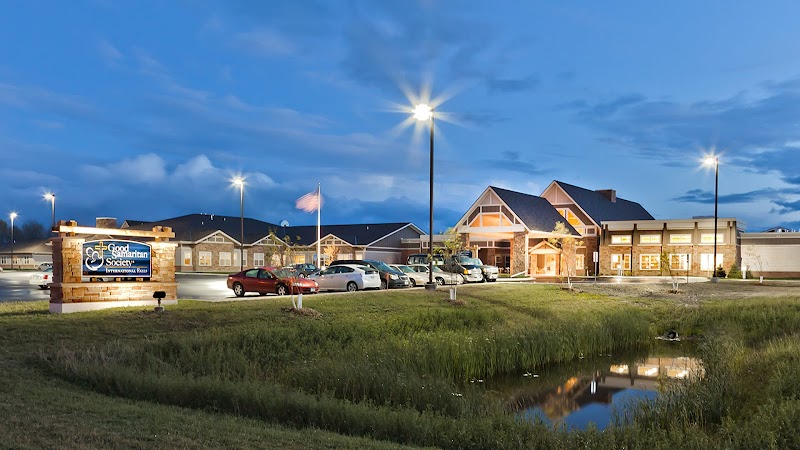
Good Samaritan Society - International Falls

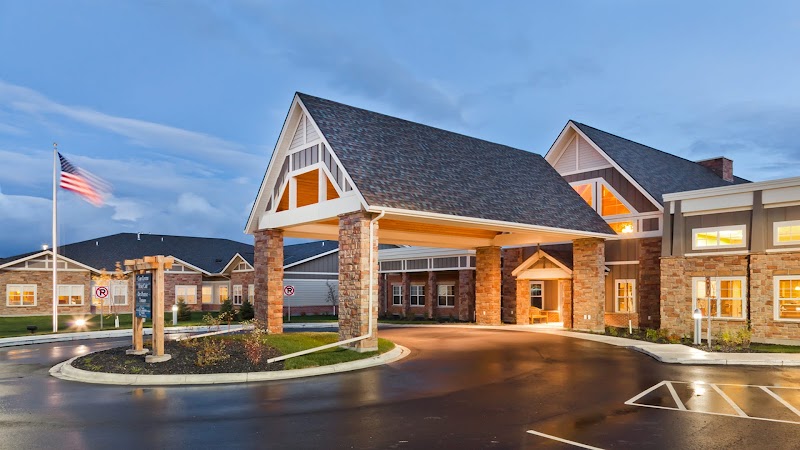
2201 KEENAN DRIVE, INTERNATIONAL FALLS, MN 56649 (218) 283-8313
Non profit - Corporation 54 Beds GOOD SAMARITAN SOCIETY Data: November 2025
Trust Grade
56/100
#175 of 337 in MN
Last Inspection: November 2024

Within standard 12-15 month inspection cycle. Federal law requires annual inspections.

Overview

Good Samaritan Society - International Falls has a Trust Grade of C, which means it is average and sits in the middle of the pack among similar facilities. It ranks #175 out of 337 nursing homes in Minnesota, placing it in the bottom half, but it is the top-rated facility in Koochiching County. The facility is currently worsening, with the number of reported issues increasing from 14 in 2023 to 15 in 2024. Staffing is a notable strength, earning a 5 out of 5 stars with only a 28% turnover rate, significantly lower than the state average of 42%. However, the facility has faced $17,940 in fines, which is concerning as it is higher than 75% of similar facilities in Minnesota, indicating potential compliance issues. Specific incidents noted in the inspections include a failure to adequately supervise a resident who had experienced a fall, leading to a serious injury, and a lack of necessary resources and action plans for resident care, which could affect all 50 residents. While the staffing situation is strong, these weaknesses highlight areas that need urgent attention to ensure resident safety and care quality.
Trust Score
C
56/100
In Minnesota
#175/337
Bottom 49%
Safety Record
Moderate
Needs review
Inspections
Getting Worse
14 → 15 violations
Staff Stability
✓ Good
28% annual turnover. Excellent stability, 20 points below Minnesota's 48% average. Staff who stay learn residents' needs.
Penalties
✓ Good
$17,940 in fines. Lower than most Minnesota facilities. Relatively clean record.
Skilled Nurses
✓ Good
Each resident gets 61 minutes of Registered Nurse (RN) attention daily — more than 97% of Minnesota nursing homes. RNs are the most trained staff who catch health problems before they become serious.
Violations
⚠ Watch
33 deficiencies on record. Higher than average. Multiple issues found across inspections.
★★★☆☆
3.0
Overall Rating
★★★★★
5.0
Staff Levels
★★☆☆☆
2.0
Care Quality
★★☆☆☆
2.0
Inspection Score
Stable
2023: 14 issues
2024: 15 issues

The Good

  • 5-Star Staffing Rating · Excellent nurse staffing levels
  • Low Staff Turnover (28%) · Staff stability means consistent care
  • Full Sprinkler Coverage · Fire safety systems throughout facility
  • No fines on record
  • Staff turnover is low (28%)

    20 points below Minnesota average of 48%

Facility shows strength in staffing levels, staff retention, fire safety.

The Bad

3-Star Overall Rating

Near Minnesota average (3.2)

Meets federal standards, typical of most facilities

Federal Fines: $17,940

Below median ($33,413)

Minor penalties assessed

Chain: GOOD SAMARITAN SOCIETY

Part of a multi-facility chain

Ask about local staffing decisions and management

The Ugly 33 deficiencies on record

1 actual harm
Nov 2024 14 deficiencies
CONCERN (D)

Potential for Harm - no one hurt, but risky conditions existed

Deficiency F0558 (Tag F0558)

Could have caused harm · This affected 1 resident

**NOTE- TERMS IN BRACKETS HAVE BEEN EDITED TO PROTECT CONFIDENTIALITY** Based on observation, interview and document review, the facility failed to ensure an electric wheelchair was maintained in work...

Read full inspector narrative →
**NOTE- TERMS IN BRACKETS HAVE BEEN EDITED TO PROTECT CONFIDENTIALITY** Based on observation, interview and document review, the facility failed to ensure an electric wheelchair was maintained in working order for 1 of 1 resident (R23) reviewed for accommodation of needs. Findings include: R23's annual Minimum Data Set (MDS) dated [DATE], identified R23 had intact cognition and used a motorized wheelchair. R23 was independent with mobility once seated in his motorized wheelchair. Diagnoses included paraplegia, dependence on wheelchair and autonomic dysreflexia (a dangerous syndrome involving an overreaction of your autonomic nervous system). R23's care plan dated 3/15/24, identified R23 had limited physical mobility related to paraplegia from spinal cord injuries and weakness evidenced by R23's need for specialty wheelchair. The goal was for R23 to remain independent with locomotion in the facility. Interventions included use of motorized wheelchair in the facility. On 11/19/24, R23 was lying in bed watching television. A manual high back wheelchair was stored in the shower area of R23's room and a motorized wheelchair was positioned against the wall in the room. R23 stated lightning hit the nursing home building a few months ago and fried his motorized wheelchair. R23 did not know why the facility had not attempted to repair the chair for him. R23 was told he needed a new battery and that is all he had heard about it. The nurse reported the problem to maintenance and maintenance told R23 they were going to look into getting him a battery for the wheelchair and that was two to three months ago. The manual wheelchair the facility provided R23 to use was uncomfortable for him and he was unable to sit up straight when he was seated in it or recline the wheelchair back. R23 had autonomic dysreflexia and when he had a spell he would pass out and needed to be reclined back immediately. R23 was able to sit fully upright and to recline when needed in his motorized wheelchair. R23 owned the motorized wheelchair but felt it was the facility responsibility to repair because he knew it quit working when the building had been hit by lightning. His chair had been plugged in at the time and made a loud beeping noise and then did not work again after that. R23's medical record was reviewed and lacked evidence the facility had made any effort to assess, evaluate or discuss the broken motorized wheelchair with R23. During interview on 11/20/24, at 10:49 a.m. nursing assistant (NA)-A stated R23 did not use his motorized wheelchair. The facility had been hit by lightning about two and 1/2 months ago and R23's motorized wheelchair would not take a charge after that. R23 used the manual wheelchair when he would get out of bed, for special things like haircut or celebrations. When interviewed on 11/20/24, at 10:53 a.m. trained medication aide (TMA)-A stated R23's motorized wheelchair did not work, and it needed a new battery. TMA-A did not know who was helping R23 fix his wheelchair, he just knew it has not worked for at least a month. When interviewed on 11/20/24, at 11:00 a.m. registered nurse (RN)-C stated she was aware R23's motorized wheelchair was not working as the battery would not charge. RN-C stated she reported the issue to maintenance. RN-C was upset when she came back from her vacation and found R23's motorized wheelchair had not been fixed. R23's motorized wheelchair absolutely should be repaired. A joint interview was conducted on 11/20/24 with the director of nursing (DON) and maintenance staff (M)-A. The DON stated she was not aware R23's motorized wheelchair was not working and R23 had a right to have his motorized wheelchair in working order. M-A stated he was made aware of R23's wheelchair not working, and M-A told R23 to use the chair more and run down the battery before recharging it, as it was developing a memory. M-A was not aware the motorized wheelchair did not take a charge at all. R23 had mentioned something about a lightning strike but that had just messed up the facility's television programming and had not interfered with the facility's electrical equipment. The occupational therapist had stated any maintenance or repairs would have to go through R23 and/or his family but he was not sure if anyone had discussed the issue with R23. On 11/21/24, at 10:00 a.m. M-A stated he tried a different charger with no success and now was looking into obtaining a different battery to try. M-A stated R23 had told him the chair had been plugged in during the lightning strike and had made a loud beeping sound, the damage could have been caused by the lightning strike, it was hard to tell. The facility's Accommodation of Resident Need policy dated 9/16/24, identified the resident had a right to reside and receive services with reasonable accommodation of resident needs and preferences. The facility should adapt or individualize things such as desires and unique needs such as furniture that enhances the resident's ability to maintain their independence.
CONCERN (D)

Potential for Harm - no one hurt, but risky conditions existed

Assessment Accuracy (Tag F0641)

Could have caused harm · This affected 1 resident

**NOTE- TERMS IN BRACKETS HAVE BEEN EDITED TO PROTECT CONFIDENTIALITY** Based on interview and document review, the facility failed to ensure medications were coded correctly on the Minimum Data Set (...

Read full inspector narrative →
**NOTE- TERMS IN BRACKETS HAVE BEEN EDITED TO PROTECT CONFIDENTIALITY** Based on interview and document review, the facility failed to ensure medications were coded correctly on the Minimum Data Set (MDS) for 1 of 5 residents (R27) reviewed for unnecessary medications. Findings include: R27's quarterly MDS dated [DATE], identified R27 had severe cognitive impairment. Diagnoses included Alzheimer's, non-Alzheimer's dementia, diabetes, and depression. The MDS identified R27 received an antianxiety medication. R27 medication administration report (MAR) for the month of October 2024, identified R27 received Trazodone (an antidepressant) for generalized anxiety disorder, restlessness, and agitation. The MAR/orders did not identify R27 was receiving an antianxiety medication during the MDS lookback period. During an interview on 11/25/24 at 3:14 p.m., registered nurse (RN)-B identified she did the most recent MDS for R27. When RN-B went over the medications for R27, RN-B reviewed medications by what they were used for and not specifically the class of medication. R27's was receiving an antidepressant to help with anxiety, and it was entered on the MDS as an antianxiety medication and not an antidepressant. RN-B stated it was important to ensure the MDS was accurate, so staff had the accurate data to care for R27. During an interview on 11/25/24 at 4:00 p.m., the director of nursing (DON) stated she would expect the MDS for R27 would be complete and accurate to enable others working with R27 to get a complete picture of care required for them. The facility's MDS 3.0 Resident Assessment Instrument (RAI) dated 8/27/24, identified each team member would review the electronic medical record and determine if there is accurate documentation which supported coding for the MDS.
CONCERN (D)

Potential for Harm - no one hurt, but risky conditions existed

ADL Care (Tag F0677)

Could have caused harm · This affected 1 resident

**NOTE- TERMS IN BRACKETS HAVE BEEN EDITED TO PROTECT CONFIDENTIALITY** Based on observation, interview and document review, the facility failed to provide assistance with toileting for 1 of 1 residen...

Read full inspector narrative →
**NOTE- TERMS IN BRACKETS HAVE BEEN EDITED TO PROTECT CONFIDENTIALITY** Based on observation, interview and document review, the facility failed to provide assistance with toileting for 1 of 1 resident (R203) reviewed for activities of daily living and who were dependent on staff for their care. Findings include: R203's admission Minimum Data Set (MDS) dated [DATE], identified R203 had severe cognitive impairment and did not have behaviors. R203 required partial to moderate assistance with eating. R203 was dependent with toileting and transfers and was always incontinent of bowel and bladder. Diagnoses included malignant neoplasm of the sinus and brain, palliative care, moderate protein-calorie malnutrition, and pressure ulcer stage two of the sacral region. R203's care plan dated 10/31/24, identified R203 was dependent with most activities of daily living and was bedfast all or most of the time. R203 was incontinent of bowel and bladder. Staff were directed to check and change every two hours and as needed. During continuous observation on 11/20/24 from 4:30 p.m. to 7:10 p.m., R203 was awake, lying on her back in bed, dressed in a hospital gown. A pillow was positioned under R203's right foot. No other positioning devices were in use. R203's head of the bed was raised at 25-degree angle. -at 4:50 p.m. there was no change in R203's position. -at 5:22 p.m. there was no change in R203's position. -at 5:37 p.m. nursing assistant (NA)-N entered the room to record R203's supper meal choices. NA-N raised R203's head of the bed to a 35-degree angle and asked R203 what she would like for supper. NA-N told R203 she would return with a couple of pudding choices for her supper and then exited the room. NA-N did not check R203 for incontinence. -at 5:45 p.m. licensed practical nurse (LPN)-C entered R203's room and raised the head of the bed to an upright sitting position of 45 degrees. LPN-C administered medications and exited the room. LPN-C did not check R203 for incontinence before exiting the room. -At 5:50 p.m. R203's call light was put on. LPN-C and an unidentified NA entered room. R203 identified the call light was on by accident and nothing was needed. Both staff exited the room after turning off call light. R203 was not checked for incontinence or need for toileting and remained seated fully seated upright in bed. - At 5:57 p.m. R203 turned on her call light. R203 was seated in bed. the head of the bed was in an upright position. R203 had slid down in the bed and her head was hanging heavily to her right side with her chin in her chest. -At 6:11 p.m. R203 had not changed position. R203's head of the bed remained in full upright position. R203 was in slouched position in bed, leaning to her right side, with her chin in her chest. The call light remained on with steady green light over the door. -At 6:30 p.m. R203 had not changed position, the head of the bed remained in fully upright position. R203 has slouched further down in the bed with her head positioned halfway from top of bed to middle of bed. R203 leaning to her right side with her chin in her chest. The call light remained on. -At 6:45 p.m. there was no change in position. -At 6:56 p.m. R203's head of the bed remained fully elevated at 45-degree angle. R203 was leaning heavily to her right side with her chin touching her chest and slouched down to the middle of the bed. The call light remained on. -At 7:06 p.m. NA-M and NA-N entered R203's room and lowered R203's head of the bed and checked R203 for incontinence. R203 was dry and did not require a brief change. During interview on 11/20/24, at 7:10 p.m. NA-M stated they just checked R203 for incontinence and she was dry. NA-M stated she had been told R203 was checked at 4:30 p.m. NA-M knew R203 needed to be checked and/or changed and repositioned every two hours. NA-M and NA-N were walking by and noticed R203 was leaning so far over to the right and nearly falling out of bed so they went in to reposition her. NA-M noticed R203's light was on and wondered why, which is why she walked down the hall to check. During interview on 11/25/24, at 2:30 p.m. NA-N stated she remembered going into R203's room on 11/20/24 and offering her supper. R203 refused supper but then NA-N offered pudding and R203 had agreed. NA-N stated she had not checked or changed R203 for incontinence at that time. When interviewed on 11/21/24, at 12:05 p.m. the director of nursing stated it was the facility's expectation staff were to check and change residents every two hours if the care plan directed them to do so. The facility policy Activities of Daily Living dated 12/4/23, identified any resident who was unable to carry out activities of daily living would receive necessary services to maintain good nutrition, grooming, personal and oral hygiene.
CONCERN (D)

Potential for Harm - no one hurt, but risky conditions existed

Pressure Ulcer Prevention (Tag F0686)

Could have caused harm · This affected 1 resident

**NOTE- TERMS IN BRACKETS HAVE BEEN EDITED TO PROTECT CONFIDENTIALITY** Based on observation, interview and document review, the facility failed to provide timely repositioning for 1 of 1 resident (R2...

Read full inspector narrative →
**NOTE- TERMS IN BRACKETS HAVE BEEN EDITED TO PROTECT CONFIDENTIALITY** Based on observation, interview and document review, the facility failed to provide timely repositioning for 1 of 1 resident (R203) reviewed for pressure ulcers. Findings include: R203's admission Minimum Data Set (MDS) dated [DATE], identified R203 had severe cognitive impairment and did not have identified behaviors. R203 required substantial to maximum assistance with rolling side to side and sitting up. R203 was dependent with toileting and transfers and was always incontinent of bowel and bladder. R203 was at risk for pressure ulcer development and was admitted with a stage two unhealed pressure ulcer. A turn and reposition program was in place as well as a pressure reducing device for R203's bed. Diagnoses included malignant neoplasm of the sinus and brain, palliative care, moderate protein-calorie malnutrition, and pressure ulcer stage two of the sacral region. R203's care plan dated 10/31/24, identified R203 was dependent with most activities of daily living and was bedfast all or most of the time. R203 had actual impairment to skin integrity. Staff were directed to use extra caution with transfer and bed mobility to avoid injury to R203 skin, keep skin clean and dry and to turn and reposition R203 every two hours and as needed. R203's Braden Skin Assessment 10/31/24, scored 13 which identified a moderate risk for pressure ulcer development. During continuous observation on 11/20/24. 4;30 p.m. to 7:10 p.m. R203 was awake, lying on her back in bed, dressed in a hospital gown. A pillow was positioned under R203's right foot. No other positioning devices were in use. R203's head of the bed was raised at 25-degree angle. -at 4:50 p.m. there was no change in R203's position. -at 5:22 p.m. there was no change in R203's position. -at 5:37 p.m. homemaker (HMK)-A entered the room to record R203's supper meal choices. HMK-A raised R203's head of the bed to a 35-degree angle and exited the room. HMK-A made no attempt to move, shift R203's weight or reposition R203. -at 5:45 p.m. licensed practical nurse (LPN)-C entered R203's room and raised the head of the bed to an upright sitting position of 45 degrees. LPN-C administered medications and exited the room. LPN-C did not turn, shift R203's weight or reposition R203 before exiting the room. -at 5:50 p.m. R203's call light was put on. LPN-C and unidentified NA entered room. R203 indicated the call light was on by accident and nothing was needed. Both staff exited the room after turning off call light. Neither staff attempted to turn, reposition or move R203. R203 remained seated fully upright in bed. - 5:57 p.m. R203 turned on her call light. R203 remained seated fully upright in bed. R203 had slid down in the bed and her head was hanging heavily to her right side with her chin in her chest. -at 6:11 p.m. R203 had not changed position. R203's head of the bed remained in full upright position. R203 was in slouched position in bed, leaning to her right side, with her chin in her chest. The call light remained on with steady green light over the door. -at 6:30 p.m. R203 had not changed position. The head of the bed remained in fully upright position. R203 has slouched further down in the bed with her head positioned halfway from top of bed to middle of bed. R203 leaning to her right side with her chin in her chest. The call light remains on. -At 6:45 p.m. there is no change in position. -At 6:56 p.m. R203's head of the bed remained fully elevated at 45-degree angle.R203 was leaning heavily to her right side with her chin touching her chest and slouched down to the middle of the bed. The call light remained on. -At 7:06 p.m. NA-M and NA-N entered R203's room and lowered R203's head of the bed and turned and repositioned R203. R203 was not incontinent of bowel or bladder. R203's peri area had dry, intact skin. Coccyx wound healed with no redness noted. NA-M stated she had been told R203 had been turned and repositioned at 4:30 p.m. NA-M knew R203 was to be checked and/or changed and repositioned every two hours. NA-M and NA-N had been walking by and noticed R203 was leaning so far over to the right and nearly falling out of bed, so they went in to reposition her. NA-M had noticed R203's light was on, and she had wondered why, which is why she walked down the hall to check. When interviewed on 11/21/24, at 12:05 p.m. the director of nursing stated it was the facility's expectation staff were to check and change residents every two hours if the care plan directed them to do so. The long call wait time would need to be looked in to. The facility policy Activities of Daily Living dated 12/4/23, identified any resident who was unable to carry out activities of daily living would receive necessary services to maintain good nutrition, grooming, personal and oral hygiene.
CONCERN (D)

Potential for Harm - no one hurt, but risky conditions existed

Deficiency F0699 (Tag F0699)

Could have caused harm · This affected 1 resident

**NOTE- TERMS IN BRACKETS HAVE BEEN EDITED TO PROTECT CONFIDENTIALITY** Based on interview and document review, the facility failed to comprehensively assess for trauma informed care to identify poten...

Read full inspector narrative →
**NOTE- TERMS IN BRACKETS HAVE BEEN EDITED TO PROTECT CONFIDENTIALITY** Based on interview and document review, the facility failed to comprehensively assess for trauma informed care to identify potential triggers and avoid potential re-traumatization for 1 of 1 resident (R22) reviewed who had a history of trauma. Findings include: R22's quarterly Minimum Data Set (MDS) dated [DATE], identified R22 had moderate cognitive impairment and exhibited behavior of verbal abuse to others four to six times per week and physical behaviors of hitting, scratching, pacing and wandering, one to three times per week. R22 also rejected care four to six times weekly. Diagnoses included chronic myeloid leukemia, anxiety, post traumatic stress disorder (PTSD) and dementia. R22's care plan with last revision date 10/11/24, identified R22 had impaired cognition and impaired thought process as well as behavior symptoms of hitting staff, name calling, throwing objects, sexual comments and unpredictable behaviors related to impaired cognition, anxiety and PTSD. Interventions included approach with soft tone of voice, let him know comments are inappropriate, redirect, use humor, divert attention about talking about his home or grandchildren. However, R22's care plan lacked individualized trauma-informed approaches or interventions and identification of triggers to avoid potential re-traumatization. R22's order summary report dated 11/21/24, identified R22 received Depakote 125 milligrams (mg) two times per day for post traumatic stress disorder. R22's telehealth psychiatric visit note dated 8/12/24, identified R22 had PTSD and a family member identified R22 served in the Vietnam war and had flashbacks of the war. R22's medical record lacked a comprehensive assessment for R22's PTSD, potential triggers and interventions. When interviewed on 11/19/24, at 1:00 p.m. family member (FM)-A reported R22 served in Vietnam and had a career as a fire chief. R22 had taken care of dismembered people and traumatic injuries that never seemed to bother him; however, R22 was taking the medication Depakote for PTSD. A joint interview was conducted with nursing assistant (NA)-B and trained medication assistant (TMA)-A on 11/20/24 at 2:00 p.m NA-B stated when she talked with R22 he would bring up his service and mention how he was near others who got blown up and/or how his general treated him. R22 did not seem anxious or upset when discussing these things with her. NA-B see how R22 could get upset with certain people depending on how R22 was spoken to. TMA-A stated he knew R22 would get angry if others mentioned they were in the service but did not serve in war. R22 would comment to them they did not know anything if they had not been in war and make angry comments. When interviewed on 11/21/24, at 8:15 a.m. registered nurse (RN)-C stated the diagnosis of PTSD should be assessed and care planned. R22's was not assessed or have a care plan related to R22's PTSD. It would be important to have the PTSD addressed on R22's plan of care to alert staff to what his triggers were. During interview on 11/21/24, at 12:00 p.m. the director of nursing stated it would be important to assess and care plan a diagnosis of PTSD with interventions for staff to avoid known triggers, if any. On 11/24/24, at 10:45 a.m. R22 was observed sitting in recliner in his room fully dressed and watching television. R22 stated he had lost several of his fingers during a work accident while working at the local paper mill. R22 stated he served three years in Vietnam and then was the local fire chief and ran the fire department for the town in which he lived for many years before he eventually retired. R22 did not elaborate on his service in Vietnam or the fire department. The facility policy Trauma Informed Care dated 11/16/23, identified a trauma assessment was required within five days of admission and as needed. The interview would focus on understanding the resident's experience. Staff were directed to document how trauma was currently affecting the resident. Individualized care plan interventions were required to avoid re-traumatization.
CONCERN (D)

Potential for Harm - no one hurt, but risky conditions existed

Drug Regimen Review (Tag F0756)

Could have caused harm · This affected 1 resident

**NOTE- TERMS IN BRACKETS HAVE BEEN EDITED TO PROTECT CONFIDENTIALITY** Based on interview and document review, the facility failed to ensure the consulting pharmacist (CP) identified and communicated...

Read full inspector narrative →
**NOTE- TERMS IN BRACKETS HAVE BEEN EDITED TO PROTECT CONFIDENTIALITY** Based on interview and document review, the facility failed to ensure the consulting pharmacist (CP) identified and communicated to the facility the need for monitoring for potential adverse events for high- risk medications for 2 of 5 residents (R22, R37); and failed to identify the need to monitor for adverse behaviors for psychotropic medications for 1 of 5 residents (R37) reviewed for unnecessary medications. Findings include: R22's quarterly Minimum Data Set (MDS) dated [DATE], identified R22 had moderate cognitive impairment and exhibited behavior of verbal abuse to others four to six times per week and physical behaviors of hitting, scratching, pacing, and wandering, one to three times per week. R22 also rejected care four to six times weekly. The MDS identified R22 had received antidepressant medications daily. Diagnoses included chronic myeloid leukemia, anxiety, post-traumatic stress disorder (PTSD) and dementia. R22's signed Order Summary Report, dated 11/21/24, identified R22's current ordered medications and treatments at the nursing home. These included orders for: Gleevec (to treat myeloid leukemia) 400 milligrams (mg) daily, nurse to monitor for side effects and MD as needed, and venlafaxine (to treat depression) 75 mg daily. The summary listed an order which directed Nurse to monitor for the following symptoms: weakness, dizziness, sudden changes in strength or mobility, nausea or vomiting, unusual bleeding, bruising, black or tarry stools, extreme fatigue. Swelling, redness and/or pain in upper or lower extremities, yellowing of the skin or eyes, swelling of the face, mouth, tongue, legs, ankles or feet, or sudden weight gain. R22's medical record lacked evidence R22 was being assessed or evaluated for adverse effects as ordered by the physician. R22's PharMerica Physician Recommendations dated 8/23/24, identified R22 was receiving venlafaxine and donepezil daily. The consultant pharmacist (CP) identified donepezil could cause side effects for aggression and agitation. A recommendation was made to increase venlafaxine and consider reducing R22's donepezil. During interview on 11/21/24, at 11:11 a.m. registered nurse (RN)-C stated R22 did have an active order to monitor for side effects to his chemotherapy medication and so the order should be on his MAR to monitor. The MAR usually pulled from the resident orders but in R22's case, it had been entered incorrectly and did not get pulled over. It was the facility policy to monitor high risk medication and psychotropic medications for side effects every shift and document it was completed on the MAR or the TAR. RN-C had just discussed the need to monitor labs with residents on certain medications. Lab work was not part of the standing orders, and they relied on the primary physician to order labs as needed and so it frequently was missed. Pharmacy reviews were conducted monthly and review of recommendations January 2024 through November 2024, identified no further concerns or recommendations. The pharmacy reviews lacked evidence the CP identified the need and made the recommendation to the facility to monitor for psychotropic medication adverse effects as ordered. R37's quarterly MDS dated [DATE], identified R37 had intact cognition and no behavioral symptoms were identified. The MDS indicated R37 had consumed antidepressant, anticoagulant and diuretic medications daily. Diagnoses included chronic obstructive pulmonary disease (COPD), anxiety, atrial fibrillation (irregular heartbeat), and kidney disease. R37's signed Order Summary Report, dated 11/25/24, identified R37's current physician ordered medications and treatments at the nursing home. These included orders for furosemide (a diuretic) 40 mg daily, lorazepam (an antianxiety) 0.5 mg at bedtime, methimazole (to treat hyperthyroid) 2.5 mg daily and Lexapro (an antidepressant) 10 mg daily. A hospital Discharge summary dated [DATE], identified R37 had been hospitalized and treated for anemia with a hemoglobin of 6.4. R37's hemoglobin on discharge was 10.3 and medications changes were made to discontinue coumadin and to start aspirin 325 mg instead. R37's medical record lacked evidence R22 had annual blood work to assess, or evaluate for adverse effects, effectiveness of hyperthyroid treatment and monitoring for therapeutic dosages. R37's PharMerica Physician Recommendations dated 7/29/24, identified R37 received Lexapro and lorazepam daily with a recommendation to the physician to review the medications and consider a gradual dose reduction (GDR). The physician refused the recommendation due to R37 was stable with current dose. Pharmacy reviews were conducted monthly and review of recommendations January 2024 through November 2024, identified no further concerns or recommendations. The pharmacy reviews lacked evidence the CP identified the need and made the recommendation to the facility to monitor for psychotropic medication side effects as ordered or to track and monitor adverse behaviors for which the medications were ordered. During interview on 11/21/24, at 11:11 a.m. RN-C stated R37 should have had lab work done to monitor for dehydration related to her diuretic medications as well as potassium level and hemoglobin to check for the need for supplementation related to the diuretic medications. RN-C had just discussed this with the director of nursing (DON) that some residents should have routine lab work done every six months to a year. Some of the physicians were on top of their residents to order labs and others were not. A joint interview was conducted with the DON and RN-D on 11/21/24, at 11:59 a.m. RN-D stated it was the facility's practice to monitor high risk and psychotropic medications every shift and staff were to document it was completed on the resident's TAR. The DON stated R37 should have symptoms of anxiety and depression monitored every shift. RN-D stated they never received recommendations from the pharmacist regarding need for lab work related to a resident's medications. RN-D commented it would be another check to ensure things were not missed and a good resource for the facility. During telephone interview on 11/25/24, at 3:49 p.m. the CP stated when charts were reviewed monthly the CP did check to ensure the facility was monitoring for side effects as well as adverse behaviors. The facility had been short staffed and had just resumed monthly behavior meetings, which the CP attended. The CP had been looking at each residents' charts for side effects and behavior monitoring and had told the facility to be sure to have specific behaviors to monitor on residents receiving psychotropic medications. The CP had made recommendations to try to reduce medications but felt the recommendations were not considered because the psychiatric clinic would keep adding on more medications. The CP felt R37 should have some lab work drawn. Sometimes the resident or family would refuse but the CP was unsure why a recommendation to check lab work was not made for R37. The facility policy Consultant Pharmacist Services Provider Requirements dated 1/2023, identified regular and reliable pharmacist services were to be provided to residents of the facility. The consultant pharmacist would provide pharmaceutical care services.
CONCERN (D)

Potential for Harm - no one hurt, but risky conditions existed

Deficiency F0757 (Tag F0757)

Could have caused harm · This affected 1 resident

**NOTE- TERMS IN BRACKETS HAVE BEEN EDITED TO PROTECT CONFIDENTIALITY** Based on interview and document review, the facility failed to ensure adverse event monitoring was completed for high-risk medic...

Read full inspector narrative →
**NOTE- TERMS IN BRACKETS HAVE BEEN EDITED TO PROTECT CONFIDENTIALITY** Based on interview and document review, the facility failed to ensure adverse event monitoring was completed for high-risk medications 2 of 5 residents (R22, R37) reviewed for unnecessary medications. Findings include: R22's quarterly Minimum Data Set (MDS) dated [DATE], identified R22 had moderate cognitive impairment. Diagnoses included chronic myeloid leukemia and dementia. R22's signed Order Summary Report, dated 11/21/24, identified R22's current ordered medications and treatments at the nursing home. These included orders for: Gleevec (to treat myeloid leukemia) 400 milligrams (mg) daily, nurse to monitor for side effects and notify MD as needed. The summary listed an order which directed Nurse to monitor for the following symptoms: weakness, dizziness, sudden changes in strength or mobility, nausea or vomiting, unusual bleeding, bruising, black or tarry stools, extreme fatigue. Swelling, redness and/or pain in upper or lower extremities, yellowing of the skin or eyes, swelling of the face, mouth, tongue, legs, ankles or feet, or sudden weight gain. R22's care plan dated 10/11/24, identified R22 consumed a non-cytotoxic oral chemotherapy with a goal to remain free of complications related to chemo therapy side effects. Interventions included drawing blood work as ordered, administering the medication as ordered, and monitor for chemotherapy complications and side effects. R22's Medication Administration Record (MAR), dated 11/2023, identified the order for Gleevec and recorded R22 received the medication, as ordered, on a daily basis. However, the MAR and Treatment Administration Record (TAR) both lacked evidence of monitoring for adverse effects of the medications. Further, R22's medical record was reviewed and lacked evidence R22 was being assessed, or evaluated for adverse effects as ordered by the physician. During interview on 11/21/24, at 11:11 a.m. registered nurse (RN)-C stated R22 did have an active order to monitor for side effects to his chemotherapy medication and so the order should be on his MAR or TAR to monitor. The MAR usually pulled from the resident orders but in R22's case, it had been entered incorrectly and did not get pulled over. It was the facility policy to monitor high risk medication for side effects every shift and document it was completed on the TAR. RN-C had just discussed the need to monitor labs with residents on certain medications. Lab work was not part of the standing orders and they relied the primary physician to order labs as needed and so it frequently was missed. R37's quarterly MDS dated [DATE], identified R37 had intact cognition and no behavioral symptoms were identified. The MDS indicated R37 had consumed anticoagulant and diuretic medications daily. Diagnoses included chronic obstructive pulmonary disease (COPD), atrial fibrillation (irregular heartbeat), and kidney disease. R37's signed Order Summary Report, dated 11/25/24, identified R37's current physician ordered medications and treatments at the nursing home. These included orders for furosemide (a diuretic) 40 mg daily, potassium (a supplement) 10 milliequivalents daily, and methimazole (to treat hyperthyroid) 2.5 mg daily. R37's care plan with last revision date 8/13/24, identified R37 received diuretic therapy. Interventions included monitor for side effects based on clinical standards of practice and to monitor for symptoms of dehydration and encourage adequate fluid intake. R37's medical record lacked evidence annual lab work was completed to monitor for adverse effects and/or therapuetic drug levels of the high risk medications. R37's MAR, dated 11/2023, identified the orders for furosemide, methimazole and potassium and recorded R37 received the medications, as ordered, on a daily basis. However, the MAR and TAR both lacked evidence staff were monitoring for adverse effects of the medications. Further, R37's medical record was reviewed and lacked evidence R22 had annual blood work to assess, or evaluate for adverse effects, effectiveness of hyperthyroid treatment and monitoring for therapeutic dosages. During interview on 11/21/24, at 11:11 a.m. registered nurse RN-C stated R37 should have had lab work done to monitor for dehydration related to her diuretic medications as well as potassium level and hemoglobin to check for the need for supplementation related to the diuretic medications and history of anemia. RN-C had just discussed this with the DON that some residents should have routine lab work done every six months to a year. Some of the physicians were on top of their residents to order labs and others were not. During joint interview on 11/21/24, at 11:59 a.m. with the director of nursing and RN-D, RN-D stated it was the facility's practice to monitor for adverse events with high risk medications every shift and staff were to document it was completed on the resident's TAR. During telephone interview on 11/25/24, at 3:49 p.m. the consultant pharmacist (CP) stated when charts were reviewed monthly the CP did check to ensure the facility was monitoring for side effects. The CP reviewed each resident charts individually for side effects. When a resident was receiving diuretic or thyroid medications, lab work was something the facility would want to look at. R37 should have lab work drawn and the CP was not sure why there had not been a recommendation to do so in the past year. The facility policy Medication Drug Regimen Review dated 2/28/24, identified the drug regimen review was a process that included medication reconciliation and review of all medications a resident was taking to identify and prevent potentially significant medication issues. A policy to monitor for side effects of medications was requested, however, none was received.
CONCERN (D)

Potential for Harm - no one hurt, but risky conditions existed

Medication Errors (Tag F0758)

Could have caused harm · This affected 1 resident

**NOTE- TERMS IN BRACKETS HAVE BEEN EDITED TO PROTECT CONFIDENTIALITY** Based on interview and document review, the facility failed to ensure adverse event monitoring was completed for 2 of 5 resident...

Read full inspector narrative →
**NOTE- TERMS IN BRACKETS HAVE BEEN EDITED TO PROTECT CONFIDENTIALITY** Based on interview and document review, the facility failed to ensure adverse event monitoring was completed for 2 of 5 residents (R22, R37); and failed to monitor adverse behaviors for 1 of 5 residents (R37) reviewed for unnecessary medication use and were taking a psychotropic medication. Findings include: R22's quarterly Minimum Data Set (MDS) dated [DATE], identified R22 had moderate cognitive impairment and exhibited behaviors of verbal abuse to others four to six times per week and physical behaviors of hitting, scratching, pacing and wandering, one to three times per week. R22 also rejected care four to six times weekly. The MDS identified R22 had received antidepressant medications daily. Diagnoses included chronic myeloid leukemia, anxiety, post-traumatic stress disorder (PTSD) and dementia. R22's signed Order Summary Report, dated 11/21/24, identified R22's current ordered medications and treatments at the nursing home. These included orders for: venlafaxine (to treat depression) 75 mg daily. The summary listed an order which directed Nurse to monitor for the following symptoms: weakness, dizziness, sudden changes in strength or mobility, nausea or vomiting, unusual bleeding, bruising, black or tarry stools, extreme fatigue. Swelling, redness and/or pain in upper or lower extremities, yellowing of the skin or eyes, swelling of the face, mouth, tongue, legs, ankles or feet, or sudden weight gain. R22's care plan dated 10/11/24, included interventions of report to nurse signs and symptoms of confusion, mood change, change in behavior, or ability to help with activities of daily living, suicidal ideation, constipation, shuffle gait, rigid muscles, diarrhea, appetite loss, weight loss, nausea and vomiting and fatigue. R22's Medication Administration Record (MAR), dated 11/2023, included the order for venlafaxine and identified R22 received the medication, as ordered, on a daily basis. However, the MAR and Treatment Administration Record (TAR) lacked evidence of an order to monitor for adverse effects of the medications. R22's medical record lacked evidence R22 was being assessed or evaluated for adverse effects as ordered by the physician. During interview on 11/21/24, at 11:11 a.m. registered nurse (RN)-C stated R22 did have an active order to monitor for side effects and so the order should be on the resident's MAR or TAR to monitor. The MAR and TAR usually pulled from the resident orders but in R22's case, it had been entered incorrectly and did not get pulled over. It was the facility policy to monitor high risk psychotropic medications for side effects every shift and document it was completed on the TAR. R37's quarterly MDS dated [DATE], identified R37 had intact cognition and no behavioral symptoms were identified. The MDS indicated R37 received antidepressant, and antianxiety medications daily. Diagnoses included chronic obstructive pulmonary disease (COPD), anxiety, atrial fibrillation (irregular heartbeat), and kidney disease. R37's signed Order Summary Report, dated 11/25/24, identified R37's current physician ordered medications and treatments at the nursing home. These included orders for lorazepam (an antianxiety) 0.5 mg at bedtime, and Lexapro (an antidepressant) 10 mg daily. R37's care plan with last revision date 8/13/24,identified R37 had depression and included interventions to help R37 meet this goal including consult with pharmacist, administer the medication as ordered, and monitor for complications and side effects such as confusion, mood change, change in behavior, or ability to help with activities of daily living, suicidal ideation, constipation. Staff were also directed to monitor and report if noted increased anger, labile mood or agitation, feeling threatened or thoughts of harming others, and possession of objects that could be used for weapons. R37's MAR dated 11/2023, identified the orders for lorazepam and Lexapro and recorded R37 received the medications, as ordered, on a daily basis. However, the MAR and TAR lacked evidence staff monitored for adverse effects of the medications. The MAR and TAR failed to identify behavioral symptoms to monitor, and track. R37's medical record lacked evidence R37's behaviors were monitored, assessed, and reviewed to justify the daily medication administration. During joint interview on 11/21/24, at 11:59 a.m. with the director of nursing (DON) and RN-D, RN-D stated it was the facility's practice to monitor psychotropic medications every shift and staff were to document it was completed on the resident's TAR. The DON stated R37 should have symptoms of anxiety and depression monitored every shift. During telephone interview on 11/25/24, at 3:49 p.m. the consultant pharmacist (CP) stated when charts were reviewed monthly the CP did check to ensure the facility was monitoring for side effects as well as adverse behaviors. The facility had been short staffed and had just resumed monthly behavior monitoring meetings. During the meetings the facility staff and CP reviewed each residents' psychotropic medications and behavior monitoring. The CP also looked at each resident's chart individually and had made the recommendation to be sure to have specific individualized targeted behaviors for each resident and not just general. The CP was working on reviewing psychotropic medications and behavior monitoring and had planned to review the wing where R37 and R22 resided later in the week. She was not sure why she had not made recommendations to monitor side effects for the two residents or adverse behaviors for R37. Those were things the CP reviewed when she reviewed the resident charts monthly. The facility policy Psychotropic Medications dated 12/6/23, identified throughout the administration of psychotropic medications, mood and behavior documentation must continue in order to monitor the effect the medication has on the behaviors, as well as monitoring for side effects. Staff were directed to monitor for effectiveness and potential adverse consequences of the medications.
CONCERN (D)

Potential for Harm - no one hurt, but risky conditions existed

Deficiency F0761 (Tag F0761)

Could have caused harm · This affected 1 resident

**NOTE- TERMS IN BRACKETS HAVE BEEN EDITED TO PROTECT CONFIDENTIALITY** Based on observation, interview and document review, the facility failed to ensure two insulin pens were labeled with the reside...

Read full inspector narrative →
**NOTE- TERMS IN BRACKETS HAVE BEEN EDITED TO PROTECT CONFIDENTIALITY** Based on observation, interview and document review, the facility failed to ensure two insulin pens were labeled with the resident name for 1 of 1 resident (R154) observed to receive insulin. Findings include: R154's admission Record dated 11/25/24, identified R154 was admitted to the facility on [DATE]. R154's Diagnosis Report dated 11/25/24, identified R154 was a Type 2 diabetic. R154's Order Summary Report dated 11/25/24, identified the following: 11/13/24, R154 was prescribed insulin lispro (Humalog) (a short acting insulin) with the following instructions: - insulin lispro (1 Unit Dial) Subcutaneous Solution Pen-injector 100 unit/milliliter (ml) Inject as per sliding scale: if 0 - 160 = 0 UNITS; 161 - 190 = 1 UNIT; 191 - 220 = 2 UNITS; 221 - 250 = 3 UNITS; 251 - 280 = 4 UNITS; 281 - 310 = 5 UNITS; 311 - 340 = 6 UNITS; 341 - 370 = 7 UNITS; 371 - 400 = 8 UNITS; 401 - 999 = 9 UNITS, subcutaneously three times a day for Type 2 diabetes. Give sliding scale dose in addition to scheduled dose. - Insulin Lispro (1 Unit Dial) Subcutaneous Solution Pen-injector 100 UNIT/ML give 25 Units before breakfast daily plus sliding scale; give 22 Units before lunch daily plus sliding scale; and give 21 Units before supper daily plus sliding scale. - 11/13/24, R154 was prescribed Toujeo Max SoloStar Subcutaneous Solution Pen-injector 300 unit/ml (insulin glargine) (a long acting insulin) inject 84 unit subcutaneously one time a day for Type 2 diabetes. During an observation on 11/19/24 at 8:59 a.m., licensed practical nurse (LPN)-A administered Humalog insulin and Toujeo to R154. Neither the Humalog kwik pen or the Toujeo pen had a label identifying the pens belonged to R154. During an interview on 11/19/24 at 9:02 a.m., LPN-A stated the medication pens did not come with a label from the pharmacy but the boxes did. The boxes of medication were kept in the fridge in the medication room. When asked how she knew the pens belonged to R154, LPN-A stated R154 was the only diabetic resident on the unit who received injectable medication. The medication pens were stored in the top drawer of the medication cart and everyone just knew they belonged to R154. I guess I could put her [R154] initials and room number on it. During an interview on 11/19/24 at 9:22 a.m., registered nurse (RN)-A stated all medication pens should be labeled when they come from the pharmacy. If not, staff should put a sticker with the resident's information on it. RN-A stated she was unaware R154's medication pens were unlabeled but would put a sticker on them. There was only one diabetic resident on the unit and R154 was just admitted to the facility on [DATE]. RN-A stated a medication pen without a label was an infection control issue because staff shouldn't use a medication pen on the wrong resident. Also, R154 paid for that mediation, and it should be labeled with R154's name. During an interview on 11/25/24 at 3:44 p.m. the director of nursing (DON) stated she expected all medication pens to come from the pharmacy labeled or staff should place a resident sticker on the pen identifying who the pen belonged to. The facility policy Medication Ordering and Receiving from Pharmacy Provider Medications and Medication Labels dated 1/2023, identified each prescription medication would be labeled to include: a. Resident's name b. Specific directions for use, including route of administration c. Medication name d. Strength of medication e. Prescriber's name f. Date medication is dispensed g. Quantity dispensed h. Expiration or end-of-use date, if not dispensed in original manufacturer packaging i. Name, address, and telephone number of dispensing pharmacy J. Prescription number k. Accessory/precautionary labels indicating storage requirements and special procedures. Example: Shake well, Take on empty stomach, one hour before or 2 hours after meals, Do not crush. l. Dispensing pharmacist's initials m. Lot number of medication dispensed, if not dispensed in original manufacturer packaging, where required by state law n. Any other information required by state and federal Medication containers having soiled, damaged, incomplete, illegible, or makeshift labels are returned to the dispensing pharmacy for re-labeling or destroyed in accordance with the medication destruction policy.
CONCERN (D)

Potential for Harm - no one hurt, but risky conditions existed

Antibiotic Stewardship (Tag F0881)

Could have caused harm · This affected 1 resident

**NOTE- TERMS IN BRACKETS HAVE BEEN EDITED TO PROTECT CONFIDENTIALITY** Based on interview and document review the facility failed to establish a process for antibiotic review in order to determine ap...

Read full inspector narrative →
**NOTE- TERMS IN BRACKETS HAVE BEEN EDITED TO PROTECT CONFIDENTIALITY** Based on interview and document review the facility failed to establish a process for antibiotic review in order to determine appropriate indications for use of an antibiotic for 1 of 1 resident (R15) reviewed for antibiotic use. Findings include: R15's quarterly Minimum Data Set (MDS) dated [DATE], identified R15 had diagnoses that included renal insufficiency, diabetes, Alzheimer's disease, and dementia. R15 was always continent of bowel and bladder and required supervision or touching assistance with personal hygiene. The Monthly Report of Resident Infections in Location dated November 2024, identified R15 had a urinary tract infection with an onset date of 11/2/24. Symptoms included gross hematuria and flank pain related to kidney stones. However, the report failed to identify if R15 was treated with an antibiotic and/or if a urinalysis or urine culture were obtained. R15's Order Summary Report dated 11/2/24, identified R15's was prescribed cefdinir (an antibiotic) 300 mg capsules give 1 capsule by mouth two times a day for acute cystitis with hematuria for 10 days. R15's nursing progress note dated 11/2/24 at 8:58 a.m., identified R15 was transferred to the emergency department (ED) due to abdominal pain. - At 2:15 p.m., R15 returned from the ED with new orders for cefdinir 300 mg two times a day for 10 days. R15 had acute cystitis with hematuria (a conditions where a person develops cystitis (inflammation of the bladder) with the presence of blood in the urine) and ureterolithiasis (kidney stones). R15's urine culture dated 11/24/24, identified mixed microflora (mixed microflora in urine culture typically indicates the culture yielded two or three different organisms, which may be considered colonization rather than infection.) During an interview with registered nurse (RN)-D on 11/19/24 at 1:35 p.m., RN-D stated she was responsible for the infection control program in the facility and tracked all antibiotic use. R15 was evaluated in the ED for kidney stones. R15 returned from the ED with an order for cefdinir to treat a UTI even though that wasn't a typical treatment for kidney stones. R15's urine culture identified mixed microflora and the culture was reviewed by the ED medical provider and determined it was a contaminated urine sample. However, by the time the culture returned, the antibiotic treatment was almost completed. - At 1:42 p.m., RN-D stated the facility used McGreer Criteria to determine if an antibiotic was warranted. However, RN-D stated McGreer Criteria was a steep level and residents had horrible infections by the time they reached the point of meeting criteria. The facility did review antibiotic orders during the morning meetings Monday through Friday, but RN-D stated she could not speak to what the nursing staff did at the unit level. RN-D stated the primary rounding providers were very involved in antibiotic stewardship and conducted 48-hour timeouts (an antibiotic timeout prompts a reassessment of the continuing need and choice of antibiotic when the clinical picture is clearer and more diagnostic information is available) on all UTI and generally did not order antibiotic treatment unless necessary. However, the ED providers ordered antibiotics for everything. The ED had a huge rotating schedule of providers and that was why the facility received orders for kidney stones, chronic obstructive pulmonary disease (COPD) exacerbation and other illnesses not normally treated with antibiotics. RN-D had spoken with the medical director regarding concerns with orders prescribed by ED providers, but the topic had not gone past talking about it. RN-D stated she did not know who she would talk to at the hospital about antibiotic stewardship concerns and had not attempted. During an interview on 11/25/24 at 3:46 p.m., the director of nursing (DON) stated antibiotic stewardship was reviewed with each case because each case was different. When a resident returned from the ED with an order for an antibiotic, the provider was frequently no longer at the facility to review lab results with by the time the facility received results. The ED providers worked 7 days on and 7 days off and it was just difficult to speak with them. The DON stated she could not speak to any discussion that had been had with the hospital regarding antibiotic stewardship concerns or who to reach out to for concerns with lab results, but guessed the hospital would direct staff to reach out to the primary provider. The staff should be following McGreer Criteria to determine antibiotic treatment was appropriate and, for contaminated urine samples, another sample should have been collected with the intention to stop the antibiotic treatment. When R15 returned from the ED, there should have been follow up to determine if the antibiotic should have been stopped. The facility policy Definitions of Infection - For Surveillance Purposes Only, Infection Control, R/S LTC dated 11/1/23, identified the facility used McGreer Criteria for UTI: Resident without indwelling catheter: At least one of the following signs or symptoms from these sub-criteria: - Acute dysuria or acute pain, swelling or tenderness of the testes, epididymis or prostrate. - Fever or leukocytosis and at least one of the following localizing urinary tract sub-criteria: - Acute costovertebral angle pain or tenderness - Supra-pubic pain - Gross hematuria - New or marked increase in incontinence. - New or marked increase in urgency. - New or marked increase in frequency. - In the absence of fever or leukocytosis, then two or more of the following localizing urinary tract sub-criteria must be present: - Supra-pubic pain - Gross hematuria - New or marked increase in incontinence. - New or marked increase in urgency. - New or marked increase in frequency. And One of the following: - At least 105 colony-forming units (cfu)/milliliter (ml) of no more than two species of microorganisms in a voided urine sample - At least 10² cfu/ml of any number of organisms in a specimen collected by an in-and-out catheter. Comments: UTIs should be diagnosed when there are localizing genitourinary signs and symptoms and a positive urine culture result. A diagnosis of UTI can be made without localizing symptoms if a blood culture isolate is the same as the organism isolated from the urine and there is no alternate site of infection. In the absence of a clear alternate source of infection, fever, or rigors with a positive urine culture result in the non-catheterized resident or acute confusion in the catheterized resident will often be treated as a UTI. However, evidence suggests that most of these episodes are likely not due to infection of a urinary source. Urine specimens for culture should be processed as soon as possible, preferably within one or two hours. If urine specimens cannot be processed within 30 minutes of collection, they should be refrigerated. Refrigerated specimens should be cultured within 24 hours.
CONCERN (F)

Potential for Harm - no one hurt, but risky conditions existed

Deficiency F0838 (Tag F0838)

Could have caused harm · This affected most or all residents

**NOTE- TERMS IN BRACKETS HAVE BEEN EDITED TO PROTECT CONFIDENTIALITY** Based on interview and document review the facility failed to review and update the facility assessment to incorporate the minim...

Read full inspector narrative →
**NOTE- TERMS IN BRACKETS HAVE BEEN EDITED TO PROTECT CONFIDENTIALITY** Based on interview and document review the facility failed to review and update the facility assessment to incorporate the minimal staff requirements; and all resources and conditions to care for the resident populations. This had the potential to affect all 50 residents who resided in the facility. Findings include: The Facility assessment dated [DATE], identified the need to determine what resources were necessary to care for its residents competently during both day-to-day operations and emergencies. The assessment listed resident count, activities of daily living (ADL) assistance needed, behavioral symptoms and active diagnoses. The facility utilized an interdisciplinary approach to meet the needs of residents across all shifts, including nights and weekends. The scheduler would check the schedule and divide staff based on the acuity of the facility assessment. The facility assessment failed to include information on the staffing levels needed for specific shifts, such as day, evening, and nights based on resident population and acuity. The facility assessment failed to identify residents who required oxygen supplementation and identify the minimal equipment and supplies needed to care for oxygen dependent residents. The facility assessment lacked evidence of assessment of resident population with diagnosis of PTSD. During interview on 11/25/24, at 2:10 p.m. the administrator stated the facility assessment had been completed by the previous administrator and he had not reviewed the assessment. Minimum staffing was based on the facility census. The bare minimum staffing would be one nurse and aide on each wing during the day and evening shift and one aide on each wing and a nurse float for the overnight shift. There should be something in the facility assessment that addressed minimum staffing needs. The administrator was unsure how detailed oxygen needs of residents would need to be documented in the facility assessment, but he was aware PTSD was required to be covered in the assessment. A policy on the facility assessment was required, however none was received.
CONCERN (F)

Potential for Harm - no one hurt, but risky conditions existed

QAPI Program (Tag F0867)

Could have caused harm · This affected most or all residents

Based on interview and document review, the facility failed to develop action plans for identified areas of monitoring and failed to identify and implement at least one process improvement project (PI...

Read full inspector narrative →
Based on interview and document review, the facility failed to develop action plans for identified areas of monitoring and failed to identify and implement at least one process improvement project (PIP) This had the potential to affect all 50 residents who resided in the facility. Findings include: The Quality Assurance, Action Committee Meeting Minutes dated 7/11/24, identified the team had reviewed the following topics: -infection control. -emergency operation plan and facility assessment. -dietary concerns -therapy staffing changes -documentation of assessments and coding -resident council complaints -life style enrichment -human resources -life safety and environment The data failed to identify any facility developed and implemented action plans with measurable goals and/or identify actions taken. The Quality Assurance, Action Committee Meeting Minutes dated 8/22/24, identified the team had reviewed the following topics: -nursing services -resident council complaints -safety and emergency preparedness -employee action committee results -financial stewardship, -action plans from survey, [NAME] reports and/or corporate compliance. The data failed to identify any facility developed and implemented action plans with measurable goals and/or identify actions taken. The Quality Assurance, Action Committee Meeting Minutes dated 10/31/24, identified the team had reviewed the following topics: -incidents and safety -infection control -medication regimen review -QAPI plan priorities -staff quality concern trends -hand hygiene compliance -survey readiness -resident and family concerns -survey results The data failed to identify the facility developed and implemented action plans with measurable goals and/or identify actions taken. Although the facility listed out areas they were collecting data on there was a lack of information on whether the items were PIPS that required an action plan. Further, the facility could not provide evidence of any PIP project they were working on that focuses on high-risk or problem-prone areas, identified by the facility through data collection and analysis. When interviewed on 11/25/24, at 4:15 p.m. registered nurse (RN)-D stated she was responsible for the facility's QAPI program. RN-D received monthly audits from corporate and the facility was required to do them. Each month the audits would have a different focus. RN-D also gathered data for QAPI through focused chart reviews and track and analyzing incident reports. RN-D had social services report complaints and grievances to the QAPI committee as well. RN-D also collected data from review of resident council minutes and interactions with residents and families on a day-to-day basis. The facility did have significant issues with staffing in the beginning of the year and the main focus had been on staffing and staff retention. Now that had improved, and they could focus on other issues. Infection control and review of infections were addressed at every QAPI meeting; however, RN-D had not fully addressed the facility's response to their recent COVID-19 outbreak. That was on her agenda to discuss at the next meeting. RN-D stated performance improvement projects (PIPS) were new to her. She had just taken over QAPI and had not received much training on PIPS. RN-D was just trying to redirect everything in a format she could work with, and her next project was to figure out what type of PIP to work on. RN-D stated she needed to learn how to do the PIPS. During interview on 11/25/24, at 4:30 p.m. the director of nursing (DON) stated RN-D ran the QAPI program. The DON was not aware the facility did not have any developed PIPS in place. The DON stated there should be performance improvement projects in place and she would have helped identified areas to implement PIPS if she had been aware there were none. The facility's Quality Assurance and Performance Improvement policy dated 10/9/23, identified at a minimum one performance improvement project would either be in development, ongoing or completed annually utilizing the improvement model adapted by the location. Performance improvement project activity would be monitored for progress and sustainability. Performance improvement activities would focus on high risk, high volume, or problem prone areas. Would consider incidence, prevalence, and severity of problems in that area and would lead to immediate correction of any identified problem that directly or potentially threatened the health and safety of residents. The QAPI committee was responsible for tracking and trending performance, systematically analyzing and prioritizing quality deficiencies, develop action plans, and monitor for effectiveness and sustainability.
CONCERN (F)

Potential for Harm - no one hurt, but risky conditions existed

Infection Control (Tag F0880)

Could have caused harm · This affected most or all residents

**NOTE- TERMS IN BRACKETS HAVE BEEN EDITED TO PROTECT CONFIDENTIALITY** EBP: R205's admission MDS dated [DATE], identified R205 had moderate impaired cognition. R205 had one stage three pressure ulcer...

Read full inspector narrative →
**NOTE- TERMS IN BRACKETS HAVE BEEN EDITED TO PROTECT CONFIDENTIALITY** EBP: R205's admission MDS dated [DATE], identified R205 had moderate impaired cognition. R205 had one stage three pressure ulcer and one unstageable ulcer present on admission. In addition, the MDS identified R205 had infection of foot and required pressure ulcer care and application of dressings to his feet. Diagnoses included dementia, anxiety, and diabetes. R205's care plan dated 11/20/24, identified R205 had an unstageable pressure ulcer to his left second toe and stage three pressure injury to his right great toe. Staff were directed to monitor location, size and treatment of skin injury and report abnormalities to the provider, provide supplemental protein, vitamins, and minerals to support healing and notify nurse of any new skin breakdown or concerns. During observation on 11/20/24 9:55 a.m. licensed practical nurse (LPN)-A entered R205's room to change the dressing on his foot after applying alcohol-based hand sanitizer (ABHR). LPN-A gathered dressing supplies from R205's closet and put on gloves. LPN-A removed R205's sock on right foot. No dressings were visible and the wound on right great toe was left open to air. The wound was approximately three centimeters in diameter and was a stage two wound with a crater like appearance. LPN-A dabbed the wound with a 4x4 sponge. LPN-A changed gloves and applied iodosorb ointment with a cotton tipped swab into the wound bed. LPN-A covered the wound with a Band-Aid and put a sock and soft tennis shoe slipper onto R205's foot. LPN-A removed her gloves, put away supplies and washed her hands before exiting the room. There was no signage or personal protective equipment (PPE) cart outside of R205's room to indicate he was on enhanced barrier precautions. During interview on 11/20/24, at 1:45 p.m. LPN-A stated the infection preventionist (IP) determined and setup enhanced barrier precautions (EBP) when it was needed for residents. Staff identified when they needed to implement enhanced barrier precautions to care for a resident when a PPE cart and signage was located outside a resident's door. R205 has never needed EBP since his admission and so she just used gloves for the dressing change to his foot. LPN-A knew EBP were needed for resident with catheters or wounds but not exactly sure when they were required. LPN-A just relied on the IP nurse to let staff know when EBP was needed to care for residents. When interviewed on 11/21/24, at 11:15 a.m. registered nurse (RN)-C stated she did not know why R205 was not on EBP. The IP nurse had told staff it was not needed because R205's wounds were not significant enough to need precautions. The IP nurse reviewed resident conditions even before they were admitted and determined what type, if any, precautions were needed for their care. The staff followed what they were told by the IP nurse. When interviewed on 11/21/24, at 11:50 a.m. the IP nurse stated R205 had a chronic wound and EBP was not required when the wound was chronic in nature. R205 was admitted with the wounds on his feet. The wounds were rapidly healing and R205 did not have a history of skin conditions, so she did not feel EBP was needed. During observation on 11/25/24, at 10:45 a.m. a PPE cart and EBP signage was noted posted outside of R205's room, with instruction for staff to wear gown and gloves with any care or prolonged contact with R205. A facility policy on enhanced barrier precautions was requested, however none were received. The Centers for Disease Control and Prevention (CDC) Frequently Asked Questions (FAQs) about Enhanced Barrier Precautions in Nursing Homes, dated 6/28/24, indicated wound care was included as a high-contact resident care activity and was generally defined as the care of any skin opening requiring a dressing. This generally included residents with chronic wounds, and not those with only shorter-lasting wounds, such as skin breaks or skin tears covered with a Band-aid or similar dressing. Examples of chronic wounds include, but are not limited to, pressure ulcers, diabetic foot ulcers, and chronic venous stasis ulcers. Mask Use: R206's admission MDS dated [DATE], identified R206 had intact cognition. R206 was admitted with diabetic foot ulcer, open lesions on foot and application of dressings to feet. The MDS indicated antibiotics were administered daily. R206's care plan dated 11/25/24, identified R206 was on antibiotics for osteomyelitis with a peripherally inserted central catheter (PICC) in left arm. Antibiotics were ordered twice a day for six weeks. Staff were directed to monitor intravenous (IV) site in left arm every shift for symptoms of infection. The care plan also identified R206 was to be on enhanced barrier precautions due to her wounds and the presence of the PICC line. Staff were directed to don gown and gloves when performing high contact activities such as dressing, grooming, repositioning, wound care, and device care and use. The PICC dressing was to be changed weekly. During observation on 11/19/24, at 2:55 p.m. RN-C and RN-E entered R206's room after applying alcohol-based hand sanitizer (ABHR) and gloving and gowning. RN-E, with clean gloves and gown on, proceeded to carefully remove the transparent adhesive dressing covering the PICC line insertion site. RN-E was not wearing a mask during the procedure. RN-E removed her gloves and washed her hands. RN-E opened the PICC line sterile dressing change packet , setup a sterile field barrier sheet and put on the sterile gloves. RN-E put on a sterile mask and began cleaning the PICC line insertion site with the enclosed chlorhexadine swab. RN-C put on a pair of sterile gloves to assist RN-E. RN-C took the sterile paper measuring tape and measured R206's upper arm, leaning over the PICC line insertion site to do so. RN-C then applied the sterile transparent adhesive dressing to cover the PICC line insertion site. Both nurses disposed of used supplies removed gloves and washed hands and exited room. During interview on 11/19/24, at 3:15 p.m. RN-C stated she was not wearing a face mask when assisting RN-E with the PICC line dressing change and she should have been. When interviewed on 11/21/24, at 8:40 a.m. RN-E stated she had never received training on PICC line dressing changes from the facility, except for the mentoring that was observed on 11/19/24, while doing the procedure. RN-E verified she was not wearing a mask when removing the dressing covering the PICC line insertion site. RN-E stated she should have been wearing a face mask during the procedure. During on 11/21/24, at 11:55 p.m. the director of nursing (DON) stated it was the facility's expectation to perform PICC line dressing changes using sterile technique and procedures. The facility policy Peripherally Inserted Central Catheter dated 4/1/24, directed staff to perform hand hygiene and put on a face mask when performing a PICC line dressing change. Based on observation, interview and document review, the facility failed to develop and implement an infection control surveillance plan for identifying, tracking, monitoring and/or reporting infections and communicable disease along with a monthly analysis; and failed to conduct COVID-19 testing of staff and residents per Centers for Disease Control (CDC) guidelines. In addition, the facility failed to implement enhanced barrier precautions (EBP) for 1 of 1 resident (R205) reviewed with pressure ulcers; and failed to wear a mask during a peripherally inserted central catheter (PIIC) line dressing change for 1 of 1 resident (R206) reviewed with a PIIC. These deficient practices had the potential to affect all 50 residents residing in the facility. Findings include: Surveillance and Analysis: The Monthly Report of Resident Infections in Location dated August 2024, identified unit, resident name, room number, admit date , infection type, body system, criteria met yes or no, onset C (community) or F (facility), symptoms, onset date, infection risk factors, precautions type and date resolved. The report identified two COVID-19 cases, one dental abscess, one conjunctivitis (pink eye), one case of shingles, one pneumonia, three cellulitis, two osteomyelitis (bone infection), eight urinary tract infections (UTI) and one resident without an identified infection who demanded antibiotic drops. However, the report failed to identify if the infections were provided treatment, if any, nor did the report identify a resident with symptoms of a viral infection. The Monthly Infection Summary dated August 2024, identified all identified infections received treatment with an antimicrobial. The Monthly Infection Control Report dated August 2024, identified the total number of infections, the infection rate (infections/1000 resident days), antibiotic orders utlization (orders/1000 resident days) and antibiotic days of therapy (days of therapy/1000 resident days). For the month of August the following information was listed: - total number of nosocomial (healthcare acquired) infections 14 - infection rate: 8.85 percent (%) - antibiotic orders utlization: 13.28% - antibiotic days of therapy: 119.5 ordered, 114.5 actual The August 2024 Infection Control Reports identified the facility had 17 infections (14 facility acquired and 3 community acquired), 14 met McGreer's Criteria, 3 did not meet McGreer's Criteria and the facility antimicrobial usage rate was higher than the enterprise as a whole (13.28% versus 5.92%). The Monthly Report of Resident Infections in Location dated September 2024, identified unit, resident name, room number, admit date , infection type, body system, criteria met yes or no, onset C (community) or F (facility), symptoms, onset date, infection risk factors, precautions type and date resolved. The report identified two eye infections, three cases of COVID-19, two cellulitis and one chronic obstructive pulmonary disease (COPD) exacerbation. However, the report failed to identify if the infections were provided treatment, if any nor did the report identify a resident with symptoms of a viral infection other than COVID-19. The Monthly Infection Summary dated September 2024, identified all but three cases of COVID-19 received antimicrobial treatment. The Monthly Infection Control Report dated September 2024, identified the total number of infections, the infection rate (infections/1000 resident days), antibiotic orders utlization (orders/1000 resident days) and antibiotic days of therapy (days of therapy/1000 resident days). For the month of August the following information was listed: - total number of nosocomial (healthcare acquired) infections: 7 - infection rate: 5.3% - antibiotic orders utlization: 3.3% - antibiotic days of therapy: 27.9 The September 2024 Infection Control Reports identified the facility had 17 infections (14 facility acquired and 3 community acquired), 14 met McGreer's Criteria, 3 did not meet McGreer's Criteria and the facility antimicrobial usage rate was higher than the enterprise as a whole (33.2% versus 17.6%). The facility failed to provide a written summary of the analysis of actual/potential infections in the facility. The Monthly Report of Resident Infections in Location dated October 2024, identified unit, resident name, room number, admit date , infection type, body system, criteria met yes or no, onset C (community) or F (facility), symptoms, onset date, infection risk factors, precautions type and date resolved. The report identified nine cases of COVID-19, one cellulitis, one pneumonia, and four UTI. However, the report failed to identify if the infections were provided treatment, if any nor did the report identify a resident with symptoms of a viral infection other than COVID-19. The Monthly Infection Summary dated October 2024, identified all but the cases COVID-19 received antimicrobial treatment. The Monthly Infection Control Report dated October 2024, identified the total number of infections, the infection rate (infections/1000 resident days), antibiotic orders utlization (orders/1000 resident days) and antibiotic days of therapy (days of therapy/1000 resident days). For the month of August the following information was listed: - total number of nosocomial (healthcare acquired) infections: 17 - infection rate: 11.22% - antibiotic orders utlization: 6.6% - antibiotic days of therapy: 38.9 The September 2024 Infection Control Reports identified the facility had 17 infections (14 facility acquired and 3 community acquired), 14 met McGreer's Criteria, 3 did not meet McGreer's Criteria and the facility antimicrobial usage rate was lower than the enterprise as a whole (5.4% versus 8.85%). The facility failed to provide a written summary of the analysis of actual/potential infections in the facility. The Monthly Report of Resident Infections in Location dated November 2024, identified unit, resident name, room number, admit date , infection type, body system, criteria met yes or no, onset C (community) or F (facility), symptoms, onset date, infection risk factors, precautions type and date resolved. The report identified two COVID-19 cases, three cellulitis, one osteomyelitis (bone infection), and three urinary tract infections (UTI). However, the report failed to identify if the infections were treated with an antimicrobial. No further information for November 2024 was provided. During an interview on 11/19/24 at 12:57 p.m., registered nurse (RN)-D stated she was responsible for the facility's Infection Prevention Program. RN-D reviewed antibiotics ordered and rounds/observation of what the staff were doing, including hand hygiene audits. RN-D updated the surveillance log everyday Monday through Friday. At the end of the month, RN-D completed all the reports that were needed for Quality Assurance. RN-D did not usually list residents with cold symptoms and/or sniffles on the surveillance log. Now that you say that I should be tracking it. During an interview on 11/21/24 at 3:06 p.m., the DON stated the facility needed to create a better tracking system to track staff and resident illness to prevent the transmission of illness. A facility policy related to infection surveillance, tracking and trending was requested but not received. STAFF TESTING The Centers for Disease Control (CDC) website Infection Control Guidance: SARS-CoV-2 (COVID-19) dated 6/24/24, identified a single new case of COVID-19 infection in any health care provider (HCP) or resident should be evaluated to determine if others in the facility could have been exposed. Perform testing for all residents and HCP identified as close contacts or on the affected unit. Testing was recommended at day 1, day 3 and day 5, where day of exposure is day 0. If additional cases were identified, testing should continue on affected units or facility-wide every 3 to 7 days until there were no new cases for 14 days. A facility untitled spreadsheet dated 6/18/24 through 11/14/24, identified employee name, positive test date, symptoms onset date, last day worked, unit(s) assigned/worked, precautions (return to work (RTW) dated and instructions) and symptoms. The spread sheet identified nine employees with onset positive dates which included: nursing assistant (NA)-C on 9/28/24, NA-D on 10/10/24, NA-E on 10/12/24, N A-L on 10/13/24, NA-F on 10/13/24, NA-G on 10/15/24, registered nurse (RN)-C on 10/15/24, NA-H on 10/18/24, NA-I on 10/23/24, NA-J on 11/2/24 and NA-K on 11/14/24. An undated facility COVID Testing Roster, identified staff name, test #1 results/date, test #2 results/date, test #3 results/date and symptoms. However, the roster failed to identify which staff were required to test or when. Review of the staff schedule 9/27/24 through 11/25/24, identified two registered nurses (RN), one trained medication aide (TMA), and 17 nursing assistants (NA) did not test according to CDC guidance during the breakout period. Additionally, one RN and 4 NAs were not listed on the COVID Testing Roster. During an interview with RN-D and the DON on 11/21/24 at 2:47 p.m., RN-D stated, if a staff member tested positive for COVID-19, RN-D sent an electronic communication to all staff working on the unit where the positive staff member last worked to notify them, they needed to test that day. RN-A spoke with dietary and activities staff, so they knew to test as well. RN-A then put a COVID-19 Testing Roster including all staff out on the unit. Staff were tested by the nurse working on the unit and marked off on the roster. However, RN-D did not identify any staff on the roster who were required to test. Review of the COVID-19 Testing Roster with the staff schedule, identified staff that did not test according to CDC guidance. The DON stated she believed the untested staff were casual staff that did not regularly work at the facility. Many tested while at home and called results into the facility, but there was no documentation of the result. RN-D stated the casual staff just didn't come into the facility to test. Additionally, the DON stated she believed the registered nurses also tested but forgot to document their results. The DON stated staff and residents were sick of COVID-19 and testing nonchalantly because they were not taking COVID-19 as seriously. It was frustrating. The facility needed to create a better tracking system to track staff and resident testing. Staff were expected to test before their shift and the facility needed to implement a system to do that. Additionally, the DON stated she needed to be informed of staff who refused to test so the DON can address it with the staff member. It was a system failure. RESIDENT TESTING A facility untitled spreadsheet dated 9/27/24 through 11/5/24, identified resident name, positive test date, symptom onset date, isolation period, out of isolation date, symptoms, and treatment (if any). The spread sheet identified 14 resident names with positive test results: R44 on 9/27/24, R39 on 9/30/24, R16 on 9/30/24, R42 on 10/2/24, R31 on 10/13/24, R4 on 10/13/24, R40 on 10/13/24, R1 on 10/13/24, R6 on 10/15/24, R33 on 10/15/24, R14 on 10/18/24, R26 on 10/21/24, R19 on 11/4/24 and R36 on 11/5/24. A facility COVID Testing Roster for residents was requested but not received. A facility list of residents tested due to symptoms was requested but not received. R36's quarterly Minimum Data Set (MDS) dated [DATE], identified R36 was [AGE] years old and had diagnoses that included hypertension. R36's nursing progress note dated 11/5/24 at 12:54 p.m., identified R36 was seen during rounds this morning by the nurse practitioner (NP). Discussed R36's complaints regarding moods, pain, and general complaints of not feeling well. The NP discussed with R36 and R36 was agreeable to increasing dosage of Abilify (an antipsychotic medication). Received order via fax to increase dose from 2 milligram (mg) per day to 3 mg per day for 2 weeks and then, if tolerating, increase to 4 mg daily at HS for mood stability. Order entered. However, the note failed to identify what R36's complaints of not feeling well were and/or if R36 was tested for COVID-19. R36's nursing progress note dated 11/5/24 at 8:53 p.m., identified R36 tested positive for COVID-19. R36 was increasingly confused and restless, R36 was walking in hallway to get something to drink. R36 was assisted into bed and 15-minute checks were initiated. During an interview on 11/21/24 at 9:02 a.m., TMA-A stated symptoms of COVID-19 included sore throat, runny nose, congestion, all the symptoms a cold has and fevers. Whenever a resident showed symptoms like that, they should be tested because often it's COVID-19. Usually, the nurse on the unit collected the test and, if negative, the resident was tested again in two days. If symptoms resolved and the original test was negative, the second test did not need to be collected. When the facility was in a COVID-19 outbreak, staff needed to test every other day to make sure COVID-19 did not spread throughout staff, residents, and visitors. During an interview on 11/21/24 at 9:19 a.m., NA-W stated symptoms of COVID-19 included sore throat, cough, body aches, fever and then sometimes not a fever. Everyone was different, especially the elderly. During the facility's COVID-19 outbreak, NA-W stated she noticed many residents became incontinent of bowel and that was the first sign something was wrong. R36 had a cough, fever and just really bad body aches. During an interview on 11/21/24 at 9:38 a.m., RN-A stated R36 was tested for COVID-19 on 11/4/24 due to facility outbreak testing and was negative. On 11/5/24, R36 complained of body aches and headache. That was kind of R36's initial complaints and later also complained of a sore throat. RN-A stated she did not test R36 for COVID-19 when R36 complained of symptoms nor placed R36 into isolation because RN-A was focused on R36's pain. RN-A stated she was unsure when a resident should be placed into isolation for exhibiting symptoms because RN-A relied on RN-D to tell her. During an interview on 11/21/24 at 9:58 a.m., RN-D stated she was told R36 was tested for COVID-19 due to exhibiting symptoms but was unaware R36 had complained of COVID-19 earlier in the day nor had reviewed R36's chart. During an interview on 11/20/24 at 6:55 p.m., RN-D stated an COVID-19 outbreak was one or more positive case. The facility's first outbreak started on 9/27/24 and ended 10/21/24. Then the facility had another COVID-19 outbreak that started 11/4/24 and ended 11/15/24. An outbreak ended when residents and staff made it passed their isolation period and the facility had done 3 rounds of testing with no more positives on days 1, 3 and 5. The facility only needed to test 3 times and if no more positives, the outbreak was over. If there was another positive, the outbreak testing restarted until the facility had 3 consecutive tests without any further cases. RN-D did not keep any type of tracking of resident COVID-19 testing. The test was documented in the residents' electronic treatment administration record (ETAR). If a resident was positive, a nursing note would be documented as well. - On 9/27/24, R44 tested positive for COVID-19 at 10:30 a.m. RN-D stated that was day 1 and all residents and staff who had not had COVID-19 in the past 30 days on that unit were tested that day, then residents were tested again three days later. - On 9/30/24, two residents tested positive on another unit and this threw off the facility's testing plan. The facility added an extra two days of testing to ensure COVID-19 was not spreading more. COVID-19 outbreak testing was halted on 10/4/24. - On 10/10/24, NA-D worked a partial shift in two units. The first unit, NA-D wore a mask because there were positive cases but when she moved to the other unit removed her mask. RN-D stated she was unaware NA-D was working in two units because the facility did not typically do that. On 10/10/24, RN-D implemented masking on all units, however, outbreak testing did not begin until 10/13/24. RN-D stated she should have kept a paper record of all resident and staff testing to ensure she was able to track testing. Tracking of testing would ensure all staff and residents were tested according to CDC guidance. R36's medical record failed to identify when R36 was placed into transmission-based precautions. During an interview on 11/21/24 at 3:08 p.m., the DON stated the residents were tested on days one, three and five and stopped testing positive on 10/4/24. The facility halted COVID-19 outbreak testing. Any new resident testing positive would have restarted the cycle of every two-day testing. The COVID-19 Confirmed Case Checklist updated 8/31/23, identified when a case of COVID-19 had been suspected/confirmed in the location: Isolate (suspected or confirmed case): The DON and Infection Preventionist determine isolation period: - The day of the positive test or symptom onset (whichever is sooner) is day zero. - Asymptomatic or mild to moderate illness: Isolate Day O through day 1 O - Severe to critical illness or residents with immunocompromising conditions: isolate up to 20 days. Test-based strategy may be used starting on Day 10, 2 negative tests 48 hours apart are needed to discontinue prior to day 20. - Confine resident to their room. Door should remain shut if safe. Pull privacy curtain. Isolate in a private room, if possible. - Initiate Airborne and contact transmission-based precautions. - Station with PPE including N95 respirator, eye protection, gowns and gloves available immediately outside of resident room. - Assign employees to care for the positive resident. - Implement source control masking in common spaces on affected units. - Look back two days from start of symptoms or positive test, whichever was sooner, to identify all residents, staff and visitors as able who had close contact or higher risk exposure with this resident. - Initiate outbreak testing via contact tracing or broad-based testing - Test all Employees and Residents determined to be close contacts/higher risk exposures on Day 1, Day 3, and Day 5 following the exposure. - Contact trace any additional identified positives. - If unable to conduct contact tracing, move to broad based testing of all employees and residents on a unit/hall or facility on Day 1, Day 3, and Day 5 - If the outbreak becomes uncontained, move to testing of all employees and residents every 3-7 days until no new cases of COVI D-19 are identified for 14 days. Choosing a test - Either Antigen or NAAT can be used. Antigen testing is preferred for symptomatic people and for people who have recovered from COVID-19 infection in the prior 31-90 days. - People should not be included in outbreak testing through contact tracing or broad-based testing for 30 days following the onset of their COVID-19 illness unless new symptoms develop, in which case antigen test should be used. - Instruct symptomatic employees to get tested immediately, prior to working. - Instruct positive employees to stay home. Surveillance and Mitigation Plan for SNFs updated 4/26/23, identified if symptomatic residents test negative with an antigen test, they should be placed into transmission-based precautions, and in a single room, if possible, but not cohorted with a known positive resident until a confirmation test with a PCR is received or confirmation with another negative antigen test 48 hours later.
MINOR (C)

Minor Issue - procedural, no safety impact

Staffing Information (Tag F0732)

Minor procedural issue · This affected most or all residents

Based on observation, interview and document review, the facility failed to consistently post the census on the nurse staff posting; failed to identify when the posting changed due to call ins; and fa...

Read full inspector narrative →
Based on observation, interview and document review, the facility failed to consistently post the census on the nurse staff posting; failed to identify when the posting changed due to call ins; and failed to retain the nurse staff posting for 18 months. This had the potential to affect all 50 residents residing in the facility and/or visitors who may wish to view the information. Findings include: During an observation on 11/19/24 at 7:09 a.m., the staff posting was in a display case at the front entrance at the persons in charge list. The posting was dated Friday 11/15/24, and identified the census was 51 and listed the following staff scheduled working hours per shift for each nursing job class. However, the posting failed to identify the staff actually worked hours due to call-ins, vacations and/or staff shortages. The facility provided a print out that reflected staff timecard punches, however, an actual working staff schedule that reflected call-ins, staff shortages and/or vacations was requested, but not received. The nurse staff postings dated 10/8/24 through 11/15/24, were reviewed and identified the following dates were missing: 10/9/24 through 10/16/24, 10/18/24 through 10/20/24, 10/22/24, 10/25/24 through 10/27/24, 11/2/24, 11/3/24, 11/7/24, 11/9/24 through 11/12/24. Additionally, the nurse staff postings failed to identify if corrections had been completed to reflect staffing changes, including call ins. During an interview on 11/20/24 at 9:55 a.m., household coordinator (HC)-A stated she was responsible for the staff schedule and the nurse staff posting. HC-A posted the nurse staff posting in the display case at the front entrance Monday through Thursday when she was at the facility. HC-A printed the nurse staff posting on Thursday for the weekend and the charge nurse was responsible to post it. HC-A stated the facility had consistent staff shortages, especially on the evening shift. HC-A stated she had never thought of updating the nurse staff posting to reflect call-ins and/or changes in staffing numbers and was unsure how long the nurse staff postings should be retained, possibly a year. During an interview on 11/25/24 at 2:01 p.m., the director of nursing (DON) stated the nurse staff posting should be kept for 18 months and should be posted daily. The DON stated she was unaware the nurse staff posting should be updated to show changes in actual working staff, but it would allow residents and visitors to determine numbers of staff in the building. During an interview on 11/25/24 at 2:28 p.m., the administrator stated his expectation was have the census recorded and posted daily on the nurse staff posting form. A policy regarding the nurse staff posting was requested but not received.
Jan 2024 1 deficiency 1 Harm
SERIOUS (G) 📢 Someone Reported This

A family member, employee, or ombudsman was alarmed enough to file a formal complaint

Actual Harm - a resident was hurt due to facility failures

Accident Prevention (Tag F0689)

A resident was harmed · This affected 1 resident

**NOTE- TERMS IN BRACKETS HAVE BEEN EDITED TO PROTECT CONFIDENTIALITY** Based on interview and document review the facility failed to ensure adequate supervision to reduce the risk of falls for 1 of 3...

Read full inspector narrative →
**NOTE- TERMS IN BRACKETS HAVE BEEN EDITED TO PROTECT CONFIDENTIALITY** Based on interview and document review the facility failed to ensure adequate supervision to reduce the risk of falls for 1 of 3 residents (R1) who had a history of falls with serious injury. This resulted in actual harm for R1 who fell and sustained a laceration to her head and a subdural hematoma (pool of blood between the brain and its outermost covering). In addition, the facility failed to develop a sustainable plan for ongoing supervision. Findings include: R1's quarterly Minimum Data Set (MDS) dated [DATE], identified severe cognitive impairment and indicated she was dependent on staff for transfers. The MDS indicated R1 did not have a fall since the prior assessment. R1's care plan dated 10/29/23, identified a communication problem related to dementia and a self care deficit. The care plan indicated R1 used a wheel chair with assistance from staff for locomotion and transferred using a mechanical lift. The care plan indicated R1 had a fall on 12/19/23, resulting in a subdural bleed. The care plan directed the use of a video monitoring device to observe movement when R1 was alone in her room, bed in lowest position and directed staff to remove the leg rests on her wheel chair when she was not being transported in the chair. R1's [NAME] (care guide) dated 12/18/23, identified the following interventions: - Anti-thrust cushion with a calf rests. - Grippy tape at bedside and in front of chair. - When in wheel chair R1 must be in line of staff site. When not being pushed in wheelchair leg foot rests should be removed. A facility Fall Scene Huddle Worksheet dated 12/19/23, indicated at 4:45 p.m. R1 was found on the floor in the dining room. R1 was unable to state what she was trying to do. The worksheet indicated she had been brought to the dining room by staff approximately five minutes prior to the fall. The worksheet further indicated the wheelchair brakes were not locked. An untitled facility incident report dated 12/19/23, indicated a visitor reported to staff that R1 had fallen in the dining room and was bleeding. R1 was on the floor in the dining room next to her wheelchair and dining room table with a gash above her left eye brow. Predisposing factors indicated, not applicable. An undated, untitled review of the incident indicated on 12/19/23, R1 had an unwitnessed fall in the dining room and indicated R1 had mutliple falls since admission to the facility. Prior incidents included falls on 2/13/23 and 4/19/23, that resulted in injuries. R1 had shown an improvement in transfer ability and had recently been changed to a stand to pivot transfer. Contributing factors included the nursing assistant (NA) left R1 alone in the dining room. Advanced Alzheimer's disease with history of impulsive behavior, recent improvement in walking and transferring and discontinuation of Gabapentin may have contributed to R1 deciding to stand and walk unassisted. Plan for staff to monitor every 15 minutes as able, review of [NAME] and paying attention to safety concerns, not locking wheelchair brakes at the table and not bringing residents who require supervision with eating to the table until staff are able to assist them. R1's facility Progress Notes indicated on 12/19/23, staff was alerted by a visitor that R1 was on the floor in the dining room bleeding. R1 had a laceration on the right side of her head above her brow. Called ambulance. 12/19/23, Notified by hospital staff R1 had a subdural bleed and also nicked an artery that was sewn up along with seven to eight staples. 12/20/23, notified R1 would be returning to facility on comfort care. 12/21/23, R1 re-admitted to the facility following two night hospital stay after fall resulting in injury. 12/21/23, staff and family discussed R1's fall on 12/19/23. R1 was brought to the dining room for dinner and two minutes later she stood up and began walking along the table. As soon as she let go of the table R1 fell striking her head on the floor. R1 was alone in the dining room at the time as the two staff members were assisting others. Family expressed frustration with R1's fall and wanted to discuss interventions. Family asked why R1 did not have alarms and writer explained the reasons these devices were no longer allowed. Family thought R1 should have a chair and a bed alarm due to her high fall risk. Also discussed was having a lap buddy (designed to provide anterior posture support while safely securing the resident in a seated position) on her wheelchair to distract her from standing. Writer explained in detail what were considered restraints. Family still requested writer get a physician's order for the lap buddy and stated they would sign a consent. Other interventions discussed: R1 would be checked on every 15 minutes as staff were able, R1 would no longer be brought and left alone at dining room table, motion sensor placed in room and family requested video monitoring device in room. Progress Notes dated 12/22/23 through 1/17/24, identified multiple attempts by R1 to stand up from her wheel chair. Emergency Department (ED) Provider Notes dated 12/19/23, indicated R1 was brought to the ED after a fall out of her wheelchair at the nursing home. R1 had a large laceration over her left temporal area. Computed Tomography (CT) identified a fairly extensive left subdural hematoma that extended along the temporal lobe. Procedures included a laceration repair of R1's forehead that included 11 sutures and closed with staples. After CT results were reviewed, call was placed to hospital in Duluth to discuss case with trauma surgeon. Trauma surgery would not perform any procedure on R1 to relieve pressure or evacuate bleeding due to her being on Plavix (blood thinner) and physician stated any procedure may make the bleeding worse. Conversation with family to forgo transfer to higher level of care and admit for comfort cares. During interview on 1/18/24 at 4:30 p.m., NA-A stated when R1 fell on [DATE], she got R1 up for dinner around 4:30 p.m. NA-A said she had five other residents to get up so she brought R1 to the table and put the wheel chair brake on. NA-A stated she left R1's foot pedals on while she was at the table and said she was not aware she was supposed to remove them. NA-A said after leaving R1 at the table she went to another room and when she came out R1 was on the floor. On 1/18/24 at 5:21 p.m., family members (FM)-A and FM-B were interviewed. FM-A stated this last fall, we were afraid we were going to lose her [R1]. FM-A said the facility did not want them to look at the video and said R1 was on blood thinner and bleeding horribly and said she had internal stitches and external staples. FM-A said the prognosis was not good because R1's brain was so full of the brain bleed. FM-A said they chose to put R1 on comfort care. FM-B said they had concerns, not just about the falls but the staffing. FM-B said they were at the facility every day for about two hours. FM-A said right after the fall it, shook things up but said, I already see it sliding back. FM-B stated in regard to R1's fall, I think the bottom line is it comes down to staffing. During interview on 1/19/24 at 9:09 a.m., licensed practical nurse (LPN)-A stated when R1 fell on [DATE], she had left the unit to get something and said the NA's must have been in rooms. LPN-A said a visitor found R1 and said R1 was lying flat on her back. LPN-A said the foot pedals were still on the wheel chair and the wheelchair looked like it had been pushed back and R1 was next to the table. LPN-A stated the staffing was pretty short on evenings and weekends and said it was not reasonable to be able to watch everyone. LPN-A said a video monitor was implemented while R1 was in bed but said R1 did not fall when in bed. During interview on 1/19/24 at 9:19 a.m., NA-B stated R1 used to walk but refused to use a walker so staff kept an eye on her. NA-B said R1 was pretty stable at that time. NA-B said R1 had a pretty bad fall a while back and then she required a wheelchair and a mechanical lift for transfers. NA-B said R1's fall interventions included keeping the bed in the lowest position and keep a flat pad call light next to her to alert staff of movement in bed. NA-B said when R1 was in the wheelchair staff were supposed to sit with her and keep an eye on her but said it was not uncommon for her to be the only NA on the unit. During interview on 1/19/24 at 9:30 a.m., NA-C stated R1 thought she could walk by herself and had nothing to hold onto then fell. NA-C stated staff tried to make sure R1 had something in her hands and said she had a blanket with busy items. NA-C stated since R1's fall on 12/19/23, someone had to be with her at all times when she was out of bed. NA-C said a lot of times the unit was staffed with just herself and a nurse and said I cannot reasonably stay with her with one person and said even with two NA's it was hard. During interview on 1/19/24 at 1:13 p.m., registered nurse (RN)-A stated on 12/19/23, a NA who did not always work on the unit brought R1 to the dining room at around 4:40 p.m. RN-A said the home maker on the unit left to go get food and R1 stood up. RN-A stated they reviewed the video footage and R1 had pushed herself up and tipped over sideways to her left side. RN-A said the very first person who saw R1 was another resident, then a visitor came out of a room and started yelling. RN-A stated a week before R1's fall her Gabapentin had been discontinued and R1 had been more awake and alert since. RN-A stated they had placed a video camera in R1's room and the nurse kept the monitor on the cart at all times. RN-A said they had been doing 15 minute checks but determined it was not sustainable. RN-A stated she told the NA's R1 should be the last person up and staff should not bring her to the table until someone was ready to feed her but said a lot of times there was just one NA on the unit. RN-A said staff can't keep her in their sight line and said if there was only one NA, I don't know how they could properly supervise her. Every time staff needed a two person transfer or an alarm went off the nurse got pulled away from the cart. During interview on 1/19/24 at 12:02 p.m., RN-B stated the video camera was implemented because family wanted 15 minute checks and that was not manageable. When asked about the addition of the video camera in the room in relation to R1's fall in the dining room, RN-B said I don't know. RN-B stated staff were not able to adequately supervise R1 and said if a NA was in a room and the nurse was in a med room there was no one to watch R1. RN-B stated R1's falls typically occurred in the evenings before family arrived or after family left. During interview on 1/19/24 at 1:00 p.m. the interim administrator stated one of the issues in the facility was the ability to afford good staff and said a wage increase had been approved and they were hoping that would help. The interim administrator stated they had contacted staffing agencies to try to find staff for the facility. The interim administrator stated he identified the current staffing levels did not meet the needs of the residents. A facility policy related to fall interventions was requested but not received.
Oct 2023 12 deficiencies
CONCERN (D)

Potential for Harm - no one hurt, but risky conditions existed

Transfer Notice (Tag F0623)

Could have caused harm · This affected 1 resident

**NOTE- TERMS IN BRACKETS HAVE BEEN EDITED TO PROTECT CONFIDENTIALITY** Based on interview and document review, the facility failed to ensure the long term care ombudsman was notified of facility init...

Read full inspector narrative →
**NOTE- TERMS IN BRACKETS HAVE BEEN EDITED TO PROTECT CONFIDENTIALITY** Based on interview and document review, the facility failed to ensure the long term care ombudsman was notified of facility initiated transfers for 1 of 2 residents (R7) reviewed for hospitalization. Findings include: R7's significant change Minimum Data Set (MDS) dated [DATE], identified no cognitive impairment. R7's progress notes identified the following: - 9/10/23, R7 was transferred and admitted to the hospital for illness. - 9/12/23, R7 was readmitted following transfer on 9/10/23. - 9/22/23, R7 was transferred to the hospital for illness on 9/18/23 and returned on 9/22/23. R7's medical record lacked evidence notification was sent to the state ombudsman's office regarding the transfers to the hospital. During an interview on 10/18/23 at 2:08 p.m., the director of nursing (DON) stated the process for notifying the state ombudsman was the responsibility of the social services designee (SS)-A and would expect the notification to be done in the required time frame. During an interview on 10/19/23 at 10:45 a.m., the social services designee (SSD) stated the process for notifying the state ombudsman happens every day she works. SSD reviewed the previous evenings progress notes for resident and also pull up a report which identified any residents who were transferred. Once a transfer was identified, a notice would be sent to the state ombudsman and a copy of the notice would be scanned into the resident's chart. SSD stated R7 did not have a notification the ombudsman regarding the transfers on 9/10/23 and 9/18/23. SSD stated did not know what happened but the notifications were not done. If they were done, there would of been a progress note and the notification scanned in. The facility's Discharge and Transfer Policy dated 12/27/22, identified when a resident was transfer, the facility was required to send a notice to a representative of the Office of the State Long-Term Care Ombudsman.
CONCERN (D)

Potential for Harm - no one hurt, but risky conditions existed

Deficiency F0625 (Tag F0625)

Could have caused harm · This affected 1 resident

**NOTE- TERMS IN BRACKETS HAVE BEEN EDITED TO PROTECT CONFIDENTIALITY** Based on interview and document review, the facility failed to provide the resident/responsible party a written bed hold policy ...

Read full inspector narrative →
**NOTE- TERMS IN BRACKETS HAVE BEEN EDITED TO PROTECT CONFIDENTIALITY** Based on interview and document review, the facility failed to provide the resident/responsible party a written bed hold policy at the time of hospital transfer for 1 of 1 residents (R7) who was reviewed for hospitalization. Findings include: R7's significant change Minimum Data Set (MDS) dated [DATE], identified no cognitive impairment. R7's progress notes identified the following: - 9/10/23, R7 was transferred and admitted to the hospital for illness. - 9/12/23, R7 was readmitted following transfer on 9/10/23. - 9/22/23, R7 was transferred to the hospital for illness on 9/18/23 and returned on 9/22/23. R7's medical record lacked evidence a bed hold was provided at the time of transfer for either hospitalization. During an interview on 10/16/23 at 2:35 p.m., R7 stated she was hospitalized twice in September 2023, and did not recall receiving a notification of bed hold when she was transferred. During an interview on 10/18/23 at 1:57 p.m., the household coordinator (HC) for Voyageur's Haven unit stated she was working on the unit since the beginning of September 2023, and was not trained on doing bed holds nor had she worked on any for R7. It was the social service designee (SS)-A who would have done that. During an interview on 10/18/23 at 2:08 p.m., the director of nursing (DON) stated whenever a resident was transferred out of the facility a bed hold should be completed. The staff would either have the resident or resident representative sign it or get verbal consent and document in the chart it was provided. The DON would then expect a copy of the bed hold to be scanned into the resident's chart. It is the responsibility of SS-A to ensure beholds were done. During an interview on 10/19/23 at 10:45 a.m., the SS-A stated she would check if bed holds were done for any resident who was transferred out. If the bed hold was completed, she would expect it to be documented in the chart and a copy of the bed hold scanned to the resident's chart. For R7's transferees in September 2023, the procedure was starting to be delegated to the households to ensure bed holds were done timely. SS-A stated she had not trained the other household leads the process for bed holds and there were no bed bed holds completed for R7's transfer to the hospital on 9/10/23 or 9/18/23. The facility Bed-Hold Policy dated 12/18/22, identified the social worker or designated individual ill provide the notice of bed-hold policy to the resident and/or resident representative.
CONCERN (D)

Potential for Harm - no one hurt, but risky conditions existed

Accident Prevention (Tag F0689)

Could have caused harm · This affected 1 resident

**NOTE- TERMS IN BRACKETS HAVE BEEN EDITED TO PROTECT CONFIDENTIALITY** Based on observation, interview and record review, the facility failed to ensure an environment free from accident hazards for 1...

Read full inspector narrative →
**NOTE- TERMS IN BRACKETS HAVE BEEN EDITED TO PROTECT CONFIDENTIALITY** Based on observation, interview and record review, the facility failed to ensure an environment free from accident hazards for 1 of 2 residents (R31) reviewed for accident hazards. Findings include: R31's quarterly Minimum Data Set (MDS) dated [DATE], identified R31 had moderately intact cognition and a diagnosis of Parkinson's disease. R31 needed limited assistance with bed mobility and transfers. R31's undated, care plan identified R31 was independent with a grab bar on one side of the bed. On 10/16/23 at 2:27 p.m., R31's bed and grab bar were observed. There was a space of about four to five inches between the mattress and the grab bar of R31's bed. On 10/18/23 at 9:58 a.m., the maintenance director (MD) measured five inches in the space between the mattress and grab bar. The MD stated he didn't do any kind of measuring with the bed rails and either the director of nurses (DON) or a nurse manager would know about bed rail safety, he didn't know what the measurements should be. During an interview on 10/18/23 at 10:10 a.m., the DON stated environmental services installed the bed rails, but the DON was not sure if anyone was measuring the entrapment zones of the bed rails. DON recalled R31 brought her own mattress to the facility and that was probably why there was a gap. During an interview on 10/19/23 at 10:14 a.m., the interim-administrator stated he was not sure what the process for inspection and maintenance of beds, mattresses and bed rails was here but that he would check in their maintenance computer system for routine inspection and maintenance. The risks to the resident could be entrapment which could lead to negative outcomes. During an interview on 10/19/23 at 10:33 a.m., the DON stated the risks of bed rails that didn't fit the bed would be entrapment, strangulation and up to death. A facility policy, Bed Safety Including Bed Rails, Side Rails and Assist bars dated 9/28/23, identified bed rail/side rail/assist bar usage would only occur when the total bed environment (bed frame, mattress, rails, and overlays) had been inspected and verified to be free of entrapment risk. The policy further indicated new bed equipment, or any component of bed equipment must be purchased from Society-approved vendors and with approved configurations. The Food and Drug Administration (FDA) identifies seven zones in a hospital-type bed system where there is potential for entrapment. Zone 3 is the area between the rail and the mattress and has a recommended dimension of less than 4.75 inches because this space is made larger by compression of the mattress from the patient's head.
CONCERN (D)

Potential for Harm - no one hurt, but risky conditions existed

Deficiency F0692 (Tag F0692)

Could have caused harm · This affected 1 resident

**NOTE- TERMS IN BRACKETS HAVE BEEN EDITED TO PROTECT CONFIDENTIALITY** R21's quarterly MDS dated [DATE], R21 did not have short- or long-term memory issues. R21 required set up for meals R21's weight...

Read full inspector narrative →
**NOTE- TERMS IN BRACKETS HAVE BEEN EDITED TO PROTECT CONFIDENTIALITY** R21's quarterly MDS dated [DATE], R21 did not have short- or long-term memory issues. R21 required set up for meals R21's weight was 142 pounds (lbs). R21's Dietician assessment dated [DATE], identified on 3/1/23, R21 weighed 167.2 lbs and on 6/6/23, R21 weighed 148.2 lbs, a 7.5% weight loss in three months. A nutritional problem was added to R21's care plan but failed to identify staff interventions to prevent further weight loss. R21's undated care plan identified R21 was able to eat independently after set-up and directed staff to weigh R21 per protocol. The care plan failed to to identify the timing of R21's weight data collection. R21's undated, Medication Review Report, identified R21 had a regular diet. The report lacked orders for if/when staff were to obtain weights. R21's Mini-Nutritional assessment dated [DATE], identified R21 had a moderate decrease in food intake, had a weight loss of greater than 6.6 lbs, and was at risk for malnutrition. R21's Dietician assessment dated [DATE], identified R21's appetite had not changed, and did not have an order for medical nutritional supplements. On 3/1/23, R21 weighted 167.2 lbs. and on 8/9/23, R21 weighed 141.8 lbs identifying a 15.2% weight loss. The assessment failed to identify staff interventions to prevent further weight loss. R21's progress noted dated 9/12/23 through 10/16/23, the following: - 10/3/23, the provider was notified of R21's decreased intake. The provider ordered labwork and recommended follow up once labs were completed. - 10/16/23, the RD was waiting for R21's weekly weight to assess for a trend. On 10/11/23, R21 weighed 125.8 lbs which was a significant weight loss over the past six months, intake was variable, and R21 generally ate less than 50%. R21's case was discussed with the interdisciplinary (IDT) risk team. The dietary manager (DM) recommended staff to continue to encourage and monitor, offer three times per day snacks after meals, provide increased kcal at meals per diet list, and recommended initiation of high cal supplement per MD prescription if undesirable weight loss continued. The note failed to identify a timeframe for follow up. R21's undated, Weights and Vitals report, identified the following weights: - 6/14/23 147.8 lbs - 6/28/23 145.9 lbs - 7/26/23 141.6 lbs - 8/9/23 141.8 lbs - 10/3/23 128.4 lbs - 10/7/23 125.6 lbs - 10/11/23 125.8 lbs - 10/18/23 128.4 lbs During interview on 10/18/23 at 2:17 p.m., NA-B stated R21 did not eat very much and didn't eat at all if she was in pain. R21 would usually eat snacks between meals. During interview on 10/19/23 at 9:46 a.m., R21 stated she was not hungry and didn't want to eat anything that morning. During interview on 10/18/23 at 3:44 p.m., RD stated the DM attended the daily morning stand up meeting. The DM reminds staff about getting weekly weights. Diet/nutrition information was also discussed at the weekly IDT meeting. They discussed R21 quite often at these meetings because of R21's weight loss. If residents at risk for weight loss eat less than 25% of a meal or wasn't weighed weekly an alert would populate for RD to review and would bring the information to the IDT meeting for discussion. R21 did not have any weights documented from 8/9/23 through 10/3/23, and was uncertain why. The facility had really good communication but just not enough follow through. During interview on 10/19/23 at 9:23 a.m., RN-A stated R21 had been slowly losing weight since admission and was supposed to be weighed monthly. During 8/23 through 10/23, RN-A hadn't monitored if R21's weights were being completed. RN-A stated R21 should have been weighed monthly and had not been. During joint interview on 10/19/23 at 9:47 a.m., NA-D and NA-A stated R21 was a weekly weight because of a significant weight loss. Staff know when to weigh a resident because it is in the computer and will automatically pop up as a task to complete. The nurses also let staff know if there is a missed weigh from the previous week. During interview on 10/19/23 at 10:03 a.m., DON stated since admission R21 was weighed consistently. They discussed R21's weight loss every week at the morning stand up meeting and at the weekly IDT meeting. They are trying to get staff onboard with weighing R21 every week and are following her in the weekly high risk meeting. Residents are supposed to be weighed monthly although that does not always happen. The facility needs to come up with a better plan for following through with weights. The facilities Weight and Height policy dated 9/18/23, directed staff to ensure the resident maintained an acceptable parameter of nutritional status regarding weight, to accurately measure, monitor for weight loss/gain and to report changes immediately to the physician and family and/or resident. Residents who were at nutritional risk would be weighed weekly. Based on interview and document review, the facility failed to ensure ongoing monitoring of weight for nutrition status was implemented as directed for 2 of 2 residents (R2, R21) reviewed fro nutrition. Findings include: R2's quarterly Minimum Data Set (MDS) dated [DATE], identified R2 had a severe cognitive impairment and diagnoses included stage 3 pressure ulcer, muscle weakness, and hemiplegia and hemiparesis following a nontraumatic intracerebral hemorrhage. R2 was dependent upon staff for all care areas and had no known weight loss. R2's care plan undated, identified R2 had a potential for alternation in nutrition related to diagnosis and history of losing weight. R2 had a healing pressure ulcer. The care plan lacked to identify R2's weight data collection R2's Medication Review Report dated 1/24/23, identified R2 received a high-calorie shake three times a day wiht meals and as needed if unable to eat/refusal to eat meal. The report lacked to identify staff were directed to obtain R2's weight. Dietitican Assessment V2 dated 5/10/23, identified intake adequate to meeting calculated nutrtional requirements exhibited by stable weight. Registered dietitian to monitor weight and intake ongoing, assess annually and as needed. R2's Nutritional Status note dated 10/16/23 at 6:51 p.m., identified R2 was monitored by the interdisciplinary risk team for skin integrity, weight loss concerns. R2's weight was 146 lbs, body mass index (BMI) was in a healthy range at 22.6. R2's weight was stable for one month, but significant decline in the past 6 months. R2 received high calorie shakes, increased kcal/protein, fluid at meals to promote skin integrity. Intake decline noted past week with comfort care consideration by family. Registered dietitian to monitor weight and intake ongoing, assess quarterly and as needed. The care plan failed to to identify the timing of R2's weight data collection. R2's Weights and Vitals Summary identified the following: 1/3/23 168 pounds (lbs) 2/8/23 166.9 lbs 3/9/23 167 lbs 3/15/23 162.2 lbs 3/22/23 162.6 lbs 4/11/23 163 lbs 5/3/23 162.8 lbs 5/31/23 163.2 lbs 6/7/23 163.5 lbs 6/8/23 163.2 lbs 6/14/23 160 lbs 9/15/23 143.6 lbs 10/6/23 145.4 lbs 10/7/23 146 lbs 10/18/23 151 lbs During an interview on 10/18/23 at 1:37 p.m., nursing assistant (NA)-B stated there were four residents that needed to be weighed daily because nursing was watching for fluid retention or because the resident was losing weight. R2 was weighed once a week. During an interview on 10/18/23 at 2:09 p.m., registered dietitian (RD) stated staff believed R2 was not going to have a good outcome because R2 ultimately controlled what she would do. The RD was aware staff were not collecting R2's weights weekly and stated it was discussed in the weekly interdisciplinary team (IDT) meeting weekly. The RD stated she was told R2 refused to be weighed, but RD did not know. The IDT talked about R2's weight collection at least weekly. During an interview on 10/18/23 at 4:58 p.m., registered nurse (RN)-A stated the staff did talk about R2 during the IDT meeting because R2 had struggled with her weight for a while. R2 should be weighed more frequently and R2 had been declining even though there were interventions in place. Staff had not weighed R2 weekly, but had been listed on R2's [NAME] to be collected weekly since 9/12/20. RN-A stated she was unaware staff were not collecting R2's weight weekly and, especially, that staff were documenting the weight as not applicable. During an interview on 10/18/23 at 5:34 p.m. the director of nursing (DON) stated were expected to collect resident weights as directed to allow nurses to ensure the resident was safe, healthy and staff were doing their job. The facility policy Weight and Height revised 9/18/23, identified residents at nutritional risk would be weighed weekly.
CONCERN (D)

Potential for Harm - no one hurt, but risky conditions existed

Deficiency F0699 (Tag F0699)

Could have caused harm · This affected 1 resident

**NOTE- TERMS IN BRACKETS HAVE BEEN EDITED TO PROTECT CONFIDENTIALITY** Based on interview and document review, the facility failed to comprehensively assess for trauma informed care to identify poten...

Read full inspector narrative →
**NOTE- TERMS IN BRACKETS HAVE BEEN EDITED TO PROTECT CONFIDENTIALITY** Based on interview and document review, the facility failed to comprehensively assess for trauma informed care to identify potential triggers and avoid potential re-traumatization for 1 of 1 resident (R5) reviewed who had a history of trauma. Findings include: R5's quarterly Minimum Data Set (MDS) dated [DATE], identified R5 had severe cognitive impairment and diagnoses included post-traumatic stress disorder (PTSD) cerebral palsy, anxiety and depression. R5 exhibited rejection of care, verbal behavioral symptoms directed towards other such as threatening others, screaming at others and/or cursing at others, and behavioral symptoms not directed toward others such as hitting or scratching self, pacing, and/or verbal/vocal symptoms such as screaming or disruptive sounds. R5's Trauma assessment dated [DATE], identified R5 never experienced some form of trauma or a stressful event. The assessment failed to identify R5 had a diagnosis of PTSD. R5's care plan revised 9/8/23, identified R5 had a behavior symptom related to anxiety, PTSD, bipolar disorder, mood (affective) disorder exhibited by refusal of cares, screaming out at staff during cares, and berating comments towards staff members. The care plan lacked individualized trauma-informed approaches or interventions and identification of triggers to avoid potential re-traumatization. On 10/17/23 at 3:21 p.m., R5 was awake and lying on her back in bed. R5 stated she was fine and ok but was unwilling to talk about her trauma history. During an interview on 10/18/23 at 1:40 p.m., nursing assistant (NA)-B was unaware R5 had a diagnosis of PTSD but she's got a lot more than that going on if you ask me. R5 only wanted to be called by her name, no [NAME], no sweetie. R5 did not like to be rushed or placated and refused to be changed or turned. NA-B knew R5 had cerebral palsy but could not understand why R5 did not want to be changed on time for two minutes than have to change her entire bed linens for 20 minutes. R5 did not like to be told what staff were doing as R5 already knew what staff were doing. For example, if you had R5 turned and she said ouch, don't say you're almost done. R5 would yell that she knows. R5 just wanted it over with. R5 had a good sense of humor and liked to joke around and liked to talk about religion. During an interview on 10/18/23 at 1:48 p.m., licensed practical nurse (LPN)-A stated R5 did not like to get out of bed and did not like to be touched. LPN-A stated R5 had a history of sexual assault and that's where the not liking to be touched came from. R5 did not like anything to do with touching, such as showers, turning/repositioning and/or changing of her incontinent brief. During an interview on 10/18/23 at 1:52 p.m., NA-A stated R5 had a lot of behaviors. R5 refused cares, yelled at staff and many others. R5 did not liked to be called anything but her name and did not like to be exposed. R5 told NA-A she had a history of sexual assault when she was younger. R5 would not take a shower, she just would not. Staff were trying to figure something out for R5 like a bathing suit during showers, but it was not working. During an interview on 10/18/23 at 4:41 p.m., registered nurse (RN)-A stated R5 was unlike anyone she had ever met before. R5 shared her history of sexual assault with RN-A, but RN-A was unsure she documented the history. Staff had to be slow and patient with R5 during cares. Staff could not provide too much information either because R5 thought staff were lecturing her. R5's triggers were important to care plan to promote R5's care and well being. During an interview on 10/18/23 at 5:27 p.m., the director of nursing (DON) stated assessment and care planned interventions for trauma informed care were important to allow staff to care for the resident in the best way possible. The facility policy Trauma Informed Care revised 10/26/22, identified the facility would provide trauma-informed care and avoid re-traumatizing residents. The policy directed the trauma assessment was required within five days of admission for all new residents and as needed. While the interview was conducted, staff were to focus on understanding the resident's experience (what happened to the resident) rather than trying to correct their behavior. Document how trauma was currently affecting the resident. Individualize care plan interventions to avoid re-traumatization; use the trauma assessment to the psychosocial well-being deficit for actual or potential to relive trauma. When indicated, refer to a clinical/mental health professional.
CONCERN (D)

Potential for Harm - no one hurt, but risky conditions existed

Deficiency F0700 (Tag F0700)

Could have caused harm · This affected 1 resident

**NOTE- TERMS IN BRACKETS HAVE BEEN EDITED TO PROTECT CONFIDENTIALITY** Based on observation, interview and document review, the facility failed to comprehensively assess and obtain informed consent, ...

Read full inspector narrative →
**NOTE- TERMS IN BRACKETS HAVE BEEN EDITED TO PROTECT CONFIDENTIALITY** Based on observation, interview and document review, the facility failed to comprehensively assess and obtain informed consent, prior to resident use of bed rails for 1 of 2 residents (R31) reviewed for bed rail use. Findings include: R31's quarterly Minimum Data Set (MDS) dated [DATE], identified R31 had moderately intact cognition and a diagnosis of Parkinson's disease. R31 needed limited assistance with bed mobility and transfers. R31's undated care plan identified R31 was independent with a grab bar on one side of the bed. R31's medical record lacked an assessment for bed rail alternatives, entrapment risk, or informed consent for bed rail use. On 10/16/23 at 2:27 p.m., R31's bed was observed and there was a grab bar attached to the bed. During an interview on 10/18/23 at 10:10 a.m., the director of nurses (DON) stated the usual process on admission was that an assessment was done, and physical therapy was involved, to see if they can or should use a bed rail. The DON confirmed there was not informed consent for bed rail use in R31's medical record. The DON stated she would look for the bed rail assessment for R31. During an interview on 10/18/23 at 12:08 p.m., the DON confirmed she could not find any bed rail assessments for R31. During an interview on 10/19/23 at 10:33 a.m., the DON stated knowing the risk for entrapment would come from the assessment, which wasn't done in this case. The risks would be for entrapment, strangulation and up to death. During an interview on 10/19/23 at 10:14 a.m., the interim-administrator stated the expectation was that nurses would do an assessment for safety and appropriateness of the rail or assist bar and then care plan appropriately. The family and resident needed to be informed of risks and benefits. The risks to the resident would be entrapment which could lead to negative outcomes. A facility policy, Bed Safety Including Bed Rails, Side Rails and Assist bars dated 9/28/23, identified the purpose of the policy was to reduce entrapment risk by providing appropriate resident assessment and use of less restrictive alternatives to side rails and to promote bed safety. Prior to use of bed rails, side rails, safety rails, grab bars and assist bars a Physical Device and Restraint Assessment would be completed.
CONCERN (D)

Potential for Harm - no one hurt, but risky conditions existed

Food Safety (Tag F0812)

Could have caused harm · This affected 1 resident

**NOTE- TERMS IN BRACKETS HAVE BEEN EDITED TO PROTECT CONFIDENTIALITY** Based on observation, interview and document review, the facility failed to ensure food was stored in accordance with profession...

Read full inspector narrative →
**NOTE- TERMS IN BRACKETS HAVE BEEN EDITED TO PROTECT CONFIDENTIALITY** Based on observation, interview and document review, the facility failed to ensure food was stored in accordance with professional standards for food service safety in 3 of 3 unit kitchenettes. This practice had the potential to affect all residents consuming food at the facility. Findings include: During an observation on 10/19/23 at 9:11 a.m., the resident refrigerator on the [NAME] unit had dried streaks of a white substance and fingerprints covering both fridge doors and freezer drawer. The freezer had an open container of Lactaid ice cream, and a container of [NAME] ice cream without names or opened-on dates. The fridge contained a plastic container covered with plastic wrap, labeled goulash with no resident name or opened-on date. During an interview on 10/19/23 at 9:17 a.m., dietary aid (DA)-C on the [NAME] unit confirmed the outside of fridge had dried streaks of a white substance and fingerprints covering both fridge doors and freezer drawer. DA-C stated they were supposed to clean the unit kitchens on Sundays, but with how it looked she would say it probably didn't get done last week, and the expectation was all resident personal food is labeled with their name and all food is dated when opened or received. During an observation on 10/19/23 at 9:25 a.m., the resident refrigerator on the Voyager unit contained Sysco frozen, sliced strawberries in a container in the fridge, dated 9/23/23. The fridge and freezer in the back of the kitchenette contained an open container of liquid eggs with no open date. The outside of both refrigerators were smeared with fingerprints, and dried streaks of a clear to white-colored substance. During an interview on 10/19/23 at 9:29 a.m., DA-B stated their policy was to throw out food three days after it was opened and dated. DA-B was not sure why the strawberries were still in that fridge and did not know the open date for the liquid eggs, so she would throw both out. DA-B stated she wiped out the fridge daily and would wipe up spills as they happen. During an observation on 10/19/23 at 9:38 a.m., the resident refrigerator on the Dove Island unit had dried drips of brown liquid on the freezer drawer, the doors were spotted with a dried white substance and contained the following: -an open container of half-and-half with no opened-on date -sweet and sour pork in plastic container covered with plastic wrap, dated 10/14. -a drawer with whip cream in a clear, plastic tube, a head of lettuce wrapped in plastic with part of it sticking out and brown in color, dated 10/13. The drawer itself had whip cream smeared on inside of drawer and on the head of lettuce. -pale-colored lunch meat wrapped loosely in plastic wrap, dated 9/26. -boxes of juice with dried drips of brown liquid on the outside of them. During an interview on 10/19/23 at 9:45 a.m., DA-A stated she tried to wipe the fridge as much as she could, but she didn't work over there all the time. DA-A stated they threw things out after three days. During an interview on 10/19/23 at 9:55 a.m., the dietary manager (DM) stated the expectation was that all food was to be labeled and dated, and left-over food would be tossed three days after it was received. The DM removed the whip cream and lettuce from the refrigerator drawer and stated, this needs to be done better. The risks would be food safety, quality, and chance of cross contamination with things like whipping cream all over inside a drawer with lettuce that wasn't wrapped up all the way. During an interview on 10/19/23 at 10:10 a.m., the interim-administrator stated he would expect resident food to be labeled, dated appropriately, and discarded according to their guidelines. The risks would be food-borne illness. A facility policy, Date Marking - Food and Nutrition dated 4/12/23, identified the purpose was to provide guidelines for proper date-marking to ensure that food was handled and stored safely. Time/temperature Control for Safety (TCS) food was defined as a food which required time/temperature control to limit pathogenic microorganism growth or toxin formation. Ready-to-eat items, such as lunchmeat, were recommended to be stored at or below 41 degrees and discarded after seven days. A policy regarding dating and storage of left-over food was not received. A facility policy, Cleaning Schedule - Food and Nutrition Services dated 1/12/23, identified the purpose was to provide guidelines for proper cleaning of kitchen immobile equipment, such as refrigerators/freezers. Refrigerated units were to be put on a schedule to ensure regular cleaning and food spills would be cleaned immediately. A facility schedule of cleaning was not received.
CONCERN (D)

Potential for Harm - no one hurt, but risky conditions existed

Deficiency F0909 (Tag F0909)

Could have caused harm · This affected 1 resident

Based on observation, interview and document review, the facility failed to conduct regular inspection of all bed frames, mattresses, and bed rails as part of a regular maintenance program 1 of 2 resi...

Read full inspector narrative →
Based on observation, interview and document review, the facility failed to conduct regular inspection of all bed frames, mattresses, and bed rails as part of a regular maintenance program 1 of 2 residents (R31) reviewed for bed rail safety. Findings include: On 10/16/23 at 2:27 p.m., R31's bed was observed and there was a grab bar attached to the bed. There was a space of about four to five inches between the mattress and the grab bar of R31's bed. During an interview on 10/18/23 at 9:58 a.m., the maintenance director (MD) stated he didn't do any kind of inspecting or measuring of beds or bed rails and didn't know what the measurements for bed safety should be. There wasn't a schedule for regularly inspecting beds, mattresses, or bed rails. During an interview on 10/18/23 at 10:10 a.m., the director of nursing (DON) stated environmental services installed the bed rails, but she was not sure if anyone was taking measurements for bed safety. During an interview on 10/19/23 at 10:14 a.m., the interim-administrator stated he was not sure what the process for inspection and maintenance of beds, mattresses and bed rails was here but that he would check in their maintenance computer system for routine inspection and maintenance. The risks to the resident could be entrapment which could lead to negative outcomes. Maintenance records for regular bed inspection and maintenance was requested but not received. A facility policy Bed Safety Including Bed Rails, Side Rails and Assist bars dated 9/28/23 identified annual inspections of all bedframes, mattresses and bed rails were required to identify and eliminate any potential entrapment issues and to ensure that these devices were compatible with the bed frame and mattress. An inspection was required upon application of a different assistive device or purchase of a new bed frame or changing out a mattress. These inspections must be documented.
CONCERN (E)

Potential for Harm - no one hurt, but risky conditions existed

Infection Control (Tag F0880)

Could have caused harm · This affected multiple residents

Based on observation, interview and document review, the facility failed to ensure laundry services were conducted in a manner to promote sanitary conditions. This had the potential to affect all resi...

Read full inspector narrative →
Based on observation, interview and document review, the facility failed to ensure laundry services were conducted in a manner to promote sanitary conditions. This had the potential to affect all residents who ultilized bedspreads. Findings include: On 10/17/23 at 8:55 a.m., a jumbled pile of bedspreads was piled onto a rolling office chair with the edges of the bedding touching the floor. Housekeeping (HSKG)-A stated the bedspreades were left that way the evening prior and would need to be re-washed. HSKG-A was not the normal laundry staff member and was covering for the day. On 10/17/23 at 5:27 p.m., The jumbled pile of bedspreads remained on the rolling office chair, and several had fallen onto the floor. HSKG-A stated the last load of linens for the day were being folded and would be delivered to the units for use. HSKG-A stated I'll just be honest. If you hadn't walked in, I would have just folded them [the bedspreads] and put them in the cupboard, but I'll rewash them now. During an interview on 10/18/23 at 3:17 p.m., the director of nursing (DON) stated she expected environmental services to launder linens and put them back into supply for use the same day. If something touched the floor, it needed to be rewashed and treated appropriately. During an interview on 10/18/23 at 4:19 p.m., registered nurse (RN)-A stated she was responsible for the facility's infection prevention (IP) program. RN-A had not conducted any audits of the laundry. When items touched the floor, it would need to be rewashed. A facility laundry policy was requested but not received.
CONCERN (E)

Potential for Harm - no one hurt, but risky conditions existed

Deficiency F0883 (Tag F0883)

Could have caused harm · This affected multiple residents

**NOTE- TERMS IN BRACKETS HAVE BEEN EDITED TO PROTECT CONFIDENTIALITY** Based on interview and document review, the facility failed to provide the most recent Centers for Disease Control (CDC) educati...

Read full inspector narrative →
**NOTE- TERMS IN BRACKETS HAVE BEEN EDITED TO PROTECT CONFIDENTIALITY** Based on interview and document review, the facility failed to provide the most recent Centers for Disease Control (CDC) education regarding the potential risks and benefits of the pneumococcal vaccine for 4 of 5 residents (R4, R5, R21, R29) reviewed for immunizations. Findings include: R4's quarterly Minimum Data Set (MDS) dated [DATE], identified R4 was admitted to the facility on [DATE], was [AGE] years old and had a diagnosis of Alzheimer's disease. R4's Immunization Report dated 10/19/23, identified R4 received a pneumococcal polysaccharide vaccine (PPSV23) on 11/27/13. R4's medical record did not include evidence R4 or R4's representative received education regarding pneumococcal vaccine booster and there was no indication R4 was offered the pneumococcal vaccine per CDC guidance. R5's quarterly MDS dated [DATE], identified R5 was admitted to the facility on [DATE], was [AGE] years old and had a diagnosis of diabetes. R5's Immunization reported dated 10/19/23, identified R5 received a PPSV23 on 3/5/18, and a pneumococcal conjugate vaccine (PCV13) on 5/25/13. R5's medical record did not include evidence R5 or R5's representative received education regarding pneumococcal vaccine booster and there was no indication R5 was offered the pneumococcal vaccine per CDC guidance. R21's quarterly MDS dated [DATE], identified R21 was admitted to the facility on [DATE], was [AGE] years old and had a diagnosis of chronic obstructive pulmonary disease (COPD). R21's Immunization Report dated 10/19/23, identified R21 received a PPSV23 on 10/28/03, and 11/5/08; and received a PCV13 on 9/25/15. R21's medical record did not include evidence R21 or R21's representative received education regarding pneumococcal vaccine booster and there was no indication R21 was offered the pneumococcal vaccine per CDC guidance. R29's quarterly MDS dated [DATE], identified R29 was admitted to the facility on [DATE], was [AGE] years old and had a diagnosis of diabetes. R29's Immunization Report dated 10/19/23, identified R29 received a PPSV 23 on 10/8/96, 12/13/01, and 10/25/02. R29's medical record did not include evidence R29 or R29's representative received education regarding pneumococcal vaccine booster and there was no indication R29 was offered the pneumococcal vaccine per CDC guidance. The facility provided Vaccine Information Statement (VIS) Pneumococcal Conjugate Vaccine dated 5/12/23, identified education regarding the need for PCV13, PCV15 and PCV20. The facility's Immunizations/Vaccinations for Residents policy dated 9/21/23, identified residents would be reviewed for immunizations upon admit and annually. Resident's would be reviewed the immunization recommendations change and education will be provided. The policy included up to date pneumococcal vaccination recommendations.
CONCERN (F)

Potential for Harm - no one hurt, but risky conditions existed

Deficiency F0572 (Tag F0572)

Could have caused harm · This affected most or all residents

**NOTE- TERMS IN BRACKETS HAVE BEEN EDITED TO PROTECT CONFIDENTIALITY** Based on interview and document review, the facility failed to ensure the resident [NAME] of Rights were provided verbally and o...

Read full inspector narrative →
**NOTE- TERMS IN BRACKETS HAVE BEEN EDITED TO PROTECT CONFIDENTIALITY** Based on interview and document review, the facility failed to ensure the resident [NAME] of Rights were provided verbally and ongoing for residents of the facility for 2 of 2 residents (R22, R43) interviewed during resident meeting. This deficient practice had the potential to affect all 48 residents residing in the facility. Findings include: R22's quarterly Minimum Data Set (MDS) dated [DATE], identified R22 had no cognitive impairment. R43's quarterly MDS dated [DATE], identified R43 had no cognitive impairment. During an interview on 10/17/23 at 1:03 p.m., R22 and R43 stated they did not know what the Residents' [NAME] of Rights was. R22 thought she received a paper when she was admitted to the facility, and possibly had it in a drawer in her room. R43 did not recall ever receiving anything about it. Neither recalled a resident council meeting where the [NAME] of Rights was discussed either. During an interview on 10/18/23 at 8:08 a.m., social services designee (SSD) stated she conducted the resident council meetings with residents and had been doing that for approximately a year. The Residents' [NAME] of Rights was provided to the residents during admission and the booklets were always available at the suggestion box for residents. SSD did not review the rights with residents during resident council because she thought it just needed to be available to residents. During an interview on 10/18/23 at 3:21 p.m., the director of nursing (DON) stated residents and families were given a handbook during the admission process, but it was not verbally discussed with them. It was something that could be done during resident council. The facility Resident's Right for Skilled Nursing facilities revised 10/4/16, identified the resident has the right to be informed of his or her rights and of all rules and regulations governing the resident conduct and responsibilities during his or her stay in the facility. The facility policy Notification of Changes in Resident Rights revised 1/18/23, identified the facility would promptly notify the resident and, if known, the resident's legal representative or interested family member when there was a change in resident rights under federal or state law. The policy failed to identify if the facility staff provided ongoing communication to residents about their rights.
MINOR (B)

Minor Issue - procedural, no safety impact

Assessment Accuracy (Tag F0641)

Minor procedural issue · This affected multiple residents

**NOTE- TERMS IN BRACKETS HAVE BEEN EDITED TO PROTECT CONFIDENTIALITY** R1's quarterly MDS dated [DATE], identified moderately impaired cognition with a diagnosis of Alzheimer's dementia. R1 was indep...

Read full inspector narrative →
**NOTE- TERMS IN BRACKETS HAVE BEEN EDITED TO PROTECT CONFIDENTIALITY** R1's quarterly MDS dated [DATE], identified moderately impaired cognition with a diagnosis of Alzheimer's dementia. R1 was independent with bed mobility. A bed rail was used as a restraint daily. R1's undated care plan identified R1 had an ADL self-care deficit related to dementia, weakness, and unsteady gait. R1 independently used bilateral grab bars for turning side to side. R1's Physical Device and/or Restraint Evaluation and Review dated 9/15/23, identified R1's bed rails would not be a restraint. During an interview on 10/18/23 at 3:14 p.m., NA-E stated R1 used the grab bar to transfer herself. During an interview on 10/19/23 at 9:02 a.m., NA-D stated R1 used the rails independently for pivot transfers and readjusting in bed. During an interview on 10/18/23 at 3:25 p.m., the director of nursing (DON) stated restraint assessments and MDS were expected to be coded accurately to promote care of the residents. R26's quarterly MDS dated [DATE] identified severe cognitive impairment and diagnoses of atrial fibrillation and long-term use of antiplatelet medication. R26 used anticoagulant medication daily. R26's undated provider orders lacked an order for anticoagulant medication. During an interview on 10/17/23 at 3:25 p.m., RN-B confirmed R26 was on Plavix (an antiplatelet medication) at the time of the 8/24/23, MDS and section N of the MDS was looking for anticoagulant (a medication that prevents blood clots from forming, a blood thinner) use. RN-B recognized now that she had made an error when coding that MDS. [NAME] Policy Rehab/Skilled and Long-Term Care MDS 3.0 dated 6/13/23, identified the purpose was to complete the Resident Assessment Instrument (RAI) within the federally mandated timeline. During the observation period each team member will review the electronic medical record (EMR) to determine if there was accurate documentation to support coding for the MDS. The MDS coordinator would complete a validation verification of the entire MDS. A significant error was defined as an error in an assessment where the resident's overall clinical status was not accurately represented (i.e., miscoded) and a significant correction would be completed. R4's quarterly MDS dated [DATE], identified sleeve cognitive impairment and included a diagnosis of Alzheimer's disease. R7 was an extensive assist with bed mobility and transfers. A bed rail was used daily as a restraint. R4's Physical Device and/or Restraint Evaluation and Review dated 9/24/23, identified R4's bed rails would not be a restraint. During observation on 10/16/23 at 2:53 p.m., R3 was in bed and had bed rails on on the upper portion of both sides of the bed. During an interview on 10/18/23 at 1:40 p.m., NA-C stated R4 uses the bed rails on the bed to help with R3 with bed mobility, and didn't restrict R4's movements. R25's quarterly MDS dated [DATE], identified no cognitive impairment and included a diagnosis of paraplegia (paralysis of the legs). R25 was an extensive assist with bed mobility and transfers.A bed rail was used daily as a restraint. R25's Physical Device and/or Restraint Evaluation and Review dated 9/13/23, identified R25 bed rails would not be a restraint. On 10/16/23 at 3:00 p.m., bed rails on upper portion on both sides of R25's bed were observed. R25 stated the bed rails on the bed to helped R25 move from side to side and did not restrict his movement. Based on interview and document review the facility failed to ensure accurate coding of the Minimum Data Set (MDS) for 5 of 5 residents (R3, R40, R4, R25, R1) reviewed for restraints; and 1 of 5 residents (R26) reviewed for unnecessary medications. Findings include: R3's quarterly Minimum Data Set (MDS) dated [DATE], identified R3 had a severe cognitive impairment and included a diagnosis of multiple sclerosis. A bedrail as used as a restraint daily. R3's care plan revised 9/8/23, identified R3 had an activities of daily living (ADL) self-care performance deficit related to muscle wasting and atrophy and MS. R3 used bilateral bed rails to assist with bed mobility. R3's Physical Devise and/or Restraint Evaluation and Review dated 10/18/23, identified R3's bedrails would not be a restraint for R3. R3's Medication Review Report dated 10/19/23, identified grab bars were used for assisting in bed mobility. During an observation on 10/16/23 at 2:50 p.m., R3 was lying in bed with a grab bar on each side of the bed. During an interview on 10/18/23 at 10:03 a.m., nursing assistant (NA)-A stated R3 used his grab bars to assist with repositioning while in bed. R40's quarterly Minimum Data Set (MDS) dated [DATE], identified R40 had severe cognitive impairment and included a diagnosis of cancer with metastasis to the brain. A bedrail was used as a restraint daily. R40's care plan revised 9/6/23, identified R40 had an ADL self-care performance deficit related to weakness. R40 required moderate assist of two for bed mobility with the use of bilateral assist bars. R40s Physical Device and/or Restraint Evaluation and Review dated 9/9/23, identified R40's bedrails would not be a restraint for R40. During an observation on 10/16/23 at 2:00 p.m., R40 was lying in bed with a grab bar on each side of the bed. During an interview on 10/17/23 at 4:14 p.m., nursing assistant (NA)-A and NA-B stated R40 used the grab bars to assist with turning. During an interview on 10/18/23 at 12:08 p.m., registered nurse (RN)-B stated restraints were assessed by visualizing the resident during use, and the only restraints the facility used were bedrails and Wander Guards (devices to alert staff to potentially unsafe wandering). Bedrails were mainly used to promote the resident's independence as much as possible. RN-B stated R3's and R40's bedrails were not restraints because of this and were coded on R3's and R40s' MDS because they used the bedrails daily.
May 2023 2 deficiencies
CONCERN (D) 📢 Someone Reported This

A family member, employee, or ombudsman was alarmed enough to file a formal complaint

Potential for Harm - no one hurt, but risky conditions existed

Quality of Care (Tag F0684)

Could have caused harm · This affected 1 resident

**NOTE- TERMS IN BRACKETS HAVE BEEN EDITED TO PROTECT CONFIDENTIALITY** Based on interview and document review the facility failed to conduct a post fall assessment for 1 of 3 residents (R1) reviewed ...

Read full inspector narrative →
**NOTE- TERMS IN BRACKETS HAVE BEEN EDITED TO PROTECT CONFIDENTIALITY** Based on interview and document review the facility failed to conduct a post fall assessment for 1 of 3 residents (R1) reviewed for Findings include: R1's significant change Minimum Data Set, dated [DATE], identified intact cognition. R1's care plan dated 5/18/23, identified a self care deficit and a risk for falls related to Parkinson's disease, weakness and pain. The care plan identified a fall with fracture. Facility Progress notes dated 5/11/23, written by trained medication aide (TMA)-A, indicated at 6:15 p.m. R1 bent over to pick up something off the floor while staff was present and fell to the floor. The note indicated R1 stated her butt was a little sore but she did not hurt anything. Staff will continue to monitor. At 6:25 p.m. R1 was walking from her bed to her chair to grab her call light which caused her to lose her balance and she ended up on the floor. R1 stated she was fine, staff will continue to monitor. At 8:30 p.m. R1 put on her call light and said she had called her family member because her thigh on her left leg hurt and she could not move it. Staff (TMA) checked over R1's body for marks or bruises but did not find anything. R1 stated her pain was 9/10 and she could not put any weight on her leg. R1 said she wanted to go to the hospital. Staff called nurse to inform her of R1's decision. Progress Note dated 5/12/23, indicated R1 had sustained a femur fracture. During interview on 5/24/23, at 10:50 a.m. R1 was lying in bed awake and said waiting for the nurse to bring her pain medications. R1 stated the night she fell (5/11/23) she was not sure what happened and said she fell, hit her head on the tray table and hit her arm. R1 said staff picked her up and put her in bed. R1 said she called her daughter because she knew something was wrong and it hurt so bad. On 5/24/23, at 3:54 p.m. licensed practical nurse (LPN)-A stated she was working the first time R1 had fallen on 5/11/23. LPN-A said she did not know the exact time but said it was some time after six and said the nursing assistants (NA)'s saw her fall. LPN-A stated as she was walking out the door at the end of her shift she heard the TMA say R1 was on the ground again. LPN-A said she was leaving so they were taking care of it. LPN-A stated she did not know what happened. LPN-A stated after a fall staff should assess skin, ask if they hurt and if they hit their head do neurological checks. LPN-A stated she had not done an assessment either time R1 fell and said it was not required unless she hit her head. LPN-A stated after she left whichever nurse was on duty would have been responsible. On 5/24/23, at 4:02 p.m. registered nurse (RN)-A stated on 5/11/23, she received a phone call from the TMA on the unit who reported R1 had two falls in the last few minutes. RN-A stated she was unsure if the falls were witnessed. The DON who was present during the interview stated after a fall, staff should assess the resident for range of motion, bruises, pain, etcetera before assisting the resident up off the floor. The DON stated an assessment should always be completed and said she thought staff may have been confused because the falls were witnessed. The DON stated the nurse in the building should have completed an assessment. Facility policy Fall Prevention and Management dated 3/29/23, indicated: following a fall, do not move the resident. Stay with the resident and summon the licensed nurse for help. The policy indicated A nurse must observe the resident and perform a full-body exam to determine if there may be suspected injury and direct whether to move the resident.
CONCERN (D) 📢 Someone Reported This

A family member, employee, or ombudsman was alarmed enough to file a formal complaint

Potential for Harm - no one hurt, but risky conditions existed

Accident Prevention (Tag F0689)

Could have caused harm · This affected 1 resident

**NOTE- TERMS IN BRACKETS HAVE BEEN EDITED TO PROTECT CONFIDENTIALITY** Based on observation, interview and document review the facility failed to follow the plan of care for falls for 1 of 3 resident...

Read full inspector narrative →
**NOTE- TERMS IN BRACKETS HAVE BEEN EDITED TO PROTECT CONFIDENTIALITY** Based on observation, interview and document review the facility failed to follow the plan of care for falls for 1 of 3 residents (R4) assessed to be at risk for falls. Findings include: R4's admission Minimum Data Set (MDS) identified intact cognition and indicated he required extensive assistance with staff for bed mobility, transfers and toileting. R4's MDS indicated he sustained a fall with fracture in the past six months prior to admission. R4's care plan dated 5/18/23, identified a self care deficit and a risk for falls. The care plan indicated R1 was not to be left in his wheel chair in his room alone. R4's Progress Note dated 5/12/23, indicated high risk committee reviewed fall from 5/5/23. R4 was found on the floor between his bed and his rocking chair and was unable to explain what he had been doing. R4 had an extensive history of self transfers and ambulating without assistance. R4 was not to be left alone in his wheel chair in his room. During observation on 5/25/23, at 9:03 a.m. R4 was seated in a chair in his room. At 9:08 R4 pressed his call light. DNA-A entered the room. At 9:36 a.m. R4 was again observed in his room and was seated in his wheel chair. At 9:40 a.m. R4 was observed wheeling himself into his bathroom. At 9:43 a.m. R4 was standing up from the toilet independent at which time survey notified staff of the self transfer. During interview on 5/25/23, at 9:52 a.m. NA-A stated she was present twice when R4 had fallen but the falls had not been witnessed. NA-A stated both times R4 had attempted to self transfer and had not used his call light. NA-A stated fall interventions were on the [NAME] (nursing assistant care guide). On 5/25/23, at 9:53 a.m. RN-B stated R4's interventions included monitoring every 30 minutes, anti-rollbacks on his wheel chair and said he had a flat call light placed next to him in bed to monitor his movements. RN-B stated R4's care plan also indicated he should not been left in his wheel chair alone in his room and stated staff should have been aware. A facility policy related to following the plan of care was requested but not received.
Dec 2022 4 deficiencies
CONCERN (D) 📢 Someone Reported This

A family member, employee, or ombudsman was alarmed enough to file a formal complaint

Potential for Harm - no one hurt, but risky conditions existed

Deficiency F0637 (Tag F0637)

Could have caused harm · This affected 1 resident

**NOTE- TERMS IN BRACKETS HAVE BEEN EDITED TO PROTECT CONFIDENTIALITY** Based on interview and document review, the facility failed to review for and/or complete a significant change in status assessm...

Read full inspector narrative →
**NOTE- TERMS IN BRACKETS HAVE BEEN EDITED TO PROTECT CONFIDENTIALITY** Based on interview and document review, the facility failed to review for and/or complete a significant change in status assessment (SCSA) when two or more areas of change in resident status were identified for 1 of 5 resident (R34) reviewed for activities of daily living. Findings include: R34's quarterly Minimum Data Set (MDS) dated [DATE], identified R34 had severe cognitive impairment and diagnoses included femur fracture with joint replacement surgery, cognitive communication deficiency and heart disease. R34 was independent with transfers and ambulation in the room and required supervision with bed mobility, grooming, dressing, toileting and ambulation in the corridor. During interview on 12/1/22, at 10:03 a.m. registered nurse (RN)-B stated in September of 2022, R34 had a fall that resulted in a fracture and R34 had significant decline in ADL's During interview on 12/2/22, at 11:04 a.m. the director of nursing (DON) stated staff complete a significant change MDS when a resident had two changes and the resident was not expected to recover from the changes. R34 had a fall with fracture in September 2022, and upon return from the hospital R34 started and completed physical therapy. The DON stated a significant change MDS should have been completed when R34 finished physical therapy as R34 never returned to baseline. The facilities MDS Resident Assessment Instrument (RAI) policy reviewed 6/6/22 identified a significant change assessment should be completed upon identification of the residents change. The Minimum Data Set 3.0 Manual V1.17.1 dated 10/19, identified assessment Management Requirements and Tips for Significant Change in Status Assessments: A SCSA is appropriate when: There is a determination that a significant change (either improvement or decline) in a resident's condition from his/her baseline has occurred as indicated by comparison of the resident current status to the most recent comprehensive assessment and any subsequent quarterly assessments; and The resident's condition is not expected to return to baseline within two weeks. Guidelines for Determining a Significant Change in Resident Status: The final decision what constitutes a significant change in status must be based upon the judgment of the IDT (interdisciplinary team). MDS assessments are not required for minor or temporary variations in resident status - in these cases, the resident's condition is expected to return to baseline within two weeks. However, staff must note these transient changes in the resident status in the resident's record and implement necessary assessment, care planning, and clinical interventions, even though an MDS assessment is not required. Some Guidelines to Assist in Deciding If a Change is Significant or Not: Decline in two or more of the following: Any decline in an ADL physical functioning area where a resident is newly coded as extensive assistance, total dependence, or activity did not occur; Resident incontinence pattern changes or there was placement of an indwelling catheter.
CONCERN (D)

Potential for Harm - no one hurt, but risky conditions existed

ADL Care (Tag F0677)

Could have caused harm · This affected 1 resident

**NOTE- TERMS IN BRACKETS HAVE BEEN EDITED TO PROTECT CONFIDENTIALITY** Based on observation, interview and document review, the facility failed to provide routine grooming and personal hygiene to 1 o...

Read full inspector narrative →
**NOTE- TERMS IN BRACKETS HAVE BEEN EDITED TO PROTECT CONFIDENTIALITY** Based on observation, interview and document review, the facility failed to provide routine grooming and personal hygiene to 1 of 5 residents (R4) reviewed for activities of daily living (ADLs) and who were dependent on staff for their care. Findings include: R4's quarterly Minimum Data Set (MDS) dated [DATE], identified R4 had severe cognitive impairment and was totally dependent on staff for personal hygiene and bathing. R4's care plan dated 10/10/22, identified R4 required total assistance with grooming, and incontinence care, with a goal that R4 would maintain ADL function with staff assistance. On 11/30/22, at 6:45 a.m. R4's morning care was observed with nursing assistant (NA)-A and NA-B. NA-A removed bed sheet and checked R4's brief to see if it was wet or soiled. She stated R4's brief was dry and closed the brief. NA-A went to the closet to obtain R4's clothing. Both NA's assisted R4 to dress and placed the lift sheet underneath him. They transferred R4 into his chair using the mechanical lift. NA-A combed R4's hair and NA-B put on his shoes. NA-A turned R4's wheel chair in front of the television, secured his call light to his shirt and exited the room. The NA's did not provide any partial bed bath or peri care. When interviewed on 11/30/22, at 7:00 a.m. NA-A stated they did not do bed baths and only provided peri care when the resident was incontinent. They did not wash or dry resident with morning cares or provide any lotion to their skin. That was all done on the resident's bath day and it was not R4's bath day. During interview on 12/2/22, at 9:00 a.m. NA-C stated she assisted R4 to get up the morning of 12/2/22. NA-C assisted R4 with a partial bath, using a warm basin of warm soapy water. R4 liked the water slightly soapy with his morning partials and was fully cooperative with morning care. She washed and dried his torso, back and peri area and applied lotion to his back. She felt R4 enjoyed his morning partials and she could not think of a time he ever refused it or resisted it. When interviewed on 12/2/22, at 10:30 a.m. licensed practical nurse (LPN)-A stated the NA's typically assisted residents with a partial bath when getting them up for the day. A partial bath would include washing a residents back and peri area and was done daily when getting the resident up for the day. It was done daily and not just on bath day. It would be a concern if the NA's were not assisting residents with a partial daily. During interview on 12/2/22, at 11:30 a.m. the director of nursing stated she expected all dependent residents to receive a partial bath when assisting them to get up for the day. She found some of the newer NA's needed to be reminded of this and she was planning on doing more training with them regarding the issue. The facility policy Activities of Daily Living reviewed 11/29/22, identified any resident who was unable to carry out activities of daily living would receive necessary services to maintain good nutrition, grooming and personal and oral hygiene. ADLs are necessary tasks conducted in the the normal course of a resident's daily life and included general personal and daily hygiene and grooming.
CONCERN (D)

Potential for Harm - no one hurt, but risky conditions existed

Deficiency F0688 (Tag F0688)

Could have caused harm · This affected 1 resident

**NOTE- TERMS IN BRACKETS HAVE BEEN EDITED TO PROTECT CONFIDENTIALITY** Based on observation, interview and document review the facility failed to apply a hand splint for 1 of 3 residents (R28) review...

Read full inspector narrative →
**NOTE- TERMS IN BRACKETS HAVE BEEN EDITED TO PROTECT CONFIDENTIALITY** Based on observation, interview and document review the facility failed to apply a hand splint for 1 of 3 residents (R28) reviewed for range of motion services. Findings include: R28's significant change Minimum Data Set (MDS) dated [DATE], identified severe cognitive impairment and was totally dependent on staff for her activities of daily living. R28 was identified to be on a restorative nursing program and utilized a splint. R28's care plan dated 10/26/22, identified R28 required assistance with a left resting hand splint. R28 was to wear left resting hand splint all day besides mealtime and activities. R28's occupational therapy noted dated 10/28/22, identified R28 was tolerating splint used for left hand positioning and no further changes were required at this time. During observation on 11/29/22, at 8:16 a.m. R28 was sitting in her wheelchair in the living room area and her left hand clenched and pulled up to her chest. R28 was not wearing a splint on her left hand. During observation on 11/30/22, at 6:56 a.m. nursing assist (NA)-E entered R28's to get R28 ready for the day. R28 was lying in bed with her left hand laying across her stomach and R28's left hand was clenched. R28's resting hand brace was on the table next to the bed. NA-E assisted R28 with her morning cares but did not apply the left-hand splint. TMA-A entered the room and obtained a blood sugar reading using her left hand and only moved the index finger about 1 inch from the clenched hand. When TMA-A completed the blood sugar she exited the room and did not put the left-hand splint on. During observation on 11/30/22, at 7:21 a.m. R28 was in the living room area watching TV and her left hand was clenched and pulled up to her chest. R28 was not wearing the left-hand splint. The left-hand splint remained on R28's table in her room. During observation on 12/2/22, at 9:08 a.m. R28 was in the living room area watching TV and did not have the left-hand brace on. During an interview on 12/2/22, at 9:20 a.m. NA-E stated R28 should have always her brace, except for when eating. When R28 did not have the splint on regularly, R28's hand can become stiff and difficult to straighten out. R28 did not have the left-hand brace when NA-E arrived for her morning shift. NA-E stated she got R28 up and ready that morning and forgot to put on the left-hand brace and should have. During an interview on 12/2/22, at 9:30 a.m. the occupational therapist (OT) stated R28 was assessed and found had a lot of tension in her left hand and was started on a range of motion program. A left-hand splint was added because the range of motion program was not enough. R28 should wear the left-hand brace except for during meals and activities where she could use her hand. The OT stated she forgot to place the splint and after working with R28 that morning. During an interview on 12/2/22, at 10:13 a.m. the director of nursing stated R28 was supposed to wear a left-hand splint at all times except for meals. It was identified in the care plan and would expect staff to follow the care plan. The facility policy Restorative-Splinting dated 5/3/22, identified splinting care be beneficial way to prevent and treat contractures.
CONCERN (D)

Potential for Harm - no one hurt, but risky conditions existed

Infection Control (Tag F0880)

Could have caused harm · This affected 1 resident

**NOTE- TERMS IN BRACKETS HAVE BEEN EDITED TO PROTECT CONFIDENTIALITY** Based on observation, interview and document review the facility failed to ensure mechanical lifts were disinfected between resi...

Read full inspector narrative →
**NOTE- TERMS IN BRACKETS HAVE BEEN EDITED TO PROTECT CONFIDENTIALITY** Based on observation, interview and document review the facility failed to ensure mechanical lifts were disinfected between resident for 2 of 5 residents (R9, R15) observed to be transferred with mechanical lift. Findings include: R9's quarterly Minimum Data Set (MDS) dated [DATE], identified R9 had severe cognitive impairment with a diagnosis of Alzheimer's disease. R9 was totally dependent on staff for all activities of daily living and was unable to ambulate. R15's quarterly MDS dated [DATE], identified R15 had moderately impaired cognition with a diagnosis of dementia. R15 required staff assistance with bed mobility, transfers, toilet use and was unable to ambulate. On 11/30/22, at 6:48 a.m. nursing assistant (NA)-F and NA-G were observed using the total mechanical lift to transfer R9 from the bed to the wheelchair. Upon completion of the transfer, NA-G pushed the total mechanical lift out of R9's room and placed the lift up against the wall in the hallway. NA-F and NA-G were not observed to disinfect the lift after use and prior to leaving it in the hallway. During observation on 11/30/22, at 7:03 a.m. NA-G wheeled the same total mechanical lift into R15's room. NA-F and NA-G used the same lift to transfer R15 from the bed to the wheelchair. During interview on 11/30/22, at 7:19 a.m. NA-G stated she had not disinfected the total mechanical lift after transferring R9 and prior to transferring R15. NA-G stated the same total mechanical lift was used without being disinfiected between the two residents. During interview on 11/30/22, at 7:22 a.m. NA-F stated the total mechanical lift was not disincected after transferring R9 or prior to transferring R15. During interview on 11/30/22, at 7:23 a.m. licensed practical nurse (LPN)-A stated staff were to disinfect the mechanical lifts after each use and it was not appropriate to use the lift on more than one resident without cleaning in between uses. During interview on 11/30/22, at 7:48 a.m. registered nurse (RN)-B stated mechanical lifts were to be disinfected after every use and staff should not use the lift from one resident to another without disinfecting it between uses. Staff were aware of the expectation. During interview on 12/2/22, at 11:49 a.m. the director of nursing (DON) stated direct care equipment should be disinfected after each use to prevent the spread of potential infection. The facilities Safe Resident Handling Equipment Competency Validation Checklist, dated 11/21, directed staff to clean mechanical lifts after use.
Understanding Severity Codes (click to expand)
Life-Threatening (Immediate Jeopardy)
J - Isolated K - Pattern L - Widespread
Actual Harm
G - Isolated H - Pattern I - Widespread
Potential for Harm
D - Isolated E - Pattern F - Widespread
No Harm (Minor)
A - Isolated B - Pattern C - Widespread

Questions to Ask on Your Visit

  • "Can I speak with families of current residents?"
  • "What's your RN coverage like on weekends and overnight?"

Our Honest Assessment

Strengths
  • • 28% annual turnover. Excellent stability, 20 points below Minnesota's 48% average. Staff who stay learn residents' needs.
Concerns
  • • 33 deficiencies on record, including 1 serious (caused harm) violation. Ask about corrective actions taken.
  • • $17,940 in fines. Above average for Minnesota. Some compliance problems on record.
  • • Grade C (56/100). Below average facility with significant concerns.
Bottom line: Mixed indicators with Trust Score of 56/100. Visit in person and ask pointed questions.

About This Facility

What is Good Samaritan Society - International Falls's CMS Rating?

CMS assigns Good Samaritan Society - International Falls an overall rating of 3 out of 5 stars, which is considered average nationally. Within Minnesota, this rating places the facility higher than 0% of the state's 100 nursing homes. This mid-range rating indicates the facility meets federal standards but may have areas for improvement.

How is Good Samaritan Society - International Falls Staffed?
CMS rates Good Samaritan Society - International Falls's staffing level at 5 out of 5 stars, which is much above average compared to other nursing homes. Staff turnover is 28%, compared to the Minnesota average of 46%. This relatively stable workforce can support continuity of care.

What Have Inspectors Found at Good Samaritan Society - International Falls?

State health inspectors documented 33 deficiencies at Good Samaritan Society - International Falls during 2022 to 2024. These included: 1 that caused actual resident harm, 30 with potential for harm, and 2 minor or isolated issues. Deficiencies causing actual harm indicate documented cases where residents experienced negative health consequences.

Who Owns and Operates Good Samaritan Society - International Falls?

Good Samaritan Society - International Falls is owned by a non-profit organization. Non-profit facilities reinvest revenue into operations rather than distributing to shareholders. The facility is operated by GOOD SAMARITAN SOCIETY, a chain that manages multiple nursing homes. With 54 certified beds and approximately 51 residents (about 94% occupancy), it is a smaller facility located in INTERNATIONAL FALLS, Minnesota.

How Does Good Samaritan Society - International Falls Compare to Other Minnesota Nursing Homes?

Compared to the 100 nursing homes in Minnesota, Good Samaritan Society - International Falls's overall rating (3 stars) is below the state average of 3.2, staff turnover (28%) is significantly lower than the state average of 46%, and health inspection rating (2 stars) is below the national benchmark.

What Should Families Ask When Visiting Good Samaritan Society - International Falls?

Based on this facility's data, families visiting should ask: "Can I visit during a mealtime to observe dining assistance and food quality?" "How do you handle medical emergencies, and what is your hospital transfer rate?" "Can I speak with family members of current residents about their experience?"

Is Good Samaritan Society - International Falls Safe?

Based on CMS inspection data, Good Samaritan Society - International Falls has a clean safety record: no substantiated abuse findings (meaning no confirmed cases of resident harm), no Immediate Jeopardy citations (the most serious violation level indicating risk of serious injury or death), and is not on the Special Focus Facility watch list (a federal program monitoring the lowest-performing 1% of nursing homes). The facility has a 3-star overall rating and ranks #100 of 100 nursing homes in Minnesota. While no facility is perfect, families should still ask about staff-to-resident ratios and recent inspection results during their visit.

Do Nurses at Good Samaritan Society - International Falls Stick Around?

Staff at Good Samaritan Society - International Falls tend to stick around. With a turnover rate of 28%, the facility is 18 percentage points below the Minnesota average of 46%. Low turnover is a positive sign. It means caregivers have time to learn each resident's needs, medications, and personal preferences. Consistent staff also notice subtle changes in a resident's condition more quickly. Registered Nurse turnover is also low at 20%, meaning experienced RNs are available to handle complex medical needs.

Was Good Samaritan Society - International Falls Ever Fined?

Good Samaritan Society - International Falls has been fined $17,940 across 2 penalty actions. This is below the Minnesota average of $33,258. While any fine indicates a compliance issue, fines under $50,000 are relatively common and typically reflect isolated problems that were subsequently corrected. Families should ask what specific issues led to these fines and confirm they've been resolved.

Is Good Samaritan Society - International Falls on Any Federal Watch List?

Good Samaritan Society - International Falls is not on any federal watch list. The most significant is the Special Focus Facility (SFF) program, which identifies the bottom 1% of nursing homes nationally based on persistent, serious quality problems. Not being on this list means the facility has avoided the pattern of deficiencies that triggers enhanced federal oversight. This is a positive indicator, though families should still review the facility's inspection history directly.