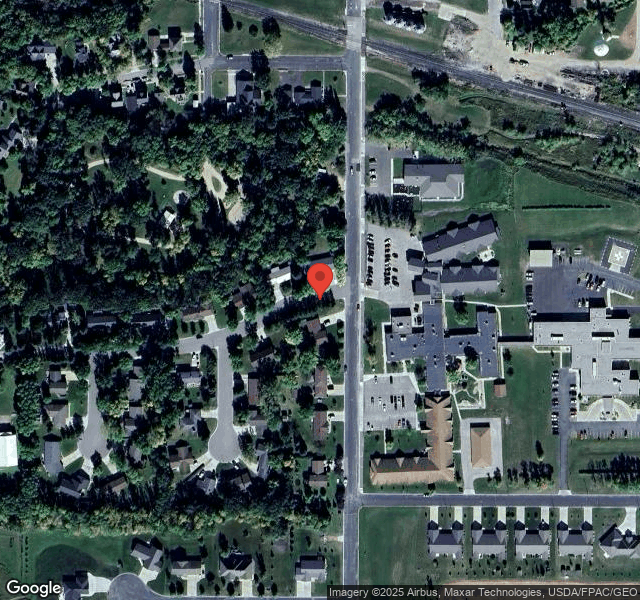

North Star Manor

410 SOUTH MCKINLEY STREET, WARREN, MN 56762 (218) 745-5282
Government - City 45 Beds Independent Data: November 2025
Trust Grade
70/100
#191 of 337 in MN
Last Inspection: August 2025

Inspected within the last 6 months. Data reflects current conditions.

Overview

North Star Manor in Warren, Minnesota has a Trust Grade of B, indicating it is a good choice among nursing homes. With a state rank of #191 out of 337, it falls in the bottom half of Minnesota facilities, but it is the only option in Marshall County. The facility has shown improvement in its issues, reducing from 2 in 2024 to 1 in 2025, and it has no fines on record, which is a positive sign. However, there are concerns with RN coverage, as it is less than 80% of other facilities in the state, and there have been specific incidents such as inaccurate reporting of RN hours and potential cross-contamination in laundry practices which could pose risks to residents. While staffing is strong with no turnover, the facility must address its quality measures, which currently rate poorly at 1 out of 5 stars.

Trust Score
B
70/100
In Minnesota
#191/337
Bottom 44%
Safety Record
Low Risk
No red flags
Inspections
Getting Better
2 → 1 violations
Staff Stability
○ Average
Turnover data not reported for this facility.
Penalties
✓ Good
No fines on record. Clean compliance history, better than most Minnesota facilities.
Skilled Nurses
✓ Good
Each resident gets 52 minutes of Registered Nurse (RN) attention daily — more than average for Minnesota. RNs are trained to catch health problems early.
Violations
○ Average
8 deficiencies on record. Average for a facility this size. Mostly minor or procedural issues.
★★★☆☆
3.0
Overall Rating
★★★★☆
4.0
Staff Levels
★☆☆☆☆
1.0
Care Quality
★★★★☆
4.0
Inspection Score
Stable
2024: 2 issues
2025: 1 issues

The Good

  • 4-Star Staffing Rating · Above-average nurse staffing levels
  • Full Sprinkler Coverage · Fire safety systems throughout facility
  • No fines on record

Facility shows strength in staffing levels, fire safety.

The Bad

3-Star Overall Rating

Near Minnesota average (3.2)

Meets federal standards, typical of most facilities

The Ugly 8 deficiencies on record

May 2025 1 deficiency
CONCERN (D) 📢 Someone Reported This

A family member, employee, or ombudsman was alarmed enough to file a formal complaint

Potential for Harm - no one hurt, but risky conditions existed

Deficiency F0757 (Tag F0757)

Could have caused harm · This affected 1 resident

Based on interview and document review the facility failed to ensure the clinician documented a clinical rationale for the continued dose of a PRN (as needed) medication for 1 of 1 residents reviewed ...

Read full inspector narrative →
Based on interview and document review the facility failed to ensure the clinician documented a clinical rationale for the continued dose of a PRN (as needed) medication for 1 of 1 residents reviewed who used PRN Lorazepam (used for the management of anxiety disorders, the short-term relief of symptoms of anxiety or anxiety associated with depression). Findings include: R1's admission Record indicated he admitted to the facility 11/22/23. Diagnosis included depression, psychotic disorder with delusions, pain, weakness, anxiety and Alzheimer's. Facility documents dated 3/15/25, 3/28/25, 4/11/25, indicated verbal orders confirmed by facility staff: Lorazepam oral tablet 0.5 milligrams (mg). Give .5 mg by mouth every eight hours as needed for anxiety. The orders did not include a clinical rationale for continued use of the PRN order. R1's Order Summary Report dated 3/14/25 through 5/31/24, indicated the following orders: - 3/15/25, Lorazepam oral tablet 0.5 mg. Give .5 mg by mouth every eight hours as needed for anxiety. End date 3/25/25. - 3/28/25, Lorazepam oral tablet 0.5 mg. Give .5 mg by mouth every eight hours as needed for anxiety. End date 4/11/25. - 4/11/25, Lorazepam oral tablet 0.5 mg. Give .5 mg by mouth every eight hours as needed for anxiety. End date 4/25/25. - 4/25/25, Lorazepam oral tablet 0.5 mg. Give .5 mg by mouth every eight hours as needed for anxiety. End date 5/9/25. - 5/9/25, Lorazepam oral tablet 0.5 mg. Give .5 mg by mouth every eight hours as needed for anxiety. End date 5/23/25. A facility document titled Psychotropic Medication Gradual Dose Reduction Attempts dated 4/30/25, identified Lorazepam 0.5 mg twice daily and PRN. Target behavior indicated agitation. Nursing summary indicated, mood had been good, eating and sleeping well. Sees psychiatric provider. No issues currently. Is gradual dose reduction possible at this time? the form was checked NO (if NO, clinical rationale must be documented below). The section, Clinical rationale other than listed above, was left blank. The form was signed by the physician on 4/31/25. During interview on 5/15/25 at 10:46 a.m., the director of nursing (DON) stated they had recently had some of the PRN medications drop off so they had developed a process to have the providers write new order on Fridays for the ones that were coming due. The DON indicated she was not aware the provider was required to document a clinical rationale for the ongoing use of PRN medications. Facility Policy Psychotropic Medication Use and Behavioral Monitoring dated 6/17/21, indicated the need to continue PRN orders for psychotropic medications beyond 14 days required that the practitioner document the rationale for the extended order.
Jun 2024 2 deficiencies
CONCERN (F)

Potential for Harm - no one hurt, but risky conditions existed

Staffing Data (Tag F0851)

Could have caused harm · This affected most or all residents

Based on interview and document review, the facility failed to ensure registered nurse hours were submitted accurately on the payroll-based journal. This had the potential to affect all 30 residents r...

Read full inspector narrative →
Based on interview and document review, the facility failed to ensure registered nurse hours were submitted accurately on the payroll-based journal. This had the potential to affect all 30 residents residing in the facility. Findings include: The PBJ (payroll-based journal) Staffing Report CASPER Report 1705D FY [fiscal year] Quarter 2 2024 (January 1 - March 31) identified a a trigger for no registered nurse (RN) hours on the following days: 2/24, 3/9, 3/10, 3/17, 3/24 and 3/31. The facility payroll and working scheduled were reviewed for 2/24, 3/9, 3/10, 3/17, 3/24 and 3/31 and there was a RN working for 8 hours consecutively on all 6 days identified on the PBJ report. During interview on 6/27/24, at 9:55 a.m. the administrator confirmed there were RNs scheduled per the requirements on the identified days and was not sure why the PBJ report was inaccurate. She would need to look into it further to identify the reason.
CONCERN (F)

Potential for Harm - no one hurt, but risky conditions existed

Infection Control (Tag F0880)

Could have caused harm · This affected most or all residents

Based on observation, interview and document review, the facility failed to ensure soiled and potentially contaminated laundry was sorted in a manner to reduce the risk of cross contamination and spre...

Read full inspector narrative →
Based on observation, interview and document review, the facility failed to ensure soiled and potentially contaminated laundry was sorted in a manner to reduce the risk of cross contamination and spread of infection. This had the potential to affect all 38 residents who utilized laundry services. Findings include: On 6/25/24, a laundry tour was completed with housekeeper (HSK)-A. HSK-A stated dirty laundry from the nursing floor came down to the laundry room in barrels. The resident laundry went into one cart, the facility laundry (such as sheets or soaker pads); and kitchen laundry in another cart. The facility did not send out any of their laundry and all laundry was washed at the facility. If resident or facility laundry were contaminated with urine or feces, the nursing staff were to rinse the laundry items out and put them into a black bag. HSK-A would take the bagged laundry and rip it open over the small wash machine and pre-wash it, before adding it back with the other laundry to be washed. No other laundry was bagged and came down in the dirty barrels loose. There were no gowns observed in the sorting area. - HSK-A put on gloves and sorted the laundry into different carts. After sorting the soiled laundry HSK-A wheeled the cart to the washer and loaded into the washer. HSK-A removed her gloves and washed her hands. HSK-A stated she always put disposable gloves on but had never been instructed to wear a disposable gown to sort the dirty laundry. HSK-A could see how it would be important to wear a personal protective gown over her uniform when sorting the soiled laundry but had never been told to wear one. HSK-A remembered they had worn a protective gown in the past when the facility had residents with COVID or Clostridium difficile (contagious infection). During interview on 6/25/24, at 12:45 p.m. the infection control preventionist stated she was not aware laundry staff were not using personal protective equipment (PPE) to sort soiled laundry and it would be important to wear PPE for the task to avoid contamination of their uniforms. When interviewed on 6/25/24, at 3:00 p.m. the director of nursing (DON) stated she was not aware laundry staff were not utilizing PPE to sort soiled laundry and that would be an infection control issue as there was a possibility for the staff to contaminate their uniforms. The facility Soiled Laundry and Bedding policy dated 7/25/23, identified anyone who handled soiled laundry must wear protective gloves and other protective equipment as needed.
Sept 2023 1 deficiency
CONCERN (F)

Potential for Harm - no one hurt, but risky conditions existed

Infection Control (Tag F0880)

Could have caused harm · This affected most or all residents

**NOTE- TERMS IN BRACKETS HAVE BEEN EDITED TO PROTECT CONFIDENTIALITY** Based on observation, interview and document review, failed to implement timely transmission based precautions (TBP) and testing...

Read full inspector narrative →
**NOTE- TERMS IN BRACKETS HAVE BEEN EDITED TO PROTECT CONFIDENTIALITY** Based on observation, interview and document review, failed to implement timely transmission based precautions (TBP) and testing according to the Centers for Disease Control (CDC) for 2 of 2 residents (R6, R33, R27) who were displaying COVID-19 symptoms; and the facility failed to conduct COVID-19 outbreak testing was conducted according to CDC guidance for 13 staff (DA-B, C-A, C-B, HSK-A, BUS-A, BUS-B, SS-A, MED-A, NA-J, NA-K, NA-L, NA-M and NA-N) who worked without participating in outbreak testing; and failed to ensure surveillance tracking of infections was completed for staff and residents. This had the potential to affect all residents and staff. Findings include: The Centers for Disease Control and Prevention (CDC) Interim Infection Prevention and Control Recommendations for Healthcare Personnel (HCP) During the Coronavirus Disease 2019 (COVID-19) Pandemic updated 5/8/23, identified when performing an outbreak response to a known case, facilities should always defer to the recommendations of the jurisdiction ' s public health authority. - A single new case of SARS-CoV-2 infection in any HCP or resident should be evaluated to determine if others in the facility could have been exposed. - The approach to an outbreak investigation could involve either contact tracing or a broad-based approach; however, a broad-based (e.g., unit, floor, or other specific area(s) of the facility) approach is preferred if all potential contacts cannot be identified or managed with contact tracing or if contact tracing fails to halt transmission. - Perform testing for all residents and HCP identified as close contacts or on the affected unit(s) if using a broad-based approach, regardless of vaccination status. Testing is recommended immediately (but not earlier than 24 hours after the exposure) and, if negative, again 48 hours after the first negative test and, if negative, again 48 hours after the second negative test. This will typically be at day 1 (where day of exposure is day 0), day 3, and day 5. Due to challenges in interpreting the result, testing is generally not recommended for asymptomatic people who have recovered from SARS-CoV-2 infection in the prior 30 days. Testing should be considered for those who have recovered in the prior 31-90 days; however, an antigen test instead of a nucleic acid amplification test (NAAT) is recommended. This is because some people may remain NAAT positive but not be infectious during this period. - In the event of ongoing transmission within a facility that is not controlled with initial interventions, strong consideration should be given to use of Empiric use of Transmission-Based Precautions for residents and work restriction of HCP with higher-risk exposures. In addition, there might be other circumstances for which the jurisdiction ' s public authority recommends these and additional precautions. - If no additional cases are identified during contact tracing or the broad-based testing, no further testing is indicated. Empiric use of Transmission-Based Precautions for residents and work restriction for HCP who met criteria can be discontinued as described in Section 2 and the Interim Guidance for Managing Healthcare Personnel with SARS-CoV-2 Infection or Exposure to SARS-CoV-2, respectively. - If additional cases are identified, strong consideration should be given to shifting to the broad-based approach if not already being performed and implementing quarantine for residents in affected areas of the facility. As part of the broad-based approach, testing should continue on affected unit(s) or facility-wide every 3-7 days until there are no new cases for 14 days. If antigen testing is used, more frequent testing (every 3 days), should be considered. The CDC Interim Guidance for Managing Healthcare Personnel with SARS-CoV-2 Infection or Exposure to SARS-CoV-2 updated 9/23/22, identified HCP with even mild symptoms of COVID-19 should be prioritized for viral testing with nucleic acid or antigen detection assays. When testing a person with symptoms of COVID-19, negative results from at least one viral test indicate that the person most likely does not have an active SARS-CoV-2 infection at the time the sample was collected. If using NAAT (molecular), a single negative test is sufficient in most circumstances. If a higher level of clinical suspicion for SARS-CoV-2 infection exists, consider maintaining work restrictions and confirming with a second negative NAAT. If using an antigen test, a negative result should be confirmed by either a negative NAAT (molecular) or second negative antigen test taken 48 hours after the first negative test. For HCP who were initially suspected of having COVID-19 but, following evaluation, another diagnosis is suspected or confirmed, return-to-work decisions should be based on their other suspected or confirmed diagnoses. R6's significant change in status Minimum Data Set (MDS) dated [DATE], identified R6 was [AGE] years old and had intact cognition. Diagnoses included diabetes, peripheral vascular disease, and cardiomyopathy. During observation on 9/12/23 at 4:14 p.m. a PPE cart was outside R6's room and a contact precautions sign on the residents door. LPN-F stated R6 was not feeling well and tested positive for COVID-19 earlier that day. R6's nursing progress note dated 9/12/23 at 4:35 p.m., identified R6 complained of weakness, exhaustion and headache. COVID-19 positive. During interview on 9/12/23 at 5:06 p.m., LPN-F stated she recently tested R6 for COVID-19. LPN-F stated she wore a surgical mask, gloves and prescription glasses when she administered the COVID-19 antigen test. LPN-F stated she did not wear a gown, N95 mask or eye protection other than prescription eye glasses. During interview on 9/14/23 at 3:07 p.m., the director of nursing (DON) stated staff are expected to wear full PPE when testing residents for COVID-19. R33's quarterly MDS dated [DATE], identified R33 was [AGE] years old and had a severe cognitive impairment. Diagnoses included atrial fibrillation (irregular heartbeat), hypertension, and anemia. R33's nursing progress notes dated 9/11/23 at 12:50 p.m., identified R33's testing for the facility's COVID-19 outbreak was negative. - On 9/12/23 at 1:24 p.m., R33 was seen during doctor rounds and staff were awaiting orders. The note did not identify R33's symptoms. - On 9/12/23 at 7:42 p.m., staff toileted R33 at 3:00 p.m., and was R33 was weak and shaky. R33 required assist of two persons to transfer to toilet. R33 had loose stools with scant amount of blood due to hemorrhoids. The nurse was updated and the nurse attempted to test for COVID; however, R33 refused by turning head away from staff and stating no. Reassessed R33 at this time. Blood pressure (BP) 168/82, temperature 98.9 degrees Fahrenheit (F), pulse 76, respirations 18, and oxygen saturations 96%. R33's lung sounds were clear throughout with no cough noted. Staff were unable to determine if R33 had other symptoms such as congestion or sore throat. R33 allowed a COVID-19 test be to be completed at 7:30 p.m. which resulted positive. R33 had been in her room that shift. On 9/12/23 at 4:53 p.m., licensed practical nurse (LPN)-F stated R33 was feeling weak, clammy, tired and had diarrhea. LPN-F entered R33's room wearing a surgical face mask, prescription glasses and was carrying a COVID-19 test. LPN-F placed the COVID-19 test kit on the dresser, walked around to the right side of R33's bed, leaned down and reached under R33's right shoulder to physically lift and adjusted the residents head towards the middle of the bed and onto the pillow. LPN-F walked back towards the dresser that was on the left side of the bed. LPN-F put gloves on, picked up the COVID-19 nasal swab, leaned over the left side of the bed and reached across the residents body to insert the swab into R33's nares. State Agency (SA) intervened. LPN-F stopped the testing effort and stated when conducting a COVID-19 test on a resident staff should wear full PPE including a gown, gloves, N95 mask and eye protection other than prescription glasses. LPN-F exited R33's room, threw the unused COVID-19 test into the garbage, used hand sanitizer and went to get another COVID-19 antigen test. LPN-F returned with a new COVID-19 test, donned full PPE, entered residents room, prepped supplies and attempted to swab R33's nares for the test. R33 turned her head down toward the blanket and refused multiple times to have the test administered. LPN-F stood, walked from the bed, threw the unused COVID-19 testing swab in the garbage, removed and disposed of the PPE she had been wearing. During observations on 9/12/23 at 5:20 p.m., R33 was in her room however, there was no sign on R33's door identifying TBP or supplies for TBP outside the door. -at 5:23 p.m. R33's call light was turned on. Nursing assistant (NA)-P and NA-M entered R33's room without putting on personal protective equipment (PPE) (isolation gown, gloves, goggles, and N95 mask). -at 5:26 p.m. NA-P and NA-M exited R33's room and proceeded to help other residents. -at 5:27 p.m. R33's call light was turned on and NA-I entered room without putting on PPE. Then NA-I exited the room and turned the call light off. -at 5:28 p.m. R33's call light was turned on. -at 5:29 p.m. NA-M entered R33's room and did not put PPE on. -at 5:30 p.m. NA-P entered R33's without putting on PPE. -at 5:31 p.m. NA-M exited R33's room and entered two separate units to assist residents to supper. -at 5:32 p.m. NA- exited R33's room and proceeded to assist other residents in the facility. -at 8:01 p.m. R33 was in their room and on TBP. During interview on 9/12/23 at 8:00 p.m., LPN-F stated R33 allowed staff to administer the COVID test and R33 tested positive for COVID-19. R27's annual MDS dated [DATE], identified R27 was [AGE] years old, had severe cognitive impairment. Diagnoses included Alzheimer's disease, hypertension, and anxiety. R27's nursing progress note dated 9/11/23 at 12:49 p.m., identified R27's testing for the facility's COVID-19 outbreak was negative. During observation on 9/12/23, at 4:44 p.m. R27 was wheeling around in the common area with other residents around. R27 was not on TBP. During an interview on 9/13/23 at 4:30 p.m., the DON stated she identified R27 had symptoms of a cough and runny nose on 9/10/23, was tested with an antigen test which resulted as negative. R27 was again tested on [DATE]. R27 was not placed into isolation due to symptoms until a confirmatory test was collected after 48 hours on 9/12/23. R27's medical record nor the infection prevention surveillance logs identified this. The DON stated she expected staff to notify the IP of all possible infections and also expected the tracking and tending of all infections to prevent possible transmission. R27's medical record lacked information related to the signs and symptoms of potential COVID-19 infection. The facility Infection Surveillance log for September 2023, identified the onset date, resident name and room number, infection site, symptoms/signs, test culture pathogen, diagnosis and antibiotic order/physician-provider. The data included R29's COVID-19 diagnosis; however, the log did not include R6, R33, nor R27 for COVID-19. During an interview on 9/13/23 at 11:22 a.m. RN-A and LPN-B stated whenever a resident exhibited any sign/symptom of illness they would complete an assessment, an overall check. Does the resident have a fever and/or cough? LPN-B stated at that time they would also collect a COVID-19 antigen test. If the test was negative, staff might call the provider and also enter a nursing progress note. LPN-B nor RN-A stated they would notify the IP or the DON if the test was negative. RN-A stated she would never place a symptomatic resident who had tested negative for COVID-19 into isolation because that would be unwarranted nor was a confirmatory test required. RN-A stated R33 was tested on [DATE], due to being symptomatic, was not placed into isolation, was seen by the provider, but tested positive the evening of 9/12/23. At that time, R33 was placed into isolation because she was confirmed positive for COVID-19. During an interview on 9/14/23 at 12:48 p.m., the IP stated she normally attended the Interdisciplinary Team Meeting (IDT) and was informed of possible infections. Upon review of the September Infection Surveillance log, the IP stated it was up to date until the evening of 9/12/23. The IP did not usually put all symptoms on the tracking log because some things would resolve without treatment. STAFF ILLNESS: During an interview on 9/13/23 at 1:13 p.m., NA-D stated on 9/12/23, NA-D felt hot/cold, just not feeling well. NA-D tested at home and was negative for COVID-19. NA-D told the nurses during report she tested negative on 9/12/23, at home then tested in the facility on 9/13/23, with an antigen test. If NA-D had continuing symptoms NA-D would have stayed home but tested negative so came to work as usual. Staff only needed to stay home if they tested positive. NA-D received an email that would pop up on her phone telling her when to test. Staff used to test twice a week, but she really did not know anymore. The facility's infection preventionist (IP) had not told the staff yet when they were supposed to test again but would probably tell them later in the week. NA-D could not say who she reported to her symptoms and test to. NA-D illness symptoms and home test were not listed on the September staff illness log. During an interview on 9/13/23 at 1:15 p.m., LPN-B stated she found out she needed to wear a mask in the facility when she had arrived to work on 9/12/23, and someone told LPN-B there was COVID-19 in the building and everyone had to test. That morning on 9/13/23, the IP told everyone over the walkie-talkie to test again. LPN-B stated she did not work at the facility often and just knew she had to test every time she worked. During an interview on 9/13/23 at 1:17 p.m., DA-A stated staff had to test and wear a surgical mask in the building because there was COVID-19. DA-A stated he thought staff had to test twice a week but was not really sure. Staff received an email and the nurses gave verbal reminders too. During an interview on 9/13/23 at 1:18 p.m., RN-A stated she found out she needed to test for COVID-19 while she was in morning report with the other staff. Staff used to come to work early and they had to know their results before starting work, but that morning RN-A just went to the nurses' station to test. Outbreak testing used to be twice a week but she would test whenever she was told to. During an interview on 9/13/23 at 10:40 a.m., the facility IP stated staff had to follow the facility's call-in procedure. All staff had to report to the charge nurse. The charge nurse filled out an absence form and then gave the form to the IP because she did payroll duties as well. The absence form was for any type of absence, [NAME], etc. The charge nurse gave the form to the department supervisor who signs the form and forwards it to the IP. At that time, the IP would do a follow up with the staff member. Most supervisors emailed the IP to let her know and she would look at her email Monday through Friday between 8:00 a.m. and 3:00 p.m. when she was in the facility. For example, if she received an email at 4:00 p.m. on Friday, the IP would not read that email until Monday morning. For immediate weekend or after hour concerns, the staff should send a text to the IP; however, it really depended on the supervisor and/or department because not all departments worked weekends or aft/er hours. The nurses should collect all the data they needed /and go forward with whatever option they thought was best for them. Nursing did not call the IP with any questions because there was an on-call RN as well. - The facility utilized COVID-19 antigen tests on the staff and residents. Staff would come to the IP office and swab themselves, then the IP would complete the rest of the test. Any staff member would always have access to a test. If the IP was working, staff would swab and test themselves, then record the results on the testing sheets. The IP collected the sheets every day. Additionally, staff were able to test at home with an over-the-counter test. - NA-A reported symptoms in the afternoon on 9/9/23. NA-A worked that day and also worked 9/8/23. NA-A's family member who lived with NA-A tested positive so NA-A wore a surgical mask on 9/8/23 and 9/9/23. NA-A reported to the nurses station, tested positive and was sent home. Because 9/9/23, was a Saturday, nursing emailed the IP. - On 9/11/23, the IP put signs on the doors identifying the facility was in outbreak status and conducted whole house testing with the residents and staff in the building because it was too difficult to identify potential high risk exposures. However, there were additional staff positive COVID-19 cases. LPN-A tested positive at home on 9/10/23. LPN-A tested positive at home on 9/10/23. Trained medication assistant (TMA)-A reported sneezing and tired on 9/10/23. She worked 9/9/23, 9/10/23 and 9/11/23. On 9/11/23, TMA-A was tested at the facility, was positive, and was sent home. LPN-C tested positive at home as well on 9/10/23. LPN-C last worked in the facility on 9/8/23; however, the absence form did not identify symptoms or when symptoms started. - All staff who worked tested because they knew to test; however, the IP did not go back through the testing log to verify all staff tested. New testing guidance was distributed in August 2023, but she had not reviewed the guidance and would need to look it up. On 9/11/23, IP sent an email to everyone telling them to test prior to work and to wear a mask. Staff were able to test any time during their shift. If they started work at 7:00 a.m., they could test at 10:00 a.m. The IP kept all the Staff Testing: BinaxNOW COVID-19 Ag Card lists in a binder in her office and also kept a running list. The IP told the department managers to remind their staff; however the IP did not review schedules to verify all staff tested. Since 9/11/23, the IP was unaware of any staff who had not tested. At the end of the outbreak, the IP would review the working list and put together an email for all the managers. The IP would do this whenever the IP had time. COVID-19 testing during an outbreak was important to ensure asymptomatic staff were not carrying the COVID-19 virus because it could lead to transmission to other staff and residents. The facility Staff Testing: BinaxNOW COVID-19 Antigen (Ag) Cards identified the following: - On 9/9/23, NA-A tested positive. - On 9/10/23, the following tested negative: LPN-E, trained medication assistant (TMA)-A, and NA-E. The following tested positive: TMA-A. - On 9/11/23, the following tested negative: LPN-A, LPN-D, LPN-E, NA-E, NA-F, and NA-G. - On 9/12/23, the following tested negative: registered nurse (RN)-B, LPN-B, and NA-H. - On 9/13/23, the following tested negative: NA-F and NA-I The facility staff illness log for September 2023, identified the following: - On 9/9/23, NA-A complained of a headache and chills. NA-A had an exposure to COVID-19 at home and had tested negative on 9/8/23. The cautionary measures were stay out of work. The log did not identify what type of test was conducted, when NA-A had worked in the facility and/or any potential high risk exposures. - 9/11/23, licensed practical nurse (LPN)-A complained of a headache and congestion and tested positive for COVID-19 at home. The cautionary measures were stay out of work. The log did not identify what type of test was conducted, when LPN-A had worked in the facility and/or any potential high risk exposures. - On 9/12/23, NA-B complained of congestion and fatigue. NA-B had reported a negative COVID-19 test was done at home on 9/11/23 and 9/12/23. The cautionary measures were stay out of work. The log did not identify what type of test was conducted, when LPN-A had worked in the facility and/or any potential high risk exposures. - On 9/13/23, NA-C complained of cough. NA-C tested negative for COVID-19 on 9/12/23. The log did not identify what type of test was conducted, when LPN-A had worked in the facility and/or any potential high risk exposures. The staff log failed to identify LPN-B nor TMA-A's illnesses or positive COVID-19 tests The facility provided staff testing log and the staff schedules for 9/11/23, 9/12/23 and 9/13/23, identified the following staff worked without participating in outbreak testing prior to their shift: - dietary aide (DA)-B worked on 9/12/23 and did not test. - cook (C)-A worked 9/12/23 and 9/13/23 and did not test. - C-B worked 9/12/23 and did not test. - housekeeper (HSK)-A worked 9/12/23 and 9/13/23 and did not test. - business office (BUS)-A worked on 9/11/23, 9/12/23, and 9/13/23 and did not test. - BUS-B worked 9/11/23, 9/12/23, and 9/13/23 and did not test. - social services (SS)-A worked 9/11/23, 9/12/23, and 9/13/23 and did not test. - medical records (MED)-A worked 9/12/23 and 9/13/23 and did not test. - NA-J worked 9/11/23 and did not test. - NA-K worked 9/11/23 and did not test. - NA-L worked 9/11/23 and did not test. - NA-M worked 9/11/23 and did not test. - NA-N worked 9/12/23 and 9/13/23 and did not test. During an interview on 9/14/23 at 1:30 p.m., director of nursing (DON) stated she expected staff to notify the IP nurse of all possible infection symptoms and also for all infection symptoms to be tracked to prevent possible transmission of communicable disease. The facility policy Staff Mass Testing for COVID-19 revised 2/21/22, identified testing completed at the facility would be at no cost to the staff. In the event of this pandemic, the facility would mandate testing for all staff. COVID testing could be done by RT-PCR (NAAT) or by antigen test. The policy lacked to identify when a symptomatic staff member should report symptoms and test, when to stay out of the facility, when a confirmatory test should be collected, nor frequency of outbreak testing. The facility policy Resident Mass Testing for COVID-19 revised 12/15/22, identified COVID testing could be done by RT-PCR or antigen testing. Residents that had not consented would be clearly indicated and no resident would be restrained or forced to complete the test. Residents who refused would be educated about the current COVID status in the facility and about proper PPE use for residents. The resident would be monitored for any COVID symptoms and placed under transmission based precautions if any symptoms arose. However, the policy did not direct staff to collect confirmatory tests for symptomatic residents who had tested negative nor directed staff to place symptomatic residents into isolation until a confirmatory test could be collected in a timely manner.
Aug 2023 1 deficiency
CONCERN (D) 📢 Someone Reported This

A family member, employee, or ombudsman was alarmed enough to file a formal complaint

Potential for Harm - no one hurt, but risky conditions existed

Pharmacy Services (Tag F0755)

Could have caused harm · This affected 1 resident

**NOTE- TERMS IN BRACKETS HAVE BEEN EDITED TO PROTECT CONFIDENTIALITY** Based on observation, interview and record review the facility failed to administer physician's order as written for 1 of 3 (R2)...

Read full inspector narrative →
**NOTE- TERMS IN BRACKETS HAVE BEEN EDITED TO PROTECT CONFIDENTIALITY** Based on observation, interview and record review the facility failed to administer physician's order as written for 1 of 3 (R2) residents reviewed for steroid inhalation which resulted in a diagnosis of oral thrush. Findings include: R2's significant change Minimum data set (MDS) dated [DATE], identified intact cognition with no behaviors. R2's diagnoses included chronic obstructive pulmonary disease (COPD), and respiratory failure. R2's care plan dated 4/5/23, identified R2 had respiratory/pulmonary concerns with COPD. Staff were instructed to give aerosol or bronchodilators as ordered, monitor for any side effects and effectiveness, and shortness of breath on exertion. R2's PHYSICIAN ORDER summary dated 8/10/23, identified: -Order date 4/1/23, identified oxygen at 2 liters (L) per nasal cannula as needed (PRN) to keep oxygen saturation level above 90% related to COPD. -Order date 7/25/23, DuoNeb solution 0.5/2.5 mg/ml (ipratropium/albuterol) one vial inhale orally via nebulizer every four hours as needed for shortness of breath and difficulty breathing related to COPD. -Order date 6/28/23, Ipratropium-Albuterol inhalation solution 0.5/2.5 mg/ml one dose inhale orally four times a day related to COPD. Rinse mouth after each nebulizer. -Order date 3/24/23, and discontinued 7/27/23, Budesonide inhalation suspension 0.5 mg/2 ml one inhalation orally two times a day for shortness of breath or wheezing. Rinse mouth after nebulizer treatment. -Order date 5/27/23, held from 6/20/23, through 7/1/23, and discontinued 7/25/23, Spiriva inhalation, aerosol solution 2.5 mcg two puffs inhale orally one time a day for asthma related to COPD. Review of R2's progress note on 6/27/23 at 4:40 p.m. R2 returned from NVHC visit with NP for follow up on COPD and R2 requested cough syrup for coughing. New orders identified: 1. Nystatin 5 ml four times a day for 10 days (for diagnosis of thrush) 2. Duo Nebs as previously order four times a day. 3. Rinse mouth after each nebulizer to prevent thrush. 4. Augmentin 875 mg twice a day times 10 days. 5. Prednisone 40 mg daily times five doses. R2's electronic medication administration record (EMAR) dated 6/1/23, through 6/27/23, indicated staff did not sign off indicating R2 rinsed mouth after administration of Budesonide (steroid) nebulizer treatment prior to diagnosis of thrush. During an observation and interview on 8/8/23 at 3:24 p.m. licensed practical nurse (LPN)-A sanitized hands, removed DuoNeb inhalant medication from box, completed checks with electronic medication administration record (EMAR), locked medication cart and computer screen, and entered R2's room. LPN-A checked R2's oxygen level 92%, applied gloves and prepared medication. LPN-A handed the nebulizer tube container to R2, instructed her to place mouthpiece in her mouth, turned nebulizer machine on, and said, I will be back in seven minutes and exited the room. At approximately 3:35 p.m. an unidentified staff requested assistance from LPN-A and walked down the hallway. R2 completed the nebulizer treatment, turned off nebulizer machine, and placed the tubing and mouthpiece onto the bedside table. At approximately 3:45 p.m. surveyor entered R2's room asked if she had anything to drink and R2 stated no, but now that you mentioned that I should have rinsed out my mouth after that nebulizer treatment. R2 took a sip of water, swished it around in her mouth and spit the water into the garbage can. R2 then stated, I think that is what I am supposed to do so the sores in my mouth do not come back. During a follow-up interview on 8/9/23 at 1:40 p.m. RN-A stated staff were expected to enter on R2's EMAR whether she rinsed her mouth or not after the nebulizer treatment was completed to prevent thrush. RN-D also verified when an X mark was entered on the EMAR she was unsure of what that meant. Review of R2's EMAR lacked evidence nursing staff documented R2's mouth rinse following her nebulizer treatments from June 1st, 2023 through survey exit. During an interview on 8/9/23 at 11:00 a.m. RN-B stated it was important to have R2 rinse after her nebulizer treatments as oral thrush was usually caused by a steroid inhalation medication and lack of rinsing the mouth afterwards. During an interview on 8/9/23 at 11:30 a.m. R2 sat in wheelchair in her room. R2 stated she had just finished her nebulizer treatment and turned off the machine. R2 also stated she had rinsed her mouth with water and spit it into the garbage can. R2 indicated the nurse must have gotten busy. R2 stated she had gotten thrush in her mouth and still had an awful taste in there, not sure if all the sores were gone yet. R2 indicated she needed reminders from staff to rinse her mouth after the breathing treatment and as did not always remember to do it. During a telephone interview on 8/9/23 at 1:07 p.m. nurse practitioner (NP) verified she had seen R2 on 6/27/23, in the Emergency Department (ED) due to increased breathing. NP indicated during that visit, R2 was diagnosed with thrush on soft palate, placed on Nystatin (used to treat yeast infections in the mouth) most likely caused by steroid inhalation (Pulmicort) and lack of rinsing her mouth out with water after the treatments. During a telephone interview on 8/9/23 at 1:25 p.m. pharmacist (P)-A stated anytime a resident received a steroid nebulizer treatment such as Budesonide (Pulmicort) nursing should have ensured R2 rinsed out her mouth to prevent thrush. During an interview on 8/9/23 at 2:30 p.m. trained medication assistant (TMA)-A stated R2's memory was fair but would be unable to remember to rinse her mouth out after her nebulizer treatment without reminders from staff. During an interview on 8/9/23 at 3:11 p.m. RN-C stated R2 was pretty much orientated but most likely could not remember to rinse mouth out with water after her nebulizer treatment and needed reminders. RN-C stated staff were expected to remind R2 to rinse her mouth out after the nebulizer treatments to help prevent thrush. During an interview on 8/9/23 at 4:30 p.m. director of nursing (DON) verified when an order was placed in PCC there were options to choose an add on (such as rinse mouth) and that add on was not completed when the steroid inhalant was placed on R2's EMAR. DON stated nursing staffed required cueing to rinse R2's mouth and that should have been recognized sooner. DON indicted the nurse on the medication cart were expected to have followed the recommendations regarding steroid inhalations to have prevented oral thrush. DON verified from 6/1/23, through 6/26/23, R2's medication administration record did not show mouth washes were completed and it was certainly possible that the lack of rinsing out R2's mouth increased her chance of getting thrush. DON stated if it was not documented as completed, it was not done. Facility policy titled Adverse Consequences and Medication Errors dated 8/15/21, revealed a medication error was defined as the preparation or administration of drugs which was not in accordance with physician's orders, manufacturer specifications, or accepted professional standards and principles of professionals providing services. An adverse consequence was defined as an unpleasant symptom or even that was due to or associated with a medication such as side effect. Facility policy titled Order Entry dated 6/28/23, revealed to ensure safe delivery of medications and treatments and prevent medication errors a nurse would be expected to add New Orders Checklist sticker to the original order and the following steps completed: a. Enter order into PCC then print. b. Order faxed to pharmacy if applicable. c. A second licensed nurse would have been required to verify the order was entered properly and initial the sticker. The second licensed nurse would also be expected to have placed the order in East/West file folder for the third check by night shift licensed nurse.
Jan 2023 3 deficiencies
CONCERN (D) 📢 Someone Reported This

A family member, employee, or ombudsman was alarmed enough to file a formal complaint

Potential for Harm - no one hurt, but risky conditions existed

Resident Rights (Tag F0550)

Could have caused harm · This affected 1 resident

**NOTE- TERMS IN BRACKETS HAVE BEEN EDITED TO PROTECT CONFIDENTIALITY** Based on interview and document review the facility failed to ensure 1 of 1 residents (R1) were treated with dignity and respect...

Read full inspector narrative →
**NOTE- TERMS IN BRACKETS HAVE BEEN EDITED TO PROTECT CONFIDENTIALITY** Based on interview and document review the facility failed to ensure 1 of 1 residents (R1) were treated with dignity and respect when a facility staff member aggressively took a cup from a residents hand, causing unintentional, minor injury and made a verbal statement to R1 causing R1 to feel bad about herself. Findings include: R1's annual Minimum Data Set, dated [DATE], identified intact cognition. R1's care plan dated 12/15/22, identified a self care deficit related to diagnosis of hypertensive encephalopathy and a history of transient ischemic attacks. A report to the state agency (SA) dated 12/29/22, indicated an incident occurred during a conversation between a facility staff member and R1, on 12/29/22, at 5:00 p.m. regarding R1's blood pressure. R1 stated trained medication aide (TMA)-A was upset and frustrated the other day. R1 stated TMA-A was yelling at her about all of her medication changes. R1 stated TMA-A handed her medications during the interaction and R1 said she would not take the medications until her blood pressure was checked. R1 said TMA-A was set off and grabbed the pill cup out of her hand. The report indicated R1 showed the staff member her hand. The staff member noted a couple of scratches to R1's left pinky finger. A facility investigation report dated 1/5/23, indicated the director of nursing (DON) met with R1 regarding the concern. R1 stated she had gone to see her physician earlier in the week and he had changed her medications again. R1 said she woke up on Wednesday and had breakfast in her room as usual and sometime after breakfast she felt dizzy and had a pain up her neck. R1 stated she did not report it as she thought it would pass. R1 said TMA-A came to her room around 11:00 a.m. with a plastic medication cup. R1 told TMA-A she felt dizzy and asked if she should have her blood pressure checked before taking her pills. R1 said she thought that had upset TMA-A who asked her to take the pills first to which R1 replied No, I don't want to take them without knowing my blood pressure. R1 stated TMA-A grabbed the cup out of her hand and said she felt a scratch on her finger at the time but did not think much of it until later. The report indicated R1 had two bruises on her fingers and a scratch. The report also indicated R1 stated as TMA-A was leaving her room she stopped in the doorway and said, If you saw a real doctor you would have a pill that worked without all these med changes every day. During interview on 1/5/23, at 2:20 p.m. TMA-A stated, I think this lady, I don't think she likes me. TMA-A stated she was concerned as R1 was her resident and said the scratch, the bruising, I would never do anything like that. TMA-A stated she had long nails and indicated that may have caused the scratch unintentionally. TMA-A stated she brought the medications to R1 and she did not want to take them. TMA-A said we were both frustrated. TMA-A said she took the cup from R1 and had another staff give the medications. TMA-A stated she did not remember saying anything about the physician except they had changed the medications again. During interview on 1/5/23, at 4:51 p.m. R1 stated she had trouble with her blood pressure and had gone to her physician quite a bit. R1 stated the day before the incident she had been to the clinic and the physician changed her medication and the time it was given. R1 stated TMA-A brought her two pills and she asked to have her blood pressure taken because she had been dizzy. R1 said she told TMA-A she was not going to take the pills without checking her blood pressure because she was afraid her blood pressure would bottom out. R1 stated TMA-A grabbed the cup, she ripped it out of my hand and said she got a cut and some bruising. R1 said she wasn't going to say anything and said, I've heard her holler before. R1 stated after TMA-A ripped the cup out of her hand she stopped in the doorway and said, you could go to a real doctor and maybe something could get resolved and said she had never seen anyone with medication changes so many times. R1 stated she could see TMA-A was mad and said she had an angry look on her face. R1 stated it made her feel terrible. R1 further stated, I do feel like I was abused by her and I am afraid of her. She will probably come and say something to me like it's my fault. On 1/6/23, at 11:54 a.m. the administrator, DON and Social worker (SW) were interviewed. The DON stated a staff member had reported to her the conversation between R1 and TMA-A. The DON said initially R1 could not recall what day it had occurred but remembered TMA-A had been upset and talking with a raised voice. The DON said she went to R1's room and met with her and R1 shared the story with her. The DON stated R1 had a pinpoint mark on her finger and said it looked like a blood blister. The DON said the underside of R1's ring finger had faint blue bruising and some faint discoloration on the middle finger. The DON stated we feel there was a misunderstanding between [R1] and [TMA-A]. R1 thought [TMA-A] was upset with her. The DON said in reality [TMA-A] was worried and concerned about [R1]. The DON stated she did not feel TMA-A's behavior was appropriate and had written up an action plan and planned to review it with TMA-A. The DON further stated TMA-A had not received any education but they planned to meet with her to present the corrective action plan and planned to have the staff development coordinator present education. At the time of survey, TMA-A had not received any education related to resident dignity and respect, resident rights or abuse training to ensure immediate correction. A facility policy Reporting Mistreatment of Vulnerable Adults dated 7/11/22, indicated all residents have the right to be free form abuse, neglect, misappropriation of property and exploitation. The policy indicated the facility will follow all state and federal regulations for abuse prevention and protection of vulnerable adults.
CONCERN (D) 📢 Someone Reported This

A family member, employee, or ombudsman was alarmed enough to file a formal complaint

Potential for Harm - no one hurt, but risky conditions existed

Investigate Abuse (Tag F0610)

Could have caused harm · This affected 1 resident

**NOTE- TERMS IN BRACKETS HAVE BEEN EDITED TO PROTECT CONFIDENTIALITY** Based on interview and document review, the facility failed to implement their policy to ensure adequate resident protection and...

Read full inspector narrative →
**NOTE- TERMS IN BRACKETS HAVE BEEN EDITED TO PROTECT CONFIDENTIALITY** Based on interview and document review, the facility failed to implement their policy to ensure adequate resident protection and a thorough investigation following an allegation of abuse for 1 of 2 residents (R1) reviewed for abuse. Findings include: R1's annual Minimum Data Set, dated [DATE], identified intact cognition. R1's care plan dated 12/15/22, identified a self care deficit related to diagnosis of hypertensive encephalopathy and a history of transient ischemic attacks. A report to the state agency (SA) dated 12/29/22, indicated an incident occurred during a conversation between a facility staff member and R1, on 12/29/22, at 5:00 p.m. regarding R1's blood pressure. R1 stated trained medication aide (TMA)-A was upset and frustrated the other day. R1 stated TMA-A was yelling at her about all of her medication changes. R1 stated TMA-A handed her medications during the interaction and R1 said she would not take the medications until her blood pressure was checked. R1 said TMA-A was set off and grabbed the pill cup out of her hand. The report indicated R1 showed the staff member her hand. The staff member noted a couple of scratches to R1's left pinky finger. A facility investigation report dated 1/5/23, indicated the director of nursing (DON) met with R1 regarding the concern. R1 stated she had gone to see her physician earlier in the week and he had changed her medications again. R1 said she woke up on Wednesday and had breakfast in her room as usual and sometime after breakfast she felt dizzy and had a pain up her neck. R1 stated she did not report it as she thought it would pass. R1 said TMA-A came to her room around 11:00 a.m. with a plastic medication cup. R1 told TMA-A she felt dizzy and asked if she should have her blood pressure checked before taking her pills. R1 said she thought that had upset TMA-A who asked her to take the pills first to which R1 replied No, I don't want to take them without knowing my blood pressure. R1 stated TMA-A grabbed the cup out of her hand and said she felt a scratch on her finger at the time but did not think much of it until later. The report indicated R1 had two bruises on her fingers and a scratch. The report also indicated R1 stated as TMA-A was leaving her room she stopped in the doorway and said, If you saw a real doctor you would have a pill that worked without all these med changes every day. The report indicated R1 had two bruises on her fingers and a scratch. During interview on 1/5/23, at 2:20 p.m. TMA-A stated, I think this lady, I don't think she likes me. TMA-A stated she was concerned as R1 was her resident and said the scratch, the bruising, I would never do anything like that. TMA-A stated she had long nails and indicated that may have caused the scratch. TMA-A stated she brought the medications to R1 and she did not want to take them. TMA-A said we were both frustrated. TMA-A said she took the cup from R1 and had another staff give the medications. TMA-A stated she did not remember saying anything about the physician except they had changed the medications again. TMA-A stated after the incident she had worked with R1 the next day then was moved to the other unit. TMA-A stated the Friday after was her day off and said she got a phone call and was told she could not work on R1's wing and could not be around her but she continued to work with other residents. During interview on 1/5/23, at 4:51 p.m. R1 stated she had trouble with her blood pressure and had gone to her physician quite a bit. R1 stated the day before the incident she had been to the clinic and the physician changed her medication and the time it was given. R1 stated TMA-A brought her two pills and she asked to have her blood pressure taken because she had been dizzy. R1 said she told TMA-A she was not going to take the pills without checking her blood pressure because she was afraid her blood pressure would bottom out. R1 stated TMA-A grabbed the cup, she ripped it out of my hand and said she got a cut and some bruising. R1 said she wasn't going to say anything and said, I've heard her holler before. R1 stated after TMA-A ripped the cup out of her hand she stopped in the doorway and said, you could go to a real doctor and maybe something could get resolved and said she had never seen anyone with medication changes so many times. R1 stated she could see TMA-A was mad and said she had an angry look on her face. R1 stated it made her feel terrible. R1 further stated, I do feel like I was abused by her and I am afraid of her. She will probably come and say something to me like it's my fault. On 1/6/23, at 11:54 a.m. the administrator, DON and Social worker (SW) were interviewed. The DON stated a staff member had reported to her the conversation between R1 and TMA-A. The DON said initially R1 could not recall what day it had occurred but remembered TMA-A had been upset and talking with a raised voice. The DON said she went to R1's room and met with her and R1 shared the allegation with her. The DON stated R1 had a pinpoint mark on her finger and said it looked like a blood blister. The DON said the underside of R1's ring finger had faint blue bruising and some faint discoloration on the middle finger. The DON stated we feel there was a misunderstanding between [R1] and [TMA-A]. R1 thought [TMA-A] was upset with her. The DON said in reality [TMA-A] was worried and concerned about [R1]. The DON stated she did not feel TMA-A's behavior was appropriate and had written up an action plan to review with TMA-A, however, this had not been done yet. The DON stated she felt part of the problem was R1 and TMA-A had known each other for so long they treated each other more as friends instead of a professional relationship. The DON stated when she spoke with R1 she proposed they move TMA-A to the other unit. When asked if other residents had been interviewed for potential concerns the DON sated they had not talked to any other residents because they felt it was an isolated incident and did not feel other residents would have been harmed or affected. The DON said they had a conversation with TMA-A prior to her next shift but said she did not go into all the details. The DON said TMA-A was told she could not go to the east unit where R1 resided and could not have any interaction with R1. The DON said the hug in the dining room was brought to their attention the following Monday and she and the administrator had a conversation with TMA-A to discuss. The DON further stated TMA-A had not received any education but they planned to meet with her to present the corrective action plan and planned to have the staff development coordinator present education. The SW stated the immediate interventions was to not have TMA-A work with R1 and said R1 and her family was comfortable with that. The DON stated we truly did not feel suspension of [TMA-A] was warranted because we did not feel the other residents were at risk. A facility policy Reporting Mistreatment of Vulnerable Adults dated 7/11/22, indicated all residents have the right to be free form abuse, neglect, misappropriation of property and exploitation. The policy indicated the facility will follow all state and federal regulations for abuse prevention and protection of vulnerable adults. The policy further indicated for reports made alleging a facility employee as a perpetrator, appropriate action will be taken to protect the resident, up to and including removing the employee from the schedule pending the results of the internal investigation.
CONCERN (D) 📢 Someone Reported This

A family member, employee, or ombudsman was alarmed enough to file a formal complaint

Potential for Harm - no one hurt, but risky conditions existed

Deficiency F0760 (Tag F0760)

Could have caused harm · This affected 1 resident

Based on interview and document review the facility failed to ensure 1 of 3 residents (R3) reviewed remained free from a significant medication error when Lorazepam (class of drugs known as benzodiaze...

Read full inspector narrative →
Based on interview and document review the facility failed to ensure 1 of 3 residents (R3) reviewed remained free from a significant medication error when Lorazepam (class of drugs known as benzodiazepines which act on the brain and nerves) was administered to R3 eight times the prescribed dose. Findings include: R3's quarterly Minimum Data Set identified severe cognitive impairment and indicated dependence on staff to complete activities of daily living. R3's care plan dated 12/28/22, identified a risk for pain and directed staff to administer medications as prescribed. R3's physician Order Summary Report dated 12/27/22, indicated Lorazepam oral tablet 0.5 mg. Place and dissolve 0.5 mg buccaly (in or near the cheek area) every four hours as needed for anxiety/restlessness and Lorazepam oral tablet 0.5 mg. Place and dissolve 0.5 mg buccaly every four hours for anxiety/restlessness. R3's Individual Narcotic Record indicated name of drug and dose: Lorazepam 0.5 mg. The record indicated on 12/27/22, at 8:54 a.m. LPN-A administered 1 tablet (.5 mg) of Lorazepam. An entry dated 12/27/22, with no time documented indicated LPN-A administered nine tablets (4.5 mg) of Lorazepam. A facility Medication/ Treatment Error Report dated 12/27/22, indicated medication as ordered: Lorazepam 0.5 milligrams (mg). Description of error: gave 4.5 mg. Staff member responsible was identified as LPN-A. The report indicated LPN-A verified the order but still heard it wrong and indicated staff to ask/inform prescriber that order needed to be written prior to dispensing. During interview on 1/5/23, at 3:10 p.m. the director of nursing (DON) stated the medication error occurred because LPN-A took a verbal order prior to the actual order being put into the system. The DON stated when she met with LPN-A she found out the hospice nurse had assessed R3 and gave a verbal order to administer Lorazepam because R3 was uncomfortable. The DON stated LPN-A repeated the dose back to the hospice nurse, then went to the registered nurse (RN) to clarify. The DON stated LPN-A was supposed to give Lorazepam 0.5 mg but gave 4.5 mg. The DON further stated she was still in the process of completing her investigation into the medication error but told LPN-A he needed to get written orders prior to administering medications. The DON stated she had not yet come up with a plan to proceed. On 1/5/23, at 4:22 p.m. RN-A stated she had completed the medication error form. RN-A stated the hospice nurse notified the physician who had responded I am not going to say it's okay because that's not what I ordered. RN-A said they were told to hold the next to doses and monitor R3 for side effects like sleepiness, breathing, stuff like that. RN-A stated she remembered the error because it was so significant but did not remember specific details because it had been awhile. RN-A stated she felt part of the problem was that LPN-A was a new nurse so he probably wouldn't have noticed the 4.5 mg was a high dose. During interview on 1/6/23, at 11:10 a.m. the hospice nurse practitioner (NP) stated she had been made aware of the error and had instructed staff to hold scheduled doses of Lorazepam until 8:00 p.m. and monitor R3. The NP stated I would say it was a fairly significant medication error and said she normally did not prescribe more than 2 mg. During interview on 1/6/23, at 12:44 p.m. the consulting pharmacists (CP) stated the potential side effects of the medication error included central nervous system depression, lethargy, and could increase the risk for falling. The CP stated the nurse should have clarified the order as it was outside the usual parameters for Lorazepam. A facility policy Adverse Consequences and Medication Errors dated 8/15/21, indicated the DON evaluates medication usage in order to prevent and detect adverse consequences and related problems such as adverse drug reactions and side effects. In the event of a significant medication-related error, immediate action is taken as necessary to protect the resident's safety and welfare. Data and errors will be complied and presented to the quality assurance and performance improvement committee on a monthly or quarterly basis.
Understanding Severity Codes (click to expand)
Life-Threatening (Immediate Jeopardy)
J - Isolated K - Pattern L - Widespread
Actual Harm
G - Isolated H - Pattern I - Widespread
Potential for Harm
D - Isolated E - Pattern F - Widespread
No Harm (Minor)
A - Isolated B - Pattern C - Widespread

Questions to Ask on Your Visit

  • "Can I speak with families of current residents?"
  • "What's your RN coverage like on weekends and overnight?"

Our Honest Assessment

Strengths
  • • No major safety red flags. No abuse findings, life-threatening violations, or SFF status.
  • • No fines on record. Clean compliance history, better than most Minnesota facilities.
Concerns
  • • No major red flags. Standard due diligence and a personal visit recommended.
Bottom line: Mixed indicators with Trust Score of 70/100. Visit in person and ask pointed questions.

About This Facility

What is North Star Manor's CMS Rating?

CMS assigns North Star Manor an overall rating of 3 out of 5 stars, which is considered average nationally. Within Minnesota, this rating places the facility higher than 0% of the state's 100 nursing homes. This mid-range rating indicates the facility meets federal standards but may have areas for improvement.

How is North Star Manor Staffed?

CMS rates North Star Manor's staffing level at 4 out of 5 stars, which is above average compared to other nursing homes.

What Have Inspectors Found at North Star Manor?

State health inspectors documented 8 deficiencies at North Star Manor during 2023 to 2025. These included: 8 with potential for harm.

Who Owns and Operates North Star Manor?

North Star Manor is owned by a government entity. Government-operated facilities are typically run by state, county, or municipal agencies. The facility operates independently rather than as part of a larger chain. With 45 certified beds and approximately 40 residents (about 89% occupancy), it is a smaller facility located in WARREN, Minnesota.

How Does North Star Manor Compare to Other Minnesota Nursing Homes?

Compared to the 100 nursing homes in Minnesota, North Star Manor's overall rating (3 stars) is below the state average of 3.2 and health inspection rating (4 stars) is above the national benchmark.

What Should Families Ask When Visiting North Star Manor?

Based on this facility's data, families visiting should ask: "Can I visit during a mealtime to observe dining assistance and food quality?" "How do you handle medical emergencies, and what is your hospital transfer rate?" "Can I speak with family members of current residents about their experience?"

Is North Star Manor Safe?

Based on CMS inspection data, North Star Manor has a clean safety record: no substantiated abuse findings (meaning no confirmed cases of resident harm), no Immediate Jeopardy citations (the most serious violation level indicating risk of serious injury or death), and is not on the Special Focus Facility watch list (a federal program monitoring the lowest-performing 1% of nursing homes). The facility has a 3-star overall rating and ranks #100 of 100 nursing homes in Minnesota. While no facility is perfect, families should still ask about staff-to-resident ratios and recent inspection results during their visit.

Do Nurses at North Star Manor Stick Around?

North Star Manor has not reported staff turnover data to CMS. Staff turnover matters because consistent caregivers learn residents' individual needs, medications, and preferences. When staff frequently change, this institutional knowledge is lost. Families should ask the facility directly about their staff retention rates and average employee tenure.

Was North Star Manor Ever Fined?

North Star Manor has no federal fines on record. CMS issues fines when nursing homes fail to meet care standards or don't correct problems found during inspections. The absence of fines suggests the facility has either maintained compliance or corrected any issues before penalties were assessed. This is a positive indicator, though families should still review recent inspection reports for the full picture.

Is North Star Manor on Any Federal Watch List?

North Star Manor is not on any federal watch list. The most significant is the Special Focus Facility (SFF) program, which identifies the bottom 1% of nursing homes nationally based on persistent, serious quality problems. Not being on this list means the facility has avoided the pattern of deficiencies that triggers enhanced federal oversight. This is a positive indicator, though families should still review the facility's inspection history directly.