

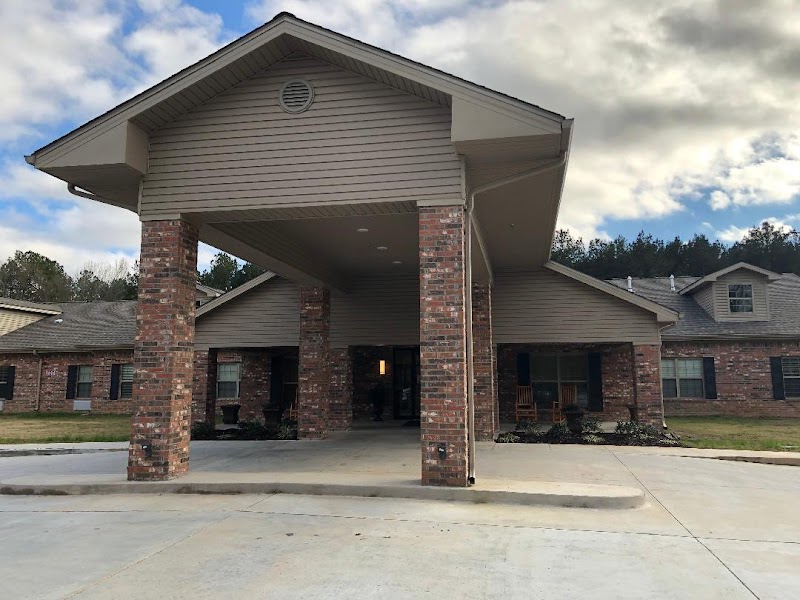


LANDMARK OF COLLINS

1315 SOUTH FIR AVE, COLLINS, MS 39428 (601) 765-8262
For profit - Limited Liability company 60 Beds THE BEEBE FAMILY Data: November 2025
Trust Grade
60/100
#122 of 200 in MS
Last Inspection: May 2024

Within standard 12-15 month inspection cycle. Federal law requires annual inspections.

Overview

Landmark of Collins has a Trust Grade of C+, which means it is considered decent and slightly above average compared to other facilities. It ranks #122 out of 200 in Mississippi, placing it in the bottom half, and is #2 out of 2 in Covington County, indicating that only one local option is better. The facility's performance is worsening, with issues increasing from 4 in 2022 to 5 in 2024. Staffing is average with a rating of 3 out of 5 stars and a turnover rate of 52%, which is similar to the state average. Although they have not incurred any fines, which is positive, they have less RN coverage than 83% of Mississippi facilities, meaning fewer registered nurses are available to oversee care and catch potential issues. Specific concerns include improper food storage, with spoiled items found in the kitchen, risking food safety for residents. Additionally, there were issues with documenting falls for a resident who had multiple incidents, indicating a lack of adequate monitoring and care planning. Overall, while the facility has some strengths, such as no fines, it also has significant weaknesses that families should consider carefully.

Trust Score
C+
60/100
In Mississippi
#122/200
Bottom 39%
Safety Record
Low Risk
No red flags
Inspections
Getting Worse
4 → 5 violations
Staff Stability
⚠ Watch
52% turnover. Above average. Higher turnover means staff may not know residents' routines.
Penalties
✓ Good
No fines on record. Clean compliance history, better than most Mississippi facilities.
Skilled Nurses
⚠ Watch
Each resident gets only 19 minutes of Registered Nurse (RN) attention daily — below average for Mississippi. Fewer RN minutes means fewer trained eyes watching for problems.
Violations
⚠ Watch
11 deficiencies on record. Higher than average. Multiple issues found across inspections.
★★☆☆☆
2.0
Overall Rating
★★★☆☆
3.0
Staff Levels
★☆☆☆☆
1.0
Care Quality
★★★☆☆
3.0
Inspection Score
Stable
2022: 4 issues
2024: 5 issues

The Good

  • Full Sprinkler Coverage · Fire safety systems throughout facility
  • No fines on record

Facility shows strength in fire safety.

The Bad

2-Star Overall Rating

Below Mississippi average (2.6)

Below average - review inspection findings carefully

Staff Turnover: 52%

Near Mississippi avg (46%)

Higher turnover may affect care consistency

Chain: THE BEEBE FAMILY

Part of a multi-facility chain

Ask about local staffing decisions and management

The Ugly 11 deficiencies on record

May 2024 5 deficiencies
CONCERN (D)

Potential for Harm - no one hurt, but risky conditions existed

Deficiency F0561 (Tag F0561)

Could have caused harm · This affected 1 resident

Based on observation, interviews, record review and facility policy review the facility failed to honor the resident's right for choices as evidenced by serving a meal that included a known dislike fo...

Read full inspector narrative →
Based on observation, interviews, record review and facility policy review the facility failed to honor the resident's right for choices as evidenced by serving a meal that included a known dislike for one (1) of (14) sampled residents. (Resident #4) Findings Include: Review of the facility's policy, Dietary Services, revised 11/17, revealed, . Food likes, dislikes and eating habits are assessed by the Nursing and Dietary Departments. This information is recorded in the resident's Medical Record . During an observation and interview on 4/30/24 at 12:14 PM, Resident #4 was served spaghetti with meat sauce on her meal tray. Resident #4 stated that had told the staff and the Dietary Manager (DM) several times that she did not eat noodles or rice. The resident's meal consisted of spaghetti with meat sauce, lettuce and tomato salad, cornbread, and ice cream with tea and water. The resident ate her salad and did not eat any other items on the meal tray. Resident #4's sister brought her lunch from home. Record review of the Lunch meal tray ticket for Resident #4, dated 4/30/24, revealed, .Dislikes Buttered Biscuits .eggs .PASTA/NOODLE .Rice . On 4/30/24 at 12:17 PM, the Director of Nursing (DON) confirmed Resident #4 received spaghetti with meat sauce on her meal tray. She also confirmed the dietary slip indicated Resident #4 had a dislike for noodles and rice. In an interview on 4/30/24 at 1:00 PM, with the Dietary Manager (DM), she confirmed Resident #4 received spaghetti with meat sauce and the alternate was rice, ham, and broccoli. The DM also confirmed Resident #4 did not eat noodles or rice. The DM stated that she could have fixed mashed potatoes to go with the ham and broccoli, however, it was not brought to her attention at that time that the resident did not eat noodles or rice and she did not look at the resident's dietary slip. The DM also stated that if the residents do not like what is on the menu or the alternate, the facility provided peanut butter and jelly sandwiches or pimento cheese sandwiches. During an interview on 4/30/24 at 2:00 PM, with the Administrator, he stated that he expected the kitchen staff to monitor the likes and dislikes of the residents so they will not be getting food that they do not like. During an interview on 5/2/24 at 3:00 PM with the Dietician, she stated she was unaware the kitchen staff were providing residents with foods that were on the meal tray card as a dislike and she expected the kitchen staff to follow the dietary slips and honoring the residents likes and dislikes. A record review of the Face Sheet revealed the facility admitted Resident #4 on 3/19/24 with current diagnoses including Dysphagia and Anorexia. A record review of the admission Minimum Data Set (MDS) with an Assessment Reference Date (ARD) of 3/26/24 revealed Resident #4 had a Brief Interview for Mental Status (BIMS) score of 10, which indicated her cognition was moderately impaired.
CONCERN (D)

Potential for Harm - no one hurt, but risky conditions existed

Quality of Care (Tag F0684)

Could have caused harm · This affected 1 resident

Based on staff interview, record review, and facility policy review the facility failed to ensure physicians orders for laboratory tests were followed for one (1) of five (5) residents reviewed for un...

Read full inspector narrative →
Based on staff interview, record review, and facility policy review the facility failed to ensure physicians orders for laboratory tests were followed for one (1) of five (5) residents reviewed for unnecessary medications. (Resident # 9) Findings Include: Review of the facility's policy, Physician Orders, revised 9/23, revealed, It is the policy of this facility that all physician's orders will be implemented timely and carried out in a professional manner . Record review of the Physician's Orders, for the month of April 2024 revealed Resident #9 had Physician's Orders, dated 11/6/20 for a Vitamin D level yearly in November, Thyroid Stimulating Hormone (TSH) yearly in November, and a Basic Metabolic Panel (BMP) every six (6) months in November and May. Resident #9 also had a Physician's Order, dated 9/22/22 for a Complete Blood Count (CBC) every 6 months in November and May. Record review of a Departmental Note, dated 11/21/23 at 5:13 AM, for Resident #9 revealed, resident refused to allow his labs to be drawn this morning . Record review of a Departmental Note, dated 12/12/23 at 11:40 AM, for Resident #9 revealed, Attempted x (times) 2 to obtain resident's blood for labs .Failed x 2 attempts .Resident stated that he did not want to be stuck again. MD notified . Review of the medical record for Resident #9 revealed there were no laboratory results for a Vitamin D Level, TSH level, BMP, or CBC for November 2023. On 5/1/24 at 3:53 PM, in an interview with Licensed Practical Nurse #1 (LPN)/ Infection Preventionist, she stated Resident #9 refused labs on 11/21/23. She explained that she had attempted two (2) times to draw labs on 12/12/23 and was not able to obtain the labs. She stated that she contacted the physician but did not document his response and stated she should have made a note of his response. She was unable to recall what the physician had told her when she called him about the resident's refusal. She explained that when a lab order was not completed, it remained active, and the labs should have been obtained. The physician reviewed all labs, determined if any medication adjustments are required, and signed off on the labs as having been reviewed. On 5/1/24 at 4:08 PM, in an interview with Director of Nursing (DON), she confirmed the bloodwork for Resident #9 should have been completed and she was unaware the labs were not drawn. She stated the TSH level was used to determine the toxicity level of Synthroid medication in the resident and the physician reviews the labs to adjust medications. She stated when the labs are not drawn, it could affect the resident's health. On 5/1/24 at 4:36 PM, in an interview with the physician, he stated Resident #9 often refused care and had refused labs several times. He stated he was unsure if he had been contacted in November or December about his refusals, but staff had told him several times and his response should have been documented. Record review of the Face Sheet revealed the facility admitted Resident #9 on 11/6/20 and he had current diagnoses including Hypothyroidism, Hyperlipidemia, Iron Deficiency Anemia, Heart Failure, and Vitamin D Deficiency. Record review of the Quarterly Minimum Data Set (MDS) with an Assessment Reference Date (ARD) of 3/19/24 revealed Resident # 9 had a Brief Interview for Mental Status (BIMS) score of 9, which indicated he had moderate cognitive impairment.
CONCERN (D)

Potential for Harm - no one hurt, but risky conditions existed

Deficiency F0804 (Tag F0804)

Could have caused harm · This affected 1 resident

Based on observation, interviews, record review, and facility policy review, the facility failed to provide palatable meals for three (3) of 14 sampled residents reviewed. (Resident # 4, Resident #14,...

Read full inspector narrative →
Based on observation, interviews, record review, and facility policy review, the facility failed to provide palatable meals for three (3) of 14 sampled residents reviewed. (Resident # 4, Resident #14, and Resident # 50) Findings include: A review of the facility's policy, Food Service, revised 8/00 revealed Purpose: To meet the nutritional needs of each resident. To provide a well-balanced, flavorful and varied food service program . Resident #4 On 04/30/24 at 12:14 PM, in an observation and interview, Resident #4 was eating lunch in the dining room. Resident #4 had refused to eat the spaghetti with meat sauce, corn bread and ice cream and had her sister to bring her lunch from home. The resident said the food was bland with no taste most of the time because the facility did not season the food. She stated she had complained to the nursing staff and the Dietary Manager (DM) several times. A record review of the Face Sheet revealed the facility admitted Resident #4 on 3/19/24 with current medical diagnoses including Dysphagia and Anorexia. A record review of the admission Minimum Data Set (MDS) with an Assessment Reference Date (ARD) of 3/26/24 revealed Resident #4 had a Brief Interview of Mental Status (BIMS) score of 10, which indicated her cognition was moderately impaired. Resident #14 On 4/30/24 at 09:35 AM, during an interview, Resident #14 explained the food at the facility was not good because the food had no taste and was not seasoned. At 12:00 PM on 04/30/24, during an observation and interview, Resident #14 was eating lunch and was visited by family. Resident #14 explained the spaghetti was not good today and had no seasoning in the sauce. Her daughter brought her a chicken sandwich. Resident #14 further explained the alternative meal of ham, rice, and broccoli was not any better. The family member reported that she brought lunch to the resident several times a week because she complained the food was not seasoned. A record review of the Face Sheet revealed the facility admitted Resident #14 on 2/21/22 with current medical diagnoses including Type 2 Diabetes Mellitus. A record review of the Annual MDS with an ARD of 2/14/24 revealed Resident #14 had a BIMS score of 15, which indicated she was cognitively intact. Resident #50 On 4/30/24 at 10:17 AM, during an interview, Resident #50 complained the food tasted bad because it was not seasoned. At 11:30 AM on 4/20/24, in an observation and interview, Resident #50 was eating in the dining room. He had salad, spaghetti, and pink applesauce served on his meal tray and he reported the spaghetti was bland without any taste, but he had to eat it because the alternate meal of ham, rice, and broccoli was worse. At 12:25 PM on 4/30/24, during an interview with Certified Nurse Aide (CNA) #1, she explained the residents have complained in the past about the food not tasting good because it was not seasoned. She explained Resident #50 had complained about not liking the taste of the food, but he had snacks in his room and would eat the snacks more than the meals. At 12:35 PM on 4/30/24, in an observation, Resident #50's completed his meal and had eaten the spaghetti and bread. Meal trays were observed after residents finished eating and there were plates with half or more of the spaghetti noted to be uneaten on the plates. At 12:50 PM on 5/02/24, during an interview with Resident #50, he explained the lima beans had no seasoning and he could not eat them. Record review of the Face Sheet revealed the facility admitted Resident #50 on 5/05/23 and he had current medical diagnoses including Type 2 Diabetes Mellitus. Record review of the annual MDS with an ARD of 4/23/24 revealed Resident #50 had a BIMS score of 14, which indicated he was cognitively intact. On 04/30/24 at 11:45 AM, during an observation in the dining room, after lunch, there were plates with over half of the spaghetti left on the plate and a few plates with dark green mushy broccoli that were not eaten by the residents. During an interview on 4/30/24 at 12:17 PM, the Director of Nursing (DON) confirmed the residents have complained the food was bland with no seasoning. The DON stated the DM was new and had been at the facility for one (1) month. During an interview on 4/30/24 at 1:00 PM, the DM confirmed the residents had been complaining that the food was bland and had no taste. The DM stated that several residents are on a No added salt (NAS) diet and it was hard to season the food with all the restrictions. The DM said if the residents do not like what is on the menu or the alternate menu, the facility provided sandwiches, such as peanut butter and jelly and pimento and cheese. During an interview on 4/30/24 at 2:00 PM, the Administrator confirmed the residents had complained the food was bland and had no taste and explained the DM had been in her position for one (1) month. The Administrator stated he frequently ate the facility's food, but he was not picky about what he ate. He expected the kitchen staff to provide palatable meals for the residents. On 5/02/24 12:38 PM, a lunch meal tray was sampled which consisted of fried chicken, cheesy corn casserole, lima beans, and banana pudding. The lima beans and fried chicken were not seasoned. During an interview on 5/2/24 at 3:00 PM, the facility's Registered Dietician (RD) confirmed the residents have complained that the food was bland and had no taste and did not have enough seasoning. The dietician explained that she had advised the DM that residents could have seasoned food even if they were on a no added salt (NAS) diet. The RD explained that she had conducted a satisfaction survey last month and found the residents did not like the taste of the food and over half of the residents were having food bought in by family members. The RD stated that she had talked with the DM and that something was going to have to be done so the residents would eat the food.
CONCERN (D)

Potential for Harm - no one hurt, but risky conditions existed

Infection Control (Tag F0880)

Could have caused harm · This affected 1 resident

Based on observation, staff interview, record review, and facility policy review the facility failed to prevent the possibility of the spread of infection, as evidenced by failure to clean a glucomete...

Read full inspector narrative →
Based on observation, staff interview, record review, and facility policy review the facility failed to prevent the possibility of the spread of infection, as evidenced by failure to clean a glucometer device according to manufacturer's guidelines for one (1) of two (2) observations. (Resident #32) Findings include: Review of facility's policy, Blood Glucose Quality Control, revised 01/24, revealed, .Maintenance of Blood Glucose Monitoring Systems Always clean the meter after each use. Gently wipe and clean surface of the meter with a disinfectant wipe . Record review of the General Guidelines for Use for the Super Sani-Cloth Germicidal Disposable Wipe, dated 2021, revealed, .4. Allow treated surface to remain wet for two (2) minutes. Let air dry . On 5/1/24 at 10:47 AM, during an observation, Licensed Practical Nurse (LPN) #3 used a glucometer to perform an accucheck on Resident #32. After LPN #3 performed the accucheck, she returned to the medication cart, applied clean gloves, and obtained a Super Sani-cloth disposable wipe from the container. LPN #3 cleaned the glucometer for a few seconds and placed it on a barrier to dry. The surface of the glucometer did not remain wet for two minutes. On 5/1/24 at 11:01 AM, in an interview, LPN #3 confirmed she had cleaned the glucometer for about ten (10) seconds with the disposable wipe and placed it on a barrier to dry and stated that was the way she had been trained. LPN #3 said the disinfectant wipes were used to kill bacteria on the glucometer and confirmed she did not clean it long enough to kill the bacteria, which could cause other residents to acquire an infection. On 5/1/24 at 11:53 AM, in an interview with Director of Nursing (DON), she stated the nurse should clean the glucometer and let it dry for two (2) minutes. She said the facility must be interpreting the directions for use incorrectly and confirmed she had not trained the staff to ensure the glucometer remained wet for two minutes when cleaning after use. On 5/1/24 at 2:45 PM, in an interview, LPN #1/Infection Preventionist (IP) stated that cleaning the glucometer for 10 seconds would not kill any potential bacteria on the device and LPN #3 should have cleaned it longer. The IP said that if a glucometer device was not cleaned properly, bacteria could be transferred to other residents. Record review of the Physician Orders for the month of May 2024 revealed Resident #32 had a Physician's Order, dated 5/1/18, for Accuchecks before meals and at night . Record review of the Face Sheet revealed the facility admitted Resident #32 on 10/5/16 with current diagnoses including Type 2 Diabetes Mellitus.
CONCERN (F)

Potential for Harm - no one hurt, but risky conditions existed

Food Safety (Tag F0812)

Could have caused harm · This affected most or all residents

Based on observation, staff interview, and facility policy review, the facility failed to store food in accordance with professional standards for food service safety as evidenced by food items not da...

Read full inspector narrative →
Based on observation, staff interview, and facility policy review, the facility failed to store food in accordance with professional standards for food service safety as evidenced by food items not dated and spoiled foods for two (2) of three (3) kitchen observations. Findings include: A review of the facility's policy, Food Service Operational Standards for Purchasing, Cooking and Storage, revised 9/12, revealed, .The facility stores .food under sanitary conditions to prevent the spread of food borne illness and to reduce those practices that result in food contamination and compromised food safety Procedure .3. Storage .f. Follow First In first Out (FIFO) . On 4/30/24 at 9:08 AM, an observation and interview with the Dietary Manager (DM) revealed the following: Refrigerator #1: One (1) unopened plastic bag of purple cabbage, one (1) unopened plastic bag of carrots strips, and six (6) unopened plastic wrapped heads of iceberg lettuce with no use-by or discard date. On 5/1/24 at 8:00 AM, an observation of a shelf located outside the pantry door, contained a plastic bin with 17 overly ripe onions with visible white and gray biological growth, and were soft to touch. The DM acknowledged the undated produce food items and the spoiled onions. The DM reported these incidences were unacceptable for the kitchen and explained it was her responsibility to inventory foods to ensure that outdated foods items were discarded. On 5/02/24 at 10:32 AM, an interview with the [NAME] revealed it was the responsibility of the DM to inventory food for expired foods. On 5/02/24 at 11:35 AM, an interview with the Administrator revealed he acknowledged he was aware of the food items not labeled and spoiled items in the kitchen. The Administrator reported it was the responsibility of the DM to inventory food for quality and to label foods.
Jun 2022 4 deficiencies
CONCERN (D)

Potential for Harm - no one hurt, but risky conditions existed

Comprehensive Assessments (Tag F0636)

Could have caused harm · This affected 1 resident

Based on staff interviews and record reviews, the facility failed to complete the comprehensive Minimum Data Set (MDS) for one (1) of 38 residents reviewed for comprehensive assessments, with the pote...

Read full inspector narrative →
Based on staff interviews and record reviews, the facility failed to complete the comprehensive Minimum Data Set (MDS) for one (1) of 38 residents reviewed for comprehensive assessments, with the potential to affect 57 residents. Resident #3 A record review of the facility's policy MDS Process, with a latest revision date of 12/20, revealed, The Assessment Nurse/ Nurse Case Manager will set the Assessment Reference Date on an allowable date with input from the interdisciplinary team and communicate scheduled assessments to the interdisciplinary team. The RAI (Resident Assessment Instrument) manual is the source document to be used for further MDS coding guidelines, time schedules and requirements . A record review of Centers for Medicare and Medicaid (CMS) RAI Version 3.0 Manual, dated October 2019, revealed, .The Annual assessment is a comprehensive assessment for a resident that must be completed on an annual basis (at least every 366 days) . A record review of the Face Sheet revealed the facility admitted Resident #3 on 03/20/2014. A record review of Resident #3's last comprehensive annual MDS assessment revealed a date of 05/24/2021, which is greater than 366 days. On 06/08/22 at 9:30 AM, during an interview with Registered Nurse (RN) #1, she confirmed Resident #3's last annual assessment was completed on 05/24/2021. On 06/08/22 at 9:45 AM, during an interview with Licensed Practical Nurse (LPN) #1, she confirmed Resident #3's last annual MDS assessment had an Assessment Reference Date (ARD) of 05/24/2021 and she verified it had been over 366 days since an annual MDS assessment had been completed. On 06/08/22 at 10:30 AM, during an interview with the Director of Nursing (DON), she explained Resident #3 had an annual assessment that was open (not completed). She had not been made aware previously that the annual assessment was open and had been missed. She was trying to complete the MDS assessments that were due for April and May 2022 and she must have missed Resident #3's assessment. She confirmed that she was aware that some MDS assessments were behind because two (2) MDS nurses had quit in April 2022. The facility used the RAI manual for guidance in completing MDS assessments.
CONCERN (D)

Potential for Harm - no one hurt, but risky conditions existed

Pressure Ulcer Prevention (Tag F0686)

Could have caused harm · This affected 1 resident

Based on observations, interviews, record review, and facility policy review, the facility failed to prevent the development of an avoidable pressure ulcer on a resident with an immobilization brace f...

Read full inspector narrative →
Based on observations, interviews, record review, and facility policy review, the facility failed to prevent the development of an avoidable pressure ulcer on a resident with an immobilization brace for one (1) of three (3) facility acquired pressure ulcers reviewed. Resident #30 Findings Include: Review of the facility's policy, Prevention and Treatment of Skin Issues with a latest review date of 8/21 revealed, Policy: It is the policy to properly identify and assess residents whose clinical conditions increase the risk for impaired skin integrity, and pressure ulcers; to implement preventative measures; and to provide appropriate treatment modalities for wounds according to industry standards of care .C. monitoring of skin integrity. The skin will be observed daily during care by the nursing assistants. If any skin concerns are noted, they are to be reported immediately to the designated nurse verbally and via the kiosk in electronic facilities . On 06/06/22 at 11:33 AM, the State Agency (SA) observed wound care for Resident #30 performed by the Director of Nursing (DON). The SA observed two wounds to the resident's right heel. Record review of Resident #30's Departmental Notes dated 3/21/22 at 2:44 PM revealed, Pressure Ulcer//Right Heel// .New DTI (Deep Tissue Injury), which appears to be from the brace resident must wear on her leg. The metal part was under the heel and medial side where the DTI was located. Record review of the facility's Pressure Ulcer Evaluation for Unavoidable/Avoidable Status dated 3/21/22 revealed Resident #30 was evaluated for clinical conditions and pressure ulcer risk factors with formal and clinical assessments on 3/18/22. Risk factors for development and or delayed healing of pressure ulcers were indicated as cast or non-removable device. Record review of the Wound Assessment Report dated 3/18/22, revealed an Assessment Occasion as New Wound. The stage and the type of pressure area was indicated as Unstageable and Suspected Deep Tissue Injury. The location of the pressure injury was the right heel and measurements were recorded as 5.50 CM X 2.80 CM. The wound report Notes revealed, New DTI appears to be from the brace resident has to wear on her leg. The metal part was under the heel and on the medial side where the DTI is located. During an interview on 06/06/22 at 12:15 PM, with Resident #30, she said she fell at home, fractured her knee, and came to the facility to receive therapy. She did not know her foot was pressing against the medal on the brace and had caused a wound. On 06/06/22 at 11:34 AM, the SA conducted a telephone interview with Registered Nurse (RN) #2, a former employee who was the wound care nurse. She said she was told by another nurse that Resident #30's right heel was boggy which possibly meant the resident's heel had underlying tissue damage. RN #2 said she monitored the area for a few days and notified the doctor, but she was unable to recall the exact date this occurred. RN #2 commented that the resident's immobilizer brace kept sliding down her leg causing the metal bar in the brace to apply pressure to her right heel. RN #2 confirmed the Certified Nursing Assistants (CNAs) could not remove the brace per doctor's order and only the nurse that provided care to the surgical site could remove the device. RN #2 believed Resident #30 developed the pressure injury on her heel from the metal bar on the brace. She stated that as the wound care nurse, she should have requested a physician order to check the pressure points to ensure the resident did not develop a wound from the brace. During an Interview on 06/07/22 at 11:00 AM, with Licensed Practical Nurse (LPN) # 2, revealed she assisted RN #2 during wound care by holding Resident #30's right foot. LPN #2 said she was holding the residents' foot and noted the resident's right heel was red and boggy. LPN #2 said she reported her findings related to the heel to RN #2 and was told that RN #2 was going to monitor the heel for a while. LPN #2 said that approximately one week later, Resident #30's right heel continued to be boggy and had developed a purple discoloration. LPN #2 advised RN #2 that something needed to be done to prevent the resident from having skin breakdown. By the third week, Resident #30's right heel had opened, and wound care orders were received. LPN #2 said she was responsible for the weekly body audits, but she did not document there were any skin issues because she had already told RN #2 and the DON about the condition of Resident #30's heel. During an Interview on 6/07/22 at 1:00 PM, with the Medical Doctor (MD), he confirmed he was notified that Resident #30 had developed a deep tissue injury on her right heel. He was unaware that the resident's heel was pressing against the metal bar of the brace as it would slide down. He had thought the facility had padded all the pressure points on the resident's leg and heel to prevent pressure ulcers and friction, and he thought the facility was assessing the pressure areas daily. An interview on 6/7/22 at 1:30 PM, with the Physical Therapy Assistant (PTA) revealed he was asked on 3/28/22 by RN #2 to look at Resident #30's brace to see why it kept sliding down. The PTA said he adjusted the brace which kept the brace in place until it was removed. Record review of the facility's Timeline for (Proper Name of Resident #30) Wounds given to the SA by the DON revealed, 3/7/22 External Fixator with pins was removed and immobilizer was placed. 3/14/22 clarification from ortho (Orthopedics) on removal/placement of brace due to pain voiced by resident. Ortho states only loosen for wound care. 3/18/22 Deep tissue injury to right heel developed . During an Interview on 6/7/22 at 2:30 PM with the DON, she confirmed the resident acquired both the unstageable pressure ulcer and the Stage 2 pressure ulcer to the right heel because it had been one (1) wound that developed into two (2) separate wounds. The wound occurred from the metal bar on the brace. She acknowledged there is no documentation showing the facility was monitoring the pressure points daily for pressure injury development underneath the brace. She confirmed it was the wound care nurse's responsibility to make sure the resident's pressure points were checked daily to prevent skin breakdown. Record review of the Face Sheet revealed the facility admitted Resident #30 on 11/10/21, with the diagnoses that included Unspecified Fracture of Right Femur, Muscle Spasm, Muscle weakness, and Diabetes Mellitus. The Quarterly Minimum Data Set (MDS) with an Assessment Reference Date (ARD) of 5/3/22 revealed Resident #30 had a Brief Interview of Mental Status (BIMS) score of 15 that indicated she was cognitively intact. Review of Section M revealed Resident #30 is at risk of developing pressure ulcer injury and had more than one (1) unhealed pressure injuries. Review of RN #2's, Licensed Nurses Orientation Checklist, revealed on 12/8/21 information was covered related to Policies/Procedures, schedules, documentation on the Skin Program/Wound Care which included body audits, treatments/orders
CONCERN (D)

Potential for Harm - no one hurt, but risky conditions existed

Food Safety (Tag F0812)

Could have caused harm · This affected 1 resident

**NOTE- TERMS IN BRACKETS HAVE BEEN EDITED TO PROTECT CONFIDENTIALITY** Based on observation, interviews, record review and facility policy review, the facility failed to discard expired food items, e...

Read full inspector narrative →
**NOTE- TERMS IN BRACKETS HAVE BEEN EDITED TO PROTECT CONFIDENTIALITY** Based on observation, interviews, record review and facility policy review, the facility failed to discard expired food items, ensure daily temperature logs for the freezer were completed, and failed to label and date refrigerated items for one (1) of four (4) kitchen observations. Findings Include: A record review of the facility's policy Food Storage Labeling, with a revision date of 05/18, revealed, Policy: The facility will ensure the safety and quality of food by following good storage and labeling procedures Procedure: 1. Labeling . a. All temperature controlled foods and ready to eat foods that are prepared in the facility and held for longer than twenty-four hours will be labeled. Information included on the label: Name of the Food Date of storage .3. Rotation .b. Foods stored in storage units will be surveyed routinely to identify and discard foods that have passed its manufactured use-by date or expiration date . 4. Monitoring storage temperatures .b. Temperatures in food storage units are monitored daily. C. Documentation of time and temperature is recorded on a Temperature Monitoring Log . On 6/5/22 at 10:22 AM, during an initial kitchen tour and interview with the Head [NAME] (Dietary #1), the State Agency (SA) observed that the temperature logs for the Milk Box and Ice Cream Box freezers had missing documentation. The SA observed an 8-ounce container in the refrigerator that contained a white liquid substance and was not labeled with the name of the food or the date of storage. The SA observed a 32-ounce container of [NAME] Culinary egg shade food color with an open date of 5/28/20 and an expiration date of 12/20. The SA observed an undated clear container with potato salad and coleslaw that had no label containing the name of the food or the date of storage. Dietary #1 commented that she had informed the staff that it is important to check all refrigerators, and freezers for labeled food items and to complete the documentation of the temperature logs daily. She confirmed the food should have been labeled and the temperatures logs should have been completed because this information lets the staff know that the food is good to serve to the residents. Dietary #1 explained that all expired foods should be thrown away so that staff will not use them. She further acknowledged that although the egg shade color had not been used for a long time, it should not have been in the kitchen. On 6/8/22 at 2:45 PM, in an interview with the Administrator, he confirmed that Dietary #1 is in charge of the kitchen while the Dietary Manager is on leave. He acknowledged that staff should be checking for expired food, logging temperatures daily, and labeling and dating foods in the refrigerator so that the residents will not be served expired food. He said that dietary staff should check and record temperatures on the refrigerators and freezers to make sure that the food does not spoil. A record review of the Daily Freezer/Refrigerator Temperature Log for the Month/Year of 6/2022 with a Location/Unit Description listed as Milkbox Dietary revealed there was no temperature recorded for 6/4/22. A record review of the Daily Freezer/Refrigerator Temperature Log for the Month/Year of 6/2022 with a Location/Unit Description listed as Ice Cream Box Dietary revealed there was no temperature recorded for 6/4/22. A record review of the facility's In-Service Attendance revealed Dietary #1 received training on the Topic of Storage Temperatures on 4/6/22.
CONCERN (E)

Potential for Harm - no one hurt, but risky conditions existed

Deficiency F0657 (Tag F0657)

Could have caused harm · This affected multiple residents

**NOTE- TERMS IN BRACKETS HAVE BEEN EDITED TO PROTECT CONFIDENTIALITY** Resident #34 Record review of the Face Sheet revealed Resident #34 was admitted by the facility on 10/2/2019 with diagnoses incl...

Read full inspector narrative →
**NOTE- TERMS IN BRACKETS HAVE BEEN EDITED TO PROTECT CONFIDENTIALITY** Resident #34 Record review of the Face Sheet revealed Resident #34 was admitted by the facility on 10/2/2019 with diagnoses including Hyperlipidemia, Chronic Obstructive Pulmonary Disease with Acute Exacerbation, and Chronic Respiratory Failure with Hypoxia. Record review of the Quarterly Minimum Data Set (MDS) assessment with an Assessment Reference Date (ARD) of 4/25/22 revealed Resident #34 had a Brief Interview of Mental Status (BIMS) score of 15, which indicated she is cognitively intact. Record review of Resident #34's Incident Log dated from 12/6/21 through 6/6/22 revealed she had falls that occurred on 12/15/21, 2/4/22, 3/26/22, 3/29/22, 4/10/22, 5/10/22. Record review of Resident #34's care plan revealed a Problem/Need listed as Resident is at risk for falls with dates of actual falls listed as 11/12/19, 3/6/21, and 2/4/22. There were no actual fall dates listed for the falls that occurred on 12/15/21, 3/26/22, 3/29/22, 4/10/22, and 5/10/22. The Goal & Target date was listed as Resident will be free of injury and complications through the next review 8-25-21 and Resident will have no falls through next review 8/25/21, which indicated Resident #34's status had not been re-evaluated with the results of the latest MDS assessment dated [DATE]. Care plan approaches related to the falls corresponded with the date of the actual falls on 3/6/21 and 2/4/22. There were no approaches listed for the actual falls that occurred on 12/15/21, 3/26/22, 3/29/22, 4/10/22, and 5/10/22. On 06/07/22 at 11:17 AM, in an interview with Registered Nurse (RN) #1 and Licensed Practical Nurse (LPN) #1, RN #1 confirmed Resident #34's care plan was not reviewed timely and that typically the care plan is reviewed with each assessment. The care plans are located in each resident's chart and updates are handwritten until the next comprehensive MDS assessment, in which the entire care plan is reprinted and placed on the chart. She confirmed the care plan should be revised with each fall to include the date the fall occurred and the corresponding intervention. On 06/08/22 at 10:09 AM, in an interview with the Director of Nursing (DON), she stated that it is her expectation that the care plan be reviewed with each MDS, which is at least quarterly. She stated falls are reviewed daily in morning meeting and interventions are discussed. The care plan should be updated at that time with the intervention. The interventions discussed in the morning meetings for Resident #34 did not make it to the resident's care plan in the chart. She acknowledged that the care plan is used by the staff to know how they are to provide care to the residents. Based on interviews, record review, and facility policy review, the facility failed to ensure the comprehensive care plan was reviewed timely for one (1) resident, Resident #39, and revised for two (2) residents, Resident #39 and Resident #103, out of four (4) residents sampled for falls. Findings Include: Review of the facility's policy, Care Plan Process with a revision date of 08/17 revealed, .The results of the assessment, which must accurately reflect the resident's status and needs, are to be used to develop, review, and revise each resident's comprehensive person-centered plan of care .Re-evaluates the resident's status at prescribed intervals (i.e. quarterly, annually, or if a significant change in status occurs) .Interventions are actions that should promote meeting the established goal . Review of the facility's policy Fall Prevention and Management Program with the latest revision date of 09/18 revealed, .will be used to develop interventions after each fall and for care plan revisions .Management .The resident's care plan is updated to reflect the new intervention(s). Resident #103 A record review of Resident #103's Face Sheet revealed the facility admitted him on 11/26/21, with diagnoses including Muscle Weakness, Lack of Coordination, and Need for Assistance with Personal Care. A record review of the Minimum Data Set (MDS) with an Assessment Reference Date (ARD) of 12/2/21 revealed Resident #103 had a Brief Interview of Mental Status (BIMS) score of nine (9), which indicated he had moderate cognitive impairment. A record review of Departmental Notes for Resident #103, dated 12/2/2021 at 7:27 AM, revealed, Resident noted on floor on his bottom by CNA (Certified Nursing Assistant) . A record review of Resident #103's Baseline Care Plan And Summary reflected actual falls dated 11/30/21 and 12/7/21, along with the interventions. There was no fall with an intervention for the fall that occurred on 12/2/2021. A record review of the medical record revealed there was no comprehensive care plan developed related to falls for Resident #103. On 6/8/22 at 1:50 PM, in an interview with the DON, she stated the care plan should have been updated on 12/2/21 to include Resident #103's fall. The care plan is used by staff to give care to the residents.
Aug 2019 2 deficiencies
CONCERN (D)

Potential for Harm - no one hurt, but risky conditions existed

Infection Control (Tag F0880)

Could have caused harm · This affected 1 resident

**NOTE- TERMS IN BRACKETS HAVE BEEN EDITED TO PROTECT CONFIDENTIALITY** Based on observation, record review, facility policy review, and staff interview, the facility failed to prevent the possible sp...

Read full inspector narrative →
**NOTE- TERMS IN BRACKETS HAVE BEEN EDITED TO PROTECT CONFIDENTIALITY** Based on observation, record review, facility policy review, and staff interview, the facility failed to prevent the possible spread of infection for one (1) of 52 Resident rooms observed. Resident #17's room [ROOM NUMBER]-A. Findings include: Review of the facility's policy titled, General Infection Prevention and Control Nursing Policies, dated 6/2014, revealed it is the policy of this facility that all nursing activities will be performed in a manner to minimize the potential for infection in resident, staff, and visitors. During the initial tour of the facility, on 8/13/2019 at 9:20 AM, an observation revealed the door to Resident Room # 206-A was closed. After knocking, announcing, and gaining permission to enter, it was observed that after entering there was a soiled brief and soiled blue pad lying on the floor in the middle of Resident #17's room. It was observed that Certified Nursing Assistant (CNA) #1 was present in the room assisting Resident #17 to get dressed. Review of the facility's orientation document titled, Infection Control Orientation Checklist, dated for 1/2019, revealed the person signing this checklist was acknowledging that they had received and understood the explanation of the infection process, Occupational Safety and Health Administration (OSHA) standards for blood borne diseases, epidemiology, and transmission/ prevention of infection. The checklist was signed by Certified Nursing Assistant (CNA) #1 on 7/30/2019. Review of the facility's document titled, Inservice Training, dated 4/24/2019, revealed an in-service was provided for the CNA staff. The document revealed the content of the in-service included gloves, diapers (briefs), wipes, trash cans, trash bags, and dirty/soiled linens. The document stated that you must take trash bags into the room, and one of the bags was to be used to discard dirty linen. The document stated the in-service was provided by Registered Nurse (RN) #1/ Staff Development Nurse/ Infection Control Nurse. During an interview, on 8/13/2019 at 9:26 AM, Registered Nurse (RN) #1, Staff Development Nurse/ Infection Control Nurse, stated that CNA #1 should not have laid the soiled brief and pad on the floor. RN #1 stated doing that is considered is an infection control concern. During an interview, on 8/13/2019 at 9:30 AM, with Certified Nursing Assistant (CNA) #1, it was confirmed that she had put the soiled brief and pad on the floor. CNA #1 stated she did that because she did not have any bags to put it in. CNA stated, they are no supposed to put dirty briefs or any linen on the floor. CNA #1 stated there are garbage bags available, but she just didn't bring one with her to the room. During an interview, on 8/15/2019 at 8:16 AM, the Director of Nursing (DON), confirmed that soiled linen should not be placed on the floor. The DON stated that the staff is trained to put soiled linen in a trash bag and take it to a designated area. The DON stated, soiled linen should never be placed on the floor.
CONCERN (E)

Potential for Harm - no one hurt, but risky conditions existed

Deficiency F0625 (Tag F0625)

Could have caused harm · This affected multiple residents

Based on record review, staff interview and facility policy review, the facility failed to provide in writing the bed hold policy to the resident and/or the Resident Representative at the time of tran...

Read full inspector narrative →
Based on record review, staff interview and facility policy review, the facility failed to provide in writing the bed hold policy to the resident and/or the Resident Representative at the time of transfer to an acute care hospital for two (2) of four (4) resident's hospitalizations reviewed. Residents #3 and #38. Findings include: Review of the facility's policy titled, Notice of Hospital Transfer/Therapeutic Leave, with the latest revision date of 2/2017, revealed: 2. When a resident is transferred to the hospital, or goes out on therapeutic leave, a copy of the completed form (notice) is sent with the resident, specifying the duration of the bed-hold according to the state plan, and the facility's policy regarding bed-hold periods. In case of emergency transfer, notice at the time of transfer means that the family or resident representative are provided with written notification within 24 hours of the transfer. The requirement is met if the resident's copy of the notice is sent with other papers accompanying the resident to the hospital. The staff member completing the transfer paperwork should complete the location, time, and date section of the form. A copy of the competed form should also be forwarded to the Accounts Manager. Resident #3 Review of the Face Sheet revealed Resident #3 was admitted by the facility on 1/10/18. Review of Resident #3's Departmental Notes, dated 7/9/18 at 7:09 AM, revealed the resident was sent out to the emergency room (ER) due to vomiting green emesis. Further review of the Department Notes revealed, on 7/11/19 at 11:49 AM, Resident #3 returned to the facility. Review of Resident #3's Departmental Notes, dated 7/1/19 at 3:21 PM, revealed the resident was transferred to (Name of Hospital's Initials) for observation, and vomiting dark brown emesis. Further review of the Departmental Notes revealed Resident #3 returned to the facility on 7/5/19 at 1:27 PM. The facility had no evidence Resident #3 or the Resident Representative was notified in writing of the bed hold policy/agreement. Resident #38 Review of the Face Sheet revealed Resident #38 was admitted by the facility, on 11/26/18. Review of Resident #36's Departmental Note, dated 6/15/19 at 4:51 PM, revealed the resident was transferred to (Name of Hospital) ER due to change in status and further evaluation. The facility had no evidence Resident #36 or the Resident Representative was notified in writing of the bed hold policy/agreement. On 8/14/19 at 2:37 PM, an interview with the Accounts Manager revealed when she was asked about the residents being notified of the bed hold policy she replied, the originals are signed on admission and not dated . When the resident goes out to the ER the form is completed by the nurse. The nurses fills out the location, time and date and a copy is sent to the Resident and or family representative. We are not keeping a copy when it is sent out. On 8/14/19 at 3:45 PM, an interview with the Administrator revealed the facility does not keep written documentation that the resident and or representative are notified at the time of transfer of the bed hold policy.
Understanding Severity Codes (click to expand)
Life-Threatening (Immediate Jeopardy)
J - Isolated K - Pattern L - Widespread
Actual Harm
G - Isolated H - Pattern I - Widespread
Potential for Harm
D - Isolated E - Pattern F - Widespread
No Harm (Minor)
A - Isolated B - Pattern C - Widespread

Questions to Ask on Your Visit

  • "Can I speak with families of current residents?"
  • "What's your RN coverage like on weekends and overnight?"

Our Honest Assessment

Strengths
  • • No major safety red flags. No abuse findings, life-threatening violations, or SFF status.
  • • No fines on record. Clean compliance history, better than most Mississippi facilities.
Concerns
  • • 11 deficiencies on record. Higher than average. Multiple issues found across inspections.
Bottom line: Mixed indicators with Trust Score of 60/100. Visit in person and ask pointed questions.

About This Facility

What is Landmark Of Collins's CMS Rating?

CMS assigns LANDMARK OF COLLINS an overall rating of 2 out of 5 stars, which is considered below average nationally. Within Mississippi, this rating places the facility higher than 0% of the state's 100 nursing homes. A rating at this level reflects concerns identified through health inspections, staffing assessments, or quality measures that families should carefully consider.

How is Landmark Of Collins Staffed?

CMS rates LANDMARK OF COLLINS's staffing level at 3 out of 5 stars, which is average compared to other nursing homes. Staff turnover is 52%, compared to the Mississippi average of 46%.

What Have Inspectors Found at Landmark Of Collins?

State health inspectors documented 11 deficiencies at LANDMARK OF COLLINS during 2019 to 2024. These included: 11 with potential for harm.

Who Owns and Operates Landmark Of Collins?

LANDMARK OF COLLINS is owned by a for-profit company. For-profit facilities operate as businesses with obligations to shareholders or private owners. The facility is operated by THE BEEBE FAMILY, a chain that manages multiple nursing homes. With 60 certified beds and approximately 57 residents (about 95% occupancy), it is a smaller facility located in COLLINS, Mississippi.

How Does Landmark Of Collins Compare to Other Mississippi Nursing Homes?

Compared to the 100 nursing homes in Mississippi, LANDMARK OF COLLINS's overall rating (2 stars) is below the state average of 2.6, staff turnover (52%) is near the state average of 46%, and health inspection rating (3 stars) is at the national benchmark.

What Should Families Ask When Visiting Landmark Of Collins?

Based on this facility's data, families visiting should ask: "Can I visit during a mealtime to observe dining assistance and food quality?" "How do you handle medical emergencies, and what is your hospital transfer rate?" "Can I speak with family members of current residents about their experience?"

Is Landmark Of Collins Safe?

Based on CMS inspection data, LANDMARK OF COLLINS has a clean safety record: no substantiated abuse findings (meaning no confirmed cases of resident harm), no Immediate Jeopardy citations (the most serious violation level indicating risk of serious injury or death), and is not on the Special Focus Facility watch list (a federal program monitoring the lowest-performing 1% of nursing homes). The facility has a 2-star overall rating and ranks #100 of 100 nursing homes in Mississippi. While no facility is perfect, families should still ask about staff-to-resident ratios and recent inspection results during their visit.

Do Nurses at Landmark Of Collins Stick Around?

LANDMARK OF COLLINS has a staff turnover rate of 52%, which is 6 percentage points above the Mississippi average of 46%. Moderate turnover is common in nursing homes, but families should still ask about staff tenure and how the facility maintains care continuity when employees leave.

Was Landmark Of Collins Ever Fined?

LANDMARK OF COLLINS has no federal fines on record. CMS issues fines when nursing homes fail to meet care standards or don't correct problems found during inspections. The absence of fines suggests the facility has either maintained compliance or corrected any issues before penalties were assessed. This is a positive indicator, though families should still review recent inspection reports for the full picture.

Is Landmark Of Collins on Any Federal Watch List?

LANDMARK OF COLLINS is not on any federal watch list. The most significant is the Special Focus Facility (SFF) program, which identifies the bottom 1% of nursing homes nationally based on persistent, serious quality problems. Not being on this list means the facility has avoided the pattern of deficiencies that triggers enhanced federal oversight. This is a positive indicator, though families should still review the facility's inspection history directly.