MS CARE CENTER OF DEKALB
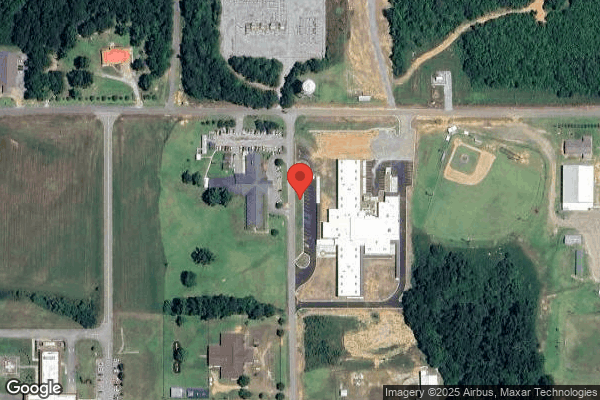
220 WILLOW AVENUE, DE KALB, MS 39328 (601) 743-5888
For profit - Corporation 60 Beds MISSISSIPPI CARE CENTER Data: November 2025
Trust Grade
68/100
#41 of 200 in MS
Last Inspection: May 2024

Within standard 12-15 month inspection cycle. Federal law requires annual inspections.

Overview

MS Care Center of DeKalb has a Trust Grade of C+, which means they are slightly above average but not without issues. They rank #41 out of 200 facilities in Mississippi, placing them in the top half, and they are the only option in Kemper County. The facility is showing improvement, with the number of reported issues decreasing from three in 2024 to two in 2025. Staffing is a strong point, rated at 5 out of 5 stars, with a turnover rate of 36%, significantly lower than the state average. However, they have faced some serious incidents, including a resident who fell from a mechanical lift that was not operated according to care protocols, resulting in injuries that required emergency medical attention. Additionally, there was a concern about a resident not having an appropriately sized wheelchair, which can affect their comfort and mobility. Overall, while the facility has strengths in staffing and is improving, there are still notable weaknesses that families should consider.

Trust Score
C+
68/100
In Mississippi
#41/200
Top 20%
Safety Record
Moderate
Needs review
Inspections
Getting Better
3 → 2 violations
Staff Stability
○ Average
36% turnover. Near Mississippi's 48% average. Typical for the industry.
Penalties
✓ Good
$10,358 in fines. Lower than most Mississippi facilities. Relatively clean record.
Skilled Nurses
✓ Good
Each resident gets 47 minutes of Registered Nurse (RN) attention daily — more than average for Mississippi. RNs are trained to catch health problems early.
Violations
○ Average
9 deficiencies on record. Average for a facility this size. Mostly minor or procedural issues.
★★★★☆
4.0
Overall Rating
★★★★★
5.0
Staff Levels
★★☆☆☆
2.0
Care Quality
★★★☆☆
3.0
Inspection Score
Stable
2024: 3 issues
2025: 2 issues

The Good

  • 5-Star Staffing Rating · Excellent nurse staffing levels
  • Full Sprinkler Coverage · Fire safety systems throughout facility
  • No fines on record
  • Staff turnover below average (36%)

    12 points below Mississippi average of 48%

Facility shows strength in staffing levels, fire safety.

The Bad

Staff Turnover: 36%

Near Mississippi avg (46%)

Typical for the industry

Federal Fines: $10,358

Below median ($33,413)

Minor penalties assessed

Chain: MISSISSIPPI CARE CENTER

Part of a multi-facility chain

Ask about local staffing decisions and management

The Ugly 9 deficiencies on record

2 actual harm
Jan 2025 2 deficiencies 2 Harm
SERIOUS (G) 📢 Someone Reported This

A family member, employee, or ombudsman was alarmed enough to file a formal complaint

Actual Harm - a resident was hurt due to facility failures

Comprehensive Care Plan (Tag F0656)

A resident was harmed · This affected 1 resident

**NOTE- TERMS IN BRACKETS HAVE BEEN EDITED TO PROTECT CONFIDENTIALITY** Based on interviews, facility policy review, and record review, the facility did not follow the plan of care for using a full bo...

Read full inspector narrative →
**NOTE- TERMS IN BRACKETS HAVE BEEN EDITED TO PROTECT CONFIDENTIALITY** Based on interviews, facility policy review, and record review, the facility did not follow the plan of care for using a full body lift while transferring Resident #1 which caused her to fall from the full body lift and hit her head on the floor. Resident #1 had to be transported to the emergency room (ER) and received medical care for three (3) skin tears and a large hematoma to the back of her head. Resident #1 was one (1) three (3) residents care planned for the use of a full body mechanical lift for all transfers reviewed. The facility had implemented corrective actions as of 10/21/24, prior to the State Agency (SA) entrance on 1/6/25, therefore the deficiency is determined to be Past Non-Compliance. Findings include: The facility policy and procedure titled: Develop/Implement Comprehensive Care Plan date revised [DATE] revealed: The facility will develop and implement a comprehensive person-centered care plan for each resident consistent with the resident rights and that includes measurable objectives and timeframes to meet the resident's medical, nursing, and mental and psychosocial needs that are identified in the comprehensive assessment. Record review of Resident #1's care plan with an onset of problem dated 12/29/2023 revealed: Requires extensive to dependent assistance x (times) 2 (two) with ADL's (Activities of Daily Living) including dressing, eating, hygiene, bathing, and toileting. Transfer Using the Full Body Lift x 2 Assist. Record review of the facility investigation revealed Upon investigation, it is stated by CNA1 that resident was up on lift with CNA1 in room, by herself, transferring RESIDENT from recliner to bed. RESIDENT was in the lift seat with all 4 straps attached to the lift and closure pins in place and snapped down, per CNA1 statement. CNA1 stated per statement, RESIDENT just slipped out of the left side of lift sling, hitting RESIDENT's head on the floor. Per CNA1 statement, RESIDENT did have a pillow to back in the lift sling . Record review of the Emergency Department dated 10/20/24 revealed: Chief Complaint Patient presents with Fall, hematoma on back of head. Patient is an [AGE] year-old white female that fell at the (name of facility) reportedly out of a chair sustaining injury to head, skin tears to left wrist, left elbow, left ankle. Patient has severe dementia and Parkinson's Disease. Patients follow commands and stated: I hate being here. Patient is on Aspirin. Resident had x-rays in the ER of: Computed Tomography (CT) Cervical Spine Without Contrast; CT Head without Contrast with findings including a small scalp hematoma/contusion posteriorly on the left. Resident #1 also underwent x-ray left ankle; x-ray Chest 1 view; x-ray Left Elbow; x-ray Pelvis Routine AP; x-ray Wrist Complete Left. Final impression sprain of left ankle, and acute cervical myofascial strain. Skin tears on the forearm and dorsal (back) of left hand closed with Derma Bond skin adhesive. Interview on 01/06/25 at 9:00 A.M. with the Director of Nursing (DON) confirmed that Resident #1 was assessed for the full body lift and that it required the use of two people, and that CNA #1 did not follow the resident's care plan. Interview by telephone on 01/06/25 at 9:45 AM with Certified Nursing Assistant (CNA #1) revealed that she used the full body mechanical lift alone and did not seek another staff to assist with the transfer of Resident #1. CNA #1 stated that she had worked at the facility for five (5) years and had been in-serviced on the use of the full body lift and knew the care plan said that she needed to utilize two people for the lift. CNA #1 stated, Yes, I had been educated to use at least two (2) people to assist with the full body mechanical lifts during resident transfers. But, I have used them alone with no problem. CNA #1 stated that she had attended many in-service training courses on using the full body mechanical lift with at least two (2) people to assist. Interview on 01/06/25 at 10:50 AM, with the Licensed Practical Nurse (LPN) #3 who is the Staff Development Nurse, stated that CNA #1 did not follow the care plan that had been in place for Resident #1. CNA #1 operated the full body mechanical lift alone and she gave a written statement that she had not asked anyone to help her transfer Resident #1 on 10/20/24. CNA #1 was terminated for not following the policy and procedure for the two (2) people assisting with full body mechanical lifts which caused an injury to the resident. The interview on 01/06/25 at 2:20 PM, with the DON revealed that the CNA's had access to the care plans of all residents and that they would take report at the beginning of the shift to know who had changes in conditions and treatments etc. The CNAs were responsible for documenting that the care plans were followed on each resident that they were assigned to care for on each shift. The DON stated that also, the full body mechanical lifts had a laminated list posted on the lifts as to how the residents were lifted and what size sling each needed. Record review of the admission Record of Resident #1 revealed that she was admitted to the facility on [DATE] with diagnoses that included Parkinsonism; Mood Disorder; Dementia; Depression; Osteoarthritis; and Muscle Weakness. Record review of Resident #1's Minimum Data Set (MDS) Section C: Cognitive Patterns dated 11/27/24 revealed a Brief Interview for Mental Status should not be conducted because the resident is rarely/never understood and cognitive skills for daily decision making were severely impaired. Record review of the facility in-services after the incident and the investigation records revealed that the facility had corrected all deficiencies created by the fall of the resident from the improperly used lift. CNA #1 acted alone, and she admitted that she knew better and had been thoroughly trained as to the procedures for using the lifts. The facility also reviewed their policies with no changes made to the policies and conducted a QA meeting on Monday 10/21/24 as well as conducted a thorough investigation. The State Agency (SA) reviewed the Quality Assurance (QA) meeting held on 10/21/24, the lift in services that began on 10/20/24 and reviewed the documentation that the facility terminated CNA #1 on 10/21/24. The facility continues to monitor fall and accidents throughout the next eight (8) weeks through their QA program and meetings. The deficient practice had been corrected on 10/21/24 prior to the State Agency (SA) entering the facility on 01/06/2025 and determined to be Past Non-Compliance
SERIOUS (G) 📢 Someone Reported This

A family member, employee, or ombudsman was alarmed enough to file a formal complaint

Actual Harm - a resident was hurt due to facility failures

Accident Prevention (Tag F0689)

A resident was harmed · This affected 1 resident

**NOTE- TERMS IN BRACKETS HAVE BEEN EDITED TO PROTECT CONFIDENTIALITY** Based on observation, interviews, facility policy review, and record reviews, the facility failed to prevent an injury to Reside...

Read full inspector narrative →
**NOTE- TERMS IN BRACKETS HAVE BEEN EDITED TO PROTECT CONFIDENTIALITY** Based on observation, interviews, facility policy review, and record reviews, the facility failed to prevent an injury to Resident #1 by not following the proper procedures for the use of a full body mechanical lift that required two (2) persons to operate. Resident #1 sustained a fall from the lift, received a hematoma to the back of her head, three (3) skin tears to her hand, arm and elbow and had to have medical care in the emergency room (ER). This was for one (1) of three (3) residents that required a full body mechanical lift for all transfers reviewed. The facility had implemented corrective actions as of 10/21/24, prior to the State Agency (SA) entrance on 1/6/25, therefore the deficiency is determined to be Past Non-Compliance. Findings Include: The facility undated policy titled: Accidents and Supervision read: The resident environment will remain free of accident hazards as is possible. Each resident will receive adequate supervision and assistive devices to prevent accidents. Record review of the Modified Lifting Policy, effective date 1/1/2023 signed by Certified Nursing Assistant (CNA) #1 on 10/16/23 revealed, .I understand that whenever I use a lift on a resident, NO EXCEPTION, there MUST be a hands-on assist at all times. This assures that two employees are safety aware, are caring for the resident and the resident's safety and that I am a responsible person, making good sound choices to the best of my ability. I will always ask for assistance when using the lift . Record review of the facility investigation revealed Upon investigation, it is stated by CNA1 that resident was up on lift with CNA1 in room, by herself, transferring RESIDENT from recliner to bed. RESIDENT was in the lift seat with all 4 straps attached to the lift and closure pins in place and snapped down, per CNA1 statement. CNA1 stated per statement, RESIDENT just slipped out of the left side of lift sling, hitting RESIDENT's head on the floor. Per CNA1 statement, RESIDENT did have a pillow to back in the lift sling . Record review of the Emergency Department dated 10/20/24 revealed: Chief Complaint Patient presents with Fall, hematoma on back of head. Patient is an [AGE] year-old white female that fell at the (name of facility) reportedly out of a chair. Sustaining injury to head, skin tears to left wrist, left elbow, left ankle Patient has severe dementia and Parkinson's Disease. Patients follow commands and stated: I hate being here. Patient is on Aspirin. Resident had x-rays in the ER of: Computed Tomography (CT) Cervical Spine Without Contrast; CT Head without Contrast with findings including a small scalp hematoma/contusion posteriorly on the left. Resident #1 also underwent x-ray left ankle; x-ray Chest 1 view; x-ray Left Elbow; x-ray Pelvis Routine AP; x-ray Wrist Complete Left. Final impression sprain of left ankle, and acute cervical myofascial strain. Skin tears on the forearm and dorsal (back) of left hand closed with Derma Bond skin adhesive. An interview on 01/06/25 at 9:00 AM, with the Director of Nursing (DON) revealed that on 10/20/24 she received a call at approximately 4:45 PM from the Licensed Practical Nurse (LPN) #1 to report that a resident had fallen and hit her head and was sent out to the ER for evaluation. At that time the reason for the fall had not been determined, so the DON gave instructions to LPN #1 to begin the investigation and to get statements from all staff as to what had occurred. The DON stated that on 10/20/24 at approximately 7:00 PM she received another call that Certified Nursing Assistant (CNA) #1 had confirmed that she had used the full body mechanical lift without obtaining assistance from another person. CNA #1 told LPN #1 that she thought she could transfer Resident #1 alone without any assistance. DON told LPN #1 to send CNA #1 home until the investigation could be completed. DON stated that she was surprised that CNA #1 had not followed the policies and procedures of the facility because she had been employed at the facility for several years and had attended numerous in-services on the proper use of the full body mechanical lifts. DON stated that after the investigation was completed and all statements were obtained confirming that CNA #1 had misused the full body mechanical lift by not getting help with the transfer of Resident #1 and had caused injury to her, the facility terminated CNA #1 immediately. Interview by telephone on 01/06/25 at 9:45 AM, with CNA #1 revealed that she used the full body mechanical lift alone and did not seek another staff member to assist her with the transfer of Resident #1. CNA #1 stated that she had worked at the facility for five (5) years and had been educated to use at least two (2) people to assist with the full body mechanical lifts during resident transfers. She stated that as soon as Resident #1 fell from the lift she went and got the two (2) LPN's, LPN #1 and LPN #2 to come assist with resident who was on the floor. The nurses assessed Resident #1 on the floor and found that she had blood on her arm due to some skin tears and her ankle was swollen and there was hematoma found on the back of Resident #1's head. The three (3) assisted to lift Resident #1 with the full body mechanical lift, back to her bed. She stated that she could not remember all the details of the incident because it had happened so long ago in October 2024. Interviews on 01/06/25 at 10:30 AM with CNA #2, CNA #3 and CNA #4 all working on the unit with other residents, revealed that they always use the full body mechanical lift with the specified residents. They stated that all the full body mechanical lift residents were housed in rooms next to each other and that it only took them a few minutes with each resident to transfer them with the lift. They stated that the three (3) of them team up and go from room to room assisting with the transfers each morning and when needed. All three CNA 's confirmed that they had been in-serviced numerous times about the use of lifts and that they require two people for transfers. Interview and observation on 01/06/25 at 10:40 AM, with Resident #1 revealed that she was sitting in a chair in her room and answered yes when her name was called but was unable to have a conversation due to severe dementia. Interview on 01/06/25 at 10:50 AM, with LPN #3 who is the Staff Development nurse revealed that she had trained all CNAs and had watched them each give return demonstrations of the use of all lifts. LPN #3 stated that CNA #1 had been working at the facility for at least five (5) years and had gone through her CNA training at the facility. LPN #3 stated that CNA #1 had been trained on the facility policy and procedures for all lift usages. She stated that she conducts annual training and the representative from the lift company comes and gives an in-service on the use of full-body mechanical lifts at least once per year. The Staff Development nurse (LPN #3) provided a list that was posted and laminated that was hung on the lifts, that documented which resident had what type of lift and sling size and the residents room number. Interview on 01/06/2025 at 11:10 AM, with LPN #1 revealed that on 10/20/24, she was sitting at the nursing station just a few feet away from Resident #1's room and she heard someone yell out help, please I need help. LPN #1 stated that she was the first one to respond and when she entered the room of Resident #1 there was only one person with Resident #1 and that was CNA #1. Resident #1 was lying on the floor, and she was not moving or speaking, nor did she make any complaints or express pain. LPN #1 immediately began to run her fingers through the hair of Resident #1 and across her head. LPN #1 stated that she found Resident #1 to have approximately a three (3) inch hematoma on the back of her head and a significant amount of blood coming from her arm and a swollen ankle. Resident #1 was assisted to her bed from the floor by the three (3) staff and again she was reassessed after they got her in her bed. LPN #1 stated that the hematoma on Resident #1's head was most concerning, and she obtained an order to have her sent out to the ER for evaluation. The ambulance got to the facility within minutes of contact. LPN #1 stated that the DON instructed her to get statements from all staff working on that hall and to send CNA #1 home after she gave her written statement. LPN #1 stated that she really hated that CNA#1 had not obtained help with the lift. LPN #1 stated that CNA #1 said, I thought I could do it by myself when she asked her how the resident fell from the lift. LPN #1 stated that the unit was not short staffed on 10/20/24 and there was plenty of staff available to properly use the full body mechanical lifts for the few residents that required them. An interview on 01/06/25 at 11:50 AM, with Registered Nurse (RN) #1 revealed she received Resident #1 back into the facility from the ER at approximately 8:00 PM on 10/20/24. She stated that Resident #1 had three (3) skin tears that had been closed with Derma Bond (surgical glue) in the ER and had been wrapped with a bandage. RN #1 stated that there was plenty of staff working on 10/20/24 and there were no shortages of staff on that day. The interview on 01/06/25 at 7:00 PM, with LPN #2 revealed that she was the second nurse on the unit on 10/20/24 and had arrived in the room of Resident #1. She stated that she assisted in the assessment of Resident #1 after she fell from the lift and stated that CNA #1 had not properly used the full body lift while transferring Resident #1. Resident #1 fell from the lift to the floor and had to be sent out to the ER for evaluation because of her injuries. CNA #1 stated that she thought she could use the lift alone and she had not asked for assistance. LPN #2 stated that Resident #1 had a large hematoma to the back of her head that was the main concern for sending her out to the ER, and she also had blood on her arm from three (3) rather significant skin tears that would not stop bleeding. Resident #1 also had a swollen ankle. Record review of the facility's investigation report signed by the facility DON and dated 10/21/2024 read: At this time, it is the decision of DON, Assistant Director of Nursing (ADON), and Administrator that CNA #1 is liable for her actions and therefore terminated for Violation of Facility Rules and Lifting Immobile Resident without Proper Assistance leading to Resident Neglect/Abuse and Substandard Care. Nurses were also in serviced on mechanical lift incidents being reportable, immediately and having to be fully investigated. Record review of the handwritten statement of CNA #1 signed and dated 10/20/24 revealed, I did not ask for assist from a CNA or nurse when using the total lift when transfer a resident. Signed by CNA #1 dated 10/20/24 at 9:15 PM. Record review of the admission Record of Resident #1 documented that she was admitted to the facility on [DATE] with diagnoses that included, Parkinsonism; Mood Disorder; Dementia; Depression; Osteoarthritis; and Muscle Weakness. Record Review of Resident #1's Minimum Data Set (MDS) Section C: Cognitive Patterns dated 11/27/24 revealed a Brief Interview for Mental Status should not be conducted because the resident is rarely/never understood and cognitive skills for daily decision making were severely impaired. Record review of the facility in-services after the incident and the investigation records revealed that the facility had corrected all deficiencies created by the fall of the resident from the improperly used lift. CNA #1 acted alone, and she admitted that she knew better and had been thoroughly trained as to the procedures for using the lifts. The facility also reviewed their policies with no changes made to the policies and conducted a Quality Assurance (QA) meeting on Monday 10/21/24 as well as conducted a thorough investigation. The State Agency (SA) reviewed the QA meeting held on 10/21/24, the lift in services that began on 10/20/24 and reviewed the documentation that the facility terminated CNA #1 on 10/21/24. The facility continues to monitor fall and accidents throughout the next eight (8) weeks through their QA program and meetings. The deficient practice had been corrected on 10/21/24 prior to the State Agency (SA) entering the facility on 01/06/2025 and determined to be Past Non-Compliance.
May 2024 3 deficiencies
CONCERN (D)

Potential for Harm - no one hurt, but risky conditions existed

Deficiency F0558 (Tag F0558)

Could have caused harm · This affected 1 resident

Based on observation, resident and staff interview, and facility policy review, the facility failed to provide an appropriately sized wheelchair for one (1) of fifty-three residents residing in the fa...

Read full inspector narrative →
Based on observation, resident and staff interview, and facility policy review, the facility failed to provide an appropriately sized wheelchair for one (1) of fifty-three residents residing in the facility during the survey. Resident #37 Findings Include: Review of the facility policy titled Resident Rights Policy with a revision date of 9/2022 revealed under, Reasonable Accommodations of Needs/Preferences: The resident has the right to reside and receive services in the facility with reasonable accommodation of resident needs and preferences except when to do so would endanger the health or safety of the resident or other residents. An observation and interview with Resident #37 on 5/6/2024 at 10:57 AM, revealed she was sitting in a wheelchair and slightly slouched forward. There was not enough seating space and the residents' hips, and outer thighs were tight against the edges of the wheelchair. The resident voiced that her wheelchair was too small. An observation and interview with the Director of Nursing (DON) on 5/7/2024 at 10:54 AM, confirmed Resident #37's wheelchair was too small. She revealed the family brought the wheelchair into the facility on admission, but the resident had gained weight and the wheelchair no longer fit the resident's size. She confirmed the resident should have an appropriately sized chair to ensure comfort and prevent skin concerns. Record review of the Facesheet revealed the facility admitted Resident #37 on 10/3/2023 with medical diagnoses that included Morbid obesity, Chronic pain, and Unspecified dementia.
CONCERN (D)

Potential for Harm - no one hurt, but risky conditions existed

Accident Prevention (Tag F0689)

Could have caused harm · This affected 1 resident

Based on observation, staff interview, and facility policy review the facility failed to provide residents with a safe environment, as evidenced by various spray bottles and cans of chemical disinfect...

Read full inspector narrative →
Based on observation, staff interview, and facility policy review the facility failed to provide residents with a safe environment, as evidenced by various spray bottles and cans of chemical disinfectant, cleaning, and insecticide sprays, found unsecured on two hanging shelves on the B hallway for one (1) of three (3) days of survey. Findings include: Review of the facility policy titled, Storage of Chemicals, undated, revealed, Policy: The facility ensures the quality and safety of our residents through accepted storage practices. Procedure: 1. Chemicals are stored in a storage area, designated only for chemicals that can be locked. 2. Chemicals are safely stored for the protection of others by placing in locked carts while on halls during housekeeping procedures . On 5/06/24 at 10:40 AM, observation during the initial tour revealed on the B-Hall two (2) wooden shelves hanging approximately six (6) feet up on the right side of the wall. Shelf #1 had three chemical spray bottles: Cleaner/ Disinfectant, deodorizer, and fungicide. A label with HALT Danger on the bottles was noted. Shelf #2 revealed a can of chemical crawling insecticide spray and four chemical sprays labeled with HALT Danger. An interview on 5/06/24 at 10:50 AM, Housekeeper #1 confirmed the items were used to sanitize and clean and one was also an insecticide spray. She revealed we used those when we had COVID-19 and they have always stayed up on the wall in the hallway. During an observation and interview on 5/06/24 at 11:00 AM, the Environmental Manager revealed we keep the supplies up there so the staff can spray the equipment off. He confirmed that the chemical supplies were accessible to anyone and that residents could access the shelf with the chemicals on it. Observation and interview on 5/06/24 at 11:05 AM, the Administrator (ADM) confirmed the unsecured chemicals could be an accident hazard and should be kept locked up and away from the residents and visitors. Record review of the accident and incident log for the last year revealed there were no incidents related to chemicals being left unsecure.
CONCERN (D)

Potential for Harm - no one hurt, but risky conditions existed

Deficiency F0757 (Tag F0757)

Could have caused harm · This affected 1 resident

Based on staff interview, record review and facility policy review, the facility failed to monitor a resident receiving anticoagulant medication for signs of bruising and bleeding for one (1) of five ...

Read full inspector narrative →
Based on staff interview, record review and facility policy review, the facility failed to monitor a resident receiving anticoagulant medication for signs of bruising and bleeding for one (1) of five (5) residents reviewed for unnecessary medication. Resident #27 Findings Include: Record review of the facility policy titled Medication Monitoring with a revision date of 8/13/2023 revealed under, Policy: This facility takes a collaborative, systematic approach to medication management, including the monitoring of medications for efficacy and adverse consequences. Record review of the May 2024 Physician Orders for Resident #27 revealed an order dated 12/16/2020, Eliquis (blood thinner) 2.5 MG (milligrams) by mouth twice a day R/T (related to) circulation. Record review of the Physician Orders and the Medication Administration Record (MAR) revealed there was not a monitoring tool for staff to monitor for signs of bruising and bleeding with the anticoagulant (blood thinner) medication Eliquis. An interview with Licensed Practical Nurse (LPN) #1 on 5/7/2024 at 1:40 PM revealed she considered anticoagulant medication to be a high-risk drug that should be monitored for adverse outcomes. She confirmed the facility did not have a monitoring task implemented on the Medication Administration Record (MAR) for Resident #27 for bruising or signs of bleeding. An interview with the Assistant Director of Nursing (ADON) on 5/7/2024 at 2:02 PM confirmed the facility did not have a system in place to trigger the nurses to monitor for the potential outcomes associated with the use of blood thinners. Record review of the Face Sheet revealed the facility admitted Resident #27 on 12/16/2020 with medical diagnoses that included schizophrenia and unspecified dementia.
Dec 2022 1 deficiency
MINOR (C)

Minor Issue - procedural, no safety impact

Deficiency F0888 (Tag F0888)

Minor procedural issue · This affected most or all residents

Based on observations, staff interviews, record reviews, facility policy review and Center for Medicare and Medicaid Services (CMS) Quality Safety and Oversight (QSO) Memo review, the facility failed ...

Read full inspector narrative →
Based on observations, staff interviews, record reviews, facility policy review and Center for Medicare and Medicaid Services (CMS) Quality Safety and Oversight (QSO) Memo review, the facility failed to prevent the likelihood of the spread of COVID-19 as evidenced by failure of ensuring all staff were fully vaccinated or received an exemption for 2 (two) of 89 employee records reviewed. Findings Include Review of the facility policy titled COVID-19 Vaccination with a revision date of November 2021 revealed under Policy Interpretation and Implementation .This facility requires all employees to receive the COVID-19 vaccination per federal regulations by required deadlines unless exemption status is provided. This vaccination policy applies to all facility staff , regardless of clinical responsibility or resident contract, including employees, licensed practitioners, students, trainees, volunteers, and individuals who provide care, treatment, or other services for the facility and/or Residents, under contract or other arrangement (such as hospice, therapy, mental health professionals, portable x-ray suppliers and consultants). An interview on 12/5/22 at 1:15 PM with the Infection Preventionist revealed she is aware that all staff should be fully vaccinated against COVID-19 or have an approved exemption and she is aware she has two staff members that have never went back and got their second dose of COVID-19. She revealed the facility has had no COVID-19 positive resident's or staff in the last four weeks and everyone continues to wear a mask. She revealed she is responsible for keeping up with the staff's vaccinations and making sure they are fully vaccinated or have an approved exemption. She revealed that the two staff members that have not completed their COVID-19 vaccinations or requested an exemption have been encouraged to be compliant but have been allowed to continue to work. An interview on 12/7/22 at 1:10 PM with the Administrator confirmed that she is aware of the regulation that all staff should be fully vaccinated or have a granted exemption. She revealed she was not aware that she had any employees that were still lacking their second dose of the COVID-19 vaccination. An interview on 12/7/22 at 2:45 PM with the Director of Nurses (DON) confirmed she is aware that two staff members have not received their second dose of the COVID-19 vaccination. She revealed that the Infection Preventionist was responsible for keeping up with the staff vaccinations and making sure they were compliant. She revealed that having staff that were not fully vaccinated with no exemption could pose a threat to the facility for possibly bringing COVID-19 into the building. An interview on 12/7/22 at 2:55 PM with Certified Nursing Assistant (CNA) #1 revealed she was hired in October 2022, and she received her first COVID-19 vaccination sometime around the end of October 2022. She confirmed that she has continued to work at the facility full time as a CNA and that the DON has told her she needs to get her second dose, but she was never given a deadline or told she could not work if she did not get it. An interview on 12/7/22 at 3:10 PM with CNA #2 revealed she has worked at the facility full time since 2012 and received her first COVID-19 vaccine in 11/2021. She revealed she feels like she had a severe allergic reaction to the first dose and has been wanting to get a medical exemption. She revealed she has been to several doctors and has not received one yet. She revealed that no one gave her a deadline for getting it taken care of, but they have told her today that she cannot come back to work until she gets her second dose of the covid vaccination. An interview on 12/7/22 at 3:40 PM with Staff Development confirmed that all staff are supposed to be fully vaccinated against COVID-19 or have a granted exemption in order to continue working at the facility. She confirmed that CNA #1 and CNA #2 have continued to work at the facility with CNA #1's last day to work being 12/04/22 and CNA #2's last day to work being 12/06/22. An interview on 12/7/22 at 4:00 PM with the Administrator confirmed that she realized that two staff members have not received their second COVID-19 vaccination or an approved exemption. She confirmed that all staff should have already had their second vaccination or exemption taken care of, but they continue to wear mask and follow precautions to prevent the spread of infection. Review of the facility COVID-19 Staff Vaccination Status for Providers revealed that CNA#1 and CNA#2 were not fully vaccinated and did not have a granted exemption. Review of CNA #1's vaccination record revealed she received one dose of a multi-dose COVID-19 vaccination on 10/18/22. Review of CNA #2's vaccination record revealed she received one dose of a multi-dose COVID-19 vaccination on 11/12/21. Review of CNA #1 and #2's time sheets from the past two weeks confirmed they have worked at the facility full time. This review revealed CNA #1's last day to work was 12/04/22 And CNA #'2's last day to work was 12/06/22. Review of the CMS-QSO Memo dated 01/14/22 with a reference number of QSO-22-09-ALL revealed under, Vaccination Enforcement-Surveying for Compliance Within 60 days after the issuance of this memorandum, if the facility demonstrates that: Policies and procedures are developed and implemented for ensuring all facility staff, regardless of clinical responsibility or patient or resident contact are vaccinated for COVID-19; and 100% of staff have received the necessary doses to complete the vaccine series (i.e., one dose of a single-dose vaccine or all doses of a multiple-dose vaccine series), or have been granted a qualifying exemption, or identified as having a temporary delay as recommended by the CDC, the facility is compliant under the rule.
Aug 2019 3 deficiencies
CONCERN (D)

Potential for Harm - no one hurt, but risky conditions existed

Assessment Accuracy (Tag F0641)

Could have caused harm · This affected 1 resident

**NOTE- TERMS IN BRACKETS HAVE BEEN EDITED TO PROTECT CONFIDENTIALITY** Based on staff interview, record review and facility policy review, the facility failed to ensure Minimum Data Set (MDS) assessm...

Read full inspector narrative →
**NOTE- TERMS IN BRACKETS HAVE BEEN EDITED TO PROTECT CONFIDENTIALITY** Based on staff interview, record review and facility policy review, the facility failed to ensure Minimum Data Set (MDS) assessments were accurate for two (2) of 19 residents reviewed. The facility failed to accurately code Resident #28 regarding an anticoagulant medication, and Resident #45 for Urinary Tract Infections (UTIs). Findings include: Review of the facility's Accuracy of Assessments policy, dated November 2016, revealed the facility must ensure the assessment represents accurately the resident's status during the observation/look back period. Resident #45 Review of the quarterly MDS, dated [DATE], revealed Resident #45 was on an anticoagulant medication for seven (7) days. Review of Resident #45's July 2019 Physician's Orders revealed the resident was not on any anticoagulant medications. Resident #45 did have orders for Plavix 75 milligrams (mg) per tube daily for circulation and Aspirin 81 mg per tube daily for circulation. On 07/31/19 at 3:02 PM, an interview with the MDS Coordinator revealed she had several people working part time to assist her with MDSs, and she bet they coded Resident #45's Plavix as an anticoagulant. The MDS Coordinator stated Plavix is not an anticoagulant, and should not be coded as such. She stated accuracy of the MDS is important because it reflects the care the resident is receiving and should be correct. The MDS Coordinator stated she reviews all the MDSs and signs off on their completion. She stated she did not catch that it was incorrect. Resident #28 Review of the MDSs for Resident #28, dated 12/10/18 (Significant Change), 03/13/19 (Quarterly), and 06/05/19 (Quarterly), revealed she was coded as having a Urinary Tract Infection (UTI). Review of the physician's orders revealed no orders for antibiotics related to UTIs since December 2, 2018. On 07/31/19 at 3:59 PM, an interview with the Director of Nursing (DON) revealed Resident #28 had a UTI in December (2018), but not March or June (2019). The DON stated the nurse completing the MDS did not uncheck the box for UTI. She stated she had a nurse on the floor completing MDSs and the Infection Control Nurse was assisting with MDSs. On 07/31/19 at 4:17 PM, an interview with Registered Nurse (RN) #1 revealed she had assisted with MDSs for about six (6) months, but has limited knowledge regarding completion of the MDSs.
CONCERN (D)

Potential for Harm - no one hurt, but risky conditions existed

Comprehensive Care Plan (Tag F0656)

Could have caused harm · This affected 1 resident

Based on observation, staff interview, and record review, the facility failed to follow the Comprehensive Care Plan for storage of an Oxygen (O2) cannula, for one (1) of 19 care plans reviewed, Reside...

Read full inspector narrative →
Based on observation, staff interview, and record review, the facility failed to follow the Comprehensive Care Plan for storage of an Oxygen (O2) cannula, for one (1) of 19 care plans reviewed, Resident #16. Findings include: Review of the care plan for Resident #16 revealed a Problem, dated 12/06/18, of requiring use of oxygen PRN (as needed) SOB (shortness of breath). The Approaches included: Make sure oxygen tubing was stored properly when not in use. On 07/30/19 at 1:33 PM, an observation revealed Resident #16 lying in bed with an oxygen cannula on. No storage bag was noted in room. When Resident #16 was asked what he does with his tubing when he is not wearing it, he stated he just wraps it around the machine. He stated he has not had a bag to put it in. On 07/31/19 at 3:30 PM, an observation revealed Resident #16 asleep in bed. The resident was not wearing oxygen. The oxygen tubing was wrapped around the O2 concentrator and not in a storage bag. On 07/31/19 at 4:30 PM, an observation with Registered Nurse (RN) #1 confirmed the resident's oxygen cannula should be in a bag to prevent contamination and possible infection. On 07/31/19 at 4:45 PM, an interview with the Director of Nursing (DON) revealed Resident #16's oxygen cannula should be stored in a bag to prevent possible infection. She confirmed the care plan was not followed.
CONCERN (D)

Potential for Harm - no one hurt, but risky conditions existed

Respiratory Care (Tag F0695)

Could have caused harm · This affected 1 resident

Based on observation, staff interview, and facility policy review, the facility failed to provide storage for Resident #16's oxygen (O2) nasal cannula to prevent the possible spread of infection and/o...

Read full inspector narrative →
Based on observation, staff interview, and facility policy review, the facility failed to provide storage for Resident #16's oxygen (O2) nasal cannula to prevent the possible spread of infection and/or contamination one (1) of four (4) resident's receiving oxygen therapy. Findings include: Review of the facility's Quality Assessment and Assurance Component policy, not dated, revealed: To use disposable tubing, masks, and cannulas for patients receiving oxygen therapy. This equipment is to be discarded as this procedure dictates. 11. When not in use, store the mask/cannula in a plastic bag clearly labeled with the resident's name and date. On 07/30/19 at 1:33 PM, an observation revealed Resident #16 lying in bed with his oxygen cannula on. No storage bag was noted in the room. When asked what he does with his tubing when he is not wearing it, he stated he just wraps it around the machine. Resident #16 stated he has not had a bag to put it in. On 07/31/19 at 3:30 PM, Resident #16 was observed asleep in bed. The resident was not wearing oxygen. The oxygen tubing was wrapped around the O2 concentrator, and not in a storage bag. On 07/31/19 at 4:30 PM, an observation with Registered Nurse (RN) #1 confirmed Resident #16's oxygen cannula was not in a bag. She confirmed the cannula should be in a bag to prevent contamination and possible infection. On 07/31/19 at 4:45 PM, an interview with the Director of Nursing (DON) revealed Resident #16's oxygen cannula should be stored in a bag to prevent possible infection.
Understanding Severity Codes (click to expand)
Life-Threatening (Immediate Jeopardy)
J - Isolated K - Pattern L - Widespread
Actual Harm
G - Isolated H - Pattern I - Widespread
Potential for Harm
D - Isolated E - Pattern F - Widespread
No Harm (Minor)
A - Isolated B - Pattern C - Widespread

Questions to Ask on Your Visit

  • "Can I speak with families of current residents?"
  • "What's your RN coverage like on weekends and overnight?"

Our Honest Assessment

Strengths
  • • 36% turnover. Below Mississippi's 48% average. Good staff retention means consistent care.
Concerns
  • • 9 deficiencies on record, including 2 serious (caused harm) violations. Ask about corrective actions taken.
  • • $10,358 in fines. Above average for Mississippi. Some compliance problems on record.
Bottom line: Mixed indicators with Trust Score of 68/100. Visit in person and ask pointed questions.

About This Facility

What is Ms Of Dekalb's CMS Rating?

CMS assigns MS CARE CENTER OF DEKALB an overall rating of 4 out of 5 stars, which is considered above average nationally. Within Mississippi, this rating places the facility higher than 99% of the state's 100 nursing homes. This rating reflects solid performance across the metrics CMS uses to evaluate nursing home quality.

How is Ms Of Dekalb Staffed?

CMS rates MS CARE CENTER OF DEKALB's staffing level at 5 out of 5 stars, which is much above average compared to other nursing homes. Staff turnover is 36%, compared to the Mississippi average of 46%. This relatively stable workforce can support continuity of care.

What Have Inspectors Found at Ms Of Dekalb?

State health inspectors documented 9 deficiencies at MS CARE CENTER OF DEKALB during 2019 to 2025. These included: 2 that caused actual resident harm, 6 with potential for harm, and 1 minor or isolated issues. Deficiencies causing actual harm indicate documented cases where residents experienced negative health consequences.

Who Owns and Operates Ms Of Dekalb?

MS CARE CENTER OF DEKALB is owned by a for-profit company. For-profit facilities operate as businesses with obligations to shareholders or private owners. The facility is operated by MISSISSIPPI CARE CENTER, a chain that manages multiple nursing homes. With 60 certified beds and approximately 53 residents (about 88% occupancy), it is a smaller facility located in DE KALB, Mississippi.

How Does Ms Of Dekalb Compare to Other Mississippi Nursing Homes?

Compared to the 100 nursing homes in Mississippi, MS CARE CENTER OF DEKALB's overall rating (4 stars) is above the state average of 2.6, staff turnover (36%) is near the state average of 46%, and health inspection rating (3 stars) is at the national benchmark.

What Should Families Ask When Visiting Ms Of Dekalb?

Based on this facility's data, families visiting should ask: "Can I visit during a mealtime to observe dining assistance and food quality?" "How do you handle medical emergencies, and what is your hospital transfer rate?" "Can I speak with family members of current residents about their experience?"

Is Ms Of Dekalb Safe?

Based on CMS inspection data, MS CARE CENTER OF DEKALB has a clean safety record: no substantiated abuse findings (meaning no confirmed cases of resident harm), no Immediate Jeopardy citations (the most serious violation level indicating risk of serious injury or death), and is not on the Special Focus Facility watch list (a federal program monitoring the lowest-performing 1% of nursing homes). The facility has a 4-star overall rating and ranks #1 of 100 nursing homes in Mississippi. While no facility is perfect, families should still ask about staff-to-resident ratios and recent inspection results during their visit.

Do Nurses at Ms Of Dekalb Stick Around?

MS CARE CENTER OF DEKALB has a staff turnover rate of 36%, which is about average for Mississippi nursing homes (state average: 46%). Moderate turnover is common in nursing homes, but families should still ask about staff tenure and how the facility maintains care continuity when employees leave.

Was Ms Of Dekalb Ever Fined?

MS CARE CENTER OF DEKALB has been fined $10,358 across 2 penalty actions. This is below the Mississippi average of $33,182. While any fine indicates a compliance issue, fines under $50,000 are relatively common and typically reflect isolated problems that were subsequently corrected. Families should ask what specific issues led to these fines and confirm they've been resolved.

Is Ms Of Dekalb on Any Federal Watch List?

MS CARE CENTER OF DEKALB is not on any federal watch list. The most significant is the Special Focus Facility (SFF) program, which identifies the bottom 1% of nursing homes nationally based on persistent, serious quality problems. Not being on this list means the facility has avoided the pattern of deficiencies that triggers enhanced federal oversight. This is a positive indicator, though families should still review the facility's inspection history directly.