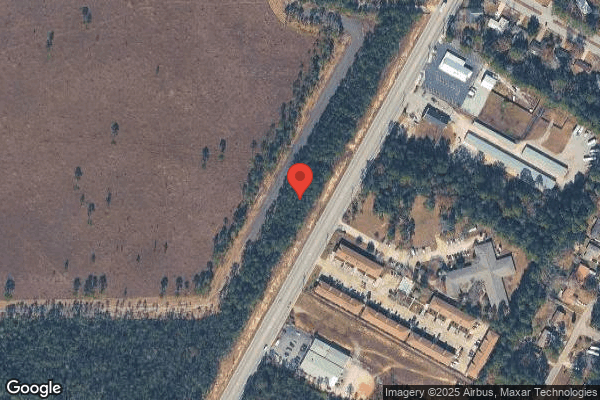

RIVER CHASE VILLAGE

5090 GAUTIER VANCLEAVE ROAD, GAUTIER, MS 39553 (228) 522-6700
For profit - Partnership 60 Beds Independent Data: November 2025 2 Immediate Jeopardy citations
Trust Grade
24/100
#137 of 200 in MS
Last Inspection: February 2025

Within standard 12-15 month inspection cycle. Federal law requires annual inspections.

Overview

River Chase Village in Gautier, Mississippi, has received a Trust Grade of F, indicating poor performance with significant concerns about care quality. It ranks #137 out of 200 nursing homes in the state, placing it in the bottom half, but it is #2 out of 6 in Jackson County, meaning only one local option is better. While the facility's trend is improving, having reduced issues from 8 in 2023 to 4 in 2025, it still reports concerning staffing metrics with only 2 out of 5 stars and a 56% turnover rate, which is average but suggests instability. Families should be cautious, as the home has faced serious incidents, including allowing a staff member who tested positive for COVID-19 to care for residents, which posed a significant health risk, and failing to report accurate staffing data to regulatory agencies. On a positive note, it does have an average rating for quality measures, indicating some aspects of care may be acceptable despite the serious concerns.

Trust Score
F
24/100
In Mississippi
#137/200
Bottom 32%
Safety Record
High Risk
Review needed
Inspections
Getting Better
8 → 4 violations
Staff Stability
⚠ Watch
56% turnover. Above average. Higher turnover means staff may not know residents' routines.
Penalties
○ Average
$9,318 in fines. Higher than 63% of Mississippi facilities. Some compliance issues.
Skilled Nurses
⚠ Watch
Each resident gets only 20 minutes of Registered Nurse (RN) attention daily — below average for Mississippi. Fewer RN minutes means fewer trained eyes watching for problems.
Violations
⚠ Watch
16 deficiencies on record. Higher than average. Multiple issues found across inspections.
★★☆☆☆
2.0
Overall Rating
★★☆☆☆
2.0
Staff Levels
★★★☆☆
3.0
Care Quality
★★☆☆☆
2.0
Inspection Score
Stable
2023: 8 issues
2025: 4 issues

The Good

  • Full Sprinkler Coverage · Fire safety systems throughout facility
  • No fines on record

Facility shows strength in fire safety.

The Bad

2-Star Overall Rating

Below Mississippi average (2.6)

Below average - review inspection findings carefully

Staff Turnover: 56%

Near Mississippi avg (46%)

Frequent staff changes - ask about care continuity

Federal Fines: $9,318

Below median ($33,413)

Minor penalties assessed

Staff turnover is elevated (56%)

8 points above Mississippi average of 48%

The Ugly 16 deficiencies on record

2 life-threatening
Feb 2025 4 deficiencies
CONCERN (D)

Potential for Harm - no one hurt, but risky conditions existed

Deficiency F0657 (Tag F0657)

Could have caused harm · This affected 1 resident

Based on interview, record review, and facility policy review, the facility failed to revise a comprehensive care plan for Diabetes Mellitus to include interventions related to a continuous glucose mo...

Read full inspector narrative →
Based on interview, record review, and facility policy review, the facility failed to revise a comprehensive care plan for Diabetes Mellitus to include interventions related to a continuous glucose monitoring (CGM) device for one (1) of (20) care plans reviewed. Resident #49. Findings included: A review of the facility's policy titled Comprehensive Care Plans, revised on 02/05/2025, revealed, . An individual comprehensive care plan that includes measurable objectives and time frames to meet the resident's medical, nursing, mental, and psychological needs is developed for each resident . Policy Interpretation .5. The assessment of the resident is ongoing, and care plans are revised as information about the resident and the resident's condition change. A record review of Resident #49's Comprehensive Care Plan revealed an individualized care plan titled Resident has Diabetes Mellitus, initiated on 02/08/2024 with a target date of 02/06/2025. The care plan did not include blood glucose monitoring or the use of a CGM device. During an observation and interview on 02/03/2025 at 11:55 AM, Resident #49 was observed wearing a CGM device on her right upper arm. The resident stated she received the device in March 2024 due to difficulty bending her fingers and experiencing soreness from frequent finger sticks. She reported that her physician approved the device, and she used it to check her blood glucose levels and notify nurses of the results and how much insulin she needed. During an interview on 02/06/2025 at 1:00 PM, Licensed Practical Nurse (LPN) #3 explained that the facility used working care plans that were updated as needed. She stated she was unaware that Resident #49 had a CGM device but explained that the device should have been added to the care plan upon receipt. She stated that the resident's care plan for Diabetes Mellitus should have been revised to reflect the use of the CGM device. LPN #3 explained that the purpose of a care plan was to provide guidance to staff regarding a resident's care and that it should be updated as care needs changed. During an interview on 02/06/2025 at 2:00 PM, with the Administrator and the Director of Nursing (DON) and Administrator stated they expected all staff to follow standard practices regarding resident care. The DON explained that she expected staff to report any changes in a resident's care to her and the interdisciplinary team. She further stated that care plans should be revised any time a change occurs in a resident's condition or care needs. The Administrator stated that the facility did not have a policy specifically addressing the use of CGM devices. A record review of Resident #49's admission Record revealed the facility admitted the resident on 02/01/2024 with current diagnoses including Type 2 Diabetes Mellitus Without Complications. A record review of Resident #49's Quarterly Minimum Data Set (MDS) with an Assessment Reference Date (ARD) of 10/30/2024 revealed a Brief Interview for Mental Status (BIMS) score of 15.
CONCERN (D)

Potential for Harm - no one hurt, but risky conditions existed

Deficiency F0658 (Tag F0658)

Could have caused harm · This affected 1 resident

Based on observation, interview, record review, and facility policy review, the facility failed to follow professional standards for blood glucose monitoring by not ensuring standardized documentation...

Read full inspector narrative →
Based on observation, interview, record review, and facility policy review, the facility failed to follow professional standards for blood glucose monitoring by not ensuring standardized documentation, physician orders for accu-check monitoring, staff training on continuous glucose monitoring (CGM) use and maintenance, and clear protocols on when to use the CGM versus a traditional glucometer for one (1) of twenty (20) sampled residents, Resident #49. Findings included: A record review of a typed statement on facility letterhead provided and signed by the Administrator, dated February 6, 2025, revealed (Proper name of facility) does not have the following policies .Free Style Libre (a type of CGM) A review of the facility's policy titled Resident Directed Medication Administration Policy, revised 08/2023, revealed, . Standard: To assure that prescribed medications are administered safely, accurately, and in accordance with good nursing practice while accommodating the resident's routines and request in medication administration . A review of the facility's policy titled Blood Glucose Monitoring, revised 12/04/2024, revealed, . Policy Explanation and Compliance Guidelines .2. The nurse will perform the blood glucose test utilizing the facility's glucometer as per manufacturer's instructions . On 02/03/2025 at 11:32 AM, during an observation and interview, Resident #49 was observed coming out of her room and telling Licensed Practical Nurse (LPN) #1 that she needed two (2) units of insulin before lunch. LPN #1 stated that the resident frequently advises her insulin dosage, but staff were required to verify her blood glucose levels before administering insulin. On 02/03/2025 at 11:55 AM, during an observation and interview, Resident #49 was observed with a CGM device on her right upper arm. The resident stated she had been using the CGM device since March 2024 because her fingers were too sore from frequent finger sticks, and her physician approved the device. She stated that she checked her blood glucose levels using the CGM and reported the readings to the nurses. On 02/04/2025 at 11:30 AM, during an interview, Resident #49 explained that she regularly visited her endocrinologist and had used the CGM daily. She stated that she changed the CGM device every two (2) weeks with assistance from a night-shift nurse, as she was unable to do it herself. She also stated that she had a booklet explaining how the device worked and how to change it. On 02/04/2025 at 1:50 PM, during an interview, the Director of Nursing (DON) stated that she was unaware that Resident #49 used a CGM device for blood glucose monitoring. She reported that facility nurses still used traditional glucometers. When informed that nurses were using the CGM readings unless the device indicated Hi or Low, the DON stated that she was unaware of how the resident obtained the CGM device, as the facility did not supply it. She also stated that she did not know nurses were assisting the resident in changing the device. The DON stated she would investigate further. On 02/04/2025 at 2:30 PM, during an interview, LPN #1 reported that Registered Nurse (RN) #1 had assisted Resident #49 in changing the CGM device earlier that day. LPN #1 stated she had worked at the facility for seven (7) months, and Resident #49 had always had the CGM device. She stated she was never told not to use the CGM readings and that other nurses also used the device for blood glucose readings. She reported that she had never been trained on how to use or change the CGM device. On 02/04/2025 at 2:50 PM, during an interview, RN #1 confirmed she had helped Resident #49 change her CGM device. RN #1 stated she had never received formal training on the device from the facility. She confirmed that there were no physician orders for the CGM or for blood glucose monitoring using the device. On 02/06/2025 at 1:00 PM, during an interview, LPN #2 reported she had worked at the facility for six (6) months and that Resident #49 had always had the CGM device. She stated that she had always used the device for blood glucose readings and that a facility glucometer was only used if the CGM device displayed Hi or Low. She confirmed that she had never been formally trained on the use of the CGM device by the facility. On 02/06/2025 at 1:15 PM, during an interview, the Nurse Practitioner (NP) stated she was unaware that Resident #49 had been using a CGM device. She stated that the facility had discussed using the device last year but that she had advised that policies and procedures needed to be in place before implementing CGM use. She stated she never received any follow-up from the facility regarding the issue and assumed staff were using facility glucometers for blood glucose monitoring. On 02/06/2025 at 2:00 PM, during an interview, the DON and Administrator stated they expected all staff to follow professional standards of care regarding resident management. The DON stated she expected staff to report all changes in a resident's care to her and the interdisciplinary team. The Administrator stated that the facility did not have a policy regarding the use of CGM devices. A record review of Resident #49's admission Record revealed the facility admitted the resident on 02/01/2024 with current diagnoses including Type 2 Diabetes Mellitus Without Complications. A record review of Resident #49's Order Summary Report, with active orders as of 02/03/2025, revealed a Physician's Order, dated 6/25/2024 for sliding scale insulin,. The order did not indicate how blood glucose result should be obtained, such as through accucheck or CGM. A record review of Resident #49's Quarterly Minimum Data Set (MDS) with an Assessment Reference Date (ARD) of 10/30/2024 revealed a Brief Interview for Mental Status (BIMS) score of 15, which indicated the resident was cognitively intact. Section N of the MDS indicated that the resident had received insulin injections during the seven (7) day look-back period. A record review of the Medication Administration Records (MARs) for January and February 2025 revealed Resident #49's blood sugar results were documented but did not indicate how the results were obtained.
CONCERN (D)

Potential for Harm - no one hurt, but risky conditions existed

Food Safety (Tag F0812)

Could have caused harm · This affected 1 resident

Based on observation, interviews, record review, and ServSafe Coursebook review, the facility failed to label and date food stored in the refrigerator and freezer and failed to dispose of spoiled food...

Read full inspector narrative →
Based on observation, interviews, record review, and ServSafe Coursebook review, the facility failed to label and date food stored in the refrigerator and freezer and failed to dispose of spoiled foods for one (1) of four (4) days of kitchen observations. Findings included: A review of the ServSafe Coursebook, 8th Edition, 2022, revealed, .Labeling Food for Use On-Site: Any item not stored in its original container must be labeled . The label must include the common name of the food . On 02/03/2025 at 10:17 AM, during an observation of the kitchen and interview with the Dietary Manager (DM), the following observations were made in Refrigerator #1: a clear plastic bag containing three (3) cucumbers, one (1) of which had a black colored biological growth resembling mold and two (2) showing breakdown and a bag of discolored brown shredded lettuce. In the freezer, an opened bag of chicken tenders and an opened bag of pepperoni were observed without labels or opened dates. In the dry goods area, an opened bag of Oreo pieces in a clear ziplock bag was observed undated, along with a one-gallon ziplock bag of graham cracker crumbs that was not dated or labeled, and an opened bag of vanilla wafers in a ziplock bag that was also not dated or labeled. The DM confirmed these observations and stated his expectations for staff were to follow guidelines and properly store food for residents. He further stated that the facility received a produce truck delivery every Thursday. On 02/04/2025 at 11:04 AM, during an interview, the Registered Dietitian (RD) stated that staff were expected to follow guidelines for food preparation and storage. She stated that she supported the DM and confirmed that kitchen staff followed ServSafe standards and policies regarding dating, labeling, and food storage. The RD confirmed that she was aware of the findings observed during kitchen observation. A review of the facility's staff in-service training titled Dating and Labeling, Food Storage, completed on 09/23/2024, revealed the staff received training regarding ServSafe standards related to food dating and labeling.
CONCERN (F)

Potential for Harm - no one hurt, but risky conditions existed

Staffing Data (Tag F0851)

Could have caused harm · This affected most or all residents

**NOTE- TERMS IN BRACKETS HAVE BEEN EDITED TO PROTECT CONFIDENTIALITY** Based on interview and record review, the facility failed to accurately report to the Centers for Medicare and Medicaid Services...

Read full inspector narrative →
**NOTE- TERMS IN BRACKETS HAVE BEEN EDITED TO PROTECT CONFIDENTIALITY** Based on interview and record review, the facility failed to accurately report to the Centers for Medicare and Medicaid Services (CMS) the direct care hours based on payroll and other verifiable and auditable data in a uniform format according to specifications established by CMS for the fourth quarter of fiscal year 2024 ([DATE] - [DATE]) for one (1) of (1) quarters reviewed. Findings included: A record review of a typed statement on facility letterhead provided and signed by the Administrator, dated February 6, 2025, revealed (Proper name of facility) does not have the following policies: Staffing . A record review of the facility's Payroll Based Journal (PBJ) Staffing Data Report for the fourth quarter of fiscal year 2024 ([DATE]-[DATE]) revealed, . Excessively Low Weekend Staffing .Triggered . Submitted Weekend Staffing data is excessively low . On [DATE] at 8:25 AM, during an interview, the Director of Nursing (DON) stated that she was unaware the facility had triggered low weekend staffing in the fourth quarter. She reported that she was responsible for nursing staff scheduling, while the Admissions department handled scheduling for Certified Nurse Aides (CNAs). The DON explained that the Administrator was responsible for ensuring staffing was accurate before the corporate office submitted the data to CMS. She further reported that the Administrator that was at the facility during the time period of the fourth quarter was no longer employed at the facility. On [DATE] at 1:50 PM, during an interview, the Administrator stated that the corporate office first calculated direct care hours before sending the data to the facility for verification. He explained that the Administrator was responsible for reviewing and verifying the staffing data before sending it back to corporate for submission. He reported that he was unsure who at the facility would have received notification indicating the facility had excessively low weekend staffing data. The Administrator confirmed that the facility had used a significant number of agency staff during that period. On [DATE] at 1:40 PM, during an interview, the Admissions Coordinator confirmed that she was responsible for scheduling CNAs. She explained that during the fourth quarter, the facility used only one staffing agency, but agency CNAs were used frequently and daily. She reported that at that time, the staffing agency transitioned from paper time logs to a web-based time log system. She stated that the agency required its employees to use a mobile application on their personal phones to sign in and out of work. However, she explained that the application relied on GPS tracking and required the employee's phone to remain powered on throughout the shift. If the phone battery died, the system did not record the employee's worked hours. The Admissions Coordinator reported that during this transition, she frequently received phone calls from agency CNAs stating their phone battery had died and that their work hours needed to be manually adjusted. She stated that this issue could have caused discrepancies in the facility's PBJ staffing data for that reporting period, but she was unsure. She further confirmed that the previous Administrator who was in charge of the facility during the fourth quarter never confirmed the actual hours worked by agency CNAs before submitting the PBJ report. On [DATE] at 2:30 PM, during an interview, the Administrator stated that he did not know exactly what had happened regarding PBJ reporting for the fourth quarter but expected that staffing should always be reported accurately.
Jun 2023 6 deficiencies
CONCERN (D)

Potential for Harm - no one hurt, but risky conditions existed

Deficiency F0578 (Tag F0578)

Could have caused harm · This affected 1 resident

**NOTE- TERMS IN BRACKETS HAVE BEEN EDITED TO PROTECT CONFIDENTIALITY** Based on record review, facility policy review, and staff interview, the facility failed to ensure the residents that do not hav...

Read full inspector narrative →
**NOTE- TERMS IN BRACKETS HAVE BEEN EDITED TO PROTECT CONFIDENTIALITY** Based on record review, facility policy review, and staff interview, the facility failed to ensure the residents that do not have an Advanced Directive (AD) received information or assistance in formulating an AD for four (4) of 24 resident records reviewed. Resident #1, #8, #44, and #47 Findings include: Record review of the facility policy titled Advance Directive dated 2/26/19, revealed information about whether the resident has executed an advance directive shall be maintained in the medical record. The plan of care for each resident will be consistent with his or her documented treatment preference and/or advance directive. Advance directives will be reviewed at least annually with the resident and/or resident's representative by the Social Service Director and/or Registered Nurse to ensure that such advance directives are still the wishes of the resident. The Growth (Care) Plan Team will be informed of any changes so the appropriate changes can be made in the resident medical record. Record review of medical records for Resident #1, Resident #8, Resident #44, and Resident #47 revealed no AD or documentation of a denial of use of an AD. Resident #1 Record review of the Face Sheet revealed the facility admitted Resident #31 on 10/3/23 with diagnoses that included Heart Failure and Type 2 Diabetes Mellitus. Record review of the Minimum Data Set (MDS), with Assessment Reference Date (ARD) 5/16/23, revealed Resident #1 had a Brief Interview for Mental Status (BIMS) score of 15 indicating intact cognition. Resident #8 Record review of Resident #8's Face Sheet revealed she was admitted to the facility on [DATE] with diagnoses that included Chronic Kidney Disease, stage four (4), Chronic Atrial Fibrillation, and Type II Diabetes. Record review of Resident #8's Minimum Data Set (MDS) with an Assessment Reference Date (ARD) of 3/13/23 and a Brief Interview of Mental Status (BIMS) score of 15 indicating intact cognitive skills for daily decision making. Resident #44 Record review of Resident #44's Face Sheet revealed she was admitted to the facility on [DATE] with diagnoses that included Chronic Kidney Disease, Paroxysmal Atrial Fibrillation, and Cerebral Infarction. Record review of Resident #44's MDS with an ARD of 5/9/23 and a BIMS score of 3 indicating severely impaired cognition. Resident #47 Record review of the Face Sheet revealed the facility admitted the Resident #47 on 5/24/23 with diagnoses including Type 2 Diabetes Mellitus, Chronic Viral Hepatitis, Dementia, and Malignant Neoplasm of Anal Canal. Record review of the MDS with an ARD of 6/1/23, revealed the resident had a BIMS score of 12 indicating moderate cognitive impairment. On 06/20/23 at 10:30 AM, an interview with the facility Social Services (SS) staff confirmed that residents did not have an AD in their charts or in their medical records. The SS revealed she was not aware that she was supposed to get ADs for all residents, have the facility help the resident representative with an AD, if wanted, have a copy of the AD in the chart, or have a signed form that states the family does not want an AD. On 6/20/23 at 10:45 AM, an interview with the Administrator revealed they do not have ADs for all the residents. The Administrator did not know for sure if during the admission process the staff was asking the new admission or their family if they had or wanted an AD. On 6/20/23 at 1:43 PM, during an interview with the Admissions Director revealed she is the staff member that does the admissions and would be the one that would discuss a Living Will, Power of Attorney and code status. She confirmed she has not asked or explained to the resident representative or resident about an AD. She revealed she did not know she should discuss an AD, get a copy if they had one, place it on the chart, offer to help develop one if needed and if they did not want to make those decisions, get a signed form of denial.
CONCERN (D)

Potential for Harm - no one hurt, but risky conditions existed

Comprehensive Care Plan (Tag F0656)

Could have caused harm · This affected 1 resident

**NOTE- TERMS IN BRACKETS HAVE BEEN EDITED TO PROTECT CONFIDENTIALITY** Based on record review, staff interviews and facility policy review, the facility failed to implement a care plan regarding phys...

Read full inspector narrative →
**NOTE- TERMS IN BRACKETS HAVE BEEN EDITED TO PROTECT CONFIDENTIALITY** Based on record review, staff interviews and facility policy review, the facility failed to implement a care plan regarding physician notification, dialysis communication and failed to provide thicken liquids for two (2) of 24 care plans reviewed Resident #6 and Resident #28 Findings Include: Record review of facility policy titled Comprehensive Care Plans, dated 07/29/19, stated, The village care plan team, in coordination with the resident, the resident's family members or the resident's representative develops and maintains a comprehensive care plan for each resident which identifies the highest level of functioning the resident is expected to obtain. Resident #6 Record review of the resident care plan with problem onset date of 10/28/19 revealed a care plan for Elder lives with ESRD (End Stage Renal Disease) and requires hemodialysis. Goal and target date of 07/14/23 Elder will have no complications due to presence of AV (arterial venous) graft and will remain with minimal overt symptoms of end stage renal disease. Approaches: Confer with MD (Medical Doctor)/NP (Nurse Practitioner) as needed and inform family/RP (Responsible Party) of order changes. Attend renal dialysis per current orders . q (every) M,W,F (Monday Wednesday Friday) and that her dialysis communication sheet is filled out and she has it with her before leaving so that dialysis nurse can also document, and upon return from dialysis .Care partners to encourage elder to attend dialysis as scheduled and discuss the negative outcomes of refusal including but not limited to fluid overload, infection, increased s/sx (sign/symptoms) of hypertension, and possible death. Record review of the April, May and June 2023 dialysis communication forms revealed there were seven (7) missing forms out of 26 days of dialysis appointments. The following forms were missing: 04/03/23, 04/12/23, 04/21/23, 05/05/23, 05/10/23, 05/12/23, and 05/29/23. Record review of the physician orders revealed that Hemodialysis is every MWF with (proper name) dialysis for chair time 10:45-2:15, facility to provide transport. Interview with the Medical Records Nurse on 06/21/23 at 9:09 AM, stated that she gave the SA what she could find in the medical record for the dialysis communication notes and that if some were missing then the floor nurse that assessed that resident must not have obtained it after the resident's return from dialysis. She confirmed that they keep a Dialysis Communication Binder and all communication should be in that binder. Interview on 06/21/23 at 9:19 AM with Licensed Practical Nurse (LPN) #1 confirmed that there probably were some dialysis communication sheets missing and stated, They have gotten a little better at sending the communication sheets back but there is a lot of times that she doesn't come back with one. The SA asked how they would know how she did at dialysis and LPN #1 stated, We wouldn't know. Asked LPN #1 where do you document her vitals, LPN #1 stated, Well we don't have anywhere that we would put them. I mean it comes up on our computer to check her shunt site every shift, so we mark that. Other than that we don't document her return vitals and where we assessed her for vitals. Interview with the Director of Nursing (DON) on 06/21/23 at 10:05 AM with the SA confirmed that she was aware that they had missed some dialysis communication sheets and stated that she had recently completed an audit of the dialysis communication binder and confirmed missing communication notes. The DON confirmed that this was their only dialysis resident in the facility. The DON then returned to the conference room at 10:20 AM on 06/21/23 with the dialysis policy and stated that she had called the dialysis facility and confirmed that the resident had refused dialysis on 04/21, 05/05 and 05/12 but could not find any nurses's notes or communication notes that the family or physician had been notified. Interview with the DON at 1:50 PM on 06/21/23 after she did some research in the medical records for documentation and she confirmed that the days that the resident refused to go to dialysis that they did not notify the physician, nor do they document anything into the nurse's note of the medical record and did not notify the family. Interview with Minimum Data Set (MDS) Registered Nurse (RN) on 06/22/23 at 9:25 AM stated, I develop the care plans to follow the Medical Director (MD) orders, and confirmed that the lack of dialysis communication and lack of notification of the Physician when the resident refused dialysis was not following the care plan. Record review of the medical record did not reveal that the facility was checking vital signs for the resident after return from dialysis and confirmed through record review that there was no notification to the physician when the resident refused dialysis and no documentation on the nurse's notes regarding refusal. Record review of the Face Sheet revealed that the facility admitted the resident on 04/26/19 with diagnosis of End Stage Renal Disease (ESRD). The most recent Minimum Data Set with an Assessment Reference Date (ARD) of 04/07/23, Section C revealed a Brief Interview of Mental Status Score (BIMS) of 15 revealed that the resident was fully cognitive. Resident #28 Record review of the resident's care plan stated, Elder is at risk for decreased nutritional intake and has a modified diet r/t (related to) dx (diagnosis) of dysphagia. Goal and target date of 09/23/23 stated, Elder will have adequate PO (by mouth) consumption with no significant weight loss or choking. Approaches: Mechanical Soft Diet Thicken Liquids. During an observation and interview on 06/20/23 at 8:34 AM, with Resident #28 it was observed that she had eggs and toast for breakfast and did not have anything for hydration on her food tray. Observation revealed that the resident's meal ticket was not on her meal tray. In an interview with CNA #4 on 06/20/23 at 8:40 AM, revealed that she did not deliver her meal tray to her room and she isn't sure why she did not have anything for hydration on her meal tray but confirmed that the resident did not have anything for hydration on her meal tray. Interview with MDS RN on 06/22/23 at 9:25 AM, stated, I develop the care plans to follow the MD orders, and confirmed that the lack of hydration on the resident's meal tray on 06/20/23 was not following the care plan and physicians orders to maintain hydration and prevent choking by not serving the resident anything to drink during her meal. Record review Physician Orders for June 2023 revealed an order dated 12/02/22 Mechanical Soft Diet Thicken Liquids. Record review of the Face Sheet revealed that the resident was admitted to the facility on [DATE] with diagnoses of Metabolic encephalopathy, Type 2 diabetes, Dysphagia. Record review of the MDS with an Assessment Reference Date (ARD) of 03/20/23 revealed a Brief Interview for Mental Status Score (BIMS) of 10 indicating that the resident had mild cognitive impairment.
CONCERN (D)

Potential for Harm - no one hurt, but risky conditions existed

Deficiency F0692 (Tag F0692)

Could have caused harm · This affected 1 resident

**NOTE- TERMS IN BRACKETS HAVE BEEN EDITED TO PROTECT CONFIDENTIALITY** Based on observation, record review, staff interviews, and facility policy reviews, the facility failed to provide hydration dur...

Read full inspector narrative →
**NOTE- TERMS IN BRACKETS HAVE BEEN EDITED TO PROTECT CONFIDENTIALITY** Based on observation, record review, staff interviews, and facility policy reviews, the facility failed to provide hydration during a meal to a resident who was a choking risk, for one (1) of three (3) residents reviewed for nutrition Resident #28. Findings Include: Record review on facility letterhead dated 06/20/23 and signed by the Administrator stated, Our home does not currently have policies regarding checking tray accuracy, preparing trays, and communication with the Registered Dietician (RD). On 06/19/23 at 12:10 PM an observation was made of Resident #28 laying in her bed, eyes open, soft speech, able to shake head yes/no to questions appropriately that was asked of her. Certified Nursing Assistant (CNA) #3 entered the room and placed the residents meal tray on the bedside table and moved the bedside table over to the resident and began meal set up. Resident is observed served boiled carrots, beef stroganoff, bread stick, cake and a 5-6 ounce glass of thickened water. Review of resident's meal ticket revealed resident is on a mechanical soft diet with Ensure Plus to be served at meals. Ensure Plus was not observed on the resident's meal tray. Interview at this same time revealed that the CNA #3 confirmed that the resident is not served an Ensure Plus with her meal and stated, Sometimes I look to see if it (meal ticket) matches what they get but usually it is the kitchens responsibility. The last time I remember seeing her get an Ensure with her meal was a couple of weeks ago. Observation and interview on 06/20/23 at 8:34 AM, with the resident observed that she had eggs and toast for breakfast and did not have anything for hydration on her food tray. Observation revealed that the resident's meal ticket was not on her meal tray. Interview with CNA #4 on 06/20/23 at 8:40 AM, revealed that she did not deliver her meal tray to her room and she isn't sure why she did not have anything for hydration on her meal tray but confirmed that the resident did not have anything for hydration on her meal tray. Interview on 06/20/23 at 8:45 AM, with two other CNAs #5 and #6 stated that they didn't deliver the meal tray to the resident either. Interview with the Dietary Manager (DM) on 06/20/23 at 8:50 AM, stated that We don't have regular ensure, we only have ensure clear (non-dairy) and we have never had ensure plus to give to the resident's so I'm not sure why that is even on her meal ticket. The DM confirmed that he wasn't aware that Ensure was on her meal ticket and he guessed he had just missed it when he audited the meal tickets for accuracy. DM then stated, We wouldn't give Ensure anyway, that is something the nurse's would give to the residents. The DM printed off the resident's meal ticket and it revealed that the resident's meal was ordered to have Ensure Plus and it was not on her meal tray. Interview on 06/20/23 at 9:05 AM with Registered Nurse (RN) #1 confirmed that she does not give the resident her Ensure Plus and confirmed that it is not on her orders to give so she would not give her Ensure. Interview with the DON on 06/20/23 at 2:00 PM stated, I think it's an error, I can't find where she was ever ordered to have Ensure. DON was informed that the resident did not have any hydration on her meal tray at breakfast and she stated, I heard that she didn't have anything to drink but I can't find out who took her tray into her room this morning and I can assure you that this won't happen again. Interview and record review with Licensed Practical Nurse (LPN) #2 on 06/20/23 at 2:50 PM, looked through the thinned out medical record and discovered that the resident was admitted to the facility on [DATE] and was admitted with hospice services. The family wanted to change hospice providers and changed on 12/16/22 and also ordered to discontinue the Ensure Plus. Ensure plus was initially written as an order on 12/02/22 and then discontinued on 12/16/22 and the LPN confirmed that it was not taken off of the dietary orders. The DM confirmed in an interview on 06/20/23 at 8:50 AM, that he was not aware that it had been ordered nor was he aware if it had been discontinued and he didn't know why the resident did not get hydration on her meal tray. The CNAs take the meal tickets and go to each room and they circle what the residents want for each meal and they bring it back to us in the kitchen and we assembly the trays. Record review revealed that it was circled on the meal ticket dated 6/20/23 for scrambled egg, ground sausage, toast. Jelly and water were written in by hand on the meal ticket. Interview with the DM on 06/21/23 at 11:40 AM stated that he did some investigating into what happened as to why the resident did not get a drink with her breakfast meal and he stated, All I can say is we missed it. I just had a meeting with my staff this morning and I told them to make sure that not one single tray goes out of here without some kind of drink on it. Record review of a Nurse request visit, dated 06/20/23 electronically signed by Nurse Practitioner stated, [AGE] year old female patient presents for visit. It was reported that the (resident's name) did not receive fluids with her breakfast. Record review revealed an order dated 12/02/22 Mechanical Soft Diet Thicken Liquids. Record review of the Face Sheet revealed that the resident was admitted to the facility on [DATE] with diagnoses of Metabolic encephalopathy, Type 2 diabetes, and Dysphagia. Record review of the most recent Minimum Data Set with an Assessment Reference Date (ARD) of 03/20/23 with a Brief Interview for Mental Status Score (BIMS) of 10 indicated that the resident had mild cognitive impairment.
CONCERN (D)

Potential for Harm - no one hurt, but risky conditions existed

Deficiency F0698 (Tag F0698)

Could have caused harm · This affected 1 resident

Based on observation, record review, staff interviews and facility policy review, the facility failed to maintain communication with the physician and maintain dialysis communication sheets for a resi...

Read full inspector narrative →
Based on observation, record review, staff interviews and facility policy review, the facility failed to maintain communication with the physician and maintain dialysis communication sheets for a resident who receives dialysis services for seven (7) of 34 days that Resident #6 attended or refused dialysis. Findings include: Review of the facility policy titled, Dialysis, with revision date of 01/27/22 stated, The village will utilize the Dialysis Communication Form which includes: vital signs, weight if ordered, and any signs and symptoms of infection to central venous catheter (CVC), shunt, fistula, graft, and other vascular access catheter. This form will be completed prior to dialysis and sent with resident and dialysis facility will return post dialysis and include any additional comments or concerns to the village. The village will also monitor for ongoing monitoring and care of the resident's vascular access .related to complications (i.e., hypotension) and with notification of concerns to Doctor and Responsible Party as needed. On 06/20/23 at 8:25 AM, an interview with Resident #6 in her room stated that she attends dialysis every Monday, Wednesday and Friday (MWF). The State Agency (SA) asked the resident if the staff assessed her and checked her vitals when she returned and she stated, Sometimes they do, but not every time. Record review of the Physician Orders revealed that Hemodialysis is every MWF with (proper name) dialysis for chair time 10:45-2:15, facility to provide transport. Record review of dialysis communication notes for last three (3) months revealed lack of a communication note between the dialysis unit and the facility for 04/03/23, 04/12/23, 04/21/23, 05/05/23, 05/10/23, 05/12/23, 05/29/23. Interview on 06/21/23 at 9:09 AM, with the Medical Records Nurse stated that she gave the SA what she could find in the medical record for the dialysis communication notes and that if some were missing then the floor nurse that assessed that resident must not have obtained it after the resident's return from dialysis. She confirmed that they keep a Dialysis Communication Binder and all communication should be in that binder. During an interview on 06/21/23 at 9:19 AM, with Licensed Practical Nurse (LPN) #1 confirmed that there probably were some dialysis communication sheets missing and stated, They have gotten a little better at sending the communication sheets back but there is a lot of times that she doesn't come back with one. The SA asked how they would know how she did at dialysis and LPN #1 stated, We wouldn't know. SA asked LPN #1 where do you document her vitals, LPN #1 stated, Well we don't have anywhere that we would put them. I mean it comes up on our computer to check her shunt site every shift, so we mark that. Other than that we don't document her return vitals and where we assessed her for vitals. On 06/21/23 at 10:05 AM, during an interview with the Director of Nursing (DON) , with the SA confirmed that she was aware that they had missed some dialysis communication sheets and stated that she had recently completed an audit of the dialysis communication binder and confirmed missing communication notes. The DON confirmed that this was their only dialysis resident in the facility. During an interview at 10:20 AM on 06/21/23 the DON stated that she had called the dialysis facility and confirmed that the resident had refused dialysis on 04/21, 05/05 and 05/12 but could not find any nurses's notes or communication notes that the family or physician had been notified. During an interview with the DON at 1:50 PM on 06/21/23, after she did some research in the medical records for documentation and she confirmed that the days that the resident refused to go to dialysis that they do not notify the physician, nor do they document anything into the nurse's note of the medical record and did not notify the family. On 06/21/23 at 2:12 PM, interview with the Dialysis Nurse stated that the facility had called them yesterday afternoon because they were missing some dialysis communication forms so they faxed them over to them at the facility. The Dialysis Nurse confirmed that the resident did not come to dialysis on 04/21, 05/05, 05/12 and 05/29. The Dialysis Nurse stated that the pre and post dialysis vital signs are completed by the dialysis center and sent back with the resident to the nursing home. Record review of the medical record did not reveal that the facility was checking vital signs for the resident after return from dialysis and confirmed through record review that there was no notification to the physician when the resident refused dialysis and no documentation on the nurse's notes regarding refusal. Record review of the Face Sheet revealed that the facility admitted the resident on 04/26/19 with a diagnosis of End Stage Renal Disease (ESRD). Record review of the most recent Minimum Data Set (MDS) with an Assessment Reference Date (ARD) of 04/07/23 revealed a Brief Interview for Mental Status Score (BIMS) of 15 indicating Resident #6 was cognitively intact.
CONCERN (D)

Potential for Harm - no one hurt, but risky conditions existed

Deficiency F0761 (Tag F0761)

Could have caused harm · This affected 1 resident

Based on observation, staff interviews, record reviews and facility policy review, the facility failed to store medications in a locked medication cart for one (1) of three (3) medication carts review...

Read full inspector narrative →
Based on observation, staff interviews, record reviews and facility policy review, the facility failed to store medications in a locked medication cart for one (1) of three (3) medication carts reviewed. Medication Cart on Back Hall Findings Include: Record review of the facility policy titled Medication Storage, dated 05/31/23, revealed .Policy Explanation and Compliance Guidelines: 1. General Guidelines: a. All drugs and biologicals will be stored in locked compartments (i.e., medication carts, cabinets, drawers, refrigerators, medication rooms). b. Only authorized personnel will have access to the keys to locked compartments . On 06/19/23 at 12:15 PM, an observation was made of medications sitting on the bedside table of Resident #6. The resident was out to dialysis and not in her room. Observed medications of Refresh eye drops, Advair Disk inhaler and Astepro nasal spray. All medications were in the manufacturers packages with resident's name on the outside of each box with instructions for administration. Record review of Resident #6's Electronic Medication Record (EMAR) for June 2023, revealed physician's orders for Refresh Tears 0.5% eye drop insert 1 drop into both eyes 3 times daily. Advair 500-50 Diskus inhale one puff into the lungs two times daily. Azelastine 0.15% nasal spray, spray 2 puffs into each nostril 2 times a day. The State Agency (SA) made an observation that Registered Nurse (RN) #1 was the nurse assigned to Resident #6 for 06/19/23 on the 7AM-7PM shift. Interview with RN #1 on 06/20/23 at 8:30 AM, confirmed that she had forgotten and left the resident's medications in her room the previous day and stated, I put them in there yesterday to administer to her and she was about to go to dialysis and she wanted her dialysis communication sheet to take with her. I sat the medications down and ran to get the sheet and forgot and left her medications in there. RN #1 confirmed that the medications were Advair Disk Inhaler, Astepro nasal spray, and Refresh eye drops. RN #1 stated that she remembered later that day that she had left them in Resident #6's room and she went back to get the medication and stated, I had to go back and get them and put them back in the medication cart because I would have needed them later to give her because they are ordered for twice a day. RN #1 confirmed that she just messed up and that medications are to be locked in the medication cart at all times. Interview with the Director of Nursing (DON) on 06/20/23 at 2:00 PM, confirmed that all medications should be secured and locked in the medication cart and stated that RN #1 had told her what she had done and that she had left the medications in the residents room on her bedside table. Record review revealed that the facility admitted the Resident #6 on 04/26/19 with diagnoses of End Stage Renal Disease (ESRD), Chronic Obstructive Pulmonary Disease (COPD), Unspecified asthma, emphysema, and Dry eye syndrome. Record review of the Minimum Data Set (MDS) with an Assessment Reference Date (ARD) of 04/07/23 revealed a Brief Interview for Mental Status Score (BIMS) of 15 indicating Resident #6 was fully cognitive.
CONCERN (E)

Potential for Harm - no one hurt, but risky conditions existed

Deficiency F0925 (Tag F0925)

Could have caused harm · This affected multiple residents

**NOTE- TERMS IN BRACKETS HAVE BEEN EDITED TO PROTECT CONFIDENTIALITY** Based on observation, staff interview, resident interview, and record review, the facility failed to ensure an effective pest co...

Read full inspector narrative →
**NOTE- TERMS IN BRACKETS HAVE BEEN EDITED TO PROTECT CONFIDENTIALITY** Based on observation, staff interview, resident interview, and record review, the facility failed to ensure an effective pest control program was maintained as evidenced by multiple flies observed throughout the facility for three (3) of four (4) days of survey. Findings include: Record review of a document on facility letterhead dated 6/21/23 and signed by the Administrator revealed the facility does not have a pest control policy on flies. On 06/19/23 at 11:51 AM, an observation and interview with Resident #8 sitting at a table in the dining room with two (2) other residents revealed 4 flies flying around the table and landing on the resident's food. Resident #8 revealed she had not eaten her soup because she is letting the flies have it. Resident #8 confirmed the flies had been bad lately and she thinks it is because people leave the door open to the patio so the residents could come in and out and that's when the flies come in. On 06/20/23 at 9:10 AM, an interview with the Administrator revealed he was aware of the issue with the flies and felt like it was because the door is left open to the courtyard. The Administrator revealed the flies landing on the resident's food could potentially cause them to not eat. On 06/20/23 at 11:45 AM, an interview with in the dining room Resident #39 revealed the flies are better right now but they were terrible this morning. They were all over our food. On 06/21/23 at 11:00 AM, an observation of 2 flies in the therapy room during the resident council meeting. On 06/21/23 at 11:25 AM, an interview with Certified Nursing Assistant (CNA) #1 revealed she believed the flies are coming in from the door being left open. CNA #1 revealed it has been so hard to try and keep the flies off of the food, they are everywhere. On 06/21/23 at 11:50 AM, an interview with CNA #2 revealed the residents have been complaining about the flies on their food and she would not want to eat any food that flies had been on. On 06/21/23 at 12:00 PM, an interview with an unsampled resident, while she was sitting in the dining room at a table, revealed the flies have been a real problem. She stated they have been around so much that she named them [NAME], Dick, and [NAME]. During the interview observed 2 gnats flying and landing on the dining table. On 06/21/23 at 12:15 PM, an interview with Resident #18 revealed she ate lunch in the front lobby yesterday with visitors and 2 flies were all over them, she would just pick the part of the food off and put it to the side when a fly landed on it.
Feb 2023 2 deficiencies 2 IJ
CRITICAL (J) 📢 Someone Reported This

A family member, employee, or ombudsman was alarmed enough to file a formal complaint

Immediate Jeopardy (IJ) - the most serious Medicare violation

Administration (Tag F0835)

Someone could have died · This affected 1 resident

Based on interviews, record review, and facility policy review, the facility administration failed to ensure residents in the facility were able to attain or maintain the highest practicable physical,...

Read full inspector narrative →
Based on interviews, record review, and facility policy review, the facility administration failed to ensure residents in the facility were able to attain or maintain the highest practicable physical, mental, and psychosocial well-being by failing to ensure staff who tested positive for COVID-19 were not allowed to work with residents who did not have COVID-19 infection. The facility's administration allowed Certified Nursing Aide (CNA) #1, who tested positive for COVID-19 and had not met the return to work criteria, to provide direct patient care to residents without suspected or confirmed COVID-19 infection. The facility's administration's failure to restrict CNA #1 from providing direct patient care to residents after she tested positive for COVID-19 placed these residents, and other residents and staff at risk, in a situation that was likely to cause serious harm, injury, impairment, or death. The situation was determined to be an Immediate Jeopardy (IJ) that began on 01/2/23 when CNA #1 tested positive for COVID-19 and was allowed by administration to provide direct patient care to residents the same day. The facility Administrator was notified of the IJ on 01/25/23 at 12:32 PM. The facility provided an acceptable Removal Plan on 01/26/23, in which they alleged all corrective actions to remove the IJ were completed and the IJ removed on 01/26/23. The SA validated the Removal Plan on 01/27/23 and determined the IJ was removed on 1/26/23, prior to exit. Therefore, the scope and severity for CFR 483.70 Administration was lowered to a D, while the facility develops a plan of correction to monitor the effectiveness of the systemic changes to ensure the facility sustains compliance with regulatory requirements. Findings include: Record review of the facility's Administrator Job Description, dated 8/10/22, revealed, General Purpose: To direct the day-to-day functions of the facility in accordance with current federal, state and local standards governing long-term care facilities to ensure that the highest degree of quality care can be provided to the residents at all times .Essential Job Functions .A. Administrative Functions Duties: .ensure that each resident receives the necessary nursing, medical and psychological services to attain and maintain the highest possible mental and physical functional status; .supervise and direct all facility departments and overall operations .interpret and ensure compliance with all facility policies and procedures by all employees .identify problems and deficiencies and develop and implement appropriate plans of action to correct deficiencies .B. Safety and Sanitation Functions Duties: .Ensure that all personnel .follow established policies and procedures, including .infection control procedures . Record review of the facility's, Director of Nursing Services Job Description, dated 6/11/21, revealed, General Purpose: To plan, organize, develop and direct the overall operation of the Nursing Services department in accordance with current federal, state and local standards governing the facility, and as my be directed by the Administrator, to ensure that the highest degree of quality care is maintained at all times . On 1/23/23 at 10:05 AM, in an interview with the Director of Nursing (DON), she stated that CNA #1 had tested positive for COVID-19 and was asymptomatic on 1/2/23 and was allowed to continue to work that day and the following day (1/3/23) before she developed symptoms. She stated that according to the Centers for Disease Control and Prevention (CDC), CNA #1 could work since she had no symptoms. She confirmed the facility was in a COVID-19 outbreak as of 12/29/23. On 01/23/22 at 12:15 PM, in an interview with CNA #1, she confirmed that she had a COVID-19 test during her shift on 01/02/23 and the results were positive. She said she continued to work the shift on 01/02/23 and worked her entire scheduled shift on 01/03/23 after having tested positive. She provided direct patient care to 11 residents. She developed muscle aches after 01/03/23 and did not work for a few days after that. On 01/25/23 at 10:05 AM, in an interview with the Administrator, he revealed that he was aware of the COVID-19 outbreak at the facility on 12/29/22. He placed the facility in COVID-19 Strategies to Mitigate Healthcare Personnel Staffing Shortages, per the CDC but could not provide the SA with an exact date this occurred. The Administrator confirmed he was aware there was a CNA who was COVID-19 positive and was providing direct patient care, but he was unable to remember the exact date he was made aware. He believed it be on 01/06/23. The Administrator revealed it is the standard operating procedure for the DON to have the authority to make decisions regarding staffing ability. The Administrator commented that CNA #1, who was COVID-19 positive, did not cause any harm to the residents because none of those residents became COVID-19 positive until 01/12/23, which is outside of the 10-day window. (CNA #1 last day worked was 01/03/23 and a resident tested positive for COVID-19 on 01/12/23, which is 9 days since residents were last exposed by CNA #1) The Administrator expressed that it is the standard operating procedure at the facility, based on the (Proper Name) philosophy, which he stated consisted of flat leadership structure whereby empowerment for staff is used instead of hierarchy. He stated that the DON had the authority to make decisions regarding staffing ability and anything about nursing and that she does not have to contact me first to make those decisions for the safety of residents. The Administrator in Training (AIT) was notified of the event and was aware of the staffing contingency mitigation strategy per CDC guidelines as soon as it was activated. On 01/26/23 at 1:53 PM, in an interview with the DON, she confirmed the chain of command consisted of the Administrator, the AIT, the DON, and Registered Nurse (RN) Supervisors. The DON revealed she made the decision and gave authorization for CNA #1 to continue to work although she had tested positive for COVID-19 because she was needed based on resident acuity, staffing needs, resident care, and the COVID-19 outbreak. The DON revealed that the facility standards operational model is a part of the (Proper Name) Program, to which the facility is certified. She stated there is a lot of empowerment and collaboration amongst the leadership team, and it is not a hierarchy. The DON then stated, we still need to follow the chain of command with major operational issues arising. The DON stated that she consults through the chain of command and makes no major decision on her own. She said that regarding CNA #1, it was discussed with the AIT on 01/02/23, and he agreed to allow her to work because of the contingency plan, which we received directions from CDC on guidance to mitigate staffing shortages. The Administrator was present during a company meeting on 01/06/23 in which it was discussed that a COVID-19-positive employee was working. On 01/26/23 at 2:30 PM, in an interview with the AIT, he revealed he was aware that the facility was in mitigation of staffing shortages that the DON advised. He discussed with the DON that a COVID-19-positive employee who was asymptomatic could be working and supported her decision. The AIT revealed that the chain of command in the facility consists of the Administrator, the AIT, and the DON. The AIT stated that the facility is part of the (Proper Name) program. The AIT revealed that the Administrator was notified during the company meeting on 01/06/23 that a staff member tested positive for COVID-19 and was allowed to work. The facility submitted the following acceptable Removal Plan on 01/26/23: A Certified Nursing Assistant (CNA) that was COVID-19 positive and asymptomatic was allowed to provide direct care to residents. The Facility Administrator allowed an asymptomatic COVID-19 positive Certified Nursing Assistant (CNA) to work on 01/2/23 and 01/3/23 with COVID-19 negative residents. 1. On January 25th, 2023, the Administrator and Director of Nursing (DON) were notified of two immediate jeopardy (IJ) tags. The second being tag F835 administrative stating that facility administration failed to ensure residents in the facility were able to attain or maintain the highest practicable physical, mental, and psychosocial well-being by failing to ensure staff who tested positive for COVID-19 were not allowed to work with residents who were negative for COVID-1. 2. Beginning 01/23/23, no employees were allowed to work who tested positive for COVID-19. In-services conducted by the Director of Nursing (DON) began on 01/25/2023 for all employees regarding the fact that if they do test positive for COVID-19, they must quarantine at home per the Centers of Disease Control (CDC) guidelines. The content of the in-service consisted of the infection control policies which were updated on 01/25/2023 and CDC guidelines for positive healthcare personnel working in a healthcare facility. 3. As of 01/23/23 at 10:00 am, all residents were being protected by not allowing COVID-19 positive employees to work in the facility. Beginning on 12/29/22, all visitors and employees were screened for signs and/or symptoms of COVID-19 upon entrance in the building, all employees were tested twice weekly, residents were encouraged to wear masks when in common areas, social distancing of residents was encouraged when applicable, and visitors were encouraged to follow safe social distancing practices often via Remind My Customers texting service. 4. Effective 01/23/23, no staff will be allowed to work until they are in serviced on the CDC guidelines and updated policies. 5. On 01/23/23, a 100% audit was done by the Director of Nursing of all current care partner testing to ensure no other positive care partners were working. The result of the audit was that all current care partners working were COVID-19 negative. 6. Agenda item will be added to monthly and quarterly QA meetings to ensure knowledge of the CDC guidelines for health care personnel (HCP) returning to work if they test positive. 7. A Quality Assurance (QA) meeting was held on 01/25/23 around 2:30 pm. The Administrator, DON, Medical Director, Infection Preventionist, Administrator in Training, Registered Nurse (RN) supervisor, minimum data set (MDS) nurse, Nurse Consultant and Licensed Practical Nurse (LPN) were all present. Matters discussed during this meeting were the concern of care partner #1 working following a positive COVID-19 test, the CDC guidelines for COVID-19 positive HCP, updated policies regarding infection control as it relates to COVID-19 staff testing and guidance from the CDC on Return-to-Work Criteria for Healthcare Personnel with Covid-19 Infection or Exposure. 8. The three residents who tested positive for COVID-19 were assessed for any symptoms on 01/23/23 by the Director of Nursing (DON) and Registered Nurse (RN) for COVID-19 and/or improvement in symptoms related to COVID-19. The three residents showed improvement in symptoms with no required hospitalization. Additional assessments were done on 01/23/23 of the other residents cared for by care partner #1. None showed any signs and symptoms of COVID-19 and all tested negative. 9. The facility contends that the removal of the IJ was 1/26/23 at 3:00pm. The State Agency (SA) validated the facility's Removal plan on 01/27/23. The SA validated through record review and interviews that the facility discussed that no employees were allowed to work who tested positive for COVID-19. In-services were conducted by the Director of Nursing (DON) that began on 01/25/2023 for all employees regarding the fact that if they do test positive for COVID-19, they must quarantine at home per the Centers of Disease Control (CDC) guidelines. The content of the in-service consisted of the infection control policies, which were updated on 1/25/2023, and CDC guidelines for positive healthcare personnel working in a healthcare facility. The SA verified on 01/23/23 that all residents were being protected by not allowing COVID-19-positive employees to work in the facility. Beginning on 12/29/22, all visitors and employees were screened for signs and symptoms of COVID-19 upon entrance into the building, all employees were tested twice weekly, residents were encouraged to wear masks when in common areas, the social distancing of residents was encouraged when applicable, and visitors were encouraged to follow safe social distancing practices often via texting service. The SA verified through interviews and record reviews that effective 01/23/23, staff will be allowed to work once they receive the in-service on the CDC guidelines and updated policies. The SA verified through interviews and record reviews on 01/23/23 that a 100% audit was completed by the DON of all current care partner testing (staff) to ensure no other positive care partners were working. The result of the audit was that all current care partners working were COVID-19 negative. The SA verified through interviews and record reviews that the agenda item will be added to monthly and Quarterly QA meetings to ensure knowledge of the CDC guidelines for health care personnel (HCP) returning to work if they test positive. The SA verified through interviews and record reviews that a Quality Assurance (QA) meeting was held on 01/25/23 around 2:30 pm. The Administrator, DON, Medical Director, Infection Preventionist, Administrator in Training, Registered Nurse (RN) supervisor, Minimum Data Set (MDS) nurse, Nurse Consultant and Licensed Practical Nurse (LPN) were all present. Matters discussed during this meeting were the concern of care partner #1 (CNA #1) working following a positive COVID-19 test, the CDC guidelines for COVID-19 positive HCP, updated policies regarding infection control as it relates to COVID-19 staff testing and guidance from the CDC on Return-to-Work Criteria for Healthcare Personnel with Covid-19 Infection or Exposure. The SA verified through interviews and record reviews three (3) residents who tested positive for COVID-19 were assessed for any symptoms on 1/23/23 by the Director of Nursing (DON) and Registered Nurse (RN) for COVID-19 and/or improvement in symptoms related to COVID-19. The three residents showed improvement in symptoms with no required hospitalization. Additional assessments were done on 01/23/23 of the other residents cared for by care partner #1. None showed any signs and symptoms of COVID-19 and all tested negative.
CRITICAL (J) 📢 Someone Reported This

A family member, employee, or ombudsman was alarmed enough to file a formal complaint

Immediate Jeopardy (IJ) - the most serious Medicare violation

Infection Control (Tag F0880)

Someone could have died · This affected 1 resident

**NOTE- TERMS IN BRACKETS HAVE BEEN EDITED TO PROTECT CONFIDENTIALITY** Based on interviews, record review, and facility policy review, the facility failed to ensure infection control measures were im...

Read full inspector narrative →
**NOTE- TERMS IN BRACKETS HAVE BEEN EDITED TO PROTECT CONFIDENTIALITY** Based on interviews, record review, and facility policy review, the facility failed to ensure infection control measures were implemented to prevent the development and/or transmission of a communicable disease (COVID-19) among residents and staff for three (3) of 11 sampled residents. Resident #1, Resident #2, and Resident #3. The facility allowed Certified Nursing Aide (CNA) #1, with a known positive COVID-19 test, who had not met the return to work criteria, to provide direct patient care to residents without suspected or confirmed COVID-19 infection. The facility's failure to ensure infection control measures were implemented to prevent the development and /or transmission of COVID-19 placed these residents and other residents and staff at risk, in a situation that was likely to cause serious harm, injury, impairment, or death. The situation was determined to be an Immediate Jeopardy (IJ) that began on 1/2/23 when CNA #1 tested positive for COVID-19 and was allowed to provide direct care to residents the same day. The facility Administrator was notified of the IJ on 1/25/23 at 12:32 PM. The facility provided an acceptable Removal Plan on 1/26/23, in which they alleged all corrective actions to remove the IJ were completed and the IJ removed on 1/26/23. The SA validated the Removal Plan on 1/27/23 and determined the IJ was removed on 1/26/23, prior to exit. Therefore, the scope and severity for CFR 483.80 (a) (1) Infection Control were lowered to a D, while the facility develops a plan of correction to monitor the effectiveness of the systemic changes to ensure the facility sustains compliance with regulatory requirements. Findings include: Record review of the facility's policy, Coronavirus Disease 2019 (COVID-19) Emergency Operations Plan, revised July 12, 2022 revealed .the village (facility) follows the CDC (Centers for Disease Control and Prevention) Interim Guidance for Managing Healthcare Personnel with SARS-CoV-2 Infection or Exposure to SARS-CoV-2 . Record review of the CDC Guidance for Managing Healthcare Personnel with SARS-CoV-2 Infection or Exposure to SARS-CoV-2, updated 9/23/22, revealed, .This interim guidance is intended to assist with the following: 1. Determining the duration of restriction from the workplace for HCP (Health Care Personnel) with SARS-CoV-2 (COVID-19) .Return to Work Criteria for HCP with SARS-CoV-2 Infection .HCP who were asymptomatic throughout their infection and are not moderately to severely immunocompromised could return to work after the following criteria have been met: At least 7 days have passed since the date of their first positive viral test if a negative viral test is obtained with 48 hours prior to returning to work (or .if a positive test at day 5-7) .Test-based strategy .HCP who are not symptomatic could return to work after the following criteria are met: Results are negative from at least two consecutive respiratory specimens collected 48 hours apart (total of two negative specimens) tested using an antigen test or NAAT (molecular) . Record review of the CDC Strategies to Mitigate Healthcare Personnel Staffing Shortages, updated 9/23/22, revealed, .Healthcare facilities must be prepared for potential staffing shortages and have plans and processes in place to mitigate these shortages .certain HCP with suspected or confirmed SARS-CoV-2 infection should return to work before the full conventional Return to Work Criteria have been met under the criteria set forth below .Allowing HCP with SARS-CoV-2 infection to return to work before meeting the conventional criteria could result in healthcare-associated SARS-CoV-2 transmission. Healthcare facilities .should inform patients and HCP when the facility is utilizing these strategies .describe the actions that will be taken to protect patients and HCP from exposure to SARS-CoV-2 if HCP with suspected or confirmed SARS-CoV-2 infection are requested to work to fulfill staffing needs .If HCP are requested to return to work before meeting all conventional Return to Work Criteria, they should still adhere to the recommendation described below .patients (if tolerated) should wear well-fitting source control while interacting with these HCP .If shortages continue despite other mitigation strategies, as a last resort consider allowing HCP to work even if they have suspected or confirmed SARS-CoV-2 infection .even if they have not met all the contingency return to work criteria .Considerations for determining which HCP should be prioritized for this option include .Where individual HCP are in the course of their illness (e.g. viral shedding is likely to be higher earlier in the course of illness) .Their degree of interaction with patients and other HCP in the facility. For example, are they .providing direct patient care .The type of patients they care for (e.g., consider patient care only with patients known or suspected to have SARS-CoV-2 infection rather than patients who are immunocompromised) .If HCP are requested to work before meeting all criteria, they should be restricted from contact with patients who are moderately to severely immunocompromised .and facilities should consider prioritizing their duties in the following order: If not already done, allow HCP with suspected or confirmed SARS-CoV-2 infection to perform job duties where they do not interact with others. Allow HCP with confirmed SARS-CoV-2 infection to provide direct care only for patients with confirmed SARS-CoV-2 infection .Allow HCP with confirmed SARS-CoV-2 infection to provide direct care only for patients with suspected SARS-CoV-2 infection. As a last resort, allow HCP with confirmed SARS-CoV-2 infection to provide direct care for patients without suspected or confirmed SARS-CoV-2 infection. If this is being considered, this should be used only as a bridge to longer term strategies that do not involve care of uninfected patients by potentially infectious HCP . In an interview with the Director of Nursing (DON) on 1/23/23 at 10:05 AM, she stated that Certified Nurse Aide (CNA) #1 had tested positive for COVID-19 on 1/2/23 and that because she was asymptomatic, CNA #1 was allowed to continue to work that day and the following day (1/3/23). The DON referred to the Centers for Disease Control and Prevention (CDC) guidelines and stated that CNA #1 could work since she had no symptoms. The DON stated that after CNA #1 tested positive, she did not reassign her to work with actual COVID-19 positive or suspected COVID-19 positive residents because they were spread out throughout the facility and she wanted to keep the CNA in mostly one area and keep the continuity of care with residents. She stated that the facility was in outbreak status as of 12/29/22. During an interview with CNA #1 on 01/23/22 at 12:15 PM, she stated that she tested positive for COVID-19 during her shift on 1/2/23. CNA #1 said that she could not remember the exact time she tested on [DATE], but she was allowed to go back to work because she did not have any fever or cough. She stated that she also worked the following day on 1/3/23 for her entire shift but started having muscle aches and did not work after 1/3/23 for a few days. CNA #1 confirmed that the DON gave her permission to continue to work and informed her to wear an N-95 mask while in the facility, wash her hands frequently, not to enter the break room with fellow workers, and provide care for her assigned residents. A record review of the facility Census List provided by the DON with a Census Date of 1/2/2023 revealed a list of the assigned residents for CNA #1. There were 11 residents on the list, including Residents #1, #2, #3, #4, #5, #6, #7, #8. A record review of the Detail Admission/Discharge Report with an Effective Date From 12/1/2022 Thru 1/24/2023 revealed two (2) residents were admitted to the facility on [DATE]. A record review of the facility Census List with a Census Date of 1/3/23 revealed a list of the assigned residents for CNA #1. There were 13 residents on the list, including Residents #1, #2, #3, #4, #5, #6, #7, #8, and including the two (2) newly admitted residents. On 01/24/23 at 11:13 AM, in an interview with Resident #7, she stated that she was not aware of staff at the facility with COVID-19 who was working with residents. She commented, I wouldn't want them to take care of me, and I had open heart surgery. She also stated that No one in the facility told me to wear a mask while they were taking care of me. A record review of the Face Sheet for Resident #7 revealed that the facility admitted her on 02/15/21 with a diagnosis of Chronic Diastolic (Congestive) Heart Failure. A record review of the Quarterly Minimum Data Set (MDS) with an Assessment Reference Date (ARD) of 10/25/22 revealed Resident #7 had a Brief Interview for Mental Status (BIMS) score of 15, which indicated she is cognitively intact. On 01/24/23 at 11:25 AM, in an interview with Resident #5, she stated that she was not aware that any staff had COVID-19 while working. She said, no one told me in the facility, and no one told me to wear a mask while they were taking care of me. I mostly stay in my bed, and surely, they would not have let a staff member that was positive take care of me. A record review of the Face Sheet revealed that the facility admitted Resident #5 on 02/18/21 with a diagnosis of Spastic Hemiplegic Cerebral Palsy. A record review of the Quarterly MDS with an ARD of 10/31/22 revealed Resident #5 had a BIMS score of 15, which indicated she is cognitively intact. On 01/24/23 at 11:45 AM, an interview with Resident #6 and her son, she stated that no one at the facility told her or her son that any staff had COVID-19 and was allowed to work. Resident #6's son said that there was a sign on the door that the facility was in an outbreak, but he just assumed there were residents that had COVID-19 and he didn't realize that staff was working when they had COVID-19. A record review of the Face Sheet revealed that the facility admitted Resident #6 on 12/20/22 with a diagnosis of Nondisplaced Oblique Fracture Shaft of Right Femur. A record review of the admission MDS with an ARD of 12/27/22 revealed Resident #6 had a BIMS score of 11, which indicated she had moderate cognitive impairment. On 1/24/23 at 12:57 PM, in an interview with CNA #1, she confirmed that the DON had conducted the COVID-19 test which had a positive result. She said the DON asked if she was okay to work and she went back to taking care of the residents. She stated that she did not place masks on the residents while she was providing direct patient care because I would have needed to be informed by the DON to perform that task. CNA #1 said that she did inform several of her residents that she was COVID-19 positive but was unable to recall which residents she informed. On 01/24/23 at 1:18 PM, in an interview with the Medical Director, he revealed that he was not aware that staff who had tested positive for COVID-19 were providing direct patient care to residents. He stated that he hoped the facility would follow the CDC guidelines for staff to work if they are COVID-19-positive. On 01/24/23 at 2:55 PM, in an interview with the Administrator, he stated that he knew the facility was in a COVID-19 outbreak on 12/29/22 but was unaware that COVID-19-positive staff was providing direct resident care until 01/06/23. The Administrator commented that CNA #1, who was COVID-19 positive, did not cause any harm to the residents because none of those residents became COVID-19 positive until 01/12/23, which is outside of the 10-day window. (CNA #1 last day worked was 01/03/23 and Resident #3 tested positive for COVID-19 on 01/12/23, which is 9 days since residents were exposed to COVID-19 by CNA #1) On 01/24/23 at 3:15 PM, an interview with the DON revealed that the facility began testing residents and staff for COVID-19 two (2) times weekly beginning 12/29/22 when the current outbreak began. The DON stated that the facility followed the CDC contingency plan to prevent a staffing crisis, which is why the CNA was allowed to work. She also confirmed that the facility received two new resident admissions on 01/03/23, which was during the time CNA #1 was allowed to work while positive for COVID-19. The DON stated that the facility utilized agency nursing and CNAs, she sent texts to staff about working additional shifts, the facility canceled transportation and re-scheduled all outside appointments, did not allow staff to take vacation time, and halted resident admissions from 01/04/2023 until 01/13/23. The DON stated she felt like the facility did everything possible, and we thought we were following the CDC guidelines correctly. The DON confirmed that the facility did not notify the facility staff and residents that staff who had tested positive for COVID-19 were being utilized and were providing direct patient care. She also confirmed that she instructed CNA #1 to work with her assigned residents who were not positive for COVID-19 instead of prioritizing her to work with COVID-19 positive residents only. She did this to be consistent of assignment and for psychosocial well-being of the residents. The DON revealed that three (3) residents tested positive for COVID-19 following CNA #1's assignment to those residents: Resident #3 tested positive for COVID-19 on 01/12/23, Resident #1 tested positive for COVID-19 on 01/18/23, and Resident #2 tested positive for COVID-19 on 01/19/23. A record review of the Staffing Grid completed and provided to the SA by the DON revealed that on 1/2/23 (the date CNA #1 tested positive for COVID-19 and worked), there were six (6) CNAs, three (3) RNs, and one (1) LPN who worked on the 7 AM to 3 PM shift, for a total of ten (10) licensed/certified staff, and the facility census was 53. On 1/3/23 (the date CNA #1 worked despite a known positive COVID-19 test), there were four (4) CNAs, three (3) RNs, and one (1) LPN who worked on the 7 AM to 3 PM shift, for a total of eight (8) licensed/certified staff, and the facility census was 55. On 01/25/23 at 10:41 AM, in an interview with the Infection Preventionist (IP) Nurse, she stated that on 12/29/22, a resident was diagnosed with COVID-19 and the facility began testing all residents and staff. The IP stated that she does not have access to staff test results because the DON is responsible for staff related to COVID-19 and she is responsible for residents related to COVID-19. The IP said that she was aware that CNA #1 was asymptomatic but had tested positive for COVID-19 on 01/02/23 and was allowed by the DON to remain in the building and provide direct patient care to residents. She said that the purpose of testing staff two times a week is for early detection to identify staff who have COVID-19 and to prevent the spread of COVID-19. The IP commented that if staff or residents test positive, they should quarantine and that staff should not have worked and taken care of immunosuppressed residents and she (CNA #1) could have spread COVID-19 to all the residents she took care of because there is potential to spread the virus. The IP stated that the IP duties are divided between herself and the DON, and the DON monitors the staffing related to COVID-19 results. On 1/25/23 at 11:36 AM, during an interview with Laundry #2, she stated that the facility did not inform her that there was staff working in the facility that had tested positive for COVID-19. On 1/25/23 at 12:29 PM, during an interview with Dietary #1, she stated that she had not been notified by the facility of staff continuing to work after testing positive for COVID-19. On 1/26/23 at 1:53 PM, in an interview with the DON, she clarified that the reason Resident #1 was tested on [DATE], which was not the date assigned to test all residents, was because she began showing symptoms of COVID-19 infection. The DON also confirmed that when CNA #1 tested positive for COVID-19 on 1/2/23 and was instructed to continue her current assignment with uninfected residents, she did not advise CNA #1 to apply masks to the residents while she was performing direct patient care to those residents. A record review COVID-19 Point of Care Test Results revealed a Test Date: 1/2/23 for CNA #1 that indicated Test Result: POSITIVE-COVID-19 Antigen was detected and was signed by the DON as the Person Administering Test. A record review of Timecard 1/1/23-1/24/23 revealed on Monday, 01/02 (01/02/2023), CNA #1 clocked in at 07:46 AM and out at 03:06 PM. On Tuesday, 01/03 (01/03/2023), CNA #1 clocked in at 07:26 AM and out at 02:43 PM. Resident #1 A record review of the Face Sheet revealed that the facility admitted Resident #1 on 05/06/16 with a diagnosis of Multiple Sclerosis. Record review of Resident #1 Annual Minimum Data Set (MDS) with an Assessment Reference Date (ARD) of 10/28/22 Brief Interview for Mental Status (BIMS) score is 15 and she was cognitively intact. Record review of the COVID-19 Point of Care Test Results, with a Test Date of 1/18/23, revealed Resident #1 had a test result of Positive-COVID-19 Antigen was detected. Record review of Physician Orders dated 01/18/23, for Resident #1 revealed, Initiate isolation for COVID-19 (+) (positive) elder (resident) for 10 days . Resident #2 A record review of the Face Sheet revealed that the facility admitted Resident #2 on 07/26/21 with a diagnosis of Chronic Obstructive Pulmonary Disease. Record review of the Annual MDS with an ARD of 11/11/22 revealed Resident #2 had a BIMS score of 15, which indicated he was cognitively intact. Record review of the Census List dated 1/19/2023, revealed Resident #2's name was highlighted, and a plus (+) signed was handwritten next to his name which indicated he had tested positive for COVID-19. Record review of Physician Orders dated 01/19/23, for Resident #2 revealed, Initiate isolation for COVID elder may discontinue after 10 days . Resident #3 A record review of the Face Sheet revealed that the facility admitted Resident #3 on 08/17/22 with a diagnosis of Chronic Kidney Disease, Stage 5. Record review of the Quarterly MDS with an ARD of 11/21/22, revealed Resident #3 had a BIMS score of 99, which indicated she had severe cognitive impairment. Record review of the Census List dated 1/12/2023, revealed Resident #3's name was highlighted, and a plus (+) sign and 01/12 was handwritten next her name, which indicated she had tested positive for COVID-19. Record review of the Physician Orders dated 01/12/2023, for Resident #3 revealed an order to Initiate isolation for COVID elder . The facility submitted the following acceptable Removal Plan on 01/26/23: A Certified Nursing Assistant (CNA) that was COVID-19 positive and asymptomatic was allowed to provide direct care to residents. The Facility Administrator allowed an asymptomatic COVID-19 positive Certified Nursing Assistant (CNA) to work on 01/2/23 and 01/3/23 with COVID-19 negative residents. 1. On January 25th, 2023, the Administrator and Director of Nursing (DON) were notified of two immediate jeopardy (IJ) tags. The second being tag F835 administrative stating that facility administration failed to ensure residents in the facility were able to attain or maintain the highest practicable physical, mental, and psychosocial well-being by failing to ensure staff who tested positive for COVID-19 were not allowed to work with residents who were negative for COVID-1. 2. Beginning 01/23/23, no employees were allowed to work who tested positive for COVID-19. In-services conducted by the Director of Nursing (DON) began on 01/25/2023 for all employees regarding the fact that if they do test positive for COVID-19, they must quarantine at home per the Centers of Disease Control (CDC) guidelines. The content of the in-service consisted of the infection control policies which were updated on 01/25/2023 and CDC guidelines for positive healthcare personnel working in a healthcare facility. 3. As of 01/23/23 at 10:00 am, all residents were being protected by not allowing COVID-19 positive employees to work in the facility. Beginning on 12/29/22, all visitors and employees were screened for signs and/or symptoms of COVID-19 upon entrance in the building, all employees were tested twice weekly, residents were encouraged to wear masks when in common areas, social distancing of residents was encouraged when applicable, and visitors were encouraged to follow safe social distancing practices often via Remind My Customers texting service. 4. Effective 01/23/23, no staff will be allowed to work until they are in serviced on the CDC guidelines and updated policies. 5. On 01/23/23, a 100% audit was done by the Director of Nursing of all current care partner testing to ensure no other positive care partners were working. The result of the audit was that all current care partners working were COVID-19 negative. 6. Agenda item will be added to monthly and quarterly QA meetings to ensure knowledge of the CDC guidelines for health care personnel (HCP) returning to work if they test positive. 7. A Quality Assurance (QA) meeting was held on 01/25/23 around 2:30 pm. The Administrator, DON, Medical Director, Infection Preventionist, Administrator in Training, Registered Nurse (RN) supervisor, minimum data set (MDS) nurse, Nurse Consultant and Licensed Practical Nurse (LPN) were all present. Matters discussed during this meeting were the concern of care partner #1 working following a positive COVID-19 test, the CDC guidelines for COVID-19 positive HCP, updated policies regarding infection control as it relates to COVID-19 staff testing and guidance from the CDC on Return-to-Work Criteria for Healthcare Personnel with Covid-19 Infection or Exposure. 8. The three residents who tested positive for COVID-19 were assessed for any symptoms on 01/23/23 by the Director of Nursing (DON) and Registered Nurse (RN) for COVID-19 and/or improvement in symptoms related to COVID-19. The three residents showed improvement in symptoms with no required hospitalization. Additional assessments were done on 01/23/23 of the other residents cared for by care partner #1. None showed any signs and symptoms of COVID-19 and all tested negative. 9. The facility contends that the removal of the IJ was 1/26/23 at 3:00pm. The State Agency (SA) validated the facility's Removal plan on 01/27/23. The SA validated through record review and interviews that the facility discussed that no employees were allowed to work who tested positive for COVID-19. In-services were conducted by the Director of Nursing (DON) that began on 01/25/2023 for all employees regarding the fact that if they do test positive for COVID-19, they must quarantine at home per the Centers of Disease Control (CDC) guidelines. The content of the in-service consisted of the infection control policies, which were updated on 1/25/2023, and CDC guidelines for positive healthcare personnel working in a healthcare facility. The SA verified on 01/23/23 that all residents were being protected by not allowing COVID-19-positive employees to work in the facility. Beginning on 12/29/22, all visitors and employees were screened for signs and symptoms of COVID-19 upon entrance into the building, all employees were tested twice weekly, residents were encouraged to wear masks when in common areas, the social distancing of residents was encouraged when applicable, and visitors were encouraged to follow safe social distancing practices often via texting service. The SA verified through interviews and record reviews that effective 01/23/23, staff will be allowed to work once they receive the in-service on the CDC guidelines and updated policies. The SA verified through interviews and record reviews on 01/23/23 that a 100% audit was completed by the DON of all current care partner testing (staff) to ensure no other positive care partners were working. The result of the audit was that all current care partners working were COVID-19 negative. The SA verified through interviews and record reviews that the agenda item will be added to monthly and Quarterly QA meetings to ensure knowledge of the CDC guidelines for health care personnel (HCP) returning to work if they test positive. The SA verified through interviews and record reviews that a Quality Assurance (QA) meeting was held on 01/25/23 around 2:30 pm. The Administrator, DON, Medical Director, Infection Preventionist, Administrator in Training, Registered Nurse (RN) supervisor, Minimum Data Set (MDS) nurse, Nurse Consultant and Licensed Practical Nurse (LPN) were all present. Matters discussed during this meeting were the concern of care partner #1 (CNA #1) working following a positive COVID-19 test, the CDC guidelines for COVID-19 positive HCP, updated policies regarding infection control as it relates to COVID-19 staff testing and guidance from the CDC on Return-to-Work Criteria for Healthcare Personnel with Covid-19 Infection or Exposure. The SA verified through interviews and record reviews three (3) residents who tested positive for COVID-19 were assessed for any symptoms on 1/23/23 by the Director of Nursing (DON) and Registered Nurse (RN) for COVID-19 and/or improvement in symptoms related to COVID-19. The three residents showed improvement in symptoms with no required hospitalization. Additional assessments were done on 01/23/23 of the other residents cared for by care partner #1. None showed any signs and symptoms of COVID-19 and all tested negative.
Mar 2020 4 deficiencies
CONCERN (E)

Potential for Harm - no one hurt, but risky conditions existed

Comprehensive Care Plan (Tag F0656)

Could have caused harm · This affected multiple residents

Resident #14 Review of Resident #14's care plan, revealed, a focused problem, with an onset date of 04/18/2019, related to the resident having an indwelling catheter due to her diagnosis of Retention...

Read full inspector narrative →
Resident #14 Review of Resident #14's care plan, revealed, a focused problem, with an onset date of 04/18/2019, related to the resident having an indwelling catheter due to her diagnosis of Retention of Urine. Interventions included to check catheter to ensure it is secured to the resident's thigh with catheter securement device to prevent and/or minimize accidental removal, monitor catheter tubing for kinks or twists in tubing, position catheter tubing below level of bladder, provide foley catheter care every shift, and record output at end of every shift. On 03/11/2020 at 11:42 AM, during an observation of catheter care for Resident #14, CNA #4 failed to hang the catheter on the bed frame. Resident #14's catheter dangled at the bedside during the catheter care. CNA #4 stated, It looks like the catheter is pulling, but she continued with the care. CNA #4 pulled the catheter tubing to clean the left and right side of the perineal area. CNA #4 pulled the tubing away from the meatus without securing the tip to prevent tension. During the catheter care, CNA #4 asked Resident #14 if she was hurting her, and the resident stated, I can take it. During an interview, on 03/11/2020 at 3:11 PM, CNA #4 confirmed she failed to secure the catheter tubing while providing care. CNA #4 stated she thought she had placed the catheter on the bed frame. CNA #4 further stated she knew something was wrong, because the catheter was pulling. CNA #4 confirmed that by pulling on the catheter, this could cause trauma to the meatus/bladder and/or urinary tract infections (UTI). During an interview, on 3/11/2020 at 3:15 PM, RN #1 stated the expectations are for the CNAs to follow the care plan by avoiding tension, while providing catheter care, to prevent trauma and/or infection. On 3/11/2020 at 3:30 PM, during an interview with the Director of Nursing (DON), she confirmed CNA #4 did not follow the care plan by causing tension while providing catheter care. Review of the facility's Face Sheet revealed, Resident #14 was admitted by the facility, on 09/28/2018, with diagnoses which included, Congestive Heart Failure, Urine Retention, and Neuromuscular Dysfunction of Bladder. The admission Minimum Data Set (MDS), with an Assessment Reference Date (ARD) of 12/06/2019, revealed, Resident#14 had a Brief Interview of Mental Status (BIMS) score of 13, which indicated cognitively intact. Based on observation, interview, record review, and facility policy review the facility failed to follow the care plan related to catheter/incontinent care for three (3) of four (4) care plans reviewed, Resident #28, Resident #14, and Resident #35. Findings include: Review of the facility's Comprehensive Care Plans policy, revised July 29, 2019, revealed: An individual comprehensive care plan that includes measurable objectives and time frames to meet the resident's medical, nursing, mental, and psychological needs is developed for each resident. Resident #35 A review of Resident #35's care plan, revealed, a focused problem, with an onset date of 03/01/2019, related to the resident's diagnosis of Urinary Retention, Benign Prostatic Hyperplasia and history of Suprapubic Catheter. Interventions included to provide catheter care every shift and clean the urinary penile catheter. During an observation of Resident #35's catheter care, on 03/11/2020 2:25 PM, Certified Nursing Assistant (CNA) #3 washed the catheter tubing in a downward motion, away from the body, without securing the catheter tubing two (2) times. CNA #3 washed around the head of the penis multiple times, using the same area of the soapy washcloth. CNA #3 rinsed the catheter tubing in a downward motion again, without securing the tubing for three (3) wipes. CNA #3 dried the catheter twice without securing the catheter tubing. CNA #3 failed to apply a leg strap or device to secure the catheter after the care was completed. CNA #3 confirmed Resident #35 did not have a leg strap in place for the urinary catheter, therefore it was not secured. On 03/11/2020 at 2:30-2:40 PM, during an interview with CNA #3, she confirmed Resident #35 should have had a leg strap on to prevent pulling on the catheter. CNA #3 stated, the catheter could be pulled out causing damage. CNA #3 confirmed she wiped multiple times when washing the head of the resident's penis, used the same area of the cloth, and pulled on the catheter without securing the tubing during washing, rinsing and drying the catheter. CNA #3 stated this could cause damage and an infection. CNA #3 confirmed she did not provide catheter care and apply a leg strap for Resident #35, per the care plan. CNA #3 stated the care plans are located on the Kiosk for each resident. A review of the facility's Face Sheet revealed, Resident #35 was admitted by the facility, on 12/15/2017, with diagnoses which included Multiple Sclerosis, Type II Diabetes Mellitus, Dementia, Neuromuscular Dysfunction of the Bladder and Benign Prostatic Hyperplasia (BPH). Resident #28 Review of Resident #28's care plan, revealed a focused problem, with an onset date of 03/21/2019, related to the resident being at risk for a Urinary Tract Infection (UTI) due to being occasionally incontinent of bowel and bladder. The goal and target date revealed the resident would be kept clean and dry with no evidence of UTI by 04/20/2020. Interventions included to check every two hours and as needed (prn), and keep clean and dry using good pericare. During an incontinent care observation for Resident #28, on 03/10/2020 at 11:07 AM, CNA #1 used one (1) pair of gloves to pull down the covers, let down the bed, and then provide incontinent care. CNA #1 wiped Resident #28's vaginal area, using a new disposable wipe each time, from top to bottom on the left and right side, but failed to wipe down the middle of the vagina. CNA #1 wiped multiple times using the same area of the wipes. CNA #1 repositioned Resident #28, and adjusted the covers with the soiled gloves after cleaning feces. On 03/11/2020 at 4:15 PM, during an interview with the Director of Nursing (DON), she revealed the facility had on-going training for incontinent care and catheter care. The DON stated all catheters should have a catheter strap to secure the catheter to prevent pulling on the catheter. The DON revealed by not securing the catheter, this could lead to trauma and pain, as well as cause an infection for the residents. The DON confirmed the staff should only wipe once with the cloth, then use another area of the cloth. The DON also confirmed that at no time should staff place any soiled linen bags or trash bags on the floor. The DON stated the staff should provide care with clean gloves only, not after they have touched anything, and not to pull up the covers with soiled gloves, especially after cleaning a bowel movement (BM). The DON stated this could contribute to the transmission of infections. On 03/12/2020 at 2:40 PM, during an interview with Registered Nurse (RN) #1, she revealed the care plan was for all staff to follow and is individualized for the needs of each resident and their preferences. RN #1 confirmed all catheters should have a leg strap to prevent trauma and infection, as well as comfort for the resident. RN #1 stated all CNAs are expected to provide care per the resident's care plan. A review of the facility's Face Sheet revealed, the facility admitted Resident #28, on 12/22/2014, with diagnoses that included Dementia, High Blood Pressure, Chronic Pressure Ulcer to the Right Heel, Diabetes Mellitus Type II and Chronic Kidney Disease.
CONCERN (E)

Potential for Harm - no one hurt, but risky conditions existed

Incontinence Care (Tag F0690)

Could have caused harm · This affected multiple residents

Resident #14 On 03/11/2020 at 11:42 AM, during an observation of Resident #14's catheter care, revealed, CNA #4, failed to hang the resident's catheter bag on the bed frame. Resident #14's catheter d...

Read full inspector narrative →
Resident #14 On 03/11/2020 at 11:42 AM, during an observation of Resident #14's catheter care, revealed, CNA #4, failed to hang the resident's catheter bag on the bed frame. Resident #14's catheter dangled beside the bed during the catheter care. CNA #4 stated, It looks like the catheter is pulling, but continued with the care. CNA #4 asked Resident #14 if she was hurting her, and Resident #14 grimaced, and stated, I can take it. CNA #4 pulled the catheter tubing to the left side of the perineal area, and wiped down the right side of the vagina. CNA #4 pulled the tubing to the right side, and wiped down the left side of the vagina. CNA #4 pulled the tubing away from the meatus, without securing the tip to prevent tension. During an interview, on 03/11/2020 at 3:11 PM, CNA #4 confirmed she failed to secure Resident #14's catheter tubing while providing care. CNA #4 stated she thought she had placed the catheter on the bed frame. CNA #4 further stated she knew something was wrong, because the catheter was pulling. CNA #4 confirmed that pulling on the catheter could cause trauma to the meatus/bladder and/or urinary tract infections (UTI). Review of the facility's training records, revealed, CNA #4 attended in-services related to catheter care, on 01/27/2020 and 12/01/2019. During an interview on 3/11/20 at 3:30 PM with the Director of Nursing (DON) said the CNA's are trained to secure the tubing to prevent tension. The DON confirmed CNA #4 could have caused trauma to the meatus/urethra and/ or infections. A review of the facility's Face Sheet revealed, Resident #14 was admitted by the facility, on 09/28/2018, with diagnoses which included, Congestive Heart Failure, Urine Retention, and Neuromuscular Dysfunction of Bladder. The admission Minimum Data Set (MDS), with an Assessment Reference Date (ARD) of 12/06/2019, revealed, Resident#14 had a Brief Interview of Mental Status (BIMS) score of 13, which indicated cognitively intact. Based on observation, interview, record review, and facility policy review, the facility failed to provide care in a manner to prevent infection and trauma to the meatus during catheter/incontinent care for three (3) of four (4) incontinent observations, Resident #28, Resident #14, and Resident #35. Findings include: Review of the facility's Indwelling Urinary Catheter Care policy, undated, revealed: Providing good catheter care is important because the presence of the catheter in the urethra provides a pathway for bacteria to travel up from the perineum into the bladder. The policy's procedure revealed to use a different area of the wash cloth/perineal wipe after each wipe and to clean four (4) inches of catheter away from the resident, holding the tubing close to the meatus to prevent tension. The policy further revealed, to ensure the catheter tubing is secured to the leg. A review of the facility's Perineal Care policy, undated, revealed, when cleaning a female resident, separate the labia, clean front to back using downward strokes and use a clean area of the cloth for each downward motion. The policy revealed to wash hands thoroughly and apply gloves prior to beginning care. The policy further revealed the purpose for providing perineal care for the resident was to help prevent skin breakdown, itching, burning, odor and infections, as well as provide comfort to the resident. Resident #35 During an observation of catheter care for Resident #35, on 03/11/2020 at 2:25 PM, with Certified Nursing Assistant (CNA) #3, it was noted Resident #35 did not have a leg strap in place to secure the urinary catheter. During the care, CNA #3 cleaned the catheter tubing downward, away from the body, without securing the catheter tubing two (2) times, and washed around the head of the penis multiple times using the same area of the soapy washcloth. CNA #3 rinsed the catheter tubing downward, away from the body again, without securing the tubing for three (3) wipes. CNA #3 then dried twice, again without securing the catheter tubing. CNA #3 confirmed she had completed the catheter care. CNA #3 failed to apply a leg strap or device to secure the catheter, after the care was completed. Resident #35 did not moan or show signs of discomfort during care. An interview with CNA #3, on 03/11/2020 at 2:30 PM, she confirmed Resident #35 should have had a leg strap on to prevent pulling on the catheter. CNA #3 stated this could cause damage and the catheter could be pulled out, causing damage to his private area. CNA #3 confirmed she wiped multiple times when washing the head of the penis using the same area of the cloth, and pulled on the catheter without securing the tubing during washing, rinsing and drying the catheter. CNA #3 stated this could cause damage and an infection. Review of the facility's Face Sheet revealed, Resident #35 was admitted by the facility, on 12/15/2017, with diagnoses which included Multiple Sclerosis, Type II Diabetes Mellitus, Dementia, Neuromuscular Dysfunction of the Bladder and Benign Prostatic Hyperplasia (BPH). Resident #28 On 03/10/2020 at 11:07 AM, during an observation of incontinent care for Resident #28, performed by CNA #1, she stated that she washed her hands, prior to the surveyor entering the room. CNA #1 pulled the covers down on Resident #28, lowered the bed down, using the handle at the foot of the bed, with the same pair of gloves on, prior to providing care. CNA #1 wiped the left and right side of the vagina, going from top to bottom, using a new wipe each time, but failed to wipe down the middle of the vagina. CNA #1 used perineal wash to spray Resident #28's buttocks, then using a disposable wipe, she wiped feces from the anal area, in an upward motion. CNA #1 cleaned the resident's buttocks, using a new wipe, and wiped three (3) times, using the same area of the wipe . CNA #1 obtained a new wipe and wiped upward once, folded the wipe, and proceeded to wipe nine (9) times, using the same area of the disposable wipe. CNA #1 repositioned Resident #28 and pulled the covers up, with the soiled gloves still on. Attempts were made multiple times via phone, to obtain an interview with CNA #1, without success. On 03/11/2020 at 4:15 PM, during an interview with the Director of Nursing (DON), she revealed the facility has on-going training for incontinent care and catheter care. The DON stated all catheters should have a catheter strap to secure the catheter to prevent pulling on the catheter. This could lead to trauma and pain as well as cause an infection for the residents. The DON confirmed the staff should only wipe once with the cloth then use another area of the cloth. The DON also confirmed that at no time should staff place any soiled linen bags or trash bags on the floor. The DON stated the staff should provide care with clean gloves only, not after they have touched anything and not to pull up the covers with soiled gloves, especially after cleaning a bowel movement (BM). The DON stated this could contribute to the transmission of infections. Review of the facility's Face Sheet revealed, the facility admitted Resident #28, on 12/22/2014, with diagnoses that included Dementia, High Blood Pressure, Chronic Pressure Ulcer to the Right Heel, Diabetes Mellitus Type II and Chronic Kidney Disease.
CONCERN (E)

Potential for Harm - no one hurt, but risky conditions existed

Infection Control (Tag F0880)

Could have caused harm · This affected multiple residents

Based on observation, interview, record review, and facility policy review, the facility failed to prevent the possible spread of infection during two (2) of four (4) catheter/incontinent care observa...

Read full inspector narrative →
Based on observation, interview, record review, and facility policy review, the facility failed to prevent the possible spread of infection during two (2) of four (4) catheter/incontinent care observations Resident #28 and Resident #35. Findings include: Review of the facility's, Standard Precautions policy, revised 01/2020, revealed Standard Precautions are intended to be applied to the care of all residents regardless of the suspected or confirmed presence of an infectious agent. Resident #35 During a catheter care observation for Resident #35, on 03/10/2020 at 2:18 PM, Certified Nursing Assistant (CNA) #3 placed a soiled linen bag on the floor twice, after the care was provided and prior to disposing it in the dirty utility room. During an interview with CNA #3, on 03/10/2020 at 2:25 PM, she confirmed that sitting the soiled linen bag on the floor twice could spread germs. CNA #3 stated she was just nervous. Resident #28 During the incontinent care observation for Resident #28, on 03/10/2020 at 1:45 PM, CNA #1 washed her hands and put on gloves. CNA #1 pulled the covers down, and lowered the bed, using the handle at the foot of the bed, prior to providing incontinent care using the same gloves. After providing incontinent care, which included cleaning feces, CNA #1 repositioned Resident #28 and pulled the covers up, with the same soiled gloves. Numerous attempts were made to contact CNA #1 by telephone for an interview, but attempts were unsuccessful. On 03/11/2020 at 4:15 PM, during an interview with the Director of Nursing (DON), she stated the facility has on-going training for incontinent care and catheter care. The DON confirmed that at no time should staff place any soiled linen bags or trash bags on the floor. The DON stated the staff should provide care with clean gloves only, not after they have touched anything, and not to pull up the covers with soiled gloves especially after cleaning a bowel movement (BM). The DON stated this could contribute to the transmission of infections.
CONCERN (F)

Potential for Harm - no one hurt, but risky conditions existed

Food Safety (Tag F0812)

Could have caused harm · This affected most or all residents

Based on observation, interview, record review, and facility policy review, the facility failed to label and date opened meats in the meat freezer, for one (1) of two (2) days of observation. Finding...

Read full inspector narrative →
Based on observation, interview, record review, and facility policy review, the facility failed to label and date opened meats in the meat freezer, for one (1) of two (2) days of observation. Findings include: Review of the facility's, Food Storage policy, dated 2013, revealed, frozen foods should be covered, labeled and dated. All foods will be checked to assure that foods will be consumed by their safe use by dates or discarded. During the initial tour of the kitchen, on 03/10/2020 at 9:12 AM, with the Dietary Manager (DM), revealed, the meat freezer had a bag of chicken breasts opened and not dated. The chicken breasts were frozen together, and were not able to determine the number, but greater than ten (10). A bag of shrimp (undetermined amount), but about one-third (1/3) of a gallon freezer bag full, and 12 cube steak patties were also opened and not dated. An interview with the DM, on 03/10/2020 at 9:24 AM, he confirmed all opened food items should be labeled and dated. The DM stated, I think someone used a dry eraser on the bag of shrimp and the cube steak and it rubbed off, but the chicken breast does not have a visible date or label. The DM stated the staff that opens the bags, are responsible for labeling and dating them. The DM revealed not labeling and dating food items could cause food borne illnesses. During an interview and observation, on 03/12/2020 at 3:04 PM, revealed, the meat freezer contained opened bags of meats that were labeled and dated. The DM stated there was an in-service held on the previous day regarding the labeling and dating of all opened food items.
Understanding Severity Codes (click to expand)
Life-Threatening (Immediate Jeopardy)
J - Isolated K - Pattern L - Widespread
Actual Harm
G - Isolated H - Pattern I - Widespread
Potential for Harm
D - Isolated E - Pattern F - Widespread
No Harm (Minor)
A - Isolated B - Pattern C - Widespread

Questions to Ask on Your Visit

  • "What changes have you made since the serious inspection findings?"
  • "Why is there high staff turnover? How do you retain staff?"
  • "Can I speak with families of current residents?"
  • "What's your RN coverage like on weekends and overnight?"

Our Honest Assessment

Strengths
  • • Licensed and certified facility. Meets minimum state requirements.
Concerns
  • • Multiple safety concerns identified: 2 life-threatening violation(s). Review inspection reports carefully.
  • • 16 deficiencies on record, including 2 critical (life-threatening) violations. These warrant careful review before choosing this facility.
  • • Grade F (24/100). Below average facility with significant concerns.
  • • 56% turnover. Above average. Higher turnover means staff may not know residents' routines.
Bottom line: Trust Score of 24/100 indicates significant concerns. Thoroughly evaluate alternatives.

About This Facility

What is River Chase Village's CMS Rating?

CMS assigns RIVER CHASE VILLAGE an overall rating of 2 out of 5 stars, which is considered below average nationally. Within Mississippi, this rating places the facility higher than 0% of the state's 100 nursing homes. A rating at this level reflects concerns identified through health inspections, staffing assessments, or quality measures that families should carefully consider.

How is River Chase Village Staffed?

CMS rates RIVER CHASE VILLAGE's staffing level at 2 out of 5 stars, which is below average compared to other nursing homes. Staff turnover is 56%, which is 10 percentage points above the Mississippi average of 46%. High turnover can affect care consistency as new staff learn residents' individual needs. RN turnover specifically is 60%, which is notably high. RNs provide skilled clinical oversight, so turnover in this role can affect medical care quality.

What Have Inspectors Found at River Chase Village?

State health inspectors documented 16 deficiencies at RIVER CHASE VILLAGE during 2020 to 2025. These included: 2 Immediate Jeopardy (the most serious level, indicating potential for serious harm or death) and 14 with potential for harm. Immediate Jeopardy findings are rare and represent the most serious regulatory concerns. They require immediate corrective action.

Who Owns and Operates River Chase Village?

RIVER CHASE VILLAGE is owned by a for-profit company. For-profit facilities operate as businesses with obligations to shareholders or private owners. The facility operates independently rather than as part of a larger chain. With 60 certified beds and approximately 50 residents (about 83% occupancy), it is a smaller facility located in GAUTIER, Mississippi.

How Does River Chase Village Compare to Other Mississippi Nursing Homes?

Compared to the 100 nursing homes in Mississippi, RIVER CHASE VILLAGE's overall rating (2 stars) is below the state average of 2.6, staff turnover (56%) is near the state average of 46%, and health inspection rating (2 stars) is below the national benchmark.

What Should Families Ask When Visiting River Chase Village?

Based on this facility's data, families visiting should ask: "What changes have been made since the serious inspection findings, and how are you preventing similar issues?" "How do you ensure continuity of care given staff turnover, and what is your staff retention strategy?" "Can you walk me through typical staffing levels on day, evening, and night shifts?" "Can I visit during a mealtime to observe dining assistance and food quality?" These questions are particularly relevant given the facility's Immediate Jeopardy citations, the facility's high staff turnover rate, and the below-average staffing rating.

Is River Chase Village Safe?

Based on CMS inspection data, RIVER CHASE VILLAGE has documented safety concerns. Inspectors have issued 2 Immediate Jeopardy citations (the most serious violation level indicating risk of serious injury or death). The facility has a 2-star overall rating and ranks #100 of 100 nursing homes in Mississippi. Families considering this facility should ask detailed questions about what corrective actions have been taken since these incidents.

Do Nurses at River Chase Village Stick Around?

Staff turnover at RIVER CHASE VILLAGE is high. At 56%, the facility is 10 percentage points above the Mississippi average of 46%. Registered Nurse turnover is particularly concerning at 60%. RNs handle complex medical decisions and coordinate care — frequent RN changes can directly impact care quality. High turnover means new staff may not know residents' individual needs, medications, or preferences. It can also be disorienting for residents, especially those with dementia who rely on familiar faces. Families should ask: What is causing the turnover? What retention programs are in place? How do you ensure care continuity during staff transitions?

Was River Chase Village Ever Fined?

RIVER CHASE VILLAGE has been fined $9,318 across 2 penalty actions. This is below the Mississippi average of $33,172. While any fine indicates a compliance issue, fines under $50,000 are relatively common and typically reflect isolated problems that were subsequently corrected. Families should ask what specific issues led to these fines and confirm they've been resolved.

Is River Chase Village on Any Federal Watch List?

RIVER CHASE VILLAGE is not on any federal watch list. The most significant is the Special Focus Facility (SFF) program, which identifies the bottom 1% of nursing homes nationally based on persistent, serious quality problems. Not being on this list means the facility has avoided the pattern of deficiencies that triggers enhanced federal oversight. This is a positive indicator, though families should still review the facility's inspection history directly.