
MERIT HEALTH WESLEY

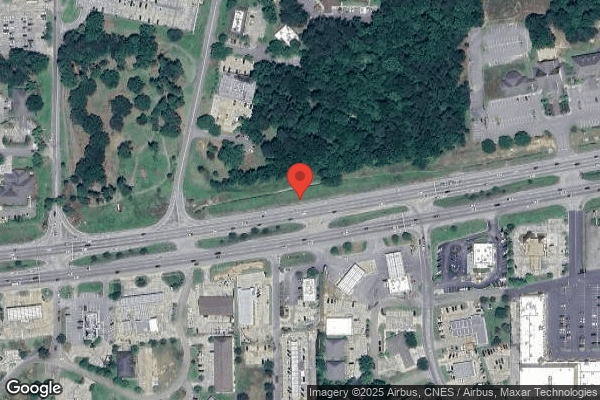
5001 HARDY STREET, HATTIESBURG, MS 39402 (601) 268-5962
For profit - Corporation 25 Beds Independent Data: November 2025
Trust Grade
93/100
#16 of 200 in MS
Last Inspection: September 2024

Within standard 12-15 month inspection cycle. Federal law requires annual inspections.

Overview

Merit Health Wesley has received a Trust Grade of A, indicating it is an excellent choice for families looking for a nursing home. It ranks #16 out of 200 facilities in Mississippi, placing it in the top half, and #3 out of 8 in Forrest County, meaning only two local options are ranked higher. The facility is improving, having reduced its issues from 4 in 2023 to 2 in 2024. Staffing is a strong point, with a perfect 5-star rating and a turnover rate of 27%, significantly lower than the state average of 47%. Notably, there have been no fines recorded, and the facility has more RN coverage than 97% of state facilities, ensuring better oversight for residents' care. However, there are some concerns. Recent inspections revealed issues such as improper food storage practices that could lead to contamination and a failure to screen individuals entering the Transitional Care Unit for COVID-19 symptoms, which poses a risk for infection spread. Additionally, there were no precautionary signs indicating the use of oxygen for residents who needed it, which is essential for safety. While Merit Health Wesley shows many strengths, families should weigh these concerns when considering care options.

Trust Score
A
93/100
In Mississippi
#16/200
Top 8%
Safety Record
Low Risk
No red flags
Inspections
Getting Better
4 → 2 violations
Staff Stability
✓ Good
27% annual turnover. Excellent stability, 21 points below Mississippi's 48% average. Staff who stay learn residents' needs.
Penalties
✓ Good
No fines on record. Clean compliance history, better than most Mississippi facilities.
Skilled Nurses
✓ Good
Each resident gets 95 minutes of Registered Nurse (RN) attention daily — more than 97% of Mississippi nursing homes. RNs are the most trained staff who catch health problems before they become serious.
Violations
○ Average
6 deficiencies on record. Average for a facility this size. Mostly minor or procedural issues.
★★★★★
5.0
Overall Rating
★★★★★
5.0
Staff Levels
★★★★☆
4.0
Care Quality
★★★★☆
4.0
Inspection Score
Stable
2023: 4 issues
2024: 2 issues

The Good

  • 5-Star Staffing Rating · Excellent nurse staffing levels
  • 4-Star Quality Measures · Strong clinical quality outcomes
  • Low Staff Turnover (27%) · Staff stability means consistent care
  • Full Sprinkler Coverage · Fire safety systems throughout facility
  • No fines on record
  • Staff turnover is low (27%)

    21 points below Mississippi average of 48%

Facility shows strength in staffing levels, quality measures, staff retention, fire safety.

The Bad

No Significant Concerns Identified

This facility shows no red flags. Among Mississippi's 100 nursing homes, only 1% achieve this.

The Ugly 6 deficiencies on record

Sept 2024 2 deficiencies
CONCERN (D)

Potential for Harm - no one hurt, but risky conditions existed

Deficiency F0882 (Tag F0882)

Could have caused harm · This affected 1 resident

Based on staff interview and facility policy review, the facility failed to insure the facility's Infection Preventionist (IP) completed specialized training in infection prevention and control for tw...

Read full inspector narrative →
Based on staff interview and facility policy review, the facility failed to insure the facility's Infection Preventionist (IP) completed specialized training in infection prevention and control for two (2) of two (2) days of the recertification survey. Findings include: A review of the facility's policy, Infection Preventionist, dated 3/15/23, revealed, .The Infection Preventionist is responsible for coordinating the implementation and updating of our established Infection prevention and control policies and practices. Policy Interpretation and Implementation .2. The Infection Preventionist will .d. Have completed specialized training in infection prevention and control . On 09/04/24 at 07:30 AM, in an interview with the IP, he revealed he had not completed all the modules that are required for the specialized training in infection prevention and control. On 09/04/24 at 08:52 AM, an interview with the Administrator revealed the facility's IP had not completed the specialized training modules. The Administrator stated there had been recent transitions in leadership, including the IP position. The previous IP had left the facility in July of this year, and she had specialized training in infection prevention and control and the current IP had completed at least one (1) module in the training. The Administrator confirmed he was responsible for ensuring the facility's IP had the required specialized training.
CONCERN (F)

Potential for Harm - no one hurt, but risky conditions existed

Food Safety (Tag F0812)

Could have caused harm · This affected most or all residents

Based on observation, staff interview, and facility policy review, the facility failed to ensure food items in the freezer were sealed properly, scoops for sugar and flour were stored properly, and fa...

Read full inspector narrative →
Based on observation, staff interview, and facility policy review, the facility failed to ensure food items in the freezer were sealed properly, scoops for sugar and flour were stored properly, and facial hair was restrained in the food preparation area for two (2) of two (2) kitchen observations. Findings Include: A review of the facility's policy, Productions Purchasing Storage- Food and Supply Storage, revised 01/24, revealed: .All food, non-food items and supplies used in food preparation shall be stored in such a manner as to prevent contamination to maintain the safety and wholesomeness of the food for human consumption . Dry Storage .Hang scoops. Scoops may be stored in bins on a scoop holder .Frozen Storage .Wrap food tightly to prevent cross-contamination . A review of the facility's policy, Orientation and Education- Uniform Dress Code revised on 01/24, revealed, .Associates Working with Food . Restrain all facial hair with a beard net/restraint . On 09/03/24 at 9:30 AM, during an observation of the freezer with Dietary Staff #1 and Dietary Staff #2, there were unsealed food items in the freezer, including tater tots, beef patties, and pizza dough. Both Dietary #1 and Dietary #2 confirmed the items were not sealed and acknowledged that all food items should be properly sealed to prevent contamination. At 9:40 AM on 09/03/24, during an observation of the dry storage area, there were silver square food containers submerged in the sugar and flour bins. Dietary #1 and Dietary #2 confirmed that the food containers were being used as scoops and should not be stored in the bins. Dietary #2 explained the kitchen used the silver square food containers, known as a 1/6th pan, because of the large quantities used in food preparation. At 9:50 AM on 09/03/24, during an observation and interview, Dietary Staff #3 was preparing chicken for lunch. He had a full beard and was not wearing a hair restraint to cover the facial hair. During an interview, Dietary #3 confirmed that he was not wearing a hair restraint because the facility did not have any for his facial hair and he was aware he should be wearing a hair restraint. Dietary #1 and Dietary #2 confirmed that Dietary #3 should have been wearing a facial hair restraint and confirmed that all facial hair should be covered at all times during food preparation. Dietary #2 stated she was unaware that the facility was out of facial hair restraints. On 09/04/24 at 8:55 AM, during an interview with Dietary #2, she confirmed she was aware of the standards and stated that she expected her staff to properly seal all food items in the freezers and to properly store flour and sugar scoops after each use. She acknowledged that these practices are essential to prevent food contamination and confirmed that the facility had since purchased facial hair restraints for the staff. She stated in situations where facial hair restraints were unavailable, staff could use hairnets as a temporary solution. She reiterated that hair restraints are mandatory for all staff while preparing or standing over food. On 09/04/24 at 10:55 AM, during a follow-up kitchen observation and temperature check with Dietary #1 and Dietary #4, Dietary #4 was observed taking the food temperatures for all items to be served. Although he wore a hat to cover his hair, Dietary #4 had a full beard and was not wearing a facial hair restraint. During an interview at 11:05 AM, Dietary #4 confirmed that he was aware of the requirement to wear a facial hair restraint in the food area and admitted that he had not worn one. Dietary #1 confirmed that facial hair restraints were available for staff use. At 11:15 AM on 09/04/24, during an interview with Dietary #2, she stated Dietary #4 should have worn a hair restraint to cover his facial hair while checking the food line temperatures, reiterating that facial hair restraints were available and should be worn as required. On 09/04/24 at 1:40 PM, during an interview with the Administrator, he explained that he had been informed by the kitchen staff about the concerns raised during the survey. He stated that he expected all kitchen staff to follow the guidelines and regulations regarding food storage and hair restraints.
Mar 2023 4 deficiencies
CONCERN (D)

Potential for Harm - no one hurt, but risky conditions existed

Deficiency F0578 (Tag F0578)

Could have caused harm · This affected 1 resident

Based on record review, resident and staff interviews and facility policy review, the facility failed to ensure advanced directives were available and readily retrievable by facility staff for one (1)...

Read full inspector narrative →
Based on record review, resident and staff interviews and facility policy review, the facility failed to ensure advanced directives were available and readily retrievable by facility staff for one (1) of 22 residents reviewed for advanced directives. Resident #2 Findings Include: A review of the facility's policy, Patient Self-Determination Act/Advance Directives, effective 12/1/1991, revealed, .If the patient has an advanced directive and the hospital does not have a copy available at the time of admission, the patient/family will be questioned regarding the contents of the Advance Directive and the contents will be added to the medical record . A record review of the Patient Registration Form revealed Resident #2 was admitted to the Transitional Care Unit (TCU) on 2/6/23 with diagnoses including Acute on Chronic Respiratory Failure and Urinary Tract Infection (UTI). A record review of the admission Minimum Data Set (MDS) with an Assessment Reference Date (ARD) of 2/12/23, revealed Resident #2 had a Brief Interview for Mental Status (BIMS) score of 15, which indicated she was cognitively intact. A record review of the Transitional Care Unit admission Checklist, dated 2/6/23, which was located in the medical chart and signed by Resident #2, indicated that she had a living will and a durable power of attorney of health care. Upon review of the medical record, there was no copy of the advanced directed located in the medical chart. On 2/27/23 at 4:50 PM, in an interview with the Licensed Social Worker (LSW), she stated that the facility may not receive a copy of the advanced directive from patients who have indicated they have one. She explained that she asks all patients upon admission if they have an advanced directive, however, because most patients are at the TCU for only a week or two, it is difficult to obtain a copy of the advanced directive before the patient is discharged . She confirmed that advanced directives are not on the medical record and are not available for review. On 2/27/23 at 5:20 PM, in an interview with the Administrator, he confirmed that the facility policy states that the advanced directive must be placed on the medical record. He explained that Resident #2 has been admitted to the hospital on several occasions and that there is probably a copy of the advanced directive somewhere in medical records, but he cannot access it. He confirmed that the advanced directive copy for Resident #2 is not readily retrievable by facility staff and that the facility is not following the facility policy related to Advanced Directives. On 2/28/23 at 1:22 PM, in an interview with Resident #2, she stated that she developed a living will years ago. She advised that she has not brought a copy of the advanced directive to the hospital and that she does not remember being asked to bring a copy when she was transferred to the TCU.
CONCERN (D)

Potential for Harm - no one hurt, but risky conditions existed

Assessment Accuracy (Tag F0641)

Could have caused harm · This affected 1 resident

**NOTE- TERMS IN BRACKETS HAVE BEEN EDITED TO PROTECT CONFIDENTIALITY** Based on observations, record review, staff and resident interviews and Resident Assessment Instrument review, the facility fail...

Read full inspector narrative →
**NOTE- TERMS IN BRACKETS HAVE BEEN EDITED TO PROTECT CONFIDENTIALITY** Based on observations, record review, staff and resident interviews and Resident Assessment Instrument review, the facility failed to accurately code the Minimum Data Set (MDS) assessment for a resident with a chair alarm for two (2) of five (5) resident MDS reviewed. Resident #65 and Resident #67. Findings include: Review of the CMS's RAI (Resident Assessment Instrument) Version 3.0 Manual revealed .Coding Instructions: Identify all alarms that were used at any time (day or night) during the 7- day look-back period. After determining whether or not an item listed in PO200 was used during the 7-day look-back period, code the frequency of use . Resident #65 Record review of the Minimum Data Set (MDS) with an Assessment Reference Date (ARD) of 02/23/23 revealed in Section P Restraints and Alarms that P0200 was marked as 0 B. Chair Alarm, indicating that a chair alarm was Not used. Review of Section C revealed a Brief Interview for Mental Status Score (BIMS) of an 11 revealing mild cognitive impairment. On 02/27/23 at 2:33 PM, the State Agency (SA) observed Resident #65 sitting in her room in a geri chair with a chair alarm that is fastened to the corner edge of her hospital gown at the back of the right shoulder and has a string that runs to an alarm device that is clipped to a sheet that is covering the geri chair. Interview with Certified Nursing Assistant (CNA) #1 on 02/28/23 at 1:15 PM, SA asked CNA #1 what the device was on the resident's chair and she stated that it is used to let us know if the resident is trying to get up on her own. She stated that all the residents in the high back chairs (geri chairs) have them when they sit up in their chairs. Interview with Licensed Practical Nurse (LPN) #1 on 02/28/23 at 1:20 PM, stated that each resident has a MORSE score (fall score) completed to evaluate their risk for falls on admission and that each resident has an assessment and is scored lower than 44, no/low risk fall; greater than 45 is protective and prevention, but that this resident scored a 65, so protective interventions are consider use of chair alarms when patient is sitting up. Interview with Director of Nursing (DON) on 02/28/23 at 2:00 PM, stated If they are in a chair they all get a chair alarm. It just alerts us quickly so we can get to her to prevent falls. The DON confirmed that it is a hospital policy that they follow that stated to place a chair alarm on all residents while up in the geri chairs. Record review of the Patient Registration Form revealed that the resident was admitted to the facility on [DATE] with diagnosis of Fracture of left pubis, Diabetes and Macular Degeneration. Resident #67 An observation on 02/28/23 at 2:30 PM, revealed Resident #67 was in the therapy unit in a geri chair with an alarm device connected to his hospital gown on the upper right shoulder and attached to a device that is adjacent to a white sheet that is covering his lounge chair while the resident is receiving therapy services. During an interview and observation with Resident #67 on 03/01/23 at 11:30 AM, he stated that he has noticed that if they place him in the chair to go to therapy that they have a Thing that they put there on my back and I guess it tells them if I need to get up. It doesn't bother me. When I get back to my room they put me back in the bed and I don't have it then. I ain't had any problems here and it don't bother me. During an interview and record review with the MDS Nurse on 02/28/23 at 3:43 PM, stated that The chair alarm is to alert us if the residents attempted to get up because we don't want them falling and getting hurt. If the person can remove them then we don't mark it on the MDS because it's not a restraint. She confirmed that everyday Resident #65 and Resident #67 did have the chair alarm attached when they went to and from therapy and the MDS nurse confirmed that the MDS in section P0200 under Alarms, revealed that 0 to indicate not used is entered into the box labeled B to indicate if the resident had a chair alarm. The MDS nurse confirmed that the MDS dated [DATE] with a 7 day look back indicated that the resident did not use a chair alarm any days for the last 7 days when in fact the resident did have a chair alarm device daily in use and the MDS nurse confirmed that it was coded inaccurately because she was not considering it as a restraint or an alarm. Record review of the most recent MDS with an ARD date of 02/23/23 revealed a BIMS score of 9, indicating moderate cognitive impairment. Record review of the Patient Registration Form revealed the resident was admitted on [DATE] with diagnosis of Seizures with left sided upper extremity weakness.
CONCERN (E)

Potential for Harm - no one hurt, but risky conditions existed

Respiratory Care (Tag F0695)

Could have caused harm · This affected multiple residents

Based on observations, staff interviews, record review and facility policy review, the facility failed to ensure cautionary and safety signs indicating the use of oxygen were posted for two (2) of (2)...

Read full inspector narrative →
Based on observations, staff interviews, record review and facility policy review, the facility failed to ensure cautionary and safety signs indicating the use of oxygen were posted for two (2) of (2) sampled residents. Resident #4 and Resident #215 Findings include: A review of the facility's Piped Medical Gas and Vacuum Systems Policy, revised 1/19/2018, revealed the facility required precautionary signage on each door or gate of a cylinder storage room. The policy did not include the posting of cautionary and safety signs wherever oxygen was being administered. Resident #4 On 2/27/23 at 4:52 PM, during an observation, Resident #4 was at sitting in a chair at bedside and was wearing a nasal cannula. She stated that she needed oxygen at all times. There was no signage on the door of the room or inside the room indicating that oxygen was in use. Observation on 2/28/23 at 2:28 PM, revealed Resident #4 ambulating in the hallway with assistance. Oxygen per nasal cannula was noted with a small oxygen tank on a rolling stand. A record review of the Patient Registration Form revealed the facility admitted Resident #4 on 2/8/23 and she had diagnoses including Acute on Chronic Respiratory Failure and Acute Kidney Injury on Chronic Kidney Disease. A record review of the Order Sheet for Resident #4 revealed a Physician's Order, dated 2/18/23, for oxygen therapy. A record review of the admission Minimum Data Set (MDS) with an Assessment Reference Date (ARD) of 2/14/23 revealed she had a Brief Interview for Mental Status (BIMS) score of 14, which indicated she was cognitively intact. Further review revealed Resident #4 was on oxygen therapy. Resident #215 On 2/27/23 at 11:56 AM, during an observation, Resident #215 was sitting in a chair next to his bed. He was wearing oxygen per nasal cannula. The oxygen tubing was connected to a flow meter in the wall of the patient's room. There was no signage on the door or inside of the room indicating that oxygen was in use. On 3/01/23 at 8:30 AM, in an interview with Respiratory Therapist (RT), she stated the rooms in which oxygen is administered do not display signs on the doors and that there was a flow meter in every room on the floor. On 3/01/23 at 8:42 AM, in an interview with the Director of Nursing (DON), she explained that there are no Oxygen in Use signs posted on individual patient doors. She stated that there is signage related to oxygen on the storage unit doors, but each room has an oxygen flow meter. She stated that it is posted at every entrance of the facility that they are a No Smoking Facility. On 3/01/23 at 8:55 AM, in an interview with the Administrator, he confirmed that the Transitional Care Unit does not post safety signs related to oxygen use for the individual patients who are receiving oxygen therapy. He stated that oxygen is piped in to every room and that staff are aware that every room has an oxygen flow meter.
CONCERN (F)

Potential for Harm - no one hurt, but risky conditions existed

Infection Control (Tag F0880)

Could have caused harm · This affected most or all residents

Based on observations, record review, staff and resident interviews, and facility policy review, the facility failed to maintain an effective surveillance program to prevent the possible spread of inf...

Read full inspector narrative →
Based on observations, record review, staff and resident interviews, and facility policy review, the facility failed to maintain an effective surveillance program to prevent the possible spread of infection as evidenced by the failure to ensure that staff, visitors and other hospital departmental employees who entered the Transitional Care Unit (TCU) were screened related to signs and symptoms (S/S) of COVID-19 and failed to ensure Personal Protective Equipment (PPE) was worn appropriately for staff and visitors while on the TCU for three (3) of three (3) days of survey. Findings include: A review of the facility's policy, Infection Prevention and Control Program, revised 11/5/2021, revealed, .Policy Interpretation and Implementation .c. Outbreak .screen everyone entering the facility symptoms, such as for COVID-19 .implement source control for everyone entering the facility, regardless of symptoms . On 2/27/23 at 2:00 PM, during an observation, Certified Nurses Aide (CNA) #1 was observed exiting a resident's room and walking in the hallway wearing her face mask below her nose. On 2/28/23 at 3:00 PM, an interview with the Infection Preventionist (IP), revealed the TCU required everyone to always wear a face mask. She stated that all staff are trained on the proper use of PPE on hire and annually including face masks. The annual training involves a return demonstration for all skills, including wearing face masks. The IP explained that face masks should be worn covering the nose and mouth, and should not be underneath their nose or chin, and that if the staff touch their face mask, they would be contaminating their hands and everything they touched spreading infection. On 2/28/23 at 3:30 PM, an observation and interview with a visitor, revealed the visitor entered the TCU and did not obtain her temperature using the stationary thermometer, and did not complete the visitor's log to answer questions related to S/S of COVID-19. The visitor was not wearing a face mask as she walked down to a patient's room. An interview with the visitor revealed that the facility had instructed her to read the policy on visitation when her mother was admitted . She said the policy did say to always wear a mask and to be screened before entering the unit. She revealed that she had been coming to the facility for three (3) weeks and she just does not do it anymore. She revealed that she thought the reason for the screening and wearing a face mask would be to keep from spreading or catching an infection. On 2/28/23 at 3:45 PM, in an observation and interview with Housekeeper #1, she was wearing her face mask below her chin. She confirmed that the mask was pulled below her chin and explained it was because she was about to get off and wanted to breath. Housekeeper #1 revealed she was trained on the proper use of face masks, and that they should always cover the nose and mouth, and not be worn underneath the chin. She revealed that the reason the face mask should not be worn under the chin is because you want to keep things from getting in. She revealed that if your mask does not cover your nose and mouth, you could catch or spread germs. On 2/28/23 at 4:00 PM, in an interview with the Administrator, he stated that the facility follows the guidelines related to the Centers for Disease Control and Prevention (CDC) and that everyone on the TCU is instructed to wear face masks. He stated that he provided training daily during the Huddle for staff regarding COVID-19, infection control, and wearing PPE which included wearing face masks appropriately. On 3/01/23 at 12:00 PM, during an observation, the facility provided stationary thermometers at both entrances into the TCU. The Visitor Screening Log was in binders at both entrances in which visitors would record their temperature and answer questions related S/S of COVID-19. At the back entrance, there was a log for hospital departmental staff who enter the TCU, which included Dietary, to indicate their vaccination status. On 3/01/23 at 12:10 PM, in an interview the Minimum Data Set (MDS) nurse, she stated that staff who work on the TCU do not complete any documentation related to their temperature or S/S of COVID-19. The staff are required to check their own temperature using the stationary thermometers located at each entrance prior to going on the Unit daily, and if they have an abnormal temperature, they do not proceed onto the Unit. On 3/01/23 at 12:29 PM, in an interview with the Respiratory Therapist (RT), she stated that she checks her temperature on her first rounds every morning on the TCU. She confirmed that she does not record her temperature or complete any documentation regarding S/S of COVID-19. On 3/01/23 at 2:50 PM, in an interview with the Director of Nursing (DON) and the Administrator, the Administrator stated that the staff mostly use the back entrance to enter the TCU and use the thermometer there to check their temperature. He confirmed that the hospital staff who enter the unit, such as Dietary and Housekeeping, usually use the back entrance, check their temperature, and sign a log regarding vaccination status. This log requests hospital departmental staff to record the date, their name, and vaccination status and it is used more to track who is coming onto the Unit. He confirmed that the staff do not document the results of the temperature or complete questions related to the S/S of COVID-19. The DON confirmed that the current screening process probably does not help mitigate the spread of COVID 19. The Administrator said that previously, when the staff would log on to their computers, they would be asked screening questions by attestation by logging on to the computer. The Administrator stated that all staff have been educated about being physically responsible not to work while they are sick. A record review of the facility's Visitor COVID-19 Screening Log revealed the facility used this form for visitors to record their name and temperature and were asked yes and no questions regarding S/S of COVID-19. A record review of the facility's log, Transitional Care Unit revealed, Please print name and answer yes if full vaccinated or no if you have not received vaccination or if you have not been fully vaccinated . A record review of the facility's, Safety Huddle, dated 2/13/23, revealed the Administrator provided training on wearing masks to employees.
Understanding Severity Codes (click to expand)
Life-Threatening (Immediate Jeopardy)
J - Isolated K - Pattern L - Widespread
Actual Harm
G - Isolated H - Pattern I - Widespread
Potential for Harm
D - Isolated E - Pattern F - Widespread
No Harm (Minor)
A - Isolated B - Pattern C - Widespread

Questions to Ask on Your Visit

  • "Can I speak with families of current residents?"
  • "What's your RN coverage like on weekends and overnight?"

Our Honest Assessment

Strengths
  • • Grade A (93/100). Above average facility, better than most options in Mississippi.
  • • No major safety red flags. No abuse findings, life-threatening violations, or SFF status.
  • • No fines on record. Clean compliance history, better than most Mississippi facilities.
  • • 27% annual turnover. Excellent stability, 21 points below Mississippi's 48% average. Staff who stay learn residents' needs.
Concerns
  • • No significant concerns identified. This facility shows no red flags across CMS ratings, staff turnover, or federal penalties.
Bottom line: Generally positive indicators. Standard due diligence and a personal visit recommended.

About This Facility

What is Merit Health Wesley's CMS Rating?

CMS assigns MERIT HEALTH WESLEY an overall rating of 5 out of 5 stars, which is considered much above average nationally. Within Mississippi, this rating places the facility higher than 99% of the state's 100 nursing homes. This rating reflects solid performance across the metrics CMS uses to evaluate nursing home quality.

How is Merit Health Wesley Staffed?

CMS rates MERIT HEALTH WESLEY's staffing level at 5 out of 5 stars, which is much above average compared to other nursing homes. Staff turnover is 27%, compared to the Mississippi average of 46%. This relatively stable workforce can support continuity of care.

What Have Inspectors Found at Merit Health Wesley?

State health inspectors documented 6 deficiencies at MERIT HEALTH WESLEY during 2023 to 2024. These included: 6 with potential for harm.

Who Owns and Operates Merit Health Wesley?

MERIT HEALTH WESLEY is owned by a for-profit company. For-profit facilities operate as businesses with obligations to shareholders or private owners. The facility operates independently rather than as part of a larger chain. With 25 certified beds and approximately 20 residents (about 80% occupancy), it is a smaller facility located in HATTIESBURG, Mississippi.

How Does Merit Health Wesley Compare to Other Mississippi Nursing Homes?

Compared to the 100 nursing homes in Mississippi, MERIT HEALTH WESLEY's overall rating (5 stars) is above the state average of 2.6, staff turnover (27%) is significantly lower than the state average of 46%, and health inspection rating (4 stars) is above the national benchmark.

What Should Families Ask When Visiting Merit Health Wesley?

Based on this facility's data, families visiting should ask: "Can I visit during a mealtime to observe dining assistance and food quality?" "How do you handle medical emergencies, and what is your hospital transfer rate?" "Can I speak with family members of current residents about their experience?"

Is Merit Health Wesley Safe?

Based on CMS inspection data, MERIT HEALTH WESLEY has a clean safety record: no substantiated abuse findings (meaning no confirmed cases of resident harm), no Immediate Jeopardy citations (the most serious violation level indicating risk of serious injury or death), and is not on the Special Focus Facility watch list (a federal program monitoring the lowest-performing 1% of nursing homes). The facility has a 5-star overall rating and ranks #1 of 100 nursing homes in Mississippi. While no facility is perfect, families should still ask about staff-to-resident ratios and recent inspection results during their visit.

Do Nurses at Merit Health Wesley Stick Around?

Staff at MERIT HEALTH WESLEY tend to stick around. With a turnover rate of 27%, the facility is 19 percentage points below the Mississippi average of 46%. Low turnover is a positive sign. It means caregivers have time to learn each resident's needs, medications, and personal preferences. Consistent staff also notice subtle changes in a resident's condition more quickly. Registered Nurse turnover is also low at 27%, meaning experienced RNs are available to handle complex medical needs.

Was Merit Health Wesley Ever Fined?

MERIT HEALTH WESLEY has no federal fines on record. CMS issues fines when nursing homes fail to meet care standards or don't correct problems found during inspections. The absence of fines suggests the facility has either maintained compliance or corrected any issues before penalties were assessed. This is a positive indicator, though families should still review recent inspection reports for the full picture.

Is Merit Health Wesley on Any Federal Watch List?

MERIT HEALTH WESLEY is not on any federal watch list. The most significant is the Special Focus Facility (SFF) program, which identifies the bottom 1% of nursing homes nationally based on persistent, serious quality problems. Not being on this list means the facility has avoided the pattern of deficiencies that triggers enhanced federal oversight. This is a positive indicator, though families should still review the facility's inspection history directly.