STONE COUNTY REHABILITATION AND NURSING CTR INC

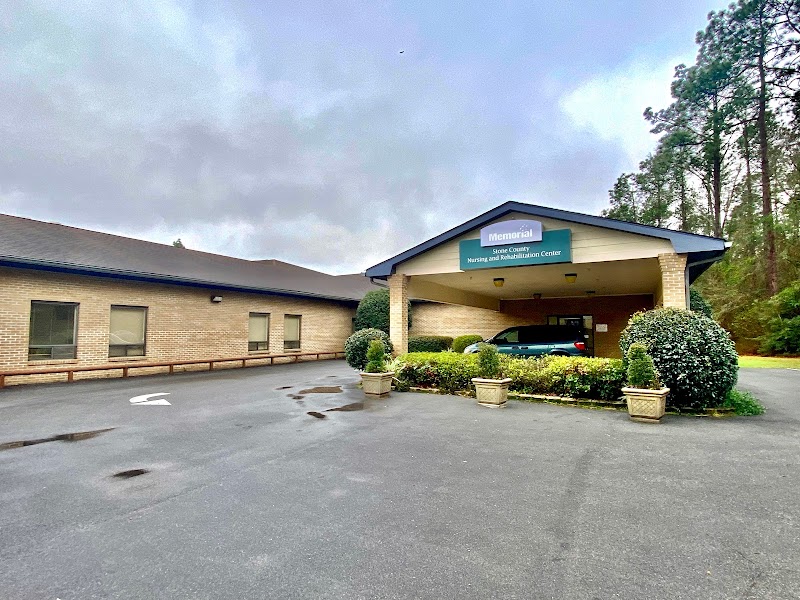
1436 EAST CENTRAL AVENUE, WIGGINS, MS 39577 (601) 928-1889
For profit - Corporation 59 Beds Independent Data: November 2025
Trust Grade
58/100
#51 of 200 in MS
Last Inspection: May 2025

Inspected within the last 6 months. Data reflects current conditions.

Overview

Stone County Rehabilitation and Nursing Center Inc has a Trust Grade of C, which means it is average and ranks in the middle of the pack. In Mississippi, it ranks #51 out of 200 facilities, placing it in the top half, and it is #1 out of 2 in Stone County, indicating it is the best local option. The facility is improving, decreasing from three issues in 2024 to one in 2025, but it still faced serious concerns, such as a resident who fell and sustained a hip dislocation because they were not properly supervised during ambulation. Staffing is a strength here with a 5/5 star rating and a turnover rate of 41%, which is lower than the state average, showing that staff are experienced and familiar with the residents. However, the facility has received $8,190 in fines, which is average, and there were instances where proper care protocols were not followed, such as failing to ensure a resident received pain medication before wound care.

Trust Score
C
58/100
In Mississippi
#51/200
Top 25%
Safety Record
High Risk
Review needed
Inspections
Getting Better
3 → 1 violations
Staff Stability
○ Average
41% turnover. Near Mississippi's 48% average. Typical for the industry.
Penalties
○ Average
$8,190 in fines. Higher than 72% of Mississippi facilities. Some compliance issues.
Skilled Nurses
✓ Good
Each resident gets 42 minutes of Registered Nurse (RN) attention daily — more than average for Mississippi. RNs are trained to catch health problems early.
Violations
○ Average
9 deficiencies on record. Average for a facility this size. Mostly minor or procedural issues.
★★★★☆
4.0
Overall Rating
★★★★★
5.0
Staff Levels
★☆☆☆☆
1.0
Care Quality
★★★★☆
4.0
Inspection Score
Stable
2024: 3 issues
2025: 1 issues

The Good

  • 5-Star Staffing Rating · Excellent nurse staffing levels
  • Full Sprinkler Coverage · Fire safety systems throughout facility
  • No fines on record
  • Staff turnover below average (41%)

    7 points below Mississippi average of 48%

Facility shows strength in staffing levels, fire safety.

The Bad

Staff Turnover: 41%

Near Mississippi avg (46%)

Typical for the industry

Federal Fines: $8,190

Below median ($33,413)

Minor penalties assessed

The Ugly 9 deficiencies on record

4 actual harm
May 2025 1 deficiency
CONCERN (F)

Potential for Harm - no one hurt, but risky conditions existed

Food Safety (Tag F0812)

Could have caused harm · This affected most or all residents

Based on observation, interview, and facility policy review, the facility failed to store and serve food in accordance with professional standards for food safety related to two (2) opened spice bottl...

Read full inspector narrative →
Based on observation, interview, and facility policy review, the facility failed to store and serve food in accordance with professional standards for food safety related to two (2) opened spice bottles on the spice rack, changing gloves without hand washing and the cook dropping food on the service line counter then picking it up and placing it on the residents plate for 2 of 2 kitchen observations. Findings include: A review of the facility's policy, Preventing Foodborne Illness-Food Handling revised August 2018, revealed, .1. This facility recognizes that the critical factors implicated in foodborne illness are: a. Poor personal hygiene of food services employees . A review of the facility's policy, Food Receiving and Storage revised July 2014, revealed, Foods shall be .stored in a manner that complies with safe food handling practices .opened containers must be .sealed or covered during storage. On 05/27/25 at 10:14 AM, during an observation and interview of the kitchen with the Registered Dietician and Nutritionist (RDN), on the spice rack 2 bottles of spices were left opened, leaving the spices exposed. On 05/28/25 at 11:11 AM, during an observation and interview with the Cook, a piece of cubed chicken fell and landed on the service line counter. The [NAME] picked the chicken up from the service line counter and placed it on the resident's plate. Throughout the lunch service the [NAME] was observed changing gloves on three occasions without washing hands before donning new gloves. The [NAME] acknowledged that she dropped the cubed chicken pieces and placing them on the plate and that she failed to wash her hands before putting on new gloves. The [NAME] confirmed it is her responsibility to maintain a sanitary environment. The [NAME] stated she has been trained and knows the correct way to operate in the kitchen. The [NAME] affirmed that the staff receive in-service training once a month on the topic of food safety. On 05/28/25 at 12:34 PM, in an interview with the Interim Administrator revealed she acknowledged the opened spice bottles, the [NAME] failing to wash her hands between glove changes and the [NAME] picking up food from the counter of the food line and placing the food back on the resident's plate. The Administrator stated as the interim supervisor for the kitchen she is responsible for maintaining safety in the service and storage of food. The Interim Administrator stated the staff will be in-serviced and going forward she expects excellent service from the kitchen staff.
Jan 2024 3 deficiencies
CONCERN (D)

Potential for Harm - no one hurt, but risky conditions existed

Deficiency F0564 (Tag F0564)

Could have caused harm · This affected 1 resident

**NOTE- TERMS IN BRACKETS HAVE BEEN EDITED TO PROTECT CONFIDENTIALITY** Based on interviews, record review, and facility policy review, the facility failed to honor a resident's rights by limiting the...

Read full inspector narrative →
**NOTE- TERMS IN BRACKETS HAVE BEEN EDITED TO PROTECT CONFIDENTIALITY** Based on interviews, record review, and facility policy review, the facility failed to honor a resident's rights by limiting the resident's visiting hours without clinical or safety reasons for doing so for one (1) of (12) sampled residents residing in the facility. Resident #22 Findings Include: Review of the facility's policy, Policy: Resident Right to Access and Visitation, revised 3/8/23, revealed .It is the policy of this facility to support and facilitate the resident's right to receive visitors of their choosing, at the time of their choosing, subject to the resident's right to deny visitation when applicable, and in a manner that does not impose on the rights of other residents. Visitation will be person centered, consider the residents' physical, mental, and psychosocial well-being, and support their quality of life .Policy Explanation and Compliance Guidelines .2 .Resident's family members are not subject to visiting hours limitations or restrictions not imposed by the resident, with the exception of reasonable clinical and safety restrictions, placed by the facility according to CDC (Centers for Disease Control) guidelines, and/or our local health department recommendations .11. The facility will ensure all visitors enjoy full and equal visitation privileges consistent with resident preferences . During an interview on 1/23/24 at 2:49 PM, Resident #22 complained that the facility refused to allow her husband to stay with her at night. The resident said she does not feel comfortable being in the facility by herself. During an interview on 1/23/24 at 2:52 PM, with Resident #22's husband, he stated that he received phone calls from his wife during the night because she had difficulty sleeping. He said that she was not accustomed to being by herself and he had requested a private room so he could stay with her more often without disturbing another resident. However, after his wife was moved to a private room, the facility still did not permit him to stay with his wife during the nighttime hours. He commented that he had talked to the Director of Nursing (DON), floor staff, the social worker, and everybody that would listen to him because he wanted to be able to stay during the night. He said his wife would call him at night very confused and upset and he would have to drive back to the facility at night to try to calm her down. During an interview on 1/24/24 at 8:00 AM, with License Practical Nurse (LPN) #1, she said Resident #22's husband had expressed that he wanted to stay with the resident at night because she was not used to sleeping alone. LPN #1 said the facility did not allow residents' families to stay in the facility at night and revealed the husband kept Resident #22 calm when she was confused or did not participate with care. LPN #1 stated that the husband did not bother anyone and he stayed in his wife's room and assisted with her needs. During an interview on 1/24/24 at 9:00 AM, with Resident #22's daughter, she said that her mother was confused, tried to get out of bed without assistance, and did not sleep unless there was family around. Her father had asked the facility to allow him to stay with her during the night to help Resident #22 sleep. The daughter said that previously Resident #22 was in a semiprivate room, but there was no other resident in the room. The facility complained because the husband slept in the empty bed, so he requested a private room so he could stay with the resident because of her confusion. The facility placed Resident #22 in a private room, so the daughter brought in a recliner for her father to have a comfortable chair, but the facility still did not allow him to stay. The daughter said her father would leave the facility during the night and sleep in his truck in the parking lot for two or three hours and come back into the facility just so the facility would not say he was staying overnight. The daughter explained that not only would Resident #22 call her father during the night, but the facility would also call her father at night when Resident #22 became confused and would not sleep. The daughter said that her father was [AGE] years old, and she did not like him to be driving up and down the road at all times of the night. The daughter commented that her mother was calm and rested better when her father was there. During an interview on 1/24/24 at 12:30 PM, with Certified Nursing Aide (CNA) #1, she said Resident #22's husband had complained that the facility would not allow him to stay with his wife during the night. CNA #1 said the facility does not allow families to stay all night. CNA #1 stated that Resident #22's husband assisted the resident with her needs and helped her to stay calm when she had periods of confusion. During an interview on 1/24/24 at 2:00 PM, with the Social Services Director (SSD), she confirmed Resident #22's husband had complained about not being able to stay with his wife during the night. The SSD stated that the resident was originally in a semiprivate room, which would have interfered with the privacy of a roommate. She confirmed that the resident was given a private room on 1/5/2024 at the husband's request and she was not aware that the facility staff were still not allowing the husband to stay with the resident. The SSD confirmed she had not talked with the Administrator or the other facility staff to ensure the resident's husband had been allowed to stay with the resident during the night since obtaining the private room and she would get with the Administrator, DON, and other staff members to have this corrected as soon as possible. During an interview on 1/24/24 at 2:15 PM, with the Care Plan Nurse/LPN #2, he confirmed Resident #22's husband complained in a care plan meeting about the facility not allowing him to stay in the room with his wife at night. LPN #2 said the Resident's husband had commented that the resident would not sleep without his being there and she was confused and acted out at night. LPN #2 said he advised the husband that he would need to work something out with the Administrator and the DON. During an interview on 1/24/24 at 2:30 PM, with the Administrator and the DON, they confirmed the facility limited the time Resident #22's husband could stay with her. The Administrator said she was under the impression the resident's husband wanted to move in. The Administrator also confirmed the resident was a short-term resident at the facility and was there for skilled therapy. The Administrator stated that families were discouraged from staying overnight with the residents. The DON stated that after Resident #22 was moved into a private room, her husband did not ask about staying overnight. The DON and Administrator confirmed they did not follow up with the resident's husband regarding staying with the resident overnight. A record review of the Face Sheet revealed the facility admitted Resident #22 on 12/15/23 with a diagnosis of Nontraumatic Hematoma of Soft Tissue. A record review of the admission Minimum Data Set (MDS) with an Assessment Reference Date (ARD) of 12/22/23 revealed Resident #22 had a Brief Interview for Mental Status (BIMS) score of 4, which indicated her cognition was severely impaired.
CONCERN (D)

Potential for Harm - no one hurt, but risky conditions existed

Deficiency F0567 (Tag F0567)

Could have caused harm · This affected 1 resident

Based on interviews, record review, and facility policy review, the facility failed to ensure residents had access to their personal funds on weekends for two (2) of 17 residents reviewed with a perso...

Read full inspector narrative →
Based on interviews, record review, and facility policy review, the facility failed to ensure residents had access to their personal funds on weekends for two (2) of 17 residents reviewed with a personal fund account (Resident #11 and Resident #34). This deficient practice had the potential to affect all 17 residents with a personal trust fund account. Findings include: Review of the facility's policy, Resident Trust Fund, revised 3/23/23, revealed, Policy: The resident has a right to manage his or her financial affairs .After Business Hours . 1. Residents will have reasonable access to their personal funds after business office hours. On 1/24/24 at 1:00 PM, during the Resident Council Meeting, Resident #11, and Resident #34 reported they were not able to withdraw their personal funds on Saturday and Sunday. They explained they were told to ask a certain nurse if they wanted money on the weekend but were unable to recall the nurse's name. Both residents reported they did not have clear information from the facility on how to get their money on the weekend. Record review of the Open Balance Report, with Balances as of 1/24/2024, revealed Resident #11 and Resident #34 had a personal trust fund account at the facility. On 1/24/24 at 2:02 PM, an interview with the Business Office Manager (BOM) revealed she worked Monday through Friday and was the only person designated to dispense funds to the residents from their personal accounts. The BOM revealed if a resident wanted money from their account for the weekend, they should get the money on Friday. The BOM stated if a resident requested money from their account on a weekend, she could be contacted by a nurse, and she would come to the facility to dispense the funds. The BOM acknowledged there was no staff member designated to dispense funds to the residents on Saturday and Sunday. On 1/24/24 at 2:07 PM, in an interview with the Administrator, she acknowledged there was no staff member designated to dispense funds to residents on Saturday and Sunday. The Administrator reported the facility once had a system in place to allow the residents to withdraw funds on Saturday and Sunday, whereby a designated nurse would have a locked box on the medication cart with $100 for residents who wanted to get their money. The Administrator stated the facility stopped this practice because it was seldom used. The Administrator stated her expectation was for residents to have access to their money on the weekends. The Administrator stated she would resume the facility's past practice of designating a nurse to keep a locked box with $100 on a medication cart in the event resident funds needed to be dispersed on the weekend. Resident #11 A record review of the Face Sheet revealed the facility admitted Resident #11 on 07/07/21 with diagnoses that included Parkinson's Disease. A record review of the Quarterly Minimum Data Set (MDS) with an Assessment Reference Date (ARD) of 12/15/23 revealed Resident #11 had a Brief Interview for Mental Status (BIMS) score of 15, which indicated he was cognitively intact. Resident #34 A record review of the facility's Face Sheet revealed the facility admitted Resident #34 on 08/18/21 with diagnoses that included Alzheimer's Disease. A record review of the Quarterly MDS with an ARD of 01/19/24 revealed Resident #34 had a BIMS score of 9, which indicated his cognition was moderately impaired.
CONCERN (D)

Potential for Harm - no one hurt, but risky conditions existed

Deficiency F0625 (Tag F0625)

Could have caused harm · This affected 1 resident

Based on interview, record review, and facility policy review, the facility failed to provide written notification of the facility's bed hold policies to a resident or the Resident Representative (RR)...

Read full inspector narrative →
Based on interview, record review, and facility policy review, the facility failed to provide written notification of the facility's bed hold policies to a resident or the Resident Representative (RR) upon the resident's transfer to the hospital for (1) of two (2) residents reviewed for hospitalization. Resident #10 Findings include: A review of the facility's Bed Hold Policy, revised 2/20/2023, revealed, Policy: It is the policy of this facility to provide written information to the resident and/or the resident representative regarding bed hold policies prior to transferring a resident to the hospital or the resident goes on therapeutic leave .6. The facility will provide this written information to all facility residents . On 1/23/24 at 2:42 PM, a phone interview with RR revealed the facility did not provide her with written notification regarding the facility's bed hold policies when he was transferred to the hospital. A record review of the facility's Notice of Facility Initiated Transfer of Discharge, dated 7/22/23, for Resident #10, revealed he was sent to an acute care hospital for shortness of breath on 7/22/23. A review of the medical record revealed there was no documentation indicating the resident or the RR was provided with the facility's bed hold policies when Resident #10 was transferred to the hospital on 7/22/23. On 1/24/24 at 7:25 AM, an interview with the Director of Nursing (DON) revealed the facility sent a Transfer/Discharge Summary to the RR. The DON reported there was no bed hold notification provided to the RR in writing. The DON acknowledged the facility did not have an established written notification of the facility's bed hold policies to send to the resident or the RR in the event the resident is transferred to the hospital. On 1/25/24 at 8:35 AM, an interview with the Assistant Administrator (AA) revealed she was responsible for sending out Transfer/Discharge notifications to the resident or the RR. She stated that the bed hold policies are covered as part of the admission process when a resident is admitted to the facility. The AA reported that most of the time the RR would get a phone call regarding bed hold. The AA acknowledged that there was no written notification of the bed hold policies provided to the resident or the RR when resident is transferred to the hospital. On 1/25/24 at 10:00 AM, in an interview with the Administrator, she stated that her expectation moving forward was to provide clear communication regarding the facility's bed hold policies, in writing, to the resident or the RR when a resident is transferred to the hospital. The Administrator stated the facility will generate a form to be used immediately. A record review of the Face Sheet revealed the facility admitted Resident #10 on 06/23/22 with diagnoses that included Vascular Dementia.
Sept 2023 3 deficiencies 2 Harm
SERIOUS (G) 📢 Someone Reported This

A family member, employee, or ombudsman was alarmed enough to file a formal complaint

Actual Harm - a resident was hurt due to facility failures

Deficiency F0655 (Tag F0655)

A resident was harmed · This affected 1 resident

Based on interviews, record review, and facility policy review, the facility failed to implement the baseline care plan interventions related to the equipment required for ambulating a resident and th...

Read full inspector narrative →
Based on interviews, record review, and facility policy review, the facility failed to implement the baseline care plan interventions related to the equipment required for ambulating a resident and the assistance required for toileting for one (1) of four (4) residents care plans reviewed. Resident #1. Findings Include: A record review of the facility's Baseline Care Plan policy, dated 2/16/23, revealed, .The facility will develop and implement a baseline care plan for each resident that includes the instructions needed to provide effective and person-centered care of the resident that meet professional standards of quality care .Policy Explanation and Compliance Guidelines .2. The admitting nurse, or supervising nurse on duty, shall gather information from the admission physical assessment, hospital transfer information, physician orders .b. interventions shall be initiated that address the resident's current needs including i. Any health and safety concerns to prevent .injury, such as .fall . A record review of the Baseline Care Plan, dated 8/11/23, revealed Resident #1 required the assistance of one staff member for walking and toileting and indicated the equipment to be used as a wheelchair or Front Wheeled [NAME] (FWW). A record review of the PT (Physical Therapy) & Plan of Treatment, dated 8/11/23, revealed, .Prior Equipment Prior to Onset: Cane, rollator, tub chair and grab bars .Functional Mobility Assessment .Resident uses a wheelchair? = Yes . During an interview, on 8/31/23 at 11:40 AM, CNA #1 confirmed that on 8/13/23 she assisted Resident #1 to the restroom and did not use a walker or wheelchair. She explained that he ambulated himself but held on to her arm for stability and he had a slow, unsteady gait while walking to the toilet. She stated that she gave him the call bell and advised him to call when he needed assistance back to bed. She then closed the bathroom door for privacy and left the resident's room. CNA #1 explained that after approximately five (5) minutes, his call light came on and she returned to the resident's room. She opened the bathroom door and Resident #1 was sitting on the toilet. He stated that he had fallen off the toilet and had gotten himself back onto the toilet without assistance. He complained of left leg pain at that time. CNA #1 said that the staff reviewed the baseline care plan on the kiosk to determine how much assistance is required to safely ambulate and toilet residents. She confirmed that she did not review the kiosk because a night shift CNA had reported to her that the resident could ambulate without a walker or wheelchair. Record review of Departmental Notes, Category Nurses Notes dated 8/13/23 at 9:41 AM, revealed .Resident was sent out to (Proper Name of Local Emergency Room) (ER) via (Proper Name of Ambulance Service) .ER nurse called back at 09:40 stating resident's hip was out of place . During an interview on 8/31/23 at 12:57 PM, with the Physical Therapist (PT), he stated Resident #1 needed the assistance of one staff member for toileting, transferring and ambulating and recommended the use of a wheelchair or walker for safety. He confirmed that he expected the facility staff to follow his recommendations. During an interview on 8/31/23 at 1:06 PM, with the Physical Therapy Assistant (PTA), she confirmed that she reviewed the Occupational Therapy and Physical Therapy recommendations and completed the base care plan to indicate the level of assistance required with ambulation, transfers, and mobility. The PTA recommended that Resident #1 have assistance from one person with either a walker or wheelchair for ambulation. She confirmed she expected that if a wheelchair or walker was recommended, then the staff should follow the care plan for the resident's safety. On 8/31/23 at 1:23 PM, an interview with the Director of Nurses (DON) revealed that it was her expectation that the nursing staff follow the care plans of all residents because the care plans provided a detailed and effective personalized outline of the care for the residents. On 8/31/23 at 2:21 PM, an interview with the Care Plan Nurse confirmed that staff should follow the care plans for residents' dignity, integrity, and safety. He reported that care plans were developed for individualized care and to ensure consistency in the nursing care of the resident, which helped improve services. He added that he expected all nursing staff in the facility to follow care plans for the residents. A record review of the Face Sheet revealed the facility admitted Resident #1 on 8/11/23 with diagnoses including Left Femur Fracture, Presence of Left Artificial Hip Joint, Hemiplegia following Cerebral Infarction affecting Left Side, and History of Falling.
SERIOUS (G) 📢 Someone Reported This

A family member, employee, or ombudsman was alarmed enough to file a formal complaint

Actual Harm - a resident was hurt due to facility failures

Accident Prevention (Tag F0689)

A resident was harmed · This affected 1 resident

Based on interviews, record reviews, and facility policy review, the facility failed to use the appropriate equipment during ambulation and provide adequate supervision to prevent an injury for one (1...

Read full inspector narrative →
Based on interviews, record reviews, and facility policy review, the facility failed to use the appropriate equipment during ambulation and provide adequate supervision to prevent an injury for one (1) of three (3) sampled residents, as evidenced by a resident who had a fall, sustained a left hip dislocation, and required hospitalization after he was ambulated without a walker or wheelchair and left unsupervised on the toilet. (Resident #1) Findings include: A review of the facility policy, Incidents and Accidents, dated 5/13/23, revealed .It is the policy of this facility for staff to report, investigate and review any accidents or incidents that occur or allegedly occur, on facility property and may involve or allegedly involve a resident . A record review of the facility-reported investigation, dated 8/16/23, revealed, .Summary: On 8/13/23 (Proper name of Resident #1) was assisted to the toilet by a CNA (Certified Nurse Aide). CNA left room and returned when his call light came on again. CNA went to his restroom where (Proper name of Resident #1) was seated on the toilet. (Proper name of Resident #1) stated that he fell off the toilet . A record review of the Resident Incident Report revealed the Incident Type as Fall/Unobserved and the Date/Time was listed as 8/13/23 08:00 AM. Further review revealed that the Narrative of incident and description of injuries indicated Resident stated after CNA put him on the toilet, he fell and had put himself back on the toilet before CNA returned to room. Resident Condition at Time of Incident revealed Mobility as WC (Wheelchair) - non-motorized. Medical risk factors indicated Fall History and Fracture/Amputee and Activity at time indicated To/frm (from) bathrm (bathroom)-alone . A record review of the Diagnostic Imaging report, dated 8/13/23, from a local acute care hospital revealed, History: Hip pain status post fall, with a history of recent surgery and Impression: Superior dislocation of a left hip arthroplasty, without discrete or displaced fracture . A record review of Departmental Notes, for Resident #1, dated 8/11/23 at 12:32 PM, revealed a Nurse Notes that indicated, .Weakness noted to BLE (Bilateral Lower Extremities) mobility via wheelchair . A record review of Departmental Notes, for Resident #1, dated 8/12/23 at 11:24 AM, revealed a Nurse Notes that indicated, .Transfer x 1. Needs assist with ADL's (Activities of Daily Living) . Record review of Departmental Notes, Category Nurses Notes dated 8/13/23 at 9:41 AM, revealed .Resident was sent out to (Proper Name of Local Emergency Room) (ER) via (Proper Name of Ambulance Service) .ER nurse called back at 09:40 stating resident's hip was out of place . A record review of the PT (Physical Therapy) & Plan of Treatment, dated 8/11/23, revealed, .Patient Referral and History Current Referral Reason for referral/current illness: Patient is a 90 yo (year old) male who suffered a fall in his garden on 7/23/23 resulting in a L (Left) displaced femoral fx(fracture) .Medical Factors Precautions: Falls risk .Fall Risk Assessment History of Falls Has Patient fallen in past year? = Yes How many times? = 6 .Steadiness Does Patient feel unsteady when standing? = Yes Does Patient feel unsteady when walking? = Yes .Does Patient worry about falling? = Yes .Functional Mobility Assessment .Resident uses a wheelchair? = Yes .Reason for Therapy Clinical Impressions/Reason for Skilled Services: Skilled services required to address deficits in strength, endurance and balance affecting safety with functional mobility . Record review of the Nurse Data Collection and Screening document for Resident #1, dated 8/11/23, revealed, Risk: Fall Risk Form .History of Falls 3 or more falls in past 3 months . On 8/31/23 at 11:40 AM, in an interview with CNA #1, she confirmed that on 8/13/23, before breakfast trays were delivered, she assisted Resident #1 without his walker to the restroom. She said that he ambulated himself but held on to her arm for stability and he had a slow, unsteady gait while walking to the toilet. She stated that she gave him the call bell and advised him to call when he needed assistance back to bed. She then closed the bathroom door for privacy and left the resident's room. CNA #1 explained that after approximately five (5) minutes, his call light came on and she returned to the resident's room. She opened the bathroom door and Resident #1 was sitting on the toilet. He stated that he had fallen off the toilet and had gotten himself back onto the toilet without assistance. He complained of left leg pain at that time. CNA #1 said that the staff is supposed to review the baseline care plan on the kiosk to determine how much assistance is required to safely ambulate and toilet residents. She confirmed that she did not review the kiosk because a night shift CNA had reported to her that the resident could ambulate without a walker or wheelchair. On 8/31/23 at 12:57 PM, an interview with the Physical Therapist (PT) revealed that Resident #1 needed the assistance of one staff member for toileting, transferring and ambulating. The PT also recommended the use of a wheelchair or walker for safety and confirmed that he expected the facility staff to follow his recommendations. On 8/31/23 at 1:06 PM, an interview with the Physical Therapy Assistant (PTA) confirmed that she reviewed the Occupational Therapy and Physical Therapy recommendations and completed the base care plan to indicate the level of assistance required with ambulation, transfers, and mobility. The PTA recommended that Resident #1 have assistance from one person with either a walker or wheelchair for ambulation. On 9/1/23 at 11:28 AM, during an interview with the Director of Nurses (DON), she stated that Resident #1 was assisted without his walker to the bathroom by CNA #1 and he had been left alone in the bathroom. The resident reported that he had fallen and gotten himself back up to the toilet without any assistance. She revealed that according to CNA #1, the resident requested privacy and she felt she could leave him alone in the bathroom. The DON confirmed that CNA #1 should have used a walker or wheelchair as per the care plan to assist Resident #1 with walking to the restroom. On 9/1/23 at 11:48 AM, an interview with the Administrator revealed that on 8/13/23, Resident #1 was assisted to the toilet by CNA #1 and the resident stated that he had fallen and gotten back onto the toilet within approximately three (3) minutes. On 9/8/23 at 2:00 PM, in an interview with CNA #1, she confirmed that even though Resident #1 was a new admission, had a slow and unsteady gait, a history of falls, and a diagnosis of Hemiplegia, she thought that because he had asked for privacy and he was alert and oriented, she could leave him unsupervised while on the toilet, and walk away from the resident's room. CNA #1 also confirmed because Resident #1 reported that he had fallen and had left leg pain, she used a wheelchair and transferred the resident from the toilet to the wheelchair and assisted him to his bed. On 9/8/23 at 2:30 PM, an interview with the DON revealed that she expected new residents who required assistance with toileting to be supervised and not left alone. She confirmed that CNA #1 should not have left the resident in his bathroom alone and unsupervised. On 9/8/23 at 4:00 PM, during an interview with Registered Nurse (RN) #2 revealed, that on 8/13/23, LPN #1 informed her that Resident #1 had reported that he had fallen off the toilet, but that he put himself back on the toilet without any assistance. RN #2 said that Resident #1 was back in his bed at that time and complained of left hip pain. She described Resident #1 as weak and confused. RN #2 notified the Nurse Practitioner (NP) of the allegation of a fall and the resident's pain and the NP gave an order to send Resident #1 to the local Emergency Department (ED) for evaluation and treatment. A record review of the Face Sheet revealed the facility admitted Resident #1 on 8/11/23 with diagnoses including Left Femur Fracture, Presence of Left Artificial Hip Joint, Hemiplegia following Cerebral Infarction affecting Left Side, and History of Falling. A record review of the Discharge Minimum Data Set (MDS) with an Assessment Reference Date (ARD) of 8/13/23 revealed Resident #1 was admitted by the facility on 8/11/23 from an inpatient rehabilitation facility. He was discharged to an acute hospital on 8/13/23, which was two (2) days after his admission to the facility.
CONCERN (D) 📢 Someone Reported This

A family member, employee, or ombudsman was alarmed enough to file a formal complaint

Potential for Harm - no one hurt, but risky conditions existed

Notification of Changes (Tag F0580)

Could have caused harm · This affected 1 resident

Based on interviews, record review, and facility policy review, the facility failed to notify the physician of blood glucose readings of 60 or below for one (1) of two (2) residents reviewed for gluco...

Read full inspector narrative →
Based on interviews, record review, and facility policy review, the facility failed to notify the physician of blood glucose readings of 60 or below for one (1) of two (2) residents reviewed for glucose readings. Resident #4. Findings Include: Record review of the facility's policy, Hypoglycemia Management policy, dated 3/27/23, revealed, .It is the policy of this facility to ensure effective management of a resident who experiences a hypoglycemic episode .Compliance Guidelines .5. If the blood glucose reading is 60 mg/dL(milligrams/deciliter) or below, the nurse will utilize the hypoglycemia protocol as per the practitioner's orders, with follow up blood glucose as indicated, and notify the practitioner of the results as ordered . Record review of the Face Sheet revealed the facility admitted Resident #4 on 8/5/23 with a diagnoses that included Type 2 Diabetes Mellitus. Record review of the Physician Orders for the month of August 2023 revealed there were no physician orders for routine accu-checks after 8/16/23. Record review of the Therapeutic Protocols revealed there were standing Physician Orders for Hypoglycemia as follows: Obtain accu-check, if Blood Glucose (BG) less than 60 and resident is able to swallow, give four (4) ounces of milk/juice or one (1) pack of Insta Glucose. If resident is unable to swallow, give Glucagon one (1) Milligram (MG) Intramuscular (IM). Recheck accu-check in 15 minutes (mins). Notify Medical Doctor (MD)/Nurse Practitioner (NP) if BG is still less than 60. Record review of the Departmental Notes revealed there was a Nurse Notes, completed by Licensed Practical Nurse (LPN) #3, dated 8/26/23 at 3:15 AM, for .glucose reading was 49 . After about 30 minutes I rechecked his glucose and his reading at that time had increased to 72. Record review of the Departmental Notes revealed, on 8/31/23 at 6:11 AM, .Glucose this am was 55 . Rechecked @ 0600 and only increased to 56. 0600 this am A tube of Instaglucose was given and will inform oncoming nurse to recheck in about 30 minutes . Signed by: LPN #3 On 9/7/23 at 1:00 PM, an interview with the NP confirmed that when a resident has a BG of less than 60, she expected the staff to follow the therapeutic protocol, but to notify her when they use the protocol. She conveyed she was not notified of Resident #4's BG results of less than 60 at any time. On 9/8/23 at 12:28 PM, an interview with the Director of Nurses (DON), she revealed that on 8/26/23 and 8/31/23, Resident #4 had a BG result of less than 60 and although the staff followed the therapeutic protocols, or standing orders, a Physician's Order should have been written and the physician should have been notified. The DON stated that she expected staff to write a Physician's Order with the date and time and follow through with the order onto the medical record, including the Medication Administration Record (MAR) when they are utilizing therapeutic protocols. She confirmed the staff did not write orders for the therapeutic protocol or notify the physician. On 9/8/23 at 12:30 PM, an interview with License Practical Nurse (LPN) #3 revealed she used the Therapeutic Orders for Resident #4 when his blood sugar was less than 60 on 8/26/23 and 8/31/23. She explained that she did not get a repeat BG within 15 minutes as per the orders and did not notify the physician on 8/31/23 when his repeat BG reading was less than 60. She confirmed that she did not write a Physician's Order for the Therapeutic Protocol for Hypoglycemia. On 9/8/23 at 1:44 PM, an interview with the facility's Pharmacist revealed that if a resident had a BG result of less than 60, the nurse should notify the physician.
Aug 2021 2 deficiencies 2 Harm
SERIOUS (G)

Actual Harm - a resident was hurt due to facility failures

Comprehensive Care Plan (Tag F0656)

A resident was harmed · This affected 1 resident

Based on observation, staff interviews, record review and facility policy review, the facility failed to follow the Comprehensive Care Plan by not providing pain medication prior to wound care for one...

Read full inspector narrative →
Based on observation, staff interviews, record review and facility policy review, the facility failed to follow the Comprehensive Care Plan by not providing pain medication prior to wound care for one (1) of three (3) wound care plans reviewed, Resident #31. Findings Include: Review of the facility's policy, Care Plans - Comprehensive, revision date June 2021, revealed, An individualized comprehensive person-centered care plan that includes measurable objectives and timetables to meet the resident's medical, nursing, mental and psychological needs is developed for each resident .Policy Interpretation and Implementation: Our facility's Care Planning/Interdisciplinary Team, in coordination with the resident, his/her familial representative (sponsor), develops and maintains a comprehensive care plan. The comprehensive care plan is based on an assessment that includes, but is not limited to, the Minimum Data Set (MDS). The comprehensive care plan must describe the following: a. The services that are to be furnished to attain or maintain the resident's highest practicable physical, and psychological well-being . A record review of Resident #31's Comprehensive Care Plan, dated 2/5/21, revealed he has an alteration in comfort related to mild pain, arthritis, a history of muscle spasms, and a history of wounds. The care plan goal is Resident #31 will express relief of pain after receiving pain relieving measures. The care plan interventions include: Pain assessment as needed, allow adequate time for pain medications to take effect prior to resuming care and/or treatment. Medications documented on the care plan include Tylenol and Baclofen and to document effectiveness of these pain medications as needed. On 8/4/21 at 11:05 AM, the SA observed wound care on Resident #31 by Registered Nurse #3 (RN). RN #3 was assisted by Certified Nursing Assistant #1(CNA). RN #3 did not assess Resident #31 for pain prior to beginning wound care. Resident #31 started to complain about pain during the wound care to his left hip. RN #3 continued with the wound care even though Resident #31 had complained of pain. Upon completing the wound care to the left hip, RN #3 began wound treatment to Resident #31's sacrum. Resident #31 had facial grimacing and stated repeatedly that his butt was hurting. RN #3 continued with the wound care to the sacrum and did not stop to offer pain medication to the resident. The SA asked RN #3 if Resident #31 had any pain medication and she replied that she knew he did not have any thing (pain medication) scheduled to take today. RN #3 continued with the dressing change to the sacrum after being asked by SA. RN #3 measured the wound with a ruler and used a cotton tipped applicator to check the depth of the wound. The wound measured 3.50 cm length x 2.50 cm width with depth of 0.2 cm. Resident #31 continued to repeat my butt hurts really bad. After RN #3 had completed the wound care, Licensed Practical Nurse (LPN) #1 entered the room with Ultram 50 milligram (mg) crushed in chocolate pudding for Resident #31. LPN #1 asked Resident #31 what his pain level was on a scale of one (1) to ten (10) and he replied it was a ten (10). Resident #31 took Ultram in the pudding. RN #3 and CNA #1 asked Resident #31 if they could change his brief after he received his pain medication, but he repeatedly declined and stated his butt was hurting. On 8/5/21 at 1:56 PM, in an interview with RN #3, she stated the Comprehensive Care Plan is used to see what kind of care we are going to provide to the resident. She stated she did not follow the care plan and confirmed that it is very important to follow the care plan. On 8/5/21 at 2:10 PM, in an interview with RN #4, she stated the care plan is used for communicating with the rest of the staff about resident care. She further explained the care plan tells the staff what they should be following and resident orders are on the care plan. RN #4 stated the care plan tells the staff everything that is going on with the resident. She confirmed RN #3 did not follow the care plan regarding wound care. She stated it is very important you follow the care plan. She also confirmed that an assessment for pain should be completed prior to wound care and it is important to follow up with the resident to ensure pain is relieved. On 8/5/21 at 2:24 PM, in an interview with the Assistant Director of Nursing (ADON), she stated the care plan is used for resident care and it tells you how to care for the resident and the goals for residents. She stated it is the process for taking care of the resident for their best interest. She confirmed RN #3 did not follow the care plan. On 8/5/21 at 2:35 PM, in an interview with the Director of Nursing (DON), she stated the care plan is used as a guide for the staff in the care of the resident. She confirmed RN #3 did not follow the care plan and stressed the importance of following the care plan.
SERIOUS (G)

Actual Harm - a resident was hurt due to facility failures

Deficiency F0697 (Tag F0697)

A resident was harmed · This affected 1 resident

Based on observation, interviews, record reviews and facility policy review the facility failed to medicate the resident prior to providing wound care for one (1) of three (3) wound care observations ...

Read full inspector narrative →
Based on observation, interviews, record reviews and facility policy review the facility failed to medicate the resident prior to providing wound care for one (1) of three (3) wound care observations Resident #31. Findings Include: Review of the facility's policy, Pain Management , dated 2020, revealed, Policy: The facility must ensure that pain management is provided to residents who require such services, consistent with professional standards of practice, the comprehensive person-centered care plan, and the resident's goals and preferences . The facility will utilize a systematic approach for recognition, assessment, treatment and monitoring of pain .1. In order to help a resident attain or maintain his/her highest practicable level of physical, mental, and psychosocial well-being and to prevent or manage pain, the facility will: a. Recognize when the resident is experiencing pain and identify circumstances when the pain can be anticipated. b. Evaluate the resident for pain upon admission, during ongoing scheduled assessments, and when a significant change in condition or status occurs (e.g., after a fall, change in behavior or mental status, new pain, or an exacerbation of pain) c. Manage or prevent pain, consistent with the comprehensive assessment and plan of care, current professional standards of practice, and the resident's goals and preferences .3. Facility staff will be aware of verbal descriptors a resident may use to report or describe their pain. Descriptors include but are not limited to: d. Hurting or aching .Pain Assessment: .2. Based on professional standards of practice, an assessment or evaluation of pain by the appropriate members of the interdisciplinary teams (e.g., nurses, practitioner, pharmacists, and anyone else with direct contact with the resident) may necessitate gathering the following information, as applicable to the resident: .b. Asking the patient to rate the intensity of his/her pain using a numerical scale, a verbal or visual descriptor that is appropriate and preferred by the resident. Review of Resident #31's Physician Orders, dated August 2021, revealed orders for the following, Acetaminophen 325 milligram (mg) tablet 650 MG by mouth every four (4) hours as needed for pain/ fever, dated 7/14/21; Pressure ulcer of sacral region, stage 2 to sacrum wound, cleanse with normal saline, pat dry, apply promogram to wound bed, cover with dry foam dressing, change every 72 hours; Pressure ulcer of left ankle, unstageable to left malleolus wound cleanse with normal saline pat dry, apply promogran to wound bed. Cover with dry foam dressing. Change every 72 hours, dated 7/30/21; Pressure ulcer of the left hip stage 2 Santyl ointment cleanse left hip wound with normal saline pat dry using 4X4 gauze, apply Santyl to wound bed daily and cover with dry dressing, dated 8/4/21. On 8/4/21 at 11:05 AM, the SA observed wound care on Resident #31 by Registered Nurse #3 (RN). RN #3 was assisted by Certified Nursing Assistant #1(CNA). RN #3 did not assess Resident #31 for pain prior to beginning wound care. Resident #31 started to complain about pain during the wound care to his left hip. RN #3 continued with the wound care even though Resident #31 had complained of pain. Upon completing the wound care to the left hip, RN #3 began wound treatment to Resident #31's sacrum. Resident #31 had facial grimacing and stated repeatedly that his butt was hurting. RN #3 continued with the wound care to the sacrum and did not stop to offer pain medication to the resident. The SA asked RN #3 if Resident #31 had any pain medication and she replied that she knew he did not have any thing (pain medication) scheduled to take today. RN #3 continued with the dressing change to the sacrum after being asked by SA. RN #3 measured the wound with a ruler and used a cotton tipped applicator to check the depth of the wound. The wound measured 3.50 cm length x 2.50 cm width with depth of 0.2 cm. Resident #31 continued to repeat my butt hurts really bad. After RN #3 had completed the wound care, Licensed Practical Nurse (LPN) #1 entered the room with Ultram 50 milligram (mg) crushed in chocolate pudding for Resident #31. LPN #1 asked Resident #31 what his pain level was on a scale of one (1) to ten (10) and he replied it was a ten (10). Resident #31 took the Ultram in the pudding. RN #3 and CNA #1 asked Resident #31 if they could change his brief after he received his pain medication, but he repeatedly declined and stated his butt was hurting. A review of the August 2021 Medication Administration Record (MAR) revealed Resident #31 did not receive any pain medication prior to wound care by RN #3 on 8/4/21. On 8/4/21 at 5:03 PM, in an interview with RN #3, the Wound Care Nurse, she admitted she should have asked Resident # 31 about his pain his level before she started wound care. She stated she does not know why she did not ask the resident. She stated, I don't if it was because I was nervous, and that she continued with wound care because she did not want to leave the wound open. She stated it is more important that the resident not be in pain during wound care than being concerned about the wound being uncovered. She stated she should have stopped the wound care and got the resident some pain medication immediately. She confirmed that pain can have a negative effect on the resident and she knew he did not have any scheduled or routine pain medications ordered by the physician. On 8/4/21 at 5:14 PM, in an interview with License Practical Nurse #1 (LPN), Admissions Coordinator, stated she contacted the Nurse Practitioner (NP) because she felt as if the resident needed something for pain and that is why she gave him the Ultram 50 mg. The Ultram 50 was a one time order. She stated she went back to check on the resident after giving him medication and he was fine. She stated RN#3 should have given him pain medication as soon as Resident #31 complained of pain. She stated she felt like the Tylenol that was ordered would not help with the pain and she believed something was hurting him since he said his pain level was a 10. She stated it is unusual for Resident #31 to yell out during wound care. She confirmed RN #3 should have stopped the care and gave the resident pain medication when he first complained of pain. She stated that during wound care when a resident is in pain, it can cause the resident to have mental changes. She stated the resident's wound cannot heal properly if he is in pain during care and may cause a resident to refuse wound care the next time. She stated when a resident refuses wound care that it can lead to an infection. On 8/4/21 at 5:43 PM, in an interview with RN#1, Director of Nursing (DON), stated she spoke with RN #3 regarding giving pain medication prior to wound treatments. She stated RN #3 told her she felt bad because she did not stop the wound care when Resident #31 was in pain. She stated RN #3 should have assessed the resident for pain before starting wound care. She stated when a nurse is doing wound care and the resident is in pain, the nurse should stop the wound care, and give pain medication, and then proceed after the resident has received medication. She stated the wound care nurse should have asked the resident's LPN to administer his pain medication and then let her know so that she may provide wound care. She stated by not administering pain medication before wound care., Resident #31 will probably refuse wound care. On 8/4/21 at 5:54 PM, in an interview with RN #2, the Assistant Director of Nursing (ADON), she stated if she was doing wound care on a resident and they complained of pain, she would stop and get an order for pain medication, and after she gave the pain medication, she would wait until the medication became effective before continuing wound care. She stated RN #3, should have stopped the wound care and called the NP. RN #2 stated she completed a wound care check off (competency) with RN #3 and confirmed that was trained to assess residents for pain prior to beginning wound care. RN #2 confirmed RN #3 should have assessed the resident for pain before beginning wound care. She stated doing wound care on a resident in pain can cause the resident to have emotional pain. Review of Resident #31's Face Sheet revealed an initial admission date of 2/2/21 and a readmission date of 7/14/21. Medical diagnoses include Pressure Ulcer of the left ankle, unstageable, Pressure Ulcer of the sacral region, stage 2, Muscle Spasms, Pressure induced deep tissue damage of the left hip and Anxiety Disorder. Review of Resident #31's Comprehensive Care Plan, dated 2/5/21, with a goal target date of 11/4/21, revealed he has an alteration in comfort related to mild pain, arthritis, a history of muscle spasms, and a history of wounds. The care plan goal is that the resident will express relief of pain after receiving pain reliving measures. The care plan interventions include pain assessment as needed, allow adequate time for pain medications to take effect prior to resuming care and/or treatment. Pain medications include: Tylenol and Baclofen and to document the effectiveness of pain medication as needed. Record review of Physician orders, dated 8/4/21, revealed Ultram 50mg PO (by mouth) q (every) 12 hours PRN (as needed) was ordered at 11:30 AM. A review of the facility's Emergency Drug Kit sign out slip reveals Ultram 50 mg was signed out on 8/4/21. Record review of the MAR revealed Ultram 50 mg was given at 11:30 AM. A Review of the significant change Minimum Data Set (MDS) with an Assessment Record Date (ARD)date of 7/20/21, revealed a Brief Interview of Mental Status (BIMS) score of seven (7). A BIMS of 7 indicates Moderately Cognitive Impaired.
Understanding Severity Codes (click to expand)
Life-Threatening (Immediate Jeopardy)
J - Isolated K - Pattern L - Widespread
Actual Harm
G - Isolated H - Pattern I - Widespread
Potential for Harm
D - Isolated E - Pattern F - Widespread
No Harm (Minor)
A - Isolated B - Pattern C - Widespread

Questions to Ask on Your Visit

  • "Can I speak with families of current residents?"
  • "What's your RN coverage like on weekends and overnight?"

Our Honest Assessment

Strengths
  • • 41% turnover. Below Mississippi's 48% average. Good staff retention means consistent care.
Concerns
  • • Multiple safety concerns identified: 4 harm violation(s), Payment denial on record. Review inspection reports carefully.
  • • 9 deficiencies on record, including 4 serious (caused harm) violations. Ask about corrective actions taken.
  • • Grade C (58/100). Below average facility with significant concerns.
Bottom line: Mixed indicators with Trust Score of 58/100. Visit in person and ask pointed questions.

About This Facility

What is Stone County Rehabilitation And Nursing Ctr Inc's CMS Rating?

CMS assigns STONE COUNTY REHABILITATION AND NURSING CTR INC an overall rating of 4 out of 5 stars, which is considered above average nationally. Within Mississippi, this rating places the facility higher than 99% of the state's 100 nursing homes. This rating reflects solid performance across the metrics CMS uses to evaluate nursing home quality.
How is Stone County Rehabilitation And Nursing Ctr Inc Staffed?

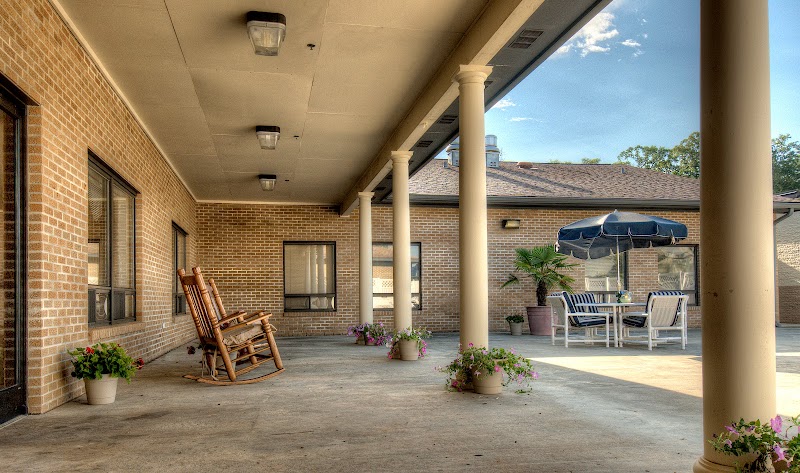
CMS rates STONE COUNTY REHABILITATION AND NURSING CTR INC's staffing level at 5 out of 5 stars, which is much above average compared to other nursing homes. Staff turnover is 41%, compared to the Mississippi average of 46%. This relatively stable workforce can support continuity of care.

What Have Inspectors Found at Stone County Rehabilitation And Nursing Ctr Inc?

State health inspectors documented 9 deficiencies at STONE COUNTY REHABILITATION AND NURSING CTR INC during 2021 to 2025. These included: 4 that caused actual resident harm and 5 with potential for harm. Deficiencies causing actual harm indicate documented cases where residents experienced negative health consequences.
Who Owns and Operates Stone County Rehabilitation And Nursing Ctr Inc?

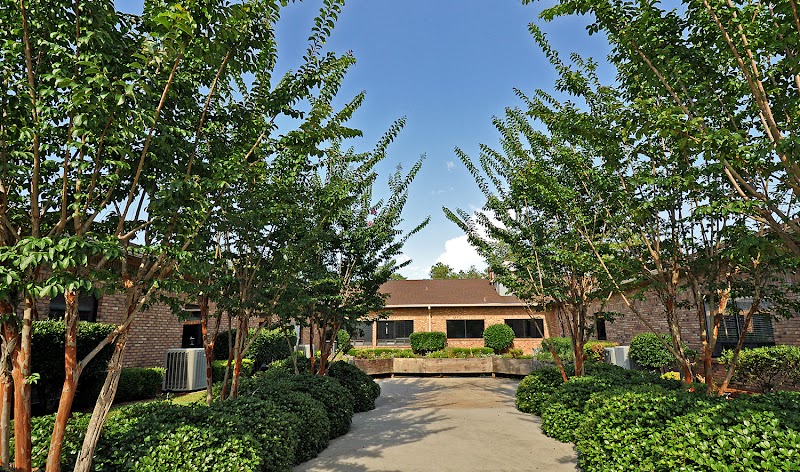
STONE COUNTY REHABILITATION AND NURSING CTR INC is owned by a for-profit company. For-profit facilities operate as businesses with obligations to shareholders or private owners. The facility operates independently rather than as part of a larger chain. With 59 certified beds and approximately 49 residents (about 83% occupancy), it is a smaller facility located in WIGGINS, Mississippi.
How Does Stone County Rehabilitation And Nursing Ctr Inc Compare to Other Mississippi Nursing Homes?

Compared to the 100 nursing homes in Mississippi, STONE COUNTY REHABILITATION AND NURSING CTR INC's overall rating (4 stars) is above the state average of 2.6, staff turnover (41%) is near the state average of 46%, and health inspection rating (4 stars) is above the national benchmark.

What Should Families Ask When Visiting Stone County Rehabilitation And Nursing Ctr Inc?

Based on this facility's data, families visiting should ask: "Can I visit during a mealtime to observe dining assistance and food quality?" "How do you handle medical emergencies, and what is your hospital transfer rate?" "Can I speak with family members of current residents about their experience?"

Is Stone County Rehabilitation And Nursing Ctr Inc Safe?

Based on CMS inspection data, STONE COUNTY REHABILITATION AND NURSING CTR INC has a clean safety record: no substantiated abuse findings (meaning no confirmed cases of resident harm), no Immediate Jeopardy citations (the most serious violation level indicating risk of serious injury or death), and is not on the Special Focus Facility watch list (a federal program monitoring the lowest-performing 1% of nursing homes). The facility has a 4-star overall rating and ranks #1 of 100 nursing homes in Mississippi. While no facility is perfect, families should still ask about staff-to-resident ratios and recent inspection results during their visit.

Do Nurses at Stone County Rehabilitation And Nursing Ctr Inc Stick Around?

STONE COUNTY REHABILITATION AND NURSING CTR INC has a staff turnover rate of 41%, which is about average for Mississippi nursing homes (state average: 46%). Moderate turnover is common in nursing homes, but families should still ask about staff tenure and how the facility maintains care continuity when employees leave.

Was Stone County Rehabilitation And Nursing Ctr Inc Ever Fined?

STONE COUNTY REHABILITATION AND NURSING CTR INC has been fined $8,190 across 1 penalty action. This is below the Mississippi average of $33,161. While any fine indicates a compliance issue, fines under $50,000 are relatively common and typically reflect isolated problems that were subsequently corrected. Families should ask what specific issues led to these fines and confirm they've been resolved.

Is Stone County Rehabilitation And Nursing Ctr Inc on Any Federal Watch List?

STONE COUNTY REHABILITATION AND NURSING CTR INC is not on any federal watch list. The most significant is the Special Focus Facility (SFF) program, which identifies the bottom 1% of nursing homes nationally based on persistent, serious quality problems. Not being on this list means the facility has avoided the pattern of deficiencies that triggers enhanced federal oversight. This is a positive indicator, though families should still review the facility's inspection history directly.