SOUTHGATE LIVING CENTER
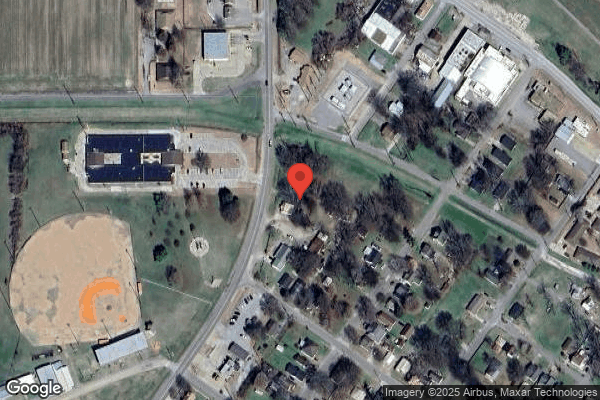
500 TRUMAN BOULEVARD, CARUTHERSVILLE, MO 63830 (573) 333-5150
For profit - Individual 94 Beds Independent Data: November 2025 1 Immediate Jeopardy citation
Trust Grade
41/100
#201 of 479 in MO
Last Inspection: March 2025

Within standard 12-15 month inspection cycle. Federal law requires annual inspections.

Overview

Southgate Living Center has a Trust Grade of D, indicating below-average performance with some significant concerns. It ranks #201 out of 479 facilities in Missouri, placing it in the top half, and #1 of 2 in Pemiscot County, meaning it is the best option in the area. The facility is improving, having reduced its issues from 10 to 7 over the past year. Staffing is a weakness, with a low rating of 1 out of 5 stars and a turnover rate of 59%, which is near the state average, suggesting staff may not stay long enough to build strong relationships with residents. Additionally, there have been serious incidents, including a critical failure to treat a resident's chest pain appropriately, resulting in hospitalization, and concerns about medication storage and food safety practices, which could potentially affect all residents. Overall, while there are some strengths, families should weigh these significant weaknesses carefully.

Trust Score
D
41/100
In Missouri
#201/479
Top 41%
Safety Record
High Risk
Review needed
Inspections
Getting Better
10 → 7 violations
Staff Stability
⚠ Watch
59% turnover. Above average. Higher turnover means staff may not know residents' routines.
Penalties
⚠ Watch
$13,397 in fines. Higher than 77% of Missouri facilities, suggesting repeated compliance issues.
Skilled Nurses
⚠ Watch
Each resident gets only 22 minutes of Registered Nurse (RN) attention daily — below average for Missouri. Fewer RN minutes means fewer trained eyes watching for problems.
Violations
⚠ Watch
28 deficiencies on record. Higher than average. Multiple issues found across inspections.
★★★☆☆
3.0
Overall Rating
★☆☆☆☆
1.0
Staff Levels
★★☆☆☆
2.0
Care Quality
★★★★☆
4.0
Inspection Score
Stable
2024: 10 issues
2025: 7 issues

The Good

  • Full Sprinkler Coverage · Fire safety systems throughout facility
  • No fines on record

Facility shows strength in fire safety.

The Bad

3-Star Overall Rating

Above Missouri average (2.5)

Meets federal standards, typical of most facilities

Staff Turnover: 59%

13pts above Missouri avg (46%)

Frequent staff changes - ask about care continuity

Federal Fines: $13,397

Below median ($33,413)

Minor penalties assessed

Staff turnover is elevated (59%)

11 points above Missouri average of 48%

The Ugly 28 deficiencies on record

1 life-threatening
Mar 2025 7 deficiencies
CONCERN (D)

Potential for Harm - no one hurt, but risky conditions existed

Deficiency F0570 (Tag F0570)

Could have caused harm · This affected 1 resident

Based on interview and record review, the facility failed to maintain the surety bond (a purchased bond for security of residents' personal funds) for at least one and one-half times the average month...

Read full inspector narrative →
Based on interview and record review, the facility failed to maintain the surety bond (a purchased bond for security of residents' personal funds) for at least one and one-half times the average monthly balance of the residents' personal funds for the last 12 consecutive months from February 2024 through January 2025. The facility's census was 58. Review of the facility's policy titled, Surety Bond, revised March 2021, showed: - A surety bond is an agreement between the facility, the insurance company, and the resident or the state acting on behalf of the resident, wherein the facility and the insurance company agree to compensate the resident for any loss of residents' funds that the facility holds, accounts for, safeguards, and manages; - This facility holds a surety bond to guarantee the protection of residents' funds managed by the facility on behalf of its residents; - All funds (including refundable deposits) entrusted to the facility for a resident are covered by the surety bond; - The purpose of the surety bond is to guarantee the facility will pay the residents for losses occurring from any failure by the facility to hold, account for, safeguards, and manage the residents' funds (i.e., losses occurring as a result of acts or errors of negligence, incompetence or dishonesty); - Inquiries concerning the financial security of personal funds managed by the facility should be referred to the Administrator. Review of the Residents' Personal Funds Account for the last 12 consecutive months from February 2024 through January 2025, showed: - The facility's approved bond amount equaled $99,000.00; - The average monthly balance of the residents' personal funds equaled $66,606.98; - An average monthly balance of $66,606.98 rounded to the nearest thousand equaled $67,000.00, at one and one-half times would equal the required bond amount of at least $100,500.00. During an interview on 03/05/25 at 11:22 A.M., the Business Office Manager said he/she had not been checking to ensure the bond was correct because he/she had never been told to do that. They had a corporate person that he/she assumed was supposed to do that. During an interview on 03/06/25 at 3:45 P.M., the Administrator and the Director of Nursing (DON) said they would expect the bond to be sufficient to cover the residents' funds.
CONCERN (D)

Potential for Harm - no one hurt, but risky conditions existed

Comprehensive Care Plan (Tag F0656)

Could have caused harm · This affected 1 resident

Based on observation, interview, and record review, the facility failed to develop and implement an individualized comprehensive care plan with specific interventions to meet the highest practicable p...

Read full inspector narrative →
Based on observation, interview, and record review, the facility failed to develop and implement an individualized comprehensive care plan with specific interventions to meet the highest practicable physical, mental, and psychosocial well-being for two residents (Residents #15 and #30) out of 15 sampled residents. The facility's census was 58. Review of the facility's policy titled, Comprehensive Person - Centered Care Plans, revised March 2022, showed: - The care plan is person-centered and includes measurable objectives and timetables to meet the resident's physical, psychosocial and functional needs; - Describes services that are to be furnished to attain or maintain the resident's highest practicable physical, mental, and psychosocial well being. 1. Review of Resident #15's medical record showed: - An admission date of 04/07/24; - Diagnosis of chronic obstructive pulmonary disease (COPD - a chronic inflammatory lung disease that causes obstructed airflow from the lungs); - An order for oxygen at three liters per minute (lpm) by nasal cannula (a device to deliver oxygen through to the nose) as needed to titrate oxygen saturation greater than 89%, dated 07/01/24; - An order for bipap (a device to assist with breathing) at bedtime for hypoxia (low oxygen), sleep apnea (compromised airway making it difficult to breathe) may place on when the oxygen saturation is low when sleeping during the day, dated 01/13/25; - An order to check the oxygen saturation every shift two times a day related to acute respiratory failure with hypoxia. If oxygen saturation is less than 93%, apply oxygen by nasal cannula, dated 04/08/24; - An order to elevate the head of bed 30-45 degrees at bedtime when sleeping for shortness of breath when lying flat related to COPD, dated 09/29/24; - An order for ipratropium-albuterol (medication used to treat COPD) nebulizer (a medical device that converts liquid medication into a fine mist) solution 3 milligram (mg)/3 milliliters (ml) to inhale orally every six hours as needed for shortness of breath and hypoxia, dated 10/22/24. The resident's care plan, undated, did not address COPD, the resident's respiratory status, or the resident's oxygen needs. Observation on 03/03/25 at 11:30 A.M., showed the resident in his/her room with 5 lpm of oxygen per nasal cannula and a bipap at the bedside. Observations on 03/04/25 at 12:45 P.M., 03/05/25 at 9:10 A.M., and on 03/06/25 at 11:38 A.M., showed the resident in his/her room with 4 lpm of oxygen per nasal cannula and a bipap at the bedside. 2. Review of Resident #30's medical record showed: - An admission date of 01/30/25; - Diagnoses of hemiplegia (muscle weakness) and hemiparesis (partial paralysis) following an intracranial hemorrhage (trauma to the brain that may cause brain damage), pneumonia (an infection involving the lungs), acute respiratory failure (not breathing normal or impaired gas exchange causing issues) with hypoxia, and acute pulmonary edema (fluid in or around the lung space making it more difficult to breathe; - An order for oxygen at 2 lpm per nasal cannula as needed for shortness of breath, wheezing, congestion to keep oxygen saturation greater than 90%, dated 02/07/25. The resident's care plan, undated, did not address the resident's respiratory status and oxygen use. Observations on 03/03/25 at 10:01 A.M., 03/04/25 at 12:15 P.M., 03/05/25 at 2:55 P.M., and on 03/06/25 at 11:37 A.M., showed the resident in his/her room with oxygen on at 2 lpm per nasal cannula. During an interview on 03/06/25 at 3:45 P.M., the Minimum Data Set (MDS - a federally mandated assessment instrument completed by the facility) Coordinator and Administrator said they would expect the care plans to reflect the residents' current conditions.
CONCERN (D)

Potential for Harm - no one hurt, but risky conditions existed

Deficiency F0661 (Tag F0661)

Could have caused harm · This affected 1 resident

Based on interview and closed record review, the facility failed to complete a comprehensive discharge summary for one resident (Resident #59) out of two sampled closed discharge records. The facility...

Read full inspector narrative →
Based on interview and closed record review, the facility failed to complete a comprehensive discharge summary for one resident (Resident #59) out of two sampled closed discharge records. The facility's census was 58. Review of the facility's policy titled, Discharge Summary and Plan, revised October 2002, showed: - The discharge summary includes a recapitulation of the resident's stay at the facility and a final summary of the resident's status at the time of the discharge in accordance with established regulations governing the release of resident information and as permitted by the resident. The discharge summary shall include a description of the resident's: current diagnosis; medical history (including any history of mental disorders and intellectual disabilities); course of illness, treatment and/or therapy since entering the facility; current laboratory, radiology, consultation, and diagnostic test results; physical and mental functional status; ability to perform activities of daily living including such as bathing, dressing, grooming, transferring, ambulating, toilet use, eating, using speech, language, and other communication systems; the need for staff assistance and assistive devices or equipment to maintain or improve functional abilities; the ability to form relationships, make decisions including health care decisions, and participate (to the extent physically able) in the day-to-day activities of the facility; sensory and physical impairments (neurological, or muscular deficits; for example, a decrease in vision and hearing, paralysis, and bladder incontinence); nutritional status and requirements including weight and height; nutritional intake; eating habits, preferences and dietary restrictions; special treatments or procedures (treatments and procedures that are not part of basic services provided); mental and psychosocial status (ability to deal with life, interpersonal relationships and goals, make health care decisions, and indicators of resident behavior and mood); discharge potential (the expectation of discharging the resident from the facility within the next three months); dental condition (the condition of the teeth, gums, and other structures of the oral cavity that may affect a resident's nutritional status, communications abilities, quality of life, and the need for and use of dentures or other dental appliances); activities potential (the ability and desire to take part in activity pursuits which maintain or improve physical, mental, and psychosocial well-being); rehabilitation potential (the ability to improve independence in functional status through restorative care programs); cognitive status (the ability to problem solve, decide, remember, and be aware of and respond to safety hazards); and medication therapy (all prescription and over-the-counter medications taken by the resident including dosage, frequency of administration, and recognition of significant side effects that would be most likely to occur in the resident); - As part of the discharge summary, the nurse reconciles all pre-discharge medication with the resident's post-discharge medications. The medication reconciliation is documented; - Every resident is evaluated for his or her discharge needs and has an individualized post-discharge plan; - The post-discharge plan is developed by the care planning/interdisciplinary team with the assistance of the resident and his/her family and includes: where the individual plans to reside; arrangements that have been made for follow-up care and services; a description of the resident's stated discharge goals; the degree of caregiver/support person availability, capacity and capability to perform required care; how the interdisciplinary team will support the resident or representative in the transition to post-discharge care; what factors may make the resident vulnerable to preventable readmission; and how those factors will be addressed; - The discharge plan is re-evaluated based on changes in the resident's condition or needs prior to discharge; - The resident/representative is involved in the post-discharge planning process and informed of the final post-discharge plan; - Residents are asked about their interest in returning to the community. If the resident indicates an interest in returning to the community, he/she will be referred to local agencies and support services that can assist in accommodating the resident's post-discharge preferences; - If it is determined that returning to the community is not feasible, it will be documented why this is the case and who made the determination; - Residents transferring to another skilled nursing facility or who are discharged to a home health agency, long-term care hospital or inpatient rehabilitation facility are assisted in selecting a post-acute care provider that is relevant and applicable to the resident's goals of care and treatment preferences. 1. Review of Resident #59's medical record showed: - Resident discharged to the community on 01/23/25; - No documentation of the recapitulation/discharge summary of the resident's stay. During an interview on 03/05/25 at 3:40 P.M., the Social Services Director (SSD) said a recapitulation of the resident's stay was not completed. During an interview on 03/06/25 at 3:45 P.M., the Administrator and Director of Nursing (DON) said they would expect a recapitulation of a resident's stay to be completed when a resident was discharged from the facility.
CONCERN (D)

Potential for Harm - no one hurt, but risky conditions existed

ADL Care (Tag F0677)

Could have caused harm · This affected 1 resident

Based on observation, interview, and record review, facility staff failed to provide activities of daily living (ADL's) when staff failed to provide assistance with eating for one resident (Resident #...

Read full inspector narrative →
Based on observation, interview, and record review, facility staff failed to provide activities of daily living (ADL's) when staff failed to provide assistance with eating for one resident (Resident #15) of three sampled residents, who was assisted with meals by another resident (Resident #21). The facility census was 58. Review of the facility policy titled, Activities of Daily Living, Supporting, dated March 2018, showed: - Residents will be provided with care, treatment and services to ensure their ADL's do not diminish unless the circumstances of their clinical condition(s) demonstrate that diminishing ADL's are unavoidable; - Residents who are unable to carry out ADL's independently will receive the services necessary to maintain good nutrition, grooming and personal and oral hygiene; - Appropriate care and services will be provided for residents who are unable to carry out ADL's independently, with the consent of the resident and in accordance with the plan of care; - A resident's ability to perform ADL's will be measured using clinical tools, including the Minimum Data Set (Minimum Data Set (MDS - a federally mandated assessment instrument completed by the facility). Functional decline or improvement will be evaluated in reference to the assessment reference date (ARD). 1. Review of Resident #15's medical record showed: - An admission date of 04/07/24; - Diagnoses of Chronic Obstructive Pulmonary Disease (COPD - a chronic inflammatory lung disease that causes obstructed airflow from the lungs), diabetes mellitus (DM - abnormal blood sugar) , genetic torsion dystonia (causes shaking or tremors), unspecified dementia (a disorder marked by memory loss, personality changes, and impaired reasoning that interferes with daily functioning), major depressive disorder (long-term loss of pleasure or interest in life), and morbid obesity (excess body fat); - An order for controlled carb diet with regular texture and regular/thin consistency, order start date 06/03/24. Review of the resident's Care Plan, undated, showed: - The resident experienced tremors of hands and made it difficult at times to complete ADL's or participate in activities; - Interventions of assisting as needed and administering Parkinson's (disorder of the nervous system affecting movements and causing tremors) medications as ordered. Review of the resident's annual MDS, a federally mandated assessment instrument completed by the facility staff, dated 01/17/25, showed: -Section GG showed no impairment of upper or lower extremities, supervision or touching assistance with eating; -Section V showed care area triggered for ADL functional/rehabilitation potential and nutrition status. Observation of on 03/04/25 at 12:35 P.M., showed the resident sat up in bed with a tray table over his/her lap attempting to eat meatloaf with a regular spoon in his/her right hand. The resident's plate had a small amount of meatloaf left. The spinach and mashed potatoes were not touched. The resident's shirt had a large amount of the meatloaf on the front of it. The resident said his/her roommate was not available today to help feed him/her. The resident had a Sip-A-Mug (a specialty cup with a lid) on the tray table next to his/her tray. Resident #15 asked for assistance with his/her meal multiple times during the observation. Observation on 03/05/25 at 12:45 P.M., showed Resident #21 stood beside Resident #15 as he/she sat up in bed. Resident #21 cut up and fed Resident #15 a chili dog. During an interview on 03/03/25 at 11:50 A.M., Resident #21 said he/she helped feed Resident #15 all the time. Resident #15 needed help eating meals because of his/her shaking. Resident #21 said he/she was aware he/she was not supposed to feed Resident #15, but none of the staff would help him/her, and Resident #15 needed to eat. Resident #21 said he/she has had to assist Resident #15 since they had become roommates, which had been months now. During an interview on 03/03/25 at 11:52 A.M., Resident #15 said he/she needed help eating because he/she can't do it himself/herself. He/She can't cut up his/her food and was difficult to eat most things due to his/her shaking. Staff hardly assisted him/her with feeding and he/she did not have any special utensils for eating. Most meals were brought to his/her room to eat. During an interview on 03/05/25 at 12:51 P.M., the Dietary Manager said he/she was not aware Resident #15 needed assistance or had difficulty eating. The resident did shake sometimes but did not have any difficulty eating as far as he/she knew. During an interview on 03/06/25 at 8:19 A.M., Certified Nurse Assistant (CNA) L said Resident #15 received assistance with eating each meal due to his/her shaking. The resident had a normal spoon but a special cup to drink from that the resident had requested. The resident would probably do better if he/she had a built-up spoon to use. CNA L said Resident #21 tries to feed Resident #15 sometimes and take care of Resident #15 and had informed Resident #21 that it is not ok to feed Resident #15. During an interview on 03/06/25 at 9:02 A.M., Occupational Therapist (OT) M said the resident was screened in the past and did not need any assistive devices or have difficulty eating even though the resident shook some. When the resident became upset, then his/her shaking worsened. He/She monitored the weight loss list and watched eating in the dining room at least once a month to see what residents might need to be evaluated. Resident #15 had not really lost weight and mostly ate in his/her room. During an interview on 03/06/25 at 1:48 P.M., Licensed Practical Nurse (LPN) K said therapy had assessed the resident before and he/she did not need assistive devices. The specialty cup the resident had was something the resident wanted on his/her own because another resident had one. If the resident did need help eating, then staff could provide the assistance. Other residents were not supposed to feed other residents and was aware Resident #21 had tried to feed and fed Resident #15. When that happens, staff try to redirect the residents and explain why that was not acceptable. During an interview on 03/06/25 at 3:45 P.M., the Director of Nursing (DON) and the Administrator said they would expect residents who need assistance to eat or perform ADL's to be given that assistance by staff. They assess the residents need for assistance at least quarterly, with significant change, or as needed in order to meet or maintain the residents' needs. Residents were not allowed to feed other residents, were aware Resident #21 feeds Resident #15, and had told the residents not to feed each other and if they need help to just ask and staff will assist. .
CONCERN (D)

Potential for Harm - no one hurt, but risky conditions existed

Quality of Care (Tag F0684)

Could have caused harm · This affected 1 resident

**NOTE- TERMS IN BRACKETS HAVE BEEN EDITED TO PROTECT CONFIDENTIALITY** Based on interview and record review, the facility failed to follow physician's orders for one resident (Resident #4) out of two...

Read full inspector narrative →
**NOTE- TERMS IN BRACKETS HAVE BEEN EDITED TO PROTECT CONFIDENTIALITY** Based on interview and record review, the facility failed to follow physician's orders for one resident (Resident #4) out of two sampled residents with wounds. The facility census was 58. The facility did not provide a policy regarding following physician orders. 1. Review of Resident #4's medical record showed: - admitted on [DATE]; - Diagnoses of post-traumatic stress syndrome (PTSD - psychological distress following a traumatic event), generalized anxiety disorder (persistent worry and fear about everyday situations), major depressive disorder (long-term loss of pleasure or interest in life), chronic obstructive pulmonary disorder (COPD - a chronic inflammatory lung disease that causes obstructed airflow from the lungs), right above the knee amputation, and hypertension (high blood pressure). Review of the resident's wound care showed: - An order for the right stump to cleanse with wound cleanser, pat dry, cover with a band aid. Change daily and as needed, dated 10/11/24, and discontinued on 12/04/24; - An order for the right stump to cleanse with wound cleanser, pat dry, apply calcium alginate (a type of wound treatment), and cover with a band aid. Change daily and as needed, every day shift, dated 12/05/24, and discontinued on 12/18/24; - An order for the right stump to cleanse with wound cleanser, pat dry, pack the open area daily with Iodoform (a type of wound treatment), apply a 4x4 bandage, apply ABD (a type of dressing), and wrap with Kerlix (a type of dressing) every day shift, dated 12/19/24, and discontinued on 01/22/25; - An order for the right stump to cleanse the with wound cleanser, pat dry, apply adapact (a type of treatment) and a foam dressing daily and as needed, every day shift, dated 01/22/25, and discontinued on 02/13/25; - An order to cleanse the right stump with wound cleanser/normal saline, pat dry, ½ inch Iodoform gauze, 4x4, and ABD daily, one time a day for the wound, dated 02/14/25; - November 2024 Treatment Administration Record (TAR) with no treatments completed on 11/02/24, 11/03/24, 11/04/24, 11/16/24 and 11/24/24, with five missed opportunities out of 30 opportunities; - December 2024 TAR with no treatments completed on 12/02/24, 12/03/24, 12/04/24, 12/18/24, 12/22/24, and 12/25/24, with six missed opportunities out of 31 opportunities; - January 2025 TAR with no treatments completed on 01/04/25, 01/16/25, 01/18/25, 01/28/25 and 01/31/25, with five missed opportunities out of 31 opportunities; - February 2025 TAR with no treatments completed on 02/03/25, 02/04/25, 02/14/25, 02/19/25, 02/21/25, 02/23/25, and 02/26/25, with seven missed opportunities out of 28 opportunities. During an interview on 03/03/25 at 12:15 P.M., Resident #4 said his/her wound care wasn't done at times. During an interview on 03/06/25 at 1:56 P.M., Licensed Practical Nurse (LPN) K said Resident #4's wound dressing was supposed to be changed every day and didn't know it had not been done. During an interview on 03/06/25 at 3:47 P.M., the Administrator and Director of Nursing (DON) said they expected wound care and dressing changes to be completed as ordered.
CONCERN (D)

Potential for Harm - no one hurt, but risky conditions existed

Deficiency F0728 (Tag F0728)

Could have caused harm · This affected 1 resident

Based on interview and record review, the facility failed to ensure three nurse aides (NAs) (NA B, NA C, and NA D) completed a nurse aide training program within four months of his/her employment at t...

Read full inspector narrative →
Based on interview and record review, the facility failed to ensure three nurse aides (NAs) (NA B, NA C, and NA D) completed a nurse aide training program within four months of his/her employment at the facility. The facility's census was 58. Review of the facility's policy titled, Nurse Aide Qualification and Training Requirements, revised August 2022, showed: -The facility will not employ any individual as a nurse aide for more than four months full-time, temporary, per diem, or otherwise unless: that individual is competent to provide designated nursing care and nursing related services; and that individual has completed a training program and competency evaluation program, or a competency evaluation program approved by the state; or that individual has been deemed competent as provided in 483.150 9 (a) and (b) of the requirements of participation; - Nursing Assistants failing to successfully complete the required training program within the first four months of their date of employment may be terminated from employment or may be reassigned to non-nursing related services. 1. Review of NA B's personnel file showed: - A hire date of 07/24/24; - NA B completed the nurse aide program, but did not test; - The facility failed to ensure the completion of the program within four months of the hire date. 2. Review of NA C's personnel file showed: - A hire date of 05/29/24; - NA C completed the nurse aide program, but did not test; - The facility failed to ensure the completion of the program within four months of the hire date. 3. Review of NA D's personnel file showed: - A hire date of 05/01/24; - NA D completed the nurse aide program, but did not test; - The facility failed to ensure the completion of the program within four months of the hire date. During an interview on 03/06/25 at 10:00 A.M., the Director of Nursing (DON) said NA B, NA C, and NA D had completed the nurse aide training, but had not tested yet. All three were working in the nurse aide positions. The DON did not know why the NAs had not tested in a timely manner. During an interview on 03/06/25 at 3:45 P.M., the Administrator said she expected NA's to be certified within four months of hire.
CONCERN (D)

Potential for Harm - no one hurt, but risky conditions existed

Deficiency F0761 (Tag F0761)

Could have caused harm · This affected 1 resident

Based on observation, interview, and record review, the facility failed to ensure drugs and biologicals were labeled and stored in accordance with currently accepted practices. This had the potential ...

Read full inspector narrative →
Based on observation, interview, and record review, the facility failed to ensure drugs and biologicals were labeled and stored in accordance with currently accepted practices. This had the potential to affect all residents. The facility census was 58. Review of the facility policy titled, Medication Labeling and Storage, revised February 2023, showed: - If the facility has discontinued, outdated or deteriorated medications or biologicals, the dispensing pharmacy is contacted for instructions regarding returning or destroying these items; - The nursing staff is responsible for maintaining medication storage and preparation areas in a clean, safe, and sanitary manner; - Medications are stored separately from food and are labeled accordingly; - Labeling of medications and biologicals dispensed by the pharmacy is consistent with applicable federal and state requirements and currently accepted pharmaceutical practices. The medication label includes, at a minimum the medication name, prescribed dose, strength, expiration date, when applicable, resident's name, route of administration, and appropriate instructions and precautions; - For over the counter (OTC) medications in bulk containers (if permitted by state law) the label contains the medication name, strength, quantity, accessory instructions, lot number, and expiration date (if applicable); - Multi-dose vials that have been opened or accessed (e.g., needle punctured) are dated and discarded within 28 days unless the manufacturer specifies a shorter or longer date for the open vial. Review of the Insulin Aspart Manufacturer's Instructions showed: - Keep at room temperature or refrigerated for up to 28 days; - Dispose after 28 days, even if there is insulin left in the vial. 1. Observation on 03/05/25 at 3:20 P.M., of the medication cart on 400 Hall showed: - One opened, unlabeled, and undated glargine (long-acting insulin) insulin pen; - Two opened and undated Fiasp (rapid-acting insulin) insulin pens; - One opened and undated Tresiba (long-acting insulin) insulin pen; - One opened and undated basaglar (long-acting insulin) insulin pen; - One glucagon (medication used to treat low blood sugar) 1 milligram container with an expiration date of 10/24/24, and one glucagon 1 milligram container with an expiration date of 01/10/25. Observation on 03/05/25 at 3:30 P.M., of 100/200 Hall storage rooms showed: - One opened insulin aspart multidose vial, dated 01/14/25; - Two Vitamin B Complex bottles an expiration date of 11/26/24. During an interview on 03/05/25 at 4:01 P.M., Licensed Practical Nurse (LPN) K said insulin should be discarded 30 days after being opened and should be labeled with the resident's name and the date when it was opened. During an interview on 03/06/25 at 3:45 P.M., the Administrator and the Director of Nursing (DON) said they would expect insulin should be labeled and dated appropriately and multi-dose vials discarded 28 days after opened.
Feb 2024 10 deficiencies
CONCERN (D)

Potential for Harm - no one hurt, but risky conditions existed

Safe Environment (Tag F0584)

Could have caused harm · This affected 1 resident

**NOTE- TERMS IN BRACKETS HAVE BEEN EDITED TO PROTECT CONFIDENTIALITY** Based on observation, interview, and record review, the facility failed to provide a safe, clean, comfortable homelike environme...

Read full inspector narrative →
**NOTE- TERMS IN BRACKETS HAVE BEEN EDITED TO PROTECT CONFIDENTIALITY** Based on observation, interview, and record review, the facility failed to provide a safe, clean, comfortable homelike environment. This deficient practice had the potential to affect all residents in the facility. The facility census was 64. Review of the facility's policy titled, Homelike Environment, revised February 2021, showed: - Staff provide person-centered care that emphasizes the resident's comfort, independence and personal needs and preferences; - The facility staff and management maximize, to the extent possible, the characteristics of the facility that reflect a personalized, homelike setting. These characteristics include: clean, sanitary and orderly environment. Observation on 02/06/24 at 9:40 A.M. of room [ROOM NUMBER] showed: - A hole in the bathroom door approximately the size of a tennis ball; - No closet doors on the closet and clothes lay in the closet floor covering the entire closet floor area; - Clothes hanging up in the closet and out of reach of the wheelchair bound resident. During an interview on 02/06/24 at 9:40 A.M., the resident in room [ROOM NUMBER] said he/she had asked the staff to lower the clothes hanging in the closet because he/she could not reach anything. He/She had also asked the staff to help clean up his/her closet area but that had not been done. Observation on 02/06/24 at 10:35 A.M., of room [ROOM NUMBER] showed the sliding door on the closet was off it's track and the door was leaned against the front of the closet. Observations on 02/06/24 at 11:16 A.M., of the 200 Hallway showed: - A non-intact plastic light fixture cover above the seating area in the Activity Room; - A sink base cabinet without a drawer face in the Activity Room. Observation on 02/06/24 at 11:17 A.M. of room [ROOM NUMBER] showed a section of exposed sharp metal sheetrock corner bead 2 ft. along the lower outside corner of the bathroom wall. Observation on 02/06/24 at 11:18 A.M., of room [ROOM NUMBER] showed a packaged terminal air conditioner (PTAC)(a type of self-contained heating and air conditioning system intended to be mounted through a wall) unit without ventilation louvers on the top and front. During an interview on 02/09/24 at 11:06 A.M., the resident in room [ROOM NUMBER] said the air conditioner and wall corner should be fixed. Observation on 02/06/24 at 11:19 A.M., of room [ROOM NUMBER] showed: - A 1 in. crack along the top, left and right side edges of the PTAC unit; - A section of exposed sharp metal sheetrock corner bead 6 in. along the lower outside corner of the bathroom wall. During an interview on 02/07/24 at 8:45 A.M., the resident in room [ROOM NUMBER] said the cracks should be fixed around the air conditioner and the wall corner should be fixed near the bathroom. Observation on 02/06/24 at 11:23 A.M., of room [ROOM NUMBER] showed the PTAC unit rattled during the heating mode. During an interview on 02/06/24 at 11:26 A.M., the resident in room [ROOM NUMBER] said the heater rattled and was noisy. Observation on 02/06/24 at 11:53 A.M., of room [ROOM NUMBER] showed: - A 6 in. section of the cove base missing from the left outside corner of the bathroom door to the wall wrapping around the side; - A sticky fly trap hanging from the ceiling above the sink beside the resident bed with eight dead flies stuck on it; - The top of the dresser surface without the laminate top; -The bathroom vent flow obstructed by gray and black buildup. Observation on 02/06/24 at 11:58 A.M., of room [ROOM NUMBER] showed: - The call light plastic light fixture cover outside the resident room above the door hanging loose with exposed wires; - No closet door for the closet behind the room door. Observation on 02/08/24 at 3:10 P.M., of room [ROOM NUMBER] showed: - The bathroom door with a 2 inch (in.) by 3 in. hole in the outer surface of the door; - The sliding door on the closet was off it's track and the door was leaned against the front of the closet. During an interview on 02/08/24 at 3:15 P.M., the resident in room [ROOM NUMBER] said the hole had been in his/her bathroom door for five years. He/She wasn't sure how long the closet door had been off it's track. Observation on 02/08/24 at 2:55 P.M., of the Women's Employee restroom showed a 3 foot (ft.) section of cove base directly behind the toilet was pulled away from the wall. Observation on 02/09/24 at 11:37 A.M., of room [ROOM NUMBER] showed: - The sink basin surround chipped with a big chunk out of the corner; - An approximate 3 ft. by 3 ft. area of uneven, patched ceiling plaster. Observation on 02/09/24 at 11:45 A.M., of room [ROOM NUMBER] showed: - An approximate 2 ft. by 2 ft. area of ceiling plaster peeling off; - Floor area extremely sticky and a wet floor sign sat on the floor. During an interview on 02/09/24 at 12:14 P.M., the Maintenance Director said he/she did monthly inspections but didn't keep a regular log of them. There was a log book for staff to write needed repairs in. None of the repairs that were needed in Resident rooms 402, 404, or 405 had been addressed in the log book. Residents came to him/her with issues/problems that need to be fixed. During an interview on 02/15/24 at 10:10 A.M., the Administrator said she would expect the resident environment to be in good repair and she would expect needed repairs to be addressed in a timely manner.
CONCERN (D)

Potential for Harm - no one hurt, but risky conditions existed

Assessment Accuracy (Tag F0641)

Could have caused harm · This affected 1 resident

**NOTE- TERMS IN BRACKETS HAVE BEEN EDITED TO PROTECT CONFIDENTIALITY** Based on observation, interview, and record review, the facility failed to accurately code the Minimum Data Set (MDS), a federal...

Read full inspector narrative →
**NOTE- TERMS IN BRACKETS HAVE BEEN EDITED TO PROTECT CONFIDENTIALITY** Based on observation, interview, and record review, the facility failed to accurately code the Minimum Data Set (MDS), a federally mandated assessment instrument completed by the facility staff for four residents (Residents #11, #12, #21 and #23) out of 16 sampled residents. The facility census was 64. The facility did not provide a policy related to the accuracy of MDS assessments. 1. Review of Resident #11's medical record showed: - An admission date of 03/02/23; - Diagnoses of schizophrenia (a serious mental condition affecting the way a person thinks and communicates with the outside world, can include hallucinations and delusions), anxiety (an emotion characterized by feelings of tension and worried thoughts), bipolar disorder (a mood disorder with depressive lows to manic highs), and borderline personality disorder (a mental disorder characterized by unstable moods, behavior and relationships); - A Level II Preadmission Screening and Record Review (PASARR) (a comprehensive evaluation required as a result of a positive Level I screening and to determine whether placement or continued stay in a nursing facility to be appropriate), dated 04/19/23. Review of the resident's significant change MDS, dated [DATE], showed: - Documented the Level II PASARR not completed; - Schizophrenia not documented as a diagnosis for the resident. 2. Review of Resident #12's medical record showed: - An admission date of 06/22/17; - Diagnoses of Alzheimer's Disease (progressive mental deterioration), epilepsy (a disease that causes recurrent seizures (a burst of uncontrolled electrical activity between brain cells that causes temporary abnormalities in muscle tone or movements like stiffness, twitching or limpness, behaviors, sensations, or states of awareness)), hypothyroidism (a decreased level of thyroid hormone), dementia (the impaired ability to remember, think, or make decisions that interferes with doing everyday activities), anxiety, major depressive disorder (a constant feeling of sadness and loss of interest), and schizoaffective disorder (a condition characterized by abnormal thought processes and deregulated emotions). Review of the resident's quarterly MDS, dated [DATE], showed Alzheimer's disease, seizures, and hypothyroidism not documented as diagnoses for the resident. 3. Review of Resident #21's medical record showed: - An admission date of 06/15/22; - Diagnoses of chronic obstructive pulmonary disease (COPD) (a chronic inflammatory lung disease that causes obstructed airflow from the lungs), hypothyroidism, major depressive disorder, dementia, diabetes mellitus (DM)(a condition that affects the way the body processes blood sugar), schizophrenia, and seizures; -Hypothyroidism dated 08/02/22; -Seizures dated 08/02/22; -Schizophrenia dated 09/01/22. Review of the resident's quarterly MDS, dated [DATE], showed schizophrenia, seizures, and hypothyroidism not documented as diagnoses for the resident. 4. Review of Resident #23's medical record showed: - An admission date of 11/11/22; - Diagnoses of schizophrenia, psychosis (a mental disorder characterized by disconnection from reality), and depression (a mood disorder causing persistent feelings of sadness and loss of interest); - A Level II PASARR, dated 7/22/15. Review of the resident's annual MDS, dated [DATE], showed: - Documented the Level II PASARR not completed; - Schizophrenia not documented as a diagnosis for the resident. During an interview on 02/09/24 at 11:26 A.M., the MDS Coordinator said the Level II PASARR should be documented as completed if it was done. He/She was not aware of this and would need to start looking for that. The correct diagnoses should be documented. They were missed. During an interview on 02/09/24 at 2:25 P.M., the Director of Nursing and the Administrator said expectations were for the MDS to accurately reflect the condition of the resident and the Resident Assessment Instrument (RAI) manual should be followed in regards to MDS assessments.
CONCERN (D)

Potential for Harm - no one hurt, but risky conditions existed

Comprehensive Care Plan (Tag F0656)

Could have caused harm · This affected 1 resident

Based on observation, interview, and record review, the facility failed to implement care plans with specific interventions to meet individual needs for three residents (Residents #8, #47, and #65) ou...

Read full inspector narrative →
Based on observation, interview, and record review, the facility failed to implement care plans with specific interventions to meet individual needs for three residents (Residents #8, #47, and #65) out of 16 sampled residents. The facility's census was 64. Review of the facility's policy titled, Care Plans, Comprehensive Person-Centered, revised March 2022, showed: - The interdisciplinary team (IDT), in conjunction with the resident and his/her family or legal representative, develops and implements a comprehensive, person-centered care plan for each resident; - The comprehensive, person-centered care plan is developed within seven days of the completion of the required MDS assessment, and no more than 21 days after admission; - The care plan interventions are derived from a thorough analysis of the information gathered as part of the comprehensive assessment; - The comprehensive, person-centered care plan includes: measurable objectives and timeframes; describes the services that are to be furnished to attain or maintain the resident's highest practicable physical, mental, and psychosocial well-being; and reflects currently recognized standards of practice for problems areas and conditions. 1. Review of Resident #8's medical record showed: - An admission date of 07/09/21; - Diagnoses of post traumatic stress disorder (PTSD) (a disorder in which a person has difficulty recovering after experiencing or witnessing a terrifying event and triggers may bring back memories, intense emotions and physical reactions) and major depressive disorder (long-term loss of pleasure or interest in life). Review of the resident's care plan, revised 11/15/23, showed: - PTSD not addressed; - Did not address personalized triggers or interventions associated to the resident or the triggers. 2. Review of Resident #47's medical record showed: - An admission date of 05/26/22; - Diagnoses of PTSD, dementia (a condition characterized by progressive or persistent loss of intellectual functioning, especially with impairment of memory and abstract thinking), neurocognitive disorder with Lewy bodies (a type of dementia associated with abnormal deposits of protein in the brain), and major depressive disorder. Review of the resident's care plan, dated 09/07/23, showed: - PTSD not addressed; - Did not address personalized triggers or interventions associated to the resident or the triggers. 3. Review of Resident #65's medical record showed: - An admission date of 01/11/24; - Diagnoses of gastrointestinal hemorrhage (bleeding of the digestive tract), hypertension (high blood pressure), atrial fibrillation (abnormal heart rhythm), stroke (damage to the brain from interrupted blood supply), pneumonia (infection in the lungs), and septicemia (bloodstream infection). - An order for Eliquis (medication used to treat and/or prevent blood clots) 5 milligram (mg) every 12 hours, dated 01/11/24. Review of the resident's care plan, dated 02/06/24, showed: - Did not address the use of Eliquis; - Did not address specific interventions or side affects for the Eliquis use. During an interview on 02/09/24 at 12:40 P.M., the Director of Nursing (DON) said she would expect the care plan to be person-centered and to reflect a resident's diagnosis of PTSD. During an interview on 02/09/24 at 2:25 P.M., the Administrator said she would expect the care plan to be person-centered and to reflect a resident's current diagnoses.
CONCERN (D)

Potential for Harm - no one hurt, but risky conditions existed

Deficiency F0699 (Tag F0699)

Could have caused harm · This affected 1 resident

Based on observation, interview, and record review, the facility failed to identify, assess and provide supportive interventions for two residents (Residents #8 and #47) with a diagnosis of post-traum...

Read full inspector narrative →
Based on observation, interview, and record review, the facility failed to identify, assess and provide supportive interventions for two residents (Residents #8 and #47) with a diagnosis of post-traumatic stress disorder (PTSD) (a mental health condition triggered by a terrifying event - either experiencing it or witnessing it; symptoms may include flashbacks, nightmares and severe anxiety, as well as uncontrollable thoughts about the event) out of two sampled residents. The facility's census was 64. Review of the facility's policy titled, Trauma-Informed and Culturally Competent Care, revised August 2022, showed: - Perform universal screening of the resident, which includes a brief, non-specialized identification of possible exposure to traumatic events; - Utilize initial screening to identify the need for further assessment and care; - Assessment involves an in-depth process of evaluating the presence of symptoms, their relationship to trauma, as well as the identification of triggers; - Develop individualized care plans that address past trauma in collaboration with the resident and family, as appropriate; - Identify and decrease exposure to triggers that may re-traumatize the resident. 1. Review of Resident #8's medical record showed: - admission date of 07/09/21; - Diagnoses of PTSD, major depressive disorder (a mental health disorder characterized by persistently depressed mood or loss of interest in activities, causing significant impairment in daily life), schizophrenia (a serious mental condition affecting the way a person thinks and communicates with the outside world, can include hallucinations and delusions), bipolar disorder (a mental health disorder that causes extreme mood swings), generalized anxiety disorder (persistent feeling of worry) and borderline personality disorder (a mental disorder in which you have a rigid and unhealthy pattern of thinking, behaving and functioning); - Brief Trauma Questionnaire, dated 07/09/21, did not address the resident's PTSD triggers. Review of the resident's Physician Order Sheet (POS), dated February 2024, showed: - An order for buprenorphine (a pain medication) 2 mg sublingual (under the tongue) tab once a day with no diagnosis documented, dated 01/22/24; - An order for duloxetine (an antidepressant medication) 30 mg capsule 1 capsule by mouth everyday for bipolar disorder, dated 02/20/23; - An order for lamotrigine (a seizure medication) 100 mg tablet 1 tab by mouth every day at bedtime for schizophrenia, dated 02/20/23; - An order for lurasidone (an antipsychotic medication) 120 mg tablet 1 tablet by mouth at bedtime for major depressive disorder, dated 02/20/23; - An order for trazadone (an antidepressant medication) 100 mg tablet 2 tablets daily as needed with no diagnosis documented, dated 02/05/24. Review of the resident's Preadmission Screening and Resident Review (PASARR) (a federal program to prevent inappropriate admission and retention of people with mental disabilities in nursing facilities), dated 02/15/22, showed: - Resident with anxiety disorder and PTSD; - No behaviors documented. Review of resident's care plan, revised 11/15/23, showed: - Did not identify PTSD as a problem; - Did not address personalized triggers or interventions associated to the resident or triggers. During an interview on 02/13/24 at 1:38 P.M., the Administrator said the PTSD diagnosis must have been missed when Resident #47's PASARR was completed. Resident #47 was admitted to the facility with the diagnosis of PTSD. The diagnoses listed in the resident's medical record were reviewed and signed off by the resident's physician on a monthly basis. During an interview on 02/09/24 at 8:57 A.M., Licensed Practical Nurse (LPN) D said he/she didn't know of any residents in the facility with a diagnosis of PTSD or any triggers. During an interview on 02/09/24 at 10:05 A.M., LPN B said he/she was not aware of any residents in the facility with a diagnosis of PTSD. 2. Review of Resident #47's medical record showed: - admission date of 05/26/22; - Diagnoses of PTSD, unspecified dementia (a condition characterized by progressive or persistent loss of intellectual functioning, especially with impairment of memory and abstract thinking), neurocongnitive disorder with Lewy bodies (a type of dementia (a condition characterized by progressive or persistent loss of intellectual functioning, especially with impairment of memory and abstract thinking) associated with abnormal deposits of protein in the brain), and major depressive disorder; - Brief Trauma Questionnaire, dated 05/26/22, did not address resident's the PTSD triggers. Review of the resident's POS, dated February 2024, showed: - An order for quetiapine (an antipsychotic medication) 50 mg by mouth every morning with no diagnosis documented, dated 10/10/23; - An order for quetiapine 300 mg by mouth every evening with no diagnosis documented, dated 10/10/23; - An order for Depakote (a seizure medication) delayed release 500 mg by mouth every morning for dementia with behavioral disturbance, dated 10/14/23; - An order for Depakote delayed release 250 mg by mouth every evening for mood disorder, dated 12/06/23; - An order for buspirone (an antianxiety medication) 15 mg tablet by mouth three times a day with no diagnosis documented, dated 12/13/23; An order for fluoxetine (an antidepressant medication) 20 mg by mouth once a day with no diagnosis documented, dated 11/16/22. Review of the resident's PASARR, dated 02/15/22, showed: - Resident with anxiety disorder; - No behaviors documented. Review of the resident's care plan, revised 09/07/23, showed: - Did not identify PTSD as a problem; - Did not address personalized triggers or interventions associated to the resident or triggers. During an interview on 02/13/24 at 1:38 P.M., the Administrator said the PTSD diagnosis must have been missed when Resident #47's PASARR was completed. Resident #47 was admitted to the facility with the diagnosis of PTSD. The diagnoses listed in the medical record were reviewed and signed off by the resident's physician on a monthly basis. During an interview on 02/09/24 at 10:30 A.M., Certified Nursing Assistant (CNA) E said that he/she did know Resident #47 had a diagnosis of PTSD, but did not know what the resident's triggers were. During an interview on 02/09/24 at 9:56 A.M., the Director of Nursing (DON) said she would expect a resident with a diagnosis of PTSD to be assessed for triggers. During an interview on 02/09/24 at 1:00 P.M., the Social Services Designee said he/she would expect a resident with a diagnosis of PTSD to be assessed for triggers. During an interview on 02/09/24 at 2:25 P.M., the Administrator said she would expect a resident with a diagnosis of PTSD to be assessed for triggers.
CONCERN (D)

Potential for Harm - no one hurt, but risky conditions existed

Deficiency F0744 (Tag F0744)

Could have caused harm · This affected 1 resident

**NOTE- TERMS IN BRACKETS HAVE BEEN EDITED TO PROTECT CONFIDENTIALITY** Based on interview and record review, the facility failed to ensure a resident diagnosed with dementia (a decline in memory or o...

Read full inspector narrative →
**NOTE- TERMS IN BRACKETS HAVE BEEN EDITED TO PROTECT CONFIDENTIALITY** Based on interview and record review, the facility failed to ensure a resident diagnosed with dementia (a decline in memory or other thinking skills severe enough to reduce a person's ability to perform everyday activities) had a personalized plan of care to ensure services to promote the resident's highest level of functioning and psychosocial needs for four residents (Residents #5, #12, #23 and #47) out of 16 sampled residents. The facility census was 64. Review of the facility's policy titled, Comprehensive Person - Centered Care Plans, revised March 2022, showed: - The care plan is person-centered and includes measurable objectives and timetables to meet the resident's physical, psychosocial and functional needs; - Describes services that are to be furnished to attain or maintain the resident's highest practicable physical, mental, and psychosocial well being. Review of the facility's policy titled, Dementia - Clinical Protocol, revised November 2018, showed: - The staff will monitor the individual with dementia for changes in condition and decline in function and will report these findings to the physician; - The interdisciplinary team will adjust interventions and the overall plan depending on the individual's responses to those interventions, progression of the dementia, development of new acute medical conditions or complications, and changes in the resident's or family's wishes, etc. 1. Review of Resident #5's medical record showed: - An admission date of 07/06/23; - Diagnoses of unspecified dementia and mild intellectual disabilities. Review of the resident's quarterly Minimum Data Set (MDS), a federally mandated assessment instrument completed by the facility staff, dated 01/11/24, showed: - Diagnosis of dementia; - No cognitive impairment. Review of the resident's care plan, dated 10/10/23, showed: - Did not address dementia; - Did not address specific problems, interventions, or goals for dementia care; - Did not address specific problems, interventions, or goals for activities for a resident diagnosed with dementia. 2. Review of Resident #12's medical record showed: - An admission date of 06/22/17; - Diagnoses of unspecified dementia and major depressive disorder (a constant feeling of sadness and loss of interest). Review of the resident's quarterly MDS, dated [DATE], showed: - Diagnosis of dementia; - No cognitive impairment. Review of the resident's care plan, dated 11/03/23, showed: - Did not address dementia; - Did not address specific problems, interventions, or goals for dementia care; - Did not address specific problems, interventions, or goals for activities for a resident diagnosed with dementia. 3. Review of Resident #23's medical record showed: - An admission date of 11/11/22; - Diagnoses of unspecified dementia and depression (a mood disorder that causes a persistent feeling of sadness and loss of interest). Review of the resident's annual MDS, dated [DATE], showed: - Diagnosis of dementia; - No cognitive impairment. Review of the resident's care plan, dated 07/22/23, showed: - Did not address dementia; - Did not address specific problems, interventions, or goals for dementia care; - Did not address specific problems, interventions, or goals for activities for a resident diagnosed with dementia. 4. Review of Resident #47's medical record showed: - An admission date of 05/26/22; - Diagnoses of post traumatic stress disorder (PTSD) (a mental health condition triggered by a terrifying event - either experiencing it or witnessing it; symptoms may include flashbacks, nightmares and severe anxiety, as well as uncontrollable thoughts about the event), dementia, neurocongnitive disorder with Lewy bodies (a type of dementia associated with abnormal deposits of protein in the brain), and major depressive disorder. Review of the resident's quarterly MDS, dated [DATE], showed: - Moderate cognitive impairment; - Diagnosis of dementia. Review of the resident's care plan, dated 09/07/23, showed: - Did not address dementia; - Did not address specific problems, interventions, or goals for dementia care; - Did not address specific problems, interventions, or goals for activities for a resident diagnosed with dementia. During an interview on 02/09/24 at 10:27 A.M., the MDS coordinator said the care plan should address dementia and with personalized interventions. During an interview on 02/09/24 at 2:25 P.M. ,the Administrator said she would expect the care plan to be person centered and reflect a resident's current diagnoses.
CONCERN (D)

Potential for Harm - no one hurt, but risky conditions existed

Unnecessary Medications (Tag F0759)

Could have caused harm · This affected 1 resident

Based on observation, interview, and record review, the facility failed to maintain a medication error rate of five percent (%) or less. There were 12 errors out of 39 opportunities for errors, result...

Read full inspector narrative →
Based on observation, interview, and record review, the facility failed to maintain a medication error rate of five percent (%) or less. There were 12 errors out of 39 opportunities for errors, resulting in an error rate of 30.77%. This practice affected two residents (Resident #12 and #20) out of three sampled residents. The facility census was 64. Review of facility's policy titled, Administering Medications, revised April 2019, showed: - Medications are administered in accordance with prescriber orders, including any required time frame; - Medication errors are documented, reported, and reviewed by the Quality Assurance and Performance Improvement (QAPI) committee to inform process changes and or the need for additional staff training; - If a dosage is believed to be inappropriate or excessive for a resident, or a medication has been identified as having potential adverse consequences for the resident or is suspected of being associated with adverse consequences, the person prepping or administering the medication will contact the prescriber, the resident's attending physician or the facility's medical director to discuss the concerns; - The individual administering the medication checks the label three times to verify the right resident, right medication, right dosage, right time and right method (route) of administration before giving the medication; - Allergies and vital signs are checked/verified for each resident prior to administering medications; - The individual administering the medication records in the resident's medical record the date and time medication is administered, the dosage, route, injection site, why drug is administered like complaints or symptoms, any results achieved, and signature and title of person administering the drug; - Residents may self-administer their own medications only if the attending physician, in conjunction with the interdisciplinary care planning team, has determined that they have the decision-making capacity to do so safely. 1. Review of Resident #20's Physician Order Sheet (POS), dated February 2024, showed: - Diagnoses of heart failure (chronic condition where heart does not pump blood as well it should), hypertension (high blood pressure), and chronic obstructive pulmonary disease (COPD) (a chronic inflammatory lung disease that causes obstructed airflow from the lungs); - An order for Symbicort (medication to ease difficult breathing) 160-4.5 microgram (mcg) inhaler two puffs into the lungs every 12 hours, dated 01/18/23; - An order for fluticasone (medication to decrease stuffy nose) 50 mcg spray two sprays both nostrils every day at 8 A.M., dated 11/21/23; - An order for isosorbide dinitrate (blood pressure medication) 30 milligram (mg) once a day at 8 A.M. Hold for a blood pressure (bp) of less than 110/70 and notify the physician, dated 09/19/23; - An order for ranolazine (blood pressure medication) 500 mg twice a day for bp. Hold if bp is less than 110/70 and call the physician, dated 09/19/23; - An order for Visine dry eye relief (eyedrops for itchy dry eyes) 1% drops twice a day at 8 A.M. and 6 P.M. daily, dated 12/11/23; - An order for furosemide (fluid retention medication) 20 mg tablet by mouth once a day at 8 A.M., dated 11/16/23. Review of the resident's Medication Administration Record (MAR), dated February 2024, showed: - RN A documented Symbicort 160-4.5 mcg two puffs administered on 02/08/24 at 8:00 A.M., and RN A did not administer the medication to the resident; - RN A documented Visine dry eye relief 1% one drop to both eyes administered on 02/08/24 at 8:00 A.M., and RN A did not administer the medication to the resident; - RN A documented fluticasone 50 mcg spray two sprays both nostrils administered on 02/08/24 at 8:00 A.M., and RN A did not administer the medication to the resident; - RN A documented isosorbide dinitrate 30 mg not administered on 02/08/24 at 8:00 A.M., and RN A did administer the medication to the resident; - RN A documented ranolazine 500 mg not administered on 02/08/24 at 8:00 A.M., and RN A did administer the medication to the resident; - RN A documented furosemide 20 mg not administered on 02/08/24 at 8:00 A.M., and RN A did administer the medication to the resident. Observation of the medication pass for Resident #20 on 02/08/24 at 8:35 A.M., showed: - Registered Nurse (RN) A did not administer the Symbicort 160-4.5 mcg and charted he/she administered the medication; - RN A did not administer fluticasone 50 mcg dosage spray two sprays both nostrils and charted he/she administered the medication; - RN A took the resident's bp which was 113/44. He/She charted the resident's bp as 114/44; - RN A administered the isosorbide dinitrate 30 mg daily and the ranolazine 500 mg. RN A charted he/she did not administer the isosorbie dinitrate and ranolazine medications due to the resident's bp was 114/44; - RN A did not administer Visine dry eye relief 1% both eyes and charted he/she administered the medication; - RN A administered furosemide 20 mg and charted he/she did not administer the medication. During an interview on 02/08/24 at 11:43 A.M., RN A said there were parameters in the orders for medications like for Resident #20's blood pressure. He/She held the medications and followed the order if needed. If the order showed to call the physician, then the physician was called to see what to do for the resident. 2. Review of Resident #12's POS, dated February 2024, showed: - Diagnoses of Alzheimer's Disease (progressive mental deterioration), epilepsy (a disease that causes recurrent seizures (a burst of uncontrolled electrical activity between brain cells that causes temporary abnormalities in muscle tone or movements like stiffness, twitching or limpness, behaviors, sensations, or states of awareness), hypothyroidism (a decreased level of thyroid hormone), dementia (the impaired ability to remember, think, or make decisions that interferes with doing everyday activities), anxiety, major depressive disorder (a constant feeling of sadness and loss of interest), and schizoaffective disorder (a condition characterized by abnormal thought processes and deregulated emotions); - An order for ferosul 325 mg tablet by mouth everyday at 8:00 A.M., dated 05/15/23. Review of the resident's MAR, dated February 2024, showed RN A documented ferosul 325 mg administered on 02/08/24 at 8:00 A.M., and RN A did not administer the medication to the resident. Observation of the medication pass for Resident #12 on 02/08/24 at 8:50 showed RN A did not administer ferosul 325 mg and charted he/she administered the medication. During an interview on 02/09/24 at 2:25 P.M., the Director of Nursing (DON) and the Administrator said they expect for the orders to be followed and for the medications to be administered as ordered.
CONCERN (D)

Potential for Harm - no one hurt, but risky conditions existed

Deficiency F0760 (Tag F0760)

Could have caused harm · This affected 1 resident

Based on observation, interview and record review, the facility failed to ensure two residents (Resident's #20 and #65) were free of significant medication errors when staff did not administer medicat...

Read full inspector narrative →
Based on observation, interview and record review, the facility failed to ensure two residents (Resident's #20 and #65) were free of significant medication errors when staff did not administer medications as ordered by the physician. The facility census was 64. Review of facility policy titled, Administering Medications, revised April 2019, showed: - Medications are administered in accordance with prescriber orders, including any required time frame; - Medication errors are documented, reported, and reviewed by the Quality Assurance and Performance Improvement (QAPI) committee to inform process changes and or the need for additional staff training; - If a dosage is believed to be inappropriate or excessive for a resident, or a medication has been identified as having potential adverse consequences for the resident or is suspected of being associated with adverse consequences, the person prepping or administering the medication will contact the prescriber, the resident's attending physician or the facility's medical director to discuss the concerns; - The individual administering the medication checks the label three times to verify the right resident, right medication, right dosage, right time, and right method (route) of administration before giving the medication; - Allergies and vital signs are checked/verified for each resident prior to administering medications; - The individual administering the medication records in the resident's medical record the date and time medication is administered, the dosage, route, injection site, why drug is administered like complaints or symptoms, any results achieved, and signature and title of person administering the drug. 1. Review of Resident #20's Physician Order Sheet (POS), dated February 2024, showed: - Diagnoses of heart failure (chronic condition where heart does not pump blood as well it should), hypertension (high blood pressure), and chronic obstructive pulmonary disease (COPD) (a chronic inflammatory lung disease that causes obstructed airflow from the lungs); - An order for Symbicort (medication to ease difficult breathing) 160-4.5 microgram (mcg) inhaler two puffs into the lungs every 12 hours, dated 01/18/23; - An order for fluticasone (medication to decrease stuffy nose) 50 mcg spray two sprays both nostrils every day at 8 A.M., dated 11/21/23; - An order for isosorbide dinitrate (blood pressure medication) 30 milligram (mg) once a day at 8 A.M. Hold for a blood pressure (bp) of less than 110/70 and notify the physician, dated 09/19/23; - An order for ranolazine (blood pressure medication) 500 mg twice a day for bp. Hold if bp is less than 110/70 and call the physician, dated 09/19/23; - An order for furosemide (fluid retention medication) 20 mg tablet by mouth once a day at 8 A.M., dated 11/16/23. Review of the resident's Medication Administration Record (MAR), dated February 2024, showed: - RN A documented Symbicort 160-4.5 mcg two puffs administered on 02/08/24 at 8:00 A.M., and RN A did not administer the medication to the resident; - RN A documented fluticasone 50 mcg spray two sprays both nostrils administered on 02/08/24 at 8:00 A.M., and RN A did not administer the medication to the resident; - RN A documented isosorbide dinitrate 30 mg not administered on 02/08/24 at 8:00 A.M., and RN A did administer the medication to the resident; - RN A documented ranolazine 500 mg not administered on 02/08/24 at 8:00 A.M., and RN A did administer the medication to the resident; - RN A documented furosemide 20 mg not administered on 02/08/24 at 8:00 A.M., and RN A did administer the medication to the resident; - The Symbicort 160-4.5 mcg inhaler two puffs into the lungs every 12 hours administered three times a day at 8:00 A.M., 2:00 P.M., and 8:00 P.M., on 02/01/24, 02/02/24, 02/04/24, 02/05/24, and 02/06/24. Observation of the medication pass for Resident #20 on 02/08/24 at 8:35 A.M., showed: - Registered Nurse (RN) A did not administer the Symbicort 160-4.5 mcg and charted he/she administered the medication; - RN A did not administer fluticasone 50 mcg dosage spray two sprays both nostrils and charted he/she administered the medication; - RN A took the resident's bp which was 113/44. He/She charted the resident's bp as 114/44; - RN A administered the isosorbide dinitrate 30 mg daily and the ranolazine 500 mg. RN A charted he/she did not administer the isosorbie dinitrate and ranolazine medications due to the resident's bp was 114/44; - RN A did not administer Visine dry eye relief 1% both eyes and charted he/she administered the medication; - RN A administered furosemide 20 mg and charted he/she did not administer the medication. 2. Review of Resident #65's POS, dated February 2024, showed: - Diagnoses of gastrointestinal hemorrhage (bleeding of the digestive tract), hypertension (high blood pressure), atrial fibrillation (abnormal heart rhythm), stroke (damage to the brain from interrupted blood supply), pneumonia (infection in the lungs), and septicemia (bloodstream infection); - An order for metoprolol tartrate (blood pressure medication) 25 mg every 12 hours. Hold for blood pressure (bp) less than 110/70 or heart rate (hr) less than 60 and call the physician, dated 01/11/24; - An order for amiodarone (irregular hr medication) 200 mg once daily. Hold for bp less than 110/70 or hr less than 60 and call the physician, dated 01/11/24. Review of the resident's MAR, dated February 2024, showed: - On 02/01/24 at 8:00 P.M., metoprolol tartrate 25 mg administered with a bp of 104/65; - On 02/02/24 at 8:00 A.M., metoprolol tartrate 25 mg and amiodarone 200 mg administered with a bp of 93/63; - On 02/02/24 at 8:00 P.M., metoprolol tartrate 25 mg administered with a bp of 108/69; - On 02/03/24 at 8:00 A.M., metoprolol tartrate 25 mg and amiodarone 200 mg administered with a bp of 92/59; - On 02/04/24 at 8:00 A.M., metoprolol tartrate 25 mg and amiodarone 200 mg administered with a bp of 102/64; - On 02/06/24 at 8:00 P.M., metoprolol tartrate 25 mg administered with a bp of 105/69. During an interview on 02/08/24 at 11:43 A.M., RN A said there were parameters in the orders for medications like for the residents' blood pressures. He/She held the medications and followed the orders if needed. If the order showed to call the physician, then the physician was called to see what to do for the resident. During an interview on 02/09/24 at 2:25 P.M., the Director of Nursing (DON) and the Administrator said they expect for the orders to be followed and for the medications to be administered as ordered.
CONCERN (D)

Potential for Harm - no one hurt, but risky conditions existed

Infection Control (Tag F0880)

Could have caused harm · This affected 1 resident

Based on observation, interview, and record review, the facility failed to maintain proper infection control practices for wound care for one resident (Resident #5) out of two sampled residents, faile...

Read full inspector narrative →
Based on observation, interview, and record review, the facility failed to maintain proper infection control practices for wound care for one resident (Resident #5) out of two sampled residents, failed to perform hand hygiene during medication administration for four residents (Resident #7, #12, #20, and #34) out of four sampled residents, and failed to maintain proper infection control practices for glucose monitoring for three residents (Resident #6, #7, and #33) out of six sampled residents. The facility census was 64. Review of the facility's policy titled, Wound Care, revised 2010, showed: - Verify physician's order; - Review the resident's care plan to assess any special needs of the resident such as pain control; - Assemble supplies and equipment and wipe equipment with alcohol wipes if necessary; - Establish a clean field on the resident's overbed table and put supplies down; - Wash and dry hands thoroughly. Put on gloves; - Use no-touch technique. Pour liquid solutions directly onto the gauze; - Wear exam gloves for holding gauze to catch irrigation solutions poured over the wound; - Wear sterile gloves when physically touching the wound or holding moist surface over the wound; - Place gauze to cover the broken skin. Wash tissue around the wound usually covered by the dressing, tape, or gauze with soap and water or antiseptic; - Remove dry gauze and apply the treatment; - Dress the wound and make sure the clean items are on the clean field; - Wash and dry hands thoroughly. 1. Observation of wound care for Resident #5 on 02/07/24 at 12:16 P.M. showed: - Licensed Practical Nurse (LPN) C did perform hand hygiene before putting on gloves; - LPN C contaminated the scissors when the scissors touched the resident's bed. Without disinfecting the scissors, LPN C used the scissors to cut the calcium alginate (a wound dressing), kerlix (a type of gauze), and iodoform (a wound dressing) for the resident's leg and coccyx wounds; - LPN C put the contaminated scissors on the bedside table; - LPN C put the contaminated scissors in his/her pocket and then put them back on the bedside table; - LPN C cut the iodoform with the contaminated scissors; - The iodoform touched the outside of the iodoform bottle and LPN C put the contaminated iodoform back into the bottle and then placed the bottle in the resident's drawer for later dressing changes; - LPN C washed his/her hands and then waved them in the air to dry them next to the resident's coccyx wound; - LPN C contaminated the iodoform dressing when it touched the incontinent pad under the resident; - LPN C packed the contaminated iodoform dressing into the coccyx wound. During an interview on 02/13/24 at 1:28 P.M., LPN C said he/she should gather supplies, get them ready, and then wash his/her hands before performing wound care. He/she would change gloves when going from clean to dirty care. If equipment got dirty, then he/she would use the purple top disinfecting wipes for the recommended amount of time to clean it. Review of the facility's policy titled, Handwashing/Hand Hygiene, revised August 2019, showed: - Wash hands with soap and water when hands are visibly soiled and after contact with a resident with infectious diarrhea; - Use an alcohol based hand rub containing at least 62 percent (%) alcohol or soap and water before and after coming on duty, direct contact with residents, prepping or handing medications, any non-surgical invasive procedures, handling an invasive device, putting on sterile gloves, handling clean or soiled dressings, moving from a contaminated body site to a clean body site during resident care, contact with a resident's intact skin, contact with bodily fluids or blood, handling used dressing or contaminated equipment, contact with objects in the immediate facility of the resident, after removing gloves, before and after entering isolation precaution settings, eating or handling foods, assisting a resident with meals, and after use of toilet or conducting personal hygiene; - Hand hygiene is the final step after removing and disposing pf personal protective equipment; - To wash hands, wet hands first with water, apply recommended amount of product, rub hands vigorously for at least 15 seconds, rinse hands with water and dry thoroughly with a disposable towel, use a towel to turn off the faucet, and avoid using hot water; - To apply gloves, perform hand hygiene before applying non-sterile gloves, remove one glove from box at a time touching only the top of the cuff; - To remove gloves, pinch the glove at the wrist and peel away from the hand, turning the glove inside out, hold the removed glove with the gloved hand and remove the other glove by rolling it down the hand and folding it into the first glove, and final step is to perform hand hygiene. Observations on 02/08/24 of the medication administration pass showed: - At 8:35 A.M., Registered Nurse (RN) A failed to perform hand hygiene before preparing, before administering, and after administering the medications to Resident #20; - At 8:42 A.M., RN A failed to perform hand hygiene before preparing, before administering, and after administering the medications to Resident #34; - At 8:50 A.M., RN A failed to perform hand hygiene before preparing, before administering, and after administering the medications to Resident #12. The facility did not provide a glucometer (a device for measuring the amount of concentration in the blood) policy. Review of the Wipes Plus Disinfecting Wipes manufacturer's recommendations showed: - Wipe thoroughly and keep wet for 10 minutes to clean and disinfect. Let air dry; - If an extremely dirty surface, clean first with another wipe before disinfecting. Observations on 02/08/25 of the blood glucose monitoring showed: - At 11:25 A.M., RN A performed blood glucose monitoring for Resident #7. RN A failed to perform hand hygiene before applying gloves to use the glucometer. RN A cleaned the glucometer with a Wipes Plus Disinfecting Wipes wipe for five seconds, then discarded the wipe and placed the glucometer on top of the treatment cart; - At 11:35 A.M. RN A performed blood glucose monitoring for Resident #6. RN A failed to perform hand hygiene before applying gloves to use the glucometer. RN A cleaned the glucometer with a Wipes Plus Disinfecting Wipes wipe for five seconds, then discarded the wipe and placed the glucometer on top of the treatment cart; - At 11:40 A.M., RN A performed blood glucose monitoring for Resident #33. RN A failed to perform hand hygiene before applying gloves to use the glucometer. RN A cleaned the glucometer with a Wipes Plus Disinfecting Wipes wipe for five seconds, then discarded the wipe and placed the glucometer on top of the treatment cart. RN A failed to perform hand hygiene after the use of the glucometer. During an interview on 02/09/24 at 2:25 P.M., the Administrator said proper cleaning and disinfecting of equipment was expected. She also expected wound care, blood glucose checks, and medication administration to be performed using proper infection control practices.
CONCERN (F)

Potential for Harm - no one hurt, but risky conditions existed

Deficiency F0761 (Tag F0761)

Could have caused harm · This affected most or all residents

Based on observation, interview and record review, the facility failed to ensure drugs and biologicals were labeled in accordance with currently accepted practices. The facility also failed to ensure ...

Read full inspector narrative →
Based on observation, interview and record review, the facility failed to ensure drugs and biologicals were labeled in accordance with currently accepted practices. The facility also failed to ensure one resident (Resident #20) outside of the sample of 16 residents had a physician's order to keep medications at the bedside. This had the potential to affect all residents. The facility census was 64. Review of the facility policy titled, Storage of Medications, revised November 2020, showed: - Drug containers that have missing, incomplete, improper, or incorrect labels are returned to the pharmacy for proper handling before storing; - Discontinued, outdated, or deteriorated drugs or biologics are returned to the dispensing pharmacy or destroyed; - The nursing staff is responsible for maintaining medication storage and preparation areas in a clean, safe, and sanitary manner. 1. Review of Resident #20's Physician Order Sheet (POS), dated February 2024, showed: - An order for Symbicort (medication to ease difficulty breathing)160-4.5 microgram (mcg) inhaler inhale two puffs every 12 hours for chronic obstructive pulmonary disease (COPD) (a chronic inflammatory lung disease that causes obstructed airflow from the lungs), dated 01/18/23; - An order for fluticasone (medication that decreases a stuffy nose) 50 mcg spray two sprays both nostrils every day for rhinitis (inflammation of mucous membrane of the nose, dated 11/21/23; - Visine dry eye relief (eyedrops for itchy dry eyes) 1 percent (%) drops twice a day, dated 12/11/23; - No documentation of an order for the resident to self-administer and keep the Symbicort, fluticasone, and Visine dry eye relief medications at the bedside. Review of the resident's Medication Administration Record Review (MAR), dated February 2024, showed no documentation of an order for the resident to self-administer and keep the Symbicort, fluticasone, and Visine dry eye relief medications at the bedside. Review of the resident's medical record showed no documentation of an assessment, evaluation, or education for the resident to self-administer and keep the Symbicort, fluticasone, and Visine dry eye relief medications at the bedside. Review of the resident's care plan, dated 09/07/23, showed it did not address the resident to self-administer and keep the Symbicort, fluticasone, and Visine dry eye relief medications at the bedside. Observations on 02/08/24 at 8:35 A.M., and 4:25 P.M., showed Registered Nurse (RN) A opened Resident #20's bedside dresser drawer where the Symbicort inhaler, Visine eye drops, and the fluticasone nose spray were kept by the resident. During an interview on 02/08/24 at 4:25 P.M., Resident #20 said he/she used the inhaler in the morning and at night, the nose spray at night only, and the eye drops in the morning and night. Staff did education and an assessment on how to use the medications. If he/she needed help, then staff would help. During an interview on 02/08/24 at 8:35 A.M., RN A said the resident administered the Symbicort, fluticasone, and the Visine eye drop medications on his/her own. During an interview on 02/09/24 at 8:54 A.M., the Assistant Director of Nursing (ADON) said if medications were kept at the resident's bedside, then the resident was assessed and educated on using the medications and the assessment and education documentation should be in the care plan. During an interview on 02/09/24 at 2:25 P.M., the Director of Nursing (DON) and Administrator said they expect for the physician orders to be followed and for the medications to be administered as ordered.
CONCERN (F)

Potential for Harm - no one hurt, but risky conditions existed

Food Safety (Tag F0812)

Could have caused harm · This affected most or all residents

Based on observation, interview, and record review, the facility failed to store and distribute food under sanitary conditions, increasing the risk of cross-contamination and food-borne illness. This ...

Read full inspector narrative →
Based on observation, interview, and record review, the facility failed to store and distribute food under sanitary conditions, increasing the risk of cross-contamination and food-borne illness. This has the potential to affect all residents. The facility census was 64. Review of the facility's policy titled, Food Preparation and Service, revised November 2022, showed: - Appropriate measures are to prevent cross contamination; - Cleaning and sanitizing work surfaces including cutting boards and food-contact equipment between uses, following food code guidelines; - Cross-contamination can occur when harmful substances, i.e., chemical or disease-causing microorganisms (a microscopic organism, especially a bacterium, virus, or fungus) are transferred to food by hands including gloved hands, food contact surfaces, sponges, cloth towels, or utensils that are not adequately cleaned; - All food service equipment and utensils will be sanitized according to current guidelines and manufacturer's recommendations. 1. Observation on 02/06/24 at 9:32 A.M., and 02/09/24 at 8:19 A.M., of the kitchen showed: - Food debris lay in the garbage disposal sink; - The commercial range with brown grime build-up along the top surface; - Food debris and oily film build-up on the floor beneath the range; - Microwave oven interior with splattered food debris on all surfaces; - Cabinet drawers contained cooking utensils and scattered debris on the bottom surface; - The ice machine had no air gap; - An 1 inch (in.) ice machine polyvinyl chloride (PVC) drainage line lay upon the 4 in. floor drain cover in the dishwashing area with black grime and debris on interior and exterior surfaces; - Ice machine exterior surface near dispensing area with white grime build-up; - Reach-in refrigerator interior with scattered debris and no separate thermometer; - Floor below reach-in freezer with scattered debris; - The commercial dishwasher with white grime build-up and debris on the exterior surfaces; - Black grime build-up on the drain pipes below the dishwashing counter; - Ceiling lights over food preparation areas with five broken fluorescent light fixture covers; - A 12-inch (in.) diameter (dia.) ceiling section above the dishwashing area sink with a black substance; - Four ceiling diffusers (one of the few visible parts of an air conditioning system) with a brown substance on the front exterior surfaces and between the ventilation louvers; - The commercial style can opener with a worn cutting edge, black grime build-up, and base edges with a brown substance; - Mop bucket with gray water, attached mop head and handle sat in the opened janitor closet; - Four non-intact 6 in. by 6 in. ceramic floor tiles in the dishwashing and food prep area; - Two large plastic bins with non-intact lids and dry pasta beside the steam table. 2. Observation on 02/06/24 at 9:37 A.M., and 02/09/24 08:19 A.M., of the dry food storage room showed: - One 6 pound (lb.) 10 ounce (oz.) dented can of green peas and one 7 lb. 3 oz. dented can of ketchup on the canned food rack; - Scattered debris below the food storage shelves; - A 12-in. dia. wall section with a sticky brown substance behind the food shelves. 3. Observation on 02/06/24 at 9:37 A.M., and 02/09/24 08:20 A.M., of the walk-in refrigerator showed: - An 8 in. frost formation surrounded the ventilation unit; - A sticky film, a french fry, spilled liquid and debris on the floor aisle and below the food shelves and with no separate thermometer; - Dust and grime build-up between the ventilation louvers; - Electrical box with exposed electrical wires; - Food shelf with an unlabeled bag of onion and a tomato with a gray substance. 4. Observation on 02/06/24 at 9:42 A.M., and 02/09/24 08:25 A.M., of the walk-in freezer showed: - A damaged door seal on the entire right side; - No separate thermometer; - A sticky film, an ice cream cup and scattered debris on the floor aisle and below the food shelves. During an interview on 02/09/24 at 8:35 A.M., Dietary Aide F said deep cleaning was expected once monthly and all dietary staff members were supposed to do regular cleaning daily. The Dietary Manager also helped, there should not be damaged lighting covers in the dishwashing and food preparation area. All appliances should work properly and be clean. Refrigeration areas should be kept clean. The can opener should not have grime and drawers should be clean. The dietary staff were expected to keep the floors, stove, toaster, dishwasher, walk-in freezer, and refrigerator clean. The staff should also clean under and behind appliances. Cleaning should be done at least three times a week but limitations in staffing had made cleaning a challenge. During an interview on 02/09/24 at 8:43 A.M., the Dietary Manager said the walk-in refrigerator had a problem with ice build-up, but it had been defrosted. The walk-in refrigerator should be clean, but it would need some work. Sweeping under the appliances was expected and be moved out from the wall. The dishwasher should be clean inside and out along with the other appliances. The dishwasher, appliances and floor surfaces should be cleaned. The floors in the walk-in freezer and refrigerator should be cleaned and mopped. Deep cleaning was expected monthly, and all staff should be helping with daily cleaning. All staff were expected to help with basic cleaning. New thermometers should be placed in each refrigerator. The floor tiles should have already been replaced. During an interview on 02/09/24 at 9:20 A.M., the Assistant Administrator said all issues in the kitchen were a concern and should be corrected. Deep cleaning should be done more often. The lighting and fixtures should be clean and intact. During an interview on 02/09/24 at 9:23 A.M., the Administrator said deep cleaning was a concern and should be done more often, lighting and ventilation should be clean and intact, all appliances should be clean, there should not be a filled mop bucket with a dirty mop head in the supply closet, and the door should be closed. Floor tiles, lighting and food containers should be intact, and ceiling should not have mold. There should not be dented cans in the dry storage racks, but should be stored separately and sent back or thrown out. The refrigerators should have separate thermometers and the floors should be clean in the walk ins. There should be an air gap for the ice machine, and it should be clean. All the counter tops, floors and vents should be clean and work properly. All issues were a concern.
Sept 2023 1 deficiency 1 IJ
CRITICAL (J) 📢 Someone Reported This

A family member, employee, or ombudsman was alarmed enough to file a formal complaint

Immediate Jeopardy (IJ) - the most serious Medicare violation

Quality of Care (Tag F0684)

Someone could have died · This affected 1 resident

**NOTE- TERMS IN BRACKETS HAVE BEEN EDITED TO PROTECT CONFIDENTIALITY** Based on interview and record review, the facility failed to ensure one resident (Resident #1) of three sampled residents receiv...

Read full inspector narrative →
**NOTE- TERMS IN BRACKETS HAVE BEEN EDITED TO PROTECT CONFIDENTIALITY** Based on interview and record review, the facility failed to ensure one resident (Resident #1) of three sampled residents received treatment for chest pain per accepted standards of practice when Registered Nurse (RN) A administered a dose of Nitroglycerin when the resident's systolic blood pressure was 75 (below 100). RN A continued to administer two more doses of Nitroglycerin without obtaining a physician's order and without getting a blood pressure reading prior to the dose. The resident's blood pressure was 45/26 upon leaving the facility via ambulance and he/she spent two days in the hospital receiving treatment for low blood pressure. The facility census was 67. The Administration was notified on 09/18/23 of the Past Non-Compliance Immediate Jeopardy which occurred on 09/11/23. On 09/11/23, the facility inserviced nursing staff on the standards of practice for administering Nitroglycerin. The noncompliance was corrected on 09/11/23. The facility did not provide a specific policy for the administration of Nitroglycerin (a medication used to treat chest pain). 1. Review of Resident #1's admission Minimum Data Set (MDS), a federally mandated assessment instrument required to be completed by the facility staff, dated 08/23/2023, showed: - Cognition intact; - Diagnoses of coronary artery disease (plaque buildup in the wall of the arteries that supply blood to the heart), heart failure (a condition that develops when your heart doesn't pump enough blood for your body's needs), hypertension (high blood pressure), chronic obstructive pulmonary disease (a group of diseases that cause airflow blockage and breathing-related problems), and depression. Review of progress notes showed: - On 09/11/2023 at 2:00 P.M., Resident #1 complained of chest pain, vital signs: blood pressure 75/44 (normal blood pressure 120/80), heart rate 76 (normal heart rate between 60-100). Staff notified the Physician Assistant (PA) who gave the order to call 911 and administer one dose of Nitroglycerin 0.4 mg/tab sublingual (under the tongue) (SL). Staff administered Nitroglycerin at 2:08 P.M., called ambulance at 2:10 P.M., Ambulance arrived at 2:45 P.M.; - On 09/13/2023, late entry noted blood pressure prior to second dose of Nitroglycerin 76/48, prior to third dose, 77/52; - No mention of additional contact with the PA for more than one dose of nitroglycerin. Review of the emergency room (ER) notes, dated 09/11/2023, showed: - Resident #1 brought to ER with complaints of chest pain while at the facility; - Facility staff administered three doses of Nitroglycerin for chest pain; - Resident #1 presented in the ER with hypotension (low blood pressure); - Resident #1 received intravenous (IV) fluids (fluids administered through a vein) to increase blood pressure; - Resident #1 returned to the facility on [DATE]. During an interview on 09/18/2023 at 10:20 A.M., Registered Nurse (RN) A said on 09/11/2023 around 2:00 P.M., a Certified Nurse Aide (CNA) reported Resident #1 complained of chest pain. RN A went to the resident's room to complete an assessment. He/she applied the resident's oxygen cannula (a plastic tubing used to administer oxygen through the nose), checked the life vest (an appliance used as an external defibrillator (a device used to shock the heart into normal rhythm) battery to make sure the battery was not run down and took vital signs. At that time, the resident's blood pressure was 75/44. RN A called the PA and reported the resident's complaints of chest pain and vital signs and received an order to administer Nitroglycerin and call 911. After administering the first dose, the resident continued to complain of chest pain. RN A completed another set of vitals. The resident's systolic reading was still below 100, but he/she was alert and oriented so he/she administered another dose. RN A said, once again, after the second dose the resident continued to complain of chest pain, and the ambulance was not at the facility yet, so he/she administered the third dose knowing the systolic blood pressure was still below 100. RN A said he/she was following the PA's telephone orders, although the PA did not specify whether to give one dose or three. RN A admitted the general rule is not to administer Nitroglycerin if the blood pressure is below 90/60. RN A said he/she should have called the PA back and verified the orders or notified the Director of Nursing (DON) for direction. During an interview on 09/18/2023 at 10:15 A.M., the PA said on 09/11/2023 Registered Nurse (RN) A called to report Resident #1 complaining of chest pain. The PA could not recall if RN A informed him/her of the resident's blood pressure or not. The PA gave an order for the nurse to call 911 and administer one dose of Nitroglycerin, this was not an order for three doses, only one. The PA said he/she expected RN A to check the resident's blood pressure and to administer Nitroglycerin using his/her nursing training. The PA said it is a standard practice to never administer Nitroglycerin if the systolic (top number) blood pressure is below one hundred. The PA said if RN A was unsure if he/she should or should not administer more than one Nitroglycerin, he/she should have called back to clarify the order. During an interview on 09/18/2023 at 10:35 A.M., the facility Pharmacist said it is a standard of practice, and taught in nursing school, to hold Nitroglycerin if the systolic blood pressure is below 100. The Pharmacist said he/she would have expected the RN to contact the physician for clarification prior to any dose of Nitroglycerin if a resident's systolic blood pressure was less than 100. During an interview on 09/18/2023 at 10:50 A.M., the DON said the standard dose of Nitroglycerin is to administer up to three doses if chest pain continues, although the nurse must check the blood pressure. If the systolic blood pressure is below 100, it is the standard to hold the dose and notify the physician. The DON said she expected RN A to call the PA back and verify the orders due to Resident #1's systolic blood pressure was below 100 before the first does of Nitroglycerin was administered. The DON stated she was in the facility when the ambulance arrived and advised of medication given and current reading of blood pressure. When EMS assessed Resident #1 upon their arrival, the resident's blood pressure was very low. The resident was unresponsive while being loaded into the ambulance. During an interview on 09/25/2023, a Paramedic with Emergency Medical Services said on 09/11/2023, upon arrival to the facility, RN A gave the report Resident #1 had complained of chest pains and he/she had administered Nitroglycerin with no results. RN A said he/she administered two additional doses without checking the resident blood pressure in between each dose. RN A further reported the resident's systolic blood pressure was initially 75. The Paramedic said he/she was trained to never administered Nitroglycerin to anyone with systolic blood pressure below 100. The DON said RN A was following physician's orders and facility protocol. When EMS assessed Resident #1 his/her blood pressure was 45/26, the resident went unresponsive upon loading into the ambulance. During an interview on 09/18/2023 at 1:00 P.M., the resident's Primary Care Physician (PCP) said the standard of practice for administering Nitroglycerin is part of a nurse's training. Nitroglycerin should not be administered to any resident with a systolic blood pressure below 100. The PCP said he/she would expect the nurse to return a call to the PA and question whether or not the PA understood the resident's current blood pressure reading. If a nurse is not comfortable administering any medication the expectation is for that nurse to call the PCP, the DON or Medical Director for advisement. He/she stated Resident #1 should not have been administered the Nitroglycerin. Complaint #MO224286
Jun 2022 10 deficiencies
CONCERN (D)

Potential for Harm - no one hurt, but risky conditions existed

Deficiency F0578 (Tag F0578)

Could have caused harm · This affected 1 resident

**NOTE- TERMS IN BRACKETS HAVE BEEN EDITED TO PROTECT CONFIDENTIALITY** Based on observation, interview, and record review, the facility failed to ensure the accuracy of the advance directive (a writt...

Read full inspector narrative →
**NOTE- TERMS IN BRACKETS HAVE BEEN EDITED TO PROTECT CONFIDENTIALITY** Based on observation, interview, and record review, the facility failed to ensure the accuracy of the advance directive (a written statement of a person's wishes pertaining to medical treatment) regarding the cardiopulmonary resuscitation (CPR) (a lifesaving technique used in emergencies in which someone's breathing or heartbeat has stopped) status for two residents (Resident #53 and #60) out of 17 sampled residents. The facility's census was 58. Record review of the facility's Advanced Directive policy, undated, showed: - Upon admission, the resident will be provided with written information concerning the right to accept or refuse medical treatment and to formulate an advance directive if he/she chooses to do so; - Prior to or upon admission, the Social Service Director (SSD) or designee will inquire of the resident, his/her family members and/or his/her legal representative, about the existence of any written advance directives; - Information about whether or not the resident executed an advance directive shall be displayed prominently in the medical chart; - The plan of care for each resident will be consistent with his/her documented treatment preferences and/or advance directive; - Do Not Resuscitate (DNR) - in case of respiratory or cardiac failure, the resident, legal guardian, health care proxy, or representative directed no CPR or other life-saving methods to be used; - Changes or revocations of a directive must be submitted in writing to the facility and the facility may require new documents with any extensive changes. 1. Record review of Resident #53's face sheet showed: - An admission date of [DATE]; - Diagnoses of metabolic encephalopathy (a problem in the brain caused by a chemical imbalance), cirrhosis of the liver (liver damage causing scarring and liver damage), alcohol dependence, viral hepatitis C (an infection caused by a virus that attacks the liver and leads to inflammation); - Did not address the resident's code status. Record review of the resident's [DATE] Physician's Order Sheet (POS), showed: - An order for a full code status (if a person's heart stopped beating and/or they stopped breathing, all resuscitation procedures will be provided to keep them alive). Record review of the resident's Advance Health Care Directive Form, dated [DATE], showed: - Did not want his/her life prolonged. Record review of the resident's care plan, dated [DATE], showed: - DNR code status and to see the care plan for a code status. The facility failed to ensure the accuracy of the resident's requested DNR status throughout the medical record. 2. Record review of Resident #60's face sheet showed: - An admission date of [DATE]; - Diagnoses of low back pain, lack of coordination, muscle weakness, and repeated falls; - DNR code status. Record review of the resident's POS, dated [DATE], showed: - An order for a full code status. Record review of the resident's Advance Health Care Directive Form, dated [DATE], showed: - Did not want his/her life prolonged. Record review of the resident's care plan, dated [DATE], showed: - DNR code status and to see the care plan for a code status. The facility failed to ensure the accuracy of the resident's requested DNR status throughout the medical record. During an Interview on [DATE] at 12:10 P.M., Registered Nurse (RN) H said the code status was found on the POS and the Advance Health Care Directive Form if the electronic medical record wasn't available. The code status should be addressed on the face sheet on the electronic medical record. During an interview on [DATE] at 11:20 A.M., the Director of Nursing (DON) said she would expect the correct code status to be documented accurately throughout a resident's medical record. During a phone interview on [DATE] at 1:15 P.M., Certified Nurse Aide (CNA) G said in an emergency situation for a code status, staff should look in the resident's hard chart located at the nurses' station. During a phone interview on [DATE] at 1:18 P.M., the DON said she is responsible for the accuracy of the code status in the medical record and staff should look in the resident's hard chart at the nurses' station for the status.
CONCERN (D)

Potential for Harm - no one hurt, but risky conditions existed

Safe Environment (Tag F0584)

Could have caused harm · This affected 1 resident

**NOTE- TERMS IN BRACKETS HAVE BEEN EDITED TO PROTECT CONFIDENTIALITY** Based on observation, interview and record review, the facility failed to maintain a safe, clean, comfortable, home-like environ...

Read full inspector narrative →
**NOTE- TERMS IN BRACKETS HAVE BEEN EDITED TO PROTECT CONFIDENTIALITY** Based on observation, interview and record review, the facility failed to maintain a safe, clean, comfortable, home-like environment and three sampled resident's (Resident #1, #3, and #50) out of 17 sampled residents. This deficient practice had the potential to affect all of the residents at the facility. The facility census was 58. Record review of the facility's Maintenance Service Statement policy, revised December 2009, showed: - Maintenance service shall be provided to all areas of the building, grounds, and equipment; - The maintenance department will be responsible for maintaining the buildings, grounds, and equipment in a safe and operable manner at all times. 1. Observations on 6/7/22 at 12:30 P.M., of the 400 Hall showed: - A 2 foot (ft.) x 4 ft. ceiling tile in front of rooms [ROOM NUMBERS] with a brown stain approximately 5 inches (in.) x 6 in., located beside a smoke detector sensor; - Two 2 ft. x 4 ft. ceiling tiles in front of rooms [ROOM NUMBERS] with several brown stains by the air vent; - A 2 ft. x 2 ft. ceiling tile in front of room [ROOM NUMBER] with two, 3 inch brown stains; - A 2 ft. x 2 ft. ceiling tile in front of room [ROOM NUMBER] with a 2 inch x 3 inch brown stain; - A cracked fluorescent light cover between rooms [ROOM NUMBERS]; - A cracked fluorescent light cover between rooms [ROOM NUMBERS]; - A cracked fluorescent light cover in front of the laundry door by the entrance to the dining room on the 400 Hall. 2. Observations of the 200 hall on 6/9/2022 at 9:30 A.M., showed: - Two, 2 ft. x 4 ft. ceiling tiles near room [ROOM NUMBER] with three brown circles; - A 2 ft. x 2 ft. ceiling tile near room [ROOM NUMBER] with a small brown circle; - A 2 ft. x 2 ft. ceiling tile near room [ROOM NUMBER] with an approximately 2 in. by 4 in. hole; - A 2 ft. x 2 ft. ceiling tile near room [ROOM NUMBER] with a small hole in the tile. 3. Observation on 6/9/22 at 9:45 A.M., of the hall near the south side nurses' station showed: - A 2 ft. x 2 ft. ceiling tile between the nurses' station and the shower room with one large brown circle and 3 small brown circles. 4. Observation on 6/10/22 at 10:08 A.M., showed: - Resident #1's wheelchair without the right armrest; - Resident sat in his/her wheelchair at the south nurses' station and his/her right arm lay on the right side of the wheelchair without the armrest. 5. Observation on 6/7/22 at 10:34 A.M., showed: - Resident #3's left armrest with open cracks which exposed the inside cushion and filler; - The resident sat in his/her wheelchair in his/her room and his/her left arm lay on the cracked armrest. During an interview on 6/7/22 at 10:36 A.M., Resident #3 said he/she would like for someone to look at his/her wheelchair because the right wheel felt loose and the left side armrest was not comfortable. 6. Observation on 6/7/22 at 10:42 A.M., showed: - Resident #50's wheelchair right armrest with open cracks which exposed the inside cushion and filler; - The resident sat in his/her wheelchair in his/her room and his/her right arm lay on cracked armrest. Record review of the maintenance repair requests showed: - On 6/7/22 at 12:58 P.M., no current requests for repairs documented; - On 6/8/22 at 12:32 P.M., no current requests for repairs documented; - On 6/9/22 at 2:48 P.M., no current requests for repairs documented; - On 6/10/22 at 9:49 A.M., no current requests for repairs documented. During an interview on 6/10/22 at 9:32 A.M., Certified Nursing Assistant (CNA) B said staff are supposed to fill out a maintenance repair request and place it in the maintenance file box upon finding equipment or other things in need of repair. During an interview on 6/10/22 at 9:36 A.M., CNA G said staff are supposed to fill out a maintenance repair request and place it in the maintenance file box upon finding equipment or other things in need of repair. During an interview on 6/10/22 at 9:42 A.M., Licensed Practical Nurse (LPN) A said staff are supposed to fill out a maintenance repair request and clip it to the maintenance box located at the nurse's station. During an interview on 6/10/22 at 10:28 A.M., the Housekeeping Manager said when something needs to be repaired or fixed, there is a maintenance request form at the nurse's station for staff to fill out. During an interview on 6/10/22 at 10:54 A.M., the Maintenance Supervisor said staff should be filling out a repair request form. He/she said staff verbally tells him/her about the repairs when he/she first comes into the facility in the morning and tries to get everything repaired.
CONCERN (D)

Potential for Harm - no one hurt, but risky conditions existed

MDS Data Transmission (Tag F0640)

Could have caused harm · This affected 1 resident

**NOTE- TERMS IN BRACKETS HAVE BEEN EDITED TO PROTECT CONFIDENTIALITY** Based on interview and record review, the facility failed to electronically transmit Minimum Data Set (MDS), a federally mandate...

Read full inspector narrative →
**NOTE- TERMS IN BRACKETS HAVE BEEN EDITED TO PROTECT CONFIDENTIALITY** Based on interview and record review, the facility failed to electronically transmit Minimum Data Set (MDS), a federally mandated assessment instrument to be completed by facility staff, in a timely manner and in accordance to the guidelines for one resident (Resident #1) out of 17 sampled residents and seven residents (Resident #3, #6, #7, #31, #33, #35, and #36) outside the sample. The facility census was 58. 1. Record review of Resident #1's medical record showed: - A quarterly MDS completed on 2/9/22, and submitted; - The next scheduled quarterly MDS dated [DATE], not submitted as of 6/10/22, and over 120 days from the last quarterly MDS dated [DATE]; - The facility failed to submit the resident's quarterly MDS dated [DATE], in a timely manner. During an interview on 6/14/22 at 2:34 P.M., the MDS Coordinator said a quarterly was completed for Resident #1 on 5/11/22, but it did not get locked and transmitted. He/she had no idea why, and was unsure if it had to do with the system the facility was using or if he/she did something wrong. 2. Record review of Resident #3's medical record showed: - A quarterly MDS completed on 1/20/22, and submitted; - The next scheduled quarterly MDS dated [DATE], not submitted until 6/9/22, 49 days late and over 120 days from the last quarterly MDS dated [DATE]; - The facility failed to submit the resident's quarterly MDS dated [DATE], in a timely manner. 3. Record review of Resident #6's medical record showed: - A quarterly MDS completed on 1/19/22, and submitted; - The next scheduled quarterly MDS dated [DATE], not submitted until 6/9/22, 50 days late and over 120 days from the last quarterly MDS dated [DATE]; - The facility failed to submit the resident's quarterly MDS dated [DATE], in a timely manner. 4. Record review of Resident #7's medical record showed: - A quarterly MDS completed on 1/22/22 and submitted; - The next scheduled quarterly MDS dated [DATE], not submitted until 6/9/22, 49 days late and over 120 days from the last quarterly MDS dated [DATE]; - The facility failed to submit the resident's quarterly MDS dated [DATE], in a timely manner. 5. Record review of Resident #31's medical record showed: - A quarterly MDS completed on 1/10/22 and submitted; - The next scheduled quarterly MDS dated [DATE], not submitted until 6/9/22, 59 days late and over 120 days from the last quarterly MDS dated [DATE]; - The facility failed to submit the resident's quarterly MDS dated [DATE], in a timely manner. 6. Record review of Resident #33's medical record showed: - A quarterly MDS completed on 1/10/22, and submitted; - The next scheduled annual MDS dated [DATE], not submitted until 6/9/22, 59 days late and over 120 days from the last quarterly MDS dated [DATE]; - The facility failed to submit the resident's quarterly MDS dated [DATE], in a timely manner. 7. Record review of Resident #35's medical record showed: - A quarterly MDS completed on 1/17/22, and submitted; - The next scheduled quarterly MDS dated [DATE], not submitted until 6/9/22, 58 days late and over 120 days from the last quarterly MDS dated [DATE]; - The facility failed to submit the resident's quarterly MDS dated [DATE], in a timely manner. 8. Record review of Resident #36's medial record showed: - A quarterly MDS completed on 1/17/22; - The next scheduled annual MDS dated [DATE], not submitted until 6/9/22, 58 days late and over 120 days from the last quarterly MDS dated [DATE]; - The facility failed to submit the resident's quarterly MDS dated [DATE], in a timely manner. During an interview on 6/8/22 at 1:30 P.M., the MDS Coordinator said he/she had been out of the facility in April 2022 and did not get the MDS's submitted in a timely manner and in accordance to the guidelines. During an interview on 6/10/22 at 11:10 A.M. the Director of Nursing (DON) said the MDS coordinator had been out due to a family sickness and did not get MDS's completed on time. The facility did not provide a policy.
CONCERN (D)

Potential for Harm - no one hurt, but risky conditions existed

Assessment Accuracy (Tag F0641)

Could have caused harm · This affected 1 resident

**NOTE- TERMS IN BRACKETS HAVE BEEN EDITED TO PROTECT CONFIDENTIALITY** Based on interview and record review, the facility failed to accurately code the Minimum Data Set (MDS), a federally mandated as...

Read full inspector narrative →
**NOTE- TERMS IN BRACKETS HAVE BEEN EDITED TO PROTECT CONFIDENTIALITY** Based on interview and record review, the facility failed to accurately code the Minimum Data Set (MDS), a federally mandated assessment instrument by facility staff, for one resident (Resident #9) out of 17 sampled residents. The facility census was 58. 1. Record review of Resident #9's Quarterly MDS, dated [DATE], showed: - The resident received an anticoagulant (medication used to prevent and treat blood clots in the blood vessels and and the heart). Record review of the resident's June 2022 Physician Order Sheet (POS) showed: - Resident received aspirin enteric coated 81 milligram (mg) tablet by mouth daily. During an interview on 6/9/22 at 9:05 A.M., the MDS Coordinator said aspirin should not be coded on the MDS as an anticoagulant. During an interview on 6/10/22 at 11:05 A.M., the Director of Nursing (DON) said aspirin should not be considered an anticoagulant. The facility did not provide a policy.
CONCERN (D)

Potential for Harm - no one hurt, but risky conditions existed

Deficiency F0655 (Tag F0655)

Could have caused harm · This affected 1 resident

**NOTE- TERMS IN BRACKETS HAVE BEEN EDITED TO PROTECT CONFIDENTIALITY** Based on observation, interview, and record review, the facility failed to develop and implement a baseline care plan consistent...

Read full inspector narrative →
**NOTE- TERMS IN BRACKETS HAVE BEEN EDITED TO PROTECT CONFIDENTIALITY** Based on observation, interview, and record review, the facility failed to develop and implement a baseline care plan consistent with the resident's specific conditions, needs, and risks within 48 hours of admission that included the minimum healthcare information necessary to properly care for one resident (Resident #165) out of 4 sampled residents. The facility census was 58. 1. Record review of Resident #165's face sheet, showed: - admitted on [DATE]; - Diagnoses of diabetes mellitus (DM) (a set of metabolic diseases that are characterized by high blood sugar levels), chronic obstructive pulmonary disease (COPD) (a group of lung diseases that block airflow and make it difficult to breathe) hypertension, hemiplegia (paralysis of one side of the body), congestive heart failure (CHF) (a chronic condition in which the heart doesn't pump blood as well as it should). Record review of the resident's Physician Order Sheet (POS), dated June 2022, showed: - An order for continuous oxygen (O2) at 3 liters (L) by nasal cannula (NC) (a soft flexible tube that splits on one end to place in the nostrils to deliver a mixture a mixture of air and oxygen) to maintain an oxygen saturation above 92 percent (%). Observations on 6/7/22, showed: - At 9:45 A.M., the resident lay in bed with O2 on at 3L by NC; - At 10:20 A.M., the resident sat in his/her wheelchair with O2 on at 3L by NC; - At 3:10 P.M., the resident lay in bed with O2 on at 3L by NC. Record review of the resident's baseline care plan, dated 6/1/22, did not address: - The resident's oxygen use. During an interview on 6/10/22 at 8:38 A.M., the Minimum Data Set (MDS) (a federally mandated assessment instrument to be completed by facility staff) Coordinator said the admitting nurse does the baseline care plan, then he/she checks it and the oxygen use should be addressed on the base line care plan. During an interview on 6/10/22 at 10:57 A.M., the Director of Nursing (DON) said she would expect O2 to be addressed on a resident's baseline care plan. The facility did not provide a policy.
CONCERN (D)

Potential for Harm - no one hurt, but risky conditions existed

Comprehensive Care Plan (Tag F0656)

Could have caused harm · This affected 1 resident

Based on observations, interview, and record review, the facility failed to develop and implement an individualized comprehensive care plan with specific interventions for one resident (Resident #1) o...

Read full inspector narrative →
Based on observations, interview, and record review, the facility failed to develop and implement an individualized comprehensive care plan with specific interventions for one resident (Resident #1) out of 17 sampled residents. The facility's census was 58. 1. Record review of Resident #1's face sheet, showed: - An admission date of 4/29/21; - Diagnoses of schizophrenia (a disorder that affects a person's ability to think, feel and behave correctly), dementia (a disorder of the mental process caused by brain disease or injury and marked by memory disorders, personality changes, and impaired reasoning), major depressive disorder (a severe mood disorder with persistent or extended periods of depressed mood), hypertension, mild intellectual disability (deficits in intellectual functions pertaining to abstract/theoretical thinking). Record review of the resident's Smoking Safety Evaluation, dated 5/18/22, showed: - Unable to light a cigarette safely with a lighter; - Unable to utilize an ashtray safely and properly; - Unable to extinguish a cigarette safely and completely when finished; - A smoking care plan may be indicated if unable to smoke safely. Observation on 6/7/22 at 12:12 P.M., of the resident showed: - Certified Nursing Assistant (CNA) D and Certified Medication Technician (CMT) E transferred the resident from his/her wheelchair to the bed; - CNA D placed his/her left arm under the resident's left arm and his/her right hand on the back of the band of the resident's pants, CMT E placed his/her right arm under the resident's right arm and his/her left hand on the back of the band of the resident's pants; - The resident assisted to a standing position, his/her knees buckled, CNA D and CMT E returned the resident to a standing position and transferred him/her to the bed. Observation on 6/10/22 at 10:51 A.M., of the resident showed: - CNA D attempted to apply a gait belt on the resident, he/she loudly and strongly refused the use of the gait belt; - CNA D left the room to get assistance for the transfer; - CNA D placed his/her left arm under the resident's left arm and his/her right hand on the back of the band of the resident's pants, CNA F placed his/her right arm under the resident's right arm and his/her left hand on the back of the band of the resident's pants; - CNA D and CNA F assisted the resident to a standing position and transferred him/her to the bed. Record review of the resident's admission Minimum Data Set (MDS), a federally mandated assessment instrument to be completed by facility staff, dated 10/11/21, showed: - Extensive assistance of two staff for bed mobility and transfers. Record review of the resident's care plan, dated 6/2/22, showed: - At risk for falls due to weakness and poor balance; - Requires extensive assistance with transfers; - Did not address the resident smoked; - Did not address the resident's refusal to use a gait belt for transfers; - Did not address a safe method to transfer the resident. During an interview on 6/10/22 at 11:05 A.M., CNA D said the resident always refuses the gait belt. During an interview on 6/10/22 at 11:15 A.M., the Director of Nursing (DON) said she would expect the resident's refusal to allow the gait belt to be used during transfers should be addressed on the care plan along with a safe alternative for transfers. She would also expect smoking to be addressed on the care plans. The facility did not provide a policy.
CONCERN (D)

Potential for Harm - no one hurt, but risky conditions existed

ADL Care (Tag F0677)

Could have caused harm · This affected 1 resident

Based on observation, interview and record review, the facility failed to provide consistent resident care for activities of daily living (ADLs) for one resident (Resident #12) out of 17 samples resid...

Read full inspector narrative →
Based on observation, interview and record review, the facility failed to provide consistent resident care for activities of daily living (ADLs) for one resident (Resident #12) out of 17 samples residents. The facility census was 58. Record review of the facility's Activities of Daily Living (ADLs), Supporting policy, revised March 2018, showed: - Residents will be provided with care, treatment and services as appropriate to maintain or improve their ability to carry out activities of daily living (ADLs); - Appropriate care and services will be provided for residents who are unable to carry out ADLs independently, with the consent of the resident and in accordance with the plan of care, including appropriate support and assistance with hygiene (bathing, dressing, grooming and oral care). 1. Record review of Resident #12's admission Minimum Data Set (MDS), a federally mandated assessment instrument required to be completed by facility staff, dated 3/7/22, showed: - Required extensive assistance with two or more staff for bathing. Observations of the resident showed: - On 6/7/22 at 10:24 A.M., the resident unshaven and with dirty fingernails; - On 6/8/22 at 8:32 A.M., resident unshaven and with dirty fingernails; - On 6/9/22 at 8:06 A.M., resident unshaven and with dirty fingernails; - On 6/10/22 at 8:42 A.M., resident unshaven and with dirty fingernails. During interviews on 6/8/22 at 8:06 A.M. and 6/9/22 at 3:08 P.M., the resident said he/she would like to be shaved and have his/her fingernails cleaned. Record review of the resident's care plan, revised on 4/7/22, showed: - No documentation for refusal of showers or bed baths. During an interview on 6/10/22 at 8:49 A.M., Certified Medical Technician (CMT) E said staff should shave and clean a resident's fingernails during a shower or bed bath. During an interview on 6/10/22 at 8:50 A.M., Certified Nurse Assistant (CNA) C said if a resident refused a shower or bed bath, it should be documented and care planned. During an interview on 6/10/22 at 8:55 A.M., Licensed Practical Nurse (LPN) A said staff should shave and clean a resident's fingernails during a shower or bed bath. LPN A said if a resident refused a shower or bed bath, it should be documented and be part of the care plan. During an interview on 6/10/22 at 10:58 A.M., the Director of Nursing (DON) said she would expect staff to shave and clean a resident's fingernails during a shower or bed bath. She said if a resident refused a shower or bed bath, it should be documented and be part of the care plan.
CONCERN (D)

Potential for Harm - no one hurt, but risky conditions existed

Incontinence Care (Tag F0690)

Could have caused harm · This affected 1 resident

Based on observation, interview, and record review, the facility failed to ensure appropriate placement of an indwelling catheter (a flexible tube inserted into the urinary bladder to drain the bladde...

Read full inspector narrative →
Based on observation, interview, and record review, the facility failed to ensure appropriate placement of an indwelling catheter (a flexible tube inserted into the urinary bladder to drain the bladder) tubing and a drainage bag for one resident (Resident #49) out of 4 sampled residents. The facility census was 58. Record review of the facility's Urinary Catheter Care policy, dated September 2014, showed: - The catheter tubing and drainage bag will be kept off the floor; - Ensure the catheter remains secured with a leg strap to reduce friction and movement at the insertion site; - Catheter tubing should be strapped to the resident's inner thigh. 1. Record review of Resident 49's medical record showed: - Foley catheter placement due to a Stage 4 pressure ulcer (deep pressure injury reaching into the muscle and bone, causing extensive damage) on the sacrum (area situated between the two hipbones of the pelvis at the base of the lumbar vertebrae). Record review of the resident's admission Minimum Data Set (MDS), a federally mandated assessment instrument completed by staff, dated 3/22/22 showed: - Resident with an indwelling catheter. Record review of the resident's care plan, revised on 2/24/22, showed: - An indwelling catheter due to a Stage 4 pressure ulcer and a neurogenic bladder (disruption between the nervous system and the bladder function); - Secure tubing to the resident's thigh to prevent pulling; - Did not address placement of the drainage bag or use of a privacy bag (a covering for the catheter drainage bag). Observations of the resident's catheter showed: On 6/9/22 at 9:58 A.M., the resident out on a smoke break with the drainage bag attached to the wheelchair without a privacy bag; On 6/9/22 at 8:19 A.M., the resident lay in bed with the drainage bag touching the floor without a privacy bag; On 6/9/22 at 11:09 A.M., the resident lay in bed with the drainage bag touched the floor without a privacy bag; On 6/9/22 at 10:50 P.M., the resident returned from a smoke break with the drainage bag attached to the wheelchair without a privacy bag; On 6/9/22 at 2:25 P.M., the Activities Director pushed the resident in his/her wheelchair out of the building to the van for a doctor's appointment with the drainage bag attached to the wheelchair without a privacy bag; On 6/10/22 at 10:06 A.M., catheter care performed by Certified Nurse Assistant (CNA) D without a leg strap in use to secure the catheter tubing. During an interview on 6/10/22 at 10:15 A.M., CNA D said he/she did not think the facility used leg straps, the only one he/she remembers seeing was a resident with a leg bag. The drainage bag should be off the floor and a privacy bag is supposed to be used. During an interview on 6/10/22 at 10:18 A.M., the resident said he/she had a leg strap at one time and it really helped to keep the catheter tubing from pulling. During an interview on 6/10/22 at 10:58 A.M., the Director of Nursing (DON) said she would expect the catheter to be in a privacy bag when the resident is out of his/her room, not to be touching the floor, and an anchor to be used if it makes a resident more comfortable.
CONCERN (D)

Potential for Harm - no one hurt, but risky conditions existed

Respiratory Care (Tag F0695)

Could have caused harm · This affected 1 resident

Based on observation, interview and record review, the facility failed to obtain a physician's order for oxygen (O2) use for two residents (Resident #9, and #14, ) out of four sampled residents. The f...

Read full inspector narrative →
Based on observation, interview and record review, the facility failed to obtain a physician's order for oxygen (O2) use for two residents (Resident #9, and #14, ) out of four sampled residents. The facility census was 58. Record review of the facility's Oxygen Administration policy, dated October 2010, showed: - Verify a physician's order for this procedure; - Review the physician's orders or facility protocol for oxygen administration; - Review the resident's care plan to assess for any special needs of the resident. 1. Record review of Resident #9's medical record showed: - An admission date of 10/17/19; - Diagnoses of unspecified dementia (a disorder marked by memory loss, personality changes, and impaired reasoning that interferes with daily functioning), type II diabetes (a condition that affects the way a body processes blood sugar), unspecified psychosis (a mental disorder with a severe loss of contact with reality), and hypertension (high blood pressure). Record review of the resident's June 2022 Physician Order Sheet (POS) showed: - No order for oxygen use. Record review of the resident's care plan, revised on 2/3/22, showed: - Oxygen use not addressed. Observations of the resident showed: - On 6/08/22 at 09:20 A.M., the resident lay in bed with oxygen on at 2 Liters (L) per nasal cannula (NC)(a device used to deliver supplemental oxygen to an individual in need of respiratory help); - On 6/09/22 at 08:59 A.M., the resident lay in bed with oxygen on at 2 L per NC. 2. Record review of Resident #14's medical record showed: - An admission date of 2/3/21; - Diagnoses of chronic obstructive pulmonary disease (COPD) (a condition involving constriction of the airways and difficulty or discomfort in breathing) and anxiety disorder (a feeling of worry, nervousness, or unease, typically about an imminent event or something with an uncertain outcome). Record review of the resident's June 2022 POS showed: - An order, dated 2/3/21, to change the humidifier bottle for the oxygen concentrator (a medical device that gives you extra oxygen) weekly on Saturday and as needed (PRN); - An order, dated 2/3/21, to change the oxygen NC tubing weekly on Sundays and PRN; - No order for oxygen use. Record review of the resident's care plan, revised 5/12/22, showed: - Administer oxygen as ordered. Observations of the resident showed: - On 6/7/22 at 9:10 A.M., the resident lay in bed with oxygen on at 3 L per NC; - On 6/8/22 at 10:30 A.M., the resident lay in bed with oxygen on at 3 L per NC; - On 6/9/22 at 12:30 P.M., the resident lay in bed with oxygen on at 3 L per NC. During an interview on 6/7/22 at 9:15 A.M., the resident said he/she used the oxygen most of the time and the setting should be at 3 L. During an interview on 6/10/22 at 10:40 A.M., the Director of Nursing (DON) said there should have been an order for the oxygen on the POS for these residents.
CONCERN (D)

Potential for Harm - no one hurt, but risky conditions existed

Deficiency F0924 (Tag F0924)

Could have caused harm · This affected 1 resident

**NOTE- TERMS IN BRACKETS HAVE BEEN EDITED TO PROTECT CONFIDENTIALITY** Based on observation, interview and record review, the facility failed to ensure the handrails on the 200 and 400 halls were pro...

Read full inspector narrative →
**NOTE- TERMS IN BRACKETS HAVE BEEN EDITED TO PROTECT CONFIDENTIALITY** Based on observation, interview and record review, the facility failed to ensure the handrails on the 200 and 400 halls were properly maintained. This practice could potentially affect all residents on these halls. The facility census was 58. Record review of the facility's Maintenance Service Statement policy, revised December 2009, showed: - Maintenance service shall be provided to all areas of the building, grounds, and equipment; - The maintenance department will be responsible for maintaining the buildings, grounds, and equipment in a safe and operable manner at all times. 1. Observation of the 400 Hall on 6/7/22 at 10:45 A.M., showed: - A handrail with a quarter-size area broke off by room [ROOM NUMBER] on the left side; - A handrail across from room [ROOM NUMBER] with a visible crack and loose. 2. Observation of the north side nurse's station on 6/7/22 at 10:57 A.M., showed: - No left-end corner piece of the handrail across from the nurses' station; - No left-end corner piece of the handrail across from the Activity Room. 3. Observations of the 200 hall on 6/9/22 at 9:30 A.M., showed: - A handrail with no end cap near room [ROOM NUMBER] with exposed sharp edges; - No corner piece of the handrail near room [ROOM NUMBER] on the north side of the dining room; - A handrail with a small hole near room [ROOM NUMBER] with exposed sharp edges; - No corner piece of the handrail near the nurses' station at the beginning of the 300 hall. 4. Record review of the maintenance repair requests showed: - On 6/7/22 at 12:58 P.M., no current requests for repairs documented; - On 6/8/22 at 12:32 P.M., no current requests for repairs documented; - On 6/9/22 at 2:48 P.M., no current requests for repairs documented; - On 6/10/22 at 9:49 A.M., no current requests for repairs documented. During an interview on 6/10/22 at 9:32 A.M., Certified Nurse Aide (CNA) B said staff are supposed to fill out a maintenance repair request and place it in the maintenance file box upon finding equipment or other things in need of repair. During an interview on 6/10/22 at 9:36 A.M., CNA G said staff are supposed to fill out a maintenance repair request and place it in the maintenance file box upon finding equipment or other things in need of repair During an interview on 6/10/22 at 9:42 A.M., Licensed Practical Nurse (LPN) A said staff should fill out a maintenance repair request and clip it to the maintenance box located at the nurse's station. During an interview on 6/10/22 at 10:28 A.M., the Housekeeping Manager said when something needs to be repaired or fixed, there is a maintenance request form at the nurses' station for staff to fill out. During an interview on 6/10/22 at 10:54 A.M., the Maintenance Supervisor said staff should be filling out a repair request form. He/she said staff do verbally tell him/her about repairs when he/she first comes into the facility in the morning and tries to get everything repaired.
Understanding Severity Codes (click to expand)
Life-Threatening (Immediate Jeopardy)
J - Isolated K - Pattern L - Widespread
Actual Harm
G - Isolated H - Pattern I - Widespread
Potential for Harm
D - Isolated E - Pattern F - Widespread
No Harm (Minor)
A - Isolated B - Pattern C - Widespread

Questions to Ask on Your Visit

  • "What changes have you made since the serious inspection findings?"
  • "Why is there high staff turnover? How do you retain staff?"
  • "Can I speak with families of current residents?"
  • "What's your RN coverage like on weekends and overnight?"

Our Honest Assessment

Strengths
  • • Licensed and certified facility. Meets minimum state requirements.
Concerns
  • • Multiple safety concerns identified: 1 life-threatening violation(s). Review inspection reports carefully.
  • • 28 deficiencies on record, including 1 critical (life-threatening) violation. These warrant careful review before choosing this facility.
  • • $13,397 in fines. Above average for Missouri. Some compliance problems on record.
  • • Grade D (41/100). Below average facility with significant concerns.
Bottom line: Trust Score of 41/100 indicates significant concerns. Thoroughly evaluate alternatives.

About This Facility

What is Southgate Living Center's CMS Rating?

CMS assigns SOUTHGATE LIVING CENTER an overall rating of 3 out of 5 stars, which is considered average nationally. Within Missouri, this rating places the facility higher than 99% of the state's 100 nursing homes. This mid-range rating indicates the facility meets federal standards but may have areas for improvement.

How is Southgate Living Center Staffed?

CMS rates SOUTHGATE LIVING CENTER's staffing level at 1 out of 5 stars, which is much below average compared to other nursing homes. Staff turnover is 59%, which is 13 percentage points above the Missouri average of 46%. High turnover can affect care consistency as new staff learn residents' individual needs. RN turnover specifically is 57%, which is notably high. RNs provide skilled clinical oversight, so turnover in this role can affect medical care quality.

What Have Inspectors Found at Southgate Living Center?

State health inspectors documented 28 deficiencies at SOUTHGATE LIVING CENTER during 2022 to 2025. These included: 1 Immediate Jeopardy (the most serious level, indicating potential for serious harm or death) and 27 with potential for harm. Immediate Jeopardy findings are rare and represent the most serious regulatory concerns. They require immediate corrective action.

Who Owns and Operates Southgate Living Center?

SOUTHGATE LIVING CENTER is owned by a for-profit company. For-profit facilities operate as businesses with obligations to shareholders or private owners. The facility operates independently rather than as part of a larger chain. With 94 certified beds and approximately 65 residents (about 69% occupancy), it is a smaller facility located in CARUTHERSVILLE, Missouri.

How Does Southgate Living Center Compare to Other Missouri Nursing Homes?

Compared to the 100 nursing homes in Missouri, SOUTHGATE LIVING CENTER's overall rating (3 stars) is above the state average of 2.5, staff turnover (59%) is significantly higher than the state average of 46%, and health inspection rating (4 stars) is above the national benchmark.

What Should Families Ask When Visiting Southgate Living Center?

Based on this facility's data, families visiting should ask: "What changes have been made since the serious inspection findings, and how are you preventing similar issues?" "How do you ensure continuity of care given staff turnover, and what is your staff retention strategy?" "Can you walk me through typical staffing levels on day, evening, and night shifts?" "Can I visit during a mealtime to observe dining assistance and food quality?" These questions are particularly relevant given the facility's Immediate Jeopardy citations, the facility's high staff turnover rate, and the below-average staffing rating.

Is Southgate Living Center Safe?

Based on CMS inspection data, SOUTHGATE LIVING CENTER has documented safety concerns. Inspectors have issued 1 Immediate Jeopardy citation (the most serious violation level indicating risk of serious injury or death). The facility has a 3-star overall rating and ranks #1 of 100 nursing homes in Missouri. Families considering this facility should ask detailed questions about what corrective actions have been taken since these incidents.

Do Nurses at Southgate Living Center Stick Around?

Staff turnover at SOUTHGATE LIVING CENTER is high. At 59%, the facility is 13 percentage points above the Missouri average of 46%. Registered Nurse turnover is particularly concerning at 57%. RNs handle complex medical decisions and coordinate care — frequent RN changes can directly impact care quality. High turnover means new staff may not know residents' individual needs, medications, or preferences. It can also be disorienting for residents, especially those with dementia who rely on familiar faces. Families should ask: What is causing the turnover? What retention programs are in place? How do you ensure care continuity during staff transitions?

Was Southgate Living Center Ever Fined?

SOUTHGATE LIVING CENTER has been fined $13,397 across 1 penalty action. This is below the Missouri average of $33,213. While any fine indicates a compliance issue, fines under $50,000 are relatively common and typically reflect isolated problems that were subsequently corrected. Families should ask what specific issues led to these fines and confirm they've been resolved.

Is Southgate Living Center on Any Federal Watch List?

SOUTHGATE LIVING CENTER is not on any federal watch list. The most significant is the Special Focus Facility (SFF) program, which identifies the bottom 1% of nursing homes nationally based on persistent, serious quality problems. Not being on this list means the facility has avoided the pattern of deficiencies that triggers enhanced federal oversight. This is a positive indicator, though families should still review the facility's inspection history directly.