GARDEN VIEW CARE CENTER OF CHESTERFIELD
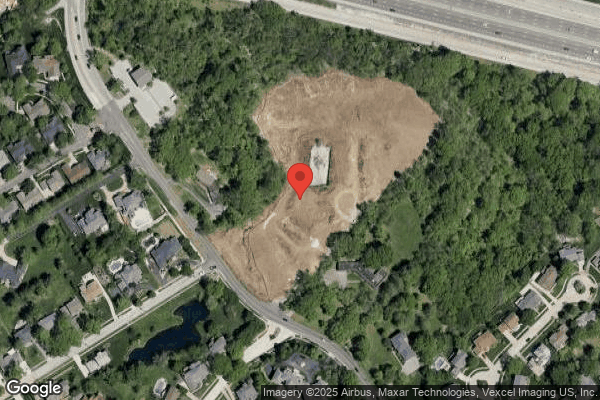
1025 CHESTERFIELD POINTE PARKWAY, CHESTERFIELD, MO 63017 (636) 537-3333
For profit - Corporation 52 Beds Independent Data: November 2025
Trust Grade
65/100
#75 of 479 in MO
Last Inspection: January 2025

Within standard 12-15 month inspection cycle. Federal law requires annual inspections.

Overview

Garden View Care Center of Chesterfield has a Trust Grade of C+, meaning it is slightly above average but not exceptional. It ranks #75 out of 479 facilities in Missouri, placing it in the top half, and #13 out of 69 in St. Louis County, indicating there are only 12 local options that are better. Unfortunately, the facility's trend is worsening, with the number of issues identified increasing from 4 in 2023 to 9 in 2025. Staffing is a concern here with a rating of 3 out of 5 and a high turnover rate of 73%, significantly above the state average. However, the facility has not incurred any fines, which is a positive sign, and it has an average level of RN coverage, ensuring some oversight in resident care. Specific incidents noted during inspections include the facility's failure to ensure that admission policies do not require residents to waive liability for personal property loss, which could affect all residents. Additionally, there were issues with maintaining safe hot water temperatures in resident areas, and not all staff were adequately certified in CPR, raising concerns about emergency preparedness. While there are strengths, such as no fines and a decent overall rating, the increasing number of issues and staff turnover are significant weaknesses that families should consider.

Trust Score
C+
65/100
In Missouri
#75/479
Top 15%
Safety Record
Low Risk
No red flags
Inspections
Getting Worse
4 → 9 violations
Staff Stability
⚠ Watch
73% turnover. Very high, 25 points above average. Constant new faces learning your loved one's needs.
Penalties
✓ Good
No fines on record. Clean compliance history, better than most Missouri facilities.
Skilled Nurses
○ Average
Each resident gets 30 minutes of Registered Nurse (RN) attention daily — about average for Missouri. RNs are the most trained staff who monitor for health changes.
Violations
⚠ Watch
20 deficiencies on record. Higher than average. Multiple issues found across inspections.
★★★★☆
4.0
Overall Rating
★★★☆☆
3.0
Staff Levels
★★★★☆
4.0
Care Quality
★★★★☆
4.0
Inspection Score
Stable
2023: 4 issues
2025: 9 issues

The Good

  • 4-Star Quality Measures · Strong clinical quality outcomes
  • Full Sprinkler Coverage · Fire safety systems throughout facility
  • No fines on record

Facility shows strength in quality measures, fire safety.

The Bad

Staff Turnover: 73%

27pts above Missouri avg (46%)

Frequent staff changes - ask about care continuity

Staff turnover is very high (73%)

25 points above Missouri average of 48%

The Ugly 20 deficiencies on record

Jun 2025 2 deficiencies
CONCERN (D) 📢 Someone Reported This

A family member, employee, or ombudsman was alarmed enough to file a formal complaint

Potential for Harm - no one hurt, but risky conditions existed

ADL Care (Tag F0677)

Could have caused harm · This affected 1 resident

**NOTE- TERMS IN BRACKETS HAVE BEEN EDITED TO PROTECT CONFIDENTIALITY** Based on observation, interview and record review, the facility failed to ensure facility staff provided two residents (Resident...

Read full inspector narrative →
**NOTE- TERMS IN BRACKETS HAVE BEEN EDITED TO PROTECT CONFIDENTIALITY** Based on observation, interview and record review, the facility failed to ensure facility staff provided two residents (Residents #1 and #4), who were unable to perform their own activities of daily living, the necessary services to maintain good personal hygiene when staff did not administer incontinence care in a timely manner. The facility also failed to ensure appropriate perineal care (Peri-care, washing the front and back of the hips, genitals, anal area and buttocks) was provided for infection control. The sample size was three. The census was 82. Review of the facility's Activities of Daily Living, Supporting policy, dated November 2024, showed: -Policy: Residents will be provided with care, treatment and services as appropriate to maintain or improve their ability to carry out activities of daily living (ADLs). Residents who are unable to carry out activities of daily living independently will receive the services necessary to maintain good nutrition, grooming and personal and oral hygiene; -Appropriate care and services will be provided for residents who are unable to carry out ADLs independently, with the consent of the resident and in accordance with the plan of care, including appropriate support and assistance with toileting. Review of the facility's Peri-Care In-Service, dated 5/7/25, showed: -Peri-care, or perineal care, is the process of cleaning a patient's genital area; -Regular peri-care helps prevent urinary tract infections, bladder infections, kidney infections, and odor; -Peri-care should be performed daily, and more often if the patient has incontinence; -Always wash hands before and after performing peri-care; -Wear clean gloves to protect yourself and the patient; -Infection Prevention included: Follow all standard precautions, including hand hygiene and proper disposal of soiled linens. 1. Review of Resident #1's quarterly Minimum Data Set (MDS), a federally mandated assessment instrument completed by facility staff, dated 6/3/25, showed: -Severe cognitive deficiency; -Impairment on both sides of lower body; -Dependent on staff for toileting, lower body dressing, and transfers; -Maximal assistance required from staff for bed mobility; -Incontinent of bowel and bladder; -At risk for pressure ulcers (localized injury to the skin and/or underlying tissue usually over a bony prominence, as a result of pressure, or pressure in combination with shear and/or friction); -Moisture Associated Skin Damage (MASD) present; -Diagnoses included traumatic spinal cord dysfunction, heart failure, kidney disease, peripheral vascular disease (PVD, poor circulation), diabetes mellitus and dementia. Review of the resident's care plan, undated, showed: -Problem: ADL self-care performance deficit related to dementia, decreased mobility, generalized weakness and history of PVD. The resident is incontinent of bladder and bowel and required staff to provide toileting hygiene and perineal care after incontinent episode; -Interventions included: Check and change the resident at least every two hours and as needed for incontinence care. Observation on 6/13/25 at 11:42 A.M., showed the resident sat in a wheelchair, at a dining room table, preparing to each lunch. The resident was neatly groomed and had a slight odor of urine. The resident was not able to answer questions. During an interview on 6/13/25 at 11:55 A.M., Certified Nursing Assistant (CNA) B said: -CNAs were expected to round on residents every two hours to check for incontinence, give incontinence care if needed, apply barrier creams, and reposition residents to prevent skin breakdown; -CNAs were expected to report any skin breakdown to nurses so they could assess the resident and get orders for treatment. Observation on 6/13/25 at 1:02 P.M., showed,: -CNA B and CNA C giving care to the resident in his/her room, while the resident was lying in his/her bed; -Both CNAs donned gloves without sanitizing their hands; -CNA B rolled the resident to his/her right side, pulled the resident's pants down and pulled the resident's brief to one side. The brief, heavily soaked with urine, was visibly wet up to the waistband of the brief. There was a strong smell of urine present; -CNA B, with soiled gloves, rolled the resident onto his/her back and pulled the brief down in between the resident's legs; -The brief was heavily soaked with urine and there was a strong smell of urine present; -CNA B, with soiled gloves, wiped the resident's inner thighs and lower abdomen with a wet washcloth, sprayed with no rinse perineal solution, changing the area of the washcloth with each wipe; -CNA B, with soiled gloves, rolled the resident back over to his/her right side, removed the urine soaked brief and placed it in a trash bag, then blotted the resident's coccyx with a towel wet with water and no rinse peri-care solution; -CNA B, with soiled gloves, put a new brief in place under the resident, and with assistance from CNA C, rolled the resident to the left and right side to secure the clean brief on the resident, while removing the soiled chuck (absorbent pad) and the resident's visibly wet with urine pants; -CNA B, with soiled gloves, put a clean shirt on the resident and repositioned the resident back on the bed; -CNA B, with soiled gloves on, left the resident's room, into the hall with the resident's dirty linen; -CNA removed the dirty gloves and sanitized his/her hands; -CNA B failed to wash all areas of the resident's skin where urine from the heavily soaked brief had touched, including the resident's genitals, buttocks, buttock cleft, lower back, front and back of upper thighs, and hips; -CNA B failed to doff his/her gloves, sanitize his/her hands and don new gloves when providing care from a dirty to clean area; -CNA B failed to sanitize his/her hands before donning gloves when first providing care to the resident and failed to doff his/her gloves and sanitize his/her hands before going out into the hall. During an interview on 6/13/25 at 1:13 P.M., CNA B said: -The last time the resident received incontinence care was during his/her shower that morning, perhaps around 10:00 A.M.; -He/She removed the resident's pants because they were wet with urine; -CNAs were expected to change their gloves and sanitize their hands during perineal care when going from a dirty to a clean task to prevent cross contamination and for infection control. 2. Review of Resident #4's quarterly MDS, dated [DATE], showed: -Cognitively intact; -Impairment on one side of lower body; -Maximum assistance required from staff for toileting, lower body dressing, bed mobility and transfers; -Frequently incontinent of bladder; -Occasionally incontinent of bowel; -At risk for pressure ulcers; -Diagnoses included fractures, heart failure, kidney disease, diabetes mellitus and overactive bladder. Review of the resident's care plan, undated, showed: -Problem: Required staff assistance for ADLs and personal hygiene/personal care tasks to be met/completed due to impaired functional mobility, impaired bed mobility, activity intolerance, decreased body strength and overall generalized weakness. Interventions included: Required more staff assistance with ADLs and personal hygiene/personal care; -Problem: Incontinent of bladder. Interventions included: Assist with peri-care after each incontinent episode and ask the resident if he/she needed assistance to go to the restroom through out the day. Observation on 6/13/25 at 11:43 A.M., showed the resident sat in a wheelchair, on top of a Hoyer lift (mechanical device used to assist in transferring individuals with limited mobility from one place to another) pad (sling, specialized harness which residents sit in while it is connected to the Hoyer lift to safely support residents during transfer) at a dining room table, eating lunch. The resident was neatly groomed and had a slight odor of urine. During an interview on 6/13/25 at 12:46 A.M., the resident said: -He/She believed the last time staff provided him/her incontinence care was early in the morning; -Staff usually provided incontinence care after lunch. Observation on 6/13/25 at 1:20 P.M., showed: -CNA C donned gloves without sanitizing his/her hands; -CNA B sanitized his/her hands and donned gloves; -The resident was sitting in his/her wheelchair on top of a Hoyer pad; -CNA B and CNA C transferred the resident from his/her wheelchair to his/her bed using a Hoyer Lift; -The resident said I'm all wet! I can feel it on the Hoyer pad! during the transfer to his/her bed; -CNA B removed the resident's gown, which was visibly wet with urine in the back; -CNA C removed the resident's heavily urine soaked brief and tucked it down in between the resident's legs. There was a strong smell of urine present; -The resident's inner thighs and genital area were bright pink; -CNA C, with dirty gloves, washed the resident's perineal area with a towel wet with water and no rinse peri-care solution; -Both CNAs, with dirty gloves, assisted the resident to roll to his/her right side, touching the resident's left hip, legs, upper shoulders and upper back; -CNA C, with dirty gloves, removed the resident's brief which was visibly soaked with urine up to the waist band and had a minimal amount of bowel movement present. There was a strong smell of urine and feces present; -CNA C, with dirty gloves, used perineal wipes to clean the resident's perineal area, using a new wipe with each new area to clean; -CNA B reminded CNA C to doff his/her gloves and don new gloves before giving additional care to the resident; -CNA C doffed his/her gloves, without sanitizing his/her hands first, then donned new gloves; -CNA C placed a new brief in place under the resident and applied Calazinc cream (barrier cream with calamine and zinc) to the resident's buttocks, buttock cleft and upper thighs; -Both CNAs, with dirty gloves, rolled the resident back and forth from his/her left to right side, completely removed the resident's urine wet gown, urine wet Hoyer pad, and dirty chuck pad from underneath the resident, putting the dirty linen in a trash bag; -CNA C, with dirty gloves, put Calazine cream on the resident's front inner thighs, then secured the clean brief to the resident and put a clean gown on the resident; -CNA C doffed his/her gloves, failed to sanitize his/her hands, donned new gloves and placed the resident's bed linen on him/her, put the resident's call light within reach, and lowered the resident's bed; -CNA C doffed his/her gloves, failed to sanitize his/her hands, then removed the linen cart from the resident's room into the hall; -CNA B and CNA C failed to doff their gloves, sanitize their hands and don new gloves before giving care from a dirty area to a clean area. During an interview on 6/13/25 at 1:44 P.M., CNA C said: -CNAs were expected to change their gloves and sanitize their hands during perineal care when going from a dirty to a clean task; -CNAs were expected to sanitize their hands and put on new gloves before applying cream to a resident's skin; -The resident was at risk of cross contamination and infection when the CNA used dirty gloves to apply cream to the resident's perineal area; -The resident's gown and Hoyer pad were wet with urine; -He/She was assigned to care for the resident; -The last time he/she provided incontinence care to the resident was when he/she came on shift, around 7:00 A.M.; -He/She should have checked on the resident every two hours for any incontinence needs to prevent skin breakdown. 3. During an interview on 6/13/25 at 11:27 A.M., Licensed Practical Nurse (LPN) A said he/she expected nursing staff to round on residents who were dependent on staff for ADLs at least every two hours to check for incontinence, to address any resident needs and to reposition residents. During an interview on 6/13/25 at 2:45 P.M., the Administrator said: -She expected nursing staff to know of and to follow facility policies; -She expected CNAs to round on ADL dependent residents every two hours, or as needed, to check for incontinence and reposition residents to prevent skin breakdown; -She expected CNAs to sanitize their hands before and after care, before donning gloves, and after doffing gloves for infection control; -She expected CNAs to sanitize their hands, don new gloves when going from a dirty to clean task and/or area when providing perineal care to reduce the risk of cross contamination and infection control; -CNAs put residents at risk of infection and/or delayed wound healing when they applied cream to residents' skin with dirty gloves; -Residents who were in heavily urine soaked briefs were at risk of skin breakdown, urinary tract infections and delayed healing and/or infection of existing wounds/skin issues. It was also matter of resident dignity. MO00253402
CONCERN (D) 📢 Someone Reported This

A family member, employee, or ombudsman was alarmed enough to file a formal complaint

Potential for Harm - no one hurt, but risky conditions existed

Pressure Ulcer Prevention (Tag F0686)

Could have caused harm · This affected 1 resident

**NOTE- TERMS IN BRACKETS HAVE BEEN EDITED TO PROTECT CONFIDENTIALITY** Based on observation, interview and record review, the facility failed to provide treatment consistent with professional standar...

Read full inspector narrative →
**NOTE- TERMS IN BRACKETS HAVE BEEN EDITED TO PROTECT CONFIDENTIALITY** Based on observation, interview and record review, the facility failed to provide treatment consistent with professional standards of practice to an existing pressure ulcer (localized injury to the skin and/or underlying tissue usually over a bony prominence, as a result of pressure, or pressure in combination with shear and/or friction) for one resident (Resident #1) out of three sampled residents. The facility also failed to consistently complete and document assessments of the resident's skin and failed to assess and document the resident's pressure ulcer weekly. The census was 82. Review of the National Pressure Ulcer Advisory Panel (NPUAP), prevention and treatment of pressure ulcers: quick reference guide, Washington DC: National Pressure Ulcer Advisory Panel 2014, showed the following: -Assess the pressure ulcer initially and re-assess it at least weekly; -With each dressing change, observed the pressure ulcer for signs that indicate a change in treatments as required (e.g., Wound improvement, wound deterioration, more or less exudate, signs of infection, or other complications); -Address the signs of deterioration immediately. Review of the Long Term Care Facility Resident Assessment Instrument User's Manual, Version 3.0, Chapter 3, Section M, defines the different stages of pressure ulcers (localized injury to the skin and/or underlying tissue usually over a bony prominence, as a result of pressure, or pressure in combination with shear and/or friction) as follows: -Stage I: an observable, pressure related alteration of intact skin, whose indicators as compared to an adjacent or opposite area on the body may include changes in skin temperature, tissue consistency, sensation, and/or a defined area of persistent redness; -Stage II: Partial thickness loss of dermis (the inner layer that makes up skin) presenting as a shallow open ulcer with a red-pink wound bed, without slough (non-viable yellow, tan, gray, green or brown tissue). May also present as an intact or open/ruptured blister. Review of the facility's Pressure Ulcers/Skin Breakdown - Clinical Protocol policy, dated November 2024, showed: -The nurse shall describe and document/report the following: -Full assessment of pressure sore including location, stage, length, width and depth, presence of exudates or necrotic tissue; -Photograph wound; -Pain assessment; -Resident's mobility status; -Current treatments, including support surfaces; -All active diagnoses; -The physician will authorize pertinent orders related to wound treatments, including wound cleansing and debridement approaches, dressings (occlusive, absorptive, etc.), and application of topical agents if indicated for type of skin alteration; -During resident visits, the physician will evaluate and document the progress of wound healing-especially for those with complicated, extensive, or non-healing wounds. Review of Resident #1's Physician Order Sheet, showed: -An order, dated 11/25/24, for weekly skin assessments every Tuesday during evening shift; -No order found for the outside wound care company to evaluate and treat the resident's wound; -No order found to complete weekly wound assessments. Review of the resident's quarterly Minimum Data Set (MDS), a federally mandated assessment instrument completed by facility staff, dated 6/3/25, showed: -Severe cognitive deficiency; -Impairment on both sides of lower body; -Dependent on staff for toileting, lower body dressing, and transfers; -Maximal assistance required from staff for bed mobility; -Incontinent of bowel and bladder; -At risk for pressure ulcers (localized injury to the skin and/or underlying tissue usually over a bony prominence, as a result of pressure, or pressure in combination with shear and/or friction); -No unhealed pressure ulcers present; -Diagnoses included traumatic spinal cord dysfunction, heart failure, kidney disease, diabetes mellitus and dementia. Review of the resident's care plan, undated, showed: -Problem: At risk for impairment to skin integrity related to decreased mobility, incontinent of bowel and bladder, obesity, DM and skin changes associated with aging; -Interventions included: Provide wound care treatments with dressing changes as ordered by the attending physician; Weekly skin assessment by nurse. Review of the resident's electronic medical health record (EMHR), showed no weekly wound reports from the outside wound care company in the uploaded files. Review of the resident's weekly skin assessments, showed, -On 4/22/25 at 2:49 P.M., no documentation of a pressure ulcer; -No weekly skin assessment for the week of 4/27/25. Review of the facility's weekly wound reports, showed on 4/24/25, the resident had a pressure ulcer located on right buttocks, medial line, acquired 1/14/25, measuring 2.0 centimeter (cm) by 1.0 cm; no drainage, skin pink, well approximated, tender to touch. Treatment: Cleanse wound and applied protective barrier cream. Review of the resident's weekly skin assessments, showed no weekly skin assessment for the week of 4/27/25. Review of the facility's weekly wound reports, showed: -On 4/28/24, the resident had a pressure ulcer located on right buttocks, medial line, acquired 1/14/25, measuring 2.0 cm by 1.0 cm; no drainage, skin pink, well approximated, tender to touch. Treatment: Cleanse wound and applied protective barrier cream; -On 5/5/25, the resident had a pressure ulcer located on right buttocks, medial line, acquired 1/14/25, measuring 2.0 cm by 1.0 cm; no drainage, skin pink, well approximated, tender to touch. Treatment: Cleanse wound and applied protective barrier cream. Review of the resident's weekly skin assessments, showed: -On 5/6/25 at 5:52 P.M., no documentation found of a pressure ulcer; -No other weekly skin assessments found for May. Review of the facility's weekly wound reports, showed: -On 5/12/25, no documentation showing the resident had a pressure ulcer; -On 5/19/25, no documentation showing the resident had a pressure ulcer; -No other facility weekly wound reports provided for the week of 5/25/25 or 6/1/25. Review of the resident's Treatment Administration Record (TAR), dated May 2025, showed, no orders to treat the resident's pressure ulcer (PU) located on his/her right buttock. Review of the resident's weekly skin assessment, dated 6/3/25 at 10:06 P.M., showed no documentation found of a pressure ulcer. Review of the resident's TAR, dated June 2025, showed: -An order, dated 6/8/25, to apply Triad Hydrophilic wound dressing (paste used to treat pressure ulcers to help manage low to moderate exudate (drainage) and to assist in with natural debridement (remove dead, damage or infected tissue from wound to promote healing) to buttocks and sacral region (triangle bones located above coccyx (tailbone) daily until healed every evening shift for wound care; -Documentation showed the facility administered the treatment as ordered. Review of the facility weekly wound report, dated 6/9/25, showed no documentation found for the resident. Review of the resident's weekly skin assessment, dated 6/10/25 at 9:47 P.M., showed Stage II PU located at resident's coccyx, painful. There were no other details documented. Review of the resident's progress notes, showed no documentation showing the Primary Care Physician (PCP), Director of Nursing (DON), or the resident's responsible party (RRP) were notified of the Stage II PU at the resident's coccyx as documented in the weekly skin assessment dated [DATE]. During an interview on 6/13/25, at 11:27 A.M., Licensed Practical Nurse (LPN) A said: -He/She expected staff to report any changes in residents' skin to the nurse; -Nurses were expected to assess the residents' skin, document their findings in an incident report, notify the PCP, get orders to treat the skin issue, notify the RRP and the DON, then document the skin issue, what was done, who they notified, and any new orders in a progress note in the residents' electronic medical health record (EMHR); -Nurses were expected to complete weekly skin assessments on residents, documenting on a skin assessment form in the EMHR; -The DON was responsible for completing weekly wound assessments and documenting in the EMHR; -Nurses were responsible for wound treatments. Observation on 6/13/25 at 11:42 A.M., showed the resident sat in a wheelchair, at a dining room table, preparing to each lunch. The resident was neatly groomed and had a slight odor of urine. The resident was not able to answer questions. Observation on 6/13/25 at 1:02 P.M., showed,: -Certified Nurse Assistant (CNA) B and CNA C giving incontinence care to the resident in his/her room, while the resident lay in his/her bed; -CNA B donned gloves without sanitizing his/her hands; -CNA B rolled the resident to his/her right side, pulled the resident's pants down and pulled the resident's brief to one side. The brief, heavily soaked with urine, was visibly wet up to the waistband of the brief. There was a strong smell of urine present; -There was a wound present at the resident's coccyx (tailbone) which was red and had scattered open areas within the wound borders. The wound was not covered with a dressing; -CNA B provided incontinence care; -CNA B, with soiled gloves, applied Calazinc cream (barrier cream containing calamine and zinc) on to the resident's wound located at his/her coccyx, before putting a new brief on the resident. During an interview on 6/13/25 at 1:13 P.M., CNA B said: -CNAs were expected to sanitize their hands and put on new gloves before applying cream to a resident's skin; -The resident was at risk of cross contamination and infection when the CNA used dirty gloves to apply cream to the resident's coccyx pressure ulcer; -He/She should not have applied the barrier cream to the resident's coccyx wound because there were open areas in the wound. He/She should have reported the open areas to the nurse and the nurse should provide wound treatments. During an interview on 6/13/25 at 2:45 P.M., the Administrator said: -She expected nursing staff to know of and to follow facility policies; -Nurses were responsible for completing weekly skin assessments; -Nurses were responsible for administering wound treatments per physician orders; -She expected nurses to assess residents' wounds when administering treatments, assess if there are any changes, notify the PCP, put in new orders if given, notify the RRP and DON, and document all in a progress note; -The DON was responsible for completing weekly wound assessments; -Residents were expected to have a physician order to see the outside wound care company; -The DON would round with the outside wound care company and assess the residents' wounds with them; -She expected the DON to use the wound report from the outside wound care company as residents' weekly wound assessments; -She expected the weekly wound reports from the outside wound company to get uploaded into residents' EMHR in a timely manner, usually within a week of the visit, so other nurses could view the report if there were any questions regarding the wounds; -The DON was not expected to complete a separate weekly wound assessment; -She expected the DON to update wound orders after the outside wound care company completed their weekly wound assessments for residents; -CNAs should not apply any treatment to a pressure ulcer as it was outside of their scope, CNAs did not have the appropriate training to treat wounds; -She expected CNAs to alert nurses of any skin issues and nurses were expected to administer any physician prescribed wound treatment orders.
Jan 2025 7 deficiencies
CONCERN (D)

Potential for Harm - no one hurt, but risky conditions existed

Resident Rights (Tag F0550)

Could have caused harm · This affected 1 resident

**NOTE- TERMS IN BRACKETS HAVE BEEN EDITED TO PROTECT CONFIDENTIALITY** Based on observation, interview and record review, the facility failed to ensure staff treated residents with dignity and respec...

Read full inspector narrative →
**NOTE- TERMS IN BRACKETS HAVE BEEN EDITED TO PROTECT CONFIDENTIALITY** Based on observation, interview and record review, the facility failed to ensure staff treated residents with dignity and respect when staff stood over residents (Residents #32 and #23) while providing feeding assistance, and interacted with other employees rather than the resident receiving feeding assistance (Resident #32). The sample was 12. The census was 84 with 46 in certified beds. Review of #23's Minimum Data Set (MDS), a federally mandated assessment instrument completed by facility staff, dated 1/4/25, showed: -Resident rarely/never understood; -Partial/moderate assistance required for eating; -Diagnoses included aphasia (language disorder that affects how a person communicates), Alzheimer's disease, anxiety and depression. Review of Resident #32's quarterly MDS, dated [DATE], showed: -Resident rarely/never understood; -Dependent for eating; -Diagnoses included malnutrition, aphasia, Alzheimer's disease with late onset, dementia, anxiety, depression and psychotic disorder. Observation on 1/9/25 at 8:51 A.M., showed a plate of breakfast placed in front of Resident #32. Activities Assistant (AA) E stood next to the table and moved the plate away from the resident. With gloved hands, he/she picked up a hard-boiled egg and held it to the mouth of Resident #23. While standing next to Resident #23, AA E fed the resident the hard-boiled egg. At 8:53 A.M., AA E walked to the kitchenette and brought another plate of food to the table, placing it in front of Resident #32. He/She picked up the remaining hard-boiled egg from Resident #23's plate, and while standing, AA continued feeding Resident #23. At 8:57 A.M., Certified Nurse Aide (CNA) F approached the table and offered AA E a chair so he/she could sit while providing feeding assistance. AA E declined and CNA F offered to sit and feed Resident #23. CNA F pulled up a chair, sat next to Resident #23, and began providing feeding assistance. AA E walked away from the table, changed his/her gloves, and reapproached the table. While standing, AA E buttered a biscuit on the plate in front of Resident #32, then began feeding the resident bites of hard-boiled egg. At 9:00 A.M., AA E sat in a chair next to Resident #32, facing the resident, and began providing feeding assistance. AA E began talking with AA C, who stood behind AA E. AA E engaged in conversation with AA C and CNA F, turning his/her head away from the resident while talking to the other staff. AA E held a utensil filled with food midair in front of the resident, while his/her head was turned away from the resident. AA C sat down at the table with AA E and CNA F, and the employees continued to engage in conversation with each other about television shows. At 9:03 A.M., AA E asked Resident #32 if his/her food was good, then continued to engage in conversation with the other employees. AA E intermittently scooped bites of food into the resident's mouth while the resident's mouth was still full from the previous bite, and after giving each bite, he/she turned his/her head away from the resident to continue conversing with the other staff. At 9:09 A.M., AA C and CNA F left the table and AA E finished assisting the resident with his/her meal. During an interview on 1/9/25 at 9:13 A.M., AA E said Residents #23 and #32 need to be hand-fed. It doesn't matter if staff stand or sit while providing feeding to the residents, as long as staff can reach the resident to feed them. When providing feeding assistance, staff should make sure the resident has swallowed before offering the next bite. He/She knows Resident #32's mouth is full if the resident pulls his/her head away. AA E received training on feeding assistance from watching a video and the rest is common sense. During an interview on 1/9/25 at 2:52 P.M., CNA G said Residents #23 and #32 are confused and require feeding assistance. When providing feeding assistance, staff should sit down next to the residents. This is a dignity issue, and CNA G would not want someone standing over him/her while eating. Staff should ensure the resident has finished chewing and has swallowed their food before offering the next bite. During an interview on 1/9/25 at 2:59 P.M., Licensed Practical Nurse (LPN) D said Residents #23 and #32 are confused and require feeding assistance. Resident #32 swings and hits at people, so for staff's safety, they may want to stand while feeding him/her. For other residents, staff should sit down while providing feeding assistance so it's not intimidating and staff can focus and engage more with the resident. Staff should make sure residents are chewing and swallowing before offering the next bite. During an interview on 1/9/25 at 4:05 P.M. with the Administrator, Director of Nurses (DON), MDS Coordinator, Chief Executive Officer (CEO) A and CEO B, the Administrator said staff should sit next to residents so they are at eye level while providing feeding assistance. This is so staff are not standing over residents while feeding them, which is a dignity issue. The DON said staff should also be seated next to the residents so they can see their ability to chew and swallow. Staff should sit next to residents while providing feeding assistance, regardless of the resident's cognitive status. Staff should ensure residents have completely swallowed their food before giving them the next bite of food. Staff should engage and interact with the residents while providing feeding assistance.
CONCERN (D)

Potential for Harm - no one hurt, but risky conditions existed

Respiratory Care (Tag F0695)

Could have caused harm · This affected 1 resident

Based on observation, interview and record review, the facility failed to ensure the respiratory services provided were consistent with professional standards of practice for one resident (Resident #9...

Read full inspector narrative →
Based on observation, interview and record review, the facility failed to ensure the respiratory services provided were consistent with professional standards of practice for one resident (Resident #9) when staff failed to follow the physician orders for the rate of the oxygen. The sample size was 12. The census was 84 with 46 in certified beds. Review of the facility's Departmental (Respiratory Therapy) - Prevention of Infection policy, revised November 2011, showed: -The purpose of this procedure is to guide prevention of infection associated with respiratory therapy task and equipment including ventilators among residents and staff; -Change the oxygen cannula (a tubing that is placed in the nose) and tubing every seven days or as needed Review of the Resident #9's quarterly Minimum Data Set (MDS), a federally mandated assessment instrument completed by staff, dated 12/6/24, showed: -admission date 5/24/25; -Moderate cognitive impairment; -Requires oxygen therapy; -Diagnosis include Alzheimer's disease, respiratory failure, stroke, and high blood pressure. Review of the resident's care plan, in use at the time of survey, showed it did not address the resident's respiratory care needs. Review of the resident's physician orders, showed: -An order dated 7/1/24 to change oxygen tubing once a week, every Sunday for infection control; -An order dated 11/12/24 to check and replace oxygen tank on resident's wheelchair one time a day, every Tuesday and Saturday for oxygen management; -An order dated 11/28/24 for continuous oxygen at 4 liters (L). Review of the resident's medication administration record, dated December 2024, showed continuous oxygen at 4 L. Review of the resident's medication administration record, dated January 2025, reviewed on 1/8/25, showed continuous oxygen at 4 L. Observation on 1/8/25 at 9:43 A.M., showed the resident received oxygen at 3.5 L/via a nasal cannula (NC). At 12:43 P.M., the resident received oxygen at 5 L/NC. Observation on 1/9/25 at 7:35 A.M., showed the resident received oxygen at 3.5 L/NC. During an interview on 1/9/25 at 10:40 A.M., Certified Nurse Assistant (CNA) K said that the resident's oxygen should be at 5 L/NC. Observation on 1/9/25 at 10:42 A.M., showed the resident received oxygen at 4.5 L/NC. During an interview on 1/9/25 at 10:59 A.M., CNA L said the resident's oxygen rate should be 2.5-3 L/NC. Observation on 1/9/25 at 12:04 P.M., showed the resident receiving oxygen at 5 L/NC. During an interview on 1/9/25 at 2:51 P.M., CNA L said if he/she is unsure about the rate of oxygen, he/she would review the electronic medical record or ask the charge nurse. During an interview on 1/9/25 at 2:54 P.M., with Registered Nurse (RN) H and Certified Medication Technician (CMT) J, both agreed the oxygen rate should be as ordered by the physician. If the resident receives the wrong rate of oxygen the resident could be getting too little or too much and could have harmful effects. During an interview on 1/9/25 at 4:06 P.M., the Director of Nursing (DON) said that the expectation of the nurses is to follow physician orders for oxygen. During an interview on 1/9/25 at 4:06 P.M., the Administrator said staff should follow the policies for physician orders and oxygen therapy.
CONCERN (D)

Potential for Harm - no one hurt, but risky conditions existed

Pharmacy Services (Tag F0755)

Could have caused harm · This affected 1 resident

Based on interview and record review, the facility failed to establish a system of records of receipt and disposition of all controlled drugs in sufficient detail to enable accurate reconciliation. Th...

Read full inspector narrative →
Based on interview and record review, the facility failed to establish a system of records of receipt and disposition of all controlled drugs in sufficient detail to enable accurate reconciliation. The facility failed to ensure accuracy and monitoring for controlled substances for one of one narcotic count books reviewed. The census was 84 with 46 in certified beds. Review of the facility's Controlled Substance policy, dated June 2024, showed: -Garden View Care Center(s) shall comply with all laws, regulations, and other requirements related to handling, storage, disposal, and documentation of Schedule 2 and other controlled substances, in accordance with state and federal laws; -Nursing staff must count controlled medications at the end of each shift. The nurse coming on duty and the nurse coming off duty. The Director of Nursing (DON) shall investigate any discrepancies in narcotics reconciliation to determine the cause and identify any responsible parties and shall give the Administrator/Quality Assurance and Performance Improvement (QAPI)committee a written report of such findings. Review of the facility's Narcotics Book for Magnolia/Aspen on 1/9/25 at 6:22 A.M., showed: -The sheet contains fifteen columns: Date, Time, Number of Packages, Oncoming Nurse, and Off Going Nurse; -The sheet prompted for a 7am-3pm, 3pm-11pm, and 11pm-7am count for each shift change. -The controlled substance shift change count sheet, starting date 1/1/24 and ending date 1/8/25: -No 7 A.M. - 3 P.M. count completed for two of 24 opportunities; -No 11 P.M. - 7 A.M. count completed for five of 24 opportunities; -On 1/4/25 at 11 P.M. no nurse signatures for the 11 P.M. - 7 A.M. shift for 24 opportunities. During an interview on 1/9/25 at 7:35 A.M., Registered Nurse (RN) H said the process for counting narcotics is to count the number of packages first, then to review each individual package for the number of medications present. The narcotics should be counted at each shift change and the oncoming and off going nurse should initial in the book. RN H said sometimes that did not happen. During an interview on 1/9/25 at approximately 9:45 A.M., the DON presented the Magnolia/Aspen narcotic count sheets for November and December 2024. She said there was a problem with the narcotic count between shifts when she assumed the role three months prior. At that time, she initiated a new process of counting the number of packages at the change of shift as well. At 4:06 P.M., the DON said narcotics should be counted at the change of each shift. The count should include the number of packages present for count. During an interview on 1/9/25 at 4:06 P.M., the Administrator said she expected nursing staff to follow the policy for counting narcotics.
CONCERN (D)

Potential for Harm - no one hurt, but risky conditions existed

Laboratory Services (Tag F0770)

Could have caused harm · This affected 1 resident

**NOTE- TERMS IN BRACKETS HAVE BEEN EDITED TO PROTECT CONFIDENTIALITY** Based on observation, interview and record review, the facility failed to ensure laboratory services to meet the needs of the re...

Read full inspector narrative →
**NOTE- TERMS IN BRACKETS HAVE BEEN EDITED TO PROTECT CONFIDENTIALITY** Based on observation, interview and record review, the facility failed to ensure laboratory services to meet the needs of the residents by failing to ensure quality control solution for blood sugar testing machines, in house Covid tests, and other supplies used for laboratory testing and medication administration, stored in the nurse's medication cart, were not expired. The census was 84 with 46 in certified beds. Review of the facility's Centers for Medicare and Medicaid Services Clinical laboratory Improvement Amendment (CLIA) certificate of waiver, effective date [DATE] through [DATE], showed: -The facility name and address listed as the Laboratory name and address; -The above named laboratory located at the address shown hereon may accept human specimens for the purpose of performing laboratory examination or procedures. Review of the facility's Storage of Medication policy, revised [DATE], showed: -Policy: The facilities shall store all drugs and biologicals in a safe, secure, and orderly manner; -Policy interpretation and guidelines: the facility shall not use discontinued, outdated, or deteriorated drugs or biologicals. All such drugs shall be returned to the dispensing pharmacy or destroyed. Review of the Assure Dose Control Solution (solution used to calibrate blood sugar machines to ensure accurate blood sugar test results) manufacturers recommendations showed use before the expiration date printed on the bottle. Review of the InteliSwab COVID-19 Rapid test (in house test for the COVID-19 virus) manufacturers recommendations showed do not use test kit if passed expiration date. Review of the Binax Now COVID-19 test (in house test for the COVID-19 virus) manufacturers recommendations showed do not use test kit if passed expiration date. Observation and interview on [DATE] at 6:10 A.M., of the Birch/[NAME] medication room, showed: -Assure Dose Control Solution, expired [DATE]; -OcuSoft Lid Scrub (eyelid cleansing wipes used to cleanse and decrease inflammation of the eye), expired 6/2024; -Alcohol prep pads, expired 12/2023; -InteliSwab COVID-19 rapid test, expired [DATE]; -BinaxNow COVID-19 test, expired [DATE]. -The Director of Nursing verified the expired items and removed them from the cart. She said that expired medication supplies should not be left in the medication carts. Nurses should check the expiration date prior to administering medications or tests. During an interview on [DATE] at 4:06 P.M., the Administrator said that she would expect staff to follow facility policies.
CONCERN (E)

Potential for Harm - no one hurt, but risky conditions existed

Safe Environment (Tag F0584)

Could have caused harm · This affected multiple residents

**NOTE- TERMS IN BRACKETS HAVE BEEN EDITED TO PROTECT CONFIDENTIALITY** Based on observation, interview, and record review, the facility failed to maintain hot water temperatures between 105 and 120 d...

Read full inspector narrative →
**NOTE- TERMS IN BRACKETS HAVE BEEN EDITED TO PROTECT CONFIDENTIALITY** Based on observation, interview, and record review, the facility failed to maintain hot water temperatures between 105 and 120 degrees Fahrenheit (F) in resident rooms and resident-accessible common areas. The sample was 12. The census was 84 with 46 in certified beds. Review of the facility's Safety of Water Temperatures policy, dated 2001, showed: -Policy Statement: Tap water in the facility shall be kept within a temperature range to prevent scalding of residents; -Policy Interpretation and Implementation: -Water heaters that service resident rooms, bathrooms, and common areas, and tub/shower areas shall be set to temperatures of no more than 120 degrees Fahrenheit (F), or the maximum allowable temperature per state regulation. 1. Observation of the bathroom in room [ROOM NUMBER] ([NAME] unit), a room shared by two residents, on 1/8/25 at 10:13 A.M., showed a calibrated digital thermometer used to take the temperature of the hot water from the sink. The hot water faucet on the sink was turned on and water ran continuously from 10:13 A.M. to 10:15 A.M. The water from the faucet reached a high temperature of 128.6 degrees F. Observation of room [ROOM NUMBER]'s bathroom on 1/8/25 at 11:17 A.M., showed two calibrated digital thermometers were used to take the temperature of the hot water from the sink. The hot water faucet on the sink was turned on and water ran continuously from 11:17 A.M. to 11:19 A.M. The water from the faucet reached a high temperature of 125.0 degrees F on one thermometer, and 124.7 degrees F on the other thermometer. 2. Observation of the bathroom in room [ROOM NUMBER] ([NAME] unit), a room occupied by one resident, on 1/8/25 at 10:13 A.M., showed a calibrated digital thermometer was used to take the temperature of the hot water from the sink. The hot water faucet on the sink was turned on and water ran continuously from 10:13 A.M. to 10:15 A.M. The water from the faucet reached a high temperature of 128.1 degrees F. Observation of room [ROOM NUMBER]'s bathroom on 1/8/25 at 11:20 A.M., showed two calibrated digital thermometers were used to take the temperature of the hot water from the sink. The hot water faucet on the sink was turned on and water ran continuously from 11:20 A.M. to 11:22 A.M. The water from the faucet reached a high temperature of 125.0 degrees F on one thermometer, and 125.6 degrees F on the other thermometer. 3. Observation of the bathroom in room [ROOM NUMBER] ([NAME] unit), a room shared by two residents, on 1/8/25 at 10:05 A.M., showed a calibrated digital thermometer was used to take the temperature of the hot water from the sink. The hot water faucet on the sink was turned on and water ran continuously from 10:05 A.M. to 10:07 A.M. The water from the faucet reached a high temperature of 126.5 degrees F. Observation of room [ROOM NUMBER]'s bathroom on 1/8/25 at 11:38 A.M., showed two calibrated digital thermometers were used to take the temperature of the hot water from the sink. The hot water faucet on the sink was turned on and water ran continuously from 11:38 A.M. to 11:40 A.M. The water from the faucet reached a high temperature of 127.5 degrees F on one thermometer, and 127.4 degrees F on the other thermometer. 4. Observation of the bathroom in room [ROOM NUMBER] (Birch unit), a room shared by two residents, on 1/8/25 at 10:16 A.M., showed a calibrated digital thermometer was used to take the temperature of the hot water from the sink. The hot water faucet on the sink was turned on and water ran continuously from 10:16 A.M. to 10:18 A.M. The water from the faucet reached a high temperature of 125.5 degrees F. Observation of room [ROOM NUMBER]'s bathroom on 1/8/25 at 11:33 A.M., showed two calibrated digital thermometers were used to take the temperature of the hot water from the sink. The hot water faucet on the sink was turned on and water ran continuously from 11:33 A.M. to 11:36 A.M. The water from the faucet reached a high temperature of 125.6 degrees F on one thermometer, and 125.3 degrees F on the other thermometer. 5. Observation of the bathroom in room [ROOM NUMBER] (Birch unit), a room occupied by one resident, on 1/8/25 at 10:12 A.M., showed a calibrated digital thermometer was used to take the temperature of the hot water from the sink. The hot water faucet on the sink was turned on and water ran continuously from 10:12 A.M. to 10:14 A.M. The water from the faucet reached a high temperature of 123.7 degrees F. Observation of room [ROOM NUMBER]'s bathroom on 1/8/25 at 11:42 A.M., showed two calibrated digital thermometers were used to take the temperature of the hot water from the sink. The hot water faucet on the sink was turned on and water ran continuously from 11:42 A.M. to 11:44 A.M. The water from the faucet reached a high temperature of 125.2 degrees F on one thermometer, and 125.0 degrees F on the other thermometer. 6. Observation of the bathroom in room [ROOM NUMBER] (Magnolia unit), a room occupied by one resident, on 1/8/25 at 10:15 A.M., showed a calibrated digital thermometer used to take the temperature of the hot water from the sink. The water from the faucet reached a high temperature of 124.2 degrees F. Observation of room [ROOM NUMBER]'s bathroom on 1/8/25 at 11:39 A.M., showed a calibrated digital thermometer used to take the temperature of the hot water from the sink. The water from the faucet reached a high temperature of 123.2 degrees F. 7. Observation of the bathroom in room [ROOM NUMBER] (Magnolia unit), a room shared by two residents, on 1/8/25 at 10:13 A.M., showed a calibrated digital thermometer used to take the temperature of the hot water from the sink. The water from the faucet reached a high temperature of 125.0 degrees F. 8. Observation of the bathroom in room [ROOM NUMBER] (Magnolia unit), a room occupied by one resident, on 1/8/25 at 9:59 A.M., showed a calibrated digital thermometer used to take the temperature of the hot water from the sink. The water from the faucet reached a high temperature of 124.7 degrees F. 9. Observation of the bathroom in room [ROOM NUMBER] (Magnolia unit), a room shared by two residents, on 1/8/25 at 10:09 A.M., showed a calibrated digital thermometer used to take the temperature of the hot water from the sink. The water from the faucet reached a high temperature of 124.4 degrees F. 10. Observations on 1/8/25 between 9:00 A.M. and 10:30 A.M., showed: -At 9:00 A.M., in the lobby resident-accessible men's restroom, the water temperature at the sink measured 123.8 degrees F, using a calibrated digital thermometer; -At 9:30 A.M., in the kitchenette of the activities room adjacent to the great room, the water temperature at the sink measured 128.9 degrees F, using a calibrated digital thermometer; -At 9:35 A.M., in the resident-accessible women's restroom, off the great room, the water temperature at the sink measured 123.6 degrees F, using a calibrated digital thermometer; -At 9:40 A.M., in the resident-accessible men's restroom, off the great room, the water temperature at the sink measured 122.7 degrees F, using a calibrated digital thermometer; -At 10:00 A.M., in the Magnolia unit nourishment office, where the door was open and resident-accessible, the water temperature at the sink measured 127.2 degrees F, using a calibrated digital thermometer; -At 10:10 A.M., in the kitchenette of the Aspen dayroom at the end of the hall, the water temperature at the northwest sink by the microwave, measured 126.6 degrees F, using a calibrated digital thermometer. The northeast sink near the refrigerators measured 126.6 degrees F, using a calibrated digital thermometer; -At 10:20 A.M., in the Aspen unit unlocked soiled utility room, next to resident room [ROOM NUMBER], the water temperature at the wash sink measured 126.7 degrees F, using a calibrated digital thermometer; -At 10:25 A.M., in the Aspen unit shower/bathing room, next to the Birch Hall doors, the water temperature at the toilet room sink measured 126.9 degrees F, using a calibrated digital thermometer. The water temperature at the shower measured 124.9 degrees F, using a calibrated digital thermometer. 11. Observation of the sink in the activities room, off the great room, on 1/8/25 at 12:25 P.M., showed the Maintenance Director placed his digital thermometer in the water and the temperature measured 129.0 degrees F. The Maintenance Director said the activities room was not on the main valve and he had not thought to take temperatures in the activities room. 12. Observation of the shower/bathing room on the Aspen unit near the Birch unit entrance on 1/8/25 at 12:30 P.M., showed the Maintenance Director placed his digital thermometer in the water at the toilet room sink and the temperature measured 123.4 degrees F. He placed his digital thermometer in the water at the shower and the temperature measured 126.0 degrees F. The Maintenance Director said the gauges on the boilers were very tricky and it was hard to get the temperature exactly right so that it did not go below 106 degrees F or above 120 degrees F. None of the residents complained about the water being too hot. 13. Observation of the day room kitchenette at the end of the Aspen unit on 1/8/25 at 12:35 P.M., showed the Maintenance Director placed his digital thermometer in the water at the sink near the refrigerators. The temperature measured 126 degrees F. 14. Observation on 1/8/25 at 12:10 P.M., of the hot water boilers in the mechanical room, in the service hallway, showed: -Two vertical hot water boilers (which heat the water) with pipes running to a large storage tank which stored the water; -The first hot water boiler's digital thermometer read, 155 degrees F; -The second hot water boiler's digital thermometer read, 160 degrees F; -The large storage tank did not have a visible thermometer; -A pipe from the storage tank ran to a mixing valve; -The mixing valve's thermometer read, 119 degrees F; -Pipes from the mixing valve ran through the walls and distributed the water throughout the facility. During an interview on 1/8/25 at 12:15 P.M., the Maintenance Director said the hot water boilers in the maintenance room were the only ones to service the whole building. The hot water boilers also provided water to the kitchen and the temperatures needed to be higher in there. He checked water temperatures daily using a digital thermometer and recorded them in a log. He took a temperature on a different hall in a different room each day. He had not calibrated the digital thermometer because it was brand new. He knew the temperatures were high on the boilers but thought the mixing valves regulated them before being distributed to the pipes through the facility. 15. During an interview on 1/9/25 at 4:05 P.M. with the Administrator, Director of Nurses (DON), Chief Executive Officer (CEO) A and CEO B, the Administrator said the Maintenance Director does weekly audits to check water temperatures. He checks different areas during each audit. It is expected for the method of obtaining water temperatures to be consistent. It is expected for the thermometer to be held under the running water for a period of time, not removed quickly, in order to get an accurate reading. It is expected that hot water temperatures should not exceed 120 degrees F to ensure residents are not burning themselves.
CONCERN (E)

Potential for Harm - no one hurt, but risky conditions existed

Deficiency F0678 (Tag F0678)

Could have caused harm · This affected multiple residents

**NOTE- TERMS IN BRACKETS HAVE BEEN EDITED TO PROTECT CONFIDENTIALITY** Based on interview and record review, the facility failed to ensure all staff certified in cardiopulmonary resuscitation (CPR, a...

Read full inspector narrative →
**NOTE- TERMS IN BRACKETS HAVE BEEN EDITED TO PROTECT CONFIDENTIALITY** Based on interview and record review, the facility failed to ensure all staff certified in cardiopulmonary resuscitation (CPR, an emergency lifesaving procedure performed when the heart stops beating) received their CPR certification through a provider whose training includes hands-on practice and in-person skills assessment. One week was reviewed for staff CPR certification (21 shifts), and problems were found with 12 shifts. The resident sample was 12. The census was 84 with 46 in certified beds. Review of the facility's Emergency Procedure - CPR policy, revised [DATE], showed: -Policy statement: Personnel have completed training on the initiation of CPR and basic life support (BLS), including defibrillation, for victims of sudden cardiac arrest; -Preparation for CPR included; -Obtain and/or maintain American Red Cross or American Heart Association certification in BLS/CPR for key clinical staff members who will direct resuscitative efforts, including non-personnel. Review of the facility's resident code status report, dated [DATE], showed five residents with full code status. Review of the CPR certifications for the Director of Nurses (DON), Registered Nurse (RN) H, and Certified Medication Technician (CMT) M, showed the CPR certifications obtained through a provider that only offers online CPR certification. Review of the facility's staffing sheets from [DATE] through [DATE], showed: -On [DATE] from 7:00 A.M. to 3:00 P.M., DON was the only CPR-certified staff scheduled; -On [DATE] from 3:00 P.M. to 11:00 P.M., DON and CMT M were the only CPR-certified staff scheduled; -On [DATE] from 7:00 A.M. to 3:00 P.M., DON was the only CPR-certified staff scheduled; -On [DATE] from 7:00 A.M. to 3:00 P.M., DON was the only CPR-certified staff scheduled; -On [DATE] from 3:00 P.M. to 11:00 P.M., DON and CMT M were the only CPR-certified staff scheduled; -On [DATE] from 11:00 P.M. to 7:00 A.M., RN H was the only CPR-certified staff scheduled; -On [DATE] from 7:00 A.M. to 3:00 P.M., DON was the only CPR-certified staff scheduled; -On [DATE] from 11:00 P.M. to 7:00 A.M., DON was the only CPR-certified staff scheduled; -On [DATE] from 7:00 A.M. to 3:00 P.M., the DON was the only CPR-certified staff scheduled; -On [DATE] from 7:00 A.M. to 7:00 P.M., the DON was the only CPR-certified staff scheduled. During an interview on [DATE] at 12:49 P.M., the DON said her CPR certification was completed online. She was not aware that all CPR-certified staff must receive their certification through a provider whose training includes hands-on practice and in-person skills assessment. During an interview on [DATE] at 1:00 P.M., the Administrator said the facility was getting their staff certified through a particular provider who is no longer offering the certification at this time. The facility is working on getting connected to a new provider for CPR certification.
CONCERN (F)

Potential for Harm - no one hurt, but risky conditions existed

Deficiency F0620 (Tag F0620)

Could have caused harm · This affected most or all residents

Based on interview and record review, the facility failed to ensure its admission policy did not request or require residents or potential residents to waive potential facility liability for losses of...

Read full inspector narrative →
Based on interview and record review, the facility failed to ensure its admission policy did not request or require residents or potential residents to waive potential facility liability for losses of personal property. This deficient practice had the potential to affect all residents. The sample was 12. The census was 84 with 46 in certified beds. Review of the facility's admission policy, reviewed 1/9/25, showed: -The facility shall not be responsible for clothing, jewelry, money, or other valuable retained by Resident except as described under the lost and found and denture policy of the facility; -Attached hereto and incorporated herein, included Exhibits C and F; -Exhibit C, admission Authorizations: -Waiver of liability - personal belongings: It is hereby acknowledged that the Resident and/or Responsible Party has been advised that the facility is not responsible or liable for loss or accidental damage of personal belongings such as but not limited to: hearing aids, dentures, eyeglasses, jewelry, money, clothing, personal effects such as provided in the policies and procedures; -Exhibit F, Lost and Found Policy: -The facility can only ensure against loss of valuable items (such as jewelry or money) if they are deposited with management for safekeeping. The Resident or designee will be given a receipt for items held by the facility. The facility will not be liable for the loss of such valuable items if the Resident or designee refuses to keep valuables with the management for safekeeping; -Resident and/or Responsible Party, have read, been informed of, understand and agree to all terms and conditions of the above Agreement, Resident Rights and Responsibilities and all other documents attached hereto and incorporated herein. During an interview on 1/9/25 at 3:13 P.M., the Admissions Coordinator said all residents admitted to the facility are provided with the same admission policy, with some slight variances based on payor source. All residents are provided with the exhibit documents that are referenced in the packet. She did not realize the admission policy required residents to waive the facility's liability for lost personal items. During an interview on 1/9/25 at 3:22 P.M. with the Administrator, Chief Executive Officer (CEO) A, and CEO B, they said the same admission policy is given to all residents admitted to the facility. The policy was developed by the facility's corporate attorney. While any report of lost items would be investigated, they understand the verbiage in the admission policy should be reviewed by corporate.
Oct 2023 1 deficiency
CONCERN (D) 📢 Someone Reported This

A family member, employee, or ombudsman was alarmed enough to file a formal complaint

Potential for Harm - no one hurt, but risky conditions existed

Accident Prevention (Tag F0689)

Could have caused harm · This affected 1 resident

See the deficiency cited at event ID G4IH12. Based on interview and record review, the facility failed to use a proper transfer technique in accordance with the resident's plan of care. A staff member...

Read full inspector narrative →
See the deficiency cited at event ID G4IH12. Based on interview and record review, the facility failed to use a proper transfer technique in accordance with the resident's plan of care. A staff member failed to safely assist a resident during a Hoyer lift (mechanical lift) transfer and the Hoyer lift tipped over, landing on top of the resident and a Certified Nurse Aide (CNA). This affected one of five sampled residents (Resident #2). The census was 77. Review of the facility's policy on Safe Lifting and Movement of Residents, undated, showed the following: -Policy: Resident safety, dignity, comfort and medical condition will be incorporated into goals and decisions regarding the safe lifting and moving of residents; -Nursing staff, in conjunction with the rehabilitation staff, shall assess individual residents' needs for transfer assistance on an ongoing basis. Staff will document resident transferring and lifting needs in the care plan; -Such assessment shall include: Residents' preferences for assistance, resident's mobility, resident's size, weight-bearing ability, cognitive status, whether the resident's cooperative with staff and the resident's goals for rehabilitation, including restoring or maintaining functional abilities; -Staff responsible for direct resident care will be trained in the use of manual (gait/transfer belts, lateral boards) and mechanical lifting devices; -Mechanical lifting devices shall be used for heavy lifting, including lifting and moving residents when necessary; -Staff will be observed for competency in using mechanical lifts and observed periodically for adherence to policies and procedures regarding use of equipment and safe lifting techniques; -Maintenance staff shall perform routine checks and maintenance of equipment used for lifting to ensure that it remains in good working order. Review of the facility policy, showed no documentation of a Hoyer lift transfer requiring two person assistance. Review of Resident #2's care plan, dated 6/1/23, showed the following: -Focus: Resident requires two assist for activities of daily living (ADLs) of transfers with a Hoyer lift; -Goal: Resident requires total dependence with all ADLs. Staff to assist with all ADLs as needed while maintaining dignity; -Intervention: Provide assistive devices: High back wheelchair. Assure the high back wheelchair has foot pedals and foot buddy. Give verbal reminders not to attempt to transfer out of the wheelchair without assistance. Review of the resident's quarterly Minimum Data Set (MDS), a federally mandated assessment instrument completed by facility staff, dated 6/16/23, showed the following: -Severe cognitive impairment; -Behaviors of hallucinations, delusions and verbal behaviors; -Total dependence with transfers with two person assistance; -One fall with no injury; -Diagnoses of progressive neurological condition, high blood pressure, diabetes and Alzheimer's Disease. Review of the resident's Incident Note, dated 9/13/23 at 6:58 A.M., showed a CNA notified this writer that an incident occurred when he/she and another CNA were Hoyer lifting a resident out of bed and into a broda (high back) wheelchair. The Hoyer lift turned over, pinning the CNA and the resident underneath for a brief moment. The CNA immediately got up, overturned the Hoyer lift and placed the resident in his/her broda chair. The resident complained of right ear and head pain and was holding his/her right shoulder. The resident's right ear is dark purple and swollen, no active bleeding noted. After talking to the hospice staff and the resident's family, a decision was made to send the resident to the hospital for further evaluation. Review of the resident's nurse's note, dated 9/13/23 at 1:10 P.M., showed the resident returned from the hospital accompanied by two Emergency Medical Technicians. The resident's family member was waiting in his/her room and is aware of his/her return. There were no new orders noted and all tests were negative. The resident complained of pain to his/her right ear and right shoulder. Pain medication was given at that time. The resident's right ear was purple with a slight edema noted and edema noted to the back of the resident's head on the right side. During an interview on 10/11/23 at 9:45 A.M., the resident said he/she did have a fall but did not remember the details. Observation at that time, showed the resident had three stitches to his/her left lower eyebrow. During an interview on 10/12/23 at 12:55 P.M., CNA L said he/she got the resident ready to transfer on the Hoyer lift. CNA L said he/she went to get another CNA to assist with the Hoyer lift transfer. They both finished preparing the resident for transfer. CNA L was at the control panel of the Hoyer lift and the other CNA was near the resident's feet. CNA L said as he/she pulled the Hoyer lift, the other CNA had the resident's feet but then turned away. CNA L said before he/she knew it, he/she, the resident and the Hoyer lift all went down. The other CNA did not have hands on the resident before the fall. CNA L looked at the Hoyer lift before the transfer and there were no issues. The last time he/she was inserviced on Hoyer lift transfers was at a previous facility. CNA L had been with this facility since March 1, 2023 and has been a CNA for 10 years. During an interview on 10/13/23 at 9:55 A.M., CNA M said he/she and another CNA were getting the resident ready to transfer. CNA M said during the transfer he/she released the resident and turned away to get the resident's wheelchair. CNA M was not hands on with the resident during the transfer but he/she should have been to guide the resident to the wheelchair. During an interview on 10/12/23 at 11:10 A.M., the Administrator and the Director of Nursing (DON) said they expected both staff members to be completely hands on during the Hoyer lift transfer to prevent an accident. The Administrator did not hear about the staff member turning away during the transfer. The Administrator said the DON gathered statements. The DON said she did address the concern about being hands on during a Hoyer lift transfer by inservicing CNA M but did not know if she documented it. MO00225259
Aug 2023 3 deficiencies
CONCERN (D)

Potential for Harm - no one hurt, but risky conditions existed

Accident Prevention (Tag F0689)

Could have caused harm · This affected 1 resident

Based on interview and record review, the facility failed to use a proper transfer technique in accordance with the resident's plan of care. A staff member failed to safely assist a resident during a ...

Read full inspector narrative →
Based on interview and record review, the facility failed to use a proper transfer technique in accordance with the resident's plan of care. A staff member failed to safely assist a resident during a Hoyer lift (mechanical lift) transfer and the Hoyer lift tipped over, landing on top of the resident and a Certified Nurse Aide (CNA). This affected one of five sampled residents (Resident #2). The census was 77. Review of the facility's policy on Safe Lifting and Movement of Residents, undated, showed the following: -Policy: Resident safety, dignity, comfort and medical condition will be incorporated into goals and decisions regarding the safe lifting and moving of residents; -Nursing staff, in conjunction with the rehabilitation staff, shall assess individual residents' needs for transfer assistance on an ongoing basis. Staff will document resident transferring and lifting needs in the care plan; -Such assessment shall include: Residents' preferences for assistance, resident's mobility, resident's size, weight-bearing ability, cognitive status, whether the resident's cooperative with staff and the resident's goals for rehabilitation, including restoring or maintaining functional abilities; -Staff responsible for direct resident care will be trained in the use of manual (gait/transfer belts, lateral boards) and mechanical lifting devices; -Mechanical lifting devices shall be used for heavy lifting, including lifting and moving residents when necessary; -Staff will be observed for competency in using mechanical lifts and observed periodically for adherence to policies and procedures regarding use of equipment and safe lifting techniques; -Maintenance staff shall perform routine checks and maintenance of equipment used for lifting to ensure that it remains in good working order. Review of the facility policy, showed no documentation of a Hoyer lift transfer requiring two person assistance. Review of Resident #2's care plan, dated 6/1/23, showed the following: -Focus: Resident requires two assist for activities of daily living (ADLs) of transfers with a Hoyer lift; -Goal: Resident requires total dependence with all ADLs. Staff to assist with all ADLs as needed while maintaining dignity; -Intervention: Provide assistive devices: High back wheelchair. Assure the high back wheelchair has foot pedals and foot buddy. Give verbal reminders not to attempt to transfer out of the wheelchair without assistance. Review of the resident's quarterly Minimum Data Set (MDS), a federally mandated assessment instrument completed by facility staff, dated 6/16/23, showed the following: -Severe cognitive impairment; -Behaviors of hallucinations, delusions and verbal behaviors; -Total dependence with transfers with two person assistance; -One fall with no injury; -Diagnoses of progressive neurological condition, high blood pressure, diabetes and Alzheimer's Disease. Review of the resident's Incident Note, dated 9/13/23 at 6:58 A.M., showed a CNA notified this writer that an incident occurred when he/she and another CNA were Hoyer lifting a resident out of bed and into a broda (high back) wheelchair. The Hoyer lift turned over, pinning the CNA and the resident underneath for a brief moment. The CNA immediately got up, overturned the Hoyer lift and placed the resident in his/her broda chair. The resident complained of right ear and head pain and was holding his/her right shoulder. The resident's right ear is dark purple and swollen, no active bleeding noted. After talking to the hospice staff and the resident's family, a decision was made to send the resident to the hospital for further evaluation. Review of the resident's nurse's note, dated 9/13/23 at 1:10 P.M., showed the resident returned from the hospital accompanied by two Emergency Medical Technicians. The resident's family member was waiting in his/her room and is aware of his/her return. There were no new orders noted and all tests were negative. The resident complained of pain to his/her right ear and right shoulder. Pain medication was given at that time. The resident's right ear was purple with a slight edema noted and edema noted to the back of the resident's head on the right side. During an interview on 10/11/23 at 9:45 A.M., the resident said he/she did have a fall but did not remember the details. Observation at that time, showed the resident had three stitches to his/her left lower eyebrow. During an interview on 10/12/23 at 12:55 P.M., CNA L said he/she got the resident ready to transfer on the Hoyer lift. CNA L said he/she went to get another CNA to assist with the Hoyer lift transfer. They both finished preparing the resident for transfer. CNA L was at the control panel of the Hoyer lift and the other CNA was near the resident's feet. CNA L said as he/she pulled the Hoyer lift, the other CNA had the resident's feet but then turned away. CNA L said before he/she knew it, he/she, the resident and the Hoyer lift all went down. The other CNA did not have hands on the resident before the fall. CNA L looked at the Hoyer lift before the transfer and there were no issues. The last time he/she was inserviced on Hoyer lift transfers was at a previous facility. CNA L had been with this facility since March 1, 2023 and has been a CNA for 10 years. During an interview on 10/13/23 at 9:55 A.M., CNA M said he/she and another CNA were getting the resident ready to transfer. CNA M said during the transfer he/she released the resident and turned away to get the resident's wheelchair. CNA M was not hands on with the resident during the transfer but he/she should have been to guide the resident to the wheelchair. During an interview on 10/12/23 at 11:10 A.M., the Administrator and the Director of Nursing (DON) said they expected both staff members to be completely hands on during the Hoyer lift transfer to prevent an accident. The Administrator did not hear about the staff member turning away during the transfer. The Administrator said the DON gathered statements. The DON said she did address the concern about being hands on during a Hoyer lift transfer by inservicing CNA M but did not know if she documented it. MO00225259
CONCERN (D)

Potential for Harm - no one hurt, but risky conditions existed

Deficiency F0883 (Tag F0883)

Could have caused harm · This affected 1 resident

Based on interviews, record review, and facility policy review, the facility failed to provide the pneumococcal vaccine after consent was obtained for 1 (Resident #5) of 5 residents reviewed for immun...

Read full inspector narrative →
Based on interviews, record review, and facility policy review, the facility failed to provide the pneumococcal vaccine after consent was obtained for 1 (Resident #5) of 5 residents reviewed for immunizations. Findings included: Review of a facility policy titled, Pneumococcal Vaccine, revised August 2016, revealed, 1. Prior to or upon admission, residents will be assessed for eligibility to receive the pneumococcal vaccine series, and when indicated, will be offered the vaccine series within thirty (30) days of admission to the facility unless medically contraindicated or the resident has already been vaccinated. 2. Assessments of pneumococcal vaccination status will be conducted within five (5) working days of the resident's admission if not conducted prior to admission. The policy further specified, 6. For residents who receive the vaccines, the date of vaccination, lot number, expiration date, person administering, and the site of vaccination will be documented in the resident's medical record. Review of Resident #5's admission Record revealed the facility readmitted the resident on 02/23/2022, with diagnoses that included hypothyroidism, severe protein and calorie malnutrition, and hyperlipidemia. Review of an unlabeled document signed by Resident #5's Responsible Party (RP) on 02/23/2022, revealed Resident #5's RP agreed the facility staff could administer the pneumococcal vaccine to Resident #5. Per the document, the date the vaccine was given was blank. Review of Resident #5's quarterly Minimum Data Set (MDS), with an Assessment Reference Date (ARD) of 05/27/2023, revealed Resident #5 had a Brief Interview for Mental Status (BIMS) score of 11, which indicated the resident had moderate cognitive impairment. According to the MDS, Resident #5's pneumococcal vaccine was not up to date. Review of Resident #5's Clinical-Immunizations, record revealed the record lacked evidence to indicate staff administered Resident #5 the pneumococcal vaccine. During an interview on 08/16/2023 at 9:16 AM, the Director of Nursing (DON) indicated she had been working with the Administrator to start the facility's immunization program. The DON reported there were residents that had signed consent for the vaccine to be administered, but had not had their pneumococcal vaccine. During an interview on 08/16/2023 at 5:33 PM, the Administrator indicated the facility was currently working on their vaccination program and there would be a set month for each vaccine to be administered.
CONCERN (E)

Potential for Harm - no one hurt, but risky conditions existed

Abuse Prevention Policies (Tag F0607)

Could have caused harm · This affected multiple residents

Based on interview and record review, the facility failed to ensure newly hired employees were screened to rule out the presence of a Federal Indicator, with the Certified Nurse Aide (CNA) Registry, f...

Read full inspector narrative →
Based on interview and record review, the facility failed to ensure newly hired employees were screened to rule out the presence of a Federal Indicator, with the Certified Nurse Aide (CNA) Registry, for eight of 10 sampled employees hired since the last survey. The facility hired at least 200 new employees since the last survey. The census was 78. Review of the facility's Abuse Prevention Program, revised December 2016, showed the following: -Policy Statement: Our residents have the right to be free from abuse, neglect, misappropriation of resident property and exploitation. This includes but is not limited to freedom from corporal punishment, involuntary seclusion, verbal, mental, sexual or physical abuse, and physical or chemical restraint not required to treat the resident's symptoms; -Policy Interpretation and Implementation: -As part of the resident abuse prevention, the administration will; -1. Protect our residents from abuse by anyone including, but not necessarily limited to: facility staff, other residents, consultants, volunteers, staff from other agencies, family members, legal representatives, friends, visitors, or any other individual; -2. Conduct employee background checks and will not knowingly employ or otherwise engage any individual who has: -a. Have been found guilty of abuse, neglect, exploitation, misappropriation of property, or mistreatment by a court law; -b. Have had a finding entered into the state nurse aide registry concerning abuse, neglect, exploitation, mistreatment or residents or misappropriation of their property; -c. Have a disciplinary action in effect against his or her professional license by a state licensure body because of finding of abuse, neglect, exploitation, mistreatment of residents or misappropriation of resident property. 1. Review of Maintenance Director's A's employee file, showed the following: -Hire date: 4/24/23; -No CNA registry check performed. 2. Review of Activity Aide B's employee file, showed the following: -Hire date: 5/9/23; -No CNA registry check performed. 3. Review of Front Desk C's employee file, showed the following: -Hire date: 5/15/23; -No CNA registry check performed. 4. Review of Housekeeping D's employee file, showed the following: -Hire date: 5/16/23; -No CNA registry check performed. 5. Review of Dietary Aide E's employee file, showed the following: -Hire date: 5/16/23; -No CNA registry check performed. 6. Review of Activity Aide F's employee file, showed the following: -Hire date: 5/23/23; -No CNA registry check performed. 7. Review of Dietary Aide G's employee file, showed the following: -Hire date: 6/15/23; -No CNA registry check performed. 8. Review of Nurse H's employee file, showed the following: -Hire date: 7/6/23; -No CNA registry check performed. 9. During an interview on 8/23/23 at 12:55 P.M., the Staffing Coordinator said she has only been in her position for about a year. She did not realize she has to check the CNA registry for all employees. 10. During an interview on 8/23/23 at 12:45 P.M., the Administrator said the Staffing Coordinator should check the CNA registry for all employees.
Jan 2020 7 deficiencies
CONCERN (D)

Potential for Harm - no one hurt, but risky conditions existed

Abuse Prevention Policies (Tag F0607)

Could have caused harm · This affected 1 resident

Based on interview and record review, the facility failed to follow their policy to ensure all employees were screened for the Employee Disqualification List (EDL), prior to hire, for five of 10 emplo...

Read full inspector narrative →
Based on interview and record review, the facility failed to follow their policy to ensure all employees were screened for the Employee Disqualification List (EDL), prior to hire, for five of 10 employees reviewed out of the 186 employees hired since the 12/27/18 inspection. The census was 65 with 28 residents in certified beds. 1. Review of the facility's undated Abuse Prohibition Policy, showed all employees will be screened for history of abuse, neglect or mistreatment of residents prior to hire. This includes attempting to obtain previous employment references, review of license as appropriate, criminal record checks and EDL checks. 2. Review of the Department of Health and Senior Services website, shows, per Section 192.2490, nursing facilities are to check the EDL (at a minimum, the annual EDL report and quarterly updates available on the web site) before hiring a person in any capacity and before allowing an employee to have contact with patients or residents. 3. Review of Housekeeping D's employee file, showed the following: -A date of hire (DOH) of 12/18/19; -An EDL check dated 12/18/19. 4. Review of Certified Nurse Aide (CNA) B's employee file, showed the following: -A DOH of 12/11/19; -An EDL check dated 12/13/19. 5. Review of Activity Aide E's employee file, showed the following: -A DOH of 12/11/19; -An EDL check dated 12/13/19. 6. Review of Staffing Coordinator F's employee file, showed the following: -A DOH of 8/16/19; -An EDL check dated 8/16/19. 7. Review of CNA G's employee file, showed the following: -A DOH of 11/21/19; -An EDL check dated 11/21/19. 8. During an interview on 1/23/20 at 1:36 P.M., Staffing Coordinator F said he/she was trained to do the EDL check on the date of hire. The DOH is the first day of orientation. Orientation started at 9:30 A.M., and he/she usually did the EDL check between 7:30 A.M. and 8:00 A.M. 9. During an interview on 1/24/20 at 9:30 A.M., the administrator said he believed the facility was in compliance because they gave a conditional offer for hire pending the results of the EDL. They had until orientation began to obtain an EDL check. Until orientation began, they were not considered facility employees. 10. Further review of the above employee files, showed no time stamps on any of the EDL checks completed by facility staff.
CONCERN (E)

Potential for Harm - no one hurt, but risky conditions existed

Assessment Accuracy (Tag F0641)

Could have caused harm · This affected multiple residents

**NOTE- TERMS IN BRACKETS HAVE BEEN EDITED TO PROTECT CONFIDENTIALITY** Based on interview and record review, the facility failed to complete the required significant change in status assessment (SCSA...

Read full inspector narrative →
**NOTE- TERMS IN BRACKETS HAVE BEEN EDITED TO PROTECT CONFIDENTIALITY** Based on interview and record review, the facility failed to complete the required significant change in status assessment (SCSA) when four residents were admitted to hospice care (Residents #6, #14, #25 and #12). The facility identified six residents who received hospice care. Four of those six residents were sampled, and problems were found with all of them. The census was 65 with 28 residents in certified beds. 1. Review of Resident #6's annual Minimum Data Set (MDS), a federally mandated assessment instrument completed by facility staff, dated 10/27/19, showed the following: -Short and long term memory problems; -Severe cognitive impairment for daily decision making; -Total dependence on staff for personal hygiene, bathing, toilet use, dressing and transfers; -Did not have a condition or chronic disease that might result in a life expectancy of less than six months; -Received hospice care; -Diagnoses included anemia, heart disease, high blood pressure, Alzheimer's disease, stroke, dementia, anxiety and depression. Review of the resident's hospice binder, kept at the nurses's station, showed the resident admitted to hospice care on 11/6/18. Further review of the resident's MDS assessments, dated 1/26/19, 4/28/19 and 7/29/19, showed the resident did not have a condition or chronic disease that might result in a life expectancy of less than six months, and did not receive hospice care. A SCSA was not done at any time to reflect the condition of the resident. 2. Review of Resident #14's annual MDS, dated [DATE], showed the following: -Short and long term memory problems; -Severe cognitive impairment for daily decision making; -Lower extremity impairment on one side; -Did not have a condition or chronic disease that might result in a life expectancy of less than six months; -Did not receive hospice care; -Diagnoses included heart disease, anemia, Alzheimer's disease and anxiety. Review of the resident's hospice binder, kept at the nurses's station, showed the resident admitted to hospice care on 12/20/19. Further review of the resident's MDS assessments, showed a SCSA was not done by the facility within 14 days of being admitted to hospice care. 3. Review of Resident #25's January 2020 physician order sheet (POS), showed the following: -An order, dated 1/6/20, for hospice to evaluate; -An order, dated 1/8/20, for hospice to treat due to a diagnosis of Alzheimer's disease. Review of the resident's medical record, showed the following: -The most current MDS was an admission MDS, dated [DATE]; -No SCSA completed to reflect the initiation of hospice services. 4. Review of Resident #12's January 2020 POS, showed the following: -An order, dated 12/30/19, for hospice to evaluate and treat; -An order, dated 12/31/19, to admit to hospice services with a diagnosis of cerebrovascular disease (a group of conditions, diseases, and disorders that affect the blood vessels and blood supply to the brain). Review of the medical record, showed the following: -An annual MDS, completed on 11/13/19; -No SCSA to reflect the initiation of hospice services. 5. During an interview on 1/24/20 at 9:30 A.M., the Assistant Director of Nursing said she was trained to not do a SCSA if nothing had changed in the resident's condition. It was her understanding that receiving hospice services did not require a SCSA.
CONCERN (E)

Potential for Harm - no one hurt, but risky conditions existed

Comprehensive Care Plan (Tag F0656)

Could have caused harm · This affected multiple residents

**NOTE- TERMS IN BRACKETS HAVE BEEN EDITED TO PROTECT CONFIDENTIALITY** Based on interview and record review, the facility failed to develop and implement person-centered care plans that addressed hos...

Read full inspector narrative →
**NOTE- TERMS IN BRACKETS HAVE BEEN EDITED TO PROTECT CONFIDENTIALITY** Based on interview and record review, the facility failed to develop and implement person-centered care plans that addressed hospice services and interventions for three residents (Residents #6, #14 and #13) that received hospice care. The census was 65 with 28 in certified beds. 1. Review of Resident #6's annual Minimum Data Set (MDS), a federally mandated assessment instrument completed by facility staff, dated 10/27/19, showed the following: -Short and long term memory problems; -Severe cognitive impairment for daily decision making; -Received hospice care; -Diagnoses included anemia, heart disease, high blood pressure, Alzheimer's disease, stroke, dementia, anxiety and depression. Review of the resident's hospice binder, kept at the nurses's station, showed the resident admitted to hospice care on 11/6/18. Review of the resident's care plan, dated 12/11/19, showed no mention of hospice services received by the resident. 2. Review of Resident #14's annual MDS, dated [DATE], showed the following: -Short and long term memory problems; -Severe cognitive impairment for daily decision making; -Lower extremity impairment on one side; -Diagnoses included heart disease, anemia, Alzheimer's disease and anxiety. Review of the resident's hospice binder, kept at the nurses's station, showed the resident admitted to hospice care on 12/20/19. Review of the resident's physician's order sheet (POS), dated 1/1/20 through 1/31/20, showed an order to receive hospice care. Review of the resident's care plan, dated 1/12/20, showed no mention of hospice services received by the resident. 3. Review of Resident #13's quarterly MDS, dated [DATE], showed the following: -Severe cognitive impairment; -Required total care from staff; -Diagnoses included heart disease, Alzheimer's disease, stroke, dementia and malnutrition; -Special treatments while a resident: Hospice. Review of the resident's POS, dated 1/1/20 through 1/31/20, showed an order dated 12/12/19, for the resident to receive hospice services. Review of the resident's care plan, in use during the survey, showed staff did not address the resident's need for hospice services or what interventions the facility and the hospice would provide for hospice care. 4. During an interview on 1/24/20 at 9:00 A.M., the Assistant Director of Nursing said she was responsible for doing care plans. She was not aware the residents' care plans did not include hospice care. One resident was taken off hospice and recently went back on. She did not update the care plan to reflect this change in condition.
CONCERN (E)

Potential for Harm - no one hurt, but risky conditions existed

Deficiency F0658 (Tag F0658)

Could have caused harm · This affected multiple residents

**NOTE- TERMS IN BRACKETS HAVE BEEN EDITED TO PROTECT CONFIDENTIALITY** Based on observation, interview and record review, the facility failed to follow up on a nutrition recommendation, failed to obt...

Read full inspector narrative →
**NOTE- TERMS IN BRACKETS HAVE BEEN EDITED TO PROTECT CONFIDENTIALITY** Based on observation, interview and record review, the facility failed to follow up on a nutrition recommendation, failed to obtain an order for an indwelling catheter (small rubber tube inserted in the bladder to drain urine) (Resident #25), failed to administer medication as ordered (Resident #230) and failed to follow physician orders (Resident #5). Facility staff also failed to obtain physician signatures on order sheets (Residents #17, #6, #14, #23 and #2). The census was 65 and with 28 residents in certified beds. 1. Review of Resident #25's admission Minimum Data Set (MDS), a federally mandated assessment instrument completed by facility staff, dated 12/10/19, showed the following: -Severe cognitive impairment; -Dependent on staff for all mobility and personal care; -Nutrition approach: Feeding tube (a tube surgically inserted into the stomach to provide hydration, nutrition and medications); -Incontinent of bowel; -Indwelling urinary catheter; -Diagnoses included Alzheimer's disease and traumatic brain injury. Review of the resident's December 2019 physician order sheet (POS), showed no signature by the resident's physician indicating the orders were reviewed and approved. Review of the resident's medical record, showed on 12/18/19, a recommendation made by the facility registered dietician (RD) for water flushes (for hydration and to prevent g-tube from clogging) to be increased from 80 milliliters (ml) to 120 ml every four hours due to a recent urinary tract infection. Review of the resident's January 2020 POS, showed the following: -An order, dated 11/25/19, to flush feeding tube with 80 ml of water every four hours after feeding; -An order, dated 11/26/19, to flush feeding tube with 15 ml of water after and before administering feeding and medications; -No order to increase the flushes. Further review of the resident's medical record, showed no documentation by staff regarding physician notification of the RD recommendation to increase water flushes. Further review of the resident's January 2020 POS, showed staff failed to obtain orders for catheter care and the frequency of how often to change the resident's indwelling catheter. During an interview 1/24/20 at 9:00 A.M., the administrator said there should be a physician signature on every POS. The Director of Nursing (DON) said there should be orders for the catheter including care every shift, to change the catheter monthly and to change the bag. The Assistant Director of Nursing (ADON) said she was not aware of the recommendation to increase the resident's water flushes. They usually expect a 48 hour turnaround for physicians to respond to recommendations, but sometimes they don't call back. There should be follow up on this recommendation by now. 2. Review of Resident #230's POS, showed the following: -An admission date of 1/14/20; -An order, dated 1/14/20, to administer sodium chloride (salt, an electrolyte that regulates the amount of water in the body and is used to treat or prevent sodium loss caused by dehydration, excessive sweating, or other causes) two 1 gram tablets twice a day with meals. Review of the medication administration record (MAR), dated 1/15/20 through 1/22/20, showed the following: -Sixteen opportunities to administer sodium chloride; -Nine opportunities circled as not administered; -Reverse side of the MAR, showed the morning dose not administered on 1/21/20 and 1/22/20, due to medication unavailable. No other documentation regarding missed doses of the medication. During an interview on 1/23/20 at 8:04 A.M., a pharmacist from the facility's participating pharmacy said he/she noticed on 1/22/20 the sodium chloride was not being given. He/she said the pharmacy thought the facility had it as a stock drug. The problem has been straightened out and the medication will arrive today. During an interview on 1/23/20 at 10:21 A.M., the DON said sodium chloride is actually a stock medication and she is not sure where the communication lines mixed up. She said facility policy is the certified medication technician (CMT) informs the nurse or her if a medication is not available. The DON or nurse would call the pharmacy or get the stock medication and have it the same day. The resident should not have missed so many doses of medication. 3. Review of Resident #5's annual MDS, dated [DATE], showed the following: -Short and long term memory problems; -Severely impaired cognitive skills for daily decision making; -Total dependence on staff for all care; -Incontinent of bowel and bladder; -Diagnoses included anemia, high blood pressure, Alzheimer's disease, seizures, schizophrenia (breakdown in relation between thought, emotion and behavior leading to faulty perception, inappropriate actions and feelings), psychotic disorder and depression. Review of the resident's POS, dated 12/1/19 through 12/31/19, showed no signature by the resident's physician indicating the orders were reviewed and approved. Review of the resident's POS, dated 1/1/20 through 1/31/120, showed an order, on the right side of the POS, to make sure Broda (specialized reclining chair propelled by staff) chair is reclined and leg rests elevated after meals. Observation of the resident, showed the following: -On 1/21/20 at 10:26 A.M., the resident sat in a Broda chair in the activity room, with the chair not reclined and leg rests not elevated; -On 1/22/20 at 9:19 A.M., the resident sat in a Broda chair at a bingo activity, with the chair not reclined and leg rests not elevated; -On 1/22/20 at 12:49 P.M., the resident sat in a Broda chair at the dining room table after lunch, with the chair not reclined and leg rests not elevated; -On 1/22/20 at 2:29 P.M., the resident sat in the activity room in a Broda chair, with the chair not reclined and leg rests not elevated; -On 1/23/20 at 9:14 A.M., the resident sat in a Broda chair in the activity room, with the chair not reclined and the leg rests not elevated. During an interview on 1/24/20 at 9:00 A.M., the DON said the resident's chair should be reclined and leg rests elevated after meals. She expected all physician orders to be followed. 4. Review of Resident #17's quarterly MDS, dated [DATE], showed the following: -Short and long term memory problems; -Severely impaired cognitive skills for daily decision making; -Diagnoses included heart disease, kidney failure, Alzheimer's disease, anxiety, depression and psychotic disorder. Review of the resident's POS, dated 12/1/19 through 12/31/19, showed no signature by the resident's physician indicating the orders were reviewed and approved. 5. Review of Resident #6's annual MDS, dated [DATE], showed the following: -Short and long term memory problems; -Severe cognitive impairment for daily decision making; -Diagnoses included anemia, heart disease, high blood pressure, Alzheimer's disease, stroke, dementia, anxiety and depression. Review of the resident's POS, dated 12/1/19 through 12/31/19, showed no signature by the resident's physician indicating the orders were reviewed and approved. 6. Review of Resident #14's annual MDS, dated [DATE], showed the following: -Short and long term memory problems; -Severe cognitive impairment for daily decision making; -Diagnoses included heart disease, anemia, Alzheimer's disease and anxiety. Review of the resident's POS, dated 12/1/19 through 12/31/19, showed no signature by the resident's physician indicating the orders were reviewed and approved. 7. Review of Resident #23's annual MDS, dated [DATE], showed the following: -Severe cognitive impairment; -Required extensive assistance from staff for care; -Diagnoses included anemia, end stage renal disease, diabetes, Alzheimer's disease, stroke and dementia. Review of the resident's December 2019 POS, showed orange arrow stickers which read Sign here and pointed to the physician signature line on each page of the POS. The signature lines were blank. Staff failed to obtain a physician signature to show the orders had been reviewed and approved. 8. Review of Resident #2's quarterly MDS, dated [DATE], showed the following: -Severe cognitive impairment; -Dependent on staff for all personal care and mobility; -Diagnoses included Alzheimer's disease, seizures, depression and anxiety. Review of the resident's December 2019 POS, showed orange arrow stickers which read Sign here and pointed to the physician signature line on each page of the POS. The signature lines were blank. Staff failed to obtain a physician signature to show the orders had been reviewed and approved. During an interview on 1/24/20 at 9:00 A.M., the administrator said there should be a physician signature on the monthly physician orders sheets. This was something that should be caught during monthly chart audits. They have a new medical records employee and chart audits were falling between the cracks.
CONCERN (E)

Potential for Harm - no one hurt, but risky conditions existed

Accident Prevention (Tag F0689)

Could have caused harm · This affected multiple residents

**NOTE- TERMS IN BRACKETS HAVE BEEN EDITED TO PROTECT CONFIDENTIALITY** Based on observation and interview, the facility failed to prevent resident access to razors in four unlocked spa rooms. This ha...

Read full inspector narrative →
**NOTE- TERMS IN BRACKETS HAVE BEEN EDITED TO PROTECT CONFIDENTIALITY** Based on observation and interview, the facility failed to prevent resident access to razors in four unlocked spa rooms. This had the potential to affect all residents who were able to move freely around the facility. The census was 65 with 28 residents in certified beds. 1. Observations of the Magnolia west spa, showed the following: -On 1/21/20 at 1:05 P.M., a box of disposable razors containing two razors rested on the rail on the left side of the shower. The door to the spa did not have a lock; -On 1/22/20 at 7:35 A.M., a box of disposable razors with two razors in an unlocked cabinet adjacent to the window. 2. Observations of the Magnolia south spa on 1/21/20 at 1:08 P.M., 1/22/20 at 7:44 A.M., 1/23/20 at 8:57 A.M., and 1/24/20 at 8:32 A.M., showed a box of disposable razors containing three razors in an unlocked cabinet adjacent to the window. The door to the spa was not locked. 3. Observations of the [NAME] spa on 1/21/20 at 10:26 A.M., 1/22/20 at 9:00 A.M., 1/23/20 at 8:20 A.M., and 1/24/20 at 8:43 A.M., showed two razors in an unlocked cabinet. The door to the spa was not locked. 4. Observations of the Birch spa on 1/22/20 at 8:18 A.M. and 1/24/20 at 8:40 A.M., showed two razors on a shelf in an unlocked closet. The door to the spa was not locked. 5. During an interview on 1/24/20 at 8:31 A.M., Nurse C said they dispose of used razors in the sharps container on the medication cart. They stored razors in the medication room, the laundry room or the shower room. 6. During an interview on 1/24/20 at 9:30 A.M., the administrator said razors should only be stored in the clean utility rooms, which were locked. Staff have been trained to keep razors in a locked room.
CONCERN (E)

Potential for Harm - no one hurt, but risky conditions existed

Infection Control (Tag F0880)

Could have caused harm · This affected multiple residents

**NOTE- TERMS IN BRACKETS HAVE BEEN EDITED TO PROTECT CONFIDENTIALITY** Based on observation, interview and record review, the facility failed to ensure staff used acceptable infection control procedu...

Read full inspector narrative →
**NOTE- TERMS IN BRACKETS HAVE BEEN EDITED TO PROTECT CONFIDENTIALITY** Based on observation, interview and record review, the facility failed to ensure staff used acceptable infection control procedures during perineal care (peri-care, cleaning the front of the body from hips, between legs and the buttocks) for one of three observations, ensure proper placement of urinary catheter (small rubber tube inserted in to the bladder to drain urine) drainage bag to prevent contamination, and ensure resident toothbrushes in one shared resident room were clearly identified for each resident and ensure co-mingling of use did not occur for combs and hairbrushes in one shared spa room (Resident's #25 and #5). The sample size was 14. The census was 65 with 28 in certified beds. 1. Review of Resident #25's admission Minimum Data Set (MDS), a federally mandated assessment instrument completed by facility staff, dated 12/10/19, showed the following: -Severe cognitive impairment; -Dependent on staff for all mobility and personal care; -Incontinent of bowel; -Indwelling urinary catheter; -Diagnoses included Alzheimer's disease and traumatic brain injury. Observation on 1/22/20 at 5:52 A.M., showed Certified Nurse Aides (CNA's) A and B entered the resident's room, washed their hands and donned gloves. Both CNAs turned the resident to his/her left side and CNA A removed the saturated with liquid feces brief. CNA A cleansed the feces from the resident's buttocks, changed gloves without washing his/her hands, cleansed the front perineal area and wiped the feces from the urinary catheter. Without washing hands or changing his/her gloves, CNA A dressed the resident in a clean brief, and both CNA A and B repositioned the resident and pulled up the covers. During an interview on 1/22/20 at approximately 6:00 A.M., CNA A said he/she changed gloves because They were really dirty and if I would have had sanitizer I would have used it, but I didn't so I just changed my gloves. Observations of the resident's catheter, showed the following: -On 1/22/20 at 1:35 P.M. the privacy bag hung beneath the drainage bag and touched the fall mat beside the bed. The catheter tubing looped down from the bed and approximately 3 inches of tubing touched the fall mat beside the bed; -On 1/23/20 at 6:45 A.M., the drainage bag was out of the privacy bag. The drainage bag and the tubing rested on the fall mat beside the bed; -On 1/23/20 at 10:47 A.M., and 12:43 P.M., the privacy bag rested on the floor. During an interview on 1/24/20 at 9:30 A.M., the Director of Nursing (DON) said the drainage bag, privacy bag and tubing should not touch the floor due to infection control. She also said that hands should always be washed upon entry into a resident's room and should definitely be washed after cleaning feces. It was not sufficient to just change gloves. 2. Observation of Resident #5's shared bathroom with his/her roommate, on 1/21/20 at 10:26 A.M., 1/22/20 at 9:00 A.M., 1/23/20 at 8:20 A.M. and 1/24/20 at 8:43 A.M., showed five unlabeled toothbrushes contained in an unlabeled jar, along with two tubes of toothpaste, one without a cap. 3. Observation of the spa room across from the nourishment center on the [NAME] hallway, on 1/21/20 at 10:26 A.M., 1/22/20 at 9:00 A.M., 1/23/20 at 8:20 A.M. and 1/24/20 at 8:43 A.M., showed three hairbrushes with hair build-up, and two combs sat in an unlocked cabinet. Two more hairbrushes with hair build-up sat in an unlocked cabinet near the door to the spa and one hairbrush with hair build-up sat in the far cabinet from the door. None of the hairbrushes were labeled with a resident's name or identifying information.
CONCERN (E)

Potential for Harm - no one hurt, but risky conditions existed

Safe Environment (Tag F0921)

Could have caused harm · This affected multiple residents

Based on observation, interview and record review, the facility failed to ensure the equipment and floor in the kitchen was kept clean and free of grimy build-up, for four of four days of observation....

Read full inspector narrative →
Based on observation, interview and record review, the facility failed to ensure the equipment and floor in the kitchen was kept clean and free of grimy build-up, for four of four days of observation. The census was 65 with 28 in certified beds. Observation of the kitchen on 1/21/20 at 11:30 A.M., 1/22/20 at 10:15 A.M., 1/23/20 at 2:35 P.M. and 1/24/20 at 10:40 A.M., showed the following: -A plastic tub stuck out from under the stove, contained grease. The grease drawer pulled out halfway from the stove, coated with and dripping grease; -The front, sides and control knobs of the convection oven dirty, streaked and with a build-up of grime; -The deep fat fryer cabinet next to the reach-in cooler, dirty and streaked, with a build-up of grease on the sides and front; -The floor between the deep fat fryer and the stove with spilled grease; -The front of the reach-in cooler next to the deep fat fryer, dirty and streaked; -The metal shelves over the deep fat fryer cabinet, and the grill and stove, with a build-up of dust and debris; -The control knobs on the stove with a heavy build-up of dirt and grime; -The oven door dirty with grime and baked on brown streaks; -The sides and front of the warming drawers dirty and streaked; -The floor in front of the reach-in cooler with glass doors, dirty, grimy and rust stained; -The grout in the tile in front of the stove, grill, and deep fat fryer, with a heavy build-up of black grime; -The grout in the tile behind the steam table with a heavy build-up of black grime; -The grout in the tile in front of the tilt skillet with a heavy build-up of black grime. During an interview on 1/22/20 at 10:15 A.M., [NAME] H said the grease drawer leaked, and they were waiting for a new one to come in. Review of the breakfast, lunch and dinner cook check list, dated 11/7/2012, showed the following: -Entire floor is swept and mopped; -All ovens and stove tops are cleaned; -All equipment is clean (mixer, slicer, robot coupe (Type of food processor), tilt skillet, steamer) and put back together. During an interview on 1/24/20 at 10:40 A.M., the Dietary Manager said it was the dietary department's responsibility to keep the kitchen clean. He had a cleaning schedule of what should be done on a daily basis, but staff did not sign off when the tasks were completed. A 'tornado' floor cleaning device was used on the floor daily. He did not think a deep cleaning was done in the kitchen regularly. He was not sure if the grease drawer had been ordered. During an interview on 1/24/20 at 11:42 A.M., the Maintenance Director said the grease drawer had been replaced a couple of years ago. He became aware it needed to be replaced again this week, since the survey began.
Understanding Severity Codes (click to expand)
Life-Threatening (Immediate Jeopardy)
J - Isolated K - Pattern L - Widespread
Actual Harm
G - Isolated H - Pattern I - Widespread
Potential for Harm
D - Isolated E - Pattern F - Widespread
No Harm (Minor)
A - Isolated B - Pattern C - Widespread

Questions to Ask on Your Visit

  • "Why is there high staff turnover? How do you retain staff?"
  • "Can I speak with families of current residents?"
  • "What's your RN coverage like on weekends and overnight?"

Our Honest Assessment

Strengths
  • • No major safety red flags. No abuse findings, life-threatening violations, or SFF status.
  • • No fines on record. Clean compliance history, better than most Missouri facilities.
Concerns
  • • 20 deficiencies on record. Higher than average. Multiple issues found across inspections.
  • • 73% turnover. Very high, 25 points above average. Constant new faces learning your loved one's needs.
Bottom line: Mixed indicators with Trust Score of 65/100. Visit in person and ask pointed questions.

About This Facility

What is Garden View Of Chesterfield's CMS Rating?

CMS assigns GARDEN VIEW CARE CENTER OF CHESTERFIELD an overall rating of 4 out of 5 stars, which is considered above average nationally. Within Missouri, this rating places the facility higher than 99% of the state's 100 nursing homes. This rating reflects solid performance across the metrics CMS uses to evaluate nursing home quality.
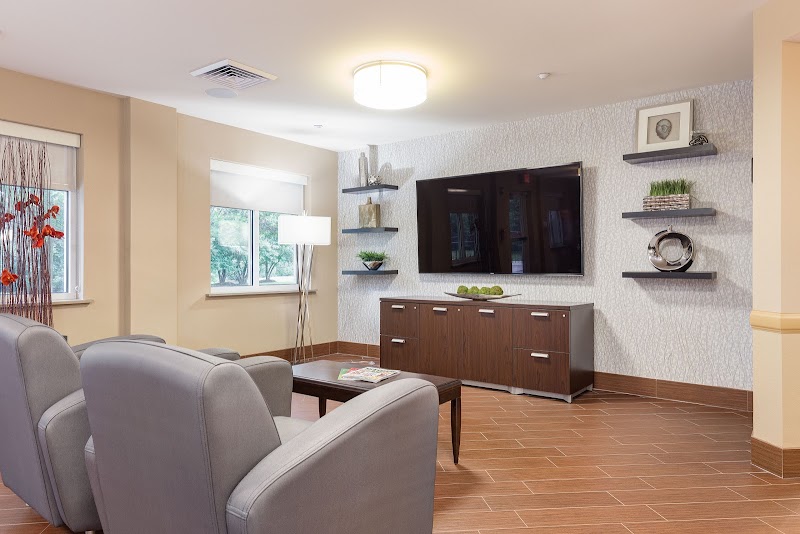
How is Garden View Of Chesterfield Staffed?

CMS rates GARDEN VIEW CARE CENTER OF CHESTERFIELD's staffing level at 3 out of 5 stars, which is average compared to other nursing homes. Staff turnover is 73%, which is 27 percentage points above the Missouri average of 46%. High turnover can affect care consistency as new staff learn residents' individual needs. RN turnover specifically is 67%, which is notably high. RNs provide skilled clinical oversight, so turnover in this role can affect medical care quality.

What Have Inspectors Found at Garden View Of Chesterfield?

State health inspectors documented 20 deficiencies at GARDEN VIEW CARE CENTER OF CHESTERFIELD during 2020 to 2025. These included: 20 with potential for harm.
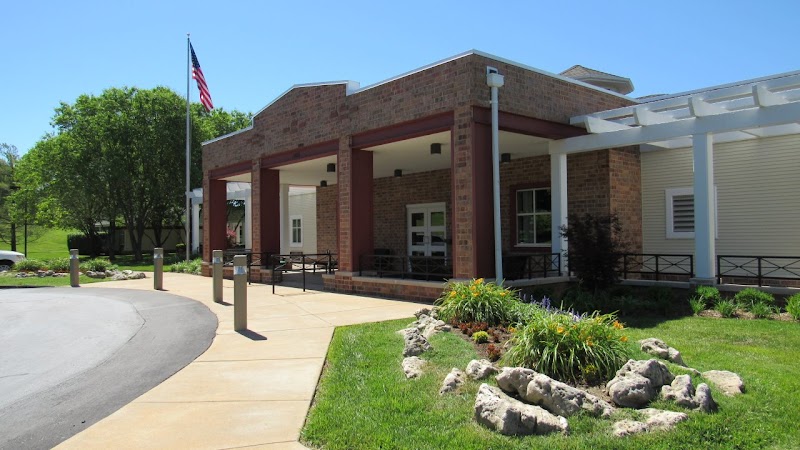
Who Owns and Operates Garden View Of Chesterfield?

GARDEN VIEW CARE CENTER OF CHESTERFIELD is owned by a for-profit company. For-profit facilities operate as businesses with obligations to shareholders or private owners. The facility operates independently rather than as part of a larger chain. With 52 certified beds and approximately 51 residents (about 98% occupancy), it is a smaller facility located in CHESTERFIELD, Missouri.

How Does Garden View Of Chesterfield Compare to Other Missouri Nursing Homes?

Compared to the 100 nursing homes in Missouri, GARDEN VIEW CARE CENTER OF CHESTERFIELD's overall rating (4 stars) is above the state average of 2.5, staff turnover (73%) is significantly higher than the state average of 46%, and health inspection rating (4 stars) is above the national benchmark.

What Should Families Ask When Visiting Garden View Of Chesterfield?

Based on this facility's data, families visiting should ask: "How do you ensure continuity of care given staff turnover, and what is your staff retention strategy?" "Can I visit during a mealtime to observe dining assistance and food quality?" "How do you handle medical emergencies, and what is your hospital transfer rate?" "Can I speak with family members of current residents about their experience?" These questions are particularly relevant given the facility's high staff turnover rate.

Is Garden View Of Chesterfield Safe?

Based on CMS inspection data, GARDEN VIEW CARE CENTER OF CHESTERFIELD has a clean safety record: no substantiated abuse findings (meaning no confirmed cases of resident harm), no Immediate Jeopardy citations (the most serious violation level indicating risk of serious injury or death), and is not on the Special Focus Facility watch list (a federal program monitoring the lowest-performing 1% of nursing homes). The facility has a 4-star overall rating and ranks #1 of 100 nursing homes in Missouri. While no facility is perfect, families should still ask about staff-to-resident ratios and recent inspection results during their visit.

Do Nurses at Garden View Of Chesterfield Stick Around?

Staff turnover at GARDEN VIEW CARE CENTER OF CHESTERFIELD is high. At 73%, the facility is 27 percentage points above the Missouri average of 46%. Registered Nurse turnover is particularly concerning at 67%. RNs handle complex medical decisions and coordinate care — frequent RN changes can directly impact care quality. High turnover means new staff may not know residents' individual needs, medications, or preferences. It can also be disorienting for residents, especially those with dementia who rely on familiar faces. Families should ask: What is causing the turnover? What retention programs are in place? How do you ensure care continuity during staff transitions?

Was Garden View Of Chesterfield Ever Fined?

GARDEN VIEW CARE CENTER OF CHESTERFIELD has no federal fines on record. CMS issues fines when nursing homes fail to meet care standards or don't correct problems found during inspections. The absence of fines suggests the facility has either maintained compliance or corrected any issues before penalties were assessed. This is a positive indicator, though families should still review recent inspection reports for the full picture.

Is Garden View Of Chesterfield on Any Federal Watch List?

GARDEN VIEW CARE CENTER OF CHESTERFIELD is not on any federal watch list. The most significant is the Special Focus Facility (SFF) program, which identifies the bottom 1% of nursing homes nationally based on persistent, serious quality problems. Not being on this list means the facility has avoided the pattern of deficiencies that triggers enhanced federal oversight. This is a positive indicator, though families should still review the facility's inspection history directly.