DELMAR GARDENS OF CREVE COEUR
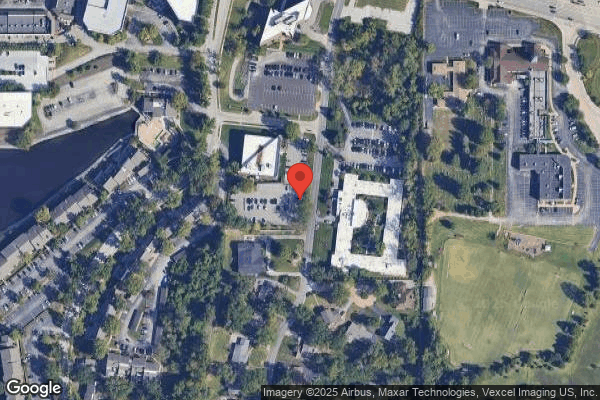

850 COUNTRY MANOR LANE, CREVE COEUR, MO 63141 (314) 434-5900
For profit - Corporation 148 Beds DELMAR GARDENS Data: November 2025
Trust Grade
65/100
#65 of 479 in MO
Last Inspection: September 2023

Over 2 years since last inspection. Current conditions may differ from available data.

Overview

Delmar Gardens of Creve Coeur has a Trust Grade of C+, indicating it is slightly above average but not exceptional. It ranks #65 out of 479 facilities in Missouri, placing it in the top half, and #9 out of 69 in St. Louis County, meaning there are only eight local options that are better. The facility's trend is stable, with two issues reported in both 2024 and 2025, which suggests they are maintaining a consistent level of care. Staffing is a notable concern, rated at 2 out of 5 stars, with a turnover rate of 60%, which is average for Missouri. However, there is less RN coverage than 97% of state facilities, potentially compromising care quality. While there are no fines on record, which reflects positively on the facility, there are significant areas for improvement. For instance, a serious incident involved improper transfers of two residents using a Hoyer lift, resulting in one needing hospitalization and surgery. Additionally, there have been concerns about cleanliness, with reports of mold and unclean floors in resident rooms, indicating that maintenance and hygiene may not be adequately prioritized. Overall, families should weigh the strengths and weaknesses carefully when considering this facility for their loved ones.

Trust Score
C+
65/100
In Missouri
#65/479
Top 13%
Safety Record
Moderate
Needs review
Inspections
Holding Steady
2 → 2 violations
Staff Stability
⚠ Watch
60% turnover. Above average. Higher turnover means staff may not know residents' routines.
Penalties
✓ Good
No fines on record. Clean compliance history, better than most Missouri facilities.
Skilled Nurses
⚠ Watch
Each resident gets only 10 minutes of Registered Nurse (RN) attention daily — below average for Missouri. Fewer RN minutes means fewer trained eyes watching for problems.
Violations
⚠ Watch
17 deficiencies on record. Higher than average. Multiple issues found across inspections.
★★★★☆
4.0
Overall Rating
★★☆☆☆
2.0
Staff Levels
★★★☆☆
3.0
Care Quality
★★★★☆
4.0
Inspection Score
Stable
2024: 2 issues
2025: 2 issues

The Good

  • Full Sprinkler Coverage · Fire safety systems throughout facility
  • No fines on record

Facility shows strength in fire safety.

The Bad

Staff Turnover: 60%

13pts above Missouri avg (46%)

Frequent staff changes - ask about care continuity

Chain: DELMAR GARDENS

Part of a multi-facility chain

Ask about local staffing decisions and management

Staff turnover is elevated (60%)

12 points above Missouri average of 48%

The Ugly 17 deficiencies on record

1 actual harm
Jun 2025 1 deficiency
CONCERN (D) 📢 Someone Reported This

A family member, employee, or ombudsman was alarmed enough to file a formal complaint

Potential for Harm - no one hurt, but risky conditions existed

Resident Rights (Tag F0550)

Could have caused harm · This affected 1 resident

**NOTE- TERMS IN BRACKETS HAVE BEEN EDITED TO PROTECT CONFIDENTIALITY** Based on observation, interview and record review, the facility failed to ensure staff treated residents with dignity and respec...

Read full inspector narrative →
**NOTE- TERMS IN BRACKETS HAVE BEEN EDITED TO PROTECT CONFIDENTIALITY** Based on observation, interview and record review, the facility failed to ensure staff treated residents with dignity and respect when a staff member took a video of a resident from a personal phone and posted in social media (Resident #39). In addition, staff used their personal phones while monitoring residents during mealtime. The census was 94. The sample was 22. Review of the facility's undated Resident Rights, showed: -Your right to be treated with dignity and respect is the foundation of which all other resident rights and responsibility are based; -Your right to privacy and confidentiality is as important to you as it is to any other person. Review of the facility's Social Media and Electronic Devices Policy, dated 11/2019, showed: -To ensure residents receive the highest quality of care and to minimize risks associated with the use of social media and electronic devices in healthcare, the facility expects its employees to adhere to the guidelines and rules outlined in this policy; -Employees are strictly prohibited from posting, uploading, sending, or otherwise sharing or disclosing photos, videos or personal information of any resident without prior written permission of the resident or the resident's authorized agent; -Employees must use the facility's authorization form to obtain such prior written permission. This prohibition includes photos, videos, or other postings where the resident is not easily identifiable (e.g., a photo of the resident's hand, a close up photo of any part of a resident's body, or a photo of the back of a resident in the far background of the photo). -Employees are prohibited from having personal cell phones, smartphones, or digital cameras while working with or near residents, resident charts or other medical documents, white boards containing resident information, or resident medications. Additionally, employees are prohibited from using an electronic device with camera, video, and audio capabilities to record conversations or actions of anyone in the facility, including other employees. 1. Review of Resident #39's annual Minimum Data Set (MDS), a federally mandated assessment instrument completed by facility staff, dated [DATE], showed: -admitted on [DATE]; -Severely impaired cognitive skills for daily decision-making; -Diagnoses included heart disease, diabetes, dementia and anxiety; -On hospice care. Review of the resident's care plan, in use at time of survey, showed: -Problem: Behavioral symptoms. Resident at risk for harm related to the behavior, has inattention and disorganized thinking, elopement risk, looking for his/her care, talks out loudly and yells 'help' a lot; -Goal: Resident will be safe and free from harm to self and others and decreased in behavior through next review; -Approach: Assess and document behaviors as they occur, treat him/her with respect; -Problem: Cognitive loss/dementia; -Goal: Resident will have positive experiences in daily routine without overly demanding tasks and without becoming overly stressed through next review; -Approach: Encourage to verbalize feelings, concerns and fears, clarify misconceptions. Respect the resident's rights to make decisions. Support and reassure the resident in new situations. Review of a video clip posted on TikTok (a social media platform for creating, sharing and discovering short videos), by Licensed Practical Nurse (LPN) D, showed a resident sat in a wheelchair propelled by another staff. The eight second video showed the staff pointed the camera mostly to the floor. He/She walked towards the resident who was moved away from a door by the other staff. The side of the resident's face and body was shown very quickly, while the rest of his/her body showed most of the duration of the video. The resident was not easily identifiable, though the facility's floor indicated the facility's unique carpet design. During an interview on [DATE] at approximately 8:15 A.M., the Administrator said he did not recall a report where a staff posted a video on social media involving a resident but would find out if there was anything on file. At 9:20 A.M., the Administrator said the Director of Nursing (DON) had investigated the incident, but it was not proven where and when it occurred, and there was no resident identified. During an interview on [DATE] at 9:30 A.M., LPN D said he/she took the video around [DATE]. The resident in the video was Resident #39, who expired about a week ago. LPN D said he/she had no reason for taking the video, he/she was just tired. The video was taken down when he/she realized it was not appropriate. He/She said per the facility's policy, staff were not allowed to take or post video because of HIPAA (Health Insurance Portability and Accountability Act, is a US federal law that protects sensitive patient health information from being disclosed without the patient's consent or knowledge). The DON educated him/her on it. LPN D said the incident was sent to the Corporate office but was determined to not be concerning due to the resident's name was not disclosed. During an interview on [DATE] at 9:54 A.M., the DON said the TikTok video involving LPN D and Resident #39 was brought to her attention by another staff. The DON was unable to recall the staff member's name. The DON could not find a documented investigation, education or in-services following the incident. She discussed the issue with LPN D and instructed him/her to take down the video, which was already done prior to their conversation. She reminded LPN D he/she could not do it without the resident's permission. The DON said LPN D continued to work and stayed on his/her schedule after their discussion. The DON said staff were not allowed to use their cell phones while at work. The staff signed the cellphone usage policy during onboarding orientation. 2. Observations on [DATE] of the breakfast meal service in the main dining room showed: -At 8:17 A.M., Certified Nurse Aide (CNA) G at a table with three residents. He/She leaned back in his/her chair and took out his/her phone and began to scroll through his/her phone; -At 8:18 A.M., LPN D sat at a table alone, pulled his/her phone out and scrolled through his/her phone while eating grapes; -At 8:20 A.M., LPN D appeared to type something on his/her phone; -At 8:21 A.M., the Assistant Administrator said something to LPN D and he/she stopped scrolling through his/her phone; -At 8:22 A.M., another staff said something to LPN D. He/She then stood up from the table and placed the phone in his/her pocket; -At 8:23 A.M., CNA G continued to scroll through his/her phone; -At 8:24 A.M., CNA G got up and assisted a resident. During an observation and interview on [DATE] at 11:16 A.M., CNA G was sitting at the Hall 100 nurses' station. Two residents sat in wheelchairs and were parked facing the station. CNA G said he/she was currently on break so he/she could use his/her cellphone. He/She had not observed other staff on cellphones while providing residents' care. During an interview on [DATE] at 11:19 A.M., Housekeeper H said he/she never used his/her cellphone while working and while at the residents' areas. Housekeeper H kept his/her cellphone in his/her pocket at all times. 3. During an interview on [DATE] at 11:21 A.M., LPN I said staff were not allowed to use their cellphone while in the residents' areas. If he/she observed staff using their cellphones in the hallway or while working, he/she would address it immediately. LPN I had heard about a staff posted a video in social media but was not aware of the details. He/She would report to the supervisor or management immediately if he/she observed staff taking videos or photos of the residents. No recent in-services had been provided by the facility regarding social media and personal phone usage. 4. During an interview on [DATE] at 11:42 A.M., and 12:48 P.M. the Administrator and DON said they expected the staff to treat the residents with dignity and respect. The staff should not be using their phones while working in resident areas. Staff should not be recording or taking photos of residents and posting in social media because it violates their rights. The Administrator said he would have expected for staff to not have had their phones out in the dining room. They needed to have been standing up and attentive to the residents. MO00241876
Feb 2025 1 deficiency 1 Harm
SERIOUS (G) 📢 Someone Reported This

A family member, employee, or ombudsman was alarmed enough to file a formal complaint

Actual Harm - a resident was hurt due to facility failures

Accident Prevention (Tag F0689)

A resident was harmed · This affected 1 resident

**NOTE- TERMS IN BRACKETS HAVE BEEN EDITED TO PROTECT CONFIDENTIALITY** Based on interview and record review, facility staff failed to keep residents free from accidents when staff failed to use safe,...

Read full inspector narrative →
**NOTE- TERMS IN BRACKETS HAVE BEEN EDITED TO PROTECT CONFIDENTIALITY** Based on interview and record review, facility staff failed to keep residents free from accidents when staff failed to use safe, professional standards of care when transferring two residents (Residents #1 and #2) using a Hoyer lift (a mechanical device that helps people with limited mobility move from one place to another, such as from bed to a wheelchair). This failure caused an injury requiring hospitalization and surgery for one resident (Resident #1). The facility also failed to investigate two improper Hoyer transfers involving one resident (Resident #2) and did not put corrective measures in place to prevent further injuries to both residents. The sample was three. The census was 88. Review of the facility's Incident/Accident Policy, dated December 9,2016, showed: -Purpose: to record any unusual situation or injury to a resident, staff member or visitor; -Examine the person for possible injury; -Administer emergency treatment as indicated; -Notify the physician and responsible party of all incidents of falls and possible head injuries of resident; -Complete Incident/Accident Report Form; -Forward report to appropriate persons per center policy. Review of the facility's Mechanical Full Body Lift policy, dated January 2017, showed: -Purpose: To ensure that all nursing staff are using proper transfer techniques to minimize the risk of injury to resident and staff, while using full body lift; -Secure the assistance of another Certified Nursing Assistant (CNA) or other qualified employee; -Positioning of transferring surfaces should be in close proximity to minimize transport area allowing enough room to move base from bed to chair or chair to bed; -Position lift sling (supports resident's weight during transfer) under the resident; -Attach the lift sling to the lift (attach to metal cradle, a frame with four attachment points for the sling); -Widen the base/legs of the lift prior to moving the lift. The lift is more stable when the legs are widened; -Begin lifting the resident, using the control panel on the lift; -The second staff member monitors the resident's body position, making sure the resident's extremities or head does not bump or swing into any object including the mast (vertical support component of the lift) of the lift; -As the first staff member moves the lift toward the chair/bed with the resident in the sling, the second staff member is guiding the resident's legs to prevent injury; -Bring the lift into position so that the resident is over the seat of the chair or centered over the bed. Do not close the support legs, while transporting residents; -While the resident is facing the person operating the lift, the second staff member will pull the sling back so that the resident will be seated properly in the chair or centered on the bed once lowered; -Lower the sling so the resident is seated in the chair or on the bed; -Remove the sling from the hooks on the lift; -Protect the resident from injury from the bar that may swing during this process; -Carefully move the lift away from the resident; watching to make sure the resident is not bumped with the lift; -There must be two staff members present when transferring a resident using a mechanical lift; -Complete competency checks with staff with orientation, semi-annually and as needed; -Failure to follow the above policy may result in immediate termination. Review of the facility's Injury Unknown Source - Investigative Protocol, dated May 2021, showed: -The following indicators of abuse/neglect are provided to help determine if abuse/neglect should be suspected. Staff are mandated to report suspected abuse. The list is not all inclusive; -Indicators of physical abuse may include, but are not limited to the following: Bruises and/or hematomas (collection of blood beneath the skin); Injures of unknown source without abuse/neglect suspected; -If a logical/reasonable explanation of the source of injury cannot be determined, notify the local state agency within two hours of discovery; -If there is reason to suspect injury was caused by abuse/neglect, staff must immediately notify the Administrator/Designee. The Administrator/Designee is responsible to report to other officials in accordance with State law, including to the State survey and Certification agency; -Staff must provide a statement as to their knowledge or lack of knowledge of the injury; -The resident's Physician must be notified; -The Resident's Representative must be notified; -A complete body assessment must be completed on the resident. 1. Review of Resident #1's quarterly Minimum Data Set (MDS), a federally mandated assessment instrument completed by facility staff, dated 11/4/24, showed: -Cognitively intact; -No behaviors noted; -Dependent on staff members assistance for toileting, showers, lower body dressing and transfers; -Height of 68 inches and weight of 379 pounds (lbs); -Diagnoses included heart failure, diabetes mellitus, anxiety, morbid obesity and polyneuropathy (damage to nerves causing pain, discomfort and mobility difficulties). Review of the resident's care plan, dated 1/23/25, showed: -Problem: The resident required assistance with activities of daily living (ADLs); Interventions included: Assume unhurried manner, allow ample time for tasks; Provide A.M. and P.M. care per facility policies and procedures; Mechanical lift used for transfers; -Problem: The resident had complaints of pain; Interventions included: observe for nonverbal indicators of pain; Accept the resident's description of pain. Review of the resident's skin integrity event report, dated 1/23/25, at 11:52 A.M., showed: -The resident complained of pain to his/her right lower leg to Licensed Practical Nurse (LPN) C, an agency nurse; -The nurse assessed the resident and saw a bruise to resident's right shin (lower leg) measuring 9 centimeters (cm) by 10.5 cm; -The Nurse Practitioner (NP) was called to the room; -The NP arrived and gave new orders to sent the resident to the hospital immediately; -The resident was transferred to the stretcher via Hoyer lift; -The resident's emergency contact was notified; -The resident was transferred to the hospital; -Evaluation note included the resident obtained a bruise which became a rapidly growing hematoma. The resident said he/she believed he/she bumped his/her right shin while in the mechanical lift. The staff did not recall any bumps and the resident did not complain of pain to the area during or after transfer until late in the morning. The hematoma was growing rapidly so the resident was discharged to the hospital for evaluation. Review of the investigation, dated 1/23/25, no time noted, completed by the Director of Nursing (DON), showed: -On the morning of 1/23/25, at approximately 10:00 A.M., the DON was called to the resident's room by the NP, to assess the resident's hematoma located at his/her right shin; -The resident had a dollar coin sized hematoma on his/her right shin that was dark blue, purple and swollen; -The resident reported he/she hit it at some point during his/her transfer that morning but was unsure where on the lift he/she was bumped, yet he/she felt a slight bump; -The resident was sent out to the hospital for evaluation; -Both CNAs who got the resident out of the bed that morning were interviewed over the phone and gave written statements to the DON; -Both CNAs said nothing occurred during the transfer. The resident did not say ouch or complain of pain prior to, during or after the procedure; -CNA A's statement, undated, showed on 1/22/25, when getting the resident up out of bed, CNA A spotted CNA B during the transfer; CNA A was in the back, pulling and guiding the resident into his/her wheelchair; Never did the resident say Ouch, that hurt or anything to make or alert the CNAs that the resident was being injured; Before leaving the room both CNAs were laughing and joking with the resident -CNA B's statement, undated, showed on January (day left blank) 2025, at 5:05 A.M., he/she went to the resident's room to get the resident dressed and ready to get out of bed. CNA B got assistance from another aide (unnamed). The two CNAs transferred the resident into his/her bed with no inconvenience. CNA B finished dressing the resident and then gave report to the on-coming shift; -There was no documentation showing the conclusion of the investigation; -There was no documentation showing what corrective measures were taken. Review of the training sign in sheet, dated 1/30/25, showed: -Material Covered included: Mechanical Lift Policy; -There was no documentation CNA A, CNA B or LPN C received the training. Review of the resident's Medication Administration Record, dated January 2025, showed: -An order, dated 7/15/24, for Eliquis (anti-coagulant) 5 milligrams (mg) give twice a day; -The facility administered the medication as ordered from 1/1/25 through 1/23/25. Review of the resident's hospital Discharge summary, dated [DATE], showed: -Resident admitted on [DATE] due to leg pain related to swelling and bruising on the resident's right shin; -Diagnoses included: Hematoma of the right lower extremity (leg); -History of Present Illness, undated, no time noted, showed on 1/23/25, the resident came to the Emergency Department (ED) from the facility after he/she sustained an injury while being lifted in a Hoyer lift. The resident denied falling but somehow his/her leg was pushed with the transfer. A computed tomography (CT scan, combines a series of x-ray images taken from different angles around the body) of the lower right extremity showed a large superficial hematoma. On the morning of 1/24/25, the resident complained of high amount of pain to his/her right extremity. There was significant swelling and increased blistering to the injury site compared to the images taken in the ED. The resident said he/she had a decreased sensation to his/her right foot compared to his/her left which was new; -Problems addressed: Large right lower leg hematoma/abscess (pocket of pus) status post (s/p) debridement (removal of dead tissue) surgery on 1/25/25; -The resident had a wound vacuum (medical device that uses negative pressure to promote wound healing) applied to his/her right lower extremity surgical wound; -The resident required a skin graft (the removal and transplantation of healthy skin from one area of the body to another area) later to his/her right lower extremity. Review of the resident's nursing note, dated 1/29/25 at 1:30 P.M., showed the resident was readmitted to the facility from the hospital. The resident had a wound vacuum on his/her right lower extremity with new orders for wound care and antibiotic therapy. During an interview on 2/4/25 at 10:16 A.M., CNA D said: -Nursing staff were expected to always have two people present when transferring a resident with the Hoyer lift. One staff member worked the controls of the Hoyer while the second staff member guided the resident from one surface to another for safety, ensuring the resident was not bumped into any surfaces; -He/She came in to work on 1/23/25 at 6:45 A.M. and was assigned to care for the resident; -The resident was dressed and in his/her wheelchair when CNA D first saw the resident during rounds; -The resident went to his/her meeting after breakfast; -The resident first complained of pain at his/her right lower extremity when he/she returned from his/her meeting around 11:00 A.M.; -The resident said he/she was hit by the Hoyer that morning during a transfer; -CNA D told the agency nurse, LPN C, who came and assessed the resident; -The resident was sent out the hospital. Observation on 1/31/25 at 12:41 P.M., showed the resident lay in his/her bed, with pillows placed under his/her right lower extremity. There was a wound vacuum attached to the resident's right lower extremity wound, actively running. The resident was visiting with a guest and was grimacing in pain. Observation on 1/31/25 at 1:17 P.M., showed the facility's bariatric Hoyer lift in the hall. The remote control to the Hoyer was approximately 10 inches long and two inches wide. During an interview on 1/31/25 at 1:29 P.M., the resident said: -He/She was hurt when staff moved him/her from the bed to his/her wheelchair while using the Hoyer lift; -While the resident was up in the air, one of the two CNAs was pushing on his/her right leg, trying to open the resident's legs up wider; -The CNA had the Hoyer remote control in his/her hand while the CNA was pushing on the resident's right leg; -The resident told them to stop, they were hurting him/her, and to be careful with his/her legs; -The resident told the CNA who was pushing on his/her right leg with the remote control in his/her hand, to stop because the CNA was hurting him/her. The CNA ignored the resident and kept pushing the remote control into the resident's right lower leg; -After the resident was placed in his/her wheelchair, the resident went to the sink to clean him/herself up before going out to the meeting; -During the meeting, the resident's right lower leg started to hurt more and more; -The resident did not want to interrupt the meeting by complaining of pain so he/she was quiet and tried to ignore the pain, which kept increasing; -The resident was in his/her room right after the meeting and decided to look at his/her right lower leg to try to find out why it hurt so badly; -The resident raised his/her pant leg and saw a black and blue, swollen area on his/her right lower leg; -The resident described the pain as throbbing really hard; -The resident put the call light on and the nurse came to look at his/her leg; -Then the DON and NP came to look at his/her leg and told the resident he/she needed to go out to the hospital; -The resident had surgery on his/her right lower leg to clean the dead tissue out; -He/She was in constant pain, he/she could barely stand to look at his/her right leg as it made him/her sick to see it; -The resident had not transferred out of his/her bed since he/she was readmitted to the facility due to the horrible pain in his/her right leg; -The resident always had to tell the CNAs to be careful of his/her legs, told them to stop when they were hurting him/her and the staff never listened, even before the incident on 1/23/25. During an interview on 2/4/25 at 10:52 A.M., the DON said: -On 1/23/25, she was notified by the NP to come to the resident's room to assess the resident's right lower leg; -The resident was complaining of severe pain to his/her right lower leg after he/she left a meeting; -When she got to the room, she saw a black and blue bruise that was swollen and growing at a fast rate; -The resident said he/she had bumped his/her right leg on the Hoyer lift, maybe on the mast, when the CNAs had gotten him/her up that morning; -The resident was sent out to the hospital for evaluation, as the bruise on his/her right lower leg kept spreading; -When the resident returned from the hospital, he/she said the injury on his/her right lower leg was because one of the CNAs bumped his/her right lower leg with the Hoyer lift remote control. The resident could not describe the event; -It was not appropriate to push on a resident while there was an object in the staff's hand as it increased the risk of injury to the resident; -She interviewed both CNAs who denied anything happened during the transfer, saying the resident never voiced he/she was in pain or was hurt; -The CNAs did not perform an improper transfer because there were two staff members present, one to control the machine and the other to guide the resident to prevent injury, and they had the Hoyer lift legs open for stability; -She did not write up, counsel or provide in-services to the CNAs involved in the event because they said nothing occurred that could have caused injury to the resident; -Injury of unknown origin was when the facility had no explanation of how the injury occurred; -The injury was called an injury with a mechanical lift because the resident said it happened during the transfer, although the resident could not say how it occurred exactly and the CNAs denied any action occurred to cause injury; -She did not feel any corrective measures or interventions were necessary since the CNAs were unaware of how the injury could have occurred and it was unintentional; -She did not update the resident's plan of care to prevent further accidents. 2. Review of Resident #2's nurse note, dated 11/20/24 at 6:26 P.M., showed LPN G wrote the resident was pushed into room in wheelchair and left medial (middle) foot was bumped against the transfer pole, assessment showed no tenderness, no bruising or swelling was present and the resident was not complaining of pain. The primary care physician (PCP) and family were made aware. Review of the resident's Miscellaneous Event report, dated 11/20/24 at 6:46 P.M., showed: -Description: Left foot bumped on transfer pole; -No injury noted; -Evaluation note: the resident was being transferred in the lift when his/her leg was bumped on the wall., No injury noted. Monitored for 72 hours with no concerns. Review of the resident's care plan, dated 1/2/25, showed: -Problem: The resident was at risk for discomfort related to diagnosis of chronic pain syndrome; Interventions included: The resident was in a mechanical lift when it tilted his/her body when lowering him/her to the bed and the resident said it caused pain to his/her shoulder. No injuries were noted and the next day the resident said his/her shoulder was fine. The resident was non-compliant with care and moves unsafely in the mechanical lift. Multiple staff members go into the room when transferring the resident to keep him/her safe; Assess level of pain and provide comfort measures; -Problem: The resident was at risk for falls related to impaired mobility and weakness. Interventions included: The resident was lowered to the floor after the mechanical lift being used started to tilt. Employees lowered the lift down to the floor and reconnected to another lift to place the resident into his/her chair. The resident had a small bruise to his/her right cheek. Two employees were present during transfer; -Problem: The resident requires care in pairs with ADL assistance due to history of embellished stories; Interventions included: Direct care staff may pair two staff members together when providing care; -There was no documentation the resident required a Hoyer lift for transfers. Review of the resident's annual MDS, dated [DATE], showed: -Cognitively intact; -No behaviors noted; -Dependent on staff members' assistance for toileting, showers, lower body dressing and transfers; -Height of 66 inches and weight of 287 lbs; -Diagnoses included atrial fibrillation (irregular heart rate), heart failure, anxiety, morbid obesity and polyneuropathy. Review of the resident's nurse progress note, dated 1/29/25 at 9:53 P.M., showed LPN G wrote an aide informed him/her that during a transfer with a Hoyer lift with two aides, the resident was hit with the hook on the Hoyer lift. The resident said the Hoyer hook hit his/her right temple; on assessment no bruising or swelling was noted. Neuro checks were within normal limits and the resident denied pain. The PCP and resident's responsible party (RRP) was notified. Review of the resident's Miscellaneous Event report, dated 1/29/25 at 10:05 P.M., showed: -Description: The resident was hit with Hoyer hooks to the right temple with no injury; -Neurological check (neuro-checks, an assessment completed by nursing staff to monitor for changes in the resident's neurological (nervous system) status) were started; -Evaluation notes: Event still open. During an interview on 2/4/25 at 10:39 A.M., LPN G said: -He/She did not remember an incident, on 11/20/24, involving the resident getting his/her foot bumped during a Hoyer transfer; -On 1/29/25, he/she was the nurse assigned to the resident when the resident was struck in the face by the lift bar during a Hoyer transfer; -He/She was alerted by a CNA (unknown) that the resident was struck by the lift bar during a Hoyer transfer; -He/She went and assessed the resident, who confirmed he/she was hit in the right side of his/her temple by the metal lift bar; -The resident did not have any bruising, swelling, and did not complain of pain to his/her right temple; -The nurse competed a neuro-check and found the resident was within his/her normal limits, called the PCP and RRP; -The nurse then completed an event report in the resident's EMR with the PCP's new orders to monitor the resident's neurological status for 72 hours; -The nurse started the neurological checks and passed on in report to the next nurse; -The DON asked the nurse the next day about what happened; -The DON did not instruct the nurse to make any changes to the resident's plan of care; -He/She had not received any in-services on Mechanical Lift Policy in the last year; -He/She expected CNAs to transfer resident's safely while using a Hoyer lift by always having two staff present, one to work the machine and the other to guide the resident in the sling to prevent injury. During an interview on 2/4/25, at 12:51 P.M., the resident said: -Last week, he/she was hit in the head with the lift arm during a Hoyer transfer. The CNAs jerked the strap of the sling off of the lift arm so hard, it smacked the resident in his/her right temple; -The resident had neuropathy in his/her legs which made them very sensitive and painful; -He/She did not feel safe when CNAs transferred him/her with the Hoyer lift; -CNAs did not listen to the resident during transfers, ignoring the resident's pleas to be careful when moving his/her legs, to make sure he/she does not bump into objects while up in the sling; -When the resident was up in the Hoyer lift, he/she would swing without any support and hit his/her legs and feet against the wall; -The CNAs would say they were doing the best they could when the resident said they were hurting him/her and would continue with their task; -The resident would remind the CNAs to be careful with his/her left shoulder, as it was always in pain, when removing the sling from the lift bar; -The CNAs would jerk the sling off of the lift bar causing the resident to fall back into his/her wheelchair or bed, causing him/her pain; -There have been several near misses with the lift bar because the CNAs would not hold it still when they attached or removed the sling from it, causing the lift bar to swing back and forth in front of the resident's face; -There were some CNAs who were very kind and listened to the resident but most of them acted so angry and worked hastily; -The resident feared retribution from staff if he/she complained about the treatment and the fear he/she has when up in the Hoyer lift during transfers; -He/She did not feel that his/her concerns or complaints were taken seriously; -During the interview the resident was often tearful and whispered because he/she was afraid others might hear him/her. During an interview on 2/4/25 at 10:52 A.M., the DON said: -She did not recall an event on 11/20/24 involving the resident and a Hoyer lift transfer; -The facility did not investigate the event on 11/20/24; -She was not aware of the event that occurred on 1/29/25 and had not started investigation on the event; -She expected staff to report any accidents to her so she could conduct an investigation; -Nurses were not expected to report all events to the DON as nursing staff were able to take care of them independently; -She was responsible for reviewing events daily or at least every couple of days; -Staff conducted an improper Hoyer transfer if a resident was struck in the face by the metal arms of the cradle when staff removed the sling from the hook; -Staff conducted an improper Hoyer transfer if the resident's foot bumped into an object, causing them pain, due to staff not guiding the resident to prevent injury; -She did not update the resident's plan of care to prevent further accidents. 3. During an interview on 1/31/25 at 11:36 A.M., LPN E said: -When a resident had a fall, an accident or injury of unknown origin, nurses were responsible for assessing the resident for injury or any change of condition, notify the PCP for any new orders, notify the RRP, list what interventions were tried or put in place, and the plan of care going forward. All of that information was then documented on an event note found in the resident's electronic medical record (EMR); -Nurses would try to find out what caused the fall, accident or injury of unknown injury by talking to their staff; -Neglect was defined as any time a staff member did not care for a residents' needs, by ignoring them or acting carelessly, causing the residents harm; -Nurses were expected to report any suspicion of abuse or neglect to their supervisor. Supervisors were expected to then investigate the incident by interviewing all residents and/or staff involved and making report to the appropriate agencies. During an interview on 2/4/25 at 10:27 A.M., LPN F said: -Nursing staff were expected to always use two people during a Hoyer Lift, one to operate the machine and the other to guide the resident to make sure the resident was safe and did not bump into any surfaces; -He/She would report to a Supervisor if a resident had an injury due to an unsafe transfer so they could investigate the incident. During an interview on 2/4/25 at 10:52 A.M., the DON said: -She expected nursing staff to have knowledge of and to follow facility policies; -An incident or accident was defined as a fall, an injury to the skin, anything that changed the condition of the resident unexpectedly; -An incident or accident also included events where staff caused harm or injury to the resident due to not following facility policies or professional standards of care; -She expected nurses to complete an event report in residents' EMR for any incident that changed the condition of the resident; -The facility would investigate events by interviewing staff and residents to see what occurred and based on what was found would provide in-services to staff to address the issue; -If staff conducted a transfer incorrectly, she would write-up the staff involved and provide education and counseling; -If staff conducted a transfer incorrectly that caused injury to a resident, she would suspend the staff involved pending investigation; -In-services to staff were started right after the event occurred, provided by the DON or the Assistant Director of Nursing (ADON); -Staff were expected to retain the education they received during in-services; -In-services were based on professional standards of care and facility policies; -If there was a pattern of the same type of accidents occurring again and again, she would do more in-services to staff and try to find out why the issue was still occurring; -She was not aware of any improper Hoyer transfers in her facility; -A proper Hoyer transfer consisted of two staff members, one to control machine, the other to spot the resident for safety and to keep the Hoyer legs open for stability; -She recently gave nursing staff education on Hoyer lift transfers as part of a mock survey and had not completed it as of time of interview; -She did not recognize a pattern of improper mechanical lifts in the facility. MO00248154 MO00243707
Oct 2024 2 deficiencies
CONCERN (D) 📢 Someone Reported This

A family member, employee, or ombudsman was alarmed enough to file a formal complaint

Potential for Harm - no one hurt, but risky conditions existed

Deficiency F0658 (Tag F0658)

Could have caused harm · This affected 1 resident

**NOTE- TERMS IN BRACKETS HAVE BEEN EDITED TO PROTECT CONFIDENTIALITY** Based on observation, interview and record review, the facility failed to provide care that met professional standards of qualit...

Read full inspector narrative →
**NOTE- TERMS IN BRACKETS HAVE BEEN EDITED TO PROTECT CONFIDENTIALITY** Based on observation, interview and record review, the facility failed to provide care that met professional standards of quality by failing to follow physician orders for wound care and failed to accurately document in the Medication Administration Record (MAR) for two residents (Resident #2 and #5). The facility also failed to notify the Primary Care Physician when a resident was struck in the head, document an incident fully and failed to follow their policy to initiate and document complete neurological assessments (exam to identify signs of disorders affecting the brain, spinal cord and nerves) for one resident (Resident #2) after the resident was hit in the head. The sample was three. The census was 95. Review of the facility's Following Physician Orders policy, dated 6/29/21, showed: -Policy: To ensure all Licensed Professional Nurses and other Healthcare Professionals to follow Physician Orders in accordance with State, Federal regulations and their respective practice acts; -Procedure: All physicians orders will be followed as prescribed and if not followed, the reason shall be recorded on the resident's medical record. Review of the facility's Neurological Checklist Policy, reviewed on 7/2021, showed: -Purpose: To establish a base line neurological assessment. To recognize neurological trends and changes in the resident's condition. To provide an evaluation tool for reference when evaluating the resident's neurological status; -Procedure included: -Equipment: Flashlight and Neurological Record (tool for evaluating and recording resident's level of consciousness, pupil response and motor/verbal response); -Assess vital signs; -Establish awareness by calling out the resident's name, touching the resident, shaking the resident for a response, and /or applying a painful stimulus; -Assess the resident's level of consciousness; -Assess the resident's verbal response; -Complete neurological assessment for potential head injuries. 1. Review of Resident #2's quarterly Minimum Data Set (MDS), a federally mandated assessment instrument completed by facility staff, dated 9/12/24, showed: -Cognitively intact; -No behaviors noted; -Required supervision or touching assistance for personal hygiene and upper body dressing; -Required moderate assistance for chair/bed-to-chair transfers, -Wheelchair for mobility; -No skin issues noted; -Received anticoagulant (used to treat and prevent blood clots) and antiplatelet (prevent blood clots from forming) medications; -Diagnoses included heart failure, high blood pressure, peripheral vascular disease (poor circulation) and chronic obstructive pulmonary disease (COPD, a group of lung disease that block airflow and make it difficult to breathe). Review of the resident's progress notes, showed: -On 9/17/24, at 3:06 P.M., the resident was sitting in his/her wheelchair, watching T.V. when his/her roommate became agitated thinking the resident had taken his/her shoes. The roommate tried to grab the shoes off of the resident's feet, the resident refused and the roommate grabbed the resident's left arm, causing a skin tear (layers of skin separate). Review of the facility's initial reporting form, sent into the Department of Health and Senior Services, dated 9/17/24 at 3:18 P.M., showed: -On 9/17/24, the nurse was made aware the resident's roommate was arguing about a pair of shoes. The roommate went behind the resident, hit the resident on the left side of his/her head and grabbed the resident's left arm causing four skin tears. The roommate also struck the resident in his/her left eye; -Vital signs were obtained and were within normal limits. Review of the resident's Physician Order Sheet (POS), showed: -There were no orders for neurological checks for the incident that occurred on 9/17/24. Review of resident's care plan, dated 9/19/24, showed: -Problem: The resident was at risk for bleeding or bruising; -Interventions included: Notify nurse if nosebleed, excessive bruising/bleeding, flu-like symptoms, upset stomach, weakness or fatigue. Review of the resident's MAR, dated 9/27/28, showed: -An order, dated 7/2/24, for Eliquis (anti-coagulant) 5 milligrams (mg), give every 12 hours. Documentation showed the facility staff administered the medication as ordered; -An order, dated 9/23/24, to monitor left arm and hand skin tears for signs and symptoms of infection, change dressings as needed, clean with normal saline, apply Vaseline gauze and apply dry dressing to left back of hand, forearm, elbow and left inside forearm every three days until healed on Mondays and Thursdays. Documentation showed facility staff completed the order as written on 9/23/24 and 9/26/24. Observation on 9/27/24 at 8:56 A.M., showed: -The resident sat in his/her wheelchair in his/her room; -The resident had a skin tear on his/her left inside forearm, covered with a dark brown dried substance, without a dry dressing covering it; -The resident had a dark brown scab on his/her left elbow, covered with an undated band aid, which was lifting up at the edges; -The resident had white bandage on his/her lower forearm, dated 9/24. The bandage was dirty with dried, dark, brown substance. The bandage's borders were not secured and was lifting off of the resident's skin showing a skin tear and multiple hematomas (blood filled blister) directly under the bandage; -The resident's left hand had multiple hematomas located on the back of his/her left hand and on the outside of his/her hand below the smallest finger. The wounds did not have a dressing covering them. During an interview on 9/27/24 at 9:00 A.M., the resident said: -His/Her roommate thought he/she was wearing the roommate's shoes; -The roommate did not believe the resident when he/she told the roommate the shoes were his/hers; -The roommate attacked the resident from behind, hitting the back of his/her head; -The resident tried to get the roommate to get out from behind him/her and the roommate grabbed at the resident's left arm, tearing at it causing his/her skin to break open and bruise; -He/She needed the bandage on his/her left forearm changed as it was dirty and coming off; -He/She did not feel the staff took the incident seriously and he/she was not getting care for his/her wounds. During an interview on 10/4/24 at 3:56 P.M., the Director of Nursing (DON) said: -She expected the nursing staff to initiate 72 hour neurological checks after he/she was struck in the head by his/her roommate to ensure there were no neurological changes due to the hit; -She expected nurses to write a progress note showing the resident was on incident follow up (IFU) for 72 hours for continuity of care; -She expected the nurse to write a complete progress note which described the exactly what occurred, including the resident was struck in the head, to notify the Primary Care Physician that he/she was struck in the head and to tell nursing management staff so all would know what happened to keep the resident safe and for continuity of care. 2. Review of Resident #5's care plan, dated 7/1/24, showed: -Problem: The resident was at risk for skin tears and bruises related to impaired balance and mobility; -Interventions included: Observe skin with activities of daily living, dressing changers, showers as needed for bruises, skin tears and open areas. Review of the resident's annual MDS, dated [DATE], showed: -Cognitively intact; -No behaviors noted; -Independent for upper body dressing and transfers; -Wheelchair for mobility; -No skin tears noted; -Diagnoses included pulmonary embolus (one or more arteries in the lungs blocked by a blood clot) and lymphedema (swelling, most often in arm or leg). Review of the resident's progress notes, showed: -On 9/2/24 at 10:22 P.M., the resident was rolling in his/her room and scraped his/her arm on the wheelchair at the door. The area was well approximated with wound edges together, no signs of infection, with scant amount of blood at the site and measured 2 centimeters (cm) by 1.5 cm. Observation on 9/26/24 at 11:36 A.M., showed the resident lying in his/her bed. The resident had a white bandage, dated 9/24/24, on his/her left wrist. During an interview on 9/26/24 at 11:37 A.M., the resident said: -He/She scraped his/her left wrist on the wall when he/she was coming out of the shower room; -The nurse just left after applying compression wraps to his/her legs. Observation on 9/27/24 at 9:13 A.M., showed the resident sat in his/her wheelchair in the hall. The resident's left wrist had a white bandage on it, dated 9/24/24. Review of the resident's MAR, dated 9/27/24, showed: -An order dated 9/3/24 to cleanse area to left lower arm with normal saline, apply steri strips (thin bandage used to secure wound edges closed for healing) and kling wrap (rolled gauze), once a day, until healed. Documentation showed the facility completed the treatment as ordered. 3. During an interview on 9/26/24 at 11:53 A.M., Licensed Practical Nurse (LPN) C said: -The nurses were responsible for completing wound treatments if they come up on the MAR during their shift; -Nurses were expected to follow the orders as prescribed by the physician and document completion in the MAR; -Nurses were expected to report to their on-coming nurse if they were not able to complete all treatments during their shift so the new nurse could finish the task. During an interview on 9/26/24 at 1:06 P.M., the DON said: -She expected nurses to complete wound treatments during their shift as ordered; -She expected nurses to document accurately in resident MARS after completing an order. During an interview on 10/4/24 at 3:20 P.M., the Administrator said: -He expected nursing staff to have knowledge of and follow facility policies; -He expected nursing staff to follow physician orders; -He expected nursing staff to document in residents' MAR what they actually did for complete and accurate records; -If an observation of a wound treatment did not match what was documented in the MAR, it was falsification of records and could affect plan of care; -Residents were at a higher risk of delayed wound healing and/or infection if nursing staff did not complete wound treatments as ordered. MO00242223
CONCERN (E) 📢 Someone Reported This

A family member, employee, or ombudsman was alarmed enough to file a formal complaint

Potential for Harm - no one hurt, but risky conditions existed

Safe Environment (Tag F0921)

Could have caused harm · This affected multiple residents

**NOTE- TERMS IN BRACKETS HAVE BEEN EDITED TO PROTECT CONFIDENTIALITY** Based on observation, interview and record review, the facility failed to maintain all areas of the facility in a safe, function...

Read full inspector narrative →
**NOTE- TERMS IN BRACKETS HAVE BEEN EDITED TO PROTECT CONFIDENTIALITY** Based on observation, interview and record review, the facility failed to maintain all areas of the facility in a safe, functional, sanitary and comfortable environment for visitors, staff and residents. The census was 95. Review of the facility's Preventative Maintenance and Inspections policy, reviewed 2022, showed: -Policy: To provide a safe environment for residents, employees, and visitors, a preventative maintenance program has been implemented to promote the maintenance of equipment in a state of good repair and condition; -A schedule is developed to delineate all inspections that are to be completed on a regular basis. inspections verify that ail equipment and furnishings are in working order and free from safety hazards. During an interview on 9/26/24 at 11:28 A.M., Employee E said: -He/She heard there was mold found in the building from a fellow employee; -He/She said the fellow employee was very frustrated because nothing was done about the reported mold. During an interview on 9/26/24 at 11:31 A.M., the Housekeeping Supervisor said: -He reported a suspicion of mold found in a resident's room above the wall air conditioner unit to the Administrator about a month ago; -He found what he thought was mold located on the walls outside of the bathroom across from the nurses' station on the 100 hall. He reported his discovery to the Administrator about a week ago; -The resident was moved out of the room but the black matter that was suspicious of mold was not cleaned off the wall or air conditioning unit; -The facility did not do anything to clean or contain the wall with the suspicion of mold at the 100 hall nurses' station. During an interview on 9/26/24 at 11:53 A.M., Employee F said: -There was mold all over the building, especially on the walls outside of the bathroom located at the 100 hall nurses' station. There was black substances all over the lower wall outside of the bathroom. The facility did not remove it, just put wallpaper over the black substances; -The ceiling leaks in 100 hall, especially around the nurses' station. The ceiling panels were brown and a week or so ago, the air vent was so wet with water from the roof, it fell out of the ceiling; -The facility does not remove the mold, instead, they just paint over it; -He/She told the Administrator about the mold in the 100 hall a few weeks ago. Observation on 9/26/24 at 12:04 P.M., on 100 hall nurses' station, showed: -A brown ceiling tile, wet with water, over the left side of the nurses' station; -Wallpaper located on the left side of the bathroom door was peeling away from the wall with an unidentifiable brown and black substances on the back of the wallpaper and on the wall; -The lower wall, located on the left side of the bathroom door, had wallpaper and baseboards peeling back from the wall, extending from the door jamb to the end of the wall, with unidentifiable brown and black substances on the back of the wall paper and on the wall; -The nurses' station and surrounding area had a strong, musty smell. During an interview on 9/26/24 at 12:12 P.M., the Administrator and Assistant Administrator said: -They were made aware of mold located at the bathroom in the 100 hall nurses' station; -Staff made the Administrator aware of the mold two or three weeks ago and he notified the Director of Clinical Operations (DCO) and the Senior Project Manager; -A painting company came out last week to test the mold and the Administrator was waiting on results to see if it was black mold; -The plan was to remove the affected drywall and wallpaper, repaint or re-wallpaper to match the rest of the building; -The DCO and the Senior Project Manager toured the building with the painting company to identify areas in the building that needed repair and to develop a plan for both mold eradication and to make aesthetic improvements last week; -The Administrator created a building map showing where suspected mold was identified while on the tour with the painting company and the two Corporate staff members; -The map showed the suspected mold was found at nurses' station 100, on the walls outside of the bathroom and the walls directly across the bathroom, at resident rooms 127, 120, 135, 136, 202, 204, 206, 201, 203, 205, 209, 211, nurses' station 200 hall, residents room at 303, 305 and at the Beauty Shop and Nursing Office; -The water mark in the ceiling of the 100 hall nurses' station was caused by the roof leaking during hard rain. The drains on top of the roof sometimes were clogged with debris and caused the standing water to leak into the ceiling below; -The facility regularly checked the drains on the roof to prevent leaking; -If the damage to the ceiling was small, Maintenance was directed to paint over the brown marks with paint and if the area was large, they were to replace the entire ceiling panel. During an interview on 9/26/24 at 12:40 P.M., Maintenance Tech A and Maintenance Tech B said: -The roof leaked during hard rain due to the roof drains getting clogged with debris; -They went up to the roof to check the drains about once or twice a month; -They used buckets to collect the water from the roof leaks to protect the carpet; -They were aware there was mold or mildew in the building located on a wall in a residents' room [ROOM NUMBER]; -They notified the Administrator and the residents were moved to a new room; -The mold was still there on the residents' wall; -They were told by their supervisor a company was coming in to assess the damage and give bids for repair; -They were not aware of any other suspicion of mold in the building; -They expected staff to inform them of any suspicion of mold so they could address the problem and make the Administrator aware. During an interview on 9/26/24 at 12:50 P.M., the Administrator said: -He was alerted by staff of the possible mold found in the residents' room [ROOM NUMBER] and had the residents moved to a new room a week or so ago; -He toured the building with the Assistant Administrator to identify any other areas of suspected mold and then informed Corporate for their direction about two weeks ago; -They did not remove any other residents out of their room as the suspected mold they found was located on the walls outside of their room; -He told staff not to disturb or touch the suspected mold; -Staff voiced their concerns about the suspected mold, asking when it would get removed, what it was exactly, and were worried it was detrimental to the residents' health and their own health; -He did not instruct any staff to clean or to seal off the areas with suspected mold; -The suspected mold was ok if it was undisturbed, not touched; -If the suspected mold was disturbed, the spores could get in the air and cause issues with lungs, cause staff or residents to get sick, have an allergic reaction and aggravate asthma (chronic inflammatory disease of the lungs) making it difficult to breathe; -If staff, visitors or residents were allergic to the suspected mold, they could have a severe reaction, possible anaphylaxis shock (severe and potentially life-threatening allergic reaction that can occur within minutes of exposure to an allergen) During an interview on 9/26/24 at 1:06 P.M., the Director of Nursing (DON) said: -Mold could cause respiratory issues, make staff/visitors/residents sick, could cause confusion, increase in behaviors and possible anaphylactic shock; -She suspected there was mold located in the wall air conditioner in a staff office, either room [ROOM NUMBER] or room [ROOM NUMBER], and told the Administrator months ago; -The Administrator said the suspected mold was removed from the air conditioning unit; -She knew there was suspected mold found in a resident's room and the resident was moved to a new room. She could not recall the room number; -She was not aware of any other areas suspected mold in the building; -She expected to be informed if there were any areas of suspected mold so she could take measures to ensure resident safety; -If suspected mold was found outside of resident rooms or in high traffic areas, she expected the Administrator to fix the issue immediately or move residents who were residing in rooms around the suspected mold to reduce the risk of an allergic reaction or respiratory issues; -She expected nursing staff to document in resident progress notes if there was any suspected mold found in or around residents' rooms, to notify the Primary Care Physician (PCP), and residents' responsible party as the suspected mold could affect plan of care if there was a change of condition as the change might be related to the suspected mold. During an interview on 9/26/24 at 2:27 P.M., the DCO said: -About two weeks ago, she was made aware of scuffs on the wall and minor cosmetic repairs needed on the building; -She contacted the Senior Project Manager of the the painting company; -She did not know of any suspected mold or mildew in the facility. Observation on 9/26/24 at 2:51 P.M., of resident room [ROOM NUMBER], showed: -A large area of black and dark brown splotches on the wall, underneath peeling wallpaper, located behind the door entering the room; -A section of wallpaper, peeling off halfway up the wall, above the wall air conditioning unit, with a large amount of black and brown substances on the back of the wall paper and on the wall; -The room had a strong musty odor; -There were no residents in the room. Observation on 9/26/24 at 2:56 P.M., of resident room [ROOM NUMBER], showed: -Large, black spots located on the vents of the wall air conditioning unit and inside to the air conditioning unit; -The room was inhabited by a resident. During an interview on 9/26/24 at 2:59 P.M., the DCO said: -She confirmed there was black discoloration on the walls, under the wallpaper, at the base boards in the 100 hall nurses' station next to the bathroom and on the wall directly across the bathroom; -She confirmed there was black discoloration on the wall, under the wallpaper, in room [ROOM NUMBER] behind the door and on the wall above the air conditioning unit; -She confirmed there was black spots on the air conditioning unit found in resident's room [ROOM NUMBER]; -She was not an expert on mold or mildew and required an expert to come out and identify the substances for resident safety. During an interview on 9/27/24 at 9:30 A.M., Employee G said: -He/She has had an allergic reaction every time he/she worked in the facility, particularly when he/she worked in 100 Hall; -He/She experienced an itchy nose, constant sneezing during his/her shift which dissipates after he/she exits the facility; -He/She saw the Housekeeping Supervisor peel back the wallpaper from the wall next to the bathroom at the 100 hall nurses' station about 10 - 12 days ago. There was a large amount of black matter on the wall and on the back of the wallpaper; -He/She reported the suspected mold to the Administrator at the same time; -The Administrator said he told Corporate and it would be addressed; -He/She expected the facility to put up a barrier to contain the suspected mold after the Administrator was made of it; -He/She was concerned about the residents' health; the exposure to possible mold put the staff and residents at risk for respiratory issues; -Residents were often sitting in their wheelchairs against the wall that had the suspected mold at the 100 hall nurses' station; -He/She felt the facility did not do enough to clean up the suspected mold or contain it; -The facility constantly had wet carpets due to the ceiling leaking. The facility cleaned the carpets but they were never completely dry and smelled musty; -There was a leak in the ceiling at the 200 hall nurses' station which caused a huge hole in the ceiling. It took over two weeks for the facility to fix the hole; -The carpet was very wet due to the water damage and the facility failed to put out fans to dry the carpet. Observation on 9/27/24 at 10:12 A.M., and at 10:27 A.M., of the 100 hall nurses' station, showed: -The carpet in front of the nurses' station was wet to the touch with a fan directed on it; -The tile which housed a ceiling vent to the right of the nurses' station had brown water marks around the vent; -The tile which housed a ceiling vent to the left of the nurses' station was stained dark brown, with a large area that appeared water logged, was buckling away from the ceiling grid with water dripping down to the carpet beneath. Review of the Environmental inspection report, dated 9/27/24, showed: -On 9/26/24, at 3:50 P.M., the inspector came into the facility to inspect the areas of concern as discussed during the DHSS inspection of the facility; -Air samples were taken at a nursing station and in two resident rooms to provide scientific data concerning the air quality. Review of the Environmental inspection report, dated 10/1/24, showed: -The visual inspection identified mold along the base of the wall and behind wallpaper in the 100 nurses' station; -Various rooms had slight amount of mold and dirt on the air diffusers of the wall air conditioner units; -Two rooms had mold located underneath wallpaper as well as on the wall air conditioner units; -Rooms 301, 307 and the 100 hall nurses' station will go undergo remediation action to safely remove wallpaper and damaged drywall; -Recommend continue cleaning and disinfecting the wall air-conditioner units in rooms 301, 302, 307, 316, 318, and 321; -Recommend removing damaged wallpaper, disinfecting surfaces, and removing drywall as needed for 100 hall nurses station, room [ROOM NUMBER] and room [ROOM NUMBER]; -All work should be performed while the rooms remain vacant. The rooms will be isolated during the work and a high efficiency particulate air filter (HEPA (pleated mechanical air filter) equipped fan will operate inside the work area to create negative pressure and scrub the air; -The area at 100 hall nurses' station will be isolated with pop-up poles and plastic. All damaged wallpaper and drywall will be removed and immediately packaged while inside the enclosed work area. HEPA vacuums are to be used to clean the surfaces after exposure and when finished. A disinfectant will be used to wipe down all surfaces in each work area. Rooms are to be completely restored prior to moving residents back in; -Recommend cleaning the carpeting in room [ROOM NUMBER] and the tile floor in room [ROOM NUMBER]. MO00242499
Sept 2023 3 deficiencies
CONCERN (D) 📢 Someone Reported This

A family member, employee, or ombudsman was alarmed enough to file a formal complaint

Potential for Harm - no one hurt, but risky conditions existed

Pressure Ulcer Prevention (Tag F0686)

Could have caused harm · This affected 1 resident

**NOTE- TERMS IN BRACKETS HAVE BEEN EDITED TO PROTECT CONFIDENTIALITY** Based on interview, record review, and facility document and policy review, the facility failed to ensure residents with pressur...

Read full inspector narrative →
**NOTE- TERMS IN BRACKETS HAVE BEEN EDITED TO PROTECT CONFIDENTIALITY** Based on interview, record review, and facility document and policy review, the facility failed to ensure residents with pressure ulcers received necessary treatment and services to promote healing for 1 (Resident #155) of 3 residents reviewed for pressure ulcers. Specifically, the facility failed to implement wound treatment orders from the hospital and obtain physician's orders for wound treatment after pressure ulcers were found upon admission. Therefore, the facility failed to ensure Resident #155 received pressure ulcer treatment for approximately three days. Findings included: Review of a facility policy titled, Pressure Ulcer Care and Documentation of, with a revision date of 05/2021, indicated, PROCEDURE FOR STAGE 1 OR GREATER PRESSURE INJURIES [emphasis not added]: Anytime a Stage 1 or greater pressure ulcer is noticed on a resident the Charge Nurse must fill out a Wound Management Assessment in the EHR [Electronic Health Record] and report it. The Charge Nurse must notify physician of pressure injury for treatment orders. Review of a Resident Face Sheet indicated the facility admitted Resident #155 on 03/20/2023 following a hospitalization with diagnoses that included acute respiratory failure with hypoxia (below-normal level of oxygen in the blood), myelodysplastic syndrome (a type of blood cancer) stage 3 chronic kidney disease, congestive heart failure (CHF), and hypertension (high blood pressure). Review of a discharge Minimum Data Set (MDS), with an Assessment Reference Date (ARD) of 03/27/2023, revealed that neither the Brief Interview for Mental Status (BIMS) nor the Staff Assessment for Mental Status (SAMS) were completed. The MDS indicated Resident #155 required extensive assistance of two staff with bed mobility and eating and was dependent on two staff for transfers, dressing, toilet use, and personal hygiene. The MDS indicated the resident was always incontinent of bowel and bladder. According to the MDS, the resident had two pressure ulcers/injuries that were present upon admission. The resident had one stage 2 pressure ulcer and one unstageable pressure ulcer/injury that was unstageable due to a non-removeable dressing/device. The MDS indicated the facility discharged Resident #155 to an acute care hospital on [DATE]. Review of a Care Plan problem statement, dated 03/21/2023, revealed Resident #155 was at risk for skin breakdown related to impaired mobility and incontinence. Approaches directed staff to report any signs of skin breakdown (sore, tender, red, or broken areas). Review of Resident #155's hospital After Visit Summary, dated 03/20/2023, revealed a physician's order indicating to apply menthol-zinc oxide 0.44-20.6% ointment, topically, every six hours. A hand-written note next to the physician's order indicated, No site. The After Visit Summary also included the following instructions for wound care: Calmoseptine or comparable zinc-based cream to sacrum, buttocks, perineum, and groin every 4-6 hours. Further review of the After Visit Summary revealed no other wound treatment orders. Review of Resident Progress Notes, dated 03/20/2023 and written by Licensed Practical Nurse (LPN) #20, indicated Resident #155 arrived at the facility via ambulance from an acute care hospital at 9:00 PM with several documented skin issues. Review of an admission Observation Report, dated 03/20/2023 at 9:00 PM and written by LPN #20, indicated Resident #155 had an ulcer on their right buttock that measured 2.6 centimeters (cm) long by 2 cm wide and an ulcer on their left buttock that measured 4.5 cm long by 2 cm wide. The Observation Report indicated that depth could not be measured for either wound. Review of a Physical Therapy Treatment Encounter Note, dated 03/22/2023 and written by Doctor of Physical Therapist (DPT) #25, indicated Resident #155's family member was concerned that the wounds on the resident's buttocks were not being addressed. The note indicated that DPT #25 reported the family member's concerns to nursing staff. Review of nursing Resident Progress Notes, dated 03/23/2023 at 10:15 AM, indicated that during morning rounds with the physician, the physician stated the wound on the left buttock was a stage 2 and the wound closer to the sacrum was a stage 2-3 with necrotic tissue. Review of nursing Resident Progress Notes, dated 03/23/2023 at 9:49 PM, revealed the pharmacy called and wanted to know about the missed Calmoseptine order that was noted in the hospital discharge paperwork. The Progress Notes indicated the Director of Nursing (DON) had left for the day and the nurse was unable to get discharge paperwork to confirm. The Progress Notes also indicated the pharmacy requested a wound measurement for Santyl ointment; however, the wound nurse was out of the building as well. Further review of the Resident Progress Notes, for the timeframe from 03/20/2023 through 03/23/2023, revealed no documentation that indicated the facility contacted the physician to obtain wound treatment orders for Resident #155's pressure ulcers prior to 03/23/2023. Review of active physician's orders revealed an order, dated 03/23/2023, that directed staff to apply a foam dressing to the left buttock every three days or if the dressing was missing or soiled. A physician's order, dated 03/24/2023, directed staff to cleanse the right buttock wound with normal saline, apply a nickel-sized thickness of Santyl ointment, and apply a dry dressing, once a day. Review of the March 2023 Medication Administration Record (MAR) revealed no transcription of physician's treatment orders for wounds prior to 03/23/2023. The March 2023 MAR revealed transcription of a physician's order, with a start date of 03/23/2023, that indicated staff were to apply a foam dressing to the left buttock wound every three days or when the dressing was missing or soiled. Further review of the March 2023 MAR revealed transcription of a physician's order, with a start date of 03/23/2023, that indicated that staff were to cleanse the right buttock wound (near the sacrum) with normal saline, apply a nickel-sized thickness of Santyl ointment, and apply a dry dressing once daily. The MAR indicated this order had an end date of 03/24/2023 and was restarted on that same date with wound measurements added to the order. In an interview on 09/13/2023 at 10:07 AM, LPN #17 stated she had worked at the facility for 27 years and currently completed skin assessments and wound management and documented the information in the progress notes. LPN #17 reported nurses should complete an assessment and measure any skin issues upon admission and call the physician to obtain a treatment order. During an interview on 09/13/2023 at 3:16 PM, the DON stated they expected the admitting nurse to assess and measure a resident's wounds and document the assessment and measurements in the admission notes. The DON said the nurse would then decide what type of wound the resident had (pressure or other type), stage the wound, call the physician and obtain treatment orders, and enter the orders in the computer. The DON said the admitting nurse would then transcribe the treatment orders on either the MAR or the Treatment Administration Record (TAR). The DON stated staff normally verified admission orders prior to admission, but when the admitting nurse conducted an assessment and something else was needed, staff were to call the physician no matter what time it was. The DON said that although the physician may not always answer, the expectation was that staff called them anyway. In an interview on 09/14/2023 at 1:12 PM, LPN #20 reported she did not remember the resident. She stated that generally, hospital records came with the resident upon admission. She stated that when the facility admitted a resident, she would call the medical doctor (MD), go over the discharge orders, and get approval to continue the orders. She added that she would make a note indicating that she spoke to the physician and indicating if the physician approved the orders.
CONCERN (D)

Potential for Harm - no one hurt, but risky conditions existed

Infection Control (Tag F0880)

Could have caused harm · This affected 1 resident

Based on interview and record review, the facility failed to follow their infection control policy when staff failed to complete the second step of employee tuberculosis (TB, a potentially serious inf...

Read full inspector narrative →
Based on interview and record review, the facility failed to follow their infection control policy when staff failed to complete the second step of employee tuberculosis (TB, a potentially serious infectious bacterial disease that mainly affects the lungs) screening tests for two employees. The census was 104. Review of the facility's Tuberculosis Control Policy, Employee and Resident, undated, showed the following: -Purpose: It is the policy of the facility to comply with Occupational Safety and Health Administration (OSHA) and state regulations in regard to tuberculosis control. This document is an interim policy until the final OSHA standard is released; -Procedure: -Employees: -1. All new employees will be screened on hire by using the Two Step Mantoux skin test unless they have a documented previous significant reaction; -2. The first test will be read in 48-72 hours (10 millimeters (mm) of induration or greater). If the first test results are 0-9 mm of induration, a second test will be given in one week and no more then three weeks after the first test; -3. The second test will be read in 48-72 hours after administration. If a significant reaction occurs after the skin test the employee will be referred to his/her private physician or the Health Department for evaluation and treatment; -4. All employees with negative or insignificant results will receive a One Step Mantoux annually. 1. Review of Staff Member A's, employee file, showed the following: -Hire date: 7/5/23; -First step: 7/3/23, Read date: 7/5/23; -Second step: 9/14/23, Read date: 9/17/23. 2. Review of Staff Member B's employee file, showed the following: -Hire date: 8/9/23; -First step: 8/7/23, Read date: 8/9/23; -No documentation of a second step. 3. Review of Staff Member C's employee file, showed the following: -Hire date: 7/31/2000; -No documentation of an annual test or screening. 4. During an interview on 9/20/23 at 12:42 P.M., the Director of Nursing (DON) said she expected the TB policy to be followed as written to avoid TB in the building. They have a new Nursing Educator who is trying to get caught on all employees' TB tests. 5. During an interview on 9/20/23 at 2:30 P.M., the Administrator said he expected the TB policy to be followed as written to ensure communicable disease stayed out of the facility.
CONCERN (E) 📢 Someone Reported This

A family member, employee, or ombudsman was alarmed enough to file a formal complaint

Potential for Harm - no one hurt, but risky conditions existed

Safe Environment (Tag F0584)

Could have caused harm · This affected multiple residents

Based on observations, interviews, and facility document and policy review, the facility failed to ensure housekeeping services were provided to maintain clean floors in resident rooms on 2 (Unit 200 ...

Read full inspector narrative →
Based on observations, interviews, and facility document and policy review, the facility failed to ensure housekeeping services were provided to maintain clean floors in resident rooms on 2 (Unit 200 and Unit 300) of 3 units. Specifically, the facility failed to ensure resident rooms were vacuumed and/or mopped daily to prevent food and debris from remaining on the floor. Findings included: A review of the facility's policy titled, Housekeeping Resident Room Cleaning, effective March 2020, revealed, Purpose: To clean and disinfect each resident room in a safe and efficient manner and in such a way as to support the needs and preferences of each resident we serve. The policy further indicated staff should wet mop the bathroom and bedroom floor with [floor cleaner] (if bedroom hard surface) and Vacuum the bedroom floor if carpeted. In an interview on 09/11/2023 at 9:44 AM, Resident #20, who resided on Unit 200, stated that the floor was sticky, and staff did not clean the floor consistently. According to Resident #20's quarterly Minimum Data Set (MDS), with an Assessment Reference Date (ARD) of 07/13/2023, Resident #20 had resided in the facility since 10/07/2022 and had a Brief Interview for Mental Status (BIMS) score of 15, indicating the resident was cognitively intact. In an interview on 09/11/2023 at 10:07 AM, Resident #91, who resided on Unit 200, stated the floor was sticky and had some kind of buildup. Resident #91 indicated staff would mop the floor, but it needed to be scrubbed. At this time, the surveyor observed the edges of the floor near the walls in the resident's room appeared dirty. According to Resident #91's quarterly MDS, with an ARD of 07/11/2023, Resident #91 had resided in the facility since 01/20/2022 and had a BIMS score of 15, indicating the resident was cognitively intact. Observation of Resident #69's room, located on Unit 300, on 09/11/2023 at 1:13 PM revealed crumbs on the carpeted floor. A quarter and an unknown reddish-brown ball-shaped substance were on the carpeted floor near the closet door. Observation of Resident #69's room on 09/12/2023 at 9:45 AM revealed a ball of paper on the floor. The unknown reddish-brown ball-shaped substance remained on the carpeted floor near the closet door. Observation of Resident #69's room on 09/13/2023 at 12:00 PM revealed the resident was sitting up in a chair in their room. A goldfish cracker was on the floor. A brown substance was observed ground into the carpet near the resident's bed. The unknown substance remained on the floor near the closet door. Observation of Resident #45's room, located on Unit 300, on 09/11/2023 at 10:59 AM revealed papers on the floor. In an interview at this time, Resident #45 stated staff did not clean the floors. According to Resident #45's quarterly MDS, with an ARD of 07/15/2023, Resident #45 had resided in the facility since 09/06/2022 and had a BIMS score of 15, indicating the resident was cognitively intact. Observation of Resident #45's room on 09/13/2023 at 2:00 PM revealed small pieces of paper and a cough drop on the floor. In an interview at this time, Resident #45 stated housekeeping had mopped the floor the previous day but that they needed to do a better job mopping. Resident #45 stated they were supposed to mop every day, but it was usually about every two to three days. In an interview on 09/13/2023 at 11:28 AM, the Housekeeping Supervisor (HS) stated housekeeping was supposed to clean the resident rooms daily. The HS stated the daily cleaning included mopping, vacuuming, cleaning the bathrooms, and restocking paper goods. The HS stated if a resident spilled something on the floor, housekeeping would clean the floor again. The HS stated they replaced the carpet in resident rooms as needed. In a follow-up interview on 09/13/2023 at 3:14 PM, the HS stated there was a deep-cleaning schedule posted on each unit and that housekeeping would complete deep cleaning on two rooms per unit per day and initial when it was complete. The HS said the schedule included a furniture pull list, which was when they moved the furniture and cleaned under furniture and beds. The HS stated they did not have deep cleaning schedules for previous months because they had been short staffed so had just restarted the schedule in September (2023). The HS was shown Resident #69's room, and he stated he did not think the room had been cleaned yet. The HS stated that the item in the corner should not have remained on the floor for three days. The HS could not identify the substance on the floor. The HS confirmed that the carpet in Resident #69's room needed to be replaced because of faded areas but that they could only do so many at a time. A review of the Furniture Pull List for September 2023 for Unit 200 and Unit 300 revealed Resident #45's room was not signed off as having been completed, and Resident #69's room was not included on the list. On 09/13/2023 at 4:18 PM, the HS confirmed he had no records from August 2023. In an interview on 09/14/2023 at 9:25 AM, the Director of Nursing (DON) stated her expectation was that rooms should be clean and there should not be anything on the floors. The DON stated they had floor technicians that cleaned the floors during the day, and CNAs could clean if there was a need after hours. In an interview on 09/14/2023 at 10:07 AM, the Administrator stated that a lot of the carpets needed to be replaced. The Administrator stated they were trying to address concerns with the floors by hiring a floor technician to clean the floors.
Sept 2019 6 deficiencies
CONCERN (D)

Potential for Harm - no one hurt, but risky conditions existed

Resident Rights (Tag F0550)

Could have caused harm · This affected 1 resident

Based on observation, interview and record review, the facility failed to treat each resident with respect, dignity and care in a manner and environment which promoted enhancement of his/her quality o...

Read full inspector narrative →
Based on observation, interview and record review, the facility failed to treat each resident with respect, dignity and care in a manner and environment which promoted enhancement of his/her quality of life at meals in the dining room. Staff failed to serve four of four residents, seated at the same table, at the same time as each other or other residents in the dining room (Residents #72, #21, #68 and #29). The census was 118 with 113 residents in certified beds. Review of Resident #72's quarterly Minimum Data Set (MDS), a federally mandated assessment instrument completed by facility staff, dated 8/13/19, showed the following: -Moderate cognitive impairment; -Independent with eating, no help or staff oversight at any time; -No signs or symptoms of possible swallowing disorder; -Diagnoses included pneumonitis due to inhalation of food or vomit, Parkinson's disease, type 2 diabetes, moderate protein calorie malnutrition, heart failure and kidney disease; -Range of motion impairment on one side of the upper extremity. Observation of the resident's dining room table on 9/24/19 at 12:30 P.M., showed the resident's family member reassured Residents #21, #68 and #29, at the table, their food would be served shortly. Resident #21 continually complained of being hungry and wanted to know when his/her meal would arrive. He/she would reach out towards Resident #72's plate and wanted to know why he/she had food and Resident #21 did not. During an interview on 9/24/19 at 12:35 P.M., the resident's family member said it was uncomfortable when the resident was served before the other residents at the table. The other residents continually asked him/her why they did not have their food, and they expressed hunger. The resident's family member felt bad because staff served Resident #72 before the others because he/she was there to assist with the meal. Resident #72 tried sending back meals to be served later with the others, but the food would come out cold, and if he/she did not get served early, they could not get back to his/her room to be cleaned up before activities. The family member said the table was always the last one to be served, and the residents at that table would have to wait until everyone else in the dining room was served before they got their meals. Observation of Resident #72's dining room table on 9/26/19, showed the following: -At 8:02 A.M., Resident #72 arrived in the dining room; -Staff poured drinks for everyone in the dining room with the exception of the residents at Resident #72's table; -Between 8:01 A.M., and 9:00 A.M., staff delivered meals to all residents except at Resident #72's table; -At 8:55 A.M., staff poured drinks for the residents at the table. The staff member went into the kitchen and asked asked where the feeder meals were; -At 9:00 A.M., staff served the residents at this table. During an interview on 9/26/19 at 9:10 A.M., Certified Nurses' Aide (CNA) H said staff have to assist residents in the assisted dining room before the main dining room. They were not allowed to provide drinks or food for Resident #72's table until staff were present to supervise due to choking issues. It could take a long time to serve everyone due to not having available staff to supervise. During an interview on 9/26/19 at 10:55 A.M., the dietary manager said it would be preferable to serve everyone at the table at the same time but due to staffing, it was not always possible. During an interview on 9/27/19 at 8:10 A.M., the administrator said she had to balance safety with open dining. They do not always have the staff available to assist for the whole dining period. Staff assist in the assisted dining room first. Depending on how long that took, it could be awhile before staff could assist residents who needed supervision in the main dining room.
CONCERN (D)

Potential for Harm - no one hurt, but risky conditions existed

Deficiency F0655 (Tag F0655)

Could have caused harm · This affected 1 resident

**NOTE- TERMS IN BRACKETS HAVE BEEN EDITED TO PROTECT CONFIDENTIALITY** Based on interview and record review, the facility failed to develop and implement a baseline care plan consistent with the resi...

Read full inspector narrative →
**NOTE- TERMS IN BRACKETS HAVE BEEN EDITED TO PROTECT CONFIDENTIALITY** Based on interview and record review, the facility failed to develop and implement a baseline care plan consistent with the resident's specific conditions, needs and risks within 48 hours of admission to properly care for two residents (Residents #261 and #259). The facility identified 21 newly admitted residents. Of those, two were chosen for the sample and problems were found with both of them. The census was 118 with 113 residents in certified beds. 1. Review of Resident #261's medical record, showed the following: -admitted on [DATE]; -Gastrostomy tube (G-tube-a tube surgically inserted into the stomach to provide hydration, nutrition and medications) placed in the hospital on 9/13/19; -Diagnoses included alcohol dependence, dysphagia (inability to swallow), cirrhosis of the liver (liver disease) and altered mental status. Review of the resident's physician's order sheet, in use at the time of the survey, showed the following orders, dated 9/19/19: -Enteral (intake of food via the gastrointestinal (GI) tract) feeding, Jevity 1.5 cal (tube feeding formula), 80 milliliters (ml) per hour, from 7:00 P.M. to 7:00 A.M., -Enteral feeding, Jevity 1.5 cal, 240 ml bolus (one time) feeding daily at 2:00 P.M.; -Flush G-Tube with 240 ml of water every 6 hours and at least 30 ml of water before and after each medication; -Record formula intake every shift; -Enteral feeding, elevate head of bed 30 degrees; -Check placement before tube feeding and medication administration by aspirating stomach contents before meals; -Change irrigation set every day; -G-tube site care, clean with soap and water and apply T drain (Drain placed after bile duct surgery) dressing daily. Further review of the resident's medical record, showed no baseline care plan developed within 48 hours of the resident's admission to the facility. 2. Review of Resident #259's Minimum Data Set (MDS), a federally mandated assessment instrument completed by facility staff, admission and discharge assessments, showed the following: -admitted to the facility on [DATE], with diagnoses of high blood pressure and fracture; -discharged from the facility on 7/20/19. Review of the resident's care plan, updated on 6/21/18 and in use at the time of the survey, showed the following: -Problem, activities of daily living functional/rehabilitation potential, admitted to the facility with a compression fracture related to a fall prior to admission; -Goal, fracture will heal without complications and achieve maximal rehabilitation potential; -Approach, monitor for pain and edema, signs and symptoms of infection and skin breakdown, physical and occupational therapy evaluation and treatment. Review of the resident's medical record, showed the following: -re-admitted on [DATE]; -Diagnoses included atrial fibrillation (A-fib, irregular heartbeat), dementia, chronic kidney disease, heart disease, high blood pressure and non-pressure chronic ulcer of the back. Further review of the resident's care plan, showed the following updates on 9/25/19; -Problem, activities of daily living functional/rehabilitation potential, admitted to the facility with a goal of returning to prior living arrangements, impaired balance and mobility, requires assist of two with transfers, walking program, bilateral Prevalon boots (heel protectors) at night, no preference for where medications are taken, alternating pressure mattress (APM); -Goal, will return to prior living arrangements after completion of rehab goals; -Approach, community referrals as indicated, nursing to provide teaching/evaluation of resident's medical needs, provide frequent feedback to resident/family on progress and areas of concern, provide initial care plan to resident and family with review of goals, physical therapy, occupational therapy and speech therapy to evaluate and treat as indicated, review and update resident/family on physician orders and changes, provide current medication list. -Problem, at risk for pressure ulcers due to impaired balance and mobility, abrasion to left shin, abrasion to right shin, open area to mid back, wound to left heel, wound to right heel, treatments as ordered; -Goal, will have improved skin integrity through next review; -Approach, administer medications as ordered, assist/teach and encourage to reposition self in bed and wheelchair, diet as ordered, lift, do not drag, when repositioning, encourage fluids, physical activity, mobility, and range of motion to maximum potential, keep call light in reach and answer promptly, keep clean and dry as possible, minimize skin exposure to moisture, keep linens dry and wrinkle free, monitor and report labs as ordered, pressure reducing device for wheelchair and bed, pressure reducing mattress, provide pads/briefs as needed, provide well-maintained footwear, toilet every two hours and as needed, report any signs of skin breakdown (sore, tender, red, broken areas), report any redness immediately, shower and shampoo three times per week, skin assessment with each shower and as needed, supplements and treatments as ordered. Review of the resident's record, showed no baseline care plan within 48 hours of the resident's 9/6/19 admission to the facility. 3. During an interview on 9/27/19 at approximately 11:00 A.M., the Director of Nurses said the facility did not have baseline care plans for Residents #259 and #261. Baseline care plans should have been developed and implemented.
CONCERN (D)

Potential for Harm - no one hurt, but risky conditions existed

Quality of Care (Tag F0684)

Could have caused harm · This affected 1 resident

**NOTE- TERMS IN BRACKETS HAVE BEEN EDITED TO PROTECT CONFIDENTIALITY** Based on observation, interview and record review, the facility failed to ensure that a resident (Resident #259) received treatm...

Read full inspector narrative →
**NOTE- TERMS IN BRACKETS HAVE BEEN EDITED TO PROTECT CONFIDENTIALITY** Based on observation, interview and record review, the facility failed to ensure that a resident (Resident #259) received treatment and care in accordance with professional standards of practice, facility policy and the comprehensive person-centered care plan, by failing to assess and treat an open area. The census was 118 with 113 residents in certified beds. Review of the facility's wound care protocol, revised August 2018, showed the following: -Goals of assessment: -Provide uniform description; -Facilitate communication among staff; -Adequate monitoring of progress or deterioration; -Assess the entire person not just the ulcer; -Assess for pain and implement interventions to relieve. -How to assess/document: -Initially assess the ulcer(s) for location, stage, size, sinus tracts (narrow opening or passageway underneath the skin), undermining (wound open underneath the border of the wound), tunneling (channels that extend from a wound into and through subcutaneous tissue or muscle), exudate (drainage), necrotic tissue (dead tissue), the presence or absence of granulation (grainy texture) and epithelialization (the process by which the skin and mucous membranes replace superficial epithelial cells damaged or lost in a wound); -Treatment should be determined based on the assessment; Weekly reassessment should be done indicating the size and other descriptive characteristics consistent with the initial assessment in order to clearly communicate progress or decline. -If an ulcer/wound is assessed as unchanged at the second weekly assessment, the physician or nurse practitioner must be notified and the treatment plan modified; -If an ulcer/wound is assessed as deteriorated, the physician or nurse practitioner must be notified at that time and the treatment plan modified. Review of Resident #259's medical record, showed the following: -admitted on [DATE]; -Diagnoses included atrial fibrillation (A-fib-irregular heartbeat), dementia, chronic kidney disease, heart disease, high blood pressure and non-pressure chronic ulcer of the back. Review of the resident's wound observation documentation, showed the following: -9/7/19 at 1:04 A.M., wound type: ulcer, mid-thoracic (area between your neck and abdomen) back, present on admission/re-entry, 3 centimeters (cm) by 2 cm, epithelial tissue, irregular wound edges; -9/10/19 at 11:22 A.M., 3 cm by 2 cm, no exudate, epithelial tissue, irregular wound edges; -9/17/19 at 12:11 P.M., 3 cm by 4 cm, light exudate, seropurulent (mixture of serum and pus), 100% of wound bed covered red friable (tissue that readily tears, fragments, or bleeds when gently palpated or manipulated) granulation tissue. Second area: 0.4 cm by 0.4 cm, no exudate, 100% of wound covered by granulation tissue. Surrounding skin red bony area 3 cm by 4.5 cm. Review of the resident's physician's order sheet, in use at the time of the survey, showed no order for treatment of the wound to the mid-thoracic back. Observation on 9/24/19 at 9:05 A.M., showed the resident sat in a wheelchair next to his/her bed, with large, pinkish-red stains on the pillow and sheet. The resident said the blood stains were from a sore on his/her back. He/she had cancer there, sometimes it bled, and he/she thought it should be covered with something. Observation and interview on 9/24/19 at 11:38 A.M., showed the resident sat in a wheelchair in his/her room. Licensed Practical Nurse (LPN) A said he/she was not aware of, and was not told of, blood on the sheet and pillow that morning. LPN A donned gloves without washing hands and lifted the resident's shirt, which exposed an open area to the mid left back, surrounded by intact discolored skin. LPN A said the area was obviously pressure, removed gloves and left the room without washing his/her hands (he/she had touched the wound), obtained a measuring guide, returned to the room, washed hands and donned gloves and removed the resident's shirt. LPN A measured the open area as 2 cm wide (side to side) and 1 cm long (head to toe) and the entire area (including the purplish reddened skin) as 5 cm wide and 2.4 cm long. When asked, LPN A said he/she did not know the stage of the wound and said he/she would have to look. The resident said he/she had a cancer removed from an area on his/her back about two years ago. Sometimes the area drained. He/She did not have a problem with that at home, but did have a problem with it here. LPN A said he/she would have to call the physician for an order for a treatment to the area. The resident said the area was painful and uncomfortable, primarily when he/she was in bed, because the area oozed and stuck to the sheets. When he/she moved, the skin pulled and it hurt. During an interview on 9/24/19 at 1:03 P.M., LPN A sat at the nurses' desk. When asked if he/she decided what stage the resident's wound was, he/she responded No, I'll have to get back to you on that. Observation and interview on 9/25/19 at 10:26 A.M., showed the resident sat in a wheelchair in his/her room. The Director of Nurses (DON) and LPN G entered the room and closed the door. The DON loosened the Duoderm (a dressing used to protect wounds from contamination and provides a moist wound-healing environment) on the resident's mid back and exposed serous type drainage (clear or may be slightly yellow or colorless in appearance) on the gauze portion of the dressing. Both the DON and LPN G said they did not believe the wound to be pressure. The DON said she believed it to be a lesion. LPN G said the area had increased in size since he/she saw it last and recorded the wound documentation on 9/17/19. The DON said if another nurse said the wound was pressure, that nurse was mistaken. The physician needed to be notified to look at the wound. Since blood was on the sheet yesterday, and the resident told a surveyor the blood came from his/her back, the CNA should have noticed the blood and informed the nurse. The nurse yesterday was probably not familiar with the wound because he/she did not take care of wounds for that unit, but any nurse who worked on the unit would be familiar with wounds on the unit. Further review of the resident's wound observation documentation, showed the following: -On 9/25/19 at 12:05 P.M., mid-thoracic back, 2.5 cm by 5 cm, light serosanguineous (composed of serum and blood) exudate, 30% of wound covered by granulation tissue, 70% of wound covered by clean, non-granulation tissue. Comment: two open areas within total measurement, left lateral of spine 0.4 cm by 0.4 cm, and left medial of spine 0.8 cm by 0.7 cm. During an interview on 9/25/19 at 2:18 P.M., the resident sat in a wheelchair in his/her room and said his/her back felt okay now. It felt like sand paper when staff pulled him/her up in bed, and that was why it bled prior to the area being covered. Review of the resident's care plan, updated on 9/25/19, showed the following: -Problem, at risk for pressure ulcers due to impaired balance and mobility; -Goal, improved skin integrity through next review; -Approach, lift, do not drag when repositioning, keep linens dry and wrinkle free, report any signs of skin breakdown (sore, tender, red, broken areas), report any redness immediately, shower and shampoo three times per week, skin assessment with each shower and as needed. During interviews on 9/26/19 at 9:54 A.M., on 9/27/19 at 9:10 A.M. and on 9/27/19 at 10:15 A.M., the DON said the primary care physician said the area was not pressure; it was skin cancer. The physician ordered a foam treatment. Staff should have covered the wound area. The resident received showers three times weekly. According to the DON, the shower sheet documentation showed the resident received showers on 9/11/19, 9/12/19, 9/13/19, 9/15/19, 9/16/19, 9/19/19, 9/20/19 and 9/24/19. Staff had not noted the wound on the resident's back on any of the shower sheets.
CONCERN (D)

Potential for Harm - no one hurt, but risky conditions existed

Unnecessary Medications (Tag F0759)

Could have caused harm · This affected 1 resident

Based on observation, interview and record review, the facility failed to ensure a medication error rate of less than 5%. Out of 37 opportunities, two errors occurred resulting in a 5.41% medication e...

Read full inspector narrative →
Based on observation, interview and record review, the facility failed to ensure a medication error rate of less than 5%. Out of 37 opportunities, two errors occurred resulting in a 5.41% medication error rate (Resident #261). The census was 118 with 113 residents in certified beds. Review of Resident #261's medical record, showed the following: -admission face sheet, showed admission date of 9/18/19; -Diagnoses included elevated blood pressure (BP) reading without diagnosis of high blood pressure and status post placement of gastrostomy (g-tube, a tube surgically inserted through the abdomen into the stomach to provide hydration, nutrition and medications). Review the resident's physician's order sheet (POS), dated September 2019, showed the following; -An order dated 9/18/19, to administer metoprolol (used to treat high blood pressure) 12.5 milligram (mg) one tablet twice daily (BID) through g-tube (instructions to hold metoprolol for BP less than 100/70 or for heart rate (HR) less than 60); -An order dated 9/18/19, to administer spironolactone (use to treat high blood pressure) 25 mg, one tablet daily through g-tube (instructions to hold spironolactone for BP less than 100/70). Review of the resident's vital sign sheet, showed nursing staff documented the last BP and/or HR on 9/24/19 at 2:39 P.M. Observation on 9/25/19 at 6:10 A.M., showed Licensed Practical Nurse (LPN) F poured out the resident's medications of metoprolol 12.5 mg one tablet and spironolactone 25 mg one tablet, crushed the medications, did not obtain the resident's BP and/or HR and administered both medications to the resident through his/her g-tube. During an interview on 9/25/19 at 10:03 A.M., the Director of Nurses said if an order showed to obtain and/or check the resident's BP and/or HR prior to administration of a medication, then BP and/or HR should be obtained prior to the administration of metoprolol and spironolactone as ordered. She said a BP and/or HR obtained from the day prior on 9/24/19 was not sufficient and would be considered a medication error.
CONCERN (E)

Potential for Harm - no one hurt, but risky conditions existed

Deficiency F0761 (Tag F0761)

Could have caused harm · This affected multiple residents

Based on observation, interview and record review, the facility failed to ensure opened medications were labeled with residents' names and date opened. The facility also failed to discard outdated, op...

Read full inspector narrative →
Based on observation, interview and record review, the facility failed to ensure opened medications were labeled with residents' names and date opened. The facility also failed to discard outdated, opened eye drop medication for one expanded sample resident (Resident #26) and one sampled resident (Resident #50) for four of four medication carts checked. The sample size was 23. The census was 118 with 113 residents in certified beds. 1. Observation on 9/24/19 at 8:30 A.M., of the 200 Hall nurses' medication cart, showed the following: -One opened 4 once (oz) tube of Sensicare (moisture) cream, not labeled with resident's name; -Two opened 3.53 oz jars of Vicks vapor rub (topical ointment), not labeled with resident's name. During an interview on 9/24/19 at 8:30 A.M., Licensed Practical Nurse (LPN) B said all medications in the medication cart should be labeled with the resident's name, and if not labeled with resident's name, then the medication should be discarded. 2. Observation on 9/24/19 at 8:45 A.M., of the 300 Hall nurses' medication cart, showed the following: -One opened 1 oz tube of Benadryl (antihistamine) cream, not labeled with resident's name; -One opened 3 oz tube of Aspercreme (analgesic), not labeled with resident's name; -One opened 1 oz tube of Triple Antibiotic Ointment (TAO), not labeled with resident's name. During an interview on 9/24/19 at 8:45 A.M., LPN C said all the medications in the medication cart should be labeled with the resident's name unless it is a stock medication, and these particular creams and/or ointments (Benadryl, Aspercreme, TAO) in the cart were ordered for a single individual resident. 3. Review of Resident #26's physician's order sheet (POS), dated September 2019, showed the following; -Diagnoses included glaucoma (increased eye pressure); -An order dated 2/22/17, to administer latanoprost (medication used to treat glaucoma) one drop to each eye at hour of sleep (HS); -No order to discontinue latanoprost. Observation on 9/24/19 at 9:00 A.M., of the 200/300 Hall Certified Medication Technician (CMT) medication cart, showed two opened latanoprost eye drop medication bottles, dated 6/13/19 and 7/18/19 for Resident #26. Review of the manufacturer's guidelines on latanoprost eye drop medication, showed latanoprost eye drop medication should be administered for up to 6 weeks from the date when opened for stability of the medication. 4. Review of Resident #50's POS, dated September 2019, showed the following: -Diagnoses included glaucoma; -An order, dated 2/23/17, to administer Travatan (medication used to treat glaucoma) eye drop medication, one drop to each eye at HS; -An order, dated 9/27/19, to discontinue Travatan eye drop medication. Observation on 9/24/19 at 9:15 A.M., of the 100 Hall CMT medication cart, showed one opened bottle of Travatan eye drop medication labeled with Resident #50's name without a date written when opened. During an interview on 9/24/19 at 9:15 A.M., CMT D said all medications, including ointments, inhalers and eye drop medication should be labeled with the resident's name and date when opened. 5. During an interview on 9/25/19 at 1:25 P.M., the Director of Nurses said nursing staff were responsible to ensure each resident's medication was labeled with his/her name and staff should date each eye drop medication bottle with date when opened. She expected nursing staff to discard any outdated eye drop medication and should administer eye drop medication for up to 30 days from the date when opened.
CONCERN (E)

Potential for Harm - no one hurt, but risky conditions existed

Food Safety (Tag F0812)

Could have caused harm · This affected multiple residents

Based on observation and interview, the facility failed to maintain the cleanliness of the vent in the dishwasher area, which could blow air on clean dishes. The facility also failed to store dishes i...

Read full inspector narrative →
Based on observation and interview, the facility failed to maintain the cleanliness of the vent in the dishwasher area, which could blow air on clean dishes. The facility also failed to store dishes in a manner to protect them from dust and debris. The census was 118 with 113 residents in certified beds. 1. Observations of the kitchen between 9/24/19 at 8:20 A.M. and 9/27/19 at 6:30 A.M., showed the following: -A ceiling vent, inside the back exit door, had a heavy build-up of dark gray dust inside the grates of the vent. The vent was directly over a stack of face-up saucers and bowls; -A heavy build-up of dust on the ceiling, adjacent to the serving area. 2. Observations of the kitchen on 9/24/19 at 8:30 A.M. and 11:00 A.M., 9/25/19 at 6:00 A.M. and 10:00 A.M., 9/26/19 and 9/27/19 at 6:30 A.M., showed the following: -One large, uncovered plastic cart, adjacent to the dishwashing area, which contained approximately 50 small plastic bowls and 30 small saucers, right side up; -Several plastic plate covers, adjacent to the serving area, right side up; -Stacks of glass plates, adjacent to the serving area, right side up. 3. During an interview on 9/26/19 at 1:45 P.M., the dietary manager said the kitchen staff were responsible for cleaning the vents. They were supposed to do it once a week but had been short of staff for awhile. She did not know the dishes were supposed to be inverted and could see how the dust might get on the dishes. 4. During an interview on 9/27/19 at 8:15 A.M., the administrator said she did not know dishes needed to be inverted to prevent contamination.
Dec 2018 4 deficiencies
CONCERN (E)

Potential for Harm - no one hurt, but risky conditions existed

Resident Rights (Tag F0550)

Could have caused harm · This affected multiple residents

**NOTE- TERMS IN BRACKETS HAVE BEEN EDITED TO PROTECT CONFIDENTIALITY** Based on observation, interview and record review, the facility failed to ensure residents' rights and dignity by failing to cov...

Read full inspector narrative →
**NOTE- TERMS IN BRACKETS HAVE BEEN EDITED TO PROTECT CONFIDENTIALITY** Based on observation, interview and record review, the facility failed to ensure residents' rights and dignity by failing to cover positioning signs for three of three observed residents (Residents #12, #10 and #81) and the facility failed to cover care signs in a resident's room, leaving the care sign exposed to the facility hallway (Resident #91). The census was 115 with 104 residents in certified beds. 1. Review of Resident #12's annual Minimum Data Set (MDS), a federally mandated assessment instrument completed by facility staff, dated 12/14/18, showed: -Severe cognitive impairment; -Staff provided total care; -Received occupational, speech and restorative therapy; -No restraints used; -Diagnosis of Alzheimer's dementia. Review of the care plan, reviewed on 11/12/18 and in use during the survey, did not show the use of the reclining wheel chair. Observations of the back of the resident's reclining wheel chair, showed an 8 1/2 inch by 11 inch laminated piece of paper that read Please keep chair reclined at all times except for meals at: -On 12/19/18 at 6:43 A.M., as he/she asleep in his/her wheelchair in the hallway; -On 12/19/18 at 10:15 A.M., with the resident in his/her wheelchair, in the main dining room attending the music activity; -On 12/19/18 at 12:52 P.M., with the resident in his/her wheelchair in the 300 unit dining room; -On 12/20/18 at 6:41 A.M., with the resident asleep in his/her wheelchair in his/her bedroom, the sign remained to the back of the wheelchair. 2. Review of Resident #10's quarterly MDS, dated [DATE], showed the following: -No cognitive impairment; -Total dependence on staff for activities of daily living (ADL's); -Diagnoses included stroke, high blood pressure and seizures. Observations of the resident on 12/18/18 at 12:28 P.M., 12/19/18 at 12:50 P.M. and 12/20/18 at 8:30 A.M., showed the resident sat in a tilt wheelchair at the dining room table and a laminated 8 1/2 inch by 11 inch sign attached to the back of the wheelchair read Upright at 90 degrees for meals. [NAME] tuck when drinking liquids even with straws. The sign could be read from across the room. 3. Review of Resident #81's quarterly MDS, dated [DATE], showed the following: -Short and long term memory problems; -Moderately impaired cognitive skills for daily decision making; -Total dependence on staff for most ADL's; -Diagnoses included high blood pressure, dementia, depression and respiratory failure. Observations of the resident on 12/10/18 at 7:04 A.M. and 12/21/18 at 7:32 A.M., showed the resident sat in a tilt wheelchair at the dining room table, and an 8 1/2 inch by 11 inch laminated sign hung on the back of the wheelchair read Please recline after all meals. 4. Review of Resident #91's quarterly MDS, dated [DATE], showed the following; -Short and long term memory problems; -Moderately impaired cognitive skills for daily decision making; -Extensive assistance required for personal hygiene and dressing; -Frequently incontinent of bowel and bladder; -Diagnoses included anxiety and chronic obstructive pulmonary disease (COPD-difficulty breathing). Observations of the resident on 12/18/18 at 11:00 A.M., 12/19/18 at 9:53 A.M. and 12/21/18 at 7:39 A.M., showed he/she sat in a recliner in his/her room and an 8 1/2 inch by 11 inch sign written in large black letters hung over the bed and read No straws. An 8 1/2 inch by 11 inch sign hung over a three drawer chest that faced the hallway and read Change socks daily and brush teeth twice a day, please. Administration. The closet door contained several signs with cover sheets and an uncovered 8 1/2 inch by 11 inch sign read Attention, please if clothes are wet, please rinse them and put them in a separate bag and tie the bag. 5. During an interview on 12/21/18 at 9:30 A.M., the Director of Nursing said the signs on the wheelchairs were placed by therapy staff. Signs directing care of residents without a cover sheet is a dignity issue. The signs should be covered or concealed in some way.
CONCERN (E)

Potential for Harm - no one hurt, but risky conditions existed

Free from Abuse/Neglect (Tag F0600)

Could have caused harm · This affected multiple residents

**NOTE- TERMS IN BRACKETS HAVE BEEN EDITED TO PROTECT CONFIDENTIALITY** Based on observation, interview and record review, the facility failed to ensure residents' right to be free from abuse were not...

Read full inspector narrative →
**NOTE- TERMS IN BRACKETS HAVE BEEN EDITED TO PROTECT CONFIDENTIALITY** Based on observation, interview and record review, the facility failed to ensure residents' right to be free from abuse were not violated when a resident with known physical/verbal behaviors began making rude comments towards another resident and struck the resident repeatedly on the chest/shoulder area, while staff pushed their wheelchairs past each other in the hallway (Residents #60 and #3). The census was 115 with 104 in certified beds. Review of the facility's Abuse, Neglect and Exploitation policy, revised September 2016, showed the following: -Resident Safety Position Statement: To maintain a work and living environment that is professional and free from threat or occurrence of harassment, abuse (verbal, physical, mental or sexual), neglect, corporal punishment, involuntary seclusion and misappropriation of property; -Residents must not be subjected to abuse by anyone, including, but not limited to, facility staff, other residents, consultants or volunteers, staff of other agencies serving the resident, family members or legal guardians, friends or individuals; -Definitions: Abuse is defined as the willful infliction of injury, unreasonable confinement, intimidation or punishment with resulting physical harm or pain or mental anguish, deprivation by an individual, including a caretaker, of goods or services that are necessary to attain or maintain physical, mental and psychosocial well-being. This presumes that instances of abuse to any resident, even one in a coma, cause physical harm or pain or mental anguish; -Verbal abuse: The use of oral, written or gestured language that willfully includes disparaging and derogatory terms to residents or their families, or within the hearing distance, regardless of their age, ability to comprehend or disability; -Physical abuse: Includes, but is not limited to hitting, slapping, pinching and kicking. It also includes controlling behavior through corporal punishment. 1. Review of Resident #60's quarterly Minimum Data Set (MDS), a federally mandated assessment instrument completed by facility staff, dated 8/13/18, showed: -Cognitively intact; -Physical behaviors (hitting, scratching, kicking and grabbing), one to three times a week; -Verbal behaviors (threatening, screaming, cussing), daily; -Other behavioral symptoms (throwing/smearing food/bodily waste, screaming, disruptive sounds), four to six days a week; -Limited assistance of one staff with dressing and personal hygiene; -Supervision by staff for bed mobility, transfers and toilet use; -Mobility device, wheelchair; -Diagnoses included high blood pressure, diabetes and depression. Review of the resident's care plan, undated and in use during the survey, showed the following: -Problem: Behaviors, often rude to staff, cuss, yell and call them names. Not easily redirected. Argued with peers at smoking time, using the F word. Resident and another resident had an altercation with another resident in the smoking area, residents were separated and told not to communicate with each other. Threw meal tray in hallway, will throw things on the floor and demand they be picked up. Threatened another resident and was instructed to stay away from the other resident and it is not appropriate to threaten others; -Goal: Will be safe and free from harm to self and others; -Approach: Assess and document behaviors as they occur. Communicate behavior problems with physician and family. Treat resident with respect; -Problem: Activities, aggressive with staff and peers, many times and is difficult to redirect. Will yell and curse at staff and residents without provocation; -Goal: Will continue to maintain current level of leisure involvement through next review; -Approach: Provide activity calendar and allow resident to make choices, encourage and escort to leisure groups or potential interest. Encourage resident to become involved with physical activities and social interactions; -No direction provided on how to keep the resident and other residents safe and free from harm, abuse, and/or direction for staff on how ensure the safety of the other residents when then the resident exhibits physical and/or verbal aggression. Review of the resident's progress notes, showed the following: -On 11/8/18 at 10:06 P.M., the resident had been screaming and cursing all shift. Yelling at other residents, staff and visitors. Resident was told to calm down due to disturbing others, resident refused and yelled, SOB multiple times in front of visitors and guests; -On 11/10/18, resident was witnessed by three staff hitting another resident. The other resident has had verbal altercations with him/her in the past, however, today it became physical. The other resident was hit in his/her arm. The resident yelled F him/her. The resident who was hit wants to file assault charges and police are on the scene. Observation and interview on 11/28/18 at 11:15 A.M., showed Resident #60 sat in his/her room in his/her wheelchair, with his/her bedside table beside him/her. Resident #60 said he/she knew who he/she should stay away from, they lied and said he/she hit them and now he/she is on one on one observation. If they keep it up, Resident #60 would make sure next time, he/she would do it correctly. When asked what that meant, Resident #60 said Resident #3 wouldn't be able to move. 2. Review of Resident #3's admission MDS, dated [DATE], showed the following: -Cognitively intact; -No behaviors; -Limited assistance by one staff for bed mobility, transfers, dressing, toileting and personal hygiene; -Mobility device, wheelchair; -Diagnoses included atrial fibrillation (A-fib, irregular heart rate), stroke, dementia and depression. Review of the resident's care plan, undated and in use during the survey, showed the following: -Problem: Can be resistant to care and can also start arguments with other residents. Resident attempted to pull blinds down and ran into another resident's wheelchair. These two resident do not get along. Other resident began arguing with resident. Both will be moved in the dining room; -Goal: Will have appropriate interactions with other resident through next review; -Approach: Staff will encourage appropriate interactions with other residents. Review of the resident's progress notes dated 11/10/18 at 1:23 P.M., showed the resident had an altercation with another resident. A resident used his/her hand to hit this resident on his/her upper right arm. No bruising to right upper or lower arm. The resident said he/she was not in pain and said the resident did not hit him/her hard and that he/she could not hit hard only because the other resident could not position his/her hand correctly. If the resident's hand was in the right position, the hit would have been hard. Observation and interview on 11/28/18 at 11:23 A.M., showed Resident #3 sat in his/her wheelchair inside his/her room. Resident #3 said he/she has had several verbal altercations with Resident #60. A previous incident in the dining room caused Resident #60 to be moved. Resident #60 blocked Resident #3's way, got loud and made a scene, he/she now eats in his/her room. The most recent incident, he/she was coming in from outside and Resident #3 started to block him/her and swung at him/her. He/she hits like a girl, a wanna be bully. Resident #3 said he/she knows to stay away from Resident #60 because you never know what is going to set him/her off. 3. Review of the facility's summary of incident investigation, dated 11/10/18, showed Resident #60 hit Resident #3, twice and attempted a third time, but staff intervened and got between them. The two residents have been separated in the past as they used to eat together in the main dining room. They were separated due to verbal arguments. Resident #3 agreed to still eat in the main dining room at a different table and is getting along well with others. Resident #60 refused to change tables and, by his/her choice, eats in his/her room. Resident #3 stated he/she was going down the hall and Resident #60 was making fun of his/her outfit and he/she told Resident #60 to mind his/her own business and then Resident #60 hit him/her. Resident #3 said he/she wanted to file a police report in hopes of nipping it in the bud. The administrator called the hotline to report the resident to resident altercation. Care plans, families and doctors were updated. Police on the scene issued an assault citation to Resident #60. He/she cursed the police as well as the administrator and the director of nursing (DON). Resident #60 was sent to the hospital for an evaluation, however, the emergency department (ED) stated he/she was cognizant and refused all interventions and treatment. The ED sent him/her back to the facility. Interventions in place included Resident #60 would not have a roommate, as he/she is very unpredictable, he/she could hit anyone, whether alert or not. Resident #60 will smoke at alternative times and have one on one attention for all smoke breaks. The facility has attempted an alternative smoking arrangement multiple times for Resident #60, however, he/she refused to go where the special smoking placement was set, therefore, the intervention did not work. The facility is in the process of issuing a discharge notice once placement is found. The long history of behaviors with Resident #60 is disrupting the care and residents' rights. 4. Review of the facility witness statement, dated 11/10/18 at 1:05 P.M., signed by Certified Nursing Assistant (CNA) A, showed a housekeeper was pushing Resident #3 past Resident #60 and CNA A moved Resident #60 to the left when the housekeeper pushed Resident #3 past Resident #60. Resident #60 punched Resident #3's arm two times on the right and the third time, CNA caught his/her arm in midair. During an interview on 12/11/18 at 11:10 A.M., CNA A said he/she was pushing Resident #60 over to the left, making room for Resident #3, because Resident #60 was seated in the middle of the area and would not allow Resident #3 to pass. Resident #60 was cursing Resident #3 out. Resident #3 has restricted movement on one side of his/her body and moving is more difficult for him/her. CNA A said he/she walked up to Resident #60 and heard Resident #3 say he/she just wanted to pass. CNA A told the housekeeper to take Resident #3, and he/she moved Resident #60 over so Resident #3 could pass. Resident #60 reached out and used his/her right fist to hit, three times. Resident #3 yelled Ow, Ow, and afterwards, Resident #3 was shook up about the altercation. CNA A said he/she tried to hold Resident #60's arm so she would not hit so hard. CNA A was aware the residents had a history of not getting along. He/she said it all started a while ago in the main dining room when Resident #60 and Resident #3 sat by each other and they had a lot of verbal altercations. They were separated in the dining room and now Resident #60 eats in his/her room. He/she was aware Resident #60 is easily upset, verbally aggressive and screams at the top of his/her lungs. CNA A said he/she was not aware what Resident #60's care plan stated in regard to behaviors or how to access the care plans. 5. Review of the witness statement, undated and signed by Housekeeper B, showed Resident #60 was seated between hall 100 and hall 200. When Housekeeper B went to take Resident #3 to his/her room. The other resident said to Resident #3, Fuck you, you need to put on some clothes. Resident #3 said to him/her, not to worry about what he/she had on. Resident #60 hit Resident #3 on his/her arm and said again, Fuck you. During an interview on 12/12/18 at 1:03 P.M., Housekeeper B said he/she was seated in an area between 100 and 200 hall. Resident #3 came in from the outside and stopped to talk to him/her. Resident #60 said to Resident #3, What are you looking at? Housekeeper B told him/her not to answer. Resident #3 said that's the person that always says horrible things to him/her. Resident #60 said, you must be some kind of a damn fool to wear shorts in the winter. Resident #3 did not say anything to Resident #60 while he/she called him/her crazy, and said don't you have clothes? Resident #3 said that's what I was going through in the dining room before they moved us. When Housekeeper B turned Resident #3 around, that's when Resident #60 started hitting him/her. He/she took his/her fist and punched him/her real hard. There was some CNAs that came running. Resident #3 said see what I mean, he/she hates me. Housekeeper B took Resident #3 back to his/her room. Housekeeper B said he/she had only been working for the facility for a month and he/she would have moved Resident #3 right away if he/she had known Resident #60 was mean to him/her. Housekeeper B said he/she was not made aware Resident #60 was physically or verbally aggressive. 6. During an interview on 12/12/18 at 3:45 P.M., the administrator said every resident has the right to be free from abuse. Staff were directed to be on the lookout whenever Resident #60 was outside of his/her room. Due to the small passage way, staff had to move Resident #3 past Resident #60. Resident #60 will strike staff if he/she is pulled backwards and the decision was made to go past Resident #60 with Resident #3. MO00149424
CONCERN (E)

Potential for Harm - no one hurt, but risky conditions existed

Abuse Prevention Policies (Tag F0607)

Could have caused harm · This affected multiple residents

Based on interview and record review, the facility's abuse and neglect policies and procedures failed to identify when, how and by whom determinations of capacity to consent to sexual contact will be ...

Read full inspector narrative →
Based on interview and record review, the facility's abuse and neglect policies and procedures failed to identify when, how and by whom determinations of capacity to consent to sexual contact will be made and where this documentation will be recorded. The census was 115 with 104 residents in certified beds. Review of the facility's Abuse, Neglect and Exploitation policy, revised in September 2018, showed the following: -It is the policy of the facility to maintain a work and living environment that is professional and free from threat or occurrence of harassment, abuse (verbal, physical, mental or sexual), neglect, corporal punishment, involuntary seclusion and misappropriation of property; -Sexual abuse includes, but is not limited to, sexual harassment, sexual coercion or sexual assault; -The policy did not identify when, how and by whom determinations of capacity to consent to sexual contact will be made and where this documentation will be recorded. During an interview on 12/21/18 at 9:300 A.M., the administrator said she was not aware the abuse policy should address the capacity to consent to sexual contact. The corporate nurse manager said she would see that the policy was amended to contain the appropriate language.
MINOR (C)

Minor Issue - procedural, no safety impact

Deficiency F0577 (Tag F0577)

Minor procedural issue · This affected most or all residents

Based on observation and interview, the facility failed to post the most recent survey results in a place readily accessible to residents, family members and the public. Furthermore, the facility fail...

Read full inspector narrative →
Based on observation and interview, the facility failed to post the most recent survey results in a place readily accessible to residents, family members and the public. Furthermore, the facility failed to maintain complete survey reports with respect to any surveys, certifications and complaint investigations made during the three preceding years, and any plan of correction in effect with respect to the facility, and/or post notice in a prominent location of the availability of the reports for any individual to review upon request. The census was 115 with 104 residents in certified beds. Observations on 12/18/18 at 9:35 A.M., 12/19/18 at 12:45 P.M., 12/20/18 at 7:11 A.M. and 12/21/18 at 7:45 A.M., showed the results of the most recent survey in a binder, placed in a hanging bin attached to the wall, in the lobby area. A table sat underneath the bin and held a partially completed jigsaw puzzle. A chair sat in front of the table and was used by residents when assembling the puzzle. Survey results were not readily accessible to residents in wheelchairs, or to other residents and family members, when a resident occupied the table for puzzle completion. In addition, visible notice was not posted saying the preceding three years survey results were available upon request. During a resident group held on 12/19/18 at 10:30 A.M., eight of eight residents in attendance were unaware of where the survey results were kept. All but two residents in attendance were confined to wheelchairs. During an interview on 12/21/18 at 9:30 A.M., the administrator said the survey results could be repositioned and it should be posted that the preceding three years were available upon request.
Understanding Severity Codes (click to expand)
Life-Threatening (Immediate Jeopardy)
J - Isolated K - Pattern L - Widespread
Actual Harm
G - Isolated H - Pattern I - Widespread
Potential for Harm
D - Isolated E - Pattern F - Widespread
No Harm (Minor)
A - Isolated B - Pattern C - Widespread

Questions to Ask on Your Visit

  • "Why is there high staff turnover? How do you retain staff?"
  • "Can I speak with families of current residents?"
  • "What's your RN coverage like on weekends and overnight?"

Our Honest Assessment

Strengths
  • • No fines on record. Clean compliance history, better than most Missouri facilities.
Concerns
  • • 17 deficiencies on record, including 1 serious (caused harm) violation. Ask about corrective actions taken.
  • • 60% turnover. Above average. Higher turnover means staff may not know residents' routines.
Bottom line: Mixed indicators with Trust Score of 65/100. Visit in person and ask pointed questions.

About This Facility

What is Delmar Gardens Of Creve Coeur's CMS Rating?

CMS assigns DELMAR GARDENS OF CREVE COEUR an overall rating of 4 out of 5 stars, which is considered above average nationally. Within Missouri, this rating places the facility higher than 99% of the state's 100 nursing homes. This rating reflects solid performance across the metrics CMS uses to evaluate nursing home quality.
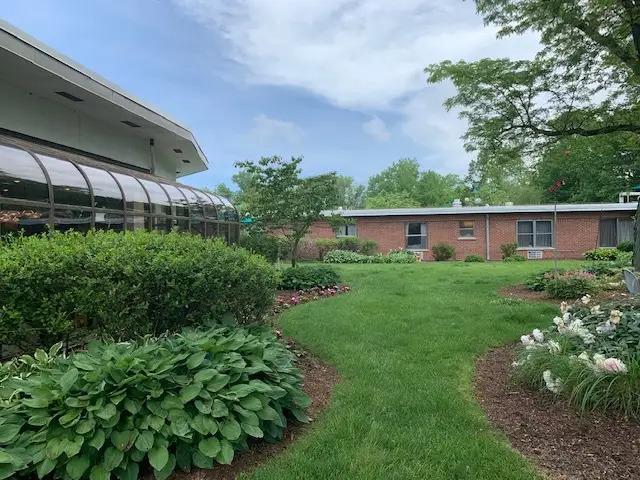
How is Delmar Gardens Of Creve Coeur Staffed?

CMS rates DELMAR GARDENS OF CREVE COEUR's staffing level at 2 out of 5 stars, which is below average compared to other nursing homes. Staff turnover is 60%, which is 13 percentage points above the Missouri average of 46%. High turnover can affect care consistency as new staff learn residents' individual needs.

What Have Inspectors Found at Delmar Gardens Of Creve Coeur?

State health inspectors documented 17 deficiencies at DELMAR GARDENS OF CREVE COEUR during 2018 to 2025. These included: 1 that caused actual resident harm, 15 with potential for harm, and 1 minor or isolated issues. Deficiencies causing actual harm indicate documented cases where residents experienced negative health consequences.
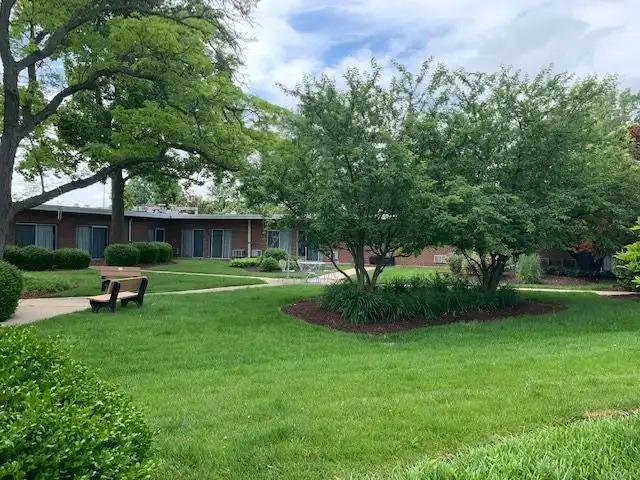
Who Owns and Operates Delmar Gardens Of Creve Coeur?

DELMAR GARDENS OF CREVE COEUR is owned by a for-profit company. For-profit facilities operate as businesses with obligations to shareholders or private owners. The facility is operated by DELMAR GARDENS, a chain that manages multiple nursing homes. With 148 certified beds and approximately 91 residents (about 61% occupancy), it is a mid-sized facility located in CREVE COEUR, Missouri.
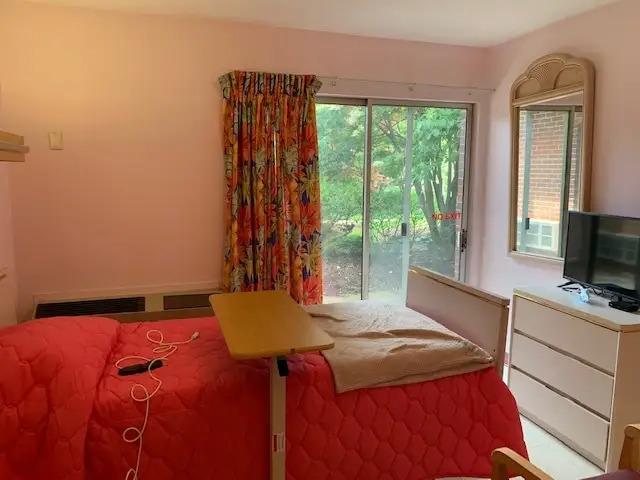
How Does Delmar Gardens Of Creve Coeur Compare to Other Missouri Nursing Homes?

Compared to the 100 nursing homes in Missouri, DELMAR GARDENS OF CREVE COEUR's overall rating (4 stars) is above the state average of 2.5, staff turnover (60%) is significantly higher than the state average of 46%, and health inspection rating (4 stars) is above the national benchmark.

What Should Families Ask When Visiting Delmar Gardens Of Creve Coeur?

Based on this facility's data, families visiting should ask: "How do you ensure continuity of care given staff turnover, and what is your staff retention strategy?" "Can you walk me through typical staffing levels on day, evening, and night shifts?" "Can I visit during a mealtime to observe dining assistance and food quality?" "How do you handle medical emergencies, and what is your hospital transfer rate?" These questions are particularly relevant given the facility's high staff turnover rate and the below-average staffing rating.

Is Delmar Gardens Of Creve Coeur Safe?

Based on CMS inspection data, DELMAR GARDENS OF CREVE COEUR has a clean safety record: no substantiated abuse findings (meaning no confirmed cases of resident harm), no Immediate Jeopardy citations (the most serious violation level indicating risk of serious injury or death), and is not on the Special Focus Facility watch list (a federal program monitoring the lowest-performing 1% of nursing homes). The facility has a 4-star overall rating and ranks #1 of 100 nursing homes in Missouri. While no facility is perfect, families should still ask about staff-to-resident ratios and recent inspection results during their visit.

Do Nurses at Delmar Gardens Of Creve Coeur Stick Around?

Staff turnover at DELMAR GARDENS OF CREVE COEUR is high. At 60%, the facility is 13 percentage points above the Missouri average of 46%. High turnover means new staff may not know residents' individual needs, medications, or preferences. It can also be disorienting for residents, especially those with dementia who rely on familiar faces. Families should ask: What is causing the turnover? What retention programs are in place? How do you ensure care continuity during staff transitions?

Was Delmar Gardens Of Creve Coeur Ever Fined?

DELMAR GARDENS OF CREVE COEUR has no federal fines on record. CMS issues fines when nursing homes fail to meet care standards or don't correct problems found during inspections. The absence of fines suggests the facility has either maintained compliance or corrected any issues before penalties were assessed. This is a positive indicator, though families should still review recent inspection reports for the full picture.

Is Delmar Gardens Of Creve Coeur on Any Federal Watch List?

DELMAR GARDENS OF CREVE COEUR is not on any federal watch list. The most significant is the Special Focus Facility (SFF) program, which identifies the bottom 1% of nursing homes nationally based on persistent, serious quality problems. Not being on this list means the facility has avoided the pattern of deficiencies that triggers enhanced federal oversight. This is a positive indicator, though families should still review the facility's inspection history directly.