STONEBRIDGE FLORISSANT
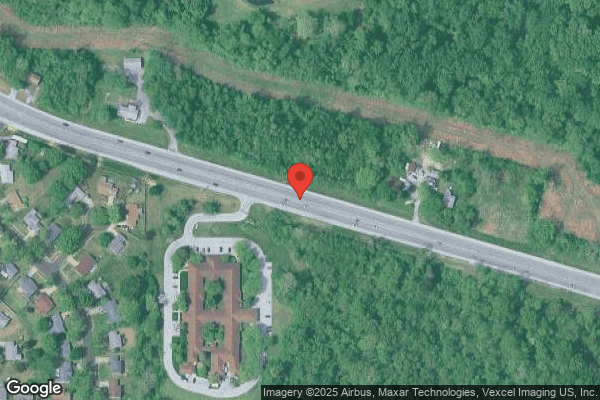
6768 NORTH HIGHWAY 67, FLORISSANT, MO 63034 (314) 741-9101
For profit - Corporation 120 Beds STONEBRIDGE SENIOR LIVING Data: November 2025
Trust Grade
40/100
#303 of 479 in MO
Last Inspection: February 2024

Within standard 12-15 month inspection cycle. Federal law requires annual inspections.

Overview

Stonebridge Florissant has a Trust Grade of D, indicating that it is below average and has some concerns that families should be aware of. It ranks #303 out of 479 nursing homes in Missouri, placing it in the bottom half of facilities statewide, and #39 out of 69 in St. Louis County, meaning only a few local options are better. The facility has been improving over time, with issues decreasing from 15 in 2024 to just 3 in 2025. However, staffing is a significant concern, with a 70% turnover rate, which is much higher than the state average, and they have not consistently met the required RN coverage, potentially leaving residents with unmet health needs. While there have been no fines, which is a positive sign, there have been serious shortcomings identified, including failures in water management that could expose residents to health risks, and food safety violations that could lead to contamination. Overall, while there are some strengths, families should carefully weigh these concerns when considering this facility for their loved ones.

Trust Score
D
40/100
In Missouri
#303/479
Bottom 37%
Safety Record
Low Risk
No red flags
Inspections
Getting Better
15 → 3 violations
Staff Stability
⚠ Watch
70% turnover. Very high, 22 points above average. Constant new faces learning your loved one's needs.
Penalties
✓ Good
No fines on record. Clean compliance history, better than most Missouri facilities.
Skilled Nurses
⚠ Watch
Each resident gets only 25 minutes of Registered Nurse (RN) attention daily — below average for Missouri. Fewer RN minutes means fewer trained eyes watching for problems.
Violations
⚠ Watch
51 deficiencies on record. Higher than average. Multiple issues found across inspections.
★★☆☆☆
2.0
Overall Rating
★★☆☆☆
2.0
Staff Levels
★★☆☆☆
2.0
Care Quality
★★☆☆☆
2.0
Inspection Score
Stable
2024: 15 issues
2025: 3 issues

The Good

  • Full Sprinkler Coverage · Fire safety systems throughout facility
  • No fines on record

Facility shows strength in fire safety.

The Bad

2-Star Overall Rating

Near Missouri average (2.5)

Below average - review inspection findings carefully

Staff Turnover: 70%

24pts above Missouri avg (46%)

Frequent staff changes - ask about care continuity

Chain: STONEBRIDGE SENIOR LIVING

Part of a multi-facility chain

Ask about local staffing decisions and management

Staff turnover is very high (70%)

22 points above Missouri average of 48%

The Ugly 51 deficiencies on record

Aug 2025 2 deficiencies
CONCERN (D) 📢 Someone Reported This

A family member, employee, or ombudsman was alarmed enough to file a formal complaint

Potential for Harm - no one hurt, but risky conditions existed

Deficiency F0635 (Tag F0635)

Could have caused harm · This affected 1 resident

**NOTE- TERMS IN BRACKETS HAVE BEEN EDITED TO PROTECT CONFIDENTIALITY** Based on interview and record review, the facility failed to document physician orders were verified for one resident (Resident ...

Read full inspector narrative →
**NOTE- TERMS IN BRACKETS HAVE BEEN EDITED TO PROTECT CONFIDENTIALITY** Based on interview and record review, the facility failed to document physician orders were verified for one resident (Resident #74) admitted for respite care. The sample was 17. The census was 66. Review of the facility's Admissions and admission Agreement Policy, dated February 2025, showed: Prior to or at the time of admission, the resident's attending physician must provide the facility with information needed for the immediate care of the resident, including orders covering at least: medication orders, including (as necessary) a medical condition or problem associated with each medication; and routine care orders to maintain or improve the resident's function until the physician and care planning team can conduct a comprehensive assessment and develop a more detailed Interdisciplinary care plan. Review of the facility's Reconciliation of Medications on admission Policy, dated revised 2017, showed:-Purpose: The purpose of this procedure is to ensure medication safety by accurately accounting for the resident's medications, routes and dosages upon admission or readmission to the facility;-Preparation: Gather the information needed to reconcile the medication list: approved medication reconciliation form; admission order sheet; all prescription and supplement information obtained from the resident/family during the medication history;-Steps in procedure: If a medication history has not been obtained from the resident or family, complete this first;-Using an approved medication reconciliation form or other record, list all medications from the medication history, the discharge summary, the previous Medication Administration Record (MAR) (if applicable), and the admitting orders (sources);-Review the list carefully to determine if there are discrepancies/conflicts;-If there is a discrepancy or conflict in medications, dose, route or frequency, determine the most appropriate action to resolve the discrepancy;-Document the medication discrepancy on the medication reconciliation form;-Document what actions were taken by the nurse to resolve the discrepancy;-If the discrepancy was unresolved, document how the discrepancy was communicated to the charge nurse, physician, pharmacy, and/or next shift;-If the discrepancy was resolved, document how the discrepancy was resolved. Review of Resident #74's medical record, showed:-Resident was alert with confusion;-admitted [DATE] and left against medical advice (AMA) on 6/15/25;-readmitted on [DATE] for respite care and discharged on 7/28/25;-Diagnoses included diabetes, anoxic brain injury (brain completely loses its oxygen supply, leading to potential brain cell death), polysubstance abuse, history of stroke, seizure disorder, high cholesterol, high blood pressure and chronic end stage renal failure (irreversible kidney disease). Review of the physician order sheet, dated active orders as of 8/22/25, showed: -A physician order for amlodipine besylate oral tablet 5 milligrams (mg), Give 5 mg by mouth one time a day for blood pressure, order date 7/24/25;-A physician order for aspirin tablets chewable 81 mg, give 1 tablet by mouth one time a day for prophylactics, order date 6/13/25;-A physician order for atorvastatin calcium oral tablet (used to treat high cholesterol) 40 mg, give 1 tablet by mouth one time a day for prophylactic, order date 6/13/25;-A physician order for farxiga oral tablet (used to treat diabetes) 10 mg, give 1 tablet by mouth one time a day for give prior to breakfast, order date 6/13/25;-A physician order for hydroxyzine hcl oral tablet 10 mg, give 10 mg by mouth four times a day for anxiety, order date 7/24/25;-A physician order for insulin glargine solution 100 unit/milliliter (ml), inject 14 unit subcutaneously (under the skin) one time a day for diabetes, order date 7/24/25;-A physician order for Keppra tablet 500 mg, give 1 tablet by mouth two times a day for anticonvulsant, order date 6/13/25;-A physician order for metoprolol tartrate oral tablet 50 mg, give 50 mg by mouth two times a day for blood pressure, order date 7/24/25;-A physician order for Novolog flex pen subcutaneous solution pen-injector 100 UNIT/ml, inject as per sliding scale: if 181 - 200 = 1 units; 201 - 250 = 2 units; 251 - 300 = 3 units; 301 - 350 = 4 units; 351 -400 = 5 units; 401+ = 6 units 401 and greater give 6 units, subcutaneously three times a day for hyperglycemia (blood glucose levels are elevated above normal), order date 7/24/25;-A physician order for oxycodone hcl oral tablet 5 mg, give 5 mg by mouth as needed for pain take one tablet by mouth as needed two times daily, order date 7/24/25;-A physician order for ramelteon tablet 8 mg, give 1 tablet by mouth at bedtime for insomnia, order date 7/24/25;-A physician order for trazodone hcl tablet 50 mg, give 50 mg by mouth at bedtime for insomnia, order date 7/24/25. Review of the progress notes, dated 7/24/25 at 7:30 P.M., showed no documentation the physician orders were verified with the physician. Review of the hospital records, dated 7/21/25, provided by the Administrator, after the surveyor asked for the information staff used for admitting the resident to the facility, showed there was no discharge summary or after care summary. During an interview on 8/20/25 at 6:34 A.M., Assistant Director of Nursing (ADON) A said if a resident was admitted on respite care, the admission process would be the same as any other admission. The floor nurse was responsible for completing the admission, which included completing the assessments and entering the medications into the computer. The physician orders were verified with the physician. The nurse should make a progress note showing the orders had been verified with the physician. ADON A looked through the hospital records packet, dated 7/21/25, and said there was no discharge summary or after visit summary. If a discharge summary or after care visit summary was not available, she would use the medication summary, medication outpatient medications as of 7/21/25 for the physician orders. ADON A said she did not enter the physician orders into the computer. Review of the Medication Summary, outpatient medication as of 7/21/25, showed:-A physician order for blood glucose sensor, use as directed to test blood sugar and change sensor every 10 days;-A physician order for hydroxyzine 10 mg four times daily;-A physician order for glucagon (glucagon emergency) 1 mg, inject 1 mg subcutaneous injection;-A physician order for hydrochlorothiazide 12.5 mg, no directions;-A physician order for lisinopril 40 mg (used for blood pressure) take 40 mg daily;-A physician order for insulin glargine 100 unit/ml, inject 14 units subcutaneous injection daily with breakfast;-A physician order for insulin Novolog flex pen, inject 5 units by subcutaneous injection three times daily with meals;-A physician order for MiraLAX 17 gram/dose powder (used for constipation), take 1 scoop (17 gm) twice daily, dissolve in 8 ounces of fluid and drink entire liquid;-A physician order for hydrophilic wound dressing (triad, paste that creates a moist wound healing environment, ideal for wounds with light to moderate exudate) apply to affected area twice daily;-A physician order for amlodipine 5 mg, take 5 mg daily;-A physician order for aspirin enteric coated (EC), take 81 mg daily;-A physician order for atorvastatin 40 mg daily;-A physician order for Plavix 75 mg (antiplatelet), take 75 mg daily;-A physician order for farxiga 10 mg, take 10 mg daily;-A physician order for Keppra 500 mg, take 500 mg twice daily;-A physician order for metoprolol tartrate 50 mg, take 50 mg twice daily;-A physician order for oxycodone 5 mg, take 5 mg every 12 hours as needed for pain; -A physician order for ramelteon 8 mg, take 8 mg daily at bedtime;-A physician order for senna (stool softener and laxative), take 2 tablets daily at bedtime;-A physician order for trazodone 50 mg, take 50 mg daily at bedtime. Review of the physician order sheet, dated active orders as of 8/22/25, showed the blood glucose sensor, glucagon, hydrochlorothiazide, lisinopril, Novolog insulin routine three times a day, MiraLAX, hydrophilic wound dressing, Plavix and senna were not on the physician order sheet. Review of the progress notes, dated 7/24/25 through 7/28/25, showed no documentation the physician orders were verified with the physician. During an interview on 8/20/25 at 2:00 P.M., Registered Nurse (RN) D said the floor nurse was responsible for completing the admission assessments and entering the orders into the computer. RN D looked at the hospital packet provided by the facility and dated 7/21/25, and said he/she used the medication list at end of the visit as of 7/10/25 for the physician orders. The family wrote the insulin instructions on a sheet of paper. RN D looked in the packet and said she thought the insulin orders were Novolog 3 units if eats small meal, 4 units if eats medium size meal and 5 units if eats large meal and Lantus insulin 14 units daily. RN D said he/she called the physician and verified the orders and documented it in the medical record. Review of the Medication List at the End of Visit, dated as of 7/10/25, showed:-A physician order for amlodipine 5 mg, take 5 mg daily;-A physician order for aspirin EC, take 1 tablet daily;-A physician order for atorvastatin 40 mg, take 40 mg at bedtime;-A physician order for Plavix 75 mg, take 75 mg daily;-A physician order for farxiga 10 mg, take 1 daily;-A physician order for glucagon .1 mg, inject 1 mg subcutaneous injection;-A physician order for hydrochlorothiazide 12.5 mg, no directions;-A physician order for hydrophilic wound dressing, apply to affected area twice daily;-A physician order for hydroxyzine 10 mg, take 10 mg four times daily;-A physician order for novolog flex pen u-100 insulin, inject 5 units by subcutaneous injection three times daily with meals;-A physician order for Lantus 100 unit/mL, inject 14 units by subcutaneous injection daily with breakfast;-A physician order for Keppra 500 mg, take 500 mg twice daily;-A physician order for lisinopril 40 mg, take 40 mg daily;-A physician order for metoprolol tartrate 50 mg, take 50 mg twice daily;-A physician order for oxycodone 5 mg, take 5 mg every 12 hours as needed;-A physician order MiraLAX 17 gram/dose, take 1 scoop (17 grams) twice daily. Dissolve in 8 ounces of fluid and drink entire liquid;-A physician order ramelteon 8 mg, take 8 mg daily at bedtime;-A physician order for senna-s, take 2 tablets daily at bedtime;-A physician order for trazodone 50 mg, take 50 mg daily at bedtime. Review of the physician order sheet, dated active orders as of 8/22/25, showed glucagon, hydrochlorothiazide, lisinopril, NovoLog insulin routine three times a day, MiraLAX, hydrophilic wound dressing, Plavix and senna s were not on the physician order sheet. During an interview on 8/21/25 at 10:53 A.M., ADON B said the hospital records packet, dated 7/21/25, is not what the facility would have used for the admission physician orders. The packet was the information sent over for the referral. During an interview on 8/21/25 at 12:18 P.M., ADON B said he/she was notified the resident was admitted on [DATE] with a bag that contained home medications and a list of the medications including insulin instructions. The facility did not keep a copy of the list. ADON B said the family may not comply and send the list if requested today since the resident has been discharged from the facility. Whoever the ADON assigned to the resident was expected to review and follow-up after the admitting nurse's admission process. ADON B said RN D and ADON A failed to obtain a copy of the resident's admission information for medical records. ADON B looked at the resident's electronic medical records and said RN D's admission assessment only showed two out eight assessments were completed. He/She said the admission process should be completed upon admission. During an interview on 8/22/25 at 11:35 A.M., the physician said the facility usually calls him when a resident is admitted to the facility to verify the orders. He did not recall if the facility called him to verify the orders. During an interview on 8/22/25 at 11:52 A.M., the Administrator said if a resident is admitted for respite care, the family will bring in the orders or the facility will take the orders from the family. They also often bring the medications from home. The nurse should call the physician to verify orders and document it. During an interview on 8/22/25 at 3:13 P.M., the Administrator said the admission assessment should be completed upon admission. The Regional Nurse said any residents' documents should be part of the medical records. During an interview on 8/22/25 at 4:30 P.M., the Regional Nurse said the resident was here for a very short time. They talked with the staff and the resident did not bring in any paperwork with physician orders. He/She brought a bag with his/her medications in it. If the physician changed the medications when they were verified, the old order would not be on the physician order sheet. The nurse did an assessment when the resident was admitted and it was documented in the progress notes. Review of the progress notes, dated 7/24/25 at 7:30 P.M., showed the patient is [AGE] years old with past medical history of diabetes, anoxic brain injury, polysubstance abuse, stroke history, seizure disorder, hyperlipidemia, hypertension and chronic end stage renal failure. Patient is here at the facility for respite care 7/24 through 7/28. Daughter takes care of patient at home regularly. Patient arrived at the facility in the hour of 1300. Resident was given a lunch tray and insulin was given after intake of 100%. Patient was calm and toileted soon after. In the hour of 1700 patient became combative and repeatedly trying to get out of chair without assistance. The nurse and other nursing staff tried to redirect patient, patient was not directable. The nurse tried to call family and let them know that patient was not taking the change of environment well. Family stated, what do you expect me to do. This nurse stated that, we do not want your (father/mother) to fall, what are some alternatives that you try at home to help redirect (him/her). Family stated to give patient his/her atarax, the nurse proceeded to give patient medication along with trazodone. Patient refused to sit down in the chair and threated to hit this nurse, and verbally got violent with the nurse, patient stood up and urinated on the floor in front of the nurse. Patient presumed to walk to down the hall and had a fall, and it was unwitnessed. Patient then was redirected to have a seat, where he/she then fell again by the central bathroom. Patient refused initial vital signs, the nurse, redirected patient, patient is now sitting at the nurse's station, no further report at this time 2573803
CONCERN (D) 📢 Someone Reported This

A family member, employee, or ombudsman was alarmed enough to file a formal complaint

Potential for Harm - no one hurt, but risky conditions existed

Deficiency F0760 (Tag F0760)

Could have caused harm · This affected 1 resident

**NOTE- TERMS IN BRACKETS HAVE BEEN EDITED TO PROTECT CONFIDENTIALITY** Based on interview and record review, the facility failed to provide necessary medications as ordered by the physician. In addit...

Read full inspector narrative →
**NOTE- TERMS IN BRACKETS HAVE BEEN EDITED TO PROTECT CONFIDENTIALITY** Based on interview and record review, the facility failed to provide necessary medications as ordered by the physician. In addition, they failed to notify and document the physician was made aware of the missed medications for one of 17 sampled residents (Resident #74). The census was 66. Review of the facility's Administering Medications Policy, dated revised December 2012, showed:-Medications shall be administered in a safe and timely manner, and as prescribed;-Medications must be administered in accordance with the orders, including any required time frame;-Medications must be administered within one hour of their prescribed time, unless otherwise specified (for example, before and after meals);-If a drug is withheld, refused, or given at a time other than the scheduled time, the individual administrating the medication shall document appropriately in the clinical chart. Review of the facility's Obtaining a Fingerstick Glucose Level, dated revised October 2011, showed:-Purpose: The purpose of this procedure is to obtain a blood sample to determine the resident's blood glucose level;-Documentation: The person performing this procedure should record the following information in the resident's medical record:-If the resident refused the procedure, the reason(s) why and the intervention taken;-The blood sugar results;-The signature and title of the person recording the data;-Reporting: Report results promptly to the supervisor and the attending physician;-Notify the supervisor if the resident refuses the procedure;-Report other information in accordance with facility policy and professional standards of practice. Review of the facility's Adverse Consequences and Medication Errors Policy, dated revised April 2017, showed:-A medication error is defined as the preparation or administration of drugs or biologicals which is not in accordance with physician's orders, manufacturer specifications, or accepted professional standards and principles of professional(s) providing services. Examples of medication errors include omission-a drug is ordered but not administered. Review of Resident #74's medical record, showed:-Resident was alert with confusion, he/she could make needs known;-Was readmitted on [DATE] for respite care and discharged on 7/28/25; -Diagnoses included diabetes, anoxic brain injury (brain completely loses its oxygen supply, leading to potential brain cell death), polysubstance abuse, history of stroke, seizure disorder, high cholesterol, high blood pressure and chronic end stage renal failure (irreversible kidney disease). Review of the physician order sheet, dated active orders as of 8/22/25, showed: -A physician order for amlodipine besylate oral tablet 5 milligrams (mg), give 5 mg by mouth one time a day for blood pressure, order date 7/24/25;-A physician order for aspirin tablets chewable 81 mg, give 1 tablet by mouth one time a day for prophylactics, order date 6/13/25;-A physician order for farxiga oral tablet 10 mg, give 1 tablet by mouth one time a day for give prior to breakfast, order date 6/13/25;-A physician order for hydroxyzine hcl oral tablet 10 mg, give 10 mg by mouth four times a day for anxiety, order date 7/24/25;-A physician order for insulin glargine solution 100 unit/milliliter (ml), inject 14 units subcutaneously (under the skin) one time a day for diabetes, order date 7/24/25;-A physician order for keppra tablet 500 mg, give 1 tablet by mouth two times a day for anticonvulsant, order date 6/13/25;-A physician order for metoprolol tartrate oral tablet 50 mg, give 50 mg by mouth two times a day for blood pressure, order date 7/24/25;-A physician order for novolog flex pen subcutaneous solution pen-injector 100 UNIT/ML, inject as per sliding scale: if 181 - 200 = 1 units; 201 - 250 = 2 units; 251 - 300 = 3 units; 301 - 350 = 4 units; 351 -400 = 5 units; 401+ = 6 units 401 and greater give 6 units, subcutaneously three times a day for hyperglycemia, order date 7/24/25. Review of the Medication Administration Record (MAR), dated 7/24/25 through 7/25/25, showed:-A physician order for amlodipine besylate oral tablet 5 milligrams (mg), Give 5 mg by mouth one time a day for blood pressure; -7/25/25, A.M., HD (hold, see progress notes) was documented; -A physician order for aspirin tablets chewable 81 mg, give 1 tablet by mouth one time a day for prophylactics; -7/25/25, 8 A.M., HD was documented; -A physician order for farxiga oral tablet 10 mg, give 1 tablet by mouth one time a day, give prior to breakfast; -7/25/25, 8 A.M., HD was documented; -A physician order for hydroxyzine hcl oral tablet 10 mg, give 10 mg by mouth four times a day for anxiety; -7/25/25 at 8 A.M., 12:00 P.M. and 4:00 P.M., HD was documented;-A physician order for keppra tablet 500 mg, give 1 tablet by mouth two times a day for anticonvulsant; -7/25/25 at 8 A.M. and 4:00 P.M., HD was documented;-A physician order for metoprolol tartrate oral tablet 50 mg, give 50 mg by mouth two times a day for blood pressure; -7/25/25 at 4:00 P.M., HD was documented;-A physician order for novolog flex pen subcutaneous solution pen-injector 100 unit/ml, inject as per sliding scale: if 181 - 200 = 1 units; 201 - 250 = 2 units; 251 - 300 = 3 units; 301 - 350 = 4 units; 351 -400 = 5 units; 401+ = 6 units 401 and greater give 6 units, subcutaneously three times a day for hyperglycemia; -Documentation showed:-On 7/24/25, was blocked off for medication to start on 7/25/25;-On 7/25/25 at 8 A.M., 12:00 P.M., 4:00 P.M. HD was documented; -On 7/26/25 at 8 A.M. and 12:00 P.M. were blank, at 5:00 P.M. the blood sugar was 400. Review of the progress notes, dated 7/24/25 through 7/25/25, showed:-On 7/24/25 at 7:30 P.M., patient arrived at the facility in the hour of 1300. Resident was given a lunch tray, and insulin was given after intake of 100%;-No documentation the results of the blood sugar or the type and amount of insulin administered. In addition, no documentation the physician was notified when the medications were held. During an interview on 8/19/25 at 4:30 P.M., Licensed Practical Nurse (LPN) C said the resident slept the first day he/she was at the facility. The second day, the resident would arouse to eat and take medications. The Certified Medication Technicians (CMTs) administer the scheduled medications, and the nurses complete the finger stick blood sugars and administered the insulin. The fingerstick blood sugars are documented on the MAR. If a medication was not administered or held, it should be documented on the MAR and the physician should be notified. The physician should be notified for each dose of medication not administered. During an interview on 8/20/25 at 10:28 A.M., CMT E said if a medication was held, it should be documented. The nurses are responsible for doing the fingerstick blood sugars and administering the insulin. During an interview on 8/21/25 at 9:50 A.M., CMT F said if the doctor held a medication, the nurse would enter it in the computer. The resident's medications were held because the resident was sleeping. Typically, the resident would go to bed at the beginning of day shift and sleep until lunch. He/She did not know if the resident was diabetic or not. The nurse would do the fingerstick blood sugars and the insulin. Sometimes, something for the nurses will pop up on the CMT MAR, but he/she never saw anything for the resident pop up on the CMT MAR. During an interview on 8/20/25 at 6:34 A.M., Assistant Director of Nursing (ADON) A said finger stick blood sugars should be documented on the MAR. If a medication was not administered, it should be documented in the progress notes and the physician should be notified. The physician is notified for each missed dose of medication. If a medication was held, it should be documented why the medication was held. She did not know what a blank on the MAR meant. During an interview on 8/21/25 at 12:18 P.M., ADON B said he/she was not sure why the staff held the medications. CMT F was not supposed to do fingerstick and insulin administration. ADON B looked at the resident's records and said that on 7/26/25, it looked like the resident did not receive the insulin because of the hole in the MAR. There's no documentation in the progress notes related to the medications being held and fingerstick results. Upon further review of the resident's record, ADON B said Registered Nurse (RN) D transcribed the insulin order incorrectly into the MAR. RN D entered the orders into the CMT MAR instead of the nurse MAR. The nurse did not see the insulin order until RN I revised and entered the insulin in the nurse MAR. ADON B said he/she expected the CMT to report to the nurse any medications held and to document in the MAR and progress notes. During an interview on 8/22/25 at 11:35 A.M., the physician said he could not recall if the facility called to report the resident's medications were not administered. During an interview on 8/22/25 at 11:52 A.M., the Administrator said residents who are admitted on respite care usually bring their medications from home. He expected staff to follow physician orders. If staff was unable to follow the orders, they should notify the physician and document it. Fingerstick blood sugars results should be documented. During an interview on 8/22/25 at 3:13 P.M., the Director of Nursing (DON) said she expected staff to notify the physician if medications were held or not given and to document appropriately. The Regional Nurse said fingerstick results should be documented anywhere in the residents' medical record, typically in the MAR. 25770892573803
Apr 2025 1 deficiency
CONCERN (D) 📢 Someone Reported This

A family member, employee, or ombudsman was alarmed enough to file a formal complaint

Potential for Harm - no one hurt, but risky conditions existed

Accident Prevention (Tag F0689)

Could have caused harm · This affected 1 resident

Based on interview and record review, the facility failed to keep residents free of accidents and injuries when a Certified Nurse Assistant (CNA) left a resident (Resident #7) unattended, rolled to hi...

Read full inspector narrative →
Based on interview and record review, the facility failed to keep residents free of accidents and injuries when a Certified Nurse Assistant (CNA) left a resident (Resident #7) unattended, rolled to his/her side on a low air loss mattress (LAL, a mattress designed with a system of air cells that are constantly inflated and deflated to prevent and treat pressure injuries (injury to skin and underlying tissue resulting from prolonged pressure on skin)), causing the resident to fall out of his/her bed on to a fall mat. The facility also failed to ensure residents were assessed immediately after a fall for injury and failed notify the Primary Care Physician (PCP), the resident's responsible party (RRP) and a member of the Interdisciplinary Team (IDT) after a fall because the CNA failed to immediately report the fall to the charge nurse for one resident (Resident #7) who sustained a head injury. The sample size was three. The census was 70. The Administrator was notified on 4/21/25, of the past non-compliance. The facility responded appropriately when they were made aware of the resident's fall. The resident was assessed for injury and the resident was sent out to the hospital for evaluation. Education was provided to nursing staff on caring for the resident in pairs and to report falls immediately. The deficiency was corrected on 1/17/25. Review of the facility's Accident and Incident - Investigating and Reporting Policy, dated 9/20/24, showed: -Policy Statement: All accidents or incidents involving residents, employees, visitor, vendors, etc., occurring on the facility premises shall be investigated and reported to the Administrator; -The nurse supervisor/charge nurse and/or the department director or supervisor shall promptly initiate and document the investigation of the accident or incident; -The nurse supervisor/charge nurse and/or the department director or supervisor shall complete a report of Incident/Accident form and submit the original to the Director of Nursing Services within 24 hours of the incident or accident; -Incident/Accident Reports will be reviewed by the Interdisciplinary Team. Review of Resident #7's quarterly Minimum Data Set (MDS), a federally mandated assessment instrument completed by facility staff, dated 11/29/24, showed: -Cognitively intact; -Makes self understood; -Impairment on both sides of upper and lower body; -Total dependence on staff for all activities of daily living (ADLs); -Always incontinent of bowel and bladder; -Diagnoses included traumatic brain injury (TBI), quadriplegia (paralysis of all four limbs) and seizure disorder. Review of the resident's skin check dated 1/17/25 at 9:06 A.M., showed there were no skin issues present. Review of the resident's progress notes, showed: -On 1/17/25 at 10:10 A.M., the resident stated he/she fell out of bed last night while the CNA was changing him/her. He/She said he/she fell out of the right side of the bed, hurting his/her neck. The resident said the CNA placed him/her back into his/her bed. The resident was complaining of neck pain. There was no swelling or redness noted at the site. The resident was lying supine (on the back) in bed; -On 1/17/25 at 10:16 A.M., the resident was alert and able to give details on what happened; -On 1/17/25 at 10:19 A.M., the resident's blood pressure (read in milliliters of mercury (mmHg) when referring to systolic (SBP, top number, normal is below 140), diastolic (DBP, bottom number, normal is below 90) was 109/90, pulse rate (rate of heart beat, normal range is between 60 to 100 beats per minute) was 89 beats per minute, body temperature (measured in degrees of Fahrenheit (F), normal range is 97 to 99 degrees F) was 98.1 degrees F and the resident had a blood oxygen saturation (amount of oxygen in blood) rate of 93% on room air; -On 1/17/25 at 10:25 A.M., the resident's responsible party was made aware; -On 1/17/25 at 10:40 A.M., the ambulance service was notified to transport the resident to the emergency department (ED) for evaluation; -On 1/17/25 at 11:12 A.M., the PCP was present to see the resident before the resident left for the ED. The resident was resting in bed with no visible injuries noted to the neck or upper or lower torso; -On 1/17/25 at 11:25 A.M., the ambulance was present to transport the resident to the ED; -On 1/17/25 at 4:06 P.M., the Registered Nurse (RN) at the ED said that there was no injury noted yet. They were waiting on one more test result; -On 1/17/25 at 10:44 P.M., the resident returned from the hospital via ambulance. There were no new orders. The resident's skin remains intact. Vital signs were normal. The resident was in bed resting in a low bed with fall mats on either side. The RRP was aware the resident had arrived back at the facility; -On 1/18/25 at 6:17 P.M., the resident remained on incident follow up observation. The resident had no signs or symptoms of distress or discomfort. The resident was resting in bed in the lowest position with call button in place. Review of the resident's 72 hour post fall monitoring report, dated 1/17/25, showed: -The assessment should be completed at the following intervals for all falls. A fall that is unwitnessed or in which the head is struck, required neurological checks (an assessment completed by nursing staff to monitor for changes in the resident's neurological (nervous system) status); -Documentation showed the nursing staff completed neurological checks for 72 hours. Review of the resident's hospital discharge papers, dated 1/17/25, showed: -Reason for visit: Neck pain; -Diagnoses at discharge: Fall, initial encounter and injury of head, initial encounter. Review of the facility's investigation report, dated 1/17/25, showed: -A statement from CNA B, dated 1/17/25 at 4:54 P.M., on 1/17/25 at 1:00 A.M., after giving the resident a bed bath, the resident fell on to the floor. The resident was fully clothed and bathed, left lying on his/her side when CNA B left the resident's room to care for other residents. CNA B returned to the resident's room to retrieve the Hoyer Lift (mechanical device used to assist in transferring individuals with limited mobility from one place to another) and saw the resident had fallen to the floor. There was no other staff around, so CNA B asked the resident if he/she was ok and checked the resident's body parts to see if he/she was hurt. CNA B then returned the resident back into his/her bed with the Hoyer lift; -On 1/17/25, education was given to nursing staff to reiterate falls must be reported immediately to the charge nurse; -On 1/17/25, education was given to nursing staff to place fall mats on both sides of the resident's bed (while the resident was in bed) and to position the resident's blow call light so he/she could operate it at all times. The resident's bed was relocated so that it was up against one wall with the use of one fall mat; -On 1/17/25, the Assistant Director of Nursing (ADON), addressed CNA B with a teachable moment; -On 1/20/25, the IDT met to discuss the event that involved the resident rolling from the bed while the CNA was providing care. The Team discussed the totality of the resident falls and reviewed the interventions that the resident had in place at the time. Investigation of the event revealed the resident did have two fall mats in place and was on a low air loss mattress, which was inflated per manufacturer's recommendations. The Team had previously spoken to the RRP, recommending the removal of the LAL mattress for the resident's safety. The RRP had refused. The Team was going to call the resident's family again with the recommendation of removal of the LAL mattress for the resident's safety; -Inservice sign in sheet, dated 1/17/25, for education on caring in pairs and keeping the resident's blow call light in reach. In-services were given to nursing staff; -Inservice sign in sheet, dated 1/17/25, for education on the fall policy and reporting falls immediately to nurses. In-services were given to nursing staff. Review of the resident's care plan, dated 3/21/25, showed: -Problem: The resident was dependent of all Activities of Daily Living (ADLs) and was totally dependent on staff. Interventions included: Care in pairs; Two staff were required for repositioning and turning in bed; Two staff were required to use Hoyer lift at all times for transfers; -Problem: The resident had multiple falls and was at risk for falls. Interventions included: Anticipate and meet resident needs; Follow facility fall protocol; The resident used a blow call light. Ensure it was in place, near the resident's face for use. Observation on 4/16/25 at 10:34 A.M., showed the resident asleep in his/her bed. The mattress had raised edges which scooped upwards. The resident's bed side table had a blow call light attached which was positioned near the resident's head. The bed was positioned on the right side against a wall and there was a fall mat in place on the left side of the bed. The bed was in a lowered position. During an interview on 4/16/25 at 12:58 P.M., Licensed Practical Nurse (LPN) A said: -He/She came to work on 1/17/25 at approximately 5:00 A.M.; -He/She received report from LPN C, who was the night shift nurse in care of the resident; -LPN C reported a CNA said he/she had dropped the resident to the floor and then got the resident up off the floor, using a Hoyer lift back into the resident's bed; -LPN A was not sure what time the incident occurred or when the CNA notified the night nurse; -He/She went and assessed the resident. The resident was free of injury, there were no bumps, swelling or redness to the resident's head and the resident's vital signs were normal; -The resident did not complain of any pain; -He/She asked the resident what occurred and the resident was able to tell LPN A what had happened; -LPN A notified the Director of Nursing (DON) and the PCP of the incident and assessment; -He/She asked LPN C to call the RRP; -He/She advised LPN C when he/she found out the resident had fallen to the floor, LPN C should have immediately assessed the resident for injury, notified the PCP and then send the resident out to the hospital for evaluation; -He/She received education from the ADON on the facility's fall policy, to report incidents/falls immediately, and to always transfer residents with two people when using a Hoyer Lift. During an interview on 4/16/25 at 1:29 P.M., the ADON said: -She was notified on 1/17/25 (unsure of the time) the resident had fallen from his/her bed during night shift, when CNA B was rolling the resident back and forth in his/her bed during care; -She interviewed LPN C and CNA B who were assigned to the resident's care during night shift on 1/17/25; -CNA B said he/she was providing care to the resident, rolling him/her to his/her side, when the resident fell to the floor; -CNA B was a relatively new CNA and did not know to only care for the resident with a partner, to care in pairs, for safety; -LPN C said the same thing as CNA B; -He/She was not sure when CNA B notified LPN C the resident had fallen to the floor; -The facility investigated the incident and provided education to nursing staff on caring in pairs for the resident, the fall policy, and to report falls timely to the Administrative team, the PCP and the RRP. During an interview on 4/17/25 at 9:33 A.M., CNA B said: -He/She was providing incontinence care to the resident on 1/17/25, sometime in the middle of the night; -He/She positioned the resident onto his/her side, on top of his/her mattress, before leaving the room; -He/She came back into the room and found the resident had fallen from his/her bed onto the floor, on top of a fall mat; -The bed was not lowered to the lowest position; -He/She asked the resident if he/was hurt anywhere and felt his/her limbs and head to see if the resident was in pain; -The resident denied any pain; -He/She positioned the resident onto a Hoyer pad and used the Hoyer to put the resident back into bed; -He/She did not ask anyone for help because the other CNAs were on break at the time; -He/She thinks he/she may have told someone about the incident the next morning. He/She did not recall who he/she told and denied telling a nurse about the incident; -The ADON called him/her the next day (1/18/25) to ask about the incident; -He/She received education from the ADON regarding not leaving the resident on his/her side at any time, to care for the resident with another staff, to always have a second person when operating a Hoyer lift and to always notify the nurse immediately after a resident falls. During an interview on 4/17/25 at 12:04 P.M., LPN A said: -He/She interviewed the resident on 1/17/25 and the resident was able to say he/she fell out of bed with a few details; -The resident was difficult to understand but could answer questions and make him/herself understood; -The resident was sent out to the hospital on 1/17/25 and when he/she had returned, the nurses completed 72 hour neurological checks on the resident; -He/She was not aware the resident had a diagnosis of a head injury from the hospital and there were no new orders from the PCP regarding treatment for a head injury. During an interview on 4/17/25 at 12:30 P.M., the resident said: -He/She fell out of bed one night; -A staff member changed him/her, walked away and he/she fell out of bed; -The staff member did not catch him/her before he/she fell out of the bed; -He/She hit his/her head on the floor and it hurt. During an interview on 4/17/25 at 1:24 P.M., the Administrator and DON said: -They expected staff to have knowledge of and to follow policies; -They expected staff to notify nurses of any incidents or falls immediately; -They expected nurses to assess residents after a fall, get their vitals, notify the PCP, DON, and RRP, put any new orders into the electronic medical record and to document what they did in either a progress note or incident report; -They were informed of the resident's fall on 1/17/25 and completed an investigation; -The ADON educated staff on the facility's fall policy, to care for the resident in pairs, to always have a second person when operating an Hoyer lift and to report falls immediately to nurses or Administrative staff for safety; -CNA B was newly hired on 1/2/25 and they addressed the incident as a teachable moment; -They have not had any other issues with CNA B and residents reported they liked working with CNA B; -The IDT met, discussed the event and reviewed the interventions in the care plan for appropriateness. MO00249317
Sept 2024 1 deficiency
CONCERN (E) 📢 Someone Reported This

A family member, employee, or ombudsman was alarmed enough to file a formal complaint

Potential for Harm - no one hurt, but risky conditions existed

Accident Prevention (Tag F0689)

Could have caused harm · This affected multiple residents

**NOTE- TERMS IN BRACKETS HAVE BEEN EDITED TO PROTECT CONFIDENTIALITY** Based on observation, interview and record review, the facility failed to implement timely and appropriate interventions to prev...

Read full inspector narrative →
**NOTE- TERMS IN BRACKETS HAVE BEEN EDITED TO PROTECT CONFIDENTIALITY** Based on observation, interview and record review, the facility failed to implement timely and appropriate interventions to prevent potential falls and injury for one resident (Resident #1) who had one fall mat next to the left side of the bed. Resident #1 had a fall from the right side of the bed that did not have a fall mat, which resulted in injury. The facility additionally failed to adequately assess resident falls by ensuring residents received treatment and care in accordance with acceptable standards of practice when the facility failed to complete post (after) fall 72 hour monitoring report (neurological (neuro) checks - pulse (P), respiration (R), and blood pressure (BP) measurements; assessment of pupil size and reactivity; and equality of hand grip strength) if the fall was unwitnessed or if the resident had an incident in hitting their head for three residents (Residents #2, #3 and #4), post fall initial clinical assessments for four residents (Resident #1, #2, #3 and #4), skin assessments for two residents (Resident #2 and #4), complete incident follow up documentation (IFU) for 72 hour post fall in the progress notes each shift for five residents (Residents #1, #2, #3, #4 and #5), document notification to physician for one resident (Resident #4), document notification of resident representative (RR) for two residents (Residents #4 and #5), update the residents' care plan with interventions for two residents (Residents #1 and #2), and update the kardex (nursing worksheet that includes a summary of patient information such as how many staff is needed to assist with care, if a fall risk would include interventions for falls, information on any specialized equipment resident may use, and other daily care information) binder located at the nurses' station with interventions for the nursing staff for four residents (Residents #1, #2, #3 and #4). The sample was 5. The census was 82. Review of the facility's Managing Falls and Fall Risk policy, revised 12/19, showed: -Policy statement: Based on previous evaluations and current data, the staff will identify interventions related to the resident's specific risks and causes to try to prevent the resident from falling and to try to minimize complications from falling; -Prioritizing approaches to managing falls and fall risk: -1. The staff, with the input of the attending physician, will identify appropriate interventions to reduce the risk of falls. If a systematic evaluation of a resident's fall risk identifies several possible interventions, the staff may choose to prioritize interventions (i.e., to try one or a few at a time, rather than many at once); -2. Examples of initial approaches might include exercise and balance training or a rearrangement of room furniture. If a medication is suspected as a possible cause of a resident's falling, the initial intervention might be to taper or stop that medication; -3. In conjunction with the consultant pharmacist and nursing staff, the attending physician will identify and adjust medications that may be associated with an increased risk of falling, or indicate why those medications could not be tapered or stopped, even for a trial period; -4. If falling recurs despite initial interventions, staff will implement additional or different interventions, or indicate why the current approach remains relevant; -5. If underlying causes cannot be readily identified or corrected, staff will try various interventions, based on assessment of the nature or category of falling, until falling is reduced or stopped, or until the reason for the continuation of the falling is identified as unavoidable; -6. In conjunction with the attending physician, staff will identify and implement relevant interventions (e.g., hip padding or treatment of osteoporosis (condition in which bones become weak and brittle), as applicable) to try to minimize serious consequences of falling; -Monitoring subsequent falls and fall risk: -1. The staff will monitor and document each resident's response to interventions intended to reduce falling or the risks of falling; -2. If interventions have been successful in preventing falling, staff will continue the interventions or reconsider whether these measures are still needed if a problem that required the intervention (e.g., dizziness or weakness) has resolved; -3. If the resident continues to fall, staff will re-evaluate the situation and whether it is appropriate to continue or change current interventions. As needed, the attending physician will help the staff reconsider possible causes that may not previously have been identified; -4. The staff and/or physician will document the basis for conclusions that specific irreversible risk factors exist that continue to present a risk for falling or injury due to falls. Review of the facility's Fall Documentation Policy, undated, showed: -Whenever a resident has a fall, the following must occur: -A. An initial full body assessment, including neurological, must be documented; -B. 72 hr. follow-up must be completed; -C. The Initial post fall assessment must be initiated; -a. The link for this assessment is in the risk report, and, or, it can be found under the resident assessment tab: Post Fall Initial Assessment V5-to be completed one time, directly after each fall. All questions must be completed; -b. Post Fall 72 hr. Monitoring version (V) three is to be completed once each shift post fall for three days if witnessed fall. Please see attachment for appropriate assessment to complete after a fall; -D. An updated fall risk assessment must be completed after each fall; -E. All Interventions must be placed on the care plan; -F. Interventions must be placed on the resident kardex for floor staff knowledge; -When following up on falls, please ensure the above process in being followed by staff. If you are requiring a hard copy of the post fall neuro assessment, know and follow your plan for monitoring for completion, and uploading into medical records. Follow your process for ensuring direct care staff are aware of any new interventions implemented for your residents; -Post fall step by step: -1. Incident description: -Complete a full body (head to toe) assessment prior to moving the resident off the floor. This will ensure the resident does not have severe injuries. This includes pupillary response. Example: No injuries noted. Pupils are equal, round and reactive to light and accommodation (PERRLA). Full range of motion (ROM) to all extremities. Legs equal in length. Hand grips and foot pushes/pulls equal in strength. No complaints of (c/o) pain. BP (Is read in milliliters of mercury (mmHg) when referring to Systolic (SBP, top number, normal is below 140), diastolic (DBP, bottom number, normal is below 90) 122/64, R (breaths per minute, normal is 12 - 18) 16, T (normal 98.6 degrees Fahrenheit (F)) 98.6, oxygen saturation (Sp02, measures amount of oxygen in the blood, normal SpO2 is between 90 and 100 percent (%)) 97% on room air. No c/o shortness of breath (SOB). Capillary refill (used for assessing the blood flow through peripheral (away from the center) tissues by compressing the nail bed until it blanches (temporary whitening of the skin) and record the time taken for the color to return to the nail bed. Normal capillary refill is less than 3 seconds) less than three sec. No edema (swelling) noted to any extremities. No other abnormalities noted; -Please include the last time staff laid eyes on the resident, last time toileted, if the call light was on or off, where the resident's walker, cane, or wheelchair was located at the time of the fall. We have to have a very complete story on what occurred; -Describe exactly how the resident's body was when you were alerted to fall, if the fall was or was not witnessed, what the resident and/or others say occurred, and any other information you may know that contributed to the fall. This includes exact location. Do not just write resident's room. Example: Resident on left side facing bed with blanket wrapped around legs and still connected to end of bed, Wheelchair to right of resident's face not coming in contact with resident. Breaks still locked on wheelchair. Call light was in reach of resident and not turned on. Staff last assisted resident to bathroom [ROOM NUMBER] minutes prior to fall. Resident states he/she rolled out of bed. Roommate states he/she saw resident roll out of bed. -2. Resident's Description: Ask the resident: -1. What were you trying to do when you fell? Where were you trying to go?; -2. What made you fall? Did you trip, loose your balance, slide, etc.?; -Chart whatever the resident says even if it doesn't make sense to you. This is their reality and will show what they were trying to do; -3. Immediate Action Taken: This means what immediate action did you take to prevent this fall from occurring again. Immediate action taken does not refer to: got resident up off floor. This is not an intervention. If anything, the resident was safer on the floor. Examples: -Resident attempting to go to the bathroom - Assisted resident to bathroom. If they are alert and oriented (A&O) times (x) 4 (Level of awareness of (1) self, (2) place, (3) time, and (4) situation. The higher the number, the better oriented a person is considered. Healthcare providers score a person's orientation on a scale of 1 to 4.) A & O x 3 - 4, educate them to call for assistance for the next few days as they are more likely to fall again in the next few days. If resident is not alert- take them to the bathroom and then have the aids assist them to the bathroom every 1-2 hours. Anticipate their needs. If it is new for the resident to wake up for the bathroom, maybe it is a urinary tract infection (UTI). Assess their urine; -Is it their footwear? Are they having increased edema so their shoes are too tight, or they can't feel their feet as well? If so, intervention would be to address the edema and remove the shoes for the time being. Give them slipper/gripper socks for now; -Is the resident having increased confusion causing increased falls? Ask for labs and/or urine analysis (UA). Has there been a recent medication change that could be causing the confusion related to the side effects?; -Resident rolled out of bed-request a bed with bolstered edges, low bed, floor mats. If the fall is occurring at night and there is no one to get a different bed from, utilize pillows under the sheet to act as a bolstered edge; -Find the root cause and fix it or the falls will continue. It is never ok to do nothing and wait for others to fix the problem. Do not utilize any type of personal alarm or bed rail. Only the Director of Nursing (DON) and Administrator can authorize the use of a positioning device as a very last resort. It is used to help the resident reposition, not to keep them in bed as that is a restraint; -Injuries: -1. Injuries observed at time of incident: A full body assessment must be completed. Even if there are no injuries, you must chart the level of pain, level of consciousness, mobility, and mental status. This will show if they have a change in mental status and how alert they were at the time of the fall to tell us what happened. Utilize the notes box to chart if any finding is different from their baseline; -All injuries must be measured and described fully. Example: Bruise to left upper arm. 3 x 3 centimeters (cm) dark purple in color 100% intact skin. pain scale 0 -10 (0 = No pain, 1 - 3 mild pain, 4 - 7 moderate pain, 8 - 9 is severe pain, 10 = Worst pain possible) 4 out of 10 pain with touch. Ice applied. Pain relieved with ice; -2. Injuries report post incident: This is where staff should chart all injuries that become visible after the initial assessment and are related to the fall; -Factors: All sections need completed. Check all that apply. If you check the box other on any of these sections, you must type in the other information box what you mean by other; -1. Predisposing environmental - This is looking at the environment where they fell. If you chart anything negative such as poor lightening, please explain as every room should have adequate lighting. Ex. Resident failed to turn light on in bathroom prior to entering; -2. Predisposing physiological - This is looking at the resident's condition prior to the fall that could have contributed to the fall. If they have a diagnosis of advanced dementia, confused and impaired memory should be checked; -3. Predisposing situation - This section looks at what situation could have contributed to the fall such as being new; -Witnesses: If anyone (staff, resident, visitor, etc.) witnessed the fall a statement should be obtained and charted here; -Check the box to show incident was witnessed and then click on the new box. Use the drop-down boxes to fully fill in: Relation, name, position, date, and who took the statement. If they are not a staff member, you will need to type in their full name and phone number as it will not be listed in the name section. We will need the full name and number in case further follow up is needed at a later date; -Action: This is where we bring everything together: -1. Agency/People notified: It does not matter the time of day/night. It is the nurse's responsibility on duty, when the fall occurred, to alert the responsible party (RP, or RR resident representative) and physician. If the fall does not have a major injury, the DON or a nurse manager can be notified during regular office hours. If the resident is their own RP, ask the resident if they want their emergency contact called and chart what they request. Everyone notified must have the full first and last name charted; -2. Progress Note: This is where you chart the fall. This progress note connects with the resident's chart. All other sections of the risk management are not in the resident's chart. Therefore, this progress note must bring the complete fall together. Who, what, when, where, why, outcome/intervention all must be listed. Please make sure to include your body assessment here along with neuros (PERRLA). Recommend: Copy and paste your description note from the first tab as it should have the full picture charted there as well; -3. Triggered user defined assessments (UDAs) - This will list any triggered assessments. You do not need to chart anything here; -4. Care plan reviewed - every fall should have the care plan reviewed box checked as this is done in the initial fall assessment; -5. Unusual occurrence report (completed for all injuries/accidents or any situation/occurrence that could pose a safety risk to patients or staff) - this box is checked if a claims report is completed; -6. Care Conference Required- check this box if it applies; -Notes: This is where you can chart any concerns or things you would not want in the chart. Example: call light was on for extended time. CNA, [NAME] Doe, counseled on answering call lights more promptly; -Signatures: The nurse on duty at the time of the fall must sign Licensed Nurse section of every fall. The DON and Administrator will also sign this section after they have reviewed the fall. Once the fall is completed with all charting done, the risk management incident is printed to the QA Reader and closed; -Post Fall Assessments: Follow the following steps: -Clinical tab - resident- assessment tab under resident's name- New- -1st: Post Fall Initial Clinical Assessment V5 (SPN}: completed one time directly after each fall ------2nd: Post Fall 72-hour monitoring V3: If no head injury-complete once a shift x 3 days post fall, -With head injury - complete assessments in order (b through i and then j for 72 hours: b= 15 min post, c=30 min post, d=45 min post, e= 1 hr post, f= 90 min post, g= 2 hr post, h=3 hr post, i= 4 hr post, j=Q shift x 72 hours); -Post Fall Initial Clinical Assessment- V5: All questions must be completed: -1. Description of fall - if checking other, you must describe in box that pops up; -2. Clinical Assessment - do not use old vitals from prior to fall; -3. Notification and Communication - if charting no to notified, please explain Why; -4. Baseline neurological checks; -5. Care planning- this will appear on the care plan. All falls need this section completed. If there is an option to edit a box you select, you need to edit to make it resident specific; -6. Additional information - only section that can be left blank, if needed; -Save, Sign, Lock, and Exit as soon as you complete this assessment; -Post Fall 72-hour monitoring V3 - change type of assessment to b-j (depending on the time assessment you are completing)- Edit: -a. Assessment: complete all questions except: 21, 22, 23, 24, ZS, 25a, 25b do not have to be completed if there is no change in condition; -c) Additional Comment: may be left blank if you have nothing new to add; -Save, Sign, lock, and exit as soon as you complete this assessment. 1. Review of Resident #1's annual Minimum Data Set (MDS), a federally mandated assessment instrument completed by facility staff, dated 8/30/24, showed: -Moderate cognitive impairment; -Upper and lower extremity impairment on both sides; -Always incontinent of bladder and bowel; -No falls since admission or the prior assessment; -Diagnoses included traumatic brain injury (TBI), quadriplegia (paralysis of all four limbs), insomnia (sleep disorder of trouble falling asleep or staying asleep), seizure disorder, contracture (chronic loss of joint motion due to structural changes in non-bony tissue. These non-bony tissues include muscles, ligaments and tendons) of left hand, left wrist, right hand right wrist. Review of the resident's progress notes, showed: -9/13/24 at 12:09 A.M., resident noted lying on the floor next to low bed and wall on right side of bed. Resident appears to have a bruise on right cheek measuring 2 x 2 cm and an abrasion to left side of lower lip. Complaints of pain and discomfort. Tylenol given as ordered. ROM tolerated to all extremities; -9/13/24 at 6:47 A.M., resident requested to be sent to hospital for further observation. RR and physician aware. Ambulance called for transportation. Emergency Medical Technicians (EMTs) arrived and transported resident to hospital; -9/13/24 3:23 P.M., resident returned from hospital, diagnosis fall, acute (sudden in onset) pain of right knee, spastic quadriparesis (muscles appear unusually stiff, tight, or unable to move freely, loss of motor control). Resident has bruising noted to right cheek with slight swelling; -No documentation of progress notes each shift for 72 hours after fall. Review of the resident's care plan, on 9/16/24 at 12:15 P.M., showed: -Focus: Activities of daily living (ADLs, activities related to personal care bathing, toileting, dressing, etc.) Resident requires total assist per staff with ADLs and mobility to actively participate related to weakness and fatigues easily; -Goal: Resident's needs will be met per staff daily with some participation as tolerated this review period; -Interventions: -Assist resident with dressing grooming; -Resident is a feeder with all meals and needs total assistance; -Focus: Resident had actual falls on 10/13/23 and 10/21/23 with no injury; -Goal: Identify possible contributing factors and reduce the risk of additional falls; -Interventions: -Check ROM (specify #) times daily; -Keep bed in low position; -Fall mat was not listed on the resident's care plan. Review of the resident's assessments, dated 9/12/24 through 9/16/24, showed no post fall initial clinical assessment completed. Review of the resident's MDS kardex report located in a binder at the nurses' station, dated 9/15/24 at 1:45 P.M., showed: -Accidents/Fall Risk: falls since admission or prior assessment not marked, no assistive devices listed; -No interventions were listed. During an observation and interview on 9/16/24 at 10:39 A.M., the resident lay in a flat position on the bed on a low air loss mattress with four bolsters (raised area on outer edge of mattress to limit the likelihood of rolling off the bed), one bolster on each side of the head of the bed on right and left and one on each side of the foot of the bed one on left and right. The bed height was positioned with the bottom of the bed approximately two feet high and was not in lowest position. A fall mat lay on the floor on the right side of the resident's bed between the bed and the window, no fall mat was on the left side of the resident's bed. Certified Nursing Assistant (CNA) A was in the resident's room and said the resident did have a fall recently. He/She was unsure how the resident fell. CNA A said the resident fell on the floor on the right side of the bed. CNA A said he/she would know what interventions are in place for a resident by looking in the resident binder at the nurse's station that have all the resident's kardexes printed out. CNA A said the resident has one fall mat and it was located on the left side of the resident's bed but after the resident fell out of the right side of the bed the one fall mat was moved to the right side of the bed. CNA A said if a resident fell, he/she would make sure the resident is alright and not bleeding. CNA A would not move the resident and he/she would notify the nurse, and then provide any assistance the nurse needs. CNA A said he/she would fill out a witness statement if needed but a witness statement is not filled out for every fall. During an observation and interview on 9/16/24 at 12:54 P.M., the resident lay flat in bed, with the bed in the lowest position with one fall mat on the right side of the bed and no fall mat on the left side of the resident's bed. CNA A said it is the responsibility of the staff who moves the fall mat to put the fall mat back in place. CNA A said he/she was not sure why the resident only had one fall mat. CNA A said the resident has only had one fall mat since he/she started, and it was always on the left side of the bed until the resident had the recent fall and then it was moved to the right side. CNA A said he/she would not know which side of the bed the resident would fall from. CNA A said he/she was not at the facility when the resident had the fall. CNA A said the resident can turn himself/herself in bed without assistance. Observation on 9/17/24 at 8:39 A.M., showed the resident reclined in a Broda chair (a specialized reclining chair propelled by staff). One fall mat was on the right side of the resident's bed, no fall mat on the left side of the resident's bed. During an interview on 9/17/24 at 8:54 A.M., CNA B said he/she would know a resident is a fall risk and what interventions are in place for a resident by looking in the kardex binder at the nurse's station. CNA B retrieved the kardex binder from behind the nurse's station. In the kardex binder, the resident had an MDS kardex report dated 9/15/24 at 1:45 P.M. The sections for Accidents/Fall Risk had no falls since admission or prior assessment marked, no assistive devices listed. No interventions were listed on the MDS kardex report. CNA A said the Maintenance Director (MD) was responsible for placing fall mat/mats in resident rooms. After the fall mat/mats are placed in the resident's room, it is the responsibility of the staff who moves the fall mat to put the fall mat back in place. CNA B said he/she does not know what side of the bed the resident would fall from. CNA B said if a resident's bed is not against the wall, then the resident should have a fall mat on both sides of the bed. CNA B said the resident did not have two fall mats. The DON told the MD this morning to get the resident a second fall mat and he/she is getting a second fall mat for the resident's room and will be placing it in the resident's room. During an observation and interview on 9/17/24 at 9:27 A.M., CNA B said the MD just put the second fall mat in the resident's room. The resident was reclined in Broda chair. Fall mats were located on both sides of the resident's bed. During an interview and observation on 9/17/24 at 9:57 A.M., Licensed Practical Nurse (LPN) C said he/she would know a resident is a fall risk when they are admitted to the facility and by the fall risk assessment. CNAs know when they finish providing care, all residents' beds should be placed in the lowest position. LPN C said he/she informs the CNAs who is a fall risk. LPN C said nursing informs the MD to get the fall mats and then it is nursing's responsibility to move the mats and then put them back in place after care is provided. LPN C thought the resident had two fall mats in his/her room. LPN C said he/she relieved the night nurse, LPN D, the morning after the resident fell on night shift. LPN D informed LPN C the resident fell out of bed on the right side. LPN D said the resident's low air loss mattress had deflated and the resident rolled off the right side of the bed. LPN D said he/she noticed the low air loss mattress was only partially plugged into the wall. LPN C said it is not typical for residents to only have one fall mat. LPN C said he/she does not believe the resident has rolled out of the bed prior to the last time because the resident has bolsters on the mattress. LPN C said the fall mats would have been put in place for a fall intervention. LPN C would not know which side a resident would fall from. If one fall mat was placed, it may be because a resident was getting out of bed on one side, staff could put a fall mat on that side and then if the resident starts to get out on the other side, they would put a second fall mat down on that side. LPN C said CNAs would know what interventions the residents have in place by looking in the kardex binder at the nurse's station. LPN C said if a resident has a fall he/she would go to the resident and do an assessment that included a head to toe assessment, looking for any redness, tenderness, bruising, bleeding, vital signs that would include blood pressure (BP), pulse, respirations, temperature, pain, ROM, and if the resident hit their head or it was an unwitnessed fall, would do neuro checks. If the resident was alright, he/she would transfer the resident into the resident's bed. LPN C would call the resident's physician and RR. All assessments, vital signs and notifications would be documented in risk management and a progress note. Neuros would be documented on a paper neuro sheet for 72 hours. Incident follow up (IFU) fall documentation should also be completed each shift in a progress note for 72 hours. The IFU progress notes should include the vital signs and if the resident had any changes like bruising that showed up after the fall, new pain, change in neuro checks. If a change was noted the physician and RR would to be notified and this would be documented in a progress note. LPN C said the resident had bruising on his/her right cheek and a small laceration to the lower right lip after the fall. During an interview on 9/17/24 at 11:05 A.M., the DON said she was aware of the resident falling the night of 9/12/24. DON said instead of moving the fall mat from the left side to the right side, the staff should have requested an additional fall mat for the other side of the bed. The DON said the RR called after the fall, on 9/13/24, and requested the resident's bed to be placed against the wall or to have a second fall mat put between the bed and the wall. The intervention that was put in place was a second fall mat because the resident is total care and the bed against the wall would make resident care difficult. The DON requested the MD to make sure the second fall mat was in place yesterday on 9/16/24 and to follow up on it. The second fall mat should have been put in the resident's room on 9/13/24. Fall mats are placed to mitigate a serious injury. The DON said you do not know what side of the bed the resident will fall from so there should be a fall mat on both sides of the bed if the bed is not against a wall. During an interview on 9/18/24 at 12:54 P.M., the MD said he was asked to place a second fall mat in the resident's room. The MD did not recall who instructed him to do it because it was text to him. He was unsure when it was texted to him, but when he noticed the text, he placed the mat in the resident's room at that time. During an interview on 9/19/24 at 7:45 A.M., LPN D said he/she worked the night the resident fell out of bed. The resident only had one fall mat at the time of the fall. The resident fell out of the right side of the bed, and this was the side without a fall mat. The resident sustained injuries from the fall that included a 2 x 2 cm bruise to his/her right cheek and an abrasion to his/her lip. When LPN D entered the room after the resident fell, he/she noticed the resident's low air loss mattress was deflated, and LPN D believed this is why/how the resident fell out of bed. LPN D said the low air loss mattress was partially unplugged from the wall and this caused the low air loss mattress to deflate. After he/she plugged the low air loss mattress completely in, the low air loss mattress reinflated. When a resident falls, the nurse should assess the resident for any injuries, take vial signs, ROM, and do neuro checks if it was an unwitnessed fall or if the resident hit their head, notify the physician and RR. The fall, assessment and notifications should be documented in risk management and in a progress note. The progress
Feb 2024 14 deficiencies
CONCERN (D) 📢 Someone Reported This

A family member, employee, or ombudsman was alarmed enough to file a formal complaint

Potential for Harm - no one hurt, but risky conditions existed

Resident Rights (Tag F0550)

Could have caused harm · This affected 1 resident

**NOTE- TERMS IN BRACKETS HAVE BEEN EDITED TO PROTECT CONFIDENTIALITY** Based on observation, interview and record review, the facility failed to uphold one resident's rights (Resident #46) by turning...

Read full inspector narrative →
**NOTE- TERMS IN BRACKETS HAVE BEEN EDITED TO PROTECT CONFIDENTIALITY** Based on observation, interview and record review, the facility failed to uphold one resident's rights (Resident #46) by turning off the resident's call light without providing assistance to the resident or notifying staff the resident needed assistance, resulting in the resident having to wait an extended amount of time before staff provided assistance. In addition, the facility failed to ensure a resident was treated with dignity when a staff member interacted inappropriately with a resident who required assistance with his/her clothing (Resident #40). The sample size was 24. The census was 85. Review of the facility's Resident Right's policy, dated September 2022, showed: -Policy: The facility will inform the resident both orally and in writing, in a language that the resident understands, of his or her rights and all the rules and regulations governing resident conduct and responsibilities during the stay in the facility; -Resident Rights: The resident has the right to a dignified existence, self-determination, and communication with and access to persons and services inside and outside the facility; -Respect and Dignity: The resident has a right to be treated with respect and dignity, including: -The right to reside and receive services in the facility with reasonable accommodations of needs and preferences; -Safe environment: -The resident has a right to a safe, clean, comfortable and homelike environment including but not limited to receiving treatment and support for daily living safely. 1. Review of Resident #46's admission Minimum Data Set (MDS), a federally mandated assessment instrument completed by facility staff, dated 12/31/23, showed: -Cognitively intact; -Exhibited no behaviors; -Dependent on staff for toileting hygiene. Helper does all of the effort; -Continent of bowel and bladder; -Diagnoses included anemia, diabetes, end stage renal disease and schizophrenia (a serious mental illness that affects how a person thinks, feels, and behaves). Review of the resident's care plan, revised on 2/23/24, in use during the time of the investigation, showed no information regarding the resident's activities of daily living (ADL) care. Observation on 2/26/24 at 4:55 A.M., showed the resident's door was opened and the call light was pressed. The call light sounded at the nurse's station, across from the resident's room. The resident said he/she had a bowel movement and had been waiting all night for someone to change him/her. The resident's brief was down to his/her knees and filled with bowel. He/She said he/she had to go to dialysis and wanted to be cleaned before he/she left. The resident began to cry loudly and said he/she needed to be changed. At 5:02 A.M., the Admissions Director (AD) entered the resident's room and asked if the resident needed anything. The resident showed the AD his/her soiled brief and said he/she needed to be changed. At 5:05 A.M., the AD turned off the resident's call light and said she would notify staff the resident needed assistance, and walked out of the resident's room. At 5:12 A.M., a staff member walked past the resident's room. The resident yelled out he/she needed to be changed. The staff member did not stop to check on the resident. At 5:17 A.M., another staff member walked past the resident's room and did not check on him/her. At this time, two other call lights were going off and the staff member kept walking past the resident rooms. At 5:19 A.M., Nurse A arrived from outside and turned the hallway lights on and sat his/her bag at the nurse's station. The call lights in room [ROOM NUMBER] and 128 were going off. At 5:23 A.M., Nurse A left the nurse's station. Resident #46 yelled he/she needed to be changed and began to cry. At 5:29 A.M., the resident cried out as Certified Medication Technician (CMT) Q walked past the resident's room. CMT Q asked the resident if he/she needed anything. The resident said he/she needed to be changed and was waiting all night to be changed. CMT Q said he/she would change the resident after he/she was done checking and changing another resident. CMT Q entered another resident's room, whose call light was not going off. At 5:38 A.M., CMT Q entered the resident's room to clean and change him/her. During an interview on 2/26/24 at 7:23 A.M., Nurse D said he/she initially had two aides scheduled on the 100 hall. One aide left at 3:00 A.M. and CMT Q was supposed to fill in for the aide who left. CMT Q may have been on the other side of the building passing medication if he/she wasn't available on the 100 hall. If a resident pressed the call light, it should have been answered within 30 minutes. Nurse D was in another resident's room doing a skin assessment when the AD entered the room and said a Medication Technician would be coming over to the 100 hall to assist. The AD did not mention Resident #46 needed assistance. The AD should have told the nurse the resident was laying in bowel and needed to be changed immediately. The AD should not have turned the resident's call light off without ensuring the resident was assisted. CMT Q should have been present on the unit, and when he/she saw the resident needed to be changed, he/she should have changed the resident immediately instead of going into another resident's room. It was unacceptable for the resident to lay in bowel for an extended amount of time. During an interview on 2/27/24 at 1:06 P.M., the Administrator said any staff could answer call lights. However, if the staff was a non-clinical staff, she expected staff to inform clinical staff the resident needed assistance and should have left the call light on until the resident's needs were addressed. The Administrator expected staff to be on the floor to answer call lights. Staff should have changed the resident immediately after finding out the resident needed to be changed. 2. Review of Resident #40's annual MDS, dated [DATE], showed: -Cognitively impaired; -No behaviors; -Substantial/maximum assistance with all ADLs; -Upper extremity/lower extremity, impairment on one side; -Diagnoses included stroke, dementia, hemiplegia (muscle weakness or partial paralysis on one side of the body that can affect the arms, legs, and facial muscles) and high blood pressure. Review of the resident's care plan, undated and in use during the survey, showed: -Focus: Cognitive/memory problems, decision making ability is impaired due to diagnoses of dementia. Able to make needs known, encourage to talk during care; -Interventions: Encourage decisions by offering simple choices. Encourage to participate in conversation; -Focus: Dependent on staff for activities, cognitive stimulation/social interaction due to cognitive deficits; -Interventions: All staff to converse with resident while providing care. Requires assistance/escort to activity functions. Observation and interview on 2/26/24 at 12:12 P.M., showed the resident say in his/her wheelchair in the doorway of his/her room. He/She appeared to have something spilled on the front of his/her shirt. Nurse A stood in front of the resident, attempting to enter the room and repeatedly said to the resident in a firm voice, push yourself back, push yourself back!. While the resident attempted to maneuver him/herself backward in his/her wheelchair, his/her right foot drug on the ground and his/her right slipper slid off. Nurse A used his/her foot, tapping the shoe back towards the resident's bare foot in an attempt to push the resident's slipper back onto the resident's foot, while he/she continued to tell the resident to push him/herself backwards. When Nurse A exited the resident's room, he/she said the resident had spilled something on his/her shirt and he/she took the resident into his/her room to change his/her shirt. During an interview on 2/28/24 at 9:11 A.M., the resident said he/she recalled a staff person telling him to back up and trying to kick his/her shoe back on, but it didn't hurt his/her feelings. He/She had spilled something on his/her shirt and they wanted to clean it up. During an interview on 2/28/24 at 3:23 P.M., Nurse B said it would never be acceptable for staff to tell a resident to back up and use their foot to try to push their shoe back on. Nurse B said he/she hoped no one did that. He/She said staff should assist the resident with their wheelchair and use their hands to put their shoes back on. During an interview on 2/28/24 at 3:30 P.M., Certified Nurse Aide (CNA) C said the resident can't pick his/her foot up and it would never be acceptable to try push his/her slipper back on his/her foot using your own foot. CNA C said staff are supposed to assist the residents and explain procedures prior to assisting them. During an interview on 2/28/24 at 5:24 P.M., the Administrator said she expected residents to be treated with dignity and respect. MO00231046
CONCERN (D)

Potential for Harm - no one hurt, but risky conditions existed

Comprehensive Care Plan (Tag F0656)

Could have caused harm · This affected 1 resident

**NOTE- TERMS IN BRACKETS HAVE BEEN EDITED TO PROTECT CONFIDENTIALITY** Based on observation, interview and record review, the facility failed to ensure residents had complete, accurate and individual...

Read full inspector narrative →
**NOTE- TERMS IN BRACKETS HAVE BEEN EDITED TO PROTECT CONFIDENTIALITY** Based on observation, interview and record review, the facility failed to ensure residents had complete, accurate and individualized comprehensive care plans to address specific needs of the residents for three of 24 sampled residents (Residents #29, #26 and #41). The census was 85. Review of the facility Care Planning - Interdisciplinary Team Policy, revised [DATE], showed: -Policy: Our facility's care planning/interdisciplinary team is responsible for the development of an individualized comprehensive care plan for each resident; -A comprehensive care plan for each resident is developed within seven (7) days of completion of the resident assessment (Minimum Data Set (MDS), a federally mandated assessment instrument completed by facility staff); -The policy failed to show when a care plan should be updated and failed to show who was responsible for updating the care plan. 1. Review of Resident #29's annual MDS, dated [DATE], showed: -Cognitively impaired; -Activities of daily living (ADL), chair/bed transfer, helper does all of the effort. Resident does none of the activity to complete activity; -Diagnoses included dementia, seizure disorder, anxiety and depression. Review of the resident's care plan, revision date of [DATE], showed: -Focus: Requires an assist of one staff with ADLs and mobility. Inability to actively participate due to recent hospitalization after having a seizure and weakness; -Intervention: Transfer assist of one staff with transfers. During an observation and interview on [DATE] at 9:03 A.M., the resident said he/she was not sure how staff are supposed to transfer him/her. He/She said sometimes two people pick him/her up, sometimes one person picks him/her up, and sometimes they use a Hoyer lift (a hydraulic lift, which uses a sling to support the resident's body weight). A sit to stand lift (a power lift which uses a sling to support the upper body, while the weight of the person being lifted is transmitted through their legs to a platform on the foot of the lift) was inside the entrance of his/her room. During an interview on [DATE] at 11:29 A.M., Certified Nurse Aide (CNA) C said sometimes he/she transfers the resident using a two person assist, but the resident is okay with CNA C standing and pivoting him/her. CNA C said some staff use a Hoyer, or the sit to stand. During an interview on [DATE] at 12:00 P.M., CNA I said the resident uses a sit to stand for transfers. During an interview on [DATE] at 3:23 P.M., Nurse B said the resident requires a Hoyer lift for transfers. During an interview on [DATE] at 5:26 P.M., the Administrator said she expected care plans to be correct for the resident. 2. Review of Resident #26's admission MDS, dated [DATE], showed: -Cognitively intact; -No behaviors; -Diagnoses included depression and post-traumatic stress disorder (PTSD, makes a person feel stress and afraid after the danger is over). Review of the care plan in use at the time of survey, showed it did not not address the residents diagnoses of PTSD. The care plan failed to show the resident's preference for a male care giver for showers. Review of the progress notes, dated [DATE] through [DATE], showed: -On [DATE] at 9:10 A.M., Social Services spoke with resident about his/her preference of having a male caregiver due to his/her past experience of being assaulted and raped by a male resident at another nursing home he/she lived in. Resident stated his/her preference would be to have a male caregiver, because they are not rude like the females. The social worker will seek emotional support programs for resident, due to his/her insurance; -On [DATE], Resident was already enrolled in program for emotional support at another facility. An emotional support community service will be at the facility on [DATE] to meet with leadership team; -There was no documentation of the parent's death. During an interview on [DATE] at 9:24 A.M. the resident said his/her parent died last May, and it was devastating, it was traumatic. A lot of the time I don't feel the best, I am just trying to make it. During an interview on [DATE] at 2:57 P.M., the Social Worker said the resident had spoken to him/her about his/her parent's death. The resident was seen by an emotional support community service. There were issues with the insurance which had been worked out and the resident will be seen by them when they visit the facility. 3. Review of Resident #41's quarterly MDS, dated [DATE], showed: -Cognitively intact; -Diagnoses included diabetes. Review of the Physician Order Sheet, in use at the time of survey, showed: -An order for: metformin 500 mg, give two times daily for diabetes; -An order for: Insulin Glargine (long-acting insulin)100 unit/milliliter (mL), inject 25 units subcutaneously two times a day for diabetes; -An order for: Novolog 100 unit/mL (short acting insulin), inject 10 unit subcutaneously three times a day for diabetes; -An order for: Novolog 100 unit/mL, inject as per sliding scale: subcutaneously three times a day for diabetes. Review of the care plan, in use at the time of survey, showed the care plan did not document the resident's diagnoses of diabetes and failed to show interventions if the resident had hypoglycemia (low blood sugar)/hyperglycemia (high blood sugar). 4. During an interview on [DATE] at 5:23 P.M., the Administrator said the residents' care plans should be updated at least quarterly. She expected the care plans to address PTSD and diabetes. She expected the care plans to be an individualized reflection of the care needed.
CONCERN (D)

Potential for Harm - no one hurt, but risky conditions existed

Accident Prevention (Tag F0689)

Could have caused harm · This affected 1 resident

Based on observation, interview and record review, the facility failed to provide care in a manner to prevent the risk of accidents and injury for one resident who was transferred using an unsafe tech...

Read full inspector narrative →
Based on observation, interview and record review, the facility failed to provide care in a manner to prevent the risk of accidents and injury for one resident who was transferred using an unsafe technique (Resident #17). The census was 85. Review of the facility's Mechanical Lifting Machine Policy and Procedure, revised July 2017, showed: -The purpose of this procedure is to establish the general principles of safe lifting using a mechanical lifting device. It is not a substitute for manufacturer's training or instructions; -At least two nursing assistants are needed to safely move a resident with a mechanical lift; -Mechanical lifts may be used for tasks that require: -Lifting a resident from the floor; -Transferring a resident from bed to chair; -Lateral transfers; d- Lifting limbs; -Toileting or bathing; -Repositioning; -Types of lifts that may be available in the facility are: -Floor-based full body sling lifts; -Overhead full body sling lifts; and -Sit-to-stand lifts. -Lift design and operation vary across manufacturers. Staff must be trained and demonstrate competency using the specific machines or devices utilized in the facility; -Before using a lifting device, assess the resident's current condition, including: -Physical: Can the resident assist with transfer? Is the resident's weight and medical condition appropriate for the use of a lift?; -Cognitive/Emotional: Can the resident understand and follow instructions? Does the resident express fear or appear anxious about the use of a lift? Is the resident agitated, resistant, or combative?; -Measure the resident for proper sling size and purpose, according to manufacturer's instructions; -Select a sling bar that is appropriate for the resident's size and the task; -Prepare the environment; -Clear an unobstructed path for the lift machine; -Ensure there is enough room to pivot; -Position the lift near the receiving surface; -Place the lift at the correct height; -Make sure the battery is charged; -Test the lift controls, ensure the emergency release feature works; -Make sure the lift is stable and locked; -Make sure that all necessary equipment (slings, hooks, chains, straps and supports) is on hand and in good condition; -Double check the sling and machine's weight limits against the resident's weight; -Place the sling under the resident. Visually check the size to ensure it is not too large or too small; -Lower the sling bar closer to the resident; -Attach sling straps to sling bar, according to manufacturer's instructions; -Make sure the sling is securely attached to the clips and that it is properly balanced; -Check to make sure the resident's head, neck and back are supported; -Before resident is lifted, double check the security of the sling attachment; -Examine all hooks, clips or fasteners; -Check the stability of the straps; -Ensure that the sling bar is securely attached and sound; -Lift the resident 2 inches from the surface to check the stability of the attachments, the fit of the sling and the weight distribution; -Check the resident's comfort level by asking or observing for signs of pinching or pulling of the skin; -Slowly lift the resident. Only lift as high as necessary to complete the transfer; -Gently support the resident as he or she is moved, but do not support any weight; -When the transfer destination is reached, slowly lower the resident to the receiving surface; -Once the resident's weight is released, stop the lowering and ensure that the sling bar does not hit the resident; -Detach the sling from the lift; -Carefully remove the sling from under the resident. Be mindful of the resident's position and balance, and skin. Review of Resident #17's annual Minimum Data Set (MDS), a federally mandated assessment instrument completed by facility staff, dated 2/8/24, showed: -Adequate hearing, speech, and vision; -Cognitively intact; -No impairment in both upper and lower extremities; -Mobility device: wheelchair; -MDS assessment did not address the use of mechanical lift. Review of the resident's medical record, showed: -Physician Order Sheet: No specific order for transfers; -Diagnoses included dementia, epilepsy (seizures), muscle weakness, lack of coordination, unsteadiness in feet, osteoarthritis (a degenerative joint disease, in which the tissues in the joint break down over time) in both knees, right shoulder osteoarthritis, dependence on wheelchair. Review of the resident's care plan, in use at the time of the survey, showed: -Focus: Resident requires extensive assist per staff with activities of daily living (ADLs) and mobility with ability to actively participate related to weakness and fatigues easily; -Goal: Resident's needs will be met per staff daily with some participation as tolerated; -Interventions/Tasks: Assist resident with dressing/grooming, encourage resident's active participation to complete tasks as able, mechanical lift transfers (did not specify type), x2 staff assist, provide verbal cues, and encourage resident participation, report status change or decline in ADL participation if noted; -Focus: Risk for falls; -Goal: Resident will be free of falls; -Interventions/Tasks: Assist resident with ambulation and transfers, utilizing therapy recommendations, determine resident's ability to transfer. Observation on 2/26/24 at 2:09 P.M., showed Certified Nurse Assistants (CNAs) J and U transferred the resident using a sit-to-stand lift from the wheelchair to the bathroom. CNA J applied the sling pad around the resident's back to the sides and through the resident's underarms. Both ends had straps to be attached to the sling bar hooks. A piece of the sling that has a buckle closure and went around the waist was observed very loose. The CNAs then pushed the lift towards the resident, opened the base and placed his/her feet on the foot plate. The CNAs attached the sling to each side of the sling attachment bars in front of the resident. The resident was instructed to grab the handles on top of the bars. As CNA J raised the lift up and started moving the lift away from the wheelchair, the resident was moaning, grimacing and said, that hurts. The resident was observed in a dangling position, with the sling slightly slipped up and the loose piece around the waist also moved up to the resident's chest. His/Her knees were bent towards the knee pads. Both CNAs disregarded the resident's complaint or reaction to the transfer. CNA U provided support on the resident's back then pulled the resident's pants down and unfastened the incontinence brief. The brief was soiled with stool. CNA U left the brief on and unfastened while CNA J continued to wheel the resident to the bathroom. CNA U removed the soiled brief while CNA J lowered resident to the toilet. During the whole transfer, the resident continued grimacing and moaning. During an interview on 2/26/24 at 2:32 P.M., the resident said the transfer was always painful because of arthritis in his/her arms. He/She said the belt was buckled up but was loosened. The resident said he/she has no wounds or problems in the stomach or waist area that could prohibit pressure from the sling. He/She said there was a different lifting machine the staff used to transfer him/her, but he/she hadn't seen that machine for a while now. During an interview on 2/26/24 at 2:42 P.M., CNA C said it requires two staff to assist a resident transfer using a sit-to-stand lift. The sling needs to be secured and buckled around the waist snugly and not too tight or not too loose, enough to support the resident. The resident should be able to stand up straight if tolerated. If a resident complained of pain and discomfort, staff will make the transfer quickly and keep the resident more comfortable. During an interview on 2/27/24 at 3:50 P.M., the resident said he/she was being transferred with sit-to-stand today. He/She said the staff always used it on him/her and it constantly hurts. During an interview on 2/27/24 at 4:15 P.M., the Administrator said therapy staff evaluates the residents' transfers and acquires physician's order based on therapy's recommendation. The nurse and CNAs were trained on the mechanical lift transfer as part of their on-boarding process. She said all mechanical lift transfers always require two staff. To use the sit-to-stand lift, the resident should be able to bear weight and able to follow instructions. During an interview on 2/27/24 at 4:32 P.M., the Regional Nurse said the safety belt goes around the resident's waist. It should be snug enough to support the resident and not slip. The resident should be re-assessed if observed to be inappropriate to transfer using the mechanical lift, such as unable to bear weight. She expected staff to report any issues or resident changes with the transfer method. She expected staff to properly apply the mechanical lift, including the slings or safety belts. Review of an email from the Director of Rehabilitation (DOR) to the Administrator, dated 2/28/24 at 11:41 A.M., showed: -Completed the treatment side of the resident's Occupational Therapy (OT) evaluation regarding transfer tolerance/performance/safety; -Slide board: The resident was unsafe to use a slide board at this time; -Sit to stand: The resident was trialed sit to stand at wheelchair, no extra movement, such as to bathroom or bed. He/She has increased pain at right shoulder and left knee with sit to stand, rating it 9/10. The resident demonstrated the ability to weight bear through both legs, so he/she wasn't squatting and then having the shoulders raised but did still report an increase in pain. The resident was able to maintain standing for a long enough period of time to be able to complete clothing management/hygiene for toileting. The resident had a visible grimace and auditory pain response; -Hoyer Lift: The resident reported the least amount of pain, trialing wheelchair to bed transfer. The resident stated, That was much less painful than the others (slide board and sit to stand). That wasn't bad at all. This feels like so much work just to get me in and out of bed, though. The resident reported 1.5/10 to 2/10 pain with this transfer and apart from initial nervousness, did not feel unsafe or scared using lift at any point during transfers. The resident had no facial grimace nor auditory pain response; -While Hoyer lift does not allow for the resident to get to and from toilet at this time, there may be potential to come up with a solution regarding drop seat Hoyer pad and clothing modification. This is the least painful way for the resident to transfer at this time; -Therapy recommends the resident use a Hoyer Lift for transfers at this time for pain reduction at shoulders and knees caused by arthritis diagnosis. Review of a follow-up email from the DOR to the Administrator, dated 2/28/24 at 11:54 A.M., showed: -The DOR spoke with the resident to reconfirm the use of the Hoyer lift prior to calling the resident's son, and the resident stated that he/she would rather use the sit to stand lift; -The resident understands that the Hoyer lift is a less painful option for transfers. -OT asks twice for confirmation/clarity and resident continued to state that he/she wants to use the sit to stand lift: Even though it hurts, I would rather use it.; -Therapy will continue to work with him/her for body mechanics, staff education, pain management but per resident's preference at this time, he/she would like to continue using the sit to stand lift. During an interview on 2/28/24 at 5:24 P.M., the Administrator expected the residents to be transferred appropriately with mechanical lift using proper techniques.
CONCERN (D)

Potential for Harm - no one hurt, but risky conditions existed

Tube Feeding (Tag F0693)

Could have caused harm · This affected 1 resident

Based on observation, interview and record review, the facility failed to ensure one resident (Resident #83), who received tube feeding (supplies liquid nutrition) through a gastronomy tube (g-tube, a...

Read full inspector narrative →
Based on observation, interview and record review, the facility failed to ensure one resident (Resident #83), who received tube feeding (supplies liquid nutrition) through a gastronomy tube (g-tube, a tube that is placed directly into the stomach through an abdominal wall incision for the administration of food, fluids and medicine) received the appropriate treatment and services when staff failed to keep the resident's head elevated while tube feeding formula infused and provided care with the resident laying flat while tube feeding formula infused. The sample size was 24. The census was 85. Review of the facility's Enteral Nutrition policy, revised January 2014, showed: -Policy Statement: Adequate nutritional support through enteral feeding will be provided to residents as ordered; -Policy Interpretation and Implementation; -The interdisciplinary team, including the Dietician, will conduct a full nutritional assessment within current initial assessment timeframes to determine the clinical necessity of enteral feedings. The assessment will include; -Evaluation of the resident's current nutritional status; -Evaluation of the resident's current clinical status; -Relevant functional and psychosocial factors; -A review of interventions to maintain oral intake prior to the use of a feeding tube and the resident's response to them; -Staff caring for residents with feeding tubes will be trained on how to recognize and report complications associated with the insertion and/or use of a feeding tube, such as; -Aspiration (choking); -Clogging of the tube; -Staff caring for residents with feeding tubes will be trained on how to recognize and report complications related to the administration of enteral nutrition products, such as; -Nausea, vomiting, diarrhea and abdominal cramping; -Inadequate nutrition; -Aspiration; Risk of aspiration will be assessed by the nurse and physician and addressed in the individual care plan. Risk of aspiration may be affected by; -Diminished level of consciousness; -Moderate to severe swallowing difficulties; -Improper positioning of the resident during feeding; and; -Failure to confirm placement of the feeding tube prior to initiating the feeding. Review of Resident #83's care plan, revised 6/9/23, in use during the time of the investigation, showed: -Focus: Resident requires tube feeding related to my diagnosis of dysphagia (difficulty swallowing). Resident is NPO (nothing by mouth); -Goal: I will maintain adequate nutritional and hydration status. No signs and symptoms of malnutrition or dehydration through review date; -Interventions: Discuss with resident/family/caregivers any concerns about tube feeding advantages, disadvantages and potential complications. Resident needs the head of bed elevated at 45 degrees during and thirty minutes after tube feed. Also, elevate the foot of my bed to help prevent me from sliding down in bed. Review of the resident's quarterly Minimum Data Set, (MDS), a federally mandated assessment instrument completed by facility staff, dated 12/3/23, showed: -Rarely understood; -Exhibited no behaviors; -Dependent on staff for eating, toilet use, and personal hygiene. Helper does all of the effort; -Diagnoses included stroke, dementia, paraplegia (an impairment in motor or sensory function of the lower extremities) and seizures; -Use of a feeding tube. Review of the resident's February 2024, Physician's Orders, showed: -An order, dated 5/24/23. Glucerna 1.2 calorie oral liquid via g-tube, every day and every night. 20 hours every day. May hold for activities of daily living (ADL); -An order, dated 7/3/23. Every day and night shift elevate head of bed 30-45 degrees at all time while tube feeding is infusing. Observation on 2/26/24 at 4:58 A.M., showed the resident lay in bed. The head of the bed was elevated. The resident's head was laying flat, in the middle of the bed. The foot of the bed was flat. The resident was observed scooting down in the bed. The resident's tube feeding was infusing at 75 ML. The resident's respirations were heavy. Resident #46 (roommate of the resident) pushed his/her call light. At 5:05 A.M., the Admission's Director walked into the resident room and turned the call light off. He/She said he/she would get someone to return to assist. At 5:31 A.M., the resident remained laying flat and was scooting down the bed. At 5:32 A.M., Nurse D arrived at the resident's room and said the resident's head was elevated at 15 degrees and needed to be at 45 degrees. The resident tended to slide and likely needed a standard sized bed. Nurse A arrived and assisted Nurse D in adjusting the resident. Nurse A said the resident tended to slide and was supposed to also have the foot of the bed elevated as well to prevent the resident from sliding. During an interview on 2/26/24 at 5:43 A.M., Nurse A said the resident frequently slid down in bed and he/she always breathes heavily. That was not unusual for the resident. Observation on 2/26/24 at 9:18 A.M., showed the resident lay in bed with his/her head up, with the tube feeding running. Certified Nurse Aide (CNA) P entered the resident's room and lowered the resident's head down to a flat position. Nurse A came into the room and performed the resident's wound care. At approximately 9:25 A.M. Nurse A stopped the tube feeding. During an interview 2/26/24 at 9:29 A.M., Nurse A said he/she did stop the tube feeding. The tube feeding should have been stopped when the resident was laid down. The aide can stop the tube feeding when they lower the bed down. There was a risk of aspiration if a resident was laid flat with a tube feeding running. During an interview on 2/28/24 at 5:23 P.M., the Administrator, Director of Nursing and Assistant Director of Nursing said the resident's head should have been elevated at 45 degrees when receiving feeding via g-tube. The nurse and aide should have stopped the tube feeding while care was being provided. Laying a resident flat while tube feeding was infusing would increase the risk of aspiration.
CONCERN (D)

Potential for Harm - no one hurt, but risky conditions existed

Medication Errors (Tag F0758)

Could have caused harm · This affected 1 resident

Based on interview and record review, the facility failed to obtain a stop date of 14 days or less on an as needed (PRN) psychotropic medication (a chemical substance that changes brain function and r...

Read full inspector narrative →
Based on interview and record review, the facility failed to obtain a stop date of 14 days or less on an as needed (PRN) psychotropic medication (a chemical substance that changes brain function and results in an alteration in perception, mood, consciousness or behavior) for one resident (Resident #84). The sample size was 24. The census was 85. Review of the facility's Use of PRN Psychotropic Drugs policy, dated October 2017, showed: -Policy Statement: Resident's drug regiment will be free from unnecessary drugs, including unnecessary psychotropic drugs; -PRN orders for psychotropic drugs are limited to 14 days, except as provided if the attending physician or prescribing practitioner believes that it is appropriate for the PRN order to be extended beyond 14 days. He or she should document their rationale in the resident's medical record and indicate the duration for the PRN order; -PRN orders for psychotropic drugs are limited to 14 days and cannot be renewed unless the attending physician or prescribing practitioner evaluates the resident for the appropriateness of that medication. Review of Resident #84's Minimum Data Set, (MDS), a federally mandated assessment instrument completed by facility staff, dated 11/23/23, showed: -Rarely understood; -Exhibited no behaviors; -Diagnoses included anemia, diabetes, dementia and psychotic disorder (severe mental disorders that cause abnormal thinking and perceptions). Review of the resident's February 2023 Physician's Order Sheet, showed an order, dated 9/20/23 for Lorazepam (used to relieve anxiety) 2 milligram (MG)/milliliter (ML). Give 0.25 ml by mouth every four hours as needed for anxiety, agitation. End date indefinite. Review of the resident's medical record, showed Lorazepam was not administered from September 2023 to February 2024. During an interview on 2/28/24 at 5:23 P.M., the Administrator, Director of Nursing and Assistant Director of Nursing said there should have been a 14 day stop date on the resident's medication.
CONCERN (D)

Potential for Harm - no one hurt, but risky conditions existed

Medical Records (Tag F0842)

Could have caused harm · This affected 1 resident

**NOTE- TERMS IN BRACKETS HAVE BEEN EDITED TO PROTECT CONFIDENTIALITY** Based on observation, interview and record review, the facility failed to ensure that in accordance with accepted professional s...

Read full inspector narrative →
**NOTE- TERMS IN BRACKETS HAVE BEEN EDITED TO PROTECT CONFIDENTIALITY** Based on observation, interview and record review, the facility failed to ensure that in accordance with accepted professional standards and practices, medical records are maintained that are complete and accurately documented for two residents (Residents #84 and #59). The sample was 24. The census was 85. The facility did not provide a policy for transcribing physician's orders, as requested. 1. Review of Resident #84's quarterly Minimum Data Set (MDS), a federally mandated assessment instrument completed by the facility staff, dated 11/23/23, showed: -Should brief interview for mental status be conducted? No (resident rarely/never understood); -Diagnoses included: anemia (low red cell count), high blood pressure, diabetes, and dementia; -Received hospice care; -Pain frequency: occasionally. Review of the physician order sheet, in use at the time of survey, showed: -An order for: 9/20/2023 Morphine Sulfate Solution (pain medication) 20 mg/5 mL, give 0.25 ml by mouth every 4 hours as needed for shortness of air/pain, start date 9/20/2023. Review of the hospice medication list, dated generated on 12/5/23, showed: -An order for morphine 100 mg/5 mL (20 mg/mL), give 5 mg by mouth or sublingual (SL, under the tongue) every four hours for pain or air hunger, start started: 9/20/23. Review of the individual resident-controlled substance record, showed, the resident was receiving Morphine sulfate solution 20 mg/mL, every four hours as needed for pain/shortness of breath. 2. During an interview on 2/28/24 at 1:09 P.M., Nurse B said when a resident was admitted or received new orders the nurse was responsible for entering the orders into the computer. Sometimes the Assistant Director of Nursing (ADON) helped with entering orders into the computer. If he/she noticed a discrepancy in the orders, he/she would notify the doctor and get the orders clarified. Morphine 100 mg/5 mL and Morphine 20 mg/5 mL are not the same dose of medication. 3. During an interview on 2/28/24 at 4:00 P.M., Nurse K said, the nursing staff entered the orders into the computer. Morphine 100 mg/5 mL and Morphine 20 mg/5 mL was not the same dose of medication. The label should read Morphine 20 mg/mL (20 mg/1 ml), not 20 mg/5 mL. There was a typographical error in transcribing the medication order. The resident received the correct medication and dosage of 5 mg or 0.25 mL every four hours as needed. 4. Review of Resident #59's significant change in status MDS, dated [DATE], showed: -re-admission date of 1/17/2024; -Short-term and long-term memory problem; -Diagnoses included high blood pressure, diabetes, high cholesterol, and stroke; -Nutritional Approaches: Feeding tube; -Height: 67 inches; -Weight: 206 pounds. Review of the resident's care plan, in use at the time of the survey, showed: -Focus: Resident requires tube feeding related to dysphagia (difficulty swallowing); -Goal: Will maintain adequate nutritional status weight stable, no signs and symptoms of malnutrition or dehydration; -Interventions included: check for tube placement and gastric contents or residual volume per facility protocol, clean and place tube feeding dressing daily and as needed, resident dependent with tube feeding and water flushes. Review of the resident's hospital discharge instructions, dated [DATE], showed instructions for NPO, Glucerna 1.2. Cal at 65 ml per hour. Review of the resident's Physician's Order, showed: -Glucerna 1.2 Cal (nutritional supplements for people with diabetes) oral liquid, give 65 milliliters (mL) via gastrostomy tube (G-tube) every day and night shift related to dysphagia, with a start date of 1/22/24; -Nothing by mouth (NPO) diet, NPO texture, NPO consistency. Review of the resident's Medication Administration Record (MAR), month of January, showed: -Glucerna 1.2 Cal oral liquid, give 65 milliliters via G-tube, every day and night shift related to dysphagia, 20 hours per day, may hold for ADLs (activities of daily living), with start date of 1/22/24; -Documentation of tube feeding administration started on 1/22/24 at 7:00 P.M., -No documentation showed resident received tube feeding after admission until day shift of 1/22/24; -Enteral feed order every shift for hydration auto-set to flush G-tube with 100 mL of water every 4 hours, with start date 1/18/24, signed or initialed twice a day, at 0600 and 0700. Observation on 2/22/24 at 10:04 A.M., 2/23/24 at 12:58 P.M., 2/26/24 at 10:14 A.M., and 2/27/24 at 8:42 A.M., showed the resident's tube feeding infused with Glucerna 1.2 calories 65 mL per hour, dated, timed and initialed. During an interview on 2/28/24 at 9:18 A.M., the Regional Nurse said the resident received continuous tube feedings of Glucerna 1.2 Cal for 65 mL per hours, as ordered from the hospital's discharge summary. She said the order was not written properly by the admitting nurse. She clarified the order on 1/22/24. The Regional nurse did not find any documentation in the resident's medical record or MAR that the resident received the Glucerna supplements from admission until 1/22/24. She expected the staff to transcribe the physician's order correctly. During an interview on 2/28/24 at 9:54 A.M., the resident's spouse said the resident had received the tube feedings continuously. He/She said the resident does not eat anything by mouth, so tube feedings have to be infused at all times. During an interview on 2/28/24 at 1:09 P.M., Nurse B said the resident was hospitalized in January and re-admitted with a diagnosis of diabetes. He/She was not working on the day of re-admission but said he/she returned to work about a day or two later. He/She said the resident received tube feedings of Glucerna 1.2 Cal continuously. Nurse B said the staff documents in the MAR. The MAR contains the type of formula, rate per hours, and flush orders, as ordered by the physician. Nurse B did not see documentation in the MAR that Glucerna was administered from 1/17/24 through 1/21/24. He/She did not know how the MAR showed that way but was certain the resident's tube feeding was continued. Nurse B said during admissions, the admitting nurse receives the orders from the hospital or other facilities, verifies orders with the physician, and enters into the MAR. The admitting nurse, Director of Nursing (DON), or ADON can also enter the orders in the electronic medical record and MAR. During an interview on 2/28/24 at 3:45 P.M., the Dietitian said she received an email on 1/17/24 from the facility regarding all the patients in the facility that are needed to be reviewed or seen. She verified the new orders on 1/22/24. She was not aware of the diet changes from the hospital, but believed the resident continued to receive feedings because it was his/her only source of nutrition. She said the facility receives orders from the hospital and physician verifies the orders. She said the resident should be receiving tube feedings continuously per physician's order. 10. During an interview on 2/28/24 at 5:24 P.M., the Administrator said she expected the staff to document and transcribe the physicians' orders properly.
CONCERN (E) 📢 Someone Reported This

A family member, employee, or ombudsman was alarmed enough to file a formal complaint

Potential for Harm - no one hurt, but risky conditions existed

Safe Environment (Tag F0584)

Could have caused harm · This affected multiple residents

**NOTE- TERMS IN BRACKETS HAVE BEEN EDITED TO PROTECT CONFIDENTIALITY** Based on observation, interview and record review, the facility failed to provide a comfortable and homelike environment for res...

Read full inspector narrative →
**NOTE- TERMS IN BRACKETS HAVE BEEN EDITED TO PROTECT CONFIDENTIALITY** Based on observation, interview and record review, the facility failed to provide a comfortable and homelike environment for residents when staff failed to ensure common areas were free from strong urine odors that did not dissipate throughout the investigative process. The census was 85. Review of the facility's Facility Responsibilities Policy, dated September 2022, showed: -Safe Environment. The resident has a right to a safe, clean, comfortable, and homelike environment; -The facility will provide: a safe, clean, comfortable, and homelike environment, allowing the resident to use his/her personal belonging to the extent possible; -Housekeeping and maintenance services necessary to maintain a sanitary, orderly, and comfortable interior. Observation on 2/22/24 at 8:35 A.M. and at 9:44 A.M., showed a large yellow soiled utility bin outside of room [ROOM NUMBER]. A strong smell of urine was present in the hallway from room [ROOM NUMBER] to the nurse's station, outside of room [ROOM NUMBER]. Observation on 2/23/24 at 8:31 A.M., showed a strong smell of urine in the hallways of rooms 101 through 125. Observation and interview on 2/23/24 at 10:50 A.M., showed a coded keypad on the door to get into the laundry. Laundry Aide M said staff had the code to door and they were able to come into the laundry and get supplies. The dirty laundry should be put into a round yellow barrel, then the yellow barrels go to the laundry to be washed. Observation on 2/26/24 at 4:46 A.M., showed a large yellow soiled utility bin outside of room [ROOM NUMBER]. A strong smell of urine was present in the hallway. The bin remained outside of room [ROOM NUMBER] at 5:07 A.M., 5:09 A.M. and 5:54 A.M. and the strong smell of urine remained. During an interview on 2/26/24 at 6:00 A.M., Certified Nurse Aide (CNA) N said staff are not allowed to go into the laundry to get supplies and would get written up if they went into the laundry room. The barrels for dirty laundry and trash fill up fast. He/She was not sure what to do with the barrels once they were full. During an interview on 2/26/24 at 7:23 A.M., Nurse D said the soiled utility bin was in the hallway and he/she could smell it. It had been in the area all night and the aides were expected to empty it as they worked and move it from the area. It was not supposed to sit in the hallway. Nurse D said the hallway smelled of urine. Observation on 2/27/24 at 7:40 A.M., showed a large yellow soiled utility bin in the hallway outside of room [ROOM NUMBER]. A strong smell of urine was present. During an interview on 2/28/24 at 10:44 A.M., a visitor said he/she smelled urine outside of rooms 101 to 106. The smell was usually there in the morning but would disappear as day shift arrived and cleaned. The yellow soiled utility bin was usually there in the early mornings. During an interview on 2/28/24 at 11:28 A.M., CNA C said he/she worked on all floors and noticed odors outside of rooms 100 to 125 on some days. The smell was of old, soiled linen. There was a soiled utility bin the aides used but it was not supposed to be kept in the hallways. The soiled utility closet is near the nurse's station and it should be kept in there. If an aide does not have extra bags, they will just keep the yellow bin and empty the soiled linen in the bin instead of putting it in a bag and taking it down to the soiled utility room. During an interview on 2/28/24 at 11:59 A.M., CNA I said he/she usually worked the day shift on the East side of the facility (100 halls) and when he/she arrived at his/her shift, he/she smelled urine. The bins were usually out from night shift. When day shift arrives, they place the bin inside the soiled utility room. During an interview on 2/28/24 at 12:11 P.M., CNA F said he/she noticed the smell of urine on the East side of the facility when he/she arrived at his/her shift first thing in the morning. During an interview on 2/28/24 at 2:41 P.M., the Housekeeping Supervisor said she did not notice any odors when she entered the facility. She worked 8:00 A.M. to 4:30 P.M. and is present on both halls of the facility. Housekeeping staff were available at all times. Staff had access to the soiled utility room to place soiled linen in there. Staff also had access to the clean utility room to get clean supplies. During an interview on 2/28/24 at 5:23 P.M., the Administrator, Director of Nursing and Assistant Director of Nursing said they expected the facility to be comfortable, homelike and free of offensive odors. Staff had access to the laundry room, and they could go in to get supplies. MO00228997
CONCERN (E) 📢 Someone Reported This

A family member, employee, or ombudsman was alarmed enough to file a formal complaint

Potential for Harm - no one hurt, but risky conditions existed

ADL Care (Tag F0677)

Could have caused harm · This affected multiple residents

**NOTE- TERMS IN BRACKETS HAVE BEEN EDITED TO PROTECT CONFIDENTIALITY** . Based on observation, interview and record review, the facility failed to ensure residents who required assistance with acti...

Read full inspector narrative →
**NOTE- TERMS IN BRACKETS HAVE BEEN EDITED TO PROTECT CONFIDENTIALITY** . Based on observation, interview and record review, the facility failed to ensure residents who required assistance with activities of daily living (ADLs) received personal hygiene assistance in accordance with their personal needs when one resident was observed with a soiled brief for an extended amount of time (Resident #46). In addition, the facility failed to provide showers for two residents (Residents #20 and #41) and failed to properly wash one resident's dentures (Resident #29). The sample size was 24. The census was 85. Review of the facility's ADL Care of the Resident Policy, revised December 2018, showed: -It is the policy of this facility to provide ADL care to residents to ensure needs are met daily; -Policy Explanation and Compliance Guidelines: -Each resident's physical functioning will be assessed in accordance with the facility's assessment procedures; -The resident, to the extent possible, and/or the family/representative will be included in setting goals of care related to ADLs/physical functioning; -The care plan will describe potential distress triggers or behaviors as related to the completion of ADLs, if applicable and necessary; -A variety of approaches, such as task segmentation, will be utilized in assisting the dementia unit residents with ADLs; -The care plan interventions will be monitored on an ongoing basis for effectiveness and will be reviewed/revised as necessary; -Appropriate referrals will be made if current interventions are ineffective or resident shows a decline in physical functioning (i.e. physician, restorative nurse, physical/occupational therapist, social worker, mental health provider). Review of the facility Hand Hygiene Policy, dated 2021, showed: -Policy: All staff will perform proper hand hygiene procedures to prevent the spread of infection to other personnel, residents, and visitors. This applies to all staff working in all locations within the facility. -Definitions: Hand hygiene is a general term for cleaning your hands by handwashing with soap and water or the use of an antiseptic hand rub, also known as alcohol-based hand rub (ABHR); -Standards of practice; -Hand hygiene technique when using soap and water: -Wet hands with water. A void using hot water to prevent drying of skin; -Apply to hands the amount of soap recommended by the manufacturer; -Rub hands together vigorously for at least 20 seconds, covering all surfaces of the hands and fingers; -Rinse hands with water; -Dry thoroughly with a single-use towel; -Use clean towel to turn off the faucet; -Between resident contacts; -Before performing resident care procedures. 1. Review of Resident #46's admission Minimum Data Set, (MDS), a federally mandated assessment instrument completed by facility staff, dated 12/31/23, showed: -Cognitively intact; -Exhibited no behaviors; -Dependent on staff for toileting hygiene. Helper does all of the effort; -Continent of bowel and bladder; -Diagnoses included anemia, diabetes, end stage renal disease and schizophrenia (a serious mental illness that affects how a person thinks, feels, and behaves). Review of the resident's care plan, revised on 2/23/24, in use during the time of the investigation, showed no information regarding the resident's ADL care. Observation on 2/26/24 at 4:55 A.M., showed the resident's call light was pressed. The resident said he/she had a bowel movement and had been waiting all night for someone to change him/her. The resident's brief was down to his/her knees and filled with bowel. He/She said he/she had to go to dialysis and wanted to be cleaned before he/she left. The resident began to cry loudly and said he/she needed to be changed. At 5:02 A.M., the Admission's Director (AD) entered the resident's room and asked if the resident needed anything. The resident showed the AD his/her soiled brief and said he/she needed to be changed. At 5:05 A.M., the AD turned off the resident's call light and said she would notify staff the resident needed assistance, and walked out of the resident's room. At 5:12 A.M., a staff member walked past the resident's room. The resident yelled out he/she needed to be changed. The staff member did not stop to check on the resident. At 5:17 A.M., another staff member walked past the resident's room and did not check on him/her. At this point, two other call lights were going off and the staff member kept walking past the resident rooms. At 5:19 A.M., Nurse A arrived from outside and turned the hallway lights on and sat his/her bag at the nurse's station. The call lights in room [ROOM NUMBER] and 128 were going off. At 5:23 A.M., Nurse A left the nurse's station. The resident yelled he/she needed to be changed and began to cry. At 5:29 A.M., the resident cried out as Certified Medication Technician (CMT) Q walked past the resident's room. CMT Q asked the resident if he/she needed anything. The resident said he/she needed to be changed and waited all night to be changed. CMT Q said he/she would change the resident after he/she was done checking and changing another resident. CMT Q entered another resident's room, who's call light was not going off. At 5:38 A.M., CMT Q entered the resident's room to clean and change him/her. During an interview on 2/26/24 at 7:23 A.M., Nurse D said he/she initially had two aides scheduled on the 100 hall. One aide left at 3:00 A.M. and CMT Q was supposed to fill in for the aide who left. CMT Q may have been on the other side of the building passing medication if he/she wasn't available on the 100 hall. If a resident pressed the call light, it should have been answered within 30 minutes. Nurse D was in another resident's room doing a skin assessment when the AD entered the room and said a Medication Technician would be coming over to the 100 hall to assist. The AD did not mention the resident needed assistance. The AD should have told the nurse the resident lay in bowel and needed to be changed immediately. The AD should not have turned the resident's call light off without ensuring the resident was assisted. CMT Q should have been present on the unit, and when he/she saw the resident needed to be changed, he/she should have changed the resident immediately instead of going into another resident's room. It was unacceptable for the resident to lay in bowel for an extended amount of time. 2. Review of Resident #20's shower sheets, showed showers provided or offered on 1/5/24, 1/20/24 (refused), 2/2/24 (refused) and 2/9/24. Review of the resident's quarterly MDS, dated [DATE], showed: -Cognitive impairment; -No rejection of care; -Required substantial/maximal assistance for showers/bathing. Helper does more than half the effort; -Diagnoses included neurogenic bladder (urinary condition in individuals who lack bladder control due to a brain, spinal cord or nerve problem), multiple sclerosis (MS, a disorder of the central nervous system marked by weakness, numbness, a loss of muscle coordination, and problems with vision, speech and bladder control) and dementia. Review of the resident's care plan, revised 2/10/24, showed: -Focus: The resident has an ADL self care performance deficit related to activity intolerance and limited mobility; -Goal: The resident will maintain current level of function in toilet use and personal hygiene through the review date; -Interventions: The resident requires one staff participation with bathing and personal hygiene. Review of the resident's shower sheets, showed showers provided or offered on 2/17/24 (refused), with a note indicating resident was a self-shower and shower was given on 2/21/24. Observation and interview on 2/22/24 at approximately 9:44 A.M., showed the resident in his/her wheelchair in his/her room. The resident had food items on his/her shirt and emitted a strong scent of urine. The resident said staff did not provide or offer showers. The resident said, I am lucky to get one shower a week. During observation and interview on 2/23/24 at 8:34 A.M., the resident said he/she was not offered a shower. The resident had a strong scent of urine. Observation an interview on 2/26/24 at 4:49 A.M., showed the resident lay in bed. He/She said he/she was not offered a shower over the weekend. During an interview on 2/28/24 at 8:54 A.M., the resident said he/she could shower on his/her own, but needed assistance in getting to the shower room, and staff had to set him/her up and provide what was needed for a shower. Staff never offered. He/She would not refuse a shower if it was offered. Staff might say the resident refused, but he/she felt it was because they were short-staffed. During an interview on 2/28/24 at 11:28 A.M., Certified Nursing Assistant (CNA) C said the resident was a heavy wetter and preferred to shower him/herself. The resident has odors and should be offered a shower twice a week. CNA C had been at the facility for about a month and offered and provided the resident with two showers. The resident never refused a shower when he/she offered it. When a resident received or refused a shower, staff were required to document it on the shower sheets. During an interview on 2/28/24 at 12:11 P.M., CNA F said the resident was heavy wetter and used a urinal and would knock it over. The resident refused care, but CNA F never offered the resident a shower. During an interview on 2/28/24 at 2:05 P.M., Nurse T said he/she was an agency nurse and this was his/her fourth time at the facility. He/She could not answer any questions about any of the residents. 3. Review of Resident #41's quarterly MDS, dated [DATE], showed: -Cognitively intact; -No behaviors; -Shower/bathe self: partial/moderate assist, helper does less than half of the effort; -Functional limitations in range of motion: the upper and lower extremity on one side; -Diagnoses included hemiplegia (paralysis of the arm, leg, and trunk on the same side of the body) or hemiparesis (slight weakness in a leg, arm, or face, it can also be paralysis on one side of the body). Review of the care plan in use at the time of survey, showed: -Focus: ADLs - Resident requires assist per staff with ADLs and mobility with ability to actively participate related to weakness and fatigues easily; -Goal: Mobility status will improve as evidenced by increased independence and mobility participation this review period; -Interventions: Assist resident with dressing/ grooming times 1 staff; Ensure resident is groomed appropriately - neat, clean. During an interview on 2/22/24 at 10:19 A.M., the resident said he/she was not getting his/her showers. Review of the shower book located on the counter at the nurse's station, showed the resident's shower days were Tuesday and Fridays on the day shift. Review of the shower sheets, provided by the facility for the past 30 days (1/26/24 through 2/22/24), showed: -There was no shower sheet for 1/30/24, 2/6/24 and 2/9/24. During an interview on 2/27/24 at 4:43 P.M., the resident said he/she had his/her call light on because today was his/her shower day and there had been no mention of a shower today. His/Her shower time varied depending on which staff was giving the shower. Typically, he/she was given a shower before supper but if a staff member asked him/her to take a shower at another time, he/she said, you better go then, or you won't get your shower. During an interview on 2/28/24 at 9:16 A.M., the resident said he/she did not get a shower yesterday. No one ever came and offered a shower. CNA J checked the shower book and verified the resident's shower days were Tuesday and Friday. Then, CNA J said the aide who had the resident yesterday had an emergency. 4. During an interview on 2/28/24 at 11:28 A.M., CNA C said the nurse made the room schedule for the shift. On the schedule, the nurse would mark who got a shower. Also, there was a shower book on the desk with the shower schedule on it. Residents get showers two to three times a week and as needed. A shower sheet was completed for all showers. If a resident received a shower, that will be marked on the shower sheet. If a resident refused a shower, that also would be noted on the shower sheet. 5. During an interview on 2/28/24 at 12:00 P.M., CNA I said residents get showers every other day. A shower sheet was used every time a resident was offered a shower. The shower sheet would show if the resident took the shower or refused the shower. 6. Review of Resident #29's annual MDS, dated [DATE], showed: -Cognitively impaired; -Dental, blank; -ADLs/oral health, staff to set up/cleanup. Resident completes activity; -Diagnoses included dementia, seizure disorder, anxiety and depression. Review of the resident's care plan, revision date of 11/14/23, showed: -Focus, requires assist of one staff with ADLs; -Intervention, ensure resident is groomed appropriately, neat, clean. Assist resident with dressing/ grooming; -No direction for staff regarding dentures and/or denture care. Observation and interview on 2/22/24 at 9:37 A.M., showed the resident sat in bed, with his/her bedside table over his/her lap, and his/her breakfast was uneaten. The resident said he/she couldn't eat breakfast because he/she didn't have his/her dentures in, as they were over on the counter. CNA R walked in as the resident was speaking and walked over to counter. CNA R, without washing his/her hands, pulled a paper towel from the dispenser and used the paper towel to hold onto the side of the resident's denture cup. CNA R rinsed the dentures under running water and tipped the cup to allow the water to run off the side of the cup. CNA R then walked over to the resident and held the denture cup in front of the resident. The resident reached into the denture cup, removed his/her dentures and placed them into his/her mouth. During an interview on 2/23/24 at 9:03 A.M., the resident said staff did not brush his/her dentures this morning and they normally don't. He/She said he/she will brush them when he/she is able to get to the sink. During an interview on 2/28/24 at 11:29 A.M., CNA C said he/she thought the resident wore dentures. He/She said denture care involved putting the resident's dentures in a cup at night. They sit in the container overnight, then you take them out, rinse the dentures, and wash the resident's face. 7. During an interview on 2/28/24 at 5:29 P.M., the Administrator said she expected ADL care to be completed for all dependent residents and for staff to wash their hands prior to providing care. When resident call lights were pressed, staff were expected to answer call lights in a timely manner. It was unacceptable to leave a resident in a soiled brief for an extended amount of time. MO00212297 MO00214259
CONCERN (E) 📢 Someone Reported This

A family member, employee, or ombudsman was alarmed enough to file a formal complaint

Potential for Harm - no one hurt, but risky conditions existed

Deficiency F0725 (Tag F0725)

Could have caused harm · This affected multiple residents

**NOTE- TERMS IN BRACKETS HAVE BEEN EDITED TO PROTECT CONFIDENTIALITY** Based on observation, interview and record review, the facility failed to ensure appropriate and competent staffing to meet the ...

Read full inspector narrative →
**NOTE- TERMS IN BRACKETS HAVE BEEN EDITED TO PROTECT CONFIDENTIALITY** Based on observation, interview and record review, the facility failed to ensure appropriate and competent staffing to meet the needs of residents when call lights were not answered in a timely manner for residents, including Resident #46 and #41. The sample size was 24. The census was 85. Review of the facility's Nursing Services and Sufficient Staff Policy, dated revised 1/31/23, showed: -The facility will supply services by sufficient numbers of each of the following personnel types on a 24-hour basis to provide nursing care to all residents in accordance with resident care plans; -Providing care includes, but is not limited to, assessing, evaluating, planning, and implementing resident care plans and responding to resident's needs. Review of the facility's Facility Assessment, updated 1/19/24, showed: -The facility had two nursing units, an East and [NAME] wing; -Based on the current population as of 1/31/24, showed: -Bathing: 67 residents needed assistance of 1-2 staff and 13 were dependent; -Dressing: 57 residents needed 1-2 assistance of staff and 14 were dependent; -Transferring: 50 residents needed 1-2 assistance of staff and 9 were dependent; -Toilet use: 41 residents needed 1-2 assistance of staff and 19 were dependent; -Eating: 46 residents needed 1-2 assistance of staff and 5 were dependent; -Hours per shift/day: Night shift for [NAME] wing: Licensed Practical Nurse (LPN) 12 to 18; Nurse Aide: greater than 12; Medication Aide/Tech: 4 to 6; Night shift for East wing: LPN 8 to 12; Nurse Aide: greater than 12; Medication Aide/Tech: 4 to 6. -Plan: Based on the resident population and their needs for care and support, describe the facility's general approach to staffing to ensure sufficient staff to meet the needs of the residents at any given time: the facility utilized a Patients Per Day (PPD) formula for staff assignments. This PPD formula is based upon the expected Five Star Staffing PPD data. This is evaluated at least annually along with the typical resident population served over the past year and adjusted accordingly. Our facility aims to achieve consistent staffing patterns to support consistency and continuity of care. We also aim for consistent staffing model to support the relationships between our residents, families and the staff that serves them. Consistent staffing also facilitates a culture supportive of teamwork. 1. Review of the facility's Resident Council Minutes, dated February 2023 through January 2024, showed, residents voiced concerns with staffing in 4/23, 6/23 and 7/23 and voiced concerns about call bells not being answered timely in 5/23, 6/23, 7/23, 9/23, 10/23 and 12/23; -Facility resolution, showed the facility hired some new night shift staff and educated the staff numerous times regarding answering the call bells timely. 2. Review of the facility's daily staffing pattern, dated 2/25/24, showed: -Night shift: East wing: one nurse and two Certified Nursing Assistants (CNAs); -Night shift: [NAME] wing: one nurse and one Certified Medication Technicians (CMT) and two CNAs. Observation on 2/26/24 at 4:55 A.M., showed Resident #46's door was opened and the call light was pressed. The call light sounded at the nurse's station, across from the resident's room. The resident said he/she had a bowel movement and had been waiting all night for someone to change him/her. The resident's brief was down to his/her knees and filled with bowel. He/She said he/she had to go to dialysis and wanted to be cleaned before he/she left. The resident began to cry loudly and said he/she needed to be changed. At 5:02 A.M., the Admissions Director (AD) entered the resident's room and asked if the resident needed anything. The resident showed the AD his/her soiled brief and said he/she needed to be changed. At 5:05 A.M., the AD turned off the resident's call light and said she would notify staff the resident needed assistance, and walked out of the resident's room. At 5:12 A.M., a staff member walked past the resident's room. The resident yelled out he/she needed to be changed. The staff member did not stop to check on the resident. At 5:17 A.M., another staff member walked past the resident's room and did not check on him/her. At this time, two other call lights, (including Resident #41's) were going off and the staff member kept walking past the resident rooms. At 5:19 A.M., Nurse A arrived from outside and turned the hallway lights on and sat his/her bag at the nurse's station. The call lights in room [ROOM NUMBER] (Resident #41) and 128 were going off. At 5:23 A.M., Nurse A left the nurse's station. The resident yelled he/she needed to be changed and began to cry. At 5:29 A.M., the resident cried out as CMT Q walked past the resident's room. CMT Q asked the resident if he/she needed anything. The resident said he/she needed to be changed and waited all night to be changed. CMT Q said he/she would change the resident after he/she was done checking and changing another resident. CMT Q entered another resident's room, whose call light was not going off. At 5:38 A.M., CMT Q entered the resident's room to clean and change him/her. During an interview on 2/26/24 at 8:19 A.M., Resident #41 said he/she could not get any help last night. He/She was on his/her call light all night long. During an interview on 2/26/24 at 4:56 A.M., CNA S said the facility did not have enough staff. One of the CNAs who was working left at 3:00 A.M. The workload was do-able because there were no baths to be completed. During an interview on 2/26/24 at 7:23 A.M., Nurse D said last night there was two CNAs and one nurse to care for 45 to 46 residents. One of the aides left at 3:00 A.M., the CMT from the other hall came over to help care for the residents not long after the aide left. Nurse D did not know what time the CMT arrived on the wing. The CMT had to pass medications on the other wing hall before he/she could come over to help. Nurse D said call lights should be answered within 30 minutes. The AD stuck her head in a resident's room, while Nurse D and CNA S provided care to a resident, and did not say a resident was needing assistance, or call lights were going off. If residents needed care, she should have told them. 3. During an interview on 2/23/24 at approximately 10:22 A.M., and 11:02 A.M. CNA G said usually there were three aides on the East wing but today there were only two aides. He/She was responsible to provide care for 16 to 20 residents depending on the number of aides. Typically, he/she was assigned three to four showers daily. When there were only two aides, he/she was not able to provide all showers assigned to him/her. Therefore, some residents might have to get a bed bath or if he/she was not able to complete the task, it would be passed on to the next shift. All residents who required assistance with meals got assistance, but the other residents had to wait, if they needed something. Call lights were answered when staff could get there, which makes the residents frustrated and sometimes when staff gets to them, they don't want the help. Residents who required a Hoyer lift must wait until the other staff member was available to help with the transfer, which also frustrates some of the residents. There was one resident who required assistance of three staff members. When the facility was short staffed, staff do the best they can. 4. During an interview on 2/28/24 at 11:28 A.M., CNA C said the number of residents he/she had to care for depends on the number of staff on duty that shift. He/She had care for anywhere between 12 residents and for the whole hall. When he/she cared for all the residents on the hall, it took the entire shift to get the care done and residents may have to wait. 5. During an interview on 2/28/24 at 12:00 P.M., CNA I said if there are two aides on the wing, it takes longer to provide care. 6. During an interview on 2/28/24 at 2:05 P.M., Nurse T said he/she was an agency nurse and this was his/her fourth time at the facility, and could not answer any questions about any of the residents. 7. During an interview on 2/26/23 at 1:03 P.M. and on 2/28/24 at 5:23 P.M., the Administrator said call lights should be answered within 5-10 minutes. Anyone can answer the call light. If the resident needed something a non-clinical staff could do, such as giving the resident their remote control for the tv, a non-clinical staff could do that. If the resident needed care, the non-clinical staff should report it to the nursing staff. The Administrator expected call bells to be answered timely, and if the staff member who answered the call light was unable to provide the care the resident needed, she expected staff to report it to the nursing staff. She expected staff to be competent and the facility to be sufficiently staffed. MO00231729 MO00212297 MO00214259
CONCERN (E)

Potential for Harm - no one hurt, but risky conditions existed

Deficiency F0761 (Tag F0761)

Could have caused harm · This affected multiple residents

Based on observation, interview and record review, the facility failed to ensure drugs and biologicals were labeled and stored per acceptable standards of practice. The facility identified eight medic...

Read full inspector narrative →
Based on observation, interview and record review, the facility failed to ensure drugs and biologicals were labeled and stored per acceptable standards of practice. The facility identified eight medication/treatment carts and two medication rooms. Four of the eight carts and one medication room were checked for medication storage. Issues were found in one medication room, two medication carts and one treatment cart. Staff failed to date an opened vial of tuberculin purified protein derivative (PPD, used to diagnose silent (latent) tuberculosis (TB) infection) solution, artificial tears (eye drops used to lubricate dry eyes and help keep moisture on the outer surface of eyes), and Miralax polyethylene glycol powder (used as a laxative to treat occasional constipation or irregular bowel movements). In addition, the staff failed to keep one treatment cart clean from spilled iodine solution (antiseptic for minor cuts and abrasions). The census was 85. Review of the facility's Storage of Medication Policy, revised 7/10/22, showed: -Policy: Medications and biologicals are stored safely, securely, and properly, following manufacturer's recommendations or those of the supplier. The medication supply is accessible only to licensed nursing personnel, pharmacy personnel, or staff members lawfully authorized to administer medications; -Medication storage areas are kept clean, well-lit; and free of clutter and extreme temperatures and humidity; -Medication storage conditions are monitored on a monthly basis by the consultant pharmacist or pharmacy designee and corrective action taken if problems are identified; -Medications in multi-dose packaging will have beyond-use dating of 60 days or manufacturer's expiration date if less than 60 days; -Drugs dispensed in the manufacturer's original container will carry the manufacturer's expiration date. Once opened, these will be good to use until the manufacturer's expiration date is reached unless the medication is: -In a multi-dose injectable vial; -An ophthalmic medication; -An item for which the manufacturer has specified a usable life after opening; -When the original seal of a manufacturer's container or vial is initially broken, the container or vial will be dated; -The nurse shall date the new date of expiration; -The expiration date of the vial or container will be 30 days unless the manufacturer recommends another date or regulations/guidelines require different dating; -The nurse will check the expiration date of each medication before administering it; -No expired medication will be administered to a resident; -All expired medications will be removed from the active supply and destroyed in the facility, regardless of amount remaining; -The medication will be destroyed in the usual manner; -Disposal of any medications prior to the expiration dating will be required if contamination or decomposition is apparent; -Nursing staff should consult with the dispensing pharmacist for any questions related to medication expiration dates. 1. Observation of the medication room refrigerator in Hall 200 on 2/23/24 at 9:12 A.M., showed an opened PPD vial placed in the refrigerator door. The item was not dated. During an interview on 2/23/24 at 9:12 A.M., Nurse K said the vial should be discarded when not properly labeled or dated, per facility's protocol. He/She said PPD solutions are to be discarded through their drug destroyer solution the facility currently used. 2. Observation of the nurse medication cart in Hall 200 on 2/23/24 at 9:20 A.M., showed: -Artificial tears eye drops bottle, dated 11/30/23; -Miralax powder bottle, opened and undated. Review of the manufacturer guidelines for artificial tears, showed a bottle which has been opened and in use for 30 days should be discarded. Do not use after expiration date. During an interview on 2/23/24 at 9:20 A.M., Nurse K said the items should be discarded. 3. Observation of the treatment cart in Hall 200 on 2/23/24 at 9:27 A.M., showed the cart's second drawer was heavily stained with dried iodine solution. A medicated shampoo bottle in a sealed plastic bag got stuck in the drawer with iodine solution. The dried stains dripped on the outside parts of all the cart's drawers. The most bottom drawer was heavily stained with the dried solution, soiling a box of tubigrip bandages. During an interview on 2/23/24 at 9:27 A.M., Nurse K said he/she does not use the treatment carts and said the staff should keep the carts clean at all times. 4. Observation of the nurse medication cart in Hall 100 on 2/23/24 at 9:38 A.M., showed an opened and undated bottle of Miralax. The lid of the bottle was also missing. During an interview on 2/23/24 at 9:20 A.M., Nurse O said the item should be discarded. 5. During an interview on 02/28/24 1:09 P.M., Nurse B said the medications are to be dated per facility's protocol. He/She said the nurses and Certified Medication Technicians (CMTs) are responsible for medication storage in their assigned carts. Nurses and CMTs are also responsible for keeping the medication/treatment carts clean. 6. During an interview on 2/28/24 at 5:24 P.M., the Administrator said she expected staff to date opened medications and keep the medication carts clean and free of stains.
CONCERN (E)

Potential for Harm - no one hurt, but risky conditions existed

Deficiency F0847 (Tag F0847)

Could have caused harm · This affected multiple residents

**NOTE- TERMS IN BRACKETS HAVE BEEN EDITED TO PROTECT CONFIDENTIALITY** Based on interview and record review, the facility failed to explicitly inform the resident or his or her representative of thei...

Read full inspector narrative →
**NOTE- TERMS IN BRACKETS HAVE BEEN EDITED TO PROTECT CONFIDENTIALITY** Based on interview and record review, the facility failed to explicitly inform the resident or his or her representative of their right not to sign an arbitration agreement (a private process where disputing parties agree that one or several other individuals can make a decision about the dispute after receiving evidence and hearing arguments) as a condition of admission, or as a requirement to continue to receive care at the facility, for three of 25 sampled residents (Residents #87, #82 and #26). The census was 85. Review of the facility's Arbitration Agreements Policy, dated September 2022, showed: -Policy: This facility asks all residents to enter into an agreement for binding arbitration. We do not require binding arbitration as a condition of admission to, or as a requirement to continue to receive care at, this facility; -Definition: -Arbitration is a private process where disputing parties agree that one or several other individuals can make a decision about the dispute after receiving evidence and hearing arguments; -Binding Arbitration is a binding agreement by the parties to submit to arbitration all or certain disputes which have arisen or may arise between them in respect of a defined legal relationship, whether contractual or not. The decision is final, can be enforced by a court, and can only be appealed on very narrow grounds; -When explaining the arbitration agreement, the facility shall: -Explicitly inform the resident or his or her representative of his or her right not to sign the agreement as a condition of admission to, or as a requirement to continue to receive care at the facility; -Explain to the resident and his or her representative in a form and manner that he or she understands, including in a language the resident and his or her representative understands; -Ensure the resident or his or her representative acknowledges that he or she understands the agreement. 1. During an interview on 2/28/24 at 2:28 P.M., the Admissions Director said the arbitration agreement is a settlement agreement with the facility. If a situation occurs, someone would represent the facility, and they, or their family member would represent themselves. She said she didn't know how legal it is, and didn't know if there is a timeframe for revoking it. If someone has an issue, it can be reviewed without lawyers and judges, it's a process when admitting a resident. If they are their own person, they sign their contracts. The Admissions Director said upon admission, she uploads information in the the computer, including arbitration agreements. It is the resident's choice to sign or not sign it, if they don't agree, they don't sign. 2. Review of Resident #87's admission Minimum Data Set (MDS), a federally mandated assessment instrument completed by the facility staff, dated 12/28/23, showed: -admitted on [DATE]; -Cognitively intact; -Exhibited no behaviors; -Diagnoses included anemia and malnutrition. Review of the resident's Voluntary Agreement to Arbitration, showed the resident signed the form on 12/22/23. During an interview on 2/28/24 at 1:50 P.M., the resident was asked if he/she signed an arbitration agreement form. He/She said he/she did not sign and would not sign a contract agreeing to arbitration. When shown the form and his/her signature, the resident said it was his/her signature but did not remember being explained what the agreement was about. He/She then recalled being in the dining room during a meal when asked to sign the agreement. He/She signed because he/she trusted the staff person and did not want to get him/her in trouble. 3. Review of Resident #82's admission MDS, dated [DATE], showed; -admitted on [DATE]; -Cognitively intact; -Exhibited no behaviors; -Diagnoses included heart failure, liver damage and elevated cholesterol. Review of the resident's facility's Voluntary Agreement to Arbitration, dated 12/22/23, showed: -At the bottom of the page, the resident's printed name; -The resident's signature line, Resident/Resident Representative, signed by the facility Admissions Director; -A box accepting the legal terms and conditions, checked. During an interview on 2/28/24 at 9:35 A.M., the resident looked at the Voluntary Agreement to Arbitration form and said he/she had never seen that form. He/She said he/she didn't sign that and he/she never allowed any one to sign for him/her. He/She threw his/her arms up in the air and said he/she never saw that piece of paper before. During an interview on 2/28/24 at 2:28 P.M., the Admissions Director said it must have been a computer error and the resident's name carried over on the signature line. At 3:32 P.M., the Admissions Director said she spoke with the resident regarding the form and he/she declined to sign the form. She provided a copy of the Voluntary Agreement to Arbitration form, which included the resident's printed name with a handwritten Decline beside the resident's signature. 4. Review of Resident #26's admission MDS, dated [DATE], showed the resident was cognitively intact. Review of the resident's voluntary agreement to arbitration, showed the resident signed the agreement on 12/19/23. During an interview on 2/28/24 at 8:53 A.M., the resident said he/she had never heard of arbitration, and did not know what arbitration was. As far as he/she knew, he/she had never signed an arbitration agreement. If he/she did sign it, he/she would hope someone would have explained what an arbitration was. 5. During an interview on 2/23/24 at 10:00 A.M., all seven attendees of the resident council meeting, identified by the Activities Director as cognitively intact, said they were not aware of the facility arbitration agreement and did not recall signing one. 6. During an interview on 2/28/24 at 5:38 P.M., the Administrator said she expected arbitration agreements to be explained to the residents. .
CONCERN (E)

Potential for Harm - no one hurt, but risky conditions existed

Deficiency F0909 (Tag F0909)

Could have caused harm · This affected multiple residents

**NOTE- TERMS IN BRACKETS HAVE BEEN EDITED TO PROTECT CONFIDENTIALITY** Based on observation, interview and record review, the facility failed to ensure staff completed routine inspections of bed fram...

Read full inspector narrative →
**NOTE- TERMS IN BRACKETS HAVE BEEN EDITED TO PROTECT CONFIDENTIALITY** Based on observation, interview and record review, the facility failed to ensure staff completed routine inspections of bed frames, mattresses and bed/side rails as a part of a regular maintenance program to identify areas of possible entrapment for four of 24 sampled residents (Residents #29, #61, #20 and #41). The census was 85. Review of the facility Proper use of Side Rails Policy, dated September 2022, showed; -Statement: It is the policy of this facility to utilize a person-centered approach when determining the use of bed rails. Appropriate alternative approaches are attempted prior to installing or using bed rails. If bed rails are used, the facility ensures correct installation, use, and maintenance of the rails; -Definitions: -Bed Rails are adjustable metal or rigid plastic bars that attach to the bed. They are available in a variety of types, shapes, and sizes ranging from full to one-half, one-quarter, or one-eighth lengths. Also, some bed rails are not designed as part of the bed by the manufacturer and may be installed on or used along the side of a bed. Examples of bed rails include, but are not limited to side rails, bed side rails, safety rails, grab bars and assist bars; -Entrapment is an event in which a resident is caught, trapped, or entangled in the space in or about the bed rail; -Freedom of movement means any change in place or position for the body or any part of the body that the person is physically able to control; -Physical restraint is defined as any manual method, physical or mechanical device, equipment, or material that meets all of the following criteria: Is attached or adjacent to the resident's body. Cannot be removed easily by the resident and restricts the resident's freedom of movement or normal access to his/her body; -Removes easily means that the manual method, physical or mechanical device, equipment, or material, can be removed intentionally by the resident in the same manner as it was applied by the staff; -Direct care staff will be responsible for care and treatment in accordance with the plan of care; -A nurse assigned to the resident will complete reassessments in accordance with the facility's assessment schedule, but not less than quarterly, upon a significant change in status, or a change in the type of bed/mattress/rail; -Responsibilities of ongoing monitoring and supervision are specified as follows: -The interdisciplinary team will make decisions regarding when the bed rail will be used or discontinued, or when to revise the care plan to address any residual effects of the bed rail; -The Maintenance Director, or designee, is responsible for adhering to a routine maintenance and inspection schedule for all bed frames, mattresses, and bed rails; -The resident assessment should assess the resident's risk of entrapment between the mattress and bed rail or in the bed rail itself. 1. Review of Resident #29's annual Minimum Data Set (MDS), a federally mandated assessment instrument completed by facility staff, dated 12/1/23, showed: -Cognitively impaired; -Side rail not used; -Diagnoses included dementia, seizure disorder, anxiety and depression. Review of the resident's quarterly side rail assessment, dated 2/16/24, showed: -Resident request/bed mobility; -Assistive device/left upper; -Bed safety assessment has been completed/no entrapment concerns. Observation and interview on 2/23/24 at 9:15 A.M., showed the resident sat in his/her wheelchair beside his/her bed. The left quarter rail was raised. The resident said he/she never used his/her bed rail, he/she just used it to hang his/her remote. 2. Review of Resident #61's quarterly MDS, dated [DATE], showed: -Cognitive impairment; -Side rail not used; -Required maximum staff assistance for all ADLs; -Diagnoses included aphasia (a language disorder caused by damage in a specific area of the brain that controls language, expression and comprehension, stroke, hemiplegia (paralysis on one side of the body) and seizure disorder. Review of the resident's care plan, dated 10/2/23, showed: -Focus: ADLs, resident requires one person assist per staff with ADLs and mobility with ability to actively participate weakness and fatigues easily. Transfer assist of two staff . Electrical wheelchair used for mobility; -Interventions: Encourage resident's active participation to complete tasks as able. Provide/offer rest periods as needed. Ensure resident is groomed appropriately, neat, and clean; -No direction for staff regarding the use of side rails. Observation on 2/23/24 at 8:54 A.M., showed the resident sat in his/her bed. Licensed Practical Nurse (LPN) V, sat at his/her beside, assisting the resident with his/her meal. The resident's left quarter rail raised. Review of the resident's medical record, showed no maintenance assessment for the use of side rails. 3. Review of Resident #20's Side Rail Assessment, dated 1/18/24, showed resident uses assistive device to assist with defining the parameters of the bed, Review of the resident's quarterly MDS, dated [DATE], showed: -Cognitive impairment; -No behaviors; -Required partial/moderate assistance for transfers. Helper does less than half the effort; -Diagnoses included dementia and multiple sclerosis (a disorder of the central nervous system marked by weakness, numbness, a loss of muscle coordination and problems with vision, speech and bladder control. Review of the resident's care plan, revised 2/16/24, showed: -Focus: Resident uses a left assist bar on the bed to assist with defining parameters of bed while asleep and trunk support with transfers; -Goal: Resident will remain free of any complications through next reporting period; -Interventions: The resident will be monitored daily, reassessed quarterly and as needed for significant change in status to determine continued appropriateness of use. Safety concerns with assist rails will be reported and addressed immediately. Review of the resident's medical record, showed no maintenance assessment for the use of side rails. Observation and interview on 2/22/24 at 9:44 A.M., showed the resident sat in his/her wheelchair in his/her room. The resident's bed showed a raised quarter length U-rail on the left side of the bed. The resident said he/she used the rail for positioning. Observation on 2/23/24 at 8:34 A.M., 2/26/24 at 4:49 A.M. and 2/28/24 at 8:54 A.M., showed the resident lay in bed. A quarter sized U-rail was raised on the left side. 4. Review of Resident #41's side rail assessment, dated 2/16/24, showed: -Please indicate the recommended type of side rail(s) or assistive device: 3/4 rail; -Please indicate what area the bed side rails, or assistive device should be placed: both upper sides. Review of the resident's quarterly Minimum Data Set (MDS), a federally mandated assessment instrument completed by the facility staff, dated 12/22/23, showed: -Cognitively intact; -Functional limitation in range of motion in upper and lower extremities on one side; -Diagnoses included: hemiplegia (paralysis of the arm, leg, and trunk on the same side of the body) or hemiparesis (slight weakness in a leg, arm, or face, it can also be paralysis on one side of the body) Review of the care plan in use at the time of survey, showed: -Focus: I use devices on my bed, Bilateral 3/4 side rails to provide parameters while in bed, assist with transfers and bed mobility; -Goal: I will remain safe with no complications thru next review; -Interventions: have 3/4 side rails, I use assistive devices. Observation and interview on 2/22/24 at 10:22 A.M., showed the resident sat in his/her wheelchair. The top 3/4 side rail was in the raised position on both sides of the bed. The resident said he/she used the side rails for pulling him/herself up and to help position while in bed. Observation on 2/23/24 at 10:35 A.M., showed LPN A asked the resident to lie down in bed while he/she provided care for the resident. The resident propelled his/her wheelchair to the side of the bed and reached for the side rail to help pull him/herself up. The resident sat on the side of the bed and staff assisted the resident into bed. The resident rolled side to side using the side rails to help pull him/herself over while staff provided care. 5. During an interview on 2/28/24 at 2:45 P.M., the Maintenance Director said the Director of Nursing tells him who needs side rails on their bed, and he installs them. The facility had two types of side rails, one had bolts and one had slides. The beds have a series of holes. They just select one and install the rail, and they don't have to measure them. Maintenance checks the bed monthly during the room checks to be sure the bolts are intact, and the beds are functioning. 6. During an interview on 2/28/24 at 5:23 P.M., the Administrator said she expected the maintenance assessments to be completed.
CONCERN (F)

Potential for Harm - no one hurt, but risky conditions existed

Deficiency F0727 (Tag F0727)

Could have caused harm · This affected most or all residents

Based on interview and record review, the facility failed to provide eight hours of Registered Nurse (RN) coverage on 18 out of 38 days reviewed for staffing. This had the potential to cause unmet hea...

Read full inspector narrative →
Based on interview and record review, the facility failed to provide eight hours of Registered Nurse (RN) coverage on 18 out of 38 days reviewed for staffing. This had the potential to cause unmet health needs for all residents. The census was 85. Review of the Nursing Services and Sufficient Staff Policy, dated revised 1/31/23, showed: -Except when waived, the facility must use the services of a Registered Nurse for at least 8 consecutive hours a day, 7 days a week. Review of the facility's daily staffing patterns, dated 1/22/24 through 2/28/24, showed: -On 1/22/24, 1/23/24, 1/26/24, 1/27/24, 1/28/24, 1/30/24, 2/2/24, 2/6/24, 2/9/24, 2/10/24, 2/11/24, 2/13/24, 2/16/24, 2/20/24, 2/23/24, 2/24/24, 2/25/24 and 2/27/24, there was no RN coverage. During an interview on 2/27/24 at approximately at 9:30 A.M., the scheduler said the facility had one RN and when he/she was off, the Director of Nursing or the Minimum Data Set (MDS) Nurse would cover. During an interview on 2/27/24 at 1:03 P.M., the Administrator said the facility had one RN and, in their absence, the facility did not have an RN. The facility had posted an ad for an RN. The facility did not have any resident care needs that a Licensed Practical Nurse (LPN) could not provide. The Administrator said she expected for the facility to have RN coverage eight hours a day.
CONCERN (F)

Potential for Harm - no one hurt, but risky conditions existed

Infection Control (Tag F0880)

Could have caused harm · This affected most or all residents

Based on interview and record review, the facility failed to develop and implement a water management program to reduce the growth/spread of Legionella (a bacterium that can live and grow in water sys...

Read full inspector narrative →
Based on interview and record review, the facility failed to develop and implement a water management program to reduce the growth/spread of Legionella (a bacterium that can live and grow in water systems and causes Legionnaires Disease (a severe form of pneumonia caused by Legionella bacteria)) and other opportunistic pathogens in the building's water system. This failure had the potential to affect all residents who reside in the facility. The sample was 24. The census was 85. Review of the facility's Water Management Policy, dated September 2022, showed: -Policy: It is the policy of this facility to establish water management plans for reducing the risk of Legionellosis and other opportunistic pathogens in the facility's water systems based on nationally accepted standards; -Definitions: - Legionellosis refers to two clinically and epidemiologically distinct illnesses: Legionnaires' disease, which is typically characterized by fever, myalgia (muscle aches and pain), cough, and clinical or radiographic pneumonia; and Pontiac fever (a mild flu-like illness caused by exposure to Legionella bacteria). Legionellosis is caused by Legionella bacteria; - Water management plans refer to the documents that contain all the information pertaining to the development and implementation of the facility's water management activities for reducing risk of Legionella and other opportunistic pathogens; -The Maintenance Director maintains documentation that describes the facility's water system. A copy is kept in the water management program binder; -A risk assessment will be conducted by the water management team annually to identify where Legionella and other opportunistic waterborne pathogens could grow and spread in the facility's water systems. The risk assessment will consider the following elements: -Premise plumbing: This includes water system components as described in the documentation of the facility's water system; -Clinical equipment: This includes medical devices and other equipment utilized in the facility that can spread Legionella through aerosols or aspiration. -At-risk population: This facility's entire population is at risk. High risk areas shall be identified through the risk assessment process. Supporting documentation of any areas or resident population that exhibit greater risk than the general population shall be kept in the water management program binder. -Based on the risk assessment, control points will be identified. The list of identified points shall be kept in the water management program binder. During an interview on 2/27/24 at 7:29 A.M., the Administrator said the facility did not have the water management program binder. The facility checked water temperatures daily. If the water temperature fell outside the water temperature range, the facility would call in an outside company. Housekeeping cleans and disinfects daily plus they look for stagnant water. During an interview on 2/28/24 at 5:23 P.M., the Administrator said she expected the facility to have the water management program binder.
Nov 2023 1 deficiency
CONCERN (D) 📢 Someone Reported This

A family member, employee, or ombudsman was alarmed enough to file a formal complaint

Potential for Harm - no one hurt, but risky conditions existed

Incontinence Care (Tag F0690)

Could have caused harm · This affected 1 resident

Based on interview and record review, the facility failed to ensure a resident who was admitted with a Foley (brand name) catheter (a hollow tube inserted into the bladder, used to drain urine from th...

Read full inspector narrative →
Based on interview and record review, the facility failed to ensure a resident who was admitted with a Foley (brand name) catheter (a hollow tube inserted into the bladder, used to drain urine from the body) for diagnosed bladder disease received catheter care per standards of practice. The facility did not document catheter output. The resident experienced a change in condition, was sent to the hospital, where hospital staff drained purulent and foul smelling urine from the resident's bladder (Resident #1). This affected one out of two residents the facility identified as using catheters. The census was 85. Review of the urinary catheter care policy, undated, showed: -Purpose: to prevent catheter associated urinary tract infections (UTI); -General guidelines: -Input/output: observe the resident's urine level for noticeable increases or decreased. If the level stays the same, or increases rapidly, report it to the physician or supervisor. Maintain an accurate record of the resident's daily output per the policy. Review of Resident #1's medical record, showed: -re-admitted : 10/11/23; -discharged to hospital: 10/31/23; -Diagnoses included: metabolic encepalopathy (neurological disorders caused by from systemic illness, resulting in confusion, tremors, memory loss, and neurological symptoms), urinary retention, history of UTI, irregular heart beat and stroke. Review of the progress notes, dated 10/11/23 at 6:00 P.M., showed the resident re-admitted to the facility with a gastrointestinal bleed, acute kidney injury, urine retention related to blockage of Foley. The catheter is intact and draining clear yellow urine. Review of the Treatment Administration Record (TAR) dated October 2023, showed: -An order, dated 10/11/23: Foley catheter care every shift, clean with soap and water, no documented time scheduled; -All dates from 10/11/23 through 10/31/23, documented daily as an 'X', or incomplete; -No documentation for daily catheter output. Review of the nursing progress note, dated 10/13/23, showed: -At 9:52 A.M., the urinary catheter is intact; -At 11:13 P.M., the catheter is patent and intact. Draining yellow urine. Catheter care provided. Review of the progress note, dated 10/18/23 at 4:09 P.M., showed the catheter draining yellow urine, 340 milliliter (ml) noted in the drainage bag. Review of the progress note, dated 10/19/23 at 10:48 A.M., showed the catheter drainage bag changed. Draining yellow urine. Review of the progress note, dated 10/22/23 at 9:51 A.M., showed catheter patent draining 400 ml yellow urine and catheter care provided by the nurse. Review of the change in the condition form, dated 10/31/23 at 10:41 A.M., showed: -Signs and symptoms: -Functional decline-worsening of functioning and mobility; -Weak, tired, confused and drowsy; -Blood pressure: 100/70 (normal 120/70); -Mental Status: increased confusion; -Functional status: decreased mobility; -Review findings: -Since the change of condition occurred, the signs and symptoms have gotten: worse; -Other relevant information: the resident appears to have more lethargy than usually; -Summary: the resident is weak, required staff to assist with eating meals, blood pressure is lower than normal; -Physician recommendations: send to emergency room for evaluation and treatment. Review of the hospital admission history and physical, dated 10/31/23, showed: -Chief complaint: patient reports low blood pressure (hypotension). The patient received one liter of fluid in the ambulance en route to the hospital. He/She also presents with purulent drainage from the indwelling Foley catheter and abdominal distention (enlargement); -The patient will be admitted for antibiotic therapy and further evaluation. Review of the hospital emergency room nurse note, dated 10/31/23 at 5:17 P.M., showed the existing Foley catheter removed. Immediately over 100 ml of purulent (thick, milky white discharge indicating an infection) mucous poured out of the utheral (opening into the bladder) opening. An additional 300-400 ml of very purulent fluid gushed out. As the internal catheter balloon was inflated, approximately 1,300 ml of purulent drainage and urine drained into the Foley bag. The drainage had a very, very foul odor. Multiple staff noted to gag while in the patient room. The patient's stomach noted to be less tight and firm after fluid drainage. During an interview on 11/3/23 at 1:20 P.M., the Assistant Director of Nursing (ADON) said catheters should be cleaned every shift. The cleaning should be documented in the medical record. Upon review of the resident's TAR, the ADON said the order for care appeared to have not been scheduled. If the task was not scheduled, it would not have appeared on the TAR as a task to complete. Usually catheter outputs are documented. She did not know why the TAR did not reflect the drainage amounts. The Charge Nurse should document the catheter output on the 24 hour shift report. On 11/3/23 at 1:32 P.M., the surveyor requested the resident's 24 hour shift reports from 10/11/23 to 10/31/23. During an interview on 11/3/23 at 1:53 P.M., the Director of Nursing and the Administrator said the ADON could not locate any of the resident's 24 hour shift reports. The facility had no documentation of the catheter daily output. The Administrator said the resident would have reported pain and discomfort if the catheter had caused issues. MO00226804
May 2021 15 deficiencies
CONCERN (D)

Potential for Harm - no one hurt, but risky conditions existed

Resident Rights (Tag F0550)

Could have caused harm · This affected 1 resident

Deficiency Text Not Available

Read full inspector narrative →
Deficiency Text Not Available
CONCERN (D)

Potential for Harm - no one hurt, but risky conditions existed

Deficiency F0561 (Tag F0561)

Could have caused harm · This affected 1 resident

Deficiency Text Not Available

Read full inspector narrative →
Deficiency Text Not Available
CONCERN (D)

Potential for Harm - no one hurt, but risky conditions existed

Deficiency F0578 (Tag F0578)

Could have caused harm · This affected 1 resident

**NOTE- TERMS IN BRACKETS HAVE BEEN EDITED TO PROTECT CONFIDENTIALITY** Based on interview and record review, the facility failed to ensure there would be a correct emergency response for one resident...

Read full inspector narrative →
**NOTE- TERMS IN BRACKETS HAVE BEEN EDITED TO PROTECT CONFIDENTIALITY** Based on interview and record review, the facility failed to ensure there would be a correct emergency response for one resident (Resident #29), to comply with an order for do not resuscitate (DNR, instructions to health care providers not to do cardiopulmonary resuscitation (CPR) if the heart and respirations stop) due to having two active and opposing code statuses, DNR and full code. The sample was 19. The census was 81. Review of the facility's Do Not Resuscitate Order policy, dated February 2014, showed our facility will not use CPR and related emergency measures to maintain life functions on a resident when there is a DNR order in effect. Review of Resident #29's Minimum Data Set (MDS), a federally mandated assessment instrument completed by facility staff, dated [DATE], showed a Brief Interview for Mental Status (BIMS) score of 11 out of a possible score of 15. A BIMS score of 8-12, showed moderately impaired cognition. Review of Resident #29's electronic medical record, reviewed on [DATE], showed: -A face sheet code status of DNR, full code; -A physician order sheet, showed: -An order dated [DATE], for the code status of DNR, full code; -An order dated [DATE], for active DNR; -Diagnoses: -Dementia with Lewy Bodies (a type of progressive dementia that leads to a decline in thinking, reasoning and independent function); -Diabetes; -Parkinson's Disease (a brain disorder that leads to shaking, stiffness, and difficulty with walking, balance, and coordination); -High Blood Pressure; -Oropharyngeal dysphagia, (swallowing problems); -A care plan revised on [DATE], showed: -Focus: I do not currently have Advanced Directives; -Goal: I will be given information to help me make an informed consent regarding advanced directives; -Interventions: -Provide with education, or to resident representative, regarding advanced directives; -Reassess goals and wishes periodically; -Refer to social services for assistance with advanced directives; -Progress notes, dated [DATE]: -Social services spoke with resident's sibling and child about code status change and hospice services for resident; family agrees to hospice services and code status change to DNR. Review of the resident's paper chart, reviewed on [DATE], showed a DNR form dated [DATE]. During an interview on [DATE] at 8:38 A.M., Licensed Practical Nurse (LPN) J said that in the event of an emergency, staff would call for help and look at the electronic medical record. If the code status was incongruent, showing both active full code and active DNR, staff would look at the paper chart. Staff would proceed with CPR, until the code status was clarified. During an interview on [DATE] at 8:44 A.M., the Director of Nursing (DON) said in the event of an emergency, staff would first look in the electronic medical record to verify the resident's code status, and if the status is incongruent, staff would default to perform CPR, while another staff person would be assigned to contact family to clarify the resident's wishes. The resident is a DNR. During an interview on [DATE] at 8:47 A.M., Certified Nursing Assistant (CNA) I said in the event of an emergency, he/she would ask the nurse or look in the resident's electronic chart to determine code status. If the status was incongruent, showing both full code and do not resuscitate, he/she wouldn't know what to do. During an interview on [DATE] at 8:51 A.M. the administrator said in the event of an emergency, staff would check in the electronic medical records to determine code status. The DON is responsible for determining accuracy of residents' code statuses, and if the code status changes, social services is responsible for notifying a nurse to update the medical record. If the electronic medical record showed two active incongruent code statuses, both full code and DNR, staff would proceed with CPR.
CONCERN (D)

Potential for Harm - no one hurt, but risky conditions existed

Notification of Changes (Tag F0580)

Could have caused harm · This affected 1 resident

**NOTE- TERMS IN BRACKETS HAVE BEEN EDITED TO PROTECT CONFIDENTIALITY** Based on interview and record review, the facility failed to notify one resident's representative (Resident #43) regarding a cha...

Read full inspector narrative →
**NOTE- TERMS IN BRACKETS HAVE BEEN EDITED TO PROTECT CONFIDENTIALITY** Based on interview and record review, the facility failed to notify one resident's representative (Resident #43) regarding a change in condition, which required placing the resident on suicide watch. The sample size was 19. The census was 81. Review of the facility's Change in a Resident's Condition or Status policy, revised November 2019, showed the following; -Policy Statement: -Our facility shall promptly notify the resident, his or her attending physician, and representative (sponsor) of changes in the resident's medical/mental condition and/or status (examples given, changes in level of care, billing/payments, residents rights, etc.); -Policy Interpretations and Implementations: -The Nurse Supervisor/Charge Nurse will notify the resident's attending physician or on-call physician when there has been: -A significant change in the resident's physical/emotional/mental condition; -Unless otherwise instructed by the resident, the Nurse Supervisor/Charge Nurse will notify the resident's family or representative (sponsor) when: -There is a significant change in the resident's physical, mental, or psychosocial status; -Except in medical emergencies, notifications will be made within twenty-four (24) hours of change occurring in the resident's medical/mental condition or status; -The Nurse Supervisor/Charge Nurse will record in the resident's medical record information relative to the changes in the resident's medical/mental condition or status. Review of the facility's Suicide Threats policy, review date January 2021, showed: -Policy Statement, Resident suicide threats shall be taken seriously and addressed appropriately; -Policy Interpretation and Implementation: -Staff shall report any resident threats of suicide immediately to the Nurse Supervisor/Charge Nurse; -The Nurse/Supervisor/Charge Nurse shall immediately assess the situation and shall notify the Charge Nurse/Supervisor and/or Director of Nursing Services (DON) of such threats; -After assessing the resident in more detail, the Nurse Supervisor/Charge Nurse shall notify the resident's attending physician and responsible party, and shall seek further direction from the physician; -Staff shall document details of the situation objectively in the resident's medical record. Review of Resident #34's medical record, showed: -admitted on [DATE]; -A family member listed as responsible party; -Diagnoses included stroke, hemiplegia (a severe or complete loss of strength or paralysis on one side of the body) and hemiparesis (a slight weakness in a leg, arm, or face), high cholesterol, thyroid disease and depression. Review of the resident's admission Minimum Data Set (MDS), a federally mandated assessment instrument completed by facility staff, dated 2/24/21, showed: -Moderately impaired cognition; -Usually able to make self-understood and usually able to understand others; -Needed extensive assistance with bed mobility, dressing, personal hygiene and bathing; -Needed total assistance with transfers, locomotion and toileting; -Always incontinent of bowel and bladder. Review of the resident's progress notes, dated 2/12/21 through 2/14/21, showed: -On 2/12/21 at 10:57 A.M., phone call received from the medical doctor (MD) noted new orders for patient to start on Celebrex (pain medication) 200 milligrams (mg) every day, obtain psychiatric (psych) consult, and obtain pain management consult. Patient in room stated Pain is so bad I want to OD (not defined). Patient noted with increased rounds by nurse and nursing staff. Patient also noted with call light cord attempting to wrap around neck; -On 2/12/21 at 1:30 P.M., phone call received from psych doctor, new orders to change duloxetine (used to treat depression, anxiety and pain) from 60 mg once daily to 30 mg twice daily (BID) to cover patient's pain control, patient also noted to be on 24 hour every (q) 15 minute (min) suicide watch; -On 2/12/21 at 1:36 P.M., Social Services informed by nurse that resident tried to put call light around neck, call light put out of resident reach. Social Services spoke with resident who states, I keep the light close to me, I would rather be dead than to deal with all this pain. Social Services asked resident if he/she put call light around neck, resident states, Yes I was just trying to keep it close to me. Social Services asked resident if he/she ever tried to cause harm to self or take life. Resident states, No I will not kill myself and go to hell, my legs just hurts so bad that it's driving me crazy; -On 2/12/21 at 3:46 P.M., Social Services with resident in his/her room, informed by nurse that psych requested 24 hour suicide watch for resident; -On 2/13/21 at 12:08 A.M., patient remains on 15 min suicide checks throughout the night; -On 2/13/21 at 6:19 P.M., q 15 min checks done. No suicide attempt noted this shift; -On 2/13/21 at 7:44 P.M., Resident remains on suicide precaution, 15 min checks continued. Resident continues to voice thoughts of self-harm. When asked by this nurse did resident have a plan, resident voiced Yes, I will slit my throat. Resident's room searched for sharp objects, none found at this time; -On 2/14/21 at 8:36 P.M., resident remains on suicide precaution, 15 min checks continued. Resident denies thoughts of self-harm at this time. Further review of the resident's progress notes, dated 2/12/21 through 2/18/21, showed no documentation the family was notified of the resident's change in condition and/or family was notified the resident was placed on suicide watch. During an interview on 4/23/21 at 2:55 P.M., Registered Nurse (RN) N, said, a change in condition is anything outside baseline, whatever was different from when the resident was admitted to the facility. Behaviors would be considered a change in condition. If a resident had a change in condition, the nurse would assess the resident, notify the doctor, and carry out any orders. The family would be notified. If a resident tried to hurt themselves, he/she would make sure the resident was safe, remove the item and notify the doctor, family and social services. Usually the resident would be sent out. If the resident stayed at the facility, the resident would be kept on a close watch. The watch is completed every 10 to 15 minutes. This would be documented in the progress notes. During an interview on 4/23/21 at 3:30 P.M., the social worker (SW) said once a behavior is identified, the nurse will call the doctor to get an order for a psych evaluation. Social Services will talk with resident and visit the resident frequently. The SW provides emotional support to those who need someone to talk to about the behavior. Usually there is an underlying reason for the behaviors. Behaviors are charted for 72 hours. Residents on a suicide watch are checked every 15 minutes. Sometimes someone will sit with the resident, or the resident may be moved closer to the nurse's station. Staff do not leave the resident by themselves. The MD, SW and family are notified by the nurse and documented in the progress notes. During an interview on 5/20/21 at 3:32 P.M., the DON said a change of condition is any deviation from baseline. Staff place a resident on suicide watch when a resident has expressed suicide ideations and most of the time, they send the resident out. The resident would be assessed to see if they had a plan. When asked about the resident's progress note, dated 2/12/21, which stated the pain is so bad I want to OD, the DON said he/she did not know what OD meant. If a resident had suicidal ideations, staff should notify the MD and family. The resident had come from another facility, had a long ride to the facility and was in pain. Once the pain was managed and the resident settled in, he/she was ok. The resident was put on suicide watch because staff were being cautious. MO00184420
CONCERN (D)

Potential for Harm - no one hurt, but risky conditions existed

Deficiency F0583 (Tag F0583)

Could have caused harm · This affected 1 resident

**NOTE- TERMS IN BRACKETS HAVE BEEN EDITED TO PROTECT CONFIDENTIALITY** Based on observation, interview and record review, the facility failed to respect residents' right to personal privacy during pe...

Read full inspector narrative →
**NOTE- TERMS IN BRACKETS HAVE BEEN EDITED TO PROTECT CONFIDENTIALITY** Based on observation, interview and record review, the facility failed to respect residents' right to personal privacy during personal care for two of six residents observed during personal care (Residents #207 and #448). Staff left one resident's genitals exposed to the roommate during care when they failed to pull the privacy curtain completely around the bed and exposed a resident's chest to an open window as a car was observed to pull into the facility parking lot. The sample was 19. Census was 81. Review of the facility's untitled and undated policy, provided by the facility as the perineal care (cleansing of the surface area between the thighs, extending from the pubic bone to the tail bone) policy, showed: -Purpose: To provided cleanliness and comfort to the resident, aid in the prevention of skin irritations, infection and to observe the resident's skin condition; -Close the door and pull the privacy curtain. Review of the facility's Resident Rights, provided to the residents upon admission and available to the resident throughout their stay, showed: -Privacy and respect: You have the right to privacy in medical treatment, personal care, telephone and mail communication, visits of family and meetings of resident groups. You should be treated with consideration and respect, with full recognition of your dignity and individually. You should not be required to do things against your will. 1. Review of Resident #207's medical record, showed: -Diagnoses included dementia without behavioral disturbances, delirium, major depressive disorder and cognitive communication deficit; -A care plan, in use at the time of the survey, showed: -Dependent of staff for activities, cognitive stimulation and social interaction related to cognitive deficits and being blind. Interventions included all staff to converse with resident when providing care; -The care plan did not address resident care needs for activities of daily living; -An annual Minimum Data Set (MDS), a federally mandated assessment instrument completed by facility staff, showed: -Brief interview for mental status (BIMS, a screen for cognitive impairment) score of 9 out of a possible score of 15; -A BIMS score of 8-12, showed the resident had moderately impaired cognition; -Extensive assistance required for transfers, dressing and personal hygiene. Observation on 5/19/21 at 9:23 A.M., showed Certified Nursing Assistant (CNA) I and CNA C provided a bed bath and perineal care to the resident. Staff assisted the resident to his/her back. The resident's roommate started to come out of the bathroom, which was located on Resident #207's side of the room, with the privacy curtain not pulled all the way around the bed. Resident #207 remained visible to the roommate from the bathroom door. While the roommate exited the bathroom, staff uncovered Resident #207 and exposed his/her brief. Staff then took off the resident's gown while the roommate remained in the bathroom doorway. The roommate propelled him/herself in his/her wheelchair to his/her side of the room. A sink, with a mirror positioned between the two sides of the room, in view of the roommate and the privacy curtain not pulled far enough around the bed to prevent viewing from the mirror. The roommate sat in a location where he/she could see the mirror. Staff removed Resident #207's brief and provided a full bed bath. Staff failed to pull the privacy curtain the rest of the way around the bed. After the bed bath, the resident's roommate left the room. Observation from the position the roommate had been sitting, showed the roommate, at times, had a full view of Resident #207 through the mirror as he/she received his/her bath. 2. Review of Resident #448's medical record, showed: -Diagnoses included dementia without behavioral disturbances, insomnia, cognitive communication disorder and major depressive disorder; -A care plan, in use at the time of the survey, showed: -Tendency to yell out what's to do, what's the activity of the day? Is able to attend the activity of choice. Interventions included encourage to continue to verbalize wants, provide with activity calendar. Provide a program of activities that is of interest and accommodates resident status; -Use of antidepressant medications related to depression. Interventions included monitor for signs and symptoms of increased episodes of depression; -A quarterly MDS, dated [DATE], showed: -A BIMS score of 11 out of a possible score of 15 (moderate cognitive impairment); -No behaviors; -Limited assistance required with bed mobility and transfers. Independent with locomotion on and off the unit. Observation on 5/18/21 at 5:56 A.M., showed CNA A provided morning care for the resident. The resident's room window faced the parking lot and the blinds were open. The room light was on and the sun outside not completely up, resulting in the light in the room being brighter than the light outside. CNA A uncovered the resident and changed his/her brief. CNA A assisted the resident to sit on the side of the bed. He/she faced the window with the window at the same level as the resident. CNA A removed the resident's shirt and exposed his/her chest to the window as a car pulled up and drove past. CNA A then assisted the resident to get dressed. During an interview on 5/18/21 at 6:35 A.M., the resident said he/she did not like his/her chest being exposed to the window. He/she wanted staff to close the blinds. 3. During an interview on 5/21/21 at 12:23 P.M., the Director of Nursing (DON) said staff should pull the privacy curtain to provide privacy before providing care. Staff should not uncover or expose a resident in view of another resident. They should provide privacy for the resident. If a resident is on the side of the window, the blinds should be closed before exposing the resident and providing care.
CONCERN (D)

Potential for Harm - no one hurt, but risky conditions existed

Comprehensive Care Plan (Tag F0656)

Could have caused harm · This affected 1 resident

**NOTE- TERMS IN BRACKETS HAVE BEEN EDITED TO PROTECT CONFIDENTIALITY** Based on observation, interview and record review, the facility failed to ensure residents had complete, accurate and individual...

Read full inspector narrative →
**NOTE- TERMS IN BRACKETS HAVE BEEN EDITED TO PROTECT CONFIDENTIALITY** Based on observation, interview and record review, the facility failed to ensure residents had complete, accurate and individualized care plans, to address the specific needs of the residents regarding wounds, transfer status, Activities of Daily Living (ADLs), incontinence, colostomy (a surgical procedure that brings one end of the large intestine out through the abdominal wall) care, emergency code status, oxygen use, weight loss, dietary needs, hospice services and falls for 11 residents (Residents #100 #101, #207, #348 , #349, #27, #39, #10, #249, #400 and #405). The sample was 19. The census was 81. Review of the facility's Care Plans, Comprehensive Person-Centered policy, revised on 12/2016, showed: -Policy statement: A comprehensive, person-centered care plan that includes measurable objectives and timetables to meet the resident's physical, psychosocial and functional needs is developed and implemented for each resident; -Policy interpretation and implementation: -The interdisciplinary team (IDT) is to develop and implement the comprehensive, person-centered care plan in conjunction with the resident and the resident's family and/or legal representative; -The IDT is to include the physician, a registered nurse (RN), a nurse aide, a member of food and nutrition services, the resident, and the resident's legal representative; -The resident is to participate in the development and implementation of the comprehensive, person-centered care plan; -The resident is to be informed of the right to participate in his/her treatment; -Documentation is to be made in the resident's medical record if it is not practical for the resident and/or their representative to participate in the development of their care plan; -The care plan is to include participation of the resident and/or representative, an assessment of the resident's needs, and the resident's personal and cultural preferences; -The care plan is to include measurable objectives and timeframes, description of services to be furnished, description of services declined by the resident, description of specialized services identified via the Preadmission Screening and Resident Review (PASARR, a federally required preadmission assessment that prevents inappropriate placement of individuals into nursing facilities), the resident's goals and plans for discharge, identified risk factors, resident's strengths, and meaningful and targeted interventions; -Care plans are to be revised as the resident's conditions change; -IDT to review and update the care plan when a resident has significant changes, desired outcomes are not being met, the resident has been readmitted to the facility after being hospitalized , and at least quarterly; -The resident has the right to refuse to participate in the development of his/her care plan and this should be documented in the care plan. 1. Review of Resident #100's medical record, showed: -An admission face sheet, showed admission date of 4/23/21; -Diagnoses included diabetes; -An admission nurse's assessment dated [DATE], showed the resident admitted to the facility with a diabetic foot ulcer (an open sore or wound) to his/her left outer foot. Observations of the resident during the survey, showed: -On 5/17/21 at 10:41 A.M., the resident lay in the bed with a dry dressing dated 5/17/21 intact to his/her left outer foot; -On 5/18/21 at 8:06 A.M. and 9:24 A.M., the resident lay in the bed with a dry dressing dated 5/17/21 intact to his/her left outer foot; -On 5/19/21 at 6:14 A.M., 7:51 A.M. and 12:00 P.M., the resident lay in the bed with a dry dressing dated 5/19/21 intact to his/her left outer foot; -On 5/20/21 at 6:15 A.M. and 7:30 A.M., the resident lay in the bed with a dry dressing dated 5/19/21 intact to his/her left outer foot; -On 5/24/21 at 6:44 A.M. and 8:00 A.M., the resident lay in the bed with a dry dressing dated 5/23/21 intact to his/her left outer foot. Review of the resident's care plan, dated 4/23/21 and 5/4/21 and in use during the survey, showed staff did not identify the resident's problem regarding his/her diabetic foot ulcer and did not address any interventions and/or goals on the resident's care plan. During an interview on 5/24/21 at 1:19 P.M., the Director of Nursing (DON) said she expected the resident's diabetic foot ulcer to be addressed on the resident's care plan with interventions and goals. 2. Review of Resident #101's medical record, showed: -An admission face sheet, showed readmission date of 4/14/21 -Diagnoses included stroke and diabetes; -A weekly wound/skin note, dated 4/28/21, showed staff identified an open area to the resident's coccyx (tailbone), measured 1.0 cubic centimeters (cm) by 1.5 cm with 100 percent pink tissue covering the wound bed and surrounding skin intact. Resident's family and physician notified of open area and treatment order obtained. Observations of the resident during the survey, showed: -On 5/18/21 at 10:15 A.M., the resident lay in the bed with a dry foam dressing dated 5/18/21 intact to his/her coccyx; -On 5/20/21 at 6:20 A.M., the resident lay in the bed on his/her right side. The DON was present in the room and provided treatment with dressing change to the resident's coccyx. The superficial open area on the resident's coccyx measured approximately 1.0 cm by 0.5 cm with pink tissue coving the wound bed. The DON verified the superficial open area to the resident's coccyx was a Stage II (partial thickness loss of dermis presenting as a shallow open ulcer with a red-pink wound bed without slough (dead tissue). May also present as an intact or open/ruptured blister) pressure ulcer identified by nursing staff on 4/28/21. Review of the resident's care plan, dated 6/1/20 and revision dated 1/27/21 and in use during the survey, showed staff did not identify the resident's pressure ulcer to his/her coccyx and did not address any interventions and/or goals on the resident's care plan. During an interview on 5/24/21 at 1:19 P.M., the DON said the MDS (Minimum Data Set, a federally mandated assessment completed by facility staff) coordinator is responsible to complete each resident's comprehensive care plan and should update the resident's care plan with specific care needs such as wounds and/or pressure ulcers. The MDS Coordinator is responsible to update the resident's care plan with new identified problems and meets weekly with management to discuss any new identified problems of each resident. The DON said she expected the resident's pressure ulcer to be addressed on the resident's care plan with interventions and goals. 3. Review of Resident #207's electronic medical record, showed: -admitted to the facility on [DATE]; -Diagnoses included non-pressure chronic ulcer of left lower leg (a wound), peripheral vascular disease (a disease in which blood flow to the limbs is compromised due to narrowing blood vessels), left lower limb cellulitis (an infection of the skin), dementia, chronic kidney disease, diabetes, atrial fibrillation (an irregular heartbeat), high blood pressure, anemia, acid reflux disease, hyperlipidemia (high cholesterol), depression, cognitive communication deficit, muscle weakness, urinary tract infection, wheelchair dependence, unqualified blindness in both eyes and restlessness/agitation; -A care plan, in use at the time of survey, showed: -Dependent on staff for activities, cognitive stimulation, and social interaction related to cognitive deficits and him/her being blind; -The care plan failed to address the resident's level of assistance needed with bed mobility, bathing, toileting and transferring; -The care plan failed to address wound care. Observation on 5/19/21 at 9:23 A.M., showed Certified Nursing Assistant (CNA) C and CNA I provided transferring and bathing services to the resident. The resident lay in his/her bed, on his/her back, with a soiled brief tucked under his/her buttocks. His/her lower left leg wrapped in a dressing. His/her left big toe swollen. CNA I begun the resident's bed bath. He/she cleansed the resident's underarms, torso and thighs. CNA C cleansed the remainder of the resident's exposed legs. CNA I provided perineal care (cleansing of the surface area between thighs, extending from the pubic bone to the tailbone) to the resident and washed his/her back. The CNAs repositioned the resident from side to side to remove the dirty brief and pads. The CNAs repositioned the resident to his/her back and placed his/her incontinence brief on. The CNAs dressed the resident in pants and a shirt. CNA I obtained a Hoyer (mechanical lift) lift and transferred the resident with the use of the Hoyer lift to a Geri-chair (medical reclining chair). During an interview on 5/24/21 at 1:19 P.M., the DON said she would expect for a resident admitted to the facility in 3/2021 to have a comprehensive care plan in place. During an interview on 5/24/21 at 1:19 P.M., the DON the care plans should be up-to-date and the MDS coordinator is responsible for ensuring this and their accuracy. The care plan should address any wound/skin concerns, as well as anything else that is needed to be communicated. The level of assistance that the resident requires with transferring, ADL's, and bowel and bladder incontinence is expected to be included in the care plan. 4. Review of Resident #348's medical record, showed: -admitted on [DATE]; -Diagnoses included hemiplegia (paralysis on one side of the body) complete loss or severe loss of strength and hemiparesis (slight weakness in a leg, arm or face, it can also be paralysis on one side of the body) following a stroke (cerebral infarction) affecting left dominant side. Review of the Resident's admission MDS, dated [DATE], showed: -Cognitively intact; -Needed assistance of one staff for bed mobility, personal hygiene and bathing; -Needed total assistance of two staff for transfers and toilet use. Observation on 5/19/21 at 1:30 P.M., showed, the resident lay in bed and one staff member assisted him/her with dressing and putting on his/her shoes. Then, two staff members assisted the resident to sit up on the side of the bed. Next, staff used the sit to stand lift to assist the resident from the bed to the wheelchair. Review of the resident's care plan, in use at time of survey, showed: -The resident's ADL needs and need for assistance with lift transfer was not addressed on the plan of care. 5. Review of Resident #349's medical record, showed: -admitted on [DATE]; -Diagnoses included colostomy, hemiplegia and hemiparesis following cerebrovascular disease (a group of conditions, diseases, and disorders that affect the blood vessels and blood supply to the brain. If a blockage, malformation, or hemorrhage prevents the brain cells from getting enough oxygen, brain damage can result) affecting right dominant side and Alzheimer's disease. Review of the Resident's quarterly MDS, dated [DATE], showed: -Severe cognitive impairment; -Needed total assistance of one staff for bed mobility, dressing, toileting, personal hygiene and bathing; -Appliances: ostomy (an opening (stoma) from an area inside the body to the outside); -Bowel was coded a nine. A nine meant: not rated. Resident had an ostomy or did not have a bowel movement for the entire seven days. Review of the Resident's care plan, in use at the time of survey, showed: Problem: bowel and bladder incontinence related to physical limitations, dementia and impaired mobility; Goal: remain free from skin breakdown due to incontinence and brief use through the review date; Interventions: did not include colostomy care. During an interview on 5/24/21 at 1:19 P.M., the DON said ADL care, lift transfers and colostomy care should be addressed on the resident's plan of care. The resident's plan of care should be a reflection of the care needs for that resident. The care plan should be accurate. The MDS Coordinator is responsible for creating and updating the care plans. Information is communicated to the MDS coordinator weekly during their weekly meetings. 6. Review of Resident #27's most recent quarterly MDS, dated [DATE], showed: -Cognitively intact; -Independent with ADL's; -Diagnoses included high blood pressure, diabetes, depression, bipolar and venous insufficiency (improper functioning of the vein valves in the leg, causing swelling and skin changes). Review of the resident's medical record, showed: -A code status form, signed on 4/26/21 changing the resident's code status from full code (if a person's heart stopped beating and/or they stopped breathing, all resuscitation procedures will be provided to keep them alive) to Do Not Resuscitate (DNR, a person does not want to receive cardiopulmonary resuscitation (CPR) if that person's heart stops beating); -An order, dated 1/8/21, for Coumadin Tablet (Warfarin Sodium, blood thinner), give 7 milligram (mg) a day related to acute embolism (when a piece of a blood clot, foreign object, or other bodily substance becomes stuck in a blood vessel and largely obstructs the flow of blood) and thrombosis (blood clot) of other specified of deep [NAME] of right lower extremity, discontinued on 5/6/21. Review of the resident's care plan, last revised by staff on 4/26/21 and in use during the survey, showed: -Focus: Resident is on anticoagulant (blood thinner) therapy (Warfarin) related to disease process; -Staff failed to revise the care plan to show the medication was discontinued; -Focus: Resident has Advance Directive. Full Code; -Goal: Resident's wishes and directions will be carried out accordingly; -Intervention/Tasks: Follow resident's Advance Directive wishes and directives of care. Honor resident's choices and rights; -Focus: Resident has Advance Directives. DNR, code status has been changed at resident's request; -Goal: Resident's wishes and directions will be carried out accordingly; -Intervention/Tasks: Follow resident's Advance Directive wishes and directives of care. Honor resident's choices and rights; -Staff failed to revise the resident's care plan to clarify the resident's code status choice. 7. Review of Resident #39's comprehensive MDS dated [DATE], showed: -An admission date of 3/3/21; -Moderate cognitive impairment; -Required extensive assistance from staff for bed mobility, transfers, dressing and toileting. Required limited staff assistance for personal hygiene; -Functional limitation in range of motion: impaired on both sides of lower extremities; -Mobility device: Wheelchair; -Diagnoses included heart failure, end stage renal disease, non pressure chronic ulcer in the left lower leg, cellulitis (A common and potentially serious bacterial skin infection) and respiratory failure (a condition in which the blood doesn't have enough oxygen or has too much carbon dioxide and can cause shortness of breath). During an observation and interview on 5/17/21 at 9:27 A.M., the resident lay in bed with the head of the bed up. He/she said he/she gets up sometimes, but has a wound on his/her left calf that is draining. He/she gets swollen sometimes and that causes the wound to drain. The resident said staff put wraps on his/her legs. The wraps get changed either every day or every other day. An oxygen concentrator (a type of medical device used for delivering oxygen to individuals with breathing-related disorders) was positioned by the closet at the end of the resident's bed. He/she uses it sometimes. Review of the resident's care plan, last revised by facility staff on 3/5/21 and in use during the survey, showed: -Focus: Resident is new at the facility; -Focus: Resident has Advance Directives. Full Code; -Focus: Dependent on staff for activities, cognitive stimulation, social interaction related to cognitive deficits; -Staff failed to revise the resident's care plan to address the resident's dependence on staff for ADL's, the resident's skin condition and treatments and the residents use of an oxygen concentrator. During interviews on 5/21/21 at 12:49 P.M. and 5/24/21 at 1:27 P.M., the DON said she expects care plans to be revised and reflect the resident's current status and care needs. 8. Review of Resident #10's most recent quarterly MDS, dated [DATE], showed: -Cognitively intact; -Diagnoses included cancer, high blood pressure, dementia and schizophrenia. Review of the resident's medical record, showed: -A code status form, reviewed/signed on 10/29/20 for the resident to be DNR status. Review of the Resident's POS dated 5/1/21 to 5/30/21, showed: -An order, dated 10/29/20, for the resident to be DNR status; -An order, dated 1/31/20, for regular diet, regular liquids consistency. Recommend six small meals to prevent fullness, drink ensure 1- 2 times a day. Provide yogurt twice a day as desired, for kcal (A kilocalorie is another word for what's commonly called a calorie, so 1,000 calories will be written as 1,000kcals) support for diet; -An order, dated 3/23/21, give Med pass 2.0 120 milliliters (ml) between meals three times daily; -An order, dated 4/16/21, give health shake twice daily for kcal support, vanilla mighty shake; Further review of the resident's medical record, showed: -The residents documented weights, showed on 11/5/20, 184.2 pounds (lbs), on 1/13/21, 167.8 lbs, on 2/26/21, 164.6 lbs and on 4/1/21, 159.6 lbs; -On 4/14/21, a registered dietician (RD) note; nutrition/food services note-weight status note that read: Weight down (4/1/21) -159.6 lbs, body mass index (BMI), 29.2., significant weight loss -24 lbs times six months (13.1%), additional trend down noted, -5 lbs x 1 month (3%). Regular diet order with six small meals, ensure 1-2 times daily, yogurt 2 times daily for kcal support. 2.0 med pass 120 ml three times daily between meals. The RD talked to resident today (4/14/21) and he/she stated appetite has been fine. He/she has large amount of snacks in room and has requested vanilla mighty shakes twice a day for kcal support. The resident was encouraged to ask for alternative at meal if something is served that he/she does not like. Review of the resident's most recent care plan, in use during the survey, showed: -Focus: Resident has Advance Directive. Full Code; please adhere to the resident's wishes; -Goal: Resident needs will be met thru the next review date: 6/7/21; -Intervention/Tasks: Follow physician's orders and facility's policies related to the resident's Full code status; -Staff failed to revise the resident's care plan to reflect the following: -Accurate code status choice; -Resident's nutrition and/or weight loss issues. During an interview on 5/24/21 at 1:30 P.M., the DON said if a resident has had weight loss issues, she would expect for this to be care planned. 9. Review of Resident #249's face sheet, showed: -admitted on [DATE] and re-admitted on [DATE]; -Diagnoses included dementia, high blood pressure, cardiac arrhythmia (irregular heartbeat), major depressive disorder, kidney disease and diabetes. Review of the resident's care plan, dated 4/5/21, showed: -Focus: Resident has a nutritional problem or potential nutritional problem related to: -Goal: Blank; -Intervention: Blank; -No further documentation of the resident's nutritional problem or potential problem, dietary orders, or interventions to prevent weight loss. Review of the resident's POS, dated 4/1/21 through 5/31/21, showed: -An order, dated 4/16/21, for Ready Care 2.0 (high calorie nutritional drink), 90 ml, three times a day for kcal support; -An order, dated 5/15/21, to discontinue Ready Care, 90 ml, three times a day for kcal support; -An order dated 5/15/21, diet as tolerated, regular diet, pureed texture, nectar thickened liquids consistency; -An order, dated 5/18/21, for regular diet, pureed texture, regular liquid consistency. During an interview on 5/21/21 at 12:29 P.M., the DON said she would expect the resident's dietary needs and concerns to be care planned. 10. Review of Resident #400's medical record, showed: -An admission face sheet, showed admission date of 8/29/19; -Diagnoses included malignant neoplasm of the larynx (throat cancer), dysphagia (difficulty swallowing) and early onset Alzheimer's disease. Review of the resident's nurse's note dated 7/9/20, showed: -The resident was evaluated for hospice care; -All oral medications were discontinued; -Comfort medications started; -The resident's physician was notified of hospice admission and hospice orders. Review of the resident's care plan, dated 6/12/20 and in use during the survey, showed staff did not update the care plan to show the resident's admission to hospice services and did not address any interventions and/or goals on the resident's care plan. During an interview on 5/20/21 at 3:32 P.M., the DON said she expected the resident's decline and hospice services to be addressed on the resident's care plan with interventions and goals. 11. Review of Resident #405's medical record, showed: -An admission face sheet, showed readmission date of 1/15/17; -Diagnoses included convulsions and Parkinson's disease; -The resident was sent to the hospital emergency room on 7/10/20, for evaluation and treatment. -Fall with injury report, dated 7/10/20, showed the resident was found on the floor beside his/her bed with a hematoma (A pool of clotted or partially clotted blood in an organ, tissue, or body space, usually caused by a broken blood vessel) to the right side of his/her head and redness to the left shoulder. Review of the resident's care plan, dated 6/1/20 and revised 1/27/21, showed: -Focus: --Risk for fall related to seizure disorder. Resident had no falls; -Staff did not identify the resident's fall on 7/10/20, and did not address any new interventions and/or goals on the resident's care plan. During an interview on 5/24/21 at 1:19 P.M., the DON said: -The MDS/care plan coordinator is responsible to complete each resident's comprehensive care plan and should update the resident's care plan as needed; -Nurse's also have the ability to update care plans; -She expected the resident's actual fall to be addressed on the resident's care plan with new interventions and goals. 12. During an interview on 5/25/21 at 8:06 A.M., Nurse Practitioner T said: -He/she expected care plans to be updated, as they are a part of the resident's care; -Hospice services should be placed on the care plan; -Actual falls and the interventions to that fall should be placed on care plans.
CONCERN (D)

Potential for Harm - no one hurt, but risky conditions existed

Deficiency F0658 (Tag F0658)

Could have caused harm · This affected 1 resident

**NOTE- TERMS IN BRACKETS HAVE BEEN EDITED TO PROTECT CONFIDENTIALITY** Based on observation, interview and record review, the facility failed to ensure care and services were provided according to ac...

Read full inspector narrative →
**NOTE- TERMS IN BRACKETS HAVE BEEN EDITED TO PROTECT CONFIDENTIALITY** Based on observation, interview and record review, the facility failed to ensure care and services were provided according to acceptable standards of clinical practice. The facility failed to ensure treatment orders were transcribed correctly and followed as ordered for one resident (Resident #27). Staff also failed to follow physician orders for physician follow up, diet orders and application of heel protectors (Residents #200, #250 and #100). In addition, facility staff failed to accurately assess the access site for one resident (Resident #250), clarify diet orders and obtain an admission weight (Residents #249 and #251). The sample was 19 and the census was 81. 1. Review of Resident #27's most recent quarterly Minimum Data Set (MDS), a federally mandated assessment completed by facility staff, dated 12/9/20, showed: -Cognitively intact; -Independent with activities of daily living (self-care activities); -Diagnoses included high blood pressure, diabetes, anxiety, depression, bipolar, venous insufficiency (Improper functioning of the vein valves in the leg, causing swelling and skin changes) and non-pressure chronic ulcer. Review of the wound note, dated 5/10/21 and electronically signed by the wound physician, showed: -Dressing Treatment Plan: -Primary dressing: Gauze roll non sterile (Kerlix) apply twice a week for 16 days; Xerofoam gauze (occlusive dressing that keeps air out) apply twice a week for 16 days; -Secondary dressing: Self adhere compression wrap (Coban, a light weight cohesive elastic that adheres to itself) apply twice a week for 16 days. Review of the resident's May 2021 physician order sheet (POS), showed: -An order dated 5/10/21, for both legs to be cleaned with wound cleanser. Apply Mupirocin (antibiotic that prevents bacteria from growing on skin) to sites that are actively opened and Vaseline gauze. Both legs are to be wrapped with Kerlix (woven gauze) followed by tubigrips wraps (tubular elastic bandage) Monday through Friday (M-F); -Staff failed to transcribe the new treatment order from the wound physician. Review of the resident's May 2021 treatment administration record (TAR), showed: -An order dated 5/10/21, for both legs to be cleaned with wound cleanser. Apply Mupirocin skin to sites that are actively opened and Vaseline gauze. Both legs are to be wrapped with Kerlix (woven gauze) followed by tubigrips wraps (tubular elastic bandage) M-F; -Staff documented administering the treatment on 5/14/21 and 5/17/21. Review of the resident's progress notes, showed: -A nurse's note dated 5/10/21 at 5:48 P.M., resident seen by wound doctor today treatments are to go as follows: Bilateral legs are healed but the current treatment order will remain in place x 2 weeks Right Lower Leg, Eucerin lotion (used as a moisturizer to treat or prevent dry, rough, scaly, itchy skin and minor skin irritations) Xerofoam, Kerlix, Coban; -Left Lower Leg, Eucerin Lotion Kerlix, Coban; -No documentation regarding missed treatments. During observation and interview on 5/17/21 at 12:53 P.M., showed the resident said he/she has venous stasis sores and gets treatments on Mondays and Fridays. Observation of the resident's legs, showed both legs wrapped with a date of 5/10/21 on the resident's right leg. The resident said the wound nurse told him/her the dressings could not be changed on 5/14/21 due to the facility being out of tape. During observation and interview on 5/19/21 at 2:47 P.M., showed the resident said the dressings to his/her legs had been changed thst day. Observation of the resident's legs, showed a date of 5/19/21. During an interview on 5/20/21 at 2:25 P.M., Nurse H said he/she had worked with the resident in the past but is not the wound nurse. He/she goes with the wound doctor when he's at the facility. Nurse H reviewed the wound note order and said the order in the POS is the old order. It still has Mupirocin on it and the order in the wound note has taken that off. The nurse who put in the order only revised the the date and not the order. Nurse H reviewed the nurse's note from 5/10/21 and said that it is different than what is in the wound note order. He/she would follow the wound note order. The TAR would reflect the order that is the POS and the wrong treatment is being applied. They are to follow doctor's orders. During an interview on 5/21/21 at 12:40 P.M., the Director of Nursing (DON) said she expects orders to be followed. The new treatment order should be on the POS. Nurses should cross reference orders to ensure accuracy. The resident's treatment wasn't changed on 5/17/21 because they did not have the correct wrap. They obtained it on Tuesday and it was changed. This should've been documented. 2. Review of Resident #200's medical record, showed: -admission date of 7/6/20; -Diagnoses included high blood pressure, stroke, blindness in one eye, low vision in other eye and depression. During an interview on 5/19/21 at 3:00 P.M., the resident said he/she is blind. He/she feels like a rock is in his/her right eye. It has been there for over a year. It hurts very bad and sometimes he/she can't sleep because of it. The resident takes Tylenol and has an eye ointment, but those only provide temporary relief. He/she's been asking to see an eye doctor, but feels like he/she's been getting the run around. The resident was told that he/she needed a guard so he/she asked a family member to take him/her. But then the resident canceled because the family member had a lot going on. He/she has stopped asking because it gets him/her nowhere. Review of the resident's medical record, showed: -A nurse's note, dated 8/13/20 at 3:04 P.M., he/she complained of eye irritation to his/her right eye, no redness noted, small amount of clear drainage noted. Resident's doctor notified of above and new orders received for eye drops three times a day for five days and follow up with eye physician; -The August 2020 TAR, showed staff administered the eye drops; -No order for the resident to be seen by an eye physician or documentation the resident had been seen by an eye physician. 3. Review of Resident #250's face sheet, showed: -admitted on [DATE] and re-admitted on [DATE]; -Diagnoses included dysphagia (difficulty swallowing), dependence on renal dialysis (hemodialysis, dialysis, the process of purifying the blood of a person whose kidneys are not working normally) vascular dementia, altered mental status, and major depressive disorder. Review of the resident's care plan, dated 6/12/20, showed: -Focus: He/she needs hemodialysis (dialysis) three times a week related to renal failure; -Interventions: Do not draw blood or take blood pressure in arm with graft; -Monitor labs and report to doctor as needed; -Monitor/document for peripheral edema; -Monitor/document/report to physician as needed any signs and symptoms of infection to access site: redness, swelling, warmth or drainage; -Monitor/document/report to physician as needed for any signs and symptoms of renal insufficiency: changes in level of consciousness, changes in skin turgor, oral mucous, changes and lung sounds; -Monitor/document/report to physician as needed for signs and symptoms of the following: bleeding, hemorrhage, bacteremia, septic shock; -Focus: He/she is on a mechanical soft diet, needs help with all meals related to blindness. He/she eats in the restorative dining room. He/she is able to feed him/herself after tray set up; -Interventions: Assess and anticipate resident's needs: food, thirst, toileting needs, comfort level, body positioning, pain, etc. Review of the resident's progress notes, dated 4/2/21, showed dialysis treatments three times per week. Regular, mechanical soft, renal precautions diet. supercereal at breakfast, double meat at meals, Nepro (protein supplement) daily, cup with handles at meals. Assist at meals as needed, has history of refusing at times. Review of the resident's POS, dated 5/1/21 through 5/31/21, showed: -An order, dated 3/30/21, for regular diet, mechanical soft texture, regular liquids consistency, super cereal at breakfast, double meat portions at meals. Cup with handles during meals. Avoid bananas, orange juice, and tomatoes; -An order, dated 4/21/21, for hemodialysis three times weekly. No blood pressures, blood draws, or IVs in right access arm. Review of the resident's dialysis assessment, dated 5/13/21, 5/14/21, 5/15/21, 5/17/21, 5/18/21, 5/20/21, and 5/20/21, showed staff documented there was no bruit (an audible vascular sound associated with turbulent blood flow) and thrill (a rumbling sensation that can be felt). Observation on 5/20/21 at 8:35 A.M., showed the resident was served his/her meal. He/she was served cream of wheat, mechanical soft sausage, scrambled eggs. The resident was not served double meat portions. He/she received juice and water in cup without handles. The resident's meal ticket did not show super cereal, double meat, or cups with handles; -On 5/21/21 at 8:14 A.M., the resident was served scrambled eggs, mechanical soft sausage, oatmeal, and biscuits. The resident was not served double meat portions. He/she was served water, juice, and coffee. There were no handles on the cups. The resident's meal ticket did not show super cereal, double meat, or cups with handles. During an interview on 5/21/21 at 8:18 A.M., Dietary Aide (P) said the resident's are served one of three hot cereals daily. They prepare oatmeal, cream of wheat, and grits. The oatmeal is the super cereal. During an interview on 5/21/21 at 12:29 P.M., the DON would expect the dietary orders on the POS to be followed, on the meal ticket and served as ordered. During an interview on 5/24/21 at 7:31 A.M., the DON confirmed that the resident's dialysis access site was in the upper right arm. The charge nurse is responsible for assessing the resident's bruit and thrill. They are expected to know how to assess the bruit and thrill. If staff document no for bruit and thrill, she would expect the physician to be notified immediately. 4. Review of Resident #100's medical record, showed: -An admission face sheet, showed admission date of 4/23/21; -Diagnoses included diabetes; -An admission nurse's assessment dated [DATE], showed the resident admitted to the facility with a diabetic foot ulcer (an open sore or wound) to his/her left outer foot; -POS, dated 5/2021, showed an order dated 4/30/21, for boots to be worn while in bed or in a reclining position/off-loading to prevent pressure to heels (Note: Make sure to wear Prevalon (Pressure-Relieving Heel Protector) boots bilaterally when lying in bed and sitting for long periods to prevent pressure, four times a day for off-loading). Observation of the resident during the survey, showed: -On 5/17/21 at 10:41 A.M., he/she lay in bed with a dry dressing dated 5/17/21 intact to his/her left foot without Prevalon boots worn on his/her heels; -On 5/18/21 at 8:06 A.M. and 9:24 A.M., the resident lay in bed without Prevalon boots worn on his/her heels; -On 5/19/21 at 6:14 A.M., 7:51 A.M. and 12:00 P.M., the resident lay in bed without Prevalon boots worn on his/her heels and dry dressing dated 5/19/21 intact to his/her left outer foot. The resident said staff had not provided him/her with Prevalon boots and he/she had not refused staff from applying any type of Prevalon boot and/or pressure reducing boots to his/her heels; -On 5/20/21 at 6:15 A.M. and 7:30 A.M., the resident lay in bed without Prevalon boots worn on his/her heels with dry dressing dated 5/19/21 intact to his/her left outer foot; -On 5/24/21 at 6:44 A.M. and 8:00 A.M., the resident lay in bed without Prevalon boots worn on his/her heels with a dry dressing dated 5/23/21 intact to his/her left outer foot. During an interview on 5/24/21 at 1:19 P.M., the DON said she expected nursing staff to follow all physician's orders due to providing resident care. The DON said the charge nurses are responsible to ensure the resident's Prevalon boots are applied as ordered. 5. Review of Resident #249's face sheet, showed: -admitted on [DATE] and re-admitted on [DATE]; -Diagnoses included dementia, high blood pressure, cardiac arrhythmia (irregular heartbeat), major depressive disorder, kidney disease, and diabetes. Review of the resident's care plan, dated 4/5/21, showed: -Focus: Resident has a nutritional problem or potential nutritional problem related to: -Goal: Blank; -Intervention: Blank; -No further documentation of the resident's nutritional problem or potential problem, dietary orders, or interventions to prevent weight loss or current weight. Review of the resident's POS, dated 5/1/21 through 5/31/21, showed: -An order, dated 5/15/21, diet as tolerated, regular diet, pureed texture, nectar thickened liquids consistency; -An order, dated 5/18/21, for regular diet, pureed texture, regular liquid consistency. Observation on 5/19/21 at 12:37 P.M. and 5/20/21 at 8:35 A.M., showed: -On 5/19/21 at 12:37 P.M., the resident had regular texture orange juice and a large cup of water on the bedside table; -On 5/20/21 at 8:35 A.M., the resident was served nectar thickened liquids. During an interview on 5/21/21 at 12:29 P.M., the DON said the regular liquid consistency was the accurate order. There was communication between the physician and the resident's family. She would expect staff to inform dietary that the resident was ordered regular consistency liquids and to discontinue the previous order. 6. Review of Resident #251's face sheet, showed: -admitted on [DATE]; -Diagnoses included hyperlipidemia (elevated lipids), pain in left knee, gout (arthritis that causes pain and swelling in the joints), gastroesophageal reflux disease (GERD, acid reflux), major depressive disorder, muscle weakness, difficulty walking, abnormalities of gait and mobility, lack of coordination, edema, altered mental status, and unsteadiness of feet. Review of the resident's care plan, dated 4/21/21, showed: -Focus: Resident has Advanced Directives. Full code; -He/she has little to no activity involvement related to disinterest. Resident wishes not to participate; -No further documentation of the resident's nutritional needs and concerns. Review of the resident's progress notes, dated 4/30/21, showed resident received regular diet orders (needs clarified). Fair appetite, per conversation with resident he/she typically only eats breakfast and not much of lunch/dinner. Able to feed self. No recent weight loss he/she is aware of. Visually obese. Own teeth with no chewing/swallowing issues reported. Able to make needs known. No skin issues noted. Generalized edema to bilateral lower extremities noted on admit. Review of the resident's weight record, showed no documentation of the resident's weight upon admission. Review of the resident's POS, dated 5/1/21 through 5/31/31, showed no dietary orders. During an interview on 5/19/21 at 12:29 P.M., the resident said he/she cannot taste the food and had not been able to taste food for five years. During an interview on 5/21/21 at 12:29 P.M., the DON said she would expect the resident's weight to be obtained at the time of admission. The admitting nurse would be responsible for ensuring the weights are done. The DON would expect there to be dietary orders on the physician's orders sheet. -
CONCERN (D)

Potential for Harm - no one hurt, but risky conditions existed

Deficiency F0661 (Tag F0661)

Could have caused harm · This affected 1 resident

**NOTE- TERMS IN BRACKETS HAVE BEEN EDITED TO PROTECT CONFIDENTIALITY** Based on interview and record review, the facility failed to follow appropriate discharge procedures and complete discharge and/...

Read full inspector narrative →
**NOTE- TERMS IN BRACKETS HAVE BEEN EDITED TO PROTECT CONFIDENTIALITY** Based on interview and record review, the facility failed to follow appropriate discharge procedures and complete discharge and/or transfer documentation. This affected three of three reviewed closed records (Residents #1, #9 and #398). The sample was 19. The census was 81. Review of the facility's Transfer and Discharge Policy dated revised November 2019, showed no mention of discharge summaries, recapitulation of the resident's stay, final summary of the resident's status and reconciliation of pre- and post-discharge medications. 1. Review of Resident #1's closed record, showed the following: -admitted on [DATE], and readmitted on [DATE]; -discharged to hospital emergency room on 3/10/21; -Diagnoses included Bipolar disorder, epilepsy and depression. Review of the resident's nursing note dated 3/10/21, showed: -Resident will be sent out to hospital for a psych evaluation and treatment due to explosive behavior towards another resident; -Resident is agreeable to go; -Ambulance called for pick-up and ER called and given report. -Resident's physician and the medical director aware. Further review of the resident's closed record, showed no discharge summary located or provided by the facility when requested. The facility provided the last nursing note on the resident. The note included no recapitulation of the resident's stay, no final summary of the resident's status and no reconciliation of pre- and post-discharge medications. 2. Review of Resident #9's closed record, showed the following: -admitted on [DATE], and re-admitted on [DATE]; -discharged on 3/15/21; -Diagnoses included seizures, hemiplegia (paralysis of one side of the body) and hemiparesis (weakness or the inability to move on one side of the body), and cerebrovascular disease (a range of conditions that affect the flow of blood through the brain). Review of the resident's nursing note dated 3/15/21, showed: -The CNA notified the nurse that resident was having a seizure. Upon entering room the nurse noted the resident in bed having a seizure; -The nurse started to time seizure and at 8 minutes the nurse told CNA to call 911 for uncontrolled seizure; -Ambulance arrived to facility at 6:40 A.M., to transport resident to the emergency room; -The day shift nurse was in the building at that time and stated he/she would make physician and family aware. Further review of the resident's closed record, showed no discharge summary or transfer paperwork located or provided by the facility when requested. The facility provided the last nursing note on the resident. The note included no recapitulation of the resident's stay, no final summary of the resident's status and no reconciliation of pre- and post-discharge medications. 3. Review of Resident #398's closed record, showed the following: -admitted on [DATE], and re-admitted on [DATE]; -discharged on 6/26/20; -Diagnoses included diabetes mellitus type II, chronic kidney disease, dependence on renal dialysis. Review of the resident's nursing note dated 6/26/20, showed the resident was transferred to another facility with all medications, including Norco 5/325 mg with 13 remaining on card. All narcotics witnessed via CMT. Review of the resident's physician order sheet for October 2020, showed no discharge or transfer orders. Further review of the resident's closed record, showed no discharge summary or transfer paperwork located or provided by the facility when requested. The facility provided the last nursing note on the resident. The note included no recapitulation of the resident's stay, and no final summary of the resident's status. 4. During an interview on 5/20/21, at 3:32 P.M., the Director of Nursing said: -She expected the charge nurse to document a discharge summary in the resident's chart at the time of discharge; -The discharge summary should include a recapitulation of the resident's stay, a final summary of the resident's status and a reconciliation of pre- and post-discharge medications. 5. During an interview on 5/21/21 at 11:27 A.M., Licensed Practical Nurse (LPN) R said he/she had never written a discharge summary on a resident, and he/she was not aware they were supposed to. He/she was not aware of what a discharge summary should include.
CONCERN (D)

Potential for Harm - no one hurt, but risky conditions existed

ADL Care (Tag F0677)

Could have caused harm · This affected 1 resident

Deficiency Text Not Available

Read full inspector narrative →
Deficiency Text Not Available
CONCERN (D)

Potential for Harm - no one hurt, but risky conditions existed

Quality of Care (Tag F0684)

Could have caused harm · This affected 1 resident

**NOTE- TERMS IN BRACKETS HAVE BEEN EDITED TO PROTECT CONFIDENTIALITY** Based on interview and record review, the facility failed to follow their policy and monitor and reassess for further decline fo...

Read full inspector narrative →
**NOTE- TERMS IN BRACKETS HAVE BEEN EDITED TO PROTECT CONFIDENTIALITY** Based on interview and record review, the facility failed to follow their policy and monitor and reassess for further decline for two residents (Residents #400 and #401) that were experiencing a significant change in condition out of 19 sampled residents. The census was 81. Review of the facility's Change in Resident's Condition or Status Policy, revised [DATE], showed: -Policy statement: -- Our facility shall promptly notify the resident, his or her Attending Physician, and representative (sponsor) of changes in the resident's medical/mental condition and/or status (e.g., changes in level of care, billing/payments, resident rights, etc.); - Policy Interpretation and Implementation; --The nurse will notify the resident's Attending Physician or physician on call when there has been a: --significant change in the resident's physical/emotional/mental condition; --need to alter the resident's medical treatment significantly; --refusal of treatment or medications two (2) or more consecutive times); --need to transfer the resident to a hospital/treatment center. -A significant change of condition is a major decline or improvement in the resident's status that: --Will not normally resolve itself without intervention by staff or by implementing standard disease- related clinical interventions (is not self-limiting); --Impacts more than one area of the resident's health status; --Requires interdisciplinary review and/or revision to the care plan; and --When a change in condition occurs an elnteract Change of Condition will be completed. -The nurse will record in the resident's medical record information relative to changes in the resident's medical/mental condition or status via the elnteract Change in Condition form. 1. Review of Resident #400's closed record, showed the following: -admitted on [DATE]; -Expired in the facility on [DATE]; -Diagnoses included malignant neoplasm of the larynx (throat cancer), dysphagia (difficulty swallowing) and early onset Alzheimer's disease. Review of the resident's nursing progress notes showed: -[DATE], a hospice evaluation the following day; -[DATE], a hospice evaluation today; -[DATE] at 2:44 P.M., the resident's child was in the facility to say his/her final goodbyes to the resident; -[DATE], at 4:48 P.M., COVID testing done; -[DATE], at 3: 39 P.M., resident found with no pulse or respirations. Hospice notified and hospice nurse to notify family and medical examiner; -[DATE], at 6:50 P.M., funeral home picked up the resident's remains; -No documentation of nursing assessment or monitoring of the resident once he/she started to decline. Review of the resident's Nurse Practitioner (NP) progress note, dated [DATE] showed: -The resident was lethargic and weak with decreased distal pulses; -Declining and on hospice care for comfort; -Morphine as needed for comfort. Review of the resident's [DATE] Medication Administration Record (MAR) showed: -Morphine Sulfate solution 20 mg (milligrams)/ml (milliliter), give 5 mg sublingually (under the tongue) every four hours as needed for pain and/or shortness of breath, dated [DATE]. No doses provided; -Lorazepam solution 2 mg/ml, give 0.25 ml sublingually every four hours as needed for anxiety/agitation, and nausea and vomiting, dated [DATE]. No doses provided; -Monitor blood pressure and pulses daily, dated [DATE]. No blood pressure or pulse was documented as obtained for [DATE], [DATE], [DATE], [DATE], [DATE], and [DATE]; -Pain assessment every shift. No pain assessment documented as completed on day shift for [DATE], [DATE], [DATE], [DATE] and [DATE]. 2. Review of Resident #401's closed record, showed the following: -admitted on [DATE], and re-admitted on [DATE]; -discharged to hospital emergency room on [DATE]; -Diagnoses included convulsions, cerebral infarction (stroke), and high blood pressure. Review of the resident's nursing progress notes showed: -[DATE], (no time noted) Resident seen by NP this shift. Per NP, coarse lung sounds, fever of 100.0. Tylenol 1000 mg administered. New order for chest x-ray and Duoneb (sterile inhalation solution containing bronchodilators that relax muscles in the airways and increase air flow to the lungs) four times daily for three days, then four times daily as needed; -[DATE] at 5:45 P.M., Resident in bed with head of bed elevated. Appetite fair. No cough noted, Duoneb treatment given. Afebrile (no fever). -[DATE] at 9:19 A.M., CNA reports resident having seizure like activity. Nurse assessed and noted no seizure activity. Lung sounds coarse with non-productive cough. The resident had a pulse of 103 (elevated), respirations of 24 (elevated), and temperature of 104.8 (elevated). Tylenol suppository administered, ice packs provided and rapid COVID test administered. COVID test negative. Physician notified, received new order to send the resident to the emergency room. Ambulance called. Responsible party notified; -No other documentation of resident assessment and monitoring. Review of the resident's Nurse Practitioner progress note, dated [DATE] showed: -The resident was weak with a fever and decreased distal pulses; -Wheezing noted to lungs x4 lobes; -Tylenol as needed, chest x-ray and Duoneb four times daily for three days, then four times daily as needed. Review of the resident's [DATE] MAR showed: -Tylenol 500 mg, give two tablets every six hours as needed. Documented as given on [DATE] at 11:53 A.M. No other documented doses administered. 3. During an interview on [DATE] at 3:32 P.M., the Director of Nursing said: -A change in condition is any sign of deviation from that person's baseline medical status; -Any time a resident has a change in condition, she expects staff to assess the resident and document the assessment findings in the resident's chart; -She expects staff to monitor and assess a resident with a change in condition more closely until they return to baseline; -Monitoring is based on the individual's condition, and the nurse should chart what he/she sees during assessment in the nursing notes; -She would have expected the nursing staff to note a resident with a cough and/or fever, and monitor that resident more closely; -Resident #400 and Resident #401 should have been monitored more closely by nursing staff after they started to decline; -No documented assessments and/or monitoring means no assessments or monitoring was done; -If medications were ordered for comfort measures, she would have expected staff to provide the medication as ordered to keep the resident comfortable. 4. During an interview on [DATE], at 11:27 A.M., Licensed Practical Nurse (LPN) R said: -If a resident has a change in condition, the nurse is supposed: --assess the resident; --document the assessment findings in the electronic medical record; --notify the physician; --notify the family; and --check on the resident every two hours if there is a decline/change; -Any assessment and/or monitoring he/she would have done, would have been in the electronic medical record; -If it is not documented, it was not done; -There is not a change in condition form nurses fill out, the information is just documented in a nursing note; -He/she remembers the resident, just not the particular days in question; -He/she would not have used Morphine sulfate for shortness of breath because it is a respiratory depressant and not good for that. 5. During an interview on [DATE], at 1:44 P.M., LPN S said: -If a resident has a change in condition, the nurse is supposed: --assess the resident; --document the assessment findings in the nurse's notes; --notify the physician and family; --monitor the resident more closely/more often. How often depends on the resident and the decline/change; -Any assessment and/or monitoring he/she would have done, would have been in the nursing notes; -If it is not documented, it was not done; -There is not a change in condition form nurses fill out, the information is just documented in a nursing note. 6. During an interview on [DATE] at 8:06 A.M., Nurse Practitioner T said: -He/she expected staff to monitor a resident more closely after a change in condition/decline; -He/she would have expected staff to monitor Resident #400 every two hours after the noted decline and that he/she was actively passing, and make sure he/she was comfortable; -He/she would have expected staff to use the ordered Morphine sulfate and Lorazepam solution to keep Resident #400 comfortable; -He/she would have expected staff to monitor Resident #401 every two to four hours after he/she was noted with coarse lung sounds and fever; -He/she would have expected staff to use the ordered Tylenol to keep Resident #401's temperature with in normal limits; -He/she expects staff to document monitoring and assessments in the resident's nursing notes. MO00179850 MO00173938 MO00184420
CONCERN (D)

Potential for Harm - no one hurt, but risky conditions existed

Unnecessary Medications (Tag F0759)

Could have caused harm · This affected 1 resident

Based on observation, interview, and record review, the facility failed to ensure a medication error rate of less than 5%. Out of 29 opportunities observed, four errors occurred, resulting in a 13.79%...

Read full inspector narrative →
Based on observation, interview, and record review, the facility failed to ensure a medication error rate of less than 5%. Out of 29 opportunities observed, four errors occurred, resulting in a 13.79% error rate (Resident #301). The sample was 19. The census was 81. Review of the facility's Administering Medications through an Enteral Tube policy, revised on 12/2012, showed: -Purpose statement included: -To provide guidelines for the safe administration of medications through enteral tube; -Preparation included: -Verifying that there is a physician order for the procedure; -Reviewing the care plan to assess for special needs; -Assembling equipment and supplies; -General guidelines included: -Following the medication administration guidelines in the policy Administering Medications; -Requesting liquid forms of medications from the pharmacy; -Do not add medication directly to enteral feeding formula; -Do not mix medications together prior to administering them through an enteral tube and to administer each medication separately; -Check with the pharmacy and/or check the facility approved Do Not Crush Medication List; -Tablets are to be crushed prior to the administration of them through enteral tube and require an order for crushing; -Do not crush enteric coated, sustained release, buccal, sublingual, or enzyme-specific medications; -Dilute medications and flush the tube with room temperature or sterile water; -This procedure is contraindicated if the tube is obstructed or improperly positioned, the resident is vomiting, or if bowel sounds are absent; -Equipment and supplies necessary for the procedure included: -Medication Administration Record (MAR); -Medication cart or tray; -Prescribed medication; -Disposable medication cups; -Sterile warm water for diluting medications; -Sterile warm water for flushing; -An absorbent and waterproof pad; -60 milliliter (mL) syringe with catheter tip and plunger; -Clamp; -Pill-crushing device; -Stethoscope (an instrument used to hear low volume sounds); -Personal protective equipment (PPE) as needed. Review of Resident #301's electronic medical record (EMR), showed: -Diagnoses included aphasia (inability to understand or express speech); apraxia (inability to perform purposeful action); gastrostomy (g-tube, a surgical opening into the stomach from the abdominal wall for the insertion of food and fluids), stroke, high cholesterol, high blood pressure, chronic hepatitis (inflammation of the liver), protein-calorie malnutrition, adult failure to thrive, dysphagia (difficulty swallowing) and fatigue; -A care plan in use at the time of survey, showed: -Dependent on staff for activities, cognitive stimulation, and social interaction related to cognitive deficits; required tube feeding; -Interventions included conversing with resident while providing care; administering medications and treatments as ordered; following facility policies/protocols to prevent/treat skin breakdown; and checking tube placement per facility protocol; -The nursing MAR, showed: -An order dated 1/31/21, for aspirin 325 milligram (mg) tablet once daily via g-tube at 8:00 A.M., -An order dated 1/31/21, for Miralax (a laxative) packet 17 gram via g-tube at 8:00 A.M.; -An order dated 2/3/21, for vitamins/mineral tablet via g-tube once daily at 8:00 A.M.; -An order dated 2/26/21, for Norco (hydrocodone/Tylenol, an opioid pain medication) 5-325 mg 1 tab via g-tube every 4 hours as needed for moderate/severe pain. Observation on 5/18/21 at 9:06 A.M., showed Licensed Practical Nurse (LPN) H administered medications via g-tube to the resident. LPN H unpackaged 1 tablet of aspirin 325mg, one tablet of multivitamin with minerals, and one tablet of Norco 5-325 mg, then placed each individual tablet into a medication cup. He/she poured 17 grams of Miralax powder into a small, clear cup. He/she crushed the three tablets of medication individually, then returned each medication to its designated medicine cup. He/she bumped his/her hand against one of the medicine cups that had crushed tablets of medication. He/she spilled approximately 75% of the crushed white powder from one of the medication cups out onto the medication cart. He/she wiped the white powder from the top of the medication cart with his/her hand and then wiped the remainder off with a wipe. He/she did not obtain a new pill to replace the spilled medication. He/she returned to the resident's bedside and placed a paper towel on the resident's bedside table. He/she placed medication cups onto the resident's bedside table. He/she filled up the graduate container with water from the sink. He/she turned off the feeding pump and disconnected it from the resident's g-tube. He/she connected a 60 mL syringe with plunger to the resident's g-tube and checked placement. He/she removed the syringe with plunger from the g-tube, then reconnected the syringe to the g-tube without the plunger. He/she held onto the syringe with one hand while using the other hand to pour approximately 15 mL flush into the g-tube and then poured approximately 5 to 10 mL water into each medication cup. He/she swirled one of the medication cups and the crushed-medication settled to the bottom of it. He/she administered this medication with the majority of the pill residue settled at the bottom of the cup. He/she poured an additional 5-10 mL of water inside of the cup, swirled it again, and then administered the contents. Medication residue was observed to remain at the bottom of the cup. He/she administered the remaining two crushed medications via the same technique, leaving visible medication residue in the bottom of each cup. He/she poured water into a small, clear glass that contained Miralax, swirled the cup, and then administered it via g-tube. Miralax powder observed to remain caked in the bottom of the cup. He/she added additional water to the cup, swirled the cup, and then administered it. Afterward, Miralax was observed to remain in the bottom of the cup. After completing medication administration, LPN H flushed the g-tube and then connected the g-tube to the tube feeding pump before turning the tube feeding back on. During an interview on 5/20/21 at 10:29 A.M., the Director of Nursing (DON) said staff are expected to follow acceptable standards of practice. Staff should attempt to dissolve medications in water, to the greatest extent possible, prior to administering them through a g-tube. A staff person is expected to replace a medication that has been spilled to ensure the appropriate dose is administered.
CONCERN (D)

Potential for Harm - no one hurt, but risky conditions existed

Medical Records (Tag F0842)

Could have caused harm · This affected 1 resident

Based on observation, interview and record review, the facility failed to maintain medical records on each resident that are complete and accurately documented, for three residents (Residents #301, #2...

Read full inspector narrative →
Based on observation, interview and record review, the facility failed to maintain medical records on each resident that are complete and accurately documented, for three residents (Residents #301, #27 and #10). The sample was 19. The census was 81. 1. Review of Resident #301's medical record, showed diagnoses included stroke, gastrostomy status (having a gastric tube (g-tube) a tube inserted into the stomach through the abdominal wall to provide food, nutrition and medications), heart disease, high blood pressure, dysphagia (difficulty swallowing), seizures, and dementia. Review of the resident's electronic physician order sheet (ePOS), showed: -An order, dated 2/26/21, for Norco (narcotic pain medication that contains hydrocodone and acetaminophen) 5-325 milligrams (mg) every four hours as needed per g-tube. Observation on 5/18/21 at 7:27 A.M., showed Licensed Practical Nurse (LPN) H administered the resident's routine medications. LPN H said the resident asked for an as needed pain pill, so he/she will administer a Norco tablet. LPN H obtained one Norco 5-325 mg tablet, crushed the tablet, mixed it with water and administered the tablet through the resident's g-tube. Review of the resident's electronic medication administration record (eMAR), reviewed on 5/19/21, showed no documentation of Norco 5-325 mg administered on 5/18/21. Further review of the resident's medical record, showed no documentation on 5/18/21 regarding the resident's pain that required the use of narcotic pain medication, location of pain, type of pain, level of pain, administration of narcotic pain medication or if the as needed pain medication was effective. During an interview on 5/20/21 at 10:29 A.M., the Director of Nursing (DON) said as needed pain medications that are administered should be documented as administered in the medical record. Further review of the resident's ePOS, showed: -An order, dated 1/31/21, to administer Keppra (levetiracetam, medication used to treat seizures) solution 100 mg/milliliter (ml), give 5 ml via g-tube two times a day (scheduled administration times 8:00 A.M. and 8:00 P.M.); -An order, dated 2/2/21, for hydration, flush g-tube with 200 ml of water (scheduled administration times 12:00 A.M., 6:00 A.M., 12:00 P.M., and 6:00 P.M.); -An order, dated 2/1/21, to cleanse g-tube site with soap and water and cover with dry dressing. Notify physician of abnormal findings (scheduled administration times 7:00 P.M.); -An order, dated 2/6/21, to elevate head of bed 30-45 degrees at all times while tube feeding is infusing (scheduled administration times 7:00 A.M. and 7:00 P.M.); -An order, dated 2/6/21, for two times a day, flush tube with 30 ml water before and after medications (scheduled administration times 7:00 A.M. and 7:00 P.M.); -An order, dated 2/6/21, two times a day, aspirate stomach contents for residual. Hold if greater than 1000 ml and notify physician (scheduled administration times 7:00 A.M. and 7:00 P.M.); -An order, dated 2/6/21, two times a day, verify g-tube placement prior to administering water flush, medications, or enteral feeding (scheduled administration times 7:00 A.M. and 7:00 P.M.). Further review of the resident's eMAR, dated May 2021 and reviewed on 5/23/20, showed: -An order, dated 1/31/21, to administer Keppra Solution 100 mg/ml 5 ml via g-tube two times a day: -At 8:00 P.M., blank two of 23 opportunities; -An order, dated 2/2/21, for hydration flush g-tube with 200 ml of water: -At 12:00 A.M., blank three of 23 opportunities; -At 6:00 A.M., blank three of 23 opportunities; -At 6:00 P.M., blank two of 23 opportunities; -An order, dated 2/1/21, to cleanse g-tube site with soap and water and cover with dry dressing: -At 7:00 P.M., blank three of 23 opportunities; -An order, dated 2/6/21, to elevate head of bed 30-45 degrees at all times while tube feeding is infusing: -At 7:00 P.M., blank three of 23 opportunities; -An order, dated 2/6/21, two times a day, flush tube with 30 ml water before and after medications: -At 7:00 P.M., blank three of 23 opportunities; -An order, dated 2/6/21, two times a day, for nutrition aspirate stomach contents for residual. Hold if greater than 1000 ml and notify physician: -At 7:00 P.M., blank three of 23 opportunities; -An order, dated 2/6/21, two times a day, verify g-tube placement prior to administering water flush, medications, or enteral feeding: -At 7:00 P.M., blank three of 23 opportunities. 2. Review of Resident #27's most recent quarterly Minimum Data Set (MDS), a federally mandated assessment instrument completed by facility staff, dated 12/9/20, showed: -Cognitively intact; -Independent with activities of daily living (self care activities); -Diagnoses included high blood pressure, diabetes, anxiety, depression, bipolar, venous insufficiency (improper functioning of the vein valves in the leg, causing swelling and skin changes) and non pressure chronic ulcer; -Pain: Almost constant, seven out of 10, for five of five days assessed. Review of the resident's April and May 2021 physician order sheets (POS), showed: -An order, dated 12/5/19, for Lorazepam tablet (sedative)1 mg. Give 1 mg by mouth three times a day at 8:00 A.M., 2:00 P.M., and 9:00 P.M., related to adjustment disorder mixed with anxiety and depressed mood; -An order, dated 12/5/19, for Protonix (used to treat gastroesophegeal reflux disease (GERD), digestive disease) tablet, delayed release, 20 mg. Give one tablet by mouth one time a day for GERD; -An order, dated 12/5/19, for Percocet (oxycodone and acetaminophen, used to treat moderate to severe pain) tablet 5-325 mg. Give two tablets every six hours as needed (PRN) for pain; -An order, dated 12/6/19, for Oxycontin tablet ER (extended release)12 hour (a narcotic medication used to treat moderate to severe pain) 30 mg. Give one tablet by mouth two times a day for pain at 6:00 A.M. and 6:00 P.M. Review of the April 2021 medication administration records (MAR), showed: -Staff failed to document the administration of the 8:00 A.M. dose of Lorazepam, nine out of 30 opportunities; -Staff failed to document the administration of Protonix, nine out of 30 opportunities; -Staff failed to document the administration of the 6:00 A.M. dose of Oxycontin, eight out of 30 opportunities and the 6:00 P.M. dose, five out of 30 opportunities; -Staff documented administering the PRN Percocet eight times and included the resident's level of pain and effectiveness of the PRN medication. Further review of the resident's medical record showed: -The narcotics sheet from 4/1/21 through 4/30/21, showed staff documented administering the PRN Percocet 84 times; -Staff failed to document the resident's level of pain and effectiveness of the PRN medication 76 times. Review of the May 2021 MAR from 5/1 through 5/21/21, showed: -Staff failed to document the administration of the 8:00 A.M. dose of Lorazepam, four out of 21 opportunities; -Staff failed to document the administration of Protonix, four out of 21 opportunities; -Staff failed to document the administration of the 8:00 A.M. dose of Oxycontin, five out of 21 opportunities and the 6:00 P.M. dose, one out of 20 opportunities; -Staff documented administering the PRN Percocet 11 times and included the resident's level of pain and effectiveness of the PRN medication. Further review of the resident's medical record showed: -The narcotic sheet from 5/1/21 through 5/21/21, showed staff documented administering the PRN Percocet 60 times; -Staff failed to document the resident's level of pain and effectiveness of the PRN medication 49 times. During an interview on 5/21/21 at 8:45 A.M., Nurse O said he/she is supposed to document the administration of narcotics on the narcotic count sheet and on the MAR. During an interview on 5/21/21 at 12:40 P.M., the DON said both the narcotics sheet and MAR should be filled out when a narcotic is administered. If a PRN medication is given for pain, the level and response should be documented on the MAR. If there is a blank on the MAR, then staff would not know if the medication was given or not. 3. Review of Resident #10's medical record, showed: -admission date of 12/8/11 and readmission date of 1/3/20; -Diagnoses included cancer, high blood pressure, dementia, schizophrenia (mental illness that affects a person's ability to think, feel and behave clearly), and chronic pain. Review of the resident's May 2021 ePOS, showed: -An order, dated 5/1/20, to administer Albuterol Sulfate HFA Aerosol solution 108 (90 base Albuterol) micrograms (mcg)/actuation (ACT) (medication used to treat respiratory failure) 2 puffs, inhale orally four times a day (scheduled administration times 6:00 A.M., 1:00 P.M.,, 5:00 P.M., and 9:00 P.M.); -An order, dated 8/28/20, to monitor signs and symptoms of blood dyscrasia (an abnormal bodily condition, especially of the blood) for exhaustion, shortness of breath, rapid heartbeat, and weakness, two times a day for monitoring (scheduled times 8:00 A.M. and 8:00 P.M.); -An order, dated 2/19/21, to administer Morphine Sulfate ER tablet (medication used to treat chronic pain) 15 mg one tablet by mouth twice daily (scheduled administration times 6:00 A.M. and 6:00 P.M.). Review of the resident's eMAR, dated 5/1/21 through 5/31/21, showed: -An order dated 5/1/20, to administer Albuterol Sulfate HFA Aerosol solution 108 (90 base Albuterol) mcg/ACT, 2 puffs, inhale orally four times a day: -At 6:00 A.M., blank four of 22 opportunities; -An order, dated 8/28/20, to monitor signs and symptoms of blood dyscrasia for exhaustion, shortness of breath, rapid heartbeat, and weakness, two times a day for monitoring: -At 8:00 A.M., blank one of 22 opportunities; -At 8:00 P.M., blank one of 22 opportunities; An order, dated 2/19/21, to administer Morphine Sulfate ER 15 mg, one tablet by mouth twice daily: -At 6:00 A.M., blank four of 22 opportunities; -At 6:00 P.M., blank one of 22 opportunities; 4. During an interview on 5/24/21 at 1:30 P.M., the DON said she would expect for the MAR to be filled out completely and accurately. Blanks in the MAR meant the staff did not sign the MAR. She would not say staff did not give the medication. She did not witness the medication not being given, but she did witness that it was not documented.
CONCERN (D)

Potential for Harm - no one hurt, but risky conditions existed

Infection Control (Tag F0880)

Could have caused harm · This affected 1 resident

**NOTE- TERMS IN BRACKETS HAVE BEEN EDITED TO PROTECT CONFIDENTIALITY** Based on observation, interview, and record review, the facility failed to exercise standard infection control and prevention pr...

Read full inspector narrative →
**NOTE- TERMS IN BRACKETS HAVE BEEN EDITED TO PROTECT CONFIDENTIALITY** Based on observation, interview, and record review, the facility failed to exercise standard infection control and prevention precautions while providing personal care to two of six residents (Residents #207 and #448). Staff did not perform appropriate hand hygiene and glove changes while providing personal care to both residents and used a soiled washcloth to wash multiple areas of the body. In addition, staff did not handle a visibly stool-soiled washcloth in a manner consistent with acceptable practices for Resident #207. The sample was 19. The census was 81. Review of an untitled and undated policy, provided by the facility as the perineal care (cleansing of the surface area between thighs, extending from the pubic bone to the tailbone) policy, showed: -Purpose: To provide cleanliness and comfort to the resident, aid in the prevention of skin irritations, infections and to observe the resident's skin condition. -Preparation included gathering: -A wash basin; -Towels; -Washcloths; -No rinse Peri-wash; -Personal protective equipment as needed; -Procedure included: -Set up clean linen and pads, as needed; -Gather separate trash bags for linen and trash; -Linen bag to be placed at foot of bed or hung off foot of bed; -Trash bag to be placed at foot of bed; -Place needed supplies on bedside table; -Place multiple clean washcloths into wash basin filled with warm water; -Clean area soiled with stool first, washing from genitals to rectal area; -Use a different area of the washcloth for each stroke, as needed; -When additional washcloths are needed, gloves must be removed, hands washed, gloves reapplied first; -Rinse in the same manner with clean washcloth if using soap; -Dry thoroughly; -Remove gloves, wash hands, and apply new gloves before doing any other procedure for the resident, including dressing or placing clean linen on the bed; -Do not touch any other surface with soiled gloves on; -After placing all soiled linen and towels in the linen bag and securing all trash in the trash bag, secure bags, remove gloves, wash hands, and take sealed bags to the dirty utility room to dispose of accordingly. 1. Review of Resident #207's electronic medical record (EMR), showed: -admitted to the facility on [DATE]; -Diagnoses included non-pressure chronic ulcer of left lower leg (a wound), peripheral vascular disease (a disease in which blood flow to the limbs is compromised due to narrowing blood vessels), left lower limb cellulitis (an infection of the skin), dementia, chronic kidney disease, diabetes (disease in which one's blood sugar is too high), atrial fibrillation (an irregular heartbeat), high blood pressure, acid reflux disease, cognitive communication deficit, muscle weakness, urinary tract infection, and restlessness/agitation; -A care plan in use at the time of survey, showed: -Resident care needs for activities of daily living (ADLs) not addressed. Observation on 5/19/21 at 9:23 A.M., showed Certified Nursing Assistant (CNA) C and CNA I provided the resident with a bed bath to include perineal care. CNA C stood on the side of resident's bed, near the wall, with gloves donned (applied), as CNA I entered the room. CNA I washed his/her hands at the sink, and donned a pair of gloves. The sink is shared with the resident's roommate. CNA C, with gloved hands, touched the bed remote, lowered the head of bed (HOB) and raised the height of the bed. The resident lay in bed, on his/her back, with a soiled brief tucked under his/her buttocks. CNA I, turned on the faucet to apply water and soap to a washcloth, then turned the faucet off. He/She walked to the side of the bed, opposite of CNA C. He/She washed the resident's underarms, torso, and thighs with the soapy, wet washcloth, then placed it directly on the bedside table. CNA C motioned toward the soapy washcloth that also sat on the bedside table and said that he/she could finish cleansing the resident's legs. CNA C cleaned the resident's leg with the soapy washcloth. CNA I took a wet washcloth that had sat bunched-up on the bedside table and used it to provide perineal care to the resident. He/She cleansed the resident's perineal area with the washcloth. CNA I then walked to the sink as he/she carried the washcloth used to cleanse the resident's perineal area, used the same gloved-hands used to provide perineal care to turn the faucet on, rinsed the washcloth in the shared sink, used the same gloved hands to turn the faucet off, and then returned to the side of the resident's bed. He/She proceeded to rinse the resident's perineal area with the same washcloth. While wearing the same gloves, he/she walked back to the shared sink and took a clean towel, then returned to the resident's bedside. He/She dried the resident's perineal area with the towel. CNA I did not change gloves or perform hand hygiene. CNA I rolled the resident to his/her side, toward CNA C, wiped the resident's back with the same washcloth, that had a visible smear of stool on it. He/She then walked the stool-smeared washcloth back to the shared sink, turned the faucet on with the same gloved hands, and rinsed the washcloth out in the sink. He/She turned the faucet off with his/her gloved hand, returned to the resident's bedside with the stool-smeared washcloth, wiped the resident's back with it, and then wiped again between his/her buttocks. He/She returned to the shared sink with the stool-smeared washcloth, used his/her gloved hands to turn on the faucet, rinsed the washcloth, turned off the faucet, and took a dry towel from the sink vanity. He/She returned to the resident's bedside with the same washcloth and a dry towel, and again rinsed the resident's back with the stool-smeared washcloth and dried the resident's back with the dry towel. While the resident remained on his/her side, CNA I rolled the dirty brief and pads under him/her. With the same gloved hands, CNA I rolled a clean brief underneath the soiled brief and pads, then CNA C rolled the resident to his/her opposite side to face CNA I. CNA C pulled the soiled linen from underneath the resident, then set it at the foot of the bed. He/She then pulled the other half of the clean brief under the resident. The CNAs returned the resident to his/her back. CNA C took one side of the brief, while CNA I took the opposite. The CNAs pulled the brief up in between the resident's thighs, then fastened it. With the same gloved hands, CNA I put the resident's pants onto his/her legs as CNA C assisted. CNA I put the resident's long-sleeved shirt over the resident's head as CNA C assisted. CNA I rolled the resident back on his/her side, then pulled down his/her shirt and pulled up his/her pants. CNA I removed his/her gloves and did not wash his/her hands. He/She opened the door to the hallway and obtained a geriatric chair (a large, padded, lounge-like chair with wheels for propulsion) from the hall and placed it in the resident's room. He/She then took a Hoyer (mechanical lift) lift sling (a pad designed to be suspended from and attached to a Hoyer lift) and tucked it under the resident's torso as he/she remained on his/her side in the bed. CNA C rolled the resident toward CNA I, then CNA C pulled the Hoyer lift sling out onto the side he/she stood on and returned the resident to his/her back. CNA I exited the room, then returned to the room with a Hoyer lift. The battery for the Hoyer lift was dead, so he/she exited the room with the dead battery, then returned with another battery. He/She closed the door and positioned the Hoyer lift over the resident, in bed. The CNAs hooked the sling to the Hoyer lift. CNA I controlled the remote to the Hoyer lift as CNA C guided the resident, in the lift, out of the bed. CNA I moved to the back of the geriatric chair to recline it then guided the resident down into the geriatric chair. The CNAs unhooked the sling lift from the Hoyer lift. The Hoyer sling-lift was left under the resident in the geriatric chair. Staff washed their hands. 2. Review of Resident #448's EMR, showed: -Diagnoses included diabetes, dementia without behavioral disturbances, insomnia (difficulty falling and staying asleep), depression, cognitive communication deficit, abnormalities of gait and mobility, difficulty walking, and need for assistance with personal care; -An annual Minimum Data Set (MDS) a federally mandated assessment instrument completed by facility staff, dated 6/17/20, showed: -Brief Interview for Mental Status (BIMS) score of 8 out of possible 15 (indication mild cognitive impairment); --Ability to communicate when prompted and/or given adequate time to do so; -Ability to comprehend most conversation; -Required extensive assistance with toileting; -Required limited assistance with transferring, dressing, and walking in room; -Occasional urinary incontinence; -Pressure reducing device for chair; -Wheelchair used for mobility; -A care plan, reviewed on 5/19/21 and in use at the time of the survey, showed: -Required assistance of one for dressing and toileting with the ability to actively participate in his/her care; and a noted potential for pressure ulcer development and/or moisture associated skin damage due to episodes of urinary incontinence; -Interventions included educating caregivers on the causes of skin breakdown; enforcement of a toileting regimen and assistance with toileting; staff to provide perineal care routinely and as needed. Observation on 5/18/21 at 5:58 A.M., showed CNA A provided personal care to the resident. CNA A had not washed his/her hands or used hand sanitizer when he/she donned a pair of gloves. He/She walked over to the left side of the resident's bed. The resident lay on his/her back, in the bed, with a shirt and brief on. CNA A, with a gloved hand, bent down and took the bed remote that lay on the floor. He/She did not change his/her gloves or perform hand hygiene. CNA A returned to the left side of the resident's bed and proceeded to provide care to the resident. He/She undid the resident's brief on both sides and as he/she took it off, used his/her left gloved-hand to pull the privacy curtain. He/She then felt the inside of the resident's brief with his/her gloved hands and told the resident that he/she was not wet. The resident responded that he/she was wet. CNA A turned the resident on his/her right side, wiped between his/her buttocks once with a pre-moistened wipe, and then returned the resident to his/her back. CNA A then used the same wipe to provide perineal care to the front of the resident's perineal area. CNA A removed his/her gloves, but did not wash or sanitize his/her hands. He/She walked over to the resident's closet, opened the door, and then obtained an outfit for the resident to wear. He/She returned to the left side of the resident's bed and proceeded to put pants on the resident's legs. He/She asked the resident if he/she would like to change his/her socks. The resident asked the CNA if his/her socks were wet. CNA A touched the resident's feet with ungloved hands and told him/her that his/her socks were not wet. He/She took the resident's legs with both hands to assist him/her to the side of the bed. The resident sat on the side of his/her bed as CNA A assisted him/her to put on his/her shirt. CNA A pulled the resident's wheelchair to the side of the bed. After the resident stood up, CNA A buttoned the resident's pants. The resident transferred him/herself to the wheelchair as CNA A stood by. As the resident sat in the wheelchair, CNA A handed the resident a washcloth, then propelled him/her over to the sink that was positioned between the two sides of the room. He/She turned on the sink then took the washcloth from the resident and placed it on the sink vanity. The resident picked up the washcloth and wiped his/her face with it. During an interview with CNA A at this time, he/she said he/she knew he/she messed up perineal care because he/she failed to change his/her gloves. During an interview on 5/21/21 at approximately 12:53 P.M., the Director of Nursing (DON) said she expected staff to perform hand hygiene prior to donning gloves and after removing gloves, and that staff are expected to change gloves from dirty to clean when administering care to residents. Stool soiled washcloths should not be rinsed out in a shared sink, but rather bagged and taken to the soiled utility room. Staff are expected to obtain clean washcloths and should not wash a resident's back or other areas of the body with a washcloth that has a visible smear of stool on it.
CONCERN (E)

Potential for Harm - no one hurt, but risky conditions existed

Deficiency F0554 (Tag F0554)

Could have caused harm · This affected multiple residents

**NOTE- TERMS IN BRACKETS HAVE BEEN EDITED TO PROTECT CONFIDENTIALITY** Based on observation, interview and record review, the facility failed to ensure residents could safely administer their own med...

Read full inspector narrative →
**NOTE- TERMS IN BRACKETS HAVE BEEN EDITED TO PROTECT CONFIDENTIALITY** Based on observation, interview and record review, the facility failed to ensure residents could safely administer their own medications for three of three residents observed with medications or treatments in their room or left at their side (Residents #34, #10 and #308). The census was 81. Review of the facility's Self-Administration policy, revised December 2016, showed: -Policy Statement: -Residents have the right to self-administer medications if the interdisciplinary team has determined that it is clinically appropriate and safe for the resident to do so; -Policy Interpretation and Implementation: -As part of their overall evaluation, the staff and practitioner will assess each resident's mental and physical abilities to determine whether self-administering medications is clinically appropriate for the resident; -If the resident is able and willing to take responsibility for documenting their self-administration of medications, the resident will be instructed on how to complete a record indicating the administration of the medication; -Staff shall identify and give to the charge nurse any medications found at the bedside that are not authorized for self-administration; for return to the family or responsible party; -Nursing staff will review the self-administered medication record on each nursing shift, and they will transfer pertinent information to the medication administration record (MAR) kept at the nursing station, appropriately noting that the doses were self-administered; -The staff and practitioner will periodically (for example, during quarterly MDS (Minimum Data Set, a federally mandated assessment instrument completed by facility staff) reviews) reevaluate a resident's ability to continue to self-administer medications. 1. Review of Resident #34's most recent quarterly MDS, dated [DATE], showed: -Cognitively intact; -Independent will all activities of daily living (ADLs, self care activities); -Special treatments and programs while a resident: No respiratory treatments; -Diagnoses included heart failure, diabetes, anxiety, depression, chronic obstructive pulmonary disease (COPD, a group of lung diseases that block airflow and make it difficult to breathe) and chronic atrial fibrillation (a long term condition in which the upper two chambers of the heart beat quickly and irregularly). Review of the resident's May 2021 physician order sheets (POS), showed: -An order, dated 2/18/20, for Ventolin HFA Aerosol Solution (used to treat the symptoms of acute or severe, or exercise-induced asthma) 108 micrograms (mcg) albuterol sulfate/actuation. Two puffs, inhale orally as needed for wheezing; -An order, dated 6/24/20, for Cough Drops Lozenge 5 milligram (mg) (Menthol). Give 5 mg by mouth every four hours as needed for sugar free cough drops-May keep at bedside per resident's physician; -An order, dated 1/2/21, for Ketoconazole Cream 2% (antifungal medication). Apply to affected areas on body topically one time a day for prophylactics (intended to prevent diseases). May keep at bedside; -An order, dated 1/3/21, for Advair Diskus Aerosol Powdered Breath Activated (medication used to treat COPD) 250-50 mcg/dose. Inhale one puff, twice a day for wheezing. Rinse with water after use; -An order, dated 1/3/21, for Hydrocortisone Cream 2.5% (used to treat swelling, itching and irritation) apply to face topically one time daily for Prophylactics. May keep at bedside; -An order, dated 1/14/21, for Nitroglycerin Tablet (used to treat and prevent chest pain) Sublingual (under the tongue). Give 0.4 mg sublingually every four hours as needed for hypertension; -No orders to self administer Advair Diskus, Nitroglycerin or Ventolin HFA. Review of the resent's medical record, showed: -A care plan, last reviewed by staff on 4/23/21 and in use during the survey, showed: -Focus: Resident may keep at bedside throat lozenges, TAO (triple antibiotic ointment) to lips and ProAir HFA (Albuterol, used to treat and prevent wheezing); -Goal: Resident will be able to verbalize correct directions of use of medication by next review; -Interventions/Tasks: Give directions on how to use medication as needed. Monitor resident use as needed for proper techniques of medications. Notify physician as needed of adverse reaction of resident self-medicating; -No assessments to determine if the resident could safely self administer medications; -No documentation regarding staff observations of resident's self administration. During observation and interview on 5/21/21 1:17 P.M., the resident showed the surveyor three inhalers, an oxygen concentrator and a small vile of Nitroglycerin, which he/she keeps in his/her room. The resident said the inhalers are from his/her doctor. The doctor said it is okay for him/her to have medications at the bedside. He/she had Advair 250/50 with an expiration date of 4/21 on the front of the purple inhaler. The resident said he/she takes it every morning. The resident also had a Ventolin inhaler with handwritten date of 10/13/20 . This is the date the resident started using this inhaler. He/she takes it as needed. There was also an inhaler of Albuterol with tubing attached. The resident said he/she uses it as needed. Its okay to have these at bedside per the resident's doctor because then the resident doesn't have to go get staff when he/she has an asthma attack. The resident overheats and has to take off all his/her clothes, and then has an asthma attack. He/she can't go get staff naked. The resident also had a very full bottle of Nitroglycerin in a plastic bag wrapped in tape. He/she takes a tablet when having chest pain. The bottle said to take as needed for chest pain, place under tongue with a date of 1/13/21. The resident keeps all medications in a zipper bag on side of the mini refrigerator in his/her room. The resident also had an oxygen concentrator next to his/her bed. He/she wears it at night set on 3 liters. He/she also uses an APAP ( automatic positive airway pressure) machine which is set at 15. Further review of the resident's record, showed no order for use of oxygen or an APAP. During an interview 5/24/21 at 9:31 A.M., Nurse O, who was passing medications on the resident's hall, said there are no residents who self administer medications. During an interview on 5/24/21 at 12:07 P.M., the Director of Nursing (DON) said she did not see an order for the resident to self administer medication. The resident manages his/her own appointments and does not let staff in his/her room. The DON was not aware of the resident being allowed to have any medications. The resident wants to administer his/her own medications his/her own way and will argue with staff over the times medications are administered. The DON was aware of the resident's APAP, but not the oxygen concentrator. The resident needs to be assessed to see if he/she is safe to self administer because that is a lot of inhalers. 2. Review of Resident #10's quarterly MDS, dated [DATE], showed: -Cognitively intact; -Diagnoses included cancer, high blood pressure, dementia and schizophrenia. Review of the resident's medical record, showed the following: -No assessment for the ability to self-administer medications. Review of the resident's POS, dated 5/1/21, showed: -An order dated 1/31/20, to administer Calcium Carbonate tablet (Tums, medication used to treat indigestion) 500 mg two tablets by mouth three times daily (scheduled administration times 9:00 A.M., 1:00 P.M. and 9:00 P.M.); -An order dated 1/31/20, to administer Loperamide HCL capsule 2 mg (Imodium, medication used to treat diarrhea), give one capsule by mouth three times a day (scheduled administration times 9:00 A.M., 1:00 P.M. and 9:00 P.M.). -An order dated 2/3/20, may leave Tums in medication cup at bedside, and cannot double up; -No order to self-administer Loperamide HCL capsule 2 mg. Review of the resident's care plan, in use at the time of the survey, showed no documentation for the ability to self-administer medications of any kind. Observation and interview on 5/18/21 at approximately 2:30 P.M., showed the resident sat in his/her wheelchair inside his/her room. Two medication cups were located on the bedside table. One of the medication cups contained two Tums inside and the other cup contained one Loperamide HCL capsule. The resident said he/she takes his/her medications him/herself. The staff watch him/her take the important medications. Additional observations of the resident, showed: -On 5/20/21 at 8:39 A.M., the resident sat in his/her wheelchair inside his/her room. One medication cup was located on the bedside table. The medication cup contained two Tums inside and one Loperamide HCL capsule inside; -On 5/21/21 at 2:14 P.M., the resident sat in his/her wheelchair inside his/her room. Two medication cups were located on the bedside table. One of the medication cups contained two Tums inside and the other medication cup contained one Loperamide HCL capsule inside. While talking with the surveyor, he/she self-administered both medications; -On 5/24/21 at 11:24 A.M., the resident sat in his/her wheelchair inside his/her room. Two medication cups were located on the bedside table. One of the medication cups contained two Tums and the other medication cup contained two Tums and one Loperamide HCL capsule. During interviews on 5/24/21 at 12:15 P.M. and 1:30 P.M., the DON said the resident has an order to self administer his/her Tums. He/she wants to be able to hold on to his/her medications because he/she has a routine that he/she would like to be able to do when taking his/her medications. If the resident wanted to self-administer his/her medication, staff would review the MDS assessment. Based upon the assessment, this would be communicated with the physician. If the resident wanted to self-administer and store their medications, they would do an assessment and verify at medication pass that it was done. She did see the Imodium and the extra dose of Tums and removed them. If the medication was going to be left at the resident's bedside, she would expect for an order to be in place for the resident to self-administer the one Loperamide HCL capsule. 3. Review of Resident #308's medical record, showed the following: -An admission date of 1/31/2018; -Diagnoses of included cancer, high blood pressure, dementia, schizophrenia and COPD. Further review of the resident's medical record, showed no assessment for the ability to self-administer medications. Review of the resident's POS, showed: -No order for the ability to self-administer medications of any kind; -No order for an Advair Fluticasone Diskus (medication used to treat COPD). Review of the resident's care plan, in use at the time of the survey, showed no documentation for the ability to self-administer medications of any kind. Observation and interview on 5/17/21 at 10:34 A.M., showed the resident sat in his/her wheelchair inside his/her room. An Advair Fluticasone Diskus was located on the dresser with approximately six doses remaining. The resident said the staff person gave it to him/her this morning and told him/her to keep it since it is low. They are ordering another one. During an interview on 5/24/21 at 1:30 P.M., the DON said the Fluticasone is not part of the resident's order. She would expect to see an order for it to be self-administered. She did not know where it came from. She was not aware that the resident had it, and the DON would look into it. During an interview on 5/26/21 at 1:30 P.M., the DON said she checked and the Fluticasone was not in the resident's room. It was gone.
CONCERN (E)

Potential for Harm - no one hurt, but risky conditions existed

Deficiency F0688 (Tag F0688)

Could have caused harm · This affected multiple residents

**NOTE- TERMS IN BRACKETS HAVE BEEN EDITED TO PROTECT CONFIDENTIALITY** Based on observation, interview and record review, the facility failed to ensure residents with limited mobility received approp...

Read full inspector narrative →
**NOTE- TERMS IN BRACKETS HAVE BEEN EDITED TO PROTECT CONFIDENTIALITY** Based on observation, interview and record review, the facility failed to ensure residents with limited mobility received appropriate services, equipment, and assistance to maintain or improve mobility for two residents (Residents #11 and #6). The facility failed to develop resident care policies for restorative services, based on professional standards of practice, including who may provide specific treatments. The facility identified 23 residents as having contractures (a condition of shortening and hardening of muscles, tendons, or other tissue, often leading to deformity and rigidity of joints). The sample was 19. The census was 81. 1. Review of the Department of Health and Senior Services, Centers for Medicare and Medicaid Services Resident Census and Condition of Residents form CMA-672, completed by the facility staff and dated 5/17/21, showed: -Mobility: Residents with contractures: 23; -Of the total number of residents with contractures, how many had a contracture(s) on admission: 23. On 5/21/21 at 9:39 A.M., the facility's policies and procedures for the facility's restorative program and restorative services were requested. As of survey exit on 5/25/21, no policies were provided. During an interview on 5/20/20 at 1:45 P.M., Physical Therapist (PT) F said there is currently no restorative therapy program at the facility since everything shut down for COVID-19. Now that things are starting to open back up, therapy will be reevaluating. Residents are screened quarterly for therapy needs, if therapy feels the residents' need therapy, therapy will ask the nurse to get an order. Prior to the pandemic, the therapy department was responsible for providing restorative services and applying braces, etc. He/she was not sure how this service was handled during the time of the pandemic. During an interview on 5/21/21 at 12:23 P.M., the Director of Nursing (DON) the facility currently does not have a restorative program. If the facility had restorative aides, they would provide the restorative services. The facility currently does not have any restorative aides. The certified nursing assistant (CNAs) on the floor are not providing restorative services to the residents. 2. Review of Resident #11's electronic health record (EHR), showed: -Diagnoses included stroke, diabetes, high blood pressure, depression, anxiety, unilateral (one-sided) paralysis and weakness, muscle weakness, contracture of left wrist, contracture of left hand, contracture of left elbow, contracture of left knee, contracture of left hand muscle, abnormalities of gait and mobility, dysphagia (difficulty swallowing), lack of coordination, abnormal posture, and urinary tract infection (UTI); -A care plan, reviewed on 5/19/21 and in use at the time of the survey, showed: -Extensive assistance required for activities of daily living (ADLs), mobility and bathing; a fall with no injury on 11/2/19 while transferring with sit-to-stand lift (noted to have been lowered to floor); at risk for pressure ulcer development and skin breakdown related to immobility and incontinence; and limited physical mobility due to stroke, weakness, and left-sided hemiparesis(weakness or paralysis on one side of the body); -Interventions included providing extensive assistance with dressing and grooming; anticipating needs; determining and removing root cause that increase potential for falls; monitor, document, and report to the medical doctor (MD) any forming or worsening contractures, blood clot, skin breakdown, or injury from fall related to immobility; splint application per orders and resident tolerance; and provide supportive care, assistance with mobility as needed; -A quarterly Minimum Data Set (MDS), a federally mandated assessment instrument completed by facility staff, dated 11/20/20, showed: -Brief Interview for Mental Status (BIMS) score of 15 out of a possible score of 15; -A BIMs score of 13-15, showed resident cognitively intact; -Requires extensive assistance with bed mobility and toileting; -Total dependence on staff for transfers and dressing; -One-sided limited functional range of motion (ROM) in upper and lower extremities; -Wheelchair used for mobility; -Review of the resident's occupational therapy (OT) notes, from care period 1/5/21 through 2/26/21, showed: -Signed by OT K; -Resident was scheduled to discharge from occupational therapy on 2/24/21; -Nursing staff educated on wheelchair schedule; -Nursing staff educated on purpose of repositioning resident every 2 hours to reduce risk of sliding out of wheelchair; -Nursing staff educated on donning left resting hand splint (RHS) and splint wear schedule; -Wheelchair and splint schedule and instructions posted on inside of resident's closet door and at nursing station, and was approved by the Director of Nursing (DON). Observations of the resident, showed the resident in his/her room, in bed and without the RHS applied to left hand on 5/17/21 at 8:59 A.M., 10:10 A.M., and 1:57 P.M.; on 5/18/21 at 5:47 A.M. and 12:08 P.M.; on 5/19/21 at 8:15 A.M., 1:21 P.M., 2:04 P.M., and 3:39 P.M.; and on 5/20/21 at 7:41 A.M., 8:15 A.M., 8:18 A.M. During an observation and interview on 5/17/21 at 1:57 P.M., the resident said that he/she needed a splint for his/her left hand due to contracture. There were instructions for splint-use on the back of his/her closet door. He/she denied the staff donned the splint to the left hand on this day. Observation at this time, showed the instructions for splint-use and wheelchair schedule noted on the back of the resident's closet door. Review of the instructions, showed the resident was to wear the splint on the left hand for a minimum of 6 hours daily and to be up in the wheelchair for 4-6 hours daily. During an observation and interview on 5/18/21 at 12:08 P.M., showed the RHS not on the resident's left hand. The resident said the splint for his/her left hand was sitting in the chair under a bag of briefs. Observation at this time, showed a chair across the room from the resident. A RHS located on the chair, under personal care supplies. During interviews with the resident on 5/20/21, the following was noted: -At 7:41 A.M., the resident denied staff had got him/her out the bed or applied the splint to the left hand the day prior; -At 1:24 P.M., the resident said he/she use to wear splint to the left hand almost daily, but staff stopped donning the splint in January or February, 2021. During an interview on 5/20/21 at 2:18 P.M., the DON said there were no therapy notes/instructions posted at the nurses' station for the resident. During an interview on 5/21/21 at 10:33 A.M., OT K confirmed he/she had worked with the resident earlier in the year. The reason the wheelchair schedule had been implemented was to improve the resident's sitting strength to prevent him/her from sliding out of the wheelchair. Residents prone to sliding out of wheelchairs are at risk for spine compression fractures and hip fractures. The purpose for the RHS to the left hand was to prevent further contracture. OT K confirmed providing education to the nursing staff with regard to the resident's wheelchair schedule, repositioning schedule, and splint donning, during anticipation of resident's discharge from occupational therapy in 2/2021. He/she expected and wanted the nursing staff to continue with said interventions after discharge from occupational therapy. He/she recalled discussing the resident's continued needs with the DON. His/her supervisor had to have it cleared by the DON to post the therapy instructions on the back of resident's closet door and at the nurses' station, which they did. During an interview on 5/21/21 at approximately 12:53 P.M., the DON said floor CNAs could provide assistance with splint application. Staff should apply a splint per therapy instructions posted on the inside of a resident's closet door. Staff should be offering to put a splint on a resident who has instructions for splint-wear as tolerated. 3. Review of Resident #6's EHR, showed: -admitted : 6/6/13; -Diagnoses included: Multiple sclerosis (MS, a chronic, progressive disease involving damage to the nerve cells, which may cause numbness, impairment of speech and muscular coordination, blurred vision and severe fatigue), high blood pressure and a history of falling. Review of the resident's significant change MDS, dated [DATE], showed: -Cognitively intact; -Required limited assistance of one staff for bed mobility and personal hygiene; -Required total assistance of one staff for bathing and total assistance of two staff for transfers and toileting; -Had functional limitation in ROM in both lower extremities; -Used a wheelchair for mobility. Review of the resident's care plan, in use at time of the survey, showed: -Problem: Limited physical mobility related to my MS and required a Hoyer lift (a mechanical lift used to transfer resident from one position to another) for transfers; -Goal: will remain free of complications related to immobility, including contractures, thrombus formation (blood clot), skin-breakdown, and fall related injury through the next review date; -Interventions included: Totally dependent on staff for transfers and use wheelchair for locomotion; -Restorative therapy (RT) was not included in the plan of care. During an observation and interview on 5/17/21 at 9:17 A.M., the resident lay in bed with both legs bent. He/she said he/she did not participated in therapy, and did not know if he/she had already completed therapy or not. He/she would like to walk but he/she usually does not get out of bed. Review of the resident's physical therapy (PT) evaluation, dated 9/3/19, showed: -Reason for evaluation: he/she presents to therapy with positioning deficits, including right lower extremity (RLE) hip adduction (movement of a limb toward the midline of the body) and internal rotation as a result of sepsis (infection) one month ago, as well as MS. Patient will also benefit from establishment of restorative program to maintain maximum functional mobility and strength; -Therapy Necessity: Skilled PT is necessary to develop a restorative program/home exercise program in order to maximum functional mobility and strength; -ROM both lower extremities: completes up to 75% of normal range; -Discharge plans: remain in skilled nursing facility (SNF) with restorative nursing program. Review of the resident's electronic physician order sheet (ePOS), dated 5/24/21, showed no order for restorative therapy. During an interview on 5/21/21 at 2:00 P.M., the DON said the resident's restorative program is not occurring, it stopped during the pandemic and has not resumed yet. The facility does not have a therapy policy. 4. During an interview on 5/21/21 at 8:55 A.M., CNA E said therapy would do ROM with the residents. If he/she would notice a difference in a resident's ROM he/she would tell the nurse, so the nurse could tell therapy. 5. During an interview on 5/21/21 at 12:23 P.M., the DON said if a resident is discharged from therapy and therapy has recommendations, therapy should communicate with nursing regarding those interventions, including the care plan coordinator, and it should be placed on their care plan. 6. During an interview on 5/24/21 at 10:58 A.M., Physical Therapist Aide (PTA) G, said he/she did not know when it was that therapy was allowed back into the facility. He/she had just started the end of February. 7. During an interview on 5/24/21 at 11:15 A.M., PT F said the facility suspended therapy the beginning of April 2020 and they just came back into the facility around 5/5/21. When asked if the residents would have benefitted from ROM or restorative during the halt of therapy. PT F said he/she did not know because he/she was not coming to the facility at that time and did not know the residents.
Mar 2019 17 deficiencies
CONCERN (D)

Potential for Harm - no one hurt, but risky conditions existed

Resident Rights (Tag F0550)

Could have caused harm · This affected 1 resident

Deficiency Text Not Available

Read full inspector narrative →
Deficiency Text Not Available
CONCERN (D)

Potential for Harm - no one hurt, but risky conditions existed

Deficiency F0561 (Tag F0561)

Could have caused harm · This affected 1 resident

Based on observation, interview and record review, the facility failed to promote a resident's self-determination though support of resident choices when staff failed to provide the resident's preferr...

Read full inspector narrative →
Based on observation, interview and record review, the facility failed to promote a resident's self-determination though support of resident choices when staff failed to provide the resident's preferred diet as ordered and care planned for one resident (Resident #24). The sample was 20. The facility census was 97. Review of Resident #24's admission Minimum Data Set (MDS), a federally mandated assessment instrument completed by facility staff, dated 12/11/18, showed: -Brief interview for mental status (BIMS, a screen for cognitive impairment) score of 13 out of a possible score of 15; -A BIMS score of 13-15, showed the resident as cognitively intact; -Independent with all activities of daily living (ADLs); -Wheelchair for mobility; -Mechanically altered diet; -Diagnoses included cancer, high blood pressure, diabetes, dementia and Parkinson's disease (a disorder of the central nervous system that affects movement, often including tremors). Review of the resident's electronic physician order sheet, dated 11/28/18, showed an order for a regular diet, mechanical soft texture, regular liquids and no bacon. Review of the resident's registered dietician's progress note, dated 12/3/18, showed the resident on a mechanically soft diet. The resident did not prefer oatmeal or green beans. Review of the resident's care plan, in use during the survey, showed: -Focus: On a regular mechanical soft diet with regular liquids, prefer to not have bacon; -Goal: Will maintain current nutritional status and physician orders will be adequately incorporated into care; -Interventions: Provide nutrition and hydration according to needs and according to physician orders, assist with meal preparation as needed, but encourage to be as independent as possible. Observation and interview on 2/26/19 at 10:18 A.M., showed the resident sat in his/her wheelchair inside his/her room. His/her breakfast tray sat beside him/her. The resident removed the lid and on the plate were three strips of bacon and oatmeal. The resident said he/she did not want the bacon and he/she did not like oatmeal, he/she would not eat breakfast. He/she placed the lid back of his/her food and resumed watching television. Beside the resident's plate was a meal ticket, which showed, no bacon. During an interview on 3/5/19 at 10:26 A.M., the Director of Nursing said a resident's choice of food should be honored and the resident's diet should be followed as ordered.
CONCERN (D)

Potential for Harm - no one hurt, but risky conditions existed

Free from Abuse/Neglect (Tag F0600)

Could have caused harm · This affected 1 resident

**NOTE- TERMS IN BRACKETS HAVE BEEN EDITED TO PROTECT CONFIDENTIALITY** Based on observation, interview and record review, the facility failed to ensure one of 20 sampled residents was free from verba...

Read full inspector narrative →
**NOTE- TERMS IN BRACKETS HAVE BEEN EDITED TO PROTECT CONFIDENTIALITY** Based on observation, interview and record review, the facility failed to ensure one of 20 sampled residents was free from verbal abuse, when one resident was cursed by a staff member (Resident #9). The census was 97. Review of the facility's Procedure for Responding to Alleged/Possible Abuse, Neglect or Mistreatment (revised date blank), showed the following: -Definition of Abuse: The willful infliction of injury, unreasonable confinement, intimidation, or punishment with resulting physical harm, pain or mental anguish; -Abuse also includes the deprivation by an individual, including a caretaker, of goods and services that are necessary to attain or maintain physical, mental and psychosocial well-being, (This presumes that instances of abuse cause physical harm, pain, or mental anguish to all residents, even those in [NAME]); -Verbal abuse is the use of oral, written or gestured language that willfully includes disparaging and derogatory terms to residents or their families, or within their hearing distance, regardless of their age, ability to comprehend, or disability. Examples of verbal abuse include, but are not limited to: threats of harm, saying things to frighten a resident, such as telling a resident he/she will never be able to see his/her family again. Review of Resident #9's quarterly Minimum Data Set (MDS), a federally mandated assessment instrument completed by facility staff, dated 11/18/18, showed the following: -admitted : 7/28/16; -Diagnoses of heart failure, anxiety, depression and asthma/chronic obstructive pulmonary disease (COPD, a group of lung diseases that block airflow and make it difficult to breathe)/chronic lung disease; -Brief Interview for Mental Status (BIMS), a brief screen for cognitive impairment, score: 15 of 15, showed the resident was cognitively intact; -No behaviors exhibited. Review of the resident's care plan, dated 12/13/18, showed the following: -Focus: The resident has the potential to demonstrate verbally abusive behaviors due to ineffective coping skills and poor impulse control. He/she had a tendency to target staff and curse and threaten them about getting them fired; -Goal: The resident's needs will be met through the next goal date; -Interventions/Tasks: Assess and anticipate resident's needs: food, thirst, toileting needs, comfort level, body positioning, pain, etc. Assess resident's understanding of the situation. Allow time for the resident to express self and feelings toward the situation. Evaluate for side effects of medications. Psychiatric/Psychogeriatric consult as indicated. When the resident becomes agitated, intervene before agitation escalates. Guide away from source of distress. Engage calmly in conversation. If response is aggressive, staff to walk calmly away and approach later. Review of the resident's nurse's note, dated 1/25/19 at 4:15 P.M., showed the resident was involved in a verbal altercation with a staff member and both were immediately separated. The resident's physician and family were notified by phone shortly after the incident occurred. The resident was in his/her room at this time with the call light in place. Observation and interview on 2/7/19 at 12:10 P.M., showed the resident in his/her private room, with an adjoining living area and bathroom accessible from the hall. The resident said he/she noticed last month Certified Nurse Aide (CNA) H kept getting sick. The resident caught CNA H again. He/she saw CNA H running and thought the CNA was sick again. The resident was talking with Resident #94 and wanted to know if CNA H was okay. Then CNA H busted in here and said bitch, don't be telling about my stuff. Resident #9 was stunned. He/she had been concerned for the CNA's health. The resident reported to the nurse. CNA H said I talked to that ho, I didn't vomit in your bathroom, and called the resident a bald headed bitch. CNA H seemed nervous, edgy, and had no patience. The incident was worse than abuse and something was wrong. The resident didn't want the CNA to provide his/her care and said the incident went too far. During a subsequent interview on 2/7/19 at 4:53 P.M., the resident said when someone talked down to him/her, it made him/her feel weak. The resident said they're not my boss and I'm not your mother. During an interview on 2/7/19 at 2:40 P.M., Resident #94 said CNA H said the wrong thing to Resident #9. The CNA said to stay out of his/her damn business. It went too far. Resident #94 was hurt, and said he/she was a friend to both of them. There was nothing physical during the incident, just words and yelling. It was a big misunderstanding. CNA H should have maintained control. Resident #94 said the incident shocked him/her. During an interview on 3/7/19 at 3:55 P.M., CNA H said he/she walked out into a conversation about him/herself. Resident #9 was talking a lot of bad negative things about CNA H to a co-worker and some other residents. Resident #9 was telling Resident #94, Nurse J and other residents that CNA H used Resident #9's restroom frequently to throw up, which was a 100% lie. CNA H didn't use Resident #9's bathroom at all that day. Resident #9 also began to slander CNA H's name, so CNA H confronted Resident #9. CNA H said some things because he/she was in the heat of the moment. He/she didn't appreciate the things Resident #9 said and his/her feelings were hurt. CNA H said he/she lost control of his/her mouth. The resident could've just heard what he/she heard and kept on moving. CNA H said his/her actions were unacceptable, out of character and he/she was really ashamed. During an interview on 3/5/19 at 4:50 P.M., Certified Medication Technician (CMT) I said he/she was sitting at the nurse's station when CNA H walked up in Resident #9's face and called the resident an old bitch and old ho. CNA H then walked away, calling the resident names and saying he/she ain't have to use (his/her) nasty ass bathroom. CMT I was shocked and in disbelief. Resident #9 had been bothering CNA H all day. CNA H had used the resident's bathroom to throw up before, and the incident probably stemmed from that situation. It was verbal abuse. During an interview on 3/7/19 at 3:35 P.M., Nurse J said he/she witnessed CNA H walk up on Resident #9 and begin calling the resident an old ho and said to keep CNA H's name out of his/her mouth. CNA H also said nobody want to use your nasty ass bathroom. Nurse J attempted to separate Resident #9 and CNA H. At that point, the supervisor, Nurse K, came and took over the situation. During an interview on 2/7/19 at 5:35 P.M., Nurse K, said he/she was in his/her office and heard yelling. When he/she came out, Nurse J was trying to intervene and say something to CNA H. It got out of hand. Nurse K asked CNA H to come with him/her to the DON's office. CNA H said Resident #9 yelled at him/her about using the resident's bathroom. CNA H and the resident exchanged words loudly. CNA H could've come to Nurse K or Nurse J, and they would have involved Social Services. Staff should never go back and forth with a resident. During an interview on 2/7/19 at 5:05 P.M., the Director of Nurses (DON) said CNA H admitted to cursing, calling the resident an old ho and bitch, and said he/she was fed up. If CNA H was not feeling well, he/she should have told the DON. The DON expected CNA H not to say anything to Resident #9. CNA H could have come to the DON with the situation and not approached the resident. Review of the Administrator's typed investigation summary and conclusion, dated 1/29/19, showed on 1/25/19 at approximately 2:30 P.M., Resident #9 observed CNA H leaving his/her sitting area outside his/her room. Resident #9 stated he/she informed Nurse J because he/she was concerned about CNA H being sick because the CNA had vomited in the resident's bathroom. Resident #9 stated a few minutes later, CNA H came to his/her room and began calling his/her names and told the resident to keep CNA H's name out of his/her mouth. Resident #9 immediately went to the nurse's station to inform Nurse J of what occurred. As Resident #9 was telling Nurse J what happened, CNA H approached Nurse J and Resident #9 and called the resident an old ho and told the resident to keep CNA H's name out of his/her mouth. It was also reported that CNA H told Resident #9 that nobody want to use your nasty ass bathroom. During this exchange, Nurse J intervened and walked CNA H toward the exit to separate the two and CNA H continued yelling about the incident. At that time, Nurse K, Supervisor, came out of the office because he/she overheard the commotion, and escorted CNA H to the DON's office. CNA H's statement was obtained and during this meeting with the DON, CNA H admitted to the confrontation and calling the resident a name. CNA H was immediately suspended pending investigation. After a thorough investigation to include credible witnesses, the facility substantiated verbal abuse occurred. The witness statements were consistent and the employee admitted he/she engaged in a verbal confrontation with the resident and called the resident names. The resident stated he/she feels sorry for the employee. The employee was terminated. During an interview on 2/7/19 at 1:05 P.M., the administrator said he couldn't believe the situation and was in awe. He spoke with CNA H and he/she denied calling Resident #9 a ho, but did say he/she used the word skeezer (a derogatory term). CNA H was sickly and seemed remorseful. CNA H should not have called Resident #9 anything but Mr./Ms. (with his/her last name), or used his/her first name. MO00152131
CONCERN (D)

Potential for Harm - no one hurt, but risky conditions existed

Assessment Accuracy (Tag F0641)

Could have caused harm · This affected 1 resident

**NOTE- TERMS IN BRACKETS HAVE BEEN EDITED TO PROTECT CONFIDENTIALITY** Based on interview and record review, the facility failed to assure that each resident received an accurate assessment, reflecti...

Read full inspector narrative →
**NOTE- TERMS IN BRACKETS HAVE BEEN EDITED TO PROTECT CONFIDENTIALITY** Based on interview and record review, the facility failed to assure that each resident received an accurate assessment, reflective of the resident's status, for two of 20 sampled residents (Residents #49 and #55). The facility census was 97. 1. Review of Resident #49's quarterly Minimum Data Set (MDS) a federally mandated assessment instrument completed by facility staff, dated 12/24/18, showed the following: -Brief Interview for Mental Status (BIMS) score 5 out of 15, showed the resident is cognitively impaired; -Diagnoses included hypertension (HTN, high blood pressure), hemiplegia (paralysis on one side) and seizure disorder; -Antidepressant and antipsychotic medications administered in the last seven days; -Staff failed to accurately document the resident's diagnoses of depression and psychosis. Review of the resident's physician orders sheet (POS), dated February 2019, showed: -An order, dated 3/9/18, for Lexapro (antidepressant) 5 milligram (mg) by mouth, one time a day for depression; -An order, dated 9/29/18, for risperidone (used to treat psychosis) tablet 0.5 mg, give one tablet by mouth once a day for psychosis. 2. Review of Resident #55's quarterly MDS, dated [DATE], showed the following: -BIMS score of 13 out of 15, showed the resident is cognitively intact; -Diagnoses included heart failure, HTN, diabetes, asthma, respiratory failure, renal dialysis (the process of filtering toxins from the blood in individuals with kidney failure), and pressure ulcers (injury to the skin and/or underlying tissue, as a result of pressure or friction); -Antipsychotic and antidepressants administered in the last seven days; -Staff failed to accurately document the resident's diagnoses of depression. Review of the resident's POS, dated February 2019, showed the following: -An order, dated 11/10/18, for Seroquel (antidepressant), 25 mg, once a day for depression; -An order, dated 11/20/18, for Lexapro, 25 mg, once a day for depression. 3. During an interview on 3/4/19 at 1:00 P.M., the Director of Nursing (DON) said the MDS coordinator is responsible for ensuring the accuracy of the MDS. On 3/5/19 at 9:00 A.M., the DON said she would expect the diagnoses of depression and psychosis to be included in the MDS. 4. During an interview on 3/4/19 at 10:49 A.M., MDS Coordinator E said when completing the MDS assessments he/she checks the resident's progress notes and medical records for any new diagnoses. It is also discussed in the weekly risk meeting. He/she confirmed that the resident's diagnoses of depression and psychosis needed to be included in the MDS.
CONCERN (D)

Potential for Harm - no one hurt, but risky conditions existed

Deficiency F0655 (Tag F0655)

Could have caused harm · This affected 1 resident

**NOTE- TERMS IN BRACKETS HAVE BEEN EDITED TO PROTECT CONFIDENTIALITY** Based on observation, interview and record review, the facility failed to develop and implement a baseline care plan for each re...

Read full inspector narrative →
**NOTE- TERMS IN BRACKETS HAVE BEEN EDITED TO PROTECT CONFIDENTIALITY** Based on observation, interview and record review, the facility failed to develop and implement a baseline care plan for each resident that includes the instructions needed to provide effective and person-centered care of the resident that meet professional standards of quality care, for one of three newly admitted residents sampled who had not had a comprehensive assessment completed (Resident #145). The sample was 20. The census was 97. Review of Resident #145's face sheet, showed: -admitted on [DATE]; -Diagnoses included benign prostatic hyperplasia (BPH - difficulty urinating due to enlarged prostate gland), high blood pressure, cerebral vascular accident (CVA, stroke) and diabetes. Review of the resident's electronic physician order sheet (ePOS), dated 2/22/19, showed: -An order dated 2/22/19, for staff to change the indwelling urinary catheter monthly on the 22nd of every month with a #16 French (size and type of urinary catheter) with a 10 cubic centimeter (cc) balloon (amount of fluid in the balloon to hold the urinary catheter in place in the bladder) related to BPH; -An order dated 2/22/19, for staff to provide indwelling urinary catheter care twice a day. Review of the resident's initial care plan, dated 2/22/19, showed: -Problem: I am a new resident at the facility; -No goal or interventions listed; -The care plan failed to identify the resident's indwelling urinary catheter usage as late as 2/27/19. Observation on 2/26/19 at 9:24 A.M. and at 12:08 P.M. and on 2/27/19 at 8:18 A.M., at 10:55 A.M. and at 1:54 P.M., showed the resident sat in his/her wheelchair. An indwelling urinary catheter tubing ran from the bottom of his/her right pant leg into the indwelling urinary collection bag hooked onto the bottom frame of his/her wheelchair. The catheter tubing contained a dark red colored urine. During an interview on 3/5/19 at 9:05 A.M., the Director of Nurses (DON) said she would expect the usage of an indwelling urinary catheter to be included on the baseline care plan if a resident had been admitted with an indwelling urinary catheter. Initial care plans should be completed within 48 hours of admission.
CONCERN (D)

Potential for Harm - no one hurt, but risky conditions existed

Deficiency F0676 (Tag F0676)

Could have caused harm · This affected 1 resident

Deficiency Text Not Available

Read full inspector narrative →
Deficiency Text Not Available
CONCERN (D)

Potential for Harm - no one hurt, but risky conditions existed

Accident Prevention (Tag F0689)

Could have caused harm · This affected 1 resident

**NOTE- TERMS IN BRACKETS HAVE BEEN EDITED TO PROTECT CONFIDENTIALITY** Based on observation, interview and record review, the facility failed to ensure the resident environment remained as free of ac...

Read full inspector narrative →
**NOTE- TERMS IN BRACKETS HAVE BEEN EDITED TO PROTECT CONFIDENTIALITY** Based on observation, interview and record review, the facility failed to ensure the resident environment remained as free of accident hazards as is possible and each resident received adequate supervision and assistance devices to prevent accidents by failing to follow their Accidents and Incident's policy, adequately assess a resident's risk for injury and implement timely and appropriate interventions to prevent future injury after a legally blind resident spilled hot tea on their thigh and suffered burns which required medical treatment (Residents #37). In addition, the facility failed to follow their smoking policy by failing to assess a resident's safe smoking status (Residents #28). The sample was 20. The census was 97. 1. Review of the facility's Accidents and Incidents policy, dated April 2013, showed the following: -Policy statement: All accidents or incidents involving residents, employees, visitors, vendors, etc., occurring on our premises shall be investigated and reported to the Administrator; -The following data, as applicable, shall be included on the Report of Incident/Accident form: Any corrective action taken. Review of Resident #37's admission Minimum Data Set (MDS), a federally mandated assessment instrument completed by facility staff, dated 12/14/18, showed: -A Brief Interview for Mental Status (BIMS) score of 13 out of 15, indicated the resident as cognitively intact; -Assistance of one staff person for eating, dressing, personal hygiene, bed mobility, transfers and toilet use; -Wheelchair for mobility; -Diagnoses included renal (kidney) failure, high blood pressure, gastroesophegeal reflux disease (GERD, acid reflux) and thyroid disorder. Review of the resident's care plan, in use during the survey, showed: -Focus: Activities of daily living (ADLs): Required the assistance of one staff person with ADLs and mobility with ability to actively participate due to weakness/fatigues easily and legally blind; -Goal: Needs will be met per staff daily with some participation as tolerated; -Interventions: Allow resident time to complete tasks. Review of the resident's progress notes, showed: -On 2/26/19, the resident was drinking hot tea accompanied by staff. His/her hand slipped and the tea spilled on his/her outer thigh. No injuries. Reddened area, 6 inches by 4 inches. Physician and next of kin notified; -On 2/28/19, the resident's representative contacted to inform of area to the upper right thigh forming intact blister and new orders for treatment at this time. The area measured 12.1 by 13.0 centimeters (cm), clear fluid filled intact blister. Review of the resident's medical record and facility investigation into the burn, showed no documentation the resident was assessed for the ability to safely drink hot drinks or accommodations and/or interventions to prevent future burns. During an interview on 3/4/19, the Nursing Supervisor said normally the resident had no difficulty drinking on his/her own. The resident preferred hot tea and he/she did not think about assessing the resident for an assistive device, such as a cup with a lid, to prevent future accidents. During an interview on 3/5/19 at 10:45 A.M., the Director of Nursing (DON) said staff had not assessed the resident for an assistive device for drinking their tea for fear of putting a lid on the cup would be a dignity issue. 2. Review of the facility's Smoking Policy Statement, dated 2001, revised December 2007, showed the following: -Policy Statement: It is the policy of the facility to provide our employees with as near a smoke-free environment as possible and to ensure safe smoking practices for those who smoke; -Residents and Visitors: -While this policy applies primarily to staff, certain smoking restrictions apply to our residents and visitors; -Residents and visitors are not permitted to smoke in any area that is not designated as a smoking area. A resident who is confined to his/her room and is a smoker, as with all residents, will be assess for safe smoking status and reasonable accommodations will be considered. Review of Resident #28's quarterly MDS, dated [DATE], showed: -A BIMs score of 15 out of 15, indicated the resident as cognitively intact; -Assistance of one staff person for dressing, personal hygiene and toilet use; -Wheelchair/walker for mobility; -Tobacco use: Blank; -Diagnoses included heart failure, septicemia (a serious bloodstream infection) and diabetes. Review of the resident's care plan, in use during the survey, showed: -Focus: Delirium or an acute confusion episode due to infection from abdominal wound: -Goal: Will be free of signs or symptoms of delirium; -Intervention: Monitor/record/report to physician new onset of signs or symptoms of delirium: Changes in behavior, altered mental status, wide variation in cognitive function through the day, communication decline, disorientation, lethargy, restlessness and agitation; -Focus: Fall risk, fatigues/weakness, unsteady. History of falls: -Goal: Will reduce risk of complications with no fall-related injury; -Intervention: Monitor for unsteadiness/weakness. Report if noted, report any decline in condition or mobility participation if noted. During an interview on 2/26/19 at 8:36 A.M., the resident stated he/she goes out in the parking lot to smoke. He/she was aware smoking was not allowed in the facility. He/she only smokes when he/she get nervous or excited. He/she would go out in parking lot to smoke and put the cigarette butt in a cup of water and discard it in the outside garbage. One of the nurses go with him/her at around 11:30 P.M. at night. He/she has his/her own cigarettes and lighter. During an interview on 3/5/19 at 10:45 A.M., the administrator said the facility is a smoke free facility and he was not aware the resident smoked. He was not aware the smoking policy address resident assessments and believed the policy to be directed only towards staff.
CONCERN (D)

Potential for Harm - no one hurt, but risky conditions existed

Incontinence Care (Tag F0690)

Could have caused harm · This affected 1 resident

**NOTE- TERMS IN BRACKETS HAVE BEEN EDITED TO PROTECT CONFIDENTIALITY** Based on observation, interview and record review, the facility failed to ensure residents with an indwelling urinary catheter (...

Read full inspector narrative →
**NOTE- TERMS IN BRACKETS HAVE BEEN EDITED TO PROTECT CONFIDENTIALITY** Based on observation, interview and record review, the facility failed to ensure residents with an indwelling urinary catheter (a tube inserted into the bladder for the purpose of continual urine drainage), received the appropriate care and services to prevent urinary tract infections to the extent possible by failing to maintain proper placement of indwelling urinary catheters and obtain orders for catheter use. The facility identified five residents as having indwelling urinary catheters. Four of those were chosen for the sample. Of those four, problems were found with all four (Residents #145, #96, #27 and #147). The sample was 20. The census was 97. Review of the facility's catheter insertion policy, dated October 2010, showed: -Preparation: Verify that there is a physician's order for this procedure; -Review the resident's care plan to assess for any special needs of the resident; -Assemble the equipment and supplies as needed; -Further review of the policy, showed no direction for staff to change the catheter tubing or how frequently and/or the correct positioning of the catheter tubing and drainage bag. 1. Review of Resident #145's face sheet, showed diagnoses included benign prostatic hyperplasia (BPH - difficulty urinating due to enlarged prostate gland), high blood pressure, cerebral vascular accident (CVA, stroke) and diabetes. Review of the resident's electronic physician order sheet (ePOS), dated 2/22/19, showed: -An order dated 2/22/19, for staff to change the indwelling urinary catheter monthly on the 22nd of every month with a #16 French (size and type of urinary catheter) with a 10 cubic centimeter (cc) balloon (amount of fluid in the balloon to hold the urinary catheter in place in the bladder) related to BPH; -An order dated 2/22/19, for staff to provide indwelling urinary catheter care twice a day. Observation on 2/27/19 at 8:18 A.M., showed the resident sat in a wheelchair in his room. The indwelling urinary catheter tubing ran from the bottom of the resident's left pant leg, hung down and looped back upward approximately 24 inches into the urinary collection bag, hooked onto the bottom of the wheelchair frame. The tubing contained dark red colored urine, with sediment and without any urine in the last approximate 4 inches of the tubing where it enters the collection bag. At 10:55 A.M., at 12:20 P.M., and at 1:54 P.M., the resident sat in the wheelchair. The indwelling urinary catheter tubing and bag remained the same. Approximately 8 inches of the bottom of the urinary catheter collection bag lay directly on the floor without any type of protective covering. Observation on 2/28/19 at 8:40 A.M. and at 10:40 A.M., showed the resident sat in the wheelchair. The indwelling urinary catheter tubing ran from the bottom of the resident's right pant leg, hung down and looped back upward approximately 24 inches into the urinary collection bag hooked onto the bottom of the wheelchair frame. The tubing contained a dark reddish brown colored urine, with sediment and without any urine in the last approximate 6 inches of the tubing where it enters the collection bag. Approximately 8 inches of the bottom of the urinary catheter collection bag lay directly on the floor without any type of protective covering. During an interview on 3/4/19 at 9:50 A.M., the Director of Nurses (DON) said indwelling urinary catheter tubing should not hang down and loop back upward into the collection bag. There should be a straight drainage from the bladder into the collection bag to help prevent urinary tract infections (UTIs). The collection bag should not touch the floor due to infection control issues. 2. Review of Resident #96's admission Minimum Data Set (MDS), a federally mandated assessment instrument completed by facility staff, dated 2/15/19, showed: -Diagnoses included BPH, high blood pressure, septicemia (blood infection) and Alzheimer's disease; -Severe cognitive impairment; -Indwelling urinary catheter; -Required total assistance from staff for transfers, dressing, hygiene and bathing. Review of the resident's admission assessment, dated 2/8/19, showed the resident admitted with an indwelling urinary catheter. Review of the resident's ePOS, in use during the survey, showed: -An order dated 2/27/19, to provide indwelling urinary catheter care every shift; -No order for the indwelling urinary catheter type, size, balloon size, or when to change the catheter. Review of the resident's care plan, in use during the survey, showed staff had not care planned the resident for the usage of the indwelling urinary catheter as late as 2/26/19. Further review of the resident's care plan, showed: -On 2/27/19, no time indicated, problem: Catheter present with potential for complications/risk for infection; -Goal: Will be free of infections; -Interventions: Change catheter per physician orders. Ensure catheter is draining appropriately, check for kinks, bag placement, etc. Monitor for signs/symptoms of UTI, fever, hematuria (blood in urine), foul odor, and discomfort. Report abnormal observations. Position tubing appropriately. Ensure resident is not laying on tubing. Observation on 2/26/19 at 11:32 A.M., showed the resident sat in a wheelchair in the hallway across from the nurse's station desk. The indwelling urinary catheter tubing ran from the resident's left pant leg, downward and looped upward approximately 18 inches into the urinary collection bag hooked onto the side of the wheelchair. The tubing contained a cloudy yellow colored urine. At 12:50 P.M., Certified Nurse Assistant (CNA) B and CNA M, took the resident to his/her room, hooked the Hoyer lift (mechanical lift) pad to the Hoyer lift. CNA M unhooked the indwelling urinary catheter collection bag from the side of the wheelchair and handed it to CNA B. CNA B lifted and held the urinary collection bag approximately 1 foot above the resident's bladder. The cloudy yellow urine in the tubing ran back toward the resident's bladder. After both CNAs transferred the resident into his/her bed, CNA B hooked the urinary collection bag onto the left side of the resident's bed frame and coiled the tubing on top of the bed, which allowed for the urine to run from the resident's bladder into the collection bag. Observation on 2/27/19 at 8:06 A.M. and at 2:00 P.M., showed the resident lay in bed. Approximately 20 inches of the indwelling urinary catheter tubing hung over the side of the bed and looped back upward into the collection bag. The tubing contained a cloudy yellow urine with sediment and without any urine in the last approximate 6 inches of the tubing where it enters the collection bag. Approximately 8 inches of the bottom of the collection bag lay directly on the floor without any type of protective covering. During an interview on 3/4/19 at 9:50 A.M., the DON verified the sediment in the indwelling urinary tubing and said the tubing should not hang down over side of bed and loop back upward. It should be coiled on the bed to allow for a straight drainage from the bladder into the collection bag to help prevent UTIs. She would expect staff to obtain an order for the catheter usage, which would include the type of catcher, size, balloon size, care and when to change as well as the reason for usage. 3. Review of Resident #27's quarterly MDS, dated [DATE], showed: -Severe cognitive impairment; -Diagnoses included high blood pressure, septicemia (blood infection), CVA, hemiplegia (paralysis and/or weakness on one side of the body) and respiratory failure; -Total assistance required for bed mobility, transfers, dressing and hygiene; -Range of motion impairment on one side to the upper and lower extremities; -Indwelling catheter. Review of the resident's POS, dated February 2019, showed: -An order, dated 2/16/19, to change catheter bag monthly every night shift starting on the 16th of every month for catheter care protocol related to hemiplegia; -An order, dated 2/26/19, for catheter care, every day and night shift for maintenance, catheter care per facility policy each shift; -An order, dated 3/1/19, for urinalysis with culture and sensitivity (UA and C&S, a test for UTI and the type of antibiotic to best threat the bacteria growth); -Further review, showed no orders for the catheter size, including balloon and French size and type of catheter. Review of the resident's treatment administration record (TAR), dated February 2019, showed: -An order to change catheter bag monthly starting on the night shift, on the 16th of every month for catheter care protocol for hemiplegia; -No documentation for the changing of the catheter bag on the 16th or when last changed. Review of the resident's care plan, dated 1/11/19, showed: -Focus: Resident has an indwelling catheter present with potential for complications/risk for infection; -Approach: Avoid pulling on catheter tubing; -Change catheter per physician orders; -Ensure catheter is draining appropriately, check for kinks, bag placement, etc.; -Monitor for signs and symptoms of UTI (fever, hematuria, foul odor, color, discomfort). Report abnormal observations if noted; -Monitor output and empty bag routinely and as needed; -Position tubing appropriately, ensure resident is not laying on tubing, reposition as needed; -Provide catheter bag cover for dignity. Review of the resident's progress notes, dated 2/7/19, showed resident noted with low urine output, Foley catheter (brand of catheter) changed, 16 French Foley removed, 2 cc removed from bulb,16 French with 10 cc bulb inserted, 400 cc yellow urine output some sediment noted and drainage bag hanging to gravity. Review of the resident's progress notes, dated 3/1/19, showed physician in the facility this shift, this nurse reported resident having large amounts of discharge from Foley. Received verbal order for UA with C&S. Nurse changed Foley catheter and bag, new Foley catheter 18 French with 10 cc bulb, urine return amber with sediment. Nurse collected urine and placed call out to lab. Observation on 2/28/19 at 12:47 P.M., showed the resident in bed. The catheter bag hung on the left side of the bed with dried, brown substance visible throughout the catheter tubing. Approximately 800 cc of amber colored urine in the drainage bag. Observation on 3/1/19 at 12:50 P.M., showed the resident lay in bed. The catheter was on the left side of the bed. The tubing looped upward with approximately 15 inches of yellow urine in the tubing that did not drain into the drainage bag. There was copious (large amounts) sediment in the bottom of the tubing. During an interview on 3/4/19 at 9:25 A.M., the Assistant Director of Nursing (ADON) said she would expect the tubing to be below the bladder. The urine is expected to drain into the bag. If the tubing was not below the bladder, urine could travel towards the bladder and cause an infection. 4. Review of Resident #147's face sheet, showed diagnoses included altered mental status, diabetes, and a history of UTI. Review of the resident's admission assessment, dated 2/25/19, showed he/she admitted to the facility with an indwelling urinary catheter. Review of the resident's ePOS, in use during the survey, showed: -An order dated 2/26/19, for staff to provide indwelling urinary catheter care every shift; -An order dated 2/27/19, for an 18 French Foley catheter with a 10 cc balloon; -No order found for when to change the indwelling urinary catheter. Review of the resident's care plan, dated 12/12/18 and in use during the survey, showed: -Problem: Indwelling urinary catheter present with potential for complications/risk for infection; -Goal: Resident will be free of catheter related issues; -Interventions: Avoid pulling on catheter tubing. Change catheter per physician orders. Ensure catheter is draining appropriately, check for kinks, bag placement, etc. Monitor for signs/symptoms of urinary tract infection. Observation on 3/1/19 at 12:50 P.M., showed the resident sat in his/her wheelchair in his/her room. The indwelling urinary catheter tubing ran out the bottom of his/her right pant leg, hung down and looped upwards approximately 24 inches into the urinary collection bag. The tubing contained a yellow colored urine with sediment without any urine in the last approximate 4 inches of the tubing where it enters the collection bag. 5. During an interview on 3/5/19 at 9:00 A.M., the DON said she would expect there to be physician orders for the catheter. It should also include the French and balloon size of the catheter. She would expect staff to ensure there are orders to change the catheter tubing and document it in the progress notes and the treatment administration record. The facility's policy should address the positioning of the catheter tubing. The nurse is responsible for ensuring that the catheter tubing is below the bladder. The resident's use of catheter is expected to be documented on the initial care plan and the comprehensive care plan.
CONCERN (D)

Potential for Harm - no one hurt, but risky conditions existed

Tube Feeding (Tag F0693)

Could have caused harm · This affected 1 resident

**NOTE- TERMS IN BRACKETS HAVE BEEN EDITED TO PROTECT CONFIDENTIALITY** Based on observation, interview and record review, the facility failed to ensure staff providing care and services to residents ...

Read full inspector narrative →
**NOTE- TERMS IN BRACKETS HAVE BEEN EDITED TO PROTECT CONFIDENTIALITY** Based on observation, interview and record review, the facility failed to ensure staff providing care and services to residents who have a feeding tube are aware of, competent in, and utilize facility protocols regarding feeding tube nutrition and care for residents with a gastronomy tubes (g-tube, a small rubber tube surgically inserted through the abdomen into the stomach to administer nutrition, fluids and medications), by failing to accurately determine the amount of feeding administered per shift, obtain physician orders to start and stop feedings and clarify physician orders as needed. The facility identified six residents who received g-tube feedings. Of those, four were chosen for the sample of 20 and problems were found with two (Residents #93 and #27). The census was 97. Review of the facility's enteral tube feeding policy, dated March 2015, showed the following: -Preparation: Verify that there is a physician's order for this procedure; -Review the resident's care plan and provide for any special needs of the resident; -Assemble equipment and supplies needed; -Ensure that the equipment and devices are working properly by performing any calibrations or checks as instructed by the manufacturer or facility; -General Guidelines: Check the enteral nutrition label against the order before administration. Check the following information: -Resident name, ID, and room number; -Type of Formula; -Date and time formula was prepared; -Route of delivery; -Access of site; -Method (pump, gravity, syringe); -Rate of administration (milliliters (ml)/hour). 1. Review of Resident #93's significant change Minimum Data Set (MDS), a federally mandated assessment instrument completed by staff, dated 1/16/19, showed the following: -Brief interview for mental status (BIMS) score of 5 out of 15, which showed cognitive impairment; -Total dependence with transfers, eating and toileting; -Diagnoses included hypertension (HTN, high blood pressure), renal (kidney) failure and Parkinson's disease (a progressive nervous system disorder that affects movement); -Has feeding tube; -Receives dialysis (the process of filtering toxins from the blood in individuals with kidney failure). Review of the resident's physician order sheet (POS), dated 2/1/19 through 3/5/19, showed the following: -An order, dated 1/10/19, for enteral feed every day and night shift, Nepro (liquid nutritional supplement) 40 ml/hour; -An order, dated 1/17/19, to flush g-tube with 120 ml of water every 4 hours; -An order, dated 2/14/19, for regular diet, pureed texture and nectar-thickened liquids consistency. Pleasure feedings as requested; -Further review of the POS, showed no order to hold the g-tube feeding for dialysis and/or resident care. Review of the Resident's medication administration record (MAR), dated 2/1/19 through 3/5/19, showed staff failed to record the intake for the resident's g-tube. Review of the resident's care plan, dated 2/1/19, showed the following: -Focus: He/she has orders to meet nutritional needs; -Approach: Provide nutrition and hydration according to needs and according to physician orders; -Focus: At risk for decline/complications related to poor intake. He/she is nothing by mouth (NPO) and on continuous tube feeding; -Approach: Tube feeding per orders. Tube feeding is on hold for dialysis; -Focus: Requires tube feeding related to weight loss and poor food intake; -Approach: Check for tube placement and gastric contents/residual volume per facility protocol and record. Dependent with tube feeding and water flushes. See physician's orders for current feeding orders. Review of the resident's dietician note, dated 2/21/19, showed the resident seen by the registered dietician this week. Resident continues on continuous tube feeding except while at dialysis. Nepro at 40 ml/hour with 120 ml flush every four hours. Resident receiving pleasure feedings at this time and stated that his/her diet should be liberalized to regular puree due to he/she is only eating a few bites and nutrition comes from tube feedings. Review of the resident's dietician note, dated 2/19/19, showed the following: -Resident followed per tube feeding and dialysis; -Remains on Nepro 40 ml/hour, continuous, flushed 120 ml every four hours; -On non-dialysis days, tube feeding provides 1728 kilocalorie (kcal, one kcal is equal to 1000 calories), 34 kcal/kilogram (kg), 78 gram (g) protein (1.56 g/kg), 698 ml free water + 720 ml = 1418 ml total (28 ml/kg); -On dialysis days, will provide (being off ~4 hours), 1440 kcal (28 kcal/kg), 65 g protein (1.3 ml/kg), 582 ml free water; -This tube feeding is meeting increased needs on days not at dialysis and still meeting days when off tube feeding while at dialysis. Observations of the resident, showed the following: -On 2/26/19 at 9:44 A.M., the resident lay in bed. Nepro 1.8 calorie (cal) infused at 40 ml per hour and approximately 600 ml of formula remained. Documentation on the bottle showed it was hung on 2/25/19 at 8:00 P.M. (At 40 ml per hour over 13 hours, 520 ml of formula should have infused and 480 ml should remain in the bottle); -On 2/28/19 at 12:37 P.M., the resident lay in bed. Nepro 1.8 infused at 40 ml per hour with approximately 900 ml of formula that remained. Documentation on the bottle showed the tube feeding hung on 2/28/19 at 5:00 A.M. (At 40 ml per hour over 7 hours, 280 ml of formula should have infused and 720 ml should remain in the bottle); -On 3/4/19 at 7:33 A.M., the resident lay in bed. Nepro 1.8 cal infused at 40 ml per hour with approximately 600 ml of formula that remained. Documentation on the bottle showed it was hung on 3/1/19. No documentation of the time. During an interview on 3/4/19 at 1:38 P.M., Nurse N said the resident's tube feeding is to be continuous until he/she goes to dialysis then it is on hold until he/she returned to the facility. 2. Review of Resident #27's quarterly MDS, dated [DATE], showed the following: -BIMS score of 2 out of 15, which showed the resident cognitively impaired; -Total dependence with bed mobility, transfers, dressing, eating and hygiene; -Diagnoses included HTN, septicemia (blood infection), stroke, hemiplegia (paralysis and/or weakness on one side of the body) and respiratory failure; -Feeding tube. Review of the resident's care plan, dated 1/11/19, showed the following: -Focus: Required tube feeding related to dysphagia (difficulty swallowing) and swallowing problem; -Approach: Check for tube placement and gastric contents/residual volume per facility protocol and record. Hold feed if greater than 90 ml aspirate; -Dependent with tube feeding and water flushes. See physician's orders for current feeding orders; -Registered dietician to evaluate quarterly and as needed. Monitor caloric intake, estimate needs. Make recommendations for changes to tube feeding as needed. Review of the resident's POS, dated 2/1/19 through 3/5/19, showed the following active orders: -An order, dated 1/9/19, to flush g-tube with 200 ml of water every four hours; -An order, dated 1/19/19 for Jevity 1.5 cal liquid (nutritional formula). Give 65 ml/hour via g-tube continuous for 24 hours. May be turned off for hygiene and certain activities; -An order, dated 2/15/19, for enteral feed nutrition, Jevity 1.5, infuse at 65 cc/hour for 21 hours; -An order, dated 2/27/19, to flush with 200 ml of water every four hours. Review of the resident's medical record, showed no documentation staff contacted the physician to clarify the two conflicting tube feeding orders. Review of the resident's MAR, dated 2/1/19 through 3/5/19, showed staff failed to record intake for the resident's g-tube. Observation of the resident, showed the following: -On 2/26/19 at 11:05 A.M., the resident lay in bed. Jevity 1.2 infused at 65 ml per hour with approximately 500 ml of formula that remained. Documentation on the bottle showed it was hung on 2/25/19 at 8:00 P.M. (At 65 ml per hour over 15 hours, 975 ml of formula should have infused and 25 ml should remain in the bottle); -On 2/27/19 at 12:30 P.M., the resident lay in bed. Jevity 1.2 infused at 65 ml per hour with approximately 700 ml of formula that remained. Documentation on the bottle showed it was hung at 2/27/19 at 4:00 A.M. (At 65 ml per hour over eight hours, 520 ml of formula should have infused and 480 ml should remain in the bottle); -On 2/28/18 at 12:39 P.M., the resident lay in bed. Jevity 1.2 infused at 65 ml per hour with approximately 400 ml of formula that remained. Documentation on the bottle showed it was hung on 2/28/19 at 12:15 A.M. (At 65 ml per hour over 12 hours, 780 ml of formula should have infused and 220 ml should remain in the bottle); -At 5:10 P.M., the resident lay in bed. Jevity 1.2 infused at 65 ml per hour with approximately 200 ml of formula that remained. Documentation on the bottle showed it was hung on 2/28/19 at 12:15 A.M. (At 65 ml per hour over 17 hours, all 1000 ml of formula should have infused); -On 3/1/19 at 12:50 P.M., the resident lay in bed. Jevity 1.2 infused at 65 ml per hour with approximately 600 ml of formula that remained. Documentation on the bottle showed it was hung on 3/1/19 at 4:30 A.M. (At 65 ml per hour over eight hours, 520 ml of formula should have infused and 480 ml should remain in the bottle); -On 3/4/19 at 7:26 A.M., the resident lay in bed. Jevity 1.2 infused at 65 ml per hour with approximately 350 ml of formula that remained. Documentation on the bottle showed it was hung on 3/3/19 at 7:00 P.M. (At 65 ml per hour over 12 hours, 780 ml of formula should have infused and 220 ml should remain in the bottle). 3. During an interview on 3/5/19 at 9:00 A.M., the Director of Nursing (DON) said she would expect physician orders to include the type of feeding, the rate per hour and the duration of the feeding. The order should specify if the g-tube is to be infused continuous or not. The DON and Assistant Director of Nursing (ADON) said they were not sure which g-tube order was current for Resident #27. They were not aware there were two different orders, but she would expect staff to notify the physician to clarify which order is accurate and have the other order discontinued. The DON is responsible for recapping to ensure there were no duplicate orders. She would expect staff to clarify Resident #93's g-tube orders for when to infuse and receive physician's orders to hold g-tube feedings when he/she is at dialysis. The charge nurse is responsible for ensuring the g-tube is infusing accurately. It should be documented.
CONCERN (D)

Potential for Harm - no one hurt, but risky conditions existed

Deficiency F0730 (Tag F0730)

Could have caused harm · This affected 1 resident

Based on interview and record review, the facility failed to ensure nurse aides were in-serviced at least 12 hours a year, and in areas of weakness as determined in the nursing aides' performance revi...

Read full inspector narrative →
Based on interview and record review, the facility failed to ensure nurse aides were in-serviced at least 12 hours a year, and in areas of weakness as determined in the nursing aides' performance reviews. The facility had five certified nursing assistants (CNAs) who had been employed for more than a year. Of those five, three did not receive the 12 hours of in-service training as required. The census was 97. 1. Review of CNA A's training record, showed: -Date of hire, 6/27/07; -Total hours of training completed for the last full year, 3 hours and 5 minutes. 2. Review of CNA B's training record, showed: -Date of hire, 9/22/17; -Total hours of training completed for the last full year, 6 hours and 20 minutes. 3. Review of CNA C's training record, showed: -Date of hire, 12/20/17; -Total hours of training completed for the last full year, 7 hours and 30 minutes. 4. During an interview on 3/4/19 at 9:30 A.M., the Assistant Director of Nurses (ADON) said she is responsible for the CNA 12 hours of in-services, had only been in that position for the last month, knows the CNAs are required to have 12 hours of in-services a year and could not find any further in-service training.
CONCERN (D)

Potential for Harm - no one hurt, but risky conditions existed

Pharmacy Services (Tag F0755)

Could have caused harm · This affected 1 resident

Based on observation, interview, and record review, the facility failed to establish a system of records of receipt and disposition of all controlled drugs in sufficient detail to enable an accurate r...

Read full inspector narrative →
Based on observation, interview, and record review, the facility failed to establish a system of records of receipt and disposition of all controlled drugs in sufficient detail to enable an accurate reconciliation when the facility's controlled substance shift change count check sheets were missing documentation for three of the four facility medication carts. The facility census was 97. Review of the facility's Controlled Substance policy, dated December 2012, showed: -Policy statement: The facility shall comply with all laws, regulations and other requirements related to handling, storage, disposal and documentation of Schedule II and other controlled substances; -Controlled substances must be counted upon delivery. The nurse receiving the medication, along with the person delivering the medication, must count the controlled substances together. Both individuals must sign the designated controlled substance record; -Nursing staff must count controlled medications at the end of each shift. The nurse coming on duty and the nurse going off duty must make the count together. They must document and report any discrepancies to the Director of Nursing Services; -The Director of Nursing Services shall investigate any discrepancies in narcotics reconciliation to determine the cause and identify any responsible parties, and shall give the Administrator a written report of such findings. 1. Review on 2/26/19 at 11:00 A.M., of the facility's controlled substance shift change count check sheet, dated February 2019, for the nurses' cart on the [NAME] hall, showed: -5 out of 76 shifts when one nurse documented; -3 out of 76 shifts without any nurses documented; -15 out of 76 shifts without a count of narcotics. 2. Review on 2/26/19 at 11:26 A.M., of the facility's controlled substance shift change count check sheet, dated February 2019, for the certified medication technician (CMT) cart on the East hall, showed: -11 out of 76 shifts when one nurse documented; -1 out of 76 shifts without any nurses documented; -6 out of 76 shifts without count of narcotics. 3. Review on 3/1/19 at 3:12 P.M. of the facility's controlled substance shift change count check sheet, dated February 2019, for the CMT cart on the East back hall, showed: -3 out of 76 shifts when one nurse documented; -1 out of 76 shifts without count of narcotics. 4. During an interview on 3/1/19 at 12:14 P.M., the Director of Nursing (DON) stated: -Both on-coming and off-going nursing staff are expected to count the narcotics on the medication carts and record their findings on the controlled substance shift change count check sheet; -She did not know if the narcotic logs were checked on a daily basis for completeness; -The facility has not completed an audit of narcotics or the narcotic count sheets since the DON began employment in September of 2018; -The controlled substance shift change count check sheets with missing documentation were not sufficient to obtain accurate reconciliation of narcotics.
CONCERN (D)

Potential for Harm - no one hurt, but risky conditions existed

Drug Regimen Review (Tag F0756)

Could have caused harm · This affected 1 resident

Based on interview and record review, the facility failed to implement their policy and procedure for the monthly drug regimen review by failing to ensure the physician or designee responded to the ph...

Read full inspector narrative →
Based on interview and record review, the facility failed to implement their policy and procedure for the monthly drug regimen review by failing to ensure the physician or designee responded to the pharmacy recommendation timely for one sampled resident (Resident #55) out of five residents sampled for unnecessary medications. The facility census was 97. Review of the facility's Medication Regimen Review policy, dated December 2009, showed: -Policy: The consultant pharmacist performs a comprehensive medication regimen (MRR) at least monthly. The MMR includes evaluating the resident's response to medication therapy, to determine that the resident maintains the highest practicable level of functioning and prevents or minimizes adverse consequences related to medication therapy. Findings and recommendations are reported to the Director of Nursing and the attending physician, and if appropriate, the medical director and/or the administrator; -Comments and recommendations concerns medication therapy are communicated in a timely fashion. The timing of these recommendations should enable a response prior to the next medication regimen review. In the event of a problem requiring the immediate pharmacist or the facility, and prescriber response is documented on the consultant pharmacist review record or elsewhere in the resident's medical record; -Recommendations are acted upon and documented by the facility staff and/or the prescriber. If the prescriber does not respond to recommendation directed to him/her within a responsible time frame, the Director of Nursing and/or the consultant pharmacist may contact the medical director. Review of Resident #55's quarterly Minimum Data Set (MDS) a federally mandated assessment instrument completed by facility staff, dated 2/15/19, showed: -Brief Interview of Mental Status (BIMS) score of 13 out of 15, showed the resident as cognitively intact; -Diagnoses included high blood pressure, heart failure, diabetes, respiratory failure, and asthma; -Antipsychotics received on a routine basis; -Gradual dose reduction (GDR) has not been attempted; -GDR has not been documented as clinically contraindicated; -No documentation of depression or anxiety. Review of the resident's February 2019 physician order sheet (POS), showed: -An order, dated 11/9/18, for amiodarone HCL (anti-rhythmic medication used to treat abnormal heart beats) tablet, 200 milligram (mg), every day for high blood pressure; -An order, dated 11/20/18, for Lexapro (antidepressant medication), 20 mg, every day for depression. Review of the resident's care plan, dated 2/4/19, showed: -Focus: Uses an antidepressant medication (Lexapro) related to depression and poor nutrition; -Approach: Give antidepressant medications ordered by physician. Monitor/document side effects and effectiveness. Antidepressant side effects: dry mouth, dry eyes, constipation, urinary retention, suicidal ideation; -Monitor/document/report to physician as needed ongoing signs and symptoms of depression unaltered by antidepressant medications: Sad, irritable, anger, never satisfied, crying, shame, worthlessness, guilt, suicidal ideation, negative mood/comments, slowed movement , agitation, disrupted sleep, fatigue, lethargy, does not enjoy usual activities, changes in cognition, changes in weight/appetite, fear of being alone or with others, unrealistic fears, attention seeking, concern with body functions, anxiety, constant reassurance. Review of the resident's pharmacy review recommendation, dated 1/3/19, showed: -Resident currently has orders for escitalopram (Lexapro) 20 mg per tube and amiodarone 200 mg per tube daily; -Please note that this combination has a significant risk of QT prolongation (heart irregularity); -Please consider gradual dose reduction if appropriate or potentially transitioning to an antidepressant with less potential for QT prolongation; -Documented on the recommendation at dialysis today and has not been seen by us on 1/23/19. Review of the resident's pharmacy review recommendation, dated 2/10/19, showed: -Resident currently has orders for escitalopram 20 mg per tube and amiodarone 200 mg per tube daily; -Please note that this combination has a significant risk of QT prolongation; -Please consider gradual dose reduction if appropriate or potentially transitioning to an antidepressant with less potential for QT prolongation; -Please note that consult was originally sent to physician; however, per nurse practitioner he/she has not seen this resident; -The nurse practitioner selected no change for the recommendation and signed the pharmacy review on 3/4/19. During an interview on 3/5/19 at 9:00 A.M., the Director of Nursing (DON) said when there is a pharmacy recommendation, it is faxed to the nurse practitioner and placed in the physician's mailbox. The physician comes in every Friday and reviews the pharmacy recommendation and returns it to the staff. The nurse practitioner comes to the facility once a month, so the pharmacy review is faxed to his/her office and he/she faxed the response to the facility on the next day. The DON would expect to have the nurse practitioner and physician's response within one week. The DON is responsible for ensuring all pharmacy recommendations have a response from the nurse practitioner and the physician in a timely manner.
CONCERN (D)

Potential for Harm - no one hurt, but risky conditions existed

Medication Errors (Tag F0758)

Could have caused harm · This affected 1 resident

Based on interview and record review, the facility failed ensure residents who use psychotropic drugs receive gradual dose reductions (GDR), unless clinically contraindicated, in an effort to disconti...

Read full inspector narrative →
Based on interview and record review, the facility failed ensure residents who use psychotropic drugs receive gradual dose reductions (GDR), unless clinically contraindicated, in an effort to discontinue these drugs by failing to ensure a resident's monthly pharmacy drug regimen recommendation was reviewed and acted upon by the physician for one sampled resident (Resident #49) out of five residents sampled for unnecessary medications. This resulted in a delay of four months to complete a GDR on a resident as recommended by the pharmacist. The facility census was 97. Review of the facility's Medication Regimen Review policy, dated December 2009, showed: -Policy: The consultant pharmacist performs a comprehensive medication regimen (MRR) at least monthly. The MMR includes evaluating the resident's response to medication therapy, to determine that the resident maintains the highest practicable level of functioning and prevents or minimizes adverse consequences related to medication therapy. Findings and recommendations are reported to the Director of Nursing and the attending physician, and if appropriate, the medical director and/or the administrator; -Comments and recommendations concerns medication therapy are communicated in a timely fashion. The timing of these recommendations should enable a response prior to the next medication regimen review. In the event of a problem requiring the immediate pharmacist or the facility, and prescriber response is documented on the consultant pharmacist review record or elsewhere in the resident's medical record; -Recommendations are acted upon and documented by the facility staff and/or the prescriber. If the prescriber does not respond to recommendation directed to him/her within a responsible time frame, the Director of Nursing and/or the consultant pharmacist may contact the medical director. Review of Resident #49's quarterly Minimum Data Set (MDS), a federally mandated assessment instrument completed by facility staff, dated 12/24/18, showed: -Brief Interview of Mental Status (BIMS) score of 5 out of 15, which showed severe impairment; -Diagnoses included hypertension (HTN, high blood pressure) and seizure disorder; -Antidepressant and antipsychotic medications administered in the last seven days; -Antipsychotics received on a routine basis; -GDR had not been attempted; -GDR had been documented as clinically contraindicated. Review of the resident's face sheet, showed no documentation of diagnoses of psychosis and depression. Review of the resident's physician orders sheet (POS), dated February 2019, showed an order, dated 9/29/18, for risperidone (Risperdal, antipsychotic medication) tablet 0.5 milligram (mg), give one tablet by mouth one time a day for psychosis. Record review of the resident's care plan, dated 2/27/19, showed: -Focus: Uses psychotropic medications (Risperdal) related to behavior management; -Approach: Administer medications as ordered. Monitor/document for side effects and effectiveness; -Consult with pharmacy, physician to consider dosage reduction when clinically appropriate; -Discuss with physician, family for ongoing need for use of medication; -Educate resident/family/caregivers about risks, benefits and the side effects and/or toxic symptoms of (Specify: psychoactive medication drugs being given); -Monitor/record occurrence of for target behavior symptoms (Specify: pacing, wandering, disrobing, inappropriate response to verbal communication, violence/aggression towards staff/others. etc.) and document per facility protocol; -Monitor/record/report to physician as needed side effects and adverse reactions of psychoactive medications: unsteady gait, tardive dyskinesia (uncontrolled movement), extrapyramidal symptoms (EPS, shuffling gait, rigid muscles, shaking), frequent falls, refusal to eat, difficulty swallowing, dry mouth, depression, suicidal ideation, social isolation, blurred vision, diarrhea, fatigue, insomnia, loss of appetite, weight loss, muscle cramps, nausea, vomiting, behavior symptoms not usual to the person. Review of the resident's pharmacy recommendation review, dated 11/6/18, showed; -GDR requirements to Risperidone; -Within the first year in which a resident is admitted on an antipsychotic or after the care center has initiated an antipsychotic, a GDR must be attempted in two separate quarters (with at least one month in between attempts), unless clinically contraindicated; -After the first year, GDR must be attempted annually, unless clinically contraindicated; -If appropriate at this time, please consider reducing the dose from risperidone 0.5 mg by mouth at bedtime to risperidone 0.25 mg by mouth at bedtime; -Last GDR request from November 2017; -No response or rationale from the resident's physician for the continued use of the risperidone. No documentation to show a GDR was clinically contraindicated. Review of the resident's pharmacy review recommendation review, dated 2/1/19, showed: -GDR requirements to Risperidone; -Within the first year in which a resident is admitted on an antipsychotic or after the care center has initiated an antipsychotic, a GDR must be attempted in two separate quarters (with at least one month in between attempts), unless clinically contraindicated; -After the first year, GDR must be attempted annually, unless clinically contraindicated; -If appropriate at this time, please consider reducing the dose from risperidone 0.5 mg by mouth at bedtime to risperidone 0.25 mg by mouth at bedtime; -Last GDR request from November 2017; -Further review showed the physician agreed with the recommendation and signed the pharmacy review on 3/1/19. During an interview on 3/5/19 at 9:00 A.M., the Director of Nursing (DON) said when there is a pharmacy recommendation, it is faxed to the nurse practitioner and placed in the physician's mailbox. The physician comes in every Friday and reviews the pharmacy recommendation and returns it to the staff. The DON would expect to have the nurse practitioner and/or physician's response within one week. The DON was able to find the pharmacy recommendation from November 2018 for Resident #49. It was had not been followed up on. The DON is responsible for ensuring all pharmacy recommendations have a response from the nurse practitioner and the physician in a timely manner.
CONCERN (D)

Potential for Harm - no one hurt, but risky conditions existed

Deficiency F0804 (Tag F0804)

Could have caused harm · This affected 1 resident

Based on observation, interview and record review, the facility failed to serve cold food at a temperature of 41 degrees Fahrenheit (F) or lower and failed to ensure hot foods measured 120 degrees F o...

Read full inspector narrative →
Based on observation, interview and record review, the facility failed to serve cold food at a temperature of 41 degrees Fahrenheit (F) or lower and failed to ensure hot foods measured 120 degrees F or higher for hall tray meal service for two of two days of observation. This had the potential to affect all residents who ate from hall trays. The census was 97. Review of the facility Food Storage guideline, dated 2011, showed keep potentially hazardous foods out of the temperature danger zone (41 degrees F to 135 degrees F, or per state specific regulations). Observation on 2/27/19 at 12:43 P.M. of the hall trays, showed: -A fried fish sandwich measured 109.6 degrees F; -A second fried fish sandwich measured 106.8 degrees F; -A carton of fat free milk measured 49.9 degrees F; -A second carton of fat fee milk measured 48.2 degrees F. Observation on 2/28/19 at 5:45 P.M. of the hall trays, showed: -A grilled cheese sandwich measured 107.8 degrees F; -A carton of milk measured 46.8 degrees F; -A carton of yogurt measured 62.4 degrees F. During an interview on 3/5/19 at 11:10 A.M., the administrator said he had working as the dietary manager until he could hire a replacement for the previous dietary manager. He expected staff to serve food at the recommended temperatures.
CONCERN (E)

Potential for Harm - no one hurt, but risky conditions existed

Respiratory Care (Tag F0695)

Could have caused harm · This affected multiple residents

**NOTE- TERMS IN BRACKETS HAVE BEEN EDITED TO PROTECT CONFIDENTIALITY** Based on observation, interview and record review, the facility failed to provide oxygen therapy consistent with professional s...

Read full inspector narrative →
**NOTE- TERMS IN BRACKETS HAVE BEEN EDITED TO PROTECT CONFIDENTIALITY** Based on observation, interview and record review, the facility failed to provide oxygen therapy consistent with professional standards of practice, for four of five residents investigated for respiratory care who received oxygen therapy (Residents #55, #93, #80 and #88). The facility identified seven residents as receiving respiratory treatments. The sample was 20. The census was 97. Review of the facility's oxygen administration policy, dated October 2010, showed: -Verify that there is a physician order for this procedure. Review the physician orders or facility protocol for oxygen administration; -Review the resident's care plan to assess for any special needs of the resident; -Assemble the equipment and supplies as needed. 1. Review of Resident #55's quarterly Minimum Data Set (MDS), a federally mandated assessment instrument completed by facility staff, dated 2/15/19, showed: -Brief Interview for Mental Status (BIMS) score of 13 out of 15, which indicated the resident was cognitively intact; -Diagnoses included high blood pressure, heart failure, diabetes, respiratory failure and asthma; -Received oxygen therapy. Review of the resident's care plan, dated 2/4/19, showed no documentation for the use of oxygen or a diagnosis to support the use of oxygen. Review of the resident's physician orders sheet (POS), dated February 2019, showed an order dated 3/3/19, for oxygen 2 Liters (L) per nasal cannula continuous for shortness of breath. Observation on 2/28/19 at 5:10 P.M., showed an oxygen tank in the resident's room. The oxygen tank was turned off and the nasal cannula was covered. There was no date on the oxygen tubing. Observation on 3/1/19 at 1:18 P.M., showed the resident on oxygen per nasal cannula with the resident's oxygen tank located behind the resident's wheelchair. At 1:25 P.M., Certified Nurse Aide (CNA) D removed the resident's undated oxygen tubing and placed it on his/her roommate's recliner. The nasal cannula was not covered, undated, and lay directly on the recliner. Observation on 3/1/19 at 2:40 P.M., showed the resident in bed with oxygen administered at 2 L per nasal cannula. There was no date on the oxygen tubing. During an interview on 3/5/19 at 8:51 A.M., the resident said he/she had been using oxygen for several years. 2. Review of Resident #93's significant change MDS, dated [DATE], showed: -A BIMS score of 12 out of 15, showed the resident cognitively intact; -Diagnoses included high blood pressure and renal (kidney) failure; -Received oxygen therapy. Review of the resident's care plan, dated 2/1/19, showed no documentation for the use of oxygen therapy or a diagnosis that supported the use of continuous oxygen. Review of the resident's POS, dated February 2019, showed an order dated 2/15/19, for continuous oxygen 2 L per nasal cannula for shortness of breath. Observation on 2/28/19 at 12:37 P.M., showed the resident in bed. He/she wore oxygen at 2 L per nasal cannula. Observation on 2/28/19 at 5:10 P.M., showed the resident not in his/her room. The uncovered and undated oxygen tubing and nasal cannula lay directly on the resident's bed. Observation on 3/1/19 at 12:50 P.M., showed the resident not in his/her room. The uncovered and undated oxygen tubing and nasal cannula lay on the floor. Observation on 3/4/18 at 7:33 A.M., showed the resident sat in wheelchair and wore oxygen at 2 L per nasal cannula. The oxygen tubing was not dated. 3. Review of Resident #80's significant change MDS, dated [DATE], showed: -A BIMS score of 3 out of 15, showed severe cognitive impairment; -Received oxygen therapy; -Diagnoses included stroke, renal failure, high cholesterol and depression. Review of the resident's electronic POS, in use during the survey, showed an order with a revision date of 2/15/19, for 2 L of continuous oxygen. Review of the resident's care plan, in use during the survey, showed: -Problem: Delirium and need for oxygen continuously; -Goal: Be free of signs or symptoms of delirium (changes in behavior, mood, cognitive function, communication, level of consciousness, restlessness); -Intervention: Oxygen per nasal cannula per physician orders. Observations of the resident on 2/26/19, showed the following: -At 9:15 A.M., he/she sat in his/her wheelchair in his/her room with an oxygen tank on the back of the wheelchair, without any type of oxygen administered. The oxygen tubing hung from the back of the wheelchair with the tubing and nasal cannula uncovered; -At 11:46 A.M., the cannula hung behind the wheelchair, uncovered, and brushed against a CNA's scrubs as he/she propelled the resident's wheelchair down the hallway; -At 12:14 P.M., he/she sat in his/her wheelchair in his/her room with an oxygen tank on the back of the wheelchair, without any type of oxygen administered. The oxygen tubing hung from the back of the wheelchair with the tubing and nasal cannula uncovered; -At 12:47 P.M., the oxygen tank of the back of the resident's wheelchair and the gauge read empty. The nursing supervisor said it was okay, the resident had been refusing the oxygen anyway. During an interview on 3/5/19, at 9:15 A.M., the Director of Nursing (DON) said she expected staff to get the oxygen tank replaced immediately if the oxygen was empty. She would expect the tank to have oxygen in it, even if the resident is refusing their oxygen. 4. Review of Resident #88's significant change MDS, dated [DATE], showed: -Diagnoses included laryngectomy (A surgical incision into the larynx (throat) through the vocal membrane, usually an emergency procedure when a standard tracheotomy cannot be done), dementia with behaviors and high blood pressure; -BIMS score of 0, which indicates severe cognitive impairment; -Short of breath when lying flat; -Received oxygen therapy. Review of the resident's electronic POS, in use during the survey, showed: -An order dated 2/13/19, for a humidifier (machine used to add moisture to the air) to stoma (surgical opening in the throat to allow breathing) as needed for moistened oxygen; -An order dated 2/14/19, for water to room humidifier every shift for air moisture; -No order found for oxygen administration. Review of the resident's care plan, in use during the survey, showed: -Problem: Laryngectomy tube and at risk for decline in respiratory status; -Goal: Resident will be free of breathing complications; -Interventions included: High humidified oxygen as needed. Check humidifier for water every shift and as needed. Observation on 2/26/19 at 11:57 A.M., showed the resident sat in a recliner in his/her room without any type of oxygen administered. The oxygen laryngectomy mask hung over the humidifying jar without any type of protective covering. The humidifying jar, oxygen tubing and mask not dated. Observation on 2/27/19 at 8:22 A.M., showed the resident sat in a recliner in his/her room without any oxygen administered. The same oxygen laryngectomy mask hung over the humidifying jar without any type of protective covering. The humidifying jar, oxygen tubing and mask were not dated. At 10:46 A.M. and at 1:56 P.M., the resident sat in a recliner in his/her room without any oxygen administered. The same mask had been placed in a plastic bag and hung over the same humidifying jar. The humidifying jar, oxygen tubing and mask remained undated. Observation on 2/28/19 at 8:30 A.M. and at 11:22 A.M., showed the resident lay in bed sleeping without any type of oxygen administered. The same oxygen laryngectomy mask hung over the humidifying jar without any type of protective covering. The plastic bag for the mask lay on top of the resident's bedside cabinet. The same humidifying jar, oxygen tubing and mask remained undated. Observation on 3/1/19 at 12:55 P.M., showed the resident sat in a recliner in his/her room without any type of oxygen administered. The same oxygen laryngectomy mask hung over the humidifying jar without any type of protective covering. The oxygen tubing contained droplets of water from use. The same humidifying jar, oxygen tubing and mask remained undated. Observation on 3/4/19 at 7:05 A.M., showed the resident sat in a recliner in his/her room without any type of oxygen administered. The same oxygen laryngectomy mask hung over the humidifying jar and had been placed in a plastic bag. The oxygen tubing contained droplets of water from use. The same humidifying jar, oxygen tubing and mask remained undated. During an interview on 3/4/19 at 10:00 A.M., the DON verified the oxygen humidifying jar, tubing and laryngectomy mask had not been dated. The facility policy is to change the oxygen tubing, mask, and humidifying jars weekly on Monday and to date them. The nasal cannulas or mask should be kept in a plastic bag when not in use for infection control reasons. She would expect staff to change the mask if it had not been covered when not in use and just draped over the humidifying jar. 5. During an interview on 3/5/19 at 9:05 A.M., the DON said she would expect staff to obtain a physician order for oxygen usage, care plan the oxygen usage and to receive oxygen as ordered. The oxygen tubing is changed once a week on Mondays. She would expect staff to document when the tubing was changed and to date the oxygen tubing. She would expect the tubing to be covered when oxygen therapy was not in use. MO00149421
CONCERN (E)

Potential for Harm - no one hurt, but risky conditions existed

Deficiency F0698 (Tag F0698)

Could have caused harm · This affected multiple residents

**NOTE- TERMS IN BRACKETS HAVE BEEN EDITED TO PROTECT CONFIDENTIALITY** Based on observation, interview and record review, the facility failed to ensure that residents who require dialysis (the proces...

Read full inspector narrative →
**NOTE- TERMS IN BRACKETS HAVE BEEN EDITED TO PROTECT CONFIDENTIALITY** Based on observation, interview and record review, the facility failed to ensure that residents who require dialysis (the process of filtering toxins from the blood in individuals with kidney failure) receive such services, consistent with professional standards of practice, the comprehensive person-centered care plan and the residents' goals and preferences, by failing to obtain physician orders and/or provide thorough assessments and on-going monitoring for residents who received dialysis. The facility identified 11 residents who received dialysis. Of those 11, five were chosen for the sample of 20 and issues were identified for all five (Residents #55, #37, #85, #93 and #68). In addition, the facility failed to provide dialysis agreements between the dialysis center and the facility. The census was 97. Review of the facility's Care of a Resident with End-Stage Renal Disease (ESRD) policy, dated October 2010, showed: -Education and training of staff includes, specifically: The nature and clinical management of ESRD (including infection prevention and nutritional needs); -The type of assessment data that is to be gathered about the resident's condition on a daily basis or per shift basis; -Signs and symptoms of worsening condition and/or complications of ESRD; -How to recognize and intervene in medical emergencies such as hemorrhages (bleed) and septic (blood infections) infections; -How to recognize and manage equipment failure or complications (according to the type of equipment used in the facility); -Timing and administration of medications, particularly those before and after dialysis; -The care of grafts and fistulas (connection or passageway between an artery and a vein, surgically created for dialysis treatments); -The handling of waste; -Agreements between the facility and the contracted ESRD facility include all aspects of how the resident's care will be managed, including: -How the care plan will be developed and implemented; -How information will be exchanged between the facilities; -Responsibility for waste handling, sterilization and disinfection of equipment; -The resident's comprehensive care plan will reflect the resident's needs related to ESRD/dialysis care. 1. Review of Resident #55's quarterly Minimum Data Set (MDS), a federally mandated assessment instrument completed by facility staff, dated 2/15/19, showed: -Brief interview for mental status (BIMS, a screen for cognitive impairment) score of 15 out of a possible 15; -A BIMS score of 13-15, showed the resident cognitively intact; -Special treatment: dialysis; -Diagnoses included diabetes and chronic kidney disease. Review of the resident's care plan, dated 2/4/19, showed: -Focus: Receives dialysis three times a week related to renal failure. Attends dialysis at center; -Approach: Check and change dressing daily at access site. Document; -Do not draw blood or take blood pressure in arm with graft; -Monitor for dry skin and apply lotion as needed; -Monitor labs and report to doctor as needed; -Monitor/document for peripheral edema (swelling in the extremities). Review of the resident's physician order sheet (POS), dated February 2019, showed the following: -An order, dated 2/5/19, to monitor dialysis site for bleeding every day and night shift every Monday, Wednesday, and Friday; -An order, dated 2/14/19, to check the thrill and bruit (the thrill is the vibration you feel as blood flows through the fistula. The bruit is the sound you hear, heard with a stethoscope) every day and night shift on Mondays, Wednesdays and Fridays; -An order, dated 2/24/19, for pain assessment every day and night shift for preventative/pain management; -No order for the resident to receive dialysis, where or how often. Review of the resident's medication administration record (MAR), dated February 2019, showed: -An order to monitor dialysis site for bleeding on Mondays, Wednesdays and Fridays, showed no documentation on the night shift on 2/15/19; -An order to check for bruit and thrill every day and night shift on Mondays, Wednesdays and Fridays, showed no documentation on the night shift on 2/15/19, 2/22/19 and 2/25/19; -No documentation the dialysis site monitored for bleeding on days other than dialysis days; -No documentation staff checked for bruit and thrill on days other than dialysis days. Review of the resident's progress notes for January and February 2019, showed: -No documentation of assessment and/or monitoring of the fistula; -No documentation of assessing the resident for pain before and after dialysis; -No documentation staff assessed the resident's condition before and/or after dialysis. Review of the resident's medical and dialysis records, showed no contract with the dialysis company. During an interview on 3/5/19 at 9:00 A.M., the Director of Nursing (DON) said she was not sure why the orders were for the assessments on dialysis days only; however, dialysis is an invasive procedure and complications could occur on non-dialysis days. She would expect staff to document the resident's pain before and after dialysis. All assessments are expected to be documented 2. Review of Resident #37's admission MDS, dated [DATE], showed: -A BIMS score of 13 out of 15, which showed the resident as cognitively intact; -Special treatment: dialysis; -Diagnoses included renal failure. Review of the resident's care plan, in use during the survey, showed: -Problem: Dialysis due to renal failure, attends dialysis at 5:00 A.M., on Monday, Wednesday and Friday; -Goal: Will have immediate intervention should any signs/symptoms of complications from dialysis occur; -Intervention: Do not draw blood or take blood pressure in arm with graft, monitor for dry skin and apply lotion as needed. Review of the resident's electronic POS, in use during the survey, showed: -An order, dated 2/14/19, to check for bruit and thrill, every day and night shift every Monday, Tuesday and Wednesday; -An order, dated 2/14/19, to monitor for bleeding; -No order for the resident to receive dialysis, where or how often. Review of the resident's MAR, dated February 2019, showed the following: -An order to monitor for bleeding on Mondays, Tuesdays and Wednesdays, showed no documentation as completed on day shift on 2/18/19 and night shift 2/25/19; -An order to check for bruit and thrill every day and night shift on Mondays, Tuesdays and Wednesdays, showed no documentation as completed on day shift on 2/18/19 and night shift 2/25/19; -No documentation the dialysis site monitored for bleeding on days other than dialysis days; -No documentation staff checked for bruit and thrill on days other than dialysis days. Review of the resident's progress notes for January and February 2019, showed: -No documentation of assessment and/or monitoring of the fistula; -No documentation of assessing the resident for pain before and after dialysis; -No documentation staff assessed the resident's condition before and/or after dialysis. 3. Review of Resident's #85's care plan, dated 2/19/19 and use during the survey, showed: -Focus: Dialysis related to renal failure three days a week treatment. Resident continues to refuse to go. Dialysis Tuesdays, Thursdays, and Saturdays; -Goal: Will have immediate intervention should any signs or symptoms of complications from dialysis occur. Will have no signs or symptoms of complications from dialysis; -Interventions: -Check and change dressing daily at access site at right clavicle (shoulder blade area); -Do not draw blood or take blood pressure in arm with graft; -Encourage resident to go for scheduled dialysis appointments; -Monitor for dry skin and apply lotion as needed; -Monitor labs and report to doctor as needed; -Monitor/document for peripheral edema; -Monitor/document report to physician as needed any signs or symptoms of infection to access site: Redness, swelling, warmth, or drainage; -Monitor/document report to physician as needed any signs or symptoms of the following: Bleeding. Review of the resident's electronic POS, showed; -An order dated 2/15/19, check bruit and thrill every day and night shift every Tuesday, Thursday and Saturday; -No order to change the dressing daily at the access site to the right clavicle. Review of the resident's MARS and TARs, showed bruit and thrill checked only on dialysis days. 4. Review of Resident #93's significant change MDS, dated [DATE], showed: -BIMS score of 12 out of a possible 15, which showed the resident cognitively intact; -Diagnoses included renal failure; -Special treatment: dialysis. Review of the resident's care plan, dated 2/1/19, showed: -Focus: Needs dialysis three times a week related to renal failure. Attends dialysis at center on Monday, Wednesday and Friday at 10:30 A.M.; -Approach: Check and change dressing daily at access site. Document; -Do not draw blood or take blood pressure in arm with graft; -Monitor for dry skin and apply lotion as needed. -Monitor/document for peripheral edema. Review of the resident's POS, dated February 2019, showed the following: -An order, dated 2/15/19, to check the thrill and bruit every day and night shift on Mondays, Wednesdays and Fridays; -An order, dated 2/15/19, to monitor dialysis site for bleeding every day and night shift every Mondays, Wednesdays and Fridays; -An order, dated 2/24/19, for pain assessment every shift, every day and night shift for preventative/pain management; -No order for the resident to receive dialysis, where or how often. Review of the resident's MAR, dated February 2019, showed: -An order to monitor dialysis site for bleeding on Mondays, Wednesdays and Fridays. No documentation as completed on the evening shift for 2/15/19, 2/22/19 and 2/25/19; -An order to check for bruit and thrill every day and night shift on Mondays, Wednesdays and Fridays. No documentation on the evening shift for 2/15/19, 2/22/19 and 2/25/19; -No documentation the dialysis site monitored for bleeding on days other than dialysis days; -No documentation staff checked for bruit and thrill on days other than dialysis days. Review of the resident's progress notes, showed: -No documentation of assessment and/or monitoring of the fistula; -No documentation of assessing the resident's condition before and after dialysis. 5. Review of Resident's #68 care plan, dated 12/11/18 and use during the survey, showed: -Focus: Dialysis related to renal failure on Tuesday, Thursdays and Saturdays; -Potential for fluid volume overload related to kidney failure; -Memory problems noted and impaired decision-making related to diagnosis: Stroke and being on dialysis; -Goal: Immediate intervention should any signs or symptoms of complications from dialysis occur through the review dates; -Interventions: -Do not draw blood or take blood pressure in arm with graft; -Monitor for dry skin and apply lotion as needed; -Monitor labs and report to doctor as needed; -Monitor/document for peripheral edema. Review of the resident's medical and dialysis records, showed no contract with the dialysis company. Review of the resident's electronic POS, showed an order dated 2/15/19, to check bruit and thrill every day and night shift every Tuesday, Thursday and Saturday. No order for the resident to receive dialysis, where or how often. Review of the resident's MARS and TARs, showed bruit and thrill checked just on dialysis days. 6. During an interview on 3/4/19 at 1:22 P.M., Clinical Nurse Coordinator L said he/she would expect a resident who receives dialysis be assessed every day, not just on dialysis days. Staff are expected to monitor and assess the resident's pain before and after dialysis and check fistula and thrill and bruit every day because complications could occur on non-dialysis days. 7. During an interview on 3/5/19 at 9:00 A.M., the Director of Nursing (DON) said social services was responsible for obtaining the dialysis agreement. She would expect staff to obtain physician's orders for dialysis treatment. The place and time is expected to be on the POS. The charge nurse is responsible for monitoring and assessing the resident's pain, thrill and bruit, and access site. 8. During an interview on 3/5/19 at 10:00 A.M., the administrator said he could not provide the dialysis agreement for the dialysis center for Residents #55 and #68. 9. During an interview on 3/5/19 at 10:30 A.M., social services coordinator said he/she had not been able to obtain dialysis agreements.
CONCERN (F)

Potential for Harm - no one hurt, but risky conditions existed

Food Safety (Tag F0812)

Could have caused harm · This affected most or all residents

Based on observation, interview and record review, the facility failed to store, prepare, distribute and serve food in accordance with professional standards for food service safety by failing to ensu...

Read full inspector narrative →
Based on observation, interview and record review, the facility failed to store, prepare, distribute and serve food in accordance with professional standards for food service safety by failing to ensure the dishwashing machine reached the proper temperature to sanitize dishware, keep the kitchen floors free of debris, ensure staff properly covered the hall trays, cover stored food and drinks to keep free from contamination and to stack pans only after thoroughly dried. These deficient practices had the potential to affect all residents who ate at the facility. The census was 97. 1. Review of the Dishwashing: Machine Guideline, showed the following: -All dishwashing machines should be operated according to manufacturer recommendations; -Check the dishwashing machine each morning before the first set of dishes are to be washed. Check dials to ensure the wash and rinse cycles are achieving proper temperature per manufacturer guidelines. If a chemical sanitizer is used, check the concentration or the proper chemical sanitizing concentration, if not the correct hot water temperature or proper chemical sanitizing concentration, do not proceed to wash dishes. During an interview on 3/4/19 at 9:44 A.M., Dietary Staff L said the dishwasher is a chemical and hot water machine. The water temperature should reach 165 degrees Fahrenheit (F) and the rinse should be 190 degrees F. The temperature is verified by looking at the temperature gauges on the dishwashing machine. He/she was not aware how to check the chemical concentration of the dishwasher. Observation at this time showed chemical solution buckets below the dish machine. Observation of the wall chart check list for the dishwasher on 3/4/19, showed no documentation the month of March. During an interview on 3/5/19 at 11:10 A.M., the administrator said he had been working as the dietary manager until he could hire a replacement for the previous dietary manager. He expected staff to check the dishwasher per policy to verify safe operating conditions. 2. Observation of the kitchen on 2/26/19, showed the following: -At 3:14 P.M., four shelves with bowls of potato salad, uncovered on a cart; -At 3:16 P.M., the sugar bin, uncovered with two unidentified red half dollar sized items inside the container in the storage room; -At 3:18 P.M., three trays of uncovered glasses of ice water in the refrigerator; -At 3:20 P.M., a sandwich in the refrigerator, wrapped in clear plastic wrap, partially opened and exposing the bread inside; -At 3:21 P.M., wet pans, stacked on the shelf; -At 3:25 P.M., boxes of quick oats and grits, opened, underneath the prep table, next to a bucket of water. 3. Observation of the hall trays on 2/26/19, showed the following: -At 12:24 P.M., the hall cart uncovered, the glasses on the cart without lids; -At 12:30 P.M., a second meal cart on the hall arrived, uncovered, with the bowls of lettuce, sauces and cups on the tray uncovered; -At 12:33 P.M., a hall tray with two trays on the cart and the drinks and bowls of lettuce uncovered. Observation of the kitchen on 2/26/19 at 3:30 P.M., showed: -Uncovered Jell-O and potato salad on the rack; -Uncovered cup of ice water in a crate inside the walk in cooler; -Open sugar container with two unidentified red objects inside the container in the storage room; -Dust accumulation around the door and door frame of the storage room; -Uncovered bucket of ice inside the double refrigerator; -Two stained bowls on a tray on the shelf; -Wet pans stacked on the shelf; -Grease buildup on the floor drain in front of the fryer; -Dark stains underneath the stove; -Two buckets of sanitizer on the bottom shelve of the preparation table next to an open box of quick oats and grits. 4. Observation of the kitchen on 2/27/19, showed the following: -At 10:27 A.M., sugar bin open in the dry storage room; -At 10:28 A.M., a sandwich in the refrigerator, the clear plastic wrap partially opened, exposing the bread inside. 5. Observation of the hall trays on 2/27/19, showed the following: -At 12:37 P.M., the hall tray cart uncovered with the bowls of lettuce exposed; -At 12:47 P.M., hall tray cart uncovered and a partially opened plate with the sandwich inside exposed; -At 12:47 P.M., hall tray cart uncovered with a bowl of salad exposed. 6. During an interview on 3/5/19 at 11:10 A.M., the administrator said he had working as the dietary manager until he could hire a replacement for the previous dietary manager. He expected staff to keep the kitchen clean, keep food covered and to dry pans prior to stacking.
Understanding Severity Codes (click to expand)
Life-Threatening (Immediate Jeopardy)
J - Isolated K - Pattern L - Widespread
Actual Harm
G - Isolated H - Pattern I - Widespread
Potential for Harm
D - Isolated E - Pattern F - Widespread
No Harm (Minor)
A - Isolated B - Pattern C - Widespread

Questions to Ask on Your Visit

  • "Why is there high staff turnover? How do you retain staff?"
  • "Can I speak with families of current residents?"
  • "What's your RN coverage like on weekends and overnight?"

Our Honest Assessment

Strengths
  • • No major safety red flags. No abuse findings, life-threatening violations, or SFF status.
  • • No fines on record. Clean compliance history, better than most Missouri facilities.
Concerns
  • • 51 deficiencies on record. Higher than average. Multiple issues found across inspections.
  • • Grade D (40/100). Below average facility with significant concerns.
  • • 70% turnover. Very high, 22 points above average. Constant new faces learning your loved one's needs.
Bottom line: Trust Score of 40/100 indicates significant concerns. Thoroughly evaluate alternatives.

About This Facility

What is Stonebridge Florissant's CMS Rating?

CMS assigns STONEBRIDGE FLORISSANT an overall rating of 2 out of 5 stars, which is considered below average nationally. Within Missouri, this rating places the facility higher than 0% of the state's 100 nursing homes. A rating at this level reflects concerns identified through health inspections, staffing assessments, or quality measures that families should carefully consider.
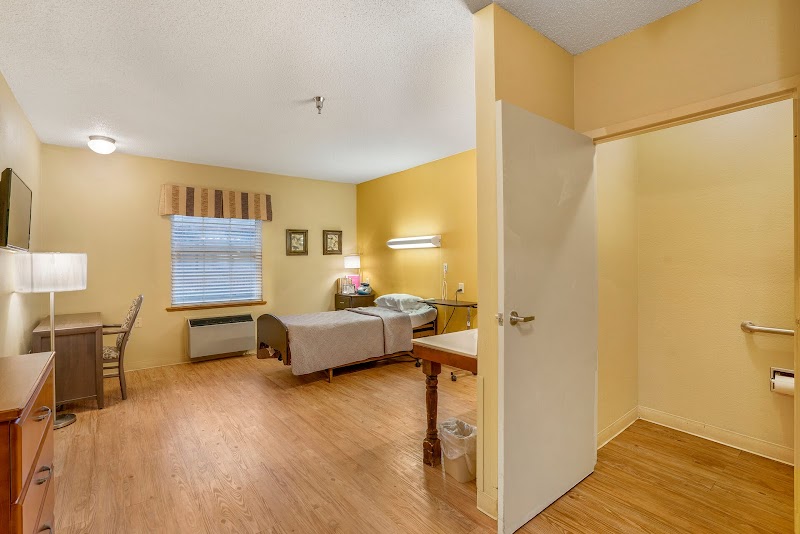
How is Stonebridge Florissant Staffed?

CMS rates STONEBRIDGE FLORISSANT's staffing level at 2 out of 5 stars, which is below average compared to other nursing homes. Staff turnover is 70%, which is 24 percentage points above the Missouri average of 46%. High turnover can affect care consistency as new staff learn residents' individual needs. RN turnover specifically is 60%, which is notably high. RNs provide skilled clinical oversight, so turnover in this role can affect medical care quality.

What Have Inspectors Found at Stonebridge Florissant?

State health inspectors documented 51 deficiencies at STONEBRIDGE FLORISSANT during 2019 to 2025. These included: 51 with potential for harm. While no single deficiency reached the most serious levels, the total volume warrants attention from prospective families.
Who Owns and Operates Stonebridge Florissant?

STONEBRIDGE FLORISSANT is owned by a for-profit company. For-profit facilities operate as businesses with obligations to shareholders or private owners. The facility is operated by STONEBRIDGE SENIOR LIVING, a chain that manages multiple nursing homes. With 120 certified beds and approximately 70 residents (about 58% occupancy), it is a mid-sized facility located in FLORISSANT, Missouri.

How Does Stonebridge Florissant Compare to Other Missouri Nursing Homes?

Compared to the 100 nursing homes in Missouri, STONEBRIDGE FLORISSANT's overall rating (2 stars) is below the state average of 2.5, staff turnover (70%) is significantly higher than the state average of 46%, and health inspection rating (2 stars) is below the national benchmark.

What Should Families Ask When Visiting Stonebridge Florissant?

Based on this facility's data, families visiting should ask: "How do you ensure continuity of care given staff turnover, and what is your staff retention strategy?" "Can you walk me through typical staffing levels on day, evening, and night shifts?" "Can I visit during a mealtime to observe dining assistance and food quality?" "How do you handle medical emergencies, and what is your hospital transfer rate?" These questions are particularly relevant given the facility's high staff turnover rate and the below-average staffing rating.

Is Stonebridge Florissant Safe?

Based on CMS inspection data, STONEBRIDGE FLORISSANT has a clean safety record: no substantiated abuse findings (meaning no confirmed cases of resident harm), no Immediate Jeopardy citations (the most serious violation level indicating risk of serious injury or death), and is not on the Special Focus Facility watch list (a federal program monitoring the lowest-performing 1% of nursing homes). The facility has a 2-star overall rating and ranks #100 of 100 nursing homes in Missouri. While no facility is perfect, families should still ask about staff-to-resident ratios and recent inspection results during their visit.

Do Nurses at Stonebridge Florissant Stick Around?

Staff turnover at STONEBRIDGE FLORISSANT is high. At 70%, the facility is 24 percentage points above the Missouri average of 46%. Registered Nurse turnover is particularly concerning at 60%. RNs handle complex medical decisions and coordinate care — frequent RN changes can directly impact care quality. High turnover means new staff may not know residents' individual needs, medications, or preferences. It can also be disorienting for residents, especially those with dementia who rely on familiar faces. Families should ask: What is causing the turnover? What retention programs are in place? How do you ensure care continuity during staff transitions?

Was Stonebridge Florissant Ever Fined?

STONEBRIDGE FLORISSANT has no federal fines on record. CMS issues fines when nursing homes fail to meet care standards or don't correct problems found during inspections. The absence of fines suggests the facility has either maintained compliance or corrected any issues before penalties were assessed. This is a positive indicator, though families should still review recent inspection reports for the full picture.

Is Stonebridge Florissant on Any Federal Watch List?

STONEBRIDGE FLORISSANT is not on any federal watch list. The most significant is the Special Focus Facility (SFF) program, which identifies the bottom 1% of nursing homes nationally based on persistent, serious quality problems. Not being on this list means the facility has avoided the pattern of deficiencies that triggers enhanced federal oversight. This is a positive indicator, though families should still review the facility's inspection history directly.