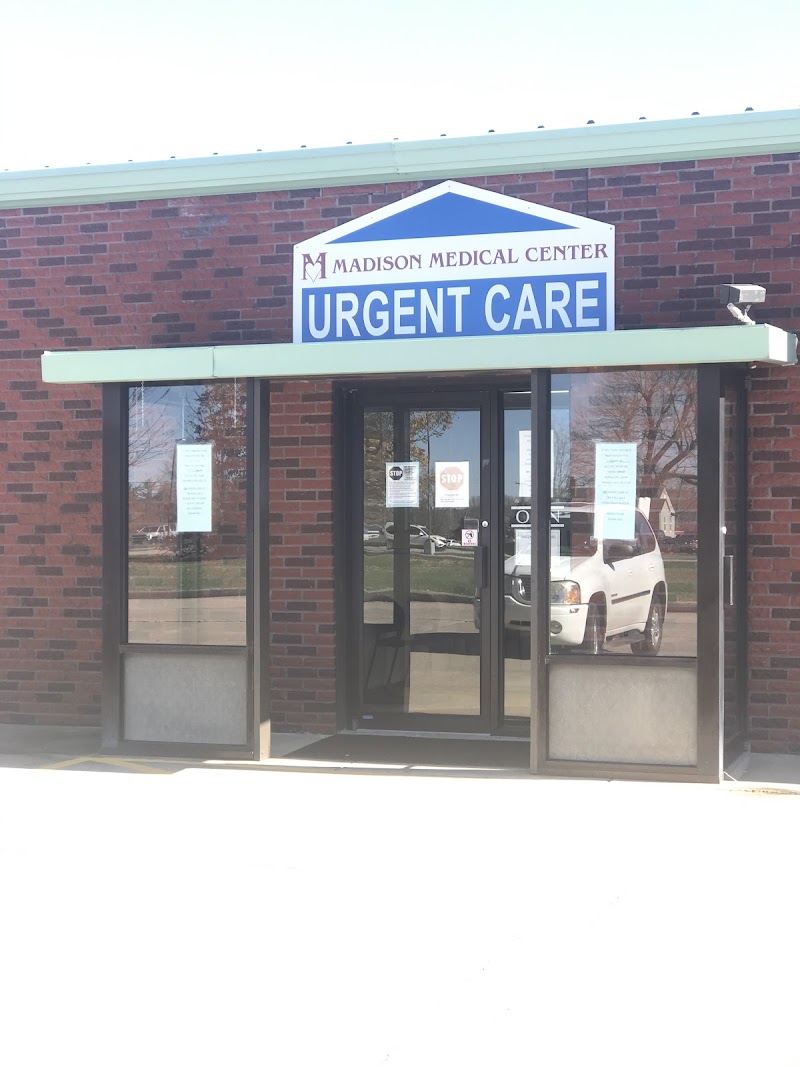
MADISON MEDICAL CENTER

611 WEST MAIN STREET, FREDERICKTOWN, MO 63645 (573) 783-3341
Government - City/county 99 Beds Independent Data: November 2025
Trust Grade
50/100
Last Inspection: September 2024

Within standard 12-15 month inspection cycle. Federal law requires annual inspections.

Overview

Madison Medical Center has received a Trust Grade of C, which means it is average and falls in the middle of nursing home options available. It does not rank among other facilities in Missouri or Madison County, indicating there may be no local comparisons to assess its standing. The facility is new and has just undergone its first inspection, so there are no trends to report yet. Staffing appears to be a strength, with a turnover rate of 0%, significantly lower than the Missouri average of 57%, suggesting that staff members are stable and familiar with the residents. There have been no fines reported, which is a positive sign, but the facility did receive a concerning finding for failing to maintain proper infection control practices during care for some residents, highlighting a potential risk for infection spread. Overall, while there are some strengths, families should be aware of the facility's inspection findings as they make their decision.

Trust Score
C
50/100
In Missouri
#112/223
Top 50%
Safety Record
Low Risk
No red flags
Inspections
Too New
0 → 1 violations
Staff Stability
○ Average
Turnover data not reported for this facility.
Penalties
✓ Good
No fines on record. Clean compliance history, better than most Missouri facilities.
Skilled Nurses
○ Average
Each resident gets 30 minutes of Registered Nurse (RN) attention daily — about average for Missouri. RNs are the most trained staff who monitor for health changes.
Violations
✓ Good
Only 1 deficiencies on record. Cleaner than most facilities. Minor issues only.
☆☆☆☆☆
0.0
Overall Rating
☆☆☆☆☆
0.0
Staff Levels
☆☆☆☆☆
0.0
Care Quality
☆☆☆☆☆
0.0
Inspection Score
Stable
: 0 issues
2024: 1 issues

The Good

  • Full Sprinkler Coverage · Fire safety systems throughout facility
  • No fines on record

Facility shows strength in fire safety.

The Bad

No Significant Concerns Identified

This facility shows no red flags. Among Missouri's 100 nursing homes, only 0% achieve this.

The Ugly 1 deficiencies on record

Sept 2024 1 deficiency
CONCERN (D)

Potential for Harm - no one hurt, but risky conditions existed

Infection Control (Tag F0880)

Could have caused harm · This affected 1 resident

Based on observation, interview, and record review, the facility failed to maintain infection control practices to prevent the development and transmission of infection during incontinent care for one...

Read full inspector narrative →
Based on observation, interview, and record review, the facility failed to maintain infection control practices to prevent the development and transmission of infection during incontinent care for one resident (Resident #3) out of 15 sampled residents and one resident (Resident #16) outside the sample. The facility's census was 59. Review of the facility's Handwashing policy, revised June 2024, showed: - The purpose is to ensure that hand washing is conducted appropriately; - Personnel should always decontaminate their hands before having direct contact with patients; after a situation during which unanticipated microbial contamination of hands might have occurred, especially those involving contact with mucous membranes, blood or other body fluids, secretions, or excretions; if moving from a contaminated body site to a clean body site during patient care; after touching inanimate sources that might have been contaminated with virulent or epidemiological microorganisms; and after removing gloves; - Wearing gloves does not replace the need for hand washing because gloves may have small unapparent defects, may be torn during use and hands can become contaminated during removal of gloves; - Facility-approved waterless hand sanitizer may be used in place of washing hands with soap and water as long as hands are not visibly soiled; - If an employee is non-compliant, they must wear gloves at all times when they are with patients and the hand hygiene policy must be reviewed with the employee and documented as a corrective action. Review of the facility's Perineal Care with a Catheter policy, revised January 2024, showed: - Wash hands and apply gloves; - Place bed protector under buttocks; - Expose the perineal area; - For the female resident, separate the labia and gently wash around the opening of the urethra with disposable non-rinse wipes; - Wash the catheter from the opening of the urethra outward four inches or farther if needed. Do not pull on catheter; - Using a fresh non-rinse wipe, continue washing the peri area. Dry the perineal area; - Remove any soiled items and place in appropriate container; - Remove gloves and dispose in appropriate container. Wash hands; - Apply clean gloves before applying barrier cream. Remove gloves, wash hands. 1. Observation of Resident #3 on 09/12/24 at 9:12 A.M. showed: - Certified Nursing Assistant (CNA) A and CNA C sprayed disposable wipes with peri-wash on a barrier on a supply cart outside the room, entered the resident's room, washed their hands, and donned gloves and a gown; - CNA C helped to position the resident while CNA A cleaned the resident's perineal area and catheter with two separate wipes and placed the used wipes on the disposable bed pad; - CNA A, while performing peri and catheter care, found bowel movement (BM) on his/her glove, removed gloves and laid the soiled gloves on the disposable bed pad with the soiled wipes; - CNA C positioned the resident on the resident's right side; - Without performing hand hygiene, CNA A donned new gloves and cleaned the resident's buttocks again with two separate wipes, placed the used wipes on the soiled bed pad and then wiped BM from the resident's buttocks with the corner of the disposable bed pad and folded the soiled corner of the bed pad over onto itself; - CNA C removed gloves, did not perform hand hygiene, went out in the hall to get more gloves, re-entered the room, washed hands, donned gloves and handed gloves to CNA A; - CNA A removed gloves and, without performing hand hygiene, donned new gloves and continued to wipe BM from the resident's buttocks with wipes; - CNA A rolled up the bed pad and tucked it under the resident; - While CNA B repositioned the resident, CNA A pulled the soiled disposable bed pad from under the resident and handed the soiled bed pad containing soiled wipes to CNA C, who threw the bundle in the trash can beside him/her; - CNA A and CNA C removed gloves and, without performing hand hygiene, donned new gloves; - CNA A then wiped the resident's catheter and peri area again and put a new disposable bed pad under the resident; - With the same soiled gloves, CNA A covered the resident with a blanket; - CNA A and CNA C removed their gloves and gowns; - CNA A washed his/her hands while CNA C pulled the full trash bag from the trash can with bare hands, tied the bag, and set it on the floor beside the trash can; - CNA C washed his/her hands, grabbed the top of the bag of trash with a paper towel, and both CNAs left the room. 2. Observation of Resident #16 on 09/12/24 at 9:51 A.M. showed: - CNA A and CNA B entered the room and washed their hands; - CNA A touched the resident's closet door, clothes in the closet, and the resident's bed, then donned gloves; - CNA B donned gloves; - CNA B positioned the resident while CNA A performed peri care; - CNA A reached for loose wipes on a barrier on the nightstand with gloves being used to perform peri care and touched the clean gloves sitting beside the wipes; - CNA A and CNA B removed the disposable bed pad from under the resident, and CNA B disposed of it in the trash can near CNA A; - CNA A removed her gloves and, without performing hand hygiene, donned the last pair of gloves that was sitting on the nightstand; - CNA B removed his/her gloves; - CNA A laid a clean brief under the resident and applied barrier cream while CNA B helped position the resident with bare hands; - Without performing hand hygiene, CNA A and CNA B fastened the clean brief's tabs on either side of the resident and dressed the resident with bare hands; - Without performing hand hygiene, CNA B opened the door, went into the hall to retrieve the sit to stand and the resident's wheelchair; - Without performing hand hygiene, CNA A touched the resident, his/her clothing, bed, and pillow with bare hands; - Without performing hand hygiene and with bare hands, CNA A and CNA B reached under the resident's arms to position the resident on the edge of the bed and fastened the sit-to-stand sling on the resident for a bed to wheelchair transfer; - Once the resident was transferred to the wheelchair, and without performing hand hygiene, CNA B brushed the resident's hair, touching the hairbrush and the resident's hair with his/her bare hands; - CNA A and CNA B washed their hands and exited the room with the resident. During an interview on 09/12/24 at 2:21 P.M., the Infection Preventionist (IP) said she would strongly encourage staff to wash/sanitize their hands with glove changes. Staff should wash before starting peri care and perform hand hygiene and put on new gloves before cleaning up a bowel movement. If the resident has a catheter and catheter care needs done again after cleaning up the bowel movement, staff should perform hand hygiene and put on new gloves before performing catheter care again. During an interview on 09/12/24 at 2:30 P.M., CNA B said he/she normally washes before beginning resident care and after resident care. In between tasks during resident care such as peri-care, he/she usually just changes gloves and does not wash or sanitize hands. It just depends on what he/she is doing whether or not he/she washes or sanitizes hands during patient care. During an interview on 09/13/24 at 9:23 A.M., CNA A said he/she washes before and after resident care and sanitizes throughout the day. He/She should sanitize when moving from dirty to clean or before dressing a resident after pericare. During an interview on 09/13/24 at 11:00 A.M., the Director of Nursing (DON) said she would expect staff to perform hand hygiene with glove changes. They don't necessarily have to wash their hands; sanitizer is fine. She would expect staff to perform hand hygiene prior to starting resident care, when going from dirty to clean, and after resident care. Staff should also perform hand hygiene after peri care and prior to personal care, such as dressing or transferring the resident.
Understanding Severity Codes (click to expand)
Life-Threatening (Immediate Jeopardy)
J - Isolated K - Pattern L - Widespread
Actual Harm
G - Isolated H - Pattern I - Widespread
Potential for Harm
D - Isolated E - Pattern F - Widespread
No Harm (Minor)
A - Isolated B - Pattern C - Widespread

Questions to Ask on Your Visit

  • "Can I speak with families of current residents?"
  • "What's your RN coverage like on weekends and overnight?"

Our Honest Assessment

Strengths
  • • No major safety red flags. No abuse findings, life-threatening violations, or SFF status.
  • • No fines on record. Clean compliance history, better than most Missouri facilities.
  • • Only 1 deficiencies on record. Cleaner than most facilities. Minor issues only.
Concerns
  • • Grade C (50/100). Below average facility with significant concerns.
Bottom line: Mixed indicators with Trust Score of 50/100. Visit in person and ask pointed questions.

About This Facility

What is Madison Medical Center's CMS Rating?

MADISON MEDICAL CENTER does not currently have a CMS star rating on record.

How is Madison Medical Center Staffed?

Detailed staffing data for MADISON MEDICAL CENTER is not available in the current CMS dataset.

What Have Inspectors Found at Madison Medical Center?

State health inspectors documented 1 deficiencies at MADISON MEDICAL CENTER during 2024. These included: 1 with potential for harm.

Who Owns and Operates Madison Medical Center?

MADISON MEDICAL CENTER is owned by a government entity. Government-operated facilities are typically run by state, county, or municipal agencies. The facility operates independently rather than as part of a larger chain. With 99 certified beds and approximately 64 residents (about 65% occupancy), it is a smaller facility located in FREDERICKTOWN, Missouri.

How Does Madison Medical Center Compare to Other Missouri Nursing Homes?

Comparison data for MADISON MEDICAL CENTER relative to other Missouri facilities is limited in the current dataset.

What Should Families Ask When Visiting Madison Medical Center?

Based on this facility's data, families visiting should ask: "Can I visit during a mealtime to observe dining assistance and food quality?" "How do you handle medical emergencies, and what is your hospital transfer rate?" "Can I speak with family members of current residents about their experience?"

Is Madison Medical Center Safe?

Based on CMS inspection data, MADISON MEDICAL CENTER has a clean safety record: no substantiated abuse findings (meaning no confirmed cases of resident harm), no Immediate Jeopardy citations (the most serious violation level indicating risk of serious injury or death), and is not on the Special Focus Facility watch list (a federal program monitoring the lowest-performing 1% of nursing homes). The facility has a 0-star overall rating and ranks #100 of 100 nursing homes in Missouri. While no facility is perfect, families should still ask about staff-to-resident ratios and recent inspection results during their visit.

Do Nurses at Madison Medical Center Stick Around?

MADISON MEDICAL CENTER has not reported staff turnover data to CMS. Staff turnover matters because consistent caregivers learn residents' individual needs, medications, and preferences. When staff frequently change, this institutional knowledge is lost. Families should ask the facility directly about their staff retention rates and average employee tenure.

Was Madison Medical Center Ever Fined?

MADISON MEDICAL CENTER has no federal fines on record. CMS issues fines when nursing homes fail to meet care standards or don't correct problems found during inspections. The absence of fines suggests the facility has either maintained compliance or corrected any issues before penalties were assessed. This is a positive indicator, though families should still review recent inspection reports for the full picture.

Is Madison Medical Center on Any Federal Watch List?

MADISON MEDICAL CENTER is not on any federal watch list. The most significant is the Special Focus Facility (SFF) program, which identifies the bottom 1% of nursing homes nationally based on persistent, serious quality problems. Not being on this list means the facility has avoided the pattern of deficiencies that triggers enhanced federal oversight. This is a positive indicator, though families should still review the facility's inspection history directly.