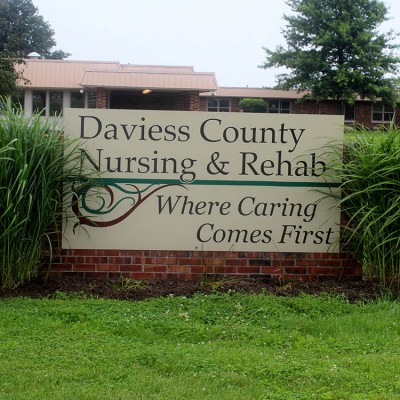
DAVIESS COUNTY NURSING AND REHABILITATION

1337 WEST GRAND, GALLATIN, MO 64640 (660) 663-2197
For profit - Corporation 97 Beds Independent Data: November 2025
Trust Grade
65/100
#144 of 479 in MO
Last Inspection: April 2025

Within standard 12-15 month inspection cycle. Federal law requires annual inspections.

Overview

Daviess County Nursing and Rehabilitation has a Trust Grade of C+, indicating it is decent and slightly above average among nursing homes. It ranks #144 out of 479 facilities in Missouri, placing it in the top half, and is the only option in Daviess County. However, the facility is experiencing a worsening trend, with issues increasing from 4 in 2024 to 8 in 2025. Staffing is a relative strength, with a turnover rate of 46%, which is better than the state average, and it has more RN coverage than 75% of Missouri facilities, ensuring that residents receive proper care. On the downside, there have been specific concerns, such as the failure to employ a qualified dietary manager and issues with food safety standards, including unclean kitchen equipment, which raises potential health risks for residents.

Trust Score
C+
65/100
In Missouri
#144/479
Top 30%
Safety Record
Low Risk
No red flags
Inspections
Getting Worse
4 → 8 violations
Staff Stability
⚠ Watch
46% turnover. Above average. Higher turnover means staff may not know residents' routines.
Penalties
✓ Good
No fines on record. Clean compliance history, better than most Missouri facilities.
Skilled Nurses
○ Average
Each resident gets 30 minutes of Registered Nurse (RN) attention daily — about average for Missouri. RNs are the most trained staff who monitor for health changes.
Violations
⚠ Watch
19 deficiencies on record. Higher than average. Multiple issues found across inspections.
★★★☆☆
3.0
Overall Rating
★★★☆☆
3.0
Staff Levels
★★★★☆
4.0
Care Quality
★★★☆☆
3.0
Inspection Score
Stable
2024: 4 issues
2025: 8 issues

The Good

  • 4-Star Quality Measures · Strong clinical quality outcomes
  • Full Sprinkler Coverage · Fire safety systems throughout facility
  • No fines on record

Facility shows strength in quality measures, fire safety.

The Bad

3-Star Overall Rating

Above Missouri average (2.5)

Meets federal standards, typical of most facilities

Staff Turnover: 46%

Near Missouri avg (46%)

Higher turnover may affect care consistency

The Ugly 19 deficiencies on record

Apr 2025 8 deficiencies
CONCERN (D)

Potential for Harm - no one hurt, but risky conditions existed

Deficiency F0558 (Tag F0558)

Could have caused harm · This affected 1 resident

Based on observation, interview, and record review, the facility failed to provide an acceptable accommodation of needs when staff did not provide a physician ordered leg extender on one resident's wh...

Read full inspector narrative →
Based on observation, interview, and record review, the facility failed to provide an acceptable accommodation of needs when staff did not provide a physician ordered leg extender on one resident's wheelchair (Resident #23) to keep his/her leg elevated. The facility census was 58. Review of facility's Resident Accommodation policy, revised January 2020, showed: -The facility's environment and staff behavior are directed toward assisting the resident in maintaining and/or achieving safe independent functioning, dignity, and well-being. -The resident's individual needs and preferences, including the need for adaptive devices and modifications to the physical environment, shall be evaluated upon admission and reviewed on an on going basis. -In order to accommodate individual needs and preferences, adaptations may be made to the physical environment, including the resident's bedroom and bathroom, as well as the common areas of the facility. Examples of such adaptations may include: -Provide access to assisted devices, such as grab bars and toilet risers in the bathroom; -Installing adaptive handles or providing assisting devices so that drawer are easily opened and closed; -Providing a variety of types (for example, chairs with and without arms), sizes (height and depth), and firmness of furniture in rooms and common areas so that residents with varying degrees of strength and mobility can independently arise to a standing position; 1. Review of Resident #23's Significant Change Minimum Data Set (MDS), a federally mandated assessment tool completed by facility staff, dated 3/19/25, showed: -Cognition moderately impaired; -He/She was dependent on a wheelchair for mobility; -Diagnoses included: Diabetes, vascular insufficiency (decreased blood flow), and amputation. Review of care plan, revised 4/8/25, showed: -He/She went to the wound clinic as directed for vascular wounds to his/her legs; -Follow treatment orders; - If nursing noted resident's wounds were worsening they were to consult with resident's physician; - The resident was to be encouraged to elevate his/her legs often. - Staff were not to put any tight compression on his/her legs because it would restrict his/her blood flow. -On 3/19/25 his/her leg was amputated below the knee and had surgical wound. Observation on 4/22/25 at 11:38 P.M. showed resident was self-propelling down the hallway to dining room with no extender in place on the wheelchair and his/her left amputated leg hanging down unsupported. Observation on 4/22/25 at 2:28 P.M. showed the resident seated in his/her wheelchair with no leg extender on his/her wheelchair. The residents left amputated leg hanging down unsupported. Interview and observation on 4/22/25 at 2:28 P.M. show the Resident said he/she is concerned over redness to his/her right foot. The resident was observed to have purple area on bottom of his/her right foot with his/her middle toe observed to be purple. The resident said the skin on his/her foot had been itching and flaking off for awhile, and had reported it to the nursing staff. Observation on 4/24/25 at 8:22 A.M. showed the resident was in his/her room seated in his/her wheelchair looking out the window. The resident's amputated left leg was hanging down and had no extender on the wheelchair. Observation on 4/25/25 at 8:04 A.M. showed resident was self-propelling in wheelchair, back to his/her room from the dining room. The resident was observed with his/her left amputated leg hanging down with no extender on the wheelchair. Observation on 4/25/25 at 8:14 A.M. showed resident rolling down the hallway, and did not have leg extender on his wheelchair. Leg hanging down and was not elevated. Review of the reisdent's medical record, dated 3/1/25 to 4/23/25, showed: -On 3/27/25 the reisdent was seen by vascular health physician who ordered: -Keep legs elevated as much as possible; -Wheelchair needed extender on left to avoid leg being down. Review of progress notes, dated 3/1/25 to 4/23/25, showed on 4/2/25, Registered Nurse A wrote- Physician here on rounds and new order for resident to see vascular surgery clinic for area to left stump. Review of Physical therapy encounter notes, dated 3/11/25 to 4/11/25, showed there were no assessments or measurements completed for a leg extender to be added to resident's wheelchair. During an interview on 4/22/25 at 7:53 A.M., Registered Nurse A said: -He/she thought the resident came back from hospital with an extender but currently did not have one on his/her wheelchair; -He/she was not aware of orders from the vascular physician dated 3/27/25 for a leg extender; -The resident did not currently have an extender on his/her wheelchair. During an interview on 4/24/25 at 11:29 A.M., RN A said: -The resident's toes were amputated in December; -The resident had complications so was in and out of the hospital frequently; -The resident had amputation to his/her left bilateral foot on 3/12/25. During an interview on 4/24/25 at 12:32 P.M., Physical Therapist (PT) A said he/she did not know if the resident had been assessed for an extender. During an interview on 4/24/25 at 1:58 P.M., PT A said: -The resident did not have an extender on his/her wheelchair; -The resident did have regular leg rests that had always been on his/her chair; -The resident would sometimes choose to take off his leg rests and choose not to have the leg rests on; -The extender would be different than resident's regular wheelchair leg rests; -He/She did not know if the resident had been evaluated for a leg extender. During an interview on 4/24/25 at 2:12 P.M., Certified Nurse Aide (CNA) B said: -The resident did not have an extender on his/her wheelchair; -The resident had a sore on back of his/her stump and he/she did not want it rubbing. During an interview on 4/24/25 at 2:36 P.M., CNA A said the resident did not have anything to keep his left lower extremity elevated. During an interview on 4/25/25 at 12:32 P.M., Social Services Director said: -The resident did see a vascular doctor; -The doctor did mention that resident should have leg elevated more; -He/She did not recall resident getting an extender for his/her wheelchair. During an interview on 4/25/25 at 5:30 P.M., the Director of Nursing said he/she expected the resident who had an order for a leg extender on the wheelchair to be assessed by therapy for a leg extender to be added. During an interview on 4/25/25 at 5:30 P.M., the Administrator said he/she expected the resident with an order for a leg extender on the wheelchair to be assessed by therapy for a leg extender to have been added.
CONCERN (D)

Potential for Harm - no one hurt, but risky conditions existed

Pressure Ulcer Prevention (Tag F0686)

Could have caused harm · This affected 1 resident

**NOTE- TERMS IN BRACKETS HAVE BEEN EDITED TO PROTECT CONFIDENTIALITY** Based on observation, record review and interviews the facility failed to ensure the use of appropriate interventions for potent...

Read full inspector narrative →
**NOTE- TERMS IN BRACKETS HAVE BEEN EDITED TO PROTECT CONFIDENTIALITY** Based on observation, record review and interviews the facility failed to ensure the use of appropriate interventions for potential skin breakdown resulting in pain for one resident (Resident #4). This had the potential to effect all residents. The census was 58. Review of the facility provided policy Pressure Ulcer, Care and Prevention dated April 2006 showed: -To prevent and treat further breakdown of pressure sores; -The nurse is responsible for carring out the treatment as ordered and for implementing measures to prevent pressure ulcers. -Equipment: lotion, elbow/heel protector, pressure reducing mattress, prssure reducing chair pad, foot cradle, pillows; -Use pressure reducing devices to relieve pressure. 1. Review of Resident #4 Quarterly MDS dated [DATE] showed: -Brief Interview of Mental Status (BIMS) of 3; -Substantial assitance of staff for toileting, showering and dressing; -Moderate assistance of staff for personal hygiene; -Risk for pressure ulcers; -Diagnoses of Alzheimer's Disease (degenerative brain disorder that primarily affects memory, thinking, and behavior), Visual hallucinations (seeing things that are not really there), ST elevated Myocardial Infarction (STEMI: serious type of heart attack where a major artery feeding the heart is completely blocked). hypertension. Review of the resident's Braden Assesment (an assessment tool used to determine risk of pressure injuiry) dated 02/11/2025 showed a score of 13; indicated moderate risk for skin breakdown. Review of the resident's comprehensive care plan dated 3/14/25 showed: -He/She had impaired decision making ability and memory loss; -He/She was forgetful and may have difficulty communicaticating feelings or needs; -He/She was at risk for skin breakdown because of urinary incontinence; -He/She needed assistance to toilet, needed to be checked for incontinence often and kept clean and dry; -Apply a barrier cream to help prevent skin breakdown; -He/She used a pressure relief mattress on his/her bed and in his/her wheel chair. Review of the Resident's medical record showed a progress note on 04/04/2025 at 12:53 P.M. : -A Certified Nurse Aide (CNA) called the nurse to the resident's room; -The resident had a small open area to the left coccyx and maceration (the softening and breakdown of skin due to prolonged exposure to moisture) to the right inner buttock. The area was observed by the wound nurse and verbal order to apply barrier given. Observation on 04/22/25 at 10:21 A.M. showed : -The resident sitting up in recliner; -Incontinent pad under resident; -Wheelchair at bedside, no cushion in chair. Observation and interview on 04/23/25 at 8:23 A.M. showed: -He/She was sitting up in wheelchair; -No pressure relieving cushion in wheelchair. -He/She said his/her bottom hurt Observation on 04/23/25 at 11:39 A.M. showed: -He/She was in his/her recliner with feet elevated; -No pressure relieving cushion in the recliner. Observation on 04/24/25 at 10:07 A.M. showed: -He/She was sitting up in his/her wheelchair; -No pressure relieving cushion in wheelchair. Observation and interview on 04/23/25 at 3:13 P.M. showed: -His/her buttocks and coccyx area were dark red/purple in color, with thin, fragile and peeling skin; -Staff performed incontinent care, applied barrier cream and new incontinent brief. -The resident walked to the recliner, reclined and elevated his/her feet; -He/She said his/her buttom was so very sore and hurt; -There was no specialty cushion in his/her recliner. During an interview on 04/23/25 12:05 PM Certified Nurse Aide D said: -Resident does not have a specialty cushion in the recliner or the wheelchair; -Resident does not sleep in his/her bed and prefers the recliner; -Resident complains of pain in his/her bottom at times; -He/She had told the nurse when the resident complained previously. During an interview on 04/24/25 at 10:07 AM Registered Nurse C said: -Resident sits in the recliner due to swelling of his/her legs; -Resident does not have any open areas; -Resident does complain of pain in his/her buttocks at times that is relieved by position changes. During an interview on 04/24/25 at 3:50 P.M Resident Representative B said: -The resident complained of his/her bottom being sore; -He/She had brought cusions and the facility would not use them; -He/She saw the resident on 4/20/25 and there was no cushion on the resident's chair. During an interview on 4/25/2025 at 5:30 P.M. the Director of Nursing said: -She would expect the policy for pressure ulcer prevention to be followed; -She would expect a pressure reducation cushion to be used for a resident at risk for pressure ulcers, if therapy has evaluated and deemed necessary; During an interview on 4/25/2025 at 5:30 P.M. the Assistant Director of Nursing said: -The resident did have a pressure relieving cushion; -The cushion was missing; -The resident should have a cushion.
CONCERN (E)

Potential for Harm - no one hurt, but risky conditions existed

Deficiency F0658 (Tag F0658)

Could have caused harm · This affected multiple residents

**NOTE- TERMS IN BRACKETS HAVE BEEN EDITED TO PROTECT CONFIDENTIALITY** Based on observation, interview, and record review, the facility failed to ensure professional standards of quality when staff f...

Read full inspector narrative →
**NOTE- TERMS IN BRACKETS HAVE BEEN EDITED TO PROTECT CONFIDENTIALITY** Based on observation, interview, and record review, the facility failed to ensure professional standards of quality when staff failed to obtain a physician's order, obtain authorization from the resident's representative, complete and assessment for use of chair alarm for three residents (Resident #32, #17, and #24). The facility census was 58. Review of facility policy, physical restraints, dated April 2006, showed: -Physical restraints are defined as any manual method or physical or mechanical device, material, or equipment attached or adjacent to the resident's body that the individual cannot remove easily, which restricts freedom of movement or normal access to one's body. -Assess resident's need for restraint use. -Obtain physician's order for restraint. -Develop or review resident care plan for type of restraint, reason for use, alternate methods to be used and method of application. List medical symptoms to be treated and methods to reduce or eliminate restraint. -Place resident in a supervised area and check frequently; -Remove restraint every two hours and change resident's position; -Use other nursing measures, diversion programs, activity programs, and supervision to control behavior whenever possible. -Positioning devices may be used instead of restraining devices; -Residents at risk of falls and injury may be reduced by the use of many of these devices in bed, in a chair, in the bathroom, or while walking; -Investigate each resident's needs for such devices. 1. Review of Resident #32's Quarterly Minimum Data Set (MDS), a federally mandated assessment tool completed by facility staff, dated 3/31/25, showed: -Cognition moderately impaired; -He/She had one fall with no injury since prior assessment; -He/She had falls prior to admission; -He/She was dependent on a wheelchair; -He/She required partial to moderate assistance with rolling left and right, sit to lying, sit to stand, chair to bed transfers; -He/She required substantial to maximal assistance with mobility from lying to sitting on side of bed; -He/She used a chair alarm daily; -Diagnoses included Parkinson's Disease and seizure disorder. Review of care plan, dated 4/8/25, showed: -He/She was at risk of falls; -He/She had dementia so did not always remember to ask for help, my family requested that I have a chair alarm in case he/she would try to get up on their own. Sometimes he/she did not remember to use his/her call light or ask for assistance; -On 3/25/25 He/She slid out of wheelchair trying to reach for tissues. Please try to keep most used items within reach; -On 4/2/25 He/She was lowered by CNA to ground because his/her legs gave out; -On 4/2/25 He/She tried to transfer self to the toilet alone and his/her legs gave out. He/She was reminded and educated to ask for help. Review of physician's orders, dated 4/1/25-4/24/25, showed no orders for chair alarm found. Review of resident's medical record, dated 4/23/25, showed: -No assessment for chair alarm use found; -No consent for chair alarm use found. Observation on 4/22/25 at 9:36 A.M. showed resident was resting in the recliner with his/her feet elevated by the footrest of the recliner. He/She had a chair alarm attached to his/her shoulder and the base of the alarm was resting on the arm of resident's recliner. Observation on 4/23/25 at 9:46 A.M. showed resident was asleep in the recliner with the chair alarm sitting beside him/her on the arm of the recliner. The alarm was attached to resident's shirt on her shoulder. Observation on 4/24/25 at 8:11 A.M. showed resident was resting in the recliner with the chair alarm attached to their shoulder. Observation on 4/24/25 at 10:41 A.M. showed resident was resting in the recliner and had chair alarm in place laying on arm of recliner with the clip pinned to his/her shoulder. During an interview on 4/24/25 at 2:12 P.M., Certified Nurse Aide (CNA) B said: - Resident #32 had a pressure alarm because he/she would get up; -Staff have to put resident's footrest on the recliner down as resident was not strong enough to do it on his/her own; -The Resident will slide down right off the foot of the recliner when he/she was determined to get up from the recliner; -The Resident's wheelchair was parked at the end of resident's recliner with the brakes on because facility could not use restraints; -He/She had found that resident in the past had moved into his/her wheelchair by themselves after the resident climbed down to the end of the recliner and slid into the wheelchair; -When the resident can get a hold of the wheelchair he/she can transfer very well; During an interview on 4/24/25 at 2:36 P.M, CNA A said: -The Resident had a chair alarm because he/she would get up without turning on his/her call light; -Staff would walk by and find resident scooted clear to the end of his/her recliner; -The Resident had falls when he/she first arrived and that is when the chair alarm was placed. 2. Review of Resident #17's Quarterly MDS, dated [DATE], showed: -Cognition severely impaired; -He/She was dependent on a wheelchair; -He/She was dependent for all mobility; -He/She had no recent falls; -He/She used bed alarm daily; -He/She did not use chair alarm; -Diagnoses included dementia, depression, manic depression, osteoarthritis, bipolar disorder, and chronic pain. Review of care plan, revised 4/23/25, showed: -He/She used a peddler reclining chair that allowed him/her to self propel; -He/She would attempt to stand from the wheelchair if he/she became restless; -He/She required assist of one to two for transfers and repositioning; -He/She was at risk for falls related to unsteadiness at times as well as history of falls; -On 7/20/24, He/She fell out of the wheelchair and hit his/her head. Neurological assessments were initiated and chair alarm replaced and ensured it was working order, prior to getting him/her into the chair make sure my alarm was working; -He/She continued to use a clip alarm when in his/her wheelchair and a pressure alarm when in his/her bed for his/her safety; Review of physician's orders, dated 4/1/25-4/24/25, showed no orders for chair or bed alarm found. Review of resident's medical record, dated 4/23/25, showed: -No assessment for chair alarm use found; -No consent for chair alarm use found. Observation on 4/22/25 at 10:15 A.M. of the resident sitting in his/her reclining wheelchair with his/her eyes closed. Resident leaned forward in his/her chair showed chair alarm was pinned to his/her shoulder of his/her night gown. Observation on 4/22/25 at 3:05 P.M. showed resident was learning forward in his/her reclining wheelchair and had chair alarm clipped to his/her shoulder. Observation on 4/23/25 at 9:48 A.M. showed resident was asleep in reclining wheelchair in the day room. Chair alarm was clipped to the back shoulder of his/her clothes. Observation on 4/24/25 at 11:41 A.M. showed resident's reclining wheelchair was positioned with the resident's feet up in the air. Resident was observed leaning forward and making loud noise of irritation with his/her voice. Resident observed with chair alarm clipped to his/her shoulder. CNA A and CNA B entered resident's room and adjusted resident's reclining wheelchair placing the footrest in a down position. During an interview on 4/24/25 at 2:12 P.M., CNA B said: -The resident would pull his/her alarm and would try to get up out of his/her reclining wheelchair; -When resident was upset staff were aware because resident would be screaming all the time; -He/She never had seen the resident attempt to get out of his/her wheelchair. During an interview on 4/24/25 at 2:36 P.M., CNA A said: -The resident would sometimes think he/she could walk and would stand up; -The resident was a two person transfer; -The resident's alarm would go off when he/she leaned forward and adjusted his/her knees or socks; 3. Review of Resident #24's Quarterly MDS, dated [DATE], showed: -Cognition severely impaired; -Dependent on a walker and wheelchair; -Restraints not used; -He/She required partial to moderate assistance with dressing, hygiene, sit to lying on side of bed mobility; -Diagnoses included dementia, asthma, and depression. Review of care plan, revised 3/27/25, showed: -He/She was at risk for injury related to falls; -On 11/12/24, he/she slid out of bed onto his/her fall mat. His/Her alarm did not sound. His/Her nurse checked to see if it was working when assisting him/her back to bed and bed alarm sounded and was in working order; -On 11/28/23 he/she slid out of bed, bed alarm placed. Bed alarm removed 1/4/24; -On 2/23/25 He/She turned the chair alarm off and ambulated barefoot to the bathroom causing him/her to fall. He/She was educated to ask for assistance and gripper socks were applied; -On 3/24/25 He/She attempted to get out of recliner and slide out. His/Her alarm was not plugged in. Please ensure the alarm was in working order; Review of physician's orders, dated 4/1/25-4/24/25, showed no orders for chair or bed alarm found. Review of resident's medical record, dated 4/23/25, showed: -No assessment for chair alarm use found; -No consent for chair alarm use found. Observation on 4/22/25 at 11:11 A.M. showed resident was sitting in recliner with chair alarm in place. Observation on 4/24/25 at 8:33 A.M. showed resident was in bed with bed alarm in place. During an interview on 4/24/25 at 2:12 P.M., CNA B said: -Resident had pressure alarms on bed and in the chair; -When alarm goes off it made a loud noise and the resident hates it; -He/She had seen resident physically jump when the alarm went off; During an interview on 4/24/25 at 2:36 P.M., CNA A said: -The resident had an alarm because his/her vision was not good and for awhile resident was sliding out of his/her chair; -The alarm did not appear to bother resident; -The resident would shut off the alarm; -The resident had said that he/she did not know where that noise was coming from; - The resident would use his/her call light sometimes but it would be it or miss; - The resident had days where he/she would have no issues with his/her vision. During an interviews on 4/24/25 at 9:15A.M. and 4/25/25 at 5:30 P.M., the DON said: - He/she had no consents for chair or bed alarms on any of the requested sampled residents. -He/She expected residents with chair or bed alarms to have assessments; -The assessments should be completed prior to using the alarms; -He/She did not know if consents were required for chair or bed alarms; -Residents with chair or bed alarms should have physician's orders for their use; -He/She expected chair and bed alarms to be care planned. During an interview on 4/24/25 at 9:20A.M. and 4/25/25 at 5:30 P.M., the Administrator said; - The facility does not complete assessments for the use of chair or bed alarms. - Residents with alarms in place should have assessments, physician's orders, and consents in place prior to use.
CONCERN (E)

Potential for Harm - no one hurt, but risky conditions existed

Deficiency F0679 (Tag F0679)

Could have caused harm · This affected multiple residents

**NOTE- TERMS IN BRACKETS HAVE BEEN EDITED TO PROTECT CONFIDENTIALITY** Based on observation, interview, and record review, the facility failed to provide an on-going program of activities that was de...

Read full inspector narrative →
**NOTE- TERMS IN BRACKETS HAVE BEEN EDITED TO PROTECT CONFIDENTIALITY** Based on observation, interview, and record review, the facility failed to provide an on-going program of activities that was designed to meet the interests and physical, mental, and psychosocial well-being of each resident. This affected five residents (#48, #4, #17, #11 and #23) out of 15 sampled residents and could potentially affect all residents. The facility census was 58. Review of the facility policy, Preparation for Activities, dated 6/2018, showed the Activity Director was responsible for the scheduling of all activity functions; The facility did not provide activity participation records for requested residents. 1. Review of Resident #48's admission MDS, dated [DATE], showed: -Severely impaired cognition; -It was very important to have books, magazines, and newspapers to read; -It was somewhat important to listen to music he/she likes; -It was somewhat important to be around animals; -It was somewhat important to do things with groups of people; -It was very important to do his/her favorite activities; -It was very important to go outside; -It was somewhat important to participate in religious activities. -Diagnoses include: Dementia and anxiety. Observation on 4/24/25 at 12:47 P.M. showed: -Resident was sitting on a chair in the hallway; not engaged in any activity. -Resident was not inteviewable and unable to have a conversation regarding interests. Review of the resident's electronic medical records on 4/24/25 at 3:15 P.M. showed: -No care plan information for activities; -No activity assessments. During an interview on 4/23/25 at 3:38 P.M., CNA C said: -He/She assisted with creating the activity calendar for the memory care unit; -He/She carries out activities on the memory care unit during the week and staff carries out scheduled activities on weekends and evenings; -He/She has not completed activities training; -The activities director does not carry out activities on the memory care unit. During an interview on 4/25/25 at 10:48 A.M., the Activities Director said: -He/She would chart a monthly summary of the resident's participation in activities; -He/ She did not like sitting behind a desk, so he/she was not good about charting; -He/She did not complete an activities assessment for each resident; -He/She did not keep a record of the residents' activities preferences; -He/She did not attend care plan meetings; -He/She did not care plan activities; -He/She would add activities to a resident's care plan if the resident stopped attending activities; -He/She believed this generation of residents like to drink coffee and watch TV; -He/She did not plan or carry out activities on the memory care unit; -The unit coordinator kept the residents occupied on the memory care unit. -There were no coordinated activities on the memory care unit. During an interview on 4/25/2025 at 5:30 P.M. the Administrator said: -He/She expects all residents to be provided with meaningful activities; -He/She creates the activity calendars; -He/She relied on the MDS, to assess residents' activities preferences. 3. Review of Resident #23's Significant Change MDS, dated [DATE], showed: -Cognition moderately impaired; -He/She felt it was very important to listen to music he/she liked, have books, newspapers, and magazines to read, keep up with the news, to do his/her favorite activities, go to outside and get fresh air when weather was good, to participate in religious services. -Diagnoses included: Amputation of left lower limb, stroke, aphasia, anxiety, and depression. Review of care plan, revised 4/22/25, showed: -Resident needed encouragement and opportunities to participate in activities, cognitive stimulation, and social interaction; -Keep him/her informed of the activities for the day and ask if they would like to attend. -Resident's activity needs and interests were assessed on admission and as needed to determine interests and activity needs; -Inform and invite me to all scheduled activities that he/she may have an interest in; -He/She received an activity calendar monthly; -His/Her favorite activities included visiting, fun with therapy, wheeling around building in my wheelchair, looking outside, sitting on the patio. Observation on 4/22/25 at 2:28 P.M. showed resident was in his/her room looking out the window. Observation on 4/24/25 at 8:22 A.M. showed resident was in his/her room looking out the window and watching the birds at his/her bird feeder. During a continuous observation on 4/24/25 from 8:30 A.M.-10:59 A.M. showed no activities were offered to resident. Activity calendar for April 2025 showed barber shop 9:30 A.M. and weekly word search 10:00 A.M. Activity Director was not present in building and no activities were announced or offered to residents. During an interview on 4/24/25 at 8:22 A.M., Resident said: -He/She liked to play bingo and facility offered bingo games three times a week; -He/She liked fun therapy; -Facility did not have activities geared towards men; -He/She used to drive a field truck for a local oil company; -He/She would like more activities offered outside; -He/She did not get to go outside very often; -He/She enjoyed watching birds and had a bird feeder but nobody helped refill his/her bird feeder; -He/She used to hunt and fish prior to moving into the facility. Review of monthly activity logs, dated January-March 2025, showed: -January: No daily entries made except writing that showed in and out of hospital; -February: No daily entries made except writing that showed was in hospital most of February; -March: No daily entries of participation, staff had written on activity lines as follows: -Beauty/Barber shop: on occasion; -Exercise: therapy; -Family visit: weekly; -Television: daily; Review of Resident's census, dated January-March 2025, showed: -January: Resident was out of facility 3 days from 1/22/25-1/24/25, resident was present in facility 28 out of 31 days. -February: Resident was out of facility 24 out of 28 days from 2/5/25-end of month, resident was present in facility four days; -March: Resident was out of facility 12 days from beginning of month until 3/12/25, resident was present in facility nineteen days. During an interview on 4/24/25 at 2:12 P.M., CNA B said: -The Resident did not do activities; -He/She would participate in fun therapy like the parachute. During an interview on 4/25/25 at 12:40 P.M., Activity Director said: -The resident was very hard to work with; -He/She would participate in group activities and group therapy; -The resident loved music concerts; -The resident would not play bingo; -The resident did not have a lot of interests. 4. Review of Resident #11's Annual MDS, dated [DATE], showed: -Cognition severely impaired; -He/She was dependent on a wheelchair or walker; -He/She was dependent for all cares and mobility; -Staff assessment of daily activity preferences showed: He/She liked reading books, newspapers, or magazines, listening to music, participating in favorite activities, spending time outdoors, and participating in religious activities or practices. -Diagnoses included: Alzheimer's disease and major depressive disorder Review of Care Plan, revised 2/28/25, showed: -His/Her activities needs and interests were assessed on admission and as needed to determine his/her interests and activity needs. -He/She wanted Informed and invited to all scheduled activities that they may be interested in; -He/She was provided an activity calendar monthly; -He/She had favorite activities of reading, I love old-time romance novels, going outdoors, participating in church and bible study, bingo, pretty nails. Observation on 4/22/25 at 9:52 A.M. showed resident sitting in recliner in his/her room. Book observed on the bed side table. Observation on 4/22/25 at 2:00 P.M. showed resident was not involved in activities in main dining room where a group of six individuals were playing a game of left, right, center. During an interview on 4/22/25 at 9:52 A.M. resident said he/she liked to read. Observation on 4/23/25 at 10:22 A.M. showed resident was asleep in his/her recliner. Activity on calendar showed nails at 10:00 A.M., resident was not observed to be invited to activity. Observation on 4/24/25 at 10:42 A.M. showed resident was in his/her room reading a book. During a continuous observation on 4/24/25 from 8:30 A.M.-10:59 A.M. showed no activities were offered to resident. Activity calendar for April 2025 showed barber shop 9:30 A.M. and weekly word search 10:00 A.M. Activity Director was not present in building and no activities were announced or offered to residents. Review of monthly activity logs, dated January-March 2025, showed: -January: No daily entries made, staff wrote on activity lines as follows: -Animal visit: enjoys -Beauty/Barber shop: on occasion; -Exercise: group therapy; -Family visit: occasionally; -party/social: attends; -reading: daily; -television: daily -February: -Beauty/Barber shop: on occasion; -Family visit: monthly; -Television: daily; -March: -Beauty/Barber shop: on occasion; -Family visit: monthly; -Television: daily. During an interview on 4/24/25 at 2:12 P.M, C.N.A. B said: -Resident liked to read a lot; -He/She was hard to get out of his/her room; During an interview on 4/24/25 at 2:36 P.M., CNA A said: -Resident liked to read; -Resident would read the same book five times if staff did not switch the book out for him/her. During an interview on 4/25/25 at 7:53 A.M., RN A said: -Resident would participate in hitting balloon or pool noodles that the therapy department would lead; During an interview on 4/25/25 at 12:40 P.M., Activity Director said: -Resident did not have any activities he/she liked; -He/She would play bingo maybe one time a year; -He/She always had a book in his/her hand like he/she was reading; -He/She did have a library cart that he/she took around on Mondays; -He/She did not think resident could actually ready; -He/She recently started obtaining larger print books. 5. Review of Resident #17's Significant change MDS, dated [DATE], showed: -Cognition severely impaired; -He/She was dependent on a wheelchair; -He/She was dependent for most all cares, chair to bed transfers, sit to stand transfers, toilet transfers, and rolling left and right; -Staff assessment of resident's activity preferences showed: He/She liked listening to music and spending time outdoors; -Diagnoses included: Dementia, depression, and bipolar disease. Review of care plan, revised 4/23/25, showed: -He/She enjoyed doing group activities; -He/She did not always like to participate in activities and would sometimes wheel up and down the halls for entertainment; -He/She was to be shown where activity was to take place and assisted to area, encouraged to participate in group activities, or allowed to observe without pressure to participate if he/she chose to or not to do so. -Staff should attempt to involve him/her in small group or one-on-one activities at least once daily or as desired; -Resident enjoyed listening to music, has a CD player and CDs with some of the resident's favorite songs on them; -He/She enjoyed looking at pictures of family and had albums in his/her room that staff could show the resident; -He/She enjoyed one-on-one lotion therapy. Staff to use calming lotions and rub on resident's extremities. Observation on 4/22/25 at 10:15 A.M. showed resident was sitting in his/her reclining wheelchair alone in his/her room. No music was playing, no television was on. Activity calendar showed activity scheduled was crossword puzzles. Observation on 4/22/25 at 3:05 P.M. showed resident was still seated in his/her reclining wheelchair in his/her bedroom alone. Resident had no music playing, no television in his/her room, and had no stimulating activities in his/her hands. Resident remained in same position as earlier and was facing the door to the hallway. During a continuous observation on 4/24/25 from 8:30 A.M.-10:59 A.M. showed no activities were offered to resident. Activity calendar for April 2025 showed barber shop 9:30 A.M. and weekly word search 10:00 A.M. Activity Director was not present in building and no activities were announced or offered to residents. Resident remained seated in day room in front of television. No tactile stimulation activities were offered to resident. A request for activity attendance logs for the resident was requested and no documentation provided. During an interview on 4/25/25 at 12:40 P.M., Activity Director said: -He/She visited with the resident when he/she was in a visiting mood; -Resident did not talk so he/she was a hard resident to do anything with; -Resident got irritated and agitated easily; -He/She knew resident used to cook and raise chickens prior to entering facility but did not do any crafting or activities according to his/her family. During an interview on 4/24/25 at 2:36 P.M., CNA A said he/she would put music on for the resident or give the resident chocolate. During an interview on 4/25/25 at 7:53 A.M., RN A said: -The resident did not participate in activities; -Approximately a year or so a go resident could do more; -It's difficult to get the resident interested now, there is not many activities that he/she could participate in at facility. During an interview on 4/24/25 at 2:36 P.M, CNA A said: -He/She would occasionally do one on one's with residents by asking residents about their past, taking them outside, doing braids in resident's hairs; -Activity Director would do activities with residents if staff brought them to dining room if the resident was able to participate in activity; -Activities were announced over the intercom; -Activity Director would tell staff about activities and staff would take residents to activity; During an interview on 4/24/25 at 3:45 P.M., Administrator said the facility used the Minimum Data Set and did not have any separate activity assessments or documentation to provide regarding activities provided. During an interview on 4/25/25 at 12:40 P.M., Activity Director said: -When new resident moved into the facility he/she would not bother them for two to three days as he/she recognized that residents may have had a difficult journey leaving their homes and entering long term care; -He/She would pop into resident rooms and introduce his/her self; -He/She would not try to get residents to get up or do stuff with him/her right off the bat of moving in; -He/She and the administrator developed the activity calendar; -He/She used to fill out activity logs daily prior to covid; -He/She would journal activities for awhile, then got in habit of instead of tracking resident's activities day by day he/she would do it monthly; -He/She had not obtained certifications for activities; -He/She had worked in activities for over 10 years; -He/She just used common sense as the Activity Director. 2. Review of Resident #4 Quarterly MDS dated [DATE] showed: -Brief Interview of Mental Status (BIMS) of 3; -Substantial assistance of staff for toileting, showering and dressing; -Moderate assistance of staff for personal hygiene; -Diagnoses of Alzheimer's Disease, Visual hallucinations, ST elevated Myocardial Infarction (STEMI: serious type of heart attack where a major artery feeding the heart is completely blocked). hypertension, Review of the Resident's comprehensive care plan dated 3/14/25 showed: -He/She had impaired decision making ability and memory loss; -He/She was forgetful and had difficulty communicating feelings or needs; -He/She needed encouragement and opportunities to participate in activities, cognitive stimulation and social interaction; - Staff Keep him/her informed of activities; -Encourage him/her to join group activities, per family wishes -He/She liked crafts, sewing, cross stitch and crochet in the past; -He/She liked church and bible study. Review of the resident's medical record showed no assessment of activity likes/dislikes or past routines, and no activity attendance record. Observation and interview of Resident #4 on 04/23/25 at 11:39 A.M. showed: -He/She was sitting in a recliner in his/her room; -The Television was not on, no music was playing; -The over-bed table was at the chair side with fresh water and word puzzle book. -The resident said he/she just sits with nothing to do. Observation and interview of Resident #4 on 04/24/25 at 10:07 A.M. showed: -He/She was up in his/her wheelchair, going through his/her dresser drawers; -He/She said he/she guessed he/she would just sit there, while sitting in his/her room doorway -Staff and other residents were sitting at the desk area preparing t- shirts for [NAME] dye: Resident #4 was not asked to join in the activity. During an interview on 04/24/25 03:50 P.M. Resident Representative B said: -The resident liked to do crafts but was no longer physically able to do some things; -Staff have to ask and assist the resident to attend activities, he/she will not go on his/her own; -The resident loved to read, there are no books on tape at the facility, and staff do not turn on any books or bring the resident any; -The resident does not know how to turn the television channel, and staff will turn it to things he/she did not like. -The resident enjoyed old television shows, like [NAME], old cowboy shows, and nature shows.
CONCERN (E)

Potential for Harm - no one hurt, but risky conditions existed

Deficiency F0680 (Tag F0680)

Could have caused harm · This affected multiple residents

Based on observation, interview, and record review the facility failed to employ a qualified activity professional to oversee the activity program of the facility. The facility employs a part time act...

Read full inspector narrative →
Based on observation, interview, and record review the facility failed to employ a qualified activity professional to oversee the activity program of the facility. The facility employs a part time activity director, but he/she had not completed an approved activity professional training program. The facility census was 58. The facility did not provide a policy regarding activities professional training and requirements. Review of facility's job description for the Activities Director showed: Responsibilities Included: -Plans, organizes, and implements programs to meet the social, intellectual, emotional, educational, and physical needs of residents in a long-term care facility; -Creates and facilitates activities that promote socialization, intellectual stimulation, and physical activity; -Maintains accurate records of resident participation and program evaluations; -Ensures all activities are in compliance with regulations and guidelines; -Works with nursing and social services to help create comprehensive care plans; -Communicates with residents and families to promote participation and address concerns; Qualifications Included: -Knowledge of activities programming, geriatrics, and the needs of residents in long-term care. During an interview on 4/24/25 at 7:53 A.M., the Administrator said: -The Activities Director was not certified; -The administrator coordinates with CNA C to plan activities for the memory care unit; -CNA C had no activities training. Observation on 4/25/25 at 10:48 A.M. showed the activities director was in the salon setting a resident's hair while the physical therapy department conducted an activity. During an interview on 4/25/25 at 10:48 A.M., the Activities Director said: -He/She did not have any certifications for activities; -He/She would chart a monthly summary of the resident's participation in activities; -He/ She did not like sitting behind a desk, so he/she was not good about charting; -He/She did not complete an activities assessment for each resident; -He/She did not keep a record of the residents' activities preferences; -He/She believed this generation of residents like to drink coffee and watch TV; -He/She did not plan or carry out activities on the memory care unit; -The unit coordinator kept the residents occupied on the memory care unit; During an interview on 4/25/2025 at 5:30 P.M. the Administrator said: -He/She expects residents to be provided with meaningful activities; -He/She expects the activities director to have specific training or certifications related to their role; -He/She relied on the admission minimum data set (MDS), a federally mandated assessment tool completed by facility staff, to assess residents' activities preferences.
CONCERN (E)

Potential for Harm - no one hurt, but risky conditions existed

Respiratory Care (Tag F0695)

Could have caused harm · This affected multiple residents

Based on observation, interview and record review, the facility failed to ensure staff cleaned and changed two continuous positive airway pressure (CPAP) equipment per professional standards for two r...

Read full inspector narrative →
Based on observation, interview and record review, the facility failed to ensure staff cleaned and changed two continuous positive airway pressure (CPAP) equipment per professional standards for two residents (Resident #14 and #11) of 15 sampled residents. The facility census was 58. Review of the facility provided, undated, policy: Cleaning and Disinfection of Resident Care Items and Equipment showed: -Resident care equipment, including reusable items and durable medical equipment will be cleaned and disinfected according to current CDC (Center for Disease Control) recommendations for disinfection and OSHA (Occupational Safety and Health Administration)Bloodborne pathogen standards. -Reusable resident care equipment will be decontaminated and/or sterilized according to manufacturers guidelines. Review of the Resmed manufacturer CPAP cleaning guide dated 2022 showed: -Keeping the CPAP mask clean is key to ensuring that it fits and seals well. Clean the mask cushion and tubing daily and the mask frame and headgear weekly. Before washing the mask, take it apart and wash the components in warm water (approximately 30°C/86°F) with a mild detergent. After washing, all components should be rinsed well with drinking-quality water, the cushion and frame should be placed on a flat surface, on top of a towel, and allowed to air dry out of direct sunlight. Review of Resident #14 admission Minimum Data Set (MDS: a federally mandated assessment tool completed by facility staff) dated 3/31/25 showed: -Brief Interview of Mental Status (BIMS) of 14, indicated very minimal cognitive loss; -Supervision of staff for Activities of Daily Living (ADLs: tasks completed in a day to care for oneself) -Diagnoses of Alzheimer's Disease (a progressive brain disorder that effects memory, thinking and behavior), Obstructive Sleep Apnea (sleep disorder where breathing repeatedly pauses or shallow breaths occur during sleep due to a blockage in the upper airway), Anxiety (feelings of worry, fear and unease) and osteoarthritis (a degenerative joint disease leading to pain and stiffness). Review of the residents comprehensive Care Plan dated 4/8/25 showed no care plan for the use or care of CPAP machine. Review of the resident's April Physician order sheets showed: -C-Pap to be worn at bedtime. Special Instructions: C-Pap settings : 14.0 Pressure, 4.0 Set Rate, 6 Humidity; apply daily at night -No order to clean CPAP machine or components. Observation on 04/22/25 at 10:41 A.M. showed: -Resident lying on bed, CPAP on, machine dusty with white flaky spots, filter with grey dusty debris. -There was no bag for storage; -The tubing was not dated. Observation on 04/23/25 at 9:47 AM showed: -CPAP mask had white, flaky debris in the mask, -The water chamber had condensation ; -The mask and tubing were laid on the resident's night stand; -There was no bag for storage; -The tubing was not dated. Review of facility policy, cleaning and disinfection of resident-care items and equipment, undated, showed: -Resident-care equipment including reusable items and durable medical equipment will be cleaned and disinfected according to current Centers for Disease Control (CDC) recommendations for disinfection and the Occupational Safety and Health Administration (OSHA) Bloodborne Pathogens Standard. -Semi-critical items consist of items that may come in contact with mucus membranes and non-intact skin (examples included respiratory therapy equipment) . Such devices should be free from all microorganisms. -Semi-critical items will be sterilized/disinfected in a central processing location and stored appropriately until use. 2. Review of Resident #49's Quarterly Minimum Data set (MDS), a federally mandated assessment tool completed by facility staff, dated 4/22/25, showed: -Cognition severely impaired; -He/She used a non-invasive mechanical ventilator; -He/She was dependent on staff for all cares and mobility; -Diagnoses included: Alzheimer's disease, depression, and malnutrition. Review of physician's orders, dated 4/1/25-4/24/25, showed -Order started 4/20/25, to apply continuous positive airway pressure machine (c-pap) every night at at 8.0 continuous pressure settings continuous pressure for obstructive sleep apnea at bedtime. Observation on 4/22/25 at 9:59 A.M. showed the resident's c-pap machine was sitting on bedside table in his/her room. The filter was coated in grime and white dust like substance. The mask had residue on inside of it and sat directly on the bedside table with no barrier. Observation on 4/24/25 at 10:33 A.M. showed the resident's c-pap machine was sitting on bedside table. Filter caked in white powdery dust like substance. The mask had residue on inside of the mask and sat directly on the bedside table. During an interview on 4/25/25 at 5:30 P.M., Director of Nursing (DON) said: -He/She expected cpaps to be cleaned on Sundays by the night shift nurse; -Cpap masks are to be cleaned on Sunday with a one to one ration of vinegar and water mixture and then left to dry; -The cpap mask should be in a bag when not in use.
CONCERN (E)

Potential for Harm - no one hurt, but risky conditions existed

Food Safety (Tag F0812)

Could have caused harm · This affected multiple residents

**NOTE- TERMS IN BRACKETS HAVE BEEN EDITED TO PROTECT CONFIDENTIALITY** Based on observation, interview, and record review, the facility failed to prepare and serve food in accordance with professiona...

Read full inspector narrative →
**NOTE- TERMS IN BRACKETS HAVE BEEN EDITED TO PROTECT CONFIDENTIALITY** Based on observation, interview, and record review, the facility failed to prepare and serve food in accordance with professional standards for food service safety when staff failed to cover and date refrigerated/frozen food and drink items, failed to ensure the freezer was in good repair, failed to ensure kitchen walls and ceiling were in good repair and failed to wear hair nets appropriately. The facility census was 58. 1. The facility did not provide a policy regarding the labeling and dating of refrigerated/frozen food. Observation on 4/22/25 at 9:54 A.M., showed: -Four dessert bowls of applesauce in the refrigerator were uncovered and undated; -No opened date on two 46 oz. Hormel Thick and Easy liquid; -No opened date on a 3-gallon container of [NAME] moose tracks ice cream; -No opened date on a 3-gallon container of Blue Bunny cotton candy ice cream; -No expiration date or received date on ten bags of frozen cauliflower. Observation on 4/22/25 at 12:54 P.M. showed four unlabeled drink pitchers in the memory unit refrigerator. During an interview on 4/24/2025 at 2:10 P.M., the Dietary Manager said: -He/She expects opened food to be covered and labeled with the opened date and a use by date; -He/She expects refrigerated drink pitchers to be labeled with the contents and a use by date. During an interview on 4/25/2025 at 5:30 P.M., the Administrator said drink pitchers should be labeled with the date and contents. 2. The facility did not provide a policy on the safe operating condition of the freezer. The FDA guidelines, dated 1/18/2023 show food that is properly stored in the freezer at 0° F (-18° C) will remain safe. Observation on 4/22/25 at 9:54 A.M. showed: - A thick layer of frost was on the walk-in freezer floor and ceiling; -Frost was on the outside of the packaging of all freezer items. Observation on 4/24/25 at 10:16 A.M. showed: -The walk-in freezer floor and ceiling were covered in thick ice buildup; -Boxes on the walk-in freezer shelves were wet; -Walk-in freezer thermometer read 12 degrees Fahrenheit; -Walk-in freezer had water dripping from the ceiling. Observation on 4/25/25 at 10:38 A.M. showed: -Walk-in freezer thermometer read 7 degrees Fahrenheit. During an interview on 4/24/25 at 11:04 A.M., [NAME] A said: -The ice buildup in the freezer has not been an issue; -The dietary manager and the maintenance director periodically knock the ice out of the freezer; -Kitchen staff should report issues with equipment to their supervisor. During an interview on 4/24/2025 at 2:10 P.M., the Dietary Manager said: -It was concerning that there had been a buildup of ice for a couple of weeks in the walk-in freezer; -He/She had talked to the maintenance director about defrosting the freezer; -He/She expects it would be safer for the freezer to be free of ice buildup and dripping water. During an interview on 4/24/25 at 11:42 A.M., the Maintenance Director said: -The ice buildup in the walk-in freezer was from moisture getting in; -He/She defrosted the freezer once a year when the dietary manager notifies him/her of the ice build-up; -An HVAC (heating ventilation air conditioning) contractor re-sealed the walk-in freezer a year ago; -A contractor said if the walk-in freezer door stays shut, there would be no further problems, but the ice buildup still happens. During an interview on 4/25/2025 at 5:30 P.M., the Administrator said: -There should not be ice buildup on the ceiling, floor, or on the food in the walk-in freezer. 3. The facility did not provide a policy regarding keeping the kitchen in good repair. Continuous observation of the kitchen on 4/24/25 at 10:16 A.M. to 12:18 P.M., showed: -There was a crack in the ceiling, peeling paint, and brown water stains above the sinks; -Paint was peeling in a 1x2 ft. area to left of the walk-in freezer door; -Peeling paint was in several areas to the right of the walk-in freezer door; -The floorboard was missing to the right of freezer door; -The area to the right of the freezer door had dirty, brown smudges and spatters; -In a 5x4 inch area above the right side of the walk-in freezer door, the paint was peeling; -The wall next to the bottom left of back door had a 2x3 ft. area of missing paint, spatters, dark smudges and grime; -Paint was peeling in 10- 3x4 inch spots on the wall in above the memo board in the kitchen hallway; -Paint was peeling on the ceiling above the middle vent in a 12x2 inch area; -Paint was peeling on the ceiling in a 2x7 inch area next to a light fixture. During an interview on 4/24/2025 at 2:10 P.M., the Dietary Manager said: -Paint should not be peeling off of the kitchen walls and ceiling; -He/She expects the kitchen walls to be clean and be free of dirt and grime. During an interview on 4/25/2025 at 5:30 P.M., the Administrator said: -The kitchen walls and ceiling should not have peeling paint; -He/She expects the kitchen walls to be clean and free of spatters and grime. 4. Review of the facility policy, Preventing Foodborne Illness - Employee Hygiene and Sanitary Practices, dated 10/2017, showed: -Hair nets or caps must be worn to keep hair from contacting exposed food, clean equipment, utensils, and linens. Observation on 4/24/25 at 10:16 A.M. showed: -Dietary Aid A, wore a baseball cap, no hair net, with hair in back exposed as he/she prepared food; -Dietary Manager wore a hair net with bangs uncovered as he/she prepared food. During an interview on 4/24/25 at 11:04 A.M., [NAME] A said hairnets should be worn in the kitchen and all hair should be covered. During an interview on 4/24/2025 at 2:10 P.M., the Dietary Manager said he/she expects hairnets to be worn in the kitchen and hair should be covered with the hairnet. During an interview on 4/25/2025 at 5:30 P.M., the Administrator said he/she expects kitchen staff to wear hairnets so that all hair is covered.
CONCERN (E)

Potential for Harm - no one hurt, but risky conditions existed

Room Equipment (Tag F0908)

Could have caused harm · This affected multiple residents

**NOTE- TERMS IN BRACKETS HAVE BEEN EDITED TO PROTECT CONFIDENTIALITY** Based on observation and interview, the facility failed to maintain resident wheelchairs in a safe operating condition, when res...

Read full inspector narrative →
**NOTE- TERMS IN BRACKETS HAVE BEEN EDITED TO PROTECT CONFIDENTIALITY** Based on observation and interview, the facility failed to maintain resident wheelchairs in a safe operating condition, when resident wheelchairs had ripped and peeling arm rests. This affected four of fifteen sampled residents (Resident #49, #11, #39, and #32). The facility census was 58. The facility did not provide a policy of maintenance of wheelchair equipment. 1. Review of Resident #49's Quarterly Minimum Data Set (MDS), a federally mandated assessment tool completed by facility staff, dated 4/22/25, showed: -Cognition severely impaired; -He/She was dependent on a wheelchair for mobility; -He/She was dependent on nursing staff for all cares and mobility; -Diagnoses included: Alzheimer's disease, depression, and malnutrition. Observation on 4/24/25 at 7:01 A.M. showed resident's wheelchair had foam sticking out of arm rest on both ends of right and left arms of the chair. The black plastic covering was completely torn away from the ends of the wheelchair. Observation on 4/24/25 at 10:42 A.M. showed two inches of foam was showing on right arm of wheelchair and left arm had two inches of foam and padding was missing. 2. Review of Resident #11's Quarterly MDS, dated [DATE], showed: -Cognition severely impaired; -He/She was dependent on a wheelchair for mobility; -He/She was dependent on nursing staff for mobility of wheeling the wheelchair, chair to bed transfers, and chair to standing transfers; -Diagnoses included: Alzheimer's disease and major depressive disorder. Observation on 4/22/25 at 9:52 A.M. showed both resident's arm rests of wheelchair were torn, cracked and peeling. The foam was showing through the ends of the both arm rests where the covering had torn away. 3. Review of Resident #39's Annual MDS, dated [DATE], showed: -Cognition severely impaired; -He/She was dependent on a wheelchair for mobility; -He/She required nursing staff for total assistance with all cares; -Diagnoses of Alzheimer's Disease. Observation on 4/24/25 at 7:12 A.M. showed resident's left arm of the wheelchair had a crack on the plastic covering. 4. Review of Resident #32's admission MDS, dated [DATE], showed: -Cognition moderately impaired; -He/She was dependent on a wheelchair; -Diagnoses included Parkinson's Disease and seizures. Observation on 4/24/25 at 7:16 A.M. showed the wheelchair right arm rest was fraying and tearing. During an interview on 4/24/25 at 2:36 P.M., Certified Nurse Aide (CNA) A said: -He/She notified maintenance of repair issues via a clipboard that was located at the nurses station; -It was dependent upon how busy the maintenance person was on whether or not items requested got completed in a timely manner, because he/she was one person. During an interview on 8/25/25 at 7:53 A.M., Registered Nurse (RN) A said: -He/She would take resident's equipment to therapy to see if they could resolve or repair items; -He/She communicated maintenance orders on a form kept at the desk or would notify maintenance. During an interview on 8/25/25 at 8:09 A.M., Maintenance Director said: -He/She became of repair issues with resident equipment by the maintenance forms staff would fill out or staff would just come find him/her; -He/She was not aware of any resident's wheelchair arm rests needing repaired or replaced; -When residents had broken arm rests or cracked padding on the arm rests he/she would replace the whole arm rest on the wheelchair. During an interview on 8/25/25 at 5:30 P.M., Administrator said: -Maintenance is informed of work orders in the communication binder at each nurses station; -He/She expected resident's wheelchairs to be in good working order.

Jan 2024 4 deficiencies
CONCERN (E)

Potential for Harm - no one hurt, but risky conditions existed

Deficiency F0700 (Tag F0700)

Could have caused harm · This affected multiple residents

Based on observations, record reviews, and interviews, the facility failed to have assessments and consents for the use of bed rails for 2 (Resident #1 and Resident #5) of 2 sampled residents reviewed...

Read full inspector narrative →
Based on observations, record reviews, and interviews, the facility failed to have assessments and consents for the use of bed rails for 2 (Resident #1 and Resident #5) of 2 sampled residents reviewed for the use of bed rails. A copy of the facility's policy for the use of bed rails was requested from the facility on 01/25/2024 at 1:24 PM and on 01/26/2024 at 11:36 AM, the Administrator confirmed that the facility did not have a policy for the use of bed rails. 1. A review of Resident #1's Resident Face Sheet indicated the facility admitted the resident on 07/22/2022 with diagnoses that included hemiplegia and hemiparesis (paralysis and weakness of one side of the body) following cerebrovascular disease (a group of medical conditions that affect the blood vessels and blood supply to the brain) affecting the left non-dominant side. A review of Resident #1's annual Minimum Data Set (MDS) with an Assessment Reference Date (ARD) of 01/12/2024 revealed Resident #1 had a Brief Interview for Mental Services (BIMS) score of 14, which indicated the resident was cognitively intact. The MDS indicated the resident required substantial/maximal assistance to roll left and right. A review of Resident #1's Care Plan revealed a Problem area with a start date of 03/04/2019, which indicated the resident required extensive assistance with activities of daily living (ADLs). An approach dated 01/25/2023 indicated the resident had assist rails to help with bed mobility and repositioning. During an observation and interview on 01/23/2024 at 10:45 AM, bilateral positioning bars were observed to Resident #1's upper bed. Resident #1 stated he/she used them to hold him/herself over when turning in the bed. A review of Resident #1's Physician Order Report for the timeframe from 12/26/2023 through 01/26/2024 revealed no orders for the use of bed rails. A review of Resident #1's electronic health record (EHR) and paper health record revealed no assessment and no consent for the use of bed rails. 2. A review of Resident #5's Resident Face Sheet indicated the facility admitted the resident on 02/28/2017 with diagnoses that included cerebral infarction, vascular dementia with behavioral disturbance, and osteoarthritis of the bilateral knees. A review of Resident #5's quarterly MDS with an ARD of 11/26/2023 revealed Resident #5 had a BIMS score of 5, which indicated the resident had severe cognitive impairment. The MDS indicated the resident required substantial/maximal assistance to roll left and right and required partial/moderate assistance to go from lying to sitting on the side of the bed. A review of Resident #5 Care Plan revealed a Problem area with a start date of 03/08/2019, which indicated the resident required assistance with ADLs related to their weakness and dementia. An approach dated 01/25/2023 indicated the resident had an assist rail for bed mobility and repositioning. During an observation and interview on 01/23/2024 at 11:44 AM, a positioning bar was observed on the left upper side of Resident #5's bed. Resident #5 stated they had weakness to their right side and used the positioning bar to sit up on the side of the bed. A review of Resident #5's Physician Order Report for the timeframe from 12/26/2023 through 01/26/2024 revealed no orders for the use of bed rails. A review of Resident #5's EHR and paper health record revealed no assessment and no consent for the use of bed rails. During an interview on 01/26/2024 at 10:03 AM, the Certified Occupational Therapy Assistant, who was also the Rehabilitation Director (RD), said: - He/she wanted the residents to be safe but as independent as possible. - The physical therapist or occupational therapist did an assessment and communicated with maintenance the need for bed rails and then they made sure the resident was safe to use them. - They would document in the therapy notes if bed rails were used. - He/she said they assessed the resident's bed mobility and determined if the use of bed rails would be beneficial, and then they would recommend the rails. - He/she stated once maintenance placed the rails on the bed, therapy would assess to see if the rails were on safely. - He/she said they always discussed the use of bed rails with the resident, but they never obtained consent for the use of the bed rails. -He/she stated they documented how the resident utilized the bed rails, and therapy continued to work with residents on how to use the rails properly. - He/she was not aware of the regulations and requirements related to the use of bed rails. - He/she said Resident #1 had the positioning bars in place when she started working at the facility seven years ago, and the resident used them for bed mobility. - He/she stated Resident #5 used their positioning bar for bed mobility and transfers. During an interview on 01/26/2024 at 11:08 AM, Licensed Practical Nurse (LPN) #1 stated she completed bed rail assessments whenever a resident was admitted , and then the MDS nurse completed the assessment quarterly with their other assessments. LPN #1 stated she thought therapy would only get involved if a resident who had been in the facility without bed rails began requesting them. She stated both Resident #1 and Resident #5 used the bed rails for bed mobility and positioning. During an interview on 01/26/2024 at 11:23 AM, the MDS Coordinator stated they had not been completing bed rail assessments. She stated she thought that only half and quarter rails were considered bed rails, and the others were for mobility. During an interview on 01/26/2024 at 11:33 AM, the Director of Nursing (DON) stated they were not doing bed rail assessments previously. She stated they would put the rails on when the resident needed them for positioning. She confirmed that they did not have consents, assessments, or orders for any of the bed rails in the facility. She stated she was not aware of the requirements needed for the use of bed rails. During an interview on 01/26/2024 at 11:36 AM, the Administrator confirmed that the facility did not have a policy for the use of bed rails. She stated they were not doing assessments or obtaining consents for the use of bed rails because they did not consider the positioning bars to be rails and she did not think it was required.
CONCERN (E)

Potential for Harm - no one hurt, but risky conditions existed

Deficiency F0909 (Tag F0909)

Could have caused harm · This affected multiple residents

Based on observations and interviews, the facility failed to conduct regular inspections of bed frames, mattresses, and bed rails to identify areas of possible entrapment for 2 (Resident #1 and Reside...

Read full inspector narrative →
Based on observations and interviews, the facility failed to conduct regular inspections of bed frames, mattresses, and bed rails to identify areas of possible entrapment for 2 (Resident #1 and Resident #5) of 2 sampled residents reviewed for the use of bed rails. A copy of the facility's bed rail policy was requested on 01/25/2024 at 1:24 PM. During an interview on 01/26/2024 at 11:36 AM, the Administrator confirmed they did not have a policy for bed rails. 1. A review of Resident #1's Resident Face Sheet indicated the facility admitted the resident on 07/22/2022 with diagnoses that included hemiplegia and hemiparesis (paralysis and weakness of one side of the body) following cerebrovascular disease (a group of medical conditions that affect the blood vessels and blood supply to the brain) affecting the left non-dominant side. A review of Resident #1's annual Minimum Data Set (MDS) with an Assessment Reference Date (ARD) of 01/12/2024 revealed Resident #1 had a Brief Interview for Mental Services (BIMS) score of 14, which indicated the resident was cognitively intact. The MDS indicated the resident required substantial/maximal assistance to roll left and right. A review of Resident #1's Care Plan revealed a Problem area with a start date of 03/04/2019, which indicated the resident required extensive assistance with activities of daily living (ADLs). An approach dated 01/25/2023 indicated the resident had assist rails to help with bed mobility and repositioning. During an observation and interview on 01/23/2024 at 10:45 AM, bilateral positioning bars were observed to Resident #1's upper bed. Resident #1 stated they used them to hold themselves over when turning in the bed. 2. A review of Resident #5's Resident Face Sheet indicated the facility admitted the resident on 02/28/2017 with diagnoses that included cerebral infarction, vascular dementia with behavioral disturbance, and osteoarthritis of the bilateral knees. A review of Resident #5's quarterly MDS with an ARD of 11/26/2023 revealed Resident #5 had a BIMS score of 5, which indicated the resident had severe cognitive impairment. The MDS indicated the resident required substantial/maximal assistance to roll left and right and required partial/moderate assistance to go from lying to sitting on the side of the bed. A review of Resident #5 Care Plan revealed a Problem area with a start date of 03/08/2019, which indicated the resident required assistance with ADLs related to their weakness and dementia. An approach dated 01/25/2023 indicated the resident had an assist rail for bed mobility and repositioning. During an observation and interview on 01/23/2024 at 11:44 AM, a positioning bar was observed on the left upper side of Resident #5's bed. Resident #5 stated they had weakness to their right side and used the positioning bar to sit up on the side of the bed. The facility maintenance log for 2023 for bed and rail inspections was requested from the facility on 01/25/2024 at 1:24 PM. During an interview on 01/26/2024 at 9:33 AM, the Maintenance Supervisor stated he did not complete routine checks on the beds. He stated he had a weekly checklist, but that was not included. He stated therapy let him know if a resident needed a bed rail, and then he put the rail on the bed. The Maintenance Supervisor stated he was unaware he was supposed to do routine checks on the bed or rails. He stated he was not aware of the measurements required to prevent entrapment. During an interview on 01/26/2024 at 11:33 AM, the Director of Nursing (DON) stated she was not aware of the requirements needed for the use of bed rails or what the measurements were to prevent entrapment. During an interview on 01/25/2024 at 1:40 PM, the Administrator stated the facility did not have maintenance logs for bed or rail checks. She stated they did not complete routine checks on the beds and was not aware that it needed to be done.
CONCERN (F)

Potential for Harm - no one hurt, but risky conditions existed

Deficiency F0801 (Tag F0801)

Could have caused harm · This affected most or all residents

Based on interviews and facility document review, the facility failed to employ a dietary manager (DM) with the appropriate qualifications to carry out the functions of the food and nutrition services...

Read full inspector narrative →
Based on interviews and facility document review, the facility failed to employ a dietary manager (DM) with the appropriate qualifications to carry out the functions of the food and nutrition services in 1 of 1 kitchen, providing nutrition services to all residents in the facility. Review of a facility document titled Job Description, dated November 2007, for the position of Director of Food Service/Dietary Manager, in the section titled Qualifications/ Education and Training revealed, Candidate must possess a high school diploma or equivalent. Must have completed the Dietary Manager Course. Sanitation certification through the State or County Health Department required. Certification for Food Protection through the Dietary Manager Course preferred. Professional certification through the Dietary Managers Association is preferred. Three (3) years of stable food service experience required. One (1) year management experience preferred. During an interview on 01/25/2024 at 11:23 AM, the DM said she started the position of DM in October of 2023 and was not certified. During a follow-up interview on 01/26/2024 at 11:21 AM, the DM said she had not had any formal or online training for the job, but the Administrator told her that they were planning to send her to training. During an interview on 01/26/2024 at 10:10 AM, the Administrator said the DM was promoted to her position in October (2023) and had not had any formal training but was scheduled to get the training soon. The Administrator stated the contracted nutritionist came once a month and consulted with the DM. During an interview on 01/26/2024 at 12:44 PM, the Administrator said the only document they had about the Dietary Manager position was the job description. During a follow-up interview on 01/26/2024 at 1:36 PM, the Administrator could not provide a reason for the DM not having had the proper training.
CONCERN (F)

Potential for Harm - no one hurt, but risky conditions existed

Food Safety (Tag F0812)

Could have caused harm · This affected most or all residents

Based on observations, interviews, and facility document review, the facility failed to prepare food in accordance with professional standards for food service safety. Specifically, the stove vent hoo...

Read full inspector narrative →
Based on observations, interviews, and facility document review, the facility failed to prepare food in accordance with professional standards for food service safety. Specifically, the stove vent hood was covered with buildup in 1 of 1 kitchen providing nutrition services to all residents in the facility. Observation made during the initial tour of the kitchen on 01/23/2024 at 9:04 AM revealed the vent hood over the stove was covered with a gray fuzzy substance. During an interview on 01/23/2024 at 9:20 AM, the Dietary Manager (DM) said that there was dust buildup on the vents over the stove. She said someone was supposed to come in and clean them, but she was not sure who and did not know the last time they were cleaned. During a follow-up interview on 01/26/2024 at 11:21 AM, the DM said she did not know who was responsible for cleaning the vent hood, but it needed cleaning. During an interview on 01/26/2024 at 11:28 AM, the Maintenance Supervisor said the facility contracted with a company to clean the vent hood above the stove. He did not know how often they were scheduled to clean the vent hood. A review of invoices provided by the facility revealed the company contracted to clean the vent hood had provided services on 09/14/2023, 03/01/2023, and 09/14/2022. Each invoice included Cleaned hood, duct, filters, and fan listed under Description as part of the service provided. During an observation and interview on 01/26/2024 at 1:36 PM, the Administrator looked at the vent hood over the stove and said Yuck. The Administrator stated she needed to schedule the company to come more often to clean the vent.
Sept 2023 1 deficiency
CONCERN (D) 📢 Someone Reported This

A family member, employee, or ombudsman was alarmed enough to file a formal complaint

Potential for Harm - no one hurt, but risky conditions existed

Free from Abuse/Neglect (Tag F0600)

Could have caused harm · This affected 1 resident

Based on record review and interview, the facility failed to keep one resident (Resident #1) free from verbal abuse when Certified Nurse Aide (CNA) A was giving the resident a shower on 9/11/23, CNA A...

Read full inspector narrative →
Based on record review and interview, the facility failed to keep one resident (Resident #1) free from verbal abuse when Certified Nurse Aide (CNA) A was giving the resident a shower on 9/11/23, CNA A and was yelling and cussing at the resident. This affected one of five sampled residents. The facility census was 50. Review of the facility Abuse policy dated 7/18/23, showed: -Facility will not condone resident abuse by anyone, including staff members; -Facility will not permit its residents to be subjected to abuse by any person, including staff members; -Facility will thoroughly investigate all allegations of resident abuse, including neglect or misappropriation of resident property. Facility will also report all findings to the state abuse registry per regulatory guidelines. -Abuse is defined as willful infliction of injury, unreasonable confinement, intimidation, punishment with resulting physical harm or pain or mental anguish, or deprivation by an individual caretaker of goods or services that are necessary to attain or maintain physical, mental, or psychosocial well-being; -Verbal abuse refers to any use of oral, written, or gestured language that includes disparaging and derogatory terms to residents or their families, or within their hearing distance, to describe resident's regardless of their age, ability to comprehend, or disability. 1. Review of Resident #1's quarterly Minimum Data Set (MDS), a federally mandated instrument completed by facility staff, dated 8/20/23 showed: -He/She had severe cognitive impairment; -He/She required limited assistance of one person physical assistance for bed mobility, transfers, and walking; -He/She required physical help in part of bathing; -He/She had behavioral symptoms 1-3 days a week of physical and verbal behaviors directed towards others; -Diagnoses included pain in left leg and dementia (a condition characterized by progressive and persistent loss of intellectual functioning, especially with impairment of memory and abstract thinking, and often with personality change, resulting from organic disease of the brain. Review of care plan, dated 8/2/23 showed: -He/She received treatment at a local behavioral health unit after multiple behavioral episodes. -Be sure to orient him/her when providing cares; -He/She liked to be told what was going to happen, remind him/her what is going to happen next. Review of CNA B's statement dated 9/11/23 showed: - He/She was in the shower room with CNA A and the resident. - CNA A and CNA B was transferring the resident form his/her wheel chair to the shower chair. - The resident grabbed onto the grab bar to pull him/herself up, the resident refused to sit in the shower chair. - The resident hit CNA A in the stomach area, CNA A said 'stop fucking hitting me'. - CNA B asked CNA A to leave the shower room and calm down. - CNA A told CNA B that he/she was able to finish the resident's shower, the resident sat in the shower chair. - CNA B turned the water on away from the resident to get it warm and then turned the water on the resident. - The resident began screaming very loudly. - CNA A screamed in the resident's face 'shut the fuck up!'. - LPN A entered the shower room at that time Review of Licensed Practical Nurse's (LPN) A statement dated 9/11/23 showed: - On 9/11/23 at 7:30 P.M., Licensed Practical Nurse (LPN) A walked into the memory care unit and heard CNA A yelling Shut the fuck up in the shower room. - He/She entered the shower room and saw CNA a with the resident. - He/She saw the resident pushing CNA A away form him/her and yelling at CNA a to leave him/her alone. - He/She instructed CNA A to stop showering the resident and to step out of the shower room. - He/She obtained help from CNA B to assist the resident in the shower. - He/She reported to the Assistant Director of Nursing (ADON) at 7:45 P.M. who notified the Administrator. - CNA A was sent home. Review of the ADON's handwritten report to Department of Health and Senior Services at approximately 9:30 P.M. on 9/11/23 included: - Directions under the allegation type, select all that apply to the reporting incident. If none apply, you do not need to submit a report. The ADON marked an X to indicate mental/verbal abuse was being reported. During an interview on 9/25/23 at 3:20 P.M., CNA B said -He/she was on shift working with CNA A on memory care unit; -He/she was in shower room with CNA A and Resident #1; -He/she had called LPN A to bring some washcloths; -Resident #1 went to hit CNA A and CNA A stated 'Don't you fucking hit me' -LPN A walked in with washcloths and also heard words from CNA A towards Resident #1; During an interview on 9/25/23 at 3:27 P.M., LPN A said: -He/She walked into memory care unit on 9/11/23 and heard CNA A scream 'shut the fuck up' to the resident; -He/She had both aides leave room and completed the resident's shower; -He/she assessed the resident following incident and resident did not show any injuries; -He/She contacted the ADON; -He/She sent CNA A home from his/her shift. During an interview on 9/25/23 at 3:36 P.M., CNA A said: -He/She was in shower room with the resident and CNA B, the resident was hitting him/her; -He/She raised his/her voice; -LPN A then walked in and told him/her to stop; -LPN A told him/her to get the resident out of shower and to stay away from the resident; -CNA B helped him/her get the resident out of shower chair and put in wheelchair; -He/She was sent home twenty to thirty minutes after the incident in shower room; -He/She completed training on the computer on abuse and neglect as part of his/her disciplinary action; -He/She did not have experience working with residents with dementia and behaviors. -The facility did not provide dementia care training before this incident. During an interview on 9/25/23 at 4:11 P.M, the Assistant DON said: -He/She received a call from LPN A on 9/11 approximately 7:45 P.M.; -He/She contacted the Administrator to discuss event; -He/She called LPN A back and told him/her to send CNA A home and to get written statement from CNA B and him/herself; -He/She started the abuse investigation on on 9/11/23. MO224295
Feb 2022 6 deficiencies
CONCERN (D)

Potential for Harm - no one hurt, but risky conditions existed

Deficiency F0578 (Tag F0578)

Could have caused harm · This affected 1 resident

**NOTE- TERMS IN BRACKETS HAVE BEEN EDITED TO PROTECT CONFIDENTIALITY** Based on interview and record review, the facility failed to clarify the status of two of 12 sampled residents (Residents #32 an...

Read full inspector narrative →
**NOTE- TERMS IN BRACKETS HAVE BEEN EDITED TO PROTECT CONFIDENTIALITY** Based on interview and record review, the facility failed to clarify the status of two of 12 sampled residents (Residents #32 and #38) advanced directive and code status . The facility census was 41. The facility did not provide a policy on advanced directives. 1. Review of the Resident #32's quarterly Minimum Data Set (MDS), a federally mandated assessment instrument completed by staff, dated 1/6/22, showed staff conducted the brief interview for mental status (BIMS) with the resident and he/she received a score of 12, which indicated no cognitive impairment. Review of the resident's care plan for DNR code status, dated 10/4/21, showed staff included the following: - The resident has a DNR code status; - Goal: My advanced directive will be followed through my next review date. Review of the resident's February 2022 physician's orders sheet (POS) showed an order indicating the resident's code status as DNR. Review of the medication administration record (MAR), dated 1/1/22 through 1/31/22, showed the resident's code stats as DNR. Review of the resident's medical record showed: - No Outside the Hospital Do Not Resuscitate (OHDNR) paperwork on file. During an interview on 2/16/22 at 9:52 A.M., Licensed Practical Nurse (LPN) A said: - The purple OHDNR sheets should be in the front of each chart. 2. Review of Resident #38's care plan, revised 11/9/21, showed: - The resident was a DNR. Review of the resident's annual MDS, dated [DATE], showed: - Long and short term memory problems; - Diagnoses included Alzheimer's disease. Review of the resident's POS, dated February 2022, showed: - The resident had a DNR code status. Review of the resident's medical chart showed: - The face sheet indicated the resident was a DNR; - The resident did not have a signed purple OHDNR sheet. During an interview on 2/16/22 at 9:52 A.M., LPN A said: - The purple OHDNR sheets should be in the front of the chart. 3. During an interview on 2/16/22 at 12:38 P.M., the Social Services Designee (SSD) and the Administrator said: - He/she went over the the purple OHDNR sheet on admission with the resident and/or the family member and then faxed it to the physician; - If a resident is a DNR, they should have a purple OHDNR sheet in the front of their chart; - The Administrator said there is a backup copy of the OHDNR forms in the resident's financial file but the charge nurses would not have access to them; - The Director of Nursing (DON) and the SSD audit the residents' charts every three months.
CONCERN (D)

Potential for Harm - no one hurt, but risky conditions existed

Respiratory Care (Tag F0695)

Could have caused harm · This affected 1 resident

Based on observation, interview and record review, the facility failed to assure staff provided proper respiratory care when staff failed to date oxygen tubing and nebulizer tubing for one of 12 sampl...

Read full inspector narrative →
Based on observation, interview and record review, the facility failed to assure staff provided proper respiratory care when staff failed to date oxygen tubing and nebulizer tubing for one of 12 sampled residents (Resident #9). The facility census was 41. Review of the facility's undated oxygen administration policy, showed: - The purpose of this procedure is to provide guidelines for safe oxygen administration. 1. Review of the resident's care plan, revised 11/8/21, showed: - The resident had chronic obstructive pulmonary disease (COPD, obstruction of air flow that interferes with normal breathing) and used oxygen; - The oxygen tubing is changed according to facility policy; - The care plan did not address the resident's use of nebulizer therapy. Review of the resident's physician order sheet (POS), dated February 2022, showed: - Change oxygen tubing weekly on Sunday. Did not indicate the staff should date the tubing when it was changed; - Ipratropium - albuterol solution for nebulization, 0.5 milligram (mg) - 3 mg/3 milliliter (ml), one vial every four hours as needed for COPD. May keep at bedside. Review of the resident's medication administration record (MAR), dated 2/1/22 through 2/10/22, showed: - Ipratropium - albuterol solution for nebulization, 0.5 mg - 3 mg (2.5 mg /3 ml), every four hours as needed for COPD; - Change oxygen tubing weekly on Sunday; - Change nebulizer tubing weekly on Sunday; - Oxygen as needed titrated to maintain oxygen saturation (amount of oxygen in the blood) greater than 92%. Observation on 2/8/22 at 11:17 A.M., showed: - The resident's oxygen tubing was not dated; - The resident's nebulizer tubing was not dated. During an interview on 2/16/22 at 4:28 P.M., the Director of Nursing (DON) said: - The oxygen tubing and the nebulizer tubing should be dated when it's changed; - The oxygen tubing and the nebulizer tubing should be changed weekly on Sunday nights by the charge nurse.
CONCERN (E)

Potential for Harm - no one hurt, but risky conditions existed

Transfer Notice (Tag F0623)

Could have caused harm · This affected multiple residents

**NOTE- TERMS IN BRACKETS HAVE BEEN EDITED TO PROTECT CONFIDENTIALITY** Based on interviews and record review, the facility failed to ensure staff provided a written notice of transfer or discharge to...

Read full inspector narrative →
**NOTE- TERMS IN BRACKETS HAVE BEEN EDITED TO PROTECT CONFIDENTIALITY** Based on interviews and record review, the facility failed to ensure staff provided a written notice of transfer or discharge to residents and their representative, including the reason for the transfer, in writing and in a language they understood. This affected two of 12 sampled residents, (Resident #14 and #29). The facility census was 41. The facility did not provide a policy for transfers and discharges. 1. Review of Resident #14's quarterly minimum data set (MDS, a federally mandated assessment completed by facility staff), dated 2/5/22, showed: - Severely cognitively impaired; - He/she required limited assistance from staff with activities of daily living. - He/she required total assistance from staff with toileting and bathing. - Diagnoses included unspecified dementia with behavioral disturbance (a chronic or persistent disorder of the mental processes caused by brain disease or injury and marked by memory disorders, personality changes and impaired reasoning) and a fracture of the right wrist and hand. Review of nurses' notes show staff discharged the resident to a local hospital after a fall on 1/1/22. Review of the bedhold and transfer letter dated 1/1/22 showed the MDS/Care Plan Coordinator documented he/she obtained verbal consent from the resident's representative. Staff did not document in the resident's medical record to indicate they provided a written copy of these forms to the resident or his/ her representative. 2. Review of Resident #29's progress notes, dated 11/10/22 showed: - The resident had a fall in his/her room and complained of pain in his/her left hip and was transferred to a local hospital. Review of the bedhold and transfer letter, dated 11/10/21, showed: - The Director of Nursing (DON) documented he/she obtained verbal consent from the resident's representative; - Staff did not document in the resident's medical record to indicate they provided a written copy of these forms to the resident or his/ her representative. Review of the resident's annual MDS, dated [DATE] showed: - Long and short term memory problems; - Limited assistance of one staff for bed mobility; - Required extensive assistance of two staff for transfers and toilet use; - Always incontinent of urine; - Frequently incontinent of bowel; - Had one fall with no injury; - Diagnoses included dementia and depression. 3. During an interview on 2/15/22 at 11:22 A.M., Licensed Practical Nurse (LPN) A said: - The process for a resident being sent to the hospital is to assess the resident, call the physician, and call the Director of Nursing (DON). If the physician deems it necessary, he/she fills out transfer sheet on their electronic medical record, calls 911, and sends transfer sheet and documentation with the resident. He/she would then notify the resident's responsible party and calls the physician to let them know the resident was on the way to the hospital. - He/she goes over bedhold policy with family or durable power of attorney (DPOA) over the phone. - He/she accepts verbal consent over the phone from the DPOA or responsible party. - He/she puts telephone consent and then the family will usually come in and sign it if needed. - He/she gives the form to Social Services. - He/she does not know what happens with the form from there, if it is mailed or not. During an interview on 2/16/22, at 11:25 A.M., the Administrator said: - The bed hold/transfer letter is mailed by Social Services if verbal consent is given over the phone. It should also be documented that he/she mailed it in the electronic chart as well as who was spoken to over the phone. - Monthly list of transfers are mailed to the Ombudsman. During an interview on 2/16/22 at 4:28 P.M., the DON said: - The transfer, discharge and bed hold letters should be mailed to the resident and representative even if it was a verbal consent.
CONCERN (E)

Potential for Harm - no one hurt, but risky conditions existed

Comprehensive Care Plan (Tag F0656)

Could have caused harm · This affected multiple residents

**NOTE- TERMS IN BRACKETS HAVE BEEN EDITED TO PROTECT CONFIDENTIALITY** Based on observation, interview, and record review, the facility failed to ensure they developed and implemented a comprehensive...

Read full inspector narrative →
**NOTE- TERMS IN BRACKETS HAVE BEEN EDITED TO PROTECT CONFIDENTIALITY** Based on observation, interview, and record review, the facility failed to ensure they developed and implemented a comprehensive person-centered plan of care which included measurable objectives and timeframe's to meet each resident's medical, nursing, and mental and psychosocial needs identified in the comprehensive assessment for five of 12 sampled residents (Residents #9, #14, #23, #32, and # 38).The facility census was 41. Review of the facility policy Resident Participation -Assessment/Care Plans revised November 2019 shows in part: - Policy Statement: The resident and his or her representative are encouraged to participate in the resident's assessment and in the development and implementation of the resident's care plan. - The care planning process will: a. Facilitated the inclusion of the resident and /or representative; b. Include assessment of the resident's strengths and his or her needs: c. Incorporate the resident's personal and cultural preferences in establishing goals of care. - A seven day advance notice of the care planning conference is provided to the resident and his or her representative. Such notice is made by mail and/or telephone. 1. Review of Resident #14's quarterly Minimum Data Set (MDS), a federally mandated assessment completed by facility staff, dated 2/5/22, showed: - Severely cognitively impaired; - He/she required limited assistance from staff with activities of daily living. - He/she required total assistance from staff with toileting and bathing. Review of the nurses' progress notes, dated 1/1/22, showed in part: - The resident was ambulating around a dining room table and leaned against a chair. - The chair slid away and the resident fell to his/her buttocks and caught him/herself with his/her right wrist. Review of the resident's current care plan, dated 11/6/21, showed staff did not implement any interventions after the resident's fall on 1/1/22. 2. Review of Resident #32's MDS, dated [DATE], showed: - Cognitively intact; - Required two person assist for activities of daily living. - Required total assistance from staff with toileting and bathing. Review of the resident's weights/vitals from the electronic medical record showed: - On 10/4/21 on admission, the resident weighed 121.4 pounds (lbs). - On 2/10/22, the resident weighed 105 lbs, a 13.51 % weight loss in five months. Review of the resident's current care plan, dated 10/8/21, showed: - My weight has been stable around 120 lbs for the past several years. - Regular diet with thin consistency liquids; - Staff wrote the following interventions at the bottom of the care plan but did not include a date of when they added them: *I am a weight loss and have been prescribed ensure. *I will only drink chocolate flavor. *I enjoy potato soup and will request it lunch and supper most days. *I've never been a big fan of meat. - Staff did not develop a care plan to specifically address his/her 13.51% weight loss or include interventions to prevent further weight loss. Review of the resident's quarterly MDS, dated [DATE], showed: - A weight of 107 lbs; - Staff assessed the resident as having a mechanically altered diet as well as a therapeutic diet. Review of the resident's physicians' order sheet (POS) showed: -10/4/21- A regular diet with regular liquids; - Super cereal and high calorie juice to be served with breakfast, document the amount consumed, notify dietary if not sent with meal. Once a day in the A.M.; Start date 11/22/21; - Ice cream to be served with lunch and dinner. Resident prefers chocolate. Document amount consumed, request from dietary if not sent with meals. With Meals 7:30 A.M., 12:00 P.M., 5:30 P.M.; Start date 12/8/21. During an interview on 2/8/22 at 4:45 P.M. Resident #32 said: - The food does not taste bad but it makes him/her sick; - He/she does better with soups. Review of the resident's care plan showed a projected date for the next care conference as 1/6/22. The resident's record did not indicate the facility held this care conference or updated the resident's care plan after the resident experienced the 13.51% weight loss. 4. Review of Resident #9's care plan, reviewed on 11/8/21, showed: - The care plan was not updated with new interventions for a fall on 1/28/22. Review of the resident's fall investigation dated 1/28/22 showed: - The resident slid off the side of the bed; - The care plan was not reviewed or updated. Review of the resident's quarterly MDS, dated [DATE], showed: - Cognitive skills intact; - Supervision of one staff for bed mobility and transfers; - Limited assistance of one staff for dressing and toilet use; - Had one fall with no injury; - Had two or more falls with minor injuries; - Diagnoses included chronic obstructive pulmonary disease (COPD, obstruction of air flow that interferes with normal breathing), seizure disorder, falls, and dementia. 5. Review of Resident #23's fall investigation dated 10/14/21, showed; - The resident was lowered to the floor; - The care plan was not reviewed or updated. Review of the resident's care plan, revised on 11/8/21, showed: - The resident was at risk for falling which could cause an injury; - The care plan was not updated with any new interventions for the fall on 10/14/21. Review of the resident's quarterly MDS, dated [DATE], showed: - Long and short term memory problems; - Required limited assistance of one staff for bed mobility; - Required extensive assistance of two staff for transfers; - Dependent on the assistance of two staff for toilet use; - Always incontinent of bowel and bladder; - No falls; - Diagnoses included Alzheimer's disease, anxiety and depression. 6. Review of Resident #38's care plan, revised on 11/9/21, showed: - It did not address the resident's wound on his/her buttocks. Review of the resident's annual MDS, dated [DATE], showed: - The resident had long and short term memory problems; - Required extensive assistance of two staff for bed mobility; - Always incontinent of bowel and bladder; - The resident had 2 stage II (a partial thickness loss of skin layers that presents clinically as an abrasion, blister or shallow crater) pressure ulcers; - Diagnoses included Alzheimer's disease and depression. Observation and interview on 2/15/22 at 10:52 A.M., showed: - Licensed Practical Nurse (LPN) A took the treatment cart and placed it outside the resident's room; - LPN A squirted chamosyn ointment with manuka honey (a skin barrier that provides protection that nourishes the skin, stimulates blood flow, relieves discomfort, and calms inflammation) in a medication cup and applied it to the resident's right inner buttock; - LPN A said it was not an open area, just shearing. Review of the resident's physician order sheet (POS), dated February 2022, showed: - Did not have an order for wound treatment to the resident's buttocks. 7. During an overview on 2/16/22 at 10:29 A.M., the MDS/Care Plan Coordinator said: - The care plan should include whatever the care area assessment (CAA) triggers are from the MDS. - Care plans should be updated quarterly and annually and with any significant changes as well. - The care plan should be signed initialed and dated. - Care plan meetings are held depending on what the monthly assessments show. He/She tries to make appointments with family sometimes that is weekly or monthly. The computer system automatically tracks them. - Care plans do not update automatically when the care conferences are due so they may not be up to date. - Care conferences are logged in the care plan, it will then regenerate the next due date. The due date that is on the care plan is the correct date of when the care plan is due except for the documents that where provided to the state, they had not been updated. - When things are handwritten onto the care plan, it should be dated when the intervention started and when it should be reevaluated. - He/she completes the nutritional part of the MDS. - He/she considers a mechanical diet to consist of ground food, meat, vegetables or anything difficult to chew. - He/she considers a therapeutic diet something like a no salt diet. - The care plan should be updated with each fall with new interventions. - The care plan should indicate if the resident was at risk for pressure ulcers or had an actual pressure ulcer. - The MDS should reflect the resident. During an interview on 2/16/22 at 11:25 A.M., the Director of Nursing (DON) and Administrator said: - He/she considers a mechanical diet to be a diet that has been adapted to residents who have trouble chewing. Meat ground, skin taken off baked potato, anything that is mechanically altered. - He/she considers a therapeutic diet as no added salt diet. All of the food here has no salt so all of them are therapeutic diet. CCHO (Consistent Carbohydrate) diet for a diabetic, would be a therapeutic diet. - The care plan should be signed, initialed and dated when it was reviewed, revised or updated. - The care plan should address a fall with new interventions. - The care plan should address if a resident was at risk for pressure ulcers or had an actual pressure ulcer. -The MDS should reflect the resident.
CONCERN (E)

Potential for Harm - no one hurt, but risky conditions existed

Unnecessary Medications (Tag F0759)

Could have caused harm · This affected multiple residents

Based on observation, interview and record review, the facility failed to ensure staff administered medications with a medication rate of less than five percent. Facility staff made 12 medication erro...

Read full inspector narrative →
Based on observation, interview and record review, the facility failed to ensure staff administered medications with a medication rate of less than five percent. Facility staff made 12 medication errors out of 29 opportunities for error resulting in a medication error rate of 41% which affected seven out of 12 sampled residents (Resident #1, #7, #9, #16, #26, #28, and #30). The facility census was 41. Review of the facility's undated administering medications policy, showed, in part: - Medications are administered in a safe and timely manner, and as prescribed; - Medication administration times are determined by resident need and benefit, not staff convenience. Factors that are considered include: a. Enhancing optimal therapeutic effect of the medication; b. Preventing potential medication or food interactions; and c. Honoring resident choices and preferences, consistent with his/her care plan; - Medications are administered within one hour of their prescribed time, unless otherwise specified (for example, before and after meal orders). Review of the facility's instillation of eye medication, dated April 2006, showed: - The purpose is to introduce medication into the eye for treatment or for examination purposes; - Tilt the resident's head backward, draw down lower lid. Have resident look up; - To prevent dropper tip from touching eye or lids, the nurse should support hand on resident's forehead or bridge of nose; - Introduce a drop on the center of the everted (outward) lower lid (the eye drop must contact the eye for a sufficient period of time before the next eye drop is instilled. The time for optimal eye drop absorption is approximately three to five minutes). - Instruct the resident to close eye. Gently press tissue against lacrimal duct for one minute or by gentle eye closing for approximately three minutes after the administration). Review of the website https://www.rxlist.com for administration of Restasis eye drops (used to treat dry eyes) showed: - Tilt the head back slightly and pull down your lower eyelid to create a small pocket; - Hold the dropper above the eye and squeeze a drop into this pocket; - Close your eyes for one to two minutes; - Use only the number of drops your doctor has prescribed; - Do not touch the tip of the eye dropper or place it directly on the eye. Review of the undated package leaflet for Maxitrol ointment (used for inflammation of the eye), showed: - Always use Maxitrol ointment exactly as the physician has prescribed. Review of the website, medlineplus.gov for the administration of Voltaren arthritis pain gel showed: - Place one of the dosing cards from the package on a flat surface; - Using the lines on the dosing card as a guide, squeeze the correct amount of gel onto the dosing card evenly. Make sure the gel covers the entire area marked for your correct dose; - Clean and dry the skin area where you will apply the medication; - Apply the gel to the directed skin areas, using the dosing card to help apply the gel to the skin to up two body areas. Use your hands to gently rub the gel into the skin and make sure to cover the entire affected area with the gel; - Hold the end of the dosing card with your fingertips, rinse and dry the card. Review of the facility's undated policy for instillation of nose sprays showed: - The purpose is to relieve allergy like signs and symptoms or dry nasal passages; - Assist the resident to a sitting position; - Assist the resident to blow his/her nose; - Clean secretions from nasal area with tissue wipes prior to instillation of medication; - Administer as ordered; - Instruct resident to gently inhale. Review of the package leaflet for Flonase nasal spray, revised March 2016, showed, in part: - Shake the bottle gently; - Blow your nose to clear the nostrils; - Close one side of the nostril. Tilt your head forward slightly and carefully insert the nasal applicator into the other nostril; - Start to breathe in through your nose, and while breathing in press firmly and quickly down one time on the applicator to release the spray; - Repeat in the other nostril; - wipe the nasal applicator with a clean tissue and replace the cap. Review of the website, https://endocrineweb.com for the administration of levothyroxine (used to treat an underactive thyroid gland), showed: - Residents are advised to take their levothyroxine first thing in the morning, at least 30 minutes but preferably an hour before eating, on an empty stomach and with only water. Review of the website, https://www.rxlist.com for the administration of potassium chloride extended release, showed: - It should be taken with meals and with a glass of water or other liquid. Review of the facility's undated administering medications through a metered dose inhaler, showed, in part: - The purpose of this procedure is to provide guidelines for the safe administration of inhaled medications; - Shake the inhaler gently to mix the medications with aerosol propellant; - Remove cap from the mouthpiece; - Place the mouthpiece in the mouth and instruct resident to close his/her lips to form a seal around the mouthpiece; - Firmly depress the mouthpiece against the medication canister to administer medication; - Instruct the resident to inhale deeply and hold for several seconds; - Remove the mouthpiece from the mouth and instruct the resident to exhale. 1. Review of Resident #16's care plan, revised 11/8/21, showed: - It did not address the resident's use of insulin. Review of the resident's physician order sheet (POS), dated 1/1/22 through 2/15/22, showed: - An order to check blood sugars daily in the A.M., fasting (not eating), if blood sugar is below 60 or greater than 400, call the physician; - An order for Humulin N NPH (an intermediate acting) insulin, six units after meals at 8:30 A.M., 1:00 P.M., and 7:00 P.M. for diabetes mellitus. Review of the resident's medication administration record (MAR), dated 2/1/22 through 2/15/22, showed: - Fasting blood sugars daily in the A.M. Call Physician if below 60 or greater than 400; - Humulin N NPH six units after meals; - 2/10/22 - Staff documented the resident's blood as 133. Observation and interview on 2/10/22 at 7:47 A.M., showed: - The resident sat in the dining room in his/her wheelchair; - Breakfast had not been served; - Certified Medication Technician (CMT) A took the resident into the bathroom and administered Humulin N NPH insulin, six units, in the resident's abdomen; - CMT A said the resident's blood sugar was 133. 2. Review of Resident #9's assessment for self-administration of medications, reviewed 11/10/22, showed: - The resident was approved to self administer medications but did not indicate the approved medications. Review of the resident's POS, dated February 2022, showed: - An order for Restasis 0.05%, one drop in each eye twice a day for chronic dry eyes; - An order for Flonase allergy relief nasal spray, 50 microgram (mcg), one spray in each nostril for chronic obstructive pulmonary disease (COPD, obstruction of air flow that interferes with normal breathing). - Did not indicate the Flonase could be kept at bedside Staff initialed the medication had been administered. CMT A said the resident would tell them when he/she used the medication and if the resident didn't tell them, they would ask and document it. Observation and interview on 2/8/22 at 11:16 A.M., showed: - The resident had a bottle of Flonase nasal spray at bedside; - The resident gave him/herself one squirt in each nostril; - He/she did not blow his/her nose and did not close one side of the nostril; - The resident used the Flonase without any staff in the room; - The resident said he/she has been using it for years. Observation and interview on 2/10/22 at 8:48 A.M., showed: - CMT A pulled the resident's lower eye lid down and and applied four drops in the left eye and pulled the lower right eye lid down and applied one drop; - Did not apply lacrimal pressure; - CMT A said the order says for one drop but the resident wants the staff to use the whole vial. - CMT A said the resident would tell them when he/she used the Flonase and if the resident did not tell them, they would ask and document it. 3. Review of Resident #7's POS, dated 1/1/22 through 2/15/22, showed: - An order for Systane 0.3-0.4%, one drop in each eye for dry eye syndrome three times daily. Review of the resident's MAR, dated February 2022, showed: - Systane 0.3- 0.4% administer one drop in each eye three times daily for dry eye syndrome. Observation on 2/15/22, at 9:50 A.M., showed: - The resident was in the commons area in a recliner on the memory care unit; - CMT A administered one drop in the right eye, touched the tip of the eye dropper to the resident's eye lash and eye lid. CMT A applied lacrimal pressure for 12 seconds; - CMT A administered one drop in the left eye, touched the tip of eye dropper to the resident's eye lash and eye lid. CMT A applied lacrimal pressure for ten seconds. 4. Review of Resident #1's POS, dated 1/1/22 through 2/15/22, showed: - An order for Maxitrol 0.1% ointment, apply small amount twice daily to both upper and lower eyelids for five days then one time daily for four days then stop. Start date 1/31/22, stop date 2/5/22. - An order for Maxitrol 0.1% ointment, apply small amount twice daily to both upper and lower eyelids for five days then one time daily for four days then stop. Start date: 2/6/22, stop date: 2/9/22. Review of the resident's MAR, dated January, 2022, showed: - Maxitrol 0.1% ointment, apply small amount twice daily to both upper and lower eyelids for five days then one time daily for four days then stop. Start date: 1/31/22. Stop date 2/5/22. Review of the resident's MAR, dated 2/1/22 through 2/15/22, showed: - Maxitrol 0.1% ointment, apply small amount twice daily to both upper and lower eyelids for five days then one time daily for four days then stop. Start date: 2/6/22, stop date: 2/9/22. Observation on 2/10/22, at 9:12 A.M., showed: - CMT A applied the Maxitrol ointment to both lower eye lids. 5. Review of Resident #30's resident's POS, dated 1/1/22 through 2/15/22, showed: - An order for Voltaren arthritis pain gel, 1%, apply four grams topically to right knee three times daily for pain; - An order for Flonase allergy relief spray 50 mcg, one spray in each nostril twice daily for allergies. Review of the resident's MAR, dated February 2022, showed: - Voltaren arthritis pain 1%, apply four grams topically to right knee three times daily for pain; - Flonase allergy relief spray 50 mg, one spray in each nostril twice daily for allergies. Observation and interview on 2/10/22, at 9:18 A.M., CMT A said: - He/she did not know how to measure out four grams of Voltaren gel; - He/she squirted an unknown amount of Voltaren gel in his/her gloved hand and applied to both the resident's knees; - He/she handed the bottle of Flonase nasal spray to the resident and did not give him/her any instructions; - The resident did not blow his/her nose, did not shake the bottle, gave him/herself two squirts in each nostril and did not hold one side of his/her nose closed. 6. Review of Resident #28's POS, dated 1/1/22 through 2/15/22, showed: - An order for levothyroxine 125 mcg by mouth daily in A.M. - The order did not indicate the medication should be taken on an empty stomach or before meals. - An order for potassium chloride extended release tablet, 20 milliequivalent (meq), daily for mineral supplement. The order did not indicate if the medication should be taken with food. Review of the resident's MAR, dated 2/1/22 through 2/15/22, showed: - Levothyroxine 125 mcg by mouth daily in A.M. Did not indicate if it should be taken on an empty stomach or before meals; - Potassium chloride extended release tablet 20 meq, once daily for mineral supplement. Observation on 2/15/22 at 9:14 A.M., showed: - The resident sat in his/her recliner in the commons area; - CMT A administered the levothyroxine 125 mcg and the potassium chloride extended release, 20 meq to the resident with a small cup of water. 7. Review of Resident #26's POS, dated 1/1/22 through 2/15/22, showed: - An order for Ventolin HFA (albuterol sulfate) aerosol inhaler, 90 mcg two puffs four times daily for COPD; - An order for Voltaren gel 1%, apply a thin layer topically to the affected areas three times a day for chronic pain. The order did not indicate how many grams to use or where the affected areas were located. Review of the resident's MAR, dated 2/1/22 through 2/15/22, showed: - Voltaren gel 1%, apply a thin layer topically to the affected areas three times a day for chronic pain. The order did not indicate how many grams to use or where the affected areas were located; - Ventolin HFA (albuterol sulfate) aerosol inhaler, 90 mcg, two puffs four times a daily for COPD. Observation and interview on 2/15/22 at 9:30 A.M., showed: - The resident sat in his/her recliner in the common area of the memory care unit; - CMT A squirted an unknown amount of Voltaren gel into his/her gloved hand said it goes on both of the resident's knees; - CMT A shook the Ventolin inhaler and gave the resident one puff. He/she handed the resident a cup with water and instructed the resident to rinse his/her mouth and spit it out. The resident drank the water. CMT A repeated the instructions to the resident and gave the resident more water. The resident swished the water around in his/her mouth then swallowed the water. CMT A only gave the resident one inhalation. 8. During an interview on 2/16/22 at 4:28 P.M., the Director of Nursing (DON) said: - If the order says for the insulin to be administered after meals then staff should administered after the meal; - If the order said for one drop in each eye, then that is what the staff should administer; - When staff administered eye drops, the staff should apply lacrimal pressure for one minute; - The tip of the eye dropper should not touch the resident's eye lash or eye lid; - Staff should follow the physician's orders; - If the order said for two puffs then that is what staff should administer; - Staff should follow the manufacturer's guidelines for the administration of nasal sprays, inhalers and eye drops; - If a resident had an order for self administration of medications, it should specify which medications; - Staff should give the resident instructions prior to administration of nasal sprays or inhalers; - The Voltaren gel should have a measuring device in the box for staff to use. It should be specific on how many grams to use and the location for it to be applied; - Levothyroxine should be administered on an empty stomach; - Potassium chloride extended release tablet should be given with meals. During a telephone interview on 3/2/22 at 4:28 P.M., CMT A said: - If the physician ordered for the insulin to be administered after a meal, then he/she should have administered it after the meal; - Should have administered the amount of eye drops the physician had ordered; - Should apply lacrimal pressure for one minute; - The tip of the eye dropper should not touch the resident's eye lid or eye lash; - He/she should follow the physician's orders; - Levothyroxine should be given on an empty stomach; - Potassium chloride should be given with meals; - If the resident had an order for medications at bedside then it should indicate which medication may be left at bedside; - If the physician ordered Ventolin two puffs, then he/she should have administered two puffs; - When administering Voltaren gel, should use the ruler provided to measure the gel. The order should say where the affected areas are and how many grams to use; - He/she should follow the manufacturer's guidelines for inhalers, nasal sprays and inhalers; - He/she should give the resident instructions prior to the resident administering their nasal spray.
CONCERN (E)

Potential for Harm - no one hurt, but risky conditions existed

Food Safety (Tag F0812)

Could have caused harm · This affected multiple residents

Based on observation, record review and interview, the facility failed to prepare and serve food in accordance with professional standards for food service safety, and failed to ensure they stored foo...

Read full inspector narrative →
Based on observation, record review and interview, the facility failed to prepare and serve food in accordance with professional standards for food service safety, and failed to ensure they stored food properly. The facility census was 41. Review of the facility's policy, dated April 2011, Receiving and Storage of Food said: - The dining services manager is responsible for receiving and storing food and nonfood items. - All food and nonfood items received must be checked; invoice should be matched to Order Inventory Control Sheet to assure receipt of all items ordered. - All perishable items are stored in either refrigerators (at temperature of 40 degrees Fahrenheit or below) or freezers (at a temperature of 0 degrees Fahrenheit or below). - Follow the rule of First In, First Out (FIFO). - Food is stored in designated areas, away from chemicals/cleaning items. - Keep all foods in clean, undamaged wrappers or packages. Do not reuse single-use containers such as cottage cheese and salad dressing containers for direct food storage. Reseal open boxes effectively. - Keep storage areas clean and dry. - Keep vehicles for transporting food within the facility clean, - Supplies for a minimum of one-week period of staple food, disposables such as large plates, hinged compartments trays, knives, forks, spoons, bowls, two cups and napkins per meal, and perishable foods for a minimum of three-day period will be maintained on the premises. - Thermometers should be placed in all refrigerators and freezers. Review of the undated facility policy Food Storage - Refrigeration said: - Thermometers in front section of each unit. - Temperature 36 degrees or below. - Raw/ meat/eggs stored beneath cooked/ready-to-eat food. - Open packages/leftovers sealed and dated with an expiration date. - Expired foods discarded. - Leftover potentially hazardous foods are dated with three day expiration date. - Leftover condiments/dressings/pickles, etc. are dated with 30 day expiration date. - Leftover cooked eggs, fish and potentially hazardous mixed dishes are discarded. - Frozen/Refrigerated supplements dated 14 days from date of thawing. - Spices are dated with expiration date of one year from delivery date. - Foods are thawed under refrigeration and are in separate containers. - Food (in walk-ins) is off the floor. - Shelving is free of spills and soil. - Fans and condensers (in units) are clean and free of dust and/or mold. - Walk in floors are clean. 1. Observation on 2/10/22 beginning at 9:00 A.M. showed the following: - Two frozen meat packages not labeled or dated; - Two plastic sacks containing unidentified food not labeled or dated; - One frozen bag of chopped ham not labeled or dated; - Garlic powder with no open or discard date; - Parmesan with no open or discard date; - Italian seasoning with no open or discard date; - Coconut flavoring with no open or discard date; - Ground cinnamon with no open or discard date; - An open can of Mountain Dew soda on counter; - A half eaten iced donut on counter. 2. Observation on 2/10/21 beginning at 12:10 P.M., showed the following: - [NAME] A placed dirty gloves in metal pan by microwave containing trash where food is being heated up and prepared next to. - The kitchen manager placed dirty gloves in same metal bin. - [NAME] A placed another pair of dirty gloves in metal bin. - [NAME] A took his/her dirty gloves off and laid them on the counter next to where food is being served onto trays for the residents. During an interview on 2/15/22 at approximately 8:00 A.M. Kitchen Aide A said: - Staff label the food in the walk-in cooler three days out. - Items in the pantry are dated for a month. - Spices are labeled for a year with the open and discard date on them. - He/she does not put items away in the freezer. During an interview on 2/15/22 at approximately 8:43 A.M., [NAME] A said: - Food should be stored so far off the ground with the older items in the front. - All items should be dated and marked what the item is if not in the originally packaging. - Spices should have an open and discard date on the container and they are only good for one year. - He/she did not know if they were supposed to have personal items in the kitchen. - At this facility, they are allowed to keep personal drinks and food items on the cook station however, they are supposed to be covered. - Dirty gloves should not be laid down in a container on the counter where food is being prepared. - A metal pan next to the microwave should not be used for trash and gloves on the counter. Those items belong in a trash can. During an interview on 2/15/22 at approximately 3:14 P.M., the Kitchen Manager said: - He/she expected food to be labeled and dated. - If the item is not in the original packaging, he/she expects staff to label the container with what the item is as well as a date. - Dirty gloves and trash should not be on the counter next to food that is being prepared. During an interview on 2/16/22 at approximately 11:35 A.M., the Administrator said: - Food should be dated three days out and marked as to what it is. - Once the item is open and not in its original packaging it should be dated. - She expected staff to follow the facility policy for procedures and food storage. - Personal items should not be in the kitchen. - Dirty gloves and trash should not be kept on the counter where food is being prepared.
Understanding Severity Codes (click to expand)
Life-Threatening (Immediate Jeopardy)
J - Isolated K - Pattern L - Widespread
Actual Harm
G - Isolated H - Pattern I - Widespread
Potential for Harm
D - Isolated E - Pattern F - Widespread
No Harm (Minor)
A - Isolated B - Pattern C - Widespread

Questions to Ask on Your Visit

  • "Can I speak with families of current residents?"
  • "What's your RN coverage like on weekends and overnight?"

Our Honest Assessment

Strengths
  • • No major safety red flags. No abuse findings, life-threatening violations, or SFF status.
  • • No fines on record. Clean compliance history, better than most Missouri facilities.
Concerns
  • • 19 deficiencies on record. Higher than average. Multiple issues found across inspections.
Bottom line: Mixed indicators with Trust Score of 65/100. Visit in person and ask pointed questions.

About This Facility

What is Daviess County Nursing And Rehabilitation's CMS Rating?

CMS assigns DAVIESS COUNTY NURSING AND REHABILITATION an overall rating of 3 out of 5 stars, which is considered average nationally. Within Missouri, this rating places the facility higher than 99% of the state's 100 nursing homes. This mid-range rating indicates the facility meets federal standards but may have areas for improvement.

How is Daviess County Nursing And Rehabilitation Staffed?

CMS rates DAVIESS COUNTY NURSING AND REHABILITATION's staffing level at 3 out of 5 stars, which is average compared to other nursing homes. Staff turnover is 46%, compared to the Missouri average of 46%. This relatively stable workforce can support continuity of care.

What Have Inspectors Found at Daviess County Nursing And Rehabilitation?

State health inspectors documented 19 deficiencies at DAVIESS COUNTY NURSING AND REHABILITATION during 2022 to 2025. These included: 19 with potential for harm.

Who Owns and Operates Daviess County Nursing And Rehabilitation?

DAVIESS COUNTY NURSING AND REHABILITATION is owned by a for-profit company. For-profit facilities operate as businesses with obligations to shareholders or private owners. The facility operates independently rather than as part of a larger chain. With 97 certified beds and approximately 55 residents (about 57% occupancy), it is a smaller facility located in GALLATIN, Missouri.

How Does Daviess County Nursing And Rehabilitation Compare to Other Missouri Nursing Homes?

Compared to the 100 nursing homes in Missouri, DAVIESS COUNTY NURSING AND REHABILITATION's overall rating (3 stars) is above the state average of 2.5, staff turnover (46%) is near the state average of 46%, and health inspection rating (3 stars) is at the national benchmark.

What Should Families Ask When Visiting Daviess County Nursing And Rehabilitation?

Based on this facility's data, families visiting should ask: "Can I visit during a mealtime to observe dining assistance and food quality?" "How do you handle medical emergencies, and what is your hospital transfer rate?" "Can I speak with family members of current residents about their experience?"

Is Daviess County Nursing And Rehabilitation Safe?

Based on CMS inspection data, DAVIESS COUNTY NURSING AND REHABILITATION has a clean safety record: no substantiated abuse findings (meaning no confirmed cases of resident harm), no Immediate Jeopardy citations (the most serious violation level indicating risk of serious injury or death), and is not on the Special Focus Facility watch list (a federal program monitoring the lowest-performing 1% of nursing homes). The facility has a 3-star overall rating and ranks #1 of 100 nursing homes in Missouri. While no facility is perfect, families should still ask about staff-to-resident ratios and recent inspection results during their visit.

Do Nurses at Daviess County Nursing And Rehabilitation Stick Around?

DAVIESS COUNTY NURSING AND REHABILITATION has a staff turnover rate of 46%, which is about average for Missouri nursing homes (state average: 46%). Moderate turnover is common in nursing homes, but families should still ask about staff tenure and how the facility maintains care continuity when employees leave.

Was Daviess County Nursing And Rehabilitation Ever Fined?

DAVIESS COUNTY NURSING AND REHABILITATION has no federal fines on record. CMS issues fines when nursing homes fail to meet care standards or don't correct problems found during inspections. The absence of fines suggests the facility has either maintained compliance or corrected any issues before penalties were assessed. This is a positive indicator, though families should still review recent inspection reports for the full picture.

Is Daviess County Nursing And Rehabilitation on Any Federal Watch List?

DAVIESS COUNTY NURSING AND REHABILITATION is not on any federal watch list. The most significant is the Special Focus Facility (SFF) program, which identifies the bottom 1% of nursing homes nationally based on persistent, serious quality problems. Not being on this list means the facility has avoided the pattern of deficiencies that triggers enhanced federal oversight. This is a positive indicator, though families should still review the facility's inspection history directly.