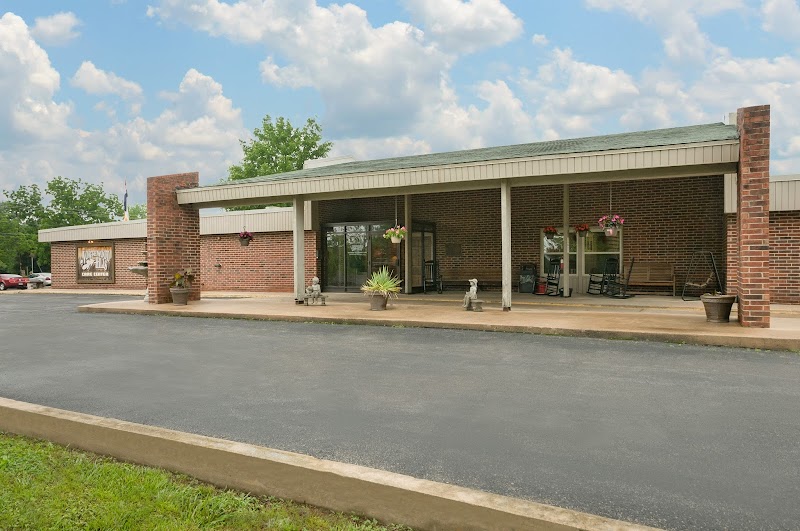
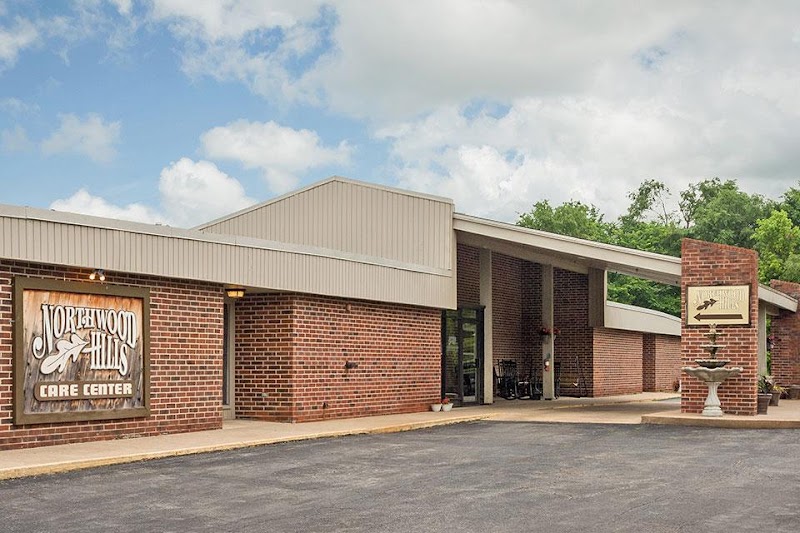
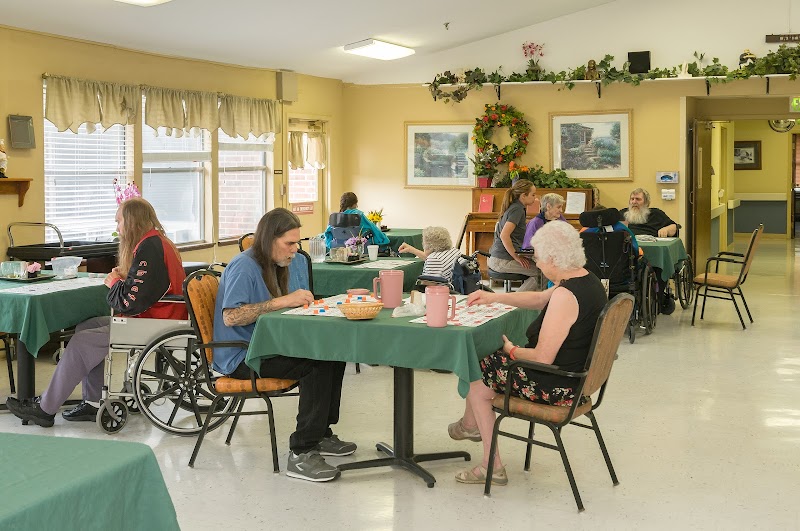
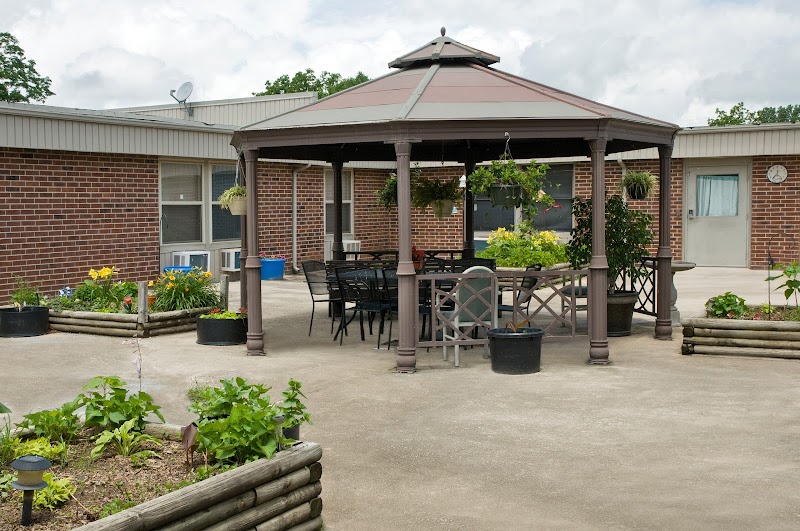
NORTHWOOD HILLS CARE CENTER

800 N ARTHUR ST, HUMANSVILLE, MO 65674 (417) 754-2208
For profit - Corporation 120 Beds LIFE CARE CENTERS OF AMERICA Data: November 2025
Trust Grade
38/100
#432 of 479 in MO
Last Inspection: November 2024

Within standard 12-15 month inspection cycle. Federal law requires annual inspections.

Overview

Northwood Hills Care Center has received a Trust Grade of F, indicating significant concerns about the facility's overall quality and care. With a state ranking of #432 out of 479 facilities in Missouri, they are in the bottom half of available options, and they rank #4 out of 4 in Polk County, meaning there are no better local alternatives. The facility is showing some improvement, decreasing from 13 issues in 2024 to just 1 in 2025, but there are still serious staffing and cleanliness concerns. While staffing is somewhat average with a turnover rate of 46%, the RN coverage is below average, being less than that of 82% of Missouri facilities, which raises concerns about the level of professional oversight. Specific incidents include the use of uncertified nurse aides and failures in food safety protocols, such as improper food storage and maintaining a clean kitchen environment, which could potentially harm residents.

Trust Score
F
38/100
In Missouri
#432/479
Bottom 10%
Safety Record
Low Risk
No red flags
Inspections
Getting Better
13 → 1 violations
Staff Stability
⚠ Watch
46% turnover. Above average. Higher turnover means staff may not know residents' routines.
Penalties
✓ Good
$3,250 in fines. Lower than most Missouri facilities. Relatively clean record.
Skilled Nurses
⚠ Watch
Each resident gets only 16 minutes of Registered Nurse (RN) attention daily — below average for Missouri. Fewer RN minutes means fewer trained eyes watching for problems.
Violations
⚠ Watch
34 deficiencies on record. Higher than average. Multiple issues found across inspections.
★☆☆☆☆
1.0
Overall Rating
★★★☆☆
3.0
Staff Levels
★☆☆☆☆
1.0
Care Quality
★★☆☆☆
2.0
Inspection Score
Stable
2024: 13 issues
2025: 1 issues

The Good

  • Full Sprinkler Coverage · Fire safety systems throughout facility
  • No fines on record

Facility shows strength in fire safety.

The Bad

1-Star Overall Rating

Below Missouri average (2.5)

Significant quality concerns identified by CMS

Staff Turnover: 46%

Near Missouri avg (46%)

Higher turnover may affect care consistency

Federal Fines: $3,250

Below median ($33,413)

Minor penalties assessed

Chain: LIFE CARE CENTERS OF AMERICA

Part of a multi-facility chain

Ask about local staffing decisions and management

The Ugly 34 deficiencies on record

Jan 2025 1 deficiency
CONCERN (D) 📢 Someone Reported This

A family member, employee, or ombudsman was alarmed enough to file a formal complaint

Potential for Harm - no one hurt, but risky conditions existed

Report Alleged Abuse (Tag F0609)

Could have caused harm · This affected 1 resident

Based on interview and record review, the facility failed to report all allegations of potential abuse immediately to facility management and to the State Survey Agency (Department of Health and Senio...

Read full inspector narrative →
Based on interview and record review, the facility failed to report all allegations of potential abuse immediately to facility management and to the State Survey Agency (Department of Health and Senior Services - DHSS) within two hours when staff did not report an allegation of employee to resident verbal abuse towards one resident (Resident #1) in a timely fashion as required. The facility census was 94. Review of the facility policy, titled Area of Focus: Abuse and Neglect, review date of 11/24, showed the following: -Each resident had the right to be free from abuse, neglect, misappropriation of resident property, and exploitation of any type by anyone; -Residents must not be subjected to abuse by anyone, including staff; -Ensure that all alleged violations involving abuse, neglect, exploitation, or mistreatment, including injuries of unknown source and misappropriation of resident property, are reported immediately, but not later than two hours after the allegation is made if the events that cause the allegation involve abuse, to the administrator and other officials including the State Survey Agency. 1. Review of Resident #1's face sheet (resident's information at a quick glance) showed the following information: -admission date of 08/25/24; -Diagnoses included cerebral palsy (a group of disorders that effect movement and muscle tone or posture), high blood pressure, and depression (mood disorder that is characterized by a low mood and negative emotions). Review of the resident's admission Minimum Data Set (MDS - a federally mandated assessment tool completed by facility staff), dated 11/26/24, showed the resident had some cognitive impairment and had delusions (misconceptions or beliefs that are firmly held, contrary to reality). Review of the facility's investigation showed the following: -Certified Nurse Aide (CNA) A alleged an incident of staff to resident verbal abuse that happened on 01/15/25, between 7:00 P.M. and 8:00 P.M. CNA A reported to the Director of Nursing (DON) that CNA H called the resident a fat ass and said he/she looked like he/she was sucking a big dick. -The CNA A reported the allegation of staff to resident verbal abuse to the DON on 01/16/25, at 2:30 P.M. (the day after the alleged allegation of abuse occurred). -The DON documented DHSS was notified on 01/16/25, at 3:33 P.M. (the day after the alleged abuse occurred). Review of DHSS records showed the facility self-reported the allegation of staff to resident verbal abuse on 01/16/25. During an interview on 01/28/25, at approximately 1:10 P.M., CNA A said the following: -Staff were to report to a charge nurse immediately if staff suspect any abuse; -He/she was a little afraid to report the incident to the charge nurse, as he/she did not know if the charge nurse would take it seriously, so he/she decided to wait; -The DON educated him/her that staff are always able to go to the DON or other staff directly, if there are allegations of possible abuse; -He/she said the facility must report any abuse within two hours. During an interview on 01/28/5, at approximately 12:10 P.M., CNA B said the following: -He/she would report any kind of abuse to the DON or management immediately upon hearing it or someone letting him/her know; -Any verbal, misappropriation, physical or sexual abuse should be reported; -The facility has 24 to 48 hours to report any abuse to state. During an interview on 01/28/25, at approximately 12:30 P.M., Certified Medication Tech (CMT) E said any kind of abuse must be immediately reported to management and the facility must report allegations of abuse to state within two hours. During an interview on 01/28/25, at approximately 12:20 P.M., Certified Occupational Therapy Assistant (COTA) C said the following: -Anything regarding physical, financial, or verbal abuse needs to be reported immediately to the DON, Assistant Director of Nursing (ADON), or Administrator; -They have to follow-up within 24 hours with the state and interview the residents and investigate. During an interview on 01/28/25, at approximately 12:50 P.M., Licensed Practical Nurse (LPN) F said the following: -He/she would report any abuse allegation; -If anyone told him/her this was happening or witnessed, he/she would call the DON or Administrator immediately; -They would have to call state within 24 hours. During an interview on 01/28/2025, at approximately 12:55 P.M., LPN G said the following: -Staff are to immediately let the Administrator know of any allegations of abuse; -Management only has two hours to report abuse to state. During an interview on 01/28/25, at approximately 12:25 P.M., Registered Nurse (RN) D said the following: -Any kind of sexual, physical or disrespecting of a resident that may be disconcerting, should be reported; -He/she would separate or intervene to stop the abusive situation; -He/she would report immediately any concerns of abuse; -The facility must report within two hours, to state, allegation of abuse. During an interview on 01/28/25, at approximately 11:35 A.M., the Medical Records Staff said the following: -Any reported abuse to the facility must also be reported to state; -Abuse must be reported within two hours of getting the information; -They are to report any kind of verbal, emotional, physical, or degrading incident. During an interview on 01/28/25, at approximately 11:50 A.M., the Business Office Manager (BOM) said the following: -If any kind of abuse happens, it needs to be reported within the two hours to state; -Staff should get the information to management immediately; -Any kind of abuse needs to be reported including hitting, yelling, talking bad or berating a resident, has to be reported. During an interview on 01/28/25, at approximately 11:50 A.M., the Staffing Coordinator said the following: -CNA A did not report the incident because they were intimidated to do so at the time; -The DON told CNA A that this is not an excuse and explained CNA A could have stepped into a bathroom or outside for a moment to call, or could have text; -All reports of abuse must be reported within two hours. During an interview on 01/28/25, at approximately 12:45 P.M., the Infection Preventionist said the following: -He/she ensured to stress the timeframes of reporting to all staff; -There are postings at the nurses desk providing who to contact when there is an allegation of abuse. During an interview on 01/28/25, at approximately 1:20 P.M., the DON said the following: -As soon as he/she was informed of the allegations, an investigation was started; -All staff have been trained that it is only a two hour window frame and all of them should know this. MO00248125
Nov 2024 12 deficiencies
CONCERN (D)

Potential for Harm - no one hurt, but risky conditions existed

Resident Rights (Tag F0550)

Could have caused harm · This affected 1 resident

Based on record review, observation, and interview, the facility failed to ensure each resident was treated with dignity and respect when staff spoke to one resident (Resident #72) in a threatening ma...

Read full inspector narrative →
Based on record review, observation, and interview, the facility failed to ensure each resident was treated with dignity and respect when staff spoke to one resident (Resident #72) in a threatening manner. The facility had a census of 90. Review of the facility policy titled Resident Rights, dated 09/10/24, showed the following: -The resident has a right to a dignified existence, self-determination, and communication with and access to persons and services inside and outside the facility; -A facility must treat each resident with respect and dignity and care for each resident in a manner and in an environment that promotes maintenance or enhancement of his/her quality of life, recognizing each resident's individuality. The facility must protect and promote the rights of the resident; -The resident has the right to be treated with dignity and respect. 1. Review of Resident #72's face sheet (a brief information sheet about the resident) showed the following information: -admission date of 03/03/23; -Diagnoses included chronic post-traumatic stress disorder (PTSD - disorder in which a person has difficulty recovering after experiencing or witnessing a terrifying event), generalized anxiety disorder, major depressive disorder, paranoid schizophrenia (disorder that affects a person's ability to think, feel, and behave clearly), dementia without behavioral disturbance, Alzheimer's disease (progressive disease that destroys memory and other important mental functions), and cognitive communication deficit. Review of the resident's care plan, updated 07/02/24, showed the following: -The resident was dependent on staff for meeting emotional, intellectual, physical, and social needs related to cognitive deficits, disease process, and physical limitations; -Staff should converse to resident while providing care; -If reasonable, staff should discuss behavior and explain and/or reinforce why behavior is inappropriate or unacceptable; -Staff should intervene as necessary to protect the rights and safety of others; -Staff should approach and speak in a calm manner. Review of the resident's quarterly Minimum Data Set (MDS - a federally mandated comprehensive assessment completed by facility staff), dated 09/24/24, showed the following: -Moderate cognitive impairment; -Resident dependent on staff for oral hygiene, toileting hygiene, showering, dressing, and personal hygiene. During observation and interview on 11/12/24, at 10:30 A.M., the resident at time staff could have an attitude. Review of the resident's nursing notes, dated 09/06/24, showed Registered Nurse (RN) A documented the following: -At 5:44 P.M., the resident was tickling a nursing aide and was asked to stop. The resident proceeded to pinch the second nursing aide when getting the resident up for lunch. The nursing aide told the resident to stop. He/she then swung at the aide; -At 5:46 P.M., a nursing aide approached the nurse and stated the resident was hitting and slapping me and it stung while the two aides were changing him/her. The nurse approached the resident and instructed the resident do not put your hands on my staff, and the staff have every right to press assault charges on you. The resident replied, Did I put my hands on them? The nurse stated, yes for the second time you have either hit at or struck my staff and they have every right to press charges on you. The resident replied Well let them. The nurse then exited room. The nurse had contacted the physician prior to the second incidence to restart previous discontinued medication prescribed for behavior. The physician ordered to restart Seroquel (an antipsychotic medication that treats several kinds of mental health conditions including schizophrenia and bipolar disorder) 100 milligram (mg)once per day. During an interview on 11/18/24, at 10:20 A.M., RN B said staff should not threaten any resident with assault charges. Staff have been trained on dementia and behaviors and should redirect the resident. He/she was not aware of any staff threatening a resident with assault charges. During an interview on 11/18/24, at 11:00 A.M., Certified Nurse Aide (CNA) C said that he/she had received behavior and dementia training. If a resident was touching the staff, he/she would notify the charge nurse. He/she would not threaten the resident and did not think it was appropriate to threaten a resident. Staff might ask a resident not to touch them but not threaten to press charges. During an interview on 11/18/24, at 12:00 P.M., the Director of Nursing (DON) said that staff receive training that included how to de-escalate a situation and dementia and behaviors. She said that the resident had a diagnosis of PTSD and staff did not know what would trigger a behavior. The resident would just start beating staff up. The resident sees the psychiatric physician. Staff should possibly care plan triggers if known. Staff should not tell a resident that they will press assault charges. During an interview on 11/18/24, at 12:57 P.M., with the DON and RN A, the following was said: -On 09/06/24, the resident was hitting the staff, and the nurse went and told the resident that he/she could go to jail and that the staff had the right to press charges on him/her; -He/she did not feel that he/she was threatening the resident, was just educational. During an interview on 11/18/24, at 4:51 P.M., the Administrator said that residents should not be threatened with assault charges. The staff should redirect and notify the DON and/or Administrator of problem behaviors. She was not aware of the documentation of resident being told the staff could press assault charges.
CONCERN (D)

Potential for Harm - no one hurt, but risky conditions existed

Deficiency F0699 (Tag F0699)

Could have caused harm · This affected 1 resident

**NOTE- TERMS IN BRACKETS HAVE BEEN EDITED TO PROTECT CONFIDENTIALITY** 2. Review of Resident #6's face sheet showed the following: -admission date of 01/10/07; -Diagnoses included PTSD, paranoid schi...

Read full inspector narrative →
**NOTE- TERMS IN BRACKETS HAVE BEEN EDITED TO PROTECT CONFIDENTIALITY** 2. Review of Resident #6's face sheet showed the following: -admission date of 01/10/07; -Diagnoses included PTSD, paranoid schizophrenia, generalized anxiety disorder, high blood pressure, mild intellectual disabilities, development disorder of scholastic skills (conditions that cause persistent difficulties in acquiring academic skills), dysphagia oral phase (difficulty moving food or liquid into the throat after chewing and sucking), conduct disorder, and childhood-onset type. Review of the resident's care plan, revised on 07/09/24, showed the following: -Limited involvement with activities related to anxiety; -Resistive to care and refusal of medication related to anxiety; -Potential to be verbally or physically aggressive related to mental and emotional illness and will yell out at others using screaming sounds; -Behavior problem when agitated. Staff should explain all procedures before starting and allow time to adjust to changes; -Resident has impaired cognitive ability/impaired though process related to developmentally delayed, impaired decision making, and staff should allow extra time to respond to questions and instructions using yes/no questions to determine needs; -Resident has psychosocial well-being problem related to anxiety. (Staff did not care plan related to the resident's PTSD diagnosis and any triggers or interventions related to PTSD.) Review of the resident's quarterly MDS, dated [DATE], showed the following: -Severe cognitive impairment; -Independent with activities of daily living (ADL's); -Diagnosis included PTSD. Review of the resident's Trauma Informed Care Assessment, dated 08/21/24, completed by social services with the assistance of the resident's guardian, showed the resident did not experience any of the listed traumatic events. During an interview on 11/18/24, at 9:55 A.M., CNA S said he/she did not know the resident's specific diagnoses, but would not be surprised if there was a diagnosis for PTSD. The resident has triggers such as people getting too close to him/her, surprising him/her with their presence, strangers, and not being able to communicate with other people frustrates him/her causing him/her to yell out. During an interview on 11/18/24, at 12:49 P.M., Licensed Practical Nurse (LPN) W said he/she was unaware the resident had a diagnosis of PTSD. Staff worked the resident to get him/her on an agreeable medication schedule. The staff had to kind of roll with the resident because he/she will refuse to do things and can do a lot for themselves. The resident will not go out of the facility at all. He/she has gone to the beauty shop in the facility, but does not like to leave the unit doors. He/she does not like people too close, especially in wheelchairs. 3. During an interview on 11/18/24, at 9:55 A.M., CNA S said staff should care plan a diagnosis of PTSD. During an interview on 11/18/24, at 12:49 P.M., LPN W said if a resident has a diagnosis of PTSD, staff should complete a trauma informed care assessment to know triggers/memories to avoid. During an interview on 11/18/24, at 10:20 A.M., RN B said if a resident had PTSD it should be listed on the diagnosis list. Staff should document any issues under behavior documentation. If a resident had known triggers it might be on their care plan. During an interview on 11/18/24, at 11:30 A.M., the Social Worker said he/she just starting in the position and was still learning. He/she did not know everything that should be in the care plan. During an interview on 11/18/24, at 12:00 P.M., the DON said residents with a diagnosis of PTSD should have information in the care plan related to the diagnosis and whether there were known triggers. During an interview on 11/18/24, at 4:51 P.M., Administrator said that residents with PTSD diagnosis should have information in the care plan including known triggers and care needed related to PTSD. Based on interview and record review, the facility failed to provide trauma-informed care in accordance with standards of practice when staff failed to identify, assess, care plan, and provide supportive interventions for two residents (Resident #72 and #6) with a diagnosis of post-traumatic stress disorder (PTSD - a mental health condition triggered by a terrifying event - either experiencing it or witnessing it; symptoms may include flashbacks, nightmares and severe anxiety, as well as uncontrollable thoughts about the event) out of two sampled residents. The facility's census was 90. Review showed the facility did not provide a policy related to Trauma Informed Care (a model of care that acknowledges the impact of trauma on people's lives and aims to provide effective services). Review of the facility's policy titled Resident Rights, dated 09/10/24, showed the following: -At the time of admission and periodically throughout their stay, the facility will inform each resident, orally and in writing, of their rights; -The resident has the right to receive the services and/or items included in the plan of care. 1. Review of Resident #72's face sheet (a document that gives a patient's information at a quick glance) showed the following: -admission date of 03/03/23; -Diagnoses included PTSD, paranoid schizophrenia (disorder that affects a person's ability to think, feel, and behave clearly), and Alzheimer's disease (progressive disease that destroys memory and other important mental functions). Review of the resident's care plan, revised 07/02/24, showed the following: -Dependent on staff for meeting emotional, intellectual, physical, and social needs related to cognitive deficits, disease process, and physical limitations; -Staff should converse while providing care; -Resident had impaired cognitive ability, impaired thought process related to making decisions; -Staff should allow extra time to respond to questions and instructions. (Staff did not care plan related to the resident's PTSD diagnosis and any triggers or interventions related to PTSD.) Review of the resident's quarterly Minimum Data Set (MDS - a federally mandated comprehensive assessment instrument completed by facility staff), dated 09/24/24, showed the following: -Moderate cognitive impairment; -Diagnoses included PTSD; -Used of wheelchair for mobility; -Resident dependent on staff for oral hygiene, toileting hygiene, showering, dressing, and personal hygiene; -Resident independent with eating. Review of the resident's nursing behavior notes showed staff documented the following: -On 06/05/24, at 11:32 A.M., the resident struck an aide while receiving care. When the aide was adjusting the resident in bed the resident punched the aide in the chest. Staff notified the Assistant Director of Nursing (ADON); -On 08/27/24, at 11:02 A.M., the nurse entered the room due to resident and roommate yelling and cursing at one another. The resident was yelling out vulgarities and name calling and was verbally abusive to the nurse. The nurse alerted social services of the issue; -On 09/06/24, at 5:44 P.M., the resident was tickling a nursing aide and was asked to stop. He/she proceeded to pinch the second nursing aide when getting the resident up for lunch. The nursing aide told the resident to stop. He/she then swung at the aide; -On 09/06/24, at 5:46 P.M., a nursing aide approached the nurse and stated the resident was hitting and slapping me, and it stung while the two aides were changing him/her. The nurse approached the resident and instructed the resident do not put your hands on my staff, and the staff have every right to press assault charges on you. The resident replied, Did I put my hands on them? The nurse stated, yes for the second time you have either hit at or struck my staff and they have every right to press charges on you. The resident replied Well, let them. The nurse then exited room. The nurse had contacted the physician prior to the second incidence to restart previous discontinued medication prescribed for behavior. Review of the resident's Trauma Informed Care Assessment, dated 09/06/24, completed by social services, showed the resident had personally experienced trauma as a Vietnam War Veteran. The resident answered that he/she had repeated and disturbing dreams of the stressful experience. He/she had sudden feelings as if the stressful experience were happening again. He/she felt very upset when something reminded him/her of the stressful event. He/she had strong physical reactions when something reminded him/her of the stressful event. (Staff did not document any new interventions related to the resident trauma response.) Review of the resident's care plan, dated 07/02/24, showed staff did not update the care plan to reflect the trauma or interventions to assist with the trauma. Review of the resident's nursing behavior notes showed staff documented the following: -On 10/04/24, at 1:11 P.M., the resident was aggressive, hitting at staff and speaking inappropriately; -On 10/14/24, at 9:49 A.M., the aide reported the resident threw a water pitcher at the roommate. The aide reported that on 10/13/24 the resident threatened to get up out of bed and cut his/her head off; -On 10/14/24, at 12:48 P.M., the aide reported to the nurse that the resident threw a cup of water as well as a fork at the roommate. The water and the fork did not hit the roommate and landed on the floor. During an interview on 11/14/24, at 10:30 A.M., the resident declined to discuss his/her past history. He/she said that he/she wanted to be able to go home again. During an interview on 11/18/24, at 10:20 A.M., Registered Nurse (RN) B said the resident displayed behaviors, but he/she did not know if they were related to his/her PTSD or triggers. During an interview on 11/18/24, at 12:00 P.M., the Director of Nursing (DON) said the resident had a diagnosis of PTSD. She/she did not know what the resident's triggers were. The resident just sets off and will start hitting staff. The resident did see the psychiatric physician. He/she would expect the information to be in the resident's care plan.
CONCERN (D)

Potential for Harm - no one hurt, but risky conditions existed

Deficiency F0700 (Tag F0700)

Could have caused harm · This affected 1 resident

**NOTE- TERMS IN BRACKETS HAVE BEEN EDITED TO PROTECT CONFIDENTIALITY** Based on observation, interview, and record review, the facility failed to provide care per standards of practice when the facil...

Read full inspector narrative →
**NOTE- TERMS IN BRACKETS HAVE BEEN EDITED TO PROTECT CONFIDENTIALITY** Based on observation, interview, and record review, the facility failed to provide care per standards of practice when the facility failed to complete timely assessments/reassessments of side rail use, failed to obtain physician's orders for side rail use prior to side rail use, and failed to obtain full informed consent prior to side rail use for two residents (Resident #77 and #70). The facility also failed to care plan the use of side rails and failed to document risk/benefits and alternatives attempted prior to side rail use for one resident (Resident #77). The facility census was 90. Review of the facility policy titled Bed Rails - Safe and Effective Use of Bed Rails, dated 11/16/21, showed the following: -The facility must attempt to use appropriate alternatives prior to installing a side or bed rail; -The facility must ensure correct installation, use, and maintenance of bed rails; -The facility should assess the resident for risk of entrapment prior to installation; -Risks and benefits should be reviewed with the resident or representative and informed consent obtained prior to installation; -Facility should follow the manufacturers recommendations and specifications for installing and maintaining bed rails; -The resident will be assessed upon admission, readmission, or initiation of bed rails; -A reassessment if bed rail use will be assessed at a minimum quarterly and with a potential change of condition; -The facility will document alternatives to the use of bed rails and how these alternatives did not meet the resident's assessed needs prior to utilization of bed rails; -A care plan will be developed within 48 hours of admission to address bed rails; -The interdisciplinary team will review and revise care plan upon completion of each comprehensive, quarterly, and significant change Minimum Data Sets (MDS - a federally mandated comprehensive assessment tool completed by facility staff) for the continued use of bed rails. 1. Review of Resident #77's admission data showed the following: -admission date of 03/09/24; -Diagnoses included quadriplegia (paralysis that affects all a person's limbs), chronic obstructive pulmonary disease (COPD - condition causing constriction of the airways making it difficult to breathe), and muscle weakness. Review of the resident's quarterly MDS, dated [DATE], showed the following: -Cognitively intact; -Dependent for eating, transfer, bed mobility, toilet use, and dressing. Observations on 11/13/24, at 1:52 P.M., and on 11/15/24, at 10:19 A.M., showed the resident resting in bed with both grab bars (side rails) up next to head of the bed. Observation on 11/18/24 at 10:28 A.M. showed resident resting in bed watching television with both grab bars in the up position. Review of the resident's care plan, revised 10/03/24, showed the following: -Activities of daily living (ADL- dressing, grooming, bathing, eating, and toileting) self-care deficit related to quadriplegia; -Totally dependent on staff for showering, dressing, bed mobility, eating, and toileting; -Required the use of a Hoyer lift (mechanical lift used for non-weight bearing residents) and two staff for transfers;; -Limited physical mobility related to quadriplegia and required passive range of motion to fingers, wrists, elbows, and shoulders. (Staff did not care plan related to the grab bars (side rail) use.) Review of the resident's November 2024 Physician's Order Sheet (POS) showed an order, dated 11/14/24, for a grab bar to upper left and right side of the bed. (There was not an order for use prior to 11/14/24.) Review of resident's Quarterly Evaluation for Use of Bed Rails, dated 11/14/24, showed the following: -Bed rails appropriate for resident; -Bed rails being considered related to a medical diagnosis of severe muscle spasms; -Fear of rolling out of bed and severe muscle spasms that cause the body to jerk hard to the side contribute to need for bed rails; -Bed rails are not used to assist in bed mobility. Review of the resident's Physical Restraint Informed Consent, dated 11/14/24, showed upper left and right grab bar to be used while in bed for bed mobility. Staff did not check the consent or do not consent box is checked on the form. The form was signed by a facility representative on 11/14/24 and noted verbal consent on 11/14/24. (Staff did not document who gave verbal consent.) Observation and interview on 11/15/24, at 11:47 A.M., showed the resident sitting up in wheelchair in room and grab bars in the up position on bed. The resident reported he/she was unable to utilize the grab bars, but facility put them on due to him/her having strong spasms. Review of the resident's medical record showed staff did not document identification and use of possible alternatives prior to use of side rails, assessing risk versus benefits of side rail use, or ongoing assessments to ensure the side rails were appropriate for use. During an interview on 11/18/24, at 10:22 A.M., Nurse Assistant (NA) K said he/she did not think the resident had side rails. The resident was not very mobile and was unable to use his/her arms so side rails would not be beneficial for him/her. During an interview on 11/18/24, at 10:41 A.M., Certified Nurse Assistant (CNA) L said the resident was total care and required staff to roll him/her from side to side. The resident did not have grab bars. During an interview on 11/18/24, at 10:41 A.M., CNA M said the resident did not have grab bars and was not appropriate for them as he/she was total care. During an interview on 11/18/24, at 12:07 P.M., Registered Nurse (RN) N said the resident was a quadriplegic and had no movement in the right arm and very little movement with left hand and was not appropriate for grab bars. During an interview on 11/18/24, at 2:20 P.M., Physical Therapy Assistant (PTA) O said therapy has not recommended grab bars for the resident. The resident was is not a good candidate for grab bars due to functional mobility issues. During an interview on 11/18/24, at 2:56 P.M., the DON said the resident's side rail consent was completed on 11/14/24 as he/she never noticed the side rails and was unsure how long they had been installed. 2. Review of Resident #70's face sheet (a brief information sheet about the resident) showed the following: -admission date of 05/24/23; -Diagnoses included hemiplegia and hemiparesis (paralysis of one side of the body) following cerebral infarction (stroke) affecting left nondominant side, vascular dementia (problems with reasoning, planning, judgment, memory and other thought processes caused by brain damage from impaired blood flow to your brain), dysphagia (difficulty or discomfort in swallowing) following cerebral infarction, bipolar disorder (disorder associated with episodes of mood swings ranging from depressive lows to manic highs), aphasia (loss of the ability to produce and/or comprehend language, due to injury to brain areas) following cerebral infarction, and lack of coordination. Review of the resident's Quarterly Evaluation for Use of Bed Rails, dated 05/13/24, showed the following: -Bed rails were appropriate for the resident; -Bed rails were not considered related to medical diagnosis; -Bed rails were to assist the resident with bed mobility; -The resident was reassessed during quarterly review for risk of entrapment prior to installation of side rails; -Recommended type 1/8 partial rail, left upper side. Review of the resident's care plan, updated on 07/19/24, showed the following: -Resident had an ADL performance deficit related to disease process, hemiplegia, impaired balance, limited mobility, pain, and stroke; -Staff should have the bed against the wall; -Grab bar to left side per physician's order for safety during care provision and to assist with bed mobility; -Staff should observe for injury or entrapment related to grab bar use. Review of the resident's quarterly MDS, dated [DATE], showed the following: -Severe cognitive impairment; -Limited range of motion bilateral upper extremity and bilateral lower extremity; -Required use of wheelchair; -Dependent on staff for toileting hygiene, showering, upper and lower body dressing, oral hygiene, personal hygiene, transfer from bed to chair, and propelling in wheelchair. Review of the resident's Physician Orders Sheet, current as of 11/18/24, showed an order, dated 11/12/24, for grab bar to left side of bed. Observations showed the following: -On 11/12/24, at 10:45 A.M., the resident was not in the room. The resident's bed had a grab bar on the left side of the bed; -On 11/13/24, at 9:06 A.M., the resident was in bed with blanket over his/her head with bed in the middle of his/her room space and grab bar on left side of bed; -On 11/18/24, at 9:30 A.M., the resident was in his/her bed with eyes open. The resident was holding the left grab bar with his/her hand. Review of the resident's Physical Restraint Informed Consent, dated 11/13/24, showed use of left side grab bar for bed mobility. The form was signed by the facility representative on 11/13/24 with notes that verbal authorization was provided on 11/13/24. (Staff did not indicate who gave the verbal consent on the form.) During an interview on 11/18/24, on 10:20 A.M., RN B said the resident would hang on to the grab bar with transfers and during the night. The bed rail had been on the bed since the resident's admission. 3. During an interview on 11/18/24, at 10:22 A.M., NA K said residents use side rails or grab bars for mobility. During an interview on 11/18/24, at 10:41 A.M., CNA L said grab bars were used for residents to position and pull themselves up in bed. Grab bars can help a resident to roll side to side and for mobility. During an interview on 11/18/24, at 10:41 A.M., CNA M said grab bars were used by residents to lift themselves up in bed. During an interview on 11/18/24, at 12:07 P.M., RN N said grab bars help with resident mobility and turning and require an order. Grab bars should be included on the care plan. Side rails should be assessed, but he/she is unsure how they do that. During an interview on 11/18/24, on 10:20 A.M., RN B said nursing notify the DON of bed rail requests and a risk assessment was completed. There should be a physician order and information on the care plan. The maintenance staff put on the bed rails. He/she was not responsible for the risk and benefit consent with family or guardian. The risk assessment should be completed quarterly. During an interview on 11/18/24, at 2:20 P.M., Physical Therapy Assistant (PTA) O said the following: -Physical therapy does an assessment for side rails while providing therapy to the resident; -Side rails are used for residents that require more help with bed mobility and increase independence; -Physical therapy or the DON discuss side rail use and risks with resident and family; -Physical therapy will write a side rail request and submit it to the DON and he/she will obtain an order; -The DON does all paperwork associated with side rails. During an interview on 11/18/24, at 2:56 P.M., the DON said side rail consents were done quarterly. There is no formal reevaluation for the use of the resident side rails. During an interview on 11/18/24, at 4:51 P.M., the Administrator said side rails were set up with therapy. A side rail consent should be obtained from the resident or representative. Side rails should be measured before placed on the bed and when moved.
CONCERN (D)

Potential for Harm - no one hurt, but risky conditions existed

Deficiency F0806 (Tag F0806)

Could have caused harm · This affected 1 resident

**NOTE- TERMS IN BRACKETS HAVE BEEN EDITED TO PROTECT CONFIDENTIALITY** Based on observation, interview, and record review, the facility failed to provide all residents food that accommodated each res...

Read full inspector narrative →
**NOTE- TERMS IN BRACKETS HAVE BEEN EDITED TO PROTECT CONFIDENTIALITY** Based on observation, interview, and record review, the facility failed to provide all residents food that accommodated each residents' allergies, intolerances, and preferences, when staff served one resident (Resident #36) food items containing an ingredient identified as an allergen/dislike on the resident's meal ticket and when staff served one resident (Resident #38) food items the guardian had requested not be served to the resident. The facility census was 90. Review of the facility policy titled, Food Allergies and Intolerances, revised 04/25/23, showed the following: -The Director of Food and Nutrition Services obtains food preferences, including any food allergies and intolerances upon admission; -Each resident receives, and the facility provides food that accommodates resident allergies, intolerances, and preferences; -Appealing options of similar nutritive value to residents who choose not to eat food that is initially served or who request a different meal choice; -Facilities should be aware of each resident's allergies, intolerances, and preferences, and provide an appropriate alternative. A food substitute should be consistent with the usual and/or ordinary food items provided by the facility. For example, the facility may, instead of grapefruit juice, substitute another citrus juice or vitamin C rich juice the resident likes; -Food allergies or intolerances are communicated to nursing services and indicated on the resident tray car and resident diet profile; -The information is also recorded in the electronic medical record, including the nutrition assessment and care plan; -The Direct of Food Nutrition Services identifies menu items that contain the food item(s) related to the allergy/intolerances and ensures those items are not used in foods prepared and served to identified residents; -Food service and nursing associates are educated on residents with food allergies and intolerances. Review of the facility policy titled, Food Preferences, revised 04/25/23, showed the following: -Individual, cultural/religious food preferences are honored, when possible, to enhance the resident's satisfaction with food and dining. These preferences are obtained upon admission and updated quarterly and as needed; -The facility must provide each resident with a nourishing, palatable, well-balanced diet that meets his or her daily nutritional and special dietary needs, taking into consideration the preferences of each resident; -Menus must reflect, based on a facility's reasonable efforts, the religious, cultural and ethnic needs of the resident population, as well as input received from residents and resident groups; -Food and beverage preferences are obtained from each resident at the time of the initial visit. Food preferences may also be obtained from family members, nursing staff and the medical record; -Updated as needed, but no less than quarterly; -Maintained by the Director of Food and Nutrition Services/designee; -Placed in the resident diet profile for production purposes; -Dislikes, food intolerances/allergies, special requests and specific beverage preferences are noted on the tray card; -Allergies, dislikes, and special request (as deemed appropriate) are addressed on the serving line to ensure an appropriate alternate (s) is served prior to the meal being received by the resident. 1. Review of Resident #36's face sheet (a brief resident profile) showed the following: -admission date of 03/05/22; -Allergies included penicillin, sulfa antibiotics. Review of the resident's record showed the resident had been deemed an incapacitated person, and his/her spouse was granted guardianship on 07/14/16. Review of Resident #36's quarterly Minimum Data Set (MDS - a federally mandated assessment tool completed by staff), dated 09/05/24, showed the resident was cognitively intact and independent with eating. During an interview on 11/12/24, at 11:32 A.M., the resident said he/he was allergic to carrots and the staff continued to serve them until he/she wrote a little note. During an interview and observation on 11/12/24, at 3:03 P.M., the resident said the following: -Staff continue to serve him/her cooked carrots even though the resident has told them he/she is allergic to them; -Staff served mixed vegetables today containing carrots, but he/she was told staff picked the carrots out of the mixed vegetables. Review of the resident's meal ticket, dated 11/18/24, showed the following foods listed under the category allergies/dislikes: -Carrots cooked; -Liver; -Sweet potatoes. Review of the resident's current physician order sheet showed no food allergy. Review of the resident's care plan, last revised on 06/19/24, showed staff did not care plan any food allergy. During an interview on 11/18/24, at 9:55 A.M., Certified Nurse Assistant (CNA) S said the following: -Residents' food preferences and allergies are printed on the meal ticket as well as specific diets such as puree; -The resident might dislike food items depending on the day. He/she is very opinionated, and his/her opinions rotate; -Staff should honor preferences and allergies. During an interview on 11/18/24, at 12:49 P.M., Licensed Practical Nurse (LPN) W said the following: -Diets, allergies and food preferences are on meal tickets; -Staff should honor residents' food allergies and preferences; -He/she was unaware if the resident has any food allergies. The LPN said he/she was really picky. During an interview on 11/18/24, at 2:56 P.M., Dietary [NAME] X said the following: -Meal tickets have food allergies/preferences printed on them; -He/she is not familiar with the resident's allergies/preferences. During an interview on 11/18/24, at 3:29 P.M., the Dietary Manager (DM) said the following: -She meets with residents within 72 hours upon admittance to ask about likes and dislikes and food allergies; -She was not aware the resident has any dislikes or allergies; -She looked in computer and found the residents dislikes/allergies were listed as cooked carrots, sweet potatoes, and liver; -Staff should not be serving the resident carrots; -Staff should provide an alternative vegetable and not tell resident to pick carrots out of the mixed vegetables. During an interview on 11/21/24, at 12:20 P.M., the Registered Dietician (RD) said the following: -She would obtain residents' food allergies and preferences during an initial assessment, which should already be in the record for current residents; -The DM should be assessing the new residents; -Staff should communicate preferences/allergies to dietary upon discovery; -She was not aware the resident has an allergy to cooked carrots; -Staff should not serve mixed veggies and take out the carrots; an alternative should be served. During an interview on 11/18/24, at 4:51 P.M. the Administrator said the following: -Dietary staff should assess new residents about food preferences/allergies and put information on a meal ticket and pass down to staff; -Staff should not serve mixed vegetables to the resident and ask the resident to pick the carrots out. An alternative should be served; -Staff should care plan resident food preferences and allergies. 2. Record review of the Resident #38's face sheet showed the following: -admission date of 12/08/23; -Diagnoses included type II diabetes mellitus (a long term condition in which the body has trouble controlling blood sugar and using it for energy), dysphasia oropharyngeal phase (difficulty swallowing that moves food from the mouth to the upper esophageal sphincter), vascular dementia (brain damage caused by multiple strokes), and other Alzheimer's disease (a progressive disease that destroys memory and other important mental functions. Review of the resident's quarterly MDS, dated [DATE], showed the following: -Severe cognitive impairment; -Independent with eating. Review of the resident's care plan, last revised on 07/30/24, showed the following: -Resident can feed self after tray placed in front of him/her; -Resident has a regular diet/easy to chew; -No food preferences listed. During an interview on 11/13/24, at 9:51 A.M., the resident's family member said the family requested at two care plan meetings for the staff to stop giving the resident kool-aid because of the red dye and to give him/her ice water at every meal. The staff still gives the resident kool-aid from time to time and sometimes does not give him/her ice water. Observation and interview on 11/14/24, at 8:23 A.M., showed Nurse Aide (NA) Y put a cup of red liquid resembling kool-aid in front of the resident at the breakfast meal. NA Y said the cup contained fruit punch kool-aid. Observation on 11/14/24, at 8:29 A.M., showed the resident's meal card had no information listed under allergies/dislikes and listed under beverages was whole milk 8 ounce (oz), water flavored 8 oz, and water 8 oz. Observation on 11/14/24, at 9:07 A.M., showed staff assisted the resident with a drink of the fruit punch kool-aid. The resident did not have water available. Observation and interview on 11/15/24, at 12:35 P.M., showed the following: -CNA V knew the resident was not supposed to have kool-aid with red dye, and his/her family provided flavored water: -He/she knew the resident was not supposed to have red dye because there was a sign on the closet where they keep the resident's snacks and drinks that they purchased for themselves; -The sign taped to the inside of the closet door where snacks are stored read, the resident cannot have any red dye products. During an interview on 11/18/24, at 9:55 A.M., CNA S said the following: -Resident diets, food preferences and allergies are printed on the meal ticket; -He/she is not aware of any food items staff is not supposed to give the resident and was unaware of the sign on the door of the snack closet. During an interview on 11/18/24, at 12:49 P.M., LPN W said the following: -Resident diets, food allergies and preferences are listed on meal tickets; -The resident's family does not want him/her to have red dye; -The regular staff on the unit were aware of this, but not new ones to the unit; -Staff should honor food allergies and preferences; -Staff should not serve the resident red dye. During an interview on 11/18/24, at 1:43 P.M., NA Y said the following: -Resident food preferences and allergies were listed on meal tickets; -He/she was unaware of any food allergies or preferences for the resident; -He/she did not know the resident was not to be served red dye/kool-aid until the resident's family told him/her today; -He/she did not know there is a sign on the snack room door. During an interview on 11/18/24, at 2:13 P.M., Registered Nurse (RN) Z said the following: -Resident food allergies and preferences should be under the profile in the chart and on the meal tickets and listed in the care plan; -There is a sign on the snack room door stating the resident is not to have red dye; -He/she did not know if this is listed on the meal ticket but should be. During an interview on 11/18/24, at 2:56 P.M., Dietary [NAME] X said the following: -Meal tickets have food allergies/preferences printed on them; -He/she was not familiar with the resident's allergies/preferences. During an interview on 11/18/24, at 3:29 P.M., the DM said the following: -She meets with residents within 72 hours upon admittance ask about likes and dislikes and food allergies; -She is not aware the resident has any food dislikes or allergies, and none are listed in his/her profile; -Staff should honor food preferences and allergies. During an interview on 11/21/24, at 12:20 P.M., the Registered Dietician (RD) said the following: -She would obtain residents' food allergies and preferences during an initial assessment, which should already be in the record for current residents; -The DM should be assessing the new residents; -Staff should communicate preferences/allergies to dietary upon discovery; -She was not aware the resident's family did not want the resident to have red dye; -Staff should list this on the meal ticket and honor it. During an interview on 11/18/24, at 4:51 P.M. the Administrator said the following: -Dietary staff should assess new residents about food preferences/allergies and put information on a meal ticket and pass down to staff; -Staff should put the resident is to have no red dye on the meal ticket and in the care plan and should not serve it to him/her.
CONCERN (E)

Potential for Harm - no one hurt, but risky conditions existed

Safe Environment (Tag F0584)

Could have caused harm · This affected multiple residents

**NOTE- TERMS IN BRACKETS HAVE BEEN EDITED TO PROTECT CONFIDENTIALITY** 4. Observation on 11/13/24, at 12:36 P.M., in the memory care unit shower room showed the following: -Missing linoleum with sha...

Read full inspector narrative →
**NOTE- TERMS IN BRACKETS HAVE BEEN EDITED TO PROTECT CONFIDENTIALITY** 4. Observation on 11/13/24, at 12:36 P.M., in the memory care unit shower room showed the following: -Missing linoleum with sharp edges going into the shower space; -Missing tile cubes in the shower space; -Black substance where the floor mes the wall all along the right side of the shower extending 1 to 2 inches and goes around to the front of the shower; -Matted brown or black substance behind the toilet; -Black toilet plunger with what appeared to be dried toilet paper on it; -The toilet bowl had brown fecal like matter inside; -The sink was dirty with grime around the faucet and the mirror was dirty. Observation and interview on 11/15/24, at 12:35 P.M., in the memory care unit shower room showed the following: -CNA V said he/she cleaned the shower room in between showering residents, including cleaning the shower floor and chair, toilet seat, sink and mirror; -Black toilet plunger with what appeared to be dried toilet paper all over it; -Matted brown or black substance behind the toilet. CNA V said the back of the toilet always looks like that because it was old; -The toilet bowl had brown fecal like matter inside; -The sink was dirty with the same grime around the faucet and the mirror was dirty. -CNA V said he/she has attempted to scrub the black substance off the base of the shower and corner, but it will not come off. 5. Review of Resident #33's quarterly Minimum Data Set (MDS - a federally mandated assessment tool completed by staff), dated 10/17/24, showed the following: -admission date of 07/12/24; -Severe cognitive impairment; -Independent with toileting and showering. Review of Resident #20's quarterly MDS, dated [DATE], showed the following: -Cognitively intact; -Independent with toileting and showering. Observation on 11/12/24, at 11:19 A.M., of Resident #33's and Resident #20's shared sink, mirror, and toilet area showed the following: -The sink dirty was with grime buildup around and on the faucet; -The mirror was dirty with grime all over; -The toilet area had a very strong odor of urine. The raised seat was dirty in the front with unknown substance and a bath blanket in floor around toilet was visibly dirty. Interview and observation on 11/15/24, at 12:18 P.M., of Resident #33's and Resident #20's shared sink, mirror, and toilet area and an interview showed the following: -Resident #33 said the staff do not clean the sink, mirror, or toilet area often enough; -The sink was dirty with grime buildup around and on the faucet; -The mirror was dirty with grime all over; -The toilet area had a very strong odor of urine. Observations and interview on 11/18/14, at 9:41 A.M., of Resident #33's and Resident #20's shared sink, mirror, and toilet area and interview showed the folowing: -The sink continued to have grime buildup on and around the faucet and the mirror continued to be dirty with grime all over. -Housekeeper (HK) T said staff should clean all rooms daily, including wiping everything down and sweeping and mopping all floors, clean the sink, mirror, toilet commode inside and out and behind, The facility had enough staff to clean all room daily. The resident's room has not been cleaned today. -HK T said the toilet area smelled like urine because of a leak or because the residents urinate in the floor, which is why there is a bathroom blanket around the toilet that should be changed daily. 6. Review of Resident #36's face sheet (a brief resident profile) showed an admission date of 03/05/22. Review of Resident #36's quarterly MDS, dated [DATE], showed the following: -Cognitively intact; -Independent with toileting and showering. Review of Resident #71's face sheet showed an admission date of 02/11/23. Review of Resident #71's quarterly MDS, dated [DATE], showed the following: -Cognitively intact; -Independent with toileting and showering. Observation and interview on 01/12/24, at 11:32 A.M., of Resident #36's and Resident #71's shared sink and mirror showed the following: -Resident #36 said he/she used to clean businesses and is a clean freak. The staff do not clean his/her sink well enough; -The sink had grime all under the front of the faucet, and some around the drain; -The mirror was dirty. Observation and interview on 01/12/24, at 3:16 P.M., of Resident #36's and Resident #71's shared sink and mirror showed the following: -The sink was dirty with grime around the faucet and drain; -The mirror was dirty; -Resident #36 said staff do not clean the glass. During an interview on 11/12/24, at 3:35 P.M., Resident #71 said staff do not clean the sink or the mirror properly. 7. During an interview on 11/18/24, at 10:41 A.M., CNA L said he/she was a shower aide. The shower room floors were missing tiles which could cause concerns getting residents in and out of the shower due to this floor condition. The grey border at the base of the walls was peeling away in some shower rooms. The showers were not clean, but the aides try to spray them down with disinfectant after showers. The housekeeping staff try to clean it, but there is a black substance in the shower areas where the residents take a shower During an interview on 11/18/24, at 11:00 A.M., CNA C said the facility's showers appear dirty, with black areas, and they do not smell pretty. The broken tiles appear unsafe and could cause falls or cuts. The residents tell staff that the showers are gross. During an interview on 11/18/24, at 9:55 A.M., Certified Medication Technician (CMT) S said he/she was not sure who cleaned the showers, but staff spray them down with disinfectant in between showering residents. Tiles are missing in all of the bathrooms on the general population halls and they all have some mildew. The 400 hall has the most damage and is leaking under the tiles out into the hall, which is why there is a blanket on the floor outside of the shower room. The tiles coming up in the shower rooms are a safety concern for ambulatory residents and for those in wheelchairs, because it is an uneven surface. During an interview on 11/18/24, at 12:49 P.M., Licensed Practical Nurse (LPN) W said the following: -Housekeeping cleans every room daily and deep cleans rooms once per month: -Daily cleaning included sink, mirror, and toilet; -There are a couple of bathrooms that smell like urine all the time because the residents urinate in the floor. A bath blanket is wrapped around the toilet to catch the urine and should be changed daily. The floor should be mopped daily or more, and housekeeping has some sort of spray to help with the odor. -Aides clean the shower room in between showering residents; -Housekeeping cleans the shower room daily; -There is mildew in the shower floor, and the facility is trying to get a contractor in to fix it; -The toilet, sink, and mirror should be cleaned every day. During an interview on 11/18/24, at 2:00 P.M., the Housekeeping Manager said room cleaning included the sink, faucet, and toilet each day. If the mirror was dirty, it should also be done. If an item is not getting clean, staff should try a different cleaner or scraper. The showers are cleaned first thing every day. There are maintenance slips in housekeeping to fill out and give to the Maintenance Director for requested repairs. During an interview on 11/18/24, at 2:10 P.M., the Maintenance Director said there is a clipboard at the west desk for staff to notify him of repairs needed, or they tell him in person. He said they had tried to make repairs to the showers and baseboards using silicone, but it would only last one to two weeks. During an interview on 11/18/24, at 2:55 P.M., the Director of Nursing (DON) said usually staff notifies the Maintenance Director of needed repairs. However, the showers are not repairable. During interviews on 11/12/24, at 11:26 A.M., and on 11/18/24, at 4:51 P.M., the Administrator said the the following; -Shower rooms should be cleaned daily and after each shower. The facility has repaired everything they can, but a contractor is necessary for the remodel which will start in December. -The shower rooms probably have mildew or mold in spite of daily cleaning. -Torn or cracked linoleum and tiles are dangerous and a trip/fall hazard. -Staff are to place bath towels or blankets on the floor as a precaution. -The toilets in the shower rooms should be cleaned daily. -Resident rooms are cleaned daily, including the sink, faucet, toilet, and mirror daily; -The sink and faucets should not have dirt or grime buildup; -The toilet area should not smell of urine. Based on observation, interview, and record review, the facility failed to ensure a clean and homelike environment when staff failed to maintain the shower wall and floor tiles and mop areas in four facility shower rooms; failed to maintain the wall and grab bar integrity in one shower room; failed to maintain the wall and mop board area in the 200/400 hall sitting area; failed to adequately clean resident and make free of odors bathroom toilet area for two resident (Resident #20 and Resident #33); and failed to adequately clean and maintain the resident room sinks faucets and mirrors for four residents (Resident #20, Resident #33, Resident #36 and Resident #71). The facility census was 90. Review of a facility's policy entitled Plant Operations, reviewed 06/12/24, showed the following: -A safe, clean, and structurally sound environment shall be achieved in the facility through the development and implementation of the Plant Operations Program, the development and training of personnel, and the evaluation of goals in the department to assure correlation with the goals of the facility; -The maintenance and operation of all facilities, buildings, utilities, sanitary systems, and grounds are the primary responsibilities essential to the Plant Operations Program; -Where authorized, all maintenance responsibilities will include: repairs, alterations, minor construction, remodeling (exceptions included work that needs to be contracted); -Facility personnel will perform all duties when feasible; outside contractors will be utilized when necessary. Review of a facility policy entitled Housekeeping Services, revised 08/09/22, showed the following information: -The facility will provide a safe, clean, comfortable and homelike environment; -Housekeeping and maintenance services as necessary to maintain a sanitary, orderly, and comfortable interior; -Keep housekeeping surfaces visibly clean on a routine basis and clean spills promptly; -The environmental supervisor will maintain a schedule of cleaning and disinfection tasks and the employees responsible for this task. Periodic evaluation should be completed to assure competency of the environmental staff; -Lobby and resident common areas: clean high-touch areas and surfaces at least daily and as needed; -Resident rooms: clean clean high-touch surfaces at least daily to include hand washing sinks and floor; -Resident bathrooms: clean and disinfect high touch/frequently contaminated surfaces (sinks, faucets, handles, toilet seat, door handles) at least daily; -Resident shower rooms: nursing to clean and disinfect high touch surfaces after each resident use. Housekeeping will clean resident shower/bath area twice daily. 1. During an interview on 11/13/24, at 2:00 P.M., with a group of 22 residents, the following was said: -The residents all agreed that the shower rooms were nasty and not clean in appearance. -Resident #45 said the showers had black mold that had been there since he/she was admitted in February 2024. The resident said the grab bar on one of the shower walls is not attached securely or safely and the floor and wall tiles are all broken up. He/she showed the surveyor pictures on his/her phone of the black substance and broken tiles. -Resident #62 said the shower rooms had been that bad since April 2021. He/she said there are towels and blankets up against the walls in the sitting area due to water leakage coming from the shower rooms. 2. Observation on 11/14/24, at 8:40 A.M., of the sitting area for the 200/400 halls, showed chairs along the two walls facing the nurses' station. Blankets lie bunched up lengthwise along the wall mop boards behind the chairs. The baseboard was peeled back from the walls for a length of 8 to 10 inches on the 200 hall side and 3 feet on the 400 side, revealing a corroded, dark substance along the walls. Each of the walls was between the sitting area and a shower room. Observation on 11/15/24, at 7:55 A.M., of the sitting area for the 200/400 halls, showed chairs along the two walls facing the nurses' station. Blankets continued to be bunched up lengthwise along the wall mop boards behind the chairs. The baseboard was peeled back from the walls for a length of 8 to 10 inches on the 200 hall side and 3 feet on the 400 side, revealing a corroded, dark substance along the walls. Observation on 11/18/24, at 10:55 A.M., of the sitting area for the 200/400 halls, showed the blankets remained in place along the walls and the baseboard remained unattached from the walls. A dark substance remained on the lower walls for a height of approximately four inches (4) from the floor, visible where the baseboard was peeled back. 3. Observation on 11/15/24, at 1:30 P.M., of the 200 hall shower showed at the floor level, the tile and baseboard was pulled loose for a length of approximately two and one-half feet (2.5 ft), revealing a dark substance (brown, black and green). The substance lined the full perimeter of the baseboard tile and the shower floor tiles. Observation on 11/18/24, at 2:20 P.M., of the 200 hall shower room, showed the grab bar on the right hand wall of the shower was secured to the vinyl type wallboard. When grasped, the bar moved outward, causing the wallboard to also move outward. At the floor level, the tile and baseboard was pulled loose for a length of approximately two and one-half feet (2.5 ft), revealing a dark substance (brown, black and green) lining the baseboard, tile, and shower floor tiles.
CONCERN (E)

Potential for Harm - no one hurt, but risky conditions existed

Transfer Notice (Tag F0623)

Could have caused harm · This affected multiple residents

**NOTE- TERMS IN BRACKETS HAVE BEEN EDITED TO PROTECT CONFIDENTIALITY** Based on record review and interview, the facility failed to ensure each resident or resident's representative was notified in w...

Read full inspector narrative →
**NOTE- TERMS IN BRACKETS HAVE BEEN EDITED TO PROTECT CONFIDENTIALITY** Based on record review and interview, the facility failed to ensure each resident or resident's representative was notified in writing of each transfer when staff failed to provide a written notice of transfer to a hospital, including the reasons for the transfer, for four residents (Residents #81, #67, #45, and #12). The facility census was 90. Review of the facility's policy titled, Transfers and Discharges, dated 09/05/24, showed the facility will provide transfer/discharge notice to the resident/responsible party in accordance with federal regulations. 1. Review of Resident #81's face sheet (a document that gives a resident's information at a quick glance) showed an admission date of 02/20/24. Review of the resident's discharge Minimum Data Sheet (MDS - a federally mandated assessment instrument completed by facility staff), dated 08/20/24, showed the resident discharged with return anticipated. Review of the resident's nursing progress note, dated 08/20/24, showed the resident discharged to the hospital on [DATE]. Review of the resident's notice of resident transfer or discharge sheet, dated 08/20/24, showed the notice was addressed to resident representative and signed by facility staff. There was no signature or indication notice was provided to representative. 2. Review of Resident #67's face sheet showed an admission date of 08/19/22. Review of the resident's discharge assessment MDS, dated [DATE], showed the resident discharged on 09/18/24, with return anticipated. Review of the resident's nursing progress note, dated 09/18/24, showed the resident transferred to the hospital on [DATE]. Review of the resident's notice of resident transfer or discharge sheet, dated 09/18/24, showed the notice was addressed to resident representative and signed by facility staff. There was no signature or indication notice was provided to representative. 3. Review of Resident #45's face sheet showed an admission date of 02/15/24 and resident was his/her own responsible party. Review of the resident's discharge MDS, dated [DATE], showed the resident discharged with return anticipated on 05/27/24. Review of the resident's nursing progress note, dated 05/27/24, showed the resident discharged to the hospital on [DATE]. Review of the resident's medical record showed staff did not document, or have copy of, a written notice provided to the resident regarding the transfer on 05/27/24. During an interview on 11/18/24, at 2:55 P.M., the Director of Nursing (DON) said there was no transfer notification for the resident on 05/27/24. He/she should have sent a written notification of hospital transfer. 4. Review of Resident #12's face sheet showed an admission date of 07/17/19. Review of the resident's discharge MDS, dated [DATE], showed the resident discharged with return anticipated. Review of the resident's nursing progress dated 06/19/24, at 9:55 P.M., showed the resident was sent to the emergency room by ambulance. The nurse placed a call to the hospital for update and the resident was being admitted for sepsis. Review of the resident's notice of resident transfer or discharge sheet, dated 06/19/24, showed the notice was addressed to resident representative and signed by facility staff. There was no signature or indication notice was provided to representative. 5. During an interview on 11/18/24, at 10:20 A.M., Registered Nurse (RN) B said when the nursing staff transferred a resident to the hospital they notified the family or guardian by phone of reason for transfer. The nurse did not mail any information to family or guardian. During an interview on 11/18/24, at 4:51 P.M., the Administrator said the transfer notice should be faxed to the guardian or sent with the resident.
CONCERN (E)

Potential for Harm - no one hurt, but risky conditions existed

Deficiency F0625 (Tag F0625)

Could have caused harm · This affected multiple residents

**NOTE- TERMS IN BRACKETS HAVE BEEN EDITED TO PROTECT CONFIDENTIALITY** Based on interview and record review, the facility failed ensure each resident received a bed-hold notice upon transfer when sta...

Read full inspector narrative →
**NOTE- TERMS IN BRACKETS HAVE BEEN EDITED TO PROTECT CONFIDENTIALITY** Based on interview and record review, the facility failed ensure each resident received a bed-hold notice upon transfer when staff did not provide a bed-hold notice to four residents (Residents #81, #67, #45, and #12) when they transferred/discharged to the hospital. The facility census was 90. Review of the facility's policy titled, Bed Hold Policy, revised 11/17/22, showed the following: -The bed hold policy should be given upon admission, upon transfer to the hospital, or if the resident goes on therapeutic leave of absence; -Before the facility transfers a resident to hospital, the nursing facility must provide written information to the resident or representative the specifies duration of state bed hold policy during which the resident is permitted to return and resume residence in the facility; the reserve bed payment policy in the state plan; the nursing facility's policies regarding bed hold periods, which must be consistent with the transfers and discharge policy, permitting a resident to return; the information specified in the transfers and discharges policy; -The facility is obligated to provide two notices related to bed holds. The first notice is given on admission well in advance of any transfer. The second must be provided to the resident or representative at the time of transfer. It is expected that facilities will document multiple attempts to reach the resident representative in cases where the facility was unable to notify the representative. -The notice must provide information to the resident that explains the duration of the bed hold, and the reserve bed payment policy. It should also address permitting the return of residents to next available bed. 1. Review of Resident #81's face sheet (a document that gives a resident's information at a quick glance) showed an admission date of 02/20/24. Review of the resident's discharge Minimum Data Sheet (MDS - a federally mandated assessment instrument completed by facility staff), dated 08/20/24, showed the resident discharged with return anticipated. Review of the resident's nursing progress note, dated 08/20/24, showed the resident discharged to the hospital on [DATE]. Review showed staff did not document regarding, or have copy of, written bed-hold information provided to the resident or representative at discharge. 2. Review of Resident #67's face sheet showed an admission date of 08/19/22 and the resident had a responsible party. Review of the resident's discharge assessment MDS, dated [DATE], showed the resident discharged with return anticipated. Review of the resident's nursing progress note, dated 09/18/24, showed the resident transferred to the hospital on [DATE]. Review showed staff did not document regarding, or have copy of, written bed-hold information provided to the resident or representative at discharge. 3. Review of Resident #45's face sheet showed admission date of 02/15/24 and resident was his/her own responsible party. Review of the resident's discharge MDS, dated [DATE], showed the resident discharged with return anticipated. Review of the resident's nursing progress notes showed the resident discharged to the hospital on [DATE]. Review showed staff did not document regarding, or have copy of, written bed-hold information provided to the resident or representative at discharge. During an interview on 11/18/24, at 2:55 P.M., the Director of Nursing (DON) said there was no transfer notification or bed hold for the resident on 05/27/24. He/she should have sent a written notification of hospital transfer and bed holds. 4. Review of Resident #12's face sheet showed an admission date of 07/17/19. Review of the resident's discharge MDS, dated [DATE], showed the resident discharged with return anticipated. Review of the resident's nursing progress notes showed on 06/19/24, at 9:55 P.M., staff documented the resident was sent to the emergency room by ambulance. The nurse placed a call to the hospital for update and the resident was being admitted for sepsis. Review showed staff did not document regarding, or have copy of, written bed-hold information provided to the resident or representative at discharge. 5. During an interview on 11/18/24, at 10:20 A.M., Registered Nurse (RN) B said when the nursing staff transfers a resident to the hospital they notify the family or guardian by phone of reason for transfer. The nurse did not notify of the bed hold policy and did not mail any information to family or guardian. During an interview on 11/18/24, at 4:51 P.M., the Administrator said the bed hold policy should be faxed to the guardian or sent with the resident.
CONCERN (E)

Potential for Harm - no one hurt, but risky conditions existed

Menu Adequacy (Tag F0803)

Could have caused harm · This affected multiple residents

Based on observation, interview, and record review, the facility failed to follow approved menus to ensure the nutritional needs of all residents were met when staff failed to provide the approved ser...

Read full inspector narrative →
Based on observation, interview, and record review, the facility failed to follow approved menus to ensure the nutritional needs of all residents were met when staff failed to provide the approved serving sizes for meals and failed to prepare pureed diets per approved recipes. The facility census was 90. Review showed the facility did not provide a policy related to pureed meals or portions sizes for meal service. 1. Review of the facility's menu spread sheet showed on 11/12/24 residents should have received two-fifths of a cup of mechanically altered and pureed ham and one-half cup of pureed vegetables. Observation on 11/12/24, at 11:55 A.M., showed the following: -Dietary [NAME] (DC) X placed one third cup scoops in the pureed ham, mechanical ham, and pureed vegetables; -DC X used the one third cup scoop to serve pureed ham, mechanical ham, and pureed vegetables for the pureed and mechanical diet trays for 100 hall. Review of the facility's menu spread sheet showed on 11/18/24 resident should receive four ounces of Italian meat sauce and four ounces of parsley spaghetti for regular diets. Observation and interview on 11/18/24, at 12:11 P.M., showed the following: -DC CC used tongs to serve spaghetti and meat sauce mixed together for trays for 100 hall. The DC did not measure the portion sizes; -DC CC said he/she would have to refer to the book to know how much spaghetti to serve from the menu. He/she uses tongs and just looks at the size because it is hard to use the scoop for pasta. During an interview on 11/18/24, at 12:25 P.M., DA BB said the Dietary Manager (DM) showed him/her the book of menus/recipes, but he/she does not refer to it for serving meals. He/she just goes off what he/she knows. During an interview on 11/18/24, at 3:29 P.M., the DM said DC CC did not know how much spaghetti to serve the residents at lunch today. He/she did not use menu/recipe for serving size. He/she just used his/her experience in the field for serving sizes and that is what pretty much all staff is doing. Staff have been trained to look at the blue sheet (menu) for menu serving sizes. 2. Review of the facility's recipe for pureed baked ham showed the following: -Prepare according to the regular baked ham recipe. Place ham in food processor and process until smooth; -Use a three-ounce portion of regular baked ham per serving; -Use a #10 scoop for serving pureed ham, which is equal to two-fifths of a cup. Observation and interview on 11/14/24, at 11:02 A.M., showed the following: -Dietary [NAME] (DC) X began to puree the lunch meal for six puree diets, including one double portion. -DC X said he/she used approximately a four-ounce piece of ham for each puree and uses about 10 ounces of gravy to puree. -DC did not consult a recipe during the puree process. -DC X said he/she has never used a recipe to prepare puree and did not know if recipes existed. He/she used broth for vegetables to puree and gravy for meat and goes by the serving amount for the meal. They do not puree bread for meals. He/she uses a two-ounce ladle for the broth and a four-ounce ladle for the gravy and goes with the serving sizes for the meal to puree and does not use a menu. During an interview on 11/18/24, at 12:25 P.M., Dietary Aide (DA) BB said the following: -He/she cooked and served on the weekends, including preparing pureed meals; -He/she does not use a recipe or menu to prepare puree meals, he/she just eyeballs the amount. During an interview on 11/18/24, at 3:29 P.M., the DM said the following: -The corporation the facility uses for menus said there is not a standard recipe for purees. Prepare according to the regular meal and puree in natural juices should make a natural consistency. If the puree is not smooth as ice cream with a pudding consistency, add one to two tablespoons of the water cooked in until consistency. Meats will add one to two tablespoons of gravy or meat broth until proper consistency; -Dietary staff do not puree bread because the residents do not like it, so they don't serve it. 3. During interviews on 11/21/24, at 12:20 P.M. and 3:10 P.M., the Registered Dietician (RD) said the following: -She observed the staff prepare and serve food once a month; -Staff should follow the menu spreadsheet for scoop and serving sizes; -There are no specific menus for preparing pureed foods, it is basically taken what you have made per the recipe and there is a sauce of choice on the menus to add for the puree process; -Staff should be following the menu for serving puree meals, including if there is bread on the menu. She was unaware dietary staff were not serving pureed bread to even though the menu included for bread.
CONCERN (E)

Potential for Harm - no one hurt, but risky conditions existed

Deficiency F0804 (Tag F0804)

Could have caused harm · This affected multiple residents

**NOTE- TERMS IN BRACKETS HAVE BEEN EDITED TO PROTECT CONFIDENTIALITY** Based on observation, interview, and record review, the facility failed to ensure food was served was palatable and at temperatu...

Read full inspector narrative →
**NOTE- TERMS IN BRACKETS HAVE BEEN EDITED TO PROTECT CONFIDENTIALITY** Based on observation, interview, and record review, the facility failed to ensure food was served was palatable and at temperatures that were appetizing for resident including four residents (Resident #36, #71, #72, ad #45) who often ate in their rooms. The facility census was 90. Review of the facility policy titled, Food Temperature Control, revised 06/28/24, showed the following: -Food temperatures are maintained during mealtimes to ensure residents received safe food served at acceptable temperatures; -Hot foods are held at a minimum of 135 degrees Fahrenheit (F) per state requirements; -Cold foods are held at or below 41 degrees per federal guidelines, unless the state requirements are more stringent; -Food should not be placed on the steam table more than 30 minutes before meal service begins; -Maximum length of time food is held on the steam table is four hours; -Food reheated in the microwave is heated so that all parts of the food reach 165 degrees F and food is rotated, stirred, covered, and allowed to stand covered for two minutes after reheating; -Foods are reheated only once then discarded. 1. Observation on 11/14/24, at 12:32 P.M., showed the following: -A test tray was requested and received from the uninsulated food cart on 100 hall at the end of the meal service; -The meal included ham, scalloped potatoes, mixed vegetables, and yogurt; -The ham measured 117 degrees F, the scalloped potatoes measured 117.7 degrees F, the mixed vegetables measured 116 degrees, and the yogurt measured at 59 degrees; -The mixed vegetables were mushy, cool and lacked flavor when tasted. Observation on 11/15/23, at 8:42 A.M., showed the following: -A test tray was requested and received from the uninsulated food cart on 100 hall at the end of the meal service; -The meal included scrambled eggs, sausage, and oatmeal; -The scrambled eggs measured 94.7 degrees F, the sausage measured 83.6 degrees F, and the oatmeal measured at 135.7 degrees F; -The eggs were not palatable when tasted and the sausage texture was rubbery when tasted. Neither item was warm. 2. Review of Resident #36's quarterly Minimum Data Set (MDS-a federally mandated assessment tool completed by staff), dated 09/05/24, showed the resident was cognitively intact and independent with eating. During an interview on 11/12/24, at 11:32 A.M., the resident said the food was awful. During an interview on 11/12/24, at 3:03 P.M., the resident said the food was cold and is not palatable. He/she only ate about a third of the burger because the bun was soggy and the fries were cold. 3. Review of Resident #71's quarterly MDS, dated [DATE], showed the resident was cognitively intact and independent with eating. During an interview on 11/12/24, at 11:32 A.M., the resident said the food was awful. During an interview on 11/12/24, at 3:36 P.M. the resident said he/she received a very soggy bun with a burger today and the fries were limp. The food was consistently cold and not palatable. 4. During an interview on 11/14/24, at 10:28 A.M., Resident #72 said that food arrived cold to luke warm. He/she said this was every meal time. 5. During an interview on 11/14/24, at 9:40 A.M., Resident #45 said the food was cold when it arrives in the room. The facility does not use a covering over the trays when food is being delivered. Staff are currently using a plastic covering over the food cart due to state being in the building. 6. During an interview on 11/18/24, at 9:55 A.M., Certified Nurse Aide (CNA) S said the following: -He/she had received complaints from the residents about food temperatures and food being bland; -The time frame from when meals arrive on 100 hall and the last hall tray is served is about 25 minutes; -Food is not in a warmer and is probably cold if not received before 25 minutes; -Residents needing assistance were likely to be eating food cold by the time staff is done serving and can assist; -He/she has warmed up food in the microwave, but does not have a way to test the temperature; -Staff should not serve cold food. 7. During an interview on 11/18/24, at 10:48 A.M., Dietary Aide AA said the following: -He/she did not know what temperatures foods should be holding at when served; -Residents have complained about cold food. 8. During an interview on 11/18/24, at 12:25 P.M., Dietary Aide BB said the following: -He/she tests the temperatures of the foods on the steam table prior to serve out, but does not know what temperature they should be holding; -He/she just looked at the temperature log for what they should be by what others have logged. 9. During an interview on 11/21/24, at 10:36 A.M., Dietary [NAME] X said the following: -Food temperatures at serve out should ideally be as close to above 135 degrees F as possible; -Foods can be in the danger zone under 135 degrees F for a short period of time 5 to 15 minutes and should be fine; -The test tray temperatures were not acceptable. The hot food was not hot enough and the yogurt was not cold enough. 10. During an interview on 11/18/24, at 2:56 P.M., the Director of Nursing (DON) said she has not received cold food complaints on the halls, she would expect staff to get fresh food if food was cold. 11. During an interview on 11/18/24, at 3:29 P.M., the Dietary Manager said the following: -She has received complaints about food temperatures and food not being palatable. -The hall trays were coming out cold; -Staff began encouraging eating residents to eat in the dining to get fresh trays at the first of May of this year; -Steam table food temperatures should be about 160 degrees F; -Temperatures should be around 100 degrees F when it reaches the halls and then 80 to 85 degrees F when served to the residents; -Cold food temperatures should be at 40 degrees F. 12. During an interview on 11/21/24, at 12:20 P.M., the Registered Dietician said the following: -Foods should be held at a minimum of 135 degrees F on the steam table and cold foods should be 41 degrees F or below per policy; -Hot foods should be served around or above 120 degrees F and cold foods should be at 50 degrees F or below; -Staff should get a new tray for a resident complaining about food temperatures.
CONCERN (E)

Potential for Harm - no one hurt, but risky conditions existed

Infection Control (Tag F0880)

Could have caused harm · This affected multiple residents

Based on observation, record review, and interviews, the facility to maintain an effective infection control program when the facility failed to screen all staff for tuberculosis (a contagious infecti...

Read full inspector narrative →
Based on observation, record review, and interviews, the facility to maintain an effective infection control program when the facility failed to screen all staff for tuberculosis (a contagious infection that usually attacks the lungs) as required when the facility failed to ensure the first step of the two-step Tuberculin (TB) skin test was completed prior resident contact for four staff member (Registered Nurse (RN) D, Licensed Practical Nurse (LPN) E, Speech Therapist (ST) F, and RN G) of 10 sampled staff members; and when staff counted resident cigarettes eight times per day by touching the cigarettes with their bare hands for eight residents (Resident #13, #18, #22, #23, #41, #52, #59, #79) out of fifteen sampled residents that were on the smoking list. The facility had a census of 90. 1. Review of the facility policy, Tuberculosis - Testing and Screening (associates and Volunteers), dated dated 09/24/24, showed the following: -The facility will evaluate each associate and volunteer for tuberculosis in accordance with current Centers of Disease Control and Prevention (CDC) guideline, unless more stringent guidance is provided by local or state regulation; -Missouri facility should follow state regulation 19 CSR 20-20.100 that indicated that screening is done on pre-employment procedures and annual testing of associates and volunteers who work 10 hours or more per week; -Provide a tuberculin skin test (Mantoux, 5 tuberculin units (TU) of purified protein derivative (PPD)) to all employees during pre-employment procedures, unless a previous reaction of >10 millimeter (mm) is documented; -If the initial skin test result is 0 to 9 mm, a second test should be given at least one week and no more than three weeks after the first test; -The results of the second test should be used as the baseline in determining treatment and follow up of these employees; -New associates of volunteers who have been made a conditional offer shall be screened for the presence of infection. Review of 19 CSR 20-20.100 showed the following: -All new long-term care facility employees and volunteers who work ten or more hours per week are required to obtain a Mantoux PPD two (2)-step tuberculin test within one month prior to starting employment in the facility. -If the initial test is zero to nine millimeters, the second test should be given as soon as possible within three weeks after employment begins; -It is the responsibility of each facility to maintain a documentation of each employee ' s and volunteer ' s tuberculin status. 2. Review of RN D's personnel record showed the following: -A date of hire of 04/12/23; -Staff did not document administering a TB to the resident RN. 3. Review of LPN E's personnel record showed the following: -A date of hire of 04/28/23; -Staff documented the first step TB administered 05/02/23 and read on 05/04/23 (six days after the staff members hire date). -Staff documented the second step administered on 05/16/23 and read it on 05/18/23. 4. Review of ST F's personnel record showed the following: -A date of hire of 06/07/24; -Staff documented the first step TB was administered on 07/10/24 and read on 07/13/24 (over on month after the hire date). -Staff documented the second step was administered on 07/24/24 and read on 07/27/24. 5. Review of RN G's personnel record showed the following: -A date of hire of 07/01/24; -Staff documented the first step TB was administered on 08/20/24 and read on 08/23/24 (over one and 1/2 months after the hire date). -Staff documented the second step was administered 09/06/24 and read on 09/09/24. 6. During an interview on 11/15/24, at 10:50 A.M., the Infection Preventionist Nurse (IP) said that newly hired staff should receive the first step TB test on the first date of orientation and then have it read the third day. The orientation is generally three days in length. The test should read before staff begin working with residents. During an interview on 11/15/24, at 11:15 A.M., the Administrator and Director of Nursing (DON) said that staff TB testing should be completed before starting employment on the floor. They did not know why the four staff did not have TB testing completed on time. 7. During interviews on 11/13/24, at 2:00 P.M., Resident #13, #18, and #79, who attended the resident council meeting, said that staff were touching their cigarettes with their bare hands and they did this every time they go out and smoke eight times per day. The residents said it was a different staff that touched the cigarettes each designated time. They did not like that staff did this. Observation and interview on 11/13/24, at 10:40 A.M., showed Certified Nurse Aide (CNA) H was near the front entrance of the facility with a clear box that contained multiple packs of cigarettes. He/she opened the box and opened one box at a time and counted cigarettes with his/her bare finger. His/her finger touched each cigarette filter in eight boxes. He/she then closed the box and opened the front door for the eight residents to go outside. He/she opened a box and gave a resident a cigarette and lit the cigarette with a lighter. The staff then gave the next resident a cigarette from their box and lit the cigarette. He/she did this eight times. He/she did not use hand sanitizer before touching the box of cigarettes. The staff said that they are required to count the cigarettes at each designated smoking time. There were eight designated smoking times each day. During an observation on 11/14/24, at 3:00 P.M., Nurse Aide (NA) I was at the west side nursing desk. He/she obtained the box of cigarettes. He/she took each box and opened each box. He/she did not use hand sanitizer before touching the cigarettes. The residents cigarettes included Resident #13, #41, #79, #22, #52, #23, #59, #18. The NA and the residents went to the courtyard outside of the activity room and the NA gave each resident one cigarette from their designated box. During an interview on 11/18/24, at 10:15 A.M., the Housekeeping Manager said that staff count cigarettes at each designated smoking time by using their fingers and touching the filter end. He/she said that staff should use hand sanitize before touching the box of cigarettes. During an interview on 11/18/24, at 10:20 A.M., RN B said staff should not be touching the residents the cigarettes with their bare hands. Staff should wear gloves to touch and count. They would be touching the part that goes into the resident's mouth. During an interview on 11/18/24, at 10:40 A.M., CNA C said that staff should not touch the cigarettes. He/she had seen staff use an ink pen and there were marks on the cigarettes. Staff have to touch the cigarette to hand it to the resident. He/she was not aware that it bothered any of the residents that staff touch the cigarettes while counting. During an interview on 11/18/24, at 2:55 P.M., DON said that staff should not touch cigarettes with their hands or with a pen. He/she was not aware that was how staff were counting them. During an interview on 11/18/24, at 4:51 P.M., the Administrator said staff are required to count cigarettes because there was an issue in the past with residents smoking too many or complaints of missing cigarettes. She said that staff should not be touching each cigarette, they could just look in the box and easily tell how many were in the box.
CONCERN (F)

Potential for Harm - no one hurt, but risky conditions existed

Deficiency F0728 (Tag F0728)

Could have caused harm · This affected most or all residents

**NOTE- TERMS IN BRACKETS HAVE BEEN EDITED TO PROTECT CONFIDENTIALITY** Based on observation, interview, and record review, the facility failed to ensure three nurse aides (NA) (NA I, NA P, and NA Q) ...

Read full inspector narrative →
**NOTE- TERMS IN BRACKETS HAVE BEEN EDITED TO PROTECT CONFIDENTIALITY** Based on observation, interview, and record review, the facility failed to ensure three nurse aides (NA) (NA I, NA P, and NA Q) completed a certified nurse aide (CNA) training program and obtained certification within four months of employment at the facility as a nurse aide. The facility census was 90. Review of the facility policy titled Nurse Aide Requirements, undated, showed the following: -The facility needed to ensure the nurse aides meet the training requirements to work within a facility including a state approved training and competency program; -The facility must not use any individual working in the facility as a nurse aide for more than four months, on a full-time basis unless that individual is competent to provide nursing and nursing related services and has completed a training and competency evaluation program; -Before allowing an individual to serve as a nurse aide, a facility must receive registry verification that the individual has met the competency evaluation requirements unless the individual is a full-time employee in a training and competency evaluation program approved by the state; or the individual can prove that he/she has recently completed a training and competency evaluation program and has not yet been added to the registry. Facilities must follow up to ensure that such an individual actively becomes registered. 1. Review of NA P's employee personnel file showed the following: -Initial date of hire was [DATE] with job title of NA; -Rehire date of [DATE] with job title of Non-Certified Aide in Training; -Nurse aide training class start date of [DATE] with no completion date listed. Review of the state agency CNA registry website, on [DATE], showed NA P was certified as a CNA on [DATE] and the certification expired on [DATE]. 2. Review of NA Q's employee personnel file showed the following: -Date of hire as a nurse aide in training was [DATE]; -Nurse aide training class start date of [DATE] with a completion date of [DATE]. Review of the state agency CNA registry website, on [DATE], showed no documentation that NA Q was certified as a CNA. 3. Review of NA I's employee personnel file showed the following: -Date of hire was [DATE] with job title of Nurse Aide in Training; -NA training class showed a start date of [DATE] with a completion date of [DATE]. Review of the state agency CNA registry website, on [DATE], showed no documentation that NA I was certified as a CNA. Observation on [DATE], at 2:07 P.M., showed NA I providing direct care to residents in the facility. During an interview on [DATE], at 2:07 P.M., NA I said the following: -He/she completed NA training about two weeks ago; -He/she took the written and skills test one week ago, but failed the skills portion; -He/she has not rescheduled the skills portion of the test due to distance of testing site and cost. 4. During interviews on [DATE], at 11:07 A.M., and on [DATE], at 2:49 P.M., Licensed Practical Nurse (LPN) R said the following: -NA P is now working in an activities position; -NA I took the test and failed the skills portion of the test and will be rescheduling it; -NA Q took the certification test and failed the knowledge portion, but has rescheduled the test; -NA Q should have completed his/her certification a long time ago and was removed from the floor as soon as he/she realized it. During an interview on [DATE], at 2:56 P.M., the Director of Nursing (DON) said nurse assistants should complete all training and certified in four months. If not certified within that time, the nurse assistant should be taken off the floor and placed in another non nursing position. During an interview on [DATE], at 4:51 P.M., the Administrator said nurse aides should be certified in four months. Aides should not work on the floor if certification is not obtained in four months.
CONCERN (F)

Potential for Harm - no one hurt, but risky conditions existed

Food Safety (Tag F0812)

Could have caused harm · This affected most or all residents

Based on observation, interview, and record review, the facility failed to ensure food was stored, prepared, and served in a manner to protect the food from possible contamination when staff failed to...

Read full inspector narrative →
Based on observation, interview, and record review, the facility failed to ensure food was stored, prepared, and served in a manner to protect the food from possible contamination when staff failed to keep the ice machine vents, air vents, and a standing fan free of lint, debris, and grime; when staff failed to label and date refrigerated food and failed to dispose of outdated refrigerated food; and when staff failed to ensure the dishwasher rinsed the dishes at the recommended temperature and failed to ensure the chemical solution was tested properly. This had the potential to affect all residents who consumed food from the facility kitchen. The facility had a census of 90 residents. 1. Review of the 2013 Missouri Food Code showed food shall be protected from contamination by storing the food in a clean, dry location where it is not exposed to splash, dust, or other contamination. Review showed the facility did not provide a policy related to maintaining cleanliness in the kitchen. Observation on 11/12/24, at 10:08 A.M., showed the following: -The ice machine outside vent had visible lint/dust/grime; -A large standing floor fan near three-part sink full of lint and grime buildup; -Vents over the coffee station and doorway had visible lint and grime; -The Wall behind the oven, fryer, and standing oven was covered in grease and grime. Observation on 11/13/24, a 10:50 A.M., showed the following: -The ice machine outside vent had visible lint/dust/grime; -Two visible dead bugs (crickets or grasshoppers) covered inside one fluorescent light on the ceiling and near the steam table. Observation on 11/14/24, at 11:02 A.M., showed the following: -Two visible dead bugs (crickets or grasshoppers) covered inside one fluorescent light on the ceiling and near the steam table. Observation on 11/15/24, at 8:11 A.M., showed the following: -The ice machine outside vent had visible lint/dust/grime; -Vents over coffee station and doorway had visible lint and grime; -The wall behind the oven, fryer and standing oven was covered in grease and grime; -Two visible dead bugs (crickets or grasshoppers) covered inside one fluorescent light on the ceiling and near the steam table. During an interview on 11/18/24, at 10:48 A.M., Dietary Aide (DA) AA said the following: -There was a cleaning scheduled posted on the outside of the Dietary Manager's office door; -He/she was responsible for cleaning the grill, two sinks, microwave, industrial toaster, and plate warmers; -Cleaning the vents is the responsibility of the maintenance department; -The Dietary Manager (DM) cleans the big floor fan next to the three-part sink. During an interview on 11/18/24, at 12:25 P.M., DA BB said the following: -The cleaning schedule is on the DM's door; -He/she is responsible for cleaning the front area of the kitchen and the dish pit; -Maintenance is responsible for cleaning the air vents and lights; -Nobody cleans the big floor fan near the three-part sink, and he/she assumed it shouldn't have lint or dirt on it; -He/she did not know who is responsible for cleaning the wall behind the oven/stove/fryer area; -Kitchen staff should clean the ice machine, but he/she does not know if the ice machine vent should have lint/dirt or grime on it. During an interview on 11/18/24, at 2:56 P.M., Dietary [NAME] (DC) X said the following: -The cleaning schedule was posted on the DM's door; -His/her main responsibility is to clean the cooking equipment/utensils, sweep and mopping daily at least spot cleaning, behind the stove/fryer/oven area; -He/she has noticed it is greasy behind the stove/fryer/oven area. There are very small amounts of times when the machines are not running, and electrical cords are not long enough to pull out; -Maintenance is responsible for cleaning the ice machine vent, also air vents and light fixtures; -The grill person, cook or DM should clean the big floor fan by the three-part sink; -None of the surfaces should have any lint/dirt/grime as it could get into the food; -There should not be bugs in the lights; -They notify the maintenance director about maintenance responsibilities; During an interview on 11/18/24, at 3:29 P.M., the Dietary Manager said the following: -Maintenance was responsible for cleaning air vents, ice machine vent (monthly) and the lights; -Air vents should not have lint/dirt/grime on them because it could get into food or clean dishes; -He/she had told maintenance about the dead bugs in the light fixture multiple times, but they have not gotten to it yet; -She was assuming she was responsible for cleaning the fan, which had not been cleaned before she came. She does not have the tools to get it clean. The fan was still being used and blows toward the three-part sink where dishes are being cleaned; -She was responsible for cleaning the wall behind the stove/fryer/oven area and said it is gross. She has not had time to clean it thoroughly. During an interview on 11/21/24, at 12:20 P.M., the Registered Dietician (RD) said the following: -She conducted a monthly walk through of the kitchen and checks for cleanliness, food storage, dishwasher temperature and sanitizer test logs; -There should be a cleaning schedule; -Maintenance should clean the air vents and light fixtures and either maintenance or a company services the ice machine; -There should be no lint, grime and dirt in vents, no crickets/grasshoppers in the light fixtures, and the big floor fan should be free of dirt, grime, and lint; -Walls should be clean, free from dirt, grime, and grease; 2. Review of the US Food and Drug Administration policy, under the section of Food Labeling and Handling, updated 03/04/23, showed the following: -Facility staff must ensure their proper storage, keeping track of when to discard perishable foods, and covering, labeling, and dating all foods stored in the refrigerator or freezer as indicated; -Labeling, dating, and monitoring refrigerated food, including, but not limited leftovers, so it is used by its use-by date, or frozen (where applicable) or discarded. Review showed the facility did not provide a policy related to food labeling, handling, and storage. Observation on 11/12/24, at 10:08 A.M., showed of the walk-in cooler showed the following: -A large plastic tub with a yellow lid, containing a substance resembling salsa with no name or dated; -A large plastic tub with a yellow lid, three quarters full and labeled tuna casserole with a date of 11/5 and use by date of 11/8; -A plastic tub with a red lid, three quarters full and labeled shredded chicken and dated 11/3 with no use by date. During an interview on 11/18/24, at 10:48 A.M., DA AA said the following: -All food should be stored with labels identifying the food and the open and use by dates; -He/she did not know the expiration date for prepared refrigerated foods such as tuna casserole, but it should not be kept in the fridge longer than a week; -All staff are responsible for checking food dates. During an interview on 11/18/24, at 12:25 P.M., DA BB said the following: -All foods, opened and prepared should be labeled with the product name, date opened and use by date; -Prepared foods should only be kept for three days. During an interview on 11/18/24, at 2:56 P.M., DC X said the following: -All packaged and prepared food items should be labeled with a date made and a use by date of three days; -Prepared foods like the tuna casserole made on 11/5 with a use by date of 11/8, should be discarded on 11/8 at closing shift; -Closing cook should be checking food labels dates, and so should all kitchen staff. During an interview on 11/18/24, at 3:29 P.M., the DM said the following: -Prepared food should be labeled with the date prepared, date expires, and name of the food; -Prepared food should be discarded after three days; -The tuna casserole, shredded chicken ,and unnamed food should have been discarded. During an interview on 11/21/24, at 12:20 P.M., the RD said the following: -She conducts a monthly walk through of the kitchen and checks for cleanliness, food storage, dishwasher temperature and sanitizer test logs; -Prepared food should be kept a maximum of three days, and should be labeled with the name and the dates prepared and use by; -The tuna casserole, shredded chicken, and unlabeled salsa-like food should have been discarded. 3. Review of the facility policy titled, Sanitation and Maintenance, revised 04/26/23, showed the following for the low temperature dish machine: -Dish machine will be used in accordance with the manufacturer specification; -The temperature and parts per million (ppm) of the sanitizer (50-100 ppm for chlorine) will be recorded on the low temperature dish machine log a minimum of three times per day; -The machine will be broken down and cleaned each day; -Dish machine should be drained and flushed after each meal; -Staff will be trained on how to operate and clean the machine and how to rinse, wash, dry and store items appropriately; -If the dish machine is not washing and sanitizing properly, disposable dinnerware will be used for meals and snacks until the issue has been resolved. Review of the manufacturer's recommendations from Ecolab, dated 05/04/07, showed the requirements for use in chemical sanitizing dish machines is a minimum temperature of 120 degrees Fahrenheit (F) and a minimum concentration of 50 parts ppm. Observation and interview with kitchen staff on 11/14/24, at 1:59 A.M., showed the following: -DA BB said he/she did not know where the sanitizer strips were or how to use them or why they are used; -DA BB placed a thermometer not made for a dishwasher in the machine to test the temperature, then realized it was not appropriate thermometer and went to get the correct one; -DC X came to assist DA BB, and DC X said he/she did not know how/what/why to use the sanitizer test strips; -DA BB said he/she did not know what the minimum temperatures for the dishwasher wash and rinse cycles should be; -The DM and RD came into the dish pit to assist and neither knew how to use sanitizer strip tests; -The DM said she has never been shown how to use the sanitizer strips and when she filled out the dishwasher log, she wrote 50 without testing; -DC X tested the temperatures of the wash and rinse cycles and both were 111 degrees F. -DC X was able to test the chemical solution with a test strip with a result between 200-300 ppm. Review of the low temperature dish machine log, dated November 2024, showed the following: -On 11/06/24 and 11/08/24, the DM initialed the sanitizer concentration test strips showed 50 PPM; -On 11/14/24, staff documented the wash cycle temperature at breakfast was 114 degrees F. During an interview on 11/15/24, at 9:07 A.M., with the territory representative for Ecolab showed the following; -He completed monthly maintenance on the dishwasher, which includes temperature checks, testing chemical solution for dishwasher and three-part sink and replaces parts as needed; -The temperatures of the wash and rinse cycle should be a minimum of 120 degrees F, and sanitizer strip test a minimum of 50 ppm; -There is no internal heater in the dishwasher. The heat was based on the hot water heater. It should not take three times of running to get to 120 degrees F, but it depends on location of hot water heater and how high they can turn based on resident needs; -Staff should empty the wash bath from the previous use if it sat for a while before using; -He tells all customers to test first thing in the morning because he can head to the facility if any issues, but recommendation is testing temperatures and chemical solution before every meal service. During an interview on 11/18/24, at 2:56 P.M., DC X said the following: -Dishwasher temperatures should be taken twice a day, but he/she does not deal with it; -The dishwasher temps should be a minimum of 120 degrees F for wash and rinse cycles; -Chemical sanitizer should be tested when temperatures are tested, and sanitation strips should test at a minimum of 50 parts ppm. During an interview on 11/18/24, at 3:29 P.M., the DM said the following: -Dishwasher temperatures should be taken should be taken at each meal service; -He/she did not know what the minimum temperatures for the wash and rinse cycles should be; -Chemical sanitizer should be tested each meal service, and sanitation strips should test at a minimum of 50 ppm; -None of the four staff present during the test run of the dishwasher with the surveyor had been trained on the correct process of checking the wash and rinse temperatures and testing the chemical sanitizer; -She has been relying on the staff who have been here longer to tell the others the minimum temperatures; -She does not know the difference between a high heat and a low heat dishwasher. During an interview on 11/21/24, at 12:20 P.M., the RD said the following: -She conducted a monthly walk through of the kitchen and checks for cleanliness, food storage, dishwasher temperature and sanitizer test logs; -Staff should test dishwasher temperatures and sanitizer strips two-three times daily. The wash and rinse cycles should test at a minimum of 120 degrees F and test strips should test at a minimum of 50 ppm; -If the temperature or chemical sanitizer was not testing appropriately, staff should use paper products to serve, use three-part sink to wash equipment and call Ecolab to service. During the interview on 11/18/24, at 4:51 P.M., the Administrator said the following: -She was not sure when staff should log dishwasher temperatures, but probably at every meal; -Staff should run the dishwasher twice until up to temperature before using; -She expected staff should know the minimum temperatures for the wash and rinse cycles of the dishwasher and if not reaching the minimum temperature, notify the DM, and DM notified Ecolab; -Chemical sanitizer should be tested daily, and she does not know what the minimum ppm should be, but dietary staff should know.
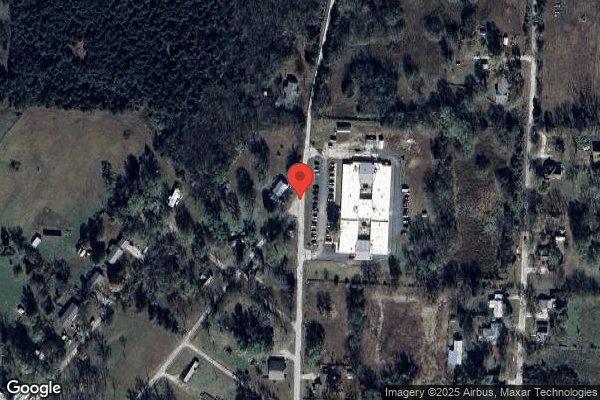
Feb 2024 1 deficiency
CONCERN (D) 📢 Someone Reported This

A family member, employee, or ombudsman was alarmed enough to file a formal complaint

Potential for Harm - no one hurt, but risky conditions existed

Pharmacy Services (Tag F0755)

Could have caused harm · This affected 1 resident

Based on interview and record review, the facility failed to maintain an effective system of records and disposition of controlled medication when staff could not locate three cards of controlled medi...

Read full inspector narrative →
Based on interview and record review, the facility failed to maintain an effective system of records and disposition of controlled medication when staff could not locate three cards of controlled medications and documented administration of the medication when it was not available for administration one resident (Resident #1). The facility census was 81. Review of the facility policy titled, Administration of Medication, last revised 02/23/23, showed the following: -The facility will ensure medications are administered safety and appropriately per physician order to address resident's diagnoses and signs and symptoms; -Medication administration is the responsibility of those individuals who through certification and licensure are authorized in their state to administer medications in a skilled nursing facility; -Staff who are responsible for medication administration will adhere to the 10 rights of medication administration, right drug, right resident, right does, right route, right time and frequency, right documentation, right assessment, right to refuse, right evaluation/response, and right education and information. Review of the facility policy titled, Inventory Control of Controlled Substances, last revised 01/01/22, showed the following: -Facility should ensure that the incoming and outgoing nurses count all Schedule II controlled substances and other medications with a risk of abuse or diversion at the change of each shift or at least once daily and document the results on a Controlled Substance Count Verification/Shift Count Sheet; -Facility should ensure that its staff immediately reports suspected theft or loss of controlled substances to their supervisor/manager for appropriate documentation, investigation, and timely follow-up in accordance with facility policy and applicable law; -Upon a receipt of such a report, facility should ensure that the appropriate facility personnel confirm the discrepancy and follow facility policy and applicable law regarding documentation of the incident; -Facility should also conduct an investigation to determine whether a dose was in face administered and, if so, the reason the administration was not charged and whether a dose was refused. 1. Review of Resident #1's face sheet (a brief profile) showed the following: -admission date of 05/18/23; -Diagnoses included chronic obstructive pulmonary disease (a group of lung diseases that block airflow and make it difficult to breathe), paranoid schizophrenia (a pattern of behavior where a person feels distrustful and suspicious of other people and acts accordingly), cognitive communication deficit (difficulty with thinking and how someone uses language), Type II diabetes mellitus (a long-term condition in which the body has trouble controlling blood sugar and using it for energy) and dysphagia, repaying phase (swallowing problems occurring in the mouth and/or the throat). Review of the resident's quarterly Minimum Data Set (MDS - a federally mandated assessment tool completed by facility staff), dated 11/05/23, showed the following: -Cognitively intact; -Resident used a wheelchair; -Resident required partial/moderate assistance with most self-cares and was mostly independent with mobility. Review of the resident's care plan, last reviewed on 11/07/23, showed the following: -Resident used anti-anxiety medications related to anxiety disorder; -Resident will be free from discomfort or adverse reactions related to anti-anxiety therapy through the review date; -Administer anti-anxiety medications as ordered by physician and observe for side affects and effectiveness every shift; -Observe for occurrence of for target behavior symptoms (pacing, wandering, disrobing, inappropriate response to verbal communication, and violence/aggression towards staff/others). Review of the resident's physician order sheet, dated 12/12/23, showed an order for clonazepam (an anticonvulsant controlled medication) 0.5 milligram (mg) tablet, one by mouth three times daily. Review of the resident's Medication Administration Record (MAR), dated 12/16/23, showed the following: -An order, dated 12/12/23, for clonazepam tablet 0.5 mg, give one tablet by mouth three times a day related to generalized anxiety disorder; -Certified Medication Tech (CMT) A documented doses administered at 8:00 A.M., 2:00 P.M., and 7:00 P.M. Review of the resident's Controlled Drug Record Sheet, dated 12/16/23, showed the following: -A sheet for an order, dated 12/06/23, for clonazepam 0.5 mg tablet orally three times a day for 30 days; -CMT A signed out two doses on 12/16/23, one at 8:00 A.M., and one reads 1:23 P.M.; -Staff noted 61 pills remaining after the second dose was administered. Review of the facility investigation summary, undated, showed the following: -On 12/16/23, at about 3:30 PM., Certified Medication Technician (CMT) A discovered three cards containing 63 pills total of Klonopin (named brand clonazepam) 0.5 mg for the resident was missing from the narcotic box. CMT A and Licensed Practical Nurse (LPN) C attempted to locate the cards in the medication cart and medication room. The Director of Nursing (DON) and Assistant Director of Nursing (ADON) were contacted at approximately 4:00 P.M., regarding the missing medication. The DON and ADON came to the facility at approximately 5:00 P.M., and searched for the missing medications. The missing medications were not found at that time. Staff reconciled all other narcotics with no irregularities noted; -The DON interviewed CMT A who said he/she noticed the Klonopin was missing about 3:30 P.M. He/she does not remember seeing the Klonopin in the medication cart; -The DON interviewed LPN D who said he/she completed a narcotic count at 6:00 A.M., which was correct and verified by a second nurse. He/she could not remember seeing the Klonopin during the count. He/she did not pass any medication during his/her shift and the cart was locked during his/her shift; -The DON confirmed through interviews the count at 6:00 A.M., was correct and the Klonopin cards were observed on the previous shift; -On 12/17/23, at approximately 12:23 A.M., staff located the medication cards. Staff located one card in the resident's closet wrapped up on clothes with no missing medication. Staff located two of the cards in the shower room inside a folded towel with two pills missing from one card; -On 12/17/23, at approximately 3:34 A.M., the resident brought keys he/she had found in his/her room. One key was the key to the medication cart and the other to the kitchen. The resident did not know how the keys ended up in his/her room. The keys were locked in the ADON's office, and residents and staff do not have access to this office as it is locked when no one is in it. During interviews on 02/08/24, at 1:16 P.M., 4:12 P.M., and 5:14 P.M., CMT A said the following: -He/she administers medications according to the MAR; -He/she would match the narcotic card and narcotic sheet with the MAR, prior to administering a narcotic to a resident; -Narcotic administration is documented in the MAR and on the narcotic sheets, staff sign the narcotic sheet and put the date and time the medication is administered; -Staff should complete narcotic counts at shift change, two times daily; -The staff leaving the shift counts the narcotic sheet while the oncoming staff counts the narcotic cards to ensure they both match; -On 12/16/23, the morning nurse completed the narcotic count with the overnight nurse at 6:00 A.M., with no issues. He/she took the medication key from the morning nurse at 7:00 A.M., and did not complete a count due to the morning nurse not administering any medications during the hour since the shift change count. He/she should have completed a count when taking the medication key from the morning nurse; -On 12/16/23, he/she noticed three narcotic cards of the resident's clonazepam were missing sometime between 2:30 P.M. and 3:00 P.M., after he/she returned from lunch and was checking the narcotics. He/she kept the medication key with him/her at all times during the shift; -He/she immediately notified the charge nurse, LPN B, of the missing medications; -He/she and other staff searched for the cards and notified the DON; -The cards were located by the overnight staff; -He/she does not remember if she saw the clonazepam cards prior to discovering they were missing, and he/she cannot remember if she administered the doses per the MAR on 12/16/23, at 8:00 A.M. and 2:00 P.M.; -He/she is not sure why he/she documented administering the missing clonazepam to the resident on 12/16/23, at 7:00 P.M., as the medication was still missing at this time. He/she may have pushed the wrong button on the MAR due to being flustered. During interviews on 02/08/24, at 2:08 P.M. and 2:59 P.M., LPN B said the following: -Staff administer medications per the MAR; -Nurses only have keys to the narcotic box; -Staff should complete narcotic counts at every shift change and if the keys change hands even if for only an hour with no medication administered; -The staff leaving the shift counts the narcotic sheet while the oncoming staff counts the narcotic cards for reconciliation; -He/she checks the MAR and narcotic card for the name and dosage before popping the medication. After popping medication, sign out in narcotic book, administer to the resident and document in the MAR; -Staff should report any missing medications to the DON immediately; -The facility has one key for the medication cart and one key for the narcotic box. The master key is with the Administrator. During an interview on 02/08/24, at 2:37 P.M., LPN C said the following: -Staff administer medications per the MAR; -Only nurses have keys to the narcotic box; -Staff should complete narcotic counts at the change of every shift and when taking over a cart even if no medications were administered; -The staff leaving the shift counts the narcotic sheet while the oncoming staff counts the narcotic cards for reconciliation; -Staff should report any missing medications to the DON immediately; -He/she checks the MAR, narcotic card, and narcotic sheet for name, dose of medication, medication time and route before popping and administering and then documents administration in the MAR and signs out in the narcotic sheet; -He/she came on shift at 10:00 A.M., on 12/16/23. He/she did not take the keys to the medication cart at that time; -The morning nurse and overnight nurse completed a narcotic count at 6:00 A.M., with no discrepancies. He/she did not know if the morning nurse and CMT completed a count before the CMT took over the medication key and cart at 7:00 A.M.; -CMT A advised him/her sometime after lunch three narcotic cards were missing for the resident and management was notified; -Management came to the facility and searched for the medication unsuccessfully and law enforcement was notified. During an interview on 02/08/24, at 3:10 P.M., LPN D said the following: -Staff administer medications per the MAR; -To administer a narcotic, he/she would check the MAR and verify information on the narcotic card and sheet, sign out of the narcotic sheet, administer, and then document in the MAR; -Staff conduct narcotic counts at every shift change, the staff leaving the shift counts the narcotic book/sheet, while the oncoming staff counts the narcotic book; -He/she came on shift at 6:00 A.M., on 12/16/23, and completed a narcotic count with the night nurse with no missing medications; -He/she and CMT A did not complete another narcotic count at 7:00 A.M., when CMT A took over the medication cart. He/she had the medication cart for one hour and did not administer medications and was his/her understanding it was not required at the time, but the policy has changed since this incident. During an interview on 02/08/24, at 3:44 P.M., the DON said the following: -Staff use the MAR for medication administration; -When administrating a narcotic, staff should verify the order with the MAR and narcotic sheet, open the narcotic box and take out the narcotic card and verify the information on the card, sign the medication out of the narcotic sheet, administer and then document in the MAR; -Staff should complete narcotic counts at every shift change and at any exchange of the medication cart/key; -The staff leaving the shift should count the narcotic book and the oncoming staff counts the narcotic cards; -Staff should complete a narcotic count even if the staff in possession only had the cart for one hour and did not administer any medications; -CMT A noticed the clonazepam was missing on 12/16/23, at about 3:30 P.M.; -CMT A documented administering the clonazepam on the MAR three times that day. She does not know why CMT A documented the last dose at 7:00 P.M. as the medication was missing at the time and the facility does not have clonazepam in the emergency kit; -She and the ADON searched for the medications in the building and did not locate them and notified law enforcement; -The night nurse located one of the clonazepam cards in the bottom of the resident's closet wrapped in clothes with no pills missing; -The night nurse located the other two cards in the shower room inside a folded towel with two pills missing since the last count at 6:00 A.M. There was a total of 61 pills found; -Shortly after the medication was found, the resident found the master keys in his room. The master keys are locked in the DON's office; -The facility ordered 90 clonazepam pills to replace the missing at the facility costs prior to locating the medication. During an interview on 02/08/24, at 4:35 P.M., the Administrator said the following: -Staff administer medications per the MAR; -Staff should complete narcotic counts at shift change and if the key/cart changes hands; -One staff member counts the narcotic cards and the other compares the narcotic book; -The staff member responsible for the medication cart has the key; -Staff should notify administration immediately upon discovering missing medications; -Staff should never document medication administration on a medication not administered; -The keys located in the resident's room were the master keys and a kitchen key, which are kept locked in the DON's office. MO00228878
Aug 2023 1 deficiency
CONCERN (F) 📢 Someone Reported This

A family member, employee, or ombudsman was alarmed enough to file a formal complaint

Potential for Harm - no one hurt, but risky conditions existed

Safe Environment (Tag F0921)

Could have caused harm · This affected most or all residents

Based on record review, observation, and interview, the facility failed to provide a sanitary environment for all residents, staff, and the public, when staff failed to keep the wall behind the dirty ...

Read full inspector narrative →
Based on record review, observation, and interview, the facility failed to provide a sanitary environment for all residents, staff, and the public, when staff failed to keep the wall behind the dirty dish sink clean and failed to repair the missing caulking between the sink an wall. The facility census was 91. Review of the facility's Cleaning Schedule Policy, revised 04/25/23, shows the following information: -The Director of Food and Nutrition Services develops a cleaning schedule, with assistance from the Registered Dietician, to ensure that the Food and Nutrition Services department remains clean and sanitary at all times; -The Director of Food and Nutrition Services develops a cleaning schedule to include all equipment and areas to be cleaned; -Designated cleaning tasks are assigned to each position; -The cleaning schedule is posted in a location where it can be easily read; -The Director of Food and Nutrition Services monitors the cleaning schedule to ensure the tasks are completed timely and appropriately. Review of the facility's Kitchen Cleaning Schedule, undated, showed the dirty dish area and wall behind it were not specifically mentioned on the cleaning schedule. 1. Observations on 08/23/23, at 1:31 P.M., of the dishwashing area showed the following: -A black gritty looking substance on the wall close to the baseboard under the dirty dish sink. The spots varied in location and size with the largest amount being approximately two foot long by six inches tall; -A black slimy looking substance approximately two feet wide by a foot tall on the wall above the sink; -The caulking between the sink and wall was black and several inches of the caulking is missing, leaving a small gap between the wall and the sink. Observation on 8/23/23, at 2:10 P.M., showed approximately a half an inch of water standing under the dirty dish sink. During an interview on 08/23/23, at 2:17 P.M., Dietary [NAME] A said the following: -There is mold in the dirty dish area on the wall above the sink, the caulking is black, and the mold is also on the wall under the sink. The water stands under the sink; -Night aides do wipe down the wall; -He/she did not know if the aides wipe down the wall behind the dirty dish sink every night; -The the dietary aides scrape the water into the drain and wipe the wall down; -They use the Mold Stain and Mildew Stain Remover' on it too; -The moldy wall continues to be a problem. During an interview on 08/25/23, at 3:25 P.M., Dietary Aide B said the following: -He/she has seen mold in the dirty dish area on the wall above and below the sink; -He/she has never been specifically told to clean that wall, but he/she has seen the black substance and he/she has tried to clean it. He/she has tried to clean it regularly -He/she has used bleach and Mold Stain and Mildew Stain Remover; -The dishwasher aide is supposed to clean the dirty dish area every night and it is on their cleaning sheet. The Dietary Aide is not normally assigned to clean that area. During an interview on 08/25/23, at 9:32 A.M., the Maintenance Director said yesterday (08/24/23) he/she was told about black mold on the dirty dish sink walls and caulking. The caulking had parts missing. Yesterday was the first time he/she had been told about it. The Dietary Manager reported the mold to him/her yesterday, but not before then. During interviews on 08/23/23, at 1:31 P.M. and 2:10 P.M., and on 08/25/23, at 12:40 P.M., the Dietary Manager said the following: -There had been an issue with mold in the dirty dish room on the wall around the sink. He/she sprays it with Mold Stain and Mildew Stain Remover weekly; -The dietary aide is supposed to sweep and mop the entire kitchen, including the dirty dish area, but they probably don't get under the sink and clean the wall; -He/she reported the mold to management back in November 2022. Management said to try to keep it clean; -There is no weekly cleaning designated for cleaning the mold off the wall behind the dirty dish sink; -There is half an inch of standing water on the floor under the dirty dish sink; -The water leaks behind the sink counter where the sink caulking has fallen off and caused holes between the sink counter and the wall; -He/she should have told the Maintenance Director about the moldy/missing caulking back in November 2022. During an interview on 08/25/23, at 3:36 P.M., the Administrator said the following: -The facility is kept clean. If staff see black substances they should clean it up; -If black substances are seen in the kitchen, kitchen staff should clean it; -If caulking is dirty, the Maintenance Director should remove the old caulking and recaulk it; -If staff see a black substance, they should report it to the Maintenance Director or a department head, so the management can make sure it is followed up on; -Cleaning of the kitchen is done by dietary aides, who should be cleaning the dirty dish sink daily, and then they should clean the wall behind the dirty dish sink monthly if not weekly. MO00223359
Mar 2023 9 deficiencies
CONCERN (D)

Potential for Harm - no one hurt, but risky conditions existed

Resident Rights (Tag F0550)

Could have caused harm · This affected 1 resident

Based on observation, interview, and record review, the facility staff failed to treat each resident with dignity and respect when staff incorrectly spelled one resident's name (Resident #8) on the ro...

Read full inspector narrative →
Based on observation, interview, and record review, the facility staff failed to treat each resident with dignity and respect when staff incorrectly spelled one resident's name (Resident #8) on the room name tag causing him/her to be called by the wrong name. The facility census was 88. Record review of the facility policy entitled Area of Focus: Resident Rights, dated 11/21/22, showed the following information: -A facility must treat each resident with respect and dignity and care for each resident in a manner and in an environment that promotes maintenance or enhancement of his or her quality of life, recognizing each resident's individuality. 1. Record review of Resident #8's face sheet (brief information sheet about the resident) showed the following information: -Most recent admission date of 3/4/22; -The resident's name spelled correctly on the face sheet. Record review of the resident's quarterly Minimum Data Sheet (MDS - a federally mandated assessment instrument), dated 1/6/23, showed the resident's name spelled correctly and moderate cognitive impairment. Record review of resident's care plan, last updated on 1/18/23, showed the resident's name spelled correctly. Staff did not care plan any information to indicate the resident wanted to be called anything different than his/her given name. Observation and interview on 2/26/23, at 11:00 A.M., showed the resident seated in a wheelchair in his/her room. The name tag on the door showed the resident's name, misspelled. The surveyor questioned the resident on pronunciation of his/her name. The resident clarified the correct pronunciation. The resident's clarification matched the spelling of his/her names on his/her medical records, but not the name on the resident's door. Observation on 2/27/23, at 1:10 P.M., showed the name tag on door had the resident's name misspelled. Observation on 2/28/23, at 10:00 A.M., the physical therapy department had a large picture frame featuring residents. The resident was featured for therapy services and the resident's name was spelled correctly. During an interview on 2/28/23, at 11:31 A.M., the resident's family member said that it would bother the resident if he/she was aware that his/her name was incorrectly spelled. He/she confirmed the correct spelling of the resident's name. The confirmed named matched the spelling in the medical records, not the spelling on the door. During observation on 3/1/23, at 10:55 A.M., the resident's name tag on his/her door has his/her name spelled incorrectly. During an observation on 3/2/23, at 11:00 A.M., the resident's name tag on his/her door has his/her name spelled incorrectly. During an interview on 3/02/23, at 1:42 P.M., Certified Nursing Assistant (CNA) C said if a resident was aware that their name was spelled wrong it probably would bother them. During an interview on 3/02/23, at 1:50 P.M., Certified Medication Technician (CMT) D said that if a resident's name tag on their door was spelled wrong it probably would bother the resident. The CMT said it would bother him/her if their name was spelled wrong. During an interview on 3/2/23, at 2:10 P.M., Licensed Practical Nurse (LPN) A said that resident's name should be spelled correctly on their room door and on paperwork. He/she said that he/she could understand why it might bother a resident if their name was spelled incorrectly. During an interview on 3/02/23, at 2:36 P.M., Health Information Management (HIM) E said that he/she puts the name tags on resident room doors and if there is a room change the housekeeping staff move the name to the new room. He/she said that he/she does monthly audits that include checking resident door name tags in place. It would likely bother a resident if their names was spelled incorrectly. During an interview on 3/02/23, at 4:21 P.M., with the Assistant Director of Nursing (ADON), Director of Nursing (DON), and Administrator, the Administrator said that if a resident's named was spelled incorrectly, it might bother the resident. Residents' names should be correctly spelled.
CONCERN (D)

Potential for Harm - no one hurt, but risky conditions existed

Accident Prevention (Tag F0689)

Could have caused harm · This affected 1 resident

Based on observation, interview, and record review, the facility failed to ensure an environment as free from accident hazards possible, when staff attempted to place one resident (Resident #5) on a s...

Read full inspector narrative →
Based on observation, interview, and record review, the facility failed to ensure an environment as free from accident hazards possible, when staff attempted to place one resident (Resident #5) on a scale in a unsafe manner. The facility census was 88. Record review of the facility policy titled Weight Monitoring, Long-Term Care, dated 8/19/22, showed the following: - Staff should gather equipment including a scale (a type that is appropriate for the resident's condition, such as standing, wheelchair, lift, or bed), gloves, and facility-approved disinfectant; -Staff should follow the facility guidelines for obtaining weight measurements (for example, time of day, before meals, with or without shoes) to ensure consistency among staff members; -Explain the procedure to the resident according to their individual communication and learning needs to increase their understanding, allay their fears, and enhance cooperation; -Weigh the resident according to the scale manufacturer's instruction for use; -If the resident requires assistive equipment (for example, a wheelchair, walker, or sling) during the weighing process, subtract the weight of each item from the total weight to obtain the resident's actual weight. 1. Record review of the Resident #5's face sheet (a brief information sheet about the resident) showed the following information: -admission date of 5/12/2005; -Diagnoses included post-traumatic stress disorder (PTSD - a mental health condition that's triggered by a terrifying event. either experiencing it or witnessing it. Symptoms may include flashbacks, nightmares and severe anxiety, as well as uncontrollable thoughts about the event.), mild cognitive impairment, progressive multifocal leukoencephalopathy (PML - A rare brain infection. It affects the substance in the brain that protects nerve cells that may lead to neurological disabilities), history of falling, difficulty in walking, dementia, and anxiety disorder. Record review of the resident's quarterly Minimum Data Sheet (MDS - a federally mandated comprehensive assessment instrument), dated 2/15/23, showed the following information: -Moderate cognitive impairment; -Required extensive assistance of two staff for transfers; -Required extensive assistance of one staff for locomotion; -Utilized a wheelchair for mobility. Record review of the resident's care plan, updated 3/1/22, showed the following: -Resident at risk for falls due to confusion, gait, and balance problems. Resident has a history of falls; -Staff should assist with activities of daily living (ADL - dressing, grooming, bathing, eating, and toileting) as needed; -Staff should educate caregivers about safety reminders and what to do if a fall occurs. Observation on 3/1/23, at 10:45 A.M., of the facility scale showed a wheelchair type scale, with a large square platform that would accommodate the size of most wheelchair. It included two ramps that folded out from the scale in order to move a wheelchair onto and off of the platform. There was an attached handle with the digital display reading and for residents to hold onto if standing up on the scale. The scale was on a wheel base platform in order to transport throughout the facility. Observations on 3/1/23, at 10:45 A.M., showed the following: -Nurse Aide (NA) F and NA G were obtaining resident monthly weights in the hallway; -NA G was holding the scale and NA F pushed the resident in his/her wheelchair from the room to the hallway. The staff put the ramps down on the scale for the wheelchair; -NA F attempted to push the resident in the wheelchair on to the scale. The wheelchair did not make it up the ramp. The NA then pulled the wheelchair back and attempted to push the wheelchair onto the ramp again but did not make it onto the scale. The NA tried for a third time by pulling the resident backwards about one foot and pushed the wheelchair harder and faster up the ramp causing the resident to tip forward in his wheelchair and the back wheels to be lifted off the ground by the staff. The resident appeared startled and held onto the wheelchair arm rests; -The wheelchair did not have foot rests in place; -The resident had lifted his/her feet when going up the ramp, when the resident's wheelchair was lifted on the back, his/her feet were within a few inches of touching the scale surface. During an interview on 3/01/23, at 1:24 P.M., NA F said generally he/she would tip a resident back in the wheelchair a little when getting the resident onto the scale so that the front wheels do not get stuck on the ramp. He/she said that he/she should have tipped the resident back a little more in the wheelchair and not pushed harder to prevent an accident. During an interview on 3/01/23, at 4:05 P.M., Certified Nurse Aide (CNA) J said that nurse aides obtain resident weights once per month and try to get this task done in the morning. If a resident is in a wheelchair the staff push the resident up the ramp then push them down the other side. During an interview on 3/02/23, at 1:42 P.M., CNA C said that when staff are getting a resident's weight in the wheelchair, the resident should be pushed up hill and pulled back down the ramp. The staff should not push so hard that a resident leans forward with potential to fall out of the wheelchair. During an interview on 3/02/23, at 2:10 P.M., Licensed Practical Nurse (LPN) I said that staff should push a resident gently onto the scale so as not to tip a resident out of the wheelchair when getting weights. During an interview on 3/02/23, at 4:21 P.M., with the Assistant Director of Nursing (ADON), Director of Nursing (DON), and Administrator, the DON said she was not aware of any residents falling or almost falling due to staff pushing the wheelchair too hard onto the scale. The DON said that staff should gently push the resident up the scale ramp and pull back down the ramp after weight is taken.
CONCERN (D)

Potential for Harm - no one hurt, but risky conditions existed

Deficiency F0760 (Tag F0760)

Could have caused harm · This affected 1 resident

Based on observation, record review, and interview, the facility failed to ensure residents were free of significant medication errors when staff administered insulin to two residents (Residents #67 a...

Read full inspector narrative →
Based on observation, record review, and interview, the facility failed to ensure residents were free of significant medication errors when staff administered insulin to two residents (Residents #67 and #73) without holding the insulin pen in place the recommended time after injection. The facility census was 88. Record review of a facility policy entitled Insulin Pen Administration, dated 8/10/2022, showed the following: -The facility will ensure residents with orders for insulin administration through the use of a pen delivery device is performed in accordance with current standards of practice and manufacturer's guidance; -To verify that all insulin is injected, keep the pen needle in the subcutaneous fat layer for six to ten seconds after the injection with the thumb on the push button plunger. Record review of manufacturer's current guidelines regarding administration using an insulin aspart (rapid acting insulin) pre-filled pen showed the following: -Put the needle into the skin all the way; -Press and hold the button to give the dose; -Keep the button pressed and slowly count to ten before taking the needle out of the skin. Record review of the manufacturer's direction for use of the Humalog (rapid acting insulin) Kwik Pen 100 unit/milliliter (ml), dated 04/2020, showed the following: -Insert the needle into the skin; -Push the dose knob all the way in; -Continue to hold the dose knob in and slowly count to five before removing the needle 1. Record review of Resident #73's face sheet (gives basic profile information) showed the following information: -admission date of on 6/13/2022; -Diagnoses included Type I diabetes mellitus (pancreas produces little or no insulin) and long-term use of insulin. Record review of the resident's March 2023 physician order sheet (POS) showed the following: -An order, dated 12/15/2022, for insulin aspart solution pen-injector 100 units/ml, inject as per sliding scale of: -If the resident's blood glucose (sugar) level is 150 milligram(mg)/deciliter(dL) to 199 mg/dL, administer two 2 units of insulin; -If the resident's blood glucose level is 200 mg/dL to 249 mg/dL, administer 4 units of insulin; -If the resident's blood glucose level is 250 mg/dL to 299 mg/dL, administer 6 units of insulin; -If the resident's blood glucose level is 300 mg/dL to 349 mg/dL, administer 8 units of insulin; -If the resident's blood glucose level is 350 mg/dL to 400 mg/dL, administer 10 units of insulin; -If the resident's blood glucose level is 401 mg/dL to 800 mg/dL, staff to call physician. Record review of the resident's care plan, last updated 1/25/2023, showed the following: -Diabetes mellitus medication as ordered. Observation on 3/1/2023, at 10:52 A.M., showed Licensed Practical Nurse (LPN) A performed a blood sugar check for the resident. The resident's blood sugar level was 233 mg/dL. The LPN administered the ordered dose of 4 units of insulin to the resident's abdomen. The LPN held the needle in place with the plunger down for less than two seconds. 2. Record review of Resident #67's face sheet showed the following information: -admission date of 10/29/2021; -Diagnoses included Type II diabetes mellitus (chronic condition that affects the way the body processes blood sugar) and long-term use of insulin. Record review of the resident's March 2023 POS showed the following: -An order, dated 1/2/2023, for Humalog KwikPen Subcutaneous (under the skin) Solution Pen-Injector 100 units/ml, inject 10 units subcutaneously (below the skin) with meals for diabetes. Record review of the resident's care plan, last updated 1/4/2023, showed the following: -Diabetes mellitus medication as ordered. Observation on 3/1/2023, at 11:00 A.M., showed LPN A performed a blood sugar check for the resident. The resident's blood sugar level was 239 mg/dL. The LPN administered the ordered dose of 10 units of insulin to the resident's abdomen. The LPN held the needle in place with the plunger down for two seconds. 3. During an interview on 3/1/2023, at 3:10 P.M., LPN A said when administering insulin, he/she usually held an insulin in place for a couple of seconds. He/she was not aware of a recommended length of time. 4. During an interview on 3/2/2023, at 4:21 P.M., with the Director of Nursing (DON), the Assistant Director of Nursing (ADON), and Administrator, the DON said the nurse should hold an insulin in place for six to ten seconds to insure the entire dose is administered.
CONCERN (E)

Potential for Harm - no one hurt, but risky conditions existed

Safe Environment (Tag F0584)

Could have caused harm · This affected multiple residents

Based on observation and interview, the facility failed to ensure a clean and homelike environment when staff failed to adequately clean resident bathroom floors for ten residents (Resident #5, #8, #1...

Read full inspector narrative →
Based on observation and interview, the facility failed to ensure a clean and homelike environment when staff failed to adequately clean resident bathroom floors for ten residents (Resident #5, #8, #19, #21, #29, #37, #45, #47, #48, and #51); failed to adequately clean resident bathroom ceiling for two residents (Resident #5 and #51); failed to adequately clean and maintain the resident room sinks for five residents (Resident #8, #21, #29, #37, and #47); failed to maintain toilets in good working order for three residents (Resident #49, #63, and #69); failed to maintain the shower floor tile in one facility shower room; and failed to maintain the tiles and mop board areas for five residents (Resident #8, #19, #29, #37, and #48). The facility census was 88. Record review of the facility policy titled Housekeeping Services, dated 8/9/22, showed the following information: -The facility will provide a safe, clean, comfortable and homelike environment; -Keep housekeeping surfaces visibly clean on a routine basis and clean spills promptly; -The environmental supervisor will maintain a schedule of cleaning and disinfection tasks and the employees responsible for this task; -Clean high-touch areas and surfaces at least daily and as needed, to include handwashing sinks and floors. 1. Observations on 2/27/23, at 10:33 A.M., of Resident #5's and #51's bathroom showed the following: -A brown substance around the base of the toilet; -Two, approximately basketball size in diameter, black areas on the ceiling. 2. Observation and interview on 2/27/23, at 10:55 A.M., of Resident #19's and 48's room showed the following: -The tiles at the main entry to the room had a large black mark across floor following the path of the door opening and closing; -The bathroom had dark brown discoloring around the base of the toilet on top of the caulk; -The bathroom had an approximate area of one to four inches of brown discolored area on the wall above the mop board; -There was an approximately four inch area of broken tile in the bathroom near the toilet base; -The closet had no door or curtain covering clothing. There was an approximate three inch gap between the room tile and the closet tile with no tile or threshold covering the gray floor area; -Resident #48 said that he/she would prefer to have a clean room that does not contain stains. 3. Observation and interview on 2/27/23, at 10:48 A.M., of Resident #37's room showed the following: -The bathroom had a brown substance around the toilet, on top of the white caulking; -There was a black and brown appearance on the back of wall behind toilet; -There was brown appearance on wall around water inlet to toilet; -The sink in the resident's room had broken laminate toping of approximately 5 inches that showed the wood under the laminate; -The resident said that he/she tried not to let it bother him/her, but did wonder if there was mold in the bathroom. 4. Observations on 2/27/23, at 11:09 A.M., of Resident #21 and #47's room showed the following: -The sink in the room had a baseball size area of brown rust appearing area from the overflow hole down towards the sink drain; -The bathroom had a brown appearing substance around the caulking at the base of the toilet. 5. Observation and interview on 2/27/23, at 1:58 P.M., of Resident #8's and #29's room showed the following: -The bathroom had a dark brown substance around toilet base, on top of the caulking; -The sink in bedroom had rust colored appearance at the overflow hole about one to two inches in diameter; -The mop board in the resident room had pulled away from wall and has black/brown discoloration visible to residents; -Resident #29 said that it bothered him/her that the room does not appear clean. He/she preferred to have a clean and tidy home. 6. Observations on 2/27/23, at 2:47 P.M., of Resident #45's bathroom toilet showed it had brown appearing substance around the base of the toilet covering the caulk. 7. During an observation on 3/2/23, at 10:15 A.M., of shower room in the near the activity room, showed multiple red tiles on the shower floor to be loose from the floor and an area of approximately 12 inches in diameter with no tiles present. 8. Observation and interview on 3/02/23, at 2:52 P.M., of Resident #63's bathroom showed a bath type blanket wrapped around the base of the toilet. The resident said that it had been that way since he/she had been in that room. He/she said that he/she was told there had been a leak, but was unsure if it was fixed or not. 9. Observation and interview on 2/26/2023, at 12:45 P.M., of Residents #49 and #69's room showed the following: -Both said the toilet in their room leaked. They said they had notified the Maintenance Director, but it had not been fixed yet. They kept a towel wrapped around the base of the toilet; -A towel was in place around the base of the toilet. Observation on 3/2/2023, at 2:33 P.M., of the residents' bathroom showed a white towel was wrapped around the base of the toilet. Observation and interview on 3/2/2023, at 4:18 P.M., showed a saturated towel was wrapped around the base of the toilet. 10. During an interview on 3/02/23, at 1:50 P.M., Certified Medication Tech (CMT) D said that if he/she noticed a dirty area in a resident room or bathroom, he/she would normally try to clean the soiled bathroom if able. He/she would then notify housekeeping and/or maintenance. 11. During an interview on 3/2/2023, at 2:30 P.M., Licensed Practical Nurse (LPN) F said that if there are discoloration, stains, or dirty bathrooms, he/she would notify housekeeping. Some items require maintenance to be notified. 12. During an interview on 3/1/2023, at 3:00 P.M. Housekeeping S said he/she cleaned the assigned rooms daily and notified maintenance if anything was broken or damaged and need of repair. 13. During an interview on 3/02/23, at 3:30 P.M., the Maintenance Director said that staff and residents will tell him directly if there is a leaking toilet. There are times that he will try to repair and find there was not a leak and then a few days later staff will tell him there is a leak and he will not find anything. Staff put a towel around the toilet so that he would not have to argue with the resident. He/she said that housekeeping was usually notified for stains on the floors in the bathrooms. They work on getting out discoloration and notify maintenance if unable to get the area clean. 14. During an interview on 3/02/23, at 4:21 P.M., with the Administrator, Director of Nursing (DON), and Assistant Director of Nursing (ADON), the Administrator said they were not currently aware of any toilets that were leaking. The Administrator said if there were black and brown stains in the bathroom floors, walls, and ceilings she would get maintenance involved. Staff should report to maintenance. She was aware that the Maintenance Director was working on some sinks that were needing replaced. There was currently a plan and layout in place to repair broken tiles and update shower rooms, but the plan was pending budget approval by the corporation. When residents were taken to the shower room, a shower sheet was put on the floor before the resident was in the shower to protect the residents' feet from the broken/missing tiles.
CONCERN (E)

Potential for Harm - no one hurt, but risky conditions existed

Deficiency F0645 (Tag F0645)

Could have caused harm · This affected multiple residents

**NOTE- TERMS IN BRACKETS HAVE BEEN EDITED TO PROTECT CONFIDENTIALITY** Based on interview and record review, the facility failed to complete the required Preadmission Screening and Resident Review (P...

Read full inspector narrative →
**NOTE- TERMS IN BRACKETS HAVE BEEN EDITED TO PROTECT CONFIDENTIALITY** Based on interview and record review, the facility failed to complete the required Preadmission Screening and Resident Review (PASARR - a two level tool used to screen each resident in a nursing facility for a mental disorder or intellectual disability prior to admission) for two residents (Resident #28 and #51) and failed to complete a level two screening for one resident (Resident #68), prior to or upon admission to the facility, to ensure the resident received appropriate care and service. The facility census was 88. Record review showed the facility did not provide a policy regarding PASARRs. 1. Record review of Resident #28's face sheet (brief information sheet about the resident) showed the following information: -admission date of 3/20/2018; -Diagnoses included traumatic brain injury (brain dysfunction caused by an outside force, usually a violent blow to the head), delusional disorder (belief or altered reality that is persistently held despite evidence or agreement to the contrary, generally in reference to a mental disorder), bipolar disorder (disorder associated with episodes of mood swings ranging from depressive lows to manic highs), schizoaffective disorder-bipolar type (psychotic symptoms, such as hallucinations or delusions, as well as symptoms of a mood disorder - either bipolar type or depressive type), and cognitive communication deficit. Record review of the resident's annual Minimum Data Sheet (MDS - a federally mandated assessment instrument completed by facility staff), dated 5/12/2022, showed the following information: -admission date of 3/20/2018; -Diagnoses included traumatic brain injury, depression, anxiety, bipolar disorder, psychotic disorder (severe mental disorders that cause abnormal thinking and perceptions), and schizophrenia disorder; -Staff documented the resident was not evaluated by level II PASARR and to determine to have serious mental illness or other related condition. Record review of the resident's record showed staff did not document completing a level I or level II PASARR. 2. Record review of Resident #51's face sheet showed the following information: -admission date of 8/8/2019; -Diagnoses included dementia (condition characterized by progressive or persistent loss of intellectual functioning, especially with impairment of memory and abstract thinking, and often with personality change, resulting from organic disease of the brain) with agitation, major depressive disorder, intermittent explosive disorder, post-traumatic stress disorder (condition of persistent mental and emotional stress occurring as a result of injury or severe psychological shock, typically involving disturbance of sleep and constant vivid recall of the experience, with dulled responses to others and to the outside world), and psychotic disorder not due to a substance or known physiological condition; -No documentation facility staff completed a level I or level II PASARR. Record review of the resident's annual MDS, dated [DATE], showed the following information: -admission date of 6/14/2019; -Diagnoses included dementia, depression, anxiety, psychotic disorder, and post-traumatic stress disorder; -Staff documented the resident was not evaluated by level II PASARR and determined to have serious mental illness or other related condition. Record review of the resident's record showed staff did not document completing a level I or level II PASARR. 3. Record review of Resident #68's face sheet showed the following information: -admission date of 2/7/2020; -Diagnoses included paranoid schizophrenia (psychotic symptoms, such as or delusions, feelings of active or passive control and intrusions, all without logic), Huntington's disease (a progressive breakdown of nerve cells in the brain, impacting functional abilities), major depressive disorder (a persistent feeling of sadness and loss of interest, affecting how one feels, thinks and behaves), and traumatic brain injury. Record review of the resident's annual MDS, dated [DATE], showed the following information: -admission date of 2/7/2020; -Diagnoses included schizophrenia disorder, Huntington's disease, traumatic brain injury and depression; -Staff documented the resident was not evaluated by level II PASARR; -The section determining whether or not the resident was determined to have serious mental illness or other related condition was left blank. Record review of the resident's record showed staff completed the Level I PASARR, but did not complete the the level II PASARR. During an interview on 3/2/2023, at 2:05 P.M., the Director of Nursing (DON), said there was no Level II for the resident, as he/she is not able to locate one. He/she is not sure where to locate or how to get it. 4. During an interview on 3/02/2023, at 4:21 P.M., with the DON, Assistant Director of Nursing (ADON), and Administrator, the Administrator said that if a level I PASARR is completed and indicates a level II is required, COMRU handles all of that. The facility completes the level I through the DA-124 form. Staff were unable to find the level II information for Resident #68. Resident #28 and #51 came from another facility; they had requested the level I PASARRs, but the other facility had not responded. Generally the business office should print off the accepted PASARR and upload it the electronic medical record.
CONCERN (E)

Potential for Harm - no one hurt, but risky conditions existed

Unnecessary Medications (Tag F0759)

Could have caused harm · This affected multiple residents

5. Record review of Resident #29's face sheet showed the following: -admission date of 12/24/2021; -Diagnoses included iron deficiency anemia (condition in which blood lacks adequate healthy red blood...

Read full inspector narrative →
5. Record review of Resident #29's face sheet showed the following: -admission date of 12/24/2021; -Diagnoses included iron deficiency anemia (condition in which blood lacks adequate healthy red blood cells). Record review of the resident's physician order sheet, active as of 3/2/2023, showed the following: -An order, dated 2/8/2022, for Ferrous Sulfate (form of the mineral iron that is used to treat anemia caused by low amounts of iron in the blood ) tablet 325 mg, give 1 tablet by mouth one time a day for supplementation, give with orange juice. During an observation on 3/01/23, at 11:03 A.M., Certified Medication Technician (CMT) H prepared the resident's medications, including the Ferrous Sulfate, and took the medication to the resident who was seated in the common area near the nurses' desk. The CMT handed the resident the medication cup with a cup of water. During an interviews on 3/2/2023 CMT H said the following: -At 2:00 P.M., he/she was not aware of any residents with orders to take medication with juice; -At 2:02 P.M., he/she checked the resident's physician order in the electronic medication recorded and said, Yes, there is an order to give the iron with juice. During an interview on 3/2/2023, at 1:20 P.M., the resident's physician said the following: -Staff should follow an order to give iron with orange juice. The juice would help if a resident's stomach/digestive system did not easily tolerate an iron supplement. 6. Record review of Resident #61's face sheet showed the following information: -admission date of 5/13/2022; -Diagnoses included duodenal ulcer (sore that develops on the lining of part of the small intestine) and acute post-hemorrhagic anemia (condition that develops when you lose a large amount of blood quickly). Record review of the resident's physician order sheet, active as of 3/2/2023, showed the following: -An order, dated 5/14/2022, for sucralfate (drug used in the treatment of gastric and duodenal ulcers) tablet 1 gram (gm), 1 tablet by before meals and at bedtime for duodenal ulcer; - An order, dated 5/14/2022, for Oscal with vitamin D-3 (used to prevent or treat low blood calcium levels in people who do not get enough calcium from their diets) Tablet 500-200 mg (Calcium Carbonate-Vitamin D), give 1 tablet by mouth one time a day for supplement; - An order, dated 5/14/2022, for cholecalciferol (vitamin D3, used to treat vitamin D deficiency) tablet, give 5000 IU by mouth one time a day for supplement; - An order, dated 5/14/2022, for Ferrous Sulfate tablet 325 mg, give 1 tablet by mouth one time a day for supplementation related to acute post-hemorrhagic anemia, -An order, dated 1/3/2023, to crush medications. An observation on 3/2/2023, at 11:00 A.M., showed the following: -CMT D prepared the resident's medications; -The CMT took out the resident's medication card that contained sucralfate and punched put one pill into the medication cup; -The CMT then took out the house stock bottle for Oscal with vitamin D and put one tablet into the medication cup; -The CMT then took out the house stock bottle for Vitamin D3 5,000 iu bottle and put one tablet into the medication cup; -The CMT then took out the Iron tablet house stock bottle and put one tablet into the medication cup; -The medication cup included four whole tablets; -The CMT took the medications into the resident's room and handed the medication cup and a cup of water to the resident; -The resident took the medications. During an interview on 3/2/2023, at 1:50 P.M., CMT D said the resident had an order to crush meds because he/she would pocket medication in his/her cheek. The CMT said that he/she stayed with the resident to watch him/her and take the medications. A lot of the time the resident would refuse the medications if they were crushed. All residents have an order that medications may be crushed if needed. During an interview on 3/2/2023, at 1:20 P.M., the resident's physician said the following: -Staff should follow an order to crush medications; -The resident had a problem with swallowing medications. 7. During an interview on 3/2/2023, at 1:50 P.M., CMT D said that staff should double check the order before giving medications. Medications should be given as the physician ordered. If the order states to give with juice or food, staff can go to the kitchen. If the order states to crush medications, that should be done. 8. During an interview on 3/2/2023, at 2:30 P.M., LPN A said that staff should follow physician orders for medication administration. If it states to crush or give with juice then the medication should be given that way. Staff are able to go to the kitchen to get juice or needed food supplies for medication administration. 9. During an interview on 3/2/2023, at 4:21 P.M., with the Assistant Director of Nursing (ADON), Director of Nursing (DON), and Administrator, the DON said that staff should follow the physician order to provide a medication with juice or crush all medications. The staff should be double checking the orders prior to administering medications. Based on observation, record review, and interview, the facility failed to ensure a medication error rate of less than 5% when staff made seven errors out of 25 opportunities, resulting in an error rate of 28%, when staff failed to hold insulin injectable pens in place for for the recommended time following administration for two residents (Residents #73 and #67), failed to administer medication with orange juice for one resident (Resident #29), and failed to crush medications for one resident (Resident #61). The facility census was 88. Record review of a facility policy entitled Insulin Pen Administration, dated 8/10/2022, showed the following: -The facility will ensure residents with orders for insulin administration through the use of a pen delivery device is performed in accordance with current standards of practice and manufacturer's guidance; -To verify that all insulin is injected, keep the pen needle in the subcutaneous fat layer for six to ten seconds after the injection with the thumb on the push button plunger. Record review of manufacturer's current guidelines regarding administration using an insulin aspart (rapid acting insulin) pre-filled pen showed the following: -Put the needle into the skin all the way; -Press and hold the button to give the dose; -Keep the button pressed and slowly count to ten before taking the needle out of the skin. Record review of the manufacturer's direction for use of the Humalog (rapid acting insulin) Kwik Pen 100 unit/milliliter (ml), dated 04/2020, showed the following: -Insert the needle into the skin; -Push the dose knob all the way in; -Continue to hold the dose knob in and slowly count to five before removing the needle. Record review of the facility policy titled Administration of Medications, dated 2/13/23, showed the following: -The facility will ensure medications are administered safely and appropriately per physician order to address residents' diagnoses and signs and symptoms -A physician order that includes dosage, route, frequency, duration, and other required considerations including the purpose, diagnosis or indication for use is required for administration of medication. 1. Record review of Resident #73's face sheet (gives basic profile information) showed the following information: -admission date of on 6/13/2022; -Diagnoses included Type I diabetes mellitus (pancreas produces little or no insulin) and long-term use of insulin. Record review of the resident's March 2023 physician order sheet (POS) showed the following: -An order, dated 12/15/2022, for insulin aspart solution pen-injector 100 units/milliliter (ml), inject as per sliding scale of: -If the resident's blood glucose (sugar) level is 150 milligram(mg)/deciliter(dL) to 199 mg/dL, administer two 2 units of insulin; -If the resident's blood glucose level is 200 mg/dL to 249 mg/dL, administer 4 units of insulin; -If the resident's blood glucose level is 250 mg/dL to 299 mg/dL, administer 6 units of insulin; -If the resident's blood glucose level is 300 mg/dL to 349 mg/dL, administer 8 units of insulin; -If the resident's blood glucose level is 350 mg/dL to 400 mg/dL, administer 10 units of insulin; -If the resident's blood glucose level is 401 mg/dL to 800 mg/dL, staff to call physician. Record review of the resident's care plan, last updated 1/25/2023, showed the following: -Diabetes mellitus medication as ordered. Observation on 3/1/2023, at 10:52 A.M., showed Licensed Practical Nurse (LPN) A performed a blood sugar check for the resident. The resident's blood sugar level was 233 mg/dL. The LPN sanitized administered the ordered dose of 4 units of insulin to the resident's abdomen. The LPN held the needle in place with the plunger down for less than two seconds. 2. Record review of Resident #67's face sheet showed the following information: -admission date of 10/29/2021; -Diagnoses included Type II diabetes mellitus (chronic condition that affects the way the body processes blood sugar) and long-term use of insulin. Record review of the resident's March 2023 POS showed the following: -An order, dated 1/2/2023, for Humalog KwikPen Subcutaneous (under the skin) Solution Pen-Injector 100 units/ml, inject 10 units subcutaneously (under the skin) with meals for diabetes. Record review of the resident's care plan, last updated 1/4/2023, showed the following: -Diabetes mellitus medication as ordered. Observation on 3/1/2023, at 11:00 A.M., showed LPN A performed a blood sugar check for the resident. The resident blood sugar was 239 mg/dL. The LPN administered the ordered dose of 10 units of insulin to the resident's abdomen. The LPN held the needle in place with the plunger down for two seconds. 3. During an interview on 3/1/2023, at 3:10 P.M., LPN A said when administering insulin, he/she usually held an insulin in place for a couple of seconds. He/she was not aware of a recommended length of time. 4. During an interview on 3/2/2023, at 4:21 P.M., with the Assistant Director of Nursing (ADON), Director of Nursing (DON), and Administrator, the DON said the nurse should hold an insulin in place for six to ten seconds to insure the entire dose is administered. The ADON agreed with the DON's statement.
CONCERN (E)

Potential for Harm - no one hurt, but risky conditions existed

Infection Control (Tag F0880)

Could have caused harm · This affected multiple residents

**NOTE- TERMS IN BRACKETS HAVE BEEN EDITED TO PROTECT CONFIDENTIALITY** Based on observation, interview, and record review, the facility failed to follow acceptable standards of practice for infection...

Read full inspector narrative →
**NOTE- TERMS IN BRACKETS HAVE BEEN EDITED TO PROTECT CONFIDENTIALITY** Based on observation, interview, and record review, the facility failed to follow acceptable standards of practice for infection control when staff did not perform appropriate hand washing before, during, or after incontinent care for four residents (Resident #6, #40, #48, and #51) and when staff failed to properly clean and disinfect glucometers (machine used to test blood glucose levels) between use for four residents (Residents #8, #29, #67 and #73). The facility had a census of 88. 1. Record review of the facility policy, Perineal (the skin in between the genitals (external reproductive organ) and anus (opening through which solid waste leaves the body)) Care of the Female Patient, dated 8/22/2022, showed the following information: -After cleaning the perineum, perform hand hygiene, apply new gloves, and apply moisture-barrier skin protectant as needed; -Discard soiled articles in the appropriate receptacle; -Remove and discard gloves; -Perform hand hygiene. Record review of the facility policy, Perineal Care of the Male Patient, dated 8/22/22, showed the following information: -After cleaning the perineum, perform hand hygiene, apply new gloves, and apply moisture-barrier skin protectant as needed; -Discard soiled articles in the appropriate receptacle; -Remove and discard gloves; -Perform hand hygiene. Record review of the Centers for Disease Control and Prevention (CDC) website, updated 1/30/2020, showed the following: -Hand hygiene (washing hands or using alcohol based hand rub) should be performed before putting on gloves; -Hand hygiene should be performed before moving from work on a soiled body site to a clean body site on the same resident; -Hand hygiene should be performed after body fluid exposure or assisting with toileting, performing would care, or performing a finger stick; -Hand hygiene should be performed after direct contact with a resident; -Hand hygiene should be performed after removing gloves. 2. Record review of Resident #40's face sheet showed the following: -admission date of 10/14/2021; -Diagnoses included chronic kidney disease (condition in which the kidneys lose the ability to remove waste and balance fluid) and stress incontinence (when urine leaks out at times when your bladder is under pressure, such as with a cough or laughing). Record review of the resident's quarterly Minimum Data Set (MDS - a federally mandated assessment tool completed by facility staff), dated 2/3/2023, showed the following: -Severe cognitive communication deficit; -Always incontinent of bladder; -Frequently incontinent of bowel; -Required extensive assistance of two staff for transfers, personal hygiene, and toileting. Record review of the resident's care plan, last updated 11/9/2022, showed the following: -Resident had urinary incontinence; -Resident had bowel incontinence; -Staff should assist with toileting as needed; -Staff should complete pericare (care of the resident's genitalia and surrounding skin) as needed. Observations on 3/2/2023, at 9:22 A.M., showed the following: -Certified Nurse Aide (CNA) C and CNA K entered the resident's room with the Hoyer lift (assistive device that allows resident be transferred between a bed and a chair or other similar resting places, by the use of electrical or hydraulic power). The CNAs did not perform hand hygiene when they entered the room; -The resident was seated in the wheelchair with Hoyer pad (sling type pad to use with the lift) underneath of him/her; -The CNAs hooked the pad to Hoyer lift hooks. The staff lifted the resident from the wheelchair and moved the wheelchair; -CNA K applied gloves, without completing hand hygiene, and CNA C pushed the Hoyer lift to the bed; -The CNAs lowered the resident into the bed; -The CNAs removed the Hoyer pad from the hooks; -CNA C applied gloves, without completing hand hygiene, and assisted the resident to roll to the left side and push the Hoyer pad under resident and pulled down the resident's outer pants; -The CNAs assisted the resident to roll to the right side; -CNA C removed the resident's incontinent brief tabs and rolled the brief under the resident's buttock; -CNA C removed a wipe from the package and wiped the resident's soiled buttocks two times with the wet wipe and placed the soiled wipes into the brief; -CNA C rolled the brief and pulled it out from under the resident and sealed the brief. The CNA looked around the room and found the trash can to be on the other side of the bed; -CNA C handed the soiled brief to CNA K; -CNA K discarded the soiled brief into the trash; -CNA C then put a clean brief under the resident with the same gloved hands assisted the resident to roll to the right side; -CNA C wiped the resident's groin area and into the peri area and handed the visibly soiled wet wipe to CNA K; -CNA K discarded the soiled wipe into the trash can; -CNA C wiped peri-area with wet wipe and handed visibly soiled wet wipe to CNA K two more times; -CNA K discarded soiled wipes into the trash can and in between wipes CNA K's gloved hands rested on the resident bed sheet; -CNA C pulled up the resident's brief and fastened it; -CNA C removed the resident's pants with the same gloved hands; -CNA C adjusted the resident's head of bed with controller with the same gloved hands. The CNA adjusted the resident's pillow with same gloved hands; -Both CNA's pulled the resident up in bed with the lift pad with the same gloved hands; -CNA K removed gloves, gathered trash, moved wheelchair, and put the resident's wet wipe container in the resident's dresser without completing hand hygiene; -CNA K put down the resident's bedside mat on the floor; -CNA K moved resident's bedside table to the resident's bedside and handed the drink to the resident's hand without completing hand hygiene; -CNA C moved the Hoyer out of the room and went to the doorway of another resident and used hand sanitizer; -CNA K took the trash down the hall; -CNA K did not complete hand hygiene when leaving the room; -Staff did not clean or sanitize the lift. 3. Record review of Resident #48's face sheet showed the following: -admission date of 2/13/2018; -Diagnoses included pressure ulcer (injuries to skin and underlying tissue resulting from prolonged pressure) of left buttock and sacral (the portion of spine between lower back and tailbone) region and neuromuscular dysfunction of the bladder (when a person lacks bladder control due to brain, spinal cord or nerve problems). Record review of the resident's annual MDS, dated [DATE], showed the following: -Cognitively intact; -Indwelling urinary catheter (flexible tube inserted through a narrow opening into a body cavity, particularly the bladder, for removing fluid); -Always incontinent of bowel; -Required assistance of two staff for transfers, personal hygiene, and toileting. Record review of the resident's care plan, updated on 2/13/2023, showed the following: -Resident was incontinent of bowel; -Resident had a self-care performance deficit related to limited mobility and disease process; -Resident is totally dependent on one to two staff for toilet use; -Staff should assist with toileting as needed; -Staff should provide pericare after each incontinent episode. Observations on 2/26/2023, at 11:00 A.M., showed the following: -Certified Medication Technician (CMT) L and Nurse Aide (NA) M entered the resident's room and the resident rested in bed; -The CMT and NA put on gloves without completing hand hygiene; -The CMT and NA pulled back the bed covers to prepare the resident for cares; -CMT L unhooked and opened the resident's incontinent brief; -CMT L took a wet wipe and wiped the catheter tubing and disposed of wipe into trash bag; -The CMT and NA assisted resident to roll to his/her right side; -NA M remained at the resident's right side while CMT L completed resident cares to ensure the resident did not roll off the bed; -CMT L took a wet wipe and wiped the resident's buttocks with same gloved hands and disposed of into trash bag; -Licensed Practical Nurse (LPN) O entered the room and completed wound treatment; -CMT L and NA M stayed with same gloved hands to assist as needed; -CMT L wiped the resident's buttock with wet wipe to remove blood on skin from wound care; -With the same gloved hands the CMT applied a clean brief under the resident; -NA M removed gloves and picked out a shirt from the resident's closet; -NA M left the room to get the Hoyer lift from the hall without completing hand hygiene; -NA M applied gloves without completing hand hygiene and placed the Hoyer pad under the resident; -With the same gloved hands both aides assisted the resident to put shirt over his/her head and arms; -CMT L removed his/her gloves, and without completing hand hygiene, pulled the resident's shirt down over chest and abdomen; -CMT L removed trash and laundry bags from the bed; -The staff applied the Hoyer pad hooks to the lift without completing hand hygiene; -NA M measured resident's weight on the Hoyer scale and then with the same gloved hand pushed the Hoyer to the wheelchair; -CMT L held onto the wheelchair and Hoyer pad while NA M lowered the resident to the wheelchair; -Staff then removed the Hoyer hooks from the pad; -NA M applied the resident's foam boots to feet; -CMT L washed hands at sink; -NA M put a blanket on the resident's lap, took out three drinks from the resident's refrigerator and put them in the resident's lap to go to the dining room; -NA M removed his/her gloves and washed hands at sink. -Staff did not clean or sanitize the Hoyer lift after leaving the room. 4. Record review of Resident #51's face sheet showed the following: -admission date of 6/14/2019; -Diagnoses included neuromuscular dysfunction of the bladder. Record review of the resident's annual MDS, dated [DATE], showed the following: -Severe cognitive communication deficit; -Indwelling catheter; -Always incontinent of bowel; -Required total assistance of two staff for transfers, personal hygiene, and toilet use. Record review of the resident's care plan, updated 2/14/23, showed the following: -Resident had a self-care performance deficit related to disease process limited mobility; -Resident was totally dependent on one to two staff for toilet use; -Resident had an indwelling urinary catheter; -Staff should complete catheter care every shift. Observations on 2/27/2023, at 11:20 A.M., showed the following: -CNA C and CNA N entered the resident's room; -The CNAs applied gloves without completing hand hygiene; -CNA C prepared trash bag and wet wipes; -The CNAs pulled the resident's pants down to above the knees; -CNA N unhooked the incontinent brief and pulled it between the resident's legs; -CNA C provided peri-care and catheter care to the resident; -CNA C applied moisture-barrier cream to the resident's groin and removed gloves; -CNA C applied new gloves without completing hand hygiene and turned the resident to the left side and applied a new brief under the resident; -The CNAs assisted the resident to roll to the right side; -CNA N pulled out the soiled brief and pulled through the new brief and put the Hoyer pad under the resident; -The CNAs rolled the resident onto his/her back and pulled the new brief into place and fastened the tabs; -The CNAs pulled up the resident's pants with the same gloved hands; -CNA C pulled the Hoyer pad under the residents and removed gloves; -CNA C left the room to get the Hoyer lift without completing hand hygiene. 5. Record review of Resident #6's face sheet showed the following information: -admission date of 7/6/2006; -Diagnoses included bladder disorder. Record review of the resident's annual MDS, dated [DATE], showed the following information: -Cognitively intact; -Frequently incontinent of bladder; -Always incontinent of bowel; -Required assistance of one staff for personal hygiene and toileting. Record review of the resident's care plan, last updated 1/5/2023, showed the following information: -Urinary incontinence at times; -Assist with toileting as needed; -Assist with pericare as needed. Observation on 3/2/2023, at 11:01 A.M., showed the following: -CNA A entered the resident's to provide incontinent care. CNA A explained the care to the resident, who lay on his/her bed; -The CNA performed hand hygiene, applied gloves, lowered the resident's pajama pants, and untaped the resident's wet brief; -CNA A used pre-moistened wipes to clean the resident's front peri area from front to back, noting there was feces present in the brief at the back side; -The resident turned to his/her right side. The CNA cleaned the resident's coccyx (small triangular bone at the base of the spinal column, the tail bone) and buttocks, and tucked and rolled the soiled brief under the resident.; -The resident turned to his/her left side, and the CNA removed the soiled brief, throwing it in the trash basket; -Without performing hand hygiene or changing gloves, the CNA placed a new brief on the resident; -CNA A washed his/hands, then pulled up the resident's pants. 6. During an interview on 3/2/2023, at 1:05 P.M., CNA C said when preparing for resident cares, staff should prepare supplies, put on gloves and start removing the resident's brief. Staff should clean hands every time they leave a resident room. Staff should clean hands between cares such as pericare and moving to oral care. He/she said that he/she carried hand sanitizer at all times. During an interview on 3/2/2023, at 1:50 P.M., CMT D said staff should complete hand hygiene any time entering and exiting a resident room and staff should change gloves and clean hands any time there are visibly soiled, as well as hands should be cleaned between dirty and clean task, such as ostomy (artificial opening in an organ of the body, created during an operation) changes or a resident incontinent of bowel. Hands should be cleaned after removing gloves and before putting on clean gloves. During an interview on 3/2/2023, at 2:10 P.M., LPN I said staff should wear gloves and should change gloves and complete hand hygiene between every soiled and clean process. Staff should wash before and after each resident. During an interview on 3/2/2023, at 2:30 P.M., LPN A said staff should wash hands before and after every resident care. Staff should wash hands between dirty and clean tasks. The staff should change gloves between each task and use hand sanitizer. Staff should not touch clean items without cleaning their hands and staff should not touch soiled wet wipe then touch resident sheets or pillow with the same gloved hands. During an interview on 3/2/2023, at 4:21 P.M., with the Assistant Director of Nursing (ADON), Director of Nursing (DON), and Administrator, the DON said staff should use hand sanitizer or wash their hands when entering a resident room. Staff should remove gloves after cleaning a resident and before starting to redress with clean clothing or touching the environment. Staff are expected to complete hand hygiene when they change their gloves. 7. Record review of a facility's corporate procedural guide entitled Glucometer - Assure Prism Quality Control Checks and Cleaning Procedures, dated 9/28/2022, showed the following: -To minimize the risk of transmitting blood borne pathogens, the cleaning and disinfection procedure should be performed as recommended in the instructions; -The meter should be cleaned and disinfected after use on each patient. The Assure Prism multi Blood Glucose Monitoring System may only be used for testing multiple patients when standard precautions and the manufacturer's disinfection procedures are followed; -The cleaning procedure is needed to clean dirt, blood, and other bodily fluids off the exterior of the meter before performing the disinfecting procedure; -The disinfecting procedure is needed to prevent the transmission of blood borne pathogens; -Only approved wipes may be used (such as Super Sani-Cloth Germicidal Disposable Wipes); -When cleaning, wear disposable gloves, wipe the entire surface of the meter 3 times horizontally and 3 times vertically using one towelette to clean blood and other body fluids, and carefully wipe around the test strip port by inverting the meter so that the test strip port is facing down. This prevents disinfectant liquid from entering the meter. Properly dispose of the towelette. No actual drying of the meter is necessary before staring the disinfecting procedure; -When disinfecting (the meter should be cleaned prior to disinfection.) use one towelette and wipe the entire surface of the meter 3 times horizontally and 3 times vertically to remove blood-borne pathogens, and carefully wipe around the test strip port by inverting the meter so that the test strip port is facing down. The treated surface must remain wet for recommended contact time (refer to manufacturers' instructions). Once contact time is complete, wipe meter dry. Record review of the Super Sani-Cloth Germicidal Disposable Wipe (pre-wet disinfecting wipe) product information, dated 2021, showed the following information: -Using a clean wipe and thoroughly wipe the surface. The surface must remain visibly wet for the full two minutes; -Use additional wipes, if needed, to ensure continuous two minute wet contact time; -Once the two minute wet contact time is complete, allow the surface to air dry. 8. Record review of Resident #29's face sheet showed the following: -admission date of 12/24/2021; -Diagnoses included Type I diabetes mellitus (pancreas produces little or no insulin) and long-term use of insulin. Record review of the Resident #29's care plan, last updated 1/5/2023, showed the following: -Diabetes mellitus with medication as ordered. Record review of Resident #8's face sheet showed the following: -admitted on [DATE]; -Diagnoses included Type I diabetes mellitus and long-term use of insulin. Record review of the Resident #8's care plan, last updated 11/5/2022, showed the following: -Diabetes mellitus with medication as ordered. Observations on 3/1/2023, at 10:45 A.M., showed the following: -LPN I completed hand hygiene and applied gloves, prepared glucose monitoring supplies, and took the glucometer into Resident #29's room. The LPN obtained a blood sample for blood sugar monitoring; -The LPN left the room and disposed of testing supplies. He/she then took a wet disinfecting wipe and wiped the glucometer front and back for about 12 seconds. He/she set the glucometer on a clean paper towel to air dry. He/she removed gloves and used hand sanitize. (The glucometer did not remain wet the required two minutes.); -At 10:53 A.M., LPN I completed hand hygiene and applied gloves, prepared glucose monitoring supplies, applied gloves, and took the same glucometer into Resident #8's room. The LPN obtained the needed blood sample. He/she left the resident's room and disposed of testing supplies; -At 10:56 A.M., the LPN took a wet disinfecting wipe and wiped the glucometer front and back for about 10 seconds. He/she set the glucometer on a clean paper towel to air dry. He/she removed gloves and used hand sanitizer; -At 10:57 A.M., (one minute later) the glucometer no longer appeared wet. 9. Record review of Resident #73's face sheet showed the following information: -admission date of 6/13/2022; -Diagnoses included Type I diabetes mellitus and long-term use of insulin. Record review of Resident #73's care plan, last updated 1/25/2023, showed the following: -Diabetes mellitus with medication as ordered. Record review of Resident #67's face sheet showed the following information: -admission date of 10/29/2021; -Diagnoses included Type II diabetes mellitus (the body doesn't produce enough insulin or it resists insulin) and long-term use of insulin. Record review of Resident #67's care plan, last updated 1/4/2023, showed the following: -Diabetes mellitus with medication as ordered. Observations on 3/1/2023, at 10:52 A.M., showed the following: -LPN A washed his/her hands, applied gloves and completed a blood sugar check for Resident #73 in his/her room. The LPN used a Super Sani Wipe to wipe down the surface of the glucometer for 15 seconds and placed the machine on a paper towel on top of the medication cart to air dry. The machine did not stay continuously wet for two minutes. Observation on 3/1/2023, at 11:00 A.M., showed LPN A washed his/her hands, applied gloves, took the same glucometer,and completed a blood sugar check for the Resident #67 in his/her room. The LPN used a Super Sani Wipe to wipe down the surface of the glucometer for approximately 15 seconds and then placed the machine on a paper towel on top of the medication cart to air dry. The machine did not stay continuously wet for two minutes. 10. During an interview on 3/2/2023, at 2:10 P.M., LPN I said he/she said glucometers should be wiped with the disinfecting wipe after each resident and allowed to air dry for two to three minutes. The LPN did not say how long the machine should be kept wet with disinfectant. During an interview on 3/2/2023, at 4:21 P.M. with ADON, DON, and Administrator, the DON said the nurses should follow the cleaning guidelines for the Assure Prism glucometer and use a Super Sani Wipe to wipe down the machine three times vertically and three times horizontally, and then place the machine on a barrier to dry. The contact time is two minutes.
CONCERN (E)

Potential for Harm - no one hurt, but risky conditions existed

Safe Environment (Tag F0921)

Could have caused harm · This affected multiple residents

Based on interview, observation, and record review, the facility failed to maintain a sanitary environment when staff failed to maintain vents and non-food contact surfaces clean and free of debris. T...

Read full inspector narrative →
Based on interview, observation, and record review, the facility failed to maintain a sanitary environment when staff failed to maintain vents and non-food contact surfaces clean and free of debris. The facility census was 88. Record review of the Food and Drug Administration (FDA) 2013 Food Code showed the following information: -Non-food contact surfaces shall be kept free of an accumulation of dust, dirt, food residue, or other debris. 1. Observation of the kitchen on 2/26/2023, at 9:30 A.M., showed the following: -The ice machine filter, which covered a vent on the front of the machine, was covered in a black, fuzzy substance; -In some places the black, fuzzy substance was moving with any motion of air. Observation of the kitchen on 2/26/2023, at 9:35 A.M., showed the following: -Four ceiling vents above the doors to enter the kitchen and the ice machine; -The four vents were covered in a black, fuzzy substance with some dangling downward. Observation of the kitchen on 2/26/2023, at 9:50 A.M., showed the following: -Six ceiling vents in the dishwasher room; -These six vents had a black, fuzzy substance present; -Some of the black, fuzzy substance was dangling downward, loosely. Observation in the main dining room on 2/26/2023, at 9:55 A.M., showed the following: -Six ceiling vents on the same side of the ceiling that is over the doors leading in/out of the kitchen; -The vents were covered in a black, fuzzy substance; -Some of the black, fuzzy substance was dangling downward, loosely. Observation of the kitchen and dining room on 3/2/23, at 11:24 A.M., showed the following: -The vents in the kitchen still had the same substance on them, blowing around with any air movement; -The vents in the dining room ceiling, had the same substance on them, blowing around with any air movement. During an interview on 3/2/2023, at 11:58 A.M., Dietary Aide P, said the vents are cleaned at times. During an interview on 3/2/2023, at 12:05 P.M., [NAME] Q said he/she did not realize how bad the vents in the ceilings were. During an interview on 3/2/2023, at 11:58 A.M., the Dietary Manager said the following: -He/she states the vents do get cleaned by maintenance, but that for some reason, the black stuff keeps coming back. During an interview on 3/2/2023, at 3:30 P.M., the Maintenance Director said the following: -He/she believes the heat from the kitchen and then cold air blowing from the vents is making moisture and causing some kind of black, fuzzy growth; -He/she has taken the vents down and cleaned them several times, about three to four times a year; -No one else is coming out to clean the vents that he/she is aware of. During an interview on 3/2/2023, at 2:59 P.M., the Director of Nursing (DON) said the following: -He/she states there is a contract with someone who comes to clean the vents. During an interview on 3/2/2023, at 3:30 P.M., the Administrator said the following: -There is no contract with anyone to clean the vents; -The maintenance depart does all of the cleaning for the ceiling vents.
CONCERN (F)

Potential for Harm - no one hurt, but risky conditions existed

Food Safety (Tag F0812)

Could have caused harm · This affected most or all residents

Based on interview, observation, and record review, the facility failed ensure all food was protected from possible contamination during storage, preparation, and distribution when staff stored dented...

Read full inspector narrative →
Based on interview, observation, and record review, the facility failed ensure all food was protected from possible contamination during storage, preparation, and distribution when staff stored dented cans with other cans of food to be used in food service; stored dishes in a manner that trapped moisture; had unpasteurized eggs purchased and in the cooler for use; and failed to keep food free of contaminates when foil was stirred into noodle. The facility had a census of 88. 1. Record review of the 2017 Food Code, issued by the Food and Drug Administration, showed the following information: - Food packages should be in good condition and protect the integrity of the contents so the food is not exposed to potential contamination; - Food held for credit, such as damaged products, should be segregated and held in an area separate from other food storage. - Food packages that are damaged, spoiled or otherwise unfit for sale or use in a food establishment may become mistaken for safe and wholesome products and/or cause contamination of other foods and should be kept in separate and segregated areas; - Damaged packaging may allow the entry of bacteria or other contaminants into the contained food. Observations of the kitchen on 2/26/2023, at 9:24 A.M., showed the following: -In dry food storage area, there was one six pound (lb) can of pickled beets with a small dent on the bottom of the front side; -In dry food storage area, one 6 lb can of cream-style corn with a small dent to the middle of the side of the can; -There was no signage for an area to hold dented cans for return. During an interview on 3/2/23, at 11:58 A.M., Dietary Aide (DA) P, said he/she knows they are to put dented cans to the side and not keep them with the other cans. During an interview on 3/2/2023, at 12:05 P.M., [NAME] Q, said he/she knows dented cans are to be separated and thought those must have been overlooked. During an interview on 3/2/2023, at 12:15 P.M., the Kitchen Manager said kitchen staff keep dented cans away from the res,t but somehow the two spotted were left in with the rest. 2. Record review of the facility's policy titled Safe Food Handling, revised 9/8/2022, showed the following: -Unpasteurized eggs and undercooked meat are not served to any resident; -Only pasteurized liquid and shell eggs will be used. Observations of the kitchen on 2/26/2023, at 9:24 A.M., showed inside the walk-in freezer were two boxes of unpasteurized eggs (60 total). During an interview on 3/2/2023, at 12:15 P.M., the Kitchen Manager said they ran out of eggs and someone in the front office went and grabbed eggs at the local store. He/she did not even notice they were not pasteurized. During an interview on 3/2/2023, at 2:59 P.M., the Director of Nursing (DON) said the following: -He/she is the one who went to buy the eggs. The facility ran out of eggs and they needed only a few until the next truck came; -The DON didn't even realize they were unpasteurized, but would not have purchased them if he/she had realized that. 3. Record review of the facility's policy titled Safe Food Handling, revised 9/8/2022, showed the following: -All cooking utensils, pans, dinnerware will be stored dry. Record review of the facility's policy titled Sanitation and Maintenance, revised 11/4/22, and showed the following: -Food and Nutrition Services associates are trained in the proper use, cleaning and sanitation of all equipment and utensils; -For washing all eating and cooking utensils instructions for manual, two-compartment sinks and mechanical ware washing, shows the items are to be air dried before storing; -All dishes, pots and pans must be air dried after sanitizing and should not be stored wet to prevent wet nesting. Record review of the 2017 Food Code, issued by the Food and Drug Administration, showed the following information: -After cleaning and sanitizing, equipment and utensils shall be air-dried or used after adequate draining before contact with food; - Items must be allowed to drain and to air-dry before being stacked or stored. Stacking wet items such as pans prevents them from drying and may allow an environment where microorganisms can begin to grow Observation of the kitchen on 2/26/2023, at 9:24 A.M., showed the following: -Sixty plates, clean and washed, and placed in the plate warmer. The plates were wet with water droplets on them and between them; -Forty-five plastic bowls, lying flat on trays where no air was able in to get between the rims and the tray. This caused trapping of moisture inside the bowls; -Twenty-nine hard plastic plates, stacked, trapping water between the plates; -Twenty-four brown plastic coffee mugs, turned upside-down, where no air was able in to get between the rims. This caused trapping of moisture inside the mugs; -Twenty-eight clear plastic juice cups, turned upside-down where no air was able in to get between the rims and the tray. This caused trapping of moisture inside the cups; -A stack of three large metal pans, that go inside the steam table, were turned upside-down, trapping moisture inside and between them; -A stack of five large metal pans that go inside the steam table were turned upside-down, trapping moisture inside and between them. During an interview on 3/2/23, at 11:58 A.M., DA P, said he/she did not realize dishes could not be stacked wet or placed upside down. During an interview on 3/2/2023, at 12:05 P.M., [NAME] Q said he/she did not know the dishes could not be stacked wet. During an interview on 3/2/2023, at 12:15 P.M., the Kitchen Manager said the following: -He/she knows that dishes cannot be stacked wet and has been taught that this can cause bacteria growth. During an interview on 3/2/2023, at 4:30 P.M., the Administrator said the dishes being stacked wet is not acceptable. 4. Record review of the facility's policy titled Safe Food Handling, revised 9/8/2022, showed the following: -Store, prepare, distribute and serve food in accordance with professional standards for food service safety; -All food is handled carefully to avoid contamination with potentially harmful debris, such as glass. Observations on 3/1/2023, at 11:15 A.M., showed the following was observed: -Cook O, was standing at the steam table, serving out trays; -Small flecks of aluminum foil were seen stuck to the macaroni noodles, towards the back, upper left corner of the pan; -The cook began stirring the noodles, mixing all of the noodles together; -The cook had began placing the noodles on plates to serve. During an interview on 3/2/2023, at 12:05 P.M., [NAME] Q said the following: -If he/she had seen foil in food, she would make sure the foil pieces were removed, or would have made a new batch of noodles. He/she would not serve it out. During an interview on 3/1/2023, at 1:22 P.M., the Administrator and DON said the following: -It would never be acceptable to serve food like this; -The administrator said they expect food to be safe and healthy for residents to eat.
Jan 2023 1 deficiency
CONCERN (D) 📢 Someone Reported This

A family member, employee, or ombudsman was alarmed enough to file a formal complaint

Potential for Harm - no one hurt, but risky conditions existed

Deficiency F0602 (Tag F0602)

Could have caused harm · This affected 1 resident

Based on interview and record review, the facility failed to protect residents from misappropriation when the facility could not account for all of one resident's (Resident #1) narcotic medication tha...

Read full inspector narrative →
Based on interview and record review, the facility failed to protect residents from misappropriation when the facility could not account for all of one resident's (Resident #1) narcotic medication that had been delivered to the facility in a bubble packed card and was stored by the facility. The facility census was 85. The Administrator was notified the evening of 12/18/2022 of the Past Non-Compliance which occurred on the 12/17/2022 or 12/18/2022. Facility staff started an investigation and reported the missing narcotic medication to the physician, responsible party, State Survey Agency, and local law enforcement. In-service education was provided to all licensed staff who were involved in narcotic medication administration. Staff completed an audit of all resident narcotic medications and replaced damaged medication cards at the facility's expense. The noncompliance was corrected on 12/20/2022. Record review of the facility's policy and procedure entitled Abuse - Protection of Residents, dated 10/4/2022, showed the following: -The facility must develop and implement written policies and procedures that prohibit and prevent misappropriation of resident property; -In response to allegations of abuse, neglect, exploitation, or mistreatment, the facility must have evidence that all alleged violations are thoroughly investigated; prevent further potential abuse, neglect, exploitation, or mistreatment while the investigation is in progress; and report the results of all investigations to the administrator or his/her designated representative and to other officials in accordance with State law, including to the State Survey Agency, within five working days of the incident, and if the alleged violation is verified appropriate corrective action must be taken; -Make notification of the alleged violation to other agencies or law enforcement authorities. Record review of a facility policy entitled Management of Controlled Substances, reviewed 8/28/2022, showed the following information: -The facility will maintain a system to account for controlled medications' receipt and disposition in sufficient detail to enable an accurate reconciliation and conduct a periodic reconciliation; -The facility will ensure that the incoming qualified and outgoing qualified individual count all controlled substances and other medications with a risk of abuse or diversion at the change of each shift and whenever control of the controlled substances changes from one qualified individual to another. -Reconcile the total number of controlled medications on hand and reconcile the number of doses remaining in the package to the number of remaining doses recorded. Record review of a facility policy entitled General Dose Preparation and Medication Administration, revised 1/1/2022, showed staff should take all measures required by facility policy and applicable law, including, but not limited to: Document the administration of controlled substances in accordance with applicable law. 1. Record review of Resident #1's face sheet (gives basic profile information) showed the following: -admission date of 8/24/2022; -Diagnoses included chronic pain and osteoarthritis (joint disease). Record review of the resident's Physician Order Sheet (POS), current as of 1/11/2023, showed the following: -An order, dated 8/24/2022, for morphine sulfate immediate release (IR), 15 milligram (mg) tablets (narcotic medication for pain). Give one tablet by mouth every four hours as needed for pain. Record review of the resident's Controlled Drug Record for morphine sulfate IR 15 mg oral tablets showed the following: -On 12/18/2022, staff did not document administration of any tablets; -On 12/18/2022, at 7:40 P.M., staff documented that the pill in the #9 slot (of a bubble packed card of pills) was lost. Two staff initialed the documentation. Record review of the resident's December 2022 electronic medication administration record (eMAR) showed staff did not document administration of any morphine sulfate 15 mg tablets on 12/18/2022. Record review of the Adult Abuse and Neglect reporting form for the facility self-report, completed by the Director of Nursing (DON), dated 12/19/2022, showed the following: -On 12/18/2022, at 6:00 P.M., on east hall Licensed Practical Nurse (LPN) A was counting narcotics with Certified Medication Tech (CMT) C. One morphine 15 mg tablet was missing from slot #9 on the card. This was out of count and it was clear the pill was not popped out; -Staff was interviewed and count was correct at 2 PM. The cart was locked at all times, with CMT C having the only key; -The pill could not be located; -Investigation on going. Record review of a written investigation report, dated 12/20/2022, showed the following: -Staff searched for a missing narcotic pill, notified administration, and an investigation started within the hour by the Assistant Director of Nursing (ADON); -ADON determined the medication card in question appeared to have a hole in the back, and the medication may have fallen out during medication pass. The medication card is bubble packed, and by the appearance of the card did not show signs of tampering; -The ADON found several medications with holes in the back of the cards with the medication still intact; -Notification was made to the Department of Health and Senior Services (DHSS), county police department, and the resident's guardian; -Interviews were conducted with all staff who worked that hall in the previous week. All of those staff stated they did not pop that medication out of the card; -One LPN reported he/she had noticed the resident's medication had holes in the back of the cards, but he/she did not waste the medication. Education was given regarding two nurses destroying medications from malfunctioned cards. Record review of a written statement dated 12/24/2022 at 3:16 A.M., by LPN A showed the following: -On 12/18/2022, at approximately 6:00 A.M. at the end of LPN A's shift, LPN A completed the shift count of narcotics for the 300 hall with LPN B. At approximately 6:00 P.M., LPN A returned for his/her next shift and started the narcotic count with CMT C. While counting the resident's morphine 15 mg, LPN A noted that (the pill in slot) #9 was missing. LPN A and CMT C removed everything from the narcotic box to search for the missing pill. The pill was not found. LPN A and CMT C reported the missing pill to the charge nurse, who also helped with an unsuccessful search. Record review of a undated written statement by LPN B showed the following: -On 12/18/2022, at 6:00 A.M., LPN B counted the narcotics on the 300 hall medication cart with the off-going night shift nurse, LPN A. At that time, the count was correct. During an interview on 1/11/2023, at 1:35 P.M., LPN B said the following: -The narcotics are counted by the off-going and oncoming staff (morning and evening if twelve-hour shifts); -The oncoming staff reviews the cards of pills and the off-going staff looks at the record book. The off-going staff may be able to resolve an error in documentation. The staff tell the DON if the count is off and isn't resolved; -On 12/18/2022, at 6:00 A.M., LPN B counted narcotics with the off-going night nurse, LPN A; the count was correct; -LPN B did not give the resident any narcotic medication between 6:00 A.M. and 7:00 A.M.; -CMT C arrived around 7:00 A.M. on 12/18/2022, and took over the keys to the medication cart. LPN B did not count narcotics with CMT C; -If a card pill slot is damaged, two nurses should destroy the affected pill(s) and document that on the narcotic log sheet; -Staff should view a whole card and each pill; -Stolen or missing medication would be considered misappropriation of property. Record review of a written statement dated 12/18/2022, at 7:41 P.M., by CMT C showed the following: -CMT C worked the 6:00 A.M. to 6:00 P.M. shift on 12/18/2022, but did not arrive at the facility until just before 7:00 A.M. The CMT stated he/she did not remember if he/she counted (narcotics) with the nurse, LPN B; CMT C took over passing medications from that cart, and all narcotics administered from that box were signed out by either CMT C or LPN B; -At 6:00 P.M., CMT C counted (the narcotics) with LPN A, which is when the morphine was noted to be missing. During an interview on 1/11/2023, at 11:53 A.M., CMT C said the following: -During a shift narcotic count, staff counts the total number of cards, boxes and bottles, and then counts the actual pills or checks the amount of liquids in bottles. The oncoming staff looks at the pills, and the off-going staff reads the record book to reconcile the amounts; -On 12/18/2022, CMT C came in late, just before 7:00 A.M. The CMT didn't think he/she did a narcotic count with LPN B. The CMT just took over the keys and medication cart; -On 12/18/2022, at 6:00 P.M., CMT C counted the narcotics with LPN A, who noticed the #9 pill was not there. The back of the bubble pack card showed a small slit at the #9 pill position, but the clear bubble on the front was not punched in as it usually appears when a pill is dispensed and punched through the back film covering. They notified the charge nurse, who notified the DON. The ADON came to the facility to begin an investigation and thorough search of the cart, desk area, and floors; -CMT C said sometimes the corner of one bubble pack card may scrape the back of the card in front of it while returning a card to the narcotic box in the medication cart. Staff should report damaged cards to the charge nurse. During an interview on 1/11/2023, at 12:45 P.M., LPN D said the following: -All narcotics on the medication cart must be counted and reconciled by the off-going staff (looking at the book) and the oncoming staff (looking at the pills). If the count is not correct, staff should report that to the charge nurse or DON. If a card or pill slot is damaged, staff should notify the charge nurse or DON, and any affected pill will be destroyed and documented by two nurses. Staff should not put tape over a damaged pill slot. During an interview on 1/11/2023, at 12:52 P.M., LPN E said the following: -All narcotics must be counted at the shift change by the off-going staff looking at the record book and the oncoming staff viewing the cards, pills and liquids. Any discrepancy must be resolved by checking all activity from that shift report any wrong counts to the DON; -If a pill is punched out of a card by accident, or pill slot is damaged, two nurses must witness destruction of the pill. The staff should document that on the narcotic sheet; -Missing medication would be misappropriation of a resident's property; During an interview on 1/11/2023, at 1:50 P.M., CMT F said the following: -Narcotics must be counted and reconciled at every shift change. The oncoming staff looks at the cards/boxes, and the off-going staff looks at the log book. If the count is off (log and visual don't match), and can't be resolved by reviewing the medications given that shift, staff is to tell the charge nurse and reported to the DON; -If a pill card is damaged (film across back not intact), staff should tell the charge nurse, Two nurses must destroy the affected pill and document on the log sheet. During an interview on 1/11/2023, at 3:25 P.M., with the Administrator, DON, and ADON, staff are expected to complete a full narcotic count with every change of staff with shift change or if the person with the keys is leaving the facility during the day. The count includes the total number of cards, boxes and bottles and the quantity in each one. MO00211379
Nov 2019 9 deficiencies
CONCERN (D)

Potential for Harm - no one hurt, but risky conditions existed

Pharmacy Services (Tag F0755)

Could have caused harm · This affected 1 resident

Based on observation, interview, and record review, the facility's licensed staff failed to ensure the Emergency Kit (E-Kit) and the pharmacy form titled Security Lock Register matched the lock tag nu...

Read full inspector narrative →
Based on observation, interview, and record review, the facility's licensed staff failed to ensure the Emergency Kit (E-Kit) and the pharmacy form titled Security Lock Register matched the lock tag number on the E-Kit. The facility census was 96. 1. Record review of the document from the pharmacy titled Security Lock Register showed the following information: -On 9/18/19, staff signed the register that lock number 6260356 was taken off and a new lock number 6500499 was put on the E-Kit; -On 10/8/19, staff signed the register that lock number 6228305 was taken off and a new lock number 6500637 was put on; -On 10/14/19, staff signed the register that lock number 6228618 was taken off and a new lock number 6500637 was put on; -On 10/15/19, staff signed the register that lock number 6500637 was taken off and a new lock number 6500633 was put on; -On 10/23/19, staff signed the register that lock number 6500500 was taken off and a new lock number 650049 was put on; -On 10/25/19, staff signed the register that lock number 6500492 was taken off and a new lock number 6500448 was put on; -On 10/29/19, staff signed the register that lock numbers 6448764 and 6500654 were taken off and new lock numbers 6500632 and 6500631 were put on; -On 10/30/19, staff signed the register that lock number 6500632 was taken off and a new lock number 6492607 was put on. Record review of E-Kit security lock register in the 400 hall storage room on 11/4/19, at 10:08 A.M., showed staff documented the E-Kit was opened and medicine removed on 10/30/19 with the new tag lock placed on E-Kit numbered 6492607. During interview and observation on 11/4/19, at 10:09 A.M., with Registered Nurse (RN) D, the E-Kit had a red tag on the top portion of the box numbered 6500486, the bottom portion of the E-Kit had a green tag numbered 6448794. RN D said the pharmacy brought the E-Kit on Friday and there were two green tags when it arrived. The red tags were placed after staff sign out medications from the box. The RN said the staff member is to sign the security lock register when removing a lock tag, removing a medication, and replacing a new lock tag. He/she said there is also now another new form that is completed and faxed to pharmacy every time an item is removed from the E-Kit. Observation on 11/4/19, at 10:13 A.M., showed the new form titled E-Kit Withdrawal Communication Form. The form included the dispense date, time, facility, patient name and date of birth , the item description and strength, the quantity dispensed, and the facility employee name and signature. The instructions said to complete and fax form to pharmacy immediately upon removal of an item from the E-Kit. Two forms were located by E-Kit dated 11/2/19, at 8:00 P.M., and 11/3/19, at 8:00 A.M., that showed the staff documented removal of antibiotics for a resident. The E-Kit security lock register did not match this information. RN D said staff is still getting use to the new form and must have missed the security lock register. During an interview on 11/4/19, at 10:23 A.M., the Director of Nursing (DON) said the E-Kit arrived at facility on 11/1/19 and a nurse took medications out on 11/3/19. The DON located the red lock tag numbered 6492607 from Friday that had been removed. He/she said there were no narcotics in the E-Kit. The DON said the pharmacy requires the security lock register be completed.
CONCERN (E)

Potential for Harm - no one hurt, but risky conditions existed

Resident Rights (Tag F0550)

Could have caused harm · This affected multiple residents

5. Record review of Resident # 71's face sheet (general information at a quick glance) showed the following: -admission date of 6/14/19; -Diagnosis included cerebral infarction (stroke), compression ...

Read full inspector narrative →
5. Record review of Resident # 71's face sheet (general information at a quick glance) showed the following: -admission date of 6/14/19; -Diagnosis included cerebral infarction (stroke), compression of brain (condition in which something increases the amount of pressure pushing on the brain, which can damage brain tissue), aphasia (loss of ability to understand or express speech, caused by brain damage) following cerebral infarction, post-traumatic stress disorder, generalized anxiety disorder; and neuromuscular dysfunction of bladder (dysfunction of the bladder due to disease or injury of the central nervous system (brain and spinal cord) involved in the control of urination). Record review of the resident's care plan, dated 6/14/19, showed that the resident had impaired cognitive function, was unable to speak to others, resident does have good eye contact, and the resident moans a lot at times. The care plan showed the staff approach to for this was for staff to promote dignity and ensure privacy while providing care. Record review of the resident's quarterly Minimum Data Set (MDS), a federally mandated assessment instrument completed by staff, dated 9/20/19, showed the following: -Severe cognitive impairment; -Rarely/never able to make self understood; -Indwelling Foley catheter; -Total dependence on staff for bed mobility, transfers, dressing, hygiene, and toileting. Observation on 11/4/19, at 2:40 P.M., showed Certified Nurse Aide (CNA) A entered the resident room and left the door open. The CNA washed his/her hands at the sink and donned gloves. The CNA went to the resident's bedside, closest to the window, and pulled the privacy curtain between the two resident beds. The window blinds were left open and the resident's roommate was in his/her bed. The CNA went back to the sink, across the room, to obtain warm water in a basin, when the CNA returned to the resident's bedside the aide moved the bedside table from the left side of bed to the right side, to put the basin of water onto, and the privacy curtain was pushed over half way open by the bedside table being rolled into position, resulting in the resident's bed being visible from the hall way. The CNA pulled the sheet down to past the resident's knees exposing his/her genital area and bare legs. The CNA began peri-care using the first warm wet washcloth, the CNA then removed an empty trash can liner from trash can to put the wet washcloths into. The CNA left the resident bedside to go across the room to get more gloves. The resident remained uncovered, and the privacy curtain remained over half way open. The resident's genital area and legs were visible to anyone entering the room or in the hallway. The CNA returned to the bedside and pulled the privacy curtain. While the CNA completed the resident's catheter care the sheet was below the resident's knees and the resident groaned, kept his/her eyes on the CNA, and reached his/her left arm out and pointed toward the sheet. During an interview on 11/5/19, at 1:50 P.M., CNA C said when he/she is providing resident catheter care he/she would shut resident room door and pull the privacy curtain between resident beds before starting care. He/she would keep the resident covered except the area necessary at the time. It is not appropriate to leave the door open and the privacy curtain only closed half way. During an interview on 11/5/19, at 1:57 P.M., CNA B said that staff should close a resident's room door and close the privacy curtain to complete any catheter care. The resident should be recovered if staff would need to step away from the bed for any reason. During an interview on 11/5/19, at 2:25 P.M., LPN D said he/she would close the door and pull resident curtain to provide resident privacy and dignity during cares. Only the part of the body that is being cared for should be exposed as minimally as possible. If he/she had to leave the resident's bed side, he/she would pull covers or put a gown over the resident before stepping away. During an interview on 11/5/19, at 2:40 P.M., LPN E said that he/she would close the door and pull curtain in the resident room before catheter care to provide dignity and privacy. If he/she had to leave the room or cross the room he/she would be sure resident was covered and ensure the curtain remained closed. It is not appropriate to have curtain only half closed, the door open, and the resident exposed. During an interview on 11/5/19, at 3:00 P.M., the DON and Corporate nurse said that staff is expected to shut resident room door and close privacy curtains to maintain dignity and respect of resident. It is not appropriate to leave a door open and potentially expose the resident to other residents or visitors in the hallway. Based on observation and interview, the facility staff failed to provide privacy, dignity, and respect for all residents when staff performed blood glucose testing on two residents (Resident #28 and #78) and an insulin injection on one resident (Resident #28) in the main dining room with random residents observing the procedures and when staff completed catheter (a sterile tube inserted into the bladder to drain urine) care with the room door open and privacy curtain not closed for one resident (Resident #71). A sample of 21 residents was selected and the facility census was 96. 1. Record review of Resident # 78's face sheet (general resident information) in the medical record showed the following: -admission dated of 3/9/16; -Diagnosis of diabetes mellitus (a disease that affects how a person's body handles insulin and glucose levels in the blood). During an observation on 11/01/19, at 11:35, Registered Nurse (RN) O entered the main dining room, went to a table, and performed a blood glucose test on the resident by puncturing a finger with a needle and obtaining a blood sample. Three random residents were sitting at the table with the resident and watched the procedure. 2. Record review of Resident # 28's face sheet showed the following: -admission date of 8/05/18; -Diagnosis of diabetes mellitus. During an observation on 11/01/19, at 11:42 A.M., Licensed Practical Nurse (LPN) Q entered the main dining room, went to a table, and performed a blood glucose test the resident by puncturing the finger with a needle and obtaining a blood sample at the dining room table. Three other random residents were sitting at the table. The random residents watched the procedure. LPN Q administered insulin to the resident by lifting his/her shirt, exposing his/her abdomen, and injecting the insulin into the abdomen. The three residents sitting at the dining room table witnessed the insulin injection. 3. During an interview on 11/06/19, at 10:28 A.M., RN O said the following: -Staff can do blood glucose testing and insulin injections in the dining room. Insulin injections would be given in the arm. Staff would not expose the skin, like on the abdomen. He/she would have to ask the Director of Nursing (DON) about the policy, though. There could be privacy concerns. Staff wouldn't want to expose the abdomen. There could also be sanitary reasons not to do those in the dining room. 4. During an interview on 11/06/19, at 11:08 A.M., LPN P said the following: -Staff could do blood glucose testing in dining room. It is difficult to keep residents in their rooms before getting their blood glucose tests done. Staff could administer insulin in the dining room if it was okay with that resident. Staff usually inject the insulin in the arm of the residents when in the dining room, and not generally in the belly, that would be too much skin exposure. There could be privacy issues. Other residents may not want to see exposed skin or blood. Staff are technically not supposed to do blood glucose testing or insulin injections in the dining room. The policy is to ask the resident where they want those things done.
CONCERN (E)

Potential for Harm - no one hurt, but risky conditions existed

Safe Environment (Tag F0584)

Could have caused harm · This affected multiple residents

**NOTE- TERMS IN BRACKETS HAVE BEEN EDITED TO PROTECT CONFIDENTIALITY** Based on observation and interview, the facility failed to ensure a clean and homelike environment when staff failed to clean sh...

Read full inspector narrative →
**NOTE- TERMS IN BRACKETS HAVE BEEN EDITED TO PROTECT CONFIDENTIALITY** Based on observation and interview, the facility failed to ensure a clean and homelike environment when staff failed to clean shower rooms and a clean shower chair, failed to ensure one shower room was in good repair, failed to ensure one shower room door was free of scuff marks, and failed to ensure the kitchen floor was kept clean. The facility census was 96. 1. Observation on 11/05/19, at 3:21 P.M., of the shower room on the special care unit (SCU) showed black grime along the base of the tile and wall to the shower. The surveyor used a paper towel and the black grime came off the wall when wiped with a paper towel. The black grime appeared to be mold-like. The shower chair in the SCU shower had a build up of orange substance on the back of the chair and on various parts of the chair. The shower chair had a black substance on the chair between the back rest and the seat of the chair. Observation on 11/06/19, at 9:10 A.M., of the shower room on the SCU showed the black grime along the base of the tile and wall to the shower room remained. The shower chair had the orange substance and the black substance on the surface. 2. Observation on 11/06/19, at 9:15 A.M., showed the door to the shower room next to room [ROOM NUMBER] had black marks over the bottom half of the door. 3. Observation on 11/06/19, at 9:20 A.M., showed the shower room next to room [ROOM NUMBER] had a black mold-like substance around the baseboard and floor tiles. There was an orange discoloration on the shower walls around the base of the shower wall and that extended up about one foot. 4. Observation on 11/06/19, at 9:25 A.M., of the shower room next to the activity room showed a missing tile and some broken tiles on the shower room floor. The grout between the tile looked black and black black grime was visible on the grout and along the caulking. 5. During an interview on 11/06/19, at 9:15 A.M., Housekeeping Staff (HS) M said housekeeping has a chemical to spray the shower walls and floors and they should be cleaned by housekeeping daily. In between showers the bath aides should spray and clean the shower wall and floor as well. The HS aide agreed there was a black substance that looked like mold around the base of the shower wall and floor tiles. He/she said housekeeping should use a brush to scrub the walls and floors. The HS aide said the orange substance on the shower chair is a build-up of lime and hard water. He/she said he/she has scrubbed the chair and can not get the substance to come off. The HS aide agreed there was some black grime that looked like mold on the shower chair along the edge of the back rest and and seat of the shower chair. He/she said there is a staff person that periodically repaints the doors to the shower rooms. He/she said the shower chairs scuff up the doors when staff take residents in for a shower. 6. During an interview on 11/06/19, at 9:30 A.M., CNA/Bath Aide N said the housekeeping staff was responsible for cleaning the shower rooms. He/she said between showers he/she sanitizes the shower, floor, and shower chair. The CNA said he/she had reported the mold-like substance a while back to maintenance, but was unsure when. 7. During an interview and observation on 11/06/19, at 9:40 A.M., the administrator said the shower room with broken tiles was his fault. He picked the wrong kind of tile and it has cracked and tiles are broken. He said the facility has shower rooms that had just been redone and are ready for use. The administrator agreed there was a black substance along the grout, tiles, and walls in the SCU shower room and in the shower room near the activity room. He agreed the shower chair in the SCU needed to be cleaned. The administrator said housekeeping was responsible for cleaning the shower rooms including the shower chairs. The administrator said he has a staff person paint the doors to the shower rooms periodically. He said the shower chair scuffs up the doors. Based on observation and interview, the facility failed to ensure the range hood and range hood extinguishing system located over the stove where staff prepared and cooked resident food did not have a buildup of grease and lint, the lint and grease could drop onto the food and contaminate the food; the facility failed to ensure the sides, legs, and bottom shelves of prep tables and steam table did not have a buildup of grease and lint that could break lose and come in contact with food; the facility failed to protect food from possible contamination when staff failed to follow proper handling of dishes while serving food items; and failed to ensure floors were free of a buildup of grease and debris. The facility census was 96. 8. Record review of the 2013 Food and Drug Administration (FDA) Food Code showed: -Non-contact food surfaces of equipment shall be kept free of an accumulation of dust, dirt, food residue, and other debris; -Mats and duckboards shall be designed to be removable and easily cleanable. Observation of the kitchen on 10/29/19, at 9:40 A.M., showed the kitchen floor had food crumbs and debris throughout the main kitchen area. The anti-fatigue mat at the prep table had crumbs in multiple areas of the drainage holes. Observation 10/30/19, at 1:32 P.M., showed the kitchen floor had crumbs throughout including paper debris such as straw papers and plastic wrap pieces. Observation on 10/31/19, at 10:45 A.M., the kitchen floor has crumbs throughout kitchen and the floor by prep table crunches under shoes. Observation on 11/01/19, at 10:35 A.M., showed the floor had crumbs and debris throughout. The black anti-slip mat had food particles in the drain holes of the mat. There was small paper trash, including two orange bread ties and several small pieces of paper particles, such as a straw wrapper. The floor had a greasy spot between the oven and prep tables. Observation on 11/04/19, at 12:36 P.M., showed the floor had crumbs throughout and into floor mat drain holes, including an orange bread tie in same area as previously seen. During an interview on 11/04/19, at 12:55 P.M., Dietary Aide I said the floors are to be swept and mopped by the night shift. During an interview on 11/04/19, at 1:00 P.M., Dietary Aide J said the night aide sweeps and mops the floor. One of the dishwashers sweeps during day if has time. During an interview on 11/04/19, at 1:12 P.M., the Dietary Manager said the night shift is responsible for sweeping and moping the kitchen floor and the day shift would sweep if needed.
CONCERN (E)

Potential for Harm - no one hurt, but risky conditions existed

Transfer Notice (Tag F0623)

Could have caused harm · This affected multiple residents

**NOTE- TERMS IN BRACKETS HAVE BEEN EDITED TO PROTECT CONFIDENTIALITY** 3. Record review of Resident #69's face sheet (a document that gives a resident's information at a quick glance) showed the foll...

Read full inspector narrative →
**NOTE- TERMS IN BRACKETS HAVE BEEN EDITED TO PROTECT CONFIDENTIALITY** 3. Record review of Resident #69's face sheet (a document that gives a resident's information at a quick glance) showed the following information: -admission date of 9/25/12; -re-admission date of 9/13/19; -Diagnoses included fracture of neck of left femur (the top part of the leg bone is broken, just below the ball and socket joint); hemiplegia and hemiparesis (paralysis of one side of the body and weakness on one side of the body) following cerebral infarction (stroke) affecting the left non-dominate side, paroxysmal atrial fibrillation (irregular heartbeat that can lead to blood clots, stroke, heart failure), and generalized weakness. Record review of the resident's discharge Minimum Data Sheet (MDS - a federally mandated assessment tool completed by facility staff), dated 4/29/19, showed the resident discharged to the hospital with a return anticipated. Record review of the resident's discharge MDS, dated [DATE], showed the resident discharged to the hospital with a return anticipated. Record review of facility's action summary, dated 9/1/19 through 9/30/19, showed the resident transferred out to the hospital on 9/10/19 and returned to the facility on 9/13/19. Record review of the resident's medical record showed staff did not provide any documentation of written notice of transfer or discharge to the resident or resident's representative at discharge. 4. Record review of Resident #71's face sheet showed the following information: -admission date of 6/14/19; Diagnoses included cerebral infarction (stroke), compression of brain (condition in which something increases the amount of pressure pushing on the brain, which can damage brain tissue), aphasia (loss of ability to understand or express speech, caused by brain damage) following cerebral infarction, post-traumatic stress disorder, generalized anxiety disorder, and neuromuscular dysfunction of bladder (dysfunction of the bladder due to disease or injury of the central nervous system (brain and spinal cord) involved in the control of urination). Record review of the resident's discharge MDS, dated [DATE], showed the resident discharged to the hospital with a return anticipated. Record review of the resident's transfer form, dated 7/6/19, showed the resident discharged to the hospital. Record review of resident's medical record dated 7/11/19, at 11:09 P.M., showed staff documented the resident continued on re-admit and hospice follow up. Record review of resident's medical record dated 8/8/19, at 2:13 A.M., showed staff documented that resident had a large amount of bile tinged fluid pouring out from around the G-tube (tube inserted through the abdomen that delivers nutrition directly to the stomach). The resident in apparent distress, grunting/groaning. New order received to send resident to the emergency room (ER) for evaluation. Staff notified hospice and the guardian. The ambulance arrived to transport to the ER at 9:00 P.M. A call was received from the ER Nurse at 1:45 A.M. that the resident was on the way back to facility. The resident returned at 2:00 A.M. by ambulance and three attendants. Record review of the resident's medical record showed staff did not provide any documentation of written notice of transfer or discharge to the resident or resident's representative at discharge. 5. Record review of Resident #79's face sheet showed the following information: -admission date of 6/28/17; -re-admission dated of 9/17/19; -Diagnoses included complete traumatic amputation (body part totally severed) at the knee level; osteoarthritis right hip; vascular dementia (problems with reasoning, planning, judgment, memory and other thought processes caused by brain damage) with behavioral disturbance, schizophrenia (chronic and severe mental disorder that affects how a person thinks, feels, and behaves), and chronic obstructive pulmonary disease (progressive lung disease). Record review of the resident's medical record dated 9/16/19, at 8:52 P.M., showed staff documented x-ray results showed acute intertrochanteric (where the muscles of the thigh and hip attach) right femoral fracture. Staff notified the physician and guardian. The physician gave orders to send the resident to ER for evaluation and treatment. Record review of the resident's medical record dated 9/16/19, at 9:15 P.M., showed staff documented the resident was in the ambulance on the way to the ER for evaluation and treatment. Record review of the resident's transfer form, dated 9/16/19, showed the resident discharged to the hospital. Record review of the resident's nurse's note dated 9/17/19, at 6:46 A.M., showed the resident returned to the facility by ambulance on a stretcher. Record review of the resident's nurse's note dated 9/18/19, at 9:47 A.M., showed staff received a call from the ER to send the resident back to the hospital after receiving the second x-ray results. The ambulance left with the resident at 9:25 A.M. Record review of the resident's transfer form, dated 9/18/19, showed the resident discharged to the hospital. Record review of the resident's medical record showed staff did not provide any documentation of written notice of transfer or discharge to the resident or resident's representative at discharge. 6. Record review of Resident #90's face sheet showed the following information: -admission date of 10/4/19; -re-admission date of 10/23/19; -Diagnoses included quadriplegia (paralysis of all four limbs), acute respiratory failure (fluid builds up in the air sacs in your lungs) with hypoxia (part of the body is deprived of adequate oxygen supply at the tissue level), tracheostomy status (artificial opening without need for care), dysphasia (speech disorder in which there is impairment of the power of expression by speech) following cerebrovascular disease (stroke), and personal history of traumatic brain injury (sudden damage to the brain caused by a blow or jolt to the head). Record review of the resident's discharge MDS, dated [DATE], showed the resident discharged to the hospital with a return anticipated. Record review of resident's medical record dated 10/13/19, at 1:35 P.M., showed staff documented the resident was confused and agitated when assisted up for breakfast that morning. There was an extreme amount of thick mucus coughed up and expelled out old tracheostomy site. Staff called the on call doctor and received an order to send the resident to the ER for evaluation and treatment. Staff called for an ambulance. Record review of the resident's medical record dated 10/13/19, at 2:27 P.M., showed the resident left by ambulance at 2:05 P.M. Record review of resident's medical record dated 10/13/19, at 11:25 P.M., showed the ER called and said the resident was being admitted to the hospital for pneumonia (infection that inflames the air sacs in one or both lungs). Record review of the resident's transfer form, dated 10/14/19, showed the resident discharged to the hospital. Record review of the resident's discharge MDS, dated [DATE], showed the resident discharged to the hospital with a return anticipated. Record review of resident's medical record dated 10/21/19, at 10:23 P.M., showed staff noted upon entering the resident's room the resident had irregular respirations with 15 to 30 second periods of apnea (breathing stopped); skin color grey; nails with bluish tint. The resident's blood pressure was 90/48, respirations 6 to 8 per minute, oxygen saturation fluctuating from 79 to 93%; heart rate irregular; and resident would not respond to verbal or tactile stimuli. Resident is a full code, the on call doctor was notified and gave an order to send to the resident to the ER for evaluation and treatment. Record review of the resident's medical record showed staff did not provide any documentation of written notice of transfer or discharge to the resident or resident's representative at discharge. 7. Record review of Resident #242's face sheet showed the following information: -admission date of 2/13/18; -readmission date of 9/20/19; -Diagnoses included cerebral palsy (group of disorders that affect movement and muscle tone or posture), cognitive communication deficit (difficulty with thinking and using language), urinary tract infection (in any part of your urinary system), paraplegia (paralysis of the legs and lower body), chronic kidney disease (kidneys are damaged and can't filter blood the way they should), and anxiety disorder. Record review of the resident's discharge MDS, dated [DATE], showed the resident discharged to the hospital with a return anticipated. Record review of the resident's discharge MDS, dated [DATE], showed the resident discharged to the hospital with a return anticipated. Record review of the resident's transfer form, date 8/17/19, showed the resident discharged to the hospital. Record review of resident's progress note dated 8/17/19, at 1:15 P.M., showed the resident was not acting him/herself, was very difficult to wake up and vital signs were within normal limits. Staff notified the doctor and orders were received to send the resident to the emergency room for evaluation and treatment. The resident's guardian was notified of orders by phone and in agreement. The resident was notified and also was in agreement. Record review of the resident's discharge MDS, dated [DATE], showed the resident discharged to the hospital with a return anticipated. Record review of the resident's discharge MDS, dated [DATE], showed the resident discharged to the hospital with a return anticipated. Record review of the resident's nurse's note dated 9/15/19, at 11:41 A.M., showed staff documented the on-call doctor gave a new order to send the resident to the emergency department for evaluation and treatment due to previous history of sepsis. Record review of the resident's medical record showed staff did not provide any documentation of written notice of transfer or discharge to the resident or resident's representative at discharge. 8. During an interview on 11/04/19, at 11:30 A.M., the Business Office Manager (BOM) K said he/she did not send a letter or notice to the resident or resident representative when the resident was transferred to the hospital. He/she said maybe social services handles this. 9. During an interview on 11/04/19, at 12:35 P.M., Social Service (SS) L said he/she did not send a letter or notice to the resident or resident representative when the resident was transferred to the hospital. 10. During an interview on 11/4/19, at 3:00 P.M., Licensed Practical Nurse (LPN) F said that a discharge transfer form is completed on the computer when a resident is being sent out of the facility. Said that the transfer from, a copy of resident face sheet, and medication list is sent with the ambulance personnel to the hospital. The family and/or guardian is notified by phone. 11. During an interview on 11/4/19, at 3:50 P.M., the Director of Nurses (DON) and Corporate Nurse said that the facility does not give written notice to the resident's family or representatives that a resident was discharged or transferred, the staff make these notifications by phone. A copy of the transfer notice sheet is sent with the ambulance staff. 12. During an interview on 11/04/19, at 4:00 P.M., the administrator said the facility did not send written notice to the resident or resident representative when a resident transferred to the hospital. The administrator said the facility notifies the responsible party by telephone. Based on record review and interview, the facility failed to notify the resident and the resident's representative in writing of a transfer or discharge to the hospital for seven residents (Resident #15, #61, #69, #71, #79, #90, and #242). A sample of 21 residents was selected out of a facility census of 96. Record review of the facility's policy titled Transfers and Discharges, dated 5/06/19, showed the following information: -The facility ensures systems are implemented to provide written notification to the resident and resident representative prior to transfer. This written notification is provided on the Notice of Transfer or Discharge form. This information will be presented in a language and manner that the resident/resident representative can understand; -Obtain physician's order for the transfer unless it is a 911 emergency; -Explain transfer and reason to the resident and/or representative and give a copy of signed transfer or discharge notice to the resident and/or representative or person(s) responsible for care. Note: If this is an emergency transfer, a Notice of Transfer or Discharge form may be completed later, but within 24 hours; -Explain and give a copy of the bed hold form to resident and/or representative; -Complete transfer form, copy any portion of the medical record necessary for the care of the resident; -Send original of transfer form and portions of medical record that was copied with the resident. 1. Record review of Resident #15's nurses' notes showed the following information: -On 7/10/19, at 11:38 A.M., the resident had a functional decline this shift. The resident has been up to dining room for breakfast and ate 100 % of meal and took fluids well with nursing assisting the resident to eat. Staff had to arouse the resident throughout the meal. The resident did not easily arouse and was sluggish. The resident did not grip hands when asked to do so. It was reported the resident had no output on the evening or night shift. The nurse practitioner (NP) in the facility and assessed the resident. The NP gave orders to send the resident to the hospital for a Computed Tomography (CT scan-detailed images of internal organs obtained by this type of x-ray). The guardian was notified and gave permission to send the resident to the emergency room. The ambulance was notified at 11:30 A.M. The NP called a report to the emergency room. The resident has voided one time this shift. Awaiting the ambulance; -On 7/10/19, at 11:55 A.M., the ambulance here to transport the resident to the emergency room; -On 7/10/19, at 12:29 P.M., the resident left the facility at 12:05 P.M.; -On 7/10/19, at 6:15 P.M., the resident returned to the facility from the emergency room. The emergency room with an order to resume current medications. The CT scan was negative for any remarkable changes. All the resident's labs were normal and vital signs stable during the emergency room visit; -On 7/21/19, at 2:16 P.M., staff heard a loud crash in the resident's room. Staff found the resident sitting on the floor in front of his/her bed and dresser. The resident unable to say what happened. Staff observed a one centimeter (cm) laceration to the resident's left eyebrow with minimal bleeding. Staff assisted the resident to his/her wheel chair and the laceration was cleansed. The resident complained of right arm and shoulder pain with no redness or swelling noted. Staff contacted the physician on-call and received an order to send the resident to the hospital for evaluation and treatment; -On 7/21/19, at 7:09 P.M., the resident returned to the facility from the emergency room. The resident had five sutures above the left eye and an immobilizer sling to the right arm due to a dislocation. At the emergency room the resident was sedated and the right shoulder was put back in place. The sutures to be removed in six days and clean the suture with soap and water twice a day until removed. The CT scan of the resident's head was negative. The guardian was notified by voice mail. The resident needs a follow-up appointment with the physician in one week. Record review of the resident's medical record did not show any written notice sent to the resident and/or representative regarding the transfer to the hospital for 7/10/19 or 7/21/19. 2. Record review of Resident #61's nurses' notes showed the following information: -On 8/23/19, at 5:18 P.M., the resident placed on special care unit (SCU) for the weekend based on his/her behaviors of throwing objects at different people. The resident allowed blood sugar checks, but refused vital signs and his/her medications. The resident cursing at staff and pointing his finger at all staff yelling that this is all their faults that he/she has been put on the SCU. The resident told staff members to go to hell, being verbally aggressive and swing his/her arms and hands at staff as if he/she could hit someone. The resident was very angry at everyone. Staff explained in a calm way of what got the resident placed in the SCU; -On 8/23/19, at 9:19 P.M., the resident continued with behavior of being mean and hateful to staff and telling staff to get the hell away from him/her and if he/she could he/she would kill staff. The resident made striking out movements with fist and arms at staff. The Director of Nursing (DON) and physician were notified. The physician gave orders to transfer the resident to the emergency room. The resident's guardian was notified; -On 8/23/19, at 11:25 P.M., the paramedics and police officer arrived to pick up the resident for transportation to the hospital. The resident verbally aggressive to paramedics and to the police. The resident was physically threatening the paramedics, police, and nurse. The resident was making statements to get out and leave him/her alone and he/she was not going anywhere. He/she said to the police officer would have to kill him/her to get him/her to go to the hospital and continued to curse and said you all would pay for this, just wait and see. The resident yelled I will kill every one of you and calling every person every curse name he/she could come up with and continued to be physically combative with everyone. The paramedics and police officer gently lifted the resident to the stretcher to take him/her to the hospital. A report was called to the hospital and the paramedics left with the resident at 11:30 P.M.; -On 8/24/19, at 9:13 A.M., the resident arrived back to the facility at 8:20 A.M., via ambulance. The resident came back to the SCU with the certified nurse aide (CNA) and in his/her wheel chair. The resident had no new physician's orders. The resident was pleasant and cooperative with staff. Record review of the resident's medical record did not show any written notice sent to the resident and/or representative regarding the transfer to the hospital for 8/23/19.
CONCERN (E)

Potential for Harm - no one hurt, but risky conditions existed

Deficiency F0625 (Tag F0625)

Could have caused harm · This affected multiple residents

**NOTE- TERMS IN BRACKETS HAVE BEEN EDITED TO PROTECT CONFIDENTIALITY** 3. Record review of Resident #69's face sheet showed the following information: -admission date of 9/25/12; -re-admission date o...

Read full inspector narrative →
**NOTE- TERMS IN BRACKETS HAVE BEEN EDITED TO PROTECT CONFIDENTIALITY** 3. Record review of Resident #69's face sheet showed the following information: -admission date of 9/25/12; -re-admission date of 9/13/19; -Diagnoses included: fracture of neck of left femur (the top part of the leg bone is broken, just below the ball and socket joint), hemiplegia and hemiparesis (paralysis of one side of the body and weakness on one side of the body) following cerebral infarction (stroke) affecting the left non-dominate side, paroxysmal atrial fibrillation (irregular heartbeat that can lead to blood clots, stroke, heart failure), and generalized weakness. Record review of the resident's discharge Minimum Data Sheet (MDS - a federally mandated assessment tool completed by facility staff), dated 4/29/19, showed the resident discharged to the hospital with a return anticipated. Record review of the resident's discharge MDS, dated [DATE], showed the resident discharged to the hospital with a return anticipated. Record review of facility's action summary, dated 9/1/19 to 9/30/19, showed the resident transferred out to the hospital on 9/10/19 and returned to the facility on 9/13/19. Record review of the resident's medical record showed staff did not provide any documentation of written bed hold information provided to the resident or resident's representative at discharge. 4. Record review of Resident #71's face sheet showed the following information: -admission date of 6/14/19; Diagnoses included cerebral infarction (stroke), compression of brain (condition in which something increases the amount of pressure pushing on the brain, which can damage brain tissue), aphasia (loss of ability to understand or express speech, caused by brain damage) following cerebral infarction, post-traumatic stress disorder, generalized anxiety disorder, and neuromuscular dysfunction of bladder (dysfunction of the bladder due to disease or injury of the central nervous system (brain and spinal cord) involved in the control of urination). Record review of the resident's discharge MDS, dated [DATE], showed the resident discharged to the hospital with a return anticipated. Record review of the resident's transfer form, dated 7/6/19, showed the resident discharged to the hospital. Record review of resident's medical record dated 7/11/2019, at 11:09 P.M., showed the resident continued on re-admit and hospice follow up. Record review of resident's medical record dated 8/8/2019, at 2:13 A.M., showed the resident had a large amount of bile tinged fluid pouring out from around the G-tube (tube inserted through the abdomen that delivers nutrition directly to the stomach). The resident is in apparent distress, grunting/groaning. New order received to send resident to the emergency room (ER) for evaluation. Staff notified hospice and guardian. The ambulance arrived to transport to the ER at 9:00 P.M. A call was received from the ER Nurse at 1:45 A.M. that the resident was on the way back to facility. The resident returned at 2:00 A.M. by ambulance and 3 attendants. Record review of the resident's medical record showed staff did not provide any documentation of written bed hold information provided to the resident or resident's representative at discharge. 5. Record review of Resident #79's face sheet showed the following information: -admission date of 6/28/17; -re-admission dated of 9/17/19; - Diagnoses included complete traumatic amputation (body part totally severed) at the knee level, osteoarthritis right hip, vascular dementia (problems with reasoning, planning, judgment, memory and other thought processes caused by brain damage) with behavioral disturbance, schizophrenia (chronic and severe mental disorder that affects how a person thinks, feels, and behaves), and chronic obstructive pulmonary disease (progressive lung disease). Record review of the resident's medical record dated 9/16/19, at 8:52 P.M., showed x-ray results showed acute intertrochanteric (where the muscles of the thigh and hip attach) right femoral fracture. Staff notified the physician and guardian. The physician gave orders to send the resident to ER for evaluation and treatment. Record review of the resident's medical record dated 9/16/19, at 9:15 P.M., showed the resident was in the ambulance on the way to the ER for evaluation and treatment. Record review of the resident's transfer form, dated 9/16/19, showed the resident discharged to the hospital. Record review of the resident's nurse's note dated 9/17/19, at 6:46 A.M., showed the resident returned to the facility by ambulance on a stretcher. Record review of the resident's nurse's note dated 9/18/19, at 9:47 A.M., showed received call from ER to send the resident back to the ER after receiving the second x-ray results. The ambulance left with the resident at 9:25 A.M. Record review of the resident's transfer form, dated 9/18/19, showed the resident discharged to the hospital. Record review of the resident's medical record showed staff did not provide any documentation of written bed hold information provided to the resident or resident's representative at discharge. 6. Record review of Resident #90's face sheet showed the following information: -admission date of 10/4/19; -re-admission date of 10/23/19; -Diagnoses included quadriplegia (paralysis of all four limbs), acute respiratory failure (fluid builds up in the air sacs in your lungs) with hypoxia (part of the body is deprived of adequate oxygen supply at the tissue level), tracheostomy status (artificial opening without need for care), dysphasia (speech disorder in which there is impairment of the power of expression by speech) following cerebrovascular disease (stroke), and personal history of traumatic brain injury (sudden damage to the brain caused by a blow or jolt to the head). Record review of the resident's discharge MDS, dated [DATE], showed the resident discharged to the hospital with a return anticipated. Record review of resident's medical record dated 10/13/19, at 1:35 P.M., showed the resident was confused and agitated when assisted up for breakfast this morning. There was an extreme amount of thick mucus coughed up and expelled out old tracheostomy site. Staff called the on call doctor and received an order to send the resident to the ER for evaluation and treatment. Staff called for an ambulance. Record review of resident's medical record dated 10/13/19, at 2:27 P.M., showed the resident left by ambulance at 2:05 P.M. Record review of resident's medical record dated 10/13/19, at 11:25 P.M., showed the ER called and said the resident was being admitted to the hospital for pneumonia (infection that inflames the air sacs in one or both lungs). Record review of the resident's transfer form, dated 10/14/19, showed the resident discharged to the hospital. Record review of the resident's discharge MDS, dated [DATE], showed the resident discharged to the hospital with a return anticipated. Record review of resident's medical record dated 10/21/19, at 10:23 P.M., staff documented upon entering the resident's room the resident had irregular respirations with 15 to 30 second periods of apnea (breathing stopped), skin color gray, and nails with bluish tint. The resident's blood pressure 90/48, respirations 6 to 8 per minute, oxygen saturation fluctuating from 79 to 93%; heart rate irregular, and resident would not respond to verbal or tactile stimuli. Resident is a full code, the on call doctor was notified and gave an order to send to the resident to the ER for evaluation and treatment. Record review of medical record showed staff did not provide any documentation of written bed hold information provided to the resident or resident's representative at discharge. 7. Record review of Resident #242's face sheet (a document that gives a resident's information at a quick glance) showed the following information: -admission date of 2/13/18; -readmission date of 9/20/19; -Diagnoses included cerebral palsy (group of disorders that affect movement and muscle tone or posture), cognitive communication deficit (difficulty with thinking and using language), urinary tract infection (in any part of your urinary system), paraplegia (paralysis of the legs and lower body), chronic kidney disease (kidneys are damaged and can't filter blood the way they should), and anxiety disorder. Record review of the resident's discharge MDS, dated [DATE], showed the resident discharged to the hospital with a return anticipated. Record review of the resident's discharge MDS, dated [DATE], showed the resident discharged to the hospital with a return anticipated. Record review of the resident's transfer form, dated 8/17/19, showed the resident discharged to the hospital. Record review of resident's medical record progress note dated 8/17/19, at 1:15 P.M., showed the resident was not acting him/herself, was very difficult to wake up, and vital signs were within normal limits. Staff notified the doctor and orders were receive to send the resident to the emergency room for evaluation and treatment. Staff notified the resident's guardian was notified of orders by phone and in agreement. Staff notified the resident and also was in agreement. Record review of the resident's discharge MDS, dated [DATE], showed the resident discharged to the hospital with a return anticipated. Record review of the resident's discharge MDS, dated [DATE], showed the resident discharged to the hospital with a return anticipated. Record review of the resident's nurse's note dated 9/15/19, at 11:41 A.M., showed the on-call doctor gave a new order to send the resident to the emergency department for evaluation and treatment due to previous history of sepsis. Record review showed staff showed staff did not document a written bed hold information provided to the resident or resident's representative at discharge. 8. During an interview on 11/04/19, at 11:30 A.M., the Business Office Manager (BOM) K said he/she did not send a copy of the bed hold policy with a resident when the resident was transferred to the hospital. He/she said maybe social services handles this. 9. During an interview on 11/04/19, at 12:35 P.M., Social Service (SS) L said he/she did not send a copy of the bed hold policy when a resident was transferred to the hospital. 10. During an interview on 11/4/19, at 3:00 P.M., Licensed Practical Nurse (LPN) F said that bed hold notice is not given to residents or representatives when the resident transfers to the hospital. He/she said it is a small facility staff know they are coming back. 11. During an interview on 11/4/19, at 3:50 P.M., the DON and Corporate Nurse said that the facility does not give written bed hold notices to the resident or representatives when a resident was discharged or transferred. 12. During an interview on 11/04/19, at 5:00 P.M., the administrator said the facility did not send a copy of the bed hold policy when a resident was transferred to the hospital. He said they do not enforce the bed hold policy. Based on interview and record review, the facility failed to inform residents and families/legal representatives of the facility bed hold protocol at the time of a transfer to the hospital for seven residents (Resident #15, #61, #69 #71, #79, #90, and #242). A sample of 21 residents was selected out of a facility census of 96. Record review of the facility's policy, titled Bedhold/Reservation of Room, dated 5/02/19, showed the following information: -The bed-hold policy should be given upon admission, upon transfer of a resident to the hospital (if in an emergency within 24 hours), or if the resident goes on therapeutic leave of absence; -The facility will provide written information to the resident or resident representative the nursing facility policy on bed-hold periods and the resident's return to the facility to ensure that resident's are made aware of a facility's bed-hold and reserve bed payment policy before and upon transfer to the hospital or when taking therapeutic leave of absence from the facility; -Before a nursing facility transfers a resident to a hospital or the resident goes on therapeutic leave, the nursing facility must provide written information to the resident or resident representative that specifies: i)-The duration of the state bed-hold policy, if any, during which the resident is permitted to return and resume residence in the nursing facility; ii)-The reserve bed payment policy in the state plan; iii)-The nursing facility's policies regarding bed-hold periods, which must be consistent with the transfers and discharge policy, permitting a resident to return; -iiii)-The information specified in the transfers and discharge policy. At the time of the transfer of a resident for hospitalization or therapeutic leave, a nursing facility must provide the resident and the resident representative written notice which specifies the duration of the bed-hold policy; -Bed hold will be provided and explained to the resident or responsible party upon admission and explained to the patient before each temporary absence; -Before the resident transfers to a hospital or the resident goes on therapeutic eave, the facility will provide written information to the resident or responsible party that specifies the duration of the state bed-hold policy, if any, during which the resident is permitted to return and resume residence in the nursing facility, the reserve payment policy in the state plan, if any, the facilities polices regarding bed-hold, and in cases of emergency transfer, notice at the time of transfer means that the family, surrogate, or responsible party are provided written notification within 24 hours of the transfer. 1. Record review of Resident #15's nurses' notes showed the following information: -On 7/10/19, at 11:38 A.M., the resident had a functional decline this shift. The resident had been up to dining room for breakfast and ate 100 % of meal and took fluids well with staff assisting the resident with eating. Staff had to arouse the resident throughout the meal. The resident did not easily arouse and was sluggish. The resident did not grip hands when asked to do so. It was reported the resident had no output on the evening or night shift. The nurse practitioner (NP) was in the facility and assessed the resident. The NP gave orders to send the resident to the hospital for a Computed Tomography (CT scan - detailed images of internal organs obtained by this type of x-ray). The guardian was notified and gave permission to send the resident to the emergency room. The ambulance was notified at 11:30 A.M. The NP called a report to the emergency room. The resident has voided one time this shift. Awaiting the ambulance; -On 7/10/19, at 11:55 A.M., the ambulance here to transport the resident to the emergency room; -On 7/10/19, at 12:29 P.M., the resident left the facility at 12:05 P.M.; -On 7/10/19, at 6:15 P.M., the resident returned to the facility from the emergency room. The emergency room with an order to resume current medications. The CT scan was negative for any remarkable changes. All the resident's labs were normal and vital signs stable during the emergency room visit; -On 7/21/19, at 2:16 P.M., staff heard a loud crash in the resident's room. Staff found the resident sitting on the floor in front of his/her bed and dresser. The resident unable to say what happened. Staff observed a one centimeter (cm) laceration to the resident's left eyebrow with minimal bleeding. Staff assisted the resident to his/her wheel chair and the laceration was cleansed. The resident complained of right arm and shoulder pain with no redness or swelling noted. Staff contacted the physician on call and received an order to send the resident to the hospital for evaluation and treatment; -On 7/21/19, at 7:09 P.M., the resident returned to the facility from the emergency room. The resident had five sutures above the left eye and an immobilizer sling to the right arm due to a dislocation. At the emergency room the resident was sedated and the right shoulder was put back in place. The sutures are to be removed in six days. Staff to clean the suture with soap and water twice a day until removed. The CT scan of the resident's head was negative. The guardian was notified by voice mail. The resident needs a follow up appointment with the physician in one week. Record review of the resident's medical record showed staff did not document providing a bed hold notice to the resident or resident responsible party during the transfer on 7/10/19 or 7/21/19. 2. Record review of Resident #61's nurse's notes showed the following information: -On 8/23/19, at 5:18 P.M., the resident placed on special care unit (SCU) for the weekend based on his/her behaviors of throwing objects at different people. The resident allowed blood sugar checks, but refused vital signs and his/her medications. The resident cursing at staff and pointing his finger at all staff yelling that this is all their faults that he/she has been put on the SCU. The resident told staff members to go to hell, being verbally aggressive and swing his/her arms and hands at staff as if he/she could hit someone. The resident was very angry at everyone. Staff explained in a calm way of what got the resident placed in the SCU; -On 8/23/19, at 9:19 P.M., the resident continued with behavior of being mean and hateful to staff and telling staff to get the hell away from him/her and if he/she could he/she would kill staff. The resident made striking out movements with fist and arms at staff. The Director of Nursing (DON) and physician were notified. The physician gave orders to transfer the resident to the emergency room. Staff notified the resident's guardian; -On 8/23/19, at 11:25 P.M., the paramedics and police officer arrived to pick up the resident for transportation to the hospital. The resident verbally aggressive to paramedics and to the police. The resident was physically threatening the paramedics, police, and nurse. The resident was making statements to get out and leave him/her alone and he/she was not going anywhere. He/she said to the police officer would have to kill him/her to get him/her to go to the hospital and continued to curse and said you all would pay for this, just wait and see. The resident yelled I will kill every one of you and calling every person every curse name he/she could come up with and continued to be physically combative with everyone. The paramedics and police officer gently lifted the resident to the stretcher to take him/her to the hospital. A report was called to the hospital and the paramedics left with the resident at 11:30 P.M.; -On 8/24/19, at 9:13 A.M., the resident arrived back to the facility at 8:20 A.M., via ambulance. The resident came back to the SCU with the certified nurse aide (CNA) and in his/her wheel chair. The resident had no new physician's orders. The resident was pleasant and cooperative with staff. Record review of the resident's medical record showed staff did not document providing a bed hold notice to the resident or resident responsible party during the transfer on 8/23/19.
CONCERN (E)

Potential for Harm - no one hurt, but risky conditions existed

Quality of Care (Tag F0684)

Could have caused harm · This affected multiple residents

Based on observation, interview, and record review, the facility failed to follow up and notify the physician of low blood sugar levels for three residents (Resident #27, #38, and #61) and failed to d...

Read full inspector narrative →
Based on observation, interview, and record review, the facility failed to follow up and notify the physician of low blood sugar levels for three residents (Resident #27, #38, and #61) and failed to document interventions of and responses to the residents' abnormal blood sugar levels for two residents (Resident # 27 and # 38). A sample of 21 residents was selected for review out of a facility census of 96. Record review of the facility's Hypoglycemia (low blood sugar) Policy, dated 10/4/19, showed the following: -Decreased levels of blood glucose (sugar) to the brain can lead to seizures, coma, and death; -Follow hypoglycemia prevention and management protocol as directed; -Monitor blood glucose levels as ordered; -Recheck glucose levels within 15 minutes of treatment, and continue or monitor glucose as ordered; -Document blood glucose levels and treatment provided, as well as the resident's response to treatment. Record review of the facility's Hypoglycemic Reaction Policy, dated 9/9/19, showed the following: -The policy is intended to provide directions and guidelines for the care of the resident experiencing a hypoglycemic reaction. Severe and prolonged hypoglycemia may cause brain damage; -The nurse should use good clinical judgement in the treatment of the resident based on the blood glucose value, resident specific parameters (measurements that define a set of conditions) of blood glucose ranges, and the resident's level of consciousness; -If the resident is awake and can swallow administer 10-15 grams of a fast-acting carbohydrate, such as four ounces of juice with sugar; three glucose tablets; four teaspoons sugar; five to six pieces of hard candy; glucagon (a hormone that helps raise the blood sugar levels) gel as ordered; -Follow with a meal or significant snack; -Recheck blood glucose in 15 minutes; -If blood glucose remains low, but other adverse hypoglycemic reactions are not present, continue to administer supplemental carbohydrates; -If a resident fails to respond, notify the physician and resident representative; -Document all actions taken and resident response; -If a resident is unconscious or cannot swallow administer glucagon one milligram (mg) subcutaneously (SC) (under the skin) or intramuscularly (IM) (into the muscle) as ordered; -Recheck blood glucose in 15 minutes; -If the resident is responding to the glucagon, give supplemental carbohydrates immediately and continue to monitor the resident; -If the resident fails to respond, call emergency services; -Notify the physician and resident representative; -Document all actions taken and the resident response. Record review of facility policies showed the facility did not provide a policy regarding hyperglycemia (high blood sugar). 1. Record review of Resident # 27's face sheet (general resident information) found in the medical record showed the following: -Most recent admission date of 2/19/14; -Diagnoses included type I diabetes mellitus (chronic condition in which the body does not produce any insulin or very little insulin to allow sugar to enter cells to produce energy) with ketoacidosis (a serious complication of diabetes that occurs when your body produced high levels of blood acids called ketones. The condition develops when the body can't produce enough insulin. Without enough insulin, the body begins to break down fats) without coma; type II diabetes mellitus (chronic disease characterized by high levels of blood sugar and is usually onset during adulthood); and hyperglycemia. Record review of the resident's care plan in the medical record, dated 11/07/12, showed the following: -The resident is a diabetic. The nurse is to report any abnormal blood sugars to the physician and document; -Nurse to check blood sugars as ordered; -Nurse to administer medication as ordered; -Physician to evaluate medication and make changes as needed; -The resident has hyperglycemia as a result of a disease process; -Monitor for signs and symptoms of hyperglycemia. (Staff did not address hypoglycemia on the care plan.) Record review of the resident's August 2019 physician's orders showed the following: -Dated 6/3/18, Glucagen (name brand of glucagon) one milligram (mg), inject one mg IM as needed for blood sugar below 60 mg/deciliter (dL); -Dated 10/24/18, Tresiba (long-acting insulin used to lower blood sugar levels over a longer period of time) Flextouch (device used to inject insulin) Insulin 100 units/milliliter, inject 32 units SC at bedtime for diabetes mellitus; -Dated 7/26/19, Novolog (name brand for aspart insulin-a fast-acting medication injected under the skin to help lower blood sugar levels) Solution 100 units/ml, inject per sliding scale related to type II diabetes mellitus with unspecified complications. Staff to call physician if blood sugar is less than 60 mg/dL or greater than 450 mg/dL. Record review of the resident's August 2019 medication administration record (MAR) showed the following: -On 8/10/19, morning, blood sugar level recorded as 52 mg/dL and coded as outside of parameters of administration. Staff did not administer insulin. Record review of the resident's nursing progress notes showed the following: -Staff did not document related to the blood sugar level, treatment given, recheck of sugar level, or of physician notification of the blood sugar level on 8/10/19, at 7:00 A.M. Record review of the resident's August 2019 MAR showed the following: -On 8/11/19, morning, blood sugar level recorded as 52 mg/dL and coded as outside of parameters of administration. Staff did not administer insulin. Record review of the resident's nursing progress notes showed the following: -Staff did not document related to the blood sugar level, treatment given, recheck of sugar level, or of physician notification of the blood sugar level on 8/11/19, at 7:00 A.M. Record review of the resident's August 2019 MAR showed the following: -On 8/13/19, at 7:00 A.M., blood sugar level recorded as 47 mg/dL and coded as outside of parameters of administration. Staff did not administer insulin. Record review of the resident's nursing progress notes showed the following: -Staff did not document related to the blood sugar level, treatment given, recheck of sugar level, or of physician notification of the blood sugar level on 8/13/19, at 7:00 A.M. Record review of the resident's August 2019 MAR showed the following: -On 8/14/19, morning, blood sugar level recorded as 41 mg/dL and coded as outside of parameters of administration. Staff did not administer insulin. Record review of the resident's nursing progress notes showed the following: -Staff did not document related to the blood sugar level, treatment given, recheck of sugar level, or of physician notification of the blood sugar level on 8/14/19, at 7:00 A.M. Record review of the resident's August 2019 MAR showed the following: -On 8/15/19, morning, blood sugar level recorded as 42 mg/dL and coded as outside of parameters of administration. Staff did not administer insulin. Record review of the resident's nursing progress notes showed the following: -Staff did not document related to the blood sugar level, treatment given, recheck of sugar level, or of physician notification of the blood sugar level on 8/15/19, at 7:00 A.M. Record review of the resident's August 2019 MAR showed the following: -On 8/16/19, morning, blood sugar level recorded as 59 mg/dL and coded as outside of parameters of administration. Staff did not administer insulin. Record review of the resident's nursing progress notes showed the following: -Staff did not document related to the blood sugar level, treatment given, recheck of sugar level, or of physician notification of the blood sugar level on 8/16/19, at 7:00 A.M. Record review of the resident's August 2019 MAR showed the following: -On 8/17/19, morning, blood sugar level recorded as 46 mg/dL and coded as outside of parameters of administration. Staff did not administer insulin. Record review of the resident's nursing progress notes showed the following: -On 8/17/19, at 7:07 A.M., Glucagen one mg IM was administered to the resident for the blood sugar result of 46 mg/dL. (The nurse did not record the signs or symptoms the resident displayed or of physician notification of the blood sugar level.) -On 8/17/19, at 1:39 P.M., (over six hours later) the administration of Glucagen one mg IM was effective for the blood sugar result of 46 mg/dL at 7:00 A.M. (The notes did not show a recheck of the blood sugar after the Glucagen administration.) Record review of the resident's August 2019 MAR showed the following: -On 8/18/19, morning, blood sugar level recorded as 52 mg/dL and coded as outside of parameters of administration. Staff did not administer insulin. Record review of the resident's nursing progress notes showed the following: -Staff did not document related to the blood sugar level, treatment given, recheck of sugar level, or of physician notification of the blood sugar level on 8/18/19, at 7:00 A.M. Record review of the resident's August 2019 MAR showed the following: -On 8/18/19, morning, blood sugar level recorded as 52 mg/dL and coded as outside of parameters of administration. Staff did not administer insulin. Record review of the resident's nursing progress notes showed the following: -Staff did not document related to the blood sugar level, treatment given, recheck of sugar level, or of physician notification of the blood sugar level on 8/18/19, at 7:00 A.M. Record review of the resident's August 2019 MAR showed the following: -On 8/19/19, morning, blood sugar level recorded as 32 mg/dL and coded as outside of parameters of administration. Staff did not administer insulin. Record review of the resident's nursing progress notes showed the following: -Staff did not document related to the blood sugar level, treatment given, recheck of sugar level, or of physician notification of the blood sugar level on 8/19/19, at 7:00 A.M. Record review of the resident's August 2019 MAR showed the following: -On 8/19/19, before lunch, blood sugar level recorded as 500 mg/dL. Staff administered insulin and did not document the amount of insulin administered. Record review of the resident's nursing progress notes showed the following: -Staff did not document related to the blood sugar level, treatment given, recheck of blood sugar level, or of physician notification of the blood sugar level on 8/19/19, at 11:00 A.M. Record review of the resident's August 2019 MAR showed the following: -On 8/20/19, morning, blood sugar level recorded as 49 mg/dL and coded as outside of parameters of administration. Staff did not administer insulin. Record review of the resident's nursing progress notes showed the following: -On 8/20/19, at 7:25 A.M., the resident was alert and talking without confusion. (Staff did not document related to the treatment given, recheck of the blood sugar level, or of physician notification of the blood sugar level on 8/20/19, at 7:00 A.M.) Record review of the resident's August 2019 physician's orders showed the following: -An order dated 08/21/19 for Tresiba Flextouch 100 units/ml, inject 30 units SC at bedtime related to type II diabetes mellitus. Record review of the resident's August 2019 MAR showed the following: -On 8/21/19, morning, blood sugar level recorded as 33 mg/dL and coded as outside of parameters of administration. Staff did not administer insulin. Record review of the resident's nursing progress notes showed the following: -Staff did not document related to the blood sugar level, treatment given, recheck of sugar level, or of physician notification of the blood sugar level on 8/21/19, at 7:00 A.M. Record review of the resident's August 2019 MAR showed the following: -On 8/24/19, morning, blood sugar level recorded as 51 mg/dL and coded as outside of parameters of administration. Staff did not administer insulin. Record review of the resident's nursing progress notes showed the following: -On 8/24/19, at 6:59 A.M., orange juice with two packets of sugar given to resident. (Staff did not document recheck of blood sugar level, or of physician notification of the blood sugar level on 8/24/19, at 7:00 A.M.) Record review of the resident's August 2019 MAR showed the following: -On 8/25/19, morning, blood sugar level recorded as 28 mg/dL and coded as outside of parameters of administration. Staff did not administer insulin. Record review of the resident's nursing progress notes showed the following: -Staff did not document related to the blood sugar level, treatment given, recheck of sugar level, or of physician notification of the blood sugar level on 8/25/19, at 7:00 A.M. Record review of the resident's August 2019 MAR showed the following: -On 8/26/19, morning, blood sugar level recorded as 46 mg/dL and coded as outside of parameters of administration. Staff did not administer insulin. Record review of the resident's nursing progress notes showed the following: -Staff did not document related to the blood sugar level, treatment given, recheck of sugar level, or of physician notification of the blood sugar level on 8/26/19, at 7:00 A.M. Record review of the resident's August 2019 MAR showed the following: -On 8/28/19, morning, blood sugar level recorded as 39 mg/dL and coded as outside of parameters of administration. Staff did not administer insulin. Record review of the resident's nursing progress notes showed the following: -Staff did not document related to the blood sugar level, treatment given, recheck of sugar level, or of physician notification of the blood sugar level on 8/28/19, at 7:00 A.M. Record review of the resident's August 2019 MAR showed the following: -On 8/29/19, morning, blood sugar level recorded as 28 mg/dL and coded as outside of parameters of administration. Staff did not administer insulin. Record review of the resident's nursing progress notes showed the following: -Dated 8/29/19, at 6:59 A.M., Glucagen one mg IM was administered and orange juice was given. (Staff did not document regarding notification of the physician of the blood sugar level on 8/29/19, at 7:00 A.M.) Record review of the resident's September 2019 physician's orders showed the following: -Dated 6/3/18, Glucagen (Glucagon) one mg, inject one mg IM as needed for blood sugar below 60 mg/dL; -Dated 7/26/19, Novolog Solution 100 units/ml, inject per sliding scale related to type II diabetes mellitus with unspecified complications. Staff to call physician if blood sugar is less than 60 mg/dL or greater than 450 mg/dL; -Dated 8/21/19, Tresiba Flextouch 100 units/ml, inject 30 units SC at bedtime related to type II diabetes mellitus. Record review of the resident's September 2019 MAR showed the following: -On 9/01/19, morning, blood sugar level recorded as 46 mg/dL and coded as outside of parameters of administration. Staff did not administer insulin. Record review of the resident's nursing progress notes showed the following: -Staff did not document related to the blood sugar level, treatment given, recheck of sugar level, or of physician notification of the blood sugar level on 9/01/19, at 7:00 A.M. Record review of the resident's September 2019 MAR showed the following: -On 9/03/19, morning, blood sugar level recorded as 32 mg/dL and coded as outside of parameters of administration. Staff did not administer insulin. Record review of the resident's nursing progress notes showed the following: -Staff did not document related to the blood sugar level, treatment given, recheck of sugar level, or of physician notification of the blood sugar level on 9/3/19, at 7:00 A.M. Record review of the resident's September 2019 MAR showed the following: -On 9/05/19, morning, blood sugar level recorded as 51 mg/dL and coded as outside of parameters of administration. Staff did not administer insulin. Record review of the resident's nursing progress notes showed the following: -Staff did not document related to the blood sugar level, treatment given, recheck of sugar level, or of physician notification of the blood sugar level on 9/5/19, at 7:00 A.M. Record review of the resident's September 2019 MAR showed the following: -On 9/07/19, morning, blood sugar level recorded as 56 mg/dL and coded as outside of parameters of administration. Staff did not administer insulin. Record review of the resident's nursing progress notes showed the following: -Staff did not document related to the blood sugar level, treatment given, recheck of sugar level, or of physician notification of the blood sugar level on 9/7/19, at 7:00 A.M. Record review of the resident's September 2019 MAR showed the following: -On 9/08/19, morning, blood sugar level recorded as 43 mg/dL and coded as outside of parameters of administration. Staff did not administer insulin. Record review of the resident's nursing progress notes showed the following: -On 9/8/19, at 7:15 A.M., the resident was given orange juice. (Staff did not document regarding the recheck of the blood sugar level, or of physician notification of the blood sugar level on 9/8/19, at 7:00 A.M.) Record review of the resident's September 2019 MAR showed the following: -On 9/08/19, before supper, blood sugar level recorded as 57 mg/dL and coded as outside of parameters of administration. Staff did not administer insulin. Record review of the resident's nursing progress notes showed the following: -Staff did not document related to the blood sugar level, treatment given, recheck of sugar level, or of physician notification of the blood sugar level on 9/8/19, at 5:00 P.M. Record review of the resident's September 2019 MAR showed the following: -On 9/9/19, morning, blood sugar level recorded as 33 mg/dL and coded as outside of parameters of administration. Staff did not administer insulin. Record review of the resident's nursing progress notes showed the following: -On 9/9/19, at 7:24 A.M., the staff administered Glucagen one mg IM and gave resident orange juice. (Staff did not document notification of the physician of the blood sugar level on 9/9/19, at 7:00 A.M.) Record review of the resident's September 2019 MAR showed the following: -On 9/10/19, morning, blood sugar level recorded as 40 mg/dL and coded as outside of parameters of administration. Staff did not administer insulin. Record review of the resident's nursing progress notes showed the following: -Staff did not document related to the blood sugar level, treatment given, recheck of sugar level, or of physician notification of the blood sugar level on 9/10/19, at 7:00 A.M. Record review of the resident's September 2019 MAR showed the following: -On 9/16/19, morning, blood sugar level recorded as 46 mg/dL and coded as outside of parameters of administration. Staff did not administer insulin. Record review of the resident's nursing progress notes showed the following: -On 9/16/19, at 7:02 A.M., staff gave the resident orange juice. (Staff did not document a recheck of the blood sugar, or of physician notification of the blood sugar level on 9/16/19, at 7:00 A.M.) Record review of the resident's September 2019 MAR showed the following: -On 9/17/19, before supper, blood sugar level recorded as 46 mg/dL and coded as outside of parameters of administration. Staff did not administer insulin. Record review of the resident's nursing progress notes showed the following: -On 9/17/19, at 6:34 P.M., staff gave the resident orange juice. (Staff did not document a recheck of the blood sugar or of physician notification of the blood sugar level on 9/17/19, at 5:00 P.M.) Record review of the resident's September 2019 MAR showed the following: -On 9/18/19, morning, blood sugar level recorded as 48 mg/dL and coded as outside of parameters of administration. Staff did not administer insulin. Record review of the resident's nursing progress notes showed the following: -On 9/18/19, at 6:41 A.M., staff gave the resident orange juice and administered Glucagen one mg IM due to resident not swallowing the orange juice. (Staff did not document physician notification of the blood sugar level on 9/18/19, at 7:00 A.M.) Record review of the resident's September 2019 MAR showed the following: -On 9/20/19, morning, blood sugar level recorded as 42 mg/dL and coded as outside of parameters of administration. Staff did not administer insulin. Record review of the resident's nursing progress notes showed the following: -Staff did not document related to the blood sugar level, treatment given, recheck of sugar level, or of physician notification of the blood sugar level on 9/20/19, at 7:00 A.M. Record review of the resident's September 2019 MAR showed the following: -On 9/21/19, before lunch, blood sugar level recorded as 449 mg/dL. Staff administered insulin. Staff did not document the amount of insulin administered. Record review of the resident's nursing progress notes showed the following: -Staff did not document related to the blood sugar level, treatment given, recheck of blood sugar level, or of physician notification of the blood sugar level on 9/21/19, at 11:00 A.M. Record review of the resident's September 2019 MAR showed the following: -On 9/27/19, morning, blood sugar level recorded as 55 mg/dL and coded as outside of parameters of administration. Staff did not administer insulin. Record review of the resident's nursing progress notes showed the following: -On 9/27/19, at 7:30 A.M., staff gave orange juice to resident. (Staff did not document regarding a recheck of the blood sugar level, or of physician notification of the blood sugar level on 9/27/19, at 7:00 A.M. Record review of the resident's September 2019 MAR showed the following: -On 9/28/19, morning, blood sugar level recorded as 50 mg/dL and coded as outside of parameters of administration. Staff did not administer insulin. Record review of the resident's nursing progress notes showed the following: -On 9/28/19, at 7:11 A.M., showed staff gave orange juice to the resident. (Staff did not document regarding a recheck of the blood sugar level, or of physician notification of the blood sugar level on 9/27/19, at 7:00 A.M.) Record review of the resident's September 2019 MAR showed the following: -On 9/29/19, morning, blood sugar level recorded as 50 mg/dL and coded as outside of parameters of administration. Staff did not administer insulin. Record review of the resident's nursing progress notes showed the following: -On 9/29/19, at 7:07 A.M., staff gave orange juice and a snack to the resident for low blood sugar. (Staff did not document regarding a recheck of the blood sugar level, or of physician notification of the blood sugar level on 9/27/19, at 7:00 A.M.) Record review of the October 2019 physician's orders showed the following: -An order, dated 6/3/18, for Glucagen (Glucagon) one mg, inject one mg IM as needed for blood sugar below 60 mg/dL; -An order, dated 7/26/19, for Novolog Solution 100 units/ml, inject per sliding scale related to type II diabetes mellitus with unspecified complications. Staff to call physician if blood sugar is less than 60 mg/dL or greater than 450 mg/dL; -An order, dated 8/21/19, Tresiba Flextouch 100 units/ml and inject 30 units SC at bedtime related to type II diabetes mellitus. Record review of the resident's October 2019 MAR showed the following: -On 10/03/19, morning, blood sugar level recorded as 46 mg/dL and coded as outside of parameters of administration. Staff did not administer insulin. Record review of the resident's nursing progress notes showed the following: -Staff did not document related to the blood sugar level, treatment given, a recheck of the blood sugar level, or of physician notification of the blood sugar level on 10/03/19, at 7:00 A.M. Record review of the resident's October 2019 MAR showed the following: -On 10/10/19, morning, blood sugar level recorded as 49 mg/dL and coded as outside of parameters of administration. Staff did not administer insulin. Record review of the resident's nursing progress notes showed the following: -On 10/10/19, at 6:36 A.M., staff administered Glucagen, one mg IM. (Staff did not document signs or symptoms, if resident was able to swallow or not, or of physician notification of the blood sugar level on 10/10/19, at 7:00 A.M.) -On 10/10/19, at 1:05 P.M., staff document the Glucagon injection had been effective (six and one-half hours after given). Record review of the resident's October 2019 MAR showed the following: -On 10/12/19, morning, blood sugar level recorded as 41 mg/dL and coded as outside of parameters of administration. Staff did not administer insulin. Record review of the resident's nursing progress notes showed the following: -On 10/11/19, at 7:42 A.M., staff gave orange juice to the resident. (Staff did not document physician notification of the blood sugar level on 10/11/19, at 7:00 A.M.) Record review of the resident's October 2019 MAR showed the following: -On 10/13/19, morning, blood sugar level recorded as 43 mg/dL and coded as outside of parameters of administration. Staff did not administer insulin. Record review of the resident's nursing progress notes showed the following: -Staff did not document related to the blood sugar level, treatment given, a recheck of the blood sugar level, or of physician notification of the blood sugar level on 10/13/19, at 7:00 A.M. Record review of resident's October 2019 physician's orders showed new telephone orders for the following: -An order, dated 10/14/19, for Novolog Solution 100 units/ml, inject two units SC before breakfast, lunch, and dinner daily; -An order, dated 10/14/19, to discontinue Tresiba Flextouch 100 units/ml at bedtime and change to 28 units SC at bedtime. Record review of the resident's nursing progress note dated 10/30/19, at 7:02 P.M., showed the following: -At approximately 6:50 P.M., staff alerted nursing that the resident was unresponsive at the dining room table; -Upon arrival, the registered nurse (RN) attempted to wake the resident by shaking his/her arm and tapping firmly on the shoulder. The resident did awaken. The resident was lethargic. -Staff took blood sugar reading and initial result was 81 mg/dL after giving him/her orange juice with sugar; -Resident now alert and able to speak. (Staff did not document notification of the physician of the episode in the dining room.) Record review of the resident's nursing progress note dated 10/30/19, at 7:09 P.M., showed the resident had a hypoglycemic episode in the dining room at approximately 6:50 P.M. The resident's blood glucose was 81 mg/dL after receiving orange juice with additional sugar added. (Staff did not document the physician was notified of the episode of hypoglycemia.) Record review of the resident's October 2019 MAR showed the Tresiba 28 units insulin SC dose due at 7:30 P.M. was not administered. The resident's blood glucose level result was 101 mg/dL. Record review of the resident's nursing progress notes showed staff did not document notifying the physician of the Tresiba 28 units insulin SC being held for the 10/30/19 7:30 P.M. dose. During an interview on 11/06/19, at 10:28 A.M., RN O said the following: -He/she does not call the physician every time a blood sugar is low. It would depend on how low the blood sugar is. -The resident had low blood sugars, typically in the 40's in the mornings, and he/she doesn't call for those levels. -They are working on the resident's blood sugars. -The nurse practitioner had told staff not to call her every time, and to use nursing judgement. 2. Record review of Resident # 38's face sheet showed the following: -Most recent admission date of 4/26/19; -Diagnoses included of type II diabetes mellitus. Record review of the resident's September 2019 physician's orders showed the following: -An order, dated 7/23/19, for Lantus (long-acting insulin) Solostr Pen (device that holds insulin and used for injection) 100 units/ml, inject 30 units SC one time daily related to diabetes type II; -An order, dated 7/23/19, for Novolog 100 units/ml, inject per sliding scale two times daily. (The orders did not specify when to notify physician.) Record review of the resident's September 2019 MAR showed the following: -On 9/2/19, morning, blood sugar level recorded as X and coded as outside of parameters of administration. Staff did not administer insulin. Record review of the resident's nursing progress notes showed the following: -On 9/2/19, at 8:21 A.M., blood sugar level 57 mg/dL and staff did not administer medication. Staff gave orange juice. (Staff did not document physician notification and did not show a recheck of the blood sugar.) Record review of the resident's September 2019 MAR showed the following: -On 9/5/19, morning, blood sugar level recorded as 53 mg/dL and coded as outside of parameters of administration. Staff did not administer insulin. Record review of the resident's nursing progress notes showed the following: -On 9/5/19, at 7:35 A.M., blood sugar level 53 mg/dL. Staff gave orange juice to resident and blood sugar recheck showed the resident's blood sugar was 121 mg/dL. (Staff did not document physician notification.) Record review of the resident's September 2019 MAR showed the following: -On 9/6/19, morning, blood sugar level recorded as 56 mg/dL and coded as outside of parameters of administration. Staff did not administer insulin. Record review of the resident's nursing progress notes showed the following: -Staff did not document related to the blood sugar level, treatment given, a recheck of the blood sugar level, or of physician notification of the blood sugar level on 9/6/19, at 8:00 A.M. Record review of the resident's September 2019 MAR showed the following: -On 9/8/19, morning, blood sugar level recorded as 48 mg/dL and coded as outside of parameters of administration. Staff did not administer insulin. Record review of the resident's nursing progress notes showed the following: -On 9/8/19, at 7:33 A.M., resident's blood sugar level 48 mg/dL. Staff gave orange juice to resident. (Staff did not document physician notification, or a recheck of the blood sugar.) Record review of the resident's September 2019 MAR showed the following: -On 9/14/19, morning, blood sugar level recorded as 53 mg/dL and coded as outside of parameters of administration. Staff did not administer insulin. Record review of the resident's nursing progress notes showed the following: -Staff did not document related to the blood sugar level, treatment given, a recheck of the blood sugar level, or of physician notification of the blood sugar level on 9/14/19, at 8:00 A.M. Record review of the resident's September 2019 MAR showed the following: -On 9/23/19, morning, blood sugar level recorded as 51 mg/dL and coded as outside of parameters of administration. Staff did not administer insulin. Record review of the resident's nursing progress notes showed the following: -On 9/23/19, at 9:04 A.M., resident's blood sugar level 51 mg/dL. Staff gave orange juice to resident. (Staff did not document physician was notification, or a recheck of the blood sugar level.) Record review of the resident's physician's orders showed the physician rewrote the order for the Novolog insulin which showed the same parameters with an added diagnosis of kidney complications. The MAR showed new times of administration at 7:30 A.M. and 5:30 P.M. Record review of the resident's September 2019 MAR showed the following: -On 9/30/19, morning, blood sugar level [TRUNCATED]
CONCERN (E)

Potential for Harm - no one hurt, but risky conditions existed

Infection Control (Tag F0880)

Could have caused harm · This affected multiple residents

**NOTE- TERMS IN BRACKETS HAVE BEEN EDITED TO PROTECT CONFIDENTIALITY** 8. Record review of the facility's policy titled Tuberculosis Screening for Return Admissions Respite Care, dated [DATE], includ...

Read full inspector narrative →
**NOTE- TERMS IN BRACKETS HAVE BEEN EDITED TO PROTECT CONFIDENTIALITY** 8. Record review of the facility's policy titled Tuberculosis Screening for Return Admissions Respite Care, dated [DATE], included the following information: -To determine if 2-step PPD (purified protein derivative - skin that determines if you have tuberculosis) is required on re-admission, staffs follows the algorithm, PPD administration; -If first admission for resident, 2-step PPD is given unless previously positive; -If resident had previous admission to the facility and a 2-step PPD was done at the facility within the past 12 months, evaluate for TB symptoms using the Tuberculosis Assessment, check with state guidelines to validate procedure; -If symptoms are present and not otherwise accounted for, then TB must be ruled out. If symptoms are not present and PPD has been done at facility in the past 12 months, then a PPD test is not needed; -If resident had previous admission to facility and PPD was not done at the facility within the past 12 months, then the 2-step PPD is given. If resident is known positive PPD responder, then facility needs chest x-ray results and documentation of non-infectious; -The facility should ascertain state law/code regarding TB screening for return admission and respite care. Record review of the Missouri Code of Regulation 20-20.100 showed the following: -Within one (1) month prior to or one (1) week after admission, all residents new to long-term care are required to have the initial test of a Mantoux PPD two (2)-step tuberculin test; -If the initial test is negative, zero to nine millimeters (0–9 mm), the second test, which can be given after admission, should be given one to three (1–3) weeks later; -All skin test results are to be documented in millimeters (mm) of induration. 9. Record review of Resident #70's face sheet (general information at a quick glance) showed the following information: -admission date of [DATE]; -Diagnoses included type 2 diabetes mellitus (chronic disease, characterized by high levels of sugar in the blood); acute kidney failure (kidneys become unable to filter waste products from your blood); schizophrenia (mental disorder in which people interpret reality abnormally); and chronic obstructive pulmonary disease (inflammatory lung disease that causes obstructed airflow from the lungs). Record review of the resident's TB screening and immunization record showed the following: -Staff documented the first step of the two-step TB test was administered on [DATE] to the right forearm; -Staff documented the results read on [DATE]; -Staff documented the results as negative, not in millimeters; -Staff documented the administration of second step to the right forearm on [DATE]; -Staff did not document the date results read or results of the test within 72 hours of administration. 10. Record review of Resident #71's face sheet showed the following information: -admission date of [DATE]; -Diagnoses included cerebral infarction (stroke), compression of brain (condition in which something increases the amount of pressure pushing on the brain, which can damage brain tissue), aphasia (loss of ability to understand or express speech, caused by brain damage) following cerebral infarction, post-traumatic stress disorder, generalized anxiety disorder; and neuromuscular dysfunction of bladder (dysfunction of the bladder due to disease or injury of the central nervous system (brain and spinal cord) involved in the control of urination). Record review of the resident's medical record showed the following: -Staff documented the first step of the two-step TB administered on [DATE] to left forearm; -Staff documented the results as read on [DATE]; -Staff documented the results as negative, not in millimeters; -Staff documented the administration of the second step to left forearm on [DATE]; -Staff did not document the date the results were read or the results of the test within 72 hours of administration. 11. Record review of Resident #90's face sheet showed the following information: -admission date of [DATE]; -re-admission date of [DATE]; -Diagnoses included quadriplegia (paralysis of all four limbs), acute respiratory failure (fluid builds up in the air sacs in your lungs) with hypoxia (part of the body is deprived of adequate oxygen supply at the tissue level), tracheostomy status (artificial opening without need for care), dysphasia (speech disorder in which there is impairment of the power of expression by speech) following cerebrovascular disease (stroke), and personal history of traumatic brain injury (sudden damage to the brain caused by a blow or jolt to the head). Record review of the resident's medical record showed no documentation of a TB test administration or results. Record review of resident's medical record a CT scan result, dated [DATE], the results included: suboptimal pulmonary arterial opacification; no large or central PE evident; infection in either lung base not absolutely excluded. During an interview on [DATE], at 3:41 P.M., the Assistant Director of Nursing (ADON) said no documentation was done on TB test as the resident did not have a TB test completed on admission. 12. During an interview on [DATE], at 3:00 P.M., the DON said that admission TB testing is to be administered by the charge nurse at time of resident admission. Based on observation, interview, and record review, the facility failed to adhere to professional standards when staff failed to properly disinfect glucometers (small hand-held devices that check blood glucose (sugar) levels for residents) while collecting blood glucose samples on residents with a diagnosis of diabetes mellitus (a disease that affects how a person's body handles insulin and glucose levels in the blood). This practice affected four residents, Resident # 65, # 78, # 241, and # 242. The facility failed to administer the two-step tuberculin (TB) test timely and failed to document results in millimeters three residents (Resident #70, #71, and #90). The facility census was 96. 1. Record review of the Centers for Disease Control and Prevention (CDC) website showed the following: -Blood glucometers approved for use for more than one person must be cleaned and disinfected. The CDC investigated multiple outbreaks of viral hepatitis (disease affecting the liver) among residents in long-term care (LTC) communities that were attributed to shared devices and other breaks in infection-control practices related to blood glucose monitoring devices. When blood glucose monitoring devices are shared between individuals there is a risk of transmitting viral hepatitis and other blood borne pathogens. Record review of the facility's policies showed the facility did not provide a written policy regarding the disinfection of glucometers. Record review of the package of Sani-Wipes (brand of wipes) found in the 300 Hall Medication Cart showed the required time for disinfection of surfaces from all bacteria and viruses listed on the label was two minutes. The treated surface was required to remain wet for two minutes. Record review of the alcohol prep pad used by the staff on the 100/200 medication cart showed a concentration of 70% alcohol. Record review of the Cleaning and Disinfecting Procedures for the OptiumEZ glucometer user's guide showed the following: -Acceptable cleaning solutions include 10% bleach, 70% alcohol, or 10% ammonia. 2. Record review of Resident # 242's face sheet (general resident information) in the medical record showed the following: -admission date of [DATE]; -Diagnosis of type II diabetes mellitus. During an observation and interview on [DATE], at 11:12 A.M., Registered Nurse (RN) O performed a blood glucose test on Resident # 17. RN O placed the glucometer on a paper towel on the medication cart. RN O wiped the glucometer off for about seven seconds with a 70% alcohol swab. RN O said he/she ran out of sanitizing wipes that morning because they had expired. The wipes had been ordered. The other medication cart probably had some wipes. During an observation and interview on [DATE], at 11:33 A.M., RN O performed a blood glucose test on Resident #242 with the glucometer that had sat on the paper towel. RN O placed the glucometer on a paper towel on the medication cart and wiped the glucometer off with an alcohol wipe for about five seconds. RN O changed gloves and wiped the glucometer off again. RN O said he/she liked to change gloves before cleaning the glucometer again. Record review of Resident # 78's face sheet in the medical record showed the following: -admission date of [DATE]; -Diagnosis of type II diabetes mellitus. During an observation on [DATE], at 11:35 A.M., RN O took the medication cart with the supplies and glucometer to the dining room. RN O performed a blood glucose test on Resident #78 with the glucometer from on top of the medication cart. RN O disposed of the used supplies, then placed the glucometer on a paper towel on the medication cart. RN O wiped the glucometer off for about five seconds with an alcohol wipe. 2. During an observation on [DATE], at 11:42 A.M., Licensed Practical Nurse (LPN) Q obtained supplies from the medication cart to perform a blood glucose test. LPN Q went into the dining room and performed a blood glucose test on Resident # 28. LPN Q administered the insulin, and took the supplies and used glucometer back to the medication cart. LPN Q placed the glucometer in his/her hand and wiped off with a Sani-Wipe for about five seconds. LPN Q placed the glucometer on a paper towel. Record review of Resident # 241 face sheet showed the following: -admission date of [DATE]; -Diagnosis of diabetes mellitus type II. During an observation on [DATE], at 11:47 A.M., LPN Q picked up the glucometer from on top of the medication cart and performed a blood glucose test on Resident #241 in the resident's room. LPN Q placed the used glucometer directly on the medication cart without a paper towel. LPN Q wiped the glucometer off with a Sani-Wipe for about five seconds and placed on the medication cart. Record review of Resident #65 face sheet showed the following: -admission date of [DATE]; -Diagnosis of diabetes mellitus type II. During an observation on [DATE], at 11:50 A.M., LPN Q picked up the glucometer from on top of the medication cart and performed a blood glucose test on Resident # 65 in the resident's room. LPN Q wiped the glucometer off with a Sani-Wipe for about five seconds and placed on a paper towel on the medication cart. 3. During an interview on [DATE], at 1:50 P.M., LPN Q said the following: -The process for cleaning glucometers is to wipe them off briefly after use with the Sani-Wipes, with no required time form wiping the glucometer; -The glucometer is to be air dried for either two or three minutes, depending on the wipe that is used; -The facility had two-minute wipes and three-minute wipes that they used, which indicated the air drying time required. 4. During an interview on [DATE], at 1:55 P.M., the Director of Nursing (DON) said the following: -The only policy the facility used for glucometer cleaning was the one provided by the glucometer company. 5. During an interview on [DATE], at 2:48 A.M., RN O said the following: -RN O wipes off the glucometer on all sides, and then lets them air dry for two to three minutes; -RN O uses the sanitizing wipes when they are available. 6. During an interview on [DATE], at 11:08 A.M., LPN P said the following: -Glucometers are to be cleaned between each resident with the Sani-Wipes on the medication carts; -The glucometers are to be wiped off for one minute, then placed on a paper towel for a minute or two. 7. During an interview on [DATE], at 2:23 P.M., the DON said the following: -Glucometers can be cleaned with 70% alcohol or the Sani-Wipes in between each resident; -All surfaces of the glucometer should be wiped down, and then placed on a paper towel; -The glucometer could be wiped off with the Sani-Wipes for about three seconds, then be ready for use-that would disinfect the glucometer.
CONCERN (F)

Potential for Harm - no one hurt, but risky conditions existed

Food Safety (Tag F0812)

Could have caused harm · This affected most or all residents

Based on record review, observation and interview, the facility failed to store, prepare, distribute, and serve food in accordance with professional standards when staff failed ensure the range hood a...

Read full inspector narrative →
Based on record review, observation and interview, the facility failed to store, prepare, distribute, and serve food in accordance with professional standards when staff failed ensure the range hood and range hood extinguishing system located over the stove where staff prepared and cooked resident food did not have a buildup of grease and lint; failed to ensure the sides, legs, and bottom shelves of prep tables and steam table did not have a buildup of grease and lint; and failed to protect food from possible contamination when staff failed to follow proper handling of dishes while serving food items. The facility census was 96. Record review of the 2013 Food and Drug Administration (FDA) Food Code showed: -Non-contact food surfaces of equipment shall be kept free of an accumulation of dust, dirt, food residue, and other debris; -Intake and exhaust air ducts shall be cleaned and filters changed so they are not a source of contamination by dust, dirt, and other materials; -Mats and duckboards shall be designed to be removable and easily cleanable; -Single-service and single-use articles shall be handled and dispensed so that contamination of food-contact surfaces is prevented. 1. Observation of the kitchen on 10/29/19, at 9:40 A.M., showed the range hood system had lint build up at the extinguishing pipes entering the range hood (which could fall and contaminate food). Observation on 11/01/19, at 10:35 A.M., showed the following: -The range hood vent covers had rust colored appearance at the grates with lint type debris within the slates (which could potentially fall and contaminate food); -The back side of prep table legs and shelf had an accumulations of fuzzy debris build up (which could potentially fall and contaminate food); -There was dirt appearance on bottom shelf of steam table and smudge type appearance around the temperature dials of the steam table. -The table next to the steam table had a box type fan on the bottom shelf that was directed at the legs of staff and the legs of prep tables (potentially blowing the lint off and contaminating food). Observation on 11/04/19, at 12:36 P.M., showed the piping from wall into vent hood had cobweb dust hanging down (potentially falling and contaminating food). The oven front had smudge dirt appearance. The vent hood grates had dust buildup and rust colored appearance between the slates. 2. Observation on 11/01/19, at 11:36 A.M., showed the dietary aides said the main dining room was ready for serve out. At 11:40 A.M., the first plate went out to the dining room. At 11:50 A.M., the cook picked up a bowl from the prepared stack by touching the bottom of the bowl and while turning it over to fill with cabbage put his/her thumb inside the bowl (potentially contaminating a food contact surface). A dietary aide picked up another bowl for salad dressing and held it with his/her index finger on the inside of the bowl (potentially contaminating a food contact surface). The cook proceeded to do this with during meal serve out. 3. During an interview on 11/04/19, at 12:55 P.M., Dietary Aide I said that each staff member is to wipe down all the top and sides of their area. The range hood vent is cleaned by an outside contractor, but he/she did not know how often. 4. During an interview on 11/04/19, at 1:00 P.M., Dietary Aide J said that everyone just pitches in and helps each other. Said there is no cleaning schedules. 5. During an interview on 11/04/19, at 1:12 P.M., the Dietary Manager said that staff is to hold dishes on the outside of dish when preparing food, it is not okay to put a finger or thumb inside of a bowl when handling the dish. There is a cleaning schedule that is to be initialed every morning and afternoon shift. The range vent hood is cleaned by an outside contractor every 3 months. It is not cleaned by facility staff between those 3 months.
MINOR (C)

Minor Issue - procedural, no safety impact

Staffing Information (Tag F0732)

Minor procedural issue · This affected most or all residents

Based on observation and interview, facility staff failed to post required nurse staffing information, and failed to include the resident census, in a prominent place readily accessible to residents a...

Read full inspector narrative →
Based on observation and interview, facility staff failed to post required nurse staffing information, and failed to include the resident census, in a prominent place readily accessible to residents and visitors on a daily basis at the beginning of each shift. The facility census was 96. 1. Observation on 10/30/19, at 10:16 A.M., showed the nurse staffing not posted at the 100/300 or the 200/400 nurse station. Observation on 10/30/19, at 3:59 P.M., showed the nurse staffing hours posted on the wall behind the 200/400 nurse station. The posting did not contact the resident census. Observation on 10/31/19, at 3:14 P.M., showed the nurse staffing hours posted on the wall behind the 200/400 nurse station. The posting did not contain the resident census. Observation on 11/1/19, at 2:29 P.M., showed the nurse staffing hours posted behind nurse station was dated 10/31/19. Observation on 11/4/19, at 4:29 P.M. showed no nurse staffing hours posted. Observation on 11/5/19, at 1:41 P.M., showed no nurse staffing hours posted. During an interview on 11/5/19, at 3:00 P.M., the corporate nurse said there is always more than one nurse in the building. When questioned about nurse staffing hours not posted, the DON asked Licensed Practical Nurse (LPN) F post them.
Understanding Severity Codes (click to expand)
Life-Threatening (Immediate Jeopardy)
J - Isolated K - Pattern L - Widespread
Actual Harm
G - Isolated H - Pattern I - Widespread
Potential for Harm
D - Isolated E - Pattern F - Widespread
No Harm (Minor)
A - Isolated B - Pattern C - Widespread

Questions to Ask on Your Visit

  • "Can I speak with families of current residents?"
  • "What's your RN coverage like on weekends and overnight?"

Our Honest Assessment

Strengths
  • • No major safety red flags. No abuse findings, life-threatening violations, or SFF status.
  • • $3,250 in fines. Lower than most Missouri facilities. Relatively clean record.
Concerns
  • • 34 deficiencies on record. Higher than average. Multiple issues found across inspections.
  • • Grade F (38/100). Below average facility with significant concerns.
Bottom line: Trust Score of 38/100 indicates significant concerns. Thoroughly evaluate alternatives.

About This Facility

What is Northwood Hills's CMS Rating?

CMS assigns NORTHWOOD HILLS CARE CENTER an overall rating of 1 out of 5 stars, which is considered much below average nationally. Within Missouri, this rating places the facility higher than 0% of the state's 100 nursing homes. A rating at this level reflects concerns identified through health inspections, staffing assessments, or quality measures that families should carefully consider.

How is Northwood Hills Staffed?

CMS rates NORTHWOOD HILLS CARE CENTER's staffing level at 3 out of 5 stars, which is average compared to other nursing homes. Staff turnover is 46%, compared to the Missouri average of 46%.

What Have Inspectors Found at Northwood Hills?

State health inspectors documented 34 deficiencies at NORTHWOOD HILLS CARE CENTER during 2019 to 2025. These included: 33 with potential for harm and 1 minor or isolated issues.

Who Owns and Operates Northwood Hills?

NORTHWOOD HILLS CARE CENTER is owned by a for-profit company. For-profit facilities operate as businesses with obligations to shareholders or private owners. The facility is operated by LIFE CARE CENTERS OF AMERICA, a chain that manages multiple nursing homes. With 120 certified beds and approximately 90 residents (about 75% occupancy), it is a mid-sized facility located in HUMANSVILLE, Missouri.

How Does Northwood Hills Compare to Other Missouri Nursing Homes?

Compared to the 100 nursing homes in Missouri, NORTHWOOD HILLS CARE CENTER's overall rating (1 stars) is below the state average of 2.5, staff turnover (46%) is near the state average of 46%, and health inspection rating (2 stars) is below the national benchmark.

What Should Families Ask When Visiting Northwood Hills?

Based on this facility's data, families visiting should ask: "Can I visit during a mealtime to observe dining assistance and food quality?" "How do you handle medical emergencies, and what is your hospital transfer rate?" "Can I speak with family members of current residents about their experience?"

Is Northwood Hills Safe?

Based on CMS inspection data, NORTHWOOD HILLS CARE CENTER has a clean safety record: no substantiated abuse findings (meaning no confirmed cases of resident harm), no Immediate Jeopardy citations (the most serious violation level indicating risk of serious injury or death), and is not on the Special Focus Facility watch list (a federal program monitoring the lowest-performing 1% of nursing homes). The facility has a 1-star overall rating and ranks #100 of 100 nursing homes in Missouri. While no facility is perfect, families should still ask about staff-to-resident ratios and recent inspection results during their visit.

Do Nurses at Northwood Hills Stick Around?

NORTHWOOD HILLS CARE CENTER has a staff turnover rate of 46%, which is about average for Missouri nursing homes (state average: 46%). Moderate turnover is common in nursing homes, but families should still ask about staff tenure and how the facility maintains care continuity when employees leave.

Was Northwood Hills Ever Fined?

NORTHWOOD HILLS CARE CENTER has been fined $3,250 across 1 penalty action. This is below the Missouri average of $33,111. While any fine indicates a compliance issue, fines under $50,000 are relatively common and typically reflect isolated problems that were subsequently corrected. Families should ask what specific issues led to these fines and confirm they've been resolved.

Is Northwood Hills on Any Federal Watch List?

NORTHWOOD HILLS CARE CENTER is not on any federal watch list. The most significant is the Special Focus Facility (SFF) program, which identifies the bottom 1% of nursing homes nationally based on persistent, serious quality problems. Not being on this list means the facility has avoided the pattern of deficiencies that triggers enhanced federal oversight. This is a positive indicator, though families should still review the facility's inspection history directly.