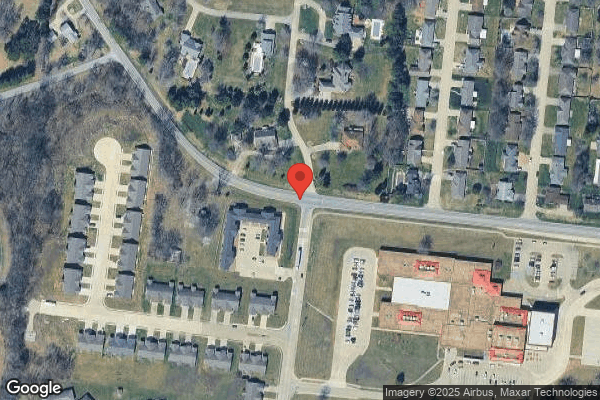
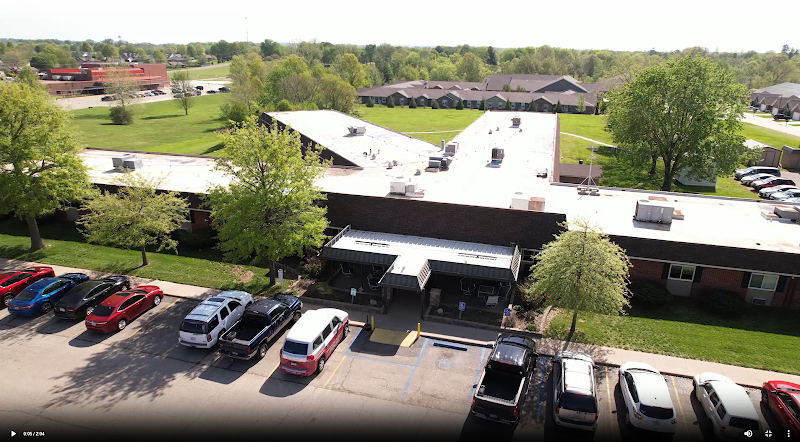
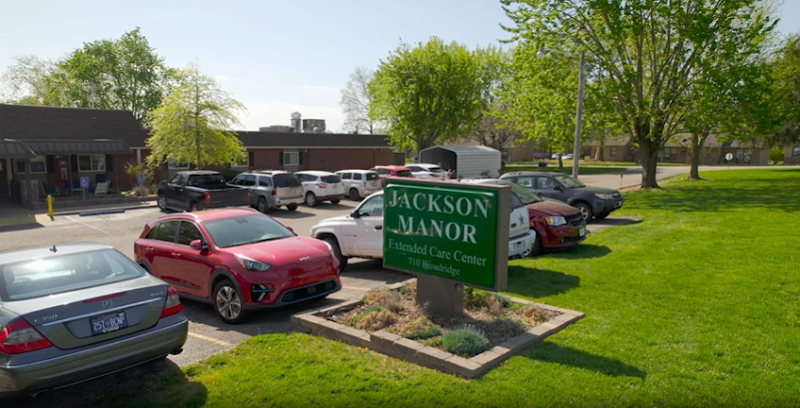
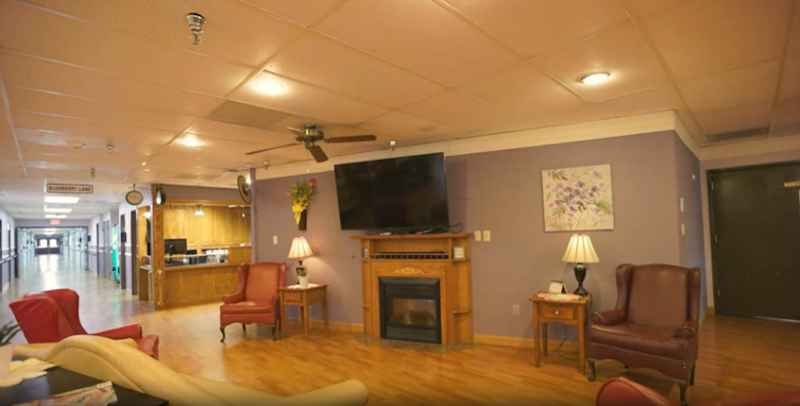
JACKSON MANOR

710 BROADRIDGE, JACKSON, MO 63755 (573) 243-3101
For profit - Limited Liability company 90 Beds MGM HEALTHCARE Data: November 2025
Trust Grade
65/100
#89 of 479 in MO
Last Inspection: July 2024

Within standard 12-15 month inspection cycle. Federal law requires annual inspections.

Overview

Jackson Manor in Jackson, Missouri has a Trust Grade of C+, indicating that it is decent and slightly above average among nursing homes. It ranks #89 out of 479 facilities statewide, placing it in the top half, and #4 out of 8 in Cape Girardeau County, meaning only one local option is better. Unfortunately, the facility's trend is worsening, with issues increasing from 3 in 2023 to 8 in 2024. Staffing is a significant concern, receiving only 1 out of 5 stars and a high turnover rate of 78%, which is above the Missouri average of 57%, suggesting instability among staff. On a positive note, Jackson Manor has not incurred any fines, indicating compliance with regulations, and while RN coverage is average, it is important to note specific incidents, such as residents not being informed about hospital transfers and complaints about cold food served to residents, which could affect their overall satisfaction and well-being.

Trust Score
C+
65/100
In Missouri
#89/479
Top 18%
Safety Record
Low Risk
No red flags
Inspections
Getting Worse
3 → 8 violations
Staff Stability
⚠ Watch
78% turnover. Very high, 30 points above average. Constant new faces learning your loved one's needs.
Penalties
✓ Good
No fines on record. Clean compliance history, better than most Missouri facilities.
Skilled Nurses
⚠ Watch
Each resident gets only 26 minutes of Registered Nurse (RN) attention daily — below average for Missouri. Fewer RN minutes means fewer trained eyes watching for problems.
Violations
⚠ Watch
18 deficiencies on record. Higher than average. Multiple issues found across inspections.
★★★★☆
4.0
Overall Rating
★☆☆☆☆
1.0
Staff Levels
★★☆☆☆
2.0
Care Quality
★★★★★
5.0
Inspection Score
Stable
2023: 3 issues
2024: 8 issues

The Good

  • Full Sprinkler Coverage · Fire safety systems throughout facility
  • No fines on record

Facility shows strength in fire safety.

The Bad

Staff Turnover: 78%

31pts above Missouri avg (46%)

Frequent staff changes - ask about care continuity

Chain: MGM HEALTHCARE

Part of a multi-facility chain

Ask about local staffing decisions and management

Staff turnover is very high (78%)

30 points above Missouri average of 48%

The Ugly 18 deficiencies on record

Sept 2024 1 deficiency
CONCERN (D) 📢 Someone Reported This

A family member, employee, or ombudsman was alarmed enough to file a formal complaint

Potential for Harm - no one hurt, but risky conditions existed

Deficiency F0804 (Tag F0804)

Could have caused harm · This affected 1 resident

Based on observation, interview, and record review, the facility failed to provide palatable, attractive food at a safe and appetizing temperatures for eight residents (Resident #1, #,3, #4, #5, #6, #...

Read full inspector narrative →
Based on observation, interview, and record review, the facility failed to provide palatable, attractive food at a safe and appetizing temperatures for eight residents (Resident #1, #,3, #4, #5, #6, #8, #9, #10) out of 10 sampled residents. This deficient practice had the potential to affect all residents in the facility. The facility's census was 68. The facility did not provide a food temperature policy. Review of the facility's Resident Council minutes, dated 09/12/24, showed eight residents said the food was always cold for both the dining room and the hall trays. Observations of the evening meal on 09/19/24, showed at 6:34 P.M., staff delivered Resident #1's room tray to his/her room. The temperature of the hamburger measured 94 degrees Fahrenheit (F) and the potato wedges measured 96 degrees F. During an interview on 09/19/24 at 4:20 P.M., Resident #8 said the food was always cold. It did not matter where he/she ate. He/She usually eats in his/her room, but the food was always cold so now was trying to eat in the dining room. The food was cold there too so it didn't matter where he/she ate because it was the same everywhere. Observation on 09/19/24 at 6:40 P.M., showed Resident #8 ate his/her meal in the room. During an interview on 09/19/24 at 5:48 P.M., Resident #1 said he/she would normally eat in his/her room but the food was often cold. During an interview on 09/19/24 at 4:38 P.M., Resident #3 said he/she normally eats in his/her room and the food was sometimes cold. During an interview on 09/19/24 at 4:43 P.M., Resident #4 said the food was sometimes cold. During an interview on 09/19/24 at 4:45 P.M., Resident #5 said the food was sometimes cold. During an interview on 09/19/24 at 4:46 P.M., Resident #10 said the food was always cold. He/She always ate in his/her room and didn't bother telling staff the food was cold because it would not make a difference. His/Her food came an hour late the day before and it was cold like always. Observation on 09/19/24 at 6:42 P.M. showed Resident #10 ate his/her meal in the room. During an interview on 09/19/24 at 5:00 P.M., Resident #6 said he/she normally eats in the dining room and the food was always cold. During an interview on 09/19/24 at 5:48 P.M., Resident #9 said the food was often cold. During an interview on 09/19/24 at 7:00 P.M., the Dietary Manager (DM) said there was a couple of residents that complained about the food temperatures. He/She thought they were residents that did not wake up to eat and then complained the food was cold. The food temperatures should be completed each day for each meal by the cooks and documented. A hot cart had been purchased for the hall trays, but they had not started using it yet. During an interview on 09/19/24 at 7:40 P.M., the Administrator said she would expect temperature logs to be maintained for every meal. There had been an issue with the meals, so they had implemented a new protocol where office staff were to receive a test tray each day to evaluate the food to ensure quality and temperatures were acceptable. A hot cart had been purchased for the hall trays due to the resident complaints of the food was cold. They had not started using the hot cart yet. Complaint #MO241994
Jul 2024 7 deficiencies
CONCERN (D)

Potential for Harm - no one hurt, but risky conditions existed

Transfer Notice (Tag F0623)

Could have caused harm · This affected 1 resident

**NOTE- TERMS IN BRACKETS HAVE BEEN EDITED TO PROTECT CONFIDENTIALITY** Based on interview and record review, the facility failed to notify the resident and/or the resident's representative in writing...

Read full inspector narrative →
**NOTE- TERMS IN BRACKETS HAVE BEEN EDITED TO PROTECT CONFIDENTIALITY** Based on interview and record review, the facility failed to notify the resident and/or the resident's representative in writing of a transfer to hospital, including the reason for transfer, and failed to notify the Office of the State Long-Term Care Ombudsman for two residents (Resident #2 and Resident #58) out of 17 sampled residents. The facility's census was 68. The facility did not provide a policy. 1. Review of Resident #2's medical record showed: - Transferred to the hospital on [DATE], and readmitted to the facility on [DATE]; - No documentation that the resident or resident's responsible party had been notified in writing; - No documentation of transfer/discharge notice given to the Ombudsman. 2. Review of Resident #58's medical record showed: - Transferred to the hospital on [DATE], and readmitted to the facility on [DATE]; - Transferred to the hospital on [DATE] and readmitted the same day; - No documentation that the resident or resident's responsible party had been notified in writing; - No documentation of transfer/discharge notice given to the Ombudsman. During an interview on 07/11/24 at 4:00 P.M., the Administrator and Regional Director of Operations said they would expect notification of transfers to be sent per regulation.
CONCERN (D)

Potential for Harm - no one hurt, but risky conditions existed

Deficiency F0625 (Tag F0625)

Could have caused harm · This affected 1 resident

**NOTE- TERMS IN BRACKETS HAVE BEEN EDITED TO PROTECT CONFIDENTIALITY** Based on interview and record review, the facility failed to inform the resident and/or resident's representative, in writing, o...

Read full inspector narrative →
**NOTE- TERMS IN BRACKETS HAVE BEEN EDITED TO PROTECT CONFIDENTIALITY** Based on interview and record review, the facility failed to inform the resident and/or resident's representative, in writing, of the facility's bed hold policy at the time of transfer to the hospital for two residents (Resident #2 and Resident #58) out of 17 sampled residents. The facility's census was 68. Review of the facility's Bed Hold policy, last reviewed 11/15/22, showed: - The facility will provide written information to the Resident and/or Resident's Representative regarding the Bed Hold Policy, prior to transferring a Resident to the hospital, as required by State/Federal Guidelines; - The facility will have policies that address holding the Resident's bed during periods of absence; - The facility will provide written information about these policies to Residents/Resident's Representatives prior to and upon transfer. 1. Review of Resident #2's medical record showed: - Transferred to the hospital on [DATE] and readmitted to the facility on [DATE]; - No documentation the Resident or Resident's Representative was informed in writing of the facility's bed hold policy at the time of transfer. 2. Review of Resident #58's medical record showed: - Transferred to the hospital on [DATE] and readmitted to the facility on [DATE]; - Transferred to the hospital on [DATE] and readmitted the same day; - No documentation the Resident or Resident's Representative was informed in writing of the facility's bed hold policy at the time of transfer. During an interview on 07/11/24 at 4:00 P.M., the Administrator and Director of Operations said they would expect residents discharging to the hospital to have the bed hold papers sent per the regulations.
CONCERN (D)

Potential for Harm - no one hurt, but risky conditions existed

ADL Care (Tag F0677)

Could have caused harm · This affected 1 resident

**NOTE- TERMS IN BRACKETS HAVE BEEN EDITED TO PROTECT CONFIDENTIALITY** Based on observation, interview, and record review, the facility failed to provide showers for three residents (Resident #2, #18...

Read full inspector narrative →
**NOTE- TERMS IN BRACKETS HAVE BEEN EDITED TO PROTECT CONFIDENTIALITY** Based on observation, interview, and record review, the facility failed to provide showers for three residents (Resident #2, #18, and #21) out of 17 sampled residents and one resident (Resident #4) outside the sample. The facility's census was 68. Review of the facility's policy, ADL Care Bathing, dated 07/21/22, showed: - Nursing staff will assist in bathing to promote cleanliness and dignity; - The charge nurse will be made aware of residents who refuse bathing. 1. Review of Resident #2's medical record showed: - Diagnosis of quadriplegia (a form of paralysis that affects all four limbs, plus the torso); - Scheduled shower days on Monday and Thursday. Review of the resident's annual Minimum Data Set (MDS - a federally mandated assessment completed by the facility staff), dated 01/05/24, showed: - Cognitive status intact; - Dependent on staff for dressing; - Moderate assist of staff for personal hygiene; - Dependent on staff for bathing. Review of the resident's shower sheets for 05/01/24 through 07/10/24 showed: - For June, the resident did not receive showers on 06/20/24 and 06/27/24, with two out of nine opportunities missed; - For July, the resident did not receive any showers, with three out of three opportunities missed. Observation on 07/08/24 at 2:00 P.M. showed Resident #2 lay in bed with unkempt hair. During an interview on 07/08/24 at 2:00 P.M., Resident #2 said he/she often misses showers. 2. Review of Resident #4's medical record showed: - Diagnoses of Parkinson's disease (a disorder of the central nervous system that affects movement, often including tremors), and diabetes mellitus (DM - abnormal blood sugar), and dementia (a group of thinking and social symptoms that interferes with daily functioning); - Scheduled shower days on Monday and Thursday. Review of the resident's annual MDS, dated [DATE], showed: - Cognitive status intact; - Supervision or touching from staff for dressing lower body; - Supervision or touching assistance from staff for personal hygiene; - Maximal assistance from staff for bathing. Review of the resident's shower sheets for 05/01/24 through 07/10/24, showed: - For May, the resident did not receive showers on 05/09/24, 05/27/24, and 05/30/24, with three out of nine opportunities missed; - For June, the resident did not receive showers on 06/03/24, 06/13/24, and 06/24/24, with three out of nine opportunities missed; - For July, the resident did not receive showers on 07/01/24 and 07/08/24, with two out of three opportunities missed. Observation on 07/09/24 at 02:40 P.M., showed Resident #4 sat on his/her bed wearing a long shirt, no pants, and unkempt hair. During an interview on 07/10/24 at 2:40 P.M., Resident #4 said he/she did not get two showers a week, but wishes he/she could. He/She thought the reason he/she doesn't get two showers a week was due to the facility being short staffed. 3. Review of Resident #18's medical record showed: - Diagnoses of DM, high blood pressure, and anxiety disorder (feelings of worry, anxiety, or fear that are strong enough to interfere with one's daily activities); - Scheduled shower days on Tuesday and Friday. Review of the resident's quarterly MDS, dated [DATE], showed: - Moderate cognitive impairment; - Supervision/touching assistance by staff for upper body dressing; - Partial to moderate assistance by staff for lower body dressing; - Supervision/touching assistance by staff for personal hygiene; - Bathing not attempted due to medical condition or safety concern. Review of the resident's shower sheets for 05/01/24 through 07/10/24, showed: - For July, the resident did not receive showers on 07/04/24 and 07/09/24, with two out of three opportunities missed. Observation on 07/08/24 at 2:04 P.M. showed Resident #18 with uncombed hair, the room smelled of body odor, and a fly buzzed about, landing on the resident and the resident's sheet. During an interview on 07/08/24 at 2:04 P.M., Resident #18 said it's been two weeks since his/her last shower. 4. Review of Resident #21's medical record showed: - Diagnoses of neuromuscular dysfunction of bladder (the nerves and muscles don't work together well), heart failure (chronic condition where heart does not pump blood as well it should), hypertension, renal failure, DM, and epilepsy (a disorder in which nerve cell activity in the brain is disturbed causing seizures; - Scheduled shower days on Saturday and Wednesday. Review of the resident's quarterly MDS, dated [DATE], showed: - Cognitive status intact; - Partial assistance for upper body from staff for dressing; - Maximal assistance for lower body from staff for dressing; - Partial assistance from staff for personal hygiene; - Maximal assistance from staff for bathing. Review of the resident's shower sheets for 05/01/24 through 07/10/24, showed: - For May, the resident did not receive showers on 05/15/24, 05/18/24, and 05/22/24, with three out of nine opportunities missed; - For June, the resident did not receive showers on 06/01/24, 06/08/24, 06/15/24, 06/22/24, and 06/29/24 with five out of nine opportunities missed; - For July, the resident did not receive showers on 07/06/24 and 07/10/24 with two out of three opportunities missed. During an interview on 07/09/24 at 03:30 P.M., Resident #21 said he/she did not get showers as scheduled. At most, he/she gets one shower a week, but wishes he/she would receive showers more often. During an interview on 07/11/24 at 10:30 A.M., Certified Nurse Aide (CNA) D said residents are supposed to receive two showers a week. He/she would fill out a shower sheet if a shower was given and if a resident refused, he/she would have them sign the sheet saying they refused it. He/she would document any skin issues on the shower sheet and then turn in the sheets to the nurse. The nurse is supposed to review and sign the sheets and then turn them in to the front office. During an interview on 07/11/24 at 4:00 P.M., the Administrator, the Area Director of Operations, and the Regional Nurse Consultant said they would expect residents to receive at least two showers a week and a shower sheet to be completed and signed indicating the shower was either given, refused, or why it was not given, such as being out of the facility.
CONCERN (D)

Potential for Harm - no one hurt, but risky conditions existed

Infection Control (Tag F0880)

Could have caused harm · This affected 1 resident

**NOTE- TERMS IN BRACKETS HAVE BEEN EDITED TO PROTECT CONFIDENTIALITY** Based on observation, interview, and record review, the facility failed to maintain proper infection control practices to preven...

Read full inspector narrative →
**NOTE- TERMS IN BRACKETS HAVE BEEN EDITED TO PROTECT CONFIDENTIALITY** Based on observation, interview, and record review, the facility failed to maintain proper infection control practices to prevent transmission of infection during insulin administration for one resident (Resident #68) out of 17 sampled residents and while providing incontinent care for one resident (Resident #52) outside the sample. The facility also failed to provide appropriate documentation of tuberculosis (TB-an infectious bacterial disease that affects the lungs) testing for three residents (Residents #24, #30 and #42) out of five sampled residents. The facility's census was 68. Review of the facility's policy, Hand Hygiene, last reviewed 04/28/22, showed: - Hand hygiene should be performed before and after providing care; - After contact with blood, body fluids or contaminated surfaces; - Before and after applying or removing gloves or Personal Protective Equipment (PPE); - After handling soiled linens or items potentially contaminated with blood, body fluids or secretions. Review of the facility's policy, Incontinence Care, dated 07/21/22, showed: - Perform hand hygiene and apply gloves; - Remove soiled brief, cleanse perineal (private) area with a perineal cleanser, use a clean surface area of the cloth for each wipe; use multiple cloths if necessary, to maintain infection control; - Remove soiled gloves, perform hand hygiene and apply clean gloves; - Apply clean brief and clothing; - Discard contaminated items in a plastic liner; - Remove gloves and perform hand hygiene; - Reposition resident, place call light within reach, and report abnormal findings to the Charge Nurse. Review of the facility's policy, Injectable Medication Administration, dated 08/18, showed: - Wash hands with soap and water; - Gather supplies; - Clean stopper with alcohol and allow to air dry; - Inject volume of air equal to volume of dose and withdraw medication; - Do not recap needles; - Remove air bubbles; - Expose area to be injected and clean with alcohol wipe; - Inject medication; - Remove and discard gloves, clean or sanitize hands. Review of the facility's undated policy, Blood Glucose Monitoring, showed: - Gather and prepare appropriate equipment; - Perform hand hygiene and put on gloves; - Puncture skin with a quick, continuous, and deliberate stroke to achieve good flow of blood and prevent the need to repeat puncture; - If required by facility, wipe away the first drop of blood using a gauze pad; - Touch drop of blood to test strip; - Remove and discard gloves and perform hand hygiene; - Clean and disinfect blood glucose meter with disinfectant pad, following manufacturers instructions. The facility did not provide a policy for Resident TB Testing. 1. Observation on 07/11/24 at 10:30 A.M. of incontinent care for Resident #52 showed: - Certified Nurse Aide (CNA) C gathered supplies and placed on the bedside table without a barrier; - CNA C cleaned the resident's front peri area with a wipe; - With same gloves, obtained more wipes from package and continued to clean Resident's peri area; - With same soiled gloves, CNA C obtained more wipes, and cleaned area again; - CNA C placed used wipes inside of the soiled brief and folded the brief up; - CNA C removed the Resident's wet pants and placed on top of the fitted sheet of the bed. - CNA C rolled the Resident on his/her side, reached into package to obtain more wipes, and cleaned the Resident's buttock area; - While wearing the same soiled gloves, CNA C placed a clean brief on the Resident; - CNA C placed the soiled brief in the trash bag along with the wet pants; - With same soiled gloves, CNA C picked up clean pants from wheelchair and placed on the Resident; - With same soiled gloves, CNA C touched blanket and pulled up over Resident; - CNA C removed his/her gloves, exited the Resident's room without washing hands, and took bag of trash and wet pants to soiled utility. During an interview on 07/11/24 at 10:42 A.M., CNA C said he/she should wash his/her hands all the time, after care and before touching clean things. 2. Observation on 7/11/24 at 12:20 P.M. of Resident #68's blood glucose check showed: - Certified Medication Technician (CMT) E performed a finger stick and did not obtain any blood; - CMT E removed gloves and walked out of room without washing hands, to obtain new lancet (a device used to obtain blood for glucose testing); - CMT E donned gloves, performed a finger stick again, wiped blood away with gloved finger instead of gauze, then obtained blood sugar reading that required insulin; - CMT E removed gloves, obtained a multidose vial of insulin out of medication cart in hall, failed to clean top of vial and withdrew insulin; - CMT E returned to room, wiped Resident's abdomen with alcohol pad and waved hand over area to dry, prior to administering insulin; - CMT E recapped needle after insulin administration; - CMT E did not wash or sanitize hands after insulin administration; - CMT E did not clean glucometer after use. 3. Review of Resident #24's medical records showed: - admitted on [DATE]; - Last annual TB screen done on 06/10/22, read zero millimeters (mm) on 06/12/22; - No documentation of annual screenings for 2023 or 2024. 4. Review of Resident #30's medical records showed: - admitted on [DATE]; - Last annual TB screen given 01/31/22, with no read date of zero mm; - No documentaion of annual screenings for 2023 or 2024. 5. Review of Resident #42's medical records showed: - admitted on [DATE]; - Last annual TB screen given on 07/01/22, read zero mm on 07/03/22; - No documentaion of annual screenings for 2023 or 2024. During an interview on 07/11/24 at 4:00 P.M., the Administrator, Regional Director of Operations and Regional Nurse Consultant said they would expect staff to change gloves once contaminated, before touching a clean surface or resident and that residents should have a yearly screening for TB. During an interview on 07/18/24 at 8:57 A.M., the Administrator said he would expect staff to wash hands in between dirty and clean, before leaving a room, and glucometers should be cleaned in between each resident. Staff should swipe a multi-use vial of insulin with alcohol prior to withdrawing insulin, should use gauze pad to wipe excess blood off resident, not gloved finger and should not recap a needle after use.
CONCERN (E)

Potential for Harm - no one hurt, but risky conditions existed

Safe Environment (Tag F0584)

Could have caused harm · This affected multiple residents

**NOTE- TERMS IN BRACKETS HAVE BEEN EDITED TO PROTECT CONFIDENTIALITY** Based on observation, interview, and record review, the facility failed to provide a safe, clean, comfortable, and homelike envi...

Read full inspector narrative →
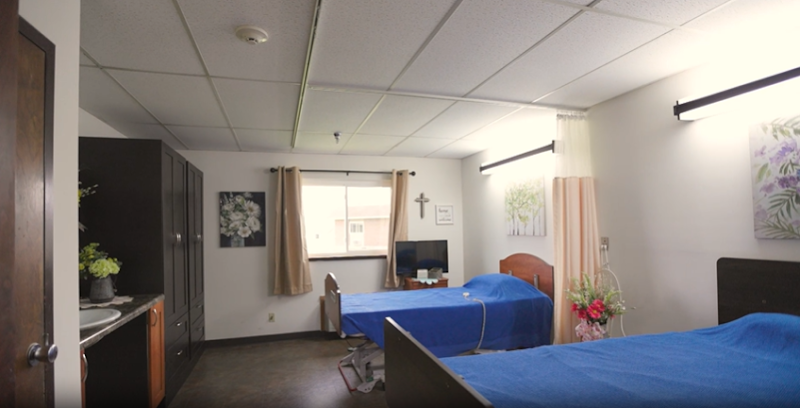
**NOTE- TERMS IN BRACKETS HAVE BEEN EDITED TO PROTECT CONFIDENTIALITY** Based on observation, interview, and record review, the facility failed to provide a safe, clean, comfortable, and homelike environment. This deficient practice affected one resident (Resident #35) out of 17 sampled residents, one resident (Resident #48) outside the sample, and had the potential to affect all residents in the facility. The facility's census was 68. The facility did not provide a policy regarding the environment. 1. Observation on 07/08/24 at 2:35 P.M. of room [ROOM NUMBER] showed: - Four dime-sized brown stains and a long brown stain approximately four inches long on the divider curtain; - Scrapes and scratches on the bathroom door and trim; - Veneer missing from the sink vanity; - Scrapes on the drawers of the sink vanity; - Veneer missing on the closet door; - Scrapes on the closet door; - A loose, unused cable and surge protector laying in the floor in front of the night stand next to the bed; - A surge protector cord and two black cords hanging on the back wall by the window; - Gap in the dry wall around the outlet located in the far back left corner of the room; - Gaps in the ceiling tile located in the back left corner of the room; - Scrapes in the drywall on the walls throughout the room. During an interview on 07/08/24 at 2:35 P.M., the resident in room [ROOM NUMBER] said he/she does not like the room he/she is in. There had been a water leak, which caused the ceiling to collapse in the back left corner of the room. There are dings, scrapes and scratches in everything. The building is gross and he/she wants to move due to the living environment. 2. Observation on 07/08/24 at 2:40 P.M. of room [ROOM NUMBER] showed scrapes and scratches into the paint and dry wall behind the bed A closest to the entrance of the room. 3. Observation on 07/09/24 at 12:00 P.M. of room [ROOM NUMBER] showed: - Bed control cord with areas of exposed colored wires and bed did not raise up when pushed by resident; - Multiple areas at the head of the bed, gouged out of the wall where the trapeze bar was located. During an interview on 07/09/24 at 12:00 P.M., the resident in room [ROOM NUMBER] said he/she was worried the wires could shock him/her, so he/she told staff, but it had been this way for a while. The staff had been raising the bed when the controller would not work. 4. Observation on 07/09/24 at 2:30 P.M. of room [ROOM NUMBER] showed chipping/peeling veneer on the bathroom and closet doors. 5. Observation on 07/10/24 at 9:00 A.M. of room [ROOM NUMBER] Bed A showed multiple areas of chipped paint and exposed drywall behind the resident's bed. 6. Observations on 07/10/24 at 10:17 A.M. of Blueberry Lane and Country Meadow halls showed: - Gouges in the dry wall and chipped paint along the walls of Blueberry Lane and Country Meadow; - Gouges and scrapes with bent metal around both entrances to the Country Meadow Dining area; - Scrapes in the paint at the corner where Blueberry Lane and Country Meadow hallways meet. During an interview on 07/11/24 at 4:00 P.M., the Administrator, the Area Director of Operations, and the Regional Nurse Consultant said they would expect the facility to be maintained and repaired when needed to be free from scrapes, holes, gouges etc. and cords to be secured and free from exposed wires in areas that residents access.
MINOR (C)

Minor Issue - procedural, no safety impact

Staffing Information (Tag F0732)

Minor procedural issue · This affected most or all residents

Based on observation and interview, the facility failed to post the nurse staffing data in a clear and readable format in a prominent place readily accessible to residents and visitors on a daily basi...

Read full inspector narrative →
Based on observation and interview, the facility failed to post the nurse staffing data in a clear and readable format in a prominent place readily accessible to residents and visitors on a daily basis at the beginning of each shift. The facility's census was 68. The facility did not provide a policy for posting nurse staffing data. Observations on 07/08/24, 07/09/24, 07/10/24 and 07/11/24 showed the facility did not post the nurse staffing data. The last posted nurse staffing data sheet was dated 06/28/24. During an interview on 07/11/24 at 8:30 A.M., the Assistant Director of Nurses (ADON) said the Director of Nurses (DON) fills out the daily staffing sheets, but he/she is not in the area this week, and hasn't been in the facility all week. The ADON stated that he/she is covering for the DON while he/she is out. The ADON said staffing sheets are posted by the nursing station beside the activities bulletin board. The ADON also said that the Administrator is in charge of the schedule and changing the staffing sheets this week. During an interview on 07/11/24 at 4:00 P.M., the Administrator, Regional Director of Operations, and Regional Nurse Consultant said they would expect daily staffing to be posted.
MINOR (C)

Minor Issue - procedural, no safety impact

Deficiency F0868 (Tag F0868)

Minor procedural issue · This affected most or all residents

Based on interview and record review, the facility failed to maintain quarterly Quality Assurance and Improvement Program (QAPI) committee meetings with the required members. The facility's census was...

Read full inspector narrative →
Based on interview and record review, the facility failed to maintain quarterly Quality Assurance and Improvement Program (QAPI) committee meetings with the required members. The facility's census was 68. Review of the facility's policy, QAPI, dated 08/20/20, showed: - The Quality Assessment and Assurance (QAA) committee will meet monthly to assess and monitor the quality of services provided to residents and identify potential problems or areas of opportunity for improvement; - Team Members: Administrator, Director of Nursing, Medical Director/Designee, Infection Preventionist, Social Services Designee, Activities Director, Environmental Services, Dietary Manager/Designee, Medical Records, Human Resources and Pharmacy. Review of the QAPI sign in sheets, provided by the Administrator, showed the Medical Director did not attend any meetings from April 2024 through June 2024. During an interview on 07/10/24 at 3:45 P.M., the Administrator said he couldn't find any QAPI documentation from prior to when he started as Administrator in April. During an interview on 07/11/24 at 12:50 P.M., the Administrator said the Medical Director should attend QAPI meetings. They were going to have a QAPI meeting on Tuesday and the Medical Director was supposed to come, but they canceled the meeting.
Apr 2023 2 deficiencies
CONCERN (D)

Potential for Harm - no one hurt, but risky conditions existed

Deficiency F0658 (Tag F0658)

Could have caused harm · This affected 1 resident

Based on observation, interview, and record review, the facility failed to follow acceptable standards of nursing practice by failing to utilize safety needles and failing to properly administer insul...

Read full inspector narrative →
Based on observation, interview, and record review, the facility failed to follow acceptable standards of nursing practice by failing to utilize safety needles and failing to properly administer insulin (a hormone that lowers the level of glucose, or sugar, in the blood) for three residents (Resident #31, #33, and #44) outside of the 18 sampled residents. The facility census was 70. Record review of the facility's Standard Precautions policy, dated 10/25/22, showed: - Standard precautions include sharps safety and safe injection practices; - Do not recap, bend, cut, break, or hand manipulate used needles. Record review of the facility's Medication Administration - General Guidelines policy, revised October 2017, showed: - Medications are administered as prescribed in accordance with good nursing principles and practices; - An adequate supply of equipment is maintained on the medication cart for the administration of medications. Record review of the facility's Injectable Medication Administration policy, revised September 2018, showed: - Purpose: To administer medications via subcutaneous, intradermal, and intramuscular routes in a safe, accurate, and effective manner; - Equipment Required: Sterile safety needle; - Procedure: Gather supplies - safety syringe; - Procedure: With the bevel of the needle pointing up, inject a volume of air equal to the volume of the dose into the vial and withdraw the medication; create air lock. (Except on pre-filled syringes) Do not recap needles; - Pen Devices: Dial dose as instructed and prime pen needle per manufacturer guidelines; - Remove needle at same angle and sheath needle. Record review of the Novolog insulin package insert, dated 3/2021, showed: - Changes in an insulin regimen (e.g. insulin strength, manufacturer, type, injection site or method of administration) may affect glycemic control and predispose to hypoglycemia or hyperglycemia; - Novolog FlexPen is designed to be used with NovoFine, NovoFine Plus, or NovoTwist needles; - Getting Ready: Make sure you have the following items: NovoLog FlexPen, new NovoFine, NovoFine Plus, or NovoTwist needle, and alcohol swabs; - Use NovoLog FlexPen as directed. 1. Record review of Resident #33's medical record showed: - An order for Novolog FlexPen solution pen-injector 100 units/mL (milliliter), inject ten units subcutaneously (under the skin) with meals, dated 6/9/21. Observation of Resident #33 on 4/6/23 at 10:46 A.M. showed: - Registered Nurse (RN) A injected ten units of air into the vial, then drew ten units of Novolog insulin from the vial into a non-safety insulin syringe and recapped the needle; - RN A donned gloves and took the syringe of insulin to the resident's room and administered the insulin; - RN A carried the used syringe with exposed needle back to the medication cart to dispose of it in the sharps container. 2. Record review of Resident #44's medical record showed: - An order for Novolog solution 100 units/mL, inject as per sliding scale subcutaneously before meals, dated 9/30/21. Observation of Resident #44 on 4/6/23 at 10:59 A.M. showed: - RN A removed Resident #44's Novolog FlexPen from the medication cart, along with a non-safety insulin syringe; - RN A injected four units of air into the pen, then drew four units of Novolog insulin from the Novolog FlexPen into the non-safety insulin syringe and recapped the needle; - RN A donned gloves and took the syringe of insulin to the resident's room and administered the insulin; - RN A carried the used syringe with exposed needle back to the medication cart to dispose of it in the sharps container. 3. Record review of Resident #31's medical record showed: - An order for Novolog solution 100 units/mL, inject 20 units subcutaneously one time a day for DM (diabetes mellitus - a disease that that results in too much sugar in the blood), dated 1/23/23. Observation of Resident #31 on 4/6/23 at 11:25 A.M. showed: - RN A injected 20 units of air into the vial, then drew 20 units of Novolog insulin from the vial into a non-safety insulin syringe and recapped the needle; - RN A donned gloves and took the syringe of insulin to the resident's room and administered the insulin; - RN A carried the used syringe with exposed needle back to the medication cart to dispose of it in the sharps container. During an interview on 4/6/23 at 10:46 A.M., RN A said the facility does not have safety needles available to use. During an interview on 4/6/23 at 4:05 P.M., RN A said he/she does not know if it is within manufacturer's instructions to pull insulin from a pre-filled pen into an insulin syringe and that he/she was not instructed by anyone in the facility to do so. RN A said he/she didn't have the needles that go with the insulin pen on his/her cart. He/she also said he/she should not recap a needle going from the medication cart to the resident. During an interview on 4/7/23 at 3:50 P.M., the Administrator and Director of Nursing (DON) said staff should never recap needles. Safety needles are available per policy and should be used over non-safety needles. The correct needle that comes with the insulin pens should be used and those needles are available in the medication room. Insulin should not be drawn out of a pre-filled pen into another syringe. During a telephone interview on 4/13/23 at 8:56 A.M, the Administrator said that their pharmacy likes to send pens due to the higher reimbursement for the pharmacy. Administration is working with the pharmacy to send vials. The facility started with a new pharmacy on 2/1/23 and are working on these issues with the new pharmacy. During a telephone interview on 4/13/23 at 11:25 A.M., the Administrator said at one point, the facility's prior pharmacy asked to not distinguish between pen and vial in the order so the pharmacy could send whichever form they had readily available. They have also had instances in the past when the order was for a pen, but insurance would only pay for vials. Moving forward, orders are to reflect either vial or pen, according to what is in the medication cart. They are also requesting that all insulins be sent in vials if possible and will ensure that the orders correspond.
CONCERN (D)

Potential for Harm - no one hurt, but risky conditions existed

Infection Control (Tag F0880)

Could have caused harm · This affected 1 resident

Based on observation, interview, and record review, the facility failed to disinfect the glucometer (a device used to measure blood sugar) per manufacturer's instructions, failed to disinfect the medi...

Read full inspector narrative →
Based on observation, interview, and record review, the facility failed to disinfect the glucometer (a device used to measure blood sugar) per manufacturer's instructions, failed to disinfect the medication cart per facility policy, failed to remove soiled gloves prior to obtaining a new test strip during blood glucose monitoring, and failed to sanitize hands for two sampled residents (Resident #10 and #27) and five residents (Resident #31, #33, #38, #44, and #46) outside the sample. The facility census was 70. Record review of the facility's Medication Administration - General Guidelines policy, revised October 2017, showed: - The person administering medications adheres to good hand hygiene, which includes washing hands thoroughly before beginning a medication pass, prior to handling any medication, after coming into direct contact with a resident, before and after administration of ophthalmic, topical, vaginal, rectal, and parenteral preparations, and before and after administration of medications via enteral tubes; - Hand sanitization is done with an approved sanitizer between hand washings, when returning to the medication cart or preparation area (assuming hands have not touched a resident or potentially contaminated surface), and at regular intervals during the medication pass such as after each room, again assuming handwashing is not indicated; - Hands are washed before putting on examination gloves and upon removal for administration of topical, ophthalmic, injectable, enteral, rectal, and vaginal medications. Record review of the facility's Standard Precautions policy, dated 10/25/22, showed: - The facility will use Standard Precautions which are the minimum Infection Prevention Practices that apply to all Resident Care, regardless of suspected or confirmed infection status of the Resident, in any setting where health care is delivered. These practices are designed to both protect the Employee and prevent from spreading Infections among other Residents; - Standard Precautions include: hand hygiene, use of personal protective equipment, respiratory hygiene/cough etiquette, sharps safety, safe injection practices, sterile instruments and devices, clean and disinfected environmental surfaces; - Delivery of Care: Avoid unnecessary touching of surfaces near the patient to prevent both contamination of clean hands from environmental surfaces and transmission of pathogens from contaminated hands to surface; - Perform Hand Hygiene: Before/after direct contact with residents or when hands are visibly soiled; after contact with blood, body fluids, secretions, excretions, patient's intact skin or wound dressings and contaminated items immediately after removing gloves and between patient contacts; - Environmental control: Follow procedures for routine care, cleaning and disinfection of environmental surfaces, especially frequently touched surfaces in patient care areas. Record review of the facility's Hand Hygiene policy, dated 4/28/22, showed: - Hand hygiene should be performed following the clinical indications: before/after providing care; before/after performing aseptic tasks; contact with blood, body fluids, or contaminated surfaces; before/after applying/removing gloves/PPE (personal protective equipment); and after handling soiled linens/items potentially contaminated with blood, body fluids, or secretions. Record review of the facility's Blood Glucose Monitoring policy, undated, showed: - The Centers for Disease Control and Prevention recommends that, whenever possible, blood glucose meters shouldn't be shared among patients. If a device must be shared, it should be cleaned and disinfected after every use, following the manufacturer's instructions, to prevent carryover of blood and infectious agents; - Clean and disinfect the blood glucose meter with a disinfectant pad, following the manufacturer's instructions. Contaminated blood glucose monitoring equipment increases the risk of infection by such bloodborne pathogens as hepatitis B, hepatitis C, and human immunodeficiency viruses. Review of the Super Sani-Cloth Germicidal Disposable Wipe (a disinfectant wipe) General Guidelines for Use showed: - Unfold a clean wipe and thoroughly wet surface; - Allow treated surface to remain wet for two minutes; - Let air dry. 1. Observation of Resident #33 on 4/6/23 at 10:46 A.M. showed: - Registered Nurse (RN) A sanitized his/her hands, donned gloves and obtained blood glucose reading for Resident #33; - RN A wiped the glucometer (device used to measure how much glucose, or sugar, is in the blood) for approximately 15 seconds with a Super Sani-Cloth Germicidal Disposable Wipe, threw the wipe away, and laid the glucometer on a piece of paper on top of the medication cart; - RN A administered Resident #33's insulin, removed gloves, sanitized his/her hands, and then pushed the uncleaned/unsanitized medication cart to Resident #44's doorway. 2. Observation of Resident #44 on 4/6/23 at 10:59 A.M. showed: - RN A dispensed Resident #44's medications into a medication cup without sanitizing his/her hands or wearing gloves; - RN A sanitized his/her hands, donned gloves, and obtained Resident #44's blood sample for blood glucose monitoring. After obtaining blood sample, RN A said the glucometer malfunctioned, so he/she removed the used blood glucose strip from the glucometer and reached into the container of blood glucose strips to obtain a new strip without removing his/her dirty gloves and washing/sanitizing his/her hands; - RN A wiped the glucometer for approximately five seconds with a Super Sani-Cloth Germicidal Disposable Wipe, threw the wipe away, and laid the glucometer on a piece of paper on top of the medication cart; - RN A removed his/her gloves, sanitized his/her hands after administering Resident #44's medications and obtaining blood glucose reading, and then pushed the uncleaned/unsanitized medication cart to Resident #10's doorway. 3. Observation of Resident #10 on 4/6/23 at 11:15 A.M. showed: - RN A dispensed Resident #10's medication into a medication cup without sanitizing his/her hands or wearing gloves; - RN A sanitized his/her hands after administering Resident #10's medication, and then pushed the uncleaned/unsanitized medication cart to Resident #46's doorway. 4. Observation of Resident #46 on 4/6/23 at 11:20 A.M. showed: - RN A dispensed Resident #46's medication into a medication cup without sanitizing his/her hands or wearing gloves; - RN A sanitized his/her hands after administering Resident #46's medication, and then pushed the uncleaned/unsanitized medication cart to Resident #31's doorway. 5. Observation of Resident #31 on 4/6/23 at 11:25 A.M. showed: - RN A sanitized his/her hands, donned gloves, and obtained Resident #31's blood sample for blood glucose monitoring. After obtaining blood sample, RN A said the glucometer malfunctioned, so he/she removed the used blood glucose strip from the glucometer and reached into the container of blood glucose strips to obtain a new strip without removing his/her dirty gloves and washing/sanitizing his/her hands; - RN A wiped the glucometer for approximately five seconds with a Super Sani-Cloth Germicidal Disposable Wipe, threw the wipe away, and laid the glucometer on a piece of paper on top of the medication cart. 6. Observation of Resident #27 on 4/6/23 at 3:10 P.M. showed: - RN A walked to the medication cart from Resident #27's room and, without performing hand hygiene, puts his/her ungloved fingers inside a medication cup and a drinking cup to pull them from the stack of cups, sets them on the medication cart, then sanitized hands; - RN A dispensed Resident #27's two liquid medications and two pills into four separate medication cups after crushing the pills for administration via enteral tube (tube for delivering nutrition or medication directly to the stomach or small intestine), carried the cups to the resident's room and placed them on the counter near the sink; - RN A, without performing hand hygiene, put his/her ungloved finger into the two medication cups each containing one pill when picking up the medication cups to fill them with water to dissolve each pill; - RN A then donned gloves, administered each medication with flushes in between, removed gloves and washed hands; - RN A left the medication cart to go to the e-kit (secured system containing drugs which are used for an emergency situation or as a starter dose) to obtain a medication for Resident #27 that was not available in the medication cart; - RN A returned to the medication cart and, without performing hand hygiene, opened the pill crusher pouch with his/her ungloved fingers touching the inside of the pouch, then dropped the medication inside the pouch to be crushed, then sanitized hands; - RN A donned gloves, administered the pill, removed gloves, and washed hands. 7. Observation of Resident #38 on 4/6/23 at 3:25 P.M. showed: - RN A, without performing hand hygiene, dispensed Resident #38's pills into medication cups and put his/her ungloved finger inside the medication cup when he/she was carrying it to the resident, then sanitized hands after administering Resident #38's medication. 8. Observation of Resident #31 on 4/6/23 at 3:35 P.M. showed: - RN A, without performing hand hygiene, put his/her ungloved finger inside the medication cup to pull the cup off of the stack of cups, then administered medications; - RN A left the medication cart to go to the e-kit (secured system containing drugs which are used for an emergency situation or as a starter dose) to obtain a medication for Resident #31 that was not available in the medication cart; - RN A returned to the medication cart and, without performing hand hygiene, put his/her ungloved finger inside both the medication cup and drinking cup to pull the cups off of the stack of cups; - RN A administered the medication to Resident #31 and then sanitized his/her hands. 9. Observation of Resident #44 on 4/6/23 at 3:50 P.M. showed: - RN A, without performing hand hygiene, put his/her ungloved finger inside the medication cup to pull the cup off of the stack of cups, then administered medications. During an interview on 4/6/23 at 4:05 P.M., Registered Nurse (RN) A said he/she should wash/sanitize before and after care. Anytime hands are soiled, they should be washed. Gloves should be worn when coming in contact with bodily fluids or if doing a treatment like checking blood sugar. The glucometer should be cleaned for 30 seconds in between residents. Staff's fingers should not touch inside of cups. The same dirty glove should not be worn to reach into a container of blood glucose strips after obtaining a blood sample. During an interview on 4/7/23 at 3:50 P.M., the Administrator and Director of Nursing (DON) said they would expect an employee to wash and/or sanitize their hands anytime they touch a resident or belongings, when they take off their gloves or are visibly soiled, before they eat, before they feed a resident, or after they use the restroom. They would expect an employee to wear gloves during incontinent care or if they will come in contact with any bodily fluids. They would expect a glucometer to be wiped down with a sanitizing cloth for two minutes per the container. The glucometer must stay wet for two minutes, and then it can air dry. They would expect staff obtaining a blood sugar to take off gloves and clean hands before getting another strip after a glucometer malfunction and not to reach into the strip container with a soiled glove. Staff should not put their fingers inside of a medication cup or drinking cup when passing them to residents.
Mar 2023 1 deficiency
CONCERN (D) 📢 Someone Reported This

A family member, employee, or ombudsman was alarmed enough to file a formal complaint

Potential for Harm - no one hurt, but risky conditions existed

Free from Abuse/Neglect (Tag F0600)

Could have caused harm · This affected 1 resident

Based on interview and record review the facility failed to ensure Certified Nurse Assistant (CNA) B remained in control of his/her own behavior and acted professionally while providing care for one r...

Read full inspector narrative →
Based on interview and record review the facility failed to ensure Certified Nurse Assistant (CNA) B remained in control of his/her own behavior and acted professionally while providing care for one resident (Resident #1) out of three sampled residents. The facility census was 65. On 2/28/23 at 2:30 P.M., the administrator was notified of the past noncompliance which occurred on 2/26/23. On 2/26/23, the Director of Nursing (DON) identified CNA B hit Resident #1's hand in an effort to make him release his hold on assistive equipment. Upon discovery, staff suspended CNA B, conducted an investigation and notified appropriate parties. Staff reviewed the abuse prevention and reporting policies and all facility staff was educated on the facility policy on abuse prevention and reporting. CNA B was terminated. The deficiency was corrected on 2/27/23. Record review of the facility's Abuse Prevention policy, dated 10/21/22, showed: - The facility will be committed to protecting the residents from abuse by anyone including, but not necessarily limited to: facility staff, other residents, staff from other agencies providing services to the residents, family members, legal guardians, surrogates, sponsors, friends, visitors, and any other individual; - The definition of abuse includes an employee purposefully beating, striking, wounding, or injuring a resident; In any manner whatsoever, an employee mistreating or maltreating a resident in a brutal or inhuman manner; An employee handing a resident with any more force than reasonable for a resident's proper control, treatment, or management; - All facility staff shall be in-serviced upon initial employment, and at least annually thereafter, regarding resident's rights, including freedom and abuse, neglect, mistreatment, misappropriation of property, exploitation and the related reporting requirements and obligations; - Staff members, volunteers, family members and others shall be encouraged to report incidents of abuse. There will be no negative repercussions for reporting against anyone who reports suspected abuse, neglect, involuntary seclusion, exploitation, or misappropriation of resident property; - When an incident of resident abuse should be suspected or determined, such incident must be reported to facility management regardless of the time lapse since the incident occurred; - The Administrator and the DON must be promptly notified of suspected abuse or incidents of abuse; - The facility will initiate at the time of any finding of potential abuse or neglect an investigation to determine cause and effect, and provide protection to any alleged victims to prevent harm during the continuance of the investigation; - The Administrator, or designee, shall report any allegations of abuse, neglect, or misappropriation of resident property as well as report any reasonable suspicion of crime in accordance with Section 1150B of the Social Security Act to the Department of Health as required; - Any allegation of abuse, neglect, misappropriation or exploitation against any employee must result in his/her immediate suspension for the protection of the resident; - Suspected or substantiated cases of resident abuse, neglect, misappropriation of property, or mistreatment shall be thoroughly investigated, documented, and reported to the physician, families, and/or representative, and as required by state guidelines. In addition, the facility will follow Section 1150B of the Social Security Act's time limits for reporting a reasonable suspicion of crime (immediately but no later than two hours if abuse or serious bodily injury and 24 hours for all others). In addition to reporting to the State Agency, a reasonable suspicion of crime or allegation of abuse, neglect, or misappropriation of resident property will be reported to at least one law enforcement agency; - It will be the responsibility of all staff to provide a safe environment for the residents; - Any instances of employee disregard for the policies and procedures of the facility will be cause for corrective action up to and including suspension, termination, and reporting to licensing agencies. 1. Review of Resident #1's medical record showed: - An admission date of 2/14/23; - Diagnoses of anxiety (a feeling of fear, dread, and uneasiness), major depressive disorder (a mental health disorder characterized by persistently depressed mood), chronic obstructive pulmonary disease (COPD) (a condition with the constriction of the airways and difficulty or discomfort in breathing), schizophrenia (a serious mental disorder in which people interpret reality abnormally), diabetes mellitus (DM) (a chronic health condition that affects how the body turns food into energy), and paraplegia (paralysis of the legs and the lower body). Record review of the resident's admission Minimum Data Set (MDS), a federally mandated comprehensive assessment instrument, completed by facility staff, dated 2/21/23, showed: - Cognition intact and independent with decision-making; - Extensive assistance to total dependence of staff with most Activities of Daily Living (ADL's). Observations of Resident #1 on 2/28/23 at 12:35 P.M., showed no bruising or injuries on the resident's left and right arms/wrists and hands. Record review of the resident's left arm/wrist X-ray, dated 2/26/23, showed no fractures or injuries. Record review of the resident's care plan, dated 2/20/23, showed: - The resident will be transferred with the assistance of two staff per a hoyer lift; - Independent with an electric wheelchair for locomotion; - History of behavior problems; - History of resistance to care; - Potential to be physically aggressive; - Potential to be verbally aggressive; - The resident with a mood problem. During an interview on 2/28/23 at 12:35 P.M., Resident #1 said: - During mechanical lift transfers, he/she will often times hold onto the side of the lift to assist with positioning; - During this transfer, when the resident grabbed onto the side of the lift, CNA B started yelling, Let go of the fucking lift; - CNA B continued to transfer the resident to his/her chair, then said, To hell with it, I'm going to put you in your fucking bed; - He/she kept asking CNA B to please put him/her in the chair, but CNA B just moved the resident back to the bed; - CNA B took her closed fist and began hitting the resident's left arm/wrist area; - CNA B hit the resident with his/her knuckles and it was painful; - He/she was in pain from the hitting and very confused and angry with CNA B. The resident felt fearful and anxious; - He/she knew CNA B no longer worked at the facility, but he/she was fearful of seeing CNA B on outings. Record review of the facility's investigation of the incident, dated 2/26/23, showed: - On 2/26/23 at approximately 12:50 P.M., CNA A reported to the charge nurse he/she assisted CNA B with a mechanical lift transfer for Resident #1 and CNA B cursed and hit on the resident's hand, three to five times in an effort to get the resident's hand off of the lift; - The charge nurse notified the Administrator (Adm) and the DON who started an investigation. CNA B was immediately removed from the facility and suspended pending the results of the investigation; - Staff notified the resident's physician, the resident's representative, the local police department, and the Department of Health and Senior Services (DHSS) of the alleged incident; - The Adm and DON's interviewed Resident #1. The resident said CNA B told him/her, I am going to put you back in your fucking bed. CNA B started pounding on his/her left hand and put the resident back into the bed; - CNA A said he/she saw CNA B pounding on Resident' #1's hand three-five times and said, I'm not fucking with you today. You are going back to your fucking bed and someone else can get you up; - CNA B said he/she was called to Resident #1's room to assist with getting the resident out of bed. He/she and another CNA began assisting the resident into his/her chair via the mechanical lift. The resident became upset and started moving around while in the air, grabbing on the walls, doors, or whatever he/she could, which caused the mechanical lift's sling to start swinging. It became an unsafe and dangerous situation. CNA B was trying to lay the resident back into the bed when the resident started grabbing the mechanical lift and smashed CNA B's hand while he/she was holding on the bars of the lift. CNA B denied hitting the resident and denied cursing at the resident; - Resident #1's Pain/Skin Evaluation was negative for any new findings; - Staff notified the local police department who completed a report; - CNA B was arrested by the police department on 2/26/23; - CNA B was terminated by the facility on 2/26/23; - The facility received an order to X-ray Resident #1's left hand/wrist; - Staff in-serviced on the facility's Abuse policy; - Resident Council meeting held to discuss abuse prevention and reporting. During an interview on 2/28/23 at 10:30 A.M., the DON said it was reported to her on Sunday, 2/26/23, that CNA B hit Resident #1 on the hand several times. She was told about the abuse incident around 12:30 P.M. She interviewed all of the interviewable residents and completed full skin assessments on all of the nonverbal residents to ensure no residents had bruising or injuries. Resident #1 was assessed and no bruising or injuries were found. The local police were contacted and CNA B was arrested. The DON reported 2/26/23 was CNA B's last day of employment with their facility. That morning it was reported to her by Registered Nurse (RN) D that CNA B was not wanting to care for the residents on his/her assigned hall. The DON told RN D to send CNA B home if he/she was not wanting to do their job. RN D and Licensed Practical Nurse (LPN) C immediately told CNA B to leave for the day. CNA B clocked out at 10:19 AM, which was shortly after the abuse incident occurred, but before the abuse was made aware to the DON. As soon as the DON was notified of the abuse allegation, the initiation of the internal investigation began. During an interview on 2/28/23 at 11:20 A.M., CNA A said CNA B had asked him/her to help get Resident #1 out of bed. They got him/her raised up and over the electric wheelchair in the mechanical lift when CNA B and the resident began to argue. CNA B began cursing and yelling at the resident and said he/she wasn't going to get him/her up and that someone else could do it. CNA B moved the mechanical lift back to the bed and the resident grabbed the bar connected to the lift and begged CNA B to put him/her in the electric wheelchair and not back into the bed. CNA B continued to yell at him/her that someone else could do it and hit him/her on his/her arm/hand multiple times with a closed fist trying to get him/her to let go of the bar on the lift. CNA A said he/she was in a state of shock and disbelief at what he/she was seeing and did not intervene due to being in shock. Instead, he/she quickly assisted with getting the resident back into the bed and CNA B out of the room as quickly as possible. He/she thought the resident had reported the incident to the nurse, because shortly after they left the room, CNA B clocked out and left the facility. He/she later realized that was not the case and immediately reported it to the LPN C, who reported it to the DON. During an interview on 3/10/2023 at 1:30 PM, LPN C said he/she immediately called the DON on 2/26/23 to report the incident which started the internal investigation into the alleged abuse of Resident #1 after speaking with CNA A. CNA A told LPN C he/she witnessed CNA B yell, cuss, and hit Resident #1 when he/she was in the room to help transfer the resident into the electric wheelchair. LPN C knew there had been an incident earlier in the day regarding CNA B cussing at Resident #1 and refusing to get him/her up, but he/she had no knowledge that CNA B had also hit the resident during the same incident. RN D asked earlier that morning to help him/her tell CNA B to leave the facility due to he/she refused to assist and cussed at Resident #1. During an interview on 3/15/23 at 10:23 AM, RN D said the nurse that was working on CNA B's hall, LPN E, reported to them, they were having issues with CNA B. The nurse reported CNA B was refusing to change one of the residents and was refusing to get Resident #1 up. RN D said the DON was contacted and they were told to have CNA B clock out and leave for the day. RN D said this occurred sometime shortly after 10:00 AM. RN D stated later in the day CNA A reported the physical abuse allegations to LPN C, so they immediately called the DON to report the incident, so an internal investigation could be started. RN D said Resident #1 confirmed the incident occurred. Complaint #MO214604
Sept 2020 7 deficiencies
CONCERN (D)

Potential for Harm - no one hurt, but risky conditions existed

Resident Rights (Tag F0550)

Could have caused harm · This affected 1 resident

Based on observation, interview, and record review, the facility failed to ensure a resident's dignity with a properly covered urinary catheter bag (a bag for collecting urine from a tube in the bladd...

Read full inspector narrative →
Based on observation, interview, and record review, the facility failed to ensure a resident's dignity with a properly covered urinary catheter bag (a bag for collecting urine from a tube in the bladder) and failed to provide showers as scheduled for one resident (Resident #28) out of 16 sampled residents. The facility census was 63. 1. Record review of Resident #28's Quarterly MDS, completed by facility staff, dated 7/23/20, showed: - Extensive assistance of two staff members for bed mobility; - Total assistance of two staff members for transfers; - Extensive assistance of one staff member for dressing; - Total assistance of two staff members for toileting; - Extensive assistance of one staff member for personal hygiene; - Total assistance of one staff member for bathing; - Wheel chair for mobility; - Impairment of both sides to upper and lower extremities; - Diagnosis of quadriplegia (paralysis of all four extremities) and neurogenic bladder (bladder dysfunction caused by nerve damage); - Has an indwelling catheter. Observations showed the resident's catheter bag with yellow urine hanging on wheelchair without a privacy bag: - On 9/14/20 at 11:45 A.M. and 3:45 P.M. - On 9/15/20 at 12:25 P.M. - On 9/16/20 at 12:10 P.M. and 3:00 P.M. - On 9/17/20 at 8:15 A.M. During an interview on 9/17/20 at 8:15 A.M., the resident said staff does not put a privacy bag on the catheter bag. During an interview on 9/17/20 at 8:20 A.M., Certified Nurse Aide (CNA) H said the catheter bags are hooked under the wheelchairs out of site and they have never put them in a cover. During an interview on 9/17/20 at 8:40 A.M., the Director of Nursing (DON) said the facility has urinary bag covers in the storage closet and she expected the staff to put them on the resident's catheter bags. Record review of the facility's shower schedule showed the resident scheduled for showers twice weekly on Tuesday and Friday. Record review of the resident's shower sheets showed: - July 2020 out of nine opportunities for showers, seven opportunities missed; - August 2020 out of eight opportunities for showers, three opportunities missed; - September 2020 out of five opportunities for showers, four opportunities missed. During an interview on 9/14/20 at 3:45 P.M., the resident said 9/11/20 was the first time he/she had a shower in over two weeks. The resident said before the 11th of September, he/she was getting only one shower per week. The resident said, The reason I have this hat on is my hair is oily and dirty. During an interview on 9/14/20 at 3:50 P.M., CNA F said they do not have enough staff, there is only one CNA on the hall today, and not surprised things are not getting done in a timely manner. During an interview on 9/17/20 at 8:35 P.M., the DON said the shower schedule should be followed unless there is an issue and the staff should report it so they can take care of it. During the month of July the shower aide was off work for 30 days and a staff member filled in for her. The DON said if for some reason a resident refuses a shower then staff should document why it was not given. Record review of the facility's policy on Dignity, dated February 2020 showed: - Each resident shall be cared for in a manner that promotes and enhances his or her sense of well-being, level of satisfaction with life, feeling of self-worth and self-esteem; - Residents are treated with dignity and respect at all times; - Demeaning practices and standards of care that compromise dignity are prohibited. Staff are expected to promote dignity and assist residents. For example: helping the resident to keep urinary catheter bags covered.
CONCERN (D)

Potential for Harm - no one hurt, but risky conditions existed

Comprehensive Care Plan (Tag F0656)

Could have caused harm · This affected 1 resident

**NOTE- TERMS IN BRACKETS HAVE BEEN EDITED TO PROTECT CONFIDENTIALITY** Based on observation, interview, and record review, the facility failed to implement care plans with specific interventions tail...

Read full inspector narrative →
**NOTE- TERMS IN BRACKETS HAVE BEEN EDITED TO PROTECT CONFIDENTIALITY** Based on observation, interview, and record review, the facility failed to implement care plans with specific interventions tailored to meet individual needs for two residents (Resident #1 and #3) out of 16 sampled residents. The facility census was 63. 1. Record review of Resident #1's Quarterly Minimum Data Set (MDS), a federally mandated assessment instrument completed by facility staff, dated 8/25/20, showed: - Total dependence of two staff for transfers. Observations on 9/15/20 at 11:15 A.M. showed the resident being transferred by Hoyer lift (an assistive device used to transfer residents) from the bed to the wheel chair by two facility staff. Record review of the care plan, revised on 9/14/20, showed: - The care plan did not address transfers. During an interview on 9/16/20 at 2:26 P.M., Certified Nursing Assistant (CNA) C said he/she just knows how to transfer the residents, they have no care cards and he/she does not know if transfers are care planned or not. If it is a new resident they get the information in report. 2. Record review of Resident #3's Quarterly MDS, dated [DATE], showed: - Diagnosis of depression (a mood disorder causing feelings of sadness and loss of interest) and schizophrenia (a disorder that affects a person's ability to think, feel, and behave clearly); - Received daily antidepressant and antipsychotic (a medication used to treat psychosis, such as delusions or hallucinations) medications. Record review of the resident's Physician Order Sheet (POS) dated September 2020, showed: - Seroquel (an antipsychotic medication) tablets, 400 milligram (mg) by mouth at bedtime for schizophrenia; - Seroquel tablets, 100 mg by mouth two times a day mood stabilization; - Perphenazine (an antipsychotic medication) tablets, 4 mg by mouth two times a day for schizophrenia: - Venlafaxine HCI ER (antidepressant medication) tablets, 75 mg one time a day for depression. Record review of the resident's care plan, revised 8/6/20, showed: - No individualized interventions for a diagnosis of depression or schizophrenia; - No individualized interventions for antidepressant or antipsychotic medications. During an interview on 9/17/20 at 8:25 A.M., the Director of Nursing (DON) said she would expect the residents to have individualized interventions for all care areas including diagnosis, medications and transfers. Record review of the facility's Comprehensive Person Centered Care Plan Policy, revised December 2016, showed: - Areas of concern are identified during resident assessment: - The concerns are evaluated and interventions will be added to the care plan; - The care plan will identify professional services that are responsible for each area of care; - Care plans will aid in preventing or reducing decline in the resident's functional status.
CONCERN (D)

Potential for Harm - no one hurt, but risky conditions existed

Deficiency F0688 (Tag F0688)

Could have caused harm · This affected 1 resident

Based on interview and record review, the facility failed to provide restorative services for five residents (Resident #26 #28, #35, #51, and #52) out of five residents. The facility census was 63. 1....

Read full inspector narrative →
Based on interview and record review, the facility failed to provide restorative services for five residents (Resident #26 #28, #35, #51, and #52) out of five residents. The facility census was 63. 1. Record review of Resident #26's Quarterly Minimum Data Set (MDS), a federally mandated assessment instrument, completed by facility staff, dated 716/20, showed: - Extensive assistance of two staff member for bed mobility; - Total assistance of two staff members for transfers; - Locomotion on and off unit extensive assistance of one staff member; - Extensive assistance of one staff member for dressing; - Extensive assistance of one staff member for toileting; - Extensive assistance of one staff member for personal hygiene; - Total assist of one staff member for bathing. - Wheelchair for mobility; - Impairment on one side to lower extremity; - Restorative Nursing Program provided active range of motion for at least 15 minutes, two out of the last seven days and bed mobility one day out of the last seven days. Record review of the resident's Restorative Care Program documentation showed: - Restorative active range of motion (ROM) to work on elbow flexion, active assisted ROM exercises on bilateral shoulder movements; - Resident to receive restorative therapy two times per week; - Restorative therapy for August 2020, out of eight opportunities for therapy three opportunities were missed; - Restorative therapy for September 2020, out of nine opportunities for therapy six opportunities were missed. During an interview on 09/15/20 at 9:32 A.M. Resident #26 said he/she does have some limited range of motion, was in therapy for a while and is supposed to be getting restorative services two times a week, but it doesn't happen very often. 2. Record review of Resident #28's Quarterly MDS, completed by facility staff, dated 7/23/20, showed: - Extensive assistance of two staff members for bed mobility; - Total assistance of two staff members for transfers; - Extensive assistance of one staff member for dressing; - Total assistance of two staff members for toileting; - Extensive assistance of one staff member for personal hygiene; - Total assistance of one staff member for bathing; - Wheelchair for mobility; - Impairment of both sides to upper and lower extremities. Record review of the resident's Restorative Care Program documentation showed: - Passive range of motion to bilateral lower extremities; - Resident to receive restorative therapy two times per week; - Resident's June 2020 Restorative documentation log showed seven out of eight opportunities missed; - Resident's July 2020 Restorative documentation log showed seven out of nine opportunities missed; - Resident's August 2020 Restorative documentation log showed six out of eight opportunities missed; - Resident's September 2020 Restorative documentation log showed four out of five opportunities missed. During an interview on 9/14/20 at 3:45 P.M. the resident said there was a Certified Nurse Aide (CNA) in his/her room about two weeks ago and did exercising with him/her and has not been back. 3. Record review of Resident #35's Quarterly MDS, completed by facility staff, dated 8/6/20, showed: - Total dependence of two staff members for bed mobility; - Total dependence of two staff members for transfers; - Total dependence of two staff members for locomotion on and off unit; - Total dependence of two staff members for dressing; - Total dependence of two staff members for toileting; - Total dependence of one staff member for personal hygiene; - Total dependence of one staff member for bathing. - Wheelchair for mobility; - Impairment on both sides to upper and lower extremities. Record review of the resident's Restorative Care Program documentation showed; - Restorative passive ROM stretching to left hand, and passive ROM gentle stretching to upper and lower extremities; - Resident to receive restorative therapy three times per week; - Resident's August 2020 restorative documentation log showed nine out of 13 opportunities missed; - Resident's September 2020 restorative documentation log showed five out of seven opportunities missed. Record review of the resident's Restorative Care Program documentation showed; - Restorative Splint/Brace program, application of left hand/wrist splint to be worn 2-4 hours per day; - Resident to receive splint/brace program every day; - Resident's August 2020 restorative documentation log showed 24 out of 31 opportunities missed; - Resident's September 2020 Restorative documentation log showed 11 out of 16 opportunities missed. Observation of resident in his/her bed on 9/16/20 at 9:39 A.M. and 3:13 P.M., showed: - No hand/wrist splint on left hand of the resident. 4. Record review of Resident #51's Quarterly MDS, completed by facility staff, dated 8/19/20, showed: - Total dependence of two staff members for bed mobility; - Total dependence of two staff members for transfers; - Total dependence of one staff member for locomotion on and off unit; - Total dependence of two staff members for dressing; - Total dependence of two staff members for toileting; - Total dependence of one staff member for personal hygiene; - Total dependence of one staff member for bathing. - Wheelchair for mobility; - Impairment on both sides to upper and lower extremities. Record review of the resident's Restorative Care Program documentation showed; - Restorative transfer, reposition while in wheelchair to maintain upright position; - Resident to receive restorative therapy three times per week; - Resident's August 2020 restorative documentation log shows 13 out of 13 opportunities missed; - Resident's September 2020 restorative documentation log shows seven out of seven opportunities missed. Record review of the resident's Order Summary Report, dated 9/16/20, showed; - RNA to perform stretching and passive ROM exercises on resident's bilateral upper extremities, three times per week, started 9/11/20; - RNA to apply carrot contracture splint and palm protector on resident bilateral hands, five to seven times per week, started 9/11/20; - Resident's September 2020 Restorative log shows no documentation of new services performed. Observation of resident in his/her bed on 9/16/20 at 12:00 P.M., showed: - No carrot contracture splint in either hand of the resident. Observation of resident in his/her bed on 9/16/20 at 3:15 P.M., showed: - No carrot contracture splint in either hand of the resident; - Carrot splint was located in the drawer at the sink cabinet by the CMT; - The RNA was not available for interview. 5. Record review of Resident #52's Quarterly MDS, completed by facility staff, dated 8/20/20, showed: - Total dependence of two staff members for bed mobility; - Total dependence of two staff members for transfers; - Total dependence of one staff member for locomotion on and off unit; - Total dependence of one staff member for dressing; - Total dependence of two staff members for toileting; - Total dependence of one staff member for personal hygiene; - Total dependence of one staff member for bathing. - Wheelchair for mobility; - Impairment on both sides to upper and lower extremities. Record review of the resident's Restorative Care Program documentation showed; - Restorative Passive ROM Program, gentle passive ROM bilateral upper extremities, including fingers, wrists, and elbows, and lower extremity within limits of movement, bones are very brittle; - Resident to receive restorative therapy two times per week; - Resident's August 2020 restorative documentation log showed one out of three opportunities missed; - Resident's September 2020 restorative documentation log showed three out of five opportunities missed. Record review of the resident's Restorative Care Program documentation showed; - Restorative Splint/Brace Program, apply palm protector daily as tolerated; - Resident to receive restorative splint/brace therapy every day; - Resident's August 2020 restorative documentation log showed three out of four opportunities missed; - Resident's September 2020 restorative documentation log showed 16 out of 16 opportunities missed. Observation of resident in his/her wheelchair on 9/14/20 at 12:55 P.M., showed: - No palm protector in either hand of the resident. Observation of resident in his/her wheelchair on 9/15/20 at 1:40 P.M., showed: - No palm protector in either hand of the resident. During an interview on 9/17/21 at 1:45 P.M., the Director of Nursing said the Restorative Aide should be documenting the services he/she provides to the residents each day, and then a nurse enters that information into the electronic Restorative Log, but that documentation has not been done on a daily basis, they are behind on their documentation. Review of the facility's Restorative Nursing Services policy, revised July 2017, showed: - Residents will receive restorative nursing care as needed to help promote optimal safety and independence; - Restorative nursing care consists of nursing interventions that may or may not be accompanied by formalized rehabilitative services (e.g., physical, occupational or speech therapies); - Residents may be started on a restorative nursing program upon admission, during the course of stay or when discharged from rehabilitative care; - Restorative goals may include, but are not limited to supporting and assisting the resident in: a) Adjusting or adapting to changing abilities; b) Developing, maintaining or strengthening his/her physiological and psychological resources; c) Maintaining his/her dignity, independence and self-esteem; and d) Participating in the development and implementation of his/her plan of care.
CONCERN (D)

Potential for Harm - no one hurt, but risky conditions existed

Deficiency F0697 (Tag F0697)

Could have caused harm · This affected 1 resident

Based on interview and record review the facility failed to ensure the resident received pain medication as ordered for one resident (Resident #8) out of 16 sampled residents. The facility census was ...

Read full inspector narrative →
Based on interview and record review the facility failed to ensure the resident received pain medication as ordered for one resident (Resident #8) out of 16 sampled residents. The facility census was 63. 1. Record review of Resident #8's Quarterly Minimum Data Set (MDS), a federally mandated assessment instrument required to be completed by staff, dated, 6/15/20 showed: - The resident receives opiods (narcotic pain medication) daily; - Pain presence marked, yes; - Pain frequency marked, frequently; - Verbal descriptor scale, moderate. Record review of the resident's Physician Order Sheet (POS), dated September 2020 showed; - Diagnosis of osseous and subluxation stenosis of intervertebral foramina of lumbar region (a nerve is usually compressed by a vertebral disc slipping out of place) - Lumbar radiculopathy (a disease involving the lumbar spinal nerve root, usually caused by a compression the spinal nerve root); - Chronic (persistent pain that lasts weeks to years) pain; - An order, dated 7/16/20 for Percocet (pain medication) 7.5/325 milligram (mg) give one tablet by mouth every six hours as needed for pain (prn). Record review of the resident's Medication Administration Record (MAR), dated September 2020 showed: - An order for Percocet 7.5/325 mg one tablet by mouth every six hours prn; - Pain medication not available from September 8 through September 16; - Pain assessment to monitor pain every shift using 0-10 (0 being no pain and 10 being the worse pain); - Pain assessed at a 5 or greater, 9 times out of 23 opportunities. Interview on 9/15/20 at 9:14 A.M., the resident said he/she had been out of pain medication for over a week and takes it every six hours. He/she said the pain medication is taken for low back pain. The resident said when he/she requested the pain medication the last several days, the nurses said they have called the doctor and pharmacy. Interview on 9/17/20 at 8:25 A.M. Licensed Practical Nurse (LPN) E said the resident has been out of his/her medication since 9/8/20. LPN E said the physician and pharmacy had been called today. LPN E said he/she had been off for four days and guess no one had followed up with a phone call to get the medication to the facility. LPN E said she/he had discussed the pain medication with the Director of Nursing (DON). Interview on 9/17/20 at 11:00 A.M. the DON said there had been some confusion, was not sure if it was the provider or pharmacy, however thought it was the pharmacy that held up on the script. The DON said the nurse on that hall should have notified her when the issue with the medication first occurred. The DON said when the pain scale is assessed as 5-6 then the resident should receive pain medication. The facility's plan is to change to a local pharmacy and hope this issue does not occur anymore. The facility did not provide a policy.
CONCERN (D)

Potential for Harm - no one hurt, but risky conditions existed

Medication Errors (Tag F0758)

Could have caused harm · This affected 1 resident

Based on interview and record review, the facility failed to ensure an appropriate diagnosis for the use of an antipsychotic (used to treat psychotic disorders) medication for two residents (Resident ...

Read full inspector narrative →
Based on interview and record review, the facility failed to ensure an appropriate diagnosis for the use of an antipsychotic (used to treat psychotic disorders) medication for two residents (Resident #21 and #51), and the facility staff failed to attempt a gradual dose reduction or document a reason to justify the need to continue psychotropic medication for one resident (#21) out of five sampled residents. The facility census was 63. Review of the facility's Psychopharmacological Policy and Procedure, revised on 1/10/19, showed: - The community supports the appropriate use of psychopharmacological drugs that are therapeutic and enabling for residents suffering from mental illness; - A licensed nurse will review admission medication orders and ensure appropriate diagnosis for use of each medication from the primary care physician; - The admission record is reviewed within 24-hours (weekdays) of a resident's admission by the interdisciplinary team to assure admission orders and applicable policy and procedures have been initiated. This review will include the use of psychopharmacological drugs, appropriate diagnosis, behavioral symptom(s) and the initial plan of care; - The primary physician, psychiatrist and/or consultant pharmacist will monitor residents who are prescribed psychopharmacological drugs at least quarterly to assure these drugs are utilized according to State and Federal regulations and for the appropriate treatment of resident diagnosis. 1. Record review of Resident #21's Physician Order Sheet (POS), dated September 2020, showed: - Diagnoses of dementia (a brain disease which may cause a decrease in thinking ability) with behavioral disturbances, anxiety disorder, Alzheimer's disease (a progressive disease that destroys memory and other important mental functions), depression (persistent feelings of sadness and loss of interest); - An order for Seroquel (anti-psychotic medication) tablet, 75 milligram (mg) by mouth daily for mood stabilization; - Facility failed to provide an appropriate diagnosis for the Seroquel. Record review of a Pharmacy Recommendation to the physician, dated 5/29/20, showed: - Unnecessary medication: antipsychotic dose evaluation; - Seroquel 75 mg daily, due for a 6 month dose reduction evaluation since medication was started on 11/2019; - Physician response documented, disagree, continue medication, dated 6/3/20; - The response did not contain a clinical reason or rationale not to attempt a dose reduction. Record review of Mosby's 2018 Nursing Drug Reference for Seroquel showed: - Contraindications for geriatric patients; - Black Box warning increased mortally in the elderly patients with dementia-related psychosis. 2. Record review of Resident #51's Order Summary Report, dated 9/16/20, showed: - re-admitted to facility on 3/13/20; - Diagnoses of Unspecified dementia without behavioral disturbance, and major depressive disorder, recurrent, unspecified; - An order for Invega Sustenna (antipsychotic medication) prefilled syringe 234 mg/1.5 ml (milliliter), inject 1 insert intramuscularly one time a day starting on the 3rd and ending on the 4th every month for schizophrenia (a serious mental illness that affects how a person thinks, feels, and behaves), started on 4/3/20; - An order for Seroquel tablet, give 100 mg via PEG-Tube (a feeding tube passed into a patient's stomach through the abdominal wall) one time a day for schizophrenia, started on 3/14/20; - An order for Seroquel tablet, give 25 mg via PEG-Tube one time a day for schizophrenia, started on 3/13/20; - No documentation for an appropriate diagnosis for the Invega Sustenna and Seroquel. Record review of a correspondence letter from the facility to resident's physician, dated 8/24/20, showed: - Resident has historically been on Seroquel off and on for some time. Resident discharged to the hospital and readmitted to us on 3-13-20 where the order for Seroquel was re-entered with an indication of Schizophrenia. I could not find a Schizophrenia diagnosis in the hospital records, the pharmacist's drug review on 3/18/20 does not mention it, and I didn't see it in any of your progress notes either. Would you like to add this as a diagnosis? If not, what would be the indication for the medication?; - Physician replied on 8/25/20 with a hand written diagnosis of Severe depression, refractory to previous treatments; - No appropriate diagnosis given for the medication Seroquel. Record review of the resident's care plan, last updated, 9/14/20, showed: - The resident has impaired cognitive function/dementia or impaired thought processes related to dementia; - The resident uses antipsychotic medication for the symptoms/behaviors associated. During an interview on 9/17/20 at 10:00 A.M., the Social Services Director said they had sent a letter to the resident's physician, requesting a conformation of Schizophrenia as a diagnosis for the antipsychotic medications, but he only sent back a diagnosis of severe depression. During an interview on 9/17/20 at 10:26 A.M., the Director of Nursing said she would expect an appropriate diagnosis be given for a resident taking an antipsychotic medication and a rational why a gradual dose recommendation was not attempted.
CONCERN (D)

Potential for Harm - no one hurt, but risky conditions existed

Infection Control (Tag F0880)

Could have caused harm · This affected 1 resident

**NOTE- TERMS IN BRACKETS HAVE BEEN EDITED TO PROTECT CONFIDENTIALITY** Based on observation, interview, and record review the facility failed to ensure the staff used acceptable infection control pro...

Read full inspector narrative →
**NOTE- TERMS IN BRACKETS HAVE BEEN EDITED TO PROTECT CONFIDENTIALITY** Based on observation, interview, and record review the facility failed to ensure the staff used acceptable infection control procedures during dining, passing meal trays to the resident's room, glove changing during care and proper placement of face masks. This practice affected two residents (Resident #1 and #37) and could potentially affect all residents. The facility census was 63. 1. Observation on 9/14/20 at 3:10 P.M. showed: - Certified Nurse Aide (CNA) F and CNA G enter Resident #37's room; - CNA F and CNA G donned gloves, transferred the resident from his/her geri-chair (a large padded reclining chair) to his/her bed; - CNA F removed soiled brief from the resident; - CNA F cleaned the resident's periarea; - CNA G rolled the resident to his/her left side; - CNA F cleaned the residents hips, buttock area; - CNA F wearing the soiled gloves, placed a clean brief and pants on the resident; - CNA F did not change gloves between clean and dirty. During an interview on 9/17/20 at 1:30 P.M. CNA G said staff should clean the dirty areas of the resident, remove gloves and wash hands before proceeding to other tasks. 2. Observations on 9/15/20 at 11:50 A.M. on Country Meadow hall showed: - CNA H served a meal tray to room [ROOM NUMBER], 29, and 37; - CNA H did not use hand sanitizer or wash his/her hands between entering any of the rooms. 3. Observations on 9/15/20 at 12:10 P.M. on Wisteria hall showed: - CNA H served a meal tray to room [ROOM NUMBER], 41, 42, 43, and 44; - CNA H did not use hand sanitizer or wash his/her hands between entering any of the rooms. During an interview on 9/17/20 at 8:20 A.M., CNA H said staff had no way of washing hands or using sanitizer between delivering meal trays to the residents but when finished they wash their hands. During an interview on 9/17/20 at 8:45 A.M., the Director of Nursing (DON) said staff should use the sanitizer containers on the wall in each hall between serving each resident their meal tray. 4. Observation in the dining room on 9/15/20 at 12:18 P.M. showed: - CNA F sat with Resident #37 assisting with the meal; - With the left ungloved hand CNA F moved long pieces of hair from his/her face, scratched his/her ear, re-positioned goggles, and repositioned the face mask; - CNA F removed plastic covering from the resident's drink with both hands; - With the left hand, CNA F scratched his/her head; - CNA F fed the resident; - CNA F did not wash his/her hands or use hand sanitizer. During an interview on 9/17/20 at 8:50 A.M., the DON said the staff should not touch anything while in the dining room assisting the residents and hands should be washed or sanitizer used. 5. Observation on 9/15/20 at 12:20 P.M. showed the Activity Director walking up the hall, eating a slice of pizza, face covering hanging around his/her neck. 6. Observations showed: - On 9/15/20 at 11:15 A.M. Licensed Practical Nurse (LPN) I wearing face mask below his/her nose while assisting with transfer of Resident #1; - On 9/15/20 at 11:50 A.M. LPN I passing medications on Blueberry hall wearing mask below his/her chin; - On 9/15/20 at 12:25 P.M. LPN I standing near the medication cart, preparing medications for a resident, with face mask down under his/her chin; - On 9/16/20 at 9:00 A.M. LPN I (the LPN assigned to where quarantine residents reside), standing at the nursing station, wearing his/her face mask under his/her chin area. During an interview on 9/16/20 at 11:25 A.M., LPN I said masks should be worn covering the nose and mouth. During an interview on 9/17/20 at 8:53 A.M., the DON said she would expect all the staff to wear masks appropriately, keeping the nose and mouth covered. Record review of the facility's Personal Protective Equipment-Using Face Mask Policy, revised September 2020, showed: - The objective is to prevent infectious agents through the air; - Be sure the mask covers the nose and mouth; - Do not hang the face mask around the neck; - Never touch the face mask while it is in use. The facility did not provide a glove changing policy.
MINOR (C)

Minor Issue - procedural, no safety impact

Transfer Notice (Tag F0623)

Minor procedural issue · This affected most or all residents

**NOTE- TERMS IN BRACKETS HAVE BEEN EDITED TO PROTECT CONFIDENTIALITY** Based on interview and record review, the facility failed to notify a representative of the office of the Missouri State Long-Te...

Read full inspector narrative →
**NOTE- TERMS IN BRACKETS HAVE BEEN EDITED TO PROTECT CONFIDENTIALITY** Based on interview and record review, the facility failed to notify a representative of the office of the Missouri State Long-Term Care Ombudsman (an advocate for residents in a long-term care facility) when residents were sent to the hospital for two residents (Resident #16 and #27) out of 2 sampled residents. The facility's census was 63. 1. Record review of Resident #16's nurse's notes showed the resident was transferred to the hospital on 9/4/20 and readmitted to the facility on [DATE]. Record review of the resident's medical record showed no documentation of notification to the Ombudsman's Office. 2. Record review of Resident #27's nurse's notes showed the resident was transferred to the hospital on 7/13/20 and readmitted to the facility 7/20/20. Record review of the resident's medical record showed no documentation of notification to the Ombudsman's Office. The facility did not provide a policy. During an interview on 9/16/20 at 12:40 P.M., the Administrator said the facility has not been reporting the discharges and transfers to the local ombudsman's office. He said he had new staff and just failed to get it done since about March 2020.
Understanding Severity Codes (click to expand)
Life-Threatening (Immediate Jeopardy)
J - Isolated K - Pattern L - Widespread
Actual Harm
G - Isolated H - Pattern I - Widespread
Potential for Harm
D - Isolated E - Pattern F - Widespread
No Harm (Minor)
A - Isolated B - Pattern C - Widespread

Questions to Ask on Your Visit

  • "Why is there high staff turnover? How do you retain staff?"
  • "Can I speak with families of current residents?"
  • "What's your RN coverage like on weekends and overnight?"

Our Honest Assessment

Strengths
  • • No major safety red flags. No abuse findings, life-threatening violations, or SFF status.
  • • No fines on record. Clean compliance history, better than most Missouri facilities.
Concerns
  • • 18 deficiencies on record. Higher than average. Multiple issues found across inspections.
  • • 78% turnover. Very high, 30 points above average. Constant new faces learning your loved one's needs.
Bottom line: Mixed indicators with Trust Score of 65/100. Visit in person and ask pointed questions.

About This Facility

What is Jackson Manor's CMS Rating?

CMS assigns JACKSON MANOR an overall rating of 4 out of 5 stars, which is considered above average nationally. Within Missouri, this rating places the facility higher than 99% of the state's 100 nursing homes. This rating reflects solid performance across the metrics CMS uses to evaluate nursing home quality.

How is Jackson Manor Staffed?

CMS rates JACKSON MANOR's staffing level at 1 out of 5 stars, which is much below average compared to other nursing homes. Staff turnover is 78%, which is 31 percentage points above the Missouri average of 46%. High turnover can affect care consistency as new staff learn residents' individual needs. RN turnover specifically is 60%, which is notably high. RNs provide skilled clinical oversight, so turnover in this role can affect medical care quality.

What Have Inspectors Found at Jackson Manor?

State health inspectors documented 18 deficiencies at JACKSON MANOR during 2020 to 2024. These included: 15 with potential for harm and 3 minor or isolated issues.

Who Owns and Operates Jackson Manor?

JACKSON MANOR is owned by a for-profit company. For-profit facilities operate as businesses with obligations to shareholders or private owners. The facility is operated by MGM HEALTHCARE, a chain that manages multiple nursing homes. With 90 certified beds and approximately 61 residents (about 68% occupancy), it is a smaller facility located in JACKSON, Missouri.

How Does Jackson Manor Compare to Other Missouri Nursing Homes?

Compared to the 100 nursing homes in Missouri, JACKSON MANOR's overall rating (4 stars) is above the state average of 2.5, staff turnover (78%) is significantly higher than the state average of 46%, and health inspection rating (5 stars) is much above the national benchmark.

What Should Families Ask When Visiting Jackson Manor?

Based on this facility's data, families visiting should ask: "How do you ensure continuity of care given staff turnover, and what is your staff retention strategy?" "Can you walk me through typical staffing levels on day, evening, and night shifts?" "Can I visit during a mealtime to observe dining assistance and food quality?" "How do you handle medical emergencies, and what is your hospital transfer rate?" These questions are particularly relevant given the facility's high staff turnover rate and the below-average staffing rating.

Is Jackson Manor Safe?

Based on CMS inspection data, JACKSON MANOR has a clean safety record: no substantiated abuse findings (meaning no confirmed cases of resident harm), no Immediate Jeopardy citations (the most serious violation level indicating risk of serious injury or death), and is not on the Special Focus Facility watch list (a federal program monitoring the lowest-performing 1% of nursing homes). The facility has a 4-star overall rating and ranks #1 of 100 nursing homes in Missouri. While no facility is perfect, families should still ask about staff-to-resident ratios and recent inspection results during their visit.

Do Nurses at Jackson Manor Stick Around?

Staff turnover at JACKSON MANOR is high. At 78%, the facility is 31 percentage points above the Missouri average of 46%. Registered Nurse turnover is particularly concerning at 60%. RNs handle complex medical decisions and coordinate care — frequent RN changes can directly impact care quality. High turnover means new staff may not know residents' individual needs, medications, or preferences. It can also be disorienting for residents, especially those with dementia who rely on familiar faces. Families should ask: What is causing the turnover? What retention programs are in place? How do you ensure care continuity during staff transitions?

Was Jackson Manor Ever Fined?

JACKSON MANOR has no federal fines on record. CMS issues fines when nursing homes fail to meet care standards or don't correct problems found during inspections. The absence of fines suggests the facility has either maintained compliance or corrected any issues before penalties were assessed. This is a positive indicator, though families should still review recent inspection reports for the full picture.

Is Jackson Manor on Any Federal Watch List?

JACKSON MANOR is not on any federal watch list. The most significant is the Special Focus Facility (SFF) program, which identifies the bottom 1% of nursing homes nationally based on persistent, serious quality problems. Not being on this list means the facility has avoided the pattern of deficiencies that triggers enhanced federal oversight. This is a positive indicator, though families should still review the facility's inspection history directly.