STONEBRIDGE ADAMS STREET
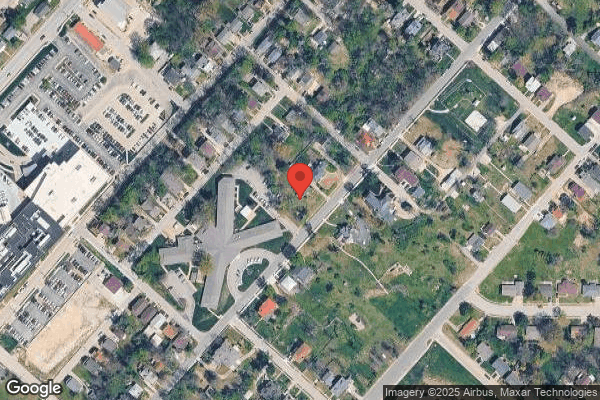
1024 ADAMS STREET, JEFFERSON CITY, MO 65101 (573) 635-1320
For profit - Corporation 120 Beds STONEBRIDGE SENIOR LIVING Data: November 2025
Trust Grade
45/100
#206 of 479 in MO
Last Inspection: December 2024

Within standard 12-15 month inspection cycle. Federal law requires annual inspections.

Overview

Stonebridge Adams Street has received a Trust Grade of D, indicating below-average performance and some concerns about care quality. Ranked #206 out of 479 facilities in Missouri, they are in the top half, but the #4 position out of 8 in Cole County suggests that there are better local options available. The facility is showing improvement, with the number of issues decreasing from 18 in 2024 to just 2 in 2025. However, staffing is a weakness, earning a rating of 2 out of 5 stars with a concerning turnover rate of 67%, which is above the state average. While the facility has average RN coverage, it has faced some serious incidents, including a failure to provide proper transfer assistance for a resident, resulting in an injury, and concerns about food safety practices, which included improper food storage and lack of hand hygiene. Additionally, there is a significant fine of $38,656, which is average for the area but indicates some compliance issues. Families should weigh these concerns against the facility's strengths as they make their decisions.

Trust Score
D
45/100
In Missouri
#206/479
Top 43%
Safety Record
Moderate
Needs review
Inspections
Getting Better
18 → 2 violations
Staff Stability
⚠ Watch
67% turnover. Above average. Higher turnover means staff may not know residents' routines.
Penalties
⚠ Watch
$38,656 in fines. Higher than 84% of Missouri facilities, suggesting repeated compliance issues.
Skilled Nurses
⚠ Watch
Each resident gets only 29 minutes of Registered Nurse (RN) attention daily — below average for Missouri. Fewer RN minutes means fewer trained eyes watching for problems.
Violations
⚠ Watch
37 deficiencies on record. Higher than average. Multiple issues found across inspections.
★★★☆☆
3.0
Overall Rating
★★☆☆☆
2.0
Staff Levels
★★★★☆
4.0
Care Quality
★★★☆☆
3.0
Inspection Score
Stable
2024: 18 issues
2025: 2 issues

The Good

  • 4-Star Quality Measures · Strong clinical quality outcomes
  • Full Sprinkler Coverage · Fire safety systems throughout facility
  • No fines on record

Facility shows strength in quality measures, fire safety.

The Bad

3-Star Overall Rating

Above Missouri average (2.5)

Meets federal standards, typical of most facilities

Staff Turnover: 67%

21pts above Missouri avg (46%)

Frequent staff changes - ask about care continuity

Federal Fines: $38,656

Above median ($33,413)

Moderate penalties - review what triggered them

Chain: STONEBRIDGE SENIOR LIVING

Part of a multi-facility chain

Ask about local staffing decisions and management

Staff turnover is elevated (67%)

19 points above Missouri average of 48%

The Ugly 37 deficiencies on record

1 actual harm
Aug 2025 2 deficiencies
CONCERN (E) 📢 Someone Reported This

A family member, employee, or ombudsman was alarmed enough to file a formal complaint

Potential for Harm - no one hurt, but risky conditions existed

Respiratory Care (Tag F0695)

Could have caused harm · This affected multiple residents

**NOTE- TERMS IN BRACKETS HAVE BEEN EDITED TO PROTECT CONFIDENTIALITY** Based on observation, interview and record review, facility staff failed to ensure oxygen tubing and/or nebulizer mask and tubin...

Read full inspector narrative →
**NOTE- TERMS IN BRACKETS HAVE BEEN EDITED TO PROTECT CONFIDENTIALITY** Based on observation, interview and record review, facility staff failed to ensure oxygen tubing and/or nebulizer mask and tubing were changed at least weekly for four residents (Resident #1, #2, #3, and #4) out of four sampled residents and failed to provide orders for oxygen therapy for one resident (Resident #4). The facility's census was 58. 1. Review of the facility's Oxygen Concentrator policy, revised 01/2018, showed: -Oxygen is administered under orders of the attending physician, except in the case of an emergency;-Keep delivery devices covered in plastic bag when not in use;-Change oxygen tubing and mask/cannula weekly and as needed if it becomes soiled or contaminated;-Change humidifier bottle when empty, every 72 hours, or as recommended by the manufacturer;-If applicable, change nebulizer tubing and delivery devices every 72 hours. 2. Review of the facility's policy on Cleaning and Disinfecting Nebulizer equipment, dated 2017, showed staff were directed to replace nebulizer mask and tubing weekly. 3. Review of Resident #1's Quarterly Minimum Data Set (MDS), a federally mandated assessment tool, dated 07/17/25, showed staff assessed the resident as cognitively intact, and received oxygen therapy. Review of the resident's care plan, revised 07/10/25, showed staff assessed the resident to wear oxygen as needed for oxygen saturation below 90%. Review of the resident's Physician Order Sheet (POS), dated 08/22/25, showed an order for oxygen one liter per minute (LPM) via nasal cannula for oxygen saturation for shortness of breath, and to change and date oxygen tubing/nasal cannula and nebulizer mask and tubing every Sunday night shift related to COPD. Review of the resident's TAR, dated 08/01/25 through 08/22/25, showed staff were directed to change and date oxygen tubing/nebulizer mask and tubing every Sunday night shift related to COPD. Observation on 08/22 at 9:05 A.M., showed an oxygen concentrator next to the resident's bed, the nasal cannula unbagged, and tube dated 07/28/25. Observation showed a nebulizer mask on the bed, unbagged, and the tube dated 07/28/25. During an interview on 08/22/25 at 9:05 A.M., the resident said staff administers breathing treatments to him/her via the nebulizer mask, and he/she uses oxygen sometimes. Observation on 08/22/25 at 1:55 P.M., showed a nebulizer mask hung from the nebulizer machine, and the tubing dated 07/28/25. 4. Review of Resident #2's admission MDS, dated [DATE], showed staff assessed the resident as cognitively intact, received oxygen therapy, and uses a non-invasive mechanical ventilator (Bilevel Positive Airway Pressure (BiPAP)- a machine to help a person breathe). Review of the resident's care plan, revised 08/22/25, showed staff documented the resident to wear oxygen as needed, and to change oxygen tubing and cannister weekly. Review of the resident's POS, dated 08/22/25, showed an order for BiPAP at bedtime, and Ipratropium-Albuterol Inhalation Solution 0.5-2.5, three milligrams (mg)/three milliliters (ml) vial, inhale orally every six hours as needed for shortness of breath. Review of the resident's TAR, dated 08/01/25 through 08/22/25, showed the TAR did not contain documentation to direct staff on when to change the BiPAP and nebulizer masks and tubing. Observation on 08/22/25 at 9:12 A.M., showed a BiPAP mask and a nebulizer mask on the resident's nightstand, unbagged, and the masks and tubing dated 07/29/25. During an interview on 08/22/25 at 9:13 A.M., the resident said he/she wears oxygen via his/her BiPAP at nights. 5. Review of Resident #3's Quarterly MDS, dated [DATE], showed staff assessed the resident as severe cognitive impairment and received oxygen therapy. Review of the resident's care plan, revised 07/10/25, showed staff documented the resident should wear oxygen at two LPM continuously via nasal cannula, and to change oxygen tubing and water cannister weekly. Review of the resident's POS, dated 08/22/25, showed physician orders as followed: -Oxygen two LPM via nasal cannula for oxygen saturation below 90% or shortness of breath every shift;-Change oxygen tubing/nebulizer mask and tubing every Sunday night shift for prevention of infection;-Ipratropium-Albuterol Inhalation Solution 0.5-2.5, three mg/three ml vial, inhale orally every six hours for productive cough. Review of the resident's TAR, dated 08/01/25 through 08/22/25, showed staff were directed to change oxygen tubing/nebulizer mask and tubing every Sunday night shift for prevention of infection. Observation on 08/22/25 at 9:32 A.M., showed the resident wore his/her oxygen via nasal cannula. Observation showed the oxygen tubing undated, and the humidifier bottle, dated 07/29/25. Observation showed a nebulizer mask on the floor, unbagged, and the tube dated 07/29/25. During an interview on 08/22/25 at 9:32 A.M., the resident said he/she wears oxygen all the time, and staff administers a breathing treatment to him/her a few times per day. 6. Review of Resident #4's Quarterly MDS, dated [DATE], showed staff assessed the resident as severe cognitive impairment and received oxygen therapy. Review of the resident's care plan, revised 06/12/25, showed staff were directed the resident to wear oxygen at all times. Review of the resident's POS, dated 08/22/25, showed an order to change oxygen tubing and humidifier weekly on Sunday night shift for infection control. The POS did not contain an order for oxygen. Review of the resident's TAR, dated 08/01/25 through 08/22/25, showed staff were directed to change oxygen tubing and humidifier weekly every Sunday on night shift for infection control. Observation on 08/22/25 at 8:40 A.M., showed the resident wore his/her oxygen. Observation showed the nasal canula undated. Observation on 08/22/25 at 11:22 A.M., showed the oxygen concentrator next to the resident's bed and the humidifier bottle undated. During an interview on 08/22/25 at 2:26 P.M., the Director of Nursing (DON) said he/she did not know why the resident did not have an order for oxygen therapy on his/her POS. The DON said the nurses are responsible to enter orders for oxygen therapy on the resident's POS and Treatment Administration Record (TAR), and he/she ensures that the orders are entered. 7. During an interview on 08/22/25 at 1:34 P.M., Licensed Practical Nurse (LPN) A said the nurses are responsible to change residents' oxygen tubing and nebulizer mask and tubing. He/She said the schedule would be documented on the resident's POS and TAR. During an interview on 08/22/25 at 2:26 P.M., the DON said the night shift nurse is responsible to change oxygen tubing, humidifier bottles, and nebulizer masks/tubing on Sundays for all residents with oxygen therapy, and date the tubing when changed. The DON said he/she is responsible to ensure the oxygen and nebulizer masks, and tubing's are being changed weekly, but he/she had not had a chance to audit. During an interview on 08/22/25 at 3:00 P.M., the administrator said the nurses are responsible to document the order for oxygen therapy on the POS and TAR on admission or when received, and the DON to ensure the orders have been entered. The administrator said he/she did not know why the oxygen tubing, humidifier bottles and nebulizer masks and tubing's are not being changed weekly, but they should be changed by the charge nurse on Sunday nights, and the DON should ensure they are being changed. Complaint# 2587511
CONCERN (E) 📢 Someone Reported This

A family member, employee, or ombudsman was alarmed enough to file a formal complaint

Potential for Harm - no one hurt, but risky conditions existed

Deficiency F0804 (Tag F0804)

Could have caused harm · This affected multiple residents

Based on observation, interview and record review, facility staff failed to ensure prepared food items were served at a safe and appetizing temperature when facility staff failed to serve meals in a t...

Read full inspector narrative →
Based on observation, interview and record review, facility staff failed to ensure prepared food items were served at a safe and appetizing temperature when facility staff failed to serve meals in a timely manner to residents and failed to maintain the internal temperatures of hot food to at least 120 degrees Fahrenheit ( F) upon service to residents who resided on the 300 and 400 halls. The facility census was 58.1.Review of the facility's Food Preparation and Service policy, dated July 2014, showed the danger zone for food temperatures is between 41 F and 135 F. This temperature range promotes the rapid growth of pathogenic microorganisms that cause foodborne illness. The longer foods remain in the danger zone the greater the risk for growth of harmful pathogens. 2. Review of the facility's Food Safety Requirements policy, dated 09/2022, showed foods and beverages shall be distributed and served to resident in a manner to prevent contamination and maintain food at the proper temperature and out of the danger zone. This includes timely distribution of all meals and snacks. 3. Observation on 08/22/25 at 12:29 P.M., showed an un-enclosed cart in the dining room with meals served on warm plates, covered with insulated dome plate covers. Observation on 08/22/25 at 12:31 P.M., showed a staff member took the un-enclosed cart with meals and placed the cart across from the nurses' station against the wall between the 300 and 400 halls. Observation on 08/22/25 at 12:35 P.M., showed a staff member delivered a meal tray from the un-enclosed cart to a room on the 300 hall. Observation on 08/22/25 at 12:41 P.M., showed several lunch trays remained on the un-enclosed cart across from the nurses' station. During an interview on 08/22/25 at 1:2 P.M., Certified Nursing Assistant (CNA) B said the nursing staff usually serve the residents in the dining room first, then deliver meal trays to the residents who eat in their rooms. During an interview on 08/22/25 at 2:04 P.M., the resident said his/her breakfast was cold when he/she got it and is often served that way to him/her. He/She said lunch was a bit warmer than breakfast, but not hot. During an interview on 08/22/25 at 2:26 P.M., the Director of Nursing (DON) said the nursing staff is responsible to deliver meals to residents who eat in their rooms, and he/she ensures staff delivers the meals timely, so they are not served cold to the residents. The DON said he/she had not been able to monitor meal service for the past few weeks. During an interview on 08/22/25 at 2:08 P.M., [NAME] C said dietary staff plates the trays, then nursing staff places the drinks and condiments on the trays and serve to the residents. 4. Observation on 08/22/25 at 12:50 P.M., showed the administrator took the temperature of the foods on Resident #8's tray. Observation showed the internal temperature of the fish measured 91.5 F and the internal temperature of the rice measured 98 F. The administrator directed staff to serve the resident his/her tray and take the cart to the 300 hall and serve the remaining lunch trays to the residents who ate in their rooms, after he/she checked the food temperatures. 5. During an interview on 08/22/25 at 1:10 P.M., Resident #8 said by the time he/she got his/her lunch, the food was not hot. During an interview on 08/22/25 at 3:00 P.M., the administrator said hot foods should be above 120 F when served to the residents and he/she should not have directed staff to serve the residents the meals with the food temperatures below 98 F. 9. During an interview on 08/22/25 at 2:08 P.M., [NAME] C said the temperature of hot foods served to the residents should be about 145 F. He/She said if staff notifies dietary staff a resident's meal is below temperature or cold, dietary staff will either serve a new plate from the steamtable or offer an alternative if requested. During an interview on 08/22/25 at 2:26 P.M., the DON said hot foods should be served hot to the residents. The DON said when staff deliver meals to residents in their rooms, staff should check with the residents before leaving the room that the food temperature is ok for them, and if not, offer to get a new plate, or reheat if requested. During an interview on 08/22/25 at 3:00 P.M., the administrator said the nursing staff is responsible to deliver meals to residents' rooms quickly after they are served from the kitchen to ensure appropriate temperatures, and the DON to monitor the nursing staff during meals. Complaint# 2587511 and 2587447
Dec 2024 14 deficiencies
CONCERN (D)

Potential for Harm - no one hurt, but risky conditions existed

Comprehensive Care Plan (Tag F0656)

Could have caused harm · This affected 1 resident

**NOTE- TERMS IN BRACKETS HAVE BEEN EDITED TO PROTECT CONFIDENTIALITY** Based on record review, and interview, facility staff failed to develop and implement a comprehensive person-centered care plan ...

Read full inspector narrative →
**NOTE- TERMS IN BRACKETS HAVE BEEN EDITED TO PROTECT CONFIDENTIALITY** Based on record review, and interview, facility staff failed to develop and implement a comprehensive person-centered care plan that includes measurable objectives and timeframes to meet resident's needs for three residents (Resident #20, #49, and #56) out of 14 sampled residents.The facility census was 53. 1. Review of the facility's Comprehensive Care Plans policy, September 2022, showed: -It is the policy of this facility to develop and implement a comprehensive person-centered care plan for each resident, consistent with resident rights, that includes measurable objectives and timeframes to meet a resident's medical, nursing, and mental and psychosocial needs that are identified in the resident's comprehensive assessment; -The comprehensive care plan will be developed within 7 days after the completion of the comprehensive Minimum Data Set (MDS), a federally mandated assessment tool completed by facility staff used to assess the care needs of the resident, assessment. 2. Review of Resident #20's admission MDS, dated [DATE], showed staff assessed the resident as follows: -admitted on [DATE]; -Cognitivly impaired; -Diagnoses of Cancer, Cerebrovascular accident (CVA), Transient Ischemic attack (TIA), or Stroke; -Care Area Triggers: Delirium, cognitive loss/dementia, communication, urinary incontinence/indwelling catheter, behavioral symptoms, falls, dental care, pressure ulcer, psychotropic drug use, and pain, Review of the resident's medical record showed the record did not contain documentation of a comprehensive person-centered care plan for the resident, to provide directions for the resident's delirium, cognitive loss/dementia, communication, urinary incontinence/indwelling catheter, behavioral symptoms, dental care, pressure ulcer, psychotropic drug use, and pain. During an interview on 12/04/24 at 8:52 A.M., the MDS/Care Plan Coordinator said the resident's comprehensive care plan should have been completed 21 days after admission, but unsure why this residents comprehensive was not completed. 3. Review of Resident #49's admission MDS, dated [DATE], showed staff assessed the resident as follows: -admitted on [DATE]; -Moderate cognitive impairment; -Diagnoses: Renal failure, Thyroid disorder, Dementia, and Parkinson's; -Care Area Triggers: Delirium, Cognitive loss, communication, activities of daily living (ADL) care, urinary incontinence/indwelling catheter, psychosocial well-being, mood state, behavioral symptoms, activities, falls, nutritional status, dehydration/fluid maintenance, pressure ulcer, and pain. Review of the resident's medical record showed the record did not contain documentation of a comprehensive person-centered care plan for the resident, to provide directions for the resident's communication deficits, ADL care, urinary catheter, psychosocial well-being, mood and behavioral symptoms, nutritional status, dehydration/fluid maintenance, pressure ulcer, and pain. During an interview on 12/04/24 at 8:53 A.M., the MDS/Care Plan Coordinator said the resident's comprehensive care plan should have been completed 21 days after admission, but he/she must have just overlooked it. 4. Review of Resident #56's discharge MDS, dated [DATE], showed staff assessed the resident as follows: -admitted on [DATE] from an acute hospital; -discharged [DATE] to an acute hospital with return anticipated; -Moderate cognitive impairment; -Diagnoses: Obstructive uropathy (blocked urine flow), Diabetes Mellitus, Right hip dislocation, -Care Area Triggers: Cognitive loss, visual function, activities of daily living (ADL) care, urinary incontinence/indwelling catheter, psychosocial well-being, falls, nutritional status, dehydration/fluid maintenance, dental care, pressure ulcer, and pain, Review of the resident's medical record showed staff documented the resident returned to the facility on [DATE]. The record did not contain documentation of a comprehensive person-centered care plan for the resident, to provide directions for the resident's visual deficits, ADL care, urinary catheter, psychosocial well-being, falls, dental care, and pain. During an interview on 12/04/24 at 8:54 A.M., the MDS/Care Plan Coordinator said the resident's comprehensive care plan should have been completed in October, and he/she must have just overlooked it. 5. During an interview on 12/04/24 at 3:50 P.M., the Director of Nursing (DON) said the MDS coordinator is responsible for the completion of care plans. The DON said he/she and MDS review all the care plans together. The DON said she does not have a good reason for the care plans not being done or updated. During an interview on 12/04/24 at 4:50 P.M., the Administrator said comprehensive care plans are compeleted by MDS coordinator. The administrator said he/she does not have a reason why any of the care plans have not been done or updated, but the DON should monitor that they are.
CONCERN (D)

Potential for Harm - no one hurt, but risky conditions existed

Accident Prevention (Tag F0689)

Could have caused harm · This affected 1 resident

**NOTE- TERMS IN BRACKETS HAVE BEEN EDITED TO PROTECT CONFIDENTIALITY** Based on observation, interview, and record review, facility staff failed to safely transfer two residents (Resident #14 and #52...

Read full inspector narrative →
**NOTE- TERMS IN BRACKETS HAVE BEEN EDITED TO PROTECT CONFIDENTIALITY** Based on observation, interview, and record review, facility staff failed to safely transfer two residents (Resident #14 and #52) of two sampled residents via mechanical lift, in a manner to prevent accidents. The facility's census was 53. 1. Review of the facility's policy titled, Using a Mechanical Lift Machine, dated July 2017, showed staff were directed as follows: -At least two nursing assistants are needed to safely move a resident with a mechanical lift; -Staff must be trained and demonstrate competency using the specific machines or devices used in the facility; -Gently support the resident as he or she is moved, but do not support any weight; -The policy did not contain direction for position of the base legs during the transfer. 2. Review of Resident #14's quarterly Minimum Data Set (MDS), a federally mandated assessment tool, dated 10/14/24 showed staff assessed the resident as severe cognitive impairment and dependent on staff for transfers from chair to bed/bed to chair. Review of the resident's care plan, dated 10/30/24, showed two staff are to assist the resident with the mechanical lift for transfers. Observation on 12/03/24 at 10:12 A.M., showed Certified Nursing Aide (CNA) E and Nuring Assistant (NA) B attached the resident's sling to the mechanical lift. NA B raised the resident from his/her wheelchair with the legs in the opened position of the mechanical lift, while CNA E removed the wheelchair from behind the resident. CNA E left the room to gather additional supplies, leaving the resident suspended in the sling without two staff support for three minutes. CNA E returned to the resident's room, closed the legs of the mechanical lift, pushed the lift to the resident's bed, and lowered the resident to the bed. During an interview on 12/03/24 at 10:35 A.M., CNA E said two staff should perform mechanical lift transfers, with one person controlling the lift and the other to guide the resident in the sling to ensure safety and prevent falls or the machine tipping over. The CNA said he/she should have lowered the resident back to the chair prior to leaving the room, for safety, and since only one staff was left with him/her in the room. The CNA said he/she was taught the legs of the mechanical lift should be closed when pushing the resident with the lift for better maneuvering, and to keep staff from tripping over each other. During an interview on 12/03/24 at 10:47 A.M., NA B said two staff should perform mechanical lift transfers, with one person controlling the lift and the other to guide the resident in the sling. The NA said the legs of the mechanical lift should be opened when pushing the resident with the lift for balance and resident safety. The NA said the resident could have fallen while left dangling in the air, but he/she was unsure of what to do since he/she was left alone with the resident. 3. Review of Resident #52's significant change MDS, dated [DATE], showed staff assessed the resident as severe cognitive impairment and dependent on staff for transfers from chair to bed/bed to chair. Review of the resident's care plan, dated 12/02/24, showed two staff are to assist the resident with the mechanical lift for transfers. Observation on 12/01/24 at 12:07 P.M., showed CNA E widened the legs of the mechanical lift to accommodate the resident's wheelchair. CNA E and CNA F attached the resident's sling to the mechanical lift. CNA E raised the resident from the wheelchair in the sling using the mechanical lift, while CNA F removed the chair from behind the resident. CNA E closed the legs of the lift, pushed the lift to the resident's bed, and lowered the resident to the bed. During an interview on 12/03/24 at 10:35 A.M., CNA E said he/she was taught the legs of the mechanical lift should be closed when pushing the resident with the lift for better maneuvering, and to keep staff from tripping over each other. Observation on 12/02/24 at 8:11 A.M., showed NA C widened the legs of the mechanical lift to accommodate the resident's wheelchair. NA C and NA D attached the resident's sling to the lift. NA D raised the resident from the wheelchair in the sling using the mechanical lift, while NA C removed the chair from behind the resident. NA D closed the legs of the lift, pushed the lift to the resident's bed, and lowered the resident to the bed. During an interview on 12/02/24 at 2:39 P.M., NA C said two staff should always perform mechanical lift transfers, with one person who locks the wheel/controls the lift and the other person to guide the resident in the sling while in the air. The NA said the legs of the mechanical lift should be opened when pushing the resident with the lift for balance and safety. The NA said when he/she realized that NA D was pushing the resident in the lift with the legs closed, it was too late for him/her to intervene. During an interview on 12/04/24 at 10:55 A.M., the Director of Nursing (DON) said NA C and NA D have received training on how to transfer a resident with a mechanical lift. 4. During an interview on 12/04/24 at 3:42 P.M., the DON said two staff are required to transfer a resident via a mechanical lift to ensure resident safety and prevent falls, and one person should always guide the resident in the sling. The DON said it is not appropriate or safe to leave a resident suspended in the sling in the air. He/She said the legs of the mechanical lift should be opened to ensure stability of the lift when pushing a resident.
CONCERN (D)

Potential for Harm - no one hurt, but risky conditions existed

Unnecessary Medications (Tag F0759)

Could have caused harm · This affected 1 resident

Based on observation, interview, and record review, facility staff failed to maintain a medication error rate of less than 5% out of 27 opportunities observed, seven errors occurred, resulting in a 25...

Read full inspector narrative →
Based on observation, interview, and record review, facility staff failed to maintain a medication error rate of less than 5% out of 27 opportunities observed, seven errors occurred, resulting in a 25.93% error rate, which affected two residents (Resident #16, and #36). The facility census was 53. 1. Review of the Facility's Administering Medications policy, dated 12/2012, showed: -Medications must be administered in accordance with the orders including any required time frame; -Individual administering the medication must check to verify right time; -The Expiration/beyond use date on the medication label must be checked prior to administering, when opening a multi-dose container, the date opened shall be recorded on the container; Review of the Facility's Medication Errors policy, dated 04/2017, showed: -A medication error is defined as the preparation or administration of drugs or biological which is not in accordance with physician's orders, manufacturer specifications, or accepted professional standards and principles or the professional providing services; -Example of medication error includes wrong time and/or failure to follow manufacturer instructions and/or accepted professional standards. 2. Review of the Resident #16's physician's order sheets (POS), dated December 2024, showed the directed staff to adminster: -Fiasp (Rapid-acting insulin) inject 25 units subcutaneously (SQ) (under the skin)with meals; -Fiasp inject per sliding scale for a blood sugar of 301-350 inject five units SQ; -Tresiba (Long-acting insulin) inject 65 units SQ with meals. Observation on 12/02/24 at 10:22 A.M., showed Certified Medication Tech (CMT) O prepared and administered Fiasp 30 units and Tresiba 65 units SQ to the resident. The resident's Fiasp and Tresiba insulin pens did not contain an open or beyond use date. During an interview on 12/02/24 at 10:31 A.M., Certified Medication Technician (CMT) O said insulins pens are supposed to be dated when opened. He/She said whoever opens the insulin pen is responsible for making sure resident name and open date is on the pen. He/She said he/she thinks insulin expires after 30 days of being open, but he/she usually has to ask the nurse for sure. He/She said if insulin pens are not dated and he/she has questions about when they were opened or doubts, he/she will go talk with the charge nurse or converse with the other CMT's to see when they were opened. He/She the risk of not dating insulin pens is not knowing how long it's been opened, and it could affect the overall effectiveness of the insulin. He/She said that residents normally going through about one insulin pen a week, so they usually don't expire. 3. Review of Resident #36's POS, dated December 2024, showed staff are directed to administer medications between 0600-1100 A.M.: -ProFe (treat low iron) 391.3 (180 fe) milligrams (mg) daily in the morning between 0700-1100 A.M.; -Pioglitazone (treat diabetes) 30mg one time a day between 0600-1100 A.M.; -Metoprolol Succinate (treat high blood pressure) 25 mg in the morning between 0700-1100 A.M.; -Furosemide (diuretic) 20mg one time a day between 0600-1100 A.M.; -Glimepiride (treat diabetes) 2mg in the morning between 0700-1100 A.M. Observation on 12/02/24 at 12:10 A.M., showed CMT O administered Profe, Pioglitazone, Metoprolol, Furosemide, and Glimepiride to the resident. One hour and 10 minutes after the allotted timeframe. During an interview on 12/02/24 at 12:15 A.M., CMT O said he/she normally gives the resident his/her morning medications during breakfast but said the resident left the dining room before he/she could give them to the resident and then he/she forgot to go back later. He/She said when he/she gives medications late he/she usually puts a progress note in chart and then watches the other medication to make sure they are not given to close together. 4. During an interview on 12/02/24 at 4:03 P.M., License Practical Nurse (LPN) G said if a CMT has a medication error he/she would expect them to report it to charge nurse. He/She said if he/she is notified about a medication error then the physician would be contacted along with the Director of Nursing (DON), resident family, and possible pharmacy to see if anything needed to be done. He/she said there should be a progress note in the chart under risk management for a medication error and there are steps to follow. He/She agreed that administering medications late and given undated insulin is a medication error. He/She said he/she was not informed about any medication errors today. During an interview on 12/04/24 at 3:53 P.M., the DON said when a medication error occurs that it needs to be reported to the charge nurse, DON, notify family, physician and obtain any orders. He/She said administering undated insulin and administering medications late are considered medication errors to him/her because it violates the nine rights of administration. He/She expects a progress note to be in the chart. During an interview on 12/04/24 at 4:25 P.M., the Administrator said when a medication error occurs the charge nurse should be notified along with the doctor and family member. He/She said administering undated insulin and administering medications late would be considered a medication error. He/She expects there to be a progress note in the chart.
CONCERN (D)

Potential for Harm - no one hurt, but risky conditions existed

Deficiency F0761 (Tag F0761)

Could have caused harm · This affected 1 resident

**NOTE- TERMS IN BRACKETS HAVE BEEN EDITED TO PROTECT CONFIDENTIALITY** Based on observation, interview, and record review, facility staff failed to store medications in a safe and effective manner wh...

Read full inspector narrative →
**NOTE- TERMS IN BRACKETS HAVE BEEN EDITED TO PROTECT CONFIDENTIALITY** Based on observation, interview, and record review, facility staff failed to store medications in a safe and effective manner when staff failed to properly label, and/or discard expired insulin medications from two of two sampled medication carts. The facility census was 53. 1. Review of the facility's policy titled, Administering Medications, dated 12/2012, showed the expiration/beyond use date on the medication label must be checked prior to administering. When opening a multi-dose container, the date opened shall be recorded on the container. 2. Observation on [DATE] at 9:26 A.M., showed the 100/200 hall medication cart contained two Lantus insulin Pens opened and undated. During an interview on [DATE] at 9:30 A.M., Certified Medication Technician (CMT) P said insulin pens are usually only good for 28 days. He/She said the person opening the insulin pen is responsible for putting the open date on the pen. He/She said the risk of not having an open date is you don't know when it expires, and insulin may not be effective if it is expired. 3. Observation on [DATE] at 9:49 A.M., showed the 300/400 hall medication cart contained: -Six Lantus insulin pens opened and undated; -Three Novolog insulin pens opened and undated; -One Novolin insulin pen opened and undated; -One Glargine insulin pen opened and undated; -One Aspart insulin pen opened and undated; -One Fiasp insulin pen opened and undated; -One Tresiba insulin pen opened and undated. 4. During an interview on [DATE] at 09:55 A.M., CMT Q said there is no explanation why the insulin pens are not dated. He/She said he/she always works, and the residents take their insulin so frequently they go through one pen a week or less. He/She said insulin pens usually expire 28 days after opening. He/She said the person opening the insulin is responsible for dating the pen with the open date. He/She said the risk of not dating the pens is the insulin may not be effective if you do not know when it expires. During an interview on [DATE] at 3:06 P.M., Licensed Practical Nurse (LPN) J said whoever opens the insulin pens should be dating it with the open date. He/She thinks insulin pens are good for 60 days after opening. He/She said the risk for not dating insulin pens when opened is you don't know when it expires, and the insulin may not be effective. During an interview on [DATE] at 3:53 P.M., the Director of Nursing (DON) said insulin pens should be labeled with the pharmacy label and open date when opened. He/She said the person opening the pen is responsible for putting the open date on the pen. He/She said most insulin pens are good for 28 days after opening. He/She said if insulin pens are not dated then you don't know how long it has been opened and risk the insulin losses effectiveness. He/She said the Assistant Director of Nursing (ADON) and the DON should be monitoring if insulin pens are being dated. He/She said he/she was not aware there were several insulin pens opened with no dates on them. During an interview on [DATE] at 4:25 P.M., the administrator said insulin pens should be dated when opened. He/She said whoever opens the insulin pen is responsible for dating it. He/She is unsure when insulin pens expire. He/She said the ADON and DON should be monitoring the pens. He/She is unsure of the risks of having opened and undated insulin pens.
CONCERN (E)

Potential for Harm - no one hurt, but risky conditions existed

Abuse Prevention Policies (Tag F0607)

Could have caused harm · This affected multiple residents

**NOTE- TERMS IN BRACKETS HAVE BEEN EDITED TO PROTECT CONFIDENTIALITY** Based on interview and record review, facility staff failed to check the Employee Disqualification List ((EDL) a list of individ...

Read full inspector narrative →
**NOTE- TERMS IN BRACKETS HAVE BEEN EDITED TO PROTECT CONFIDENTIALITY** Based on interview and record review, facility staff failed to check the Employee Disqualification List ((EDL) a list of individuals who have been determined to have abused or neglected a resident or misappropriated funds or property belonging to a resident) and/or criminal background check (CBC), prior to hire in accordance with their facility policy for eight employee (Certified Nurse Aide (CNA) I, Licensed Practical Nurse (LPN) J, receptionist K, Social Services Director, Certified Medication Technician (CMT) L, housekeeper N, Nurse Aide (NA) B, and Food Service Manager) out of ten sampled employees. Facility staff failed to develop an abuse and neglect policy that directed staff to check the NA registry for all employees, prior to hire, for seven employees (CNA I, LPN J, Receptionist K, Social services director, CMT L, housekeeper N, and NA B) out of 10 employees. The facility census was 53. 1. Review of the Facility's Background Screening Investigations, dated March 2019, showed the director of personnel, or designee, conducts background checks, reference checks and criminal conviction checks (including fingerprinting as may be required by state law) on all potential direct access employees and contractors. Background and criminal checks are initiated within two days of an offer of employment or contract agreement, and completed prior to employment. Review of the Facility's Credentialing of Nursing Service Personnel, dated May 2019, showed: -Nursing personnel requiring a license/certification are not permitted to perform direct resident care services until all licensing/background checks have been completed; -Upon obtaining the applicants informed consent to conducting a license/certification/background investigation, the director of nursing services, or designee, will: -Contact the facility's authorized vendor/service organization to perform a background check in accordance with current state law and facility policy; -A copy of all documents obtained during the verification and background check are filed in the employee's personnel file. Such records are filed in accordance with current federal and state law and facility policy to protect the confidentiality of information. 2. Review of CNA I's personnel record showed the employee hire date of 12/27/23. The personnel record did not contain documentation staff completed a CBC or EDL check prior to his/her hire date. 3. Review of LPN J's personnel record showed the employee with a hire date of 05/22/24. The personnel record did not contain documentation staff completed a EDL check prior to his/her hire date. 4. Review of Receptionist K's personnel record showed the employee with a hire date of 04/23/24. The personnel record did not contain documentation staff completed a CBC or EDL check prior to his/her hire date. 5. Review of Social Services Director's personnel record showed the employee with a hire date of 10/29/24. The personnel record did not contain documentation staff completed a CBC or EDL check prior to his/her hire date. 6. Review of CMT L's personnel record showed the employee with a hire date of 06/12/24. The personnel record did not contain documentation staff completed a CBC or EDL check prior to his/her hire date. 7. Review of Housekeeping N's personnel record showed the employee with a hire date of 02/08/24. The personnel record did not contain documentation staff completed a CBC or EDL check prior to his/her hire date. 8. Review of NA B's personnel record showed the employee with a hire date of 06/03/24. The personnel record did not contain documentation staff completed a CBC or EDL check prior to his/her hire date. 9. Review of Food Service Manager's personnel record showed the employee with a hire date of 07/10/24. The personnel record did not contain documentation staff completed a CBC or EDL check prior to his/her hire date. 10. During an interview on 12/03/24 at 2:50 P.M., the Business Office Manager (BOM) said he/she is responsible for doing EDL and CBC checks for new employees. He/She said six months ago his/her processes changed. He/She said the facility was shorthanded and employees were pushed through the hiring process without back ground screenings prior to hire. He/She said he/she was initiating the paperwork during their orientation. He/She said new employee screenings are supposed to be initiated before the employee steps foot in the building. He/She said the employees are in the building before the checks come back. He/She said he/she is not sure where the missing background checks are. He/She said he/she does do yearly chart audits. He/She said he/she does background screenings when missing background checks are found during those audits. During an interview on 12/03/24 at 3:17 P.M., the Director of Nursing (DON) said EDL and CBC checks should be done prior to hire. He/She said it is the responsibility of the BOM to ensure those checks are completed. He/She said those checks are important because they keep residents safe from people who have been committed of abuse and neglect. He/She said he/she was not aware the BOM was not running background checks on new employees prior to hiring them. During an interview on 12/03/24 at 4:10 P.M., the administrator said the BOM is responsible for checking background screenings. He/She said it is his/her expectation that the CBC and EDL checkes are completed prior to hire. He/She said he/she was not aware the BOM wasn't conducting background screenings prior to hire. 11. Review of the facility's policies showed staff did not provide a policy to direct staff to check the NA registry on all employees prior to hire. 12. Review of CNA I's personnel record showed the employee with a hire date of 12/27/23. The personnel record did not contain documentation staff completed a NA Registry check prior to his/her hire date. 13. Review of LPN J's personnel record showed the employee with a hire date of 05/22/24. The personnel record did not contain documentation staff completed a NA Registry check prior to LPN J's hire date. 14. Review of Receptionist K's personnel record showed the employee with a hire date of 04/23/24. The personnel record did not contain documentation staff completed a NA Registry check prior to Receptionist K's hire date. 15. Review of Social Services Director's personnel record showed the employee with a hire date of 10/29/24. The personnel record did not contain documentation staff completed a NA Registry check prior to Social Services Director's hire date. 16. Review of CMT L's personnel record showed the employee with a hire date of 06/12/24. The personnel record did not contain documentation staff completed a NA Registry check prior to CMT L's hire date. 17. Review of Housekeeping N's personnel record showed the employee with a hire date of 02/08/24. The personnel record did not contain documentation staff completed a NA Registry check prior to Housekeeping N's hire date. 18. Review of NA B's personnel record showed the employee with a hire date of 06/03/24. The personnel record did not contain documentation staff completed a NA Registry check prior [NAME] B's hire date. 19. During an interview on 12/03/24 at 2:50 P.M., the BOM said he/she is responsible for running the NA registry checks. He/She said he/she is aware he/she was supposed to run the NA registry checks prior to hire. He/She said he/she was not sure why the staff members did not have the NA Registry checks done prior to hire. He/She said he/she thought the NA registry was only ran to check if an employee was certified. He/She said he/she was not aware it was to check for federal indicators (a marker given by the federal government to individuals who have committed abuse and/or neglect) against the staff member. During an interview on 12/03/24 at 3:17 P.M., the DON said NA registry checks should be done prior to hire. He/She said the BOM is in charge of ensuring all checks are done prior to hire. He/She said he/she knows that it is important to have them done prior so that residents are not exposed to any employees who may cause them harm. He/She was not aware that the NA registry checks were not being done prior to hire. During an interview on 12/03/24 at 4:10 P.M., the Administrator said the BOM is responsible for checking the NA registry prior to hire on all employees. He/She said he/she was not aware the facility's policy did not direct staff to check all employees prior to hire. He/She said it is his/her expectation that staff check all employees prior to hire. He/She said he/she had instructed the BOM to do checks on all staff prior to hire and he/she was not aware that the BOM was not doing the checks.
CONCERN (E)

Potential for Harm - no one hurt, but risky conditions existed

Deficiency F0700 (Tag F0700)

Could have caused harm · This affected multiple residents

**NOTE- TERMS IN BRACKETS HAVE BEEN EDITED TO PROTECT CONFIDENTIALITY** Surveyor: [NAME], [NAME] Based on observation, interview, and record review, facility staff failed to accurately assess the use ...

Read full inspector narrative →
**NOTE- TERMS IN BRACKETS HAVE BEEN EDITED TO PROTECT CONFIDENTIALITY** Surveyor: [NAME], [NAME] Based on observation, interview, and record review, facility staff failed to accurately assess the use of side rails for three residents (Resident #2, #49, and #52), and failed to complete an entrapment risk assessment for five residents (Resident #1, #2, #49, #52, and #106), out of 14 sampled residents. The facility census was 53. 1. Review of the facility's policies showed staff did not provide a policy for Entrapment Risk Assessments. Review of the facility's Proper use of Side Rails Policy, dated 09/2022, showed: -Examples of bedrails include, but are not limited to side rails, bed side rails, safety rails, grab bars, and assist bars; -The resident assessment must assess the resident's risk from using bed rails such as entrapment; -The resident assessment should assess the resident's risk of entrapment between the mattress and bed rail or in the bed rail itself; -A nurse assigned to the resident will complete reassessments in accordance with the facility's assessment schedule, but not less than quarterly, upon significant change in status, or a change in the type of bed/mattress/rail. 2. Review of Resident #1's quarterly Minimum Data Set (MDS), a federally mandated assessment tool, dated 11/27/24, showed staff assessed the resident as: -re-admitted on [DATE]; -Severe cognitive impairment; -Impairment on one side of upper extremity (shoulder, elbow, wrist, hand); -Required substantial/moderate assist from staff to roll left and right, sitting to lying in bed, lying to sitting on side of bed, and dependent for transfers from bed to chair. Review of the resident's side rail use assessment, dated 10/29/24, showed staff documented the resident used grab bars to assist with cares and to turn side to side. Review of the resident's medical record showed the record did not contain an entrapment risk assessment for use of side rails/grab bars. Observation on 12/03/24 at 8:33 A.M., showed the resident in bed with grab bars to both sides of the bed in the upright position. 3. Review of Resident #2's Quarterly MDS, dated [DATE], showed staff assessed the resident as: -Severe cognitive impairment; -Required partial/moderate assist from staff to roll left and right; -Required substantial/maximum assist from staff from sitting to lying in bed and for lying to sitting on side of bed, and dependent of staff for transfers from bed to chair. Review of the resident's side rail use assessment, dated 09/22/24, showed staff documented the resident did not use side rails or assistive devices such as grab bars. Review of the resident's medical record showed the record did not contain an entrapment risk assessment. Observation on 12/01/24 at 2:04 P.M., showed the resident in bed with bilateral hand rails in upright position. Observation on 12/02/24 at 1:33 P.M., showed the resident in bed with bilateral u-bars in upright position. Observation on 12/03/24 at 10:25 A.M., showed the resident in bed with bilateral u-bars in upright position. During an interview on 12/04/24 at 3:13 P.M., the MDS/Care plan Coordinator said the resident's side rail use assessment was incorrect, but knows resident uses u-bars. The charge nurses are responsible to complete the assessment. 4. Review of Resident #49's admission MDS, dated [DATE], showed staff assessed the resident as: -Moderate cognitive impairment; -Required partial/moderate assist from staff to roll left and right and from sitting to lying and lying to sitting on side of bed; -Required dependent assist from staff for transfers from bed to chair. Review of the resident's side rail use assessment dated [DATE], showed staff documented the resident did not use side rails or assistive devices such as grab bars. Review of the resident's medical record showed the record did not contain an entrapment risk assessment for use of side rails. Observation on 12/01/24 at 2:28 P.M., showed the resident in bed with bilateral grab bars in upright position. Observation on 12/02/24 at 1:28 P.M., showed the resident in bed with bilateral grab bars in upright position. Observation on 12/04/24 at 09:08 A.M., showed the resident in bed with bilateral grab bars in upright position. During an interview on 12/04/24 at 3:13 P.M., the MDS/Care plan Coordinator said the resident's side rail use assessment was incorrect, but knows resident uses grab bars. 5. Review of Resident #52's admission MDS, dated [DATE], showed staff assessed the resident as: -Moderate cognitive impairment; -Impairment on one side of upper extremity (shoulder, elbow, wrist, hand); -Required substantial/maximum assist from staff to roll left and right, sitting to lying in bed, dependent for lying to sitting on side of bed and transfers from bed to chair. Review of the resident's side rail use assessment dated [DATE], showed staff documented the resident did not use side rails or assistive devices such as grab bars. Review of the resident's medical record showed the record did not contain an entrapment risk assessment for use of side rails/grab bars. Observation on 12/01/24 at 12:07 P.M., showed the resident held the grab bar on each side of the bed when assisted by staff to roll left and right during care. Observation on 12/02/24 at 8:11 A.M., showed the resident in bed with grab bars to both sides of the bed in the upright position. During an interview on 12/04/24 at 8:50 A.M., the MDS/Care plan Coordinator said the resident's side rail use assessment was incorrect. The charge nurses are responsible to complete the side rail use assessment. 6. Review of Resident #106's admission MDS, dated [DATE], showed staff assessed the resident as: -Severe cognitive impairment; -Required partial/moderate assist from staff to roll left and right, sitting to lying in bed, lying to sitting on side of bed, and substantial/maximum assist with transfers from bed to chair. Review of the resident's side rail use assessment, dated 11/18/24, showed staff documented the resident used half side rails per family request. Review of the resident's medical record showed the record did not contain an entrapment risk assessment for use of side rails. Observation on 12/01/24 at 11:00 A.M., showed the resident in bed with grab bars to both sides of the bed in the upright position. Observation on 12/03/24 at 8:30 A.M., showed the resident in bed with grab bars to both sides of the bed in the upright position. During an interview on 12/04/24 at 8:50 A.M., the MDS/Care plan Coordinator said he/she could not find documentation that the maintenance staff completed the bed safety measurements. 7. During an interview on 12/04/24 at 8:50 A.M., the MDS/Care plan Coordinator said nurses do the side rail and entrapment assessment and maintenance does the measurements of the side rails monthly. He/She said he/she is unsure if the resident is supposed to be in the bed during entrapment measurements. During an interview on 12/04/24 at 9:00 A.M., Maintenance said he/she does entrapment measurements monthly. He/She said he/she measures without the resident in the bed. He/She agrees that the gaps between side rail and mattress would be different measurements with the resident laying in the bed. He/She said that he/she is unsure if he has read anything that stated that the resident needed to be in the bed for the measurements. During an interview on 12/04/24 at 3:08 P.M., Licensed Practical Nurse (LPN) J said bed rail assessments are done upon admission and quarterly. He/She said he/she is not sure who completes them quarterly. During an interview on 12/04/24 at 4:00 P.M., the Director of Nursing (DON) said maintenance and nursing get together and make sure that the side rail assessment and entrapment measurements are done. He/She said the side rail assessment is part of the admission process or it is completed if a family member asks for side rails. He/She said it is the admitting nurses responsible to complete the side rail assessment. He/She said maintenance is responsible for doing entrapment measurements, but he/she is unsure how often or if the resident should be in the bed during the measurements. During an interview on 12/04/24 at 4:25 P.M., the Administrator said that side rail assessment is done quarterly by a nurse. He/She said maintenance does entrapment measurements monthly or with change of a new bed. He/She assumes the resident should be in the bed during measurements since that's what the diagram shows. He/She said the DON and ADON is responsible for monitoring to ensure assessments are being done.
CONCERN (E)

Potential for Harm - no one hurt, but risky conditions existed

Deficiency F0727 (Tag F0727)

Could have caused harm · This affected multiple residents

Based on interview and record review, facility staff failed to provide the services of a Registered Nurse (RN) for at least eight consecutive hours per day, seven days per week. The facility's census ...

Read full inspector narrative →
Based on interview and record review, facility staff failed to provide the services of a Registered Nurse (RN) for at least eight consecutive hours per day, seven days per week. The facility's census was 53. 1. Review of the facility's Nursing Services Registered Nurse Policy, dated October 2022, showed it is the intent of the facility to comply with RN staffing requirements, and the facility will utilize the services of a Registered Nurse for at least eight consecutive hours per day, seven days per week. 2. Review of the facility's time-keeping records for consecutive hours worked by an RN for August 2024, showed: -Saturday, 08/17/24: 7.55 hours; -Sunday, 08/18/24: 7.9 hours. Review of the facility's time-keeping records for consecutive hours worked by an RN for September 2024, showed: -Sunday, 09/01/24: 7.83 hours; -Saturday, 09/07/24: 7.6 hours; -Sunday, 09/08/24: seven hours; -Sunday, 09/29/24: did not show a RN in the building. Review of the facility's time-keeping records for consecutive hours worked by an RN for October 2024, showed: -Saturday, 10/05/24: 4.87 hours; -Saturday, 10/19/24: 6.83 hours; -Saturday, 10/26/24: 6.52 hours. During an interview on 12/04/24 at 3:36 P.M., the Director of Nursing (DON) said his/her expectation is for staff to provide eight consecutive hours of RN coverage every day including the weekends, and he/she usually fills in if there is no RN scheduled or if someone called in. The DON said some of the days with less than eight hours of RN coverage on the weekends were likely due to a lunch break, and he/she did not have an explanation for why there was no RN coverage on 09/29/24. During an interview on 12/04/24 at 4:09 P.M., the administrator said there should be an RN at the facility for eight consecutive hours per day, seven days per week. The administrator said he/she realized that there were days where the facility staff did not meet the eight consecutive hours requirement for RN coverage, and he/she did not have an explanation for why there was no RN coverage on 09/29/24.
CONCERN (E)

Potential for Harm - no one hurt, but risky conditions existed

Deficiency F0800 (Tag F0800)

Could have caused harm · This affected multiple residents

Based on observation, interview and record review, the facility staff failed to provide each resident with a nourishing, palatable, well-balanced diet to meet their daily nutritional and special dieta...

Read full inspector narrative →
Based on observation, interview and record review, the facility staff failed to provide each resident with a nourishing, palatable, well-balanced diet to meet their daily nutritional and special dietary needs, when staff failed to follow recipes. The facility census was 53. 1. Review of the facility's Standardized Recipes policy, revised April 2007, showed staff were directed to use only tested, standardized recipes to prepare foods. Review showed standardized recipes will be adjusted to the number of portions required for a meal. Review of the facility's standardized recipe for 52 servings of shepherd's pie showed staff were directed to include 16 pounds of ground beef, one and one-eighth of a #10 (approximately seven pounds) can of tomatoes and one gallon plus one cup of potatoes. Review showed the recipe also included peas and carrots. Review showed a three inch by three inch wide long portion was equal to one serving. Observation on 12/02/24 at 11:36 A.M., showed dietary staff served the residents a #8 scoop (four ounces) of shepherd's pie for the noon meal. Observation showed the shepherd's pie contained more potatoes than ground beef and did not contain tomatoes. Observation showed the shepherd's pie was runny in consistency. During an interview on 12/02/24 at 11:42 A.M., the Dietary Supervisor (DS) said staff used about eight pounds of beef and forgot to add tomatoes. The DS said staff used enough peas, carrots and potatoes for 52 servings. The DS said he/she reduced the amount of beef so there would not be a lot of left overs which would go to waste. During an interview on 12/02/24 at 11:47 A.M., the Registered Dietician (RD) said he/she would expect staff to follow the standardized recipes. The RD said he/she was not aware staff only used half of the beef called for in the recipe. The RD said shepherd's pie should be firm and served as a three inch by three inch wide long portion, not a four ounce scoop. The RD said he/she did not know if a four ounce scoop was the same as a three inch by three inch wide long portion .
CONCERN (E)

Potential for Harm - no one hurt, but risky conditions existed

Food Safety (Tag F0812)

Could have caused harm · This affected multiple residents

**NOTE- TERMS IN BRACKETS HAVE BEEN EDITED TO PROTECT CONFIDENTIALITY** Based on observation, interview and record review, facility staff failed to store food in a manner to prevent potential contamin...

Read full inspector narrative →
**NOTE- TERMS IN BRACKETS HAVE BEEN EDITED TO PROTECT CONFIDENTIALITY** Based on observation, interview and record review, facility staff failed to store food in a manner to prevent potential contamination and outdated use. Facility staff failed to store ice scoops in a manner to prevent contamination and failed cover resident meals in a manner to prevent contamination. Facility staff failed to maintain the ice machine drain air gap. The census was 53. 1. Review of the facility's Food Receiving and Sorage policy, revised July 2014, showed: -Food in desiganted dry storage areas shall be kept off the floor at least 18 inches; -All foods stored in the refrigerator or freezer will be covered, labeled and dated with a use by date; -Other opened containers must be dated and sealed or covered during storage; -Dry foods that are stored in bins will be removed from original packaging, labeled and dated. 2. Observation on 12/01/24 at 9:29 A.M., showed the kitchen refrigerator #1 door contained a sign which read Record open and use by dates on all open items. Follow use by manufacturer's date or seven days. Observation showed the refrigerator contained: -One container of parmesan cheese opened and undated; -One container with chopped garlic open to the air, opened and undated; -An unlabeled and undated container with a yellow substance; -Bottles of Caesar and Italian dressing, opened and undated; -A bottle of ketchup, opened and undated; -A metal container of lettuce leaves open to the air and undated; -A container of chopped onions open to the air and undated; -Two cartons of grape juice, opened and undated; -Two cartons of orange juice, opened and undated; -One 64oz bottle of apple juice, opened and undated; -One gallon bottle of enchilada sauce, opened and undated; -One bottle of salsa, opened and undated. 3. Observation on 12/01/2024 at 9:33 A.M., showed the kitchen refrigerator #2 contained food debris on the bottom shelf and two opened pieces of ham wrapped in plastic, which were dated 11/21. 4. Observation on 12/01/24 at 9:45 A.M., showed the kitchen freezer #1 contained: -Abox of pizza dough open to the air and undated; -A box of dinner rolls open to the air and undated; -A bag of breadsticks open to the air and undated; -A bag of hashbrown patties open to the air and undated; -A bag of cubed potatoes open to the air and undated; -A bag of french fries open to the air and undated. 5. Observation on 12/01/24 at 9:47 A.M., showed the kitchen freezer #2 door contained a sign which read Label and date before putting items in fridge or freezer. Observation showed the freezer contained: -A box of square cod patties with frost, open and undated; -A box of unbreaded raw beef steaks, open and undated; -A box of fajita flavored chicken strips, open and undated; -A box of cookie dough, open and undated; -A box of pork loin steak fritters, open and undated. 6. Observation on 12/01/24 at 9:50 A.M , showed the dry storage room contained: -A package of egg noodles open to the air; -A package of spaghetti noodles, open and undated; -A box of parboiled rice, on the floor, open and undated; -A bag of oatmeal on the floor, open and undated; -A salt storage container which contained an aluminum bowl. Observation on 12/02/24 at 10:44 A.M., showed the dry goods storage area contained a bulk storage bin which contained flour. Observation showed a metal bowl was stored in the bin with the flour. 7. Observation on 12/01/24 at 9:55 A.M., showed under the cooks prep table contained a box of pancake mix with a scoop inside. 8. Observation on 12/02/24 at 10:31 A.M., showed the shelves behind the serving line contained: -A bin of frosted flakes, undated; -A bin of puffed [NAME] cereal, dated 9/30; -A bin of fruit loops, undated. During an interview on 12/01/24 at 9:55 A.M., The Dietary Manager (DM) said all dietary staff were responsible to label and date items when opened, and prior to storing. The DM said he/she was responsible to double check and ensure opened items were resealed and labeled/dated. The DM said scoops should not be left inside containers to prevent risk of bacteria growth. During an interview on 12/02/24 at 12:19 P.M., the Registered Dietician (RD) said food labeling/dating, and kitchen cleanliness have been issues lately and he/she was working with staff to resolve. 10. Observation on 12/01/14 at 12:45 P.M., showed staff served the noon meal. Observation showed the cooler uncovered contained ice with the ice-scoop inside. 11. Observation on 12/02/24 at 11:49 A.M., showed an unidentified staff member prepared drinks for residents in the dining room and placed the ice scoop into an uncovered cooler which contained ice after after each drink. 12. Observation on 12/02/24 at 11:59 A.M., showed shower Aide T used the ice scoop to remove ice from the cooler and placed the ice scoop back into the cooler with ice. During an interview on 12/02/24 at 11:59 A.M., Shower Aide T said he/she helped with lunch everyday. He/She said the ice scoop should go back in the scoop holder and should not be stored in the ice. 13. Observation on 12/02/24 at 12:11 P.M., showed Nurse Aide (NA) D used a ice scoop to remove ice from the dining room cooler and placed the ice scoop back into the cooler with ice. Observation showed NA D served the drink to a resident. NA D then removed the scoop from the ice, prepared another resident drink, and returned the scoop to the ice bin. During an interview on 12/02/24 at 12:12 P.M., NA D said the ice scoop should probably not go in cooler but he/she was not sure where it should go. NA D said he/she helped with lunch daily. 14. Observation on 12/02/24 at 12:11 P.M., showed Housekeeper N removed the ice scoop from the ice, placed ice in a cup and returned the scoop to the ice. During an interview on 12/02/24 at 12:15 P.M., Housekeeper N said the ice scoop should go back in the container next to the cooler. Housekeeper N said the ice scoop should not be stored in the ice. 15. Observation on 12/03/24 at 8:09 A.M., showed an unidentified staff member prepared drinks for residents in the dining room and placed the ice scoop into an uncovered cooler which contained ice after after each drink. During an interview on 12/04/24 at 1:00 P.M., the DM said dietary staff were responsible for ensuring the ice scoop was not stored in the ice. 16. Observation on 12/02/24 at 12:15 P.M., showed staff delivered two metal carts to the hallway near the nurse's station. Observation showed the meal plates were covered with plastic lids which contained a hole in the center, which exposed the food. Observation showed the cart remained in the hallway as staff delivered the meal trays to residents. Observation on 12/03/24 at 12:25 P.M., showed an open metal cart which contained five resident hall trays sat in the main hallway on the 100-hall side of the nurse's station. Observation showed the meal plates were covered with plastic covers, which contained a hole in the center. Observation showed five resident trays contained small cups of pudding and potato salad which were not covered. Observation showed the cart was not attended by staff. During an interview on 12/02/24 at 12:19 P.M., the Registered Dietician (RD) said the hall trays were being covered with lids for cold items and the lids should not have a hole in them. During an interview on 12/04/24 at 1:00 P.M., the DM said the servers were responsible for ensuring food was covered before being placed on delivery carts. The DM said the plate covers should not have holes. The DM said he/she was not aware meal carts were being left in the hall with uncovered food items. 17. Observation on 12/02/24 10:33 A.M., showed the ice machine drain ran to an open floor drain, sat below the finished floor level and did not contain an air gap. During an interview on 12/04/24 at 1:00 P.M., the DM said he/she was not familiar with the ice machine air gap requirement. During an interview on 12/04/24 at 11:30 A.M., the plant supervisor said he/she had never looked at the ice machine drain so he/she didn't realize there was not an air gap. During an interview on 12/04/24 at 2:30 P.M., the administrator said the DM and dietary staff were responsible for food storage. The administrator said dietary and nursing staff were responsible for ensuring food was covered when being delivered to resident rooms. The administrator said anyone serving drinks or using the ice scoop was responsible for not storing the scoop in the ice. The administrator said the DM and Plant Supervisor were responsible for the ice machine air gap. The administrator said the RD has been working with newer kitchen staff on ome of the issues noted.
CONCERN (E)

Potential for Harm - no one hurt, but risky conditions existed

Infection Control (Tag F0880)

Could have caused harm · This affected multiple residents

**NOTE- TERMS IN BRACKETS HAVE BEEN EDITED TO PROTECT CONFIDENTIALITY** Based on observation, interview, and record review, facility staff failed to develop and implement complete policies and procedu...

Read full inspector narrative →
**NOTE- TERMS IN BRACKETS HAVE BEEN EDITED TO PROTECT CONFIDENTIALITY** Based on observation, interview, and record review, facility staff failed to develop and implement complete policies and procedures for the inspection, testing and maintenance of the facility's water systems to inhibit the growth of waterborne pathogens and reduce the risk of an outbreak of Legionnaire's Disease (a serious type of pneumonia (lung infection) caused by Legionella bacteria, which places all residents of the facility at risk of exposure which could lead to illness. Facility staff failed to ensure the two-step purified protein derivative (PPD) (skin test for Tuberculosis (TB)) was completed for six employees (Certified Nurse aide (CNA) I, Licensed practical nurse (LPN) J, Receptionist K, transporter M, Housekeeper N, and nurse aide (NA) B) out of ten sampled employees. Staff failed to perform hand hygiene and/or wash hands to prevent the spread of infection during perineal care for four residents (Resident #9, #14, #38, and #52) of four sampled residents. Failed to implement the Enhanced Barrier Precautions (EBP) policy when they did not educate, or alert staff of residents who required EBP, and failed to place appropriate personal protective equipment (PPE) in close proximity for three (Resident #14, #38, and #52) of three sampled residents. The facility census was 53. 1. Review of the Centers for Medicare and Medicaid Services (CMS) Quality, Safety and Oversight (QSO) 17-30, dated 06/02/17 and revised on 07/06/18, showed: The bacterium Legionella can cause a serious type of pneumonia called Legionnaire's Disease in persons at risk. Those at risk include persons who are at least [AGE] years old, smokers, or those with underlying medical conditions such as chronic lung disease or immunosuppression. Outbreaks have been linked to poorly maintained water systems in buildings with large or complex water systems including hospitals and long-term care facilities. Transmission can occur via aerosols from devices such as showerheads, cooling towers, hot tubs, and decorative fountains. Facilities must have water management plans and documentation that, at a minimum, ensure each facility: -Conducts a facility risk assessment to identify where Legionella and other opportunistic waterborne pathogens (e.g. Pseudomonas, Acinetobacter, Burkholderia, Stenotrophomonas, nontuberculous mycobacteria, and fungi) could grow and spread in the facility water system; -Develops and implements a water management program that considers the ASHRAE industry standard and the CDC toolkit; -Specifies testing protocols and acceptable ranges for control measures, and document the results of testing and corrective actions taken when control limits are not maintained. Review of the facility's Risk Management Plan for Legionella Control, reviewed 10/08/24, showed the plan contained a policy template which was not modified to reflect the facility's water system. Review showed the plan did not contain: -Facility specific policies related to water management; -A description of the facility's water system; -Facility specific areas identified as at risk for Legionella growth; -Control measures to include acceptable ranges; -Corrective actions to take if control measures are out of range. Review of Appendix B of the Legionella control plan showed the Appendix contained 30 questions which provided a description of the facility water system. The Appendix did not contain information related to areas identified as risk areas. The Appendix did not contain information related to control measures or corrective actions. During an interview on 12/04/24 at 10:55 A.M., the Housekeeping supervisor said his/her staff flushes toilets and runs water in vacant rooms every couple of days. The housekeeping supervisor said the Plant Supervisor brought up the need to run the water periodically but the Plant Supervisor never provided guidance on four shower rooms which were being used for storage. The housekeeping supervisor said he/she did not know the last time the unused showers were flushed. During an interview on 12/04/24 at 11:30 A.M., the Plant Supervisor said he/she read the Legionella control plan briefly when he/she started work at the facility. The Plant Supervisor said he/she was not familiar with what should be included in the Legionella control plan. The Plant Supervisor said he/she did not know if the plan identified specific risk areas of the facility water system. The Plant Supervisor said he/she believed the four showers and two bathtubs which were not being used would probably be high risk areas. The Plant Supervisor said he/she did not know if the plan addressed low use areas. The Plant Supervisor said he/she had spoken with housekeeping about flushing low use resident room sinks and toilets. During an interview on 12/04/24 at 1:45 P.M., the administrator said maintenance staff were responsible for implementing the Legionella control plan. The administrator said he/she had reviewed the plan but was not very knowledgeable of the contents. The administrator said Appendix B contained facility specifics. The administrator said Appendix B did not contain facility specific risk areas, control measures or corrective actions. 2. Review of the Facility's Employee Screening for Tuberculosis, dated 12/2016, showed: -Each newly hired employee will be screened for TB infection and disease after an employment offer has been made prior to the employee's duty assignment; -The initial TB testing will be a two-step Tuberculin skin test (TST); -If the reaction to the first skin test is negative, the facility will administer a second skin test not before 7 days and no later than 21 days after the first test. The employee may begin duty assignments after the first skin test (if negative) unless prohibited by state regulation. Review of the Center for Disease Control and Prevention's, Clinical Testing Guidance for TB: TB Skin Tests, dated May 14, 2024, showed: -Two-Step testing; -If the first skin test is negative, a second TB skin test should be done one to three weeks later; -The skin test reaction should be read between 48-72 hours after administration by a health care worker trained to read TB skin results. 3. Review of CNA I's employee file showed a hire date of 12/27/23. Review showed the employees file did not contain documentation the first or second step PPD as completed. 4. Review of LPN J's employee file showed a hire date of 05/22/24. Review showed the employee's file did not contain documentation the first or second step PPD as completed. 5. Review of Receptionist K's employee file showed a hire date of 04/23/24. Review showed the employee's file did not contain documentation the first or second step PPD as completed. 6. Review of Transporter M's employee file showed a hire date of 05/15/24. Review showed the employee's file did not contain documentation the first or second step PPD as completed. 7. Review of Housekeeper N's employee file showed a hire date of 02/08/24. Review showed the employee's file did not contain documentation the first or second step PPD as completed. 8. Review of NA B's employee file showed a hire date of 06/03/24. Review showed the employee's file did not contain documentation the first or second step PPD as completed. 9. During an interview on 12/02/24 at 2:50 P.M., the business office manager (BOM) said the director of nursing (DON) and the assistant director of nursing (ADON) are responsible for ensuring the two-step TB's are completed on all new hires. He/She said at new employee orientation he/she has the new employees file out the TB documentation and then either the DON or ADON will administer the first step. He/She said it is the DON's job to keep track of the documentation and ensure the employee completes the TB testing. He/She said all employees should have the first step TB done and read before they come in contact with the residents. He/She is not sure why there are staff members who did not get the two step TB's completed timely. During an interview on 12/02/24 at 3:17 P.M., the DON said all new employees need a two-step TB. He/She said the first step should be given and read before staff come in contact with residents. The second step should be done one to three weeks after the first step is completed. He/She said TB's should be read 48-72 hours after administration. He/She said TB's are started at new employee orientation by either the ADON, Charge nurse, or himself/her/self. He/She is responsible for ensuring the TB's are completed timely. He/She tracks them on a spreadsheet. He/She said he/she is not sure why there are employees without two-step TB's completed. During an interview on 12/02/24 at 4:10 P.M., the administrator said the DON, with the help of the ADON, is responsible for ensuring two-step TB's are completed on all new hires. He/She said after conducting audits in September he/she was made aware that there were staff members who did not have a two-step TB. He/She said he/she thought they had all been fixed and was not sure why there were still staff members who were uncorrected. 10. Review of the facility's Hand Hygiene policy, dated May 2021 showed: -Alcohol-based hand rub with 60 to 95% alcohol is the preferred method for cleaning hands in most clinical situations. Wash hands with soap and water whenever they are visibly dirty, before eating and after using the restroom; -The use of gloves does not replace hand hygiene. If your task require gloves, perform hand hygiene prior to donning gloves, and immediately after removing gloves. 11. Review of Resident #9's Quarterly Minimum Data Set (MDS), a federally mandated assessment tool, dated , showed staff assessed the resident as follows: -Cognitively impaired; -Required substantial/maximum assist from staff with toileting, bathing, and personal hygiene. Observation on 12/01/24 at 3:10 P.M., showed NA A entered the resident's room to provide perineal care. NA A applied his/her gloves, removed the residents soiled brief and wiped the resident's perineal area front and back. With the same soiled gloves, NA A placed a clean brief, clean clothes, and covered the resident with their blanket. NA A removed the gloves and left the room without preforming hand hygiene. During an interview on 12/01/24 at 3:45 P.M., NA A said he/she forgot to change his/her gloves after they removed the dirty items. He/She said they are to wash hands before and after care. 12. Review of Resident #14's quarterly MDS, dated [DATE], showed staff assessed the resident as follows: -Severe cognitive impairment; -Required substantial/maximum assist from staff with personal hygiene, and dependent with toileting. Observation on 12/03/24 at 10:13 A.M., showed CNA E entered the resident's room to provide care. CNA E applied his/her gloves and provided peri-care. CNA E changed his/her gloves, cleaned the bowel movement from the resident's buttock, changed gloves, placed a clean brief and disposable pad underneath the resident, removed gloves, and took the trash from the room. The CNA did not perform hand hygiene before or in between gloves changes during peri-care to prevent the spread of infection. During an interview on 12/03/24 at 10:35 A.M., CNA E said he/she should have sanitized or wash his/her hands prior to applying gloves, and after each glove change, but did not, because he/she was nervous and in a rush. 13. Review of Resident #38's Quarterly MDS, dated [DATE] showed staff assessed the resident as follows: -Moderate cognitive impairment; -Required substantial/maximal assist from staff with personal hygiene and toileting. Observation on 12/02/24 at 3:31 P.M., showed CNA R entered the resident's room to provide catheter care. CNA R washed hands, and applied gloves. CNA R cleaned the resident's catheter and peri area. With the same soiled gloves, the CNA rolled the resident and applied new brief underneath resident. CNA R changed his/her gloves, latched the resident's brief and adjusted the blankets. The CNA did not perform appropriate hand hygiene in between gloves changes during peri-care to prevent the spread of infection. During an interview on 12/02/24 at 3:45 P.M., CNA R said he/she should have washed hands between glove changes, but he/she was nervous. He/She said not washing hands between gloves changes is a risk for infection. 14. Review of Resident #52's significant change MDS, dated [DATE], showed staff assessed the resident as follows: -Severe cognitive impairment; -Required substantial/maximum assist from staff with personal hygiene, and dependent with toileting. Observation on 12/01/24 at 12:07 P.M., showed CNA E entered the resident's room to provide care and applied gloves. CNA E provided peri-care, changed gloves, and cleaned the bowel movement from the resident's buttock.With the same soiled gloves, CNA E open the dresser drawer and removed a clean brief, changed gloves, placed the brief underneath the resident, covered the resident, and took the trash from the room. CNA E did not perform appropriate hand hygiene before or in between gloves changes during peri-care to prevent the spread of infection. 15. During an interview on 12/04/24 at 3:36 P.M., the DON said staff should perform hand hygiene when they enter a resident's room and prior to putting gloves on. The DON said staff should perform hand hygiene after each glove change, wash hands between dirty and clean tasks, and prior to leaving the resident's room. The DON said staff may use hand sanitizer up to three times, then he/she should wash his/her hands with soap and water. During an interview on 12/04/24 at 4:30 P.M., the administrator said staff are expected to wash their hands when they enter the room and exit the room. Staff should hand sanitize between glove changes or wash hands if they are visibly soiled. Gloves should be changed between dirty task to clean task. 16. Review of the facility's Enhanced Barrier Precautions policy, dated September 2022 showed: -All staff receive training on high-risk activities and common organisms that require enhanced barrier precautions; -Clear signage will be posted on the door or wall outside of the resident room indicating the type of precautions, required personal protective equipment (PPE), and the high-contact resident are activities that require the use of gown and gloves; -An order for enhances barrier precautions will be obtained for residents with any of the following: -Wounds (e.g., chronic wounds such as pressure ulcers, diabetic foot ulcers, unhealed surgical wounds, and chronic venous stasis ulcers) and/or indwelling medical devices (e.g., central lines, hemodialysis catheters, urinary catheters, feeding tubes, tracheostomy/ventilator tubes) even if the resident is not known to be infected or colonized with a MDRO; -Infection or colonization with any resistant organisms targeted by the CDC and epidemiologically important MDRO when contact precaution do not apply. 17. Review of Resident #14's quarterly MDS, dated [DATE], showed staff assessed the resident as severe cognitive impairment, and had one stage three (full thickness tissue loss) pressure ulcer. Observation on 12/01/24 at 11:48 A.M., showed the resident's room did not contain a sign to alert staff on the use of EBP or PPE in close proximity of the room. Observation on 12/02/24 at 9:57 A.M., showed the resident's room did not contain a sign to alert staff on the use of EBP or PPE in close proximity of the room. LPN H and NA C performed incontinence care and wound care to the resident. NA C did not wear a gown when he/she performed incontinence care. The NA did not use appropriate PPE as an EBP during cares. During an interview on 12/02/24 at 10:16 A.M., NA C said he/she did not know what EBP was or that a gown was required when performing incontinence care with the resident. During an interview on 12/02/24 at 10:18 A.M., LPN H said extra PPE should be used with cares for residents with an open wound to protect the residents and staff from cross contamination. The LPN said the charge nurse notifies the NAs and CNAs during shift report of residents who require extra PPE, which requires the NAs/CNAs to wear at least a gown and gloves with incontinence care. The LPN said he/she should have ensured the NA wore a gown when he/she assisted him/her to provide incontinence care to the resident. Observation on 12/03/24 at 10:16 A.M., showed a sign on the resident's door to alert staff on the use of EBP. NA B and CNA E entered the resident's room and did not wear a gown when they transferred the resident via mechanical lift and performed incontinence care. During an interview on 12/03/24 at 10:35 A.M, CNA E said he/she should have worn a gown when he/she transferred the resident via mechanical lift and performed incontinence care since he/she was in contact with the resident's wound. The CNA said he/she was in a rush and forgot to go get a gown. During an interview on 12/03/24 at 10:47 A.M., NA B said he/she did not realize there was an EBP sign on the resident's room door, and he/she did not know to wear a gown when he/she transferred the resident via mechanical lift and performed incontinence care. 18. Review of Resident #38's Quarterly MDS, dated [DATE] showed staff assessed the resident as follows: -Moderate cognitive impairment; -Indwelling catheter. Observation on 12/02/24 at 3:31 P.M., showed the CNA R entered the resident's room with EBP sign on resident's door, washed hands, and applied gloves. CNA R performed catheter care to resident, removed gloves, and sanitized hands. The CNA did not wear a a gown when he/she performed catheter care. During an interview on 12/02/24 at 3:45 P.M., CNA R said the EBP sign was just put on resident's door today. He/She said he/she was not informed about it at the beginning of his/her shift, but usually the sign means that the resident has a sickness. He/She said he/she is unsure why resident has one on the door today. 19. Review of Resident #52's significant change MDS, dated [DATE], showed staff assessed the resident as severe cognitive impairment, and had one unstageable (wound depth is undetermined due to being covered with necrotic tissue) pressure ulcer. Observation on 12/01/24 at 12:07 P.M., showed the resident's room did not contain a sign to alert staff on the use of EBP or PPE in close proximity of the room. Observation on 12/02/24 at 9:39 A.M., showed the resident's room did not contain a sign to alert staff on the use of EBP or PPE in close proximity of the room. NA C did not wear a gown when he/she assisted LPN H to hold and reposition the resident's leg while LPN H performed wound care to the resident's leg. During an interview on 12/02/24 at 10:16 A.M., NA C said he/she did not know what EBP was or that a gown was required when he/she assisted to reposition the resident during wound care. During an interview on 12/02/24 at 10:18 A.M., LPN H said the NA did not need to wear a gown since the NA was not the one who performed the wound care to the resident. During an interview on 12/04/24 at 3:36 P.M., the DON said the NA should have worn gown and gloves to protect him/herself, whether he/she was directly involved with the wound care, or not. Observation on 12/02/24 at 1:11 P.M., showed a sign on the resident's door to alert staff on the use of EBP. LPN G and NA C entered the resident's room and did not wear a gown when they transferred the resident via mechanical lift and performed incontinence care. During an interview on 12/02/24 at 1:28 P.M., LPN G said he/she saw a sign on the resident's room door but he/she did not read it. The LPN said he/she had not received an in-service/training on EBP but would personally wear gloves and maybe a gown if he/she performed a treatment for a resident with an infected wound with drainage, or a urinary catheter. The LPN said he/she was not sure where to find extra PPE but he/she would ask staff or search for them if needed. During an interview on 12/04/24 at 3:36 P.M., the DON said he/she had not yet in-serviced all staff on the use of EBP but had begun packaging kits with extra PPE (gloves, gown, mask, and trash bags) for use on each hall. The DON said he/she recently had signs placed on doors for residents with a catheter or wound, that alert staff to wear at least a gown and gloves when they provide transfers, wound care, catheter care, incontinence care for that resident. The DON said not everyone is aware of where the extra PPE kits are stored. During an interview on 12/04/24 at 4:31 P.M., the Administrator said staff should wash hands before placing PPE on, and after it is discarded, wash hands again. The administrator said EBP has been process that the facility is still rolling it out. She said implementation and education has fallen through the cracks, there has been some education, but staff need more. The administrator said if staff see signs, and don't know what it means, they should ask their charge nurse or DON.
MINOR (C)

Minor Issue - procedural, no safety impact

Transfer Notice (Tag F0623)

Minor procedural issue · This affected most or all residents

**NOTE- TERMS IN BRACKETS HAVE BEEN EDITED TO PROTECT CONFIDENTIALITY** Based on interview and record review, facility staff failed to notify the Ombudsman (a resident advocate) for four residents (Re...

Read full inspector narrative →
**NOTE- TERMS IN BRACKETS HAVE BEEN EDITED TO PROTECT CONFIDENTIALITY** Based on interview and record review, facility staff failed to notify the Ombudsman (a resident advocate) for four residents (Resident #25, #34, #38, and #54) out of four sampled resident who transfered to the hospital. The facility's census was 53. 1. Review of the facility policies showed the facility did not have a policy for Ombudsman notification. 2. Review of Resident #25's medical record showed the resident transferred to the hospital on [DATE] and readmitted to the facility on [DATE]. The medical record did not contain documentation staff notified the Ombudsman of the resident's transfer to the hospital. 3. Review of Resident #34's medical record showed the resident transferred to the hospital on [DATE] and readmitted to the facility on [DATE]. The medical record did not contain documentation staff notified the Ombudsman of the resident's transfer to the hospital. 4. Review of Resident #38's medical record showed the resident discharged to the hospital on [DATE] and readmitted to the facility on [DATE]. The record did not contain documentation staff notified the Ombudsman of the resident's transfer to the hospital. 5. Review of Resident 54's medical record showed the resident discharged to the hospital on [DATE] and readmitted to the facility on [DATE]. The record did not contain documentation staff notified the Ombudsman of the resident's transfer to the hospital. 6. During an interview on 12/04/24 at 10:10 A.M., the Social Services Director said he/she was not aware of the process for Ombudsman notification of transfered and discharged residents. He/She said he/she does not handle this task. During an interview on 12/04/24 at 4:00 P.M., the Administrator said the Ombudsman notification should be sent monthly and she was the one who did that task but hasn't had time to do it.
MINOR (C)

Minor Issue - procedural, no safety impact

Deficiency F0625 (Tag F0625)

Minor procedural issue · This affected most or all residents

**NOTE- TERMS IN BRACKETS HAVE BEEN EDITED TO PROTECT CONFIDENTIALITY** Based on interview and record review, facility staff failed to provide written information to the resident and/or the resident's...

Read full inspector narrative →
**NOTE- TERMS IN BRACKETS HAVE BEEN EDITED TO PROTECT CONFIDENTIALITY** Based on interview and record review, facility staff failed to provide written information to the resident and/or the resident's representative of the facility's bed hold policy at the time of transfer to the hospital for four residents (Resident #25, #34, #38, and #54) out of 14 sampled residents. The facility's census was 53. 1. Review of the facility's Bed Holds policy, dated March 2022, showed the facility shall inform residents upon admission and prior to a transfer for hospitalization or therapeutic leave of the bed-hold policy. 2. Review of Resident #25's medical record showed the resident discharged from the facility on 10/15/24 and readmitted to the facility on [DATE]. The record did not contain written documentation staff notified the resident or the resident's responsible party of the facility's bed-hold policy. 3. Review of Resident #34's medical record showed the resident discharged from the facility on 10/31/24 and readmitted to the facility on [DATE]. The record did not contain written documentation staff notified the resident or the resident's responsible party of the facility's bed-hold policy. 4. Review of Resident #38's medical record showed the resident discharged from the facility on 08/12/24 and readmitted to the facility on [DATE]. The record did not contain written documentation staff notified the resident or the resident's responsible party of the facility's bed-hold policy. 5. Review of Resident 54's medical record showed the resident discharged from the facility on 11/07/24 and readmitted to the facility on [DATE]. The record did not contain written documentation staff notified the resident or the resident's responsible party of the facility's bed-hold policy. 6. During an interview on 12//24 at 10:15 A.M., the Social Services Director (SSD) said he/she knows this is supposed to be done, but to their knowledge the charge nurse does it. The SSD said the nurse would give it to him/her to upload. The SSD said he/she has not completed any bed holds for any residents upon transfer or discharge. During an interview on 12/24 at 11:03 A.M., the Administrator said We are supposed to do bed holds, but it is not happening. The facility found that the last SSD had not been doing this, and the new SSD needs to be trained.
MINOR (C)

Minor Issue - procedural, no safety impact

Staffing Information (Tag F0732)

Minor procedural issue · This affected most or all residents

Based on observation, interview, and record review, facility staff failed to post the required nurse staffing information on a daily basis, which included the facility name, current date, resident cen...

Read full inspector narrative →
Based on observation, interview, and record review, facility staff failed to post the required nurse staffing information on a daily basis, which included the facility name, current date, resident census, total number of staff and the actual hours worked by both licensed and unlicensed nursing staff directly responsible for resident care, per shift. Facility staff failed to keep the required daily staffing records for 18 months. The facility's census was 53. 1.Review of the facility's policy titled, Nurse Staffing Posting, dated September 2022, showed: -The facility will post, on a daily basis for each shift, the number of nursing personnel responsible for providing direct care to residents; -It is the policy of the facility to make nurse staffing information readily available in a readable format to resident and visitors at any given time; -The facility will post the Nurse Staffing sheet at the beginning of each shift; -A copy of the schedule will be available to all supervisors to ensure the information posted is up-to-date and current; -The information shall reflect staff absences on that shift due to call-outs and illness, and after the start of each shift, actual hours will be updated to reflect such; - Nursing schedules and posting information will be maintained in the Human Resources Department for review for a minimum of 18 months or as required by State law, whichever is greater. Review of the facility's records showed the facility did not retain nurse staff posting for: -January 2024; -February 2024; -03/01/24 through 03/14/24; -April 2024; -05/01/24, 05/04/24, 05/05/24, 05/09/24 through 05/15/24, 05/17/24 through 05/21/24, and 05/23/24 through 05/29/24; -06/03/24, 06/06/24 through 06/14/24, 06/18/24 through 06/20/24, 06/25/24, 06/27/24, and 06/28/24; -07/06/24, 07/07/24, and 07/12/24 through 07/31/24; -08/01/24 through 08/15/24, and 08/20/24 through 08/26/24; -09/13/24 through 09/15/24, 09/18/24, and 09/23/24; -10/02/24, 10/07/24, and 10/28/24. 2. Observation on Sunday, 12/01/24 at 9:20 A.M., showed the daily nurse staff posting, dated Friday, 11/22/24. 3. During an interview on 12/04/24 at 10:47 A.M., the Director of Nursing (DON) said the postings should be retained for 18 months. He/She said he/she started working at the facility in April and did not know the process for retaining the staff posting sheets prior to that or why the sheets from January through March were missing. The DON said he/she was not sure why the sheets from 07/01/24 through 07/31/24 were missing either. The DON said at one point, he/she, the administrator, and Assistant Director of Nursing (ADON) shared the responsibility to post the daily Nurse Staffing sheet, but currently, the administrator is responsible to post it on weekdays, and the ADON prepares the ones for Saturday and Sunday ahead of time and directs the weekend charge nurse to post on the weekends. During an interview on 12/04/24 at 10:50 A.M., the ADON said he/she prepares and prints the Nurse Staffing sheets with hall assignments on Fridays for the weekends, and gives the sheets to the charge nurse to post on the weekends. During an interview on 12/04/24 at 4:09 P.M., the administrator said the ADON ensures the daily staff posting is printed, and the charge nurse posts it at the beginning of the shift, but he/she was not sure anyone updates the posting with call-outs or illnesses. The administrator said the daily postings for January through April were not being completed because the facility only had an interim DON and did not have enough staff to keep up with it. The administrator said he/she did not know why the Nurse Staffing sheets were not posted daily from 11/23/24 through 11/30/24.
MINOR (C)

Minor Issue - procedural, no safety impact

Deficiency F0801 (Tag F0801)

Minor procedural issue · This affected most or all residents

Based on interview and record review, the facility staff failed to designate a person to serve as the Director of Food and Nutrition Services with the appropriate qualifications, when the facility did...

Read full inspector narrative →
Based on interview and record review, the facility staff failed to designate a person to serve as the Director of Food and Nutrition Services with the appropriate qualifications, when the facility did not employ a qualified dietitian or other clinically qualified nutrition professional full-time. The facility census was 53. 1. Review of the facility Food Services Manager policy, updated 9/28/22, showed the director of food and nutrition services must at a minimum meet one of the following qualifications: -A certified dietary manger (CDM); -A certified food service manager; -Has two or more years of experience in the position of director of food and nutrition services in a nursing facility setting and has completed a course of study in food safety and management. During an interview on 12/02/24 at 10:26 A.M., the Dietary Supervisor (DS) said he/she did not have any dietary manager training. The DS said he/she had worked in hotels and restaurants prior to starting at the facility. The DS said he/she was aware of the Certified Dietary Manager requirement and the administrator was working to get him/her certified. The DS said he/she had a food handlers card but he/she had never received any formal food service training. The DS said he/she started as a cook about six months ago and assumed the DS position about two months ago. During an interview on 12/04/24 at 11:05 A.M., the Human Resources (HR) Manager said the DS was hired as a cook on 07/10/24 and assumed the DS role on 09/03/24. The HR manager said he/she was aware the DS did not have previous experience in a nursing facility. The HR manager said he/she was aware of the CDM requirement but did not know the certification was required upon hire. The HR manager said the DS was in his/her 90-day probation period. The HR manager said he/she did not know if the DS was enrolled in any training. During an interview on 12/04/24 at 2:30 P.M., the administrator said he/she was responsible for ensuring the dietary manager had proper training and qualifications. The administrator said he/she thought the dietary manager could complete training after hired to the position and did not realize the dietary manager had to have dietary manager qualifications when hired. The administrator said the DS was enrolled in a food service manager course through the facility food service vendor but had not received a course date yet.
Oct 2024 2 deficiencies
CONCERN (D) 📢 Someone Reported This

A family member, employee, or ombudsman was alarmed enough to file a formal complaint

Potential for Harm - no one hurt, but risky conditions existed

Notification of Changes (Tag F0580)

Could have caused harm · This affected 1 resident

Based on interview and record review, facility staff failed to contact one resident's (Resident #3) responsible party and physician when the resident had an unwitnessed fall. The facility census 54. ...

Read full inspector narrative →
Based on interview and record review, facility staff failed to contact one resident's (Resident #3) responsible party and physician when the resident had an unwitnessed fall. The facility census 54. 1. Review of the facility's Change in a Resident's Condition or Status Policy, dated 5/2017, showed staff are directed to promptly notify the resident, his or her attending physician, and representative of changes in the resident's medical/mental condition and or status. The nurse will notify the resident's attending physician or physician on call when there has been an accident or incident involving the resident. Unless otherwise instructed by the resident a nurse will notify the resident's representative when the resident is involved in any accident or incident that results in an injury including injuries of an unknown source. 2. Review of Resident #3's Minimum Data Set (MDS), a federally mandated assessment tool, dated, showed: -Severe cognitive impairment; -Diagnosis of right sided paralysis and vascular dementia; -Dependant on two staff for transfers; -Two falls since prior assessment, one without injury and one with injury. Review of the resident's care plan, dated 10/7/24, showed staff assessed at risk for falls due to poor safety awareness and impulsiveness. Staff are directed to keep the bed in low position, keep the call light within reach, and not to leave the resident alone in his/her room in his/her wheelchair due to impulsivity and attempt to place himself/herself in bed. Review of the resident's nurses notes, dated 10/4/24, showed the staff documented the resident slid from his/her wheelchair and on the floor in front of his/her sink. Staff documented they assessed the resident and helped him/her back into his/her wheelchair off of the floor. Staff did not document they notified the physician and family. During an interview on 10/11/24 at 9:53 A.M., Licensed Practical Nurse (LPN) A said when a resident has a fall the physician and family should be contacted. He/She said the resident slid from his/her wheelchair to the floor. The LPN said the resident said he/she put himself/herself on the floor. He/She said it is care planned for the resident to put himself/herself on the floor. The LPN said he/she did not notify the doctor or family because he/she did not consider the resident to have had a fall. During an interview on 10/11/24 at 1:52 P.M., LPN D said if a resident has an unwitnessed fall the physician and family should be notified as part of their fall policy. He/She said it is documented in point click care under the resident's post fall report. During an interview on 10/17/24 at 12:00 P.M., the resident's family member said he/she was not contacted on 10/4/24 regarding the resident's unwitnessed fall. During an interview on 10/17/24 at 1:40 P.M., the Director of Nursing (DON) said nurses are expected to notify the physician and family if a resident has a witnessed or unwitnessed fall. If a resident put themselves in the floor it is considered an unwitnessed fall. During an interview on 10/17/24 at 1:48 P.M., the administrator said staff are expected to notify the physician and family if the resident has a fall. MO00243183 and MO00243145
CONCERN (D) 📢 Someone Reported This

A family member, employee, or ombudsman was alarmed enough to file a formal complaint

Potential for Harm - no one hurt, but risky conditions existed

Deficiency F0658 (Tag F0658)

Could have caused harm · This affected 1 resident

**NOTE- TERMS IN BRACKETS HAVE BEEN EDITED TO PROTECT CONFIDENTIALITY** Based on interview and record review, facility staff failed to complete neurological checks for three residents (Resident #1, #2...

Read full inspector narrative →
**NOTE- TERMS IN BRACKETS HAVE BEEN EDITED TO PROTECT CONFIDENTIALITY** Based on interview and record review, facility staff failed to complete neurological checks for three residents (Resident #1, #2, and #3) out of three sampled residents who had unwitnessed falls. The facility census was 54. 1. Review of the facility's Fall Clinical Protocol Policy, dated 09/2012, showed falls should be categorized as those that occur while trying to rise from a sitting or lying to an upright position, those that occur while upright and attempting to ambulate, and other circumstances such a sliding out of a chair or rolling from a low bed to the floor. Review of the facility's Post Fall Step by Step Policy, undated, showed staff are to complete post fall initial clinical assessment completed one time directly after each fall. Post fall 72- hour monitoring is completed after a no head injury fall once per shift for three days Post fall 72-hour monitoring with head injury is completed on a tapering scale for 72 hours. 2. Review of Resident #1's Quarterly Minimum Data Set (MDS), a federally mandated assessment tool, dated 8/21/24, showed staff assessed the resident as: -Modified cognition; -Diagnosis of right sided paralysis; -No falls since prior assessment. Review of the resident's care plan, dated 10/2024, showed staff assessed the resident with falls and staff are instructed to remind the resident to use his/her call light for assistance, have non slip footwear, and not to leave the resident unattended in his/her wheelchair while in his/her room. Review of the facility's fall report, dated 9/11/24 to 10/11/24, showed staff documented the resident had a fall with injury on 9/22/24. Review of the residents medical did not contain documentation staff completed neurological checks for 72 hours after the residents fall on 09/22/24. 3. Review of Resident #2's Quarterly MDS, dated [DATE], showed staff assessed the resident as: -Cognitively intact; -Diagnosis of Vascular dementia, stroke, and contracture of right knee; -Three falls since prior assessment, two without injury and one with injury. Review of the resident's care plan, dated 9/18/24, showed staff assessed the resident at risk for falls related to dementia, poor safety awareness, and contracture's to bilateral knees. Staff are instructed if fall occurs, initiate frequent neurological checks and bleeding evaluation per facility protocol. Review of the facility's fall report, dated 9/11/24 to 10/11/24, showed staff documented the resident had a fall with injury on 9/11/24. Review of the residents medical did not contain documentation staff completed neurological checks for 72 hours after the residents fall on 09/11/24. 4. Review of Resident #3's Quarterly MDS, dated [DATE], showed staff assessed the resident as: -Severe cognitive impairment; -Diagnosis of right sided paralysis and vascular dementia; -Two falls since prior assessment, one without injury and one with injury. Review of the resident's care plan, dated 10/7/24, showed staff assessed the resident at risk for falls related to poor safety awareness and impulsiveness. Staff are instructed to use slip resistant footwear, floor matt at bedside, and complete neurological checks for the next 72 hours. Staff documented puts self on the floor in his/her careplan. Review of the facility's fall report, dated 9/11/24 to 10/11/24, showed staff documented the resident had an unwitnessed fall on 10/4/24. Review of the residents medical did not contain documentation staff completed neurological checks for 72 hours after the residents fall on 10/04/24. During an interview on 10/11/24 at 9:53 A.M., Licensed Practical Nurse (LPN) A said neurological checks are to be complete for 72 hours post fall. He/She said the resident slid from his/her wheelchair to the floor. The LPN said the resident said he/she put himself/herself on the floor. He/She said it is care planned for the resident to put himself/herself on the floor. This is why he/she did not initiate neurological checks. 5. During an interview on 10/11/24 at 1:52 P.M., LPN D said if a resident has an unwitnessed fall or they hit their head, neurological checks should be completed for 72 hours in point click care. If a resident is unable to tell what happened neurological checks would be initiated. During an interview on 10/16/24 at 8:02 A.M., LPN F said if a resident has a fall and hits their head, has an injury, or the fall is unwitnessed nurses are expected to perform neurological checks for 72 hours. If a resident placed themselves in the floor unwitnessed it is still considered an unwitnessed fall. During an interview on 10/17/24 at 1:40 P.M., the Director of Nursing (DON) said nurses are expected to start neurological checks for residents who have fallen and hit their head, found on the floor, or had an unwitnessed fall. The neurological checks are done for a period of 72 hours. During an interview on 10/17/24 at 1:48 P.M., the administrator said staff are expected to start neurological checks and complete them for 72 hours on residents who have had an unwitnessed fall or hit their head. MO00243183 and MO00243145
Jul 2024 1 deficiency
CONCERN (E) 📢 Someone Reported This

A family member, employee, or ombudsman was alarmed enough to file a formal complaint

Potential for Harm - no one hurt, but risky conditions existed

Deficiency F0658 (Tag F0658)

Could have caused harm · This affected multiple residents

**NOTE- TERMS IN BRACKETS HAVE BEEN EDITED TO PROTECT CONFIDENTIALITY** Based on interview and record review, facility staff failed to complete neurological checks and fall follow up documentation for...

Read full inspector narrative →
**NOTE- TERMS IN BRACKETS HAVE BEEN EDITED TO PROTECT CONFIDENTIALITY** Based on interview and record review, facility staff failed to complete neurological checks and fall follow up documentation for three residents (Resident #1, Resident #2, and Resident #3) of three sampled residents who had un-witnessed falls. The facility census was 55. 1. Review of the facility's Post Fall step by step Protocol, undated, showed first post fall initial clinical assessment is completed one time directly after each fall. Review showed post fall 72 hour monitoring, with a head injury complete assessment is completed according to neurological timelines. 2. Review of Resident # 1's Quarterly Minimum Data Set (MDS), a federally mandated assessment tool, dated 6/20/24, showed staff assessed the resident as: -Cognitive impairment; -Dependent for mobility; -Resident at risk for falls with two falls since admission or prior assessment. Review of the resident's care plan, revised 5/15/24, showed staff assessed the resident at risk for falls related to dementia, poor safety awareness, and contractures to bilateral knees. Staff are directed to assist resident with ambulation and transfers utilize therapy recommendations, ensure call light is available to resident, fall mats to both sides of bed, and bed is to be in lowest position when resident is in it. Review of the facility's unwitnessed fall incident report, dated 5/1/24 to 7/1/24, showed the resident had an unwitnessed fall on 5/11/24. Review of the resident's medical record did not contain documentation staff completed the 72-hour neurological checks or post-fall documentation for the 5/11/24 fall. 2. Review of Resident # 2's Quarterly MDS, dated [DATE] showed staff assessed the resident as: -Cognitively intact; -Independent with the use of a wheelchair for mobility; -Resident at risk for falls with one fall since admission or prior assessment. Review of the resident's care plan, revised 6/25/24, showed staff assessed the resident at risk for falls due to impaired cognition, poor safety awareness. Staff are directed to document any fall and report injury if noted, fall matt to bed on right side, bolster bed, and needs encouragement to ask for assistance with transfers. Review of the facility's unwitnessed fall incident report, dated 5/1/24 to 7/1/24, showed the resident had an unwitnessed fall on 6/14/24. Review of the resident's medical record did not contain documentation staff completed the 72-hour neurological checks or post-fall documentation for the 6/14/24 fall. 3. Review of Resident # 3's five day scheduled MDS, dated [DATE], showed staff assessed the resident as: -Cognitively intact; -Dependent with the use of a wheelchair for mobility; -Resident at risk for falls with a fall prior to admission. Review of the resident's care plan, revised 5/27/24, showed staff assessed the resident at risk for falls because of an actual fall with injury. Staff are directed to complete neurological checks for the next 72 hours, fall mats to bedside, and monitor/document/report to MD for signs/symptoms: Pain, bruises, change in mental status, new onset of confusion, sleepiness, inability to maintain posture, agitation over the next 72 hours. Review of the facility's unwitnessed fall incident report, dated 5/1/24 to 7/1/24, showed the resident had an unwitnessed fall on 5/5/24. Review of the resident's medical record did not contain documentation staff completed the 72-hour neurological checks or post-fall documentation for the 5/5/24 fall. 4. During an interview on 7/1/24 at 12:10 PM., Licensed Practical Nurse (LPN) B said when a resident has an unwitnessed fall, the nurse is responsible to start neurological checks and fall follow up charting. He/She said neurological checks are to be completed for 72 hours by the nurse. He/She said the Director of Nursing (DON) is responsible for making sure these are completed and does not know why they were not completed. During an interview on 7/1/24 at 12:24 P.M., LPN C said when a resident has an unwitnessed fall the nurse is to start neurologcal checks and fall follow up documentation for 72 hours. He/She said the DON would be responsible for making sure nurses completed the neurological checks. He/She does not know why they were not completed. During an interview on 7/1/24 at 1:11 P.M., the DON said with an unwitnessed fall, nurses are expected to initiate neurological checks and fall follow up. This is completed for 72 hours. The DON said he/she is responsible to make sure they are completed and does not know why these were not completed. During an interview on 7/1/24 at 1:20 P.M., the administrator said nurses are expected to start and document neurological checks for 72 hours. He/She said the DON would be responsible for making sure nurses complete them. MO00238223
Feb 2024 1 deficiency 1 Harm
SERIOUS (G) 📢 Someone Reported This

A family member, employee, or ombudsman was alarmed enough to file a formal complaint

Actual Harm - a resident was hurt due to facility failures

Accident Prevention (Tag F0689)

A resident was harmed · This affected 1 resident

Based on interview and record review, facility staff failed to provide a proper transfer for one resident (Resident #1) in a manner to prevent accidents, when staff did not utilize two staff as direct...

Read full inspector narrative →
Based on interview and record review, facility staff failed to provide a proper transfer for one resident (Resident #1) in a manner to prevent accidents, when staff did not utilize two staff as directed and the resident sustained an injury to his/her leg. The facility census was 56. 1. Review of the facility's Safe Lifting and Movement of Residents Policy, revised July 2017, showed: -In order to protect the safety and the well-being of staff and residents, and to promote quality care, this facility uses appropriate techniques and devices to life and move residents; -Nursing staff, in conjunction with the rehabilitation staff, shall assess individual residents' needs for transfer assistance on an ongoing basis. Staff will document resident transferring and lifting needs in the care plan. 2. Review of Resident #1's Annual minimum data set (MDS), a federally mandated assessment tool, dated 12/13/223, showed staff assessed the resident as follows: -Severe cognitive impairment; -Dependent with transfers; -Impairment to bilateral lower extremities; -Utilized wheelchair for mobility. Review of the resident's plan of care, dated 4/21/23, showed staff assessed the resident required all transfers with two person assistance. Review of the resident's nurses notes, dated 2/4/24, showed Licensed Practical Nurse A documented at breakfast the resident said his/her leg was hurting, observed swelling and resident's right foot turned out. Physician and hospice notified and stat Xray ordered, due to increased pain X-Ray cancelled and emergency medical services called. Review of the resident's hospital discharge paperwork, dated 2/4/24, showed a commuted moderately displaced tibia-fibula distal shaft fracture. During an interview on 2/15/24 at 10:18 A.M., LPN A said the resident complained his/her leg hurt and because of the increased pain facility staff consulted with hospice and decided to skip the emergent x-ray and send the resident to the hospital. During an interview on 2/15/24 at 10:46 A.M., Certified Nursing Assistant (CNA) B said before the resident's accident, he/she was a one assist sometimes a two person assist. He/She said he/she does not know what transfer level the resident was actually assessed as. He/She said if he/she has questions on how a resident should be transferred then he/she will ask the charge nurse. He/She said he/she has access to the facility's electronic health records (EHR) but he/she does not know where transfer information is located. During an interview on 2/15/24 at 11:48 A.M., the administrator said the facility policy on transfers is to follow the care plan information for the specific resident. He/She said all staff have access to the careplans on the facilities EHR system and expects staff to follow the care plan. During an interview on 2/15/24 at 12:17 P.M., CNA C said he/she transferred the resident by him/herself on 2/4/24, the resident did say my foot, my foot but he/she thought it was just the residents normal behavior of yelling out and did not know if the resident's foot was hit. He/She said he/she was trained to look at the care plan to know a resident's transfer status and the care plan says he/she is a one or two. He/She said he/she has always transferred the resident as a one person assist During an interview on 2/15/24 at 12:33 P.M., CNA D said he/she has worked with the resident for awhile and he/she has always been a two person assist. He/She said staff are instructed to look at the careplan in the computer to know what the resident is assessed as. He/She said the resident is absolutely a two person assist because his/her body is very still and he/she has impairments to both lower legs, it is for both me and the residents safety to transfer him/her with two people. During an interview on 2/15/24 at 12:41 P.M., CNA E said they are instructed to look at the resident's care plan to know how to safely transfer them. He/She said he/she would be surprised to know the resident has been assessed as a one person assist for over a year because he/she has always transferred the resident by him/hers self. He/She said he/she does not get alerts when there is a change to a care plan. During an interview on 2/15/24 at 12:52 P.M., the physical therapist said there have been multiple changes with the resident on transfers and he/she is hard to assess because he/she is contracted in both legs but gets combative with the use of a mechanical lift. He/She said the resident can be a one person assist with a gait belt if the resident has no behaviors that day but both his/her behaviors and dementia have progress and became more frequent requiring a two assist more often. During an interview on 2/15/23 at 1:26 P.M., the administrator said he/she did not know the resident was assessed as a two person assist in his/her care plan for transfers for almost a year but that is what staff need to follow because that is the facility policy. During an interview on 2/16/24 the residents physician said the resident is very frail but a spontaneous fracture is not likely. He/She said the residents transfer need depends on the day but it is probably best for two person assist. MO00231339
Nov 2023 7 deficiencies
CONCERN (D)

Potential for Harm - no one hurt, but risky conditions existed

Resident Rights (Tag F0550)

Could have caused harm · This affected 1 resident

**NOTE- TERMS IN BRACKETS HAVE BEEN EDITED TO PROTECT CONFIDENTIALITY** Based on observation, interview, and record review, facility staff failed to ensure residents were treated in a manner to maint...

Read full inspector narrative →
**NOTE- TERMS IN BRACKETS HAVE BEEN EDITED TO PROTECT CONFIDENTIALITY** Based on observation, interview, and record review, facility staff failed to ensure residents were treated in a manner to maintain their dignity when staff failed to announce themselves and wait for permission before entering the room for one resident (Resident #34), hung visible care signs for one resident (Resident #21) fluid consistency, and failed to provide privacy by ensuring the door was closed during a medication injection and blood glucose test for one residents (Resident #20). The facility census was 53. 1. Review of the facility's Nursing Home Residents' Rights pamphlet and Resident and Family Handbook, undated, showed the residents have a right to a dignified existence and be treated with consideration, respect, and dignity, recognizing each residents individuality and to privacy during treatment and care of personal needs. Review of the facility's Dignity policy, dated September 2022, showed: -All staff members are involved in providing care to residents to promote and maintain resident dignity and respect resident rights; -The residents' personal choices will be considered when providing care and services to meet the residents' needs and preferences; -Respect the resident's living space; -Maintain resident privacy. 2. Review of Resident #34's Quarterly Minimum Data Set (MDS), a federally mandated assessment tool, dated 09/08/23 showed staff assessed the resident as cognitively intact. Observation on 11/15/23 at 8:42 A.M., showed a yellow sign labeled do not disturb was placed on the exterior of the resident's room door. Observation on 11/15/23 at 8:47 A.M., an unknown laundry worker knocked on the resident's door and entered the room to gather the laundry. Observation showed the laundry worker did not announce who they were or wait for a resident response to enter. Observation on 11/15/23 at 9:01 A.M., an unknown maintenance worker knocked on the resident's door and entered the room to defrost the resident's refrigerator and did not announce or wait for a response to enter. During an interview on 11/15/23 at 8:42 A.M., the resident said the staff do not treat his/her space with dignity and privacy. He/She said especially when he/she is with his/her psychologist to discuss his/her health and care privately, staff will ignore the do not disturb sign and just barge in. He/she said that is why he/she made the sign, but the sign does not do any good. 3. Review of Resident #21's Annual MDS, dated [DATE], showed staff assessed the resident as follows: -Severe cognitive impairment; -Coughing or choking during meals or when swallowing medications. Review of the resident's care plan, revised on 10/17/23, showed staff assessed the resident impaired cognitive function related to Alzheimer's and recieved a regular diet, mechanical soft texture, and nectar thick liquids. Staff are to crush medications and put in yogurt, applesauce, or pudding to administer. Observation on 11/14/23 at 10:47 A.M., showed a care sign on the resident's wall visible from the hallway with No thin/regular drinks, all drinks need to be nectar thickened on it. Observation on 11/15/23 at 8:00 A.M., showed a care sign on the resident's wall visible from the hallway with No thin/regular drinks, all drinks need to be nectar thickened on it. Observation on 11/16/23 at 1:52 P.M., showed a care sign on the resident's wall visible from the hallway with No thin/regular drinks, all drinks need to be nectar thickened on it. Observation on 11/17/23 at 8:08 A.M., showed a care sign on the resident's wall visible from the hallway with No thin/regular drinks, all drinks need to be nectar thickened on it. During an interview on 11/17/23 at 10:15 A.M., CMT C said staff should knock on doors before entering a resident's room. He/She said that signs that contain resident information or specific direction should not be hung where they are visible from the hallway. He/She said that this is to maintain a resident's privacy and confidentiality. 4. Review of Resident #20's Quarterly MDS, dated [DATE], showed staff assessed the resident as follows: -Moderate cognitive impairment; -Received insulin. Review of the resident's care plan, dated 01/25/23, showed staff are to monitor the resident's blood sugars before meals and administer insulin and hypoglycemic (having low blood sugar) as ordered. Observation on 11/16/23 at 5:58 A.M., showed Certified Medication Technician (CMT) C checked the resident's blood sugar and administered his/her insulin into his/ her abdomen exposing the resident's abdomen while the resident's door was open to the hallway. During an interview on 11/17/23 at 10:15 A.M., CMT C said staff should shut the resident's door before they provide care for the resident's privacy. 5. During an interview on 11/17/23 at 9:14 A.M., CNA H said that staff should shut a resident's door and pull the curtain anytime resident care is provided. He/She said that any signs containing information about the resident should not be hung where they are visible in the halls in order to maintain the resident's privacy. During an interview on 11/17/23 at 11:14 A.M., the Director of Nursing (DON) said staff should knock on the resident's door before they enter. He/She said signs containing resident information and direction for staff should not be visible to everyone because this is a dignity issue for the resident. He/She said staff should close a resident's blinds on their windows, pull the curtain, and shut the resident's door before they provide care in order to provide privacy for the resident. During an interview on 11/17/23 at 11:14 A.M., the Administrator said staff should knock on the resident's door before they enter. He/She said staff should close a resident's blinds on their windows, pull the curtain, and shut the resident's door before they provide care in order to provide privacy for the resident.
CONCERN (E)

Potential for Harm - no one hurt, but risky conditions existed

Comprehensive Care Plan (Tag F0656)

Could have caused harm · This affected multiple residents

**NOTE- TERMS IN BRACKETS HAVE BEEN EDITED TO PROTECT CONFIDENTIALITY** Based on observation, interview, and record review, facility staff failed to update the resident's care plan for one resident (R...

Read full inspector narrative →
**NOTE- TERMS IN BRACKETS HAVE BEEN EDITED TO PROTECT CONFIDENTIALITY** Based on observation, interview, and record review, facility staff failed to update the resident's care plan for one resident (Residents #7) who used oxygen, and for one resident (Resident #19) whose advanced directive changed from a full code to a Do Not Resuscitate (DNR). The facility census was 53. 1. Review of the facility's Care Planning - Interdisciplinary (IDT) team policy dated September 2013, showed: -The facility's care planning/IDT members are responsible for the development of an individualized comprehensive care plan for each resident; -The resident's care plan is based on the comprehensive assessment. Review of the facility's Comprehensive Care plan policy dated September 2022, showed: -The comprehensive care plan will describe, at a minimum, the following: a. services that are to be furnished to attain or maintain the resident's highest practicable physical, mental, and psychosocial well-being; b. Any services that would otherwise be furnished, but are not provided due to the residents right to refuse treatment; c. Resident specific interventions that reflect the resident's needs and preferences; -The comprehensive care plan will be reviewed by the IDT after each comprehensive and quarterly Minimum Data Set (MDS), a federally mandated assessment tool; -Alternative interventions will be documented as needed. 2. Review of Resident #7's Significant Change MDS, dated [DATE], showed staff assessed the resident as follows: -Severe cognitive impairment; -Dependent on one staff for hygiene, showers, dressing, and toileting; -Substantial/Max assistance of one staff for transfers, bed mobility, and eating; -Did not use oxygen. Review of the resident's care plan, revised 10/31/23, showed staff assessed the resident required assistance with dressing, grooming, hygiene, toileting, and transfers. Review showed the care plan did not contain direction for the use of oxygen. Review of the resident's Physician Order Sheet (POS), showed an order on 08/22/23 for Oxygen at 2 liters per nasal cannula for oxygen saturation below 90% or shortness of breath. Observation on 11/14/23 at 10:39 A.M., showed the resident in his/her wheelchair with oxygen in use. Observation on 11/14/23 at 11:39 A.M., showed the resident in the dining room with oxygen in use. Observation on 11/14/23 at 02:21 P.M., showed the resident in his/her recliner with oxygen in use. Observation on 11/15/23 at 7:45 A.M., showed the resident in the dining room with oxygen in use. Observation on 11/15/23 at 8:31 A.M., showed Certified Nurse Assistant (CNA) E pushed the resident to his/her room and moved the oxygen tubing from the tank to the concentrator. Observation on 11/15/23 at 09:58 A.M., showed the resident sat in his/her recliner with oxygen in use. Observation on 11/16/23 at 05:26 A.M., showed the resident in bed with oxygen in use. Observation on 11/16/23 at 06:59 A.M., showed the resident in his/her wheelchair with oxygen in use. Observation on 11/17/23 at 07:45 A.M., showed the resident in his/her wheelchair in the dining room with oxygen in use. 3. Review of the facility's Advance Directives policy, dated October 2017 showed the plan of care shall be consistent with the residents treatment preferences and/or advanced directives. 4. Review of Resident #19's Significant Change of Status Assessment (SCSA), dated 10/20/23, showed staff assessed the resident as severely cognitively impaired and on hospice. Review of the resident's care plan,dated 10/30/23, showed the resident as a full code. Review of the resident's POS, dated 11/08/23, showed a physician order for the residents code status as a DNR. Review of the resident's medical record showed a signed DNR form, dated 10/18/23, by the family and physician. 5. During an interview on 11/17/23 at 10:15 A.M., CMT C said care plans should contain items specific to the resident's needs such as the amount of assistance needed, any assistive devices used and any special needs of the resident. He/She said that if a resident is on oxygen that it should be care planned. During an interview on 11/17/23 at 11:14 A.M., the Director of Nursing (DON) said that the MDS Coordinator is responsible for updating the care plans along with him/her. He/She said that the care plan should match the POS. During an interview on 11/17/23 at 11:14 A.M., the Administrator said that the MDS Coordinator is responsible for updating the care plans along with the DON. He/She said that care plans are to be updated weekly at the facility risk meeting, with any significant change, with any new issues such as a fall, and quarterly with the MDS. He/She said the charge nurse is able to update the care plan as needed with order changes, and that the care plan should match the POS. During an interview on 11/27/23 at 10:40 A.M., the MDS Coordinator said that he/she is responsible for updating the care plans and MDS's. He/She said that a resident's care plan should be individualized and should contain oxygen and code status. He/She said that the resident's orders and care plan should match. He/She said that the charge nurse can update the care plan as needed. He/She said he/she runs a 24 hour report each morning which contains any new orders and he/she will update the care plan then in real time. He/She said the facility has a risk management meeting weekly on Wednesday mornings that they discuss any changes needing to be made as well. He/She said that the facility holds quarterly care plan meetings and invites the resident and family to those. He/She said that they will go through the care plan at that meeting and allow the resident and family to also help update the care plan for accuracy.
CONCERN (E)

Potential for Harm - no one hurt, but risky conditions existed

Deficiency F0658 (Tag F0658)

Could have caused harm · This affected multiple residents

**NOTE- TERMS IN BRACKETS HAVE BEEN EDITED TO PROTECT CONFIDENTIALITY** Based on observation, interview and record review, the facility staff failed to maintain professional standards of documentation...

Read full inspector narrative →
**NOTE- TERMS IN BRACKETS HAVE BEEN EDITED TO PROTECT CONFIDENTIALITY** Based on observation, interview and record review, the facility staff failed to maintain professional standards of documentation when staff failed to obtain a physician order for the use of assistive devices for four residents (Resident #7, #12, #30, and #37), failed to complete bed rail assessments to show the use of the assistive devices for three residents (Resident #30, #37, and #51) as directed in the facility policy, failed document one resident's skin weekly as ordered (Resident #53), and failed to consult with the physician on a dietary recommendation for a supplement on one resident (Resident #53). The facility census was 53. 1. Review of the facility's Proper Use of Side Rails Policy, dated September 2022, showed: -Facility will provide necessary treatment and care to the resident who has bed rails (assist bars) in accordance with professional standards of practice and the residents choice. That should be evidenced in the resident's records, including their care plan, including but not limited to the following information: -The type of specific direct monitoring and supervision provided during the use of bed rails, including documentation of the monitoring; -The identification of how needs will be met during use of bed rails, such as for repositioning; -Informed consent from the resident or resident representative must be obtained; -Upon receiving informed consent, the facilty will obtain a physician's order for the use of bed rails, and a medical diagnosis, condition, symptom, or functional reason for the use of bed rails; -Ongoing assessment to assure that the bed rail is used to meet the resident's needs; -Ongoing evaluation of risks; -Responsibilities of ongoing monitoring and supervision are specified as follows: -Direct care staff will be responsible for the care and treatment in accordance with the plan of care; -A nurse assigned to the resident will complete reassessment in accordance with the facility assessment schedule, but not less than quarterly, upon a significant change in stauts, or a change in the type of bed/mattress/rail. 2. Review of Resident #7's Significant Change Minimum Data Set (MDS), a federally mandated assessment tool, dated 09/13/23, showed staff assessed the as follows: -Severe cognitive impairment; -Substantial or max assistance for bed mobility and transfers. Review of the resident's care plan, revised 10/31/23, showed the following: -Assist devices on bed for bed mobility and safe transfers; -Assist devices on upper bed. Review of the resident's Physician Order Sheet (POS), dated 10/19/23 through 11/19/23, showed the record did not contain an order for assist devices on the bed. Review of the resident's side rail assessment, dated 10/03/23, showed staff documented the resident used bilateral upper assist bars. Observation on 11/16/23 at 5:26 A.M., showed the resident in bed with assist bar in the upright position on the left side. 3. Review of Resident #12's Quarterly MDS, dated [DATE], showed staff assessed the resident as follows: -Severe cognitive impairment; -Dependent on staff for bed mobility and transfers. Review of the resident's care plan, revised 09/12/23, showed the following: -Assist bars on bed for bed mobility and transfers; -Maintenance to evaluate for safety monthly. Review of the resident's POS, dated 10/19/23 through 11/19/23, showed the record did not contain an order for assist devices on the bed. Review of the resident's side rail assessment, dated 10/03/23, showed staff documented the resident used bilateral upper assist bars. Observation on 11/14/23 at 11:04 A.M., showed the resident lay in bed with bilateral assist bars in the upright position. Observation on 11/14/23 at 2:28 P.M., showed the resident lay in bed with bilateral assist bars in the upright position. Observation on 11/15/23 at 8:09 A.M., showed the resident lay in bed with bilateral assist bars in the upright position. Observation on 11/15/23 at 11:33 A.M., showed the resident lay in bed with bilateral assist bars in the upright position. Observation on 11/16/23 at 5:41 A.M., showed the resident lay in bed with bilateral assist bars in the upright position. Observation on 11/16/23 at 6:46 A.M., showed the resident lay in bed with bilateral assist bars in the upright position. Observation on 11/16/23 at 10:24 A.M., showed the resident lay in bed with bilateral assist bars in the upright position. Observation on 11/16/23 at 12:38 P.M., showed the resident sat in bed with bilateral assist bars in the upright position. Observation on 11/17/23 at 8:02 A.M., showed the resident lay in bed with bilateral assist bars in the upright position. 4. Review of Resident #30's Quarterly MDS, dated [DATE], showed staff assessed the resident as follows: -Moderate cognitive impairment; -Substantial or max assistance for bed mobility; -Dependent on staff for transfers. Review of the resident's care plan, revised 10/31/23, showed the following: -Assist device for bed mobility and positioning; -Maintenance safety checks monthly; -Nursing will complete side rail and restraint assessment quarterly. Review of the resident's POS, dated 10/19/23 through 11/19/23, showed the record did not contain an order for assist devices on the bed. Review of the resident's side rail assessment, dated 10/18/23, showed staff documented the resident did not use side rails or assistive device (grab bars). Observation on 11/14/23 at 11:05 A.M.,showed the resident lay in bed with bilateral assist bars in the upright position. Observation on 11/14/23 at 2:29 P.M., showed the resident lay in bed with bilateral assist bars in the upright position. Observation on 11/15/23 at 1:59 P.M., showed the resident lay in bed with bilateral assist bars in the upright position. 5. Review of Resident #37's Significant Change MDS, dated [DATE], showed staff assessed the resident as follows: -Severe cognitive impairment; -Partial to moderate assistance for bed mobility and transfers. Review of the resident's care plan, revised 10/30/23, showed the following: -Bilateral upper assist bars to bed; -Assist bars for bed mobility and transfers. Review of the resident's POS, dated 10/19/23 through 11/19/23, showed an order for assist rails for bed mobility and transfers. Review of the resident's side rail assessment, dated 10/18/23, showed staff documented the resident did not use side rails or assistive device (grab bars). Observation on 11/16/23 at 7:03 A.M., showed the resident lay in bed with bilateral assist bars in the upright position. Observation on 11/17/23 at 7:47 A.M., showed the resident lay in bed with bilateral assist bars in the upright position. 6. Review of Resident #51's Quarterly MDS, dated [DATE], showed staff assessed the resident as follows: -Cognitively intact; -Supervision or touching for bed mobility and transfers. Review of the resident's care plan, revised 08/30/23, showed the following: -Assist bars bilaterally on upper bed; -Encourage safe use of assist bars when transferring and bed mobility. Review of the resident's POS, dated 10/19/23 through 11/19/23, showed an order for assist bars to promote independent mobility. Review of the resident's side rail assessment, dated 08/21/23, showed staff documented the resident did not use side rails or assistive device. Review of the resident's side rail assessment, dated 11/15/23, showed staff documented the resident did not use side rails or assistive device. Observation on 11/14/23 at 10:46 A.M., showed the resident in bed with bilateral assist bars in the upright position. Observation on 11/15/23 at 8:00 A.M., showed the resident in bed with bilateral assist bars in the upright position. Observation on 11/15/23 at 10:01 A.M., showed the resident in bed with bilateral assist bars in the upright position. Observation on 11/15/23 at 2:11 P.M., showed the resident in bed with bilateral assist bars in the upright position. Observation on 11/16/23 at 5:27 A.M., showed the resident in bed with bilateral assist bars in the upright position. Observation on 11/16/23 at 6:50 A.M., showed the resident in bed with bilateral assist bars in the upright position. Observation on 11/17/23 at 7:55 A.M., showed the resident in bed with bilateral assist bars in the upright position. During an interview on 11/17/23 at 11:14 A.M., the Director of Nursing (DON) said he/she expects staff to follow physician's orders. He/She said any new orders are the charge nurse's responsibility to transcribe to the resident's chart. He/She said if a resident uses side rails or assist bars, the resident should have orders for them. During an interview on 11/17/23 at 11:14 A.M., the administrator said they expect staff to follow physician's orders. He/She said any new orders are the charge nurse's responsibility to transcribe to the resident's chart. He/She said that if a resident uses side rails or assist bars, that the resident should have orders for them. 7. Review of the facility's wound care policy showed the policy did not contain direction or guidance on when to complete wound assessments. 8. Review of Resident #53's Quarterly MDS dated [DATE], showed staff assessed the resident as follows: -Cognitively impaired; -At risk for developing pressure ulcers; -Has two stage III pressure ulcers (wound that involves full thickness skin loss) on admission; -Had moisture associated skin damage (MASD); -Had skin tears; -Received pressure ulcer care; -Diagnosis of stroke, diabetes, and hemiplegia (weakness on one side). Review of the resident's POS showed an order, dated 07/19/23, for a weekly wound assessment. Review of the resident's weekly wound assessments, dated 7/18/23 through 11/15/23, showed staff did not document they completed a wound assessment for the week of: -08/13/23 through 08/19/23; -09/03/23 through 09/09/23; -09/17/23 through 09/23/23; -10/15/23 through 10/21/23; -10/22/23 through 10/28/23; -10/29/23 through 11/04/23. During an interview on 11/17/23 at 10:16 A.M., Licensed Practical Nurse (LPN) B said the nurses complete skin assessments weekly and chart them in the electronic record. He/She said if skin assessments are not completed then the resident could develop sores or a sore could worsen. He/She said he/she was not sure what the policy said regarding skin assessments. During an interview on 11/17/23 at 11:15 A.M., the Director of Nursing said weekly skin assesment should be completed weekly and documented in the electronic health record. He/She said the charge nurses are responsible to complete the skin assessments If the skin assessments are not documented then it is possible new wounds wound not be identified and or wounds could get worse. 9. Review of the facility's Nutrition (impaired) Unplanned Weight Loss Protocol dated September 2012, showed: -The physician will review possible causes of anorexia or weight loss with the nursing staff and/or Dietician before ordering interventions; -The Dietician will estimate calorie, nutrient and fluid needs and, with the physician will identify whether the resident's current intake is adequate to meet his or her nutritional needs. 10. Review of Resident #54's admission MDS dated [DATE], showed staff assessed the resident as follows: -Cognitively impaired; -Had five percent (%) weight loss in the last month, or 10% or more in the past six (6) months; -Received a therapeutic diet. Review of the Dietician note, dated 11/09/23 showed a recommendation for 2cal (a dietary supplement) 120 milliliters (ml) three times a day to help maximize nutritional intake. Review of the resident's POS, dated November 2022, showed the record did not contain an order for 2cal. Review of the resident's Medication Administration Record (MAR), dated November 2023, showed the record did not contain documentation the resident received 2cal as recommended by the dietician. Review of the resident's nurse notes, dated 10/13/23 through 11/15/23, showed the record did not contain documentation of physician consultation for the dietician recommendation. During an interview on 11/17/23 at 10:16 A.M., LPN B said the nurses let the physician know about dietary recommendations and then tell dietary about the changes or new orders. He/She said the orders should be noted and a progress note be written. He/She said he/she was aware the 2cal recommendation but did not know it was not being followed up on. LPN B said if dietary recommendations are not followed up on then the resident could lose weight. During an interview on 11/17/23 at 11:15 A.M., the Director of Nursing said dietary recommendations are discussed during care plan meetings or during the risk meeting. He/She said the registered dietician makes the changes in the electronic health record. The director of nursing was not aware of the recommendation.
CONCERN (E)

Potential for Harm - no one hurt, but risky conditions existed

Respiratory Care (Tag F0695)

Could have caused harm · This affected multiple residents

**NOTE- TERMS IN BRACKETS HAVE BEEN EDITED TO PROTECT CONFIDENTIALITY** Based on observation, interview, and record review, facility staff failed to to clean and store respiratory equipment and devic...

Read full inspector narrative →
**NOTE- TERMS IN BRACKETS HAVE BEEN EDITED TO PROTECT CONFIDENTIALITY** Based on observation, interview, and record review, facility staff failed to to clean and store respiratory equipment and devices in a manner to prevent the spread of infection for nine residents (Residents #7, #10, #14, #17, #26, #34, #36, #46, and #51). The facility census was 53. 1. Review of the facility's policies showed staff did not provide a policy for oxygen use, cleaning, and/or storage. Review of the facility's Infection Prevention and Control Manual General Policies Cleaning and Disinfecting Nebulizer Equipment, dated 2017, showed staff were directed to do the following: -Apply gloves; -Disassemble the nebulizer by removing the cup and mask or mouthpiece; -Thoroughly clean all visible soil or organic material from the cup, mask, or mouthpiece before disinfection; -Use warm water and mild dish detergent to was the nebulizer parts or follow manufacturers recommendations; -Shake an excess water off the cup and air dry on a clean surface, do not place directly on a contaminated surface; -Replace nebulizer mask and tubing weekly; -Replace the filter as indicated by the manufacturer. 2. Review of Resident #7's Significant Change Minimum Data Set (MDS), dated [DATE], showed staff assessed the as follows: -Severe cognitive impairment; -Maximum assistance of one staff for eating, bed mobility, and transfers; -Dependent for assistance of one staff for hygiene, toileting, dressing, bathing, and wheelchair locomotion; -Did not use oxygen. Review of the resident's care plan, revised 10/31/23, showed the care plan did not contain direction for the use of oxygen or nebulizer treatments. Review of the resident's Physician's Order Sheet (POS), dated 10/19/23 through 11/19/23, showed the following: -Oxygen at 2 liters (L) for oxygen saturation below 90 percent (%) or shortness of breath, dated 08/22/23; -Night shift nurses change oxygen tubing and nebulizer mask and tubing, use sanitation wipes to wipe off all surfaces of the oxygen concentrator and nebulizer, allow to dry completely, detach filter and clean with water only (if unable to clean change out with new filter), dated 08/22/23 weekly. Observation on 11/14/23 at 10:39 A.M., showed the resident's nebulizer mask hung on his/her dresser drawer not stored in a bag. Observation on 11/14/23 at 2:21 P.M., showed the resident's nebulizer mask, dated 08/20/23, hung on his/her dresser drawer not stored in a bag. Observation on 11/15/23 at 7:45 A.M., showed the resident in the dining room with oxygen on. Observation showed the oxygen tubing not dated. Observation on 11/15/23 at 7:55 A.M., showed the filter on the concentrator dirty and dusty. The resident's nebulizer mask, dated 08/20/23, on his/her dresser drawer not stored in a bag. Observation on 11/15/23 at 11:24 A.M., showed the resident's nebulizer mask, dated 08/20/23, on his/her dresser drawer not stored in a bag. Observation on 11/15/23 at 11:45 A.M., showed the resident in the dining room with oxygen on. Observation showed the oxygen tubing not dated. Observation on 11/15/23 at 2:02 P.M., showed the resident's nebulizer mask dated 08/20/23 on his/her dresser drawer not stored in a bag. Observation on 11/15/23 at 2:20 P.M., showed the resident sat in his/her wheelchair at the nurse's station and wore oxygen via an e-tank with tubing not dated. Observation on 11/15/23 at 4:02 P.M., showed the resident being taken from his/her room and wore oxygen via an e-tank with tubing not dated. The resident's nebulizer mask, dated 08/20/23,on his/her dresser drawer not stored in a bag. Observation on 11/16/23 at 6:59 A.M. and 10:20 A.M., showed the resident sat in his/her wheelchair and wore oxygen via an e-tank with tubing not dated. The resident's nebulizer mask, dated 08/20/23, on his/her dresser drawer not stored in a bag. Observation on 11/16/23 at 12:30 P.M., showed the resident's nebulizer mask, dated 08/20/23, on the resident's table not stored in a bag. Observation on 11/17/23 at 7:45 A.M., showed the resident in the dining room with oxygen on. Observation showed the oxygen tubing not dated. 3. Review of Resident #10's Quarterly MDS, dated [DATE], showed the facility assessed the resident as: -Cognitively impaired; -Used oxygen. Review of the resident's care plan, dated 10/17/23 showed the resident wears oxygen at all times. Review of the POS dated November 2023 showed: -An order dated 12/07/22, Oxygen at 2 liters per minute (LPM) by nasal cannula as needed for low oxygen saturation; -An order dated 8/22/23, Weekly night shift nurses change oxygen tubing/nebulizer mask and tubing on Sunday nightshift. Observation on 11/14/23 time showed the resident wore oxygen at 2 LPM via nasal cannula. The oxygen tubing was dated 10/20/23. 4. Review of Resident #14's Quarterly MDS, dated [DATE], showed the facility assessed the resident as severely cognitively impaired. Review of the resident's care plan, dated 10/31/23, showed the resident use oxygen due to shortness of air. Review of the POS, dated November 2023 showed: -An order dated 06/08/23, Oxygen at 2 LPM via nasal cannula, continuously; -An order dated 8/22/23, Weekly night shift nurses change oxygen tubing/nebulizer mask and tubing on Sunday nightshift. Observation on 11/14/23 at 11:38, showed the resident wore oxygen at 2 LPM via nasal cannula. The oxygen tubing dated 04/24/23. 5. Review of Resident #17's Quarterly MDS, dated [DATE], showed the facility assessed the resident as: -Cognitively impaired; -Did not use oxygen. Review of the resident's care plan dated 11/8/23 showed: -Oxygen as needed due to respiratory distress; -Oxygen at 2 LPM continuous via nasal cannula for shortness of air. May titrate to 4 LPM if saturation less than 90%. Review of the resident's POS, dated November 2023, showed: -An order dated 3/22/23, oxygen at 2 LPM to keep saturation greater than 92%; -An order dated 8/22/23, Weekly night shift nurses change oxygen tubing/nebulizer mask and tubing on Sunday nightshift. Observation on 11/14/23 at 10:45 A.M., showed the resident in bed with oxygen on via nasal cannula. The oxygen tubing was not labeled or dated. Observation on 11/14/23 at 02:46 P.M., showed the resident in bed with oxygen on via nasal cannula. The oxygen tubing was not labeled or dated. Observation on 11/15/23 at 07:54 A.M., showed the resident in bed with oxygen on via nasal cannula. The oxygen tubing was not labeled or dated. 6. Review of Resident #26's Significant Change MDS, dated [DATE], showed the facility assessed the resident as: -Cognitively intact. Review of the resident's care plan, upated 09/28/23, showed the resident had oxygen due to her COPD (Chronic Obstructive Pulmonary Disease). Review of the POS, dated November 2023 showed: -An order dated 03/30/23, Oxygen at 2 LPM via nasal cannula, as needed for shortness of breath or oxygen saturation below 90%; -An order dated 8/27/23, Weekly night shift nurses change oxygen tubing/nebulizer mask and tubing. During an interview on 11/15/23 at 08:53 A.M., the resident said he/she usually used oxygen at night. Observation on 11/15/23 at 09:26 A.M., showed the oxygen tubing was dated 04/24/23. 7. Review of Resident #34's Quarterly MDS, dated [DATE], showed the facility assessed the resident as: -Cognitively intact; -Did not use oxygen. Review of the resident's care plan, dated 11/7/23, showed: -The resident wears oxygen at night; -Provide supplemental oxygen at 2 LPM as needed if complain of shortness of breath or saturation less than 89%. Review of the resident's POS, dated November 2023, showed: -An order, dated 6/25/22, for oxygen at 2-3 LPM by nasal cannula for oxygen saturation less than 90% or shortness of breath; -An order, dated 8/22/23, weekly night shift nurses change oxygen tubing/nebulizer mask and tubing on Sunday nightshift. Observation on 11/14/23 at 2:28 P.M., showed the resident's oxygen tubing on the concentrator was dated 8/20/23. Observation on 11/15/23 at 8:02 A.M., showed the resident in his/her room wore oxygen via nasal cannula at 2 LPM. The oxygen tubing dated 8/20/23. During an interview on 11/15/23 at 8:02 A.M., the resident said he/she uses oxygen during the night and once in a while during the day when he/she gets winded. He/She said the staff do change the tubing but isn't sure how often but thinks it has been several weeks. 8. Review of Resident #36's Annual MDS, dated [DATE] showed the facility assessed the resident as: -Cognitively intact; -Used oxygen. Review of the resident's care plan, dated 11/8/23 showed: -Give oxygen therapy as ordered; -Oxygen dependent due to diagnosis of Chronic Obstructive Pulmonary Disease (COPD), a condition involving constriction of the airways and difficulty breathing. Review of the resident's POS, dated November 2023, showed: -An order dated 8/22/23 for oxygen at 2 LPM continuously; -An order dated 8/22/23, weekly night shift nurses change oxygen tubing/nebulizer mask and tubing on Sunday nightshift. Observation on 11/14/23 at 11:26 A.M., showed the resident in bed with oxygen on via nasal cannula at 2 LPM. The concentrator made a loud vibrating type sound and filters white with debris buildup. The oxygen tubing dated 10/20/23. Observation on 11/15/23 at 8:00 A.M., showed the resident in bed with oxygen on via nasal cannula at 2 LPM. The concentrator made a loud vibrating type sound and the filters where white with debris buildup. The oxygen tubing dated 10/20/23. Observation on 11/16/23 at 05:27 A.M., showed the resident in bed with oxygen on via nasal cannula at 2 LPM. The concentrator made a loud vibrating type sound and the filters where white with debris buildup. The oxygen tubing dated 10/20/23. During an interview on 11/15/23 at 08:00 A.M., the resident said staff come in every week or so to change out the tubing on the concentrator but feels like it's been a while. He/She said he/she wears oxygen all the time and knows the staff have never cleaned out the filters. The resident verbalized he/she is worried about the machine because it is so loud and what would happen if it would stop working. 9. Review of Resident #46's Annual MDS, dated [DATE], showed staff assessed the resident cognitively intact. Review of the resident's Care Plan, updated 07/11/23, showed the resident used CPAP (Continuous Positive Airway Pressure, a machine that increase airflow to maintain a continuous pressure to constantly stent the airways open) due to his/her obstructive sleep apnea, but did not give direction on the use. Review of the resident's POS,10/19/23 through 11/19/23, showed the record did not contain an order for the CPAP. Observation on 11/14/23 at 11:32 A.M., showed the CPAP tubing not dated. 10. Review of Resident #51 Quarterly MDS, dated [DATE], showed staff assessed the resident as follows: -Cognitively intact; -Did not use oxygen. Review of the resident's care plan, revised 08/30/23, showed staff to give oxygen therapy as ordered related to COPD Review of the residents POS, dated 10/19/23 through 11/19/23, showed the following: -Weekly night shift nurses change oxygen tubing and nebulizer mask and tubing, use sanitation wipes to wipe off all surfaces of the oxygen concentrator and nebulizer, allow to dry completely, detach filter and clean with water only (if unable to clean change out with new filter), dated 08/22/23; -Oxygen at 2-4 L via nasal cannula continuously, dated 11/03/23. Observation on 11/14/23 at 10:46 A.M., showed the resident in bed with oxygen on via the concentrator. The oxygen tubing on the e-tank was wrapped around the tank and not stored in a bag. The resident's nebulizer mask laid on the nightstand not stored in a bag. Observation on 11/15/23 at 8:00 A.M., showed the resident in bed with oxygen via the concentrator. The resident's nebulizer mask dated 10/02/23 laid on his/her night stand not stored in a bag. The oxygen tubing on the e-tank was wrapped around the tank and not stored in a bag. Observation on 11/15/23 at 10:01 A.M., showed the resident in bed with oxygen via the concentrator. The oxygen tubing on the e-tank was wrapped around the tank and not stored in a bag. Observation on 11/15/23 at 11:27 A.M., showed the resident sat in his/her wheelchair and received a nebulizer treatment with the mask dated 10/02/23. The oxygen tubing on the e-tank was wrapped around the tank and not stored in a bag. Observation on 11/15/23 at 2:11 P.M., showed the resident in bed with oxygen via the concentrator. The resident's nebulizer mask dated 10/02/23 laid on his/her night stand not stored in a bag. The oxygen tubing on the e-tank was wrapped around the tank and not stored in a bag. Observation on 11/15/23 at 4:08 P.M., showed the resident sat in his/her wheelchair with oxygen via the concentrator. The resident's nebulizer mask dated 10/02/23 laid on his/her night stand not stored in a bag. The oxygen tubing on the e-tank was wrapped around the tank and not stored in a bag. Observation on 11/16/23 at 6:50 A.M., showed the resident in bed with oxygen via the concentrator. The resident's nebulizer mask dated 10/02/23 laid on his/her night stand not stored in a bag. Observation on 11/16/23 at 12:31 A.M., showed the resident was not in his/her room and the nebulizer mask dated 10/02/23 laid on the night stand not stored in a bag. Observation on 11/17/23 at 7:55 A.M., showed the resident sat in bed and wore oxygen via the concentrator. The resident's nebulizer mask dated 10/02/23 laid on his/her night stand not stored in a bag. The oxygen tubing on the e-tank was wrapped around the tank and not stored in a bag. 11. During an interview on 11/16/23 at 01:56 P.M., the MDS Coordinator said oxygen and nebulizer tubing should be changed weekly on Sunday nights. He/She said the tubing should be dated and labeled and if not in use and should be stored in a dated and labeled bag. During an interview on 11/17/23 at 10:15 A.M., CMT C said oxygen tubing is changed by the night shift nurse. He/She said oxygen tubing and nebulizer mask should be stored in a bag when not in use. He/She said if it is time for a breathing treatment and the resident's nebulizer mask was not in a bag staff should get a new mask and date it prior to giving the breathing treatment to prevent resident infections. He/She said mask can grow fungus and bacteria and cause the resident to get an infection if not stored properly. During an interview on 11/17/23 at 11:14 A.M., the DON said oxygen tubing, and nebulizer mask should all be changed out weekly on Sunday nights by the charge nurse. He/She said oxygen tubing and nebulizer mask should always be stored in a bag when not being used to prevent contamination. He/She said if the tubing and mask are not changed out regularly this can lead to resident infections. He/She said that it is the charge nurses responsibility to transcribe and carry out any orders. During an interview on 11/17/23 at 11:14 A.M., the Administrator said oxygen tubing, nebulizer mask, and the bags that hold them on the concentrators should all be changed out weekly on Sunday nights by the charge nurse. He/She said they should be dated when they are changed out. He/She said oxygen tubing and nebulizer mask should always be stored in a bag when not being used to prevent contamination and infection for the resident. He/She said the oxygen orders being transcribed and carried out are the responsibility of the charge nurse. He/She said it is maintenance responsibility to clean the filters on the oxygen concentrators, and if the filter is white indicates it is dirty and needs cleaned.
CONCERN (E)

Potential for Harm - no one hurt, but risky conditions existed

Deficiency F0761 (Tag F0761)

Could have caused harm · This affected multiple residents

Based on observation, interview, and record review, facility staff failed to store and label medications and biologicals in a safe effective manner for one of two medication carts, one treatment cart,...

Read full inspector narrative →
Based on observation, interview, and record review, facility staff failed to store and label medications and biologicals in a safe effective manner for one of two medication carts, one treatment cart, one of two medication storage rooms, one crash cart, and two resident's (Resident #12 and #37) rooms. The facility census was 53. 1. Review of the facility's policy titled, Storage of Medications, revised April 2007, showed staff were directed to do the following: -The facility shall store all drugs and biologicals in a safe, secure, and orderly manner; -The nursing staff shall be responsible for maintaining medication storage and preparation areas in a clean, safe, and sanitary manner; -The facility shall not use discontinued, outdated, or deteriorated drugs or biologicals, all such drugs shall be returned to the dispensing pharmacy or destroyed; -Compartments (including but not limited to drawers, cabinets, rooms, refrigerators, carts, and boxes) containing drugs and biologicals shall be locked when not in use, and trays or carts used to transport such items shall not be left unattended if open or otherwise potentially available to others; -Drugs shall be stored in an orderly manner in cabinets, drawers, carts, or automatic dispensing systems, each resident's medication shall be assigned to an individual cubical, drawer, or other holding area to prevent the possibility of mixing medications of several residents. 2. Observation on 11/14/23 at 10:59 A.M., showed Resident #37 room contained a bottle of Digestive Advantage Daily Probiotic (live microorganisms that are intended to have health benefits when consumed or applied to the body) gummies on the resident's dresser. Observation on 11/17/23 at 7:47 A.M., showed the resident's room contained a bottle of probiotic gummies on the resident's dresser. 3. Observation on 11/14/23 at 10:44 A.M., showed the treatment cart unlocked and unattended. Observation showed the treatment cart contained a bin on the side with one bottle of Betadine spray (topical antiseptic to prevent infection), and four bottles of Dermal Wound Cleanser (topical antiseptic to reduce the risk of infection) . Observation on 11/14/23 at 2:39 P.M., showed the treatment cart at the nurse's station unlocked and unattended with one drawer open. Observation on 11/15/23 at 11:31 A.M., showed the treatment cart in the 200 hall unlocked and unattended. Observation on 11/15/23 at 1:15 P.M., showed the 100/200 hall medication room contained one bottle of Glucosamine Sulfate (natural sugar found in and around the fluid tissues that cushion your joints) 500 milligrams (mg) with an expiration date of 07/23 in the cabinet. Observation on 11/15/23 at 1:37 P.M., showed the 300/400 hall treatment cart contained: -One opened jar of Triamcinolone cream (topical treatment used for itching, redness, dryness, crusting, scaling, inflammation, and discomfort of the skin) 0.1 percent (%) without an open date; -One opened jar of Triamcinolone cream 0.1% without an open date; -One opened jar of Triamcinolone cream 0.1% without an open date and an expiration date of 06/02/23; -One opened jar of Eucerin cream (skin care product to relieve dry skin) without an open date and an expiration date of 03/10/22; -One opened Victoza (to treat diabetes) injectable pen 18 mg per 3 milliliters (ml) without an open date; -One opened tube of MediHoney (ointment used to promote wound healing) without an open date and an expiration date of 12/01; -One tube of Hydrogel (ointment used to promote wound healing) with an expiration date of 07/22. Observation on 11/15/23 at 1:48 P.M., showed the 100/200 hall medication cart contained one opened bottle of Artificial Tears (to lubricate the eyes) without an open date and an expiration date of 08/01/23. Observation on 11/16/23 at 5:58 A.M., showed Certified Medication Tech (CMT) C placed an insulin pen on top of his/her medication cart, walked away and left the insulin pen unattended. Observation on 11/17/23 at 8:09 A.M., showed a tube of Zinc Oxide (to treat or prevent skin irritation) in the side bin of the treatment cart unattended. 2. During an interview on 11/17/23 at 10:15 A.M., CMT C said medication and treatment carts should never be left unlocked or unattended. He/She said medications should not be left on top of the cart for resident safety. He/She said medications are not allowed to be kept at bedside unless the resident has an order to do so. He/She said expired medications should be removed from the carts and cabinets then destroyed. During an interview on 11/17/23 at 11:14 A.M., the Director of Nursing (DON) said all chemicals and medications should be locked up. He/She that the medication and treatment carts should never be unlocked and unattended because they have residents who wander at the facility and could pose a safety issue for them. He/She said expired medications should not be on the carts, and the nursing staff should remove the expired meds from the carts and destroy them. During an interview on 11/17/23 at 11:14 A.M., the Administrator said all chemicals and medications should be locked up. He/She said the medication and treatment carts should never be unlocked and unattended because they have residents who wander at the facility and could pose a safety issue for them. He/She said he/she expects the crash cart to be audited each night by the charge nurse using the crash cart check list, and the cart should be locked. He/She said that residents are not allowed to have medications at bedside without an order and have been deemed competent enough to take them properly. He/She said he/she did not think the facility currently had any resident's with orders that they may have medications at bedside. He/She said that expired medications should not be on the carts. He/She said the nursing staff are responsible for removing expired medications from the carts and destroying them.
CONCERN (F)

Potential for Harm - no one hurt, but risky conditions existed

Food Safety (Tag F0812)

Could have caused harm · This affected most or all residents

Based on observation, interview and record review, the facility staff failed to store food in a manner to prevent contamination and out-dated use. The facility staff failed to perform hand hygiene as ...

Read full inspector narrative →
Based on observation, interview and record review, the facility staff failed to store food in a manner to prevent contamination and out-dated use. The facility staff failed to perform hand hygiene as often as necessary using approved techniques to prevent cross-contamination. The facility staff failed to allow sanitized dishes to air dry prior to stacking in storage and use to prevent the growth of food-borne pathogens. The facility staff also failed to wear hair restraints to protect food and food contact surfaces from potential contamination. The facility census was 53. 1. Review of the Food Safety Requirements policy, dated September 2022, showed the policy directed staff to label and date opened food items and to store foods covered or in air tight containers. Review also showed the policy directed staff to monitor foods so that it is used, frozen (where applicable), or discarded by its use-by date. Observation on 11/14/23 at 10:38 A.M., showed the cook's station contained: -Opened and undated one gallon bottles of red wine vinegar, white distilled vinegar, imitation vanilla flavoring and Worcestershire sauce; -An opened and undated four pound bag of powdered sugar stored inside an undated resealable plastic bag; -An opened and undated 32 ounce (oz.) bottle of lemon juice. Further observation showed the product label included instructions to refrigerate the juice after its opened; Observation on 11/14/23 at 10:56 A.M., showed a large opened and undated plastic bag of dried egg noodles and a large undated plastic bag of dried spaghetti noodles stored opened to the air in the dry goods pantry. Observation on 11/14/23 at 11:02 A.M., showed an opened, undated and unlabeled plastic bag of cookie dough rounds removed from their original package and an undated plastic bag of bread sticks, removed from their original package, stored opened to the air in the reach-in freezer #2. Observation on 11/14/23 at 11:05 A.M., showed opened and undated bags of french toast sticks, french fries, tater tots, chicken strips and hashbrown patties, removed from their original packages, stored in reach-in freezer #1. Further observation showed an undated plastic resealable bag that contained eight Salisbury steak patties, removed from their original package, with ice crystals formed on the patties. Observation on 11/14/23 at 11:17 A.M., showed reach-in refrigerator #1 contained: -Opened and undated five pound containers of cottage cheese and sour cream; -An opened and undated 10 pound container of factory prepared boiled eggs; -An opened and undated two gallon container of dill pickles; -An opened and undated 46 oz. carton of tomato juice; -An opened and undated 25 oz. carton of grape juice; -An undated and unlabeled plastic storage container of white cheese slices removed from the original package. Observation on 11/17/23 at 10:19 A.M., showed reach-in refrigerator #1 contained: -Opened and undated 25 oz. cartons of apple and grape juice opened to the air; -An opened and undated two pound bag of shredded mozzarella cheese; -An opened and undated 32 oz. carton of liquid eggs; -A tray of uncovered and undated bowls of fruit cocktail. During an interview on 11/17/23 at 10:47 A.M., the Dietary Manager (DM) said opened food items should be stored labeled, dated and sealed and staff have been trained on food storage requirements. The DM said he/she is responsible to monitor the food storage and he/she looks at it everyday. The DM said he/she finds foods everyday that are not stored correctly and he/she is still trying to get the staff into a routine of doing things correctly. During an interview on 11/17/23 at 11:22 A.M., the administrator said opened food items should be stored dated, labeled and sealed and staff are trained on food storage requirements. 2. Review of the facility's Dishwashing Machine Use policy, dated March 2010, showed the policy directed staff to wash their hands before and after running the dishwashing machine and frequently during the process. Review of the Food Safety Requirements policy, dated September 2022, showed: -Staff shall adhere to safe hygienic practices to prevent contamination of foods from hands or physical objects; -Staff shall wash their hands in accordance with facility procedures; -Staff shall not touch food with bare hands, exhibiting appropriate use of gloves, tongs, deli paper and spatulas. Review of the facility's Hand Hygiene Policy, dated May 2021, showed: -Hand hygiene is a general term for cleaning your hands by handwashing with soap and water or the use of an antiseptic hand rub, also known as alcohol-based hand rub (ABHR); -Staff will perform hand hygiene when indicated, using proper technique consistent with accepted standards of practice; -Hand hygiene is indicated and will be performed under the conditions listed in, but not limited to, the attached hand hygiene table; -ABHR with 60 to 95 percent alcohol is the preferred method for cleaning hands in most clinical situations. Wash hands with soap and water whenever they are visibly dirty, before eating, and after using the rest room; -The use of gloves does not replace hand hygiene. If you task requires gloves, perform hand hygiene prior to donning gloves and immediately after removing gloves; -The technique for hand hygiene when using soap and water included direction to use a clean towel to turn off the faucet after hands have been cleansed and dried. Review of the policy's attached Hand Hygiene Table, showed the policy directed staff to perform hand hygiene: -Before and after eating; -When hands are visibly dirty; -After handling contaminated objects; -After sneezing, coughing, and/or blowing or wiping nose; -Before applying and after removing personal protective equipment, including gloves. Observation on 11/14/23 from 10:24 A.M. to 10:28 A.M., showed Dietary Aide (DA) M loaded soiled dishes into dishwasher with gloved hands and then, without removing his/her gloves and performing hand hygiene, put away sanitized dishes from the clean side of station. The DA returned to wash soiled dishes with same gloved hands and then he/she again, without removing his/her gloves and performing hand hygiene, put away sanitized dishes from the clean side of the station. Observation on 11/14/23 11:15 A.M., showed DA N washed his/her hands at the handwashing sink and then turned the faucet off with his/her wet bare hands. Observation showed after the DA dried his/her hands, he/she obtained a spatula from a drawer, donned gloves and placed silverware rolled in napkins on service trays. Further observation showed the sink and surrounding areas did not contain any hand hygiene instruction signs. Observation on 11/14/23 at 11:30 A.M., showed [NAME] K, with gloved hands, cut and portioned pieces cake on to plates for service to residents at the lunch meal. Observation showed the cook licked frosting off his/her gloved finger and then, without removing his/her gloves and performing hand hygiene, continued to cut and portion pieces cake on to plates for service. Observation on 11/14/23 at 12:09 P.M., showed [NAME] L removed his/her soiled gloves and washed his/her hands at the handwashing sink. Observation showed the cook turned the faucet off with his/her wet bare hands, dried his/her hands, donned gloves and then served food to residents at the lunch meal. Observation on 11/14/23 at 12:29 P.M., showed DA M washed his/her hands at the handwashing sink and then turned the faucet off with his/her wet bare hands. Further observation showed the DA dried his/her hands, lifted the trash can lid with his/her bare hand to dispose of paper towels and then, without performing hand hygiene, returned to assist with the service of food items to residents at the lunch meal. Observation on 11/17/23 at 10:22 A.M., showed DA P washed soiled dishes in the mechanical dishwashing station and then, without performing hand hygiene, put away sanitized dishes from the clean side of the station. During an interview on 11/17/23 at 11:16 A.M., the DM said staff should perform hand hygiene when ever their hands become dirty, which would include between handling dirty and clean dishes and touching the trash can, and they should remove gloves and perform hand hygiene when their gloves become contaminated. The DM said after staff wash their hands, they should turn the faucet off with a paper towel and staff had been trained on how to properly perform hand hygiene. During an interview on 11/17/23 11:25 A.M., the administrator said staff should perform hand hygiene between handling dirty and clean dishes and after they touch themselves or the trash cans. The administrator said staff should also remove their gloves and perform hand hygiene between tasks and when they become soiled. The administrator said after staff wash their hands, they should turn the faucet off with a paper towel, not their bare hands and staff had been trained on how to properly perform hand hygiene. 3. Review of the facility's Dishwashing Machine Use policy, dated March 2010, showed the policy directed staff to allow items to air-dry after they are washed. Observation on 11/14/23 at 10:16 A.M., showed 12 insulated domed plate covers stacked together wet in the upside down position on shelf by toaster and four divided plates stacked together wet in the upright position on the plate storage rack in the service station. Observation on 11/14/23 at 10:30 A.M., showed 12 clear plastic juice glasses and 18 red plastic drink glasses stacked together wet on the insulated food delivery cart. Observation on 11/14/23 at during the lunch meal service which began at 12:09 P.M., showed [NAME] L used the wet stacked compartment plates and domed plate covers to serve food to residents. Observation also showed staff used the wet stacked glasses to serve beverages to resident who ate in their rooms. Observation on 11/17/23 at 10:27 A.M., showed six clear plastic juice glasses and 12 red plastic drink glasses stacked together wet on the insulated food delivery cart. Further observation showed DA O removed sanitized red plastic drink glasses from the clean side of the mechanical dishwashing station while wet, stacked the glasses together and then placed them on the food delivery cart with the other wet stacked glasses. Observation on 11/17/23 at 10:34 A.M., showed showed six insulated plate holders and four insulated domed plate covers stacked together wet on the lower shelf by the steamtable. During an interview on 11/17/23 at 10:35 A.M., the DM said dishes should be allowed to air-dry after they are washed. The DM said he/she just became the DM in the last month and he/she did not know if staff were trained to allow dishes to air-dry before he/she started and he/she had not been able to do any formal in-services with staff. During an interview on 11/17/23 at 11:21 A.M., the administrator said staff should allow dishes to air-dry before they put them in storage and staff are trained on that requirement. 4. Review of the Food Safety Requirements policy, dated September 2022, showed Dietary staff must wear hair restrains (e.g., hairnet, hat, and/or beard restraint) to prevent hair from contacting food. Hairnets should be worn when cooking, preparing, or assembling food, such as stirring pots or assembling the ingredients of a salad. However, staff do not need to wear hairnets when distributing foods to residents at the dining table(s) or when assisting residents to dine. Observations on 11/14/23 at 9:48 A.M., showed [NAME] K and [NAME] L with head and facial hair and the cooks put food into storage from the day's delivery. Observation showed [NAME] K did not wear a facial hair restraint and [NAME] L did not wear any hair restraints while they put the food away. Observation also showed the DM walked through the kitchen and spoke to the cooks multiple times while they put the food away and he/she did not direct the cooks to put on hair restraints. Observation on 11/14/23 from 10:51 A.M. to 11:31 A.M., showed [NAME] K and [NAME] L prepared food items, which included layered cake and baked chicken, for service to residents at the lunch meal. Observation showed [NAME] K did not wear a facial hair restraint and [NAME] L did not wear any hair restraints while they prepared the food. Observation on 11/14/23 at 12:01 P.M., showed [NAME] L portioned food items from the steamtable onto plates for service to residents at the lunch meal without wearing any hair restraints. During an interview on 11/14/23 at 12:32 P.M., [NAME] K said he/she had worked at the facility for two weeks and no one told him/her that he/she needed to wear a facial hair restraint. During an interview on 11/14/23 at 12:53 P.M., [NAME] L said, while his/her hair was longer than usual, the dietician told him that his/her hair was short enough that he/she did not need to wear head or facial hair restraints. During and interview on 11/17/23 at 10:50 A.M., the DM said staff should put on head and facial hair restraints when they enter the kitchen and staff are trained on this requirement. The DM said he/she was distracted and did not notice that the cooks did not have on hair restraints as required. During an interview on 11/17/23 at 11:23 A.M., the administrator said staff should wear hair restraints, both head and facial, if indicated, at all times while they are in the kitchen and staff are trained on this requirement. The administrator said the DM is responsible to ensure staff wear hair restraints as needed and he/she would expect the DM to correct any staff not wearing hair restraints upon discovery.
MINOR (C)

Minor Issue - procedural, no safety impact

Deficiency F0882 (Tag F0882)

Minor procedural issue · This affected most or all residents

Based on record review and interview, facility staff failed to designate one or more individuals with specialized training in Infection Prevention and Control (IPC) as the Infection Preventionist (IP)...

Read full inspector narrative →
Based on record review and interview, facility staff failed to designate one or more individuals with specialized training in Infection Prevention and Control (IPC) as the Infection Preventionist (IP) for the facility's infection prevention and control program. The facility census was 53. 1. Review of the facility's Infection Preventionist policy, dated September 2022, showed the facility will designate a qualified individual as IP whose primary role is to coordinate and be actively accountable for the facility's infection prevention and control program to include the antibiotic stewardship program. The facility will ensure the IP is qualified by education, training, experience or certification. During the entrance conference on 11/14/23 at 9:43 A.M., the Administrator said they do not currently have a certified IP person. He/She said there are three staff enrolled in the class but have not completed it. He/She did not know when they would complete the course work because there were so many other things that needed taken care of in the facility.
Aug 2023 1 deficiency
CONCERN (D) 📢 Someone Reported This

A family member, employee, or ombudsman was alarmed enough to file a formal complaint

Potential for Harm - no one hurt, but risky conditions existed

Free from Abuse/Neglect (Tag F0600)

Could have caused harm · This affected 1 resident

Based on interview and record review, facility staff failed to ensure one resident (Resident #1) remained free from physical abuse when a staff member did not release the resident's wrists during a tr...

Read full inspector narrative →
Based on interview and record review, facility staff failed to ensure one resident (Resident #1) remained free from physical abuse when a staff member did not release the resident's wrists during a transfer, and then forcefully pushed the resident in the stomach with closed fists, resulting in a bruise to the resident's arm. The facility census was 54. The administrator was notified on 8/09/23 of Past Non-Compliance which occurred on 7/27/23. On 7/27/23, the administrator identified Certified Nursing Assistant (CNA) A physically abused the resident. Upon discovery, staff suspended the employee, conducted an investigation, notified the appropriate parties and agencies, and terminated the CNA. Facility staff reviewed their abuse and neglect policies, and inserviced all employees on abuse and neglect. Staff corrected the deficient practice on 7/27/23. 1. Review of the facility's Abuse/Neglect/Exploitation Compliance and Overview Policy, dated 9/2022, showed the purpose is to assure the facility is doing all within its control to prevent occurrences of abuse, neglect, or exploitation of residents. The facility will identify events, occurrences, patterns, and trends that may constitute neglect, abuse, misappropriation of resident property, or injuries of unknown source. Additional review showed: -Abuse is defined as the willful infliction of injury, unreasonable confinement, intimidation, or punishment with resulting physical harm or pain or mental anguish, or deprivation by an individual, including a caretaker, of goods or services that are necessary to attain or maintain physical, mental, and psychosocial well-being; -Physical abuse includes hitting, slapping, pinching, and kicking. It also includes controlling behavior through corporal punishment; -Mental abuse includes, but is not limited to, humiliation, harassment, threats of punishment or deprivation; -Training: New employees will be educated by the department ,manager, or designee, on issues related to abuse prohibition practices and abuse reporting requirements during initial orientation. Annual education and training will be provided to all existing employees. Front line supervisors will provide education as situations arise. The facility will perform ongoing testing to ensure staff education relative to abuse prohibition practices and abuse reporting requirements; -Prevention: The facility will provide resident, families and staff information on how and to whom they may report concerns, incidents and grievances without fear of retribution, and will provide feedback regarding the concerns that have been expressed. The facility will identify, correct, and intervene in situations in which abuse, neglect and/or misappropriation of resident property is more likely to occur; -Protection: The facility will protect residents from harm during an investigation. 2. Review of Resident #1's quarterly Minimum Data Set (MDS), a federally required assessment, dated 6/08/23, showed staff assessed the resident as: - Severely impaired cognitive skills for daily decision making; - Delusions; - Physical and verbal behaviors directed towards others daily; - Required extensive physicial assistance from two plus persons for transfers, dressing, and toilet use; - Required extensive assistance from one person for hygiene and bathing activity; - Diagnoses of Cerebrovascular Accident and Dementia. Review of the resident's plan of care, updated 6/06/23, showed staff assessed the resident with behaviors, being resistive to care, having episodes of striking staff during care, abusive with significant other and staff and having impaired cognitive function and impaired thought processes related to Dementia and a head injury. Review showed staff interventions as follows: -If possible, negotiate a time for Activities of Daily Living (ADLs) so that the resident participates in the decision making process. Return at an agreed upon time; -If resident resists with ADLs or becomes combative with ADLs, reassure resident, leave and return five to ten minutes later, and try again; -Notify the resident's Hospice case manager if he/she is having behaviors/resisting care not easily directable; -Staff educated on negative behaviors being a sign of pain; -Provide resident with necessary cues- stop and return if agitated. Review of the facility's investigation, dated 7/27/23, showed: -CNA C documented they were on a smoke break. CNA A came outside and didn't say anything at first, but then said the resident was on the floor. They went into his/her room to get him/her up. The resident punched him/her immediately in the right side of his/her face. After the resident did that, they waited until he/she calmed down a bit. Then all four staff lifted the resident into his/her chair. CNA C documented he/she and CNA A were putting on the resident's gown, and he/she kept telling CNA A, I got this, it's ok I got him/her, get back, I got him/her, over and over. CNA A was holding the resident's arms and then, with a fist punched the resident hard. Not a punch, but a push back hard. The resident looked at CNA C and said, Where did y'all get this bitch from? CNA A said, why don't the resident just die?' Licensed Practical Nurse (LPN) B stopped CNA A, said not to say something like that. CNA C documented he/she and CNA D left after that. LPN B said he/she was going to write a statement and call the administrator; -CNA D documented he/she was outside with CNA C and LPN B. CNA A came outside and didn't say anything for a minute. Then CNA A interrupted and said suddenly the resident was on the floor. CNA A said, Hey y'all, excuse me- the resident's on the floor, and started talking about the resident being aggressive and he/she didn't want to help get him/her up. LPN B asked CNA C and CNA D to help before they left. They went to the resident's room and his/her fall mat was up next to the bed, but the resident was in front of the sink with his/her feet near the window. They all four lifted him/her off the floor into the recliner. The resident was hitting and aggressive but CNA C had his/her attention and was helping him/her with his/her gown. LPN B stepped back, CNA C was on the resident's left side and CNA A was on the right. CNA D documented he/she was at the resident's feet. CNA A was holding at least one of the resident's arms, but CNA C kept saying, let him/her go, I got him/her, I'm not going to let him/her hurt you. CNA D documented CNA A hit the resident in the forehead and then the stomach. LPN B told CNA A to stop and asked him/her why he/she did that. CNA C said, I told you I got him/her- let him/her go. The resident said, Where did y'all get this bitch from? CNA C finished getting the resident cleaned up, LPN B cleaned up the floor mats and told CNA A to leave the room. CNA A said, 'Why this mutha fucka just won't die? LPN B stopped CNA A and said why would you say that? They left CNA C to finish cleaning the resident up after that; -Staff documented, at 4:19 A.M. LPN B notified the administrator that CNA A hit the resident in the stomach during a group effort to change and clean up the resident in his/her room. Three witness statements to be obtained during the investigation that will follow. CNA A was asked to leave the premises pending investigation. Local police department called to report the incident and investigation initiated; -5:43 A.M. Department of Health and Senior Services (DHSS) notified via online submission; -8:45 A.M. administrator notified Hospice nurse details of event, as they were entering the building to go do the resident's visit. LPN B notified the physician. Administrator notified Ombudsman via phone call- left voicemail; -9:00 A.M. Administrator initiated interview with resident, resident unable to discuss incident or answer questions. Interviews with staff initiated via text message, phone call and written statements of the event. (Final interview for staff completed 7/31/23 at 10:00 A.M.); -7/27/23: CNA A was asked to leave the building pending investigation on suspended leave by Assistant Director of Nursing (ADON) was completed. Assessment for injury completed by LPN B after incident occurred; -CNA A documented he/she was told by charge nurse to help get up a combative client off of the floor. CNA A documented previously was advised by Human Resources (HR) to leave him/her alone when he/she was threatening but the nurse insisted on getting the resident up. CNA A documented they got the resident up and the resident managed to pull his/her hand free from him/her. CNA documented the resident grabbed him/her and proceeded to pull him/her. CNA A documented he/she released his/her hands and pushed off the resident to keep the resident from spitting or biting. The resident was always spitting on us. Review of the facility's Follow-Up Investigation, dated 7/31/23, showed staff documented a purple bruise on the resident's right arm which measured 2.5 centimeters (cm) in length by 4 cm in width. During an interview on 8/08/23, at 12:50 P.M., CNA C said CNA A came out of the resident's room, and told LPN B the resident was on the floor, and he/she needed assistance to lift the resident into his/her recliner. CNA C said LPN B asked CNA D and himself/herself to assist to lift the resident. He/She said the resident was combative, but he/she has a good rapport with the resident. He/She said when staff were able to lift the resident into his/her recliner, he/she told CNA A, I got him/her, you can let go. He/She said he/she told CNA A several times to release the resident's wrists, and CNA A would not let go of the resident's wrists. CNA C said the resident said, What the hell is wrong with him/her? CNA C said CNA A finally let go of the resident's wrists, placed his/her hands in a fist, and forcefully pushed the resident in the stomach. He/She said CNA A said, Why don't you just die? to the resident. CNA C said he/she, was surprised the resident did not have any visible bruises at that time. He/She said LPN B witnessed the incident, and reported it to the administrator. CNA C said if a resident was combative, staff were directed to make sure the resident was safe, and leave the resident. He/She said staff were directed to find another staff member who may have a better rapport with the resident, or re-approach the resident at a later time. During a telephone interview on 8/08/23, at 1:00 P.M., CNA D said he/she and CNA C were ending their shift when CNA A came out of the resident's room, and told LPN B the resident was on the floor, and he/she needed assistance to lift the resident into his/her recliner. CNA D said LPN B asked CNA D and himself/herself to assist to lift the resident. He/She said the resident was combative. He/She said when staff were able to lift the resident into his/her recliner, CNA C told CNA A, I got him/her, you can let go. He/She said CNA C told CNA A several times to release the resident's wrists, and CNA A would not let go of the resident's wrists. CNA D said he/she asked CNA A several times to come with him/her and leave the resident's room. He/She said CNA A finally let go of the resident's wrists, placed his/her hands in a fist, and forcefully pushed the resident in the stomach. He/She said as he/she and CNA A left the resident's room, CNA A said, Why don't he/she just die? He/She said LPN B witnessed the incident, and reported it to the administrator. CNA D said if a resident was combative, staff were directed to make sure the resident was safe, and leave the resident. He/She said staff were directed to find another staff member who may have a better rapport with the resident, or re-approach the resident at a later time. During an interview on 8/09/23 at 10:25 A.M., the administrator said LPN B notified her of the incident by phone at approximately 4:00 A.M. on 7/27/23. She said LPN B was upset, and said, I can't believe this happened. The administrator said LPN B removed CNA A from the floor, and when CNA A would not answer the administrator's phone calls, the administrator and the ADON came into the building and removed CNA A from the building. She said staff conducted abuse and neglect inservices upon hire, and throughout the year. She said she terminated CNA A. During a telephone interview on 8/14/23, at 9:15 A.M., CNA A said he/she denied the allegations. He/She said the resident was combative, and he/she had told staff he/she would not touch the resident when the resident was combative. He/She said he/she knew to walk away from a resident if the resident was being combative, and to never have his/her hands balled up when touching a resident. CNA A said he/she walked past the resident's room, and saw the resident on the floor. He/She said he/she notified LPN B, who instructed him/her and CNA C and CNA D to assist the resident back to his/her wheelchair. CNA A said, during the transfer, he/she thought the resident was going to bite his/her chest, so he/she used open palms to protect himself/herself from the resident. CNA A said he/she did not have his/her hands in a closed fist, he/she did not forcefully push the resident, and he/she denied saying, Why doesn't he/she just die. During a telephone interview on 8/21/23, at 2:30 P.M., LPN B said he/she was assisting CNA A, CNA C, and CNA D to lift the resident from the floor to the resident's recliner. LPN B said he/she was assisting to put the resident's gown on the resident, and the resident's arms were in the air when CNA A punched the resident in the stomach. He/She said CNA A did not hit the resident hard, but he/she was appalled CNA A touched the resident in that manner. He/She said he/she instructed CNA A to leave the resident's room, at which time CNA A said to the resident, Why don't you just die? LPN B said she immediately notified the administrator. MO00222077
Jun 2022 9 deficiencies
CONCERN (D)

Potential for Harm - no one hurt, but risky conditions existed

Medication Errors (Tag F0758)

Could have caused harm · This affected 1 resident

**NOTE- TERMS IN BRACKETS HAVE BEEN EDITED TO PROTECT CONFIDENTIALITY** Based on observation, interview, and record review, facility staff failed to ensure one resident (Resident #11) had an appropria...

Read full inspector narrative →
**NOTE- TERMS IN BRACKETS HAVE BEEN EDITED TO PROTECT CONFIDENTIALITY** Based on observation, interview, and record review, facility staff failed to ensure one resident (Resident #11) had an appropriate indication and diagnoses for the use of an anitpsychotic medication (medication that alters brain activity) and failed to contact the physician with pharmacy recommendations for Gradual Dose Reductions (GDRs) (a stepwise tapering of a dose to determine if symptoms, conditions, or risks can be managed by a lower dose or if the dose or medication can be discontinued) for psychoactive medications for two residents (#32 and #38). The facility census was 53. 1. Review of the facility's Medication Regimen Review (MRR) policy, dated 10/17, showed: -A review of psychotropic drug use will occur with every MRR. A psychotropic drug is any drug that affects brain activities associated with mental process and behavior. These drugs include but are not limited to, drugs in the following categories, anti-psychotic, anti-depressant, anti-anxiety and anti-hypnotic; -The pharmacist should report irregularities, including medications that meet the criteria for unnecessary medications, to the Medical Director, attending physician, and Director of Nursing within 48 hours of the review, and the reports should be acted upon; -Upon completion of the MRR, responses to recommendations should occur in a timely manner; -The MRR will ensure each residents' drug regimen remains free of unnecessary drugs. Which includes; drugs that are in excessive doses, including duplicate therapy, for excessive durations, without adequate monitoring, and/or without adequate indications for use. Residents who have not used psychotropic drugs are not given these unless the medication is necessary to treat a specific condition as diagnosed and documented in the clinical record. Residents who use psychotropic drugs receive gradual dose reductions, and behavioral interventions, unless clinically contraindicated, in an effort to discontinue these drugs. 2. Review of Resident #11's admission Minimum Data Set (MDS), a federally mandated assessment tool, dated 3/7/22, showed staff assessed the resident as: -Brief Interview for Mental Status (BIMS) score not documented; -Psychosis and behavioral symptoms not exhibited; -Rejection of care not exhibited; -Received antipsychotic medications seven out of seven days in the look back period (period of time used to complete assessment); -Gradual dose reduction (GDR) not attempted. Review of the resident's physician order sheets (POS's), dated 2/22/22, showed an order for Seroquel (an anitpsychotic medication) 25 Milligrams (mg) to be given at bedtime (HS) related to Dementia in other diseases classified elsewhere. Review of the resident's medical record, undated, showed the resident was diagnosed with Dementia with behavioral disturbance. Review of a Pharmacy Recommendation Note, dated 3/14/22, showed the pharmacist requested a diagnosis clarification for the use of Seroquel. Review of the care plan, dated 4/18/22, showed staff documented the resident used psychotropic medication related to dementia. Review of the progress notes, dated 2/22/22 through 6/9/22, showed they did not contain documentation of an indication for the use of Seroquel, or nonpharmalogical approaches attempted. Additionally, they did not contain documentation from staff in regards to resident behaviors. 3. Review of Resident #32's Quarterly MDS, dated [DATE], showed staff assessed the resident as: -Cognitively Impaired; -Had no behaviors or rejection of care; -Diagnoses of anxiety and depression; -Received a psychotropic medication seven out of the seven days in the look back period; -GDR not attempted. Review of the resident's POS's, dated June 2022, showed the following orders: -11/10/21: Escitalopram (an antidepressant) 20 mg daily for major depressive disorder; -1/3/22: Bupropion (an antidepressant) 100 mg three times a day for depression. Review of the medical record showed a recommendation from the consultant pharmacist for a GDR, or documented clinical contraindication for the reduction of the resident's psychotropic medications, dated 3/14/22 and 5/17/22. Further review showed the physician had not acknowledged the recommendations. 4. Review of Resident #38's admission MDS, dated [DATE], showed staff assessed the resident as: -Cognitively intact; -Received antipsychotic medications seven out of seven days in the look back period; -Psychosis and behavioral symptoms not exhibited; -Rejection of care not exhibited; -Active diagnosis of depression. Review of the POSs, dated 1/1/22 to 6/30/22, showed an order for Duloxetine (an antidepressant medication) Capsule Delayed Release Particles, 60 mg. Review of Pharmacy Recommendation Notes, dated 4/13/22 and 5/17/22, showed the pharmacist recommended a reduction of duloxetine (an antidepressant medication). Review of the medical record showed it did not contain documentation the facility sent the recommendations to the physician, or acknowledgement of the recommendations from the physician. During an interview on 6/3/22 at 12:09 P.M., the Director of Nursing (DON) said he/she was new to the position and was still putting processes in place. He/she was made aware two weeks ago the consult process was an issue and has developed a documentation performance plan to improve this process. He/She said right now it is his/her responsibility to ensure this process is completed, but he/she will be assigning the MDS Nurse to oversee the process. During an interview on 6/3/22 at 12:43 P.M., the Regional Nurse Consultant said the DON had not sent the pharmacy recommendation to the physician for Resident #38. He/She said the DON recently took over the position and had not had a chance to go through all the recommendations. He/She said the MDS Coordinator spoke with the physician over the phone regarding the diagnosis for Resident #11, but did not document the updated diagnosis of dementia with behaviors. He/She said the diagnosis was an acceptable diagnosis for Seroquel. He/She said he/she was not sure if there was an audit process in place for pharmacy recommendations.
CONCERN (E)

Potential for Harm - no one hurt, but risky conditions existed

Comprehensive Care Plan (Tag F0656)

Could have caused harm · This affected multiple residents

**NOTE- TERMS IN BRACKETS HAVE BEEN EDITED TO PROTECT CONFIDENTIALITY** Based on observation, interview and record review, facility staff failed to develop a comprehensive person-centered care plan fo...

Read full inspector narrative →
**NOTE- TERMS IN BRACKETS HAVE BEEN EDITED TO PROTECT CONFIDENTIALITY** Based on observation, interview and record review, facility staff failed to develop a comprehensive person-centered care plan for each resident to meet the residents medical, and nursing needs when they failed to address the code status for two residents (Resident #30 and #203), failed to address falls for one resident (Resident #21) and failed to address oxygen use for one resident (Resident #38). The facility census was 53. 1. Review of the facility's Care Plans, Comprehensive Person-Centered policy, dated [DATE], showed: -A comprehensive, person-centered care plan that includes measurable objectives and timetables to meet the resident's physical, psychosocial and functional needs is developed and implemented for each resident; -The care plan interventions are derived from a thorough analysis of the information gathered as part of the comprehensive assessment; -The comprehensive, person-centered care plan will: -Describe the services that are to be furnished to attain or maintain the resident's highest practicable physical, mental, and psychosocial well-being; -Reflect the resident's expressed wishes regarding care and treatment goals; -Assessments of residents are ongoing and care plans are revised as information about the residents and the residents' conditions change; 2. Review of the facility's Advanced Directives policy, dated [DATE], showed: -The resident's Advanced Directives must be easily accessible by staff in order for staff to make appropriate clinical decisions during emergency and routine situations (i.e. Do Not Resuscitate (no cardiopulmonary resuscitation (CPR) or other life-sustaining treatments will be used) or Full Code); -The plan of care shall be consistent with the resident's treatment preferences and/or advanced directives. 3. Review of Resident #30's Quarterly Minimum Data Set (MDS), a federally mandated assessment completed by facility staff, dated [DATE], showed staff assessed the resident: -Moderate cognitive impairment; -Required supervision with assistance from one staff with bed mobility, transfers, dressing, eating, toileting and personal hygiene. Review of the resident's Outside the Hospital DNR (OHDNR), signed [DATE], showed a code status of DNR. Review of the care plan, revised date [DATE], showed it did not provide documentation of the resident's code status or facial hair preference. Observation on [DATE] at 9:50 A.M., showed the resident had facial hair on his/her upper lip and chin. Observation on [DATE] at 1:38 P.M., showed the resident had facial hair on his/her upper lip and chin. During an interview on [DATE] at 1:38 P.M., the resident said staff would shave him/her, but he/she preferred to cut his/her own hair. 4. Review of Resident #203's re-admission MDS, dated [DATE], showed staff assessed the resident as cognitively intact. Review of the resident's face sheet, undated, showed staff documented the resident had a DNR code status. Review of the POS's, dated [DATE], showed an order for a DNR code status. Review of the care plan dated [DATE] showed it did not contain direction for staff in regards to the residents code status. 5. Review of Resident #21's admission MDS, dated [DATE], showed staff assessed the resident as: -Cognitively intact; -Diagnosis of orthostatic hypotension (a form of low blood pressure that happens when standing after sitting or lying down. Orthostatic hypotension can cause dizziness or lightheadedness and possibly fainting); -Required extensive assistance from two staff for bed mobility and personal hygiene; -Totally dependent upon two staff for transfers and toilet use. Review of the resident's progress notes, showed staff documented the resident fell on [DATE]. Review of the resident's care plan, undated, showed it did not address the residents risk for falls, or contain direction for staff in regards to fall interventions. During an interview on [DATE], at 11:00 A.M., Registered Nurse (RN) D said a resident who is at risk for falls should have falls addressed in their care plan. He/She said if a resident falls, their care plan should be reviewed updated to reflect any changes made to interventions. He/She said any nurse can make revisions to the care plan. During an interview on [DATE], at 11:14 P.M., Certified Nurse Aide (CNA) B said he/she refers to the resident's care plan to check for fall interventions. He/She said it is passed on in report if a resident has a fall and the nurse is responsible for making sure interventions are in place. During an interview on [DATE], at 11:20 A.M., the DON said falls and fall interventions should be addressed in the care plan and staff pass should pass the information on in report if a resident has fallen. He/She said nurses should make sure interventions are in place and can update the care plan. He/She said they know some of the care plans are not updated. 6. Review of the facility's Oxygen Administration policy, dated [DATE], directed staff to review the resident's care plan to assess for any special needs of the resident. 7. Review of Resident #38's admission MDS, dated [DATE], showed staff assessed the resident as: -Cognitively intact; -Uses oxygen. Review of the POS's, dated [DATE] to [DATE], showed it did not contain an order for oxygen. Review of the care plan, dated [DATE], showed it did not contain direction for staff in regards to the residents oxygen use. Review of the progress notes, dated [DATE], showed staff documented they administered oxygen. Observation on [DATE] at 10:58 A.M., showed the resident sat in his/her chair. He/She wore oxygen. Observation on [DATE] at 2:36 P.M., showed the resident sat in his/her wheelchair. He/She wore oxygen. Observation on [DATE] at 8:32 A.M., showed staff propelled the resident in his/her wheelchair. He/She wore oxygen. During an interview on [DATE] at 3:04 P.M., the MDS Coordinator said oxygen use should be on the care plan. He/she said it is his/her responsibility to update the care plans. During an interview on [DATE] at 3:57 P.M., the Director of Nursing (DON) said he/she would expect to see any specialty equipment on the care plans, including oxygen. During an interview on [DATE] at 3:00 P.M., CNA F said he/she did not know who updated the care plans or how often they were updated. He/She said the care plans should be updated as needed. He/She said the CNA's had access to care plans. He/She said he/she would expect advanced directives, oxygen, and personal hygiene preferences to be listed on the care plan. During an interview on [DATE] at 3:24 P.M., CNA G said he/she did not know who was responsible for updating the care plans or how often they should be updated. He/She said all nursing staff have access to the care plans. He/She said he/she would expect oxygen, and advanced directives to be listed on the care plan. He/She said whatever the resident required to meet their needs, should be listed on the care plan. During an interview on [DATE] at 4:06 P.M., the Administrator, said social services updated the care plans quarterly and within 48 hours of admission. He/She said all staff have access to the care plans. He/She said the care plans should be updated quarterly, a change in code status, or a change in condition. He/She said he/she would expect to see advanced directives, personal hygiene, facial hair preferences, and oxygen listed in the care plan.
CONCERN (E)

Potential for Harm - no one hurt, but risky conditions existed

Deficiency F0657 (Tag F0657)

Could have caused harm · This affected multiple residents

**NOTE- TERMS IN BRACKETS HAVE BEEN EDITED TO PROTECT CONFIDENTIALITY** Based on observation, interview and record review, facility staff failed to revise the care plan for two residents (Resident #26...

Read full inspector narrative →
**NOTE- TERMS IN BRACKETS HAVE BEEN EDITED TO PROTECT CONFIDENTIALITY** Based on observation, interview and record review, facility staff failed to revise the care plan for two residents (Resident #26 and Resident #29) who had a change in code status, and one resident (Resident #35) who received an anticoagulant (medication used to thin the blood to reduce the risk of blood clots). Additionally, staff failed to follow the care plan for two residents (Resident #26 and Resident #43) one of which was at risk for falls and required the use of fall mats. The facility census was 53. 1. Review of the facility's Comprehensive care plan policy, dated [DATE], showed: -Assessments of residents are ongoing and care plans are revised as information about the residents and the residents' condition changes; -The interdisciplinary team must review and update the care plan when there has been a significant change in the resident's condition and at least quarterly, in conjunction with the required quarterly Minimum Data Set (MDS) assessment. 2. Review of the facility's Advanced Directives policy, dated [DATE], showed: -The resident's Advanced Directives must be easily accessible by staff in order for staff to make appropriate clinical decisions during emergency and routine situations (i.e. Do Not Resuscitate (no cardiopulmonary resuscitation (CPR) or other life-sustaining treatments will be used) or Full Code); -The plan of care shall be consistent with the resident's treatment preferences and/or advanced directives. 3. Review of Resident #26's admission Minimum Data Sheet (MDS), a federally mandated assessment tool completed by facility staff, dated [DATE], showed staff assessed the resident as: -Severe cognitive impairment; -Required limited assistance from one staff for bed mobility, transfers, dressing, eating, toileting and personal hygiene; -Uses a wheelchair. Review of the physician's order sheets (POS's), dated [DATE], showed a Do not Resuscitate (DNR) (Do not attempt Cardiopulmonary Resuscitation (CPR)) order. Review of the care plan, revised [DATE], showed staff were directed as follows: -Resident's code status is Full Code (if found without a heart beat, and not breathing, all resuscitation procedures will be provided to keep them alive); -Assist with personal hygiene; -Resident is not to be left alone in his/her wheelchair while in his/her room. Review showed it did not contain direction for staff in regards to the resident's facial hair preferences. Observation on [DATE] at 10:52 A.M., showed the resident sat in his/room in his/her wheelchair by himself/herself. He/She had facial hair on his/her upper lip and chin. Observation on [DATE] at 9:35 A.M., showed the resident had facial hair on his/her upper lip and chin. Observation on [DATE] at 6:04 A.M., showed the sat in his/room in his/her wheelchair by himself/herself. Observation on [DATE] at 10:21 A.M., showed the resident sat in his/her room in his/her wheelchair by himself/herself. 4. Review of Resident #29's Quarterly MDS, dated [DATE], showed staff assessed the resident as cognitively impaired. Review of the resident's face sheet, undated, showed staff documented the resident had a Do Not Resuscitate (DNR), which indicated the resident did not want CPR performed if their heart stopped beating or they stopped breathing, code status. Review of the resident's POS's, dated [DATE], showed an order for DNR. Review of the residents Outside the Hospital DNR (OHDNR), signed [DATE], indicated the resident was a DNR. Review of the resident's care plan, dated [DATE], showed staff were directed the resident was a full code. The care plan had not been revised to include the residents DNR code status. 5. During an interview on [DATE] at 3:42 P.M., the Social Service Director (SSD) said code status should be in the care plans and should match the physician orders. He/she said the nurses are responsible for obtaining the code status information and the MDS nurse is responsible for making sure everything matches. During an interview on [DATE] at 3:04 P.M., the MDS Coordinator said he/she is responsible for updating the care plans. He/she said all staff have access to them, and the resident's code status should be included. He/She said the care plan should match the physician orders. During an interview on [DATE] at 3:57 P.M., the Director of Nursing (DON) said the MDS Coordinator is responsible for ensuring the care plans are up to date and he/she would expect the code status to be on the care plan. He/she said the orders and care plans should match. During an interview on [DATE] at 4:06 P.M., the Administrator said a physician order is required for an Advanced Directive/Code Status. He/She said if the resident did not have an Advanced Directive, the SSD would assist the resident in getting one. He/She said the Advanced Directives are discussed during care plans meetings. He/She said the code status should be listed in the care plan. He/She said social services is responsible for updating the care plan. He/She said he/she would expect the physician orders to match the care plan and the care plan should be updated immediately if there is a change. He/She said the nursing staff is responsible for putting the orders on the POS's, and informing social services. 6. Review of Resident #35's Quarterly MDS, a federally mandated assessment completed by facility staff, dated [DATE], showed the staff assessed the resident as: -Cognitively intact; -Received an anticoagulant medication (medication used to thin the blood) seven out of seven days in the look back period (period of time used by the facility to complete the assessment). Review of the resident's care plan, undated, showed the resident received Coumadin (an anticoagulant medication that requires frequent monitoring, and blood work). Review of the POS's, undated, showed the resident received Eliquis (an anticoagulant medication that does not require frequent monitoring of blood work) 5 milligrams (mg), every 12 hours. During an interview on [DATE], at 2:24 P.M., the resident he/she was not sure what type of anticoagulant therapy he/she was on, if any. During an interview on [DATE], at 11:00 A.M., Registered Nurse (RN) D said anyone is able to update a care plan. He/She said he/she would expect the care plan to reflect the correct anticoagulant medication the resident received. During an interview on [DATE], at 11:20 A.M., the DON said if a residents medication is addressed on the care plan, it's an expectation the care plan would be revised if there was a medication change. 7. Review of Resident #43's Quarterly MDS, dated [DATE], showed staff assessed the resident as: -Severe cognitive impairment; -Required total dependence on one staff for bed mobility, toileting and personal hygiene; -Required extensive assistance from one staff for transfers, dressing -Required limited assistance from one staff for eating; -Uses a wheelchair. Review of the care plan, updated [DATE], showed staff are directed to: -Place fall mats on both sides of the resident's bed; -Do not to leave the resident unattended in his/her room while in a wheelchair. Observation on [DATE] at 3:00 P.M., showed the resident in bed with a fall mat on the right side of the bed, but not the left side. Observation on [DATE] at 5:15 A.M., showed the resident in bed with a fall mat on the right side of the bed, but not the left side. Observation on [DATE] at 10:21 A.M., showed the resident sat in his/her room in his/her wheelchair by himself/herself. During an interview on [DATE], at 11:00 A.M., Registered Nurse (RN) D said a resident who is at risk for falls should have falls addressed in their care plan. He/She said if a resident falls, their care plan should be reviewed updated to reflect changes made to interventions. He/She said any nurse can make revisions to the care plan. During an interview on [DATE], at 11:14 P.M., Certified Nurse Aide (CNA) B said he/she refers to the resident's care plan to check for fall interventions. He/She said it is passed on in report if a resident has had a fall and the nurse is responsible for making sure interventions are in place. During an interview on [DATE], at 11:20 A.M., the DON said falls and fall interventions should be addressed in the care plan and staff should pass the information on in report if a resident has fallen. He/She said nurses should make sure interventions are in place and can update the care plan. He/She said they know some of the care plans are not updated.
CONCERN (E)

Potential for Harm - no one hurt, but risky conditions existed

Deficiency F0658 (Tag F0658)

Could have caused harm · This affected multiple residents

**NOTE- TERMS IN BRACKETS HAVE BEEN EDITED TO PROTECT CONFIDENTIALITY** Based on observation, interview, and record review, facility staff failed to provide care consistent with professional standards...

Read full inspector narrative →
**NOTE- TERMS IN BRACKETS HAVE BEEN EDITED TO PROTECT CONFIDENTIALITY** Based on observation, interview, and record review, facility staff failed to provide care consistent with professional standards of practice when they failed to document assessments, and contact the physician for two residents (Residents #27 and #210) who sustained falls at the facility, failed to obtain a physician's order for one residents (Resident #21) code status (the type of emergent treatment a person would or would not receive if their heart or breathing were to stop) and one residents (Resident #38) oxygen. Additionally, staff failed to clean and maintain oxygen concentrator filters for one resident (Resident #44) who was dependant on oxygen. The facility census was 53. 1. Review of the facility's Clinical Protocol for Falls, dated [DATE], directed staff: -Staff will evaluate and document falls that occur while the individual is in the facility; for example when and where they happen, any observations of the events, etc.; -The staff, with the physician's guidance, will follow up on any fall with associated injury until the resident is stable and delayed complications such as late fracture or subdural hematoma have been ruled out or resolved; -Staff and physician will monitor and document the individuals response to interventions intended to reduce ailing or consequences of falling. 2. Review of Resident #27's admission MDS, a federally mandated assessment completed by facility staff, dated [DATE], showed staff assessed the resident as: -Cognitively intact; -Diagnoses of Polycythemia Vera (a type of blood cancer that causes blood to thicken and leads to blood clots) and vascular dementia (brain damage caused by multiple strokes) with behavioral disturbances; -Independent without setup or physical help from staff; -Had not fallen since admission or prior to assessment. Review of the resident's care plan, dated [DATE], showed the resident was at risk for falls. Staff were directed to follow the facility's fall protocol. Review of the resident's medical record showed staff documented the resident had a witnessed fall on [DATE]. Further review showed staff did not document an assessment of the resident, vital signs (clinical measurements, specifically pulse rate, temperature, respiration rate, and blood pressure, that indicate the state of a person's essential body functions), or if the physician had been contacted. 3. Review of Resident #210's Quarterly MDS, dated [DATE], showed staff assessed the resident as: -Cognitively intact; -Diagnoses of history of falling, unsteadiness on feet, and difficulty in walking; -Required extensive assistance from two staff members with transfers and toileting; -Required extensive assistance from one staff member with dressing, locomotion on the unit, and locomotion off the unit; -Had fallen since admission and prior to assessment. Review of the resident's care plan, dated [DATE], showed the resident was at risk for falls related to weakness and an unsteady gait. Further review showed staff were directed to evaluate fall risk on admission and as needed, and if a fall occurred to alert the provider. Review of the resident's medical record showed staff documented the resident self reported, on [DATE], he/she had a fall on [DATE]. Further review showed staff did not document an assessment of the resident, vital signs, neurological checks (Assessments used to check pupil response, verbal response, and motor response that could indicate head trauma) or if the physician had been contacted. During an interview on [DATE] at 11:00 A.M., Registered Nurse (RN) D said nurses should assess a resident after a fall. He/She said the fall should be documented, and the higher ups should be contacted, as well as the physician. He/She said nurses are expected to complete a head to toe assessment, obtain vitals, and complete neurological checks. All assessments should be documented in the Electronic Health Record (EHR). He/She said the initial assessment should be documented under risk management and the others should be documented under assessments. During an interview on [DATE] at 11:14 A.M., Certified Nurses Aide (CNA) B said when a resident falls, he/she stays with the resident and calls for help. He/She said he/she would help obtain vitals if the nurse needs help. He/She said the nurse is responsible for assessments, documentation, and notifying the physician. During an interview on [DATE] at 11:20 A.M., the Director of Nursing (DON) said he/she would expect staff to assess the resident, notify the DON, administrator, doctor and responsible party. He/She said nurses are expected to conduct a head to toe assessment, obtain vital signs and neurological checks, and document them in the EHR. He/She said nurses should complete an initial fall assessment and 72-hour post fall assessments (a series of assessments of the residents condition to make sure there was no injury which was missed). 4. Review of the facility's Advanced Directives policy, dated [DATE], showed: -The resident's Advanced Directives must be easily accessible by staff in order for staff to make appropriate clinical decisions during emergency and routine situations (i.e. Do Not Resuscitate (no cardiopulmonary resuscitation (CPR) or other life-sustaining treatments will be used) or Full Code (Full support which includes CPR, if found without a heartbeat, or not breathing); -The plan of care shall be consistent with the resident's treatment preferences and/or advanced directives; -Advanced Directive instructions will be included in the EHR when applicable. 5. Review of Resident #21's admission MDS, dated [DATE], showed staff assessed the resident as: -Cognitively intact; -Required extensive assistance from two staff members for bed mobility and personal hygiene; -Required total dependence on two staff members for transfers. Review of the Physician Order Sheet's (POS's), undated, showed they did not contain orders for the resident's code status. Review of the medical record showed it did not contain the resident's code status. During an interview on [DATE] at 3:42 P.M., the Social Services Director (SSD) said the code status should be in the physician's orders. He/she said the nurses are responsible to obtain the code status, and the MDS Coordinator is responsible for making sure everything matches. During an interview on [DATE] at 3:04 P.M., the MDS Coordinator said the resident should have a physician's order for a code status. He/She said he/she is responsible for updating the resident's care plan and MDS. During an interview on [DATE] at 3:57 P.M., the DON said the nurses are responsible to ensure the code status is on the POS. During an interview on [DATE] at 4:06 P.M., the Administrator said a physician's order is required for an advanced directive and the SSD should begin the process if the resident doesn't have one. He/She said the nursing staff put an order on the POS and communicate the code status to the SSD, so it can be added to the care plan and MDS. 6. Review of the facility's Oxygen Administration policy, dated [DATE], directed staff to: -Verify there is a physician's order for the procedure; -Review the resident's care plan to assess for any special needs of the resident. Further review of the policy showed it did not contain direction for cleaning the equipment or filters. 7. Review of Resident #38's admission MDS, dated [DATE], showed staff assessed the resident as: -Cognitively intact; -Uses oxygen. Review of the progress notes, dated [DATE], showed staff administered oxygen. Review of the care plan, dated [DATE], showed it did not contain direction for staff in regards to the resident's oxygen use. Review of the POSs, dated [DATE] to [DATE], showed it did not contain an order for oxygen. Observation on [DATE] at 10:58 A.M., showed the resident in his/her chair. He/She wore oxygen at two and half liters per minute (LPM) Observation on [DATE] at 2:36 P.M., showed the resident sat in his/her wheelchair. He/She wore oxygen at two and half LPM. Observation on [DATE] at 8:32 A.M., showed staff propelled the resident. He/She wore oxygen at two and a half LPM. During an interview on [DATE] at 3:00 P.M., CNA F, said there should be orders for oxygen, but it can be administered on an as needed (PRN) basis if it's a dire situation. During an interview on [DATE] at 4:06 P.M., the Administrator said there should be orders for oxygen, unless it's an emergency situation. He/She said staff are allowed to administer oxygen at two liters and contact the physician. 8. Review of the Oxygen Safety Training power point, dated [DATE], showed its objectives for participants to understand included: -Fire risks associated with oxygen; -Oxygen storage requirements to ensure safety; -How to handle oxygen equipment safely; -Safety strategies when oxygen is in use. Further review showed it did not contain direction for cleaning the equipment or filters. 9. Review of Resident #44's Quarterly Minimum Data Set (MDS), dated [DATE], showed staff assessed the resident as: -Cognitively impaired; -Required oxygen; -Has diagnosis of respiratory failure. Review of the resident's physician orders, dated [DATE], showed an order for oxygen at two liters per minute (LPM) continuously, in the morning for Chronic Obstructive Pulmonary Disease (COPD) (a condition involving the constriction of the airways and difficulty or discomfort in breathing). Observation on [DATE] at 10:08 A.M., showed the resident wore his/her oxygen. Both filters on the resident's oxygen concentrator were covered with thick white debris. During an interview on [DATE] at 10:08 A.M., the resident said he/she feels he/she gets enough oxygen, but he/she worries the concentrator will break due to dirt on the filters. He/She said he/she should not have to ask/tell the staff to change or clean the filters. Observation on [DATE] at 1:26 P.M., showed the resident wore his/her oxygen. Both filters on the resident's oxygen concentrator were covered with thick white debris. Observation on [DATE] at 8:08 A.M., showed the resident in bed with his/her oxygen on. Both filters on the resident's oxygen concentrator were covered with thick white debris. During an interview on [DATE] at 9:03 A.M., Licensed Practical Nurse (LPN) E said there should be physician's orders to check oxygen filters on concentrators. He/she said the filters should be cleaned at least monthly, but checked more frequently. During an interview on [DATE] at 3:00 P.M., CNA F said the charge nurse monitors oxygen equipment. He/She said he/she did not know resident #44's oxygen filter was covered with debris. During an interview on [DATE] at 3:24 P.M., CNA G said he/she did not know the cleaning process for oxygen concentrators. He/She said he/she thought the nurse took care of cleaning the equipment. He/She said the nurses monitor the filters and tubing. He/She said he/she did not know the resident #44's filter had debris on it. During an interview on [DATE] at 4:06 P.M., the Administrator said equipment should be cleaned by the nursing staff, and completed weekly and when dirty. He/She said nursing and maintenance staff monitor oxygen equipment, including settings, filters, and tubing on a weekly basis. He/She said maintenance staff are responsible for ensuring the equipment is maintained and working properly. He/She said the physician's orders should include when to clean or change the filter. During an interview on [DATE] at 3:04 P.M., the MDS Coordinator said he/she did not know what the policy said for cleaning the oxygen concentrator. He/She said he/she did not clean the filters. During an interview on [DATE] at 3:04 P.M., the Assistant Director of Nursing (ADON) said cleaning and replacing of the filters should be included on the oxygen policy. During an interview on [DATE] at 3:57 P.M., the DON said oxygen filters should be cleansed weekly, but he/she did not know what the policy directed. MO00177444
CONCERN (E)

Potential for Harm - no one hurt, but risky conditions existed

Incontinence Care (Tag F0690)

Could have caused harm · This affected multiple residents

**NOTE- TERMS IN BRACKETS HAVE BEEN EDITED TO PROTECT CONFIDENTIALITY** Based on observation, interview, and record review, facility staff failed to obtain a physician's order for an indwelling urinar...

Read full inspector narrative →
**NOTE- TERMS IN BRACKETS HAVE BEEN EDITED TO PROTECT CONFIDENTIALITY** Based on observation, interview, and record review, facility staff failed to obtain a physician's order for an indwelling urinary catheter (tube inserted into the bladder to drain urine) and an indication for the use of the catheter for one resident (Resident #21). Additionally, staff failed to obtain orders for catheter care, and catheter/balloon size for two residents (Resident #21 and #203), one of which had a Urinary Tract Infection (UTI). The facility census was 53. 1. Review of the facility's Physician Services policy, dated April 2013, showed it did not contain direction for staff in regards to catheter orders or care of catheters. Review of the facility's Catheter Care, Urinary policy, dated September 2014, showed the purpose of the procedure is to prevent catheter-associated urinary tract infections (CAUTI) and directed staff to document: -The date and time catheter care was provided; -The name and title of the individual providing the catheter care; -All assessment data obtained while providing catheter care; -If the resident refused the procedure, the reason(s) why and the intervention taken; -The signature and title of the person recording the data. Further review of the Catheter Care, Urinary policy, dated September 2014, showed it did not contain direction for staff in regard to when to provide catheter care or direction for what to include in the physician orders. Review of the Healthcare Infection Control Practices Advisory Committee (HICPAC) Guideline for Prevention of CAUTI's, dated 2009, showed: Examples of appropriate indications for indwelling urethral catheter use included: -Patient has acute urinary retention or bladder outlet obstruction; -Need for accurate measurements of urinary output in critically ill patients; -Preoperative use for selected surgical procedures; -To assist in healing of open sacral or perineal wounds in incontinent patients; -Patient requires prolonged immobilization (e.g., potentially unstable thoracic or lumbar spine, multiple traumatic injuries such as pelvic fractures); -To improve comfort for end of life care if needed. Further review of the HICPAC Guideline for Prevention of CAUTI's, dated 2009, showed: Examples of inappropriate uses of indwelling catheters includes: -As a substitute for nursing care of the patient or resident with incontinence. -As a means of obtaining urine for culture or other diagnostic tests when the patient can voluntarily void. -For prolonged postoperative duration without appropriate indications. 2. Review of Resident # 21's admission Minimum Data Set (MDS), a federally mandated assessment completed by facility staff, dated 3/10/22, showed staff assessed the resident as: -Cognitively intact; -Diagnoses of Acute kidney failure, Benign Prostatic Hyperplasia (BPH) (age-associated prostate gland enlargement that can cause urination difficulty) with lower urinary tract symptoms; -Required an indwelling urinary catheter. Review of the resident's care plan, dated 4/04/22, showed the resident had an indwelling catheter present with potential for complications or risk for infection. Interventions directed staff to change catheter per physician's orders. Review of the Physician's order sheet (POS), dated May 2022, showed it did not contain orders for the resident's indwelling urinary catheter. Further review showed it did not contain orders for catheter care, catheter/balloon size, or indication for the use of the catheter. Observation on 5/31/22 at 11:12 A.M., showed the resident in bed, his/her urinary catheter drainage bag hung from the left side of the bed frame. Observation on 6/01/22 at 8:11 A.M., showed the resident in bed, his/her urinary catheter drainage bag hung from the left side of the bed frame. Observation on 6/01/22 at 2:16 P.M., showed the resident in bed, his/her urinary catheter drainage bag hung from the left side of the bed frame. Observation on 6/02/22 at 6:13 A.M., showed the resident in bed, his/her urinary catheter drainage bag hung from the left side of the bed frame. Observation on 6/02/22 at 10:30 A.M., showed the resident in bed, his/her urinary catheter drainage bag hung from the left side of the bed frame. 3. Review of Resident #203's admission MDS, dated [DATE], showed facility staff assessed the resident as cognitively intact and required an indwelling urinary catheter. Review of the resident's care plan, dated 3/15/22, showed it did not identify the resident had a catheter or provide direction for staff in regards to catheter care. Review of a Urology (specializes in the urinary system) progress note, dated 5/9/22, showed a diagnosis of urethral stricture (blockage of the ureter) and urinary retention (inability to pass urine). Review of the Physician's progress note, dated 5/19/22, showed the physician documented the resident had significant confusion at times per the nursing staff, was good today, but will check Urinalysis (UA) (test used to assist in the diagnosis of a UTI) to be sure. Review of the Urinalysis Report, dated 5/27/22, showed: -Urine was collected on 5/23/22; -Urine was received on 5/24/22; -Urine results were reported on 5/27/22. Review of the progress notes showed staff documented the following: -5/19/22: The physician (MD) visited the resident today for a monthly visit. The MD ordered a UA with a Culture and Sensitivity (C&S) (a test used to determine the type of bacteria in the urine and what antibiotics could be used for treatment); -5/31/22: UA with C&S results faxed to the MD. New order for Gentamicin (an antibiotic) 100 mg Intramuscularly (IM) (medication administered into muscle via a needle) twice a day for 5 days. Observation on 5/31/22 at 10:30 A.M., showed the resident in his/her wheelchair. A urinary catheter drainage bag hung under the wheelchair. Observation on 5/31/22 at 1:26 P.M., showed the resident in his/her wheelchair. A urinary catheter drainage bag hung under the wheelchair. Review of the POS, dated June 2022, showed it contained an order to change the urinary catheter on the 29th of every month. Further review showed it did not contain orders for catheter care, catheter/balloon size, or indication for the use of the catheter. Review of the resident's Treatment Administration Record (TAR), dated June 2022, showed it did not contain an order to complete catheter care. Further review showed staff did not document they provided catheter care. Observation on 6/1/22 at 7:39 A.M., showed the resident in his/her wheelchair. A urinary catheter drainage bag hung under the wheelchair. Observation on 6/2/22 at 5:19 A.M., showed the resident in his/her wheelchair. A urinary catheter drainage bag hung under the wheelchair. During an interview on 6/3/22 at 9:00 A.M., the resident said he/she did not live at the facility. The resident was not easily directed during the interview. 4. During an interview on 6/3/22 at 3:00 P.M., Certified Nurse Aide (CNA) F said CNAs and nurses are responsible for completing catheter care. He/She said there should be an order for it. He/She said he/she did not know there were no orders for catheter care for Resident #203. During an interview on 6/3/22 at 3:04 P.M., the MDS Coordinator and Assistant Director of Nursing (ADON) said all catheters should have orders that include catheter care, directions for changing it, size of the catheter, balloon size, and indication for use. The MDS Coordinator and the ADON were unaware resident #203 did not have an order for catheter care, an order that included catheter size, balloon size, or indication for use. The MDS Coordinator said resident #203 is currently being treated for a urinary tract infection (UTI). He/she said the resident has never been alert and oriented and he/she would have expected staff to decrease the risk of UTI's by increasing fluids, providing catheter care, and watching for signs and symptoms of infection. During an interview on 6/3/22 at 3:24 P.M., CNA G said nursing staff are responsible for completing catheter care. He/She said there should be an order and it should be in the care plan. He/she said he/she would report signs and symptoms of infection such as behavior changes, dark or cloudy urine and complaints of irritation in the genital area. He/She said he/she did not know there were no orders for Resident #203 for catherer care. During an interview on 6/3/22 at 3:57 P.M., the Director of Nursing (DON) said catheters should have orders that include catheter care, when it should be changed, size, type and reason for catheter. He/She said it was the nurses responsibility to obtain those orders. The DON said he/she was aware resident #203 has a UTI. He/She said staff have been encouraging fluids, occasionally checking vital signs, and performing good handwashing. He/she said the resident's cognition comes and goes but he/she doesn't know him/her that well yet. During an interview on 6/3/22 at 4:06 P.M., the Administrator said nursing staff are responsible for catheter care. He/she said a physician's order should be obtained by the nurses. He/She said the order should include the catheter size, type, and when it should be changed. In addition, he/she said catheters should be listed in the resident's plan of care. During an interview on 6/10/22 at 9:58 A.M., the DON and MDS Coordinator said a lack of catheter care could cause a UTI. The MDS Coordinator said he/she could not say resident #203 did not receive catheter care, because that should be a part of basic nursing care. He/She said the facility has had issues with the laboratory picking up specimens in a timely manner. He/She said he/she did not know resident #203's urine was picked up four days late. During an interview on 6/10/22 at 1:02 P.M., Physician A said he/she would expect catheter care and cleansing to be provided according to the facility policy. He/she said he/she was unaware the facility did not have orders for catheter care and said it should be standard practice. He/she said that if a catheter is not cleansed routinely, it could contribute to a UTI. He/She said resident #203 has fluctuating confusion related to other complicated diagnoses and may not always be related to a urinary tract infection. Physician A said he/she did not know the residents urinalysis results were delayed four days. He/She said he/she would expect the facility to follow up on laboratory results.
CONCERN (E)

Potential for Harm - no one hurt, but risky conditions existed

Deficiency F0700 (Tag F0700)

Could have caused harm · This affected multiple residents

**NOTE- TERMS IN BRACKETS HAVE BEEN EDITED TO PROTECT CONFIDENTIALITY** Based on observation, interview and record review, facility staff failed to complete ongoing assessments to assure bed rails wer...

Read full inspector narrative →
**NOTE- TERMS IN BRACKETS HAVE BEEN EDITED TO PROTECT CONFIDENTIALITY** Based on observation, interview and record review, facility staff failed to complete ongoing assessments to assure bed rails were used to meet the resident's needs, for three residents (Resident #7, #10, and #50). The facility census was 53. 1. Review of the facility's Proper Use of Side Rails Policy, dated October 2017, showed: -The facility will provide ongoing monitoring and supervision of side rail/bed rail use for effectiveness, assessment of need and determination when the side rail/bed rail will be discontinued; -The use of side rails/bed rails as an assistive device will be addressed in the residents' care plan and Minimum Data Set (MDS), a federally mandated assessment completed by facility staff. 2. Review of Resident 7's Quarterly MDS, dated [DATE], showed the staff assessed the resident as: -Cognitively intact; -Diagnoses of Heart failure and chronic Atrial Fibrillation (irregular and fast heart rate); -Required extensive assistance from one staff member for bed mobility; -Did not use bed rails. Review of the resident's medical record showed it did not contain ongoing side rail assessments. Observation on 6/2/22 at 5:38 A.M., showed the resident in bed with grab bars up on both sides. Observation on 6/2/22 at 7:38 A.M., showed the resident in bed with grab bars up on both sides. Observation on 6/3/22 at 7:18 A.M., showed the resident in bed with grab bars up on both sides. 3. Review of Resident #10's Quarterly MDS, dated [DATE], showed the staff assessed the resident as: -Cognitively intact; -Diagnoses of dementia without behavioral disturbances and conversion disorder (condition in which a person experiences physical and sensory problems) with seizures or convulsions; -Required extensive assistance from one staff member for bed mobility; -Did not use bed rails. -Review of the resident's medical record showed it did not contain ongoing side rail assessments. Observation on 5/31/22 at 1:37 P.M., showed the resident in bed with a grab bar up on the left side of the bed. During an interview on 5/31/22 at 1:39 P.M., the resident said he/she had a grab bar because his/her legs did not work well. Observation on 6/1/22 at 9:18 A.M., showed the resident in his/her wheelchair next to his/her bed. The resident had his/her bed linens wrapped around them. A grab bar was up on the left side of his/her bed. Observation on 6/1/22 2:19 P.M., showed the resident in bed with a grab bar up on the left side. Observation on 6/2/22 10:29 A.M., showed the resident in bed with a grab bar up on left side of bed. 4. Review of Resident 50's Quarterly MDS, dated [DATE], showed the staff assessed the resident as: -Cognitively intact; - Diagnoses of schizophrenia (a disorder that affects a person's ability to think, feel, and behave clearly) and hypertension (elevated blood pressure); -Required extensive assistance from one staff member for bed mobility; -Did not use bed rails. -Review of the resident's medical record showed it did not contain ongoing side rail assessments. Observation on 5/31/22 at 11:16 A.M., showed the resident's bed with a grab bar up on the left side of the bed. Observation on 6/2/22 at 5:15 A.M., showed the resident in bed with a grab bar up on the left side of the bed. Observation on 6/2/22 at 6:38 A.M., showed the resident in bed with a grab bar up on the left side of the bed. Observation on 6/3/22 at 7:20 A.M., showed the resident in bed with a grab bar up on the left side of the bed. During an interview on 5/31/22 at 11:17 A.M., the resident said he/she uses the grab bar as needed to move around in bed. During an interview on 6/3/22 at 3:04 P.M., the MDS Coordinator said side rail assessments should be completed on admission, and then quarterly by the nurses. During an interview on 6/3/22 at 3:00 P.M., Certified Nurses Aide (CNA) F said bed rails assessments are completed, but he/she did not know by who, or how often they should be done. During an interview on 6/3/22 at 3:24 P.M., CNA G said there are assessments for bed rails and entrapment assessments, but he/she did not who was responsible for completing them, or how often they should be done. During an interview on 6/3/22 at 3:57 P.M., the Director of Nursing (DON) said side rail assessments should be completed on admission and Quarterly, and consents should be obtained at least annually. During an interview on 6/3/22 at 4:06 P.M., the Administrator said bed rail assessments are completed upon admission by a nurse. He/She said he/she did not know how often a bed rail assessment should be completed. During an interview on 6/6/22 at 11:00 A.M., Registered Nurse (RN) D said any resident can have side rails, but they have to attempt other interventions prior to side rail use. He/She said the nurses should complete the initial side rail assessment and he/she thought the MDS coordinator was supposed to complete the quarterly reviews. During an interview on 6/6/22, at 11:14 A.M., CNA B said therapy assesses the resident for their need of side rails, and the resident can request them. He/She said the nurses and/or therapy completes the side rail assessments.
CONCERN (E)

Potential for Harm - no one hurt, but risky conditions existed

Food Safety (Tag F0812)

Could have caused harm · This affected multiple residents

Based on observation and interviews, the facility staff failed to store food in a manner to prevent cross-contamination and out-dated use. The facility census was 53. 1. Review of the facility's Food ...

Read full inspector narrative →
Based on observation and interviews, the facility staff failed to store food in a manner to prevent cross-contamination and out-dated use. The facility census was 53. 1. Review of the facility's Food Receiving and Storage policy, dated 2001, showed: -Foods shall be received and sstored in a manner that complies with safe food handling practices; -Dry foods that are stored in bins will be removed from original packaging, labeled and dated (use by date). Such foods will be rotated using a first in-first out system; -All foods stored in the refrigerator or freezer will be covered, labeled and dated (use by date); -Uncooked and raw animal products and fish will be stored separately in drip-prood containers and below fruits, vegetables and other ready-to-eat foods. Observation on 05/31/22 at 9:18 A.M., showed six clear containers on a three-tier cart with dry cereal, not labeled or dated. Obervation on 05/31/22 at 9:24 A.M., showed the dry storage area contained a clear bag of dry ceral not labeled or dated. Further observation showed a clear container with a teal lid, not dated or labeled. Obervation on 05/31/2022 at 9:36 A.M., showed the freezer against the wall, labeled 4, contained: -packages of frozen waffles, not labeled and undated; -one bag of sliced bread, not labeled and undated; -one bag of french fries, not labeled and undated; -eight bags of vegetables, not labeled and undated. Further observation showed the freezer labeled 3 contained: -eight clear bags of a breaded food on the top shelf and six on the second shelf, all not labeld and undated; -a container of breaded chicken tenderloin fritters open to air and undated; -four bags f breaded items not labeled and undated; -multiple packs of meat on the 1st and 2nd shelves not labeled. Observation of the stainless steel refrigerator (#2) contained: -a large bowl with bright yellow contents, not covered, not labeled and undated; -one meat log wrapped in plastic wrap on the bottom shelf without a tray; -two clear containers with clear lids, with a red substance, not labeled and undated; -two bags of seedless green grapes, which had begun to rot with an unidentified substance on them; -two bags of red seedless grapes, which had begun to rot, one of which had an unidentified substance on them, not labeled and udated; -a clear container with a red lid with pickle spears labeled tomato soup; -containers of mayonnaise, tarter sauce, and cole slaw dressing not dated. Obervation on 06/02/22 at 8:54 A.M., showed the stainless steel refrigerator/freezer label 4 with a sign on outside of door which read label & date before putting item in fridge or freezer:. Further observation showed the refrigerator/freezer contained: -one opened, undated box of cucumbers; -two boxes of bacon unsealed and undated; -one box of sausage patties unsealed and undated. Observation on 06/02/22 at 8:54 A.M., showed the stainless steel refrigerator/freezer labeled 4 with a sign on the outside of the door which read label & date before putting item in fridge or freezer, contained: -an opened, undated box of cucumbers; -two boxes of bacon unsealed and undated; -one box of sausage patties unsealed and undated. Observation on 06/02/22 at 8: 58 A.M. showed the second three-door freezer contained: -one box of hamburger patties unsealed and unlabeled; -two packages of doughnuts, undated and unlabeled; -one box of luncheon steaks, unsealed. During an interview on 06/02/2022 at 12:50 P.M., the administrator said the Dietary Manager (DM) is responsible to ensure all foods are stored, labeled and dated properly. He/She said he/she would expect staff to identify, date and seal all opened packages of food. He/She said all plastic bags inside boxes should be resealed and dated. The administrator said staff have been trained on the proper way to store and label food. During a telephone interview on 06/06/2022 at 10:26 A.M., the DM said all food should be sealed and dated. He/She said everyone is responsible to ensure food is labeled correctly, dated and and sealed. The DM said food should be thrown away after three days. The DM said he/she was unsure of what the facility policy was on food storage.
CONCERN (F)

Potential for Harm - no one hurt, but risky conditions existed

Deficiency F0570 (Tag F0570)

Could have caused harm · This affected most or all residents

Based on interview and record review, facility staff failed to maintain a surety bond sufficient to ensure protection of resident funds for 18 of 18 sampled residents. The facility held funds for a to...

Read full inspector narrative →
Based on interview and record review, facility staff failed to maintain a surety bond sufficient to ensure protection of resident funds for 18 of 18 sampled residents. The facility held funds for a total of 18 residents. The facility census was 53. 1. Review of the facility's Resident Trust Fund Account Policy and Procedure, dated 11/28/16, showed the facility has a current surety bond in the amount equal to at least one and one-half times the average total of the monthly balances and will be reviewed annually. Review of the facility's resident fund account bank statements from May 2021 through April 2022, showed an average monthly balance of $29,324, which would require a bond of $43,986. Review of the Department of Health and Senior Services (DHSS) approved bond list, dated 4/17/18, showed the facility had a bond for $30,000. During an interview on 6/1/22 at 10:05 A.M., the Business Office Manager (BOM) said he/she is new to the position and is still learning. He/she said he/she was unaware the bond needed to be an average of one and a half times the amount for the preceding 12 months. He/She said it is his/her responsibility to oversee the resident funds. During an interview on 6/3/22 at 4:06 P.M., the Administrator said the surety bond should cover one and one-half times the amount of the monthly total. He/she was unaware the bond was insufficient. He/She said the BOM is responsible for monitoring the resident fund average balance and should contact the corporate office to request an increase if needed.
MINOR (C)

Minor Issue - procedural, no safety impact

Deficiency F0572 (Tag F0572)

Minor procedural issue · This affected most or all residents

Based on interview and record review, facility staff failed to inform residents of their rights during their stay in the facility. The facility census was 53. 1. During a group interview on 05/31/22 a...

Read full inspector narrative →
Based on interview and record review, facility staff failed to inform residents of their rights during their stay in the facility. The facility census was 53. 1. During a group interview on 05/31/22 at 1:15 P.M., residents #2, #7, #8, #15, #20, #30, # 46, #48 and #49 said the following: - They did not know where the resident rights were posted in the facility; - The staff did not review their rights with them. Review of Resident Council Meeting notes, dated 3/2/22, 4/6/22, and 5/4/22, showed it did not contain documentation staff reviewed the resident's rights with the residents. During an interview on 6/3/22 at 3:00 P.M., Certified Nurse Aide (CNA) F said he/she does not know where the resident's rights are posted. He/She said he/she did not know who was responsible for posting the resident's rights. During an interview on 6/3/22 at 3:04 P.M., the Minimum Data Set (MDS) Coordinator and the Assistant Director of Nursing (ADON) said resident rights should be posted by the front desk and throughout the facility. They said they were unaware the rights were not posted. During an interview on 6/3/22 at 3:24 P.M., CNA G said he/she believed the list of resident rights were in a binder located at the nurse's station. He/She said the residents would have to ask staff to see the list. He/She said he/she did not know who was responsible for posting the resident rights. During an interview on 6/3/22 at 3:38 P.M., the Director of Nursing (DON) said he/she did not know where the resident rights were posted, but he/she said they should be at the front desk. During an interview on 6/3/22 at 4:02 P.M., the Activities Director (AD) said he/she had the resident rights poster buried under some things in the activity office. During an interview on 6/3/22 at 4:06 P.M., the Administrator said the resident's rights were posted in the common area. He/She said Social Services is responsible for posting them. During an interview on 6/6/21 at 10:52 A.M., the Social Services Director (SSD) said he/she is responsible for informing residents of their rights. He/She said residents are given a copy upon admission, which he/she summarizes verbally. He/She said after admission it is reviewed yearly at the residents annual care plan meeting. He/She said he/she did not know if they were reviewed at the resident council meetings, but he/she said it would be in the notes if it was covered.
Understanding Severity Codes (click to expand)
Life-Threatening (Immediate Jeopardy)
J - Isolated K - Pattern L - Widespread
Actual Harm
G - Isolated H - Pattern I - Widespread
Potential for Harm
D - Isolated E - Pattern F - Widespread
No Harm (Minor)
A - Isolated B - Pattern C - Widespread

Questions to Ask on Your Visit

  • "Why is there high staff turnover? How do you retain staff?"
  • "Can I speak with families of current residents?"
  • "What's your RN coverage like on weekends and overnight?"

Our Honest Assessment

Strengths
  • • Licensed and certified facility. Meets minimum state requirements.
Concerns
  • • 37 deficiencies on record, including 1 serious (caused harm) violation. Ask about corrective actions taken.
  • • $38,656 in fines. Higher than 94% of Missouri facilities, suggesting repeated compliance issues.
  • • Grade D (45/100). Below average facility with significant concerns.
  • • 67% turnover. Above average. Higher turnover means staff may not know residents' routines.
Bottom line: Trust Score of 45/100 indicates significant concerns. Thoroughly evaluate alternatives.

About This Facility

What is Stonebridge Adams Street's CMS Rating?

CMS assigns STONEBRIDGE ADAMS STREET an overall rating of 3 out of 5 stars, which is considered average nationally. Within Missouri, this rating places the facility higher than 99% of the state's 100 nursing homes. This mid-range rating indicates the facility meets federal standards but may have areas for improvement.
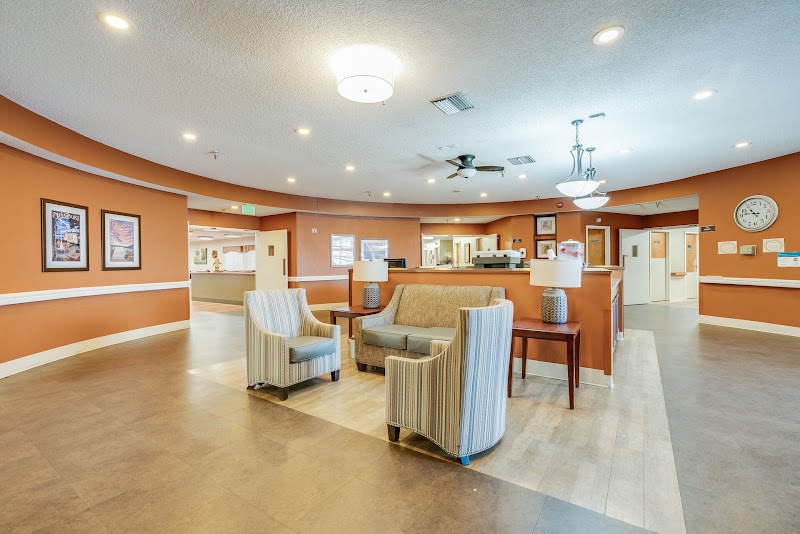
How is Stonebridge Adams Street Staffed?

CMS rates STONEBRIDGE ADAMS STREET's staffing level at 2 out of 5 stars, which is below average compared to other nursing homes. Staff turnover is 67%, which is 21 percentage points above the Missouri average of 46%. High turnover can affect care consistency as new staff learn residents' individual needs. RN turnover specifically is 71%, which is notably high. RNs provide skilled clinical oversight, so turnover in this role can affect medical care quality.

What Have Inspectors Found at Stonebridge Adams Street?

State health inspectors documented 37 deficiencies at STONEBRIDGE ADAMS STREET during 2022 to 2025. These included: 1 that caused actual resident harm, 30 with potential for harm, and 6 minor or isolated issues. Deficiencies causing actual harm indicate documented cases where residents experienced negative health consequences.
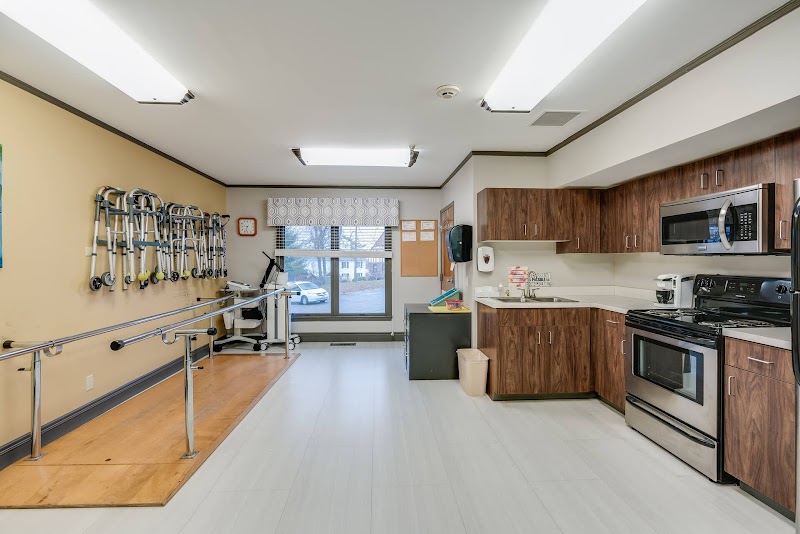
Who Owns and Operates Stonebridge Adams Street?

STONEBRIDGE ADAMS STREET is owned by a for-profit company. For-profit facilities operate as businesses with obligations to shareholders or private owners. The facility is operated by STONEBRIDGE SENIOR LIVING, a chain that manages multiple nursing homes. With 120 certified beds and approximately 49 residents (about 41% occupancy), it is a mid-sized facility located in JEFFERSON CITY, Missouri.
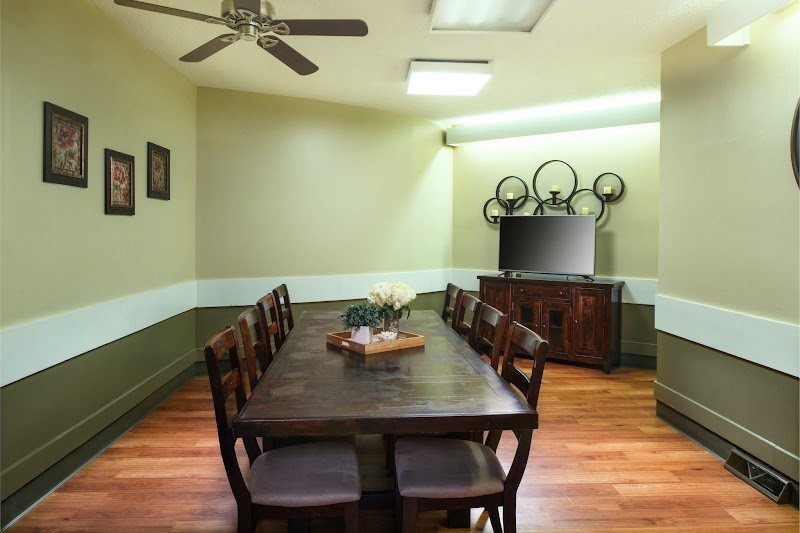
How Does Stonebridge Adams Street Compare to Other Missouri Nursing Homes?

Compared to the 100 nursing homes in Missouri, STONEBRIDGE ADAMS STREET's overall rating (3 stars) is above the state average of 2.5, staff turnover (67%) is significantly higher than the state average of 46%, and health inspection rating (3 stars) is at the national benchmark.

What Should Families Ask When Visiting Stonebridge Adams Street?

Based on this facility's data, families visiting should ask: "How do you ensure continuity of care given staff turnover, and what is your staff retention strategy?" "Can you walk me through typical staffing levels on day, evening, and night shifts?" "Can I visit during a mealtime to observe dining assistance and food quality?" "How do you handle medical emergencies, and what is your hospital transfer rate?" These questions are particularly relevant given the facility's high staff turnover rate and the below-average staffing rating.

Is Stonebridge Adams Street Safe?

Based on CMS inspection data, STONEBRIDGE ADAMS STREET has a clean safety record: no substantiated abuse findings (meaning no confirmed cases of resident harm), no Immediate Jeopardy citations (the most serious violation level indicating risk of serious injury or death), and is not on the Special Focus Facility watch list (a federal program monitoring the lowest-performing 1% of nursing homes). The facility has a 3-star overall rating and ranks #1 of 100 nursing homes in Missouri. While no facility is perfect, families should still ask about staff-to-resident ratios and recent inspection results during their visit.

Do Nurses at Stonebridge Adams Street Stick Around?

Staff turnover at STONEBRIDGE ADAMS STREET is high. At 67%, the facility is 21 percentage points above the Missouri average of 46%. Registered Nurse turnover is particularly concerning at 71%. RNs handle complex medical decisions and coordinate care — frequent RN changes can directly impact care quality. High turnover means new staff may not know residents' individual needs, medications, or preferences. It can also be disorienting for residents, especially those with dementia who rely on familiar faces. Families should ask: What is causing the turnover? What retention programs are in place? How do you ensure care continuity during staff transitions?

Was Stonebridge Adams Street Ever Fined?

STONEBRIDGE ADAMS STREET has been fined $38,656 across 1 penalty action. The Missouri average is $33,465. While any fine indicates a compliance issue, fines under $50,000 are relatively common and typically reflect isolated problems that were subsequently corrected. Families should ask what specific issues led to these fines and confirm they've been resolved.

Is Stonebridge Adams Street on Any Federal Watch List?

STONEBRIDGE ADAMS STREET is not on any federal watch list. The most significant is the Special Focus Facility (SFF) program, which identifies the bottom 1% of nursing homes nationally based on persistent, serious quality problems. Not being on this list means the facility has avoided the pattern of deficiencies that triggers enhanced federal oversight. This is a positive indicator, though families should still review the facility's inspection history directly.