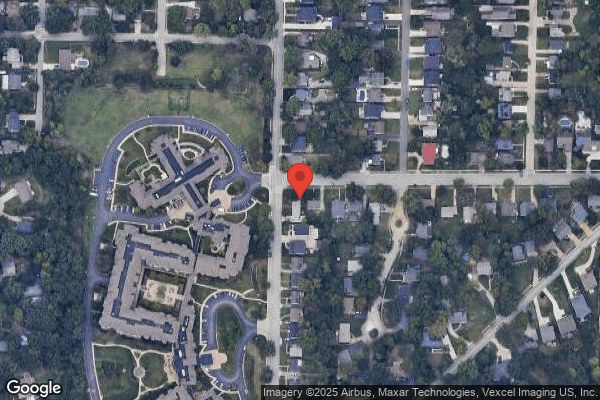
ABERDEEN HEIGHTS

505 COUCH AVENUE, KIRKWOOD, MO 63122 (314) 909-6000
Non profit - Corporation 38 Beds Independent Data: November 2025
Trust Grade
80/100
#1 of 479 in MO
Last Inspection: May 2025

Inspected within the last 6 months. Data reflects current conditions.

Overview

Aberdeen Heights in Kirkwood, Missouri has a Trust Grade of B+, which indicates it is above average and recommended for families considering care options. It ranks #1 out of 479 facilities in Missouri and #1 out of 69 in St. Louis County, placing it at the top of the list for local options. However, the facility's trend is worsening, with issues increasing from 3 in 2023 to 5 in 2025. Staffing is rated at 4 out of 5 stars, but the turnover rate is concerning at 70%, which is higher than the state average, suggesting staff may not stay long enough to build strong relationships with residents. On a positive note, there have been no fines reported, indicating compliance with regulations, and the facility has more RN coverage than 93% of Missouri facilities, which is excellent for catching potential health issues. However, specific incidents of concern have been noted, such as failures to properly clean glucometers, which poses a risk of infection, and a lack of proper food dating and staff hygiene practices in the kitchen. Additionally, there was a serious incident where staff did not report a resident's claim of being harmed, which raises questions about the facility's adherence to its own abuse prevention policies. Overall, while Aberdeen Heights has strong ratings and some positive attributes, families should weigh these against the reported issues.

Trust Score
B+
80/100
In Missouri
#1/479
Top 1%
Safety Record
Low Risk
No red flags
Inspections
Getting Worse
3 → 5 violations
Staff Stability
⚠ Watch
70% turnover. Very high, 22 points above average. Constant new faces learning your loved one's needs.
Penalties
✓ Good
No fines on record. Clean compliance history, better than most Missouri facilities.
Skilled Nurses
✓ Good
Each resident gets 60 minutes of Registered Nurse (RN) attention daily — more than 97% of Missouri nursing homes. RNs are the most trained staff who catch health problems before they become serious.
Violations
○ Average
9 deficiencies on record. Average for a facility this size. Mostly minor or procedural issues.
★★★★★
5.0
Overall Rating
★★★★☆
4.0
Staff Levels
★★★★☆
4.0
Care Quality
★★★★★
5.0
Inspection Score
Stable
2023: 3 issues
2025: 5 issues

The Good

  • 4-Star Staffing Rating · Above-average nurse staffing levels
  • 4-Star Quality Measures · Strong clinical quality outcomes
  • Full Sprinkler Coverage · Fire safety systems throughout facility
  • No fines on record

Facility shows strength in staffing levels, quality measures, fire safety.

The Bad

Staff Turnover: 70%

24pts above Missouri avg (46%)

Frequent staff changes - ask about care continuity

Staff turnover is very high (70%)

22 points above Missouri average of 48%

The Ugly 9 deficiencies on record

Aug 2025 1 deficiency
CONCERN (D) 📢 Someone Reported This

A family member, employee, or ombudsman was alarmed enough to file a formal complaint

Potential for Harm - no one hurt, but risky conditions existed

Abuse Prevention Policies (Tag F0607)

Could have caused harm · This affected 1 resident

Based on observation and interview, the facility failed to ensure staff followed their abuse and neglect policy when a resident (Resident #3) told a Certified Nursing Assistant (CNA) and a Registered ...

Read full inspector narrative →
Based on observation and interview, the facility failed to ensure staff followed their abuse and neglect policy when a resident (Resident #3) told a Certified Nursing Assistant (CNA) and a Registered Nurse (RN) a black fellow beat him/her up. Neither the CNA or the RN reported the resident's allegation to the facility Administrator and/or Director of Nursing (DON). Six residents were sampled. The census was 34.Review of the facility Prohibition of Any Form of Abuse policy, last revised on 8/7/25, showed:-Any report of potential abuse, neglect or misappropriation of resident property must be reported to the Executive Director (Administrator)/DON or health care administrator immediately;-Policy: Residents have the right to be free from verbal, sexual, and physical and mental abuse;-It is the responsibility of employees to promptly report to community management any occurrence of neglect or resident abuse from other residents, staff, family or visitors, including injuries of unknown source and theft or misappropriation of resident property;-Staff are mandated reporters and must comply with state and federal regulations regarding reporting a suspected occurrence of neglect or resident abuse;-All reports of resident verbal, sexual, physical and mental abuse are promptly and thoroughly investigated by community management;-Allegations of abuse, neglect will be thoroughly investigated and reported by community management personnel, and corrective action will be taken depending on the results of the investigation.Review of Resident #3's admission Minimum Data Set (MDS), a federally mandated assessment instrument completed by facility staff dated 4/14/25, showed:-Speech Clarity: Clear speech, distinct intelligible words;-Makes Self Understood: Usually understood;-Ability to Understand Others: Usually understands;-Moderately impaired cognition.Review of the resident's medical diagnoses, located in the electronic medical record (EMR), showed a diagnosis of severe dementia and senile degeneration of the brain.Review of the resident's care plan, located in the EMR and dated 4/28/25, showed:-Focus: Impaired cognitive function/dementia and impaired thought processes; -Goal: The resident will be able to communicate basic needs on a daily basis; -Interventions/Tasks: Ask yes/no questions in order to determine the resident's needs. Communicate with the resident/family/caregivers regarding residents' capabilities and needs;-Focus: Activities of daily living (eating, dressing, grooming, walking, etc.) deficit related to limited mobility; -Goal: Will maintain activities of daily living; -Interventions/Tasks: Dependent for bathing and bed mobility. Hoyer lift (a machine used to transfer residents unable to bear weight) for transfers with 2 people. Review of the resident's progress note, located in the EMR and dated 6/30/25 at 3:05 P.M., showed staff completed a Brief Interview for Mental Status (BIMS, a cognitive assessment) which showed the resident had severe cognitive impairment.Observation on 8/14/25 at 1:31 P.M., showed CNA A and RN B transferred the resident from the Broda chair (a reclining chair) to the bed using a Hoyer lift. After the resident was in bed, he/she looked at CNA A and said a young black fellow beat him/her up. RN B, who was standing on the opposite side of the resident's bed asked the resident How did that happen? You have a camera in your room. The resident did not respond to the question and RN B did not ask any more questions before leaving the room.During an interview on 8/15/25 at 10:54 A.M., RN B said he/she did not report the resident's allegation to the Administrator or DON because the resident was confused, and staff check on the resident frequently. He/She did not believe the allegation occurred. He/She had been in-serviced on the facility abuse and neglect policy and he/she should have reported the resident's allegation.During an interview on 8/15/25 at 11:48 A.M., Certified Medication Technician G said if a resident told him/her a resident or staff member beat them up he/she would report it right away to the charge nurse, DON or Administrator. He/She would report regardless of if the resident was confused or not.During an interview on 8/15/25 at 11:55 A.M. CNA F said if a resident, even a confused resident, told him/her a resident or staff member had beat them up, he/she would report the allegation immediately to the charge nurse or any supervisor available. During an interview on 8/15/25 at 10:00 A.M., both the Administrator and DON said neither CNA A nor RN B reported anything to them about what the resident told them yesterday. The facility did have black male employees. The RN and CNA should have reported the resident's allegation to them immediately and they would have begun an immediate investigation. They expected staff to follow the facility's policy.
May 2025 4 deficiencies
CONCERN (D)

Potential for Harm - no one hurt, but risky conditions existed

Deficiency F0558 (Tag F0558)

Could have caused harm · This affected 1 resident

Based on observation, interview and record review, the facility failed to provide reasonable accommodation of individual needs and preferences by failing to ensure call lights were in reach or a call ...

Read full inspector narrative →
Based on observation, interview and record review, the facility failed to provide reasonable accommodation of individual needs and preferences by failing to ensure call lights were in reach or a call light pendant was worn for one resident (Resident #31). The sample was 13. The census was 35. Review of the facility's Resident Call System policy, revised 5/3/19, showed: -Policy: The community strives to provide an environment to promote resident safety, dignity, and a sense of well-being; The community will be equipped and maintained to protect the health and safety of the residents; -Procedure: The community shall have a call button or pull cord located next to each bed and in each resident bathroom. Review of Resident #31's quarterly Minimum Data Set (MDS), a federally mandated assessment instrument completed by facility staff, dated 2/23/25, showed: -Cognitively intact; -Dependent on staff for toileting, bathing, upper and lower body dressing; -Required maximum assist from staff for personal hygiene; -Frequently incontinent or bowel and bladder. Review of the resident's medical record, showed his/her diagnoses included a history of falling, urinary tract infections, macular degeneration (an eye disease that may cause distortion of vision or vision loss), anxiety, benign brain neoplasm (a non-cancerous growth) and muscle weakness. Review of the resident's care plan, in use at the time of survey, showed: -Focus: The resident at risk of falls due to a history of falling and currently has a fear of falling; -Interventions: Make sure the resident's call light/pendant is within reach when leaving the resident alone. Observation and interview on 5/5/25 at 8:31 A.M., showed the resident lay in bed. The resident's call light in his/her room was attached to the wall and positioned on the floor under the resident's recliner. The resident did not have his/her call light pendant on. The resident said he/she received a shower recently and the staff did not reapply the resident's call light pendant. The resident said he/she could not reach the call light that lay on the floor because he/she cannot get out of bed by him/herself. Observation on 5/5/25 at 9:35 A.M., showed the resident lay in bed, eating breakfast. The resident's call light in his/her room was attached to the wall and positioned on the floor under the resident's recliner. The resident was not wearing his/her call light pendant. Observation and interview on 5/5/25 at 10:19 A.M., showed Certified Medication Technician (CMT) H entered the resident room and provided the resident with a nutritional shake. After the resident consumed the shake, CMT H left the resident's room. The resident's call light was attached to the wall and positioned on the floor under the resident's recliner. The resident was not wearing his/her call light pendant. Observation on 5/5/25 at 11:00 A.M., and at 12:07 P.M., showed the resident lay in bed. The resident's call light in his/her room was attached to the wall and positioned on the floor under the resident's recliner. The resident was not wearing his/her call light pendant. Observation on 5/5/25 at 12:37 P.M., showed the resident lay in bed and CMT I delivered the resident's lunch tray to the resident's room. CMT I assisted the resident with his/her lunch tray by opening packages and drink lids. CMT I left the resident's room after assisting the resident with his/her lunch tray. The resident's call light was attached to the wall and positioned on the floor under the resident's recliner. The resident was not wearing his/her call light pendant. Observation and interview on 5/5/25 at 2:40 P.M., showed the resident lay in bed. The resident said he/she had just received a bed bath. The resident's call light was attached to the wall and positioned on the floor under the resident's recliner. The resident was not wearing his/her call light pendant. Observation on 5/5/25 at approximately 5:00 P.M., showed the resident lay in bed. The resident's call light was attached to the wall and positioned on the floor under the resident's recliner. The resident was not wearing his/her call light pendant. During an interview on 5/7/25 at 8:30 A.M., Licensed Practical Nurse C said the residents should always wear the call light pendant. If the call light pendant is not available or the resident is unable to use it, the call light in the resident's room should be placed within the resident's reach. Staff should make sure the resident has their call light within reach or is wearing their call light pendant each time they leave the resident's room. During an interview on 5/7/25 at 8:35 A.M., Certified Nursing Assistant G said the residents should always wear the call light pendant or have the room call light positioned to wear the resident could reach it. Staff should make sure the resident has their call light or call light pendant each time they leave the resident's room. During an interview on 5/7/24 at 12:41 P.M., the Director of Nursing said she expected staff to ensure the residents are wearing their call light pendant or the call light in their room is within the resident's reach each time staff leave the resident's room. All staff members are responsible to ensure all the residents have their call light.
CONCERN (D)

Potential for Harm - no one hurt, but risky conditions existed

ADL Care (Tag F0677)

Could have caused harm · This affected 1 resident

Based on observation, interview and record review, the facility failed to ensure residents who required activities of daily living (ADLs, bathing, dressing and toileting) assistance received necessary...

Read full inspector narrative →
Based on observation, interview and record review, the facility failed to ensure residents who required activities of daily living (ADLs, bathing, dressing and toileting) assistance received necessary services to maintain adequate personal hygiene when staff left one resident soiled for an extended period (Resident #2). The sample size was 13. The census was 35. Review of the facility's Standards of Practice-Clinical Services policy, revised 2/3/25, showed: -Clinical Services policy and procedure preface: -The Clinical Services policies and procedures described in the manual should be used as guidelines for the nursing staff of the facility; Individual resident care decisions should be based on scientific principals in accordance with the skill an training of the caregiver; Additional clinical resources available from other sources or created in collaboration with the facility; -Philosophy: -Nursing is a process that includes assessment of the resident's state of being, determining a nursing diagnosis, planning and developing short and long-term goals; Implementing appropriate nursing interventions to assist the resident to reach their goals, and evaluation of the effectiveness of the nursing measures against established expected outcomes; The nursing interventions will promote positive functional consequences and outcomes for residents; -Residents have the right to nursing care based on this nursing assessment, and provided by the appropriate skill level, as predicted by acuity. -Nursing must work in an organized framework, providing an organized approach to practice that is responsive to the needs of residents, families, community, system and employees; -Purpose: Diagnose and treat responses to actual and potential adverse outcomes; -Goal: Promote each resident at his her maximum level of health functions; Health implies attaining, maintaining, restoring balance, living with chronic illness or disability; -Objective to meet goal: -Provide nursing care to residents on a continuum in a safe therapeutic environment; -Utilize a holistic (physician, emotional, spiritual, environmental, rehabilitative, preventative approach) to nursing practice. Review of Resident #2's quarterly Minimum Data Set (MDS), a federally mandated assessment instrument completed by facility staff, dated 4/4/25, showed: -Moderate cognitive impairment; -No rejection of care; -Required maximum assist from the staff for toilet hygiene and toilet transfers; -The resident is frequently incontinent; -Diagnoses included dementia, kidney disease and depression. Review of the resident's medical record, showed his/her diagnosis also included a history of urinary tract infections (UTI). Review of the resident's care plan, in use at the time of survey showed: -Focus: The resident has impaired physical function related to dementia and recent hospitalization; -Interventions: The resident requires assistance for toilet hygiene; The resident wears incontinent products for minimal bladder incontinence and needs assistance changing them. During observation and interview on 5/5/25 at 9:15 A.M., the resident said he/she requires assistance from the staff to use the bathroom. He/She wears incontinent briefs in case he/she has an accident. Posted above the resident's bed in his/her room was a sign, undated, that showed: Toileting Program Recommendations: Assist the resident to the bathroom and change his/her brief as per the following: Before or after getting up in the A.M.; Before or after breakfast; Before or after lunch; Before or after dinner; Before and after going to bed for the evening; Please contact the therapy department with questions. During observation and interview on 5/5/25 at 10:27 A.M., the resident was in his/her room, in his/her wheelchair and said he/she has not been assisted to the bathroom since before breakfast. The resident said he/she is unable to propel him/herself to the bathroom. During an interview on 5/5/25 at 2:52 P.M., the resident was in his/her room, in his/her wheelchair, and said he/she was soiled and needed to use the bathroom. He/She said he/she has not gone into the bathroom since before breakfast. During observation and interview on 5/5/25 at 4:47 P.M., Certified Nursing Assistant (CNA) A propelled the resident in his/her wheelchair to the bathroom. CNA A assisted the resident with standing up, by pulling on the resident's waistband and without the use of a gait belt. CNA A instructed the resident to hold onto the grab bars located near the toilet. When the resident stood up, the resident's wheelchair cushion appeared very wet with a small puddle of liquid in the center that had an odor of urine. The resident's pants had a large area of wetness that covered the resident's buttocks and the back of his/her thighs. While the resident stood, CNA A pulled the resident's pants down and removed the resident's brief. The brief was entirely saturated with urine and liquid brown stool. Dried brown stool was located on the resident's upper buttocks and lower back. CNA A said, This is not a good look. CNA A used multiple incontinence wipes and applied pressure while removing the dried stool from the resident's skin. During an interview on 5/5/25 at 4:55 P.M., CNA A said he/she was not aware the last time the resident was taken to the bathroom or checked for incontinence and said he/she was relieved that the resident did not have any open wounds to his/her bottom. The facility has been using some agency nursing staff and CNA A didn't think the agency staff know the protocol on how often to check on the residents. All residents are to be checked for incontinence and/or encouraged to use the bathroom every two hours. During an interview on 5/7/25 at 8:30 A.M., Licensed Practical Nurse C said staff should check all residents, ask residents if they need anything or require assistance with care every two hours. During an interview on 5/7/25 at 12:51 P.M., the Director of Nursing (DON) said she expected staff to check on all residents to determine their care needs every two hours and as needed. The DON was not aware of the Toilet Recommendations sign in the resident's room but expected staff to follow the recommendations.
CONCERN (D)

Potential for Harm - no one hurt, but risky conditions existed

Respiratory Care (Tag F0695)

Could have caused harm · This affected 1 resident

Based on observation, interview, and record review, the facility failed to ensure physician orders for oxygen usage were revised and current, which resulted in contradictory orders, with staff documen...

Read full inspector narrative →
Based on observation, interview, and record review, the facility failed to ensure physician orders for oxygen usage were revised and current, which resulted in contradictory orders, with staff documenting both as completed for one resident(Resident #30). The facility also listed outdated information in the resident's care plan regarding the oxygen settings. The sample was 13. The census was 35. Review of the facility's oxygen therapy policy, dated 2/3/25, showed: -Policy: Oxygen is treated as a medication ordered by the physician. The order includes the amount per minute to be delivered, the device used for delivery, and during what times to deliver oxygen therapy; -Procedure: These delivery devices will be maintained in a sanitary manner. Change disposable prefilled humidifier bottle every 30 days. Non-disposable refillable humidifier bottles are changed every seven days. Change tubing once a week or when soiled. Label with resident name, date, time, staff initial tubing when changed. Document on the treatment administration record (TAR). When device is not in use, store in plastic or other bag to keep tubing and device off floor. Label bag with resident name, date, time, and staff initial. 1. Review of Resident #30's significant change Minimum Data Set (MDS), a federally mandated assessment instrument completed by facility staff, dated 3/18/25, showed: -Cognitively intact; -Diagnoses included acute respiratory failure, muscle weakness, and congestive heart failure. Review of the resident's care plan, in use at the time of the survey, showed: -Focus: Resident uses oxygen therapy; -Goal: Resident will have no symptoms of poor oxygen absorption or signs of dehydration through the review date; -Interventions: Give medications as ordered by physician. Monitor/document side effects and effectiveness. Monitor for symptoms of respiratory distress and report to medical director (MD). Oxygen setting for oxygen via nasal canula at 2 Liters (L) continuously. Promote lung expansion and improve air exchange by positioning with proper body alignment. If tolerated, head of bed elevated to 30 degrees. Provide reassurance and allay anxiety: have an agreed-on method for the resident to call for assistance (e.g., call light, bell). Stay with the resident during episodes of respiratory distress. Review of the resident's physician's orders, dated 5/25, showed: -An order, dated 4/11/25, to titrate oxygen to keep saturations above 92 percent; -An order, dated 3/17/25, continuous oxygen at 2 L via nasal canula. Review of the resident's May 2025 TAR, showed: -On 5/1/25, 5/2/25, 5/3/25, 5/4/25, 5/5/25, 5/6/25, and 5/7/25, staff signed off that the resident received continuous oxygen via nasal canula at 2 L during the day shift. On 5/1/25, 5/2/25, 5/3/25, 5/4/25 and 5/5/25 staff signed off that the resident received continuous oxygen via nasal canula at 2 L during the evening shift. On 5/3/25 and 5/4/25 staff signed off that the resident received continuous oxygen via nasal canula at 2 L during the night shift; -On 5/1/25, 5/2/25, 5/3/25, 5/4/25, 5/5/25, 5/6/25, and 5/7/25, staff signed off that the resident's supplemental oxygen rate was titrated to keep the resident's oxygen saturations above 92 percent on day, evening, and night shifts. Observations on 5/5/25 at 10:18 A.M. and 2:56 P.M., showed the resident in his/her room in his/her chair. The resident's concentrator oxygen rate was set to 1 L. Observation on 5/6/25 at 6:34 A.M., showed the resident awake in his/her bed. The resident's concentrator oxygen rate was set to 1 L. Observation on 5/6/25 at 12:28 P.M., showed the resident in the dining room eating lunch. The resident was not using supplemental oxygen. Observation on 5/6/25 at 10:34 A.M., showed the resident in his/her room in his/her chair. The resident was not using supplemental oxygen. During an interview on 5/7/25 at 8:01 A.M., Licensed Practical Nurse (LPN) B said staff should follow the physician's orders for oxygen usage and rates. If a physician order is changed, the old order should be removed from the medication administration record (MAR). He/She said the resident does not require continuous oxygen and that the original order should have been removed. During an interview on 5/7/25 at 8:37 A.M., the Director of Nursing (DON) said she would expect staff to follow physician's orders for oxygen rates. If a physician order is changed, the old order should be removed from the MAR. Staff should be documenting on the current order and ensure they are only documenting treatments that have been done. During an interview on 5/7/25 at 1:04 P.M., the Administrator said he would expect staff to follow physician's orders for oxygen rates. If a physician order is changed, the old order should be removed from the MAR. Staff should be documenting on the current order and not the old order.
CONCERN (D)

Potential for Harm - no one hurt, but risky conditions existed

Infection Control (Tag F0880)

Could have caused harm · This affected 1 resident

Based on observation, interview and record review, the facility failed to follow acceptable infection control standards by not implementing Enhanced Barrier Precautions (EBP, an infection control inte...

Read full inspector narrative →
Based on observation, interview and record review, the facility failed to follow acceptable infection control standards by not implementing Enhanced Barrier Precautions (EBP, an infection control intervention designed to reduce the transmission of multidrug-resistant organisms (MDROs) that employs targeted gown and glove use during high contact resident care activities) as recommended by the Centers for Disease Control and Prevention (CDC) and required by the Centers for Medicare and Medicaid Services (CMS) for residents with wounds requiring treatments and the facility failed to ensure staff used good infection control practices for one resident when providing perineum care (peri-care, cleansing of the genitals and anal area) (Resident #4). The sample was 13. The census was 35. Review of the facility's EBP policy, revised 1/9/24, showed: -EBP, refer to an infection control intervention designed to reduce transmission or MDRO that employs targeted gown and glove use during high contact resident care activities; -EBP are used in conjunction with standard precautions and expand the use of personal protective equipment (PPE) of applying of gown and gloves during high-contact resident care activities that provide opportunities for transfer of MDROs to staff hands and clothing; -EBP are indicated for residents with any of the following: -Infections or colonization with a CDC- targeted MDRO with contact precautions do not otherwise apply; -Wounds and/or indwelling medical devices even if the resident is not known to be infected or colonized (presence of bacteria in the body that is not causing symptoms) with MDRO; -Wounds generally include chronic (long term) wounds such as a pressure ulcer (a wound that develops with prolonged pressure), unhealed surgical wounds, diabetic foot ulcers and venous stasis ulcers (a wound on the legs that develops from damaged veins); -Wound care: Any skin opening requiring a dressing; -Use of EBP include gown and gloves; -Examples of high contact resident care activities requiring gown and glove use for EBP include: dressing, bathing or showering, transferring providing hygiene, changing lines, changing briefs or toileting, and wound care that requires a dressing. Review of the facility's Standards of Practice-Clinical Services policy, revised 2/3/25, showed: -Clinical Services policy and procedure preface: -The Clinical Services policies and procedures described in the manual should be used as guidelines for the nursing staff of the facility: Individual resident care decisions should be based on scientific principals in accordance with the skill and training of the caregiver; Additional clinical resources available from other sources or created in collaboration with the facility include, Mosby's Textbook for Long Term Care Assistants; -Philosophy: -Nursing is a process that includes assessment of the resident's state of being, determining a nursing diagnosis, planning and developing short and long-term goals; Implementing appropriate nursing interventions to assist the resident to reach theirs goals, and evaluation the effectiveness of the nursing measures against established expected outcomes; The nursing interventions will promote positive functional consequences and outcomes for residents; -Residents have the right to nursing care based on this nursing assessment, and provided by the appropriate skill level, as predicted by acuity; -Nursing must work in an organized framework, providing an organized approach to practice that is responsive to the needs of residents, families, community, system and employees; -Purpose: diagnose and treat responses to actual and potential adverse outcomes; -Goal: Promote each resident at his or her maximum level of health functions; Health implies attaining, maintaining, restoring balance, living with chronic illness or disability; -Objective to meet goal: -Provide nursing care to residents on a continuum in a safe therapeutic environment; -Utilize a holistic (physician, emotional, spiritual, environmental, rehabilitative, preventative approach) to nursing practice. Review of Mosby's Textbook for Long Term Care Assistants, Chapter: Perineal Care, undated, showed: -Peri-care involves cleaning the genital and anal area; These areas provide a warm, moist, and dark places for microbes (organisms of microscopic size); Cleaning prevents infections and odor and promotes comfort; Work from front to back or top to bottom; The urethral area (a tube in the body that carries urine to the outside of the body) or front area is the cleanest; The anal area (back or bottom) is the dirtiest; Therefore, clean from the urethra to the anal area; This prevents spreading bacteria from the anal area to the vagina and urinary system. Review of Resident #4's quarterly Minimum Data Set (MDS), a federally mandated assessment instrument completed by facility staff, dated 3/8/25, showed: -The resident has severe cognitive impairment; -Diagnoses included stroke, hemiplegia (weakness to one side of the body) and dementia; -Dependent on staff for toileting and personal hygiene; -Always incontinent of bowel and bladder; -The resident has one Stage 4 pressure ulcer (loss of skin and tissue, exposed bones, cartilage or tendon). Review of the resident's care plan, in use at the time of survey, showed: -Focus: The resident is on EBP for a chronic wound to his/her buttocks; -Interventions: The EBP guidelines are hanging in the resident's bathroom closet along with PPE needed; -Focus: The resident is at risk for all falls and requires a Hoyer lift (a specialized lift to transfer residents); -Intervention: Use lift for all transfers; -Focus: The resident has impaired physical function related to hemiplegia; -Interventions: Bathing and hygiene with max assist of one. Review of the resident's medical record, showed his/her diagnoses also included a history of urinary tract infections (UTI). Review of a list of residents who required EBP, showed the resident listed. Review of the resident's Physician Order Sheet (POS), showed an order, dated 3/19/25, EBP for wound. Observation and interview on 5/5/25 at 10:48 A.M., showed a small white sign at the top right side of the resident's door which read EBP. The resident's bathroom had a sign on the outside of the closet door indicating the resident required EBP. The resident was in his/her room sitting in his/her wheelchair. Certified Nursing Assistant (CNA) D and Certified Medication Technician (CMT) E wore gloves and attached the resident to the Hoyer (mechanical lift) lift pad. The resident was transferred with the use of the Hoyer lift by CNA D and CMT E into the resident's bed. The resident's pants were removed by CNA D and the resident's brief was soiled with urine. The resident turned side to side with the assistance of CNA D and CMT E to remove the Hoyer pad underneath the resident. The resident's knees and arms touched CNA D's and CMT E's uniform tops. The resident was positioned on his/her back. CNA D rolled the front part of the soiled brief between the resident's legs. The resident was then turned to his/her left side and the soiled brief was pulled through the resident's legs towards his/her backside. A dressing, dated 5/5/25, was located on the resident's right buttock. CNA D cleaned the resident's anal area with wet wipes. A clean brief was not applied. CNA D said it was so the resident could air out. With the same gloved hands, CNA D positioned the resident on his/her back, applied an offloading wedge under the resident and pulled the sheet and blanket over the resident. Peri-care was not provided to the resident's genitals. CNA D did not change gloves or perform hand hygiene after cleansing the resident's anal area. CNA D and CMT E did not wear an isolation gown during direct care of the resident. Observation on 5/5/25 at 2:55 P.M., showed Assistant Director of Nursing (ADON) and CNA F entered the resident's room and applied gloves and an isolation gown. The ADON and CNA F placed the resident into bed by using the Hoyer lift. The resident's pants were removed by the ADON and CNA F. The resident's brief was soiled with urine. The ADON and CNA F assisted the resident by turning him/her side to side to remove the Hoyer pad underneath the resident. A dressing, dated 5/5/25, was located on the resident's right buttock. The resident was turned to his/her back. The ADON rolled the front part of the resident's soiled brief between the resident's legs. The ADON and CNA F turned the resident to his/her left side. The ADON removed the soiled brief by pulling the brief through the resident's legs towards his/her backside. The ADON cleansed the resident's anal area with wet wipes. The ADON removed his/her gloves, removed the isolation gown, performed hand hygiene and applied clean gloves and a clean isolation gown. The ADON and CNA F applied a clean brief to the resident. Peri-care was not provided to the resident's genitals. During an interview on 5/7/25 at 8:30 A.M., Licensed Practical Nurse (LPN) C said the resident requires EBP during direct care due to the resident having a chronic wound. The staff should wear gloves and isolation gowns for residents who require EBP. When a resident is incontinent, the staff should clean the resident's genital area and the resident's bottom and buttocks. Staff should change gloves and perform hand hygiene after providing peri-care to the resident. Staff should not touch the resident or any items in the room with soiled gloves. During an interview on 5/7/25 at approximately 8:35 A.M., CNA G said he/she did not know what EBPs were. Staff should clean the resident's genitals and bottom area when the residents are incontinent. Rolling the brief between the resident's legs with a soiled brief does not count for cleaning the resident's genitals. Gloves need to be changed when going from a dirty area of the resident to a clean area of the resident. Staff should not touch the resident or items in the room with soiled gloves. During an interview on 5/7/25 at 12:51 P.M., the Director of Nursing said she expected staff to use EBP on residents who require the precautions. She expected staff to complete peri-care in its entirety by cleaning the resident's genitals. She expected staff to change gloves and perform hand hygiene after peri-care is completed.
Dec 2023 3 deficiencies
CONCERN (D)

Potential for Harm - no one hurt, but risky conditions existed

Unnecessary Medications (Tag F0759)

Could have caused harm · This affected 1 resident

Based on observation, interview and record review, the facility failed to ensure a medication error rate of less than 5%. Out of 28 opportunities observed, two errors occurred resulting in a 7.14% err...

Read full inspector narrative →
Based on observation, interview and record review, the facility failed to ensure a medication error rate of less than 5%. Out of 28 opportunities observed, two errors occurred resulting in a 7.14% error rate (Resident #9). The census was 34. Review of the facility's Medication Administration policy, revised on 3/15/22, included the following: -Policy: Medications are administered as prescribed in accordance with the good nursing principles and practices and only by persons legally authorized to do so; -It is the responsibility of the nursing professional to be aware of the clinical rationale for the medication, classification, action, correct dosage and side effects of medication before administration and to monitor to determine if there is progress toward goals and/or emergencies of adverse consequences; -A primary care provider order that includes dosage, route, frequency, duration and other required considerations is required for administration of medication; -Procedure: -Prior to administration, the medication and dosage schedule on the electronic Medication Administration Record (EMAR) is compared with the medication label; -Read label 3 times: When removing from drawer, before pouring, and after pouring. Document on the EMAR after medication is poured; -If there is a discrepancy between the EMAR and the label, check the physician order sheet before administering medication; -Prepare or pour each dose of medication using an appropriate measuring device. Read and follow any special instructions written on labels. Review of Resident #9's quarterly Minimum Data Set (MDS), a federally mandated assessment instrument completed by facility staff, dated 11/15/23, showed diagnoses of dementia, anxiety and depression. Observation on 12/6/23 at 7:49 A.M., showed Certified Medication Technician (CMT) F stood at the medication cart outside the resident's room and prepared the resident's morning medications with the surveyor observing. The tablets and pills were packaged in a medication strip which showed the name of each medication, the dosage of each medication, and the quantity of each medication. After checking each medication in the strip against the orders on the EMAR, the CMT removed the medications from the medication strip, placed them in the medication administration cup, then handed the medication strip to the surveyor who recorded each medication which included: 1 tablet of duloxetine DR (an antidepressant) 20 milligrams (mg), and 1 tablet of Certivite (a multivitamin with minerals). The CMT gave the resident the medications who took all the medications with a glass of water. Review of the resident's record on 12/6/23 at 11:15 A.M., showed the resident's medications were reconciled with the physician's order sheet which showed no current order for the duloxetine DR and Certivite. During an interview on 12/7/23 at 8:48 A.M., the Director of Nurses (DON) said the medication administration policy was current and she expected staff to follow the policy. She expected the CMT to have held the duloxetine DR and Certivite and consulted with a nurse as to why the medications were not listed on the EMAR. After reviewing the resident's orders, it was determined the duloxetine DR had been discontinued on 10/12/23, and the Certivite had been discontinued on 6/8/23. The facility notified the pharmacy when the medications were discontinued, but the pharmacy did not remove the medications from the medication strips, delivered weekly to the facility. The resident received the medications since they were discontinued. The DON expected a nurse or CMT to have noticed the discontinued medications prior and contacted the pharmacy to have the medications removed from the medication strips. During an interview on 12/7/23 at 10:19 A.M., CMT F said he/she spoke to the DON about the duloxetine DR and the Certivite. After checking the medications on the medication strip, he/she knew those medications were not on the EMAR, but gave them anyway. He/She should have questioned why they were in the medication strip, but not on the EMAR prior to administering them. He/She really had no excuse not to do that.
CONCERN (D)

Potential for Harm - no one hurt, but risky conditions existed

Deficiency F0761 (Tag F0761)

Could have caused harm · This affected 1 resident

Based on observation, interview and record review, facility staff failed to follow the facility's Injectable Medication/Storage and Stability policy by failing to record the dates insulin pens had bee...

Read full inspector narrative →
Based on observation, interview and record review, facility staff failed to follow the facility's Injectable Medication/Storage and Stability policy by failing to record the dates insulin pens had been opened so they could be discarded if necessary if not completely used by the discard dates. Four residents had been identified by the facility as having orders for insulin, and problems were identified with all four (Residents #15, #21, #30 and #31). In addition, staff failed to consistently check/document the temperature of the medication refrigerator in the medication room. The census was 34. Review of the facility's Medications: Vials and Ampules (small sealed vial) of Injectable Meds policy, last revised on 10/8/21, included the following: -Policy: Vials and ampules of injectable medications are used in accordance with the manufacturer's recommendations or the provider pharmacy's directions for storage, use and disposal; -Procedure: -The date opened is recorded on multidose vials (on the vial label or an accessory label affixed for that purpose); -Refer to insulin storage and stability information chart for storage information; -Review of the Insulin Storage and Stability Information Chart, included the following for insulin pens/cartridges: -Novolog (fast acting insulin): Stored at room temperature, unopened or opened, 28 days; -Humalog (fast acting insulin, generic name lispro): Stored at room temperature, unopened or opened, 28 days; -Lantus (long lasting insulin, generic name glargine): Stored at room temperature, unopened or opened, 28 days. 1. Review of Resident #15's electronic health record (EHR), showed: -Diagnosis of diabetes mellitus (DM, high blood glucose/sugar); -Physician's Order Sheet (POS), showed: -An order dated 11/4/22, for Novolog flexpen (a pen type device used to inject the insulin) to be administered per sliding scale (the amount administered is determined by the blood glucose level) before meals; -An order dated 10/28/22, for insulin gargline, 30 units (u) every morning. Review of Resident #21's EHR, showed: -Diagnosis of DM; -POS, showed: An order dated 10/30/23, for Humalog Kwikpen before meals per sliding scale. Review of Resident #30's EHR, showed: -Diagnosis of DM; -POS, showed: -An order dated 7/13/23, for Humalog Kwikpen to be administered per sliding scale; -An order dated 7/14/23, for Lantus 10 u every morning. Review of Resident #31's EHR, showed: -Diagnosis of DM; -POS, showed: An order dated 10/30/23, for Lantus 25 u once daily. Observation with the Assistant Director of Nurses (ADON) on 12/4/23 at 2:00 P.M., showed two of the three nurse medication carts contained insulin pens. Observation of the insulin pens, showed: -Resident #15 had one opened Lantus pen that had been dated, and one opened and undated Novolog flexpen; -Resident #21 had two opened and undated lispro pens and one opened and undated glargine pen; -Resident #30 had one opened and undated Lantus pen, and one opened and dated Humalog Kwikpen; -Resident #31 had two opened Lantus pens, one was dated and one was undated; -Of the 9 insulin pens observed, three were opened and dated, and six were opened and undated. During an interview on 12/4/23 at 2:25 P.M., the ADON said staff were to write the date the pen was first used on a label on the pen. The standard time a pen could be used after opening was 28 to 30 days. If the pen had not been used in its entirety by 28 to 30 days, the pen was to be discarded. If staff did not record the date of opening, they would not be able to determine the date the pen should be discarded. During an interview on 12/7/23 at 8:48 A.M., the DON said insulin pens should be dated when opened. Staff were to write the date of first use on the insulin pen. Insulin should be discarded between 28 to 30 days after opening. 2. Review of the instructions printed on the Refrigerator Temperature log in the medication room, on 12/4/23 at 1:48 P.M., showed: -Instructions for staff to check the temperatures in both the freezer and the refrigerator compartments twice each working day. Place an X in the box that corresponded with the temperature, the time of the temperature reading and staff initials; -Review of the temperature logs showed: -October: The temperature was checked 24 of 62 times; -November: The temperature was checked 22 of 60 times; -December: The temperature was checked 2 of 7 times; -Observation of the refrigerator showed a functioning thermometer and multiple resident medications. During an interview on 12/4/23 at 1:55 P.M., the ADON said the nurses were responsible to check the refrigerator's temperature twice a day and record it on the temperature log. She was not aware the nurses had not been checking the temperatures. 3. During an interview on 12/7/23 at 8:48 A.M., the DON said the skilled nursing facility had one medication room with a refrigerator for medications. She expected staff to monitor the refrigerator temperature twice a day per the instructions on the temperature log.
CONCERN (E)

Potential for Harm - no one hurt, but risky conditions existed

Infection Control (Tag F0880)

Could have caused harm · This affected multiple residents

**NOTE- TERMS IN BRACKETS HAVE BEEN EDITED TO PROTECT CONFIDENTIALITY** Based on observation, interview and record review, the facility failed to follow their policies by failing to ensure glucometers...

Read full inspector narrative →
**NOTE- TERMS IN BRACKETS HAVE BEEN EDITED TO PROTECT CONFIDENTIALITY** Based on observation, interview and record review, the facility failed to follow their policies by failing to ensure glucometers (a machine that obtains a resident's blood glucose level by placing a drop of blood onto a strip inserted into the glucometer) were cleaned and disinfected with an approved germicidal agent. In addition, staff failed to ensure a barrier (such as a clean paper towel) was placed between the glucometer and any surface on which it was placed. The facility identified four residents who required blood glucose monitoring, two were observed and infection control problems were identified with both (Resident #31 and #30) The census was 34. Review of the facility's Preventing Reuse of Devices Used for Blood Glucose Monitoring policy, dated 11/2017, included the following: -Issue: Glucometers designed for use by a single resident should never be used for more than one resident. Many health care providers are under the mistaken belief that changing the lancet needle (used to pierce the fingertip to obtain a drop of blood) or cleaning the fingerstick device between uses prevents cross-contamination; it does not. Also, wiping a glucometer with alcohol after use is not adequate to prevent cross-contamination. If a glucometer is approved by the manufacturer for reuse and is to be used on multiple residents, it must be cleaned and disinfected after each use, per the manufacturer's instructions; -The Centers for Disease Control and Prevention (CDC), the Centers for Medicare and Medicaid Services (CMS), and the U.S. Food and Drug Administration (FDA) prohibit the reuse of lancets, fingerstick devices, and manufacturer-stated single-resident-use blood glucose meters on multiple residents due to the risk of transmitting bloodborne pathogens, including hepatitis B (an infectious disease caused by a virus that affects the liver), hepatitis C (an infectious disease caused by a virus that affects the liver), and HIV (a virus that attacks the immune system); -Safety Actions to Consider: -Ensure that glucometers and other waived testing devices used for multiple residents are approved for such use by the manufacturer, and that they are cleaned and disinfected after each test using a method that is consistent with the manufacturer's instructions; -Conduct staff orientation, training and competency assessment on waived testing equipment and processes; -Educate staff about why they are never to use lancets, fingerstick devices and glucometers (based on manufacturer instructions for use) on multiple residents; -Provide staff with appropriate products and supplies for cleaning and disinfecting blood glucose monitoring equipment, as stated in the manufacturer instructions for use. Review of the facility's Blood Glucose Monitoring policy, last revised on 10/11/21, included the following: -Policy: Laboratory services will be provided or obtained to meet the needs of residents. Labratories providing such services must meet specified federal requirements; -Procedure: Use of a Glucometer: Preventative maintenance is performed as recommended by manufacturer. Wipe machine down with wipes that meet OSHA (Home Occupational Safety and Health Administration)for blood borne pathogens per infection control manual procedure after each use if machine is used for multiple residents. 1. Review of Resident #31's significant change in status Minimum Data Set (MDS), a federally mandated assessment instrument completed by facility staff, dated 11/21/23, showed diagnoses of diabetes mellitus (DM, high blood sugar), dementia and anxiety. Review of the resident's Physician Orders Sheet (POS), dated 12/2023, showed an order dated 11/14/23 for blood sugar (glucose) monitoring once daily. Observation on 12/5/23 at 7:18 A.M., showed Nurse A removed a glucometer from the medication cart. He/She laid it on top of the medication cart with no barrier between the glucometer and the top of the cart. He/She gathered supplies that included gloves, a finger stick device and an alcohol pad and entered the resident's room where the resident sat in a recliner. Prior to obtaining a drop of blood from the resident's fingertip, the nurse laid the glucometer on the armrest of the recliner with no barrier between the glucometer and the armrest. After obtaining the blood glucose reading, the nurse returned to the medication cart and laid the glucometer on top of the medication with no barrier between the glucometer and the top of the cart. The nurse used an alcohol wipe, cleaned the glucometer, then placed the glucometer back into the medication cart drawer. 2. Review of Resident #30's quarterly MDS, dated [DATE], showed diagnoses of diabetes mellitus, Alzheimer's Disease and dementia. Review of the resident's POS, dated 12/2023, showed an order, dated 7/13/23, for blood sugar monitoring three times a day. Observation on 12/5/23 at 7:22 A.M., showed Nurse A removed a glucometer from the medication cart and laid it on top of the medication cart without a barrier. He/She gathered his/her supplies and entered the resident's room where the resident sat in a wheelchair wearing long pants. The nurse laid the glucometer on the resident's right knee with no barrier between the resident's pants and the glucometer. Nurse A then moved the glucometer from the resident's knee to on top of a tissue box that sat on top of the resident's nightstand, without a barrier. After obtaining a drop of blood from the resident's fingertip, Nurse A returned to the medication cart and laid the glucometer on top of the medication cart with no barrier between the glucometer and the top of the medication cart. He/She used an alcohol pad to clean the glucometer and placed it back into the drawer. During an interview on 12/5/23 at 7:51 A.M., Nurse A said he/she had been using alcohol pads to clean the glucometers for quite some time. He/She did not know what the facility's policy was for cleaning glucometers or if a barrier should be placed between the glucometer and a surface. He/She removed three glucometers from the medication cart and said they are not assigned to any specific resident and are shared glucometers. The nurse opened all the drawers on the medication cart and there were no disinfectant products noted to specifically clean glucometers. 3. During an interview on 12/5/23 at 8:00 A.M., Nurse E, who worked on a different hall, opened the medication cart and said the facility just brought a container of Sani-Cloths (germicidal) disinfectant wipes a few minutes ago and placed them on the medication cart. He/She worked this past Sunday and there were no Sani-Cloths to use that day. He/She used alcohol wipes to clean the glucometers. He/She knew alcohol wipes were not approved to clean the glucometers. He/She did not tell anyone about not having the Sani-Cloths for use on Sunday. Observation of the Sani-Cloth container showed: Sani-Cloth, germicidal disposable wipe. Bactericidal, Tuberculocidal, and Virucidal in 2 minutes. Effective against: Bacteria, Multi-Drug Resistant Bacteria, Viruses, and Bloodborne Pathogens, including Hepatitis B, Hepatitis C and HIV. 4. During an interview on 12/5/23 at 9:01 A.M., the Director of Nurses (DON) said she was not sure about what the facility had approved for disinfecting glucometers. She would consult the policy. At 9:16 A.M., the DON said the policy showed glucometers should be cleaned with a disinfectant that meets OSHA requirements for bloodborne pathogens if a machine is used for multiple residents. The Assistant Director of Nurses (ADON) said each resident should have their own glucometer in a container in their room. She did not know that wasn't being done. 5. During an interview on 12/7/23 at 8:48 A.M., the ADON said only one of the four residents had a glucometer in their room for their own personal use. The other three glucometers were on the medication cart instead of in the residents' rooms. They should not have been shared between residents. 6. During an interview on 12/7/23 at 8:48 A.M., the Regional Nurse said their preference to disinfect a glucometer was the Sani-Cloth. Their policy was for staff to use a barrier between the glucometer and surfaces.
Jun 2021 1 deficiency
CONCERN (E)

Potential for Harm - no one hurt, but risky conditions existed

Food Safety (Tag F0812)

Could have caused harm · This affected multiple residents

Based on observation and interview, the facility failed to ensure food in the walk-in freezer was dated properly and ensure staff wore hair restraints while serving food. This deficient practice had t...

Read full inspector narrative →
Based on observation and interview, the facility failed to ensure food in the walk-in freezer was dated properly and ensure staff wore hair restraints while serving food. This deficient practice had the potential to affect all residents who ate at the facility. The census was 36. Observations of the walk-in freezer, on 6/2/21 at 8:42 A.M., 6/3/21 at 7:00 A.M. and 6/4/21 at 6:37 A.M., showed: -One opened box, which included four, three pound boxes of breaded cream cheese stuffed jalapeno, dated 11/28/18; -One opened box, which included six, one pound boxes of bone-in chicken thighs, dated 2/28/18; -One sealed ten pound box, of wavy lasagna sheets, dated 5/26/20; -One sealed one pound box, of blue water shrimp, dated 1/14/21; -One sealed box, which included 16, one pound beef patties, dated 1/30/20; -Three sealed six pound trays, of peach cobbler, dated 3/25/21; -One sealed six pound tray, of peach cobbler, dated 3/19/21. During an interview on 6/4/21 at 6:45 A.M., Sous-Chef (SC) A said the dates on the food were the manufacturer's date, not the expiration date. The dates were when the items arrived at the facility. After showing SC A the breaded cream cheese stuffed jalapenos, he/she said he/she could not locate the expiration date and threw them away. During an interview on 6/4/21 at 7:59 A.M., the Dietary Manager said the dates on the food were the manufacturer's date, not an expiration date. The foods did not have an expiration date listed. Once food is opened, they have seven days to use it before it is thrown away. At the moment, they did not have a system in place to track when the food was opened, and when it should be thrown away. During an interview on 6/7/21 at 3:20 P.M., the administrator said the facility should have a system in place to track when food is opened and expired. 2. Observations of meal services in the Glen dining room on 6/2/21 at 11:54 A.M. and 6/3/21 at 12:00 A.M., showed Dietary Aide (DA) B served food behind the steam table. His/her hair was braided down his/her back. DA B did not have on a hair restraint. During an interview on 6/7/21 at 11:51 A.M., the director of food and beverages said staff on Glen should wear hair restraints at all times while serving food. During an interview on 6/7/21 at 3:20 P.M., the administrator said staff should wear hair restraints at all times while serving food.
Understanding Severity Codes (click to expand)
Life-Threatening (Immediate Jeopardy)
J - Isolated K - Pattern L - Widespread
Actual Harm
G - Isolated H - Pattern I - Widespread
Potential for Harm
D - Isolated E - Pattern F - Widespread
No Harm (Minor)
A - Isolated B - Pattern C - Widespread

Questions to Ask on Your Visit

  • "Why is there high staff turnover? How do you retain staff?"
  • "Can I speak with families of current residents?"
  • "What's your RN coverage like on weekends and overnight?"

Our Honest Assessment

Strengths
  • • Grade B+ (80/100). Above average facility, better than most options in Missouri.
  • • No major safety red flags. No abuse findings, life-threatening violations, or SFF status.
  • • No fines on record. Clean compliance history, better than most Missouri facilities.
Concerns
  • • 70% turnover. Very high, 22 points above average. Constant new faces learning your loved one's needs.
Bottom line: Generally positive indicators. Standard due diligence and a personal visit recommended.

About This Facility

What is Aberdeen Heights's CMS Rating?

CMS assigns ABERDEEN HEIGHTS an overall rating of 5 out of 5 stars, which is considered much above average nationally. Within Missouri, this rating places the facility higher than 99% of the state's 100 nursing homes. This rating reflects solid performance across the metrics CMS uses to evaluate nursing home quality.

How is Aberdeen Heights Staffed?

CMS rates ABERDEEN HEIGHTS's staffing level at 4 out of 5 stars, which is above average compared to other nursing homes. Staff turnover is 70%, which is 24 percentage points above the Missouri average of 46%. High turnover can affect care consistency as new staff learn residents' individual needs. RN turnover specifically is 67%, which is notably high. RNs provide skilled clinical oversight, so turnover in this role can affect medical care quality.

What Have Inspectors Found at Aberdeen Heights?

State health inspectors documented 9 deficiencies at ABERDEEN HEIGHTS during 2021 to 2025. These included: 9 with potential for harm.

Who Owns and Operates Aberdeen Heights?

ABERDEEN HEIGHTS is owned by a non-profit organization. Non-profit facilities reinvest revenue into operations rather than distributing to shareholders. The facility operates independently rather than as part of a larger chain. With 38 certified beds and approximately 34 residents (about 89% occupancy), it is a smaller facility located in KIRKWOOD, Missouri.

How Does Aberdeen Heights Compare to Other Missouri Nursing Homes?

Compared to the 100 nursing homes in Missouri, ABERDEEN HEIGHTS's overall rating (5 stars) is above the state average of 2.5, staff turnover (70%) is significantly higher than the state average of 46%, and health inspection rating (5 stars) is much above the national benchmark.

What Should Families Ask When Visiting Aberdeen Heights?

Based on this facility's data, families visiting should ask: "How do you ensure continuity of care given staff turnover, and what is your staff retention strategy?" "Can I visit during a mealtime to observe dining assistance and food quality?" "How do you handle medical emergencies, and what is your hospital transfer rate?" "Can I speak with family members of current residents about their experience?" These questions are particularly relevant given the facility's high staff turnover rate.

Is Aberdeen Heights Safe?

Based on CMS inspection data, ABERDEEN HEIGHTS has a clean safety record: no substantiated abuse findings (meaning no confirmed cases of resident harm), no Immediate Jeopardy citations (the most serious violation level indicating risk of serious injury or death), and is not on the Special Focus Facility watch list (a federal program monitoring the lowest-performing 1% of nursing homes). The facility has a 5-star overall rating and ranks #1 of 100 nursing homes in Missouri. While no facility is perfect, families should still ask about staff-to-resident ratios and recent inspection results during their visit.

Do Nurses at Aberdeen Heights Stick Around?

Staff turnover at ABERDEEN HEIGHTS is high. At 70%, the facility is 24 percentage points above the Missouri average of 46%. Registered Nurse turnover is particularly concerning at 67%. RNs handle complex medical decisions and coordinate care — frequent RN changes can directly impact care quality. High turnover means new staff may not know residents' individual needs, medications, or preferences. It can also be disorienting for residents, especially those with dementia who rely on familiar faces. Families should ask: What is causing the turnover? What retention programs are in place? How do you ensure care continuity during staff transitions?

Was Aberdeen Heights Ever Fined?

ABERDEEN HEIGHTS has no federal fines on record. CMS issues fines when nursing homes fail to meet care standards or don't correct problems found during inspections. The absence of fines suggests the facility has either maintained compliance or corrected any issues before penalties were assessed. This is a positive indicator, though families should still review recent inspection reports for the full picture.

Is Aberdeen Heights on Any Federal Watch List?

ABERDEEN HEIGHTS is not on any federal watch list. The most significant is the Special Focus Facility (SFF) program, which identifies the bottom 1% of nursing homes nationally based on persistent, serious quality problems. Not being on this list means the facility has avoided the pattern of deficiencies that triggers enhanced federal oversight. This is a positive indicator, though families should still review the facility's inspection history directly.