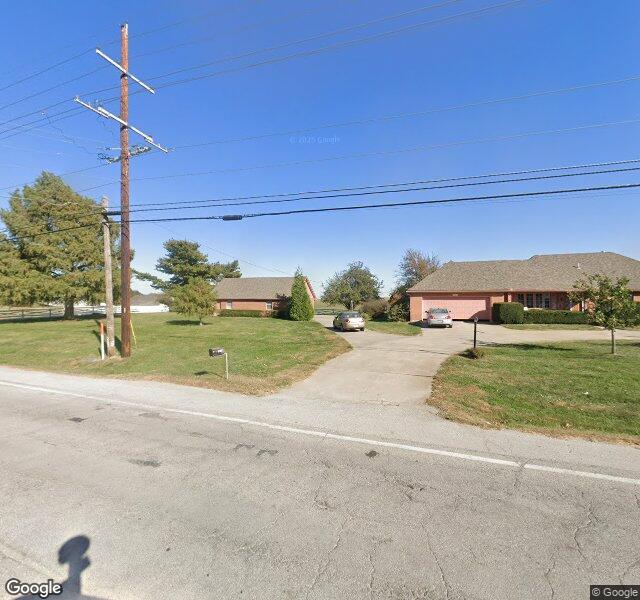
RIVERBEND HEIGHTS HEALTH & REHABILITATION

1221 HIGHWAY 13 SOUTH, LEXINGTON, MO 64067 (660) 259-4695
For profit - Limited Liability company 154 Beds MO OP HOLDCO, LLC Data: November 2025
Trust Grade
55/100
#191 of 479 in MO
Last Inspection: June 2024

Within standard 12-15 month inspection cycle. Federal law requires annual inspections.

Overview

Riverbend Heights Health & Rehabilitation has received a Trust Grade of C, indicating it is average compared to other facilities, not particularly great but not terrible either. It ranks #191 out of 479 nursing homes in Missouri, placing it in the top half of the state, and #2 out of 5 in Lafayette County, meaning only one local option is rated higher. Unfortunately, the facility's situation appears to be worsening, with the number of issues increasing from 6 in 2023 to 10 in 2024. Staffing is relatively stable, rated 3 out of 5 stars with a turnover rate of 44%, which is better than the state average of 57%. There are no fines recorded, which is a positive sign, but there are concerns about incidents, including one serious case where a resident was injured due to a physical altercation with another resident, and multiple cleanliness issues in the kitchen that could affect food safety.

Trust Score
C
55/100
In Missouri
#191/479
Top 39%
Safety Record
Moderate
Needs review
Inspections
Getting Worse
6 → 10 violations
Staff Stability
○ Average
44% turnover. Near Missouri's 48% average. Typical for the industry.
Penalties
✓ Good
No fines on record. Clean compliance history, better than most Missouri facilities.
Skilled Nurses
⚠ Watch
Each resident gets only 23 minutes of Registered Nurse (RN) attention daily — below average for Missouri. Fewer RN minutes means fewer trained eyes watching for problems.
Violations
⚠ Watch
37 deficiencies on record. Higher than average. Multiple issues found across inspections.
★★★☆☆
3.0
Overall Rating
★★★☆☆
3.0
Staff Levels
★★★★★
5.0
Care Quality
★★☆☆☆
2.0
Inspection Score
Stable
2023: 6 issues
2024: 10 issues

The Good

  • 5-Star Quality Measures · Strong clinical quality outcomes
  • Full Sprinkler Coverage · Fire safety systems throughout facility
  • No fines on record
  • Staff turnover below average (44%)

    4 points below Missouri average of 48%

Facility shows strength in quality measures, fire safety.

The Bad

3-Star Overall Rating

Above Missouri average (2.5)

Meets federal standards, typical of most facilities

Staff Turnover: 44%

Near Missouri avg (46%)

Typical for the industry

Chain: MO OP HOLDCO, LLC

Part of a multi-facility chain

Ask about local staffing decisions and management

The Ugly 37 deficiencies on record

1 actual harm
Jun 2024 9 deficiencies
CONCERN (D)

Potential for Harm - no one hurt, but risky conditions existed

Deficiency F0679 (Tag F0679)

Could have caused harm · This affected 1 resident

**NOTE- TERMS IN BRACKETS HAVE BEEN EDITED TO PROTECT CONFIDENTIALITY** Based on observation, interview, and record review, the facility failed to ensure activities identified as being of interest wer...

Read full inspector narrative →
**NOTE- TERMS IN BRACKETS HAVE BEEN EDITED TO PROTECT CONFIDENTIALITY** Based on observation, interview, and record review, the facility failed to ensure activities identified as being of interest were offered daily on a 1:1 basis or adapted to meet the resident's cognitive and physical limitations and offered at bedside or at a time when the resident was likely to be out of bed for one sampled resident (Resident #72) out of 19 sampled residents. The facility census was 92 residents. Review of the facility's Resident Self-Determination and Participation policy, revised February, 2021 showed: -Each resident is allowed to choose activities consistent with his/her interests. -Staff will: --Gather information about the residents' personal preferences on initial assessment and periodically thereafter and document preferences in the medical record. --Include information about the resident's preferences in the care planning process. --Document medical limitations affecting participation. -Residents are provided assistance as needed to engage in preferred activities on a routine basis. 1. Review of Resident 72's admission Record showed the resident was admitted to the facility on [DATE] with diagnoses that included: -Huntington's disease (an inherited disease in which nerve cells in the brain break down over time resulting in progressive movement, cognitive, and psychiatric symptoms). -Major depression (a state of intense sadness or despair that has advanced to the point of being disruptive to an individual's social functioning and/or activities of daily living). -Anxiety disorder (a psychiatric disorder causing feelings of persistent anxiety). -Restlessness and agitation. Review of the resident's Isolation From Friends/Family Care Plan, initiated 6/12/23 showed: -Encourage phone call, Face Time, Skype, and Video phone. -Encourage participation in Activity program. -Offer supportive visits and in-room activities aided by technology as appropriate. Review of the resident's Activities Evaluation, dated 6/15/23, showed the resident liked: -Going to church. -BINGO. -Gardening and being outdoors. -Music and talk radio. -Looking at nature magazines. -Listening to country music, especially [NAME]. -Note: Information for the evaluation was provided by family and/or friend. Review of the resident's admission Minimum Data Set (MDS - a federally mandated assessment instrument completed by facility staff for care planning), dated 6/18/23, showed the resident: -Was able to be understood and could understand others. -Had adequate hearing without hearing aids. -Could read large print without eyeglasses. -Had problems with memory and recall and was significantly cognitively impaired. -Had no behaviors. -Required supervision, moderate assistance, or maximal assistance with Activities of Daily Living (ADL - dressing, grooming, bathing, eating, and toileting). -Required supervision with transfers and walking. -Enjoyed the following activities: --Listening to music. --Being around animals. --Doing things with groups of people. --Spending time outdoors. Review of the resident's Meeting Emotional, Intellectual, Physical and Social Needs Care Plan, initiated 6/18/23, showed: -The resident was dependent upon staff to meet his/her needs related to his/her neurocognitive disorder and need for ADL assistance. -Activities should be compatible with the resident's physical and mental capabilities and interests and be adapted as needed such as large print, holders if resident lacks hand strength, and task segmentation. -Provide a program of activities that is of interest, allowing choice and self-expression. -Provide escort to activity functions and assistance with games and crafts. -Engage in simple, structured activities such as going outdoors, simple gardening, and being out on the patio. -The resident prefers: --Country music stations and loves [NAME]. --Church or religious TV channels and activities. --Talk shows. --Being in groups of people. --Being outdoors, gardening, and sitting outdoors. Review of the resident's Activity Calendar, dated January 2024, showed: -Church Services on Wednesdays at 10:00 A.M. (unit location was not indicated). -Karaoke on Fridays at 10:00 A.M. -No 1:1, individualized, or bedside activity time was designated for the resident's unit. Review of Activity Participation sheets, dated January 2024, showed the resident attended: -A snowman craft on 1/3/24. -Painting/crafts on 1/8/24. -Coffee/hot chocolate on 1/8/24. -BINGO on 1/9/24. -Crafts on 1/25/24. -Note: The resident did not participate in any music, pet/animal, 1:1, or religious activities. There was no documentation why he/she didn't engage in any of these activities of interest. Review of the resident's Activity Calendar, dated February 2024, showed: -Church services on Wednesdays at 10:00 A.M. (unit location was not specified). -Karaoke on Fridays at 1:00 P.M. -Only two activities besides Karaoke were on the monthly activity calendar for the resident's unit. -No 1:1, individualized, or bedside activity time was designated on the calendar for the resident's unit. Review of the resident's participation sheets, dated February 2024, showed the resident attended: -A Valentines activity on 2/2/24. -Valentine's cupcakes/punch and cards on 2/14/24. -BINGO and ice cream on 2/20/24. -BINGO on 2/27/24. -[NAME] Day party on 2/29/24. -Note: The resident did not participate in any music, pet/animal, 1:1, or religious activities. There was no documentation why he/she didn't engage in these activities. Review of the resident's Activity Calendar, dated March 2024, showed: -Church services on Wednesdays at 10:00 A.M. (unit location was not specified). -Karaoke on 3/22/24 and 3/29/22. The time and specific unit location were not indicated. -No activity except shopping lists was mentioned for the resident's unit for the entire month. Review of the resident's participation sheets, dated March 2024, showed the resident attended: -BINGO on 3/5/24. -Oreo Cookie Day on 3/6/24. -BINGO on 3/12/24. -Salt art on 3/14/24. -BINGO on 3/14/24. -Trivia on 3/27/24. -Easter Bunny activity on 3/29/24. -Note: The resident did not participate in any music, pet/animal, 1:1, or religious activities. There was no documentation why he/she didn't engage in these activities. Review of the resident's significant change MDS, dated [DATE], showed the resident: -Was receiving hospice services (comfort care for a person with a serious illness who is approaching the end of life). -Had inattention and disorganized thinking. -Wandered four to six days a week, but wandering did not significantly intrude on others. -Required moderate assistance with most ADLs. -Was independent with repositioning and walking. -The following activities were very important: --Using the phone. --Listening to music. --Being around animals. --Doing things with groups of people. --Going outside for fresh air. --Participating in religious services. Review of the resident's Activity calendar, dated April 2024, showed: -Church services were scheduled on Wednesdays at 10:00 A.M. (unit location was not specified). -Karaoke was scheduled on the first three Fridays of the month. A time and unit were not indicated on any of the dates. -There were no 1:1 or bedside activity times designated for the resident's unit. Review of the resident's Activity Participation logs, dated April 2024, showed: -BINGO on 4/2/24. -Truths and Lies game on 4/4/24. -BINGO on 4/11/24. -BINGO on 4/16/24. -BINGO on 4/23/24. -Note: The resident did not participate in any outdoor, patio, gardening, music, pet/animal, 1:1, or religious activities. There was no documentation why he/she didn't engage in any of these activities of interest. Review of the resident's Activity Calendar, dated May 2024, showed: -Outdoor games for Units 2 and 3 were scheduled on 5/6/24. -Bird Feeders was scheduled for Units 2 and 3 on 5/21/24. -Karaoke was scheduled on three of the five Fridays in May. No unit or times were specified on any of the dates. -No church services, religious music or other music activities were on the schedule. -No 1:1 or bedside activity times were designated on the calendar. Review of the resident's Activity Participation sheets, dated May 2024, showed the resident participated in the following: -BINGO on 5/10/24. -Hot chocolate on 5/14/24. -Chocolate Chip Day on 5/15/24. -Donuts and Fruit Kabobs on 5/22/24. -Note: The resident did not participate in any outdoor, patio, gardening, music, pet/animal, 1:1, or religious activities. There was no documentation why he/she didn't engage in these activities. Review of the residents' Activity Calendar, dated June 2024, showed: -There was no mention of any activity on the resident's unit. -Social Hour outside was scheduled on 6/3/24 for Units 2 and 3 only. -No church services or religious music activity was on the schedule. -Karaoke was on the schedule for 6/14/24 and 6/28/24 for Units 2 and 3 only. -There were no 1:1 or bedside activity times shown for the resident's unit. Review of the resident's Activity Participation sheets, dated 6/1/24 to 6/13/24, showed the resident participated in: -[NAME] video on 6/5/24. -BINGO on 6/7/24. -Hydration station on 6/12/24. -Note: The resident did not participate in any outdoor, gardening, music, pet/animal, 1:1, or religious activities. There was no documentation why he/she didn't engage in these activities of interest. Observation on 6/10/24 between 10:30 A.M. and 11:35 A.M., showed: -The Activity Director and Activity Assistants A and B were in the dining room and were observed interacting with some of the residents in the area. -At 11:04 A.M., the resident was observed lying quietly in bed covered in a blanket. The resident was not engaged in a group, 1:1 activity, or interaction with staff and no music was being played for the resident. -Residents who smoked had gone outside during the cooler morning hours. -No other residents were given the opportunity to go outside in the morning. Observation on 6/10/24 between 1:00 P.M. and 2:00 P.M., showed: -The resident was not engaged in a group or 1:1 activity or interaction with staff or other residents. -No activity was on the calendar for any of the units for the 1:00 P.M. to 2:00 P.M. time period. Observation on 6/11/24 between 9:30 A.M. and 11:10 A.M., showed: -The resident was not engaged in a group, music, or 1:1 activity or interaction with staff. -At 9:41 A.M. the resident was observed lying in bed with a blanket covering his/her head. -At 9:50 A.M. Activity Aides A and B were observed going throughout the unit and offering beverages to residents while the Dietary Manager offered residents cookies. -Residents who smoked had gone outside during the cooler morning hours. -No other residents were given the opportunity to go outside in the morning. Observation on 6/11/24 between 1:05 P.M. and 2:00 P.M., showed: -The resident was not engaged in a group or 1:1 activity or interaction with staff or other residents. -No activity was shown as scheduled for any of the units for the 1:00 P.M. to 2:00 P.M. time period. -The calendar showed BINGO on 6/11/24 with no time or unit specified and Unit 2 Shopping lists, with no time specified. Observation on 6/12/24 from 9:23 A.M. to 10:35 A.M., showed: -The resident was not engaged in a group or 1:1 activity or in interactions with staff. -At 9:26 A.M., the resident was in bed with eyes closed. -At 10:08 A.M., the resident walked into the common area and sat at a table with another resident. The two residents did not interact, and staff in the common area did not interact with the resident during this time. -No music was being played for residents. -Residents who smoked had gone outside during the cooler morning hours. -No other residents were given the opportunity to go outside in the morning. Observation on 6/13/24 between 8:40 A.M. and 9:30 A.M., showed: -The resident was not engaged in a group or 1:1 activity or in interaction with staff. -At 9:20 A.M., the resident entered the common area. He/She stood near the Nurses' station. Certified Nurse Aide (CNA) A told the resident to sit at a table, but did not otherwise greet or interact with him/her. A few minutes later CNA A gave the resident his/her breakfast without interacting with the resident. Observation on 6/14/24 between 8:50 A.M. and 9:25 A.M. and at 1:30 P.M., showed: -The resident was not engaged in a group or 1:1 activity or in any interaction with others. -No activities were taking place on the unit during the observation times. -Donuts with Dad was scheduled on 6/14/24 for Unit 2 at 10:00 A.M. and for Unit 3 at 10:45 A.M. Karaoke was scheduled on 6/14/24 and 6/28/24 for Unit 2 at 2:00 P.M. and for Unit 3 at 3:00 P.M., but was not shown as scheduled for the the resident's unit. During an interview on 6/14/24 at 8:10 A.M., Activity Assistant B said: -The resident would sit at the table briefly during BINGO, but couldn't stay focused on the activity even with prompting. -The resident mainly liked consuming food during social activities. During an interview on 6/14/24 at 10:11 A.M., Activity Assistant A said: -Whatever activities were planned for Units 2 and 3 were usually done on the Serenity Unit (the resident's unit) as well, although they usually didn't put Serenity on the monthly calendar. Serenity didn't have a separate monthly calendar. -One of the hospice chaplains did the church services. They either did them on the Serenity Unit or on Unit II depending on how many residents were up on the Serenity Unit. If the services were done on Unit II, the residents on the Serenity Unit didn't attend because that would confuse them, and no alternate activity was scheduled on Serenity. -Church services used to be every Wednesday, but for the past couple of months they were every other Wednesday. When church took place on the Serenity Unit the chaplain usually played religious music on his/her phone. Activity staff brought the Serenity Unit residents to the church services when they were held on the unit, so they knew which Serenity residents attended. -Residents who had difficulty focusing on typical activities could sit during Karaoke or eat during a food activity. If they seemed to be focusing at any point, activity staff documented the resident participated. -Residents who had difficulty focusing could participate in 1:1 activities, go outside, or listen to music. -The resident was mainly active in drinking coffee and eating donuts during social activities. -He/She didn't know what kind of music the resident liked but the resident was capable of watching others during karaoke. -The resident didn't have good hand motor skills, but was capable of watching while a staff person did a craft or activity and could understand if staff talked about the activity they were doing. -The resident was capable of patting down soil with assistance if someone planted a plant or flower and could listen to music. -The resident usually wasn't awake at 10:00 A.M. when morning activities took place. -Activity staff had done some 1:1 activities with four residents on the Serenity Unit, but they hadn't done 1:1 activities with the resident. During an interview on 6/14/24 at 12:21 P.M., the Director of Nursing (DON) said: -Activities should be offered daily for all residents who would like them. -Simple group activities and individual activities should be offered to residents who had difficulty focusing. Ideas of simple activities were looking at magazine pictures, making a collage of cut out pictures, and church activities focusing on music. There were pianos on all the units, and someone could play the piano for residents. -The resident liked to watch others in group activities and might like sensory items and activities. -A resident's activity program should reflect the resident's interests.
CONCERN (D)

Potential for Harm - no one hurt, but risky conditions existed

Deficiency F0699 (Tag F0699)

Could have caused harm · This affected 1 resident

**NOTE- TERMS IN BRACKETS HAVE BEEN EDITED TO PROTECT CONFIDENTIALITY** Based on observation, interview, and record review, the facility failed to ensure one sampled resident (Resident #80) who had a ...

Read full inspector narrative →
**NOTE- TERMS IN BRACKETS HAVE BEEN EDITED TO PROTECT CONFIDENTIALITY** Based on observation, interview, and record review, the facility failed to ensure one sampled resident (Resident #80) who had a diagnosis of Post-Traumatic Stress Disorder (PTSD - a mental health condition that is triggered by a terrifying event - either experiencing it or witnessing it; symptoms may include flashbacks, nightmares, severe anxiety, uncontrollable thoughts about the event and feelings of isolation) received trauma based interventions including ensuring the resident received meal service when he/she was in full view of staff during meal service, out of 19 sampled residents. The facility census was 92 residents. Review of Trauma-Informed Care Implementation Center (https://www.traumainformedcare.chcs.org/what-is-trauma-informed-care/), copyright 2021, showed: -Trauma-informed care shifts the focus from What's wrong with you? to What happened to you? -A trauma-informed approach to care acknowledges that health care organizations and care teams need to have a complete picture of a patient's life situation - past and present - in order to provide effective health care services with a healing orientation. -Adopting trauma-informed practices can potentially improve patient engagement, treatment adherence, and health outcomes, as well as provider and staff wellness. It can also help reduce avoidable care and excess costs for both the health care and social service sectors. -Trauma-informed care seeks to: --Realize the widespread impact of trauma and understand paths for recovery. --Recognize the signs and symptoms of trauma in patients, families, and staff. --Integrate knowledge about trauma into policies, procedures, and practices; and --Actively avoid re-traumatization. Review of the facility Trauma Informed Care policy, dated 2021, showed: -Trauma informed care is culturally sensitive and person-centered. -Caregivers are taught strategies to help eliminate, mitigate or sensitively address a resident's triggers (anything - a person, place, thing, or situation - that is a reminder of a past traumatic experience). -Strategies included to interact with all residents in a manner that is welcoming and kind without being intrusive. Review of the facility Dining Experience policy, dated 2021, showed: -The dining experience will be person-centered with the purpose of enhancing each resident's quality of life and being supportive of each resident's needs during dining. -Residents will be involved in choosing where to eat and service staff notified of location selected. 1. Review of Resident #80's Face Sheet showed: -He/she was admitted to the facility on [DATE]. -He/she had a diagnosis of PTSD. Review of the resident's care plan, dated 3/12/24, showed: -He/she had prior trauma related to homelessness with triggers noted as unknown, had a diagnosis of PTSD, a potential psychosocial well-being problem related to anxiety (a feeling of worry, nervousness, or unease, typically about an imminent event or something with an uncertain outcome) and lack of motivation, he/she experienced loneliness and isolation and had a potential nutritional problem. -Goals included that he/she would have his/her physical and emotional needs met without increased emotional distress, he/she would have no indications of a psychosocial well-being problem and he/she would maintain adequate nutritional status. -Interventions included that staff would serve his/her ordered diet, explain and reinforce to him/her the importance of maintaining his/her diet and encourage him/her to comply. Review of the resident's Pre-admission Screening and Resident Review (PASRR Level II, a person-centered evaluation that is completed for anyone identified by the Level I Screening as having, or suspected of having, a PASRR condition, including serious mental illness or related condition) Summary of Findings, dated 5/17/24, showed: -He/she did have a PASRR related disability of a serious mental illness. -His/her needs could be met in a nursing facility. -He/she did not have specialized services beyond those typically available in a nursing facility. -He/she had been homeless prior to admission to the facility and did not associate with his/her family. -His/her diagnoses included anxiety and depression. -He/she had a history of trauma - homelessness. and brain tumor surgery at age [AGE]. -He/she did not require mental health specialized services and his/her needs could be met in a nursing facility. -He/she said he/she was not eating what he/she should be eating due to the brilliance of the kitchen not washing a banana that still had a label on it and was placed on top of his/her sausage and egg. -He/she received antidepressant medications (type of medicine used to treat clinical depression or prevent it recurring). Review of the resident's quarterly Minimum Data Set (MDS - a federally mandated assessment instrument completed by facility staff for care planning), dated 6/11/24, showed: -He/she was cognitively intact. -He/she had little interest or pleasure in doing things, feeling down, depressed or hopeless, poor appetite or overeating, feeling bad about himself/herself, trouble concentrating, had thoughts he/she would be better off dead or of hurting himself/herself. -He/she had no behavioral symptoms. -He/she had anxiety, depression and PTSD. -He/she received antidepressant medication. Continuous observation on 6/13/24 from 12:05 P.M. to 12:25 P.M., showed: -The resident was seated in an open area just in front of the wide entryway to the dining room in full view of staff passing lunch trays in the dining room. -Staff in the dining room passed trays to all residents in the dining room and then passed hall trays to rooms on both sides of the nursing station directly across from the dining room, and passed by the resident with each hall tray delivery. -Following completion of staff passing hall trays at 12:25 P.M., the kitchen window rolling shade was pulled down. -The resident was not served a lunch tray. During an interview on 6/13/24 at 12:26 P.M., the resident said: -The kitchen had closed, and no one gave him/her lunch. -He/she had been where he/she always was during the lunch meal service. -The staff knew that was where he/she usually sat, everyone could see him/her, and the staff walked by him/her when they passed room trays. -The staff could see he/she did not get his/her lunch, they just did not care. -He/she guessed he/she was invisible, and no one spoke to him/her or got him/her a lunch meal and that happened often, staff just ignored him/her. During an interview on 6/13/24 at 12:31 P.M., Certified Nursing Assistant (CNA) B said: -The resident got a room tray. Observation on 6/13/24 at 12:32 P.M., showed: -There was no lunch tray in the resident's room. -The resident was not in his/her room. During an interview on 6/13/24 at 12:35 P.M., CNA B said: -The resident's meal card must not have been placed back in with the other residents' meal cards. -They used the meal cards in preparing and delivering meals. -The kitchen staff prepared the meals, and the direct care staff delivered the meals to the residents. -He/she did not see that the resident had not been served a meal. -He/she would get a meal for the resident. Observation and interview on 12/13/24 at 12:42 P.M., showed: -CNA B had a lunch meal on a tray and he/she said he/she was taking it to the resident's room. During an interview on 6/13/24 at 12:46 P.M., CNA B said, -He/she took the resident's lunch to him/her. -The resident refused his/her meal, saying he/she did not want his/her meal now. During an interview on 6/14/24 at 8:05 A.M., the resident said: -When staff walked past him/her, did not speak to him/her, and did not get him/her a meal, he/she felt anxious and alone and as if no one cared about him/her. -It reminded him/her of when he/she was a child and was bullied and made fun of and of being homeless and not knowing if he/she would have any food to eat - it made him/her feel alone and like no one cared about him/her. During an interview on 6/14/24 at 10:47 A.M., the Social Services Director said: -The resident did have PTSD. -The resident complained about the food at the facility. -The resident did not have problem behaviors at the facility. -The resident had trauma from being made fun of as a child due to having had a brain tumor and seizures and also he/she had been homeless prior to his/her facility admission. -He/she could see how not getting a meal when he/she was out where staff could see him/her at mealtime could trigger an emotional response, memories of being homeless and not having food, and being made fun of when a child. During an interview on 6/14/24 at 12:20 P.M., the Director of Nursing (DON) said: -The resident ate most of his/her meals in the dining room. -The facility had recently started a new meal service process that involved laminated meal cards. -At the end of the supper meal service, the meal cards were to be gathered to ensure all the cards had been collected. -When passing meals to residents, if the resident was not in the dining room, staff was to take the resident's meal to their room. -Normally if staff saw a resident without a meal, they asked if the resident got a meal tray and if they wanted a meal tray. -He/she would expect that the staff who normally served the meal trays would have noticed that the resident did not get his/her meal and get him/her his/her food. -The resident had a diagnosis of PTSD, and not being served a meal could be a trigger of his/her past trauma. -With the new system, there should not have been any resident tray missing and not served. -The CNA's served the trays and a licensed nurse oversaw the dining room and meal service. -The meal cards were the key to ensuring every resident was served their meal. -The CNA's and the licensed nurses were responsible for documenting each resident's meal intake for each meal.
CONCERN (D)

Potential for Harm - no one hurt, but risky conditions existed

Deficiency F0804 (Tag F0804)

Could have caused harm · This affected 1 resident

Based on observation, interview and record review, the facility failed to ensure that dietary staff followed the recipe for pureed (cooked food, that has been ground, pressed, blended or sieved to the...

Read full inspector narrative →
Based on observation, interview and record review, the facility failed to ensure that dietary staff followed the recipe for pureed (cooked food, that has been ground, pressed, blended or sieved to the consistency of a creamy paste or liquid) eggs, which resulted in the eggs being unpalatable. This practice potentially affected two residents with pureed diets. The facility census was 92 residents. 1. Observation on 6/13/24 from 6:08 A.M. to 6:24 A.M., during the breakfast meal preparation, showed: -A disorganized recipe book on one of the tables with numerous amount of the pages which were not in order. -Dietary [NAME] (DC) A made pureed eggs with no recipe book open. -DC A added cold milk to the eggs and an unmeasured amount of thickener. -The state surveyor tasted the pureed eggs, and the eggs had a bland taste. -DC A did not taste the eggs himself/herself. -DC A placed the pureed eggs in the steam table. Review of the undated recipe for 100 servings of eggs showed: -Twelve 0.5 pounds (lbs.) portions of pasteurized liquid egg product. -Two tablespoons (Tbsp) of ground black pepper. -Two Tbsp. salt. -One 0.25 cup of melted margarine. -For pureed steps: Remove the desired number of servings and add nutritive liquid, milk, broth etc. Blend until desired consistency add approved thickener to achieve desired consistency if needed. During an interview on 6/13/24 at 6:42 A.M., DC A said: -He/she did not add salt or pepper to the eggs before cooking them. -He/she did not add margarine either. -The recipe book was disorganized which made it hard to find recipes. During an interview on 6/13/24 at 9:00 A.M., DC A said he/she was not trained in making the pureed foods correctly, because he/she was told not to add any salt by a previous Dietary Manager (DM). During an interview on 6/14/24 at 9:18 A.M., DC B said: -He/she tasted all pureed foods except eggs and onions. -If he/she was not able to taste something with eggs and onions in it, he/she would ask one of the Dietary Aides to taste that food item. During an interview on 6/14/24 at 9:35 A.M., the Dietary Manager (DM) said: -He/she expected the cooks to taste everything they cook. -DC A confirmed to him/her that a previous DM said not to add salt to the foods.
CONCERN (E)

Potential for Harm - no one hurt, but risky conditions existed

Safe Environment (Tag F0584)

Could have caused harm · This affected multiple residents

**NOTE- TERMS IN BRACKETS HAVE BEEN EDITED TO PROTECT CONFIDENTIALITY** Based on observation and interview, the facility failed to maintain the commode riser in resident room [ROOM NUMBER] in an easil...

Read full inspector narrative →
**NOTE- TERMS IN BRACKETS HAVE BEEN EDITED TO PROTECT CONFIDENTIALITY** Based on observation and interview, the facility failed to maintain the commode riser in resident room [ROOM NUMBER] in an easily cleanable condition; failed to maintain the restroom ceiling vents free of a heavy buildup of dust inside the ceiling vents in resident rooms 17, 60, 61, 71, 83, 81, 80; failed to maintain the ceiling vent in Greystone shower room free from a heavy buildup of dust; failed to maintain the commode seat in the Greystone shower room fee of numerous indentations; failed to maintain a personal fan free of dust in resident room [ROOM NUMBER]; failed to maintain the ceiling fans in the resident smoke room free of a buildup of dust. The facility census was 92 residents. 1. Observation on 6/10/24 at 1:47 P.M., with the Maintenance Director, showed the presence of rust spots on the commode riser (assistive devices to improve the accessibility of toilets to older people or those with disabilities. They can aid in transfer from wheelchairs and may help prevent falls) in resident room [ROOM NUMBER] which caused the commode riser to be not easily cleanable. During an interview on 6/10/24 at 1:48 P.M., the Maintenance Director said he/she did not know the commode riser had rust spots but would have to get that one changed. During a phone interview on 6/21/24 at 12:19 P.M., the Maintenance Director said facility staff was supposed to tell him/her about the commode risers, because he/she was not asked to check those. 2. Observation on 6/10/24 at 2:30 P.M., with the Maintenance Director, showed a heavy buildup of dust in the restroom ceiling vent of resident room [ROOM NUMBER]. 3. Observation on 6/10/24 at 3:08 P.M., showed a personal fan with a heavy buildup of dust in resident room [ROOM NUMBER]. During a phone interview on 6/21/24 at 12:33 P.M., the Housekeeping Director said: -He/she usually had the maintenance department clean the fans because they had the tools to take the fans apart. -The housekeeping department had an extendable duster that they can use to clean the ceiling vents. 4. Observation on 6/11/24 at 9:41 A.M., showed the following; -A heavy buildup of dust in the ceiling vent of the Greystone Shower room. -Numerous indentations on the commode seat which caused the commode seat in the Greystone shower room to not be easily cleanable. During an interview on 6/11/24 at 9:42 A.M., the Maintenance Director said staff should have notified him/her about that commode seat. During a phone interview on 6/21/24 at 12:37 P.M., the Housekeeping Supervisor said the housekeeping employees do check the commode seats for damage. 5. Observations on 6/11/24 with the Maintenance Director showed: -At 12:36 P.M., a heavy buildup of dust inside the restroom ceiling vent in resident room [ROOM NUMBER]. -At 12:37 P.M., a heavy buildup of dust inside the restroom ceiling vent in resident room [ROOM NUMBER]. -At 12:59 P.M., a heavy buildup of dust inside the restroom ceiling vent in resident room [ROOM NUMBER]. -At 1:50 P.M., a heavy buildup of dust inside the restroom ceiling vent in resident room [ROOM NUMBER]. -At 1:51 P.M., a heavy buildup of dust inside the restroom ceiling vent in resident room [ROOM NUMBER]. -At 1:53 P.M., a heavy buildup of dust inside the restroom ceiling vent in resident room [ROOM NUMBER]. -At 2:03 P.M., a heavy buildup of dust inside the restroom ceiling vent in resident room [ROOM NUMBER]. -At 2:06 P.M., a heavy buildup of dust in the ceiling fans in the resident smoke room. During a phone interview on 6/21/24 at 12:17 P.M., the Maintenance Director said the following: -The housekeeping department was supposed to clean the ceiling vents. -All the attachments on ceilings were the responsibility of the housekeeping department. -The housekeepers have handles on their cleaning tools that can extend to reach attachments such as ceiling vents and fans. During a phone interview on 6/21/24 at 12:33 P.M., Housekeeping Director said the housekeeping department had an extendable duster that they could use to clean the ceiling vents.
CONCERN (E)

Potential for Harm - no one hurt, but risky conditions existed

Quality of Care (Tag F0684)

Could have caused harm · This affected multiple residents

**NOTE- TERMS IN BRACKETS HAVE BEEN EDITED TO PROTECT CONFIDENTIALITY** Based on interview and record review, the facility failed to have parameters listed in the medication orders for medications tha...

Read full inspector narrative →
**NOTE- TERMS IN BRACKETS HAVE BEEN EDITED TO PROTECT CONFIDENTIALITY** Based on interview and record review, the facility failed to have parameters listed in the medication orders for medications that contained Acetaminophen (medication used to treat pain and reduce fever) for three sampled residents (Residents #38, #52, and #54) of out of 19 sampled residents. The facility census was 92 residents. A policy was requested on medication parameters and the facility did not provide one. 1. Review of Resident #54's admission Record showed the resident was admitted to the facility on [DATE]. Review of the resident's Medication Review Report, dated June 2024, showed the following orders: -Acetaminophen 325 milligram (mg) give two tablets by mouth every six hours as needed for pain, order was dated 2/6/22 -The order failed to have the parameters of not to exceed three grams of Acetaminophen in 24 hours from all sources. 2. Review of Resident #38's admission Record showed the resident was admitted to the facility on [DATE]. Review of the resident's Medication Review Report, dated June 2024, showed the following orders: -Acetaminophen 325 mg tablet give 650 mg by mouth at bedtime for pain order dated 2/28/22. -Acetaminophen 325 mg give two tablets by mouth every four hours as needed for pain order dated 6/14/21. -Both orders failed to have the parameters of not to exceed three grams of Acetaminophen in 24 hours from all sources. 3. Review of Resident #52's admission Record showed the resident was admitted to the facility on [DATE]. Review of the resident's Medication Review Report, dated June 2024, showed the following orders: -Acetaminophen Extended Release 650 mg give 650 mg by mouth every six hours as needed for pain-mild order dated 12/29/22. -Hydrocodone-Acetaminophen 10 mg of Hydrocodone with 325 mg of Acetaminophen compounded together. Give one tablet by mouth four times a day for pain and/or fever order dated 1/8/23. -Both orders failed to have the parameters of not to exceed three grams of Acetaminophen in 24 hours from all sources. 4. During an interview on 6/13/24 at 8:07 A.M., Certified Medication Technician (CMT) A said: -Medications that contained Acetaminophen should have the parameters of not to exceed three grams of Acetaminophen in 24 hours from all sources. -When the parameters were not on the medication order he/she would inform the charge nurse. -The parameters were needed to be on the order because too much Acetaminophen could be toxic. -There were no parameters in the Acetaminophen orders for Residents #38, #52 and #54. -Resident #38, #52, and #54 should have had parameters in the Acetaminophen orders. During an interview on 6/13/24 at 8:57 A.M., CMT B said: -The parameters of not exceed three grams of Acetaminophen in 24 hours from all sources should be in the medication order of all medications that contained Acetaminophen. -When the parameters were not there, he/she would have told the charge nurse. -To much Acetaminophen can be toxic. During an interview on 6/13/24 at 9:00 A.M., Licensed Practical Nurse (LPN) A said: -The parameter of not to exceed three grams of Acetaminophen from all sources in 24 hours should be a part of the medication order. -When the parameters were not a part of the medication order, he/she would have notified the doctor, and received an order for the parameters to be added to the medications order. -More than three grams of Acetaminophen could be toxic. -There were no parameters in the Acetaminophen orders for Resident #38, #52, and #54. -There should have been parameters in the Acetaminophen orders for Resident #38, #52, and #54. During an interview on 8/23/23 at 8:37 A.M., the Director of Nursing (DON) said: -It was his/her expectation that all orders that contained Acetaminophen would have the parameter of not to exceed three grams of Acetaminophen in 24 hours from all sources. -It was his/her expectation that all nurses would have ensured that this parameter was added to all orders that contained Acetaminophen. -It was his/her expectation that when the parameter was missing on an order, the nurse that discovered it would have contacted the doctor and received the order to add the parameter. -It was the responsibility of the Assistant Director of Nursing to audit all the new orders added to a resident's medical record. -He/she was unaware of the missing parameters for medications that contained Acetaminophen. -It was ultimately his/her responsibility to ensure that all medications that contained Acetaminophen had the parameter on all the orders.
CONCERN (E)

Potential for Harm - no one hurt, but risky conditions existed

Safe Environment (Tag F0921)

Could have caused harm · This affected multiple residents

**NOTE- TERMS IN BRACKETS HAVE BEEN EDITED TO PROTECT CONFIDENTIALITY** Based on observation and interview, the facility failed to maintain the sewer pipe, in the area between the dry goods storage ro...

Read full inspector narrative →
**NOTE- TERMS IN BRACKETS HAVE BEEN EDITED TO PROTECT CONFIDENTIALITY** Based on observation and interview, the facility failed to maintain the sewer pipe, in the area between the dry goods storage room and the walk-in refrigerator, in good repair to prevent drainage from backing up into the storage room and the walk-in refrigerator; failed to maintain the fans in the laundry room free of a heavy buildup of dust; failed to maintain the area under the vending machines in the Serenity dining room free from a heavy buildup of dust; and failed to ensure the restroom ceiling vent was securely attached to the ceiling in resident room [ROOM NUMBER]. This practice potentially affected an unknown number of residents who used the Serenity Unit dining room and other resident use areas in the facility. The facility census was 92 residents. 1. Observation on 6/10/24 at 11:07 A.M., showed a brownish substance with particles, backed up through the drains in the dry goods storage room and the walk-in refrigerator and the presence of a pungent smell of standing water. During an interview on 6/11/24 at 10:27 A.M., the Maintenance Director said the drains in the area between the walk-in fridge and the dry goods storage area are collapsed, which affected the ability of the water to drain properly because the drainage pipes underground broke. During an interview on 6/13/24 at 8:37 A.M., the Dietary Manager (DM) said: -The drainage in that area of the facility had been backing up for at least 4 years when he/she worked at the facility previously. -He/she asked the housekeeping supervisor to obtain a drain enzyme to take away the smell. During an interview on 6/13/24 at 9:48 A.M., the Administrator said: -He/she knew the drain backed up, but did not know why. -He/she thought that it was only that one time, which was a few weeks prior to the survey. 2. Observation on 6/10/24 at 2:01 P.M., with the Maintenance Director showed a heavy buildup of dust under the vending machines in the Serenity Unit dining room. During an interview on 6/10/24 at 2:02 P.M., the Housekeeping Director said he/she had not asked the vending machine company to come to the facility and move the vending machines so that his/her staff could clean under the machines. 3. Observation on 6/10/24 at 2:11 P.M., with the Maintenance Director, showed the fans on the clothes folding side and the washing side in the laundry, had a heavy buildup of dust on the blades. During an interview on 6/10/24 at 2:12 P.M., the Housekeeping Director said he/she cleaned the fans in December 2023 when he/she first started, but has not cleaned the fans since. During a phone interview on 6/21/24 at 12:36 P.M., the Housekeeping Director said he/she usually had the maintenance department clean the fans because they have the tools to take the fans apart. 4. Observation on 6/11/24 at 1:31 P.M., with the Maintenance Director, showed the restroom ceiling vent in resident room [ROOM NUMBER] was loose. During an interview on 6/11/24 at 1:32 P.M., the Maintenance Director said there were a few missing screws on that vent, which would have held it securely to the ceiling.
CONCERN (E)

Potential for Harm - no one hurt, but risky conditions existed

Deficiency F0925 (Tag F0925)

Could have caused harm · This affected multiple residents

Based on observation and interview, the facility failed to maintain the area that was close to the window and the two-compartment sink, free of food debris and soiled dishes, which attracted ants to t...

Read full inspector narrative →
Based on observation and interview, the facility failed to maintain the area that was close to the window and the two-compartment sink, free of food debris and soiled dishes, which attracted ants to that area of the kitchen. This practice affected the kitchen. The facility census was 92 residents. 1. Observation on 6/13/24 at 6:16 A.M., 7:28 A.M., and 8:03 A.M., showed numerous dishes from the night before that were not washed and the presence of ants around the two compartment sink in the kitchen. During an interview on 6/13/24 at 8:43 A.M., after seeing the ants crawl in that area around the soiled dishes, the Dietary Manager (DM) said the dishes that were left at the window sill area should have been washed the previous night.
CONCERN (F)

Potential for Harm - no one hurt, but risky conditions existed

Food Safety (Tag F0812)

Could have caused harm · This affected most or all residents

**NOTE- TERMS IN BRACKETS HAVE BEEN EDITED TO PROTECT CONFIDENTIALITY** Based on observation and interview, the facility failed to maintain the floor under the deep fat fryer and the six burner stove ...

Read full inspector narrative →
**NOTE- TERMS IN BRACKETS HAVE BEEN EDITED TO PROTECT CONFIDENTIALITY** Based on observation and interview, the facility failed to maintain the floor under the deep fat fryer and the six burner stove free of a heavy grease buildup, maintain the wall mounted fan without dust; failed to identify an item in a 3 quart container in the reach-in fridge; failed to maintain the floors under the reach-in fridge and under the steam table free from debris and food particles; failed to refrigerate items which stated refrigerate after opening on the label; failed to maintain light fixtures and sprinkler heads in the kitchen, free of dust and grease; failed to store the utensils in a container free from food debris; failed to label two containers of a powdery substance; failed to maintain the lower spray wand of the dishwasher free from debris in the nozzles; failed to maintain the milk served in the Serenity kitchenette at a temperature close to or at 41 ºF (degrees Fahrenheit); failed to date the chicken with the date it was taken from the freezer; failed to clean the dishes from the previous night (6/12/24); failed to ensure the trash container in Serenity Court kitchenette was free of grime; failed to have enough dishes (silverware and coffee cups) to serve residents in the Serenity Court kitchenette; failed to ensure there was a thermometer which would be used for monitoring at the Serenity Court kitchenette; and failed to ensure that 7 of 14 cutting boards were in an easily cleanable condition. This practice potentially affected all residents. The facility census was 92 residents. 1. Observation on 6/10/24 from 10:51 A.M. to 11:11 A.M., during the initial kitchen tour, showed: -A buildup of grease and grime under the deep fat fryer. -A buildup of dust on the wall mounted fan. -An unidentified item in the reach-in fridge. -An unidentified item in a 3-quart container in the reach-in fridge. -A buildup of dust under the white reach-in fridge. -One bottle of beef paste, two containers of chicken base and one bottle of lemon juice which were opened, but not refrigerated according to label. -The presence of dust on the ceilings and on the sprinkler heads. -Utensils were stored in a container with food debris in it. -Two containers of a white powdery substance without a label. -The presence of grime, dishes and food debris under the steam table. -The presence of debris in the lower spray wand of the dishwasher. -The presence of grime and debris under the dishwasher. During an interview on 6/11/24 at 10:48 A.M., the facility Maintenance Director said the dietary department had not notified him/her about cleaning the sprinkler heads and the ceilings in the kitchen. 2. Observation on 6/13/24 from 5:52 A.M. to 9:40 A.M. during the breakfast meal preparation, showed: -A buildup of grease and grime under the deep fat fryer. -A buildup of dust on the wall mounted fan. -An unidentified item in the reach-in fridge. -An unidentified item in a 3-quart container in the reach-in fridge. -A buildup of dust under the white reach-in fridge. -One bottle of beef paste, two containers of chicken base and one bottle of lemon juice which were opened, but not refrigerated according to label. -The presence of dust on the ceilings and on the sprinkler heads. -Utensils were stored in a container with food debris in it. -Two containers of a white powdery substance without a label. -The presence of grime, dishes and food debris under the steam table. -The presence of debris in the lower spray wand of the dishwasher. -One box of chicken in the walk-in fridge, which was not dated with the date that box of chicken was taken from the freezer. -The presence of grime and debris under the dishwasher. -Dietary [NAME] (DC) A used a thermometer to check sausage without sanitizing the probe. -A buildup of grime on the floor of the walk-in fridge. -Seven cutting boards which were not easily cleanable because of numerous indentations and stains that could not be removed. During an interview on 6/13/24 at 6:02 A.M., Dietary Aide (DA) A said the substances in the two containers could be sugar and the containers should be labeled. During an interview on 6/13/24 at 8:39 A.M., the DM said: -The Assistant DM was the only one who cleaned the floor of the walk-in fridge. -The chicken should have been dated when it was taken from the freezer. -He/she could not tell how long the grease buildup behind the stove has been there. -The beef base and the lemon juice should have been refrigerated. -The containers of sugar should have been labeled. -The white reach-in refrigerator was the only fridge that was not cleaned. -He/she expected the dietary staff to sweep under the steam tables and behind the bread racks. -He/she had not had a chance to look at the all the cutting boards with numerous indentations, which rendered them not easily cleanable. -It has taken about a month to train all the dietary staff in cleaning the kitchen. -He/she spoke with the Regional Maintenance Director and the facility Maintenance Director about having the ceilings cleaned. -The nozzles of the dishwasher wands have not been cleaned in about 2 months because they do not have a regular dishwasher. 3. Observation on 6/13/24 from 7:10 A.M. to 8:04 A.M., during breakfast service at the Serenity Court kitchenette, showed: -Numerous unwashed dishes that were left from the night before. -One container of an unlabeled white substance. -Certified Nursing Assistant (CNA) C had to wait to deliver a tray to a resident because they were out of coffee cups. -The absence of a thermometer. -The presence of grime on the cover of the trash container. -The milk in the bottle on the counter had a temperature of 53.2 ºF after a small portion of milk was poured into a cup for measuring the temperature. -CNA A took a room tray from the kitchenette to resident room [ROOM NUMBER] without a plate cover. During an interview on 6/13/24 at 7:17 A.M., Certified Nurse's Assistant (CNA) D said the white powder in the container was thickener (a substance which can increase the viscosity of a liquid which is used to thicken sauces, soups, and puddings without altering their taste) but the label came off. During an interview on 6/13/24 at 7:36 A.M., DA A said the dietary department was out of plate covers. During an interview on 6/13/24 at 8:09 A.M., CNA C said they run out of coffee cups and silverware, and it was a usual occurrence. During an interview on 6/13/24 from 8:29 A.M. to 8:34 A.M., the DM said: -The dietary department was short of plate covers, bowls, coffee cups, silverware, and plates. -There was an extra thermometer and he/she needed to bring that thermometer to the Serenity kitchenette. -He/she forgot about the trash container in the Serenity kitchenette. -The dishes which were left in the Serenity kitchenette, should have been brought to the dishwashing room and washed. During an interview on 6/14/24 at 10:39 A.M., the Administrator said: -One of the reasons there may not be enough dishes, was it depended on the dietary staff and nursing staff picking up dishes in a timely manner after meals. -He/she was not sure what had happened to the plates because he/she had noticed an increase in the use of disposable paper/foam plates.
CONCERN (F)

Potential for Harm - no one hurt, but risky conditions existed

Room Equipment (Tag F0908)

Could have caused harm · This affected most or all residents

Based on observation, and interview, the facility failed to ensure the walk-in fridge operated at a temperature of 41 ºF (degrees Fahrenheit) or below, and failed to maintain the automated dishwa...

Read full inspector narrative →
Based on observation, and interview, the facility failed to ensure the walk-in fridge operated at a temperature of 41 ºF (degrees Fahrenheit) or below, and failed to maintain the automated dishwasher in good working order. This practice potentially affected all residents. The facility census was 92 residents. 1. Observation on 6/10/24 at 11:13 A.M., during the initial kitchen tour, showed the temperature of the walk-in fridge was 46.5 ºF (degrees Fahrenheit) after the thermometer was left in the walk-in fridge for about 10 minutes. Observation on 6/11/24 at 12:23 P.M., showed the temperature of the walk-in fridge was 46.4 ºF after the thermometer was left in the walk-in fridge for over an hour. During an interview on 6/11/24 at 12:24 P.M., the Maintenance Director said he/she had heard the walk-in fridge was not at the required temperature of 41 ºF, but he/she noticed the knob to control the temperature, was broken. During an interview on 6/13/24 at 8:29 A.M. the Dietary Manager (DM) said: -He/she had only been working for about a month. -The knob to control the temperature for the walk-in fridge was broken so he/she could not adjust the temperature of the walk-in fridge downward. During an interview on 6/14/24 at 9:33 A.M., the Assistant DM said it had been about 3 weeks since the walk-in fridge had not been operating at the correct temperature. During an interview on 6/14/24 at 10:16 A.M., the Maintenance Director said: He/she first found about the walk-in not operating at the proper temperature on Tuesday, 6/11/24, when he/she and the state surveyor looked at the temperature in the walk-in fridge and -There was not a knob on the controls to change the setting. During an interview on 6/14/24 at 10:41 A.M., the Administrator said he/she did not know about the walk-in fridge not having the proper temperature setting. 2. During an interview on 6/14/24 at 9:2 A.M., the DM said the following about the dishwasher: -One of the Dietary Aides (DA) delimed (to remove a buildup of lime from an area or something) the automated dishwasher. -The dish machine worked for 2-3 days. -The dishwasher was delimed again, and then it did not spray on the first cycle. -It was about 3 weeks ago that he/she told corporate maintenance and the facility Maintenance Director. -The facility Maintenance Director tried to fix it during the week of May 27 2024. -The facility Maintenance Director said on the week of 6/10/24 that he/she would have to call a service person. During an interview on 6/14/24 at 10:16 A.M., the Maintenance Director said the following: -Dietary personnel told him/her that the dishwasher was not spraying on the first cycle. -He/she had not had a chance to look at it. -He/she would go and take a look at the automated dishwasher, but the repair may be beyond his/her expertise and he/she may have to call a service person to take a look at it. During a phone interview on 6/21/24 at 4:24 P.M., the Maintenance Director said on 6/20/24, they discovered the motor for the automated dishwasher was not working properly. 3. During a phone interview on 6/24/24, the Corporate Maintenance Director said: There was a calcium buildup in the left side pump of the dishwasher, which caused the dishwasher not to work properly. The walk-in fridge was frozen and he/she turned off the walk-in to defrost it and adjusted the temperature downward when he/she turned the walk-in fridge back on.
Jan 2024 1 deficiency
CONCERN (D) 📢 Someone Reported This

A family member, employee, or ombudsman was alarmed enough to file a formal complaint

Potential for Harm - no one hurt, but risky conditions existed

Accident Prevention (Tag F0689)

Could have caused harm · This affected 1 resident

**NOTE- TERMS IN BRACKETS HAVE BEEN EDITED TO PROTECT CONFIDENTIALITY** Based on observation, interview and record review, the facility failed to provide adequate protective oversight for one sampled ...

Read full inspector narrative →
**NOTE- TERMS IN BRACKETS HAVE BEEN EDITED TO PROTECT CONFIDENTIALITY** Based on observation, interview and record review, the facility failed to provide adequate protective oversight for one sampled resident (Resident #1) when the resident obtained access to a sharps container on the medication cart, found the tip/needle portion of an insulin pen and poked his/her finger out of ten sampled residents. The facility census was 94 residents. Review of the facility policy for Sharps Disposal revised January 2021 showed: -The facility staff was to discard contaminated sharps into designated containers immediately or as soon as feasible, into designated containers. -All containers used for discarding contaminated sharps were to be closable, puncture resistant, leakproof on sides and bottom, labeled or color-coded in accordance with the established labeling system and impermeable and capable of maintaining impermeability through final waste disposal. -During use, containers for contaminated sharps were to be handled by: --Designated individuals will ensure that the containers were easily accessible to employees and located as close as feasible to the immediate area where sharps were used. --Nursing staff were to ensure that the containers were maintained in an upright position throughout use,. --Designated individual were to be responsible for sealing and replacing containers with they were 75% to 80% full to protect employees from punctures and/or needle sticks where attempting to push sharps into the container. --When moving containers of contaminated sharps from the area of use, employees were to close the container immediately prior to removal, or replacement to prevent contents from spilling or protruding during handling, storage, transport or shipping, place the container in a secondary container if leakage was possible ensuring the second container used was closeable, constructed to contain all contents and prevent leakage during handling, storage, transport or shipping and label or color-coed according to established policies governing the labeling or containers and seal and replace containers when they were 75% to 80% full to protect employees from punctures and/or needlesticks when attempting to push sharps into the container. 1. Review of Resident #1's Facility admission Record showed he/she was admitted on [DATE] with the following diagnoses: -Unspecified intellectual disabilities (a developmental disorder characterized by less than average intelligence and significant limitations in adaptive behavior with onset before the age of [AGE] years old). -Adjustment disorder (an emotional or behavioral reaction to a stressful event or change in a person's life). -History of behavioral and mental disorders (mental/behavioral health disorders affect the way a person thinks and behaves, changing mood and making it difficult to function in society). Review of the resident's Nursing Care Plan dated 11/25/23 showed: -He/she had impaired cognitive function or an impaired thought process related to intellectual disabilities. -The facility staff was to cue, reorient and supervise him/her as needed. -The facility staff was to reduce any extra outside stimulation and ensure he/she understood the communication. Review of the resident's admission Minimum Data Set (MDS-a federally mandated assessment tool completed by facility staff and used for care planning) dated 11/28/23 showed he/she: -Was not cognitively intact. -Had severe mood issues including but not limited to little interest in doing things, feeling down, sleeping too much or not enough, poor appetite or over eating, feeling bad about himself/herself, trouble concentrating, moving slowly or too fast, and feeling better off dead. -Had behaviors such as delusions, hallucinations, verbal behaviors directed toward others and physical behaviors not directed at others. -The resident's behaviors put the resident at potential risk as well as interfered in his/her participation in activities and social interactions. -His/her behaviors also placed the resident and other residents at risk for injury, interfered in their privacy and disrupted their living environment. Review of the resident's Nurse's Notes dated 1/12/24 at 4:30 P.M., showed: -Licensed Practical Nurse (LPN) A left the nurse's station to use the restroom. -When LPN A returned to the nurse's station, Resident #1 had an insulin pen needle with a cap in his/her hand and said he/she had poked himself/herself with it. -The end of the insulin pen needle that would go into a resident had a plastic cover on it so the end exposed would have been the end that plugged into the insulin pen therefore, the resident would not have been exposed to any blood or body fluids. -LPN A asked the resident where he/she got the insulin pen needle and the resident showed him/her the sharps box on the side of the nurse's medication cart. -No blood was visible to LPN A as the resident said he/she poked his/her right index finger. -The sharps box was not open and the lid was completely closed where the resident would have had to use force to get into the box to obtain the insulin pen needle. -The Administrator was contacted as well as the physician and Public Administrator (PA). -The resident was to have been monitored for signs and symptoms of infection. Review of the facility's undated Follow-up Investigation Report showed: -The resident was monitored throughout the weekend per physician's order to ensure the resident had no adverse reaction related to a self-inflicted needle stick. The note did not indicate when it was written, the dates the resident was monitored, or the date of the incident. -There were no changes in the health status of the resident. -The Administrator assessed and interviewed the resident after the needle stick site was thoroughly cleaned. -The resident initially reported the needle stick to the wrong hand/finger with an assessment of the other hand, located a small puncture wound. -The resident reported no pain and stated, I'm sorry. I am a good. Please don't send me out to a pysch ward. -The resident was reassured that he/she was okay and would remain in the facility and that he/she would be taken care of. -It was discovered there was no concern for cross contamination as the side of the needle exposed was attached to the insulin, not the resident. -The resident was not cognitively intact with intellectual disabilities which could result in impulsivity. Review of LPN A's written statement dated 1/12/24 showed: -At approximately 5:00 P.M., on 1/12/24 he/she was notified that the resident had reached into the sharps container located on the medication cart and had poked himself/herself with an insulin pen needle. -He/she went to investigate and found the resident sitting at the dining room table with two staff members. -The Administrator asked the resident where he/she was poked as the resident had initially said the wrong hand/finger. -The resident had a small puncture wound on the tip of his/her right hand index finger. -LPN A cleaned the site immediately with hydrogen peroxide. -Upon further investigation, the sharps container was filled just above the fill line. -The resident, lifting the protective lid on the container and placing his/her hand into the container, grabbed the insulin pen needle. -The resident poked his/her finger with the side of the insulin pen needle that would have gone into the insulin, not a resident's finger, as the other side of the needle was retracted and protected. -He/she notified the physician who requested the resident be monitored for any changes. Observation and interview on 1/23/24 at 11:30 A.M., showed: -The resident was laying in bed in his/her room. -He/she did not recall taking the insulin pen needle from the sharps box. -He/she wanted to eat lunch. During an interview on 1/29/24 at 3:01 P.M., LPN A said: -On the day of the incident, 1/12/24 the resident had been doing very well with no signs of impulsivity or behaviors. -He/she needed to use the restroom and the resident was seated in his/her wheelchair next to the nurse's station. -He/she left for a few short minutes to use the restroom and upon returning, the resident showed him/her that he/she had an insulin pen needle in his/her hand and had poked himself/herself with it. -He/she assessed the resident and saw no blood. -The resident asked him/her not to take him/her to the hospital. -He/she told the resident that he/she need to call the doctor but did not think he/she needed to go to the hospital. -The resident had been doing very well for the past few weeks after some medication changes and extra attention. -He/she was surprised that the resident would put his/her hands in the sharps box in the first place. -He/she should have gotten another staff member to watch the resident knowing the resident's impulsivity and curious personality. During an interview on 1/29/24 at 3:30 P.M., the Administrator and Assistant Director of Nursing (ADON) said: -He/she would have expected the facility staff to have emptied the sharps box once the box got half full. -He/she would have expected the sharps box lid to have been completely closed after placing the insulin pen needle in the box. -He/she would have expected staff to have notified another staff member to watch the resident while he/she went to the restroom. MO00230209
Nov 2023 3 deficiencies 1 Harm
SERIOUS (G) 📢 Someone Reported This

A family member, employee, or ombudsman was alarmed enough to file a formal complaint

Actual Harm - a resident was hurt due to facility failures

Free from Abuse/Neglect (Tag F0600)

A resident was harmed · This affected 1 resident

**NOTE- TERMS IN BRACKETS HAVE BEEN EDITED TO PROTECT CONFIDENTIALITY** Based on observation, interview and record review, the facility failed to ensure two sampled residents (Resident #3 and #4) rema...

Read full inspector narrative →
**NOTE- TERMS IN BRACKETS HAVE BEEN EDITED TO PROTECT CONFIDENTIALITY** Based on observation, interview and record review, the facility failed to ensure two sampled residents (Resident #3 and #4) remained free from abuse. On 9/29/23, Resident #3 hit Resident #4 resulting in Resident #3 sustained a fractured right leg and cut to his/her right arm and Resident #4 sustained a cut to his/her nose, a cut on the foot and bruising to his/her face out of nine sampled residents. The facility census was 102 residents. Review of the Abuse Prevention Program Policy dated 12/16 showed: -Policy Statement: --The residents have the right to be free from abuse, neglect, misappropriation of resident property and exploitation. --This includes but is not limited to freedom from corporal punishment, involuntary seclusion, verbal, mental, sexual or physical abuse, and physical or chemical restraint not required to treat the resident symptoms. -Policy Interpretation and Implementation: --As part of the resident abuse prevention, the administration will: ---Protect the residents from abuse by anyone including, but not limited to other residents. Review of the undated Identification of Abuse document showed: -Physical abuse is the use of physical force that may result in bodily injury, physical pain, or impairment. -Physical abuse may include but is not limited to such acts of violence as striking (with or without an object), hitting, beating, pushing, shoving, shaking, slapping, kicking, pinching, choking, pulling hair, and burning. 1. Review of Resident #3's admission Record showed the resident was admitted on [DATE], readmitted on [DATE] with the diagnoses: -Antisocial personality disorder (a condition characterized by repetitive behavioral patterns that are contrary to usual moral and ethical standards and cause a person to experience continuous conflict with society). -Dementia (a serious loss of cognitive ability in a previously unimpaired person, beyond what might be expected from normal aging). -Schizoaffective disorder (a mental condition that causes loss of contact with reality and mood problems). -Bipolar disorder, major depressive disorder (a state of intense sadness or despair that has advanced to the point of being disruptive to an individual's social functioning and/or activities of daily living). -Anxiety disorder. -Traumatic brain injury (TBI - damage to the brain resulting from external mechanical force, such as rapid acceleration or deceleration, impact, blast waves, or penetration by a projectile). Review of Resident #3's Quarterly Minimum Data Set (MDS - a federally mandated assessment instrument completed by facility staff for care planning) dated 9/14/23 showed he/she was cognitively intact. Review of Resident #3's undated Care Plan showed the resident: -Can become verbally abusive and threatening to others. -Can be easily agitated. -History of physical altercation with peer. --Monitor for behavioral outburst. --Redirect the resident to his/her room. --Allow period of time to calm down. --Counsel the resident on behaviors. --Educate the resident on need to keep hands to him/herself, and if someone was bothering him/her to get up and move to different are, notify staff of the problem. --Intervene as necessary to protect the rights and safety of others. --Monitor behavior episodes and attempt to determine underlying cause. -The resident was physically aggressive toward other resident's wanted to protect staff members from abuse or troubles caused by other residents towards staff related to history of TBI. --The resident will not harm self or others through the review date. --The resident's triggers for physical aggression were when other residents are verbally or physically abusive towards staff members. --When the resident becomes agitated, intervene before agitation escalates. Review of Resident #4's Preadmission Screening and Resident Review (PASARR, DA-124C, a required form to be submitted for any client who requests admission to a Medicaid certified bed regardless of the client's payment source; this includes dually certified beds both Medicare and Medicaid) dated 5/20/19 showed: -Was oriented to person, alert and poor memory. -Moderately confused and withdrawn. -Minimally wanders and combative. -Moderately suspicious and supervised for safety. -Minimally controlled with medications. Review of Resident #4's admission Record showed the resident was 1/21/22 with the diagnoses: -Schizophrenia. -Major depressive disorder. -Anxiety. -Dementia. Review of Resident #4's undated Care Plan showed the resident: -Had a behavior problem related to impulsiveness, refusing cares, showers, and medication, yelling/cursing at peers, refuses to wear regular shoes. -Resides on a secured unit. --No harm to self or others through next review. --Staff to intervene as necessary to protect the rights and safety of others. --Divert attention. --Remove from situation and take to alternate location as needed. -Was verbally aggressive to staff and other residents at times, verbally abusive to staff and other resident related to dementia and head injury. --When being verbally abusive or aggressive to other resident's encourage resident to move from that area to a more quiet area to let conflict resolve. Review of Resident #4's Annual MDS dated [DATE] showed the resident: -Was severely cognitively impaired. -Had delusional behaviors. Review of Resident #3's Progress Note dated 9/29/23 at 7:01 P.M. showed: -Resident #3 was in the dining hall when Resident #4 was yelling at other residents and staff. -Resident #3 approached and pulled Resident #4 out of his/her wheelchair. -Resident #3 lost his/her balance and came down on Resident #4. -Resident #3 obtained a skin tear to his/her right forearm and was unable to bear weight on his/her right knee/leg. -Primary Care Physician (PCP) was contacted and Resident #3 was sent to the emergency room (ER) for evaluation as there was a bump on the outer aspect of the resident's right leg at the area of the knee. Review of the facility Follow-Up Investigation Report dated 9/29/23 showed: -Resident #3 had a fracture of his/her right tibial plateau and skin tear on his/her right forearm. -Resident #4 had discoloration to the side of his/her face. -Resident #4 was calling other residents names and went near Resident #3. -Resident #3 hit Resident #4 they both ended up on the ground. -Resident #3 said Resident #4 was cussing at the female staff and other residents, including Resident #3. -Resident #3 reported Resident #4 cussed at him/her, he/she went pow, then we fell to the floor, he/she hit Resident #4 again, then it stopped. -Certified Nursing Assistant (CNA) C observed Resident #4 calling other residents names. -CNA C asked Resident #4 to stop and when he/she did not, Resident #3 swatted Resident #4. -Resident #4 grabbed Resident #3 and they fell to the ground. -CNA C left to get the Director of Nursing (DON) and when he/she returned the residents were separated. -CNA D observed Resident #4 calling other residents names. -CNA D tried to de-escalate the situation but was unsuccessful. -The DON talked to Resident #4 and he/she stopped for awhile. -When Resident #4 started calling other resident's names again, Resident #3 swatted Resident #4. -The residents fell to the floor and the altercation was stopped. -It was determined the incident did occur and was behavior based. Review of Resident #3's hospital discharge documents dated 9/29/23 showed he/she was diagnosed with abrasions and a right leg fracture. Review of the Resident #3's Progress Note dated 9/30/23 at 1:20 P.M. showed the resident returned to facility with a leg brace on his/her right leg and was non-weight bearing. Review of the Resident #3's Weekly Skin Check dated 9/30/23 showed the resident: -Had a 2 centimeter (cm) x 2 cm skin tear to his/her right elbow. -Had bruising to his/her left elbow and right knee. -Had a knot to his/her right lower leg, suspected knee/lower right leg fracture. Review of Resident #4's Progress Note dated 9/29/23 showed the resident: -Was being verbally aggressive towards other residents and staff, yelling at them and calling them names. -Was approached by Resident #3 and pulled him/her out of his/her wheelchair and onto the floor, hitting him/her in the face several times. -Obtained a skin tear to his/her nose, right foot and a bruise to the corner of the left eye. Review of Resident #4's Nursing Weekly Skin Check dated 9/29/23 showed: -Bruising to his/her left elbow and right elbow. -Skin tear to his/her right toes. -Skin tear, swelling and bruising noted to his/her left face and eye. -Would not allow nurse to assess or treat wounds. -Refused x-rays to left eye/face and refused treatment at the emergency room. -Scattered bruising noted to his/her bilateral arms. Review of Resident #4's Radiology Results dated 9/30/23 showed bruising and pain post altercation. Review of Resident #4's Psych Progress Noted dated 10/2/23 showed he/she had a physical altercation with a co-resident during which he/she sustained peri-orbital (tissues surrounding the eye) bruises. Review of Resident #3's Psych Progress Note dated 10/2/23 showed: -Chief complaint: I broke my leg accidentally. -He/she had a physical altercation with co-resident leading to him/her having a fractured leg. -Reported falling on his/her wheelchair while fighting with a co-resident and fractured his/her leg. During an interview and observation on 10/16/23 at 2:56 P.M. Resident #3 said: -He/She was in a wrestling match when asked about the altercation. -He/She was getting along fine now with Resident #4. -When asked about his/her injury he/she referred to it as a chipped bone. -Resident #4 was cussing the ladies and I shut him/her up. -Resident #4 got a black eye out of the deal. -He/She had to do something, them girls are working. -Observation showed the resident in his/her wheelchair and right knee brace in place. During an interview on 10/16/23 at 3:04 P.M. the Staffing Coordinator said: -He/She does not feel there would have been any way to stop Resident #3. -Resident #3 was protecting the female staff from Resident #4. -He/She has had no real behavioral management training in the facility. During an interview on 10/16/23 at 12:58 P.M. the DON said: -He/She was aware of the resident to resident altercation for Residents #3 and #4. -Resident #3 sustained a broken tibia and skin tear to the right elbow. -Resident #4 sustained a left black eye, skin tear to right foot stub, and skin tear to bridge of nose. -Resident #3 was sent to the hospital for evaluation and returned. -He/She was not sure what exactly happened between Resident #3 and Resident #4. During an interview on 10/16/23 at 4:16 P.M. the DON said: -Abuse was a willful act that could potentially cause harm to a person. -Expects staff to intervene immediately and de-escalate, and prevent or help prevent resident to resident altercations. -He/She was the nurse working at the time of the altercation with Resident #3 and Resident #4. -When Resident #4 was observed to be verbally aggressive in the dining room the staff came to get him/her. -He/She sat Resident #4 down at the table and educated him/her that it was not okay to talk to the staff the way he/she was. -The staff came to get him/her a second time due to the resident to resident altercation. -Resident #3 grabbed Resident #4 because he/she was defending the females, both staff and residents, from Resident #4. -He/She said the incident happened too quick and could not have been prevented. -Resident #4 refused to be redirected out of the dining room. -He/She was not aware of any triggers for Resident #4, just that the resident had verbal behaviors. -Resident #3 told staff he/she was protective of females and that is a trigger for him/her. During an interview on 10/30/23 at 2:04 P.M. Certified Medication Technician (CMT) A said: -He/She started working in the facility on the behavior unit. -He/She had not had any training specific to working with behaviorally challenged residents. -He/She was present for the altercation between Resident #3 and #4. -He/She got the charge nurse and tried to intervene to get them away from each other so they could calm down. -His/Her opinion was that a lot of time it is the approach you take with the residents. During an interview on 10/30/23 at 2:30 P.M. CMT B said: -He/She was working the when Resident #3 and #4 had an altercation. -He/She noticed Resident #4 was in an odd mood and was being vulgar to another resident. -Resident #3 told Resident #4 not to be doing that. -They began to argue. -Resident #4 went towards and began swing at Resident #3. -The residents began fighting and they both fell to the floor. -The staff separated the residents. -Resident #3 was having leg pain and was sent to the hospital. -Resident #4 had cuts and bruises (a black eye). -Staff tried to prevent the altercation by talking to both of the residents. -Resident #3 had not gotten involved until one of the women became teary eyed. -Neither resident would listen to staff. -Although staff tried to separate the residents, but it was not possible. During an interview on 10/30/23 at 4:002 P.M. CNA D said: -Prior to the altercation between Resident #3 and #4, he/she was in the dining room and observed Resident #4 talking a bunch. -Resident #4 had went to two different residents calling them names when he/she went to get the DON. -The DON came and spoke with Resident #4 about his/her behavior. -When he/she hear Resident #4 yelling at one of the residents, he/she turned to see Resident #3 walking fast towards Resident #4. -There was immediate contact between the residents. -He/She left the other CNA with the residents and ran to get the DON. -There was no way the altercation was going to be stopped. -When he/she returned to the dining room the altercation was stopped. During an interview on 10/30/23 at 4:14 P.M. CNA E said: -Prior to the altercation between Resident #3 and #4, Resident #3 was in the dining room when Resident #4 came to the dining room calling other resident's names. -He/She was trying to redirect Resident #4. -The other CNA went to get the DON to talk to Resident #4. -After the DON left, Resident #4 started calling other resident names again. -Staff attempted to redirect Resident #4 without success. -Resident #3 came over and punched Resident #4. -He/She did not know what to do and stood by just watching the altercation. -He/She was told not to break up a fight because it was out of his/her scope. -CNA D left during the altercation to get the DON. -The residents had fallen to the floor and eventually stopped fighting. -The DON and other staff came and helped get both residents up. -Resident #4 had a history of yelling, cussing and calling both staff and residents names. -Resident #3 becomes overprotective of female staff and residents. -He/She tried to stop Resident #3, but he/she was on a mission. During an interview on 10/30/23 at 4:47 P.M. the Administrator said: -He/She defined abuse as intentional infliction of harm. -Reviewed the definition of abuse per facility policy. -He/She stated the altercation between Resident #3 and #4 was abuse. -He/She did not believe residents have the right to be physically aggressive with one another. -Behavioral, mental health and psychiatric disorder training was done during orientation, there are slides dealing with behavior, and some top ten tips on de-escalation. -Expects staff to try to de-escalate situations before they become physical. -When asked about techniques, he/she said depends on the person. -Resident specific training is done by working with the resident and learning the resident. During an interview on 10/31/23 at 1:21 P.M. the Physician said: -Resident #3 was at high risk for aggressive behaviors and is protective of others. -Resident #3 was at best the maturation of a teenager. -Expected staff to ensure the safety of the staff and residents. -Expected the staff to call law enforcement if necessary. -Expected a plan to be in place for any and all possible behaviors including physical aggression. During an interview on 11/1/23 at 10:07 A.M. the Public Administrator (PA) said: -He/she was the PA for both Resident #3 and Resident #4. -Once he/she was made aware of the details of the altercation, he/she felt the incident was abuse. -He/She does not feel the training for the staff was adequate for the staff to manage the behaviors of the residents on the behavior unit. -He/She was concerned about the extent of injuries the residents sustained. -He/She was concerned about his/her residents in the facility where the staff was unable to manage their behaviors and ensure their safety. MO00225181
CONCERN (D) 📢 Someone Reported This

A family member, employee, or ombudsman was alarmed enough to file a formal complaint

Potential for Harm - no one hurt, but risky conditions existed

Notification of Changes (Tag F0580)

Could have caused harm · This affected 1 resident

**NOTE- TERMS IN BRACKETS HAVE BEEN EDITED TO PROTECT CONFIDENTIALITY** Based on interview and record review, the facility failed to notify two sampled residents (Resident #3 and #4) representatives o...

Read full inspector narrative →
**NOTE- TERMS IN BRACKETS HAVE BEEN EDITED TO PROTECT CONFIDENTIALITY** Based on interview and record review, the facility failed to notify two sampled residents (Resident #3 and #4) representatives of the injuries sustained as result of an altercation on 9/29/23 out of nine sampled residents. The facility census was 102 residents. 1. Review of Resident #3's admission Record showed the resident was admitted on [DATE], readmitted on [DATE] with the diagnoses antisocial personality disorder (a condition characterized by repetitive behavioral patterns that are contrary to usual moral and ethical standards and cause a person to experience continuous conflict with society), dementia (a progressive organic mental disorder characterized by chronic personality disintegration, confusion, disorientation, stupor, deterioration of intellectual capacity and function, and impairment of control of memory, judgment, and impulses), schizoaffective disorder (a mental condition that causes loss of contact with reality and mood problems), bipolar disorder (mood disorders characterized usually by alternating episodes of depression and mania), major depressive disorder (a state of intense sadness or despair that has advanced to the point of being disruptive to an individual's social functioning and/or activities of daily living), anxiety disorder (anticipation of impending danger and dread accompanied by restlessness, tension, fast heart rate, and breathing difficulty not associated with an apparent stimulus), and traumatic brain injury (TBI - damage to the brain resulting from external mechanical force, such as rapid acceleration or deceleration, impact, blast waves, or penetration by a projectile). Review of the resident's Quarterly Minimum Data Set (MDS - a federally mandated assessment instrument completed by facility staff for care planning) dated 9/14/23 showed he/she was cognitively intact. Review of the resident's Progress Note dated 9/29/23 at 7:01 P.M. showed: -Resident #3 was in the dining hall when Resident #4 was yelling out to other resident and staff. -Resident #3 approached Resident #4 and pulled him out of his/her wheelchair. -When doing so, Resident #3 lost his/her balance and came down on Resident #4. -Resident #3 obtained a skin tear to his/her right forearm and was unable to bear weight on his/her right knee/leg. -Primary Care Physician (PCP) contact and resident sent to the emergency room (ER) for evaluation as there was a bump on the outer aspect of the resident's right leg at the area of the knee. -Message left on after hours line for Public Administrator. Review of the resident's Progress Note dated 9/30/23 at 1:20 P.M. showed the resident returned to facility with a leg brace on his/her right leg and was non-weight bearing. Review of the resident's Hospital Discharge documents dated 9/29/23 showed: -The resident was diagnosed with abrasions and a right leg fracture. -The facility was to ensure the resident was non-weight bearing on the right leg. -The facility was to ensure the resident kept knee immobilizer on. -Follow up with the orthopedic clinic within two weeks. -Hydrocodone/Acetaminophen (a narcotic pain medication) 5 milligrams (mg)/325 mg, 1 tablet by mouth every six hours as needed for pain. -Radiology report showed depressed comminuted lateral tibial plateau fracture (broken bone in the leg). Review of the resident's Weekly Skin Check dated 9/30/23 showed the resident: -Had a 2 centimeter (cm) x 2 cm skin tear to his/her right elbow. -Had bruising to his/her left elbow and right knee. -Had a knot to his/her right lower leg, suspected knee/lower right leg fracture. Review of the resident's Psych Progress Note dated 10/2/23 showed: -Chief complaint: I broke my leg accidentally. -Per staff, patient had a physical altercation with co-resident leading to him/her having a fractured leg. -Reported falling on his/her wheelchair while fighting with a co-resident and fractured his/her leg. -Reported was doing good and expressed regret engaging in such altercation. Review of the resident's Orthopedic Consult dated 10/4/23 showed: -Involved extremity was the right lower extremity. -Hinged knee brace right knee set from 0 to 90 degrees. -May work on range of motion (ROM) of the knee in brace. -Must have brace on when up and ambulating. -Return to office in two week for repeat radiographs. -Physical Therapy/Occupational Therapy to evaluate and treat, gait training, ROM. 2. Review of Resident #4's admission Record showed the resident was admitted on [DATE], readmitted on [DATE] with the diagnoses Schizophrenia, major depressive disorder, anxiety, and dementia. Review of the resident's Annual MDS dated [DATE] showed the resident: -Was severely cognitively impaired. -Had delusional behaviors. -Had diagnoses of Dementia, TBI, anxiety, depression and schizophrenia (a chronic mental illness that interferes with a person's ability to think clearly, to distinguish reality from fantasy, to manage emotions, make decisions, and relate to others). Review of the resident's Preadmission Screening and Resident Review (PASARR, DA-124C, a required form to be submitted for any client who requests admission to a Medicaid certified bed regardless of the client's payment source; this includes dually certified beds both Medicare and Medicaid) dated 5/8/19 showed: -Signs or symptoms of major mental disorder was isolation. -Diagnosis of major depressive disorder. Review of the resident's PASARR dated 5/20/19 showed: -Was oriented to person, alert and poor memory. -Moderately confused and withdrawn. -Minimally wanders and combative. -Moderately suspicious and supervised for safety. -Minimally controlled with medications. Review of the resident's Progress Noted dated 9/29/23 showed the resident: -Was being verbally aggressive towards other residents and staff, yelling at them and calling them names. -Was approached by Resident #3 and pulled him/her out of his/her wheelchair and onto the floor, hitting him/her in the face several times. -Obtained a skin tear to his/her nose, right foot and a bruise to the corner of the left eye. -Refused care, stating to get away that this wasn't his/her first fight. -Continued to be verbally aggressive to residents, yelling out at them as well as staff. -Intramuscular (IM) Haldol (an antipsychotic medication) ordered due to the resident being a harm to self and others. -Haldol was ineffective and IM Ativan (an antianxiety medication) ordered and to repeat in one hour if needed. -Was put on one on one supervision for the remainder of the shift. Review of the resident's Nursing Weekly Skin Check dated 9/29/23 showed: -Bruising to his/her left elbow and right elbow. -Skin tear to his/her right toes. -Skin tear, swelling and bruising noted to the left side of his/her face and eye. -Would not allow nurse to assess or treat wounds. -Refused x-rays to his/her left eye/face and refused treatment at the emergency room. -Scattered bruising noted to his/her arms bilaterally. Review of the resident's Radiology Results dated 9/30/23 showed: -Bruising and pain post altercation. -Radiographs of the facial bones. -No evidence of acute displaced fracture or dislocation. Review of the resident's Psych Progress Noted dated 10/2/23 showed: -Chief complaint, resident stated I'm fine. -Per staff, patient had a physical altercation with a co-resident during which patient sustained peri-orbital bruises. -Sleep and appetite are fairly good. -Met patient in his/her room on a wheelchair. -Appeared confused and guarded during the evaluation. -Oriented to person only. -Speech mostly impoverished and monosyllabic. -Refused to respond to questions related to the incident. Review of the resident's Progress Notes dated 10/5/23 showed: -Upon changing dressing to right foot, noted left foot to be bruised dark purple up to the ankle. -Resident states that it hurts to stand on extremity. -Received order for x-ray of his/her left foot. Review of the resident's Radiology Results Report dated 10/5/23 showed: -Post fall bruising and pain in his/her left foot and ankle. -No evidence of acute fracture noted to foot or ankle. 3. During an interview on 11/1/23 at 10:07 A.M., the Public Administrator said: -He/She was the current guardian for both Resident #3 and #4. -He/She was not aware of the injuries the residents sustained as a result of the altercation. -Once he/she was made aware of the details of the altercation, he/she feels the incident is abuse. -He/She does not feel the training for the staff is adequate for the staff to manage the behaviors of the residents on the behavior unit. -He/She is concerned about the extent of injuries the residents sustained. -Concerned he/she was not notified of the injuries, the severity of the injuries or follow evaluation and treatment of the residents. -He/She is concerned about his/her residents in the facility where the staff was unable to manage their behaviors and ensure their safety. During an interview on 11/2/23 at 10:47 A.M., the Assistant Director of Nursing (ADON) said: -He/She was not sure of the details of the message left on the after hours line on 9/29/23 at 7:01 P.M. -He/She expects the charge nurse receiving Resident #3 from the hospital would have contacted the Public Administrator (PA) to inform him/her of the diagnosis of the leg fracture. -There was no documentation for the notification for Resident #4 in the progress notes. -The risk note dated 9/29/23 at 6:41 P.M. showed the PA was notified on the after hours line. -There was no information detailing the message left for the PA and it is unknown if the injuries Resident #4 sustained were included in the message. -Expects the person present during the incident to notify the responsible part immediately. -Expects the charge nurse to notify the responsible party when the resident returns with any new diagnosis or concerns. -There should have been a follow up notification to the PA in reference to the residents' injuries. -It is the responsibility of the nursing staff to notify the responsible party of any medical concerns or changes. -It is the responsibility of the ADON and/or DON to ensure notifications are being made. During an interview on 11/2/23 at 11:09 A.M., the DON said: -He/She was the charge nurse at the time of the incident. -The message left for the PA on the after hours line: there had been an incident, was sending Resident #3 to the hospital, needed to speak with someone about it, and to call back if he/she had further questions. -The message was left on 9/29/23 at 5:15 P.M., no additional contact was made. -The hospital was responsible for contacting the PA to obtain consent. -Denied the hospital was responsible to ensure contact with the PA in reference to the injuries sustained within the facility. -The interdisciplinary team is responsible for ensuring follow up contacts are made. During an interview on 11/2/23 at 11:21 A.M., the Administrator said: -Expected nursing staff to contact the responsible party/PA at the time of the incident. -The PA should have been contacted in reference to the injuries, specifically the fracture Resident #3 sustained as a result of the altercation. -The hospital was not responsible for notification. -Nursing staff at the facility was responsible for contacting the PA in reference to the injuries the residents sustained as a result of the altercation. -The DON/ADON were responsible for ensuring follow up notification is being done. MO00225161
CONCERN (E) 📢 Someone Reported This

A family member, employee, or ombudsman was alarmed enough to file a formal complaint

Potential for Harm - no one hurt, but risky conditions existed

Deficiency F0741 (Tag F0741)

Could have caused harm · This affected multiple residents

**NOTE- TERMS IN BRACKETS HAVE BEEN EDITED TO PROTECT CONFIDENTIALITY** Based on interview and record review, the facility failed to ensure facility staff received training to maintain the highest pra...

Read full inspector narrative →
**NOTE- TERMS IN BRACKETS HAVE BEEN EDITED TO PROTECT CONFIDENTIALITY** Based on interview and record review, the facility failed to ensure facility staff received training to maintain the highest practicable physical, mental, and psychosocial well-being, for four sampled residents (Resident #3, #4, #5 and #6) out of nine sampled residents. The facility census was 102 residents. Review of the Facility Behavioral Health Services Policy dated 2/19 showed: -Policy: -The facility will provide and residents will receive behavioral health services as needed to attain or maintain the highest practicable physical, mental and psychosocial well-being in accordance with the comprehensive assessment and plan of care. -Staff training regarding behavioral health services includes, but is not limited to: --Recognizing changes in behavior that indicated psychological distress. --Implementing care plan interventions that are relevant to the resident's diagnosis and appropriate to his or her needs. --Monitoring care plan interventions and reporting changes in conditions. --Protocols and guidelines related to the treatment of mental disorder, psychosocial adjustment difficulties, history of trauma and post-traumatic stress disorder. -Behavioral health services are provided by staff who are qualified and competent in behavioral health and trauma-informed care. Review of the Facility assessment dated [DATE] showed the facility: -Was licensed for 154 residents. -Average daily census was 97-103 residents. -Accepted residents with or continued to provide care for residents that may develop the following common diseases, conditions, physical and cognitive disabilities, or combinations that require complex medical care and management. -Each resident is assessed and reviewed on an individual basis. --Psychiatric/Mood Disorders: Psychosis (a mental state involving loss of contact with reality and causing deterioration of normal social functioning), (Hallucinations, Delusions, etc.), Impaired Cognition, Mental Disorder, Depression (a state of intense sadness or despair that has advanced to the point of being disruptive to an individual's social functioning and/or activities of daily living), Bipolar Disorder (mood disorders characterized usually by alternating episodes of depression and mania) (i.e., Mania/Depression), Schizophrenia (a psychotic disorder characterized by loss of contact with the environment, by noticeable deterioration in the level of functioning in everyday life), Post-Traumatic Disorder (PTSD-an anxiety disorder that can come from a traumatic event), Anxiety Disorder (anticipation of impending danger and dread accompanied by restlessness, tension, fast heart rate, and breathing difficulty not associated with an apparent stimulus), Behavior that need intervention. -The acceptance of an admission of a resident or the continuation of care of a resident with certain conditions, diagnoses or needs that the facility is less familiar with or have not previously supported may require authorization or approval by the Medical Director, Director of Nursing (DON) Services, and/or the Administrator to ensure the facility had the internal resources or external resources to provide equipment, training/education and staffing to provide care and support to ensure each resident shall receive necessary care and services to attain or maintain the highest practicable physical, mental and psychosocial well-being. -Acuity During a typical month: --Mental Health: Behavioral needs = 22 residents. -Services and care offered based on resident's needs: --Mental Health and Behavior: ---Manage the medical conditions and medication-related issues causing psychiatric symptoms and behavior, identify and implement interventions to help support individuals with issues such as dealing with anxiety, care of someone with cognitive impairment, care of individuals with depression, trauma/PTSD, other psychiatric diagnosis, intellectual or developmental disabilities. Review of the facility In-Service Education Record dated 9/28/23 showed: -Training for Alzheimer's (a slowly progressive disease of the brain that is characterized by impairment of memory and eventually by disturbances in reasoning, planning, language, and perception) and Dementia (a progressive organic mental disorder characterized by chronic personality disintegration, confusion, disorientation, stupor, deterioration of intellectual capacity and function, and impairment of control of memory, judgment, and impulses) Education. -None of the staff involved in the altercations attended the in-service. 1. Review of Resident #3's admission Record showed the resident was admitted on [DATE] with the diagnoses: -Antisocial personality disorder (a condition characterized by repetitive behavioral patterns that are contrary to usual moral and ethical standards and cause a person to experience continuous conflict with society). -Dementia, schizoaffective disorder (a mental condition that causes loss of contact with reality and mood problems). -Bipolar disorder, major depressive disorder, anxiety disorder, and traumatic brain injury (TBI - damage to the brain resulting from external mechanical force, such as rapid acceleration or deceleration, impact, blast waves, or penetration by a projectile). Review of Resident #3's Quarterly Minimum Data Set (MDS - a federally mandated assessment instrument completed by facility staff for care planning) dated 9/14/23 showed he/she was cognitively intact. Review of Resident #3's undated Care Plan showed the resident: -Had a Preadmission Screening and Resident Review (PASARR, DA-124C, a required form to be submitted for any client who requests admission to a Medicaid certified bed regardless of the client's payment source; this includes dually certified beds both Medicare and Medicaid) related to serious mental illness. --PASARR to be completed or updated as indicated. --Psychiatric and/or mental health services as indicated. -The resident is a recluse at baseline, however does spend a lot of time socializing with female peer in and out of their room. -Can become verbally abusive and threatening to others. -Can be easily agitated. -History of physical altercation with peer. --Monitor for behavioral outburst. --Redirect the resident to his/her room. --Allow period of time to calm down. --Counsel the resident on behaviors. --Educate the resident on need to keep hands to himself/herself, and if someone was bothering him/her to get up and move to different are, notify staff of the problem. --Intervene as necessary to protect the rights and safety of others. --Monitor behavior episodes and attempt to determine underlying cause. -The resident was physically aggressive toward other resident's wanted to protect staff members from abuse or troubles caused by other residents towards staff related to history of TBI. --The resident will not harm self or others through the review date. --The resident's triggers for physical aggression were when other residents are verbally or physically abusive towards staff members. --When the resident becomes agitated, intervene before agitation escalates. -Was at risk for further falls related to psychoactive drugs, abnormal gait and poor judgment, and impulsiveness. --Educate resident that when he/she is moving about or scuffling with other residents he/she could lose his/her balance. -Had an alteration in musculoskeletal status right leg fracture. -Had skin tear of the right forearm. Review of Resident #3's Progress Note dated 9/29/23 at 7:01 P.M. showed: -Resident #3 was in the dining hall when Resident #4 was yelling out at other resident and staff. -Resident #3 approached Resident #4 and pulled him/her out of his/her wheelchair. -When doing so, Resident #3 lost his/her balance and came down on Resident #4. -Resident #3 obtained a skin tear to his/her right forearm and was unable to bear weight on his/her right knee/leg. -Primary Care Physician (PCP) contact and resident sent to the emergency room (ER) for evaluation as there was a bump on the outer aspect of the resident's right leg at the area of the knee. Review of Resident #3's hospital discharge documents dated 9/29/23 showed: -The resident was diagnosed with abrasions and leg fracture. -Hydrocodone/Acetaminophen (a narcotic pain medication) 5 milligrams (mg)/325 mg, 1 tablet by mouth every six hours as needed for pain. -Radiology report showed depressed comminuted lateral tibial plateau fracture (broken bone in the leg). Review of Resident #3's Progress Note dated 9/30/23 at 1:20 P.M. showed the resident returned to facility with leg brace on right leg and non-weight bearing. Review of Resident #3's Psych Progress Note dated 10/2/23 showed: -Chief complaint: I broke my leg accidentally. -Per staff, patient had a physical altercation with co-resident leading to him having a fractured leg. -Reported falling on his wheelchair while fighting with a co-resident and fractured his leg. -Reported was doing good and expressed regret engaging in such altercation. Review of Resident #4's admission Record showed the resident was admitted on [DATE], readmitted on [DATE] with the diagnoses Schizophrenia, major depressive disorder, anxiety, and dementia. Review of Resident #4's Annual MDS dated [DATE] showed the resident: -Was severely cognitively impaired. -Had delusional behaviors. -Had diagnoses of dementia, TBI, anxiety, depression and schizophrenia. Review of Resident #4's PASARR dated 5/20/19 showed: -Was oriented to person, alert and poor memory. -Moderately confused and withdrawn. -Minimally wanders and combative. -Moderately suspicious and supervised for safety. -Minimally controlled with medications. Review of Resident #4's undated Care Plan showed the resident: -Had a behavior problem related to impulsiveness, refusing cares, showers, and medication, yelling/cursing at peers, refuses to wear regular shoes. -Resides on a secured unit. --No harm to self or others through next review. --Staff to intervene as necessary to protect the rights and safety of others. --Divert attention. --Remove from situation and take to alternate location as needed. -Was verbally aggressive to staff and other residents at times, verbally abusive to staff and other resident related to dementia and head injury. --When being verbally abusive or aggressive to other resident's encourage resident to move from that area to a more quiet area to let conflict resolve. -Was physically aggressive toward staff when attempting to do cares, swinging fist and kicking at them. --Will not harm self or others through next review. -Had a behavior problem, will tell untruths. --Intervene as necessary to protect the rights and safety of others. -Requires wheelchair for mobility, propels self. -Required moderate supervision due to disorientation for behavioral condition. Review of Resident #4's Progress Noted dated 9/29/23 showed the resident: -Was being verbally aggressive towards other residents and staff, yelling at them and calling them names. -Was approached by Resident #3 and pulled him/her out of his/her wheelchair and onto the floor, hitting him/her in the face several times. -Obtained a skin tear to his/her nose, right foot and a bruise to the corner of the left eye. -Refused care, stating to get away that this wasn't his/her first fight. -Continued to be verbally aggressive to residents, yelling out at them as well as staff. -Intramuscular (IM) Haldol (long acting antipsychotic given by injection) define ordered due to the resident being a harm to self and others. -Haldol was ineffective and IM Ativan (an antianxiety medication that can cause drowsiness) define ordered and to repeat in one hour if needed. -Was put on one on one supervision for the remainder of the shift. Review of Resident #4's Nursing Weekly Skin Check dated 9/29/23 showed: -Bruising to left elbow and right elbow. -Skin tear to right toes. -Skin tear, swelling and bruising noted to left face and eye. -Would not allow nurse to assess or treat wounds. -Refused x-rays to left eye/face and refused treatment at the emergency room. -Scattered bruising noted to bilateral arms. Review of Resident #4's Psych Progress Note dated 10/2/23 showed: -Chief complaint, resident stated I'm fine. -Per staff, patient had a physical altercation with a co-resident during which patient sustained peri-orbital bruises. -Sleep and appetite are fairly good. -Met patient in his/her room on a wheelchair. -Appeared confused and guarded during the evaluation. -Oriented to person only. -Speech mostly impoverished and monosyllabic. -Refused to respond to questions related to the incident. During an interview on 10/30/23 at 2:04 P.M. Certified Medication Technician CMT) A said: -He/She had not had any training specific to working with behaviorally challenged residents. -He/She was present for the altercation between Resident #3 and #4. -He/She got the charge nurse and tried to intervene to get them away from each other so they could calm down. During an interview on 10/30/23 at 2:30 P.M. CMT B said: -He/She was working the when Resident #3 and #4 had an altercation. -He/She noticed Resident #4 was in an odd mood and was being vulgar to another resident. -Resident #3 told Resident #4 not to be doing that. -They began to argue. -Resident #4 went towards and began swing at Resident #3. -The residents began fighting and they both fell to the floor. -The staff separated the residents. -Resident #3 was having leg pain and was sent to the hospital. -Resident #4 had cuts and bruises (a black eye). -Staff tried to prevent the altercation by talking to both of the residents. -Resident #3 had not gotten involved until one of the women became teary eyed. -Neither resident would listen to staff. -Although staff tried to separate the residents, but it was not possible. -He/She has not had much training to specifically manage the residents with behaviors, mental health or psychiatric disorders. -The staff has had suggestions on what to do, but that is about it. During an interview on 10/30/23 at 4:002 P.M. CNA D said: -Prior to the altercation between Resident #3 and #4, he/she was in the dining room and observed Resident #4 talking a bunch. -Resident #4 had went to two different residents calling them names when he/she went to get the DON. -The DON came and spoke with Resident #4 about his/her behavior. -When he/she hear Resident #4 yelling at one of the residents, he/she turned to see Resident #3 walking fast towards Resident #4. -There was immediate contact between the residents. -He/She left the other CNA with the residents and ran to get the DON. -There was no way the altercation was going to be stopped. -When he/she returned to the dining room the altercation was stopped. During an interview on 10/30/23 at 4:14 P.M. CNA E said: -Prior to the altercation between Resident #3 and #4, Resident #3 was in the dining room when Resident #4 came to the dining room calling other resident's names. -He/She was trying to redirect Resident #4. -The other CNA went to get the DON to talk to Resident #4. -After the DON left, Resident #4 started calling other resident names again. -Staff attempted to redirect Resident #4 without success. -Resident #3 came over and punched Resident #4. -He/She did not know what to do and stood by just watching the altercation. -He/She was told not to break up a fight because it was out of his/her scope. -CNA D left during the altercation to get the DON. -The residents had fallen to the floor and eventually stopped fighting. -The DON and other staff came and helped get both residents up. -Resident #4 had a history of yelling, cussing and calling both staff and residents names. -Resident #3 becomes overprotective of female staff and residents. -He/She tried to stop Resident #3, but he/she was on a mission. -The facility had in-services on de-escalation, but he/she feels like going over it again would be beneficial. During an interview on 10/31/23 at 1:21 P.M. the Physician said: -Resident #3 was at high risk for aggressive behaviors and is protective of others. -Resident #3 was at best the maturation of a teenager. -Expected staff to ensure the safety of the staff and residents. -Expected the staff to call law enforcement if necessary. -Expected a plan to be in place for any and all possible behaviors including physical aggression. During an interview on 11/1/23 at 10:07 A.M. the Public Administrator (PA) said: -He/she was the PA for both Resident #3 and Resident #4. -Resident #3 was known to be protective of others and Resident #4 was known to have outbursts. -He/She was not aware of the injuries the residents sustained as a result of the altercation. -Once he/she was made aware of the details of the altercation, he/she felt the incident was abuse. -He/She does not feel the training for the staff is adequate for the staff to manage the behaviors of the residents on the behavior unit. -He/She was concerned about the extent of injuries the residents had sustained. -He/She was concerned about his/her resident in the facility where the staff was unable to manage their behaviors and ensure their safety. 2. Review of Resident #5's admission Record showed the resident was admitted on [DATE] with the diagnoses of diffuse traumatic brain injury (TBI) and postconcussional syndrome (occurs when symptoms of a mild traumatic brain injury last longer than expected after an injury). Review of Resident #5's PASARR dated 10/4/13 showed: -The resident was alert and oriented to person, place and time. -Memory was good. -Was minimally confused. Review of Resident #5's undated Care Plan showed the resident: -Had a behavior problem at times would yell out at staff or other residents, while disturbing other nearby, has called out to peer using racial slurs. -Told his roommate and the nurse to shut the fuck up, yells profanities at staff unprovoked, calling staff or residents names, makes fun of staff or residents related to sexual orientation or looks. -Will have no evidence of inappropriate comments to staff through review date. --Intervene as necessary to protect the rights and safety of others. --Divert attention. --Remove from situation and take to alternate location as needed. --Redirect and educate about proper speech and inappropriate behaviors. --Redirect when being inappropriate. -Had a behavior problem related to TBI, would set self on the floor thinking it is funny, risking injury to self and would curse at staff calling them racial slurs and other names. -Would yell out vulgar language in public areas. -Would verbally or physically threaten other residents. -Yelled out at people when they walked by him/her. -Would make fun of other residents with disabilities. -Would yell for other residents to come in his/her room and then yelled and cursed at them to get out. --Assist resident to develop more appropriate methods of coping and interacting. --Frequent reminders not to yell at other to come in his room. --Intervene as necessary to protect the rights and safety of others. Review of Resident #5's Quarterly MDS dated [DATE] showed the resident was cognitively intact with diagnosis of TBI. Review of Resident #5's Physician Order Summary Report dated 10/16/23 showed: -Behaviors, monitor for the following: itching, picking at skin, restlessness, agitation, hitting, increase in complaints, biting, kicking, spitting, cussing, racial slurs, psychosis, aggression. -If monitored, document in progress note. Review of Resident #6's PASARR dated 9/8/23 showed the resident: -Showed signs or symptoms of major mental illness of some aggression, some inappropriate sexual behavior, wandering, severe memory impairment/deficits and limited language capacity. -Minimal wandering and sexually inappropriate behaviors. -Moderately aggressive. -Displayed some aggression requiring Haldol to manage, some sexually inappropriate behavior that was redirectable. -Unstable mental condition monitored by a physician or licensed mental health professional at least monthly or behavior symptoms are currently exhibited or psychiatric conditions are recently exhibited. -Displayed consistent unsafe/poor decision making requiring reminders, cues or supervision at all time to plan, organize and conduct daily routines and has issues with memory, mental function, or ability to be understood/understand others. Review of Resident #6's admission Record showed the resident was admitted on [DATE] with the diagnoses dementia and stroke. Review of Resident #6's undated Care Plan showed the resident: -Was an elopement risk, wanderer, paces up and down hall related to disoriented to place, impaired safety awareness, new admit, wanders into other resident rooms, diagnosis of dementia. --The resident's safety will be maintained through the review date. --Intervene as appropriate. -Had behavior problem related to wanders into other resident room, has been physically and verbally aggressive with family members. --Would have fewer episodes of wandering in other resident rooms through review date (no more than two times weekly). --If resident having behaviors or increased wandering provide supervision per facility protocol to every 15 minute checks or one on one supervision. --Intervene as necessary to protect the rights and safety of others. Review of Resident #5's Progress Notes dated 10/14/23 showed the resident: -Was in his/her room and began to yell for someone to get out. -The nurse observed Resident #6 standing by the resident's bed. -He/she told Resident #6 to Get the fuck out of his/her room. Review of Resident #6's Progress Notes dated 10/14/23 showed: -The resident was in another resident room when the nurse heard Resident #5 yell out. -Directed resident out of Resident #5's room. -Noted the resident paced the unit and walk into other resident rooms. 3. During an interview on 10/16/23 at 3:04 P.M. the Staffing Coordinator said: -He/She had not received any training for behavior management, resident to resident altercations or any other specific training for the secured units since his/her hire about two years ago. -There was someone who came in a while back to do some training from hospice (end of life care) for de-escalation, but he/she was not in facility on that day. During an interview on 10/16/23 at 3:09 P.M. Licensed Practical Nurse (LPN) B said: -He/She was hired recently and was working in the secured unit. -He/She has not received any special training for behaviors, resident to resident altercations, or other special trainings. During an interview on 10/16/23 at 6:16 P.M. the Director of Nursing (DON) said there was a training on 9/28/23 for resident to resident altercations and behaviors, including for residents with Alzheimer's and/or dementia. During an interview on 10/18/23 at 10:53 A.M. Certified Nursing Assistant (CNA) B said: -There have been some in-services on de-escalation in the last month or two. -No other trainings have been offered. During an interview on 10/18/23 at 12:53 P.M. LPN C said: -A hospice company came in last pay period for some training. -Any time there was an incident there was training related to the incident. -No other training has been conducted. During an interview on 10/18/23 at 2:51 P.M. the Administrator had no additional information about trainings for behaviors, resident to resident altercations, or other specialized training for staff on the secured units. During an interview on 10/30/23 at 2:18 P.M., Registered Nurse (RN) A said: -He/She had no training specific for behaviors, mental health or psychiatric disorders since being employed at the facility. -Unfortunately there has been no training on how to keep residents from acting out and de-escalating techniques. During an interview on 10/30/23 at 3:55 P.M., CNA C said: -He/She was trained by another CNA to work with the resident with behaviors, mental health and psychiatric disorders. -There have been some in-services offered in the facility. He/She could not clarify what those in-services included. During an interview on 10/30/23 at 4:47 P.M., the Administrator said: -He/She did not believe residents have the right to be physically aggressive with one another. -Behavioral, mental health and psychiatric disorder training was done during orientation, there are slides dealing with behavior, and some top ten tips on de-escalation. -He/she expects staff to try to de-escalate situations before they become physical. -Resident specific training was done by working with the resident and learning the resident's behavior. During an interview on 10/30/23 at 5:09 P.M., the DON said: -Training for behaviors, mental health and psychiatric disorders was done at orientation. -There were also in-services for training as well. -He/She would expect the staff to refer to the resident's care plan to know how to work with each individual resident. MO00225181 MO00225882
Sept 2023 2 deficiencies
CONCERN (D) 📢 Someone Reported This

A family member, employee, or ombudsman was alarmed enough to file a formal complaint

Potential for Harm - no one hurt, but risky conditions existed

Free from Abuse/Neglect (Tag F0600)

Could have caused harm · This affected 1 resident

**NOTE- TERMS IN BRACKETS HAVE BEEN EDITED TO PROTECT CONFIDENTIALITY** Based on interview and record review, the facility failed to provide appropriate interventions necessary to prevent a resident t...

Read full inspector narrative →
**NOTE- TERMS IN BRACKETS HAVE BEEN EDITED TO PROTECT CONFIDENTIALITY** Based on interview and record review, the facility failed to provide appropriate interventions necessary to prevent a resident to resident altercation for two sampled residents (Resident's #1 and #2) out of three sampled residents. The facility census was 101 residents. Review of the facility Abuse Prevention Program dated 12/16 showed: -Policy: -Our residents have the right to be free from abuse. -As part of the resident abuse prevention the administration will: --Protect our residents from abuse by anyone. --Require staff training and orientation programs that include such topics as abuse prevention, identification and reporting abuse, stress management, and handling verbally and physically aggressive resident behavior. Review of the facility policy Recognizing Signs and Symptoms of Abuse and Neglect dated 1/11 showed: -Our facility will not condone any form of abuse or neglect. -Abuse is defined as will infliction of injury, intimidation, or punishment resulting in harm, pain, or mental anguish. Review of undated Identification of Abuse document showed: -Physical Abuse was the use of physical force that may result in bodily injury, physical pain, or impairment. -Physical abuse may include hitting, beating, and slapping. Review of undated Abuse and Neglect Prevention document showed: -Abuse was the willful infliction of injury, intimidation or punishment resulting in physical harm, pain or mental anguish. -Willful means the individual must have acted deliberately, not that the individual must have intended to inflict injury or harm. Review of the Resident to Resident Altercations Policy dated 12/16 showed: -All altercations, including those that may represent resident-to-resident abuse, shall be investigated and reported to the nursing supervisor, the Director of Nursing Services and to the Administrator. -Facility staff will monitor resident for aggressive/inappropriate behavior towards other residents, family members, visitors, or to the staff. -If two residents are involved in an altercation the staff will: --Separate the resident, and institute measures to calm the situation. --Identify what happened, including what might have led to aggressive conduct on the part of one or more of the individuals involved in the altercation. --Consult psychiatric services as needed for assistance in assessing the resident, identifying causes, and developing a care plan for intervention and management as necessary or as may be recommended by the attending physician or interdisciplinary care planning team. --Complete a report of incident/accident form and document the incident, findings and any corrective measure taken in the medical/clinical record. 1. Review of Resident #1's admission Record showed the resident: -Was admitted on [DATE] and readmitted on [DATE]. -Had diagnoses of psychosis (a mental state involving loss of contact with reality and causing deterioration of normal social functioning). Review of Resident #1's Quarterly Minimum Data Set (MDS-a federally mandated assessment instrument completed by facility staff for care planning) dated 7/13/23 showed he/she had severe cognitive impairment with no behaviors. Review of Resident #1's undated Care Plan showed the resident: -Had a behavior problem yelling or cursing at staff. --Would have fewer episodes of disruptive behaviors. --Staff to intervene as necessary to protect the rights and safety of others. -Verbally aggressive by cursing or yelling at staff. --Would have no more than two behavioral outbursts weekly. -Had a behavior problem trying to take staff members side or get him/herself. involved in conflict between other resident's and staff. --Would have no evidence of behavior problems. Review of Resident #2's admission showed he/she was admitted on [DATE] with the diagnoses of bipolar disorder (a mental health diagnosis which may include manic and depressive episodes). Review of Resident #2's Quarterly MDS dated [DATE] showed the resident was cognitively intact with no behaviors. Review of Resident #2's undated Care Plan showed the resident: -Had a behavior problem with occasional outburst. -History of scratching, hitting, and biting. -The resident will have no harm to self or others related to behavioral problems. -Caregivers to intervene as necessary to protect the rights and safety of others. -Two persons to do resident cares related to physical aggression. -Was resistive to care becoming physically aggressive hitting staff when staff attempt to get him/her up or do his/her cares. -Assess resident triggers and what may de-escalate behaviors. -When the resident becomes agitated, intervene before agitation escalates. Review of Resident #1's Progress Noted dated 8/26/23 showed: -The nurse heard a Certified Nurses Aide (CNA) A calling for help. -Resident #2 became combative while performing cares and hit the CNA A three times in the face. -Resident #1 heard CNA A call for help and went to check, Resident #2 struck Resident #1 in the face. -CNA A left the room to get help. -The residents were separated and staff stayed in the room to ensure safety until Resident #2 was moved to another room. -No injuries noted at that time. Review of Resident #2's Progress Note dated 8/26/23 showed: -The resident was agitated with CNA A while cares where performed. -Resident #2 had begun hitting CNA A three times in the face. -Resident #1 came to Resident #2's bed and Resident #2 hit Resident #1. -Resident #2 responded and hit Resident #1. -The residents were separated and Resident #2 was moved to another room. Review of Resident #2's Physician Note dated 9/2/23 showed Resident #2 was in an altercation with Resident #1 and he/she would not talk to the doctor about it. During an interview on 9/11/23 at 1:12 P.M., Resident #2 said: -He/she did not mean to hit Resident #1. -He/she and Resident #1 were fighting. -He/she denied fighting with anyone before. -He/she did hit CNA A and apologized. -He/she was not hurt or upset in any way about the altercation. During an interview on 9/11/23 at 10:49 A.M., the Director of Nursing (DON) said: -Resident #2 became aggressive and was hitting CNA A while performing cares. -Resident #1 got upset with Resident #2 for hitting CNA A and hit Resident #2. -CNA A was able to stop the residents. -Resident #1 was very protective of the staff. -Resident #2 was known to be combative during cares. -Resident #2 was moved into another room to prevent further incidents. -Was not able to clearly articulate triggers for each resident or what could have prevented the altercation. During an interview on 9/11/23 at 1:09 P.M., Resident #2 said: -He/she acknowledged the altercation. -He/she became agitated and refused to engage any further. During an interview on 9/11/23 at 1:59 P.M., CNA A said: -He/she was the CNA providing cares for Resident #2 when the altercation took place. -Resident #2 became agitated and began yelling and hitting him/her. -Resident #1 came to Resident #2's bedside and began hitting Resident #1. -Resident #2 began hitting Resident #1 and as he/she was trying to stop them, he/she was hit. -He/she felt it may have been prevented by removing Resident #1 until Resident #2 was out of the room. During an interview on 9/11/23 at 1:33 P.M., the Administrator said: -He/she expected staff to make sure the residents were safe and to notify the Administrator. -He/she expected the staff to handle each situation by ensuring safety, separate the residents, and remain present until the situation was resolved and ongoing as necessary. -He/she was not sure if there was a policy on resident to resident altercations and or behaviors. -He/she did not have the completed incident/accident form, but thought the altercation was behavioral related. MO002223533
CONCERN (D) 📢 Someone Reported This

A family member, employee, or ombudsman was alarmed enough to file a formal complaint

Potential for Harm - no one hurt, but risky conditions existed

Deficiency F0741 (Tag F0741)

Could have caused harm · This affected 1 resident

**NOTE- TERMS IN BRACKETS HAVE BEEN EDITED TO PROTECT CONFIDENTIALITY** Based on interview and record review, the facility failed to ensure facility staff received training to maintain the highest pra...

Read full inspector narrative →
**NOTE- TERMS IN BRACKETS HAVE BEEN EDITED TO PROTECT CONFIDENTIALITY** Based on interview and record review, the facility failed to ensure facility staff received training to maintain the highest practicable physical, mental, and psychosocial well-being, for two sampled residents (Resident #1 and #2) out of three sampled residents. The facility census was 101 residents. Review of the Facility Assessment Tool dated 9/12/22 showed: -The facility served residents with the following: Psychiatric/Mood, Psychosis (Hallucinations, Delusions, etc.), Impaired Cognition, Mental Disorder, Depression, Bipolar Disorder (i.e., Mania/Depression), Schizophrenia, Post-Traumatic Stress Disorder, Anxiety Disorder, Behavior that Needs Interventions. -The facility had 154 licensed beds, with an average daily census of 97-103. -The facility had 22 residents with behavioral health needs. -The facility had one dementia unit. - Services and care offered based on resident needs: Manage the medical conditions and medication-related issues causing psychiatric symptoms and behavior; identified and implemented interventions to help support individuals with issues such as dealing with anxiety; care of someone with cognitive impairment; care of individuals with depression; trauma/PTSD; other psychiatric diagnoses; intellectual or developmental disabilities. -Training and education competencies upon hire, during monthly in-service/training, annual in-service/training, whenever an area of concern is identified, or new areas are identified based on resident diagnoses and or clinical condition. -Training topics and competencies that include but is no limited to abuse, neglect and exploitation including reporting procedures, care/management for persons with dementia, and behavioral health training. Review of the Resident to Resident Altercations Policy dated 12/16 showed: -All altercations, including those that may represent resident-to-resident abuse, shall be investigated and reported to the nursing supervisor, the Director of Nursing services and to the Administrator. -Facility staff will monitor resident for aggressive/inappropriate behavior towards other residents, family members, visitors, or to the staff. -If two residents are involved in an altercation the staff will: --Separate the resident, and institute measures to calm the situation. --Identify what happened, including what might have led to aggressive conduct on the part of one or more of the individuals involved in the altercation. --Consult psychiatric services as needed for assistance in assessing the resident, identifying causes, and developing a care plan for intervention and management as necessary or as may be recommended by the attending physician or interdisciplinary care planning team. --Complete a report of incident/accident form and document the incident, findings and any corrective measure taken in the medical/clinical record. Review of the facility Record of In-Service dated 3/15/22 showed the staff was in-serviced on behavioral health. Review of the facility In-Service Education Record dated 7/21/22 showed staff were in-serviced on dementia and behavior management. 1. Review of Resident #1's admission Record showed the resident: -Was admitted on [DATE] and readmitted on [DATE]. -Had diagnoses of psychosis (a mental state involving loss of contact with reality and causing deterioration of normal social functioning). Review of the resident's Quarterly Minimum Data Set (MDS-a federally mandated assessment instrument completed by facility staff for care planning) dated 7/13/23 showed severe cognitive impairment with no behaviors. Review of the resident's undated Care Plan showed the resident: -Had a behavior problem yelling or cursing at staff. --Would have fewer episodes of disruptive behaviors. --Staff to intervene as necessary to protect the rights and safety of others. -Verbally aggressive by cursing or yelling at staff. --Would have no more than two behavioral outbursts weekly. -Had a behavior problem trying to take staff members side or get him/herself involved in conflict between other resident's and staff. --Would have no evidence of behavior problems. Review of the resident's progress notes dated 8/26/23 showed: -The nurse heard a Certified Nursing Assistant (CNA) A calling for help. -Resident #2 became combative while performing cares and hit the CNA A three times in the face. -Resident #1 came over after hearing the CNA A calling for help and was struck by Resident #2 in the face. -CNA A left the room to get help. -The residents were separated and staff stayed in the room to ensure safety until Resident #2 was moved to another room. -No injuries noted at that time. 2. Review of Resident #2's admission showed the resident was admitted on [DATE] with the diagnoses of bipolar disorder (a mental health diagnosis which may include manic and depressive episodes). Review of the resident's Quarterly MDS dated [DATE] showed the resident was cognitively intact with no behaviors. Review of the resident's undated Care Plan showed the resident: -The resident had a behavior problem with occasional outburst. -History of scratching, hitting, and biting. -The resident will have no harm to self or others related to behavioral problems. -Caregivers to intervene as necessary to protect the rights and safety of others. -Two persons to do resident cares related to physical aggression. -The resident was resistive to care becoming physically aggressive hitting staff when staff attempt to get him/her up or do his/her cares. -Assess resident triggers and what may de-escalate behaviors. -When the resident becomes agitated, intervene before agitation escalates. Review of the resident's progress Note dated 8/26/23 showed: -The resident was agitated with CNA A while cares where being performed. -Resident #2 began hitting CNA A three times in the face. -Resident #1 came to Resident #2's bed and Resident #2 hit Resident #1. -Resident #2 hit Resident #1. -The residents were separated and Resident #2 was moved to another room. Review of the resident's Progress Notes dated 8/27/23 showed: -The resident apologized for the fight yesterday. -The resident agreed that getting out of bed more often would lead to less distress about the whole process. Review of the resident's Physician Note dated 9/2/23 showed the resident was in an altercation with another resident and would not talk to the doctor about it. During an interview on 9/11/23 at 1:12 P.M. the resident said: -He/she did not mean to hit Resident #1. -He/she and Resident #1 were fighting. -He/she denied fighting with anyone before. -He/she did hit CNA A and apologized. -Denied being hurt or upset in any way about the altercation. During an interview on 9/11/23 at 1:09 P.M., Resident #2 said: -He/she acknowledged the altercation. -Became agitated and refused to engage any further. During an interview on 9/11/23 at 10:49 A.M., the Director of Nursing (DON) said: -Resident #2 had become aggressive and was hitting CNA A while performing cares. -Resident #1 got upset with Resident #2 for hitting CNA A and hit Resident #2. -CNA A was able to stop the residents. -Resident #1 was very protective of the staff. -Resident #2 was known to be combative during cares. -Resident #2 was moved into another room to prevent further incidents. -Was not able to clearly articulate triggers for each resident or what could have prevented the altercation. During an interview on 9/11/23 at 12:39 P.M., the MDS Coordinator said neither resident had a diagnosis that required a Preadmission Screening and Resident Review (PASRR, DA-124C, a required form to be submitted for any client who requests admission to a Medicaid certified bed regardless of the client's payment source; this includes dually certified beds both Medicare and Medicaid). During an interview on 9/11/23 at 1:18 P.M., CNA B said: -Resident #2 had been moved a few times due to not getting along with others. -Resident #2 had had an altercation with another roommate in the past. -Resident #1 was sensitive to commotion and loud noises, if there is a lot of yelling it will trigger him/her. -The staff had had about four training's in the last three years. -On the day of the altercation, he/she was at lunch when the incident occurred. -When he/she returned from lunch the nurse was trying to separate the residents. -Resident #2 was moved to another room. -There have been people come and talk to them for training in meetings. -He/she said there have been about four training's in his/her three years of employment. -He/she knows the resident's triggers from working with them for so long. -He/she would redirect when he/she notices behaviors to prevent altercations and ensure safety. During an interview on 9/11/23 at 1:27 P.M., the Hospitality Aide said: -He/she had just started and has had no training for behaviors, dementia or altercations. -If he/she would of observed a resident to resident altercation he/she would get a nurse or aide. During an interview on 9/11/23 at 1:29 P.M., Licensed Practical Nurse (LPN) B said: -He/she had only known Resident #1 to be aggressive with medications. -He/she felt Resident #1 may have felt threatened if there was a verbal altercation going on. -Resident #2 is very child-like and gets upset over little things. -Training for behaviors and or altercations has been done through in-services, but no formal training had been offered. -He/she would have attempted verbal de-escalation and removed the residents from one another. During an interview on 9/11/23 at 1:38 P.M., the DON said: -There has been no training for behaviors since he/she has started about a month ago. -No additional training documentation was available for review. During an interview on 9/11/23 at 1:59 P.M., CNA A said: -He/she was the CNA providing cares for Resident #2 when the altercation took place. -Resident #2 became agitated and began yelling and hitting him/her. -Resident #1 came to Resident #2's bedside and began hitting Resident #1. -Resident #2 began hitting Resident #1 and as he/she was trying to stop them, he/she was hit. -He/she has never seen Resident #1 go after another resident when triggered. -He/she felt it may have been prevented by removing Resident #1 until Resident #2 was out of the room. -He/she has had in-services and videos for behavior management and altercations. -Techniques and policy's are like any normal CNA work. During an interview on 9/11/23 at 2:14 P.M. LPN A said: -When he/she entered the room CNA A had already separated the residents. -He/she had not seen either resident behave like that prior to the altercation. -He/she had heard Resident #1 had been aggressive a long time ago. -There had been no additional training for behaviors or what to do in the event of resident to resident altercations since the altercation. -The facility had a person come in and talk about dementia and behaviors within the last year in which there was a slide show and verbal presentation. -No other training had been offered. During an interview on 9/11/23 at 1:29 P.M. the DON said: -There had been training on abuse and neglect since the altercation. -He/she would send documentation via email. (Note: no documentation dated for 8/27/23 was received) -The only changes made after the resolution of the altercation were to have staff with Resident #2 when out of his/her room. -He/she did not indicate there had been training for the facility staff before the altercation had occurred. During an interview on 9/11/23 at 1:33 P.M., the Administrator said: -He/she expected staff to make sure the residents are safe and to notify the Administrator. -He/she expected the staff to handle each situation by ensuring safety, separate the residents, and remain present until the situation is resolved and ongoing as necessary. -He/she was not sure if there was a policy on resident to resident altercations and or behaviors or when training had been done. MO002223533
Jan 2023 1 deficiency
CONCERN (D) 📢 Someone Reported This

A family member, employee, or ombudsman was alarmed enough to file a formal complaint

Potential for Harm - no one hurt, but risky conditions existed

Free from Abuse/Neglect (Tag F0600)

Could have caused harm · This affected 1 resident

**NOTE- TERMS IN BRACKETS HAVE BEEN EDITED TO PROTECT CONFIDENTIALITY** Based on observation, interview and record review, the facility failed to protect one sampled resident (Resident #1) from reside...

Read full inspector narrative →
**NOTE- TERMS IN BRACKETS HAVE BEEN EDITED TO PROTECT CONFIDENTIALITY** Based on observation, interview and record review, the facility failed to protect one sampled resident (Resident #1) from resident to resident abuse when on 1/6/23, Resident #2 struck Resident #1 in his/her jaw/mouth area out of four sampled residents. The facility census was 96 residents. On 1/17/23 the Administrator was notified of the past noncompliance which occurred on 1/6/23. On 1/6/23 the facility administration was notified of the incident and the investigation was started. The residents had no prior history of physical violence toward each other. The residents were separated. Resident #2 was placed on 1:1 observation which will continue until alternative placement is found for him/her. Resident #1 was moved to another unit. No employees were allowed to work prior to reeducation, which began on 1/6/23. The deficiency was corrected on 1/16/23. Record review of the facility's undated Abuse and Neglect Policy showed: -The facility affirmed the right of their residents to be free from abuse, neglect, exploitation, mistreatment, misappropriation of resident property and a crime against a resident in the facility. -The Administrator was the Abuse Coordinator. -The facility would not tolerate resident abuse or mistreatment or crimes against a resident by anyone, including staff members, family members, legal guardians, friends or other individuals. -The facility does all that is within its control to prevent occurrences of any abuse of their residents as defined. -Physical abuse was defined as hitting, slapping, pinching, kicking, etc. and includes controlling behavior through corporal punishment. 1. Record review of Resident #1's admission Record face sheet showed he/she was admitted to the facility on [DATE] with the following diagnoses: -Unspecified injury of head. -Diffuse traumatic brain injury with loss of consciousness of unspecified duration. -Hemiplegia and hemiparesis, (muscle weakness or paralysis on one side of the body), following cerebral infarction, (disrupted blood flow to the brain), affecting left non-dominant side. -Encephalopathy, (a brain disease that alters brain function or structure). Record review of Resident #1's Level One Nursing Facility Pre-admission Screening for Mental Illness/Mental Retardation or Related Condition (PASSR) dated 10/25/18 showed: -He/she did not have signs or symptoms of a major mental disorder. -He/she did not have a diagnosis of having a major mental disorder. Record review of Resident #1's Minimum Data Set (MDS-a federal mandated assessment tool completed by facility staff for care planning) dated 10/25/22 showed: -The resident had a Brief Interview for Mental Status (BIMS) score of 6 on a scale of 0-15 points, which suggested severe cognitive impairment. -The resident did not have a history of behaviors. Record review of Resident #1's Care Plan updated 11/9/22 showed: -He/she had behavior problems at times yelling out at staff or other residents and disturbing others. -He/she made fun of staff or other residents related to sexual orientation or looks. -He/she could be verbally aggressive toward staff and other residents, calling names and being belligerent toward them. -Interventions included administering medications as ordered, assessing what triggers led to name calling or yelling and how to deescalate behavior, giving opportunities for positive interactions with others, educating him/her that inappropriate language was not tolerated and intervening as necessary to protect the rights and safety of others, redirecting and re-education on what is appropriate speech and behavior and monitoring behaviors. -His/her care plan was updated on 1/12/23 to include laughing at other residents and verbal threats to other residents. -Interventions included monitoring behaviors every shift and attempted interventions and engaging calmly in conversation, to guide away from source of distress and if the response was aggressive, to calmly walk away and engage later. Record review of Resident #1's Progress Note dated 1/6/23 showed: -He/she laughed at another resident who was choking on his/her drink. -The other resident (Resident #2) hit him/her in the mouth. -The residents were separated by staff. -Resident #1 was moved to another table in the dining room. -The nurse assessed him/her and no injuries were noted. -He/she was acting normally with no adverse outcomes. Record review of Resident #2's admission Record face sheet showed he/she was admitted to the facility on [DATE] with the following diagnoses: -Specified intracranial injury (brain injury) without loss of consciousness. -Problems related to psychosocial circumstances. -Anxiety disorder. -Restlessness and agitation. -Personal history of traumatic brain injury. -Intermittent explosive disorder (a mental health condition marked by frequent impulsive anger outbursts or aggression). -Antisocial personality disorder (a mental health condition characterized by disregard for other people). -Major depressive disorder. -Unspecified psychosis not due to a substance or known physiological condition (a mental health condition that affects the way information is processed, including loss of touch with reality). -Schizoaffective disorder (a condition where symptoms of both psychotic and mood disorders are present together). -Synap1-related intellectual disability (a neurological disorder characterized by moderate to severe intellectual disability). Record review of Resident #2's PASRR Level II Evaluation showed: -The resident had a long history of mental health issues dating back to a 1996 accident. -Due to traumatic brain injury, he/she had problems with impulsive behaviors and anger control problems. -He/she had a history of aggressive behavior that resulted in psychiatric hospitalizations. -He/she had mobility limitations and was wheelchair bound. -He/she was unable to make clear, appropriate and decisive decisions. -He/she frequently presented as anxious, had exhibited depressed mood, intermittent anger control problems and disturbances in thought processes. -He/she also had a history of antisocial behaviors, sexual impulse control issues, aggressive and destructive behaviors. Record review of Resident #2's MDS dated [DATE] showed: -The resident had a BIMS score of 9 on a scale of 0-15 points, which suggested mild cognitive impairment. -The resident had a history of behaviors. Record review of Resident #2's Care Plan dated 1/6/23 showed: -The resident had behavior problems including placing him/herself on the floor then demanding to go to the hospital, calling other residents names, hitting him/herself and making sexually inappropriate language and touching of staff. -This care plan was updated on 1/16/23 to include the resident hitting another resident. -Interventions including administering medications as ordered, assessing what triggers behaviors and what may de-escalate behaviors, assessing the need to find a more appropriate facility for the resident, intervening as necessary to protect the rights and safety of others, explaining why behavior is inappropriate, removal from the situation/take to alternate location, monitoring behavior episodes and attempting to determine the underlying cause. -He/she was physically aggressive related to intermittent explosive behavior. -His/her triggers for physical aggression were noise/activity. -Interventions included 1:1 observation or 15-minute checks per facility protocol, monitoring every shift and documenting observed behaviors and attempted interventions. Record review of Resident #2's Progress Notes dated 1/6/23 showed: -He/she punched another resident (Resident #1) in the mouth. -He/she and the other resident were separated immediately. -He/she was put on 1:1 observation while awake and was sitting at the nurses' station at the time. -The physician and guardian were notified of the altercation. Record review of the facility's Follow-up Investigation Report dated 1/6/23 showed: -Resident #2 was drinking a drink and started to choke. -Resident #1 started to laugh. -Resident #2 got upset and began kicking his/her feet and swinging his/her arms at the resident. -Staff tried to redirect Resident #2 without success. -Staff stepped in the middle of the two residents to separate them. -Resident #2 kicked one of the staff. -While swinging his/her arms, Resident #2 hit Resident #1. -No other residents were involved. -The physician and responsible parties were notified on 1/6/23. -The State Agency (SA) was notified on 1/6/23. -Resident #2 was placed on 1:1 observation and would remain so until alternative placement for him/her could be found. Record review of a witness statement dated 1/6/23 at 7:15 A.M. by Medical Records Staff A showed: -Resident #2 was drinking water when he/she started coughing. -He/she asked the Certified Medication Technician (CMT) if the water had been thickened. -Resident #1 said not to given him/her that because he/she wouldn't drink it, and then laughed at Resident #2. -Resident #2 got upset because Resident #1 made a comment toward him/her and because he/she was looking at him/her funny. -He/she told Resident #1 that what Resident #2 was doing was none of his/her business. -Resident #1 said everything was his/her business. -Resident #2 started to approach Resident #1 and staff told him/her to calm down, that Resident #1 wasn't meaning to offend him/her. -Resident #2 was waving his/her arms and kicking his/her feet. -He/she told Resident #2 to calm down, that it was a misunderstanding. -Resident #2 didn't stop and threw a punch. -He/she moved Resident #1 across the room. -He/she told Resident #1 to worry more about him/herself and told Resident #2 to stay away from Resident #1 and the staff would figure something out. Record review of an undated witness statement by CMT A showed: -Resident #1 and Resident #2 were making comments to each other. -Resident #2 swung his/her fist and hit Resident #1 in the jaw. -Resident #2 was moved away via wheelchair by him/her. -Resident #1 was removed from the dining area. Record review of an undated witness statement by Certified Nursing Assistant (CNA) A showed: -Resident #1 said he/she didn't want to be like Resident #2. -Resident #2 tried to kick Resident #1. -Medical Records Staff A stepped in and Resident #2 tried to kick him/her. -Resident #2 went after Resident #1 again, but he/she did not see Resident #2 hit Resident #1. Record review of Resident #1's statement dated 1/9/23 at 1:45 P.M. showed Nothing was wrong, nothing happened here. During an interview on 1/17/23 at 10:00 A.M., the Administrator said: -Resident #2 did the hitting. -He/she got upset about a drink. -Resident #1 started laughing and Resident #2 started flailing his/her arms. -Resident #2 had only been at the facility for two days. -He/she was still at the facility. Alternative placement was being sought. -He/she remained on 1:1 observation at all times during the day. -At night, he/she was on 15 minute face checks. -He/she was placed in his/her own room. -If he/she should exit his/her room, a staff person would stay with him/her. -All staff had been in-educated on 1:1 observation and how to handle him/her. -Resident #1 was moved to a different unit. -He/she would, at times, speak without a filter. During an interview on 1/17/23 at 10:55 A.M., the Activities Director said: -He/she was a non-medical member of the staff. -He/she worked the night shift and did 15-minute face checks on Resident #2. -Resident #1 was placed on a different unit. -In-services on abuse/neglect were done with staff every week. During an interview on 1/17/23 at 11:15 A.M., the MDS Coordinator said: -He/she was in charge of what goes on the care plans. -The PASRR came with Resident #2. -It was his/her opinion that this current facility setting was not appropriate placement for Resident #2. -He/she did not look at his/her paperwork when he/she arrived. -He/she updated care plans day to day as needed. -Within about 24 hours after Resident #2's arrival, they started looking for alternative placement for him/her. During an interview on 1/17/23 at 11:30 A.M., the Social Services Director said: -Resident #2 was able to be redirected and had been on 1:1 observation with staff. -He/she was working on alternative placement referrals for Resident #2. -He/she had been out of the office and did not meet Resident #2 until he/she had been at the facility for four days. -He/she was not involved in the admission or referral process bringing Resident #2 to this facility. -He/she is aware of this resident's behaviors now, but had not personally observed him/her do anything inappropriate. -They will be updating his/her PASRR. -Resident #2 will remain on 1:1 observation for as long as is needed. -He/she had contacted numerous facilities for potential placement of the resident. -He/she had sent out over 50 referrals to facilities regarding this resident. -He/she had been in contact with this resident's guardian and made him/her aware he/she might have to go another part of the state. During an interview on 1/17/23 at 12:40 P.M., the Medical Director said: -It was not appropriate for residents to hit one another. -Residents should not expect other residents to hit them. -This facility was not an appropriate placement for Resident #2. There were too many other residents to watch. -It was his/her expectation that staff should know how to handle resident to resident issues and be knowledgeable on abuse/neglect policy. -Based on Resident #2's PASRR, the facility should not necessarily have interventions in place to prevent the incident, since it was not predictable. During an interview on 1/17/23 at 12:45 P.M., Resident #1 said: -He/she didn't remember being hit. -He/she didn't remember what he/she was hit with. -He/she did not want to say why Resident #2 hit him/her, and did not want him/her to get in trouble. -He/she wanted to keep everyone out of the situation. -He/she was not afraid of any of the residents. -He/she did not go to the hospital. -He/she could not remember if the nurse checked him/her. During an interview on 1/17/23 at 12:50 P.M., Registered Nurse (RN) A said: -After the incident between the two residents, all staff were educated regarding abuse/neglect, resident calming activities, and to keep Resident #2 out of arms reach of other residents. -Resident #1 was moved to the memory care unit for safety. -His/her dementia had gotten worse. -He/she had no filter and could be loud, which agitated Resident #2. During an interview on 1/17/23 at 1:05 P.M., CMT A said: -He/she was working when Resident #2 struck Resident #1. -Resident #2 exploded really quickly, which took him/her by surprise. -He/she had not previously seen Resident #2 try to hit other residents. -Resident #2 was trying on purpose to hit Resident #1. -He/she moved Resident #2's wheelchair from the room and took him/her out to the lobby. -Resident #2 was sitting him his/her wheelchair when he/she struck Resident #1. -The hit was not hard, because Resident #2 did not have the strength to use much force. -No mark was left on Resident #1 from the hit. -There was another staff person with Resident #1, and he/she was moved to a different table. -They kept Resident #2 on 1:1 observation. Observation and interview on 1/17/23 at 1:33 P.M. showed Resident #2: -He/she was seated in his/her wheelchair near the nurses' station. -He/she was on 1:1 observation with a staff person. -He/she did not remember hitting Resident #1. -He/she did not remember any of the incident. -If he/she hit Resident #1 because he/she made him/her mad. -He/she did not think it was a good idea to hit people. -He/she wasn't going to do it again. -He/she liked having 1:1 staff with him/her. During an interview on 1/17/23 at 1:35 P.M., CNA B said: -Resident #2 had been on 1:1 observation each shift since the incident. -He/she was not at the facility at the time it happened or when Resident #2 had behaviors. -He/she had been educated on abuse/neglect since the incident happened. During an interview on 1/17/23 at 1:40 P.M., Licensed Practical Nurse (LPN) A said: -He/she was in charge when Resident #2 hit Resident #1. -He/she did not see it happen. -The CNAs and CMT told him/her Resident #1 laughed at Resident #2 and Resident #2 got angry and hit Resident #1. -That was the first time he/she had met Resident #2. -The staff separated the residents and moved Resident #2 in the lobby and placed him/her on 1:1 observation. -Resident #1 was moved to the other side of the room. -Afterward, neither resident remembered why it happened. -There were enough staff present. -The incident caught everyone off guard. -Resident #2's triggers were loud noises. -He/she was not sure this was the right facility for Resident #2. -After the incident, staff were educated on abuse/neglect and Resident #2's triggers. They were told things that would set him/her off and what would calm him/her. -This was the only altercation between the two residents that he/she knew about. -He/she did not think this incident could have been prevented, as there was a CNA near them when it happened. During an interview on 1/17/23 at 2:45 P.M., the Admissions Director said: -The facility was told by their company to take Resident #2. -They were not told why he/she was transferred, but probably due to his/her behaviors. -They were told he/she had a history of behaviors at his/her previous facility. -The Director of Nursing (DON) and Office Manager respond to all referrals. During an interview on 1/17/23 at 3:40 P.M., the Assistant Director of Nursing (ADON) said: -Resident #2 would stay on 1:1 observation until he/she is transferred to another facility. -On the night shift, 15-minute face checks were being done. -Resident #2 would not have a room-mate. -Once he/she is in bed, he/she typically stays there. -In-services were done regarding abuse/neglect starting on 1/6/23. The tried to get them completed over the next few days. -Staff who were not present were given education over the telephone. -All staff including dietary and housekeeping received education. -Resident #2 was having different smoke break times than the other residents. -He/she gets his/her meals in the lobby by the nurses' station instead of in the dining room. -He/she was seen by the psychiatric Nurse Practitioner on 1/9/23, and no medication changes or new recommendations were made. -He/she was seen by the Medical Director on 1/10/23, and no medication changes or new recommendations or orders were made. -There had been no further interaction between the two residents. -Resident #1 was moved to the memory care unit after permission from his/her guardian was obtained. -Resident #2's guardian was aware that alternative placement was being sought. -Staff handled the incident correctly. -There was not anything they could do differently. -There were now packets at each nursing station for reporting abuse. During an interview on 1/17/23 at 3:55 P.M., the Regional Clinical [NAME] President said: -He/she was aware of the incident between the two residents. -The staff did a very good job in providing safety to the other residents, and in notifying the correct people. -Resident #2's previous facility did not have a behavioral unit. -The previous facility was their sister facility. -It was felt his/her facility was a more appropriate placement. -He/she did not know who made that decision. -They have to try to meet the residents' needs as best as they can. -There were no changes he/she would make in how this incident was handled. -He/she thought Resident #2 was not able to control his/her body motions at that time. During an interview on 1/17/23 at 4:00 P.M., the Administrator said: -He/she felt the staff handled the situation appropriately. -There was nothing that could have been done differently. -He/she believed the incident was behavioral and not abuse. -Resident #2 was not always able to control what he/she did with his/her body motions. -The root cause of the incident was over a liquid drink and Resident #1 making fun of Resident #2. -Resident #1 would be better suited to live on the memory care unit. -The policy definition of abuse was intentional inflicting of harm, and in this case, it was behavioral. MO00212195
Sept 2022 14 deficiencies
CONCERN (D)

Potential for Harm - no one hurt, but risky conditions existed

Deficiency F0604 (Tag F0604)

Could have caused harm · This affected 1 resident

**NOTE- TERMS IN BRACKETS HAVE BEEN EDITED TO PROTECT CONFIDENTIALITY** Based on observation, interview and record review, the facility staff failed to ensure the resident was free from a merry walker...

Read full inspector narrative →
**NOTE- TERMS IN BRACKETS HAVE BEEN EDITED TO PROTECT CONFIDENTIALITY** Based on observation, interview and record review, the facility staff failed to ensure the resident was free from a merry walker (combination walker/chair ambulation device with tubular rectangular gated frame) restraint without an assessment, a physician's order including a medical symptom and without informed consent for the use of a merry walker restraint for one sampled resident (Resident #77) out of 19 sampled residents. No other residents had a restraint. The facility census was 95 residents. Record review of the facility's Unauthorized Physical Restraints policy dated April 2021 showed: -Residents were to be free from the use of any physical restraint not required to treat their medical condition. -A physical restraint was defined as any manual method, physical or mechanical device, equipment or material that meets all of the following criteria: --Is attached or adjacent to the resident's body; --Cannot be removed easily by the resident; and --Restricts the resident's freedom of movement or normal access to his/her body. -Inappropriate or unauthorized use of a restraint occurs when it: --Is not the least restrictive option; and/or --Is not accompanied by ongoing re-evaluation of the need for the restraint. -Examples of a restraint included: --Using devices in conjunction with a chair such as a bar that the resident cannot remove and prevents the resident from rising. --Placing a resident in an enclosed framed wheeled walker in which the resident cannot open the front gate. 1. Record review of the Resident #77's face sheet showed he/she: -admitted to the facility on [DATE]. -Had diagnoses including Huntington's disease (a progressive breakdown of nerve cells in the brain that affects muscle control, mental capabilities and behaviors), Hodgkin's lymphoma (cancer of the part of the immune system called the lymphatic system), and anxiety disorder (psychiatric disorder that involve extreme fear, worry and nervousness). Record review of the resident's physician's progress note dated 9/7/22 showed the resident had repeated falls and abnormal posture. Record review of the resident's care plan dated 2/22/20 and updated 9/12/22-9/26/22 as of 9/21/22 at 11:07 A.M. showed: -Instructions to staff to encourage the resident to use a walker for ambulation. -The resident usually refused any assistive devices. -Instructions to ensure the resident was wearing appropriate footwear when ambulating, transferring or mobilizing in his/her wheelchair. -Occupational Therapy (OT) and/or Physical Therapy (PT) was to assess the resident for possible use of a merry walker. Observation on 9/18/22 at 11:21 A.M. showed a merry walker in the resident's room. Record review of the resident's significant change Minimum Data Set (MDS-a federally mandated assessment tool completed by facility staff for care planning) dated 9/19/22 showed the following staff assessment of the resident: -Moderately cognitively impaired. -Displayed no mood or behavioral disturbances. -Walked in his/her room and hall once or twice with the assistance of one person during the lookback period. -Required limited assistance of one with locomotion on the unit. -Used a walker and a wheelchair. -Did not use restraints. -Some of his/her diagnoses included Huntington's disease, cancer and anxiety disorder. -Had no falls since the last assessment (8/23/22). Continuous observation and interviews on 9/21/22 from 10:53 A.M. to 12:15 P.M. showed: -At 10:53 A.M., the resident was sitting in a merry walker that had a wooden bar across the front of it. -At 11:00 A.M., Certified Nursing Assistant (CNA) D said: --The resident was not able open the merry walker. --He/she always put the resident in the merry walker. --He/she felt like the merry walker was safer for the resident. --The resident could self-propel in the merry walker using his/her feet. -At 11:38 A.M., --Licensed Practical Nurse (LPN) G said the resident could open the bar on the merry walker. --Certified Medication Technician (CMT) E said the resident opened the bar in the past when they gave her a bath/shower. -At 11:40 A.M., CNA D and LPN G asked the resident several times to open the bar on the front of the merry walker but the resident would not or could not do it. -At 12:06 P.M., CMT A asked the resident to open up the bar on the front of the merry walker but the resident would not or could not open it. --CMT A said he/she saw the resident open it before. -At 12:13 P.M., another staff member asked the resident to open the bar on the merry walker multiple times and the resident said he/she was too tired and did not open it. Record review of the resident's Electronic Health Record (EHR) on 9/21/22 showed: -At 11:06 A.M., the current physician's orders showed there was no physician's order for the use of the merry walker. -No assessments regarding the merry walker from 3/30/21 to 9/21/22. -No notes regarding the merry walker from 2/28/22 to 9/21/22. -No documents in the documents tab regarding the merry walker from 2/24/20 to 09/21/22 11:49 A.M. During an interview on 9/23/22 at 5:34 P.M.,: -The Vice-President of Clinical services said: --The resident had not used the merry walker in a very long time. --They removed the merry walker from the building. --They did not want any restraints used in the building. --The resident has his/her own wheelchair. -The Director of Nursing (DON) said: --The Assistant Director of Nursing (ADON) checked with therapy and they were under a different company than they are now so they don't have access to the PT and/or OT evaluations regarding the resident's merry walker. --They should have had an order for the use of the merry walker. --The merry walker should have been assessed for use and to determine if it was a restraint or an enabler. --The use of the merry walker should have been care planned.
CONCERN (D)

Potential for Harm - no one hurt, but risky conditions existed

Deficiency F0645 (Tag F0645)

Could have caused harm · This affected 1 resident

**NOTE- TERMS IN BRACKETS HAVE BEEN EDITED TO PROTECT CONFIDENTIALITY** Based on interview and record review, the facility failed to ensure an accurate completion, submission and retention of a Level ...

Read full inspector narrative →
**NOTE- TERMS IN BRACKETS HAVE BEEN EDITED TO PROTECT CONFIDENTIALITY** Based on interview and record review, the facility failed to ensure an accurate completion, submission and retention of a Level I Nursing Facility Pre-admission Screening for Mental Illness, Intellectual Disability or Related Condition (PASARR-a federally mandated screening process for individuals with serious mental illness and/or intellectual disability/developmental disability related diagnosis who apply or reside in Medicaid (program that helps with medical costs for some people with limited income and resources) certified beds in a nursing facility regardless of the source of payment. The screening assures appropriate placement of persons known or suspected of having a mental impairment(s) and also that the individual needs of mentally impaired persons could be and were being met in the appropriate placement environment) for one sampled resident (Resident #72) out of 19 sampled residents. The facility census was 95 residents. Record review of the facility's Behavioral assessment, intervention and monitoring policy dated 2001 showed: -As part of the initial assessment, the nursing staff and attending physician would identify individuals with a history of impaired cognition, altered behavior, substance use disorder or mental disorder. -All residents would receive a Level I PASARR screen prior to admission. 1. Record review of Resident #72's undated admission record showed: -The resident was admitted to the facility on [DATE]. -Some of the resident's diagnoses included: --The principal admitting diagnosis of unspecified dementia (a progressive mental disorder characterized by memory problems, impaired reasoning and personality changes) with behavioral disturbance (agitation that includes behaviors such as verbal and physical aggression, wandering, and hoarding) --Unspecified psychosis (a mental disorder characterized by a disconnection from reality). --Anxiety disorder (psychiatric disorder that involves extreme fear, worry and nervousness). --Panic disorder (an anxiety disorder with sudden attacks of panic or fear). Record review of the resident's census information in his/her Electronic Health Record (EHR) showed his/her payer source was Medicaid. Record review of the resident's admission Minimum Data Set (MDS-a federally mandated assessment tool completed by facility staff for care planning) dated 5/29/22 showed the following staff assessment of the resident: -The resident was not currently considered by the state level II PASARR process to have serious mental illness and/or intellectual disability or a related condition. -Some of his/her diagnoses included dementia, anxiety and psychotic disorder. Record review of the resident's EHR on 9/19/22 at 2:38 P.M. showed no documentation of a Level I PASARR. Record review of the resident's Level I PASARR dated 9/20/22 showed: -It was completed approximately four months after the resident's admission. -Psychotic disorder, anxiety disorder and panic disorder diagnoses were not marked in section D. -A physician documented dementia as the primary diagnosis. -The resident was going to stay longer than 30 days in a long-term care facility upon hospital discharge. During an interview on 9/23/22 at 12:29 P.M., the MDS Coordinator said: -He/she had not completed and submitted the resident's Level I PASARR until 9/20/22. -All of the resident's relevant diagnoses were not included when he/she submitted it. -He/she did corrections on it in the past week to include the relevant diagnoses. -The hospital completed part of the Level I PASARR. -The amount of the form the hospital Social Worker filled out varied depending on the Social Worker. -He/she thought someone else did the rest of the Level I PASARR but they did not. During an interview on 9/23/22 at 5:24 P.M., the Vice-President of Clinical services said: -The MDS Coordinator was responsible for the Level I PASARR. -The Level I PASARR should be done preferably before the resident entered the facility or they could get the confirmation code from the hospital that it had been started and then they could complete it as soon as the resident admitted to the facility. -The Level I PASARR should have been done before now. -The Level I PASARR should include the resident's psychiatric diagnoses that were applicable.
CONCERN (D)

Potential for Harm - no one hurt, but risky conditions existed

Pressure Ulcer Prevention (Tag F0686)

Could have caused harm · This affected 1 resident

**NOTE- TERMS IN BRACKETS HAVE BEEN EDITED TO PROTECT CONFIDENTIALITY** Based on interview and record review, the facility failed to do thorough weekly skin assessments and to document current skin is...

Read full inspector narrative →
**NOTE- TERMS IN BRACKETS HAVE BEEN EDITED TO PROTECT CONFIDENTIALITY** Based on interview and record review, the facility failed to do thorough weekly skin assessments and to document current skin issues for one sampled resident (Resident #37) who had several skin injuries out of 19 sampled residents. The facility census was 95 residents. Record review of the facility's policy, Wound Evaluations, dated September 2018 showed: -Evaluation of wounds would be performed on admission, weekly and on discovery. -Wound assessments would be completed by the facility Nursing staff or the designated wound care company. -Components of wound documentation should include: --Location, size, staged if a pressure injury (the breakdown of skin integrity due to pressure), type of wound if not a pressure wound (localized injury to the skin and/or underlying tissue usually over a bony prominence, as a result of pressure, or pressure in combination with shear and/or friction), onset date for pressure ulcers, wound bed (the base or floor of a wound) description, drainage, odor, tunneling/undermining (passageways between the skin surface and organ spaces) when present, signs of infection, healing when present, surrounding skin, and pain. -Wounds would be observed during dressing changes. -The nurse would document in the progress notes if the wound had worsened or deteriorated. -The nurse would notify the physician. 1. Record review of Resident #37's face sheet showed he/she was re-admitted to the facility on [DATE] with the following diagnoses: -Post traumatic seizures (uncontrollable shaking following a brain injury). -Hemiplegia and Hemiparesis following cerebral infarction affecting right dominant side (a weakness on one side of the body following a stroke). -Neuralgia and Neuritis(numbness, weakness, and pain). -Generalized muscle weakness. -Need for assistance with personal cares. Record review of the resident's Quarterly Minimum Data Set (MDS-a federally mandated assessment tool completed by facility staff for care planning) dated 7/20/22 showed: -Was severely cognitively impaired. -Needed the assistance of two or more staff members to move from the bed to his/her wheelchair. -Medically complex diagnoses. -Hemiplegia. -Seizures. Record review of the resident's Care Plan dated 5/7/20 showed: -The resident had limited physical mobility related to a stroke. -Staff were to monitor the skin daily during routine cares. -Notify the nurse and physician of any red, warm, discolored, or open areas. Record review of the resident's Care Plan dated 6/1/22 showed: -The resident had potential for pressure ulcer development related to a history of ulcers, immobility, chronic area on inner right buttock (either of the two round fleshy parts that form the lower rear area of a human trunk) and Hemiplegia. -There was an open area on the right inner buttock. -Assess/record/monitor wound healing per protocol weekly and as needed. -Measure length, width and depth. -Assess and document status of the periwound (tissue surrounding a wound), wound bed and healing progress. -Report improvement and decline to the physician. Record review of the resident's Nurses' Progress notes dated 7/4/22 showed: -The resident's right posterior thigh wound was producing a small amount of yellow drainage. -The on call physician was called and gave a one time only order to apply Triple Antibiotic Ointment (TAO medication used in wound healing) and cover with calcium alginate (wound dressing used to manage drainage in partial to full-thickness wounds). -Continue current order of skin prep and cover daily. Record review of the resident's Physicians' Progress Notes dated July 2022 showed: -Right thigh, yellow with drainage, dated 7/4/22. -Right buttock, dated 7/12/22. Record review of the resident's Physician's Order Sheet (POS) dated July 2022 showed: -Apply skin prep (a liquid film-forming dressing that, upon application to intact skin, forms a protective film to help reduce friction during removal of tapes and films) to right elbow and cover with preventative foam dressing. --Ensure the right elbow was wrapped with kerlex (a sterile gauze used to cover wounds) for additional padding every morning and at bedtime for preventative wound care, and to prevent him/her from playing with the dressing and removing it. -Cleanse open area to the right inner buttock with wound cleanser, pat dry, apply skin prep to all intact surround tissue, apply gentle border dressing daily and as needed for soilage. --Monitor for signs and symptoms of infections until resolved. --Monitor skin integrity for breakdown, edema or redness every shift. -An outside wound company was to evaluate and treat. -Nystatin powder (medication used to treat fungal infections on the skin) 100,000 units/gram(gm) apply to lower abdomen folds topically every day shift for excoriation. -There was no documentation for the right thigh wound and treatment orders. Record record review of the resident's Treatment Administration Record (TAR) dated July 2022 showed: -Cleanse open area to the right inner buttock with wound cleanser, pat dry, apply skin prep to all intact surround tissue, apply gentle border dressing daily and as needed for soilage. -Monitor for signs and symptoms of infections until resolved. --Four out of 28 opportunities were blank. -Nystatin powder 100000 units/gram(gm) apply to lower abdomen folds topically every day shift for excoriation. --Two out of 28 opportunities were blank. -Apply skin prep to right elbow and cover with preventative foam dressing, wrap with kerlex for additional padding every morning and at bedtime for preventative wound care and to prevent resident from playing with dressing and removing. --13 out of 56 opportunities were blank. -Monitor skin integrity for breakdown, edema or redness every shift. -There was no entry for the right thigh wound and treatment orders. --28 of 28 opportunities were blank. Record review of the resident's weekly skin assessment dated [DATE] showed: -For the right inner buttock wound there was no documentation addressing the size, staged if a pressure injury, type of wound if not a pressure wound, onset date for pressure ulcers, wound bed description, drainage, odor, tunneling/undermining when present, signs of infection, description of the surrounding skin, and pain. -For the right elbow wound there was no documentation addressing the size, staged if a pressure injury, type of wound if not a pressure wound, onset date for pressure ulcers, wound bed description, drainage, odor, tunneling/undermining when present, signs of infection, description of the surrounding skin, and pain. -No new wound identified during this skin assessment. -NOTE: There was no documentation addressing the right thigh. Record review of the resident's weekly skin assessment dated [DATE] showed: -For the right inner buttock wound there was no documentation addressing the size, staged if a pressure injury, type of wound if not a pressure wound, onset date for pressure ulcers, wound bed description, drainage, odor, tunneling/undermining when present, signs of infection, description of the surrounding skin, and pain. -For the right elbow wound there was no documentation addressing the size, staged if a pressure injury, type of wound if not a pressure wound, onset date for pressure ulcers, wound bed description, drainage, odor, tunneling/undermining when present, signs of infection, description of the surrounding skin, and pain. -No new wound identified during this skin assessment. -NOTE: There was no documentation addressing the right thigh. Record review of the resident's weekly skin assessment dated [DATE] showed: -For the right inner buttock wound there was no documentation addressing the size, staged if a pressure injury, type of wound if not a pressure wound, onset date for pressure ulcers, wound bed description, drainage, odor, tunneling/undermining when present, signs of infection, description of the surrounding skin, and pain. -For the right elbow wound there was no documentation addressing the size, staged if a pressure injury, type of wound if not a pressure wound, onset date for pressure ulcers, wound bed description, drainage, odor, tunneling/undermining when present, signs of infection, description of the surrounding skin, and pain. -No new wound identified during this skin assessment. -NOTE: There was no documentation addressing the right thigh. Record review of the resident's weekly skin assessment dated [DATE] showed; -For the right inner buttock wound there was no documentation addressing the size, staged if a pressure injury, type of wound if not a pressure wound, onset date for pressure ulcers, wound bed description, drainage, odor, tunneling/undermining when present, signs of infection, description of the surrounding skin, and pain. -For the right elbow wound there was no documentation addressing the size, staged if a pressure injury, type of wound if not a pressure wound, onset date for pressure ulcers, wound bed description, drainage, odor, tunneling/undermining when present, signs of infection, description of the surrounding skin, and pain. -No new wound identified during this skin assessment. -NOTE: There was no documentation addressing the right thigh. Record review of the resident's Dietary Notes dated 7/31/22 showed: -No skin breakdown. -Treatment noted to buttock. Record review of the resident's POS dated September 2022 showed: -Apply skin prep to the right elbow and cover with preventative foam dressing, wrap with kerlex for additional padding every morning and at bedtime for preventative wound care and to prevent resident from playing with dressing and removing. -Spray antiperspirant spray to groin every day and cover with Nystatin powder one time a day for redness prevention. -An outside wound care company was to evaluate and treat. -Aspercreme with Lidocaine (topical analgesic used for pain relief) cream 4%, apply to the right inner buttock topically three times a day for fragile skin. -Nystatin powder 100000 units/gram(gm) apply to lower abdomen folds topically every day shift for excoriation. -NOTE: There was no documentation addressing the right thigh. Record review of the resident's TAR dated September 2022 showed: -Nystatin powder 100000 units/gram(gm) apply to lower abdomen folds topically every day shift for excoriation -Spray antiperspirant spray to groin every day and cover with Nystatin powder one time a day for redness prevention. -Apply skin prep to right elbow and cover with preventative foam dressing, wrap with kerlex for additional padding every morning and at bedtime for preventative wound care and to prevent resident from playing with dressing and removing. -Seven out of 43 opportunities were blank. -Aspercreme with Lidocaine cream 4%, apply to the right inner buttock topically three times a day for fragile skin. -NOTE: There was no documentation addressing the right thigh. Record review of the resident's weekly skin assessment dated [DATE] showed: -For the right inner buttock wound there was no documentation addressing the size, staged if a pressure injury, type of wound if not a pressure wound, onset date for pressure ulcers, wound bed description, drainage, odor, tunneling/undermining when present, signs of infection, description of the surrounding skin, and pain. -For the right elbow wound there was no documentation addressing the size, staged if a pressure injury, type of wound if not a pressure wound, onset date for pressure ulcers, wound bed description, drainage, odor, tunneling/undermining when present, signs of infection, description of the surrounding skin, and pain. -For the lower abdomen wound there was no documentation addressing the size, staged if a pressure injury, type of wound if not a pressure wound, onset date for pressure ulcers, wound bed description, drainage, odor, tunneling/undermining when present, signs of infection, description of the surrounding skin, and pain. -For the groin wound there was no documentation addressing the size, staged if a pressure injury, type of wound if not a pressure wound, onset date for pressure ulcers, wound bed description, drainage, odor, tunneling/undermining when present, signs of infection, description of the surrounding skin, and pain. -No new wound identified during this skin assessment. -NOTE: There was no documentation addressing the right thigh. Record review of the resident's weekly skin assessment dated [DATE] showed: -For the right inner buttock wound there was no documentation addressing the size, staged if a pressure injury, type of wound if not a pressure wound, onset date for pressure ulcers, wound bed description, drainage, odor, tunneling/undermining when present, signs of infection, description of the surrounding skin, and pain. -For the right elbow wound there was no documentation addressing the size, staged if a pressure injury, type of wound if not a pressure wound, onset date for pressure ulcers, wound bed description, drainage, odor, tunneling/undermining when present, signs of infection, description of the surrounding skin, and pain. -For the lower abdomen wound there was no documentation addressing the size, staged if a pressure injury, type of wound if not a pressure wound, onset date for pressure ulcers, wound bed description, drainage, odor, tunneling/undermining when present, signs of infection, description of the surrounding skin, and pain. -For the groin wound there was no documentation addressing the size, staged if a pressure injury, type of wound if not a pressure wound, onset date for pressure ulcers, wound bed description, drainage, odor, tunneling/undermining when present, signs of infection, description of the surrounding skin, and pain. -No new wound identified during this skin assessment. -NOTE: There was no documentation addressing the right thigh. During an interview on 9/18/22 at 2:00 P.M. Licensed Practical Nurse (LPN) F said: -The staff should have been doing better charting then they have been. -The resident had some minor skin issues. -The resident did not always let staff dress his/her wounds but it should be charted if it was not done for some reason. -Staff should follow the physician's order. -Staff should chart if they did the treatment. -Staff only chart if there was a new skin issue. During an interview on 9/18/22 at 4:40 P.M. LPN J said: -Staff should follow the physician's orders. -Staff should document what was done. -There should be no blanks on the TAR. -Staff document any new issues in the Nurses' Notes. During an family interview on 9/19/22 at 10:11 A.M. the family member said: -The resident often has pressure injuries. -The facility treats them they get better and then they return. -The facility may have had a wound care company treat him/her at one time. -He/she thought the facility was currently treating something in his/her groin area. During an interview on 9/19/22 at 11:00 A.M. the resident said he/she declined to have his/her skin assessed by the surveyor. During an interview on 9/23/22 at 10:11 A.M. the Director of Nursing (DON) said: -Staff had not been doing weekly skin assessments. -There was no documentation that the wound care company had been following this resident. -They were only documenting when there was a new skin issue. -They were not doing any documentation of current issues, describing what the wound looked like, or any measurements of the wound. -He/she knew that wound documentation was a problem. -The nurses should have been measuring the wound. -The nurses should have documented what it looked like, color, drainage, and odor. -The staff should follow the physician's orders. -If documentation was not done then the treatments were not done. -Documentation was not done for this resident. -Currently they do not have a wound nurse.
CONCERN (D)

Potential for Harm - no one hurt, but risky conditions existed

Tube Feeding (Tag F0693)

Could have caused harm · This affected 1 resident

Based on observation, interview and record review, the facility failed to ensure the gastrostomy tube ( G-tube is a tube inserted through the belly that brings nutrition directly to the stomach) was s...

Read full inspector narrative →
Based on observation, interview and record review, the facility failed to ensure the gastrostomy tube ( G-tube is a tube inserted through the belly that brings nutrition directly to the stomach) was securely fastened and to keep the feeding tube and surrounding skin clean for one sampled resident (Resident #8) out of 19 sampled residents. The facility census was 95 residents. Record review of the facility's policy, Maintaining Patency of a Feeding Tube, revision date 2018 showed: -Confirm placement of the tube. -Flush enteral feeding tubes with 30 Millimeters (ml) of warm water before and after intermittent feedings. -Verify that there was a physician's order for this procedure. -NOTE: There was no mention of how to secure the feeding tube to prevent pulling and possible dislodgement. -NOTE: There was no mention of how to clean or how often to clean the feeding tube and surrounding skin to prevent infection. 1. Record review of Resident #8's admission Minimum Data Set (MDS- a federally mandated assessment tool completed by the facility for care planning) dated 6/15/22 showed the following staff assessment of the resident: -Was cognitively intact. -Was independent with set up help for eating -Needed limited assistance with hygiene. -Had a medically complex condition. -Had Cancer (a disease in which abnormal cells divide uncontrollably and destroy body tissue) -Had surgery involving gastrointestinal tract (where food passes through the body). -Had choked or coughed during meals. -Had a G-tube. -Had 25 percent (%) or less intake of nutrition through the G-tube. -Had 500 cubic centimeters (CC) of less of water through the G-tube. Record review of the the resident's Care Plan dated 6/17/22 showed -There was no care plan for a G-tube. -There was no care plan for taking care of a G-tube. Record review of the resident's Physician's Order Sheet (POS) dated September 2022 showed: -Clean the G-tube site with wound cleanser, cover with a dry dressing every day shift for skin maintenance. -NOTE: There was no order for flushing the G-tube site. Record review of the resident's Treatment Administration Record (TAR) dated September 2022 showed: -Clean the G-tube site with wound cleanser, cover with a dry dressing every day shift for skin maintenance. -Six out of 18 opportunities were blank. -Two out of 18 opportunities were refused by the resident. -NOTE: There was no order to flush the G-tube. Record review of the resident's Nurse's Progress Notes dated 9/8/22 showed: -The physician had called and informed staff the resident had failed the swallow study. -The resident's G-tube was to stay in place. -Follow up appointment was scheduled for 10/26/22. Record review of the resident's care plan dated 9/8/22 showed: -The resident required tube feeding related to dysphasia (swallowing problem) but was not receiving tube feedings at this time. -The resident's insertion site would be free of signs or symptoms of infection. -Interventions: --Check for tube placement and gastric contents/residual volume per facility protocol and record. --Provide local care to G-Tube site as ordered and monitor for signs and symptoms of infection. -NOTE: There were no interventions for flushing the G-tube. Record review of the resident's Nurse's Progress Notes dated 9/10/22 showed: -Clean the G-tube site with wound cleanser, cover with a dry dressing every day shift for skin maintenance. -Documentation of the treatment not being completed due to being short staffed. -The progress note was signed by Licensed Practical Nurse (LPN) H. Record review of the resident's Nurse's Progress Notes dated 9/16/22 showed: -Clean the G-tube site with wound cleanser, cover with a dry dressing every day shift for skin maintenance. -The resident refused to have the G-tube area cleaned and new dressing applied. -Thirty minutes later the resident used his/her call light to request the area around G-tube be cleaned and split gauze applied. -Some redness was noted around G-tube, no drainage was noted, signed by LPN A. Observation on 9/19/22 at 12:50 P.M. showed: -The resident's G-tube was tied in a knot. -The G-tube tubing had a greenish appearance. -NOTE: The G-tube tubing was supposed to be clear. -NOTE: There were no supplies to flush the G-tube in the room. During an interview on 9/19/22 at 12:55 P.M. the resident said: -He/she used to have tube feedings when he/she was sick. -He/she had not had tube feedings in a long time. -The gauze pad around the insertion site (where the tube was surgically inserted into the stomach) was dirty. -He/she had a swallow study that showed he/she could eat a mechanical soft diet (foods that were blended, mashed, or pureed). -He/she was not receiving any water flushes through the G-tube. During an interview on 9/20/22 at 8:04 A.M. The Assistant Director of Nursing (ADON) said the resident did not have a G-tube any longer. Observation on 9/20/22 at 8:04 A.M. of the ADON and the resident having a conversation showed: -The ADON asked to see the resident's G-tube site. -The resident lifted up his/her shirt. -The G-tube was tied in a knot. -The G-tube tubing was not clear, it had a greenish colored residue in it. -The ADON asked the resident why the G-tube tubing was tied in a knot. -The resident said he/she tied it because the cap would not stay on and it leaked and he/she didn't want it hanging down and leaking on him/her. -NOTE: No G-tube site care was performed at that time. -NOTE: There were no supplies for flushing the G-tube in the room. During an interview on 9/20/22 at 8:06 A.M. the ADON said the charge nurse would do the G-tube site care later that day. During an interview on 9/21/22 at 9:19 A.M. LPN A said: -The resident had a G-tube. -The G-tube was flushed each shift when the resident let the nurse do it. -He/she did a dressing change on the G-tube site every shift he/she worked. -The resident no longer received tube feedings. -The resident received a mechanical soft diet. -The resident had cleared a swallow study. Observation on 9/21/22 at 10:26 A.M. showed: -There was a graduate container in the resident's room with his/her name on it, dated 9/21/22 with a syringe in it. -The resident's G-tube was tied in a knot. Observation on 9/21/22 at 10:27 A.M. of LPN A showed: -He/she auscultated (listened to stomach sounds by flushing the feeding tube with air to check placement) by inserting 10 cc of air with a syringe into the G-tube checking for proper placement. --He/she had some resistance pushing air into the tube. -NOTE: Auscultation is no longer recommended for checking placement of the feeding tube. -He/she flushed the tube with 60 cc's of water. -He/she removed the G-tube dressing and cleansed the area with wound cleanser. -The site was red. -He/she explained to resident that the tube should not be knotted. -He/she taped the end of the tubing to his/her abdomen. -The resident was not in agreement at first but let the him/her tape it. During an interview on 9/21/22 at 10:27 A.M. LPN A said: -He/she had worked at the facility since 8/31/22. -This was the first time the resident had let him/her flush the tube. -He/she was aware that the resident has had the G-tube tied in a knot. -The resident would not let him/her touch the tubing before just do the dressing change around the site. -The resident agreed today. Record review of the resident's POS dated September 2022 showed an order dated 9/21/22 at 10:00 A.M. to flush the G-tube. During an interview on 9/21/22 at 10:55 A.M. LPN A said: -He/she could not find an order to flush the G-tube. -He/she had checked with the Director of Nursing (DON). -The DON said there should be an order to flush the G-tube, if there wasn't an order to call the physician and get an order. -He/she had called the physician and received an order to flush the G-tube. -He/she had put the order in the computer before doing the flush. Record review of the resident's TAR dated September 2022 showed and order dated 9/21/22 at 10:00 A.M. to flush the G-tube with 60 cc of water two times a day for G-tube patency. During an interview on 9/23/22 at 5:00 P.M. the DON said: -When doing cares for a resident with a G-tube the staff should; --Elevate the resident's head. --Clean the G-tube tubing site. --Flush the tubing per the physician's orders. -The G-tube site should have been checked every shift. -The G-tube should have been flushed every shift. -The G-tube should not have been tied in a knot. -The resident had been educated about not tying the G-tube tubing in a knot. -The resident preferred it up and out of the way. -Staff had tried to secure it with tape on top of another device but the resident did not like it. -Staff should have continued to educate the resident.
CONCERN (D)

Potential for Harm - no one hurt, but risky conditions existed

Respiratory Care (Tag F0695)

Could have caused harm · This affected 1 resident

**NOTE- TERMS IN BRACKETS HAVE BEEN EDITED TO PROTECT CONFIDENTIALITY** Based on observation, interview, and record review, the facility failed to ensure infection control practices were maintained fo...

Read full inspector narrative →
**NOTE- TERMS IN BRACKETS HAVE BEEN EDITED TO PROTECT CONFIDENTIALITY** Based on observation, interview, and record review, the facility failed to ensure infection control practices were maintained for oxygen tubing and a Continuous Positive Airway Pressure (CPAP a machine that uses mild air pressure to keep breathing airways open while you sleep) machine for two sampled residents (Resident #58 and #8) out of 19 sampled residents. The facility census was 95 residents. Record review of the facility's policy, Use of Oxygen and Nebulizer, revised July 2016 showed: -The oxygen tubing cannula or mask, nebulizer tubing would be changed weekly and as needed. -The tubing should be kept off of the floor and in a dated bag or container when not in use. -The oxygen equipment should be cleaned regularly. 1. Record review of Resident #58's face sheet showed he/she was re-admitted on [DATE] with the following diagnoses: -Acute respiratory failure with hypoxia (a serious condition when the lungs can not get enough oxygen into the lungs). -Chronic obstructive pulmonary disease (COPD - a chronic lung disease characterized by breathlessness). -Schizoaffective disorder (a mental health condition which is a combination of bipolar and depression). -Angina (a squeezing, heaviness, tightness, or pain in the chest). -Edema (when the tiny blood vessels in a body leak fluid which builds up in the surrounding tissue causing it to swell). -Anxiety (a feeling of worry, nervousness, or unease, typically about an imminent event or something with an uncertain outcome). -Bradycardia (a slower than normal heart rate). -Sleep apnea (a serious sleep disorder in which breathing repeatedly starts and stops). Record review of the resident's undated Care Plan showed: -He/she had altered/ineffective breathing pattern during sleep/resting period relate to sleep apnea and COPD. -Staff were to clean the CPAP mask, tubing and head gear weekly in sink with warm water and a few drops of ammonia free mild dish detergent, rinse well, hang over towel rod and allow to air dry. -If his/her humidifier was used on CPAP, humidifier was to be cleaned weekly with warm, soapy water, rinsed well, allowed to air dry, filled with sterile/distilled water. -When possible let the resident watch the cleaning of the CPAP. --He/she often thinks it hasn't been cleaned when he/she does not see it being done. -Wipe down the CPAP mask daily using a damp towel and mild detergent and warm water, gently rinse with clean towel and let mask air dry. Record review of the resident's Quarterly Minimum Data Set (MDS- a federally mandated assessment tool completed by the facility for care planning) dated 8/1/22 showed: -Resident was independent with activities of daily living. -He/she was cognitively intact. -Medically complex condition. -Had COPD. Record review of the resident's Physician's Order Sheet( POS) dated September 2022 showed: -Change oxygen tubing weekly on Wednesday on the night shift. -Ensure tubing was labeled with the date and placed in a clean bag. -Wipe down the CPAP mask daily, using a damp towel with mild detergent and warm water. -Gently rinse with clean towel and let mask air dry every day shift. -If the humidifier was used on the CPAP, the humidifier was to be cleaned weekly with warm, soapy water, rinsed well, allowed to air dry, filled with sterile/distilled water. -Allow to air dry, fill with sterile distilled water every day shift on Wednesdays. -Three liters of oxygen as needed to keep oxygen saturation above 92%. -The oxygen flow rate would be at three liters every day and night shift for oxygen monitoring. -The resident was to wear the CPAP every night and as needed. -Ipratroplum-Albuterol solution (a combination of medications used to treat COPD) 0.5 -2.5 (3) milligram (mg)/3 milliliter (ml) inhale orally every four hours as needed for dyspnea or oxygen less than 90%. Observation on 9/18/22 at 1:01 P.M. showed: -The resident's oxygen tubing was on the floor not in a bag. -The resident's CPAP machine had a water reservoir with no date on it and had one inch of water in it. -The resident's CPAP mask was sitting on a bedside table not in a bag and was not dated. -There was a bag hanging down from the CPAP machine with nothing in it and was dated 8/21/22 3:21 P.M. -There was no dishwashing soap in the room to clean the oxygen or CPAP mask with. -Nothing was damp or drying. During an interview on 9/18/22 at 1:05 P.M. the resident said: -The tubing was changed monthly. -If the staff clean the CPAP mask they rinse it out with tap water from the bathroom. Observation on 9/19/22 at 2:00 P.M. showed: -The resident's oxygen tubing was on the floor. -The resident's CPAP mask was not in a bag it was in the resident's chair. -Nothing was damp or drying. Observation on 9/20/22 at 1:00 P.M. showed: -There was a bag for the resident's oxygen tubing with no date on it and the oxygen tubing was not in it. -The resident's CPAP mask was not in a bag, it was sitting on the resident's bedside table. -The water reservoir did not have a date on it and had almost no water in it. -Nothing was damp or drying. During an interview on 9/22/22 at 9:30 A.M. Licensed Practical Nurse (LPN) F said: -The staff was responsible for changing the oxygen tubing weekly. -If the resident was not wearing the oxygen then it should be in a bag with the date on it. -The oxygen tubing should never be on the floor. -The CPAP mask and nebulizer should never be on the floor. -He/she would rinse out the CPAP mask in the sink with tap water if it was dirty. -The CPAP water reservoir should have sterile water in it. During an interview on 9/22/22 at 10:00 A.M. Certified Medication Technician (CMT) D said: -Oxygen tubing should be in a bag with the date it was changed written on it. -The bag should have the initials of the person who changed it out written on it. -The night staff should have been doing it. -The CPAP mask and tubing should be cleaned weekly. -The mask should have been cleaned in the bathroom with tap water. -The tubing or mask should never be on the floor or a chair. 2. Record review of Resident #8's admission MDS dated [DATE] showed: -He/she admitted to the facility on [DATE]. -Used oxygen. -Had the following diagnoses: --Respiratory failure. --Congested Heart Failure (CHF condition in which the heart has trouble pumping blood through the body). --Pneumonia (an infection of one or both of the lungs caused by bacteria, viruses, fungi, or chemical irritants). -COPD Record review of the resident's care plan dated 9/8/22 showed he/she: -Was resistive to care and refused medications or cares at time. -Had altered respiratory status. -Used oxygen. Record review of the resident's POS dated September 2022 showed: -Oxygen at 5 L/min via nasal cannula. -Oxygen tubing changed weekly every night shift every Wednesday and PRN. -Check his/her oxygen saturation every shift. Observation on 9/19/22 at 12:48 P.M. showed: -The resident's oxygen tubing and nasal cannula were laying on the resident's bed, not in a bag and not dated/labeled. -The resident's nebulizer mouth piece and tubing was on top of the resident's refrigerator, not in a bag or dated/labeled. -There were no storage bags in the room. Observation on 9/20/22 at 8:29 A.M. showed: -The resident's nebulizer mouth piece and tubing were on top of the resident's refrigerator not in a bag and not dated/labeled. -The resident's oxygen tubing and nasal cannula were laying on the resident's bed not in a bag and not dated/labeled. -There were no storage bags in the room. Observation on 9/21/22 at 9:14 A.M. showed: -The resident's nebulizer mouth piece and tubing were on top of the resident's refrigerator not in a bag and not dated/labeled. -There was a portable oxygen tank on the back of the resident's wheelchair, the tubing and nasal cannula laying in the resident's wheelchair not in a bag and not dated/labeled. -There were no storage bags in the room. During an interview on 9/21/22 at 9:39 A.M. CNA B said: -Oxygen tubing should be changed every Wednesday by night shift. -Oxygen tubing should be labeled with the date. -Oxygen tubing should have the date it was changed. -All tubing should be in a bag. -Tubing should not be left on a bed, wheelchair, floor, furniture or any other surface. During an interview on 9/21/22 at 10:12 A.M. CMT A said: -Oxygen tubing should be changed weekly on night shift either Wednesday or Thursday. -The tubing should be labeled with a sticker and in a bag when the resident was not wearing it. -Nebulizer mouth pieces should be labeled with a sticker and in a bag when the resident was not using it. Observation on 9/22/22 at 9:11 A.M. showed: -The resident's nebulizer mouth piece and tubing were on top of the resident's refrigerator not in a bag and not dated/labeled. -There was a portable oxygen tank on the back of the resident's wheelchair, the tubing and nasal cannula laying in the resident's wheelchair not in a bag and not dated/labeled. -There were no storage bags in the room. During an interview on 9/23/22 at 5:00 P.M. the Director of Nursing (DON) said: -Oxygen tubing should be changed weekly on nights. -CPAP tubing and mask should be changed weekly on nights. -Oxygen and CPAP tubing should not be left on the resident's bed, wheelchair seat, refrigerator, or floor. -The oxygen and CPAP tubing should be stored in a bag that was labeled with the date it was changed written on it. -Staff should always follow what the physician had ordered.
CONCERN (D)

Potential for Harm - no one hurt, but risky conditions existed

Deficiency F0883 (Tag F0883)

Could have caused harm · This affected 1 resident

**NOTE- TERMS IN BRACKETS HAVE BEEN EDITED TO PROTECT CONFIDENTIALITY** Based on interview and record review, the facility failed to provide influenza (a highly contagious viral infection of the respi...

Read full inspector narrative →
**NOTE- TERMS IN BRACKETS HAVE BEEN EDITED TO PROTECT CONFIDENTIALITY** Based on interview and record review, the facility failed to provide influenza (a highly contagious viral infection of the respiratory passages causing fever, severe aching, and catarrh, and often occurring in epidemic) and pneumococcal (lung inflammation caused by bacterial or viral infection) vaccines for two sampled residents (Resident #71 and #342) out of five residents sampled for immunizations. This practice had the potential to effect all residents. The census was 95 residents. Record review of the facility's Pneumococcal Vaccine Policy, dated March 2022, showed: -All residents were offered pneumococcal vaccines to aid in preventing pneumonia/pneumococcal infections. -Prior to or upon admission, residents were assessed for eligibility to receive the pneumococcal vaccine series, and when indicated were offered the vaccine series within thirty days of admission to the facility, unless medically contraindicated or the resident had already been vaccinated. -Assessments of pneumococcal vaccination status were conducted within five working days of the resident's admission if not conducted prior to admission. -Before receipt of the pneumococcal vaccine the resident or legal representative received information and education regarding the benefits and potential side effects of the pneumococcal vaccine. -The education provided was documented in the resident's medical record. -Residents/representatives had the right to refuse vaccination. -When refused the appropriate information was documented in the resident's medical record indicating the date of the refusal or pneumococcal vaccination. Record review of the facility's Influenza Vaccine Policy, dated March 2022, showed: -All residents who had no medical contraindications to the vaccine were offered the influenza vaccine annually to encourage and promote the benefits associated with vaccinations against influenza. -The facility provided information about the significant risks and benefits of vaccines for residents or representatives. -Prior to vaccination the resident or representative was provided information and education regarding the benefits and potential side effects of the influenza vaccine. -The education provided was documented in the resident's medical record. -The Infection Preventionist maintained surveillance data on influenza vaccine coverage and reported rates of influenza among residents. 1. Record review of Resident #71's undated face sheet showed: -The resident was admitted to the facility on [DATE]. -The resident's diagnoses included: Chronic Obstructive Pulmonary Disease (COPD a disease process that decreases the ability of the lungs to perform ventilation), stroke, generalized muscle weakness. Record review of the resident's quarterly Minimum Data Set (MDS- a federally mandated assessment instrument completed by facility staff for care planning) dated 6/21/22, showed: -The resident scored a 15 on the Brief Interview for Mental Status (BIMS), an assessment tool that shows a score between 3 of 15 which shows the resident's mental status. This tool helps determine the resident's attention, orientation and ability to register and recall new information. These items are crucial factors in care planning decisions. --This showed that the resident was cognitively intact. Record review of the resident's Electronic Health Record (EHR), immunizations tab showed: -The resident refused the influenza vaccine. -The resident refused the pneumococcal vaccine. Record review of the resident's EHR, progress notes showed no notes entered saying the resident was offered and refused the pneumococcal or influenza vaccines. Record review of the resident's EHR, uploaded documents, showed no declination forms uploaded to the resident's EHR. 2. Record review of Resident #342's undated face sheet showed: -The resident was admitted to the facility on [DATE]. -The resident's diagnoses included acute kidney failure (kidneys suddenly become unable to filter waste products from your blood), stroke, and malnutrition (lack of proper nutrition, caused by not having enough to eat, not eating enough of the right things, or being unable to use the food that one does eat). Record review of the resident's admission MDS dated [DATE], showed: -The resident scored an eight on the BIMS. --This showed that the resident was moderately cognitively impaired. Record review of the resident's EHR, immunizations tab showed: -No record of the resident's pneumococcal vaccine. -No record of the resident's influenza vaccine. Record review of the resident's EHR, progress notes, dated 9/9/22 to 9/23/22, showed: -No notes entered saying the resident was offered the pneumococcal vaccine. -No notes entered saying the resident was offered the influenza vaccine. -No notes saying the resident's immunizations were uploaded. Record review of the resident's EHR, uploaded documents, showed no declination forms uploaded to the resident's EHR. During an interview on 9/22/22 at 2:45 P.M., the resident said he/she was unaware if he/she had received education from the facility regarding the pneumococcal or influenza vaccines. 3. During an interview on 9/22/22 at 1:10 P.M., the Assistant Director of Nursing (ADON) said: -No further documentation could be found for Resident #71 for his/her pneumococcal or influenza vaccinations or education provided by the facility. -No further documentation could be found for Resident #342 for his/her pneumococcal or influenza vaccinations or education provided by the facility. During an interview on 9/23/22 at 5:36 P.M., the Director of Nursing (DON) said: -When new residents arrived he/she first checked showmevax.com (a confidential, computerized system that collects immunization records and helps ensure correct and timely immunizations). -He/she checked hospital records, asked the resident, representative or family. -Once those were checked he/she would then go and offer the vaccine to the resident. -All vaccines were documented in the immunization record or progress notes. -If no documentation was found in those areas he/she assumed it was not offered. -Residents were able to refuse all immunizations, including the pneumococcal and influenza vaccines. -If a resident refused they signed a declination which also had education on it. -If a declination form was not in the resident's EHR it was not completed.
CONCERN (D)

Potential for Harm - no one hurt, but risky conditions existed

Deficiency F0887 (Tag F0887)

Could have caused harm · This affected 1 resident

**NOTE- TERMS IN BRACKETS HAVE BEEN EDITED TO PROTECT CONFIDENTIALITY** Based on interview and record review, the facility failed to provide COVID-19 (a respiratory disease caused by severe acute resp...

Read full inspector narrative →
**NOTE- TERMS IN BRACKETS HAVE BEEN EDITED TO PROTECT CONFIDENTIALITY** Based on interview and record review, the facility failed to provide COVID-19 (a respiratory disease caused by severe acute respiratory syndrome coronavirus 2 (SARS-CoV-2)) immunization education for one supplemental resident (Resident #342) out of five residents sampled for immunizations. This practice had the potential to effect all residents. The census was 95 residents. Record review of Centers for Medicare and Medicaid Services (CMS) memorandum QSO-21-19-NH, dated 5/11/21, showed: -Each facility must develop and implement policies and procedures that meet each resident's informational needs and provides vaccines to all residents that elect them. -All residents and or resident representatives must be educated on the COVID-19 vaccine they were offered. - Long Term Care (LTC) facilities must offer residents vaccination against COVID-19 when vaccine supplies were available to the facility. -Screening individuals prior to offering the vaccination for prior immunization, medical precautions and contraindications is necessary for determining whether they are appropriate candidates for vaccination at any given time. 1. Record review of Resident #342's undated face sheet showed: -The resident was admitted to the facility on [DATE]. -The resident's diagnoses included acute kidney failure (kidneys suddenly become unable to filter waste products from your blood), stroke, and malnutrition (lack of proper nutrition, caused by not having enough to eat, not eating enough of the right things, or being unable to use the food that one does eat). Record review of the resident's admission Minimum Data Set (MDS- a federally mandated assessment instrument completed by facility staff for care planning) dated 9/12/22, showed: -The resident scored an eight on the Brief Interview for Mental Status (BIMS), an assessment tool that shows a score between 3 of 15 which shows the resident's mental status. This tool helps determine the resident ' s attention, orientation and ability to register and recall new information. These items are crucial factors in care planning decisions. --This showed that the resident had moderate cognitive impairment. Record review of the resident's Electronic Health Record (EHR) immunizations tab, showed the resident had no record of receipt of the COVID-19 vaccination. Record review of the resident's progress notes from 9/12/22 to 9/23/22 showed: -No entry for education provided to the resident regarding the COVID-19 vaccination. -No entry for the offered COVID-19 vaccine. During an interview on 9/22/22 at 2:45 P.M., the resident said: -He/she was unaware if he/she had received the COVID-19 vaccine. -He/she was unaware if he/she had received education from the facility regarding the COVID-19 vaccine. During an interview on 9/22/22 at 1:10 P.M., the Assistant Director of Nursing (ADON) said no further documentation could be found for the resident's COVID-19 vaccination or education provided by the facility. During an interview on 9/23/22 at 5:36 P.M., the Director of Nursing (DON) said: -When new resident's arrived he/she first checked showmevax.com (a confidential, computerized system that collects immunization records and helps ensure correct and timely immunizations). -He/she would also check hospital records, ask resident, representative or family. -Once those were checked he/she would then go and offer the vaccine to the resident. -All vaccines were documented in the immunization record or progress notes. -If not in those places he/she would assume it was not offered. -Residents were able to refuse the COVID-19 vaccine. -If a resident refused they signed a declination which also had education on it. -If a declination form was not in the resident's EHR it was not completed.
CONCERN (E)

Potential for Harm - no one hurt, but risky conditions existed

Deficiency F0678 (Tag F0678)

Could have caused harm · This affected multiple residents

**NOTE- TERMS IN BRACKETS HAVE BEEN EDITED TO PROTECT CONFIDENTIALITY** Based on observation, interview, and record review, the facility failed to ensure one staff member that was Cardiopulmonary Resu...

Read full inspector narrative →
**NOTE- TERMS IN BRACKETS HAVE BEEN EDITED TO PROTECT CONFIDENTIALITY** Based on observation, interview, and record review, the facility failed to ensure one staff member that was Cardiopulmonary Resuscitation/Basic Life Support (CPR/BLS an emergency procedure consisting of chest compressions often combined with artificial ventilation in an effort to manually preserve intact brain function) certified was on duty at all times; to ensure the Staffing Coordinator knew to schedule one CPR certified staff member on each shift; to keep accurate staffing files to ensure they knew who was CPR certified and when CPR certification would expire; and to ensure the facility van driver was CPR certified when he/she had transported nine supplemental residents on 11 different trips (Residents #15, #39, #58, #5, #48, #342, #18, #67, and #33). This deficient practice had the possibility of affecting all resident's who had a full code status (if a person's heart stopped beating and/or they stopped breathing, all resuscitation procedures will be provided to keep them alive.) The facility census was 95 residents. Record review of the facility's Employee Handbook, revised 9/2022 showed: -One CPR/BLS person in nursing would be staffed each shift. -One CPR/BLS certified staff member would accompany all full code residents on transports to and from appointments. Record review of the facility's Cardiopulmonary Resuscitation policy, revised February 2018, showed: -Personnel have completed training on the initiation of CPR and BLS. -If an resident was found unresponsive and not breathing normally, a licensed staff member who was certified in CPR/BLS shall initiate CPR unless: --It was known that a Do Not Resuscitate (DNR) order that specifically prohibited CPR existed for that resident. --There were obvious signs of irreversible death, for example rigor mortis (stiffening of the joints and muscles of a body a few hours after death, usually lasting from one to four days). -If the resident's DNR status was unclear, CPR would be initiated until it was determined that there was a DNR or a physician's order not to administer CPR. -If the first responder was not CPR certified that person called 911 and followed the 911 operator's instructions until a CPR certified staff member arrived. -Key clinical staff members who directed resuscitative efforts, including non-licensed personnel were to obtain or maintain an American Red Cross or American Heart Association certification in BLS/CPR. -The facility's procedure for administering CPR incorporated the steps covered in the 2010 American Heart Association Guidelines for CPR and Emergency Cardiovascular Care or the facility BLS training material. -The facility provided periodic mock codes (simulations of an actual cardiac arrest) for training purposes. -The facility selected and identified a CPR Team for each shift in the case of an actual cardiac arrest. -To the extent possible, a team leader was designated for each shift who was responsible for coordinating the rescue effort and directing other team members during the rescue effort. -The CPR Team in the facility included at least one nurse, one Licensed Practical Nurse (LPN) and two Certified Nurse Assistants (CNA) of all whom received training and certification in CPR/BLS. 1. Record review of the facility's staffing sheets and CPR certified staff on [DATE] at 4:31 P.M. showed from [DATE] to [DATE] there were no CPR certified staff on duty during the night shift six out of 13 nights. Record review of the licensed nurses who were scheduled during [DATE] to [DATE] staff showed: -LPN D had CPR certification that expired in [DATE]. -Registered (RN) B had no CPR card on file. -LPN C had no CPR card on file. -LPN E had no card on file. -The CPR certifications were in the employee's files in the business office. 2. Record review of the facility's van transportation log, dated [DATE] to [DATE] showed: -On [DATE]: --Resident #15 was transported by the facility. ---The resident's face sheet showed he/she was a full code. --Resident #39 was transported by the facility. ---The resident's face sheet showed he/she was a full code. -There was no CPR certified staff on board the van. -On [DATE]: --Resident #58 was transported by the facility. ---The resident's face sheet showed he/she was a full code. -There was no CPR certified staff on board the van. -On [DATE]: --Resident #5 was transported by the facility. ---The resident's face sheet showed he/she was a full code. -There was no CPR certified staff on board the van. -On [DATE]: --Resident #48 was transported by the facility. ---The resident's face showed he/she was a full code. -There was no CPR certified staff on board the van. -On [DATE]: --Resident #342 was transported by the facility. ----The resident's face sheet showed he/she was a full code. -There were no CPR certified staff on board the van. -On [DATE]: --Resident #18 was transported by the facility on two separate times. ---The resident's face sheet showed he/she was a full code. --Resident #67 was transported by the facility. ---The resident's face sheet showed he/she was a full code. --Resident #33 was transported by the facility. ---The resident's face sheet showed he/she was a full code. -There was no CPR certified staff on board the van. -On [DATE]: --Resident #33 was transported by the facility. ---The resident's face sheet showed he/she was a full code. -There was no CPR certified staff on board the van. Observation on [DATE] at 12:03 P.M. showed: -The van driver was helping Resident #33 who was in a wheelchair into the van. -There was no one else in the van with them when they left the facility. -The resident was a full code. During an interview on [DATE] at 1:13 P.M., the Staffing Coordinator said: -Resident #33 went out for an appointment. -There was a list made with resident's names who needed transportation. -The list had an area to indicate if an escort was needed. -Requiring an escort was marked both yes and no for Resident #33. -If an escort was needed it was for physical assistance not for being CPR certified. 3. During an interview on [DATE] at 9:23 A.M., the Staffing Coordinator said: -He/she did not know which staff were CPR certified. -He/she did not know that information when making the schedule. -He/she did not know a CPR certified staff was to be scheduled each shift. During an interview on [DATE] at 11:00 A.M., 1:32 P.M., and 2:28 P.M. the Director of Nursing (DON) said: -The van driver was not CPR certified. -Until the van driver was certified they were sending a CPR certified person with the resident. -There were a lot of staff that needed the CPR certification. -If a resident needed assistance to leave the building to an appointment, if they need any type of cares or to get in or out of a wheelchair they would need an escort. -The van driver cannot assist residents out of their wheelchair or do other cares. -If a resident was ambulatory, they do not need an escort. -If a resident was their own responsible party and they didn't have care needs, they would not need an escort. -If a resident was a full code then there needed to be a CPR certified person with the resident in the van. -The Staffing Coordinator was responsible for making sure there was someone who was CPR certified on each shift. -He/she made a list last week of staff who are CPR certified. -He/she had not given the list of CPR certified staff to the Staffing Coordinator yet. -The facility did not have a policy saying a CPR certified person needed to be on each shift. -The Staffing Coordinator was responsible for ensuring a CPR certified staff member was on the schedule or on the van. During an interview on [DATE] at 3:33 P.M., the van driver said: -He/she had worked at the facility since [DATE]. -He/she was not CPR certified. -He/she had seen someone do it before and knew the compression ratio. -If a resident coded while he/she was on the van with a resident, he/she would call 911, then call the DON or Administrator. -He/she believed that he/she could CPR if necessary. -No one on a van transport had ever fainted or became ill while out on the van when he/she was the driver. -The job description given to him/her did not say he/she had to be CPR certified. -He/she was told two weeks ago that he/she now had to be certified in CPR. -The charge nurses told him/her when he/she had appointments to take residents to. -Sometimes the Staffing Coordinator sent an assistant with him/her for physical assistance for a resident. -The Staffing Coordinator understood that a CPR certified person did not have to be on the van. -More often then not, he/she had someone with him/her. -The Staffing Coordinator or the DON corresponded on who went with him/her. -He/she was unaware of who had CPR certification in the building. - CNA C drove the van if he/she was out for any reason. -CNA C was CPR certified. -He/she kept a list of residents on the van showing who was a DNR or full code. -The list of residents who were a DNR and who were full code was updated by the Social Services Director (SSD). -The Staffing Coordinator also knew which residents were full code or DNR. During an interview on [DATE] at 3:46 P.M. LPN C said: -His/her CPR certification lapsed about a month ago. -It had been about two years since he/she did his/her CPR training. -He/she talked to facility administration Monday [DATE] about taking another CPR class. -They had a list of residents who were a full code on the medication room door, a list in a book at the nurses' station and it is also on their report sheets. During an interview on [DATE] at 3:57 P.M., RN B said: -He/she worked the night shift. -He/she was not CPR certified, it expired in [DATE]. -He/she could do CPR. -He/she started working at the facility in [DATE]. -The Assistant Director of Nursing (ADON) had a copy of his/her CPR card. During an interview on [DATE] at 4:10 P.M., CNA C said: -He/she was CPR certified. -He/she was the back-up van driver. During an interview on [DATE] at 5:18 P.M., LPN E said: -He/she was current with his/her CPR. -His/her card did not expire until [DATE]. -The office did not have a copy of his/her CPR card on file. Record review of the documentation received from back-up van driver CNA C on [DATE] showed his/her CPR certification expired on [DATE].
CONCERN (E)

Potential for Harm - no one hurt, but risky conditions existed

Drug Regimen Review (Tag F0756)

Could have caused harm · This affected multiple residents

**NOTE- TERMS IN BRACKETS HAVE BEEN EDITED TO PROTECT CONFIDENTIALITY** 3. Record review of Resident #27's face sheet, dated 9/26/22, showed: -The resident was admitted to the facility on [DATE]. -The...

Read full inspector narrative →
**NOTE- TERMS IN BRACKETS HAVE BEEN EDITED TO PROTECT CONFIDENTIALITY** 3. Record review of Resident #27's face sheet, dated 9/26/22, showed: -The resident was admitted to the facility on [DATE]. -The diagnoses included: schizophrenic disorder, altered mental status, Alzheimer's disease (progressive mental worsening due to generalized degeneration of the brain). Record review of the resident's Consultant Pharmacist Recommendation to Physician, dated 9/3/21, showed: -The resident was taking Haloperidol (an antidepressant drug used to treat psychotic conditions), 2 mg daily, 15 mg at bedtime since July 2020 without a Gradual Dose Reduction (GDR). -Recommendation from the pharmacist was to attempt a reduction to 1 mg daily, 15 mg at bed time. -There was no physician response. Record review of the facility's Consultant Pharmacist Recommendation: DON/Medical Director, dated 10/26/21, showed: -Recommendation to discontinue (as needed) PRN use of lorazepam or reorder for a specific number of days per federal guidelines: (psychotropic drugs PRN orders for psychotropic drugs are limited to 14 days, except when the attending physician or prescribing practitioner believes that it is appropriate for the PRN order to be extended beyond 14 days. The physician or prescriber should document the rationale in the resident's medical record and indicate the duration for the PRN order). -There was no physician response. Record review of the resident's MAR, dated November 2021, showed: -Haloperidol Tablet (Haldol), give 2 mg by mouth one time a day related to schizoaffective disorder, unspecified dated 7/28/20. -Lorazepam Tablet (Ativan)1 mg, give 2 mg by mouth every 6 hours as needed for Anxiety dated 8/11/21. --The resident received Lorazepam on November 14, 23, 24 and 30. --NOTE: the pharmacist recommendations to decrease Haldol dated 9/3/21 and to discontinue as needed Ativan dated 10/26/21 were not addressed. Record review of the resident's MAR, dated December 2021, showed: -Haloperidol Tablet, give 2 mg by mouth one time a day related to schizoaffective disorder, unspecified dated 7/28/20. -Lorazepam Tablet 1 mg, give 1 mg by mouth every 6 hours as needed for Anxiety dated 8/11/21. -The resident received as needed Ativan on December 6, 8, 16, 19, and 21. --NOTE: the pharmacist recommendations to decrease Haldol dated 9/3/21 and to discontinue as needed Ativan dated 10/26/21 were not addressed. Record review of the resident's MAR, dated January 2022, showed: -Haloperidol Tablet, give 2 mg by mouth one time a day related to schizoaffective disorder, unspecified dated 7/28/20. -Lorazepam Tablet 1 mg, give 1 mg by mouth every 6 hours as needed for Anxiety dated 8/11/21. -The resident received on January 10. --NOTE: the pharmacist recommendations to decrease Haldol dated 9/3/21 and to discontinue as needed Ativan dated 10/26/21 were not addressed. Record review of the resident's MAR, dated February 2022, showed: -Haloperidol Tablet, give 2 mg by mouth one time a day related to schizoaffective disorder, unspecified dated 7/28/20. -Lorazepam Tablet 1 mg, give 1 mg by mouth every 6 hours as needed for Anxiety dated 8/11/21. -The resident received as needed Ativan on February 17. --NOTE: the pharmacist recommendations to decrease Haldol dated 9/3/21 and to discontinue as needed Ativan dated 10/26/21 were not addressed. Record review of the resident's Consultant Pharmacist Recommendation to Physician, dated 2/12/22, showed: -Federal guidelines state a GDR should be completed twice a year in the first year and two different quarters with on month between attempts then annually thereafter when used to manage behavior, stabilize mood or treat psyche disorder. -The resident was taking lorazepam 1 mg every 6 hours PRN since August 2021. -The pharmacist requested an attempt be made to reduce dose to verify this resident was on the lowest possible dose. -There was no physician response. Record review of the resident's MAR, dated March 2022, showed: -Haloperidol Tablet, give 2 mg by mouth one time a day related to schizoaffective disorder, unspecified dated 7/28/20. -Lorazepam Tablet 1 mg, give 1 mg by mouth every 6 hours as needed for Anxiety dated 8/11/21. -The resident received as needed Ativan on March 23, 25. --NOTE: the pharmacist recommendations to decrease Haldol dated 9/3/21 and to discontinue as needed Ativan dated 10/26/21 and to decrease the as needed Ativan dose dated 2/12/22 were not addressed. Record review of the resident's MAR, dated April 2022, showed: -Haloperidol Tablet, give 2 mg by mouth one time a day related to schizoaffective disorder, unspecified dated 7/28/20. -Lorazepam Tablet 1 mg, give 1 mg by mouth every 6 hours as needed for Anxiety dated 8/11/21. -The resident received as needed Ativan on April 6. --NOTE: the pharmacist recommendations to decrease Haldol dated 9/3/21 and to discontinue as needed Ativan dated 10/26/21 and to decrease the as needed Ativan dose dated 2/12/22 were not addressed. Record review of the resident's physician order summary (POS), dated 4/15/22, showed: -Lorazepam Tablet 1 mg, give 1 mg by mouth every 6 hours as needed for Anxiety was discontinued on 4/15/22. Record review of the resident's Consultant Pharmacist Recommendation to Physician, dated 4/29/22, showed: -Recommendation to discontinue PRN use of lorazepam or reorder for a specific number of days per federal guidelines. -There was no physician response. Record review of the resident's MAR, dated May 2022, showed: -Haloperidol Tablet, give 2 mg by mouth one time a day related to schizoaffective disorder dated 7/28/20 and discontinued on 5/30/22. Record review of the resident's Consultant Pharmacist Recommendation to Physician, dated 6/2/22, showed: -Recommendation to discontinue PRN use of lorazepam or reorder for a specific number of days per federal guidelines. -There was no physician response. Record review of the resident's MAR, dated June 2022, showed: -Haloperidol Tablet, give 2 mg by mouth one time a day related to schizoaffective disorder, unspecified dated 6/1/22. -Ativan Tablet 1 mg, give 1 tablet by mouth every 6 hours as needed for Anxiety dated 5/31/22 with no discontinue date or time frame for use. Record review of the resident's MAR, dated July 2022, showed: -Haloperidol Tablet, give 2 mg by mouth one time a day related to schizoaffective disorder, unspecified dated 6/1/22. -Ativan Tablet 1 mg, give 1 tablet by mouth every 6 hours as needed for Anxiety dated 5/31/22 with no discontinue date or time frame for use. Record review of the resident's annual MDS assessment, dated 7/7/22, showed: -The resident scored a 15/15 on the Brief Interview for Mental Status (BIMS). -This showed the resident was cognitively intact. Record review of the resident's MAR, dated August 2022, showed: -Haloperidol Tablet, give 2 mg by mouth one time a day related to schizoaffective disorder, unspecified dated 6/1/22. -Ativan Tablet 1 mg, give 1 tablet by mouth every 6 hours as needed for Anxiety dated 5/31/22 with no discontinue date or time frame for use. 4. Record review of Resident #48's face sheet showed: -The resident was admitted to the facility on [DATE]. -The diagnosis included: anxiety disorder, major depressive disorder, and generalized muscle weakness. Record review of the resident's POS, dated 2/6/22, showed: -Seroquel Tablet 25 mg (Quetiapine Fumarate). -Give 1 tablet by mouth three times a day related to anxiety disorder, unspecified. Record review of the resident's Pharmacist Recommendations (DON/Medical Director Copy), dated 3/20/22, showed: -The resident received the antipsychotic agent Seroquel but lacked an allowable diagnosis to support its use. -It was listed for use with anxiety. Record review of the resident's MAR, dated April 2022, showed: -Seroquel Tablet 25 mg give 1 tablet by mouth three times a day related to anxiety disorder, unspecified dated 2/06/22. --NOTE: The pharmacist recommendation regarding the allowable diagnosis dated 3/20/22 was not addressed. Record review of the resident's MAR, dated May 2022, showed: -Seroquel Tablet 25 mg, give 1 tablet by mouth three times a day related to anxiety disorder, unspecified dated 2/6/22. --NOTE: The pharmacist recommendation regarding the allowable diagnosis dated 3/20/22 was not addressed. Record review of the resident's MAR, dated June 2022, showed: -Seroquel Tablet 25 mg, give 1 tablet by mouth three times a day related to anxiety disorder, unspecified dated 2/6/22. --NOTE: The pharmacist recommendation regarding the allowable diagnosis dated 3/20/22 was not addressed. Record review of the resident's MAR, dated July 2022, showed: -Seroquel Tablet 25 mg, give 1 tablet by mouth three times a day related to anxiety disorder, unspecified dated 2/6/22. --NOTE: The pharmacist recommendation regarding the allowable diagnosis dated 3/20/22 was not addressed. Record review of the resident's quarterly MDS assessment, dated 7/28/22, showed: -The resident scored a 12 out of 15 on the BIMS. -This showed the resident was moderately cognitively impaired. 5. During an interview on 9/22/22 at 12:08 P.M., Licensed Practical Nurse (LPN) G said: -The doctor looks at the MRR's and give whatever his/her new orders are. -Sometimes the new orders are given to the charge nurse and sometimes they are given to one of the nurse managers and they make the changes. -He/She hasn't received any order changes from MRR's recently. During an interview on 9/23/22 at 5:36 PM, the DON and the Vice-President of Clinical services said: -The pharmacist report came in via email and website portal. -The person who is responsible for checking the email and portal printed the recommendations and passed it on to the physician. -The DON and Assistant Director of Nursing (ADON) were responsible for printing the report and giving it to the physician or putting it in the physician box. -The nurses looked at the pharmacist recommendations weekly. -Facility physician A came to the facility twice a week. -Facility physician B came monthly and sometimes did video conferences with residents. -The physicians reviewed the reports, wrote his/her response to the recommendation then gave it to the nurse. -Sometimes the reports requiring a physician response were brought to the doctor office to have them sign or received a verbal over the phone. -The new orders are given to the nurses who are supposed to enter the new orders. -They did an audit last week and found that they needed to follow up on the entry of the orders. -The resident's name was then added to the physician's list to be seen the next time the physician was in the facility. -At that time the physician will justify the recommendation. -The nurses understood that PRN orders had a 14 day limit. -The nurses should put residents who have as needed psychotropic medications on the list to be by their doctor and have the doctor document the reason(s) why to continue the medications or not and if they should be limited to 14 days or not. -If there is not a time-limited order for as needed psychotropic medications, the nurse should call the doctor and get a 14 day stop order in. Based on interview and record review, the facility failed to update orders from the physician that were in response to the Medication Regimen Reviews (MRR) for two sampled residents (Residents #72, and #48) and two supplemental residents (Supplemental Residents #4 and #27) out of five residents sampled for unnecessary medications. The facility census was 95 residents. Record review of the facility's MRR policy dated May 2019 showed: -The consultant pharmacist performs a MRR for every resident in the facility receiving medication. -MRRs are done upon admission and at least monthly thereafter. -The goal of MRRs is to promote positive outcomes while minimizing adverse consequences and potential risks associated with medication. -The MRR includes reviewing for: --Medications in excessive doses without clinical indication. --Medication regimens that appear inconsistent with the resident's stated preferences. --Duplicative therapies or omissions of ordered medications. --Inadequate monitoring for adverse consequences. --Potentially significant drug to drug or drug to food interactions. --Potentially significant medications, administration times or dosage forms. --Other medication errors, including those related to documentation. -The consultant pharmacist provides a written report to the attending physician for each resident identified having non-life threatening medication irregularity within 24 hours of completion. -The consultant pharmacist contacts the attending physician for each resident identified as having irregularities that represent a risk to a person's life, health or safety. -If the physician does not provide a timely or adequate response, or the consultant pharmacist identifies that no action has been taken, he/she contacts the medical director or the Administrator. -The attending physician documents in the medical record that the irregularity has been reviewed and what (if any) action was taken to address it. -The consultant pharmacist provides the Director of Nursing (DON) and medical director with a written, signed and dated copy of all MRRs. -Copies of the MRR reports, including physician responses are maintained as part of the permanent medical record. -The consultant pharmacist submits a quarterly report that includes a summary of key findings from MRRs including: --Staff performance in complying with regulatory requirements related to medication utilization and monitoring. --Problem areas and irregularities noted. 1. Record review of Resident #4's admission record showed he/she: -Moved into the facility on 3/17/21. -Some of his/her diagnoses included dementia (a progressive mental disorder characterized by memory problems, impaired reasoning and personality changes), major depressive disorder (depressed mood most of the day and a loss of interest in normal activities and relationships) and anxiety disorder (psychiatric disorder that involves extreme fear, worry and nervousness). Record review of the resident's Medication Administration Record (MAR) dated July 2021 showed: -Ativan Tablet (antianxiety medication) 1 milligram (mg) every six hours as needed for agitation/restlessness with no end date. -Buspirone (antianxiety medication) 10 mg twice daily. -Colace (used to treat constipation) 100 mg, give two capsules daily for constipation without instructions to hold for loose stools. -Metoclopramide (Reglan-used as a short-term treatment (four to 12 weeks) to treat certain conditions of the stomach and intestines) 5 mg, one tablet three times a day. -Quetiapine Fumarate (an antipsychotic medication) 50 mg three times a day as needed for aggression and hallucinations. -Quetiapine Fumarate 75 mg at bedtime. Record review of the resident's MRR dated 8/4/21 showed: -A recommendation for a dose reduction due to the many possible side effects of Metoclopramide to 5 mg twice daily. The physician signed in agreement to the dose reduction. -Note: The physician did not date any of the responses. The dates referenced are the dates the MRR was printed. Record review of the resident's August 2021 MAR showed: -Metoclopramide 5 mg, one tablet three times a day. --No documentation the pharmacy recommendations with physician order was transcribed and/or followed. Record review of the resident's MRR dated 9/3/21 showed the following recommendations: -Regarding antipsychotic (class of medicines used to treat psychosis and other mental and emotional conditions) medications prescribed for as needed use needed to be limited to 14 days. The resident had a physician's order for Quetiapine to be taken as needed. If a new order was to be written, the physician needed to conduct a direct examination of the resident. The physician signed in agreement to the discontinuation of Quetiapine as needed. -A dose reduction of Buspirone to 7.5 mg twice daily. The physician signed in agreement to the dose reduction. -Discontinue the use of Ativan as needed or reorder for a specific number of days. The physician signed in agreement to discontinue Ativan as needed. -Note: The physician did not date any of the responses. The dates referenced are the dates the MRR was printed. Record review of the resident's September 2021 MAR showed: -Metoclopramide 5 mg, one tablet three times a day. -Buspirone 10 mg twice daily. -Quetiapine Fumarate 50 mg three times a day as needed for aggression and hallucinations. -Ativan Tablet 1 mg every six hours as needed for agitation/restlessness with no end date. --No documentation the pharmacy recommendations with physician order was transcribed and/or followed. Record review of the resident's MRR dated 10/26/21 showed the following recommendations: -Discontinue the use of Quetiapine as needed. The physician signed in agreement to discontinue Quetiapine as needed. -Discontinue the use of Ativan as needed or reorder for a specific number of days. The physician signed in agreement to discontinue Ativan as needed. -Note: The physician did not date any of the responses. The dates referenced are the dates the MRR was printed. Record review of the resident's October 2021 MAR showed: -Ativan Tablet 1 mg every six hours as needed for agitation/restlessness with no end date and was not discontinued as ordered on 9/3/21 and 10/26/21. -Buspirone 10 mg twice daily and was not decreased to 7.5 mg as ordered on 9/3/21. -Metoclopramide 5 mg, one tablet three times a day and was not decreased to two times a day as ordered on 8/4/21. -Quetiapine Fumarate 50 mg three times a day as needed for aggression and hallucinations was not discontinued as ordered on 9/3/21 and 10/26/21. -Sertraline 50 mg, one tablet one time daily for depression dated 10/21/21. Record review of the resident's MRR dated 11/21/21 showed: -A dose reduction of Quetiapine 75 mg at bedtime and of Quetiapine to 50 mg as needed. The physician prescribed to reduce Quetiapine 75 mg daily to 50 mg daily. -Note: The physician did not date any of the responses. The dates referenced are the dates the MRR was printed. Record review of the resident's November 2021 MAR showed: -Quetiapine Fumarate 75 mg at bedtime and the dose was not decreased to 50 mg as ordered. -Ativan Tablet 1 mg every six hours as needed for agitation/restlessness with no end date and was not discontinued as ordered on 9/3/21 and 10/26/21. -Buspirone 10 mg twice daily and was not decreased to 7.5 mg as ordered on 9/3/21. -Metoclopramide 5 mg, one tablet three times a day and was not decreased to two times a day as ordered on 8/4/21. -Quetiapine Fumarate 50 mg three times a day as needed for aggression and hallucinations and was not discontinued as ordered on 9/3/21 and 10/26/21. Record review of the resident's MRR dated 12/24/21 showed: -Reduce the dose of Ativan 1 mg every six hours as needed. The physician signed in agreement to reduce Ativan to 0.5 mg every six hours as needed. -Note: The physician did not date any of the responses. The dates referenced are the dates the MRR was printed. Record review of the resident's December 2021 MAR showed: -Quetiapine Fumarate 75 mg at bedtime and the dose was not decreased to 50 mg as ordered. -Ativan Tablet 1 mg every six hours as needed for agitation/restlessness with no end date and was not discontinued as ordered on 9/3/21 and 10/26/21 and dose was not reduced as ordered on 12/24/21. -Buspirone 10 mg twice daily and was not decreased to 7.5 mg as ordered on 9/3/21. -Metoclopramide 5 mg, one tablet three times a day and was not decreased to two times a day as ordered on 8/4/21. -Quetiapine Fumarate 50 mg three times a day as needed for aggression and hallucinations and was not discontinued as ordered on 9/3/21 and 10/26/21. Record review of the resident's MRR dated 1/16/22 showed: -See the signed physician response uploaded 12/20/21 to add hold for loose stools to Colace 100 mg, give two capsules daily. -Note: The physician did not date any of the responses. The dates referenced are the dates the MRR was printed. Record review of the resident's January 2022 MAR showed: -Ativan Tablet 1 mg every six hours as needed for agitation/restlessness with no end date and was not discontinued as ordered on 9/3/21 and 10/26/21, and dose was not reduced as ordered on 12/24/21. -Buspirone 10 mg twice daily and was not decreased to 7.5 mg as ordered on 9/3/21. -Colace 100 mg, give two capsules daily for constipation without instructions to hold for loose stools. -Metoclopramide 5 mg, one tablet three times a day and was not decreased to two times a day as ordered on 8/4/21. -Quetiapine Fumarate 50 mg three times a day as needed for aggression and hallucinations and was not discontinued as ordered on 9/3/21 and 10/26/21 and the dose was not reduced as ordered on 11/21/21. -Quetiapine Fumarate 75 mg at bedtime. -Sertraline 50 mg, one tablet one time daily for depression. Record review of the resident's MRR dated 2/12/22 showed: -Consider discontinuing as needed Ativan. The physician signed in agreement to discontinue Ativan as needed. -Note: The physician did not date any of the responses. The dates referenced are the dates the MRR was printed. Record review of the resident's February 2022 MAR showed: -Ativan Tablet 1 mg every six hours as needed for agitation/restlessness with no end date and was not discontinued as ordered on 9/3/21, 10/26/21, 2/12/22 and dose was not reduced as ordered on 12/24/21. -Buspirone 10 mg twice daily and was not decreased to 7.5 mg as ordered on 9/3/21. -Colace 100 mg, give two capsules daily for constipation without instructions to hold for loose stools. -Metoclopramide 5 mg, one tablet three times a day and was not decreased to two times a day as ordered on 8/4/21. -Quetiapine Fumarate 50 mg three times a day as needed for aggression and hallucinations and was not discontinued as ordered on 9/3/21 and 10/26/21 and the dose was not reduced as ordered on 11/21/21. -Quetiapine Fumarate 75 mg at bedtime. -Sertraline 50 mg, one tablet one time daily for depression. Record review of the resident's MRR dated 3/20/22 showed: -3/20/22 for a dose reduction of the current order of Buspirone 10 mg twice daily. The physician signed in agreement to reduce Buspirone to 5 mg three times daily. -Note: The physician did not date any of the responses. The dates referenced are the dates the MRR was printed. Record review of the resident's March 2022 MAR showed: -Ativan Tablet 1 mg every six hours as needed for agitation/restlessness with no end date and was not discontinued as ordered on 9/3/21, 10/26/21, 2/12/22 and dose was not reduced as ordered on 12/24/21. -Buspirone 10 mg twice daily and was not decreased to 7.5 mg as ordered on 9/3/21 or to 5 mg three times daily as ordered on 3/20/22. -Colace 100 mg, give two capsules daily for constipation without instructions to hold for loose stools. -Metoclopramide 5 mg, one tablet three times a day and was not decreased to two times a day as ordered on 8/4/21. -Quetiapine Fumarate 50 mg three times a day as needed for aggression and hallucinations and was not discontinued as ordered on 9/3/21 and 10/26/21 and the dose was not reduced as ordered on 11/21/21. -Quetiapine Fumarate 75 mg at bedtime. -Sertraline 50 mg, one tablet one time daily for depression. Record review of the resident's MRR dated 4/29/22 showed: -A dose reduction of Sertraline. The physician signed in agreement to reduce Sertraline to 25 mg daily. -Discontinue the use of Quetiapine and Ativan as needed or to reorder for a specific number of days. The physician signed in the area to continue the use of Quetiapine and Ativan as needed but did not include the number of days. -Note: The physician did not date any of the responses. The dates referenced are the dates the MRR was printed. Record review of the resident's April and May 2022 MARs showed: -Ativan Tablet 1 mg every six hours as needed for agitation/restlessness with no end date and was not discontinued as ordered on 9/3/21, 10/26/21, 2/12/22 and 4/29/22 and dose was not reduced as ordered on 12/24/21. -Buspirone 10 mg twice daily and was not decreased to 7.5 mg as ordered on 9/3/21 or to 5 mg three times daily as ordered on 3/20/22. -Colace 100 mg, give two capsules daily for constipation without instructions to hold for loose stools. -Metoclopramide 5 mg, one tablet three times a day and was not decreased to two times a day as ordered on 8/4/21. -Quetiapine Fumarate 50 mg three times a day as needed for aggression and hallucinations and was not discontinued as ordered on 9/3/21, 10/26/21 and 4/29/22, and did not the dose was not reduced as ordered on 11/21/21. -Quetiapine Fumarate 75 mg at bedtime. -Sertraline 50 mg, one tablet one time daily for depression and the dose was not decreased to 25 mg as ordered on 4/29/22. Record review of the resident's MRR dated 6/22/22 showed: -Dose reduction of Quetiapine 75 mg at bedtime. The physician signed in agreement to reduce to Quetiapine 50 mg at bedtime. -Discontinue the use of Quetiapine and Ativan as needed or to reorder for a specific number of days. The physician signed the bottom of the page but did not indicate whether to discontinue the use of Quetiapine and Ativan as needed or to reorder for a specific number of days. -Note: The physician did not date any of the responses. The dates referenced are the dates the MRR was printed. Record review of the resident's June and July 2022 MARs showed: -Ativan Tablet 1 mg every six hours as needed for agitation/restlessness with no end date and was not discontinued as ordered on 9/3/21, 10/26/21, 2/12/22, 4/29/22 and 6/22/22. -Buspirone 10 mg twice daily and was not decreased to 7.5 mg as ordered on 9/3/21 or to 5 mg three times daily as ordered on 3/20/22. -Colace 100 mg, give two capsules daily for constipation without instructions to hold for loose stools. -Metoclopramide 5 mg, one tablet three times a day and was not decreased to two times a day as ordered on 8/4/21. -Quetiapine Fumarate 50 mg three times a day as needed for aggression and hallucinations and was not discontinued as ordered on 9/3/21, 10/26/21, 4/29/22 and 6/22/22 and the dose was not reduced as ordered on 11/21/21. -Quetiapine Fumarate 75 mg at bedtime and the dose was not decreased to 50 mg as ordered on 6/22/22. -Sertraline 50 mg, one tablet one time daily for depression and the dose was not decreased to 25 mg as ordered on 4/29/22. Record review of the resident's MRR dated 8/31/22 showed: -Discontinue the use of Quetiapine and Ativan as needed or to reorder for a specific number of days. The physician signed in agreement to discontinue Quetiapine and Ativan as needed. -Note: The physician did not date any of the responses. The dates referenced are the dates the MRR was printed. Record review of the resident's MAR dated August 2022 -September 19, 2022 showed the following physician's orders: -Ativan Tablet 1 mg every six hours as needed for agitation/restlessness with no end date and was not discontinued as ordered on 9/3/21, 10/26/21, 2/12/22 4/29/22, 6/22/22 and 8/31/22. -Buspirone 10 mg twice daily and was not decreased to 7.5 mg as ordered on 9/3/21 or to 5 mg three times daily as ordered on 3/20/22. -Colace 100 mg, give two capsules daily for constipation without instructions to hold for loose stools. -Metoclopramide 5 mg, one tablet three times a day and was not decreased to two times a day as ordered on 8/4/21. -Quetiapine Fumarate 50 mg three times a day as needed for aggression and hallucinations and was not discontinued as ordered on 9/3/21, 10/26/21, 4/29/22 6/22/22, and 8/31/22, and did not the dose was not reduced as ordered on 11/21/21. -Quetiapine Fumarate 75 mg at bedtime and the dose was not decreased to 50 mg as ordered on 6/22/22. -Sertraline 50 mg, one tablet one time daily for depression and the dose was not decreased to 25 mg as ordered on 4/29/22. Record review of the resident's quarterly Minimum Data Set (MDS-a federally mandated assessment completed by facility staff for care planning) dated 9/13/22 showed the following staff assessment of the resident: -Cognitively intact. -Displayed minimal signs of depression. -Received antipsychotic, antianxiety and antidepressant medications seven of the last seven days. -Some of his/her diagnoses included dementia, anxiety, depression and psychotic disorder (a mental disorder in which there is a severe loss of contact with reality). -Received an antipsychotic medication on a routine basis only. -A gradual dose reduction of an antipsychotic medication was not attempted. -The physician did not document that a gradual dose reduction was clinically contraindicated (a reason not to). Record review of the resident's care plan updated on 9/20/22 showed: -The resident was verbally aggressive when others wander into his/her space related to dementia. -The resident was physically aggressive to staff at times related to dementia, psychosis, anxiety and depression. -The resident was resistive to cares and treatments at times, even being combative with staff at times. -The resident displayed agitation. -Instructions to staff to administer medications as ordered and monitor/document for side effects and effectiveness. -Instructions to staff to monitor and document the resident's behaviors. 2. Record review of Resident #72's admission record showed he/she: -Moved into the facility on 5/23/22. -Some of his/her diagnoses included dementia with behavioral disturbance, anxiety disorder, panic disorder (an anxiety disorder where you regularly have sudden attacks of panic or fear) and high blood pressure. Record review of the resident's care plan dated 5/30/22 showed: -Some of the resident's diagnoses included high blood pressure, dementia with behavioral disturbance, violent behavior, panic disorder, agitation and psychosis. -The resident had a behavior of wandering. -The resident received psychotropic medications. Record review of the resident's MRR dated 5/27/22 showed: -Discontinue or limit to 14 days as needed Chlorpromazine (an antipsychotic). The physician signed in agreement to discontinue the as needed Chlorpromazine order. -Note: The physician did not date any of the responses. The dates referenced are the dates the MRR was printed. Record review of the resident's MAR dated May 2022 showed the following physician's order: -Chlorpromazine 100 mg every six hours as needed for agitation and was not discontinued as ordered on 5/27/22. Record review of the resident's MRR dated 6/22/22 showed: -Discontinue or limit to 14 days as needed Chlorpromazine and Lorazepam (Ativan-antianxiety medication). The physician signed in agreement to discontinue the as needed Chlorpromazine and Ativan orders. -Note: The physician did not date any of the responses. The dates referenced are the dates the MRR was printed. Record review of the resident's MAR dated June 2022 showed the following physician's orders: -Chlorpromazine 100 mg every six hours as needed for agitation and was discontinued on 6/28/22. -Chlorpromazine 100 mg every eight hours as needed for agitation was not discontinued as ordered on 6/22/22. -Ativan 0.5 mg every eight hours as needed for anxiety was not discontinued as ordered on 6/22/22. Record review of the resident's medical record showed no documentation of a July 2022 MRR. Record review of the resident's MAR dated July 2022 showed the following physician's orders: -Chlorpromazine 100 mg every eight hours as needed for agitation was not discontinued as ordered on 6/22/22. -Ativan 0.5 mg every e
CONCERN (E)

Potential for Harm - no one hurt, but risky conditions existed

Medication Errors (Tag F0758)

Could have caused harm · This affected multiple residents

**NOTE- TERMS IN BRACKETS HAVE BEEN EDITED TO PROTECT CONFIDENTIALITY** 3. Record review of Resident #1's face sheet, undated, showed he/she was admitted to the facility on [DATE] with the following d...

Read full inspector narrative →
**NOTE- TERMS IN BRACKETS HAVE BEEN EDITED TO PROTECT CONFIDENTIALITY** 3. Record review of Resident #1's face sheet, undated, showed he/she was admitted to the facility on [DATE] with the following diagnoses: -Major depressive disorder (a mood disorder that causes a persistent feeling of sadness and loss of interest). -Anxiety disorder (anticipation of impending danger and dread accompanied by restlessness, tension, fast heart rate, and breathing difficulty not associated with an apparent stimulus). -Paranoid schizophrenia (a form of schizophrenia [a chronic mental illness that interferes with a person's ability to think clearly, to distinguish reality from fantasy, to manage emotions, make decisions, and relate to others] characterized by persistent preoccupation with illogical, absurd, and changeable delusions, usually of a persecutory, grandiose, or jealous nature, accompanied by related hallucinations). Record review of the resident's Consultant Pharmacist Recommendation to Physician, dated 11/21/21, showed: -He/she was ordered Risperdal Consta (an antipsychotic-type psychiatric medication used to treat certain mental/mood disorders) 50 mg every 14 days since 5/2021 and Quetiapine 600 mg daily since 7/2020 without a gradual dose reduction (GDR). -The pharmacist recommended a GDR be completed for this resident. -The physician/prescriber response was blank. Record review of the resident's MAR, dated December 2021 - May 2022 showed: -Quetiapine Fumarate Tablet given 600 mg by mouth one time a day related to paranoid schizophrenia dated 7/29/20. -Risperdal Consta Suspension Reconstituted ER, 50 mg (Risperidone Microspheres ER)., inject 1 dose intramuscularly every day shift every 14 day(s) related to paranoid schizophrenia dated 5/11/2021. Record review of the resident's MAR dated June 2022, showed: -Quetiapine Fumarate Tablet, Give 600 mg by mouth one time a day related to paranoid schizophrenia dated 7/29/20 and discontinued on 6/1/22. -Quetiapine Fumarate Tablet 100 mg, give 1 tablet by mouth one time a day related to paranoid schizophrenia dated 6/7/22 and discontinued on 6/29/22. -Risperdal Consta Suspension Reconstituted ER 50 mg (Risperidone Microspheres ER), inject 1 dose intramuscularly every day shift every 14 day(s) related to paranoid schizophrenia dated 5/11/21 and discontinued on 6/1/22. -Risperdal Consta Suspension Reconstituted ER 50 mg(Risperidone Microspheres ER), inject 1 dose intramuscularly one time a day every 14 day(s) related to paranoid schizophrenia dated 6/7/22 and discontinued 6/29/22. Record review of the resident's significant change MDS dated [DATE], showed the resident was cognitively intact. Record review of the resident's care plan, dated 9/8/22, showed: -The resident used antidepressant medication related to depression. --The resident was free from discomfort or adverse reactions related to antidepressant therapy through the review date. --Administer antidepressant medications as ordered by physician. --Monitor/document side effects and effectiveness every shift. --Educated the resident/family/caregivers about risks, benefits and the side effects and/or toxic symptoms of anti-depressant drugs being given. --Monitor/document/report PRN adverse reactions to antidepressant therapy: change in behavior/mood/cognition; hallucinations/delusions; social isolation, suicidal thoughts, withdrawal; decline in ADL ability, continence, no voiding; constipation, fecal impaction, diarrhea; gait changes, rigid muscles, balance problems, movement problems, tremors, muscle cramps, falls; dizziness/vertigo; fatigue, insomnia; appetite loss, weight loss, dry mouth, dry eyes. -The resident used psychoactive medications related to Behavior management. --He/she was/remained free of psychoactive drug related complications, including movement disorder, discomfort, hypotension, gait disturbance, constipation/impaction or cognitive/behavioral impairment through review date. --Administer psychoactive medications as ordered by physician. Monitor for side effects and effectiveness every shift. --Consult with pharmacy and/or physician to consider dosage reduction when clinically appropriate at least quarterly --Discuss with physician, family regarding ongoing need for use of medication. Review behaviors/interventions and alternate therapies attempted and their effectiveness as per facility policy --Monitor/document/report PRN any adverse reactions of psychoactive medications: unsteady gait, EPS (shuffling gait, rigid muscles, shaking), frequent falls, refusal to eat, difficulty swallowing, dry mouth, depression, suicidal ideations, social isolation, blurred vision, diarrhea, fatigue, insomnia, loss of appetite, weight loss, muscle cramps nausea, vomiting, behavior symptoms not usual to the person. Record review of the resident's Physician Order Summary (POS), dated 9/23/22, showed: -Risperdal Consta Suspension Reconstituted 25 mg (Risperidone Microspheres) Inject 50 mg intramuscularly one time a day every 14 day(s) for schizophrenia 50 mg per 1 milliliter (mL). -Risperdal Tablet 0.5 mg (risperidone) Give 0.5 mg by mouth two times a day for Agitation. -Seroquel Tablet 100 mg (Quetiapine Fumarate) Give 1 tablet by mouth at bedtime related to paranoid schizophrenia. 4. Record review of Resident #27's undated face sheet, showed: -The resident was admitted to the facility on [DATE]. -The diagnoses included: schizophrenic disorder, altered mental status, Alzheimer's disease (progressive mental worsening due to generalized degeneration of the brain). Record review of the resident's Consultant Pharmacist Recommendation to Physician, dated 9/3/21, showed: -The resident was taking Haloperidol (an antidepressant drug used to treat psychotic conditions), 2 mg daily, 15 mg at bedtime since July 2020 without a GDR. -Recommendation from the pharmacist was to attempt a reduction to 1 mg daily, 15 mg at bed time. -There was no physician response. Record review of the facility's Consultant Pharmacist Recommendation: Director of Nursing (DON)/Medical Director, dated 10/26/21, showed: -Recommendation to discontinue PRN use of lorazepam (a drug of the used to treat anxiety) or reorder for a specific number of days per federal guidelines: (psychotropic drugs PRN orders for psychotropic drugs are limited to 14 days, except when the attending physician or prescribing practitioner believes that it is appropriate for the PRN order to be extended beyond 14 days. The physician or prescriber should document the rationale in the resident's medical record and indicate the duration for the PRN order). -There was no physician response. Record review of the resident's MAR, dated November 2021, showed: -Haloperidol Tablet give 2 mg by mouth one time a day related to schizoaffective disorder, unspecified dated 7/28/20. -Lorazepam Tablet 1 mg, give 1 mg by mouth every 6 hours as needed for Anxiety dated 8/11/21. --NOTE: the pharmacist recommendations to decrease Haldol dated 9/3/21 and to discontinue as needed Ativan dated 10/26/21 were not addressed. Record review of the resident's MAR, dated December 2021, showed: -Haloperidol Tablet give 2 mg by mouth one time a day related to schizoaffective disorder, unspecified dated 7/28/20. -Lorazepam Tablet 1 mg, give 1 mg by mouth every 6 hours as needed for Anxiety dated 8/11/21. --NOTE: the pharmacist recommendations to decrease Haldol dated 9/3/21 and to discontinue as needed Ativan dated 10/26/21 were not addressed. Record review of the resident's MAR, dated January 2022, showed: -Haloperidol Tablet give 2 mg by mouth one time a day related to schizoaffective disorder, unspecified dated 7/28/20. -Lorazepam Tablet 1 mg give 1 mg by mouth every 6 hours as needed for Anxiety dated 8/11/21. --NOTE: the pharmacist recommendations to decrease Haldol dated 9/3/21 and to discontinue as needed Ativan dated 10/26/21 were not addressed. Record review of the resident's MAR, dated February 2022, showed: -Haloperidol Tablet give 2 mg by mouth one time a day related to schizoaffective disorder, unspecified dated 7/28/20. -Lorazepam Tablet 1 mg, give 1 mg by mouth every 6 hours as needed for Anxiety dated 8/11/21. --NOTE: the pharmacist recommendations to decrease Haldol dated 9/3/21 and to discontinue as needed Ativan dated 10/26/21 were not addressed. Record review of the resident's Consultant Pharmacist Recommendation to Physician, dated 2/12/22, showed: -Federal guidelines state a GDR should be completed twice a year in the first year and two different quarters with on month between attempts then annually thereafter when used to manage behavior, stabilize mood or treat psyche disorder. -The resident was taking lorazepam 1 mg every 6 hours PRN since August 2021. -The pharmacist requested an attempt be made to reduce dose to verify this resident was on the lowest possible dose. -There was no physician response. Record review of the resident's MAR, dated March 2022, showed: -Haloperidol tablet, give 15 mg by mouth at bedtime related to schizoaffective disorder, unspecified dated 7/28/20. -Lorazepam Tablet 1 mg, give 1 mg by mouth every 6 hours as needed for Anxiety dated 8/11/20. --NOTE: the pharmacist recommendations to decrease Haldol dated 9/3/21 and to discontinue as needed Ativan dated 10/26/21 and 2/12/22 were not addressed. Record review of the resident's MAR, dated April 2022, showed: -Haloperidol tablet, give 15 mg by mouth at bedtime related to schizoaffective disorder, unspecified dated 7/28/20. -Lorazepam Tablet 1 mg, give 1 mg by mouth every 6 hours as needed for Anxiety dated 8/11/21 and discontinued on 4/15/22 --NOTE: the pharmacist recommendations to decrease Haldol dated 9/3/21 and to discontinue as needed Ativan dated 10/26/21 and 2/12/22 were not addressed. Record review of the resident's Consultant Pharmacist Recommendation to Physician, dated 4/29/22, showed: -Recommendation to discontinue PRN use of lorazepam or reorder for a specific number of days per federal guidelines. -There was no physician response. Record review of the resident's MAR, dated May 2022, showed: -Haloperidol Tablet, give 2 mg by mouth one time a day related to schizoaffective disorder, unspecified dated 7/28/20 and discontinued on 5/30/22. -Ativan Tablet 1 mg (Lorazepam), give 1 tablet by mouth every 6 hours as needed for Anxiety dated 5/31/22 with no discontinue date or time frame for use. -Ativan Tablet 1 mg (Lorazepam), give 1 tablet by mouth every 6 hours as needed for Anxiety dated 4/15/22 and discontinued on 5/30/22. --NOTE: the pharmacist recommendations to decrease Haldol dated 9/3/21 and to discontinue as needed Ativan dated 10/26/21 and 2/12/22 were not addressed. Record review of the resident's MAR, dated June 2022, showed: -Haloperidol Tablet, give 2 mg by mouth one time a day related to schizoaffective disorder, unspecified dated 6/1/22. -Ativan Tablet 1 mg (Lorazepam), give 1 tablet by mouth every 6 hours as needed for Anxiety dated 5/31/22 with no discontinue date or time frame for use. --NOTE: the pharmacist recommendations to decrease Haldol dated 9/3/21 and to discontinue as needed Ativan dated 10/26/21 and 2/12/22 were not addressed. Record review of the resident's Consultant Pharmacist Recommendation to Physician, dated 6/2/22, showed: -Recommendation to discontinue PRN use of lorazepam or reorder for a specific number of days per federal guidelines. -There was no physician response. Record review of the resident's MAR, dated July 2022, showed: -Haloperidol Tablet, give 2 mg by mouth one time a day related to schizoaffective disorder, unspecified dated 6/1/22. -Ativan Tablet 1 mg (Lorazepam), give 1 tablet by mouth every 6 hours as needed for Anxiety dated 5/31/22 with no discontinue date or time frame for use. --NOTE: the pharmacist recommendations to decrease Haldol dated 9/3/21 and to discontinue as needed Ativan dated 10/26/21, 2/12/22, and 6/2/22 were not addressed. Record review of the resident's annual MDS assessment, dated 7/7/22, showed: -The resident scored a 15/15 on the BIMS. -This showed the resident was cognitively intact. Record review of the resident's care plan, dated 7/14/22, showed: -The resident was at risk for harm to self and others related to verbal aggression, rejection of care, yelling out, cursing, and threatening toward staff when unhappy about his shopping list. -The resident had diagnoses of Schizoaffective and Dementia. -Resided on Secured Unit. -12/10/21 yelled at resident to leave him/her alone and mind his/her business because he/she accused him/her of looking in his/her room when he/she was passing by, has behaviors yelling out or crying that his/her food was being poisoned when he/she is not served the first tray, in attempt to always get served first. --The resident will not harm to self or others thru next review. --Administer medications as ordered. Monitor/document for side effects and effectiveness. --The resident was only given spoons to use as eating utensils. --Caregivers provided opportunity for positive interaction, attention. Stop and talk with him/her as passing by. --Educate the resident that the kitchen staff rotate what table is served first and no one can be first all the time. --If reasonable, discuss the resident's behavior. Explain/reinforce why behavior was inappropriate and/or unacceptable to the resident. --Increase observation periods to every 15 minute checks or 1:1 observation per facility protocol. --Intervene as necessary to protect the rights and safety of others. --Approach/Speak in a calm manner. Divert attention. Remove from situation and take to alternate location as needed. --Monitor behavior episodes and attempt to determine underlying cause. --Consider location, time of day, persons involved, and situations. Document behavior and potential causes. --Praise any indication of the resident's progress/improvement in behavior. --Provide a program of activities that is of interest and accommodates resident's status. --Psych consult if ordered prn. --When out of facility the responsible person taking out will sign resident out book at nurse's station. Record review of the resident's MAR, dated August 2022, showed: -Haloperidol Tablet, give 15 mg by mouth at bedtime related to schizoaffective disorder, unspecified dated 5/30/22. -Haloperidol Tablet, give 2 mg by mouth one time a day related to schizoaffective disorder, unspecified dated 6/1/22. Record review of the resident's Consultant Pharmacist Recommendation to Physician, dated 8/31/22, showed: -Recommendation to discontinue PRN use of lorazepam or reorder for a specific number of days per federal guidelines. -There was no physician response. 5. Record review of Resident #48's undated face sheet showed: -The resident was admitted to the facility on [DATE]. -The diagnosis included: anxiety disorder, major depressive disorder, and generalized muscle weakness. Record review of the resident's POS, dated 2/6/22, showed Seroquel Tablet 25 mg (Quetiapine Fumarate) give 1 tablet by mouth three times a day related to anxiety disorder, unspecified. Record review of the resident's Pharmacist Recommendations (DON/Medical Director Copy), dated 3/20/22, showed: -The resident received the antipsychotic agent Seroquel but lacked an allowable diagnosis to support its use. -It was listed for use with anxiety. Record review of the resident's MAR, dated April 2022, showed: -Seroquel Tablet 25 mg give 1 tablet by mouth three times a day related to anxiety disorder, unspecified dated 2/6/22. The order did not include a clarification for an allowable diagnosis. Record review of the resident's MAR, dated May 2022, showed: -Seroquel Tablet 25 mg give 1 tablet by mouth three times a day related to anxiety disorder, unspecified dated 2/6/22. The order did not include a clarification for an allowable diagnosis. Record review of the resident's MAR, dated June 2022, showed: -Seroquel Tablet 25 mg give 1 tablet by mouth three times a day related to anxiety disorder, unspecified dated 2/6/22. The order did not include a clarification for an allowable diagnosis. Record review of the resident's MAR, dated July 2022, showed: -Seroquel Tablet 25 mg give 1 tablet by mouth three times a day related to anxiety disorder, unspecified dated 2/6/22. The order did not include a clarification for an allowable diagnosis. Record review of the resident's quarterly MDS assessment, dated 7/28/22, showed: -The resident scored a 12 out of 15 on the BIMS. -This showed the resident was moderately cognitively impaired. 6. During an interview on 9/22/22 at 12:08 P.M., Licensed Practical Nurse (LPN) G said: -The physician looked at the MRR's and gave whatever his/her new orders were. -Sometimes the new orders were given to the charge nurse and sometimes they were given to one of the nurse managers and they made the changes. -He/she hadn't received any order changes from MRR's recently. During an interview on 9/23/22 at 5:34 P.M., the Vice-President of Clinical services said: -The pharmacist reports are on a web portal. -The DON and the Assistant DON (ADON) printed the reports and put them in the physician's box. -The physician reviewed them and approved or declined the recommendations. -The new orders were given to the nurses who were supposed to enter the new orders. -They did an audit last week and found that they needed to follow up on the entry of the orders. -The nurses know the as needed psychotropic medications should have a 14 day limit. -The nurses should put residents who have as needed psychotropic medications on the list to be seen by their physician and have the physician document the reason(s) why to continue the medications or not and if they should be limited to 14 days or not. -If there was not a time-limited order for as needed psychotropic medications, the nurse should call the physician and get a 14 day stop order in. -Their main physician was in the building twice a week. Based on observation, interview and record review, the facility failed to ensure residents who used psychotropic drugs (any drug that affects brain activities associated with mental processes and behavior) received gradual dose reductions unless clinically contraindicated (a reason not to) for one supplemental resident (Resident #4); to ensure residents who received psychotropic medications as needed were limited to 14 days without the physician extending it beyond 14 days and documenting the rationale and indicating the duration for the as needed order for two sampled residents (Residents #72 and #1) and two supplemental residents (Residents #4 and #27); to ensure as needed antipsychotic medications (used to treat symptoms of psychosis such as delusions (for example, hearing voices), hallucinations, paranoia, or confused thoughts; to treat schizophrenia, severe depression, severe anxiety; to stabilize episodes of mania in people with Bipolar Disorder) were limited to 14 days and not renewed without a physician evaluation for the appropriateness of the medication for one sampled resident (Resident #72) and one supplemental resident (Resident #4); and to ensure an antipsychotic medication was prescribed for an allowable diagnosis to support its use for one sampled resident (Resident #48) out of five residents sampled for unnecessary medications. The facility census was 95 residents. Record review of the facility's undated psychotropic medication policy showed: -Based on a comprehensive assessment of a resident, the facility must ensure that: --Residents who have not used psychotropic drugs are not given these drugs unless the medication is necessary to treat a specific condition as diagnosed and documented in the clinical record. --Residents who use psychotropic drugs receive gradual dose reductions, and behavioral interventions, unless clinically contraindicated. --Residents do not receive psychotropic drugs pursuant to an as needed order unless that medication is necessary to treat a diagnosed specific condition that is documented in the clinical record. --As needed orders for psychotropic drugs are limited to 14 days except: ---When the attending physician believes it is appropriate for the as needed order to be extended beyond 14 days and the physician documents their rationale in the resident's medical record and indicates the duration for the as needed order. Record review of the facility's Antipsychotic Medication Use policy, dated December 2016, showed: -Antipsychotic medications were considered for residents with dementia but only after medical, physical, functional, psychological, emotional psychiatric, social and environmental causes of behavioral symptoms have been identified and addressed. -Antipsychotic medications were prescribed at the lowest possible dosage for the shortest period of time and were subject to gradual dose reduction re-review. -Residents received antipsychotic medications when necessary to treat specific conditions for which they were indicated and effective. -The attending physician and other staff documented information that clarified a resident's behavior, mood, function, medical condition, specific symptoms and risks to the resident. -Antipsychotic medications were used only for the following conditions/diagnoses as documented in the record: --Schizophrenia (a serious mental disorder in which people interpret reality abnormally). --Schizoaffective disorder (schizophrenia with hallucinations). --Schizophreniform disorder (a psychotic disorder that affects how one acts, thinks, relates to others, express emotions and perceive reality). --Delusional disorder. --Bipolar disorder (a mental condition with alternating periods of elation and depression). --Psychosis (severe mental disorders that cause abnormal thinking and perceptions) in the absence of dementia. --Medical illnesses with psychotic symptoms and/or treatment-related psychosis or mania. --Tourette's Disorder (a disorder that involves repetitive movements or unwanted sounds (tics) that can't be easily controlled). --Huntington's Disease (a disease that causes the progressive breakdown of nerve cells in the brain. --Hiccups (not induced by other medications). --Nausea and vomiting associated with cancer or chemotherapy. -In addition, antipsychotic medications were considered if: --The behavioral symptoms were identified as being due to mania or psychosis or behavioral interventions were attempted and included in the care plan, except in an emergency. -Antipsychotic medications were not used if the only symptoms were: --Wandering --Poor self-care. --Restlessness. --Impaired memory. --Mild anxiety. --Insomnia. --Inattention or indifference to surroundings. --Sadness or crying alone that is not related to depression or other psychiatric disorders. --Fidgeting. --Nervousness. --Uncooperativeness. -Residents did not receive PRN (as needed) orders for psychotropic medications unless that medication was necessary to treat a specific condition that was documented in the clinical record. -PRN orders for psychotropic medications beyond 14 days requires the practitioner document the rationale for the extended order. -The duration of the PRN order was indicated in the order. -Nursing staff monitored for and reported any of the following side effects and adverse consequences of antipsychotic medications to the attending physician: --Constipation, blurred vision, dry mouth, urinary retention, sedation. --Low blood pressure or an irregular or abnormal heart rhythm. --Increase in cholesterol (A waxy, fat-like substance made in the liver, and found in the blood and in all cells of the body) and triglycerides (a type of fat that came from foods, especially butter, oils, and other fats ingested), unstable blood sugar, weight gain. --Abnormal muscle tone resulting in muscular spasm and abnormal posture, agitation, distress or restlessness. -The physician responded by changing or stopping problematic doses or medications, or clearly documented why the benefits of the medication outweighed the risks. Record review of the facility's Medication Regimen Review (MRR) policy dated May 2019 showed: -The consultant pharmacist performs a MRR for every resident in the facility receiving medication. -MRRs are done upon admission and at least monthly thereafter. -The goal of MRRs is to promote positive outcomes while minimizing adverse consequences and potential risks associated with medication. -The MRR includes reviewing for medications in excessive doses without clinical indication. 1. Record review of Resident #4's admission record showed he/she: -Moved into the facility on 3/17/21. -Some of his/her diagnoses included dementia (a progressive mental disorder characterized by memory problems, impaired reasoning and personality changes), major depressive disorder (depressed mood most of the day and a loss of interest in normal activities and relationships) and anxiety disorder (psychiatric disorder that involves extreme fear, worry and nervousness). Record review of the resident's Medication Administration Record (MAR) dated September 2021 showed the following physician's orders: -Ativan (antianxiety medication) Tablet 1 milligram (mg) every six hours as needed for agitation/restlessness dated 6/14/21 with no end date. -Buspirone (antianxiety medication) 10 mg twice daily dated 6/14/21. -Quetiapine Fumarate (an antipsychotic medication) 50 mg three times a day as needed for aggression and hallucinations dated 6/14/21. -Quetiapine Fumarate 75 mg at bedtime for hallucinations dated 6/14/21. Record review of the resident's MRR showed recommendations dated 9/3/21 showed: -Antipsychotic medications prescribed for as needed use needed to be limited to 14 days. The resident had a physician's order for Quetiapine to be taken as needed. If a new order was to be written, the physician needed to conduct a direct examination of the resident. The physician signed in agreement to the discontinuation of Quetiapine as needed. -A dose reduction of Buspirone to 7.5 mgs twice daily. The physician signed in agreement to the dose reduction. -Discontinue the use of Ativan as needed or reorder for a specific number of days. The physician signed in agreement to discontinue Ativan as needed. -Note: The physician did not date any of the responses. The dates referenced are the dates the MRR was printed. Record review of the resident's MAR dated October 2021 showed the following physician's orders: -Ativan Tablet 1 mg every six hours as needed for agitation/restlessness dated 6/14/21 with no end date. --It was not discontinued as ordered on 9/3/21. --The order was never given an end date. -Buspirone 10 mg twice daily dated 6/14/21. --It was not decreased to 7.5 mg twice daily as ordered on 9/3/21. -Quetiapine Fumarate 50 mg three times a day as needed for aggression and hallucinations dated 6/14/21. --It was not discontinued as ordered on 9/3/21. Record review of the resident's MRR showed recommendations dated 10/26/21 showed: -Discontinue the use of Quetiapine as needed. The physician signed in agreement to discontinue Quetiapine as needed. -Discontinue the use of Ativan as needed or reorder for a specific number of days. The physician signed in agreement to discontinue Ativan as needed. -Note: The physician did not date any of the responses. The dates referenced are the dates the MRR was printed. Record review of the resident's MAR dated November 2021 showed the following physician's orders: -Ativan Tablet 1 mg every six hours as needed for agitation/restlessness dated 6/14/21 with no end date. --It was not discontinued as ordered on 9/3/21 and 10/26/21. --The order was never given an end date. -Buspirone 10 mg twice daily dated 6/14/21. --It was not decreased to 7.5 mg twice daily as ordered on 9/3/21. -Quetiapine Fumarate 50 mg three times a day as needed for aggression and hallucinations dated 6/14/21. --It was not discontinued as ordered on 9/3/21 and 10/26/21. -Sertraline 50 mg, one tablet one time daily for depression dated 10/21/21. Record review of the resident's MRR showed recommendations dated 11/21/21 showed: -A dose reduction of Quetiapine 75 mg at bedtime and of Quetiapine to 50 mg as needed. The physician prescribed to reduce Quetiapine 75 mg daily to 50 mg daily. -Note: The physician did not date any of the responses. The dates referenced are the dates the MRR was printed. Record review of the resident's MAR dated December 2021 showed the following physician's orders: -Ativan Tablet 1 mg every six hours as needed for agitation/restlessness dated 6/14/21 with no end date. --It was not discontinued as ordered on 9/3/21 and 10/26/21. --The order was never given an end date. -Buspirone 10 mg twice daily dated 6/14/21. --It was not decreased to 7.5 mg twice daily as ordered on 9/3/21. -Quetiapine Fumarate 50 mg three times a day as needed for aggression and hallucinations dated 6/14/21. --It was not discontinued as ordered on 9/3/21 and 10/26/21. Quetiapine Fumarate 75 at bedtime for hallucinations. --The dose was not decreased to 50 mg as ordered on 11/21/21. Record review of the resident's MRR showed recommendations dated 12/24/21 showed: -Reduce the dose of Ativan 1 mg every six hours as needed. The physician signed in agreement to reduce Ativan to 0.5 mg every six hours as needed. -Note: The physician did not date any of the responses. The dates referenced are the dates the MRR was printed. Record review of the resident's MAR dated January and February 2022 showed the following physician's orders: -Ativan Tablet 1 mg every six hours as needed for agitation/restlessness dated 6/14/21 with no end date. --It was not discontinued as ordered on 9/3/21 and 10/26/21. --The dose was not reduced as ordered on 12/24/21. --The order was never given an end date. -Buspirone 10 mg twice daily dated 6/14/21. --It was not decreased to 7.5 mg twice daily as ordered on 9/3/21. -Quetiapine Fumarate 50 mg three times a day as needed for aggression and hallucinations dated 6/14/21. --It was not discontinued as ordered on 9/3/21 and 10/26/21. -Sertraline 50 mg, one table one time daily for depression dated 10/21/21. -Quetiapine Fumarate 75 mg at bedtime for hallucinations. --The dose was not decreased to 50 mg as ordered on 11/21/21. Record review of the resident's MRR showed recommendations dated 2/12/22 showed: -Consider discontinuing as needed Ativan. The physician signed in agreement to discontinue Ativan as needed. -Note: The physician did not date any of the responses. The dates referenced are the dates the MRR was printed. Record review of the resident's MAR dated March 2022 showed the following physician's orders: -Ativan Tablet 1 mg every six hours as needed for agitation/restlessness dated 6/14/21 with no end date. --It was not discontinued as ordered on 9/3/21, 10/26/21, and 2/12/22. --The dose was not reduced as ordered on 12/24/21. --The order was never given an end date. -Buspirone 10 mg twice daily dated 6/14/21. --It was not decreased to 7.5 mg twice daily as ordered on 9/3/21. -Quetiapine Fumarate 50 mg three times a day as needed for aggression and hallucinations dated 6/14/21. --It was not discontinued as ordered on 9/3/21 and 10/26/21. -Sertraline 50 mg, one table one time daily for depression dated 10/21/21. -Quetiapine Fumarate 75 mg at bedtime for hallucinations. --The dose was not decreased to 50 mg as ordered on 11/21/21. Record review of the resident's MRR showed recommendations dated 3/20/22 showed: -A dose reduction of the current order of Buspirone 10 mg twice daily. The physician signed in agreement to reduce Buspirone to 5 mg three times daily. -Note: The
CONCERN (E)

Potential for Harm - no one hurt, but risky conditions existed

Deficiency F0761 (Tag F0761)

Could have caused harm · This affected multiple residents

Based on observation, interview, and record review, the facility failed to ensure a medication cart was kept locked when not in direct observation of the staff; to ensure the medication room was in a ...

Read full inspector narrative →
Based on observation, interview, and record review, the facility failed to ensure a medication cart was kept locked when not in direct observation of the staff; to ensure the medication room was in a sanitary condition; to ensure staff was checking the temperatures in the refrigerator used to store the resident's medications; to ensure the nursing staff had a key to unlock the medication refrigerator; to ensure other objects were stored with the resident's medications; and to ensure the resident's open medication bottles were kept in a sanitary condition. The facility census was 95 residents. Record review of the facility's policy, Storage of Medications, dated November 2020 showed: -The facility stored all drugs and biologicals in a safe, secure, and orderly manner. -Drugs and biologicals used in the facility were stored in locked compartments under proper temperature, light and humidity controls. -The nursing staff was responsible for maintaining medication storage and preparation areas in a clean, safe, and sanitary manner. -Unlocked medication carts were not left unattended. -Medications requiring refrigeration were stored in a refrigerator located in the drug room. 1. Observation on 9/18/22 at 4:10 P.M. showed: -The Certified Medication Technician (CMT) medication cart was unlocked on the 200 hallway. -There was no staff member in the hallway. -Three residents passed by the medication cart within one foot. -Five minutes later CMT D was observed coming from the Nurses' Station down the hallway. 2. Observation on 9/20/22 at 5:15 A.M. of the medication cart on the memory care unit showed -There were two different sets of residents' rings in a drawer with the residents' prescribed medications. -There was a resident's Social Security card in a drawer with the residents' prescribed medications. -Glasses were in a drawer with the resident's prescription medications. -Sticks of gum were in with the resident's prescription medications. 3. Observation on 9/20/22 at 5:30 A.M. of the medication room on the memory care unit showed: -The staff had to move the boxes of arts and crafts supplies to use the only sink in the medication room. -The sink was rusty. -There was no soap or paper towels in the medication room. -The medication refrigerator was locked and the Nurse on duty did not have the key. -The Nurse had to wait to get the key from the day shift Nurse. -A resident's seizure gel was in the locked medication refrigerator. 4. Record review of the medication room refrigerator temperature log dated September 2022 showed: -The medication refrigerator log only had spaces to 15th of the month. -There was no refrigerator log for the 16th to the end of the month. -The medication refrigerator temperature had not been checked daily. -Eight times out of 30 opportunities had been blank. 5. During an interview with 9/20/22 at 5:34 A.M. Licensed Practical Nurse (LPN) C said: -A medication cart should never be left unlocked. -The medication cart should not have belongings in with the resident's medications. -Whoever worked the medication cart should clean it. -He/she did not know when the medication room had been cleaned last. -The medication refrigerator temperature should be checked twice a day. -He/she did not know why it had not been done. -He/she did not have a key to unlock the medication refrigerator or the code. -A resident's seizure gel was in the medication refrigerator. -The resident sometimes had bad seizures. -It would not have been good if the nurse could not get into the medication refrigerator to get the seizure gel for the resident. -If he/she needed it he/she would have had to call someone on the day shift for the code or to find out where the key was. During an interview on 9/20/22 at 6:01 A.M. the Director of Nursing (DON) said: -The nurse should have the ability to open the medication refrigerator. -The Activities department should not have access to the medication room. -The Activities department should not store activity supplies in the medication room. -He/she did not know who should clean the sinks. -There should have been a clean sink, hand soap, and paper towels available in the medication room for the nurses to use. -There should not have been resident's rings, money, glasses, or Social Security card in the medication cart, those items should have been stored in the office. -There should not have been gum in the medication cart in with the resident's medications. 6. Observation on 9/20/22 at 6:15 A.M. of the CMT medication cart on unit 2 with CMT F showed: -Two stock bottles of Milk of Magnesia (used as an antacid or laxative) were opened with contents spilled down the side of the bottle making the bottle sticky. -One bottle of Pepto Bismol (used to treat diarrhea and relieve the symptoms of an upset stomach) was opened with contents spilled down the side of the bottle making the bottle sticky. During an interview on 9/20/22 at 6:30 A.M. CMT F said: -There should not be residents belongings in the medication cart except they keep their cigarettes (locked in a different drawer than their medications). -The person using the cart should keep it clean. -He/she was not sure who should clean the sinks. -Medication carts should never be left unlocked. -The nurse should be able to get into the medication refrigerator at all times not have to call somebody else to get the combination or he/she should have the key on the keyring.
CONCERN (E)

Potential for Harm - no one hurt, but risky conditions existed

Infection Control (Tag F0880)

Could have caused harm · This affected multiple residents

**NOTE- TERMS IN BRACKETS HAVE BEEN EDITED TO PROTECT CONFIDENTIALITY** 4. Record review of Resident #71's face sheet, dated 9/23/22, showed: -The resident was admitted to the facility on [DATE]. Reco...

Read full inspector narrative →
**NOTE- TERMS IN BRACKETS HAVE BEEN EDITED TO PROTECT CONFIDENTIALITY** 4. Record review of Resident #71's face sheet, dated 9/23/22, showed: -The resident was admitted to the facility on [DATE]. Record review of the resident's Electronic Health Record (EHR) immunizations tab, showed: -No TB screening was found for 2021 or 2022. During an interview on 9/22/22 at 1:10 P.M., the Assistant Director of Nursing (ADON) said: -No further documentation could be found for Resident #71's TB screenings for 2021 or 2022. 5. Record review of Resident #342's face sheet, dated 9/26/22, showed: -The resident was admitted to the facility on [DATE]. Record review of resident's TAR dated September 2022, showed: -The resident received the TB PPD solution inject 0.1 ml intradermally one time only for admit protocol on 9/10/22. -Read results of the TB PPD 48 hours after administration on 9/12/22. --There was no documentation on the TAR of the TB PPD being read on 9/12/22. -No note identifying the results of the test. -Next TB was ordered for 9/24/22. Record review of the resident's progress notes, from 9/12/22 through 9/23/22, showed no documentaion of the TB results. During an interview on 9/22/22 at 1:10 P.M., the ADON said: -No further documentation could be found for Resident #342's TB test results. 6. During an interview on 9/22/22 at 3:16 P.M., the DON said: -He/she did an audit last week on resident TB screening and found there were problems in completing them appropriately. -The nursing staff have to enter the results of the resident TSTs in their electronic health record (EHR), but he/she could not figure out how to pull up the results so they could be seen. During an interview on 9/23/22 at 5:34 P.M., the [NAME] President of Clinical Services said when the nurses entered a TST order in the EHR, there's a TB order on the day they administer it and they have to set the read date for 48-72 hours later. During an interview on 9/23/22 at 5:36 P.M., the DON said: -The charge nurse on the floor was responsible for getting TB tests on new residents. -There was a TB order for new residents upon admission. -The order was on the TAR and auto populated to be administered and read 48-72 hours later. -Results were read and recorded on the TAR. -Actual results were documented in the progress notes by nurse who read the result. -Annual screenings were just audited last week. -The facility was conducting a mass TB screening next week. -Resident's should have been screened yearly. -Annual screenings were not found in resident files. 7. Record review of the facility's policy, Assistance with Meals, revision date March 2022, showed: -Residents shall receive assistance with meals in a manner that meets the individual needs of each resident. -Facility staff will help residents who require assistance with eating. -All employees who provide resident assistance with meals would be trained and shall demonstrate competency in the prevention of foodborne illness, including personal hygiene practices and safe food handling. Record review of the facility's policy, Handwashing/Hand Hygiene, revision date August 2019, showed: -All personnel should be trained and regularly in-serviced on the importance of hand hygiene in preventing the transmission of healthcare-associated infections. -All personnel should follow the handwashing/hand hygiene procedures to help prevent the spread of infections to other personnel, residents, and visitors. -Use an alcohol-based hand rub or soap and water for the following situations; -Before and after direct contact with residents. -Before and after handling food. -Before and after assisting a resident with meals. Record review of Resident #18's face sheet showed he/she was readmitted on [DATE] with the following diagnoses: -Quadriplegia (paralysis of both arms and legs). -Muscle weakness. -Lack of coordination. -Need for assistance for personal care. -Abnormal posture. -Contracturers of multiple sites (a condition which leads to deformity and rigidity of joints). Record review of the resident's care plan, dated 4/1/22, showed: -The resident was fed by staff. -The resident was unable to hold eating utensils. Record review of the resident's discharge Minimum Data Set (MDS - a federally mandated assessment tool completed by the facility staff for care planning), dated 9/10/22 showed: -The resident was totally dependent on staff for eating. Observation on 9/18/22 at 12:05 P.M., showed: -Certified Medication Technician (CMT) D touched the back of the resident's wheelchair. -He/she did not cleanse his/her hands. -He/she fed the resident three bites of food. -He/she moved the chair he/she was sitting in. -He/she pulled on his/her clothing. -He/she did not cleanse his/her hands before feeding the resident to the left of the resident. -He/she stood up to deliver two trays to other residents in the dining room. -He/she sat down at the table and readjusted his/her clothes. -He/she did not cleanse his/her hands. -He/she fed the resident one more bite of food. -He/she did not cleanse his/her hands. -He/she turned to the resident on his/her left and fed him/her the rest of his/her meal. -He/she got up from the table and took two empty plates that residents had eaten off of to the kitchen. -He/she sat back down at the table and adjusted his/her glasses on his/her face. -He/she readjusted his/her hair. -He/she did not cleanse his/her hands. -He/she sat down and fed three bites to a different resident. -He/she did not cleanse his/her hands. During an interview on 9/22/22 at 10:09 A.M., CMT D said: -He/she helps to feed people. -He/she has had training by the facility about when to wash your hands. -You wash your hands before you start to feed anyone. -You wash your hands between residents if you are feeding more than one. -If he/she stepped away before he/she continued to feed a resident he/she would have to wash his/her hands. -He/she would sanitize his/her hands if he/she touched self or any other surface. During an interview on 9/18/22 at 4:45 PM Certified Nursing Assistant (CNA) D said: -He/she gave the resident snacks. -Knew to wash his/her hands before and after food delivery or helping a resident to eat. During an interview on 9/22/22 at 9:29 A.M., Licensed Practical Nurse (LPN) F said: -Staff should wash their hands before and after feeding each resident. -Hands should be washed after touching clothes. During an interview on 9/23/22 at 5:20 P.M., the DON said: -He/she would expect staff to wash their hands before and after feeding the residents. -He/she would also expect the staff to wash their hands between residents when they feed more than one resident. -Competencies like hand washing will be done quarterly and at orientation. -Would expect staff to cleanse hands if they touch any object or themselves. Based on observation, interview and record review, the facility failed to ensure testing/screening for tuberculosis (TB-a communicable disease that affects especially the lungs, that is characterized by fever, cough, difficulty in breathing, abnormal lung tissue and function) was completed for one sampled resident (Resident #69) and four supplemental residents (Residents #63, #71, #80 and #342) out of five residents sampled for TB testing/screening and to follow infection control procedures by not for ensuring staff cleansed their hands while feeding one supplemental resident (Resident #18) out of 19 sampled residents. The facility census was 95 residents. Record review of the facility's TB policy, dated 2001, showed: -The facility screened all residents for TB. -The admitting nurse screened residents for admission and readmission for information regarding exposure to or symptoms of TB. -Screening of new admissions and readmissions for TB would be in compliance with state regulations. -The policy did not specify that residents would be tested for TB with a two-step TST. 1. Record review of Resident #80's August 2022 Treatment Administration Record (TAR) showed: -The resident was admitted to the facility on [DATE]. -An order dated 8/18/22 to administer the first TST and read it 48 hours after it was administered. -The TST was administered on 8/19/22 at 6:38 P.M. -The TST was read in less than 48 hours on 8/20/22 at 11:19 P.M. and the results were not documented. There was no further documentation provided that the resident had a second TST in August 2022 or September 2022, a prior TST or a prior annual TB screening. 2. Record review of Resident #63's September 2022 Medication Administration Record (MAR) showed: -The resident was admitted to the facility on [DATE]. -An order, dated 9/17/22, to administer the first TST was marked as a 2 which according to the chart code meant refused by the resident. -An order, dated 9/18/22, to read the TST 48 hours after it was administered was marked as a 2 as refused by the resident. There was no further documentation provided that the resident had a chest x-ray or any TSTs. During an interview on 9/23/22 at 5:34 P.M., the Director of Nursing (DON) said: -A 2 entered on the MAR/TAR meant it was refused. -The charge nurse on the floor was responsible for administering the TST administration when a resident was admitted . -They should do a chest x-ray to rule out TB if the resident refused the TST. 3. Record review of Resident #69's February 2021 MAR showed: -The resident was admitted to the facility on [DATE]. -Orders dated 2/19/21, 2/21/21, and 2/22/21 to administer the first TST. -An order to read the TST 48 hours after it was administered. -The first TST was administered on 2/19/21 at 8:19 P.M. -The TST was read on 2/22/21 at 3:08 P.M. and the results were not documented. There was no further documentation provided that showed the resident had a second TST in February 2021 or March 2021 or that the resident had an annual TB screening.
CONCERN (F)

Potential for Harm - no one hurt, but risky conditions existed

Food Safety (Tag F0812)

Could have caused harm · This affected most or all residents

Based on observation, interview, and record review, the facility failed to keep the Dry Storage room, walk-in refrigerator, and walk-in freezer floors clean; to maintain sanitary utensils and food pre...

Read full inspector narrative →
Based on observation, interview, and record review, the facility failed to keep the Dry Storage room, walk-in refrigerator, and walk-in freezer floors clean; to maintain sanitary utensils and food preparation equipment; to maintain plastic cutting boards and utensils in good condition to avoid food safety hazards; to separate damaged foodstuff; and to ensure the proper refrigeration and/or disposal of foodstuffs, in accordance with professional standards for food service safety. These deficient practices had the potential to affect all residents, visitors, volunteers, or staff who ate food from the kitchen. The facility's census was 95 residents with a licensed capacity for 160 residents at the time of the survey. 1. Observations during the initial kitchen inspection on 9/18/22 between 2:06 P.M. and 3:33 P.M. showed the following: -In the Dry Storage walk-in freezer there was a zip-lock bag of 4 hamburger patties dated 10-28-21, numerous pieces of paper, wadded up plastic, and four pieces of broccoli under the storage racks. -In the Dry Storage walk-in refrigerator there was numerous paper scraps, onion skins, 2 onions, and a plastic jug lid under the racks. -The Dry Storage room itself had a metal washer, an approximately (appx.) 4 inch () x 8 sticker tray trap covered with approximately five insects, assorted paper, plastic, and food debris under the storage racks. -In the Dry Storage room there was a 6 pound (lb.) 12 ounce (oz.) can of pinto beans dented on the bottom on the large can dispenser rack. -The kitchen ice machine had a white chalky substance on the frame under the lid. -There was a black oily substance behind the blade of the manual can opener. -On the bottom shelf of an herb/spice rack there was a 1 gallon (gal.) jug of teriyaki sauce appx. 1/3 full which stated Refrigerate After Opening on the label under a vendor's sticker. -There were three brown-handled spatulas hanging on a utensil rack over a food preparation table that had chipped edges on their ivory blades. -The white, red, light blue, and green cutting boards in a rack on a lower shelf under a food preparation table were heavily scored to the point that plastic bits were flaking off. -There were numerous crumbs under a toaster. Observations during the follow-up kitchen inspection on 9/19/22 at 10:19 A.M. showed the following: -In the Dry Storage walk-in freezer there was a zip-lock bag of 4 hamburger patties dated 10-28-21, numerous pieces of paper, wadded up plastic, and four pieces of broccoli under the storage racks. -In the Dry Storage walk-in refrigerator there was numerous paper scraps, onion skins, 2 onions, and a plastic jug lid under the racks. -The Dry Storage room itself had a metal washer, an appx. 4 x 8 sticker tray trap covered with approximately five insects, assorted paper, plastic, and food debris under the storage racks. -In the Dry Storage room there was a 6 lb. 12 oz. can of pinto beans dented on the bottom on the large can dispenser rack. -The kitchen ice machine had a white chalky substance on the frame under the lid. -There was a black oily substance behind the blade of the manual can opener. -On the bottom shelf of an herb/spice rack there was a 1 gal. jug of teriyaki sauce appx. 1/3 full which stated Refrigerate After Opening on the label under a vendor's sticker. -There were three brown-handled spatulas hanging on a utensil rack over a food preparation table that had chipped edges on their ivory blades. -The white, red, light blue, and green cutting boards in a rack on a lower shelf under a food preparation table were heavily scored to the point that plastic bits were flaking off. During an interview on 9/20/22 at 2:44 P.M., the Dietary Manager (DM) said the following: -All staff were responsible for cleaning all the dietary floors every night; sometimes it was split between shift people. -If a food stuff was supposed to be refrigerated, it should be. -Damaged food items were to be logged and disposed of, and then the log was emailed to their vendor for credit. -Food should be free from foreign materials possibly getting in it. -Food preparation items were to be cleaned daily and as needed. -Cutting boards were wiped off after each use. Record review of the 1999 and 2009 Food and Drug Administration (FDA) Food Code and Missouri Food Codes, showed: -Chapter 4-101.11: Materials that are used in the construction of utensils and food-contact surfaces of equipment may not allow the migration of deleterious substances or impart colors, odors, or tastes to food and under normal use conditions shall be: (A) Safe; (B) Durable, corrosion-resistant, and nonabsorbent; (C) Sufficient in weight and thickness to withstand repeated wear washing; (D) Finished to have a smooth, easily cleanable surface; and (E) Resistant to pitting, chipping, crazing, scratching, scoring, distortion, and decomposition. -Chapter 4-501.12, Surfaces such as cutting blocks and boards that are subject to scratching and scoring shall be resurfaced if they can no longer be effectively cleaned and sanitized, or discarded if they are not capable of being resurfaced. Surfaces such as cutting blocks and boards that are subject to scratching and scoring shall be resurfaced if they can no longer be effectively cleaned and sanitized, or discarded if they are not capable of being resurfaced.
CONCERN (F)

Potential for Harm - no one hurt, but risky conditions existed

Garbage Disposal (Tag F0814)

Could have caused harm · This affected most or all residents

Based on observation, interview, and record review, the facility failed to properly contain waste and refuse in kitchen garbage cans and outdoor dumpster's, to prevent the harboring and/or feeding of ...

Read full inspector narrative →
Based on observation, interview, and record review, the facility failed to properly contain waste and refuse in kitchen garbage cans and outdoor dumpster's, to prevent the harboring and/or feeding of pests. This deficient practice potentially affected all residents, visitors, volunteers, and staff who resided, visited, used, or worked in the facility and/or ate food from the kitchen. This facility had a capacity of 160 residents with a census of 95 residents at the time of the survey. 1. Observations during the initial kitchen inspection on 9/18/22 between 2:06 P.M. and 3:21 P.M. showed an unlidded large garbage can by the west exit door was approximately (appx.) 3/4 full and another unlidded large garbage can by the ice machine was appx. 2/3 full; no lids were seen in the immediate vicinity of either. Observations during the facility inspection on 9/18/22 at 3:58 P.M. showed two dumpster's in the lot outside the Service Hall had their lids all propped open appx. 1 foot (ft.) to 2 ft. by the overabundance of trash bags inside. Observations during the follow-up kitchen inspection on 9/19/22 at 10:19 A.M. showed the unlidded large garbage can by the west exit door was appx. 2/3 full and the other unlidded large garbage can under the wall mounted knife rack was appx. 1/2 full. Observations during the follow-up kitchen inspection on 9/19/22 at 12:09 P.M. showed the unlidded large garbage can by the west exit door was now appx. 1/5 full and the unlidded large garbage can across from a large mixer was now appx. 2/5 full, both apparently having been taken to the dumpster's for emptying in the meantime. Observations during the Life Safety Code (LSC) facility outer perimeter inspections with the Director of Maintenance (DOM) on 9/19/22 at 3:04 P.M. showed two front lids of the northernmost dumpster in the lot outside the Service Hall were completely flipped back open. Observations during the facility inspections with the DOM on 9/20/22 between 12:45 P.M. and 12:56 P.M. showed the following: -One back lid of the southernmost dumpster in the lot outside the Service Hall was completely flipped back open. -The unlidded large garbage can under the wall mounted knife rack was appx. 4/5 full. Observations during the facility inspection on 9/20/22 at 2:39 P.M. showed two front lids of the northernmost dumpster in the lot outside the Service Hall were flipped open completely backward. During an interview on 9/20/22 at 2:44 P.M., the Dietary Manager (DM) said the procedure for disposing of garbage in the kitchen was to tie up the trash liner in the garbage can, cover the can to take it out to the dumpster, then bring it back in, reline it, and replace the lid. Record review of the 1999 and 2009 Food and Drug Administration (FDA) Food Code and Missouri Food Codes, showed: In Chapter 5-501.113 Covering Receptacles: Receptacles and waste handling units for refuse, recyclables, and returnables shall be kept covered: (A) Inside the food establishment if the receptacles and units: (1) Contain food residue and are not in continuous use; or (2) After they are filled; and (B) With tight-fitting lids or doors if kept outside the food establishment.
Jan 2020 7 deficiencies
CONCERN (D)

Potential for Harm - no one hurt, but risky conditions existed

Deficiency F0645 (Tag F0645)

Could have caused harm · This affected 1 resident

**NOTE- TERMS IN BRACKETS HAVE BEEN EDITED TO PROTECT CONFIDENTIALITY** Based on interview and record review, the facility failed to ensure the Pre admission Screen and Resident Review (PASARR) Level ...

Read full inspector narrative →
**NOTE- TERMS IN BRACKETS HAVE BEEN EDITED TO PROTECT CONFIDENTIALITY** Based on interview and record review, the facility failed to ensure the Pre admission Screen and Resident Review (PASARR) Level I and if indicated, Level II was obtained for one sampled resident (Resident #57) having a mental condition, out of 17 sampled residents. The facility census was 66 residents. Record review of the Missouri Department of Health and Senior Services Division of Regulation and Licensure Initial Assessment - Social and Medical (DA-124A/B), dated 9/2017 showed: -When persons transfer from one skilled/intermediate nursing facility to another, the sending facility furnishes a copy of their DA-124A/B and C forms to the receiving facility. -The receiving facility then notifies their local Family Support Division (FSD, Department of Social Services - DSS). -When persons transfer from one skilled/intermediate nursing facility to another and application for Medicaid is not indicated, then the ORIGINAL DA-124C form must follow to the next facility. Record review of the Missouri Department of Health and Senior Services Division of [NAME] Services and Regulation Level One Nursing Facility Pre-admission Screening for Mental Illness/Mental Retardation (now known as intellectual disability) or Related Condition (DA-124C) guide, dated 9/2017 showed Major Mental Disorder diagnoses included Bipolar Disorder (formerly called manic-depressive illness or manic depression is a mental disorder that causes unusual shifts in mood, energy, activity levels, concentration, and the ability to carry out day-to-day tasks). Record review of https://health.mo.gov/seniors/nursinghomes/pasrr.php, updated 4/2018 showed: -The Pre-admission and Screening and Resident Review (PASARR) is a federally mandated screening process for individuals with serious mental illness and/or mentally retarded/developmental disability related diagnosis who apply or reside in Medicaid Certified beds in a nursing facility regardless of the source of payment. - The screening assures appropriate placement of persons known or suspected of having a mental impairment(s) and also that the individual needs of mentally impaired persons can be and are being met in the appropriate placement environment. - The online PASARR training provides the following information: contact information, overview, types of admissions, DA-124 A/B and DA-124C form explanations, special admission categories, assessed needs, and much more. 1. Record review of Resident #57's Face Sheet showed: -He/she was admitted to the facility on [DATE]. -He she had a major mental disorder diagnosis of bipolar disorder (a mental condition marked by alternating periods of elation and depression), current episode manic without psychotic features, unspecified. -He/she had related mental disorder diagnoses of anxiety disorder (a worry about future events, and fear is a reaction to current events), unspecified and other specified depressive episodes. -Did not have a diagnosis of dementia. -Was admitted from another nursing home. Record review of the resident's Electronic Medical Record (EMR) on showed: -No DA-124A/B Initial Assessment for the resident. -No DA-124 C Level One Screening for the resident. Record review of the resident's quarterly Minimum Data Set (MDS-a federally mandated assessment tool be completed by facility staff for care planning) dated 12/17/19, showed: -He/she was admitted from another nursing home. -He/she was cognitively intact. -He/she had diagnoses of Manic Depression, Anxiety Disorder and depression. -He/she received antipsychotic (medication used to treat symptoms of hallucinations and delusions) and antidepressant (medication used to treat signs and symptoms of depression) medications daily. Record review of the resident's care plan, dated 12/18/19 showed: -He/she received antidepressant therapy. -He/she was resistive to care at times related to Bipolar Disorder and Anxiety Disorder. Record review of the resident's Order Summary Report dated 1/7/20 showed his/her physician ordered: -Aripiprazole (antipsychotic medicine that is used to treat the symptoms of certain conditions including bipolar disorder) 10 milligram (mg) tablet, give one by mouth one time a day related to Bipolar Disorder, dated 9/13/19. -Citalopram (antidepressant medication), give 20 mg at bedtime related to depressive episodes and Bipolar Disorder, dated 11/19/19. During an interview on 1/8/19 the facility social worker said: -The resident was admitted to the facility before he/she started his/her employment at the facility. -He/she conducted an audit in September and October, 2019 to ensure the PASARR process was completed for facility residents. -He/she thought the resident had a DA-124A/B, he/she had looked for it and it was not found. -He/she said they did not do another Level I screening for the resident. -When asked how the facility planned the resident's care, he/she said he/she did not think the resident triggered for a Level I PASRR. During an interview on 1/9/20 at 2:11 P.M. the Administrator said that he/she understood the resident's PASARR did not come over with him/her from his/her previous facility.
CONCERN (D)

Potential for Harm - no one hurt, but risky conditions existed

Deficiency F0688 (Tag F0688)

Could have caused harm · This affected 1 resident

**NOTE- TERMS IN BRACKETS HAVE BEEN EDITED TO PROTECT CONFIDENTIALITY** Based on observation, interview and record review, the facility failed to ensure restorative services were provided to maintain,...

Read full inspector narrative →
**NOTE- TERMS IN BRACKETS HAVE BEEN EDITED TO PROTECT CONFIDENTIALITY** Based on observation, interview and record review, the facility failed to ensure restorative services were provided to maintain, improve, or prevent decline in Range of Motion (ROM - the range on which a joint can move) for one sampled resident (Resident #29) out of 17 sampled residents. The facility census was 66 residents. Record review of the facility's Resident Mobility and ROM policy revised 7/2017 showed: -Residents with limited ROM will receive treatment and services to increase and/or prevent a further decrease in ROM. -As part of the resident's comprehensive assessment, the nurse will identify the resident's current ROM. -The care plan will include specific interventions, exercises and therapies to maintain, prevent avoidable decline in, and/or improve ROM. -Interventions may include therapies, the provision of necessary equipment, and/or exercises and will be based on professional standards of practice. 1. Record review of Resident #29's Face Sheet showed he/she was admitted to the facility on [DATE] with the following diagnoses: -Cerebrovascular Accident (CVA, stroke). -Hemiplegia/hemiparesis (total or partial paralysis of one side of the body that results from disease of or injury to the motor centers of the brain). Record review of the resident's admission Assessment for mobility and safety dated 11/12/19 showed he/she: -Needed the total assistance of the staff with mobility. -Had difficulty with balance of his/her upper extremity (body). -Was unable to hold objects with his/her right hand because three fingers were contracted (contracture/contracted-an abnormal usually permanent condition of a joint, characterized by flexion and fixation). Record review of the resident's admission Minimum Data Set (MDS-a federally mandated assessment tool required to be completed by facility staff for care planning) dated 11/19/19 showed he/she: -Was moderately cognitively impaired. -Had functional limitations of ROM on one side of his/her upper and lower extremities (one side of body). Record review of the resident's Care Plan dated 11/25/19 showed he/she: -Had an Activity of Daily Living (ADL-bathing grooming, hygiene) deficit due to a history of a CVA. -Had contractures on one side of his/her body. -Was to have staff do gentle ROM during cares. Observation on 1/5/20 at 1:08 P.M. showed: -The resident was in his/her broda chair (a specialized wheelchair for positioning). -The resident's right hand had three fingers in a contracted position touching the palm of the hand. Observation on 1/6/20 at 12:55 P.M. showed: -The resident was in his/her broda chair in the television area. -The resident's right hand had three fingers in a contracted position touching the palm of the hand. -The resident could move the first finger of his/her right hand only. During an interview on 1/6/20 at 12:56 P.M., the resident said: -The staff do not complete ROM on his/her hand. -He/she did not have a splint (a positioning device to prevent further contractures)or any device to keep his/her fingers from contracting into the palm of his/her hand. During an interview on 1/8/20 at 1:02 P.M., Registered Nurse (RN) A said: -When a resident was admitted to the facility, the nurses completed a head to toe assessment of the resident. -If the resident had contractures or issues with ROM, he/she would document it on the admission assessment. -He/she would notify the therapy department the resident had contractures and might need to be evaluated for a splint on his/her hand due to the contractures. -He/she would notify therapy or the Director of Nursing (DON) would notify therapy. During an interview on 1/8/20 at 1:22 P.M., the Director of Rehabilitation said: -Upon admission, if the resident came in with physician's orders to assess the resident for therapy, then the rehabilitation staff would do an assessment of the resident. -Due to the resident's payor source, therapy services would have to be approved by the Administrator and a funding sheet would have to be signed and given to the therapy department. -He/she did not receive a referral for a therapy screening upon admission for the resident. -He/she had not been aware a resident had been admitted with contractures. During an interview on 1/9/20 at 1:20 P.M., the DON said: -Upon admission, he/she expected the nurse to do a complete assessment of the resident. -If the resident had contractures and ROM issues, he/she expected the nurse to notify him/her and therapy. -A plan needed to be made for ROM and possible splinting for contractures to ensure the resident did not have a decline in ROM.
CONCERN (D)

Potential for Harm - no one hurt, but risky conditions existed

Pharmacy Services (Tag F0755)

Could have caused harm · This affected 1 resident

**NOTE- TERMS IN BRACKETS HAVE BEEN EDITED TO PROTECT CONFIDENTIALITY** Based on observation, interview and record review, the facility failed to ensure destruction of controlled medications when the ...

Read full inspector narrative →
**NOTE- TERMS IN BRACKETS HAVE BEEN EDITED TO PROTECT CONFIDENTIALITY** Based on observation, interview and record review, the facility failed to ensure destruction of controlled medications when the medication was discontinued for one sampled resident (Resident #37) out of 17 sampled residents. The facility census was 66 residents. Record review of the facility Discarding and Destroying Medications policy dated October 2014 showed that disposal of controlled substances must take place immediately (no longer than three days) after discontinuation of use by the resident. 1. Record review of Resident #37's Face Sheet showed: -He/she was admitted to the facility on [DATE]. -Had diagnoses of Parkinson's disease (a progressive nervous system disorder that affects movement) and malignant neoplasm (cancerous tumor that can invade other areas of the body). Record review of the resident's Electronic Medical Record (EMR) showed: -He/she was admitted to hospice care (end of life care) on 11/29/19. -His/her physicians ordered Lorazepam (antianxiety medication) concentrate (liquid) 2 milligrams (mg)/milliliter (mL), give 0.25 mg every one hour as needed for anxiety and restlessness; start date 11/29/19, discontinue (D/C) date 12/4/19. Observation with Licensed Practical Nurse (LPN) B in the Page Lane Medication Room on 1/9/20 at 9:48 A.M. showed: -The medication refrigerator contained two unopened 30 mL bottles of Lorazepam concentrate 2 mg/mL labeled for the resident. -Both bottles had fill dates of 11/29/19 and were filled by different pharmacies. During an interview on 1/9/20 at 9:48 A.M. LPN B said: -It was likely that when the resident was at home for a visit, the family decided to start the resident on hospice care, one of the bottles of Lorazepam was obtained from the resident's home pharmacy and brought to the facility when the resident returned from his/her visit. -After the licensed nurse took off the resident's hospice orders, another bottle of Lorazepam was delivered to the facility from the facility pharmacy. -The bottles of Lorazepam probably should have been destroyed but hospice wants to destroy hospice resident's medications. -It was not good to have multiple bottles of Lorazepam for the same resident. -The licensed nurses looked for expired medications. -Usually the licensed nurses try to get narcotic (controlled) medications out within 14 days of being discontinued. -The licensed nurses did not destroy controlled medications that had been discontinued. -The licensed nurses took the discontinued controlled medications along with the Controlled Drug Record to the Registered Nurse (RN) and the RNs destroyed the controlled medications. During an interview on 1/9/20 at 1:21 P.M. the Director of Nursing (DON) said: -The resident's Lorazepam should have been destroyed immediately when the order expired. -Any two licensed nurses, LPN or RN could destroy controlled medications. -When the licensed nurses completed the each shift change controlled medication count, they could have noticed that controlled medications needed to be destroyed and could have destroyed the medications at that time.
CONCERN (D)

Potential for Harm - no one hurt, but risky conditions existed

Deficiency F0760 (Tag F0760)

Could have caused harm · This affected 1 resident

**NOTE- TERMS IN BRACKETS HAVE BEEN EDITED TO PROTECT CONFIDENTIALITY** Based on interview, and record review, the facility failed to ensure one sampled resident (Resident #34) was free of significant...

Read full inspector narrative →
**NOTE- TERMS IN BRACKETS HAVE BEEN EDITED TO PROTECT CONFIDENTIALITY** Based on interview, and record review, the facility failed to ensure one sampled resident (Resident #34) was free of significant medication errors, out of 17 sampled residents. The facility census was 66 residents. Record review of the facility Insulin (a hormone that helps the glucose get into cells to give them energy) Administration policy, revised 09/2014 showed: -The four types of insulin and their characteristics (varies with manufacturer) included Rapid-acting insulin. -Rapid acting insulin's onset (how quickly the insulin reaches the bloodstream and begins to lower blood sugar) is 10 to 15 minutes. -Rapid acting insulin peaks (the time when the insulin is at its maximum effectiveness) in one half hour to three hour. -Rapid acting insulin has a duration (the length of time during which the insulin is effective) of three to six hours. Record review of https://www.novocare.com/novolog.html, dated 01/2020 showed: -NovoLog® is fast-acting. -Eat a meal within five to ten minutes after taking it. 1. Record review of Resident #34's Face Sheet showed: -He/she was admitted to the facility on [DATE]. -He/she had a diagnosis of Type II Diabetes (the most common type of diabetes, is a disease that occurs when your blood glucose, also called blood sugar, is too high). Record review of the resident's annual Minimum Data Set (MDS a federally mandated assessment tool to be completed by facility staff for care planning) dated 12/3/19, showed he/she: -Was cognitively intact. -Had a diagnosis of diabetes. -Received daily insulin injections. Record review of the resident's Order Summary Report dated 1/7/20 showed orders for Novolog FlexPen solution pen-injector 100 unit/mL, inject as per sliding scale (the progressive increase in the pre-meal or nighttime insulin dose, based on pre-defined blood glucose ranges) subcutaneously before meals and at bedtime, dated 5/2/19, as follows: -NovoLog FlexPen solution pen-injector 100 unit/mL inject as per sliding scale subcutaneously before meals and at bedtime: --If 151 - 200 give 2 units. --If 201 - 250 give 4 units. --If 251 - 300 give 6 units. --If 301 - 400 give 10 units. Record review of the facility's meal times schedule, undated, showed the resident's meals were scheduled for: -7:00 A.M. -12:00 P.M. -5:00 P.M. Record review of the resident's Medication Administration Record (MAR) dated 11/1/19 through 11/30/19 showed: -The resident's blood glucose testing (Accuchecks - a test used to determine the amount of sugar in a person's blood by obtaining a drop of blood) and sliding scale insulin were scheduled for: --7:00 A.M. --11:00 A.M., one hour prior to the resident's scheduled lunch. --4:00 P.M., one hour prior to the resident's scheduled evening meal. --10:00 P.M. -The resident received sliding scale insulin scheduled for 11:00 A.M. (one hour prior to his/her lunch meal) 15 times. -The resident received sliding scale insulin scheduled for 4:00 P.M. (one hour prior to his/her evening meal) 24 times. Record review of the resident's MAR dated 12/1/19 through 12/31/19 showed: -The resident's blood glucose testing and sliding scale insulin were scheduled for: --7:00 A.M. --11:00 A.M., one hour prior to the resident's scheduled lunch. --4:00 P.M., one hour prior to the resident's scheduled evening meal. --10:00 P.M. -The resident received sliding scale insulin scheduled for 11:00 A.M. (one hour prior to his/her lunch meal) 15 times. -The resident received sliding scale insulin scheduled for 4:00 P.M. (one hour prior to his/her evening meal) 15 times. Record review of the resident's MAR dated 1/1/20 through 1/8/20 showed: -The resident's blood glucose testing and sliding scale insulin were scheduled for: --7:00 A.M. --11:00 A.M., one hour prior to the resident's scheduled lunch. --4:00 P.M., one hour prior to the resident's scheduled evening meal. --10:00 P.M. -The resident received sliding scale insulin scheduled for 11:00 A.M. (one hour prior to his/her lunch meal) 4 times. -The resident received sliding scale insulin scheduled for 4:00 P.M. (one hour prior to his/her evening meal) 3 times. During an interview on 1/8/20 at 12:59 A.M. Licensed Practical Nurse (LPN) A said: -LPN B completed the resident's Accucheck and insulin administration scheduled for 11:00 A.M. -The resident's blood sugar was 198. -LPN administered insulin to the resident at 11:21 A.M. (39 minutes prior to the resident's scheduled lunch). During an interview on 1/8/20 at 1:01 P.M. Certified Nursing Assistant (CNA) B said he/she had started feeding the resident his/her lunch at about 12:20 P.M. (about one hour after LPN B administered the residents rapid acting insulin). During an interview on 1/8/20 at 2:03 P.M., LPN B said: -On 1/8/20 he/she completed the resident's Accucheck at 11:21 A.M. and the result was 198. -He/she administered two units of the resident's sliding scale insulin at 11:21 A.M. (39 minutes prior to the resident's scheduled meal). -The resident's lunch was scheduled for noon. -The resident's sliding scale insulin could be given 30 minutes prior to his/her meals. -The resident received a room tray for his/her lunch meal on 1/8/20. -The CNAs take lunch room trays to resident rooms as the resident's meal card comes up when lunches are served in the dining room. -When asked what could be done differently, he/she said the CNAs could tell the licensed nurses the resident was going to have a room tray and the licensed nurses could give the resident his/her insulin when his/her room tray was delivered to his/her room. -There had been a recent change in the resident's care regarding room trays. During an interview on 1/8/20 at 2:03 P.M., LPN C said: -The previous week there had been a change in related to the resident being up in the dining room or in bed for his/her meals. -If the resident had breakfast in the dining room, then he/she was to have a room tray for his/her lunch meal. During an interview on 1/9/20 at 12:21 P.M. the Director of Nursing (DON) reviewed the resident's electronic medical record (EMR) and said: -The resident's meal time sliding scale insulin was scheduled for 7:00 A.M., 11:00 A.M. and 4:00 P.M. -The resident's meals were scheduled for 7:00 A.M., 12:00 A.M. and 5:00 P.M. -On 1/8/20 the resident's sliding scale insulin was given at 11:21 A.M. -He/she could talk to the resident's physician regarding the resident's Accucheck and sliding scale insulin times. -He/she would have to think regarding if giving rapid acting insulin about one hour prior to receiving a meal was a medication error. -The licensed nurses at the facility always thought in terms of 30 minutes, they have to administer the insulin in the resident's rooms an everyone goes up to the meal at the same time. -On 1/3/20 the licensed nurse completed the resident's Accucheck and administered two units of Novolog at 3:14 P.M. for a blood sugar of 178 and the resident's evening meal was scheduled for 5:00 P.M., this was quite a bit early for the resident to have received his/her sliding scale insulin. -The resident's lunch and evening meal sliding scale insulin was scheduled too early.
CONCERN (E)

Potential for Harm - no one hurt, but risky conditions existed

Deficiency F0582 (Tag F0582)

Could have caused harm · This affected multiple residents

Based on interview and record review, the facility failed to fully complete the Skilled Nursing Facility Advanced Beneficiary Notice (SNFABN) (form CMS-10055) for two sampled residents (Resident #267 ...

Read full inspector narrative →
Based on interview and record review, the facility failed to fully complete the Skilled Nursing Facility Advanced Beneficiary Notice (SNFABN) (form CMS-10055) for two sampled residents (Resident #267 and #58) out of two sampled residents who were discharged from Medicare part A services and remained in the facility. The facility had three residents who discharged form Medicare Part A services in the last six months. The facility census was 66 residents. Record review of the Centers for Medicare and Medicaid Services Survey and Certification memo (S&C-09-20), dated 1/9/09 showed: -If the skilled nursing facility (SNF) believes on admission or during a resident's stay that Medicare will not pay for skilled nursing or specialized rehabilitative services and the provider believes that an otherwise covered item or service may be denied as not reasonable or necessary, the facility must inform the resident or his/her legal representative in writing why these specific services may not be covered and the beneficiary's potential liability for payment for the non-covered services. The SNF's responsibility to provide notice to the resident can be fulfilled by the use of either the SNFABN (form CMS-10055) or one of the five uniform denial letters. -The SNFABN provides an estimated cost of items or services in case the beneficiary had to pay for them him/herself or through other insurance they may have. -If the SNF provides the beneficiary with either the SNFABN or a denial letter at the initiation, reduction, or termination of Medicare Part A benefits, the provider has met is obligation to inform the beneficiary of his/her potential liability for payment and related standard claim appeal rights. Issuing the NOMNC to a beneficiary only conveys notice to the beneficiary of his/her right to an expedited review of a service termination. 1. Record review of Resident #267's SNFABN review showed: -The resident discharged from Medicare Part A services on 9/3/19. -The CMS 10055 had three options of potential billing to be chosen by the resident or the resident's responsible party. -No option was checked by the resident for potential non-covered Medicare services. -The resident signed the form on 8/31/19. 2. Record review of Resident #58's SNFABN review showed: -The resident discharged from Medicare Part A services on 1/3/20. -The CMS 10055 had three options of potential billing to be chosen by the resident or the resident's responsible party. -No option was checked by the resident for potential non-covered Medicare services. -The resident signed the form 12/30/19. 3. During an interview on 1/8/20 at 11:03 A.M., the Marketing Director said: -He/she was responsible for completing the ABN notices for the residents since 11/2019. -Prior to this, the Administrator was serving the SNFABN notices. -He/she went over the three options with the resident on the CMS 10055 and the resident was to choose an option. -He/she should have checked to make sure the resident had chosen an option on the form. During an interview on 1/8/20 at 11:08 A.M., the Administrator said: -The Marketing Director was responsible for serving the residents the SNFABN notices. -He/she had been serving the residents the SNFABN notices prior to the Marketing Director. -He/she would go over the option on the CMS 10055 with the resident. -He/she should have ensured the resident marked an option on the CMS 10055.
CONCERN (E)

Potential for Harm - no one hurt, but risky conditions existed

ADL Care (Tag F0677)

Could have caused harm · This affected multiple residents

**NOTE- TERMS IN BRACKETS HAVE BEEN EDITED TO PROTECT CONFIDENTIALITY** Based on observation, interview and record review, the facility failed to provide assistance to residents totally or partially d...

Read full inspector narrative →
**NOTE- TERMS IN BRACKETS HAVE BEEN EDITED TO PROTECT CONFIDENTIALITY** Based on observation, interview and record review, the facility failed to provide assistance to residents totally or partially dependent upon staff for bathing/showering needs for three sampled residents (Residents #34, #24, and #46) out of 17 sampled residents. The facility census was 66 residents. Record review of the facility's Bath, Shower/Tub procedure, revised February, 2018 showed: -The purpose of the procedure was to promote cleanliness, provide comfort to the resident and observe the condition of the resident's skin. -Documentation must include: --The date and time the shower/tub bath was given and the name and title of the person assisting the resident. --Certified Nurse Aide (CNA) assessment data obtained during the shower, including skin issues such as sores and reddened areas. --How well the resident tolerated the shower/bath or if the resident refused. If refused, the reason why, and the intervention implemented. -The supervisor will be notified if the resident refuses the shower/bath. 1. Record review of Resident #34's Face sheet showed he/she was originally admitted to the facility on [DATE] and most recently readmitted to the facility on [DATE] with diagnoses of: -Hemiplegia and Hemiparesis (muscle weakness or partial paralysis on one side of the body) Following Cerebral Infarction (brain tissue death resulting from blockage or narrowing of arteries supplying blood and oxygen to the brain). -Contractures (permanent shortening and tightening of muscles, tendons, ligaments and/or skin, making it difficult or impossible to move the nearby joints) of right and left shoulders and left elbow. -Foot Drop (difficulty lifting the front part of the foot), left foot. Record review of the resident's Skin Monitoring and CNA Shower Reviews (commonly referred to by staff as shower/bath sheets) and Activities of Daily Living (ADL - routine daily activities such as eating, bathing, dressing, toileting, and transferring) Bathing Task electronic charting (e-chart) notes (e-notes) for October, 2019 showed: -There was no documentation indicating a shower might have been given from 10/1/19 through 10/8/19. -On 10/9/19 the e-note showed the resident had a bath/shower with total dependence on staff. A shower/bath sheet, dated 10/9/19 showed a CNA signature. -On 10/11/19 the e-note showed not applicable and there was no documentation of assistance from staff under the bathing task. There was no documentation that clarified if a bath or shower occurred. Both a CNA and a nurse signed the sheet. -On 10/14/19 a shower/bath sheet was signed by the CNA. There was no documentation in the e-chart of a shower or bath. -On 10/18/19 the e-note showed not applicable for bathing/showering and there was no documentation of bathing assistance for the resident. There was no shower sheet. -On 10/21/19 a shower/bath sheet was signed by a CNA and a Licensed Practical Nurse (LPN). The e-note showed the resident had a bath/shower and was totally dependent upon staff. -On 10/25/19 a bath sheet was signed by a CNA. There was no documentation in the e-chart of a shower or bath. -On 10/30/19 the e-note showed the resident received a shower or bath and was totally dependent upon staff. There was no corresponding shower/bath sheet. Record review of the resident's Progress Notes for October, 2019 showed no documentation of showers or baths or why baths were missed from 10/1/19 through 10/8/19 and from 10/14/19 through 10/21/19. Record review of the resident's shower/bath sheets and ADL Bathing Task e-charting for November, 2019 showed: -On 11/1/19 a shower sheet was signed by a CNA. There was no corresponding e-charting for the shower/bath. -On 11/8/19 a shower/bath sheet was signed by a CNA. The e-chart shower/bath task showed the resident was totally dependent upon staff for the shower/bath. -On 11/11/19 not applicable was marked in the e-note for the bath task and there was no documentation of assistance for the resident. -On 11/13/19 both the CNA and the nurse signed the shower/bath sheet. There was no corresponding documentation in the e-chart of the bathing task. -On 11/15/19 the e-note showed the resident was totally dependent upon staff for a shower/bath. There was no corresponding shower/bath sheet for this date. -On 11/18/19 a CNA signed a shower/bath sheet for the resident. There was no corresponding e-note for the shower task. -On 11/22/19, 11/25/19, 11/27/19 and 11/29/19 both a CNA and a nurse signed shower/bath sheets. There was no documentation in the bath task section of the e-notes for any of these dates. Record review of the resident's Progress Notes for November, 2019 showed no documentation why baths were missed from 11/2/19 through 11/7/19. Record review of the resident's ADL Bathing Task e-charting for 12/2/19 showed the resident received a bath/shower and was totally dependent upon staff. There was no corresponding shower/bath sheet for this date. Record review of the resident's Annual Minimum Data Set (MDS - a federally mandated assessment instrument completed by facility staff for care planning), dated 12/3/19 showed: -The resident was cognitively intact and did not reject cares. -The resident was totally dependent upon two staff for physical assistance with dressing, personal hygiene and bathing. -The resident was not steady with balance and required staff assistance to stabilize during transfers. -The resident had both upper extremity (shoulders, arms and hands) and lower extremity (hips, knees, ankle and foot) impairments on both sides of the body. Record review of the resident's ADL Care Plan, dated 12/4/19 showed he/she: -Had physical limitations, including weakness and contractures. -Had cognitive deficits. -Required total assistance from two staff to complete ADLs. Record review of the resident's shower/bath sheets and ADL Bathing Task e-charting for 12/3/19 through 12/31/19 showed: -On 12/6/19 the e-note documented the resident was not available for a bath/shower. -On 12/11/19 the e-note showed bathing was not applicable and the resident received no assistance from staff for bathing/showering. -On 12/13/19 the e-note showed the resident was totally dependent upon staff for showering. A shower/bath sheet had been signed by both the CNA and the nurse. -E-notes for the following dates showed bathing/showering to be not applicable and no assistance was provided for bathing on 12/16/19, 12/18/19, 12/20/19, 12/23/19, and 12/27/19. - On 12/30/19 the resident required total assistance for a shower. There was no corresponding shower/bath sheet. -Bathing documentation for December, 2019 showed the resident had up to three showers or baths for the month. Record review of the resident's Progress Notes for December, 2019 showed no documentation of showers or baths or why baths were missed from 12/3/19 through 12/12/19 and from 12/14/19 through 12/29/19. Record review of the resident's January, 2020 shower/bath sheets and ADL Bathing Task e-charting for 1/1/20, 1/3/20 and 1/6/20 showed bathing was not applicable and there was no documentation of assistance provided the resident. Record review of the resident's Progress Notes for January, 2020 showed no documentation of showers or baths or why baths were missed for eight days, from 12/31/20 through 1/7/20. Record review of the facility's shower schedule, updated 1/6/20 showed the resident was scheduled to have showers Mondays, Wednesdays and Fridays. During a telephone interview on 1/8/20 at 9:40 A.M., the resident's family member said the resident was not being bathed or showered regularly. Record review of ADL Bathing Task e-charting on 1/8/20 showed the resident received a bath/shower with total assistance from staff. There was no corresponding shower/bath sheet. During an interview on 1/9/20 at 9:41 A.M. CNA A said: -The resident was totally dependent on two staff for transfers with a mechanical lift and for showering. -The resident was showered with the use of a shower bed. 2. Record review of Resident #24's Face Sheet showed he/she was originally admitted to the facility on [DATE] and most recently readmitted on [DATE] from an acute care hospital stay. The resident had the following diagnoses: -Fracture of shaft of left femur (the thighbone) with routine healing. -Difficulty walking, unsteadiness on feet, muscle weakness and lack of coordination. -Need for assistance with personal cares. -Superior glenoid (front of the socket joint) [NAME] (fibrous tissue found in tendons) lesion (tear) of right shoulder (condition in which tendons are not supporting the joint adequately, resulting in limited arm movement). Record review of the resident's ADL Care Plan, dated 5/23/19 showed he/she: -Had self-care deficits. -Needed staff to be available in the shower room during showers due to the resident's history of falls while showering. -Required assistance to put on socks. -Used a wheelchair for mobility. -Used a call bell for assistance with ADLs and transfers if feeling weak or tired. Record review of the resident's shower/bath sheets and ADL Bathing Task e-charting for October, 2019 showed: -On 10/2/19 the resident's e-note showed the resident bathed/showered with supervision and set up assistance. There was no corresponding shower/bath sheet. -On 10/8/19 the bathing task e-note showed a shower or bath as not applicable. -On 10/9/19 a CNA and a nurse signed the resident's bath sheet. There was no corresponding shower/bath e-note. -On 10/11/19 the bathing e-note showed the resident showered/bathed with supervision and set up assistance. There was no shower/bath sheet for this date. -On 10/28/19 a CNA and a nurse signed the resident's shower/bath sheet. There was no bathing task e-note. -On 10/29/19 a bathing e-note showed a bath or shower was not applicable. Record review of the resident's Progress Notes for October, 2019 showed no documentation why baths were missed from 10/3/19 through 10/8/19 and from 10/12/19 through 10/17/19. Nursing notes showed the resident was discharged to an acute care hospital 10/18/19 and returned to the facility 10/22/19. There was no documentation why showers/baths were missed 10/23/19 through 10/27/19. Record review of the resident's Fall Risk Care Plan, last updated 11/3/19 showed the resident had multiple falls. These included a non-injury fall in the shower on 12/24/18 and a fall in the shower on 1/21/19. Interventions for safety were for staff to be outside the shower curtain when the resident showered and for the resident to use a wheelchair. Record review of the resident's Progress Notes for November, 2019 showed no explanation why baths were missed for five days, from 10/29/19 through 11/2/19. Record review of the resident's shower/bath sheets and ADL Bathing Task e-charting for November 3, 2019 showed a shower/bath sheet was signed by the CNA and nurse. There was no bathing task e-note. Record review of the resident's Progress Notes for November, 2019 showed the resident was discharged to an acute care hospital following a fall in the shower on 11/3/19 and returned to the facility 11/9/19. Record review of the resident's Fall Risk Care Plan, updated 11/4/19 showed the resident had a fall in the shower on 11/3/19 resulting in pain in the left hip and required hospitalization. Record review of the resident's shower/bath sheets and ADL Bathing Task e-charting for 11/9/19 through 11/12/19, showed on 11/12/19 a shower/bath sheet was signed by the CNA and nurse. There was no bathing task e-note. Record review of the resident's Quarterly MDS, dated [DATE] showed he/she -Was cognitively intact and did not resist cares. -Required one-person physical assistance with hygiene and dressing and oversight supervision with bathing. -Had functional limitations in the lower extremities on one side of the body and used a wheelchair for mobility. -Had a primary medical condition of a hip fracture affecting his/her current status, treatment and monitoring. Record review of the resident's Alteration in Musculoskeletal Status Care Plan, dated 11/13/19 showed a diagnosis of left hp fracture with repair. Record review of the resident's shower/bath sheets and ADL Bathing Task e-charting for 11/13/19 through 11/30/19 showed: -On 11/15/19 an e-note showed the resident showered with one-person physical assistance with part of the task. There was no corresponding shower/bath sheet. -On 11/22/19 a shower/bath sheet was signed by the CNA and nurse. There was no bathing task e-note. -On 11/25/19 and 11/26/19 the e-note showed the bathing/showering task to be not applicable. -On 11/26/19 a shower sheet was signed by the CNA and LPN. There was no additional bathing e-note for 11/26/19. Record review of Progress Notes for November, 2019 showed no explanation why showers/baths were missed 11/16/19 through 11/21/19. Record review of the resident's shower/bath sheets and ADL Bathing Task e-charting for December, 2019 showed: -On 12/6/19 the e-note showed the resident refused his/her bath/shower. A shower/bath sheet was signed by both the CNA and the nurse. The sheet did not clarify if the resident had actually showered and no additional bathing e-note was added. -On 12/10/19 the resident showered with one-person physical assistance with part of the task. There was no corresponding shower/bath sheet. -On 12/13/19 the e-note showed the resident showered with supervision and set up assistance. There was no shower/bath sheet. -On 12/17/19 the bathing e-note showed the resident was not available. -On 12/20/19 and 12/27/19 the bathing e-note showed not applicable for the task. -On 12/28/19 and 12/31/19 a shower/bath sheet was signed by both the CNA and nurse. There were no corresponding bathing e-notes. Record review of the resident's Progress Notes for December, 2019 showed no explanation why baths were missed for nine days, from 11/27/19 through 12/5/19 and for 14 days from 12/14/19 through 12/27/19. Record review of the resident's shower/bath sheets and ADL Bathing Task e-charting for January, 2020 showed on 1/3/20 the bath/shower was not applicable. Record review of the facility's shower schedule, updated 1/6/20 showed the resident was scheduled to have showers on Tuesdays and Fridays. Record review of the resident's shower/bath sheets and ADL Bathing Task e-charting for January, 2020 showed on 1/7/20 the resident received a shower with supervision oversight. A shower/bath sheet was signed by the CNA and nurse. Record review of the resident's Progress Notes for January, 2020 showed no explanation why baths were missed or if they had been offered from 1/1/20 through 1/6/20. During an observation and interview on 1/5/20 at 3:03 P.M. the resident said he/she missed his/her shower the previous Friday and had recently gone 12 days without a shower. He/she couldn't count on getting showers as scheduled and they were not usually made up right away when missed. During the interview body odor was detected. During an interview on 1/7/20 at 7:06 A.M. the resident said he/she did not get a shower the previous day. It was his/her scheduled day for a shower. During the interview body odor was detected. During an interview on 1/8/20 at 10:01 A.M. the resident said he/she had a shower the previous day. During the interview no body odor was detected. 3. Record review of Resident #46's Face Sheet showed he/she was originally admitted to the facility on [DATE] and most recently readmitted on [DATE]. The resident had the following diagnoses: difficulty walking, lack of coordination, weakness and repeated falls. Record review of the resident's shower/bath sheets and ADL Bathing Task e-charting for October, 2019 showed: -On 10/8/19 the e-note showed the bathing/showering task as not applicable. A shower/bath sheet was signed by the CNA and nurse with no documentation clarifying if the shower had been completed or refused. -On 10/11/19 an e-note showed the resident showered with supervision and set-up assistance. A shower/bath sheet was signed by the CNA and LPN. -On 10/18/19 and 10/22/19 e-notes showed not applicable for the bathing/showering task. A shower/bath sheet was signed by the CNA and nurse on 10/22/19 and there was no documentation on the sheet if the shower was refused or given. -A shower/bath sheet was signed by the CNA and nurse on 10/28/19. There was no bathing e-note for this task. -On 10/29/19 an e-note showed not applicable for the bathing/showering task. Record review of the resident's Progress Notes for October, 2019 showed no explanation why showers were missed from 10/1/19 through 10/7/19, from 10/12/19 through 10/21/19 and from 10/23/19 through 10/27/19. Record review of the resident's shower/bath sheets and ADL Bathing Task e-charting for November, 2019 showed: -On 11/5/19 an e-note showed the resident showered with one-person physical assistance for part of the bathing activity. A shower/bath sheet was signed by the CNA and nurse. -On 11/8/19 a shower/bath sheet was signed by the CNA. There was no corresponding documentation of a bath/shower in the bathing task e-note. -On 11/12/19 a shower/bath sheet was signed by the CNA and LPN. There was no e-note documenting the shower/bath task. -On 11/15/19 an e-note showed the resident received a shower with one-person physical assistance with part of the task. A shower/bath sheet was signed by the CNA and nurse. -On 11/19/19 and 11/23/19 shower/bath sheets had been signed by the CNAs and nurses. There was no corresponding documentation in the bathing task e-note and the shower sheets did not indicate if the showers were given or refused. -On 11/26/19 the e-note showed not applicable for the bathing/showering task. -On 11/29/19 a shower/bath sheet had been signed by the CNA and nurse. The bathing task e-note did not show a shower/bath was given. Record review of the resident's Progress Notes for November, 2019 showed no explanation why showers were missed for seven days, from 10/29/19 through 11/4/19 and for five days from 11/24/19 through 11/28/19. Record review of the resident's ADL Care Plan, dated 11/28/18 showed the resident: -Had self-care deficits related to muscle weakness. -Required one-staff assistance for part of the showering task, dressing, transferring and hygiene. Record review of the resident's shower/bath sheets and ADL Bathing Task e-charting for 12/1/19 through 12/10/19 showed e-notes on 12/3/19, 12/6/19 and 12/10/19 documenting the resident had physical assistance from one staff with part of the bath/shower task. Shower/bath sheets were signed by CNAs and nurses for 12/3/19 and 12/6/19. Record review of the resident's Annual MDS, dated [DATE] showed the resident: -Was cognitively intact and did not reject cares. -Required supervision and one-person physical assistance with dressing, hygiene and bathing. -Was unsteady, but able to stabilize without assistance from staff. -Used a wheelchair for mobility. Record review of the resident's shower/bath sheets and ADL Bathing Task e-charting for 12/11/19 through 12/31/19 showed: -On 12/13/19 an e-note showed the resident received a shower/bath with oversight and set-up and on 12/17/19 the resident bathed/showered with physical assistance with transfers only. A shower/bath sheet was signed by the CNA and nurse on 12/17/19. -On 12/20/19 and 12/27/19 the e-notes showed not applicable for completing the shower/bath task. -On 12/28/19 and 12/31/19 shower/bath sheets were signed by CNAs and nurses. E-note documentation for 12/31/19 showed not applicable for the shower/bath task. Record review of the resident's Progress Notes for December, 2019 showed no explanation why showers were missed from 12/18/19 through 12/27/19. Record review for the resident's shower/bath sheets and ADL Bathing Task e-charting for 1/1/20 through 1/6/20 showed an e-note documenting not applicable for completing the shower/bath task on 12/3/20. Record review of the resident's Progress Notes for January, 2020 showed no explanation why showers were missed from 1/1/20 through 1/6/20. Record review of the facility's shower schedule, updated 1/6/20 showed the resident was scheduled to have showers Tuesdays and Fridays. Record review of the resident's shower/bath sheets and ADL Bathing Task e-charting for 1/7/20 showed a shower/bath sheet signed by the CNA. During an interview on 1/5/20 at 12:00 P.M. the resident said showers were real hard to get and he/she missed them on many scheduled shower days. Sometimes he/she could get them the day following his/her scheduled shower and sometimes not. During the interview observation showed the resident's hair was greasy. During observation on 1/6/20 at 2:02 P.M. the resident's hair was separated slightly in oily strands. During an interview on 1/7/20 at 7:29 A.M. the resident said he/she didn't get a shower the day before and that although 1/7/20 was his/her shower day he/she couldn't count on getting a shower as scheduled. During the interview observation showed the resident's hair was greasy. During an interview on 1/8/20 at 10:11 A.M. the resident said he/she received a shower the previous day. Observation at the time showed the resident's hair was clean and the resident was free of odors. 4. During an interview on 1/6/20 at 1:20 P.M. LPN A said: -People were scheduled for showers on 1/6/20. -There was no shower aide working and no showers would be given before the Day shift ended at 2:00 P.M. -He/she hoped the Evening shift staff could do some showers. If not, the Day shift would try to do today's (Monday's) showers on Tuesday and try to do Tuesday's showers on Wednesday. During an interview on 1/6/20 at 1:48 P.M. CNA C said: -When a resident has a bath or shower CNA's sign the shower/bath sheet and indicate if anything is noted on the resident's skin and whether or not the resident needed a nail trim. The sheet is only filled out if the resident receives a bath or shower. The sheets are turned in to the charge nurse at the end of the shift and the charge nurse turned them into the Director of Nursing (DON). -Daily shower/bath task e-notes are used to document the level of assistance provided the resident. If the resident is not in the facility staff mark unavailable and mark refused if the shower was offered and the resident declines. Not applicable meant the resident did not receive a shower or bath. During a Resident Council group interview, attended by nine residents, on 1/6/20 at 2:08 P.M. residents said: -They usually only received showers if there was an extra CNA working. -When showers weren't given their next opportunity to shower was their next scheduled shower day. -One resident said he/she didn't receive any showers the previous week and was told they were short staffed. -One resident said he/she received his/her showers because he/she demanded them and was persistent in asking about them. -One resident said he/she went a couple of weeks without a shower. During an interview on 1/7/20 at 6:07 A.M. CNA D said: -When a CNA gives a shower he/she marks on the shower/bath sheets if the resident had any skin issues and if the resident's nails need to be clipped. If the resident refuses the shower staff should hand write refused on the shower sheet. -Staff indicate in a bathing task e-note the level of care the resident needed during the shower. 'Not available means the resident was in therapy, out with their family or out on an appointment. Not applicable means staff didn't get to them for a shower or bath. If Not applicable is marked the resident didn't refuse. Staff would mark refused if the resident refuses the shower. -If the resident is only busy a short while, such as in a therapy session, staff should look for the resident again that same day to offer a bath or shower. During an interview at on 1/7/20 at 7:08 A.M. CNA A said: -CNAs use a shower/bath sheet to mark any redness or other issues with the skin and indicate on the sheet if the resident needs his/her nails clipped. -In the computer we document in a shower/bath task note if a shower, bath or bed bath was given and the amount of assistance provided. We mark not available if the resident is out of the facility. Not applicable means the resident didn't get their shower. There is a separate space to notate if the resident refuses. -He/she also hand writes on the shower sheet if the resident refuses or if they are out of the facility. He/she didn't fill out a shower sheet when staff were not available. -If there is a shower aide on each hall we try to get the showers in. If we can't we try to make it up the next day if there is a third CNA working on the unit. If there isn't a third CNA we do the best we can; -Currently only the day shift gives baths. -He/she had a few residents complain about not getting a shower. A lot of times they are OK with getting it the next day. During an interview on 1/7/20 at 10:24 A.M. CNA E said: -Whoever gives the resident a shower marks the shower/bath sheet, indicating if there are problems with the resident's skin such as open areas or blisters and whether or not their nails need to be trimmed. -If the shower aide calls in and doesn't come to work, the CNA working the hall tries to get done whatever he/she can. If a shower is missed on a Monday or Tuesday we try to make it up on the following Wednesday. If it is missed on Thursday or Friday we will get it done on the weekend if we can. If a third person is shared between the two halls it might get done on the weekend. -The computer-based bathing task program has areas to indicate the amount of assistance given the resident. The not available space means the resident was out of the facility. There is a space to indicate if the resident refuses the shower and not applicable means the resident did not receive the shower. -When a shower is missed CNAs let the charge nurse know, and the nurse lets the next shift know. -He/she tried to give at least one or two showers a day if the facility doesn't have a shower aide for the day. During an interview on 1/7/20 at 10:43 A.M. LPN C said: -CNAs fill out the shower sheets and indicate if there are issues with the skin. If the resident refuses a shower staff should write refused on the sheet and the nurse talks with the resident to find out why they didn't want to shower. -CNAs document on the bathing task note the amount of assistance a resident needed or indicates when a resident refuses or is out of the facility. He/she was educated that not applicable was not an acceptable response on the form. Instead they should let the evening staff know so they can try to get the shower done that day or get the shower completed the next day. -He/she expected CNAs to report if they didn't get to a resident's shower so he/she can let the next shift know. Record review on 1/7/20 of the facility's staffing schedules for the months of October, 2020 through 1/7/20 showed: -Schedules had been amended with names crossed out and other names written in their place. -Initials were written beside staff names. -Monthly schedules showed a person assigned to showers on the Day shifts. A third CNA was assigned to Unit III on most weekend days. Observation throughout the survey from 1/5/20 through 1/7/20 showed the staff working the halls were consistent with what the staffing schedules showed. During an interview on 1/7/20 at 11:17 A.M. Staffing Coordinator/LPN D said the sheets were initialed by nursing employees after they arrived to work. He/she tried to schedule a shower person each day to help both the East and [NAME] halls on Unit III. Observation on the Day shifts on 1/8/20 and 1/9/20 showed the staff working the halls were consistent with what the staffing schedules showed. During an interview on 1/9/20 at 9:41 A.M. CNA A said: -The schedule shows who the bath aide is for the shift. Staff check the schedule when they arrive to work to see their assigned areas. The bath aide changes from day to day. -The facility has a list indicating the residents' scheduled shower days. -CNAs fill out shower sheets and give them to the charge nurse. If a resident refuses the CNA should let the nurse know. -If a resident misses his/her shower we get them done the next day or ask the evening shift if they can do the shower. During an interview on 1/9/20 at 1:21 P.M. the Director of Nursing (DON) said: -The CNA documents on the shower/bath sheet when a shower is given. If the resident refuses the word refused should be written. Some of the staff write hospital or NA for not applicable when they don't do a shower. There should be a shower sheet for each scheduled shower day. -A shower should be offered and given as needed, such as when a resident has body odor or greasy hair, whether or not it is their scheduled shower day. -If a shower is refused CNAs are expected to let the charge nurse know so they can interview the resident to see why they are refusing. They can try a different person to give the shower or try later in the day or the next day. -If a shower is refused a clinical alert note should be done. Some staff may not know about that. -CNAs also document in the computer system when a shower is given, showing the amount of assistance the resident needed or documenting when the resident refuses a shower. Not applicable might be used if the resident had received a bath the previous day. In this instance, a shower/bath sheet would have been filled out the day of the actual shower. Not available would be used when the resident is in the hospital, out with their family or out on an appointment. -Showers should be offered and given prior to appointments or when the resident returns. Three residents prefer showers in the evening. Otherwise, showers are scheduled on the Day shift, but should be offered in the evening if the resident didn't get a bath earlier in the day.
CONCERN (E)

Potential for Harm - no one hurt, but risky conditions existed

Deficiency F0725 (Tag F0725)

Could have caused harm · This affected multiple residents

**NOTE- TERMS IN BRACKETS HAVE BEEN EDITED TO PROTECT CONFIDENTIALITY** Based on observation, interview and record review, the facility failed to provide sufficient staffing to assist with bathing/sho...

Read full inspector narrative →
**NOTE- TERMS IN BRACKETS HAVE BEEN EDITED TO PROTECT CONFIDENTIALITY** Based on observation, interview and record review, the facility failed to provide sufficient staffing to assist with bathing/showering needs for three sampled residents (Residents #34, #24, and #46) out of 17 sampled residents. The facility census was 66 residents. 1. Record review of Resident #34's Face sheet showed he/she was originally admitted to the facility on [DATE] with the following diagnoses: -Hemiplegia and Hemiparesis (muscle weakness or partial paralysis on one side of the body) Following Cerebral Infarction (brain tissue death resulting from blockage or narrowing of arteries supplying blood and oxygen to the brain). -Contractures (permanent shortening and tightening of muscles, tendons, ligaments and/or skin, making it difficult or impossible to move the nearby joints) of right and left shoulders and left elbow. -Foot Drop (difficulty lifting the front part of the foot), left foot. Record review of the resident's Skin Monitoring and CNA Shower Reviews (commonly referred to by staff as shower/bath sheets) and Activities of Daily Living (ADL - routine daily activities such as eating, bathing, dressing, toileting, and transferring) Bathing Task electronic charting (e-chart) notes (e-notes) for October, 2019 showed: -There were five weeks in the month with a total of ten showers to be given to the resident. -The resident received a total of five showers in that month. Record review of the resident's shower/bath sheets and ADL Bathing Task e-charting for November, 2019 showed: -There were four weeks in the month with a total of eight showers to be given to the resident. -The resident received a total of six showers in that month. Record review of the resident's Annual Minimum Data Set (MDS - a federally mandated assessment instrument completed by facility staff for care planning), dated 12/3/19 showed: -The resident was cognitively intact and did not reject cares. -The resident was totally dependent upon two staff for physical assistance with dressing, personal hygiene and bathing. Record review of the resident's ADL Care Plan, dated 12/4/19 showed he/she: -Had physical limitations, including weakness and contractures. -Had cognitive deficits. -Required total assistance from two staff to complete ADLs. Record review of the resident's shower/bath sheets and ADL Bathing Task e-charting for December 2019 showed: -There were four and a half weeks in the month with a total of nine showers to be given to the resident. -The resident received a total of three showers in that month. Record review of the resident's January, 2020 shower/bath sheets and ADL Bathing Task e-charting showed the resident did not receive a bath/shower for 1/1/20 through 1/7/20. Record review of the facility's shower schedule, updated 1/6/20 showed the resident was scheduled to have showers Mondays, Wednesdays and Fridays. During a telephone interview on 1/8/20 at 9:40 A.M., the resident's family member said the resident was not being bathed or showered regularly. During an interview on 1/9/20 at 9:41 A.M. CNA A said: -The resident was totally dependent on two staff for transfers with a mechanical lift and for showering. -The resident was showered with the use of a shower bed. 2. Record review of Resident #24's Face Sheet showed he/she was originally admitted to the facility on [DATE] with the following diagnoses: -Difficulty walking, unsteadiness on feet, muscle weakness and lack of coordination. -Need for assistance with personal cares. Record review of the resident's ADL Care Plan, dated 5/23/19 showed he/she: -Had self-care deficits. -Needed staff to be available in the shower room during showers due to the resident's history of falls while showering. Record review of the resident's shower/bath sheets and ADL Bathing Task e-charting for October, 2019 showed: -There were five weeks in the month with a total of ten showers to be given to the resident. -The resident received a total of three showers in that month. Record review of the resident's shower/bath sheets and ADL Bathing Task e-charting November 2019 showed: -There were four weeks in the month with a total of eight showers to be given to the resident. -The resident received a total of three showers in that month. -The resident was not in the building from 11/3/19 through 11/9/19. Record review of the resident's Quarterly MDS, dated [DATE] showed he/she: -Was cognitively intact and did not resist cares. -Required one-person physical assistance with hygiene and dressing and oversight supervision with bathing. -Had functional limitations in the lower extremities on one side of the body and used a wheelchair for mobility. Record review of the resident's shower/bath sheets and ADL Bathing Task e-charting for December 2019 showed: -There were four and a half weeks in the month with a total of nine showers to be given to the resident. -The resident received a total of four showers in that month. Record review of the resident's shower/bath sheets and ADL Bathing Task e-charting for January, 2020 showed the resident did not receive a bath in the first week of the month. During an observation and interview on 1/5/20 at 3:03 P.M. the resident said: -He/she missed his/her shower the previous Friday and had recently gone 12 days without a shower. -He/she couldn't count on getting showers as scheduled and they were not usually made up right away when missed. -During the interview body odor was detected. 3. Record review of Resident #46's Face Sheet showed he/she was originally admitted to the facility on [DATE] and most recently readmitted on [DATE]. The resident had the following diagnoses: difficulty walking, lack of coordination, weakness and repeated falls. Record review of the resident's shower/bath sheets and ADL Bathing Task e-charting for October, 2019 showed: -There were five weeks in the month with a total of ten showers to be given to the resident. -The resident received a total of three showers in that month. Record review of the resident's shower/bath sheets and ADL Bathing Task e-charting for November, 2019 showed: -There were four weeks in the month with a total of eight showers to be given to the resident. -The resident received a total of five showers in that month. Record review of the resident's ADL Care Plan, dated 11/28/18 showed the resident: -Had self-care deficits related to muscle weakness. -Required one-staff assistance for part of the showering task, dressing, transferring and hygiene. Record review of the resident's shower/bath sheets and ADL Bathing Task e-charting for December 2019 showed: -There were four and a half weeks in the month with a total of nine showers to be given to the resident. -The resident received a total of five showers in that month. Record review of the resident's Annual MDS, dated [DATE] showed the resident: -Was cognitively intact and did not reject cares. -Required supervision and one-person physical assistance with dressing, hygiene and bathing. -Was unsteady, but able to stabilize without assistance from staff. -Used a wheelchair for mobility. Record review for the resident's shower/bath sheets and ADL Bathing Task e-charting for 1/1/20 through 1/6/20 showed the resident did not receive a bath/shower. During an interview on 1/5/20 at 12:00 P.M. the resident said: -Showers were real hard to get and he/she missed them on many scheduled shower days. -Sometimes he/she could get them the day following his/her scheduled shower and sometimes not. -During the interview observation showed the resident's hair was greasy. During observation on 1/6/20 at 2:02 P.M. the resident's hair was separated slightly in oily strands. During an interview on 1/7/20 at 7:29 A.M. the resident said: -He/she didn't get a shower the day before and that although 1/7/20 was his/her shower day he/she could not count on getting a shower as scheduled. -During the interview observation showed the resident's hair was greasy. 4. During an interview on 1/6/20 at 1:20 P.M. LPN A said: -People were scheduled for showers on 1/6/20. -There was no shower aide working and no showers would be given before the Day shift ended at 2:00 P.M. -He/she hoped the Evening shift staff could do some showers. -If not, the Day shift would try to do today's (Monday's) showers on Tuesday and try to do Tuesday's showers on Wednesday. During a Resident Council group interview, attended by nine residents, on 1/6/20 at 2:08 P.M. residents said: -They usually only received showers if there was an extra CNA working. -When showers weren't given their next opportunity to shower was their next scheduled shower day. -One resident said he/she did not receive any showers the previous week and was told they were short staffed. -One resident said he/she received his/her showers because he/she demanded them and was persistent in asking about them. -One resident said he/she went a couple of weeks without a shower. During an interview on 1/7/20 at 6:07 A.M. CNA D said: -He/she did not give showers/baths often. -The showers and baths were completed by the day shift CNAs. During an interview at on 1/7/20 at 7:08 A.M. CNA A said: -If there is a shower aide on each hall we try to get the showers in. -If we cannot give a shower we try to make it up the next day if there was a third CNA working on the unit. -If there is not a third CNA we do the best we can. -Currently only the day shift gives baths. -He/she had a few residents complain about not getting a shower. -A lot of times they are OK with getting it the next day. During an interview on 1/7/20 at 10:24 A.M. CNA E said: -If the shower aide calls in and does not come to work, the CNA working the hall tries to get done whatever he/she can. -If a shower is missed on a Monday or Tuesday we try to make it up on the following Wednesday. -If it is missed on Thursday or Friday we will get it done on the weekend if we can. -If a third person is shared between the two halls it might get done on the weekend. -When a shower is missed CNAs let the charge nurse know, and the nurse lets the next shift know. -He/she tried to give at least one or two showers a day if the facility does not have a shower aide for the day. During an interview on 1/7/20 at 10:43 A.M. LPN C said: -CNAs fill out the shower sheets and indicate if there are issues with the skin. -If the resident refused a shower staff should write refused on the sheet and the nurse talks with the resident to find out why they did not want to shower. -He/she expected CNAs to report if they did not get to a resident's shower so he/she could let the next shift know. Record review on 1/7/20 of the facility's staffing schedules for the months of October, 2020 through 1/7/20 showed: -Schedules had been amended with names crossed out and other names written in their place. -Initials were written beside staff names. -Monthly schedules showed a person assigned to showers on the Day shifts. -A third CNA was assigned to Unit III on most weekend days. During an interview on 1/7/20 at 11:17 A.M. Staffing Coordinator/LPN D said: -The sheets were initialed by nursing employees after they arrived to work. -He/she tried to schedule a shower person each day to help both the East and [NAME] halls on Unit III. During an interview on 1/9/20 at 9:41 A.M. CNA A said: -The schedule shows who the bath aide is for the shift. -Staff check the schedule when they arrive to work to see their assigned areas. -The bath aide changes from day to day. -The facility has a list indicating the residents' scheduled shower days. -CNAs fill out shower sheets and give them to the charge nurse. -If a resident refused, the CNA should let the nurse know. -If a resident missed his/her shower we get them done the next day or ask the evening shift if they can do the shower. During an interview on 1/9/20 at 1:21 P.M. the Director of Nursing (DON) said: -A shower should be offered and given as needed, such as when a resident has body odor or greasy hair, whether or not it is their scheduled shower day. -If a shower is refused CNAs were expected to let the charge nurse know so they can interview the resident to see why they are refusing. -They can try a different person to give the shower or try later in the day or the next day. -If a shower is refused a clinical alert note should be done. -Some staff may not know about that. -Showers should be offered and given prior to appointments or when the resident returns. -Three residents prefer showers in the evening. -Otherwise, showers are scheduled on the Day shift, but should be offered in the evening if the resident didn't get a bath earlier in the day.
Understanding Severity Codes (click to expand)
Life-Threatening (Immediate Jeopardy)
J - Isolated K - Pattern L - Widespread
Actual Harm
G - Isolated H - Pattern I - Widespread
Potential for Harm
D - Isolated E - Pattern F - Widespread
No Harm (Minor)
A - Isolated B - Pattern C - Widespread

Questions to Ask on Your Visit

  • "Can I speak with families of current residents?"
  • "What's your RN coverage like on weekends and overnight?"

Our Honest Assessment

Strengths
  • • No fines on record. Clean compliance history, better than most Missouri facilities.
  • • 44% turnover. Below Missouri's 48% average. Good staff retention means consistent care.
Concerns
  • • 37 deficiencies on record, including 1 serious (caused harm) violation. Ask about corrective actions taken.
  • • Grade C (55/100). Below average facility with significant concerns.
Bottom line: Mixed indicators with Trust Score of 55/100. Visit in person and ask pointed questions.

About This Facility

What is Riverbend Heights Health & Rehabilitation's CMS Rating?

CMS assigns RIVERBEND HEIGHTS HEALTH & REHABILITATION an overall rating of 3 out of 5 stars, which is considered average nationally. Within Missouri, this rating places the facility higher than 99% of the state's 100 nursing homes. This mid-range rating indicates the facility meets federal standards but may have areas for improvement.

How is Riverbend Heights Health & Rehabilitation Staffed?

CMS rates RIVERBEND HEIGHTS HEALTH & REHABILITATION's staffing level at 3 out of 5 stars, which is average compared to other nursing homes. Staff turnover is 44%, compared to the Missouri average of 46%. This relatively stable workforce can support continuity of care.

What Have Inspectors Found at Riverbend Heights Health & Rehabilitation?

State health inspectors documented 37 deficiencies at RIVERBEND HEIGHTS HEALTH & REHABILITATION during 2020 to 2024. These included: 1 that caused actual resident harm and 36 with potential for harm. Deficiencies causing actual harm indicate documented cases where residents experienced negative health consequences.

Who Owns and Operates Riverbend Heights Health & Rehabilitation?

RIVERBEND HEIGHTS HEALTH & REHABILITATION is owned by a for-profit company. For-profit facilities operate as businesses with obligations to shareholders or private owners. The facility is operated by MO OP HOLDCO, LLC, a chain that manages multiple nursing homes. With 154 certified beds and approximately 84 residents (about 55% occupancy), it is a mid-sized facility located in LEXINGTON, Missouri.

How Does Riverbend Heights Health & Rehabilitation Compare to Other Missouri Nursing Homes?

Compared to the 100 nursing homes in Missouri, RIVERBEND HEIGHTS HEALTH & REHABILITATION's overall rating (3 stars) is above the state average of 2.5, staff turnover (44%) is near the state average of 46%, and health inspection rating (2 stars) is below the national benchmark.

What Should Families Ask When Visiting Riverbend Heights Health & Rehabilitation?

Based on this facility's data, families visiting should ask: "Can I visit during a mealtime to observe dining assistance and food quality?" "How do you handle medical emergencies, and what is your hospital transfer rate?" "Can I speak with family members of current residents about their experience?"

Is Riverbend Heights Health & Rehabilitation Safe?

Based on CMS inspection data, RIVERBEND HEIGHTS HEALTH & REHABILITATION has a clean safety record: no substantiated abuse findings (meaning no confirmed cases of resident harm), no Immediate Jeopardy citations (the most serious violation level indicating risk of serious injury or death), and is not on the Special Focus Facility watch list (a federal program monitoring the lowest-performing 1% of nursing homes). The facility has a 3-star overall rating and ranks #1 of 100 nursing homes in Missouri. While no facility is perfect, families should still ask about staff-to-resident ratios and recent inspection results during their visit.

Do Nurses at Riverbend Heights Health & Rehabilitation Stick Around?

RIVERBEND HEIGHTS HEALTH & REHABILITATION has a staff turnover rate of 44%, which is about average for Missouri nursing homes (state average: 46%). Moderate turnover is common in nursing homes, but families should still ask about staff tenure and how the facility maintains care continuity when employees leave.

Was Riverbend Heights Health & Rehabilitation Ever Fined?

RIVERBEND HEIGHTS HEALTH & REHABILITATION has no federal fines on record. CMS issues fines when nursing homes fail to meet care standards or don't correct problems found during inspections. The absence of fines suggests the facility has either maintained compliance or corrected any issues before penalties were assessed. This is a positive indicator, though families should still review recent inspection reports for the full picture.

Is Riverbend Heights Health & Rehabilitation on Any Federal Watch List?

RIVERBEND HEIGHTS HEALTH & REHABILITATION is not on any federal watch list. The most significant is the Special Focus Facility (SFF) program, which identifies the bottom 1% of nursing homes nationally based on persistent, serious quality problems. Not being on this list means the facility has avoided the pattern of deficiencies that triggers enhanced federal oversight. This is a positive indicator, though families should still review the facility's inspection history directly.