AVENIR AT MAPLE GROVE

2407 KENTUCKY STREET, LOUISIANA, MO 63353 (573) 754-5456
For profit - Limited Liability company 90 Beds COMMUNITY CARE CENTERS Data: November 2025
Trust Grade
30/100
#336 of 479 in MO
Last Inspection: April 2025

Within standard 12-15 month inspection cycle. Federal law requires annual inspections.

Overview

Avenir at Maple Grove has received a Trust Grade of F, indicating significant concerns regarding care quality and safety. They rank #336 out of 479 nursing homes in Missouri, placing them in the bottom half of facilities in the state, but they are the top-rated option in Pike County, where there is only one other facility. Unfortunately, the facility is worsening, with issues increasing from 8 in 2023 to 14 in 2025. Staffing is rated poorly with a score of 1/5 and a turnover rate of 53%, which is better than the state average but still concerning. The facility has been fined $33,315, higher than 75% of Missouri facilities, indicating serious compliance issues. In terms of specific incidents, one resident who fell was not properly assessed for injuries and was left in a wheelchair for four hours, ultimately requiring hospitalization for a serious fracture. Additionally, there were failures in food service safety, including improper food storage and a lack of hand hygiene among staff. While the facility has some strengths, such as good quality measures, the overall environment raises substantial red flags for prospective families.

Trust Score
F
30/100
In Missouri
#336/479
Bottom 30%
Safety Record
Moderate
Needs review
Inspections
Getting Worse
8 → 14 violations
Staff Stability
⚠ Watch
53% turnover. Above average. Higher turnover means staff may not know residents' routines.
Penalties
○ Average
$33,315 in fines. Higher than 71% of Missouri facilities. Some compliance issues.
Skilled Nurses
⚠ Watch
Each resident gets only 21 minutes of Registered Nurse (RN) attention daily — below average for Missouri. Fewer RN minutes means fewer trained eyes watching for problems.
Violations
⚠ Watch
31 deficiencies on record. Higher than average. Multiple issues found across inspections.
★☆☆☆☆
1.0
Overall Rating
★☆☆☆☆
1.0
Staff Levels
★★★★☆
4.0
Care Quality
★★☆☆☆
2.0
Inspection Score
Stable
2023: 8 issues
2025: 14 issues

The Good

  • 4-Star Quality Measures · Strong clinical quality outcomes
  • Full Sprinkler Coverage · Fire safety systems throughout facility
  • No fines on record

Facility shows strength in quality measures, fire safety.

The Bad

1-Star Overall Rating

Below Missouri average (2.5)

Significant quality concerns identified by CMS

Staff Turnover: 53%

Near Missouri avg (46%)

Higher turnover may affect care consistency

Federal Fines: $33,315

Below median ($33,413)

Moderate penalties - review what triggered them

Chain: COMMUNITY CARE CENTERS

Part of a multi-facility chain

Ask about local staffing decisions and management

The Ugly 31 deficiencies on record

1 actual harm
Apr 2025 14 deficiencies
CONCERN (D)

Potential for Harm - no one hurt, but risky conditions existed

Deficiency F0561 (Tag F0561)

Could have caused harm · This affected 1 resident

**NOTE- TERMS IN BRACKETS HAVE BEEN EDITED TO PROTECT CONFIDENTIALITY** Based on observation, interview, and record review, the facility failed to ensure one resident (Resident #8), in a review of 19 ...

Read full inspector narrative →
**NOTE- TERMS IN BRACKETS HAVE BEEN EDITED TO PROTECT CONFIDENTIALITY** Based on observation, interview, and record review, the facility failed to ensure one resident (Resident #8), in a review of 19 sampled residents, and one additional resident (Resident #28), the right to choose schedules (including waking times) and make choices about aspects of his/her life in the facility that were significant to the resident. The facility census was 49. Review of the facility policy, titled Resident Rights, revised 05/04/2022 showed the following: -The resident has the right to, and the facility must promote and facilitate resident self-determination through support of resident choice, including but not limited to: -a. The resident has the right to choose activities, schedules (including sleeping and waking times), assessments, and plan of care and other applicable provisions of this part; -b. The resident has the right to make choices about aspects of his/her life in the facility that are significant to the resident. 1. Review of Resident #8's Care Plan, revised 05/30/24, showed the following: -The resident liked to get up in the morning at 7:00 A.M.; -The resident required maximum assistance with dressing; -The resident required maximum assistance of two staff to transfer with the mechanical lift from wheelchair to bed and bed to wheelchair. Review of the resident's quarterly Minimum Data Set (MDS), a federally mandated assessment instrument completed by facility staff, dated 2/17/25, showed the following: -Cognitively intact; -Dependent on staff for transfers. Observation on 4/29/25 at 4:38 A.M. showed the resident lay in his/her bed with his/her eyes closed. Observation on 4/29/25 at 4:59 A.M. showed the following: -Certified Nurse Aide (CNA) Q and CNA S knocked on the resident's door and entered the resident's room; -CNA Q and CNA S woke the resident; -CNA Q and CNA S provided incontinence care and dressed the resident; -CNA Q and CNA S transferred the resident via mechanical lift to his/her wheelchair. Observation on 4/29/25 at 5:07 A.M. showed CNA Q pushed the resident in his/her wheelchair to the dining room table. During an interview on 4/29/25 at 5:10 A.M., the resident said the following: -He/She got up early because staff asked him/her to; -He/She would prefer to sleep in until at least 6:00 A.M.; -He/She was not a coffee drinker so he/she just colored until breakfast; -Breakfast was not served until 7:30 A.M. Observation on 4/29/25 at 5:40 A.M. showed the following: -The resident sat in his/her wheelchair at the dining room table; -The resident said I'm hungry. Observation on 4/29/25 at 6:04 A.M. showed the resident sat in his/her wheelchair at the dining room table. Observation on 4/29/25 at 7:47 A.M. showed staff served the resident's breakfast tray. During an interview on 4/29/25 at 4:59 A.M., CNA S said the following: -Staff assist Resident #8 up early for breakfast; -He/She was unsure about what was on the resident's care plan about choice of waking time. During an interview on 04/29/25 at 5:00 A.M., CNA Q said the following: -He/She normally got some residents up for breakfast; -He/She had to get six to eight residents up early in order to have them ready for breakfast at 7:30 A.M. 2. Review of Resident #28's Care Plan, revised 2/17/25, showed the following: -The resident had impaired cognitive function/dementia or impaired thought processes; -The resident understood consistent, simple, and direct sentences; -The resident required one staff participation with transfers. He/She used a walker and gait belt; -The resident liked to get up in the morning at (specify time) - not able to answer. Review of the resident's quarterly MDS, dated [DATE], showed the following: -Severely impaired cognition; -Inattention and disorganized thinking present, fluctuates; -Usually understood; -Dependent on staff for dressing and personal hygiene; -Required partial/moderate assistance for chair/bed-to-chair transfer. Observation on 4/29/25 at 4:35 A.M. showed the resident lay in bed with his/her eyes closed. The lights to the room were turned off. Observation on 4/29/25 at 5:18 A.M. showed CNA S propelled the resident in his/her wheelchair to the dining room. Observation on 4/29/25 at 5:22 A.M. showed the following: -The resident sat in his/her wheelchair at the table; -The resident yawned. During an interview on 4/29/25 at 5:22 A.M., the resident said the following: -He/She would prefer to sleep in if possible; -All he/she does until breakfast is just wait and wait and wait. Observation on 4/29/25 at 5:40 A.M. showed the following: -The resident sat in his/her wheelchair at the table; -The resident rubbed his/her eyes; -The resident laid his/her hands on the table and laid his/her head on top of his/her hands. Observation on 4/29/25 at 6:04 A.M. showed the resident sat in his/her wheelchair at the dining room table. Observation on 4/29/25 at 7:47 A.M. showed staff served the resident's breakfast tray. During an interview on 5/16/25 at 8:20 A.M. Resident #28's family member said the following: -The resident has macular degeneration (an eye disease that causes vision loss) and can't see well; -The resident doesn't like to sit in the dining room for a prolonged period of time because he/she can't see what's going on around him/her; -The resident used to get up for the day around 7:00 A.M. when he/she lived at home prior to being in the facility; -He/She has asked staff to wait to take the resident into the dining room until closer to meal time. During an interview on 4/29/25 at 4:59 A.M., CNA S said the following: -Staff assist Resident #28 up early for breakfast; -He/She was unsure about what was on the resident's care plan about choice of waking time; -He/She usually gets Resident #28 up around 4:00 A.M. 3. During an interview on 05/09/25 at 1:52 P.M., CNA J said the following: -He/She worked from 6:00 A.M. to 6:00 P.M.; -There was a list of residents who needed staff to assist them up early for breakfast; -The CNAs who work night shift get the residents up who need extra assistance and transfer with a mechanical lift; -When he/she arrived at work, there were normally three residents on his/her hall who were already up and dressed; -Resident #8 was normally up and dressed when he/she arrived at work; -Sometimes Resident #8 was dressed and in bed. He/She would wake the resident up at 6:00 A.M. and get the resident out of bed. During an interview on 05/09/25 at 2:00 P.M., CNA K said the following: -He/She worked from 6:00 A.M. to 6:00 P.M.; -When he/she arrived at work, there were normally four to five residents on his/her hall who were already up and dressed; -The CNAs who worked night shift got five residents up who need extra assistance and transfer with a mechanical lift; -The CNAs who worked night shift also started prepping four or five other residents for early wake up; -Sometimes, when he/she arrived to work, residents lay in bed dressed in their day clothes; -He/She did not refer to the care plan to see when the residents would like to get up in the mornings. During an interview on 4/30/25 at 5:15 P.M., the Director of Nursing said the following: -Staff should follow the residents' care plans in regards to waking time; -If a resident was unable to voice their preference of waking time, staff should consult the resident's representative; -It would not be appropriate for staff to wake a resident who was sleeping to get them up for the day.
CONCERN (D)

Potential for Harm - no one hurt, but risky conditions existed

Assessment Accuracy (Tag F0641)

Could have caused harm · This affected 1 resident

**NOTE- TERMS IN BRACKETS HAVE BEEN EDITED TO PROTECT CONFIDENTIALITY** Based on interview and record review, the facility failed to accurately code the Minimum Data Set (MDS), a federally mandated as...

Read full inspector narrative →
**NOTE- TERMS IN BRACKETS HAVE BEEN EDITED TO PROTECT CONFIDENTIALITY** Based on interview and record review, the facility failed to accurately code the Minimum Data Set (MDS), a federally mandated assessment instrument, completed by staff, according to the Resident Assessment Instrument (RAI) manual for two residents (Resident #17 and Resident #48), in a review of 19 sampled residents. The facility census was 49. Review of the RAI Manual, dated October 2023, showed the following: -Medicare and Medicaid participating long-term care facilities are required to conduct comprehensive, accurate, standardized and reproducible assessments of each resident's functional capacity and health status; -The RAI process has multiple regulatory requirements. Federal regulations require that (1) the assessment accurately reflects the resident's status (2) a registered nurse conducts or coordinates each assessment with the appropriate participation of health professionals (3) the assessment process includes direct observation, as well as communication with the resident and direct care staff on all shifts; -It is important to note here that information obtained should cover the same observation period as specified by the MDS items on the assessment, and should be validated for accuracy (what the resident's actual status was during that observation period) by the Interdisciplinary Team (IDT) completing the assessment. As such, nursing homes are responsible for ensuring that all participants in the assessment process have the requisite knowledge to complete an accurate assessment. Review of the facility policy titled, Resident Assessments, revised November 2019 showed the following: 8. The Interdisciplinary Team (IDT) uses the MDS form currently mandated by Federal and State regulations to conduct the resident assessment; 12. The results of the assessments are used to develop, review and revise the resident's comprehensive care plan. 1. Review of Resident #48's admission MDS, dated [DATE], showed the following: -Severely impaired cognition; -Indwelling catheter (a flexible tube inserted into the bladder to drain urine, also called a foley catheter); -Always incontinent of urine; -Diagnosis of urinary tract infection in the last 30 days. Review of the resident's Care Plan, dated 01/08/25, showed the following: -The resident has impaired cognitive function/dementia or impaired thought processes related to altered mental status, acute cystitis ((a sudden inflammation of the urinary bladder, most often caused by a bacterial infection, also known as a urinary tract infection (UTI)) with hematuria (blood in urine), and encephalopathy (a general term for brain dysfunction, meaning the brain isn't working as it should, and can manifest in various ways, including confusion, memory loss, and personality changes); -No documentation regarding the resident's continence or presence of an indwelling catheter. Observation on 04/28/25 at 8:40 A.M. in the resident's room showed the following: -The resident sat on the side of his/her bed; -He/She was incontinent of urine; -He/She did not have an indwelling catheter. During an interview on 04/28/25 at 8:40 A.M., the resident said he/she does not and has never had an indwelling catheter. During an interview on 04/28/25 at 2:00 P.M., Certified Nurse Aide (CNA) I said the following: -The resident was incontinent of urine; -The resident does not currently have and has not had an indwelling catheter. During an interview on 04/29/25 at 2:28 P.M., the MDS Coordinator said the following: -She reviewed Resident #48's admission MDS and it was coded the resident as incontinent and had an indwelling catheter; -She may have miscoded Resident #48's MDS. 2. Review of Resident #17's quarterly MDS, dated [DATE], showed the following: -The resident was moderately cognitively impaired; -He/She had diagnoses that including diabetes (a metabolic disorder characterized by chronically elevated blood sugar (glucose) levels); -The resident had received insulin injections one time during the seven day look back. Review of the resident's care plan, revised 02/20/25, showed the following: -The resident had diabetes and used hypoglycemic medications (a type of medication used to help reduce the amount of sugar in the blood); -Diabetes medication as ordered by the physician; -Monitor and document for medication side effects and effectiveness. Review of the resident's physician orders, dated 04/29/25, showed the following: -The resident had a physician ordered regular diet, mechanical soft texture, regular consistency, double portions, start date of 04/03/25; -Trulicity (a non-insulin option that helps your body release the insulin it's already making) subcutaneous (beneath, or under, all the layers of the skin) solution pen-injector 1.5 milligrams (mg)/0.5 milliliters (ml), inject 1.5 mg subcutaneously at bed time every Wednesday, start date of 10/23/24. During an interview on 04/29/25 at 4:05 P.M., the MDS coordinator said the following: -She had coded Resident #17's quarterly MDS; -She thought Trulicity was an insulin; -She used the [NAME] Drug Guideline when inputting medications into the MDS; -She was not aware the resident was not taking insulin; -She miscoded Resident #17's quarterly MDS. During an interview on 4/30/25 at 5:15 P.M. the Director of Nursing said the following: -The MDS Coordinator was responsible for completing the MDS; -She would expect staff to complete the MDS per the RAI manual; -If a resident is incontinent of urine and does not have an indwelling catheter an indwelling catheter should not be coded on the MDS; -She would expect the MDS to reflect the resident.
CONCERN (D)

Potential for Harm - no one hurt, but risky conditions existed

Respiratory Care (Tag F0695)

Could have caused harm · This affected 1 resident

Based on observation, interview, and record review, the facility failed to ensure staff provided care and treatment in accordance with professional standards of practice when staff failed to follow ph...

Read full inspector narrative →
Based on observation, interview, and record review, the facility failed to ensure staff provided care and treatment in accordance with professional standards of practice when staff failed to follow physician orders in providing continuous oxygen to one resident (Resident #49) to maintain the resident's oxygen needs, in a review of 19 sampled residents. The facility census was 49. 1. Review of Resident #1's Care Plan, revised 01/15/25, showed the following: -He/She had oxygen therapy related to chronic obstructive pulmonary disease (COPD; a group of lung diseases that block airflow and make it difficult to breathe); -Monitor for signs/symptoms of respiratory distress and report to physician as needed; -He/She has COPD/asthma; -Give oxygen therapy as ordered by the physician; -Monitor for difficulty breathing on exertion. Remind the resident not to push beyond endurance. Review of the resident's quarterly Minimum Data Set (MDS), a federally mandated assessment instrument completed by facility staff, dated 04/21/25, showed the following: -Moderately impaired cognition; -Primary diagnosis was debility (physical weakness) and cardiorespiratory conditions (diseases and disorders affecting the heart and lungs); -Used a walker for mobility device; -Independent with walking; -He/She had shortness of breath or trouble breathing with exertion (e.g. walking, bathing, transferring) and when lying flat; -He/She required oxygen therapy. Review of the resident's physician orders, dated April 2025, showed oxygen 3 liters (L) via nasal cannula every day and night for oxygen. Observation on 04/28/25 at 2:35 P.M. showed the following: -No staff present in the dining room; -The resident's oxygen concentrator and tubing sat plugged in by the kitchen door; -The resident pushed his/her walker to the nurse's station near the front entrance and asked a staff member at the desk if someone could take his/her oxygen to his/her room. The resident did not have portable oxygen tank and was not receiving oxygen at the time; -The MDS Coordinator pushed the oxygen concentrator to the resident's room ahead of the resident; -The resident walked slowly to his/her room from the main entrance nurse's station, past the dining room, past the other nurse's station, down the other hallway to his/her room without wearing any oxygen; -The resident lips were blue, and he/she was visibly short of breath; -When he/she arrived to his/her room, the MDS Coordinator was waiting in the room and asked the resident where he/she normally plugged in his/her oxygen concentrator; -The resident pointed to the end of the bed. The MDS Coordinator plugged the oxygen concentrator into the outlet and handed the resident the nasal cannula tubing to put on; -The resident sat down on the bed, put on the nasal cannula, and began taking deep breaths; -The MDS Coordinator left the room. During an interview on 04/28/25 at 2:35 P.M., the resident said the following: -He/She was very short of breath and was having trouble breathing; -Staff never checked his/her oxygen saturation levels; -Staff never provided portable oxygen tanks for him/her; -He/She was supposed to wear oxygen all of the time; -He/She normally didn't wear oxygen in the shower; -He/She didn't wear oxygen into the bathroom because the tubing wasn't long enough. Observation on 4/29/25 at 10:10 A.M. showed the following: -The resident pushed his/her walker from his/her bathroom back to his/her bed and was not wearing oxygen; -The resident sat down on the bed; -The resident leaned back against his/her propped pillows and was visibly short of breath. During an interview on 04/29/25 at 10:10 A.M., the resident said the oxygen tubing would not reach into the bathroom, so he/she just had to leave the nasal cannula near the bed and go to the bathroom without it. This made him/her very short of breath. Observation on 04/29/25 at 11:50 A.M. showed the following: -The resident self-propelled himself/herself in the wheelchair from the dining room down the hallway toward his/her room; -The resident did not have a portable oxygen tank and was not wearing oxygen; -CNA H offered to help push the resident to his/her room; -CNA H took the resident to his/her room to use the bathroom. The resident did not wear oxygen while in the bathroom; -The resident was visibly short of breath; -CNA H returned the resident to the dining room after the resident used the bathroom. -Another resident's family member at the table handed the resident the nasal cannula to apply. During an interview on 04/29/25 at 11:57 A.M., the resident said he/she was short of breath. During a telephone interview on 05/13/25 at 1:30 P.M., CNA H said the following: -He/She did not notice the resident was short of breath; -She was aware the resident was supposed to be on continuous oxygen but the resident was only without oxygen for a very short period of time. Observation on 4/30/25 from 8:19 A.M. to 8:24 A.M. in the dining room showed the following: -A housekeeper was the only staff present in the dining room; -The resident stood with his/her walker; -The resident's oxygen concentrator and tubing sat plugged in by the kitchen door; -The resident (without wearing oxygen) pushed his/her walker with a cup of coffee in one hand and pushed his/her walker with the other hand; -A visitor took the coffee cup from the resident's hand and sat it down on the table; -The resident was visibly short of breath; -The resident's breathing was labored and he/she appeared pale; -The resident continued to walk from the kitchen door to a chair in the TV area; -At 8:22 A.M., Licensed Practical Nurse (LPN) N entered the dining room and assisted the resident to a chair; -LPN N obtained the resident's oxygen concentrator and applied oxygen at 3 liters/minute via nasal cannula; -The resident's oxygen saturation was 87% on room air, (a normal oxygen saturation level is considered to be 95-100%) and his/her respirations were labored even after sitting; -After applying the oxygen, the resident's oxygen saturation was 92% on 3 liters/minute via nasal cannula; -At 8:24 A.M., the resident's oxygen saturation was 93% on 3 liters/minute via nasal cannula, and the resident said he/she felt better. During an interview on 4/30/25 at 8:24 A.M., the resident said the following: -He/She was winded without his/her oxygen; -He/She was supposed to wear oxygen continuously; -If staff was available, they pushed the concentrator for him/her but staff were often not available. Observation on 04/30/25 at 12:20 P.M. showed the following: -The resident pushed his/her walker from his/her room to the dining room without wearing oxygen; -The resident did not have a portable oxygen tank; -Certified Medication Technician (CMT) D brought the resident's oxygen concentrator to the dining room; -The resident was visibly short of breath; -LPN N checked the resident's oxygen saturation and it was at 84% on room air. During an interview on 04/30/25 at 12:25 P.M., the resident said it was a struggle getting to and from his/her room without any oxygen. During an interview on 04/30/25 at 5:15 P.M., the Director of Nursing (DON) said she expected staff to use a portable tank and keep the resident on continuous oxygen and to follow the physician orders.
CONCERN (D)

Potential for Harm - no one hurt, but risky conditions existed

Deficiency F0806 (Tag F0806)

Could have caused harm · This affected 1 resident

Based on observation, interview, and record review, the facility failed to consistently accommodate one resident's (Resident #31's) food preferences and failed to serve an appropriate food substitute/...

Read full inspector narrative →
Based on observation, interview, and record review, the facility failed to consistently accommodate one resident's (Resident #31's) food preferences and failed to serve an appropriate food substitute/alternate. The facility census was 49. Review of the facility policy, Food Preparation Guidelines, dated 2023, showed the following: -Strategies to ensure residents satisfaction include honoring resident preferences, as possible, regarding food and drinks; -Staff shall accommodate resident allergies, intolerances, and preferences, providing appropriate alternatives when needed; -Alternatives shall be appealing and of similar nutritive value to the food that is being substituted; -Alternatives shall be consistent with the usual and/or ordinary food items provided by the facility; -Staff should offer residents appropriate alternatives when they choose not to consume food/drink that is initially served or when a different food/drink choice is requested; -Resident preferences and allergies shall be obtained during the resident assessment process and added to the resident's dietary tray card. 1. Review of Resident #31's admission Minimum Data Set (MDS), a federally mandated assessment instrument completed by facility staff, dated 02/10/25, showed the resident was cognitively intact and was able to make himself/herself understood. Review of the resident's care plan, dated 02/13/25, showed no documentation of food preferences. Review of the resident's Physician's Orders, dated April 2025, showed an order for a regular diet. Review of the Diet Spreadsheet Menu, for lunch on 4/27/25, showed staff were to serve residents on a regular diet 0.5 cup baby carrots. Observation on 4/27/25 at 12:40 P.M., during the lunch meal, showed staff did not serve carrots to the resident. Staff did not serve the resident a substitute for the carrots. During an interview on 04/27/25 at 11:50 A.M., the resident said the following: -He/She did not like rice and had told staff he/she did not like rice; -When he/she was served rice, there was nothing else he/she could have as a substitute; -He/She did not like carrots and had told staff he/she did not like carrots; -Dietary staff had not asked him/her about his/her food preferences. Observation on 04/29/25 at 1:00 P.M., showed staff served the resident mixed vegetables which contained carrots. Review of the resident's meal card on 04/29/25, showed no documentation of the resident's likes or dislikes for breakfast, lunch or dinner. During an interview on 4/30/25 at 11:12 A.M., [NAME] G said staff should refer to the resident's meal card for the resident's diet order and food preferences. If staff had questions about what to serve a resident, they could ask the dietary manager. During an interview on 04/30/25 at 2:47 P.M., the Dietary Manager said the following: -She conducted food preference interviews when a resident was admitted ; -All residents should be interviewed about their food preferences; -It was her responsibility to conduct resident preference interviews; -She had not interviewed all of the residents in the facility about food preferences since she has been working at the facility; -If a resident did not like a food, the resident would tell a certified nurse aide (CNA) and they would relay the information; -She did not know Resident #31 did not like rice or carrots; -There were alternatives if a resident did not like what is being served. During an interview on 04/30/25 at 5:16 P.M., the Director of Nursing (DON) said the following: -Staff should conduct interviews related to the residents' food preferences quarterly; -Staff should not serve resident food they do not prefer; -If a resident does not like rice or carrots, they should not be served those food items.
CONCERN (E) 📢 Someone Reported This

A family member, employee, or ombudsman was alarmed enough to file a formal complaint

Potential for Harm - no one hurt, but risky conditions existed

Safe Environment (Tag F0584)

Could have caused harm · This affected multiple residents

**NOTE- TERMS IN BRACKETS HAVE BEEN EDITED TO PROTECT CONFIDENTIALITY** Based on observation and interview, the facility failed to maintain the facility walls, ceilings, sink counter' and dining room/...

Read full inspector narrative →
**NOTE- TERMS IN BRACKETS HAVE BEEN EDITED TO PROTECT CONFIDENTIALITY** Based on observation and interview, the facility failed to maintain the facility walls, ceilings, sink counter' and dining room/TV room chairs in good repair. The facility also failed to ensure the parking lot and driveway in front of the facility were free of damage and large potholes. The facility census was 49. Review of the facility's policy, Resident Rights, revised 05/04/22, showed the residents had a right to a safe, clean, comfortable, and homelike environment. 1. Observation on 04/29/25 at 8:12 A.M., in occupied resident room [ROOM NUMBER], showed a laminated countertop surrounded the sink. An approximate 6 foot section of the counter was damaged where the particle board showed through the laminated surface. The surface was very rough and had uneven edges directly in front of the sink. Observation on 04/29/25 at 8:13 A.M. in occupied resident room [ROOM NUMBER], showed the following: -An approximate 4 foot by 3 foot section of the wall, located under the sink, had multiple full length cracks. An approximate 1 foot by 1 foot section of the white painted wall, located adjacent to the plumbing under the sink, had a dark yellow, light brown discoloration. -There was an approximately 4 foot long crack in the ceiling adjacent to the sprinkler head. An approximate 3 inch by 3 inch section of the ceiling was falling downward and was pulled away from the ceiling. 2. Observation on 4/27/25 at 10:15 A.M. in occupied room [ROOM NUMBER] showed multiple scuffs and scrapes in the paint on the wall behind the resident's bed. Observation on 4/28/25 at 9:10 A.M. in occupied room [ROOM NUMBER] showed the following: -Multiple large white scrapes on the wall behind Bed 2; -The scrapes were deep and exposed dry wall underneath. 3. Observation on 4/29/25 at 7:08 A.M. in the TV area showed the following: -Three tan upright chairs positioned around the TV area; -The tan covering on the arms of the chairs was worn and exposed gray cloth material underneath. Observation on 4/29/25 at 2:04 P.M. showed 18 of the 29 chairs in the dining room were in poor condition with tears and rips in the vinyl seating exposing the material underneath. During an interview on 4/30/25 at 1:20 P.M., the Activity Director said the following: -She had noticed the torn chairs in the dining room/TV room; -She did not report the chairs to the Administrator as she figured he would also see the condition of the chairs; -She thought since housekeeping cleaned the chairs daily, and they would report to the Administrator. During an interview on 4/29/25 at 8:45 A.M., Housekeeper M said the following: -Housekeeping staff were responsible for cleaning the chairs in the dining room and TV area; -He/She tried to wipe the chairs off the best he/she could; -Most of the dining room chairs were in poor condition; -Everyone could see the poor condition of the chairs as they passed through the dining room and TV area; -In the past, he/she reported the condition of the chairs to administration and nothing was done. During an interview on 4/30/25 at 2:49 P.M., the Housekeeping Supervisor said the following: -Housekeeping staff were responsible for cleaning the chairs in the dining room and TV area; -The chairs were hard to clean. -She reported the poor condition of the chairs to the Administrator more than once; -They only had four spare chairs to replace the chairs in the dining room which was not enough. 4. Observation on 4/30/25 at 7:30 A.M., of the facility's exterior entrance and parking lot, showed the following: -Several potholes, approximately 2-foot wide by 3-foot long by 3-inches deep, were visible in the parking lot and created an uneven surface; -Multiple areas of concrete were cracked and broken around the main entrance. These areas created an uneven surface and were approximately 3 inches deep; -Along the southwest driveway of the main entrance, a depression in the asphalt approximately 4-foot wide by 6-foot long by 4-inches deep that created an uneven surface. During an interview on 04/28/25 at 4:17 P.M., Resident #37 said the following: -He/She has permission to sign out and go outside of the facility to the park or surrounding areas; -The facility parking lot was dangerous, and he/she was worried that someone was going to get hurt; -The facility parking lot had some really deep pot holes; -He/She had trouble getting through the parking lot in his/her wheelchair. 5. During interviews on 04/30/25 at 2:07 P.M. and on 05/12/25 at 9:31 A.M., the Maintenance Director said the following: -He was responsible for the repairs to the entire facility; -He knew there were repairs that needed to be done in room [ROOM NUMBER], but the roof leaked and it would do no good to complete the repairs under the sink without first repairing the roof; -He knew the laminated particle board counters surrounding the sinks were in disrepair; -He was aware of the condition of the walls in some of the rooms behind the bed; -The scrapes and scuffs were due to staff hitting the beds up against the walls; -Housekeeping staff were responsible for the chairs in the dining room and TV area. During interviews on 4/30/25 at 1:57 P.M. and 3:00 P.M. and on 5/13/25 at 2:10 P.M., the Administrator said the following: -The facility's driveway and parking lot were in poor condition and in need of repair. The facility had recently obtained a quote to have repairs made; -He was aware the dining room and TV room chairs were in poor condition; the chairs were old; -The Maintenance Director was responsible for the general upkeep of the building; -Staff were to send the maintenance staff a ticket when they saw something that needed to be fixed; -He was aware of some ceilings, walls, and sink tops which needed repairs; -The building should be in good repair. MO 252730
CONCERN (E)

Potential for Harm - no one hurt, but risky conditions existed

Deficiency F0657 (Tag F0657)

Could have caused harm · This affected multiple residents

**NOTE- TERMS IN BRACKETS HAVE BEEN EDITED TO PROTECT CONFIDENTIALITY** Based on observation, interview, and record review, the facility failed to update and revise the comprehensive care plan for thr...

Read full inspector narrative →
**NOTE- TERMS IN BRACKETS HAVE BEEN EDITED TO PROTECT CONFIDENTIALITY** Based on observation, interview, and record review, the facility failed to update and revise the comprehensive care plan for three residents (Resident #9, #32 and #42) in a review of 19 sampled residents. The facility failed to update Resident #9's care plan to address continued risk for skin breakdown due to recent decline and decreased mobility, failed to update Resident #32's care plan to accurately reflect his/her care needs and failed to update Resident #42's care plan with intervention for wound care and enhanced barrier precautions (EBP). The facility census was 49. Review of the facility policy, Care Planning - Interdisciplinary Team, reviewed 01/2017, showed the following: -Policy: Every resident will be assessed using the Minimum Data Set (MDS) according to the guidelines set forth in the Resident Assessment Instrument (RAI) manual; -Purpose: 1. To assess each resident's strengths, weaknesses, and care needs; 2. To use this assessment data to develop a comprehensive Plan of Care (POC) for each resident that will assist a resident in achieving and maintaining the highest practical level of mental functioning, physical functioning, andwell-beingg as possible; -The policy did not address when care plan changes/revisions should be made and that the care plan should accurately reflect the resident's care needs. 1. Review of Resident #9's annual Minimum Data Set (MDS), a federally mandated assessment instrument completed by facility staff, dated 04/07/25, showed the following: -Moderately impaired cognition; -Dependent on staff for bed mobility and transfers; -Diagnoses of other fracture, dementia and malnutrition; -No falls; -At risk for pressure ulcers (a localized injury to the skin and underlying tissue caused by sustained pressure); -No unhealed pressure ulcers; -Application of dressing to feet with or without topical medications. Review of the resident's progress notes, dated 04/10/25 at 1:30 P.M. showed the following: -Resident's right heel has 5.5 centimeters by 4 centimeters area noted; -Eschar (necrotic tissue, which is dead, dry, and often black or brown, that forms in the wound bed) around edges with pink center, area is not open; -No drainage; -Skin prep (liquid film-forming skin protectant) to area and heels floated. Review of the resident's physician's orders, dated 04/11/25, showed the following: -Skin prep to left heel preventative every shift; -Skin prep to right heel venous ulcer (a wound on the leg or ankle caused by abnormal or damaged veins) twice daily. Review of the resident's progress notes, dated 04/12/25 at 1:10 P.M., showed the following: -Called to resident's room and found resident laying on floor on his/her left side; -The resident said he/she was going to stand but slid off the bed to the floor but his/her feet stayed on the floor; -The resident said he/she has left leg pain. Review of the resident's progress notes, dated 04/14/25, showed the following: -At 12:59 P.M., X-ray of left knee impression acute proximal tibula-fibula (the two long bones in the lower leg) fracture. Physician notified; -At 1:10 P.M., spoke with physician's office. New orders received to refer to orthopedics to immobilize the left leg. Non-weight bearing left leg; -At 2:14 P.M.,Interdisciplinaryy team (IDT) investigated a fall that occurred on 04/12/25. Precautionary measures are in place to prevent a fall/injury. Call light was within easy reach but was not activated. Abnormal X-ray reports, orthopedic consult scheduled for 04/15/25, non-weight bearing (NWB) /immobilizer (a medical device designed to restrict movement of the knee joint, typically worn after surgery or injury to promote healing and prevent further damage) and pain management aware, care plan was updated. Review of the resident's physician's orders, dated April 2025, showed the following: -On 04/14/25, an order for non-weight bearing to left leg; -On 04/15/25, an order for left knee immobilizer in place when up. Check skin integrity every shift. Review of the resident's care plan, revised 04/25/25, showed the following: -The resident has an Activities of Daily Living (ADL) self-care performance deficit related to weakness, past compression fractures (a type of break in a vertebra, one of the bones in the spine, where the bone collapses or is crushed) of the thoracic spine (the section of the vertebral column located in the mid-back, running from the base of the neck to the top of the rib cage); -Bed mobility: The resident is independent to reposition and turn in bed; -The resident has limited physical mobility related to impaired mobility; -The resident will walk with staff to meals. He/She uses a wheeled walker and a gait belt (safety device used by caregivers to help patients with limited mobility during transfers, ambulation, and other mobility-related activities.); -The resident has actual impairment to skin integrity related to limited mobility; -The resident has actual/potential for falls related to gait/balance problems; -No documentation regarding the venous ulcer to the right heel and treatment; -No documentation regarding the fall on 04/12/25; -No documentation regarding needing increased assistance with bed mobility, NWB status to the left lower extremity and placement of an immobilizer; -No documentation regarding pain management. During an interview on 04/27/25 at 3:19 P.M., the resident said the following: -He/She had a recent fall and horrible pain in his/her left foot; -He/She has a black blister on his/her right heel; -He/She could not walk right now; -Two staff use the mechanical lift to get him/her up out of bed. Observation on 04/28/25 at 8:30 A.M. in the resident's room, showed the following: -The resident lay in bed eating breakfast; -There was an immobilizer present on the resident's left leg; -There was an approximate quarter sized black scab present on the resident's right heel. During an interview on 04/28/25 at 9:45 A.M., the Assistant Director of Nursing (ADON) said the following: -The resident had a recent fall and a physical decline; -The resident was currently non-weight bearing on the left leg and required staff assist of two for ADLs including transfers with the mechanical lift; -The resident also had a wound on his/her right heel followed by the physician from the hospital who specialized in wounds. 2. Review of the Resident #32's admission MDS, dated [DATE], showed the following: -Moderately cognitively impaired; -Occasionally incontinent; -Independent with toileting hygiene; -Required moderate assistance from staff for personal hygiene; -Required partial assistance from staff for showering; -No documentation of refusal of cares; -The Care Area Assessment (CAAs) Summary showed the following care areas on the care plan: delirium, activities of daily living: functional/rehabilitation, and urinary incontinence; -The only mobility device the resident used was a walker. Review of the resident's care plan, revised 04/03/25, showed the following: -No documentation the resident was occasionally incontinent; -No documentation showing toileting hygiene; -No documentation showing personal hygiene; -No documentation showing showering; -No documentation of the resident's refusal of cares; -No documentation showing CAAs: delirium and urinary incontinence; -No documentation of mobility devices the resident used; -No documentation of the resident's behaviors; -No documentation of the resident having a germ phobia (a persistent fear of germs and contamination). Observation on 04/29/25 at 5:08 A.M., showed the following: -The resident stood up from sitting at the dining room table; -His/Her blue sweat pants and gray sweater were visibly wet. Observation on 04/29/25 at 5:20 A.M., showed the following: -Certified Nurse Assistant (CNA) Q and Certified Medication Technician (CMT) D tried to assist the the resident to change his/her soiled clothes; -The resident refused. Observation on 04/29/25 at 10:15 A.M., showed the following: -The resident stood up from the couch in the main sitting area and said, Spray it, spray it, spray it - there are germs; -The Assistant Director of Nursing (ADON) found a spray bottle and sprayed the surface of the couch. Observation on 04/29/25 at 2:23 P.M., showed the resident walked down the front hall, using a quad cane. During a telephone interview on 05/09/25 at 2:00 P.M., CNA K, said the following: -The resident required assistance from one to two staff members for toileting assistance; -The resident needed assistance with changing his/her soiled clothing; -The residentneededs assistance with everything when he/she was incontinent of urine; -The resident did not like germs. During an phone interview on 05/09/25 at 2:27 P.M., Licensed Practical Nurse (LPN) L, said the following: -The resident did not like staff to help him/her with his/her incontinent care and staff had asked family to help get him/her into the shower while they were visiting because he/she had been refusing to take a shower; -The resident refused staff help with his/her incontinent cares; -The resident will holler and scream at staff when staff are attempting to help with peri-care after incontinent episode; -The resident did not like germs. During a telephone interview on 05/12/25 at 10:20 A.M., the ADON, said the following: -The resident will take his/herself to the bathroom, but will not change his/her soiled clothes or soiled brief; -The resident refused staff member's attempts to change his/her clothes after incontinent episodes on 04/29/25; -She did not know if the resident used a quad cane; he/she just carried a quad cane around that he/she hooked to his/her walker; -The resident did not like germs and she put plain water in a spray bottle for staff to spray for germs when the resident requested help with germs from the staff. 3. Review of Resident #42's PPS 5 Day MDS, dated [DATE], showed the following: -One or more unhealed pressure ulcer stage one (a full thickness skin and tissue loss where the extent of the damage cannot be determined because the wound bed is covered by slough (yellow, tan, gray, green or brown dead tissue) or eschar (tan, brown or black scab) or higher; -One unstageable pressure ulcer due to coverage of wound bed by slough (yellow, tan, gray, green or brown dead tissue) and/or eschar; -The resident received pressure ulcer care; -Application of non surgical dressing with or without topical medications, other than to feet; -Application of dressings other than to feet. Review of the resident's Care Plan, revised 03/10/25, showed the following: -The resident has potential/actual impairment to skin integrity related to unstageable pressure area to his/her mid-low back overbonyy prominence; -The resident will have no complications related to pressure area of the mid-low back through the review date; -Administer treatments as ordered and monitor for effectiveness; -No documentation of enhanced barrier precautions (EBP) or guidance for the resident's wound care. Review of the resident's Physician Orders, dated April 2025, showed the following: -Treatment: open area to mid back cleanse with wound cleanser, pat dry, apply skin prep, cut circle out of center of 2 x 2 foam dressing, position cut out over the wound and secure, apply medihoney (a medical-grade honey dressing used to promote wound healing) over wound, cover with second foam dressing, change daily for skin integrity. Observation on 04/29/25 at 2:00 P.M. showed Licensed Practical Nurse (LPN) O entered the resident's room and provided wound care treatment as ordered. During an interview on 04/29/25 at 4:05 P.M. and 04/30/25 at 2:15 P.M., the MDS Coordinator said the following: -She was responsible for updating the care plans; -She and the interdisciplinary team (IDT) meet in the mornings to go over any updates, the ADON put in an IDT note, and then she puts in the new intervention, but doesn't necessarily put in dates; -She was not aware Resident #42 was on EBP; -She had worked on Resident #32's care plan, but it was not currently up to date. During an interview on 04/30/25 at 12:00 P.M. and 5:15 P.M., the Director of Nursing (DON) said the following: -The MDS Coordinator was responsible for completing and updating care plans; -The interdisciplinary team (IDT) meets to discuss and updates and/or changes in resident conditions and interventions, and she would expect those new interventions or changes to be updated to the care plan right away; -Care plans should be revised with changes in resident condition.
CONCERN (E)

Potential for Harm - no one hurt, but risky conditions existed

ADL Care (Tag F0677)

Could have caused harm · This affected multiple residents

**NOTE- TERMS IN BRACKETS HAVE BEEN EDITED TO PROTECT CONFIDENTIALITY** Based on observation, interview and record review, the facility failed to ensure staff provided three residents (Resident #6, #3...

Read full inspector narrative →
**NOTE- TERMS IN BRACKETS HAVE BEEN EDITED TO PROTECT CONFIDENTIALITY** Based on observation, interview and record review, the facility failed to ensure staff provided three residents (Resident #6, #32 and #33 ), in a review of 19 sampled residents, that were unable to complete their own Activities of Daily Living (ADL's), the necessary care and services to maintain good personal hygiene and prevent body odor. The facility census was 49. A request was made for, but the facility did not provide, a policy for ADL care, including oral care. Review of the facility's policy, Urinary Continence and Incontinence - Assessment and Management, reviewed 01/2017, showed the following: -If the resident does not respond and does not try to toilet, or for those with severe cognitive impairment, staff will use a check and change strategy; -Check and change strategy involves checking the resident's continence status at regular intervals and using incontinence devices or garments. The primary goals are to maintain dignity and comfort and to protect the skin. -Notify the supervisor and/or medical practitioner if the resident refuses the procedure. 1. Review of Resident #33's Care Plan, dated 02/25/25, showed the following: -The resident was totally dependent on staff for repositioning and turning in bed, dressing and personal hygiene; -The resident has bladder incontinence related to impaired mobility. Review of the resident's quarterly Minimum Data Set (MDS), a federally mandated assessment instrument, completed by facility staff, dated 03/05/25, showed the following: -Moderately impaired cognition; -Inattention and disorganized thinking present, fluctuates; -Dependent on staff for toileting hygiene and personal hygiene; -Always incontinent of bowel and bladder; -Diagnoses of traumatic brain injury (TBI) (a brain injury caused by an external force, resulting in alterations in brain function or other evidence of brain damage) and seizure disorder. Observation on 04/29/25 at 7:11 A.M. in the resident's room showed the following: -The resident lay awake in bed; -The resident was incontinent of urine; -Certified Nurse Aide (CNA) E and CNA F entered the resident's room; -The resident's incontinence brief was saturated with urine; -There was a strong urine odor in the room; -CNA F removed the resident's urine soiled brief and rolled the resident to his/her left side; -CNA E applied barrier cream to the resident's peri area; -Neither CNA E nor CNA F provided peri care; -CNA E and CNA F applied a clean incontinence brief. During an interview on 04/29/25 at 7:21 A.M., CNA E and CNA F said the following: -They usually perform peri care after the resident was incontinent; -The resident was usually compliant with cares. 2. Review of Resident #32's admission MDS, dated [DATE], showed the following: -Moderate cognitive impairment; -Occasionally incontinent of urine; -Independent with toileting hygiene; -The resident required moderate assistance from staff for personal hygiene; -No documentation of refusal of cares. Review the resident's care plan, revised 04/03/25, showed the following: -No documentation of toileting hygiene; -No documentation of incontinent episodes; -No documentation of behaviors or interventions for behaviors. Observation on 04/29/25 at 5:08 A.M., showed the following: -The resident stood up from the dining room table; -His/Her blue sweat pants were visibly soiled with urine; -The entire left side of his/her pants, spanning approximately eight inches past the fold of his/her buttock, appeared wet; -The waistband of his/her gray sweater appeared wet approximately four inches up from the waistband; -He/She sat down on the sofa in the main sitting area. Observation on 04/29/25 at 5:20 A.M., showed the following: -CNA Q and Certified Medication Technician (CMT) D tried to get the resident to change his/her soiled clothes; -The resident refused staff assistance to change. During an interview on 04/29/25 at 5:30 A.M., CNA Q said the following: -The resident normally allowed him/her to assist him/her with cares; -He/She was going to let the resident calm down and see if another staff member could approach him/her later; -Sometimes the resident could be resistant to cares. Observation on 04/29/25 at 6:20 A.M., showed the following: -The resident continued to wear the visibly soiled blue sweat pants and a gray sweater; -The activities director approached the resident and asked him/her if she could help him/her change his/her clothes; -The resident refused and sat down on the sofa in the main sitting area. Observation on 04/29/25 at 6:34 A.M., showed the following: -The resident continued to wear the visibly soiled blue sweat pants and a gray sweater; -He/She sat down on the cloth sofa in the main sitting area. Observation on 04/29/25 at 10:15 A.M., 10:57 A.M., and 11:30 A.M., showed the resident sat on the couch in the main sitting area wearing the same visibly soiled blue sweat pants and gray sweater. The area were the resident sat smelled of urine. Observation on 04/29/25 at 12:04 P.M., 1:15 P.M, and 1:32 P.M., showed the resident sat at the front, middle dining room table, wearing the same visibly soiled blue sweat pants and gray sweater. Observation on 04/29/25 at 2:23 P.M., showed the resident walked down the front hall wearing the same visibly soiled (wet) blue sweat pants and gray sweater. Observation on 04/29/25 at 4:12 P.M., showed the following: -The resident sat on the couch in the main sitting area wearing blue sweat pants and gray sweater; -He/She stood up and walked away from the couch; -He/She wore the same visibly soiled (wet) blue sweat pants; -Thegrayy couch cover he/she was sitting on had a visible three inch wet spot where he/she had been sitting; -The couch had a strong smell of urine. Observation on 04/29/25 from 5:20 A.M., when the resident was noted visiblysoiledd, to 4:12 P.M., showed staff only attempted to assist the resident with incontinence care two times, at 5:20 A.M. and 6:20 A.M. The resident remained in soiled clothing and smelled of urine at 4:12 P.M., almost 11 hrs later. During an interview on 05/12/25 at 11:06 A.M., the resident's family member said the following: -About one week ago he/she and his/her family visited the resident at the facility; -Staff had asked if one of the family members could help encourage the resident to take a shower; -Family assisted staff with the resident's shower; -He/She did not receive a phone call from the facility about the resident refusing care on 04/29/25; -He/She would have liked to have been notified so he/she could go to the facility or he/she could have sent another family member to the facility to see if the resident would have let them help him/her change his/her clothes. During an phone interview on 05/09/25 at 2:00 P.M., CNA K, said the following: -He/She was familiar with Resident #32's cares; -The resident needs pretty much assistance with everything when he/she is incontinent of urine; -The resident had refused cares in the past and he/she had asked another CNA to approach the resident to see if he/she would allow another staff member to perform his/her cares; -If the resident continued to refuse cares, he/she would tell the nurse in charge; -If the resident continued to refuse cares, the nurse in charge would contact the resident's family. During an phone interview on 05/09/25 at 2:27 P.M., Licensed Practical Nurse (LPN) L, said the following: -He/She had admitted Resident #32; -He/She received a report sheet on 04/30/25 for the resident; -The report sheet had no documentation about the resident refusing to change his/her soiled clothing all day on 04/29/25; -The resident needed assistance with peri care for incontinent episodes; -The resident was not good about letting staff assist him/her with incontinent care and staff had asked family to help get him/her into the shower while they visited; -The resident refuses staff to help with his/her incontinent cares, so staff should walk away and should try again after a few minutes. During an phone interview on 05/12/25 at 10:20 A.M., the Assistant Director of Nursing (ADON), said the following: -She was the nurse in charge of the resident's hall on 04/29/25; -The resident will take his/herself to the bathroom, but will not change his/her soiled clothes or soiled brief; -The resident refused several staff member's attempts to change her clothes after two incontinent episodes on 04/29/25; -She did not call the resident's family to see if they could encourage the resident to let staff assist; -It would not be okay for a resident to stay in the same soiled clothes all day long. During an interview on 04/30/25 at 1:10 P.M., the activities director said the following: -Resident #32 was new and did not trust a lot of staff members; -He/She could be very resistant to cares; -She and CNA Q were about the only staff members who the resident would let help with his/her cares if he/she had refused other staff members. 3. Review of Resident #6's Care Plan, revised 12/05/24, showed the following: -The resident has oral/dental health problems related to poor oral hygiene; -The resident will comply with mouth care at least daily through review date; -Provide mouth care as per ADL personal hygiene; -The resident was independent with personal hygiene and oral care; nursing staff to assist as needed; upper and lower dentures; -Anticipate and meet his/her needs. Review of the resident's quarterly MDS, dated [DATE], showed the following: -Intact cognition; -No rejection of cares; -Required substantial to maximal assistance with oral hygiene; -No documentation on oral/dental status. Observation on 04/28/25 at 8:00 A.M. showed the resident sat in the main dining room with top dentures covered with food build-up. The breakfast meal had not been served yet. Observation on 04/29/25 at 4:35 A.M. showed the resident sat the main dining room with top dentures fitting loosely, teeth covered with food build-up. The breakfast meal had not been served yet. During an interview on 04/28/25 at 12:25 P.M. and 04/30/25 at 10:40 A.M., the resident said staff never assisted him/her with oral care and do did not clean his/her dentures. During an interview on 04/30/25 at 9:18 A.M., CNA R said the following: -He/She was responsible for doing oral care on the resident; -The resident pockets food in his/her mouth frequently; -The resident often refused to let staff take his/her dentures out of his/her mouth to clean them. During an interview on 04/29/25 at 5:56 A.M., LPN O said the following: -The resident was fairly independent except for oral care; -Nursing staff was responsible for assisting the resident with oral care. During an interview on 04/30/25 at 5:15 P.M., the Director of Nursing (DON) said the following: -She would expect staff to provide oral care for Resident #6; -Staff should provide pericare after incontinence episodes; -If a resident was saturated with urine, staff should provide pericare prior to applying barrier cream.
CONCERN (E) 📢 Someone Reported This

A family member, employee, or ombudsman was alarmed enough to file a formal complaint

Potential for Harm - no one hurt, but risky conditions existed

Deficiency F0725 (Tag F0725)

Could have caused harm · This affected multiple residents

Based on observation, interview and record review, the facility failed to ensure sufficient staff were on duty per the facility assessment, to meet the residents' needs. The facility census was 49. R...

Read full inspector narrative →
Based on observation, interview and record review, the facility failed to ensure sufficient staff were on duty per the facility assessment, to meet the residents' needs. The facility census was 49. Review of the facility policy, Nursing Services and Sufficient Staff, dated 08/25/23, showed the following: -It is the policy of the facility to provide sufficient staff with appropriate competencies and skill sets to assure resident safety and attain or maintain the highest practicable physical, mental and psychosocial well-being of each resident; -The facility's census, acuity and diagnoses of the resident population will be considered based on the facility assessment; -The facility will supply services by sufficient numbers of each of the following personnel types on a 24-hour basis to provide nursing care to all residents in accordance with resident care plans. Review of the facility policy, Payroll Based Journal (PBJ) (a system mandated by the Centers for Medicare & Medicaid Services (CMS) for long-term care facilities to electronically submit staffing information) Staffing Data Report, dated Fiscal Year (FY) Quarter 1 2025 (October 1-December 31) showed the following: -One Star Staffing Rating: Triggered. (a one-star staffing rating indicates that facility's staffing levels, turnover, and other staffing-related factors are significantly below average, while a five-star rating signifies that the facility's staffing is much above average); -Triggered=Star Staffing Rating Equals 1. Review of the Facility Assessment, updated 02/18/25, showed the following: -Average daily census 55; -The facility assessment included an evaluation of the overall number of facility staff needed to ensure a sufficient number of qualified staff are available to meet each resident's needs as identified through resident assessment care plan; -Facility resources needed to provide competent support and care for our resident population every day and during emergencies: Staffing Plan: Based on the facility's resident population and their needs for care and support, the facility has made a good faith effort and approach to ensure the facility has sufficient staff to meet the needs of the residents at any given time; -The facility has made a good faith effort to evaluate the overall number of facility staff needed to ensure enough qualified staff are available to meet each residents' needs; -Licensed Nurses providing direct care: Registered Nurse (RN) or Licensed Practical Nurse (LPN) charge nurse: Two for each shift; -Nurse aides: 1:10 ratio days/evenings. 1:13 ratio evening/nights; Contingency Plan for Staffing: Nursing staff will stay over until their relief shows up; the Assistant Director of Nursing (ADON) was usually responsible for covering nursing shifts. During an interview on 05/16/25 at 11:20 A.M. the Payroll/Medical Records Director said the Daily Schedule showed what staff worked in the facility each day. 1. Review of thefacility'ss Daily Schedule, also showing staff on duty, dated 04/01/25, showed the following: -Facility census: 52; -One Licensed Practical Nurse (LPN) worked 6:00 P.M. to 6:00 A.M.; (Two licensed nurses were required per the facility assessment); -Three Certified Nurse Aides (CNAs) worked 10:00 P.M. to 4:30 A.M. (Four CNAs were required per the facility assessment). Review of the Daily Schedule, dated 04/01/25, showed the following: -Facility census: 53; -One LPN worked 10:00 P.M. to 6:00 A.M. (Two licensed nurses were required per the facility assessment). Review of the Daily Schedule, dated 04/03/25, showed the following: -Facility census: 53; -One Registered Nurse (RN) worked 10:00 P.M. to 6:00 A.M. (Two licensed nurses were required per the facility assessment). Review of the Daily Schedule, dated 04/04/25, showed the following: -Facility census: 54; -One LPN worked 10:00 P.M. to 6:00 A.M. (Two licensed nurses were required per the facility assessment). Review of the Daily Schedule, dated 04/05/25, showed the following: -Facility census: 53; -One LPN worked 10:00 P.M. to 6:00 A.M.; (Two licensed nurses were required per the facility assessment); -Three CNAs worked 10:00 P.M. to 6:00 A.M. (Four CNAs were required per the facility assessment). Review of the Daily Schedule, dated 04/06/25, showed the following: -Facility census: 53; -One LPN worked 6:00 P.M. to 6:00 A.M. (Two licensed nurses were required per the facility assessment). Review of the Daily Schedule, dated 04/07/25 showed the following: -Facility census: 53; -One LPN worked 10:00 P.M. to 6:00 A.M.; (Two licensed nurses were required per the facility assessment); -Two CNAs worked 10:00 P.M. to 6:00 A.M. (Four CNAs were required per the facility assessment). Review of the Daily Schedule dated, 04/08/25, showed the following: -Facility census: 53; -One LPN worked 10:00 P.M. to 6:00 A.M. (Two licensed nurses were required per the facility assessment); -Three CNAs worked 10:00 P.M. to 6:00 A.M. (Four CNAs were required per the facility assessment). Review of the Daily Schedule, dated 04/09/25 showed the following: -Facility census: 53; -One LPN worked 6:00 P.M. to 6:00 A.M. (Two licensed nurses were required per the facility assessment). Review of the Daily Schedule, dated 04/10/25, showed the following: -Facility census: 55; -One LPN worked 10:00 P.M. to 6:00 A.M. (Two licensed nurses were required per the facility assessment); -Three CNAs worked 10:00 P.M. to 6:00 A.M. (Four CNAs were required per the facility assessment). Review of the Daily Schedule, dated 04/11/25, showed the following: -Facility census: 54; -One LPN worked 6:00 P.M. to 6:00 A.M. (Two licensed nurses were required per the facility assessment); -Two CNAs and one Task Aide worked 10:00 P.M. to 6:00 A.M. (Four CNAs were required per the facility assessment). Review of the Daily Schedule, dated 04/12/25, showed the following: -Facility census: 52; -One LPN worked 10:00 P.M. to 6:00 A.M. (Two licensed nurses were required per the facility assessment); -Three CNAs worked 10:00 P.M. to 6:00 A.M. (Four CNAs were required per the facility assessment). Review of the Daily Schedule, dated 04/13/25, showed the following: -Facility census: 53; -One LPN worked 10:00 P.M. to 6:00 A.M. (Two licensed nurses were required per the facility assessment); -Three CNAs worked 10:00 P.M. to 6:00 A.M. (Four CNAs were required per the facility assessment). Review of the Daily Schedule, dated 04/14/25, showed the following: -Facility census: 53; -One LPN worked 10:00 P.M. to 6:00 A.M. (Two licensed nurses were required per the facility assessment); -Three CNAs worked 10:00 P.M. to 6:00 A.M. (Four CNAs were required per the facility assessment). Review of the Daily Schedule, dated 04/15/25, showed the following: -Facility census: 51; -One LPN worked 6:00 P.M. to 6:00 A.M. (Two licensed nurses were required per the facility assessment). Review of the Daily Schedule, dated 04/16/25, showed the following: -Facility census: 51; -One LPN worked 10:00 P.M. to 6:00 A.M. (Two licensed nurses were required per the facility assessment). Review of the Daily Schedule, dated 04/17/25, showed the following: -Facility census: 51; -One LPN worked 10:00 P.M. to 6:00 A.M. (Two licensed nurses were required per the facility assessment); -Two CNAs and one Task Aide worked 10:00 P.M. to 6:00 A.M. (Four CNAs were required per the facility assessment). Review of the Daily Schedule, dated 04/18/25, showed the following: -Facility census: 51; -One RN worked 10:00 P.M. to 6:00 A.M. (Two licensed nurses were required per the facility assessment). Review of the Daily Schedule, dated 04/19/25, showed the following: -Facility census: 51; -One LPN worked 10:00 P.M. to 6:00 A.M. (Two licensed nurses were required per the facility assessment). Review of the Daily Schedule, dated 04/20/25, showed the following: -Facility census: 51; -One RN worked 6:00 A.M. to 6:00 P.M. (Two licensed nurses were required per the facility assessment); -Three CNAs worked 6:00 P.M. to 10:00 P.M. (Five CNAs were required per the facility assessment); -Three CNAs worked 10:00 P.M. to 6:00 A.M. (Four CNAs were required per the facility assessment). Review of the Daily Schedule, dated 04/21/25, showed the following: -Facility census: 51; -One LPN worked 10:00 P.M. to 6:00 A.M. (Two licensed nurses were required per the facility assessment). Review of the Daily Schedule, dated 04/22/25, showed the following: -Facility census: 51; -One LPN worked 6:00 P.M. to 6:00 A.M. (Two licensed nurses were required per the facility assessment). Review of the Daily Schedule, dated 04/24/25, showed the following: -Facility census: 51; -One LPN worked 10:00 P.M. to 6:00 A.M. (Two licensed nurses were required per the facility assessment). Review of the Daily Schedule, dated 04/25/25, showed the following: -Facility census: 49; -One LPN worked 10:00 P.M. to 6:00 A.M. (Two licensed nurses were required per the facility assessment). Review of the Daily Schedule, dated 04/26/25, showed the following: -Facility census: 49; -One LPN worked 10:00 P.M. to 6:00 A.M. (Two licensed nurses were required per the facility assessment). 2. Observation on 04/27/25 at 11:00 A.M. showed one RN charge nurse on the North Hall. There was no charge nurse on duty on the South Hall. Review of the Daily Schedule, dated 04/27/25, showed the following: -Facility census: 49; -One RN worked 6:00 A.M. to 2:00 P.M. (Two licensed nurses were required per the facility assessment); -Three CNAs worked 10:00 P.M. to 6:00 A.M. (Four CNAs were required per the facility assessment); -One LPN worked 10:00 P.M. to 6:00 A.M. (Two licensed nurses were required per the facility assessment). 3. Review of the Daily Schedule, dated 04/28/25, showed the following: -Facility census: 49; -One LPN worked 6:00 P.M. to 6:00 A.M. (Two licensed nurses were required per the facility assessment). Observation on 04/29/25 at 4:30 A.M. showed one LPN (LPN U) charge nurse on the North Hall. There was no charge nurse on duty on the South Hall. Review of the Daily Schedule, dated 04/29/25, showed the following: -Facility census: 49; -One LPN worked 9:00 P.M. to 6:00 A.M. (Two licensed nurses were required per the facility assessment). 4. During an interview on 04/27/25 at 11:50 A.M., Resident #31 said the following: -There was not enough staff during the night; -He/She had put on his/her call light to alert staff he/she needed assistance to toilet; -He/She had been incontinent early that morning because he/she had to wait for staff to assist him/her. During an interview on 04/27/25 at 4:15 P.M., Resident #36 said the following: -The facility was short staffed at all times; -He/She had a fall in the bathroom and had to scream for help; -It usually took about 30 minutes for his/her call light to be answered and if they don't answer his/her call light or he/she could not get to it, he/she just screamed; -Staff know that he/she likes his/her shower before his/her Pastor comes on Wednesdays, but it doesn't always get done in time due to them being short staffed. During an interview on 05/16/25 at 8:20 A.M., Resident #28's family member said the following: -He/She visits the facility two to three times per week; -There have been times there was only one aide working on the hall and that's just not enough staff to provide care for Resident #28 and all the other residents on the hall. During an interview on 04/29/25 at 4:50 A.M., CNA T said the following: -He/She does his/her best to get showers done before breakfast, but if he/she does not have time, he/she tries to get them done before lunch; -He/She gets the heavy residents up on nightshift around 5:00 A.M. to help day shift and so that they are not sitting out in the dining room for too long before breakfast (breakfast is at 7:30 A.M. During an interview on 04/29/25 at 5:15 A.M., LPN U said the following: -There was usually only one nurse and two to three nurse aides for night shift; -There was not enough staff; -He/She could not spend an appropriate amount of time with the residents due to being short staffed. During an interview on 05/16/25 at 11:20 A.M. the Payroll/Medical Records Director said the Daily Schedule showed what staff worked in the facility each day. During an interview on 04/28/25 at 4:00 P.M. and 04/30/25 at 4:57 P.M., the ADON said the following: -On 04/28/25 she was the charge nurse on the South Hall; -She would prefer a charge nurse on both halls, but LPN N was recently pulled from the floor as charge nurse to the Minimum Data Set (MDS), a federally mandated assessment instrument completed by facility staff, Coordinator position, leaving the floor short a charge nurse; -Sometimes she had to cover as charge nurse and also passing medications; -If a night charge nurse called in, she will cover the shift if she could not find coverage. During an interview on 04/30/25 at 5:15 P.M., the DON said the following: -She and the ADON are responsible for the nursing schedule; -The nursing schedule was completed based on resident acuity and the facility assessment; -She was aware the facility assessment called for two charge nurses on all shifts; -She and the ADON help out on the floor as needed; -Shepreferredd two charge nurses per shift on each hall (there are two halls); -Shepreferredd two aides at night on each hall; -There were so many call-ins, staffing was a challenge. During an interview on 4/30/25 at 2:50 P.M. the Administrator said the following: -He feels like facility staffing is pretty good if everyone shows up; -He is aware the facility assessment indicates two nurses even at night, but maybe he needs to change the facility assessment; -The facility does have some turnover; -The DON is responsible for staffing and the nursing schedule. MO 252730
CONCERN (E)

Potential for Harm - no one hurt, but risky conditions existed

Menu Adequacy (Tag F0803)

Could have caused harm · This affected multiple residents

Based on observation, interview and record review, the facility failed to ensure staff served meals to meet the nutritional needs of the residents when staff did not prepare and serve food according t...

Read full inspector narrative →
Based on observation, interview and record review, the facility failed to ensure staff served meals to meet the nutritional needs of the residents when staff did not prepare and serve food according to the facility's diet spreadsheet menu for two residents (Residents #17 and #7), in a review of 19 sampled residents, and did not serve the appropriate portion sizes to five residents (Residents #17, #4, #5, #9, #25 and #29). The facility census was 49. 1. Review of Resident #17's Physician Orders, dated April 2025, showed the following: -Diagnoses included Alzheimer's disease, dementia, and dysphagia (difficulty swallowing); -An order for regular diet, mechanical soft texture, and double portions. Review of the facility's Diet Type Report, dated 04/25/25, showed the resident was to receive a mechanical soft diet and double portions. Review of the resident's Meal Card, showed no notes indicating the resident was to receive double portion. Observation on 04/27/25 at 12:38 P.M., during the noon meal, showed staff served the resident one serving of ground pork chop, one serving of mashed potatoes, one serving of sliced carrots and one serving of butterscotch pudding. Staff did not serve the resident double portions. Review of the Diet Spreadsheet Menu for lunch on 4/29/25, showed staff were to serve residents on mechanical soft diets 0.5 cup ground roast ham slices, 0.25 cup gravy, 0.5 cup macaroni and cheese, 0.5 cup mixed vegetables, and 0.5 cup pineapple delight. Observation on 04/29/25 at 12:33 P.M., during the noon meal, showed staff served the resident one serving of mixed vegetables, one serving of macaroni and cheese, one serving of pineapple desert and one serving of ground ham with no gravy or broth. Staff did not serve the resident double portions and did not serve gravy on the resident's ground ham. During an interview on 04/30/25 at 8:50 A.M., the resident said the following: -He/She had not been getting double portions; -Breakfast was very skimpy this morning; staff served one piece of bacon and cereal. 2. Review of Resident #7's April 2025 physician orders showed the resident had an order for regular diet with mechanical soft texture. Review of the facility's Diet Type Report, dated 04/25/25, showed the resident was to receive a mechanical soft diet. Review of the Diet Spreadsheet Menu, for lunch on 4/29/25, showed staff were to serve residents on mechanical soft diets 0.5 cup ground roast ham slices with 0.25 cup gravy. Observation on 04/29/25 at 12:34 P.M. and 1:18 P.M., during the noon meal, showed staff served the resident chopped ham with no gravy or broth. 3. Review of the Diet Spreadsheet Menu, for lunch on 4/28/25, showed staff were to serve residents on regular diets 0.5 cup whipped potatoes with gravy and 0.5 cup stewed tomatoes. Observation on 4/28/25 from 12:25 P.M. to 12:54 P.M., in the kitchen during the lunch meal service, showed the following: -Cook A served food items from the steam table to residents' plates; -Cook A started to run out of whipped potatoes and stewed tomatoes. He/She served a half portion (0.25 cup) of whipped potatoes and a three-quarters portion (0.375 cup) of stewed tomatoes to the last two residents, Resident #9 and Resident #25. Review of the Resident Diet Orders, printed 4/25/25, showed Resident #9 had a physician order for double portions. (Staff did not serve Resident #9 a full portion of the whipped potatoes and stewed tomatoes and did not follow orders to provide double portions to Resident #9 and #25.) 4. Review of the Resident Diet Orders, printed 4/25/25, showed Residents #4, #5, #9, and #29 with a physician-ordered double portion diet. Review of the Resident Meal Cards, showed Resident #9's card had 'double portion' handwritten on the card. No notes indicating double portions were indicated on Resident #4, #5, or #29's meal cards. Review of the Diet Spreadsheet Menu, for lunch on 4/29/25, showed the following: -Staff were to serve Resident #4 and Resident #9 (who had an order for a regular diet), 3 ounces of roast ham slices, 0.5 cup macaroni and cheese, 0.5 cup mixed vegetables, and 0.5 cup pineapple delight; -Staff were to serve Resident #5 and Resident #29 (who had orders for pureed diet) 0.5 cup pureed ham slices with pureed bread (0.5 slice), 0.25 cup gravy, 0.5 cup pureed macaroni and cheese, 0.5 cup pureed mixed vegetables with pureed bread (0.5 slice), and 0.5 cup pureed pineapple delight. Observation on 04/29/25 from 12:27 P.M. to 1:02 P.M., in the kitchen at the steam table, showed [NAME] A served food items onto residents' plates during the lunch meal service. [NAME] A did not serve double portions to any residents, including Residents #4, #5, #9, and #29. 5. During an interview on 4/30/25 at 11:12 A.M., [NAME] G said staff should follow the diet spreadsheet menu for what food items and portion sizes to serve to residents. Staff should refer to the resident's meal card for the resident's diet order. During an interview on 4/30/25 at 12:46 P.M., the Dietary Manager said the following: -She expected staff to serve residents their physician-ordered diet and to follow the diet spreadsheet menu; -She expected the residents' meal cards to match the residents' physician diet orders; -If staff started to run out of food when serving a meal, she expected them to let her or other staff know so they could make more food or obtain leftovers from the cooler. During an interview on 5/12/25 at 8:49 A.M., the facility's dietitian said staff should follow the diet spreadsheet menu and diet orders.
CONCERN (E)

Potential for Harm - no one hurt, but risky conditions existed

Infection Control (Tag F0880)

Could have caused harm · This affected multiple residents

**NOTE- TERMS IN BRACKETS HAVE BEEN EDITED TO PROTECT CONFIDENTIALITY** Based on observation, interview, and record review, the facility failed to ensure staff utilized Enhanced Barrier Precautions (E...

Read full inspector narrative →
**NOTE- TERMS IN BRACKETS HAVE BEEN EDITED TO PROTECT CONFIDENTIALITY** Based on observation, interview, and record review, the facility failed to ensure staff utilized Enhanced Barrier Precautions (EBP) as required by facility policy when providing care and treatment to one resident (Resident #42), who had a wound, and also failed to ensure required signage was posted to indicate the use of EBP as required during high-contact personal care for two residents (Resident #42 and #33), in a review of three residents on EBP precautions. The facility failed to ensure staff performed proper hand hygiene when providing incontinence care to two residents (Resident #1 and #17), in a review of 19 sampled residents. The facility failed to implement their water management program to identify and reduce the risk of Legionella bacteria (cause of Legionnaire's disease - a severe form of pneumonia) growth and spread. The facility failed to track infections in the facility by organism and location. The facility census was 49. Review of the facility policy, Enhanced Barrier Precautions, revised 12/12/23, showed the following: -It is the policy of the facility to implement EBP for the prevention of transmission of multi drug-resistant organism (MDRO) (a germ that is resistant to many antibiotics); -Enhanced Barrier Precautions refer to the use of gown and gloves for use during high-contact resident care activities for residents known to be colonized or infected with a MDRO as well as those at increased risk of MDRO acquisition (e.g. residents with wounds or indwelling medical devices); -Clear signage will be posted on the door or wall outside of the resident room indicating the type of precautions, required PPE, and the high-contact resident care activities that require the use of gown and gloves; -Nursing staff may place residents with certain conditions or devices on EBP empirically while awaiting physician's orders; -An order for EBP will be obtained for residents with any of the following: Wounds (e.g. chronic wounds such as pressure ulcers, diabetic food ulcers, unhealed surgical wounds, and chronic venous status ulcers) and/or indwelling medical devices (e.g. central lines, hemodialysis catheters, urinary catheters, feeding tubes, tracheostomy/ventilator tubes) even if the resident is not known to be infected or colonized with a MDRO; Infection or colonization with any resistant organisms targeted by the Centers for Disease Control (CDC) and epidemiologically important MDRO when contact precautions do not apply; -Implementation of EBP: Make gowns and gloves available immediately outside of the resident's room. Note: face protection may also be needed if performing activity with risk of splash or spray; -High-contact resident care activities include: -Dressing; -Transferring; -Providing hygiene; -Changing linens; -Changing briefs or assisting with toileting; -Device care or use: central lines, urinary catheters, feeding tubes, tracheostomy/ventilator tubes; -Wound care: any skin opening requiring a dressing; -EBP should be used for the duration of the affected resident's stay in the facility or until the wound heals or indwelling medical device is removed. Review of the undated facility policy, Hand Washing Procedure, showed the following: -Wash hands before beginning work; -After touching any-contaminated surfaces; -Before and after performing resident care; -After wearing gloves. Review of the facility's policy, Legionella Policy and Water Management Policy, dated September 1, 2019, showed the following: -Our facility is committed to the prevention, detection and control of water-borne contaminants: -As part of the infection prevention and control program, out facility has a water management program, which is overseen by the maintenance department and the water management team. The water management team: a. Administrator; b. Maintenance; c. Director of Nursing; d. Medical Director; -The team is to identify areas in the water system where Legionella can grow and spread in order to reduce the risk of Legionnaire's disease; -The CDC water prevention toolkit and ASHRAE recommendations have been used in developing a water management program; -Situations that could arise and lead to Legionella included scale or sediment and stagnation, and water temperatures. Review of the Centers for Medicare and Medicaid Services (CMS) Survey and Certification (S&C) letter 17-30, dated 06/02/17 and revised on 06/09/17, showed the following: -The bacterium Legionella can cause a serious type of pneumonia called LD in persons at risk. Those at risk include persons who are at least [AGE] years old, smokers, or those with underlying medical conditions such as chronic lung disease or immunosuppression. Outbreaks have been linked to poorly maintained water systems in buildings with large or complex water systems including hospitals and long-term care facilities. Transmission can occur via aerosols from devices such as shower heads, cooking towers, hot tubs, and decorative fountains;; -Facilities must develop and adhere to policies and procedures that inhibit microbial growth in building water systems that reduce the risk of growth and spread of Legionella and other opportunistic pathogens in water; -CMS expects Medicare certified healthcare facilities to have water management policies and procedures to reduce the risk of growth and spread of Legionella and other opportunistic pathogens in building water systems. An industry standard calling for the development and implementation of water management programs in large or complex building water systems to reduce the risk of legionellosis was published in 2015 by American Society of Heating, Refrigerating, and Air Conditioning Engineers (ASHRAE). In 2016, the CDC and its partners developed a toolkit to facilitate implementation of this ASHRAE Standard (https://www.cdc.gov/Legionella/maintenance/wmp-toolkit.html). Environmental, clinical, and epidemiological considerations for healthcare facilities are described in this toolkit; -Conduct a facility risk assessment to identify where Legionella and other opportunistic waterborne pathogens (e.g. Pseudomonas, Acinetobacter, Burkholderia, Stenotrophomonas, nontuberculous mycobacteria, and fungi) could grow and spread in the facility water system; -Implement a water management program that considers the ASHRAE industry standard and the CDC toolkit, and includes control measures such as physical controls, temperature management, disinfectant level control, visual inspections, and environmental testing for pathogens; -Specify testing protocols and acceptable ranges for control measures, and document the results of testing and corrective actions taken when control limits are not maintained. Review of the Centers for Disease Control and Prevention Legionella Environmental Assessment Form, undated, showed Legionella generally grow well between 77 degrees Fahrenheit (F) and 113 degrees F. The optimal growth range for Legionella is between 85 degrees F and 108 degrees F. Growth slows between 113 degrees F and 120 degrees F, and Legionella begin to die above 120 degrees F. Growth also slows between 68 degrees F and 77 degrees F, and Legionella become dormant below 68 degrees F. 1. Review of Resident #42's Care Plan, revised 03/25/25, showed the following: -He/She had potential/actual impairment to skin integrity related to unstageable pressure area (a full-thickness skin and tissue loss where the extent of the damage cannot be determined because the wound bed is covered by slough (yellow, tan, gray, green or brown dead tissue) or eschar (tan, brown or black scab) of the mid-low back over bony prominence; -Administer treatments as ordered and monitor for effectiveness; -No documentation regarding the resident requiring EBP related to pressure ulcer/wound care. Review of the resident's PPS 5 Day Minimum Data Set (MDS), a federally mandated assessment instrument, completed by facility staff, dated 04/09/25, showed the following: -One or more unhealed pressure ulcer stage one (intact skin with non-blanchable redness over localized area, typically over a bony prominence) or higher; -One unstageable pressure ulcer due to coverage of wound bed by slough and/or eschar; -Pressure Ulcer care; -Application of non surgical dressing (with or without topical medications )other than to feet; -Application of dressings other than to feet. Review of the resident's Physician Orders, dated April 2025, showed the following treatment: -Open area to mid back, cleanse with wound cleanser, pat dry, apply skin prep (a fast-drying, sterile, liquid film-forming skin protectant that prepares damaged or intact skin for attachment sites, tapes, films and adhesive dressings); -Cut circle out of center of 2 x 2 foam dressing, position cut out over the wound and secure, apply medihoney (a type of dressing that provides a moist environment conducive to wound healing) over wound; -Cover with second foam dressing, change daily for skin integrity. Observation of the resident's room on 04/27/25 at 11:25 A.M. and 4/28/25 at 8:26 A.M., showed there was no EBP signage or PPE supplies on the resident's door or inside/outside his/her room. Observation on 04/29/25 at 2:15 P.M. showed Licensed Practical Nurse (LPN) O entered the resident's room to provide wound care treatment without wearing a gown. During an interview on 04/29/25 at 2:15 P.M., LPN O said the following: -He/She was given a handout on EBP and had an in-service training on EBP; -It was his/her understanding that EBP (a gown) was only to be worn if a resident had wounds that had drainage. During an interview on 04/20/25 at 5:00 P.M., the Assistant Director of Nursing (ADON) said the following: -Staff have been trained on EBP and completed a check-off; -It was her misunderstanding; she thought if a wound didn't have drainage, staff did not need to wear a gown. During an interview on 04/30/25 at 12:00 P.M. and 5:15 P.M., the Director of Nursing (DON) said the following: -The ADON was responsible for placing EBP signage and PPE where needed; -She would expect staff to wear appropriate PPE when providing wound care. 2. Review of Resident #33's Care Plan, dated 02/25/25, showed the following: -The resident required tube feeding (a method of delivering nutrients directly into the stomach or small intestine through a tube); -The resident was dependent with tube feeding and water flushes; -The resident had potential/actual impairment to skin integrity related to impaired mobility; -Administer treatments as ordered and monitor for effectiveness; -The resident required EBP related to feeding tube; -EBP referred to the use of gown and gloves for use during high-contact resident care activities for residents known to be colonized or infected with a MDRO as well as those at increased risk of MDRO acquisition due to wounds or indwelling devices. Chronic wound(s), feeding tube; -Staff had received training on EBP and will comply with all designated precautions; -Appropriate personal protective equipment (PPE) (gowns, gloves, masks, face shields, booties) shall be available either immediately outside or inside room; -The resident was totally dependent on staff for repositioning and turning in bed, dressing, eating and personal hygiene. Review of the resident's quarterly MDS, dated [DATE], showed the following: -Moderately impaired cognition; -Inattention and disorganized thinking present, fluctuates; -Dependent on staff for toileting hygiene, feeding and personal hygiene; -Always incontinent of bowel and bladder; -Diagnoses of traumatic brain injury (TBI) (a brain injury caused by an external force, resulting in alterations in brain function or other evidence of brain damage); -Had a feeding tube. Review of the resident's physician's orders, dated April 2025, showed the following: -Enteral feed (a method of delivering nutrition directly into the gastrointestinal (GI) tract through a tube) order in the evening, Jevity 1.5 calorie (a calorically dense, fiber-fortified therapeutic nutrition that provides complete, balanced nutrition for long- or short-term tube feeding) at 80 milliliters (ml)/hour for 12 hours/day; -EBP for tube feeding/wounds; -Right trochanter (hip) wound: Cleanse with wound cleanser, pat dry, skin prep, apply Duoderm (dressing used to treat various types of wounds, including pressure ulcers, burns and other injuries). Change every seven days and as needed. Observation on 04/27/25 at 11:10 A.M. of the resident's room showed the following: -The resident lay awake in bed; -An organizer containing PPE hung on the outside of the resident's door; -No signage was present on or beside the resident's door to indicate the requirement of EBP for high-contact resident care activities. During an interview on 04/27/25 at 11:10 A.M., the resident said he/she had a feeding tube and had sores on his/her bottom. Observation on 04/28/25 at 3:21 P.M. of the resident's room showed the following: -The resident lay in bed with his/her eyes closed; -An organizer containing PPE hung on the outside of the resident's door; -No signage was present on or beside the resident's door to indicate the requirement of EBP for high-contact resident care activities. Observation on 04/30/25 at 7:49 A.M. of the resident's room showed the following: -The resident lay in bed; -An organizer containing PPE hung on the outside of the resident's door; -No signage was present on or beside the resident's door to indicate the requirement of EBP for high-contact resident care activities. During an interview on 04/30/25 at 4:57 P.M., the Assistant Director of Nursing (ADON) said the following: -The staff has received education on EBP; -She was responsible for hanging the EBP signs; -She hung an EBP sign on Resident #33's door but his/her roommate may have taken down the sign. During an interview on 04/30/25 at 11:58 A.M., the Director of Nursing (DON) said the following: -The ADON was responsible for hanging EBP signage; -Residents with open wounds, indwelling catheters and feeding tubes require EBP during personal care. 3. Review of Resident #1's Care Plan, revised 12/24/24, showed the following: -He/She had potential/actual impairment to skin integrity related to peripheral vascular disease (PVD) (circulatory disorder), skin tear, and moisture-associated skin damage (MASD); -Promote wound healing; -He/She has someone to assist with activities of daily living (ADL's). Review of the resident's quarterly MDS, dated [DATE], showed the following: -Intact cognition; -At risk of developing pressure ulcers; -Required substantial to maximal assistance with personal hygiene; -Dependent on staff for toileting; -Always incontinent of bowel and bladder. Review of the resident's Physician Orders, dated April 2025, showed the following: -Barrier Cream every shift; -Barrier cream to MASD perirectal area twice daily. Observation on 04/29/25 at 6:00 A.M., showed the following: -CNA P and CNA H knocked, announced themselves, entered the resident's room, washed their hands, and donned gloves; -CNA P removed the resident's soiled brief (incontinent of urine and bowel), and used wet wipes to provide front peri care (one wipe down each side, then one down the center from front to back), and turned the resident to his/her left side; -CNA H cleaned the resident's backside, wiping his/her bottom of feces, from front to back several times; -CNA H, using the same soiled gloves, grabbed the barrier cream tube and prepared and applied barrier cream to the resident's buttock and intergluteal cleft , (the deep, midline groove between the buttocks), doffed gloves, and donned gloves (no hand washing or sanitizing in between glove change), and put a clean brief on the resident; -CNA P (using his/her same soiled gloves) put clean pants on the resident; -With soiled gloves, CNA H removed the resident's gown and dressed the resident with a clean top; -CNA P removed his/her gloves and washed hands; -CNA H removed his/her gloves and washed hands; -CNA H and CNA P finished putting socks and shoes on the resident and transferred the resident via mechanical lift from the bed to wheelchair; -CNA P tied up the soiled brief and trash in a clear bag; -CNA H placed a dirty pad and linens in a clear bag and tied the bag; -Without washing his/her hands, CNA H brushed the resident's hair, touching the resident's personal belongings and hair after touching the dirty pad and linens with his/her bare hands and removed the trash and dirty linen bags from the room; -CNA P placed the resident's glasses on him/her, then filled the resident's water bottle and pushed the resident to the dining room, after tying up the soiled brief and trash bag with his/her bare hands During an interview on 04/29/25 at 7:35 A.M., CNA H said that he/she should have changed gloves and washed hands in between dirty and clean tasks and before and after care. During an interview on 04/29/25 at 7:35 A.M., CNA P said that he/she should have changed gloves and washed hands in between dirty and clean tasks and before and after care. During an interview on 04/30/25 at 5:15 P.M., the DON said that she expected staff to wash their hands in between clean and dirty tasks and between glove changes. 4. Review of Resident #17's care plan, revised 11/25/24, showed the following: -He/She had bladder incontinence; -He/She had activities of daily living (ADL) self care performance deficit; -He/She required extensive staff assistance for personal hygiene. Review of the resident's quarterly MDS, dated [DATE], showed the following: -His/Her diagnoses included Alzheimer's disease; -He/She was moderately cognitively impaired; -He/She was always incontinent of bowel and bladder; -The resident was dependent on staff for toilet hygiene. Observation on 04/28/25 at 2:37 P.M., showed the following: -CNA E and CNA H donned gloves without washing their hands; -CNA E and CNA H transferred the resident using a mechanical lift from his/her broda chair (a chair or wheelchair that provides supportive positioning) to his/her bed; -CNA E unfastened the resident's disposable incontinence brief tabs and lowered the urine saturated brief toward the resident's thighs; -CNA H used disposable wipes to provide front peri-care; -CNA E assisted the resident to roll to his/her left side; -CNA H removed disposable wipes from the package with soiled gloves; -CNA H continued to provide peri-care to the resident's buttocks, removing incontinence wipes from the package several times; the resident had been incontinent of feces; -The incontinence wipes package had fecal matter on it; -CNA E applied barrier cream to CNA H's soiled gloves; -CNA H applied the barrier cream to the resident's buttocks with the same soiled gloves he/she had used to provide incontinence care; -CNA E applied a clean brief under the resident and pulled up the resident's pants; -CNA H and CNA E doffed gloves but did not wash their hands with soap and water; -CNA E lowered the resident's bed; -CNA H put a fall mat beside his/her bed; -Both staff members then washed their hand with soap and water. Observation on 04/28/25 at 4:24 P.M., showed the following: -CNA E brought the mechanical lift into the resident's room; -CNA E washed his/her hands with soap and water and donned gloves; -CNA H brought a lift sling (device used for a lift transfer) into the room and washed his/her hands with soap and water and donned gloves; -CNA E and CNA H transferred the resident using the lift from his/her broda chair to his/her bed; -CNA E released the resident's incontinence brief tabs and lowered the urine saturated brief toward his/her thighs; -CNA H used disposable wipes to provide care to the resident's front peri area; -CNA H rolled the resident to his/her right side, with soiled gloves, touching the resident on his/her right side, right upper thigh and right lower ribs with soiled gloves; -CNA H removed disposable incontinence wipes from the package; -CNA H provided peri-care to the resident's buttock; -CNA E applied barrier cream to CNA H's soiled gloves and he/she applied the cream to the resident's buttock; -CNA E applied a clean brief under the resident and pulled up the resident's pants; -CNA H and CNA E doffed gloves and applied clean gloves without washing their hands with soap and water; -CNA H moved the resident's floor mat and CNA E brought the mechanical lift into the resident's room and both staff members transferred the resident to his/her broda chair; -CNA H and CNA E doffed gloves and left the room without washing his/hands with soap and water; -CNA E pushed the resident's broda chair down the hall and to the dining room. During an interview on 04/30/25 at 4:28 P.M., CNA H said the following: -He/She should have changed his/her gloves after providing frontal peri-care for the resident; -He/She should have changed his/her gloves after providing bowel incontinence care for the resident; -He/She should not have touched the resident's body with soiled gloves. 5. Observation on 04/29/25 at 1104 A.M. - 11:21 A.M., showed the following: -room [ROOM NUMBER] hot water temperature 105.6 degrees Fahrenheit (F) (too cool); -room [ROOM NUMBER] hot water temperature 106.1 degrees F (too cool); -room [ROOM NUMBER] cold water temperature 71.4 degrees F (too warm); -room [ROOM NUMBER] cold water temperature 80.2 degrees F (too warm); -room [ROOM NUMBER] hot water temperature 101.2 degrees F (too cool); -room [ROOM NUMBER] build up of white substance around hot water and cold water handles. During an interview on 04/30/25 at 2:07 P.M., the Maintenance Director said the following: -He did not check the cold water temperatures in the building; -He did not flush any lines in vacant rooms; -He did not check any cold water temperatures; -There was no water management team; -There had been no water management team meetings. During an interview on 04/30/25 at 5:02 P.M., the ADON, said the following: -There was currently no water management team at the facility; -She had never been to any water management meetings at the facility. 6. Review of Resident #31's admission Minimum Data Set (MDS), a federally mandated assessment instrument completed by facility staff, dated 02/10/25, showed the following: -The resident was cognitively intact; -Diagnosis included pneumonia (an inflammation of the lungs that causes the air sacs (alveoli) to fill with fluid) and chronic obstructive pulmonary disease (COPD) is a group of lung diseases that cause ongoing breathing problems; -The resident required oxygen therapy. Review of the resident's care plan, dated 02/13/25, showed the following: -The resident had emphysema (a progressive lung disease causing destruction of the alveoli (tiny air sacs in the lungs) and the loss of lung elasticity)/chronic obstructive pulmonary disease (COPD) (lung disease that blocked airflow and made it difficult to breathe); -Give oxygen therapy as ordered by the physician; -The resident has oxygen therapy related to COPD/emphysema; -Monitor for signs and symptoms of respiratory distress and report to the physician as needed. Review of the resident's progress note, dated 04/07/25 at 2:48 A.M., showed the following: -The resident had been complaining of shortness of breath most of the day; -The resident had increased confusion; -The resident had diminished lung sounds (weakened or quieter breath sounds heard when listened to with an instrument used to amplify and listen to internal body sounds); -The resident was sent to the hospital for evaluation. Review of the resident's progress note, dated 04/07/25 at 4:57 A.M., showed the resident was admitted to the hospital for pneumonia. Review of the resident's hospital discharge instructions, dated [DATE], showed the resident had a discharge diagnosis of pneumonia. Review of the resident's history and physical, dated 04/11/25, showed the resident had a diagnosis of healthcare-associated pneumonia. During an telephone interview on 05/09/25 at 7:59 A.M., the DON said the following: -The resident was diagnosed with a health care acquired pneumonia at the hospital; -The resident was sent back to the facility taking a newly prescribed antibiotic; -The hospital did not do any testing for legionella bacterium; -She did not confer with the physician for legionella bacterium testing because the resident did not exhibit any signs or symptoms; -She did not confer with the physician for legionella bacterium testing when the resident came back from the hospital with a diagnosis of facility acquired pneumonia. During an interview on 04/30/25 at 5:515 P.M. and 5:46 P.M., the Administrator said the following: -The only legionella policy was the policy which was in the water management binder; -The water management binder was from a different administration; -There currently was no water management team; -There had been no water management team meetings; -The maintenance director was responsible for checking water temperatures.
CONCERN (E)

Potential for Harm - no one hurt, but risky conditions existed

Antibiotic Stewardship (Tag F0881)

Could have caused harm · This affected multiple residents

Based on interview and record review, the facility failed to maintain an infection prevention and control program (IPCP) that included a functional antibiotic stewardship program. In addition, the fac...

Read full inspector narrative →
Based on interview and record review, the facility failed to maintain an infection prevention and control program (IPCP) that included a functional antibiotic stewardship program. In addition, the facility failed to ensure one additional resident (Resident #2), in a review of 19 sampled residents, had appropriate clinical indications for the use of an antibiotic The facility census was 49. Review of a Centers for Disease Control (CDC) undated document titled, The Core Elements of Antibiotic Stewardship for Nursing Homes showed the following: -Improving the use of antibiotics in healthcare to protect patients and reduce the threat of antibiotic resistance is a national priority; -Antibiotic stewardship refers to a set of commitments and actions designed to optimize the treatment of infections while reducing the adverse events associated with antibiotic use; -All nursing homes should take steps to improve antibiotic prescribing practices and reduce inappropriate use; -Nursing homes monitor both antibiotic use practices and outcomes related to antibiotics in order to guide practice changes and track the impact of new interventions; -Data on adherence to antibiotic prescribing policies and antibiotic use are shared with clinicians and nurses to maintain awareness about the progress being made in antibiotic stewardship; -Clinician response to antibiotic use feedback (e.g., acceptance) may help determine whether feedback is effective in changing prescribing behaviors; -Process measures include tracking how and why antibiotics are prescribed and tracking any adverse outcomes. Review of the Updated McGeer Criteria for Infection Surveillance Tool, adapted from Surveillance Definitions of Infections in Long-Term Care Facilities, dated 2012, showed the following: Urinary Tract Infection (UTI) without indwelling urinary catheter: -UTI should be diagnosed when there are localizing genitourinary signs and symptoms and a positive urine culture result; -A diagnosis of UTI can be made without localizing symptoms if a blood culture isolate is growing the same organism as the urine culture and there is no alternate site of infection; -In the absence of a clear alternative source of infection, fever or rigor, and a positive urine culture result in the non-catheterized resident or acute confusion in the catheterized resident, will often be treated as UTI; -However, evidence suggests that most of these episodes are likely not due to infection or a urinary source. Review of the undated facility policy, Infection Prevention and Control Manual Antibiotic Stewardship & Multi Drug Resistant Organisms (MDROs), showed the following: -It is the policy of this facility to provide systematic efforts to optimize the use of antibiotics in order to maximize their benefits to residents, while minimizing both the rise of antibiotic resistance as well as adverse effects to patients from unnecessary antibiotic therapy. Antibiotic Stewardship will include an assessment process, use of evidence-based criteria, efforts to identify the microbe responsible for disease, selecting the appropriate antibiotic along with documentation indicating the rationale for use, appropriate dosing, route, and duration of antibiotic therapy; and to ensure discontinuation of antibiotics when they are no longer needed; -Procedure: 1. When a resident is suspected of having an infection, the nurse will assess the resident; 2. The facility will communicate resident assessment information and relation to constitutional criteria for infection (i.e. as outlined in Surveillance Definitions of Infections in Long-Term Care Facilities: Revisiting the McGeer Criteria) to the practitioner, including non-pharmacological interventions that can be accomplished in the facility based on resident assessment; 3. If laboratory and/or radiology orders are obtained, nurse will obtain appointments for ordered testing; 4. If antibiotic therapy is ordered, documentation will include: Diagnosis, medication, dose, route and duration; 5. In the event that diagnostic testing had been ordered, prompt communication of results will be provided to the practitioner; 6. Prophylactic medication use in the facility will be limited based on practitioner documentation of rationale, risks and benefits for use. 1. Review of Resident #2's hospital discharge orders dated 04/11/25 showed the following: -Bactrim DS 800-160 milligrams mg one tablet by mouth every 12 hours for 10 days; -Urine culture (preliminary results): >100,000 colony-forming units (CFU)/milliliter (mL) (normal up to 10,000 CFU/ml) urogenital flora (refers to the normal bacteria and other microorganisms naturally present in the urinary and reproductive tracts. In a urine culture, its presence, especially in mixed forms, often indicates a contaminated sample or potentially urethral irritation (the inflammation or swelling of the urethra, the tube that carries urine from the bladder out of the body), but not necessarily a urinary tract infection (UTI)) . Review of the resident's medical record, dated 04/11/25 through 04/30/25, showed no documentation of a final urine culture and sensitivity. Further review of the record showed no documentation the resident's physician was notified of the preliminary urine culture results, dated 04/11/25. Review of the resident's progress notes dated 04/11/25 at 4:00 P.M. showed the following: -The resident arrived to facility via stretcher accompanied by Emergency Medical Technicians (EMTs); -The resident continues previous orders and started on Bactrim DS for UTI. Review of the resident's Medication Administration Record (MAR) dated 04/12/25 through 04/21/25 showed the resident received Bactrim DS one tablet by mouth twice daily for 10 days. 2. Review of the facility's Infection Control/Antibiotic Surveillance Log, dated April 2025, showed the following: -Legend for urinary tract infection (UTI) and skin on the lower right hand side of the facility map; -A pink dot indicated the resident had a UTI; -One pink dot was placed on the map for room four (not Resident #2's room); -No documentation of Resident #2 being included on the form. During an interview on 04/30/25 at 8:50 A.M. and 05/12/25 at 10:20 A.M., the Assistant Director of Nursing (ADON), said the following: -The DON had taken over the responsibility of keeping the infection control and antibiotic surveillance log; -She could not remember the date the DON took over the responsibility of infection control and antibiotic surveillance. -The infection control and antibiotic surveillance log was up to date; -The dots on the surveillance map represented facility-acquired infections; -She had not charted all the infections in the facility on the surveillance map. During an interview on 04/29/25 at 12:00 P.M., 04/30/25 at 9:04 A.M. and 11:58 A.M., the DON said the following: -She and the ADON shared the responsibility of infection control in the facility; -The infection control and antibiotic surveillance log was up to date; -When mapping infections in the facility, the only infections mapped are facility-acquired infections; -When a resident was placed on an antibiotic and did not meet the criteria, conversations were had with the physician; -The conversations with the physicians were not always documented in the resident's medical record; -Resident #2 was not listed on the infection control and antibiotic surveillance log; -Resident #2 did not have a culture and sensitivity test (C&S; a diagnostic procedure used to identify and treat infections. It involves taking a sample (like blood, urine, or wound fluid) and growing any present bacteria or fungi in a lab. The culture part of the test identifies the specific type of germ causing the infection, while the sensitivity part determines which antibiotics will be effective in treating that infection.); -Resident #2 was prescribed the antibiotic during a hospital stay; -The hospital would be responsible for conducting the C&S for Resident #2; -The facility does not order C&S for any resident unless the resident exhibited signs and symptoms an infection was not getting better; -The dots on the surveillance map represented facility-acquired infections; -She had not charted all the infections in the facility on the surveillance map; -The facility did not have a policy on obtaining a culture prior to starting antibiotic treatment.
CONCERN (F)

Potential for Harm - no one hurt, but risky conditions existed

Deficiency F0801 (Tag F0801)

Could have caused harm · This affected most or all residents

Based on interview and record review, the facility failed to ensure the Dietary Director had the appropriate competencies and skills set to carry out the function of the food and nutrition services. T...

Read full inspector narrative →
Based on interview and record review, the facility failed to ensure the Dietary Director had the appropriate competencies and skills set to carry out the function of the food and nutrition services. The facility census was 49. Review of the facility's undated job description for Director of Food Service/Dietary Manager Department, showed the following: -The Food Service Manager position is responsible for planning, organizing, developing, and directing the operations of the Dietary Department in accordance with federal, state, and local regulations and consistent with facility guidelines; -Functions with a moderate degree of independence and is evaluated on overall department performance based on resident satisfaction, employee performance, department safety, and department sanitation; -Directs and supervises production, preparation and service of resident meals; -Processes tray cards, ensure accuracy of physician orders, monitors tray assembly for compliance, diet accuracy and resident preferences; -Completes initial resident interviews, reviews and processes resident preferences; -Manages department personnel. Employs, trains, and schedules staff; -Attends care plan meetings. Completes or assists in the completion of the MDS forms and documents care plans and care plan updates based on changes in diet orders and/or nutritional status as assigned; -Reviews admission progress notes, quarterly notes, and additional progress notes related to condition changes with the Consultant Dietitian; -Reviews seasonal menus and recommends changes related to resident preferences; -Conducts or assistas in staff education. Attends continuing education programs; -Monitors quality performance. Conducts audits and completes reports, as assigned; -Adequate education and training is required to support competent performance. Completion of the Dietary Manager course recommended. Sanitation certification through a National Food Protection Association or Serv Safe required; -Three years of stable food service experience desirable. Two years healthcare, food service management experience required in hardship and with interim assignment. Review of the facility's current employee list, dated 4/28/25, showed the Dietary Director started employment with the facility on 7/14/21. During an interview on 4/30/25 at 12:46 P.M., the Dietary Director said the following: -She had not completed food safety and managment training with topics such as foodborne illness, sanitation, and food purchasing/receiving; -She had prior food service experience and was the assistant dietary manager at the facility's sister facility; -When she began employment in her current position a few years ago, she started a food safety training course but had not completed the training. During an interview on 4/30/25 at 1:57 P.M., the Administrator said he was unaware the Dietary Director did not have the required food safety and management training.
CONCERN (F)

Potential for Harm - no one hurt, but risky conditions existed

Food Safety (Tag F0812)

Could have caused harm · This affected most or all residents

Based on observation, interview, and record review, staff failed to store, prepare, and serve food in accordance with professional standards for food service safety. Staff did not practice proper hand...

Read full inspector narrative →
Based on observation, interview, and record review, staff failed to store, prepare, and serve food in accordance with professional standards for food service safety. Staff did not practice proper hand hygiene or hair restraint usage. Staff did not ensure food items were labeled or dated and did not ensure dented cans of food were removed from use. Staff did not ensure the dishwashing machine water temperature gauge was functioning and the appropriate chemical sanitizer was being applied to dishes. Staff did not maintain surfaces and equipment to be free from a buildup of debris or ensure items were stored dry and in a sanitary manner. The facility census was 49. 1. Review of the facility's undated policy, Hand Washing Procedure, showed the following: -Turn on faucets and adjust water temperature for comfort; -Wet hands with water, spread a thin film of soap over entire skin surface, wash thoroughly using friction to all surfaces of hands, paying particular attention to fingernails and rings; -Add more water for additional suds if needed; -Rinse thoroughly under running water so that water runs off fingertips; -Dry with paper towels; -Turn off water faucets with paper towels; -Discard paper towels in proper container; -When to wash hands: -After touching any contaminated surfaces; -Before and after passing trays and handling food; -After wearing gloves. Review of the facility policy, Food Safety Requirements, revised 9/25/23, showed the following: -Food will be stored, prepared, distributed and served in accordance with professional standards for food service safety; -Staff shall wash hands prior to handling clean dishes and shall handle them by outside surfaces or touch only the handles of utensils; -Staff shall adhere to safe hygienic practices to prevent contamination of foods from hands or physical objects; -Staff shall wash hands according to facility procedures; Observation on 4/28/25 from 12:14 P.M. to 12:45 P.M., in the kitchen, showed the following: -Cook A washed his/her hands at the handwashing sink, turned the faucet off with his/her clean hands, and obtained paper towels to dry his/her hands; -He/She used his/her clean hands and the paper towels to grasp and open the lid of a trash can and discard the paper towels; -He/She donned gloves and used his/her gloved hands to poke holes and open the foil covering of food items on the steam table; -He/She served food items from the steam table onto resident's plates and touched resident meal cards, clean plates, trays, and serving utensil handles; -When the serving utensil slid into the pan of mashed potatoes (the handle of the utensil made contact with the mashed potatoes), he/she used his/her gloved hand to grasp the serving utensil and continued serving mashed potatoes with the utensil. Observation on 4/29/25 from 12:25 P.M. to 1:02 P.M., in the kitchen, showed [NAME] A served food items onto plates for residents from the steam table during the lunch meal service. He/She dropped a resident meal card on the floor, picked up the meal card and placed it on the steam table counter and then onto the resident's meal tray. He/She did not wash his/her hands or change his/her gloves and continued serving food to residents. During an interview on 4/30/25 at 11:12 A.M., [NAME] G said staff should wash their hands by wetting them, lathering for 20 seconds, rinsing, drying, and turning off the faucet handles with a paper towel. During an interview on 4/30/25 at 12:46 P.M., the dietary manager said the following: -She expected staff to practice proper handwashing and gloving; -When washing staff's hands, staff should use a paper towel to turn off the faucet handle. 2. Review of the facility policy, Food Safety Requirements, revised 9/25/23, showed the following: -Dietary staff must wear hair restraints (e.g. hairnet, hat, and/or beard restraint) to prevent hair from contacting food; -Hair nets should be worn when cooking, preparing, or assembling food, such as stirring pots or assembling the ingredients of a salad. Observation on 4/28/25 at 7:59 A.M., in the kitchen, showed Dietary Aide C placed food and beverage items on residents' food trays during the breakfast meal service. He/She had 2-inch long facial hair and did not wear a beard restraint. Observation on 4/30/25 at 9:32 A.M., in the kitchen, showed Dietary Aide C scooped pudding into bowls at the food preparation counter. He/She had 2-inch long facial hair and did not wear a beard restraint. Observation on 4/30/25 at 10:34 A.M., in the kitchen, showed Dietary Aide C prepared beverages in a pitcher at the preparation counter. He/She had 4-inch long hair on his/her head 2-inch long facial hair and did not wear a hair or beard restraint. During an interview on 4/30/25 at 11:12 A.M., [NAME] G said staff should wear hair restraints in the kitchen. During an interview on 4/30/25 at 12:46 P.M., the dietary manager said she expected staff to practice proper hair restraint usage in the kitchen. 3. Review of the facility policy, Food Safety Requirements, revised 9/25/23, showed the following: -Food will be stored, prepared, distributed and served in accordance with professional standards for food service safety; -Facility staff shall inspect all food, food products and beverages for safe transport quality upon delivery/receipt and ensure timely and proper storage; -Follow contract/vendor procedures when food arrives damage or concerns are noted, remove these foods from use; -Refrigerated storage - labeling, dating, and monitoring refrigerated food, including, but not limited to leftovers, so it is used by its used by date, or frozen/ discarded and keeping foods covered or in tight containers; -Foods and beverages shall be distributed and served to residents in a manner to prevent contamination. Observation on 04/27/25 at 10:33 A.M., in the walk-in cooler located adjacent to the kitchen, showed the following: -An unlabeled and undated clear container of chicken and dumplings; -An unlabeled plastic zipper bag containing opened Swiss cheese; -An unlabeled plastic zipper bag containing open ham slices; -An unlabeled plastic zipper bag containing orange colored shredded cheese; -A cart containing two trays stacked one on top of the other, with 25 bowls containing butterscotch pudding on each tray. The top tray contained 25 bowls that were uncovered and open to air. Observation on 04/27/25 at 10:42 A.M., in the refrigerator located in the kitchen, showed 18 unlabeled cups of pudding. Observation on 4/28/25, at 7:49 A.M., in the walk-in cooler located adjacent to the kitchen, showed an unlabeled and undated clear square container of pasta mixed with red-colored sauce. Observation on 4/30/25 at 9:49 A.M., in the dry food storage room located adjacent to the kitchen, showed a 6-pound 12-ounce can of beans had a moderate amount of dent damage to the side of the can. A 50-oz can, located with cans of chicken noodle soup, was missing the label and did not have any identification of the food contents written on the can. During interviews on 4/30/25 at 9:49 A.M. and 12:46 P.M., the dietary manager said the following: -Food items should be labeled and dated; -Dented food cans should be not be in the dry food storage room and should be returned to the vendor; -Staff should tape labels back onto cans or use a marker to write the food contents on the can if the labels came off. 4. Review of the facility's policy, Sanitation - Warewashing: Warewashing and Storage, revised January 2024, showed the following: -Purpose: to ensure food is prepared and served in clean food-safe supplies. To maintain compliance with federal, state, and local regulations governing food safety and to support infection control; -Dinnerware and supplies shall be washed and sanitized according to food safety practices and regulatory guidelines as follows: -All dinnerware, utensils, preparation, and service supplies shall be washed and sanitized in the pot sink and/or through use of a commercially approveddish machinee and shall be air dried prior to storage; -The dish machine, if low temp, shall use a detergent, a rinse drying agent, and sanitizer. The sanitizing temperature for a low temperature machine shall be above 110 degrees or at an appropriate temperature to activate the sanitizer to a minimum of 50 parts per million (PPM); -The pot sink shall be a three sink unit with detergent in the first sink, clear rinse water in the second, and sanitizer in the third and final sink. Pots and pans washed in the pot sink may be sanitized in thedish machinee; -Test strips shall be available for the pot sink and low tempdish machinee sanitizer. Results shall be checked and recorded daily. Observation on 4/30/25 at 9:25 A.M., in the kitchen dishwashing area, showed the temperature gauge on the dishwashing machine was not working. Dishwasher B used a chlorine test strip to measure the sanitizer concentration of the dishwashing machine but there was no color change on the test strip. During an interview on 4/30/25 at 9:25 A.M., Dishwasher B said the dishwashing machine temperature gauge had not worked for awhile. He/She was unaware the sanitizer concentration level was not registering on the test strip. The test strip was white and was supposed to change to purple in the range of 200 PPM. During an interview on 4/30/25 at 9:36 A.M., the dietary manager said she was unaware the dishwasher machine temperature gauge was not working and the sanitizer concentration level was not registering on the test strip. The facility leased the dishwashing machine and she would need to contact the vendor. The last time the dishwashing machine was serviced was in September or October of 2024. 5. Review of the facility policy, Food Safety Requirements, revised 9/25/23, showed all equipment used in the handling of food shall be cleaned and sanitized and handled in a manner to prevent contamination. Observation on 4/28/25, from 7:49 A.M. to 8:39 A.M., during the dietary tour, showed the following: -The floor of the walk-in cooler was sticky. There was a pool of pink liquid and dried yellow debris visible on the floor; -On the shelves of the walk-in cooler, a half-full jug of cooking oil was coated in a sticky residue with black debris and specks around the jug's handle, lid, and spout; -The large chest freezer, located in the dishwashing area of the kitchen, had an excess accumulation of frost and ice buildup and there were various bits of food and trash debris in the bottom of the freezer; -Metal steam table pans, stacked on a shelf in the dish storage area, were stacked together and moisture was visible between the pans when separated; -The ice machine, located outside the kitchen in the adjacent dining room, had dried white drips across the exterior and interior surfaces of the machine. The hardware on the ice machine's interior side of the door was rust-colored. The ice scoop holder, mounted on the side of the machine, had moist brown debris and crusted white debris in the bottom of the holder that made contact with the metal ice scoop. Observation on 4/28/25 at 12:09 P.M., in the kitchen, showed the following -The metal vent, located above the two-compartment sink, had black debris on the vent and around the ceiling of the vent. The ceiling in this area was discolored brown and the paint around the vent was peeling; -The mixer, located on the food preparation counter, had dried food debris splattered on the food shield and mixer's exterior surface (no staff were in the area or actively using the mixer). Observation on 4/30/25 from 9:21 A.M. to 9:32 A.M., in the kitchen, showed the following: -The food processor, located on the food preparation counter, showed visible moisture that dripped down the interior surface of the food processor container (no staff were in the area or actively using the food processor); -The dishwashing machine had a moderate amount of crusty white debris on the exterior and interior surfaces of the unit. During an interview on 4/30/25 at 9:58 A.M., the maintenance director said he cleaned and sanitized the inside of the ice machine monthly. He did not routinely clean the outside of the machine and assumed dietary staff did this task. He had repaired the door to the ice machine with screws and hardware because a new door was expensive. He was not aware the rusting screws could contaminate the ice. During an interview on 4/30/25 at 12:46 P.M., the dietary manager said the following: -She expected food to be stored, prepared, and served under safe and sanitary conditions; -Staff were to clean and sanitize the facility ice machine scoop and scoop holder twice per week. She wasn't sure who cleaned the outside of the ice machine; -The chest freezers needed to be defrosted at least monthly but it had been a couple of months since this had been done; -The walk-in cooler and freezer floors should be cleaned weekly or more frequently if needed.
CONCERN (F)

Potential for Harm - no one hurt, but risky conditions existed

Deficiency F0887 (Tag F0887)

Could have caused harm · This affected most or all residents

Based on interview and record review, the facility failed to ensure all staff members were provided with written documentation of education regarding the benefits, risks and potential side effects ass...

Read full inspector narrative →
Based on interview and record review, the facility failed to ensure all staff members were provided with written documentation of education regarding the benefits, risks and potential side effects associated with the COVID-19 vaccine and/or refusal of the vaccine. Further review showed the facility failed to maintain documentation related to staff COVID-19 vaccination status, whether received or declined. The facility census was 49. Review of the Centers for Medicare and Medicaid Services (CMS) memo, QS0-25-14-NH, dated 03/10/25, showed the following: -The LTC facility must develop and implement policies and procedures to ensure all the following: -When COVID-19 vaccine is available to the facility, each staff member is offered the COVID-19 vaccine unless the immunization is medically contraindicated or the staff member has already been immunized; -Before offering COVID-19 vaccine, all staff members are provided with education regarding the benefits and risks and potential side effects associated with the vaccine; -The facility maintains documentation related to staff COVID-19 vaccination that includes at a minimum, the following: -That staff were provided education regarding the benefits and potential risks associated with COVID-19 vaccine; -Staff were offered the COVID-19 vaccine or information on obtaining COVID-19 vaccine; -The COVID-19 vaccine status of staff and related information as indicated by the Centers for Disease Control and Prevention's National Healthcare Safety Network (NHSN); -GUIDANCE: In order to protect LTC residents from COVID-19, each facility must develop and implement policies and procedures that meet each staff member's information needs and provides vaccines to all staff that elect them; All staff must be educated on the COVID. Education must cover the benefits and potential side effects of the vaccine. This should include common reactions, such as aches or fever, and rare reactions such as anaphylaxis; -LTC facilities must offer staff vaccination against COVID-19 when vaccine supplies are available to the facility. Screening individuals prior to offering the vaccination for prior immunization, medical precautions and contraindications is necessary for determining whether they are appropriate candidates for vaccination at any given time. The vaccine may be offered and provided directly by the LTC facility or indirectly, such as through an arrangement with a pharmacy partner, local health department, or other appropriate health entity; -The facility must maintain documentation that each staff member was educated on the benefits and potential side effects of the COVID-19 vaccine and offered vaccination or provided information on obtaining the vaccine unless medically contraindicated or the staff member has already been immunized. Compliance can be demonstrated by providing a roster of staff that received education (e.g., a sign-in sheet), the date of the education, and samples of the educational materials that were used to educate staff. The facility must document the vaccination status of each staff member (i.e., immunized or not). A COVID-19 vaccine policy was requested but not provided by the facility. Review of an untitled document provided by the facility, dated 05/22/23, showed the following: Recommended routine infection prevention and control (IPC) practices during the COVID-19 pandemic: -Encourage everyone to remain up to date with all COVID-19 vaccine doses; -Health care providers, residents, and visitors should be offered resources and counseled about the importance of receiving the COVID-19 vaccine. 1. Review of the facility's list of new employees, dated 08/11/2023 through 04/27/2025, showed the facility hired 146 new employees during this time period. Review showed the facility had no documentation to show staff had been educated on the the benefits, risks and potential side effects associated with the COVID-19 vaccine and/or had been offered or refused the vaccine. During an interview on 05/09/25 at 1:52 P.M., Certified Nurse Assistant (CNA) J said the following: -He/She had worked at the facility for approximately two years; -The facility had talked to him/her about the COVID-19 vaccinations; -The facility had offered a refusal form; -The facility had informed him/her he/she could get the COVID-19 vaccination from the health department. During an interview on 05/09/25 at 2:00 P.M., CNA K said the following: -He/She had worked at the facility for approximately six months; -The facility had talked to him/her about the COVID-19 vaccinations; -The facility had offered a refusal form; -The facility had informed him/her he/she could get the COVID-19 vaccination from the health department. During an interview on 04/29/25 at 12:37 P.M., the Director of Nursing (DON) said the following: -Staff were verbally informed about the latest COVID-19 vaccines; -There was no documentation of staff education regarding the benefits, risks and potential side effects associated with the COVID-19 vaccine and/or refusal of the vaccine; -There was no documentation of staff who had received the COVID-19 vaccine; if staff received it off-site, which was what they were advised they could do, they did not provide proof of the vaccination.
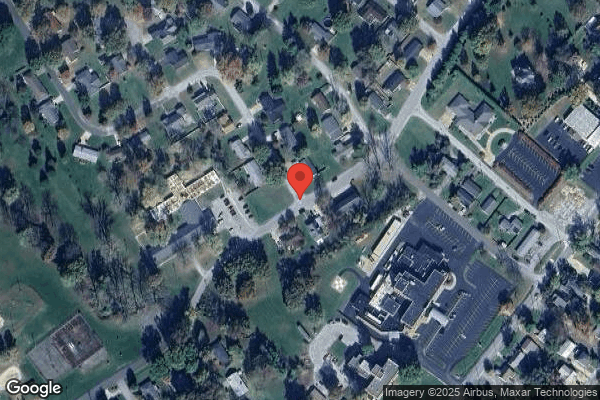
Oct 2023 1 deficiency
CONCERN (E) 📢 Someone Reported This

A family member, employee, or ombudsman was alarmed enough to file a formal complaint

Potential for Harm - no one hurt, but risky conditions existed

Deficiency F0804 (Tag F0804)

Could have caused harm · This affected multiple residents

Refer to Event ID UWJ112. Based on observation, interview, and record review, the facility failed to provide food items at a safe and appetizing temperature. The facility census was 48. Review of the...

Read full inspector narrative →
Refer to Event ID UWJ112. Based on observation, interview, and record review, the facility failed to provide food items at a safe and appetizing temperature. The facility census was 48. Review of the facility policy for Food Safety Requirements, dated 9/25/23, showed: -Food will also be stored, prepared, distributed and served in accordance with professional standards for food service safety; -When preparing food, staff shall take precautions in critical control points in the food preparation process to prevent, reduce or eliminate potential hazards: -Foods shall be prepared as directed until recommended temperatures of the specific foods are reached. Staff shall refer to the current Food and Drug Administration (FDA) food code and facility policy for food temperatures as needed; -Staff shall monitor food temperatures while holding for delivery to ensure proper got and cold holding temperatures are maintained. Staff shall refer to the current FDA food code; -Food and beverages shall be distributed and served to residents in a manner to prevent contamination and maintain food at the proper temperature and out of the Danger Zone (Bacteria grow most rapidly in the range of temperatures between 40 ° and 140 °F, doubling in number in as little as 20 minutes). Strategies include, but are not limited to, covering all foods when traveling a distance and using tray lines, mobile food carts or portable steam tables transported to dining areas. Review of the facility policy for Food Preparation Guidelines, dated 9/25/23, showed: -It is the policy of this facility to prepare foods in a manner to preserve or enhance a resident's nutrition and hydration status; -Food and drinks shall be palatable, attractive and at a safe and appetizing temperatures. Strategies to ensure resident satisfaction include serving hot foods/drinks hot and cold foods/drinks cold. 1. Review of the Resident Council meeting minutes showed the following: -On 7/5/23: Dietary: residents report the food is still cold; -On 7/7/23 Dietary: residents report the food is still cold. Review of the facility's Monthly Concern Tracking Log, dated 8/23, showed on 8/8/23 from resident council: grievance the food is still cold with a resolution of: using hot plates, and dietary helping pass plates if needed. During an interview on 9/26/23 at 10:50 A.M., the Activity Director said the following: -The residents have been complaining about the food being cold; -He/She takes the resident's meeting minutes and then will complete a grievance form and give to the responsible department head; -He/She completed a grievance form last month from the Resident Council and gave it to the Dietary Manager; -The residents still say the food is cold at times. 2. During an interview on 9/26/23 at 11:00 A.M., Resident #12 said the following: -The food is cold at times when it comes from the kitchen; -He/She and other residents have complained and nothing has been done. 3. During an interview on 9/26/23 at 11:10 A.M., Resident #22 said when he/she ate his/her meals in his/her room; the food was always cold. 4. During an interview on 9/26/23 at 11:15 A.M., Resident #43 said the following: -He/She ate in his/her room; -Sometimes his/her food was cold. 5. Observation on 9/26/23 at 12:43 P.M., showed staff served the first tray out the dietary department in the main dining room. The meal consisted of barbeque pork chop, mashed potatoes, corn and sherbet. -There were no hot plates used to serve the food on; -No dietary staff assisted serving trays in the dining room or on the hall; (The facility implemented resolutions to the August resident council concern of the food being cold were not being followed). 6. During an interview on 9/26/23 at 12:45 P.M., Resident #39 said his/her food was not hot when served from the kitchen. 7. Observation on 9/26/23 showed the following: -At 1:03 P.M., staff served the last lunch tray in the dining room; -At 1:29 P.M., staff served the first hall tray on the 100 hall; -At 1:37 P.M., staff served the last hall tray on the 100 hall which was the last tray served. Observation of the food temperatures for the test tray on 9/26/23 at 1:38 P.M., taken with a metal stem type thermometer, showed the following: -Pork steak: 101.4 degrees Fahrenheit; -Corn: 86.9 degrees Fahrenheit; -Ice Cream in Styrofoam container: liquefied (the Styrofoam ice cream cup had not been kept in a tray of ice prior to service and had completely melted). During an interview on 9/26/23 at 3:00 P.M., Dietary [NAME] A said the following: -Dietary usually take food temperatures before the meal was served; -He/She did not take the temperatures due to running late; -He/She just started and was not aware of what the food temperatures should be. During an interview on 10/13/23 at 10:00 A.M. the Dietary Manager said the following: -She would expect staff to take the temperature of the food before meal service. If the food temperatures does not meet the requirements for safe food handling, then the food needs to be placed back in the oven and heated; -She has instructed her staff not to remove the entire lid to keep the food warm; -The hot plate and cover needs to be used for all trays that are delivered to the halls. During an interview on 9/26/23 at 3:30 P.M. the Administrator said he would expect the food to be kept at the correct temperatures at all times. MO 223772
Aug 2023 7 deficiencies
CONCERN (D) 📢 Someone Reported This

A family member, employee, or ombudsman was alarmed enough to file a formal complaint

Potential for Harm - no one hurt, but risky conditions existed

Free from Abuse/Neglect (Tag F0600)

Could have caused harm · This affected 1 resident

Based on interviews, record review, and facility document and policy review, the facility failed to protect the resident's right to be free from physical abuse by another resident for 1 (Resident #4) ...

Read full inspector narrative →
Based on interviews, record review, and facility document and policy review, the facility failed to protect the resident's right to be free from physical abuse by another resident for 1 (Resident #4) of 3 residents reviewed for abuse prevention. Specially, the facility failed to prevent resident-to-resident abuse when they did not implement interventions immediately after the first indications of aggression. Findings included: Review of the facility policy titled, Abuse Prevention Program, with a revision date of December 2016, revealed, Our residents have the right to be free from abuse, neglect, misappropriation of resident property and exploitation. This includes but is not limited to the freedom from corporal punishment, involuntary seclusion, verbal, mental sexual or physical abuse, and physical or chemical restraint not required to treat the resident's symptoms. The policy indicated, As part of the resident abuse prevention, the administration will: 1. Protect our residents from abuse by anyone, including, but not necessarily limited to, facility staff, other residents, consultants, volunteers, staff from other agencies, family members, legal representatives, friends, visitors, and any other individual. A review of Resident #4's admission Record revealed the facility admitted the resident on 01/28/2023 with diagnoses that included cerebral palsy and unspecified dementia without behavioral disturbance. A review of Resident #4's quarterly Minimum Data Set (MDS), with an Assessment Reference Date (ARD) of 07/20/2023, revealed the resident had short- and long-term memory problems and severely impaired cognitive skills for daily decision making based on the Staff Assessment for Mental Status (SAMS). The MDS indicated the resident had signs and symptoms of delirium that were present continuously including inattention and disorganized thinking and had potential indicators of psychosis including hallucinations and delusions. The resident did not exhibit any physical or verbal behavioral symptoms directed toward others during the assessment period. The MDS indicated the resident was totally dependent on staff for locomotion on and off the nursing unit and used a wheelchair for mobility. A review of Resident #4's care plan revealed focus areas, initiated on 03/01/2023, that indicated the resident had delirium or an acute confusional episode related to dementia and impaired cognitive function. A focus area, initiated on 07/30/2023, indicated the resident had a behavior problem, specifically yelling out. Interventions directed staff to intervene as necessary to protect the rights and safety of others, remove the resident from the situation and take the resident to an alternate location as needed, and divert the resident's attention by reassuring the resident in a calm manner. A review of Resident #49's admission Record revealed the facility admitted the resident on 07/10/2023 with diagnoses that included unspecified dementia with behavioral disturbance, altered mental status, homicidal ideations, and other symptoms and signs involving cognitive functions and awareness. A review of Resident #49's admission MDS, with an ARD of 07/16/2023, revealed a Brief Interview for Mental Status (BIMS) score of 4, which indicated the resident had severe cognitive impairment. The MDS indicated the resident had signs and symptoms of delirium that fluctuated including inattention and disorganized thinking. The resident did not exhibit any physical or verbal behavioral symptoms directed toward others during the assessment period. The MDS indicated the resident was independent with locomotion on and off the nursing unit and used a walker or wheelchair for mobility. A review of Resident #49's care plan revealed a focus area, initiated on 07/12/2023, that indicated the resident had impaired cognitive function/dementia or impaired thought processes. A focus area, created on 07/11/2023, indicated the resident had behavior problems that included inappropriate verbal responses/communication and verbal and physical aggression toward staff and others. Interventions, initiated on 07/18/2023, directed staff to intervene as necessary to protect the rights and safety of others, remove the resident from the situation and take them to an alternate location as needed, and divert and redirect the resident's attention to blue bird. An intervention, initiated on 07/30/2023 (following the incident described below), directed staff to check the resident's out of bed activities and whereabouts frequently, and redirect the resident to their private room. A review of the facility's undated investigation report revealed that Resident #49 struck Resident #4 in the back of the head with a closed fist in the dining room on 07/29/2023 at 3:45 PM. A witness statement, dated 07/29/2023 and written by the Assistant Director of Nursing (ADON), indicated Resident #49 was observed by the birdcage at 2:35 PM and was in the ADON's line of sight. The ADON indicated that Resident #49 raised their hand as if to swat at another resident (not Resident #4) who was sitting near the birdcage. The ADON redirected Resident #49 and moved them away from the birdcage. Resident #49 returned, approached the other resident, and raised their arm as if to hit the resident. The other resident was removed from the area and assisted to the bathroom. According to the ADON's witness statement, Resident #49 remained by the birdcage, was calm and approachable, and had no further behavior. In a second witness statement, dated 07/29/2023 and written by the ADON, the ADON indicated that after leaving the area near the birdcage, Resident #49 self-propelled their wheelchair into the dining room. A witness statement, dated 07/29/2023 and written by Nurse Aide (NA) #14, indicated Resident #4 was in their wheelchair in the dining room and was screaming/yelling out. The witness statement indicated that Resident #49 propelled their wheelchair toward Resident #4 as if Resident #49 was just passing through. NA #14 indicated that as she was walking up to Resident #4 to comfort them, Resident #49 hit Resident #4 with a closed fist to the back of the head. Review of Resident #49's Behavior Note, dated 07/29/2023 at 2:35 PM and written by the ADON, indicated Resident #49 raised their hand at another resident who was sitting in a chair by the birdcage. The ADON moved Resident #49 away from the other resident. Resident #49 returned and raised their arm at the same resident and said the other resident was just sitting there like a bump. The other resident at that time was taken by staff to the bathroom. No further problems were noted. Review of Resident #49's Health Status Note, dated 07/29/2023 at 3:40 PM and written by the ADON, indicated it was reported to her that Resident #49 hit a resident in the dining room. The incident was witnessed by NA #14 and two other residents. The note indicated that Resident #49 was immediately removed to an area highly visible by staff and away from other residents. The note indicated that at 3:44 PM, the ADON called the Administrator and left a message. The Administrator returned her call. The ADON called 9-1-1 at 4:04 PM, and Resident #49 remained by her side until a police officer arrived and interviewed the resident. Staff then moved Resident #49 to a private room, and the resident was assisted by staff to lie down. At 4:22 PM, the ADON notified the resident's representative and at 4:28 PM she notified the nurse practitioner, who responded with no new orders. Review of a Health Status Note, dated 07/31/2023 at 1:00 PM, revealed Resident #49 was sent to a local hospital for a psychiatric evaluation. The note indicated that up until that time, the resident sat in front of the birdcage within eyesight of someone at all times. Review of hospital discharge records for Resident #49, dated 07/31/2023 at 3:40 PM, revealed the resident was diagnosed with a urinary tract infection (UTI) and was prescribed an antibiotic. Review of an IDT [interdisciplinary team] Progress Note, dated 08/01/2023 at 3:53 PM and written by the Director of Nursing (DON), revealed the IDT investigated a report of Resident #49's aggressive behavior toward another resident (Resident #4) that occurred in the dining room on 07/29/2023. The note indicated Resident #49 was immediately escorted to a private room, assessed, and closely supervised. The team determined the resident needed to be evaluated by psychiatry per the attending physician, was transferred to a local hospital, returned to the facility with an order for an antibiotic for a UTI, and remained in a private room with monitoring of out-of-bed activities. A psychiatric follow-up was pending on 08/10/2023. The note indicated interventions were put in place to prevent and/or decrease behavioral problems, and the care plan was updated. During a telephone interview on 08/10/2023 at 8:10 AM, NA #14 stated there was a resident (Resident #4) who screams and has hallucinations who Resident #49 punched in the back of the head. NA #14 stated she was going over to comfort Resident #4 in the dining room and thought Resident #49 was just going to wheel past, but Resident #49 punched Resident #4 in the back of the head. NA #14 said after the incident, staff were instructed to do one-to-one observations when Resident #49 was out of their room and 15-minute checks when the resident was in their room. NA #14 said Resident #49 had not had any other behaviors since the resident returned from the hospital after this incident. During an interview on 08/10/2023 at 9:43 AM, LPN #5 stated Resident #4 had hallucinations that caused them to scream. LPN #5 said Resident #49 hit Resident #4 about a week and a half ago. She said Resident #4 was sitting in the day area with two other residents while LPN #5 sat at the desk charting. Resident #4 began yelling out, and NA #14 approached the resident to provide comfort. Resident #49 propelled their wheelchair to where Resident #4 was sitting and hit the resident in the back of the head. LPN #5 said she did not actually see the incident. She said staff immediately separated the two residents and LPN #5 assessed Resident #4. LPN #5 stated Resident #49 was sent out to the hospital for an evaluation, where the resident was diagnosed with a UTI. LPN #5 said staff were currently doing 15-minute visual checks when Resident #49 was in their room and one-to-one monitoring when they were out of their room. She said staff also moved Resident #49 to a room by themself, so they did not have a roommate. LPN #5 stated that since Resident #49 came back from the hospital there had not been any physically or verbally aggressive behaviors toward staff or residents. During an interview on 08/10/2023 at 9:56 AM, the ADON reiterated the description she provided in her written statement and notes about the events that occurred on 07/29/2023 including the incident between Resident #49 and Resident #4. The ADON said that earlier that day, Resident #49 was at the birdcage and raised their hand like they were going to hit another resident who was also sitting there. The ADON said to Resident #49, We don't do that, then the resident did it again after being redirected. The ADON said she told staff to keep other residents away from Resident #49. Resident #49 then propelled their wheelchair into the dining room and hit Resident #4. The ADON said she was passing medications on the other hall and did not see what happened, but nurse aides saw the altercation. She said she did not know what triggered the behavior and it was very unpredictable. She said the rest of the day, she kept Resident #49 with her while the resident was in their wheelchair. The ADON said Resident #49 was sent to the hospital the following Monday and the hospital sent the resident back with an antibiotic order for a UTI. The ADON said since the resident's return from the hospital, staff had been monitoring Resident #49 very, very closely, doing 15-minute checks and one-to-one monitoring. During an interview on 08/10/2023 at 10:39 AM, the Director of Nursing (DON) stated the ADON reported Resident #49 had other behaviors that day (07/29/2023), which were not directed toward others. The DON said staff were watching the resident as the resident propelled their wheelchair into the dining room. Resident #49 was passing by Resident #4, who was crying out. An NA went to console Resident #4, and as Resident #49 passed by, and without any indication, Resident #49 quickly hit Resident #4, which was not expected. The DON said up until that point, Resident #49's behaviors had just been socially inappropriate, and the resident was calmer after being moved to the birdcage. The ADON reported the resident had, prior to this incident, kind of stalked another resident and had raised a hand as if to hit them twice, and that was why staff were watching the resident. During a telephone interview on 08/10/2023 at 11:27 AM, NA #14 stated she had not heard anything about Resident #49 attempting to hit another resident near the birdcage on 07/29/2023. She said no one had directed her to keep a closer eye on Resident #49 before the resident hit Resident #4. NA #14 said she was going to comfort Resident #4 when the incident happened. NA #14 said she did not expect Resident #49 to hit anyone. During an interview on 08/10/2023 at 11:47 AM, the Administrator said that he was aware of the incident by the birdcage when Resident #49 attempted to hit another resident prior to hitting Resident #4 in the back of the head. The Administrator said he read about the incident by the birdcage in the notes. The Administrator said staff separated Resident #49 from the first resident after it happened. The Administrator stated he would have expected the ADON to notify the other staff on duty of the possible aggression, document it in the record, and add interventions to the care plan. The Administrator said someone should have been closely monitoring Resident #49 and should have been able to intervene if something happened.
CONCERN (D)

Potential for Harm - no one hurt, but risky conditions existed

Transfer Notice (Tag F0623)

Could have caused harm · This affected 1 resident

**NOTE- TERMS IN BRACKETS HAVE BEEN EDITED TO PROTECT CONFIDENTIALITY** Based on interviews and record review, the facility failed to notify the ombudsman in writing when a resident was transferred or...

Read full inspector narrative →
**NOTE- TERMS IN BRACKETS HAVE BEEN EDITED TO PROTECT CONFIDENTIALITY** Based on interviews and record review, the facility failed to notify the ombudsman in writing when a resident was transferred or discharged from the facility for 1 (Resident #254) of 3 residents reviewed for transfer and discharge. Specifically, the ombudsman was not notified regarding an emergency transfer to an acute care facility which was considered a facility-initiated transfer. Findings included: A review of an admission Record indicated the facility initially admitted Resident #254 on 09/23/2020 and readmitted the resident on 08/23/2022 with a diagnosis that included transient cerebral ischemic attack. The admission Record indicated the resident was discharged to the hospital on [DATE] and returned on 08/23/2022. During an interview on 08/10/2023 at 5:00 PM, the Social Services Director (SSD) stated notification to the ombudsman was not made when Resident #254 was discharged to the hospital. During an interview on 08/10/2023 at 5:35 PM, the Administrator indicated his expectation was to follow the guidance and make the appropriate notifications. During an interview on 08/10/2023 at 5:36 PM, the Director of Nursing (DON) indicated her expectation was to send notification to the ombudsman. The DON confirmed the facility did not have a policy for notification of the ombudsman for facility-initiated emergency transfers.
CONCERN (D) 📢 Someone Reported This

A family member, employee, or ombudsman was alarmed enough to file a formal complaint

Potential for Harm - no one hurt, but risky conditions existed

Deficiency F0727 (Tag F0727)

Could have caused harm · This affected 1 resident

Based on interviews and document review, the facility failed to ensure that, in January 2023, there was a Director of Nursing (DON) on staff at the facility and failed to ensure a registered nurse (RN...

Read full inspector narrative →
Based on interviews and document review, the facility failed to ensure that, in January 2023, there was a Director of Nursing (DON) on staff at the facility and failed to ensure a registered nurse (RN) was working eight consecutive hours a day, seven days a week. Findings included: Review of the facility's schedule, revised on 01/01/2023, revealed the facility did not have a DON in January of 2023. The schedule also revealed the facility had only one RN scheduled to work during the day shift, two days per week. Review of the facility's Daily Schedule for January 2023 revealed an RN did not work at the facility on 01/02/2023, 01/03/2023, 01/04/2023, 01/05/2023, 01/6/2023, 01/09/2023, 01/10/2023, 01/12/2023, or 01/13/2023. During an interview on 08/10/2023 at 1:42 PM, Licensed Practical Nurse (LPN) #5 stated there had been days during her shift when the facility did not have an RN scheduled or working at the facility. LPN #5 noted she usually worked during the day shift but also covered night shifts. During an interview on 08/10/2023 at 5:56 PM, the DON stated she expected the facility to have RN coverage for eight consecutive hours a day. During an interview on 08/10/2023 at 5:35 PM, the Administrator stated he began employment at the facility in the middle of December 2022 and was aware there were dates the facility did not have RN coverage. He stated a couple of weeks after he started working at the facility, the DON quit. The Administrator stated it was March of 2023 before he got a DON from a contracted agency. He stated there was a good amount of days without an RN working for at least eight consecutive hours per day. He noted that an RN was available by phone for consultation. The Administrator stated they had multiple conversations about attempting to get a Centers for Medicare and Medicaid Services (CMS) waiver for RN coverage. However, the region told them they could not file for a waiver. The Administrator revealed the facility attempted to use agency staff nurses, but the agency staff would not show up for their shift. The Administrator stated they also asked their sister facilities for assistance; however, they did not usually share staff and most buildings only had one RN. The Administrator noted the facility advertised in an attempt to hire RNs. The Administrator stated they had also offered current RNs bonuses for picking up shifts. According to the Administrator the previous corporation handled all of the primary advertisement postings.
CONCERN (D)

Potential for Harm - no one hurt, but risky conditions existed

Safe Environment (Tag F0921)

Could have caused harm · This affected 1 resident

Based on observations, interviews, and facility policy review, the facility failed to maintain a clean environment in the laundry area. This affected 1 of 1 laundry room in the facility and was observ...

Read full inspector narrative →
Based on observations, interviews, and facility policy review, the facility failed to maintain a clean environment in the laundry area. This affected 1 of 1 laundry room in the facility and was observed on 2 of 4 days of the survey. Findings included: A review of the facility's policy titled, Environmental Services - Waste - Laundry, from the Infection Control Manual 2019, revealed, Environmental Services 1. Environmental Services will develop protocols, including schedules for cleaning and decontamination of the work site. A tour of the laundry department on 08/08/2023 at 7:27 AM with Laundry Aide (LA) #1 revealed two large rugs in front of the washers that had numerous papers and lint debris. The floor area under the sink had dark discolorations with visible dust build-up and paper debris. During an interview on 08/08/2023 at 7:30 AM, LA #1 confirmed the floor under the sink was dirty. LA #1 said she did not know how often housekeeping staff cleaned the laundry area. During an interview on 08/08/2023 at 9:30 AM, the Housekeeping and Laundry Director stated laundry staff did their own cleaning and mopping of the laundry room. At 9:32 AM, the two large rugs in front of the washers were observed and were still not vacuumed, with paper debris on the floor. The floor under the sink had been swept but still had visible dark or stained discolorations. The Housekeeping and Laundry Director stated, I guess it needed to be mopped. During an observation on 08/09/2023 at 2:58 PM with the Housekeeping and Laundry Director, the rugs in the laundry area were still unvacuumed, and the floor under the sink remained discolored. During an interview on 08/09/2023 at 2:59 PM, the Housekeeping and Laundry Director confirmed that the laundry area had not been cleaned. The Housekeeping and Laundry Director stated, It [the floor] needed some stripping and buffing, and it will get done; we will develop a schedule.
CONCERN (E)

Potential for Harm - no one hurt, but risky conditions existed

Deficiency F0728 (Tag F0728)

Could have caused harm · This affected multiple residents

Based on personnel record review, interviews, and facility document review, it was determined the facility failed to ensure 6 of 6 nurse aides (NAs) selected for review completed training to receive t...

Read full inspector narrative →
Based on personnel record review, interviews, and facility document review, it was determined the facility failed to ensure 6 of 6 nurse aides (NAs) selected for review completed training to receive their certification within four months of their hire dates. Findings included: A review of an undated list of the facility's nurse aides (NAs) with hire dates, revealed the facility employed 11 NAs; six of the NAs were hired more than four months prior to the survey as indicated below: - NA #10, hire date of 02/28/2022 - NA #13, hire date of 12/10/2022 - NA #14, hire date of 04/18/2022 - NA #15, hire date of 12/05/2022 - NA #16, hire date of 08/10/2021 - NA #17, hire date of 01/18/2022 (tested in Illinois, but not in Missouri) A review of NA #10's personnel record revealed the record did not include any evidence indicating that NA #10 was certified or enrolled in a certified nurse aide (CNA) training program. A review of NA #13's personnel record revealed the record did not include any evidence indicating that NA #13 was certified or enrolled in a CNA training program. A review of NA #14's personnel record revealed the record did not include any evidence indicating NA #14 was certified or enrolled in a CNA training program. A review of NA #15's personnel record revealed the record did not include any evidence indicating NA #15 was certified or enrolled in a CNA training program. A review of NA #16's personnel record revealed the record did not include any evidence of NA #16 being certified or enrolled in a CNA training program. A review of NA #17's personnel record revealed the record did not include any evidence indicting NA #17 was certified in Illinois or Missouri. The record indicated NA #17 was a rehire, with an original hire date of 10/02/2017. The facility checked the CNA registry on 10/02/2017 and NA #17 did not appear on the registry as being certified at that time. During an interview on 08/08/2023 at 3:08 PM, NA #15 stated she was hired on 12/05/2022. NA #15 said facility management told the NAs they were going to start taking classes to become CNAs in September 2023. During an interview on 08/09/2023 at 12:29 PM, NA #16 stated she was hired in dietary then moved into a NA position about two years ago. She said that about three weeks ago management staff had talked about the NAs going to training in September 2023 but that was the first time anyone had said anything about it. During an interview on 08/10/2023 at 2:05 PM, the Administrator stated the facility hired NAs who were not certified. The Administrator stated he had five NAs who were going to be enrolled in classes. The Administrator said the facility received a memorandum (memo) that said emergency waivers were ending and they had until 09/10/2023, to have all NAs who were hired prior to the end of the public health emergency (PHE) complete a state approved course. During an interview on 08/10/2023 at 3:42 PM, the Director of Nursing (DON) and the Assistant Director of Nursing (ADON) stated the facility employed some NAs who were not certified yet. The DON said some NAs had been employed a while without being certified and indicated the facility was trying to get them through a program.
CONCERN (E)

Potential for Harm - no one hurt, but risky conditions existed

Deficiency F0804 (Tag F0804)

Could have caused harm · This affected multiple residents

Based on observation, interview, and record review, the facility failed to provide food items at a safe and appetizing temperature. The facility census was 48. Review of the facility policy for Food S...

Read full inspector narrative →
Based on observation, interview, and record review, the facility failed to provide food items at a safe and appetizing temperature. The facility census was 48. Review of the facility policy for Food Safety Requirements, dated 9/25/23, showed: -Food will also be stored, prepared, distributed and served in accordance with professional standards for food service safety; -When preparing food, staff shall take precautions in critical control points in the food preparation process to prevent, reduce or eliminate potential hazards: -Foods shall be prepared as directed until recommended temperatures of the specific foods are reached. Staff shall refer to the current Food and Drug Administration (FDA) food code and facility policy for food temperatures as needed; -Staff shall monitor food temperatures while holding for delivery to ensure proper got and cold holding temperatures are maintained. Staff shall refer to the current FDA food code; -Food and beverages shall be distributed and served to residents in a manner to prevent contamination and maintain food at the proper temperature and out of the Danger Zone (Bacteria grow most rapidly in the range of temperatures between 40 ° and 140 °F, doubling in number in as little as 20 minutes). Strategies include, but are not limited to, covering all foods when traveling a distance and using tray lines, mobile food carts or portable steam tables transported to dining areas. Review of the facility policy for Food Preparation Guidelines, dated 9/25/23, showed: -It is the policy of this facility to prepare foods in a manner to preserve or enhance a resident's nutrition and hydration status; -Food and drinks shall be palatable, attractive and at a safe and appetizing temperatures. Strategies to ensure resident satisfaction include serving hot foods/drinks hot and cold foods/drinks cold. 1. Review of the Resident Council meeting minutes showed the following: -On 7/5/23: Dietary: residents report the food is still cold; -On 7/7/23 Dietary: residents report the food is still cold. Review of the facility's Monthly Concern Tracking Log, dated 8/23, showed on 8/8/23 from resident council: grievance the food is still cold with a resolution of: using hot plates, and dietary helping pass plates if needed. During an interview on 9/26/23 at 10:50 A.M., the Activity Director said the following: -The residents have been complaining about the food being cold; -He/She takes the resident's meeting minutes and then will complete a grievance form and give to the responsible department head; -He/She completed a grievance form last month from the Resident Council and gave it to the Dietary Manager; -The residents still say the food is cold at times. 2. During an interview on 9/26/23 at 11:00 A.M., Resident #12 said the following: -The food is cold at times when it comes from the kitchen; -He/She and other residents have complained and nothing has been done. 3. During an interview on 9/26/23 at 11:10 A.M., Resident #22 said when he/she ate his/her meals in his/her room; the food was always cold. 4. During an interview on 9/26/23 at 11:15 A.M., Resident #43 said the following: -He/She ate in his/her room; -Sometimes his/her food was cold. 5. Observation on 9/26/23 at 12:43 P.M., showed staff served the first tray out the dietary department in the main dining room. The meal consisted of barbeque pork chop, mashed potatoes, corn and sherbet. -There were no hot plates used to serve the food on; -No dietary staff assisted serving trays in the dining room or on the hall; (The facility implemented resolutions to the August resident council concern of the food being cold were not being followed). 6. During an interview on 9/26/23 at 12:45 P.M., Resident #39 said his/her food was not hot when served from the kitchen. 7. Observation on 9/26/23 showed the following: -At 1:03 P.M., staff served the last lunch tray in the dining room; -At 1:29 P.M., staff served the first hall tray on the 100 hall; -At 1:37 P.M., staff served the last hall tray on the 100 hall which was the last tray served. Observation of the food temperatures for the test tray on 9/26/23 at 1:38 P.M., taken with a metal stem type thermometer, showed the following: -Pork steak: 101.4 degrees Fahrenheit; -Corn: 86.9 degrees Fahrenheit; -Ice Cream in Styrofoam container: liquefied (the Styrofoam ice cream cup had not been kept in a tray of ice prior to service and had completely melted). During an interview on 9/26/23 at 3:00 P.M., Dietary [NAME] A said the following: -Dietary usually take food temperatures before the meal was served; -He/She did not take the temperatures due to running late; -He/She just started and was not aware of what the food temperatures should be. During an interview on 10/13/23 at 10:00 A.M. the Dietary Manager said the following: -She would expect staff to take the temperature of the food before meal service. If the food temperatures does not meet the requirements for safe food handling, then the food needs to be placed back in the oven and heated; -She has instructed her staff not to remove the entire lid to keep the food warm; -The hot plate and cover needs to be used for all trays that are delivered to the halls. During an interview on 9/26/23 at 3:30 P.M. the Administrator said he would expect the food to be kept at the correct temperatures at all times. MO 223772
CONCERN (F)

Potential for Harm - no one hurt, but risky conditions existed

Deficiency F0553 (Tag F0553)

Could have caused harm · This affected most or all residents

Based on interviews, record review, and facility policy review, the facility failed to ensure residents and/or their responsible parties (RPs) were invited to participate in the care planning process ...

Read full inspector narrative →
Based on interviews, record review, and facility policy review, the facility failed to ensure residents and/or their responsible parties (RPs) were invited to participate in the care planning process for 2 (Resident #22 and Resident #29) of 2 residents sampled for care planning requirements. Staff interviews revealed the facility had not involved residents or their RPs in the care planning process since March of 2020. This affected all residents in the facility. Findings included: A review of the undated facility policy titled, Resident Participation - Care Conferences/Planning, revealed, Policy Statement The resident and his or her representative are encouraged to participate in the resident's assessment and in the development and implementation of the resident's care plan. Policy Interpretation and Implementation 1. The resident and his or her legal representative are encouraged to attend and participate in the resident's assessment and in the development of the resident's person-centered care plan. The policy further indicated, 3. The resident/representative's right to participate in the development and implementation of his or her plan of care includes the right to: a. Participate in the planning process and 4. The care planning process will: a. Facilitate the inclusion of the resident and/or representative. The policy specified, 7. A seven (7) day advance notice of the care planning conference is provided to the resident and his or her representative. Such notice is made by mail and/or telephone. 1. A review of an admission Record indicated the facility admitted Resident #29 on 11/13/2020 with diagnoses that included a cerebral infarction (stroke), hemiplegia and hemiparesis of the right dominant side (right-sided partial paralysis), dysphagia (difficulty with swallowing), and disorientation. The admission Record indicated Family Member (FM) #1 was the resident's responsible party (RP) and FM #2 was the second emergency contact. A review of an annual Minimum Data Set (MDS), with an Assessment Reference Date (ARD) of 06/12/2023, revealed Resident #29 had a Brief Interview for Mental Status (BIMS) score of 2, which indicated the resident had severe cognitive impairment. The MDS indicated it was very important to the resident to have family or a close friend involved in conversations about their care; however, the assessment indicated the resident's family did not participate in the assessment. A review of Resident #29's comprehensive care plan revealed a Focus, created on 11/13/2020, that indicated the resident had impaired cognitive function/dementia or impaired thought processes. The care plan directed staff to communicate with the resident and their family/caregivers regarding the resident's capabilities and needs. Another Focus titled All About Me - Care/ADL [activities of daily living] Preferences, initiated on 11/13/2020, indicated Resident #29 preferred to have FM #1 and FM #2 involved in discussions of their care. During an interview on 08/07/2023 at 11:54 AM, FM #1 and FM #2 stated they had not been invited to a care plan meeting in two years. FM #1 and FM #2 indicated the facility used to have the meetings but had not had one in a long time. During an interview on 08/09/2023 at 10:02 AM, the Social Services Director (SSD) stated residents and their families had not been invited to care plan meetings since March of 2020. The SSD indicated the facility had a lot of administrative changes that prevented them from conducting the care plan meetings and indicated the facility had not yet put anything into place to get the residents and their families involved in the care planning process again. During a follow-up interview on 08/10/2023 at 9:05 AM, the SSD stated the facility was supposed to hold care plan meetings quarterly but indicated they had not been done. During an interview on 08/10/2023 at 8:26 AM, the MDS Nurse/Licensed Practical Nurse (LPN) stated care plan meetings with residents and/or family members had not been done as they were supposed to. The MDS Nurse/LPN indicated care plan meetings should be held every three months but said the facility's system was broken. The MDS Nurse/LPN said residents should be notified of the care plan meetings verbally, and family members should be notified by mail by the SSD. During an interview on 08/10/2023 at 5:45 PM, the Administrator stated he realized after questions were asked that the care plan team had not been including residents and families in the care planning process. The Administrator said the SSD was new to the position and with the facility's staff turnover, it just had not happened. The Administrator said he expected residents and their RPs to participate in the care planning process and indicated he felt including them had gone by the wayside since the SSD was newer to her position. During an interview on 08/10/2023 at 5:56 PM, the Director of Nursing (DON) stated she expected staff to involve residents and their RPs in the care planning process, because she felt their participation was very important. 2. A review of a quarterly Minimum Data Set (MDS), with an Assessment Reference Date (ARD) of 05/24/2023, revealed the facility admitted Resident #22 on 03/01/2018. According to the MDS, Resident #22 had diagnoses that included anemia, heart failure, hypertension, dementia, anxiety disorder, and depression. Resident #22 had a Brief Interview for Mental Status (BIMS) score of 15, indicating the resident was cognitively intact. On 08/07/2023 at 11:22 AM, Resident #22 said the facility used to have care plan meetings but stopped doing them over two years ago. During an interview on 08/09/2023 at 10:02 AM, the Social Services Director (SSD) stated residents and their families had not been invited to care plan meetings since March of 2020. The SSD indicated the facility had a lot of administrative changes that prevented them from conducting the care plan meetings and indicated the facility had not yet put anything into place to get the residents and their families involved in the care planning process again. During a follow-up interview on 08/10/2023 at 9:05 AM, the SSD stated the facility was supposed to hold care plan meetings quarterly but indicated they had not been done. During an interview on 08/10/2023 at 8:26 AM, the MDS Nurse/Licensed Practical Nurse (LPN) stated care plan meetings with residents and/or family members had not been done as they were supposed to. The MDS Nurse/LPN indicated care plan meetings should be held every three months but said the facility's system was broken. The MDS Nurse/LPN said residents should be notified of the care plan meetings verbally, and family members should be notified by mail by the SSD. During an interview on 08/10/2023 at 5:45 PM, the Administrator stated he realized after questions were asked that the care planning team had not been including residents and families in the care planning process. The Administrator said the SSD was new to the position and with the facility's staff turnover, it just had not happened. The Administrator said he expected residents and their RPs to participate in the care planning process and indicated he felt including them had gone by the wayside since the SSD was newer to her position. During an interview on 08/10/2023 at 5:56 PM, the Director of Nursing (DON) stated she expected staff to involve residents and their RPs in the care planning process, because she felt their participation was very important.
Dec 2022 1 deficiency 1 Harm
SERIOUS (G) 📢 Someone Reported This

A family member, employee, or ombudsman was alarmed enough to file a formal complaint

Actual Harm - a resident was hurt due to facility failures

Quality of Care (Tag F0684)

A resident was harmed · This affected 1 resident

**NOTE- TERMS IN BRACKETS HAVE BEEN EDITED TO PROTECT CONFIDENTIALITY** Based on interview and record review the facility failed to ensure one resident (Resident #1) who staff assessed as a fall risk,...

Read full inspector narrative →
**NOTE- TERMS IN BRACKETS HAVE BEEN EDITED TO PROTECT CONFIDENTIALITY** Based on interview and record review the facility failed to ensure one resident (Resident #1) who staff assessed as a fall risk, of three sampled residents, received treatment and care in accordance with professional standards of practice. Resident #1 fell and was not thoroughly assessed for injuries prior to transfer from the floor to the wheelchair and remained in the wheelchair for approximately four hours with no additional assessments or care provided. Approximately four hours after the fall, staff discovered blood on the table and on the resident's pants. The resident had a visible fracture of the left forearm with a puncture wound. The resident was transferred to the hospital and diagnosed with a compound fracture (broken bones that pierce the skin). The facility census was 45. Review of the facility's policy titled Significant Condition Change and Notification, dated November 2019, showed the following: -An accident or incident, with or without injury, has the potential for needed medical practitioner intervention; -Examples of significant changes in a resident's physical, mental, or psychosocial status, included head trauma, bleeding, bruises or skin tears, onset of swelling, abnormal, unusual, or new, complaints of pain, and any other abnormal findings; -When any of those situations exists, the licensed nurse will contact the resident's medical practitioner; -The medical practitioner will be contacted immediately for any emergencies regardless of the time of day. Non-emergency notifications may be made the next morning if the situation occurs on the late evening or night shift. This applies to any day of the week, including holidays; -If the medical practitioner cannot immediately be reached in an emergency, the medical director will be called; -If the medical practitioner cannot be reached the Director of Nursing or the charge nurse can make arrangements for transportation to the emergency department; -Each attempt will be charted as to the time the call was made, who was spoken to, and what information was given to the medical practitioner. In a non-emergency situation, the primary medical practitioner will be called unless he/she has left an alternate name to call. If after two attempts there is no response to the calls, the medical director will be contacted. Review of the facility's undated Fall Procedure Checklist (located at the nurses' desk) showed the following: -Provide head to toe assessment, check vital signs, range of motion and skin assessment; -Call 911 if necessary or safely transfer back to the chair or bed; -Call a fall huddle with staff and investigate the fall; -Notify the Director of Nursing, physician and resident representative; -Unwitnessed fall or fall with head trauma, start neurological checks and vital sign assessments for 72 hours per the neurological assessment policy. Review of the facility Neurological Assessment Policy dated October 2021 showed the following in part: -Neurological assessments would be completed following an unwitnessed fall or following a fall or other accident/injury involving head trauma; -When assessing neurological status attention should be paid to widening pulse pressure (difference between the top and bottom numbers of the blood pressure, a measurement of the pressure in the blood vessels) This might be indicative of increasing intracranial pressure (pressure within the skull); -Neurological assessments (neuro checks) would be done every 15 minutes for the first hour, then every 30 minutes for one hour, every hour for six hours, every 4 hours for 8 hours, every 8 hours for seven assessments for a total of 72 hours. If the schedule was interrupted due to transfer to a hospital, the schedule would be resumed upon return from the hospital; -Any change in vital signs (assessment of the resident's temperature, pulse or heart rate, respirations and blood pressure) or neurological status in a previously stable residents should be reported to the physician immediately. 1. Review of Resident #1's care plan updated 7/27/20 showed the following: -Diagnosis of generalized arthritis, Alzheimer's disease, dementia, vitamin D deficiency (vitamin deficiency resulting in bone loss); -The resident had impaired cognitive function and thought processes. Staff should monitor the resident for increased confusion and redirect, ensure the resident was clean and free of odors, keep routine consistent; -The resident was at risk for falls. Staff should anticipate and meet the resident's needs, check frequently at night and offer toileting, encourage him/her to use the toilet before meals, ensure appropriate foot wear and provide a safe environment. Review of the resident's quarterly Minimum Data Set (MDS) dated [DATE] showed the following; -Short and long term memory problems; -Required extensive assistance of one staff member with transfers, locomotion on and off the unit and while toileting; -Required limited assistance of one staff member with walking in room and corridor; -Required a walker for ambulation. Review of the resident's fall report dated 11/19/22 at 7:09 A.M. showed staff documented the following: -The resident was found on the floor near the reception area in the doorway. Nursing staff went to check the resident and a dietary staff member and housekeeping staff member were assisting the resident into the wheelchair. Checked the resident for injuries starting with the back side, then head and front, noted skin tear on the right hand near the little finger with a skin flap approximately 1 centimeter (cm) by 1 cm. The resident moved all extremities (arms and legs) and swatted the nurse with his/her left hand. The resident was unable to communicate pain or discomfort. Neurological checks (assessment of the residents vital signs, and injury) were performed as well as possible with the resident. Staff could not check the resident's hand grips (test to check for weakness on one side or the other) due to resident was uncooperative. Temperature 97.4 degrees (normal 98.6 degrees), pulse 74 beats per minute (normal 60-80), respirations 16 breaths per minute (normal 12-20), blood pressure (measurement of the pressure in the blood vessels) 122/70 (normal 120/80) millimeters of mercury (mmHg), oxygen saturation (measurement of oxygen level in the blood) at 96 percent on room air (normal above 92 percent). The resident was unable to give a description of the incident; -The resident was not taken to the hospital. Injury observed at the time was a skin tear to the right hand; -Oriented to person, alert and ambulatory with assistance; -The resident was incontinent at the time of the fall, confused, and had impaired memory and gait imbalance. The resident wore improper foot wear; -No witnesses to the fall. Review of the resident's nurses' note dated 11/19/22 at 12:50 P.M. showed staff documented the resident had blood all over his/her hands. Upon further assessment the resident's left arm had trauma and puncture wound on one side of the arm. The arm appeared to be broken in two spots. Staff held the arm steady until Emergency Medical Services (EMS) arrived. EMS confirmed the break, called the emergency room physician and arranged for transport to level 1 trauma center (a higher level of care). Review of the resident's nurses' note dated 11/19/22 at 4:57 P.M. showed staff documented hospital update was received, diagnosis of open radial and ulnar (two bones located in the lower part of the arm or forearm) fracture of the arm. Review of the resident's hospital emergency department record dated 11/19/22 showed diagnosis of fall with open left forearm fracture. There was obvious deformity at the left distal forearm (lower part of the arm) and puncture wound over the deformity with a one centimeter laceration which was deep and represented an open fracture, there was no exposed bone. The fractured forearm was very unstable. X-ray report showed acute comminuted left distal radial and ulnar fractures extending to the articular surface (break in both forearm bones in at least two places with extension into the joint, usually caused by severe trauma) During interview on 12/6/22 at 11:50 A.M. Dietary Aide B said he/she saw the resident on the floor near the front door between 6:00 A.M. and 7:00 A.M. on 11/19/22. The resident was flat on his/her back trying to get up. Dietary Aide B and a housekeeper lifted the resident up off the floor and into the wheelchair. One staff member was on each side of the resident and lifted him/her under the arms. Dietary Aide B did not know he/she was not supposed to touch the resident and did not know to avoid lifting the resident under the arms.No one assessed the resident before they lifted the resident off the floor. Staff pushed the resident in the wheelchair to the dining room table near the nurses' desk. Dietary Aide B was unsure if the resident moved his/her arms. The Director of Nursing (DON) took over the situation. The DON told Dietary Aide B later, they should not have moved the resident until after the resident was assessed for injuries and should not have picked the resident up off the floor by lifting under the arms. During interview on 12/6/22 at 4:05 P.M. Certified Nurse Assistant (CNA) E said the following: -On 11/19/22 he/she worked the day shift; -The resident was already up in the wheelchair that morning when he/she arrived to work at 6:00 A.M. The resident fell early that morning and a housekeeper and dietary staff picked the resident up and placed the resident in the wheelchair after the fall. The resident sat at the dining room table in his/her wheelchair following the fall. The resident was not yelling out; -He/She did not know if the resident was toileted or transferred to bed after breakfast; -Before lunch LPN A checked the resident's blood sugar, noticed blood on the table and learned the resident had a broken arm. During interview on 12/6/22 at 5:00 P.M. CNA D said the following: -On 11/19/22 he/she worked day shift on the resident's hall. At 6:00 A.M. the resident was already up in the wheelchair in his/her room and staff assisted the resident to the dining room near the nurses' desk; -The resident fell early in the morning before breakfast, and a dietary staff and housekeeper picked the resident up off the floor. Following the fall, the resident was pushed in the wheelchair back to the dining room table; -Staff should have waited to transfer the resident to the wheelchair after the nurse assessed the resident for injuries; -The resident ate some breakfast that morning and attempted to feed himself/herself. He/She remained at the table all morning. Staff did not toilet or change the resident all morning and did not transfer the resident out of the wheelchair all morning; -The resident was not complaining or anything unusual, he/she did not move around from the table all morning; -Just before lunch time LPN A went to check the resident's blood sugar and noticed there was blood on the table, a skin tear between the resident's left fingers and a big knot on the underside of the resident's left arm and puncture wound on the outside of the arm; -The resident went to the hospital by ambulance. During interview on 12/6/22 at 3:30 P.M. Certified Medication Technician (CMT) C said the following: -He/She worked on 11/19/22 and took over passing medications at about 7:45 A.M. after Resident #1 fell. Later in the morning he/she administered the resident's morning medications crushed and mixed in applesauce. The resident sat at the dining room table with his/her hands in his/her lap; -At about 11:00 A.M. staff noticed the resident had blood on his/her pants and complained of pain with movement of the left arm. The resident yelled out and cussed when his/her left arm was touched. Puncture holes were noted in the skin just above the wrist area and on the upper forearm when the resident's shirt sleeve was pulled up. EMS was called and the resident sent to the hospital. During interview on 12/6/22 at 1:10 P.M. Licensed Practical Nurse (LPN) A said the following: -On 11/19/22 he/she worked the day shift. At about 11:00 A.M. he/she attempted to check the resident's blood sugar (obtaining blood from the finger to determine glucose level), picked up the resident's left hand and the resident cussed and yelled out in pain. Blood was noted on the table and the resident's pants; -He/She pulled the resident's long sleeves up and noted a puncture wound to the left forearm about two to three inches above the wrist and a knot to the outer part of the forearm, skin tears to the left hand and obvious fractures of the left forearm; -The puncture wound and knot were not visible until he/she pulled up the resident's long sleeve; -He/She immobilized the arm while staff called the ambulance. The resident was sent to the hospital. During interview on 12/6/22 at 12:10 P.M. the DON said the following: -She was the charge nurse on 11/19/22. At about 7:00 A.M. she was down the hall passing medications when staff yelled and said the resident fell. Dietary and housekeeping staff lifted the resident off the floor and into the wheelchair as the DON arrived. She checked the resident and found a skin tear to the right hand near the little finger. She did not remove the resident's clothing or complete a full head to toe assessment. She checked the resident's vital signs, cleansed and secured the right hand skin tear, and pushed the resident's wheelchair to the dining room table near the nurses' desk; -She should have checked the resident's vital signs and completed neurological checks per the facility policy starting with every 15 minutes for one hour and then every 30 minutes for one hour. She only checked the resident's vital signs and attempted a neurological check initially at the time of the fall. She did not assess the resident again after the fall and was not aware the resident had a compound fracture (displaced break in the bones with puncture of the skin) of both bones in the left forearm. She should have assessed and monitored the resident closely after the unwitnessed fall; -Following a fall, staff should assess the resident immediately for injuries before transferring the resident off the floor. Staff should not have gotten the resident off the floor before the resident was assessed. During interview on 12/14/22 at 9:50 A.M. the administrator said staff should provide a thorough assessment following a fall for injury and implement the fall policy including neurological checks. Staff should not get the resident up from the floor without an assessment completed and should not lift the resident under the arms. The fractured arm might have been noticed earlier if staff had completed a thorough assessment after the fall and followed the fall protocol. Staff should have toileted the resident and provided care after breakfast. The injury might have been noticed earlier. Staff should not have left the resident at the table from the time of the fall (approximately 7:15 A.M.) until lunch time with no assessment or toileting for approximately four hours. During interview on 12/9/22 at 9:35 A.M. the resident's physician said the resident fell and sustained a compound fracture of both bones in the left forearm. Staff should provide a complete assessment of every resident following a fall, assessing for injuries. Force was required to make a compound fracture. Staff should have assessed the resident, called the physician requesting an x-ray of the injury if the resident showed signs of pain at the time of the fall or immediate transfer to the hospital. Staff should follow the fall protocol and complete assessments ongoing. The injury could have been identified earlier with appropriate staff assessments. The resident had Alzheimer's disease and was unable to verbalize his/her condition. MO#210361 MO#210506
Dec 2019 8 deficiencies
CONCERN (D)

Potential for Harm - no one hurt, but risky conditions existed

Deficiency F0658 (Tag F0658)

Could have caused harm · This affected 1 resident

**NOTE- TERMS IN BRACKETS HAVE BEEN EDITED TO PROTECT CONFIDENTIALITY** Based on observation, interview, and record review, the facility failed to follow professional standards of practice for two res...

Read full inspector narrative →
**NOTE- TERMS IN BRACKETS HAVE BEEN EDITED TO PROTECT CONFIDENTIALITY** Based on observation, interview, and record review, the facility failed to follow professional standards of practice for two residents (Residents #42 and #46), in a review of 13 sampled residents. Staff failed to obtain ordered medications including Xarelto (a blood thinning medication) and Acyclovir (treatment for herpes virus, shingles) for Resident #42, and failed to obtain ordered medications including Primidone (a seizure preventing medication) and Seroquel 25mg (an antipsychotic used for depression) for Resident #46. The facility census was 51. 1. During interview on 12/20/19 at 1:00 P.M. the administrator said the facility did not have a policy regarding following physician's orders. Review of the facility policy Medication Ordering and Receiving from the Pharmacy, dated June 1, 2018, showed the following: -Emergency pharmacy service is available on a 24-hour basis; -Telephone/fax numbers for emergency pharmacy service are posted at nursing stations; -The dispensing pharmacy supplies emergency or stat medications according to the dispensing pharmacy provider, noncontract, or infusion therapy products agreement. 2. Review of Resident #42's quarterly Minimum Data Set (MDS), a federally mandated assessment instrument completed by facility staff, dated 11/25/19, showed the resident was cognitively intact. Review of the resident's undated care plan, showed the following: -Focus: On anticoagulant therapy related to atrial fibrillation (an irregular, often rapid heart rate that commonly causes poor blood flow); -Interventions: Administer anticoagulant as ordered by physician; -Interventions: Take/give medication at the same time each day. Review of the resident's Physician Order Sheet (POS), dated 11/19/19, showed the following: -Diagnosis of atrial fibrillation (an irregular, often rapid heart rate that commonly causes poor blood flow); -Xarelto 20 mg tab, take one tablet by mouth every day with food; -Diagnosis of shingles (herpes virus infection) on 11/23/19; -Acyclovir 500 mg by mouth, twice a day for 10 days. Review of the resident's Medication Administration Record (MAR) dated 11/2019 showed the following: -Xarelto 20 mg tab, take one tablet by mouth everyday with food; -Staff did not administer the medication on 11/10/19 and 11/11/19 and documented to see progress note; -Acyclovir 500 mg by mouth, twice a day for 10 days; -Staff did not administer the medication on 11/22/19 and 11/23/19 in the morning and documented to see progress note; -Documentation in progress note showed that none was given or available and none in the IStat (medication emergency storage). During an interview on 12/20/19 at 2:27 P.M., Licensed Practical Nurse (LPN) A said the following: -The Xarelto was discontinued by the doctor on 10/16/19 by recommendation of the pharmacist; -The reply to discontinue Xarelto was sent to the pharmacy, not to the facility; -The facility tried to reorder medication on 11/10/19 and was told by the pharmacy that the medication was discontinued; -There was no Xarelto available in the facility IStat; -He/She faxed the doctor about the medication and received a reply to continue the medication on 11/12/19; -Medication was given on 11/12/19. During an interview on 1/6/19 at 1:46 P.M., LPN A said that -Acyclovir was not given if a nurse had her/his initial circled and there was documentation in the progress notes; -He/She was unsure why it was not given the day it was ordered; -He/She thought the medication should be in the Istat. 4. Review of Resident #46's quarterly MDS, dated [DATE], showed the resident was cognitively intact. Review of the resident's undated care plan, showed the following: -Focus: Resident is on a psychoactive drug (Seroquel) for depression; -Focus: Resident has activity of daily living self-care performance deficit related to Parkinson's (disorder of the central nervous system that affects movement); -Interventions: Administer medications as ordered, monitor/document for side effects and effectiveness. Review of the resident's Physician Order Sheet (POS), dated 11/25/19, showed the following: - Primidone 50mg, one tab by mouth at bedtime; - Diagnoses of depression (mental health disorder); - Seroquel 25 mg, one tab by mouth at bedtime. Review of resident's MAR dated 11/2019 showed the following: -Primidone 50mg, one tab by mouth at bedtime; -Seroquel 25 mg, one tab by mouth at bedtime; -Staff did not document medications 11/26/19 through 11/29/19. During an interview on 12/19/19 at 6:13 A.M., LPN B said the following: -Staff ordered Primidone and Seroquel on 11/25/19; -Medications not marked on the MAR with initials were not given; -If medication was not given, documentation should explain why on the back of the MAR; - An alternate pharmacy can be used to get medications on an on-call basis if the facility does not have or it is not in the IStat. During an interview on 12/20/19 at 11:35 A.M., LPN A said the following: -He/She faxed the pharmacy the medication orders; -He/She was not sure why the medication was not documented as given; -Physician ordered medications on 11/25/19; -Primidone and Seroquel were delivered on 11/30/19; -Staff are to notify physician that medications were not given. During an interview on 12/20/19 at 12:38 P.M., DON (Director of Nursing) said the following: -Medication orders are written on the POS and faxed to the pharmacy; -He/She was not sure why medications were not given or documented; -If medication orders are not sent to pharmacy by 4:00 P.M., the facility will not get the medications that day; -Staff check the IStat to see if the medications are available; -He/She would expect that medications would be received in a timely manner; -He/She would expect the physician to be notified if medications are not available; -There was an issue receiving medications from the pharmacy.
CONCERN (E)

Potential for Harm - no one hurt, but risky conditions existed

Abuse Prevention Policies (Tag F0607)

Could have caused harm · This affected multiple residents

Based on interview and record review, the facility failed to obtain within an appropriate timeframe Nurse Aide (NA) registry/background screenings for two new employees, in a review of five newly hire...

Read full inspector narrative →
Based on interview and record review, the facility failed to obtain within an appropriate timeframe Nurse Aide (NA) registry/background screenings for two new employees, in a review of five newly hired employees prior to employment to determine if any had a Federal indicator with the nurse aide registry that would prohibit employment at the facility. The facility census was 51. 1. During interview on 12/20/19 at 1:00 P.M. the administrator said the facility did not have a policy regarding NA registry or background screenings. The facility should follow the state regulation requirements. Review of the facility's policy Abuse, Prevention, and Prohibition and Policies and Procedures, revised 11/2018, showed the following: -The facility will not knowingly employ individuals who have been found guilty of abusing, neglecting or mistreating residents or misappropriating their properties; -All employees will have criminal background checks, state, and federal required checks, employment reference checks (previous and current) and license/certification confirmation; -The facility will make reasonable efforts to uncover information about any past criminal prosecutions; -The facility will report any knowledge it has of actions by a court of law against an employee, which would indicated that they are unfit for service as a nurse aide or other facility staff, to the nurse aside registry, licensing authorities or other mandated state agencies. 2. Review of Certified Nursing Aide (CNA) D's employee file showed the following: -Date of hire 4/19/19; -NA registry check completed on 1/25/17 (two years prior to new hire date). 3. Review of Dietary Aide E's employee filed showed the following: -Date of hire was 1/22/19; -NA registry check completed 3/5/18 (10 months prior to new hire date). 4. During interview on 12/20/19 at 11:35 A.M., the business office manager said the following: -He/She was responsible for completing background checks, including the NA registry checks on new employees; -He/She usually completes the NA registry check before the first day the employee is in the facility (date of hire); -CNA D left employment on 2/4/19 and was rehired on 4/19/19; -Dietary Aide E left employment on 12/30/18 and was rehired on 1/22/19; -A previous administrator told him/her that if an employee had worked in the facility within the last two to three months prior that no background check was required. During interview on 12/20/19 at 12:25 P.M., the administrator said the following: -The business office manager is responsible for completing NA registry checks on new employees; -He/She would expect the NA registry to be checked on all new employees before their hire start date; -The NA registry is to be done on every employee; -He/She did not think that a NA registry/Background check should be done if an employee had left the facility within a month of being rehired.
CONCERN (E)

Potential for Harm - no one hurt, but risky conditions existed

ADL Care (Tag F0677)

Could have caused harm · This affected multiple residents

**NOTE- TERMS IN BRACKETS HAVE BEEN EDITED TO PROTECT CONFIDENTIALITY** Based on observation, interview, and record review the facility failed to ensure staff provided two of 14 sampled residents (Res...

Read full inspector narrative →
**NOTE- TERMS IN BRACKETS HAVE BEEN EDITED TO PROTECT CONFIDENTIALITY** Based on observation, interview, and record review the facility failed to ensure staff provided two of 14 sampled residents (Resident #31 and #16) and two additional residents (Resident #15, and #40) that were unable to do their own Activities of Daily Living (ADL's), the necessary care and services to maintain good personal hygiene and prevent body odor. The facility census was 51. 1. During interview on 12/20/19 at 1:00 P.M. the administrator said the facility did not have a policy regarding providing ADL cares. Staff should follow the Certified Nurse Assistant (CNA) manual and procedure learned in CNA training. Review of the facility's undated policy, Incontinence Care, showed the following: -Female: Cleanse lower abdomen, wiping from side to side, fold cloth over and cleanse remaining lower abdomen as above; Cleanse on side of inner leg surface with a downward stroke and place cloth in bag when all four sides are used. Repeat on other side. Cleanse labia using downward stroke. Use a new side of wash cloth for each stroke. Separate labia exposing meatus and cleanse using downward stoke and clean cloth for each stroke to cleanse properly and prevent contamination. Pat dry with towel; Turn resident to side. Remove soiled items, bag items properly. Cleanse outer buttocks using strokes front to back. Use a clean side of wash cloth to prevent contamination; Separate buttocks exposing anal area. Cleanse from front to back using a different side of wash cloth for each stroke. Pat dry with towels; Place incontinence brief under resident and apply skin barrier cream/ointment; -Male: Cleanse lower abdomen, wiping from side to side, fold cloth over and cleanse remaining lower abdomen as above. If resident is uncircumcised, retract foreskin carefully to expose the glans penis; Hold the shaft of the penis in one hand and gently cleanse in a circular motion the tip of the penis. Fold and use clean side of washcloth for each wipe then place in plastic bag; Wash the shaft of the penis in a downward motion folding washcloth for each downward stroke. Pat dry with a towel. Replace foreskin; With new washcloth cleanse each side of groin with downward stroke and different wipe for each side; Cleanse scrotum. Pat areas dry with towel; Turn resident to side. Cleanse outer buttocks using strokes from front to back. Use a clean side of washcloth for each stroke to prevent contamination. Separate buttocks exposing anal area. Cleanse from front to back using a different side of wash cloth for each stroke. Pat dry with towels; Place incontinence brief under resident and apply skin barrier cream/ointment. 2. Review of the Nurse Assistant in a Long-Term Care Facility, Student Reference, 2001 Revision, showed the following: -Activities of personal care section: a. cleanliness - taking a tub or shower bath once or twice weekly may be sufficient because the skin in elderly people became dryer and thinner. Some people preferred daily baths. Give nail care and wash hands after toileting, before meals and as needed; c. oral hygiene - give oral care before breakfast, after meals and also at bedtime; d. shaving - evaluate the resident's need for shaving daily. Let residents shave themselves if they were able f. hair care - providing hair care was another way of helping the resident maintain self-esteem. Shampooing should be done once a week or more often if necessary. 3. Review of Resident #15's significant change Minimum Data Set (MDS) a federally mandated assessment instrument, completed by facility staff, dated 10/16/19 showed the following: -Severe cognitive impairment; -Required total assistance of two staff members with bed mobility, transfers, dressing and toileting; -Required total assistance of one staff member with personal hygiene; -Always incontinent of bowel and bladder. Review of the resident's care plan updated 10/21/19 showed the following: -Diagnosis of stroke and communication deficit; -The resident was totally incontinent of bowel and bladder and would remain free from skin breakdown due to incontinence. Staff should assist with toileting, check and change the resident frequently and provide perineal care with each incontinent episode. The resident wore incontinence briefs; -The resident had ADL self-care performance deficit related to a stroke. Staff should assist with personal hygiene and toileting. Observation on 12/18/19 at 9:35 A.M. showed the following: -Nurse Assistant (NA) M and CNA L transferred the resident to bed, and removed the resident's soiled incontinence brief. The resident was incontinent of feces; -NA M held the resident on his/her side while CNA L wiped feces from the resident's buttocks. CNA L did not wash the resident's front perineal area or skin folds; -CNA L left the resident's room and returned with a tube of skin protectant cream and applied the skin protectant cream to the resident's buttocks. During interview on 12/19/19 at 11:07 A.M. CNA L said he/she should provide the resident complete incontinence care and wash all areas soiled with urine and feces. He/She did not wash the resident's front perineal area. The resident was usually incontinent. 4. Review of Resident #31's quarterly MDS dated [DATE] showed the following: -Severely impaired cognition; -Required extensive assistance of one staff member with eating, toileting and personal hygiene. Review of the resident's care plan updated 11/8/19 showed the following: -Diagnosis of dementia with behavioral disturbance and anxiety disorder; -The resident had ADL self-care performance deficit related to dementia. Staff should assist with bed mobility, bathing, toileting and personal hygiene such as washing hands and face, brushing teeth, denture care and combing hair. The resident had natural teeth on the bottom and dentures on the top. Review of the resident's undated interim plan of care showed staff should provide total assistance with personal hygiene. Review of the resident's CNA charting record dated December 2019 showed the following: -Staff documented denture care provided daily from 12/1/19 through 12/19/19; -No documentation staff provided the resident care of his/her natural teeth from 12/1/19 through 12/19/19. Observation on 12/19/19 at 6:40 A.M. showed the following: -NA M and NA Q dressed the resident and NA M applied the resident's socks; -NA M and NA Q transferred the resident to a wheelchair; -NA M combed the resident's hair, cleaned and applied his/her glasses and brushed the resident's top dentures and placed them in the resident's mouth. The resident coughed up phlegm and spit into a paper towel held by NA M. The resident had his/her own bottom teeth that were covered with debris and white matter all along the bottom gum line. NA M did not brush the resident's bottom teeth and did not wash the resident's face or hands before taking the resident to the dining room for breakfast. During interview on 12/19/19 at 11:20 A.M. NA M said he/she provided the resident's morning care before breakfast. Morning cares included incontinence care if the resident was soiled, brush teeth and hair, and wash the resident's face and hands. He/She did not brush the resident's natural lower teeth, he/she only brushed the resident's upper dentures. He/She did not wash the resident's hands or face before breakfast. 5. Review of Resident #16's quarterly MDS, dated [DATE] showed the following: -Severely impaired cognition; -Always incontinent of bladder and bowel; -Extensive assist of two staff for bed mobility; -Total dependence of one staff for personal hygiene; -No rejection of care. Review of the resident's care plan, last revised 11/1/19 showed the following: -ADL self-care performance deficit; -Total assist of one staff for personal hygiene; -Incontinent of bowel and bladder; -Staff to provide peri care with each incontinent episode. Review of the resident's interim care plan, undated, showed shaving was to be completed by staff. Review of the CNA charting record dated 12/1/19 through 12/31/19 showed no documentation staff shaved the resident 12/3-12/20/19. Observation on 12/17/19 at 1:01 P.M. showed the resident sat in his/her wheelchair in the dining room. Long, stiff-like, brownish-gray hair protruded from the resident's bilateral nares and ears. The resident's cheeks, chin and neck were covered with gray facial stubble. Observation on 12/17/19 at 4:13 P.M. showed the following: -The resident lay in his/her bed; -CNA S and CNA R entered the room, removed the resident's pants, unfastened the resident's incontinent brief (filled with soft, loose stool) and prepared to perform perineal care on the resident; -CNA S and CNA R rolled the resident to his/her side and CNA S cleansed the resident's buttocks; -Staff rolled the resident to his/her back and CNA S cleansed the resident's groin area. CNA S did not cleanse the front genitalia. During interview on 12/19/19 at 5:55 A.M. CNA S said front pericare should be provided when a resident had been incontinent of feces and that would include all genitalia. Observation on 12/18/19 at 02:36 PM showed the resident lay in his/her bed with facial, ear and nasal hair, which remained untrimmed and unshaven. Observation on 12/20/19 at 04:17 P.M. showed the resident lay in his/her bed. Long, brownish gray hair protruded from the nares and ears of the resident along with facial whiskers on cheeks, neck and chin. 6. Review of Resident #40's admission MDS, dated [DATE] showed the following: -Mildly impaired cognition; -Supervision with set-up only for personal hygiene; -Bathing very important for resident choice in daily preferences; -No rejection of care. Review of the resident's care plan dated 12/10/19 showed the following: -Required assistance with showering; -Supervision and set up help with personal hygiene. Review of the CNA charting record for the resident dated 12/19 showed no documentation staff shaved the resident 12/1 through 12/20/19. Observations of the resident showed the following: -On 12/17/19 at 11:40 P.M. the resident sat in his/her room with long grayish-white hairs in the corners of the upper lip area. [NAME] hairs noted as well; -On 12/18/19 at 9:40 A.M. the resident sat in his/her room with grayish-white hairs in the corners of the upper lip and chin hairs. -On 12/19/19 at 11:00 A.M. the resident sat in his/her chair in his/her room. Facial hair remained. -On 12/20/19 at 9:30 A.M. showed the resident sat in his/her room. Facial hair remained. During interview on 12/20/19 at 12:07 P.M. CNA T said morning cares should include shaving and trimming of facial hair if present for men and women. He/She did not know of any residents who refused shaving. During interview on 12/20/19 at 5:00 P.M. the Director of Nursing (DON) said the following: -He/She would expect staff to shave residents during morning cares and with showers; -If shaving cannot be completed with morning cares, it should be completed at some point during the day; -CNAs are responsible for showers and morning cares; -He/She would expect staff to cleanse all areas of resident's skin (soiled by urine or stool) during incontinence care; -Front perineal care should be provided if a resident had been incontinent of stool; -ADL cares were documented on the CNA charting sheet.
CONCERN (E)

Potential for Harm - no one hurt, but risky conditions existed

Deficiency F0741 (Tag F0741)

Could have caused harm · This affected multiple residents

**NOTE- TERMS IN BRACKETS HAVE BEEN EDITED TO PROTECT CONFIDENTIALITY** Based on observation, interview and record review, the facility failed to provide sufficient nursing staff on the behavioral uni...

Read full inspector narrative →
**NOTE- TERMS IN BRACKETS HAVE BEEN EDITED TO PROTECT CONFIDENTIALITY** Based on observation, interview and record review, the facility failed to provide sufficient nursing staff on the behavioral unit, to attain or maintain the highest practicable physical, mental and psychosocial well-being of each resident, as determined by the resident assessments and individual plans of care for four of 14 sampled residents (Resident #25, Resident #31, Resident #4 and Resident #14), and for one additional resident (Resident #18) out of eight residents who resided on the facility's special care unit (SCU). The facility census was 51. 1. During interview on 12/20/19 at 1:00 P.M. the administrator said the facility did not have a policy regarding staffing on the SCU. 2. Review of Resident #18's quarterly Minimum Data Set (MDS) a federally mandated assessment instrument, completed by facility staff, dated 10/23/19 showed the following: -Cognitively intact; -Independent in walking in room and corridor; -Independent in locomotion on and off the unit; -Independent in Activities of Daily Living (ADLs); -Wandered one to three of the previous seven days. Review of the resident's care plan updated 10/24/19 showed the following: -Diagnosis of dementia with behavioral disturbance, anxiety disorder, stroke and altered mental status; -The resident was an elopement risk and wandered related to impaired cognition and confusion. Staff should distract the resident from wandering by offering pleasant diversions, structured activities, food, conversation, television and books. Staff should identify patterns of wandering and reorient to current situation, take the resident for a walk if restless, and apply a wander guard monitoring device; -The resident had impaired thought processes related to dementia and history of stroke. Staff should reduce distractions, engage in simple structured activity and avoid overly demanding tasks. He/She needed assistance with all decision making and lived in a locked SCU due to wandering and elopement risk. Review of the resident's nurses' notes dated 12/6/19 at 10:00 A.M., showed the resident stomped on another resident's foot. Immediate one on one supervision was initiated while the resident was in the SCU common area. At 11:00 P.M. the resident tried to elope from the SCU numerous times and became agitated due to wanting to leave. Review of Certified Nurse Assistant (CNA) Q's written statement showed on 12/6/19 at approximately 10:00 A.M. the resident stomped on Resident 14's foot, and then returned and stomped on both of Resident #14's feet a second time as CNA Q was going to tell the charge nurse and Director of Nursing (DON) about the incident. The DON told CNA Q and staff to monitor the resident carefully. The resident stomped on the same resident's foot an additional time while a CNA attempted to stop him/her. One on one intervention was put into place and the resident had attempted multiple times since to stomp on the same resident's feet. The resident said things like, I will get him/her next time and he/she deserved it. Review of the resident's care plan updated 12/6/19 showed the resident stomped on another resident's foot and goal was he/she would not be aggressive towards others. Staff should provide one on one monitoring until the resident was calm and supervise while in common areas with other residents, administer medication as needed when exhibiting aggressive behavior and unable to redirect and provide music in the resident's room. Review of the resident's nurses' notes showed the following: -On 12/9/19 at 4:00 P.M. the resident paced the hallway and attempted to elope, packed a bag with belongings and attempted to go out the door numerous times as people entered the SCU; -On 12/11/19 at 8:15 P.M. the resident attempted to elope a couple of times but was easily redirected; -On 12/12/19 at 7:45 P.M. the resident was at the exit door with a few of his/her belongings in a bag; -On 12/15/19 at 3:56 P.M. attempted to kick another resident. Staff initiated one on one supervision. The resident continued attempts to kick at the same resident. At 12:15 P.M. the resident got past the CNA and kicked the other resident twice. The resident was transferred out for psychiatric evaluation. Review of CNA Q's written statement dated 12/15/19 showed at about 8:30 A.M. the resident entered the SCU dining room. He/She stood up to walk with the resident and the resident attempted to kick at Resident #14, but did not make contact. He/She told the charge nurse about the incident and immediately implemented one on one intervention. For some time after, the resident attempted multiple times to make contact with Resident #14, but staff intervened. Then about 12:15 P.M. he/she turned around to grab dishes in the dining room and the resident entered the dining room again. The resident did make contact twice before he/she was able to get over to the residents. The charge nurse was notified. Review of the DON's written summary showed on 12/15/19 the resident was attempting to kick Resident #14 that morning and was redirected by staff. Staff provided one on one supervision and administered Xanax (anti anxiety medication) for aggressive behavior. The medication was ineffective. At 12:15 P.M. the resident got past staff and kicked Resident #14 twice before staff were able to redirect. The resident remained on one on one supervision, but continued attempts at get to or kick Resident #14. At 2:30 P.M. staff transferred the resident to the hospital. Review of the resident's nurses' note dated 12/16/19 at 6:00 P.M. showed the resident returned to the facility with diagnosis of altered mental status. Staff initiated one on one monitoring for 24 hours. Review of the resident's care plan updated 12/16/19 showed the resident returned from the hospital and was started on two new medications. He/She would not be aggressive towards other residents. Staff should provide one on one monitoring and offer distractions such as music and report any changes of mood/behavior to the charge nurse promptly. After 24 hours of one on one monitoring staff would provide every 15 minute checks on the resident and make sure the resident was away from others that agitated him/her in the common areas. Observation of the SCU on 12/17/19 at 11:58 A.M. showed the following: -At 11:58 A.M. the resident sat in his/her room watching television. A bag of personal belongings sat packed on the bed. CNA O sat in a chair in the resident's room with the door closed; -At 12:00 P.M. the resident left his/her room, walked down the SCU hall to the dining room. CNA O followed the resident to the dining room; -NA M was the only other staff member on the hall providing care for the other seven SCU residents. During interview on 12/17/19 at 12:06 P.M. CNA O said Resident #18 was one on one observation because of behaviors. The resident stomped and kicked Resident #14's feet over the weekend and continued to kick and stomp at the resident's feet. Today Resident #18 tried to kick Resident #25's wheelchair and feet. He/She was assigned one on one observation of Resident #18 on the day shift today. Usually there were two CNA staff on the day shift, but today there was only one NA working the hall. Further observation of the resident on 12/17/19 showed the following: -At 12:19 P.M. CNA O walked with the resident to the dining room. The resident sat by him/herself at the far end of the dining room. CNA O continued with the resident's one on one supervision and sat directly with the resident as he/she ate lunch; -At 12:20 P.M. NA M left the dining room and returned with Resident #14. He/She guided resident #14 to a chair at the opposite end of the dining room from Resident #18 and served the resident's meal; -At 12:42 P.M. Resident #18 got up from the table and walked toward Resident #14. CNA O stood in between the two residents and redirected Resident #18 to the hallway. The resident took three steps to the side and attempted to go around CNA O toward Resident #14. CNA O stepped between the two residents and guided Resident #18 to the hallway, back to his/her room and closed the door. During interview on 12/18/19 at 3:09 P.M. CNA N said Resident #18 targeted Resident #14. The resident stepped on and kicked the resident a couple of weeks ago and was one on one observation after that occurrence for a few days. The resident was doing better and then he/she stomped on and kicked Resident #14 again over the previous weekend. The resident was back on one on one observation. He/She provided one on one observation for Resident #18 on Saturday 12/14/19. One additional CNA cared for the remaining seven residents on the SCU hall. During interview on 12/19/19 at 11:35 A.M. CNA Q said he/she was working the first time the resident kicked and stomped on Resident #14's feet. He/She was sitting next to Resident #14 in the dining room and the resident came up and kicked and stomped on Resident #14's feet. He/|She notified the charge nurse and one on one monitoring was started when the resident was out of his/her room. The resident kicked Resident #14 one additional time that same day. On 12/15/19, he/she was working with CNA O on the SCU. CNA O was with resident #25 in his/her room (Resident #18's roommate), and he/she was picking up dishes in the dining room. Resident #18 came into the dining room and stomped on Resident #14's feet twice before he/she could get to them. No additional staff was available and he/she helped pick up lunch trays. Working the SCU alone was not good, the residents were busy and the conditions changed quickly. They needed additional help to redirect multiple residents at a time with meals and to complete cares. 3. Review of Resident #31's quarterly MDS dated [DATE] showed the following: -Short and long term memory problems; -Required limited assistance of one staff member with eating and personal hygiene; -Weight 122 pounds. Review of the resident's quarterly MDS dated [DATE] showed the following: -Severely impaired cognition; -Required extensive assistance of one staff member with eating; -Weight 114 pounds (eight pound weight loss in three months). Review of the resident's care plan updated 11/8/19 showed the following: -Diagnosis of dementia with behavioral disturbance and abnormal weight loss; -The resident had an unplanned/unexpected weight loss which could be related to terminal diagnosis. Staff should assist and encourage the resident to eat and drink as much as he/she felt like doing. Offer pudding when not eating other foods; -The resident had an ADL self-care performance deficit related to dementia and required extensive assistance of one staff member with eating and did not stay focused on the task. Staff should provide assistance with a pureed diet. Observation of the resident on 12/17/19 showed the following: -At 12:14 P.M. the lunch trays were delivered to the SCU dining room on an open rolling cart. The resident sat in a wheelchair in the dining room. NA M started serving trays; -At 12:17 P.M. NA M pushed the resident up to the table and served him/her lunch of pureed foods on a divided plate with a spoon. NA M did not assist the resident eat. The resident took a few bites with the spoon then ate a small amount of pureed food with his/her fingers. No staff supervised or assisted the resident; -At 12:30 P.M. NA M fed the resident one bite of food. Resident #25 stood up from his/her wheelchair. NA M left the resident and assisted Resident #25. No additional staff were in the dining room assisting with lunch; -At 12:39 P.M. NA M the resident's tray with no additional feeding assistance offered or provided. The majority of the entree and vegetable remained on the resident's plate. The resident ate one-half of a small dish of pudding. One full glass of tea remained and the resident drank approximately four ounces of water; -At 12:47 P.M. staff transferred the resident to bed. Staff did not offer additional food or fluids. -The SCU staff included one CNA (CNA O) who provided one on one observation with one resident exlusively and NA M who provided cares and assistance with the remaining seven residents. Observation of the SCU on 12/18/19 at 4:42 P.M. showed the following: -CNA N started passing out supper trays. The resident received a pureed diet and a spoon. The resident ate a few bites with the spoon and with his/her fingers. No staff assisted or supervised the resident; -CNA N left the dining room. No staff remained in the dining room. Five residents sat unsupervised in the dining room eating; -At 4:48 P.M. CNA N fed the resident one bite of food, left the dining room and assisted Resident #25 in the hallway; -Staff offered the resident no additional food or fluids before removing the resident's supper tray. The majority of the resident's food remained on the divided plate. The resident drank approximately four ounces of fluids. During interview on 12/19/19 at 11:20 A.M. NA M said numerous residents needed constant supervision and assistance. Resident #31 needed assistance with eating. The last two months the SCU was staffed with one CNA. One CNA on the SCU made it difficult to assist the residents and supervise their behaviors and wanderers. On 12/17/19 he/she was responsible for all the resident's care and supervision except the one resident CNA O provided one on one behavior monitoring. During interview on 12/19/19 at 1:45 P.M. CNA N said the resident required assistance with meals and eating. He/She had to wait for other staff assistance and sometimes it was difficult to get everything done. 4. Review of Resident #25's quarterly MDS dated [DATE] showed the following: -Severe cognitive impairment; -Required limited assistance of one staff member with transfers and dressing; -Required extensive assistance of one staff member with toileting, personal hygiene and bathing. Review of the resident's care plan updated 11/4/19 showed the following: -Diagnosis of Alzheimer's disease, dementia with behavioral disturbance, difficulty walking. -The resident required assistance with ADLs. Staff should provide extensive assistance with showers twice weekly; -The resident had impaired thought processes related to dementia and became more confused and restless in the afternoon. He/she resided in the locked SCU. Staff should monitor for elopement attempts and fatigue; -The resident was involved in an altercation with another resident. Staff should keep the resident separate from other residents when agitated and seat him/her away from the other resident while in the dining room. Review of the resident's CNA charting record dated December 2019 showed staff documented the resident received a shower on 12/2/19. Observation of the SCU on 12/18/19 showed the following: -At 4:30 P.M. CNA N worked the SCU with no additional staff. The charge nurse entered and exited the SCU. CNA N pushed Resident #25 down the hall in a wheelchair carrying the resident's clean clothes. CNA N said he/she was waiting for help so Resident #25 could receive a shower; -At 4:35 P.M. CNA N checked on the residents sitting in the dining area, and redirected Resident #14 away from Resident #4's room; -At 4:36 P.M. the supper trays arrived in the SCU dining room on an open rolling cart. CNA N returned Resident #25's clean clothing to his/her room and returned to the dining room and did not provide the resident at shower. During interview on 12/19/19 at 1:45 P.M. CNA N said he/she was the only CNA scheduled to work the SCU on 12/18/19 evening shift and was the only CNA scheduled for the SCU on 12/19/19 evening shift. He/She had to wait for additional help from other halls and it was difficult to get showers done. 5. Observation of the SCU on 12/17/19 at 11:49 A.M. showed the following: -CNA O sat one on one with Resident #18 in his/her room with the door closed; -NA M was on the hall with the remaining seven residents; -No additional staff was noted on the SCU; -Resident #4 sat on the side of the bed and hollered at Resident #14 as he/she sat in a chair in Resident #4's room; -NA M encouraged Resident #4 out of Resident #14's room and walked with him/her to the dining room; -NA M went down the hall to another resident's room and Resident #4 returned to Resident #14's room; -Resident #14 began hollering at Resident #4; -No additional supervision or resident distraction was provided. During interview on 12/17/19 at 12:06 P.M. CNA O said Resident #18 was one on one observation because of behaviors. He/She was assigned one on one observation of Resident #18 on the day shift today. Usually there were two CNA staff on the day shift, but today there was only one NA working the hall. During interview on 12/17/19 at 12:39 P.M. NA M said CNA O was supervising Resident #18 one on one observation and he/she had everyone else. The SCU had four independent residents and four residents that required staff assistance. All the residents were confused and required supervision. Continued observation of the SCU on 12/17/19 at 12:42 P.M. showed the following: -Resident #25 got up from his/her wheelchair parked near the SCU entrance door in the hallway and with unsteady balance started to walk away from the wheelchair. CNA N opened the SCU door, grabbed the resident's arm and walked with the resident up and down the hallway. NA M was in the dining room picking up trays. Observation of the SCU on 12/18/19 showed the following: -At 4:30 P.M. CNA N pushed Resident #25 in his/her wheelchair toward the shower. CNA N held the resident's clean clothing. No additional staff was noted on the SCU; -At 4:35 P.M. CNA N checked on the residents sitting in the dining area, and redirected Resident #14 away from Resident #4's room; -At 4:36 P.M. the supper trays arrived in the SCU dining room on an open rolling cart. CNA N returned Resident #25's clean clothing to his/her room and returned to the dining room. CNA N asked the Activity Director to obtain additional help for the SCU; -At 4:40 P.M Resident #14 wandered down the hall to the exit door, pushed on the door and looked out the window. Resident #25 wandered while sitting in a wheelchair in the hallway and pushed on the SCU exit door at the opposite end of the hall. CNA N pushed the food cart into the dining room. No additional staff were noted on the SCU; -At 4:42 P.M. CNA N started passing out supper trays; -At 4:45 P.M. CNA N left the dining room. No staff remained in the dining room while five residents were eating supper; -At 4:47 P.M. CNA N passed two residents' hall trays; -At 4:48 P.M. CNA R entered the SCU and passed out resident clothing protectors. During interview on 12/18/19 at 5:00 P.M. CNA R said he/she was sent to help out in the SCU. He/She was assigned to work north hall this shift. CNA N was by his/herself since 2:00 P.M. in the SCU today. Observation of the SCU on 12/19/19 at 5:15 A.M. showed the following: -CNA P worked the SCU with no additional staff; -One resident wandered in and out of his/her room; -Resident #4 hollered at CNA P and turned his/her call light on repeatedly; -CNA P went in and out of Resident #4's room and turned off the call light. During interview on 12/19/19 at 5:20 A.M. CNA P said he/she was the only staff member working the SCU on the night shift. He/She also floated out to the north hall and assisted the CNA if needed. If the residents were not wandering, he/she could leave the locked SCU exit door open and assist on the north hall if the charge nurse was at the desk and could see the SCU exit door. The SCU was not staffed adequately. He/She filled in occasionally on days and evening shifts. Those shifts required two staff members on the SCU. The residents were busy and required constant supervision. During interview on 12/19/19 at 11:20 A.M. NA M said he/she had worked at the facility for approximately four months and was currently in CNA class and waiting to take his/her CNA test. He/She worked the SCU occasionally. The last two months the SCU was staffed with one CNA on the hall making it harder to keep all the residents supervised. Numerous residents needed constant supervision and assistance, the SCU was busy. During interview on 12/20/19 at 5:00 P.M the Director of Nursing said the following: -Staffing the SCU was a challenge. He/She tried to utilize experienced CNA staff in the unit; -Staff providing one on one monitoring should do nothing else but watch that one resident. The other CNA should care for the remainder of the residents on the unit; -An NA should not be responsible for the other seven SCU residents while the CNA monitored one resident one on one; -One staff member on the SCU was not able to keep track of all the residents and listen for potential problems occurring on the unit; -The goal was to have two staff members on the unit at all times; -Resident #18 was able to reach Resident #14 while being monitored one on one and kicked the resident because the staff member picked up trays in the dining room. During interview on 12/20/19 at 5:30 P.M. the administrator said the following: -He/She liked to have two staff members on the SCU when possible on day and evening shift. Showers should be done during the day shift; -The CNA staff asked for assistance when needed. It was hard to fully staff the facility; -Staff providing one on one supervision should remain with that resident constantly.
CONCERN (E)

Potential for Harm - no one hurt, but risky conditions existed

Deficiency F0804 (Tag F0804)

Could have caused harm · This affected multiple residents

Based on observation, interview, and record review, the facility failed to serve food that was palatable and at a safe and appetizing temperature. The facility census was 42. Review of the facility's ...

Read full inspector narrative →
Based on observation, interview, and record review, the facility failed to serve food that was palatable and at a safe and appetizing temperature. The facility census was 42. Review of the facility's policy for meal service temperatures, dated January 2019, showed temperatures of hot food shall be supported to promote service temperatures of hot food to about 120 degrees. Record review on 12/17/19 of the noon meal menu showed beef ravioli, marinara sauce, mixed vegetables, garlic bread stick, and pudding. Observation on 12/17/19 between 12:06 P.M. and 12:55 P.M. of the noon meal service showed staff prepared and served all residents the lunch meal. Observation on 12/17/19 at 12:55 P.M., of the test tray received after the last resident was served, showed the following food tempertures: -The ravioli was 98 degrees F; -The pureed ravioli was 112 degrees Farenheit (F); -The mixed vegetables were 97 degress F. -The pureed vegetables were 100 degrees F; The food was cool to taste. During interview on 12/17/19 at 1:11 P.M., the dietary manager said at the time of service, the food should be at least 135 degrees Fahrenheit. She was not aware the food did not meet that temperature. During interview on 12/17/19 at 1:28 P.M., the administrator said she expected food to be served at least at 120 degrees Fahrenheit.
CONCERN (E)

Potential for Harm - no one hurt, but risky conditions existed

Infection Control (Tag F0880)

Could have caused harm · This affected multiple residents

**NOTE- TERMS IN BRACKETS HAVE BEEN EDITED TO PROTECT CONFIDENTIALITY** Based on observation, interview and record review the facility failed to ensure staff washed their hands after each direct resid...

Read full inspector narrative →
**NOTE- TERMS IN BRACKETS HAVE BEEN EDITED TO PROTECT CONFIDENTIALITY** Based on observation, interview and record review the facility failed to ensure staff washed their hands after each direct resident contact and when indicated by professional standard of practice during personal care for five residents (Resident #30, #16, #37, #13 and #48) in a sample of 14 residents and one additional resident (Resident #15) and failed to maintain and implement a comprehensive infection control program designed to help prevent the development and transmission of water-borne pathogens (a bacterium, virus, or other microorganism that can cause disease) and failed to provide documented assessments for such an outbreak. The facility census was 51. 1. Review of the facility policy Infection Prevention and Control Manual, dated 2019 showed the following: Appropriate hand hygiene is essential in preventing transmission of infectious agents. Definitions: Hand Hygiene (HH), Alcohol Based Hand Rub (ABHR), visibly soiled hands (hands are showing visible dirt or visibly contaminated with blood, fecal material, urine, etc. Purpose: To cleanse hands to prevent the spread of potentially deadly infections. To provide a clean and healthy environment for residents, staff and visitors and to reduce the risk to the healthcare provider of colonization of infections acquired from a resident. Hand hygiene continues to be the primary means of preventing the transmission of infection. Hand hygiene ( e.g. hand washing and/or ABHR): consistent with accepted standards of practice such as the use of ABHR instead of soap and water in all clinical situations except when: Hands are visibly soiled (e.g. blood, body fluids) Recommended techniques for washing hands with soap and water include: Wetting hands first with clean, running, warm water; applying the amount of product recommended by the manufacturer to hand, and rubbing hands together vigorously for at least 15 seconds covering all surfaces of the hands and fingers; Drying thoroughly with a disposable towel and turning off the faucet on the hand sink with the disposable towel. 2. Review of Resident #16's quarterly MDS, dated [DATE] showed the following: -Severely impaired cognition; -Always incontinent of bladder and bowel; -Extensive assist of two staff for bed mobility; -Total dependence of one staff for personal hygiene. Review of the resident's care plan, last revised 11/1/19 showed the following: -ADL self-care performance deficit; -Total assist of one staff for personal hygiene; -Incontinent of bowel and bladder; -Staff to provide peri care with each incontinent episode. Review of the resident's POS, dated 12/19 showed diagnoses included Alzheimer's disease (progressive disease which destroys memory and other important mental functions) and dementia (a group of thinking and social symptoms which interfere with daily functioning) related psychosis (behavior disorders associated with dementia). Observation on 12/17/19 at 4:13 P.M. showed the following: -The resident lay in his/her bed; -Certified Nurse Aide (CNA) S and CNA R entered the room, washed hands and applied gloves; -CNA S removed gloves, exited the room, returned with plastic bags and (without washing hands) reapplied gloves; -CNA S and CNA R removed the resident's pants, unfastened the resident's incontinence brief which was filled with soft, oozing stool, and prepared to perform perineal care on the resident; -CNA S and CNA R rolled the resident to his/her side and CNA S tucked the feces soiled brief and removed it from under the resident; -CNA S cleansed the resident's buttocks/anal area with twelve to thirteen wipes and with the same soiled gloves, picked up a washcloth and continued to clean. He/She then degloved, and without washing or sanitizing hands, picked up a tube of barrier cream and squirted some into CNA R's gloved hand. CNA R applied the cream to the resident's buttocks; -CNA S regloved, cleaned the resident's groin area, applied barrier cream to the resident's genitalia, degloved and (without washing his/her hands) rolled the resident, placed a clean incontinent brief and assisted CNA R with applying new pants; -CNA S and CNA R (without washing hands) transferred the resident to his/her wheelchair. During interview on 12/19 at 5:55 A.M. CNA S said the following: -Hands should be washed upon entering and exiting a resident room and with glove changes; -Gloves should be changed when they become soiled; -Hand sanitizer could be used if there is no water; -Clean items should not be touched with soiled hands. 3. Review of Resident #13's quarterly MDS, dated [DATE] showed the following: -Mild impaired cognition; -Presence of skin tear; Review of the resident's interim care plan, dated 10/16/19 showed left lower leg has open hematoma (collection of blood under the skin/bruise) with Methicillin-Resistant Staphylococccus Aureus (MRSA-infection causing bacterium resistant to most antibiotics) . Notify nurse if dressing is missing. Review of the resident's POS dated 12/19 showed the following: -Wound culture of wound to left lower extremity and wet to dry dressing to left lower extremity hematoma, change two times daily and as needed; (12/13/19); -Clindamycin (antibiotic) 300 milligrams (mg) by mouth four times daily for one week (12/17/19). Review of the resident's culture report of left knee and dated 12/17/19 showed MRSA. Observation on 12/18/19 at 2:55 P.M. showed the following: -The resident lay on his/her bed; -Licensed Practical Nurse (LPN) U carried supplies into the resident's room and laid them on top of a barrier on an over the bed table; -He/She said they had received the resident's left knee wound culture report back yesterday and it showed MRSA so gowns and gloves were to be used for dressing changes; -He/She sanitized his/her hands with alcohol gel and placed a red, plastic bag on the bed; -He/She applied a gown and gloves and changed the dressing on the resident's right leg; -He/She applied alcohol gel and then clean gloves; -He/She unwrapped the gauze from the resident's left leg wound, removed a saturated drainage filled ABD(abdominal dressing used for heavy absorption) pad, degloved and gelled hands; -He/She regloved (without washing hand with soap and water after handling the saturated dressing), poured normal saline over 4x4 gauze and cleaned the wound bed, degloved and gelled hands; -He/She reapplied gloves, and completed the dressing change. 4. Review of Resident #48's quarterly Minimum Data Set (MDS) a federally mandated assessment instrument completed by facility staff, dated 12/4/19 showed the following: -He/She was cognitively intact; -He/She required extensive assistance of two staff with toileting; -He/She required extensive assistance of one staff with personal hygiene; -He/She was always incontinent of bowel; -He/She was occasionally incontinent of bladder. Review of the resident's undated care plan showed the following: -He/She was incontinent of bowel and bladder related to urgency and mobility; -He/She was unable to toilet her/himself or cleanse and dry her/himself after an incontinence episode; -He/She was fully dependent on staff. Observation on 12/18/19 at 2:37 P.M. showed the following: -CNA G and Nurse Aide (NA) F applied gloves without washing hands and then assisted the resident to the restroom; -CNA G removed the resident's urine soiled brief with gloved hands and placed the soiled brief into a plastic bag; -CNA G provided pericare; -CNA G removed his/her gloves and without washing and/or sanitizing his/her hands, applied clean gloves and fastened the resident's clean adult brief; -CNA G and NA F pulled up the resident's pants; -CNA G and NA F assisted the resident to his/her recliner; During an interview on 12/18/19 at 2:50 P.M., NA F said the following: -He/She should have removed gloves after assisting with perineal care; -He/She would normally remove his/her gloves after helping to provide care to a resident; -He/She was new and has only been at the facility for a few days. 5. Review of Resident #15's significant change MDS dated [DATE] showed the following: -Severe cognitive impairment; -Required total assistance of two staff members with bed mobility, transfers, dressing and toileting; -Required total assistance of one staff member with personal hygiene; -Always incontinent of bowel and bladder. Review of the resident's care plan updated 10/21/19 showed the following: -Diagnosis of stroke and communication deficit; -The resident was totally incontinent of bowel and bladder and would remain free from skin breakdown due to incontinence. Staff should assist with toileting, check and change the resident frequently and provide perineal care with each incontinent episode. The resident wore incontinence briefs; -The resident had ADL self-care performance deficit related to a stroke. Staff should assist with personal hygiene and toileting. Observation of the resident on 12/18/19 at 9:35 A.M. showed the following -NA M and CNA L entered the resident's room and applied gloves without washing hands; -NA M placed a clean washable incontinence pad on the bed and CNA L removed the resident's supplemental oxygen nasal cannula tubing (a tube that delivers oxygen through prongs inserted inside the nose and secured by wrapping the tubing over the ears); -NA M and CNA L transferred the resident to bed, removed gloves, applied hand sanitizer and re-gloved; -CNA L and NA M removed the resident's soiled incontinence brief. The resident was incontinent of feces; -NA M held the resident on his/her side while CNA L wiped feces from the resident's buttocks and without removing gloves or washing hands NA M and CNA L covered the resident with a blanket. CNA L removed the feces soiled gloves and without washing hands left the resident's room; -CNA L returned to the resident's room with a tube of skin protectant cream and applied gloves without washing hands; -NA M, with the same soiled gloves, removed the resident's blanket, positioned the resident on his/her side and CNA L applied the skin protectant cream to the resident's buttocks. CNA L removed his/her soiled gloves, applied hand sanitizer and re-gloved; -NA M with the same soiled gloves and CNA L, positioned the resident on his/her side. NA M with the same soiled gloves placed pillows under the resident's feet, and covered the resident with blankets. During interview on 12/19/19 at 11:07 A.M. CNA L said he/she should wash hands with soap and water after using hand sanitizer three times. He/She could wash hands or use hand sanitizer when gloves were changed. If his/her hands were soiled with feces, washing with soap and water was the best idea. He/She should not touch clean items with soiled hands. During interview on 12/19/19 at 11:20 A.M. NA M said he/she could use hand sanitizer three times before washing hands with soap and water. If his/her hands were sticky from the sanitizer, he/she should wash with soap and water. He/She should wash hands with soap and water if visibly soiled and when entering the resident's room. It was not appropriate to use hand sanitizer gel when entering the resident's room. 6. Review of Resident #37's quarterly MDS, dated [DATE] showed the following: -Extensive assist of one for toileting; -Limited assist of one for personal hygiene. Review of the resident's care plan last revised 11/18/19 showed the following: -Presence of colostomy; -Change colostomy bag and appliance as needed every two to three days per physician. Review of the resident's POS dated 12/19 showed the following: -Diagnoses included colostomy (artificial opening in the abdominal wall to bypass damaged section of colon), right hemicolectomy (removal of one side of the colon) and dirverticulitis (inflammation or infection of one or more small pouches in the digestive tract); -Change colostomy appliance daily (11/22/19). Observation on 12/18/19 at 11:07 A.M. showed the following: -The resident lay in his/her bed; -LPN U and the assistant director of nurses (ADON) entered the room, assembled supplies on a barrier on the bedside table, washed hands and applied gloves; -LPN U removed tape from around the colostomy bag (which secured the bag to the wafer), and then removed the colostomy bag which contained soft firm stool; -He/She degloved and used hand sanitizer; -LPN U regloved, removed hard stool which lay on the stoma, picked up dry 4x4 gauze pads and cleaned excess stool from the surrounding stoma site, degloved and applied hand sanitizer; -LPN U regloved, moistened 4x4's with normal saline and cleaned around the stoma area with his/her right gloved hand and then picked up the saline bottle with the same soiled glove. He/She degloved and used hand sanitizer; -The ADON prepared a basin of warm, soapy water and LPN U moistened a washcloth and placed it to the skin surrounding the stoma site) to soften the adhesive which was adhered to the resident's skin and then with gloved hands picked at the sticky adhesive removing bits, degloved used alcohol gel and regloved; -LPN U then used anti-adhesive pad around the site, degloved, used alcohol gel, regloved, applied adhesive paste around the stoma, applied the cut wafer and secured it with occlusive strips. He/She applied the colostomy bag, degloved and used alcohol gel; -LPN U removed supplies, placed them in a bag, degloved, used alcohol gel, exited the room (without washing hands) with trash and placed in the hall trash bin. He/She retrieved another plastic bag, re-entered the room, placed it in the trash can, exited the room and used alcohol gel on his/her hands. During interview on 12/18/19 at 5:35 P.M. LPN U said the following: -He/She was told by the old team (previous administration) that hands should be washed with soap and water after sanitizer was used three times; -The new team (administration) at the facility has taught that sanitizer is as good, but he/she did not know what the actual policy was now. 7. Review of Resident #30's quarterly MDS dated [DATE] showed the following: -Always incontinent of bladder and bowel; -Total dependence of two staff for bed mobility, dressing and transfers; -Total dependence of one staff for personal hygiene. Review of the resident's care plan last revised 11/12/19 showed the following: -Incontinent of bowel and bladder; -Provide peri care with each incontinent episode. Observation on 12/17/19 at 4:42 P.M. showed the following: -The resident lay in his/her bed; -CNA R entered the room and (without washing hands) applied gloves; -NA F entered the room to assist with cares; -Staff rolled the resident to his/her side and removed the resident's pants and unfastened the resident's incontinent brief; -CNA R tucked the urine soiled brief and cleansed the front genitalia and without (washing hands or changing gloves) rolled the resident. The resident had a bowel movement and CNA R used a wet cloth and cleansed the resident's buttocks and anal area before he/she placed the brief in a bag. He/She then (without washing hands) picked up and placed a clean incontinent brief under the resident; -CNA R and NA F rolled the resident and NA F removed the soiled cloth pad and rolled the resident to his/her back; -CNA R pulled the clean brief through and along with NA F, fastened it around the resident; -CNA R and NA F degloved and transferred the resident to his/her chair with the mechanical lift; -CNA R and NA F exited the room without washing their hands. During interview on 12/17/19 at 5:00 P.M. CNA R said the following: -Hands should be washed before entering a resident's room, when they become soiled, with glove changes and after cleaning a resident of feces; -Clean items should not be touched with soiled gloves/hands. 8. During interview on 12/20/19 at 5:00 P.M. the director of nurses (DON) said the following: -She would expect staff to either wash their hands with soap and water or sanitize before beginning cares; -She would expect staff to wash with soap and water after gloves/hands soiled with feces or after removing an MRSA soiled dressing and upon completion of dressing change; -She would not expect staff to touch clean items with soiled hands. 9. During interview on 12/20/19 at 4:50 P.M. the corporate nurse said they (corporate) had not sent the Legionellla guidelines to the facility yet so nothing had been implemented regarding Legionella and there was currently no policy/procedure in the building. During interview on 1/6/20 at 11:15 A.M. the administrator said he/she was not aware the facility was required to have a policy/procedure for Legionella which would include a map of high risk areas along with testing.
CONCERN (F)

Potential for Harm - no one hurt, but risky conditions existed

Food Safety (Tag F0812)

Could have caused harm · This affected most or all residents

Based on observation, interview, and record review, the facility failed to ensure the range hood baffles and the ovens were clean and free of debris, failed to store scoops outside the food containers...

Read full inspector narrative →
Based on observation, interview, and record review, the facility failed to ensure the range hood baffles and the ovens were clean and free of debris, failed to store scoops outside the food containers; failed to ensure serving trays and plate covers were not put away wet; and failed to ensure kitchen staff had all their hair covered with hairnets. The facility census was 42. Observation on 12/17/19 between 10:48 A.M. and 12:27 P.M. in the kitchen showed the following: -The range hood baffle filters were covered with a thick layer of grease and debris; -The bottoms of both ovens had a thick layer of debris; -A scoop was stored in the sugar bin. The handle of the scoop touched the sugar; -The tray covers were stacked wet on the counter, and the serving trays used during the noon meal service were wet; -Dish Washer H, Dish Washer I, [NAME] K, the dietary manager, and Dietary Aide J were in the kitchen during meal preparation and did not ensure their hair was completely covered with a hair restraint. During interview on 12/17/19 at 1:11 P.M., the dietary manager said she expected the food trays and covers to be completely dry when put away and used for meal service. She was aware the ovens were dirty and need cleaned. The ovens were on a cleaning schedule, staff just hadn't had time to clean them. She expected the ovens and the range hood baffle filters to be clean and free of debris. She expected staff to cover all of their hair with a hair restraint. She was aware kitchen staff were not wearing hair nets properly in the kitchen, and had spoken with the staff to apply them correctly. She expected staff to store the food scoops outside of the food containers. During interview on 12/17/19 at 1:28 P.M., the administrator said she expected staff to cover all of their hair when in the kitchen. She expected the ovens and range hood baffles to be clean and free of debris. She expected the trays and plate covers to be completely dry before using. She expected the scoops to be stored outside the containers.
MINOR (C)

Minor Issue - procedural, no safety impact

Deficiency F0838 (Tag F0838)

Minor procedural issue · This affected most or all residents

**NOTE- TERMS IN BRACKETS HAVE BEEN EDITED TO PROTECT CONFIDENTIALITY** Based on interview and record review, the facility failed to conduct and develop a detailed facility-wide assessment to determin...

Read full inspector narrative →
**NOTE- TERMS IN BRACKETS HAVE BEEN EDITED TO PROTECT CONFIDENTIALITY** Based on interview and record review, the facility failed to conduct and develop a detailed facility-wide assessment to determine what resources were necessary to care for the residents competently during both day-to-day operations and during emergencies. The facility census was 51. 1. During interview on 12/20/19 at 1:00 P.M. the administrator said the facility did not have a policy regarding the facility assessment. Review of the facility assessment dated [DATE] showed a standardized assessment tool with suggestions for completion. The assessment did not contain the following: -Any ethnic, cultural, or religious factors with potential to affect the care provided by the facility; -Other pertinent facts or descriptions of the resident population that must be taken into account when determining staffing and resource needs; -Policies and procedures for provision of care; -Plan for working with medical practitioners; -Physical environment and building/plant needs to ensure adequate supplies and equipment maintained to protect and promote the health and safety of residents; -Current contracts; -Health information technology resources such as systems for electronically managing resident records and sharing information with other organizations; -Infection prevention and control program description for preventing, identifying, reporting, investigation and controlling infections and communicable diseases for residents, staff and visitors; -A facility-based and community-based risk assessment, utilizing an all-hazards approach. During interview on 12/20/19 at 5:30 P.M. the administrator said the facility assessment was not completed and did not help them in anyway since it was not complete. She found the assessment on her computer and printed it off. The assessment was not currently in use, she did not know if the assessment was reviewed annually.
Understanding Severity Codes (click to expand)
Life-Threatening (Immediate Jeopardy)
J - Isolated K - Pattern L - Widespread
Actual Harm
G - Isolated H - Pattern I - Widespread
Potential for Harm
D - Isolated E - Pattern F - Widespread
No Harm (Minor)
A - Isolated B - Pattern C - Widespread

Questions to Ask on Your Visit

  • "Can I speak with families of current residents?"
  • "What's your RN coverage like on weekends and overnight?"

Our Honest Assessment

Strengths
  • • Licensed and certified facility. Meets minimum state requirements.
Concerns
  • • 31 deficiencies on record, including 1 serious (caused harm) violation. Ask about corrective actions taken.
  • • $33,315 in fines. Higher than 94% of Missouri facilities, suggesting repeated compliance issues.
  • • Grade F (30/100). Below average facility with significant concerns.
Bottom line: Trust Score of 30/100 indicates significant concerns. Thoroughly evaluate alternatives.

About This Facility

What is Avenir At Maple Grove's CMS Rating?

CMS assigns AVENIR AT MAPLE GROVE an overall rating of 1 out of 5 stars, which is considered much below average nationally. Within Missouri, this rating places the facility higher than 0% of the state's 100 nursing homes. A rating at this level reflects concerns identified through health inspections, staffing assessments, or quality measures that families should carefully consider.

How is Avenir At Maple Grove Staffed?

CMS rates AVENIR AT MAPLE GROVE's staffing level at 1 out of 5 stars, which is much below average compared to other nursing homes. Staff turnover is 53%, compared to the Missouri average of 46%.

What Have Inspectors Found at Avenir At Maple Grove?

State health inspectors documented 31 deficiencies at AVENIR AT MAPLE GROVE during 2019 to 2025. These included: 1 that caused actual resident harm, 29 with potential for harm, and 1 minor or isolated issues. Deficiencies causing actual harm indicate documented cases where residents experienced negative health consequences.

Who Owns and Operates Avenir At Maple Grove?

AVENIR AT MAPLE GROVE is owned by a for-profit company. For-profit facilities operate as businesses with obligations to shareholders or private owners. The facility is operated by COMMUNITY CARE CENTERS, a chain that manages multiple nursing homes. With 90 certified beds and approximately 49 residents (about 54% occupancy), it is a smaller facility located in LOUISIANA, Missouri.

How Does Avenir At Maple Grove Compare to Other Missouri Nursing Homes?

Compared to the 100 nursing homes in Missouri, AVENIR AT MAPLE GROVE's overall rating (1 stars) is below the state average of 2.5, staff turnover (53%) is near the state average of 46%, and health inspection rating (2 stars) is below the national benchmark.

What Should Families Ask When Visiting Avenir At Maple Grove?

Based on this facility's data, families visiting should ask: "Can you walk me through typical staffing levels on day, evening, and night shifts?" "Can I visit during a mealtime to observe dining assistance and food quality?" "How do you handle medical emergencies, and what is your hospital transfer rate?" "Can I speak with family members of current residents about their experience?" These questions are particularly relevant given the below-average staffing rating.

Is Avenir At Maple Grove Safe?

Based on CMS inspection data, AVENIR AT MAPLE GROVE has a clean safety record: no substantiated abuse findings (meaning no confirmed cases of resident harm), no Immediate Jeopardy citations (the most serious violation level indicating risk of serious injury or death), and is not on the Special Focus Facility watch list (a federal program monitoring the lowest-performing 1% of nursing homes). The facility has a 1-star overall rating and ranks #100 of 100 nursing homes in Missouri. While no facility is perfect, families should still ask about staff-to-resident ratios and recent inspection results during their visit.

Do Nurses at Avenir At Maple Grove Stick Around?

AVENIR AT MAPLE GROVE has a staff turnover rate of 53%, which is 7 percentage points above the Missouri average of 46%. Moderate turnover is common in nursing homes, but families should still ask about staff tenure and how the facility maintains care continuity when employees leave.

Was Avenir At Maple Grove Ever Fined?

AVENIR AT MAPLE GROVE has been fined $33,315 across 1 penalty action. This is below the Missouri average of $33,412. While any fine indicates a compliance issue, fines under $50,000 are relatively common and typically reflect isolated problems that were subsequently corrected. Families should ask what specific issues led to these fines and confirm they've been resolved.

Is Avenir At Maple Grove on Any Federal Watch List?

AVENIR AT MAPLE GROVE is not on any federal watch list. The most significant is the Special Focus Facility (SFF) program, which identifies the bottom 1% of nursing homes nationally based on persistent, serious quality problems. Not being on this list means the facility has avoided the pattern of deficiencies that triggers enhanced federal oversight. This is a positive indicator, though families should still review the facility's inspection history directly.