LEGENDARY NURSING & REHABILITATION LLC

809 EAST GORDON ST, MARSHALL, MO 65340 (660) 886-2247
For profit - Limited Liability company 92 Beds Independent Data: November 2025 1 Immediate Jeopardy citation
Trust Grade
8/100
#409 of 479 in MO
Last Inspection: May 2025

Inspected within the last 6 months. Data reflects current conditions.

Overview

Legendary Nursing & Rehabilitation LLC has received an F grade, indicating a poor rating with significant concerns about the quality of care provided. With a state rank of #409 out of 479 facilities, they fall in the bottom half of Missouri nursing homes, and they are the second of two options in Saline County, meaning there is only one local facility that performs better. The facility's trend is stable, showing no improvement, with 19 issues identified in both 2023 and 2025. Staffing is rated as average with a 3 out of 5 stars, but the turnover rate is concerning at 64%, which is higher than the state average. Moreover, the nursing home has been fined $83,740, which is higher than 87% of facilities in Missouri, indicating repeated compliance issues. While RN coverage is average, an alarming incident involved a resident who sustained a fall and was not properly assessed or monitored afterward, highlighting serious shortcomings in care. Additionally, they failed to identify and mitigate trauma triggers for residents with PTSD, and there were issues with hand hygiene in food preparation, raising concerns about both safety and sanitation in the facility. Overall, while there are some strengths, the significant weaknesses and critical incidents raise red flags for families considering this nursing home.

Trust Score
F
8/100
In Missouri
#409/479
Bottom 15%
Safety Record
High Risk
Review needed
Inspections
Holding Steady
19 → 19 violations
Staff Stability
⚠ Watch
64% turnover. Above average. Higher turnover means staff may not know residents' routines.
Penalties
✓ Good
$83,740 in fines. Lower than most Missouri facilities. Relatively clean record.
Skilled Nurses
⚠ Watch
Each resident gets only 27 minutes of Registered Nurse (RN) attention daily — below average for Missouri. Fewer RN minutes means fewer trained eyes watching for problems.
Violations
⚠ Watch
40 deficiencies on record. Higher than average. Multiple issues found across inspections.
★☆☆☆☆
1.0
Overall Rating
★★★☆☆
3.0
Staff Levels
★★☆☆☆
2.0
Care Quality
★☆☆☆☆
1.0
Inspection Score
Stable
2023: 19 issues
2025: 19 issues

The Good

  • Full Sprinkler Coverage · Fire safety systems throughout facility
  • No fines on record

Facility shows strength in fire safety.

The Bad

1-Star Overall Rating

Below Missouri average (2.5)

Significant quality concerns identified by CMS

Staff Turnover: 64%

18pts above Missouri avg (46%)

Frequent staff changes - ask about care continuity

Federal Fines: $83,740

Well above median ($33,413)

Moderate penalties - review what triggered them

Staff turnover is elevated (64%)

16 points above Missouri average of 48%

The Ugly 40 deficiencies on record

1 life-threatening 1 actual harm
May 2025 18 deficiencies 1 Harm
SERIOUS (G)

Actual Harm - a resident was hurt due to facility failures

Deficiency F0699 (Tag F0699)

A resident was harmed · This affected 1 resident

**NOTE- TERMS IN BRACKETS HAVE BEEN EDITED TO PROTECT CONFIDENTIALITY** Based on observation, interview, and record review, the facility failed to conduct a complete assessment to identify a history o...

Read full inspector narrative →
**NOTE- TERMS IN BRACKETS HAVE BEEN EDITED TO PROTECT CONFIDENTIALITY** Based on observation, interview, and record review, the facility failed to conduct a complete assessment to identify a history of trauma, the presence of symptoms related to the trauma, and triggers that may cause re-traumatization and to develop an individualized care plan with interventions to mitigate and eliminate these triggers for two residents (Residents #30 and #14), in a review of 14 sampled residents. Resident #30 had a diagnosis of post traumatic stress disorder (PTSD, a mental health condition triggered by a terrifying event, either experiencing it or witnessing it; symptoms may include flashbacks, nightmares and severe anxiety, as well as uncontrollable thoughts about the event) related to sexual abuse as a child. The facility failed to identify the resident's triggers, which included feeling unsafe during mechanical lift transfers. The resident said the trauma he/she experienced as a child made him/her feel trapped and instilled fear in him/her and taught him/her to freeze during times of fear. Even though the transfers were different than his/her trauma, the transfers brought up similar feelings. During the mechanical lift transfer, he/she felt out of control, helpless, stuck, not able to get free, and trapped. The facility to develop interventions to address this trigger to prevent re-traumatization for the resident. Resident #14 had a history of trauma involving death of a family member in a fire. The facility failed to identify the triggers, which included sounding of the facility's fire alarm, which caused a negative response as a result of the resident's trauma, and failed to develop interventions to reduce/prevent re-traumatization. The facility census was 31. Review of the facility's policy, Trauma Informed Care and Culturally Competent Care, revised [DATE], showed the following: -Purpose: to guide staff in providing care that is culturally competent and trauma-informed in accordance with professional standards of practice and to address the needs of trauma survivors by minimizing triggers and/or re-traumatization; -Trauma results from an event, series of events, or set of circumstances that is experienced by an individual as physically or emotionally harmful or life threatening and that has lasting adverse effects on the individual's functioning and mental, physical, social, emotional, or spiritual well-being; -Trauma-informed care is an approach to delivering care that involves understanding, recognizing and responding to the effects of all types of trauma. A trauma-informed approach to care delivery recognizes the widespread impact and signs and symptoms of trauma in residents, and incorporates knowledge about trauma into care plans, policies, procedures and practices to avoid re-traumatization; -Trigger is a psychological stimulus that prompts recall of a previous traumatic event, even if the stimulus itself is not traumatic or frightening; -Nursing staff are trained on trauma screening and assessment tools; -For trauma survivors, the transition to living in an institutional setting (and the associated loss of independence) can trigger profound re-traumatization; -Triggers are highly individualized. Some common triggers may include: -Experiencing a lack of privacy or confinement in a crowded or small space; -Exposure to loud noises or bright/flashing lights; -Certain sights, such as objects; and/or -Sounds, smells, and physical touch; -Evaluate the need for trauma-informed practices as part of the facility assessment; -Include trauma-informed care as part of the QAPI process, so that needs and problem areas are identified and addressed; -Establish an environment of physical and emotional safety for residents and staff; -Perform universal screening of residents, which includes a brief, non-specialized identification of possible exposure to traumatic events; -Utilize screening tools and methods that are facility-approved, competently delivered, culturally relevant and sensitive; -Utilize initial screening to identify the need for further assessment and care; -Assessment involves an in-depth process of evaluating the presence of symptoms, their relationship to trauma, as well as the identification of triggers; -Utilize licensed and trained clinicians who have been designated by the facility to conduct trauma assessments; -Use assessment tools that are facility-approved and specific to the resident population; -Develop individualized care plans that address past trauma in collaboration with the resident and family, as appropriate; -Identify and decrease exposure to triggers that may re-traumatize the resident; -Recognize the relationship between past trauma and current health concerns (e.g., substance abuse, eating disorders, anxiety and depression). 1. Review of Resident #30's Face Sheet showed the following: -He/She admitted on [DATE]; -He/She had diagnoses of PTSD, bipolar disease (a mental illness characterized by extreme mood swings, ranging from periods of elevated mood (mania) to periods of depressed mood), and depression. Review of the resident's Trauma Informed Care Assessment, completed on [DATE], showed the following: -Sometimes things happen to people that are unusually or especially frightening, horrible, or traumatic. For example: a serious accident or fire, a physical or sexual assault or abuse, an earthquake or flood, a war, seeing someone be killed or seriously injured, and/or having a loved one die through homicide or suicide; -Have you ever experienced this kind of event? Yes (if yes, please answer questions in the next section); -In the past month have you: -Had nightmares about the event(s) or through about the event(s) when you did not want to? No; -Tried hard not to think about the event(s) or went out of your way to avoid situations that reminded you of the event(s)? No; -Been constantly on guard, watchful, or easily startled? No; -Felt numb or detached from people, activities, or your surroundings? No; -Felt guilty or unable to stop blaming yourself or others for the event(s) or any problems the event(s) may have caused? Yes. (The assessment did not include any specifics to identify the resident's history of trauma and the triggers that may be stressors or may prompt recall of the traumatic events in order to provide person-centered care to meet the resident's psychological needs and to prevent retraumatization.) Review of the resident's Level II Preadmission Screening and Resident Review (PASRR), dated [DATE], showed the following: -The resident had a serious mental illness; -The following supports and services were to be provided by the nursing facility: -Behavioral Support Plan; -Structured Environment; -Crisis Intervention Services; -Medication Therapy; -Activities of Daily Living (ADL) Program; -Personal Support Network; -The resident's diagnoses included major depressive disorder, PTSD, and bipolar disorder; -The resident had a diagnosis of PTSD related to a history of sexual molestation and rape as a child by family from age three to 16; -The resident had current symptoms of being withdrawn and depressed; -The resident had numerous family stressors causing his/her severe anxiety. Review of the resident's significant change Minimum Data Set (MDS), a federally mandated assessment instrument completed by facility staff, dated [DATE], showed the following: -Cognitively intact; -Diagnoses of PTSD and depression; -A completed level II preadmission screening and resident review (PASRR). Review of the resident's care plan, updated on [DATE], showed the following: -He/She had a history of PTSD and depression most of his/her life. He/She had some traumatic events happen to him/her in his/her younger years that he/she has trouble dealing with at times. When not on his/her appropriate medication, he/she displays behaviors; -Administer medications as ordered; -Behavioral health consults as needed; -At times, the resident needs time to talk; encourage him/her to express feelings; -Monitor/document/report any risk for intentionally trying to slide out of chair or refusing to eat or drink, refusing medication or sense of hopelessness or helplessness, impaired judgment or safety awareness; -Monitor for and report to physician mood patterns and signs and symptoms of depression, anxiety, and sad mood as per facility behavior monitoring protocols. (The resident's care plan did not include information about the resident's PTSD triggers or interventions related to those specific triggers to prevent the resident from experiencing further re-traumatization related to his/her diagnoses of PTSD.) During an interview on [DATE] at 10:24 A.M., the resident said the following: -He/She had issues with mechanical lift transfers since he/she was admitted ; -Sometimes, the transfer was rough because the wheels stuck and the staff had to use a lot of force to move it; -Sometimes, the battery died during the transfer and staff had to change it to finish the transfer; -He/She had anxiety about being transferred because he/she felt unsafe. Observations on [DATE] showed the resident remained in bed all day. During interviews on [DATE] at 7:08 A.M. and [DATE] at 11:41 A.M. and 2:46 P.M., the resident said the following: -On Monday ([DATE]), staff went to put him/her back into bed, and the mechanical lift got stuck at the top and would not lower with him/her in the lift. Staff had to use the emergency release button to lower him/her into the bed; -This was not the first time a situation like this had happened; -Since he/she had been at the facility (approximately seven months), he/she had issues with two different mechanical lifts. The lifts would quit working mid-lift and staff had to push/shove hard on the mechanical lift which made the transfers feel unsafe; -When he/she felt unsafe in the lift, it could cause an anxiety attack (an episode of heightened anxiety where you feel overwhelmed and experience physical and mental symptoms) or a panic attack (a sudden, intense episode of fear); -He/She had a history of PTSD related to childhood sexual trauma. The trauma he/she experienced made him/her feel trapped and intimidated, instilled fear in him/her and taught him/her to freeze during times of fear; -The mechanical lift transfer wasn't the same as the trauma he/she experienced, but it did bring up similar feelings; -The fear of getting hurt, along with the feeling of being unsafe, triggered his/her anxiety and panic attacks and increased the fear around transfers; -Being in the air during a mechanical lift transfers, made him/her feel out of control, helpless, stuck, not able to get free, trapped, and immobile; -During the transfer back to bed on Monday ([DATE]), the battery on the lift stopped working and staff had to change out three batteries, all of which did not work, which resulted in staff having to use the emergency button; -He/She did not get up for two days due to the fear of another transfer like Monday's; -During the transfer on Monday, he/she just sat frozen, afraid to move, and began shaking out of fear of getting hurt or hurting others. -Things that could help with the fears surrounding the transfers would be a consistently working lift, and communication or small talk with staff to help keep his/her mind off of the fear and silence; -He/She had never really voiced his/her fears and symptoms of that fear surrounding the hoyer lift transfers; he/she felt the staff would not listen to his/her concerns; -He/She did not remember any staff completing a Trauma Informed Care Assessment with him/her on admission, and did not remember anyone asking what his/her triggers were. During an interview on [DATE] at 4:12 P.M., Certified Nurse Assistant (CNA) H said he/she was not aware of any residents who had a diagnosis of PTSD or history of past trauma. During an interview on [DATE] at 4:33 P.M., CNA G said he/she was not aware of any current residents who had PTSD or past trauma. During an interview on [DATE] at 1:36 P.M., Nurses Aide (NA) J said the following: -The resident had voiced that he/she feared the mechanical lift might quit mid lift; the resident didn't say he/she had any PTSD or past trauma; -He/She had experienced transfers with the resident when the lift quit mid lift; -He/She was not aware of any residents who had PTSD or trauma with major triggers that staff would need to be aware of that could impact their regular day-to-day cares. During an interview on [DATE] at 10:01 A.M., the MDS/Care Plan Coordinator said the following: -The resident's care plan did not include triggers, coping skills, or additional services, so it could have been more comprehensive; -She did not feel it was her place to pry into the resident's past, so she allowed the residents to tell her what they wanted; -If the resident did not want to share any additional information she did not document it as a refusal or that the resident declined to answer; -She was not aware that she should be asking about symptoms, triggers, and treatments as part of her assessment to add to the care plan. 2. Review of Resident #14's face sheet showed the following: -admitted on [DATE]; -Diagnosis of depression. Review of the resident's Trauma Informed Care Assessment, completed on [DATE], showed the following: -Sometimes things happen to people that are unusually or especially frightening, horrible, or traumatic. For example: a serious accident or fire, a physical or sexual assault or abuse, an earthquake or flood, a war, seeing someone be killed or seriously injured, and/or having a loved one die through homicide or suicide; -Have you ever experienced this kind of event? Yes (if yes, please answer questions in the next section); -In the past month have you: -Had nightmares about the event(s) or through about the event(s) when you did not want to? Yes; -Tried hard not to think about eh event(s) or went out of your way to avoid situations that reminded you of the event(s)? No; -Been constantly on guard, watchful, or easily startled? No; -Felt numb or detached from people, activities, or your surroundings? No; -Felt guilty or unable to stop blaming yourself or others for the event(s) or any problems the event(s) may have caused? No. (The assessment did not include any specifics to identify the resident's history of trauma and the triggers that may be stressors or may prompt recall of the traumatic events in order to provide person-centered care to meet the resident's psychological needs and to prevent retraumatization.) Review of the resident's trauma informed care assessment, completed on [DATE], showed the following: -Sometimes things happen to people that are unusually or especially frightening, horrible, or traumatic. For example: a serious accident or fire, a physical or sexual assault or abuse, an earthquake or flood, a war, seeing someone be killed or seriously injured, and/or having a loved one die through homicide or suicide; -Have you ever experienced this kind of event? Yes (if yes, please answer questions in the next section); -In the past month have you: -Had nightmares about the event(s) or through about the event(s) when you did not want to? Yes; -Tried hard not to think about eh event(s) or went out of your way to avoid situations that reminded you of the event(s)? No; -Been constantly on guard, watchful, or easily startled? No; -Felt numb or detached from people, activities, or your surroundings? No; -Felt guilty or unable to stop blaming yourself or others for the event(s) or any problems the event(s) may have caused? No. (The assessment did not include any specifics to identify the resident's history of trauma and the triggers that may be stressors or may prompt recall of the traumatic events in order to provide person-centered care to meet the resident's psychological needs and to prevent retraumatization.) Review of the resident's trauma informed care assessment, completed on [DATE], showed the following: -Sometimes things happen to people that are unusually or especially frightening, horrible, or traumatic. For example: a serious accident or fire, a physical or sexual assault or abuse, an earthquake or flood, a war, seeing someone be killed or seriously injured, and/or having a loved one die through homicide or suicide; -Have you ever experienced this kind of event? Yes (if yes, please answer questions in the next section); -In the past month have you: -Had nightmares about the event(s) or through about the event(s) when you did not want to? No; -Tried hard not to think about the event(s) or went out of your way to avoid situations that reminded you of the event(s)? Yes; -Been constantly on guard, watchful, or easily startled? No; -Felt numb or detached from people, activities, or your surroundings? No; -Felt guilty or unable to stop blaming yourself or others for the event(s) or any problems the event(s) may have caused? No. (The assessment did not include any specifics to identify the resident's history of trauma and the triggers that may be stressors or may prompt recall of the traumatic events in order to provide person-centered care to meet the resident's psychological needs and to prevent retraumatization.) Review of the resident's care plan, dated [DATE], showed the following: -He/She was treated for depression; -His/Her mood needed to be monitored; -He/She had a traumatic experience in his/her lifetime, involving the death of his/her family member, and sometimes had dreams about it; -Administered antidepressant medications as ordered; -Offer one-on-one visits when he/she has these dreams and allow him/her to express his/her sadness; -Offer counseling as needed; -Report any changes in his/her mood or depression. Review of the resident's trauma informed care assessment, completed on [DATE], showed the following: -Sometimes things happen to people that are unusually or especially frightening, horrible, or traumatic. For example: a serious accident or fire, a physical or sexual assault or abuse, an earthquake or flood, a war, seeing someone be killed or seriously injured, and/or having a loved one die through homicide or suicide; -Have you ever experienced this kind of event? Yes (if yes, please answer questions in the next section); -In the past month have you: -Had nightmares about the event(s) or through about the event(s) when you did not want to? No; -Tried hard not to think about eh event(s) or went out of your way to avoid situations that reminded you of the event(s)? No; -Been constantly on guard, watchful, or easily startled? No; -Felt numb or detached from people, activities, or your surroundings? No; -Felt guilty or unable to stop blaming yourself or others for the event(s) or any problems the event(s) may have caused? No. (The assessment did not include any specifics to identify the resident's history of trauma and the triggers that may be stressors or may prompt recall of the traumatic events in order to provide person-centered care to meet the resident's psychological needs and to prevent retraumatization.) Review of the resident's quarterly MDS, dated [DATE], showed the following: -Moderate cognitive impairment; -Diagnosis of depression. Review of the resident's care plan, last reviewed/updated [DATE], did not include information about the resident's past trauma triggers or interventions to prevent the resident from experiencing further re-traumatization related to his/her diagnoses of PTSD. During an interview on [DATE] at 4:17 P.M., the resident said the following: -He/She did not have a diagnosis of PTSD, but had trauma related to his/her family member's death in a fire; -Occasionally, he/she had thoughts and dreams about it; -At times, the fire alarms brought up some feelings, and he/she found himself/herself joking with staff to push down the thoughts and memories; -He/She had not voiced this to any staff as he/she felt it was not his/her job to notify all the staff. He/She felt staff should have asked him/her; -He/She did not remember any staff interviewing him/her about the trauma, any symptoms he/she suffered, or any triggers; -He/She felt the facility could do a better job of communication and asking questions about his/her past trauma. He/She did not feel like it was his/her job to notify all the staff members because he/she did not want to talk about the trauma over and over again. 3. During interviews on [DATE] at 9:40 A.M. and [DATE] at 2:45 P.M., the DON said the following: -The MDS/Care Plan Coordinator was responsible for completing the Trauma Informed Care Assessment. The MDS/Care Plan Coordinator was the only one who completed the assessments to avoid re-traumatizing the residents by having multiple staff asking questions; -The Trauma Informed Care Assessment was the only assessment the facility completed related to trauma-informed care; -The care plans were based off of the Trauma Informed Care Assessment; -The care plan should include the diagnosis of PTSD or trauma, and include the resident's triggers, symptoms, coping mechanisms, and any other pertinent information. -She expected staff to adequately and completely assess residents with PTSD or a history of trauma; -She would expected staff to follow the facility's policy for trauma-informed care. During an interview on [DATE] at 10:01 A.M. the MDS/Care Plan Coordinator said the following: -She was responsible for completing the Trauma Informed Care Assessment; -If the resident answered yes (to the question related to history of trauma), the assessment prompts more questions to be answered; -She did not have any additional assessments she completed, other than the trauma informed care assessment; -She was unsure what she would include in the care plan, as it depended on what the resident was willing to share; -She did not feel it was her place to pry into the resident's past, so she allowed the residents to tell her what they wanted; -If the resident did not want to share any additional information, she did not document it as a refusal or that the resident declined to answer; -She was not aware that she should be asking about symptoms, triggers, and treatments as part of her assessment to add to the care plan; -She was not aware of any triggers for either resident (Resident #30 or #14). During an interview on [DATE] at 2:45 P.M., the Administrator said he expected a resident's PTSD or history of trauma to be adequately assessed and documented on the care plan.
CONCERN (D)

Potential for Harm - no one hurt, but risky conditions existed

Deficiency F0558 (Tag F0558)

Could have caused harm · This affected 1 resident

Based on observation, interview, and record review, the facility failed to ensure staff provided one resident (Resident #9's), in a review of 14 sampled residents, with an appropriately sized wheelcha...

Read full inspector narrative →
Based on observation, interview, and record review, the facility failed to ensure staff provided one resident (Resident #9's), in a review of 14 sampled residents, with an appropriately sized wheelchair that did not impede his/her ability to self-propel in his/her wheelchair. The facility census was 31. Review of the facility's policy, Accommodation of Needs, dated March 2021, showed the following: -The resident's individual needs and preferences are accommodated to the extent possible, except when the health and safety of the individual or other residents would be endangered; -Needs are evaluated upon admission and reviewed on an ongoing basis; -Provides a variety of types (for example, chairs with or without arms), sizes (height and depth), and firmness of furniture in rooms and common areas so that residents with varying degrees of strength and mobility can independently arise to a standing position. 1. Review of Resident #9's Care Plan, dated 04/16/25, showed the resident was independent in using a wheelchair. Review of resident's admission Minimum Data Set (MDS), a federally mandated assessment to be completed by the facility, dated 04/17/25, showed the following: -Cognition was intact; -Independent with transfers and mobility with a wheelchair. During interview on 05/13/25 at 10:13 A.M., the resident said a staff member got him/her a new wheelchair last night and the wheelchair sat a little low. During interview on 05/19/25 at 10:24 A.M., the resident said he/she told a nurse the next day (on 5/13/25) that the wheelchair was too small and his/her leg did not fit properly, but could not recall the nurse's name. Observation on 05/14/25 at 12:51 P.M., showed the following: -The resident sat in his/her wheelchair; -The wheelchair measured 16 inches from the ground to the wheelchair seat; -The resident's knees were higher than the seat when his/her feet were flat on the ground; -The resident's knees extended three to four inches from the edge of the wheelchair seat; -The wheelchair seat width was 16 inches; -There was approximately one finger width on each side of resident's legs in the wheelchair seat. During interview on 05/14/25 at 12:51 P.M., the resident said the following: -He/She felt the wheelchair was too small; -It was hard for him/her to self propel in the wheelchair. During interview on 05/19/25 at 11:27 A.M., Certified Nurse Assistant (CNA)/Certified Medication Technician (CMT) O said the following: -The resident said his/her wheelchair seat was torn and cutting his/her leg and wanted a new one; -He/She picked out a replacement wheelchair (on 5/12/25) from the storage room that was similar to the broken one and gave it to the resident. During interview on 05/19/25 at 1:53 P.M., Physical Therapist P said the following: -Therapy can complete different wheelchair assessments to determine the appropriate size of wheelchair for a resident; -Therapy staff measure hip width and make sure the resident's feet are able to touch the ground flat footed especially if the resident is able to self-propel; -The space on each side of the hips is to be one to two inches, and to measure from hip bone to the bend of the knee to determine depth of the wheelchair; -He/She did not complete the wheelchair measurements so he/she was not sure on the specifics, but one inch or two inches would be appropriate distance from the bend of the knee to the wheelchair seat. During interviews on 05/15/25 at 3:27 P.M. and 05/20/25 at 2:45 P.M., the Director of Nursing (DON) said the following: -Therapy collaborates with her and the MDS Coordinator on getting the accurate size of an assistive device for a resident; -If the resident did not have therapy, she, the MDS Coordinator, or Administrator decide on the accurate size of an assistive device for a resident; -She expected a nurse or CNA to replace the resident's wheelchair when resident requested a new one. -She was not aware of any issues with the resident's wheelchair.
CONCERN (D)

Potential for Harm - no one hurt, but risky conditions existed

Deficiency F0605 (Tag F0605)

Could have caused harm · This affected 1 resident

**NOTE- TERMS IN BRACKETS HAVE BEEN EDITED TO PROTECT CONFIDENTIALITY** Based on interview and record review, the facility failed to ensure gradual dose reductions (GDR's) were attempted, or document ...

Read full inspector narrative →
**NOTE- TERMS IN BRACKETS HAVE BEEN EDITED TO PROTECT CONFIDENTIALITY** Based on interview and record review, the facility failed to ensure gradual dose reductions (GDR's) were attempted, or document clinical contraindications for all psychotropic medications for one resident, (Resident #4 ), in a review of five residents sampled for unnecessary medications. The facility census was 31. Review of the facility policy, Tapering Medications and Gradual Drug Dose Reduction, revised June 2022, showed the following: -After medications are ordered for a resident, the staff and practitioner shall seek an appropriate dose and duration for each medication that also minimizes the risk of adverse consequences; -All medications shall be considered for possible tapering. Tapering that is applicable to psychotropic medications are referred to as gradual dose reductions; -Residents who use psychotropic medications shall receive gradual dose reductions and behavioral interventions, unless clinically contraindicated, in an effort to discontinue these drugs; -Periodically, the staff and practitioner will review the continued relevance of each resident's medications; -The attending physician and staff will identify target symptoms for which a resident is receiving various medications. The staff will monitor for improvement in those target symptoms, and provide the physician with that information; -The staff and practitioner will consider tapering of medications as one approach to finding an optimal dose or determining whether continued use of a medication is benefiting the resident; -The staff and practitioner will consider tapering under certain circumstances, including when: -The resident's clinical condition has improved or stabilized; -The underlying causes of the original target symptoms have resolved; -Non-pharmacological interventions, including behavioral interventions, have been effective in reducing symptoms; or -A resident's condition has not responded to treatment or has declined despite treatment; -The physician will review periodically whether current medications are still necessary in their current doses; for example, whether an individual's conditions or risk factors are sufficiently prominent or enduring that they require medication therapy to continue in the current dose, or whether those conditions and risks could potentially be equally well managed or controlled without certain medications, or with a lower dose; -The physician will order appropriate tapering of medications, as indicated; -The time frames and duration of tapering attempts should be based on relevant factors including other medications that the resident is taking, underlying causes of symptoms, individual risk factors, and pharmacologic characteristics of the medications. Some medications (e.g., antidepressants, sedative/hypnotics, opioids) may need more gradual tapering in order to minimize withdrawal symptoms or other adverse consequences; -When a medication is tapered or stopped, the staff will closely monitor the resident and will inform the physician if there is a return or worsening of symptoms; -When a medication is tapered or stopped, the staff and practitioner shall document the rationale for any decisions to restart a medication or reverse a dose reduction; for example, because of a return of clinically significant symptoms; -Residents who use psychotropic medications shall receive gradual dose reductions, unless clinically contraindicated, in an effort to discontinue the use of such drugs. Pertinent behavioral interventions will also be attempted. (Behavioral interventions refer to non-pharmacological attempts to influence an individual's behavior, including environmental alterations and staff approaches to care.); -Within the first year after a resident is admitted on a psychotropic medication, or after the resident has been started on a psychotropic medication, the staff and practitioner shall attempt a GDR in two separate quarters (with at least one month between the attempts), unless clinically contraindicated. After the first year, the facility shall attempt a GDR at least annually, unless clinically contraindicated; -For any individual who is receiving a psychotropic medication to treat behavioral symptoms related to dementia, the GDR may be considered clinically contraindicated if: -The resident's target symptoms returned or worsened after the most recent attempt at a GDR within the facility; and -The physician has documented the clinical rationale for why any additional attempted dose reduction at that time would be likely to impair the resident's function or increase distressed behavior; -For any individual who is receiving a psychotropic medication to treat a psychiatric disorder other than behavioral symptoms related to dementia (for example, schizophrenia, bipolar mania, or depression with psychotic features), the GDR may be considered contraindicated, if: -The continued use is in accordance with relevant current standards of practice and the physician has documented the clinical rationale for why any attempted dose reduction would be likely to impair the resident's function or cause psychiatric instability by exacerbating an underlying psychiatric disorder; or -The resident's target symptoms returned or worsened after the most recent attempt at a GDR within the facility and the physician has documented the clinical rationale for why any additional attempted dose reduction at that time would be likely to impair the resident's function or cause psychiatric instability by exacerbating an underlying medical or psychiatric disorder; -Attempted tapering of sedatives and hypnotics shall be considered as a way to demonstrate whether the resident is benefiting from a medication or might benefit from a lower or less frequent dose. Tapering shall be done consistent with the following: -For as long as a resident remains on a sedative/hypnotic that is used routinely and beyond the manufacturer's recommendations for duration of use, the physician shall attempt to taper the medication at least quarterly unless clinically contraindicated. Clinically contraindicated means: -(1) the continued use is in accordance with relevant current standards of practice and the physician has documented the clinical rationale for why any attempted dose reduction would be likely to impair the resident's function or cause psychiatric instability by exacerbating an underlying medical or psychiatric disorder; or -(2) the resident's target symptoms returned or worsened after the most recent attempt at tapering the dose within the facility and the physician has documented the clinical rationale for why any additional attempted dose reduction at that time would be likely to impair the resident's function or cause psychiatric instability by exacerbating an underlying medical or psychiatric disorder; -Attempted tapering of psychotropic medications other than antipsychotics or sedatives and hypnotics shall be considered as a way to demonstrate whether the resident is benefiting from a medication or might benefit from a lower or less frequent dose. Tapering shall be done consistent with the following: -During the first year in which a resident is admitted on a psychotropic medication (other than an antipsychotic or a sedative/hypnotic), or after the facility has initiated such medication, the facility will attempt to taper the medication during at least two separate quarters (with at least one month between the attempts), unless clinically contraindicated. After the first year, tapering will be attempted at least annually, unless clinically contraindicated. The tapering may be considered clinically contraindicated, if: -(1) the continued use is in accordance with relevant current standards of practice and the physician has documented the clinical rationale for why any attempted dose reduction would be likely to impair the resident's function or cause psychiatric instability by exacerbating an underlying medical or psychiatric disorder; or -(2) the resident's target symptoms returned or worsened after the most recent attempt at tapering the dose within the facility and the physician has documented the clinical rationale for why any additional attempted dose reduction at that time would be likely to impair the resident's function or cause psychiatric instability by exacerbating an underlying medical or psychiatric disorder. 1. Review of Resident #4's face sheet showed diagnosis of major depressive disorder, anxiety disorder, and insomnia. Review of the resident's Physician's Orders, dated 06/21/22, showed venlafaxine (antidepressant medication) hcl extended release (ER) 300 milligrams (mg) daily for major depressive disorder. Review of the resident's Physician's Orders, dated 05/30/23, showed orders for the following: -Buspirone hcl (medication for anxiety, also known as Buspar) 15 mg in the morning and 10 mg in the evening for anxiety disorder; -Ambien (hypnotic medication) 5 mg daily; Review of the resident's Care Plan, dated 06/23/23, showed the following: -Resident has some anxiety issues when in groups of people, provide one on one room visits and reading materials he/she likes; -Resident frequently complains about not being able to sleep at night; -Resident has had depression and anxiety for many years; -Provide medications as ordered; -Monitor for side effects; -Pharmacy consult on attempting drug reductions. Review of the resident's Pharmacist Recommendations to the Physician, dated 04/04/24, showed the pharmacist recommended a gradual dose reduction for Ambien 5 mg daily to 2.5 mg daily if clinically appropriate. The physician responded and checked the an attempted GDR is likely to result in impairment of function of increased distressed behavior and the disagree boxes on 04/19/24. The physician did not indicate a specific written clinical reason the GDR could not be attempted. Review of the resident's Pharmacist Recommendations to the Physician, dated 05/06/24, showed the pharmacist recommended a gradual dose reduction for Buspar 15 mg in the morning and 10 mg in the evening to 10 mg two times daily if clinically appropriate. The physician responded and checked the an attempted GDR is likely to result in impairment of function of increased distressed behavior and the disagree boxes on 05/18/24. The physician did not indicate a specific written clinical reason the GDR could not be attempted. Review of the resident's Pharmacist Recommendations to the Physician, dated 06/03/24, showed the pharmacist recommended a gradual dose reduction for Ambien 5 mg daily to 2.5 mg daily if clinically appropriate. The physician responded and checked the an attempted GDR is likely to result in impairment of function of increased distressed behavior and the disagree boxes on 06/05/24. The physician did not indicate a specific written clinical reason the GDR could not be attempted. Review of the resident's significant change in status Minimum Data Set (MDS), a federally mandated assessment completed by staff, dated 06/21/24, showed the following: -Cognitively intact; -Diagnosis include anxiety and depression; -Resident does not have serious mental illness or mental retardation; -No behaviors or rejection of care; -Symptoms of moderately severe depression; -Resident receives antianxiety, antidepressant and hypnotic medications. Review of the resident's Physician's Orders, dated 08/07/24, showed Xanax (antianxiety medication) 0.25 mg three times daily for anxiety disorder. Review of the resident's Pharmacist Recommendations to the Physician, dated 09/08/24, showed the pharmacist recommended a gradual dose reduction for Xanax 0.25 mg three times a day to 0.25 mg two times a day if clinically appropriate. The physician responded and checked the an attempted GDR is likely to result in impairment of function of increased distressed behavior and the disagree boxes on 09/12/24. The physician did not indicate a specific written clinical reason the GDR could not be attempted. Review of the resident's Physician's Orders, dated 09/10/24, showed Imipramine (antidepressant medication) 25 mg daily for major depressive disorder. Review of the resident's quarterly MDS, dated [DATE], showed no symptoms of depression. Review of the resident's Pharmacist Recommendations to the Physician, dated 10/06/24, showed the pharmacist recommended a gradual dose reduction for venlafaxine (antidepressant) extended release 300 mg daily to 225 mg daily if clinically appropriate. The physician responded and checked the disagree box on 12/5/24. The physician did not indicate a specific written clinical reason the GDR could not be attempted. Review of the resident's Nurses Notes did not show any documented behaviors, such as increased depression or insomnia from 01/01/25 to 05/20/25. During an interview on 05/20/25 at 01:22 P.M., the Director of Nursing (DON) said the following: -She tries to remind the physicians to document specific reasons they decline a GDR recommendation; she may miss some; -Physicians are expected to document specific clinical reasons if they decline a GDR recommendation.
CONCERN (D)

Potential for Harm - no one hurt, but risky conditions existed

Deficiency F0658 (Tag F0658)

Could have caused harm · This affected 1 resident

**NOTE- TERMS IN BRACKETS HAVE BEEN EDITED TO PROTECT CONFIDENTIALITY** Based on observation, interview, and record review, the facility failed to meet professional standards of quality for one reside...

Read full inspector narrative →
**NOTE- TERMS IN BRACKETS HAVE BEEN EDITED TO PROTECT CONFIDENTIALITY** Based on observation, interview, and record review, the facility failed to meet professional standards of quality for one resident (Resident #9), in a review of 14 sampled residents, when staff failed to follow physician's orders. The facility census was 31. 1. Review of Resident #9's undated Face Sheet showed the following: -The resident admitted to the facility on [DATE]; -The resident had private insurance and Medicaid was pending. Review of the resident's admission Minimum Data Set (MDS), a federally mandated assessment to be completed by the facility, dated 04/17/25, showed the following: -admission diagnosis of fracture and other multiple traumas; -Orthopedic surgery to repair fractures of the pelvis, hip, leg, knee or ankle; -Cognition was intact; -Independent with transfers; -Upper and lower extremity impairment on one side; -Independent with a wheelchair. Review of the resident's nursing progress notes, dated 4/22/25 at 8:11 P.M., showed the resident returned from an orthopedic appointment. The resident continues to be non-weight bearing of the right ankle. Review of the resident's Therapy Orders, dated 4/22/25, received from the resident's orthopedic physician, showed physical therapy to provide active and passive range of motion three to five times per week for six weeks. Review of the resident's physician orders, dated 4/23/25, showed the resident's primary care physician ordered a physical therapy evaluation. Review of the resident's nursing progress notes, dated 4/23/25 at 2:08 P.M., showed orthopedic physician's progress note forward to the resident's primary care physician. Waiting on insurance verification on therapy orders. Review of the resident's medical record showed no documentation physical therapy evaluated the resident as ordered on 4/23/25 and no documentation the facility staff notified the resident's physician when the order was not completed. Review of the resident's nursing progress notes, dated 5/7/25 at 11:26 A.M., showed orthopedic visit note received with recommendations for resident to be at 25% weight bearing to right ankle/foot for one week, 50% weight bearing to right ankle/foot for one week, then 75% weight bearing to right/ankle foot for one week. Primary care provider aware of the orders. Review of the resident's physician orders, dated 5/7/25, showed the following: -25% weight bearing to right ankle/foot for one week; -May use platform walker. Review of the resident's nursing progress notes, dated 5/7/25 at 1:14 P.M., showed the MDS Coordinator documented staff spoke with the resident and explained therapy would be in tomorrow. Will obtain a platform walker for the resident to use. During interviews on 05/12/25 at 10:05 A.M. and 05/14/25 at 12:51 P.M., the resident said the following: -He/She had a prescription for a platform walker; -He/She did not have a platform walker; -He/She wanted to use the platform walker since he/she was able to bear weight on his/her right leg; -He/She needed the platform walker due to right sided weakness from falling and history of spinal surgeries; -He/She wanted a platform walker to use in addition to the wheelchair; -He/She wanted to know why therapy had not seen him/her. Observation on 05/14/25 at 12:51 P.M., showed the following: -The resident sat in a wheelchair in his/her room; -The resident did not have a platform walker in his/her room. During interview on 05/15/25 at 12:06 P.M., Certified Nurse Assistant (CNA) I said he/she did not recall seeing a walker in the resident's room. During interview on 05/15/25 at 12:06 P.M., Nurse Assistant (NA) B said he/she did not recall seeing a walker in the resident's room. During interview on 05/14/25 at 2:12 P.M. and 2:56 P.M., the MDS Coordinator said the following: -He/She entered the order for the physical therapy evaluation and platform walker; -The physical therapy evaluation had not been done because the resident's insurance was out of network with the facility; -The Business Office Manager told the resident multiple times his/her insurance would not cover any additional therapy; -He/She did not know if the facility gave the resident a private pay option for the physical therapy evaluation; -Staff did not notify the resident's physician the physical therapy evaluation ordered on 04/23/25 was not completed due to insurance; -If therapy felt the resident was safe to use the platform walker, he/she would provide the resident with the platform walker. During interview on 05/14/25 at 2:56 P.M., the Business Office Manager said he/she was not aware of the order for the physical therapy evaluation and did not offer the resident private pay for the physical therapy evaluation. During interview on 05/15/25 at 2:13 P.M., Physical Therapist (PT) P said the following: -Therapy had not received an order for a physical therapy for the resident until 5/14/25 at 4:00 P.M. (The resident's physician ordered a physical therapy evaluation on 4/23/25); -The MDS Coordinator called and told PT P the resident needed a physical therapy screen due to the resident not having benefits for therapy; -He/She expected new physical therapy evaluations to be completed in 24 to 48 hours after the order was received. During interview on 05/15/25 at 3:27 P.M. and 05/20/25 at 2:45 P.M., the Director of Nurses said the following: -The physical therapy evaluation was not completed for the resident due to therapy not showing up; -She was aware of the delayed physical therapy evaluation; -She was aware the resident had not received the platform walker; -The platform walker ordered on 5/7/25 was not given to the resident due to non-weight bearing status; -Staff were to notify the physician if an order was delayed and were to document the notification in the resident's progress notes. -Staff did not notify the physician of the incomplete physical therapy evaluation and platform walker orders; -She expected staff to notify the physician when the platform walker was not given to the resident. During interviews on 05/15/25 at 10:59 A.M. and 05/20/25 at 2:45 P.M., the Administrator said the following: -He did not know about the resident's order for the physical therapy evaluation until a couple of days ago; -He was not aware the order was written on 04/23/25; -He would pay for the physical therapy evaluation if the resident was not able to. -He expected staff to contact their immediate supervisor, the Director of Nursing (DON) or Administrator if an order could not be carried through; -He expected staff to notify the physician when an order could not be carried through. During interview on 05/14/25 at 4:40 P.M., the Chief Operator of the facility said the following: -The physical therapy evaluation for the resident was not done; -Staff were to follow up on any physician's order in 24 hours; -The order for the physical therapy evaluation fell through the cracks. During interview on 05/19/25 at 10:25 A.M., the resident's primary care physician/Medical Director said the following: -She was aware of the resident's order for the physical therapy evaluation and expected new orders to be completed within a week; -She was not aware the physical therapy evaluation had not been completed; -She expected staff to communicate if an order was delayed or not completed; -He/She was not aware the resident did not receive the platform walker.
CONCERN (D)

Potential for Harm - no one hurt, but risky conditions existed

Deficiency F0728 (Tag F0728)

Could have caused harm · This affected 1 resident

Based on interview and record review, the facility failed to ensure one nurse aide (NA B), completed a nurse aide training program within four months of employment with the facility. The facility cens...

Read full inspector narrative →
Based on interview and record review, the facility failed to ensure one nurse aide (NA B), completed a nurse aide training program within four months of employment with the facility. The facility census was 31. 1. During an interview on 05/13/25 at 4:34 P.M., the Director of Nursing (DON) said the facility did not have a policy on nurse aide training. She expected staff to follow regulatory guidance. 2. Review of the facility staff title listing, dated 05/12/25, showed the facility hired NA B on 09/20/24. 3. Review of NA B's employee file showed a hire date of 09/20/24 as a nurse aide. His/Her employee file did not include documentation he/she had completed his/her certification for a nurse assistant. 4. Review of NA B's nurse aide registry check showed no documentation to show NA B had a Certified Nurse Assistant (CNA) certification. Review of the facility May 2025 schedule, dated 05/12/25-05/20/25 (duration of survey), showed NA B scheduled to work as a nurse assistant on 05/12/25 day shift, 05/13/25 day shift, 05/15/25 day shift, 05/17/25 night shift, 05/18/25 night shift and 05/20/25 day shift. Observation on 05/13/25 9:25 AM, showed the following: -CNA Q and NA B brought a resident back from the shower in his/her wheelchair; -CNA Q and NA B donned gown and gloves before entering resident's room; -CNA Q and NA B transferred the resident from the wheelchair to his/her bed with a mechanical lift; -CNA Q and NA B provided perineal care to the resident; -CNA Q and NA B transferred the resident to his/her wheelchair by mechanical lift. During an interview on 05/13/25 at 09:25 A.M., NA B said the following: -He/She was hired in September 2024; -He/She failed the skills part of the CNA test; -He/She would retest again soon. During an interview on 05/13/25 at 4:34 P.M., the DON said nurse aides have to be certified within four months of hire. If they do not get their certification in that four months, they have to be terminated or transfer to another position. She did not realize NA B's hire date was 09/20/24 and he/she had not completed his/her certification within four months. She hired the NA's, the Business Office Manager does the new hire paperwork, the Minimum Data Set Coordinator (MDSC) does the skills checks, but no one monitored to ensure the NA's were certified within four months.
CONCERN (D)

Potential for Harm - no one hurt, but risky conditions existed

Deficiency F0729 (Tag F0729)

Could have caused harm · This affected 1 resident

**NOTE- TERMS IN BRACKETS HAVE BEEN EDITED TO PROTECT CONFIDENTIALITY** Based on interview and record review, the facility failed to ensure one staff, Nurse Assistant (NA) J, in a review of five NA em...

Read full inspector narrative →
**NOTE- TERMS IN BRACKETS HAVE BEEN EDITED TO PROTECT CONFIDENTIALITY** Based on interview and record review, the facility failed to ensure one staff, Nurse Assistant (NA) J, in a review of five NA employee files, had completed a new training and competency evaluation program or a new competency evaluation program on hire. NA J, a former Certified Nurse Assistant (CNA), who did not continue working as a CNA for 24 consecutive months, had let his/her CNA certification expire. NA J had not completed the required retraining and had not been accepted to challenge the CNA exam or have any other approval to work as a CNA. The facility census was 31. 1. During an interview on [DATE] at 4:34 P.M., the Director of Nursing (DON) said the facility did not have a policy on nurse aide training. She expected staff to follow regulatory guidance. 2. Review of NA J's nurse aide registry check showed his/her CNA certification expired [DATE]. 3. Review of NA J's employee file showed the following: -Date of hire [DATE]; -No documentation to show he/she was in a training and competency evaluation program approved by the state; -No documentation he/she had recently successfully completed a training and competency evaluation program or competency evaluation program approved by the State; -His/Her CNA/NA orientation checklist had half of the tasks initialed by an unidentified staff member (no name, and initials not a licensed nurse) and did not include the date and time training was completed or a signature of who completed the training; -No documentation to show NA J had completed the required retraining. During an interview on [DATE] at 1:36 P.M., NA J said the following: -He/She was hired at the end of March; -He/She was previously a Certified Nurse Aid (CNA) and Certified Medication Technician (CMT), but his/her certification lapsed; -He/She did not need any additional hands on training after hire, he/she just had to challenge the state to retest; -His/Her challenge was approved but he/she has yet to retest; -He/She had six months to complete; -He/She did not receive any form of NA training through the facility after being hired. -He/She worked as a NA. During an interview on [DATE] 4:34 P.M., and 5:00 P.M., the DON said the following: -Nurse aides do eight hours of videos and eight hours of job shadowing when they are hired; -The facility had not received the letter about no longer being approved to provide NA training until [DATE] (letter dated [DATE], received by mail [DATE]); -NA J was expected to complete 16 hours of instructional training prior to direct contact with a resident; -NA J's CNA certification was expired, so he/she should be trained like a NA until approval was received to challenge the CNA test.
CONCERN (E)

Potential for Harm - no one hurt, but risky conditions existed

Deficiency F0568 (Tag F0568)

Could have caused harm · This affected multiple residents

**NOTE- TERMS IN BRACKETS HAVE BEEN EDITED TO PROTECT CONFIDENTIALITY** Based on interview and record review, the facility failed to maintain a system to assure eight discharged residents' (Residents ...

Read full inspector narrative →
**NOTE- TERMS IN BRACKETS HAVE BEEN EDITED TO PROTECT CONFIDENTIALITY** Based on interview and record review, the facility failed to maintain a system to assure eight discharged residents' (Residents #103, #107, #105, #101, #108, #106, #102, and #104) personal funds were not maintained in the facility's operating account when the facility did not reimburse the residents and/or their responsible parties after the residents were discharged from the facility. The facility census was 31. Review of the facility policy, [NAME], revised March 2021, showed upon resident discharge from facility, any credit balance remaining will be issued within 30 days of discharge. Review of the facility admission Agreement Exhibit B, Resident's Rights, revised 7/14/17, showed the following: -In general, the facility must deposit any residents' personal funds in excess of $100 in an interest bearing account that is separate from any of the facility's operating accounts; -For residents whose care was funded by Medicaid, the facility must deposit the resident's funds in excess of $50 in an interest bearing account that was separate from any of the facility's operating accounts; -The facility must establish and maintain a system that assures a full and complete and separate accounting, according to generally accepted accounting principles, of each resident's personal funds entrusted to the facility on the resident's behalf; -The system must preclude any commingling of resident funds with facility funds or with the funds of any persona other than the resident. 1. Review of Resident #103's face sheet showed he/she discharged on 6/11/24. Review of the facility maintained A/R Aging Report, dated 5/19/25, showed the resident maintained a balance of $3,900.00 in the facility operating funds account. 2. Review of Resident #107's face sheet showed he/she discharged on 4/9/21. Review of the facility maintained A/R Aging Report, dated 5/19/25, showed the resident maintained a balance of $3,630.00 in the facility operating funds account. 3. Review of Resident #105's face sheet showed he/she discharged on 10/23/24. Review of the facility maintained A/R Aging Report, dated 5/19/25, showed the resident maintained a balance of $2,350.00 in the facility operating funds account. 4. Review of Resident #101's face sheet showed he/she discharged on 6/26/20. Review of the facility maintained A/R Aging Report, dated 5/19/25, showed the resident maintained a balance of $2,310.00 in the facility operating funds account. 5. Review of Resident #108's face sheet showed he/she discharged on 9/11/24. Review of the facility maintained A/R Aging Report, dated 5/19/25, showed the resident maintained a balance of $940.00 in the facility operating funds account. 6. Review of Resident #106's face sheet showed he/she discharged on 10/27/22. Review of the facility maintained A/R Aging Report, dated 5/19/25, showed the resident maintained a balance of $900.00 in the facility operating funds account. 7. Review of Resident #102's face sheet showed he/she discharged on 12/13/23. Review of the facility maintained A/R Aging Report, dated 5/19/25, showed the resident maintained a balance of $581.52 in the facility operating funds account. 8. Review of Resident #104's face sheet he/she discharged on 1/31/25. Review of the facility maintained A/R Aging Report, dated 5/19/25, showed the resident maintained a balance of $360.00 in the facility operating funds account. 9. During interviews on 5/19/25 at 8:40 A.M. and 10:36 A.M., the Business Office Manager said the following: -The resident money listed in the A/R Aging Report was held in the facility's operating funds account; -The facility's billing company ran the A/R Aging Report and sends it to her; -She was responsible for reviewing the A/R Aging Report and determining if a resident was due a refund; -She didn't always take the time to review the A/R Aging Report; -She sends the A/R Aging Report to the corporate office to review as well. The corporate office will also notify her if a refund needed to be issued; -She was not sure why the residents' money had not been refunded following discharge. During an interview on 5/20/25 at 2:45 P.M., the Administrator said the following: -The Business Office Manager and the corporate office were responsible for reviewing the A/R Aging Report; -Resident refunds should be returned within 30 to 60 days, but typically within 30 days.
CONCERN (E)

Potential for Harm - no one hurt, but risky conditions existed

Grievances (Tag F0585)

Could have caused harm · This affected multiple residents

Based on interview and record review, the facility failed to ensure information on how to file a grievance/complaint was available to the residents, failed to ensure timely and consistent follow up wi...

Read full inspector narrative →
Based on interview and record review, the facility failed to ensure information on how to file a grievance/complaint was available to the residents, failed to ensure timely and consistent follow up with resident groups who filed a grievance/complaint, and failed to ensure a system was in place to allow for residents or their families to make an anonymous grievance/complaint. The facility census was 31. Review of the facility policy, Filing Grievances/Complaints, revised April 2017, showed the following: -Residents and their representatives have the right to file grievances, either orally or in writing, to the facility staff or to the agency designated to hear grievances (e.g., the State Ombudsman); -The administrator and staff will make prompt efforts to resolve grievances to the satisfaction of the resident and/ or representative; -All grievances, complaints or recommendations stemming from resident or family groups concerning issues of resident care in the facility will be considered. Actions on such issues will be responded to in writing, including a rationale for the response; -Upon admission, residents are provided with written information on how to file a grievance or complaint. A copy of our grievance/complaint procedure is posted on the resident bulletin board; -Grievances and/or complaints may be submitted orally or in writing, and may be filed anonymously; -Upon receipt of a grievance and/or complaint, the grievance officer will review and investigate the allegations and submit a written report of such findings to the administrator within five working days of receiving the grievance and/or complaint; -The administrator will review the findings with grievance officer to determine what corrective actions, if any, need to be taken; -The resident, or person filing the grievance and/or complaint on behalf of the resident, will be informed (verbally and in writing) of the findings of the investigation and the actions that will be taken to correct any identified problems: -The administrator, or his or her designee, will make such reports orally within working days of the filing of the grievance or complaint with the facility; -A written summary of the investigation will also be provided to the resident, and a copy will be filed in the business office; -The results of all grievances files, investigated and reported will be maintained on file for a minimum of three years from the issuance of the grievance decision. Review of the facility policy, Recording and Investigating Grievances/Complaints, revised April 2017, showed the following: -The administrator has assigned the responsibility of investigating grievances and complaints to the grievance officer; -Upon receiving a grievance and complaint report, the grievance officer will begin an investigation into the allegations; -The grievance officer will record and maintain all grievances and complaints on the Resident Grievance Complaint Log. The following information will be recorded and maintained in the log: -The date the grievance/complaint was received; -The name and room number of the resident filing the grievance/complaint (if available); -The name and relationship of the person filing the grievance/complaint on behalf of the resident (if available); -The date the alleged incident took place; -The name of the person(s) investigating the incident; -The date the resident, or interested party, was informed of the findings; -The disposition of the grievance (i.e., resolved, dispute, etc.); -The Resident Grievance/Complaint Investigation Report Form will be filed with the administrator within five (5) working days of the incident; -A copy of the Resident Grievance/Complaint Investigation Report Form must be attached to the Resident Grievance/Complaint Form and filed in the business office; -Copies of all reports must be signed and will be made available to the resident or person acting on behalf of the resident. 1. Review of the last four months of resident council meeting notes, on 5/12/25, showed the following: -On the 1/23/25 meeting, residents voiced that call light response time was an ongoing issue; residents reported waiting up to 45 minutes. Sometimes the food was spicy or burnt; -On the 2/26/25 meeting, Council Action Forms for last months complaints were reviewed. Council Action Form, dated 2/26/25, to nursing from resident council, with concerns for call light response time and recommendation of needing more help. The Director of Nursing's (DON) response, dated 3/5/25, showed staff in-serviced on 3/5/25. Management will continue to check call light times. Council Action Form, dated 2/26/25, to the Dietary Manager from resident council, with concerns with hard sausage patties and toast and recommendation of having a meeting with the dietary staff to go over not overcooking food. Response from (left blank), dated 3/5/25, showed they will try harder. -On 3/19/25 meeting, residents voiced the call lights were a little better, but not much. Dietary not following meal cards, and the food is cold. Council Action Form, dated 3/19/25, to dietary from resident council, with concerns of dietary starting to ask what residents want, following diet cards, and food being cold. Response from (left blank), dated 3/30/25, to make sure steam table is turned on in time so food doesn't lose temperature, made a substitute list for staff to ask residents, have residents sign for substitutions, and advised staff to read diet cards; -On 4/15/25 meeting, reviewed that dietary is meeting with Administrator three times a week to discuss any kitchen issues. Residents voiced dietary was improving, but call lights were an ongoing issue. During the resident council meeting on 5/13/25 at 1:20 P.M., one of the 16 residents in attendance said there was a grievance form to complete and give to staff. Other residents said they told staff verbally and were not aware of a grievance form. The residents said they did not always get a response, and sometimes felt like staff didn't even listen or acknowledge their concerns. Observation on 5/14/25 at 5:50 A.M. showed no grievance/complaint procedure located on the resident bulletin board in the 300 hall next to the activity calendar or in any other location in the facility. During an interview on 5/14/25 at 6:31 A.M., Resident #14 said the following: -He/She was not aware of a formal grievance process; -If he/she had a concern he/she talked to the Social Services Director, however, the Social Services Director was not always available; -He/She did not know he/she could file a grievance anonymously or how to do that; -He/She was not aware of any grievance form to complete, which he/she felt contributed to the lack of follow through and response from staff; -He/She felt like the staff didn't listen or acknowledge the residents' concerns sometimes. During an interview on 5/14/25 at 7:08 A.M., Resident #30 said he/she did not know how to file a grievance and was not aware of any grievance forms. 2. During an interview on 5/19/25 at 9:40 A.M., the Director of Nursing (DON) said the following: -The Social Services Director was primarily responsible for grievances, but the Administrator assisted as well; -There were no grievance forms available for residents, family, or staff to obtain without asking for a copy; -If residents, family, or staff had a grievance, they told the Social Services Director and she completed the grievance form with them; -The department the grievance involved was notified and had five days to respond in writing with their response; -The response was given back to the Social Services Director who notified the person who filed the grievance and would then keep a copy for their records. During an interview on 5/19/25 at 11:06 A.M., the Social Services Director said the following: -She had only received two or three grievances since she started; -Residents came to her to fill out a grievance form. There were no grievance forms available for residents to obtain without asking; -After a grievance was filed, she gave the form to the DON and/or Administrator who followed up with the grievance and obtained a resolution/response; -Once a resolution/response was obtained, the DON or Administrator notified the resident who filed the grievance, then they returned the completed form to her to file; -Since the DON or Administrator follow up with the residents, she would sometimes check in with the resident a week or two later to ensure the resident felt things had improved and the resident had no further concerns; -Residents were made aware of the grievance process upon admission when she went over it with them; -The grievance process was not posted anywhere and it was not regularly reviewed with the residents. During an interview on 5/20/25 at 2:45 P.M., the Administrator said the following: -He expected residents to be able to file a grievance anonymously, without having to ask for a grievance form; -He expected a process to be in place for residents to file a grievance without having to go to a staff member; -He expected the grievance filing process to be reviewed in resident council.
CONCERN (E)

Potential for Harm - no one hurt, but risky conditions existed

Comprehensive Care Plan (Tag F0656)

Could have caused harm · This affected multiple residents

**NOTE- TERMS IN BRACKETS HAVE BEEN EDITED TO PROTECT CONFIDENTIALITY** Based on interview and record review, the facility failed to develop a comprehensive, person-centered care plan for three reside...

Read full inspector narrative →
**NOTE- TERMS IN BRACKETS HAVE BEEN EDITED TO PROTECT CONFIDENTIALITY** Based on interview and record review, the facility failed to develop a comprehensive, person-centered care plan for three residents (Resident #2, #14 and #30), in a review of 14 residents. The facility census was 31. Review of email correspondence on 05/29/25 at 9:19 A.M., the Director of Operations said they do not have a Care Plan policy, they follow the guidance in the Resident Assessment Instrument (RAI) Manual. Review of the RAI Manual, dated 10/01/24, showed the following: -As required at 42 CFR 483.21(b), the comprehensive care plan is an interdisciplinary communication tool; -It must include measurable objectives and time frames and must describe the services that are to be furnished to attain or maintain the resident's highest practicable physical, mental and psychosocial well-being; -The care plan must be reviewed and revised periodically, and the services provided or arranged must be consistent with each resident's written plan of care; -The Level II Preadmission Screening and Resident Review (PASRR) determination and the evaluation report specify services to be provided by the nursing home and/or specialized services defined by the State; -The State is responsible for providing specialized services to individuals with mental illness (MI) or intellectual disabilities (ID)/developmental disabilities (DD); -In some States specialized services are provided to residents in Medicaid certified facilities (in other States specialized services are only provided in other facility types such as a psychiatric hospital); -The nursing home is required to provide all other care and services appropriate to the resident's condition; -The services to be provided by the nursing home and/or specialized services provided by the State that are specified in the Level II PASRR determination and the evaluation report should be addressed in the plan of care. Review of the facility's policy, Trauma Informed Care and Culturally Competent Care, revised August 2022, showed the following: -To guide staff in providing care that is culturally competent and trauma-informed in accordance with professional standards of practice; -To address the needs of trauma survivors by minimizing triggers and/or re-traumatization; -Develop individualized care plans that address past trauma in collaboration with the resident and family, as appropriate; -Identify and decrease exposure to triggers that may re-traumatize the resident; -Recognize the relationship between past trauma and current health concerns (examples: substance abuse, eating disorders, anxiety and depression). 1. Review of Resident #2's Pre-admission Screening/Resident Review (PASRR) Level II Evaluation, dated 02/21/23, showed the following: -Resident (in a previous facility) wheeled his/her chair into traffic and said he/she wanted to die; -Mental illness diagnosis included dysthymic disorder (a chronic form of depression characterized by a persistent low mood and other symptoms, which can last for at least two years), major depressive disorder, major neurocognitive disorder likely due to Alzheimer's disease, adjustment disorder with disturbance of emotions and conduct; -Resident repeatedly asks, why am l here, why did they dump me here?; -He/She was not able to do self-care at the time of admission, and is not able to now; -Resident isolates to room, resident feels down and has little energy, suspicious of staff at times, believes they are trying to keep him/her in a nursing home and he/she can go home and care for himself/herself. -Resident unable to process that he/she needs assistance and would not be able to care for self at home; -Resident becomes upset and verbally aggressive at times due to family placing him/her in a nursing home; -Resident said he/she wants to die; -Resident was confused at times and asks why he/she is in the nursing home and said his/her family placed him/her against his/her will; -Resident was recently hospitalized on [DATE] - 01/10/23 (diagnosis of senile dementia) due to leaving a facility and saying he/she wanted to die. Psychiatric consult when he/she wheeled himself/herself into traffic outside of the facility he/she resided in (a residential care facility) with the intention of being hit by a car. Resident allegedly brought back to the facility by people driving down the road; - Passive death wish, wheeled chair out in traffic, saying he/she wanted to die; - Wandered off from previous facility and requires skilled facility for safety; - Passive death wish, ongoing psychiatric follow up/treatment needed; - Required skilled care for activity of daily living (ADL) assist he/she wants to go home to his/her home; - Assess and plan for Crisis Intervention that provides emotional support, education, safety planning and case management to handle an immediate crisis. List need or behavior necessitating crisis intervention, include need for suicide, assault, and elopement precautions; -Safety plan to monitor for danger to self, leaving facility, etc. Plan should identify clear steps that will be taken to support individual during a crisis situation, specify who to contact for assistance, how staff should work together with individual during the crisis, as well as identify when the physician, emergency medical services and/or law enforcement should be contacted. Facility may also wish to utilize Department of Mental Health Behavioral Health Crisis hotline; -The individual has serious difficulty in adapting to typical changes in circumstances associated with work, school, family, or social interactions, agitation, exacerbated signs and symptoms associated with the illness or withdrawal from situations, sell-injurious, self-mutilation, suicidal (ideation, gestures, threats, or attempts), physical violence or threats, appetite disturbance, delusions, hallucinations, serious loss of interest, tearfulness, irritability, or requires intervention by mental health or judicial system; -Resident suspicious of staff at times believes they are trying to keep him/her in a nursing home and he/she can go home and care for himself/herself. Resident isolates in room and has feelings of being down. Resident unable to process that he/she needs assistance and would be able to care for self at home. Resident becomes upset and verbally aggressive at times due to family placing him/her in a nursing home. Resident states that he/she wants to die. Review of the resident's admission Minimum Data Set (MDS), a federally mandated assessment completed by staff, dated 05/21/24, showed the following: -The resident has been evaluated by Level II Preadmission Screening and Resident Review (PASRR) and determined to have a serious mental illness and/or mental retardation or related condition; -Severe cognitive impairment; -Diagnosis include dementia, depression, restless with agitation, pain and vision disease; -Mild depression symptoms; -Physical and verbal behavioral symptoms directed towards others one to three days during the look back period; -Requires supervision/touching assistance from staff members to wheel 50 feet, and wheel 150 feet; -Receives antipsychotic, antidepressant, and opioid medications. Review of the resident's Nurses Note, dated 05/21/24 at 1:34 P.M., showed the resident told staff that he/she wanted to die. Review of the resident's Nurses Note, dated 05/21/25 at 9:18 P.M., showed the resident wanted to speak to a manager up front. When staff told the resident that they have left for the day, he/she proceeded to try to pull open every door in the back unit; when trying to re-direct, he/she became combative, hitting and trying to bite staff. Review of the resident's Care Plan, dated 05/23/24, showed the following: -Resident no longer ambulates but uses a wheelchair to get around on his/her own; -Supervise the resident's whereabouts; -History of agitation more so in the afternoons; -Expresses he/she is ready to die at times; -Resident does not understand why he/she is at the facility when he/she has a home to go to; -Resident generally acts out during the afternoon; -Monitor behaviors, document observed behavior and attempted interventions; -The resident triggers for verbal aggression related to why he/she is here and he/she feels her family dumped him/her here, do not bring up his/her family as it escalates his/her agitation; -Monitor/document/report any risk for harm to self: suicide plan, risky actions, intentionally harm or attempt to harm self, refusing to eat or drink, refusing medications or therapies, sense of hopelessness or helplessness, and impaired judgment or safety awareness; -Monitor/document/report any symptoms of depression including: hopelessness, anxiety, sadness, insomnia, anorexia, verbalizing, negative statements, repetitive or anxious or health-related complaints, tearfulness. The resident's care plan did not include information from the resident's PASRR including crisis intervention services. Assess and plan for crisis Intervention that provides emotional support, education, safety planning and case management to handle an immediate crisis. List need or behavior necessitating crisis intervention, include need for suicide, assault, and elopement precautions. Safety plan to monitor for danger to self, leaving facility, etc. Plan should identify clear steps that will be taken to support individual during a crisis situation, specify who to contact for assistance, how staff should work together with individual during the crisis, as well as identify when the physician, emergency medical services and/or law enforcement should be contacted. Facility may also wish to utilize Department of Mental Health Behavioral Health Crisis hotline. 2. Review of Resident #14's face sheet showed the following: -admitted on [DATE]; -Diagnosis of depression. Review of the resident's trauma informed care assessment, completed on 10/25/22, showed the following: -Sometimes things happen to people that are unusually or especially frightening, horrible, or traumatic. For example: a serious accident or fire, a physical or sexual assault or abuse, an earthquake or flood, a war, seeing someone be killed or seriously injured, and/or having a loved one die through homicide or suicide; -Have you ever experienced this kind of event? Yes (if yes, please answer questions in the next section); -In the past month have you: -Had nightmares about the event(s) or through about the event(s) when you did not want to? Yes; -Tried hard not to think about eh event(s) or went out of your way to avoid situations that reminded you of the event(s)? No; -Been constantly on guard, watchful, or easily startled? No; -Felt numb or detached from people, activities, or your surroundings? No; -Felt guilty or unable to stop blaming yourself or others for the event(s) or any problems the event(s) may have caused? No. Review of the resident's trauma informed care assessment, completed on 5/8/23, showed the following: -Sometimes things happen to people that are unusually or especially frightening, horrible, or traumatic. For example: a serious accident or fire, a physical or sexual assault or abuse, an earthquake or flood, a war, seeing someone be killed or seriously injured, and/or having a loved one die through homicide or suicide; -Have you ever experienced this kind of event? Yes (if yes, please answer questions in the next section); -In the past month have you: -Had nightmares about the event(s) or through about the event(s) when you did not want to? Yes; -Tried hard not to think about eh event(s) or went out of your way to avoid situations that reminded you of the event(s)? No; -Been constantly on guard, watchful, or easily startled? No; -Felt numb or detached from people, activities, or your surroundings? No; -Felt guilty or unable to stop blaming yourself or others for the event(s) or any problems the event(s) may have caused? No. Review of the resident's trauma informed care assessment, completed on 7/24/23, showed the following: -Sometimes things happen to people that are unusually or especially frightening, horrible, or traumatic. For example: a serious accident or fire, a physical or sexual assault or abuse, an earthquake or flood, a war, seeing someone be killed or seriously injured, and/or having a loved one die through homicide or suicide; -Have you ever experienced this kind of event? Yes (if yes, please answer questions in the next section); -In the past month have you: -Had nightmares about the event(s) or through about the event(s) when you did not want to? No; -Tried hard not to think about eh event(s) or went out of your way to avoid situations that reminded you of the event(s)? Yes; -Been constantly on guard, watchful, or easily startled? No; -Felt numb or detached from people, activities, or your surroundings? No; -Felt guilty or unable to stop blaming yourself or others for the event(s) or any problems the event(s) may have caused? No. Review of the resident's care plan, dated 10/29/23, showed the following: -He/She is being treated for depression; -His/Her mood needs to be monitored; -He/She had a traumatic experience in their lifetime, involving the death of his/her sister, and sometimes has dreams about it; -Administered antidepressant medications as ordered; -Offer one-on-one visits when he/she has these dreams and allow him/her to express their sadness; -Offer counseling as needed; -Report any changes in his/her mood or depression. Review of the resident's trauma informed care assessment, completed on 10/21/24, showed the following: -Sometimes things happen to people that are unusually or especially frightening, horrible, or traumatic. For example: a serious accident or fire, a physical or sexual assault or abuse, an earthquake or flood, a war, seeing someone be killed or seriously injured, and/or having a loved one die through homicide or suicide; -Have you ever experienced this kind of event? Yes (if yes, please answer questions in the next section); -In the past month have you: -Had nightmares about the event(s) or through about the event(s) when you did not want to? No; -Tried hard not to think about eh event(s) or went out of your way to avoid situations that reminded you of the event(s)? No; -Been constantly on guard, watchful, or easily startled? No; -Felt numb or detached from people, activities, or your surroundings? No; -Felt guilty or unable to stop blaming yourself or others for the event(s) or any problems the event(s) may have caused? No. Review of the resident's quarterly MDS, dated [DATE], showed the following: -Moderate cognitive impairment; -Diagnosis of depression. Review of the resident's care plan, last reviewed/updated 5/1/25, did not include information about the resident's past trauma triggers or interventions to prevent the resident from experiencing further re-traumatization related to his/her diagnoses of PTSD. 3. Review of Resident #30's face sheet showed the following: -He/She was admitted on [DATE]; -He/She had diagnoses of PTSD, bipolar disease, depression, and insomnia. Review of the resident's trauma informed care assessment, completed on 10/28/24, showed the following: -Sometimes things happen to people that are unusually or especially frightening, horrible, or traumatic. For example: a serious accident or fire, a physical or sexual assault or abuse, an earthquake or flood, a war, seeing someone be killed or seriously injured, and/or having a loved one die through homicide or suicide; -Have you ever experienced this kind of event? Yes (if yes, please answer questions in the next section); -In the past month have you: -Had nightmares about the event(s) or through about the event(s) when you did not want to? No; -Tried hard not to think about eh event(s) or went out of your way to avoid situations that reminded you of the event(s)? No; -Been constantly on guard, watchful, or easily startled? No; -Felt numb or detached from people, activities, or your surroundings? No; -Felt guilty or unable to stop blaming yourself or others for the event(s) or any problems the event(s) may have caused? Yes. Review of the resident's significant change Minimum Data Set (MDS), a federally mandated assessment instrument completed by facility staff, dated 1/28/25, showed the following: -Cognitively intact; -Diagnoses of PTSD and depression; -A completed level II preadmission screening and resident review (PASRR). Review of the resident's care plan, updated on 2/4/25, showed the following: -He/She had a history of PTSD and depression most of his/her life; -The resident displays behaviors when not on appropriate medications; -Administer medications as ordered; -Behavioral health consuls as needed, previously seen at a behavioral health center; -At times the resident needs time to talk, encourage him/her to express feelings; -Monitor for sense of hopelessness or helplessness, impaired judgement or safety awareness; -Monitor for and report to physician mood patterns and signs and symptoms of depression, anxiety, and sad mood as per facility behavior monitoring protocols; -Put interventions in place to minimize risk for falls or injuries. Review of the resident's care plan, last reviewed/updated 2/4/25, did not include information about the resident's PTSD triggers or interventions to prevent the resident from experiencing further re-traumatization related to his/her diagnoses of PTSD. During an interview on 5/19/25 at 10:01 A.M. the MDS/Care Plan Coordinator said the resident's care plan did not include triggers, coping skills, or additional services, so it could have been more comprehensive. 4. During an interview on 5/19/25 at 9:40 A.M. the DON said the following: -PTSD and trauma informed care was screened for on admission, if someone has it, they complete a level II PASRR if necessary; -The MDS/Care Plan coordinator will complete the trauma informed care screening; -The care plans and needs are based off of that assessment; -There were no additional assessments that the facility completes, other than the trauma informed care assessment; -The care plan should include the diagnoses of PTSD or trauma, along with their triggers, coping mechanisms, and any other pertinent information. During an interview on 5/19/25 at 10:01 A.M. the MDS/Care Plan Coordinator said the following: -She was responsible for completing the trauma informed care assessment; -If the resident answered yes, it is a positive screening and it prompts more questions to be answered; -She did not have any additional assessments she completed, other than the trauma informed care assessment; -She was unsure what she would include in the care plan, as it depended on what the resident was willing to share. During an interview on 5/20/25 at 2:45 P.M., the DON said the following: -She would expect residents with PTSD or a history of trauma to be adequately and completely assessed by staff; -She would expect for triggers and symptoms to be listed on the care plan; -Information from PASRRs are expected to be included on the resident's Care Plan; she completes that area of the care plan now, but not sure who completed it prior to her employment with the facility (July 2024); -She would expect the facilities policy and the RAI manual to be followed. During an interview on 5/20/25 at 2:45 P.M., the Administrator said the following: -He would expect all care plans to be comprehensive; -He would expect a resident's PTSD or history of trauma to be adequately assessed and documented on the care plan.
CONCERN (E)

Potential for Harm - no one hurt, but risky conditions existed

Deficiency F0761 (Tag F0761)

Could have caused harm · This affected multiple residents

**NOTE- TERMS IN BRACKETS HAVE BEEN EDITED TO PROTECT CONFIDENTIALITY** Based on observation and interview, the facility failed to ensure staff dated insulin (a medication used to treat diabetes) pens...

Read full inspector narrative →
**NOTE- TERMS IN BRACKETS HAVE BEEN EDITED TO PROTECT CONFIDENTIALITY** Based on observation and interview, the facility failed to ensure staff dated insulin (a medication used to treat diabetes) pens for three residents (Resident #15, #19 and #20) when opened to ensure the insulin was used within 28 days of opening. The facility census was 31. Review of the facility policy, Medication Labeling and Storage, revised February 2023, showed the following: -Multi-dose vials that have been opened or accessed (e.g., needle punctured) are dated and discarded within 28 days unless the manufacturer specifies a shorter or longer date for the open vial; -Multi-dose vials that are not opened or accessed are discarded according to the manufacturer's expiration date; - If medication containers have missing, incomplete, improper or incorrect labels, contact the dispensing pharmacy for instructions regarding returning or destroying these items. Review of Drugs.com, on [DATE], showed the following: -Use Admelog, or insulin lispro, (a rapid acting injectable insulin used to treat diabetes) within 28 days of opening; -Use Novolog, or insulin lispro, (a rapid acting injectable insulin used to treat diabetes) within 28 days of opening; -Use Basaglar, or insulin glargine, (a long-acting injectable insulin used to treat diabetes) within 28 days of opening. -Use Lantus (a long-acting injectable insulin used to treat diabetes) within 28 days of opening. 1. Review of Resident #15's Physician Order Summary, dated [DATE], showed the following: -Diagnosis of type II diabetes mellitus without complications; -Humalog KwikPen (insulin lispro), inject 5 units subcutaneously one time a day related to diabetes mellitus. Observation on [DATE] at 7:24 A.M. showed Licensed Practical Nurse (LPN) A administered 5 units of Admelog (insulin lispro) to the resident. Review of the insulin pen showed it was labeled with the resident's name but was not labeled with a date to show when it was opened. During an interview on [DATE] at 7:50 A.M., LPN A said the following: -He/She did not notice the insulin pen was not dated prior to administering the insulin to the resident; -Had he/she noticed it was not dated prior to administering, he/she would not have administered the insulin; -He/She would have discarded the pen and obtained a new pen to open, date, and administer. 2. Observation of the nurse medication cart on [DATE] at 8:18 A.M. showed the following: -One Novolog FlexPen, in use, labeled for Resident #19, was not labeled with an open date; -One Basaglar KwikPen, in use, labeled for Resident #19, was not labeled with an open date; -One Lantus KwikPen, in use, labeled for Resident #20, was not labeled with an open date. 3. During an interview on [DATE] at 2:45 P.M. the Director of Nursing (DON) said the following: -Staff should label insulin pens with the resident's name and the date opened; -If an insulin pen is not dated, staff should discard it; -Staff should check the medication carts every Tuesday for expired or unlabeled medications. During an interview on [DATE] at 2:45 P.M. the Administrator said he would expect for insulin pens to be stored and labeled correctly.
CONCERN (E)

Potential for Harm - no one hurt, but risky conditions existed

Room Equipment (Tag F0908)

Could have caused harm · This affected multiple residents

**NOTE- TERMS IN BRACKETS HAVE BEEN EDITED TO PROTECT CONFIDENTIALITY** Based on observation, interview, and record review, the facility failed to ensure equipment used to transfer residents and wheel...

Read full inspector narrative →
**NOTE- TERMS IN BRACKETS HAVE BEEN EDITED TO PROTECT CONFIDENTIALITY** Based on observation, interview, and record review, the facility failed to ensure equipment used to transfer residents and wheelchairs were maintained in good repair and in safe operating condition. The facility census was 31. Review of the facility policy, Safe Lifting and Moving of Residents, revised [DATE], showed the following: -Mechanical lifts shall be made readily available and accessible to staff 24 hours a day. Back-up battery packs on remote charges shall be provided as needed so that lifts can be used 24 hours a day while batteries are being recharged; -Maintenance staff shall perform routine checks and maintenance of equipment used for lifting to ensure that it remains in good working order; -All equipment design and use will meet or exceed guidelines and regulations concerning resident safety. Review of the facility policy, Maintenance Services, revised [DATE], showed the following: -The maintenance department is responsible for maintain the buildings, grounds, and equipment in a safe and operable manner at all times; -The maintenance director is responsible for developing and maintaining a schedule of maintenance service to assure that the buildings, grounds, and equipment are maintained in a safe and operable manner; -Maintenance personnel shall follow the manufacturer's recommended maintenance schedule. 1. During an interview on [DATE] at 10:24 A.M., Resident #30 said the following: -He/She had issues with mechanical lift transfers since he/she was admitted ; -Sometimes the transfer was rough because the wheels on the mechanical lift stuck, and the staff had to use a lot of force to move it; -Sometimes the battery died during the transfer, and staff had to change it out to finish the transfer. During an interview on [DATE] at 11:41 A.M. and 2:46 P.M., the resident said during his/her transfer back to bed on Monday ([DATE]), the battery on the mechanical lift stopped working, and staff had to change out three batteries, all of which did not work, which resulted in staff having to use the emergency button to lower him/her into bed. Observation on [DATE] at 12:50 P.M. showed the following: -Staff said the mechanical lift was not working correctly and made a noise; -Staff lifted the Maintenance Supervisor in the mechanical lift in the Director of Nursing (DON) office; -When the Maintenance Supervisor was completely raised in the mechanical lift, the lift stopped and would not go down. Staff had to pull down on the red emergency lever to get the lift to release and lower the Maintenance Supervisor. During an interview on [DATE] at 4:12 P.M., Certified Nurses Assistant (CNA) H said the following: -The mechanical lift had a lot of problems with the battery randomly dying; -There were times the battery would quit after a resident was lifted, then it wouldn't lower, and staff would have to change the battery. During an interview on [DATE] at 4:33 P.M., CNA G said the following: -He/She had issues recently with the mechanical lift; -The mechanical lift would work fine to start, then the battery would die mid lift. Typically, staff could change the battery and the mechanical lift would work again. During an interview on [DATE] at 1:36 P.M., Nurse Assistant (NA) J said the following: -The mechanical lift battery would quit working mid lift; -He/She had experienced transfers with a resident when the mechanical lift quit mid lift. During an interview on [DATE], at 3:05 P.M., the Maintenance Director said the following: -Staff had complained a few times over the last few months about the mechanical lift, and he worked on it and thought he had it fixed; -Staff told him on Tuesday [DATE] that the mechanical lift made an odd noise, so he had staff lift him in the mechanical lift; -The mechanical lift did not lower him until staff used the emergency switch; -The battery for the mechanical lift would not stay charged; -The staff also reported the mechanical lift was hard to push; -He worked on the mechanical lift before and it pushed with a little resistance, but staff told him it was harder to push when they had a resident in the lift; -Staff were to report malfunctioning equipment to him either verbally or through the maintenance request log. During an interview on [DATE], at 3:44 P.M. the Director of Nursing (DON) said the following: -She reported issues with the mechanical lift to the Maintenance Director on Monday ([DATE]); -Maintenance Director looked at it Monday ([DATE]) and thought he had it fixed; -Staff used the mechanical lift after the Maintenance Supervisor had worked on it, and it was not fixed; -The battery on the mechanical lift always had issues; -Staff had worked on the wheels on the mechanical lift several times and they were never perfect but were better at times. 2. Observation on [DATE] at 10:05 A.M. of Resident #9's wheelchair showed the following: -The wheelchair seat was cracked; -The right armrest latch button lock that locked the armrest into place was missing. During an interview on [DATE] at 10:05 A.M., the resident said the following: -He/She had been at the facility for two months and received the wheelchair on admission; -The cracked wheelchair seat hurt his/her legs, and the right armrest did not latch, was loose and moved freely. During an interview on [DATE] at 10:40 A.M., the Maintenance Supervisor said the following: -Nursing staff notify him if a wheelchair was broken; -He would wait until nursing staff replaced the broken wheelchair, then he would take the broken wheelchair for repairs. During an interview on [DATE] at 2:45 P.M., the Administrator said the following: -Staff were to notify administration when repairs were needed; the preferred way was through the maintenance log; -He expected repairs to be completed within a few days to a week; -He expected facility equipment to be in good working condition.
CONCERN (E)

Potential for Harm - no one hurt, but risky conditions existed

Deficiency F0947 (Tag F0947)

Could have caused harm · This affected multiple residents

Based on interview and record review, the facility failed to ensure staff training needs as identified in the facility assessment and the annual in-servicing calendar were met, and 12 hours of trainin...

Read full inspector narrative →
Based on interview and record review, the facility failed to ensure staff training needs as identified in the facility assessment and the annual in-servicing calendar were met, and 12 hours of training were completed per year to include dementia management and resident abuse prevention training per year for five certified nurse assistants (CNA)'s (CNA C, CNA R, CNA G, CNA Q and CNA H), in a sample of five CNA's who have been employed over a year. The facility census was 31. Review of the Facility Assessment, dated 05/12/25, showed the following -Staff competencies and annual training requirements per regulatory authority and/or facility policy included: -Abuse, neglect, exploitation and misappropriation; -Job responsibilities and lines of authority; -Advance directives; -Emergency preparedness; -Behavioral health facility policies and procedures; -Communication; -Change in condition; -Compliance and ethics; -Cardio pulmonary resuscitation (CPR); -Dementia care management; -Equipment and assistive device training; -Infection control; -Promoting resident's independence; -Quality assurance and performance improvement (QAPI); -Resident rights including confidentiality of resident information, right to dignity, privacy, and property; -Safety and emergency procedures, including the Heimlich maneuver; -Other areas identified as areas of weakness during annual performance review/competency evaluation; -Education identified related to resident population: -Catheter care; -lncontinence/toileting program; -End of life care; -Dementia care; -Ostomy care; -Restorative nursing, dressing,grooming, and bathing; -Pressure ulcer prevention and treatment; -Fall risk identification; -Intravenous therapy, IV nutrition, medication administration and/or blood transfusion; -Respiratory treatment; -Tracheostomy care; -Behavioral healthcare (including post traumatic stress disorder (PTSD) and trauma history); -Gastronomy tube care/use; -Pain management; -Infection control; -Communication and interpersonal needs; -Safety and emergency procedures; -Assessing nutritional needs; -Meeting the needs of individuals with mental illness/intellectual disability/developmental disability (Ml/ID/DD); -Change in condition; -Restorative nursing training shall be conducted by a registered nurse or qualified therapist. The training must include the following elements: -Turning and positioning for the bedridden residents; -Range of motion (ROM) exercises; -Ambulation assistance; -Transfer procedures; -Bowel and bladder retraining; -Activities of daily living. 1. Review of the undated facility's Annual In-servicing Calendar showed the following schedule of trainings included the following: -January: advanced directives, and abuse policy; -February: survey preparedness and nutrition and hydration; -March: Quality Assurance and Process Improvement (QAPI) and fire safety; -April: end of life care and infection prevention and control; -May: workplace emergencies and hazardous chemicals; -June: workplace violence and sexual harassment; -July: dementia care and team building; -August: back injury prevention and preventing slips, trips and falls; -September: restorative and ROM, customer service and effective communication; -October: HIPAA, resident rights and behavior management; -November: smoking policy and trauma informed care; -December: lock out/tag out; -Quarterly training: nurse skills checks, CNA skills checks, CPR policy and abuse policy. 2. Review of the facility's In-Service Record Book, dated 04/01/24 - 05/07/25, showed completed trainings included the following: -April 2024 meeting agendas included dementia training by outside source (QIPMO), basic grooming and clarifications of items for specific residents and miscellaneous announcements; it did not include end of life care or infection prevention and control; the meeting minutes did not include the length of time of the training or details on contents of training; -May 2024 meeting agendas included general information/reminders on call lights, respiratory equipment, snacks, ice, wheelchair safety and clarifications of items for specific residents and miscellaneous announcements; the agendas did not include workplace emergencies or hazardous chemicals; -June 2024 meeting agendas included infection control, glove reminders, resident council concerns, fire drill review and clarifications of items for specific residents and miscellaneous announcements; the agenda did not include workplace violence or sexual harassment; -July 2024 meeting agendas included infection control topics, enhanced barrier precautions (EBP), grooming, antibiotic stewardship topics and clarifications of items for specific residents and miscellaneous announcements; the agendas did not include dementia care or team building; -August 2024 meeting agendas included dietary policies, falls and clarifications of items for specific residents and miscellaneous announcements; the agendas did not include back injury prevention; -September 2024 meeting agendas included peri care, EBP, turn and reposition, restorative nursing and clarifications of items for specific residents and miscellaneous announcements; the agendas did not include customer service and effective communication; -October 2024 meeting agendas included HIPPA, resident rights, behavior management, code status and clarifications of items for specific residents and miscellaneous announcements; -November 2024 meeting agendas included smoking policy, hand washing, personal protective equipment, trauma informed care, CPAP and BIPAP, EBP, gait belts, privacy, cleaning equipment and clarifications of items for specific residents and miscellaneous announcements; -December 2024 meeting agendas included lock out tag out, clarifications of items for specific residents and miscellaneous announcements and reminders; -January 2025 meeting agendas included abuse and neglect, customer service, advance directives, fire drills, training program and clarifications of items for specific residents and miscellaneous announcements and reminders; -February 2025 meeting agendas included survey preparedness, nutrition and hydration and clarifications of items for specific residents and miscellaneous announcements and reminders; -March 2025 meeting agendas included QAPI, survey, tornado and fire drill, change in condition and clarifications of items for specific residents and miscellaneous announcements and reminders; -April 2025 meeting agendas included infection prevention and control, end of life care, tornado and fire education, change of condition and clarifications of items for specific residents and miscellaneous announcements and reminders; -May 2025 meeting agendas included work place emergencies, hazardous chemicals and clarifications of items for specific residents and miscellaneous announcements and reminders; -The facility did not include training on all topics required on the facility's annual in-service calendar; -The facility did not include training on the topics included in the facility assessment including job responsibilities and lines of authority, compliance and ethics, CPR, equipment and assistive device training, promoting resident's independence, Heimlich maneuver, other areas identified as areas of weakness during annual performance review/competency evaluation, catheter care, incontinence/toileting program, ostomy care, restorative nursing: dressing, grooming and bathing, pressure ulcer prevention and treatment, fall risk identification, respiratory treatment, pain management, meeting the needs of individuals with Ml/ID/DD, ambulation assistance, transfer procedures, bowel and bladder retraining and activities of daily living as directed in the facility assessment. 3. Review of the employee file for CNA C showed his/her hire date as 01/05/24. Review of the facility in-service book, dated 04/01/24 - 05/07/25, showed the following: -CNA C attended the 06/05/24 staff meeting that included infection control; -CNA C attended the 07/10/24 staff meeting that included infection control; -CNA C attended the 07/24/24 staff meeting that included EBP training; -None of the staff meetings documented the hours of training for each meeting. Review of in-service book and the CNA C's employee file showed no documentation CNA C attended 12 hours of training or training on abuse, neglect, exploitation and misappropriation; job responsibilities and lines of authority; advance directives; emergency preparedness; behavioral health (including PTSD and trauma history and facility policies and procedures,); communication; change in condition; compliance and ethics; CPR; dementia care management; equipment and assistive device training; promoting resident's independence; QAPI; resident rights including confidentiality of resident information, right to dignity, privacy, and property; safety and emergency procedures, including the Heimlich maneuver; other areas identified as areas of weakness during annual performance review/competency evaluation; catheter care; incontinence/toileting program; end of life care; ostomy care; dressing, grooming and bathing; pressure ulcer prevention and treatment; fall risk identification; respiratory treatment; pain management; nutritional needs; meeting the needs of individuals with Ml/ID/DD; restorative nursing training must including turning and positioning for the bedridden residents; ROM exercises; ambulation assistance; transfer procedures; bowel and bladder retraining; activities of daily living as directed in the facility assessment. 4. Review of the employee file for CNA R, showed his/her hire date as 03/14/24; Review of the facility in-service book, dated 04/01/24 - 05/07/25, showed the following: -CNA R attended the 07/24/24 staff meeting that included EBP training; -CNA R attended the 09/18/24 staff meeting that included EBP, peri care, nutrition, and restorative nursing; -CNA R attended the 11/06/24 staff meeting that included EBP, gait belts, peri care, gloves, privacy, and cleaning multi-use equipment; -CNA R attended the 03/05/25 staff meeting that included QAPI and IJ tag (safety and assessment), tornado/fire drill, and change in condition; -None of the staff meetings documented the hours of training for each meeting. Review of in-service book and the CNA C's employee file showed no documentation CNA R attended 12 hours of training and did not attend training for the following topics: abuse, neglect, exploitation and misappropriation; job responsibilities and lines of authority; advance directives; emergency preparedness; behavioral health (including PTSD and trauma history and facility policies and procedures,); communication; compliance and ethics; CPR; dementia care management; equipment and assistive device training; promoting resident's independence; resident rights including confidentiality of resident information, right to dignity, privacy, and property; safety and emergency procedures, including the Heimlich maneuver; other areas identified as areas of weakness during annual performance review/competency evaluation; catheter care; incontinence/toileting program; end of life care; ostomy care; dressing, grooming and bathing; pressure ulcer prevention and treatment; fall risk identification; respiratory treatment; pain management; meeting the needs of individuals with Ml/ID/DD; ambulation assistance; transfer procedures; bowel and bladder retraining; activities of daily living as directed in the facility assessment. 5. Review of the employee file for CNA G, showed his/her hire date as 03/05/24. Review of the facility in-service book, dated 04/01/24-05/07/25, showed the following: -CNA G attended the 06/05/24 staff meeting that included infection control; -CNA G attended the 07/24/24 staff meeting that included EBP training; -CNA G attended the 09/18/24 staff meeting that included EBP, peri care, nutrition and restorative nursing; -CNA G attended the 11/20/24 staff meeting that included EBP, gait belts, peri care, gloves, privacy and cleaning multi-use equipment; -CNA G attended the 01/22/25 staff meeting that included abuse and neglect, advance directives and EBP; -CNA G attended the 02/05/25 staff meeting that included nutrition; -CNA G attended the 03/19/25 staff meeting that did not include an agenda; -CNA G attended the 02/05/25 staff meeting that included change of condition, care plans, gait belts and call lights; -None of the staff meetings documented the hours of training for each meeting. Review of in-service book and the CNA C's employee file showed no documentation CNA G attended 12 hours of training and did not attend training for the following topics: Job responsibilities and lines of authority; emergency preparedness; behavioral health (including PTSD and trauma history and facility policies and procedures); communication; compliance and ethics; CPR; dementia care management; equipment and assistive device training; promoting resident's independence; QAPI; resident rights including confidentiality of resident information, right to dignity, privacy, and property; safety and emergency procedures, including the Heimlich maneuver; other areas identified as areas of weakness during annual performance review/competency evaluation; catheter care; incontinence/toileting program; end of life care; ostomy care; dressing, grooming and bathing; pressure ulcer prevention and treatment; fall risk identification; respiratory treatment; pain management; meeting the needs of individuals with Ml/ID/DD; ambulation assistance; transfer procedures; bowel and bladder retraining; activities of daily living as directed in the facility assessment. 6. Review of the employee file for CNA Q, showed his/her hire date as 08/23/23. Review of the facility in-service book, dated 04/01/24-05/07/25, showed the following: -CNA Q attended the 04/03/24 staff meeting that included dementia training by QIPMO; -CNA Q attended the 05/01/24 staff meeting that included call lights, wheelchair safety, respiratory equipment and snacks; -CNA Q attended the 07/10/24 staff meeting that included infection control; -CNA Q attended the 07/24/24 staff meeting that included EBP training; -CNA Q attended the 09/18/24 staff meeting that included EBP, peri care, nutrition, and restorative nursing; -CNA Q attended the 11/06/24 staff meeting that included EBP, gait belts, peri care, gloves, privacy and cleaning multi-use equipment; -CNA Q attended the 12/04/24 staff meeting that included EBP, gait belts, peri care, gloves, privacy and cleaning multi-use equipment; -CNA Q attended the 01/22/25 staff meeting that included abuse and neglect, advance directives and EBP; -CNA Q attended the 03/05/25 staff meeting that included QAPI and IJ tag (safety and assessment), tornado/fire drill, and change in condition; -None of the staff meetings documented the hours of training for each meeting. Review of in-service book and the CNA C's employee file showed no documentation. CNA Q attended 12 hours of training and did not attend training for the following topics: job responsibilities and lines of authority; emergency preparedness; behavioral health (including PTSD and trauma history and facility policies and procedures); communication; compliance and ethics; CPR; equipment and assistive device training; promoting resident's independence; QAPI; resident rights including confidentiality of resident information, right to dignity, privacy, and property; safety and emergency procedures, including the Heimlich maneuver; other areas identified as areas of weakness during annual performance review/competency evaluation; catheter care; incontinence/toileting program; end of life care; ostomy care; restorative nursing: dressing, grooming and bathing; pressure ulcer prevention and treatment; fall risk identification; respiratory treatment; pain management; meeting the needs of individuals with Ml/ID/DD; ambulation assistance; transfer procedures; bowel and bladder retraining; activities of daily living as directed in the facility assessment. 7. Review of the employee file for CNA H, showed his/her hire date as 07/29/24. Review of the facility in-service book, dated 04/01/24-05/07/25, showed the following: -CNA H attended the 04/03/24 staff meeting that included dementia training by QIPMO; -CNA H attended the 07/10/24 staff meeting that included infection control; -CNA H attended the 07/24/24 staff meeting that included EBP training; -CNA H attended the 08/07/24 staff meeting that included falls training; -CNA H attended the 08/21/24 staff meeting that included food safety training; -CNA H attended the 09/18/24 staff meeting that included EBP, peri care, nutrition and restorative nursing; -CNA H attended the 10/02/24 staff meeting that included HIPAA, resident rights and behavior management; -CNA H attended the 11/06/24 staff meeting that included EBP, gait belts, peri care, gloves, privacy, and cleaning multi-use equipment; -CNA H attended the 01/08/25 staff meeting that included abuse and neglect and advance directives; -CNA H attended the 02/05/25 staff meeting that included nutrition; -CNA H attended the 03/05/25 staff meeting that included QAPI and IJ tag (safety and assessment), tornado/fire drill and change in condition; -CNA H attended the 03/19/25 staff meeting that did not include an agenda; -CNA H attended the 04/02/25 staff meeting that included end of life care, infection prevention and tornado/fire education; -CNA H attended the 04/16/25 staff meeting that included change of condition, gait belts, care plans and call lights; -CNA H attended the 05/07/25 staff meeting that included EBP, gait belts, peri care, gloves, privacy and cleaning multi-use equipment; -CNA H attended the 01/22/25 staff meeting that included workplace emergency, hazardous chemicals, cleaning equipment, hoyer lift transfers, call lights and care plans; -None of the staff meetings documented the hours of training for each meeting. Review of in-service book and the CNA C's employee file showed no documentation. CNA H attended 12 hours of training and did not attend training for the following topics: job responsibilities and lines of authority; emergency preparedness; communication; compliance and ethics; CPR; equipment and assistive device training; promoting resident's independence; Heimlich maneuver; other areas identified as areas of weakness during annual performance review/competency evaluation; catheter care; incontinence/toileting program; ostomy care; dressing, grooming and bathing; pressure ulcer prevention and treatment; respiratory treatment; pain management; meeting the needs of individuals with Ml/ID/DD; ambulation assistance; bowel and bladder retraining; activities of daily living as directed in the facility assessment. 8. During an interview on 05/19/25 at 03:57 P.M., the Business Office Manager/Human Resources staff said the following: -The facility had a form to track CNA training but no one was using it; -The facility staff did not communicate who was tracking the CNA training so there were no individual records to see if the CNA's met their 12 hours of training or the topics they were required to have; -The only documentation the facility had was what was in the in-service book. During an interview on 05/19/25 at 03:57 P.M., the Director of Nursing (DON) said the following: -She just discovered the facility does not have tracking of the CNA's training to ensure they have the 12 hours that are required or the required topics; -She thought human resources was tracking CNA training; -Right now, there was no way to tell if the CNA's attended 12 hours of training or if they met all the required topics.
CONCERN (F)

Potential for Harm - no one hurt, but risky conditions existed

Food Safety (Tag F0812)

Could have caused harm · This affected most or all residents

Based on observation, interview, and record review, the facility failed to follow proper hand hygiene techniques when preparing and serving food to residents, and failed to ensure food items in the fr...

Read full inspector narrative →
Based on observation, interview, and record review, the facility failed to follow proper hand hygiene techniques when preparing and serving food to residents, and failed to ensure food items in the freezers were stored in good condition without freezer burn. The facility census was 31. 1. Review of the facility policy, Preventing Foodborne Illness - Employee Hygiene and Sanitary Practices, last revised November 2022, showed the following: -Employees must wash their hands: Before coming in contact with any food surfaces, after handling soiled equipment or utensils, and after engaging in other activities that contaminate the hands.; -Gloves are considered single-use items and must be discarded after completing the task for which they are used; -The use of disposable gloves does not substitute for proper handwashing; -Food service employees are trained in the proper use of utensils such as tongs, gloves, deli paper and spatulas as tools to prevent foodborne illness. Observation on 5/13/25 at 11:45 A.M., in the kitchen, showed the following: -The Dietary Manager wore gloves as she served the lunch meal trays from the steam table; -Without changing gloves, she went to the preparation table across from the steam table and grabbed three dessert bowls by placing her gloved thumb into each bowl; -She placed sliced peaches into each of the three bowls and placed the bowls on residents' meal trays. -The Dietary Manager continued to serve the lunch meal trays from the steam table; -Without changing gloves, she went to the preparation table across from the steam table, grabbed slices of bread, sliced deli meat, and sliced cheese with her gloved hands, prepared a sandwich, and placed the sandwich on a resident's plate; -Without changing gloves, the Dietary Manager reached into a bag of cheese puffs, grabbed a hand full of cheese puffs with her gloved hand, and place them on the resident's plate. Observation on 5/13/25 at 11:55 A.M., in the kitchen showed the following: -The Dietary Manager wore gloves as she served the lunch meal trays from the steam table; -Without changing gloves, she went to the preparation table across from the steam table, grabbed slices of bread, sliced deli meat, and sliced cheese with her gloved hand, and prepared a sandwich; -She placed sandwich onto the resident's plate. Observation on 5/13/25 at 12:30 P.M., in the kitchen showed the following: -The Dietary Manager wore gloves as she served the lunch meal trays from the steam table; -Without changing gloves, she went to the preparation table across from the steam table, reached into the lettuce container with her gloved hands, and obtained a hand full of lettuce; -She placed the lettuce from her hand into a bowl and placed the bowl on a resident's meal tray; -Without changing gloves, she grabbed slices of bread, sliced deli meat, and sliced cheese with her gloved hand, prepared a sandwich, and placed the sandwich on a resident's plate. During an interview on 5/14/25 at 3:30 P.M., the Dietary Manager said the following: -She did not realize she used the same gloved hands without washing/re-gloving hands, during the lunch meal service; -She should not have reached into the dessert bowls, bread bag, cheese container, cheese puffs bag, or lettuce container with the same gloved hands she used to serve from the steam table; -She should have used serving tongs or washed her hands and put on new gloves instead of using the same gloved hands. 2. Observations on 5/13/24 between 9:00 A.M. and 10:10 A.M., during the dietary/kitchen department tour, showed the following: -In freezer #1, a bag of fish sticks, dated 3/21/24, had an accumulation of ice crystals and signs of freezer burn; -In freezer #2, a bag of chicken breasts, dated 1/23, had an accumulation of ice crystals and signs of freezer burn; -In freezer #4, four packages of sliced oven roasted turkey breast, dated 4/10, had signs of freezer burn; -In freezer #4, two packages of sliced smoked ham, dated 5/1, had signs of freezer burn; -In freezer #6, a bag of broccoli cuts, dated 10/10, had an accumulation of ice crystals and signs of freezer burn; -In freezer #6, a bag of crinkle cut sliced zucchini and squash had an accumulation of ice crystals and signs of freezer burn. During an interview on 5/14/25 at 3:30 P.M., the Dietary Manager said the following: -She was not aware of the identified items in the freezers; -An accumulation of ice crystals, product looking dried out or discolored were signs of freezer burn/product damage; -Staff should remove and discard damaged items.
CONCERN (F)

Potential for Harm - no one hurt, but risky conditions existed

Infection Control (Tag F0880)

Could have caused harm · This affected most or all residents

**NOTE- TERMS IN BRACKETS HAVE BEEN EDITED TO PROTECT CONFIDENTIALITY** Based on observation, interview and record review, the facility failed to follow current infection control standards for three r...

Read full inspector narrative →
**NOTE- TERMS IN BRACKETS HAVE BEEN EDITED TO PROTECT CONFIDENTIALITY** Based on observation, interview and record review, the facility failed to follow current infection control standards for three residents (Residents #28, #20 and #19), in a review of 14 sampled residents, when staff failed to follow facility policy related to handwashing and glove usage when providing personal care to the residents. The facility failed to implement the facility policy to address Legionella (a bacterium that can cause a serious type of pneumonia called Legionnaires' Disease (a bacterial disease commonly associated with water-based aerosols) in persons at risk) control that included specific control parameters based on Center for Disease Control and Prevention (CDC) and American Society of Heating, Refrigerating and Air Conditioning Engineers (ASHRAE) standards, and failed to complete a facility water assessment to identify potential sources of Legionella growth. The facility did not implement a water management team, a water flow map, parameters for findings related to water monitoring, and did not train staff or implement monitoring residents with pneumonia for possible Legionnaire's Disease as directed by the facility policy. The facility census was 31. Review of the facility policy, Hand washing/Hand Hygiene, revised August 2019, showed the following:- -This facility considers hand hygiene the primary means to prevent the spread of infections; -All personnel shall follow the handwashing/hand hygiene procedures to help prevent the spread of infections to other personnel, residents, and visitors. -Wash hands with soap (antimicrobial or non-antimicrobial) and water for the following situations: -When hands are visibly soiled; -After contact with a resident with infectious diarrhea; -Use an alcohol-based hand rub containing at least 62% alcohol or, alternatively, soap (antimicrobial or non-antimicrobial) and water for the following situations: -Before and after direct contact with residents; -Before performing any non-surgical invasive procedures; -Before and after handling an invasive device (e.g., urinary catheters, IV access sites); -Before moving from a contaminated body site to a clean body site during resident care; -After contact with a resident's intact skin; -After contact with blood or bodily fluids; -After contact with objects (e.g., medical equipment) in the immediate vicinity of the resident; -After removing gloves; -Before and after entering isolation precaution settings; -Hand hygiene is the final step after removing and disposing of personal protective equipment; -The use of gloves does not replace hand washing/hand hygiene. Integration of glove use along with routine hand hygiene is recognized as the best practice for preventing healthcare-associated infections; -Single-use disposable gloves should be used: -Before aseptic procedures; -When anticipating contact with blood or body fluids; and -When in contact with a resident, or the equipment or environment of a resident, who is on contact precautions. 1. Review of Resident 28's quarterly Minimum Data Set (MDS), a federally mandated assessment instrument, dated 02/01/25, showed the following: -Dependent on staff for toileting hygiene and personal hygiene; -Frequently incontinent of bowel and bladder. Observation on 05/14/25 at 6:35 A.M., showed the following: -Certified Nurse Assistant (CNA) C approached the resident's room, applied alcohol rub to his/her hands and put on gloves; -CNA C removed the resident's urine soiled incontinence brief and performed pericare for the resident; -CNA C did not remove his/her gloves. CNA C dressed the resident, touched the skin on the resident's legs, arms, and abdomen and the resident's clean brief and clean clothing. CNA C combed the resident's hair, opened drawers and a closet, touched the resident's wheelchair, and clean items (deodorant, sling, wheelchair and walker), on the resident's table, and transferred the resident to his/her wheelchair while wearing the same gloves he/she wore when providing incontinence care to the resident. During an interview on 05/14/25 at 6:50 P.M., CNA C said the following: -Staff were to change their gloves and clean their hands prior to providing care for residents and when they have completed providing care for a resident; -Staff were to remove gloves and clean hands when moving from contaminated or dirty areas before touching clean areas; -He/She should have removed his/her gloves after cleaning bodily fluids and before touching clean items. 2. Review of Resident #20's significant change MDS, dated [DATE], showed the following: -The resident had a urinary catheter; -Frequently incontinent of bowel. -Dependent on staff for toileting and personal hygiene; Review of the resident's care plan, dated 05/01/25, showed the following: -The resident was dependent with grooming and personal cares; -The resident used a bed pan but was often incontinent; -He/She was dependent with toileting hygiene and needed two staff to assist. Observation on 05/13/25 at 9:25 A.M., showed the following: -CNA Q and Nurse Assistant (NA) B brought the resident back from the shower in his/her wheelchair; -CNA Q and NA B applied gloves before entering the resident's room. Neither staff washed or sanitized their hands prior to putting on gloves; -CNA Q and NA B transferred the resident from the wheelchair to bed with the mechanical lift; -The resident had formed feces in the mechanical lift sling; -CNA Q used a gloved hand to remove the feces from the sling and disposed of the feces in the trash can; -CNA Q removed his/her gloves, did not wash his/her hands, put on new gloves and provided peri care to the resident's buttocks which were soiled with feces; -CNA Q did not remove his/her gloves; -CNA Q and NA B rolled the resident to his/her side and removed the soiled lift sling from under the resident; -CNA Q provided frontal peri care with the same gloved hands; -CNA Q removed his/her gloves, did not wash his/her hands, and put on new gloves; -CNA Q placed a clean incontinence brief, pants and shirt on the resident; -CNA Q moved the mechanical lift to the resident's bed to attach the lift sling and touched the lift controls as he/she and NA B transferred the resident to the wheelchair with the lift. 3. Review of Resident #19's annual MDS, dated [DATE], showed the following: -Dependent on staff for toileting and personal hygiene; -Always incontinent of bladder and frequently incontinent of bowel. Review of the resident's care plan, dated 03/28/25, showed the following: -Check and change soiled incontinence brief; -Provide peri-care when incontinent. Observation on 05/13/25 9:25 A.M., showed the following: -CNA C sanitized his/her hands, entered the resident's room, and put on gloves; -CNA C removed the urine-soiled incontinence brief from the resident and provided peri care to the resident's front peri area; -CNA C did not remove his/her gloves or wash his/her hands, and placed a new incontinence brief on the resident. Observation 05/14/25 1:15 P.M., showed the following: -Without sanitizing or washing his/her hands, NA J put on gloves and placed a gait belt on the resident; -NA J transferred the resident from the wheelchair to the bed; -NA J removed the resident's feces-soiled incontinence brief and provided peri care to the resident's buttocks. NA J did not provide peri care to the resident's front peri area; -Without changing his/her gloves, NA J placed a new incontinence brief on the resident. During an interview on 05/14/25 at 2:35 P.M., the Director of Nursing (DON) said she expected staff to wash hands and put on gloves prior to providing care to a resident if contact with body fluids or contaminated surfaces was anticipated. She expected staff to remove their gloves and wash their hands when care has been completed. She expected staff to remove their gloves and clean their hands when their hands were contaminated or worked in a dirty/contaminated area, prior to touching clean items or the resident's clean skin. During an interview on 05/20/25 at 2:45 P.M., the Administrator said he expected staff to change gloves and wash their hands in between every procedure and wash their hands after removing gloves. He expected staff to change gloves and wash their hands after providing perineal care and before touching clean items. 4. Review of the Centers for Medicare and Medicaid Services (CMS) Survey and Certification (S&C) letter 17-30, dated 06/02/17 and revised on 06/09/17, showed the following: -The bacterium Legionella can cause a serious type of pneumonia called LD (Legionnaire's disease) in persons at risk. Those at risk include persons who are at least [AGE] years old, smokers, or those with underlying medical conditions such as chronic lung disease or immunosuppression. Outbreaks have been linked to poorly maintained water systems in buildings with large or complex water systems including hospitals and long-term care facilities. Transmission can occur via aerosols from devices such as shower heads, cooking towers, hot tubs and decorative fountains; -Facilities must develop and adhere to policies and procedures that inhibit microbial growth in building water systems that reduce the risk of growth and spread of Legionella and other opportunistic pathogens in water; -CMS expects Medicare certified healthcare facilities to have water management policies and procedures to reduce the risk of growth and spread of Legionella and other opportunistic pathogens in building water systems. An industry standard calling for the development and implementation of water management programs in large or complex building water systems to reduce the risk of legionellosis was published in 2015 by American Society of Heating, Refrigerating, and Air Conditioning Engineers (ASHRAE). In 2016, the CDC and its partners developed a toolkit to facilitate implementation of this ASHRAE Standard (https://www.cdc.gov/Legionella/maintenance/wmp-toolkit.html). Environmental, clinical, and epidemiological considerations for healthcare facilities are described in this toolkit; -Surveyors will review policies, procedures, and reports documenting water management implementation results to verify that facilities: -Conduct a facility risk assessment to identify where Legionella and other opportunistic waterborne pathogens (e.g. Pseudomonas, Acinetobacter, Burkholderia, Stenotrophomonas, nontuberculous mycobacteria, and fungi) could grow and spread in the facility water system; -Implement a water management program that considers the ASHRAE industry standard and the CDC toolkit, and includes control measures such as physical controls, temperature management, disinfectant level control, visual inspections, and environmental testing for pathogens; -Specify testing protocols and acceptable ranges for control measures, and document the results of testing and corrective actions taken when control limits are not maintained. Review of the Centers for Disease Control and Prevention Legionella Environmental Assessment Form, undated, showed Legionella generally grow well between 77 degrees Fahrenheit (F) and 113 degrees F. The optimal growth range for Legionella is between 85 degrees F and 108 degrees F. Growth slows between 113 degrees F and 120 degrees F, and Legionella begin to die above 120 degrees F. Growth also slows between 68 degrees F and 77 degrees F, and Legionella become dormant below 68 degrees F. Review of the facility policy, Legionella Surveillance and Detection, revised 2017, showed the following: -Our facility is committed to the prevention, detection and control of water-borne contaminants, including Legionella; -Legionnaire's disease will be included as part of our infection surveillance activities; -As part of the infection prevention and control program, all cases of pneumonia that are diagnosed in residents greater than 48 hours after admission will be investigated for possible Legionnaire's disease; -Clinical staff will be trained on the following signs and symptoms associated with pneumonia and Legionnaire's: -Cough; -Shortness of breath; -Fever; -Muscle aches; -Headache; -Diarrhea, nausea and confusion associated with Legionnaire's disease; -If pneumonia or Legionnaire's disease are suspected, the nurse will notify the physician or practitioner immediately; -Residents who have signs and symptoms of pneumonia may be placed on transmission-based (droplet) precautions, although person-to-person transmission is rare; -Diagnosis of Legionnaire's disease is based on a culture of lower respiratory secretions and urinary antigen testing (concurrently); -Depending on the severity of illness, a hospital transfer may be initiated. -If Legionella is detected in one or more residents, the infection preventionist will: -Initiate active surveillance for Legionnaire's diseases; -Notify the local health department; and -Notify the administrator and the director of nursing services; -The infection preventionist will meet with the water management team to investigate the possible source of contamination; -Environmental Prevention: -Facility water temperatures will be checked monthly to ensure water temperatures are maintained at levels to prevent the growth of bacteria; -All faucet screens and shower heads will be cleaned quarterly with an ammonia and baking soda mixture to prevent the growth of bacteria and remove any buildup; -The facility will conduct in-house testing quarterly to ensure water is free from bacteria; -The facility Environmental supervisor will clean all air conditioning units and filters quarterly. Review of the facility policy, Legionella Water Management Program, revised 2017, showed the following: -Our facility is committed to the prevention, detection and control of water-borne contaminants, including Legionella; -As part of the infection prevention and control program, our facility has a water management program, which is overseen by the water management team; -The water management team will consist of at least the following personnel: -The infection preventionist; -The administrator; -The medical director (or designee); -The director of maintenance; -The purposes of the water management program are to identify areas in the water system where Legionella bacteria can grow and spread, and to reduce the risk of Legionnaire's disease; -The water management program used by our facility is based on the Centers for Disease Control and Prevention and ASHRAE recommendations for developing a Legionella water management program; -The water management program includes the following elements: -An interdisciplinary water management team; -A detailed description and diagram of the water system in the facility, including the following: -Receiving; -Cold water distribution; -Heating; -Hot water distribution; -Waste -The identification of areas in the water system that could encourage the growth and spread of Legionella or other waterborne bacteria, including the following: -Storage tanks; -Water heaters; -Filters; -Aerators; -Showerheads and hoses; -Misters, atomizers, air washers and humidifiers; -Hot tubs; -Fountains; -Medical devices such as CPAP machines, hydrotherapy equipment, etc. -The identification of situations that can lead to Legionella growth, such as: -Construction; -Water main breaks; -Changes in municipal water quality; -The presence of biofilm, scale or sediment; -Water temperature fluctuations; -Water pressure changes; -Water stagnation; -Inadequate disinfection; -Specific measures used to control the introduction and/or spread of Legionella (e.g., temperature, disinfectants); -The control limits or parameters that are acceptable and that are monitored; - A diagram of where control measures are applied; -A system to monitor control limits and the effectiveness of control measures; -A plan for when control limits are not met and/or control measures are not effective; and -The water management program will be reviewed at least once a year, or sooner if any of the following occur: -The control limits are consistently not met; -There is a major maintenance or water service change; -There are any disease cases associated with the water system; or -There are changes in laws, regulations, standards or guidelines. During an interview on 05/14/35 at 2:35 P.M. and 05/20/25 at 2:45 P.M., the DON said the following: -She was the Infection Preventionist (IP) for the facility; -She know of no water management team at the facility; -She did not know what ASHRAE was; -The facility did not screen residents with pneumonia for Legionella; -She does not know what symptoms the facility is supposed to monitor in residents to ensure they do not have possible exposure to Legionella; -The Maintenance Supervisor checked hot water temperatures. -She was not aware of either of the facility policies related to Legionella; -She had had no training on signs and symptoms associated with pneumonia and Legionnaire's (as the policy indicated). Review of the facility's undated Antibiotic Log showed the following: -Resident #1 was diagnosed and treated for pneumonia on 09/05/24; there was no documentation to show the resident was tested for legionella; -Resident #11 was diagnosed and treated for pneumonia on 03/17/24; there was no documentation to show the resident was tested for legionella. During an interview on 05/15/25 at 7:25 A.M., the Maintenance Supervisor said the following: -The facility did not have a water management team; -The facility did not have a water flow map; -He had a cleaning schedule to cleans faucets and shower heads quarterly for calcium build up with a baking soda and vinegar soak (not with an ammonia and baking soda mixture as the facility policy instructed); -In empty rooms, he flushes the toilets; -On 03/10/25, he cleaned all the faucets and flushed the toilets in the empty rooms; -He checked hot water temperatures daily; he will do three to five faucets and work his way around the building so all faucets' hot water was checked every month; -He does not check cold water temperatures; -The lowest hot water temperatures he measured were in the 80's (degrees Fahrenheit (F)) on the closed wing, and temperatures were not supposed to be over 120 degrees F; -He does not check chlorine or ph levels; -He was not aware of the CDC toolkit or ASHRAE guidelines; -There was no quarterly in-house testing completed as the policy directed; -He was not aware of their facility policies; -He had been employed with the facility for seven months; the water management program had not been reviewed since he was employed; -He was not cleaning all air conditioning units and filters quarterly (as the policy instructed). During an interview on 05/20/25, at 2:45 P.M., the Administrator said the facility was a low risk building so they did not have to do all the monitoring. The Maintenance Supervisor will check temperatures and flush toilets. He expected staff to follow the CDC guidelines and QSO memos. He was not aware of the ASHRAE guidelines. He was aware of their facility policies. He did not know when the water management program had last been reviewed. -
MINOR (B)

Minor Issue - procedural, no safety impact

Deficiency F0582 (Tag F0582)

Minor procedural issue · This affected multiple residents

**NOTE- TERMS IN BRACKETS HAVE BEEN EDITED TO PROTECT CONFIDENTIALITY** Based on interview and record review, the facility failed to provide a Centers for Medicare and Medicaid Services (CMS) Notice o...

Read full inspector narrative →
**NOTE- TERMS IN BRACKETS HAVE BEEN EDITED TO PROTECT CONFIDENTIALITY** Based on interview and record review, the facility failed to provide a Centers for Medicare and Medicaid Services (CMS) Notice of Medicare Non-Coverage (NOMNC) (CMS-10123) and a complete Skilled Nursing Facility Advance Beneficiary Notice (SNFABN) (CMS-10055) to two residents (Residents #13 and #20), in a review of three sampled residents, or the resident's representatives, when the facility initiated discharge from Medicare Part A Services when benefit days were not exhausted. The facility census was 31. During an interview on 05/28/25 at 1:39 P.M., the Business Office Manager (BOM) said the facility did not have a policy for SNFABN CMS-10055 and the NOMNC CMS-10123 forms. Staff just followed the regulation. 1. Review of Resident #13's discharge Minimum Data Set (MDS), a federally mandated assessment completed by staff, dated 10/24/24, showed the resident discharged to the hospital on [DATE]. Review of the resident's entry MDS, dated [DATE], showed the resident readmitted to the facility. Review of the undated SNF Beneficiary Protection Notification Review form, completed by the facility for Resident #13, showed the following: -Medicare part A Skilled Services started on 10/30/24; -Last covered day of Part A Service 11/26/24; -The facility/provider initiated the discharge from Medicare Part A Services when benefit days were not exhausted. The resident remained in the facility. Review of the resident's SNFABN CMS-10055 form, dated 11/24/24, showed the following: -On 11/24/24, the facility staff notified the resident he/she would be discharged from Medicare part A services on 11/26/24. The resident may have to pay out of pocket for this care if he/she did not have other insurance that may cover these costs; -The resident was receiving daily skilled nursing care and this care will not longer be occurring daily because you have met your goals; (Staff did not include an estimated cost for the services if the resident chose to continue the skilled nursing care services.) Review of the resident's medical record showed no documentation staff provided the resident with a NOMNC (CMS 10123). 2. Review of Resident #20's discharge MDS, dated [DATE], showed the resident discharged to the hospital. Review of the resident's entry MDS, dated [DATE], showed the resident readmitted to the facility. Review of the undated SNF Beneficiary Protection Notification Review form, completed by the facility for Resident #20, showed the following: -Medicare Part A Skilled Services started on 10/12/24; -Last covered day of Part A Service was 10/20/24. -The facility/provider initiated the discharge from Medicare Part A Services when benefit days were not exhausted. The resident remained in the facility. Review of the resident's SNFABN CMS-10055 form, dated 10/18/24, showed the following: -On 10/18/24, facility staff notified the resident he/she would be discharged from Medicare part A services on 10/18/24 and the resident may have to pay out of pocket for this care if they did not have other insurance that may cover these cost; -The resident was receiving physical therapy and daily skilled nursing care. These cares will not longer be occurring daily, for the following reasons (left blank); -Staff did not include the estimate that the services would cost if the resident chose to continue services. During an interview on 5/28/25 at 1:39 P.M. and 3:45 P.M., the Business Office Manager said the resident's last covered day was 10/20/24. She did not know why the notice said services ended on 10/18/24. Review of the resident's medical record showed no documentation staff provided the resident with a NOMNC (CMS 10123). 3. During an interview on 5/28/25 at 1:39 P.M. and 3:45 P.M., the Business Office Manager said the following: -The Social Service Designee (SSD) completed the SNFABN and NOMNC forms, and was responsible to inform the resident/resident representative when residents' Medicare Part A services were ending; -The SSD no longer worked for the facility, however, she trained the SSD on the ABN process and will be responsible to give the notices until a new SSD was trained; -She did not know a NOMNC was required for all residents to show discharge from Medicare part A when there were days remaining; she had never seen the NOMNC before; -The estimated cost of the discontinued services was required to be on the SNFABN form; -She did not know why the estimated costs were not on the SNFABNs. During an interview on 5/20/28 at 2:45 P.M., the Administrator said the resident or resident representative should receive the written copy of the SNFABN and NOMNC when the resident discharged from Medicare A services. He expected the dates on the forms to match the dates Medicare part A starts and stops, and all areas on the form were to be completed as the form directed including cost of services.
MINOR (C)

Minor Issue - procedural, no safety impact

Deficiency F0572 (Tag F0572)

Minor procedural issue · This affected most or all residents

Based on observation, interview, and record review, the facility failed to ensure residents were aware of posted resident rights, and failed to ensure resident rights were reviewed with residents duri...

Read full inspector narrative →
Based on observation, interview, and record review, the facility failed to ensure residents were aware of posted resident rights, and failed to ensure resident rights were reviewed with residents during their stay. The facility census was 31. Review of the facility policy, Resident Rights, revised December 2016, showed the following: -Federal and state laws guarantee certain basic rights to all residents of this facility; -These rights include the residents right to: -Exercise his/her rights as a resident of the facility and as a resident or citizen of the United States; -Be supported by the facility in exercising his/her rights; -Exercise his/her rights without interference, coercion, discrimination or reprisal from the facility; -Be informed about his/her rights and responsibilities; -Communicate with outside agencies (e.g., local, state, or federal officials, state and federal surveyors, state long-term care ombudsman, protection or advocacy organizations, etc.) regarding any matter; -Copies of our resident rights are posted throughout the facility. Review of the facility policy, Acknowledgment of Resident Rights and Responsibilities, revised March 2017, showed the following: -Each resident (or resident representative) will be provided and must acknowledge receipt of a written copy of resident rights and all rules, regulations, and policies governing the resident's conduct and responsibilities during his/her stay in the facility; -Resident rights will be reviewed annually with resident and/or his/her representative during annual care plan meeting; -Resident rights will also be reviewed annually with residents during resident council meetings. 1. During the group interview on 5/13/25 at 1:20 P.M., 13 residents in attendance said the facility had not reviewed resident rights with them. The residents said they were not aware of where resident rights were posted in the facility. Observation on 5/14/25 at 5:50 A.M. and 5:58 A.M. showed resident rights were posted along the 300 hall wall, next to the activity calendar, by the nurses station. A small, approximately 5 inch by 9 inch, Know Your Rights plaque was located on a four foot tall counter, located by the entrance to the kitchen, in the dining room. During an interview on 5/14/25 at 6:31 A.M., Resident #14 said the facility staff did not discuss resident rights at council meetings. During an interview on 5/15/25 at 3:52 P.M., the Director of Nursing (DON) said the following: -She was not sure where resident rights were posted; -She expected the residents to know they had rights; -She expected the residents to be re-educated regularly, at least annually, maybe even at quarterly care plan meetings or resident council meetings. During an interview on 5/19/25 at 11:06 A.M., the Social Services Director said the following: -She reviewed resident rights with residents upon admission, but did not review them with the residents after that; -She did not review resident rights at resident council meetings, but would discuss them if the residents brought them up. During an interview on 5/20/25 at 2:45 P.M., the Administrator said the following: -He expected resident rights to be highlighted and discussed in resident council meetings; -He expected staff to review the resident rights with the residents at least every six months.
MINOR (C)

Minor Issue - procedural, no safety impact

Deficiency F0575 (Tag F0575)

Minor procedural issue · This affected most or all residents

Based on observation, interview, and record review, the facility failed to ensure the contact information for the State Long-Term Care Ombudsman Program and the State Survey Agency were posted in a lo...

Read full inspector narrative →
Based on observation, interview, and record review, the facility failed to ensure the contact information for the State Long-Term Care Ombudsman Program and the State Survey Agency were posted in a location that was accessible to all residents and could be read by residents in the facility without assistance. The facility census was 31. Review of the facility policy, Resident Rights, revised December 2016, showed the following: -Federal and state laws guarantee certain basic rights to all residents of this facility; -These rights include the resident's right to: -Communication with and access to people and services, both inside and outside the facility; -Communicate with outside agencies (local, state, or federal officials, state and federal surveyors, state long-term care ombudsman, protection or advocacy organizations, etc.) regarding any matter. 1. During group interview on 5/13/25 at 1:20 P.M., 11 residents in attendance said they knew who their ombudsman was, but did not know where the contact information was posted. The residents said they did not know how to contact the State Survey Agency if they had any concerns. Observation on 5/14/25 at 5:59 A.M. showed two 9 inch by 10 inch picture frames hung in the dining room, between the Business Office Manager's office and the Social Services Director's office, approximately five feet off the floor. One frame contained a printed paper with the Ombudsman contact information and the other was a printed flyer with the Elder/Disabled Hotline number. During an interview on 5/14/25 at 6:31 A.M., Resident #14 said the following: -He/She had not been educated on how to contact the Ombudsman or the State Survey Agency; -He/She was not aware if the Ombudsman or State Survey Agency numbers being posted anywhere in the facility. During an interview on 5/14/25 at 7:08 A.M., Resident #30 said he/she was not aware if the Ombudsman or State Survey Agency phone numbers being posted anywhere in the facility. Observation on 5/15/25 at 3:04 P.M. showed Resident #14 sat in a wheelchair in the dining room. During an interview on 5/15/25 at 3:04 P.M., Resident #14 (after being shown where the Ombudsman and State Survey Agency numbers were posted) said the following: -The Ombudsman information was too small for him/her to read; -He/She could barely read the State Survey Agency phone number; -The signs were up pretty high. It would help if they were bigger and lower to the ground. Observation on 5/15/25 at 3:10 P.M. showed Resident #11 sat in a motorized wheelchair and squinted at the Ombudsman and State Survey Agency postings. During an interview on 5/15/25 at 3:10 P.M., Resident #11 (after being shown where the Ombudsman and State Survey Agency numbers were posted) said the following: -He/She could not read the Ombudsman information; the print was too small; -He/She could see the State Survey Agency phone number, but could not read anything else on the paper to know that was what the number was for; -The signs were up high. It would be easier to read them if they were lower to the ground and bigger. During interviews on 5/15/25 at 3:52 P.M. and 5/19/25 at 9:40 A.M., the Director of Nursing (DON) said the following: -She expected the Ombudsman and State Survey Agency contact information to be posted at Americans with Disabilities Act (ADA) guidelines height and large enough residents could easily see and read; -The Social Services Director was responsible for ensuring residents were aware of the Ombudsman and State Survey Agency contact information. During an interview on 5/19/25 at 11:06 A.M., the Social Services Director said the following: -Residents were given the Ombudsman and State Survey Agency contact information on admission; -The Ombudsman and State Survey Agency contact information were also posted on the wall in the facility, but she was not sure where; -After being notified of the posted location of the Ombudsman and State Agency contact information, she said the contact information was posted very high on the wall. During an interview on 5/20/25 at 2:45 P.M., the Administrator said he expected the Ombudsman and State Survey Agency contact information to be posted at a height for all residents to see, ideally wheelchair height.
MINOR (C)

Minor Issue - procedural, no safety impact

Deficiency F0577 (Tag F0577)

Minor procedural issue · This affected most or all residents

Based on observation, interview, and record review, the facility failed to post the results of the most recent survey and complaint investigations in a place readily accessible to all residents. The f...

Read full inspector narrative →
Based on observation, interview, and record review, the facility failed to post the results of the most recent survey and complaint investigations in a place readily accessible to all residents. The facility census was 31. Review of the undated facility policy, Resident Rights, showed the resident has the right to examine survey results. Review of the Examination of Survey Results, dated April 2007, showed the following: -A copy of the most recent standard survey, including any subsequent extended surveys, follow up revisits, reports, etc., along with state approved plans of correction of noted deficiencies, is maintained in a three-ring binder located in an area frequented by most residents, such as the main lobby or resident activity room; -Copies of previous survey reports and state approved plans of correction are available upon request to the public, residents or their legal representatives, designated ombudsman representative and staff members. 1. During the resident council meeting on 05/13/25 at 1:20 P.M., three of the 16 residents in attendance said they were not aware they could see the results of the annual inspections/surveys or any complaint investigation. They did not know where the facility kept results of any survey. Observations on 05/14/25 at 5:51 A.M. and 5:30 P.M., showed a binder, which contained the 2019 survey results only, located on a table in the front vestibule of the facility. The vestibule was a secure area, located behind a locked door, which required a four-digit pin in order to enter and exit the area without sounding an alarm. The residents did not have access to the area where the survey binder was kept without staff assistance. During an interview on 05/15/25 at 7:20 A.M., the Director of Nursing (DON) said the survey results binder was located on the counter in the dining room. Observation on 05/15/25 at 7:25 A.M., showed the survey binder was located in a corner on top of a four foot tall counter, located by the entrance to the kitchen, in the dining room. A large nurse appreciation sign hung from the ceiling and covered the counter-top so the binder was not visible. The survey binder was located where wheelchair bound residents would not be able to see or reach the binder. Review of the survey binder, located on the counter in the dining room, on 05/15/25 at 7:25 P.M., showed the following: -The most recent survey results from 08/11/23 were in the front of the binder; -The binder did not include any statements of deficiencies issued or plans of correction developed after 8/11/23. During an interview on 05/20/25 at 2:45 P.M., the Administrator said the following: -He expected the binder in the dining room to include the most recent survey results; -He expected the surveys from the last three years and complaints to be in the binder; -He expected the binder to be accessible to residents.
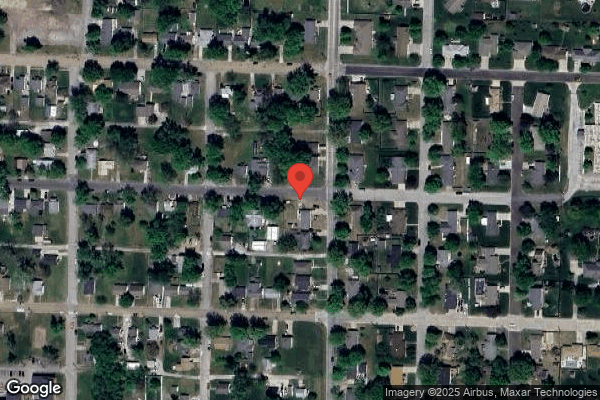
Mar 2025 1 deficiency 1 IJ
CRITICAL (J) 📢 Someone Reported This

A family member, employee, or ombudsman was alarmed enough to file a formal complaint

Immediate Jeopardy (IJ) - the most serious Medicare violation

Quality of Care (Tag F0684)

Someone could have died · This affected 1 resident

**NOTE- TERMS IN BRACKETS HAVE BEEN EDITED TO PROTECT CONFIDENTIALITY** Based on interview and record review, the facility failed to thoroughly assess one resident (Resident #1) and notify the physici...

Read full inspector narrative →
**NOTE- TERMS IN BRACKETS HAVE BEEN EDITED TO PROTECT CONFIDENTIALITY** Based on interview and record review, the facility failed to thoroughly assess one resident (Resident #1) and notify the physician after the resident sustained an unwitnessed fall that resulted in increased pain, dizziness, vomiting, and a fractured hip, in a review of 10 sampled residents. After the fall, staff transferred the resident from the floor to the toilet, to a wheelchair, and then to his/her bed. During the transfer, staff said the resident yelled and screamed out in pain. The resident complained of his/her head hurting and feeling dizzy. Registered Nurse (RN) A and Licensed Practical Nurse (LPN) B did not perform neurological checks (assessing level of consciousness, visual fields, pupil constriction and dilation, upper and lower limb strength or limitation, speech and vital signs) with the resident after the unwitnessed fall. RN A and LPN B did not report the resident's pain or changes of condition to the physician and did not send the resident to the hospital. After the resident's fall, RN A ordered an x-ray of the resident's hip without a physician order. The resident began vomiting, lost consciousness, and died at the facility. The facility census was 32. The Administrator was notified on [DATE] at 4:00 P.M. of the Immediate Jeopardy (IJ), which began on [DATE]. The IJ was removed on [DATE], as confirmed by surveyor onsite verification. Review of the facility's policy Falls - Clinical Protocol, dated [DATE], showed the following: -The nurse shall assess and document and report vital signs, injury, especially fracture or head injury, musculoskeletal function, observing for changes in normal range of motion, weight bearing, neurological status, and pain; -The staff, with the physician's guidance, will follow up on any fall with associated injury until the resident is stable and delayed complications such as late fracture or subdural hematoma have been ruled out or resolved. Review of the facility's policy Assessing Falls and Their Causes, dated [DATE], showed the following: -The purpose of this procedure is to provide guidelines for assessing a resident after a fall and to assist staff in identifying causes of the fall; -If a resident has just fallen, or is found on the floor without a witness to the event, evaluate for possible injuries to the head, neck, spine, and extremities; -Obtain and record vital signs as soon as it is safe to do so; -If there is evidence of injury, provide appropriate first aid and/or obtain medical treatment immediately; -Notify the resident's attending physician and family in an appropriate time frame. When a fall results in a significant injury or condition change, notify the practitioner immediately by phone. Review of the facility's policy Change in a Resident's Condition or Status, dated February 2021, showed the following: -The facility promptly notifies the resident, physician, and the resident's representative of changes in the resident's medical/mental condition and/or mental status; -The nurse will notify the resident's attending physician or physician on call when there has been an accident or incident involving the resident, significant change in the resident's physical, emotional, or mental condition, and need to transfer the resident to a hospital or treatment center; -The nurse will record in the resident's medical record information relative to changes in the resident's medical or mental condition or status. Review of the facility's policy Pain - Clinical Protocol, dated [DATE], showed the following: -The nursing staff will assess each individual for pain upon admission to the facility, at the quarterly review, whenever there is a significant change in condition and when there is onset of new pain or worsening of existing pain; -The staff and physician will identify the characteristics of pain such as location, intensity, frequency, pattern, and severity; -The nursing staff will identify any situation or interventions where an increase in the resident's pain may be anticipated; for example, wound care, ambulation, or repositioning; -The physician will perform or order appropriate tests as needed to help clarify sources of pain. For example, an x-ray may help to identify the cause of joint pain. 1. Review of Resident #1's undated Face Sheet showed the following: -The resident had diagnoses that included Alzheimer's disease (a progressive, neurodegenerative disorder that affects memory, thinking, and behavior), mild cognitive impairment, muscle wasting and atrophy (the loss of muscle mass and strength), muscle weakness, unsteadiness on feet, abnormal posture, need for assistance with personal care, history of falling, overactive bladder, osteoporosis (a condition that weakens bones, making them fragile and prone to fractures, often going unnoticed until a bone breaks, particularly in the hip, spine, or wrist), collapsed vertebra (causes a vertebral compression fracture that can be caused by trauma or osteoporosis), difficulty in walking, and cognitive communication deficit; -The resident had a code status of do not resuscitate. Review of the resident's significant change Minimum Data Set (MDS), a federally mandated assessment instrument required to be completed by facility staff, dated [DATE], showed the following: -The resident's cognition was severely impaired; -The resident had diagnoses that included Alzheimer's disease and osteoporosis; -The resident required substantial/maximum assistance from staff for lying to sitting and sitting to lying repositioning, and chair to bed transfers. Review of the resident's Care Plan, dated [DATE], showed the following: -The resident had chronic pain in his/her back from past falls and prior fractures of his/her spine; -The resident was able to voice discomfort; -The resident had a history of several falls as he/she takes self to the bathroom frequently. He/She has osteoporosis which put him/her at risk for further injuries; -The resident required assistance with part of his/her activities of daily living (ADLs). Review of the resident's nursing note, dated [DATE] at 3:50 P.M., entered by RN A showed the following: -The resident hollered for help; -Staff approached the bathroom and found the resident on the floor; -The resident had an unwitnessed fall trying to get himself/herself to the toilet; -Two staff members assisted the resident off the bathroom floor, then assisted with changing the resident's clothes; -Staff transferred the resident to his/her wheelchair, vital signs taken, the resident complained of right hip pain; -The physician, Director of Nursing (DON), and administrator notified; -A portable x-ray was ordered. Review of the resident's nursing note, dated [DATE] at 3:52 P.M., entered by RN A showed the following: -A fall occurred on [DATE] at 2:16 P.M. that was not witnessed; -The resident attempted to toilet himself/herself and the reason for the fall was not evident; -An injury did not occur as a result of the fall and the fall did not result in an emergency room visit; -The physician was notified on [DATE] (no time documented) of the resident's fall with new order received (see order sheet for new order); -The resident's blood pressure was 110/67 (reference range is 90/60 to 120/80), pulse was 73 (reference range is 60 to 100 beats per minutes), respirations were 18 (reference range is 12 to 20 breaths per minute, (all within normal limits), oxygen level was 90% on room air (reference range is 92% to 100%), and temperature was 97.7 degrees Fahrenheit (reference range is 97.8 degrees Fahrenheit to 99.1 degrees Fahrenheit); -The resident voiced complaints of sharp pain in his/her right hip, rating it a 6 out of 10 on a scale of 1 to 10 with 10 being the worst pain; -The resident had a change in mobility status; -The resident had recent pain and blood pressure medication changes. Review of the resident's physician order sheet, dated [DATE], showed the following: -No evidence of a standing order for x-rays; -RN A entered an order at 4:03 P.M. for a two view portable x-ray of the resident's right hip for a fall, pain in hip, unable to bear weight, and non-ambulatory; -RN A entered the Medical Director as the ordering physician; -The communication method was marked as prescriber written. Review of the resident's nursing note, dated [DATE] at 7:00 P.M., entered by LPN B showed the following: -The resident's blood pressure was 112/68, pulse 74, respirations 18, oxygen level 90% on room air and temperature 97.7; -The resident said his/her hip was still hurting and would not let LPN B assess it; -The resident's hand grips were of equal strength; -The resident's pedal (foot) pulses were strong; -The resident refused his/her evening meal but did take a few sips of water and drank a cup of coffee. Review of the resident's nursing note, dated [DATE] at 9:26 P.M., entered by LPN B showed the following: -At approximately 8:00 P.M. staff notified LPN B the resident was unresponsive; -LPN B immediately called 911; -Upon entering the resident's room, the resident was noted to be gray in color with his/her head slumped on his/her chest; -Staff tried to rouse the resident but were unsuccessful and LPN B was unable to find a pulse or heartbeat. During interviews on [DATE] at 2:47 P.M. and [DATE] at 10:46 A.M., RN A said the following: -The resident fell about 3:15 P.M. The resident hollered for help and he/she went to the resident's room and found the resident sitting on the bathroom floor; -The resident's wheelchair was in the doorway and the footrests were down; -The resident said he/she did not hit his/her head. RN A felt the back of the resident's head and there were no cuts, bleeding, or bumps; -RN A assessed the resident by moving his/her leg up and down and the resident said no; -The resident complained his/her right hip hurt; -Two aides came in the bathroom and assisted the resident to the toilet, cleaned the resident up and changed his/her incontinent brief; -When the aides stood the resident, the resident did not have any shortening of either leg (this would be an indication of a hip fracture). The resident could only put weight on his/her right toes and put most of his/her weight on his/her left side. Staff transferred the resident to his/her wheelchair; -RN A took the resident's blood pressure, pulse, respirations, and temperature; -RN A said he/she talked to the physician. RN A then responded that he/she called the physician's office and no one answered and RN A said based on his/her best nursing judgement, he/she put in a standing order for an x-ray; -He/She called the mobile x-ray company and ordered a stat (immediate) x-ray of the resident's right hip; -He/She only did an initial assessment when finding the resident on the bathroom floor; -RN A did not complete neurological assessments (assessing level of consciousness, visual fields, pupil constriction and dilation, upper and lower limb strength or limitation, speech and vital signs) on the resident. RN A did not know what the protocol was for neurological assessments for an unwitnessed fall at the facility; -RN A checked on the resident two or three times after the fall and before the end of his/her shift, but did not complete neurological assessments; -RN A did not call the on-call physician and did not feel like the resident needed to go to the hospital; -RN A did not feel it was an emergent situation; -RN A did not think the resident had broken his/her hip; -Staff never told RN A the resident felt dizzy, had a headache, or wanted to go to the hospital after the fall. During an interview on [DATE] at 1:31 P.M., LPN B said the following: -He/She came on duty at 6:00 P.M. on [DATE]; -He/She got report from RN A and was told Resident #1 fell in the bathroom and had an x-ray of his/her right hip. The results had not come back yet and LPN B was to watch for them; -He/She saw the resident for the first time on his/her shift at 7:00 P.M., the resident said his/her right leg hurt; -He/She felt strong pulses in both feet. He/She did not do a push/pull leg strength assessment because the resident's right leg hurt; -The resident was not able to give a number on a scale of one to 10 (with 10 being the worst pain) to rate his/her pain; -LPN B did not notify the physician of the resident's pain. The resident had opioid pain medication scheduled at 8:00 A.M., 1:00 P.M., and 6:00 P.M. that Certified Medication Technician (CMT) E administered to the resident at 7:00 P.M. -The resident refused his/her evening meal but did take a few sips of water and then drank a cup of coffee; -About 8:00 P.M., Nursing Assistant (NA) C, NA D, and CMT E were all in the resident's room. One of them yelled out that the resident was vomiting and was unresponsive; -He/She called 911 at 8:00 P.M. During an interview on [DATE] at 3:37 P.M., NA C said the following: -He/She entered the resident's room after the fall occurred on [DATE] at approximately 2:20 P.M.; -He/She helped transfer the resident from the toilet to the wheelchair; -RN A took the resident's vital signs after the resident was in the wheelchair; -The resident stayed in his/her wheelchair until about 5:00 P.M. when the mobile x-ray company arrived; -NA C heard the resident screaming down the hallway and went to his/her room to see if the resident needed help, staff had just transferred the resident to his/her bed to get the x-ray; -NA C and Certified Nurse Aide (CNA) I helped the resident roll to his/her side for the x-ray technician could. When staff rolled the resident, he/she said, Stop, pain, it's hurting; -The resident continued to yell out in pain off and on after the x-ray was completed as NA C and other staff assisted other residents on the hall; -NA C went to the resident's room after the x-ray was completed and the resident wanted his/her family called but the facility did not have a number for the requested family member. The resident kept asking for that particular family member; -NA C and CNA I told RN A a little while after the x-ray was completed the resident asked to go to the hospital. RN A said there was nothing he/she could do until the x-ray results came back; -LPN B came on duty at 6:00 P.M., but did not go see the resident until about 7:00 P.M.; -NA C sat with the resident in between answering call lights and the resident would randomly scream out in pain. If NA C left to answer a call light the resident would yell out, Come back, help me!; -The resident told NA C he/she was waiting for the ambulance and NA C said the ambulance was not coming. The resident told NA C he/she wanted to go to the hospital; -The resident complained of his/her head hurting really bad and asked for pain medication; -NA C was not in the resident's room the first time the resident vomited, but about 7:45 P.M. the resident vomited again and it looked like coffee grounds. The head of the bed was at a 45 degree angle and staff raised it to a 90 degree angle; -The resident complained of being dizzy and said his/her head hurt; -CMT E checked the resident's oxygen level and it was 48%. They told LPN B and he/she said to get oxygen for the resident; -The resident vomited for the third time, mumbled incoherently and then became unresponsive; -Staff told LPN B and he/she called 911; -CMT E checked the resident's pulse and it was very faint. The pulse oximeter (device used to measure oxygen levels) would not read the resident's oxygen level; -Emergency Medical Services (EMS) arrived and took over. During an interview on [DATE] at 4:08 P.M., NA D said the following: -CNA I and NA D were in another resident's room when they heard Resident #1 screaming. The aides went to the resident's room. RN A was in the bathroom where the resident was on the floor yelling I think I broke my leg!; -RN A bent the resident's leg at his/her knee back and forth and the resident yelled Ouch, that hurt!; -The resident kept yelling out I think I broke my leg!; -RN A and the two aides assisted the resident from the floor to the toilet. When the resident stood up, he/she did not put any weight on his/her right leg; -RN A said he/she would call about an x-ray; -The resident wanted to go to the dining room, so NA D pushed the resident to the dining room; -The mobile x-ray company arrived and NA D pushed the resident to his/her room and then someone else assisted the resident to bed; -NA D helped roll the resident so the x-ray technician could take the x-ray. The resident cried ouch when staff rolled him/her; -The resident asked to go to the hospital and kept saying he/she was waiting for the ambulance; -NA D told RN A the resident wanted to go to the hospital and RN A said he/she couldn't do anything until the x-ray results were back; -The resident said he/she was extremely dizzy, his/her head hurt and his/her heart hurt; -NA D told this information to RN A, but he/she did not say anything; -The resident vomited the first time about 6:00 P.M. and then about 6:30 P.M. to 7:00 P.M., the resident vomited a second time. After vomiting the second time the resident became pale and was gurgling. NA D sat the head of the bed up more and told LPN B; -LPN B went to the resident's room, took his/her vital signs, gave the resident a few sips of water and a cup of coffee, which the resident drank; -A little bit later, the resident vomited for a third time, the vomit was brown, and afterwards the resident became unresponsive; -LPN B left the room and called 911; -EMS arrived and said the resident had a faint pulse. EMS placed the resident on their monitor and there was no pulse. During an interview on [DATE] at 10:17 A.M. CMT E said the following: -Around 3:00 P.M. on [DATE] RN A told him/her the resident had fallen; -RN A said the DON did not answer his/her call and he/she called the MDS Coordinator and discussed a plan for the resident; -The resident was in his/her room sitting in a wheelchair and said his/her leg hurt. A short time later, the resident went to the dining room and was alert, oriented, quiet and CMT E administered evening medications to the resident; -The mobile x-ray company arrived and CMT E and NA D took the resident to his/her room. CMT E and NA D transferred the resident to his/her bed with a gait belt. The resident did not bear weight on his/her right leg at all and cried out in pain during the transfer; -The resident usually transferred with one staff member's assistance from the chair to the bed; -CMT E and NA D had to roll the resident on his/her side so x-ray tech could get a board under the resident's hip for the x-ray. During the roll the resident screamed out in pain; -At about 7:00 P.M., CMT E walked past the resident's room and he/she yelled out he/she was in pain. CMT E administered the resident's scheduled opioid pain medication; -About 7:45 P.M., CNA I told LPN B the resident did not look good and should go to the emergency room. LPN B said he/she couldn't send the resident out, because there were no orders to send the resident to the hospital; -CMT E asked LPN B if the resident's vital signs had been taken recently. LPN B said he/she had not, so CMT E took the resident's blood pressure and it was 120/103 and the resident's oxygen level was 90%. LPN B said to put the resident on oxygen and he/she called 911; -Right after CMT E placed the oxygen on the resident, the resident vomited a brown mucous liquid from his/her mouth and nose. The resident then became unresponsive; -CMT E did a sternal rub on the resident's chest and did not get a response from the resident, could not get a pulse at the resident's wrist, and did not see the resident breathing; -EMS arrived and placed monitors on the resident and did not get a pulse. During an interview on [DATE] at 10:35 A.M., the MDS Coordinator said the following: -RN A called him/her after the resident fell and asked what he/she thought about sending the resident to the emergency room versus getting an x-ray; -He/She thought RN A was asking for an opinion to recommend to the physician; -Standing orders were for over the counter medications only, not for x-ray orders. During an interview on [DATE] at 1:56 P.M., Emergency Medical Services (EMS) Staff J said the following: -When he/she arrived in the resident's room the resident was ashen, unresponsive and if he/she was breathing it was minimal; -The resident was placed on the cardiac monitor and there was no pulse. During an interview on [DATE] at 1:10 P.M. and [DATE] at 11:16 A.M., the DON said the following: -She expected staff to follow the policy as written and complete neurological checks and reassess the resident as needed; -She expected the physician/on-call physician to be notified if a resident had a fall; -She would not expect a nurse to place an order for an x-ray without a physician's order; -The facility did not have standing orders for x-rays. During an interview on [DATE] at 11:16 A.M., the Administrator said the following: -RN A should have called the on-call physician; -He would have expected staff to complete neurological assessments on Resident #1 because it was an unwitnessed fall; -He would not expect a nurse to order an x-ray without a physician's order. During an interview on [DATE] at 4:37 P.M. the On-Call Physician said the following: -He/She had missed a call on [DATE] at 9:53 P.M. from the facility; -At 10:00 P.M. he/she got a call from LPN B and was told Resident #1 passed away and the body had been released; -He/She did not receive any calls prior to 9:53 P.M. on [DATE] from the facility. During an interview on [DATE] at 1:29 P.M. and [DATE] at 11:40 A.M., the Medical Director said the following: -She was not notified of Resident #1's fall on Sunday, [DATE]; -She did not order a mobile x-ray for the resident; -She would have expected the nurse to call the on-call physician on a Sunday; -She would expect neurological checks to have been completed every 15 minutes for at least the first hour and further assessments of the resident should have been completed after his/her fall; -The resident may have had a different outcome if staff had sent the resident to the hospital; -The nurse should have called the physician and gotten the resident sent to the hospital. MO250114 MO250199 NOTE: At the time of the survey, the violation was determined to be at the immediate jeopardy level J. Based on interview and record review completed during the onsite visit, it was determined the facility had implemented corrective action to remove the IJ violation at the time. A final revisit will be conducted to determine if the facility is in substantial compliance with participation requirements. At the time of exit, the severity of the deficiency was lowered to the D level. This statement does not denote that the facility has complied with State law (Section 198.026.1 RSMo.) requiring that prompt remedial action to be taken to address Class I violation(s).
Nov 2023 1 deficiency
CONCERN (D) 📢 Someone Reported This

A family member, employee, or ombudsman was alarmed enough to file a formal complaint

Potential for Harm - no one hurt, but risky conditions existed

Accident Prevention (Tag F0689)

Could have caused harm · This affected 1 resident

**NOTE- TERMS IN BRACKETS HAVE BEEN EDITED TO PROTECT CONFIDENTIALITY** Refer to Event ID 0T6H13 Based on interview and record review the facility failed to ensure safe transfer techniques and prevent...

Read full inspector narrative →
**NOTE- TERMS IN BRACKETS HAVE BEEN EDITED TO PROTECT CONFIDENTIALITY** Refer to Event ID 0T6H13 Based on interview and record review the facility failed to ensure safe transfer techniques and prevent falls for two residents (Resident #1 and #3) in a review of six residents when staff failed to prevent Resident #1, who the facility identified as a fall risk and who was dependent on staff for all transfers and care needs, from rolling out of bed while staff provided care and failed to prevent the resident from falling to the floor when the mechanical lift (a device used to lift a resident from one surface to another with the use a sling) tipped over during a transfer. Staff also failed to use a gait belt (canvas belt placed around the resident's waist to assist with ambulation, transfer, and positioning in a chair) and provide adequate staff assistance during a transfer for Resident #3 with a known increased fall risk following a total hip replacement surgery. The facility census was 37. Review of the facility policy, Transferring a Resident, dated February 2018, showed the following: -The purpose was to assist the resident with ambulating and /or transfer; -Prepare by reviewing the resident's care plan to assess for any special needs of the resident such as number required to assist. Obtain equipment such as a gait belt; -Place the gait belt around the resident, securing so it does not slip. Assist the resident to a standing position, supporting the resident by holding on to the gait belt. Do not grab the resident under the arms. Move slowly. Allow the resident time to maintain his/her balance; -Walk on the resident's weak side, provide support as necessary during the transfer; -Use a gait belt for safety; -If the resident was non-ambulatory and required assistance to the wheelchair, assist resident with pivoting, hold the gait belt for support and assist with lowering the resident to the bed and/or chair. Review of the facility policy, Safe Lifting and Movement of Residents, dated July 2017, showed the following: -In order to protect the safety and well-being of staff and residents and to promote quality care, the facility used appropriate techniques and devices to lift and move residents; -Resident safety, dignity, comfort and medical condition would be incorporated into goals and decisions regarding the safe lifting and moving of residents; -Manual lifting of residents should be eliminated when feasible; -Nursing staff in conjunction with the rehabilitation staff should assess individual residents' needs for transfer assistance on an ongoing basis. Staff would document resident transferring and lifting needs in the care plan including the resident's preferences for assistance, mobility, size, weight bearing ability, cognitive status and goals; -Staff responsible for direct resident care would be trained in the use of manual (gait belt) and mechanical lifting devices; -Mechanical lifting devices would be used for heavy lifting, including lifting and moving residents when necessary. Review of the facility policy, Lifting Machine, Using a Mechanical, dated July 2017, showed the following: -The purpose was to establish the general principles of safe lifting using a mechanical lifting device; -At least two staff members were needed to safely move a resident with a mechanical lift; -Mechanical lifts might be used for tasks that required lifting a resident from the floor, from bed to chair, toileting or bathing or repositioning; -Before using the lift assess the resident's current physical, cognitive and emotional condition; -Clear an unobstructed path for the lift machine, ensure there was enough room to pivot, position the lift near the receiving surface; -Make sure the lift was stable and locked; -Place the sling under the resident, lower the sling bar closer to the resident and attach the sling straps to the sling bar; -Slowly lift the resident, only lift as high as necessary to complete the transfer; -Gently support the resident as he/she was moved. When the transfer destination was reached, slowly lower the resident to the receiving surface. 1. Review of Resident #1's care plan, dated 2/22/23, showed the following: -Diagnoses included obesity, stroke, and muscle weakness; -The resident was dependent on staff and required two staff members' assistance with activities of daily living, including turning and positioning. The resident was at risk for falls. Staff should be sure the resident was centered in the bed and not too close to the edge. Provide an air mattress (mattress with pressurized air based on the resident's weight to relieve pressure) and ensure it was working properly, the mattress should include bolsters (edging added to the mattress elevating the sides forming a barrier along the edge of the mattress) attached to the sides of the bed. He/She was unable to bear weight and required a mechanical lift transfer with assistance of two staff members for transfers; -The resident rolled out of bed, had no control to keep from falling when on the edge of the air mattress. Staff should place a fall mat on the left side of the bed, use wedges for positioning when in bed and apply bolsters to the sides of the resident's bed. Review of the resident's nurses' note, dated 8/13/23 at 11:50 P.M,. showed staff documented the resident was found leaning out the side of the bed with his/her face on the floor and the rest of the resident's body in bed. After assessing for injuries, staff lowered the resident's body to the floor and used the mechanical lift to get the resident off the floor and back into bed. Review of the resident's post fall evaluation, dated 8/14/23 at 12:42 A.M., showed staff documented the following: -The fall occurred on 8/13/23 at 10:20 P.M., was not witnessed, occurred in the resident's room and the resident did not remember what activity he/she was doing at the time of the fall. The resident was a known high fall risk; -At the time of the fall, staff found the resident was incontinent and the call light was on. The fall mat was not on the floor and the air mattress slid. The post fall evaluation did not indicate if the bolster pads were in place on the mattress; -Conclusion was the resident had history of falls. Staff should check the placement of the air mattress. Review of the resident's nurses' note, dated 8/14/23 at 10:48 A.M., showed staff documented the resident 's left cheek was slightly red and puffy, no other injuries noted. Review of the resident's nurses' note, dated 8/15/23 at 9:27 A.M., showed staff documented the resident complained of some shoulder pain. Review of the resident's quarterly Minimum Data Set (MDS), a federally mandated assessment instrument, completed by facility staff, dated 8/15/23, showed the following: -Severely impaired cognition; -Dependent on staff for toileting, upper and lower body dressing, rolling left to right (ability to roll from lying on back to left and right side and return to lying on back on the bed) and transfers (ability to transfer to and from a bed to a chair). Review of the resident's Fall Risk Assessment, dated 8/15/23, showed staff documented the following: -Intermittent confusion; -History of one to two falls in the past three months; -Legally blind; -Took three to four medications that increased fall risk; -Three or more predisposing diseases that increased fall risk; -Total score of 18, indicating fall risk. Review of the resident's care plan showed no updated interventions regarding the resident's fall on 8/13/23. Review of the resident's nurses' note, dated 9/23/23 at 9:30 A.M., showed staff documented the mechanical lift tipped sideways with resident in it and resident went to the floor. The resident was on his/her left side with the sling still attached to the mechanical lift. Four staff assisted the resident off the floor with the mechanical lift. Review of the resident's post fall evaluation, dated 9/23/23 at 10:07 A.M., showed staff documented the following: -The fall occurred on 9/23/23 at 9:30 A.M. was witnessed by staff, occurred in the resident's room during a mechanical lift transfer. The mechanical lift tipped. The resident was a known high fall risk; -The mechanical lift tipped sideways and the resident fell to the floor. Review of the resident's care plan, updated 9/23/23, showed be sure the mechanical lift legs were spread apart during transfers and go slowly during mechanical lift transfers. Review of the resident's nurses' note, dated 9/23/23 at 10:25 A.M., showed staff documented two red scratches were noted on the resident's left leg from the mechanical lift sling. Review of the resident's nurses' note, dated 10/27/23 at 7:05 A.M., showed staff documented while providing care and preparing for mechanical lift transfer, the bolster pads on the resident's air mattress slipped when staff turned the resident onto his/her left side. The resident slid off the side of the bed to the floor. Four staff assisted the resident off the floor with the mechanical lift. Review of the resident's post fall evaluation, dated 10/27/23 at 7:35 A.M,. showed staff documented the following: -The fall occurred on 10/27/23 at 7:05 A.M. was witnessed by staff, occurred in the resident's room while staff prepared to transfer the resident from bed to the chair. The resident was a known high fall risk; -Staff was preparing to put the mechanical lift sling underneath the resident, turned the resident on his/her left side, and the mattress bolster pad came loose from the bed. The resident slipped off the side of the bed onto his/her left side on the floor. The fall mat was not on the floor. Review of the resident's care plan, updated 10/27/23, showed staff should not allow the resident to be too close to the edge of the bed when turning or performing cares. (Repeated intervention from the care plan dated 2/22/23). During an interview on 11/16/23 at 9:40 A.M. and 10:30 A.M. Certified Nurse Assistant (CNA) C said the following: -The resident required staff assistance with all cares, and used a mechanical lift for transfers to a reclining wheelchair; -CNA C was with the resident when the mechanical lift tipped over on 9/23/23. Two staff were transferring the resident from the bed. The mechanical lift legs were widened as the resident was pulled back off the bed and the mechanical lift legs came out from under the bed frame allowing enough room to widen the leg base. As the mechanical lift was turned towards the chair, the lift tipped over and the resident landed on CNA C and the floor. CNA C did not know what caused the lift to tip over. The bed frame caused a tight fit for the mechanical lift legs and staff could not widen the legs until the lift was pulled out from directly under the bed with the resident in the lift sling. During an interview on 11/16/23 at 10:35 A.M. the resident said he/she did not like the mechanical lift, it tipped over with him/her in the sling and he/she fell on the floor. The resident fell out of the bed multiple times when staff turned him/her onto this/her side and he/she rolled out of the bed and onto the floor. During an interview on 11/17/23 at 2:45 P.M. CNA E said on 8/13/23 the resident rolled out of bed and onto the floor when he/she and CNA F rolled the resident onto his/her left side. The bolster pad attached to the resident's bed slipped and the resident rolled off the mattress onto the floor. CNA E was on the right side of the resident's bed and CNA F stood on the left side of the resident's bed as they turned the resident side to side and provided care. The resident rolled out the left side of the bed. The fall mat was not on the floor, it was moved prior to providing care so staff did not have to walk on the fall mat. The fall mat should have remained on the floor while care was provided. After the fall, CNA E checked the mattress bolster clip and noticed it was not attached to the bed frame. 2. Review of Resident #3's quarterly MDS, dated [DATE], showed the following: -Cognitively intact; -Independent with transfers; -Required staff supervision or touch assistance (provided verbal cues and/or touch/steadying and/or contact guard assistance) with walking 10 feet once standing. Review of the resident's physician order sheet (POS), dated 11/15/23, showed the following: -Diagnoses included osteoporosis and prosthetic (artificial) left hip joint; -Hip precautions (limited movement of the surgical hip joint) with weight bearing as tolerated. Review of the resident's nurses' note, dated 11/15/23, showed staff documented the following: -At 12:43 P.M. the resident returned to the facility at 11:45 A.M. from the hospital following total left hip replacement. The dressing to the left hip was dry and intact. Physical and occupational therapy to work with the resident for strengthening and gait training; -At 2:32 P.M. the resident was on the floor in the bathroom. Staff was present at the time of the fall. The resident was alert and oriented. Review of the resident's record showed no documentation the physical and occupation therapy evaluations were completed. Review of the resident's record showed no update to the care plan regarding the new left total hip replacement, hip precautions, mobility status, transfer status and care needs on 11/15/23. Review of the resident's care plan, updated 11/16/23, showed the resident had a new hip joint replacement. Staff should assess for pain, provide one to two staff member assistance with gait belt transfers depending on the resident's need and go slowly. Encourage mobility and be up and out of the bed. Follow hip precautions including no bending, crossing legs and put both legs in the bed together, apply ice to the incision area as needed, and use bed side commode until the resident was more mobile for toileting. During an interview on 11/16/23 at 11:20 A.M. the resident said on 11/15/23 he/she returned to the facility following left hip replacement surgery. He/She was in the wheelchair and needed to use the toilet. The resident asked Nurse Aide (NA) A to use a gait belt and told NA A they needed more help. NA A said no additional staff was needed and it would be okay without a gait belt. NA A stood in front of the resident and held onto the resident's arms while the resident stood up from the wheelchair. His/Her hip gave out and the resident fell to the floor in the bathroom. Following the fall, staff transferred the resident to the local hospital for x-ray of the left hip. His/Her hip was okay but the resident was sore from the fall. During an interview on 11/16/23 at 1:00 P.M. LPN B said the following: -He/She was the charge nurse on 11/15/23. Before the resident arrived, LPN B informed staff of the resident's hip surgery, need for additional assistance and the resident would be weak. The resident returned to the facility about 11:45 A.M. in a wheelchair and ate lunch in the dining room then staff pushed the resident's wheelchair to his/her room; -The Director of Nursing (DON) informed staff that help was needed in the resident's room. NA A called the DON for help after the resident fell. LPN B went to the resident's room. The resident sat on the floor in the bathroom facing the wall with his/her back towards the toilet. The resident's legs were bent at the knees with the left leg under the resident and the right leg to the side. NA A stood behind the resident. The resident was not wearing a gait belt. A gait belt was applied and four staff lifted the resident off the floor after assessing the resident for injury. NA A said he/she tried to transfer the resident to the toilet; -Staff sent the resident to the hospital for evaluation and x-ray. The resident returned to the facility the same day; -NA A should have gotten additional staff assistance and used a gait belt during the transfer to the toilet. Staff should have assessed the resident's transfer ability and strength prior to transfer to the toilet. Before the left hip surgery, the resident used a walker all the time for mobility and pivoted to the wheelchair with a walker for support. The resident was unable to ambulate very far prior to surgery related to hip pain. 3. During an interview on 11/16/23 at 12:10 P.M. the MDS coordinator said the following: -Resident #1 fell from the mechanical lift when the lift tipped over during a transfer. The legs of the mechanical lift were probably not wide enough apart to stabilize the resident in the lift. Momentum during the lift caused the lift to tip and fall over. Bolsters were added to the air mattress. Staff should not roll the resident too close to the edge of the bed or the resident could roll out onto the floor. Staff should keep the resident centered in the bed and monitor for positioning and safety when turning the resident side to side during care to prevent falls. Staff should keep the fall mats on the floor next to the resident's bed at all times except when transferring with the mechanical lift; -Resident #3 had a total hip replacement surgery on 11/13/23 and returned to the facility 11/15/23 about 11:45 A.M. Staff should transfer the resident with a gait belt at all times. The resident had bad hips and did not walk a lot prior to surgery. Staff should always use a gait belt and the walker for support. It was the first time the resident transferred from the wheelchair after returning to the facility when the resident fell in the bathroom. During an interview on 11/16/23 at 3:25 P.M. the DON said the following: -Resident #1 fell from the mechanical lift on 9/23/23. During the transfer the lift tipped over to the side. No staff education had occurred since the fall. The resident rolled out of bed on 10/27/23 when staff rolled the resident onto his/her side; -Resident #3 returned from the hospital on [DATE] following a left hip replacement surgery. Physical and Occupational therapy had not evaluated the resident yet. The resident ate lunch and staff took the resident to his/her room in the wheelchair. The resident was on hip precautions and required additional staff assistance with transfers. Staff was unsure at the time of the fall what the resident could tolerate. Staff should use a gait belt with all transfers and provide the resident's walker for additional support. NA A should not have attempted to toilet the resident without a gait belt and without additional staff assistance to prevent a fall. As a result, the resident had to go back to the hospital for x-ray of the surgical hip to ensure there was no injury. During an interview on 11/16/23 at 3:45 P.M. the Administrator said he expected staff to use a gait belt when providing assistance with transfers, evaluate a resident following surgery for current transfer status and prevent falls by providing the appropriate assistance with transfers. He expected staff to prevent Resident #1 from rolling out of bed during care and to follow the resident's care plan interventions regarding use of fall mats, mattress bolster and mechanical lift transfers. MO00226995
Oct 2023 1 deficiency
CONCERN (D) 📢 Someone Reported This

A family member, employee, or ombudsman was alarmed enough to file a formal complaint

Potential for Harm - no one hurt, but risky conditions existed

Deficiency F0808 (Tag F0808)

Could have caused harm · This affected 1 resident

Refer to Event ID 0T6H12. Based on observation, interview, and record review, the facility failed to follow a physician ordered diet when staff provided the resident with orange juice and failed to pr...

Read full inspector narrative →
Refer to Event ID 0T6H12. Based on observation, interview, and record review, the facility failed to follow a physician ordered diet when staff provided the resident with orange juice and failed to provide nectar thickened liquids for one resident (Resident #33) in a review of seven sampled residents. The facility census was 36. Review of the facility policy, Therapeutic Diets, revised October 2017, showed a therapeutic diet is considered a diet ordered by a physician, practitioner or dietitian as part of treatment for a disease or clinical condition, to modify specific nutrients in the diet, or to alter the texture of a diet, for example, altered consistency diet. 1. Review of Resident #33's undated face sheet showed the resident's diagnoses included dementia, end stage renal disease, oropharyngeal dysphagia (swallowing problems occurring in the mouth and/or the throat) and chronic kidney disease. Review of the resident's quarterly Minimum Data Set (MDS), a federally mandated assessment instrument, completed by facility staff, dated 9/3/23, showed the following: -Moderately impaired cognition; -Required supervision with eating; -Received mechanically altered diet while not a resident; -Received therapeutic diet while not a resident. Review of the resident's swallow study, dated 9/23/23, by a CCC-SLP (Certificate of Clinical Competence in Speech Language Pathology) showed the following: -Patient presents with mild-moderate oropharyngeal dysphagia with reduced oropharyngeal components; -Patient continues to have mild diffuse pharyngeal residue requiring additional swallows to clear; -Inconsistent penetration observed with nectar thick liquids; -Resident is not cognitively able to utilize compensatory techniques at this time; -Recommendations: dysphagia level 3 diet with nectar thick liquids; -Aspiration precautions are advised including small/single drinks, slow pace, and may use straws. Review of the resident's physician orders, dated 9/26/23, showed the following: -Regular diet, mechanical soft with ground meat texture; -Nectar thickened liquids consistency; -No potatoes, tomatoes, bananas, orange juice, or tomato sauces. Review of the yellow dietary slip with the resident's diet change, dated 9/26/23, showed the following: -Regular diet, mechanical soft with ground meat, and nectar thickened liquids; -No potatoes, tomatoes, bananas, orange juice, or tomato sauce. Review of the resident's Care Plan, reviewed 10/11/23, showed the following: -Needs supervision at meal times; -He/She will tolerate current diet without any choking incident through the next review date; -Provide and serve diet as ordered; -Monitor/document/report signs and symptoms of dysphagia: pocketing, choking, coughing, several attempts at swallowing, refusing to eat, or appears concerned during meals. Review of the resident's current dietary card (during breakfast meal service) on 10/12/23 showed the following: -Regular diet, mechanical soft with ground meat texture; -Dislikes included orange juice; -Diet card did not address nectar thickened liquids. Observation on 10/11/23 at 10:10 A.M., showed the following: -The resident was asleep in bed; -A half empty cup of regular (not thickened) water sat on the bedside table; -An additional cup full of regular water was on the resident's bedside table. Observation on 10/12/23 at 7:37 A.M. in the dining room showed the following: -The resident received regular water, regular nutritional chocolate shake, and thickened orange juice with his/her meal; -The resident drank some of each of the liquids. Observation on 10/12/23 at 8:00 A.M. showed the following: -Certified Nurse Assistant (CNA) A and CNA B took the resident from the dining room to his/her bedroom; -CNA B offered the resident a drink of regular water at bedside; -The resident took a small drink of water. During an interview on 10/12/23 at 8:00 A.M., CNA A and CNA B both said the resident was not on thickened liquids. During an interview on 10/12/23 at 8:15 A.M., [NAME] C said nothing was marked on the resident's dietary card for thickened liquids. It should normally be on the card if the resident was to receive thickened liquids. Observation on 10/12/23 at 8:18 A.M. showed CNA B confirmed the resident's physician order for nectar thickened liquids with Licensed Practical Nurse D. CNA B removed the resident's water cups from the resident's bedside table, and left a full bottle of soda at the resident's bedside. During an interview on 10/12/23 at 8:18 A.M., [NAME] C said the yellow slip with the resident's diet change was filled out on 9/26/23, but the dietary manager had not changed the dietary card yet. During an interview on 10/12/23 at 12:55 P.M., the Dietary Manager said the following: -She had not had a chance to add the resident's dietary changes to the dietary card, but the yellow slip with the diet changes was paper clipped to the card; -Orange juice would not be appropriate to serve to the resident if the card said No Orange Juice. During an interview on 10/12/23 at 1:10 P.M., the resident's physician said the following: -She would expect staff to follow orders from the hospital swallow study for the resident to be on nectar thickened liquids; -She would consider thin liquids to increase the risk of aspiration if the swallow study recommends nectar thickened liquids. During an interview on 10/12/23 at 4:00 P.M., the Director of Nursing said she would expect staff to follow physician orders and facility policies regarding the resident's diet. During an interview on 10/12/23 at 4:00 P.M., the Administrator said he would expect staff to follow physician orders and facility policies regarding the resident's diet.
Aug 2023 17 deficiencies
CONCERN (D)

Potential for Harm - no one hurt, but risky conditions existed

Resident Rights (Tag F0550)

Could have caused harm · This affected 1 resident

Based on observation, interview and record review, the facility failed to treat one resident (Resident #139) in a review of 14 sampled residents, with dignity and respect. Staff failed to assist the r...

Read full inspector narrative →
Based on observation, interview and record review, the facility failed to treat one resident (Resident #139) in a review of 14 sampled residents, with dignity and respect. Staff failed to assist the resident to use either a commode or toilet and directed the resident to urinate in his/her brief. facility census was 37. Review of the facility's Dignity policy, dated February 2021, showed the following: -Residents are treated with dignity and respect at all times; -When assisting with care, residents are supported in exercising their rights, including allowing the resident to choose when to conduct activities of daily living; -Staff are expected to promote dignity and assist residents by promptly responding to a resident's request for toileting assistance. 1. Review of Resident #139's baseline care plan, dated 08/1/23, showed the following: -Can communicate easily with staff; -Toilet use: two or more person physical assist; -Always incontinent of bladder and bowel. Review of the resident's undated care plan showed the following: -The resident requires pretty much total care with two staff; -He/She has much pain upon movement; -He/She is very weak and tires easily; -The resident is totally dependent on two staff for toilet needs. Check and change and offer bed pan if he/she wants it; -Check resident every two hours and assist with toileting as needed; -Provide bedpan/bedside commode if he/she wants it; -He/She was in the hospital for a urinary tract infection (UTI) and now is very weak; -He/She is unable to get to the bathroom due to this and pain that he/she has in getting to the bathroom; -Often unable to tell you he/she needs to use the bathroom and has incontinence frequently; -Is dependent for toileting; -Resident is at risk for skin breakdown and further UTIs; -Monitor/document for signs/symptoms of UTI: pain burning, urinary frequency, altered mental status, change in behavior; -Offer bed pan if he/shewantsS or asks for IT. Observation on 08/08/23 at 2:23 P.M., in the resident's room, showed the following: -The resident sat in his/her wheelchair; -Certified Nurse Assistant (CNA) R and CNA Y were in the resident's room preparing to transfer the resident to his/her bed; -The resident said, I gotta pee so bad I don't know what to do; -The resident said, I'm so ready to lay down, I wanna pee; -CNA R told the resident you can go and we will change you (Urinate in brief); -CNA R and CNA Y transferred the resident to bed with the mechanical lift; -Staff did not offer the resident the bed pan or bedside commode. During an interview on 08/08/23 at 2:23 P.M., CNA R said the following: -Staff don't sit the resident on the toilet anymore because the last time he/she almost fell; -Staff can offer the resident the bed pan or change his/her brief. Observation on 08/10/23, from 5:23 A.M. to 5:43 A.M., in the resident's room, showed the following: -The resident lay in bed awake; -Nurse Aide (NA) K and CNA N entered the resident's room; -The resident said I gotta go to the bathroom; -Both NA K and CNA N told the resident to just let it out; -CNA N sang let it go, let it go; -CNA N and NA K rolled the resident back and forth in the bed and covered him/her with a gown; -The resident said I want to go to the bathroom; -CNA N and NA K told the resident just go ahead and go; -CNA N and NA K did not offer the resident the bed pan or bedside commode. During interview on 08/10/23 at 5:43 A.M., CNA N and NA K said the following: -They have never put the resident on the bed pan; -The resident just urinates in his/her incontinence brief and staff change him/her. Continuous observation on 08/10/23, from 6:31 A.M. to 6:50 A.M., in the resident's room, showed the following: -The resident lay in bed awake; -CNA G and NA H entered the resident's room; -CNA G and NA H prepared to get the resident up for the day; -CNA G removed the resident's brief; -The resident's brief was dry; -NA H provided pericare; -CNA G and NA H dressed the resident; -CNA G and NA H hooked the resident up to the mechanical lift; -Staff raised the resident up with the lift and lowered the resident into his/her wheelchair; -CNA G pushed the resident to the sink and assisted him/her with oral care; -The resident told staff I gotta pee; -Staff did not respond to the resident's request to go to the bathroom. During an interview on 08/11/23 at 4:10 P.M., the Director of Nursing (DON) said the following: -It would not be appropriate for staff to tell a resident who needs to urinate to just let it go or go in his/her pants instead of offering the resident the bed pain; -The resident can use the bedpan.
CONCERN (D)

Potential for Harm - no one hurt, but risky conditions existed

Transfer Notice (Tag F0623)

Could have caused harm · This affected 1 resident

**NOTE- TERMS IN BRACKETS HAVE BEEN EDITED TO PROTECT CONFIDENTIALITY** Based on interview and record review, the facility failed to provide a notice of transfer to the resident and/or resident repres...

Read full inspector narrative →
**NOTE- TERMS IN BRACKETS HAVE BEEN EDITED TO PROTECT CONFIDENTIALITY** Based on interview and record review, the facility failed to provide a notice of transfer to the resident and/or resident representative when one resident (Residents #18), in a review of 14 sampled residents, and one additional resident (Resident #13), were transferred to the hospital. The facility census was 37. During an interview on 08/11/23 at 2:45 P.M., the Director of Nursing (DON) said she was unable to find a Discharge/Transfer Policy. Review of the Bed Hold/Agreement Policy, revised December 2006, showed it did not address discharge transfer information. 1. Review of Resident #18's face sheet showed his/her family member was his/her responsible party. Review of the resident's progress notes, dated 03/26/23 at 7:42 A.M., showed the resident continues with inappropriate sexual behaviors. Review of the resident's progress notes dated 03/26/23 at 12:17 P.M., showed the following: -Resident sent to psychiatric facility for psychiatric issues; -Resident being transported by staff in facility vehicle; -Resident left the facility at 1:00 P.M. Review of the resident's census sheet showed he/she readmitted to the facility on [DATE]. Review of the resident's medical record showed no evidence facility staff provided the resident or resident's representative a written notice of discharge. 2. Review of Resident #13's face sheet showed he/she is his/her own responsible party. Review of the resident's progress notes, dated 08/03/23 at 6:31 A.M., showed the following: -The resident was non responsive and911 wass called; -The resident was transported to a local hospital by ambulance. Review of the resident's progress notes, dated 08/03/23 at 10:02 A.M., showed the resident was transferred to a regional hospital. Review of the resident's medical record showed no evidence facility staff provided the resident or resident's representative with a written notice of discharge. During an interview on 08/22/23 at 10:56 A.M., the resident said the following: -He/She is his/her own person; -He/She does not remember receiving a written notice of discharge; -He/She returned to the facility on the evening of 8/10/23. During an interview on 08/11/23 at 8:06 A.M., the assistant director of nursing (ADON) said the following: -The charge nurse is responsible for giving the written notice to the resident/responsible party at the time of discharge; -When not given at the time of discharge, the ADON, Director of Nurses (DON), administrator or Office Manager, would hand deliver or mail the discharge notice to the resident/responsible party. During an interview on 08/11/23 at 2:45 P.M. and 4:09 P.M., the DON said the following: -A written discharge notice was not given to the Resident #13; -She would expect a written discharge notice to be given at the time of discharge or mailed to the resident/responsible party. During an interview on 08/11/23 at 4:30 P.M., the administrator said he would expect the facility to provide a written discharge notice be given or mailed to the resident /responsible party as soon as possible.
CONCERN (D)

Potential for Harm - no one hurt, but risky conditions existed

Quality of Care (Tag F0684)

Could have caused harm · This affected 1 resident

Based on observation, interview and record review, the facility failed to ensure one resident (Resident #139), in a review of 14 sampled residents, received care based on professional standards of pra...

Read full inspector narrative →
Based on observation, interview and record review, the facility failed to ensure one resident (Resident #139), in a review of 14 sampled residents, received care based on professional standards of practice. The resident had a diagnosis of congestive heart failure (CHF) (a condition in which the heart doesn't pump blood as well as it should) and received diuretic medication (medications that help reduce fluid buildup in the body). Staff catheterized (the placement of a tube in the bladder to drain urine) the resident for a urine specimen and received a residual amount of 1000 milliliters (ml) (in adults, 100 ml of residual urine is considered to be an abnormal level) . Facility staff emailed the physician's nurse but, did not attempt to contact the physician again regarding the large residual amount. The resident repeatedly complained of needing to urinate. Facility staff also failed to report to the physician when the resident experienced a 14 pound weight loss in seven days. The facility census was 37. Review of the facility policy, Nutrition (Impaired)/Unplanned Weight Loss-Clinical Protocol, dated 09/2017 showed the following: 1. The nursing staff will monitor and document the weight and dietary intake of residents in a format which permits comparison over time; 2. The staff and physician will define the resident's current nutritional status (weight, food/fluid intake, and pertinent laboratory values) and identify individuals with anorexia, weight loss or gain, and significant risk for impaired nutrition: for examples, high risk residents with acute symptoms such as vomiting, diarrhea, fever and infection, or those taking medications that may be causing weight gain or increasing the risk of anorexia or weight loss; 4. The staff will report to the physician, significant weight gains or losses or any abrupt or persistent change from baseline appetite or food intake. Review of the facility's undated policy, Notification Process, did not direct staff regarding when to contact a resident's physician. 1. Review of Resident #139's diagnosis list showed the following: -Urinary tract infection; -Heart failure; -Malignant neoplasm (cancer) of the colon. Review of the resident's August 2023 physician's orders showed the following: -Torsemide (diuretic) 20 milligrams (mg), give two tablets by mouth daily (start date 07/31/23); -Weekly weight x 3 to finish out as new admit (start date 7/31/23). Review of the resident's baseline care plan, dated 08/01/23 showed the following: -Can communicate easily with staff; -Alert, cognitively impaired; -Resident was admitted due to urinary tract infection (UTI)/sepsis (life-threatening complication of an infection). Has had an overall decline. Was found to be anemic (a condition in which the blood doesn't have enough healthy red blood cells). Has colon cancer and is not currently being treated at his/her request. He/She also has congestive heart failure with much edema of his/her extremities with weeping skin. Review of the resident's undated care plan showed the following: -The resident requires pretty much total care with two staff; -He/She has congestive heart failure and hypertension (high blood pressure); -His/Her arms have much edema and they weep; -Weight monitoring weekly and report any significant weight changes to the physician; -He/She has colon cancer and has declined treatment. Review of the resident's Weight Summary showed the following: -On 07/31/23, 168 pounds; -On 08/1/23, 169 pounds; -On 08/8/23 155 pounds (14 lbs weight loss from previous obtained weight). Review of the resident's progress notes, dated 08/09/23 at 9:53 A.M., showed the following: -Less swelling noted in arms, however arms are still weeping; -Had 1000 ml residual during straight cath procedure (a catheter placed in the bladder to drain urine and then removed) done this morning for urinalysis (UA) (a test of the urine to detect disorders such as UTIs, kidney disease and diabetes). Review of the resident's medical record showed no documentation staff notified the resident's physician of the 1000 ml residual amount or the 14 pound weight loss in seven days. During an interview on 08/11/23 at 8:50 A.M., the Minimum Data Set (MDS) Coordinator said the following: -Night shift obtained the resident's UA; -She sent an email to the resident's physician regarding the residual amount; -She did not hear back from the resident's physician; -She did not call the resident's physician regarding the residual amount; -The facility does an interdisciplinary team (IDT) meeting on Wednesdays and usually go over weights; -She saw a weight loss but didn't think much about it as the resident receives diuretics and was weeping fluid; -Staff should notify the resident's physician for weight loss/gain. During an interview on 08/11/23 at 4:10 P.M., the Director of Nursing (DON) said the following: -She would expect staff to notify the physician with any condition changes, any abnormal vital signs, any new resident complaints; -Staff can call the physician's nurse during the day; -The physician has an on-call provider after hours and staff has the physician's cell phone number; -She and the MDS Coordinator email the physician's nurse as needed; -The IDT team is responsible for reviewing resident weights; -The IDT team meets weekly to review weights; -The IDT team did not get to meet this week on 08/09/23 to review weights, so the resident's physician was not notified of the weight loss; -She was not aware of the resident's 1000 ml urine residual; -The MDS Coordinator did notify the physician's nurse of the urine residual by email; -Staff should have called the physician back regarding the urine residual; -Attempts to contact the physician should be documented in the medical record. During an interview on 08/11/23 at 3:00 P.M., the resident's physician said the following: -She was not aware the resident's urine residual was 1000 ml; -She would have wanted to be notified of the resident's urinary residual of 1000 ml. She might have had staff leave the catheter in; -She was not notified of the resident's 14 pound weight loss in seven days; -She would have expected to be notified of a 14 pound weight loss.
CONCERN (D)

Potential for Harm - no one hurt, but risky conditions existed

Accident Prevention (Tag F0689)

Could have caused harm · This affected 1 resident

Based on observation, interview and record review, the facility failed to ensure staff safelytransferredd one resident (Resident #8), in a review of 14 sampled residents, who was unable to fully bear ...

Read full inspector narrative →
Based on observation, interview and record review, the facility failed to ensure staff safelytransferredd one resident (Resident #8), in a review of 14 sampled residents, who was unable to fully bear weight. The facility failed to ensure chemicals, stored in the dementia unit, were secured in a locked storage area. The facility census was 37. Review of the facility policy SafeLiftingg and Movement of Residents revised July 2017 showed the following: -In order to protect the safety and well-being of staff and residents, and to promote quality care, this facility uses appropriate techniques and devices to lift and move residents; -Manual lifting of residents shall be eliminated when feasible; -Nursing staff, in conjunction with the rehabilitation staff, shall assess individual residents' needs for transfer assistance on an ongoing basis. Staff will document resident transferring and lifting needs in the care plan. 1. Review of Resident #8's undated care plan showed the following: -The resident is dependent on staff for his/her cares; -He/She can help some, using his/her right arm; -His/Her left side is paralyzed; -He/She needs two staff for most of his/her cares; -He/She doesn't always keep socks on, but try to keep some on; -Requires two staff to help with transfers. Can bear weight on his/her right side. Review of the resident's Lift/Transfer Evaluation, dated 03/04/22 showed the following: -Can partially bear weight; -Resident's dominant/stronger side-right side; -Resident is cooperative with transfers; -Resident can assist with transfers from bed to bed; -Resident can assist with repositioning in chair; -Resident lacks sensation in part of the body. Review of the resident's quarterly Minimum Data Set (MDS), a federally mandated assessment instrument, completed by facility staff, dated 05/10/23, showed the following: -Highly impaired hearing; -Sometimes understands; -Short and long term memory problems; -Severely impaired cognitive skills for daily decision making; -Physical behavioral symptoms directed towards others occurred daily; -Verbal behavioral symptoms occurred 4-6 days of the last seven days; -Other behavioral symptoms occurred daily; -Required extensive assist of two or more staff for transfers; -Totally dependent on two or more staff for toileting; -Surface to surface transfer, not steady, only able to stabilize with human assistance; -Functional limitation in range of motion on one side of the body, both upper and lower extremity; -Diagnoses of stroke, hemiparesis (muscle weakness or partial paralysis on one side of the body that can affect the arms and legs). Observation on 08/09/23 at 7:54 A.M., in the resident's room, showed the following: -The resident sat in his/her reclining wheelchair; -The resident had foot drop of the left foot; -The resident was incontinent of urine in his/her wheelchair; -Certified Nurse Assistant (CNA) G and an unknown staff member placed a gait belt (an assistive device which can be used to help safely transfer a person and helps prevent falls) around the resident's waist; -CNA G and the unknown staff member assisted the resident up out of the chair while Nurse Aide (NA) H provided pericare; -The resident's knees were bent as he/she attempted to stand and he/she was bent over at the waist; -The resident did not fully bear weight; -Staff assisted the resident to sit down in the wheelchair. During an interview on 08/09/23 at 8:12 A.M., CNA G said the resident was no longer able to walk. He/She should be transferred with a gait belt and assist of two. Observation on 08/09/23 at 3:24 P.M., in the resident's room, showed the following: -The resident sat in his/her reclining wheelchair; -Without applying a gait belt, Certified Medication Tech (CMT) U placed his/her left arm under the resident's right arm pit area; -Certified Nurse Aide (CNA) V placed his/her right arm under the resident's left arm pit area; -CMT U and CNA V pulled up underneath the resident's arm pit area and lifted the resident up from his/her wheelchair; -The resident's knees remained bent and he/she was bent forward at the waist; -The resident did not fully bear weight; -CMT U and CNA V pulled down the resident's slacks; -CMT U and CNA V sat the resident back down in his/her wheelchair; -CMT U and CNA V pulled pajama pants up on the resident's legs; -CMT U placed his/her left arm under the resident's right arm pit area; -CNA V placed his/her right arm under the resident's left arm pit area; -CMT U and CNA V pulled up underneath the resident's arm pit area and lifted the resident up from his/her wheelchair; -The resident's knees remained bent and he/she was bent forward at the waist; -The resident did not fully bear weight; -CMT U and CNA V pulled the resident's pajama pants up to his/her waist; -CMT U and CNA V sat the resident down in his/her wheelchair. During an interview on 08/09/23 at 3:38 P.M., CMT U and CNA V said the following: -They don't usually use a gait belt on the resident during transfers; -The resident doesn't tolerate use of a gait belt well; -They did lift up underneath the resident's arms; -Some days the resident will stand, some days two to three staff are needed to assist with transfers; -The resident did not fully bear weight. Observation on 08/10/23 at 5:53 A.M. in the resident's room showed the following: -The resident sat on his/her bed; -CMT Z placed a gait belt around the resident's waist; -The resident's bed was low; -CMT Z and Licensed Practical Nurse (LPN) I stood the resident while holding onto the gait belt; -The resident's knees remained bent and he/she leaned forward at the waist; -The resident's left foot slid across the floor; -The resident did not fully bear weight during the transfer; -CMT Z and LPN I sat the resident in his/her wheelchair; During an interview on 08/10/23 at 5:53 P.M., CMT Z said the following: -The resident doesn't always allow the use of a gait belt for transfers; -The resident doesn't always fully bear weight during transfers. During an interview on 08/11/23 at 4:10 P.M., the Director of Nursing (DON) said the following: -The resident should be transferred with assist of two and a gait belt; -It was not appropriate for staff to lift the resident by the back of his/her pants and up under his/her arms; -Staff should try to use the gait belt during transfers, sometimes the resident will refuse or pull off the gait belt; -It would not be appropriate for staff to transfer the resident if his/her knees are bent, he/she is leaned over at the waist and his/her feet are sliding across the floor during the transfer; -Therapy has evaluated the resident's transfer status. Staff can't put the resident in a sit-to-stand or mechanical lift as it puts the resident at increased risk for harm. 2. Observation on 08/08/23 from 8:21 A.M. to 8:42 A.M., in the special care (dementia) unit dining room, showed the following: -Four residents sat at tables in the dining room; -Two bottles of Re-Juv-Nal sanitizing spray were located in an unlocked, unsecured bottom cabinet near the tables in the dining room. Review of the label and product specification sheet for Re-Juv-Nal showed the following: -Danger: Keep Out of Reach of Children; -Health hazards: causes skin irritation, serious eye damage, prolonged inhalation may be harmful; -Safe storage: store in a locked storage area inaccessible to children. During a phone interview on 08/13/23 at 4:20 P.M., LPN T said he/she was unaware of the bottles of sanitizing spray located in the unsecured, unlocked cabinet in the special care unit. During an interview on 08/09/23 at 2:47 P.M., the Administrator and DON said they expected chemicals to be stored securely and out of access by residents.
CONCERN (D)

Potential for Harm - no one hurt, but risky conditions existed

Deficiency F0697 (Tag F0697)

Could have caused harm · This affected 1 resident

Based on observation, interview and record review, the facility failed to adequately address one resident's (Resident #139's), in a review of 14 sampled residents, expressions and complaints of pain d...

Read full inspector narrative →
Based on observation, interview and record review, the facility failed to adequately address one resident's (Resident #139's), in a review of 14 sampled residents, expressions and complaints of pain during cares. Staff failed to notify the resident's physician when the resident's pain was unrelieved by as needed (PRN) pain medication. The facility census was 37. Review of the facility policy, Pain Assessment and Management, dated 3/2020 showed the following: -The purposes of this procedure are to help the staff identify pain in the resident, and to develop interventions that are consistent with the resident's goals and needs and that address the underlying causes of pain; -The pain management program is based on a facility-wide commitment to appropriate assessment and treatment of pain, based on professional standards of practice, the comprehensive care plan, and the resident's choices related to pain management; -Pain management is defined as the process of alleviating the resident's pain based on his or her clinical condition and established treatment goals; -Acute pain (or significant worsening of chronic pain) should be assessed every 30 to 60 minutes after the onset and reassessed as indicated until relief is obtained; -Observe the resident (during rest and movement) for physiologic and behavioral (non-verbal) sign of pain; -Review the medication administration record to determine how often the resident requests and receives as needed (PRN) pain medication, and to what extent the administered medications relieve the resident's pain; -Review the resident's treatment record or recent nurses' notes to identify any situations or interventions where an increase in the resident's pain may be anticipated, such as bathing, dressing, or other activities of daily living (ADLs) and turning and repositioning; -If pain has not been adequately controlled, the multidisciplinary team, including the physician, shall reconsider approaches and make adjustments as needed; -Report significant changes in the level of the resident's pain and prolonged, unrelieved pain despite care plan interventions. 1. Review of Resident #139's diagnosis list showed the following: -Neuralgia (pain caused by damaged or irritated nerves) and neuritis (inflammation of a nerve secondary to injury or infection); -Pain, unspecified; -Trigeminal neuralgia (chronic pain condition affecting a nerve in the face); -Malignant neoplasm (cancer) of the colon. Review of the resident's August 2023 physician's orders showed the following: -Oxycodone (narcotic pain medication) HCl 5 milligram (mg), one tablet by mouth every six hours as needed for moderate pain (start date 07/31/23) (the instructions did not indicate what a moderate pain score would be); -Gabapentin (medication for nerve pain) 300 mg by mouth two times a day at 8:00 A.M. and 5:00 P.M. (start date 07/31/23); -Ibuprofen (pain reliever) 200 mg give one tablet by mouth every six hours as needed for pain (start date 08/01/23). Review of the resident's baseline care plan dated 08/01/23 showed the following: -Can communicate easily with staff; -Pain present: back, hip and shoulders. Pain level 6. Assess for pain each shift; -Summary: Resident was admitted due to urinary tract infection (UTI)/sepsis (life-threatening complication of an infection). Has had an overall decline. Was found to be anemic (a condition in which the blood doesn't have enough healthy red blood cells). Has colon cancer and is not currently being treated at his/her request. He/She also has congestive heart failure (condition in which the heart doesn't pump blood as well as it should) with much edema of his/her extremities with weeping skin. He/She has pain much of the time and cries out with any movement. Review of the resident's undated care plan showed the following: -The resident requires total care with two staff; -He/She has much pain upon movement; -He/She is very weak and tires easily; -Needs two staff to assist with turning and pulling up into the bed. Go slow through this process; -His/Her arms have much edema and they weep; -This makes it difficult to use his/her hands to help with cares; -He/She has colon cancer and has declined treatment; -Give pain medication as ordered and keep physician updated on pain control; -He/She has much pain during movement; -Often complains of his/her back, hip and shoulders hurting; -This impairs his/her mobility and causes emotional distress; -He/She is able to voice his/her pain and comfort level; -Assess for pain each shift; -Give medications for pain as ordered; -He/She is able to tell you how much pain he/she is experiencing, tell you what increases or alleviates pain; -His/Her pain is worse when he/she tries to transfer to the wheelchair. He/She likes to use the Hoyer lift for transfers; -Monitor/record/report to nurse any resident complaints of pain or requests for pain treatment; -Notify physician if interventions are unsuccessful or if current complaint is a significant change from resident's past experience of pain; -Work with nursing staff to provide maximum comfort for the resident. Review of the resident's progress notes dated 07/31/23 at 4:30 P.M. showed the following: -Arrived by facility van from hospital; -Has generalized edema with weeping noted on arms and legs. Review of the resident's clinical admission evaluation, dated 07/31/23 at 8:24 P.M., showed the following: -Indicators of pain: Vocal complaints of pain; -Pain description: resident says pain all over; -Pain score: 6; -Resident reports that pain occurs multiple times a day; -Non-medication interventions refused. Review of the resident's electronic medication administration record (EMAR) administration note, dated 08/03/23 at 9:07 A.M. showed staff administered oxycodone 5 mg. The resident complained of pain in arms and legs. Review of the resident's Pain Level Summary, dated 08/03/23 at 9:07 A.M., showed the resident's pain level was a 9. Review of the resident's EMAR administration note, dated 08/03/23 at 11:39 A.M., showed the resident's pain level was a five. The PRN pain medication administration was effective. Review of the resident's August 2023 physician's orders dated 08/04/23 showed an order for Tylenol (pain and fever reducer) 8 Hour extended release 650 mg, give one tablet by mouth three times a day at 8:00 A.M., 2:00 P.M. and 8:00 P.M. Review of the resident's EMAR administration note, dated 08/07/23 at 7:40 A.M., showed staff administered oxycodone 5 mg for yelling and screaming, resident said he/she was in pain. Review of the resident's Pain Level Summary on 08/07/23 at 7:40 A.M. showed the resident's pain level was a nine. Review of the resident's EMAR administration note, dated 08/07/23 at 11:00 A.M., showed the resident's follow-up pain scale was a four. PRN administration was effective. Review of the resident's EMAR administration note, dated 08/08/23 at 1:55 A.M., showed staff administered oycodone 5 mg for generalized pain. Review of the resident's Pain Level Summary, dated 08/08/23 at 1:55 A.M., showed the resident's pain level was a four. Review of the resident's EMAR administration note, dated 08/08/23 at 3:43 A.M., showed the resident's follow-up pain scale was a four. PRN administration was effective. Review of the resident's EMAR administration note, dated 08/08/23 at 8:40 A.M., showed staff administered oxycodone 5 mg for complaints of pain. Review of the resident's Pain Level Summary, dated 08/08/23 at 8:40 A.M., showed the resident's pain level was a nine. Review of the resident's EMAR administration note, dated 08/08/23 at 10:05 A.M., showed the resident's follow up pain scale was a four. PRN administration was effective. Review of the resident's August 2023 physician's orders dated 08/08/23 showed the following: -Discontinue Tylenol 8 Hour extended release 650 mg; -Tylenol 325 mg, give one tablet by mouth three times a day at 6:00 A.M., 2:00 P.M. and 10:00 P.M.; -Norco (narcotic pain medication) 5-325 mg give one tablet by mouth twice daily at 8:00 A.M. and 5:00 P.M. Review of the resident's August 2023 MAR showed staff administered the resident his/her scheduled Tylenol 325 mg one tablet by mouth on 08/08/23 at 2:00 P.M. Observation on 08/08/23 at 2:23 P.M., in the resident's room, showed the following: -The resident sat in his/her wheelchair; -CNA R and CNA Y prepared to transfer the resident to his/her bed; -The resident exhibited facial grimacing; -The resident said Oh, oh my God, I'm so ready to lay down;; -CNA R and CNA Y transferred the resident to bed with the mechanical lift; -During the transfer, the resident said that hurts me so bad, oh my God; -The resident screamed out with the transfer and while staff repositioned him/her in bed; -CNA R told the resident I know you're hurting but I'm going as fast as I can.; -No observation to show that staff providing care reported the resident's pain to the nurse. Review of the resident's EMAR administration note, dated 08/08/23 at 7:51 P.M., showed staff administered oxycodone 5 mg. Review of the resident's Pain Level Summary on 08/08/23 at 7:51 P.M., showed the resident's pain level was a nine. Review of the resident's EMAR administration note, dated 08/08/23 at 9:27 P.M., showed PRN administration was ineffective. Follow-up pain scale was: 7. Review of the resident's progress notes, dated 08/09/23 at 9:53 A.M., showed the following: -Less swelling noted in arms, however arms are still weeping; -Still has pain with mobility. Observation on 08/10/23 at 5:08 A.M., in the resident's room, showed the following: -The resident lay in bed with his/her eyes closed; -The resident exhibited facial grimacing; -The resident said, Oh my God, oh. Observation on 08/10/23 from 5:23 A.M. to 5:43 A.M., in the resident's room, showed the following: -The resident lay in bed awake; -Nurse Aide (NA) K and CNA N entered the resident's room; -The resident said I'm hurting; -The resident exhibited facial grimacing; -CNA N said I know; -NA K and CNA N lifted up the resident's arms to remove his/her gown; -The resident yelled out oh gosh, oh,oh Lord ow; -NA K and CNA N lifted up the resident's arms to place a clean gown on him/her; -The resident yelled oh, oh, oh my God; -CNA N and NA K rolled the resident to his/her left side; -The resident said oh, oh I hurt, oh my God! Oh, oh, ew, ew; -CNA N said I know, I know; -CNA N and NA K rolled the resident to his/her right side; -The resident screamed ow, ow, oh, oh my God repeatedly; -The resident said am I done? -CNA N said almost done; -The resident said that rolling, that's what hurts me; -The resident said ah, ah;. During interview on 08/10/23 at 5:43 A.M., CNA N and NA K said the following: -The resident always complains of pain with all cares; -They thought the resident already had pain medicine this morning. Review of the resident's medical record showed staff had not administered any PRN pain medication; the last scheduled dose of pain medication was on 08/09/23 at 10:00 P.M. During an interview on 08/10/23 at 6:00 A.M., LPN W said the following: -The resident just recently asked for a pain pill. It's just about time for the resident's scheduled pain medication; -He/She feels like the resident's pain is controlled with the current pain regimen including Gabapentin, Tylenol and Norco on schedule, and Ibuprofen as needed; -He/She would expect staff to let him/her know if the resident complains of pain or is calling out with cares. Review of the resident's August 2023 MAR showed staff administered Tylenol 325 mg one tablet by mouth on 8/10/23 at 6:00 A.M. Continuous observation on 08/10/23 from 6:31 A.M. to 6:50 A.M., in the resident's room, showed the following: -The resident lay in bed awake; -CNA G and NA H entered the resident's room; -CNA G and NA H prepared to get the resident up for the day; -CNA G and NA H started dressing the resident by pulling his/her pants up his/her legs; -The resident cried out oh, ow, ew, ew when the CNAs placed the pants on his/her legs; -CNA G said I know; -The CNAs removed the resident's hospital gown; -The resident yelled ouch I'm sore!; -CNA G said you are going to be sore with all that fluid; -NA H placed a shirt sleeve on the resident's right arm; -The resident screamed Ow, ow, I know you can't help it; -CNA G dressed the resident's left arm; -The resident yelled out ah, ah when his/her left arm was touched; -The resident said ow, ow when not being touched by staff; -The resident said Ow, my leg! -CNA G said I know; -CNA G unfastened the resident's brief; -The resident yelled oh mercy! -The resident screamed out oh, oh! during frontal pericare; -CNA G rolled the resident to his/her left side; -CNA G asked the resident are you ready? -The resident yelled Oh I hurt, oh oh God! -CNA G removed the resident's brief; -NA H provided rectal pericare; -CNA G and NA H rolled the resident to his/her right side; -The resident yelled oh, oh! -CNA G and NA H placed a brief under the resident's buttocks; -CNA G and NA H rolled the resident back and forth in bed; -The resident yelled oh, oh! Rolling makes me sore, ow, ow, I'm already sore. -CNA G and NA H rolled the resident to his/her left side, pulled up the resident's pants and placed the lift sling under the resident; -The resident screamed ew, ew, I was already sore!; -CNA G and NA H hooked the resident up to the mechanical lift; -Staff raised the resident up with the lift; -The resident exhibited facial grimacing; -The resident said you're hurting me, oh my God my leg when staff lowered him/her into the wheelchair; -The resident screamed ow my arm; -CNA G pushed the resident to the sink and assisted him/her with oral care. During an interview on 08/10/23 at 6:50 A.M., NA H said when the resident hollers out like that he/she's having pain. During an interview on 08/10/23 at 7:00 A.M., Licensed Practical Nurse (LPN) I said the following: -He/She had come on duty at 5:30 A.M.; -He/She was getting ready to give the resident some pain medication; -Staff reported to her the resident had been complaining of pain for the last two hours. Review of the resident's Pain Level Summary, dated 08/10/23 at 7:39 A.M., showed the resident's pain score was a seven. Review of the resident's EMAR administration note, dated 08/10/23 at 9:35 A.M., showed staff administered oxycodone 5 mg for complaints of pain in back and legs. Review of the resident's Pain Level Summary, dated 08/10/23 at 9:35 A.M., showed the resident's pain score was an eight. Observation on 08/10/23 at 10:57 A.M., in the resident's room, showed the following: -The resident lay in bed awake; -He/She exhibited facial grimacing; -The resident yelled out oh, oh, oh my God, it hurts so bad, ah, ah; -No nursing staff was present in the hallway. Observation on 08/10/23 at 11:00 A.M., in the resident's room, showed the following: -The resident lay in bed awake; -He/She exhibited facial grimacing; -The resident yelled out it hurts, it hurts, it kills me oh, oh God, oh God. Observation on 08/10/23 at 11:02 A.M., in the resident's room, showed the following: -The resident lay in bed awake; -He/She exhibited facial grimacing; -The Restorative Aide and the Director of Nursing (DON) walked by the resident's room. Staff did not look in the resident's room. Observation on 08/10/23 at 11:04 A.M., in the resident's room, showed the following: -The resident lay in bed awake; -He/She exhibited facial grimacing; -The resident screamed oh, oh anybody, anybody, help me! -The resident pushed his/her call light. Observation on 08/10/23 at 11:06 A.M., in the resident's room, showed the following: -The resident lay in bed awake; -He/She exhibited facial grimacing; -CNA L and the DON entered the resident's room; -The resident said Lordy, oh Lordy oh; -CNA L removed the wedge from the resident's right side; -The resident said oh, oh, quit, oh, oh, oh; -The resident screamed out oh my Lord when staff pulled him/her up in bed; -The resident said Give me whatever works; -The DON told the resident she would check to see if the resident could have more pain medicine; -The DON placed a pillow under the resident's left arm; -The resident said Good Lord it's won't help me. Observation on 08/10/23 at 11:48 A.M., in the resident's room, showed the following: -The resident lay in bed awake; -He/She exhibited facial grimacing and said oh, oh; -CNA G and CNA X entered the resident's room; -CNA G told the resident we're going to get ready for lunch; -The resident exhibited facial grimacing and arched his/her head back to the right when his/her pillow was moved; -CNA G and CNA X pulled the resident's jeans up his/her legs; -The resident yelled out oh my God; -CNA X rolled the resident to his/her left side; -The resident yelled out oh my God; -LPN M knocked on the door, did not enter the room, and asked the resident if he/she was having pain; -CNA G asked the resident if he/she was having pain, the resident shook his/her head from side to side; -The resident said It hurts. I don't know what's wrong with me; -CNA G and CNA X placed the lift sling under the resident; -The resident said oh, oh when staff raised him/her up with the lift; -When the resident sat down in the wheelchair, the resident said it hurts so bad; -The resident exhibited facial grimacing; -CNA G propelled the resident to the dining room in his/her wheelchair. Review of the Resident's August 2023 MAR showed staff documented administering the resident his/her scheduled 8:00 A.M. Norco and Gabapentin, and administered PRN oxycodone at 9:35 A.M. on 08/10/23. No additional PRN or scheduled medications had been administered since these times. Review of the resident's Pain Level Summary dated 08/10/23 at 11:52 A.M. showed staff documented the resident's pain score was a two. During an interview on 08/11/23 at 11:08 A.M., LPN T said the following: -The last couple of days staff transferred the resident by mechanical lift; -The resident would moan in pain when transferred; -The resident would complain of pain all over; -The resident would moan and groan more when in pain; -He/She would expect staff to report the resident's complaints or signs/symptoms of pain during cares. During an interview on 08/11/23 at 4:10 P.M., the Director of Nursing said the following: -She was not aware the resident's pain level was not decreased after receiving PRN pain medication; -She would expect CNA staff to report to the nurse if the resident was complaining of or exhibiting signs of pain. During an interview on 08/11/23 at 3:00 P.M., the resident's physician said she would want to be notified if the resident was still experiencing pain after pain medication was administered.
CONCERN (D)

Potential for Harm - no one hurt, but risky conditions existed

Deficiency F0808 (Tag F0808)

Could have caused harm · This affected 1 resident

Based on observation, interview, and record review, the facility failed to follow a physician ordered diet when staff provided the resident with orange juice and failed to provide nectar thickened liq...

Read full inspector narrative →
Based on observation, interview, and record review, the facility failed to follow a physician ordered diet when staff provided the resident with orange juice and failed to provide nectar thickened liquids for one resident (Resident #33) in a review of seven sampled residents. The facility census was 36. Review of the facility policy, Therapeutic Diets, revised October 2017, showed a therapeutic diet is considered a diet ordered by a physician, practitioner or dietitian as part of treatment for a disease or clinical condition, to modify specific nutrients in the diet, or to alter the texture of a diet, for example, altered consistency diet. 1. Review of Resident #33's undated face sheet showed the resident's diagnoses included dementia, end stage renal disease, oropharyngeal dysphagia (swallowing problems occurring in the mouth and/or the throat) and chronic kidney disease. Review of the resident's quarterly Minimum Data Set (MDS), a federally mandated assessment instrument, completed by facility staff, dated 9/3/23, showed the following: -Moderately impaired cognition; -Required supervision with eating; -Received mechanically altered diet while not a resident; -Received therapeutic diet while not a resident. Review of the resident's swallow study, dated 9/23/23, by a CCC-SLP (Certificate of Clinical Competence in Speech Language Pathology) showed the following: -Patient presents with mild-moderate oropharyngeal dysphagia with reduced oropharyngeal components; -Patient continues to have mild diffuse pharyngeal residue requiring additional swallows to clear; -Inconsistent penetration observed with nectar thick liquids; -Resident is not cognitively able to utilize compensatory techniques at this time; -Recommendations: dysphagia level 3 diet with nectar thick liquids; -Aspiration precautions are advised including small/single drinks, slow pace, and may use straws. Review of the resident's physician orders, dated 9/26/23, showed the following: -Regular diet, mechanical soft with ground meat texture; -Nectar thickened liquids consistency; -No potatoes, tomatoes, bananas, orange juice, or tomato sauces. Review of the yellow dietary slip with the resident's diet change, dated 9/26/23, showed the following: -Regular diet, mechanical soft with ground meat, and nectar thickened liquids; -No potatoes, tomatoes, bananas, orange juice, or tomato sauce. Review of the resident's Care Plan, reviewed 10/11/23, showed the following: -Needs supervision at meal times; -He/She will tolerate current diet without any choking incident through the next review date; -Provide and serve diet as ordered; -Monitor/document/report signs and symptoms of dysphagia: pocketing, choking, coughing, several attempts at swallowing, refusing to eat, or appears concerned during meals. Review of the resident's current dietary card (during breakfast meal service) on 10/12/23 showed the following: -Regular diet, mechanical soft with ground meat texture; -Dislikes included orange juice; -Diet card did not address nectar thickened liquids. Observation on 10/11/23 at 10:10 A.M., showed the following: -The resident was asleep in bed; -A half empty cup of regular (not thickened) water sat on the bedside table; -An additional cup full of regular water was on the resident's bedside table. Observation on 10/12/23 at 7:37 A.M. in the dining room showed the following: -The resident received regular water, regular nutritional chocolate shake, and thickened orange juice with his/her meal; -The resident drank some of each of the liquids. Observation on 10/12/23 at 8:00 A.M. showed the following: -Certified Nurse Assistant (CNA) A and CNA B took the resident from the dining room to his/her bedroom; -CNA B offered the resident a drink of regular water at bedside; -The resident took a small drink of water. During an interview on 10/12/23 at 8:00 A.M., CNA A and CNA B both said the resident was not on thickened liquids. During an interview on 10/12/23 at 8:15 A.M., [NAME] C said nothing was marked on the resident's dietary card for thickened liquids. It should normally be on the card if the resident was to receive thickened liquids. Observation on 10/12/23 at 8:18 A.M. showed CNA B confirmed the resident's physician order for nectar thickened liquids with Licensed Practical Nurse D. CNA B removed the resident's water cups from the resident's bedside table, and left a full bottle of soda at the resident's bedside. During an interview on 10/12/23 at 8:18 A.M., [NAME] C said the yellow slip with the resident's diet change was filled out on 9/26/23, but the dietary manager had not changed the dietary card yet. During an interview on 10/12/23 at 12:55 P.M., the Dietary Manager said the following: -She had not had a chance to add the resident's dietary changes to the dietary card, but the yellow slip with the diet changes was paper clipped to the card; -Orange juice would not be appropriate to serve to the resident if the card said No Orange Juice. During an interview on 10/12/23 at 1:10 P.M., the resident's physician said the following: -She would expect staff to follow orders from the hospital swallow study for the resident to be on nectar thickened liquids; -She would consider thin liquids to increase the risk of aspiration if the swallow study recommends nectar thickened liquids. During an interview on 10/12/23 at 4:00 P.M., the Director of Nursing said she would expect staff to follow physician orders and facility policies regarding the resident's diet. During an interview on 10/12/23 at 4:00 P.M., the Administrator said he would expect staff to follow physician orders and facility policies regarding the resident's diet.
CONCERN (E)

Potential for Harm - no one hurt, but risky conditions existed

Deficiency F0561 (Tag F0561)

Could have caused harm · This affected multiple residents

**NOTE- TERMS IN BRACKETS HAVE BEEN EDITED TO PROTECT CONFIDENTIALITY** Based on observation, interview and record review, the facility failed to create an environment respectful of the rights of each...

Read full inspector narrative →
**NOTE- TERMS IN BRACKETS HAVE BEEN EDITED TO PROTECT CONFIDENTIALITY** Based on observation, interview and record review, the facility failed to create an environment respectful of the rights of each resident to make choices about significant aspects of their lives for two additional residents (Resident #17 and #19) who both had diagnosis of dementia, were cognitively impaired, and dependent on staff for assistance with activities of daily living. Staff woke and dressed the residents early in the morning without consideration of the resident's preferences for waking. Four additional residents (Resident #5, #6, #10 and #30) voiced concerns of staff awakening them between 4:00 A.M. and 6:00 A.M. when getting other residents up or getting them up when it was convenient for staff. The facility census was 37. Review of the facility's Resident Rights policy, dated December 2016, showed Federal and State laws guarantee certain basic rights to all residents of this facility, including self-determination. 1. Review of Resident #19's quarterly Minimum Data Set (MDS), a federally mandated assessment instrument completed by facility staff, dated 05/27/23, showed the following: -The resident had severely impaired cognition; -He/She was totally dependent on two staff members for transfers. Review of the resident's care plan, last updated May 2023, showed the following: -The resident was unable to make needs known and dependent on staff for his/her cares; -He/She required assist of a mechanical lift (an assistive device that allows one to be transferred between a bed and a chair or other similar resting places, by use of electric or hydraulic power) with two staff for transfers; -The resident's care plan did not include information regarding the resident's preferred time to awakened. Observation on 08/10/23 at 5:00 A.M., showed Nurse Aide (NA) K took the resident via Broda chair (reclining wheelchair) to the dining room table. The resident was fully dressed and asleep. 2. Review of Resident #17's quarterly MDS, dated [DATE], showed the following: -The resident is rarely/never understood; -He/She is totally dependent on two staff members for transfers. Review of the resident's care plan, dated 08/11/23 showed the following: -The resident is non-verbal; -He/She is unable to make his/her needs known; -He/She requires a Hoyer lift (full body mechanical lift) with two staff for transfers; -The resident's care plan did not include information on the resident's preferred time to be awakened. Observation on 08/10/23 at 5:13 A.M., showed Certified Nurse Assistant (CNA) N and NA K bringing Resident #17 out of his/her room, dressed and seated in his/her wheelchair and took him/her to the front dining room. The resident was asleep. 3. During an interview on 08/10/23 at 5:10 A.M., Resident #5 said the following: -He/She was awake and not by choice; -He/She was awakened by staff getting other residents up beginning at 4:00 A.M.; -This occurs every day; -He/She prefers to sleep longer. 4. During an interview on 08/10/23 at 5:10 A.M., Resident #6 said the following: -He/She was awake and not by choice; -He/She was awaken by staff getting other residents up beginning at 4:00 A.M.; -This occurs every day; -He/She prefers to sleep longer. 5. During a group interview on 08/09/23 at 10:05 A.M., various residents said the following: -Resident #6 and Resident #30 said they have to get up whenever staff come in in the morning; -Resident #30 said he/she was transferred by Hoyer lift. The facility only has one Hoyer lift right now, the other one is broken. He/She has to get up whenever staff come in with the lift; -Resident #10 said staff come in his/her room at 6:00 A.M. to try and get him/her up. During an interview on 08/10/23 at 6:14 A.M. and 8/22/23 at 1:55 P.M., NA K said the following: -The facility had one functioning resident lift, so night shift got residents up before day shift arrived to reduce the workload before breakfast; -The charge nurses instruct the aides to get Hoyer lift residents up early, beginning at 4:00 A.M., due to only two aides being on the night shift in the front two halls of the facility and because it takes time to get these residents up before breakfast; -Resident #17 uses a Hoyer lift and staff usually awaken, dress and take the resident to the dining room at 5:00 A.M. During an interview on 08/10/23 at 8:10 A.M., CNA L said the following: -The night shift nurses started getting the residents, who used a mechanical lift, up at 6:00 A.M. so the day shift nurses did not have so many residents to get up before breakfast; -Staff were to ask family/friends of residents who were unable to tell staff what time they liked to get up and then it should be added to their care plan. During an interview on 08/11/23 at 2:45 P.M., the Director of Nursing (DON) said the following: -She expects residents to have the right to get up at times of their choosing; -If the resident is unable to make wishes known, the preferred wake up time should be care planned.
CONCERN (E)

Potential for Harm - no one hurt, but risky conditions existed

Deficiency F0576 (Tag F0576)

Could have caused harm · This affected multiple residents

Based on interview and record review, the facility failed to ensure residents received mail on regular mail delivery days as identified by the United States Postal Service, including Saturdays. The fa...

Read full inspector narrative →
Based on interview and record review, the facility failed to ensure residents received mail on regular mail delivery days as identified by the United States Postal Service, including Saturdays. The facility census was 37. Review of the facility's Mail and Electronic Communication policy, dated May 2017, showed mail and packages will be delivered to the resident within 24 hours of delivery on premises or to the facility's post office box (including Saturday deliveries). 1. During a group interview on 8/9/23 at 10:05 A.M., Resident #30 and Resident #2 said residents do not receive mail on Saturdays. During an interview on 8/11/23 at 9:45 A.M., Transportation/Activities O said the following: -During the week, Activities Staff P brings mail into the facility from the mailbox; -He/She distributed the residents' mail around the building to residents' rooms; -He/She did not deliver mail on Saturdays. During an interview on 8/11/23 at 11:06 A.M., Activities Staff P said the following: -He/She did not not pass mail to residents on Saturdays; -Any mail that was delivered to the facility on Saturdays, would be delivered to the residents on Monday. During an interview on 8/11/23 at 4:30 P.M., the Administrator said he expected residents' mail to be delivered to the residents on Saturdays.
CONCERN (E)

Potential for Harm - no one hurt, but risky conditions existed

Safe Environment (Tag F0584)

Could have caused harm · This affected multiple residents

**NOTE- TERMS IN BRACKETS HAVE BEEN EDITED TO PROTECT CONFIDENTIALITY** Based on observation and interview, the facility failed to provide a clean and comfortable environment for residents when the fa...

Read full inspector narrative →
**NOTE- TERMS IN BRACKETS HAVE BEEN EDITED TO PROTECT CONFIDENTIALITY** Based on observation and interview, the facility failed to provide a clean and comfortable environment for residents when the facility failed to ensure resident's rooms and living spaces were clean and in good repair. The facility census was 37. Review of the facility's Maintenance Service policy, dated December 2009, showed the following: -The maintenance department is responsible for maintaining the buildings, grounds, and equipment in a safe and operable manner at all times; -Functions of maintenance personnel include, but are not limited to: -Maintaining the building in compliance with current federal, state, and local laws, regulations, and guidelines; -Maintaining the building in good repair and free from hazards; -Providing routinely scheduled maintenance to all areas. 1. Observations on 8/8/23 between 10:23 A.M. and 4:15 P.M. showed the following: -A ceiling tile, located by the smoke barrier doors between the front nurses station and the 300 hallway, was water damaged, bowed, and was stained brown with an area of black, mold-like substance. A second ceiling tile in this area had three water stains; -In the 500 hallway between rooms [ROOM NUMBERS], an approximately 6 inch by 4 inch area of paint and wallpaper was torn away from the wall exposing the drywall paper underneath; -The carpet on the wall along the back dining room and back nurses station was heavily stained; -The smoke barrier doors between the 300 hallway and the back nurses station were heavily marred with chipped/missing paint; -A ceiling tile, located by the smoke barrier doors between the 300 hallway and the back nurses station, had a large water stain approximately the size of a basketball; -The wall throughout the 300 hallway nearest room [ROOM NUMBER] had black streaks approximately 1 foot above the handrail; -The door to room [ROOM NUMBER] was heavily marred approximately 4 inches above the door knob that extended across the door. Areas of the wooden door along the latch side were heavily damaged. The director of nursing said the resident in this room hit the door with his/her chair when he/she opened and closed the door; -The paint on the wall in the 300 hallway between rooms [ROOM NUMBERS] had pealed and an approximately 0.5 inch by 5 inch area of wallpaper (under the paint) was exposed; -The door to the central bath/shower room by room [ROOM NUMBER] was marred, and multiple slats of the mini-blinds covering the window in the room were broken; -In occupied resident room [ROOM NUMBER], the cove base was missing from the wall between the sink and the bathroom and under the sink. The curtain that hung on the windows was not fully attached to the track and hung down from the top corner. The plastic covering on the door to the room was torn; -In occupied resident room [ROOM NUMBER], water stains were on the ceiling around the smoke detector. Multiple areas of sticky tack (poster putty) were on the wall by the bathroom and behind the resident's desk. -In occupied resident room [ROOM NUMBER], six holes in the wall by the TV wall mount; -In occupied resident room [ROOM NUMBER], the cove base was missing from the wall behind both beds and along the wall next to the corridor wall. There was no outlet cover on the outlet for the air conditioning unit; -In the dietary/housekeeping/laundry supervisor's office, a large area of a black, mold-like substance was on the ceiling by the light fixture. The dietary/housekeeping/laundry supervisor said the ceiling had been in this condition for a long time. -In the 200 hall shower room, the wall behind the door was marred and had missing paint. The floor in front of the shower was heavily scuffed and the paint was worn away; -In occupied resident room [ROOM NUMBER], the wall by the closet was marred; -In occupied resident room [ROOM NUMBER], the door and the door frame to the bathroom were marred; -In occupied resident room [ROOM NUMBER], the cove base was missing from the wall by the closet. The bathroom door was scuffed and marred. The floor in the room was sticky. The wall behind the first bed had dark colored scuff marks approximately three feet above flooring and approximately three feet in length. The resident who resided in the room said the scuff marks had been on the wall for over a month; -In occupied resident room [ROOM NUMBER], the floor tile at the entrance to the room was broken. The cove base had pulled away from the wall by the closet; -In occupied resident room [ROOM NUMBER], the seam in the ceiling had separated creating a crack in the ceiling from the light fixture in the middle of the room to the sink, approximately 6 feet long. The closet door was marred. There was a buildup of dirt and debris along the floor throughout the room where the wall met the floor; -In unoccupied resident room [ROOM NUMBER], the drywall on the ceiling was cracked and pulled away from the ceiling along the light fixture; -In occupied resident room [ROOM NUMBER], the caulk around the base of the toilet was cracked and pulled away from the toilet; -In occupied resident room [ROOM NUMBER], a baseboard heater ran along the wall behind both residents' bed. The heater was broken in multiple areas. The wall behind the first bed in the room was marred. The door and the door frame to the bathroom were marred; -In the shared bathroom between occupied resident rooms [ROOM NUMBERS], a heavy accumulation of debris on the ceiling vent and on the ceiling around the vent; -In occupied resident room [ROOM NUMBER], the floor around the perimeter of the room had a buildup of dirt. The floor in the room was sticky. Observations on 8/9/23 between 8:22 A.M. and 11:00 A.M. showed the following: -The wall in the entryway to the kitchen from the main dining room was heavily soiled. The plastic protective corner on the wall was marred, the floor was soiled with dark debris along the cove base and in the corners. The cove base was damaged and torn; -At the smoke barrier doors between the front nurses station and the 300 hall, the floor around the door frame and along the wall in this area were soiled with a buildup of dust and debris. The smoke barrier doors and the door frame were marred; -At the back nurses station, the floor next to the cove base along the nurses station had a buildup of dark debris; -The floor in the back dining room under the baseboard heaters had a buildup of dirt and debris; -In the short hall leading to the courtyard, the floor had a buildup of dark debris along the cove base; -In occupied resident room [ROOM NUMBER], a 12 inch floor tile was broken. An approximate 6 inch by 6 inch area of the tile was missing from the floor; -In the 300 hallway between room [ROOM NUMBER] and the shower room, a dark colored mark was on the wall approximately two feet above the floor and was approximately 40 feet long; -In occupied resident room [ROOM NUMBER], the floor tiles between the residents' beds were chipped. The paint on the wall by the door was scraped and marred; Observation in the 100 hallway on 08/10/23 between 5:45 A.M. and 6:12 A.M., showed the following: -There was a brown stain the size of an adult hand on the carpet attached to the wall between room [ROOM NUMBER] and the Administrator's office; -The finish on the top of the handrails on both sides the hallway was worn away and sticky to touch; -There was a brown stain the size of an adult hand on the carpet attached to the wall between room [ROOM NUMBER] and room [ROOM NUMBER]; -There was a brown stain the size of an adult hand on the carpet attached to the wall between room [ROOM NUMBER] and room [ROOM NUMBER]. -A black mark all the way across the bottom of the carpet attached to the wall, between the Administrator's office and room [ROOM NUMBER]. Observations on 08/10/23 between 7:24 A.M. and 2:25 P.M. showed the following: -In occupied resident room [ROOM NUMBER], the paint on the baseboard heater was peeling; -In the 200 hall shower room, the paint on the floor was peeling. There was an approximate one inch hole in the wall behind the door, and three inch gouges, two feet above the flooring on this wall. -In occupied resident room [ROOM NUMBER], the paint on the baseboard heater was peeling and there were black scuff marks along the heater; -In occupied resident room [ROOM NUMBER], the paint on the baseboard heater was peeling. -In the front dining room between the social services office and the corner TV, the wall board was gouged and the wall board paper was torn approximately one foot above the floor; 2. Observations on 08/09/23 at 3:24 P.M. and 08/10/23 at 6:27 A.M., in Resident #8's room, showed the following: -The resident's room smelled of urine; -The floor was sticky; -The tile floor was dingy with some areas of gray discoloration. During an interview on 08/10/23 at 6:29 A.M., Housekeeper F said the following: -He/She mopped Resident #8's room twice a day; -The floor was always sticky and the room always smelled; -He/She could mop the floor and right after it dried it was sticky again; -The resident's room smelled like urine all the time. During an interview on 08/10/23 at 5:15 A.M., the Housekeeping Supervisor said the following: -There was urine underneath the floor tiles in Resident #8's room; -The resident urinated on the floor all day, everyday; -The room smelled like urine all the time; -Using enzyme cleaner didn't make any difference; -The resident wouldn't wear a brief and always urinated on the floor; -Staff can't get rid of the smell. She can smell the urine (from the resident's room) down the hall in her office. 3. During a resident group interview on 08/09/23 at 10:05 A.M., showed the following: -Resident #11, Resident #6, Resident #10, Resident #2, Resident #30 and Resident #16 said the floors were dirty; -Resident #10 said his/her bathroom floor was sticky; -Resident #6 said staff only mop his/her floor once a week. During an interview on 08/08/23 at 12:55 P.M., a visitor for Resident #33 said the following: -He/She and others take turns visiting the resident each week; -Cleanliness is an issue at the facility; -The front dining area, hallway, and Resident #33's room are not usually clean; -He/She has seen built up dirty/sticky floors and urine odor when visiting the facility. During a telephone interview on 08/09/23 at 1:36 P.M., Resident #34's family member said the resident's room was cleaned for the first time on 08/08/23 and had not previously been cleaned since the resident's admission in July 2023. 4. During an interview on 08/10/23 at 5:15 A.M., the Housekeeping Supervisor said all the floors in the facility needed to be stripped and waxed. During an interview on 08/11/23 at 9:33 A.M., the Maintenance Supervisor said the following: -He had worked at the facility for three weeks, and was the only maintenance person; -Staff use an informal verbal/phone call system to notify him or the administrator when the facility has maintenance and repair issues; -The building maintenance and repair work is behind. During interviews on 08/11/23 at 8:31 A.M. and 4:30 P.M. and 08/22/23 at 10:35 A.M., the Administrator said the following: -There is one maintenance person and he has worked at the facility three weeks; -Staff use an informal verbal/phone call system to notify the maintenance supervisor when the facility has maintenance and repair issues; -Staff can also notify him of building and equipment issues; -The facility is behind on building maintenance and repair; -He would expect the facility and its equipment to be maintained, clean and sanitary; -The facility has one housekeeper on duty seven days per week; -The housekeeping/laundry/dietary supervisor helps the assigned daily housekeeper if needed; -Housekeeping staff wet mop resident rooms and facility halls daily, and mop the dining room floors after each meal; -Housekeeping staff wax and buff the floors as needed when time allows.
CONCERN (E)

Potential for Harm - no one hurt, but risky conditions existed

Deficiency F0727 (Tag F0727)

Could have caused harm · This affected multiple residents

Based on interview and record review, the facility failed to provide a Registered Nurse (RN) eight consecutive hours a day, seven days a week. The facility census was 37. Review of the facility policy...

Read full inspector narrative →
Based on interview and record review, the facility failed to provide a Registered Nurse (RN) eight consecutive hours a day, seven days a week. The facility census was 37. Review of the facility policy, Director of Nursing Services, dated August 2006, showed an RN is on staff eight hours each day between the hours of 6:00 A.M. to 8:00 P.M. 1. Review of the January 2023 Nurse Schedule, dated 01/01/23 through 01/31/23, showed no RN coverage on 01/20/23. Review of the February 2023 Nurse Schedule, dated 02/01/23 through 02/28/23, showed no RN coverage on 02/05/23, 02/12/23, 02/25/23 and 02/26/23. Review of the March 2023 Nurse Schedule, dated 03/01/23 through 03/31/23, showed no RN coverage on 03/02/23, 03/07/23, 03/08/23 and 03/09/23. Review of the May 2023 Nurse Schedule, dated 05/01/23 through 05/31/23, showed no RN coverage on 05/13/23, 05/14/23 and 05/27/23. Review of the June 2023 Nurse Schedule, dated 06/01/23 through 06/30/23, showed no RN coverage on 06/03/23, 06/04/23, 06/17/23, 06/18/23 and 06/24/23. Review of the July 2023 Nurse Schedule, dated 07/01/23 through 07/31/23, showed no RN coverage on 07/16/23, 07/22/23 and 07/29/23. Review of the August 2023 Nurse Schedule, dated 08/01/23 through 08/10/23, showed no RN coverage on 08/01/23 and 08/05/23. During an interview on 08/10/23 at 6:20 A.M. and 08/11/23 at 2:34 P.M., the Director of Nursing said the following: -There was probably at least one day a week without RN coverage; -She has been trying to hire RNs without success; -She and the Assistant Director of Nursing (ADON) can't be at the facility six days a week.
CONCERN (E)

Potential for Harm - no one hurt, but risky conditions existed

Medication Errors (Tag F0758)

Could have caused harm · This affected multiple residents

**NOTE- TERMS IN BRACKETS HAVE BEEN EDITED TO PROTECT CONFIDENTIALITY** Based on interview and record review, the facility failed to ensure as needed (PRN) psychotropic medications were limited to 14 ...

Read full inspector narrative →
**NOTE- TERMS IN BRACKETS HAVE BEEN EDITED TO PROTECT CONFIDENTIALITY** Based on interview and record review, the facility failed to ensure as needed (PRN) psychotropic medications were limited to 14 days for two residents (Resident #34 and Resident #3), in a review of 14 sampled residents. The facility also failed to ensure one resident's (Resident #18) physician provided a rationale when he disagreed with the pharmacist's recommendation for a gradual dose reduction (GDR). The facility census was 37. Review of the facility's Antipsychotic Medication Use, dated December 2016, showed the following: -Residents will not receive PRN (as needed) doses of psychotropic medications unless that medication is necessary to treat a specific condition that is documented in the clinical record; -The need to continue PRN orders for psychotropic medications beyond 14 days requires that the practitioner document the rationale for the extended order. The duration of the PRN order will be indicated in the order; -PRN orders for antipsychotic medications will not be renewed beyond 14 days unless the healthcare practitioner has evaluated the resident for the appropriateness of that medication; -The physician shall respond appropriately by changing or stopping problematic doses or medications, or clearly documenting (based on assessing the situation) why the benefits of the medication outweigh the risks or suspected or confirmed adverse consequences; -Residents on psychiatric medications will be seen, physician reviews quarterly for effectiveness, necessity, and risk versus benefit of gradual tapering of medications treating conditions. 1. Review of Resident #3's Physician Orders, dated 05/09/23, showed an order for Xanax (anxiety medication) 0.25 milligrams (mg), give one tablet every eight hours as needed for anxiety (originally ordered on 05/09/23). (The physician's order for PRN Xanax, a psychotropic medication, did not include a stop date.) Review of the resident's Care Plan, last updated on 06/20/23, showed the following: -Diagnoses of major depressive disorder (mood disorder that interferes with daily life) and anxiety disorder (involves persistent and excessive worry that interferes with daily activities); -Give medications as ordered; -Monitor for side effects such as drowsiness, dry mouth, confusion, abnormal vital signs changes in and report these to the doctor; -Pharmacy consult on attempting drug reduction. Review of the resident's significant change Minimum Data Set (MDS), a federally mandated assessment instrument completed by facility staff, dated 06/21/23, showed the following: -The resident was cognitively intact; -Diagnoses of anxiety disorder and depression; -He/She received an antianxiety medication seven days out of the seven days in the assessment. Review of the resident's Physician Orders, dated August 2023, showed an order for Xanax 0.25 mg, give one tablet by mouth every eight hours PRN for anxiety (original order dated 05/09/23). (The physician's order for Xanax did not include a stop date.) Review of the resident's medical record showed no documented rationale from the resident's physician indicating the duration of the PRN order and why the PRN order should be extended beyond 14 days. Review of the resident's Medication Administration Record, dated August 2023, showed the following: -The resident received Xanax 0.25 mg on 08/01/23, 08/03/23, 08/06/23 and 08/08/23; -The nurse documented all four administrations as being effective. 2. Review of Resident #34's Physician Orders, dated 07/11/23, showed an order for lorazepam (anxiety medication) 0.5 mg, give one tablet every eight hours PRN for anxiety (ordered on 7/11/23). (The physician's order for lorazepam, a psychotropic medication, did not include a stop date). Review of the resident's admission MDS, dated [DATE], showed the following: -The resident had severe cognitive impairment; -He/She did not have any negative behaviors; -He/She received an antianxiety four days out of the seven days in the assessment. Review of the resident's Care Plan, dated 08/02/23, showed the following: -The resident experienced the unexpected tragic death of a grandson recently and thinks of this often which upsets him/her; -Administer medications as ordered and monitor/document for side effects and effectiveness. Review of the resident's Physician Orders, dated August 2023, showed an order for lorazepam 0.5 mg, give one tablet every eight hours PRN for anxiety (original order dated 7/11/23). (The physician's order for lorazepam did not include a stop date). Review of the resident's medical record showed no documented rationale from the resident's physician indicating the duration of the PRN order and why the PRN order should be extended beyond 14 days. Review of the resident's Medication Administration Record, dated August 2023, showed the following: -The resident received Lorazepam 0.5 mg on 08/01/23, 08/03/23 (twice on this date), 08/05/23, 08/07/23, and 08/09/23; -The nurse documented all six administrations as being effective. 2. Review of Resident #18's undated care plan showed the following: -Resident takes an antidepressant to help with his/her depression; -Will need to monitor for any changes in his/her moods and for side effects of his/her medications; -Administer antidepressant medications as ordered by physician. Monitor/document side effects and effectiveness; -Psychiatrist to evaluate for medication adjustments. Review of the resident's physician's orders showed an order for venlafaxine hydrochloride (antidepressant medication) (HCl) extended release (ER) 150 mg by mouth daily for major depressive disorder (ordered 01/06/22). Review of the resident's Consultant Pharmacist Recommendation to the Physician dated 08/11/22 showed the following: -Please assess if there is potential for gradual dose reduction for the resident's venlafaxine ER 150 mg by mouth daily at bedtime; -Please consider a trial reduction to venlafaxine ER 75 mg daily at bedtime if clinically appropriate; -If not appropriate at this time, please document a clinical rationale; -Marked disagree by the resident's provider; -Rationale: Left blank. Review of the resident's telepsych notes dated 08/17/22 through 07/20/23 showed no documentation regarding a GDR for venlafaxine ER. During an interview on 8/11/23 at 4:10 P.M. the Director of Nursing (DON) said the following: -She would expect the physician to give a rationale if he/she disagrees with a pharmacist's recommendation; -The pharmacist had been sending his/her recommendations to the previous DON's email which she did not have access to; -She has been the DON since May and received the first pharmacist recommendations today. During an interview on 08/11/23 at 11:15 A.M., the Consulting Pharmacist (CPH) said the following: -He/She performed a medication review monthly on all residents; -He/She looked for 14 day stop dates on PRN psychotropic medications and sent out recommendations; -He/She sent his/her recommendations to the Director of Nursing and the physician on a monthly basis; -The physicians do not address these recommendations very often; -The physicians have not given a continuation date with a reason nor a fourteen day stop date.
CONCERN (E)

Potential for Harm - no one hurt, but risky conditions existed

Deficiency F0761 (Tag F0761)

Could have caused harm · This affected multiple residents

**NOTE- TERMS IN BRACKETS HAVE BEEN EDITED TO PROTECT CONFIDENTIALITY** Based on observation, interview and record review, the facility failed to remove and destroy outdated resident medications and f...

Read full inspector narrative →
**NOTE- TERMS IN BRACKETS HAVE BEEN EDITED TO PROTECT CONFIDENTIALITY** Based on observation, interview and record review, the facility failed to remove and destroy outdated resident medications and failed to remove and destroy expired stock medications (over-the-counter medications used for more than one resident) from medication carts and medication rooms. The facility failed to destroy or return one discharged resident's medications and facility failed to document an open date on medication that the manufacturer suggested be destroyed 30 days after opening. The facility census was 37. Review of the facility policy, Labeling of Medication Containers, dated 4/2019, showed all medication will be destroyed according to the expiration date. Review of a Tubersol (injectable medication used in the diagnoses of tuberculosis (infectious bacterial disease that mainly affects the lungs)) package insert showed it said a vial of Tubersol which has been entered (punctured) and in use for 30 days should be discarded. 1. Observation on 08/10/23 at 7:38 A.M., of the stock medications in the medication cart on the front hall, showed the following: -1/3 bottle naproxen sodium (pain reliever) 220 milligram (mg) tablets, expired 07/2023; -3/4 bottle Naproxen Sodium 220 mg tablets, expired 05/2023; -10 Omeprazole (reflux) 20 mg tablets, expired 07/2023; -1/4 bottle Vitamin D (supplement) 25 micrograms (mcg), labeled as opened on 08/19/22 and expired 05/2023; -3/4 bottle Gas Relief 80 mg tablets, expired 09/2022. 2. Observation on 08/10/23 at 7:58 A.M., of the active medications in the medication cart on the secured unit, showed the following: -A card of Zofran (anti-nausea medication) 4 mg tablets, dated as being dispensed from the pharmacy on 04/25/22 and expired 04/24/23, labeled with Resident #26's name; -A container of triamcinolone cream (topical steroid medication for skin rashes or irritations) 0.1 percent (%), dated as being dispensed from the pharmacy on 03/18/22 and labeled with Resident #8's name. The pharmacy label instructed to discard after 03/17/23. The container label noted expiration on 07/2023. 3. Observation on 08/10/23 at 10:33 A.M., of the front medication room at the nurses station, with Licensed Practical Nurse (LPN) I, showed the following: -In the refrigerator, an opened vial of tuberculin purified protein Derivative (Nabtoux) Tubersol - multi dose vial 10 tests 5 tuberculin units (TU)/0.1 milliliters (mL) intradermal (a shallow or superficial injection) - the vial was not labeled with an open date; staff was not able to identify when the medication would expire without this information; -In the medication cabinet, an opened bottle of stock Equate mineral oil - 16 fluid (FL) ounces (Oz) 473 (mL) - the label read expired on 12/2022; -In the medication cabinet, one vial of ipratropium/sol (inhaled lung medication), labeled for Resident #22, labeled with an expiration date of 07/21/23; -In the medication cabinet, 7.5 boxes of stock omeprazole acid reducer with a label that read, expired on 6/2023; -In the medication cabinet, a stock bottle of omeprazole 20 mg, 42 tablets; the bottle had an expiration date of 4/2023; -In the medication cabinet, ipratropium bromide and albuterol sulfate (inhaled lung medication), 0.5 mg/3 mg per 3 mL, labeled for discharged Resident #1000, (review of the resident's record showed the resident was discharged from the facility on 02/19/23); -In the medication cabinet, a bottle of stock naproxen sodium (painrelieverr) 220 mg tablets, 50 tablets, labeled with an expiration date of 7/2023; -In the medication cabinet, a stock bottle of [NAME] oil - Superior OMEGA-3 (over the counter supplement), labeled with an expiration date of 6/2023; -In the medication cabinet, an open bottle of Robafen DM, (cough and chest congestion medication), labeled for Resident #999; the bottle was not labeled with an open date as the Director of Nursing said it should have been; -In a drawer, albuterol sulfate HFA, 90 mg per actuation; the inhaler was labeled with an expiration date of May 2023; there was no identifying resident name on this medication; -The medication room had a specified area for medications that were to be returned to the pharmacy or waiting to be destroyed; none of these medications were in this specified area. During an interview on 08/11/23 at 9:51 A.M., Certified Medication Technician (CMT) Q said the following: -CMT's and licensed nurses check for expired meds when passing medications; -It is the licensed nurse's responsibility to dispose of expired meds and supplements; -When CMT's and licensed nurses open a new medication or supplement, it is to be labeled at that time. During an interview on 08/10/23 at 7:38 A.M. and 08/11/23 at 10:36 A.M., Licensed Practical Nurse (LPN) I said the following: -Stock medication should be destroyed if they have been opened more than a year; -He/She thinks the Minimum Data Set (MDS) (a federally mandated assessment instrument) Coordinator usually checks the dates on the medications in the medication cart; -He/She checks for expired medications and supplements during the med cart pass; -The charge nurse is responsible to check the med room cabinets and refrigerators for expired medications and supplements; -The charge nurse is responsible to dispose of expired medications and supplements; -When any item is opened, it is that person's responsibility to label the item. During an interview on 08/10/23 at 7:43 A.M., the MDS Coordinator said she does not check dates of medications in the medication cart. That was the responsibility of the licensed nurses. During an interview on 08/23/23 at 9:45 A.M., the Assistant Director of Nursing (ADON) said sometimes the facility destroys discharged resident medications and sometimes the pharmacy picks them up. Either way, discharged resident medications should be destroyed or returned within one week of the resident's discharge. During an interview on 08/10/23 at 7:58 A.M. and 08/11/23 at 8:57 A.M. and 4:09 P.M., the Director of Nursing (DON) said the following: -Nurses are responsible to check the medication cart for expired medication; -Licensed nurses are to check the medication storage room weekly for expired medications; -Staff who open medications and supplements are responsible for labeling items with an open date; -The licensed nurses are responsible for inspecting the medication rooms, cabinets and refrigerators for expired medications and supplements and disposal of the expired items weekly; -She expects expired medications and supplements to be discarded from the medication carts and medication rooms by CMT's and licensed nurses; -She expected any opened item to be labeled with an open date and destroyed or returned to the pharmacy when expired.
CONCERN (E)

Potential for Harm - no one hurt, but risky conditions existed

Menu Adequacy (Tag F0803)

Could have caused harm · This affected multiple residents

Based on observation, interview, and record review, the facility failed to ensure staff served meals to meet the nutritional needs of the residents when staff failed to prepare and serve food accordin...

Read full inspector narrative →
Based on observation, interview, and record review, the facility failed to ensure staff served meals to meet the nutritional needs of the residents when staff failed to prepare and serve food according to the facility's diet spreadsheet menu. The facility census was 37. Review of the facility policy, Therapeutic Diets, dated 2001, showed the following: -Therapeutic diets are prescribed by the attending physician to support the resident's treatment and plan of care and in accordance with his or her goals and preferences, the attending physician may delegate this task to a registered or licensed dietitian as permitted by state law; -Diet order should match the terminology used by the food and nutrition services department; -A therapeutic diet is considered a diet ordered by a physician, practitioner or dietitian as part of treatment for a disease or clinical condition, to modify specific nutrients in the diet, or to alter the texture of a diet. Review of the facility policy, Menu Planning (Serving Requirements), dated 2011, showed the following: -Diet spreadsheets will be planned according to the menu and facility suggested diet orders; -Any diet modification should be determined with the person and in accordance with his/her informed choices, goals, and preferences and in accordance with current evidence-based research and not solely on diagnosis; -Permanent changes to the menu will be reviewed and initialed by a Registered Dietitian who will make the subsequent permanent changes to the diet spreadsheets as needed. 1. Review of the Diet Orders, printed 08/08/23, showed the following: -27 residents with a physician-ordered regular diet -One resident with a physician-ordered consistent carbohydrate (CCHO) diet; -One resident with a physician-ordered low concentrated sweets (LCS) diet; -Two residents with a physician-ordered no added sweets diet; -Three residents with a physician-ordered no concentrated sweets diet. Review of the Diet Spreadsheet, for 08/08/23 (Day 3, Tuesday) Lunch, showed the following: -No columns indicating what food items were to be served to residents on a no added sweets or a no concentrated sweets diet; -Staff were to serve residents on CCHO/LCS diets a 3-ounce portion of scalloped potatoes and no dinner roll. Observation on 08/08/23 from 12:21 P.M. to 1:04 P.M., during the lunch meal service in the kitchen, showed staff served residents on CCHO/LCS, no added sweets, and no concentrated sweets diets a 4-ounce portion of scalloped potatoes and one dinner roll. Review of the Diet Spreadsheet, for 08/09/23 (Day 4, Wednesday) Lunch, showed the following: -There were no columns indicating what food items were to be served to residents on no added sweets and no concentrated sweets diet; -Staff were to serve residents on regular diets one square of Texas sheet cake; -Staff were to serve residents on CCHO/LCS diets a 1.5 inch by 3 inch portion of Texas sheet cake and no garlic toast. Review of the recipe for Texas Sheet Cake, located in the facility's recipe binder, showed the following: -Pan size: 10-1/2 x 15-1/2 x 1 Jelly Roll; -Note: Adjust pan size based on the number of servings prepared; -Portion size: 1 sq (square); -35, 45, and 55 serving size batches were listed; -No dimensional portion size for each square was indicated. Observation on 08/09/23, from 12:02 P.M. to 12:28 P.M. during the lunch meal service in the kitchen, showed the following: -Staff served all residents on regular, CCHO/LCS, no added sweets, and no concentrated sweets diets pieces of Texas sheet cake ranging in size from approximately 1.5-inch by 1.5-inch pieces to 1.5-inch by 2-inch pieces; -Staff served residents on CCHO/LCS, no added sweets, and no concentrated sweets diets one slice of garlic toast. During an interview on 08/09/23 at 12:28 P.M., [NAME] A said the following: -He/She didn't realize the CCHO/LCS diets weren't supposed to get a roll or garlic toast for the lunch meals on 08/08/23 and 08/09/23; -He/She tried cutting smaller portions of the Texas sheet cake for the CCHO/LCS diet types, but was unsure if staff served residents with those diet types the smaller pieces of cake; -He/She was unsure what staff were to serve to the residents on a no added or no concentrated sweet diet. During an interview on 08/09/23, at 2:47 P.M., the Dietary Manager said she expected staff to follow the diet spreadsheet menu and recipes. During an interview on 08/09/23, at 3:15 P.M., the Director of Nursing, administrator, and Dietary Manager said kitchen staff should ask nursing staff or the registered dietitian regarding any needed clarification on resident diet orders. They were unaware there was no column on the diet spreadsheet menu for no added sweets and no concentrated sweets diet types. During an interview on 08/14/23 at 4:28 P.M., the Registered Dietitian said the following -He/She expected staff to follow the facility recipes and diet spreadsheet menu; -If staff had questions regarding preparing or serving food items, such as regarding no concentrated or no added sweets diet types, they could contact him/her for direction.
CONCERN (E)

Potential for Harm - no one hurt, but risky conditions existed

Deficiency F0804 (Tag F0804)

Could have caused harm · This affected multiple residents

Based on observation, interview, and record review, the facility failed to provide food items at a safe and appetizing temperature. The facility census was 37. Review of the facility policy, Guidelin...

Read full inspector narrative →
Based on observation, interview, and record review, the facility failed to provide food items at a safe and appetizing temperature. The facility census was 37. Review of the facility policy, Guidelines for Staff Preparing Food Fundamentals to Prevent Food Borne Illness, dated 2011, showed the following: -Cold, under 41 degrees Fahrenheit (F), stops bacteria from growing; -Heat, over 135 degrees F, halts most bacteria; -Cold foods should be kept chilled, hot foods should be kept hot. Review showed the facility did not have a policy related to food holding temperatures or temperatures to be achieved at time of service to residents. Review of email correspondence, dated 08/10/23, from the facility's Registered Dietitian, showed point of service temperature for hot food was 120 degrees F and the holding temperature for cold food was 41 degrees F. 1. During a group interview on 8/9/23 at 10:05 A.M., eight of eight residents in attendance said the food was cold. They just leave the food on the table and don't eat it. During an interview on 08/09/23 at 12:33, Resident #3 said he/she liked his/her milk to be cold, but sometimes it arrived lukewarm on his/her meal tray. During an interview on 8/10/23 at 5:10 A.M., Resident #5 said the temperature of the food at meals was not warm, more often the food was cold. During interviews on 8/10/23 at 5:10 A.M. and 7:32 A.M., Resident #6 said the temperature of the food at meals was not warm. The meals were often cold. His/Her breakfast food was cold. During an interview on 8/10/23 at 7:58 A.M., Resident #2 said his/her breakfast was cool when brought to the table. During an interview on 8/10/23 at 8:23 A.M., Resident #30 said the food temperature was only lukewarm, and he/she preferred it warmer. During interview on 8/10/23 at 1:01 P.M., Resident #6 said his/her food at the lunch meal was cool and not desirable. During an interview on 8/11/23 at 9:10 A.M., Resident #6 said the food at this/her breakfast meal was cold/cool this morning. During an interview on 8/9/23 at 1:30 P.M. Resident #20 said his/her eggs were always cold in the morning. He/She won't eat them. 2. Observation on 08/08/23 at 1:07 P.M., of temperatures taken with a calibrated probe-style thermometer of food items on the sample test tray, showed the following: -Pureed banana cake with cream cheese frosting (milk was used to prepare the cake to puree): 75.2 degrees F; -Pureed baked ham: 101.3 degrees F, tasted cool; -Pureed Brussels sprouts: 102.9 degrees F, tasted cool; -Mechanical soft ground baked ham with gravy: 105.4 degrees F, tasted cool; -Brussels sprouts: 111.1 degrees F, tasted cool; -Pureed scalloped potatoes: 113.4 degrees F, tasted cool. During an interview on 08/09/23 at 1:14 P.M., [NAME] A and [NAME] D said the following: -Cook A referred to the recipe book to determine the temperatures hot foods should be held on the steam table; -Cook A and [NAME] D were unsure of specific temperatures that hot and cold food items were to be served to residents; -Cook A thought 120 degrees F and [NAME] D thought 110 degrees F might be suitable serving temperatures of hot foods and were unsure of serving temperatures of cold food items. During an interview on 08/09/23, at 2:47 P.M., the Dietary Manager and administrator said they expected hot foods to be served hot and cold foods to be served cold. During an interview on 08/14/23 at 4:28 P.M., the facility's Registered Dietitian said the following -He/She expected food to be held and served at safe hot and cold temperatures; -Hot foods should be held at 135 degrees F or above and served at 120 degrees F or above; -Cold foods should be held/served at 41 degrees F or less.
CONCERN (F)

Potential for Harm - no one hurt, but risky conditions existed

Food Safety (Tag F0812)

Could have caused harm · This affected most or all residents

Based on observation, interview, and record review, the facility failed to store, prepare, and serve food in accordance with professional standards for food service safety. Staff failed to store food ...

Read full inspector narrative →
Based on observation, interview, and record review, the facility failed to store, prepare, and serve food in accordance with professional standards for food service safety. Staff failed to store food products to maintain quality and free from potential contaminants. Staff failed to maintain appropriate holding temperatures of cold food items. Staff failed to store and handle utensils and kitchenware in a sanitary manner. Staff failed to ensure proper hand hygiene and sanitization practices were employed. Staff failed to ensure food storage and preparation equipment and surfaces were clean and maintained. Staff failed to ensure the facility's ice machine drain contained an air gap. The facility census was 37. 1. Review of the facility policy, Guidelines for Staff Preparing Food Fundamentals to Prevent Food Borne Illness, dated 2011, showed food should be protected during storage, preparation, and service. Review of the facility policy, Food Storage (Dry/Refrigerated/Frozen), dated 2011, showed the following: -Food shall be stored on shelves in a clean, dry area, free from contaminants; -Food shall be stored at appropriate temperatures and using appropriate methods to ensure the highest level of food safety; -Poisonous materials and chemicals will be stored separately from food in a cleaning closet or cabinet which can be locked; -Wrap food properly, never leave any food item uncovered and not labeled; -Discard damaged cans; -Dented cans are set aside in a separate labeled area of the storeroom to avoid using them and discarded according to vendor procedure. Observations on 08/08/23 at 10:27 A.M. and on 08/09/23 at 7:57 A.M., of the dry storage room located inside the kitchen, showed the following: -One 3-pound, 14-ounce can of mushrooms, sat on the shelf with undented cans of food in active use. The can had an approximate 2-inch V-shaped dent in the top rim of the can; -One 16-ounce bag of shredded coconut, with the top corner portion of the bag open, was not sealed; -One large cardboard box of lasagna noodles, with the box lid able to be opened when lifted, was not sealed. Observation on 08/08/23 at 10:34 A.M. and 3:38 P.M., of the kitchen shelves located below multiple food preparation counters, showed the following: -An opened one-gallon container of soy sauce, with a label that read Refrigerate After Opening for Quality, was not refrigerated and the flip-top lid was open to air; -An opened one-gallon container of teriyaki sauce, with a label that read Refrigerate After Opening, was not refrigerated; -Two opened 24-ounce bottles of chocolate and strawberry syrup, with labels that read Refrigerate After Opening, were not refrigerated; -An opened 14-ounce container of dried ginger had the flip-top lid open to air; -An opened 18-ounce container of cinnamon had the flip-top lid open to air; -An opened, undated 24-ounce container of seasoning, with dried red food debris on the container's exterior surface, had the flip-top lid open to air; -An opened, undated 6-pound container of garlic powder had dried black and brown debris on the container's exterior surface; -An opened, undated 6-pound container of onion powder had dried black and yellow debris on the container's exterior surface; -An opened, 5-pound container of taco seasoning had sticky, dried black and yellow debris on the container's exterior surface; Observation on 08/08/23 at 11:17 A.M., of the dry storage pantry located outside of the kitchen, showed the following: -Three one-gallon containers of liquid margarine, with labels that read Perishable, Keep Refrigerated, were not refrigerated; -Four 32-ounce containers of chopped garlic in liquid, with labels that read Perishable, Keep Refrigerated, were not refrigerated. Observation on 08/08/23, at 11:37 A.M., showed [NAME] A brought a one-gallon container of liquid margarine from the pantry area into the kitchen. He/She opened the container and sat it on the shelf located under the preparation counter by the griddle. Observation on 08/08/23 at 10:34 A.M. and 08/09/23 at 3:02 P.M., in the kitchen located near the food preparation counter, showed the following: -Food and food-related items, including cardboard containers of oats, a bag of chips, a bag of cereal, and boxes of plastic wrap and storage bags, sat on a three-tiered cart; -Three spray bottles of cleaning and sanitizing solutions, which staff actively used to clean and sanitize preparation surfaces, hung on the horizontal handle of the cart; -The spray nozzles of all three bottles pointed directly toward the items on the cart, with the closest item located approximately 2 inches away from the nozzles. Observation on 08/08/23 at 2:30 P.M., of the cabinets located in the Special Care Unit Dining Room, showed the following: -Two opened 16-ounce containers of caramel and chocolate topping, with labels that read Refrigerate After Opening, were not refrigerated; -An opened 24-ounce container of chocolate syrup, with a label that read Refrigerate After Opening, was not refrigerated. During an interview on 08/09/23, at 1:14 P.M., [NAME] A and [NAME] D said the following: -Food items should be labeled, dated, properly sealed, and expired foods discarded; -Foods were dated when received from the delivery truck and when they were opened; -Food should be in clean, dent-free containers, refrigerated properly, and stored away from chemicals. During an interview on 08/09/23, at 2:47 P.M., the Administrator and the Dietary Manager said the following: -Food items should be dated and properly sealed, expired foods should be discarded; -Food items should be stored away from chemicals and food containers should be clean and dent-free. -Food items should be stored per label instructions, such as for refrigeration; -The Dietary Manager was unaware of the items found that were not refrigerated that needed to be refrigerated; -The liquid margarine came not refrigerated when the delivery truck came; the Dietary Manager was unsure why it didn't come refrigerated per the label instructions; -The Activity Director was responsible for monitoring food items stored in the Special Care Unit Dining Room. During an interview on 08/14/23 at 4:28 P.M., the facility's Registered Dietitian said he/she expected staff to store food under sanitary conditions. 2. Review of the facility policy, Guidelines for Staff Preparing Food Fundamentals to Prevent Food Borne Illness, dated 2011, showed the following: -Cold, under 41 degrees Fahrenheit (F), stops bacteria from growing, -Cold foods should be kept chilled. Observation on 08/08/23, in the kitchen, showed the following: -At 11:38 A.M., [NAME] D prepared bowls of pureed cake for the lunch meal service. He/She used milk to prepare the pureed cake and did not place the bowls of pureed cake on ice or in the refrigerator; -At 12:09 P.M., bowls of pureed cake sat on the preparation counter and were not cooled by ice or other cooling methods; -From 12:21 P.M. to 12:54 P.M., staff served bowls of pureed cake to residents on a pureed diet during the lunch meal service. The bowls of pureed cake sat on the preparation counter and were not on ice. At the end of the meal service, two bowls of pureed cake remained; -At 12:59 P.M., the temperature of the pureed cake was 74.1 degrees F (taken from the exterior of one of the two bowls of pureed cake using a calibrated infrared thermometer); -At 1:07 P.M., the temperature of the pureed cake on the sample test tray was 75.2 degrees F (taken of the pureed cake contents with a calibrated probe-style thermometer). During an interview on 08/09/23 at 7:43 A.M., [NAME] A said the pureed cake at lunch on 08/08/23 should have been placed on ice since it contained milk added during the puree process. The food temperature monitoring log he/she recorded food temperatures on only contained hot food temperatures. He/She was unsure why it didn't contain an area to record cold food temperatures. During an interview on 08/09/23, at 2:47 P.M., the Dietary Manager and Administrator expected cold food items to be held and served cold. During an interview on 08/14/23 at 4:28 P.M., the facility's Registered Dietitian said he/she expected food to be held and served at correct temperatures. Cold foods should be held and served at 41 degrees F or less. 3. Review of the facility policy, Ice Handling and Cleaning, dated 2011, showed ice buckets, other containers, and scoops will be kept clean, and will be stored and handled in a sanitary manner. Scoops will be stored in a protected manner, and so the handle does not make contact with the ice. Scoops will be cleaned/sanitized daily. The facility did not have a policy related to kitchenware storage. Review of email correspondence, dated 08/10/23, from the facility's Registered Dietitian showed all dishes, pots, and pans should be inverted. Observation on 08/08/23 at 10:46 A.M., of the dish storage area located in the kitchen, showed various bowls and pans, including two large muffin pans, located on the top shelf of the storage rack, were not inverted. Observation on 08/08/23 at 2:09 P.M., of the ice machine located in the east hall clean utility room, showed the following: -A small, plastic step-style trash can, located on a nearby table, read 'Ice Scoop Here'; -The end of the ice-contact surface of the scoop sat in approximately 1 inch of water at the bottom of the trash can. Observation on 08/08/23 at 3:12 P.M., in the kitchen, showed the following: -While Dietary Aide C laid out and wrapped the silverware on the food preparation counter, [NAME] E used the adjacent preparation counter to prepare tuna patties, which included raw eggs; -Cook E used a scoop to place the raw tuna patty mixture onto a pan to form patties; -The pan of raw tuna patties sat approximately 3 inches away from the closest napkins that were laid out on the preparation counter; -An approximate 0.25 inch piece of tuna patty mixture lay directly on the preparation counter near one of the napkins Dietary Aide C used to wrap the silverware. During an interview on 08/09/23, at 1:14 P.M., [NAME] A and [NAME] D said the following: -Ice scoops should be stored in a clean, dry location and cleaned and sanitized regularly; -Dishware should be inverted. [NAME] D was aware of the bowls and pans on the top shelf that were not inverted and said he/she was too short to reach them to store them properly. During an interview on 08/09/23, at 2:47 P.M., the Dietary Manager said kitchenware items should be inverted and utensils protected from contamination. 4. Review of the facility policy, Guidelines for Staff Preparing Food Fundamentals to Prevent Food Borne Illness, dated 2011, showed the following: -Dirty hands or gloves spread germs/bacteria; -Hands and fingernails should be washed thoroughly using the correct procedure that includes soap and warm water before work, after using the toilet and any time they are soiled, after handling raw foods, between work tasks and any time the employee leaves and re-enters the kitchen; -Gloves are changed anytime they become soiled and between tasks; -Gloves are treated like a food contact surface; -Gloves are used anytime ready to eat foods must be touched by a hand and are changed if they come in contact with an unclean surface, door or piece of equipment, a bare hand is never used to touch ready to eat foods; -Hands are washed before new gloves are put on. Review of the facility policy, Handwashing/Hand Hygiene, dated 2001, showed the following: -Hand hygiene is the primary means to prevent the spread of infections; -All personnel shall be trained and regularly in-serviced on the importance of hand hygiene; -All personnel shall follow the handwashing/hand hygiene procedures to help prevent the spread of infections to other personnel, residents, and visitors; -The use of gloves does not replace hand washing/hand hygiene. Review of the facility policy, Guidelines for Staff Preparing Food Fundamentals to Prevent Food Borne Illness, dated 2011, showed the following: -Handling utensils the wrong way may spread disease, paper service is clean and should be handled carefully to keep it sanitary; -After use, other utensils should be scraped, washed (hot, soapy water), rinsed, and sanitized (with correct sanitizer solution) then carefully stored; -Tableware is never handled by the area that makes contact with the food; -The food contact part of any utensil or tableware is never touched with a bare hand. Observation on 08/08/23 at 10:57 A.M., in the kitchen, showed Dietary Aide B cleaned dishes at the dishwashing area. He/She touched his/her face, did not wash his/her hands, and continued to put away clean utensils and dishware. Observation on 08/08/23 from 11:30 A.M. to 11:52 A.M., in the kitchen, showed the following: -Cook D covered individual pieces of cake with plastic wrap; -He/She rubbed his/her nose with his/her bare hands, did not wash his/her hands, and continued covering the cake pieces with plastic wrap; -He/She rubbed the side of his/her head with his/her bare hands, did not wash his/her hands, and grabbed the handle of a jug of milk and screwed on the lid to the food processor and poured the milk into the food processor; -He/She rubbed his/her nose with his/her bare hand, he/she did not wash his/her hands, and got a clean pan for the pureed cake mixture; -He/She scooped the pureed cake into the bowls. He/She placed his/her thumb on the upper interior, food-contact portion of each bowl; -He/She scooped Brussels sprouts into the food processor container, used a measuring spoon to add margarine to the container, rubbed his/her face, and did not wash his/her hands; -He/She opened the beverage refrigerator and got a jug of milk and poured the milk in the Brussels sprouts processor container; -He/She rested his/her head on his/her hand and then put his/her hand under his/her chin; -Without washing his/her hands, he/she went to the food preparation counter, put the lid on the milk jug and returned to the dishwashing area to retrieve the clean processor lid and brought it to the preparation counter; -While standing near the preparation counter and steam table, he/she laughed and put his/her whole hand over his/her mouth, did not wash his/her hands, then put the milk jug in the beverage refrigerator, put the processor lid on the container and blended the contents, and obtained a spoon from the utensil drawer. Observation on 08/08/23 at 12:31 P.M., in the kitchen during the lunch meal service, showed the following: -Cook D assisted with plating resident meals; -He/She dropped a meal card onto the floor; -He/She took off one glove, picked up the card from the floor, and placed the card on the preparation counter located by the kitchen door; -He/She did not wash his/her hands, put on a new glove and continued assisting plating resident meals. Observation on 08/08/23 at 3:12 P.M., in the kitchen, showed the following: -Dietary Aide C washed his/her hands at the handwashing sink. He/She turned off the sink faucet handles with his/her bare hands and then got a paper towel to dry his/her hands and put on a hair restraint; -He/She cleaned the food preparation counter with sanitizer and a cloth towel; -He/She opened the lid of the nearby coffee maker and discarded the used filter in the machine, added a new coffee filter, and turned on the coffee maker; -He/She obtained a rack of clean silverware from the dishwashing area and placed it on the preparation surface. He/She picked up the cloth (used earlier to wipe the counter) and discarded it in the step-can for dirty linens by the handwashing sink; -Without washing his/her hands, he/she opened approximately 30 paper napkins on the preparation counter, touching the middle of each napkin with the palm of his/her hand to flatten the opened napkins; -He/She touched the side of his/her face and did not wash his/her hands; -He/She obtained clean silverware, which was located handle-side down in the rack, by touching the eating surface of the utensils as he/she pulled them out of the silverware rack; -He/She laid the silverware onto the middle of each napkin (laid out on the preparation counter) and folded the napkins over onto the silverware. Observation on 08/09/23 at 12:08 P.M., during the lunch meal service, showed the following: -Dietary Aide B entered the kitchen from the adjacent dining room; -He/She adjusted his/her hairnet; -He/She did not wash his/her hands and opened the beverage refrigerator door and obtained a jug of milk, which he/she took to the dining room. Observation on 08/09/23 at 12:09 P.M., during the lunch meal service, showed the following: -Cook D used his/her gloved hands to reach inside a bag of chips and place chips on a resident's meal plate; -He/She removed his/her gloves, rubbed his/her nose with his/her bare hands, and did not wash his/her hands; -He/She used his/her bare dirty hands to seal the chip bag with masking tape. During an interview on 08/09/23, at 1:14 P.M., [NAME] A and [NAME] D said the following: -Staff should properly wash their hands anytime their hands are contaminated, as moving from a clean to dirty task, after touching their face or self, when changing gloves, and when picking up items from the floor; -Staff should not touch utensils and dishware by the eating/drinking surfaces, and should only handle these items by the sides, bottoms, and handles; During an interview on 08/09/23, at 2:47 P.M., the Administrator and the Dietary Manager said the following: -Staff should constantly wash their hands while in the kitchen, such as when entering the kitchen, moving from clean to dirty tasks, touching their hair or face, changing gloves, etc.; -Changing one's gloves does not substitute for hand washing; -Staff should handle utensils and dishware by the items' handles, sides, and bottoms, and not by the eating or drinking surfaces. 5. Review of the facility policy, Ice Handling and Cleaning, dated 2011, showed the following: -Ice will be stored and served to residents in a sanitary manner; -Ice will be handled, transported, and stored in such a manner as to be protected against contamination; -Ice machine will be wiped down daily with sanitizer; -Ice machines will be emptied quarterly and thoroughly cleaned with an approved sanitizer to remove any settlement or mineral build-up in the ice discharge area and floor of the machine; -Ice storage bins shall be drained through an air gap. Review of the facility policy, Cleaning Rotation, dated 2011, showed ice machines were to be cleaned monthly. Observation on 08/08/23 at 2:09 P.M. and 2:52 P.M., of the ice machine located in the east hall clean utility room, showed the following: -Several dried white discolored streaks, located on the metal vertical exterior surface of the machine; -A moderate accumulation of dried white, green, and black crusted debris and a dead insect, were located on the connecting horizontal section of the exterior portion of the ice bin and ice maker; -The ice maker's water drain, located at the top rear of the ice machine, was connected by an approximate 0.75 inch flexible tube that connected a 1-inch white pipe that went to a 1-inch gray pipe; -The ice bin's water drain, located at the bottom rear of the ice machine, was connected by a 1-inch white pipe that went to a condensate pump and a 0.75-inch flexible tubing connected to a 2-inch pipe; -Both drain pipes were inserted approximately 3-inches inside an approximate 3-inch flanged drain connected to the nearby sink drain. The ends of both drain pipes did not contain an air gap above the flood rim level of the sink drain. Observation on 08/09/23 at 7:37 A.M., in the kitchen by the beverage preparation area, showed the following: -A large cooler contained ice that staff used for resident drinks and food cooling purposes; -An approximate 2-foot by 1-inch section of moist, light pink substance coated the interior rear surface of the cooler's lid; -A 1 inch area of moist, brown debris was visible on the interior front surface of the cooler's lid. During an interview on 08/09/23, at 1:14 P.M., [NAME] A and [NAME] D said the following: -Kitchen evening shift staff were responsible for cleaning and sanitizing the portable flip-top ice cooler located in the kitchen; -Kitchen staff were not responsible for cleaning or sanitizing the ice machine located in the east hall clean utility room. During an interview on 08/09/23, at 4:08 P.M., the Maintenance Supervisor said the following: -He expected ice machines to contain an air gap. He was unaware the facility's ice machine did not contain an air gap; -The ice machine was leased from a company. Facility staff cleaned the exterior but a company came to perform internal cleaning and sanitization of the unit. During an interview on 08/09/23, at 2:47 P.M., the Administrator and the Dietary Manager said ice machine drain should contain an air gap. 6. Review of the facility policy, Cleaning Rotation, dated 2011, showed the following: -Equipment and utensils will be cleaned according to the following guidelines or manufacturer's instructions; -Items cleaned daily: kitchen floors, toaster, steam table. Review of the undated Aide Daily Task list, provided by the Dietary Manager on 08/09/23, showed the evening aide was to spot sweep and mop if needed. Observation on 08/08/23 at 10:46 A.M. and 08/09/23 at 7:37 A.M., of the cooking area in the kitchen, showed the following: -A large accumulation of black grease and charred substance in the grease collection tray, located next to the flat griddle; -Metal components sat on the shelf located above the griddle, the components had black charred debris that hung over the griddle approximately 2 inches; -A moderate accumulation of brown fuzzy debris was on the toaster oven vent cover, located in between the toasting area and crumb collection area; -The floor was sticky to touch, with numerous approximate 1-inch black discolored spots located under and around the area of the stove; -The clear Plexiglas panel, located on the rear side of the steam table, was discolored with a yellow oily substance in an approximate 2-foot section and the panel had approximately 15 1-inch cracks along its edges. Observation on 08/08/23 at 2:50 P.M., at the food preparation counter and sink in the kitchen, showed the following: -Cook E prepared food for the dinner meal service; -He/She cracked raw eggs on a cutting board, added the egg contents to a mixing bowl, and placed the empty egg shells on the cutting board; -He/She took the cutting board of empty egg shells to the trash can located by the food preparation sink; -He/She dumped the eggshells into the hole of the trash can's lid, part of an eggshell remained on the top of the lid near the hole; -He/She placed the cutting board, which was visible with clear egg white debris, into the food preparation sink. Observation on 08/08/23 at 12:12 P.M., in the kitchen, showed the following: -Cook D used a probe-style thermometer to check the temperatures of food items located on the steam table; -After testing the temperature of a food item, he/she wiped the thermometer probe using a disposable alcohol wipe; -He/She placed the used alcohol wipe on the preparation counter and used the thermometer probe to test the temperature of another food item; -He/She used the same used alcohol wipe, which lay on the preparation counter, to wipe the thermometer probe. He/She did not obtain a new alcohol wipe to clean the probe. Observation on 08/08/23 at 10:59 A.M., in the kitchen, showed a moderate accumulation of cobwebs and debris on the approximate 12 inch by 12 inch ceiling vent located above the food preparation area. Observation on 08/09/23 at 7:57 A.M., in the kitchen, showed a heavy accumulation of dust and debris on the approximate 12 inch by 12 inch ceiling vent located above the dishwashing area. During an interview on 08/09/23, at 1:14 P.M., [NAME] A and [NAME] D said the following: -The food preparation sink should not be used to store or wash dirty dishes; -A new wipe should be obtained each time the temperature probe is cleaned, used wipes should not be used to clean the probe; -Cook D was aware of the ceiling vent with heavy dust accumulation and maintenance staff was responsible for cleaning the vents; -Floors were swept during the day and mopped at night. During an interview on 08/09/23, at 4:08 P.M., the Maintenance Supervisor said he was aware the kitchen ceiling vents needed to be kept clean and it was his/her responsibility to clean them. During an interview on 08/09/23, at 2:47 P.M., the Administrator and the Dietary Manager said the following: -Staff should place dirty dishes directly in the dishwashing area and not in the food preparation sink; -A clean alcohol wipe should be used each time when cleaning and disinfecting the food thermometer probe; -Night shift kitchen staff were responsible for cleaning the kitchen floor. 7. Observation on 08/08/23., of the handwashing sink in the kitchen, showed the following: -At 11:02 A.M., while Dietary Aide B washed his/her hands at the sink, water dripped onto the floor (out of an approximate 2-inch drain pipe located below the sink) and pooled onto the floor in an approximate 3-inch by 6-inch area of soapy water; -At 11:28 A.M., while the handwashing sink was not in use, a gurgling noise was heard and an accumulation of soap bubbles in the sink's basin drain splashed up out of the drain and into the air approximately 18 inches. The dirty soap bubbles moistened the clean paper towels that were hanging down, ready to be used at the paper towel dispenser; -At 1:39 P.M., while the surveyor washed his/her hands, water from the sink's basin drain abruptly splashed up out of the drain and onto this surveyor's hands. During an interview on 08/09/23, at 1:14 P.M., [NAME] A and [NAME] D said the handwashing sink had been pushing air and water up through the sink basin for a long time. [NAME] A was unsure if the new maintenance supervisor was aware of the issue but the old maintenance supervisor was aware of the issue. During an interview on 08/09/23, at 4:08 P.M., the Maintenance Supervisor said he was aware of the back siphon issue at the handwashing sink, but was unaware of the leak below the handwashing sink. During an interview on 08/09/23, at 2:47 P.M., the Administrator said he was aware of the leak and back siphon issue at the handwashing sink. The back siphon issue had been present for awhile. 8. Review of the facility policy, Food-Related Garbage and Refuse Disposal, dated 2001, showed the following: -All garbage and refuse containers are provided with tight-fitting lids or covers and must be kept covered when stored or not in continuous use; -Garbage and refuse containing food wastes will be stored in a manner that is inaccessible to pests. Observations on 08/08/23 and 08/09/23, in the kitchen, showed the following: -Two, 32-gallon trash cans, one located by the clean dish storage rack and food preparation sink and one located by the dishwashing area, contained an approximate 12-inch sized hole cut into the lid of each trash can; -On 08/08/23 at 10:56 A.M., [NAME] A and [NAME] D prepared food items for the lunch meal service. Staff were not actively using either of the two uncovered trash cans and trash was visible through the hole in each lid; -On 08/08/23 at 11:36 A.M., the trash can, located by the dish storage rack and food preparation sink, had trash that included a piece of discarded foil and coffee filter that were sticking up approximately six inches above the lid of the trash can through the lid's hole. A fly buzzed around the kitchen and landed on the trash can's lidded edge; -On 08/08/23 at 2:52 P.M., [NAME] E prepared food at the food preparation counter for the dinner meal service. No other staff were in the kitchen, and [NAME] E was not actively using any trash cans. The lid of the trash can located by the dishwashing sink was not on the trash can and trash was visible through the hole of the lid located by the clean dish storage rack and food preparation sink; -On 08/08/23 at 3:49 P.M., [NAME] E and Dietary Aide C were in the kitchen preparing food and beverage items for the dinner meal. Staff were not actively using the two uncovered trash cans and trash was visible through the hole in each lid; -On 08/09/23 at 8:07 A.M., no staff were observed in the kitchen. Both trash cans were not covered and trash was visible through the hole in each lid of the trash cans. During an interview on 08/09/23, at 1:14 P.M., [NAME] A and [NAME] D said trash cans should be closed when not in use. The former maintenance staff added the holes in the kitchen trash can lids. During an interview on 08/09/23, at 2:47 P.M., the Administrator and the Dietary Manager said the trash cans in the kitchen should be covered when not in active use. The Administrator said the holes had been in the lids for at least the past three years. He hadn't been aware that the holes in the lids caused them to be considered uncovered. 9. Observation on 08/08/23 at 3:02 P.M., in the kitchen, showed the following: -Cook E cracked raw eggs on the food preparation counter, whisked them into a container of milk, and added the egg and milk mixture to a bowl of tuna to make tuna patties; -When adding the egg and milk mixture to the bowl of tuna, he/she dribbled some of the mixture onto the food preparation counter; -After he/she was finished making tuna patties, he/she used an unlabeled spray bottle of yellow liquid, which hung on the handle of a cart near the preparation counter, to spray the preparation counter; -He/She immediately wiped the sprayed preparation counter surface using a cloth and laid the cloth on the counter; -He/She did not let the sprayed liquid sit on the counter for any duration of time. Observation on 08/08/23 at 3:15 P.M., in the kitchen, showed the following: -Dietary Aide C used an unlabeled spray bottle of yellow liquid (later identified as Lysol Disinfectant Multi-Purpose Cleaner), which hung on the handle of a cart near the preparation counter, to spray the food preparation counter; -He/She used a cloth towel to immediately wipe the surface of the counter and left the cloth lay on the counter; -He/She did not let the sprayed liquid sit on the preparation surface prior to wiping the surface. Review of the product specification sheet for Lysol Disinfectant Multi-Purpose Cleaner showed the following: -To clean: apply to surface until thoroughly wet, wipe with a clean cloth or sponge; -To sanitize: pre-clean surface, apply to surface until thoroughly wet, leave for [specified amount of time listed in product specification sheet for applicable pathogens] before wiping. Observation on 08/09/23 at 1:21 P.M., showed the following: -Three spray bottles of liquid hung on the handle of a cart in the kitchen; -One bottle, which contained yellow liquid, was labeled Lysol; -One bottle, which contained yellow liquid, was unlabeled; -One bottle, which contained reddish-orange liquid, was labeled ReJuvNal. During an interview on 08/09/23, at 1:21 P.M., showed the following: -Cook E said the unlabeled bottle contained Lysol; -Dietary Aide B said to prepare the sanitizer liquids, he/she mixed approximately 2 inches of sanitizer in the bottle and filled the rest with water. He/She was unsure of the amount of contact time to leave the sanitizer on surfaces prior to wiping. He/She usually left it on for a couple seconds before wiping it off. Review of the product specification sheet for ReJuvNal showed the following: -To disinfect restaurant (food service establishment) food contact surfaces: countertops, appliances, and tables, add 2 ounces of Re-Juv-Nal per ga[TRUNCATED]
CONCERN (F)

Potential for Harm - no one hurt, but risky conditions existed

Infection Control (Tag F0880)

Could have caused harm · This affected most or all residents

**NOTE- TERMS IN BRACKETS HAVE BEEN EDITED TO PROTECT CONFIDENTIALITY** Based on observation, interview and record review, the facility failed to ensure staff changed gloves and washed hands as indica...

Read full inspector narrative →
**NOTE- TERMS IN BRACKETS HAVE BEEN EDITED TO PROTECT CONFIDENTIALITY** Based on observation, interview and record review, the facility failed to ensure staff changed gloves and washed hands as indicated during the provision of care for one resident (Resident #12), in a review of 14 sampled residents, and failed to ensure proper infection control was utilized for respiratory care supplies for one resident (Resident #16). The facility also failed to develop and implement policies and procedures for the inspection, testing, and maintenance of the facility water systems to inhibit the growth of waterborne pathogens and reduce the risk of an outbreak of Legionnaire's Disease (LD). The facility census was 37. Review of the facility's Handwashing/Hand Hygiene policy, dated August 2019, showed the following: -All personnel shall be trained and regularly in-serviced on the importance of hand hygiene in preventing the transmission of healthcare-associated infections; -Wash hands with soap (antimicrobial or non-antimicrobial) and water for the following situations: a.When hands are visibly soiled; b.After contact with a resident with infectious diarrhea including, but not limited to infections caused by norovirus (leading cause of vomiting and diarrhea), salmonella (a group of bacteria that commonly cause food borne illness), Shigella (a type of bacteria that can cause severe diarrhea) and C. difficile (a bacterium that causes diarrhea and inflammation of the colon); -Use an alcohol-based hand rub containing at least 62% alcohol: or alternatively, soap (antimicrobial or non-antimicrobial) and water for the following situations: -Before and after direct contact with residents; -Before and after preparing or handling medications; -Before performing any non-surgical invasive procedures; -Before handling clean or soiled dressings, gauze pads, etc.; -Before moving from a contaminated body site to a clean body site during resident care; -After contact with a resident's intact skin; -After contact with blood or bodily fluids; -After handling used dressings, contaminated equipment, etc.; -After contact with objects (e.g., medical equipment) in the immediate vicinity of the resident; -After removing gloves; -Before and after eating or handling food; -Hand hygiene if the final step after removing and disposing of personal protective equipment; -The use of gloves does not replace hand washing/hand hygiene. Review of the facility policy titled, Departmental (Respiratory Therapy)-Prevention of Infection, Revised November 2011, showed the following: -The purpose of the procedure is to guide prevention of infection associated with respiratory therapy tasks and equipment, including ventilators, among residents and staff; -The policy did not include information on [NAME] Positive Airway Pressure (Bitmap) (type of noninvasive ventilation that helps one breathe) devices or Continuous Positive Airway Pressure (CPA) (a machine that uses mild air pressure to keep breathing airways open while one sleeps) devices. Review of the facility's Legionella Surveillance and Detection Policy, revised July 2017, showed the following: -Policy Statement - The facility is committed to the prevention, detection and control of water-borne contaminants, including Legionella. Legionnaire's disease will be included as part of our infection surveillance activities; -As part of the infection prevention and control program, all cases of pneumonia that are diagnosed in residents greater than 48 hours after admission will be investigated for possible Legionnaire's disease. -Clinical staff will be trained on the signs and symptoms associated with pneumonia and Legionnaire's; -If pneumonia or Legionnaire's disease are suspected, the nurse will notify the physician or practitioner immediately. 4. Residents who have signs and symptoms of pneumonia may be placed on transmission-based (droplet) precautions, although person-to-person transmission is rare; -If Legionella is detected in one or more residents, the infection preventionist will: -Initiate active surveillance for legionnaire's diseases; -Notify the local the local health department; -Notify the administrator and the director of nursing services. -The infection preventionist will meet with the water management team to investigate the possible source of contamination. 1. Review of Resident #12's significant change Minimum Data Set (MDS), a federally mandated assessment instrument completed by facility staff, dated 5/20/23, showed the following: -The resident had severe cognitive impairment; -He/She was dependent on two staff members for bed mobility, dressing, toilet use and personal hygiene; -He/She was always incontinent of bowel and bladder. Review of the resident's Care Plan, updated on 05/26/23, showed the following: -The resident needs assistance with his/her activities of daily living (ADLs) and can be resistive to cares; -Assist with dressing for time of day often needs two staff with lower extremities; -Assist with positioning when in bed and wheelchair every two hours; -Resident lift for transfers using two staff; -Provide peri-care with each incontinence this takes two staff as he/she can be resistive during this. Observation on 08/10/23 at 5:52 A.M., showed the following: -Certified Nurse Aide (CNA) N and Nurse Aide (NA) K entered the resident's room, did not wash or sanitize their hands, and put on gloves. The resident lay in bed and had been incontinent of bowel and bladder; -CNA N pulled several disposable wipes out of the wet wipes package and sat them on the bed, he/she pulled the resident's incontinence brief down between the residents' legs and pushed it under the resident's buttocks, then provided peri care using the disposable wipes; -Without removing his/her gloves used to provide peri care, CNA N assisted the resident to roll onto his/her left side, and NA K used the remaining wipes to finish peri care; -CNA N removed his/her gloves, did not wash or sanitize his/her hands, and left the room; -CNA N returned to the room with a tube of cream, did not wash or sanitize his/her hands, and put on new gloves; -CNA N and NA K, who was wearing the same gloves he/she wore to provide peri care, dressed the resident, and then removed their gloves; -Without washing or sanitizing their hands, CNA N held the resident over on his/her left side while NA K tucked the soiled incontinence brief, incontinence pad, and half of the resident lift sling under the resident; -Without washing or sanitizing their hands, CNA N and NA K turned the resident over to his/her right side and CNA N pulled everything under the resident out to the other side; -CNA took the soiled linen and trash out into the hallway; -The staff continued with setting up the resident in the resident lift and transferred him/her to the wheelchair; -The staff did not wash their hands prior to, during, or after providing resident care. During an interview on 08/10/23 at 6:10 A.M., CNA N said the following: -Staff should wash hands for 30 seconds, rinse, dry hands, then use the paper towels to turn off the faucet; -He/She used hand sanitizer on the other hall prior to going into the resident's room, and he/she did not wash his/her hands in between going from clean to dirty because he/she was wearing gloves. 2. Review of Resident #16's face sheet showed his/her diagnoses included obstructive sleep apnea (intermittent airflow blockage during sleep). Review of the resident's admission care plan, dated 11/23/22, showed the resident uses BiPAP at night due to sleep apnea (no specific instructions for mask storage). Review of the resident's August 2023 Physician Orders, showed an order for BiPAP at night with oxygen (O2) at three liters per minute (LPM). Observation on 08/08/23 at 11:42 A.M., showed the following: -The resident's BiPAP machine sat on his/her bedside table; -The BiPAP mask, with the face side down, was uncovered and lay on the bedside table. Observation on 08/09/23 at 8:45 A.M., 12:13 P.M. and 3:12 P.M., showed the following: -The resident's BiPAP machine sat on his/her bedside table; -The BiPAP mask, with the face side down, was uncovered and on the bedside table. Observation on 08/10/23 at 7:19 A.M., 8:28 A.M. and 1:34 P.M., showed the following: -The resident's BiPAP machine sat on his/her bedside table; -The BiPAP mask, with the face side down, was uncovered and on the bedside table. Observation on 08/11/23 at 10:15 A.M., showed the following: -The resident's BiPAP machine sat on his/her bedside table; -The BiPAP mask, with the face side down, was uncovered and on the bedside table; During an interview on 08/09/23 at 8:30 A.M., the resident said the following: -He/She used a BiPAP at night while sleeping; -Nursing staff maintain the BiPAP machine and mask for him/her; -He/She did not know if the BiPAP mask should be kept in a clean container when not in use. During an interview on 08/11/23 at 11:16 A.M., CNA R said the following: -The BiPAP mask should be stored in a clean bag when not in use; -CNAs and licensed nurses were responsible for storing BiPAP masks in a clean bag when not in use. During an interview on 08/11/23 at 10:36 A.M., Licensed Practical Nurse (LPN) I said the following: -Resident #16 used the BiPAP at night; -Licensed nurses were responsible for storing BiPAP masks in a clean bag when not in use; -The BiPAP mask should be stored in a bag when not in use. During interviews on 08/11/23 at 2:45 P.M. and 4:09 P.M., the Director of Nursing (DON) said the following: -Resident #16's BiPAP mask should be stored in a clean bag when not in use; -CNAs and licensed nurses were responsible for storing a BiPAP mask in clean bag when not in use; -She expected staff to wash hands when visibly soiled; -The staff could use the hand sanitizer three times, then needed to wash hands; -Staff were to change gloves and wash hands when going from dirty to clean areas. 4. During an interview on 08/11/23 at 7:44 A.M., the Infection Preventionist said the following: -The facility has a department head meeting each morning and they discuss infections; -If a legionella infection was suspected, the maintenance supervisor looked at the building for possible issues; -The maintenance supervisor monitors the building for legionella and reports to her if there are any issues. During an interview on 08/11/23 at 9:33 A.M., the Maintenance Supervisor said the following: -A facility risk assessment has not been done as to where Legionella and other waterborne pathogens could grow and spread in the facility's water system; -A water management program has not been implemented that uses the ASHRAE standard or the CDC toolkit; -No testing of the facility water system was currently being done; -A team of department heads meet daily/weekly and infection issues are discussed. If a legionella issue is found, then it goes to him and he begins trying to locate its source in the building; -He did not know if there are backflow devices in the facility. During an interview on 08/11/23 at 8:31 A.M. and 4:30 P.M., the Administrator said the following: -He would expect the facility to maintain a legionella and water management program; -The facility does not have a formal risk assessment for legionella; -The facility has not implemented a water management program that uses the American Society of Heating, Refrigeration and Air Conditioning Engineers (ASHRAE) industry standard or the Centers for Disease Control (CDC) toolkit; -A team of department heads meet daily/weekly and discuss infections. If Legionella is discovered, then the maintenance supervisor would begin looking at facility systems to locate the source; -He did not know if the facility had backlog devices; -There were no facility testing protocols for Legionella that he was aware of.
MINOR (C)

Minor Issue - procedural, no safety impact

Deficiency F0570 (Tag F0570)

Minor procedural issue · This affected most or all residents

Based on interview and record review, the facility failed to maintain a surety bond sufficient (an amount equal to at least one and one half times the average monthly balance of the residents' persona...

Read full inspector narrative →
Based on interview and record review, the facility failed to maintain a surety bond sufficient (an amount equal to at least one and one half times the average monthly balance of the residents' personal funds) to ensure protection of all personal funds the facility held for13 residents in the resident funds account. The facility census was 37. Review of the facility policy, Surety Bond, revised March 2021, showed the following: -The facility has a current surety bond to assure the security of all residents' personal funds deposited with the facility; -A surety bond is an agreement between the facility, the insurance company, and the resident or the State acting on behalf of the resident, wherein the facility and the insurance company agree to compensate the resident for any loss of residents' funds that the facility holds, accounts for, safeguards, and manages; -The purpose of the surety bond is to guarantee that the facility will pay the resident for losses occurring from any failure by the facility to hold, account for, safeguard, and manage the residents' funds (i.e., losses occurring as a result of acts or error of negligence, incompetence or dishonesty). 1. Review of the resident trust fund account for July 2022 through July 2023, showed an average monthly balance of $40,475.77. Calculation showed the facility required a bond in the amount of at least $60,000.00. The current ledger amount was $42,644.39. Review of the Department of Health and Senior Services (DHSS) approval letter, dated 1/10/23, showed the facility had an approved surety bond in the amount of $20,000.00. During an interview on 8/10/23 at 11:30 A.M., the business office manager said he/she is responsible for the resident funds. He/She was aware the balance would be higher due to increase in resident census since the last review. One resident has been hospitalized and the resident has some additional funds in the trust account because the resident's spouse did not want to withdrawal the money and wanted it to remain in there until the resident returned to the facility. He/She was aware an increase in the surety bond amount would be required.
Dec 2019 2 deficiencies
CONCERN (D)

Potential for Harm - no one hurt, but risky conditions existed

Deficiency F0658 (Tag F0658)

Could have caused harm · This affected 1 resident

Based on observation, interview, and record review, the facility failed to ensure services provided met professional standards of quality by not obtaining a apical pulse prior to Digoxin (used to impr...

Read full inspector narrative →
Based on observation, interview, and record review, the facility failed to ensure services provided met professional standards of quality by not obtaining a apical pulse prior to Digoxin (used to improve the strength and efficiency of the heart or to control the rate and rhythm of the heartbeat) administration and failed to obtain a physician ordered blood test for one resident (Resident #21) in a review of 13 sampled residents. The facility census was 26. 1. Review of facility policy Administering Medications, updated December 2012, showed the following information must be checked/verified for each resident prior to administering medications: a. Allergies to medications; and b. Vital signs, if necessary. 2. Review of facility policy Anticoagulation- Clinical Protocol, updated November 2018, showed the following: -The physician will order appropriate lab testing to monitor anticoagulant therapy and potential complications; -Nurse shall assess and document/report the following: Recent labs, including therapeutic dose monitoring. 3. Review of online drug resource, www.drugs.com, showed monitor apical pulse (listening to the lower left of the heart with a stethoscope) for one full minute before administering Digoxin and withhold dose, notify healthcare professional if pulse rate is less than 60 beats per minute in an adult. 4. Review of Resident #21 hospital discharge paperwork, dated 11/9/19, showed the following: -Diagnosis of unspecified atrial fibrillation; -Discharge orders included repeat prothrombin time and International Normalized Ratio (Test used to help detect and diagnose a bleeding disorder or excessive clotting disorder) (PT/INR) in three days. (due 11/12/19) Review of the resident's medical record showed the following: -No evidence staff obtained a PT/INR on 11/12/19; -PT/INR completed on 11/19/19 and called/faxed to physician's office on 11/19/19; -Protime results were 30.7 seconds (HIGH) normal range results are 9.8 to 13.3 seconds; -INR results were 2.7 ratio (HIGH) normal range results are 0.8 to 1.2 ratio. During an interview on 12/2/19 at 11:38 A.M., Licensed Practical Nurse (LPN) D said the following: -The admitting nurse transcribes discharge orders into the computer order system; -He/She was not sure why the resident's orders did not get transcribed; -The nurse who admitted the resident back to facility should have transcribed the orders. Review of the resident's POS, dated December 2019, showed the following: -Diagnosis of atrial fibrillation (irregular heartbeat); -Digoxin 125 micrograms (mcg), take one tablet by mouth daily. Observation on 12/2/19 at 1:12 P.M. showed the following: -LPN B checked the resident's pulse utilizing a finger pulse oximeter (device used to monitor the amount of oxygen carried in the body that uses two wavelengths to also monitor pulse); -The amount of time it took LPN B to check the resident's pulse rate was less than 10 seconds; -The resident's pulse was 70 beats per minute; -LPN B administered Digoxin 125 mcg to the resident. During an interview on 12/2/19 at 3:12 P.M., LPN B said the following: -He/She uses a finger pulse oximeter to check resident's pulse prior to administration of medication; -He/She was not aware that an apical pulse for one full minute was required before the administration of digoxin. During an interview on 12/3/19 at 9:32 A.M. and 9:51 A.M., the director of nursing (DON) said the following: -She would expect nursing staff to utilize their online medication information tab on the Medication Administration Record (MAR) system to check that medications they are unfamiliar with are being given correctly; -In-services are provided to nursing staff on the five rights of medications administration; -She would expect nursing staff to check the pulse of a resident receiving digoxin by doing a radial (wrist) pulse or by using the finger pulse oximeter; -She was not aware an apical pulse was needed prior to administration of digoxin. -The admitting nurse enters new discharge orders into the computer order system; -She audits admission orders in 24 hours to make certain they are entered correctly; -If she was unable to do the audit of the admission orders, the night nurse was responsible.
CONCERN (D)

Potential for Harm - no one hurt, but risky conditions existed

Infection Control (Tag F0880)

Could have caused harm · This affected 1 resident

Based on interview and record review, the facility failed to maintain a comprehensive infection control program designed to help prevent the development and transmission of water-borne pathogens (a ba...

Read full inspector narrative →
Based on interview and record review, the facility failed to maintain a comprehensive infection control program designed to help prevent the development and transmission of water-borne pathogens (a bacterium, virus, or other microorganism that can cause disease), by failing to implement their policy or to complete a risk assessment to determine susceptible locations for the growth of such organisms. The facility census was 26. 1. Review of the facility's Legionella Water Management Program Policy, dated 2017, showed the following: -The purpose of the water management program was to identify areas in the water system where Legionella bacteria can grow and spread, and to reduce the risk of Legionnaire's disease; -The water management program used by the facility should be based on the Centers for Disease Control and Prevention and The American Society of Heating, Refrigerating and Air-Conditioning Engineers (ASHRAE) recommendations for developing a Legionella water management program; -The water management program includes and interdisciplinary water management team, a detailed description and diagram of the water system in the facility, the identification of areas in the water system that could encourage the growth and spread of Legionella or other waterborne bacteria, The identification of situations that could lead to Legionella growth, and documentation of the program; -The water management program will be reviewed at least yearly or sooner if indicated. 2. Review of the Centers for Medicare and Medicaid Services (CMS), Survey and Certification memo, revised 7/6/18, showed the following: -CMS expects certified healthcare facilities to have water management policy and procedures to reduce the risk of growth and spread of Legionella and other opportunistic pathogens in building water systems; -Facilities must have water management plans and documentation that, at a minimum, ensure each facility: -Conducts a facility risk assessment to identify where Legionella and other opportunistic waterborne pathogens could grow and spread in the facility water system; -Develops and implements a water management program that considers The American Society of Heating, Refrigerating and Air-Conditioning Engineers (ASHRAE) industry standard and the Centers for Disease Control (CDC) toolkit; -Specify testing protocols and acceptable ranges for control measures. 3. During interview on 12/3/19 at 11:11 A.M., the administrator said the Legionella policy was not specific to the facility. The facility had not yet implemented a facility specific Legionella water management program.
Understanding Severity Codes (click to expand)
Life-Threatening (Immediate Jeopardy)
J - Isolated K - Pattern L - Widespread
Actual Harm
G - Isolated H - Pattern I - Widespread
Potential for Harm
D - Isolated E - Pattern F - Widespread
No Harm (Minor)
A - Isolated B - Pattern C - Widespread

Questions to Ask on Your Visit

  • "What changes have you made since the serious inspection findings?"
  • "Why is there high staff turnover? How do you retain staff?"
  • "Can I speak with families of current residents?"
  • "What's your RN coverage like on weekends and overnight?"

Our Honest Assessment

Strengths
  • • Licensed and certified facility. Meets minimum state requirements.
Concerns
  • • Multiple safety concerns identified: 1 life-threatening violation(s), 1 harm violation(s), $83,740 in fines, Payment denial on record. Review inspection reports carefully.
  • • 40 deficiencies on record, including 1 critical (life-threatening) violation. These warrant careful review before choosing this facility.
  • • $83,740 in fines. Extremely high, among the most fined facilities in Missouri. Major compliance failures.
  • • Grade F (8/100). Below average facility with significant concerns.
Bottom line: Trust Score of 8/100 indicates significant concerns. Thoroughly evaluate alternatives.

About This Facility

What is Legendary Nursing & Rehabilitation Llc's CMS Rating?

CMS assigns LEGENDARY NURSING & REHABILITATION LLC an overall rating of 1 out of 5 stars, which is considered much below average nationally. Within Missouri, this rating places the facility higher than 0% of the state's 100 nursing homes. A rating at this level reflects concerns identified through health inspections, staffing assessments, or quality measures that families should carefully consider.

How is Legendary Nursing & Rehabilitation Llc Staffed?

CMS rates LEGENDARY NURSING & REHABILITATION LLC's staffing level at 3 out of 5 stars, which is average compared to other nursing homes. Staff turnover is 64%, which is 18 percentage points above the Missouri average of 46%. High turnover can affect care consistency as new staff learn residents' individual needs. RN turnover specifically is 80%, which is notably high. RNs provide skilled clinical oversight, so turnover in this role can affect medical care quality.

What Have Inspectors Found at Legendary Nursing & Rehabilitation Llc?

State health inspectors documented 40 deficiencies at LEGENDARY NURSING & REHABILITATION LLC during 2019 to 2025. These included: 1 Immediate Jeopardy (the most serious level, indicating potential for serious harm or death), 1 that caused actual resident harm, 33 with potential for harm, and 5 minor or isolated issues. Immediate Jeopardy findings are rare and represent the most serious regulatory concerns. They require immediate corrective action.

Who Owns and Operates Legendary Nursing & Rehabilitation Llc?

LEGENDARY NURSING & REHABILITATION LLC is owned by a for-profit company. For-profit facilities operate as businesses with obligations to shareholders or private owners. The facility operates independently rather than as part of a larger chain. With 92 certified beds and approximately 30 residents (about 33% occupancy), it is a smaller facility located in MARSHALL, Missouri.

How Does Legendary Nursing & Rehabilitation Llc Compare to Other Missouri Nursing Homes?

Compared to the 100 nursing homes in Missouri, LEGENDARY NURSING & REHABILITATION LLC's overall rating (1 stars) is below the state average of 2.5, staff turnover (64%) is significantly higher than the state average of 46%, and health inspection rating (1 stars) is much below the national benchmark.

What Should Families Ask When Visiting Legendary Nursing & Rehabilitation Llc?

Based on this facility's data, families visiting should ask: "What changes have been made since the serious inspection findings, and how are you preventing similar issues?" "How do you ensure continuity of care given staff turnover, and what is your staff retention strategy?" "Can I visit during a mealtime to observe dining assistance and food quality?" "How do you handle medical emergencies, and what is your hospital transfer rate?" These questions are particularly relevant given the facility's Immediate Jeopardy citations and the facility's high staff turnover rate.

Is Legendary Nursing & Rehabilitation Llc Safe?

Based on CMS inspection data, LEGENDARY NURSING & REHABILITATION LLC has documented safety concerns. Inspectors have issued 1 Immediate Jeopardy citation (the most serious violation level indicating risk of serious injury or death). The facility has a 1-star overall rating and ranks #100 of 100 nursing homes in Missouri. Families considering this facility should ask detailed questions about what corrective actions have been taken since these incidents.

Do Nurses at Legendary Nursing & Rehabilitation Llc Stick Around?

Staff turnover at LEGENDARY NURSING & REHABILITATION LLC is high. At 64%, the facility is 18 percentage points above the Missouri average of 46%. Registered Nurse turnover is particularly concerning at 80%. RNs handle complex medical decisions and coordinate care — frequent RN changes can directly impact care quality. High turnover means new staff may not know residents' individual needs, medications, or preferences. It can also be disorienting for residents, especially those with dementia who rely on familiar faces. Families should ask: What is causing the turnover? What retention programs are in place? How do you ensure care continuity during staff transitions?

Was Legendary Nursing & Rehabilitation Llc Ever Fined?

LEGENDARY NURSING & REHABILITATION LLC has been fined $83,740 across 1 penalty action. This is above the Missouri average of $33,916. Fines in this range indicate compliance issues significant enough for CMS to impose meaningful financial consequences. Common causes include delayed correction of deficiencies, repeat violations, or care failures affecting resident safety. Families should ask facility leadership what changes have been made since these penalties.

Is Legendary Nursing & Rehabilitation Llc on Any Federal Watch List?

LEGENDARY NURSING & REHABILITATION LLC is not on any federal watch list. The most significant is the Special Focus Facility (SFF) program, which identifies the bottom 1% of nursing homes nationally based on persistent, serious quality problems. Not being on this list means the facility has avoided the pattern of deficiencies that triggers enhanced federal oversight. This is a positive indicator, though families should still review the facility's inspection history directly.