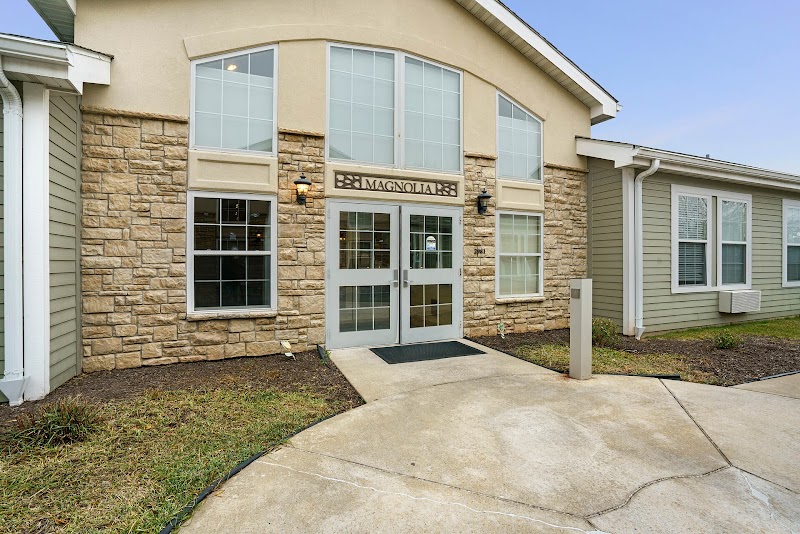
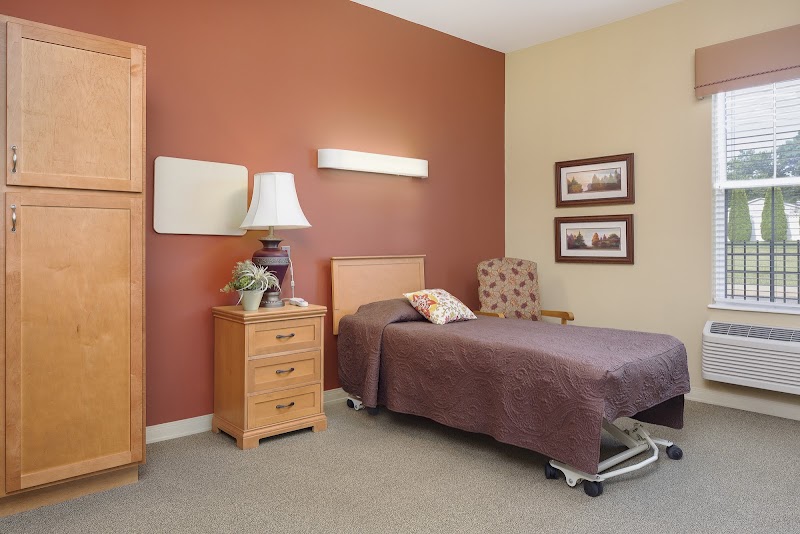
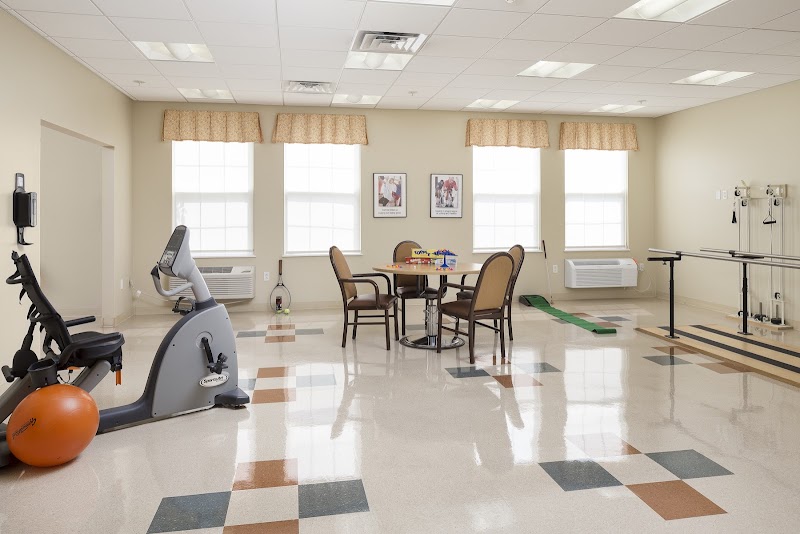
STONEBRIDGE MARYLAND HEIGHTS

2963 DODDRIDGE AVENUE, MARYLAND HEIGHTS, MO 63043 (314) 291-4557
For profit - Corporation 223 Beds STONEBRIDGE SENIOR LIVING Data: November 2025 2 Immediate Jeopardy citations
Trust Grade
0/100
#461 of 479 in MO
Last Inspection: February 2025

Within standard 12-15 month inspection cycle. Federal law requires annual inspections.

Overview

Stonebridge Maryland Heights has received a Trust Grade of F, indicating significant concerns and poor overall performance. Ranking #461 out of 479 facilities in Missouri places it in the bottom half, and at #66 of 69 in St. Louis County, it is clear that there are many better options available nearby. The facility's situation is worsening, with issues increasing from 2 in 2024 to 16 in 2025, which is alarming. Staffing is a weak point, with a low rating of 1/5 and a turnover rate of 60%, which is close to the state average. There are also serious concerns about resident safety, as recent findings included an incident where a resident with dementia was able to leave the facility unsupervised, and another incident where a resident pulled a fire alarm and exited into dangerously cold conditions without staff awareness. While the facility has some RN coverage, it is below that of 84% of Missouri facilities, raising further concerns about the quality of care provided.

Trust Score
F
0/100
In Missouri
#461/479
Bottom 4%
Safety Record
High Risk
Review needed
Inspections
Getting Worse
2 → 16 violations
Staff Stability
⚠ Watch
60% turnover. Above average. Higher turnover means staff may not know residents' routines.
Penalties
✓ Good
$50,925 in fines. Lower than most Missouri facilities. Relatively clean record.
Skilled Nurses
⚠ Watch
Each resident gets only 13 minutes of Registered Nurse (RN) attention daily — below average for Missouri. Fewer RN minutes means fewer trained eyes watching for problems.
Violations
⚠ Watch
52 deficiencies on record. Higher than average. Multiple issues found across inspections.
★☆☆☆☆
1.0
Overall Rating
★☆☆☆☆
1.0
Staff Levels
★★☆☆☆
2.0
Care Quality
★★☆☆☆
2.0
Inspection Score
Stable
2024: 2 issues
2025: 16 issues

The Good

  • Full Sprinkler Coverage · Fire safety systems throughout facility
  • No fines on record

Facility shows strength in fire safety.

The Bad

1-Star Overall Rating

Below Missouri average (2.5)

Significant quality concerns identified by CMS

Staff Turnover: 60%

14pts above Missouri avg (46%)

Frequent staff changes - ask about care continuity

Federal Fines: $50,925

Above median ($33,413)

Moderate penalties - review what triggered them

Chain: STONEBRIDGE SENIOR LIVING

Part of a multi-facility chain

Ask about local staffing decisions and management

Staff turnover is elevated (60%)

12 points above Missouri average of 48%

The Ugly 52 deficiencies on record

2 life-threatening 1 actual harm
Aug 2025 2 deficiencies
CONCERN (E) 📢 Someone Reported This

A family member, employee, or ombudsman was alarmed enough to file a formal complaint

Potential for Harm - no one hurt, but risky conditions existed

Deficiency F0658 (Tag F0658)

Could have caused harm · This affected multiple residents

**NOTE- TERMS IN BRACKETS HAVE BEEN EDITED TO PROTECT CONFIDENTIALITY** Based on interview and record review, the facility failed to meet professional standards when staff failed to administer and doc...

Read full inspector narrative →
**NOTE- TERMS IN BRACKETS HAVE BEEN EDITED TO PROTECT CONFIDENTIALITY** Based on interview and record review, the facility failed to meet professional standards when staff failed to administer and document medications as ordered by the physician for six of seven sampled residents (Residents #6, #2, #4, #5, #3 and #1). The census was 150. Review of the facility's Administering Medications policy, revised 2012, showed:-Policy Statement: Medications shall be administered in a safe and timely manner, and as prescribed;-Policy Interpretation and Implementation: -Only persons licensed or permitted by this state to prepare, administer and document the administration of medications may do so; -The Director of Nursing Services will supervise and direct all nursing personnel who administer medications and/or have related functions; -Medications must be administered in accordance with the orders, including any required time frame; -Medications must be administered within one (1) hour of their prescribed time, unless otherwise specified (for example, before and after meal orders). 1. Review of Resident #6's significant change in status Minimum Data Set (MDS), a federally mandated assessment instrument completed by facility staff, dated [DATE], showed the following:-Cognitive impairment;-Diagnoses included cancer and Alzheimer's disease;-Dependent with activities of daily living (ADLs);-No prognosis of life expectancy of less than 6 months; -Received antianxiety medications daily;-Received hospice services. Review of the resident's care plan, revised on [DATE], showed the following:-Problem: Chemotherapy related to right neoplasm of the breast (cancer);-Intervention: Administer medications and treatments as ordered; Monitor/document for side effects and effectiveness;-Problem: Hospice services-end of life care;-Intervention: Give medications as ordered. Review of the resident's physician's orders dated for [DATE], showed an order, dated [DATE], for lorazepam (antianxiety) oral concentrate 2 milligram (mg) per milliliter (ml), give 0.25 ml by mouth every 4 hours related to malignant neoplasm of right breast.Review of the resident's [DATE] medication administration record (MAR), for lorazepam 0.25 ml every 4 hours showed:-[DATE], administered at 4:00 P.M. and 10:00 P.M.;-[DATE], no missed doses;-[DATE], not administered as ordered at 4:00 P.M. and 10:00 P.M.;-[DATE] not administered as ordered at 12:00 A.M. and 4:00 A.M.;-[DATE], no missed doses;-[DATE], not administered as ordered at 4:00 P.M. Review of the resident's individual controlled substance record for lorazepam 2 mg/ml, showed staff did not sign out the medications on:-[DATE], at 4:00 P.M. or at 10:00 P.M.;-[DATE], at 4:00 A.M. or at 10:00 P.M.;-[DATE], at 4:00 A.M, 8:00 A.M., 12:00 P.M. 4:00 P.M. or at 10:00 P.M.;-[DATE], at 12:00 A.M., 4:00 A.M., or at 10:00 P.M;-[DATE], at 4:00 A.M.;-[DATE], at 4:00 P.M. Observation of the resident's controlled medications on [DATE] at 9:30 A.M., showed the resident had one bottle of liquid lorazepam 2 mg/ml, delivered to the facility on [DATE] with 30 ml. The bottle contained 28 ml of unused liquid. Review of the resident's physician's orders dated [DATE], showed an order dated [DATE], for Morphine Sulfate concentrate solution (for moderate to severe pain), 100 mg per 5ml. Give 0.25 ml, by mouth every four hours related to Alzheimer's disease. Review of the resident's [DATE] MAR, showed morphine sulfate 0.25 ml every four hours left blank on:-[DATE] at 4:00 P.M. and 10:00 P.M.;-[DATE] at 12:00 A.M. and 4:00 A.M.;-[DATE] at 4:00 P.M. Review of the resident's individual controlled substance record for morphine sulfate 0.25 every four hours, showed no documentation staff signed out or administered the medication on:-[DATE] at 4:00 A.M. or 10:00 P.M.;-[DATE] at 4:00 A.M, 8:00 A.M., 12:00 P.M., 4:00P.M. or 10:00 P.M.;-[DATE] at 12:00 A.M., 4:00 A.M., or 10:00 P.M.;-[DATE] at 4:00 A.M., or 8:00 A.M.;-[DATE] at 4:00 P.M. Observation of the resident's controlled medications on [DATE] at 9:30 A.M., showed the resident had one bottle of liquid morphine sulfate solution 100 mg/5 ml, delivered to the facility on [DATE] with 30 ml. The bottle had 28 ml of unused liquid. Review of the resident's progress note dated [DATE], showed he/she expired at 6:20 P.M. 2. Review of Resident #2's admission MDS, dated 7/20125, showed the following:-Cognitive impairment;-No behaviors;-Partial/moderate assistance with ADLs;-Diagnoses of cancer and dementia;-On scheduled pain regimen;-Opioids daily;-Received hospice care. Review of the resident's care plan, dated [DATE], showed the following:-Problem: Hospice services-End of life care;-Intervention: Give medications as ordered for comfort and air hunger (a distressing sensation of suffocation or breathlessness) as needed. Review of the resident's physician's orders for [DATE], showed an order for hydrocodone-acetaminophen (hydro/apap, given for moderate to severe pain) 325 mg oral tablets, one tablet three times per day related to neoplasm related to pain. Review of the resident's [DATE] MAR, showed the following:-Hydro/apap 5/325 mg, one tablet three times per day at 8:00 A.M., 12:00 P.M., and 6:00 P.M.; -Not available on [DATE] at 12:00 P.M. and 6:00 P.M.; -Not available on [DATE] at 8:00 A.M., 12:00 P.M., and 6:00 P.M.; -Not available on [DATE] at 8:00 A.M., 12:00 P.M., and 6:00 P.M.; -Not available on [DATE] at 8:00 A.M., 12:00 P.M., and 6:00 P.M.; -Not available on [DATE] at 8:00 A.M., 12:00 P.M., and 6:00 P.M.; -Not available on [DATE] at 8:00 A.M., 12:00 P.M., and 6:00 P.M.; -Not available on [DATE] at 8:00 A.M., 12:00 P.M., and 6:00 P.M.; -Not available on [DATE] at 8:00 A.M., 12:00 P.M., and 6:00 P.M. Review of the resident's individual controlled substance record on [DATE], for [DATE] showed:-On [DATE], the pharmacy delivered 45 hydro/apap 5-325 mg to the facility (one card with 30 pills and one card with 15 pills);-No documentation the hydro/apap 5/325 mg was administered from [DATE] at 8:00 A.M., until [DATE] at 8:00 A.M.;-No documentation the medication was administered after [DATE] at 5:00 P.M;-The count sheet for 30 pills showed no pill had been administered indicating 30 pills should have remained on one individual card;-The count sheet for the 15 pills showed three doses accounted for, with 12 pills remaining. Observation on [DATE] at 9:35 A.M., showed the resident had no hydro/apap 5/325 mg tablets available in the controlled substance locked box. There were 42 unaccounted pills. Review of the resident's progress notes, dated from [DATE] through [DATE], showed no documentation of the resident's missing medications and/or whether the missing doses of medication had been administered to the resident from the facility's emergency medication stock (STAT kit). During an interview on [DATE] at 9:45 A.M., the resident said he/she had some pain in his/her big toe. He/She thinks he/she is getting his/her medications. He/She would not know if staff did not provide his/her medications as ordered. He/She is on hospice and has cancer. 3. Review of Resident #4's care plan, revised on [DATE], showed the following:-Problem: Uses psychotropic medications for his/her moods;-Interventions: Administer medications as ordered;-Care plan did not address hospice services and/or opioid use. Review of resident's significant change in status MDS, dated [DATE], showed the following:-Cognitive impairment;-Diagnosis included Alzheimer's disease;-Dependent with ADLs;-No prognosis of life expectancy of less than 6 months; -Received opioid medications daily;-Received hospice services. Review of the resident's physician's orders, dated, [DATE], showed an order for lorazepam oral concentrate 2 mg per ml, give 0.25 ml by mouth three times a day for clinical management related to anxiety. Review of the resident's [DATE] MAR, showed lorazepam give 0.25 ml three times a day: -[DATE] at 1:00 P.M., not administered;-[DATE], not administered at 1:00 P.M. and 5:00 P.M.;-[DATE], 5:00 P.M., not administered. Review of the resident's individual controlled substance record on [DATE], for lorazepam 2 mg/ml showed:-[DATE], no doses were documented as administered at 5:00 P.M.;-[DATE], no doses were documented as administered at 1:P.M. or 5:00 P.M.;-[DATE], no doses were documented as administered at 9:00 A.M., 1:00 P.M. or 5:00 P.M.; -8/7, 8/8, [DATE], no doses documented as administered at 9:00 A.M., 1:00 P.M. or 5:00 P.M.;-8/11, 8/12, 8/13, 8/14, [DATE], no doses documented as administered at 9:00 A.M., 1:00 P.M., or 5:00 P.M.;-[DATE], no doses were documented as administered at 12:00 A.M., 4:00 A.M., or 10:00 P.M;-[DATE], no doses documented as administered at 5:00 P.M. Observation on [DATE] at 9:30 A.M., showed, the resident had one bottle of liquid lorazepam 2 mg/ml, with a delivery date to the facility of [DATE] with 30 ml. The bottle contained 20 ml of unused liquid. Review of the resident's [DATE] physician's orders showed an order dated [DATE], for morphine sulfate concentrate solution 100 mg per 5ml. Give 0.25 ml by mouth every four hours for pain. Review of the residents [DATE] MAR, showed:-Morphine sulfate 0.25 ml every four hours left blank on:-[DATE], at 12:00 A.M., 4:00 A.M, 8:00 A.M., and 12:00 P.M.;-[DATE], at 4:00 A.M., and 8:00 P.M.;-[DATE], at 8:00 P.M.;-[DATE], at 12:00 P.M. and 8:00 P.M.;-[DATE], at 4:00 P.M. and 8:00 P.M.;-[DATE], at 12:00 A.M. and 4:00 A.M.;-[DATE], at 4:00 P.M. and 8:00 P.M. Review of the resident's individual controlled substance record on [DATE], for morphine sulfate 0.25 ml, showed no documentation the medication was administered on-[DATE], at 4:00 A.M., 4:00 P.M., or 8:00 P.M.;-[DATE], at 12:00 A.M., 4:00a A.M., 8:00 A.M. or 4:00 P.M.; -[DATE], at 8:00 A.M., 12:00 P.M., or 8:00 P.M.;-[DATE], at 8:00 A.M.;-[DATE], at 8:00 P.M.;-[DATE], at 12:00 A.M., 4:00 A.M., 4:00 P.M., or 8:00 P.M.;-[DATE], at 8:00 A.M., 12:00 P.M. or 4:00 P.M.; -[DATE], at 12:00 A.M., 4:00 A.M., 8:00 A.M., 12:00 P.M, or 4:00 P.M.; -[DATE], at 12:00 A.M., 4:00 A.M., 8:00 A.M., 12:00P.M., 4:00 P.M.;-[DATE], at 8:00 A.M., 12:00 P.M., 4:00 P.M., or 8:00 P.M.;-[DATE], at 8:00 A.M., 12:00 P.M., 4:00 P.M., or 8:00 P.M.;-[DATE], at 8:00 A.M., 12:00 P.M., 4:00 P.M., or 8:00 P.M.;-[DATE], at 4:00 P.M. or 8:00 P.M.;-[DATE], at 12:00 A.M., 4:00 A.M., or at 8:00 P.M.;-[DATE], at 4:00 P.M., or 8:00 P.M. Observation on [DATE] at 9:30 A.M., showed, the resident had one bottle of liquid morphine sulfate solution 100 mg/5 ml, delivered to the facility on [DATE] with 30 ml. The bottle contained 27.5 ml of unused liquid. Observation and interview on [DATE] at 8:30 A.M., showed the resident sat in the dining room. Staff assisted the resident with breakfast meal. The resident would make eye contact but only nodded his/her head when asked any questions. The resident smiled and said okay to every question asked. He/She was appropriately dressed and did not appear to be in any physical pain. 4. Review of Resident #5's annual MDS dated [DATE], showed the following:-Cognitive impairment;-Diagnoses included dementia, high blood pressure and depression;-Dependent with ADLs;-No prognosis of life expectancy of less than 6 months; -Received antianxiety medications daily;-Receives hospice services. Review of the resident's care plan, revised on [DATE], showed the following:-Problem: Hospice services-end of life care;-Intervention: Give lorazepam for anxiety and notify hospice if it does not provide relief from anxiety. Review of the resident's physician's orders for [DATE], showed an order for lorazepam concentrate 2mg/ml, give 0.5 ml (1mg) two times per day. Review of the resident's [DATE] MAR, showed lorazepam 0.50 ml (1 mg) was not documented as administered on:-[DATE] at 4:00 P.M.;-[DATE] at 4:00 P.M. Review of the resident's individual controlled substance record on [DATE] for lorazepam 2 mg/ml, give 0.50 ml twice a day, showed no documentation staff administered the medication on:-[DATE] at 8:00 A.M. or 4:00 P.M.;-[DATE] at 4:00 P.M.;-[DATE] at 4:00 P.M.;-[DATE] through [DATE], at 8:00 A.M., or 4:00 P.M.;-[DATE] at 4:00 P.M.;-[DATE] at 4:00 P.M.;-[DATE] at 4:00 P.M.;-[DATE] at 8:00 A.M. or 4:00 P.M.;-[DATE] at 4:00 P.M. Observation on [DATE] at 9:30 A.M., of the resident's liquid lorazepam 2 mg/ml, showed:-One bottle delivered to the facility on [DATE] with 30 ml. The bottle contained 28 ml of unused liquid;-One bottle delivered to the facility on [DATE] with 30 ml. The bottle was still sealed with 30 ml of fluid in the bottle. Observation and interview on [DATE], at 8:40 A.M., showed the resident ambulated aimlessly in the hall. He/She was alert but unable to answer questions in regard to pain and/or anxiety. 5. Review of Resident #3's care plan, revised on [DATE], showed the following:-Problem: Malignant neoplasm of the prostate;-Intervention: Treat pain per orders;-Problem: Hospice services-end of life care;-Intervention: Pain medications as ordered. Review of the resident's quarterly MDS dated [DATE], showed the following:-Cognitive impairment;-Diagnoses included cancer, high blood pressure and Alzheimer's disease;-Required substantial assistance with ADLs;-Life expectancy of less than 6 months; -Scheduled pain regimen;-No opioids administered daily;-Receives hospice services. Review resident's physician's orders for [DATE], showed an order dated [DATE] for oxycodone (used for moderate to severe pain) 5 mg three times daily. Review of the resident's [DATE] MAR, showed oxycodone 5 mg was not documented as administered on:-[DATE] at 6:00 A.M., 2:00 P.M. or 10:00 P.M.;-[DATE] at 10:00 P.M.;-[DATE] at 10:00 P.M.; -[DATE] at 10:00 P.M.;-[DATE] at 10:00 P.M. Review on [DATE] of the resident's individual controlled substance record dated [DATE] for oxycodone 5 mg three times a day, showed:-On [DATE], the pharmacy sent a card with 30 pills;-No documentation staff administered the medications on: -[DATE] at 6:00 A.M., 2:00 P.M. or 10:00 P.M.; -[DATE] at 2:00 P.M; -On [DATE] staff documented administering 0.5 (no dose specified) at 12:00 A.M. and 4:00 A.M., and one pill at 6:00 A.M. 14 pills remained on the card;-No additional documentation regarding the remaining 14 pills; -On [DATE], the pharmacy sent a card of 15 oxycodone 5 mg pills;-No documentation staff administered the medication as ordered on [DATE] at 2:00 P.M;-On [DATE], there were 9 remaining pills on the card Review of the resident's progress notes, dated [DATE] through [DATE], showed no documentation regarding the resident's missing medications and/or whether the missing doses of medication had been administered to the resident from the facility's STAT kit. Observation on [DATE] at 9:30 A.M., showed the resident had one card of oxycodone, dated [DATE], with nine remaining pills. Observation and interview on [DATE], at 8:40 A.M., showed the resident seated in the dining room area waiting for breakfast. He/She denied pain and/or could not remember if staff provided his/her mediations as ordered. 6. Review of Resident #1's quarterly MDS dated [DATE], showed the following:-Cognitive impairment;-Diagnoses included dementia, high blood pressure and depression;-Dependent with ADLs;-No behaviors;-No rejection of care. Review of the resident's care plan, revised on [DATE], showed the following:-Problem: Potential for pain related to altered skin integrity;-Intervention: Give medications as ordered for pain. Review of the resident's physician's orders for [DATE], showed an order for pregabalin capsules (used to treat nerve pain) 75 mg two times per day. Review of the resident's [DATE] MAR showed staff documented pregabalin capsules 75 mg administered twice daily. Review of the resident's individual controlled substance record for pregabalin capsules 75 mg showed:-On [DATE], the pharmacy delivered two cards of 30 capsules for a total of 60 capsules;-No documentation staff signed out the medications on: -[DATE] at 5:00 P.M.; -[DATE] at 5:00 P.M.; Observation on [DATE] at 9:30 A.M. of the resident's medication, showed the resident had one card of pregabalin with 22 capsules remaining. Observation and interview on [DATE], at 8:40 A.M., showed the resident sat in a chair in the TV room. He/She was alert but unable to answer questions. He/She denied pain and was not able to say if he/she received his/her medications from staff as ordered. 7. During interviews on [DATE] at 9:30 A.M. and [DATE] at 2:30 P.M., the Director of Nursing said she expected staff to give all medications as ordered. Staff should never sign a medication as administered if it had not been given. The individual controlled substance records were the true and accurate count of if/when controlled medication had been administered. 2591516
CONCERN (F) 📢 Someone Reported This

A family member, employee, or ombudsman was alarmed enough to file a formal complaint

Potential for Harm - no one hurt, but risky conditions existed

Pharmacy Services (Tag F0755)

Could have caused harm · This affected most or all residents

**NOTE- TERMS IN BRACKETS HAVE BEEN EDITED TO PROTECT CONFIDENTIALITY** Based on interview and record review, the facility failed to establish a system of records for all controlled drugs with suffici...

Read full inspector narrative →
**NOTE- TERMS IN BRACKETS HAVE BEEN EDITED TO PROTECT CONFIDENTIALITY** Based on interview and record review, the facility failed to establish a system of records for all controlled drugs with sufficient detail to enable an accurate reconciliation, for four out of six medication carts reviewed. This had the potential to affect all residents with orders for controlled substances. The census was 150.Review of the facility's Controlled Substances policy, revised 2016, showed:-Policy Statement: The facility shall comply with all laws, regulations, and other requirements related to handling, storage, disposal, and documentation of Schedule II (substances with a high potential for abuse and addiction but also have accepted medical use in treatments) and other controlled substances;-Policy Interpretation and Implementation:-Only authorized licensed nursing and/or pharmacy personnel shall have access to Schedule II controlled drugs maintained on premises;-The Director of Nursing Services will identify staff members who are authorized to handle controlled substances;-Controlled substances must be stored in the medication room in a locked container, separate from containers for any non-controlled medications. This container must remain locked at all times, except when it is accessed to obtain medications for residents;-Nursing staff must count controlled medications at the end of each shift. The nurse coming on duty and the nurse going off duty must make the count together;-They must document and report any discrepancies to the Director of Nursing Services;-The Director of Nursing Services shall investigate any discrepancies in narcotics reconciliation to determine the cause and identify any responsibility parties, and shall give the Administrator a written report of such findings;-The Director of Nursing Services shall consult with the provider pharmacy and the Administrator to determine whether any further action is indicated. Review of the facility's Administering Medications policy, revised 2012, showed:-Policy Statement: Medications shall be administered in a safe and timely manner, and as prescribed;-Policy Interpretation and Implementation:-Only persons licensed or permitted by this state to prepare, administer and document the administration of medications may do so;-The Director of Nursing Services will supervise and direct all nursing personnel who administer medications and/or have related functions;-Medications must be administered in accordance with the orders, including any required time frame;-Medications must be administered within one (1) hour of their prescribed time, unless otherwise specified (for example, before and after meal orders). Review of the facility's Narcotic Reconciliation Revised 8/19/2025, showed:-The narcotic count must be done by both on-coming and off-going licensed nurse/Certified Medication Technician (CMT).-The on-coming employee will be handling the actual bubble cards to be counted;-The off-going employee will handle the actual narcotic book;-The number of cards will be counted and verified first. All items must be visibly checked (Check for refrigerated items);-All liquid narcotics MUST be poured into a 30 cc (cubic centimeters) medication cup to be measured for accuracy. After you get the correct number, pour it back into the original bottle;-The employee with the book will begin the count by calling out the name of the resident, drug and how many pills remain on the card; -It is always wise for the employee with the bubble cards to look at the sheet to ensure that the correct number is being called out;-Once the narcotics are all counted and verified, both employees must sign the reconciliation sheet under the appropriate date NO EXCEPTIONS!!!!!!!!!;-The off-going nurse will then hand the keys over to the on­coming employee.-If there is a discrepancy with the count, the Director of Nursing (DON) and management MUST BE CALLED IMMEDIATELY;-The on-coming employee does not have to accept the keys until further directives are given, and discrepancies are cleared;-Keys must stay with the nurse/CMT at all times, or under double locks, DO NOT PLACE KEYS IN THE DRAWERS; -Always report issues and concerns dealing with narcotics to management;-Failure to follow policy and procedure narcotics will result in termination and possible jail time and reporting to Missouri Board of Nursing. 1. Review of Aspen's narcotic book count sheets, dated August 2025, showed:-16 out of 37 shifts had no nurse or CMT signature on the shift change count;-37 out of 37 shifts failed to count the controlled substances cards and/or boxes. 2. Review of Magnolia's narcotic book count sheets, dated August 2025, showed:-Seven out of 37 shifts had no nurse or CMT signature on the shift change count;-29 out of 37 shifts failed to count the controlled medications cards and/or boxes. 3. Review of Cypress' narcotic book count sheets, dated August 2025, showed:-10 out of 37 shifts had no nurse or CMT signature on the shift change count;-35 out of 37 shifts failed to count controlled substance cards and/or boxes. 4. Review of Hawthorn's narcotic book count sheets, dated August 2025, showed:-Three out of 37 shifts had no nurse or CMT signature on the shift change count;-12 out of 37 shifts failed to count controlled substances cards and/or boxes. 5. During an interview on 8/19/25 at 7:15 A.M., Listened Practical Nurse (LPN) A said he/she was aware the facility was missing narcotics. He/She didn't really know anything about it. He/She knew narcotics should be counted shift to shift. All controlled medications should be kept in the locked medication cart. The nurses should keep the keys on them at all times. The CMT's were allowed to pass controlled substances in pill form but not in liquid form. Each building had a narcotic count sheet; staff were expected to count each card and document how many pills were on the card. Staff accounted for liquid controlled medication by looking at how much was left in the bottle. Sometimes the count might get missed because there was only one nurse for four buildings. CMTs were allowed to do the count. 6. During an interview on 8/19/25 at 8:25 A.M., The DON said she was alerted on 8/14/25, that three cards of controlled substances were missing from the [NAME] building. During the course of her investigation, she identified staff were not appropriately counting controlled substances shift to shift. Staff were leaving their keys in accessible areas and were just eyeballing the count for liquid controlled substances. She had not yet completed an audit of the other building and/or wings. 7. During an interview on 8/20/25 at 7:25 A.M., LPN B said, controlled substances should be counted shift to shift. The facility operated with 12 hours shifts. The oncoming nurse or CMT should count with the off going nurse or CMT. Each pill should be accounted for along with the number of cards in the locked medication cart. Controlled liquid medications were accounted for by looking at the bottle. Staff did not pour out liquid medications when they counted. There was supposed to be two licensed nurses between the four buildings. Most of the time there was one nurse and two CMTs. There were times only one nurse was available to pass medications for all four buildings. 8. During an interview on 8/20/25, Registered Nurse (RN) C said nurses should count controlled medications every shift. He/She didn't know who was responsible for making sure the counts were being done. He/She was aware medications came up missing from the [NAME] building. He/She was not involved with the investigation. 9. During an interview on 8/20/25 at 11:15 A.M. LPN C said he/she was aware controlled substances should be counted shift to shift. The count should include the number of pills on each card, the number of cards and the number of bottles. Liquid controlled substances were not poured out and measured during the count. He/She was aware of the missing narcotics. He/She did not know what happened to the medications. He/She was the only nurse working the evening shift the day the medications came up missing. LPN C had left the keys to the medication cart in the drawer behind the nurse's station. It was common practice to leave the keys for one building in the building when he/she was in another building. He/She understood that he/she should have never left the keys unattended. He/She counted the medications when he/she came on duty at 7:00 P.M. with the day shift nurse. LPN C could not remember if he/she counted all the cards thoroughly in each building. He/She had been in serviced to not leave the keys unattended and how to do a thorough controlled substance count. He/She had never poured out a liquid controlled substance to account for the exact amount of liquid in the bottle. Sometimes the count wasn't done because only one person was available for all four buildings. 10. During an interview on 8/20/25 at 11:30 A.M., LPN D said, licensed nurses and/or CMTs should count controlled substances when they came on duty and when they went off duty. He/She tried to make sure the controlled substances were counted each day he/she came in and left work. Each building had its own narcotic account book. Each resident had an individual count sheet and then there was a sheet to document how many cards and/or bottles of controlled substances were in each building. He/She had never poured a liquid controlled substance from the bottle into a measuring cup to assure the count was accurate. He/She was aware of the missing controlled substances from [NAME]. He/She worked the morning shift the day prior to the medications going missing. He/She counted the medications at the end of his/her shift. 11. During an interview on 8/20/25 at 2:30 P.M., the Administrator and DON said they were unaware staff were not always counting the controlled medications shift to shift. They were unaware staff routinely left the medication cart keys unattended in the nurse's station. They were unaware staff were not accounting for liquid medications by pouring it into a measuring cup to assure accuracy. Controlled medications should be counted shift to shift by the on-coming and off-going nurse or CMT. The documentation in the narcotics books should be complete and accurate.
Feb 2025 14 deficiencies
CONCERN (D) 📢 Someone Reported This

A family member, employee, or ombudsman was alarmed enough to file a formal complaint

Potential for Harm - no one hurt, but risky conditions existed

Deficiency F0554 (Tag F0554)

Could have caused harm · This affected 1 resident

**NOTE- TERMS IN BRACKETS HAVE BEEN EDITED TO PROTECT CONFIDENTIALITY** Based on observation, record review, staff interview, and policy review, the facility failed to ensure that a resident was asses...

Read full inspector narrative →
**NOTE- TERMS IN BRACKETS HAVE BEEN EDITED TO PROTECT CONFIDENTIALITY** Based on observation, record review, staff interview, and policy review, the facility failed to ensure that a resident was assessed for self-administration of medications prior to medications being left at the bedside for one of one resident (Resident (R)68) reviewed for self-administration out of a total sample of 33 residents. This failure had the potential for the medication errors to be made. Findings include: Review of R68's Face Sheet located under the Resident Info tab in the electronic medical record (EMR) revealed R68 was readmitted to the facility on [DATE] with the diagnosis of chronic obstructive pulmonary disease, chronic diastolic congestive heart failure, and morbid obesity. Review of R68's annual Minimum Data Set (MDS) with an Assessment Reference Date (ARD) of 01/01/25 and located under the MDS tab in the EMR revealed a Brief Interview for Mental Status (BIMS) score of 14 out of 15 which indicated that R68 was cognitively intact. Review of R68's Physician Orders located under the Orders tab in the EMR revealed an order dated 09/16/24 for Advair Diskus inhalation aerosol powder breath activated 250-50 mcg (micrograms)-4.5 mcg/actuation HFA one puff twice a day. There was no order for the medication to be kept at the bedside of R68. During an observation on 01/27/25 at 11:30 AM, R68 had an inhaler (Advair) lying on a shelf, next to the resident's recliner. R68 stated he used the inhaler if he became short of breath. Observation on 01/28/25 at 9:24 AM the inhaler was at bedside. On 01/29/25 at 10:45 AM, the resident had an inhaler on the shelf next to the recliner. On 01/30/25 at 10:20 AM a request was made to the Administrator for a self-administration assessment. The Administrator stated she could not locate the document. On 01/30/25 at 11:17 AM R68 stated, a nurse came and snatched my inhaler from the shelf a few minutes ago without an explanation. During an interview with Licensed Practical Nurse (LPN)1 on 01/30/25 at 11:45 AM, LPN1 confirmed that R68 did not to have a self-administration assessment and there was no order for medications to be left at the bedside. LPN1 stated, I found the inhaler this morning after the Administrator called, I took it and placed it back in the medication cart. I have called the doctor and will be doing a self-administration assessment on [R68] later today. During an interview on 01/30/25 at 3:30 PM, the Director of Nursing (DON) confirmed that R68 had not been assessed for self-administration of the inhaler found by the bedside of R68 on 01/27/25. Review of the facility policy Self-Administration of Medications undated, stated, As part of their overall evaluation, the staff and practitioner will assess each resident's mental and physical abilities to determine whether self-administering medications is clinically appropriate for the resident .
CONCERN (D) 📢 Someone Reported This

A family member, employee, or ombudsman was alarmed enough to file a formal complaint

Potential for Harm - no one hurt, but risky conditions existed

Assessment Accuracy (Tag F0641)

Could have caused harm · This affected 1 resident

**NOTE- TERMS IN BRACKETS HAVE BEEN EDITED TO PROTECT CONFIDENTIALITY** Based on staff interview and record review, the facility failed to accurately code the Minimum Data Set (MDS) for one of 35 samp...

Read full inspector narrative →
**NOTE- TERMS IN BRACKETS HAVE BEEN EDITED TO PROTECT CONFIDENTIALITY** Based on staff interview and record review, the facility failed to accurately code the Minimum Data Set (MDS) for one of 35 sampled residents (Resident (R)121). This failure reflected R121 was receiving care or treatments that was inaccurate. Findings include: Review of R121's undated Face Sheet located under the Profile tab in the electronic medical record (EMR) revealed R121 was admitted to the facility on [DATE] with the diagnoses of anemia, orthostatic hypotension, and generalized weakness. Review of R121's quarterly Minimum Data Set (MDS) located under the MDS tab in the EMR with an Assessment Reference Date (ARD) of 11/24/24 revealed a Brief Interview for Mental Status (BIMS) score of 15 out of 15. This represented R121 was cognitively intact. R121 was also coded as receiving dialysis while a resident in the facility. Review of R121's Physician Orders located under the 'Orders tab in the EMR revealed no orders for dialysis. During an interview on 01/27/25 at 4:43PM, R121 stated, I have never been on dialysis. During an interview on 01/29/25 at 7:33 AM, Minimum Data Set Coordinator (MDSC)1 stated, No, [R121] is not on dialysis, I get her [R121], and another resident mixed up. I made a mistake. During an interview on 01/29/25 at 9:00 AM, the Director of Nursing (DON) confirmed R121 was not receiving dialysis.
CONCERN (D) 📢 Someone Reported This

A family member, employee, or ombudsman was alarmed enough to file a formal complaint

Potential for Harm - no one hurt, but risky conditions existed

Deficiency F0645 (Tag F0645)

Could have caused harm · This affected 1 resident

**NOTE- TERMS IN BRACKETS HAVE BEEN EDITED TO PROTECT CONFIDENTIALITY** Based on record review and staff interview, the facility failed to ensure the Pre-admission Screen and Resident Review (PASARR) ...

Read full inspector narrative →
**NOTE- TERMS IN BRACKETS HAVE BEEN EDITED TO PROTECT CONFIDENTIALITY** Based on record review and staff interview, the facility failed to ensure the Pre-admission Screen and Resident Review (PASARR) Level I screen was completed prior to admission for one of four residents (Resident(R) 112) reviewed for PASARR out of a total sample of 33 residents. This created a potential failure to identify what specialized or rehabilitative services the resident needed and whether placement in the facility was appropriate prior to admission. Findings include: Review of R112's Profile tab of the electronic medical record (EMR) revealed he was admitted to the facility on [DATE] with diagnoses of unspecified dementia, moderate, without behavioral disturbance, psychotic disturbance, mood disturbance and anxiety, Parkinson's disease without dyskinesia, with fluctuations. Review of R112's annual Minimum Data Set (MDS) assessment, with an Assessment Reference Date (ARD) of 01/06/25 and located in the MDS tab of the EMR, revealed she scored five out of 15 on the Brief Interview for Mental Status (BIMS), indicating severe impairment. R112 was admitted from another nursing home but the facility had no Level I PASRR upon admission to their facility. Review of the Orders tab of R112's EMR revealed the resident is not taking psychotropic medications. He is taking Carbidopa Levodopa, used to treat Parkinson's disease Review of R112's Care Plan, dated 01/10/23 and located in the Care Plan tab of the EMR revealed, [R112] has a dx of Unspecified dementia, moderate, without behavioral disturbance, psychotic disturbance, mood disturbance and anxiety. The approaches included: administer medications as ordered . Allow me time to answer questions and to verbalize feelings perceptions, and fears. Assist/encourage/support me to set realistic goals. Consult with: Pastoral care, social services, Psychiatric consult. Monitor/document resident's usual response to problems: Internal - how individual makes own changes, External - expects others to control problems or leaves to fate, or luck There were no planned specialized services for mental health. Review of R112s EMR revealed there was no evidence of PASARR level one screen and determination prior to admission. During an interview on 01/30/24 at 03:29 PM, the Social Services Director (SSD) stated she was under the impression the PASRR level one screen had to be completed by the hospital before the resident was admitted . But if it were not done, the facility would have 72 hours to complete it. During an interview on 01/30/24 at 03:40 PM, Assistant Director of Nurses (ADON) she stated the PASRR level one screen had to be completed by the hospital before the resident was admitted . But if it wasn't done, I don't have the slightest idea who does it. During an interview on 01/30/24 at 03:55 PM, the Administrator stated the resident had a C form done but since resident did not need a Level 2 it was deleted. The PASRR level one screen should have been completed by the hospital before the resident was admitted . But if it were not done, the admission person would do it and social services would follow up.
CONCERN (D) 📢 Someone Reported This

A family member, employee, or ombudsman was alarmed enough to file a formal complaint

Potential for Harm - no one hurt, but risky conditions existed

Infection Control (Tag F0880)

Could have caused harm · This affected 1 resident

**NOTE- TERMS IN BRACKETS HAVE BEEN EDITED TO PROTECT CONFIDENTIALITY** Based on observation, record review, and interview, the facility failed to follow infection control guidelines during a wound ca...

Read full inspector narrative →
**NOTE- TERMS IN BRACKETS HAVE BEEN EDITED TO PROTECT CONFIDENTIALITY** Based on observation, record review, and interview, the facility failed to follow infection control guidelines during a wound care observation for one of three residents (Resident (R)1) reviewed for wounds out of 33 sampled residents. This failure had the potential for infections to be spread to vulnerable residents in a high-risk population. Findings include: Review of R1's undated Face Sheet located under the Profile tab in the electronic medical record (EMR) revealed R1 was admitted to the facility on [DATE] with the diagnosis of diabetes mellitus, and congestive heart failure. Review of R1's quarterly Minimum Data Set (MDS) located under the MDS tab in the EMR with an Assessment Reference Date (ARD) of 12/01/24 revealed one stage four and one unstageable pressure ulcer. Review of R1's Care Plan located under the Care Plan tab in the EMR and dated 09/04/24 with a focus of wound management. Interventions were If drainage present, obtain order for a culture. Measure ulcer on at regular intervals [sic]. Provide wound care per [by] treatment order. [Name of Wound Care Company] physician eval [evaluate] and treat. Review of R1's Physician Orders located under the Orders tab in the EMR revealed orders dated 01/29/25 which stated, Calcium Alginate .Apply to left heel topically every day shift for pressure ulcer [sic] cleanse left heel with wound cleanser, allow to dry, apply calcium alginate [sic], cover with gauze, wrap with Kerlix, secure tape daily and as needed [sic] . and Calcium Alginate .Apply to right hip topically every day shift for pressure ulcer Cleanse right hip with wound cleanser, apply calcium alginate, cover with a bordered gauze daily and as needed [sic] . During a wound care observation on 01/29/25 at 3:00 PM, the following failures were observed while the Wound Care Nurse (WCN) was performing the wound care to R1: 1) The WCN cleaned the scissors and the overbed table without using gloves. 2) The resident was on Enhanced Barrier Precautions and the WCN did not wear a gown while performing wound care to R1. 3) The left heel bandage was removed, and the heel was placed directly on the bed without using a barrier to place the heel on. 4) The WCN sprayed wound cleanser to the left heel and then patted the wound with a clean 4x4 gauze then folded the gauze and patted the wound bed again with the same 4x4 gauze. During an interview on 01/29/25 at 3:20 PM, the WCN was asked about the above documented failures during the wound care observation, and the WCN became denied the infection control breaches that the surveyor observed during the wound care observation. During an interview on 01/29/25 at 3:25 PM, the Director of Nursing stated, The nurse is to wear a gown when performing wound care because the resident is on Enhanced Barrier Precautions. The nurse wears gloves when cleaning the over bed table and her scissors. The nurse is to clean the wound bed with one 4x4 then discard and repeat with a new clean gauze. And a barrier is to be used on the bed to place the resident's heel on while performing the wound care.
CONCERN (E) 📢 Someone Reported This

A family member, employee, or ombudsman was alarmed enough to file a formal complaint

Potential for Harm - no one hurt, but risky conditions existed

Resident Rights (Tag F0550)

Could have caused harm · This affected multiple residents

**NOTE- TERMS IN BRACKETS HAVE BEEN EDITED TO PROTECT CONFIDENTIALITY** Based on observation, interview, and policy review, the facility failed to provide knives with meals for two residents (Resident...

Read full inspector narrative →
**NOTE- TERMS IN BRACKETS HAVE BEEN EDITED TO PROTECT CONFIDENTIALITY** Based on observation, interview, and policy review, the facility failed to provide knives with meals for two residents (Resident (R) 56 and R107) and staff was observed to stand while feeding (R) 22. These failures to promote dignity in dining had the potential to affect the 38 residents in the dining room. Findings include: Review of the facility policy dated January 2009 tilted Dining Room Audits indicated the Food Service Department should ensure the residents needs are met, and that dining is a pleasant experience.residents at each table should be served together and table should be in a homelike setting. During an interview on 01/28/25 at 12:27 PM, R56 stated that they never give knives at meals, and it made her feel like a child. During an interview on 01/28/25 at 12:30 PM, R107 stated that they never get knives with their meals. R107 stated that he is a grown man and feels like they should get a knife even if they do not use it. During a meal observation on 01/28/25 at 5:10 PM, residents were observed to get a spoon and fork and no knife with their meals. Staff were observed to serve meals randomly to tables while other residents sat without meals at the same table. Staff were observed to call out names to deliver meals. Residents raised their hand when they heard their name to get their meal served. During an interview on 01/29/25 at 1:03 PM the Dietary Manager (DM) stated she did not know why residents were not getting knives and they should be provided. The DM stated that they have knives so there is no reason the residents cannot have them. During an interview on 01/29/25 at 1:55 PM the Registered Dietitian (RD) stated that all residents should receive full service ware with their meals. 3. Review of the Face Sheet located under the Profile tab in the EMR revealed R22 was initially admitted on [DATE] with diagnoses including cerebral palsy and seizure disorder. Review of the annual MDS, located under the RAI tab in the EMR with an ARD of 12/22/24 revealed R22 required assistance with eating. During an observation of the assisted dining room on 01/29/25 at 8:22 AM, Licensed Practical Nurse (LPN)2 was observed standing to feed R22. When asked if she should be standing or sitting, LPN2 stated, I always do, doesn't matter who it is. Whenever I'm helping, I stand. I didn't know I can't [sic] stand. LPN2 continued to stand to feed R22. During an interview on 01/29/25 at 8:24 AM, the Director of Nurses (DON) and two other staff members were observed standing at the half-wall looking toward the dining room, located next to the assisted dining room. On 01/29/25 at 8:25 AM, the DON was asked what her expectations were when a resident required to be fed by staff. The DON stated, They have to prepare the tray, make sure the meal is what they are to have, and sit to feed. The DON, by observation, confirmed that LPN2 was standing to feed R22. During an interview on 01/30/25 at 7:29 PM, the Administrator stated, Oh, she doesn't always feed residents, she was just helping out. She knows, she knows [not to stand]. No policy was provided as of 01/30/25 for dining assistance.
CONCERN (E) 📢 Someone Reported This

A family member, employee, or ombudsman was alarmed enough to file a formal complaint

Potential for Harm - no one hurt, but risky conditions existed

Deficiency F0553 (Tag F0553)

Could have caused harm · This affected multiple residents

**NOTE- TERMS IN BRACKETS HAVE BEEN EDITED TO PROTECT CONFIDENTIALITY** 2. Review of the Face Sheet located under the Profile tab (EMR) revealed R5 was initially admitted on [DATE] with diagnoses that...

Read full inspector narrative →
**NOTE- TERMS IN BRACKETS HAVE BEEN EDITED TO PROTECT CONFIDENTIALITY** 2. Review of the Face Sheet located under the Profile tab (EMR) revealed R5 was initially admitted on [DATE] with diagnoses that included anxiety disorder, chronic pain, and cerebral infarction. Review of the quarterly MDS, located under the RAI tab in the EMR, with an ARD of 12/11/24 revealed a BIMS score of 13 out of 15 which indicated R5 was cognitively intact. During an interview on 01/27/25 at 1:08 PM, R5 was asked if she was invited to and attended care plan conferences. R5 stated, I used to, but only when I first came, I've been here for five years. They don't invite me anymore, but I would really like to go. They're important. During an interview on 01/29/25 at 4:14 PM, the MDS Coordinator (MDSC)1, responsible for care plan conference invitations, stated, I'll have to check who was invited when. MDSC1 was unable to provide any documentation that R5 had been invited or attended her care plan conferences. No explanation was given why R5 was not invited. 3. Review of the Face Sheet, located under the Profile tab in the EMR, revealed R65 was admitted on [DATE] with diagnoses that included myocardial infarction type 2, hemiparesis and hemiplegia following cerebral infarction affecting the left dominant side, and diabetes mellitus. Review of the significant change MDS, located under the RAI tab in the EMR, with and ARD of 11/05/24 revealed a BIMS of 15 out of 15 which indicated R65 was cognitively intact. During an interview on 01/28/25 at 10:31 AM, R65 was asked if she was invited to and attended care plan conferences. R65 stated, No, I've never been invited to a care conference. During an interview on 01/29/25 at 4:14 PM, the MDSC1 responsible for care plan conference invitations stated, I know for sure that (R65) has not been invited to care conferences. No explanation was given why R65 had not been invited. Based on interview and record review, the facility failed to ensure six of seven (Residents (R)121, R5, R65, R107, R7, and R136) reviewed for care planning of 33 sampled residents was afforded the right to participate in their care planning process. This failure placed the resident at risk of not being aware of the goals and outcomes of their care. Findings include: 1. Review of R121's undated Face Sheet located under the Profile tab in the electronic medical record (EMR) revealed R121 was admitted to the facility on [DATE] with the diagnoses of anemia, orthostatic hypotension, and generalized weakness. Review of R121's quarterly Minimum Data Set (MDS) located under the MDS tab in the EMR with an Assessment Reference Date (ARD) of 11/24/24 revealed a Brief Interview for Mental Status (BIMS) score of 15 out of 15. This represented R121 was cognitively intact. Review of R121's Care Plan Sign in Sheet provided by the facility revealed the only documentation of a care plan meeting being held in 2024 was dated 06/25/24. During an interview on 01/28/25 at 9:03 AM, R121 stated, I don't understand what you are asking. I don't know what a care plan meeting is. During an interview on 01/29/25 at 3:30 PM, Minimum Data Set Coordinator (MDSC)1 stated, I could not find any more care plan meetings in 2024 for [R121]. That was all that she had. During an interview on 01/30/25 at 4:30 PM, the Administrator stated, I cannot confirm there were any more care plan meetings held for [R121] other than what is documented. The care plan meetings are to be held once a quarter and documented in PCC [Point Click Care]. 4. Review of R107's admission Record, located under the Profile tab of the EMR revealed R107 was admitted to the facility on [DATE] with diagnoses that included chronic kidney disease, epilepsy, depression, and hypertension. Review of R107's quarterly MDS with an ARD of 12/31/24 and located under the MDS tab of the EMR, revealed R107 scored 12 out of 15 on the BIMS, which indicated R107 was moderately cognitively impaired. Review of R107's Care Plan Sign in Sheet, dated 12/31/24 provided by the SSD revealed a signature that R107 had attended the care plan meeting for that quarter. There was no other evidence provided indicating R107 had been invited to attend any other care plan meeting. During an interview on 01/28/25 at 11:00 AM, R107 stated he had not been invited to or attended any care plan meetings for a long time and would go if he was invited. 5. Review of R7's Care Plan Sign in Sheet, dated 01/20/25 provided by the SSD revealed a signature sheet. There were no signatures of any family members of R7. There was no other evidence provided indicating R7's family had been invited to attend any other care plan meeting. During an interview on 01/28/25 at 1:02 PM Family Member (FM)1 stated her mother (R7) had been in the facility since 12/13/23 and she had never been invited to a care plan meeting. FM1 stated she is in the facility every day to feed her mother and make sure she is comfortable so she could have easily been invited. FM1 stated she would have attended the care plan meeting because she is very concerned about her mother's care. 6. Review of R136's Care Plan Sign in Sheet, dated 12/06/24 provided by the SSD revealed a signature sheet. There were no signatures of any family members of R136. There was no other evidence provided indicating R136's family had been invited to attend any other care plan meeting. During an interview on 01/28/25 at 1:02 PM, FM2 stated his family member (R136) had been in the facility since 08/23/24 and he had never been invited to a care planning meeting. FM2 stated he is in the facility every day to check on his family member and make sure she is comfortable so he could have been invited. FM2 stated he would have attended the care plan meeting because he likes to be involved in her care. In an interview on 01/30/25 at 2:32 PM, MDSC1 confirmed R7, R107, and R136 had not been sent notifications or been invited to care plan meetings.
CONCERN (E)

Potential for Harm - no one hurt, but risky conditions existed

Deficiency F0569 (Tag F0569)

Could have caused harm · This affected multiple residents

**NOTE- TERMS IN BRACKETS HAVE BEEN EDITED TO PROTECT CONFIDENTIALITY** Based on interview and record review, the facility failed to ensure third party liability (TPL) forms were completed within 30 d...

Read full inspector narrative →
**NOTE- TERMS IN BRACKETS HAVE BEEN EDITED TO PROTECT CONFIDENTIALITY** Based on interview and record review, the facility failed to ensure third party liability (TPL) forms were completed within 30 days for the final accounting for residents who expired. This affected 12 residents who expired and had money in their accounts (Residents #301, #302, #303, #304, #305, #306, #307, #308, #309, #310, #311 and #312). The financial sample was 12. The census was 146. Review of the facility's Resident Trust Fund Account Policy and Procedures, revised [DATE], showed the following: -Policy: It is the policy of the facility to manage personal funds of our residents, upon request and written authorization of the resident or legal representative. Funds will be managed in accordance with Federal and State Regulations; -Procedure: Upon discharge of a resident with a balance in the Resident Trust Fund, the facility will provide a final accounting within thirty days. If the facility is the Representative Payee for the resident, the facility will refund the balance to Social Security. If we are not Representative Payee, this accounting will be provided to the resident or the legal representative along with a check for the remaining balance in the fund. Upon the death of a resident with a balance in the Resident Trust Fund, the facility will complete the appropriate forms and submit to: Department of Social Services. This form shall be submitted within 60 days from the date of the resident's death. No funds shall be paid out of the resident's trust fund account, except for qualified funeral expenses, until notification is received from the Department of Social Services instructing the facility as to how the funds are to be distributed. 1. Review of Resident #301's medical record, showed the following: -Expired on [DATE]; -Ending balance of $655.30; -TPL was completed on [DATE]. 2. Review of Resident #302's medical record, showed the following: -Expired on [DATE]; -Ending balance of $205.32; -TPL was completed on [DATE]. 3. Review of Resident #303's medical record, showed the following: -Expired on [DATE]; -Ending balance of $1473.88; -TPL was completed on [DATE]. 4. Review of Resident #304's medical record, showed the following: -Expired on [DATE]; -Ending balance of $268.78; -TPL was completed on [DATE]. 5. Review of Resident #305's medical record, showed the following: -Expired on [DATE]; -Ending balance of $315.75; -TPL was completed on [DATE]. 6. Review of Resident #306's medical record, showed the following: -Expired on [DATE]; -Ending balance of $0.88; -TPL was completed on [DATE]. 7. Review of Resident #307's medical record, showed the following: -Expired on [DATE]; -Ending balance of $117.13; -TPL was completed on [DATE]. 8. Review of Resident #308's medical record, showed the following: -Expired on [DATE]; -Ending balance of $2018.08; -TPL was completed on [DATE]. 9. Review of Resident #309's medical record, showed the following: -Expired on [DATE]; -Ending balance of $153.54; -TPL was completed on [DATE]. 10. Review of Resident #310's medical record, showed the following: -Expired on [DATE]; -Ending balance of $50.41; -TPL was completed on [DATE]. 11. Review of Resident #311's medical record, showed the following: -Expired on [DATE]; -Ending balance of $62.67; -TPL completed on [DATE]. 12. Review of Resident #312's medical record, showed the following: -Expired on [DATE]; -Ending balance of $37.23; -TPL completed on [DATE]. 13. During an interview on [DATE] at 11:44 A.M., the Business Office Manager (BOM) said based on the state regulation form, he/she thought she had 60 days to complete the TPL. She did not realize the timeframe was 30 days. 14. During an interview on [DATE] at 11:46 A.M., the Administrator said she knew the TPL needed to be completed within 30 days. The BOM told her it was changed to 60 days, so she assumed it was now 60 days.
CONCERN (E) 📢 Someone Reported This

A family member, employee, or ombudsman was alarmed enough to file a formal complaint

Potential for Harm - no one hurt, but risky conditions existed

Deficiency F0582 (Tag F0582)

Could have caused harm · This affected multiple residents

**NOTE- TERMS IN BRACKETS HAVE BEEN EDITED TO PROTECT CONFIDENTIALITY** Based on record review, staff interviews, review of Centers for Medicare and Medicaid Services (CMS) website, and policy review,...

Read full inspector narrative →
**NOTE- TERMS IN BRACKETS HAVE BEEN EDITED TO PROTECT CONFIDENTIALITY** Based on record review, staff interviews, review of Centers for Medicare and Medicaid Services (CMS) website, and policy review, the facility failed to issue the appropriate notice for termination of Medicare part A benefits for three (Resident (R)92, R1, and R49) residents reviewed for beneficiary notification out of a total sample of 33 residents. These failures had the potential to result in a lack of understanding of appeal rights and/or the termination of the current level of care against the residents'/representative's wishes. Findings include: Review of the CMS site, Form Instructions Advance Beneficiary Notice of Non-coverage (ABN) OMB Approval Number: 0938-0566 accessed at https://www.cms.gov/medicare/medicare-general-information/bni/downloads/abn-form-instructions.pdf on 06/04/24 revealed, The beneficiary or his or her representative must choose only one of the three options listed in Blank (G). Unless otherwise instructed to do so according to the specific guidance provided in these instructions, the notifier must not decide for the beneficiary which of the 3 checkboxes to select . If the beneficiary cannot or will not make a choice, the notice should be annotated, for example: beneficiary refused to choose an option. Review of the facility's policy Advanced Beneficiary Notices dated December 2018 and provided by the facility stated, . A liability notice shall be issued to Medicare beneficiaries and will explain: i. An item or service that is usually paid for by Medicare, but may not be paid for in a particular instance because it is not medically reasonable and necessary . A Notice of Medicare Non-Coverage (NOMNC), Form CMS-10123, shall be issued to the resident/representative when Medicare covered service(s) are ending . 1. Review of R92's undated Face Sheet located under the Profile tab in the electronic medical record (EMR) revealed R92 was readmitted to the facility on [DATE] with the diagnosis of heart failure, diabetes mellitus, and hypertension. Review of R92's quarterly Minimum Data Set (MDS) located under the MDS tab in the EMR with an Assessment Reference Date (ARD) of 10/25/24 coded R92 was having a Brief Interview for Mental Status (BIMS) score of 15 out of 15 indicating that R92 was cognitively intact. Review of R92's Notice of Medicare Non-Coverage (NOMNC), dated 09/11/24 and provided on paper, revealed R92's last covered day (LCD) of Medicare Part A services was 09/13/24. The Skilled Services in which would not be covered after 09/13/24 did not specifically tell the resident which therapy would be discontinued. Review of R92's Advanced Beneficiary Notice of Noncoverage (ABN) dated 09/11/24 and provided on paper, revealed the notice was signed by the resident; however, no option was checked to indicate whether R92 wanted skilled services to be continued with responsibility for payment, skilled services to be discontinued, or skilled services to continue with an appeal to Medicare for further coverage. On this form was also noted to be left blank were the areas of Reason Why Medicare Will Not Pay and the Estimated Cost of the skilled service if the resident wishes to pay out of pocket for this service to continue. 2. Review of R1's updated Face Sheet located under the Profile tab in the EMR, revealed R1 was admitted to the facility on [DATE] with the diagnosis of diabetes mellitus, and congestive heart failure. Review of R1's quarterly MDS located under the MDS tab in the EMR with an ARD of 12/01/24 revealed R1 was coded as having a BIMS score of 14 out of 15 indicating R1 was cognitively intact. Review of R1's NOMNC, dated 01/10/25 and provided on paper, revealed R1's LCD of Medicare Part A services was 01/13/25. The Skilled Services in which they would not be covered after 01/10/25 did not specifically tell the residents which therapy would be discontinued. Review of R1's ABN dated 0/10/25 and provided on paper, revealed the notice was signed by the resident; however, no option was checked to indicate whether R92 wanted skilled services to be continued with responsibility for payment, skilled services to be discontinued, or skilled services to continue with an appeal to Medicare for further coverage. On this form was also noted to be left blank were the areas of Reason Why Medicare Will Not Pay and the Estimated Cost of the skilled service if the resident wishes to pay out of pocket for this service to continue. 3. Review of R49's undated Face Sheet located under the Profile tab in the EMR revealed R49 was readmitted to the facility on [DATE] with the diagnosis of heart failure, and renal failure. Review of R49's quarterly MDS located under the MDS tab in the EMR with an ARD of 01/05/25 revealed R49 was coded as having a BIMS score of seven out of 15 indicating R49 was moderately cognitively impaired. Review of 49's NOMNC, dated 11/08/24 and provided on paper, revealed R49's LCD of Medicare Part A services was 11/10/24. The Skilled Services in which would not be covered after 01/10/25 did not specifically tell the resident/representative which therapy would be discontinued. Review of R49's ABN dated 11/08/24 and provided on paper, revealed the notice was verbally consented by the resident representative; however, no option was checked to indicate whether R49 wanted skilled services to be continued with responsibility for payment, skilled services to be discontinued, or skilled services to continue with an appeal to Medicare for further coverage. On this form was also noted to be left blank were the areas of Reason Why Medicare Will Not Pay and the Estimated Cost of the skilled service if the resident wishes to pay out of pocket for this service to continue. During an interview on 01/30/25 at 3:00 PM, the Social Services Designee (SSDE) stated, I just put skilled serves and don't write out which therapy will be discontinued. On the other form [referring to the ABN form], I do not know the estimated cost of the skilled service, so I leave that blank. I really do not know where to get this information from. These options, I don't mark for the residents, so if they leave them blank, I won't do anything with them. During an interview on 01/30/25 at 5:00 PM, the Administrator was notified of the ABN forms not being filled out correctly and of the NOMNC not telling the residents and/or representative which specific skilled service is being discontinued. The Administrator stated, The social services [SSDE] is to make sure all areas of the forms are filled out completely and correctly even if they need to ask the resident to fill out which option they choose.
CONCERN (E) 📢 Someone Reported This

A family member, employee, or ombudsman was alarmed enough to file a formal complaint

Potential for Harm - no one hurt, but risky conditions existed

Deficiency F0679 (Tag F0679)

Could have caused harm · This affected multiple residents

**NOTE- TERMS IN BRACKETS HAVE BEEN EDITED TO PROTECT CONFIDENTIALITY** Based on interviews and record review, the facility failed to provide an ongoing program of resident preferred activities three ...

Read full inspector narrative →
**NOTE- TERMS IN BRACKETS HAVE BEEN EDITED TO PROTECT CONFIDENTIALITY** Based on interviews and record review, the facility failed to provide an ongoing program of resident preferred activities three residents (Resident (R)27, R93, and R137) reviewed for activities in sample size of 33 residents. This failure placed R27, R93 and R137 at risk for increased feelings of isolation, depression, helplessness, and boredom. Findings include: 1. Review of R27's Resident Face Sheet located in the Resident tab, in the electronic medical record (EMR) revealed she was admitted to the facility on [DATE] with diagnosis to include but not limited to unspecified psychosis, anxiety disorder, chronic obstructive pulmonary disorder, restless legs syndrome, schizoaffective disorder, and insomnia. Review of R27's admission Minimum Data Set (MDS) with an Assessment Reference Date (ARD) of 12/14/24 and located in the Resident Assessment Instrument (RAI) tab of the EMR, revealed she scored 14 of 15 on the Brief Interview for Mental Status (BIMS) which indicated she was cognitively intact. The MDS did not indicate preferences for daily activities. Review of R27's Care Plan dated 10/15/23 and located in the RAI tab of the EMR, revealed her activity preferences were watching television and some music with request to be offered and assisted to activities. Activity attendance logs of participation were requested but were not provided during the survey. During an interview with R27 on 01/29/25 at 10:47 AM, she stated they don't have activities here. All they do is color, they bring me a page to color, but I don't like to color. She stated no one came to visit her in her room to talk about activities and personal interests. 2. Review of R93's Resident Face Sheetlocated in the Resident tab, of the EMR revealed she was admitted to the facility on [DATE] with diagnosis to include but not limited to unspecified dementia, peripheral vascular disease, and osteoarthritis. Review of R93's annual MDS with an (ARD) of 01/01/25 and located in the Resident Assessment Instrument (RAI) tab of the EMR, revealed she scored 13 of 15 on the BIMS which indicated she was cognitively intact. The MDS did not indicate a staff assessment of her daily activity preferences. Review of R93's Care Plan dated 10/06/23 and located in the RAI tab of the EMR, revealed her activity preferences were attending group activities of her choice that included bingo, trivia, movies, nail/hair care, socials, talking with peers, and independent catholic studies. The care plan indicated staff would invite and encourage her to attend her favorite activities. Activity attendance logs of participation were requested but were not provided during the survey. During an interview with R93 on 01/29/25 at 11:23 AM, she stated they don't have activities here because no one invites me to anything. R93 stated she enjoyed the activities when she was first admitted to the facility, but it had been a long time since she had talked to anyone about things to do around here. 3. Review of R137's Resident Face Sheet located in the Resident tab, of the EMR revealed she was admitted to the facility on [DATE] with diagnosis to include but not limited to unspecified dementia, depression, and anxiety disorder. Review of R137's quarterly MDS with an ARD of 11/24/24 and located in the Resident Assessment Instrument (RAI) tab of the EMR, revealed she scored 11 of 15 on the Brief Interview for Mental Status (BIMS) which suggested she was cognitively intact. The MDS did not indicate a staff assessment of her daily activity preferences. Review of R137's Care Plan dated 09/09/24 and located in the RAI tab of the EMR, revealed her activity preferences were attending two group activities of her choice The care plan also indicated staff would invite and encourage her to attend her favorite activities and would talk with her to record her prior level of activity involvement and interests. Activity attendance logs of participation were requested but were not provided during the survey. During an interview with R137 on 01/29/25 at 11:49 AM, she stated she did not know of any activities in the facility. She said more than anything, she would love to go outside for some fresh air. During an interview with the Administrator on 01/29/25 at 10:32 AM, she stated her activity director resigned on 01/13/25 and she had not yet found another qualified activity director for the facility. She said the Certified Nursing Assistants (CNA) were helping out the activity assistant (AA) with the activity program, but she could not provide a current activity calendar or documentation of resident attendance and participation logs for the six months prior to the survey.
CONCERN (E) 📢 Someone Reported This

A family member, employee, or ombudsman was alarmed enough to file a formal complaint

Potential for Harm - no one hurt, but risky conditions existed

Unnecessary Medications (Tag F0759)

Could have caused harm · This affected multiple residents

Based on observation, interview, and record review, the facility failed to ensure a medication error rate of less than five percent. A total of five errors occurred out of 33 opportunities for error d...

Read full inspector narrative →
Based on observation, interview, and record review, the facility failed to ensure a medication error rate of less than five percent. A total of five errors occurred out of 33 opportunities for error due to residents not receiving their medications that were ordered and one medication not being the ordered strength, for one resident (Resident (R)50) of five residents observed for medication administration. The facility medication error rate was 15.15%. This failure had the potential to affect the accurate dosing of medication administered to the residents. Findings include: During medication administration observation on 01/29/25 at 8:37AM, Certified Medical Technician (CMT)3, administered/applied a four percent lidocaine patch to R50's right knee. Review of R50's Physician Orders dated May 31, 2024, in the electronic medical record (EMR) under the Orders tab indicated the physician's order was for a five percent lidocaine patch to R50's right knee. Further review of the Physician's Orders reveled physician orders for Fexofenadine HCl Tablet 60 MG BID (twice a day), Spironolactone 25mg QD (every day), Artificial Tears 1.4% 1 drop both eyes TID (three times a day), and Gabapentin 100mg TID (three times a day), all were due during the morning medication administration, but not given. These medications were initialed and signed off as given. Review of R50's Progress Notes dated 01/29/25 in the (EMR) under the Progress Notes tab, revealed no notes indicating a change in the strength of the lidocaine patch or the omission of above medications. Interview on 01/29/25 at 3:00 PM, CMT3 was asked about the five percent lidocaine patch, she stated the insurance won't pay for the five percent lidocaine patches, so they use the four percent patches. When CMT3 was asked about the medications Fexofenadine HCl Tablet 60 MG BID, Spironolactone 25mg QD, Artificial Tears 1.4% 1 drop both eyes TID, and Gabapentin 100mg TID, not being given, she stated I guess it slipped my mind, until later. I did let the Director of Nurses [DON] know about my error. Interview on 01/29/25 at 4:15 PM, the DON was asked about CMT3 using four percent lidocaine patches instead of five percent lidocaine patches, she stated Well I heard about that this morning, I'm not sure why the correct patches weren't ordered, probably just a simple mistake. She was asked about the medications CMT3 did not give during the morning medication pass, she stated I also heard about that this morning, CMT3 overlooked those medications, but was too nervous to say anything once she realized her mistake. Review of the facility policy Administering Medications undated, stated, The individual administering the medication must check the label to verify the right resident, right medication, right dosage, right time, and right method (route) of administration before giving the medication .If a drug is withheld, refused, or given at a time other than the scheduled time, the individual administering the medication shall document appropriately in the clinical chart .
CONCERN (E) 📢 Someone Reported This

A family member, employee, or ombudsman was alarmed enough to file a formal complaint

Potential for Harm - no one hurt, but risky conditions existed

Menu Adequacy (Tag F0803)

Could have caused harm · This affected multiple residents

**NOTE- TERMS IN BRACKETS HAVE BEEN EDITED TO PROTECT CONFIDENTIALITY** Based on observations, interview, and facility policy review, the facility failed to ensure menus were followed and food prefere...

Read full inspector narrative →
**NOTE- TERMS IN BRACKETS HAVE BEEN EDITED TO PROTECT CONFIDENTIALITY** Based on observations, interview, and facility policy review, the facility failed to ensure menus were followed and food preferences were honored for four residents (Resident (R)5, R65, R56, and R107) reviewed out of a total sample of 33 residents. The failure placed 140 of the 142 residents in the facility at risk of nutritional problems and dissatisfaction with their meals. Findings include: Review of the facility policy dated October 2017 titled Menus indicated the menus would be followed and provide a variety of foods and be approved by the Registered Dietitian (RD). Review of the facility policy dated October 2017 titled Food and Nutrition Services Staffing indicates the facility must take into consideration the preferences of each individual. Review of the week one menu provided to the survey team indicated that on 01/27/25 the lunch meal would be spaghetti with meat sauce, Italian tossed salad, brownie, and breadstick. An observation of the meal at 11:55 AM revealed the resident received peas and carrots in place of the salad, a slice of white bread in place of the bread stick and oranges in place of the brownie. Review of the week one dinner menu for 01/27/25 indicated that the residents would receive Beef and Bean Burrito with cheese sauce, Fiesta corn salad and fruit salad. An observation of the dinner meal at 5:45 PM revealed the residents received chicken tenders, peas and carrots, French fries, and animal crackers. 1. Review of the Face Sheet, located under the Profile tab in the electronic medical record (EMR) revealed R5 was initially admitted on [DATE] with diagnoses that included anxiety disorder, chronic pain, and cerebral infarction. Review of the quarterly Minimum Data Set (MDS) with an assessment reference date (ARD) of 12/11/24 revealed a Brief Interview for Mental Status (BIMS) score of 13 out of 15 which indicated R5 was cognitively intact. During an observation and interview on 01/27/25 at 1:08 PM, R5 had just received her lunch. R5 stated, I eat all my meals in my room. I'm more comfortable here. Observation of R5's diet card noted the resident disliked pork and was to receive juice with each meal. R5 stated, I don't dislike pork, I really enjoy pork, I just don't like pork breakfast sausages or patties. I've tried to get that changed but can't. I gave up. What I really want them to put on is coffee with breakfast. I ask every day, and they tell me they didn't send any up. Seems like it's been going on for 100 years. My kids bring me coffee sometimes in the evening when they visit so I make it last for a few days. R5's breakfast trays were observed on the following dates: 01/28/25 at 9:59 AM, no coffee served 01/29/25 at 10:11 AM, no coffee served, received two pork breakfast patties that R5 did not eat 01/30/25 at 10:02 AM, coffee was provided after asking the Certified Nursing Assistant (CNA2) During an interview on 01/28/25 at 10:05 AM, CNA5 stated, They don't usually send [R5] coffee. I can't always go get it. During an interview on 01/29/25 at 10:29 AM, R5 stated she did not get coffee again and was drinking leftover coffee her family brought her two days ago. 2. Review of the Face Sheet, located under the Profile tab in the EMR revealed R65 was admitted on [DATE] with diagnoses that included myocardial infarction type 2, hemiparesis and hemiplegia following cerebral infarction affecting the left dominant side, and diabetes mellitus. Review of the significant change MDS, located under the RAI tab in the EMR, with and ARD of 11/05/24 revealed a BIMS of 15 out of 15 which indicated R65 was cognitively intact. During an interview on 01/28/25 at 9:59 AM, R65 stated there was no coffee served to her. During an observation and interview on 01/28/25 at 10:31 AM, R65 stated, The food is terrible, tastes terrible, it's not food for a young person, they serve hot dogs a lot on white bread, no ketchup or mustard, just dry, always serve the same thing. 3. During an interview on 01/28/25 at 10:12 AM, R56 stated that it was impossible to get coffee when requested. She stated they only have one pot in the dining room, and it runs out all the time and there is not anyone to make more. R56 stated she now keeps coffee in her room because that is the only way to get any. During a continued interview on 01/28/25 at 10:12 AM, R56 stated that the meals never match the menus and there is never an alternative to choose from. R56 stated that they were served chicken strips at dinner which was not even close to the menu posted. R56 stated that they received peas and carrots twice in one day and they are often served leftover food. 4. During an interview on 01/28/25 at 10:49 AM, R107 stated that they are given a flat piece of bread for a hot dog bun. R107 stated that they also never get condiments like mustard, ketchup, and relish. R107 stated he has never received butter or jelly with his meals and when he asks, he is told they do not have them. R107 stated that it makes him feel like a child and becomes very frustrating. During an interview on 01/29/25 at 1:40 PM, the Dietary Manager (DM) stated that staff are not supposed to change the menu without telling the residents. The DM had no explanation as to why the correct menu was not served. During an interview on 01/29/25 at 1:55 PM, the RD stated that staff should not be changing the menu. The RD stated that staff should be planning the menu far enough ahead so that they would know they can make the menu and get any approval for appropriate substitutions. MO00244432 MO00245053 MO00246536
CONCERN (E) 📢 Someone Reported This

A family member, employee, or ombudsman was alarmed enough to file a formal complaint

Potential for Harm - no one hurt, but risky conditions existed

Deficiency F0804 (Tag F0804)

Could have caused harm · This affected multiple residents

Based on observation, interview, and review of the Dietary Manager's (DM) job description, the facility failed to provide palatable meals for four of four residents (Residents (R) 56, R9, R54, and R10...

Read full inspector narrative →
Based on observation, interview, and review of the Dietary Manager's (DM) job description, the facility failed to provide palatable meals for four of four residents (Residents (R) 56, R9, R54, and R107) who complained their meals were not appetizing out of a total sample of 33 residents. This failure increased the risk of residents not being satisfied with their meals. Findings include: During an interview on 01/28/25 at 11:48 AM R56 stated that the food was horrible. R56 stated that she keeps food in her room so she can have something to eat when the meal tastes bad. The meal observation on 01/28/25 at 5:10 PM revealed patty melt, French fries, vegetable soup, chicken dumpling soup and a mixed fruit cup was served to residents. During an observation on 01/28/25 at 5:55 PM, R9 was observed licking the bread. R9 stated that she could not eat the sandwich because the bread was tough and soggy. R9 was observed to drink the soup and leave the table without finishing the meal. During an observation on 01/28/25 at 6:10 PM, R54 was observed throwing his sandwich off his plate. R54 was observed to eat a few French fries and leave the table. When asked why he did not eat his meal he responded that the meal tasted bad so why bother to eat it? During an interview on 01/28/25 at 6:15 PM, R107 stated the meal could not be eaten. R107 stated the bread, and the meat was tough, and the bread was soggy. R107 stated that even the alternate which was grilled cheese was not worth ordering because it was the same soggy bread with cheese. A test tray was requested on 01/29/25 at 1:03 PM. The menu listed the lunch as baked ham, scalloped potatoes, candied carrots, pie of the day, dinner roll with margarine. The Dietary Manager (DM) verified the temperature of the items on the plate. The temperature of the ham was 80 degrees Fahrenheit (F), the temperature of the potatoes was 85 degrees F, and the temperature of the carrots was 81 degrees F. There was no dinner roll and no pie with the meal. Upon sampling the food items the ham was dry and could not be chewed easily, the carrots had no seasoning and no glaze, and the potatoes were dry. The DM could not explain why there was no seasoning, or any margarine provided with the meal. The DM stated that they have condiments in the kitchen and did not know why the meal tray did not have any condiments. A review of the DM Job Description dated October 2022 indicated that the DM was responsible to inspect the meals to ensure the meals meet the standards for appearance, and palatability. MO00244432 MO00245053 MO00246536
CONCERN (E) 📢 Someone Reported This

A family member, employee, or ombudsman was alarmed enough to file a formal complaint

Potential for Harm - no one hurt, but risky conditions existed

Antibiotic Stewardship (Tag F0881)

Could have caused harm · This affected multiple residents

Based on interview, record review, and policy review, the facility failed to monitor the use of antibiotics for three of three residents (Resident (R)86, R81, and R102) reviewed for antibiotic steward...

Read full inspector narrative →
Based on interview, record review, and policy review, the facility failed to monitor the use of antibiotics for three of three residents (Resident (R)86, R81, and R102) reviewed for antibiotic stewardship of a total sample of 33 residents. Findings include: Review of the facility's policy titled, Infection Prevention and Control Program [IPCP], revised 11/2024, revealed . Antibiotic Stewardship: a. An antibiotic stewardship program will be implemented as part of the overall infection prevention and control program. b. Antibiotic use protocols and a system to monitor antibiotic use will be implemented as part of the antibiotic stewardship program . During an interview on 01/29/25 at 3:55 PM, the Infection Preventionist (IP) was asked to provide the facility's documentation of the antibiotic stewardship program from 01/01/24 through 12/31/24. The IP provided documentation dated 07/01/24 through 12/31/24. The IP confirmed that when she began as the IP, she was provided the facility's Infection Control Log and confirmed the log did not contain the required start and end date of the administered antibiotics, or the met/not met criteria for administration. The IP confirmed antibiotic usage should be tracked with use and outcome criteria applied. She also stated she was aware that numerous residents did not meet the criteria for antibiotic usage and that she had discussed the issue with the facility medical director. She could not provide documentation of her report of discussion with the medical director. During an interview on 01/29/25 at 4:40 PM, the Corporate Nurse stated she could not provide documentation that supported adherence to their antibiotic stewardship policy for Resident (R)81, R86, and R102. Infection surveillance checklists (MGeers Criteria) were provided for R86, R81, and R102 but were incomplete.
CONCERN (F) 📢 Someone Reported This

A family member, employee, or ombudsman was alarmed enough to file a formal complaint

Potential for Harm - no one hurt, but risky conditions existed

Food Safety (Tag F0812)

Could have caused harm · This affected most or all residents

Based on observations, interviews, and facility policy review, the facility failed to ensure food stored in the main kitchen was labeled, dated, and disposed upon expiration. These failures had the po...

Read full inspector narrative →
Based on observations, interviews, and facility policy review, the facility failed to ensure food stored in the main kitchen was labeled, dated, and disposed upon expiration. These failures had the potential to increase the prevalence and spread of foodborne illnesses for 140 of the 142 facility residents. Findings include: Review of the facility policy dated September 2022 titled Food Safety Requirements indicated the facility should label, date, and monitor refrigerated food so it is used by its use-by-date. Open foods should be covered or in tight sealed containers. During an observation of the kitchen on 01/27/25 at 10:00 AM the following opened items were observed and verified by the Dietary Manager (DM) in the kitchen reach-in refrigerator: One container of unidentified white sauce with no label or date or discard date. One quart of Thick and Easy orange juice with no date. Instructions on the bottle indicated the product was to be used within 10 days of opening. Opened package of hot dogs with no date. The package was opened and left uncovered. An opened gallon of milk with no open or use by date One bag of thawed Harvest blend mixed vegetable with no date. One bag of Oriental blend mixed vegetables with no date. A bag of six hard boiled eggs with no date. A whole ham in plastic bag with no date. A plastic bag of sliced ham with no date. A gallon jar of sweet pickle relish with no open date or use by date. A plastic bag of lunch meat with no date. Twenty-three cartons of milk with an expiration date of 01/23/25. An observation of the kitchen walk-in refrigerator revealed 32 cartons of milk with an expiration date of 01/26/25. During an interview with the DM on 01/27/25 at 10:33 AM she stated that the weekend staff should have been responsible for labeling and making sure there were no outdated items in the refrigerators. The DM stated she expects all dietary staff to be aware of the food storage policy and follow it.
Oct 2024 2 deficiencies
CONCERN (D) 📢 Someone Reported This

A family member, employee, or ombudsman was alarmed enough to file a formal complaint

Potential for Harm - no one hurt, but risky conditions existed

Notification of Changes (Tag F0580)

Could have caused harm · This affected 1 resident

**NOTE- TERMS IN BRACKETS HAVE BEEN EDITED TO PROTECT CONFIDENTIALITY** Based on interview and record review the facility failed to notify one resident's representative (Resident #1) of a newly acquir...

Read full inspector narrative →
**NOTE- TERMS IN BRACKETS HAVE BEEN EDITED TO PROTECT CONFIDENTIALITY** Based on interview and record review the facility failed to notify one resident's representative (Resident #1) of a newly acquired skin condition. The sample size was five. The census was 142. The Administrator was notified on 10/23/24, of the past non-compliance. The facility in-serviced nursing staff regarding notification and documentation of the notification to residents' responsible parties, regarding any new skin conditions or refusals of care concerning skin treatments. The deficiency was corrected on 9/26/24. Review of the facility's Acute Condition Changes policy, revised December, 2015, showed physicians and resident representatives shall be contacted in the case of an acute condition change. Review of the Resident #1's quarterly Minimum Data Set (MDS), a federally mandated assessment instrument completed by facility staff, dated 8/7/24, showed: -Severe cognitive impairment; -Diagnoses included: Peripheral vascular disease (PVD, a disease that restricts blood flow to the lower extremities), lung disease, and depression. Review of the resident's Treatment Administration Record (TAR), dated September, 2024, showed: -An order, dated, 9/13/24, and a stop date 9/19/24, for Triad hydrophillic wound dress external paste (a specialized wound treatment) apply to sacrum (flat-shaped bone that forms the rear wall of the pelvis) daily. -An order, dated 9/19/24, and a stop date, 9/20/24, cleanse intergluteal cleft (area between buttocks) with wound cleaner, pat dry apply Medi Honey (a specialized wound treatment to debride wounds) and apply border gauze daily. - An order, dated, 9/20/24, cleanse sacral wound with Dakin' s Solution 0.125 % (a specialized wound treatment) apply Dakin's-soaked gauze to wound bed, cover with bordered gauze once daily and as needed. Review of the resident's progress notes dated 9/13 through 9/22/24, did not show documentation of the sacral wound appearance or documentation of notification to the resident's representative about the new wound. Review of the discharge MDS, dated [DATE], showed the resident was discharged to the hospital on 9/22/24. Review of the resident's progress notes showed: -On 9/24/24 at 10:00 A.M., the resident's Power of Attorney (POA) was notified on this day of wound treatments and progress. During an interview on 10/15/24 at 1:25 P.M., Wound Nurse B said he/she is no longer the current Wound Nurse and is now a Charge Nurse. On 9/13/24, it was brought to his/her attention by Certified Nursing Assistant (CNA) C that the resident had some chaffing and excoriation on the buttocks. He/She went into the room and examined the resident's buttocks, and the area on the sacrum was very small, about the size of a dime or quarter and was not open. He/She obtained orders for the Triad paste. On 9/19/24, CNA C informed him/her that the Triad paste was not working and that the resident's bottom area looked worse. Wound Nurse B examined the resident's sacrum and noticed the area to the sacrum had become slightly larger with a white head but was not draining or open. He/She then obtained orders to switch the Triad paste to Medi Honey. On 9/19/24, he/she applied the Medi Honey and border gauze to the resident's sacrum. When the Wound Physician came in the next day on 9/20/24 to see the resident for the first time, the Wound Physician switched the sacrum treatment to Dakin's solution. Wound Nurse B did not notify the resident's representative about the wound until the resident was at the hospital. He/She should have done so earlier when the wound first started. He/She was so busy, and it slipped his/her mind. He/She is not the only nurse that is required to notify the resident's representative, the Charge Nurses can also. During an interview on 10/10/24 at 8:51 A.M., the resident's representative said the Wound Nurse at the facility informed him/her on 9/23/24 that the resident's wound was found on 9/20/24 (Friday), and the Wound Nurse planned on calling the resident's representative on 9/23/24 (Monday). During an interview on 10/15/24 at 2:00 P.M., Licensed Practical Nurse (LPN) A said the physician and resident's representative should be notified immediately or as soon as possible of any changes in the resident's condition, which included new skin issues. During an interview on 10/15/24 at 3:24 P.M., Registered Nurse (RN) D said he/she observed the resident's sacrum around the time the Triad paste was started on 9/13/24. He/She said the area was small about the size of a nickel and had a whitish appearance. It was not open. He/She did not notify the resident's representative because he/she thought Wound Nurse B was calling them. During an interview on 10/15/24 at 4:30 P.M., the Director of Nurses (DON) said she expected Wound Nurse B to document in a progress note or in the skin assessment tab the wound measurements, condition of the wound and what treatment orders were obtained. Wound Nurse B should have notified the family since the resident's sacral wound was newly acquired. She would have expected Wound Nurse B to call the family on 9/13/24 when the skin issue developed. The Charge Nurse was also responsible to call the resident's representative for any changes in condition. During an interview on 10/16/24 at 1:10 P.M., the Administrator said since the resident's wound was newly acquired, she expected the Wound Nurse to document wound measurements, condition of the wound, what treatment orders were obtained, and to notify the family. The Charge Nurse was also responsible for notifying the resident's representative with any change in condition. MO00243327
CONCERN (D) 📢 Someone Reported This

A family member, employee, or ombudsman was alarmed enough to file a formal complaint

Potential for Harm - no one hurt, but risky conditions existed

Pressure Ulcer Prevention (Tag F0686)

Could have caused harm · This affected 1 resident

**NOTE- TERMS IN BRACKETS HAVE BEEN EDITED TO PROTECT CONFIDENTIALITY** Based on observation, interview, and record review the facility failed to ensure one resident (Resident #1) with a pressure woun...

Read full inspector narrative →
**NOTE- TERMS IN BRACKETS HAVE BEEN EDITED TO PROTECT CONFIDENTIALITY** Based on observation, interview, and record review the facility failed to ensure one resident (Resident #1) with a pressure wound (skin or soft tissue injury that develops with prolonged periods of pressure over specific areas of the body) received the necessary treatments and services to promote healing by not thoroughly documenting skin assessments and wound progress and descriptions. The sample size was five. The census was 142. The Administrator was notified on 10/23/24, of the past non-compliance. The facility in-serviced nursing staff regarding completion and documentation of skin assessments, assessments and documentation of new wounds and the progress of the wounds, and the protocols to follow if wound healing is not progressing. The deficiency was corrected on 9/26/24. Review of the facility's Pressure Ulcer and Skin Breakdown policy, revised March, 2020, showed: -Assessment and Recognition: -The nurse shall describe and document/report the following: Full assessment of pressure sore including location, stage, length, width and depth, presence of exudates (drainage) or necrotic (non-viable) tissue: Pain assessment; Resident mobility status; Current treatment, including support surfaces and all active diagnosis; -Cause Identification: -The physician will help identify factors contributing or predisposing residents to skin breakdown; for example, medical comorbidities (two or more medical conditions that happen at the same time) such as diabetes or congestive heart failure (CHF), overall medical instability, cancer or sepsis (systemic infection) causing a catabolic state (part of the metabolism) and macerated (breaking down of the skin from exposure to prolonged moisture) or friable (tissue that is easily irritated) skin; -The physician will help clarify relevant medical issues: For example , whether there is a soft tissue infection or just wound colonization (presence of a organism in the body) whether the wound has necrotic tissue, the impact of comorbid conditions on wound healing; Treatment and management: -The physician will authorize pertinent orders related to wound treatments, including wound cleansing, and debridement (removal of necrotic skin to the wound) approaches, dressings and application of topical agents if indicated for type of skin alteration; -The physician will help identify medical interventions related to wound management, for example treating a soft tissue infection surrounding an ulcer, removing necrotic tissue, addressing comorbid medal conditions, managing pain related to the wound or to wound treatment; -The physician will help characterize the likelihood of wound healing; -Monitoring: -During the resident's visit, the physician will evaluate and document the process of wound healing, especially for those with complicated, extensive, or non-healing wounds; -Weekly skin evaluations should evaluate the skin integrity of residents, Any skin integrity issues shall be reported to licensed nursing staff. Review of Resident #1's quarterly Minimum Data Set (MDS), a federally mandated assessment instrument completed by facility staff, dated, 8/7/24, showed: -Severe cognitive impairment; -Diagnoses included: Peripheral vascular disease (PVD, a disease that restricts blood flow to the lower extremities), lung disease, and depression. -Always incontinent of bowel and bladder; -No rejection of care; -No current pressure ulcers; -Not at risk for pressure ulcers. Review of the resident's Treatment Administration Sheet (TAR), dated September, 2024, showed: -An order, dated, 10/5/23, weekly skin assessments, every Thursday, on day shift, document in electronic medical record (EMR) under assessments; -On 9/5/24 and 9/12/24 the skin assessment was documented as completed; -On 9/20/24: Blank. Review of the resident's skin assessments under the assessment tab in the EMR, did not show completed skin assessments for 9/5, 9/12 and 9/20/24. During an interview on 10/15/24 at 10:00 A.M., Licensed Practical Nurse (LPN) A said that all residents should have weekly skin checks and staff should sign off the skin assessments as completed in the TAR and on an assessment form that indicates the residents' ongoing skin issues or any new ones. When the Wound Nurse is informed of new skin issues, the Wound Nurse will evaluate the wound and adjust the orders accordingly. During an interview on 10/15/24 at 4:30 P.M., the Director of Nursing (DON) said she had recently noticed that skin assessments were not being completed in the EMR under the assessments tabs, and she has been in servicing staff on how to accurately complete a skin assessment. She would expect staff to complete skin assessments weekly and document on the TAR and in the assessment tab. During an interview on 10/15/24 at approximately 4:00 P.M., the resident's shower sheets were requested for September, 2024 from the Administrator and were not provided. The Administrator said that it is their facility policy to only keep the resident's shower sheets for two weeks. Review of the resident's TAR, dated September, 2024, showed: -An order, dated 9/13/24, and a stop date 9/19/24, for Triad hydrophillic wound dress external paste (a specialized wound treatment) apply to sacrum (flat-shaped bone that forms the rear wall of the pelvis) daily. -An order, dated 9/19/24, and a stop date, 9/20/24, cleanse intergluteal cleft (area between buttocks) with wound cleaner, pat dry, apply Medi Honey (a specialized wound treatment to debride wounds) and apply border gauze daily. - An order, dated 9/20/24, cleanse sacral wound with Dakin' s Solution 0.125 % (a specialized wound treatment), apply Dakin's-soaked gauze to wound bed, cover with bordered gauze once daily and as needed. Review of the resident's progress notes dated 9/13 through 9/22/24, did not show documentation of the sacral wound appearance, measurements or the condition of the wound that indicated a change in the treatment orders. Review of the resident's initial wound management physician notes, dated 9/20/24, showed: -Etiology (cause): Pressure; -Unstageable wound (full thickness tissue loss) to sacrum; -Measurements: 7 centimeters (cm) length (l) x 6 cm width (w) and no depth; -Exudate: Light serous (yellow); -Thick adherent (fixed) necrotic tissue: 100%. Review of the resident's progress notes dated 9/22/24 at 2:33 P.M., showed the resident was discharged to the hospital due to low blood pressure, 98/72 (normal 120/80) and low oxygen saturation 81% (normal range 90-100 %) on 2 liter (L). Review of resident's discharge MDS, dated [DATE], showed: -The resident is at risk for developing pressure ulcers; -One unstageable wound. Review of the hospital medical records showed: -The physician emergency room (ER) progress notes dated 9/22/24 at 7:49 P.M., showed diagnosis at the time of admission: Stage 2 (partial thickness loss of skin) with exposed dermis (layer of skin) sacral wound; -On 9/26/24, the resident had a sacral wound debridement. Review of the entry MDS, dated [DATE] showed the resident was readmitted to the facility on [DATE]. Review of the resident's care plan, in use at the time of survey, showed: -Focus: -The resident has a potential for developing pressure ulcer development due to immobility and incontinence; -Interventions: -Weekly skin assessments; -Provide peri-care (cleansing of the genitals) after each incontinent episode; -Assist the resident with activities of daily living (ADL). -Focus: -The resident has a pressure ulcer to the coccyx (tailbone) area; -Interventions: -Administer treatments and monitor effectiveness; -Administer medications as ordered; -Assess, record, monitor wound healing. Measure length, width and depth where possible; Assess and document status of wound perimeter (outside the wound), wound bed, and healing progress; Report improvements and declines to the physician; Cleanse sacral wound with Dakin's Solution 0.125 % apply Dakin's-soaked gauze to wound bed, cover with border gauze, once daily and as needed. Observation and interview on 10/15/24 at 2:17 P.M., showed the resident lay in his/her bed on a pressure relieving mattress. Wound Nurse E and Certified Nursing Assistant (CNA) F turned the resident to his/her right side. A dressing with a date that was unreadable was removed. The dressing was saturated with serosanguinous (clear pink tinged) drainage. A slight odor was present. The resident had a large sacral wound the depth and size of a grapefruit. The wound bed had areas of yellow slough (yellow/white dead tissue) within the beefy red wound. Wound Nurse E said the wound appeared unchanged in condition. Wound Nurse E said he/she has only been in the position for about one week. During an interview on 10/15/24 at 1:25 P.M., Wound Nurse B said he/she is no longer the current Wound Nurse and is now a Charge Nurse. On 9/13/24, it was brought to his/her attention by CNA C that the resident had some chaffing and excoriation on the buttocks. He/She went into the room and examined the resident's buttocks, and the area on the sacrum was very small about the size of a dime or quarter and was not open. He/She obtained orders for the Triad paste. On 9/19/24, CNA C informed him/her that the paste was not working and that the resident's bottom area looked worse. Wound Nurse B said he/she examined the resident's sacrum and noticed the area to the sacrum had a become slightly larger with a white head but was not draining or open. He/She then obtained orders to switch the Triad paste to Medi Honey. He/She applied the Medi Honey and border gauze on 9/19/24. When the Wound Physician came in the next day on 9/20/24 to see the resident for the first time, the Wound Physician switched the sacrum treatment to Dakin's. Wound Nurse B was responsible for wound assessments, not skin assessments. The wound assessments included measurements and a description of the wound. Wound Nurse B said he/she documented everything about the sacral wound including the measurements and the condition of the wound in a progress note, and it must have been deleted somehow. During an interview on 10/15/24 at 3:00 P.M. and 5:19 P.M., CNA C said that he/she had noticed a very small area to the resident's coccyx and excoriated area to the buttocks on about 9/13/24 and informed Wound Nurse B and the Charge Nurse about the small area. It looked like the size of half his/her thumbnail with a white head. It was not draining or open. In about a week, he/she informed Wound Nurse B that the Triad paste was not working. The area to the resident's sacrum still had the white head and it appeared larger. Wound Nurse B examined the resident, and CNA C thought the wound orders had changed after that. CNA C is the only person that the resident allows to give him/her a bath. He/She saw the resident's skin frequently, and the resident never had any skin issues prior to this. During an interview on 10/15/24 at 3:24 P.M., Registered Nurse (RN) D said he/she observed the resident's sacrum around the time the Triad paste was started on 9/13/24. The area was small, about the size of a nickel and had a whiteish appearance. It was not open. He/She had completed a skin assessment on several occasions prior to the new sacral wound, and the resident did not have any skin issues. He/She did not add a progress note about the condition of the wound because he/she thought Wound Nurse B had taken care of documenting it and letting the family know of the new skin issue. During an interview on 10/15/24 at 4:30 P.M., the DON said she expected Wound Nurse B to document in a progress note or in the skin assessment tab the wound measurements, condition of the wound, what treatment orders were obtained, and the notification to the family since the resident's sacral wound was newly acquired. She would expect a progress note detailing the reason why the wound treatment had changed. The Charge Nurse is also expected to document in a progress note describing the wound, changes in the wound, treatment orders and notification to the resident's family. During an interview on 10/16/24 at 1:10 P.M., the Administrator said she would expect skin assessments to be completed timely and accurately. Since the resident's wound was newly acquired, she would expect the Wound Nurse to document wound measurements, condition of the wound, what treatment orders were obtained, and the notification to the family. She would expect any changes in the wound or treatment orders to be documented in a progress note. The Charge Nurse is also expected to describe the wound to the best of their ability. The wound management company physician is to stage the wounds, not the nursing staff. MO00243327
Sept 2023 10 deficiencies
CONCERN (D) 📢 Someone Reported This

A family member, employee, or ombudsman was alarmed enough to file a formal complaint

Potential for Harm - no one hurt, but risky conditions existed

Comprehensive Care Plan (Tag F0656)

Could have caused harm · This affected 1 resident

**NOTE- TERMS IN BRACKETS HAVE BEEN EDITED TO PROTECT CONFIDENTIALITY** Based on observation, interview and record review, the facility failed to ensure residents had complete, accurate, and individu...

Read full inspector narrative →
**NOTE- TERMS IN BRACKETS HAVE BEEN EDITED TO PROTECT CONFIDENTIALITY** Based on observation, interview and record review, the facility failed to ensure residents had complete, accurate, and individualized care plans to address the specific needs of four residents (Residents #68, #102, #36 and #27). The sample was 29. The census was 145. Review of the facility's Comprehensive Care Plan policy, revised October 2022, showed: -Policy Statement: It is the policy of this facility to develop and implement a comprehensive person-centered care plan for each resident, consistent with resident rights, that includes measurable objectives and timeframes to meet a resident's medical, nursing, and mental and psychosocial needs that are identified in the resident's comprehensive assessment; -Policy Explanation and Compliance Guidelines included: -The care planning process will include an assessment of the resident's strengths and needs, and will incorporate the resident's personal and cultural preferences in developing goals of care. Services provided or arranged by the facility, as outlined by the comprehensive care plan, shall be culturally competent and trauma-informed; -The comprehensive care plan will describe, at a minimum, the following: -The services that are to be furnished to attain or maintain the resident's highest practicable physical, mental, and psychosocial well-being; -Any services that would otherwise be furnished, but are not provided due to the resident's exercise of his or her right to refuse treatment; -The comprehensive care plan will include measurable objectives and timeframes to meet the resident's needs as identified in the resident's comprehensive assessment. The objectives will be utilized to monitor the resident's progress. Alternative interventions will be documented, as needed. 1. Review of Resident #68's quarterly Minimum Data Set (MDS), a federally mandated assessment instrument completed by facility staff, dated 8/9/23, showed the following; -Diagnoses of dementia and chronic kidney disease stage 4 (kidneys are moderately or severely damaged and are not working as well as they should to filter waste from blood); -Moderately impaired cognition; -Limited assistance for hygiene with one person physical assist. Review of the resident's care plan, dated 8/10/23, showed the following: -Resident's activities of daily living (ADL) needs and dental hygiene needs were not care planned. Review of the resident's dental visit notes, dated 8/10/23, showed the following: -Description: oral hygiene instruction; -Notes: Patient has poor oral hygiene. STAFF: patient needs someone to brush/help brush twice daily with focus along the gum line. When bleeding occurs, this is a sign of active infection and requires better and consistent daily brushing to improve. Remove and soak dentures overnight in denture cleansing agent. Brush gently with water in the morning to remove any remaining debris. It is important to remove denture at night to avoid risk of bacterial lung infections. During an interview on 9/15/23 at 7:45 A.M., MDS Coordinator R said he/she expected for residents who have dental concerns/issues to be care planned. 2. Review of Resident #102's medical record, showed diagnoses included high blood pressure, hemiplegia (paralysis on one side of the body) and hemiparesis (weakness on one side of the body) following stroke affecting right dominant side. Review of the resident's progress notes, dated 7/2/23, showed: -At 11:45 A.M., resident was heard yelling from room. Resident was on the floor next to bed laying on stomach. Resident did state he/she hit the left side of head; -At 4:40 P.M., small hematoma noted to left side of eyebrow from fall. Review of the resident's quarterly MDS, dated [DATE], showed: -Cognitively intact; -Upper and lower extremity impairment on one side; -Fall with injury since admission or prior assessment. Review of the resident's care plan, in use at the time of survey, showed: -Focus: Falls: Resident had an actual fall with poor balance, unsteady gait, and weakness. 7/2/23 fall without injury; -Interventions/tasks: Staff will encourage to join activities resident may enjoy; -The care plan failed to identify the occurrence of an injury following the resident's fall on 7/2/23. During an interview on 9/12/23 at 7:25 A.M., the resident said he/she looks forward to activities. He/She enjoys talking to people in activities. 3. Review of Resident #36's medical record, showed diagnoses included heart failure, high blood pressure, chronic obstructive pulmonary disease (lung disease), chronic kidney disease, anxiety and depression. Review of the resident's physician order sheet, showed an order, dated 3/20/23, for heart healthy diet, regular texture. Needs high fiber diet with increased vegetables and beans and a salad every day for chronic diseases. Review of the resident's care plan, in use at the time of survey, showed: -Focus: Resident has orders to meet his/her nutritional needs, he/she is on a regular diet and able to feed him/herself and make his/her own choices; -Interventions/tasks included provide nutrition and hydration according to resident's needs and according to physician orders; -The care plan failed to identify the resident's diet needs specified in his/her physician order. During an interview on 9/11/23 at 8:58 A.M., the resident said he/she is supposed to receive a high fiber diet and salads, but does not receive this. 4. Review of Resident #27's medical record, showed diagnoses included high blood pressure and osteoarthritis (degenerative joint disease). Review of the resident's annual MDS, dated [DATE], showed: -Cognitively intact; -Required extensive assistance of one person physical assist for bed mobility; -Bed rails not used. Review of the resident's care plan, in use at the time of survey, showed no documentation of side rails in use. Review of the resident's fall note, dated 8/23/23, showed the resident lost his/her grip and began rolling during personal care. Staff were able to swiftly hold resident by waist and lower him/her to the floor by limiting the force of impact. Maintenance notified to place assist rails on both sides of bed. Therapy notified and agreed the resident will be able to benefit from the rails due to his/her upper body strength. Family and physician notified. Observation on 9/11/23 at 8:35 A.M. and 9:39 A.M., 9/13/23 at 7:58 A.M., and 9/14/23 at 6:36 A.M. and 9:20 A.M., showed the resident in bed with U-shaped rails raised on both sides at the head of the bed. 5. During an interview on 9/14/23 at 9:23 A.M., Licensed Practical Nurse (LPN) C said the Assistant Director of Nurses (ADON) and MDS Coordinator update resident care plans. Care plans should be individualized and should accurately reflect a resident's individual needs. 6. During an interview on 9/15/23 at 7:22 A.M., LPN E said he/she does not update care plans. He/She expected a resident's care plan to include all of a resident's care needs and preferences. Falls with injuries should be noted on the care plan, as well as specific diet needs and side rail use. 7. During an interview on 9/15/23 at 10:21 A.M., MDS Coordinator R said he/she is primarily responsible for completing resident care plans. He/She gets his/her information for care plans from reviewing the resident's chart, and talking to the resident, family and staff. Care plans should be updated all the time with any change and new information. Care plans should be individualized and person-centered, specific to the resident. Care plans should accurately reflect falls with injury, diet orders and side rail use. Interventions for care plans are determined by the department heads during morning meetings. 8. During an interview on 9/15/23 at 11:24 A.M., the Director of Nurses (DON) said the MDS and Care Plan Coordinators are responsible for updating care plans. Information for care plans is obtained from nursing staff and from the MDS and Care Plan Coordinators' own observations. Care plans should be updated upon admission, quarterly, and change in condition. She expected a resident's care plan to include the resident's specific needs and preferences. 9. During an interview on 9/15/23 at 11:46 A.M., the Administrator said the MDS and Care Plan Coordinators update care plans. Care plans can be updated by nurses as well. The care plan should be updated any time there is a change with the resident. She expected care plans to be individualized to reflect a resident's specific needs and preferences, including care needs and diet orders. Care plans are useful tools for new staff.
CONCERN (D)

Potential for Harm - no one hurt, but risky conditions existed

Deficiency F0692 (Tag F0692)

Could have caused harm · This affected 1 resident

Based on observation, interview and record review, the facility failed to adequately provide assistance to promote good nutrition and maintain acceptable parameters of nutritional status to provide on...

Read full inspector narrative →
Based on observation, interview and record review, the facility failed to adequately provide assistance to promote good nutrition and maintain acceptable parameters of nutritional status to provide one resident (Resident #28), with significant weight loss, nutritional needs as ordered. The sample size was 29. The census was 145. Review of the facility's Resident Nutrition Services policy, dated July 2017, showed: -Policy Statement: Each resident is provided with a nourishing, palatable, well-balanced diet that meets his or her daily nutritional and special dietary needs, taking into consideration the preferences of each resident; -Policy Interpretation and Implementation: The multidisciplinary staff, including nursing staff, the Attending Physician and Dietitian will assess each resident's nutritional needs, food likes, dislikes and eating habits: -They will develop a resident care plan based on this assessment; -Provide prompt meal service and appropriate feeding assistance; -Nursing personnel or feeding assistants will provide assistance with eating and ensure that assistive devices are available to residents as needed; -Nursing personnel or feeding assistants will inspect food trays as they are delivered to ensure that the correct meal has been delivered; -Nursing personnel will evaluate (and document as indicated) food and fluid intake of residents with, or at risk for, significant nutritional problems. Review of Resident #28's quarterly Minimum Data Set (MDS), a federally mandated assessment instrument completed by facility staff, dated 8/27/23, showed: -Brief Interview of Mental Status (BIMS) score of 9 out of 15, shows the resident with moderately impaired cogitation; -Diagnoses included follicular lymphoma (cancer of blood cells), high blood pressure, and diabetes; -Physician prescribed a weight loss regimen for weight loss of 10% or more within 6 months. Review of the resident's care plan, updated 7/24/23, showed: -Focus: I have orders to meet my nutritional needs; -Goal: I will maintain my current nutritional status and physician orders will be adequately incorporated into my care; -Interventions/Task: weight monthly, provide nutrition and hydration according to my needs and according to physician orders; -Focus: resident had unplanned/unexpected weight loss related to poor food intake; -Goal: resident will consume at least 75% of two of three meals/day; -Intervention: Diet to be followed as prescribed. Review of the resident's progress notes, showed: -On 7/16/23 weight 198.2; -On 9/7/23 at 1:13 P.M., showed a weight 176.8 (10% weight loss in 2 months); -On 9/10/23 at 6:45 A.M., resident continue with speech therapy services because of swallowing and dysphasia (difficulty swallowing). Review of the resident's lab report dated 7/26/23 at 1:58 P.M., showed: -Albumin 2.8 (Range 3.4 to 5.4 g/dl, a low albumin may indicate malnutrition). Review of the resident's electronic Physician Orders Sheet (ePOS), dated 7/27/23 through 9/30/23, showed: -An order, dated 7/27/23, for regular diet, pureed texture, regular liquids consistency, needs 1:1 feeding; -An order, dated 7/27/23, for health shakes with meals for supplement; -An order, dated 7/27/23, for Hi Cal (nutritional supplement), three times a day for supplement. Review of the resident's electronic medication administration record (eMAR), dated 9/1/23 through 9/30/23, showed: -An order dated 7/27/23, for Health Shake scheduled administration breakfast, lunch and dinner; -The health shakes documented as administered on 9/13/23 for breakfast, lunch, and 9/14/23 breakfast. During an Observation and Interview on 9/12/23 at 10:31 A.M., the resident said he/she has virtually no teeth but gums his/her food. Observation showed the two front bottom teeth were chipped with a gray/brownish color in his/her mouth. Observation on 9/13/23 at 8:11 A.M., in the unit 200 dining area, showed the resident in the dining room, in a wheelchair at a table for breakfast. Staff started feeding the resident at 8:18 A.M. a pureed meal: oatmeal, eggs, meat, and water. No supplement shake provided. The resident ate slowly and finished approximately 50% of the meal. At 8:33 A.M., staff assisted the resident back to his/her room. Observation on 9/13/23 at 12:19 A.M., in the unit 200 dining area, showed the resident at a table up in a wheelchair being fed lunch by a staff member. The resident served a pureed meal: Spanish rice, corn, burger, bread, red liquid and water. No supplement shake provided. The resident ate approximately 50% of the meal and staff assisted the resident back to his/her room at 12:30 P.M. During an Observation and interview on 9/14/23 at 8:43 A.M., Licensed Practical Nurse (LPN) C assisted the resident in his/her room to eat breakfast. The resident ate approximately 100% of the meal. The resident drank orange juice through a straw. There was no shake supplement on the tray or on the meal ticket. Nurse C said that the resident did not receive supplements. Observation on 9/15/23 at 8:15 A.M., in the unit 200 dining area, showed the resident in a wheelchair sat at a table. Restorative Care Aid (RCA) D fed the resident a pureed breakfast: Pancakes, sausage, apple sauce, juice, water, and chocolate low fat milk. No supplement shake was provided. At 8:27 A.M., dietary staff arrived with a cart and served beverages with juice and mighty shake supplements to several residents. No supplement shake was offered to the resident. At 8:42 A.M., the resident finished approximately 100% of the meal and beverages. RCA D assisted the resident from the dining area. No supplement shake given prior to leaving the dining area. During an Interview on 9/14/23 at 10:39 A.M., CNA B said the resident is weighed monthly. Restorative care aids obtain the weights. Dietary provides shake supplements. The nurse verifies if residents received shakes and Hi Cal. The nurse documents if the resident received the supplements. During an Interview on 9/14/23 at 10:41 A.M., LPN C said dietary and whoever feeds the resident should supply supplements. Supplement should be listed on the dietary slip. The Certified Medical Technician (CMT) or nurse document when supplements are given. Hi Cal was given this morning after the resident ate. Dietary is responsible for printing out the slips. He/She confirmed that shake supplement was not on the tray this morning for breakfast and was not given. During an Interview on 9/14/23 at 10:49 A.M., RCA D said he/she has noticed the resident's weight loss. Resident is weighed once a week between Tuesday and Friday. CMT's and nurses are responsible for supplement. RCA responsibilities are to encourage him/her to drink and eat while dining. Resident receives shakes all the time. If he /she does not have a shake, RCA's or nurses should request one from dietary. Dietary is responsible for supplying shake if resident do not have an appetite. During an Interview on 9/14/23 at 11:08 A. M., the Dietician Consultant said she was familiar with the resident and was aware of the 10% weight loss. He/She confirmed that he/she has orders to get supplement shakes with all meals. During an Interview on 9/14/23 at 9:05 A.M., the Administrator said health shakes or Hi Cal, if ordered, has to be administered by nursing or CMT. The items are accessed through dietary/central supply. Nursing does the documentation. Nursing should not be documenting that they gave a supplement if he/she did not. Dietary orders should be followed by staff. Staff is expected to follow physician orders. Documentation on the eMAR should be accurate.
CONCERN (D)

Potential for Harm - no one hurt, but risky conditions existed

Medical Records (Tag F0842)

Could have caused harm · This affected 1 resident

**NOTE- TERMS IN BRACKETS HAVE BEEN EDITED TO PROTECT CONFIDENTIALITY** Based on observation, interview and record review, the facility failed to ensure medical records were accurately documented in a...

Read full inspector narrative →
**NOTE- TERMS IN BRACKETS HAVE BEEN EDITED TO PROTECT CONFIDENTIALITY** Based on observation, interview and record review, the facility failed to ensure medical records were accurately documented in accordance with acceptable professional standards of practice when staff documented nutritional health shakes as administered for one resident (Resident #28), eye drops as administered for one resident (Resident #47) and Juven (nutritional powder used for wound healing) as administered for one resident (Resident #12), when the health shakes, eye drops, and Juven were not provided. The census was 145. Review of the facility's Charting and Documentation policy, revised July 2017, showed: -Policy statement: All services provided to the resident, progress toward the care plan goals, or any changes in the resident's medical, physical, functional or psychosocial condition, shall be documented in the resident's medical record. The medical record should facilitate communication between the interdisciplinary team regarding the resident's condition and response to care; -Policy interpretation and implementation included: -Documentation in the medical record may be electronic, manual or a combination; -The following information is to be documented in the resident medical record: -Objective observations; -Medications administered; -Treatments or services performed; -Documentation in the medical record will be objective (not opinionated or speculative), complete, and accurate. 1. Review of Resident #28's quarterly Minimum Data Set (MDS), a federally mandated assessment instrument completed by facility staff, dated 8/27/23, showed: -Moderately impaired cognition; -Diagnoses included follicular lymphoma (cancer of blood cells), high blood pressure, and diabetes. Review of the resident's care plan, updated 7/24/23, showed: -Focus: The resident has orders to meet nutritional needs; -Goal: The resident will maintain current nutritional status and physician orders will be adequately incorporated into care; -Interventions/Task: Weigh monthly, provide nutrition and hydration according to needs and according to physician orders. Review of resident's electronic Physician Order Sheet (ePOS), dated 7/27/23 through 9/30/23, showed an order, dated 7/27/23, for health shakes with meals for supplement. Review of the resident's electronic medication administration record (eMAR) dated 9/1/23 through 9/30/23, showed: -An order dated 7/27/23 for Health Shake scheduled administration Breakfast, lunch and dinner; -The health shakes documented as administered on 9/13/23 for breakfast, lunch, and 9/14/23 breakfast. Observation on 9/13/23 at 8:11 A.M., in the unit 200 dining area, showed the resident in the dining room, in a wheelchair at a table for breakfast. Staff started feeding the resident at 8:18 A.M. a pureed meal: oatmeal, eggs, meat, and water. No supplement shake provided. The resident ate slowly and finished approximately 50% of the meal. At 8:33 A.M., staff assisted the resident back to his/her room. Observation on 9/13/23 at 12:19 A.M., in the unit 200 dining area, showed the resident at a table up in a wheelchair being fed lunch by a staff member. The resident was served a pureed meal: Spanish rice, corn, burger, bread, red liquid and water. No supplement shake provided. The resident ate approximately 50% of the meal and staff assisted the resident back to his/her room at 12:30 P.M. Observation and interview on 9/14/23 at 8:43 A.M., showed License Practical Nurse (LPN) C assisted the resident in his/her room to eat breakfast. The resident ate approximately 100% of the meal. The resident drank orange juice through a straw. No shake supplement on the tray or on the meal ticket. Nurse C said that the resident did not receive supplements. During an Interview on 9/14/23 at 10:41 A.M., LPN C said dietary and whoever feeds the resident should supply supplements. Supplements should be listed on the dietary slip. The Certified Medication Technician (CMT) or nurse document when supplements are given. Dietary is responsible for printing out the slips. He/she confirmed that shake supplement was not on the tray this morning for breakfast and was not given. During an Interview on 9/14/23 at 9:05 A.M., the Administrator said health shakes, if ordered, have to be administered by nursing or the CMT. The items are accessed through dietary/central supply. Nursing does the documentation. Nursing should not be documenting that they gave a supplement if they did not. Dietary orders should be followed by staff. Staff is expected to follow physician orders. Documentation on the eMAR should be accurate. 2. Review of Resident #47's electronic medical record (EMR), showed diagnoses included primary open-angle glaucoma (glaucoma in the presence of open anterior (nearer the front) chamber angles), bilateral. Review of the resident's ePOS, showed an order, dated 11/9/21, for brimonidine tartrate solution (eye drops used to lower eye pressure) 0.2%, instill one drop in both eyes two times a day related to primary open-angle glaucoma. Review of the resident's quarterly MDS, dated [DATE], showed: -Moderate cognitive impairment; -Rejection of care not exhibited. Review of the resident's care plan, in use at the time of survey, showed: -Focus: Resident has impaired visual function related to glaucoma; -Goal: Resident has no indications of acute eye problems through the review date; -Interventions/tasks included review medications for side effects which affect vision. Review of the resident's September 2023 eMAR, showed: -Brimonidine tartrate eye drops scheduled for administration at 9:00 A.M. and 5:00 P.M.; -9/1/23 through 9/9/23, staff documented the medication as administered twice daily; -On 9/10/23 at 9:00 A.M., staff documented the medication as administered; -On 9/10/23 at 5:00 P.M., blank. During an interview on 9/11/23 at 8:58 A.M., the resident said he/she is supposed to receive eye drops for his/her glaucoma. He/She has not received his/her eye drops in two to three months. When he/she mentions this to staff, they said they will make a note of it, but nothing changes. Review of the resident's September 2023 eMAR, showed on 9/11/23, staff documented both doses of brimonidine tartrate eye drops as administered. During an interview on 9/12/23 at 10:33 A.M., the resident said he/she did not receive his/her glaucoma eye drops yesterday or this morning. He/She is worried he/she will go blind. Review of the resident's September 2023 eMAR, showed on 9/12/23, staff documented both doses of brimonidine tartrate eye drops as administered. During an interview on 9/13/23 at 8:19 A.M., the resident said he/she received his/her morning medication. He/She did not receive his/her eye drops this morning or yesterday. Review of the resident's September 2023 eMAR, showed on 9/13/23, staff documented both doses of brimonidine tartrate eye drops as administered. Observation and interview on 9/14/23 at 8:31 A.M., showed CMT Q took the resident's blood pressure and handed the resident a cup of pills, then left the resident's room. The resident said he/she did not receive eye drops today, yesterday, or in the past few weeks. During an interview, CMT Q pulled up the resident's physician orders on the medication cart's computer and said the order was active for brimonidine tartrate eye drops. He/She opened the drawers of the medication cart and said there were no eye drops for the resident on the medication cart. He/She reviewed the eMAR and said the eye drops were accidentally documented as administered this morning, but the eye drops were not given. The EMR showed the eye drops were ordered on 7/30/23. The eye drops must have come in after this date and staff never marked them as received. When a bottle of eye drops runs low, CMTs should reorder the medication. If the medication is not received after several days, the CMT should notify the nurse. When a medication is not available for administration, staff should mark N on the eMAR, then choose the correct code to show why the medication was not administered. It would not be appropriate to mark a medication as administered when it was not. Observation on 9/14/23 at 8:53 A.M., showed Assistant Director of Nurses (ADON) G and CMT Q with a bottle of briminodine tartrate eye drops in a sealed plastic bag. During an interview, ADON G and CMT Q said they found the resident's eye drops on the medication cart. The resident is alert and oriented. CMT Q said it was still an issue that the eye drops were marked as administered by staff when they were not given. During an interview on 9/14/23 at 10:59 A.M., the resident said he/she received his/her eye drops this morning for the first time in weeks. During an interview on 9/15/23 at 6:55 A.M., CMT Q said he/she could not recall the last time he/she administered the resident's eye drops prior to 9/14/23. 3. Review of Resident #12's EMR, showed diagnoses included Parkinson's disease (movement disorder), high blood pressure, and heart failure. Review of the resident's ePOS, showed an order, dated 1/9/23, for Juven packet (nutritional supplement for wound healing), give one packet by mouth two times a day for wound care. Review of the resident's quarterly MDS, dated [DATE], showed: -Moderate cognitive impairment; -Rejection of care not exhibited. Review of the resident's care plan, in use at the time of survey, showed: -Focus: Resident has potential for pressure ulcer related to Stage IV (full thickness tissue loss with exposed bone, tendon or muscle) pressure ulcer on coccyx (tailbone) - healed 4/20/23; -Goal: Resident's pressure ulcer will show signs of healing and remain free from infection by/through review date; -Interventions/tasks included administer medications as ordered. Monitor/document for side effects and effectiveness. Review of the resident's September 2023 eMAR, showed: -Juven scheduled for administration at 9:00 A.M. and 5:00 P.M.; -9/1/23 through 9/9/23, staff documented the medication as administered twice daily; -On 9/10/23 at 9:00 A.M., staff documented the medication as administered; -On 9/10/23 at 5:00 P.M., blank; -9/11/23 and 9/12/23, staff documented the medication administered twice daily; -On 9/13/23 at 9:00 A.M., staff documented the medication as administered. During an interview on 9/13/23 at 9:12 A.M., the resident said he/she used to get a flavored drink with his/her medication, but it has been a while since he/she received it. Observation and interview on 9/14/23 at 8:38 A.M., showed CMT Q reviewed the medication cart and there was no Juven. He/She said the resident's Juven was ordered on 9/5/23 but has not come in. Juven is used to rebuild skin tissue. The resident likes Juven and does not refuse it. During an interview on 9/15/23 at 11:46 A.M., the Director of Nurses (DON) said the facility has a supply of Juven on hand. The resident missed one dose of Juven yesterday. The missed dose of Juven should have been documented as other on the eMAR with an explanation for why the medication was not given. 4. During an interview on 9/14/23 at 9:00 A.M., CMT S said CMTs are responsible for ordering medications, such as eye drops and Juven, when the medication is running low. If a medication is unavailable for administration, the CMT should mark N on the eMAR and click on the appropriate explanation as to why the medication is not administered. If the medication is not administered due to being unavailable, staff should document this in a progress note. Staff should not mark a medication as administered if it has not been. 5. During an interview on 9/14/23 at 9:23 A.M., LPN C said CMTs can/should order medications when they are running low. If a medication is unavailable for administration, it would not be acceptable to chart that it was administered when it was not given. 6. During an interview on 9/15/23 at 11:24 A.M., the DON said CMTs she would expect residents to receive all medications as ordered, unless the resident refuses. CMTs and nurses are responsible for ordering medications. If a medication is not on hand and cannot be administered, staff should chart the medication as unavailable and document a reason why. It would not be appropriate for staff to document a medication as administered when it has not been. She would expect staff to chart accurately in a resident's medical record. 7. During an interview on 9/15/23 at 11:46 A.M., the Administrator said she would expect residents to receive medications in accordance with physician orders. If a medication is unavailable, staff should document the correct explanation on the eMAR as to why the medication was not given. It would not be appropriate to document a medication as administered when it was not. She would expect staff to chart accurately in a resident's medical record.
CONCERN (E) 📢 Someone Reported This

A family member, employee, or ombudsman was alarmed enough to file a formal complaint

Potential for Harm - no one hurt, but risky conditions existed

Safe Environment (Tag F0584)

Could have caused harm · This affected multiple residents

**NOTE- TERMS IN BRACKETS HAVE BEEN EDITED TO PROTECT CONFIDENTIALITY** Based on observation, interview and record review, the facility failed to provide residents with a homelike environment. The fac...

Read full inspector narrative →
**NOTE- TERMS IN BRACKETS HAVE BEEN EDITED TO PROTECT CONFIDENTIALITY** Based on observation, interview and record review, the facility failed to provide residents with a homelike environment. The facility failed to keep soiled linen carts out of resident rooms. The facility also failed to ensure main entrances, dining room, hallways, and resident rooms were free of odors. The census was 145. Review of the facility's routine cleaning and disinfection policy, revised October 2022, showed: -Policy statement: It is the policy of this facility to ensure the provision of routine cleaning and disinfection in order to provide a safe, sanitary environment and to prevent the development and transmission of infections to the extent possible; -Routine cleaning and disinfection of frequently touched or visibly soiled surfaces will be performed in common areas, resident rooms, and at the time of discharge; -Cleaning considerations include, but not limited to, the following: -Dry cleaning procedures will be conducted before wet procedures; -Clean from areas that are visibly clean and least likely to be contaminated to areas usually visibly dirty; -Clean from top to bottom (bring dirt from high levels down to floor levels); -Clean from back to front areas; -Cleaning carts will be placed against the corridor wall, near the area to be cleaned and will not block the door, traffic lanes or safety equipment; -Store cleaning carts in appropriate locations. Lock carts while in use in resident care areas. Do not leave unattended in resident care areas; -Staff will ensure cleaning carts are checked and stocked with necessary supplies at the beginning of each shift; -Horizontal surfaces with infrequent hand contact (windowsills and hard surface flooring) in routine resident-care areas should be cleaned: -On a regular basis; -When soiling and spills occur; -When a resident is discharged from the facility. Review of the facility's undated best laundry practices checklist, showed: -Safe practices: handling soiled linen and chemicals: Do not sort and pre-rinse linen in resident room/restroom; -Functional soiled/clean linen separation and sorting: There is a separation of soiled and clean linen processing areas; -Handle soiled linen in a manner that ensures segregation of dirty from clean linen; no cross contamination due to work flow; -Doors for soiled and clean linen are kept closed; -Transporting and storage: Protect linen during transport, i.e. covered when traveling through the building to designated units; -Clean, unwrapped textiles can be stored in a clean location for short periods of time, i.e. areas/rooms designed for linen storage. 1. Observation and interview on 9/12/23 at 11:32 A.M., showed a pungent urine odor in the hallway outside of room [ROOM NUMBER] in the [NAME] pod. Observation of room [ROOM NUMBER], showed it was occupied; however, no residents were in the room. There was a strong urine odor in the room. There were two carts placed in the room. One large supply cart contained a pack of briefs, a large tote and water bottle. One double linen cart contained a soiled towel in the cart and two soiled briefs and a soda bottle in the other side. Certified Nurse Aide (CNA) A walked out of room [ROOM NUMBER]. He/She said the residents were not in the room. He/She places the carts in the room so it is not in the residents' way. Observation on 9/13/23 at 9:17 A.M., showed a strong urine odor upon entrance to [NAME]. The main entrance included the dining area. There was a strong urine odor in the hallway outside of room [ROOM NUMBER]. The strong urine odor continued into room [ROOM NUMBER]. There were no carts inside the room. CNA A moved a supply cart inside room [ROOM NUMBER]. Observation of room [ROOM NUMBER], showed it was unoccupied. There was one supply cart inside the room and it held briefs and a large tote. At 11:42 A.M., there was a strong urine odor upon entrance to [NAME]. There were several residents who were seated in the dining area of [NAME]. Observation on 9/14/23 at 9:26 A.M., showed a strong urine odor upon entrance to [NAME]. The main entrance included the dining area. There was a urine odor in the hallway outside room [ROOM NUMBER] and continued into room [ROOM NUMBER]. During an interview on 9/14/23 at 9:36 A.M., Resident #136 said the entrance to [NAME] smells like urine. There are residents who pee on the carpet. They have been cleaning this week. There is a resident room that also smells like urine. During an interview on 9/14/23 at 1:00 P.M., the Housekeeping Supervisor said he/she had noticed the smell at the entrance to [NAME]. It is in the carpet because the residents pee on the carpet. They are supposed to pull the carpet. The housekeeping staff have to use a chemical spray and a machine to clean up the urine. During an interview on 9/15/23 at 11:47 A.M., the Administrator said it is not appropriate for a soiled linen cart and supply cart to be stored in a resident's room. It is an infection control issue. The carts are expected to be in the hall, covered up. Staff are expected to shampoo the carpet. The carpet on [NAME] is cleaned twice a week. 2. Observations of Resident #108's room, showed the following: -On 9/11/23 at 9:45 A.M., a strong urine odor was observed in the resident's room near the bathroom; -On 9/12/23 at 10:28 A.M., a strong urine odor was observed in the resident's room; -On 9/13/23 at 8:08 A.M., a strong urine odor was observed coming from the resident's room while standing in the hallway outside the resident's closed door; -On 9/14/23 at 6:55 A.M., a strong odor of urine was observed in the resident's room close to the bathroom. During an interview on 9/15/23 at 10:50 A.M. CNA P said resident #108's room smells. Staff do what they can for the smell. He/She said it is like the smell is built into the room. He/She said housekeeping staff regularly clean the resident's room but it does not help with the smell. During an interview on 9/15/23 at 12:03 P.M., the Administrator said she expected resident rooms to be free from odors. Staff will comment the odor in the resident's room is ingrained in the room but that is not always the case. Some residents hide used briefs in their room and staff members do not always check resident rooms for this. MO00220001 MO00221901
CONCERN (E)

Potential for Harm - no one hurt, but risky conditions existed

Deficiency F0679 (Tag F0679)

Could have caused harm · This affected multiple residents

**NOTE- TERMS IN BRACKETS HAVE BEEN EDITED TO PROTECT CONFIDENTIALITY** Based on observation, interview and record review, the facility failed to provide an ongoing activity program based on resident ...

Read full inspector narrative →
**NOTE- TERMS IN BRACKETS HAVE BEEN EDITED TO PROTECT CONFIDENTIALITY** Based on observation, interview and record review, the facility failed to provide an ongoing activity program based on resident preferences, to support residents in their choice of activities and meet the needs of the residents. The facility failed to provide adequate organized activities in the evenings and on the weekends. The resident council representatives reported activities to be insufficient. In addition, residents observed and interviewed reported concerns with the activity program (Residents #36, #47, #102, #135, #108, #64 and #58). The census was 145. Review of the facility's Activity Evaluation policy, revised June 2018, showed: -Policy Statement: In order to promote the physical, mental and psychosocial well-being of residents, an activity evaluation is conducted and maintained for each resident at least quarterly and with any change of condition that could affect his/her participation in planned activities; -Policy Interpretation and Implementation included: -An activity evaluation is conducted as part of the comprehensive assessment to help develop an activities plan that reflects the choices and interests of the resident; -The resident's activity evaluation is conducted by activity department personnel, in conjunction with other staff who evaluate related factors such as functional level, cognition and medical conditions that may affect activities participation; -The activities director is responsible for completing, directing and/or delegating the completion of the activities component of the comprehensive assessment; -The resident's lifelong interests, spirituality, life roles, goals, strengths, needs and activity pursuit patterns and preferences are included in the evaluation; -The activity evaluation is used to develop an individual activities care plan (separate from or as part of the comprehensive care plan) that will allow the resident to participate in activities of his/her choice and interest; -Each resident's activities care plan relates to his/her comprehensive assessment and reflects his/her individual needs; -The completed activity evaluation is part of the resident's medical record and is updated as necessary, but at least quarterly. 1. Review of resident council meeting minutes, dated 6/27/23, showed: -14 residents and the Life Enrichment Director (LED, Activity Director) in attendance; -Old news: Residents want to know when outings will start. Residents would like to dine out. Residents would like to go outside more; -New news: Residents want to do more crafts. Activity calendar was discussed. Residents would like to start going on outings. Residents are excited about upcoming activities. Review of resident council meeting minutes, dated 7/25/23, showed: -16 residents and the LED in attendance; -Old news: Residents want to know when outings will start. Residents would like to dine out. Residents would like to go outside more; -New news: Residents want to do more crafts. Residents are excited about upcoming activities. Residents would like to go bowling. Review of resident council meeting minutes, dated 8/22/23, showed: -16 residents and the LED in attendance; -Old news: Residents want to know when outings will start. Residents would like to dine out. Residents would like to go outside more; -New news: Residents want to go on more outings. During a group interview on 9/13/23 at 10:03 A.M., seven out of eight residents, whom the facility identified as alert and oriented, said activities on the calendar do not always take place. Activities are not provided consistently. Dance off, fun in the sun, summer jams, and treats for me, are activities listed on the calendar, but no one knows what they are. The facility does not have dance offs. Five residents in the group interview said they would like more activities, and a bigger variety of activities. Three residents in the group interview said activities do not occur past 3:00 P.M., or on the weekends. 2. Review of the facility's main building activity calendar for 9/11/23, showed activities included: -9:15 A.M., fun in the sun; -9:30 A.M., summer jams; -1:00 P.M., painting; -3:00 P.M., dance off; -No activities scheduled after 3:00 P.M. Observations in the main building on 9/11/23 at 9:45 A.M., 1:40 P.M., and 3:10 P.M., showed no activities taking place. Review of the facility's main building activity calendar for 9/12/23, showed activities included: -9:00 A.M., pet therapy, -9:15 A.M., round table talk; -1:00 P.M., treats for me; -No activities scheduled after 3:00 P.M. Observations in the main building on 9/12/23 at 9:07 A.M. and 1:21 P.M., showed no activities taking place. Review of the facility's main building activity calendar for 9/13/23, showed activities included: -9:00 A.M., coffee social; -9:15 A.M., puzzles; -9:30 A.M., art therapy; -1:00 P.M., YouTube virtual traveling; -No activities scheduled after 3:00 P.M. Observations in the main building on 9/13/23 at 9:11 A.M., 9:21 A.M., 9:42 A.M., 1:01 P.M., and 1:17 P.M., showed no activities taking place. Review of the facility's main building activity calendar on 9/15/23, showed activity scheduled at 10:30 A.M. as Guess that scent. Observation in the main building on 9/15/23 at 10:44 A.M., showed no activity taking place. 3. Review of the facility's September 2023 activity calendar for Aspen, Magnolia, Cypress, and [NAME] pods (smaller buildings outside of the main building for memory care residents) showed: -During the week days, Mondays through Fridays, no activity schedule past 3:00 P.M.; -On Monday September 11th, was Make Your Bed Day; -At 9:00 A.M., chair exercise; -At 9:15 A.M., Fun in the sun; -At 9:30 A.M., Summer jams; -At 10:30 A.M., Arts and crafts; -At 1:00 P.M., Painting; -At 2:00 P.M., Nifty nails; -At 3:00 P.M., Dance off; -On Tuesday September 12th, was Chocolate Milkshake day; -At 9:00 A.M., Outdoor walks; -At 9:15 A.M., Sorting clothes; -At 9:30 A.M., Nifty nails; -At 10:30 A.M., Bible study/Pastor; -At 1:00 P.M., Treats for me; -At 2:00 P.M., Edible Bingo; -On Wednesday September 13th, was Positive Thinking day; -At 9:00 A.M., Coffee social; -At 9:15 A.M., Puzzles; -At 9:30 A.M., Art therapy; -At 10:30 A.M., Pamper hour; -At 1:00 P.M., Game hour; -At 2:00 P.M., Pamper hour; -On Thursday September 14th, was Make a hat day; -At 9:00 A.M., pet therapy; -At 9:15 A.M., resident choice; -At 9:30 A.M., table top games; -At 10:30 A.M., Flower pots; -At 1:00 P.M., hat decorating; -At 2:00 P.M., Movie time; -At 3:00 P.M., Snacks; -On Friday September 15th, showed no titled day; -At 9:00 A.M., Balloon volleyball; -At 9:15 A.M., Our garden grows; -At 9:30 A.M., Outside fun; -At 10:30 A.M., Guess that scent; -At 1:00 P.M., 60's music, -At 3:00 P.M. Karaoke sing-a-long -No time documented: Outside fun. 4. Observation and interview of the Cypress pod, showed: -On 9/11/23 at 9:25 A.M., LEA K was at the Cypress pod. He/she does not work in the Cypress pod but another pod. He/She assisted moving residents to the TV area. He/She said there is an activity aide in each pod. At 9:33 A.M., residents in the Cypress pod were seen throwing a large beach ball to each other; -On 9/13/23 at 9:53 A.M., residents in the Cypress pod seated in front of the TV. Certified Nurse Aide (CNA) L was assigned to the pod; however, there are no assignments because it is only the CNA in the pod. CNA L said it is difficult doing things with the residents. The residents cannot go outside because CNA L cannot leave the other residents. It is easier for him/her to have the residents seated in front of the TV because it is easier for him/her to watch all of them. There were no group activities observed or activity staff; -On 9/14/23 at 9:41 A.M., there were approximately 10 residents seated in front of the TV in the Cypress pod. No observations of activities or activity staff; -On 9/15/23 at 9:48 A.M., showed several residents seated in the TV room in the Cypress pod. No observations of activities or activity staff. During an interview on 9/15/23 at 9:52 A.M., CNA N said there are no activities in the Cypress pod. There are no activity staff in the Cypress pod. The residents do not do the activities posted on the calendar. 5. Observation and interview of the [NAME] pod, showed: -On 9/13/23 at 9:17 A.M., 9:26 A.M., and 9:51 A.M., several residents in the [NAME] pod seated in front of the TV. There were no group activities observed or activity staff. -On 9/14/23 at 9:26 A.M., showed approximately eight residents seated in front of the TV in the [NAME] pod. There were no group activities or activity staff observed; -On 9/15/23 at 9:27 A.M., showed approximately 11 residents seated in front of the TV. No observations of activities or activity staff. 6. Review of Resident #36's electronic medical record (EMR), showed diagnoses included anxiety and depression. Review of the resident's life enrichment comprehensive assessment, dated 7/14/22, showed: -Activities/interests/hobbies the resident has previously participated in: Bingo, crafts, trivia, socials, talking, electronic gaming, outings, sitting outdoors; -Spiritual activities the resident has participated in: Visiting church service; -Does the resident wish to participate in activities while in the home: Yes; -Does the resident wish to participate in group activities: Yes; -Does the resident wish to go on outings: Yes. Review of the resident's EMR, showed no activity assessments completed after 7/14/22. Review of the resident's life enrichment note, dated 10/11/22, showed staff documented no activity concerns at this time. The resident remains consistent in some recreational group activities of his/her choosing. Activity staff will continue to encourage group activity participation and monitor for any changes. Review of the resident's annual Minimum Data Set (MDS), a federally mandated assessment instrument completed by facility staff, dated 12/20/22, showed no documentation in the section pertaining to the resident's preferences for customary routine and activities. Review of the resident's care plan, in use at the time of survey, showed no documentation regarding activity participation or preferences. During an interview on 9/11/23 at 8:58 A.M., the resident said the facility has a LED, but staff are not really doing the activities on the calendar. During an interview on 9/12/23 at 10:36 A.M., the resident said the activity calendar is not accurate. Pet therapy is listed on the calendar, but this never happens. The only activities that take place are Bingo, Pokeno (a card game), coloring, and painting nails. He/She would like more variety of activities. Activity staff never ask the residents what they want to do, even if the calendar says the activity is resident choice. During an interview on 9/13/23 at 12:32 P.M., the resident said there were no activities in the main building this morning. 7. Review of Resident #47's EMR, showed diagnoses included stroke, Alzheimer's disease, dementia, psychotic disturbance, mood disturbance, anxiety, and bipolar disorder (mood disorder that can cause intense mood swings). Review of the resident's life enrichment participation review, dated 1/17/19, showed: -Quarterly review; -Resident is active in activity; -Resident's favorite activities are Bingo and going on trips to Wal-Mart. Review of the resident's EMR, showed no documentation of activity assessments or participation notes after 1/17/19. Review of the resident's annual MDS, dated [DATE], showed: -Cognitively intact; -How important is it to you to be around animals such as pets: Somewhat important; -How important is it to you to do things with groups of people: Very important; -How important is it to you to do your favorite activities: Very important; -How important is it to you to go outside to get fresh air when the weather is good: Very important. Review of the resident's care plan, in use at the time of survey, showed: -Focus: Resident has little or no activity involvement related to the social distancing related to COVID-19; -Goal: Resident will express satisfaction with type of activities and level of activity involvement when asked through the review date; -Interventions/tasks included: Establish and record my prior level of activity involvement and interests by talking with me, caregivers, and family on admission and as necessary. Resident enjoys daily exercise, please remind to come down during exercise time. During an interview on 9/11/23 at 8:58 A.M., the resident said when activities occur in the main building, they take place in the dining room. The facility has an entire calendar of activities, but the activities are not really happening. During an interview on 9/12/23 at 10:33 A.M., the resident said the activity calendar is incorrect. He/She sees pet therapy is listed as an activity, but has never seen this take place. He/She would like a variety of activities to take place, but activity staff do not ask residents what type of activities they would prefer. 8. Review of Resident #102's EMR, showed diagnoses included high blood pressure, and hemiplegia (paralysis on one side of the body) and hemiparesis (weakness on one side of the body) following stroke affecting right dominant side. Review of the resident's life enrichment comprehensive assessment, dated 8/2/22, showed: -Activities/interests/hobbies the resident has previously participated in: TV, movies, Bingo, crafts, snacks, outdoors, music; -Spiritual activities the resident has participated in: Bible study, visiting church service; -Does the resident wish to participate in activities while in the home: Yes; -Does the resident wish to participate in group activities: Yes; -Does the resident wish to go on outings: Yes; -Resident requires assistance to and from activities. Review of the resident's EMR, showed no activity assessments completed after 8/2/22. Review of the resident's life enrichment note, dated 10/11/22, showed staff documented the resident is alert and able to make needs known. He/She participates in most daily scheduled activities of his/her choosing. Activity staff will continue to encourage recreational activity group participation and will monitor for changes. Review of the resident's annual MDS, dated [DATE], showed: -Cognitively intact; -How important is it to you to be around animals such as pets: Somewhat important; -How important is it to you to do things with groups of people: Very important; -How important is it to you to do your favorite activities: Very important; -How important is it to you to go outside to get fresh air when the weather is good: Very important. Review of the resident's care plan, in use at the time of survey, showed: -Focus: Resident enjoys independent leisure and some scheduled activities; -Interventions/tasks: Staff will encourage to join activities resident may enjoy; -The care plan failed to identify the resident's specific activity preferences. During an interview on 9/12/23 at 7:25 A.M., the resident said activities in the facility's main building are canceled all the time. He/She looks forward to activities, but then they don't happen. Things can be boring without activities. He/She enjoys talking to people in activities. 9. Review of Resident #135's annual MDS, dated [DATE], showed: -Unable to complete mental status interview; -Interview for activity preferences: -How important is it to you to listen to music you like: Very important; -How important is it to you to do your favorite activities: Very important; -How important is it to you to go outside to get fresh air when the weather is good: Very important; -How important is it to you to participate in religious services or practices: Somewhat important. Review of the resident's care plan revised 8/31/23, showed: -Focus: I have limited physical mobility related to disease process of dementia; -Goal: I will remain free of complications related to immobility, including contractures (shortening and hardening of muscles, tendons, or other tissue leading to rigidity of the joint), thrombus blood clot formation, skin-breakdown, fall related injury; -Interventions: Invite me to activity programs that encourage activity, physical mobility, such as exercise group and walking activities. During an interview on 9/14/23 at 9:36 A.M., the resident said the facility does not do not do any activities in the [NAME] pod. The resident walked to the activity calendar posted in his/her room and pointed to the whole calendar and said they do not do anything. He/She said it feels like he/she is trapped in jail. On 9/15/23 at 9:38 A.M., the resident said he/she was really bored. The calendar is just a piece of paper up there. He/She wanted to go outside or to the store. The residents get bored as well. There is an activity person, but they do not do any activities. He/she has not seen the activity aide and did not know the name of the aide. The activities listed look like they might be fun. There was an ice cream activity. The resident said he/she loves ice cream, but they did not do the activity. During an interview on 9/15/23 at 9:33 A.M., CNA M said the residents normally do activities in the pods. He/she looked at the calendar posted on the wall in the TV area in the [NAME] pod. He/she said there was supposed to be an activity, but maybe they will do it later. There is a LEA for each pod, but CNA M was unable to say who the LEA was. 10. Review of Resident #108's quarterly MDS, dated [DATE], showed the following: -admission date of 7/31/21; -Diagnoses of Alzheimer's disease and generalized anxiety disorder; -Severe cognitive impairment. Review of the resident's Life Enrichment comprehensive assessment, dated 9/27/21 showed the following: -Past activity interest: coloring, music, movies, and dancing; -Current activity participation: resident wishes to participate in group activities. Observations at the time of the survey, showed the resident did not participate in any scheduled activities. During an interview on 9/15/23 at 7:45 A.M., the resident said he/she wants to go home and that all there is to do is watch the same television shows in the sitting room. 11. Review of Resident #64's annual MDS, dated [DATE], showed: -Severe cognitive impairment; -Should interview for daily activity preferences be conducted: No. Review of the resident's care plan, revised 8/10/23, showed: -Focus: I have little or no activity involvement related to depression; -Goal: I will express satisfaction with type of activities and level of activity involvement when asked. I will agree to partake in one productive activity each day and identify one source of gratitude each day; -Interventions: Establish and record my prior level of activity involvement and interests by talking with me, caregivers, and family on admission and as necessary. During an interview on 9/11/23 at 10:46 A.M., the resident's family member said the only concern he/she had were the activities. The resident is bored a lot. He/She enjoys vacuuming and folding clothes. 12. Review of Resident #58's quarterly MDS, dated [DATE], showed: -Cognitively intact; -Exhibited no behaviors; -Diagnoses included anemia, renal disease and diabetes. During an interview on 9/11/23 at approximately 9:30 A.M., the resident said the facility did not have many activities. He/She would participate in activities if they had them, depending on what was offered. 13. During an interview on 9/15/23 at 10:09 A.M., LEA O said he/she is the activity assistant for the main building. He/She works day shift, until 4:00 P.M. Activities do not occur on the evenings, and sometimes occur on the weekends. The LED develops the activity calendar for staff to follow. His/Her office is in one of the pods and he/she does not come to the main building. The activity calendars are posted throughout the facility and they tell residents which activities are taking place each day. Pet therapy is an activity listed on the calendar, but this has not taken place in weeks. A dance off was scheduled on 9/11/23, but residents will not do that activity. Fun in the sun is supposed to be where residents go outside, and they love this activity. Treats for me is an activity where staff is supposed to hand out snacks, but this did not happen this week. YouTube Virtual Traveling is supposed to be where staff play the YouTube channel on the TV in the dining room. LEA O does what he/she can to follow the activity calendar, but the residents do not always want to do what is listed on the calendar. Staff should get to know the residents so they can plan appropriate activities the residents will enjoy. 14. During an interview on 9/15/23 at 10:27 A.M., the LED said she developed calendars for the facility's main building, and two of the four pods. The main building has its own calendar and the pods share a different calendar. There are [NAME] who work in the main building and two pods. Activities do not occur in the other two pods. She is not sure if the facility is hiring for [NAME] in the two pods where activities do not occur. She does not assist in facilitating activities. She used to come out for activities, but now only works in her office in one of the pods. She completes the activity section of the MDS for residents in the main building when their MDS is due. She does not do this section of the MDS for residents in the pods, and does not complete any other activity assessments. She attends resident council meetings and during the meetings, she asks residents what activities they like. She has been asking the facility to allow pet therapy as an activity, but this has not happened. Fun in the sun is supposed to be where residents go outside. Treats for me is supposed to be an activity in which staff have the residents make snacks, and then the residents get to eat them. YouTube virtual traveling is supposed to be when activity staff play videos of vacation or traveling locations. She is aware that activities have been getting canceled. She would expect activity staff to facilitate the activities she has on the activity calendars. Activities stop around 3:00 P.M. There are not many activities on the weekends. LEA O is the only activity staff who comes in on the weekends. 15. During an interview on 9/15/23 at 11:46 A.M., the Administrator said the LED is responsible for developing activity calendars. She would expect activity staff to provide the activities outlined on the calendars, but the calendars have a lot of different activities and the resident pick and choose what they like. She would expect the LED to meet with the residents and ask them about their activity preferences. If residents do not like the activities listed on the calendars, she would expect activity staff to engage residents in another way by doing something they would enjoy. There are [NAME] in two of the four pods. There is no designated LEA in each pod. Residents in all pods should be provided with activities. Because the pods are for memory care residents, activities should be tailored more to their needs. The residents in the [NAME] pod end up back on the couch. Staff could take them outside and get some sunshine. If an LEA is unavailable, other staff could assist with activities. All staff can do activities.
CONCERN (E) 📢 Someone Reported This

A family member, employee, or ombudsman was alarmed enough to file a formal complaint

Potential for Harm - no one hurt, but risky conditions existed

Deficiency F0700 (Tag F0700)

Could have caused harm · This affected multiple residents

**NOTE- TERMS IN BRACKETS HAVE BEEN EDITED TO PROTECT CONFIDENTIALITY** Based on observation, interview and record review, the facility failed to ensure side rails were accurately assessed as a necess...

Read full inspector narrative →
**NOTE- TERMS IN BRACKETS HAVE BEEN EDITED TO PROTECT CONFIDENTIALITY** Based on observation, interview and record review, the facility failed to ensure side rails were accurately assessed as a necessary device prior to installation and use. The facility also failed to obtain physician's orders for the use of side rails and failed to document usage in the residents' care plan for seven of 29 sampled residents (Residents #102, #27, #73, #45, #58, #84 and #59). The census was 145. Review of the facility's Proper Use of Side Rails policy, dated September 2022, showed: -Policy Statement: It is the policy of this facility to utilize a person-centered approach when determining the use of bed rails. Appropriate alternative approaches are attempted prior to installing or using bed rails. If bed rails are used, the facility ensures correct installation, use, and maintenance of the rails; -Definitions; -Bed Rails are adjustable metal or rigid plastic bars that attach to the bed. They are available in a variety of types, shapes and sizes ranging from full to one-half, or one-eighth lengths. Also, some bed rails are not designed as part of the bed by the manufacturer and may be installed on or used along the side of the bed. Examples of bed rails include, but are not limited to side rails, bed side rails, safety rails, grab bars and assist bars; -Entrapment is an event in which a resident is caught, trapped or entangled in the space in or about the bed rail; -Policy Explanation and Guidelines; -Resident Assessment: As part of the resident's comprehensive assessment, the following components will be considered when determining the resident's needs, and whether or not the use of bed rails meets those needs: -Medical diagnoses, conditions, symptoms and/or behavioral symptoms; -Size and weight; -Sleep habits; -Medication; -Acute medical or surgical interventions; -Underlying medical conditions; -Existence of delirium; -Ability to toilet safely; -Cognition; -Communication; -Mobility; -Risk of falling; -The resident assessment must include an evaluation of the alternatives that were attempted prior to the installation or use of a bed rail and how these alternatives failed to meet the resident's assessed needs; -The resident assessment must also include the resident's risk from using the bed rails; -The resident assessment should assess the risk of entrapment between the mattress and bed rail or in the bed rail itself; -The facility will assess to determine if the bed rail meets the definition of a restraint; -Informed Consent; -Informed consent from the resident or representative must be obtained after appropriate alternatives have been attempted prior to installation and use of bed rails. This information should be presented in an understandable manner, and consent given voluntarily, free from coercion; -Appropriate Alternatives; -Alternatives that are attempted should be appropriate for the resident, safe and address the medical conditions, symptoms or behavioral patterns for which a bed rail was considered; -Ongoing Monitoring and Supervision; -The facility will continue to provide necessary treatment and care to the resident who has bed rails in accordance with professional standards of practice and resident's choices. This should be evidenced in the resident's records, including their care plan, including, but not limited to the following information; -The type of specific direct monitoring and supervision provided during the use of the bed rails, including documentation of the monitoring; -The identification of how needs will be met during use of the bed rails, such as repositioning, hydration, meals, use of bathroom and hygiene; -Ongoing assessment to assure that the bed rail is used to meet resident's needs; -Ongoing evaluation of risks; -The identification of who may determine when the bed rail will be discontinued; -The identification and interventions to address any residual effects of the bed rail; -Responsibilities of ongoing monitoring and supervision are specified as follows; -Direct care staff will be responsible for care and treatment in accordance with the plan of care; -A nurse assigned to the resident will complete reassessments in accordance with the facility's assessment schedule, but not less than quarterly, upon significant change in status, or a change in the type of bed/mattress/rail; -The interdisciplinary team will make decisions regarding when the bed rail will be used or discontinued, or when to revise the care plan to address any residual effects of the bed rail. 1. Review of Resident #102's electronic medical record (EMR), showed diagnoses included high blood pressure, hemiplegia (paralysis on one side of the body) and hemiparesis (weakness on one side of the body) following stroke affecting right dominant side and osteoarthritis (degenerative joint disease). Review of the resident's quarterly side rail assessment, dated 7/29/22, showed: -Category: No side rail use; -Why is the use of side rail(s) being considered: Resident requested; -Explain reason for the request or recommendation: Resident uses side rails to pull self to sitting position and also sense of security; -Identify all factors that contribute to the resident's use of side rail(s) or assistive devices: Fear of rolling out of bed; -The side rails or assistive devices will assist the resident in the following areas: Holding self to one side. Boundary reminder to avoid rolling out of bed. Turning side to side; -Recommendations: -Side rail(s) or assistive device use is recommended at this time for the following reasons: Blank; -Please indicate the recommended type of side rail(s) or assistive devices: Blank; -Please indicate what area of the bed side rails or assistive devices should be placed: Right upper; -Side rail(s) or assistive devices are recommended at the following intervals: Blank. Review of the resident's quarterly Minimum Data Set (MDS), a federally mandated assessment instrument completed by facility staff, dated 9/9/23, showed: -Cognitively intact; -Total dependence of two(+) person physical assist required for bed mobility; -Upper and lower extremity impairment to one side; -Bed rails not used. Review of the resident's care plan, in use at the time of survey, showed: -Focus: Resident has positioning devices on his/her bed to aide in turning and repositioning; -Goal: Resident will be free of any complications from positioning devices through next review date; -Interventions/tasks included: Resident has U-rails for repositioning. Quarterly assessments per facility protocol. Review of the resident's electronic physician order sheet (ePOS), showed no physician orders for the use of side rails. Observation on 9/11/23 at 8:42 A.M., showed the resident in bed with U-shaped rails raised on both sides at the head of the bed. Observation on 9/12/23 at 7:25 A.M., showed the resident in bed with U-shaped rails raised on both sides at the head of the bed. During an interview at that time, the resident said he/she uses the U-rails to hold his/her position while receiving personal care, and to reposition in bed. Observation on 9/13/23 at 8:03 A.M. and 9:26 A.M., showed the resident in bed with U-shaped rails raised on both sides at the head of the bed. 2. Review of Resident #27's EMR, showed diagnoses included high blood pressure and osteoarthritis (degenerative joint disease). Review of the resident's readmission side rail assessment, dated 5/31/23, showed: -Category: No side rail use; -Resident does not use side rails or assistive devices (i.e. grab bars); -Resident will be reevaluated quarterly, annually, and with a significant change, or a change in side rail and assistive device status. Review of the resident's annual MDS, dated [DATE], showed: -Cognitively intact; -Required extensive assistance of one person physical assist for bed mobility; -Bed rails not used. Review of the resident's care plan, in use at the time of survey, showed no documentation of side rails in use. Review of the resident's fall note, dated 8/23/23, showed the resident lost his/her grip and began rolling during personal care. Staff were able to swiftly hold resident by waist and lower him/her to the floor by limiting the force of impact. Maintenance notified to place assist rails on both sides of bed. Therapy notified and agreed the resident will be able to benefit from the rails due to his/her upper body strength. Family and physician notified. Review of the resident's ePOS, showed no physician orders for the use of side rails. Observation on 9/11/23 at 8:35 A.M. and 9:39 A.M., 9/13/23 at 7:58 A.M., and 9/14/23 at 6:36 A.M. and 9:20 A.M., showed the resident in bed with U-shaped rails raised on both sides at the head of the bed. 3. Review of Resident #73's quarterly MDS, dated [DATE], showed: -Diagnosis included saddle embolus of the pulmonary artery (artery blockage in the lungs), diabetes and depression; -Independent with bed mobility; -Cognitively intact. Review of the resident's facility's Safety Device Audit Tool, dated 3/17/23, showed no side rail use: -Section A. Resident does not use side rails or assistive devices; -Section H. Reevaluation: Resident will be reevaluated quarterly, annually, and with a significant change, or a change in side rail and assistive device status. Review of the resident's EMR, showed: -An order dated 3/28/23, may have side rails, both sides, at the head of the bed for safety and transfers; -No side rail maintenance documentation; -No updated side rail assessment. Review of the resident's care plan, dated 4/21/23, showed: -No focus, goal or intervention provided for side rails. Observation on 9/12/23 at 1:48 P.M. and 9/14/23 at 6:53 A.M., showed the resident lay in bed on his/her back. Quarter length side rails were raised on both sides of the bed. 4. Review of Resident #45's Side Rail Assessment, dated 8/22/23, showed: -Why is the use of side rails being considered? Resident Requested; -Explain the reason for the request or recommendation? Self-positioning; -Identify all factors that contribute to the resident's use of side rails. Weakness, pain and side rails provide a sense of security for the resident; -Recommendations; -Self-positioning; -One quarter length side rails; -Left upper. Review of the resident's physician's orders, dated 8/22/23 through 9/20/23, showed no order for the use of side rails. Review of the resident's care plan, revised on 9/4/23, showed no information regarding the use of side rails. Review of the resident's significant change MDS, dated [DATE], showed: -Severe cognitive impairment; -Exhibited no behaviors; -Required extensive assistance of two staff for bed mobility; -Required total dependence of two staff for transfers; -Diagnoses included heart disease, hip fracture and dementia. Observation on 9/11/23 at approximately 9:15 A.M., 9/12/23 at 7:52 A.M., 9/13/23 at 7:57 A.M. and 9/14/23 at 7:43 A.M., showed the resident lay in bed on his/her back asleep. A quarter length side rail was raised on the right side of the bed. 5. Review of Resident #58's Side Rail Assessment, dated 6/2/22, showed: -Why is the use of side rails being considered? Care recommendations; -Explain the reason for the request or recommendation. Transfers, mobility and repositioning; -Identify all factors that contribute to the resident's use of side rails. Weakness; -Please indicate the recommended type of side rails; -One quarter length rails; Please indicate what area of the bed side rails should be placed; -Nothing indicated on the assessment. Review of the resident's care plan, in use during the time of the investigation, showed: -Focus: Revised 6/3/22. Resident uses devices on bed to help with mobility, turning and repositioning; -Goal: Resident will have no complications until the next review; -Interventions: Quarterly assessments per facility protocol. Resident uses a left side U rail for bed mobility and assistance with turning. Review of the resident's physician's orders, dated 8/17/23 through 9/16/23, showed no order for the use of side rails. Review of the resident's quarterly MDS, dated [DATE], showed: -Cognitively intact; -Exhibited no behaviors; -Required extensive assistance of two staff for bed mobility and transfers; -Diagnoses included anemia, renal disease and diabetes. During an interview on 9/11/23 at approximately 9:30 A.M., the resident said he/she used side rails for positioning and safety. Observations on 9/12/23 at 10:25 A.M., 9/13/23 at 7:58 A.M. and 9/14/23 at 7:45 A.M., showed the resident lay in bed on his/her back. One half-length side rails were raised on both sides. 6. Review of Resident #84's Side Rail Assessment, dated 12/29/22, showed the resident did not use side rails. Review of the resident's quarterly MDS, dated [DATE], showed: -Cognitively intact; -Exhibited no behaviors; -Required extensive assistance of one staff for transfers and bed mobility; -Diagnoses included heart failure, malnutrition and asthma. Review of the resident's care plan, revised on 7/27/23, showed no information regarding the use of side rails. Review of the resident's physician's orders, dated 8/17/23 through 9/15/23, showed no order for the use of side rails. Observations on 9/11/23 at approximately 9:40 A.M., 9/12/23 at 8:49 A.M., 9/13/23 at 8:00 A.M. and 9/14/23 at 7:46 A.M., showed the resident lay in bed on his/her side. A half-length side rail was raised on the right side of the bed. 7. Review of Resident #59's Side Rail Assessment, dated 12/2/22, showed the resident does not use side rails. Review of the resident's care plan, in use during the time of the investigation, showed: -Focus: Revised 1/31/23. Resident has devices on his/her bed to assist with mobility, transfers and repositioning; -Goal: Resident will have no complications through next review date; -Interventions: Quarterly assessments per facility protocol. Resident uses a left side U rail for bed mobility and assistance with turning. Review of the resident's quarterly MDS, dated [DATE], showed: -Severe cognitive impairment; -Exhibited no behaviors; -Required extensive assistance of one staff for bed mobility; -Required total dependence of two staff for transfers; -Diagnoses included dementia and malnutrition. Review of the resident's undated physician's orders, showed no order for the use of side rails. Observation on 9/14/23 at 7:37 A.M., showed the resident lay in bed. A quarter-length side rails was raised on the left side of the bed. 8. During an interview on 9/14/23 at 7:47 A.M., Certified Nursing Assistant (CNA) L said residents used side rails for positioning and preventing residents from falling. 9. During an interview on 9/14/23 at 8:59 A.M., Nurse C said side rails were used to assist with repositioning. Therapy assessed residents for the use of side rails and the physician writes the orders. He/She was not sure how often side rails were assessed or who was responsible for ongoing assessments. 10. During an interview on 9/15/23 at 7:22 A.M., Licensed Practical Nurse (LPN) E said nurses complete side rails upon admission and readmission. Side rails include grab bars on a resident's bed used to assist in repositioning. Physician orders are required for side rail use. 11. During an interview on 9/15/23 at 11:24 A.M., the Director of Nurses (DON) said therapy and nurses are responsible for assessing residents for the use of side rails. Side rail assessments should be completed on admission, quarterly, and upon a change in condition, or as needed. Side rail assessments should be completed accurately and should indicate the correct type of side rail in use and the rationale for use. She expected other interventions to be attempted before side rails are utilized. She expected the resident to be educated on the use of side rails. She expected physician orders to be obtained for the use of side rails. Side rail use should be indicated on the resident's care plan. 12. During an interview on 9/15/23 at 11:46 A.M., the Administrator said residents should be assessed for the use of side rails on an annual basis. Side rail assessments should be completely accurately and should document the type of side rail in use and the reason for side rail use. Alternative interventions should be attempted before using side rails. Residents should be educated on side rail safety. Physician orders should be obtained for the use of side rails. The use of side rails should be documented on a resident's care plan.
CONCERN (E)

Potential for Harm - no one hurt, but risky conditions existed

Deficiency F0761 (Tag F0761)

Could have caused harm · This affected multiple residents

Based on observation and interview, the facility failed to ensure that medications kept in facility medication rooms and on medication carts were within the date of expiration and failed to ensure wou...

Read full inspector narrative →
Based on observation and interview, the facility failed to ensure that medications kept in facility medication rooms and on medication carts were within the date of expiration and failed to ensure wound dressings were disposed of when expired. The facility census was 145. Review of the facility's Storage of Medications policy, revised in April 2007 and in use at the time of survey, showed: -The facility shall not use discontinued, outdated, or deteriorated drugs or biologicals. All such drugs shall be returned to the dispensing pharmacy or destroyed; -Facility nursing staff are responsible for maintaining medications stored in facility medication rooms and on facility medication carts. 2. Observation of the 200 hall medication room on 9/12/23 at 10:25 A.M., showed: -A single-dose injection pen of Trulicity (a medication used for the treatment of type 2 diabetes, a chronic condition that affects the way the body processes blood sugar (glucose)) 0.75 milligram (mg) with no name or label stored in the medication room refrigerator; -Four boxes of Levothyroxine (a medicine used to treat an underactive thyroid gland, a condition known as hypothyroidism) 10 mg tablets expired 4/20/23, 11/22/22, 5/3/23, and 3/29/23 respectively. During interview on 9/12/23 at 10:27 A.M. Certified Medication Technician (CMT) F said the expired Levothyroxine should have been wasted along with other expired medications. 2. Observation of the 100 hall medication room on 9/12/23 at 10:55 A.M., showed: -Two boxes of hydroxychlorazine (an immunosuppressive medication used to treat rheumatoid arthritis and lupus (An inflammatory disease caused when the immune system attacks its own tissues)) 200 mg tablets expired 4/15/23 and 8/13/23 respectively; -One bottle of Mirtazapine (an antidepressant drug used to treat major depressive disorder) 7.5 mg tablets expired 8/24/23; -One bottle of Sevelamer HCL (a medication used to treat high phosphorous levels in patients receiving hemodialysis) 800 mg tablets expired 7/3/23. During an interview on 9/12/23 at 11:01 A.M. Assistant Director of Nursing (ADON) G said the facility administration expected medications that were past the expiration date to be removed from the medication rooms and disposed of. 3. Observation of the Aspen pod medication room on 9/13/23 at 11:19 A.M., showed: -One box Aquacel Ag Extra 4x5 inch wound dressings with silver and strengthening fibers (dressings for use in the treatment of at risk or infected chronic wounds, used to both reduce the dressing and wound microbial bioburden) expired 5/1/20. Seven unused dressings were found inside the opened box; -An opened box of Healqu silver alginate 4x5 inch wound dressings expired 7/8/20 with three unused dressings inside. 4. Observation of the Aspen medication cart on 9/12/23 at 11:30 A.M. showed: -One tube of Estradiol Vaginal cream (a medication used to manage and treat postmenopausal symptoms and for women who have had hysterectomies) 0.01% expired 3/23; -One tube of Biofreeze gel (a medical gel used to provide temporary relief of minor arthritis pain, backache, muscles or joint pain, or painful bruises) 0.4% expired 3/8/23. 5. During interview on 9/15/23 at 12:10 P.M. the Director of Nursing (DON) and Administrator said they expected expired medications to be removed or disposed of per pharmacy recommendations. The DON and Administrator said they expected medications kept on hall medication carts to be replaced if they are expired.
CONCERN (E)

Potential for Harm - no one hurt, but risky conditions existed

Menu Adequacy (Tag F0803)

Could have caused harm · This affected multiple residents

Based on observation, interview and record review, the facility failed to have corresponding recipes for meals served, to ensure residents were served meals in accordance with physician orders and pro...

Read full inspector narrative →
Based on observation, interview and record review, the facility failed to have corresponding recipes for meals served, to ensure residents were served meals in accordance with physician orders and provide an alternate menu (Residents #36, #92 and #58). The sample was 29. The census was 145. 1. Review of the lunch menu for 9/14/23, showed the following: -Resident choice meal with 3 ounces of protein; -Residents voted to have fried rice and shrimp for a meal. Observation of the lunch meal prep on 9/14/23, showed the following: -At 10:11 A.M., the Dietary Manager scooped various amounts of rice, scrambled eggs and meat with no precise measurements. After the food was fried, she placed the fried rice mixture into a pot for the steam table. -No recipe was followed. During an interview on 9/14/23 at 9:06 A.M., the Dietary Manager said she was not following a recipe due to the fried rice being easy to make. Each resident would receive the correct amount of protein due to how much meat was in the fried rice. 2. Review of Resident #36's electronic physician order sheet (ePOS), showed an order, dated 3/20/23, for heart healthy diet, regular texture. Directions: Needs high fiber diet with increased vegetables and beans and a salad every day for chronic diseases. Review of the resident's dietary slip, showed heart healthy diet, regular texture. Large portions of vegetables or beans with meals and offer a salad daily. Notes: Send salad for lunch and dinner daily. During an interview on 9/11/23 at 8:58 A.M., the resident said he/she is supposed to receive a high-fiber diet and salads, but does not get these. Observation on 9/12/23 at 12:14 P.M., showed the resident seated in the dining room with a plate containing a pork chop, a slice of bread, a baked potato, and a scoop of lima beans. The portion of lima beans was the same size as all other residents seated throughout the dining room. No salad was served with the resident's meal. During an interview on 9/13/23 at 12:32 P.M., the resident said he/she was served pepper steak, Spanish rice, and corn at lunch. He/She was not served any high fiber foods or salad. Observation on 9/14/23 at 12:36 P.M., showed the resident sat in the dining room with a plate containing spiced apples, rice, and mixed vegetables. The portion of mixed vegetables was the same size as all other residents seated throughout the dining room. No salad was served with the resident's meal. Review of kitchen menus, showed no menu for healthy heart high fiber diet. 3. Review of Resident #92's ePOS, showed an order, dated 7/14/23, for heart healthy diet, regular texture. Review of the resident's dietary slip, showed heart healthy diet, regular texture. Observation on 9/14/23 at 12:41 P.M., showed the resident seated in the dining room with a plate containing spiced apples, rice, and mixed vegetables. The portions of mixed vegetables and rice the same size as other residents served throughout the dining room. During an interview at that time, the resident said he/she did not know what made his/her heart healthy diet different from a regular diet. 4. Review of Resident #58's quarterly Minimum Data Set (MDS), a federally mandated assessment instrument completed by facility staff, dated 9/7/23, showed: -Cognitively intact; -Exhibited no behaviors; -Required supervision and set up only for eating; -Diagnoses included anemia, renal disease and diabetes. During an interview on 9/11/23 at approximately 9:30 A.M., the resident said they don't get a choice in what is served. They get what they get. No one asked if he/she wants what was served on the menu. They don't have an alternate or always available menu. He/she requested coffee and fried eggs for breakfast but rarely received it. 5. During a group interview on 9/13/23 at 10:00 A.M., eight residents, whom the facility identified as alert and oriented, attended the group meeting. Seven residents said they didn't get choices in what was served. Residents had to complain about the food they received in order to get something else. If residents ate meals in their room, they could not get an alternate meal. They used to have an always available menu, but had not had one in over a year. 6. During an interview on 9/12/23 at 6:25 A.M., [NAME] W said he/she does not follow a recipe when preparing food or preparing puree meals. He/She said they just go off of what they know. 7. During an interview on 9/14/23 at 9:19 A.M., the Dietary Manager said there is no healthy heart high fiber recipes that are followed. After asking the Dietitian, the Dietary Manager said adding more fruits and vegetables is what they are supposed to do. 8. During an interview on 9/15/23 at 12:13 P.M., the Dietary Manager said she expected kitchen staff to be following recipes when preparing food. She expected for the food prepared to meet the nutritional needs of each resident. 9. During an interview on 9/15/23 at 12:20 P.M., the Dietary Manager said there is no alternate menu available to residents and she expected residents to be able to have an alternate choice if they don't like what's being offered. 10. During an interview on 9/15/23 at 12:12 P.M. the Administrator said she expected dietary staff to follow recipes when cooking and for residents to be offered alternate options. She expected different menus to be followed for each specialized diet. She expected dietary staff to contact the Registered Dietitian if the kitchen is out of a certain specialized diet item to ensure substitutes are comparable. She expected staff to check each resident's meal ticket to ensure the proper diet meal was served to the resident. MO00221901
CONCERN (E)

Potential for Harm - no one hurt, but risky conditions existed

Food Safety (Tag F0812)

Could have caused harm · This affected multiple residents

**NOTE- TERMS IN BRACKETS HAVE BEEN EDITED TO PROTECT CONFIDENTIALITY** Based on observation, interview, and record review, the facility failed to ensure food was prepared under sanitary conditions by...

Read full inspector narrative →
**NOTE- TERMS IN BRACKETS HAVE BEEN EDITED TO PROTECT CONFIDENTIALITY** Based on observation, interview, and record review, the facility failed to ensure food was prepared under sanitary conditions by failing to wear beard nets and failing to ensure proper hand washing/glove techniques were followed. The Sample was 29. The Census was 145. 1. Review of the facility's Preventing Foodborne Illness: Employee Hygiene and Sanitary Practices policy, dated October 2008, showed the following: -Policy: Food Services employees shall follow appropriate hygiene and sanitary procedures to prevent the spread of foodborne illness; -Procedure: All employees who handle, prepare or serve food will be trained in the practices of safe food handling and preventing foodborne illness. Employees will demonstrate knowledge and competency in these practices prior to working with food or serving food to residents; -Employees must wash their hands: After personal body functions (i.e., toileting, blowing/wiping nose, coughing, sneezing, etc.); after using tobacco, eating or drinking; whenever entering or re-entering the kitchen; before coming in contact with any food surfaces; after handling raw meat, poultry or fish and when switching between working with raw food and working with ready-to-eat food; after handling soiled equipment or utensils; during food preparation, as often as necessary to remove soil and contamination and to prevent cross contamination when changing tasks; and/or after engaging in other activities that contaminate the hands; -Antimicrobial hand gel cannot be used in place of handwashing in food service areas. Contact between food and bare (ungloved) hands is prohibited. Food service employees will be trained in the proper use of utensils such as tongs, gloves, deli paper and spatulas as tools to prevent foodborne illness; -Hair nets or caps and/or beard restraints must be worn to keep hair from contacting exposed food, clean equipment, utensils and linens. 2. Observation 9/11/23 at 8:21 A.M., showed [NAME] W in the kitchen and had approximately half of an inch of facial hair on his/her chin, and did not wear a beard restraint. At 8:25 A.M., Dietary Aide H walk into the kitchen, had approximately an inch and a half of facial hair on the sides of his/her face and chin, and did not wearing a beard restraint. 3. Observation on 9/12/23 of breakfast preparations, showed the following: -At 5:53 A.M., [NAME] W with approximately half of an inch of facial hair on his/her chin and no beard restraint, started to cook bacon by using a gloved hand, placed raw bacon on a pan and placed them in the oven; -At 5:55 A.M., while wearing the same gloves used to touch the raw bacon, [NAME] W went to the refrigerator, used the gloved hand to open the door, took out a box of sausage, and started placing raw sausage patties into a metal container for baking. While wearing the same gloves used to touch raw meat, [NAME] W assembled the blender, placed raw sausage into the blender, and started making puree sausage. At 6:02 A.M., while wearing the same gloves used to touch raw meat, [NAME] W touched the plastic wrap box and covered the pan of cooked sausage. [NAME] W then took his/her gloves off, washed his/her hands, and put a new pair of gloves on. At 6:17 A.M., [NAME] W turned on the dish washing sink, and placed dirty dishes into sink. He/She then went to the blender and placed 5 sausage patties into the blender to make puree sausage, wearing the same gloves used to touch the dirty dishes. At 6:23 A.M., [NAME] W pulled his/her pants up while wearing the same gloves and then grabbed two pre boiled eggs from a package in his/her gloved hand, and placed the eggs in blender to prepare pureed eggs. [NAME] W started preparing fried eggs. While wearing the same gloves, he/she cracked eggs over the stove and placed the shells back on the egg carton, and picked up a spatula to flip the eggs. [NAME] W then grabbed clean tins with the same gloves and brought the tins over to the stove. [NAME] W turned on the sink while wearing the gloves and filled up the clean tins with water. [NAME] W turned off the sink, grabbed more eggs, and starts cracking them. [NAME] W then pulled up his/her pants with the gloved hand. He/She then grabbed a whisk, started stirring oatmeal, turned the dials on the oven, and then removed his/her gloves, threw them away, washed his/her hands left the kitchen. At 6:55 A.M., [NAME] W placed a new pair of gloves on, started to crack more eggs, and picked up the shells to place them back on the egg carton. He/She then pulled up his/her pants with gloved hands. At 7:03 A.M., [NAME] W walked into the walk in refrigerator by pushing the door open with his/her gloved hands. He/She grabbed a can of uncooked oatmeal, poked a hole in the covering using his/her gloved finger, and poured oatmeal into a tin to be cooked. 4. Observation and interview on 9/13/23 at 11:43 A.M., showed Dietary Aide H in the kitchenette on [NAME]. Dietary Aide H had approximately an inch and a half of facial hair on the sides of his/her face and chin and no beard restraint. At 12:15 P.M., Dietary Aide H leaned down and placed the dial thermometer inside the patties in the container. The facial hair on his/her chin was approximately two to three inches from touching the food inside the container as he/she leaned down and took the temperature and read the thermometer. 5. Observation on 9/14/23 at 9:05 A.M., showed [NAME] W in the kitchen preparing food and the cook did not wear a beard restraint. [NAME] W had approximately half of an inch of facial hair on his/her chin. 6. During an interview on 9/15/23 at 9:40 A.M., Dietary Aide Z said beard restraints should be worn anytime staff are in the kitchen. The importance of a beard net is to ensure hair does not get into resident meals or on clean dishes. 7. During an interview on 9/15/23 at 9:48 A.M., the Dietary Manager said she would expect for kitchen staff to be following proper hand washing procedures. She would expect staff with a beard to be wearing a beard restraint when in the kitchen or when handling food and dishes. 8. During an interview on 9/15/23 at 12:13 P.M., the Administrator said she would expect for dietary staff to follow proper hand washing and glove wearing procedures. She would expect for staff with a beard to wear a beard restraint while in the kitchen.
CONCERN (F) 📢 Someone Reported This

A family member, employee, or ombudsman was alarmed enough to file a formal complaint

Potential for Harm - no one hurt, but risky conditions existed

Deficiency F0804 (Tag F0804)

Could have caused harm · This affected most or all residents

**NOTE- TERMS IN BRACKETS HAVE BEEN EDITED TO PROTECT CONFIDENTIALITY** Based on observation, interview and record review, the facility failed to provide residents food that is palatable and at a safe...

Read full inspector narrative →
**NOTE- TERMS IN BRACKETS HAVE BEEN EDITED TO PROTECT CONFIDENTIALITY** Based on observation, interview and record review, the facility failed to provide residents food that is palatable and at a safe and appetizing temperature for eight of 29 sampled residents (Residents #36, #123, #66, #122, #102, #47, #136 and #58) and for the residents who received hall trays. The census was 145. 1. Review of the facility's Resident Nutrition Services policy, revised July 2017, showed the following: -Policy: Each resident is provided with a nourishing, palatable, well-balanced diet that meets his or her daily nutritional and special dietary needs, taking into consideration the preferences of each resident; -Policy Interpretation and Implementation: The multidisciplinary staff including nursing staff, the attending physician and the dietitian will assess each resident's nutritional needs, food likes, dislikes and eating habits. They will develop a resident care plan based on this assessment. Residents shall receive prompt meal service and appropriate feeding assistance. Reasonable efforts will be made to accommodate resident choices and preferences. Nursing personnel or feeding assistants will provide assistance with eating and ensure that assistive devices are available to residents as needed; -Nursing personnel or feeding assistants will inspect food trays as they are delivered to ensure that the correct meal has been delivered, that the food appears palatable and attractive, and it is served at a safe and appetizing temperature. If an incorrect meal has been delivered, or a meal does not appear palatable, nursing staff will report it to the Food Service Manager so that a new food tray can be issued. Foods that are left without a source of heat (for hot foods) or refrigeration (for cold foods) longer than 2 hours will be discarded. 2. Review of the facility's Monitoring Food Temperatures for Meal Service policy, undated, showed the following: -Guideline: food temperatures will be monitored to prevent foodborne illness and ensure foods are served at palatable temperatures; -Procedure: Prior to serving a meal, food temperatures will be taken and documented for all hot and cold foods to ensure proper serving temperatures. Any food item not found at the correct holding/serving temperature will not be served but will undergo the appropriate corrective action listed below. The temperature for each food item will be recorded on the Food Temperature Log. Foods that required a corrective action (such as reheating), will have the new temperature recorded with a notation of the corrective action intervention. Proper procedures are followed to ensure that food temperatures are accurately and safely obtained according to safe food handling practices. These procedures include the following steps: A properly functioning and calibrated thermometer will be used when taking temperatures (manufacturer's directions and/or manual guidelines are followed for calibrating thermometers at least monthly). Thermometers are washed, rinsed, sanitized before, and after each meal use. An alcohol swab may be used to sanitize between uses while taking temperatures during the same meal or if contamination of the thermometer occurs. If applicable, the manufacturer's recommendations for cleaning and sanitizing the thermometer may be followed. When taking temperatures, the thermometer is inserted in the thickest part of the food, not touching any part of the container, and held until the maximum or minimum temperature is reached. If the serving/holding temperature of a hot food item is not at 135 degrees Fahrenheit (F) or higher (check your state specific regulations: some states require 140 degrees F minimum hot holding temperature) when checked prior to meal service, the item will be reheated to at least 165 degrees F for a minimum of 15 seconds. The item may be reheated only once and must be discarded or consumed within two hours. Any reheated item that is left after meal service or held longer than two hours is discarded. If the serving/holding temperature of a cold food item or beverage is not at 41 degrees. For below (for less than four hours in duration) when checked prior to meal service, the item will be chilled on ice or in the freezer until it reaches 41 degrees F (or less) before service. 3. Observation of meal service and interview on 9/13/23 at 11:43 A.M., showed: -Dietary Aide H in the kitchenette on [NAME]. Dietary Aide H transported containers of food to the kitchenette and placed them inside the steam table. The steam table was turned on and the dial set between 3 and 4. The food was covered with foil; however, the foil was torn open and the food exposed to air as it sat inside the steam table. The Dietary Manager entered the kitchenette and said there was no milk on the table for the residents. Dietary Aide H said he/she was told by the Marketing Director to serve water and juice. The Dietary Manager said, I am the manager, do not listen to them. Some residents are supposed to receive milk since it is on their meal ticket. Dietary Aide H used a dial thermometer to take the temperature of the food. He/She removed the foil that covered the container of fiesta patties. Inside the container of fiesta patties was an unidentified item covered in foil. He/she placed the item on the counter. He/she used the dial thermometer and inserted it into the container of fiesta patties. He/She said the temperature measured 101 degrees F. He/She did not believe the thermometer worked. The Dietary Manager assisted with calibrating the thermometer by placing ice into a small drinking cup and filled it with water. The cup of water sat on the counter. The dietary manager searched the kitchenette for another thermometer. The Dietary Manager said the current thermometer was broken and left the kitchenette; -At 12:15 P.M., the Dietary Manager returned to the kitchenette with another dial thermometer and assisted with calibrating the thermometer. The dial thermometer was placed inside the cup of ice water. The ice was melted inside the cup and the cup showed there was approximately 90% water in the cup. Dietary Aide H said the thermometer showed 30 degrees F while inside the cup of water. Dietary Aide H placed the thermometer inside the container of fiesta patties. The temperature read 125 degrees F. The Dietary Manager instructed Dietary Aide H to insert the dial thermometer inside the meat of the patties, not inside the pan for an accurate temperature reading. The Dietary Manager said staff are in-serviced on calibrating thermometers and food temperatures every month. Dietary Aide H leaned down and placed the dial thermometer inside the patties in the container and took the temperature and read the thermometer. The fiesta patties measured 140 degrees F. The corn measured 160 degrees F, the cream corn measured 125 degrees F, and the rice measured 125 degrees F; -At 12:33 P.M., Dietary Aide H started to prepare the resident's plates. Dietary Aide H opened the unidentified item wrapped in foil that sat on the counter. Mechanical soft meat was visible inside the foil. Dietary Aide H inserted the dial thermometer inside the mechanical meat. The temperature measured 100 degree F. The Dietary Manager said the meat is expected to be in a pan on the steam table. Dietary manager took the foil off of the mechanical soft meat and placed it inside the trash can; -At 12:43 P.M., [NAME] J entered the kitchenette with a container of mechanical soft meat. Dietary Aide H and [NAME] J used the same cup of water to calibrate the thermometer. The ice was now completely melted. Dietary Aide H inserted the thermometer in the mechanical soft meat and said the temperature measured 138 degrees F. Observation of the thermometer showed it measured 130 degrees F. Dietary Aide H was asked to verify the temperature again and he/she again said it was 138 degrees F. Dietary Aide H started to prepare more plates and served the residents on [NAME]; -Observation of a sign on the wall in the kitchenette showed Dietary Aides, you must microwave each plate with hot food for 20 seconds before serving. This is non-negotiable to stop complaints of cold food being served for meals. 4. Observation on 9/14/23 at 11:36 A.M., showed the following temperatures taken of the lunch meal in the main building, with calibrated thermometers: -Puree Plate: The fried rice measured a temperature of 98.4 degrees F. The vegetables measured a temperature of 88.1 degrees F; -Steam table in the kitchen: fried rice measured a temperature of 130 degrees F. The vegetables measured a temperature of 120 degrees F. The fried shrimp measured a temperature of 149 degrees F. Observation on 9/14/23 at 12:19 P.M., showed a lunch tray from the 100 unit hall trays consisted of two fried shrimp, a serving of fried rice and mixed vegetables. The shrimp measured at 91.8 degrees F and felt cold to the touch. The batter on the shrimp was chewy and not palatable. The rice measured at 106.8 degrees F and was not palatable. The mixed vegetables measured at 97.7 degrees F and cold to the touch. The vegetables were hard and lacked flavor. 5. On 9/14/23 at 12:19 P.M., a test tray from the hall tray cart was obtained and temperatures were measured and food was tasted, which showed: -Fried Rice: 105 degrees F, the rice felt cold to taste; -Shrimp: 98.2 degrees F, the shrimp tasted undercooked with a doughy texture; -Veggies: 89.5 degrees F; -Cookie: hard, crunchy, and overcooked. 6. Review of Resident #36's quarterly Minimum Data Set (MDS, a federally mandated assessment completed by facility staff), dated 6/5/23, showed: -Cognitively intact; -Independent with eating. Review of Resident #123's quarterly MDS, dated [DATE], showed: -Cognitively intact; -Independent with eating. Review of Resident #66's quarterly MDS, dated [DATE], showed: -Cognitively intact; -Independent with eating. Review of Resident #122's quarterly MDS, dated [DATE], showed: -Moderate cognitive impairment; -Independent with eating. Observation of lunch in the main dining room, on 9/14/23, showed: -At 12:36 P.M., Resident #36 with a plate of spiced apples, rice, and mixed vegetables. During an interview, the resident said his/her food is cold and the vegetables are hard, not cooked all the way; -At 12:37 P.M., Resident #123 with a plate of breaded shrimp, rice, and mixed vegetables. He/She peeled the breading off the shrimp and the breading appeared to be soft and gummy. During an interview, the resident said the breading on the shrimp looks and tastes like flour. The vegetables are hard and he/she cannot chew them; -At 12:39 P.M., Resident #66 with a plate of spiced apples, rice, and mixed vegetables. During an interview, the resident said the vegetables are too tough; -At 12:46 P.M., Resident #122 with a plate of breaded shrimp, rice, and mixed vegetables. During an interview, the resident said his/her vegetables are not cooked all the way and he/she cannot eat them. 7. Review of Resident #102's quarterly MDS, dated [DATE], showed: -Cognitively intact; -Independent with eating. During an interview on 9/11/23 at 8:48 A.M., the resident said the food served at the facility is not good and tastes bad. The facility does not have an alternate food item to request if residents do not like what is served. Observation on 9/11/23 at 12:14 P.M., showed the resident sat in the dining room with a plate consisting of two pieces of chicken, green beans, noodles, and a breadstick. During an interview at 12:20 P.M., the resident said the chicken tastes fine, but the green beans and noodles do not taste good and have no flavor. 8. Review of Resident #47's quarterly MDS, dated [DATE], showed: -Moderate cognitive impairment; -Independent with eating. During an interview on 9/11/23 at 8:58 A.M., the resident said the meals served at the facility are lousy. The food is over or under cooked, for example, broccoli is served hard. Residents cannot ask for anything else and the only alternate they could request is a burger. 9. Review of Resident #136's quarterly MDS, dated [DATE], showed: -Rarely understood; -Independent with eating. During an interview on 9/11/23 at 12:20 P.M., the resident said the food served on [NAME] is cold. All of the food is cold. Residents should have a hot meal once in a while. The other residents are unable to speak up about it. On 9/14/23 at 9:36 A.M., the resident said yesterday's lunch was terrible. It was cold, it is always cold. There are no alternates or anything else. He/She could have cereal if he/she did not want what was served. That is the only alternate he/she knew of. On 9/15/23 at 9:38 A.M., the resident said breakfast this morning was cold. The food is always cold. He/She is old and wants what he/she wants. He/She wants a hot meal. 10. Review of Resident #58's quarterly MDS, dated [DATE], showed: -Cognitively intact; -Exhibited no behaviors; -Required supervision and set up only for eating; -Diagnoses included anemia (low red blood cell count) kidney disease and diabetes. During an interview on 9/11/23 at approximately 9:30 A.M., the resident said the food was often served cold and tasteless. Residents complained about cold food but nothing was done about it. On 9/12/23 at 1:35 P.M., the resident sat in his/her room and ate lunch. The resident said pork chops were served today and he/she could not eat them. Staff brought him/her two grilled chicken patties. The two chicken patties remained on the resident's plate. He/She said the chicken was too dry to eat. 11. During a group interview on 9/13/23 at 10:00 A.M., eight residents, who the facility identified as alert and oriented, attended the group meeting. Seven residents said the food was often served cold and lacked flavor, or was too salty. They had issues with food not being cooked properly. Sometimes, they didn't eat the food because it did not look like it was done. They had pork chops yesterday and the pork chops were hard. The beans were not done. Some residents do not have teeth and they want the food to have a good texture so they can eat. One resident said he/she was served yellow chicken. Another resident said his/her chicken was served pink. 12. During an interview on 9/15/23 at 8:40 A.M., Dietary Aide U said he/she did not know how to calibrate a thermometer and would have to ask the Dietary Manager how to do this. 13. During an interview on 9/15/23 at 10:23 A.M., Dietary Aide V said he/she did not know how to calibrate a thermometer. 14. During an interview on 9/15/23 at 9:30 A.M., the Dietary Manager said she would expect for food to be served/delivered at the proper temperature and would expect for the food to be fully cooked and palatable. She would expect for dietary staff to know how to calibrate a thermometer and to take temperatures of the food before it leaves the kitchen to be served. 15. During an interview on 9/15/23 at 12:14 P.M., the administrator said she would expect for food to be palatable and served at the correct temperatures. She would also expect for dietary to taste the food and take temperatures of the food before the food leaves the kitchen. She would expect for dietary staff to know how to calibrate their thermometers to insure proper temperature readings were being taken. MO00221901
May 2023 1 deficiency 1 IJ
CRITICAL (J) 📢 Someone Reported This

A family member, employee, or ombudsman was alarmed enough to file a formal complaint

Immediate Jeopardy (IJ) - the most serious Medicare violation

Accident Prevention (Tag F0689)

Someone could have died · This affected 1 resident

Based on interview and record review, the facility failed to provide adequate supervision to one of three sampled residents (Resident #4). Resident #4 had a diagnosis of dementia and a history of exit...

Read full inspector narrative →
Based on interview and record review, the facility failed to provide adequate supervision to one of three sampled residents (Resident #4). Resident #4 had a diagnosis of dementia and a history of exit seeking and attempting to leave the premises without necessary supervision. On 4/9/23, Resident #4 left the facility unsupervised when Floor Technician A opened the locked door and let the resident out of the secured unit because he/she thought the resident was a visitor. Floor Technician A did not follow facility policy and notify staff on the unit or the Director of Nursing (DON) the resident had left and did not do a thorough search for the resident. Facility staff failed to adequately monitor the whereabouts of the resident. On the morning of 4/10/23, a policy officer notified staff a stranger had discovered the resident walking along a highway. The census was 147. The Administrator was informed on 5/12/23, of the immediate jeopardy (IJ) past non-compliance, which occurred on 4/9/23. From 4/10/23 through 4/17/23, the facility provided in-services for all staff regarding the facility's elopements policy as well as proper nursing rounds procedures. One staff person's employment was terminated. The IJ was corrected on 4/17/23, prior to DHSS' onsite investigation which began on 4/19/23. Review of the facility's policy titled Elopements, revised January 2017, showed direction for staff to promptly report any resident who tried to leave the premises or is suspected of being missing to the charge nurse or DON. If an employee observed a resident leaving the premises, then he/she should attempt to prevent the departure in a courteous manner. The employee should get help from other staff members in the immediate vicinity, if necessary, and instruct another staff member to inform the charge nurse or DON that a resident left the premises. The procedure for a missing resident included the nursing home charge nurse or designee announcing overhead or via walkie talkie three times code white and the resident's name. If the resident was located, then the charge nurse was to announce, code white all clear. Review of the resident's undated face sheet, showed an admission date of 2/21/23, and identified the resident's power of attorney. Review of the resident's progress notes, dated 2/21/23, showed the following: -2/22/23 at 8:22 A.M., the resident was alert and oriented with periods of confusion; -2/23/22 at 12:42 A.M., practitioner history and physical note: the resident was admitted from the hospital after being diagnosed with encephalopathy (disease, damage, or malfunction of the brain). The resident had dementia with mood lability (rapid, often exaggerated changes in mood during which strong emotions or feelings occur). Abnormal behavior according to the psychiatry record; he/she keeps trying to get up and go to the bathroom very frequently. The resident was alert and oriented times two and did not know where he/she was, but knew the month and year. Review of the resident's admission Minimum Data Set (MDS), a federally mandated assessment instrument completed by facility staff, dated 2/27/23, showed the following: -Moderate cognitive impairment; -Wandering not exhibited; -No mobility devices documented; -Required supervision of bathing; -Required set up assistance for eating; -Diagnoses included cancer, encephalopathy, muscle weakness, dizziness and giddiness, pulmonary embolism (a blockage of the main artery of the lung or one of its branches by a substance that has traveled from elsewhere in the body), disorder of bone density (inadequate amount of minerals) and structure, high blood pressure and renal insufficiency (poor kidney function). Review of the resident's care plan, updated 3/2/23, showed the resident required assistance of staff with activities of daily living (ADLs) and mobility due to weakness/easily fatigued. He/She had impaired cognitive function/dementia/impaired thought processes related to disease process and encephalopathy. Review of the resident's progress notes, showed: -On 3/17/23 at 5:43 A.M., the resident was forgetful; -On 4/10/23 at 4:25 A.M., the resident returned to the facility at approximately 12:45 A.M. accompanied by a Police Officer, who said the resident had ben escorted to the Police Station by a civilian. The facility charge nurse assessed the resident, whose vital signs were as follows: -Blood Pressure 112/56 (normal range: 90/60 mm/Hg (millimeters of mercury) to 120/80 mm/Hg); -Heart Rate 76 (normal range: 60-100 beats per minute); -Temperature 98.1 (97.8 - 99.1 degrees Fahrenheit); -Oxygen Saturation 97% (normal range: 95%-100%); -Respirations 17 (normal range: 12-18 breaths per minute); -The charge nurse did not note any skin issues. The resident was alert, cooperative, and did not have labored breathing. The nurse notified the resident's physician and received orders to increase Olanzapine (an antipsychotic medication that can treat several mental health conditions) to 5 milligrams in the evening and obtain a psychiatric evaluation. Review of the Police Department Event Report, dated 4/10/23, showed at 12:45 A.M., a male arrived in the Police Department lobby with an elderly individual (the resident) whom he found walking on Highway 270. The elderly individual was extremely confused, unable to advise where he/she lived, had no identification or phone and said those belongings were lost or stolen. A Police Officer returned the individual to the facility. Review of Mapquest (mapping service website) directions showed the entrance ramp for Highway 270 (ten lanes of two-way traffic) was 4.2 miles from the facility. Review of the written statement of Floor Technician A, dated 4/10/23, showed he/she was performing his/her normal routine trash pulls on 4/9/23. When Floor Technician A was exiting the Aspen building, an individual was behind him/her. Floor Technician A did not know the individual was a resident, because he/she had never seen the resident before. The resident asked Floor Technician A to open the door. Floor Technician A opened it and then immediately alerted the front desk after seeing the resident walking towards the street. Review of the undated written statement/questionnaire filled out by Nurse B, showed on 4/9/23 Nurse B last saw the resident at 7:30 P.M. in his/her room with the lights off and the door barricaded. Review of the undated written statement/questionnaire filled out by Certified Nurse Aide (CNA) C, showed on 4/9/23 the resident ate dinner and started roaming around the unit with a bag and another resident, but was not near the door. CNA C last saw the resident from 7:00 P.M. to 7:30 P.M. in his/her room. Review of the facility investigation summary, signed 4/11/23, showed: -On Sunday, April 9, 2023, between 7:30 P.M. and 8:00 P.M., the resident left the Aspen building after Floor Technician A released the secured door and security gate to the Aspen building. The resident walked east. Floor Technician A said he/she did not realize the resident was not a visitor when he/she let the resident out of the building. Floor Technician A was previously educated on the population in the secured units and was aware he/she should have verified the resident's identity prior to opening the door; -During interviews with facility staff: -Nurse B said he/she observed the resident, in the resident's room at approximately 7:30 P.M., during routine medication pass at the start of Nurse B's shift. Nurse B did not notice anything unusual with the resident at the time, administered the resident's evening medications and continued with the medication pass; -CNA C said the resident was busy that day and would place a bag of his/her personal items near the front door. CNA C redirected the resident and returned the items to the resident's room. CNA C took his/her lunch break at around 7:30 P.M., when Nurse B came on duty. Prior to going on break, CNA C observed the resident in the resident's room. CNA C took a 30 minute lunch break in the Aspen private dining room. After lunch, CNA C went about his/her normal routine of providing care to residents as needed. During CNA C's rounds, the resident's door was closed. When CNA C opened it, the door bumped into a chair the resident placed behind the door at night to keep other residents and staff from coming into the room and disturbing him/her. According to CNA C, that was the resident's routine. Other staff who were familiar with the resident verified CNA C's assertion. On the evening of 4/9/23, CNA C assumed the resident was in bed; -The resident suffered from dementia, but had moments of lucidity and could express his/her needs. The resident was independent with ADLs, ambulated freely with a steady gait, ate and used the toilet independently. He/she required little to no personal care from staff; -During interviews, staff reported the facility was very busy that day (4/9/23). There were multiple visitors at the facility, due to the Easter holiday, entering and exiting all of the buildings in the community; -Shortly after midnight, a Police Officer contacted the facility, asked if the resident lived there and was told yes. The staff on duty completed a head count, in order to ensure all of the other residents were present; -At approximately 12:45 A.M., a Police Officer returned the resident to the main building at the facility and was escorted, along with the resident, to the Aspen building. The Officer said the resident had been brought to the Police Station by a citizen and identified via facility papers in the resident's belongings (a dietary department meal ticket); -Nurse B assessed the resident from head-to-toe and found no skin issues. The resident was in stable condition, pleasant and in no apparent distress; -Staff notified the resident's responsible party and physician of the incident. They placed him/her on 15 minute rounds; During an interview on 4/27/23 at 3:55 P.M., Floor Technician A said he/she had just completed elopement training a couple of weeks prior to the incident on 4/9/23. However, he/she was not trained to verify the identity of individuals leaving secured units. As a Floor Technician, he/she did not work inside one specific location. Floor Technician A had never before seen the resident, who appeared to be just another visitor. It was Easter and there were a lot of different families visiting. The resident, who was fully dressed and had a purse on his/her shoulder, blended in with a family who was leaving. The resident was walking with them and there were no other staff members around. None of the visitors were wearing the visitor badges the facility normally used. After Floor Technician A let the resident out of the Aspen unit with the family that was leaving, he/she noticed the resident was no longer walking with the family and was not walking towards a vehicle. Floor Technician A searched, but could not find any of the staff assigned to the Aspen building that day. Floor Technician A then ran down the hill to the main building and notified Receptionist D that the resident was walking around on the upper parking lot. Afterwards, Floor Technician A took a break. Receptionist D grabbed his/her keys, ran outside hopped into his/her car and pulled up on the resident. Receptionist D turned around, because he/she did not recognize the resident. Floor Technician A did not see Receptionist D or the staff assigned to the Aspen building again that day. Floor Technician A assumed that everything was okay. The next day, he/she was informed someone found the resident at a store out in the community. During an interview on 5/2/22 at 2:54 P.M., Receptionist D said on 4/9/23 visitors who entered the main building and signed in received visitor badges and green tickets to present at the manors. At around 7:30 P.M. or 8:00 P.M., Floor Technician A came down to the main building, stood in the door and said he/she had just let someone out. The resident was at the front door and said to Floor Technician A, Do you think you could open this? Receptionist D asked in what direction the resident had gone and then got into his/her car. Receptionist D drove to the right off of the lower parking lot, over the bridge to the stop sign without seeing the resident, before turning around and going back to the facility. He/She did not know the resident had gotten out of a secured unit. Receptionist D phoned Floor Technician A, who was back in the Aspen building. Receptionist D informed Floor Technician A he/she had not seen the resident and told Floor Technician A to let him/her know if anything came about. Floor Technician A said, okay. Receptionist D thought Floor Technician A told the Aspen nursing staff about the elopement. Receptionist D did not see any other staff, by the end of his/her shift at 11:00 P.M., and did not notify anyone at the facility about the elopement. He/She had previously attended elopement in-services at the facility and was aware he/she was expected to notify the charge nurse assigned to the unit from which a resident was suspected to have eloped. Receptionist D also knew he/she was expected to make a Code [NAME] announcement, for a missing resident, in order to alert all staff of the elopement. Anyone was allowed to make that announcement. Receptionist D realized he/she had dropped the ball by not following up with the staff working on the unit. The next day, the DON called and informed Receptionist D of where the resident had been found. Receptionist D felt a sense of relief, because something tragic could have happened to the resident. During an interview on 4/27/23 at 4:32 P.M., CNA C said the about one and a half months prior to the incident, the resident's dementia progressed and he/she began sundowning (phenomenon in which confusion becomes worse during the late afternoon, evening, and night). When that occurred, the resident would talk about leaving, constantly attempted to elope, saying you can't keep me here. When on a rampage the resident would attempt to kick the glass out of the window in his/her room. The resident tended to sundown around 3:30 P.M. or 4:00 P.M. Sometimes it started during the day and the outgoing staff would caution CNA C to watch the resident, because he/she was trying to get out. The resident was constantly trying to elope. CNA C worked from 3:00 P.M. to 11:00 P.M. Normally, visitors wore badges and handed staff in the cottages green tickets (indicating that they had signed in at the main building that day). On 4/9/23, there were so many visitors for Easter there was a blur of people leaving green tickets at the nurse's station. CNA C could not recall whether or not the visitors were all wearing badges. CNAs were expected to conduct rounds every two hours. That evening, CNA C put the resident to bed and went to lunch sometime between 7:00 P.M. and 7:30 P.M., thinking the resident was in his/her room. After lunch, CNA C sat at the nurse's station and entered notes/documented completed tasks in resident medical records. The door to the resident's room was closed. He/she did not open the resident's door during subsequent rounds, because he/she assumed that the resident was in bed. CNA C did not see the resident again on 4/9/23. During an interview on 4/27/23 at 4:13 P.M., Nurse B said his/her shift was from 7:00 P.M. until 7:00 A.M. On 4/9/23, he/she arrived to start his/her shift at around 7:30 P.M. or 7:45 P.M. and was assigned to two different cottages. Nurse B conducted rounds as often as he/she could and tried to peek into rooms, in order to make sure the residents were where they were supposed to be. However, that was difficult to do in two cottages. He/She relied on the CNAs on duty in the cottages to conduct direct rounds every two hours. Nurse B was a fairly new employee and unaware of the resident's exit seeking behavior. Nurse B saw the resident on 4/9/23 during medication pass around 7:30 P.M. He/She next saw the resident when a Police Officer returned the resident to the facility on 4/10/23. During an interview on 5/12/23 at 9:46 A.M., Physician F said the resident had dementia. Staff previously reported the resident had begun sundowning and Physician F adjusted the resident's medications. The resident needed to reside on a secured unit due to his/her attempts to leave the facility. As a result of cognitive impairment, the resident did not have an adequate level of safety awareness to safely go out into the community unsupervised. During an interview on 5/19/23 at 8:00 A.M., the DON said the expectation for nursing staff conducting rounds was to go into each resident's room, look at each resident, ensure they are breathing and see if they needed anything. Conducting nursing rounds in that manner also served to confirm the whereabouts of each resident and what they were doing. She had only been employed at the facility since 2/20/23, but was pretty sure staff had previously been instructed to conduct nursing rounds in that manner. During an interview on 4/19/23 at 1:00 P.M., the Administrator said the resident's elopement on 4/9/23, was due to a Floor Technician letting the resident off of the secured unit without verifying the resident's identity. All staff had previously been trained to verify the identity of anyone, who was not a staff member, asking to be let off of a secured unit. The aide on duty in the Aspen building that evening had assumed the resident was still in his/her room. Staff had been instructed to conduct rounds at least every two hours by physically checking on residents. The expectation was that staff was to follow the procedure in the elopement policy. All staff had previously undergone training on that policy. MO00216737
May 2023 2 deficiencies
CONCERN (D) 📢 Someone Reported This

A family member, employee, or ombudsman was alarmed enough to file a formal complaint

Potential for Harm - no one hurt, but risky conditions existed

Report Alleged Abuse (Tag F0609)

Could have caused harm · This affected 1 resident

**NOTE- TERMS IN BRACKETS HAVE BEEN EDITED TO PROTECT CONFIDENTIALITY** Based on interview and record review, the facility failed to ensure allegations of financial misappropriation were reported time...

Read full inspector narrative →
**NOTE- TERMS IN BRACKETS HAVE BEEN EDITED TO PROTECT CONFIDENTIALITY** Based on interview and record review, the facility failed to ensure allegations of financial misappropriation were reported timely to the Missouri Department of Health and Senior Services (DHSS), Missouri Department of Home and Community Services and the police department after an allegation was made by one of three sampled residents (Resident #1) to Social Worker E. The census was 147. Review of the facility policy titled Abuse/Neglect/Exploitation Compliance and Overview, dated September 2022, showed it was the policy of the facility to report all allegations of abuse/neglect/exploitation to appropriate agencies in accordance with current state and federal regulations. The facility was to identify events, occurrences, patterns and trends that may constitute neglect, abuse, misappropriation of resident property, injuries of unknown source and exploitation. Misappropriation of resident property was defined as the deliberate misplacement, exploitation or wrongful, temporary or permanent use of a resident's belongings or money without the resident's consent. Exploitation was defined as the fraudulent or otherwise illegal, unauthorized or improper act or process of an individual or fiduciary that uses the resources of a resident for monetary or personal benefit, profit or gain or that results in depriving a resident of rightful access to or use of benefits, resources, belongings or assets. Exploitation may include electronic resources also. The facility will investigate all allegations and types of incidents as listed above in accordance to facility procedure for reporting/response as described below. The facility will report all alleged violations and all substantiated incidents to the state agency, law enforcement and to all other agencies as required and take all necessary corrective actions depending on the results of the investigation. The facility will analyze the occurrences to determine what changes were needed, if any, to policy and procedures to prevent further occurrences. Any owner, operator, employee, manager, agent or contractor of the facility can report an allegation of abuse/neglect/exploitation to the abuse agency hotline without fear of retaliation. When suspicion of abuse/neglect/exploitation or reports of abuse/neglect/exploitation occurs, the Director of Nursing (DON) services, Administrator or designee will notify the appropriate agencies immediately, as soon as possible, no later than two hours that two hours after forming the suspicion. The Administrator should follow up with government agencies, during business hours, to confirm the report was received and to report the results of the investigation when final as required by state agencies. Review of Resident #1's quarterly Minimum Data Set (MDS), a federally mandated assessment instrument completed by facility staff, dated 1/9/23, showed the following: -Moderate cognitive impairment; -Required set up help for eating; -Required supervision of transfers and locomotion; -Required limited assistance of one with bathing, personal hygiene and dressing; -Cane/crutch mobility; -Diagnoses included dementia without behavioral disturbance, psychotic disturbance (severe mental disorder that causes abnormal thinking and perceptions), mood disturbance and anxiety, cognitive communication deficit, anemia, high blood pressure, diabetes mellitus, unsteadiness on feet and abnormalities of gait and mobility. Review of the resident's facesheet showed the resident's older daughter was listed as the responsible party. Review of the resident's mortgage letter, dated 2/9/23, showed the resident's account was in default and due for the 1/1/23 mortgage payment. Review of the facility's resident letter of consent, signed by the resident and notarized on 3/2/23, showed the resident consented to and authorized the police to investigate the following events: -The resident's older daughter visited the facility on 2/5/23, 2/6/23, 2/9/23 and 2/20/23, with the goal of obtaining the resident's original Social Security card, credit card, driver's license and United States citizenship identification. After her last visit on 2/20/23, the resident could no longer have the items back; -The resident's older daughter and son used the resident's financial resources without power of attorney (POA) or even the resident's verbal consent. Those resources included his/her credit card, locked on 2/22/23 with a current debit of $6,895.00; -The keys to the resident's real estate property. It was unknown whether or not the property was currently being rented to third parties or was occupied by the resident's older daughter and son who had been living there since 5/10/22. On 5/10/22, the older daughter and son took the resident to the hospital emergency room and never brought the resident back to his/her home. The resident did not authorize anyone to occupy the property. Since the resident has resided on the facility's secured unit and did not drive, he/she could not find out the facts; -The resident's bank account was closed due to fraud and two new accounts were opened; -A mortgage payment in the amount of $2,391.00 was taken from the resident's Social Security bank deposits on a monthly basis; -The resident currently had a negative balance with the facility in an amount which was four times his/her Social Security income; -His/her older daughter and son did not produce legal documentation of healthcare and/or financial POA, when requested. They were aware of the resident's inability to drive anywhere, in order to find out more about the facts. In analyzing the hospital documentation, it was a clear indication of a deliberate plan to take over the resident's financial resources, when the older daughter and son solicited to the medical team to send the resident to a skilled nursing facility. During interviews on 3/30/23 at 11:15 A.M. and 4/19/23 at 2:45 P.M., the resident said when his/her adult children saw him/her beginning to age, they started telling the resident they were going to put him/her in a nursing home. They recently put him/her in the facility, took his/her house, almost $20,000 from his/her safe at home as well as his/her citizenship papers. The resident's older daughter did not pay the resident's January mortgage and allowed the resident's home to go into foreclosure. She had also submitted a claim to his/her home insurance and kept the money, instead of using it for home repairs. Review of the facility's investigation, dated 4/11/23, showed the resident reported his/her wallet missing with ID and debit and credit cards to the Social worker on 2/13/23. Review of an email from the Missouri central registry unit Intake Unit Supervisor, dated 4/11/23 at 3:57 P.M., showed the facility did not report any financial exploitation. (A report regarding the allegations was subsequently filed by Missouri DHSS.) Review of the facility's summary of investigation findings, signed on 4/18/23, showed the facility concluded the resident had given his/her wallet and credit cards to his/her older daughter to take care of his/her financial affairs. The daughter took care of all of his/her financial matters until January. The mortgage company phoned the resident and told the resident that no payment was received for his/her January mortgage bill. The resident asked his/her daughter what happened. She explained that she did not have any money. All monies (about $2,000.00) that were taken from his/her account were given back. Per the resident, his/her younger daughter allowed the resident to see the contractors working on the house. The resident never alleged his/her daughters had taken his/her items. The Social Services Director did contact DHSS, Adult Protective and Community Services. Adult Protective and Community Worker (ADPCW) G came to the facility, interviewed the resident and exited, saying there were no findings. During interviews on 4/19/23 at 10:00 A.M., 4/6/23 at 3:00 P.M. and on 4/19/23 at 10:48 A.M., Social Worker E said he/she discovered in February 2023 the resident was being exploited financially. The whole drama was over the house, because the [NAME] company required a legal document. The resident's older daughter was attempting to obtain a notarized POA, in order to obtain a second [NAME] on the resident's house. She came to the facility, seeking to obtain that document and reported to the Administrator that Social Worker E refused to help. After that visit, the resident reported the older daughter had taken the resident's driver's license, Social Security card, and credit card. Social Worker E asked the older daughter to return them, but she would only provide the facility with copies of the cards. The resident also said his/her older daughter and son were occupying his/her house without his/her permission. Social Worker E had phoned the resident's bank and learned that the resident's account had been closed due to suspicion of fraud. A second bank account had been opened, into which his/her mortgage payment on his/her $168,000 home was transferred. The resident said he/she wanted to stop payment on everything. In March, the resident canceled his/her credit card, after it was discovered that his/her children were using the card to purchase gas. On 3/19/23, Social Worker E said he/she did not call the police or submit the resident's notarized letter of consent to the police department, because he/she was still collecting information on the resident's case. It took time to gather and assess documentation from the resident's financial institution (bank). Social Worker E was unaware the Administrator wanted him/her to notify the police department as well as the Home and Community Services department. On 4/19/23, Social Worker E said Home and Community Services had been onsite and advised him/her to file a police report regarding the allegations, but he/she still had not filed a police report. During an interview on 4/11/23 at 1:13 P.M., Police Records Clerk I said there was no record of any report filed by the facility regarding the financial exploitation of the resident. During an interview on 4/6/23 at 2:03 P.M., the resident's younger daughter said in March, Social Worker E claimed her sister had stolen the resident's paperwork and had, along with their brother, stolen the resident's house. Social Worker E also informed her the resident had signed a document granting the police permission to investigate the allegations which Social Worker E then submitted to the police department. During an interview on 4/6/23 at 1:52 P.M., the resident's older daughter said Social Worker E's allegations were false. She suspected Social Worker E was actually attempting to transfer the deed for the resident's house into Social Worker E's name. This was based on Social Worker E asking for the resident's naturalizations papers, calling the resident's bank without the resident present, and attempting to access his/her bank account. When her sister attempted to visit the resident, Social Worker E said he/she was filing a police report alleging fraud against the older daughter and her brother. During an interview on 5/17/23 at 11:56 A.M., ADPCW G said the Administrator informed him/her the resident had dementia and was not a reliable reporter. ADPCW G briefly interviewed the resident, who said he/she had given his/her identification, naturalization papers, and credit card to his/her daughter for safekeeping. ADPCW G unsubstantiated the allegations and closed the case. During an interview on 4/19/23 at 1:00 P.M., the Administrator said she did not know there was a possibility the resident was being financially exploited, because Social Worker E was very difficult to understand (English was not his/her first language and he/she had an accent). Social Worker E said the resident's bank account was closed, but to the Administrator's knowledge, the resident never said anyone was taking the resident's money. The resident's younger daughter came in and signed off on POA documentation which the facility's in-house human resources person, who was a notary public, notarized on 3/17/23. The Administrator was aware of the letter of consent signed by the resident, granting consent for the police to investigate allegations of financial exploitation that same day (3/17/23). Since the Administrator was under the impression one of the daughter's boyfriends and the resident's son had stolen from the resident a long time ago, she had instructed Social Worker E to notify the police as well as the Home and Community Services department and believed he/she had done so. The Administrator said ADPCW G was there a couple of days prior to 4/19/23 to investigate the allegations. MO00215846
CONCERN (D) 📢 Someone Reported This

A family member, employee, or ombudsman was alarmed enough to file a formal complaint

Potential for Harm - no one hurt, but risky conditions existed

Transfer Requirements (Tag F0622)

Could have caused harm · This affected 1 resident

**NOTE- TERMS IN BRACKETS HAVE BEEN EDITED TO PROTECT CONFIDENTIALITY** Based on interview and record review, the facility failed to honor the request of one of three sampled residents (Resident #1) t...

Read full inspector narrative →
**NOTE- TERMS IN BRACKETS HAVE BEEN EDITED TO PROTECT CONFIDENTIALITY** Based on interview and record review, the facility failed to honor the request of one of three sampled residents (Resident #1) to discharge and transfer to another facility, by not assisting the resident with discharge planning and sending out referrals to other facilities. The census was 147. Review of the facility's policy titled, Transfers and Discharges (including AMA (against medical advice)), revised September 2022, defined a resident-initiated transfer or discharge as the resident representative having provided verbal or written notice of intent to leave the facility (leaving the facility does not include the general expression of a desire to return home or the elopement of residents with cognitive impairments). When a discharge is against medical advice, the resident and family/legal representative should be informed of the risks involved, the benefits of staying at the facility and the alternatives to both. The physician should be notified and encouraged to speak with the resident. Documentation of this notification should be entered in nurse's notes by the nursing department. The Social Service Designee should document any discussions held with the resident/family in the social service progress notes. Review of Resident #1's undated face sheet, showed an admission date of 10/5/22. The resident's older daughter was his/her responsible party. Review of the resident's quarterly Minimum Data Set (MDS), a federally mandated assessment instrument completed by facility staff, dated 1/9/23, showed the following: -Moderate cognitive impairment; -No active discharge plan in place; -Diagnoses included dementia without behavioral disturbance, psychotic disturbance (severe mental disorder which causes abnormal thinking and perceptions), mood disturbance and anxiety, cognitive communication deficit, anemia, high blood pressure, diabetes mellitus, unsteadiness on feet and abnormalities of gait and mobility. Review of the resident's undated care plan, showed on 10/5/22, his/her initial goal was to remain in his/her current environment for long-term care and services. On 11/30/22, the resident's goal was to reside in the facility short-term and then return to the community. The resident's plan did not address discharge planning. Review of the resident's quarterly MDS, dated [DATE], showed there was an active discharge plan in place. No responses were documented regarding the resident's overall expectations. Review of the resident's progress notes, showed no documentation of any discussion with the resident regarding discharge or discharge planning by Social Worker E. During an interview on 5/22/23 at 11:39 A.M., MDS Coordinator H said Social Worker E informed him/her the resident told Social Worker E his/her plans were to go home. However, there were some family dynamics and the resident's family was not on board with him/her going home, so MDS Coordinator H left the resident's goal to go home on the care plan without a discharge planning intervention. It was not clear whether or not there was an active discharge plan in place. Social Worker E was the one who would have done the discharge planning. During a care planning meeting, the resident said he/she wanted to go home. However, his/her children said, you know you can't take care of yourself and we have to work. MDS Coordinator H did not recall the family saying during the care plan meeting that they wanted to transfer the resident to another facility. During interviews on 3/30/23 at 11:15 A.M. and 4/19/23 at 2:45 P.M., the resident said Social Worker E tried to get him/her to sign a letter saying he/she did not want to see his/her family. When the resident refused to sign the letter, Social Worker E stopped speaking to him/her. He/She wanted to move to an assisted living facility (ALF), but Social Worker E would not help him/her. Social Worker E would come to the cottage to work with others and completely ignore the resident. The resident was could not remember the specific dates, but said that he/she had been asking for the discharge since his/her children had him/her admitted . During an interview on 4/6/23 at 1:52 P.M., the resident's younger daughter said her sister, who had recently become the resident's power of attorney (POA), was attempting to have the resident transferred to another facility, but Social Worker E would not assist her. During an interview on 4/6/23 at 2:03 P.M., the resident's older daughter said when she first attempted to see the resident, Social Worker E told her the resident had signed a letter saying he/she did not want to see her. The daughter called the resident in order to find out what was going on, and could hear Social Worker E insisting the resident needed to sign the letter. The Administrator intervened and told the resident not to sign the letter. After that incident, the daughter was allowed to see the resident, but was uncomfortable and wanted to have the resident transferred to a different facility. Social Worker E would not assist her. On 3/17/23, Social Worker E said the resident did not want to see her. It upset her so much that she said that she wanted the resident transferred to a different facility. Social Worker E was so rude, that she had attempted to talk to the Administrator, but was told to come back another day. She said that she attempted to call, but never got to speak with the Administrator. During interviews on 4/6/23 at 3:00 P.M. and on 4/19/23 at 10:48 A.M., Social Worker E said he/she had no idea the resident wanted to be transferred to an ALF, because the resident had begged Social Worker E to allow him/her to stay at the facility. On 4/19/23, Social Worker E said he/she still had not spoken to the resident regarding his/her desire to be transferred to another facility, had not sent out any referrals or began discharge planning with the resident or his/her family. During interviews on 3/30/23 at 3:00 P.M. and 5/12/23 at 2:45 P.M., the Administrator said the resident and his/her family did not tell her they wanted the resident moved to another facility. The Administrator was unaware the resident had verbalized a desire to leave the facility. If Social Worker E was aware the resident wanted to be transferred to a different facility, then Social Worker E should have and would have assisted the resident with discharge planning. MO00215846
Feb 2023 1 deficiency 1 Harm
SERIOUS (G) 📢 Someone Reported This

A family member, employee, or ombudsman was alarmed enough to file a formal complaint

Actual Harm - a resident was hurt due to facility failures

Pressure Ulcer Prevention (Tag F0686)

A resident was harmed · This affected 1 resident

**NOTE- TERMS IN BRACKETS HAVE BEEN EDITED TO PROTECT CONFIDENTIALITY** Based on observation, interview and record review, the facility failed to ensure one resident (Resident #1) received care consis...

Read full inspector narrative →
**NOTE- TERMS IN BRACKETS HAVE BEEN EDITED TO PROTECT CONFIDENTIALITY** Based on observation, interview and record review, the facility failed to ensure one resident (Resident #1) received care consistent with professional standards to prevent and treat pressure ulcers (a localized injury to skin and/or underlying tissue as a result of pressure or friction). This resulted in a the resident's pressure ulcer to worsen and develop into a stage III pressure ulcer (full thickness tissue loss, subcutaneous fat may be visible but the bone, tendon or muscle is not exposed). The sample was three. The census was 144. Review of the facility's Pressure Injury Surveillance policy, revised 8/29/22, showed: -Policy: A system of surveillance is utilized for preventing, identifying, reporting and investigating any new or worsened pressure injuries in the facility; -The designated clinical leader serves as the leader in surveillance activities, maintains documentation of incidents, findings and any corrective actions made by the facility and reports surveillance findings to the facility's quality assessment and assurance committee; -Registered nurses (RN) and licensed practical nurses (LPN) participate in surveillance through assessment of residents and reporting changes in condition to the resident's physicians and management staff, per protocol for notification of changes and in-house reporting of new or worsened pressure injuries; -The specific guidance in the resident assessment instrument (RAI) manual will be followed when staging pressure injuries and coding the minimum data set (MDS); -All pressure injuries will be tracked. A focused review will be completed on pressure injuries that develop or worsen in the facility. Corrective actions will be taken immediately, as needed; -Data to be used in the surveillance activities may include, but not limited to: -24 hour shift reports, incident reports, focused incident reviews; -Quarterly pressure injury/wound assessments; -Medication and treatment records; -Skills validations for dressing changes, turning/repositioning, personal care; -Weekly skin evaluations; -Rounding observation data. Review of Resident#1's care plan, revised 1/31/23, showed: -Focus: The resident is incontinent of bowel and bladder. He/She requires assistance with transfers, mobility and toileting and is at risk for skin breakdown; -Goal: Level of incontinence will improve and will not suffer any consequences; -Interventions: Check/change, assist with toileting, encourage fluid intake, provide barrier ointment as needed, monitor for skin breakdown and notify the nurse of changes. Review of the resident's progress notes, showed: -On 2/10/23 at 5:57 P.M., the resident re-admitted to the facility from the hospital; -The readmission progress note showed the skin assessment: -#1: New issue- pressure injury to coccyx above the buttocks. Measurements: length 1 centimeter (cm) x width 1 cm x depth 1 cm. No odor, no tunneling, no undermining, not painful. Stage II (a partial thickness loss of dermis presenting as a shallow open ulcer with a red-pink wound bed without slough (moist dead tissue), may also present as an intact or open/ruptured blister; -#2: New issue- pressure injury to left buttock. Measurements: Length 2 cm x width 3 cm x 0 depth. No tunneling or undermining. Stage I (non-blanchable skin). Skin is intact; -Braden score: -Sensory perception: No impairment; -Moisture: Very moist; -Activity: Chair fast; -Mobility: No limitations; -Nutrition: Adequate; -Friction and shear: Potential problem -Result: At risk. Review of the resident's significant change Minimum Data Set (MDS, a federally mandated assessment instrument completed by facility staff), dated 2/16/23, showed: -re-admitted [DATE]; -Severe cognitive impairment; -Extensive assistance of one staff assistance required for transfers, dressing, mobility, toileting and personal hygiene; -Independent in bed mobility; -Always incontinent of bowel and bladder; -Diagnoses included: fracture, heart disease, osteoporosis (weak and brittle bones), and dementia; -Not at risk to develop pressure injury; -No unhealed pressure injuries; -No pressure reducing devices on the bed or chair. Review of the resident's physician order sheet, showed an order dated 2/10/23, for Venelex ointment (provides a barrier for wound healing). Apply to sacrum (tailbone area) and left buttock daily. Review of the resident's February 2023 treatment administration record (TAR), showed an order dated 2/10/23 for Venelex ointment. Apply to sacrum and left buttock daily, every day shift for wound care. Cover with a foam pad. Documented on 2/11/23 and 2/12/23 as see progress note. On 2/13/23 and 2/14/23, left blank. Review of the resident's progress notes, showed: -On 2/11/23 through 2/14/23, no documentation of the Venelex ointment treatment as referred to in the TAR; -On 2/16/23 at 8:25 A.M., redness and excoriation noted to the buttocks and coccyx. The resident's family and physician notified. New order received for protective ointment every shift. Review of the resident's February 2023 TAR, showed an order dated 2/16/23 at 8:37 A.M., apply zinc oxide cream (used to promote wound healing) to the buttocks and coccyx every shift for redness and excoriation. Scheduled at 7:00 A.M., 3:00 P.M., and 11:00 P.M. Observation and interview on 2/16/23, showed: -At 9:42 A.M., Certified Nurse Aide (CNA) A said the resident re-admitted to the facility several days ago. The resident is incontinent of bowel and bladder and had remained in bed during the day shift since re-admission as the resident wore a right leg immobilizer. The resident had a very red groin and buttock area. There was also an open wound to the tailbone. He/she had notified the nurse about an hour ago of the redness and open area; -At 10:01 A.M., CNA A greeted the resident, explained care and removed the resident's saturated brief. The resident wore a right leg immobilizer that extended from just above the right ankle to the upper right thigh. The front of the resident's groin was very red. CNA A provided care. When the front groin and in between the legs were cleaned the resident yelled, oh baby, that hurts, it's so sore. CNA A assisted the resident on to his/her side and exposed the buttocks. The right and left buttocks were red and large areas of the outer layer of skin peeled from the buttocks. Open, uncovered areas noted to the right and left upper buttocks near the coccyx. The wounds had yellow, string like tissue that covered the wound bed. CNA A used clean gloves and applied barrier ointment over the entire buttocks, on the open wound, and the front groin. CNA A secured the clean brief in place. CNA A said the resident's buttocks and wound had gotten worse. He/She had told the nurses several times. The wound did not a have a treatment in place. The resident had remained in bed almost constantly since his/her readmission. The resident lay on a standard mattress. Observation and interview on 2/16/23 at 11:23 A.M., showed the resident awake in bed. He/She continued to lay on a standard mattress. No wedges or pillows were noted in use to aid in positioning. The resident said his/her butt hurt. During an interview on 2/16/23 at 11:41 A.M., the Wound Nurse and Director of Nursing (DON) said the charge nurse will report any skin changes to the Wound Nurse. The Wound Nurse cares for wounds in the main building and the separate memory care buildings. He/She is not aware of any skin issues Resident #1 had and the resident is not currently on the wound report. After review of the admission progress note, regarding the areas to the buttock and coccyx, the Wound Nurse said he/she should have been notified the resident had skin impairment. When the charge nurse is notified of a skin issue, the charge nurse should immediately assess, obtain measurements and notify the Wound Nurse and the DON. If the Wound Nurse is at the facility, she will assess the wound, contact the physician for orders and notify the wound care physician to add the resident onto the visit roster. Stage III pressure ulcers have slough (yellow, stringy tissue) and can have necrotic (black) tissue. If treatments are not completed, the wound can worsen. During an observation and interview on 2/16/23 at 12:08 P.M., CNA A and the Staffing Coordinator assisted the resident into his/her wheelchair for lunch. CNA A said he/she provided care to the resident and the resident's wound remained uncovered. He/she notified the nurse again, but the nurse was busy and the resident needed to get out of bed to eat. During an interview on 2/16/23 at 12:15 P.M., the DON said the resident had one shower since his/her re-admission. The shower sheet noted redness to the buttocks and the resident had an order for ointment to be applied. The Wound Nurse did not need to be notified about redness to the buttocks. The DON said she could not locate any further skin assessments for the resident. The Braden scale put the resident at risk to develop pressure injuries. The resident is bed bound most of the time, is incontinent of bowel and bladder and wears a right leg immobilizer. During an observation and interview on 2/16/23 at 12:45 P.M., the Wound Nurse and the DON entered the resident's room and explained the assessment. The resident lay on a standard mattress on his/her back. The DON unfastened the wet brief. Redness was noted to the front and in between the resident's legs. The resident was assisted onto his/her side and exposed the buttocks. Buttocks were red and excoriated. An open, uncovered wound was noted to the left buttock. Staff measured the area as 0.9 cm length x 0.7 cm width x 0.1 deep with approximately 20% granulation (new tissue growth) tissue noted. An open, uncovered wound noted to the right buttock. Staff measured the area as 0.5 cm length x 0.5 cm width x 0.1 cm deep with 25% granulation tissue noted. Slough noted to both wound edges and the wound base not completely visible. The wounds did not have drainage and the peri-wound (surrounding tissue) appeared red. The Wound Nurse said both wounds are a stage III pressure ulcer. She was not notified of the re-admission skin impairments. The wounds had worsened since the admission. The current ointment was not appropriate for the wounds. The facility does not have a process in place to notify the Wound Nurse of re-admissions. If she had been notified upon re-admission of the redness, the resident would have been added to the wound report for weekly tracking and assessments. The Wound Nurse relied on staff to notify her of changes. During an interview on 2/16/23 at 1:01 P.M., the Administrator said the facility does not have a process in place to notify the wound nurse of re-admission skin concerns. Management expected nurses and aide to tell the DON and Wound Nurse of changes. Given the resident's re-admission medical information, a low air loss mattress (used to relieve pressure) should have been put in place. Staff should have notified the Wound Nurse immediately of the skin impairment upon admission. The Wound Nurse would have added the resident to the wound report for tracking. The wound had worsened since the resident's admission. The Wound Nurse scheduled the resident to be seen by the wound physician and also obtained new wound orders. The resident is moving to the main building to ensure he/she will be turned and repositioned frequently and a low air loss mattress have been ordered.
Jan 2023 4 deficiencies 1 IJ
CRITICAL (J) 📢 Someone Reported This

A family member, employee, or ombudsman was alarmed enough to file a formal complaint

Immediate Jeopardy (IJ) - the most serious Medicare violation

Accident Prevention (Tag F0689)

Someone could have died · This affected 1 resident

**NOTE- TERMS IN BRACKETS HAVE BEEN EDITED TO PROTECT CONFIDENTIALITY** Based on observation, interview and record review, the facility failed to ensure each resident receives adequate supervision to ...

Read full inspector narrative →
**NOTE- TERMS IN BRACKETS HAVE BEEN EDITED TO PROTECT CONFIDENTIALITY** Based on observation, interview and record review, the facility failed to ensure each resident receives adequate supervision to prevent accidents. The facility had four manors (smaller residential settings, licensed and certified for skilled nursing care- which are physically separate from the main building) in addition to the main building. On [DATE] at around 10:15 P.M., the [NAME] Manor was left without any staff present. During that time, one resident (Resident #1), who had dementia and confusion, pulled the fire alarm in the [NAME] Manor and exited the building. Staff were not aware the fire alarm went off or that a resident had exited the building. When the fire department arrived, the resident was found outside, on the ground, in a pile of snow. The temperature was 7 degrees Fahrenheit (F) with a wind-chill factor of negative 12 degrees F. The resident wore a white t-shirt, light sleep pants, and no shoes. When the fire department entered the building, no staff were found. The resident was sent to the emergency room and was found to be hypothermic and required emergency medical treatment. The census on the [NAME] Manor the night of the incident was 19. The facility census was 144. The administrator was notified on [DATE] at 1:57 P.M. of an Immediate Jeopardy (IJ) which began on [DATE]. The IJ was removed on [DATE] as confirmed by surveyor onsite verification. 1. Review of the facility's Facility Assessment, last updated [DATE], showed: -The facility is designed for mostly long-term care (LTC) residents on hospice or skilled needs. We have four separate manor buildings which three service a specific level of dementia care and the fourth specifically short term rehab; -List all buildings and/or other physical structures: -Brookview: 137 bed, the main nursing center (original facility); -Aspen: 21 bed manor rehab building; -[NAME]: 22 bed manor Alzheimer's dementia building; -Cypress: 21 bed manor Alzheimer's dementia building; -Magnolia: 22 bed manor Alzheimer's dementia building; -Other pertinent facts taken into account to determine staffing and resource needs: Facility layout, budget, staff strengths/weaknesses; -Average daily census 179.99; -Staffing hours per shift/day: -Nursing staff with administrative duties calculated separately from the registered nurse (RN), licensed practical nurse (LPN), nurse aide, and medication tech hours; -RN: Main building (Brookview) 8 hours per day. No hours listed in the Magnolia, Cypress, [NAME], and Aspen Manors; -LPN: Total facility 104 hours on the day, evening, and night shift to equal 312 hours/day; -Main building: 72 hours for the day, evening, and night shift to equal 216 hours/day; -Magnolia Manor: 8 hours for the day, evening, and night shift to equal 24 hours/day; -Cypress Manor: 8 hours for the day, evening, and night shift to equal 24 hours/day; -[NAME] Manor: 8 hours for the day, evening, and night shift to equal 24 hours/day; -Aspen Manor: 8 hours for the day, evening, and night shift to equal 24 hours/day; -Nurse aides: Total facility 105 hours for the day shift, 120 hours for the evening shift, and 75 hours for the night shift to equal 300 hours/day; -Main building: 60 hours for the day, 60 hours for the evening, and 45 hours for the night shift to equal 165 hours/day; -Magnolia Manor: 15 hours for the day, 15 hours for the evening, and 7.5 hours for the night shift to equal 37.5 hours/day; -Cypress Manor: 7.5 hours for the day, 15 hours for the evening, and 7.5 hours for the night shift to equal 30 hours/day; -[NAME] Manor: 15 hours for the day, 15 hours for the evening, and 7.5 hours for the night shift to equal 37.5 hours/day; -Aspen Manor: 7.5 hours for the day, 15 hours for the evening, and 7.5 hours for the night shift to equal 30 hours/day; -Medication tech: 22.5 hours on the day shift and 22.5 hours on the evening shift total hours/day in the facility. The hours not designated to their location in the main building or manor houses; -Day, evening, and night shift identified as: Day 7:00 A.M. to 3:00 P.M., evening 3:00 P.M. to 11:00 P.M., night 11:00 P.M. to 7:00 A.M.; -The degree of fluctuation in census is driving the staffing patterns, we are in the process so acuity of our patients will drive our staffing needs. During an interview on [DATE] at 1:25 P.M., the staffing coordinator said he/she works as a certified medication technician (CMT) on the floor as well. He/she was responsible for scheduling. The day shift is from 7:00 A.M. to 3:00 P.M., evening shift is 3:00 P.M. to 11:00 P.M. and night shift is 11:00 P.M. to 7:00 A.M. The nurses are not off until 30 minutes after the scheduled time, so they can complete their rounds. In the manors, there are one or two CNAs per building, one CMT and one nurse. The CMT will have two buildings and the nurse the other two buildings on the day and evening shifts. On the night shift, there is one nurse assigned to all four manors and one CNA in each building. If there's enough staff in the main building, they will be sent to the manors if they need assistance. If there is only one person in each manor and if there are two CNAs in the main building, the nurse will send the other CNA up to the manors to help. 2. Review of the facility's midnight census report for [DATE], showed 19 residents resided in [NAME] Manor. Review of the facility's staffing sheet for [DATE], showed: -On the evening shift: -One nurse assigned to Magnolia and Aspen. One nurse assigned to [NAME] and Cypress; -One CNA assigned to each manor: Magnolia, Aspen, [NAME] and Cypress; -On the night shift: -One nurse assigned to Magnolia, Aspen, [NAME] and Cypress. A hand written note: The nurse will oversee all four buildings; -One CNA assigned to each manor: Magnolia, Aspen, [NAME] and Cypress. During an interview on [DATE] at 9:31 AM, LPN A said he/she arrived to the facility on [DATE] at 7:00 P.M. and worked until 7:00 A.M. the next morning. He/she was assigned to all four manors. There was an aide assigned to Magnolia, Aspen and [NAME], but not Cypress, only four staff total for all four manors, one in each. There was no aide on Cypress until the next morning. That is how it is normally scheduled. 3. Review of Resident #1's annual Minimum Data Set (MDS, a federally mandated assessment instrument completed by facility staff), showed: -Hearing: Highly impaired- absence of useful hearing; -Sometimes understands- responds adequately to simple, direct communication only; -Vision: Severely impaired- no vision or sight only light, colors or shapes. Eyes do not appear to follow objects; -Brief interview for mental status (BIMS, a brief cognitive screening tool) blank; -Staff assessment for mental status: Short term and long term memory problem; -Daily decision making: Moderately impaired- decision poor, cues/supervision required; -Wandering: Behavior not exhibited; -Supervision- oversight, encouragement, or cueing require for bed mobility, transfer, walking in room, locomotion on the unit and eating; -Limited assistance required for dressing and toilet use; -Extensive assistance required for personal hygiene; -Primary medical condition category: Progressive neurological conditions; -Diagnoses included: High blood pressure, kidney disease, diabetes, arthritis, Alzheimer's disease and dementia; -Care area assessment summary (CAAs), showed care areas triggered and indicated as addressed in the care plan included: Cognitive loss/dementia, visual function, communication, activity of daily living (ADL) function/rehabilitation potential, and psychotropic drug use. Review of the resident's care plan, reviewed on [DATE], showed: -Focus: At risk for falls due to aggressive, anxious, or depressive behavioral tendencies. Impaired gait including: weakness, poor endurance, unstable balance, requires assist of others for transfer or mobility. Impaired vision. Newly admitted or moved in less than 3 months, wanders. On [DATE], left out of the building, was found on ground in the parking lot with no injury. Was sent to hospital for evaluation: -Goal: Manage the risk of injury from falls over the next quarter while honoring wishes for independence and autonomy; -Interventions/tasks included: Ensure the resident has appropriate foot wear. Monitor for unsteadiness/weakness. Staff to evaluate per facility fall protocol and make frequent rounds and monitor safety daily; -Focus: Impaired cognitive function/dementia or impaired thought process related to dementia. BIMS 00 (Rarely/never understood): -Goal: Will be able to communicate basic needs on a daily basis; -Interventions/tasks included: Monitor/document/report to physician any changes in cognitive function, specifically changes in: Decision making ability, memory, recall and general awareness, difficulty expressing self, difficulty understanding others, level of consciousness and mental status; -Focus: Risk for wandering/elopement identified. I have pulled the fire alarm and exited the building on 12/23. Was transferred to the hospital by the police: -Goal: Have no successful elopement attempts through next review; -Interventions/tasks included: Ensure all doors were alarmed and secured. Staff to respond to alarms immediately when alarm goes off. Review of the resident's progress notes, showed: -On [DATE] at 12:33 A.M., alert note. Police arrived, found the resident outside the building on the ground yelling help, help after pulling the fire alarm and exited the unit. Call placed to this writer to assist, responded and found resident sitting with a warm blanket with the cops and fire fighters asking questions about the fire alarm and safety, then transferred to the hospital by the police. Family, administrator, and the doctor made aware. Police and fire fighters at the scene secured the doors, taking statement concerning residents whereabouts, a watch log started for the doors and windows every 30 minutes until the alarm was reset. A head count was initiated to make sure all residents were accounted for. Head maintenance arrived and reset the fire alarm. All doors were alarmed and secured by 12:08 A.M. Will continue to monitor; -On [DATE] at 8:43 A.M., a call was placed to the hospital to check on the resident. Was informed the resident was admitted with an admitting diagnosis of fall and hypothermia (a condition of having an abnormally low body temperature). Stated the resident was fine but confused. Review of the resident's hospital records, for dates of service [DATE] through [DATE], showed: -Diagnoses: Hypothermia and dementia with behavioral disturbances; -Reason for hospitalization: Fall with hypothermia. The patient was outside the facility for about a little over 5 minutes; -History of present illness: A resident at the facility in a dementia unit reportedly had pulled the fire alarm. The front door was open and he/she went out. The firefighter and police came in and found the resident sitting in front of the door. According to the investigation, talking to the executive director, in reviewing the records, it seemed like the fire alarm went off at 10:21 P.M., and the police and firefighters were on the scene by 10:26 P.M. They then brought the resident to the emergency room. His/her core temperature and rectal temperature was 96 degrees (normal 97 to 99 degrees Fahrenheit), signifying hypothermia. The patient was placed on a Bair Hugger (a forced air patient warming device designed to maintain normal core body temperature) and his/her mental status returned to near baseline, where he/she remained confused, disoriented with marked memory impairment. Review of the resident's progress notes, showed: -On [DATE] at 11:38 P.M., resident lying in bed with eyes closed, at this time resident is without any signs of distress or discomfort. Review of the facility's Final Investigation Form, showed: -Date/time of occurrence: [DATE] at or about 10:21 (A.M. or P.M. not identified); -Name of Resident(s): Resident #1; -Location of event: Front of [NAME] Building; -Summary of findings: -Senior management reviewed the resident's medical record and conducted staff interviews with those familiar with the resident's care. The outcome of the chart review and interviews revealed Alzheimer's and Neurocognitive Disorder with Lewy Bodies dementia. Staff did mention the resident often speaks of going home and awaiting someone to pick him/her up. The resident has displayed agitation at times and have had outbursts; -Upon the completion of the investigation, the facility is unsure why the CNA did not wait until the nurse returned to the building before leaving to look for his/her phone. Review of Level One Medication Aide (L1MA) G's written statement, dated [DATE], showed around 10:15 P.M., he/she went to the next building looking for the phone and took a 15 minute break. Before he/she left the building, every resident was sleeping. When he/she came back to [NAME], he/she saw police and ambulance with the resident and was told he/she got out of the building. During an interview on [DATE] at 3:42 PM, L1MA G said he/she worked for the facility for two months and had worked in all the manors. He/she never really worked with the resident before. The resident walks around the manor. L1MA G never witnessed any behaviors or witnessed the resident attempt to pull the fire alarm or leave. The majority of the residents on [NAME] Manor have dementia or other cognitive deficits. [NAME] is a secured building that requires an access code to enter and exit. L1MA G did not remember what time he/she arrived on [DATE], but he/she was assigned to [NAME] and normally works the evening and night shift. He/she was not assigned to another building, just [NAME]. At approximately 10:00 P.M., L1MA G left [NAME] and walked to Cypress, which was across the walkway. L1MA G did not notify anyone that he/she needed to leave, because he/she knew the nurse was right next door at Cypress. L1MA G went to get his/her phone and items he/she needed such as wipes and briefs. The facility's policy is to notify the nurse and have the nurse come sit in the building if staff needed to leave the building. He/she did not notify the nurse, because he/she was not going to be that long. It was a short period of time and no one was able to cover the building anyway. Everyone was assigned to their own building that night, one per manor. The charge nurse was LPN A. LPN A was working in Cypress, but L1MA G did not see him/her when he/she was in the building and he/she only went to Cypress, no other building. He/she was alerted about the resident's elopement when he/she arrived back to [NAME]. The fire department had the resident. They asked where the nurse was and they talked about the alarm. They took the resident to the hospital. L1MA G tried to call around for the nurse when he/she returned to [NAME], but the nurse showed up before he/she reached him/her. L1MA G never heard the alarm from [NAME] while at Cypress. When he/she returned to [NAME], the alarm was still on and it was not a loud alarm. L1MA G said he/she could not have heard the alarm in another building. The resident was found outside, but they did not say where. L1MA G was not sure which exit, but he/she believed it was the side door. The resident did not have any injuries. He/she wore jogging pants and t-shirt, thought he/she had shoes, but L1MA G was not sure if the resident had on a jacket or not. The resident was not an elopement risk prior to [DATE]. He/she was aware of another resident that was an elopement risk. Looking back, he/she would have tried to have someone cover the building or have someone bring him/her the items she needed for that night. Normally L1MA G will go and get the supplies he/she needs, but has never left the building unattended prior to [DATE]. Observation on [DATE] at 1:49 P.M., of the walk from the main building to the [NAME] Manor, showed when coming from main building, staff have to cross a driveway and walk up a flight of steps, enter through a gate at the top of the steps and walk down a walkway. Four buildings were visible, two on the left and two on the right. The first two buildings you come to are; on the left Aspen and on the right Magnolia, with the main entrances right across the walkway from each other. Further down path, past a grassy area between the buildings, on the left is Cypress and on the right [NAME]. The door the resident was found outside of by the fire department was the side door. At 2:22 P.M., the plant supervisor verified the location of the door in which the resident was found by the fire department. The door to the outside had a delayed egress 15 second door with a fire alarm pull station right next to the door. During an interview on [DATE] 11:32 A.M., the deputy chief of the fire department said that on [DATE] at 10:18 P.M., the fire department and emergency medical services responded to the fire alarm at the [NAME] building of the facility. Upon arrival to the scene at 10:26 P.M., crews made their way to the entrance of the [NAME] building, there was nothing visible from the exterior and no evacuation was in progress, but it was noticed there did not appear to be any movement inside, which is out of the ordinary. As the crews started to make their way into the building, and at 10:28 P.M., they heard a cry for help at which point they found an elderly resident lying in a pile of snow, just outside of an emergency exit door, covering him/herself with what light clothing he/she had on, to shield him/herself from the elements. At the time of the incident the temperature outside was 7 degrees with a wind-chill factor of -12. An ambulance was immediately added to the alarm and the crew was assigned to assist with moving the resident inside where it was warm and they tended to the resident's emergency medical needs until the ambulance could arrive and assume patient care. Further investigation revealed the resident had pulled the fire alarm at the emergency exit door before going outside. The crews walked the interior of the building confirming there were no hazards, during which they encountered patients in rooms requesting assistance for things like drinks of water. At this point in the incident there were zero staff members or representatives from the facility present anywhere in the building. A crew member went to check the other buildings to see if they could locate an employee, which eventually they did in another building. The crew was finally able to talk with LPN A and he/she informed the crew that the aide who was supposed to be in the [NAME] building left to go to another building for an unknown amount of time. During an interview on [DATE] at 9:31 AM, LPN A said he/she often floats buildings depending on the need. He/she has worked on [NAME] before and was familiar with the resident. It was the first time the resident got out of the building, but he/she always attempted, and staff would redirect him/her. LPN A was on Cypress when the incident happened. He/she would have no way of knowing what happened unless he/she was told, because he/she could not hear an alarm. Most of the residents that reside on [NAME] have cognitive deficits or some type of behavior. [NAME] is a secured building that requires an access code to enter and exit. He/she arrived to the facility on [DATE] at 7:00 P.M. and worked until 7:00 A.M. the next morning. He/she started his/her shift on the evening shift before and was assigned to all four manors. There was an aide assigned to Magnolia, Aspen, and [NAME], but not Cypress. There was no aide on Cypress until the next morning. That is how it is normally scheduled. Most of the time, there is one nurse for all four buildings on nights. He/she was notified of the incident when the staffing coordinator called him/her. The staffing coordinator told LPN A on the phone to go to [NAME], a resident got out, and the police and firefighters were there. He/she had to leave Cypress, where he/she was the only staff person. When LPN A arrived to [NAME], there were police outside. The resident sat with the police inside. The fire department said, where were you, and that they were banging on the door, and asked you did not hear the alarm? LPN A said he/she did not hear the alarm. LPN A did not have a clue L1MA G left the building. He/she was supposed to notify LPN A if he/she left. Staffing was a problem because LPN A did not have anyone on Cypress, so he/she would not have been able to leave to watch [NAME] anyway. LPN A had been at [NAME] at approximately 9:00 P.M., administering a medication. He/she saw Resident #1 and he/she was still awake. He/she did not want to go to bed. After he/she left [NAME], LPN A returned to Cypress to assist the residents. He/she did not know what happened after that on [NAME]. LPN A said the facility's policy is to contact the nurse if staff needed to leave, but even if that happened, there was no one else there on Cypress to cover that building. When LPN A first arrived to [NAME], L1MA G was already with the police. He/she did not know L1MA G had been gone, but L1MA G told LPN A that he/she needed to take a break, because he/she had been working since 6:00 P.M. L1MA G told him/her all the residents were asleep, so he/she thought the resident was asleep. LPN A did not remember what the temperature was, but it was snowing that evening. The resident was an exit seeker prior to [DATE]. There are about five residents that exit seek who reside on [NAME]. During an interview on [DATE] at 2:00 P.M., CNA O said he/she arrived to the facility on [DATE] at 2:30 P.M. or 2:45 P.M. He/she normally works the evening shift. CNA O was assigned to work in the Magnolia manor. It was the only building he/she was assigned. LPN A was assigned to all four manors. At the time of the incident, he/she was in Magnolia. There was a beeping noise he/she heard over on Magnolia, but did not know where it was coming from or what it was. It was a different beeping noise from the fire alarm, but he/she wondered what the beeping noise was. He/she called over to Aspen, but no one answered. Around that time, it was the last hour of the shift, so it was time for them to leave. CNA O figured staff was just doing rounds on Aspen. LPN A came to Magnolia to let him/her know what happened. He/she was not aware L1MA G left [NAME] and did not see him/her at any time. The facility policy on leaving the unit is to call the charge nurse and have someone come to relieve him/her. Even if his/her shift was over, he/she cannot leave until staff arrives. He/she did not know the temperature, but it was snowing outside. During an interview on [DATE] at 1:25 P.M., the staffing coordinator said on [DATE], the CNA scheduled on Cypress did not work, so NA N was sent there around 3:30 P.M. or 4:00 P.M. until 8:00 P.M. when he/she left. When this happens, staff work together. After NA N left, LPN A was the only staff at Cypress. No other staff was sent to Cypress. If LPN A needed to go to another building, they can call the CNA in another building or call the staffing phone and tell someone they needed a break or to leave the building. The nurse on the main building will take over for the CNA in the main building and the CNA can go to the manors to help. One person is fine on the night shift, the residents are asleep. The staffing coordinator said she worked in the main building on [DATE] during the evening shift. She was at the medication cart when notified by CNA H on the phone the police were there, no one was in [NAME], and a resident got out. L1MA G was supposed to be there. The staffing coordinator called LPN A and told him/her a resident got out and he/she needed to get there. LPN A stayed on the phone with the staffing coordinator, but no one covered LPN A's building. L1MA G cannot leave the building unless he/she called a nurse or staff to relieve them. L1MA G said he/she left because he/she was looking for his/her phone. During an interview on [DATE] at 3:18 P.M., CNA H said he/she was scheduled on Aspen on [DATE] evening shift. He/she arrived to the facility at 3:00 P.M. He/she normally works evening shift. He/she was not assigned to another building, only Aspen. There were no other staff working with him/her during that time. He/she did not take a break that shift. CNA H was notified of the resident's elopement when he/she was told by the fire department. The fire department went to Aspen, they told CNA H that the fire alarm was going off and a resident was outside. CNA H left Aspen unattended to see what was going on. L1MA G was not there when he/she arrived to [NAME], but when L1MA G returned, CNA H went back to Aspen. CNA H was not aware L1MA G left [NAME]. The facility's policy on leaving the unit is to notify the nurse or call to the main building. CNA H did not see any staff from the main building come up to [NAME]. CNA H could not hear the alarm while inside Aspen, so he/she did not know what was going on until the fire department banged on the door. He/she could not remember if the alarm was still sounding when he/she arrived to [NAME]. The resident was sitting inside when CNA H arrived to [NAME]. The fire department said the resident was trying to go out. He/she did not know if the resident had any injuries and he/she did not remember the temperature, but it was freezing. It was right after the mini blizzard. The resident was wrapped in a blanket when CNA H saw him/her. He/she did not feel there was enough staff coverage. During an interview on [DATE] at 11:00 A.M., the resident's daughter said on the night this happened, the facility called her. They did not call her until 11:45 P.M. that night. They could not tell her where the resident was being taken. She finally tracked the resident down by calling the nearest hospitals. She was aware staff left the building. The resident could have died if the fire department and police were not there. The resident has dementia and when he/she has his/her mind set on something, like I want to go home, he/she will try to leave. He/she will sit by the door. He/she pulled the alarm before. When staff called her on [DATE], they said, they do not even call every time he/she pulls the alarm. The resident was admitted to the hospital for hypothermia. He/she is not a good historian due to the dementia, but when he/she was in the hospital, he/she continued to say, I was freezing to death. During an interview on [DATE] at 1:50 P.M., the Director of Nursing (DON) said she has worked for the facility for over one month. She was familiar with the manors and had worked in them. The goal is to have a nurse, CMT and a CNA assigned in the manors. On the night shift they have the same goal, to have three staff in each building. The DON worked on [NAME] before and was familiar with the residents there. The residents on the unit have cognitive deficits. [NAME] is a secured building because it requires an access code. She was not familiar with the resident who eloped and the DON was not in the building at the time it happened. After the resident returned from the hospital, he/she talked about going home for two days. She was notified about the elopement by staff calling her. If staff needed to leave, they need to call the nurse manager. They are never to leave the building unattended. They should not leave unless there is someone to relieve them. L1MA G would have been required to contact the nurse before leaving [NAME]. One person in the building is not conducive to what the facility wants. If one person is in a manor, they need to call the main building if they need help. It is not adequate staffing to have one CNA per manor and a nurse that floats between the four manors. The staff could not leave until the other person got there. There is no reason to leave unless there is an emergency. It is unacceptable. In a medical emergency such as a fall or the need to provide cardiopulmonary resuscitation (CPR), if staff needed assistance, the CNA could contact the nurse by using the walkie-talkies and they can call down to the main building. There is communication available to them. The CNAs are not waiting for nurses to come because they can call 911. The elopement was a bad situation. The DON was not aware one nurse left at 6:00 P.M., another nurse did not come in, and between the hours of 8:00 P.M. and 11:00 P.M., LPN A was the only nurse in the manors and the only staff assigned to Cypress on [DATE]. The DON said that was not appropriate staffing. The DON did not receive a call to float or work. During an interview on [DATE] at 9:00 A.M., the administrator said she would expect staff to notify the nurse manager or charge nurse if they need to leave their assigned building at any time. She would expect the manors to be adequately staffed, so there is not only one person working. The administrator agreed that in scenarios when there is one staff assigned in each area, it would not be appropriate for staff to leave the residents. NOTE: At the time of the abbreviated survey, the violation was determined to be at the immediate jeopardy level J. Based on observation, interview and record review completed during the onsite visit, it was determined the facility had implemented corrective action to remove the IJ violation at the time. A final revisit will be conducted to determine if the facility is in substantial compliance with participation requirements. At the time of exit, the severity of the deficiency was lowered to the D level. This statement does not denote that the facility has complied with State law (Section 198.026.1 RSMo.) requiring that prompt remedial action to be taken to address Class I violation(s). MO00211636 MO00212101 MO00211644
CONCERN (D) 📢 Someone Reported This

A family member, employee, or ombudsman was alarmed enough to file a formal complaint

Potential for Harm - no one hurt, but risky conditions existed

Pressure Ulcer Prevention (Tag F0686)

Could have caused harm · This affected 1 resident

Based on observation, interview, and record review, the facility failed to ensure a resident (Resident #13) had treatment orders in place for two stage IV pressure ulcers (full thickness tissue loss w...

Read full inspector narrative →
Based on observation, interview, and record review, the facility failed to ensure a resident (Resident #13) had treatment orders in place for two stage IV pressure ulcers (full thickness tissue loss with exposed bone, tendon or muscle. Slough (moist dead tissue) or eschar (dry dead tissue) may be present on some parts of the wound bed) to the left and right heel. The facility failed to notify the physician of skin concerns, and monitor the area of concern for changes. The census was 144. Review of the facility's Pressure Injury Prevention and Management policy, revised October 2018, showed: -Pressure ulcer/injury refers to localized damage to the skin and/or underlying soft tissue usually over a bony prominence or related to medial or other device; -After completing a thorough assessment/evaluation, the interdisciplinary team shall develop a relevant care plan that includes measurable goals for prevention and management of pressure injuries with appropriate interventions; -Interventions will be based on specific factors identified in the risk assessment, skin assessment, and any pressure injury assessment; -Evidence-based interventions for prevention with be implemented for all residents who are assessed at risk or who have a pressure injury present; -Evidence-based treatments in accordance with current standards of practice will be provided for all residents who have a pressure injury present. Treatment decisions will be based on the characteristics of the wound, including the stage, size, exudate (drainage), presence of pain, signs of infection, wound bed, wound edge, and surrounding tissue characteristics; -Monitoring: The Registered Nurse (RN) unit manager, or designee, will review all relevant documentation regarding skin assessments, pressure injury risks, progression towards healing, and compliance at least weekly, and document a summary of findings in the medical record; -The attending physician will be notified of: The progression towards healing, or lack of healing, or any pressure injuries weekly. Any complications as needed; -Modifications of interventions: Any changes to the facility's pressure injury prevention and management processes will be communicated to relevant staff in a timely manner; -Interventions on the resident's plan of care will be modified as needed. Review of Resident #13's quarterly Minimum Data Set (MDS), a federally mandated assessment instrument completed by facility staff, dated 12/10/22, showed: -Cognitively intact; -Diagnoses included heart failure, high blood pressure, diabetes, and high cholesterol; -Limited assistance with one person required for bed mobility; -Extensive assistance with one person assist required for transfers, dressing, and toileting; -Number of stage IV pressure ulcers: two; -Number of these stage IV pressure ulcer that were present upon admission/reentry: two; -Uses pressure reducing device for chair, pressure reducing device for bed, turning/repositioning program, nutrition or hydration intervention to manage skin problems, and pressure ulcer care. Review of the resident's care plan, dated 9/5/22, showed: -Focus: Two stage IV pressure ulcers (left heel and right heel) related to disease process, history of ulcers and immobility; -Interventions included: Administer medications as ordered. Monitor/document for side effects and effectiveness; Administer treatments as ordered and monitor for effectiveness; Gel cushion to wheelchair; Pressure relieving boot. Review of the resident's Braden scale (an assessment tool used to predict pressure sore risk), dated 12/6/22, showed a score of 18. The resident at risk for developing pressure sores. Review of the resident's physician orders sheet (POS), dated 12/14/22 through 1/10/22, showed: -An order dated 12/5/22, for Iodine Solution (disinfectant) to right great toe as needed (PRN); -An order dated 12/14/22, Puracol ultra powder (collagen wound powder used to treat wounds) to both heels. Cleanse with dermal wound cleanser (DWC), pat dry, apply Puracol, and cover with border gauze dressing daily; -An order, dated 1/2/23, to discontinue Puracol ultra powder dressing change. -No physician ordered dressing for the left or right heel ordered after 1/2/23. Review of the resident's wound report, dated 12/12/22, showed: -Chief complaint: This patient has multiple wounds; -Focused wound exam site #1: Stage IV pressure wound of the left heel, full thickness: -Stage: IV; -Duration: more than 266 days; -Objective: healing; -Wound size: 2.0 centimeters (cm) Length x 6.0 cm width x 0.1 cm depth; -Exudate: moderate serous (clear); -Granulation tissue (new tissue growth): 100% -Dressing treatment plan: Collagen power apply once daily for 30 days; -Secondary dressing: gauze island with border apply once daily for 30 days; -Recommendations: Float heels in bed. Reposition per facility protocol, elevate legs, off-load wound; -Focused wound exam site #2: Stage IV pressure wound of right heel, full thickness: -Stage IV; -Duration: more than 266 days; -Objective: healing; -Wound size: 1.0 cm length x 2.8 cm width x 0.1 cm depth; -Exudate: light serous; -Granulation tissue: 100%; -Dressing treatment plan: Collagen power apply once daily for 30 days; -Secondary dressing: gauze island with border apply once daily for 30 days; -Recommendations: Float heels in bed. Reposition per facility protocol, elevate legs, off-load wound. Review of the resident's wound report, dated 12/26/22, showed: -Chief complaint: This patient has multiple wounds; -Focused wound exam site #1: Stage IV pressure wound of left heel, full thickness: -Duration: more than 280 days; -Objective: healing; -Wound size: 2.7cm length x 7.2 cm width x 0.1 cm depth; -Exudate: moderate serous; -Granulation tissue: 100%; -Wound progress: no change; -Dressing treatment plan: Collagen power apply once daily for 30 days; -Secondary dressing: gauze island with border apply once daily for 16 days; -Recommendations: Float heels in bed. Reposition per facility protocol, elevate legs, off-load wound; -Focused wound exam #2: Stage IV pressure wound of the right heel, full thickness; -Duration: more than 280 days; -Objective: healing; -Wound size: 1.4 cm length x 3.8 cm width x 0.1 cm depth; -Exudate: moderate serous; -Granulation tissue: 100%; -Wound progress: no change; -Dressing treatment plan: Collagen power apply once daily for 30 days; -Secondary dressing: gauze island with border apply once daily for 30 days; -Expanded evaluation preformed: The progress of the wound and the context surrounding the progress were considered in greater depth today. Diabetes is a relevant condition that affects wound healing and was considered; -Recommendations: Reposition per facility protocol, float heels in bed, off-load wound, elevate legs. Review of the resident's Medication Administration Record (MAR), dated 1/1/23 through 1/9/23, showed: -An order dated 12/5/22, Iodine Solution to right great toe PRN not administered; -An order dated 12/14/22, Puracol ultra powder to both heels, cleanse with DWC, pat dry, apply Puracol, and cover with border gauze daily administered on 1/1/23; -No further treatments documented as administered. Review of the resident's progress notes, showed: -On 1/2/23 at 7:30 A.M., late entry for 12/28/22, patient at physician visit, patient returned with orders for labs and x-rays. Spoke with patient that he/she can only be followed by either Physician T or outside doctor, patient stated, I prefer outside physician; -On 1/5/23 at 4:50 A.M., resident called his/her grandchild and 911 to report that resident's heel was bleeding profusely. Grandchild notified staff via phone call. Resident was in the room with his/her heel on a towel and pillow case. He/she reported that he/she must have been rubbing his/her heel against the bed which resulted in the bleeding. He/she could not reach his/her call light and keep pressure on. Wound dressed and resident elevated legs in the bed; -On 1/5/23 at 6:20 A.M., resident heel elevated. Dressing dry and intact; -On 1/5/23 at 7:10 A.M., as staff came into work, patient was in his/her doorway asking for help. The resident was asked what he/she needed, he/she stated, I need help with my bandage, Resident was told to let him/her put things down, he/she just got here. Went to the patient's room, he/she stated, I am bleeding from my heel, it started when I got up this morning around 4:30 A.M. Can you look at it? Noticed that there was a medium amount of blood on his/her bandage and was going to change the bandage, the resident stopped him/her and asked him/her to just reinforce it. He/she told the resident he/she was trying to look and see what was going on. At this point, Licensed Practical Nurse (LPN) S, night nurse came in and gave report on what has happened with patient's heel, stating, he/she put a new dressing on it around 6:30 A.M., he/she must have put pressure on it to make it start bleeding again. Patient reported that he/she had his/her call light on for someone to help him/her to the bathroom, but no one came, so he/she had to stand on it to get to the toilet. At 7:35 A.M., call placed to physician's exchange, order received to send patient out to the emergency room (ER) for uncontrolled bleeding. At 7:45 A.M., 911 called for transport to ER. At 8:00 A.M., paramedics arrived assessed patient, patient refused to go to the hospital. Paramedic applied new dressing and ordered patient not to put any pressure on it, patient agreed; -On 1/5/23 at 8:59 A.M., late entry for 1/4/23 7:30 A.M., patient came to nurses desk accompanied by his/her grandchild, patient asked, can you change the bandage on my heels? Told him/her that he/she should be able to get to it, but it would be later. Patient stated, it has been three days since it has been changed. Told the resident that it would be later this evening, if he/she got the chance. Patient's grandchild stated, maybe he/she should call 911. Patient request that I give him/her the Kerlex (gauze wrap) so he/she could do it his/herself. Gave the patient the supplies he/she requested, only to walk by his/her room five minutes later and see his/her grandchild wrapping his/her heels. Patient denies saying, I wrapped them he/she was only holding my leg. This nurse walked away from conversation to avoid agitating patient. Observation and interview on 1/9/23 at 11:00 A.M., showed the resident in his/her room, seated in his/her wheelchair. He/she wore Podus boots (pressure reliving boots). Bandages wrapped around both feet. The resident said the Director of Nursing (DON) did his/her heel treatment this morning before she left. He/she preferred a different physician, not the one that comes to the facility. He/she used to receive treatments every other day, but they are not consistent. The last time staff completed the treatment on his/her heels was on 1/7/22. Last week, the resident had bleeding to the heel. It is a small to moderate amount and it bled through his/her bandage, but not the sock. He/she tried to put pressure on it to stop the bleeding. The reason the treatments are inconsistent was because the facility's wound physician wanted the treatments completed daily and the outside physician wanted it completed every other day. During an interview on 1/9/23 at 11:20 A.M., Physician T said he/she used to see the resident; however, the resident recently decided he/she wanted to see a different physician for a second opinion. He/she was concerned about limb loss. He/she would expect the resident to have treatment orders and to notify the nurse or the DON if a wound was found without a physician's order. He/she would expect the facility to have clear treatment orders. During an interview on 1/9/23 at 12:18 P.M., the administrator said the resident did not want to see the facility's wound doctor that comes to the facility because he/she wanted to go to another doctor outside the facility. The resident is also a nurse and can make that decision. The administrator would expect it to be documented in the medical record the name of the doctor, contact information, and physician's orders obtained from the outside physician. She would expect the staff to contact the DON or administrator if the resident did not have a treatment order. During an interview on 1/10/22 at 4:44 P.M., the administrator said the nurse inadvertently discontinued the treatment order, before realizing the pharmacy did not have the treatment supplies for the new order. The wound doctor was okay with continuing the previous treatment order. Treatment supplies have been received and treatment resumed under the new orders. During an interview on 1/11/23 at 2:00 P.M., the administrator said she would expect the resident to have treatment orders for the wounds anytime treatments are applied. On the morning she did the resident's treatment, she notified the physician of no order and used the treatment order the resident previously had. She would expect this to be documented it in the medical record. She would expect staff to notify the charge nurse or the DON if a resident had a wound without a treatment order. If the nurse is unable to do the resident's wound treatment, the administrator would expect staff to notify someone who was able to assist the resident. It was not appropriate for the nurse to ask the resident to wait if he/she had concerns about their treatment not changed for three days. She would expect the nurse to tell the resident they will be right with them or ask someone to assist the resident. During an interview on 1/17/23 at 10:28 A.M., the DON said the nurse discontinued the treatment orders before they received the right treatment. The DON would expect staff to notify the nurse manager if the resident did not have treatment orders or if a wound was found. She would expect staff to ensure orders were received, provided, and accurate. MO00212184
CONCERN (E) 📢 Someone Reported This

A family member, employee, or ombudsman was alarmed enough to file a formal complaint

Potential for Harm - no one hurt, but risky conditions existed

Deficiency F0659 (Tag F0659)

Could have caused harm · This affected multiple residents

Based on interview and record review, the facility failed to ensure services provided by the facility were provided by qualified person with the appropriate certifications when the facility permitted ...

Read full inspector narrative →
Based on interview and record review, the facility failed to ensure services provided by the facility were provided by qualified person with the appropriate certifications when the facility permitted a Level One Medication Aide (L1MA) to administer medications to residents (Residents #9, #13, #15, #1, and #8). The census was 144. The administrator was notified on 1/11/23, of the past non-compliance. The facility removed L1MA G's access to the electronic medication administration record and in-serviced L1MA G on requirements to administer medications in a skilled nursing facility. Human Resources was in-serviced on not allowing staff without the proper certification the access needed to administer medications. The noncompliance was corrected on 12/22/22. Review of the facility's Administering Medications policy, revised December 2012, showed: -Only persons licensed or permitted by this state to prepare, administer and document the administration of medications may do so; -The Director of Nursing Services will supervise and direct all nursing personnel who administer medications and/or have related functions. 1. Review of L1MA G's employee record, showed an undated offer letter of employment with the facility as L1MA. The scheduled first day was 11/14/22. Review of the facility's employee roster, showed L1MA G with the job title of L1MA. During an interview on 1/11/23 at 8:55 A.M., the administrator said the facility does not have a job description for L1MAs. L1MAs are hired as nurse aides and must complete the certified Nursing Assistant (CNA) certified within four months. Review of the facility's list of staff who administer medications to residents, received on 1/9/23, showed L1MA G not listed. 2. Review of Resident #9's medical record, showed: -Diagnoses included acid reflux, diabetes, Parkinson's disease (brain disorder), kidney disease, major depressive disorder, and dementia; -A Medication Administration Record (MAR), dated 12/1/22 through 12/31/22, showed: -An order, dated 3/22/21, for calcium carbonate vitamin D tablet 500-400 milligram (mg), give one tablet by mouth two times a day for supplement, administered by L1MA G on 12/2, 12/3, 12/6, 12/7, 12/8, and 12/22/22 at 4:00 P.M.; -An order, dated 11/3/21, for cranberry tablet. Give one tablet by mouth two times a day for supplement, administered by L1MA G on 12/2, 12/3, 12/6, 12/7, 12/8, and 12/22/22 at 4:00 P.M.; -An order, dated 1/27/22, for Tylenol Extra Strength tablet 500 mg. Give one tablet by mouth two times a day for knee pain, administered by L1MA G on 12/1, 12/3, 12/4, 12/6, 12/7, and 12/9/22 at breakfast and on 12/2, 12/3, 12/6, 12/7, and 12/8/22 at dinner; -An order, dated 3/22/21, for Crestor tablet (used to treat high cholesterol) 40 mg. Give one tablet my mouth one time a day related to high cholesterol, administered by L1MA G on 12/2, 12/6, 12/8, and 12/22/22 at 8:00 P.M.; -An order, dated 3/25/22, for Cymbalta (antidepressant) delayed release particles 20 mg. Give two capsules by mouth one time a day related to major depressive disorder, administered by L1MA G on 12/2, 12/6, 12/8, and 12/22/22 at 8:00 P.M.; -An order, dated 8/20/22, Meclizine HCI tablet (antihistamine) 12.5 mg. Give 12.5 mg by mouth two times a day for dizziness, administered by L1MA G on 12/2, 12/3, 12/6, 12/7, 12/8, and 12/22/22 at 4:00 P.M.; -An order, dated 8/20/22, for Sinemet tablet (used to manage symptoms of Parkinson's disease) 10-100 mg. Give one tablet by mouth two times day for Parkinson's disease, administered by L1MA G on 12/2, 12/3, 12/6, 12/7, 12/8, and 12/22/22 at 4:00 P.M.; -An order, dated 8/24/22, for Coreg tablet (used to treat high blood pressure) 6.25 mg. Give one tablet by mouth three times a day related to essential hypertension (high blood pressure), administered by L1MA G on 12/3, 12/4, 12/7, 12/9, and 12/22/22 at 6:00 A.M. and on 12/2, 12/6, 12/8, and 12/22/22 at 8:00 P.M.; -An order, dated 12/6/22, Urecholline tablet (used to treat urinary retention) 10 mg. Give 10 mg by mouth two times a day for bladder spasm until 12/31/22, administered by L1MA G on 12/8/22 at 5:00 P.M. 3. Review of Resident #13's medical record, showed: -Diagnoses included chronic obstructive pulmonary disease (COPD, lung disease) with acute lower respiratory infection, diabetes, heart failure, high blood pressure, anxiety, and cardiac arrhythmia (irregular heartbeat); -A MAR, dated 12/1/22 through 12/31/22, showed: -An order, dated 12/5/22, for Amitriptyline HCI tablet (antidepressant that can be used to treat nerve pain) 50 mg. Give one tablet by mouth one time a day, administered by L1MA G on 12/9/22 at 8:00 P.M.; -An order, dated 12/5/22, for Amoxicillin tablet (antibiotic) 875 mg. Give one tablet by mouth two times a day for infection, administered by L1MA G on 12/9/22 at 5:00 P.M.; -An order, dated 12/5/22, for Doxycycline hyclate tablet (antibiotic) 100 mg. Give one tablet by mouth two times day for infection, administered by L1MA G on 12/9/22 at 5:00 P.M.; -An order, dated 12/5/22, for Gabapentin capsule (anticonvulsant that can be used to treat nerve pain) 400 mg. Give one capsule by mouth two times a day for neuropathy (nerve pain), administered by L1MA G on 12/9/22 at 5:00 P.M.; -An order, dated 12/5/22, for Levothyroxine sodium tablet (used to treat thyroid hormone deficiency) 125 microgram (mcg). Give one tablet by mouth one time a day for thyroid related to type two diabetes with diabetic autonomic neuropathy, administered by L1MA G on 12/14/22 at 6:00 A.M.; -An order, dated 12/5/22, for metoprolol tartrate tablet (used to treat high blood pressure) 100 mg. Give one tablet by mouth two times a day for high blood pressure, administered by L1MA G on 12/9/22 at 5:00 P.M.; -An order, dated 12/5/22, for Pantoprozole sodium tablet (used to treat/prevent stomach ulcers) delayed release 20 mg. Give one tablet by mouth one time a day for acid related to gastro-esophageal reflux disease (GERD, acid reflux), administered by L1MA G on 12/14/22 at 6:00 A.M.; -An order, dated 12/5/22, for Rosuvastatin calcium (used to treat high cholesterol) tablet 20 mg. Give one tablet by mouth one time a day for high cholesterol, administered by L1MA G on 12/9/22 at 8:00 P.M; -An order, dated 12/5/22, for Symbicort Aerosol 80-4.5 mcg/act (used to treat COPD). Two puff inhale orally two times a day for respiratory related to COPD with lower respiratory infection, administered by L1MA G on 12/9/22 at 5:00 P.M.; -An order, dated 12/5/22, for Xanax tablet (used to treat anxiety) 0.25 mg. Give one tablet by mouth one time a day for anxiety related to adjustment disorder with anxiety, administered on 12/9/22 at 8:00 P.M. 4. Review of Resident #15's medical record, showed: -Diagnoses included high blood pressure and anxiety; -A MAR, dated 12/1/22 through 12/31/22, showed an order, dated 9/28/22, for Atorvastatin calcium tablet (used to treat high cholesterol) 10 mg. Give 10 mg by mouth one time a day, administered by L1MA G on 12/2/22 at 8:00 P.M. 5. Review of Resident #1's medical record, showed -Diagnoses included diabetes, acid reflux, chronic kidney disease, high blood pressure, Alzheimer's disease, and neurocognitive disorder; -A MAR, dated 12/1/22 through 12/31/22, showed: -An order, dated 5/29/22, for Atorvastatin calcium tablet 20 mg. Give one tablet by mouth one time a day, administered by L1MA G on 12/8/22 at 4:00 P.M.; -An order, dated 5/29/21, for Divalproex sodium (used to treat seizures) tablet delayed release 250 mg. Give one tablet by mouth three times a day related to dementia with Lewy Bodies (a form of dementia), administered on 12/8/22 at 4:00 P.M.; -An order, dated 10/15/21, for Quetiapine fumarate (antipsychotic) tablet 25 mg. Give one tablet by mouth one time a day related to dementia with Lewy Bodies, administered by L1MA G on 12/8/22 at 4:00 P.M. 6. Review of Resident #8's medical record, showed: -Diagnoses included stroke, diabetes, major depressive disorder, and high blood pressure; -A MAR, dated 12/1/22 through 12/31/22, showed: -An order, dated 12/22/22, for Aricept tablet (used to treat dementia) 10 mg. Give one tablet by mouth one time a day for dementia, administered by L1MA G on 12/22/22 at 5:00 P.M; -An order, dated 12/22/22, for Lisinopril tablet (used to treat high blood pressure) 5 mg. Give one tablet by mouth one time a day related to chronic venous hypertension with inflammation, administered by L1MA G on 12/22/22 at 5:00 P.M.; -An order, dated 12/22/22, Montelukast Sodium (used to treat asthma) tablet 10 mg. Give 10 mg by mouth one time a day related to family history of asthma and other chronic lower respiratory diseases, administered by L1MA G on 12/22/22 at 5:00 P.M.; -An order 12/22/22 at 5:00 P.M., Namenda tablet (used to slow progression of dementia) 10 mg. Give one tablet by mouth one time a day for dementia related to Alzheimer's disease, administered by L1MA G on 12/22/22 at 5:00 P.M.; 7. During an interview on 1/11/23 at 8:55 A.M., the administrator said she was informed by Human Resources (HR) a while ago that L1MA G administered medications. She did not know how or who gave L1MA G privileges to administer medications and document it in the electronic medical record. She was not aware of how human resources found out. During an interview on 1/11/23 at 9:46 A.M., the HR Manager said he/she found out L1MA G was not able to administer medications after he/she checked to ensure all the Certified Nurse Aides (CNAs)/Certified Medication Technician (CMT) credentials were active. He/she checked L1MA G's credentials and saw he/she was a L1MA. He/she notified the administer. The HR Manager spoke to L1MA G after he/she found out. The facility does not have a job description for L1MAs because they are hired as Nurse Aides (NAs). The HR Manager ran the audit on 12/22/22 and L1MA G had not administered medications since 12/22/22. MO00212184
CONCERN (E) 📢 Someone Reported This

A family member, employee, or ombudsman was alarmed enough to file a formal complaint

Potential for Harm - no one hurt, but risky conditions existed

Deficiency F0725 (Tag F0725)

Could have caused harm · This affected multiple residents

**NOTE- TERMS IN BRACKETS HAVE BEEN EDITED TO PROTECT CONFIDENTIALITY** Based on observation, interview, and record review, the facility failed to ensure nursing staff in sufficient numbers at all tim...

Read full inspector narrative →
**NOTE- TERMS IN BRACKETS HAVE BEEN EDITED TO PROTECT CONFIDENTIALITY** Based on observation, interview, and record review, the facility failed to ensure nursing staff in sufficient numbers at all times to provide nursing care to all residents safely and to meet the residents' needs in a manner that promotes each resident's physical, and psychosocial well-being when staffing numbers resulted in staff in an emergency situation having to decide between delaying emergency care or leaving a building completely unstaffed. When one resident exited the building without staff knowledge (Resident #1), the only nurse assigned to the manors became aware the nursing assistant had left the building unattended and a resident had gotten out into the cold, he/she had to leave the manor he/she was responsible for unattended to check on the resident. In addition, nursing staff numbers required staff to delay resident care while they waited for assistance to arrive from a different building when insufficient numbers of staff were provided in the manors. One additional resident required assistance of two staff for care and would have to wait for assistance to come from a different building when staffing numbers were not sufficient to meet their needs (Resident #7). This had the potential to affect all residents who reside in the manors. The facility census was 144. 1. Review of the facility's Facility Assessment, last updated [DATE], showed: -The facility is designed for mostly long-term care (LTC) residents on hospice or skilled needs. We have four separate manor buildings which three service a specific level of dementia care and the fourth specifically short term rehab; -List all buildings and/or other physical structures: -Brookview: 137 bed, the main nursing center (original facility); -Aspen: 21 bed manor rehab building; -[NAME]: 22 bed manor Alzheimer's dementia building; -Cypress: 21 bed manor Alzheimer's dementia building; -Magnolia: 22 bed manor Alzheimer's dementia building; -Other pertinent facts taken into account to determine staffing and resource needs: Facility layout, budget, staff strengths/weaknesses; -Average daily census 179.99; -Staffing hours per shift/day: -Nursing staff with administrative duties calculated separately from the registered nurse (RN), licensed practical nurse (LPN), nurse aide, and medication tech hours; -RN: Main building (Brookview) 8 hours per day. No hours listed in the Magnolia, Cypress, [NAME], and Aspen Manors; -LPN: Total facility 104 hours on the day, evening, and night shift to equal 312 hours/day; -Main building: 72 hours for the day, evening, and night shift to equal 216 hours/day; -Magnolia Manor: 8 hours for the day, evening, and night shift to equal 24 hours/day; -Cypress Manor: 8 hours for the day, evening, and night shift to equal 24 hours/day; -[NAME] Manor: 8 hours for the day, evening, and night shift to equal 24 hours/day; -Aspen Manor: 8 hours for the day, evening, and night shift to equal 24 hours/day; -Nurse aides: Total facility 105 hours for the day shift, 120 hours for the evening shift, and 75 hours for the night shift to equal 300 hours/day; -Main building: 60 hours for the day, 60 hours for the evening, and 45 hours for the night shift to equal 165 hours/day; -Magnolia Manor: 15 hours for the day, 15 hours for the evening, and 7.5 hours for the night shift to equal 37.5 hours/day; -Cypress Manor: 7.5 hours for the day, 15 hours for the evening, and 7.5 hours for the night shift to equal 30 hours/day; -[NAME] Manor: 15 hours for the day, 15 hours for the evening, and 7.5 hours for the night shift to equal 37.5 hours/day; -Aspen Manor: 7.5 hours for the day, 15 hours for the evening, and 7.5 hours for the night shift to equal 30 hours/day; -Medication tech: 22.5 hours on the day shift and 22.5 hours on the evening shift total hours/day in the facility. The hours not designated to their location in the main building or manor houses; -Day, evening, and night shift identified as: Day 7:00 A.M. to 3:00 P.M., evening 3:00 P.M. to 11:00 P.M., night 11:00 P.M. to 7:00 A.M.; -The degree of fluctuation in census is driving the staffing patterns, we are in the process so acuity of our patients will drive our staffing needs. During an interview on [DATE] at 1:25 P.M., the staffing coordinator said he/she works as a certified medication technician (CMT) on the floor as well. He/she was responsible for scheduling. In the main building, there is a nurse, a med tech and two CNAs on both east and west during the day and evening shift. On the night shift, there is one nurse and one CNA on both east and west. In the manors, there are one or two CNAs per building, one CMT and one nurse. The CMT will have two buildings and the nurse the other two buildings on the day and evening shifts. On the night shift, there is one nurse assigned to all four manors and one CNA in each building. If there's enough staff in the main building, they will be sent to the Manors if they need assistance. If there is only one person in each manor and if there are two CNAs in the main building, the nurse will send the other CNA up to the manors to help. The staffing coordinator will also help if someone calls off. They do not use agency staff. 2. Review of the facility's midnight census report for [DATE], showed 19 residents resided on [NAME] Manor. Review of the facility's staffing sheet for [DATE], showed: -On the day shift: -One LPN assigned to [NAME] and Cypress. No nurse assigned to Magnolia and Aspen; -One CMT assigned to Magnolia and ASPEN. No CMT assigned to [NAME] and Cypress; -One CNA assigned to Magnolia, Aspen, and Cypress. Two CNAs assigned to [NAME]; -On the evening shift: -One nurse assigned to Magnolia and Aspen. One nurse assigned to [NAME] and Cypress; -One CNA assigned to each manor: Magnolia, Aspen, [NAME], and Cypress; -On the night shift: -On nurse assigned to Magnolia, Aspen, [NAME], and Cypress. A hand written note: The nurse will oversee all four buildings; -One CNA assigned to each manor: Magnolia, Aspen, [NAME], and Cypress. During an interview on [DATE] at 9:31 AM, LPN A said he/she arrived to the facility on [DATE] at 7:00 P.M. and worked until 7:00 A.M. the next morning. He/she worked the evening shift before and was assigned to all four manors. There was an aide assigned to Magnolia, Aspen, and [NAME], but not Cypress, only four staff total for all four manors, one in each. There was no aide on Cypress until the next morning. That is how it is normally scheduled. 3. Review of Resident #1's annual Minimum Data Set (MDS, a federally mandated assessment instrument completed by facility staff), showed: -Hearing: Highly impaired- absence of useful hearing; -Sometimes understands- responds adequately to simple, direct communication only; -Vision: Severely impaired- no vision or sight only light, colors or shapes. Eyes do not appear to follow objects; -Brief interview for mental status (BIMS) blank; -Staff assessment for mental status: Short term and long term memory problem; -Daily decision making: Moderately impaired- decision poor, cues/supervision required; -Wandering: Behavior not exhibited; -Supervision- oversight, encouragement, or cueing require for bed mobility, transfer, walking in room, locomotion on the unit, and eating; -Limited assistance required for dressing and toilet use; -Extensive assistance require for personal hygiene; -Primary medical condition category: Progressive neurological conditions; -Diagnoses included: High blood pressure, kidney disease, diabetes, arthritis, Alzheimer's disease, and, dementia; -Care area assessment summary (CAAs), showed care areas triggered and indicated as addressed in the care plan included: Cognitive loss/dementia, visual function, communication, activity of daily living (ADL) function/rehabilitation potential, and psychotropic drug use. Review of the resident's care plan, reviewed on [DATE], showed: -Focus: At risk for falls due to aggressive, anxious, or depressive behavioral tendencies. Impaired gait including: weakness, poor endurance, unstable balance, requires assist of others for transfer or mobility. Impaired vision. Newly admitted or moved in less than 3 months, wanders. On [DATE], left out of the building, was found on ground in the parking lot with no injury. Was sent to hospital for evaluation: -Goal: Manage the risk of injury from falls over the next quarter while honoring wishes for independence and autonomy; -Interventions/tasks included: Ensure the resident has appropriate foot wear. Monitor for unsteadiness/weakness. Staff to evaluate per facility fall protocol and make frequent rounds and monitor safety daily; -Focus: Impaired cognitive function/dementia or impaired thought process related to dementia. BIMS 00 (Rarely/never understood): -Goal: Will be able to communicate basic needs on a daily basis; -Interventions/tasks included: Monitor/document/report to physician any changes in cognitive function, specifically changes in: Decision making ability, memory, recall and general awareness, difficulty expressing self, difficulty understanding others, level of consciousness, and mental status; -Focus: Risk for wandering/elopement identified. I have pulled the fire alarm and exited the building on 12/23. Was transferred to the hospital by the police: -Goal: Have no successful elopement attempts through next review; -Interventions/tasks included: Ensure all doors were alarmed and secured. Staff to respond to alarms immediately when alarm goes off. Review of the resident's progress notes, showed: -On [DATE] at 12:33 A.M., alert note. Police arrived, found the resident outside the building on the ground yelling help, help after pulling the fire alarm and exited the unit. Call placed to this writer to assist, responded and found resident sitting with a warm blanket with the cops and fire fighters asking question about the fire alarm and safety, then transferred to the hospital by the police. Police and fire fighters at the scene secured the doors, taking statement concerning residents whereabouts, and a watch log started for the doors and windows every 30 minutes until the alarm was reset. A head count was initiated to make sure all residents were accounted for. Head maintenance arrived and reset the fire alarm. All doors were alarmed and secured by 12:08 A.M. Will continue to monitor; -On [DATE] at 8:43 A.M., a call was placed to the hospital to check on the resident. Was informed the resident was admitted with an admitting diagnosis of fall and hypothermia (a condition of having an abnormally low body temperature). Stated the resident was fine but confused; -On [DATE] at 11:38 P.M., resident lying in bed with eyes closed, at this time resident is without any signs of distress or discomfort. Review of the resident's hospital records, for dates of service [DATE] through [DATE], showed: -Diagnosis: Hypothermia and dementia with behavioral disturbances; -Reason for hospitalization: Fall with hypothermia. The patient was outside the facility for about a little over 5 minutes; -History of present illness: A resident at the facility in a dementia unit reportedly had pulled the fire alarm. The front door was open and he/she went out. The firefighter and police came in and found the resident sitting in front of the door. According to the investigation, talking to the executive director, in reviewing the records, it seemed like the fire alarm went off at 10:21 P.M., and the police and firefighters were on the scene by 10:26 P.M. They then brought him to the emergency room. His core temperature and rectal temperature was 96 degrees (normal 97 to 99 degrees Fahrenheit), signifying hypothermia. The patient was placed on a Bair Hugger (a forced air patient warming device designed to maintain normal core body temperature) and his/her mental status returned to near baseline, where he/she remained confused, disoriented with marked memory impairment. Review of the facility's Final Investigation Form, showed: -Date/time of occurrence: [DATE] at or about 10:21 (AM and PM not identified); -Name of Resident(s): Resident #1; -Location of event: Front of [NAME] Building; -Summary of findings: -Senior management reviewed the resident's medical record and conducted staff interview with those familiar with the resident's care. The outcome of the chart review and interviews revealed Alzheimer's and Neurocognitive Disorder with Lewy Bodies dementia. Staff did mention the resident often speaks of going home and awaiting someone to pick him/her up. The resident has displayed agitation at times and have had outbursts; -Upon the completion of the investigation, the facility is unsure why the CNA did not wait until the nurse returned to the building before leaving to look for his/her phone. The CNA on duty was immediately educated and suspended. Staff members were in-serviced and will continue to be in-serviced on the following: -Ensuring there is a staff member in each building before leaving the houses. Responding to fire alarm when the alarm sounds. Review of Level One Medication Aide (L1MA) G's written statement, dated [DATE], showed around 10:15 P.M., I went to the next building looking for the phone and took a 15 minute break. Before I left the building, every resident was sleeping. When I came back to [NAME], I saw police and ambulance with the resident and was told he/she got out of the building. During an interview on [DATE] at 3:42 PM, L1MA G said he/she worked for the facility for two months and had worked in all the manors. He/she never really worked with the resident before. The resident walks around the manor. L1MA G never witnessed any behaviors or witnessed the resident attempt to pull the fire alarm or leave. The majority of the residents on [NAME] Manor have dementia or other cognitive deficits. [NAME] is a secured building that requires an access code to enter and exit. L1MA G did not remember what time he/she arrived on [DATE], but he/she was assigned to [NAME] and normally works the evening and night shift. He/she was not assigned to another building, just [NAME]. At approximately 10:00 P.M., L1MA G left [NAME] and walked to Cypress, which was across the walkway. L1MA G did not notify anyone that he/she needed to leave because he/she knew the nurse was right next door at Cypress. L1MA G went to get his/her phone and items he/she needed such as wipes and depends. The facility's policy is to notify the nurse and have the nurse come sit in the building if staff needed to leave the building. He/she did not notify the nurse because he/she was not going to be that long. It was a short period of time and no one was able to cover the building anyway. Everyone was assigned to their own building that night, one per manor. The charge nurse was LPN A. LPN A was working in Cypress, but L1MA G did not see him/her when he/she was in the building and he/she only went to Cypress, no other building. He/she was alerted about the resident's elopement when he/she arrived back to [NAME]. The fire department had the resident. They asked where the nurse was and they talked about the alarm. They took the resident to the hospital. L1MA G tried to call around for the nurse when he/she returned to [NAME], but the nurse showed up before he/she reached him/her. L1MA G never heard the alarm from [NAME] while at Cypress. When he/she returned to [NAME], the alarm was still on and it was not a loud alarm. L1MA G said he/she could not have heard the alarm in another building. The resident was found outside, but they did not say where. The resident was not an elopement risk prior to [DATE]. He/she was aware of another resident that was an elopement risk. Looking back, he/she would have tried to have someone cover the building or have someone bring him/her the items she needed for that night. Normally L1MA G will go and gets the supplies he/she needs, but has never left the building unattended prior to [DATE]. During an interview on [DATE] at 9:31 AM, LPN A said he/she often floats buildings depending on the need. He/she has worked on [NAME] before and was familiar with the resident. It was the first time the resident got out of the building, but he/she always attempted, and staff redirect him/her. The resident used to live on Magnolia and he/she never eloped before. LPN A was on Cypress when the incident happened. He/she would have no way of knowing what happened unless he/she was told because he/she could not hear an alarm. Most of the residents that reside on [NAME] have cognitive deficits or some type of behavior. [NAME] is a secured building that requires an access code to enter and exit. He/she arrived to the facility on [DATE] at 7:00 P.M. and worked until 7:00 A.M. the next morning. He/she started his/her shift on the evening shift before and was assigned to all four manors. There was an aide assigned to Magnolia, Aspen, and [NAME], but not Cypress. There was no aide on Cypress until the next morning. That is how it is normally scheduled. Most of the time, there is one nurse for all four buildings on nights. He/she was notified of the incident when the staffing coordinator called him/her. The staffing coordinator told LPN A on the phone to go to [NAME], a resident got out, and the police and firefighter were there. He/she had to leave Cypress, where he/she was the only staff person. When LPN A arrived to [NAME], there were police outside. The resident sat with the police inside. The fire department said, where were you, and that they were banging on the door, and asked you did not hear the alarm. LPN A said he/she did not hear the alarm. LPN A did not have a clue L1MA G left the building. He/she was supposed to notify LPN A if he/she left. Staffing was a problem because LPN A did not have anyone on Cypress, so he/she would not have been able to leave to watch [NAME] anyway. LPN A had been at [NAME] at approximately 9:00 P.M., administering a medication. He/she saw Resident #1 and he/she was still awake. He/she did not want to go to bed. After he/she left [NAME], LPN A returned to Cypress to assist the residents. He/she did not know what happened after that on [NAME]. LPN A said the facility's policy is to contact the nurse if staff needed to leave, but even if that happened, there was no one else there on Cypress to cover that building. When LPN A first arrived to [NAME], L1MA G was already with the police. He/she did not know L1MA G had been gone, but L1MA G told LPN A that he/she needed to take a break because he/she had been working since 6:00 P.M. L1MA G told him/her all the residents were sleep, so he/she thought the resident was sleep. The resident was an exit seeker prior to [DATE]. There are about five residents that exit seek who reside on [NAME]. During an interview on [DATE] at 1:25 P.M., the staffing coordinator said on [DATE], the CNA scheduled on Cypress did not work, so NA N was sent there around 3:30 P.M. or 4:00 P.M. until 8:00 P.M. when he/she left. When this happens, staff work together. After NA N left, LPN A was the only staff at Cypress. No other staff was sent to Cypress. She was not aware LPN P left at 6:00 P.M., his/her time was usually 7:00 P.M. If LPN A needed to go to another building, they can call the CNA in another building or call the staffing phone and tell someone they needed a break or to leave the building. The nurse on the main building will take over for the CNA in the main building and the CNA can go to the manors to help. For the manors, the acuity of care is not as bad. One person is fine on the night shift, the residents are sleep. The staffing coordinator said she worked in the main building on [DATE] during the evening shift. She was at the medication cart when notified by CNA H on the phone that the police were there, no one was in [NAME], and a resident got out. L1MA G was supposed to be there. The staffing coordinator called LPN A and told him/her that a resident got out and he/she needed to get there. LPN A stayed on the phone with the staffing coordinator, but did not go up and cover LPN A's building. During an interview on [DATE] at 3:18 P.M., CNA H said he/she was scheduled on Aspen on [DATE] evening shift. He/she arrived to the facility at 3:00 P.M. He/she normally works evening shift. He/she was not assigned to another building, only Aspen. There were no other staff working with him/her during that time. He/she did not take a break that shift. CNA H was notified of the resident's elopement when he/she was told by the fire department. The fire department went to Aspen, they told CNA H that the fire alarm was going off and a resident was outside. CNA H left Aspen unattended to see what was going on. L1MA G was not there when he/she arrived to [NAME], but when L1MA G returned, CNA H went back to Aspen. CNA H was not aware L1MA G left [NAME]. The facility's policy on leaving the unit is to notify the nurse or call to the main building. CNA H did not see any staff from the main building come up to [NAME]. CNA H could not hear the alarm while inside Aspen, so he/she did not know what was going on until the fire department was banged on the door. He/she did not feel there was enough staff coverage. 4. Review of Resident #7's quarterly MDS, dated [DATE], showed: -Severe cognitive impairment; -Total dependence- full staff performance every time during entire 7-day period two plus persons physical assist required for transfer and toilet use; -Functional limitations in range of motion: impairment on one side for both the upper and lower extremities; -Used a wheelchair; -Always incontinent of bowel and bladder; -Diagnoses included stroke, dementia and hemiplegia or hemiparesis (weakness on one side of the body). Review of the resident's care plan, in use at the time of the investigation and last care plan review completed date of [DATE], showed: -Focus: At high risk for falls due to impaired physical mobility, weakness, and absent of left lower extremity; -Goal: Manage the risk of injury from falls over the next quarter while honoring wishes for independence and autonomy; -Interventions/tasks included: Anti-tippers applied to wheelchair, bed in lowest position, and to assist with positioning, use high-back wheelchair and pummel cushion (a seat cushion with elevations used to prevent sliding); -The care plan did not address the number of staff or level of staff assistance required for transfer and toilet use or the use of a mechanical lift. Observation on [DATE] at 11:14 A.M., in the [NAME] Manor, showed the resident in bed. He/she watched the television and said he/she wanted to get up. A high back wheelchair and a Hoyer lift (full body mechanical lift) sat in the room. Call light on the resident's bedside table, away from the bed, against the wall, and out of the resident's reach. At 11:42 A.M., the resident remained in bed. CNA F said the resident was not going to be assisted up today, because he/she got up yesterday and then wanted to lay right back down. When informed of the resident's request to get up, CNA F said he/she would ask the resident if he/she wanted to get up. Observation at this time, showed CNA F ask the resident if he/she wanted to get up and the resident said yes. CNA F came out of the room and spoke to the assistant administrator. Both staff entered the room and closed the door. Observation at 12:00 P.M., showed the resident sat up in his/her wheelchair in the common area. During an interview on [DATE] at approximately 12:15 P.M., CNA F said the resident only needs one person assist for activities of daily living, but needs two people for the lift. The resident requires a Hoyer lift. Two staff are required to use the Hoyer lift and the Assistant Administrator helped with the Hoyer lift transfer today for the resident. Today was the first time the Assistant Administrator ever helped with the Hoyer lift. He/she would not have used the lift without help. If he/she was the only staff and a resident needed help with toileting or bed mobility, he/she would knock on the admission coordinators door and tell him/her that he/she needs him/her to watch the other residents. When he/she is in the building by him/herself, residents to have to wait for a long period of time to receive care because there is not enough help available. During an interview on [DATE] 2:59 P.M., the assistant administrator said she was not really qualified to assist with transfers, but that she will usually find a CNA or nursing staff to assist resident's with needs. She can get snacks, water, remote controls and that sort of thing to assist residents. 5. Review of the facility's staffing sheet for [DATE], showed: -On the evening shift: -One LPN assigned to [NAME] and Cypress. No nurse assigned to Magnolia and Aspen; -One CMT assigned to Magnolia and Aspen. Handwritten note: p/u (pick up) No CMT assigned to [NAME] and Cypress; -One CNA assigned to Aspen and one to Cypress. No CNAs were assigned to Magnolia and [NAME]; -On the night shift: -One LPN assigned to Magnolia and Aspen. No nurse assigned to [NAME] and Cypress; -One CMT assigned to Cypress. Handwritten note: p/u; -One CNA assigned to Magnolia, one to [NAME], and one to Aspen. CNA assigned Aspen showed handwritten note: p/u. No CNAs assigned Cypress. Review of the facility's staffing sheet for [DATE], showed: -On the night shift: -One LPN assigned to Magnolia and Aspen. No nurse assigned [NAME] and Cypress; -No CMTs assigned to [NAME], Cypress, Magnolia, or Aspen; -One CNA assigned to Magnolia, one to [NAME], and one to Cypress. CNAs assigned [NAME] and Cypress showed handwritten note: p/u. No CNAs assigned to Aspen. Review of the facility's staffing sheet for [DATE], showed: -On the evening shift: -One LPN assigned to [NAME] and Cypress. No LPNs assigned to Magnolia and Aspen; -One CMT assigned to Magnolia and Aspen. No CMTs assigned to [NAME] and Cypress; -One CNA assigned to Magnolia, one to Aspen, and one to [NAME]. The CNA assigned to [NAME] showed a handwritten note: till 6:00 P.M. No CNA was assigned Cypress; -On the night shift: -One LPN was assigned Cypress and [NAME]. No LPNs assigned to Magnolia and Aspen; -No CMTs were assigned Magnolia, Cypress, [NAME], or Aspen; -One CNA assigned to Magnolia, one to Aspen, and one to [NAME]. No CNAs assigned Cypress. Review of the facility's staffing sheets, dated [DATE], showed: -On the night shift: -One LPN assigned to [NAME] and Cypress. A handwritten note showed: p/u. No LPNs assigned to Aspen or Magnolia; -No CMTs assigned to [NAME], Cypress, Magnolia, or Aspen; -One CNA assigned to [NAME], one to Cypress, and one to Aspen. The CNA assigned to Aspen was also the LPN assigned to [NAME] and Cypress. During an interview on [DATE] at 1:25 P.M., the staffing coordinator said that he/she adds to the staffing sheets if the staff was a no call no show or if staff pick up P/U the shift on the schedule. The sheets provided should be accurate. 6. During an interview on [DATE] at 12:39 P.M., the MDS Coordinator said his/her office is located on Magnolia. He/she assists the resident in the morning to get them up, with feeding, or anything else they need. He/she is usually in the manors. He/she is always at the facility by 6:45 A.M. or 7:00 A.M. and there until 5:00 P.M. or 5:30 P.M., but it depends on if they need help with dinner. He/she will stay late, but he/she had never stayed to work an evening or night shift. He/she was not sure how they staff employees. There is usually a med tech and nurse for two buildings, and another med tech and nurse for the other two buildings. The facility's policy on leaving the unit is staff will contact someone else in the building, nurse manager, social services, or staff in another building if they need to leave. They make sure they have someone in the building all the time. During an interview on [DATE] at 1:50 P.M., the Director of Nursing (DON) said she has worked for the facility for over one month. She was familiar with the manors and had worked in them. The goal is to have a nurse, Certified Medication Technician (CMT), and a CNA assigned in the manors. On the night shift they have the same goal, to have three staff in each building. The DON worked on [NAME] before and was familiar with the residents there. The residents have cognitive deficits on the unit. [NAME] is a secured building because it requires an access code. She was not familiar with the resident who eloped and the DON was not in the building at the time it happened. After he/she returned from the hospital, he/she talked about going home for two days. She sat with the resident and redirected him. If staff needed to leave, they need to call the nurse manager. They are never to leave the building unattended. They should not leave unless there is someone to relieve them. L1MA G would have been required to contact the nurse before leaving [NAME]. One person in the building is not conducive to what the facility wants. If one person is in a manor, they need to call the main building if they need help. It is not adequate staffing to have one CNA per manor and a nurse that floats between the four manors. The staff could not leave until the other person got there. There is no reason to leave unless there is an emergency. It is unacceptable. In a medical emergency such as a fall or the need to provide cardiopulmonary resuscitation (CPR), if staff needed assistance the CNA could contact the nurse by using the walkie-talkies and they can call down from the main building. There is communication available to them. The elopement was a bad situation. The DON was not aware one nurse left at 6:00 P.M., another nurse did not come in, and between the hours of 8:00 P.M. and 11:00 P.M., LPN A was the only nurse in the manors and the only staff assigned to Cypress on [DATE]. The DON said that was not appropriate staffing. The DON did not receive a call to float or work. During an interview on [DATE] at 2:57 P.M., assistant administrator said her office is located on Aspen. She does not assist with residents, and she is not qualified to assist them. She will get an aide if the resident is in need of assistance. She floats between all the buildings. She works Monday through Friday, arrives at 8:30 A.M. and stays until the evening. Sometimes until 6:00 P.M. or 7:00 P.M., but it depends on the need. She is able to assist with giving items to residents, calling maintenance, or telling the aide if a resident is hungry. With staffing on the manors, it depends on the day, but for sure there is an aide or two in each manor and a nurse and CMT for med pass. She was not in the building at the time of elopement. The staff are not supposed to leave the manors unattended. They can call someone and ask if they can get supplies. The staff can call for help. If there is only one CNA in the building and a nurse is needed, the nurse and CNA can switch. They have walkie-talkies, so they can call someone. The [NAME]
Dec 2019 16 deficiencies
CONCERN (D)

Potential for Harm - no one hurt, but risky conditions existed

Deficiency F0569 (Tag F0569)

Could have caused harm · This affected 1 resident

**NOTE- TERMS IN BRACKETS HAVE BEEN EDITED TO PROTECT CONFIDENTIALITY** Based on record review and interview, the facility failed to provide a final account of resident trust fund balances within 30 d...

Read full inspector narrative →
**NOTE- TERMS IN BRACKETS HAVE BEEN EDITED TO PROTECT CONFIDENTIALITY** Based on record review and interview, the facility failed to provide a final account of resident trust fund balances within 30 days to the individual or probate jurisdiction administering the resident's estate for one expired resident (Resident #22) and for two discharged residents (Residents #25 and #38). The facility census was 185. 1. Record review of the facility maintained Discharge Report dated [DATE], showed Resident #22 expired on [DATE]. Record review of the facility maintained Resident Fund Petty Cash Box, for the period [DATE] through [DATE], showed an envelope with Resident #22's name written on it. Facility staff failed to refund Resident #22's funds held in the Resident Fund Petty Cash Box in the amount of $13.00 as of [DATE] (100 days after Resident #22 expired.) During an interview on [DATE] at 9:45 A.M., the Business Office Assistant said he/she did not know why the money had not been refunded back to Resident #22. During an interview on [DATE] at 10:21 A.M., the Accounts Receivable Specialist said the money should not have been held in an envelope in the resident fund petty cash safe box and should have been deposited into the Resident Fund Account. 2. Record review of the facility maintained Discharge Report dated [DATE], showed Resident #25 discharged on [DATE]. Record review of the facility maintained Resident Fund Petty Cash Box, for the period [DATE] through [DATE], showed an envelope with Resident #25's name written on it. The facility failed to refund Resident #25's funds held in the Resident Fund Petty Cash Box in the amount of $10.00 as of [DATE] (560 days after Resident #25 discharged .) During an interview on [DATE] at 9:45 A.M., the Business Office Assistant said Resident #25 discharged on [DATE] and he/she did not know why the money had not refunded back to Resident #25. During an interview on [DATE] at 10:21 A.M., the Accounts Receivable Specialist said the money should not have been held in an envelope in the resident fund petty cash safe box and should have been deposited into the Resident Fund Account. 3. Record review of the facility maintained Discharge Report dated [DATE], showed Resident #38 discharged on [DATE]. Record review of the facility maintained Resident Fund Petty Cash, for the period [DATE] through [DATE], showed an envelope with Resident #38's name written on it. The facility failed to refund Resident #38's funds held in the Resident Fund Petty Cash Box in the amount of $10.00 as of [DATE] (281 days after Resident #38 discharged .) During an interview on [DATE] at 9:45 A.M., the Business Office Assistant said Resident #38 discharged on [DATE], and he/she did not know why the money had not been refunded back to Resident #38. During an interview on [DATE] at 10:21 A.M., the Accounts Receivable Specialist said the money should not have been held in an envelope in the resident fund petty cash safe box and should have been deposited into the Resident Fund Account.
CONCERN (D)

Potential for Harm - no one hurt, but risky conditions existed

Report Alleged Abuse (Tag F0609)

Could have caused harm · This affected 1 resident

**NOTE- TERMS IN BRACKETS HAVE BEEN EDITED TO PROTECT CONFIDENTIALITY** Based on interview and record review, the facility failed to notify the Department of Health and Senior Services (DHSS) immediat...

Read full inspector narrative →
**NOTE- TERMS IN BRACKETS HAVE BEEN EDITED TO PROTECT CONFIDENTIALITY** Based on interview and record review, the facility failed to notify the Department of Health and Senior Services (DHSS) immediately after a resident alleged his/her leg was fractured during an improper transfer (Resident #34) and after the discovery of an injury of unknown origin to a non-verbal resident (Resident #83). The sample size was 35. The census was 185. 1. Review of Resident #34's quarterly Minimum Data Set (MDS), dated [DATE], showed the following: -No cognitive impairment; -Unable to ambulate; -Limited assistance required for transfers, bed mobility, dressing, toileting and personal hygiene; -Impairment to upper extremity on one side and no impairment to lower extremities; -Occasional pain at a level of four on a zero to 10 scale; -Received non scheduled pain medication; -No falls; -Diagnoses included heart failure, kidney failure, chronic lung disease and anxiety. Review of the care plan, dated 6/7/19 and last revised on 12/18/19, showed the following: -Problem: Resident is at risk for falls due to gait/balance problems; -Goal: Resident will attempt to be free of injury due to falls through the next review; -Interventions: Assist resident with mobility and transfers as he/she will allow. Resident does well with a Hoyer lift with assistance of two for transfers, be sure call light is within reach and encourage resident to use it for assistance as needed and provide prompt response, educate family/caregivers about safety reminders and what to do if a fall occurs, encourage resident to participate in activities that promote exercise, strengthening and improved mobility, follow facility fall protocol, resident needs a safe environment with even floors, free from spills and other clutter, adequate glare-free light, a working and reachable call light, the bed in low position at night, side-rails as ordered, handrails on the walls, personal items within reach, offer to toilet and assist with peri care at a minimum upon rising and before and after meals. During an interview on 12/17/19 at 9:45 A.M., the resident lay in bed, alert, and said on 10/2/19, a male Certified Nurse Aid (CNA) B pivot transferred (the person bears at least some weight on one or both legs and spins to move their bottom from one surface to another) him/her to the bed instead of using a Hoyer (mechanical device used to transfer a resident from one surface to another) lift. He/she has only one leg, and when the CNA transferred him/her, his/her foot stayed facing forward. The foot did not pivot, and his/her lower leg twisted, and he/she felt immediate pain. A female CNA transferred him/her on 10/8/19 the same way. That time, the resident heard it pop, and then it really hurt. No one listened to him/her about it until 10/10/19, then they got an x-ray. He/she said he/she could not remember the female CNA's name, and he/she hasn't seen her since. During an interview on 12/19/19 at 9:23 A.M., the nurse practitioner (NP) from the facility's participating palliative care company, said she did inform the facility nurse of the resident's claim and of the resident's pain on 10/3/19, but she did not remember who she told. Review of the nurse's notes, showed the following: -On 10/2/19 at 4:52 P.M., obtained an order to administer Flexeril (muscle relaxant) 10 milligrams (mg) one tablet three times a day for seven days for relief of muscle spasm; -On 10/9/19 at 7:15 A.M., resident complained of pain in his/her left leg. No swelling or redness noted and oncoming nurse to be made aware; -On 10/10/19 at 12:55 P.M., resident complained of pain in his/her left leg, notified the physician, order obtained for x-rays of left hip and two views of the left leg. Review of the x-ray result, dated 10/10/19, showed the following: -Fracture of the proximal tibia (the upper portion of the bone where it widens to help form the knee joint); -Soft tissues were unremarkable; -Narrowing of the joint space suggested arthritis; -Osteopenia (bones are weaker than normal but not so far gone that they break easily); -A handwritten note, dated 10/12/19 at 6:00 A.M., results called to physician and order obtained to follow up with an orthopedic physician as soon as possible. Review of the facility's investigation summary, dated 10/12/19, showed the following: -Resident is alert and oriented times four; -Non-ambulatory and requires a Hoyer lift for transfers related to fall risk; -Has chronic complaints of pain and frequently requests pain medication since admission to the facility; -X-ray results, showed left tibia fracture; -Physician notified of x-ray results and order received for left leg immobilizer and follow up with an Orthopedist (bone doctor); -Power of attorney, Director of Nursing (DON) and administrator notified; -Resident on follow up assessments and pain management; -Immobilizer to left leg and follow up appointment with Orthopedist; -Conclusion-injury occurred when resident was being transferred to bed by a Hoyer lift. CNAs used proper technique by transferring with a Hoyer lift. X-ray result also showed osteopenia and arthritis. Cause of fracture is related to osteopenia and immobility During an interview on 12/19/19 at 12:50 P.M., the DON said a more thorough investigation should have been completed for an injury of unknown origin. She expected the resident and CNAs to be interviewed, and she would have expected a call to DHSS. The DON did not work at the facility at the time and did not know who came to the conclusion that the injury was caused by osteopenia and arthritis. She would look in the former DON's material and see if there was any further information. During an interview on 12/20/19 at 6:48 A.M., the administrator said she did not call this in to DHSS because the previous DON was aware of how it happened. CNA B transferred him/her and she couldn't remember if he/she pivot transferred the resident or if he/she Hoyer transferred the resident by him/herself, but the resident complained of pain at the time and said he/she heard a pop. The administrator did not know the date of that transfer but believed it to be right before the x-ray was obtained. When asked if she should have reported the incident as an improper transfer, the administrator did not respond. The administrator did not know how the former DON came to the conclusion the fracture was caused by osteopenia. 2. Review of Resident #83's quarterly MDS, dated [DATE], showed the following: -Moderately impaired cognitive skills for daily decision making; -Extensive to total assistance of staff for all activities of daily living; -Upper and lower extremity impairment on both sides; -Received hospice care; -Diagnoses included high blood pressure, dementia and anxiety. Review of the resident's medical record, showed additional diagnoses of heart disease and amyotrophic lateral sclerosis (ALS-neurological disease). Review of the resident's care plan, updated on 9/27/19, showed the following: -Focus, communication problem related to end stage disease process and non-verbal; -Goal, needs will be met and maintained through the review date; -Interventions, ensure and provide a safe environment: adequate low glare light, bed in lowest position and wheels locked, frequent visiting staff and Hospice staff to avoid isolation, monitor and document for physical and nonverbal indicators of discomfort or distress, and follow-up as needed; -Focus, fall risk, assist per staff, nonambulatory, Hoyer lift for transfer. No falls this quarter. -Goal, reduce risk of complications of immobility with no fall-related injury this review period; -Interventions, if fall occurs, document and report fall and any injuries to POA, Nurse, MD, and Hospice, follow facility protocol, report poor positioning or decline in trunk control, increased weakness, report leaning to side or leaning forward if noted. Review of the resident's progress notes, showed the following: -10/2/19 at 5:21 P.M., call placed to physician, received order to obtain an x-ray of resident's right leg and to notify Hospice of the changes noted. On assessment of resident, his/ her right leg is turned outward, knee is warm to touch and resident flinches in pain with any movement of his/her body. Spoke with Hospice, made aware of residents status, was told a hospice nurse will be out to see resident this morning. Attempted to notify supervisor on duty, unsuccessful. Call placed to director of nursing, made aware of resident's status; -10/2/2019 at 11:15 A.M., Hospice Note: Patient in bed, eyes open, non verbal, assessment of right leg due to call placed at 5 A.M., Patient leg is turned outward, warm to touch, facial grimace and flinching when touched. Right pedal pulse diminished, discoloration to right foot. unable to assess the right hip due to placement in bed and not wanting to cause further injury. Public administrator updated of current status and would like an update when X-Ray results are obtained; -No further notes regarding the injury found. Review of hip and knee x-ray results, dated 10/2/19, showed no fractures. Further review of the resident's progress notes, showed no further mention of the injury. During an interview on 12/20/19 at 1:00 P.M., the DON said she could find no investigation of the injury to the resident's leg and knee, or any record the injury of unknown origin had been reported to the state agency, as required. 3. Review of the facility's Abuse/Neglect/Exploitation Compliance and Overview Policy, dated October, 2017, showed the following: -Policy Statement: It is the policy of this facility to report all allegations of abuse/neglect/exploitation to appropriate agencies in accordance with current state and federal regulations; --Policy Implementation and Interpretations: -The facility must develop and operationalize policies and procedures for screening and training employees, protection of residents and for the prevention, identification, investigating and reporting of abuse, neglect, mistreatment and misappropriation of property. The purpose is to assure that the facility is doing all that is within its control to prevent occurrences; -1. Screening: The facility will screen employees for a history of abuse, neglect, or mistreating residents by attempting to obtain information from previous employers and/or current employers, and checking with the appropriate licensing boards and registries; -2. Training: New employees will be educated by the department manager, or designee, on issues related to abuse prohibition practices and abuse reporting requirements during initial orientation. Annual education and training will be provided to all existing employees. Front line supervisors will provide education as situations arise. The facility will perform ongoing competency testing to ensure staff education relative to abuse prohibition practices and abuse reporting requirements; -3. Prevention: The facility will provide resident, families, and staff information on how and to whom they may report concerns, incidents and grievances without the fear of retribution, and will provide feedback regarding the concerns that have been expressed. The facility will identify, correct and intervene in situations in which abuse, neglect and/or misappropriation of resident property is more likely to occur; -4. Identification: The facility will identify events, occurrences, patterns and trends that may constitute: -a. Neglect: Failure to provide goods and services necessary to avoid physical harm, mental anguish, or mental illness; -b. Abuse: The willful infliction of injury, unreasonable confinement, intimidation, or punishment with resulting physical harm, pain or mental anguish. This also includes the deprivation by an individual, including a caretaker of goods or services that are necessary to attain or maintain physical, mental, and psychological well-being; -i. Verbal abuse means the use of oral, written or gestured language that willfully includes disparaging and derogatory terms to resident or their families, or within their hearing distance regardless of their age, ability to comprehend, or disability; -ii. Sexual abuse includes, but is not limited to, sexual harassment, sexual coercion, or sexual assault; -iii. Physical abuse includes hitting, slapping, pinching, kicking, and controlling behavior through corporal punishment; -iv. Mental abuse includes, but is not limited to, humiliation, harassment, threats of punishment or deprivation, or abuse that is facilitated or caused by nursing home staff taking or using photographs or recording in any manner that would demean or humiliate a resident; -v. Involuntary seclusion refers to the separation of a resident from other residents or from his/her room, or confinement to his/her room against the resident's will or the will of the resident's legal representative and may include chemical or physical restraint. Emergency or short term monitored separation will not be considered involuntary seclusion and may be permitted if used for a limited period as a therapeutic intervention as long as the least restrictive approach is used for the minimum amount of time; c. Misappropriation of Resident Property: The deliberate misplacement, exploitation, exploitation, or wrongful, temporary or permanent, use of a resident's belongings or money without the resident's consent; d. Injuries of unknown source: Includes circumstances when both of the following conditions are met; -i. The source of the injury was not observed by any person or could not be explained by the resident; -ii. The injury is suspicious because of the extent of the injury, location of the injury, the number of injuries observed at one point in time, or the incidence of injuries over time; e. Exploitation: The fraudulent or otherwise illegal, unauthorized, or improper act or process of an individual or fiduciary that uses the resources of a resident for monetary or personal benefit, profit or gain, that results in depriving a resident of rightful access to, or use of, benefits, resources, belongings, or assets. Exploitation may include electronic resources also; -5. Investigation: The facility will investigate all allegations and types of incidents as listed above in accordance to facility procedure for reporting/response as described below; -6. Protection: The facility will protect residents from harm during an investigation; -7. Reporting/Response: The facility will report all alleged violations and all substantiated incidents to the state agency, law enforcement, and to all other agencies as required and take all necessary corrective actions depending on the results of the investigation. The facility will analyze the occurrences to determine what changes are needed, if any, to policies and procedures to prevent further occurrences. -Procedure for Response and Reporting Allegations of Abuse/Neglect/Exploitation: -Any owner, operator, employee, manager, agent, or contractor of the facility can report an allegation of abuse/neglect/exploitation to the abuse agency hotline without fear of retaliation; -When suspicion of abuse/neglect/exploitation or reports of abuse/neglect/exploitation occur, the following procedure will be initiated: -1. The licensed nurse will: a. Respond to the needs of the resident and protect him/her from further incident; b. Remove the accused employee from resident care areas; c. Notify the Director of Nursing Services and Administrator; d. Notify the attending physician, resident's family/legal representative, and Medical Director; e. Monitor and document the resident's condition, including response to medical treatment or nursing interventions; f. Document actions taken in the medical record; g. Complete an incident report and initiate an investigation; -2. The Director of Nursing Services, Administrator, or designee will: a. Notify the appropriate agencies immediately; or as soon as possible, but no later than 24 hours after discovery of the incident. In the case of serious bodily injury, no later than 2 hours after discovery of forming the suspicion; b. Obtain statements from direct care staff; c. Suspend the accused employee pending completion of the investigation; d. Follow up with appropriate agencies, during business hours, to confirm the report was received; e. Report to the state nurse aide registry or nursing board any knowledge of any actions which would indicate an employee is unfit for service; -3. The Administrator should follow up with government agencies, during business hours, to confirm the report was received and to report the results of the investigation when final as required by state agencies. MO00164298
CONCERN (D)

Potential for Harm - no one hurt, but risky conditions existed

Investigate Abuse (Tag F0610)

Could have caused harm · This affected 1 resident

**NOTE- TERMS IN BRACKETS HAVE BEEN EDITED TO PROTECT CONFIDENTIALITY** Based on interview and record review, the facility failed to follow their policy to conduct a complete and thorough investigatio...

Read full inspector narrative →
**NOTE- TERMS IN BRACKETS HAVE BEEN EDITED TO PROTECT CONFIDENTIALITY** Based on interview and record review, the facility failed to follow their policy to conduct a complete and thorough investigation of a fracture to one resident's leg (Resident #34) and an injury of unknown cause to a nonverbal resident (Resident #83) and failed to submit their investigation in the required time frame to the Department of Health and Senior Services (DHSS). The sample size was 35. The census was 185. 1. Review of Resident #34's quarterly Minimum Data Set (MDS), a federally mandated assessment instrument completed by facility staff, dated 10/2/19, showed the following: -No cognitive impairment; -Unable to ambulate; -Limited assistance required for transfers, bed mobility, dressing, toileting and personal hygiene; -Impairment to upper extremity on one side and no impairment to lower extremities; -Occasional pain at a level of four on a zero to 10 scale; -Received non scheduled pain medication; -No falls; -Diagnoses included heart failure, kidney failure, chronic lung disease and anxiety. Review of the care plan, dated 6/7/19 and last revised on 12/18/19, showed the following: -Problem: Resident is at risk for falls due to gait/balance problems; -Goal: Resident will attempt to be free of injury due to falls through the next review; -Interventions: Assist resident with mobility and transfers as he/she will allow. Resident does well with a Hoyer lift with assistance of two for transfers, be sure call light is within reach and encourage resident to use it for assistance as needed and provide prompt response, educate family/caregivers about safety reminders and what to do if a fall occurs, encourage resident to participate in activities that promote exercise, strengthening and improved mobility, follow facility fall protocol, resident needs a safe environment with even floors, free from spills and other clutter, adequate glare-free light, a working and reachable call light, the bed in low position at night, side-rails as ordered, handrails on the walls, personal items within reach, offer to toilet and assist with peri care at a minimum upon rising and before and after meals. During an interview on 12/17/19 at 9:45 A.M., the resident lay in bed, alert, and said on 10/1/19, a male Certified Nurse Aide (CNA) B pivot transferred him/her to the bed instead of using a Hoyer (mechanical device used to transfer a resident from one surface to another) lift. He/she has only one leg and when the CNA transferred him/her, his/her foot stayed facing forward, His/Her foot did not pivot, his/her lower leg twisted and he/she felt immediate pain. A female CNA transferred him/her on 10/8/19 the same way and that time he/she heard it pop, and then it really hurt. He/she said he/she could not remember the female CNA's name, and the resident has not seen her since. No one listened to him/her about the incident until 10/10/19, and then they got an x-ray. Review of the nurse practitioner's (NP) notes for the facility's participating palliative care company, dated 10/3/19, showed the resident reported left leg pain that started on Tuesday 10/1/19, after being transferred without a Hoyer lift. During the transfer his/her left leg stayed planted on the floor and did not turn while the care giver was turning the rest of the body. The note showed an additional diagnosis of right below the knee amputation. Review of the progress notes, showed the following: -On 10/2/19 at 4:52 P.M., obtained an order to administer Flexeril (muscle relaxant) 10 milligrams (mg) one tablet three times a day for seven days for relief of muscle spasm; -On 10/9/19 at 7:15 A.M., the resident complained of pain in his/her left leg. No swelling or redness noted and oncoming nurse to be made aware; -On 10/10/19 at 12:55 P.M., the resident complained of pain in his/her left leg. The physician was notified and an order was obtained for x-rays of the left hip and two views of left leg. Review of the x-ray result, dated 10/10/19, showed the following: -Fracture of the proximal tibia (the upper portion of the bone where it widens to help form the knee joint); -Soft tissues are unremarkable; -Narrowing of the joint space suggests arthritis; -Osteopenia (bones are weaker than normal but not so far gone that they break easily). During an interview on 12/19/19 at 9:23 A.M., the NP said she did inform the facility nurse of the resident's allegation and of the resident's pain on 10/3/19, but she did not remember who she told. Review of the facility's investigation summary, dated 10/12/19, showed the following: -Resident is alert and oriented times four; -Non-ambulatory and required a Hoyer lift for transfers related to fall risk; -Has chronic complaints of pain and frequently requests pain medication since admission to the facility; -X-ray results, showed left tibia fracture; -Physician notified of x-ray results and order received for left leg immobilizer and follow up with an Orthopedist; -Power of attorney, Director of Nursing (DON) and administrator notified; -Resident on follow up assessments and pain management; -Immobilizer to left leg and follow up appointment with orthopedist; -Conclusion-injury occurred when resident was being transferred by a Hoyer lift. CNAs used proper technique by transferring with a Hoyer lift. X-ray result also showed osteopenia and arthritis. Cause of fracture is related to osteopenia and immobility. During an interview on 12/19/19 at 12:50 P.M., the DON said a more thorough investigation should have been completed for an injury of unknown origin. She would expect CNAs to be interviewed as well as the resident. The DON was not working at the facility at the time and did not know who came to the conclusion that the injury was caused by osteopenia and arthritis. She would look in the former DON's material and see if there was any further information. During an interview on 12/20/19 at 6:48 A.M., the administrator said the previous DON was aware of how the fracture occurred and per her report, it was caused from osteopenia and arthritis; so she did not feel it necessary to call the injury to DHSS. The administrator did not know the date of that transfer but believed it to be right before the x-ray was obtained. When asked how the former DON came to the conclusion the fracture was caused by osteopenia, the administrator said she did not know She said there should have been a more thorough investigation, and the CNAs should have been interviewed and added to the investigation. 2. Review of Resident #83's quarterly MDS, dated [DATE], showed the following: -Moderately impaired cognitive skills for daily decision making; -Extensive to total assistance of staff for all activities of daily living; -Upper and lower extremity impairment on both sides; -Received hospice care; -Diagnoses included high blood pressure, dementia and anxiety. Review of the resident's medical record, showed additional diagnoses of heart disease and amyotrophic lateral sclerosis (ALS-neurological disease). Review of the resident's care plan, updated on 9/27/19, showed the following: -Focus, communication problem related to end stage disease process and is non-verbal; -Goal, needs will be met and maintained through the review date; -Interventions, ensure and provide a safe environment: adequate low glare light, bed in lowest position and wheels locked, frequent visiting staff and hospice staff to avoid isolation, monitor and document for physical and nonverbal indicators of discomfort or distress, and follow-up as needed; -Focus, fall risk, assist per staff, nonambulatory, Hoyer lift for transfer. No falls this quarter. -Goal, reduce risk of complications of immobility with no fall-related injury this review period; -Interventions, if fall occurs, document and report fall and any injuries to power of attorney (POA), nurse, physician, and hospice. Follow facility protocol, report poor positioning or decline in trunk control, increased weakness, report leaning to side or leaning forward if noted. Review of the resident's progress notes, showed the following: -10/2/19 at 5:21 P.M., call placed to physician, received order to obtain an x-ray of resident's right leg and to notify hospice of the changes noted. On assessment of the resident, his/ her right leg is turned outward, knee is warm to touch and resident flinches in pain with any movement of his/her body. Spoke with Hospice, made aware of resident's status. Hospice nurse will be out to see the resident this morning. Attempted to notify supervisor on duty but was unsuccessful. Call placed to director of nursing, made aware of resident's status; -10/2/2019 at 11:15 A.M., Hospice Note: Resident in bed eyes open, non verbal, assessment of right leg due to call placed at 5 A.M., Patient leg is turned outward, warm to touch, facial grimace and flinching when touched. Right pedal pulse diminished, discoloration to right foot, unable to assess the right hip due to placement in bed and not wanting to cause further injury. Public administrator updated of current status and would like an update when x-ray results are obtained; -No further notes regarding the injury found. Review of hip and knee x-ray results, dated 10/2/19, showed no fractures. Further review of the resident's progress notes and hospice nurse notes, provided by the hospice provider, showed no further mention of the injury. During an interview on 12/20/19 at 1:00 P.M., the DON said she could find no investigation of the injury to the resident's leg and knee. There should have been an investigation of the injury of unknown origin sent to the state agency within the required time frame. 3. Review of the facility's Abuse/Neglect/Exploitation Compliance and Overview Policy, dated October, 2017, showed the following: -Policy Statement: It is the policy of this facility to report all allegations of abuse/neglect/exploitation to appropriate agencies in accordance with current state and federal regulations; --Policy Implementation and Interpretations: -The facility must develop and operationalize policies and procedures for screening and training employees, protection of residents and for the prevention, identification, investigating and reporting of abuse, neglect, mistreatment and misappropriation of property. The purpose is to assure that the facility is doing all that is within its control to prevent occurrences; -1. Screening: The facility will screen employees for a history of abuse, neglect, or mistreating residents by attempting to obtain information from previous employers and/or current employers, and checking with the appropriate licensing boards and registries; -2. Training: New employees will be educated by the department manager, or designee, on issues related to abuse prohibition practices and abuse reporting requirements during initial orientation. Annual education and training will be provided to all existing employees. Front line supervisors will provide education as situations arise. The facility will perform ongoing competency testing to ensure staff education relative to abuse prohibition practices and abuse reporting requirements; -3. Prevention: The facility will provide resident, families, and staff information on how and to whom they may report concerns, incidents and grievances without the fear of retribution, and will provide feedback regarding the concerns that have been expressed. The facility will identify, correct and intervene in situations in which abuse, neglect and/or misappropriation of resident property is more likely to occur; -4. Identification: The facility will identify events, occurrences, patterns and trends that may constitute: -a. Neglect: Failure to provide goods and services necessary to avoid physical harm, mental anguish, or mental illness; -b. Abuse: The willful infliction of injury, unreasonable confinement, intimidation, or punishment with resulting physical harm, pain or mental anguish. This also includes the deprivation by an individual, including a caretaker of goods or services that are necessary to attain or maintain physical, mental, and psychological well-being; -i. Verbal abuse means the use of oral, written or gestured language that willfully includes disparaging and derogatory terms to resident or their families, or within their hearing distance regardless of their age, ability to comprehend, or disability; -ii. Sexual abuse includes, but is not limited to, sexual harassment, sexual coercion, or sexual assault; -iii. Physical abuse includes hitting, slapping, pinching, kicking, and controlling behavior through corporal punishment; -iv. Mental abuse includes, but is not limited to, humiliation, harassment, threats of punishment or deprivation, or abuse that is facilitated or caused by nursing home staff taking or using photographs or recording in any manner that would demean or humiliate a resident; -v. Involuntary seclusion refers to the separation of a resident from other residents or from his/her room, or confinement to his/her room against the resident's will or the will of the resident's legal representative and may include chemical or physical restraint. Emergency or short term monitored separation will not be considered involuntary seclusion and may be permitted if used for a limited period as a therapeutic intervention as long as the least restrictive approach is used for the minimum amount of time; c. Misappropriation of Resident Property: The deliberate misplacement, exploitation, exploitation, or wrongful, temporary or permanent, use of a resident's belongings or money without the resident's consent; d. Injuries of unknown source: Includes circumstances when both of the following conditions are met; -i. The source of the injury was not observed by any person or could not be explained by the resident; -ii. The injury is suspicious because of the extent of the injury, location of the injury, the number of injuries observed at one point in time, or the incidence of injuries over time; e. Exploitation: The fraudulent or otherwise illegal, unauthorized, or improper act or process of an individual or fiduciary that uses the resources of a resident for monetary or personal benefit, profit or gain, that results in depriving a resident of rightful access to, or use of, benefits, resources, belongings, or assets. Exploitation may include electronic resources also; -5. Investigation: The facility will investigate all allegations and types of incidents as listed above in accordance to facility procedure for reporting/response as described below; -6. Protection: The facility will protect residents from harm during an investigation; -7. Reporting/Response: The facility will report all alleged violations and all substantiated incidents to the state agency, law enforcement, and to all other agencies as required and take all necessary corrective actions depending on the results of the investigation. The facility will analyze the occurrences to determine what changes are needed, if any, to policies and procedures to prevent further occurrences. -Procedure for Response and Reporting Allegations of Abuse/Neglect/Exploitation: -Any owner, operator, employee, manager, agent, or contractor of the facility can report an allegation of abuse/neglect/exploitation to the abuse agency hotline without fear of retaliation; -When suspicion of abuse/neglect/exploitation or reports of abuse/neglect/exploitation occur, the following procedure will be initiated: -1. The licensed nurse will: a. Respond to the needs of the resident and protect him/her from further incident; b. Remove the accused employee from resident care areas; c. Notify the Director of Nursing Services and Administrator; d. Notify the attending physician, resident's family/legal representative, and Medical Director; e. Monitor and document the resident's condition, including response to medical treatment or nursing interventions; f. Document actions taken in the medical record; g. Complete an incident report and initiate an investigation; -2. The Director of Nursing Services, Administrator, or designee will: a. Notify the appropriate agencies immediately; or as soon as possible, but no later than 24 hours after discovery of the incident. In the case of serious bodily injury, no later than 2 hours after discovery of forming the suspicion; b. Obtain statements from direct care staff; c. Suspend the accused employee pending completion of the investigation; d. Follow up with appropriate agencies, during business hours, to confirm the report was received; e. Report to the state nurse aide registry or nursing board any knowledge of any actions which would indicate an employee is unfit for service; -3. The Administrator should follow up with government agencies, during business hours, to confirm the report was received and to report the results of the investigation when final as required by state agencies. MO00164298
CONCERN (D)

Potential for Harm - no one hurt, but risky conditions existed

Deficiency F0692 (Tag F0692)

Could have caused harm · This affected 1 resident

**NOTE- TERMS IN BRACKETS HAVE BEEN EDITED TO PROTECT CONFIDENTIALITY** Based on observation, interview and record review, the facility failed to notify the physician and family, did not attempt new i...

Read full inspector narrative →
**NOTE- TERMS IN BRACKETS HAVE BEEN EDITED TO PROTECT CONFIDENTIALITY** Based on observation, interview and record review, the facility failed to notify the physician and family, did not attempt new interventions and did not monitor consumption for one resident with a significant weight loss of 10.52% over three months (Resident #155). Furthermore, the facility failed to adequately monitor and implement additional meal supplements for one resident with significant weight loss of 9.63% in three months and a significant weight loss of 15.23% in six months (Resident #96). The sample was 35 and the census was 185. 1. Review of Resident #155's quarterly Minimum Data Set (MDS), a federally mandated assessment instrument completed by facility staff, dated 11/27/19, showed the following: -Severe cognitive impairment; -Dependent on staff for transfers and personal hygiene; -Extensive assistance required for bed mobility, dressing and toileting; -Weight loss of 5% in last month or 10% or more in the last six months and not on a physician prescribed weight loss program; -Diagnoses included heart failure, anxiety and Parkinson's disease (affects the nerve cells in the brain that produce dopamine. Symptoms include muscle rigidity, tremors, and changes in speech and gait). Review of the care plan, dated 5/7/15 and last updated 12/2/19, showed the following: -Problem: Resident is at risk for weight loss related to poor appetite. He/she receives Remeron (antidepressant/appetite stimulant) and pureed diet. Current weight is 127 pounds; -Goal: Resident will not develop complications from weight loss such as skin breakdown, ineffective breathing pattern, altered cardiac output; -Interventions: Administer supplements as ordered, Ensure drinks (nutritional supplement) with meals, monitor and record food intake at each meal, report to the nurse if resident eats less than 50% of meal, notify nurse if increased shortness of breath, increased edema (swelling), increased anxiety, inability to lie flat, change in baseline level of orientation/alertness, report ordered lab results to the physician and ensure dietician is aware. Review of the paper medical record, showed the following: -An order, dated 3/10/19, to administer Remeron 7.5 milligrams (mg) every evening at bedtime (HS); -An order, dated 4/4/19, to increase Remeron to 15 mg every HS; -An order, dated 7/10/19, to increase Remeron to 30 mg every HS; -An order, dated 12/3/19, to increase Remeron to 45 mg every HS. Review of the electronic physician's order sheet (e-POS), showed the following: -An order, dated 12/15/18, to administer Ensure drinks two times a day; -An order, dated 4/5/19, to administer health shakes three times a day related to weight loss; -An order, dated 10/12/19, to change diet to pureed (pudding consistency); -An order, dated 11/22/19, for a speech therapy evaluation; -An order, dated 12/3/19, to increase Remeron to 45 mg every HS. Review of the progress notes, dated 12/3/19, showed no documentation staff informed the physician of the resident's weight loss. Review of the medication administration record (MAR) for November and December 2019, showed the following: -Ensure signed as administered two times a day with no documentation of amount consumed; -Health shakes signed as administered three times a day with no documentation of amount consumed. Review of resident's weights, showed the following: -6/14/19, 126.6 pounds; -7/10/19, 125.4 pounds; -8/8/2019, 127.2 pounds; -9/9/19, 123.6 pounds; -10/16/19, 116.8 pounds; -11/12/19, 113.6 pounds; -12/10/19, 110.6 pounds; -Results showed a weight loss of 10.52% from 9/9/19 through 12/10/19. Review of the registered dietician's (RD) progress notes, showed the following: -On 8/23/19 at 4:26 P.M., RD consulted per diet tolerance. Resident is having increasing issues chewing up foods. Needs constant cueing to chew and swallow. Will spit out foods as well. Today spit out soft carrots. Have trialed puree and will eat and does not mind consistency change. Recommend to downgrade diet to puree and will monitor. RD following; -On 10/11/19 at 3:06 P.M., resident assessed per weight loss trend. Ordered puree diet. Accepting new consistency well. Tolerating diet by mouth, intake varies, though will eat well most days. Sometimes sleeps through meals. Needs assistance at all meals now. RD assisted at lunch, ate less than 50%. Ordered health shakes and will drink, able to hold by self. On Remeron 30 mg. Recommend to ensure resident is being fed at all meals in assist dining room. RD following; -On 11/22/19 at 2:29 P.M., RD assessed resident per weight loss trend. Weight at 113.6 pounds, and showed an 11% loss in 3 months, now triggering significant weight loss. Resident seems to be declining. Ordered puree diet. Was downgraded a couple months ago due to issues with mechanical soft diet. Was previously eating 50-75% of meal. Has since stopped eating much at all. Staff feeds at meals. RD has attempted to feed as well, will only take very small bites and then states he/she is full. Will drink tea with four packets of sugar, likes supplements and juice. Needs assistance at all meals now, will not even attempt to feed self, although will grab for cups. Remeron was increased to 45 mg this month. Recommend to ensure resident is being fed at all meals in assist dining room. May benefit from speech therapy evaluation, staff states it may be puree he/she does not like now and may eat better with upgraded diet. RD following. Review of the social worker's (SW) note, dated 12/3/19 at 9:47 A.M. showed a care plan was held on 12/3/19. Family were invited but did not attend. ID (interdisciplinary) Team met to discuss resident's plan of care and medications. Resident is alert and oriented to person and place. Able to make some needs known. Resident ambulates using a wheelchair, assisted by staff. Total dependence for care. Resident remains a full code. He/she is on a puréed diet, eats in assistance dining room area. Resident is not able to feed self at this time. This quarter, resident had a significant weight loss, interventions in place. Resident has health shakes as dietary supplement. Further review of the RD notes, showed the following: -On 12/16/19 at 8:26 P.M. RD assessed resident per weight loss trend. weight at 110.6 pounds, 10% loss in three months. Have been monitoring resident for several months, declining status. Remains on puree diet. Speech therapy orders in place. Has since stopped eating much at all. Staff feeds at meals. Will only take very small bites or refuse all together. Will drink tea with extra sugar, likes supplements and juice. Needs assistance at all meals now, will not even attempt to feed self although will grab for cups. Remeron was increased to 45 mg recently. Additional weight loss may be unavoidable with declining status. Cater to preferences at meals. RD following. Review of the MARs showed Remeron 45 mg ordered in October. Observation on 12/18/19 at 12:06 P.M., showed he/she sat at the dining room table, a staff member fed him/her lunch, and he/she consumed approximately 25% of the meal. Observation on 12/19/19 at 8:37 A.M., showed he/she sat at the dining room table, a staff member fed him/her breakfast, and he/she consumed approximately 50% of the meal. Observation on 12/19/19 at 12:39 P.M., showed he/she sat at the dining room table while a staff member fed him/her. The resident's intake was poor. Observation on 12/20/19 at 12:47 P.M. showed he/she sat at the dining room table while a staff member fed him/her. The resident's intake was poor. During an interview on 12/20/19 at 8:30 A.M., the RD said the resident has always been on her radar even before he/she actually needed assistance. The resident used to feed himself/herself, but then found him/her chewing food and spitting it out. They moved him/her to the assist dining room and then he/she started having trouble chewing, so they changed him/her to a pureed diet. RD said the resident sometimes drinks the health shakes but typically will not. RD said she has even tried to spoon feed the resident, and he/she will just flat out refuse the food, She said she does not call the physician, but she reports the weights at the high risk meetings, so she is not aware if the physician has been notified. During an interview on 12/23/19 at 10:12 A.M., the Director of Therapy services said speech therapy was unable to evaluate the resident because he/she did not have insurance coverage for skilled therapy services. During an interview on 12/23/19 at 11:18 A.M., the Director of Nursing (DON) and the administrator said they would expect more to be provided for weight loss than what is being done. They said they have discussed nursing to observe to figure out why the resident is not eating; if he/she needs more assistance or just doesn't like the food. Staff should record the amount of health shake and Ensure consumed. They don't document the amount of food consumed at meals, but they should. Nursing staff should do a swallowing evaluation since speech therapy cannot, and the family should be notified of the weight loss. 2. Review of Resident #96's quarterly MDS, dated [DATE], showed the following: -Severe cognitive impairment; -Required limited staff assistance with mobility, transferring, personal hygiene, dressing and toileting; -Required supervision for eating; -Diagnoses included high blood pressure, end stage renal disease, dementia, anxiety and depression; -Most recent weight: 136 pounds; -Weight loss: Loss of 5% or more in last month or loss of 10% or more in last six months? Yes, not on physician-prescribed weight loss program. Review of the resident's care plan, created on 2/14/19, last revised on 12/16/19 and in use during the survey, showed the following: -Focus: Nutrition, history of weight loss. History of high blood pressure, anxiety, depression and dementia; -Goal: Weight will remain stable and fluid/nutritional intake will be adequate to meet medical/nutritional requirements; -Interventions included: Dietician consults as needed. Follow recommendations. Encourage adequate fluid/nutritional intake at each meal. Document intake. Provide diet/fluids and supplements, as ordered. Notify doctor and RD of any problems or concerns. Review of the resident's weight over the last six months, showed the following: -On 6/13/19 155 pounds; -On 7/11/19 152 pounds; -On 8/8/19 147.6 pounds; -On 9/9/19 145.4 pounds; -On 10/10/19 136.4 pounds; -On 11/8/19 135.6 pounds; -On 12/10/19 131.4 pounds; -A significant weight loss of 9.63% in three months and a significant weight loss of 15.23% in six months. Review of the resident's social service notes, dated 10/30/19, showed on 10/20/19, a quarterly care plan meeting was held with ID Team. Resident's representatives present via phone and in person. Resident is on a regular diet and ate in the dining room with the other residents. Resident has lost 12 pounds since August 2019. Resident is currently receiving skilled therapy services. Resident enjoys music, dancing and religious services. Resident saw the psychiatrist on 9/20/19. Resident is alert and oriented to self. Resident ambulates independently. Family is very supportive and visits often. Review of the resident's 2019 RD notes, showed the following: -A note dated, 1/24/2019, showed recommendations as noted: Annual assessment complete. Ordered regular diet. Per staff, good by mouth intake when he/she gets up. Usually does not get up for breakfast. Skips other meals at times too. Able to feed self. Tolerating diet. Ordered health shakes twice a day. Weight at 146 pounds, no significant weight changes. Blood sugar controlled. No longer on Remeron. No nutrition interventions needed at this time. RD following; -A note, dated 10/31/19, showed resident readmitted on [DATE]. Recommendations as noted: Resident readmitted from hospital, diagnosis altered mental status. Per nursing, appetite/intake gradually been decreasing for a while now. Then for two days refused everything and was sent out. Some concern about esophagus after a CT scan (Computed Tomography scan, makes use of computer-processed combinations of many X-ray measurements taken from different angles to produce cross-sectional images of specific areas of a scanned object, allowing the user to see inside the object without cutting) but had endoscopy (non-surgical procedure to examine the digestive tract) done and found hiatal hernia (a condition in which part of the stomach pushes up through the diaphragm muscle). Remains on regular diet. Per staff, resident has been eating better since returning from the hospital. Able to feed self. Tolerating diet. Ordered health shakes twice a day, will drink. weight at 135.6 pounds, triggered 6% loss this month. Ordered Remeron 15 mg. Speech language pathology is following per dysphagia (difficulty swallowing) concerns. No new nutrition interventions needed at this time, RD following; -A note, dated 11/27/19, showed resident assessed per significant weight loss. Weight at 135 pounds, 8.7% loss over 3 months. Good by mouth intake at meals. Was not eating well last month for while, went to hospital briefly but has been eating well since. Remains on regular diet. Able to feed self. Tolerating diet. Ordered health shakes twice a day, will drink. Ordered Remeron 15 mg. No new nutrition interventions needed at this time. RD following; -Staff failed to document any nutritional monitoring or interventions from February 2019 through September 2019. During an interview on 12/20/19 at 8:37 A.M., the RD said the resident has had a decline in intake ever since he/she came back from the hospital with a hernia. Staff said the resident takes so long to eat, he/she basically goes from one meal to the next. With the Remeron, health shakes and staff adhering to the resident's preferences, the RD is not sure what else could be done. Review of the resident's December 2019 e-POS on 12/17/19, showed the following: -An order, dated 10/27/19, for Remeron 15 mg, give one tablet a day for abnormal weight loss; -Diet: Regular diet, regular texture, regular liquids consistency, add health shakes (no date). Review of the resident's October, November and December MAR, showed no order for health shakes to be given twice a day. During record review and interview on 12/20/19 at 11:10 A.M., registered nurse (RN) U reviewed the resident's current MAR and verified there was not an order for the health shake. RN U said if it did not show up on the MAR, staff would not know to give it. The resident has had a decline and is not eating well. RN U gave the resident an Ensure shake this morning to have with breakfast. Observation on 12/20/19 at 11:15 A.M. of the [NAME] kitchenette, showed no shakes in any of the refrigerators. Review of the resident's diet cards, showed the resident should receive one health shake at lunch and one at dinner. Further review of the resident's 2019 RD notes, showed a note dated 12/20/19. The note showed, the resident was assessed per significant weight loss. weight at 131 pounds, 9.7% loss over three months. Original loss in October around hospital admit, weight loss trend seems to be stabilizing. Per nursing, good intake at meals. Feeding self, taking extended amount of time to feed self. Remains on regular diet. Tolerating diet. Ordered health shakes twice a day, will drink. Ordered Remeron 15 mg. No new nutrition interventions needed at this time, but will continue to monitor weights. RD following. Further review of the resident's December 2019 e-pos on 12/23/19, showed an order, dated 12/20/19 for health shakes to be given twice a day. During an interview on 12/23/19 at 11:20 A.M., the DON said RD recommendations are communicated to the assistant DONs who give them to the charge nurse. The charge nurse is expected to get a physician order and adds it to the e-POS. Nursing staff provide health shakes. If the health shake is not on the MAR, then staff wouldn't know to give it. The nurse who enters the order is responsible for ensuring it is reflected on the e-POS.
CONCERN (E)

Potential for Harm - no one hurt, but risky conditions existed

Resident Rights (Tag F0550)

Could have caused harm · This affected multiple residents

Based on observation, interview and record review, the facility failed to provide dignity to residents by failing to provide meals to all residents at a table at the same time, and treat residents in ...

Read full inspector narrative →
Based on observation, interview and record review, the facility failed to provide dignity to residents by failing to provide meals to all residents at a table at the same time, and treat residents in a respectful manner during meal service. Furthermore, the facility failed to respect residents' privacy when a staff member walked into residents' rooms while talking on a cell phone. The sample was 35 and the census was 185. 1. Observation on 12/18/19 in the main dining room during the dinner meal, showed the following: -At 4:45 P.M., three residents sat at a table, two of the residents had their food and were almost done eating. One of the residents sat at the same table with no food in front of him/her. At 5:04 P.M., the third resident received his/her tray; -At 4:50 P.M. two residents sat at a table. One of the residents ate and the other one did not have a tray. At 5:15 P.M., the other resident received his/her tray. Observation on 12/19/19 in the main dining room during the breakfast meal, showed the following: -At 7:40 A.M. at table #23, one resident had a food tray in front of him/her and had almost completed eating. Another resident sat at the same table without food in front of him/her. At 7:48 A.M., the other resident received his/her tray; -At 7:40 A.M. at table #25, Resident #127 ate his/her meal. Two other residents sat at the same table without food. At 8:15 A.M., the two residents remained without food and one resident slept. At 8:21 A.M., the resident who slept received his/her oatmeal. At 8:25 A.M., Resident #322 who sat at the table, received his/her tray; -At 7:40 A.M. at table #29, one resident ate his/her breakfast meal. Two other residents sat at the same table with no food. At 8:04 A.M., Resident #115 received his/her tray and said staff never serve the residents at the same table, at the same time; -During the breakfast meal, staff used computer pads and went from table to table to take orders but did not take orders from all residents at the same table at the same time. During a group interview of residents on 12/18/19 at 1:23 P.M., all eight of eight residents said the meal service was never on time and always at least 1/2 hour to an hour late. They did not serve residents at the same table at the same time. All residents in attendance ate in the main dining room. Review of the resident council minutes, from August 2019 through October 2019, showed residents complained about slow meal service, meal tickets not read by the cooks and receiving the wrong diets, and staff not present in the dining room for refills of drinks. During an interview on 12/23/19 at 9:32 A.M., the administrator, the dietary supervisor and the assistant dietary supervisor said all orders were taken by tablet, and the ticket went back to the kitchen for the independent side of the dining room. The residents who need assistance and sat on a particular side of the dining room were served first. They would expect the person taking orders to take everyone's order at the same time, so everyone was served at the same table at the same time. Using the pads and special orders could take longer than items on the menu. The order taking was a new process that had been in place about a year. There was a high turnover for dietary so they were constantly training new people. During an interview on 12/23/19 at 10:55 A.M., the dietary supervisor said the assistant dietary supervisor has been doing the training on the pads. However, there was no actual procedure for it and how staff should take orders. The assistant did the training one on one but there was nothing documented. The order was put into the system which went to the kitchen. The kitchen staff may receive tickets all at once, but the tickets may not be for the same tables. 2. Observation on 12/19/19 at 5:00 P.M., of the dinner service in the main dining room, showed dietary aide (DA) O walked around taking meal orders from residents. DA O talked in a loud, impatient and rude manner while taking orders. DA O told one resident in a dismissive voice he/she would not ask the resident for his/her order anymore because every time DA O asked what the resident wanted, the resident forgot what they wanted. DA O walked away from the resident's table as the resident kept repeating DA O's name trying to give his/her order. During an interview on 12/23/19 at 9:32 A.M., the administrator and dietary manager said they expected staff to treat all residents with respect and dignity. 3. Observation of Magnolia Manor on 12/23/19 from 6:07 A.M. to 6:10 A.M., showed certified nurse aide (CNA) P walked out of the clean utility closet holding resident clothes with a phone held between the side of his/her face and shoulder. CNA P walked in and out of residents' rooms while on the phone delivering clothes. Residents were observed in bed in the rooms CNA P entered while on the phone. During an interview on 12/23/19 at 11:18 A.M., the DON said staff should not be on their phones on the floor, in a resident room or while assisting with meals.
CONCERN (E)

Potential for Harm - no one hurt, but risky conditions existed

Safe Environment (Tag F0584)

Could have caused harm · This affected multiple residents

**NOTE- TERMS IN BRACKETS HAVE BEEN EDITED TO PROTECT CONFIDENTIALITY** Based on observation, interview and record review, the facility failed to ensure the residents' environment was maintained in a ...

Read full inspector narrative →
**NOTE- TERMS IN BRACKETS HAVE BEEN EDITED TO PROTECT CONFIDENTIALITY** Based on observation, interview and record review, the facility failed to ensure the residents' environment was maintained in a clean, orderly and comfortable manner regarding floors, walls, resident equipment including tube feeding stands, cubicle curtains, call lights and water dispensers. This affected nine sampled resident rooms, the dining rooms, water dispensers for residents and the shower/bathrooms. The sample was 35 and the census was 185. 1. Observation of Resident #121's quarterly Minimum Data Set (MDS), a federally mandated assessment instrument completed by facility staff, dated 11/5/19, showed the resident was totally dependent on staff for activities of daily living (ADLs). Review of the resident's current physician's orders, showed the resident received tube feedings every four hours. Observation of the resident's tube feeding pump from 12/18-12/23/19, during the survey, showed the pump had copious amounts of brownish dried splatters and spills along the base of the pump. 2. Observation of Resident #118's quarterly MDS, dated [DATE], showed the resident required extensive to total dependence on staff for ADLs. Review of the resident's current physician's orders, showed the resident received nutrition via a tube feeding. Observation of the resident's tube feeding pump from 12/18-12/23/19, during the survey, showed the pump had copious amounts of brownish dried splatters and spills along the base of the pump. 3. Observation of the dining room in the main building from 12/18-12/23/19, during the survey, showed several dried brown spills on the walls by the coffee machine. 4. Observation on 12/18-12/23/19 of Resident #53's room, during the survey, showed the wall next to his/her bed had two gouges in the wall approximately 3 inches long and 6 inches long, with the white wall board underneath showing through. The bathroom had rust on the ceiling grids in the shower. 5. Observation on of Resident #49's room, showed the following: -On 12/18/19 at 6:45 A.M., the resident's call light was lit outside of his/her room. It did not register at the nurses station. The resident said it had not been working for a long time. At 7:23 A.M., the light remained on and he/she sat in the doorway of his/her room. He/she said no one had been to help him/her; -On 12/19/19 at 1:25 P.M., the call light was tested and did not register at the nurses station. ADON N agreed that the call light was not working properly. The call light could not be reset in the room. She said she would put in a work order because it needed to be working. The resident again said he/she was scared because it had not been working for a while. At 2:40 P.M., the call light was still lit outside of the room; -On 12/18 through 12/23/19, observations during the survey, showed there was no cubicle curtain that surrounded his/her bed. During an interview on 12/23/19 at 11:18 A.M., the administrator said there should be curtains that go completely around the bed. 6. Review of Resident #83's quarterly MDS, dated [DATE], showed the following: -Severely impaired cognition; -Received 51% or more of total calories through tube feeding. Observation of the resident's room, showed the following: -On 12/17/19 at 1:13 P.M. and 12/18/19 at 6:47 A.M., the resident lay in bed, with tube feeding infused as ordered and a thick, approximate 1/8 inch build-up of tube feeding formula on the floor in front of the pole and splatters of dried tube feeding formula on the base of the pole; -On 12/18/19 at 10:40 A.M., the resident lay in bed without tube feeding, and a thick, approximate 1/8 inch build-up of tube feeding formula was on the floor in front of the pole and splatters of dried tube feeding formula on the base of the pole; -On 12/19/19 at 8:00 A.M. and 12:02 P.M., the resident lay in bed, with tube feeding infused as ordered and a thick, approximate 1/8 inch build-up of tube feeding formula on the floor in front of the pole and splatters of dried tube feeding formula on the base of the pole; -On 12/20/19 at 7:00 A.M., the resident lay in bed, with tube feeding infused as ordered and a thick, approximate 1/8 inch build-up of tube feeding formula on the floor in front of the pole and splatters of dried tube feeding formula on the base of the pole. 7. Observations of the water dispensers on all days of the survey on 12/15, 12/17 through 12/20 and 12/23/19, showed the following: -The water dispenser across from the nurses' station on [NAME] Hall, showed a yellowish and brownish build up on the grates of the drain. The carpet under the dispenser showed numerous darkened spots; -The water dispenser across from the nurses' station on East Hall, showed standing water in the drain up to the holes of the grate, yellowish build up on and around the grates and whitish streaks down the front of the dispenser. The carpet under the dispenser, showed numerous darkened spots; -The water dispenser on the Annex Hall, showed a whitish build up on and around the drain grates. The rack of the grate was broken and fell into the drain. Observation on 12/18/19 at 4:48 P.M., showed Licensed Practical Nurse (LPN) M at the water dispenser on East Hall. LPN M dispensed water from the machine into a plastic cup and then gave it to a resident to drink. During an interview on 12/23/19 at 11:00 A.M., the administrator said the maintenance department was responsible for maintaining the water dispensers on each hall. She did not know how often the dispensers were cleaned. The housekeeping department was responsible for cleaning the carpet under the machines. She was aware of the discolored carpeting, and they planned to replace it, but she did not know when. 8. Observations of Magnolia Manor on 12/17/19 through 12/20/19 and 12/23/19, showed the following: -In the dining room, a cabinet door and drawer missing from the counter and numerous brown streaks and missing veneer on the cabinets under the counter; -Numerous streaks and black scuffs on the cove bases and on the walls below the chair rails on both sides of the dining room; -An approximately 8 by 11 white patch on the wall at the door on the right to the kitchenette entrance in the dining room; -Cove base pulling away from the wall at the kitchen entrance door from the hall near room [ROOM NUMBER]; -Wall paper bubbling and the cove base pulled away from the wall outside rooms [ROOM NUMBERS]; -A blackish build up where the cove base and linoleum met around the perimeter of the dining room; -Numerous black horizontal marks on the wallpaper approximately 12 from the floor and a build up of debris at the cove base between rooms 410, 411 and 412; -One of two sconces in the TV room with a light out; -Numerous black horizontal marks below the hand rail on the walls outside room [ROOM NUMBER], behind chairs where residents sat; -At least six areas of exposed dry wall varying in sizes from 2-3 between the sconces in the TV room; -In room [ROOM NUMBER]: -Black marks on the wall to the right of the threshold of the room; -A large white unpainted patch under the TV on the left side of the room; -A black, sticky build up where the shower stall met the linoleum and numerous circular rusty spots on the floor of the shower stall; -A heavy black build up at the bottom of the cove base around the perimeter of the bathroom; -In room [ROOM NUMBER]: -A large white patched area, approximately 4 by 18 to left of the armoire on the right side of the room; -A large gash with exposed drywall and a quarter sized hole in middle between the toilet paper holder in the bathroom; -A build up of dirt at the bottom of the cove base around the perimeter of the bathroom; -In room [ROOM NUMBER]: -A large, unpainted patch behind the door to the room approximately 11 x 8 in size; -Brown smears on the bottom right corner of the shower curtain in the bathroom. 9. Observations of [NAME] Manor on 12/17/19 through 12/20/19 and 12/23/19, showed the following: -A build up of wax at the cove base along the parameter of the dinning room; -The inside of the front doors with numerous black scuffs at the kick plates and an area of paint approximately 2 by 6 scratched off the bottom of the front door on the right; -Numerous black scuffs and streaks throughout the linoleum in the dining room; -The wall above the vent in the dining room with several black horizontal scuffs and exposed dry wall; -Splatter marks above and below the hand rail and on both side of the counter in the dining room; -Black build up at the cove base and linoleum around the perimeter of the dining room; -Two areas on the wall above the recliners to the left of the TV in the common room with the wall paper pulling away at the seam. 10. Observation of central bath one on the 200 hall, showed the following: -On 12/15/19 at 6:40 A.M., a walker with a resident's robe draped across it, a clean brief in the sink, a jacket draped over an oxygen concentrator, stained toilet seat with cracked chips around the border of the seat and the vent under the sink speckled with rust; -On 12/17/19 at 1:26 P.M., showed the robe and jacket had been removed, the brief remained in the sink and the toilet seat and vent unchanged; -On 12/18/19 at 6:06 A.M., the room remained unchanged except the brief had been removed from the sink; -On 12/19/19 at 6:16 A.M., 12/20/19 at 5:55 A.M. and 12/23/19 at 6:44 A.M., the toilet seat remained damaged and the vent remained speckled with rust. 11. Observation of central bath two on the 200 hall, showed the following: -On 12/15/19 at 6:46 A.M., murky water in the toilet, toilet seat stained with areas brownish/yellow in color, caulking around the base of the toilet stained and chipped in several areas, two vents in the toilet cove with multiple areas of rust, and an opened tube of toothpaste at the sink; -On 12/17/19 at 1:24 P.M., 12/18/19 at 6:19 A.M., 12/20/19 at 6:08 A.M. and 12/23/19 at 7:28 A.M., showed no change. 12. Observation of central bath one on the 100 hall, showed the following: -On 12/15/19 at 6:58 A.M., floor dirty, a pair of pajamas lay on the floor, the vent next to toilet was rusty, and three mechanical lifts in the room allowed limited room for a shower; -On 12/23/19 at 6:45 A.M., a dirty towel and blanket lay on the shower chair and toilet paper trailed from inside the trash can across the room to the toilet. 13. Observation of central bath two on the 100 hall, showed the following: -On 12/15/19 at 7:08 A.M., dirty floor, a mechanical lift pushed up against the sink so the sink was unusable, a sheet crumpled up in the sink and water dripped from the faucet, the wall across from the shower with several gouge marks and the wall next to the shower had a missing area of drywall approximately 1 inch by 4 inches; -12/17/19 at 1:39 P.M., showed the gouge marks in the wall and the missing area of drywall remained unchanged. 14. Observation of room [ROOM NUMBER] bed one on 12/17/19 at 1:19 P.M., 12/18/19 at 6:11 A.M., 12/19/19 at 11:14 A.M., 12/20/19 at 9:15 A.M. and 12/23/19 at 5:55 A.M., showed areas of chipped paint as large as approximately 8 by 4 inches exposing the drywall underneath, the decorative railing had paint missing in an area approximately 12 inches long, and reddish/brown material was spattered on the wall. 15. During an interview on 12/23/19 at 11:00 A.M., the administrator said the two Manors were cleaned daily. Any staff member could report to maintenance if something was broken or needed to be repaired. Visual audits were completed regularly by the Assistant Director of Nursing. The director of nursing said the tube feeding pumps should be cleaned by nursing staff.
CONCERN (E)

Potential for Harm - no one hurt, but risky conditions existed

Deficiency F0658 (Tag F0658)

Could have caused harm · This affected multiple residents

**NOTE- TERMS IN BRACKETS HAVE BEEN EDITED TO PROTECT CONFIDENTIALITY** Based on observation, interview and record review, the facility failed to obtain physician's orders for dialysis (process for re...

Read full inspector narrative →
**NOTE- TERMS IN BRACKETS HAVE BEEN EDITED TO PROTECT CONFIDENTIALITY** Based on observation, interview and record review, the facility failed to obtain physician's orders for dialysis (process for removal of waste and excess water from the blood due to kidney failure) treatment and care, obtain daily weights, administer medication on dialysis days as ordered, clarify physician's order for an indwelling urinary catheter, apply elastic support stockings, follow physician's orders for correct administration of oxygen and obtain physician's order for oxygen therapy, for five sampled residents (Residents #322, #112, #49, #34 and #61). The sample was 35. The census was 185. 1. Review of Resident #322's admission Minimum Data Set (MDS), a federally mandated assessment instrument completed by facility staff, dated 12/8/19, showed the following: -No cognitive impairment; -Received dialysis; -Diagnoses included atrial fibrillation (A-fib, irregular heartbeat), blood clots, heart failure, high blood pressure, end stage renal disease (ESRD-kidney failure) and high cholesterol. Review of the resident's care plan, dated 12/6/19, showed the following: -Focus: New resident at the facility; -Goal: Receive short term therapy services then return home; -Interventions: Administer medications as indicated by the frequency and duration of the physician orders, follow the physician directed orders to meet needs and to provide care; -Focus: Renal failure related to ESRD; -Goal: Free from infection through the review date; -Interventions: Do not draw blood or take my blood pressure in left arm where my access site is, check daily for signs of cellulitis (infection), and check thrill (feel of the blood flow) as ordered. Encourage resident to go to scheduled dialysis appointments on Monday, Wednesday and Friday at 6:30 A.M Review of the resident's physician's order sheet (POS), dated December 2019, showed orders, dated 12/4/19, for the following: the following: -admission weights every day shift for three days; -Allopurinol 100 milligrams (mg) give two tablets one time a day related to chronic gout; -Amiodarone 200 mg one time daily for A-Fib; -Amlodypine Besylate 10 mg, one time a day related to high blood pressure; -Aspirin 81 mg, one time a day related to heart failure; -Clonidine 0.1 mg, two times a day related to high blood pressure; -Liothyronine sodium tablet 50 micrograms (mcg), one time a day related to hyperaldosteronism (disease of the adrenal glands); -Metoprolol tartrate, 12.5 mg two times a day related to high blood pressure; -Renal capsule 1 mg, one time a day related to chronic kidney disease. Further review of the POS, showed no order to receive dialysis or for the care and assessment of the access site. Review of the resident's medication administration record (MAR), dated December 2019, showed the following medications, all scheduled to be given at 9:00 A.M.: -Allopurinol 100 mg; -Amiodarone 200 mg; -Amlodypine Besylate 10 mg; -Aspirin 81 mg; -Clonidine 0.1 mg; -Liothyronine sodium tablet 50 mcg; -Metoprolol tartrate, 12.5 mg; -Renal capsule 1 mg; -None of the above medications administered on Monday 12/9, Wednesday 12/11 and Monday 12/15, and documented with the code leave of absence without medications. Further review of the MAR showed, admission weights every day shift for three days, left blank, and the first weight documented on 12/8/19. During an interview on 12/17/19 at 8:07 A.M., the resident lay in bed with a bandage on his/her left arm, and said he/she went to dialysis on Monday, Wednesday and Friday. The port in his/her left arm was checked at dialysis but not at the facility. During an interview on 12/18/19 at 6:05 A.M., the resident sat in a wheelchair near the front door and said he/she was going to dialysis and would return about 10:50 A.M., depending on how much he/she bled when they took the needle out. The dialysis center would not allow him/her to leave until the bleeding stopped. During an interview on 12/20/19 at approximately 1:00 P.M., the Director of Nursing (DON) said there should be orders for the resident to receive dialysis and for the care and assessment of the access site. She expected staff to notify the resident's physician regarding medications not given on dialysis days, and the scheduled time of administration changed to fit the resident's schedule. Staff should document this communication in the progress notes. The order for admission weights for three days should have been followed. 2. Review of Resident #112's quarterly MDS, dated [DATE], showed the following: -Independent with most activities of daily living (ADLs); -Supra-pubic (a sterile tube inserted into the bladder through the abdominal wall to drain urine) catheter; -Diagnoses includes cancer, high blood pressure, anxiety, depression, Alzheimer's disease, high cholesterol and difficulty breathing. Review of the resident's care plan, updated on 8/14/19, showed the following: -Focus: Indwelling supra-pubic catheter, 18 French (Fr-type of catheter) with 10 cubic centimeter (cc) balloon; -Goal: No signs or symptoms of urinary infection through the review date; -Interventions, catheter will be changed every 4 weeks by urologist. Review of the resident's POS, dated December 2019, showed the following: -An order dated 11/27/18 for 18 Fr supra-pubic catheter with 10 milliliter (ml) balloon; -An order, dated 11/20/19, to change supra-pubic catheter, 20 Fr, every 4 weeks beginning 9/10/19, every evening shift, starting on the 20th and ending on the 20th every month related to retention of urine. During an interview on 12/18/19 at 12:10 P.M., the resident said his/her catheter was changed once a month. During an interview on 12/20/19 at approximately 1:00 P.M., the DON said catheter orders should be consistent on the POS and the care plan. 3. Review of Resident #49's current physician orders, showed the following: -An order dated 12/4/19 to apply TED (elastic stockings that compress the superficial veins in the lower limbs) during the day for edema (swelling) and remove at bedtime; -Diagnoses including high blood pressure and chronic obstructive pulmonary disease (COPD, a lung disease). Review of the resident's progress notes, did not show why an order was obtained on 12/4/19 for TED hose for the resident. Review of the care plan updated on 10/17/19, did not show why the order was obtained for the TED hose. Observations of the resident, showed the following: -On 12/18/19 at 12:26 P.M., he/she sat at the dining room table and wore gray antislip socks with no TED hose applied. At 4:39 P.M., he/she sat at the dining room table again and wore the same antislip socks with no TED hose applied; -On 12/19/19 at 6:45 A.M., he/she walked to the sitting area by the fish tank and the nurses' station. He/she wore gray antislip socks with no TED hose applied; -On 12/20/19 at 1:18 P.M., the resident did not have TED hose applied; -On 12/23/18 at 8:42 A.M. the resident sat at the sitting area by the west nurses' station and wore gray antislip socks and did not have TED hose applied. During an interview on 12/20/19 at 11:15 A.M., restorative aide S said he/she did not do therapy for Resident #49 and the night nurses should apply the TED hose on night shift when they get him/her up. During an interview on 12/23/19 at 11:18 A.M., the administrator, director of nursing and assistant director of nursing said the nurses were responsible for applying TED hose and should apply them according to the schedule. If there was a physician's order, they would expect staff to apply the TED hose. 4. Review of Resident #34's quarterly MDS, dated [DATE], showed the following: -No cognitive impairment; -Diagnoses included heart failure, kidney failure, chronic lung disease and anxiety; -Special treatments: None listed. Review of the physician's electronic (ePOS), showed an order, dated 6/27/19, for oxygen (O2) at 2 liters (L) per nasal cannula (NC-small prongs that fit in the nares and deliver O2) continuously. Review of the care plan, dated 6/27/19 and revised on 10/14/19, showed the following: -Problem: Resident has congestive heart failure (CHF-a chronic progressive condition that affects the pumping power of the heart muscle); -Goal: Resident will have clear lung sounds, heart rate and rhythm within normal limits through the review date; -Interventions: Check breath sounds and monitor/document for labored breathing, monitor/document use of accessory muscles for breathing, give cardiac medications as ordered, monitor lab work and report results to the physician and follow up as indicated, O2 therapy as ordered at 2 L via NC, check O2 saturations (amount of O2 in the blood) as ordered and monitor weights. Observations of the resident during the survey, showed the following: -12/17/19 at 6:30 A.M., in bed with O2 per NC at 4L; -12/17/19 at 1:36 P.M., sat in the wheelchair in the activity room, O2 not worn; -12/18/19 at 6:15 A.M., in bed with eyes closed, O2 per NC at 2L, however, prongs not in nares; -12/18/19 at 7:50 A.M., sat in the wheelchair at the bedside, O2 not worn, said he/she only wears it at night; -12/18/19 at 1:17 P.M. remained in his/her room, alert, on the phone, O2 not worn; -12/19/19 at 6:25 A.M., in bed, eyes closed, not wearing oxygen; -12/19/19 at 8:15 A.M., resident in bed, consumed breakfast, O2 not worn; -12/19/19 at 12:26 P.M., remained in the chair in his/her room, O2 not worn; -12/20/19 at 6:02 A.M., in bed with head of bed elevated 30 degrees, eyes closed, O2 per NC; -12/20/19 at 9:22 A.M., sat in the wheelchair next to his/her bed, alert, O2 not worn; -12/23/19 at 5:57 A.M., in bed with head of bed elevated 30 degrees, O2 per NC at 2L. During an interview on 12/23/19 at 11:00 A.M., the DON said the O2 orders should have been clarified with the physician. 5. Review of Resident #61's quarterly MDS, dated [DATE], showed the following: -Moderately impaired cognition; -Independent to supervision with activities of daily living (ADL); -Diagnoses included CHF and COPD; -No oxygen therapy. Review of the resident's comprehensive care plan, dated 8/21/19 and in use during the survey, showed the following: -Problem: Has oxygen therapy due to respiratory illness, resident uses oxygen at 2 liters per nasal cannula for shortness of breath as needed (PRN) with history of COPD and CHF; -Goal: Will have no signs/symptoms of poor oxygen absorption through next review; -Interventions: Encourage or assist resident with ambulation as indicated and monitor for signs/symptoms of respiratory distress and report to the physician. Review of the resident's current (ePOS), dated December 2019 and in use during the survey, showed no order for oxygen therapy, flow rate of oxygen and/or frequency for administration of oxygen. Observations of the resident during the survey, showed the following: -On 12/15/19 at 8:00 A.M., the resident in bed with oxygen infused at 3 liter per nasal cannula; -On 12/17/19 at 10:41 A.M., the resident received oxygen at 3 liters per nasal cannula; -On 12/23/19 at 7:15 A.M., the resident awake in bed with oxygen infused at 2 liters per nasal cannula. During an interview on 12/23/19 at 11:00 A.M., the DON said there should be a physician's order for the administration of oxygen that included the flow rate and frequency of oxygen to be administered. The charge nurse was responsible to ensure a physician's order was obtained for the administration of oxygen.
CONCERN (E)

Potential for Harm - no one hurt, but risky conditions existed

Quality of Care (Tag F0684)

Could have caused harm · This affected multiple residents

**NOTE- TERMS IN BRACKETS HAVE BEEN EDITED TO PROTECT CONFIDENTIALITY** Based on observation, interview and record review, the facility failed to ensure that two residents received treatment and care ...

Read full inspector narrative →
**NOTE- TERMS IN BRACKETS HAVE BEEN EDITED TO PROTECT CONFIDENTIALITY** Based on observation, interview and record review, the facility failed to ensure that two residents received treatment and care in accordance with professional standards of practice by not effectively communicating a hospice resident's (Resident #83) significant weight loss to his/her guardian and document interventions in place prior to a resident (Resident #96) being sent out to the hospital with a change in condition. The sample was 35. The census was 185. 1. Review of Resident #83's quarterly Minimum Data Set (MDS), a federally mandated assessment instrument completed by facility staff, dated 9/22/19, showed the following: -admitted to the facility on [DATE] on hospice care; -Moderately impaired cognitive skills for daily decision making; -Total dependence on staff for personal hygiene, eating and toileting; -Upper and lower extremity impairment; -Two-Stage II (Partial thickness loss of dermis presenting as a shallow open ulcer with a red-pink wound bed without slough. May also present as an intact or open/ruptured blister) pressure ulcers; -Gastrostomy (G-tube-a tube surgically inserted into the stomach to provide hydration, nutrition and medications) tube; -Received hospice care; -Weight of 130 pounds (lbs); -Weight loss of greater than 5% in one month or greater than 10% in six months; -Diagnoses included dementia, anxiety and high blood pressure. Review of the Registered Dietician (RD) admission nutrition assessment, dated 12/21/18, showed the following: -Resident admitted under hospice care. Has diagnosis of aspiration pneumonia. Was started on tube feeding. Ordered Jevity (tube feeding formula) 1.5 at 50 milliliters per hour (ml/hr), continuous, flush 100 ml of water every 4 hours. This is providing 1800 kcal (unit of measure), 77 grams (gr) protein, 912 ml free water plus 600 ml flushes = 1512 ml total, tolerating tube feeding at this time, appears well nourished, unsure of weight history, weight at 132 lbs, no skin concerns at this time. Tube feeding is meeting increased needs at this time, recommend to continue with current plan of care but will monitor weights and adjust tube feeding if appropriate. Goal to maintain current weight. Review of the resident's progress notes, showed the following: -12/22/2018 at 11:50 A.M., resident up in bed with head of bed up, no signs or symptoms of pain or distress noted. Resident's g-tube moist and leaking around the site. Call placed to hospice company and made them aware, stated the on call nurse will be out here to evaluate; -12/24/2018 at 3:00 P.M., hospice note, patient in bed calm, no signs or symptoms of discomfort or distress. Alert, disoriented. Little to no response just opens eyes and looks at this writer, g-tube site has excessive drainage and redness, site cleaned, dried, and dressing reinforced without difficulty. Communicated with nurse who informed this writer Prednisone (anti-inflammatory medication) needs to be discontinued due to g-tube being discontinued. Called physician, no answer message left. Will follow up; -12/27/2018 at 11:49 A.M., hospice note, patient in bed without sign of pain or distress noted. Alert but nonverbal, g-tube site dry and redness noted. Dressing reinforced. Appears comfortable and without shortness of breath. Patient status and plan of care reviewed with nurse, call placed to physician about discontinuing Prednisone and he asked that this be deferred to hospice physician. Call placed to hospice physician and wants to know exact reason patient placed on Predisone before discontinuing. Call placed to emergency room doctor who prescribed medication and awaiting call back. Call placed to patient guardian about tube feedings being discontinued and he is ok with it; -12/28/2018 at 5:59 P.M., hospice called with new orders to restart tube feeding and water flushes. Jevity 1.2 at 15ml/hr and 60ml water flush every 6 hours. Review of the resident's medication administration record (MAR), dated December 2018, showed the following: -An order, dated 12/15/18 and discontinued on 12/24/18, for Jevity 1.5 at 50 ml every hour, initialed as given on 12/15/18 through 12/22/18; day shift, 12/23/18, initaled as given; evening and night shifts on 12/23/18 documented with a O (Other/see progress note chart code); day shift 12/24/18, initialed as given; 12/24/18 evening and night shift, 12/25/18 through day, evening and night shift on 12/27/18, blank; -An order, dated 12/28/18 for Jevity 1.2 at 15 ml/hr, initialed as given on night shift 12/28/18, and day evening and night shifts, 12/29/18 through 12/31/18; -No documentation of tube feedings or water flushes done from the evening shift on 12/24/18 through the evening shift on 12/28/18. Review of the resident's progress notes, showed documentation completed at 11:50 A.M. on 12/22/18 and nothing else documented until 12/24/18 at 3:00 P.M. Review of the resident's weight record, showed the following: -6/14/19, 128.2 lbs; -7/11/19, 130.4 lbs; -8/8/19, 122.2 lbs; -9/9/19, 117.4 lbs; -10/10/19, 113.1 lbs; -11/8/19, 110.7 lbs; -12/10/19, 95.5 lbs; -25.50% weight loss in 6 months. Review of the resident's care plan, updated on 9/27/19, showed the following: -Focus, received hospice level of care; -Goal, needs will be anticipated and met by the nursing and hospice staff, through the review date; -Interventions, NPO and receive tube feeding and water flushes via g-tube, facility staff will coordinate care by working together with hospice company, hospice aides will provide bathing 2 times a week, hospice nurse will visit per protocol, hospice social worker, chaplain and volunteers will visit and provide support, DNR with public administrator, do not send out to hospital until he has been contacted; -Focus, required tube feeding related to swallowing problem and aspiration pneumonia; -Goal, maintain adequate nutritional and hydration status as evidenced by weight stable, no signs or symptoms of malnutrition or dehydration through review date; -Interventions, RD to evaluate quarterly and as needed, monitor caloric intake, estimate needs, make recommendations for changes to tube feeding as needed; -No mention of the low tube feeding rate being for comfort only measures only and not meant to meet nutritional needs. Review of the RD's nutrition notes, showed the following: -2/8/2019 at 4:26 P.M., resident followed per hospice and on tube feeding. Ordered Jevity 1.2 at 15 ml/hr continuous with 60 ml water flushes every 6 hours. Hospice had restarted tube feeding on low rate for comfort measures, not meant to meet needs. Remains nothing by mouth (NPO). January weight at 134 lbs, no changes, anticipate weight loss. Skin intact. Comfort measures in place. RD following; -3/29/2019 at 3:28 P.M., resident followed per hospice and on tube feeding. Ordered Jevity 1.2 at 15 ml/hr, flushed 60 ml water every six hours. Hospice has on tube feeding on low rate for comfort measures, not meant to meet needs. Remains NPO. March weight at 134 lbs, no changes. Anticipate weight loss. Skin intact. Comfort measures in place. RD following; -5/10/2019 at 12:57 P.M., resident followed per hospice and on tube feeding. Ordered Jevity 1.2 at 15 ml/hr, flushed 60 ml water every six hours. Hospice has on tube feeding on low rate for comfort measures, not meant to meet needs. Remains NPO. April weight at 131 lbs, down 2 lb. Anticipate weight loss. Skin intact. Comfort measures in place. RD following; -7/19/2019, resident followed for tube feeding. Orders are for NPO and Jevity 1.2 at 15 ml/hr continuous with 60 ml water flushes every 6 hours. Resident is on hospice and has the low rate for comfort measures. Tube feeding is providing 518 kcals, 22 g protein and 262 ml water + 240 ml from flushes = 502 ml water. Tolerating tube feeding well. Noted open area to left heel. Will continue to monitor plan of care; -8/28/2019, resident followed per hospice and on tube feeding. Ordered Jevity 1.2 at 15 ml/hr continuous with 60 ml water flushes every 6 hours. Resident is on hospice and has the low rate for comfort, not meant to meet needs. Remains NPO. August weight is 122 lbs, 6% loss x 1 month. Anticipate more wt loss; -9/26/2019, resident followed per hospice and on tube feeding. Ordered Jevity 1.2 at 15 ml/hr continuous with 60 ml water flushes every 6 hours. Hospice has on tube feeding on low rate for comfort measures, not meant to meet needs. Remains NPO. Weight is 117 lbs, 10% loss x 2 months. Anticipate more wt loss; -10/18/2019, resident followed per hospice, significant weight loss and on tube feeding. Ordered Jevity 1.2 at 15 ml/hr continuous with 60 ml water flushes every 6 hours. Hospice has on tube feeding on low rate for comfort measures, not meant to meet needs. Remains NPO. October weight at 113 lbs, 13% loss x 3 months. Anticipate more wt loss. Noted pressure ulcer to left heel and open area to left leg; -11/26/2019, resident followed per hospice, significant weight loss and on tube feeding. Ordered Jevity 1.2 at 15 ml/hr continuous with 60 ml water flushes every 6 hours. Hospice has on tube feeding on low rate for comfort measures, not meant to meet needs. Remains NPO. Weight at 110.7 lbs, 15% loss x 6 months. Anticipate more wt loss. Followed for pressure ulcers as well; -12/13/2019 at 10:03 A.M., annual assessment complete. Resident followed monthly per hospice, significant weight loss and on tube feeding. Ordered Jevity 1.2 at 15 ml/hr, 60 ml water flushes every six hours. Hospice has on tube feeding on low rate for comfort measures, not meant to meet needs. Remains NPO. Current weight at 95 lbs, significant weight loss over last 6 months. Anticipate more weight loss due to very low tube feeding rate. Followed for pressure ulcers as well. Comfort measures in place. Continue with current plan of care. RD following. Further review of the resident's medical record, showed no hospice plan of care, recertifications, or documentation of hospice aide visits. During an interview on 12/19/19 at approximately 3:00 P.M., the Director of Nursing (DON) said she was not familiar with the resident. Some hospice companies kept binders at the facility that contained documentation, and others documented in the facility's electronic record. She would get documentation from the hospice company. During an interview on 12/20/19 at 8:30 A.M., the RD said she was at the facility one or two days a week. She saw residents on tube feeding and those with weight changes once a month. She did not like the situation with the resident. The resident received hospice care and the 15 ml rate of tube feeding was for comfort measure and was not to meet his/her needs. She did not understand the idea behind any of it and thought it was torture. She could make recommendations for other hospice residents on tube feeding, although that did not happen often, and other residents on tube feeding. In this case, she guessed she felt her hands were tied. The resident's g-tube was leaking, but she did not know how the 15 ml/hr rate had been determined when the tube feedings started back up. Weights are discussed at weekly risk meetings. There had been a change in the Director of Nursing (DON), but there had been two meetings since the new DON started. During an interview on 12/20/19 at 12:05 P.M., the hospice Director of Clinical Services said she was familiar with the resident's case. On 12/22/18, the facility called the on-call hospice nurse and said the resident's g-tube was leaking massive amounts of feeding. While in another facility, the resident was sent out a lot for aspiration. It was her understanding the G-tube was discontinued on 12/22/18 but she was not sure. She got the order from the hospice physician on 12/28/18 for Jevity 1.2 at 15 ml/hr, with the idea of starting back up low and slow. She did not know if the resident had received any nutrition or hydration during the time the g-tube was discontinued. The resident's guardian was aware of his/her prognosis. She was in awe because the resident maintained his/her weight for a long time before it started dropping. It was her understanding the weight loss had been gradual. No one in their interdisciplinary team meetings (IDT) had expressed any concern about the possibility of attempting to increase the tube feeding rate to see if the resident was able to tolerate more nutrition to address the weight decline. In their IDT meeting the day before, someone did say the resident had significant weight loss and the nurse would be reaching out to the primary care physician and the guardian. She would have expected the possibility of an attempt to increase the tube feeding rate to have been proposed when the weight loss increased, maybe around September or October. During an interview on 12/20/19 at approximately 1:00 P.M., the DON said she would have expected the resident's weight loss to be addressed in some way. Corporate nurse X said the resident's g-tube leaked large amounts of tube feeding. There had been much discussion about discontinuing tube feeding or slowing down the rate so that it would not leak. The g-tube is basically non-functioning. The resident's guardian would not make a decision to replace the tube because it would require surgery, and would not make a decision to remove the tube. The guardian was not easy to get a hold of. The facility's RD was upset by the situation. This surveyor requested to see the documentation regarding the removal or replacement of the g-tube, and restarting the tube feeding at 15 ml/hr. The DON provided documentation from the hospice company sent to the facility via fax per the earlier request. Observation of the resident on 12/17/19 at 1:13 P.M., 12/18/19 at 6:47 A.M., 12/19 at 8:00 A.M. and 12:02 P.M., and 12/20/19 at 7:00 A.M., the resident lay in bed, with tube feeding, Jevity 1.2, infused at 15 ml/hr as per the physician's order. During an interview on 12/23/19 at approximately 11:00 A.M., the DON said she did not believe the resident received nutrition during the time the tube feedng was turned off. She understood the tube feeding was turned off related to leakage but did not know the rationale. All documentation regarding the 15 ml/hr tube feeding had been provided. During an interview on 1/2/2020 at 10:30 A.M., Hospice case manager DD said there had been discussion with the resident's guardian about all of the issues with the resident's tube feeding, aspiration, leakage, etc. At one point, there was discussion of removing it altogether. The tube feeding was for comfort only and was never meant to meet his/her nutritional needs. The resident had a diagnosis of ALS and would only decline, not get better. He/she was surprised the resident was still alive. There was another episode of aspiration in September that was documented by the on-call nurse, while receiving the lower rate. There was no discussion of removing him/her from hospice care because he/she still qualified for it. There was no discussion of increasing the resident's tube feeding incrementally to see it he/she could tolerate it . He/she kept in touch with the resident's guardian. The hospice nurses and social workers could document in the facility's electronic system. Normally, there is a red binder left in the facility for reference and documentation purposes for the aides, but the facility asked them not to leave a binder. During an interview on 1/2/2020 at 12:29 P.M., the resident's guardian, who is a public administrator, said he had acted in this capacity for the resident for a couple of years. He/she had lived in another facility before this one and received hospice care from the same company there also. While at the other facility the resident was sent out to the hospital a lot without them notifying hospice. The last time he/she was sent out there is when the decision was made to move to the current facility. He had minimal involvement in the day to day life of the resident and entrusted his/her well-being to the facility. The hospice nurse kept in touch, usually weekly, but it was often via phone messages being left. He had given his approval to this form of communcation about the resident. He had not had follow-up from anyone other than hospice staff, who reported to him the resident appeared comfortable and pain free. He was not aware of the resident's sigificant weight loss. That knowledge would have led to a discussion of whether or not that was normal. If a concern over the resident's weight loss had been expressed to him, he would not have objected to alternatives, such as attempting to increase the tube feeding incrementally. It would all have to be looked at from a risk versus benefit perspective. The end goal was for the resident to have no discomfort that could not be fixed. He did not recall if there had been conversation about performing a procedure to replace the resident's g-tube. He did receive communication on 12/20/19 from the hospice nurse who said the resident had crossed a threshold and was leaning more toward the end of his/her life. The guardian asked this surveyor what the resident's weight was and was informed his/her weight on 12/10/19 was 95.5 lbs., down 13.73% in one month, and 25.5% in six months. During an interview on 1/2/2020 at 1:23 P.M., the resident's primary care physician said he was not aware of the resident's weight loss, had assumed there had been some related to his/her condition. Increasing the resident's tube feeding rate might make sense but it depended on the guardian. If a guardian said no to tube feeding, it would not be done. If he recommended an increase in the feeding and was then told of the issues with leaking, aspiration, etc then he might not carry it out. There is no way of knowing if increasing it would cause the resident pain and suffering and it was a difficult situation. 2. Review of Resident #96's quarterly MDS, dated [DATE], showed the following: -Severe cognitive impairment; -Required limited staff assistance with activities of daily living (ADLs), such as mobility, transfers, personal hygiene, dressing and toileting; -Diagnoses included high blood pressure, renal disease, dementia, anxiety and depression. Review of the resident's medical record, showed the following: -A progress note, dated 10/17/19 at 11:10 A.M., showed the resident continued to bite, scratch, kick and be aggressive with staff when attempting to do ADLs. Today resident bit this nurse. Resident will walk around and go into other resident's rooms and take things. Resident will also pull pants down in the middle of hall and urinate. Unable to redirect; -A progress note, dated 10/19/19 at 1:09 P.M., showed he/she received an influenza vaccination to the right deltoid today. Tolerated well, temperature is 98.1; -A progress note, dated 10/21/19 at 6:53 A.M., (the next note after 10/19/19), showed the resident lethargic and weak. He/she had not gotten out of bed for two days. Resident had refused to eat or drink anything. Call placed to resident's physician who gave an order to send the resident to the hospital. Vital signs were within normal limits. Resident did not complain of any pain; -Staff failed to document on-going monitoring, interventions attempted to avoid hospitalization and notification of the resident's physician or representative prior to the facility sending the resident to the hospital. Review of the resident's hospital record, showed a note dated 10/23/19, that the resident was admitted to the hospital due to altered mental status (general changes in brain function) and acute kidney injury (acute renal disease) secondary to dehydration. Further review of the resident's progress notes, showed the resident readmitted to the facility on [DATE] with the diagnosis of altered mental status. During an interview on 12/19/19 at 1:16 P.M., licensed practical nurse (LPN) Q said he/she worked with the resident on a regular basis. The week of 10/21/19, LPN Q had noticed prior to the resident being sent out, he/she was not eating even if encouraged. LPN Q called the resident's doctor to make aware and gave the resident a supplemental shake. The resident would drink these at first but then started putting them down without finishing. The last day LPN Q was with the resident, the resident would get out of bed, but it seemed like a chore for the resident. Over the weekend, when LPN Q was off, the resident refused to get out of bed and was then sent out to the hospital. The resident used to be very aggressive, but has really slowed down since returning from the hospital. LPN Q said they are trained to document when there's a bigger event than what occurred to the resident, but he/she keeps the doctor aware. He/she did not document any interventions or notifications to the doctor prior to the resident being sent out. During an interview on 12/23/19 at 11:30 A.M., the DON said if a resident has a change in condition, staff should document it and include assessment, vital signs, notification of the resident's doctor and representative. She expected staff to then document ongoing monitoring, follow up and resolution. Staff should have documented more regarding the resident's change in condition. Review of the facility's Change in Condition or Status policy, last revised 3/2017, showed the following: -Our facility shall promptly notify the resident, his or her attending physician, and representative of changes in the resident's medical/mental condition and/or status (e.g., changes in level of care, billing/payments, resident rights, etc.); -Policy Interpretation and Implementation included: The nurse will notify the resident's attending physician or physician on call when there has been a(n): -Accident or incident involving the resident; -Discovery of injuries of an unknown source; -Adverse reaction to medications; -Significant change in the resident's physical/emotional/mental condition; -Need to transfer the resident to a hospital/treatment center; -A significant clinical change in the resident's condition; -A significant change of condition is a major decline or improvement in the resident's status that includes: Will not normally resolve itself without intervention by staff or by implementing standard disease related clinical intervention; -Prior to notifying the physician or healthcare provider, the nurse will make detailed observations and gather relevant and pertinent information for the provider; -Unless otherwise otherwise instructed by the resident, a nurse will notify the resident's representative when there is a significant change in the resident's physical, mental, or psychosocial status; -Except in medical emergencies, notification will be made within 24 hours of a change occurring in the resident's medical/mental condition or status; -The nurse will record in the resident's medical record information relative to changes in the resident's medical/mental condition or status.
CONCERN (E)

Potential for Harm - no one hurt, but risky conditions existed

Deficiency F0688 (Tag F0688)

Could have caused harm · This affected multiple residents

**NOTE- TERMS IN BRACKETS HAVE BEEN EDITED TO PROTECT CONFIDENTIALITY** 5. Review of Resident #34's quarterly MDS, dated [DATE], showed the following: -No cognitive impairment; -Extensive assistance r...

Read full inspector narrative →
**NOTE- TERMS IN BRACKETS HAVE BEEN EDITED TO PROTECT CONFIDENTIALITY** 5. Review of Resident #34's quarterly MDS, dated [DATE], showed the following: -No cognitive impairment; -Extensive assistance required for bed mobility, transfers and personal hygiene, -Unable to ambulate; -Diagnoses included heart failure, kidney failure and chronic lung disease. Review of the ePOS, showed an order, dated 12/19/19, for restorative therapy 2 to 5 times a week for therapeutic exercise as resident tolerates. During an interview on 12/20/19 at 9:44 A.M., RT S said he/she had not seen the resident because the resident was not on his/her list. 6. During an interview on 12/23/19 at 11:18 A.M., the administrator, director of nursing and assistant director of nursing said if therapy recommended RT to start on 12/11/19 for Resident #49, they would have expected it to have started by now. If there is a order for Resident #121 for PROM it should it be completed. Review of the restorative nursing program revised July 2017, showed: -Residents will receive restorative care as needed to help promote optimal safety and independence; -Restorative nursing care consists of interventions that may or may not be accompanied by formalized rehabilitative services; -Residents may be started on a restorative nursing program upon admission, during the course of stay or when discharged fro rehabilitative care; -Restorative goals and objectives are individualized and resident centered, and are outlined in the residents plan of care; -The resident or representative will be included in determining goals and the plan of care; Restorative goals may include, but not limited to supporting and assisting the resident in: -Adjusting or adapting to changing abilities; -Developing, maintaining or strengthening his/her physiological and psychological resources; -Maintaining his/her dignity, independence and self esteem; and -Participating in the development and implementation of his/her plan of care. 4. Review of Resident #96's quarterly MDS, dated [DATE], showed the following: -Severe cognitive impairment; -Limited assistance required for bed mobility, transfers, dressing, toileting and personal hygiene, -Balance during transition and walking: Not steady; -Diagnoses included high blood pressure, kidney failure, dementia, anxiety and depression. Review of electronic (e)POS, showed an order, dated 11/14/19, for restorative therapy 2 to 5 times a week as tolerated for gait. During an interview on 12/20/19 at 9:44 A.M., the RT S said he/she had not seen the resident because the resident was not on his/her list. 3. Review of Resident #166's quarterly MDS, dated [DATE], showed the following: - Moderate cognitive impairment; -Extensive assistance of staff for most activities of daily living (ADLs); -Total dependence on staff for transfers and bathing; -Lower extremity impairment on one side; -Not steady when moving from seated to standing, on and off the toilet and transferring from bed or chair to wheelchair; -Diagnoses included anemia, heart failure, high blood pressure, diabetes, stroke, depression and schizophrenia. Review of the resident's care plan, updated on 9/13/19, showed the following: -Focus: Fall risk related to balance problems, vision problems, weakness, bilateral knee pain and takes psychotropic medications; -Goal: Attempt to prevent injury from falls through the review date; -Interventions: Encourage participation in activities that promote exercise and physical activity for strengthening. Review of the resident's POS, in use at the time of the survey, showed the following: -An order, dated 12/19/18, may have restorative therapy services three times a week for range of motion to upper and lower extremities; -An order, dated 9/28/19, begin restorative nursing program three times a week as patient tolerates for range of motion. During an interview on 12/20/19 at 9:37 A.M. RT S said they are just starting documentation of restorative therapy in the electronic system. There are also restorative binders. He/she thought the resident received restorative therapy. Review of the restorative binder showed Resident #166 not on the list to receive restorative therapy. During an interview on 12/20/19 at 11:08 A.M., RT S said he/she thought the resident was on the former restorative aide's list. The resident had not received restorative therapy. Restorative orders were received through the therapy department. First they go to the DON, then back to therapy and then the orders come to the restorative aide. It should only take about a week from the time of discharge from skilled therapy to the start of restorative therapy. The order for restorative therapy should come up on the electronic medication administration record (MAR). Based on observation, interview and record review, the facility failed to provide restorative therapy services for residents who had physician orders to provide these services. This affected five of eight sampled residents who had order for restorative services (Resident's #49, #121, #166, #96 and #34). The sample was 35. The census was 185. 1. Review of Resident #49's physician progress notes, showed the following: -Current diagnoses including dementia, coronary obstructive pulmonary disease (COPD, a lung disease), high blood pressure, psychosis, difficulty in walking, generalized muscle weakness, other abnormalities of gait and mobility, schizoaffective disorder, bipolar disorder and cataracts; -On 7/24/19 at 7:44 A.M., resident fell coming out of room. Complained of falling in small space between the bed and dresser. He/she hit his/her knee on the floor and sustained a skin tear; -On 9/29/19 at 7:32 P.M., the nurse was informed that the resident fell. Nurse came into assess resident and and noticed he/she lay on the floor towards his/her left side. He/she lay by the post and the wall adjacent to the shower room and nurses' station. Stated he/she could not sit up due to his/her arm hurting. resident stated he/she felt that he/she tripped over something. When asked to straighten out his/her right arm he/she cried out. Dr. called and order for x-ray given. X-ray showed fracture of the proximal right humerus (bone in the upper arm) with mild displacement. Review of the resident's significant change Minimum Data Set (MDS), a federally mandated assessment instrument completed by facility staff, dated 10/10/19, showed the following: -Vision-highly impaired; -Moderately impaired with cognition; -Required extensive assistance of one staff member for bed mobility, dressing and hygiene; -Required supervision with walking and transfers; -Required limited assistance with toilet use; -Totally dependent with bathing; -Not steady with balance during transitioning and walking and going from seated position to standing Review of the resident's care plan, revised 10/17/19, showed the following: -At risk for falls due to confusion, gait/balance problems, poor safety awareness, decreased visual acuity and psychotropic medications; -No 7/24/19 fall mentioned; -9/29/19 fall mentioned, which showed staff were going to evaluate his/her medications. Physical and occupational therapy to evaluate and treat.; -Review information about past falls and attempt to determine cause of falls. Record possible root causes. Alter, remove any potential causes, if possible. Educate resident/family/caregivers/interdisciplinary team as to causes; -No cause of falls identified. Further review of the resident's progress notes, showed on 10/22/19 at 5:45 A.M., the resident yelled help from his/her room. Staff went in to investigate and found resident lying on his/her back leaning toward his/her right side on the floor. Assessment completed, resident denies any new of different pain/discomfort. Range of motion within normal limits with the exception of a right arm splint on and properly secured. Resident right arm remains purple and discolored with small scab on forearm. Neurochecks within normal limits. Further review of the resident's care plan, did not show the fall on 10/22/19 or updates/interventions regarding the fall. Review of the resident's physical therapy notes from services from 10/12/19 through 12/10/19, did not show the 10/22/19 fall. The notes showed a discharge on [DATE], which indicated the resident was discharged from therapy due to insurance not authorizing the treatment despite the resident requiring increased supervision/assistance for mobility compared to prior level of function and therapy recommending further intervention. Restorative care program developed and implemented. Review of the physical therapy discharge notes dated 12/10/19, showed the resident was discharged from therapy due to insurance not authorizing the treatment despite the resident requiring increased supervision/assistance for mobility compared to prior level of function and therapy recommending further intervention. Restorative care program developed and implemented. Review of the resident's physician's orders sheet (POS), showed an order dated 12/11/19 for resident to begin restorative services 2-5 times a week for therapeutic exercise and gait as tolerated. Observation on 12/19/19 at 6:45 A.M., showed the resident had purple bruises on the right arm with a skin tear. The bruising went from the wrist to elbow and included a small skin tear. During an interview at that time, the resident said he/she did not remember how it happened. At 7:02 A.M., he/she said he/she did not receive therapy. He/she gets winded going from dining room to room. Again, the resident said she/he did not know what happened to his/her arm. He/she did not get any restorative and couldn't lift his/her right hand up because he/she broke his/her shoulder. During an interview on 12/23/19 at 10:15 A.M. physical therapist CC said Resident #49 had a fall with injury to his/her shoulder. He /she was getting PT and OT. He/she was starting to get better and the insurance discontinued his/her therapy so therapy discontinued him/her to restorative services (RT) on 12/11/19 with an order for 2 to 5 times a week. She would expect at least 2 times a week for RT to be provided. RT is a maintenance program so it is expected to be completed. She would expect the resident to be screened by RT by now. They write the program, then it goes to the DON, then to RT. If the resident had a decline in ROM, it would be good leverage for PT to step back in. Review of the restorative therapy books, showed Resident #49 was not listed. During an interview on 12/20/19 at 9:44 A.M. restorative therapy (RT) aide S said he/she had not seen the resident because he/she was not on his/her list. During an interview on 12/20/19 at 11:15 A.M., RT S said they are now doing a new way to process RT. The recommendation goes from therapy to the DON, back to therapy, then to restorative and education is provided, if needed. It can take a week now for some one to start RT once they are discharged from therapy. She is not doing therapy for Resident #49. 2. Review of Resident #121's current physician orders, showed the following: -Restorative care program 3 to 5 time per week for splint management and range of motion as patient tolerated; -Hand palm protectors on at all times; -Restorative care program. Both elbow and hand contractures. Upper extremity passive range of motion (PROM) in all directions times 10; -Late entry for 6/14/19 OT evaluation 5 times a week for 30 days. Treatment may include therapeutic activities, self care wheelchair positioning. Review of the resident's care plan updated 7/23/19, showed he following; -Diagnoses including high blood pressure, pressure ulcer of the sacral region, respiratory failure, diabetes mellitus, traumatic brain injury, tracheostomy, muscle weakness, contracture of the right and left elbows, contracture of both hands and knees and traumatic hemmorrhage of the cerebrum (brain); -No care plan for the resident's restorative therapy. During in interview on 12/20/19 11:15 A.M. RT S said Resident #121's therapy is on hold per his/her family's request because his/her bottom is sore. Review of the resident's restorative care flow record, showed no service provided for any restorative starting on August 5, 2019, and was noted per family. Review of the resident's progress notes, showed no entries as to why restorative services would be on hold for the resident. During an interview on 12/23/19 at 10:00 A.M., family member A said that they did ask that the resident's splints be on hold because of the sore, but did not have any issues with the other restorative services being provided.
CONCERN (E)

Potential for Harm - no one hurt, but risky conditions existed

Accident Prevention (Tag F0689)

Could have caused harm · This affected multiple residents

**NOTE- TERMS IN BRACKETS HAVE BEEN EDITED TO PROTECT CONFIDENTIALITY** Based on observation, interview and record review, the facility failed to protect one resident (Resident #34) from injury during...

Read full inspector narrative →
**NOTE- TERMS IN BRACKETS HAVE BEEN EDITED TO PROTECT CONFIDENTIALITY** Based on observation, interview and record review, the facility failed to protect one resident (Resident #34) from injury during a transfer, failed to follow their policy and the manufacturer's recommendations during two of two resident (Resident's #155 and #101) transfers with a Hoyer lift (mechanical lift used to transfer a resident from one surface to another), failed to follow their policy after a resident's fall (Resident #49) and failed to prevent access to razors and chemicals in three of four central bathrooms, leaving them available to all residents who were able to move freely around the facility. The sample size was 35. The census was 185. 1. Review of Resident #34's quarterly Minimum Data Set (MDS), a federally mandated assessment instrument completed by facility staff, dated 10/2/19, showed the following: -No cognitive impairment; -Unable to ambulate; -Limited assistance required for transfers, bed mobility, dressing, toileting and personal hygiene; -Impairment to upper extremity on one side and no impairment to lower extremities; -Occasional pain at a level of four on a zero to 10 scale; -Received non scheduled pain medication; -No falls; -Diagnoses included heart failure, kidney failure, chronic lung disease and anxiety. Review of the resident's care plan, dated 6/7/19 and last revised on 12/18/19, showed the following: -Problem: At risk for falls due to gait/balance problems; -Goal: Resident will attempt to be free of injury due to falls through the next review; -Interventions: Assist resident with mobility and transfers as he/she will allow. Resident does well with a Hoyer lift with assistance of two for transfers, be sure call light is within reach and encourage resident to use it for assistance as needed and provide prompt response, educate family/caregivers about safety reminders and what to do if a fall occurs, encourage resident to participate in activities that promote exercise, strengthening and improved mobility, follow facility fall protocol, resident needs a safe environment with even floors, free from spills and other clutter, adequate glare-free light, a working and reachable call light, the bed in low position at night, side-rails as ordered, handrails on the walls, personal items within reach, offer to toilet and assist with peri care at a minimum upon rising and before and after meals. During an interview on 12/17/19 at 9:45 A.M., the resident lay in bed, alert and said on 10/1/19, a male Certified Nurse Aide (CNA) B pivot transferred him/her to the bed instead of using a Hoyer lift. He/she has only one leg and when the CNA transferred him/her, his/her foot remained facing forward and did not pivot. His/Her lower leg twisted, and he/she felt immediate pain. A female CNA transferred him/her on 10/8/19 the same way, and that time he/she heard it pop, and then it really hurt. No one listened to him/her about it until 10/10, then they got an x-ray. He/she said he/she could not remember the female CNA's name and hasn't seen him/her since. Review of the progress notes, showed the following: -A nurse's note, dated 10/2/19 at 4:52 P.M., obtained an order for Flexeril (muscle relaxant) 10 milligrams (mg) three times a day for seven days for relief of muscle spasm; -A nurse's note, dated 10/9/19 at 7:15 A.M., this morning resident complained of pain in his/her left leg. No swelling or redness noted. Oncoming nurse to be made aware; -A nurse's note, dated 10/10/19 at 12:55 P.M., resident complained of left hip and leg pain. Call placed to the physician and new order obtained for x-ray of left hip and two views of the left leg. Review of the nurse practitioner's (NP) notes for the facility's participating palliative care company, dated 10/3/19, showed the following: -Reports left leg pain that started on Tuesday 10/1/19, after being transferred without a Hoyer lift. During transfer, left leg was planted on the floor and did not turn while care giver was turning the rest of the body; -Review of musculoskeletal system, showed right below the knee amputation (R BKA); -Receives Flexeril (muscle relaxant) 10 milligrams (mg) three times a day and Oxycodone (narcotic analgesic) every eight hours as needed (PRN), and resident reports pain is controlled on current regimen. Review of the x-ray result, dated 10/10/19, showed the following: -Fracture of the proximal tibia (the upper portion of the bone where it widens to help form the knee joint); -Soft tissues are unremarkable, narrowing of the joint space suggests arthritis; -Osteopenia (bones are weaker than normal but not so far gone that they break easily); -A handwritten note on the x-ray results, dated 10/12/19 at 6:00 A.M., results called to physician and order obtained to follow up with an orthopedic physician as soon as possible; -The result did not say the fracture was caused by arthritis and osteopenia. Review of the medication administration record (MAR), dated 10/1 through 10/31/19, showed the following: -Oxycodone 5 mg not recorded as administered; -Flexeril 10 mg recorded as administered as ordered; -Pain level listed as zero on all three shifts from 10/1 through 10/16/19 and 10/18/19; -Pain level listed as seven on 10/17/19 at 7:00 A.M. and 3:00 P.M. Review of the resident's controlled substance record, showed the following: -Oxycodone signed as administered nine times from 7/11/19 through 9/14/19; -Oxycodone signed as administered 21 times between 10/2/19 and 10/18/19. Review of the unsigned facility investigation summary, dated 10/12/19, showed the injury occurred when resident was being transferred by a Hoyer lift. CNAs used proper technique by transferring with a Hoyer lift. X-ray result also showed osteopenia and arthritis. Cause of fracture is related to osteopenia and immobility. Review of the orthopedic physician's note, dated 10/18/19, showed the following: -Diagnosis of tibial plateau fracture (a break of the upper part of the tibia (shinbone) that involves the knee joint); -Apply a knee immobilizer for transfers-may open it when resting in bed to decrease pressure; -No weight bearing to left leg-Hoyer lift only; -Physical therapy for passive range of motion; -Follow up with orthopedist in four weeks with repeat x-rays; -The notes did not say the fracture was caused by arthritis and osteopenia. During a phone interview on 12/19/19 at 9:23 A.M., the NP said she did inform the facility nurse of the resident's allegation and of the resident's pain on 10/3/19, but she did not remember who she told. On 10/14/19 she contacted the physician regarding the pain medicine because she asked staff to administer a pain pill, and the nurse said it was too soon. The nurse did obtain an order from the physician to increase the Oxycodone from every eight hours PRN to every six hours PRN. During an interview on 12/19/19 at 10:00 A.M., Licensed Practical Nurse (LPN) R said he/she became aware of resident's complaint of leg pain on 10/10/19 and obtained an order for an x-ray. He/she said he/she did not remember knowing any sooner, and the resident told him/her it happened due to staff transferring him/her without a Hoyer. He/she said when pain medication was given, it was signed on the MAR. When asked where to find the reason the medication was given, he/she looked, could not locate it and said he/she would follow-up on that. During an interview on 12/19/19 at 12:50 P.M., the Director of Nursing (DON) said she was not working at the facility at the time and did not know who came to the conclusion that the injury was caused by osteopenia and arthritis. She would look in the former DON's material and see if there was any further information. She also said that when a medication was given, it should be recorded on the MAR, why the pain medication was given and the number for the level of pain. The DON said if a staff member gave a pain pill, the pain number should not be zero, otherwise there would be no reason to give the medication. During an interview on 12/20/19 at 6:02 A.M., CNA B said he/she never transferred the resident with a pivot transfer, but one time the Hoyer sling (large piece of material that holds the resident during transfer) had moved and they could not lift him/her with the Hoyer so they did a two man lift. Asked if he/she ever did a pivot transfer and he/she said Are you talking about when he/she broke his/her knee? That was somebody else, and he/she doesn't work here anymore. During an interview on 12/20/19 at 6:48 A.M., the administrator said CNA B transferred the resident, but she couldn't remember if the CNA pivot transferred the resident or did a Hoyer lift by him/herself. The resident complained of pain at the time, and she/he said he/she heard a pop. The administrator did not know the date of that transfer but believed it to be right before the x-ray was obtained. During a follow up interview on 12/23/19 at approximately 11:15 A.M., the administrator said the care plan was a reflection of the resident's care and should be followed, the investigation into the fracture should have been better investigated, and the staff involved and the resident should have been interviewed. 2. Review of Resident #155's quarterly MDS, dated [DATE], showed the following: -Severe cognitive impairment; -Unable to ambulate and dependent on staff for all transfers; -Extensive assistance required for bed mobility, dressing and toileting; -Diagnoses included heart failure, Parkinson's disease (affects the nerve cells in the brain that produce dopamine. Symptoms include muscle rigidity, tremors, and changes in speech and gait). Review of the care plan, dated 1/25/17 and last updated 12/2/19, showed the following: -Problem: Resident required extensive assistance of two staff for activities of daily living (ADLs) and mobility. Unable to walk, uses a wheelchair; -Goal: Resident's needs will be met per staff daily with some participation as tolerated; -Interventions: Mechanical lift transfers with two staff assist, verbal cues/encouragement provided as needed during transfers, transfer assist with stand up lift (raises resident to a standing position to transfer from one place to another) and two staff members, resident uses wheelchair and allow to self propel as able. Observation on 12/18/19 at 7:30 A.M., showed the resident lay in bed and CNAs H and I rolled him/her back and forth to place a Hoyer sling (large piece of material used to hold the resident during a transfer) under him/her. CNA H wheeled the Hoyer lift under the bed with the legs closed. Both CNAs connected the sling to the lift, and CNA H lifted the resident approximately two feet above the mattress. With the legs of the lift closed, he/she pulled the lift approximately six feet away from the bed and opened the legs as CNA I wheeled the Broda (reclining chair) inside of the opened legs. CNA H lowered the resident to the chair and both CNAs positioned the resident for comfort. During an interview on 12/18/19 at approximately 7:40 A.M., CNAs H and I said to always keep the legs of the lift closed until opening them around the chair and to always have two staff members for the transfer. 3. Review of Resident #101's quarterly MDS, dated [DATE], showed the following: -Severe cognitive impairment; -Unable to ambulate; -Dependent on staff for transfers; -Diagnoses included heart failure and anoxic (loss of oxygen) brain injury. Review of the care plan, dated 1/26/17 and last updated 10/23/19, showed the following: -Resident required total assist with ADLs and mobility due to history of anoxic brain injury damage; -Resident's needs will be met per staff daily with some participation as tolerated; -Interventions: Diabetic protocol for nail care/nails cut per nurse or podiatrist, groom appropriately-neat and clean everyday, requires total assistance of one to two staff with all ADLs, Mechanical hoyer lift transfers times two staff, report verbal/non-verbal indications of pain/discomfort, provide verbal cues and encourage participation. Observation on 12/18/19 at 1:03 P.M., showed the resident sat in the wheelchair on a Hoyer sling and restorative aide (RTA) F and CNA G entered the room. CNA G opened the legs of the Hoyer around the wheelchair and both employees connected the sling to the lift. CNA G pulled the Hoyer away from the wheelchair, closed the legs of the lift and pulled the lift back approximately three to four feet, turned the lift approximately 15 degrees and wheeled the lift under the bed with the legs of the lift closed. CNA G lowered him/her to the bed and RTA F guided his/her legs. During an interview on 12/18/19 at approximately 1:10 P.M., RTA F and CNA G said the legs of the lift should be open when lifting and when lowering the resident, otherwise the legs should be closed during the transfer. During an interview on 12/23/19 at 11:15 A.M., the DON and administrator said the facility's policy and the manufacturer's guidelines should match. The legs of the lift should be open at all times to provide stability, and there should always be two staff members for the transfer with a Hoyer. 4. Review of the facility's Using a Mechanical Lifting Machine, dated 2001 and last revised July 2017, showed the following: -Purpose: The purpose of this procedure is to establish the general principles of safe lifting using a mechanical lifting device. It is not a substitute for manufacturer's training or instruction; -General guidelines: -1. Depending on resident ability and manufacturer's guidelines 1 or 2 staff members may transfer using the mechanical lifts; -2. Mechanical lifts may be used for tasks that require: -a. Lifting a resident from the floor; -b. Transferring a resident from bed to chair; -c. Lateral transfers; -d. Lifting limbs; -e. Toileting or bathing; - f. Repositioning; -4. Lift design and operation vary across manufacturers. Staff must be trained and demonstrate competency using the specific machines or devices utilized in the facility. -Steps in the Procedure: -1. Before using a lifting device, assess the resident's current condition, including: -a. Physical: -1. Can the resident assist with the transfer; -2. Is the resident's weight and medical condition appropriate for the use of a lift; -b. Cognitive/emotional: -1. Can the resident understand and follow instructions; -2. Does the resident express fear or appear anxious about the use of a lift; -3. Is the resident agitated, resistant or combative; -2. Measure the resident for proper sling size and purpose according to manufacturer's instructions; -3. Select a sling bar that is appropriate for the resident's size and task; -4. Prepare the environment: -a. Clear an unobstructed path for the lift machine; -b. Ensure there is enough room to pivot; -c. Position the lift near the receiving surface; -d. Place the lift at the correct height; -5. Make sure the battery is charged; -6. Test the lift controls. Ensure the emergency release feature works; -7. Make sure the lift is stable and locked; -8. Make sure all necessary equipment is on hand and in good condition; -9. Double check the sling and machine's weight limits against the resident's weight; -10. Place the sling under the resident. Visually check the size to ensure it is not too large or too small; -11. Lower the sling bar closer to the resident; -12. Attach sling straps to sling bar, according to manufacturer's instructions: -a, Make sure the sling is securely attached to the clips and that it is properly balanced; -b. Check to make sure the resident's head, neck and back are supported; -c. Before resident is lifted, double check the security of the sling attachment; -d. Examine all hooks, clips or fasteners; -e. Check the stability of the straps; -f. Ensure that the sling bar is securely attached and sound; -13. Lift the resident 2 inches from the surface to check the stability of the attachments, the fit of the sling and the weight distribution; -14. Check the resident's comfort level by asking or observing for signs of pinching or pulling of the skin; -15. Slowly lift the resident. Only lift as high as necessary to complete the transfer; -16. Gently support the resident as he or she is moved, but DO NOT support any weight; -17. When the transfer destination is reached, slowly lower the resident to the receiving surface; -18. Once the resident's weight is released, stop the lowering and ensure that the sling bar does not hit the resident; -19. Detach the sling from the lift; -20. Carefully remove the sling from under the resident. Be mindful of the resident's position and balance and skin. 5. Review of the manufacturer's guidelines, included the following: -When using an adjustable base lift, the legs MUST BE in the maximum OPENED/LOCKED position BEFORE lifting the resident; -During transfer, with resident suspended in a sling attached to the lift, DO NOT roll caster base over objects such as carpets, raised carpet bindings, door frames, or any uneven surfaces or obstacles that would create an imbalance of the resident lift and could cause the resident lift to tip over. Use steering handles on the mast at ALL times to push or pull the resident lift; -Recommend that two attendants, one in front and one in back, be used when positioning the resident in the sling; -ONLY operate this lift with the legs in maximum open position and locked in place. The legs MUST be locked in the open position at all times for stability and resident safety when lifting and transferring a resident. 6. Review of Resident #49's progress notes, showed the following: -Current diagnoses including dementia, coronary obstructive pulmonary disease (COPD, a lung disease), high blood pressure, psychosis, difficulty in walking, generalized muscle weakness, other abnormalities of gait and mobility, schizoaffective disorder, bipolar disorder and cataracts; -On 7/24/19 at 7:44 A.M., the resident fell coming out of the room. The resident complained of falling in small space between the bed and dresser. He/she hit his/her knee on the floor and sustained a skin tear; -On 9/29/19 at 7:32 P.M., the nurse was informed that the resident fell. Nurse came into assess resident and and noticed he/she lay on the floor towards his/her left side. He/she lay by the post and the wall adjacent to the shower room and nurses station. The resident stated he/she could not sit up due to his/her arm hurting. Resident stated like he/she felt that he/she tripped over something. When asked to straighten out his/her right arm, he/she cried out. The physician was called and order for x-ray given. X-ray showed fracture of the proximal right humerus (bone in the upper arm) with mild displacement. Review of the resident's significant change MDS, dated [DATE], showed the following: -Vision-highly impaired; -Moderately impaired with cognition; -Required extensive assistance of one staff member for bed mobility, dressing and hygiene; -Required supervision with walking and transfers; -Required limited assistance with toilet use; -Totally dependent with bathing; -Not steady with balance during transitioning and walking and going from seated position to standing; -Two falls since last assessment (7/2019) both resulting in injury, one was major injury. Review of the resident's care plan, revised 10/17/19, showed the following: -At risk for falls due to confusion, gait/balance problems, poor safety awareness, decreased visual acuity and psychotropic medications; -No 7/24/19 fall mentioned; -9/29/19 fall mentioned, which showed staff were going to evaluate his/her medications. Physical and occupational therapy to evaluate and treat.; -Review information about past falls and attempt to determine cause of falls. Record possible root causes. Alter, remove any potential causes, if possible. Educate resident/family/caregivers/interdisciplinary team as to causes; -No cause of falls identified. Further review of the resident's progress notes, showed on 10/22/19 at 5:45 A.M., the resident yelled help from his/her room. Staff went in to investigate found the resident lying on his/her back leaning toward his/her right side on the floor. Assessment completed, resident denies any new of different pain/discomfort. Range of motion within normal limits with the exception of right arm splint on and properly secured. Resident's right arm remains purple and discolored with small scab on forearm. Neurochecks within normal limits. Further review of the resident's care plan, did not show the fall on 10/22/19 or updates/interventions regarding the fall. Review of the resident's physical therapy notes for services from 10/12/19 through 12/10/19, did not show the 10/22/19 fall. The physical therapy notes showed a discharge on [DATE], which indicated the resident was discharged from therapy due to insurance not authorizing the treatment despite the resident requiring increased supervision/assistance for mobility compared to prior level of function and therapy recommending further intervention. Restorative care program developed and implemented. Further review of the resident's progress notes from 10/22/19 through 11/1/19, showed no further investigation into the resident's 10/22/19 fall. Observation from 12/18-12/23/19 during the survey, showed the resident had a fall mat on right side of the bed. Observation on 12/19/19 at 6:45 A.M., showed the resident walked up to the sitting area by the fish tank. He/she had purple bruises on his/her right arm with a skin tear. The bruising went from his/her right wrist to elbow. He/she said he/she did not know how it happened. He/she wore antislip socks. At 7:02 A.M., he/she said he/she did not receive therapy. He/she has a fall mat on right side of the bed. Again said he/she did not know what happened to his/her arm. He/she did not get any restorative therapy and couldn't lift his/her right hand up because he/she broke his/her shoulder. During an interview on 12/23/19 at 11:18, A.M., the administrator, director of nursing and assistant director of nursing said the resident's care plan should be updated with falls and any new interventions. They did not know of any additional information regarding the fall but would look. As of 12/31/19, the facility did not provide any investigation or additional information regarding the fall on 10/22/19. Review of the facility's Fall-Clinical Protocol, updated 9/2012, showed the following: -Staff will evaluate and document falls that occur while the individual is in the facility, for example, when and where they happen, any observations of the events, etc.; -Falls should be identified as witnessed or unwitnessed events; -Under cause Identification; for a resident who has fallen, staff will attempt to define possible causes within 24 hours of the fall; -If the cause of the fall is unclear, if the fall may have a significant medical cause such as a stroke or an adverse drug reaction (ADR), or if the individual continues to fall despite attempted interventions, a physician will review the situation and help identify contributing causes; -The staff and physician will continue to collect and evaluate information until either the cause of the falling is identified or it is determined that the cause cannot be found or that finding a cause would not change the outcome or the management of falling and fall risk. 7. Observation of central bath one on the 100 hall, showed the following: -12/17/19 at 1:40 P.M. and 12/18/19 at 6:26 A.M., three containers of bleach wipes sat in a cart of the unlocked room and available to all residents; -12/19/19 at 1:37 P.M., one container of bleach wipes sat in a cart in the unlocked room and available to all residents; -12/23/19 at 6:45 A.M., two containers of bleach wipes sat in a cart of the unlocked room and available to all residents. 8. Observation of central bath one on the 200 hall, showed the following -On 12/15/19 at 6:40 A.M., 12/17/19 at 1:26 P.M., and 12/19/19 at 6:17 A.M., showed one razor in the unlocked room in an unlocked cabinet; -On 12/20/19 at 5:55 A.M. and 12/23/19 at 6:44 A.M., showed one razor remained in the unlocked room in the unlocked cabinet and one container of germicidal wipes and one container of bleach wipes sat on the shelf, available to all residents. 9. Observation of central bath two on 200 hall, showed the following: -On 12/15/19 at 6:46 A.M., 12/17/19 at 1:24 P.M. and 12/18/19 at 6:20 A.M., two razors lay on the sink of the unlocked room; -On 12/19/19 at 6:19 A.M. and 12/20/19 at 6:08 A.M., one razor lay on the shelf above the sink of the unlocked room; -On 12/23/19 at 7:28 A.M., one razor lay on the over the bed table in the unlocked room. During an interview on 12/23/19 at 11:15 A.M., the DON and administrator said for safety reasons, razors and chemicals should be kept in a locked cabinet and out of reach of the residents.
CONCERN (E)

Potential for Harm - no one hurt, but risky conditions existed

Deficiency F0730 (Tag F0730)

Could have caused harm · This affected multiple residents

Based on interview and record review, the facility failed to ensure certified nurse aides (CNAs) received the required 12 hours of training and have a system to track the hours for four of four sample...

Read full inspector narrative →
Based on interview and record review, the facility failed to ensure certified nurse aides (CNAs) received the required 12 hours of training and have a system to track the hours for four of four sampled CNAs reviewed who worked at the facility for over a year. The census was 185. 1. Review of CNA K's training record, showed the following: -Date of hire (DOH), 4/3/18; -Total hours of training completed for the last full year of employment, 8 hours. 2. Review of CNA S's training record, showed the following: -DOH, 7/19/11; -Total hours of training completed for the last full year of employment, 8.75 hours. 3. Review of CNA V's training record, showed the following: -DOH, 10/12/14; -Total hours of training completed for the last full year of employment, 6.25 hours. 4. Review of CNA W's training record, showed the following: -DOH, 3/2/18; -Total hours of training completed for the last full year of employment, 4.75 hours. 5. During an interview on 12/19/19 at approximately 10:00 A.M., assistant Director of Nursing (ADON) N said they did not currently have a process in place to track CNA annual training hours. They had a skills day in July to try to get all hours completed, but did not go by DOH. When the Director of Nursing (DON) came she identified this as a problem, so they were aware it was an issue.
CONCERN (E)

Potential for Harm - no one hurt, but risky conditions existed

Pharmacy Services (Tag F0755)

Could have caused harm · This affected multiple residents

**NOTE- TERMS IN BRACKETS HAVE BEEN EDITED TO PROTECT CONFIDENTIALITY** Based on interview and record review, the facility failed to establish a system of records of receipt and disposition of all con...

Read full inspector narrative →
**NOTE- TERMS IN BRACKETS HAVE BEEN EDITED TO PROTECT CONFIDENTIALITY** Based on interview and record review, the facility failed to establish a system of records of receipt and disposition of all controlled drugs in sufficient detail, to ensure an accurate reconciliation of controlled substances. The facility failed to properly document narcotic counts for the controlled substances for seven of nine medication carts. The census was 185. 1. Review of the Certified Medication Technician (CMT) narcotic count sheet, dated 12/1/19 through 12/18/19, on the 200 East Hall, showed the following: -No signature by the off-going CMT, a total of 26 shifts; -No signature by the on-coming CMT, a total of 28 shifts; -Total narcotic drug cards not documented as counted, a total of 15 shifts. 2. Review of the nurses narcotic count sheet, dated 12/1/19 through 12/18/19, on the 100 [NAME] Hall, showed the following: -No signature by the off-going nurse, a total of 16 shifts; -No signature by the on-coming nurse, a total of 17 shifts; -Total narcotic drug cards not documented as counted, a total of 4 shifts. 3. Review of the nurses narcotic count sheet, dated 12/1/19 through 12/19/19, on the Annex Hall, showed the following: -No signature by the off-going nurse, a total of 12 shifts; -No signature by the on-coming nurse, a total of 8 shifts; -Total narcotic drug cards not documented as counted, a total of 6 shifts. 4. Review of the nurses narcotic count sheet, dated 12/1/19 through 12/18/19, of the Aspen Manor, showed the following: -No signature by the off-going nurse, a total of 16 shifts; -No signature by the on-coming nurse, a total of 17 shifts; -Total narcotic drug cards not documented as counted, a total of 5 shifts. 5. Review of the nurses narcotic count sheet, dated 12/1/19 through 12/18/19, of the Magnolia Manor, showed the following: -No signature by the off-going nurse, a total of 37 shifts; -No signature by the on-coming nurse, a total of 36 shifts; -Total narcotic drug cards not documented as counted, a total of 34 shifts. 6. Review of the nurses narcotic count sheet, dated 12/1/19 through 12/18/19, of the Cypress Manor, showed the following: -No signature by the off-going nurse, a total of 27 shifts; -No signature by the on-coming nurse, a total of 26 shifts; -Total narcotic drug cards not documented as counted, a total of 15 shifts. 7. Review of the nurses narcotic count sheet, dated 12/1/19 through 12/18/19, of the [NAME] Manor, showed the following: -No signature by the off-going nurse, a total of 25 shifts; -No signature by the on-coming nurse, a total of 24 shifts; -Total narcotic drug cards not documented as counted, a total of 10 shifts. 8. During an interview on 12/18/19 at 6:10 A.M., Nurse C said CMTs and licensed nurses should count narcotics at the beginning and end of each shift and should document their signatures and/or initials when narcotics are counted. He/she verified licensed nurses and CMTs work eight hour shifts. 9. Review of the facility's Controlled Substance Policy dated December 2016, showed the following: -Policy Statement: The facility shall comply with all law, regulations, and other requirements related to handling, storage, disposal and documentation of Scheduled II and other controlled substances; -Policy Interpretation and Implementation: 7). Nursing staff must count controlled medications at the end of each shift. The nurse coming on duty and the nurse going off duty must make the count together. They must document and report any discrepancies to the Director of Nurses (DON). 9. During an interview on 12/19/19 at 1:45 P.M., the DON reviewed nurses' and CMTs' narcotic count sheet, dated December 2019 and verified the nurses' and CMTs' narcotic count sheets were not acceptable for reconciliation of counting narcotics and staff should initial at the beginning and end of each shift. She verified multiple days/shifts were left blank at the beginning and end of each shift. Review of the facility's Controlled Substance Policy dated December 2016, showed the following: -Policy Statement: The facility shall comply with all law, regulations, and other requirements related to handling, storage, disposal and documentation of Scheduled II and other controlled substances; -Policy Interpretation and Implementation: 7). Nursing staff must count controlled medications at the end of each shift. The nurse coming on duty and the nurse going off duty must make the count together. They must document and report any discrepancies to the Director of Nurses (DON).
CONCERN (E)

Potential for Harm - no one hurt, but risky conditions existed

Food Safety (Tag F0812)

Could have caused harm · This affected multiple residents

**NOTE- TERMS IN BRACKETS HAVE BEEN EDITED TO PROTECT CONFIDENTIALITY** Based on observation and interview, the facility failed to ensure food items were labeled, dated and sealed appropriately; faile...

Read full inspector narrative →
**NOTE- TERMS IN BRACKETS HAVE BEEN EDITED TO PROTECT CONFIDENTIALITY** Based on observation and interview, the facility failed to ensure food items were labeled, dated and sealed appropriately; failed to maintain clean vents in the Manor dining rooms; failed to ensure the kitchen floors were maintained free of debris and dirt build up and failed to ensure dietary staff used safe food handling techniques during meal service. In addition, staff dried clean dishware on a rusty drying rack. The census was 185. 1. Observations of the main kitchen on 12/15/19 at 6:33 A.M., showed the following: -Signs on the exterior of the reach in refrigerators, showed Label and date everything before it goes in refrigerator; -In the reach in refrigerator near the coffee station, a tray with at least 40, two ounce (oz) clear plastic containers of salad dressing with no dates; -In the reach in freezer near the ice machine, an unopened, undated box of five pound bags of thawed liquid eggs. Directions on the box, showed to keep frozen; -A wired drying rack near the three vat sink with rusted surfaces and dishes drying on it; -A build up of blackened dust and grime at the cove base between the reach in freezer and ice machine; -Debris on the floor between the large cooking equipment and the steam table and between the steam stable and the work table; -In the dry storage room: -A an undated opened bag of marshmallows, an undated opened two pound bag of corn flakes, an undated opened bag of double acting baking powder, an undated opened bag of vanilla wafers, an undated opened bag of spaghetti noodles; -Unsealed and undated opened bag of cork screw pasta. 2. Observations on 12/17/19 from 11:35 A.M. to 11:54 A.M., showed the following: -Cook Y stood at the steam table serving lunch with gloved hands. While serving lunch, [NAME] Y used his/her gloved hands to open and close the convection oven and also touched rolling carts brought into the kitchen by other staff. He/she used his/her hands to place sliced bread on plates of food served to at least 12 residents. While waiting for orders, [NAME] Y rested his/her gloved hands on the surfaces of plates which where then used to serve lunch to residents; -In the reach in refrigerator next to the ice machine, an unopened and undated box of bagged, thawed liquid eggs; -In the reach in refrigerator next to the coffee station, a tray with 22, two oz clear plastic containers of undated salad dressing and an opened box of approximately 25 thawed, undated vanilla health shakes. Directions on the box, showed to keep frozen; -In the dry storage room an undated opened bag of marshmallows, spaghetti and corn flakes and an unsealed and undated opened bag of cork screw pasta. 3. Observations on 12/18/19 from 10:32 A.M. to 10:40 A.M., showed the following: -In the reach in refrigerator by the ice machine, an undated, opened box thawed liquid eggs and an unopened, undated box of thawed liquid eggs; -In the reach in refrigerator by the coffee station, a tray with 10 undated salad dressing cups and an opened box of thawed vanilla health shakes, undated remained; -Two pans sat upside down and one ladle on the rusted surface of the drying rack; -Cook Z placed two boxes of liquid eggs and one box of health shakes in the reach in refrigerators. None of the boxes, showed dates; -The debris on the floor throughout the kitchen and a build up of blackish grime at the cove bases remained. 4. Observations of the kitchen on 12/19/19 at 7:15 A.M., showed the following: -In the reach in refrigerator by the coffee station, an opened box of approximately 19 thawed chocolate shakes and an unopened box of 75 vanilla health shakes, undated; -In the reach in refrigerator by the ice machine, three unopened boxes of frozen liquid eggs and one opened box of liquid eggs, all undated. 5. During an interview on 12/19/19 at 7:25 A.M., [NAME] Z said he/she was told by the dietary manager that they do not need to date the health shakes or liquid eggs. He/she used to put them in the freezer, but was told to put them in the refrigerator. The shakes were good for two weeks. They dated the shakes when they took them out. He/she did not date the eggs. They make a batch of salad dressings and then make more when they run out. He/she did not date the salad dressings. 6. Observation of the kitchen on 12/20/19 at 7:10 A.M., showed the following: -In the reach in refrigerator by the coffee bar, 23 thawed, undated vanilla health shakes, 10 salad dressing cups with no dates; -In the reach in refrigerator by the ice machine, two unopened boxes of partially thawed liquid eggs and one opened box of liquid eggs, none had dates; -The kitchen floor, showed debris scattered on the floors between and under the steam table and large cooking equipment and the work tables; -In the walk in cooler, a small pack of ground beef wrapped in plastic wrap with no date; -In the dry storage room, an opened, undated bag of corn flakes and crisp rice cereal, undated, opened bags of pasta shells and spaghetti and an undated, unsealed bag of corkscrew pasta; -Dried oatmeal scattered across the floor of the dry storage room by the bulk storage area. 7. Observation on 12/15/19 at 8:14 A.M. of the kitchenette in Cypress Manor, showed a pan with a whole cake uncovered and undated in the stacked refrigerator and five thawed strawberry health shakes with no dates. Review of the cartons, showed a shelf life of 14 days once thawed. 8. Observation of the Cypress Manor kitchenette on 12/20/19 at 11:15 A.M., showed five vanilla and five strawberry health shakes without dates. During an interview on 12/20/19 at 11:15 A.M., dietary aide (DA) AA said said he/she gets the health shakes from the main kitchen and brings them to the kitchenette. He/she has not been told to date the shakes. 9. Observation on 12/15/19 at 8:20 of the kitchenette in Aspen Manor in the small refrigerator under the counter, showed at least 20 thawed vanilla health shakes in a clear container with no dates. 10. Observation of the Aspen Manor kitchenette on 12/20/19 at 11:30 A.M., showed 17 vanilla and strawberry shakes on the top shelf of kitchenette refrigerator. Further observations showed one vanilla shake in the back on the bottom shelf and at least 20 health shakes in a clear container. None of the shakes were dated and all were thawed. During an interview on 12/20/19 at 11:30 A.M., DA BB said he/she replenishes the health shakes from the main kitchen. No one had ever instructed him/her to date them. 11. Observations of Magnolia, Cypress, Aspen and [NAME] Manor dining rooms on all days of the survey on 12/15/19, 12/17/19 through 12/20/19 and 12/23/19, showed a large vent measuring approximately 3 feet by 4 feet on the walls at table height with heavy build up of grayish dust on the slats. 12. During an interview on 12/23/19 at 9:32 A.M. with the administrator, DM and assistant DM, the DM said he expected staff to date things once opened and items should be completely sealed. The last person to have an opened food item was supposed to ensure the item is dated and sealed. They used the first in/first out policy for using up food. They go through a box of health shakes a day. They used to date the health shakes and liquid eggs, but the dietician said it was not necessary. The salad dressings and meat should be dated. Staff should not use dirty gloves to serve food. The cook should have washed and changed gloves between tasks. The floors were cleaned twice a day. The cooks and dishwashers were responsible for cleaning the floors, but the floors were old. There shouldn't be any cookware or utensils touching rust. He was aware of the rust on the drying rack and was working on a system. The administrator said the dietary department was responsible for keeping the vents in the manor dining rooms clean and free from dust.
CONCERN (E)

Potential for Harm - no one hurt, but risky conditions existed

Infection Control (Tag F0880)

Could have caused harm · This affected multiple residents

**NOTE- TERMS IN BRACKETS HAVE BEEN EDITED TO PROTECT CONFIDENTIALITY** Based on observation, interview and record review, facility staff failed to follow acceptable infection control practices to pre...

Read full inspector narrative →
**NOTE- TERMS IN BRACKETS HAVE BEEN EDITED TO PROTECT CONFIDENTIALITY** Based on observation, interview and record review, facility staff failed to follow acceptable infection control practices to prevent the spread of infection during perineal (area between the thighs, extending from the pubic bone to the tail bone) care by not handwashing and touching a resident with soiled gloves (Residents #105, #110 and #54), allowing a catheter bag to rest on the floor with urine unable to drain from looped tubing (Resident #88), not cleansing the glucometer (device used to check blood sugar) with an approved disinfectant before and after use (Resident #272), placing the glucometer on an unclean surface and transporting it under his/her axilla (arm pit) (Resident #34) and allowing a nasal cannula (a device for delivering oxygen by way of two small tubes that are inserted into the nares) to rest on a bed and seat of a recliner (Resident #61). The sample was 35. The census was 185. 1. Review of Resident 105's electronic medical record, showed the following: -admission date of 7/18/19; -Diagnoses included high blood pressure and stroke. Review of the resident's quarterly Minimum Data Set (MDS), a federally mandated assessment instrument completed by facility staff, dated 10/25/19, showed the following: -Severely impaired cognition; -Required extensive assistance from staff with toilet use and personal hygiene; -Incontinent of bowel and bladder. Observation on 12/15/19 at 7:30 A.M., showed Certified Nurses Aide (CNA) K entered the resident's room to provide incontinence care. CNA washed his/her hands, applied gloves, unfastened the resident's incontinent brief and verified the resident's brief soiled with urine. CNA K cleansed the resident's perineal area and did not remove his/her soiled gloves. The CNA touched the resident's left hip with his/her soiled gloves, turned the resident onto his/her right side and cleansed the resident's rectal area, buttocks and left hip. CNA K removed his/her soiled gloves and did not wash and/or sanitize his/her hands after removing his/her gloves. CNA K applied gloves and applied a clean incontinence brief on the resident. During an interview on 12/23/19 at 11:18 A.M., the Director of Nursing (DON) said nursing staff should remove their gloves when going from dirty to clean, after cleaning the perineal area and should wash their hands after gloves were removed. The DON said it was not acceptable to touch the resident and/or clean items with soiled gloves due to infection control. 2. Review of Resident #110's quarterly MDS, dated [DATE], showed the following: -Severe cognitive impairment; -Extensive assistance required for personal hygiene and limited assistance with toileting; -Incontinent of bowel and bladder; -Diagnoses included stroke and hemiplegia (paralysis to one side of the body). Observation on 12/15/19 at 7:21 A.M., showed CNA A entered the resident's room and donned gloves without washing his/her hands. He/she obtained a warm wet soapy cloth and released the resident's wet with urine brief and provided perineal care. Without removing the gloves, he/she left the room and returned with a clean brief. He/she dressed the resident in the brief and placed slacks over his/her feet. Still with the same gloves on, he/she again left the room and returned with a stand up lift (mechanical device used to transfer a resident in a standing position from one area to another). He/she assisted the resident to a seated position at the side of the bed and with the same gloves still on, changed his/her shirt, placed the sling of the lift around him/her, attached the sling to the lift, raised him/her to a standing position, pulled up his/her slacks and transferred him/her to the wheelchair. He/she then removed the sling, left the room with the same gloves still on his/her hands and placed the sling in the sleeve of the lift. He/she returned to the room, removed the gloves, did not wash his/her hands, combed the resident's hair and made the bed. During an interview on 12/15/19 at approximately 7:30 A.M., CNA A said they should always wash their hands when entering a resident's room and when finished providing care. 3. Review of Resident #54's significant changed MDS, dated [DATE], showed the following: -Moderate cognitive impairment; -Extensive assistance required with personal hygiene and dressing; -Limited assistance required for toileting; -Incontinent of bowel and bladder; -Diagnoses included heart disease, lung disease and urinary tract infections (UTIs). Observation on 12/17/19 at 6:20 A.M., showed the resident in bed. CNA B entered the resident's room and donned gloves without washing his/her hands. He/she removed the saturated with urine brief and provided perineal care. He/she then turned the resident to his/her right side and cleansed the inner buttocks three different times with three different cloths removing feces with each pass until it showed a clean cloth. He/she changed his/her gloves without washing his/her hands, dressed the resident in a clean brief and placed a blanket over him/her. He/she secured the bag of dirty linen and trash, removed his/her gloves and left the room, placed the trash bags in the soiled utility room and left the room without washing his/her hands. During an interview on 12/17/19 at approximately 6:30 A.M., CNA B said they should wash their hands before and after care. When asked if staff should wash their hands after cleaning feces or was it sufficient to change gloves, he/she said just change gloves. When asked again how the facility taught him/her, he/she responded wash hands. Review of the facility's Handwashing/Hand Hygiene Policy and Procedure, dated February 2018, showed the following: -Purpose: The purpose of this procedure is to provide guidelines for effective hand washing and hygiene techniques that will aid in the prevention of transmission of infection: -Objective: To prevent and to control the spread of infectious diseases; -General Guidelines: 1. Employees must thoroughly wash their hands using antimicrobial or non-antimicrobial soap and water under the following conditions: F. Before and after assisting residents with toileting; 2. The use of gloves does not replace handwashing; A. Before and after direct contact with residents; J. After removing gloves. 6. Hand hygiene is always the final step after removing and disposing of personal protective equipment. During an interview on 12/23/19 at 11:00 A.M., the DON and administrator said staff should wash their hands before caring for a resident, anytime they go from dirty to clean, after cleansing feces because it is not sufficient to just change gloves, and at the end of care. Staff should also never leave the room with gloves on. 4. Review of Resident #88's quarterly MDS, dated [DATE], showed the following: -Severely impaired cognitive skills for daily decision making; -Inattention continuously present; -Extensive assistance of staff required for most activities of daily living (ADLs); -Total dependence on staff for bathing, personal hygiene and transfers; -Indwelling (a sterile tube inserted into the bladder to drain urine) catheter; -Incontinent of bowel; -Gastrostomy (G-tube, a tube surgically inserted into the stomach to provide hydration, nutrition and medications) tube; -One Stage IV (full thickness tissue loss with exposed bone, tendon or muscle. Slough or eschar may be present on some parts of the wound bed. Often includes undermining or tunneling) pressure ulcer; -Diagnoses included neurogenic (the bladder does not empty properly due to a neurological condition) bladder, anemia, high blood pressure, septicemia (infection of the blood), UTI, hepatitis (liver disease), stroke, hemiplegia (paralysis on one side of the body) and dementia. Review of the resident's care plan, updated 9/11/19. showed the following: -Focus: Catheter in place related to pressure ulcer; -Goal: Remain free from any new skin breakdown or pressure injury through review period; -Interventions: Keep catheter bag off the floor and keep it in a privacy bag, keep bag below the level of the bladder. Review of the resident's progress notes, showed the following: -10/18/19 at 12:53 P.M., catheter noted to have blood clots and bright red blood noted. Call placed to physician and new order noted to send to the hospital to evaluate and treat; -10/23/2019 at 2:52 A.M., admission Summary Note; resident readmitted to this facility via ambulance with diagnosis of sepsis (complication of septicemia)/UTI. Observation of the resident, showed the following: -On 12/18/19 at 6:09 A.M., 8:22 A.M., and 10:40 A.M., the resident lay in a low bed and the urinary collection bag inside a privacy bag catheter bag sat on the floor with cloudy yellow urine in the looped tubing. At 1:49 P.M., the resident lay in the same position, the catheter privacy bag off the floor. The looped tubing contained urine unable to drain into the urine collection bag; -On 12/19/19 at 8:00 A.M., the resident lay in bed and the urine collection bag contained in a privacy bag sat on the floor. The looped tubing contained urine that could not drain into the urine collection bag. At 12:19 P.M., the resident sat in a wheelchair near the nurses station with the catheter contained in a privacy bag off the floor, and the looped tubing contained urine unable to drain into the collection bag; -On 12/20/19 at 7:00 A.M., the resident lay in bed, and the urine collection bag contained in a privacy bag, sat on the floor. During an interview on 12/20/19 at approximately 1:00 P.M., the DON said it was never appropriate for the resident's catheter bag to be on the floor due to infection control reasons. The tubing should be positioned so that the urine is able to drain by gravity into the collection bag. 5. Review of Resident #272's electronic medical record, showed the following: -admission date of 12/12/19; -Diagnoses included diabetes. Review of the residents physician's order sheet (POS), dated December 2019, showed a diagnosis of diabetes and order for staff to perform blood glucose test (BGT) three times daily (TID). Observation on 12/15/19 at 7:45 A.M., showed Nurse J washed his/her hands, applied gloves, cleaned the glucometer (device used to test blood glucose level) machine prior to use with an alcohol wipe and obtained the resident's BGT. Nurse J removed the test strip from the glucometer machine, disposed of the test strip, removed his/her gloves and washed his/her hands. Nurse J applied gloves, cleaned the glucometer machine after use with an alcohol wipe, removed gloves and washed his/her hands. During an interview on 12/18/19 at 2:20 P.M., Nurse J verified he/she cleaned the glucometer machine before and after use with an alcohol wipe on 12/15/19. He/she said the glucometer machine should be cleaned before and after use with Sani-cloth disinfecting wipes (bleach wipes) instead of alcohol wipes. He/she verified Sani-cloth wipes were available at all times on the medication cart. Review of the facility's Cleaning and Disinfecting the multi Blood Glucose Monitoring System, dated August 2015, showed the following: -Cleaning and Disinfection: -The cleaning procedure is needed to clean dirt, blood and other bodily fluids off the exterior of the meter before performing the disinfection procedure; -The disinfection procedure is needed to prevent the transmission of blood-borne pathogens; -Variety of the most commonly use registered wipes have been tested and approved for cleaning and disinfecting the Assure Prism multi Blood Glucose Monitoring System; -Clorox Germicidal wipes; -Dispatch Hospital Cleaner Disinfectant Towels with Bleach; -Super-Sani-Cloth Germicidal Disposable Wipe. During an interview on 12/23/19 at 11:18 A.M., the DON said nursing staff should clean the glucometer machine before and after use with bleach wipes and should never clean the glucometer machine with an alcohol wipes because alcohol does not disinfect the glucometer machine properly. 6. Review of Resident #34's quarterly MDS, dated [DATE], showed a diagnosis of diabetes. Observation on 12/17/19 at 6:30 A.M., showed Licensed Practical Nurse (LPN) C gathered an alcohol pad, lancet (needle), glucostick (holds the blood sample) and glucometer (device used to check blood sugar) in his/her hand and entered the resident's room. He/she lay the glucometer and supplies directly on the unclean over the bed table, washed his/her hands, donned gloves and obtained the specimen. He/she then removed his/her gloves, placed the glucometer in his/her axilla (under the arm) and returned to the treatment cart where he/she discarded the used supplies. The glucometer fell to the floor, he/she picked the glucometer up from the floor and lay it directly on the treatment cart. He/she washed his/her hands and then cleansed the glucometer with a bleach wipe. During an interview on 12/17/19 at approximately 6:35 A.M., LPN C said the glucometer should be cleansed before and after use with a germicidal wipe and allowed to dry. He/she said the glucometer and supplies should have been placed on a barrier in the resident's room. During an interview on 12/23/19 at 11:00 A.M., the administrator and DON said the glucometer should be cleansed with a bleach wipe before and after use, and the glucometer should never be placed on an unclean surface in the resident's room. The glucometer also should never be carried in the employee's armpit. 7. Review of Resident #61's quarterly MDS, dated [DATE], showed the following: -Moderately impaired cognition; -Independent to supervision with ADLs; -Diagnoses included congestive heart failure (CHF, impaired heart function) and chronic obstructive pulmonary disease (COPD, lung disease); -No oxygen therapy. Review of the resident's comprehensive care plan, dated 8/21/19 and in use during the survey, showed the following: -Problem: Resident has oxygen therapy due to respiratory illness, resident uses oxygen at 2 liters per nasal cannula for shortness of breath as needed (PRN) with history of COPD and CHF; -Goal: Resident will have no signs/symptoms of poor oxygen absorption through next review; -Interventions: Encourage or assist resident with ambulation as indicated and monitor for signs/symptoms of respiratory distress and report to the physician. Review of the resident's POS, dated December 2019 and in use during the survey, showed no order for oxygen therapy, flow rate of oxygen and/or frequency for administration of oxygen. Observations of the resident during the survey, showed the following: -On 12/18/19 at 9:45 A.M., the resident's oxygen nasal cannula prongs lay directly on the resident's bed; -On 12/19/19 at 6:30 A.M., the resident oxygen nasal cannula prongs lay directly on the resident's bed; -On 12/20/19 at 10:10 A.M., the resident sat in the wheelchair without oxygen infused. The resident's oxygen nasal cannula prongs lay directly in the seat of the resident's recliner. During an interview on 12/23/19 at 11:18 A.M., the DON said nursing staff were responsible to ensure oxygen tubing/nasal cannula to be stored in a plastic bag when not in use. She said the nasal cannula should not lay directly on the resident's bed and/or in the seat of the recliner due to cross contamination and infection control.
MINOR (B)

Minor Issue - procedural, no safety impact

Transfer Notice (Tag F0623)

Minor procedural issue · This affected multiple residents

Based on interview and record review, the facility failed to issue a written notice for transfer/discharge to the resident and/or resident's representative, when the resident was transferred to the ho...

Read full inspector narrative →
Based on interview and record review, the facility failed to issue a written notice for transfer/discharge to the resident and/or resident's representative, when the resident was transferred to the hospital for various medical reasons for eight residents (Residents #61, #5, #82, #59, #91, #166, #75 and #96). The sample was 35. The census was 185. 1. Review of Resident #61's Minimum Data Set (MDS), a federally mandated assessment instrument completed by facility staff, admission and discharge assessments, showed the following: -Original admission date to the facility 7/27/18; -discharged to the hospital 9/24/19; -readmission to the facility 9/29/19; -discharged to the hospital 10/10/19; -readmission to the facility 10/19/19; -No documentation a written transfer/discharge notice was provided to the resident and/or their representative at the time of the transfers to the hospital. Review of the resident's progress notes, dated 9/24/19 through 10/19/19, showed the resident was transferred to the hospital for medical reasons. There was no documentation the resident and/or their representative received a written notice of the resident's transfer to the hospital. 2. Review of Resident #5's, MDS admission and discharge assessments, showed the following: -Original admission date to the facility 9/20/18; -Discharge to the hospital 5/22/19; -readmission to the facility 5/24/19; -No documentation a written transfer/discharge notice was provided to the resident and/or their representative at the time of the transfer. Review of the resident's progress notes, dated 5/22/19 through 5/24/19, showed the resident was transferred to the hospital for medical reasons. Further review, showed there was no documentation the resident and/or their representative received a written notice of the resident's transfer to the hospital. 3. Review of Resident #82's MDS admission and discharge assessments, showed the following; -admitted to the facility 3/18/19; -discharged to the hospital 11/13/19; -readmitted to the facility 11/14/19. Review of the progress notes, showed the following: -On 11/11/19 at 11:09 A.M., a nurse contacted the physician regarding the resident's refusal of a specified treatment; -On 11/14/19 at 6:00 P.M., the resident returned to the facility from the hospital; -No documentation of the date resident transferred to the hospital and no documentation a written transfer/discharge notice was provided to the resident and/or their representative at the time of transfer to the hospital. 4. Review of Resident #59's MDS admission and discharge assessments, showed the following; -admitted to the facility 7/10/19; -discharged to the hospital 11/29/19; -readmitted to the facility 12/5/19; -No documentation a written transfer/discharge notice was provided to the resident and/or their representative at the time of the transfer to the hospital. Review of the resident's progress notes, dated 11/29/19 through 12/2/19, showed the resident was transferred to the hospital for medical reasons. There was no documentation the resident and/or their representative received a written notice of the resident's transfer to the hospital. 5. Review of Resident #91's MDS admission and discharge assessments, showed the following: -Original admission date to the facility 4/17/19; -discharged to the hospital 5/25/19; -readmission to the facility 5/29/19; -discharged to the hospital 9/27/19; -readmission to the facility 10/17/19; -No documentation a written transfer/discharge notice was provided to the resident and/or their representative at the time of the transfers to the hospital. Review of the resident's progress notes, dated 5/25/19 through 5/29/19 and 9/27/19 through 10/17/19, showed the resident was transferred to the hospital for medical reasons. There was no documentation the resident and/or their representative received a written notice of the resident's transfer to the hospital. 6. Review of Resident #166's MDS admission and discharge assessments, showed the following; -admitted to the facility 11/29/18; -discharged to the hospital 8/21/19; -readmitted to the facility 8/27/19; -No documentation a written transfer/discharge notice was provided to the resident and/or their representative at the time of the transfer to the hospital. Review of the resident's progress notes, dated 8/21/19 through 8/28/19, showed the resident was transferred to the hospital for medical reasons. There was no documentation the resident and/or their representative received a written notice of the resident's transfer to the hospital. 7. Review of 75's MDS admission and discharge assessments, showed the following: -admission date of 3/28/19; -discharged to the hospital 10/22/19; -readmission to the facility 10/26/19; -No documentation a written transfer/discharge notice was provided to the resident and/or their representative at the time of the transfer. Review of the resident's progress notes, dated 10/22/19 through 10/26/19, showed the resident was transferred to the hospital for medical reasons. Further review, showed there was no documentation the resident and/or their representative received a written notice of the resident's transfer to the hospital. 8. Review of Resident #96's MDS admission and discharge assessments, showed the following: -Original admission date to the facility 5/14/18; -discharged to the hospital 6/11/19; -readmission to the facility 6/13/19 ; -discharged to the hospital 10/21/19; -readmission to the facility 10/27/19; -No documentation a written transfer/discharge notice was provided to the resident and/or their representative at the time of the transfers to the hospital. Review of the resident's progress notes, dated 10/21/19 through 10/2719, showed the resident was transferred to the hospital for medical reasons. There was no documentation the resident and/or their representative received a written notice of the resident's transfer to the hospital. 9. During an interview on 12/23/19 at 11:00 A.M., the administrator verified the facility had not provided transfer/discharge notice letters to the residents and/or their representatives at the time the residents were transferred to the hospital.
MINOR (C)

Minor Issue - procedural, no safety impact

Deficiency F0577 (Tag F0577)

Minor procedural issue · This affected most or all residents

**NOTE- TERMS IN BRACKETS HAVE BEEN EDITED TO PROTECT CONFIDENTIALITY** Based on observation, interview and record review, the facility failed to maintain the most recent survey results in a place rea...

Read full inspector narrative →
**NOTE- TERMS IN BRACKETS HAVE BEEN EDITED TO PROTECT CONFIDENTIALITY** Based on observation, interview and record review, the facility failed to maintain the most recent survey results in a place readily accessible to residents, family members and the public. The facility also failed to post notices in a prominent location of the availability of the reports in the Manors (four separate buildings). Furthermore, the facility failed to maintain reports from complaint investigations made during the three preceding years for review upon request. The census was 185. Observations on all days of the survey on 12/15/19, 12/17/19 through 12/20/19 and 12/23/19, showed the following: -A sign in the front lobby of the main building showed the survey results were available at the front desk; -No postings regarding the availability of the most recent survey results or the prior three years in Magnolia, Aspen, Cypress or [NAME] Manors. The Manors were separate buildings with separate entrances, not connected to the main building During an interview on 12/23/19 at 8:00 A.M., the front desk receptionist said the survey binder was kept behind the front desk and must be requested to be reviewed. Review of the facility survey binder on 12/23/19 at 8:05 A.M., showed the binder contained the last three years of annual survey results, but did not contain the results of any complaint investigations during the last three years. During an interview on 12/23/19 at 11:00 A.M., the administrator said medical records and the receptionist were responsible for maintaining the survey binder. With the binder at the reception desk, it was not accessible to everyone without asking. There should be postings of where the binder was located throughout the campus. They kept the survey binder at the front desk because they had issues with it going missing.
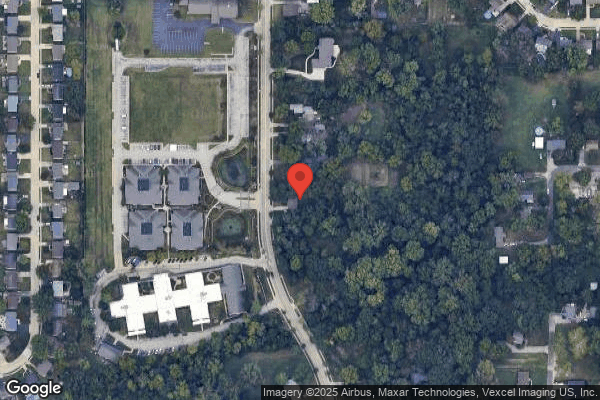
Understanding Severity Codes (click to expand)
Life-Threatening (Immediate Jeopardy)
J - Isolated K - Pattern L - Widespread
Actual Harm
G - Isolated H - Pattern I - Widespread
Potential for Harm
D - Isolated E - Pattern F - Widespread
No Harm (Minor)
A - Isolated B - Pattern C - Widespread

Questions to Ask on Your Visit

  • "What changes have you made since the serious inspection findings?"
  • "Why is there high staff turnover? How do you retain staff?"
  • "Can I speak with families of current residents?"
  • "What's your RN coverage like on weekends and overnight?"

Our Honest Assessment

Strengths
  • • Licensed and certified facility. Meets minimum state requirements.
Concerns
  • • Multiple safety concerns identified: 2 life-threatening violation(s), 1 harm violation(s), $50,925 in fines, Payment denial on record. Review inspection reports carefully.
  • • 52 deficiencies on record, including 2 critical (life-threatening) violations. These warrant careful review before choosing this facility.
  • • $50,925 in fines. Extremely high, among the most fined facilities in Missouri. Major compliance failures.
  • • Grade F (0/100). Below average facility with significant concerns.
Bottom line: Trust Score of 0/100 indicates significant concerns. Thoroughly evaluate alternatives.

About This Facility

What is Stonebridge Maryland Heights's CMS Rating?

CMS assigns STONEBRIDGE MARYLAND HEIGHTS an overall rating of 1 out of 5 stars, which is considered much below average nationally. Within Missouri, this rating places the facility higher than 0% of the state's 100 nursing homes. A rating at this level reflects concerns identified through health inspections, staffing assessments, or quality measures that families should carefully consider.

How is Stonebridge Maryland Heights Staffed?

CMS rates STONEBRIDGE MARYLAND HEIGHTS's staffing level at 1 out of 5 stars, which is much below average compared to other nursing homes. Staff turnover is 60%, which is 14 percentage points above the Missouri average of 46%. High turnover can affect care consistency as new staff learn residents' individual needs.

What Have Inspectors Found at Stonebridge Maryland Heights?

State health inspectors documented 52 deficiencies at STONEBRIDGE MARYLAND HEIGHTS during 2019 to 2025. These included: 2 Immediate Jeopardy (the most serious level, indicating potential for serious harm or death), 1 that caused actual resident harm, 47 with potential for harm, and 2 minor or isolated issues. Immediate Jeopardy findings are rare and represent the most serious regulatory concerns. They require immediate corrective action.

Who Owns and Operates Stonebridge Maryland Heights?

STONEBRIDGE MARYLAND HEIGHTS is owned by a for-profit company. For-profit facilities operate as businesses with obligations to shareholders or private owners. The facility is operated by STONEBRIDGE SENIOR LIVING, a chain that manages multiple nursing homes. With 223 certified beds and approximately 141 residents (about 63% occupancy), it is a large facility located in MARYLAND HEIGHTS, Missouri.

How Does Stonebridge Maryland Heights Compare to Other Missouri Nursing Homes?

Compared to the 100 nursing homes in Missouri, STONEBRIDGE MARYLAND HEIGHTS's overall rating (1 stars) is below the state average of 2.5, staff turnover (60%) is significantly higher than the state average of 46%, and health inspection rating (2 stars) is below the national benchmark.

What Should Families Ask When Visiting Stonebridge Maryland Heights?

Based on this facility's data, families visiting should ask: "What changes have been made since the serious inspection findings, and how are you preventing similar issues?" "How do you ensure continuity of care given staff turnover, and what is your staff retention strategy?" "Can you walk me through typical staffing levels on day, evening, and night shifts?" "Can I visit during a mealtime to observe dining assistance and food quality?" These questions are particularly relevant given the facility's Immediate Jeopardy citations, the facility's high staff turnover rate, and the below-average staffing rating.

Is Stonebridge Maryland Heights Safe?

Based on CMS inspection data, STONEBRIDGE MARYLAND HEIGHTS has documented safety concerns. Inspectors have issued 2 Immediate Jeopardy citations (the most serious violation level indicating risk of serious injury or death). The facility has a 1-star overall rating and ranks #100 of 100 nursing homes in Missouri. Families considering this facility should ask detailed questions about what corrective actions have been taken since these incidents.

Do Nurses at Stonebridge Maryland Heights Stick Around?

Staff turnover at STONEBRIDGE MARYLAND HEIGHTS is high. At 60%, the facility is 14 percentage points above the Missouri average of 46%. High turnover means new staff may not know residents' individual needs, medications, or preferences. It can also be disorienting for residents, especially those with dementia who rely on familiar faces. Families should ask: What is causing the turnover? What retention programs are in place? How do you ensure care continuity during staff transitions?

Was Stonebridge Maryland Heights Ever Fined?

STONEBRIDGE MARYLAND HEIGHTS has been fined $50,925 across 2 penalty actions. This is above the Missouri average of $33,588. Fines in this range indicate compliance issues significant enough for CMS to impose meaningful financial consequences. Common causes include delayed correction of deficiencies, repeat violations, or care failures affecting resident safety. Families should ask facility leadership what changes have been made since these penalties.

Is Stonebridge Maryland Heights on Any Federal Watch List?

STONEBRIDGE MARYLAND HEIGHTS is not on any federal watch list. The most significant is the Special Focus Facility (SFF) program, which identifies the bottom 1% of nursing homes nationally based on persistent, serious quality problems. Not being on this list means the facility has avoided the pattern of deficiencies that triggers enhanced federal oversight. This is a positive indicator, though families should still review the facility's inspection history directly.