ASPIRE SENIOR LIVING MOBERLY

700 EAST URBANDALE DRIVE, MOBERLY, MO 65270 (660) 263-9060
For profit - Limited Liability company 101 Beds ASPIRE SENIOR LIVING Data: November 2025 1 Immediate Jeopardy citation
Trust Grade
16/100
#327 of 479 in MO
Last Inspection: September 2024

Within standard 12-15 month inspection cycle. Federal law requires annual inspections.

Overview

Aspire Senior Living Moberly has received a Trust Grade of F, indicating significant concerns regarding the care provided. Ranking #327 out of 479 facilities in Missouri places it in the bottom half, and #2 out of 3 in Randolph County suggests there is only one nearby option that performs better. Although the facility is showing improvement with a reduction in issues from 11 to 3 over the past year, it still faces serious problems, including a critical finding regarding unsafe structural conditions that could endanger residents. Staffing is a weakness, with a low rating of 1 star and only average RN coverage, meaning residents may not receive necessary supervision consistently. Specific incidents have raised alarms, such as a resident being left without a suitable wheelchair, leading to discomfort and feelings of neglect, and failure to ensure call lights were within reach for several residents, which could delay urgent assistance.

Trust Score
F
16/100
In Missouri
#327/479
Bottom 32%
Safety Record
High Risk
Review needed
Inspections
Getting Better
11 → 3 violations
Staff Stability
⚠ Watch
64% turnover. Above average. Higher turnover means staff may not know residents' routines.
Penalties
✓ Good
$15,366 in fines. Lower than most Missouri facilities. Relatively clean record.
Skilled Nurses
⚠ Watch
Each resident gets only 18 minutes of Registered Nurse (RN) attention daily — below average for Missouri. Fewer RN minutes means fewer trained eyes watching for problems.
Violations
⚠ Watch
33 deficiencies on record. Higher than average. Multiple issues found across inspections.
★☆☆☆☆
1.0
Overall Rating
★☆☆☆☆
1.0
Staff Levels
★★☆☆☆
2.0
Care Quality
★☆☆☆☆
1.0
Inspection Score
Stable
2024: 11 issues
2025: 3 issues

The Good

  • Full Sprinkler Coverage · Fire safety systems throughout facility
  • No fines on record

Facility shows strength in fire safety.

The Bad

1-Star Overall Rating

Below Missouri average (2.5)

Significant quality concerns identified by CMS

Staff Turnover: 64%

17pts above Missouri avg (46%)

Frequent staff changes - ask about care continuity

Federal Fines: $15,366

Below median ($33,413)

Minor penalties assessed

Chain: ASPIRE SENIOR LIVING

Part of a multi-facility chain

Ask about local staffing decisions and management

Staff turnover is elevated (64%)

16 points above Missouri average of 48%

The Ugly 33 deficiencies on record

1 life-threatening 1 actual harm
Sept 2025 2 deficiencies 1 IJ (1 facility-wide)
CRITICAL (L) 📢 Someone Reported This

A family member, employee, or ombudsman was alarmed enough to file a formal complaint

Immediate Jeopardy (IJ) - the most serious Medicare violation

Safe Environment (Tag F0584)

Someone could have died · This affected most or all residents

⚠️ Facility-wide issue

**NOTE- TERMS IN BRACKETS HAVE BEEN EDITED TO PROTECT CONFIDENTIALITY** Based on observation, interview, and record review, the facility failed to ensure a safe environment for all residents. On 8/22/...

Read full inspector narrative →
**NOTE- TERMS IN BRACKETS HAVE BEEN EDITED TO PROTECT CONFIDENTIALITY** Based on observation, interview, and record review, the facility failed to ensure a safe environment for all residents. On 8/22/25, the facility received information from a structural engineer the middle common area framing, in its current condition, was not structurally sound. The structural engineer advised that the area below this needed to be unoccupied until all the framing deficiencies were addressed. The facility continued to utilize the middle common area, which included the resident sitting area toward the front entrance, the central nurses station, and the access to six hallways and the dining room and did not prohibit access until repairs were made. The facility census was 70. The facility was notified of the Immediate Jeopardy (IJ) on 09/04/25 at 5:08 P.M. which began on 08/22/25. The IJ was removed on 09/04/25 as confirmed by the surveyor's onsite verification. Review of the facility's policy, Maintenance, dated 01/30/24, showed the following: -Purpose was to protect the assets of the building; provide a safe environment for residents, families, visitors and staff, and meet life safety code requirements;-All staff were responsible to identify areas of concern regarding the maintenance of the building;=Preventative maintenance will occur throughout the year. Review of the facility's policy, Maintenance Work Request, dated 01/30/24, showed the following: -When a resident, staff member, or family member recognizes the need for maintenance services, a maintenance work request form will be completed by a staff member;-Maintenance personnel will review all maintenance work requests daily (Monday - Friday) and prioritize work to be done. 1. Review of a letter from the structural engineer to the facility's regional project manager, dated 08/22/25, showed the following: -Per facility request, an onsite visit to the building was completed to perform a non-destructive structural investigation of the middle common area due to the ceiling showing signs of deflection;-Investigation began in the common area of the building where the ceiling had multiple areas over the circular desk where the drywall appeared to be sagging and had various cracks;-Investigation continued in the attic of the building over the previously mentioned area where multiple frame deficiencies were noted;-Those deficiencies included: -The sheathing was not continuous where there was over-framing installed over trusses, which had caused the top chord of the trusses to have a significant amount of horizontal deflection; -The top of the girder [NAME] at the north side of the common area had rotated inward to the common area and was no longer [NAME] (flush); -There were jack posts that support the over-framing that currently bear directly on sheathing and not on a solid framing member;-In its current condition, this framing was not structurally sound;-The area below this needed to be unoccupied until all the framing deficiencies were addressed;-This more than likely would require removal of the ceiling and reframing of portions of the roof in this area. During interview on 09/04/25 at 3:48 P.M., the structural engineer said the entire core space, including the nurses station, the walkways around the nurses station, and the common area was not structurally sound in its current condition. The area should be unoccupied, including no one traversing through the area, in the short-term until the shoring (the process of temporary supporting a building) was completed. This was communicated to the facility's regional project manager in his/her letter dated 8/22/25. 2. Review of the facility provided document, Site Visit Report, which the facility identified as an internal report from the project manager, dated 08/27/25, showed the following: -Overview: The drywall ceiling in the common area located over the nursing station was dropping;-All nursing personnel were moved to an area located in the entrance hallway;-The contractor site visit was completed on 08/26/25;-Observation and comments: Both contractors commented that employees should continue to avoid working in this area. 3. Observation on 09/02/25 at 4:45 P.M, of the central nursing station area showed the following: -The ceiling area, located between the back of the nurses station and the dining room wall with windows, had a crack approximately six to eight feet in length;-This area was readily accessible to staff and residents;-Staff were present at the nurses station. 4. During interview on 09/02/25 at 4:45 P.M., 09/02/25 at 5:55 P.M., and 09/18/25 at 11:18 A.M., the Administrator said the following: -The cracked ceiling area was brought to maintenance director's attention (could not recall by who) the ceiling seemed to be cracking; -A local contractor was brought in for an evaluation and suggested a structural engineer evaluate the area;-The structural engineer said the area was structurally unsound;-She had not seen the structural engineer's report (dated 8/22/25) until 09/04/25;-She moved the nursing station to the lobby as a pre-emptive measure and was not directed to do so by anyone; -She did notify corporate about temporarily moving staff due to not knowing what the cause of the ceiling issue was;-She had not been told this area should be avoided by residents or staff. 5. Review of the facility provided document from the engineering consultant company, dated 09/03/25, showed the following: -As a follow up to the investigation letter provided to the facility representative (project manager), dated 08/22/25, the existing roof framing that was identified in that letter will need to be exposed and shoring will need to be installed in the short term to temporarily support the compromised members until they are permanently repaired;-Those elements will include any of the roof trusses that have deflected top chords and are now compromised, the girder [NAME] at the north side of the common area that has rotated, any jack posts that do not have direct load path to bearing walls and any other compromised component that were unable to be seen/identified during the original investigation;-This shoring can consist of temporary wood stud walls or beams and posts that are adequately supported at ground level. 6. Observation on 09/04/25 at 9:05 A.M., showed the following: -The central nurses station had caution tape attached to the handrail below the dining room glass window to the right of the nurses station, and wrapped around the front of the nurses station attached to the handrail below the dining room glass window to the left of the nurses station;-Areas around the nurses station were all accessible to residents, staff, family and visitors; this area was a central hub where all resident occupied halls converged; -The sitting area in front of the nurses station was fully accessible to residents, staff, family and visitors. During an interview on 09/04/25 at 9:25 A.M., the Minimum Data Set (MDS) Coordinator said the nurses station and area between the nurses station and the dining room, was roped off on 09/03/25 per the Administrator's direction. No one specifically directed the facility to rope off the area; it was just done as a preemptive measure for resident and staff safety. During an interview on 9/04/25, at 10:57 A.M., Certified Nursing Assistant (CNA) H said the following: -He/She had been told a week or so ago that the ceiling above the nurses station was going to fall in and that staff could not be in the nursing station;-Until yesterday the area was open, yesterday the maintenance man put up caution tape to prevent people from being in the area. 7. Observation on 09/04/25 at 11:00 A.M., showed the following:-There was no caution tape around the nurses station; -Areas around the nurses station were all accessible to residents, staff, family and visitors; this area was a central hub where all resident occupied halls converged; -The sitting area in front of the nurses station was fully accessible to residents, staff, family and visitors. -Three residents sat in the main common area watching television. (This was a part of the area the engineering company had identified to be structurally unsound.) During an interview on 09/04/25, at 11:07 A.M., Certified Medication Technician (CMT) I said the following:-The nursing station had been moved about a week or so ago because the area above the nursing station was not safe;-The caution tape was put up yesterday. Observation on 09/04/25 at 12:05 P.M., showed the caution tape remained on the floor against the dining room wall, with part of the area the engineering company had identified to be structurally unsound, directly accessible to staff and residents. Observation on 09/04/25 at 12:08 P.M., showed the maintenance director put caution tape back up around the nurses station. Areas around the nurses station were all accessible to residents, staff, family and visitors; this area was a central hub where all resident occupied halls converged; Observation on 09/04/25, at 12:55 P.M., showed four residents sat in the main common area watching television. (This was an area the engineering company had identified to be structurally unsound.) During an interview on 09/04/25, at 12:55 P.M., Licensed Practical Nurse (LPN) K said the following: -The area above the nursing station had a crack in if for maybe a month;-Staff had recently been told the area was not safe and the nurses station was moved to the front lobby;-The area got roped off yesterday. During an interview on 09/04/25, at 1:04 P.M., CNA L said the following: -He/She had been recently told the area above the nursing station was not safe;-The nursing station had been moved to the front lobby a couple of weeks ago. During an interview on 09/04/25, at 1:16 P.M., LPN M said the following: -He/She was told by one of the other nurses that the area above the nursing station was not safe and the nursing station was moved to the front lobby;-The ceiling had been checked and after it was checked the nursing station was moved;-The area got roped off the day before he/she believes. Observation on 09/04/25 at 3:41 P.M., showed two residents sat in the main common area watching television. (This was an area the engineering company had identified to be structurally unsound.) During an interview on 09/04/25 at 12:14 P.M., 2:27 P.M. and 2:50 P.M., the Maintenance Director said the following: -Someone (he could not remember who) notified him of the cracked ceiling above the nursing station about a month ago;-It looked like the ceiling was sagging a bit;-He immediately told the Administrator, and she contacted the corporate regional project manager/corporate contact for maintenance; -A local contractor evaluated the issue and told him they would not do any work on the area until a structural engineer was contacted;-A structural engineer evaluated the area, and there was something with the beams bowing and the sheetrock separating that required repair; -To his knowledge, the ceiling was still structurally stable but needed repairs;-On 09/03/25, the Administrator told him to remove all items from the nurses station and to rope off the area with caution tape;-He was instructed by the administrator to rope off the area for safety to keep staff and residents from going through the area. During an interview on 09/09/25 at 9:39 A.M., and 09/18/25 at 10:28 A.M., the facility's regional project manager said the following: -He made a visit to the facility and contracted a structural engineering company and two local contractors to evaluate the issues with the ceiling and formulate a plan for fixing the issues; -He was at the facility when the structural engineer did the inspection, and he asked the engineer if staff should continue to stay out of the affected area. The engineer advised for people to stay out of the nurses station and table area at the front lobby near the entrance; -He was under the impression the Administrator understood that as she had already moved staff out of the nurses station area;-He received email communication from the engineering consultants on 8/22/25, at 5:06 P.M., that included their investigation letter and photo documentation;-The communication from the engineering consultants was acknowledged and then forwarded as an email to the administrator on 08/22/25 at 5:14 P.M.; -He was under the impression the Administrator received a copy of the same letter he received from the engineering consultants (on 8/22/25); -He did not recall making specific contact with the Administrator related to the letter that referenced the structural issue; -After he received the letter, dated 08/22/25, from the engineering consultants he understood that residents were not allowed in that area. It was his assumption that no one was allowed in that area. He did not ask that specific question of the Administrator or follow-up with her as to what was being done related to this area and probably should have; -He assumed when he asked the engineer if people should stay out of the central nursing station area, that would include not only staff but residents too; -He was not sure why the contractor's comments from the 08/27/25 report was not addressed by the facility to keep residents and staff out of the identified areas of concern; -It would have been his expectation the Administrator reviewed his forwarded emails and communication that included the letters from the engineer and contractors and to implement any recommendations addressed in that communication; -He did not follow-up with the Administrator at any time related to those emails or communication and he probably should have as the project manager;-If the area was unsafe for the employees, it should have also been restricted to residents and visitors. During an interview on 09/09/25 at 10:11 A.M. and 09/18/25 at 11:18 A.M., the Administrator said the following: -The ceiling issue was originally reported by the maintenance director, to the corporate project manager by phone, around the beginning of August;-She did not have written documentation of when the corporate project manager was initially contacted about the ceiling issues;-She did not review the reports/letters from the contractors or the engineer until 09/04/25;-The original reports were forwarded to her on 08/22/25; -When the engineer said the area was unsound and employees should continue to avoid the area, this should have been addressed at that time;-The facility site report, dated 08/27/25, showed both contractors indicated that employees should continue to avoid working in the area. This should have been addressed for not only the employees but for the residents at that time and it was not because she did not read the report until 09/04/25. NOTE: At the time of the recertification survey, the violation was determined to be at the immediate jeopardy level L. Based on interview and record review completed during the onsite visit, it was determined the facility had implemented corrective action to remove the IJ violation at the time. A final revisit will be conducted to determine if the facility is in substantial compliance with participation requirements.At the time of exit, the severity of the deficiency was lowered to the F level. This statement does not denote that the facility has complied with State law (Section 198.026.1 RSMo.) requiring that prompt remedial action to be taken to address Class I violation(s). 26044822607524
CONCERN (F) 📢 Someone Reported This

A family member, employee, or ombudsman was alarmed enough to file a formal complaint

Potential for Harm - no one hurt, but risky conditions existed

Deficiency F0727 (Tag F0727)

Could have caused harm · This affected most or all residents

Based on interview and record review, the facility failed to provide a Registered Nurse (RN) eight consecutive hours a day, seven days a week, for 15 of 32 days reviewed. The facility census was 70. R...

Read full inspector narrative →
Based on interview and record review, the facility failed to provide a Registered Nurse (RN) eight consecutive hours a day, seven days a week, for 15 of 32 days reviewed. The facility census was 70. Review of the facility policy, Registered Nurse, dated 01/30/24, showed the following: -Purpose: ensure that an RN is available for supervision in the facility;-Procedure: except when waived, the facility must use the services of an RN for at least eight consecutive hours a day, seven days a week. 1. Review of the facility assessment, revised 05/14/25, showed a staffing plan of eight RN hours per a resident day on the day shift. 2. Review of the facility posted staffing sheets, from 08/05/25 through 09/05/25, documenting staff who worked each day, showed the following: -No RN coverage on 08/05/25;-No RN coverage on 08/06/25;-No RN coverage on 08/09/25;-No RN coverage on 08/10/25;-No RN coverage on 08/16/25;-No RN coverage on 08/17/25;-No RN coverage on 08/19/25;-No RN coverage on 08/23/25;-No RN coverage on 08/24/25;-No RN coverage on 08/30/25;-No RN coverage on 08/31/25;-No RN coverage on 09/02/25;-No RN coverage on 09/03/25; -No RN coverage on 09/04/25;-No RN coverage on 09/05/25. During an interview on 09/04/25 at 2:12 P.M., the staffing coordinator said the following: -She had been doing the scheduled since 08/22/25;-There was supposed to be a RN at least eight hours every day;-She was responsible for ensuring there was adequate nursing staff;-She reported the lack of a RN on the schedule for multiple days to the administrator since the prior Director of Nurses (DON) quit and a new one was hired. During an interview on 09/09/25 at 2:25 P.M., the DON said the following:-She was aware there had been an issue with RN coverage;-The staffing coordinator was responsible for ensuring a RN was on the schedule for eight hours each day;-The facility did not have enough RN's to staff as required. During an interview on 09/09/25 at 10:11 A.M., the administrator said the following: -There should be an RN scheduled eight hours every day to meet regulation;-The facility utilized the DON and facility nurses that worked as needed (PRN) to fill shifts; -At present the facility was not meeting the requirement for an RN eight hours of every day;-If the staffing coordinator has concerns related to the schedule, she will report those concerns to the DON or herself;-She was not aware there were so many days of no RN coverage.
Feb 2025 1 deficiency
CONCERN (D) 📢 Someone Reported This

A family member, employee, or ombudsman was alarmed enough to file a formal complaint

Potential for Harm - no one hurt, but risky conditions existed

Deficiency F0658 (Tag F0658)

Could have caused harm · This affected 1 resident

Based on interview and record review, the facility failed to ensure medication was administered according to professional standards of practice for one resident (Resident #1), in a review of five samp...

Read full inspector narrative →
Based on interview and record review, the facility failed to ensure medication was administered according to professional standards of practice for one resident (Resident #1), in a review of five sampled residents. Licensed Practical Nurse (LPN) A administered an antipsychotic medication prepared by another nurse, LPN D, was unaware of the contents of the medication cup when he/she administered the medication to the resident and failed to document administration of the medication. LPN D gave a certified nurse aide medication LPN D prepared and when the certified nurse aide was unsuccessful in administration, LPN A administered the medication. The facility census was 64. Review of the facility undated Medication Administration policy showed the following: -Medications are administered by licensed nurses, or other staff who are legally authorized to do so, as ordered by the physician and in accordance with professional standards of practice; -Review Medication Administration Record (MAR) to identify medication to be administered; -Compare medication source with MAR to verify resident name, medication name, form, dose, route, and time; -Remove medication from source; -Administer medication as ordered, provide appropriate amount of food and fluid, crush medication s as ordered; -Observe resident consumption of medication; -Sign MAR after administered; -Report and document any adverse side effects or refusals. Review of dhss.mo.gov Certified Nurse Assistant (CNA) registry website showed the CNA training program prepares individuals for employment in a long-term care facility. The program teaches skills in resident care under the direct supervision of a licensed nurse and does not include medication administration by the CNA. 1. Review of Resident #1's quarterly Minimum Data Set (MDS), a federally mandated assessment instrument, completed by facility staff, dated 2/13/25, showed the following: -Severe cognitive impairment; -No delusions or hallucinations; -No physical or verbal behaviors towards others; -Other behavioral symptoms not directed toward others occurred (symptoms such as hitting or scratching self, pacing, rummaging, disrobing in public, verbal or vocal symptoms like screaming or disruptive sounds); -Required antianxiety medications during the previous seven days; -No antipsychotic medications required. Review of the resident's Care Plan, dated 2/17/25, showed the following: -Diagnoses of Parkinson's disease (a progressive neurological disease that caused decline in mobility, movement and cognitive ability), adjustment disorder with mixed anxiety and depressed mood, dementia with agitation, anxiety disorder, and mood disorder; -The resident was forgetful and confused with anxiety and agitation at times related to dementia. He/She could be resistive and agitated during care. Behaviors appeared to be worse in the late afternoon-evenings. Staff should not confront or argue with the resident, attempt to interest in diversional activity. Approach in calm manner. If unable to calm the resident and he/she remained resistive to care, assure a safe environment and allow the resident to calm down, reapproach later. If the resident refused medication when upset, reapproach when the resident was calm, have a different nurse/medication technician offer medications. Review of the resident's Nurses Note, dated 2/17/25, showed staff documented at 6:47 P.M. the resident continued to yell out for family and for help. Staff redirected and sat with the resident. Physician notified and one time order for Trazadone (medication in the treatment of major depressive disorder) 25 milligrams (mg) received. Review of the resident's Physician Order Sheets (POS), dated 2/17/25, showed Trazadone 25 mg one time only for anxiety and yelling out. Review of the resident 's Medication Administration Record (MAR), dated 2/17/25, showed at 6:24 P.M., staff documented administration of Trazadone 25 mg, one time only. Review of the resident's record showed no documentation regarding the resident's condition, behaviors or effectiveness of Trazadone 25 mg administered on 2/17/25 at 6:24 P.M. Review of the resident's POS, dated 2/18/25, showed Zyprexa (antipsychotic medication used to treat mental illness) 2.5 mg every 12 hours as needed for anxiety. Review of the resident's Nurses Notes showed staff did not document the resident's condition or behaviors regarding the physician's orders on 2/18/25 for Zyprexa 2.5 mg every 12 hours as needed for anxiety. Review of the resident's MAR showed staff documented on 2/18/25 at 7:11 P.M., Zyprexa 2.5 mg administered as needed for anxiety. Review of the resident's Nurses Note, dated 2/18/25 at 9:24 P.M., showed staff documented Zyprexa 2.5 mg administered at 7:11 P.M. and was ineffective. Review of the resident's MAR showed staff documented on 2/19/25 at 8:18 A.M. Zyprexa 2.5 mg. administered as needed for anxiety. Review of the resident's Nurses Notes showed no staff documentation regarding the resident's condition or behaviors regarding administration of Zyprexa 2.5 mg at 8:18 A.M. Review of the resident's Nurses note, dated 2/18/25 at 9:47 A.M., showed staff documented Zyprexa 2.5 mg administered at 8:18 A.M. and was effective. During an interview on 2/27/25 at 10:20 A.M., Licensed Practical Nurse (LPN) D said the resident was frequently agitated and refused medication. Recent medication changes were made. On 2/19/25 at about 6:00 P.M., the resident was agitated and refused medications. LPN D obtained the resident's as needed Zyprexa medication and mixed the medication in applesauce. The resident refused the medication. LPN D gave Certified Nurse Assistant (CNA) C the cup of Zyprexa and applesauce to administer, and the resident refused. LPN A was at the desk for change of shift report and said he/she would administer the medication. LPN A took the cup of Zyprexa and applesauce. LPN D went down the hall to attend another resident. When LPN D returned, LPN A said he/she administered the resident's Zyprexa and applesauce. LPN D did not document Zyprexa 2.5 mg had been administered on the resident's MAR. LPN A should have documented Zyprexa 2.5 mg administered on the resident's MAR. Review of the resident's MAR, dated 2/19/25, showed no documentation staff administered Zyprexa 2.5 mg at approximately 6:00 P.M. Review of the resident's record showed no staff documentation regarding the resident's condition or behaviors regarding administration of Zyprexa 2.5 mg at approximately 6:00 P.M. and no staff documentation regarding the effectiveness of the medication. During an interview on 2/27/25 at 1:45 P.M., LPN A said on 2/19/25 at about 6:00 P.M., he/she came to work and the resident was agitated. Certified Medication Technician (CMT) G handed LPN A a medication cup of applesauce and asked LPN A to administer the medication in the cup. LPN A did not know what medication was in the medication cup, never saw who prepared the medication, and did not document any as needed medication as administered on 2/19/25 at about 6:00 P.M. LPN A did not know the medication cup contained Zyprexa mixed in applesauce. During an interview on 2/27/25 at 4:00 P.M., the Director of Nursing said the same staff who prepared a medication should administer the medication and document administration of the medication. Staff should document in the resident's nurses' notes behaviors and communication with physicians regarding behaviors and new physician orders. Staff should not pass a prepared medication cup from one nurse to another for administration. Only licensed nurses and CMT staff were allowed to administer medications. CNA staff were not allowed to administer medications. The resident had behaviors. Staff should follow the facility policy regarding medication administration. During an interview on 3/12/25 at 11:20 A.M., the Administrator said staff should assess and document the resident's condition and behaviors before and after any as needed medication was administered. Staff should follow the facility medication administration policy and the nurse that prepared a medication should administer the medication to ensure accuracy. Staff should document in the resident's MAR all medications administered. If a medication was not given, staff should document in the MAR and nurses' notes the reason the medication was not given.
Sept 2024 11 deficiencies 1 Harm
SERIOUS (G)

Actual Harm - a resident was hurt due to facility failures

Deficiency F0558 (Tag F0558)

A resident was harmed · This affected 1 resident

**NOTE- TERMS IN BRACKETS HAVE BEEN EDITED TO PROTECT CONFIDENTIALITY** Based on observation, interview, and record review, the facility failed to provide reasonable accommodation of needs for one res...

Read full inspector narrative →
**NOTE- TERMS IN BRACKETS HAVE BEEN EDITED TO PROTECT CONFIDENTIALITY** Based on observation, interview, and record review, the facility failed to provide reasonable accommodation of needs for one resident (Resident #4), in a review of 24 sampled residents, when staff did not ensure the resident had a comfortable wheelchair that fit him/her properly and did not cause him/her discomfort and pain. The resident presented with an increase in depression symptoms and reported that due to not having a comfortable wheelchair, he/she stayed in bed and felt abandoned, thrown away and like nobody cared. The facility also failed to ensure call lights were within reach for three residents (Residents #3, #22 and #29), in a review of 24 sampled residents. The facility census was 64. Review of the facility policy, Accommodation of Needs, revised 03/2021, showed the following: -Our facility's environment and staff behaviors are directed toward assisting the resident in maintaining and/or achieving safe independent functioning, dignity and well-being; -1. The resident's individual needs and preferences are accommodated to the extent possible, except when the health and safety of the individual or other residents would be endangered; -2. The resident's individual needs and preferences, including the need for adaptive devices and modifications to the physical environment, are evaluated upon admission and reviewed on an ongoing basis; -4. In order to accommodate individual needs and preferences, staff attitudes and behaviors are directed towards assisting the residents in maintaining independence, dignity and well-being to the extent possible and in accordance with the residents' wishes. For example: a. interacting with the residents in ways that accommodate the physical or sensory limitations of the residents, promote communication, and maintain dignity. Review of the facility policy, Resident Call System, dated 01/30/24, showed the following: -Ensure that residents have a means of direct communication between the resident and his/her caregivers when in their rooms and toilet and bathing areas; -The call system must be accessible to residents while in their bed or other sleeping accommodations within the resident's room. 1. Review of Resident #4's undated Continuity of Care Document (CCD) showed the following: -admission to the facility on [DATE]; -Diagnoses included acquired absence of right leg above knee, osteoarthritis of right and left shoulder, anxiety disorder, depression, and legal blindness; -Goals: He/She will be allowed to safely smoke cigarettes, with supervision. He/She will participate in activities of choice at least two times weekly through next review. He/She will be comfortable and free from signs and symptoms of pain through next review. His/Her care plan will be followed through next review. Review of the resident's annual Minimum Data Set (MDS), a federally mandated assessment instrument completed by facility staff, dated 05/03/24, showed the following: -Cognitively intact; -Able to make self-understood and understood others; -Moderately impaired vision - can identify objects; -Feeling down, depressed or hopeless; -Mild depression; -Activities that were very important to the resident included attending favorite activities and going outside when the weather was good; -Scheduled pain medication with complaints of frequent, moderate pain; -Pressure reducing device for chair; -Current tobacco user. Review of the resident's Telehealth Notes, dated 7/17/24, showed the following: -The resident was seen for follow-up related to psychotropic medication management and mood; -The resident had stopped going out for meals and smoking (no indication as to why); -The resident reported his/her mood was fair; -Feeling down, depressed or hopeless: several days; -Mood: discouraged; -Nonpharmacological recommendations: encourage the resident to continue to engage in meaningful activities. Review of the resident's quarterly MDS, dated [DATE], showed the following: -Cognitively intact; -Able to make self-understood and understood others; -Moderately impaired vision - can identify objects; -Feeling down, depressed or hopeless; -Mild depression; -No behaviors or rejection of cares; -Required substantial/maximum assistance with upper body dressing, personal hygiene, and rolling from left to right; -Dependent on staff for lower body dressing, putting on/taking off footwear, sitting to lying transfer, lying to sitting on the side of the bed, chair/bed-to-chair transfers, tub/shower transfers and all aspects of wheelchair mobility; -Scheduled pain medication with complaints of frequent, moderate pain; -Pressure reducing device for bed and chair; -No indication on MDS of tobacco use status. Review of the resident's Telehealth notes, dated 08/07/24, showed the following: -The resident was seen for follow up on mood and behaviors; -The resident reported his/her mood had been the same and continues to feel down on a daily basis; -Feeling down, depressed or hopeless: several days; -Nonpharmacological recommendations: encourage the resident to continue to engage in meaningful activities. Review of the resident's Telehealth notes, dated 08/12/24, showed the following: -The resident has poor eyesight, so he/she spent much of his/her day listening to books on tape; -Feeling down, depressed or hopeless: more than half of the days; -The resident was referred by the facility for psychotherapy due to possible increase in depressive and anxiety symptoms; -The resident reported he/she had been doing ok; -Mood: within normal limits, depressed/sad; -Interventions: supportive active listening ad rapport building, encouraged the resident to participate in social activities and continue to encourage contact with family, friends and staff; -Recommendations: encourage adherence to daily schedules and provide opportunities during the day for cognitive and mental stimulation. Review of the resident's September 2024 Physician Order Sheets showed the following: -May participate in activities as tolerated; -Pressure reducing device (wheelchair cushion) utilized in wheelchair every shift (original order dated 03/20/24); -High back reclining wheelchair for positioning, support and comfort (original order dated 03/27/24). Observation on 09/16/24 at 4:02 P.M. showed the following: -The resident lay in bed with his/her eyes closed. He/She had head phones on his/her ears connected to a book on tape; -A high back wheelchair sat at the resident's bedside. A positioning cushion was on the left arm rest of the wheelchair. There was no pressure relieving cushion present in the seat of the wheelchair. During interviews on 09/16/24 at 4:02 P.M., 4:25 P.M. and 5:03 P.M., the resident said the following: -He/She did not get up anymore because his/her wheelchair hurt him/her so bad that he/she did not get up; -The wheelchair hurt his/her back, hips and shoulders; -He/She had bad shoulders and the wheelchair squeezed his/her hips; -The pain in his/her hips transferred to his/her buttocks and caused pressure; -The wheelchair had caused discomfort for quite some time; he/she was unsure exactly how long but as long as he/she had the chair (original order for the chair was 3/27/24); -He/She told anyone and everyone that would listen that his/her wheelchair hurt when he/she was in it, but nothing was done about it. He/She still had the chair that hurt. Sometimes he/she went to physician appointments in the wheelchair and that hurt his/her body; -He/She ate meals in his/her room, but would like to go to the dining room if he/she had a wheelchair that was comfortable; -He/She would like to get out of his/her room and listen to conversations. It would be a nice change of scenery. If he/she was stuck in bed, he/she could not make friends; -He/She would like to get up out of bed to smoke, but he/she could not get up to smoke because of how uncomfortable his/her wheelchair made him/her; -He/She would like to smoke at least two times a day. He/She usually only got up to smoke once. One day last week, he/she was hurting so bad because of the wheelchair that he/she only smoked once and went inside to supper. He/She was hurting so bad that he/she could not eat. He/She had to sit in the chair for a couple of hours and it was horrible; -He/She did not know for sure when he/she smoked last, maybe two or three days ago, that was the time he/she sat up and was hurting so bad and did not eat; -If he/she had a more comfortable chair, he/she would smoke more than once a day and get up for meals and possibly more activities; -Since he/she was stuck in bed because the wheelchair caused discomfort and pain, he/she felt abandoned, like he/she had been thrown away and like nobody cared about him/her. Observation on 09/17/24 at 5:30 A.M., showed the resident lay in bed asleep with the same high back wheelchair at his/her bedside. No pressure relieving cushion was present in the seat of the wheelchair or visible in the surrounding area of the room. Review of the resident's Care Plan, revised 09/17/24, showed the following: -He/She had frequent complaints of chronic bilateral shoulder pain, neck and chronic back pain due to osteoarthritis; -He/She would be comfortable and free from signs and symptoms of pain through the next review; -Assist him/her to a position of comfort and reposition as needed; -He/She was at risk for skin breakdown due to limited mobility and had a pressure reducing cushion in his/her wheelchair; -He/She was on medications for depression and anxiety. Monitor him/her for any sign or symptoms of depression, and if any are noted, report to the charge nurse; -He/She would benefit from interactions with others during group activities; -He/She will participate in activities of choice at least two times weekly through next review; -He/She enjoyed audio books, manicures, listening to classical music, and going outdoors to smoke; -He/She was a smoker and would like to continue to smoke during his/her stay at the facility; -He/She smoked cigarettes daily. Staff will provide the resident with his/her cigarettes when it is smoke time. During an interview on 09/17/24, at 6:34 A.M., Certified Nursing Assistant (CNA) G said the following: -The resident was a smoker; -The resident told staff when they got him/her up if he/she wanted to smoke, which was usually only one time a day; -The resident had complained that his/her wheelchair caused him/her discomfort or pain when he/she got up and that was why the resident did not like to get up much; -The resident did not participate in activities and wanted to stay in bed because the wheelchair hurt him/her when he/she got up. During an interview on 09/17/24, at 8:10 A.M., CNA C said the following: -The resident was a smoker but did not smoke very often, usually just at the 2:00 P.M. smoke break; -The resident told staff when he/she wanted to smoke; -He/She had never specifically asked the resident why he/she did not want to get out of bed more; -The resident complained that his/her wheelchair caused discomfort and pain when he/she was up in the chair; -He/She was aware the resident wanted a more comfortable wheelchair. During an interview on 09/17/24, at 8:23 A.M., CNA D said the following: -The resident was a smoker but only liked to be up for the afternoon smoke time; -The resident did not want to get up to smoke because he/she hurt when up in his/her wheelchair; -The resident voiced complaints about his/her wheelchair causing discomfort or pain; -The resident's hips were too tight in the current chair; -The resident did not participate in activities and did not come out of his/her room because his/her wheelchair caused him/her discomfort; -The resident only got up for one meal, dinner, when he/she got up because the wheelchair caused discomfort; -He/She was aware the resident wanted a more comfortable wheelchair; -The resident told him/her that he/she felt alone and that no one cared. He/She reported this to the charge nurse when it occurred, but he/she was unsure who he/she reported it to and when. During interviews on 09/27/24 at 11:43 A.M., and 10/2/24 at 8:32 A.M., the Activities Director said the following: -The resident did not like to get out of bed because he/she did not like to sit in his/her wheelchair because his/her body hurt; -The resident told her (unsure when this occurred) one time that he/she did not attend group activities and did not get out of bed, because he/she was in pain and his/her wheelchair caused discomfort; -The last time the resident was in a group activity (prior to the recertification survey), the resident complained that his/her neck and back were hurting; -She did not report the wheelchair caused discomfort to anyone. During an interview on 09/17/24, at 9:03 A.M., the Director of Nursing (DON) said the following: -The resident only smoked one time a day; -The staff took the resident to smoke when he/she requested; -Sometimes the resident got up and sometimes he/she did not; -The resident did not participate in activities and chose to stay in his/her room and listen to books on tape; -The resident usually just got up for one meal, usually lunch; -She did not specifically ask the resident why he/she did not want to get out of bed more; -She was not aware the resident had not been out of bed since Friday due to complaints about the wheelchair causing him/her discomfort or pain; -She was not aware the resident would like to smoke more, wanted to attend more activities, or felt alone/thrown away or like no one cares about him/her. During an interview on 09/17/24 at 9:14 A.M., and 09/25/24 at 3:45 P.M., the Administrator said the following: -The resident very rarely requested to smoke, mainly only when he/she was out of bed; -The resident did not usually attend group activities, just usually one-on-one activities with the activities director; -To her knowledge, the resident never expressed the desire to attend group activities; -The resident got up sometimes for one meal a day by his/her choice; -She was not aware the resident would like to go out and smoke more or wanted to attend more activities; -She was aware the resident made statements of feeling alone and triggered for depression; the resident received counseling services for his/her depression; -Prior to 09/17/24, she was unsure if anyone specifically asked the resident why he/she was not getting out of bed. The resident usually requested when he/she wanted to get up and typically only got up one time per day. 2. Review of Resident #22's Face Sheet showed the resident's diagnoses included dementia with behaviors, Parkinson's disease (a disorder that affects movement symptoms are slow movement, stiffness, and loss of balance), anxiety, depression, a history of a stroke, and an unspecified mood disorder. Review of the resident's annual MDS, dated [DATE], showed the following: -Severe cognitive impairment; -Was usually understood and usually understood others; -Moderately impaired vision with corrective lenses; -Dependent on staff for transfers. Review of the resident's Care Plan, last reviewed on 06/18/2024, showed the following: -At high risk for falls; -The resident was forgetful and confused with very poor vision, weak and unsteady. -Required the assistance of one to two staff with transfer and ADLs; -History of falls; -Ensure the resident's call light is within reach at all times. Observation on 09/16/24, at 4:47 P.M., showed the resident in his/her room in a recliner. The resident's feet are elevated high in the chair. The resident's call light was across the room and clipped high up on the curtain that divided the room. The call light was not in the resident's reach. During an interview on 09/16/24, at 4:47 P.M., the resident said he/she used his/her call light to call for help if he/she could find it. The resident asked, do you know where it is? The resident said he/she could not put the feet down on his/her recliner. Observation on 09/17/24, at 4:08 P.M., showed the resident sat reclined in the recliner chair in his/her room. The resident has his/her eyes open. The resident's call light was across the room and clipped high up on the curtain that divided the room. The call light was not in the resident's reach. 3. Review of Resident #3's Face Sheet showed the resident's diagnoses included Alzheimer's disease (a progressive disease that destroys memory and other important mental functions), vascular dementia (brain damage caused by multiple strokes, major depressive disorder (a mental health disorder characterized by persistently depressed mood or loss of interest in activities, causing significant impairment in daily life) and anxiety disorder (a mental health disorder characterized by feelings of worry or fear that are strong enough to interfere with one's daily activities). Review of the resident's quarterly MDS, dated [DATE], showed the following: -Severely impaired cognition; -Clear speech, usually made self understood and usually understood others; -Required partial/moderate staff assistance for rolling left and right; -Required substantial/maximum staff assistance for sitting to lying, lying to sitting on side of bed, and wheelchair mobility; -Dependent on staff for chair/bed-to-chair transfers. Review of the resident's Care Plan, reviewed on 7/11/24, showed the following: -He/She was forgetful, confused, and unsteady with poor safety awareness, poor wheelchair positioning and a history of falls; -He/She needed assist of one to two with all activity of daily living (ADL) care; -Make sure his/her call light is within reach at all times. Observation on 09/17/24, at 5:30 A.M., showed the resident lay in bed sleeping. The resident's call light was draped over the end of the foot board out of the resident's reach. Observation on 09/18/24, at 8:30 A.M., showed the resident sat in his/her wheelchair watching television. The resident's call light was across the room on the bed out of the resident's reach. 4. Review of Resident #29's Face Sheet showed the resident's diagnoses included dementia (a group of thinking and social symptoms that interferes with daily functioning) and anxiety disorder. Review of the resident's quarterly MDS, dated [DATE], showed the following: -Severely impaired cognition; -Adequate hearing, clear speech, sometimes understood others; -Dependent on staff assistance for rolling left and right, sit to lying, lying to sitting on side of bed, chair/bed-to-chair transfers, wheelchair mobility. Review of the resident's Care Plan, reviewed on 07/18/24, showed the following: -He/She was weak and unsteady and at risk for falls; -He/She needed assistance with all ADL care; -Make sure his/her call light is within reach at all times. Observation on 09/17/24, at 5:32 A.M., showed the resident lay in bed sleeping. The resident's call light was across the room in the recliner out of the resident's reach. Observation on 09/18/24, at 8:35 A.M., showed the resident sat in the middle of the room in his/her Broda chair. The resident's call light sat in the recliner out of the resident's reach. 5. During an interview on 09/28/24, at 11:34 A.M., the DON said residents' call lights should always be in reach, even for a resident with a diagnosis of dementia. During an interview on 09/27/24, at 12:11 P.M., the Administrator said the residents' call lights should always be in reach, even for a resident with a diagnosis of dementia.
CONCERN (D)

Potential for Harm - no one hurt, but risky conditions existed

Deficiency F0576 (Tag F0576)

Could have caused harm · This affected 1 resident

Based on interview and record review, the facility failed to ensure the right to privacy with communication when the facility opened two additional residents' (Resident #51 and #52) personal mail with...

Read full inspector narrative →
Based on interview and record review, the facility failed to ensure the right to privacy with communication when the facility opened two additional residents' (Resident #51 and #52) personal mail without permission. The facility census was 64. Review of the facility's policy, Mail and Electronic Communication, revised May 2017, showed the following: -Residents are allowed to communicate privately with individuals of their choice and may send and receive personal mail, email and other electronic forms of communication confidentially; -Mail will be delivered to the resident unopened; -Staff members of this facility will not open mail for the resident unless the resident requests them to do so (such request will be documented in the resident's plan of care). 1. During group interview on 09/16/24, at 1:05 P.M., two residents in attendance said they had received mail opened in the past few months and did not want to have their mail opened. Resident #51 said his/her mail was a financial statement and Resident #52 said his/her mail was personal mail. Neither resident said they had any restrictions on mail and neither resident gave the facility permission to open their mail. During an interview on 09/18/24, at 7:12 P.M., the Social Services Director (SSD) said the following: -Activity staff typically delivered the mail, but she would deliver if needed; -Sometimes the business office manager (BOM) would also help to deliver mail; -Mail should be delivered unopened unless the resident asked for it to be opened; -Resident #51 and #52 did not have any restrictions and should receive their mail unopened. During an interview on 09/18/24, at 7:25 P.M., the BOM said the following: -She helped deliver mail to the residents if the activity staff was not able to do it; -Mail was delivered unopened unless the resident asked for it to be opened. During an interview on 09/27/24, at 11:43 A.M., the Activity Director said the following: -She was responsible for delivering mail every day that she worked; -If she was not working, the activity aide delivered the mail; -Mail should be delivered unopened; -She did not recall delivering any mail opened. During an interview on 09/18/24, at 7:06 P.M., the administrator said the following: -Mail should be delivered unopened unless there was a specific reason for it to be opened; -Residents #51 and #52 should receive their mail unopened and had no restrictions.
CONCERN (D)

Potential for Harm - no one hurt, but risky conditions existed

Deficiency F0604 (Tag F0604)

Could have caused harm · This affected 1 resident

**NOTE- TERMS IN BRACKETS HAVE BEEN EDITED TO PROTECT CONFIDENTIALITY** Based on observation, interview, and record review, the facility facility failed to provide documentation of a medical diagnosis...

Read full inspector narrative →
**NOTE- TERMS IN BRACKETS HAVE BEEN EDITED TO PROTECT CONFIDENTIALITY** Based on observation, interview, and record review, the facility facility failed to provide documentation of a medical diagnosis that warranted the use of a restraint prior to initiation, assessment and monitoring for the use of physical restraints, including a wheelchair locked when placed up to the dining room table, a pommel cushion (a cushion with an upward-projecting protuberance at its front part that prevents a wheelchair dependent resident from sliding down and possibly falling out of a wheelchair), to prevent rising from a wheelchair, and a recliner positioned with he legs elevated (Resident #50 and #22), in a review of 24 sampled residents, who were in chairs to prevent them from rising. The residents could not easily and intentionally rise from their wheelchairs or a recliner. The facility did not document other interventions attempted or the consent of the resident or his/her representative. The facility census was 64. Review of the facility policy Use of Restraints, dated 01/30/24, showed the following: -Ensure that physical and/or chemical restraints are used only when needed to treat the resident's medical symptoms and then, only use the least restrictive alternative for the least amount of time. -It is this facility's policy to support each resident with attaining and maintaining his/her highest practicable well-being and ensure his/her dignity and quality of life in our building. This facility will not impose physical restraints for purposes of discipline or convenience. On rare occasions, it may be medically necessary to consider the use of a physical restraint and/or psychotropic medications; -Prior to the initiation of a physical restraint or psychotropic medication(s), clinicians will thoroughly assess the resident's mental/cognitive, behavior and physical status. This assessment will address other interventions that may be symptoms or the cause of the situation (e.g., identification of an infection process or delirium, presence of pain); -Documentation of assessment/evaluation and symptoms exhibited will be recorded in the resident's medical record; -Clinicians will consult with the attending physician, relaying assessment and observations; -Alternative and less restrictive measures to the use of a physical or chemical restraint, must be initiated and recorded, including effectiveness of any/all alternatives employed; -Clinicians and the attending physician must determine that a physical restraint is a measure of last resort to protect the safety of the resident or others. If there is no alternative to the use of a restraint, a physician's order is necessary for the initiation of any restraint or psychotropic medication; -That order will include the physician's diagnosis and include the medical symptoms prompting the need for such restraint; -It will also include the expected duration of the restraint; -Unless there is an actual emergency, a physical restraint or psychotropic medication will not be initiated until the need for such a restraint is discussed thoroughly with the resident and/or resident representative and written consent is obtained; -The resident/representative must be informed of potential risks and benefits of all options under consideration including using a restraint, not using a restraint and alternatives to restraint use; -The resident, or resident representative (if applicable), has the right to refuse the use of a restraint and may withdraw consent to use of the restraint at any time. If so, the refusal must be documented in the resident's record. The facility is expected to assess the resident and determine how resident's needs will be met if the resident refuses/declines treatment. -Documentation in the resident's medical record regarding the use of a restraint must include: -a. The length of time the restraint is anticipated to be used to treat the medical symptom, the identification of who may apply the restraint, where and how the restraint is to be applied and used, the time and frequency the restraint should be released, and who may determine when the medical symptom has resolved in order to discontinue use of the restraint; -b. The type of specific direct monitoring and supervision provided during the use of the restraint, including documentation of the monitoring; -c. The identification of how the resident may request staff assistance and how needs will be met during use of the restraint, such as for repositioning, hydration, meals, using the bathroom and hygiene; -d. The resident's record includes ongoing re-evaluation for the need for a restraint and is effective in treating the medical symptom; -e. The development and implementation of interventions to prevent and address any risks related to the use of restraint; -The resident's comprehensive care plan will reflect the resident's goals and the interventions/services needed for the safe use of a restraint as long as it is medically necessary; -Convenience is defined as the result of any action that has the effect of altering a resident's behavior such that the resident requires a lesser amount of effort or care and is not in the resident's best interest. Freedom of movement means any change in place or position for the body or any part of the body that the person is physically able to control; - Indication for use is defined as the identified, documented clinical rationale for administering a medication that is based upon an assessment of the resident's condition and therapeutic goals and is consistent with manufacturer's recommendations and/or clinical practice guidelines, clinical standards of practice, medication references, clinical studies or evidence based review articles that are published in medical and/or pharmacy journals; -Medical symptom is defined as an indication or characteristic of a physical or psychological condition; -Physical restraint is defined as any manual method, physical or mechanical device, equipment, or material that meets all of the following criteria: -Is attached or adjacent to the resident's body; -Cannot be removed easily by the resident; -Restricts the resident's freedom of movement or normal access to his/her body; -Removes easily means that the manual method, physical or mechanical device, equipment, or material, can be removed intentionally by the resident in the same manner as it was applied by the staff. 1. Review of Resident #50's significant change in status Minimum Data Set (MDS), a federally mandated assessment completed by staff, dated 11/21/2023, showed the following: -Severe cognitive impairment; -Diagnosis of dementia and unspecified mood disorder; -Sometimes understands, responds to only adequately to simple, direct communication only; -Disorganized thinking present and fluctuates: resident thinking disorganized or incoherent (rambling or irrelevant conversation, unclear or illogical flow of ideas, or unpredictable switching from subject to subject); -No behaviors or rejection of care; -It was very important for the resident to have family involved in care; -Requires supervision/touching assistance from staff members for eating; -Requires partial/moderate assistance from staff for oral hygiene, toileting hygiene, shower/bathe, upper body dressing, lower body dressing, putting on/taking off footwear, personal hygiene, roll left and right, sit to lying, lying to sitting on side of bed; -Requires substantial/maximal assistance from staff for sit to stand, chair/bed-to-chair transfer, toilet transfer, tub/shower transfer, wheel 50 feet and wheel 150 feet; -Always incontinent of bowel and bladder; -No falls. Review of the resident's Care Plan, dated 05/06/24, showed staff observed the resident sitting on the floor on his/her buttocks. Staff added an intervention to assist the resident to a seated position if he/she is observed to be restless and attempting to transfer himself/herself without assistance. Review of the resident's Care Plan, dated 05/25/24, showed staff observed the resident on his/her floor in his/her room. Staff added an intervention to ensure the resident is sitting back and upright in his/her wheelchair to prevent him/her from sliding out of his/her wheelchair. Review of the resident's quarterly MDS, dated [DATE], showed the resident received antianxiety medication and had one no injury fall. Review of the resident's quarterly MDS, dated [DATE], showed the resident had one no injury fall. Review of the resident's Care Plan last reviewed 08/29/24 showed the following: -The resident is confused; -High risk for falls; -He/She was unsteady and needs assist of one to two staff members with his/her activities of daily living (ADLs), toileting and transfers; -Resident can be combative during cares; -Requires assist of one to two staff members with transfers (usually two) and he/she is propelled in his/her wheelchair by staff; -The resident attempts to ambulate without assistance at times., assist him/her to a seated position as allows if he/she is observed attempting to ambulate or stand up without assistance; -He/she is incontinent of bowel and bladder. The resident's medical record did not include a restraint assessment, consent for use of a restraint, interventions for safe use of restraints or any other direction to ensure release of restraints, or restraint monitoring. Observation on 09/15/24, at 3:27 P.M., showed the resident in the dining room in his/her wheelchair on the locked dementia unit. The resident's wheelchair was positioned where the seat of the wheelchair was towards the table with the armrest against the table, the wheelchair was locked. The table was bare, there were no items on the table in front of the resident. There was no staff in the dining room. Observation on 09/15/24, at 5:05 P.M., showed the resident at the dining room table in his/her wheelchair in the locked dementia unit. The resident's food tray was located in front of him/her. The resident mumbled nonsensically and tried to push himself/herself back from the dining room table but his/her wheelchair would not move. The wheelchair was locked. The resident attempted to move his/her chair several times and said, Oh darn it. There was no staff present to monitor the resident in the dining room. Observation on 09/15/24, at 5:27 P.M., showed the resident at the same table dining room table. The resident's wheelchair continued to be locked with the chair up against the table. There were no staff in the dining room on the locked dementia unit. Observation on 09/15/24, at 5:36 P.M., showed the resident sat the dining room table. Certified Nurse Assistant (CNA) K was the only staff on the unit. CNA K stood over the resident and attempted to assist the resident to eat. The resident did not eat, and after a few minutes, the staff member left the dining room. The resident's wheelchair was locked while the resident sat with the arm rest of his/her wheelchair against the table. Observation on 09/15/24, at 6:22 P.M., showed the resident at the same table in the dining room on the locked dementia unit with his/her wheelchair locked and the arm rest against the table. The resident did not have any food or activities in front of him/her. Continuous observation from 09/16/24 at 10:40 A.M. until 11:20 A.M., showed the resident at the same dining room table on the locked dementia unit with the wheelchair brakes locked and the arm rest against the table. There were no items on the table. The resident had his/her head on the table with his/her eyes closed or was mumbling nonsensical sounds and rocking back and forth or in a circular motion during the observation. During an interview on 09/16/24, at 11:10 A.M., CNA O said the following: -The facility did not use restraints; -The resident's wheelchair was locked against the table to prevent him/her from standing up and walking; -The resident will get up and walk and when he/she goes to sit down, doesn't make sure a chair was there and will fall. Staff have to lock the resident's wheelchair up against the table until he/ she had time to walk with the resident. Observation on 9/16/24, at 4:45 P.M., showed the resident at the same table in dining room on the locked dementia unit with his/her wheelchair locked and the arm rest against the table. The resident repeatedly said, I'm tired, can I lay down? and would lay his/her head on the table. There were no staff monitoring the dining room. One staff member would walk into the dining room and then immediately leave. Observation on 9/17/24, at 8:45 A.M., showed the resident at the same table in dining room on the locked dementia unit with his/her wheelchair locked and the arm rest against the table. The table was bare. The resident sat by himself/herself in the dining room. No staff monitored the resident. Observation on 9/17/24, at 4:00 P.M. showed the resident at the same table in dining room on the locked dementia unit with his/her wheelchair locked and the arm rest against the table. The table in front of the resident was bare. The resident would push against the table to move his/her wheelchair and the wheelchair would not move. No staff monitored the resident. During an interview on 9/17/24, at 4:05 P.M., CNA K said staff kept the resident's wheelchair locked at the table because if they sat the resident away from the table, on the couch or in the recliner, the resident would try to get up and walk. The resident could walk but when he/she decided to sit the resident would just sit down without a chair behind him/her and fall. Sitting him/her at the table with his/her wheelchair locked prevented the resident from falling. There were no residents on the unit with restraints. 2. Review of Resident #22's Face Sheet showed diagnosis include dementia with behaviors, Parkinson's disease (a disorder that affects movement - symptoms are slow movement, stiffness, and loss of balance), anxiety, depression, a history of a stroke, and an unspecified mood disorder. Review of the resident's Care Plan, dated 12/12/23, showed staff observed the resident on the floor in his/her room. Resident assessed to find a small bruise to right elbow and raised area/abrasion to forehead. Staff added the intervention to ensure the resident was positioned properly in the middle of his/her bed. His/Her bedside dresser was moved from the side of the resident's bed/recliner and a cushion placed in his/her recliner chair to stabilize the resident. Review of the resident's Care Plan, dated 01/21/24, showed staff observed the resident on the floor related to tipping his/her recliner chair forward. Staff added an intervention to ensure the resident was properly positioned in his/her recliner chair. Review of the resident's annual MDS, dated [DATE], showed the following: -Severe cognitive impairment; -Diagnosis include dementia with behaviors, Parkinson's disease, anxiety, depression, and an unspecified mood disorder; -Usually understood, usually understands; -Moderately impaired vision with corrective lenses; -Requires substantial/maximal assistance from staff for eating, and to roll left and right; -Dependent on staff for toileting hygiene, shower/bathe, dressing, putting on/taking off footwear, sit to lying, lying to sitting on side of bed, sit to stand, chair/bed-to-chair transfer, toilet transfer, tub/shower transfer, and to wheel wheelchair; -Always incontinent of bowel and bladder; -One injury fall since last assessment; -Takes psychotropic medications including antianxiety and antidepressant medications; -Restraints and a chair that prevented rising was not used. Review of the resident's Care Plan, last reviewed on 06/18/2024, showed the following: -At high risk for falls; -The resident was forgetful and confused with very poor vision, weak and unsteady. -Requires the assistance of one to two staff with transfer and ADL's; -He/she was incontinent of bowel and bladder; -History of falls and takes medications that increase the risk of falls; -Ensure the resident's call light is within reach at all times; -The resident has a history of putting himself/herself on the floor, taking off his/her clothes and crawling on the floor; -Ensure the resident has proper positioning in his/her wheelchair, bed and recliner chair; -Monitor the resident frequently; -Ensure the resident's bed was in the lowest position and fall matt is in place while in bed; -Assist the resident to a seated position when he/she was observed standing or attempting to transfer himself/herself; -Encourage resident to keep his/her wheelchair brakes on while he/she was not moving; -Educate the resident on the risks associated with crawling on the floor; -The resident's recliner chair sat on a wider board base to help prevent tipping the recliner chair over. -Apply a pommel (a cushion applied in the seat of a wheelchair with a raised area that sits between the residents legs that can prevent the resident from rising or sliding) cushion in my high back reclining wheelchair and a footboard to the resident's foot rest. The resident's medical record did not include a restraint assessment, consent for use of a restraint, interventions for safe use of restraints or any other direction to ensure release of restraints, or restraint monitoring. Observation on 09/16/24, at 11:08 A.M., showed the resident in the dining room on the locked dementia unit in his/her high-back wheelchair with a pommel cushion. The resident was reclined with his/her feet elevated. The resident had a neck pillow around his/her neck and had his/her head down with eyes closed. During an interview on 09/16/24, at 11:10 A.M., CNA O said the resident had a pommel seat and was reclined because he/she had behaviors and tried to get up by himself/herself. Observation on 09/16/24, at 4:47 P.M., showed the resident in his/her room in a recliner. The resident's feet were elevated high in the chair. The base of the chair was connected to a large wooden base on the floor. The resident's call light was across the room and clipped high up on the curtain that divided the room. There are no staff or visitors in the resident's room During an interview on 09/16/24, at 4:47 P.M., the resident said he/she used his/her call light to call for help if he/she can find it. The resident said he/she could not put the feet down on his/her recliner. (The recliner foot rest was elevated.) He/She would rather be in bed than stuck in this chair. During an interview on 09/17/24, at 4:05 P.M., CNA K said the resident yelled out and got restless at times. The resident will wiggle around in the recliner but could not get out of the recliner without staff assistance. There were no restraints used on the unit. Observation on 09/17/24, at 4:08 P.M., showed the resident in his/her room in a recliner. The resident's feet were elevated high in the chair. During an interview on 09/18/24, at 09:00 A.M., the Director of Nursing said the following: -The facility did not use any restraints at this time; -She did not know staff were locking Resident #50's chair up next to the table; -Resident #22 has some of the devices to protect his/her skin and interventions to prevent falls; -If a restraint was going to be used staff were expected to assess the restraint and follow the policy for proper use and monitoring of restraints to ensure resident's needs are met and restraints are used appropriately.
CONCERN (D)

Potential for Harm - no one hurt, but risky conditions existed

Comprehensive Care Plan (Tag F0656)

Could have caused harm · This affected 1 resident

**NOTE- TERMS IN BRACKETS HAVE BEEN EDITED TO PROTECT CONFIDENTIALITY** Based on interview and record review, the facility failed to develop a person-centered comprehensive care plan specific to the r...

Read full inspector narrative →
**NOTE- TERMS IN BRACKETS HAVE BEEN EDITED TO PROTECT CONFIDENTIALITY** Based on interview and record review, the facility failed to develop a person-centered comprehensive care plan specific to the resident, for two residents (Resident #42 and #36), in a review of 24 sampled residents. The facility census was 64. Review of the facility policy, Care Plans, Comprehensive Person-Centered, revised March 2022, showed the following: -The interdisciplinary team (IDT), in conjunction with the resident and his/her family or legal representative, develops and implements a comprehensive, person-centered care plan for each resident; -The care plan interventions are derived from a thorough analysis of the information gathered as part of the comprehensive assessment; -The comprehensive, person-centered care plan: a. Includes measurable objectives and timeframes; b. Describes the services that are to be furnished to attain or maintain the resident's highest practicable physical, mental, and psychosocial well-being; c. Includes the resident's stated goals upon admission and desired outcomes; d. Builds on the resident's strengths; e. Reflects currently recognized standards of practice for problem areas and conditions; -Care plan interventions are chosen only after data gathering, proper sequencing of events, careful consideration of the relationship between the resident's problem areas and their causes, and relevant clinical decision making; -Assessments of residents are ongoing and care plans are revised as information about the residents and the resident's conditions change. 1. Review of Resident #42's Face Sheet showed the resident's diagnoses included hemiplegia (paralysis of one side of the body) and hemiparesis (muscle weakness or partial paralysis on one side of the body) following a stroke affecting the non-dominant left side, need for assistance with personal care, and partial loss of teeth. Review of the resident's quarterly Minimum Data Set (MDS), a federally mandated assessment instrument completed by facility staff, dated 06/06/24, showed the following: -Cognitively intact; -Required partial assistance for oral hygiene. Review of the resident's Dental Note, dated 07/24/24, showed the following: -The resident had marginal inflammation and bleeding following scaling of moderate plaque and light debris; -The resident had poor oral hygiene; -The resident needed someone to brush his/her teeth twice daily, with focus along the gumline. Review of the resident's annual MDS, dated [DATE], showed the following: -Cognitively intact; -Required partial assistance for oral hygiene. Review of the resident's Care Plan, revised 09/12/24, showed the following: -The resident had left sided hemiplegia; -The resident was mostly dependent on one to two staff for ADLs; -Staff will assist the resident with ADLs to keep the resident clean, dry and well-groomed; -The resident had a history of 13 dental extractions; -The resident had his/her own teeth. (The resident's care plan did not identify the resident needed assistance with oral hygiene including recommendations from the resident's dentist to ensure proper dental care.) During an interviews on 09/16/24 at 12:42 P.M. and on 09/17/24 at 4:33 P.M., the resident said staff do not offer to brush his/her teeth. He/She was unsure of the last time staff brushed his/her teeth. Review of the resident's Dental Note, dated 09/18/24, showed the following: -The resident had moderate plaque and debris; -The resident had poor oral hygiene; -The resident needed someone to brush or help brush his/her teeth twice a day with focus along the gum line. 2. Review of Resident #36's quarterly MDS, dated [DATE], showed the following: -Moderate cognitive impairment; -Required substantial assistance from staff for oral hygiene. Review of the resident's Care Plan, revised 07/11/24, showed the following: -The resident required assistance from one to two staff for all ADLs; -The staff should assist the resident with all ADLs and keep him/her clean, dry and well-groomed; -The resident had his/her own teeth. (The resident's care plan did not identify the resident needed assistance with oral hygiene including recommendations from the resident's dentist to ensure proper dental care.) Review of the resident's Dental Note, dated 08/14/24, showed the following: -The resident's oral hygiene was poor; -The resident had heavy plaque and moderate calculus; -The resident should have his/her teeth brushed twice daily and flossed once daily. Review of the resident's Dental Note, dated 09/18/24, showed the following: -The resident had poor oral hygiene; -The resident had marginal inflammation and bleeding following scaling and brushing of moderate plaque, and light to moderate calculus; -The resident required someone to brush, or help brush, his/her teeth twice daily, with focus along the gumline. During an interview on 09/18/24 at 8:28 A.M., the resident said staff only brush his/her teeth on his/her shower days twice a week. 3. During interviews on 09/18/24 at 7:03 P.M. and 10/02/24 at 4:34 P.M., the MDS Coordinator said the following: -She was responsible for developing the care plans; -She obtained the information needed for the care plans through brief resident interviews, physician orders, outside records (like dental notes), and the MDS; -Other staff contributed information, but they presented it to her and she added it to the care plan; -Staff was responsible for understanding that ADLs on the care plan included oral hygiene, face washing, hair brushing, shaving, and getting dressed; -She listed the general type of assistance the residents needed with ADLs. She did not break the type of assistance the residents needed for each specific ADL; -If a resident needed more or less assistance with a specific ADL than what was identified in the general statement in the care plan, she would list the specific ADL and type of assistance needed; -The general type of assistance needed for ADLs was listed on all the residents' care plans. Staff should follow the care plan and facility policy for providing all ADL care; -Resident #42 was dependent on one to two staff for all ADLs per his/her care plan, so staff should assist the resident with oral hygiene care, morning and night, per the facility policy; -Resident #36 was dependent on one to two staff for all ADLs per his/her care plan, so staff should assist the resident with oral hygiene care, morning and night, per the facility policy. During an interview on 09/27/24 at 11:34 A.M., the Director of Nursing (DON) said the following: -The MDS Coordinator was responsible for developing the care plans; -The MDS Coordinator conducted resident interviews, reviewed physician notes and orders and nursing progress notes to determine what needed to be on the care plan; -ADLs should be included on the care plan and it should list the overall ADL assistance a resident required. At this time, the care plan did not break it down into specific needs for each ADL. During an interview on 09/25/24 at 3:45 P.M., the Administrator said she expected the residents' ADL needs to be listed on the residents' care plans, at minimum an overall ADL assistance. If the type of assistance differed from their overall need, the care plan should be specific and individualized.
CONCERN (D)

Potential for Harm - no one hurt, but risky conditions existed

ADL Care (Tag F0677)

Could have caused harm · This affected 1 resident

**NOTE- TERMS IN BRACKETS HAVE BEEN EDITED TO PROTECT CONFIDENTIALITY** Based on observation, interview, and record review, the facility failed to ensure staff provided two residents (Resident #42 and...

Read full inspector narrative →
**NOTE- TERMS IN BRACKETS HAVE BEEN EDITED TO PROTECT CONFIDENTIALITY** Based on observation, interview, and record review, the facility failed to ensure staff provided two residents (Resident #42 and #36), who required assistance to complete their own activities of daily living (ADL), in a review of 24 sampled residents, the necessary care and services to maintain good oral hygiene. The facility census was 64. Review of the facility policy, Dental/Oral Care of the Resident, dated 01/30/24, showed the following: -Purpose: to clean and freshen the resident's mouth, prevent infections of the mouth, maintain the teeth and gums in a healthy condition, stimulate the gums and remove food particles from between the teeth; -Assist the resident with brushing their teeth based on individual needs; -Teeth should be brushed every morning and evening; -Flossing of the teeth should be done at least once a day to promote healthy gums; -Inspect the gums for any paleness, discoloration, bleeding sores or irritation; -Inspect the teeth for decay or looseness; -Report and document any issues with the resident's mouth, gums and/or teeth to the charge nurse and attending physician. 1. Review of Resident #42's Face Sheet showed the resident's diagnoses of hemiplegia (paralysis of one side of the body) and hemiparesis (muscle weakness or partial paralysis on one side of the body) following a stroke affecting the non-dominant left side, need for assistance with personal care, and partial loss of teeth. Review of the resident's Dental Note, dated 04/03/24, showed the following: -The resident had heavy plaque (sticky, white film) and calculus (hardened, solidified plaque with a yellowish color); -The resident had red marginal gingivitis (a gum disease that is a result of bacterial buildup on the teeth causing irritation to the surrounding gum tissue and can cause the gums to become inflamed, discolored, and painful); -The resident may need additional extractions; -The resident needed oral hygiene improvement before treatment or extractions can be done; -The resident needed follow ups every three months. Review of the resident's Dental Note, dated 05/15/24, showed the following: -The resident had marginal inflammation (swelling) and bleeding following scaling (removal) of light to moderate plaque and minimal calculus buildup; -The resident had poor oral hygiene; -The resident needed someone to brush his/her teeth twice daily, with focus on the gumline. Review of the resident's quarterly Minimum Data Set (MDS), a federally mandated assessment instrument completed by facility staff, dated 06/06/24, showed the following: -Cognitively intact; -No behaviors or rejection of care; -Impaired range of motion (ROM) in upper and lower extremities on one side; -Required partial assistance for oral hygiene. -No dental concerns. Review of the resident's Dental Note, dated 07/24/24, showed the following: -The resident had marginal inflammation and bleeding following scaling of moderate plaque and light debris; -Polish was not applied due to inflammation, bleeding, condition of enamel (the protective, outer coating of your teeth), and exposed root surface; -The resident had poor oral hygiene; -The resident needed someone to brush his/her teeth twice daily, with focus along the gumline. Review of the resident's Dental Note, dated 08/14/24, showed the following: -The resident had poor oral hygiene; -The resident had heavy plaque and calculus; -It was recommended the resident have three teeth extracted. Review of the resident's annual MDS, dated [DATE], showed the following: -Cognitively intact; -No behaviors or rejections of care; -Impaired range of motion in upper and lower extremities on one side; -Required partial assistance for oral hygiene; -No dental concerns. Review of the resident's Care Plan, revised 09/12/24, showed the following: -The resident was mostly dependent on one to two staff for ADLs; -The resident had left sided hemiplegia; -Staff were to assist the resident with ADLs to keep the resident well-groomed; -The resident had a history of 13 dental extractions; -The resident had his/her own teeth; -No documentation of oral hygiene needs. During an interview on 09/16/24 at 12:42 P.M., the resident said the following: -He/She had some teeth the dentist said needed pulled (extracted); -The staff do not offer to brush his/her teeth; -He/She would like to have his/her teeth brushed at least once a day. Observation on 09/16/24 at 12:42 P.M. showed the resident had white plaque build up along the gum lines of his/her lower teeth. During an interview on 09/17/24 at 4:33 P.M., the resident said the following: -Staff did not brush or offer to brush his/her teeth today; -He/She was unsure of the last time staff brushed his/her teeth; -He/She was unsure where his/her tooth brush was. Observation on 09/17/24 at 4:33 P.M. showed the following: -The resident's tooth brush was located in the resident's top dresser drawer; -The toothbrush was in a bag with a tube of toothpaste; -There was no water or toothpaste residue in the bag or on the toothbrush; -The toothbrush was dry. Review of the resident's Dental Note, dated 09/18/24, showed the following: -The resident had marginal inflammation and bleeding following scaling and brushing; -The resident had moderate plaque and debris and very light calculus; -The resident had poor oral hygiene; -The resident needed someone to brush or help brush his/her teeth twice a day with focus along the gum line; -The resident did not have polish applied due to inflammation, bleeding, condition of enamel, and exposed root surface. During an interview on 09/18/24 at 9:51 A.M., the resident said staff did not brush or offer to brush his/her teeth today or last night. Observation on 09/18/24 at 9:51 A.M. and 1:44 P.M. showed the following: -The resident's toothbrush was in the same place in the resident's top dresser drawer; -The toothbrush was in a bag with a tube of toothpaste; -There was no water or toothpaste residue in the bag or on the toothbrush; -The toothbrush was dry. 2. Review of Resident #36's face sheet showed the resident's diagnoses included dementia and muscle weakness. Review of the resident's quarterly MDS, dated [DATE], showed the following: -Moderate cognitive impairment; -No behaviors or rejection of care; -Required substantial assistance from staff for oral hygiene; -No dental concerns. Review of the resident's care plan, revised 07/11/24, showed the following: -The resident required assistance from one to two staff for all ADLs; -The staff should assist the resident with all ADLs and keep him/her clean, dry and well-groomed; -The resident has his/her own teeth. Review of the resident's Dental Note, dated 08/14/24, showed the following: -The resident's oral hygiene was poor; -The resident had heavy plaque and moderate calculus; -The resident should have his/her teeth brushed twice daily and flossed once daily. During an interview on 09/17/24 at 6:46 A.M., Certified Nurse Aide (CNA) G said the following: -He/She did not offer to brush the resident's teeth after he/she got the resident up and washed his/her face because the resident was going to breakfast; -He/She always offered to brush the resident's teeth during showers; -The resident was on his/her shower list for today, so he/she would offer to brush the resident's teeth then. During an interview on 09/18/24 at 1:45 P.M., CNA C said the following: -He/She did not brush the resident's teeth when he/she got the resident up on 9/17/24 as it was time for breakfast; -The resident was on the shower schedule for 9/17/24 and the shower aide would offer to brush the resident's teeth then. Review of the resident's Dental Note, dated 09/18/24, showed the following: -The resident had poor oral hygiene; -The resident had marginal inflammation and bleeding following scaling and brushing of moderate plaque, and light to moderate calculus; -The resident did not have polish applied due to inflammation, bleeding, conditions of some enamel, and exposed root surface; -The resident required someone to brush, or help brush, his/her teeth twice daily, with focus along the gumline. Observation on 09/18/24 at 8:28 A.M. showed the resident had white plaque buildup along the bottom of his/her lower teeth, near the gumline. During an interview on 09/18/24 at 8:28 A.M., the resident said the following: -Staff did not brush his/her teeth today; -Staff only brush his/her teeth on shower days; -Shower days were two times per week. 3. During an interview on 09/27/24 at 11:34 A.M., the Director of Nursing (DON) said the following: -Staff should brush residents' teeth in the morning and the evening; -Staff should always try and encourage residents to brush their teeth; -Resident #42 had refused oral hygiene in the past, but she was not aware of any recent refusals; -Any staff who get the residents up in the morning or get them ready for bed at night should offer and provide oral hygiene; -He/She expected staff to offer and provide oral hygiene twice per day if the resident would allow it; During an interview on 09/25/24 at 3:45 P.M., the Administrator said the following: -Staff should brush the residents' teeth at least twice a day; -The CNAs were responsible for ensuring oral hygiene was offered and provided.
CONCERN (D)

Potential for Harm - no one hurt, but risky conditions existed

Medication Errors (Tag F0758)

Could have caused harm · This affected 1 resident

**NOTE- TERMS IN BRACKETS HAVE BEEN EDITED TO PROTECT CONFIDENTIALITY** Based on interview and record review, the facility failed to ensure an approved indication for use of psychotropic medications f...

Read full inspector narrative →
**NOTE- TERMS IN BRACKETS HAVE BEEN EDITED TO PROTECT CONFIDENTIALITY** Based on interview and record review, the facility failed to ensure an approved indication for use of psychotropic medications for one resident (Resident #21), in a review of five residents sampled for unnecessary medications. Resident #21 had an order for risperidone (an antipsychotic medication) which is contraindicated for use in residents with dementia related psychosis. The resident's dosage of risperidone (an antipsychotic medication) was increased after the resident presented with one day of behaviors on 01/19/24 after the medication was decreased on 01/16/24. The resident's medical record did not contain documentation the facility assessed the root cause of the resident's behaviors or attempted non-pharmacological interventions to address the behaviors prior to increasing and adding medications to the resident's medication regimen. The facility census was 64. Review of Drugs.com on 9/18/24, showed the following: -Risperidone is an antipsychotic medicine that works by changing the effects of chemicals in the brain; -Risperidone is used to treat schizophrenia (a mental health disorder that affects a person's ability to think, feel, and behave clearly) in adults and children who are at least [AGE] years old; -Warnings included that risperidone is not approved for use in older adults with dementia-related psychosis; -In randomized placebo-controlled trials in elderly patients with dementia-related psychosis, cerebrovascular adverse events (strokes) occurred more frequently in patients treated with atypical antipsychotics than those receiving placebo; -Buspar is an anti-anxiety medicine that affects chemicals in the brain that may be unbalanced in people with anxiety; -Taking this medicine with other drugs that make you sleepy or slow your breathing can worsen these effects; -Medications that can interact with Buspar included Trazodone (an antidepressant medication) and other medications for anxiety, depression, or seizures. -Trazodone is an antidepressant used to treat major depressive disorder. Review of the facility policy Antipsychotic Medication Use, revised December 2016, showed the following: -Antipsychotic medications may be considered for residents with dementia but only after medical, physical, functional, psychological, emotional psychiatric, social and environmental causes of behavioral symptoms have been identified and addressed; -Antipsychotic medications will be prescribed at the lowest possible dosage for the shortest period of time and are subject to gradual dose reduction and re-review; -Residents will only receive antipsychotic medications when necessary to treat specific conditions for which they are indicated and effective; -The attending physician and other staff will gather and document information to clarify a resident's behavior, mood, function, medical condition, specific symptoms, and risks to the resident and others; -The attending physician will identify, evaluate, and document, with input from other disciplines and consultants as needed, symptoms that may warrant the use of antipsychotic medications; -The attending physician and facility staff will identify acute psychiatric episodes, and will differentiate them from enduring psychiatric conditions. -Residents who are admitted from the community or transferred from a hospital and who are already receiving antipsychotic medications will be evaluated for the appropriateness and indications for use. The interdisciplinary team will: a. Complete PASARR screening (preadmission screening for mentally ill and intellectually disabled individuals), if appropriate; or b. Re-evaluate the use of the antipsychotic medication at the time of admission and/or within two weeks (at the initial MDS assessment) to consider whether or not the medication can be reduced, tapered, or discontinued; c. Based on assessing the resident's symptoms and overall situation, the physician will determine whether to continue, adjust, or stop existing antipsychotic medication; -Diagnosis of a specific condition for which antipsychotic medications are necessary to treat will be based on a comprehensive assessment of the resident. Antipsychotic medications shall generally be used only for the following conditions/diagnoses as documented in the record, consistent with the definition(s) in the Diagnostic and Statistical Manual of Mental Disorders (current or subsequent editions): a. Schizophrenia; b. Schizoaffective disorder; c. Schizophreniform disorder; d. Delusional disorder; e. Mood disorders (e.g. bipolar disorder, depression with psychotic features, and treatment refractory major depression); f. Psychosis in the absence of dementia; g. Medical illnesses with psychotic symptoms and/or treatment-related psychosis or mania (e.g., high- dose steroids); h. Tourette's Disorder; i. Huntington Disease; J. Hiccups (not induced by other medications); or k. Nausea and vomiting associated with cancer or chemotherapy. -Diagnoses alone do not warrant the use of antipsychotic medication. In addition to the above criteria, antipsychotic medications will generally only be considered if the following conditions are also met: a. The behavioral symptoms present a danger to the resident or others; AND: (I) the symptoms are identified as being due to mania or psychosis (such as auditory, visual, or other hallucinations; delusions, paranoia or grandiosity); or (2) behavioral interventions have been attempted and included in the plan of care, except in an emergency (see below). -For enduring psychiatric conditions, antipsychotic medications will not be used unless behavioral symptoms are: a. Not due to a medical condition or problem (e.g., headache or joint pain, fluid or electrolyte imbalance, pneumonia, hypoxia, unrecognized hearing or visual impairment, medication side effect, or polypharmacy) that can be expected to improve or resolve as the underlying condition is treated or the offending medication(s) are discontinued; and b. Persistent or likely to reoccur without continued treatment; and c. Not sufficiently relieved by non-pharmacological interventions; and d. Not due to environmental stressors (e.g., alteration in the resident's customary location or daily routine, unfamiliar care provider, hunger or thirst, excessive noise for that individual, inadequate or inappropriate staff response, physical barriers) that can be addressed to improve the psychotic symptoms or maintain safety; and e. Not due to psychological stressors (e.g., loneliness, taunting, abuse), or anxiety or fear stemming from misunderstanding related to his or her cognitive impairment (e.g., the mistaken belief that this is not where he/she lives or inability to find his or her clothes or glasses) that can be expected to improve or resolve as the situation is addressed. -Antipsychotic medications will not be used if the only symptoms are one or more of the following: a. Wandering; b. Poor self-care; c. Restlessness; d. Impaired memory; e. Mild anxiety; f. Insomnia; g. Inattention or indifference to surroundings; h. Sadness or crying alone that is not related to depression or other psychiatric disorders; i. Fidgeting; J. Nervousness; or k. Uncooperativeness; -All antipsychotic medications will be used within the dosage guidelines listed in F757, or clinical justification will be documented for dosages that exceed the listed guidelines for more than 48 hours. -The staff will observe, document, and report to the attending physician information regarding the effectiveness of any interventions, including antipsychotic medications. -Nursing staff shall monitor for and report any of the following side effects and adverse consequences of antipsychotic medications to the attending physician: a. General/anticholinergic: constipation, blurred vision, dry mouth, urinary retention, sedation; b. Cardiovascular: orthostatic hypotension, arrhythmias; c. Metabolic: increase in total cholesterol/triglycerides, unstable or poorly controlled blood sugar, weight gain; or d. Neurologic: Akathisia, dystonia, extrapyramidal effects, akinesia; or tardive dyskinesia, stroke or TIA. -The physician shall respond appropriately by changing or stopping problematic doses or medications, or clearly documenting (based on assessing the situation) why the benefits of the medication outweigh the risks or suspected or confirmed adverse consequences. 1. Review of Resident #21's annual Minimum Data Set (MDS), a federally required assessment completed by staff, dated 10/18/23, showed the following: -Resident admitted to the facility on [DATE]; -Severe cognitive impairment; -Sometimes understands simple direct communication only; -Diagnosis of Alzheimer's disease, dementia, depression, and anxiety. -No wandering, behaviors, or rejection of care; -One non-injury fall since admission; -Receives antipsychotic and antidepressant medication. Review of the resident's Physician's Order Sheet, dated October 2023, showed the resident was admitted to the facility on risperidone 0.25 milligrams (mg) two times daily. Review of the resident's Physician Response to Pharmacist Recommendation, dated 01/16/24, showed the resident's dose of risperidone was decreased to once a day. Review of the resident's Physician's Order Sheet, dated October 2023, showed the resident was admitted to the facility on risperidone 0.25 milligrams (mg) two times daily. Review of the resident's quarterly MDS, dated [DATE], showed the following: -Diagnosis added of unspecified psychosis; -No wandering, behaviors, or rejection of care; -Receives antipsychotic and antidepressant medication; -Antipsychotic medication used routinely. Review of the resident's nursing Progress Note, dated 01/19/24 at 3:22 A.M., showed the resident had an episode of physical aggression towards staff this evening. While trying to perform cares for the resident, he/she became very agitated, combative and was trying to hit staff. Another staff member was able to redirect the resident and assisted the resident to bed. No further behaviors noted. (Review of the resident's Care Plan showed it did not include any interventions for behaviors prior to 7/22/24.) Review of the resident's nursing Progress Note, dated 01/19/24 at 1:35 P.M., showed staff observed the resident hand in hand with another resident standing up in dining/common area on assigned unit. An investigation was completed. Interviews and statements were reviewed, and it was concluded that the resident may have been swatted/struck by a peer in his/her face after he/she grabbed onto the peer's shirt and would not let go. Review of the resident's medical record showed no documentation of non-pharmacological interventions or a root analysis for the cause of the resident's behaviors on 1/19/24. Review of the resident's nursing Progress Note, dated 01/26/24, showed the resident was agitated with staff's assistance. Review of the resident's medical record showed no documentation of non-pharmacological interventions or a root analysis for the cause of the behaviors on 1/26/24. Review of the resident's medical record showed no other documentation of resident behaviors or rejection of care from 01/26/24 -02/07/24. Review of the resident's nursing Progress Note, dated 02/07/24, showed the Nurse Practitioner saw the resident and gave new orders to increase risperidone 0.25 mg to twice daily due to GDR. Review of the resident's Physician's Order Sheet, dated 02/07/24, showed risperidone 0.25 mg two times daily for unspecified psychosis. Review of the resident's quarterly MDS, dated [DATE], showed a new diagnosis of pseudobulbar affect (PBA) (a condition that's characterized by episodes of sudden uncontrollable and inappropriate laughing or crying) was added, and a new antianxiety medication was in use. Review of the resident's Physician Orders Sheet, dated 05/08/24, showed the following: -A new order for Remeron (an antidepressant medication) 15 mg tablet. Take one-half tablet by mouth every night at bedtime for major depressive disorder; -A new order for Buspar (an antianxiety medication) 5 mg three times a day for anxiety disorder. Review of the resident's medical record showed no documentation of increased anxiety or depression. Review of the resident's Physician Orders Sheet, dated 07/10/24, showed a new order for Trazodone (an antidepressant medication) 50 mg at bedtime for insomnia. Review of the resident's medical record showed no documentation of the resident having trouble sleeping. Review of the resident's Pharmacist Recommendations, dated 7/12/24, showed the following: -The resident has an order for risperidone 0.25 mg two times daily since February 2024; -Remeron 7.5 mg at bedtime, trazodone 50 mg at bed time, Buspar 5 mg three times a day, and depakote sprinkles (a seizure medication used off label for mood stabilization) 125 mg three times a day; -Please consider a gradual dose reduction for the resident's medications; -The review included hand written no change on the form. The form did not indicate who documented no change and did not have a physician's signature or signature of a staff member. Review of the resident's Care Plan, last updated 07/22/24, showed the following: -The resident was on medications for anxiety, PBA, psychosis and to help with his/her appetite; -The resident was at risk for side effects of my medications; -Administer medications as ordered for psychosis, pseudobulbar affect, anxiety, insomnia, depression and to help with his/her appetite; -The resident is confused related to Alzheimer's disease and dementia; -He/She does not always understand what is going on around him/her; -The resident wanders about the unit and goes into other residents' rooms at times; -Provide the resident with safe wandering by supervising his/her activity and whereabouts, but not restricting his/her movements unless they are unsafe or unwanted by his/her peers; -Monitor the resident's behaviors and become familiar with his/her individual habits. (The care plan did not provide specific interventions for behaviors.) Review of the resident's Care Plan, updated 07/25/24, showed the resident was combative with a peer related to peer sitting in the recliner the resident preferred to sit in. Review of the resident's medical record showed no documentation of non-pharmacological interventions implemented or a root analysis for the cause of the behaviors/combativeness on 07/25/24. Review of the resident's Physician's Order Sheet, dated 08/01/24, showed a new order for depakote sprinkles 250 mg three times daily for unspecified psychosis. Review of the resident's Psychiatric Note, dated 8/15/24, showed the following: -Diagnosis include dementia without behavioral disturbance, anxiety, depression, insomnia, and PSA; -Remeron 15 mg tablet, take on-half tablet by mouth every night at bedtime; -Buspar 5 mg tablet, take one tablet by mouth twice a day; -Risperidone 0.25 mg tablet, take one tablet by mouth twice a day; -Trazodone 50 mg tablet, take on-half tablet by mouth every night at bedtime; -Depakote sprinkles 125 mg delayed release capsule, take two capsule by mouth three times a day. -Unable to assess for any hallucinations or delusions; -Staff reported the resident can be combative with staff during cares on the last visit. (The psychiatric nurse practitioner did not include a diagnosis of psychosis or symptoms of psychosis in the progress note.) Review of the resident's medical record showed no documentation the facility provided the resident's responsible party with education or obtained consent for the use of antipsychotic medication, no documentation for monitoring for side effects, and no documentation of any other behaviors (other than wandering) than what behaviors are listed above. During an interview on 09/16/24, at 1:16 P.M., the resident's responsible party said the facility staff forgets to call him/her with order changes or issues. He/She was not made aware of medication changes for behaviors. The facility had not contacted him/her about the resident having behaviors. During an interview on 09/18/24, at 9:00 A.M. and 11:20 A.M., the Director of Nursing said the resident was on risperidone for unspecified psychosis, not his/her dementia. She expected staff to follow the Psychotropic Drug use policy.
CONCERN (E)

Potential for Harm - no one hurt, but risky conditions existed

Abuse Prevention Policies (Tag F0607)

Could have caused harm · This affected multiple residents

Based on interview and record review, the facility failed to identify that one employee had a previous criminal offense as identified on a Criminal Background Check (CBC) through the Family Care Safet...

Read full inspector narrative →
Based on interview and record review, the facility failed to identify that one employee had a previous criminal offense as identified on a Criminal Background Check (CBC) through the Family Care Safety Registry (FCSR), that would have prohibited his/her employment, and allowed Housekeeper H continued resident contact through his/her employment at the facility. The facility census was 64. Review of the undated facility document, titled Department of Health and Senior Services, Can't Hire and Can Hire, showed the Can't Hire column included burglary, first degree, class B felony (§569.160). Review of the facility policy and procedure, Criminal Background Checks, revised 08/21/24, showed the following: -Purpose: Ensure compliance with state and federally required criminal background checks needed to provide a safe environment for residents, staff, and visitors; -All prospective employees must undergo criminal background checks before being hired; -All background checks will be conducted annually; -The background checks cover various offenses, including felonies, misdemeanors and certain offenses that may disqualify an individual from employment; -Disqualifying offenses: individuals with certain criminal convictions are disqualified from working in long-term care (LTC) facilities; -Disqualifying offenses generally include theft and financial exploitation crimes; -Missouri has specific statutes that govern criminal background checks for LTC facilities, such as Missouri Revised Statutes Chapter 660 (Section 660.317), which outlines the requirements and procedures for background checks in the context of elder care; -These policies ensure that the facility maintains a safe environment for vulnerable residents by employing individuals who meet the state's standards for criminal history. 1. Review of Housekeeper H's employee file showed the following: -He/She was hired on 03/27/23; -A FCSR background check was completed on 03/16/23 and showed the employee had a history of a conviction for first degree burglary, class B felony; -A FCSR background check was completed again on 06/26/24 and showed the employee had a history of a conviction for first degree burglary, class B felony -The employee did not have a good cause waiver (GCW, a determination that an applicant's employment restrictions can be waived if they don't pose a risk to the health or safety of clients, patients, or residents. A GCW can apply to individuals who have been disqualified from working for regulated health care employers such as long-term care facilities). During an interview on 09/16/24 at 1:45 P.M. and 3:50 P.M., the Business Office Manager (BOM) said the following: -She was responsible for completing and reviewing the background checks on potential new employees for the facility, and this included the FCSR; -If there was a potential issue that would prohibit the facility from hiring a person, she would bring that to the attention of the administrator, Director of Nurses (DON), and the department head of the area the person had applied for; -If a prospective employee had a criminal background, she used a laminated check list from the Department of Health and Senior Services (Can Hire, Can't Hire list) to help her identify which criminal offenses would prohibit the facility from hiring someone; -She remembered seeing the employee's criminal background check but was not sure how she missed the criminal offense that prohibited his/her hiring; -The facility had two sets of eyes on checking the criminal backgrounds of prospective employees, so she was not sure how the employee's criminal history was missed; -The employee did not have a good cause waiver in place. During an interview on 09/16/24 at 2:30 P.M., the Director of Housekeeping said the following: -She reviewed applications from prospective employees when it indicated an interest in a housekeeping or laundry position; -It was up to the BOM to tell her if a potential employee had a criminal background check that was concerning or that would prohibit the hiring of that person; -If there was a concern on the criminal background check, she spoke to the administrator about those, and it was a joint decision if the facility hired the individual; -If the criminal offense was something that prohibited the facility from hiring the individual, then the administrator made that call; -She remembered looking at the employee's past criminal history when he/she was hired but did not remember what was on it; -She was familiar with what a good cause waiver was but was not aware of any facility employee who had one. During an interview on 09/16/24 at 2:50 P.M., the Administrator said the following: -The BOM was responsible for completing a background check on all prospective employees for the facility; -If there was a concern on the background check of a prospective employee, the BOM would bring that to her attention, and she would review it as well; -The facility had a list from the Department of Health and Senior Services that was used for hiring that showed a column with can't hire and can hire based on a positive criminal background check; -She was not aware the employee had a criminal offense that prohibited him/her from working at the facility; -She was not sure how the employee's criminal background that was positive for a class B felony, first degree burglary was missed on his/her hiring and on his/her yearly background check; -The facility always had at least two people who reviewed the background checks for any concerns, usually it was the BOM and her, sometimes the DON as well, so she was not sure how this slipped through.
CONCERN (E)

Potential for Harm - no one hurt, but risky conditions existed

Deficiency F0679 (Tag F0679)

Could have caused harm · This affected multiple residents

**NOTE- TERMS IN BRACKETS HAVE BEEN EDITED TO PROTECT CONFIDENTIALITY** Based on observation, interview, and record review, the facility failed to design a meaningful activity program to meet the need...

Read full inspector narrative →
**NOTE- TERMS IN BRACKETS HAVE BEEN EDITED TO PROTECT CONFIDENTIALITY** Based on observation, interview, and record review, the facility failed to design a meaningful activity program to meet the needs and interests of six residents (Residents #3, #4, #21, #22, #30 and #50), in a review of 24 sampled residents. The facility failed to provide activities to the residents at a frequency consistent with their plan of care and activity assessment, and failed to provide a structured activities program to three residents (Residents #21, #22 and #50) on the memory care unit focused on the individualized needs of the residents to keep them engaged in meaningful activities. The facility census was 64. Review of the facility's policy, Activity Program, dated 01/30/24, showed the following: -Activities refer to any endeavor, other than routine ADLs, in which a resident participates that is intended to enhance his/her sense of well-being and to promote or enhance physical, cognitive, and emotional health. These include, but are not limited to, activities that promote self-esteem, pleasure, comfort, education, creativity, success, and independence. -Provide a wide range of activities to enhance the lives of residents; -Provide opportunities for residents and staff to interact on a social basis; -Activities will be scheduled on a regular basis to enrich the lives of residents. Activities will include, but are not limited to: a. Social events; b. Indoor and outdoor activities; c. Activities outside of the facility; d. Religious programs; e. Creative activities; f. Intellectual and educational activities; g. Exercise activities; h. Individualized activities; i. In-room activities; j. Community activities; -Individualized and group activities are provided that; a. Reflect the schedules, choices, and rights of the residents; b. Are offered at hours convenient to and preferred by the residents, including holidays and weekends; c. Reflect the cultural and religious interests of the residents; d. Appeal to both men and women as well as all age groups of residents residing in the facility; -Residents are encouraged but not forced to participate in scheduled activities. Review of the facility's policy, Types of Activity Programs, dated 01/30/24, showed the following: -Activity programs will be provided to support the physical, mental, and psychosocial well-being of each resident, encouraging both independence and interaction in the community; -This facility's Activity Program incorporates the resident's interests, hobbies, and cultural preferences to create opportunities for each resident to have a meaningful life by supporting his/her domains of wellness, security, autonomy, growth, connectedness, identity, joy and meaning; -Diversional activities, for both male and female residents, are provided to place emphasis on accomplishment rather than sociability and fun, although residents may have fun and find the activity enjoyable; -Diversional activities include, but are not limited to: i. Braiding rugs; ii. Sewing, quilting, etc.; iii. Painting; iv. Refinishing furniture; v. Repairing or making toys, etc.; -Group activities, the involvement of a number of people in physical and mental interaction, are vital to the effectiveness of the activity program; -Group activities maximize resources, involve many people, and promote social interaction; -These activities are encouraged to assist residents in overcoming feelings of loneliness, isolation, and self-pity, which often accompany long-term care and illness; -Group activities are divided into four categories: i. Spectator; ii. Performing; iii. Independent/Individual; iv. Interdependent; -Residents are encouraged to participate in all group activities, but especially those where they are best able to participate physically, mentally, and emotionally; -Individual activities are provided because residents have a need for personal identity. Some residents are unable to or do not wish to participate in group activities; -For those residents whose physical disabilities prohibit movement to a group activity, or those who do not wish to participate in group activities, the individual activity program provides; -Activities which make maximum use of each resident's physical and mental abilities; -Activities which are interesting to and involve the resident and which present a challenge that can be met by the resident; -For residents who have severe emotional problems or who are not alert enough to become part of a group, the individual program of activities includes: a. Activities which are basically uncomplicated, but which can become more elaborate to accommodate increased ability, such as making yarn animals or playing games; b. Short periods of concentration to avoid frustration; c. Enough time for the activity department to develop a close relationship with the resident involved so that activity personnel will be able to regain the resident's attention should his or her mind wander; -Intellectual activities are encouraged and are designed to stimulate the resident's mind. These activities include, but are not limited to participation in discussion groups, clubs, and committees; voting; book reviews/clubs; sketching; drama; music appreciation; current events, etc.; materials such as talking books, records and films are available from the local library as well as other resources; -Social activities are scheduled to help minimize self-consciousness, increase self-confidence, and stimulate interest and friendships by providing fun and enjoyment for those who take part; -Social activities may include, but are not limited to square, folk, and round dancing; group singing; horseshoes; adapted bowling; charades; cards; checkers, bingo, board games; birthday/holiday parties, etc; -Recreational activities with an emphasis on social aspects include outings to places of interest (e.g., historic places, museums, ball games, fairs, parks, etc.); participation in community groups and religious organizations. This type of activity will encourage residents to be more active in the community setting; -Spiritual and Religious Activities: a. Various types of spiritual and religious activities are available and scheduled through local churches and ministers; b. Residents are encouraged to attend religious activities of their choice. These activities may include, but are not limited to worship services, singing, bible teaching, and bible reading; -Residents are always given freedom of choice in attending spiritual and religious activities and are never forced to attend; -Resident requests for private consultation with clergymen are always honored; -Alternative activity programs may be scheduled simultaneously with religious services for those residents who wish to attend non-religious programs; -Activities for Residents with Dementia: a. All residents have a need for engagement in meaningful activities. For residents with dementia, the lack of engaging activities can cause boredom, loneliness and frustration resulting in distress and agitation; b. Activities must be individualized and customized based on the resident's previous lifestyle (occupation, family, hobbies), preferences and comforts. 1. Review of Resident #3's Face Sheet showed the resident's diagnoses included Alzheimer's Disease (a progressive disease that destroys memory and other important mental functions), vascular dementia (brain damage caused by multiple strokes), major depressive disorder (a mental health disorder characterized by persistently depressed mood or loss of interest in activities, causing significant impairment in daily life) and anxiety disorder (a mental health disorder characterized by feelings of worry or fear that are strong enough to interfere with daily activities). Review of the resident's annual Minimum Data Set (MDS), a federally mandated assessment instrument completed by facility staff, dated 03/28/24, showed the following: -Severely impaired cognition; -Activities very important to the resident included listening to music he/she liked and attending favorite activities; -Activities somewhat important to the resident included doing things with groups of people and going outside for fresh air when weather was good; -Activities that are not very important include: being around animals such as pets and participating in religious services or practices; -Activities that are not important at all include: reading books, newspapers or magazines and keeping up with the news. Review of the Resident Interview Section F Preferences, dated 06/21/24, showed the following interview for activity preferences: -Very important to listen to music, keep up with the news, do things with groups of people, and do favorite activities; -Not very important to be around animals/pets, go outside when good weather, participate in religious practices; -Not important at all: have books/newspapers/magazines to read; -Comments: The resident was encouraged to join group activities. He/She will occasionally get a manicure or social hour; -The resident was the primary respondent for activity preferences; -When the resident did not join activities and groups, he/she had one-on-one visits. Review of the resident's Activity Assessment, completed on 06/25/24, showed the following: -Resident awake all or most of the morning; -Most common use of resident's time: visiting with family, watching TV, and napping; -Average time in activities: little - less than 1/3 of time; -Preferred activity settings: own room, day/activity room and inside facility and off unit; -Special talents/hobbies: loves soda and sour tea; -Resident's preferred program style: one-on-one; -Program frequency: three times a week; -General activity preferences: music, watching TV and talking/conversing; -Focus of programming: one-on-one activities, group games, independent activities, relaxation activities and social interaction activities; -Activity Care Plan is place. Review of the resident's One-to-One Activities Log for the week of 7/7/24 through 7/13/24 showed the following: -07/09/24: length of visit: 15 minutes. Activity: discussion/conversation. Participant response: offered him/her a peach tea, explained to him/her the flavor, he/she tasted it and said, yuck, sour tea; -07/10/24: length of visit: 10 minutes. Activity: grooming. Participant response: resident was cold, got him/her a blanket, he/she was happy. We watched TV. (No documentation the resident attended a group activity, and no documentation staff offered or provided at least three activities for the resident as directed in his/her activity assessment during the week of 7/7/24 through 7/13/24.) Review of the resident's Care Plan, reviewed on 7/11/24, showed the following: -The resident would benefit from interactions with others during group activities; -Goal: he/she will participate in activities of choice at least two times weekly; -Interventions: explain activities that will be offered daily. Invite him/her to all activities and assist him/her to activities of choice. The resident enjoys watching TV, listening to music and attending special events. Provide him/her with one-on-one visits as needed for added support and socialization. Review of the resident's One-to-One Activities Log for the week of 7/14/24 through 7/20/24 showed the following: -07/14/24: length of visit: 7 minutes. Activity: grooming. Participate response: invited and helped him/her come to prayer group, he/she drank coffee and was ready to leave; -07/19/24: length of visit: 30 minutes. Activity: music. Participant response: resident loved the music and smiled the whole time. (No documentation the resident attended at least three activities, including one-on-one activities, during the week of 7/14/24 through 7/20/24.) Review of the resident's One-on-One Activities Log for the week of 7/21/24 through 7/27/24 showed the resident participated in one activity on 7/22/24. The staff asked the resident if he/she wanted ice cream and the resident asked for sour tea instead. (No documentation the resident attended a group activity, and no documentation staff offered or provided at least three activities for the resident as directed in his/her activity assessment during the week of 7/21/24 through 7/27/24.) Review of the resident's One-to-One Activities Log for the week of 7/28/24 through 8/3/24 showed the following: -08/01/24: length of visit: 15 minutes. Activity: discussion/conversation. Participant response: read the calendar to the resident; -08/03/24: length of visit: 10 minutes. Activity: discussion/conversation. Participant response: encouraged resident to join group for watermelon, he/she got watermelon. (No documentation staff offered or provided at least three activities for the resident as directed in his/her activity assessment during the week of 7/28/24 through 8/3/24.) Review of the resident's One-to-One Activities Log for the week of 8/11/24 through 8/17/24 showed the following: -08/11/24: length of visit: 10 minutes. Activity: sensory stimulation (no specific type identified). Participant response: the resident got cake from the birthday party; -08/14/24: length of visit: 15 minutes. Activity: discussion/conversation. Participant response: Got the resident and soda and talked about it being the best drink. (No documentation staff offered or provided at least three activities for the resident as directed in his/her activity assessment during the week of 8/11/24 through 8/17/24.) Review of the resident's One-to-One Activities Log for the week of 8/18/24 through 8/24/24 showed the following: -08/19/24: length of visit: 15 minutes. Activity: grooming. Participant response: resident joined manicures but refused polish and listened to music; -08/22/24: length of visit: 10 minutes. Activity: grooming. Participant response: resident wanted his/her shoes on so got shoes on his/her feet and pushed the resident in dining room to talk with friends. (No documentation staff offered or provided at least three activities for the resident as directed in his/her activity assessment during the week of 8/18/24 through 8/24/24.) Review of the resident's One-on-One Activities Log for August 2024 showed no documentation the resident participated in any activities during the week of 8/25/24 through 8/31/24. Observation on 09/15/24 at 3:52 P.M., showed the resident sat in his/her room in front of the TV. Observation on 09/16/24 at 11:05 A.M., showed staff provided residents with manicures as the scheduled activity in the dining room. The resident was not in the dining room for the activity. Observation on 09/16/24 at 2:30 P.M., showed staff provided yoga as the scheduled activity in the dining room. The resident was not in the dining room for the activity. Observation on 09/18/24 at 8:30 A.M., showed the resident sat in his/her room in front of the TV. During an interview on 10/02/24, at 8:32 A.M., the Activity Director said the following: -Activities for the resident included some group activities like manicures and bingo, but the main activity for the resident was one-on-one visits; -The resident liked to talk about college days and his/her shoes and liked to watch TV; -She saw the resident every day she was at the facility and read the activity schedule to the resident. 2. Review of Resident #4's undated Continuity of Care Document (CCD) showed the following: -Diagnoses included anxiety disorder, depression (a mental health disorder characterized by persistently depressed mood or loss of interest in activities, causing significant impairment in daily life) and legal blindness; -He/She would participate in activities of choice at least two times weekly through next review. Review of the resident's annual MDS, dated [DATE], showed the following: -Cognitively intact; -Minimal hearing difficulty with clear speech; -Able to make self-understood and understood others; -Moderately impaired vision - can identify objects; -Feeling down, depressed or hopeless; -Mild depression; -Activities that were very important to the resident included having books to read (listen to), keeping up with the news, attending favorite activities and going outside when the weather is good; -Activities that were somewhat important to the resident included snacks and music. Review of the resident's One-to-One Activities Log for the week of 7/07/24 through 7/13/24 showed the resident only participated in an activity on 7/10/24. The activity was cooking club. Staff told the resident they would bring him/her the cowboy hat made during the activity. The resident loved the cowboy hat and asked how it was made. He/She had to guess what the ingredients were. (No documentation staff offered or provided at least two activities for the resident as directed in his/her care plan during the week of 7/07/24 through 7/13/24.) Review of the resident's Activity Assessment, dated 07/26/24, showed the following: -Resident awake all or most of the morning; -Most common use of resident's time: listening to audio books; -Average time in activities: little - less than 1/3 of time; -Preferred activity settings: own room and day/activity room; -Special talents/hobbies: listening to audio books; -Resident's preferred program style: 1:1 and large groups; -Program frequency: the resident loves audio books, being outside and entertainers; -Program time preference: afternoon; -Participation barriers: sight; -General activity preferences: music and talking/conversing; -Focus of programming: 1:1 activities, creative/expressive activities, intellectually stimulating activities, outdoor activities, relaxation activities and social interaction activities; -Sensory Stimulation: 1:1 and group; -Reality orientation: 1:1 and group; -Validation: 1:1 and group; -Describe other programming, if necessary: the resident is blind, he/she needs assistance always; -Activity Care Plan is place. Review of the resident's One-to-One Activities Log for the week of 7/28/24 through 8/3/24 showed the following: -7/29/24, staff painted the resident's nails in his/her room; -08/01/24: length of visit: 15 minutes. Activity: discussion/conversation. Participant response: read the calendar for the month; -08/02/24: length of visit: 10 minutes. Activity: sensory stimulation (no type indicated). Participant response: encouraged the resident to stay awake. (No documentation the staff provided at least two meaningful activities for the resident during the week of 7/28/24 through 8/3/24. Staff read the calendar to the resident and encouraged the resident to stay awake during a visit. The resident only participated in one activity where staff painted his/her nails.) Review of the resident's One-on-One Activities Log for the week of 8/04/24 through 8/10/24 showed on 8/08/24, staff painted the resident's nails. (No documentation staff offered or provided at least two activities for the resident during the week of 8/04/24 through 8/10/24.) Review of the resident's One-on-One Activities Log for the week of 8/18/24 through 8/24/24 showed the resident was up to smoke. Activity staff talked to the resident about lunch and helped him/her to the dining room. (No documentation staff provided at least two meaningful activities for the resident during the week of 8/18/24 through 8/24/24.) Review of the resident's One-on-One Activities Log for the week of 8/25/24 through 8/31/24 showed the following: -08/26/24: length of visit: 15 minutes. Activity: discussion/conversation. Participant response: encouraged resident to stay up for nails; he/she fell asleep; -08/28/24: length of visit: 10 minutes. Activity code: blank. Participant response: resident wanted to go to group coffee chat and snack, but he/she went to smoke. (No documentation the staff provided at least two meaningful activities for the resident during the week of 8/25/24 through 8/31/24.) Observation on 09/15/24, at 6:55 P.M., showed the resident lay in bed with a stocking cap pulled down over eyes. The resident wore head phones that were connected to a book on tape. Observation on 09/16/24, at 9:55 A.M., showed the resident lay in bed with a stocking cap pulled down over eyes. The resident wore head phones that were connected to a book on tape. Observation on 09/16/24 at 11:05 A.M., showed staff provided residents with manicures as the scheduled activity in the dining room. The resident was not in the dining room for the activity. Observation on 09/16/24 at 2:30 P.M., showed staff provided yoga as the scheduled activity in the dining room. The resident was not in the dining room for the activity. During an interview on 09/16/24, on 4:25 P.M., the resident said the following: -He/She had poor eyesight and did not want to have the staff help him/her during activities because it took away from other people to help him/her; -He/She enjoyed being around activities to just hear the conversations and could possibly make a new friend; -He/She mostly stayed in his/her room and listened to books on tape since he/she cannot see well; -He/She had not been getting up out of bed for smoking, meals or activities because his/her wheelchair caused him/her discomfort and pain. Review of the resident's Care Plan, revised 09/17/24, showed the following: -He/She was on medications for depression and anxiety. -He/She would benefit from interactions with others during group activities; -He/She will participate in activities of choice at least two times weekly through next review; -He/She enjoys audio books, manicures, listening to classical music, and going outdoors to smoke. Observation on 09/17/24 at 10:05 A.M., showed staff provided Bingo in the dining room as the scheduled activity. The resident was not in the dining room for the activity. During interviews on 09/27/24 at 11:43 A.M. and 10/02/24, at 8:32 A.M., the Activity Director said the following: -The resident participated in activities and went out to smoke if he/she was out of bed; -The resident did not like to get out of bed; he/she did not like to sit in his/her wheelchair because his/her body hurt; -The resident liked to talk, go outside to smoke, listen to books on tape, and manicures in his/her room; -Activities he/she provided for the resident included mainly manicures in his/her room and one-on-one visits; -She saw the resident every day she was at the facility and read the activity schedule to the resident; -She invited the resident to all groups during her morning talk, and the resident sometimes said he/she would attend and sometimes he/she refused; -When the resident refused activities, the resident would not typically give her a reason for the refusal; -She was unaware the resident wanted to attend more group activities. 3. Review of Resident #30's Face Sheet showed the resident's diagnoses included unspecified dementia (a type of dementia that does not have a specific diagnosis), depression, generalized anxiety disorder and unspecified mood affective disorder (mood disorder symptoms that are significant but do not meet the criteria for a specific mood disorder. Review of the resident's annual MDS, dated [DATE], showed the following: -Severe cognitive impairment; -Activities that were very important to the resident included listening to music and attending favorite activities; -Activities that were somewhat important to the resident included being around animals such as pets, doing group activities and going outside when the weather was good; -Activities that were not very important to the resident included keeping up with the news; -Activities that were not important at all were religious services and/or practices. Review of the resident's One-to-One Activities Log for July 2024 showed no documentation staff offered or provided at least three activities for the resident on 7/1/24 through 7/13/24. Review of the resident's Activity Assessment, completed on 07/23/24, showed the following: -Awake all or most of the time in the afternoon; -Average time involved in activities: little - less than 1/3 of time; -Preferred activity settings: own room; -Preferred program style: one-on-one and large groups; -Program frequency: three one-on-one visits per week; -General activity preferences: music, walking/wheeling outdoors; -Focus of programming: one-on-one activities, relaxation activities, and social interaction activities; -Activity care plan in place. Review of the resident's One-to-One Activities Log for the week of 7/21/24 through 7/27/24 showed the following: -07/22/24: length of visit: 15 minutes. Activity: music. Participant response: played old country in the front area. -07/25/24: length of visit: 14 minutes. Activity: discussion/conversation. Participant response: tried to get resident to stay awake but he/she was tired. (No documentation staff offered or provided at least three activities for the resident as identified on his/her activity assessment during the week of 7/21/24 through 7/27/24.) Review of the resident's Care Plan, updated 08/01/24, showed the following: -He/She would benefit from interactions with others during group activities; -Goal: He/She will participate in activities of choice at least two times weekly through next review; -Approaches: Explain the activities that will be offered daily and invite him/her to all activities and assist with activities of his/her choice. The resident enjoys getting his/her nails done, holding and rocking his/her dolls, watching TV at times and socializing with spouse and visitors. Provide him/her with one-on-one visits as needed for increased socialization. Review of the resident's One-to-One Activities Log for the week of 7/28/24 through 8/03/24 showed staff read the monthly calendar to the resident on 8/02/24. (No documentation staff offered or provided at least three meaningful activities for the resident during the week of 7/28/24 through 8/03/24.) Review of the resident's One-to-One Activities Log for the week of 8/11/24 through 8/17/24 showed the following: -08/13/24: length of visit: 10 minutes. Activity: reading material. Participant response: read him/her the menu and talked about the meal; -08/15/24: length of activity: 15 minutes. Activity: music. Participant response: music in dining room - old rock. (No documentation staff offered or provided at least three meaningful activities for the resident during the week of 8/11/24 through 8/17/24.) Review of the resident's One-to-One Activities Log for the week of 8/25/24 through 8/31/24 showed the following: -08/25/24: length of activity: 15 minutes. Activity: music. Participant response: Christian music in the front room; -08/26/25: length of activity: 15 minutes. Activity: grooming. Participant response: brushed hair and talked to him/her about lunch time. (No documentation staff offered or provided at least three activities for the resident during the week of 8/25/24 through 8/31/24.) Review of the resident's One-to-One Activities Log for 9/08/24 through 9/14/24 showed staff played soft jazz for the resident after lunch on 9/08/24. (No documentation staff offered or provided at least three meaningful activities for the resident during the week of 9/08/24 through 9/14/24.) Observation on 09/15/24, at 4:24 P.M., showed the resident lay awake in his/her bed facing the wall. Observation on 09/16/24, at 9:37 A.M., showed the resident lay awake in his/her bed facing the wall. Observation on 09/16/24, at 11:05 A.M., showed activity staff in the dining room painting residents' nails. The resident was not participant of that activity. He/She sat up in his/her wheelchair at the dining room table ready for lunch. Observation on 09/16/24, at 2:30 P.M., showed staff provided yoga as a group activity in the dining room. The resident lay in bed with his/her eyes closed during the activity. During an interview on 10/02/24, at 8:32 A.M., the Activity Director said the following: -Activities for the resident included some group activities like music one time a month but mainly one-on-one visits; -The resident's family was very involved and many days the resident was too tired to talk to staff during one-on-one visit; -The resident liked to talk and she read to the resident; -She saw the resident every day she was at the facility and read the activity schedule to the resident. 4. Review of Resident #21's annual MDS, dated [DATE], showed the following: -Severe cognitive impairment; -Sometimes understands simple direct communication only; -Diagnoses included Alzheimer's disease, dementia, depression, and anxiety. -No wandering, behaviors or rejection of care; -Activity preferences very important to the resident: listen to music he/she likes, around animals/pets, go outside, and religious activities; -It is somewhat important to keep up with news and do things with groups, Review of the resident's quarterly MDS, dated [DATE], showed the following: -Added a diagnosis of unspecified psychosis; -No devices used (wheel chair and /c walker); -Requires supervision/touching assistance from staff for eating, roll left and right, on side of bed, sit to stand, walk 10 feet, walk 50 feet with two turns, walk 150 feet with two turns, walk 150 feet. Review of the resident's One-to-One Activities Log for 07/01/24-07/15/24, showed the following: -07/01/24: length of visit: 15 minutes. Activity: sensory. Participant response: Exercised up and down the hall. -07/02/24: length of visit: 6 minutes. Activity: music. Participant response: resident was tired but listed to Amazing Grace; -07/09/24: length of visit: 10 minutes. Activity: reading material. Participant response: read the menu to the resident and held his/her hand. The resident was sad. -07/12/24: length of visit: 10 minutes. Activity: games. Participant response: played old classic music to see if the resident recognized the music and he/she loved it. -07/13/24: length of visit: 15 minutes. Activity: discussion/conversation. Participant response: listened to Gun Smoke; -No activities documented from 7/14/24-7/19/24. Review of the resident's Activity Assessment, dated 07/16/24, showed the following: -The resident was awake most of the morning, afternoon and evening; -The most common use of the resident's time was visiting with family or staff; -Less than 1/3 to 1/2 of his/her time when awake was spent on activities; -Talents/hobbies: enjoys music; -Prefers activities in his/her own room, day/activity room, and inside nursing home/off unit; -Program style is one-on-one activities, small and large groups; -Program frequency: three or more times a week; -Prefers activities in the morning and afternoon, -Communication and short-term memory is a problem; -Leisure interest are crafts/arts, exercise, music, religious activities and walking outdoors; -Activity preferences are music or talking/conversing; -Focus programming on one-on-one visits, group games, independent activities, intellectually stimulating activities, outdoor activities, relaxation activities, and social interactions; -The resident required special programming for cognitive and/or sensory deficit programming like sensory stimulation, reality orientation, validation, with one-on-one visits, and group; -Activities staff to assist the resident with bingo and other games. Review of the resident's One-to-One Activities Log for 07/16/24-07/31/24, showed the following: -07/20/24: length of visit: blank for minutes. Activity: sensory scent. Participant response: put lotion on the resident's hand he/she loved the smell. -07/25/24: length of visit: 10 minutes. Activity: discussion/conversation. Participant response: combed his/her hair and sat with the resident, he/she was sad. -Review did no
CONCERN (E) 📢 Someone Reported This

A family member, employee, or ombudsman was alarmed enough to file a formal complaint

Potential for Harm - no one hurt, but risky conditions existed

Deficiency F0725 (Tag F0725)

Could have caused harm · This affected multiple residents

Based on observation, interview, and record review, the facility failed to provide adequate staffing to monitor residents, provide oversight, and to provide activities to the ten residents who resided...

Read full inspector narrative →
Based on observation, interview, and record review, the facility failed to provide adequate staffing to monitor residents, provide oversight, and to provide activities to the ten residents who resided on the memory care unit. The facility census was 64. Review of the Facility Assessment, updated 02/12/24, showed the following: -The facility was licensed for 120 total beds; 14 of these beds were located on the locked unit (dementia care); -The facility had an average daily census of 71 ranging from 65-72 residents at a time; -There was an average of 12 residents located on the locked dementia care unit; -Approach to Staffing: -Five certified nurse assistants (CNAs) on day shift 6:00 A.M.-2:00 P.M.; -Five CNAs on evening shift 2:00 P.M.-10:00 P.M.; -Three CNAs on night shift 10:00 P.M.-6:00 A.M. -Staffing plan for the memory care unit was 16 hours per resident day for days and for nights; -Assignments were determined on a continuing and daily level based upon the acuity/needs of the current residents in the facility. Review of the Resident Bed List Report, dated 09/15/24, showed the census on the locked dementia unit was ten residents. Review of the Daily Staffing Sheet, dated 09/15/24, showed the following: -Five CNAs on the day shift; -Five CNAs on the evening shift; -Three CNAs on the night shift. (One of the CNAs worked on the memory care unit on the day, evening and night shifts.) Observation on 09/15/24, at 5:05 P.M.-5:30 P.M., showed the following: -CNA K was the only staff on the memory care unit; -Resident #21 wandered up and down the hall and in and out of rooms; -Resident #28 and Resident #50 were in the dining room with their supper trays in front of them on the table; -Resident #50's wheelchair wheels were locked and the arm rests were against the table; -Resident #17 sat in his/her room on the side of the bed eating his/her supper; -Resident #22 was in his/her room in bed with his/her eyes open; -Resident #12 sat in his/her room in a recliner eating his/her supper; -The three other residents on the locked unit were in the main dining room for the supper meal; -Between 5:05 P.M. and 5:30 P.M., CNA K went from the dining room, down to the end of the hall to Resident #12's room, cued Resident #21 where ever he/she was at the time, and assisted Resident #17 with his/her meal tray, then went back to check on the residents eating in the dining area; -CNA K left the residents unattended in the dining area when he/she had to leave the dining area to assist other residents and left Resident #21 wandering in and out of rooms without supervision. During an interview on 0915.24, at 5:10 P.M., CNA K said all the residents on the memory care unit, except for one resident, needed assistance with toileting. He/She had to leave all the residents unattended when he/she had to assist with toileting nine residents. Observations in the memory care unit on 09/16/24, between 10:40 A.M.-11:10 A.M., showed the following: -Certified Medication Technician (CMT) N was the only staff on the memory care unit and assisted residents in their rooms; -Resident #50 sat in his/her wheelchair with the arm rests against the dining room table with the wheels locked; -Resident #22 sat reclined in a high-back wheelchair in the dining room. The resident's head was down and his/her eyes were closed; -Resident #21 wandered in and out of residents' rooms, down the hallway and in and out of the dining room; -CMT N assisted residents in their rooms and went into the dining room one time at 10:54 A.M. During an interview on 09/16/24, at 10:51 A.M., CMT N said he/she watched the unit while CNA O gave Resident #12 a shower off of the unit. During an interview on 09/16/24, at 11:37 A.M., CNA O said the following: -He/She was the only staff on the memory care unit and could not watch the residents all the time; -There were incontinent residents he/she had to toilet and other residents he/she had to check on often because they wandered or needed assistance; -There used to be two staff on the memory care unit unit, but the facility census was down so they decreased the staffing to one staff on the unit. It was overwhelming to keep up with all the residents and make sure they had what they needed; -There were no activities for the residents on the memory care unit because they decreased the staffing on the unit; -When there were two CNAs, one CNA would entertain the residents in the dining area with an activity while the other CNA would toilet, groom, and shower the other residents; -The activity staff did not have time to do activities for the residents on the dementia unit. During an interview on 09/16/24 at 4:40 P.M., CNA/CMT R (the staffing coordinator), said since the census was below 70 for the building, they were only allowed to have one staff on the memory care unit. The census for the memory care unit was usually 10 to 12 residents and didn't change much. The facility staffing was based on the census for the entire building. During an interview on 09/18/24 at 10:09 A.M., CNA W said the following: -He/She worked on the memory care unit full time until three weeks ago; -CNA O used to monitor the dining room and keep residents busy with painting or doing activities while he/she took residents to the bathroom, provided showers, and whatever needed to be done; -He/She was now part time because the facility had to cut staffing because the census was below 70; -Now there was no one to do any activities on the unit. The staff were very busy toileting the residents and trying to get showers completed; -All of the residents on the unit, except for one resident, were at risk for falling so staff were up and down the hall, to the dining room and constantly trying to monitor Resident #21. During an interview on 09/18/24, at 09:00 A.M., the Director of Nursing said the staffing on the dementia unit was decreased to one CNA a few weeks ago because of the budget. During an interview on 10/03/24, at 3:30 P.M., the Administrator said the following: -The staffing decreased a few weeks ago when the census fell; -The staffing on the memory care unit decreased at that time when the census on the memory care unit fell to eight residents. (The census on the memory care unit during the recertification survey was 10); -She and department heads made the decision to decrease staffing; -Since some of the residents came to the main dining room for meals and activities, it made sense to decrease the staffing on the memory care unit; -She felt one staff could handle the ten residents on the unit.
CONCERN (F)

Potential for Harm - no one hurt, but risky conditions existed

Food Safety (Tag F0812)

Could have caused harm · This affected most or all residents

Based on observation, interview, and record review, the facility failed to label, date and cover food items, failed to properly wear hair restraints, failed to utilize proper handwashing and glove use...

Read full inspector narrative →
Based on observation, interview, and record review, the facility failed to label, date and cover food items, failed to properly wear hair restraints, failed to utilize proper handwashing and glove use while handling ready to eat food items, failed to maintain the walk-in cooler fan shrouds to be free of a buildup of debris, and failed to ensure the ice machine had an appropriate air gap. The facility census was 64. Review of the facility policy, Labeling and Dating Foods (Date Marking), dated 2020, showed the following: -All foods stored will be properly labeled according to the following guidelines; -Date marking for refrigerated storage food items: Once opened, all ready to eat, potentially hazardous food will be re-dated with a use by date according to current safe food storage guidelines or by the manufacturer's expiration date; -Prepared food or opened food items should be discarded when: The food item does not have a specific manufacturer expiration date and has been refrigerated for 7 days. The food item is leftover for more than 72 hours. The food item is older than the expiration date. 1. Observation on 9/15/24 at 2:42 P.M. showed the following items in the refrigerator: -A container of macaroni salad was not dated; -A container of pepper gravy, dated 9/15/24, had a lid that was open and unsealed; -A container of jelly, dated 9/6/24, had a lid that was open and unsealed; -A container of green beans, dated 9/14/24, and had a lid that was open and unsealed; Observation on 09/16/24 at 9:16 A.M. showed the following items stored inside the walk-in cooler: -A large container of grape jelly, dated September 6, had a lid that was not sealed; -A Ziplock bag with four blocks of sliced cheese, dated 9/16/24, was open to air and not sealed. Observation on 9/16/24 at 9:22 A.M. showed the following food items were stored on the metal preparation counter behind the steam table: -A round plastic container of potato chips was not dated; -A large plastic container of cheese puffs was not dated. 2. Review of the facility policy, Hair Restraints, dated 2020 showed the following: -Dining services staff shall wear hair restraints when in food production areas, dishwashing areas or when serving food; -Hair restraints, hats, and/or beard guards shall be used to prevent hair from contacting exposed food. Facial hair is discouraged. Any facial hair that is longer than the eyebrow shall require coverage with a beard guard in the production and dishwashing areas. Observation on 9/16/24 at 9:29 A.M. showed Dietary Staff I placed dirty dishes in a rack and pushed the rack into the dish machine. He/She had facial hair and did not wear a beard restraint. Observation on 9/16/24 at 11:40 A.M. Dietary Staff J wore a hair restraint, but his/her hair restraint did not cover all of his/her hair and approximately 3-inches of hair remained outside of the hair restraint. His/Her facial hair was not covered by a beard guard. He/She prepared turkey and cheese sandwiches at the preparation counter. He/She finished the sandwiches and began cooking a frozen hamburger in a skillet. 3. Review of the facility policy, Proper Hand Washing and Glove Use, dated 2020, showed the following: -All employees will use proper hand washing procedures and glove usage in accordance with State and Federal sanitation guidelines; -All employees will wash hands before and after handling foods, after touching any part of the uniform, face, or hair, and before and after working with an individual resident; -Gloves are to be used whenever direct food contact is required; -Hands are washed before donning gloves and after removing gloves; -Gloves are changed any time hand washing would be required. This includes when leaving the kitchen for a break, or to go to another location in the building; after handling potentially hazardous raw food; or if the gloves become contaminated by touching the face, hair, uniform or other non-food contact surface, such as door handles and equipment; -Staff should be reminded that gloves become contaminated just as hands do, and should be changed often. When in doubt, remove gloves and wash hands again; -When gloves must be changed, they are removed, hand washing procedure is followed, and anew pair of gloves is applied. Gloves are never placed on dirty hands; the procedure is always wash, glove, removed, re-wash and re-glove. Observation on 9/16/245 at 12:06 P.M. showed Dietary Aide J did not wash his/her hands and donned a pair of gloves. He/She touched the walk-in cooler door, did not remove his/her gloves, then touched two slices of bread, touched a slice of cheese and slices of turkey and prepared a sandwich for a resident. He/She did not wash hands or change gloves during this process. He/She wiped his/her mouth with his/her arm and gloved hand, did not change his/her gloves, and placed the sandwich on a resident's plate with his/her gloved hand. Observation on 9/17/24 at 8:57 A.M. Dietary Aide I placed and arranged dirty silverware on a plastic rack. He/She held and used the sprayer to rinse the dirty silverware. He/She used the handle on the dishmachine to open the dishmachine door. Without washing his/her hands after handling the dirty silverware, he/she reached inside the dishmachine and grabbed a clean steam table pan with his/her dirty hands. 4. Observation on 9/16/24 at 9:16 A.M. showed the walk-in cooler fan shrouds had a heavy buildup of fuzzy debris and rust. 5. Observation on 9/16/24 at 10:43 A.M., of the facility's ice machine, showed an approximate 4-foot long section of 1-inch diameter pipe extended from the ice machine drain and entered into a 3-inch flanged drain pipe. The 1-inch pipe was approximately 2-inches below the flood rim level of the flanged drain pipe and did not contain an air gap. During an interview on 9/16/24 at 10:45 A.M., the Maintenance Director said he did not know an air gap was required at the ice machine drain. 6. During an interview on 9/17/24 at 9:32 A.M., the Dietary Manager said the following: -Staff should label, date and cover all food items; -Some container lids did not fit very well or correctly and probably need to be thrown away; -She was unsure who was responsible for cleaning the walk-in cooler fan shrouds; -Staff should wear hair restraints in the kitchen at all times. Staff with facial hair should wear beard guards. All hair should be contained inside the hair restraint. The person washing dishes should also wear a hair restraint; -Staff should wash their hands when they enter the kitchen and then should wear gloves at their work station. If staff left their station or changed tasks, they should remove their gloves and wash their hands. -Staff should handle ready-to-eat food with clean gloves, clean hands or utensils; -Staff should not touch their hair or face with gloved hands. If so, they should remove gloves and wash hands.
MINOR (C)

Minor Issue - procedural, no safety impact

Deficiency F0847 (Tag F0847)

Minor procedural issue · This affected most or all residents

Based on interview and record review, the facility failed to ensure all required components of an arbitration agreement were part of the facility policy. This failure affected all of the residents in ...

Read full inspector narrative →
Based on interview and record review, the facility failed to ensure all required components of an arbitration agreement were part of the facility policy. This failure affected all of the residents in the facility, as all residents had a signed arbitration agreement. The facility census was 64. Review of the undated facility admission Agreement Packet showed the following: -Alternative Dispute Resolution Addendum: This Alternative Dispute Resolution Addendum is attached to and made a part of the admission Agreement between the facility and the resident. All claims, disputes, and controversies arising out of or in any manner relating, directly or indirectly, to the resident's care or stay at the facility (in each case, a dispute) shall be subject to certain alternative dispute resolution procedures that must be exhausted prior to pursuing any other remedy that may be available. Those required alternative dispute resolution procedures are: (a) mandatory non-binding mediations; and (b) mandatory nonbinding appealable arbitration; -Each party agrees that compliance with the requirements of this addendum shall be a condition precedent to its right to assert any claims with respect to a dispute in any other forum; -Mandatory Non-Binding Mediation: If there is a dispute, the party claiming the existence of a dispute must make written demand for mediation prior to instituting a lawsuit, action or arbitration proceeding. Mediation of any dispute must be attempted in good faith; -The mediation shall be conducted in the county where the facility is located, unless another location is mutually agreed upon by the parties. The cost and expensed of mediation, with the exception of the costs and expenses relating to the investigation, representation and case presentation on behalf of the resident, shall be borne by the facility; -The mediator shall be chosen by joint agreement of the resident and the facility. In the event an agreement cannot be reached with respect to a mediator, either party may request that Judicial Arbitration and Mediation Services (JAMS), Inc. or its successor appoint a mediator. Selection of the mediator by JAMS shall be binding on the resident and the facility; -Mandatory Non-Binding Appealable Arbitration: Should mandatory non-binding mediation of the dispute be unsuccessful, it is agreed that the dispute shall be submitted to non-binding appealable arbitration in accordance with the Health Care Clams Settlement Procedures, as promulgated, amended and administered by the American Arbitration Association; -All arbitration hearings conducted hereunder shall take place in the county where the facility is located. The hearing before the arbitrator(s) of the matter to be arbitrated shall be at the time and place within said county as is selected by the arbitrator(s); -The decision of the arbitrator(s) will respect to a dispute shall be non-binding and appealable to a court having jurisdiction; -This contract contains an arbitration provision. This may be enforced by the parties. Review of the facility provided admission Agreement showed the Arbitration Agreement did not include: -The resident or his/her representative was not required to enter into the agreement as a condition of admission to the facility or as a requirement to continue to receive care; -Did not include language which made clear the resident or representative could communicate with federal, state, or local officials; -The resident or his/her representative had the right to rescind the agreement within 30 calendar days of signing the agreement. During an interview on 09/18/24, at 5:40 P.M., the Social Services Director said the following: -She was responsible for obtaining initials and signatures on the arbitration agreement; -She asked the resident/resident representative if they understood what they were signing before they signed or initialed the agreement; -It was the resident/resident representative's option to sign the agreement or not sign the agreement; -The signed arbitration agreement was not a condition of admission to the facility; -She was not aware of what specific language was required on the arbitration agreement, as the agreement was produced by corporate; -She was not aware that the resident/resident representative had 30 days to rescind the arbitration agreement. During an interview on 09/18/24, at 5:35 P.M., the administrator said the following: -Social Services was responsible for obtaining the arbitration agreement; -Every resident in the facility had a signed arbitration agreement; -She was unaware of what specific components needed to be listed on the arbitration agreement prior to 09/18/24.
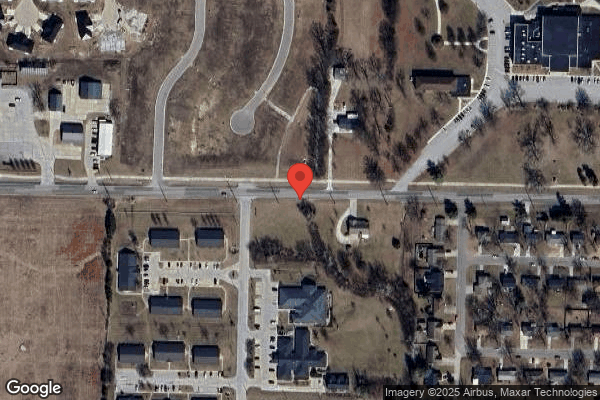
Mar 2023 9 deficiencies
CONCERN (D)

Potential for Harm - no one hurt, but risky conditions existed

Notification of Changes (Tag F0580)

Could have caused harm · This affected 1 resident

**NOTE- TERMS IN BRACKETS HAVE BEEN EDITED TO PROTECT CONFIDENTIALITY** Based on interview and record review, the facility failed to notify the physician timely after a change in condition for one add...

Read full inspector narrative →
**NOTE- TERMS IN BRACKETS HAVE BEEN EDITED TO PROTECT CONFIDENTIALITY** Based on interview and record review, the facility failed to notify the physician timely after a change in condition for one additional resident (Resident #117) and one discharged resident (Resident #64). The facility census was 69. Review of the facility's Notification of Changes policy, undated, showed the following: -The facility must immediately inform the resident, consult with the resident's physician, and notify, consistent with his/her authority, the resident representative(s) when there is: a. A significant change in the resident's physical, mental or psychosocial status (that is, a deterioration in health, mental, or psychosocial status in either life-threatening conditions or clinical complications); b. A need to alter treatment significantly (that is, a need to discontinue an existing from a treatment due to adverse consequences, or to commence a new form of treatment). 1. Review of Resident #64's face sheet, showed the following: -admitted on [DATE]; -Diagnoses: acute neurologic symptoms (caused by a dysfunction in the brain or nervous system), degenerative disease of basal ganglia (rare, slow-progressing brain disease that affects memory, communication and movement), chronic obstructive pulmonary disease (chronic inflammatory lung disease that causes obstructed airflow from the lungs), hypertension (high blood pressure), diabetes mellitus (impairment in the way the body regulates and uses glucose as a fuel), and pain. Review of the resident's physician orders, dated December 2022, showed oxygen at 2 liters/minute per nasal cannula (consists of a flexible tube that is placed under the nose) as needed for shortness of breath. Review of the resident's nurse note, dated 12/13/22 at 9:11 A.M., showed the following: -The resident was up to wheelchair ad lib (often as wanted); -He/She transferred with assist of one staff member; -He/She propelled himself/herself in the hallway; -He/She was oriented to person, place, and time of day; -His/Her lungs were clear to auscultation (listening to sounds from the heart, lungs, or other organs, typically with a stethoscope) and heart in regular rate and rhythm. Review of the resident's nurse note, dated 12/24/22 at 8:30 A.M., showed the resident had decreased mental status, and was unable to answer questions. The resident's blood pressure was 113/99 (normal 120/80), heart rate was 53 beats/minute (normal 60-100 beats per minute), oxygen saturation was 84% on room air (normal 95% or higher). Oxygen was administered at 2 liters/minute via nasal cannula. (Review showed no documentation staff notified the resident's physician of the resident's decreased mental status and change in vital signs including low oxygen saturations and heart rate.) Review of the resident's nurse note, dated 12/24/22 at 8:58 A.M., showed staff rechecked the resident's vital signs. The resident's blood pressure was 138/56, his/her heart rate was 53 beats/minute, and oxygen saturation of 98% on 2 liters/min via nasal cannula. (Review showed no documentation staff notified the resident's physician of the resident's change in condition, including decreased heart rate.) Review of the resident's medical record showed no documentation staff assessed the resident or obtained the resident's vital signs between 8:58 A.M. and 6:22 P.M. Review of the resident's nurse note, dated 12/24/22 at 6:22 P.M., showed oxygen saturation was 89%, blood pressure was 97/60, respirations were 16 breaths per minute, heart rate was 87 beats/minute, and temperature of 97.7 degrees Fahrenheit. Review of the resident's nurse note, dated 12/24/22 at 6:38 P.M., showed the following: -Licensed Practical Nurse (LPN) L spoke with nurse practitioner who was on call for primary care physician; -LPN L reported declining vital signs and the resident's refusal to eat and drink; -The nurse practitioner ordered vital sign check every four hours for four hour. Review of the resident's nurse note, dated 12/24/22, showed the following: -At 7:15 P.M., the resident's temperature was 100.5 degrees Fahrenheit, heart rate was 45 beats/minute, respiratory rate was 23 (normal range 12 to 16 breaths per minute), blood pressure of 100/61, and oxygen saturation of 87% on oxygen at 3.5 liters/minute via nasal cannula, the resident was not responding to any questions, and as needed Tylenol was given. (Review showed no documentation staff notified the resident's physician/nurse practitioner at this time.) -At 8:15 P.M., the resident's temperature was 100.2 degrees Fahrenheit, heart rate was 83 beats per minute, respiratory rate was 21 breaths per minute, blood pressure was 130/98, and oxygen saturation of 94% on 3.5 liters/minute via nasal cannula. The resident was holding and pressing on his/her lower abdomen with his/her hands and arms. (Review showed no documentation staff notified the resident's physician/nurse practitioner at this time.) -At 9:15 P.M., the resident's temperature was 101.5 degrees Fahrenheit, heart rate was 114 beats/minute, respiratory rate was 22 breaths/minute, blood pressure was 113/76, oxygen saturation of 95% on 3.5 liters/minute via nasal cannula. The resident was holding his/her hands on his/her lower abdomen, grimacing and eyes watering. The resident did not respond to questions. The nurse practitioner ordered the nurse to send the resident out to the hospital for evaluation and treatment. Review of the resident's nurse note, dated 12/25/22 at 6:52 A.M., showed the resident was admitted with diagnoses of urinary tract infection, sepsis (a life-threatening complication of an infection), atrial fibrillation with rapid ventricular response (irregular heart rhythm) and pulmonary edema (a condition caused by excess fluid in the lungs). During an interview on 3/15/23 at 3:27 P.M., LPN L said the following: -He/She would contact the physician when a resident had severe mental status changes and it would be nursing judgement with vital signs before contacting the physician; -He/She didn't contact the physician with an oxygen saturation of 84% and heart rate of 53 beats/minute because there was an order for oxygen and the resident did this before; -He/She didn't call the physician after the recheck because the resident's oxygen saturation was 98% on 2 liters/minute via nasal cannula; -It was difficult to know what to look for since the resident had multiple system issues. 2. Review of Resident #117's admission Minimum Data Set (MDS), a federally mandated assessment instrument, completed by facility staff, dated 1/11/23, showed the following: -Cognitively intact; -Diagnoses of urinary tract infection (UTI) and hip fracture; -Recent surgery requiring active skilled nursing facility (SNF) care. Review of the resident's care plan dated 1/15/23 showed the following: -The resident has a healing left hip fracture; -He/She is at risk for infection and pain; -He/She has a left hip surgical incision with staples. Review of the resident's progress notes dated 3/14/23 at 3:43 A.M. showed the following: -The resident complained of not feeling well this morning; -The resident's left ear is red and slightly swollen; -His/Her right eye is red and swollen; -The resident has a temperature of 101.3 degrees Fahrenheit; -Tylenol given and will re-check temperature in one hour. Review of the resident's progress notes dated 3/14/23 at 5:37 A.M. showed the following: -Re-checked the resident's temperature; -Temperature is now 103.2 degrees Fahrenheit; -Cool wash clothes have been applied to his/her face and neck; -The resident denies complaints of pain or discomfort; -Will continue to monitor; (Review showed no documentation staff notified the resident's physician regarding the continued elevated temperature after Tylenol was administered.) Review of the resident's progress notes dated 3/14/23 at 10:28 A.M. showed the following: -The resident continues to have elevated temperature of 102 degrees Fahrenheit after Tylenol administered and cool wash rags applied; -The resident is lethargic and has not voided this shift; -The resident then voided 225 milliliters (ml); -Urine is amber in color (normal color straw yellow); -Pulse 73, respirations 18, blood pressure 106/80 and oxygen saturation 91% on room air; -Called physician's office; new order received to send the resident to the hospital for evaluation and treatment. Review of the resident's progress notes dated 3/14/23 at 11:48 A.M. showed the resident left via ambulance stretcher and report called to ER. Review of the resident's hospital records dated 3/14/23 showed the resident's admission diagnosis was sepsis. 3. During an interview on 3/16/23 at 5:10 P.M. and 3/23/23 at 1:53 P.M., the Director of Nursing said the following: -The nurse was to notify a physician when a resident had a change in condition; -A change in condition constituted any significant change in status, temperature not decreasing with interventions, burning and/or pain with urinary output, increased cough, edema, skin issues, anything that is outside of the resident's baseline, mental status changes, oxygen saturation less than 86% that did not come up with oxygen, and high blood pressure if the staff had to hold the medication if it was too low; -For Resident #64, she would have expected staff to notify the resident's physician after the assessment on 12/24/22 at 8:58 A.M. to notify him/her oxygen was applied for an oxygen saturation of 84% and at recheck, the resident's oxygen saturation was 98% on 2 liters/minute via nasal cannula; -The nurse practitioner didn't give the nurse parameters on when to call back on the resident's vital signs, however, she expected the nurse to call back to give updates, especially if the resident's vital signs or health was declining. During an interview on 3/17/23 at 4:58 P.M., the Medical Director said the following: -If a resident had a temperature of 103 degrees Fahrenheit, he expected the nurse to administer an antipyretic (prevent or reduce fever) medication then call the physician so further investigation and/or interventions could be started because this temperature could indicate an infectious process; -When Resident #64 had an oxygen saturation of 84% and heart rate of 53 beats/minutes (on 12/24/22 at 8:30 A.M.), he expected staff to apply oxygen as ordered and then call the physician. This would need further investigation and/or interventions to determine the cause because the resident could have pneumonia, sepsis, and etc.
CONCERN (D)

Potential for Harm - no one hurt, but risky conditions existed

Incontinence Care (Tag F0690)

Could have caused harm · This affected 1 resident

Based on observation, interview, and record review, the facility failed to provide proper care to a suprapubic urinary catheter (a tube inserted into the bladder through a small cut in the low abdomen...

Read full inspector narrative →
Based on observation, interview, and record review, the facility failed to provide proper care to a suprapubic urinary catheter (a tube inserted into the bladder through a small cut in the low abdomen) for one resident (Resident #37), in a review of 18 sampled residents. Four residents had a urinary catheter. The facility census was 69. Review of the facility's undated policy, Catheter Care, showed catheter bags must be kept below the level of the bladder to prevent backflow of urine. Review of Resident #37's significant change Minimum Data Set (MDS), a federally mandated assessment instrument completed by facility staff, dated 1/4/23, showed the following: -The resident had moderate cognitive impairment; -He/She required extensive assistance from two staff for toilet use and personal hygiene; -He/She was dependent on two staff for transfers; -He/She was dependent on one staff for mobility in a wheelchair; -He/She had an indwelling urinary catheter. Review of the resident's physician orders, dated March 2023, showed catheter care every shift and as needed. Review of the resident's nurse note, dated 3/2/23 at 5:04 P.M., showed the following: -The resident was pale, diaphoretic (excessive sweating), had increased confusion, shallow breathing, pulse weak, and blood pressure 68/34 (normal blood pressure 120/80) with automatic cuff; -The nurse notified the primary care physician and received an order to send the resident to the emergency department for evaluation and treatment; -The emergency department discharged the resident back to the facility with bactrim (antibiotic) orally twice a day for five days for urinary tract infection. Review of the resident's care plan, dated 3/6/23, showed the following: -The resident had a suprapubic urinary catheter creating increased risk for urinary tract infection and complications related to indwelling catheters; -He/She had a suprapubic urinary catheter due to neurogenic bladder; -Monitor placement of the catheter during care and transfers, keep below the level of the bladder. Observation on 3/13/23 at 11:25 A.M., showed Certified Nurse Assistant (CNA) T and CNA E transferred the resident from his/her bed to a Broda chair (specialized wheelchair) with a hoyer lift (a type of mechanical lift). During the transfer, CNA E hung the resident's catheter drainage bag from the hooks on the mechanical lift, resulting in the drainage bag being higher than the resident's head, causing urine in the tubing to flow back towards the resident's bladder. Once the resident was in his/her Broda chair, CNA E placed the catheter drainage bag in the resident's lap, and CNA T took the resident to the dining room. The drainage bag was higher than the level of the resident's bladder. During an interview on 3/16/23 at 9:44 A.M., CNA E said the following: -When transferring the resident with an indwelling urinary catheter, he/she either held onto the catheter drainage bag or put the drainage bag in the resident's lap; -He/She denied placing the catheter drainage bag on the hooks of the mechanical lift when the resident was transferred from bed to Broda chair on 3/13/23, because the drainage bag should not be above the resident's head; -He/She didn't realize the resident's catheter drainage bag was not moved from the resident's lap prior to the resident leaving the room in the Broda chair. During an interview on 3/16/23 at 1:43 P.M., Licensed Practical Nurse (LPN) L said he/she was unaware staff hung the resident's catheter drainage bag from the mechanical lift hooks or that staff placed the catheter drainage bag on the resident's lap during transport because these issues were not reported to him/her and he/she did not look for the drainage bag placement during transport. During an interview on 3/16/23 at 5:10 P.M., the Director of Nursing said staff should not raise urinary catheter drainage bags above the level of the bladder during cares or during a transfer.
CONCERN (E)

Potential for Harm - no one hurt, but risky conditions existed

Resident Rights (Tag F0550)

Could have caused harm · This affected multiple residents

**NOTE- TERMS IN BRACKETS HAVE BEEN EDITED TO PROTECT CONFIDENTIALITY** Based on observation, interview, and record review, the facility failed to ensure staff spoke to one resident (Resident #4), in ...

Read full inspector narrative →
**NOTE- TERMS IN BRACKETS HAVE BEEN EDITED TO PROTECT CONFIDENTIALITY** Based on observation, interview, and record review, the facility failed to ensure staff spoke to one resident (Resident #4), in a review of 18 sampled residents, and one additional resident (Resident #45), in a dignified manner. The facility census was 69. Review of the facility policy Dignity, revised February 2021, showed the following: -Each resident shall be cared for in a manner that promotes and enhances his/her sense of well-being, level of satisfaction with life, and feelings of self-worth and self-esteem; -Residents are treated with dignity and respect at all times; -Staff speak respectfully to residents at all times, including addressing the resident by his/her name of choice and not labeling or referring to the resident by his/her room number, diagnosis or care needs; -Demeaning practices and standards of care that compromise dignity are prohibited. 1. Review of Resident #45's quarterly Minimum Data Set (MDS), a federally mandated assessment instrument, completed by facility staff, dated 12/22/22, showed the following: -Cognitively intact; -Required assistance from one staff for transfers. Review of the resident's care plan revised 12/27/22 showed the following: -The resident has a diagnosis of depression; -He/She is at increased risk for signs/symptoms of depression or mood decline; -The resident is weak and unsteady and needs assistance from one to two staff with some of his/her activities of daily living (ADLs) and all transfers; -The resident is non-ambulatory at this time because his/her legs are weak. During interview on 3/13/23 at 10:39 A.M., 3/14/23 at 12:00 P.M. and 3/15/23 at 1:00 P.M., the resident said the following: -He/She had an incident with Nurse Aide (NA) J approximately a month ago; -His/Her call light was on and NA J came into his/her room; -His/Her legs are weak and he/she needed assistance with transferring himself/herself; -NA J just stood there and said, you mean I wasted my time coming in here for this? -He/She didn't like the way NA J talked to him/her; -NA J was hateful and rude; -He/She went to bed crying that night; -He/She is not afraid of NA J but he/she won't ask for help if NA J is the only aide working; -NA J complains about having to be in his/her room to help him/her; -He/She doesn't like the way NA J acts. 2. Review of Resident #4's quarterly MDS, dated [DATE], showed the following: -Cognitively intact; -No rejection of care; -Totally dependent on two or more staff for transfers; -Only able to stabilize with human assistance for surface to surface transfers, not steady; -Upper extremity impairment in range of motion on both sides; -Lower extremity impairment in range of motion on one side; -Always incontinent of bladder and bowel. Review of the resident's care plan revised 2/3/23 showed the following: -He/She has a history of depression and anxiety; -Encourage the resident to express his/her feelings and be supportive; -He/She is weak and unsteady with limited range of motion (ROM) in his/her bilateral upper extremities (BUE)/shoulders, a right above the knee amputation (AKA) and poor vision; -He/She needs assist of one to two with his/her ADLs and transfers. During interview on 3/15/23 at 12:50 P.M., the resident said the following: -NA J, who works on the night shift, bullies him/her; -NA J stands over him/her, it's a dominance thing; -NA J is rough spoken. -A couple of months ago he/she told an unknown staff member about NA J, and now NA J doesn't provide care for him/her anymore; -NA J came into his/her room after he/she reported NA J to staff, and NA J told him/her, I heard you don't like me. He/She told NA J, I don't want you in my room. During interview on 3/15/23 at 5:20 A.M. and 3/16/23 at 5:10 P.M., the Director of Nursing (DON) said the following: -She expected staff to treat and speak to residents with dignity and respect; -She had not received any complaints about NA J since December 2022; -NA J is a bigger person with a low gruff voice which could be intimidating to some; -It might be NA J's approach towards the residents; -She was unaware Resident #45 had complaints regarding NA J; -Resident #4 might have complained about NA J in the past; -For residents that have complained about NA J, he/she sends another staff member of the opposite sex in the room with him/her to provide care. During an interview on 3/16/23 at 5:53 P.M., the Administrator said she expected staff to treat and speak to residents with dignity and respect.
CONCERN (E)

Potential for Harm - no one hurt, but risky conditions existed

Abuse Prevention Policies (Tag F0607)

Could have caused harm · This affected multiple residents

Based on interview and record review, the facility failed to review the Certified Nurse Aide (CNA) Registry for a Federal Indicator (which would disquality an individual from working in the facility) ...

Read full inspector narrative →
Based on interview and record review, the facility failed to review the Certified Nurse Aide (CNA) Registry for a Federal Indicator (which would disquality an individual from working in the facility) for eight employees in a review of ten newly hired employees. The facility also failed to develop a policy and procedure to address reviewing the CNA Registry for a Federal indicator for all potential new hires. The facility census was 69. Review of the undated facility policy titled CNA Registry Check for Skilled Nursing Facilities, showed the following: Purpose: -The purpose of this policy is to ensure resident safety by requiring all skilled nursing facilities to conduct a CNA Registry Check before hiring CNAs. This policy aims to ensure that all CNAs employed by the facility are properly trained, qualified, and have no history of abuse or neglect in the provision of care for residents; Policy Statement: -All skilled nursing facilities shall conduct a CNA Registry Check on all applicants for CNA positions. The registry check must be conducted prior to extending an offer of employment to the applicant. The facility shall not employ any CNA who has a record of abuse, neglect, or misappropriation of resident property or funds; Procedures: -The facility shall conduct a CNA Registry through the state's Department of Health website or other approved means; -The facility shall review the results of the CNA Registry Check before extending an offer of employment to the applicant; -If the CNA Registry Check indicates that the applicant has a history of abuse, neglect, or misappropriation of resident property or funds, the facility shall not hire the applicant; Responsibility: -It is the responsibility of the facility administrator or designated personnel to ensure compliance with this policy; Review showed the facility's policy did not address reviewing the CNA registry for all potential hires prior to hire. 1. Review of Housekeeping Staff H's employee file showed the following: -Date of hire 12/28/22; -Documentation showed staff conducted a CNA registry check on 3/15/23 during the survey process. 2. Review of Licensed Practical Nurse (LPN) I's employee filed showed the following: -Date of hire 3/10/23; -Documentation showed staff conducted a CNA registry check on 3/15/23 during the survey process. 3. Review of Hall Monitor/Nurse Aide (NA) J's employee file showed the following: -Date of hire 7/19/22; -Documentation showed staff conducted a CNA registry check on 3/15/23 during the survey process. 4. Review of Hospitality Aide K's employee file showed the following: -Date of hire 5/24/22; -Documentation showed staff conducted a CNA registry check on 3/15/23 during the survey process. 5. Review of LPN L's employee file showed the following: -Date of hire 8/18/22; -Documentation showed staff conducted a CNA registry check on 3/15/23 during the survey process. 6. Review of Maintenance Staff M's employee file showed the following: -Date of hire 1/16/23; -Documentation showed staff conducted a CNA registry check on 3/15/23 during the survey process. 7. Review of Dietary Aide A's employee file showed the following: -Date of hire 2/9/23; -Documentation showed staff conducted a CNA registry check on 3/15/23 during the survey process. 8. Review of Housekeeping Staff N's employee file showed the following: -Date of hire 1/2/23; -Documentation showed staff conducted a CNA registry check on 3/15/23 during the survey process. During an interview on 3/15/23 at 11:30 A.M., the Business Office Manager said the following: -The date of hire is the first day of resident contact; -The CNA registry checks were done on 3/15/23 for Housekeeping Staff H, LPN I, Hall Monitor/NA J, Hospitality Aide K, LPN L, Maintenance Staff M, Dietary Aide A and Housekeeping Staff N; -She was not aware until 3/15/23 that she had to do CNA registry checks on new employees that are not CNAs. During an interview on 3/16/23 at 5:35 P.M., the Administrator said the following: -The Business Office Manager is responsible for completing the CNA registry checks on all new hires; -She would expect the CNA registry checks to be completed by the first day of resident contact.
CONCERN (E)

Potential for Harm - no one hurt, but risky conditions existed

ADL Care (Tag F0677)

Could have caused harm · This affected multiple residents

**NOTE- TERMS IN BRACKETS HAVE BEEN EDITED TO PROTECT CONFIDENTIALITY** Based on observation, interview, and record review, the facility failed to ensure staff provided the necessary care and services...

Read full inspector narrative →
**NOTE- TERMS IN BRACKETS HAVE BEEN EDITED TO PROTECT CONFIDENTIALITY** Based on observation, interview, and record review, the facility failed to ensure staff provided the necessary care and services to maintain good personal hygiene and prevent body odor for seven residents (Residents #4, #35, #37, #41, #50, #116, and #317), who required assistance to perform their activities of daily living (ADLs), in a review of 18 sampled residents. The facility census was 69. Review of the facility's undated Shower/Tub Bath policy shower no evidence of how frequently residents should receive a shower/bath. Review of the facility's undated policy, Dental/Oral Care of the Resident, showed the following: -Assist the resident with brushing his/her teeth based on individual needs; -Teeth should be brushed every morning and evening. 1. Review of Resident #41's quarterly Minimum Data Set (MDS), a federally mandated assessment instrument, dated 1/28/23, showed the following: -Severely impaired cognition; -No behaviors or rejections of care; -Total dependence of one staff member for personal hygiene and bathing. Review of the resident's care plan, revised on 1/30/23, showed the following: -Diagnosis include cerebral infarction (also called a stroke, occurs as a result of disrupted blood flow to the brain due to problems with the blood vessels that supply it); -He/She is unable to manage his/her own toileting functions and requires staff to provide all care; -He/She is edentulous (has his/her own teeth). Provide him/her with oral care at least twice daily; -He/She has right sided weakness and is dependent on staff for all activities of daily living and transfers; -He/She takes a shower twice a week and shampoo weekly; -He/She prefers to be clean shaven. Review of the resident's bathing documentation for February 2023 showed the following: -The resident received a shower and shave on 2/3/23, 2/8/23 and 2/10/23; -The resident received a shower on 2/14//23 and 2/16/23 (staff did not document the resident was shaved on these days); -No documentation the resident received a shower on 2/17/23 through 2/20/23 (four days); -The resident received a shower and shave on 2/21/23; -The resident received a shower on 2/23/23 (staff did not document the resident was shaved on this day); -No documentation the resident received a shower on 2/24/23 through 2/28/23 (five days). Review of the resident's bathing documentation for March 2023 showed the following: -No documentation the resident received a shower on 3/1/23 and 3/2/23; -The resident received a shower and shave on 3/3/23 (eight days after his/her last documented shower on 2/23/23); -The resident received a shower on 3/7/23; -No documentation the resident received a shower on 3/8/23 through 3/13/23 (six days). Observation on 3/13/23 at 9:57 A.M., showed the following: -The resident sat in a Broda chair (a specialized wheelchair that offers tilt-in-space positioning with comfort seating); -He/She had facial whiskers approximately ¼ inches in length, and the skin around his/her nose was dry; -He/She had a dried yellow substance on the front of his/her shirt; -His/Her hair was unkempt with a slightly oily appearance. Observation on 3/13/23 at 12:10 P.M. showed the resident at his/her lunch. The resident wore the same soiled shirt he/she wore at 9:57 A.M. Observation on 3/14/23 at 1:30 P.M. showed the resident lay asleep in his/her bed. The resident had facial whiskers approximately ¼ inches in length and dry skin around his/her nose, his/her hair was unkempt with a slight oily appearance. Observation on 3/15/23, at 6:50 A.M., showed the following: -Staff transferred the resident to his/her Broda chair, and prepared to take the resident to the dining room for breakfast; -Certified Nursing Assistant (CNA) C combed the resident's hair, however, staff did not provide oral care for the resident or wash the resident's face and hands; -The resident had facial approximately ½ inches in length and had dry skin around his/her nose. Review of the resident's bathing documentation, dated 3/15/23, showed the resident received a shower with no indication of a shave (eight days since his/her last documented shower on 3/7/23). Observation on 3/15/23, at 12:00 P.M., showed part of the resident's face had been shaved, however, he/she still had whiskers approximately 1/2 inches long on his/her upper lip and around his/her jaw line. During an interview on 3/15/23, at 12:01 P.M., the resident said it felt good to have a shower and shave. He/She preferred to be clean shaven. During an interview on 3/16/23, at 1:20 P.M., CNA C said the following: -Staff should perform oral care when they get a resident up for the day and before and after meals; -Staff should wash a resident's face and hands when they get the resident up for the day; -He/She did not perform oral care or wash the resident's hands or face when he/she got the resident up on 3/15/23 because he/she was really behind on getting residents up that day. 2. Review of Resident #37's significant change Minimum Data Set (MDS), a federally mandated assessment instrument completed by facility staff, dated 1/4/23, showed the following: -The resident had moderately impaired cognition; -He/she didn't reject care; -He/She required extensive assistance from two staff for personal hygiene and bathing. Review of the resident's bathing documentation, dated 2/1/23 through 2/28/23, showed the following: -The resident received a shower on 2/2/23; -No documentation the resident received a shower on 2/3/23 through 2/7/23 (five days); -The resident received a shower on 2/8/23; -No documentation the resident received a shower on 2/9/23 through 2/13/23 (five days); -The resident received a shower on 2/14/23; -No documentation the resident received a shower on 2/15/23 through 2/20/23 (six days); -The resident received a shower on 2/21/23, 2/24/23, and 2/28/23; -No documentation the resident refused a shower/bath. Review of the resident's bathing documentation, dated 3/1/23 through 3/15/23, showed the following: -No documentation the resident received a shower on 3/1/23 through 3/5/23 (five days); -The resident received a shower on 3/6/23. Review of the resident's care plan, dated 3/6/23, showed the following: -The resident had left sided weakness due to a cerebrovascular accident (a stroke caused by a narrowed blood vessel, bleeding, or a clot that blocks blood flow which damages brain tissue) and bilateral above knee amputation (action of surgically cutting off a limb); -He/She required assistance from one to two staff with activities of daily living (ADL); -He/She took a shower twice a week. Review of the resident's bathing documentation, dated 3/1/23 through 3/15/23, showed the following: -No documentation the resident received a shower on 3/7/23 through 3/9/23 (three days since his/her last documented showed on 3/6/23); -The resident received a shower on 3/10/23; -No documentation the resident received a shower on 3/11/23 through 3/13/23. Observation on 3/13/23 and 11:25 A.M., showed the following: -The staff transferred the resident from bed to his/her Broda chair (specialized wheelchair with tilt, recline and leg rest adjustments); -Certified Nurse Assistant (CNA) T took the resident in the Broda chair to the dining room. The resident had facial hair and his/her hair was disheveled and oily. Observation on 3/14/23 at 8:38 A.M., showed the staff pushed the resident in the Broda chair through the hallway and into the resident's room. The resident had facial hair and his/her hair was oily. Observation on 3/14/23 at 1:05 P.M., showed the resident sat in his/her Broda chair in the hallway across from the nurses station. The resident had facial hair and his/her hair was oily. Review of the resident's bathing documentation, dated 3/1/32 through 3/15/23, showed the following: -No documentation the resident received a shower on 3/14/23 (four days since his/her last documented shower on 3/10/23). -The resident received a shower on 3/15/23. Observation on 3/15/23 at 6:52 A.M., showed the resident lay in bed. The resident had facial hair. During an interview on 3/16/23 at 9:44 A.M., CNA/Shower Aide E said the following: -The hospice staff provided the resident with a bath this week; -He/She didn't know the resident still had facial hair; -The resident liked to be shaved. 3. Review of Resident #317's face sheet showed the resident was admitted on [DATE]. Review of the resident's bathing documentation, dated 2/24/23 through 2/28/23, showed no documentation the resident received a shower in February 2023 (five days). Review of the resident's bathing documentation, dated 3/1/23 through 3/15/23, showed the following: -The resident received a shower on 3/1/23; -No documentation the resident received a shower on 3/2/23 through 3/8/23. Review of the resident's admission MDS, dated [DATE], showed the following: -The resident was cognitively intact; -He/She didn't reject care; -He/She required physical help from one staff for bathing; -He/She was occasionally incontinent of bowel; -He/She had a urinary catheter. Review of the resident's bathing documentation, dated 3/1/23 through 3/15/23, showed the following: -No documentation the resident received a shower on 3/9/23 (eight days since his/her last documented shower on 3/1/23); -The resident received a shower on 3/10/23; -No documentation the resident received a shower on 3/11/23 through 3/13/23. Review of the resident's care plan, dated 3/13/23, showed the following: -The resident was unable to transfer or walk without assist of one; -He/She required assist with all his/her ADL care. (The resident's care plan did not address bathing.) Observation on 3/13/23 at 9:32 A.M., showed the resident lay in bed. The resident had facial hair, and there was a smell of body odor and feces in the room. Observation on 3/14/23 at 3:20 P.M., showed the resident lay in bed. The resident smelled of body odor and feces, and had facial hair. Observation on 3/15/23 at 5:26 A.M., showed the resident lay in bed. The resident had facial hair. The smell of body odor and feces from the resident's room permeated into the hallway . Observation on 3/16/23 at 9:43 A.M., showed the resident lay in bed. The smell of body odor and feces from the resident's room permeated into the hallway 4. Review of Resident #4's quarterly MDS, dated [DATE], showed the following: -Cognitively intact; -No rejection of care; -Required extensive assistance from one staff for bathing. Review of the resident's care plan revised 2/3/23 showed the following: -He/She needs assist of one to two with his/her ADLs and transfers; -He/She takes a shower twice a week and shampoo weekly. Review of the Weekly Shower Assignments dated showed the resident was scheduled for a shower on Mondays (not twice weekly as indicated in the resident's care plan). Review of the resident's February 2023 shower sheets showed the following: -No documentation the resident received a shower from 2/1/23 through 2/7/23 (seven days); -Staff documented the resident received a shower on 2/8/23; -No documentation the resident received a shower from 2/9/23 through 2/16/23 (eight days); -Staff documented the resident received a shower on 2/17/23; -No documentation the resident received a shower from 2/18/23 through 2/27/23 (ten days); -Staff documented the resident received a shower on 2/28/23; -No documentation the resident refused a shower. Review of the resident's March 2023 shower sheets showed the following: -No documentation the resident received a shower from 3/1/23 through 3/9/23 (nine days). -Staff documented the resident received a shower on 3/10/23; -No documentation the resident received a shower from 3/11/23 through 3/14/23. Observation on 3/14/23 at 3:50 P.M. showed the following: -The resident sat in his/her wheelchair in his/her room; -His/her hair was long and oily. Observation on 3/15/23 at 12:50 P.M. showed the following: -The resident lay awake in bed; -The resident's hair was long and oily. Review of the resident's March 2023 shower sheets showed no documentation the resident received a shower on 3/15/23 (five days since his/her last documented showed on 3/10/23). Observation on 3/16/23 at 9:50 A.M. showed the following: -The resident lay in bed awake; -The resident's hair was long and oily. During an interview on 3/13/23 at 3:34 P.M., the resident said the following: -He/She received one shower a week; -He/She would prefer a shower three times a week. During interview on 3/16/23 at 1:30 P.M., CNA/Shower Aide E said the resident never refuses a shower. He/She know the resident wanted two showers a week. 5. Review of Resident #116's baseline care plan dated 3/2/23 showed the following: -admitted to the facility on [DATE]; -Currently needs assistance from one staff for bathing (the care plan did not provide direction on how frequently the resident was to receive a shower/bathing). Review of the resident's admission MDS, dated [DATE], showed the following: -Moderately impaired cognitive skills for daily decision making; -No rejection of care; -Required staff supervision for personal hygiene and bathing. Review of the facility Weekly Shower Assignment dated March 2023 showed the resident was to receive a shower on Thursdays. Review of the resident's March 2023 shower sheets showed no documentation the resident received a shower on 3/2/23 through 3/13/23. Staff documented the resident refused a shower on 3/7/23, 3/9/23, and 3/13/23. Observation on 3/13/23 at 11:36 A.M. showed the following: -The resident lay in bed; -His/Her hair was oily and disheveled. Observation on 3/14/23 at 8:42 A.M. showed the resident's hair was oily. Review of the resident's March 2023 shower documentation showed no documentation the resident received a shower on 3/14/23. 6. Review of Resident #35's quarterly MDS, dated [DATE], showed the following: -Severely impaired cognition; -No rejection of care; -Required assistance with bathing; -Diagnoses of dementia, anxiety, and post-traumatic stress disorder (PTSD). Review of the resident's care plan, dated 1/20/23, showed the following: -The resident is forgetful and confused, and does not always understand what is going on around him/her; -Provide consistency in timing of ADLs and routine as much as possible; -He/She takes a shower twice a week with assist of one but he/she tends to refuse showers at times. Review of the Weekly Shower Assignments showed the resident was scheduled for a shower on Thursdays (not twice weekly as the resident's care plan directed). Review of the resident's February 2023 shower sheets showed the following: -No documentation the resident received a shower on 2/1/23 through 2/7/23; -Staff documented the resident refused a shower on 2/8/23; -No documentation the resident received a shower on 2/8/23 through 2/12/23 (12 days); -Staff documented the resident received a shower on 2/13/23; -No documentation the resident received a shower on 2/14/23; -Staff documented the resident refused a shower on 2/15/23; -No documentation the resident received a shower on 2/15/23 through 2/20/23 (seven days since his/her last documented shower); -Staff documented the resident received a shower on 2/21/23 and 2/22/23; -No documentation the resident received a shower from 2/23/23 through 2/28/23 (six days). Review of the resident's March 2023 shower sheets showed the following: -Staff documented the resident received a shower on 3/1/23; -Staff documented the resident refused a shower on 3/9/23; -No documentation to show the resident received a shower from 3/2/23 to 3/15/23 (14 days). Observation on 3/14/23 at 8:01 A.M. showed the following: -The resident sat in his/her wheelchair in the dining room; -The resident's hair was long and oily. Observation on 3/15/23 at 4:00 P.M. showed the following: -The resident stood at the front door to the facility and looked out the window; -The resident's hair was long and oily. 7. Review of Resident #50's quarterly MDS, dated [DATE], showed the following: -Cognitively intact; -No rejection of care; -Required set-up help with bathing; -Diagnoses of anxiety, manic depression (bipolar disease), and schizophrenia. Review of the resident's care plan revised 1/11/23 showed the following: -The resident is forgetful with periods of confusion; -He/She takes a shower twice a week with assistance from one staff. Review of the Weekly Shower Assignments showed the resident was scheduled for a shower on Wednesday and Friday. Review of the resident's February 2023 shower sheets showed the following: -No documentation the resident received a shower on 2/1/23 through 2/16/23 (16 days); -The resident received a shower on 2/17/23 and 2/21/23; -No documentation the resident received a shower on 2/22/23 through 2/28/23 (seven days). Observation on 3/13/23 at 10:35 A.M. showed the following: -The resident lay in bed with his/her eyes closed; -His/her hair was long and oily. Observation on 3/14/23 at 4:00 P.M. showed the following: -The resident lay awake in bed; -The resident's hair was long and oily. Observation on 3/16/23 at 9:49 A.M. showed the following: -The resident lay in bed awake; -The resident's hair was long and oily. During an interview on 3/16/23 at 9:49 A.M., the resident said he/she received one shower per week (the care plan instructed twice weekly). 8. During interviews on 3/16/23 at 9:44 A.M. and 1:30 P.M., CNA/Shower Aide E said the following: -The facility had one shower aide so he/she was scheduled to give 20 showers a day, however, he/she only completed ten showers a day; -He/She completed fewer showers on 3/13/23 and 3/14/23 because he/she was assigned to work the floor; -He/She can't give showers if he/she is pulled to work on the floor; -On average, he/she is pulled to work on the floor one to two days a week.; -The evening staff do not assist with giving showers because they were typically short staffed. During an interview on 3/16/23, at 1:20 P.M., CNA C said the following: -The shower aide gave the residents their showers; -The shower aide was occasionally pulled to the floor if there were call-ins; -If the shower aide was pulled to the floor, the CNAs were responsible for giving showers. Depending on how many staff there were, the showers might not get done; -The facility has had one shower aide for the last three or four weeks; -The residents should get a bath/shower two times a week, but since the facility only had one shower aide, the resident's usually only got one shower a week. During an interview on 3/16/23, at 5:10 P.M., the Director of Nursing (DON) said the following: -She would expect staff to perform morning care, such as oral care, face washing and hand washing, when staff get the resident up; -The residents should receive one to two showers a week; -Any staff in nursing can give the residents showers; -If the shower aide was pulled to the floor due to call-ins, the residents will still get their showers if specifically requested, otherwise the residents showers will be moved to the following day; -The facility implemented two shower aides to ensure showers were given, however, one of the shower aides resigned so there is currently only one shower aide. During an interview on 3/16/22, at 5:35 P.M., the administrator said the following: -She expected staff to provide oral care and to wash a resident's face and hands when providing care to the resident; -Residents should receive showers according to their care plan, one to two times a week or by specific preference.
CONCERN (E) 📢 Someone Reported This

A family member, employee, or ombudsman was alarmed enough to file a formal complaint

Potential for Harm - no one hurt, but risky conditions existed

Accident Prevention (Tag F0689)

Could have caused harm · This affected multiple residents

**NOTE- TERMS IN BRACKETS HAVE BEEN EDITED TO PROTECT CONFIDENTIALITY** Based on observation, interview, and record review, the facility failed to ensure safety during transfers and/or repositioning f...

Read full inspector narrative →
**NOTE- TERMS IN BRACKETS HAVE BEEN EDITED TO PROTECT CONFIDENTIALITY** Based on observation, interview, and record review, the facility failed to ensure safety during transfers and/or repositioning for four residents (Residents #6, #20, #22 and #27), in a review of 18 sampled residents. Staff failed to properly transfer three residents (Residents #20, #22, and #27) with a gait belt (a device put around a resident's waist prior to a transfer or position change to aid in the safe movement from one surface to another), and failed to safely reposition one resident (Resident #6) while in bed. The facility census was 69. Review of the undated facility policy, Gait Belt Use, Mechanical Lift, and Manual Transfer, showed the following: -Purpose: The purpose of this policy and procedure is to ensure the safe and proper use of gait belts, mechanical lifts, and manual transfer in our skilled nursing facility; these devices are used to assist residents with mobility assistance within the skilled nursing facility; -Policy: Our skilled nursing facility is committed to ensuring the safety and well-being of our residents and staff by providing guidelines for the proper use of gait belts, mechanical lifts, and manual transfers. Staff members must be trained and authorized to use these devices, and residents must be assessed for their mobility needs before any transfer or assistance is provided; -Gait belt use: a. Staff members must be trained and authorized to use gait belts before assisting residents with transfers or mobility; b. A gait belt should be placed around the resident's waist, over clothing, and adjusted to provide a snug fit without causing discomfort; c. The staff member should stand facing the resident and provide support by holding onto the gait belt securely; d. The resident should be instructed to hold onto the staff member's shoulders or the gait belt for additional support; e. Gait belts should be used for transfers and mobility assistance, but not as a restraint; -Manual Transfer: a. Staff members must be trained and authorized to perform manual transfers before assisting residents with transfers or mobility; b. Manual transfers should only be performed when a gait belt of mechanical lift cannot be used safely; c. The staff member should ensure that the resident is properly positioned and balanced before transferring them; d. The staff member should use proper body mechanics and lifting techniques to prevent injury. 1. Review of Resident #22's significant change in status Minimum Data Set (MDS), a federally mandated assessment instrument required to be completed by staff, dated 2/20/23, showed the following: -Severely impaired cognition; -Extensive assistance from two staff members for bed mobility and transfers; -No functional limitations for upper or lower body. Review of the resident's care plan, revised 2/22/23, showed the following: -He/She is weak and unsteady and needs assistance with transfers; -He/She is an assist of one to two for transfers. Observation on 3/15/22, at 7:33 A.M., showed the following: -Staff assisted the resident to a sitting position on the side of his/her bed to prepare for a transfer to his/her wheelchair; -Certified Nursing Assistant (CNA) C was positioned on the resident's left side; -Nursing Assistant (NA) D was positioned on the resident's right side; -CNA C and NA D both placed their arms under the resident's arms, assisted the resident to a standing position, and did a pivot transfer to the resident's wheelchair while holding onto the back of the resident's pants; -Staff did not use a gait belt when transferring the resident; -The resident bore weight only on the tip of his/her toes as staff lifted the resident to a standing position. During an interview on 3/16/23, at 1:20 P.M., CNA C said the following: -The resident had not been bearing weight very well during transfers; -He/She assisted NA D to transfer the resident from bed to wheelchair on 3/15/23; -He/She did not use a gait belt for the transfer. He/She lifted the resident under the arms and held onto the back of the resident's pants for the transfer; -He/She did not use a gait belt because they were really behind on getting the resident to breakfast and he/she was in a hurry. During an interview on 3/16/23, at 1:33 P.M., NA D said the following: -He/She assisted CNA C to transfer the resident from bed to wheelchair on 3/15/23; -The resident will bear a little weight during transfers. -Staff should use a gait belt for all manual transfers; -He/She believed he/she used a gait belt for the transfer but would not be surprised if he/she did not; -If he/she did not use a gait belt for the transfer, it was because they were running behind; 2. Review of Resident #27's quarterly MDS, dated [DATE], showed the following: -Severely impaired cognition; -Moderately impaired decision making ability; -Required extensive assistance from one staff for transfers. Review of the resident's care plan, revised 12/20/22, showed the following: -Diagnoses include dementia (a group of thinking and social symptoms that interferes with daily functioning), cerebral infarction (also called a stroke, occurs as a result of disrupted blood flow to the brain due to problems with the blood vessels that supply it), and Parkinson's disease (a disorder of the central nervous system that affects movement, often including tremors); -He/She needs assist with all activities of daily living; -He/She is weak and unsteady, and needs assist of one with transfers; -He/She has history of falls. Observation on 3/13/23, at 11:54 A.M., showed the following: -CNA F and CNA G applied a gait belt around the resident's waist; -Without using the gait belt, CNA F assisted the resident to a standing position by placing his/her hand under the resident's shoulder and grabbed onto the back of the resident's pants while CNA G assisted the resident by placing his/her hand under the resident's other shoulder and used the gait belt to assist the resident with a pivot transfer to the toilet; -After toileting, CNA F and CNA G used the gait belt and assisted the resident to a standing position; -The resident became impatient and did not bearing weight well. He/She attempted to scoot toward his/her wheelchair and sit down before the wheelchair was in position; -CNA F pulled up on the resident's pants while also using the gait belt to transfer the resident to his/her wheelchair. 3. Review of Resident #20's significant change MDS, dated [DATE], showed the following: -He/She had moderate cognitive impairment; -He/She required extensive assistance for transfers; -He/She was not steady during moving from seated to standing position, moving on and off the toilet, and surface-to-surface transfers between bed and chair or wheelchair; -He/She used a walker and a wheelchair for mobility. Review of the resident's care plan, revised 3/17/23, showed the following: -He/She required staff assistance with all ADL (activities of daily living) care, bed mobility, toileting, and transfers; -He/She was weak and unsteady and needed assistance of one to two staff with transfers; -He/She had a diagnosis of Alzheimer's dementia and he/she was forgetful with periods of confusion at times; -He/She had a diagnosis of Parkinson's disease and staff were to monitor him/her for poor balance and coordination, tremors, gait disturbance, and decline in range of motion; -He/She had a diagnosis of seizure disorder and staff were to monitor him/her for increased confusion, staring episodes, non-responsiveness to verbal commands. Review of the facility's investigation, regarding a report on 3/15/23, showed the following: -The resident reported to NA D that NA J bruised his/her right upper arm a couple nights ago; -NA Q assessed the resident and noted a purple bruise on the resident's upper right arm. The resident said it occurred a week ago; -The resident said NA J grabbed his/her arm, and squeezed really hard when he/she couldn't get up from the wheelchair to use the bathroom; -The resident said NA J grabbed his/her arm to keep him/her from falling on the toilet. During an interview on 3/16/23 at 1:34 P.M., the resident said the following: -The bruise on his/her right arm was from NA J grabbing his/her arm a couple days ago; -NA J came from behind his/her wheelchair and grabbed his/her arm when helping him/her from his/her wheelchair to the bed; -NA J did not use a gait belt during the transfer from his/her wheelchair to the bed; -No staff used a gait belt when assisting him/her with transfers. During an interview on 3/22/23 at 11:21 A.M., NA J said the following: -The resident could self-transfer to and from the bed and wheelchair but required assistance to get on and off the toilet; -When assisting the resident to the toilet, he/she would stand behind the resident and help the resident by holding the resident's arm and under the resident's armpit while the resident held onto the toilet grab bars; -He/She did not use a gait belt when assisting the resident to transfer. 4. Review of Resident #6's significant change MDS, dated [DATE], showed the following: -He/She was cognitively intact; -He/She required extensive assistance from two of more staff for bed mobility. Review of the resident's care plan, revised 1/4/23, showed the following: -He/She had limited range of motion in his/her right shoulder, left arm, and both legs; -He/She needed assistance with all activities of daily living (ADLs) care and bed mobility; -Staff were to assist him/her with repositioning frequently while in bed at least every two hours. During an interview on 3/16/23 at 1:56 P.M., the resident said the following: -NA J was assisting him/her to turn in bed at night about 10 days ago; -NA J pulled the sheet and he/she (the resident) landed against the wall bumping his/her hip on the wall. During an interview on 3/22/23 at 11:21 A.M., NA J said the following: -He/She had not been rough with any residents; -He/She had occasionally bumped a resident into the wall when turning them, but not hard enough that it would hurt the resident; -The facility was short-staffed on nights so it was difficult to have a second staff member available to assist with turning, repositioning, and transferring residents. 5. During an interview on 3/16/22, at 5:10 P.M., the Director of Nursing said the following: -She would expect staff to use a gait belt with every manual transfer; -Staff should lift a resident under the arms, by the back of the pants or by the upper arms for any transfer; -A resident that is manually transferred should be able to bear weight for the transfer; -When staff turn or reposition a resident, they should communicate with the resident during the process and not turn/reposition the resident in a fast or rough manner. During an interview on 3/16/23, at 5:35 P.M., the administrator said the following: -Staff should lift a resident under the arms, by the upper arms, or by the back of their pants during a manual transfer; -Staff should use a gait belt for all manual transfers; -A resident should be able to bear weight with all manual transfers. MO215496
CONCERN (E)

Potential for Harm - no one hurt, but risky conditions existed

Deficiency F0804 (Tag F0804)

Could have caused harm · This affected multiple residents

Based on observation, interview, and record review, the facility failed to ensure staff prepared and served food at a safe and appetizing temperature. The facility census was 69. During interview on 3...

Read full inspector narrative →
Based on observation, interview, and record review, the facility failed to ensure staff prepared and served food at a safe and appetizing temperature. The facility census was 69. During interview on 3/13/23 at 9:54 A.M., Resident #33 said the food served at the facility was mediocre in taste and temperature. During an interview on 3/13/23 at 10:18 A.M., Resident #10 said the following: -Sometimes the food was not hot; -The food was bland; -Sometimes the meat was not tender. Record review of the menu for the noon meal on 03/13/23 showed the menu items included fried chicken and creamed corn. During interview on 3/13/23 at 12:14 P.M., Resident #20 said the following: -The fried chicken for lunch was cold, hard, and he/she couldn't chew it. (Observation showed the resident consumed less than 10% of the fried chicken on his/her plate); -A lot of times the foods that were supposed to be hot were not hot. Observation on 03/13/23 at 12:27 P.M., of the test tray received after the last resident was served, showed the fried chicken was 100 degrees Fahrenheit, the ground chicken was 101 degrees Fahrenheit, and the pureed cream corn was 118 degrees Fahrenheit. The fried chicken and pureed creamed corn were cool to taste, and the fried chicken was very dry. During an interview on 3/13/23 at 12:34 P.M., Resident #38 and Resident #59 said the fried chicken was too done. During an interview on 3/13/23 at 3:34 P.M., Resident #4 said the following: -The food is atrocious; -The chicken was so salty he/she couldn't eat it; -The meat was never prepared right. During an interview on 3/13/23 at 12:35 P.M., Resident #15 said the chicken was overcooked. During interview on 3/13/23 at 12:40 P.M., Resident #15 said the fried chicken at lunch was cold and hard to eat. During interview on 3/13/23 at 12:41 P.M., Resident #17 said the fried chicken at lunch was cold, hard, and dry. During interview on 3/15/23 at 6:40 A.M., Resident #29 said he/she ate meals in his/her room and the food was usually cold. During interview on 03/13/23 at 1:55 P.M., the dietary manager said the chicken was precooked, and staff just warmed it up. He expected staff to serve the hot food at 120 degrees Fahrenheit or higher. During interview on 03/13/23 at 2:16 P.M., the administrator said she expected staff to serve hot food at 120 degrees Fahrenheit or higher.
CONCERN (E)

Potential for Harm - no one hurt, but risky conditions existed

Infection Control (Tag F0880)

Could have caused harm · This affected multiple residents

**NOTE- TERMS IN BRACKETS HAVE BEEN EDITED TO PROTECT CONFIDENTIALITY** Based on observation, interview, and record review, the facility failed to use appropriate infection control practices when staf...

Read full inspector narrative →
**NOTE- TERMS IN BRACKETS HAVE BEEN EDITED TO PROTECT CONFIDENTIALITY** Based on observation, interview, and record review, the facility failed to use appropriate infection control practices when staff rinsed out a graduated cylinder that contained urine in the sink in one resident's (Resident #37) shared room, in a review of 18 sampled residents, and rinsed a fecal soiled incontinence pad in the sink in one additional resident's (Resident #29's) shared room. The facility also failed to ensure all procedures were implemented to address prevention, development, and transmission of Tuberculosis (TB) as directed by facility policy. The facility failed to ensure Tuberculin Skin Tests (TST; an injection into the top layer of skin in the forearm that contains purified protein derivative, PPD) were completed and documented as directed by facility policy for eight of ten sampled employees reviewed. The facility census was 69. 1. Review of the undated facility policy, Disinfection of Contaminated Medical Equipment in a Skilled Nursing Facility, showed the following: -The policy applied to all medical equipment used in the skilled nursing facility, including but not limited to patient beds, wheelchairs, blood pressure monitors, thermometers, stethoscopes, and other medical devices; -All medical equipment must be cleaned after each use; -The skilled nursing facility will provide training and education to all staff members on proper cleaning techniques. 2. Review of Resident #37's significant change Minimum Data Set (MDS), a federally mandated assessment instrument completed by facility staff, dated 1/4/23, showed the following: -The resident had moderately impaired cognition; -The resident required extensive assistance from two staff for toilet use (includes management of catheter); -The resident had a urinary catheter (a tube inserted into the bladder to allow urine to drain from the bladder). Review of the resident's care plan, dated 3/6/23, showed the following: -The resident had a urinary catheter due to diagnosis of neurogenic bladder (problem in which a person lacks bladder control due to a brain, spinal cord, or nerve condition); -He/She required one to two staff assistance with activities of daily living. Observation on 3/15/23 at 6:52 A.M., showed the following: -Certified Nurse Assistant (CNA)/Certified Medication Tech (CMT) R emptied urine from the resident's urinary catheter drainage bag into a graduated cylinder (tall narrow container with a volume scale used especially for measuring liquids); -CNA/CMT R emptied the graduated cylinder in the resident's toilet; -CNA/CMT R took the graduated cylinder out of the restroom into the resident's shared room to rinse out the graduated cylinder in the shared sink, then took it back into the restroom. During interview on 3/15/23 at 7:15 A.M., CNA/CMT R said the following: -The graduated cylinder had to be rinsed out after use to prevent the room/bathroom from smelling like urine; -He/She used the sink in the room to rinse it out, because it was considered dirty, so it cannot be taken out in the hallway. During an interview on 3/16/23 at 5:10 P.M., the Director of Nursing (DON) said she staff were not to rinse out a graduated cylinder after collecting urine in the resident's room sink. 3. Review of Resident #29's quarterly MDS, dated [DATE], showed the following: -The resident was cognitively intact; -He/She was independent for transfers, dressing, toilet use, and personal hygiene; -He/She used a wheelchair for mobility. During an interview on 3/14/23 at 9:57 A.M., the resident said the following: -A staff member rinsed out his/her dependent roommate's incontinence pad that was soiled with fecal material in the shared sink in his/her room. (The resident was unable to recall when this particular incident occurred, however, said this had occurred more than one occasion. The resident was not able to provide the staff member's name); -He/She told the staff member to wash the bed pad out somewhere else; -The staff continued to wash the soiled incontinence pad in the sink; -When he/she (the resident) went to get water from the sink to drink, there was corn and fecal matter on the faucet and in the sink. 4. Review of the undated facility policy, Employee Tuberculosis Screening, showed the following: Purpose: -Tuberculosis screening is a part of the pre-employment medical examination. In general, all employees in this long-term care facility are to comply with established tuberculosis screening procedures; Procedure: 1. A two-step Mantoux test is given unless the employee has documentation of a previous positive reaction. If the employee has had a previous positive reaction, a chest X-ray will be required as well as a statement from the employee's physician that he/she is free of communicable disease. The results of the chest X-ray and the physician's statement will be retained in the employee's medical record; 2. Upon employment, the employee will receive 0.1 milliliter (ml) of Tuberculin Units (5 TU) of Purified Protein Derivative (PPD) intradermally on the volar or dorsal aspect of the forearm to form a wheal 6-10 millimeters (mm). This is step one; 3. The employee is then instructed to return for the TB reaction reading in 48 to 72 hours; 4. The employee is not to have any resident contact until after the results of the first skin test have been obtained. Review of Housekeeping Staff H's employee file showed the following: -Date of hire 12/28/22; -First TST administered on 12/26/22; -Staff read the first TST on 12/29/22 (one day after first day of resident contact). Review of the facility Transporter's employee file showed the following: -Date of hire 2/1/22; -First TST administered 2/1/22; -Staff read the first TST on 2/4/22 (three days after first day of resident contact). Review of Licensed Practical Nurse (LPN) I's employee file showed the following: -Date of hire 3/10/23; -First TST administered 3/10/23 (the same day as his/her start date and the first day of resident contact); -Staff read the first TST on 3/13/23 (three days after first day of resident contact). Review of Hospitality Aide K's employee file showed the following: -Date of hire 5/24/22; -First TST administered 5/24/22 (the same day as his/her start date and the first day of resident contact); -Staff read the first TST on 5/27/22 (three days after first day of resident contact). Review of LPN L's employee file showed the following: -Date of hire 8/18/22; -First TST administered 8/18/22 (the same day as his/her start date and the first day of resident contact); -Staff read the first TST on 8/21/22 (three days after first day of resident contact). Review of Maintenance Staff M's employee file showed the following: -Date of hire 1/16/23; -First TST administered 1/16/23 (the same day as his/her start date and the first day of resident contact); -Staff read the first TST on 1/19/23 (three days after first day of resident contact). Review of Dietary Aide A's employee file showed the following: -Date of hire 2/9/23; -First TST administered 2/7/23; -Staff read the first TST on read 2/10/23 (one day after first day of resident contact). Review of Housekeeping Staff N's employee file showed the following: -Date of hire 1/2/23; -First TST administered 1/2/23 (the same day as his/her start date and the first day of resident contact); -Staff read the first TST on 1/5/23 (three days after first day of resident contact). During an interview on 3/15/23 at 2:50 P.M., the Assistant Director of Nursing (ADON) said the following: -The charge nurses are responsible for administering and reading staff TST; -Supervisors should be tracking to make sure the first TST is read by the first date of resident contact; -She is not always aware when new staff are coming in to ensure TST are administered and read as required. During an interview on 3/16/23 at 5:10 P.M., the DON said the following: -She, charge nurses and the ADON are responsible for ensuring TST for new staff are completed prior to their first day of resident contact; -The first TST should be administered and read in 72 hours and new staff can start working after the first TST is read; -The ADON is responsible for tracking staff TB testing. During interview on 3/16/23 at 5:35 P.M., the Administrator said the following: -The date of hire is the first day of resident contact; -The ADON is responsible for staff TB testing; -The ADON should make sure staff TST are administered and read timely; -The DON should follow up to ensure staff TST are completed timely; -The first TST should be read by the first day of resident contact.
CONCERN (F)

Potential for Harm - no one hurt, but risky conditions existed

Food Safety (Tag F0812)

Could have caused harm · This affected most or all residents

Based on observation and interview, the facility failed to implement sanitary practices and conditions within the dietary department to prevent the potential for contamination of food during storage, ...

Read full inspector narrative →
Based on observation and interview, the facility failed to implement sanitary practices and conditions within the dietary department to prevent the potential for contamination of food during storage, preparation, and distribution. The facility census was 69. 1. Observation on 03/13/23 between 9:32 A.M. and 12:27 P.M., of the preparation and service of the noon meal, showed the following: -At 9:32 A.M., Dietary [NAME] P prepared the noon meal in the kitchen. He/She did not have the front of his/her hair covered with a hair net. Dietary Aide A washed dishes and did not have the front of his/her hair covered with a hairnet; -At 10:25 A.M., Dietary Aide B rolled silverware into napkins for the residents' meal and did not wear a beard restraint to cover his/her beard; -At 11:05 A.M., Dietary Aide A stacked three wet skillets and put them away on a shelf; -At 11:34 A.M., Dietary [NAME] P wore gloves during the meal service. He/She picked up pieces of chicken with his/her gloved hands, rather than using a serving utensil, then touched plates, serving utensils, and meal cards. He/She did not change gloves or wash his/her hands. He/She continued to do this with every plate throughout the noon meal service; -At 11:40 A.M., Dietary Aide A washed the pan used to cook the ground chicken, and placed the pan on a shelf wet and dirty. The pan still had chicken pieces stuck to the bottom. Observation, on 3/13/23 at 12:35 P.M., in the dining room, showed the following: -Resident #15 sat in his/her wheelchair eating lunch; -A short white hair was visible in the resident's chicken. During an interview on 3/13/23 at 12:35 P.M., Resident #15 said the following: -Look, there's a hair in it (referring to the hair in his/her chicken); -Hair in the food happened quite often. During interview on 03/13/23 at 1:55 P.M., the dietary manager said he expected staff not to handle the residents' food and serving utensils and meal cards with the same gloves. He expected staff to change their gloves between touching resident food and touching anything else. He expected staff to have all their hair and beards covered at all times while in the kitchen. He expected the dishes to be clean and dry before staff put them away. During interview on 03/13/23 at 2:16 P.M., the administrator said she expected the staff not to handle resident food and utensils with the same gloved hands. She would expect staff to wear hair and beard nets at all times while in the kitchen and all hair to be covered. She expected the dishes to be clean and dry before staff put them away.
Aug 2019 10 deficiencies
CONCERN (D)

Potential for Harm - no one hurt, but risky conditions existed

Report Alleged Abuse (Tag F0609)

Could have caused harm · This affected 1 resident

Based on interview and record review, the facility failed to report allegations of resident-to-resident abuse to the state agency within two hours. The facility census was 47. 1. Review of the facilit...

Read full inspector narrative →
Based on interview and record review, the facility failed to report allegations of resident-to-resident abuse to the state agency within two hours. The facility census was 47. 1. Review of the facility's Abuse Policy, undated, showed the following: -The facility will adhere to reporting time frames as outlined for the reporting to the State Survey agency for reporting to law enforcement. When there is a reasonable suspicion that a crime has occurred, to include but not limited to: abuse or the crime results in serious bodily injury, the crime must be reported within two hours. If the crime is not abuse or result in serious bodily injury, the report must be made within 24 hours; -The nursing home administrator or designee will report abuse to the state agency per State and Federal requirements. 2. Review of Resident #34's nursing progress notes, dated 8/13/19 at 7:06 P.M., showed the resident was in another resident's room this evening. A staff member observed the resident hit and shake the other resident by the arm. Registered Nurse (RN) O notified the assistant director of nursing (ADON) by telephone this evening. Review of the nursing report sheet for 8/13/19 showed Resident #34 grabbed Resident #43 and shook him/her. Resident #43 had redness to his/her right arm. During interview on 8/15/19 at 2:30 P.M., Certified Nurse Assistant (CNA) N said on 8/13/19, he/she was working on the special care unit. As CNA N was taking another resident to the bathroom down the hallway, he/she heard Resident #43 say, Get off of me. Let me go. Resident #43 was in his/her bathroom. Resident #34 was in the bathroom as well and had hold of Resident #43's arm with both hands shaking Resident #43. CNA reported this incident to RN O. During an interview on 8/15/19 at 11:30 A.M., the ADON said RN O called her at home late in the evening on 8/13/19 to report Resident #34 was in Resident #43's room. Resident #34 had Resident #43 by the arm and was shaking his/her arm. She believed RN O said Resident #34 was hitting at Resident #43. Since it was so late in the evening and there were no injuries, she unintentionally let it go and did not report it the director of nursing (DON) or the administrator. During an interview on 8/15/19 at 11:05 A.M., the DON said she was not aware Resident #34 hit another resident on 8/13/19. She expected staff to notify her of the incident. 3. During an interview on 8/15/19 at 2:30 P.M., CNA N said approximately a month ago, Resident #3 sat at the table in the dining room on the special care unit folding clothing protectors. Resident #34 walked by Resident #3 and grabbed the clothing protector Resident #3 was holding. The two residents tugged on the clothing protector, until Resident #34 let go and said, Fine, you can have it and then smacked Resident #3 on the back of the neck. He/She reported the incident to Licensed Practical Nurse (LPN) R and LPN Q. He/She said there was no documentation of the incident in the resident's medical record. During an interview on 8/15/19 at 8:30 A.M., Certified Medication Technician (CMT) M said Resident #34 has hit Resident #3 in the back of the head. During an interview on 8/15/19 at 1:30 P.M., the social services director said she believed remembering Resident #34 hit Resident #3. During an interview on 8/27/19 at 8:51 A.M., LPN Q said a month or so ago, he/she heard other staff discussing Resident #34 hitting Resident #3. He/She was not working when this incident occurred and did not have any details of the incident. He/She said staff said the incident had been reported to the previous DON, however, they were wondering why it had not been reported to the state agency. Review of Resident #34's medical record showed no documentation Resident #34 hit Resident #3 in the back of the head. During an interview on 8/15/19 at 3:30 P.M., the administrator said she would have been expected to have been notified of the incident involving Resident #34 and #43 on 8/13/19. She had not been made aware of the incident involving the two residents. If she would have been aware, she would have reported the incident to the state agency. She was also not aware of the incident involving Resident #34 and Resident #3. She would have expected staff to have documented the incident in the resident's medical record and report it to the administrator or DON. Staff should have also reported this incident to the state agency. She expected staff to document any resident-to resident altercations, and to notify the administrator and DON.
CONCERN (D)

Potential for Harm - no one hurt, but risky conditions existed

Deficiency F0688 (Tag F0688)

Could have caused harm · This affected 1 resident

**NOTE- TERMS IN BRACKETS HAVE BEEN EDITED TO PROTECT CONFIDENTIALITY** 3. Review of Resident #45's Annual Minimum Data Set (MDS, a federally mandated assessment instrument required to be completed by...

Read full inspector narrative →
**NOTE- TERMS IN BRACKETS HAVE BEEN EDITED TO PROTECT CONFIDENTIALITY** 3. Review of Resident #45's Annual Minimum Data Set (MDS, a federally mandated assessment instrument required to be completed by facility staff), dated 1/28/19, showed the following: -Diagnoses included stroke and hemiparesis (paralysis that effects one side of the body); -Long and short term memory problems; -Required extensive assist from staff for toilet use and hygiene; -Limitations in range of motion on one side to both the upper and lower extremities; -No therapy services received; -No restorative nursing services received. Review of the resident's care plan, dated 2/8/19, showed the following: -Right sided hemiparesis due to a stroke; -Dependent on staff for activities of daily living (ADL's) and transfers; -Weak and flaccid on the right side; -Monitor position in wheelchair and bed and reposition as needed for safety. Review of the resident's Quarterly MDS, dated [DATE], showed the following: -Diagnosis included stroke and hemiparesis; -Long and short term memory problems; -Dependent on staff for toilet use and hygiene; -Limitations in range of motion on one side to both the upper and lower extremities; -No therapy services received; -No restorative nursing services received. Review of the resident's Physician Order Sheet (POS) for August 2019 showed no orders in place for any device or splint to the right hand, therapy, or restorative nursing program. Observation on 8/12/19 at 12:08 P.M. showed the resident sat in a wheelchair. His/Her right side was flaccid. The resident's right hand was contracted and laid in his/her lap. There was no device in either hand. During an interview on 8/12/19 at 1:00 P.M. the resident's family member said the resident was flaccid on the right side of his/her body. The resident had received therapy services a long time ago but had not received any therapy recently. The resident's right hand was contracted and the resident had developed sores in his/her palm in the past. The resident's family members tried to keep his/her nails trimmed to prevent sores from developing in the contracted hand. The resident's family member was not aware of the resident receiving any restorative nursing services and was not aware if the facility offered any restorative nursing or not. Observation on 8/13/19 at 7:30 A.M. showed the resident sat in a wheelchair in the dining room. The resident's right, contracted, hand lay in his/her lap. There was no device present in the hand and his/her nails appeared long and untrimmed. Observation on 8/13/19 at 1:08 P.M. showed the resident's right hand was contracted and there was no device in place. The resident held the right hand with his/her left hand while staff provide care. Observation on 8/14/19 at 8:20 A.M. showed the resident sat in his/her room, holding his/her right contracted hand with his/her left hand. The resident's fingernails appeared long and untrimmed. There was no device in the resident's right, contracted, hand. During an interview on 8/14/19 at 11:43 A.M. Occupational Therapy Assistant (OTA) I said the resident was not on therapy services and he/she did not remember if the resident had ever been on therapy services in the past. If the resident had received therapy services it would have been quite a long time ago. No staff had approached OTA I regarding the resident's contracted hand or need for therapy or restorative services. It would not require a therapy screen or recommendations for staff to place a washcloth or hand roll into the resident's contracted hand. During an interview on 8/14/19 at 1:42 P.M. Certified Nurse Aide (CNA) F said he/she was not aware of any special instructions regarding Resident #45's contracted hand. CNA F was aware the resident's right hand was contracted and he/she was flaccid on the right side. CNA F had not ever placed any devices, splints, or washcloths in the resident's hand. Observation on 8/15/19 at 9:30 A.M. showed the resident lay in bed. There was no device in the resident's contracted right hand. 4. Review of Resident #12's admission MDS, dated [DATE], showed the following: -Diagnosis of Alzheimer's; -Cognition was severely impaired; -Independent with walking and transfers; -No impairment in range of motion; -Received occupational and physical therapy. Review of the resident's Significant Change in Status Assessment MDS, dated [DATE], showed the following: -Required extensive assistance of two or more staff for transfers and toilet use; -No impairment in range of motion; -No therapy services or restorative nursing services received. Review of the resident's care plan, dated 6/7/19, showed the following: -The resident was weak and unsteady and required assistance of one or two staff for activities of daily living and transfers; -Used the stand-up lift (mechanical lift used to transfer resident's who can bare weight) as needed with assist of two staff; -Assist with repositioning and turning every two hours; -Notify the physician of any changes in condition or decline. Review of a fax sent to the resident's physician, dated 7/9/19, showed staff observed the resident having difficulty feeding himself/herself related to bilateral contractures to the hands. Staff requested orders for physical therapy (PT) and occupational therapy (OT) to evaluate and treat. The physician responded Ok and returned the fax on 7/9/19. Review of the resident's nurse's notes, dated 7/9/19, showed the resident received a new order for PT and OT per a fax signed by the physician. Review of the resident's physician order sheet (POS) for July 2019 showed an order dated 7/31/19, for OT services three times a week for 30 days for self-care management training, therapeutic exercises and activities, functional mobility, patient and caregiver education, and contracture brace as needed. Observation on 8/13/19 at 4:02 P.M. showed Certified Nurse Aide (CNA) F and Nurse Aide (NA) J transferred the resident from bed to the wheelchair with the stand-up lift. The resident's hands were both contracted and the resident had difficulty grasping the stand-up lift with his/her contracted hands. The resident did not have a device or splint in place to either hand. Observation on 8/14/19 at 6:30 A.M. showed CNA K and Certified Medication Technician (CMT) L transferred the resident from the bed to the wheelchair with the stand-up lift. CMT L placed the resident's contracted hands on the arms of the stand-up lift. CMT L commented the resident's hand contractures were getting worse. During an interview on 8/14/19 at 6:37 A.M., CMT L said the resident's contracted hands were getting worse. The resident was currently working with therapy. CMT L was not aware of any device or any other special instructions related to the resident's the contracted hands. CMT L was not aware of the facility having a restorative aide or restorative program. During an interview on 8/14/19 11:43 A.M., Occupational Therapy Assistant (OTA) I said the resident was currently working with OT on self-feeding and hand splints for his/her contracted hands. OTA I wanted to get the resident on therapy service sooner but there was a problem with his/her insurance which caused a delay. The resident should have been receiving therapy services sooner because his/her hand contractures had gotten worse. OTA I was only applying splints during therapy because he/she wanted to monitor the resident for a week or so to ensure the resident was tolerating the splints and they were appropriate. OTA I was not sure if there was a designated restorative aide in the facility or not. Therapy staff made recommendations for residents coming off of therapy services but OTA I did not feel the recommendations made were implemented consistently. It would not require an OT screen or orders from therapy for staff to place a wash cloth or hand roll in a resident's contracted hands. 5. During an interview on 8/15/19 at 9:35 A.M., the Director of Rehab/Physical Therapy Assistant (PTA) said there used to be restorative instruction sheets filled out by therapy staff but they have not been used in a while. At this point, therapy staff gave verbal instructions to nursing staff for any recommendations following a resident's discharge from therapy. There was no real established restorative program in the facility at the time other than a walk to dine list. There was not a specific restorative aide in the facility, but restorative services could be completed by the CNAs working with the residents. 6. During an interview on 8/15/19 at 1:35 P.M., the administrator said the facility did not currently have a restorative nursing program. Therapy staff would set up walk to dine programs and other instructions for nursing staff to follow for residents after discharge from therapy but it was not a structured program. She was not aware of any special instructions for staff to follow regarding Resident #12 or #45's hand contractures. Nursing staff should be providing interventions for residents to prevent contractures or keep them from worsening and to maintain residents' current physical functioning. Staff would be made aware of these interventions on the resident's care plan. Based on observation, interview, and record review, the facility failed to provide appropriate treatment and services consistent with professional standards of practice to increase range of motion and/or prevent further decrease in range of motion for two residents (Residents #12, and #45), in a review of 12 sampled residents. The facility census was 47. 1. Review of the facility's policy on Range of Motion, dated May 2006, showed the following: -Range of motion (ROM) may be defined as the extent of movement within a given joint which is normally achieved through the action of a muscle or group of muscles; -Objectives of ROM are to prevent contractures (fibrotic changes which begin to occur in the muscles and other joint tissues within three to four days if immobility); -To maintain normal range of motion (different normal ranges of motion may be fund in different individuals); -To increase joint motion to the maximum possible range; -To maintain and build muscle strength; -To stimulate circulation; -To prevent deformities; -To prevent contractures from becoming worse if they are already present; -Passive ROM is when someone other than the resident carries out an exercise, without the active involvement of the muscles within the joint that is being exercised; -Active Assistive ROM is an exercise carried out by the resident with the assistance of another person or by reduction of gravity; -Active ROM is an exercise accomplished by the resident without assistance. 2. Review of the facility's policy on Ambulation, dated May 2006, showed the following: -Place a transfer belt on the resident; -The Restorative Nurse Aide (RNA) should stand on the weak or affected of the resident; -The RNA should stand slightly behind the resident; -Place hand nearest the resident with palm up on the back of transfer belt; -Place the other hand on or in front shoulder/upper trunk on involved sides.
CONCERN (D)

Potential for Harm - no one hurt, but risky conditions existed

Accident Prevention (Tag F0689)

Could have caused harm · This affected 1 resident

Based on observation, interview, and record review, the facility failed to evaluate and implement interventions to prevent further choking episodes after one additional resident (Resident #39), who ha...

Read full inspector narrative →
Based on observation, interview, and record review, the facility failed to evaluate and implement interventions to prevent further choking episodes after one additional resident (Resident #39), who had a history of dysphagia (difficulty swallowing), choked and required the Heimlich maneuver (a first-aid procedure for dislodging an obstruction from a person's windpipe in which a sudden strong pressure is applied on the abdomen) to dislodge the food. The facility also failed to ensure an electric range in the activity area, accessible to residents, was inoperable when not in use. The facility census was 47. 1. Review Resident #39's care plan, dated 10/18/18, showed the following: -History of dysphagia (difficulty swallowing) and at risk for aspiration (breathe foreign objects into the airway); -Monitor for signs and symptoms of aspiration, coughing, wheezing, fever, etc. and notify the resident's physician. Review of the resident's physician orders, dated 7/1/19 - 7/31/19, showed an order for a regular diet with regular liquids. Review of the resident's quarterly Minimum Data Set (MDS), a federally mandated assessment instrument required to be completed by facility staff, dated 7/24/19, showed the following: -Cognition intact; -No signs or symptoms of possible swallowing disorder. Review of the resident's nurses notes, dated 7/31/19 at 6:24 P.M. written by Registered Nurse (RN) A, showed the following: -The resident became choked on his/her food at the evening meal; -Staff performed first aid to dislodge the food; -The resident did not lose consciousness; -The resident coughed up unchewed food; -Staff reminded the resident to always chew food well and to eat slowly; -This is not the first time the resident has done this, perhaps should consider a diet order change. Review of the resident's Nutrition Quarterly Review, dated 8/1/19, completed by Dietary D, showed the following: -The resident is on a regular diet; -The resident continues to eat well in the main dining room area, with no serious concerns. Will continue to monitor. During interview on 8/14/19 at 12:52 P.M., Dietary D said when he/she wrote the quarterly review on 8/1/19 he/she was unaware the resident had a choking incident the night before. During interview on 8/14/19 at 5:07 A.M., RN A said the following: -The resident was sitting at dining room table and suddenly got choked (on 7/31/19); -One of the other residents patted him/her on the back; -Certified Medication Technician (CMT) C patted the resident on the back and he/she coughed up undigested food; -RN A didn't tell any staff the resident had gotten choked; -RN A did not call the resident's physician because the Heimlich Maneuver wasn't done. During interview on 8/15/19 at 8:07 A.M., the resident said the following: -He/She got choked on a tater tot (on 7/31/19). The tater tot was hard and he/she couldn't chew it; -The staff did the Heimlich maneuver on him/her; -He/She never lost consciousness. During interview on 8/15/19 at 8:40 A.M., CMT C said the following: -He/She saw another resident trying to do the Heimlich maneuver on the resident; -He/She ran over and did the Heimlich maneuver on the resident and he/she coughed up the food; -The resident never lost consciousness; -RN A was with him/her and aware of the incident. Observation on 8/14/19 at 11:52 A.M., showed the resident sat at the dining room table eating a ham sandwich and a brownie. The resident coughed twice during his/her meal. During interview on 8/14/19 at 1:10 P.M. the administrator said the following: -She was not aware of any choking episodes with the resident; -She would have expected staff to notify her, the DON, physician and family and request a speech therapy evaluation (to address the resident's risk of choking). 3. Observation on 08/13/19 at 9:43 A.M. showed the activity room was located on the same hall as the therapy room. Residents had access to the hallway and were observed down this hallway. The activity room door was held open. In the activity room was equipped with an electric range. The burners on the stove top and the oven worked upon turning on the units. No staff was present in the room utilizing the range. Observation on 08/13/19 at 3:01 P.M. showed the activity room door was open and no staff were present in the room. Several residents were up and down the hall. During interview on 8/13/19 at 10:03 A.M., the maintenance supervisor said there were residents always up and down the hall because therapy was across the hall from the activity director's office. There were about four residents that wandered in the facility. The stove in the activity office will get used from time to time but was not sure how often. During interview on 08/14/19 at 2:29 P.M., the administrator said she expected the the activity room door to be closed at all times. She also expected for the range to be supervised when used.
CONCERN (D)

Potential for Harm - no one hurt, but risky conditions existed

Deficiency F0744 (Tag F0744)

Could have caused harm · This affected 1 resident

Based on observation, interview, and record review, the facility failed to provide appropriate services to attain the highest practical well-being for one resident (Resident #34), with a diagnosis of ...

Read full inspector narrative →
Based on observation, interview, and record review, the facility failed to provide appropriate services to attain the highest practical well-being for one resident (Resident #34), with a diagnosis of dementia, in a review of 12 sampled residents. Facility staff identified the resident had behaviors affecting the resident and other residents, however, did not evaluate and implement further approaches to address the resident's care needs related to his/her diagnosis of dementia. The facility census was 47. 1. Review of the facility's policy on the philosophy and mission statement of the Special Care Unit (SCU), dated April 2006, showed the following: -The overall objective of the SCU was to provide a therapeutic, homelike, environment that maximizes the resident's independent functioning for as long as possible; -The purpose of the SCU was to provide each resident with individualized care that enhances their quality of life by meeting physical and psychosocial needs; -The mission of the SCU was to provide activity focused, holistic, healthcare in a comfortable, safe, structured, therapeutic environment to individuals with Alzheimer's disease or related disorders so they can enjoy a quality of life; -To maximize the residents' functional independence through individual attention to self-adaptive maintenance and to promote the enhancement of residents' dignity. 2. Review of Resident #34's care plan for cognitive loss/dementia, dated 10/9/18, showed the resident has trouble with his/her memory because of his/her dementia. He/She is forgetful and confused. Orient him/her to the facility and the facility routine. Introduce the resident to staff and other residents. Identify yourself each time you meet the resident and he/she won't remember you. Explain to the resident what you are doing before doing it. Encourage the resident to converse with others, seat him/her by other residents who have similar interests. Review of the resident's care plan for communication, dated 10/10/18, showed the following: -The resident is forgetful and confused and does not always understand what is going on around him/her due to his/her diagnosis of dementia; -Face the resident when speaking to him/her and make eye contact. Eliminate distractions and background noise. Allow the resident adequate time to respond and repeat as needed. Do not rush the resident. Sometimes it takes a while for him/her to understand what you say. Present just one thought, idea, question, or command at a time. Ask yes/no questions in order to determine his/her needs. Break tasks into one at a time. Reorient the resident when possible to time, place and situation. Provide reassurance and patience when communicating with him/her. Monitor the resident for nonverbal indicators of distress or discomfort such as holding his/her head, crying out, grimacing or moaning due to pain and notify the charge nurse. Review of the resident's quarterly Minimum Data Set (MDS), a federally mandated assessment instrument required to be completed by facility staff, dated 4/6/19, showed the following: -Severe cognitive impairment; -Diagnoses included Alzheimer's disease, anxiety disorder and depression; -Inattention and disorganized thinking were continuously present and did not fluctuate; -Trouble concentrating on things occurred nearly every day; -Short tempered, easily annoyed several days (two to six days in the 14-day look-back period); -Verbal behaviors directed toward others (such as threatening others, screaming at others, cursing at others) occurred one to three days in the seven-day look- back period; -Wandering occurred daily; -Independent with transfers and ambulation. Review of the facility's fax to the resident's physician on 6/7/19 showed the resident slapped another resident in the face. The resident was sitting next to the other resident and thought he/she was cussing at him/her. The resident slapped the other resident on the left side of the face. Staff moved the resident and started 15 minute checks. Review of the resident's progress notes showed the following: -On 6/8/19 at 3:26 P.M., received report the resident was observed being physically aggressive toward another resident yesterday and threatened more throughout the day and early evening. Staff attempting to keep the resident occupied and away from this other resident today. The resident is verbally aggressive and threatening at times and makes physical gestures but has not struck at anyone today. Continues to attention seek and ignore verbal re-direction but can be occupied as long as receiving one-on-one attention from family or staff. Complains of back and legs hurting at times and need to sit down but is unable to sit still. Constantly driven to roam throughout the unit, interrupt, and intrude on other residents' activities; -On 6/10/19 at 9:00 A.M., the resident's spouse arrives and takes the resident off the unit for a walk. Previous to this the resident was up and roaming in and out of others' rooms when the nurse came on duty at 6:00 A.M. Constant redirection needed to keep the resident out of others' rooms and to eat his/her own food at breakfast. The resident tries to take food from other residents and is unable to recognize the food on his/her plate is disappearing as he/she eats it. Accuses others of taking his/her food and demanding more. Frequent demands, I need a drink even though he/she has fluids in front of him/her. Other residents are telling him/her to be quiet, sit still, etc. which further agitates him/her. Frequently given drinks, assist to the bathroom and attempts to involve him/her in reading a story, rocking his/her dolls and will do momentarily but only if staff are with him/her. Review of the resident's physician progress note, dated 6/13/19, showed the following: -New report the resident slapped another resident. The other resident was singing and the resident told him/her to shut up. The other resident persisted and the resident flat handed him/her across the face. The resident has no recall due to advanced dementia. He/she is generally cheerful and not generally angry; -Diagnosis, Assessment, Plan: Dementia with aggressive behavior - monitor. Unspecified behavioral symptoms associated with physiological disturbances and physical factors - requires high level of care. Review of the resident's social services progress note, dated 6/25/19, showed the resident requires redirection from staff daily. He/She attempts to take others' food, roams in and out of others' rooms, and does not cope well with loudness. He/she becomes anxious and requires supervision/redirection from staff. He/She will participate in activities such as walks with staff and family, reading books, magazines or his/her bible. He/she enjoys rocking his/her baby. The resident's spouse and family member visits daily, take him/her for walks off the unit and outside the facility. His/Her family member volunteers on the memory care unit. The resident becomes anxious at times and will not complete scheduled activity. He/She becomes restless and wanders. Review of the resident's physician orders, dated July 2019, showed the resident's diagnoses included anxiety disorder, mood disorder, depression, impulse control disorder, and Alzheimer's dementia with behavioral disturbances. Review of the resident's progress notes, dated 7/2/19 at 12:37 P.M., showed the resident was taking food from another resident's plate after he/she had eaten his/her lunch. He/she then took several cookies and ate them after lunch. Staff told the resident this was not acceptable and he/she had finished his/her lunch. The resident raised his/her hand to staff with cookies in one hand and made a fist, then shouted at staff he/she could eat what he/she wanted. Staff redirected the resident. Review of the resident's care plan for behavioral symptoms, dated 7/11/19, showed the following: -The resident is forgetful and confused and he/she does not always understand what is going on around him/her. He/she takes food off other residents' plates, threatens to hit others, yells and tells other residents to shut up. He/She has a diagnosis of Alzheimer's dementia with behavioral disturbances; -The resident has difficulty sitting through meals and wanders into other residents' rooms and can be difficult to redirect. Please be patient with the resident, approach him/her in a calm manner. Introduce yourself and explain what you are going to do before you do it. Allow the resident time to adjust to change, so he/she is less likely to become agitated. Provide consistency in timing of activities of daily living and routine as much as possible. If the resident becomes agitated, intervene before agitation escalates. Engage the resident calmly in conversation. Intervene as necessary to protect the safety of others. Remove the resident from the situation and take him/her to an alternate location. Offer the resident diversional activities such as holding his/her doll or ready the bible. Explain to the resident his/her behavior is inappropriate. Encourage the resident to express his/her feelings appropriately. Encourage socialization and activities, see care plan. Praise the resident when his/her behavior shows any progress or improvement. Notify charge nurse of unresolved behaviors. Notify physician of changes in moods or behaviors that are unresolved. Review of the resident's progress notes, dated 7/15/19 at 10:27 A.M., showed the resident's physician was at the facility doing rounds. Staff reported the resident's aggressive/intrusive behaviors and difficult in redirection and lack of medication for diagnosis of impulse control disorder and his/her distress when rebuffed by other residents. Review of the resident's physician progress note, dated 7/15/19, showed the physician had extensive discussion with nursing about the resident's behaviors. Periodically problematic. The resident is okay when his/her spouse is here. He/She is effective at redirecting and keeping him/her calm. When he/she is gone, he/she is often loud and confrontational with other residents, and with staff. He/she wanders and is very busy. The resident's family member/DPOA is very concerned about medications. Staff is under the feeling that the depokote (a medication used to treat seizure disorders and manic episodes) was helping in the past, but the resident's family member does not really want him/her on much medications. The resident is impulsive and aggressive at times, easily irritated. Review of the resident's social services progress note, dated 7/16/19, showed the same documentation noted for the resident in the monthly progress note completed 6/25/19. Review of the resident's progress notes showed the following: -On 7/18/19 at 2:17 P.M., the resident is hard to redirect. Tried to advise the resident to sit down to eat lunch and he/she raised his/her fist as if to hit the nurse. The resident continued to be unable to direct. Wandering and bothering other residents that were trying to eat. Finally after 10 minutes, he/she sat down to eat. He/she was in another resident's face and the other resident became upset with him/her and told him/her to get away. Very upsetting to the other resident as he/she is hard to redirect and tried to take food away from the resident and tries to give them his/her food, or his/her baby. The other residents become very upset with him/her. The resident becomes aggressive at times with staff and other residents. Will notify the resident's physician of continued concerns; -On 7/22/19 at 1:36 P.M., today, staff frequently redirecting (with minimal effect) regarding resident taking walkers from other residents. The resident does not have a walker but is arguing, I want one Other residents, especially one admitted in the last 10 days, are frequently asking him/her to get away, leave me alone and he/she ignores them, becoming angry and threatening to hit, raising fists at them. He/She is in/out of all rooms collecting items not his/hers, including shoes, dentures, clothing, dolls, etc. Constantly pacing , wandering, demanding drinks, food, even when both are in front of her. No residents ate lunch today as he/she continually tried to take their items/grab their food; -On 7/22/19 at 2:42 P.M., called placed to the resident's physician to inquire if he/she would meet with the resident's family regarding his/her behaviors. -On 7/24/19 at 4:17 P.M., phone call placed to the resident's physician to follow up on setting up a care plan meeting with the family. The resident's physician will contact the resident's family member/DPOA to discuss his/her plan of care. Review of the resident's social services progress note, dated 7/29/19, showed the same documentation noted for the resident in the monthly progress note completed 6/25/19. Review of the resident's progress notes showed the following: -On 8/3/19 at 11:22 A.M., received in report the resident had been up wandering, demanding, intruding on sleeping residents since 4:30 A.M. Redirection was not effective. The resident raises his/her hand to hit/threatens other residents when they continually tell him/her to get away. Rapidly rocking back/forth heel to toe and almost vibrates with need to move. Constant pacing, non-stop verbalizations, attention-seeking, drooling. Fake crying when others tell him/her to get away. The nurse held his/her hand and attempted to involve him/her with his/her doll and to read. The activity did not last long before the resident resumed his/her previously described activity. Talks all through his/her meals, tries to take others' food or give them his/hers. -On 8/10/19 at 10:21 A.M., received report the resident had been up wandering into other residents' rooms since 4:00 A.M. Repetitive demands, constant verbalizations with redirection minimal effective for brief periods before behaviors resume. Night certified nurse assistant (CNA) reports resident raised his/her arm to hit him/her three times. After breakfast, the resident's spouse arrives and they sit side by side in recliners and nap following a brief walk. Compulsive, intrusive, threatening behaviors resume when his/her spouse leaves and the resident no longer is receiving one-on-one undivided physical attention. Observation on 8/12/19 at 10:08 A.M., showed the resident's room was next to Resident #43's room. The two residents shared a bathroom. Resident #34's room was across the hall to the entrance to the sitting room which was connected to the dining room. Resident #43's room was directly across the hall from the entrance to the dining room. Observation showed the resident walked across the hall from the dining room into Resident #43's room. Resident #43 immediately began calling for the nurse. Certified Medication Technician (CMT) M entered Resident #43's room and redirected the resident out of the room. CMT M said Resident #43 does not like the resident in his/her room. During an interview on 8/12/19 at 10:55 A.M., Resident #43 said he/she does not like the resident in his/her room. The resident comes into his/her room and moves things around and sometimes takes things or brings other things into his/her room. He/she does not like this. Review of the resident's progress notes, dated 8/12/19 at 1:07 P.M., showed the resident's physician was at the facility while the resident's spouse was present. No order changes at this time. The physician stated he planned to call the resident's family member/DPOA regarding medications. Review of the resident's physician progress notes, dated 8/12/19, showed the following: -The resident continues to do okay when the resident's spouse is here. He is effective in redirecting and keeping the resident calm. When he/she is gone, the resident is often loud and confrontational with other residents and staff. She wanders and is very busy. The resident's family member/DPOA reported to be concerned about medications. Staff is under the feeling the depokote was helping in the past, but the family member does not want the resident on much medication. The resident is impulsive and aggressive at times. -Spouse at the bedside with the resident. The resident is up and down today, attempting to make his/her bed. -Diagnosis and Assessment: Restlessness and dementia with aggressive behaviors; -Plan: No medication changes. The physician will attempt to touch base with the resident's family to get some ideas about his/her behaviors and seek ideas for redirection and see under what circumstances they'd allow certain medications. Observation on 8/13/19 at 1:44 P.M. showed CNA F and CMT M were in another resident's room. The resident walked into Resident #43's room. Resident #43 immediately starting yelling, No, no, no, no. At 1:49 P.M., a housekeeping staff on the unit told CNA F and CMT M the resident was in Resident #43's room as the came out of the other resident's room. CMT M assisted the resident to his/her own room. Review of the resident's progress notes, dated 8/13/19 at 7:06 P.M., showed the resident was in another resident's (Resident #43's) room this evening. Staff saw the resident hit and shake the other resident by the arm. It was also reported by the same staff member to his/her previous charge nurses. Staff alleges he/she has reported these event and they occur in the evening. This has occurred four times on different dates. Observation on 8/14/19 at 12:45 P.M. showed the resident talked to Resident #43 about a book in the dining room. Resident #43 did not want the resident to talk to him/her. CMT E redirected the resident away from Resident #43. CMT E sat with Resident #5 in the dining room. The resident now talked with CMT E. Resident #5 was getting louder. CMT E was talking louder to the resident over Resident #5. CMT E looked at a book with pictures, labeled with the words (i.e. picture of a dog and the word dog) with the resident. CMT E covered the words on the book and asked the resident what the picture was of. The resident was getting upset. CMT E said, I know you can read the words, but you need to tell me what is on the picture. The resident would guess, CMT E would tell him/her no and then ask the resident again. The resident was getting frustrated and said, I don't know. I can't remember anymore. Resident #5 started to sing loudly as the resident stood next to him/her and CMT E. CMT E told the resident to go to his/her room and sit down a bit. The resident walked past Resident #43 and grabbed his/her walker. Resident #43 said, no. CMT E redirected the resident and a housekeeping staff redirected the resident to his/her room. At 12:56 P.M., the resident walked back into the sitting area from his/her room reading a book and looking at the pictures. The resident showed his/her book to the surveyor for seven minutes. CMT M asked the resident to sit down at the table with him/her. At 1:10 P.M., Resident #5 was still making constant and loud noise in the sitting area. CMT M worked on an activity with the resident at the dining room table. The resident got up from the table and walked into the hallway. He/She said, I need to find a drink. CMT M told the resident he/she could not find a drink in the hallway. The resident tried to open the closet. CMT M told the resident the drinks were not in the closet. CMT M then got up from the table and got the resident a drink of water. From 1:13 P.M. through 1:28 P.M., Resident #5 was getting louder and louder in the sitting area. He/she made constant noise and was rocking and moving his/her feet. At 1:28 P.M., the resident got up from the table and yelled at Resident #5 to Quit that. Be quiet. During an interview on 8/12/19 at 10:29 A.M., Registered Nurse (RN) P said the resident moves about the unit. Other residents, specifically Resident #43, do not want the resident in their rooms. Resident #43 will call out and staff know the resident is close by. Staff attempt to redirect the resident the best they can. They do not have the staff to provide one-on-one for the resident. Staff do the best they can and try to have an awareness of the resident's whereabouts. The resident's spouse visits in the mornings after breakfast six days a week, and other family members come to walk with the resident. During an interview on 8/15/19 at 8:30 A.M., CMT M said the following: -The resident is good at pushing everyone's buttons; -He/She gets on the other residents' nerves and they call him/her an idiot; -He/she raises his/her fist to staff, smacked Resident #5 in the face, and hit Resident #3 in the back of the neck; -When Resident #5 makes noise, the resident tells him/her to shut up; -Staff can't keep the resident engaged and are constantly redirecting him/her. The resident forgets within seconds; -He/she does not feel staff can always give the resident the attention he/she needs; -Staff have to redirect the resident out of others' rooms; -Staff attempt to have the resident color, do dot-to-dot, color by number, read, or rock his/her babies. He/She will attend group activities at times. -He/She watched videos related to dementia care upon his/her orientation to the facility. He/she knows what works best for the residents based on trial and error. Staff do not always have time to look at the resident's care plans. During an interview on 8/15/19 at 9:55 A.M., CMT E said the following: -The resident needs redirection; -The resident wants constant one-on-one attention which is not possible because staff would not be able to help anyone else. The resident thrives on one-on-one attention; -The resident follows staff around on the unit; -The resident gets upset when things don't go his/her way; -The resident tells CMT E two to three times a week, he/she is going to smack Resident #5 because there is no need for him/her being loud; -He/She has not received any specific dementia care training while employed at the facility. During an interview on 8/15/19 at 10:00 A.M., CNA F said the following: -He/She has seen the resident get frustrated with Resident #5 because he/she is too loud; -The resident moves constantly. A lot of the time there is only one staff on the memory care unit, so staff don't have time to attend to the resident; -The resident needs constant attention and staff cannot always give it to him/her; -The resident often wants to go with staff into other residents' rooms when they are providing care; -Resident #43 does not want the resident in his/her room or touching his/her things. The resident takes things out of the resident's room; -He/She has not had specific dementia care training at the facility. When he/she first started at the facility, there was a sheet posted about the residents but it is not posted anymore. He/She has not looked at the residents' care plans; he/she hasn't had a chance. During an interview on 8/15/19 at 2:30 P.M., CNA N said the following: -On 8/13/19, he/she was working on the special care unit. As CNA N was taking another resident to the bathroom down the hallway, he/she heard Resident #43 say, Get off of me. Let me go. Resident #43 was in his/her bathroom. Resident #34 was in the bathroom as well and had a hold of Resident #43's arm with both hands shaking Resident #43. -Approximately a month ago, Resident #3 sat at the table in the dining room on the special care unit folding clothing protectors. The resident walked by Resident #3 and grabbed the clothing protector Resident #3 was holding. The two residents tugged on the clothing protector, until Resident #34 let go and said, Fine, you can have it and then smacked Resident #3 on the back of the neck; -Right after the incident with Resident #3, the resident poked Resident #26 real hard in the shoulder and then laughed -The resident yells at Resident #5 for being loud; -The resident acts up in the evenings. After supper, he/she is everywhere. He/she gets close in the other residents' faces and then gets mad at them when they tell him/her to leave. The resident will go to his/her room and shut the door. When staff tell him/her not to shut the door, the resident will get mad. -The resident bothers Resident #43 and goes into his/her room. Resident #43 does not like this and tells the resident to get out of his/her room. The resident tells Resident #43, This is my room. I'm not leaving. -The resident wants a lot of attention and gets into things. He/She is right next to staff when they are giving medications and gets upset because he/she can't help. He/she will yell at the staff; -When staff are busy, he/she is always wanting to be with them, following them around, wanting to help and getting into things. -Some days the resident is redirectable, but on other days, he/she is not. During an interview on 8/15/19 at 1:30 P.M., the social services director said the following: -The resident wants staff's attention and wants to do what they are doing; -He/she was not aware of the resident being aggressive or hitting other residents. -He/She was not aware the resident goes into Resident #43's room; -Staff redirect the resident, and he/she has family who visit two to three times a day to get him/her off the unit. -The facility contacted the resident's physician regarding the resident and wanted to schedule a meeting with the family, physician and facility. The resident's physician wanted to talk to the resident's family member/DPOA himself about what the facility could do for the resident, including medications or suggestions for redirection that the facility hasn't thought of; -He/She is not aware if the resident's physician has spoken with the resident's family. The facility has not met to discuss new approaches to address the resident at this time; they are waiting for the resident's physician to talk with the resident's family. During an interview on 8/15/19 at 2:15 P.M., the resident's family member/DPOA said the following: -The resident's physician had not called him/her to discuss the resident; -He/she does not want the resident on medications; the resident was snowed when he/she was first admitted and was on these medications; -The resident was always a busy person at his/her job and at home, and is always wanting to help. During an interview on 8/15/19 at 3:30 P.M., the administrator said the facility plans to meet with the resident's family to develop an individualized care plan to meet the resident's needs. During an interview on 8/27/19 at 8:30 A.M., the administrator said she did not know much about the resident at the time of the survey, since he/she had just recently started working at the facility. She did know the resident required a lot of attention on the memory care unit and there were issues with needing more activities on the unit. She did not know the facility was not meeting the resident's needs.
CONCERN (D)

Potential for Harm - no one hurt, but risky conditions existed

Deficiency F0760 (Tag F0760)

Could have caused harm · This affected 1 resident

Based on observation, interview, and record review, the facility failed to administer insulin according to the manufacturer's recommendations for two different types of insulin pens, for one resident ...

Read full inspector narrative →
Based on observation, interview, and record review, the facility failed to administer insulin according to the manufacturer's recommendations for two different types of insulin pens, for one resident (Resident #45), in a review of 12 sampled residents and one additional resident (Resident #6). Facility staff also failed to ensure an insulin vial had not exceeded its recommended storage date prior to administration for one sampled resident (Resident #45). The failure had the potential to result in residents not receiving their full dose of ordered insulin. The facility census was 47. 1. Review of the manufacturer's instructions for use for the Novolog (insulin) FlexPen (injection cartridge device) showed the following: -Before each injection, small amounts of air may collect in the cartridge during normal use; -To avoid injection air and to ensure proper dosing, turn the dose selector to two units; -Hold the Novolog FlexPen with the needle pointing up; -Tap the cartridge gently with your finger a few times to make any air bubbles collect at the top of the cartridge; -Keep the needle pointing upwards and press the push button all the way in; -A drop of insulin should appear at the needle tip, if not, change the needle and repeat the procedure no more than six times; -If you do not see a drop of insulin after six times, do not use the Novolog FlexPen; -The dose selector returns to zero; -Turn the dose selector to the number of units of insulin you need to inject; -Insert the needle into the skin and inject the dose by pressing the push button all the way down until the dose selector returns to zero. 2. Review of the manufacturer's instructions for the use of the Toujeo (insulin) SoloStar Pen showed the following: -Remove the cap; -Air bubbles inside the window are normal; -Attach a new needle; -Select three units by turning the dose selector to three; -Press the injection button all the way in; -If no insulin comes out of the needle, repeat this step a few times; -If nothing changes after three to six attempts, change the needle and try again; -If still no insulin comes out of the needle, the pen may be damaged so use a new one; -Insert the needle into the skin and inject the dose by pressing the push button all the way down until the dose selector returns to zero. 3. Review of the facility's injectable insulin checklist, dated 2012, showed the following: -All insulin vials are to be dated upon opening; -Levemir, Novolin R, Novolin N, and Novolin 70/30 can be used for up to 42 days after opening. All other types of insulin may be stored at room temperature for up to 28 days after opening; -If uncertain about the potency of vial of insulin, the vial in question should be replaced with another vial of the same type of insulin; -To minimize air bubbles in pen-like devices, avoid leaving the needle on the pen between uses and perform a two unit air shot prior to each injection. 4. Review of the facility's insulin storage recommendations, revised 3/31/17, showed Humalog 75/25 can be stored for 28 days after opening. 5. Review of Resident #45's physician order sheet (POS) for August 2019 showed the following: -Diagnosis of diabetes mellitus -Toujeo Solostar, inject 96 units subcutaneous (SQ) daily; -Humalog mix 75/25, inject 15 units SQ every morning. Observation on 8/14/19 at 7:18 A.M. showed the following: -Licensed Practical Nurse (LPN) B attached a needle and dialed the dose selector of the resident's Toujeo Solostar pen to 96 units; -LPN B did not give an air shot through the insulin pen prior to selecting the desired dose; -LPN B drew up 15 units of Humalog 75/25 mix insulin from a vial with an open date of 7/3 on the vial into an insulin syringe. LPN B verified the open date on the vial was 7/3/19 (42 days after opening) prior to administration; -LPN B administered the 15 units of Humalog 75/25 insulin in the resident's abdomen; -LPN B administered the Toujeo Solostar insulin pen he/she prepared into the resident's abdomen without priming the insulin pen. 6. Review of Resident #6's physician order sheet (POS) for August 2019 showed an order for Novolog flexpen 10 units subcutaneous (SQ) three times a day with meals. Observation on 8/14/19 at 7:31 A.M. showed the following: -LPN B dialed the dose selector of the resident's Novolog flexpen to two units and pushed the button to dispense the two units without a needle attached; -LPN B attached a needle and dialed the dose selector of the resident's Novolog flex pen to 10 units; -LPN B administered the 10 units of Novolog insulin in the resident's abdomen without priming the insulin pen after attaching the needle. Observation on 8/14/19 at 11:35 A.M. showed the following: -LPN B attached a needle and dialed the dose selector of the resident's Novolog flex pen to 10 units; -LPN B administered the 10 units of Novolog insulin in the resident's arm without priming the insulin pen. During an interview on 8/15/19 at 7:42 A.M. LPN B said Resident #45's vial of Humalog 75/25 insulin had an open date of 7/3/19. Night shift staff should be checking the insulin vials and removing the ones that were outdated. Humalog 75/25 insulin was good for 28 days after it was opened. Insulin pens should be primed with one unit prior to administration to remove any air bubbles. LPN B was not aware he/she should attach the needle to the insulin pen prior to priming them. During an interview on 8/15/19 at 3:20 P.M. the administrator said staff should follow the manufacturer's guidelines when administering insulin.
CONCERN (D)

Potential for Harm - no one hurt, but risky conditions existed

Infection Control (Tag F0880)

Could have caused harm · This affected 1 resident

Based on observation, interview, and record review, the facility failed to ensure staff washed their hands when indicated by professional standards of practice during personal care for one resident (R...

Read full inspector narrative →
Based on observation, interview, and record review, the facility failed to ensure staff washed their hands when indicated by professional standards of practice during personal care for one resident (Resident #17), in a review of 12 sampled residents and failed to ensure infection control measures were appropriately followed when staff failed to promptly disinfect surfaces that came into contact with body substances for one sampled resident and one additional resident (Residents #17 and #19). The facility census was 47. 1. Review of the Infection Control Guidelines for Long Term Care Facilities, January 2005 edition, Section 3.0, Body Substance Precautions, Subsection 3.2 Implementing the Body Substance Precautions System, provided by the facility, showed the following regarding gloves and handwashing: -Instructions should be followed by ALL personnel at all times regardless of the resident's diagnosis; -Gloves: Wear gloves when it can be reasonably anticipated that hands will be in contact with mucous membranes, non-intact skin, any moist body substances (blood, urine, feces, wound drainage, oral secretions, sputum, vomitus, or items/surfaces soiled with these substances) and/or persons with a rash; gloves must be changed between residents and between contacts with different body sites of the same resident; -REMEMBER: Gloves are not a cure-all; they should reduce the likelihood of contaminating the hands, but gloves cannot prevent penetrating injuries due to needles or sharp objects; dirty gloves are worse than dirty hands because microorganisms adhere to the surface of a glove easier than to the skin on your hands; and handling medical equipment and devices with contaminated gloves is not acceptable; -Handwashing: Handwashing remains the single most effective means of preventing disease transmission; wash hands often and well, paying particular attention to around and under fingernails and between the fingers; wash hands whenever they are soiled with body substances, before food preparation, before eating, after using the toilet, before performing invasive procedures and when each resident's care is completed; -Guidelines for appropriate management of soiled linen include: · Place all soiled linens in laundry bags provided at the point of use. · Avoid contact with your uniform/clothing and surrounding patient care equipment. · Do not shake or place linen directly on the floor. · For linens lightly to moderately moist, fold and/or roll in such a way as to contain the moist area in the center of the soiled linen; -All equipment, protective coverings on equipment, environmental surfaces, working surfaces, bins, pails, and similar receptacles must be regularly observed for contamination with blood or other potentially infectious materials (OPIM). If such contamination is known to have occurred, then prompt cleaning and decontamination must be carried out. 2. Review of Resident #17's Quarterly Minimum Data Set (MDS, a federally required assessment instrument required to be completed by facility staff), dated 6/7/19, showed the following: -Required extensive assistance of one staff tor transfers, toilet use, and hygiene; -Always incontinent of bowel and bladder. Observation on 8/13/19 at 9:25 A.M. showed the following: -The resident lay in bed. There was a strong odor of feces present in the room; -The Director of Nursing (DON) and Certified Medication Technician (CMT) E put on gloves without washing their hands; -CMT E removed the resident's pants, which were soiled with feces, and laid them directly on the resident's wheelchair seat. Feces fell on the floor beside the resident's bed; -CMT E stepped in the feces and tracked it in the vicinity of the floor next to the resident's bed; -The DON wiped feces off the floor with disposable wipes; -CMT E used disposable wipes to clean the resident's legs; -CMT E removed the resident's brief and rolled the resident to his/her left side; -CMT E continued to wipe large amounts of soft feces from the resident's rectum and buttocks; -Without changing gloves or washing his/her hands, CMT E continued to pull clean disposable wipes from the package and wipe the resident's buttocks; -CMT E rolled the resident to his/her back; -Without changing gloves or washing his/her hands, CMT E wiped the resident's front perineal area with disposable wipes; -Without changing gloves or washing his/her hands, CMT E put a clean incontinent brief on the resident as well as pants and socks; -The DON washed his/her hands and left the resident's room for washcloths; -CMT E removed his/her shoes and carried them out of the resident's room; -Certified Nurse Aide (CNA) G entered the resident's room, put on gloves, and removed the resident's soiled pants from his/her wheelchair seat and placed them in a plastic bag; -The DON returned and wiped the remaining feces from the floor with a wet wash cloth; -CNA G said he/she would let housekeeping know the floor required mopping. During observation and interview on 8/13/19 at 9:40 A.M. CMT E had his/her shoes back on and had his/her foot propped up on the hand rail on the 200 hall of the facility, adjusting his/her pant leg. CMT E said he/she washed off his/her shoes with water in the dirty utility sink and sprayed them with disinfectant spray. Observation on 8/13/19 from 9:50 A.M. to 11:08 A.M. showed the floor in the resident's room and the seat of the resident's wheelchair remained soiled with food particles and other debris. During observation and interview on 8/13/19 at 11:08 A.M. CNA G transferred the resident from the bed to the wheelchair. CNA G said he/she did not know if anyone had mopped or disinfected the floor in the resident's room and was not sure which housekeeper was responsible for the resident's hall. During an interview on 8/13/19 at 11:15 A.M. Housekeeper H said he/she was the housekeeper responsible for the resident's hall. He/She had not been down that hallway yet and had not been approached by any staff to do so. Observation on 8/14/19 at 8:51 A.M. showed the following: -CNA F was in the shower room with the resident, who sat on the toilet; -CNA F removed the resident's soiled brief and attached a clean brief around the resident's lower legs; -CNA F assisted the resident to stand with the grab bar. The resident has soft feces smeared across his/her entire buttocks; -CNA F wiped the resident's buttocks with disposable wipes; -An approximately quarter sized smear of feces was present on the toilet seat; -The resident became tired and sat back down on the toilet seat. CNA assisted the resident to stand a second time and continued to wipe the resident's buttocks; -The resident's buttocks were still smeared with feces when he/she sat down in the seat of the wheelchair on his/her bare buttocks; -CNA F stood resident up again and wiped his/her buttocks and the seat of the resident's wheelchair with a disposable wipe; -CNA F pulled up the resident's brief and the resident sat back down in the wheelchair; -CNA F removed his/her gloves and washed his/her hands; -CNA G entered the shower room and assisted CNA F to stand the resident up and pull up his/her pants; -The resident sat back down in the wheelchair; -CNA F removed his/her gloves, washed his/her hands and wheeled the resident to the common area; -Feces remained in place on the toilet seat. Observation on 8/14/19 at 9:11 A.M. showed Resident #19 wheeled himself/herself into the shower room and transferred himself/herself onto the toilet. Feces remained on the toilet seat from Resident #17. During an interview on 8/14/19 at 1:42 P.M. CNA F said he/she did see there were feces smeared on the toilet after he/she assisted Resident #17 that morning. CNA F meant to go back and clean it up, but just didn't get a chance to do so. He/She did observe another resident go in the bathroom after he/she had assisted Resident #17. CNA F said he/she thought housekeeping had gone in sometime after that and cleaned up the stool. During an interview on 8/15/19 at 9:45 A.M. CMT E said when he/she was provided care for Resident #17 on 7/13/19, the resident had been incontinent of bowel and he/she should have washed his/her hands and changed gloves between cleaning the resident and then handling clean items in the room. CMT E said he/she should have placed the resident's dirty pants in a bag instead of laying them in the seat of the wheelchair. CMT E did not clean the resident's wheelchair seat. CMT E said he/she should not have rested his/her foot on the hand rail in the hallway because residents and other staff could touch the handrail and then come into contact with whatever he/she had on the bottom of his/her shoe. During an interview on 8/15/19 at 3:20 P.M. the Administrator said she would expect staff to remove their gloves and wash their hands when moving from a dirty area to a clean area during personal care. Staff should disinfect surfaces and equipment that had come into contact with bowel movement with a bleach type cleaner or other disinfecting chemical and not just wash it off with a disposable wipe or a wet washcloth. The Administrator said staff should not prop their feet on the handrails in the hallways.
CONCERN (E)

Potential for Harm - no one hurt, but risky conditions existed

Deficiency F0679 (Tag F0679)

Could have caused harm · This affected multiple residents

**NOTE- TERMS IN BRACKETS HAVE BEEN EDITED TO PROTECT CONFIDENTIALITY** 8. Review of Resident #17's SCSA MDS, dated [DATE], showed the following: -Diagnosis of dementia; -Cognition was severely impair...

Read full inspector narrative →
**NOTE- TERMS IN BRACKETS HAVE BEEN EDITED TO PROTECT CONFIDENTIALITY** 8. Review of Resident #17's SCSA MDS, dated [DATE], showed the following: -Diagnosis of dementia; -Cognition was severely impaired; -Required extensive assistance of staff for transfers and locomotion; -The interview for activity reference could not be completed with the resident or family. Review of the resident's care plan, dated 3/20/19, showed the following: -The resident would benefit from interactions with others during group activities; -The resident was forgetful and confused. Escort the resident around the facility and explain the activities that would be offered daily; -Assess the resident's likes and dislikes; -Invite the resident to all activities and assist the resident to activities of choice; -Provide the resident with an activity calendar monthly; -The resident enjoyed sitting in the lobby and looking at magazines and television, going to church and bible study, and visiting with family; -Monitor and record the resident's activity participation. Review of the resident's activity documentation for May 2019 showed the following: -On 5/7/19 morning dance; -On 5/10/10 morning dance; -On 5/13/19 muffins for mom; -On 5/15/19 church. Review of the resident's activity assessment dated [DATE], showed the following: -Most common use of time was reading magazines and watching television; -Preferred style of programming was one on one activities; -Program frequency was seldom; -Time preference for activities was morning and afternoon; -Barriers were ambulation and mobility, orientation, physical endurance, and short-term memory problems; -Focus of Programming was one on one activities. Review showed no activities documented for the resident in June, July, or August 2019. 9. Review of Resident #45's annual MDS, dated [DATE], showed the following: -Diagnoses included stroke and hemiparesis (paralysis on one side of the body); -Long term and short term memory problems; -Dependent on staff for transfers and locomotion. -It was very important to the resident to listen to music and to do his/her favorite activities; -It was somewhat important to the resident to go outside when the weather was good and to participate in religious services. Review of the resident's care plan, dated 2/8/19, showed the following: -The resident would benefit from social interaction with others during group activities; -The resident was unable to communicate with others, except for a few simple words; -Speak with the resident's family to determine likes and dislikes; -Invite the resident to all activities and assist the resident to activities of choice; -Provide the resident with an activity calendar monthly; -The resident enjoyed watching television, visiting with family, watching other residents; -The resident enjoyed going to the beauty shop and attending special events; -Staff should spend time with the resident one on one when possible; -Monitor and record activity participation. Review of the resident's activity documentation for May 2019, showed the following: -On 5/10/19 the resident attended morning dance; -On 5/20/19 the resident attended morning dance. Review of the resident's activity documentation for June 2019 showed there were no activities documented for the resident in June. Review of the resident's activity documentation for July 2019 showed there were no activities documented for the resident in July. Review of the resident's activity assessment, dated 7/31/19, showed the following: -Most common use of time: family visits; -Average time involved in activities: a little less than 1/3 of the time; -Preferred activity setting: own room or activity or activity/day room; -The resident enjoyed cooking and spending time with family; -Focus of Programming: One on one activities, independent activities, intellectually stimulating activities, outdoor activities. Observation on 8/12/19 at 12:08 P.M. showed the resident did not have an activity calendar in his/her room. 10. Review of Resident #12's SCSA MDS, dated [DATE], showed the following: -Diagnosis of Alzheimer's; -Cognition was severely impaired; -Required extensive assistance of staff for transfers and locomotion; -It was very important to the resident to have books, magazines, and newspapers to read, to listen to music, to be around animals, to do his/her favorite activities, to go outside when the weather was good, and to participate in religious services. Review of the resident's activity assessment, dated 3/14/19, showed the following: -The resident was not active in religion and spent most of the time watching television; -Preferred activity setting was in the day/activity room; -Preferred style of activity was large groups; -Program frequency was random; -Preferred activity time preference was mornings; -Barriers were mobility and attention span; -General activity preference was music and watching television; -Focus of programming was one on one activities and creative expressive activities, relaxation activities, and religious activities. Review of the resident's activity documentation for May 2019 showed on 5/21/19 the resident participated in bingo. Review of the resident's activity documentation showed on 6/6/19, church members visited throughout the facility. Review of the resident's care plan, dated 6/7/19, showed the following: -The resident would benefit from interactions with others during group activities; -The resident was alert to self only. Escort the resident around the facility and explain the activities that would be offered daily; -Assess the resident's likes and dislikes; -Invite the resident to all activities and assist the resident to activities of choice; -Provide the resident with an activity calendar monthly; -The resident enjoyed watching television in the lobby, playing the piano, special events, talking with family on the phone, and socializing with visitors; -Monitor and record the resident's activity participation. Review of the resident's activity documentation for June 2019 showed on 6/28/19, root beer floats were served to all residents and staff. Review of the resident's activity documentation for July 2019 showed the resident played bingo on 7/16/19. Review of the resident's activity log for 8/1/19 through 8/11/19 showed the resident played bingo on 8/1/19 and participated in story time on 8/7/19. 11. During an interview on 8/14/19 12:10 P.M the dietary manager said he/she had been the activity director from October 2018 until 8/13/19. He/She was also a Certified Medication Technician (CMT) and a transport person. He/She got pulled to work the floor as a CMT and away from his/her duties as the activity director to pass medications, transport residents, and also pulled to the kitchen to cook on several occasions. Sometimes there were church or music group activities in the evenings if he/she could find someone to come in. On the weekends the house manager played Bingo, or there was a Wii video game console and games available in the dining room. Some residents helped him/her re-do the patio off the dining room as a spring/summer project. As far as one on one activities, he/she had very recently started doing called tell me about you where he/she would visit with residents individually and talk about themselves and their past. These would be documented on the activity documentation sheets provided. Sometimes residents from the SCU would come off the unit for activities but they kind of freak out when they come off the unit and they don't do well. There was a volunteer that came in with her dog. The residents on the SCU also liked to listen to music. He/She would sometimes go down and play music for the residents. The CNA's on the SCU should also be trying to keep the residents engaged and involved with something. 12. During an interview on 8/15/19 at 3:20 P.M. the administrator said she felt the residents in the facility would benefit from a wider variety of activities at a wider variety of times. Residents who could not participate in large group activities should be provided with individualized, one on one activities, including residents on the SCU. The activity director was responsible for developing and overseeing the activity programs in the facility, including the SCU. A new activity director had just been hired. The administrator said the previous activity director was better suited for his/her role as the dietary manager and the new activity director was a better fit for the position. Based on observation, interview, and record review, the facility staff failed to design and provide an activity program to meet the needs, interests, physical, mental, and psychosocial well-being for six residents (Residents #9, #12, #17, #20, #39, and #45) in a review of 12 sampled residents. The facility census was 47. 1. Review of the Long-Term Care Facility Resident Assessment Instrument User's Manual, dated October 2013, showed the following: -Most residents capable of communicating can answer questions about what they like; -Obtaining information about preferences directly from the resident, sometimes called hearing the resident's voice, is the most reliable and accurate way of identifying preferences; -If a resident cannot communicate, then family or significant other who knows the resident well may be able to provide useful information about preferences; -Quality of life can be greatly enhanced when care respects the resident's choice regarding anything that is important to the resident; -Interviews allow the resident's voice to be reflected in the care plan; -Information about preferences that comes directly from the resident provides specific information for individualized daily care and activity planning. 2. Review of the facility's policy on Activity Program in the SCU and for residents with dementia, dated April 2006, showed the following: -Residents with dementia can have cognitive decline that can lead to behavioral challenges, particularly when they do not have meaningful outlets for their energy. Purposeful activities can enhance the resident's dignity and self-esteem and sustain their continued involvement in the world; -An organized activity program helps to structure the resident's time and helps normalize their life in the facility environment; -In developing a schedule of therapeutic activities or program components, each activity must meet the following criteria: 1. Focus on ability, not limitations; 2. Use time meaningfully and promote a sense of belonging; 3. Support positive behaviors and refocus negative or unwanted behaviors; 4. Provide opportunities for verbal and non-verbal communication; -Types of activities include sensory activities, activities of daily living, physical activities, -Continued movement of muscles and joints is important at any stage of dementia, but due to the increased debility, the amount of exercise to be used should be determined by the physician, nurse, or physical therapist. 3. Review of the facility's activity documentation provided for 7/1/19 through 8/12/19 showed the following activities: -No documentation for 7/1, 7/2, or 7/3; -On 7/4/19, bingo at 9:30 A.M. (eight residents in attendance) and Fourth of July [NAME] Out (involved all residents); -No documentation for 7/5 through 7/9; -On 7/10/19, bingo at 10:30 A.M. (six residents in attendance) and morning dance at 11:30 A.M. (involved all in the dining room); -On 7/11/19, memory walk meal (four residents in attendance), morning dance at 11:30 A.M. (involved all in the dining room), and a store outing at 1:00 P.M. (two residents participated); -No documentation for 7/12 through 7/14; -On 7/15/19, bingo at 10:30 A.M. (seven residents in attendance) and morning dance at 11:30 A.M. (involved all in the dining room); -On 7/16/19, Carmel corn (seven residents in attendance), morning dance at 11:30 A.M. (involved all in the dining room), and bingo at 1:00 (seven residents in attendance); -No documentation for 7/17 through 7/31; -On 8/1/19, bingo at 10:30 A.M. (12 residents in attendance), morning dance at 11:30 A.M., and Wii game at 2:00 P.M. (three residents in attendance); -On 8/2/19, bingo at 2:00 (nine residents in attendance), and morning dance; -On 8/3/19, coffee and cookies at 10:30 A.M. (ten residents in attendance); -On 8/4/19, out door therapy at 1:00 P.M. (13 residents in attendance; did not include residents on the SCU), and a movie at 2:00 P.M. for the residents on the SCU; -On 8/5/19, Wii game at 10:00 A.M. (six residents in attendance, and bingo at 2:00 P.M. (seven residents in attendance); -On 8/6/19, bingo at 2:00 P.M. (eight residents in attendance); -On 8/7/19, story time at 10:00 A.M. (15 residents in attendance); -On 8/8/19, visits from a church group throughout the facility at 2:00 P.M. and bingo at 2:30 P.M. (five residents in attendance); -On 8/9/19, bingo at 2:00 P.M. (eight residents in attendance); -No documentation for 8/10 and 8/11; -On 8/12/19, Let's Talk About You (five residents participated), and bingo at 1:30 P.M. (one resident marked as attending). 4. Observation on 8/12/19 at 10:00 A.M. through 8/13/19 at 2:00 P.M. showed the large activity calendar, posted on the wall outside of the dining room, did not have the month listed. The dates on the calendar did not correspond with the current month but matched the dates for the previous month. 5. Review of Resident #9's annual Minimum Data Set (MDS), a federally mandated assessment instrument completed by facility staff, dated 2/20/19 showed: -BIMS score of 15, indicating cognition intact; -Diagnoses included depression; -It was very important to the resident to do his/her favorite activities. Review of the resident's quarterly MDS, dated [DATE] showed the following: -BIMS score of 15, indicating cognition intact; -Diagnoses included depression; -Required total assistance of two staff and physical assist for transfers. Review of the resident's care plan dated 8/7/19, showed the following: -He/She would benefit from interactions with others during group activities; -Goal: to participate in activities of choice at least two times per week; -Escort me around the facility and explain the activities that will be offered daily; -Talk with me about my previous activity involvement and assess my likes and dislikes; -Invite me to all activities, and assist me to activities of my choice; -Explain to me the importance of social interaction and leisure activity time; -Provide me with an activities calendar monthly; -He/She enjoys watching TV in my room and the lobby, visiting with my roommate, doing word search puzzles and reading; -Monitor and record my activity participation. During interview on 8/15/19 at 8:22 A.M., the resident said: -He/She would play bingo but forgets when it is scheduled and no one reminds him/her; -He/She does not have an activity calendar in his/her room. 6. Review of Resident #20's annual MDS, dated [DATE] showed the following: -BIMS score of 15, indicating cognition intact; -Diagnoses included depression; -It was very important to the resident to do his/her favorite activities. Review of the resident's care plan dated 6/26/19, showed the following: -He/She would benefit from interactions with others during group activities; -Goal: to participate in activities of choice at least two times per week; -Explain the activities that will be offered daily; -Talk with me about my previous activity involvement and assess my likes and dislikes; -Invite me to all activities of my choice; -Explain to me the importance of social interaction and leisure activity time; -Provide me with an activities calendar monthly; -He/She enjoys watching TV in my room, doing word search puzzles, reading, listening to music, bingo and socializing with my visitors. He/she likes to go outside when possible and attend special events; -Monitor and record my activity participation. During interview on 8/15/19 at 8:11 A.M., the resident said: -Residents need more activities; -Need a lot more on the weekend, there is nothing on the weekend, not even bingo; -He/She gets bored on the weekend; -He/She does not have an activity calendar in his/her room. 7. Review of Resident #39's significant change MDS, dated [DATE] showed the following: -BIMS score of 11, indicating cognition moderately impaired; -Diagnoses included depression; -It was very important to the resident to do his/her favorite activities. Review of Resident #39's quarterly MDS, dated [DATE] showed the following: -BIMS score of 14, indicating cognition intact; -Diagnoses included depression; -Required total assistance of two staff and physical assist for transfers. Review of the resident's care plan last revised 7/25/19, showed the following: -He/She would benefit from interactions with others during group activities; -Goal: to participate in activities of choice at least two times per week; -Escort me around the facility and explain the activities that will be offered daily; -Talk with me about my previous activity involvement and assess my likes and dislikes; -Invite me to all activities, and assist me to activities of my choice; -Explain to me the importance of social interaction and leisure activity time; -Provide me with an activities calendar monthly; -He/She enjoys watching TV, listening to music, doing puzzle books, coloring, reading my bible and socializing with my visitors; -Monitor and record my activity participation. During interview on 8/15/19 at 7:50 A.M., the resident said: -He/She attends some activities; -Sometimes the planned activities don't happen and he/she doesn't know why; -There is church on the weekend but that is all; -He/She would go to activities on the weekend if there were any; -He/She doesn't have an activity calendar in his/her room.
CONCERN (E)

Potential for Harm - no one hurt, but risky conditions existed

Menu Adequacy (Tag F0803)

Could have caused harm · This affected multiple residents

Based on observation, interview and record review, the facility failed to ensure staff served bread as directed by the spreadsheet to residents on regular, mechanical soft and pureed diets. The facili...

Read full inspector narrative →
Based on observation, interview and record review, the facility failed to ensure staff served bread as directed by the spreadsheet to residents on regular, mechanical soft and pureed diets. The facility census was 47. Review of the facility's spreadsheet menu for 8/12/19 showed staff were to serve meatballs with gravy, mashed potatoes, seasoned carrots, dinner roll, and chilled pears to residents at the noon meal. The meal was to be served to all residents on regular, mechanical soft and pureed diets. The modified diets were to be of appropriate consistency for the resident's diet. Observation on 08/12/19 between 11:53 A.M. and 12:31 P.M. of the noon meal, showed staff did not serve a dinner roll or bread to the residents as directed by the spreadsheet menu. During an interview on 8/12/19 at 2:27 P.M., Resident #20 said he/she did not get a dinner roll for the lunch meal. He/She would have eaten the roll if he/she had been served a roll. Residents do not usually get bread with their meals. During interview on 08/12/19 at 2:45 P.M., the administrator said she expected staff to follow the menu. If bread or rolls are on the menu to be served, staff should serve bread or rolls. During interview on 08/12/19 at 3:57 P.M., the dietary manager said she expected bread or rolls to be served if they are on the menu. She forgot to order the rolls for the lunch meal on 08/12/19.
CONCERN (E)

Potential for Harm - no one hurt, but risky conditions existed

Deficiency F0804 (Tag F0804)

Could have caused harm · This affected multiple residents

Based on observation and interview, the facility failed to serve food that was palatable and at a safe and appetizing temperature. The facility census was 47. 1. Review of the facility's policy, Food ...

Read full inspector narrative →
Based on observation and interview, the facility failed to serve food that was palatable and at a safe and appetizing temperature. The facility census was 47. 1. Review of the facility's policy, Food Temperatures, dated May 2015, showed hot food should be at least 120 degrees Fahrenheit when served to the resident. 2. Record review of the facility menu for 08/12/19 showed the lunch meal included meatballs with gravy, mashed potatoes, and seasoned carrots. During observation and interview on 8/12/19 at 12:30 P.M. Resident #42 sat on the bed in his/her room. The resident was eating his/her lunch tray of meatballs, mashed potatoes and gravy, carrots, and pears. The resident said the food was barely warm. The food didn't taste too bad but it would be much better if it was warm. The resident would prefer the food to be warmer. During interview on 8/12/19 at 2:27 P.M., Resident #20 said his/her food was usually cold when he/she received it. Observation on 08/12/19 at 12:31 P.M. of the noon meal test tray, received after the last resident was served showed the following food temperatures: -The ground meat was 98 degrees Fahrenheit; -The pureed meat was 92 degrees Fahrenheit; -The pureed carrots were 100 degrees Fahrenheit; -The mashed potatoes and gravy were 110 degrees Fahrenheit; -The regular consistency meatballs were 116 degrees Fahrenheit; -The alternate scalloped potatoes and ham were 110 degrees Fahrenheit; -The regular consistency carrots were 90 degrees Fahrenheit. All the food was cool to taste. During interview on 08/12/19 at 3:57 P.M., the dietary manager said she expected serving temperature to be at least 120 degrees Fahrenheit at the time of service. During interview on 08/12/19 at 2:45 P.M., the administrator said she expected the hot foods to be served at a temperature to meet regulation.
CONCERN (F)

Potential for Harm - no one hurt, but risky conditions existed

Food Safety (Tag F0812)

Could have caused harm · This affected most or all residents

Based on observation and interview, the facility failed to follow proper sanitation and food handling practices in the kitchen. The facility census was 47. 1. Review of the Dietary Personnel Guideline...

Read full inspector narrative →
Based on observation and interview, the facility failed to follow proper sanitation and food handling practices in the kitchen. The facility census was 47. 1. Review of the Dietary Personnel Guidelines policy dated May 2015 showed hairnets should be worn at all times and should cover the entire head of hair. Hands should be washed any time deemed necessary. 2. Review of the dietitian consultation report dated 08/07/19 showed the dietitian did a complete walk through of the kitchen area with the dietary manager. They discussed employee behaviors including food handling and the standards for food protection. 3. Observation on 08/12/19 between 9:36 A.M. and 12:31 A.M. showed the following: -Kitchen staff in the kitchen preparing the noon meal; -A male employee walked through the kitchen with no hair net or beard net (employee had facial hair); -Dietary Aide F had facial hair and wore no beard net; -The dietary manager did not have the front of her hair covered with her hairnet; -Dietary Aide F dished up pears for the noon meal and did not wear a beard net; -Dietary Aide F pureed pears for the noon meal and did not have a beard net on; -The dietary manager walked around the kitchen and steam table area while food was being prepared and did not have the front of her hair covered with her hairnet; -Cook G, with bare hands, touched the pan the hamburgers were in, touched the steam table pans containing food, placed hamburgers in the food processor with tongs, operated the food processor, took the blade of the food processor out of the food processor using his/she bare hands, put the ground meat in steam table pan with a spatula, then picked up the food processor blade with bare hands and placed it back in the food processor, added more hamburgers and began to operator the food processor. He/She did not wash hands before, during, or after this process. During interview on 08/12/19 at 03:57 P.M. the dietary manager said she the staff are to wear hairnets at any time they are in the kitchen. She expected all hair including facial hair to be covered. She did not realize all of her hair was not covered. She was aware dietary aide F did not have a beard net on and it did not cross her mind to have him/her put on a beard net. The staff are not to reach inside food preparation items such as the food processor with bare hands. She expected staff to wash food preparation items after each use. During interview on 08/12/19 at 02:45 P.M. the administrator said she expected hairnets to be worn any time staff are in the kitchen area. She expected all hair, including facial hair, to be covered by a hairnet. Food preparation items should be washed after each use and no hands should be put into food preparation items.
Understanding Severity Codes (click to expand)
Life-Threatening (Immediate Jeopardy)
J - Isolated K - Pattern L - Widespread
Actual Harm
G - Isolated H - Pattern I - Widespread
Potential for Harm
D - Isolated E - Pattern F - Widespread
No Harm (Minor)
A - Isolated B - Pattern C - Widespread

Questions to Ask on Your Visit

  • "What changes have you made since the serious inspection findings?"
  • "Why is there high staff turnover? How do you retain staff?"
  • "Can I speak with families of current residents?"
  • "What's your RN coverage like on weekends and overnight?"

Our Honest Assessment

Strengths
  • • Licensed and certified facility. Meets minimum state requirements.
Concerns
  • • Multiple safety concerns identified: 1 life-threatening violation(s), 1 harm violation(s), Payment denial on record. Review inspection reports carefully.
  • • 33 deficiencies on record, including 1 critical (life-threatening) violation. These warrant careful review before choosing this facility.
  • • $15,366 in fines. Above average for Missouri. Some compliance problems on record.
  • • Grade F (16/100). Below average facility with significant concerns.
Bottom line: Trust Score of 16/100 indicates significant concerns. Thoroughly evaluate alternatives.

About This Facility

What is Aspire Senior Living Moberly's CMS Rating?

CMS assigns ASPIRE SENIOR LIVING MOBERLY an overall rating of 1 out of 5 stars, which is considered much below average nationally. Within Missouri, this rating places the facility higher than 0% of the state's 100 nursing homes. A rating at this level reflects concerns identified through health inspections, staffing assessments, or quality measures that families should carefully consider.

How is Aspire Senior Living Moberly Staffed?

CMS rates ASPIRE SENIOR LIVING MOBERLY's staffing level at 1 out of 5 stars, which is much below average compared to other nursing homes. Staff turnover is 64%, which is 17 percentage points above the Missouri average of 46%. High turnover can affect care consistency as new staff learn residents' individual needs.

What Have Inspectors Found at Aspire Senior Living Moberly?

State health inspectors documented 33 deficiencies at ASPIRE SENIOR LIVING MOBERLY during 2019 to 2025. These included: 1 Immediate Jeopardy (the most serious level, indicating potential for serious harm or death), 1 that caused actual resident harm, 30 with potential for harm, and 1 minor or isolated issues. Immediate Jeopardy findings are rare and represent the most serious regulatory concerns. They require immediate corrective action.

Who Owns and Operates Aspire Senior Living Moberly?

ASPIRE SENIOR LIVING MOBERLY is owned by a for-profit company. For-profit facilities operate as businesses with obligations to shareholders or private owners. The facility is operated by ASPIRE SENIOR LIVING, a chain that manages multiple nursing homes. With 101 certified beds and approximately 63 residents (about 62% occupancy), it is a mid-sized facility located in MOBERLY, Missouri.

How Does Aspire Senior Living Moberly Compare to Other Missouri Nursing Homes?

Compared to the 100 nursing homes in Missouri, ASPIRE SENIOR LIVING MOBERLY's overall rating (1 stars) is below the state average of 2.5, staff turnover (64%) is significantly higher than the state average of 46%, and health inspection rating (1 stars) is much below the national benchmark.

What Should Families Ask When Visiting Aspire Senior Living Moberly?

Based on this facility's data, families visiting should ask: "What changes have been made since the serious inspection findings, and how are you preventing similar issues?" "How do you ensure continuity of care given staff turnover, and what is your staff retention strategy?" "Can you walk me through typical staffing levels on day, evening, and night shifts?" "Can I visit during a mealtime to observe dining assistance and food quality?" These questions are particularly relevant given the facility's Immediate Jeopardy citations, the facility's high staff turnover rate, and the below-average staffing rating.

Is Aspire Senior Living Moberly Safe?

Based on CMS inspection data, ASPIRE SENIOR LIVING MOBERLY has documented safety concerns. Inspectors have issued 1 Immediate Jeopardy citation (the most serious violation level indicating risk of serious injury or death). The facility has a 1-star overall rating and ranks #100 of 100 nursing homes in Missouri. Families considering this facility should ask detailed questions about what corrective actions have been taken since these incidents.

Do Nurses at Aspire Senior Living Moberly Stick Around?

Staff turnover at ASPIRE SENIOR LIVING MOBERLY is high. At 64%, the facility is 17 percentage points above the Missouri average of 46%. High turnover means new staff may not know residents' individual needs, medications, or preferences. It can also be disorienting for residents, especially those with dementia who rely on familiar faces. Families should ask: What is causing the turnover? What retention programs are in place? How do you ensure care continuity during staff transitions?

Was Aspire Senior Living Moberly Ever Fined?

ASPIRE SENIOR LIVING MOBERLY has been fined $15,366 across 1 penalty action. This is below the Missouri average of $33,233. While any fine indicates a compliance issue, fines under $50,000 are relatively common and typically reflect isolated problems that were subsequently corrected. Families should ask what specific issues led to these fines and confirm they've been resolved.

Is Aspire Senior Living Moberly on Any Federal Watch List?

ASPIRE SENIOR LIVING MOBERLY is not on any federal watch list. The most significant is the Special Focus Facility (SFF) program, which identifies the bottom 1% of nursing homes nationally based on persistent, serious quality problems. Not being on this list means the facility has avoided the pattern of deficiencies that triggers enhanced federal oversight. This is a positive indicator, though families should still review the facility's inspection history directly.