MOORE FEW CARE CENTER

901 SOUTH ADAMS, NEVADA, MO 64772 (417) 448-3841
Government - City 108 Beds Independent Data: November 2025 1 Immediate Jeopardy citation
Trust Grade
26/100
#275 of 479 in MO
Last Inspection: July 2024

Within standard 12-15 month inspection cycle. Federal law requires annual inspections.

Overview

Moore Few Care Center has a Trust Grade of F, indicating significant concerns about the facility's quality and care, which places it in the poor category. It ranks #275 out of 479 nursing homes in Missouri, putting it in the bottom half of facilities statewide, and #2 out of 3 in Vernon County, meaning only one local option is better. The facility is showing signs of improvement, having reduced its reported issues from 6 in 2024 to 2 in 2025. However, staffing is a weakness, with a low rating of 1 out of 5 stars despite a 0% turnover rate, which is commendable. Notably, there were serious incidents including a resident suffering from sunburn and non-responsiveness due to inadequate monitoring during high temperatures, and another resident not receiving prescribed oxygen, leading to a trip to the emergency department. While there are positive aspects to consider, families should weigh these significant concerns carefully.

Trust Score
F
26/100
In Missouri
#275/479
Bottom 43%
Safety Record
High Risk
Review needed
Inspections
Getting Better
6 → 2 violations
Staff Stability
○ Average
Turnover data not reported for this facility.
Penalties
✓ Good
$13,662 in fines. Lower than most Missouri facilities. Relatively clean record.
Skilled Nurses
⚠ Watch
Each resident gets only 28 minutes of Registered Nurse (RN) attention daily — below average for Missouri. Fewer RN minutes means fewer trained eyes watching for problems.
Violations
⚠ Watch
21 deficiencies on record. Higher than average. Multiple issues found across inspections.
★★☆☆☆
2.0
Overall Rating
★☆☆☆☆
1.0
Staff Levels
★★☆☆☆
2.0
Care Quality
★★★☆☆
3.0
Inspection Score
Stable
2024: 6 issues
2025: 2 issues

The Good

  • Full Sprinkler Coverage · Fire safety systems throughout facility
  • No fines on record

Facility shows strength in fire safety.

The Bad

2-Star Overall Rating

Near Missouri average (2.5)

Below average - review inspection findings carefully

Federal Fines: $13,662

Below median ($33,413)

Minor penalties assessed

The Ugly 21 deficiencies on record

1 life-threatening 2 actual harm
May 2025 2 deficiencies 2 Harm
SERIOUS (G) 📢 Someone Reported This

A family member, employee, or ombudsman was alarmed enough to file a formal complaint

Actual Harm - a resident was hurt due to facility failures

Respiratory Care (Tag F0695)

A resident was harmed · This affected 1 resident

**NOTE- TERMS IN BRACKETS HAVE BEEN EDITED TO PROTECT CONFIDENTIALITY** Based on interview and record review, the facility failed to provide respiratory care consistent with standards of practice when...

Read full inspector narrative →
**NOTE- TERMS IN BRACKETS HAVE BEEN EDITED TO PROTECT CONFIDENTIALITY** Based on interview and record review, the facility failed to provide respiratory care consistent with standards of practice when staff failed to administer oxygen as ordered, failed to notify the physician of respiratory changes, and failed to create a timely comprehensive care plan that addressed oxygen usage for one residents (Resident #1). The resident went into respiratory distress and was sent to the emergency department. The facility census was 46. Review showed the facility did not provide a policy regarding change of condition procedures. Review showed the facility did not provide a policy regarding physician notification. 1. Review of the Resident #1's face sheet (brief look at resident information) showed the following information: -admission date of [DATE]; -Diagnoses included chronic obstructive pulmonary disease (COPD - a progressive lung disease that makes it difficult to breathe). Review of the resident's admission screening, dated [DATE], showed the following information: -Respiratory rate labored with lung sounds clear to auscultation (the act of listening to the sounds from the lungs, with a stethoscope) bilaterally (LCTAB), and no cough or shortness of breath with lying, sitting, or on exertion. Resident must wear oxygen at 3 liters (L) per minute continuously via nasal cannula. Review of the resident's [DATE] Physician Order Sheet (POS) showed the following: -An order, dated [DATE], for oxygen at 3L per nasal cannula (nc) every shift; -An order, dated [DATE], for opratropium-albuterol (a combination medication use to prevent wheezing, difficulty breathing, chest tightness, and coughing) inhale one vial via nebulizer three times a day related to COPD. Review of the resident's [DATE] Medication Administration Record (MAR) showed on [DATE], staff noted the resident's oxygen was administered at 3L with a night shift oxygen saturation of 88% (with a normal range of 95%- 100%). Review of the resident's record showed staff did not document physician notification of the reduced oxygen saturation level. Review of the resident's [DATE] MAR showed on [DATE], staff noted the resident's oxygen was administered at 3L with oxygen saturation levels of 90% on day shift and 92% on night shift. Review of the resident's progress note dated [DATE], at 8:59 P.M., showed the resident was on admission charting and was not experiencing any shortness of breath with a oxygen level at 95 % on 2L of oxygen (physician's order was for 3L of oxygen). LCTAB and respirations (rise and fall of the chest) at 22 per minute (with a normal range of 15-18 breaths per minute). Review of the resident's [DATE] MAR showed on [DATE], staff noted the resident's oxygen was administered at 3L with oxygen saturation levels of 95% on day shift and 93% on night shift. Review of the resident's progress note dated [DATE], at 10:25 P.M., showed the resident continued on admission charting and was not experiencing any shortness of breath with a oxygen level at 94% on 4L of oxygen (physician's order was for 3L of oxygen). Lung sounds were diminished (weakened or quieter breath sounds.) No respiration rate obtained. (Staff did not document physician notification of the resident's lung sound change.) Review of the resident's [DATE] MAR showed on [DATE], staff noted the resident's oxygen was administered at 3L with oxygen saturation levels of 91% on day shift and 94% on night shift. Review of the resident's progress note dated [DATE], at 10:24 A.M., showed the resident was adjusting well and gave no medically specific information. Review of the resident's [DATE] MAR showed on [DATE], staff noted the resident's oxygen was administered at 3L with oxygen saturation levels of 93% on day shift and 94% on night shift. Review of the resident's progress note dated [DATE], at 11:22 A.M., showed the resident was not experiencing any shortness of breath with a oxygen level at 93% on 4L of oxygen (physician's order was for 3L of oxygen). Lung sounds were diminished. Respirations at 18 breaths per minute with no edema present. (Staff did not document physician notification of the resident's diminished lung sounds.) Review of the resident's [DATE] MAR showed on [DATE], staff noted the resident's oxygen was administered at 3L with oxygen saturation levels of 93% on day shift and 94% on night shift. Review of the resident's progress note dated [DATE], at 11:00 P.M., showed the resident was experiencing shortness of breath while lying flat with an oxygen level at 94% on 3L of oxygen. Lung sounds were diminished. The resident had a cough with respirations at 20 breaths per minute. (Staff did not document physician notification of the resident's shortness of breath, cough, or diminished lung sounds.) Review of the resident's [DATE] MAR showed on [DATE], staff noted the resident's oxygen was administered at 3L with oxygen saturation levels of 92% on day shift and 93% on night shift. Review of the resident's [DATE] MAR showed on [DATE], staff noted the resident's oxygen was administered at 3L with oxygen saturation levels of 92% on day shift and 96% on night shift. Review of the physician's progress note, dated [DATE], showed the resident was seen by the physician for admission to the facility. The physician did not mention shortness of breath, cough, or diminished lung sounds in the note and no new orders related to shortness of breath, cough, or diminished lung sounds. Review of the resident's progress note dated [DATE], at 10:38 P.M., showed the resident was not experiencing shortness of breath with an oxygen level at 92% on 2L of oxygen (the physician's order was for 3L of oxygen). LCTAB with no cough and respirations at 18 breaths per minute. Review of the resident's progress note dated [DATE], at 7:38 A.M., showed the resident was not experiencing shortness of breath with an oxygen level at 93% on 3 L of oxygen. LCTAB and moist and loose cough present. Respirations at 20 breaths per minute. (Staff did not document physician notification of moist loose cough.) Review of the resident's admission Minimum Data Set (MDS - a federally mandated assessment tool filled out by facility staff), dated [DATE], showed the following information: -Intact cognition; -Required substantial to maximum assistance from staff for mobility; -Required continuous oxygen. Review of the resident's progress note dated [DATE], at 12:02 A.M., showed the resident was not experiencing shortness of breath with an oxygen level at 91% on 3 L of oxygen. LCTAB with no cough. Respirations at 18 breaths per minute. Review of the resident's progress note dated [DATE], at 11:44 P.M., showed the resident was not experiencing shortness of breath with an oxygen level at 92% on 3 L of oxygen with lung sounds diminished and moist/loose cough. Respirations at 22 breaths per minute. (Staff did not document physician notification of the resident's diminished lung sounds and cough.) Review of the resident's progress note dated [DATE], at 9:40 A.M., showed the resident was not experiencing shortness of breath with an oxygen level at 93% on 3 L of oxygen. LCTAB with no cough and respirations at 19 breaths per minute. Review of the resident's progress note dated [DATE], at 1:24 P.M., showed the resident was not experiencing shortness of breath with an oxygen level at 94% on 3 L of oxygen. LCTAB with no cough and respirations at 20 breaths per minute. Review of the resident's progress note dated [DATE], at 12:31 A.M., showed the resident was not experiencing shortness of breath with an oxygen level at 90% on 3L of oxygen. LCTAB with dry non- productive cough present. Respirations at 20 breaths per minute. (Staff did not document physician notification of the resident's cough.) Review of the resident's progress notes, dated [DATE], showed the following: -At 7:41 A.M., the resident tested positive for Covid. Staff notified the physician notified; -At 3:50 P.M., the resident was not experiencing shortness of breath with an oxygen level at 90% on 3L of oxygen. LCTAB with dry non- productive cough present. Respirations at 20 breaths per minute. Review of the resident's progress note dated [DATE], at 11:49 P.M., showed the resident was not experiencing shortness of breath with an oxygen level at 93% on 3L of oxygen. LCTAB with dry non- productive cough present. Respirations at 20 breaths per minute. Review of the resident's progress note dated [DATE], at 8:38 A.M., showed the resident was not experiencing shortness of breath with an oxygen level at 91% on 3L of oxygen. LCTAB with no cough and respirations at 20 breaths per minute. Review of the resident's progress note dated [DATE], at 3:47 P.M., showed no concerns with the resident's oxygen level at 90% on 4L of oxygen (the physician's order was for 3L of oxygen). Review of the resident's progress note dated [DATE], at 12:35 A.M., showed the resident was experiencing shortness of breath with lying flat with an oxygen level at 91% on 3L of oxygen. LCTAB with dry non-productive cough and respirations at 18 breaths per minute. (Staff did not document physician notification of the resident's shortness of breath or cough.) Review of the resident's progress note dated [DATE], at 11:55 P.M., showed the resident was not experiencing shortness of breath with an oxygen level at 94% on 3L of oxygen. LCTAB with moist loose cough and respirations at 20 breaths per minute. (Staff did not document physician notification of the resident's moist loose cough.) Review of the resident's progress note dated [DATE], at 9:50 A.M., showed the resident was experiencing shortness of breath with lying flat and with activity with an oxygen level at 92% on 3L of oxygen. LCTAB with moist loose cough and respirations at 20 breaths per minute. (Staff did not document physician notification of the resident's shortness of breath and moist cough.) Review of the resident's care plan, dated of [DATE] (24 days after admission and 11 days after completion of the admission MDS), showed the following: -Required oxygen via nasal cannula at 3L per minute continuously for COPD; -Give aerosol or bronchodilators (medications to help relax the muscles around your breathing airways) as ordered. Monitor and document at side effects and effectiveness; -Monitor for difficulty breathing on exertion; -Monitor/document any signs and symptoms of respiratory infection, fever, chills, increase in sputum (thick mucus coughed up from the lungs), increase in difficulty breathing, increased coughing, and wheezing; -Monitor/document any complications to skin such as cyanosis (a bluish or purplish discoloration of the skin and mucous m a bluish or purplish discoloration of the skin and mucous membranes, primarily caused by a shortage of oxygen in the blood membranes, primarily caused by a shortage of oxygen in the blood) and pallor (pale color of skin). Review of the resident's progress note dated [DATE], at 8:57 P.M., showed the resident was experiencing shortness of breath with lying flat with an oxygen level at 94% on 3L of oxygen. Left lung sounds diminished with moist loose cough and respirations at 20 breaths per minute. (Staff did not document physician notification of the shortness of breath and moist cough.) Review of the resident's progress notes dated [DATE] showed the following: -At 11:38 A.M., staff noted the resident was not experiencing shortness of breath with lying flat with an oxygen level at 96% on 3L of oxygen. LCTAB with no cough noted and respirations at 18 breaths per minute; -At 3:55 P.M., the resident's oxygen dropped to 87% while talking. When the resident would stop talking, oxygen level went up to 93%. (Staff did not document physician notification of the resident's oxygen levels dropping with speaking.) Review of the resident's progress note dated [DATE], at 11:55 P.M.,showed the resident was not experiencing shortness of breath with an oxygen level at 91% on 3L of oxygen. Lung sounds diminished bilaterally with moist loose cough and respirations at 18 breaths per minute. (Staff did not document physician notification of the resident's diminished lung sounds and cough.) Review of the resident's progress notes, dated [DATE], showed the resident continued on Covid monitoring with no complaints of Covid related symptoms. The resident did have a cough that was present before Covid, lung sounds were diminished bilaterally, and oxygen level was 93%. (Staff did not document physician notification of the resident's diminished lung sounds.) Review of the resident's progress notes, dated [DATE] to [DATE], showed staff did not document regarding the resident's shortness of breath, oxygen status, lung sounds, cough, or respirations. Review of the resident's progress note dated [DATE], at 2:18 P.M., showed staff did not document regarding the resident's shortness of breath, oxygen status, lung sounds, cough, or respirations. Review of the resident's progress notes, dated [DATE] through [DATE] , showed staff did not document regarding the resident's shortness of breath, oxygen status, lung sounds, cough, or respirations. Review of the resident's progress note dated [DATE], at 12:20 A.M., showed staff did not document related the resident's shortness of breath, oxygen status, lung sounds, cough, or respirations. Review of the resident's late entry progress notes, dated [DATE], showed the following: -At 2:30 A.M., the nurse, Registered Nurse (RN) B left the resident's room and heard an aide yell out that the resident had passed out. The nurse ran to the resident's room and upon entering noticed the resident was being supported in and upright position on the side of the bed by two aides; -The resident was cyanotic, gasping for air, and his/her tongue was protruding; -The nurse turned the resident's concentrator up to 5L with no improvement in the resident; -The nurse turned up the residents oxygen concentrator up to 10L with no improvement in the resident; -The resident was placed onto a gurney with assist of four staff members; -Two aides ran the resident to the Emergency Department (ED). Review of the resident's ED documentation, dated [DATE], showed the following information: -The resident was brought into the ED from nursing staff at the facility on campus; -The resident was brought in due to concerns for cardiac and respiratory arrest; -Upon arrival to the ED the resident was gray in color and having difficulty breathing; -Shortly after arrival the resident went into cardiac arrest and cardiopulmonary resuscitation (CPR - cardiopulmonary resuscitation is an emergency procedure that combines chest compressions and rescue breathing to restart a persons breathing and heart beat) was performed; -The resident's family reported the resident had been having respiratory issues three days prior to the incident, with increasing shortness of breath; -The staff at the facility report they found the resident lying on the floor at 2:00 A.M., in the morning; -Assessment includes distress, rapid labored breathing, high heart rate, and gray in color. During an interview on [DATE], at 2:56 P.M., Resident # 2 said the following: -He/she remembered the resident. He/she was on continuous oxygen. Sometimes the resident would have to sit on the side of his/her bed and attempt to catch his/her breath; -Not long before the resident was sent to the ED, the resident had an awful cough. It sounded like water splattering on a tin pan. He/she even asked the staff if he/she should be around the resident because the cough sounded like something contagious; -The resident often complained about his breathing status. During an interview on [DATE], at 3:18 P.M., Certified Nursing Assistant (CNA) A said the following: -On Tuesday, [DATE], he/she was working with the resident on the evening shift. The resident put on his/her call light and asked him/her if the physician was coming. He/she responded and said the physician comes on Sundays. The resident insisted he/she needed to see the physician about his trouble breathing; -The aide reported this to the nurse as well as the resident was having a hard time getting his voice out. He/she was nearly whispering due to lack of air. The nurse wrote it down on a sticky note and put it up on the nurses' desk for when the doctor come in on Sunday; -On [DATE], he/she heard about one of the day shift nurses, Licensed Practical Nurse (LPN) B, tell the resident's family and other staff he/she did not want to send the resident to the ED per his/her request due to pain with breathing. The nurse insisted to the resident's family that the resident was just having anxiety and there was no need to go to the ED; -On the early morning hours of [DATE], he/she took care of the resident. The resident rolled out of bed trying to catch his/her breath. Shortly after that they were having to get him onto a gurney for loosing consciousness; -The resident struggled to breath often, he/she would always have to sit up on the edge of the bed to try to have appropriate positioning for breathing, even with continuous oxygen on; -Aides know how to care for residents by their plans of care. They can be found in the resident rooms. He/she could not recall if the resident had a plan of care. During an interview on [DATE], at 10:57 A.M., CNA C said the following: -The resident often had complaints of pain and inability to breathe; -On the afternoon of [DATE], approximately 2:30 P.M., the resident was gray in color and was complaining of shortness of breath and inability to breathe. He/she reported this to LPN E; -LPN E went and assessed the resident as the resident had family at the facility around 4:00 P.M., who also requested he/she come assess the resident due to his/her breathing and gray color; -While assessing the resident, LPN told the family it's simply anxiety and no reason to go to the ED. The family wanted the resident sent to the ED, but LPN kept insisting it was not needed and eventually the family left the facility; -Anytime a resident shows a change in condition, the physician should be contacted; -The resident was always on continuous oxygen at a rate of 4L; -All care aspects should be care planned. During an interview on [DATE], at 2:17 P.M., Restorative Aide (RA) D said the following: -The resident was often unable to participate in therapy due to his/her pain and or inability to breath. The resident reported the pain was in his/her chest from having trouble to breathe; -The last time he/she tried to work with the resident, he/she helped the resident propel in a wheelchair, and just from that the resident's oxygen level dropped to 72%. He/she did take the resident to the nurse immediately and reported the oxygen level and explained the resident would not be able to participate due to his/her inability to breathe; -All care aspects should be in the care plan, which can be found in resident rooms. During an interview on [DATE], at 3:20 P.M., LPN E said the following: -Symptoms of respiratory distress are elevated respiratory rate, low oxygen level, and change in color; -If a resident has a change of condition, the physian should be called. If a resident exhibited weight gain, shortness of breath, edema, moist cough, and diminished lung sounds the resident should be sent to the ED; -The above mentioned symptoms sound like fluid overload; -The resident exhibited no change of condition a week prior to going to the ED; -Around 4:00 P.M., on [DATE], one of the resident's family members said the resident was having increased shortness of breath. After listening to the residents lungs, he/she changed the residents oxygen tubing to a shorter tube as that could have caused his/her extra shortness of breath; -CNA C reported to him/her that the resident wanted to go to the ED, but the resident's lungs were clear when LPN E listened, so he/she chalked it up to be anxiety; -He/she offered to call the physician and or send the resident out to the ED, to which the resident refused; -The resident's voice was not raspy and he/she was not gray in color; -He/she did not report the resident's complaints to the physician as he/she did not believe it was a problem; -All aspects of care are care planned. During an interview on [DATE], at 9:25 A.M., Registered Nurse (RN) B said the following: -Changing an oxygen administration rate on a resident with COPD can eliminate their drive to breathe. If it is an emergency situation, nursing can turn an oxygen concentrator up to 15L. If staff administer too much oxygen to a resident with COPD it can cause respiratory distress; -If a resident had an acute change of condition, the physician needed to be called. A sticky note is not appropriate; -If he/she noticed a resident exhibited weight gain, shortness of breath, increased pain, a change in lung sounds lung sounds, and a wet cough, he/she would be sending them out to the ED, as that could be fluid overload which is life threatening left untreated; -The resident was an anxious person with usual respiration rate of 20 per minute. The resident would be up and down often trying to position better for breathing. He/she often complained of shortness of breath, always had a raspy voice due to having a hard time breathing while talking, he/she had a dry cough, and diminished lung sounds a week prior to him/her going to the ED; -He/she was the nurse on shift at the time of the incident. He/she received report from the day shift nurse, LPN E, around 6:00 P.M. LPN E told him/her that the resident was extremely anxious and he/she needed to call the physician for an anti-anxiety medication and that he/she had put the resident on the list to see the physician on [DATE]. The nurse did not report to him/her that the resident had any other symptoms; -Around 7:30 P.M., he/she went and assessed the resident. At that time the resident was tachypneic (having a rapid breathing rate), had a hard time speaking complete sentences, and there was no air movement in his/her lungs when he/she listened, The resident was very anxious and almost panting to breathe with an oxygen level at 86%; -He/she texted the physician for the anti-anxiety medication order, after receiving the order, he/she realized the medication was not stocked in the E-kit. He/she texted the physician again and got an order for Benadryl (antihistamine medication that has sedative properties); -He/she administered the Benadryl and told the resident it would help within an hour to an hour and a half. He/she then got busy with other residents and did not re-assess the resident until he/she was called into his/her room around 2:00 A.M., with a report that he/she had fallen; -Upon entering the room, the resident seemed fine and was assisted back to bed to get his/her breathing under control; -Around 2:30 A.M., not long after the nurse had exited the room, he/she heard staff call out he/she passed out The nurse re-entered the room and found the resident to have agonal breathing (abnormal gasping breaths) , purple in color, and had his/her tongue hanging out; -Two aides ran the resident over to the ED on a gurney and sternal rubbed the resident until they arrived at the ED; -When the ED nurse called and spoke with him/her. They reported that the resident was drowning in fluids; -If LPN E had been aware of all of those symptoms he/she should have called the physician right away and sent the resident to the ED; -The resident was short of breath often and because of that, he/she did not find the trouble breathing an issue that was too concerning. Most staff just assumed the resident was suffering from anxiety, per usual. During an interview on [DATE], at 1:25 P.M., the MDS Nurse said the following: -Oxygen orders should be followed and care planned; -If a resident experiences any change of condition, they physician should be contacted immediately; -Symptoms such as weight gain, increased shortness of breath, diminished lung sounds, wet cough, and edema could be respiratory failure and should probably be sent to the ED; -From what she understands is the resident had anxiety and that was what caused his breathing issues; -All aspects of care should be care planned. During an interview on [DATE], at 2:50 P.M., the resident's Physician said the following: -He did not recall if he was contacted regarding the resident's change of conditions; -He heard that LPN E wanted to send the resident to the ED and the resident and family refused; -Had he known about the resident's change of conditions, he would have ordered lab work; -If the resident had exhibited weight gain, poor lung sounds, edema, and shortness of breath, he would say that was fluid overload; -Fluid overload is very possible given the resident's symptoms; -Anytime a resident exhibits an acute change of condition, he should be notified; -Oxygen should be administered as ordered. During an interview on [DATE], at 10:52 A.M., the Director of Nursing (DON) said the following : -Symptoms of respiratory distress are shortness of breath, change in color, coughing, and air hunger (anxiety); -If a resident exhibits a change in condition she expected the staff to do a full assessment and notify the physician; -If a resident has weight gain, edema, cough, and shortness of breath, that could be fluid overload; -Upon admission the resident was anxious. The resident would always say he/she couldn't breathe; -A sticky note was not an acceptable way to contact the physician; -She was not aware the resident exhibited a change of condition a week prior to his death; -He/she expected all staff to accurately and timely assess resident's as well as document all findings and contact the physician with any changes; -All aspects of care should be documented. During an interview on [DATE], at 12:01 P.M., the Administrator said the following: -She expected staff to notify the DON as well as the physician for any change of condition; -She expected all aspects of care to be in the care plan and to be documented; -The physician should have been contacted. MO00253943
SERIOUS (G) 📢 Someone Reported This

A family member, employee, or ombudsman was alarmed enough to file a formal complaint

Actual Harm - a resident was hurt due to facility failures

Deficiency F0697 (Tag F0697)

A resident was harmed · This affected 1 resident

Based on observation, interview, and record review, the facility failed to implement and maintain and effective pain management regimen when the facility failed to accurately assess, monitor, address,...

Read full inspector narrative →
Based on observation, interview, and record review, the facility failed to implement and maintain and effective pain management regimen when the facility failed to accurately assess, monitor, address, care plan, and notify the physician of increased and unrelieved pain for one resident (Resident #1) resulting in increased pain. The facility census was 46. Review of the facility policy titled, Pain Management Program, reviewed on 11/17/16, showed the following information: -The facility will assess all resident's on admission, quarterly, and as needed; -Complete pain assessment for all residents. Monitor for persistent as needed (PRN) medication use; -Assess pain presence, frequency, effect on function, and intensity; -Ask resident to rate pain using the pain scale; -Determine if staff assessment for pain is needed; -If staff assessment is needed, review indicators of pain or possible pain; -Based on pain assessment, initiate routine and PRN pain medication regimen or non-medication interventions; -Complete physician notification and reassess PRN. 1. Review of the Resident #1's face sheet (brief look at resident information) showed the following information: -admission date of 03/24/25; -Diagnoses included chronic obstructive pulmonary disease (COPD- a progressive lung disease that makes it difficult to breathe) and peripheral vascular disease (PVD - a circulatory condition where blood vessels outside the heart and brain become narrowed, blocked, or have spasms, leading to reduced blood flow). Review of the resident's March 2025 Physician Order Sheet (POS) showed an order, dated 03/24/25, for pain monitoring. Staff to assess the resident for pain every shift. Review of the resident's admission screening, dated 03/25/25, showed the resident was not experiencing pain at the time of admission. Review of the resident's March 2025 POS showed an order, dated 03/26/25, for acetaminophen 325 milligram (mg), give two tablets by mouth every four hours as needed (PRN) for pain, not to exceed 3000 mg in a 24 hour period. Review of the resident's admission Minimum Data Set (MDS - a federally mandated assessment tool filled out by facility staff), dated 04/06/25, showed the following information: -Intact cognition; -Received scheduled pain medication regimen; -Received PRN pain medications; -The resident rarely had pain, but described his/her pain level at a ten on a scale of one to ten scale, with 10 being the worst pain possible, at the time of the assessment. Review of the resident's pain monitoring assessment, dated 04/08/25, showed the resident had a pain level of 0 out of 10, for both day and night shifts. Review of the resident's April 2025 Medication Administration Record (MAR) showed on 04/08/25, at 8:17 P.M., staff administered two tablets of acetaminophen 325 mg for pain rated 7 out of 10. Staff noted the dose was effective in treating the pain. Review of the resident's progress note dated 04/08/25, at 9:42 P.M., showed staff administered two tablets of acetaminophen 325 mg for bottom pain. Staff noted the dose was effective with a follow-up pain scale of 0 out of 10. (Staff did not document physician notification of the increased pain.) Review of the resident's pain monitoring assessment, dated 04/10/25, showed the resident had a pain level of 6 out of 10 for the day shift and 0 out of 10 for the night shift. Review of the resident's April 2025 MAR showed on 04/10/25, at 11:19 P.M., staff administered two tablets of acetaminophen 325 mg for a pain rated a six out of 10. Staff noted the dose was effective in treating the pain. Review of the resident's progress note dated 04/11/25, at 12:42 A.M., showed staff administered two tablets of acetaminophen 325 mg. Staff did not indicate where the resident's pain was. Staff noted the dose was affective with a follow-up pain scale of 0 out of 10. (Staff did not document physician notification of the increased pain.) Review of the resident's pain monitoring assessment, dated 04/14/25, showed the resident had a pain level of 3 out of 10 for the day shift and 0 out of 10 for the night shift. Review of the resident's MAR and progress notes, dated 04/14/25, showed staff did not document pain interventions taken for the 3 out of 10 pain level. Review of the resident's April 2025 MAR showed on 04/14/25, at 1:22 A.M. and at 11:12 P.M., staff administered two tablets of acetaminophen 325 mg for a pain rated 7 out of 10. Staff noted the dose was effective in treating the pain. Review of the resident's progress notes dated 04/14/25, at 2:36 A.M. and 11:42 P.M., showed the staff administered two tablets of acetaminophen 325 mg for all over pain. Staff noted the doses were effective with a follow-up pain scales of 0 out of 10. (Staff did not document physician notification of the increased pain.) Review of the resident's pain monitoring assessment, dated 04/15/25, showed the resident had a pain level 3 out of 10 for the day shift and 0 out of 10 for the night shift. Review of the resident's MAR and progress notes, dated 04/15/25, showed staff did not document pain interventions implemented for the three out of 10 assessment of pain. Review of the resident's pain monitoring assessment, dated 04/16/25, showed the resident had a pain level of thee out of 10 for the day shift and 0 out of 10 for the night shift. Review of the resident's April 2025 MAR showed on 04/16/25, at 12:22 A.M., staff administered two tablets of acetaminophen 325 mg for a pain rated a 5 out of 10. Staff noted the dose was effective in treating the pain. Review of the resident's progress note dated 04/16/25, at 2:40 A.M., showed the resident was administered two tablets of Acetaminophen 32 5 mg for pain. Staff noted the dose was effective with a follow-up pain scale of one out of 10. Review of the resident's care plan, dated of 04/17/25, showed staff did not care plan related to the resident's pain. Review of the resident's pain monitoring assessment, dated 04/21/25, showed the resident had a pain level of 0 out of 10 for the day shift and 0 out of 10 for the night shift. Review of the resident's April 2025 MAR showed on 04/21/25, at 12:20 A.M., the staff administered two tablets of acetaminophen 325 mg for a pain rated a 0 out of 10. Staff noted the dose was effective in treating the pain. Review of the resident's progress note dated 04/21/25, at 2:41 A.M., showed staff administered two tablets of acetaminophen 325 mg. Staff noted the dose was effective with a follow-up pain scale of 0 out of 10. Review of the resident's pain monitoring assessment, dated 04/23/25, showed the resident had a pain level of 4 out of 10 for the day shift and 2 out of 10 for the night shift. Review of the resident's MAR and progress notes, dated 04/23/25, showed staff did not document pain intervention implement for the 4 or 2 out of 10 pain assessment. Review of the resident's pain monitoring assessment, dated 04/25/25, showed the resident had a pain level of 4 out of 10 for the day shift and 0 out of 10 for the night shift. Review of the resident's MAR and progress notes, dated 04/25/25, showed staff did not document pain intervention implemented for the 4 out of 10 pain assessment. Review of the resident's pain monitoring assessment, dated 04/26/25, showed the resident had a pain level of 0 out of 10 for the day shift and 3 out of 10 for the night shift. Review of the resident's progress notes, dated 04/26/25, showed the following: -At 2:18 P.M., showed the resident was requesting a pain medication other than acetaminophen that his/her levels of pain have been 10 out of 10 in the lower back and the acetaminophen had been ineffective. The nurse contacted the physician and there were no new orders sent. -At 3:24 P.M., the resident was administered 2 tablets of acetaminophen 325 mg. -At, 8:40 P.M., the dose was effective with a follow up pain scale of 3 out of 10. Review of the resident's April 2025 MAR, dated 04/26/25, showed the following: -At 3:24 P.M., staff administered two tablets of acetaminophen 325 mg for a pain rated a 10 out of 10. Staff noted the dose was effective in treating the pain. -At 10:43 P.M., staff administered an additional dose for back pain with a pain rated a 9 out of 10. Staff noted the dose was effective in treating the pain. Review of the resident's pain monitoring assessment, dated 04/27/25, showed the resident had a pain level of 0 out of 10 for the day shift and 0 out of 10 for the night shift. Review of the resident's April 2025 MAR showed on 04/27/25, at 9:49 P.M., staff administered two tablets of acetaminophen 325 mg for back pain with a pain scale of 0 out of 10. Staff noted the dose was effective in treating the pain. Review of the resident's progress notes dated 04/27/25 showed the following: -At 9:49 P.M., staff administered two tablets of acetaminophen 325 mg. -At 1:38 A.M., staff noted the dose was effective with a follow up pain scale of 2 out of 10. Review of the resident's pain monitoring assessment, dated 04/28/25, showed the resident had a pain level of 0 out of 10 for the day shift and 10 out of 10 for the night shift. Review of the resident's April 2025 MAR showed on 04/28/25, at 7:12 P.M., staff administered two tablets of acetaminophen 325 mg for a pain scale of 10 out of 10. Staff noted the dose was effective in treating the pain. Review of the resident's progress note dated 04/28/25, at 7:59 P.M., showed staff administered two tablets of acetaminophen 325 mg. Staff noted the dose was effective with a follow up pain scale of 6 out of 10. (Staff did not document physician notification of the increased pain or steps taken to address the unrelieved pain.) Review of the resident's pain monitoring assessment, dated 04/29/25, showed the resident had a pain level of 2 out of 10 for the day shift and 8 out of 10 for the night shift. Review of the resident's April 2025 MAR showed on 04/29/25, 3:04 P.M., staff administered two tablets of acetaminophen 325 mg for a pain scale of eight out of 10. Staff noted the dose was ineffective. Review of the resident's progress notes, dated 04/29/25, showed the following: -At 3:04 P.M., staff administered two tablets of acetaminophen 325 mg. -At 4:19 P.M., staff noted the dose was ineffective with a follow up pain scale of 6 out of 10. The resident said he/she was still in pain. (Staff did not document physician notification of the pain level or steps taken to address the unrelieved pain.) -At 6:17 P.M., a nurse documented that the resident has had complaints of pain and the PRN acetaminophen was not helping. The resident would like to see the physician when he comes in. (Staff did not document physician notification of the pain level or steps taken to address the unrelieved pain.) Review of the resident's pain monitoring assessment, dated 04/30/25, showed the resident had a pain level of 5 out of 10 for the day shift and 0 out of 10 for the night shift. Review of the resident's April 2025 MAR showed on 04/30/25, at 12:01 A.M., staff administered two tablets of acetaminophen 325 mg for a pain scale rated as 10 out of 10. Staff noted the dose was effective. Review of the resident's progress note dated 04/30/25, at 12:19 A.M., showed staff administered two tablets of acetaminophen 325 mg, The dose was effective with a follow up pain scale of 8 out of 10 (18 minutes after it's administration). Staff noted the resident was complaining of lower back and feet pain. Staff continue to monitor. (Staff did not document physician notification of the pain level or steps taken to address the unrelieved pain.) Review of the resident's pain monitoring assessment, dated 05/01/25, showed the resident had a pain level of 0 out of 10 for the day shift and 0 out of 10 for the night shift. Review of the resident's April 2025 MAR showed on 05/01/25, at 2:12 P.M., staff administered two tablets of acetaminophen 325 mg for a pain rated a five out of 10. Staff noted the dose was effective in treating the pain. Review of the resident's progress note dated 05/01/25, at 5:11 P.M., showed staff administered two tablets of acetaminophen 325 mg. The resident complained of bottom pain and had not been out of bed on this day. Staff noted the dose was effective with a follow-up pain scale of 0 out of 10. Review of the resident's April 2025 MAR showed on 05/01/25, at 8:47 P.M., staff administered two tablets of acetaminophen 325 mg for a pain scale of 10 out of 10. Staff noted the dose was effective. Review of the resident's progress note dated 05/01/25, at 10:29 P.M., showed staff administered two tablets of acetaminophen 325 mg. Staff noted the dose was effective with a follow up pain scale of four out of 10. (Staff did not document physician notification of the continued pain, or steps taken to address the unrelieved pain.) Review of the resident's pain monitoring assessment, dated 05/02/25, showed staff did not document a pain assessment completed. During an interview on 05/09/25, at 3:18 P.M., Certified Nursing Assistant (CNA) A said the following: -The resident did experience a lot of pain. He/she reported that the pain was in his/her chest; -Anytime the resident reported pain, he/she would tell his/her charge nurse immediately; -He/she assumed the pain was related to the resident's diagnosis of COPD and trouble breathing putting pressure on his/her chest; -Several of the nurses would tell him/her it was anxiety related; -Aides can find out about resident diagnoses and required care by viewing the care plan. During an interview on 05/12/25, at 10:57 A.M., CNA C said the following: -The resident did experience a lot of pain, causing him/her to stay in bed a lot. -He/she informed the nurse on duty of the resident's complaints often; -Aides can find out about resident diagnoses and required care by viewing the care plan. During an interview on 05/12/25, at 2:17 P.M., Restorative Aide (RA) D said the following: -The resident participated in therapy for a short while. He/she would refuse to participate related to his/her pain due to complications breathing; -Anytime the resident complained of pain or had care concerns, he/she would report it to the nurse; -All resident care aspects should be care planned. During an interview on 05/12/25, at 9:25 A.M., Registered Nurse (RN) B said the following: -If a resident complained of pain the nurse on duty should go and assess it. If the resident has a PRN medication, it should be given. If the PRN medication does not work, the physician should be notified for something stronger; -Writing a resident's complaints and/or concerns down on a sticky note is not acceptable, especially if a medication is ineffective at treating the resident. The physician should be called; -Pain and any required care should be care planned. During an interview on 05/13/25, at 3:20 P.M., Licensed Practical Nurse (LPN) E said the following: -If a resident complained of pain, he/she would assess the pain level and start with non-pharmacological interventions first. If those interventions were not effective, he/she would administer PRN pain medications; -If PRN pain medications were not effective and the level of pain was a 10 out of 10, he/she would call the physician; -The resident has chronic pain to his/her bottom. He/she was aware of complaints of pain to the chest but believed it was related to anxiety due to breathing complications; -Residents have pain scale documentation on them every shift and will be checked on throughout the day; -He/she never contacted the doctor regarding the resident's pain. It would be written down for the physician to see when he came in on Sundays; -All aspects of care are and should be care planned. During an interview on 05/15/25, at 2:25 P.M., the MDS Nurse said the following: -If a resident complained of pain, the nurse on duty should assess the resident, and administer PRN medications. If the PRN medications are not effective the physician should be called; -All resident care aspects should be care planned. During interviews on 05/12/25, at 11:52 A.M. and 2:50 P.M., the resident's Physician said the following: -He did not see any documentation related to the resident's pain being reported to him; -If any kind of acute change happens with any resident, he wished to and should be notified. During an interview on 05/13/25, at 10:52 A.M., the Director of Nursing (DON) said the following: -If a resident complained of pain, she expected staff to assess it, and use nursing judgement to determine if the pain can be treated without medical intervention. If it cannot be managed in that manner, staff should review the resident's care plan and provide the appropriate intervention; -If all non-pharmacological and pharmacological interventions have been unsuccessful, staff should call the resident's physician; -All aspects of care should be care planned. During an interview on 05/13/25, at 12:01 P.M., the Administrator said the following: -She expected staff to assess residents for pain. If interventions were not effective on reassessment, the physician should be notified for instruction; -She expected the nursing staff to treat pain subjectively and not make their own assumptions on resident complaints; -All aspects of care should be care planned. MO00253943
Jul 2024 5 deficiencies
CONCERN (D)

Potential for Harm - no one hurt, but risky conditions existed

Deficiency F0554 (Tag F0554)

Could have caused harm · This affected 1 resident

Based on observation, interview, and record review, the facility failed to ensure residents were assessed for safety and physician orders obtained prior to self-administration of medication when one r...

Read full inspector narrative →
Based on observation, interview, and record review, the facility failed to ensure residents were assessed for safety and physician orders obtained prior to self-administration of medication when one resident (Resident #28) had medications for self-administration at his/her bedside. Review of the facility's policy titled Self-Administration of Medications, dated 02/2021, showed the following: -Residents have the right to self-administer medications if the interdisciplinary team has determined that it is clinically appropriate and safe for the resident to do so. -If it is deemed safe and appropriate for a resident to self-administer medications, this is documented in the medical record, and the care plan. -The decision that a resident can safely self-administer medications is re-assessed periodically based on changes in the resident's medical and/or decision making status. -Self-administered medications are stored in a safe and secure place, which is not accessible by other residents. 1. Review of Resident #28's admission Record, undated, located in the EMR under the Profile tab, showed the following: -admission date of 06/23/21; -readmission date of 03/13/24; -Diagnoses included myasthenia gravis (chronic autoimmune disorder resulting in weakness of skeletal muscles) with acute exacerbation of pulmonary hypertension (high blood pressure in the lungs), acute respiratory failure with hypoxia (low oxygen), chronic obstructive pulmonary disease (COPD) with acute exacerbation, symptoms and signs involving cognitive functions and awareness, and cognitive communication deficit. Review of the resident's annual Minimum Data Set (MDS - a federally mandated assessment completed by facility staff), with an ARD of 05/28/24, located in the EMR under the MDS tab, showed the following: -Resident was cognitively intact. -Resident did not exhibit any behaviors during the assessment period; -Resident required substantial assistance with toileting hygiene, shower/bathe self, upper body dressing, and lower body dressing. Observations during the initial tour on 07/29/24, at 12:02 P.M., showed medications located on the resident's bedside table in a small open basket. The medications included an albuterol (medication used to treat breathing) inhaler 90 microgram (mcg), a 50 milliliters (ml) bottle of saline nasal mist, and a 1/2 ounce bottle of artificial tears. Observation on 07/30/24, at 9:18 A.M., showed the resident's medications were still on his/her bedside table. Observations and interview on 07/31/24, at 9:20 A.M., during the Medication Pass with Certified Medication Technician (CMT) 1 showed the same medications inside a basket on the resident's over the bed table in his/her room. The resident said that his/her family brought him/her eye drops and saline spray for his/her nose and he/she kept his/her inhaler near his/her in case the facility cannot get his/her medications for any reason. CMT1 removed the medications from the resident's room and said he/she thought the resident had an order to keep his/her inhaler at his/her bedside. CMT1 said he/she had not observed the medications in the resident's room before. After reviewing the resident's medication orders on his/her computer at the medication cart, an order for the resident to keep the three medications at the bedside for the resident to use as needed was not found. CMT1 said the resident had never told him/her he/she takes these medications so he/she can get an order and document the dosage. CMT1 showed he/she would let the charge nurse know about the medications. During an interview on 07/31/24, at 1:45 P.M., the Director of Nursing (DON) said he/she was made aware of the resident's unsecured medications this afternoon. The DON said her expectations were the resident would be assessed to self-administer his/her own medications and reassessed, as necessary. Additionally, this would be documented in the resident's medical record, to include a physician's order, and where the medications would be stored. The DON confirmed the resident had not been assessed for self-administration of medications.
CONCERN (D)

Potential for Harm - no one hurt, but risky conditions existed

Accident Prevention (Tag F0689)

Could have caused harm · This affected 1 resident

2. Review of the facility's policy titled, ''Assessing Falls and Their Causes,'' dated 03/2018, showed the following; -'The purpose of this procedure is to provide guidelines for assessing a resident...

Read full inspector narrative →
2. Review of the facility's policy titled, ''Assessing Falls and Their Causes,'' dated 03/2018, showed the following; -'The purpose of this procedure is to provide guidelines for assessing a resident after a fall and to assist staff in identifying causes of the fall. -If a resident has just fallen, or is found on the floor without a witness to the event, evaluate for possible injuries to the head, neck, spine and extremities. -Identifying causes of a fall or fall risk such as if any environmental risk factors were involved (such as slippery floor, poor lighting, furniture, or objects in the way). Review of Resident #1's ''admission Record,'' located in the EMR under the ''Profile'' tab, showed the following: -admission date of 08/10/23; -Diagnoses included dementia, difficulty in walking, unspecified fall, and unsteadiness on feet. Review of the resident's quarterly MDS, located in the EMR under the ''MDS'' tab, with an ARD of 05/21/24, showed the following: -The resident was moderately cognitively impaired. -The resident required moderate assistance with most activities of daily living. -The resident used a wheelchair for mobility. -The resident had not experienced a fall within the last three months. Review of the resident's ''Progress Note, located in the EMR under the ''Progress Note tab and dated 07/20/24, showed 'the resident was found sitting on the floor in front of the sit-to-stand beside his/her roommate's bed. The resident denied hitting his/her head. Staff found no bumps, bruises, or skin tears. Resident denied pain. Order received to not leave lift equipment in resident's room. Staff notified the resident's family and medical doctor.' Review of the resident's ''Incident Report,'' provided by the DON, showed the resident was found sitting on the floor in front of a sit-to-stand lift beside his/her roommate's bed. The resident denied hitting his/her head, denied pain, and had no bumps, bruises, or skin tears noted. Per the report, an order was placed to not leave equipment in the resident's room. During an interview on 07/31/24, at 8:40 A.M., Registered Nurse (RN) 3 said he/she walked by the resident's room and saw the resident on the floor in front of the roommate's bed with his/her legs draped over the stand base. RN3 recalled the resident told him/her he/she was trying to go to bed. RN3 said he/she added an intervention to the care plan to never leave the lift in the resident's room. RN3 said Certified Nurse Aide (CNA) 4, who was working with the resident that evening, was new. RN3 thought this was the first time CNA4 had worked by him/herself. RN3 talked to CNA4 about not leaving the lift in the room after it was used, but place it in the shower room at the end of the hall. RN3 said CNA4 told him/her he/she left the lift in the room for convenience. CNA4 used it to get the resident up for dinner and left it in the room to use it again to put the resident back in bed. During an interview on 07/31/24, at 10:20 A.M., CNA4 said he/she was the one that left the lift in the resident's room. He/she had only worked in the facility for one month, but had been a CNA for seventeen years. He/she received training on the proper use and storage of the lifts, and he/she should have known better than to leave it in the room. The resident and his/her roommate were the only two residents that used the sit-to-stand lift, so he/she pushed it under the roommate's bed since he/she was going to use it to put the resident back to bed. He/she was instructed by the nurse to never leave the lift in the room again and he/she had not. CNA4 said this was the only time he/she had left it in the room and the lifts left in the shower room. During an interview on 07/31/24, at 1:40 P.M., the DON said it was her expectation the lift should not be left in the resident's room. It should always be stored in the shower room. Based on observation, interview, and record review, the facility failed to ensure residents were as free from accident hazards as possible when staff failed to have an effective process in place to reduce the likelihood of residents burning themselves with hot liquids resulting in one resident (Resident #13) suffering a burn on his/her foot from hot chocolate and when the facility staff left a mechanical lift stored in a resident's room resulting in one resident (Resident #1) falling. 1. Review of the facility's policy titled Safety of Hot Liquids, dated 10/2014, showed the following: -Residents will be evaluated for safety concerns and potential for injury from hot liquids upon admission, readmission and on change of condition; -Appropriate precautions will be implemented to maximize choice of beverages while minimizing the potential for injury; -The potential for burns from hot liquids is considered an ongoing concern among residents with weakened motor skills, balance issues, impaired cognition, and nerve or musculoskeletal conditions; -Once risk factors for injury from hot liquids are identified, appropriate interventions will be implemented to minimize the risk from burns; -Interventions may include maintaining hot liquids serving temperature of not more than 140 degrees Fahrenheit; serving hot beverages in a cup with a lid; encouraging residents to sit at a table while drinking or eating hot liquids; providing protective lap covering or clothing to protect skin from accidental spills; and staff supervision or assistance with hot beverages. Review of Resident #13's admission Record, undated, located in the electronic medical record (EMR), under the Profile tab, showed the following: -Initial admission date of 07/18/23; -readmission date of 03/14/24; -Diagnoses included cerebral infarction (stroke), ankylosing spondylitis in spine (arthritis causing inflammation in the spine), cognitive communication deficit, and dementia. Review of the resident's admission Minimum Data Set (MDS - a federally mandated assessment tool completed by facility staff) with an Assessment Reference Date (ARD) of 07/14/23, located in the EMR under the MDS tab, showed the following: -The resident was moderately cognitively impaired. -The resident was dependent with bed mobility, transfers, dressing, toilet use, and personal hygiene. -The resident was assessed as requiring supervision, oversight, encouragement, or cueing for eating. -The resident was wheelchair bound. Review of the resident's quarterly MDS, with an ARD of 05/21/24, located in the EMR under the MDS tab, showed the following: -The resident was cognitively intact. -The resident was dependent with bed mobility, transfers, dressing, toilet use, and personal hygiene. -The resident was assessed as requiring supervision of oversight, encouragement or cueing for eating. -The resident required supervision or touching assistance for eating. -The resident was wheelchair bound. Review of the resident's Skin/Wound Note, dated 05/22/24, located in the EMR, under the Progress Notes tab, showed the nurse was called to the dining room as the resident knocked his/her hot chocolate off the table and burned his/her left foot. Upon assessment, the top of his/her left foot was very red and blistering. Education given to staff about putting some ice in hot drinks before being served. Staff notified physician and an order was received to apply antibiotic ointment to a nonstick dressing pad, apply to the top of her foot, and use spandage to hold in place. Review of the resident's Incident Report dated 05/22/24, at 4:48 P.M., supplied by the facility, showed the incident occurred in the dining room and the resident said he/she dropped his/her cup and it spilled. Observation on 07/29/24, at 12:23 P.M., showed the resident in the dining room reclined at approximately 30 degrees in his/her tilt in space wheelchair. Observation on 07/30/24, at 11:35 A.M., with the Director of Nursing (DON) showed the temperature of the water brewed for the hot chocolate measured at 160 degrees Fahrenheit (F) as verified by two thermometers and the DON. During an interview on 07/29/24, at 12:41 P.M., the resident said he/she had burned the top of his/her foot recently. During an interview on 07/30/24, at 11:40 A.M., the DON said he/she was not sure if anyone monitored the water temperatures of the liquids served at meals. The staff had been educated after the incident to place ice cubes in the hot liquids. The DON expected staff to check the temperatures prior to giving residents hot liquids.
CONCERN (D)

Potential for Harm - no one hurt, but risky conditions existed

Respiratory Care (Tag F0695)

Could have caused harm · This affected 1 resident

Based on observations, interviews, and record review, the facility failed to provide respiratory care per standards of practice when staff failed to ensure proper storage of oxygen/nebulizer supplies ...

Read full inspector narrative →
Based on observations, interviews, and record review, the facility failed to provide respiratory care per standards of practice when staff failed to ensure proper storage of oxygen/nebulizer supplies for two residents (Resident #3 and #28) of two residents reviewed for oxygen management out of a total sample of 16 residents. Review of the facility's policy titled Oxygen Therapy, dated 07/2023, showed staff to store cannulas and masks in plastic bags when not in use. Staff to change cannula, mask, tubing, and storage bag every seven days or as indicated. 1. Review of Resident #3's admission Record, undated, located under the ''Profile'' tab, showed the following; -admission date of 02/10/16; -Diagnoses included acute and chronic respiratory failure with hypoxia (oxygen is insufficient at the tissue level). Review of the resident's annual ''Minimum Data Set (MDS - a federally mandated assessment completed by facility staff),'' located in the resident's EMR under the ''MDS'' tab, with an Assessment Reference Date (ARD) of 06/04/24, showed the resident had moderately impaired cognition. Review of the resident's ''Physician Orders,'' located in the resident's EMR ''Orders'' tab, showed the following: -An order, dated 08/2024, for oxygen at two liters per minute by nasal cannula to keep oxygen saturations greater than 92% every shift; -An order, dated 08/2024, for albuterol sulfate inhalation aerosol solution (medication used to help with breathing), two puffs, inhale orally every four hours as needed for shortness of breath/wheezing; -An order, dated 08/2024, to change oxygen tubing on wheelchair and concentrator weekly and change humidifier/clean filter on oxygen concentrator every Wednesday on night shift. During an observation on 07/29/24, at 12:07 P.M., in the resident's room, showed the resident's nasal cannula was draped on the oxygen concentrator not labeled, dated, or stored in a bag to protect from debris. During an observation on 07/29/24, at 2:07 P.M., in the resident's room, showed the resident's nasal cannula was draped on the oxygen concentrator not labeled, dated, or stored in a bag. During an observation on 07/30/24, at 9:07 A.M., in the resident's room, showed the resident's nasal cannula was draped on the oxygen concentrator not labeled, dated, or stored in a bag. 2. Review of Resident #28's admission Record, undated, located in the EMR under the Profile tab showed the following: -admission date of 06/23/21 and readmission date of 03/13/24; -Diagnoses included myasthenia gravis (chronic autoimmune disorder resulting in weakness of skeletal muscles) with acute exacerbation of pulmonary hypertension (high blood pressure in the lungs), acute respiratory failure with hypoxia, chronic obstructive pulmonary disease (COPD - prevents airflow to the lungs, causing breathing problems) with acute exacerbation, symptoms and signs involving cognitive functions and awareness, and cognitive communication deficit. Review of the resident's annual MDS, with an ARD of 05/28/24, located in the EMR under the MDS tab, showed the following: -Resident was cognitively intact. -Resident did not exhibit any behaviors during the assessment period. -Resident required substantial assistance with toileting hygiene, shower/bathe self, upper body dressing, and lower body dressing. Review of the resident's Physician Orders, dated 03/01/23, located in the EMR Orders tab, showed the following: -A current order to change oxygen bottle, tubing for concentrator, place in plastic bags, every Wednesday night on night shift; -A current order for albuterol sulfate 2.5 mg per 3 milliliters (ml), one vial inhaled orally every four hours as needed for shortness of air. Observations on 07/29/24, at 11:42 A.M., and on 07/30/24, at 9:09 AM, showed the resident's oxygen tubing was on the floor. There was no label indicating when the resident's oxygen tubing had been changed. The resident's nebulizer mouthpiece that was connected by an oxygen tubing to the nebulizer machine was observed sitting on a bedside table in a Styrofoam cup open to air. There was no label on the oxygen tubing. Observation on 07/30/24, at 9:18 A.M., in the resident's room, showed Licensed Practical Nurse (LPN) 2 confirmed that the resident's oxygen tubing was observed on the floor and was not labeled, and the nebulizer mouthpiece was not in plastic bag. 3. During an interview on 07/30/24, at 9:15 A.M., LPN 2 said the oxygen tubing was changed every Wednesday by night shift staff and it should be labeled when changed. The nebulizer was cleaned between uses and stored in a plastic bag. 4. During an interview on 07/30/24, at 10:17 A.M., the Director of Nursing (DON) said oxygen tubing should be changed weekly, and the equipment should be protected from contamination by placing it in plastic bags.
CONCERN (D)

Potential for Harm - no one hurt, but risky conditions existed

Deficiency F0883 (Tag F0883)

Could have caused harm · This affected 1 resident

**NOTE- TERMS IN BRACKETS HAVE BEEN EDITED TO PROTECT CONFIDENTIALITY** Based on interview and record review, the facility failed to ensure that all residents who wished to receive pneumococcal vaccin...

Read full inspector narrative →
**NOTE- TERMS IN BRACKETS HAVE BEEN EDITED TO PROTECT CONFIDENTIALITY** Based on interview and record review, the facility failed to ensure that all residents who wished to receive pneumococcal vaccines received them when staff failed to administer one pneumococcal vaccine to one resident (Resident #9) of five residents reviewed for immunizations. Review of the facility's policy titled Immunization Records, dated 07/2023, showed the following: -Adult pneumococcal recommendations if previous PPSV23 [pneumococcal polysaccharide vaccine - Pneumovax 23] only administer PCV20 or PCV15. 1. Review of the Resident #9's admission Record, undated, located in the resident's electronic medical record (EMR), under the Profile tab, showed the resident was admitted on [DATE] with a readmission on [DATE]. Review of the resident's Vaccine Consent Form, dated 09/22/23, showed the requested vaccines included Pneumovax23 and Prevnar13 (pneumococcal conjugate vaccine (PCV) 13). Review of the resident's complete EMR showed the resident received the Pneumovax23 on 11/30/18, but had not received either the PCV 13, 15, or 20 vaccinations. Additionally, there was no physician's order for the vaccination located in the EMR. During an interview on 07/30/24, at 10:22 A.M., the Director of Nursing (DON), who was the current Infection Control Preventionist, confirmed the resident's vaccination consent was signed, but the vaccination was not given, and it should have been given.
CONCERN (E)

Potential for Harm - no one hurt, but risky conditions existed

Infection Control (Tag F0880)

Could have caused harm · This affected multiple residents

Based on observation, interview, and record review, the facility failed to ensure facility staff adhered to the facility policy and standards of care for wearing the appropriate Personal Protective Eq...

Read full inspector narrative →
Based on observation, interview, and record review, the facility failed to ensure facility staff adhered to the facility policy and standards of care for wearing the appropriate Personal Protective Equipment (PPE) for residents that had tested positive for COVID for four of four residents (Resident #95, #22, #94, and #144) observed for transmission-based precautions. Review of the facility's policy titled COVID-19, effective 09/19/23, showed the following: -Residents who test positive will be in a private rooms unless another resident is positive. In this case, cohorting will be permissible. Cohorting is not permissible for a positive resident and a presumptive resident. Movement outside the room will be extremely limited during quarantine period. -Staff will be required to wear full PPE including goggles, gloves, and N95 (K95) (filtration) masks when providing care or entering the room. Review of the Centers for Disease Control and Prevention's (CDC) website titled, Interim Guidance for Managing Healthcare Personnel with SARS-CoV-2 (COVID) Infection or Exposure to SARS-CoV-2, dated 03/18/24, showed the following: -Healthcare personnel with mild to moderate illness can return to work once symptoms have improved if at least 24 hours have passed without fever and at least seven days have passed since symptoms first appeared with a negative test; or when 10 days have passed if a second test is not performed. -Healthcare personnel who are asymptomatic can return to work when at least seven days have passed since the first positive test when a negative test is obtained; or 10 days have passed if a second test is not performed. 1. Observations on 07/29/24, at 2:01 P.M., showed Certified Nursing Assistant (CNA) 1 and CNA 2 entered Resident #95's room, who had tested positive for COVID and was on transmission-based precautions (TBP) droplet precautions. Neither of the CNAs were wore goggles or a face shield while providing care to resident. During an interview on 07/29/24, at 2:06 P.M., both CNA1 and CNA2 confirmed they had not worn goggles or face shield while in the resident's room and that they were supposed to be wearing them. 2. Observations and interview on 07/29/24, at 2:05 P.M., showed CNA3 was observed entering Resident #22's room, which was identified as TBP-droplet precautions. CNA3 did not wear a face shield or goggles. Upon exiting the room at 2:10 PM, CNA3 was questioned about PPE requirements for droplet isolation and should he/she wear a face mask or goggles. The CNA said yes, I should wear a face shield, but I did not. I also tested positive this morning for COVID-19 and am only working with COVID positive residents. 3. Observation and interview on 07/29/24, at 2:09 P.M., showed Registered Nurse (RN) 2 in Resident #94's room, which was identified as TBP-droplet precautions, providing care to the resident. The RN was not wearing goggles or a face shield. RN2 confirmed he/she was not wearing either of them, but that was because they were not available for use. 4. Observation and interview on 07/30/24, at 9:15 A.M., showed the Housekeeping Supervisor (HSKS) was standing outside of door of Resident #144's room and said one of the residents was moved because this was now a COVID positive room. There were no TBP-droplet precautions signs on the door, and no PPE cart was located outside of the resident's room. During an interview on 07/30/24, RN2 said when he/she came in that morning, he/she was aware the resident tested positive for COVID, and had asked staff to put the sign and PPE at the door. The RN was unaware of why it was not there. Observation and interview on 07/30/24, at 9:20 A.M., showed a visitor was observed coming out of the resident's room only wearing a surgical mask and no other PPE. When asked, the visitor said he/she knew the resident was positive for COVID, but was not aware of what PPE to wear since he/she had not visited a positive resident for two years. During an interview on 07/30/24, at 9:30 A.M., the Director of Nursing (DON) said the resident had tested positive for COVID later on 07/29/24 and a sign and PPE cart should have been located outside the door. She was unaware of why it was not there. 5. During an interview on 07/29/24, at 2:22 P.M., the Administrator said she expected the staff to follow the TBP-droplet precautions while providing care to COVID positive residents. Additionally, she has asked COVID positive staff members, whether asymptomatic, or symptomatic, not work. 6. During an interview on 07/30/24, at 9:30 A.M., the DON said staff were expected to wear goggles or face shields while providing resident care to COVID positive residents.
Mar 2024 1 deficiency
CONCERN (D) 📢 Someone Reported This

A family member, employee, or ombudsman was alarmed enough to file a formal complaint

Potential for Harm - no one hurt, but risky conditions existed

Accident Prevention (Tag F0689)

Could have caused harm · This affected 1 resident

Based on record review and interviews, the facility failed to ensure all residents were kept free from possible accident hazards when the facility staff did not fully secure one resident (Resident #1)...

Read full inspector narrative →
Based on record review and interviews, the facility failed to ensure all residents were kept free from possible accident hazards when the facility staff did not fully secure one resident (Resident #1) in a wheelchair during transport in the facility's van. The facility census was 53. On 03/05/24, at 3:00 P.M., the Interim Administrator and the Acting Director of Nursing (DON) were notified of the Past Non-Compliance that occurred on 01/10/24. On 01/10/24, DON E notified the Department of Health and Senior Services (DHSS) of the incident, began an investigation, educated the employees involved, and initiated a new competency checklist for all transportation drivers. The noncompliance was corrected on 01/12/24. Review showed the facility did not have a policy and procedure specific to transporting residents in the facility van. 1. Review of Resident #1's face sheet (general resident profile information) showed the following: -admission date of 02/14/23; -Diagnoses included end stage renal disease (kidney failure), dependence on renal dialysis (manual filtering of waste products and excess fluid from the blood), stroke, congestive heart failure (CHF - decreased heart function caused by abnormality of the heart chamber walls), muscle weakness, history of left femur (upper leg bone), left humerus (upper arm bone), and left tibia (lower leg/shin bone) fractures, history of vertebral compression fracture, legal blindness, carpal tunnel syndrome (impairs wrist function, causes pain), and depression. Review of the resident's Physician Order Sheet (POS) showed an order, dated 06/27/23, for dialysis on Monday, Wednesday, and Friday each week. Review of the resident's care plan, dated 08/21/23, showed the resident needed dialysis related to renal failure. Encourage the resident to go for the scheduled dialysis appointments on Monday, Wednesday, and Friday. Review of the resident's quarterly Minimum Data Set (MDS - a federally mandated comprehensive assessment tool completed by facility staff), dated 11/21/23, showed the following information: -Mild cognitive impairment; -Functional limitation in range of motion in upper and lower extremity on one side; -Mobilization utilizing a wheelchair usually propelled by others; -Dependent on staff for transfers from bed to chair/wheelchair; -Chronic pain. Review of a facility's Incident/Accident Report (Witnessed Fall) for the resident dated 01/10/24, at 9:10 A.M., showed during transport to dialysis, the resident slid out of his/her wheelchair while in the transportation van. The resident was assisted back into the wheelchair and taken to dialysis. Review of an intake report received by the State Agency on 01/10/24, at 11:28 A.M., showed the following information: -The resident was being transported to dialysis in facility van. At approximately 8:40 A.M., there were two vehicles in front of the transport van that slammed on their brakes. The transport van also hit their breaks to avoid a collision. The resident slid out of his/her wheelchair, landing on the van floor. Per the statement by the driver all safety straps were in place prior to leaving the facility; -The facility was investigating what happened and educating staff/updating policies to ensure the residents' safety. Review of the facility's internal event investigation file showed the following: -A signed statement by Staff A, dated 01/10/24, showed Staff A said he/she strapped the resident in his/her seat using all four straps, loaded another resident, and left the facility to take the residents to dialysis appointments. -Two cars ahead of the facility transport van slammed on their brakes, causing Staff A to also slam on the brakes. The resident slid out of his/her wheelchair. -Staff A pulled into a parking lot, got out of the van, and went to the back door. Staff A said the wheelchair remained where he/she had secured it with the four straps. During an interview on 03/01/24, at 3:43 P.M., Staff A said he/she was hired to be a transportation driver. Training was done by another transportation driver, who instructed him/her to strap down a wheelchair using two front and two back straps. Staff A said the trainer said they only needed to use the seatbelts if they were going out of town. Staff A said on 01/10/24, he/she secured the resident's wheelchair in the back of the van, but did not put the seatbelt on the resident. Staff A said while they were enroute to the dialysis center, a vehicle in front of them slammed on their brakes. Staff A had to also slam on the brakes. The resident slid from her wheelchair, but the wheelchair remained strapped in place to the van floor. Review of the facility's internal event investigation file showed the following: -A signed statement by Staff B , dated 01/10/24, showed Staff A called him/her due to the resident sliding out of his/her chair and Staff A needed help getting the resident up. Staff B reported the incident to the Director of Nursing (DON), who was also the acting Administrator at the time. Review of the facility interview with Resident #2's after the incident showed the following: -Staff A had to slammed on the brakes due to someone braking ahead of them; -Resident #2 heard Resident #1 moan and looked over to see him/her lying on the floor. During an interview on 03/01/24, at 3:42 P.M., Resident #2 said Resident #1 slid out of her chair when Staff A had to slam on the brakes. Resident #2 said the driver did not put a seatbelt on Resident #1. Review of the facility's interview with Resident #1 after the incident showed the following: -Resident #1 reported Staff A had to hit the brakes hard to avoid a collision with the driver ahead of them who braked hard. Resident #1 remembered sliding out of her chair and onto the floor of the van. He/she was unable to recall if he/she had a seatbelt across his/her lap, but stated I must not have, because I slid out of the chair. Review of the facility's Follow-Up Investigation Report to DHSS, undated, showed the following information: -Resident #1 said he/she knew the van made a sudden stop and he/she was thrown forward landing on the floor. He/she did not know if he/she had a lap belt on; -Resident #2 said the van had to stop suddenly, throwing residents forward. He/she looked over an saw Resident #1 on the van floor; -Staff A said he/she had to make a sudden stop. Safety straps were in place on Resident #1's wheelchair, but the resident slid out of the chair onto the floor; -Conclusion: Resident was not appropriately restrained. Implemented mandatory safety videos and competencies for drivers. Written warning to Staff A for failing to comply with Missouri laws regarding seat belts. Observation made of the facility van on 03/01/24, at 1:40 P.M., showed the van would accommodate two wheelchairs. There were four-point straps and shoulder/lap belts for each wheelchair position. During an interview on 03/01/24, at 2:51 P.M., Staff C said he/she received van transportation training quite a few years ago which included to latch the door open while loading residents, lock the wheels on the wheelchair, anchor wheelchairs with four corner straps (he/she crosses the back straps diagonally for better tightness), and secure the resident with the seatbelt, testing the straps and belt for any excess slack to be tightened. Staff C said he/she always secured Resident #1 in the back position of the van, with the seatbelt across the abdomen. During an interview on 03/01/24, at 3:05 P.M., Staff D said he/she received van transportation training which included instructions to use all four anchor straps, criss-crossing the two back straps for added strength and tightening effect. The resident should be secured with the seat belt across their lap. Staff D checks all straps and the seatbelt to ensure they are tight enough. During an interview on 03/05/24, at 3:00 P.M., with the Interim Administrator and the Interim DON, the Administrator said he/she was not working there at the time of the van incident on 01/10/24, and wasn't involved in the in-service education. The facility had initiated a new competency checklist that was utilized for all van drivers. The drivers should secure all wheelchairs with the four straps provided in the van, and they should put the seatbelt on the resident. The driver should also wear a seatbelt and cannot use their cell phone during transit. The Administrator said the facility did not have a specific policy regarding van transportation. MO00230479
Aug 2023 1 deficiency
CONCERN (D) 📢 Someone Reported This

A family member, employee, or ombudsman was alarmed enough to file a formal complaint

Potential for Harm - no one hurt, but risky conditions existed

Notification of Changes (Tag F0580)

Could have caused harm · This affected 1 resident

Based on interview and record review, the facility failed to notify one resident's (Resident #1's) responsible party in a timely manner after a change in health condition occurred. The facility census...

Read full inspector narrative →
Based on interview and record review, the facility failed to notify one resident's (Resident #1's) responsible party in a timely manner after a change in health condition occurred. The facility census was 58. Review showed the facility did not provide a policy regarding responsible party or family notification related to a resident change in condition. 1. Review of Resident #1's face sheet (brief profile of resident) showed the following: -admission date of 02/14/19; -Resident had a responsible party and three emergency contacts listed; -Diagnoses included multiple sclerosis (progressive disease involving damage to the sheaths of nerve cells in the brain and spinal cord, symptoms may include numbness, impairment of speech and of muscular coordination, blurred vision, and severe fatigue), neuromuscular dysfunction of bladder (lack of bladder control due to brain, spinal cord or nerve problems), polyneuropathy (nerves become damaged causing problems with sensation, coordination, or other body functions), and chronic pain. Review of the resident's care plan, dated 01/20/23, showed the following; -The resident plans to remain in the facility long term; -The resident's family is supportive. Review of the resident's quarterly Minimum Data Set (MDS - a federally mandated comprehensive assessment instrument completed by facility staff), dated 06/27/23, showed the following: -Cognitively intact; -Required total dependence of one staff for bed mobility, dressing, toilet use, and personal hygiene; -Required total dependence of two staff for transfers; -Required set up assistance for eating and locomotion; -Resident used wheelchair for mobility. Review of the resident's progress notes showed staff documented the following: -On 08/01/23, at 2:18 P.M., the resident was outside on the patio and had refused to come in during lunch. The resident did take medication at 12:30 P.M. Then at 2:00 P.M., the aides brought the resident up the hall. The resident was unable to operate his/her electric wheelchair and was not responding to verbal questions. The resident would not open his/her eyes. The resident was transferred with the Hoyer lift (assistive device that allows patients to be transferred between a bed and a chair) to his/her bed. Staff undressed the resident and applied cold compresses. The resident's vital signs were temperature 102.3 degrees F (normal is 98.6 degrees), pulse (P) 106 (normal is 60 to 100 for an adult), blood pressure (BP) 90/47 (normal is 120/80 for an adult), respirations (R) 18 (normal is 12 to 18 breaths per minute), oxygen saturation (O2) 93% (normal is 92 to 100%) on room air. The resident was able to respond almost immediately once in bed with cold compresses. The resident was drinking from a straw and took two tablets of Tylenol 325 mg (used to reduce fever and relieve minor pain) without complication. His/her skin was sunburned slightly and the resident stated to the nurse he/she had to of fallen asleep out there. The nurse agreed and the resident smiled and stated I won't be doing that again. (Staff did not document contacting the resident's family or representative.); -On 08/03/23, at 8:46 A.M., spoke with resident's family about incident via phone the following day due to oncoming shift did not notify them as requested. During an interview on 08/22/23, 12:00 P.M., the resident said that staff did not contact his/her family about an incident earlier this month. He/she had spoken to his/her family the following day, 08/02/23, and his/her family was not happy to hear about it from the resident. During an interview on 08/22/23, at 12:20 P.M., Registered Nurse (RN) A said that staff should call the resident's responsible party with new orders, health changes, falls, transfers to hospital, or any other changes, as soon as possible. During an interview on 08/22/23, at 12:30 P.M., Licensed Practical Nurse (LPN) B said that the resident's family should also be notified as soon as possible. During an interview on 08/22/23, at 12:40 P.M., Certified Nurse Aide (CNA) C said that if he/she noticed a resident with a change of health condition that he/she would notify the nursing staff. He/she said that the nurses contact the family as soon as possible. During an interview on 08/22/23, at 1:20 P.M., the Interim Director of Nursing (DON) said that staff should contact any resident's responsible party or family of change in health condition the day of the event if possible. She said this would include health changes such as falls or new physician orders. She said that the day of the resident's change in condition she had asked the oncoming shift to notify the family and that did not get done until the following day. During an interview on 08/22/23, at 130 P.M., the Administrator said that staff should notify the resident's responsible party of health changes as soon as possible. It would not be appropriate to wait one to two days to contact the responsible party. MO00222733
Aug 2023 2 deficiencies 1 IJ
CRITICAL (J) 📢 Someone Reported This

A family member, employee, or ombudsman was alarmed enough to file a formal complaint

Immediate Jeopardy (IJ) - the most serious Medicare violation

Accident Prevention (Tag F0689)

Someone could have died · This affected 1 resident

Based on observation, record review, and interview, the facility failed to provide protective oversight for residents when the facility did not have a policy and system in place to monitor residents w...

Read full inspector narrative →
Based on observation, record review, and interview, the facility failed to provide protective oversight for residents when the facility did not have a policy and system in place to monitor residents who entered the enclosed courtyard during periods of increased temperature and humidity resulting in one resident (Resident #1) suffering non-responsiveness and sunburn from being outside for an extended period of time. The facility census was 60. The Administrator was notified on 08/03/23, of the Past Non-Compliance Immediate Jeopardy which occurred on 08/01/23. On 08/02/23, the Director of Nursing (DON) and Administrator reviewed the resident's charts, began an investigation, educated employees involved, in-serviced all facility staff, and began monitoring the daily temperatures to ensure resident safety when outdoors. The noncompliance was corrected on 08/02/23. Review showed the facility did not have a policy related to residents being out in heat or on the enclosed patio prior to 08/03/23. 1. Review of Resident #1's face sheet (brief profile of resident) showed the following: -admission date of 02/14/19; -re-admission date of 03/17/23; -Diagnoses included multiple sclerosis (progressive disease involving damage to the sheaths of nerve cells in the brain and spinal cord, symptoms may include numbness, impairment of speech and of muscular coordination, blurred vision, and severe fatigue), neuromuscular dysfunction of bladder (lack of bladder control due to brain, spinal cord or nerve problems), polyneuropathy (nerves become damaged causing problems with sensation, coordination, or other body functions), and chronic pain. Review of the resident's care plan, dated 01/20/23, showed the following; -The resident loves to spend time outdoors; -Staff should invite the resident to participate in activities daily. -Staff did not care plan monitoring or interventions to ensure the resident's safety while outside. Review of the resident's quarterly Minimum Data Set (MDS - a federally mandated comprehensive assessment instrument completed by facility staff), dated 06/27/23, showed the following: -Cognitively intact; -Required total dependence of one staff for bed mobility, dressing, toilet use, and personal hygiene; -Required total dependence of two staff for transfers; -Required set up assistance for locomotion on and off unit; -Resident used wheelchair for mobility. Review of the localconditions.com showed the following weather for 08/01/23 for the facility's town: -At 10:30 A.M., the temperature was 86 degrees Fahrenheit (F) with humidity of 63.35%; -At 11:00 A.M., the temperature was 87.8 degrees F with humidity of 58.89%; -At 11:30 A.M., the temperature was 89.6 degrees F with humidity of 55.65%; -At 12:00 P.M., the temperature was 89.6 degrees F with humidity of 55.65%; -At 12:30 P.M., the temperature was 91.4 degrees F with humidity of 52.61%; -At 1:00 P.M., the temperature was 93.2 degrees F with humidity of 49.75%; -At 1:30 P.M., the temperature was 93.2 degrees F with humidity of 52.86%; -At 1:50 P.M., the temperature was 95 degrees F with humidity of 50.01%. Review of the resident's progress note dated 08/01/23, at 2:18 P.M., showed staff documented the following: -The resident was outside on the patio and had refused to come in during lunch. The resident did take medication at 12:30 P.M. Then at 2:00 P.M., the aides brought the resident up the hall. The resident was unable to operate his/her electric wheelchair and was not responding to verbal questions. The resident would not open his/her eyes. The resident was transferred with the Hoyer lift (assistive device that allows patients to be transferred between a bed and a chair) to his/her bed. Staff undressed the resident and applied cold compresses; -The resident's vital signs were temperature 102.3 degrees F (normal is 98.6 degrees) , pulse (P) 106 (normal is 60 to 100 for an adult), blood pressure (BP) 90/47 (normal is 120/80 for an adult), respirations (R) 18 (normal is 12 to 18 breaths per minute), oxygen saturation (O2) 93% (normal is 92 to 100%) on room air -The resident was able to respond almost immediately once in bed with cold compresses. The resident was drinking from a straw and took two tablets of Tylenol 325 mg (used to reduce fever and relieve minor pain) without complication. His/her skin was sunburned slightly and the resident stated to the nurse he/she had to of fallen asleep out there. The nurse agreed and the resident smiled and stated I won't be doing that again. Review of the resident's medical record showed staff did not document regarding the resident being outside, any monitoring, any assessment, or any attempt to reapproach the resident about returning inside. Review of the resident's progress note showed the following: -On 08/02/23, at 10:22 A.M., the nurse spoke with resident several times and resident was alert and oriented at baseline. The resident did state that his/her face and arms were hurting a bit from the sunburn, but it would go away. The resident was in good spirits and laughing; -On 08/03/23, at 8:46 A.M., staff documented response from the physician with noted, no further orders; -On 08/03/23, at 9:37 P.M., the resident's family member called the nurse and said something was wrong with the resident. He/she had talked to the resident in the morning and they discussed another family member's birthday. The resident spoke with the other family member and did not tell them happy birthday. The family wanted the doctor notified and orders for labs because the resident seems off. A fax was sent to the doctor at this time; -On 08/03/23, at 11:40 P.M., the resident was on follow up for change of condition charting related to resident being outside for an extended period of time and sunburn; -On 08/04/23, at 10:24 A.M., resident remained on change of condition charting related to being outside for extended period of time and receiving a sunburn. The sunburn has greatly improved, only sunburn on shoulders and side of face by ears. Review showed the facility did not provide an investigation or written statements regarding the resident being outside in the heat. During an interview on 08/03/23, at 11:55 A.M., the resident said an aide helped him/her out through the patio doors and never told anyone he/she was out there and did not come back. The resident said that Nurse Aide (NA) B is the staff that opened the door for him/her. The resident cannot remember what time he/she went out and does not remember coming back in. The resident said his/her face and upper chest were a little red. Staff did not check on him/her. He/she said that he/she cannot open the door to get back in, it requires a code and assistance to get back in the building. The staff did not tell my children that I had been out there too long and did not offer to send to the hospital. The resident said he/she told his/her children on the telephone later that day. He/she has been out there before and staff know when he/she was out there and he/she was able to knock on the door to the dining room to come back inside. Observation of the outside patio on 08/03/23, at 12:15 P.M., showed the area approximately 50 feet in length by 10 feet in width. The area closest to the dining room was partially shaded. The area closer to the office windows was in direct sun. During an interview on 08/03/23, at 11:30 A.M., Registered Nurse (RN) A said the following: -The resident got up on 08/01/23, at about 10:15 A.M., and then went outside. The RN was unsure about what time he/she actually went outside; -At about 11:30 A.M., Dietary Aide (DA E) asked the resident if he/she wanted to come inside for lunch. The resident said no (over an hour after the resident went outside in the heat); -At about 12:30 P.M., Licensed Practical Nurse (LPN) F went to the resident and provided medications and the resident did not want to come in at that time (an hour after the last time the resident was checked on in the heat.); -At about 2:00 P.M., two aides were bringing the resident down the hall and motioning to the nurse. He/she met them about halfway and helped the aides get the resident into his/her room and transferred to the bed. The resident was not responding and not able to propel his/her power wheelchair. (one and one-half hours after the resident was last checked on in the heat.); -The resident received aloe to the sunburn and Tylenol for pain; -It is believed that NA B opened the door for the resident to go out to the courtyard, but the nurse aide denied helping the resident outside. During an interview on 08/03/23, at 1:52 P.M., DA E said about 11:30 A.M. he/she went outside to ask the resident to come in for lunch. The resident did not come in at that time. The resident was in the direct sun. The resident normally goes outside every day, but usually comes in for lunch. He/she was unsure if he/she reported to anyone that the resident declined lunch. During an interview on 08/03/23, at 3:10 P.M., LPN F said he/she took medications to the resident at about 12:30 P.M. on 08/01/23 on the outdoor patio. The resident was in his/her wheelchair in the direct sun and his/her eyes were closed. The resident opened his/her eyes when LPN F talked to him/her. The resident was a little pink, but did not want to come inside. He/she was alert and oriented. He/she gave the resident a cup with water, the resident only took enough water to get the medication down. There was not a policy about residents being outside on the patio before this incident. During an interview on 08/03/23, at 12:35 P.M., DA C said he/she went to the patio after lunch was over and found the resident to be red and unresponsive. When he/she tried to get the resident back inside his/her badge would not work and had to get other staff attention inside to get the doors opened. He/she said his/her shift started at 1:00 P.M., and thinks that it was at least 1:30 P.M. when he/she was outside to check on the resident. He/she did not think the resident had a drink outside. During an interview on 08/03/23, at 12:25 P.M., Certified Nurse Aide (CNA) D said the resident went outside at about 10:30 A.M. The resident usually goes out every day at that time. Before lunch a dietary aide went to check on the resident and the resident did not want to come inside. When the resident was checked on later, he/she was all red and not responding. Staff got him/her transferred, took off his/her clothes, and got wet towels and ice. The resident had a cup of water around noon because he/she received medication at that time. It took about 30 minutes for the resident to become alert. He/she was drowsy and could not talk, but would open his/her eyes. Staff gave him/her water when became alert. The nurse was going to send the resident to the emergency room, but then he/she became alert. There was not a previous policy related to residents being outside in the heat. During an interview on 08/03/23, at 3:20 P.M., CNA G said he/she was not aware of a facility policy regarding residents being outside in the heat before this incident. During an interview on 08/03/23, at 3:25 P.M., Certified Medication Tech (CMT) H said he/she was not aware of a facility policy regarding residents being outside in the heat before this incident. During an interview on 08/03/23, at 3:30 P.M., with Registered Nurse (RN) I and RN J, they said that were not aware of a facility policy regarding residents being outside in the heat before this incident. During an interview on 08/04/23, at 2:00 P.M., CNA K said that he/she was not aware of a facility policy regarding residents being outside in the heat before this incident. During an interview on 08/04/23, at 2:15 P.M., CNA L said he/she was not aware of a facility policy regarding residents being outside in the heat before this incident. During an interview on 08/03/23, at 12:15 P.M., the DON said the following: -The resident requested to go outside; -At lunch time an aide checked to see if the resident would come in for lunch and the resident declined; -A nurse provided medications about noon and the resident did not want to come in at that time; -The staff cleaning the dining room after lunch checked on the resident and brought him/her back in the building; -The patio door requires a code to leave the building and requires a staff badge access to return from the outside; -The resident usually has a drink with him/her when outside; -The facility had not had a previous policy about residents being outside in the heat; -The office staff could see the resident at about 11:58 A.M., seated in direct sunlight outside the windows. During interviews on 08/03/23, at 2:25 P.M., and on 08/04/23, at 1:15 P.M., the Administrator said the following: -There was not a policy related to residents being outside in the heat or on the patio prior to the new policy implemented; -There was not a policy before this incident, but all staff should always monitor all residents whether they were inside or outside the building. MO00222387
CONCERN (F) 📢 Someone Reported This

A family member, employee, or ombudsman was alarmed enough to file a formal complaint

Potential for Harm - no one hurt, but risky conditions existed

Deficiency F0838 (Tag F0838)

Could have caused harm · This affected most or all residents

Based on record review and interview, the facility failed to complete and document a facility-wide assessment to determine what resources were necessary to care for facility residents competently duri...

Read full inspector narrative →
Based on record review and interview, the facility failed to complete and document a facility-wide assessment to determine what resources were necessary to care for facility residents competently during both day-to-day operations and emergencies as required. The facility had a census of 60. Review showed the facility did not provide a policy pertaining to a process to complete a facility assessment. 1. Review of the facility's Resident Census and Condition Form, updated 08/11/23, showed a census of 60 and the following resident characteristics: -Sixteen residents dependent on staff for transferring; -Fifteen residents dependent on staff for toilet use; -Eight residents with an indwelling catheter (tubing to drain the bladder); -Thirty-one residents with documented signs and symptoms of depression; -Twenty-nine residents with documented psychiatric diagnosis (excluding dementias and depression); -Two residents with behavioral healthcare needs; -Two resident receiving renal dialysis (mechanical filtering of the blood to remove waste); -Two residents requiring ostomy (allows bodily waste to pass through a surgically created opening on the abdomen) care; -One resident requiring tube feeding services; -Thirty-nine residents on psychoactive (affecting the mind) medication; -Forty-one residents on a pain management program. Review of documentation provided by the facility showed the facility did not provide a facility assessment that specifically addressed what resources were necessary to care for facility residents competently during both day-to-day operations and emergencies as required and included all the regulation required pieces. During an interview on 08/04/23, at 1:50 P.M., the Administrator said he/she was unfamiliar with the regulation and process to complete a facility assessment. The Administrator said since he/she was unable to locate one completed by previous administration, he/she had started the process to complete an assessment using a Facility Assessment Tool; it was not yet finished.
Aug 2022 7 deficiencies
CONCERN (D)

Potential for Harm - no one hurt, but risky conditions existed

Transfer Notice (Tag F0623)

Could have caused harm · This affected 1 resident

**NOTE- TERMS IN BRACKETS HAVE BEEN EDITED TO PROTECT CONFIDENTIALITY** 2. Record review of Resident #41's face sheet showed the following information: -admitted to the facility on [DATE]; -Diagnoses ...

Read full inspector narrative →
**NOTE- TERMS IN BRACKETS HAVE BEEN EDITED TO PROTECT CONFIDENTIALITY** 2. Record review of Resident #41's face sheet showed the following information: -admitted to the facility on [DATE]; -Diagnoses included chronic kidney disease (kidneys are damaged and can't filter blood the way they should) stage 4 (moderately or severely damaged) and acute respiratory failure with hypoxia (deficiency in the amount of oxygen reaching the tissues). Record review of the resident's progress notes showed the following: -On 4/18/2022, the resident transferred to the hospital due to symptoms of low oxygen saturation and lethargic. The doctor gave an order for the resident to be sent to the hospital for evaluation and treatment. The staff left a message for the resident's family of the transfer. Record review of the resident's medical record showed staff did not document notification to the resident or resident's responsible party in writing of the resident's transfer to the hospital on 4/18/2022. 3. During an interview on 8/11/2022, at 8:51 A.M., Licensed Practical Nurse (LPN) G said that when a resident is transferred to the hospital the nurse sends a hospital transfer form, the resident's face sheet, and Medication and Treatment Administration Records. The nurse will notify the family by phone. He/she said the nurses do not send any written letter to the family or resident. 4. During an interview on 8/11/2022, at 11:30 A.M., the Social Service Director (SSD) said that when residents are sent to the hospital the nurse will notify the family by phone and document in a progress notes. He/she said that no written notification was sent to the resident's family. 5. During an interview on 8/11/2022, at 11:31 A.M., Medical Records said he/she was not aware of any written notice being sent to the family or resident regarding transfer from the facility. 6. During an interview on 8/11/2022, at 12:20 P.M., the Director of Nursing (DON) said that when a resident transfers to the hospital the staff call and talk to the resident's family about the transfer. There was not a written notice that was sent to the family. 7. During an interview on 8/12/2022, at 1:45 P.M., the facility administrator said staff should send a written notice of transfer to the resident and/or their representative whenever a resident is transferred out to the hospital. Based on interview and record review, the facility failed to notify the resident and/or the resident's representative in writing of a transfer or discharge to the hospital, including the reason for the transfer, for two residents (Residents #34 and #41). The facility census was 42. Record review of the facility's policy entitled Transfer or Discharge Documentation, revised December 2016, showed the following information: -When a resident is transferred or discharged from the facility, the following information will be documented in the medical record: -The basis for the transfer or discharge; -If the resident is being transferred or discharged because his or her needs cannot be met at the facility, documentation will include the specific resident needs that cannot be met, this facility's attempt to meet those needs, and the receiving facility's service(s) that are available to meet those needs; -That an appropriate notice was provided to the resident and/or legal representative. Record review of the facility's policy entitled Transfer or Discharge, Emergency, revised August 2018, showed the following information: -Emergency transfers or discharges may be necessary to protect the health and/or well-being of the resident(s); -Residents will not be transferred unless the transfer or discharge is necessary for the resident's welfare and the resident's needs cannot be met in the facility; -Should it become necessary to make an emergency transfer or discharge to a hospital or other related institution, our facility will implement the following procedures: -Notify the resident's Attending Physician; -Notify the receiving facility that the transfer is being made; -Prepare the resident for transfer; -Prepare a transfer form to send with the resident; -Notify the representative (sponsor) or other family member. Record review of the facility's two-part form entitled Nursing Home to Hospital Transfer Form, showed the following: -Staff should fill in information including the resident's full name, name of hospital, name of nursing home, resident's contact person, nursing home contact information, and key clinical information regarding the resident; -Indication for the two parts of the form were: white copy to hospital and canary copy to facility. 1. Record review of Resident #34's face sheet (gives brief information about the resident) showed the following information: -admission date of 2/14/2019, -Diagnoses included multiple sclerosis (MS - a disease in which the immune system eats away at the protective coating of nerves), neuromuscular dysfunction of bladder, septicemia (infection in the blood), urinary tract infection (UTI), anxiety, and depression. Record review of the resident's progress notes showed the following information: -On 6/5/2022, resident was transferred to the hospital due to symptoms of increased pain, agitation, confusion, complaints of being overheated when room is cold, unable to follow instructions, and falls asleep during communication/assessment. Record review of the resident's medical record showed staff did not document notification to the resident or resident's responsible party in writing of the resident's transfer to the hospital on 6/5/2022.
CONCERN (D)

Potential for Harm - no one hurt, but risky conditions existed

Deficiency F0625 (Tag F0625)

Could have caused harm · This affected 1 resident

**NOTE- TERMS IN BRACKETS HAVE BEEN EDITED TO PROTECT CONFIDENTIALITY** 2. Record review of Resident #41's face sheet showed the following information: -admitted to the facility on [DATE]; -Diagnoses ...

Read full inspector narrative →
**NOTE- TERMS IN BRACKETS HAVE BEEN EDITED TO PROTECT CONFIDENTIALITY** 2. Record review of Resident #41's face sheet showed the following information: -admitted to the facility on [DATE]; -Diagnoses included chronic kidney disease (kidneys are damaged and can't filter blood the way they should) stage 4 (moderately or severely damaged) and acute respiratory failure with hypoxia (deficiency in the amount of oxygen reaching the tissues). Record review of the resident's progress notes showed the following: -On 4/18/2022, the resident transferred to the hospital due to symptoms of low oxygen saturation and lethargic. The doctor gave an order for the resident to be sent to the hospital for evaluation and treatment. The staff left a message for the resident's family of the transfer. Record review of the resident's medical record showed staff did not document notification to the resident or resident's responsible party of the facility's bed hold policy when the resident transferred to the hospital on 4/18/2022. 3. During an interview on 8/11/2022, at 8:51 A.M., Licensed Practical Nurse (LPN) G said that when a resident is transferred to the hospital the nurse sends a hospital transfer form, the resident's face sheet, Medication and Treatment Administration Records. The nurse will notify the family by phone of the resident's transfer. He/she said the nurses do not send any written information regarding bed hold to the family or resident. 4. During an interview on 8/11/2022, at 11:30 A.M., the Social Service Director (SSD) said that when residents are sent to the hospital the nurse will notify the family by phone and document in a progress notes. He/she said that no bed hold policy information was sent to the resident's family. 5. During an interview on 8/11/2022, at 11:31 A.M., Medical Records said he/she was not aware of any written notice being sent to the family or resident regarding transfer from the facility. He/she said that bed hold information is charted in the resident's chart and after three days the resident is discharged from the computer and started as a new admission on return. She was not aware of this information being sent to the resident or the resident's family. 6. During an interview on 8/11/2022, at 12:20 P.M., the Director of Nursing (DON) said that when a resident transfers to the hospital the staff call and talk to the resident's family about the transfer and the bed hold, but there was not a written notice that was sent to the family. 7. During an interview on 8/12/2022, at 1:45 P.M., the Administrator said staff should send a written notice of transfer, including the bed-hold policy, to the resident and/or their representative whenever a resident is transferred out to the hospital. Based on interview and record review, the facility failed to give written information to the resident and/or resident's representative of the facility's bed hold policy for two residents (Residents #34 and #41) who were transferred out to the hospital. The facility census was 42. Record review of the facility's policy entitled Bed-Holds and Returns, revised March 2017, showed the following information: -Prior to transfers and therapeutic leaves, residents or resident representatives will be informed in writing of the bed-hold and return policy; -Residents may return to and resume residence in the facility after hospitalization as outlined in this policy; -Prior to a transfer, written information will be given to the residents and the resident representatives that explains in detail the rights and limitations of the resident regarding bed-holds; the reserve bed payment policy as indicated by the state plan (Medicaid residents); the facility per diem rate required to hold a bed (non-Medicaid residents), or to hold a bed beyond the state bed-hold period (Medicaid residents); and the details of the transfer (per the Notice of Transfer). 1. Record review of Resident #34's face sheet (gives brief information about the resident) showed the following information: -admission date of 2/14/2019, -Diagnoses included multiple sclerosis (MS - a disease in which the immune system eats away at the protective coating of nerves), neuromuscular dysfunction of bladder, septicemia, urinary tract infection (UTI), anxiety, and depression. Record review of the resident's progress notes showed the following information: -On 6/5/2022, resident was transferred to the hospital due to symptoms of increased pain, agitation, confusion, complaints of being overheated when room is cold, unable to follow instructions, and falls asleep during communication/assessment. Record review of the resident's medical record showed staff did not document notification to the resident or resident's responsible party of the facility's bed hold policy when the resident transferred to the hospital on 6/5/2022.
CONCERN (D)

Potential for Harm - no one hurt, but risky conditions existed

Comprehensive Assessments (Tag F0636)

Could have caused harm · This affected 1 resident

Based on record review and interview, facility staff failed to complete an annual Minimum Data Set (MDS - a federally mandated comprehensive assessment instrument, completed by facility staff) assessm...

Read full inspector narrative →
Based on record review and interview, facility staff failed to complete an annual Minimum Data Set (MDS - a federally mandated comprehensive assessment instrument, completed by facility staff) assessment for one resident (Resident #1) within the required 14 days from the assessment reference date (ARD). The facility had a census of 42. Record review of the Centers for Medicare and Medicaid Services (CMS) Resident Assessment Instrument (RAI) Version 3.0 Manual, Chapter 2, Assessments for the RAI, showed the following information: -The Annual assessment is an OBRA (Omnibus Budget Reconciliation Act of 1987) comprehensive assessment for a resident that must be completed on an annual basis (at least every 366 days) unless an SCSA (Significant Change in Status Assessment) or an SCPA (Significant Correction to Previous Assessment) has been completed since staff completed the most recent comprehensive assessment; -The Annual assessment ARD is the ARD of previous OBRA comprehensive assessment plus 366 calendar days, and ARD of previous OBRA Quarterly assessment plus 92 days. Record review of the facility's policy entitled MDS and Care Plan Policy, reviewed 2/20/2012, showed the following information: -The purpose of this policy is to initially and periodically conduct a comprehensive, accurate, standardized, reproducible assessment of each resident's functional capacity, to provide the facility with the information necessary to develop a care plan and to provide the appropriate care and services for each resident; -The facility will adhere to the guidelines for resident assessment consistent with the requirements for the Resident Assessment Instrument. 1. Record review of Resident #1's MDS submitted reports showed the following information: -admitted to the facility 6/4/2019; -Annual assessment, ARD 5/31/2021; -Quarterly assessment, ARD 8/30/2021; -Quarterly assessment, ARD 11/29/2021; -Quarterly assessment, ARD 3/1/2022; -Staff did not submit a subsequent Comprehensive or Annual Assessment within 366 days of the most recent annual assessment. During an interview on 8/12/2022, at 10:48 A.M., the Director of Nursing (DON) said the following: -She was asked by administration to assist with the MDS assessments and submissions right after he/she starting working at the facility in March 2022. At that time, there was no MDS Coordinator, as the former MDS Coordinator had already left employment there; -She thought all required assessments had been caught up and submitted and was unaware that the assessments for the resident had not been submitted. During an interview on 8/12/2022, at 1:45 P.M., the Administrator said staff should complete and submit all MDS required assessments according to the regulatory time frames. He was not aware that any assessments were overdue or had not been completed.
CONCERN (D)

Potential for Harm - no one hurt, but risky conditions existed

Deficiency F0638 (Tag F0638)

Could have caused harm · This affected 1 resident

Based on record review and interview, facility staff failed to complete a quarterly Minimum Data Set (MDS - a federally mandated comprehensive assessment instrument, completed by facility staff) asses...

Read full inspector narrative →
Based on record review and interview, facility staff failed to complete a quarterly Minimum Data Set (MDS - a federally mandated comprehensive assessment instrument, completed by facility staff) assessment for one resident (Resident #4) within 14 days from the assessment reference date (ARD). The facility had a census of 42. Record review of the Centers for Medicare and Medicaid Services (CMS) Resident Assessment Instrument (RAI) Version 3.0 Manual, Chapter 2, Assessments for the RAI, showed the following information: -The quarterly assessment is an Omnibus Budget Reconciliation Act of 1987 (OBRA) non-comprehensive assessment for a resident that must be completed at least every 92 days following the previous OBRA assessment of any type; -The quarterly assessment is used to track a resident's status between comprehensive assessments to ensure critical indicators of gradual change in a resident's status are monitored; and -The ARD must be not more than 92 days after the ARD of the most recent OBRA assessment of any type. Record review of the facility's policy entitled MDS and Care Plan Policy, reviewed 2/20/2012, showed the following information: -The purpose of this policy is to initially and periodically conduct a comprehensive, accurate, standardized, reproducible assessment of each resident's functional capacity, to provide the facility with the information necessary to develop a care plan and to provide the appropriate care and services for each resident; -The facility will adhere to the guidelines for resident assessment consistent with the requirements for the Resident Assessment Instrument. 1. Record review of Resident #4's MDS submitted reports showed the following information: -admitted to the facility 2/7/2017; -Annual assessment ARD of 1/18/2022; -Significant Change assessment ARD of 3/29/2022; -Staff did not complete or submit a quarterly assessment within 92 days of the most recent comprehensive assessment. During an interview on 8/12/2022, at 10:48 A.M., the Director of Nursing (DON) said the following: -She was asked by administration to assist with the MDS assessments and submissions right after he/she starting working at the facility in March 2022. At that time, there was no MDS Coordinator, as the former MDS Coordinator had already left employment there; -She thought all required assessments had been caught up and submitted and was unaware that the assessment for the resident had not been submitted. During an interview on 8/12/2022, at 1:45 P.M., the Administrator said staff should complete and submit all MDS required assessments according to the regulatory time frames. He was not aware that any assessments were overdue or had not been completed.
CONCERN (D)

Potential for Harm - no one hurt, but risky conditions existed

MDS Data Transmission (Tag F0640)

Could have caused harm · This affected 1 resident

**NOTE- TERMS IN BRACKETS HAVE BEEN EDITED TO PROTECT CONFIDENTIALITY** Based on record review and interview, the facility failed to transmit a Discharge Assessment - Return Anticipated Minimum Data S...

Read full inspector narrative →
**NOTE- TERMS IN BRACKETS HAVE BEEN EDITED TO PROTECT CONFIDENTIALITY** Based on record review and interview, the facility failed to transmit a Discharge Assessment - Return Anticipated Minimum Data Set (MDS - a federally mandated assessment instrument, required to be completed by facility staff for care planning) record within 14 days of discharge for two residents (Resident #2 and #3). The facility had a census of 42. Record review of the Centers for Medicare and Medicaid Services (CMS) Resident Assessment Instrument (RAI) Version 3.0 Manual, Chapter 2, Assessments for the RAI, showed the following information: -The discharge assessment is an Omnibus Budget Reconciliation Act of 1987 (OBRA) non-comprehensive assessment for a resident that must be completed when the resident is discharged from the facility and the resident is expected to return to the facility within 30 days; -The discharge assessment is used to track a resident's status between comprehensive assessments to ensure critical indicators of gradual change in a resident's status are monitored; and -The ARD must be not more than 14 days after the discharge date . Record review of the facility's policy entitled MDS and Care Plan Policy, reviewed 2/20/2012, showed the following information: -The purpose of this policy is to initially and periodically conduct a comprehensive, accurate, standardized, reproducible assessment of each resident's functional capacity, to provide the facility with the information necessary to develop a care plan and to provide the appropriate care and services for each resident; -The facility will adhere to the guidelines for resident assessment consistent with the requirements for the Resident Assessment Instrument. 1. Record review of Resident #2's medical record showed the following information: -admitted to the facility on [DATE]; -discharged to the hospital on 5/6/2022 and did not return to the facility. Record review of the resident's MDS submitted reports showed the following information: -admitted to the facility 9/23/19; -Quarterly Assessment; ARD 3/1/2022; -Staff did not submit a discharge assessment within 14 days of the resident's discharge. 2. Record review of Resident #3's medical record showed the following information: -admitted to the facility on [DATE]; -discharged to the hospital on 5/8/2022 and did not return to the facility. Record review of the resident's MDS submitted reports showed the following information: -admitted to the facility 4/26/2017; -Significant Change Assessment ARD of 3/22/2022; -Entry Assessment ARD of 6/17/2022; -14-day admission Assessment ARD of 6/24/2022; -Staff did not complete or submit a discharge assessment within 14 days of the resident's discharge. 3. During an interview on 8/12/2022, at 10:48 A.M., the Director of Nursing (DON) said the following: -She was asked by administration to assist with the MDS assessments and submissions right after he/she starting working at the facility in March 2022. At that time, there was no MDS Coordinator, as the former MDS Coordinator had already left employment there; -She thought all required assessments had been caught up and submitted and was unaware that the assessments for the residents had not been submitted. 4. During an interview on 8/12/2022, at 1:45 P.M., the Administrator said staff should complete and submit all MDS required assessments according to the regulatory time frames. He was not aware that any assessments were overdue or had not been completed.
CONCERN (E)

Potential for Harm - no one hurt, but risky conditions existed

Comprehensive Care Plan (Tag F0656)

Could have caused harm · This affected multiple residents

**NOTE- TERMS IN BRACKETS HAVE BEEN EDITED TO PROTECT CONFIDENTIALITY** 3. Record review of Resident #26's face sheet showed the following information: -admission date of 6/1/2021; -Diagnoses included...

Read full inspector narrative →
**NOTE- TERMS IN BRACKETS HAVE BEEN EDITED TO PROTECT CONFIDENTIALITY** 3. Record review of Resident #26's face sheet showed the following information: -admission date of 6/1/2021; -Diagnoses included COPD, lung cancer with portion of left lung removed; dementia (chronic or persistent disorder of the mental processes caused by brain disease or injury and marked by memory disorders, personality changes, and impaired reasoning), type 2 diabetes mellitus (chronic condition that affects the way the body processes blood sugar (glucose)), restless leg syndrome (disorder characterized by an unpleasant tickling or twitching sensation in the leg muscles when sitting or lying down, relieved only by moving the legs), and peripheral vascular disease (circulatory condition in which narrowed blood vessels reduce blood flow to the limbs). Record review of the resident's annual MDS, dated [DATE], showed the following information: -Moderate cognitive impairment; -Wander/elopement alarm used daily; -Uses wheelchair for mobility; -Supervision required for transfers, locomotion on and off unit; -Assistance of one staff for personal hygiene and toileting. Record review of the resident's August 2022 POS showed the following: -Check wander guard (a bracelet type of electronic alarm worn on the ankle of residents which sounds an alarm when an exit door is opened) every shift; -Check expiration date on wander guard every Wednesday morning. Record review of the resident's progress notes showed staff documented the following information: -On 1/2/2022, at 12:08 P.M., the resident was exit seeking, went to the south side of the building and exited outside of the building. Administrator, doctor, family and hospice notified. Staff put 15-minutes checks in place. Wander guard in place and working properly. The staff will continue to monitor. -On 1/3/2022, at 3:55 P.M., the hospice staff documented they received a call from the facility staff that the resident left the building through the kitchen in his/her wheelchair and walked back in the other door when he/she found out it was cold and his/her car was not in the parking lot. The resident does have an alert bracelet on that did not alert on the back door that he/she left through. Record review on 8/10/2022 of the resident's Care Plan, last updated on 3/10/2022, showed the following: -Last reviewed 3/10/2022; -Staff did not care plan regarding the resident's use of a wander guard. 4. Record review of Resident #31's face sheet showed the following information: -admission date of 6/6/2020; -Diagnoses included hemiplegia (mild or partial weakness or loss of strength on one side of the body) and hemiparesis (severe or complete loss of strength or paralysis on one side of the body) following cerebrovascular accident (CVA - stroke), acute cystitis (infection of the bladder) with hematuria (presence of blood in urine), dementia, chronic obstructive pulmonary disease, and type 2 diabetes mellitus. Record review of the resident's quarterly MDS, dated [DATE], showed the following information: -Moderate cognitive impairment; -Wander/elopement alarm used daily; -Uses wheelchair for mobility; -Supervision required for transfers, locomotion on and off unit; -Assistance of one staff for personal hygiene and toileting. Record review of the resident's August 2022 POS showed the following: -Check wander guard every shift; -Check expiration date on wander guard every Wednesday morning. Record review on 8/10/2022 of the resident's Care Plan, last updated on 4/7/2022, showed the following: -Last reviewed 4/7/2022; -Staff did not care plan regarding the resident's use of a wander guard. 5. During an interview on 8/11/2022, at 8:50 A.M., Licensed Practical Nurse (LPN) G said that Resident #26 had a wander guard on his/her ankle and Resident #31 had a wander guard on his/her wheelchair. The nursing staff check to ensure the wander guards are intact for each resident once every shift. The nurses check the wander guard once per week to ensure that it functions with a hand held checker or take the resident near the exit doors that have the alarms, which included the interior building door to the hospital and the front door. He/she did not know if this information was on either resident's care plan. 6. During an interview on 8/11/2022, at 9:15 A.M., LPN E said that Resident #26 had a wander guard on his/her ankle and Resident #31 had a wander guard located on his/her wheelchair. The nurses are responsible for checking the wander guard expiration date every Wednesday and that it is intact once per shift. He/she did not know if this information was on the resident care plans. 7. During an interview on 8/12/2022, at 1:45 P.M., Administrator and the Director of Nursing (DON) said care plans should include all detailed information pertaining to a resident's needs and preferences for care. A care plan should include hospice involvement, indwelling catheter, and the use of a Wanderguard. 2. Record review of Resident #24's face sheet (gives basic profile information) showed the following information: -admission date of 5/19/2022; -Diagnoses included malignant neoplasm (cancer) of colon, chronic obstructive pulmonary disease (COPD - refers to chronic bronchitis and emphysema, a pair of two commonly co-existing diseases of the lungs in which the airways become narrowed. This leads to a limitation of the flow of air to and from the lungs causing shortness of breath), major depressive disorder, anxiety disorder, hyperlipidemia (high cholesterol), osteoarthritis (the wearing down of the protective tissue at the ends of bones (cartilage) occurring gradually and worsening with time) and retention of urine. Record review of the resident's admission MDS, dated [DATE]:, showed the following information: -Cognition intact; -Required extensive assistance of at least two persons for bed mobility, transfers, dressing, toileting, and personal hygiene; -The resident is receiving hospice services. Record review of the resident's current physician order sheet (POS) showed the following: -Hospice Services ordered and provided. Record review on 8/10/22 of the resident's Care Plan, last updated on 8/3/2022, showed the following: -admit date [DATE]; -Staff did not care plan regarding the resident receiving hospice services. During an interview on 8/12/2022, at 12:15 P.M., the SSD said the following: -He/she is currently doing the care plans for the residents; -He/she knows hospice should be included in a resident's care plan. Based on observation, record review, and interview, the facility failed to develop and implement a comprehensive person-centered care plan, that includes measurable objectives to meet the resident's medical and nursing needs identified in the comprehensive assessment, for four residents (Residents #24,#25, #31, and #95). The facility census was 42. Record review of the facility's policy entitled MDS and Care Plan Policy, reviewed 2/20/2012, showed the following information: -The purpose of this policy is to initially and periodically conduct a comprehensive, accurate, standardized, reproducible assessment of each resident's functional capacity, to provide the facility with the information necessary to develop a care plan and to provide the appropriate care and services for each resident; -The facility will adhere to the guidelines for resident assessment consistent with the requirements for the Resident Assessment Instrument; -The Comprehensive Assessment: -Will describe both the resident's capability to perform daily life functions and significant impairments in functional capacity and address all the resident's needs and strengths, regardless of whether the issue is included in the MDS or Care Area Assessment and Analysis (CAA); -Will be conducted no later than 14 days after the date of admission and within 14 days after a significant change in the resident's physical or mental condition; -The Interdisciplinary Team (IDT) consists of the MDS Coordinator, nursing personnel, social services, dietary, activities, therapies, and hospice. Each of these persons will interview the resident and perform assessment appropriate to his/her professional responsibility; -Will be edited by each department with regard to their section of the MDS. All departments will provide the information in compliance with the designated assessment reference date for the assessment; -Care Plans: -The Care Plan consists of problem sheets, ADL's (activities of daily living), pressure ulcers, urinary incontinence, ROM (range of motion), feeding tubes, hydration, mental/psychosocial needs, and special needs; -The facility will develop a comprehensive Care Plan for each resident, including measurable objectives and timetables to meet a resident's medical nursing, mental and psychosocial needs as identified in the Comprehensive Assessment; -An admission Care Plan will be created on the day of admission. Within three days of admission, each discipline will review the existing problem sheets and edit or add to a new problem to provide all essential services; -The list of triggered CAA's will be reviewed, and the IDT will record their decision of whether or not to proceed to care plan for each one. On or prior to the 21st day after admission, the IDT will meet to edit the Comprehensive Care Plan; -The Care Plan will be reviewed as often as changes occur in the resident's condition and will be revised to maintain accuracy. Each discipline recording the change in condition shall be responsible for making the appropriate changes to the printed Care Plan; -Each resident's Comprehensive Assessment and Care Plan will be reviewed at least every three (3) months by all members of the IDT including the resident and family, who will then meet to discuss any change in service required. 1. Record review of Resident #95's face sheet (gives basic profile information) showed the following information: -admission date of 7/27/2022; -Diagnoses included low back pain, displaced fracture of left shoulder, fracture of right pubis (pair of bones forming the two sides of the pelvis), fracture of left pubis, high blood pressure, osteoporosis (condition in which bones are weak and brittle), urinary tract infection, and anxiety disorder. Record review of the resident's physician order sheet (POS) showed the following orders dated 7/27/2022: -Change catheter (tubing to drain the bladder) every 30 days; -May change catheter as needed. Record review of the resident's admission Minimum Data Set (MDS - a federally mandated comprehensive assessment tool completed by facility staff), dated 8/3/2022, showed the following information: -admitted to the facility from the hospital on 7/27/2022; -Cognition intact; -Indwelling catheter: (left blank); -Frequently incontinent of bowel and bladder; -Required extensive assistance of at least two persons for bed mobility, transfers, dressing, toileting, and personal hygiene. Observation on 8/9/2022, at 1:14 P.M., showed the resident had a catheter collection bag inside a dignity bag, hanging underneath the bedside commode. Observation on 8/12/2022; at 12:20 P.M., showed the resident's catheter collection bag inside a dignity bag hanging on the lower rail of the bed. Record review made on 8/09/2022, at 2:06 P.M., of the resident's Care Plan, last updated on 8/3/2022, showed the following: -admit date [DATE]; -Needs supervision for ADL's (activities of daily living) due to feeling weak and unsteady. At risk for incontinence, falls, and skin breakdown; -Increased needs for protein due to wounds and multiple fractures. (Staff did not care plan the resident's an indwelling catheter.) During an interview on 8/12/2022, at 9:45 A.M., the Social Services Director (SSD) confirmed that the resident's catheter was not on the care plan, but should be added.
CONCERN (E)

Potential for Harm - no one hurt, but risky conditions existed

Infection Control (Tag F0880)

Could have caused harm · This affected multiple residents

Based on interview and record review, the facility failed to maintain an infection prevention and control program designed to help prevent the development and transmission of communicable diseases whe...

Read full inspector narrative →
Based on interview and record review, the facility failed to maintain an infection prevention and control program designed to help prevent the development and transmission of communicable diseases when the facility failed to follow their policy and infection control practices when staff did not ensure staff completed and read employee tuberculosis (TB - a potentially serious infectious bacterial disease that mainly affects the lungs) screening tests timely on hire for four staff members. The facility census was 42. Record review of the facility's policy Tuberculosis, Employee Screening, dated July 2010, showed the following: -The oversight of the TB monitoring will be designated to one person; -All employees shall be screened for TB infection and disease using a two-step tuberculin skin test (TST) or blood assay for Mycobacterium tuberculosis and symptom screening, prior to beginning employment; -Each newly hired employee will be screened for TB infection and disease after an employment offer has been made, but prior to the employee's duty assignment; -The initial TB testing will be a two-step TST performed by injecting 0.1 milliliter (ml) (5 tuberculin units) of purified protein derivative (PPD) intradermal; -If the reaction to the first skin test is negative, the facility will administer a second skin test 1 to 2 weeks after the first test; -The new employee may begin duty assignments after the first skin test, if negative, unless prohibited by state regulations. Record review of the facility's policy Tuberculosis Screening, Administration, and Interpretation of Tuberculin Skin Tests, dated February 2014, showed the following: -Only qualified healthcare practitioners will administer and interpret the TST for employees; -After obtaining a physician's order, a qualified nurse or healthcare practitioner will inject 0.1 ml of PPD intradermal on the forearm; -Individuals with less than 10 millimeters (mm) of induration, unless otherwise indicated, will receive a booster of 0.1 ml of PPD one to two weeks after the initial TST; -A qualified nurse or healthcare practitioner will interpret the TST 48 to 72 hours after administration. 1. Record review of Certified Nurse Aide A's personnel file showed the following: -Hire date of 6/27/22; -First step of the TB test administered on 6/26/22; -Staff did not document the reading of the first step; -Staff did not document a second step given. 2. Record review of Certified Medication Technician B's personnel file showed the following: -Hire date of 1/24/22; -First step of the TB test administered on 1/19/22; -Staff did not document the reading of the first step; -Staff did not document a second step given. 3. Record review of Certified Feeding Assistant C's personnel file showed the following: -Hire date of 2/10/20; -Staff did not document administration of a TB test. 4. Record review of Housekeeper D's employee file showed the following: -Hire date of 2/21/21; -First step of the TB test administered on 3/3/21 and read on 3/5/21; -Staff did not document administration of the second step of the TB test. 5. During an interview on 8/12/22 at 10:11 A.M., Licensed Practical Nurse E said the following: -First and second steps of the TB screening are completed upon being hired; -He/she had also given one or two TB shots to new employees; -Everyone should have both steps completed; -If a new employee missed their second step, they would have to start all over. 6. During an interview on 8/12/22 at 10:22 A.M., Registered Nurse F said he/she would expect everyone to have both steps of the TB screening tests completed. 7. During an interview on 8/12/22 at 10:30 A.M., the Social Service Director said the following: -He/she had given the TB shots, both first and second steps, to new employees before; -The TB screenings should be done on the first day of hire or on the floor; -The second step should be within a couple weeks following the first step. 8. During an interview on 8/12/22 at 10:53 A.M., the Director of Nursing said the following: -A new employee should be getting the first step done on their day of hire; -The first step is done by the human resources (HR) department in the hospital; -The reading of the first step is also done by HR in the hospital; -The facility does the second step for staff. 9. During an interview on 8/12/22 at 11:12 A.M., the Administrator said the following: -He/she was already aware that the TB's are a problem; -The problem started when the prior nurse that was giving them left abruptly; -He/she feels the problem is caused by the way the process is being done.
Sept 2019 3 deficiencies
CONCERN (D)

Potential for Harm - no one hurt, but risky conditions existed

Incontinence Care (Tag F0690)

Could have caused harm · This affected 1 resident

Based on observation, interview, and record review, the facility failed to provide catheter care per nursing standards of infection control for one resident (Resident #4) with an indwelling catheter (...

Read full inspector narrative →
Based on observation, interview, and record review, the facility failed to provide catheter care per nursing standards of infection control for one resident (Resident #4) with an indwelling catheter (a sterile tube inserted into the bladder to drain urine) out of a sample of 21. The facility census was 74. According to the Center for Disease Control's (CDC) Guideline for Hand Hygiene in Healthcare Settings, 2002, volume 51 showed the following: -The hands are the most common mode of transmitting pathogens (microorganisms); -Clean hands are the single most important factor in preventing the spread of pathogens and antibiotic resistance (infections caused by microorganisms that are resistant to antibiotics) in healthcare settings; -There is substantial evidence that hand hygiene reduces the incidence of infections. Record review of the manual titled, Nurse Assistant in a Long-term Care Facility, 2001 revision edition, showed the following: -Wash hands before and after contact with the resident which is the single most important means of preventing the spread of infection; -Always wash hands after using gloves; -Wash hands before and after glove use; -Gloves do not eliminate the need to wash hands; -Never touch unnecessary articles in the room or one's face, hair, contact lens, or glasses when wearing gloves. Record review of Brunner and Suddarth's textbook of Medical Surgical Nursing, 9th edition, showed the following information regarding preventing infection for the resident with a urinary catheter: -To reduce the risk of bacterial proliferation, empty the collection bag at least every eight hours through the drainage spout; -Wash hands before and after handling the catheter, tubing, or drainage bag; -Wash the perineal area with soap and water at least twice per day, avoid a to-and-fro motion of the catheter; -Dry the area well. Record review of the facility's policy titled Perineal Care, dated October 2010, showed the following: -Place all supplies on a bedside table so they can be easily reached; -Wash hands; -Put on gloves; -Use a clean cloth for each stroke when providing perineal care; -If the resident has an indwelling catheter, gently wash the juncture of the tubing from the urethra (the point where urine exits) down the catheter tubing about three to four inches; -Do not reuse the same wipe. 1. Record review of Resident #4's face sheet (a document that gives a resident's information at a quick glance) showed the following: -admission dated 3/20/19; -Diagnoses included multiple sclerosis (MS - disease in which the immune system eats away at the protective covering of nerves), urinary retention, and history of sepsis (a life threatening complication of an infection). Record review of the resident's current physician order sheet (POS) did not show direction to staff to administer catheter care. Record review of the resident's quarterly Minimum Data Set (MDS), a federally mandated assessment instrument completed by facility staff, dated 8/19/19, showed the following: -Cognitively intact; -Dependence on staff for toileting and personal hygiene; -Indwelling urinary catheter; -Incontinence of bowel. Record review of the resident's care plan, dated 8/20/19, showed the following: -Staff identified the resident at risk for urinary tract infections (UTI); -Direction for staff to provide catheter care as ordered by the physician. During observations on 8/29/19, at 9:24 A.M., Certified Nurse Assistant (CNA) A washed his/her hands and put on gloves. The CNA placed the clean brief alongside the residents hips. Licensed Practical Nurse (LPN) B assisted to roll the resident onto his/her side. The CNA cleansed the resident's buttocks area. The wipe showed a smear of feces. Without changing gloves the CNA placed the clean brief under the resident's hips and rolled the resident onto his/her back. The CNA pushed a bedside table away from the bed wearing the soiled gloves, removed the gloves, and washed his/her hands. The CNA put on clean gloves. The CNA wiped one side of the groin area and discarded the wipe. The CNA wiped the other side of the groin using the soiled wipe to wipe the front perineal area in a back and forth motion. The CNA did not clean the opening of the urethra or the catheter tubing. The CNA did not change gloves or wash his/her hands and secured the resident's brief and adjusted the linens. The CNA removed his/her gloves and washed his/her hands. During an interview on 8/29/19, at 9:32 A.M., LPN B said CNA A did not complete the process accurately for catheter care. The urethra and the catheter tubing should always be cleaned when providing perineal care. During an interview on 8/30/19, at 9:28 A.M., CNA D said staff should always wash their hands and put on gloves before beginning incontinent care. If staff touch anything in the room with the gloves on, the gloves should be changed before beginning care with the resident. Wipes that have been contaminated should not be used for incontinent care. The catheter tubing should be cleaned when providing incontinent care. During an interview on 8/30/19, at 9:44 A.M., LPN B said staff should have clean gloves when providing incontinent care. If staff touch contaminated items in the room the gloves should be changed. If the disposable wipes come in contact with an unclean surface, they are considered contaminated and should be discarded and clean wipes obtained for use. The staff have been instructed to unfold a clean wipe and place it down as a barrier to lay supplies on. Gloves should be changed when going form soiled to clean care. During an interview on 8/30/19, at 10:40 A.M., the Director of Nursing (DON) said the following: -The facility completes CNA competency checks, and annual training and education for pericare; -She expects staff to follow the facility policy for completing pericare and catheter care; -She expects staff to change gloves if they become contaminated; -She expects contaminated wipes to be discarded.
CONCERN (E)

Potential for Harm - no one hurt, but risky conditions existed

Deficiency F0582 (Tag F0582)

Could have caused harm · This affected multiple residents

Based on interview and record review, the facility failed to provide a Skilled Nursing Facility (SNF) Advance Beneficiary Notice (SNFABN - form CMS-10055) or a denial letter at the initiation, reducti...

Read full inspector narrative →
Based on interview and record review, the facility failed to provide a Skilled Nursing Facility (SNF) Advance Beneficiary Notice (SNFABN - form CMS-10055) or a denial letter at the initiation, reduction, or termination of Medicare Part A benefits for two residents (Residents #86 and #89) out of three sampled residents who remained in the facility upon discharge from Medicare Part A services. The facility census was 74. Record review of the Centers for Medicare and Medicaid Services Survey and Certification memo (S&C -09-20), dated 1/9/09, showed the following: -The Notice of Medicare Provider Non-Coverage (NOMNC - form CMS-10123) is issued when all covered Medicare services end for coverage reasons; -If the skilled nursing facility believes on admission or during a resident's stay that Medicare will not pay for skilled nursing or specialized rehabilitative services and the provider believes that an otherwise covered item or service may be denied as not reasonable or necessary, the facility must inform the resident or his/her legal representative in writing why these specific services may not be covered and the beneficiary's potential liability for payment for the non-covered services. The SNF's responsibility to provide notice to the resident can be fulfilled by use of either the SNFABN (form CMS-10055) or one of the five uniform denial letters; -The SNFABN provides an estimated cost of items or services in case the beneficiary had to pay for them his/herself or through other insurance they may have; -If the SNF provides the beneficiary with either the SNFABN or a denial letter at the initiation, reduction, or termination of Medicare Part A benefits, the provider has met its obligation to inform the beneficiary of his/her potential liability for payment and related standard claim appeal rights. Issuing the NOMNC to a beneficiary only conveys notice to the beneficiary of his/her right to an expedited review of a service termination. 1. Record review of Resident #86's SNF Beneficiary Protection Notification Review, dated 8/30/19, showed the following: -On 8/13/19, Medicare Part A skilled services started; -On 8/23/19, last covered day of Medicare Part A services. The Medicare Part A Service was terminated/discharged voluntarily; -Facility staff did not provide the resident or his/her legal CMS-10055 or representative the required SNFABN form an alternative denial letter. 2. Record review of Resident #89's SNF Beneficiary Protection Notification Review, dated 8/30/19, showed the following: -On 5/28/19, Medicare Part A skilled services started; -On 6/21/19, last covered day of Medicare Part A services; -The facility initiated the discharge from Medicare Part A services when benefit days were not exhausted; -Facility staff did not provide the resident or his/her legal representative the required SNFABN form CMS-10055 or an alternative denial letter. 3. During an interview on 8/30/19, at 10:25 A.M., the Administrator said the following: -The facility's pervious social services director left in November 2018; -The facility failed to direct the current interim social services designee to complete the SNFABN form; -The facility staff have not completed SNFABN's for residents discontinuing skilled services since November 2018. -The facility has been giving verbal notifications to the residents, but no written notifications at discharge from skilled services. 4. During an interview on 8/30/19, at 12:36 P.M., the social worker designee said the following: -He/she was not aware the SNFABN's needed to be provided to the residents that were discharging from Medicare part A services; -He/She has not been providing the SNFABN to residents upon discharge; -He/She was not sure if there was a facility policy about beneficiary notices.
CONCERN (E)

Potential for Harm - no one hurt, but risky conditions existed

Deficiency F0700 (Tag F0700)

Could have caused harm · This affected multiple residents

**NOTE- TERMS IN BRACKETS HAVE BEEN EDITED TO PROTECT CONFIDENTIALITY** Based on observation, interview, and record review, the facility failed to complete a side or bed rail evaluation form, to inclu...

Read full inspector narrative →
**NOTE- TERMS IN BRACKETS HAVE BEEN EDITED TO PROTECT CONFIDENTIALITY** Based on observation, interview, and record review, the facility failed to complete a side or bed rail evaluation form, to include a risk/benefit review and alternatives attempted prior to the use of side or bed rails; failed to document ongoing evaluations; failed to complete a side or bed rail safety check with regular inspections of the bed frame and side or bed rail for risk of entrapment; and failed to develop care plan interventions and approaches for side or bed rails for seven residents (Resident #9, #27, #28, #31, #55, #64 and #68) out of 21 sampled residents. The facility census was 74. Record review of the facility's policy titled, Proper Use of Side Rails, dated October 2010, showed the following: -Side rails are only permissible if they are used to treat a resident's medical symptoms or to assist with mobility and transfer of the resident; -An assessment will be made to determine the resident's symptoms or reason for using the side rails; -The use of side rails as an assistive device will be included in the care plan; -Less restrictive interventions will be incorporated in care planning. Documentation will indicate if less restrictive approaches are not successful, prior to considering the use of side rails; -The risks and benefits of side rails will be considered for each resident; -The resident will be checked periodically for safety relative to side rail use; -When side rail usage is appropriate, the facility will assess the space between the mattress and side rails to reduce the risk for entrapment (the amount of space may vary, depending on the type of bed and mattress being used; -Facility staff, in conjunction with the attending physician, will assess and document the resident's risk for injury due to neurological disorders or other medical conditions. 1. Record review of Resident #9's face sheet (a document that gives a resident's information at a quick glance) showed an admission date of 11/12/18. Record review of the resident's quarterly Minimum Data Set (MDS), a federally mandated assessment instrument completed by facility staff, dated 5/29/19, showed the following: -Cognitively intact; -Total staff assistance required for transfers; -Extensive staff assistance required for bed mobility. Record review of the resident's side rail/grab bar informed consent and release form, dated 7/23/19, showed the following: -The resident was informed about the benefits and risks of using side rails on the bed to include entrapment between the side rail and the bed; -The benefits of the resident using side rails include improved mobility in bed and improved mobility getting in and out of bed; -The grab bars are part of the bed and hold the bed controller; -The resident's physician signed the consent form. Record review of the resident's August 2019 physician order sheet (POS) showed the following: -Diagnoses included diabetes with foot ulcer, dementia (decline in memory or thinking and social symptoms that interferes with daily functioning) with behavioral disturbances, and major depressive disorder (loss of normal interests and depressed mood). -Did not show a physician's order for side rails. Record review of the resident's care plan, updated 8/29/19, showed the following; -The resident uses an air mattress for pressure relief; -Staff did not address the use of side rails for mobility. Observations on 08/30/19, at 10:27 A.M., showed the resident laying in bed on an air mattress with side rails on both sides of the bed in the upward position. During an interview on 8/30/19, at 10:27 A.M., the resident said he/she uses the side rails to move around in bed. Record review of the resident's medical record showed staff did not document the following: -A side rail assessment/evaluation; -A side rail safety check form and completion of a regular inspection of bed frames and side rails. 2. Record review of Resident #27's face sheet showed a re-admission dated 6/20/19. Record review of the resident's side rail/grab bar informed consent and release form, dated 6/18/18, showed the following: -The resident was informed about the benefits and risks of using side rails on the bed to include entrapment between the side rail and the bed; -The benefits of the resident using side rails include improved mobility in bed and improved mobility getting in and out of bed. -The grab bars are part of the bed and hold the bed controller. -The resident's physician signed the consent form. Record review of the resident's admission MDS, dated [DATE], showed the following: -Cognitively intact; -Dependence on staff assistance for transfers; -Extensive staff assistance required for bed mobility. Record review of the resident's August 2019 physician order sheet showed the following: -Diagnosis included difficulty walking, depression, and kidney failure; -Did not show a physician order for side rails. Record review of the resident's care plan, updated 8/18/19, showed the following: -Extensive staff assistance required for bed mobility and transfers; -Staff did not address the use of side rails for mobility. Record review of the resident's medical record showed staff did not document the following: -A side rail assessment/evaluation; -A side rail safety check form and completion of a regular inspection of bed frames and side rails. During an interview on 8/30/19, at 10:28 A.M., Licensed Practical Nurse (LPN) C said the resident uses the side rails to assist with turning. Observation on 8/30/19, at 10:30 A.M., showed the resident in bed with side rails on both sides of the bed in an upward position. 3. Record review of Resident #68's face sheet showed the following: -readmission dated 10/17/12; -Diagnoses included mood disorder, Alzheimer's (memory loss and other cognitive abilities serious enough to interfere with daily life) disease, and high blood pressure. Record review of the resident's side rail/grab bar informed consent and release, dated 6/21/19, showed the following: -The resident was informed about the benefits and risks of using side rails on the bed to include entrapment between the side rail and the bed; -The benefits of the resident using side rails include, improved mobility in bed and improved mobility getting in and out of bed; -The grab bars are part of the bed and hold the bed controller; -The resident's physician signed the consent form. Record review of the resident's August 2019 physician order sheet did not show an order for side rails. Record review of the resident's quarterly MDS, dated [DATE], showed the following: -Significantly impaired cognitive; -Dependence on staff assistance for transfers; -Extensive staff assistance required for bed mobility. Record review of the resident's care plan, updated 8/29/19, showed the following: -Resident is dependent on staff for transfers using a lift; -Staff did not address the use of side rails for mobility. Record review of the resident's medical record, showed staff did not document the following: -A side rail assessment/evaluation; -A side rail safety check form and completion of a regular inspection of bed frames and side rails. Observations on 8/30/19 showed the following: -At 10:25 A.M., the resident lying in bed with side rails on upper area of both side of the beds; -At 10:38 A.M., the resident using the side rail to sit up in the bed. During an interview on 8/30/19, at 10:28 A.M., LPN C said the resident uses the side rails to assist with turning. 4. Record review of Resident #31's face sheet showed the following: -admission dated 4/11/17; -Diagnoses included osteoarthritis, congenital kyphosis (bend of the spine which occurred prior to birth), and low back pain. Record review of the resident's quarterly MDS, dated [DATE], showed the following: -Cognitively intact; -Total staff assistance required for transfers; -Extensive staff assistance required for bed mobility. Record review of the resident's care plan, dated 7/3/19, showed staff did not address the use of side rails. Record review of the residents August 2019 POS did not show a physician's order for side rails. Record review of the facility's side rail/grab bar consent form, dated 8/1/19, showed the resident signed the consent for side rails. Record review of the resident's medical record, showed staff did not document the following: -A side rail assessment/evaluation; -A side rail safety check form and completion of a regular inspection of bed frames and side rails. Observations on 8/27/19, at 4:49 P.M., and on 8/30/19, at 8:15 A.M., showed the resident lay in bed with side rails (about 1/4 of the side of the bed) on both sides on the bed in the up position, on a pressure relieving air mattress. 5. Record review of Resident #64's face sheet showed the following: -admission dated 9/17/18; -Diagnoses included fracture of the left femur (long bone in the upper leg), a history of falls, and anxiety disorder. Record review of the resident's side rail/grab bar consent form, dated 9/18/18, showed the resident signed the consent for side rails. Record review of the resident's August 2019 POS did not show a physician's order for side rails. Record review of the resident's significant change MDS, dated [DATE], showed the following: -Cognitively intact; -Total staff assistance required for transfers; -Extensive staff assistance required for bed mobility; -Newly acquired left leg, below the knee, amputation. Record review of the resident's Physical Therapy (PT) plan of treatment note, dated 8/15/19, showed a goal for the resident to safely perform bed mobility tasks with stand-by assistance with the use of side rails. Record review of the resident's care plan, dated 8/22/19, showed staff did not address the use of side rails. Record review of the resident's medical record showed staff did not document the following: -A side rail assessment/evaluation; -A side rail safety check form and completion of a regular inspection of bed frames and side rails. Observations on 8/27/19, at 4:57 P.M., and on 8/30/19, at 8:14 A.M., showed grab bars attached to both sides of the resident's bed in the up position. A pressure relieving air mattress was on the resident's bed. The bed was in the low position with a padded mat at the bedside. 6. Record review of Resident #28's face sheet showed the following: -admission dated 3/29/19; -Diagnoses included dementia, a history of cancer, and kidney failure. Record review of the resident's side rails consent form, dated 3/29/19, showed the resident's family signed the consent for side rails. Record review of the resident's August 2019 POS did not show a physician's order for side rails. Record review of the resident's quarterly MDS, dated [DATE], showed the following: -Severely impaired cognition; -Total staff assistance required for transfers; -Total staff assistance required for bed mobility. Record review of the resident's care plan, dated 6/27/19, showed staff did not address the use of side rails. Record review of the resident's medical record showed staff did not document the following: -A side rail assessment/evaluation; -A side rail safety check form and completion of a regular inspection of bed frames and side rails. Observations on 8/27/19, at 3:39 P.M., showed the resident in bed and grab bars attached to both side of the resident's bed in the up position. Observations on 8/29/19, at 9:35 A.M., showed the resident in bed and grab bars attached to both side of the resident's bed in the up position. Observations on 08/30/19, at 10:21 A.M., showed the resident in bed and grab bars attached to both side of the resident's bed in the up position. 7. Record review of Resident #55's face sheet showed the following: -admission dated 11/13/17; -Diagnoses included history of recurrent pneumonia and weakness. Record review of the resident's side rail/grab bar consent form, dated 8/1/18, showed the resident's family signed the consent for side rails. Record review of the resident's August 2019 POS did not show a physician's order for side rails. Record review of the resident's quarterly MDS, dated [DATE], showed the following: -Cognitively intact; -Total staff assistance required for transfers; -Extensive staff assistance required for bed mobility. Record review of the resident's care plan, dated 8/5/19, showed staff did not address the use of side rails. Record review of the resident's medical record showed staff did not document the following: -A side rail assessment/evaluation; -A side rail safety check form and completion of a regular inspection of bed frames and side rails. Observations on 8/27/19, at 3:49 P.M., showed grab bars attached to both sides of the resident's bed, in the up position. Observations on 8/29/19, at 10:31 A.M., showed grab bars attached to both sides of the resident's bed, in the up position. Observations on 08/30/19, at 10:23 A.M. showed grab bars attached to both sides of the resident's bed, in the up position. 8. During an interview on 8/30/19, at 9:50 A.M., the Director of Nursing (DON) said the following: -The facility staff have not been completing the resident's side rail assessments; -He/She was not aware residents with side rails should be assessed for risk of entrapment; -The facility staff have not been following the facility policy for the use of the side rails. 9. During an interview on 8/30/19, at 10:28 A.M., LPN C said the following: -The nurses do not complete a side rail assessment for side rails; -Side rails should be have a physician's order and be included on the resident's care plan; -He/She was not sure if the facility had a policy about side rails. 10. During an interview at 8/30/19 at 11:48 the Administrator said the following: -He/She was not aware residents should be assessed for entrapment risk when using side rails or grab bars attached to the bed; -The facility staff have not been completing side rail assessments with a risk and benefit review for residents; -Maintenance personnel have not been measuring to assess for entrapment risk or completing regular side rail inspections to ensure resident safety; -The facility should follow their policy for side rails.
Understanding Severity Codes (click to expand)
Life-Threatening (Immediate Jeopardy)
J - Isolated K - Pattern L - Widespread
Actual Harm
G - Isolated H - Pattern I - Widespread
Potential for Harm
D - Isolated E - Pattern F - Widespread
No Harm (Minor)
A - Isolated B - Pattern C - Widespread

Questions to Ask on Your Visit

  • "What changes have you made since the serious inspection findings?"
  • "Can I speak with families of current residents?"
  • "What's your RN coverage like on weekends and overnight?"

Our Honest Assessment

Strengths
  • • Licensed and certified facility. Meets minimum state requirements.
Concerns
  • • Multiple safety concerns identified: 1 life-threatening violation(s), 2 harm violation(s). Review inspection reports carefully.
  • • 21 deficiencies on record, including 1 critical (life-threatening) violation. These warrant careful review before choosing this facility.
  • • $13,662 in fines. Above average for Missouri. Some compliance problems on record.
  • • Grade F (26/100). Below average facility with significant concerns.
Bottom line: Trust Score of 26/100 indicates significant concerns. Thoroughly evaluate alternatives.

About This Facility

What is Moore Few's CMS Rating?

CMS assigns MOORE FEW CARE CENTER an overall rating of 2 out of 5 stars, which is considered below average nationally. Within Missouri, this rating places the facility higher than 0% of the state's 100 nursing homes. A rating at this level reflects concerns identified through health inspections, staffing assessments, or quality measures that families should carefully consider.

How is Moore Few Staffed?

CMS rates MOORE FEW CARE CENTER's staffing level at 1 out of 5 stars, which is much below average compared to other nursing homes.

What Have Inspectors Found at Moore Few?

State health inspectors documented 21 deficiencies at MOORE FEW CARE CENTER during 2019 to 2025. These included: 1 Immediate Jeopardy (the most serious level, indicating potential for serious harm or death), 2 that caused actual resident harm, and 18 with potential for harm. Immediate Jeopardy findings are rare and represent the most serious regulatory concerns. They require immediate corrective action.
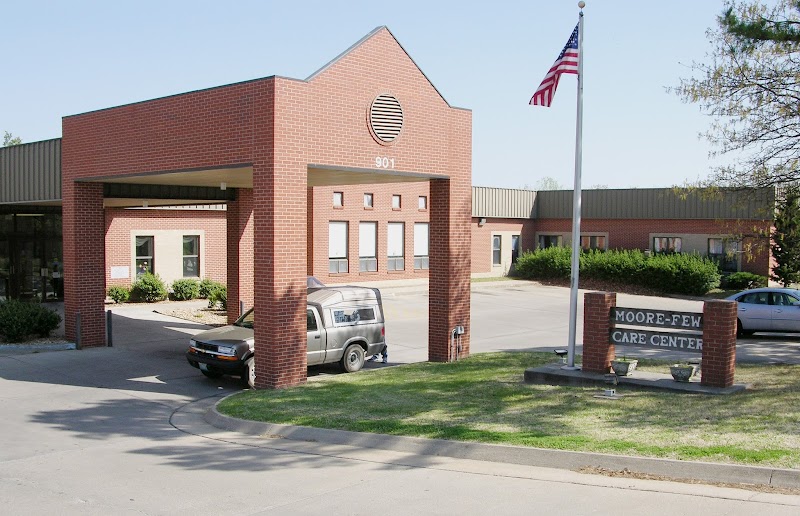
Who Owns and Operates Moore Few?

MOORE FEW CARE CENTER is owned by a government entity. Government-operated facilities are typically run by state, county, or municipal agencies. The facility operates independently rather than as part of a larger chain. With 108 certified beds and approximately 50 residents (about 46% occupancy), it is a mid-sized facility located in NEVADA, Missouri.
How Does Moore Few Compare to Other Missouri Nursing Homes?

Compared to the 100 nursing homes in Missouri, MOORE FEW CARE CENTER's overall rating (2 stars) is below the state average of 2.5 and health inspection rating (3 stars) is at the national benchmark.

What Should Families Ask When Visiting Moore Few?

Based on this facility's data, families visiting should ask: "What changes have been made since the serious inspection findings, and how are you preventing similar issues?" "Can you walk me through typical staffing levels on day, evening, and night shifts?" "Can I visit during a mealtime to observe dining assistance and food quality?" "How do you handle medical emergencies, and what is your hospital transfer rate?" These questions are particularly relevant given the facility's Immediate Jeopardy citations and the below-average staffing rating.

Is Moore Few Safe?

Based on CMS inspection data, MOORE FEW CARE CENTER has documented safety concerns. Inspectors have issued 1 Immediate Jeopardy citation (the most serious violation level indicating risk of serious injury or death). The facility has a 2-star overall rating and ranks #100 of 100 nursing homes in Missouri. Families considering this facility should ask detailed questions about what corrective actions have been taken since these incidents.

Do Nurses at Moore Few Stick Around?

MOORE FEW CARE CENTER has not reported staff turnover data to CMS. Staff turnover matters because consistent caregivers learn residents' individual needs, medications, and preferences. When staff frequently change, this institutional knowledge is lost. Families should ask the facility directly about their staff retention rates and average employee tenure.

Was Moore Few Ever Fined?

MOORE FEW CARE CENTER has been fined $13,662 across 1 penalty action. This is below the Missouri average of $33,215. While any fine indicates a compliance issue, fines under $50,000 are relatively common and typically reflect isolated problems that were subsequently corrected. Families should ask what specific issues led to these fines and confirm they've been resolved.

Is Moore Few on Any Federal Watch List?

MOORE FEW CARE CENTER is not on any federal watch list. The most significant is the Special Focus Facility (SFF) program, which identifies the bottom 1% of nursing homes nationally based on persistent, serious quality problems. Not being on this list means the facility has avoided the pattern of deficiencies that triggers enhanced federal oversight. This is a positive indicator, though families should still review the facility's inspection history directly.