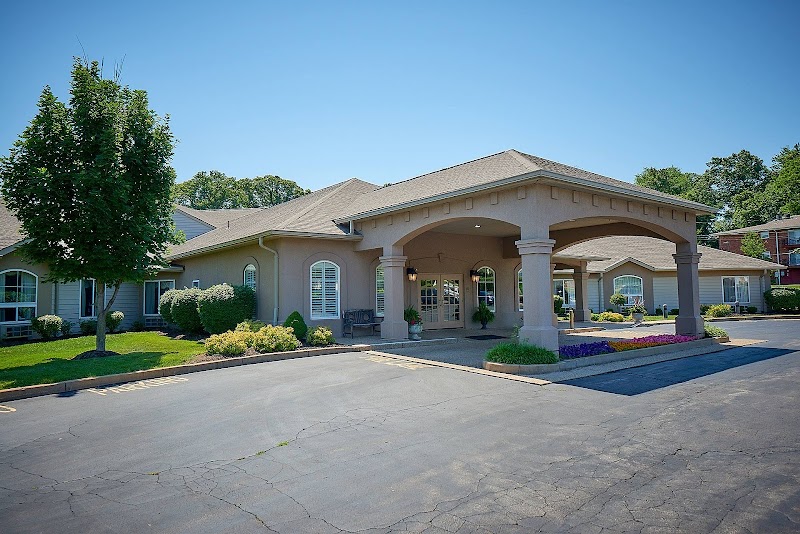
BENTLEYS EXTENDED CARE

3060 ASHBY ROAD, OVERLAND, MO 63114 (314) 426-0433
For profit - Corporation 72 Beds Independent Data: November 2025 4 Immediate Jeopardy citations
Trust Grade
0/100
#342 of 479 in MO
Last Inspection: October 2024

Within standard 12-15 month inspection cycle. Federal law requires annual inspections.

Overview

Bentleys Extended Care has received a Trust Grade of F, indicating significant concerns about the quality of care provided. Ranked #342 out of 479 facilities in Missouri, they are in the bottom half, and at #45 of 69 in St. Louis County, only a few local options are better. Although the facility shows an improving trend with issues decreasing from 24 in 2024 to 4 in 2025, it still reported a concerning total of $207,954 in fines, which is higher than 97% of Missouri facilities. Staffing is a strength, with a turnover rate of 0%, significantly below the state average, suggesting that staff remain long-term and understand resident needs. However, specific incidents raise red flags, such as the lack of a care plan for a resident with severe cognitive impairment who required extensive assistance, and the improper use of side rails that led to a resident sustaining a serious injury after falling out of bed. Overall, while there are positive aspects like low staff turnover, the facility has serious weaknesses in care practices that families should consider carefully.

Trust Score
F
0/100
In Missouri
#342/479
Bottom 29%
Safety Record
High Risk
Review needed
Inspections
Getting Better
24 → 4 violations
Staff Stability
○ Average
Turnover data not reported for this facility.
Penalties
○ Average
$207,954 in fines. Higher than 70% of Missouri facilities. Some compliance issues.
Skilled Nurses
○ Average
RN staffing data not reported for this facility.
Violations
⚠ Watch
60 deficiencies on record. Higher than average. Multiple issues found across inspections.
★☆☆☆☆
1.0
Overall Rating
★☆☆☆☆
1.0
Staff Levels
★☆☆☆☆
1.0
Care Quality
★☆☆☆☆
1.0
Inspection Score
Stable
2024: 24 issues
2025: 4 issues

The Good

  • Full Sprinkler Coverage · Fire safety systems throughout facility
  • No fines on record

Facility shows strength in fire safety.

The Bad

1-Star Overall Rating

Below Missouri average (2.5)

Significant quality concerns identified by CMS

Federal Fines: $207,954

Well above median ($33,413)

Significant penalties indicating serious issues

The Ugly 60 deficiencies on record

4 life-threatening 2 actual harm
Apr 2025 1 deficiency
CONCERN (D) 📢 Someone Reported This

A family member, employee, or ombudsman was alarmed enough to file a formal complaint

Potential for Harm - no one hurt, but risky conditions existed

Deficiency F0790 (Tag F0790)

Could have caused harm · This affected 1 resident

Based on observation, interview and record review, the facility failed to assist residents in obtaining routine and 24-hour emergency dental care for one resident (Resident #10) who chipped their toot...

Read full inspector narrative →
Based on observation, interview and record review, the facility failed to assist residents in obtaining routine and 24-hour emergency dental care for one resident (Resident #10) who chipped their tooth while at the facility. The sample was 10. The census was 54. Review of Resident #10's quarterly Minimum Data Set (MDS), a federally mandated assessment instrument completed by facility staff, dated 3/18/25, showed the following: -Cognitively intact; -Dependent with transfers, dressing and wheelchair locomotion; -Diagnoses included diabetes, hemiplegia flaccid of left side (paralysis on left side of body), cerebral infarction (stroke) and nontraumatic intracranial hemorrhage (bleed in the brain), seizures, and malnutrition; -Oral/Dental status: blank. Review of the resident's care plan, dated 4/30/25, showed no documentation regarding the resident's oral care. Review of the resident's progress notes, showed: -Health status progress note, dated 10/21/2023 at 10:37 A.M., the resident reported his/her left front tooth broke off while eating a piece of candy. Partial tooth remains in socket; -Social services progress note, dated 11/22/2023 at 9:31 A.M., resident has a dental appointment scheduled on 1/23/2024 at 3:00 P.M.; -Health status progress note, dated 1/23/24 at 9:02 P.M., resident left for dentist appointment and returned without seeing dentist due to resident being unable to transfer to dental chair; -Physician progress note, dated 2/28/2025 at 1:42 P.M., resident complaining of a toothache. Tooth abscess diagnosed by physician and antibiotics ordered. Resident is scheduled to see the dentist. Physician attempted calling resident's next of kin with no answer. Staff to follow up notification with next of kin; -Health status progress note, dated 3/3/25 at 5:21 P.M., resident received antibiotic order from the physician for Amoxicillin (antibiotic) 500 milligrams (mg) twice a day for seven days for diagnosis of dental abscess, left message for family; -Physician progress note, dated 3/17/25 at 12:05 A.M., resident was treated for tooth abscess and had no complaints of tooth pain. Review of the resident's physician orders, dated 3/4/25, showed Amoxicillin oral capsule 500 mg, give one capsule by mouth two times a day for dental abscess for seven days. During an observation and interview on 4/28/25 at 9:29 A.M., the resident fiddled his/her tongue on the area of his/her front broken tooth while being interviewed. The resident denied pain and said the tooth feels funny. There was a slight lisp noticed at times when the resident spoke. The resident said his/her front tooth broke off over a year ago. The facility repeatedly said they were going to have a dentist look at it. He/She has pain and cannot bite into anything solid, like an apple. Also, he/she can only chew on the right side of his/her mouth due to pain on the left. He/She spoke with Social Worker (SW) C and Licensed Practical Nurse (LPN) A about the pain and broken tooth. LPN A has said that SW C is taking care of it. SW C made a dentist appointment about a year ago and when the resident arrived the dentist refused to see him/her because he/she could not get into a dental chair from the wheelchair. Since then, SW C has said he/she is working on getting him/her to a dentist and then said he/she will have a dentist come to the facility to see the resident, but so far nothing has been done. The broken front tooth hurts and he/she is embarrassed about the appearance of his/her teeth. He/She feels like the facility does not care about him/her and are putting him/her off and this makes the resident aggravated. The physician that makes rounds started the resident on an antibiotic for a tooth pain a few weeks ago, but he/she does not remember the physician coming to see him/her. During an interview on 4/29/25 at 9:36 A.M., SW C said when a resident needs dental services, an appointment should be made as soon as possible. He/She is responsible to make these appointments once he/she is made aware of resident dental needs from the resident, family or nursing staff. He/She generally asks all residents about their vision, dental, and podiatry needs during the quarterly review documented in the progress notes. The facility uses a Medicaid accepting dentist, or the dentist of the resident's choice. There was an incident when a resident was sent to the dentist, and they were not able to be seen because they could not get into the dental chair, so the appointment was rescheduled. He/She does not remember which resident this was. He/She does not think any residents are in need of dental care at this time and is unaware that a resident has been waiting for over a year to be seen by a dentist. He/She added, he/she thinks he/she knows which resident the surveyor may be asking about, Resident #10, but he/she is unaware of what is going on with the resident at this time. He/She remembers telling Resident #10 a dentist will be making rounds at the facility but that did not happen, and he/she does not remember why. He/She also remembers speaking with Resident #10's family around the end of the year 2024 about the resident's chipped off tooth, but he/she only remembers getting the first initial appointment and is not sure why this has not been followed up on. He/She said she has never asked Resident #10 about his/her tooth. Waiting a year to get a tooth fix is too long. During an interview on 4/29/25 at 9:54 A.M., the Administrator said if a resident is need of dental care SW C is responsible to make the appointments. SW C is made aware of dental issues from the resident, family, and staff. If a resident requires dental care the SW should notify the Director of Nursing (DON) or the nurse supervisor and let them know about the dental issue and then make the appointment. The appointment should be made as soon as possible. She expects SW C to follow up on appointments and make sure the resident has been seen or attempts made to have them seen and this should be documented in the progress notes. She is unaware a resident has been waiting over a year to see a dentist for a broken off tooth. She is also unaware the resident was on an antibiotic for an abscessed tooth on 3/4/25. During an interview on 4/30/25 at 9:02 A.M., the DON said she is aware of the resident's broken off tooth back on 10/21/23 and the dentist appointment was scheduled as soon as possible after the resident recovered from a broken hip and the first open appointment with a Medicaid dentist. The resident returned without seeing the dentist due to an issue with resident not being able to transfer to a dental chair. She was not aware the resident and family have requested several times to see the dentist. The SW is responsible to make dental appointments which the SW did for 1/23/24. The facility attempted to take care of the dental issues, but the resident has never complained about tooth pain or needing to see a dentist to her since returning from the dentist unseen. She was not aware the rounding physician ordered an antibiotic for an abscessed tooth. She does not know why the physician wrote in his/her notes the resident has an appointment with the dentist. She does not know if the tooth should be fixed because she does not know what they can do for him/her. During an interview on 4/30/25 at 9:47 A.M., LPN A said he/she was aware of the resident having a broken off tooth since 10/21/23 after eating a piece of candy. The dentist appointment was made for January 2024, after the resident hip healed from surgery, by SW C. He/She was aware the resident returned from the dentist without being seen because there was an issue with not being able to transfer resident into the dental chair. He/She has not spoken with the family or resident about a follow up dental appointment because SW C is responsible for it. The physician that rounds at the facility ordered an antibiotic about a month ago for an abscessed tooth. He/She is not sure which tooth it was for. The resident did not tell him/her about the tooth pain, the resident just told the physician. He/she found out about the abscessed tooth, after the physician ordered an antibiotic for the resident. He/She does not know which tooth, the physician did not specify. He/She does not know why the physician wrote in his/her notes the resident has an appointment with the dentist. The resident did tell him/her every now and then since the tooth broke off that the resident had tooth pain, but it is managed by the resident's scheduled pain medication ordered for his/her back. He/She did not follow up with the resident after the antibiotic was ordered to check the tooth or if the resident was having any pain from it. He/She never followed up because the resident can make his/her needs known. MO 00253231
Feb 2025 3 deficiencies 1 IJ
CRITICAL (J) 📢 Someone Reported This

A family member, employee, or ombudsman was alarmed enough to file a formal complaint

Immediate Jeopardy (IJ) - the most serious Medicare violation

Free from Abuse/Neglect (Tag F0600)

Someone could have died · This affected 1 resident

Based on observation, interview and record review, the facility failed to ensure residents were free from abuse when an allegation of physical abuse was made for one resident (Resident #1). On 2/1/25 ...

Read full inspector narrative →
Based on observation, interview and record review, the facility failed to ensure residents were free from abuse when an allegation of physical abuse was made for one resident (Resident #1). On 2/1/25 at approximately 10:00 A.M., Registered Nurse (RN) A heard banging on the wall inside the resident's room, and someone yelling, Stop that, stop that, do it again, then a loud slap inside the resident's room and when he/she opened the resident's door he/she saw Certified Nurse Aide (CNA) B holding the resident against the wall. RN A notified the Director of Nurses (DON) of an allegation of abuse and the DON directed RN A not to send CNA B home. CNA B remained in the facility providing care to other residents for over five hours after the allegation was reported. The facility did not immediately begin an investigation into the allegation of abuse. Facility staff were not properly educated on the facility's policies of identifying and reporting abuse to ensure residents were free from abuse. The sample was 8. The census was 49. The Assistant Director of Nurses (ADON) and DON were notified on 2/1/25 at 6:45 P.M. of an Immediate Jeopardy (IJ) which began on 2/1/25. The IJ was removed on 2/4/25 as confirmed by surveyor onsite verification. Review of the facility's Abuse Prevention Program policy, revised December 2016, showed: -Policy Statement: Our residents have the right to be free from abuse, neglect, misappropriation of resident property and exploitation. This includes but is not limited to freedom from corporal punishment, involuntary seclusion, verbal, mental, sexual or physical abuse, and physical or chemical restraint not required to treat the resident's symptoms; -Policy Interpretation and Implementation: -As part of our resident abuse prevention, the administration will: --Protect our residents from abuse by anyone including, but not necessarily limited to: facility staff, other residents, consultants, volunteers, staff from other agencies, family members, legal representatives, friends, visitors, or any other individual; --Develop and implement policies and procedures to aid our facility in preventing abuse, neglect, or mistreatment of our residents; --Require staff training/orientation programs that include such topics as abuse prevention, identification and reporting of abuse, stress management, and handling verbally or physically aggressive resident behavior; --Implement measures to address factors that may lead to abusive situations; --Identify and assess all possible incidents of abuse; --Investigate and report any allegations of abuse within timeframes as required by federal requirements; --Protect residents during abuse investigations. Review of the facility's Abuse Investigation and Reporting policy, revised July 2017, showed: -Policy Statement: All reports of resident abuse, neglect, exploitation, misappropriation of resident property, mistreatment and/or injuries of unknown source (abuse) shall be promptly reported to local, state and federal agencies (as defined by current regulations) and thoroughly investigated by facility management; -Policy Interpretation and Implementation: --Role of the Administrator: -If an incident or suspected incident of resident abuse, mistreatment, neglect or injury of unknown source is reported, the Administrator will assign the investigation to an appropriate individual; -The Administrator will suspend immediately any employee who has been accused of resident abuse, pending the outcome of the investigation. Review of Resident #1's quarterly Minimum Data Set (MDS), a federally mandated assessment instrument completed by facility staff, dated 1/22/25, showed: -Adequate hearing; -Resident rarely/never understands; -Resident rarely/never understood; -Short and long term memory problem; -Severe impairment for decisions regarding tasks of daily life; -Rejection of care behavior occurred one to three days; -Physical behavioral symptoms occurred one to three days; -Substantial/maximal assist required for upper and lower body dressing, toileting, and personal hygiene; -Diagnoses include Alzheimer's disease (a progressive and irreversible brain disorder that gradually destroys memory, thinking skills, and the ability to perform everyday tasks), anxiety, and depression. Review of the resident's care plan, in use at the time of survey, showed: -Focus: Current functional performance; -Interventions included extensive assist/one-person physical assist for dressing, personal hygiene and toilet use. Extensive assist/two-person physical assist for dressing, personal hygiene, and toilet use; -Focus: The resident is resistive to care at times with activities of daily living (ADLs) care; -Focus: The resident is/has potential to be physically aggressive; -Interventions included assess and anticipate resident's needs. Provide physical and verbal cues to alleviate anxiety, give positive feedback, assist verbalization of source of agitation, assist to set goals for more pleasant behavior, encourage seeking out of staff member when agitated. Give the resident as many choices as possible about care and activities. When the resident becomes agitated, intervene before agitation escalates, guide away from the source of distress, engage calmly in conversation, and if response is aggressive, staff to walk away calmly and reapproach later. During an interview on 2/1/25 at 1:07 P.M., RN A said at around 10:05 A.M. that morning, he/she heard a voice yelling in the resident's room. The voice sounded threatening and mean, and was yelling, Stop that, stop that, do it again! RN A heard bumping noises inside the room, then a loud slap. The voice yelled, See, I told you, don't do it again! RN A opened the door to the resident's room and saw the resident up against the wall with CNA B standing in front of him/her. The resident's back was to the wall and CNA B had his/her body pushed into the resident's, holding the resident's left arm with his/her right arm. The resident was not attempting to move. When asked if everything was ok, CNA B said yes, sat the resident down on the bed, and immediately left the room. RN A interviewed the resident by asking yes/no questions, but the resident was very confused and was unable to say much. RN A performed a skin assessment and when he/she attempted to check the resident's lower body, the drawstring on the resident's pants was tied so tight, he/she had to cut the string to assess the resident. After assessing the resident, RN A called the DON to inform him of what he/she observed. RN A asked to send CNA B home and the DON said no, the facility was too short on staff. The DON told RN A the resident is very combative and CNA B would never do this type of thing. The DON did not ask RN A for a written statement regarding what happened and said he/she would arrive at the facility soon. RN A left the building at 12:20 P.M., at which time, CNA B was still working in the facility and the DON had not arrived. Observation on 2/1/25 at 2:03 P.M., showed CNA B walked throughout the building, going in and out of resident rooms, providing care to residents. During an interview on 2/1/25 at 2:03 P.M., Licensed Practical Nurse (LPN) H said he/she came in around 12:15 P.M. The DON called him/her in because the nurse from day shift asked the DON to find someone to replace him/her on the schedule. LPN H was not informed of any allegations of abuse. If he/she was made aware of an allegation of abuse perpetrated by an employee, he/she would notify the DON and leave it up to the DON to determine if the employee should be sent home. He/She would not make the decision to send the employee home. The DON is responsible for investigating abuse allegations. During an interview on 2/1/25 at 2:33 P.M., CNA B said the day shift nurse called the DON and told him that he/she was being mean to the resident. The resident is not aggressive, but hits on people. CNA B was in the resident's room this morning, around 9:30 A.M., to get him/her changed and dressed for breakfast. The resident is pretty confused and kept going around the room. Two employees are usually needed to provide care to the resident, but CNA B can do it by him/herself because he/she knows the resident. CNA B told the resident he/she was wet and smelled like pee. He/She kept telling the resident to sit down to change him/her. The resident hit CNA B on the shoulder and CNA B said he/she did not hit the resident back. When the resident tried to hit him/her again, CNA B pushed the resident's arms back. He/She told the resident, Your licks don't hurt me, you need to stop. The resident kept swinging and CNA B pushed the resident's hands while he/she was swinging. CNA B put the resident against the wall so he/she couldn't bend over with CNA B while he/she was trying to pull his/her pants up. When asked to demonstrate how he/she spoke to the resident, CNA B raised his/her voice loudly. He/She said he/she uses a louder pitch to get the resident's attention. The nurse on the day shift was in the hall at the time, and must have heard this. Some people might think there is no way in hell someone should talk to a resident like this, but they don't do this every day and sometimes staff have to raise their voice for a resident to listen. Observation on 2/1/25 at 2:59 P.M., showed LPN H, Certified Medication Technician (CMT) I, and CNA B escorted the resident to his/her room for a skin assessment. LPN H and CMT I said the resident will hit staff. CNA B lifted the resident's shirt in the front and back. When staff attempted to fully remove the shirt for an observation of the resident's arms, the resident shook his/her head no, and wiggled his/her arms away from CNA B. The resident did not attempt to hit staff and left the room. During an attempted interview on 2/1/25 at 3:05 P.M., the resident was confused and was unable to answer specific questions regarding his/her care needs, interactions with staff, or treatment at the facility. During an interview on 2/1/25 at 3:05 P.M., CMT I said the DON called him/her earlier that day and asked which aide was assigned to the resident's hall, which was CNA B. The DON told CMT I the day shift nurse said CNA B was being mean to the resident. The DON did not say anything about sending CNA B home. The resident has Alzheimer's disease. He/She only gets aggressive when he/she has a bowel movement or is receiving care, and then he/she will sucker punch staff. CNA B is the only aide who can provide care to the resident by him/herself. Otherwise, two staff have to provide care so one person can distract the resident and the other person can do the care. During an interview on 2/1/25 at 3:29 P.M., the DON said at around 10:00 A.M., he got a call from RN A. RN A said he/she heard yelling and loud noises coming from the resident's room, like the heads of residents banging on the walls or something. RN A saw CNA B and the resident leaned against the wall while CNA B was getting the resident dressed. RN A wanted to send CNA B home on the basis of abuse and the DON said no, noises are not a good basis to send the employee home. Noises could come from anywhere. He told RN A he would look into it and called the facility. He talked to CMT I, who didn't know what was going on. He has not interviewed the resident or any other staff, yet. Management typically investigates abuse. They get statements from the parties involved and document as necessary. He lets the ADON do most of that, because he is still new and has only been working with the facility for three months. Abuse investigations are conducted in a timely fashion, and the DON did not provide specifics on the definition of timely. During an interview on 2/1/25 at 3:48 P.M., the ADON said the DON did not notify her of the abuse allegation until after 2:30 P.M., when LPN H called to notify her the Department of Health and Senior Services (DHSS) was in the building. The Assistant Administrator was not aware, either. Any employee alleged to have been the perpetrator of abuse should be suspended immediately, pending investigation, to keep all residents safe. CNA B should have been sent home the minute the DON was notified of an abuse allegation. Management should immediately be notified of abuse allegations. An abuse investigation should be started by management the moment they are made aware. Observation on 2/1/25 at 3:48 P.M., showed CNA B in the ADON's office. Review of CNA B's time punches, showed he/she clocked out at 4:42 P.M. During an interview on 2/1/25 at 4:06 P.M., CNA K said the resident has Alzheimer's disease. Staff have to be loud with him/her in order for him/her to understand what they need him/her to do. He/She needs assistance with changing and dressing and can get angry and hit staff when they assist with this. It takes two staff to provide care to the resident on some days. When the resident gets physically aggressive, staff should step back and leave the room. During an interview on 2/1/25 at 4:58 P.M., the Assistant Administrator said staff should engage residents in a normal tone of voice, or speak louder if the resident is hard of hearing. If a resident becomes combative and physically aggressive, staff should leave the room and should not physically engage with the resident. He wasn't notified of the abuse allegation until the ADON contacted him at 2:35 P.M. The day shift nurse reported a concern of abuse to the DON. The alleged incident occurred at 10:00 A.M. The Assistant Administrator should have been notified within 30 minutes to an hour of the DON being notified, and an investigation should have been started right away. The DON should have immediately suspended the CNA pending an investigation to protect the resident and other residents from potential abuse. CNA B should not have remained in the facility, providing care for other residents, for another five hours after the allegation of abuse was reported. During an interview on 2/1/25 at 8:37 P.M., the ADON said the resident was combative when first admitted to the facility, but he/she started anxiety medication and this has not been an issue for a long time. Approach is a lot for the resident. Staff should tell him/her what they want to do and speak to the resident in a low, normal tone of voice. Staff should not yell at the resident; he/she is not hard of hearing. If the resident becomes combative when receiving care, staff should leave and get assistance. Ongoing behaviors and combativeness should be reported to her, but she has not received any reports about this happening. It is not appropriate for staff to keep the resident against the wall when assisting him/her with toileting. Instead, the resident should be taken to the toilet, where he/she can sit down and staff can change him/her. Staff should be educated on the facility's abuse policies. During an interview on 2/1/25 at 2:27 P.M., Housekeeper J said If he/she overheard staff from another department yelling at a resident, or witnessed abusive behavior, he/she would have to wait to tell his/her supervisor. His/Her department does not get involved with what goes on in other departments. Each department handles their own issues. If he/she witnessed yelling or abuse on a weekend, he/she would unfortunately have to wait to speak to his/her supervisor on Monday. During an interview on 2/3/25 at 9:20 A.M., Housekeeper L said he/she has not received training about the facility's abuse policies recently. If he/she heard nursing staff yelling at a resident, or slapping noises coming from a resident's room, he/she would probably tell the nurse. It is not his/her place to get involved with nursing staff, so he/she would not intervene. During an interview on 2/3/25 at 11:29 A.M., the DON said he was not educated on the facility's abuse policies when he began his position with the facility in November 2024. After the abuse allegation was made on 2/1/25, he was in-serviced on the policy. All staff who have worked since the allegation was made, have not been in-serviced in a timely fashion. If any employee hears, witnesses, or suspects abuse, they should intervene first, make sure the resident is safe, then report it to management. During the interview, the DON reviewed the documentation being provided to staff to educate them on the facility's abuse policies. The documentation did not provide guidance for staff to ensure the resident is safe when abuse is suspected, before reporting it to management. NOTE: At the time of the survey, the violation was determined to be at the immediate and serious jeopardy level J. Based on observation, interview, and record review completed during the onsite visit, it was determined the facility had implemented corrective action to address and lower the violation at the time. At the time of exit, the severity of the deficiency was lowered to the D level. This statement does not denote that the facility has complied with State law (Section 198.026.1 RSMo.) requiring that prompt remedial action be taken to address Class I violation(s). MO00248906
SERIOUS (G) 📢 Someone Reported This

A family member, employee, or ombudsman was alarmed enough to file a formal complaint

Actual Harm - a resident was hurt due to facility failures

Accident Prevention (Tag F0689)

A resident was harmed · This affected 1 resident

**NOTE- TERMS IN BRACKETS HAVE BEEN EDITED TO PROTECT CONFIDENTIALITY** Based on observation, interview and record review, the facility failed to provide care and services to ensure residents were fre...

Read full inspector narrative →
**NOTE- TERMS IN BRACKETS HAVE BEEN EDITED TO PROTECT CONFIDENTIALITY** Based on observation, interview and record review, the facility failed to provide care and services to ensure residents were free from accident hazards. Certified Nurse Aide (CNA) B performed a Hoyer (mechanical lift) transfer for one resident (Resident #6) without the assistance of a second person, and the resident was struck in the face with the lift, causing injuries to his/her face. The employee failed to report the incident at the time it occurred, and staff failed to perform neurological assessments for 72 hours following the incident, in accordance with facility policy. In a separate incident, Certified Medication Technician (CMT) C performed a Hoyer transfer for the resident without the assistance of a second person, and failed to ensure the resident's physician-ordered fall mats were positioned at bedside before leaving the room. The resident fell from bed, hit his/her face, and required stitches in his/her forehead. In addition, staff failed to utilize appropriate techniques during a two-person Hoyer transfer, resulting in the machine tilting several times while the resident was in the lift. The sample was 8. The census was 49. Review of the facility's Hoyer Lift guidance, revised 9/9/15, showed: -Always have two people when completing transfer; -If there is room, the Hoyer lift is safer when the legs of the lift are wide open. If space allows, keep legs of lift open; -The primary person on the transfer starts to lift the resident slowly in the air. The second person is close to the resident at all times as well; -Once the resident is up, start to move the lift. The primary person steers the lift and makes sure the resident's feet don't hit the lift. The secondary person at the back of the resident is making sure the resident doesn't slide out and helps guide the resident correctly over the chair. Make sure the brakes are locked on the Hoyer lift before lowering the resident; -Align the resident over the wheelchair, slowly start lowering the resident. The secondary person needs to help guide resident and help achieve correct posture. Both staff should make sure that the lift does not hit the resident in head; -Two people are required at all times for safety with mechanical device. Review of the facility's Hoyer Safety Precautions document, undated, showed: -The weight must be centered over the base. When lifting, always keep patient centered over the base and facing the attendant who is operating the lifter; -To reduce the hazard of tipping over, spread adjustable base lifters (legs) to their widest position before lifting anyone. Review of the facility's Neurological Assessment policy, revised October 2010, showed: -Purpose: The purpose of this procedure is to provide guidelines for a neurological assessment: 1) upon physician order; 2) when following an unwitnessed fall; 3) subsequent to a fall with a suspected head injury; or 4) when indicated by resident condition; -General Guidelines: --Neurological assessments are indicated: -Upon physician order; -Following an unwitnessed fall; -Following a fall or other accident/injury involving head trauma; -When indicated by resident's condition; -Steps in the procedure, included perform neurological checks with the frequency as ordered or per falls protocol; -Documentation: --The following information should be recorded in the resident's medical record: -The date and time the procedure was performed; -The name and title of the individual(s) who performed the procedure; -All assessment data obtained during the procedure; -The signature and title of the person recording the data; -Related documents: Neurological Evaluation Flow Sheet. Review of the facility's Post Fall 72-Hour Monitoring Report form, dated July 2008, showed: -This assessment should be completed at the following intervals for follow up for all falls. A fall that is unwitnessed or in which the head is struck, requires neurological checks. Initial assessment, followed by four 15-minute checks, two 30-minute checks, two hourly checks, and once per shift for 72 hours. 1. Review of Resident #6's medical record, showed: -Diagnoses included repeated falls, difficulty walking, generalized muscle weakness, dementia (a general term for loss of memory and other mental abilities severe enough to interfere with daily life), anxiety and depression; -A physician order, dated 6/16/23, to be sure bed is in lowest position and fall mats on the floor while resident is in bed. Review of the resident's annual Minimum Data Set (MDS), a federally mandated assessment instrument completed by facility staff, dated 11/2/24, showed: -Resident rarely/never understood; -Dependent for chair/bed-to-chair transfers. Review of the resident's care plan, in use at the time of survey, showed: -Focus: The resident has an activities of daily living (ADLs) self-care performance deficit related to generalized weakness and deconditioning (a decline in physical fitness and overall health that occurs due to a prolonged period of inactivity or reduced physical activity); -Interventions included the resident requires Hoyer mechanical lift with two staff assistance for transfers; -Focus: The resident is moderate risk for falls related to confusion, deconditioning; -Interventions included follow facility protocol; -Focus: The resident had an actual fall with serious injury on 1/24/25; -The care plan did not include the utilization of fall mats and a low bed as a fall intervention. Review of the resident's incident note, dated 1/15/25 at 7:24 A.M., showed Licensed Practical Nurse (LPN) D documented after clocking in at 10:40 P.M. (1/14/25), LPN D was made aware the resident had a small laceration to his/her forehead, bruise to the bridge of his/her nose, and a swollen top lip from the Hoyer lift. The aide (CNA B) reported that while putting the resident to bed on the evening shift, the Hoyer lift's pendulum swung back and struck the resident in the face. LPN D assessed the resident while he/she was in bed. The laceration and top lip were not actively bleeding. The laceration was cleaned and bandaged. Review of the resident's medical record, showed: -Health status notes documented on 1/16/24 at 4:00 P.M. and 7:11 P.M. for incident follow-up. Scabbed laceration to forehead, bridge of nose purplish bruised with swelling, top lip swollen. -No Post-Fall 72-Monitoring Report forms or neurological assessment (neurocheck) flow sheets following the incident on 1/14/25. During an attempted interview on 2/3/25 at 9:15 A.M., the resident was non-verbal and unresponsive to questions. During an interview on 2/3/25 at 10:41 A.M., LPN D said the resident is confused, does not talk, and requires a Hoyer lift for all transfers. On 1/14/25, LPN D came in for the night shift and CNA B, who worked the evening shift, reported the resident was injured during a Hoyer transfer. CNA B reported he/she was transferring the resident with the Hoyer lift at around 8:30 P.M., and the bar on the lift swung back and hit the resident in the face. CNA B did not report the incident to the nurse on evening shift. CNA B did not specify that he/she did the transfer by him/herself. All Hoyer transfers should be performed by two staff. During an interview on 2/3/25 at 2:17 P.M., the Assistant Director of Nurses (ADON) said on 1/14/25, CNA B transferred the resident by him/herself with the Hoyer lift, and the lift hit the resident in the head. CNA B did not give a straight answer when asked why he/she performed the transfer by him/herself. CNA B did not report the incident to the evening shift nurse like he/she should have and instead, reported the incident to the nurse on the night shift. Following the incident an in-service training on Hoyer transfers was conducted with nursing staff. Review of the facility's list of employees and in-service training records, showed: -On 1/16/25, 21 nursing staff, excluding the ADON and Director of Nurses (DON), were employed by the facility; -In-service attendance record, titled Transfers, dated 1/16/25, showed objectives included two-person transfers and mechanical lift transfers, with nine nursing staff in attendance and 11 nursing staff not in attendance. CNA B was not in attendance. During an interview on 2/3/25 at 3:15 P.M., the ADON said he/she could not find neurochecks completed for the resident following his/her head injury on 1/14/25. Neurochecks should have been completed for the 72 hours following the incident. During an interview on 2/4/25 at 1:32 P.M., Physician E said she is Resident #6's physician. She could not recall if she was notified of the incident on 1/14/25. She was not aware of the details of how the resident was injured on 1/14/25. When a resident has an injury like this, she always encourages staff to send the resident out to the hospital because facilities do not have the ability to perform a computed tomography scan (CT scan, uses a computer that takes data from several x-ray images of structures inside the body and converts them into pictures on a monitor) to rule out head injury. She expected staff to perform neurochecks for 72 hours after the resident was injured. 2. Review of Resident #6's incident note, dated 1/24/25 at 4:00 P.M., showed at 1:45 P.M., LPN O was called to the resident's room. Resident noted to be lying on the floor on his/her right side with blood coming from his/her head. Resident alert and oriented to self. 3.5 centimeters (cm) by (x) 1.0 cm x 0.8 cm laceration to forehead above right eyebrow. Staff reported resident was in bed prior to incident. Bed in lowest position. Neurochecks within normal limits. First aide provided. Vitals documented. Physician notified and resident sent out to hospital. Review of the resident's hospital Discharge summary, dated [DATE], showed: -Diagnoses included fall, injury of head, and facial laceration; -Laceration repair completed. Review of the resident's health status note, dated 1/25/25 at 3:15 A.M., showed resident returned from hospital. Intact sutures noted to right forehead above eyebrow. During an interview on 2/3/25 at 1:34 P.M., Certified Medication Technician (CMT) C said the resident is supposed to have fall mats when in bed, because he/she is a fall risk. On 1/24/25, CMT C used a Hoyer lift by him/herself to transfer the resident to bed. He/She knows Hoyer transfers require two people, but he/she was trying to help the aides. Once he/she got the resident in bed, she lowered the bed but he/she forgot to put down the resident's fall mats. He/She went on break and when he/she came back, someone found the resident on the floor with a busted head. The resident went out to the hospital and got stitches. During an interview on 2/3/25 at 2:17 P.M., the ADON said on 1/24/25, CMT C used the Hoyer lift to transfer the resident to bed by him/herself. He/She did not ensure the resident was straightened in bed and did not put down the resident's fall mats. The resident fell out of bed and hit his/her face, resulting in him/her getting stitches. Following the incident another in-service training on Hoyer transfers was conducted with nursing staff. Review of the facility's list of employees and in-service training records, showed: -On 1/24/25, 24 nursing staff, excluding the ADON and DON, were employed by the facility; -In-service attendance record, titled Transfers, dated 1/24/25, showed objectives included all Hoyer lifts require the use of two persons to transfer and do not transfer any resident that uses a Hoyer lift alone, with 15 nursing staff in attendance and nine nursing staff not in attendance. 3. Observation on 2/3/25 at 2:18 P.M., showed Resident #6 seated on top of a Hoyer pad in a wheelchair in his/her room. Nurse Aide (NA) F brought a Hoyer lift to the resident's room and positioned it in front of the resident. After securing the loops of the Hoyer pad to the bar on the lift, NA F began pumping the lever to lift the resident. NA G was on the other side of the room assisting the resident's roommate while NA F operated the lift. As NA F pumped the lever, the bar on the Hoyer lift bumped the resident's chin. NA G continued to pump the lever and NA G stopped him/her, suggesting they get a different Hoyer lift. NA F unhooked the Hoyer pad straps from the lift while NA G left the room to get the other Hoyer lift. At 2:24 P.M., NA G and NA F secured the loops of the Hoyer pad to the bar on the other Hoyer lift. NA G operated the machine and lifted the resident so he/she was approximately 20 inches above the bed. NA G positioned the Hoyer to the right side of the resident's bed. While the legs of the Hoyer lift were straight, not in an open position, NA G moved the lift back and forth while attempting to get the lift's legs fully underneath the resident's bed, banging against the bed and furniture, while the resident swung back and forth in the Hoyer pad. NA G did not lock the brakes on the Hoyer legs and used both of his/her hands to push the resident's body toward the center of the bed. The Hoyer lift tilted over and NA G pulled it back down to the ground. NA F began maneuvering the Hoyer lift back and forth, bumping into furniture. At 2:27 P.M., NA G left the room and NA F used both hands to push the resident's body so it was centered over the bed, causing the Hoyer to tilt. NA G re-entered the room and while the resident was suspended over the right side of the bed, NA F pressed a lever on the Hoyer and the resident rapidly dropped several inches, remaining in the sling, hovering over the bed. At 2:29 P.M., NA G left the room and NA F continued to move the Hoyer, banging into furniture. At 2:30 P.M., NA F stepped out into the hall, leaving the resident in the Hoyer, halfway over the right side of the bed. At 2:31 P.M., both aides re-entered the room. The Hoyer lift legs were straight as NA F moved the lift, and the Hoyer lift tilted. NA F pressed a lever on the lift and the resident dropped rapidly onto the right side of the bed. During an interview on 2/3/25 at 2:34 P.M., NA G said this is his/her first week working at the facility. He/She never received training at the facility about how to use the Hoyer lift and learned from watching others. NA F said he/she has been working with the facility for less than two weeks. He/She never received any training at the facility about how to use the Hoyer lift. No one at the facility has shown him/her how to use the Hoyer lift and he/she only knows from previous jobs. Review of the facility's in-service training record, titled Transfers, dated 1/24/25, showed both NA F and NA G were in attendance. 4. During an interview on 2/4/25 at 6:34 A.M., Registered Nurse (RN) N said all Hoyer transfers require two staff. Any incident that results in injury should be reported to the nurse immediately. If a resident has an unwitnessed fall or hits their head, the nurse should perform neurochecks. Neurochecks should be completed at the intervals indicated on the neurocheck flow sheet for 72 hours to ensure there is no head injury. A resident's specific care needs, such as transfer status and fall interventions, should be indicated on their care plan and communicated to staff in report. During an interview on 2/4/25 at 9:40 A.M. with the ADON and DON, the ADON said NAs get three days of orientation in which they learn how to perform transfers through a hands-on demonstration. After orientation, the NA spends three days on the floor being paired with another person, then they are released to work by themselves. A Hoyer transfer must be completed by two staff and both staff should remain in the room at all times. One person should operate the lift while the other person assists with positioning and ensuring the resident is safe. The legs of the Hoyer lift should be locked when the lift is positioned over the area where the resident will be transferred. Staff should ensure the resident is properly positioned over their wheelchair or bed before lowering the resident and the resident should be lowered slowly for safety. Staff should ensure a resident is securely and safety positioned in the center of their bed before leaving the room for safety purposes. Staff should ensure fall mats are positioned on the sides of the bed for residents who are a high fall risk. The DON said staff know if a resident is a fall risk by asking the nurse. The ADON said staff can also tell if a resident requires a fall mat by checking the resident's care plan. Resident #6 has physician orders for fall mats and this information should also be on his/her care plan. Care plans are updated by department heads. Any injuries should be reported to the nurse immediately. If a resident hits their head or has an unwitnessed fall, the nurse should complete a full neurological assessment. Neurochecks should be documented on the neurocheck flow sheet. Neurochecks must be completed at the intervals indicated on the flow sheet for 72 hours after the injury or unwitnessed fall to see if there are any neurological changes. During an interview on 2/4/25 at 11:06 A.M., the Assistant Administrator said he expected staff to report any injury to the nurse on shift at that time so the nurse could assess the resident right away. He expected nurses to document assessments as indicated on the neurological flow sheets for incidents involving head injury. Two staff should be present at all times during a Hoyer lift transfer. The Hoyer lift brakes should be locked when appropriate for safety. He expected staff to utilize proper techniques during a Hoyer transfer and to implement identified interventions, such as fall mats, for residents at risk for falls. A resident's individual fall interventions should be documented on a resident's care plan. MO00248702
CONCERN (D) 📢 Someone Reported This

A family member, employee, or ombudsman was alarmed enough to file a formal complaint

Potential for Harm - no one hurt, but risky conditions existed

Report Alleged Abuse (Tag F0609)

Could have caused harm · This affected 1 resident

Based on interview and record review, the facility failed to report an allegation of abuse involving one resident (Resident #1) to the State Survey Agency immediately and not later than two hours afte...

Read full inspector narrative →
Based on interview and record review, the facility failed to report an allegation of abuse involving one resident (Resident #1) to the State Survey Agency immediately and not later than two hours after the allegation was made. The sample was 8. The census was 49. Review of the facility's Abuse Investigation and Reporting policy, revised July 2017, showed: -Policy Statement: All reports of resident abuse, neglect, exploitation, misappropriation of resident property, mistreatment and/or injuries of unknown source (abuse) shall be promptly reported to local, state and federal agencies (as defined by current regulations) and thoroughly investigated by facility management; -Policy Interpretation and Implementation: --Reporting: -All alleged violations involving abuse, neglect, exploitation, or mistreatment, including injuries of an unknown source and misappropriation of property will be reported by the facility Administrator, or his/her designee, to the following persons or agencies, included the State licensing/certification agency responsible for surveying/licensing the facility; -An alleged violation of abuse, neglect, exploitation or mistreatment (including injuries of unknown source and misappropriation of resident property) will be reported immediately, but not later than two (2) hours if the alleged violation involves abuse OR has resulted in serious bodily injury. Review of Resident #1's quarterly Minimum Data Set (MDS), a federally mandated assessment instrument completed by facility staff, dated 1/22/25, showed: -Resident rarely/never understands; -Resident rarely/never understood; -Short and long term memory problem; -Severe impairment for decisions regarding tasks of daily life; -Substantial/maximal assist required for upper and lower body dressing, toileting, and personal hygiene; -Diagnoses include Alzheimer's disease (a progressive and irreversible brain disorder that gradually destroys memory, thinking skills, and the ability to perform everyday tasks), anxiety, and depression. Review of the resident's care plan, in use at the time of survey, showed: -Focus: Current functional performance; -Interventions included extensive assist/one-person physical assist for dressing, personal hygiene and toilet use. Extensive assist/two-person physical assist for dressing, personal hygiene, and toilet use; -Focus: The resident is resistive to care at times with activities of daily living (ADLs) care; -Focus: The resident is/has potential to be physically aggressive; -Interventions included when the resident becomes agitated, intervene before agitation escalates, guide away from the source of distress, engage calmly in conversation, and if response is aggressive, staff to walk away calmly and reapproach later. During an interview on 2/1/25 at 1:07 P.M., Registered Nurse (RN) A said at around 10:05 A.M. that morning, he/she heard a voice yelling in the resident's room. The voice sounded threatening and mean, and was yelling, Stop that, stop that, do it again! RN A heard bumping noises inside the room, then a loud slap. The voice yelled, See, I told you, don't do it again! RN A opened the door to the resident's room and saw the resident up against the wall with Certified Nurse Aide (CNA) B standing in front of him/her. The resident's back was to the wall and CNA B had his/her body pushed into the resident's, holding the resident's left arm with his/her right arm. The resident was not attempting to move. After CNA B left the room, RN A interviewed the resident by asking yes/no questions, but the resident was very confused and was unable to say much. After assessing the resident, RN called the Director of Nurses (DON) to inform him of what he/she observed. During an interview on 2/1/25 at 3:29 P.M., the DON said at around 10:00 A.M., he got a call from RN A. RN A said he/she heard yelling and loud noises coming from the resident's room, like the heads of residents banging on the walls or something. RN A saw CNA B and the resident leaned against the wall while CNA B was getting the resident dressed. RN A wanted to send CNA B home on the basis of abuse. He told RN A he would look into it. He did not report the allegation to the Department of Health and Senior Services (DHSS) because he needed to know more details. He did not know he needed to report all allegations of abuse to DHSS within two hours of being made aware of the allegation. During an interview on 2/1/25 at 3:48 P.M., the Assistant Director of Nurses (ADON) said she was not aware of the allegation of abuse until after 2:30 P.M. Any allegation of abuse should be reported immediately to the manager on duty and Assistant Administrator. All allegations of abuse should be reported to DHSS within two hours. During an interview on 2/1/25 at 4:58 P.M., the Assistant Administrator said he was not aware of the abuse allegation until 2:35 P.M. The nurse reported an allegation of abuse to the DON at 10:00 A.M. The Assistant Administrator should have been notified within 30 minutes to an hour of the DON being notified, and an investigation should have been started right away. Any allegation of abuse should be reported to DHSS within two hours of being made aware of the allegation. MO00248906
Oct 2024 23 deficiencies
CONCERN (D)

Potential for Harm - no one hurt, but risky conditions existed

Notification of Changes (Tag F0580)

Could have caused harm · This affected 1 resident

Based on interview and record review, the facility failed to immediately notify the physician of abnormal lab results for one resident (Resident #11) and to notify the resident and the resident's repr...

Read full inspector narrative →
Based on interview and record review, the facility failed to immediately notify the physician of abnormal lab results for one resident (Resident #11) and to notify the resident and the resident's representative of abnormal lab results and new orders for medications to treat a urinary tract infection (UTI). The sample was 12. The census was 47. Review of the facility's Change in a Resident's Condition or Status policy, revised December 2016, showed: -Policy Statement: Our facility shall promptly notify the resident, his or her Attending Physician, and representative (sponsor) of changes in the resident's medical/mental condition and/or status (e.g., changes in level of care, billing/payments, resident rights, etc.); -Policy Interpretation and Implementation: -The nurse will notify the resident's Attending Physician or physician on call when there has been a(an): --Need to alter the resident's medical treatment significantly; -Unless otherwise instructed by the resident, a nurse will notify the resident's representative when: --There is a significant change in the resident's physical, mental, or psychosocial status; -Except in medical emergencies, notifications will be made within twenty-four (24) hours of a change occurring in the resident's medical/mental condition or status; -Regardless of the resident's current mental or physical condition, a nurse or healthcare provider will inform the resident of any changes in his/her medical care or nursing treatments. Review of Resident #11's medical record, showed diagnoses included UTI. Review of the resident's physician progress note, dated 7/17/24, showed: -Reason for visit: I am itching down there; -Assessment overview: Urinalysis (UA)/culture and sensitivity test (C&S, diagnostic laboratory test used to identify types of bacteria and to determine types of antibiotic that can be used to treat the bacteria). Review of the resident's lab results report, showed: -Collection date: 7/22/24 at 4:15 P.M.; -Received date: 7/23/24 at 11:25 A.M.; -Reported date: 7/26/24 at 5:24 P.M.; -The urinalysis showed: -Clarity: Hazy (reference range: range of results considered to be normal: Clear); -Nitrites: Positive (reference range: Negative); -Leukocytes: +3 (reference range: Negative); -White blood cells: Greater than 50 (reference range: Less than six); -White blood cell clumps: Present (reference range: Absent); -The culture showed: -Citrobacter farmeri (bacteria) present. Review of the resident's progress notes, showed: -No documentation on 7/26/24 or 7/27/24 of staff attempting to notify the physician of the resident's lab results, received 7/26/24; -A progress note, dated 7/28/24 at 3:53 P.M., in which staff documented UA/C&S results reported to physician, new orders received: Bactrim DS (sulfamethoxazole-trimethoprim, antibiotic medications) by mouth (PO) twice a day (BID) for five days. Probiotic Acidophilus, one PO BID for five days; -No documentation regarding the lab results and new orders reported to the resident and/or the resident's responsible party. Review of the resident's physician order sheet, showed: -An order, dated 7/29/24, for Bactrim DS oral tablet 800-160 milligrams (mg), one tablet PO BID related to UTI, for five days; -An order, dated 7/29/24, for Probiotic Acidophilus oral tablet chewable, one tablet PO BID related to UTI for five days. During an interview on 10/20/24 at 8:41 A.M., the resident said recently, he/she reported intense burning to his/her doctor and the next day, staff obtained a urine sample from him/her. The next thing he/she knew, he/she was told he/she had been taking an antibiotic for several days for a urinary tract infection. The facility never told him/her had a UTI until days after taking the antibiotic. The facility did not tell his/her POA about the UTI, either. During an interview on 10/24/24 at 10:11 A.M., Licensed Practical Nurse (LPN) A said when a physician issues orders for a UA, the urine should be collected within 24 hours, unless it is a STAT (immediate) order. Labs are collected on Tuesdays and Thursdays, so nurses try to align the collection of urine with the lab collection dates. During the interview, LPN A reviewed the resident's electronic medical record (EMR) and confirmed the orders for labs were received on Wednesday, 7/17/24, and the resident's urine should have been obtained so it could have gone out the next day, a scheduled lab day. The lab results were reported to the facility on Friday, 7/26/24. Ideally, the facility nurse should have reported the results to the physician within 24 hours. When lab results are received on Friday evenings or on the weekends, the nurse should still contact the physician and if they cannot get through, they should leave a message and chart the communication as a note in the resident's EMR. When new orders are received, including new orders for an antibiotic, the resident and resident's responsible party should be notified. This communication should also be charted in the resident's EMR. During an interview on 10/24/24 at 11:33 A.M., the Assistant Director of Nurses (ADON) said when the physician issues orders for a urinalysis, the resident's urine should be obtained right away, aligned with the facility's lab days on Tuesdays or Thursdays, unless the lab is a STAT order. When the lab results are reported to the facility, they should be reported to the physician right away. Labs results received on the weekends should still be reported to the physician the same as they would be during the week. Lab results are faxed to the front office fax, not the fax in the facility's medication room, so staff might not see lab results faxed on the weekends, unless they know to be looking out for them. When residents are started on new medications, it should be reported to the resident and their responsible party. She expects nurses to document their communication with the physician, resident, and responsible party in the resident's EMR. During an interview on 10/24/24 at 12:31 P.M., the Assistant Administrator said he expects labs to be obtained in a timely manner, as ordered by the physician. He expects the results of labs and new orders for medications to be reported to the resident and/or their responsible party. He expects nursing staff to document their communication with physician, residents, and responsible parties in the resident's EMR.
CONCERN (D)

Potential for Harm - no one hurt, but risky conditions existed

Transfer Notice (Tag F0623)

Could have caused harm · This affected 1 resident

**NOTE- TERMS IN BRACKETS HAVE BEEN EDITED TO PROTECT CONFIDENTIALITY** Based on interview and record review, the facility failed to provide the resident and/or resident representative with emergency ...

Read full inspector narrative →
**NOTE- TERMS IN BRACKETS HAVE BEEN EDITED TO PROTECT CONFIDENTIALITY** Based on interview and record review, the facility failed to provide the resident and/or resident representative with emergency written notices of transfer/discharge for two residents transferred to the hospital for acute medical reasons (Residents #31 and #19). The sample was 12. The census was 47. Review of the facility's Transfer or Discharge Notice policy, revised December 2016, showed: -Policy Statement: Our facility shall provide a resident and/or the resident's representative (sponsor) with a 30-day written notice of an impending transfer or discharge; -Policy Interpretation and Implementation: -A resident and/or his or her representative (sponsor) will be given a 30-day advance notice of an impending transfer or discharge from our facility; -Under the following circumstances, the notice will be given as soon as it is practicable but before the transfer or discharge: --An immediate transfer or discharge is required by the resident's urgent medical needs; -The resident and/or representative will be notified in writing of the following: --The reason for the transfer or discharge; --The effective date of the transfer or discharge; --The location to which the resident is being transferred or discharged ; --A statement of the resident's rights to appeal the transfer or discharge; --The name, address, and telephone number of the Office of the State Long-Term Care Ombudsman; --The name, address, and telephone number of the state health department agency that has been designated to handle appeals of transfers and discharge notices; 1. Review of Resident #31's medical record, showed: -discharged to the hospital on 2/8/24; -readmitted to the facility on [DATE]; -discharged to the hospital on 3/26/24; -readmitted to the facility 3/30/24; -No documentation the resident and/or their representative were provided a written notice of the resident's transfers to the hospital on 2/8/24 and 3/26/24. 2. Review of Resident #19's medical record, showed: -discharged to the hospital on 9/13/24; -readmitted to the facility on [DATE]; -No documentation the resident and/or their representative were provided a written notice of the resident's transfer to the hospital 9/13/24. 3. During an interview on 10/24/24 at 10:11 A.M., Licensed Practical Nurse (LPN) A said when a resident is sent out to the hospital for an acute medical issue, the nurse sends paperwork out with the resident, including the resident's face sheet, medication list, code status sheet, and any pertinent labs or imaging. They used to send out a notice of transfer/discharge as well, but they fell off doing this a while ago. 4. During an interview on 10/24/24 at 11:33 A.M., the Assistant Director of Nurses (ADON) said when a resident goes out to the hospital, a notice of transfer/discharge should be given to the resident. A copy of the document should also be given to the resident's family. She checked to see if Residents #31 and #19 received notices of transfer/discharge when they went out to the hospital, and could not find documentation to show this was done. She expects notices of transfer/discharge to be provided when residents go out to the hospital. 5. During an interview on 10/24/24 at 12:31 P.M., the Assistant Administrator said he expects residents and/or their representatives to receive a notice of transfer/discharge when a resident is transferred to the hospital.
CONCERN (D)

Potential for Harm - no one hurt, but risky conditions existed

Deficiency F0625 (Tag F0625)

Could have caused harm · This affected 1 resident

**NOTE- TERMS IN BRACKETS HAVE BEEN EDITED TO PROTECT CONFIDENTIALITY** Based on interview and record review, the facility failed to provide the resident and/or resident representative with written in...

Read full inspector narrative →
**NOTE- TERMS IN BRACKETS HAVE BEEN EDITED TO PROTECT CONFIDENTIALITY** Based on interview and record review, the facility failed to provide the resident and/or resident representative with written information on the facility's bed hold policy at the time of transfer for two residents transferred to the hospital for acute medical reasons (Residents #31 and #19). The sample was 12. The census was 47. Review of the facility's Bed Holds and Returns policy, revised March 2017, showed: -Policy Statement: Prior to transfers and therapeutic leaves, residents or resident representatives will be informed in writing of the bed-hold and return policy; -Policy Interpretation and Implementation: -Prior to a transfer, written information will be given to the residents and the resident representatives that explains in detail: --The rights and limitations of the resident regarding bed-holds; --The reserve bed payment policy as indicated by the state plan (Medicaid residents); --The facility per diem rate required to hold a bed (non-Medicaid residents), or to hold a bed beyond the state bed-hold period (Medicaid residents). 1. Review of Resident #31's medical record, showed: -discharged to the hospital on 2/8/24; -readmitted to the facility on [DATE]; -discharged to the hospital on 3/26/24; -readmitted to the facility 3/30/24; -No documentation the resident and/or their representative were provided a written notice of the facility's bed hold policy at the time of the resident's transfers to the hospital on 2/8/24 and 3/26/24. 2. Review of Resident #19's medical record, showed: -discharged to the hospital on 9/13/24; -readmitted to the facility on [DATE]; -No documentation the resident and/or their representative were provided a written notice of the facility's bed hold policy at the time of the resident's transfer to the hospital 9/13/24. 3. During an interview on 10/24/24 at 10:11 A.M., Licensed Practical Nurse (LPN) A said when a resident is sent out to the hospital for an acute medical issue, the nurse sends paperwork out with the resident, including the resident's face sheet, medication list, code status sheet, and any pertinent labs or imaging. They used to send out a bed hold notice as well, but they fell off doing this a while ago. 4. During an interview on 10/24/24 at 11:33 A.M., the Assistant Director of Nurses (ADON) said when a resident goes out to the hospital, a notice of bed hold should be given to the resident. A copy of the document should also be given to the resident's family. She checked to see if Residents #31 and #19 received bed hold notices when they went out to the hospital, and could not find documentation to show this was done. She expects bed hold notices to be provided when residents go out to the hospital. 5. During an interview on 10/24/24 at 12:31 P.M., the Assistant Administrator said he expects residents and/or their representatives to receive a bed hold notice when a resident is transferred to the hospital.
CONCERN (D)

Potential for Harm - no one hurt, but risky conditions existed

Assessment Accuracy (Tag F0641)

Could have caused harm · This affected 1 resident

Based on interview and record review, the facility failed to ensure one resident received an accurate assessment, reflective of the resident's status at the time of assessment, by failing to identify ...

Read full inspector narrative →
Based on interview and record review, the facility failed to ensure one resident received an accurate assessment, reflective of the resident's status at the time of assessment, by failing to identify the resident's unplanned significant weight loss, unhealed pressure ulcers (injuries to the skin and/or underlying tissue usually over a bony prominence, as a result of pressure or friction), and other skin problems (Resident #31). The sample was 12. The census was 47. Review of Resident #31's medical record, showed diagnoses included bullous pemphigoid (an autoimmune skin disorder that causes blisters on the skin). Review of the resident's weights, showed: -On 2/19/24, weighed 147.2 pounds (lbs); -On 8/19/24, weighed 120.0 lbs; -Significant weight loss of -18.48% in six months. Review of the resident's nutrition quarterly review, dated 8/20/24, showed: -Greater than 10% weight change in 180 days; -Additional information: Significant weight loss of -25 pounds in six months. Continues with trend down. Poor appetite continues. Stability continues to be guarded with declining condition. Review of the resident's skin assessment, dated 8/22/24, showed: -Bullous pemphigoid wound to right upper extremity anterior (in front of) with serosanguineous (thin, watery, pale, red/pink drainage) exudate (fluid that has seeped out of the tissue); -Bullous pemphigoid wound to left lateral (to the side of) knee with serosanguineous exudate; -Stage II (partial thickness loss of dermis presenting as a shallow open ulcer with a red-pink wound bed without slough (dead tissue). May also present as an intact or open/ruptured blister.) pressure ulcer to left buttock; -Stage IV (full thickness tissue loss with exposed bone, tendon or muscle. Slough or eschar (dead tissue) may be present on some parts of the wound bed. Often includes undermining or tunneling.) pressure ulcer to sacrum (triangular bone at the base of the spine). Review of the resident's quarterly Minimum Data Set (MDS), a federally mandated assessment instrument completed by facility staff, dated 8/24/24, showed: -Weight loss of 5% in the last month of loss of 10% in the last six months: Yes, on physician-prescribed weight-loss regimen; -Unhealed pressure ulcers: None; -Other ulcers, wounds, and skin problems: None. During an interview on 10/23/24 at 4:40 P.M., the Assistant Director of Nurses (ADON) said she completes all MDS assessments for all residents in the facility. Resident #31's significant weight loss was not planned and was not physician-prescribed. The ADON misinterpreted the question on the MDS regarding physician-prescribed weight-loss regimen, and thought this question referred to interventions in place to address weight loss. At the time of the assessment, the resident had a Stage II pressure ulcer and a Stage IV pressure ulcer, but the ADON was focused on the resident's bullous pemphigoid areas and did not mark the correct areas on the skin section of the MDS. She expects the MDS to be completed accurately. During an interview on 10/24/24 at 12:31 P.M., the Assistant Administrator said he expects resident assessments to be completed accurately.
CONCERN (D)

Potential for Harm - no one hurt, but risky conditions existed

Deficiency F0657 (Tag F0657)

Could have caused harm · This affected 1 resident

**NOTE- TERMS IN BRACKETS HAVE BEEN EDITED TO PROTECT CONFIDENTIALITY** Based on observation, interview, and record review, facility staff failed to review and revise the plan of care with changes in ...

Read full inspector narrative →
**NOTE- TERMS IN BRACKETS HAVE BEEN EDITED TO PROTECT CONFIDENTIALITY** Based on observation, interview, and record review, facility staff failed to review and revise the plan of care with changes in the resident's care needs for four residents (Residents #38, #46, #22, and #32) of 12 sampled residents. The facility census was 47. Review of facility's, undated, Care Plans, Comprehensive Person-Centered policy, showed: -Policy Statement: A comprehensive, person-centered care plan that includes measurable objectives and timetables to meet the resident's physical, psychosocial and function needs is developed and implanted for each resident; -Policy Interpretation and Implementation: Areas of concern that identified during the resident assessment will be evaluated before intervention are added to the care plan. The comprehensive, person-centered care plan is developed with seven (7) days of the completion of the required comprehensive assessment. Assessments of resident are ongoing and care plans are revised as information about the residents and the residents' condition change. 1. Review of Resident #38's medical record showed: -Diagnosis of cerebral aneurysm (bleeding from a blood vessel that accumulates around the brain), diabetes, high blood pressure, depression, and seizures. Review of the resident's admission Minimum Data Set (MDS), a federally mandated assessment instrument completed by facility staff, dated 6/11/24, showed: -admission date of 5/29/24; -Care Area Assessment Summary: Care areas triggered and identified by the facility as care planned: Cognitive loss/dementia, communication, urinary continence/indwelling catheter, psychosocial well-being, activities, falls, nutrition status, pressure ulcers, psychotropic drug use, and physical restraints. Review of the resident's quarterly MDS, dated [DATE], showed: -Adequate hearing and vision; -Speech Clarity: Clear speech, distinct intelligible words; -Makes Self Understood: Usually understood; -Ability to Understand Others: Usually understands; -Severe Cognitive Impairment. Review of the resident's Electronic Medical Record (EMR) on 10/22/24 at 1:48 P.M., showed the resident did not have a comprehensive care plan. 2. Review of Resident #46's medical record showed diagnosis included depression, dementia, and anxiety. Review of the resident's admission MDS, dated [DATE], showed: -admission date of 7/9/24; -Adequate hearing and vision; -Speech Clarity: Unclear speech, slurred or mumbled; -Makes Self Understood: Rarely/never understood; -Ability to Understand Others: Rarely/never understands; -Care Area Assessment Summary: Care areas triggered and identified by the facility as care planned: Cognitive loss/dementia, visual function, communication, urinary incontinence/indwelling catheter, psychosocial well-being, behavioral symptoms, activities, falls, nutritional status, pressure ulcers, and psychotropic drug use. Review of the resident's EMR on 10/20/24 at 11:11 A.M., showed the resident did not have a comprehensive care plan. 3. Review of Resident #22's admission MDS, dated [DATE], showed: -admitted [DATE]; -Care Area Assessment Summary: Care areas triggered and identified by the facility as care planned: Cognitive loss/dementia, communication, activities of daily living functional/rehabilitation potential, urinary continence/indwelling catheter, falls, nutritional status, dehydration/fluid maintenance, pressure ulcers, and psychotropic drug use. Review of the resident's quarterly MDS, dated [DATE], showed: -Moderately impaired cognition; -Diagnoses include type two diabetes mellitus and depression. Review of the resident's EMR, on 10/23/24 at 12:56 P.M., showed the resident did not have a comprehensive care plan. During an interview on 10/24/24 at 10:39 A.M., Licensed Practical Nurse (LPN) A said he/she would expect each resident to have a care plan. He/She would expect for the resident's care plan to be completed in the appropriate time frame. He/She confirmed that the resident's care plan does not show up in the resident's EMR. 4. Review of Resident #32's medical record showed diagnosis included depression, dementia, weakness, high blood pressure, and anemia. Review of the resident's admission MDS, dated [DATE], showed: -admission date of 6/24/24; -Care Area Assessment Summary: Care areas triggered and identified by the facility as care planned: ADL functional/rehabilitation potential, urinary continence/indwelling catheter, psychosocial well-being, activities, falls, nutrition status, pressure ulcers, and psychotropic drug use. -Clear speech; -Able to make self understood; -No cognitive impairment. Review of the resident's EMR on 10/24/24 at 10:30 A.M., showed the resident did not have a comprehensive care plan. 5. During an interview on 10/23/24 at 12:10 P.M., Nursing Assistant (NA) K said that he/she asks the nurses how to care for the resident. 6. During an interview on 10/23/24 at 12:37 P.M., LPN A said that the Certified Nursing Assistants (CNAs) and NAs have access to the EMR and are able to view the care plan. The care plan is created by the Assistant Director of Nursing (ADON) at the time of admission and updated with changes in the resident's care. 7. During an interview on 10/24/24 at 8:53 A.M., CNA G said the NAs and CNAs have access to the care plan in the EMR, and there is a resource binder at the nurse's station that contains step by step guidance on how to perform care tasks for any resident. If the resident does not have a care plan he/she will ask the charge nurse about the resident. He/She would expect all residents to have a care plan. 8. During an interview on 10/24/24 at 8:57 A.M., NA J said that he/she was in-serviced on how to use the EMR when first hired but he/she had not accessed the EMR since. He/She will ask the charge nurse or another staff member for information on how to care for a resident. 9. During an interview on 10/24/24 at 9:05 A.M., CNA I said that he/she did have access to the EMR but never used the access. He/she will ask the charge nurse on how to care for a resident. 10. During an interview on 10/24/24 at 12:33 P.M., the ADON said that each NA and CNA have access to the EMR and can view the care plan. The ADON creates the care plan at the time of admission. The NA and CNA can get information from the charge nurse on how to care for the resident. She would expect for care plans to be completed in the appropriate time frame as indicated in the facility's policy. She would expect all nursing staff to have access to the resident's care plan. The residents' care plan is not in the EMR due to an error while creating the care plan. A comprehensive care plan should be done with 14 days of admission and updated with changes in the resident's condition. .
CONCERN (D)

Potential for Harm - no one hurt, but risky conditions existed

Deficiency F0678 (Tag F0678)

Could have caused harm · This affected 1 resident

**NOTE- TERMS IN BRACKETS HAVE BEEN EDITED TO PROTECT CONFIDENTIALITY** Based on interview and record review, the facility failed to ensure all staff certified in cardiopulmonary resuscitation (CPR, a...

Read full inspector narrative →
**NOTE- TERMS IN BRACKETS HAVE BEEN EDITED TO PROTECT CONFIDENTIALITY** Based on interview and record review, the facility failed to ensure all staff certified in cardiopulmonary resuscitation (CPR, an emergency lifesaving procedure performed when the heart stops beating) received their CPR certification through a provider whose training includes hands-on practice and in-person skills assessment. The facility identified 10 CPR-certified staff and problems were found with three. The sample was 12. The census was 47. Review of the facility's Advance Directives policy, revised [DATE], showed no guidance for ensuring staff received CPR certification through a provide whose training includes hands-on practice and in-person skills assessment. Review of the facility's resident code status report, reviewed [DATE], showed 22 residents with full code status. Review of the CPR certification for CPR-certified facility staff, showed Licensed Practical Nurse (LPN) A, Registered Nurse (RN) Q, and the Assistant Director of Nurses (ADON) through a provider that offers online CPR certification. Review of the nurse staffing sheets, dated [DATE] through [DATE], showed: -On [DATE] from 7:00 A.M. to 3:00 P.M., ADON and LPN A the only CPR-certified staff scheduled; -On [DATE] from 7:00 A.M. to 3:00 P.M., ADON and LPN A the only CPR-certified staff scheduled; -On [DATE] from 3:00 P.M. to 11:00 P.M., RN Q the only CPR-certified staff scheduled; -On [DATE] from 7:00 A.M. to 3:00 P.M., ADON and LPN A the only CPR-certified staff scheduled; -On [DATE] from 3:00 P.M. to 11:00 P.M., RN Q the only CPR-certified staff scheduled; -On [DATE] from 7:00 A.M. to 3:00 P.M., ADON and LPN A the only CPR-certified staff scheduled; -On [DATE] from 3:00 P.M. to 11:00 P.M., RN Q the only CPR-certified staff scheduled; -On [DATE] from 3:00 P.M. to 11:00 P.M., RN Q the only CPR-certified staff scheduled; -On [DATE] from 7:00 A.M. to 11:00 P.M., LPN A the only CPR-certified staff scheduled. During an interview on [DATE] at 10:44 A.M., the ADON said the provider used for her CPR certification is an online CPR certification provider. In the past, the ADON and LPN A looked up the regulations about CPR certification and did not find anything about the CPR certification requiring a hands-on practice component. During an interview on [DATE] at 12:31 P.M., the ADON and Assistant Administrator said they expect CPR-certified staff to have received training that includes a hands-on practice and in-person skills assessment, in accordance with regulatory requirements.
CONCERN (D)

Potential for Harm - no one hurt, but risky conditions existed

Quality of Care (Tag F0684)

Could have caused harm · This affected 1 resident

**NOTE- TERMS IN BRACKETS HAVE BEEN EDITED TO PROTECT CONFIDENTIALITY** Based on observation, interview, and record review, the facility failed to provide services consistent with acceptable standards...

Read full inspector narrative →
**NOTE- TERMS IN BRACKETS HAVE BEEN EDITED TO PROTECT CONFIDENTIALITY** Based on observation, interview, and record review, the facility failed to provide services consistent with acceptable standards of practice for one resident when staff failed to accurately assess the appropriate wheelchair size, resulting in skin irritation and indentations to the resident's legs, and failed to reposition the resident for six hours (Resident #41). In addition, the facility failed to date when a dressing was completed for one resident (Resident #16). The sample size was 12. The census was 47. Review of the facility's undated admission Assessment and Follow Up: Role of the Nurse, showed: -Purpose: The purpose of this procedure is to gather information about the resident's physical, emotional, cognitive, and psychosocial condition upon admission for the purpose of managing the resident, initiating the care plan, and completing required assessment instruments, including the Minimum Data Set (MDS, a federally mandated assessment instrument completed by facility staff). 1. Review of Resident #41's medical record, showed diagnosis of dementia, depression, high blood pressure, high cholesterol, peripheral vascular disease (PVD, a lack of blood flow to the arms and legs) and overweight. Review of the resident's quarterly MDS, dated [DATE], showed: -admitted [DATE]; -Clear speech; -Able to make self understood; -Able to understand others; -Severe cognitive impairment. Review of the resident's care plan, in use at the time of the investigation, showed: -Focus: the resident has PVD related to disease process; -Goals: the resident's extremities will be free from pain, pallor, coldness, edema (swelling), and skin lesions through next review; -Interventions: Encourage resident to change position frequently, not sitting in one position for long periods of time. Monitor the extremities for signs or symptoms of injury, infection, or ulcers. Review of the resident's shower sheet, dated 10/22/24 showed no open areas. Review of the resident's skin assessment, dated 10/21/24 at 10:14 A.M., showed: -Skin warm and dry, skin color within normal limits, mucous membranes moist, turgor normal; -Does resident have current skin issues? No. Observations of the resident, on 10/24/24, showed: -Approximately 8:00 A.M., the resident sat in his/her wheelchair in the dining room and ate breakfast; -At 8:37 A.M., staff propelled the resident in his/her wheelchair from his/her into the day room; -At 9:45 A.M., the resident sat in the dining room and participated in activities; -At 11:22 A.M., staff propelled the resident in his/her wheelchair to the dayroom; -At 11:42 A.M., the resident sat in the day room, in his/her wheelchair. During interview with the resident, he/she complained that his/her bottom, back and legs hurt. The wheelchair that he/she sat in was not his/her property, and he/she had been using the wheelchair since he/she came back to the facility a few weeks ago. Observation at this time showed the resident kept attempting to reposition in the wheelchair, and was unsuccessful; -At 12:08 P.M., the resident remained in the day room in a wheelchair. The resident attempted to reposition and said his/her bottom really hurts. The resident said that they make him/her stay up to long. The resident asked a passing person to push his/her wheelchair to their room and they told the resident he/she would get someone to help; -At 12:11 P.M., the resident asked Certified Nursing Assistant (CNA) D to push him/her to their room. CNA D said that it was time for lunch and propelled the resident in the wheelchair to the dining room; -At 1:10 P.M., CNA F propelled the resident in his/her wheelchair to their room; -At 1:20 P.M., the resident sat in the wheelchair, in his/her room. CNA D passed by the room, and the resident said that he/she was ready for bed. CNA D responded that he/she needed to get help; -At 1:35 P.M., CNA J, entered the resident's room, pulled back the covers on the bed, and place two bed protector pads on top of the bed, then told the resident he/she would be back. During the interview with the resident, he/she said there is pain behind his/her knees and his/her bottom hurts; -At 2:28 P.M., CNA J entered the doorway of the resident's room and asked if the resident wanted to play Bingo. The resident replied that he/she was ready for bed. CNA J said that he/she would get some help; -At 2:31 P.M., CNA J was approached by another staff member to assist with a different resident, CNA J took the mechanical lift and supplies to another resident's room; -At 2:35 P.M., the resident sat in a wheelchair, in his/her room. During an observation on 10/22/24 at 10:16 A.M., showed CMT F, CNA H and Physical Therapy Assistant (PTA) L assisted the resident to stand in the shower room on 100 hall. Indentations and reddened areas visible to the back of both the resident's calves near the knees and circle imprints to the back of both thighs near the knees. Both CMT F and CNA H, noted the reddened area to the back of the resident's legs and said that they would make the nurse aware. CNA H said the resident needs assist of two for transfers, and staff use a mechanical lift to assist the resident out of the bed to the wheelchair. During an observation on 10/22/24 at 10:27 A.M., Licensed Practical Nurse (LPN) A assessed the resident's legs, noting the purplish area the size of a quarter to the outer aspect of the resident's left calf near the knee and the reddened areas to the back of the resident's legs. LPN A said that the bracket on the wheelchair for the foot pedals was applying pressure to the back of the resident's legs, on the calves near the knees. The residents legs rested on the brackets on both sides of the wheelchair, causing the redness and indentations to the back of the thighs, near the knees. During an interview on 10/22/24 at 10:16 A.M., CNA H said that if the resident is incontinent of bowel and bladder, they should be assisted to the bathroom several times. PTA L said that he/she does not evaluate the residents for the wheelchair. Nursing supplies the wheelchairs to the residents. During an interview on 10/23/24 at 8:53 A.M., CNA G said that residents who are incontinent of bowel and bladder should be checked more often. During the interview on 10/24/24 at 12:33 A.M., the Assistant Director of Nursing (ADON) said that she would expect staff to provide incontinence care and reposition the residents more frequently. She would not expect residents to sit in the same position in a wheelchair for six hours. Staff should be documenting red areas and open skin areas on shower sheets and during skin assessments. She would expect staff to report to the charge nurse if a wheelchair is not appropriate for a resident. 2. Review of Resident #16's medical record, showed diagnosis of diabetes, high blood pressure, high cholesterol, kidney disease, amputation (removal of a limb), and dementia. Review of the resident's 5-day MDS, dated [DATE], showed: -admitted [DATE]; -Clear speech; -Able to make self understood; -Able to understand others; -Severe cognitive impairment. Review of the resident's care plan, in use at the time of the investigation, showed no focus for skin integrity. Observation on 10/20/24 at 9:15 A.M., showed the resident sat at the nurse's station in his/her wheelchair. There was a dressing to the right lower leg, near the ankle, that was not dated. The resident was unable to recall what had happened. Observation on 10/21/24 at 11:53 A.M., showed the resident resting in bed, a dressing to his/her right lower extremity, not dated. Observation on 10/22/24 at 9:23 A.M., showed staff assisted the resident to his/her room for an incontinent episode. While in bed, a dressing to the right lower extremity visible, not dated. CNA H was not able to identify a date on the dressing. At 9:48 A.M., LPN A entered the room and said that the abrasion on the right lower extremity occurred on Sunday, October 20, 2024. During an interview on 10/23/24 at 12:37 P.M., LPN A said that nurses should date the dressing when the dressing is changed. During an interview on 10/24/24 at 12:33 P.M., the ADON said that she would expect the nursing staff to date the dressing when the treatment is performed.
CONCERN (D)

Potential for Harm - no one hurt, but risky conditions existed

Deficiency F0687 (Tag F0687)

Could have caused harm · This affected 1 resident

**NOTE- TERMS IN BRACKETS HAVE BEEN EDITED TO PROTECT CONFIDENTIALITY** Based on observation, interview, and record review, the facility failed to ensure foot care was maintained for two of 12 sampled...

Read full inspector narrative →
**NOTE- TERMS IN BRACKETS HAVE BEEN EDITED TO PROTECT CONFIDENTIALITY** Based on observation, interview, and record review, the facility failed to ensure foot care was maintained for two of 12 sampled residents (Resident #44 and Resident #21) resulting in long nails and dry feet. The census was 47. Review of the facility's activities of daily living (ADL) Policy, dated march 2018, showed: -Policy statement: residents will be provided with care, treatment, and services as appropriate to maintain or improve their ability to carry out ADLs. Residents who are unable to carry out activities of daily living independently will receive the services necessary to maintain good nutrition, grooming, and personal and oral hygiene; -Policy Implementation: appropriate care and services will be provided for residents who are unable to carry out ADLs independently, with the consent of the resident and in accordance with the plan of care, including appropriate support and assistance with: hygiene (bathing, dressing, grooming, and oral care), mobility (transfer and ambulation, including walking), elimination (toileting), dining (meals and snacks); and communication (speech, language, and any functional communication systems); - If residents with cognitive impairment or dementia resist care, staff will attempt to identify the underlying cause of the problem and not just assume the resident is refusing or declining care. Approaching the resident in a different way or at a different time or having another staff member speak with the resident may be appropriate. 1. Review of Resident #44's quarterly Minimum Data Set (MDS, a federally mandated assessment instrument completed by facility staff), dated 9/13/24, showed: -Cognitively intact; -Diagnoses included diabetes, anxiety, asthma, and acute respiratory failure. Review of the resident's care plan, in use at the time of the investigation, showed: -Focus: the resident has diabetes; -Goal: the resident will have no complications related to diabetes through the review date; -Interventions: don't use over the counter remedies for calluses, refer to podiatrist to treat. Review of the resident's most recent skin evaluation, dated 10/18/24, showed no indication that the resident had dry skin. During an interview on 10/20/24 at 8:54 A.M., the resident said his/her feet are very dry a flaking. His/Her toe nails are way too long. He/She has been at the facility for around eight months and has not seen the podiatrist yet. His/Her feet hurt. Observation on 10/21/24 at 9:50 A.M., of the resident's feet, showed: -The left foot had dry skin. The big toenail was approximately 1 inch long; -The right foot had dry, flaky skin. The toenails were long and jagged. The big toenail was approximately 1 inch long. During an interview on 10/23/24 at 9:17 A.M., the resident said his/her nails often get stuck on the bed covers and hurts. He/She would like to be able to wear his/her shoes but does not want to get holes in the shoes from his/her nails. 2. Review of Resident #21's quarterly MDS, dated [DATE], showed: -Severe cognitive impairment; -Diagnoses included dementia, dystonia (involuntary muscle contractions that cause repetitive or twisting movements), and chronic obstructive pulmonary disease (COPD, lung disease). Review of the resident's care plan, dated 9/30/24, showed: -Focus: the resident has an ADL self-care performance deficit; -Goal: the resident will maintain current level of function in ADLs, transfers, mobility, and toileting through the review date; -Interventions: bathing/showering: check nail length and trim and clean on bath day and as necessary. Report any changes to the nurse. Review of the resident's most recent shower sheets, showed: -On 10/2/24, no skin or nail concerns documented; -On 10/4/24, no skin or nail concerns documented; -On 10/9/24, no skin or nail concerns documented; -On 10/11/24, no skin or nail concerns documented. Review of the resident's most recent skin evaluation, dated 10/19/24, showed no indication that the resident had any dry skin concerns. Review of the resident's most recent podiatry visit notes, dated 9/27/24, showed the resident refused care. During an interview on 10/21/24 at 2:00 P.M., Family Member M said the resident's nails are long and need to be trimmed. Observation on 10/22/24 at 11:35 A.M., of the resident's feet, showed: -The left foot had dry, flaky skin. His/Her toenails were long and jagged; -The right foot had dry, flaky skin. His/Her toenails were long and jagged. 3. During an interview on 10/24/24 at 9:49 A.M., Certified Nursing Assistant (CNA) G said CNAs and nurses are both responsible for resident foot care. If the resident is diabetic then the nurse is responsible for trimming the resident's nails. Foot care should be documented on the resident's shower sheets or on the skin assessment. Dry skin and long nails should be documented and reported to the charge nurse. 4. During an interview on 10/24/24 at 10:43 A.M., Licensed Practical Nurse (LPN) A said if a resident is observed to have dry skin or long nails, documentation should be made on the shower sheet by CNAs or on the skin assessment completed by the charge nurse. Skin assessments should be completed for each resident weekly. All residents are referred to the podiatrist upon admission and are seen by the podiatrist every three months. 5. During an interview on 10/24/24 at 12:42 P.M., the Assistant Director of Nursing (ADON) said Resident #21 refused to let the podiatrist trim his/her nails at his/her last appointment. Resident #44 is on the list to see the podiatrist but for some reason was not seen when the podiatrist was last at the facility. She would expect staff to be observing resident's feet while providing care to ensure residents do not have dry skin or long nails. CNAs write any skin or nail observations on the resident's shower sheet. She would expect the weekly skin assessments to be complete and accurate. The charge nurse can trim residents nails if they are diabetic.
CONCERN (D)

Potential for Harm - no one hurt, but risky conditions existed

Respiratory Care (Tag F0695)

Could have caused harm · This affected 1 resident

**NOTE- TERMS IN BRACKETS HAVE BEEN EDITED TO PROTECT CONFIDENTIALITY** Based on observation, interview, and record review the facility failed to ensure physician orders were followed for a resident w...

Read full inspector narrative →
**NOTE- TERMS IN BRACKETS HAVE BEEN EDITED TO PROTECT CONFIDENTIALITY** Based on observation, interview, and record review the facility failed to ensure physician orders were followed for a resident with an order for continuous oxygen usage (Resident #44). In addition, the facility failed to ensure oxygen masks were properly stored while not in use and the facility had a process to ensure routine changing of the oxygen tubing for infection control purposes, for two sampled residents (Resident #44 and Resident #14). The sample was 12. The Census was 47. Review of the facility's Oxygen Administration policy, revised October 2010, showed: -The purpose of this procedure is to provide guidelines for safe oxygen administration; -Verify that there is a physician's order for this procedure. Review the physician's order or facility protocol for oxygen administration; -The policy failed to address storage of oxygen supplies to prevent contamination, or frequency and process to change out oxygen tubing. 1. Review of Resident #44's quarterly Minimum Data Set (MDS), a federally mandated assessment instrument completed by facility staff, dated 9/13/24, showed: -Cognitively intact; -Diagnoses included anxiety, asthma, and acute respiratory failure. Review of the resident's Physician Order Summary (POS), in use at the time of the survey, showed: -An order, dated 3/4/24, for continuous oxygen at 2 liters via nasal canula (device used to deliver oxygen with two small tubes that fit into the nostrils); -An order, dated 3/4/24, for Ipratropium-Albuterol Inhalation Solution (used to open lung airway) 0.5-2.5 milligram (MG)/3 milliliter (ML) 1 vial inhale orally every 4 hours as needed for shortness of breath. Review of the resident's care plan, dated 9/30/24, showed: -Focus: the resident has oxygen therapy; -Goal: The resident will have no symptoms of poor oxygen absorption through the review date; -Interventions: give medication as ordered by the physician. Monitor and document side effects and effectiveness. Oxygen setting: oxygen via nasal canula at two liters continuous. During an interview on 10/20/24 at 8:04 A.M., the resident said he/she uses oxygen whenever he/she feels like he/she needs it. Observation on 10/20/24 at 8:04 A.M., 10/21/24 at 9:50 A.M., 10/22/24 at 9:23 A.M., and 10/23/24 at 9:17 A.M., showed the resident in his/her bed awake. The resident's concentrator on and set to two liters. The resident did not wear his/her oxygen per nasal canula. During an interview on 10/24/24 at 9:57 A.M., Certified Nursing Assistant (CNA) G said the resident is on continuous oxygen. The resident does not always wear his/her nasal canula and has a behavior of taking it off. He/She would expect frequent monitoring of the resident to ensure the resident has his/her nasal canula on. During an interview on 10/24/24 at 10:40 A.M., Licensed Practical Nurse (LPN) A said the resident has an order for continuous oxygen. The resident frequently removes his/her nasal canula. He/She would expect the resident's frequent removal of oxygen to be on his/her care plan. He/She would expect staff to perform frequent rounds on the resident to ensure he/she has his/her nasal canula on. During an interview on 10/24/24 at 12:39 P.M., the Assistant Director of Nursing (ADON) said the resident has an order for continuous oxygen. She would expect for staff to ensure the resident has his/her nasal canula on. She would expect the resident to be care planned for his/her removal of his/her nasal canula. 2. Review of Resident #14's quarterly MDS, dated [DATE], showed: -Severe cognitive impairment; -Diagnoses included wheezing, shortness of breath, and dementia. Review of the resident's POS, in use at the time of the survey, showed: -An order, dated 8/22/23, for Ipratropium-Albuterol Inhalation Solution 0.5-2.5 MG/3ML 1 vial, inhale orally three times a day related to wheezing. Review of the resident's care plan, in use at the time of the survey, showed the care plan did not include the resident's nebulizer (machine used for breathing treatments) use. Observation on 10/20/24 at 9:32 A.M., 10/21/24 at 11:12 A.M., 10/22/24 at 2:55 P.M., and 10/24/24 at 9:27 A.M., showed an oxygen concentrator and nebulizer in the resident's room. Tubing connected to the nebulizer. The nebulizer mask sat on the side table next to the nebulizer, uncovered. During an interview on 10/24/24 at 9:57 A.M., CNA G said the resident is currently receiving nebulizer treatments. He/She would expect for the resident's nebulizer mask to be stored in a plastic bag when not in use. During an interview on 10/24/24 at 10:40 A.M., LPN A said the resident is currently receiving nebulizer treatments three times a day. He/She would expect the resident's nebulizer mask to be stored in a plastic bag when not in use. During an interview on 10/24/24 at 12:39 P.M., the ADON said the resident receives nebulizer treatments. She would expect for the resident's nebulizer mask to be properly stored when not in use.
CONCERN (D)

Potential for Harm - no one hurt, but risky conditions existed

Deficiency F0728 (Tag F0728)

Could have caused harm · This affected 1 resident

Based on interview and record review, the facility failed to ensure Nursing Assistants (NAs) that were employed by the facility were certified within 4 months of hire for five out of five NA's, who wo...

Read full inspector narrative →
Based on interview and record review, the facility failed to ensure Nursing Assistants (NAs) that were employed by the facility were certified within 4 months of hire for five out of five NA's, who worked in the facility for more than 4 months. The census was 47. Review of the Facility Assessment, reviewed 7/21/23, showed: -Staff training and education that are necessary to provide level and types of support and care needed for the resident population included certification and licensure requirements, yearly in-services, and additional education provided when needs are trends are identified. Record review the hire dates for of all NAs, reviewed on 10/23/24, showed: -The facility hired NA R on 5/5/21; -The facility hired NA J on 8/2/23; -The facility hired NA S on 4/3/24; -The facility hired NA C on 4/26/24; -The facility hired NA T on 5/20/24; -The five NAs were not certified within the required 4 month period. During an interview on 10/21/24 at 8:07 and 8:55 A.M., NA C said he/she has worked at the facility since April, 2024 and was waiting to test out. He/She has completed the training online but was waiting for the Assistant Director of Nursing (ADON) to sign off on the completion of his/her training so that he/she could take the test. During an interview on 10/23/24 at 12:17 P.M., NA J said he/she is waiting for the ADON to send the link that approves for him/her to re-take the test. During an interview on 10/23/24 at 9:05 A.M., the ADON said all of the NA's are enrolled in the 16 hour online course. The NA are responsible to complete the program and the test. Some of the NAs have failed their test and need to take the course over. The NAs are responsible for the completion of the course and test taking. The ADON said she cannot see the progress of the NAs online training and is not aware of signing off on anything. Some of the NAs are finding it challenging to find a testing site and there usually is a long period of time between finishing the course and taking the test.
CONCERN (D)

Potential for Harm - no one hurt, but risky conditions existed

Medication Errors (Tag F0758)

Could have caused harm · This affected 1 resident

**NOTE- TERMS IN BRACKETS HAVE BEEN EDITED TO PROTECT CONFIDENTIALITY** Based on observation, interview, and record review, the facility failed to ensure residents were free from unnecessary psychotro...

Read full inspector narrative →
**NOTE- TERMS IN BRACKETS HAVE BEEN EDITED TO PROTECT CONFIDENTIALITY** Based on observation, interview, and record review, the facility failed to ensure residents were free from unnecessary psychotropic medications when one resident (Resident #19) was prescribed Haldol (haloperidol, antipsychotic medication) without appropriate documentation in the resident's medical record to support the clinical need for the medication. The facility failed to appropriately monitor for adverse consequences and medication effectiveness when the resident had an increase in falls after the adjustment to his/her psychotropic medications, and no improvement with his/her psychiatric symptoms. The sample was 12. The census was 47. Review of the facility's Antipsychotic Medication Use policy, revised [DATE], showed: -Policy Statement: Antipsychotic medications may be considered for residents with dementia but only after medical, physical, functional, psychological, emotional, psychiatric, social and environmental causes of behavioral symptoms have been identified and addressed; -Policy Interpretation and Implementation: -Residents will only receive antipsychotic medications when necessary to treat specific conditions for which they are indicated and effective; -The attending physician and other staff will gather and document information to clarify a resident's behavior, mood, function, medical condition, specific symptoms, and risks to the resident and others; -The attending physician will identify, evaluate and document, with input from other disciplines and consultants as needed, symptoms that may warrant the use of antipsychotic medications; -Diagnoses alone do not warrant the use of antipsychotic medication. In addition to the above criteria, antipsychotic medications will generally only be considered if the following conditions are also met: -The behavioral symptoms present a danger to the resident or others; AND: -The symptoms are identified as being due to mania or psychosis (such as auditory, visual, or other hallucinations; delusions, paranoia, or grandiosity); or -Behavioral interventions have been attempted and included in the plan of care, except in an emergency; -Antipsychotic medications will not be used if the only symptoms are one or more of the following: -Wandering; -Poor self-care; -Restlessness; -Impaired memory; -Mild anxiety; -Insomnia; -Inattention or indifference to surroundings; -Sadness or crying alone that is not related to depression or other psychiatric disorders; -Fidgeting; -Nervousness; or -Uncooperativeness; -The staff will observe, document, and report to the attending physician information regarding the effectiveness of any interventions, including antipsychotic medications Review of Resident #19's medical record, showed diagnoses included major depressive disorder (MDD) and anxiety disorder due to known physiological condition. Review of the resident's hospital transfer orders to the receiving facility, dated [DATE], showed: -Hospital stay [DATE] through [DATE]; -Discharge diagnoses: Dementia (a brain disorder that affects the ability to remember, think clearly, communicate, and perform daily activities and that may cause changes in mood and personality) and suicidal ideation. Review of the resident's medical record, from [DATE] through [DATE], showed: -A progress note, dated [DATE], in which staff documented the resident fell while walking; -No documentation of other falls; -No documentation of behaviors exhibited; -No documentation of increased symptoms related to depression, anxiety, or other psychiatric or neurological conditions. Review of the resident's physician order summary (POS) as of [DATE], showed: -An order, dated [DATE], for Ativan (a benzodiazepine medication used to treat anxiety) 1 milligram (mg), one tablet by mouth (PO) three times daily (TID) related to anxiety; -An order, dated [DATE], for donepezil (brand name Aricept, a medication used to treat dementia) 10 mg, one tablet PO at bedtime related to dementia; -An order, dated [DATE], for Lamictal (an anticonvulsant medication used to treat seizures and mood disorders) oral tablet 100 mg, one tablet PO twice daily (BID) related to MDD. Review of the resident's psychiatric visit progress note, dated [DATE], showed: -Chief complaint: Agitated, anxious; -Appetite, sleep, and energy: Normal/unchanged; -Aggression: No; -Medication side effects: None; -Examination: Appearance within normal limits. Gait: Unsteady. Level of consciousness: Alert; -Mental status: Oriented to person. Manner: Irritable. Activity: Agitated. Poor fund of knowledge. Mood: Anxious. Affect: Angry. Disorganized thought process. Thought contents: Hopelessness, confused. Normal perception. Poor attention/concentration. Impaired and limited cognition and short term memory; -Medical history: Unchanged from history documented in initial psychiatric evaluation and subsequent notes; -Medications: Lamictal 100 mg, Ativan 1 mg TID, Aricept 10 mg at night; -Assessment: Worsening: -Diagnoses: MDD, anxiety; -Treatment recommendation/follow up: -Increase Lamictal to 150 mg for one week, then go to 150 mg BID; -Decrease Ativan to 0.5 mg TID; -Add Haldol 0.25 mg BID. Review of the National Institute of Health, National Library of Medicine document on haloperidol, updated [DATE], showed: -Older patients: haloperidol is classified as a high-risk medication according to the American Geriatrics Society Beers Criteria, underscoring the importance of using the lowest effective dose for the shortest feasible duration; -Common adverse effects include sedation; -Contraindications: -As numerous drugs, including barbiturates, benzodiazepines, and opioids can induce central nervous system depression, the concurrent use if haloperidol should be either avoided or approached with extreme caution; -Box Warning: Older patients with dementia-related psychosis have an elevated mortality risk of approximately 1.6 to 1.7 times higher than other patients; -Warnings and Precautions: Haloperidol should not be used as a chemical restraint to address patient behavior or restrict patient mobility, as it is not a conventional or accepted treatment. This approach should be reserved for situations where the need to address potential violence is crucial to ensure the safety of both staff and patients; -Falls: Antipsychotics, including haloperidol, have been associated with somnolence (excess sleepiness), motor instability, and orthostatic hypotension (sudden drop in blood pressure when standing from a seated position), all of which can contribute to falls, fractures, and other fall-related injuries. For older adults with conditions or medications that could exacerbate these effects, the risk of falls must be assessed at the initiation of antipsychotic treatment and throughout the treatment duration. Review of the MedlinePlus document on haloperidol, revised [DATE], showed: -Important warning: Studies have shown that older adults with dementia who take antipsychotics such as haloperidol have an increased chance of death during treatment; -Haloperidol is not approved by the FDA for the treatment of behavior problems in older adults with dementia; -What side effects can this medication cause, included: -Unusual, slowed, or uncontrollable movements of any part of the body; -Restlessness; -Agitation; -Nervousness; -Mood changes; -Dizziness, feeling unsteady, or having trouble keeping balance. Review of the resident's progress notes from [DATE] through [DATE], showed: -On [DATE], the resident fell; -On [DATE], the resident fell. Review of the resident's quarterly Minimum Data Set (MDS), a federally mandated assessment instrument completed by facility staff, dated [DATE], showed: -Severe cognitive impairment; -Delusions exhibited; -Verbal behavioral symptoms and other behavioral symptoms occurred one to three days; -No falls since last assessment; -The MDS did not include the resident's diagnosis of dementia. Review of the resident's progress notes from [DATE] through [DATE], showed: -On [DATE], the resident refused a shower and became combative with staff; -On [DATE], the resident fell; -On [DATE], the resident fell; -On [DATE], the resident fell and was admitted to the hospital from [DATE] through [DATE] for a fractured femur (the large bone of the upper leg); -On [DATE], the resident returned to the facility from the hospital. The resident stated he/she was dying and was uncooperative during an exam; -On [DATE], the resident confused, repeating the words, My mom and dad are dead, you want me to die. -On [DATE], the resident refused a shower; -On [DATE], the resident continues to fixate on scenarios concerning death and/or requesting his/her parents. Review of the resident's medical record, showed no documentation of follow-up visits with the psychiatrist after [DATE]. Review of the resident's care plan, in use at the time of survey, showed: -Focus: Resident has impaired cognitive function/dementia or impaired thought process related to dementia; -Interventions included: -Monitor/document/report as needed (PRN) any changes in cognitive function, specifically changes in: decision making ability, memory, recall and general awareness, difficulty expressing self, difficulty understanding others, level of consciousness, mental status; -Review medications and record possible causes of cognitive deficit: new medications or dosage increases, recent discontinuation, omission or decrease in dose of benzodiazepines, drug interactions, errors or adverse drug reactions, drug toxicity; -Focus: The resident has a mood problem related to dementia; -Interventions included: -Administer mediations as ordered. Monitor/document for side effects and effectiveness; -Monitor/record/report to physician PRN acute episodes, feelings, or sadness, loss of pleasure and interest in activities, feelings of worthlessness or guilt, change in appetite/eating habits, change in sleep patterns, diminished ability to concentrate, change in psychomotor skills; -Monitor/record/report to physician PRN mood patterns, signs/symptoms of depression, anxiety, sad mood; -Focus: The resident has depression related to current health status: -Interventions included: -Monitor/document/report PRN any signs/symptoms of depression, including hopelessness, anxiety, sadness, insomnia, anorexia, verbalizing, negative statements, repetitive anxious or health-related complaints, tearfulness; -Monitor/record/report to physician PRN risk for harming others: increased anger, labile mood or agitation, feels threatened by others or thoughts of harming someone, possession of weapons or objects that could be used as weapons; -No documentation related to the resident expressing thoughts or anxiety related to dying or death. Observation on [DATE] at 9:28 A.M., showed the resident on his/her side in bed. During an attempted interview, the resident confused and repeatedly said he/she was dying. He/She said someone was trying to take his/her dress and repeatedly said he/she did not want to die. Observation on [DATE] at 8:37 A.M., showed the resident propelled into the dining room in his/her wheelchair. The resident said he/she was scared and someone died. He/She repeatedly said he/she was scared. During an interview, Certified Nurse Aide (CNA) I and Nurse Aide (NA) C said this is what the resident says all the time. Observation on [DATE] at 9:27 A.M., showed the resident propelled down the hallway talking to him/herself, saying he/she was dying. Observation on [DATE] at 12:23 P.M., showed the resident seated at a table in the dining room. He/She talked to him/herself and his/her tablemate, repeatedly saying he/she was dying. During an interview on [DATE] at 9:11 A.M., CNA I said the resident is very confused and obsessed with dying. He/She chants, Help me die, help me die, and says he/she is dying or his/her parent is dying. The resident has been doing this since CNA I began working with the resident in February 2024. Nothing helps the resident stop focusing on dying. The resident used to walk and enjoyed walking with other residents and helping them out. A few months ago, the resident changed and started falling all the time. He/She started taking naps and that is no like the resident. During an interview on [DATE] at 9:32 A.M., CNA G said the resident is totally confused. He/She constantly talks about dying, wanting to die to be with his/her parents, and asking to help him/her die. The resident has been this way since he/she came to the facility several years ago. The resident walked with a limp for years. A few months ago, he/she started falling more often and recently broke his/her hip. Recently, the resident has not been out of bed as much, maybe due to his/her hip, but he/she used to be up more. During an interview on [DATE] at 9:52 A.M., the Social Services Director said the resident perseverates on death. When the SSD started working with the facility three years ago, the resident did not talk about death as much, but this has progressively increased. The resident used to walk and was up for most of the day. A month or so ago, he/she fell and broke his/her hip and now he/she is in a wheelchair. The SSD is unsure what medications the resident is taking. A psychiatrist comes to the facility to see residents and they meet with and give their reports to nursing. During an interview on [DATE] at 10:11 A.M., Licensed Practical Nurse (LPN) A said the resident is alert and oriented to self. He/She is frequently anxious and talks about dying a lot. His/Her talk about dying has increased since his/her overall decline and progression of dementia. He/She was recently prescribed Haldol to try to help with these behaviors. The facility does not do behavior charting. The resident did have behaviors before being prescribed Haldol and the behaviors should have been charted by nurses. The psychiatrist has not been to the facility in a while. When the psychiatrist visits, he/she meets with the Assistant Director of Nurses (ADON). During an interview on [DATE] at 11:33 A.M., the ADON said the resident is alert and oriented to self. He/She is confused and talks about him/her dying, people dying, and wanting to die. The resident has always been this way, since admission. The psychiatrist prescribed the resident Haldol because the resident was yelling and due to his/her expression of dying. These behaviors should have been charted. The facility does not use behavior charting, but they should. The resident's ongoing behaviors should be on his/her care plan. The resident still exhibits behavior of talking about dying, even on the Haldol. The psychiatrist has not seen the resident since [DATE]. The resident had an increase in falls, starting in [DATE]. The ADON can understand how it would seem Haldol may have contributed to the increase in falls, based on the documentation in the resident's record. She will contact the psychiatrist to make an appointment for the resident to be seen.
CONCERN (E)

Potential for Harm - no one hurt, but risky conditions existed

Resident Rights (Tag F0550)

Could have caused harm · This affected multiple residents

**NOTE- TERMS IN BRACKETS HAVE BEEN EDITED TO PROTECT CONFIDENTIALITY** Based on observation, interview, and record review the facility failed to ensure the dignity of residents by failing to ensure s...

Read full inspector narrative →
**NOTE- TERMS IN BRACKETS HAVE BEEN EDITED TO PROTECT CONFIDENTIALITY** Based on observation, interview, and record review the facility failed to ensure the dignity of residents by failing to ensure staff members stayed off their cell phones during care (Residents #1, #22, #40 and #44), failing to ensure staff were seated next to the residents while feedings residents (Residents #9 and #20), and failing to ensure staff replaced silverware for a resident who dropped theirs (Resident #21). The sample was 12. The census was 47. Review of the facility's Quality of Life, Dignity policy, dated august 2009, showed: -Policy Statement: each resident shall be cared for in a manner that promotes and enhances quality of life, dignity, respect and individuality; -Policy Implementation: residents shall be treated with dignity and respect at all times. Treated with dignity means the resident will be assisted in maintaining and enhancing his or her self- esteem and self-worth. Staff shall promote, maintain, and protect resident privacy, including bodily privacy during assistance with personal care and during treatment procedures. Review of the facility's in-service for all nursing staff, dated 2/10/09, showed: -Cell phones cannot be on while you are on duty; -Using cell phones during working hours has become a problem. You may use your cell phone during break time or lunchtime. Anyone abusing this policy will receive a written reprimand. Continued abuse of this policy may result in termination. 1. Review of Resident #1's quarterly Minimum Data Set (MDS), a federally mandated assessment instrument completed by facility staff, dated 8/4/24, showed: -Severe cognitive impairment; -Diagnoses included dementia, anxiety, and major depressive disorder. Observation on 10/21/24, of the resident in the dining room, showed: -At 1:03 P.M., the resident sat at a table in the dining room. Nurse Aide (NA) E seated next to the resident at the table. NA E had his/her phone in his/her lap, and appeared to be texting; -At 1:04 P.M., NA E set down his/her phone, picked up a grape with his/her hand from the resident's plate, and fed the grape to the resident; -At 1:06 P.M., NA E looked down at his/her phone in his/her lap; -At 1:07 P.M., NA E grabbed a grape with one hand and fed it to the resident while scrolling on his/her phone with his/her other hand. NA E did not watch the resident as he/she fed the resident the grape; -At 1:10 P.M., NA E stood up from the table with his/her phone in his/her hand and walked away from the table. 2. Review of Resident #22's quarterly MDS, dated [DATE], showed: -Moderately impaired cognition; -Diagnoses include diabetes and depression. Observation on 10/21/24 at 9:47 A.M., showed NA E seated on the resident's bed. The resident in his/her wheelchair next to the bed. NA E had his/her phone in his/her hand, held it up to his/her face, and appeared to be texting. NA E not interacting with the resident. During an interview on 10/21/24 at 11:02 A.M., the resident said he/she did not know why NA E was in his/her room on his/her phone. NA E was not in the room to help him/her, NA E just walked into his/her room and sat down without saying anything. He/She said it made him/her feel uncomfortable. 3. Review of Resident #40's quarterly MDS, dated [DATE], showed: -Severe cognitive impairment; -Diagnoses include diabetes and Alzheimer's disease. Observation on 10/22/24, of the resident in the dining room, showed: -At 12:43 P.M., the resident seated at a table to eat lunch with NA E seated next to him/her. NA E had his/her phone in his/her lap and appeared to be texting; -At 12:45 P.M., NA E lifted his/her phone off his/her lap and appeared to be sending a text; -At 12:46 P.M., NA E grabbed the resident's spoon and gave the resident a bite of food; -At 12:47 P.M., NA E placed his/her phone flat on the table and appeared to be texting; -At 12:48 P.M., NA E grabbed the resident's spoon and gave the resident a bite while he/she looked down at his/her phone; -At 12:50 P.M., NA E grabbed his/her phone and appeared to be texting; -At 12:51 P.M., Certified Nursing Assistant (CNA) G walked over to the table and told NA E to get off his/her phone. As CNA G walked away NA E grabbed his/her phone from the table and placed it under the table and appeared to be texting. 4. Review of Resident #44's quarterly MDS, dated [DATE], showed: -Cognitively intact; -Diagnoses included diabetes, anxiety, asthma and acute respiratory failure. During an interview on 10/22/24 at 9:26 A.M., the resident said that earlier in the morning, NA E had come into his/her room to provide care. NA E was on a phone call with his/her daughter the entire time he/she was being assisted and it made him/her feel uncomfortable. Licensed Practical Nurse (LPN) A came into his/her room and observed NA E on a phone call. LPN A told NA E to get off his/her phone. During an interview on 10/23/24 at 11:36 A.M., LPN A said he/she did walk into the resident's room on 10/22/24 and observe NA E on his/her phone, on a phone call while he/she provided care to the resident. He/She told NA E to get off his/her phone. 5. Review of Resident #9's quarterly MDS, dated [DATE], showed: -Severe cognitive impairment; -Diagnoses included dementia and major depressive disorder. Observation on 10/21/24 at 8:23 A.M., of the resident in the dining room, showed the resident seated in his/her wheelchair at a table. NA C walked up to the resident's table, stood over the resident, grabbed the resident's spoon, and gave the resident a bite of food. 6. Review of Resident #20's annual MDS, dated [DATE], showed: -Severe cognitive impairment; -Diagnoses included Alzheimer's disease and anxiety. Observation on 10/21/24, of the resident in the dining room, showed: -At 7:43 A.M., the resident seated at a table. NA C walked up to the resident, stood over the resident, and started to feed the resident; -At 7:43 A.M., NA C walked away from the resident; -At 7:44 A.M., NA C walked back to the resident, stood over the resident, and started to feed the resident; -At 8:32 A.M., NA C stood over the resident and fed him/her. 7. Review of Resident #21's quarterly MDS, dated [DATE], showed: -Severe cognitive impairment; -Diagnoses included dementia, dystonia (involuntary muscle contractions that cause repetitive or twisting movements), and chronic obstructive pulmonary disease (COPD, lung disease). Observation on 10/21/24, of the resident in the dining room, showed: -At 8:19 A.M., the resident dropped his/her spoon on the ground. The resident started to eat his/her eggs with his/her hands; -At 8:24 A.M., the resident began struggled to eat his/her eggs with his/her hands; -At 8:26 A.M., the resident struggled to wipe his/her hands on his/her clothing protector; -At 8:44 A.M., the resident propelled him/herself out of the dining room in his/her wheelchair without ever receiving assistance from staff to get new utensils. 8. During a resident council meeting on 10/22/24 at 2:35 P.M., five residents, whom the facility identified as alert and oriented, said staff are always on their cell phones. 9. During an interview on 10/23/24 at 11:19 A.M., CNA H said the facilities policy on cellphone usage is that no staff are allowed to be on their phones while working. Staff are allowed to use their phones on break. He/She would expect staff to follow the cell phone policy. It is not appropriate for staff to use their cell phones when feeding residents, or while providing care to a resident. It is not appropriate to stand up while feedings residents. 10. During an interview on 10/23/24 at 11:34 A.M., LPN A said staff are not allowed to use their phones during work. Staff are only allowed to use their cell phones in the break room or outside. He/She would expect staff to follow the facility's cell phone policy. It is not appropriate for staff to use their cell phones when feeding residents or while providing care to a resident. It is not appropriate to stand while feedings residents and that staff should be seated. 11. During an interview on 10/23/24 at 11:43 A.M., the Assistant Director of Nursing (ADON) said staff are only to use their cell phones in the break room or outside. Staff are not to use their phones in resident areas. She would expect staff to follow the facility's cell phone policy. It is not appropriate for staff to use their cell phones when feeding residents or while providing care to a resident. It is not appropriate to stand up while feedings residents and staff should be seated. 12. During an interview on 10/23/24 at 11:51 A.M., the Assistant Administrator said there is a zero-tolerance policy for staff using their cell phones in resident areas. Staff are to use their phones in the break room. He would expect all staff to follow the cell phone policy. It is not appropriate for staff to use their cell phones when feeding residents or while providing care to a resident. Is not appropriate to stand while feedings residents and staff should be seated.
CONCERN (E)

Potential for Harm - no one hurt, but risky conditions existed

Comprehensive Care Plan (Tag F0656)

Could have caused harm · This affected multiple residents

**NOTE- TERMS IN BRACKETS HAVE BEEN EDITED TO PROTECT CONFIDENTIALITY** Based on observation, interview, and record review, the facility failed to develop comprehensive care plans with resident-specif...

Read full inspector narrative →
**NOTE- TERMS IN BRACKETS HAVE BEEN EDITED TO PROTECT CONFIDENTIALITY** Based on observation, interview, and record review, the facility failed to develop comprehensive care plans with resident-specific interventions to meet the resident's preferences and goals, and to address the resident's medical, physical, and psychosocial needs for five residents (Residents #31, #19, #20, #41, and #44). The sample was 12. The census was 47. Review of the facility's Care Plans - Comprehensive Person-Centered policy, revised December 2016, showed: -Policy Statement: A comprehensive, person-centered care plan that includes measurable outcomes and timetables to meet the resident's physical, psychosocial and functional needs is developed and implemented for each resident; -Policy Interpretation and Implementation: -The Interdisciplinary Team (IDT), in conjunction with the resident and his/her family or legal representative, develops and implements a comprehensive, person-centered care plan for each resident; -The care plan interventions are derived from a thorough analysis of the information gathered as part of the comprehensive assessment; -The comprehensive, person-centered care plan will: -Include measurable objectives and timeframes; -Describe the services that are to be furnished to attain or maintain the resident's highest practicable physical, mental, and psychosocial well-being; -Describe services that would otherwise be provided for the above, but are not provided due to the resident exercising his or her rights, including the right to refuse treatment; -Incorporate identified problem areas; -Incorporate risk factors associated with identified problems; -Build on the resident's strengths; -Reflect the resident's expressed wishes regarding care and treatment goals; -Reflect treatment goals, timetables and objectives in measurable outcomes; -Identify the professional services that are responsible for each element of care; -Aid in preventing or reducing decline in the resident's functional status and/or functional levels; -Enhance the optimal functioning of the resident by focusing on a rehabilitative program; and -Reflect currently recognized standards of practice for problem areas and conditions; -Areas of concern that are identified during the resident assessment will be evaluated before interventions are added to the care plan; -Identifying problem areas and their causes, and developing interventions that are targeted and meaningful to the resident, are the endpoint of an interdisciplinary process; -Care plan interventions are chosen only after careful data gathering, proper sequencing of events, careful consideration of the relationship between the resident's problem areas and their causes, and relevant clinical decision making; -When possible, interventions address the underlying source(s) of the problem area(s), not just addressing only symptoms or triggers; -Assessments of residents are ongoing and care plans are revised as information about the residents and the residents' conditions change; -The IDT must review and update the care plan: -When there has been a significant change in the resident's condition; -When the desired outcome is not met; -At least quarterly, in conjunction with the required quarterly Minimum Data Set (MDS, a federally mandated assessment instrument completed by facility staff) assessment. 1. Review of Resident #31's medical record, showed diagnoses included stroke, bullous pemphigoid (an autoimmune skin disorder that causes blisters on the skin), local infection of the skin, urinary tract infection (UTI), diabetes, and high blood pressure. Review of the resident's electronic physician order sheet (ePOS), showed: -An order, dated 1/11/24, for ProSource oral liquid (high protein and calorie nutritional supplement), 30 milliliters (mL) by mouth twice daily for wound healing; -An order, dated 1/12/24, for alternating pressure mattress; -An order, dated 5/15/24, for mirtazapine (anti-depressant) oral tablet 15 milligrams (mg), one tablet by mouth at bedtime for poor appetite, -An order, dated 5/29/24, for urinary catheter 16 French (size) with 10 mL balloon (used to hold the urinary catheter in place) for wound healing; -An order, dated 6/13/24, to send to wound clinic for consult and treatment of wounds; -An order, dated 7/18/24, for soft heel boots to bilateral (both sides) lower extremities as tolerated, every shift; -An order, dated 9/3/24, for Med Pass 2.0 (fortified nutritional shake), 120 mL, four times a day for weight loss; -An order, dated 10/9/24 for regular diet, pureed texture, super cereal (calorie dense cereal) at breakfast, ice cream at lunch/dinner. Review of the resident's nutrition quarterly review, dated 8/20/24, showed: -Current diet order: Mechanical soft diet; -Snack/supplement orders: Med Pass supplement 120 mL three times daily, liquid protein 30 mL twice daily, super cereal at breakfast, ice cream at lunch/dinner; -Additional information: Significant weight loss of -25 pounds in six months. Continues with trend down. Poor appetite continues. Multivitamins/minerals in place for skin integrity support. Mirtazapine (antidepressant that also increases the appetite) 15 mg ordered, which may help aid in appetite stimulation. Assisted at meals with encouragement. Continue to encourage intakes at meals/supplements, continue to offer snacks and alternatives at meals as indicated, assistance at meals. Review of the resident's skin assessment, dated 8/22/24, showed: -Bullous pemphigoid wound to right upper extremity anterior (in front of); -Bullous pemphigoid wound to left lateral (to the side of) knee; -Stage II pressure ulcer (partial thickness loss of dermis presenting as a shallow open ulcer with a red-pink wound bed without slough (dead tissue). May also present as an intact or open/ruptured blister) to left buttock; -Stage IV pressure ulcer (full thickness tissue loss with exposed bone, tendon or muscle. Slough or eschar (dead tissue) may be present on some parts of the wound bed) to sacrum (triangular bone at the base of the spine). Review of the resident's quarterly MDS, dated [DATE], showed: -Moderate cognitive impairment; -Upper extremity impairment on one side and lower extremity impairment on both sides; -Indwelling catheter in use; -Weight loss of 5% in the last month, loss of 10% in the last six months; -Mechanically altered diet received; -At risk of developing pressure ulcers; -Unhealed pressure ulcers: None; -Other ulcers, wounds, and skin problems: None. Review of the resident's medical record, showed the resident seen routinely by a wound clinic. Review of the resident's care plan, in use at the time of survey, showed: -Focus: The resident has unplanned/unexpected weight loss related to poor food intake; -Interventions: Give the resident supplements as ordered. Alert nurse/dietician if not consuming on a routine basis; -Focus: Potential for impaired skin integrity as evidenced by Braden scale (used to determine pressure ulcer risk); -Interventions included: Educate resident/representative about the proper usage of pressure reducing devices and monitor nutritional status; -Focus: The resident has bladder incontinence; -The care plan failed to identify the resident's intake of a mechanically altered diet; -The care plan failed to identify the resident's significant weight loss and specific interventions to address weight loss, including super cereal and ice cream with meals, and nutritional supplements administered as treatments; -The care plan failed to identify the resident's use of an indwelling catheter and interventions specific to catheter use; -The care plan failed to identify the resident's active, unhealed bullous pemphigoid wounds and pressure ulcers, and specific interventions to address his/her impaired skin integrity, including the use of a low air-loss mattress, soft heel boots, nutritional supplements, as well as monitoring and treatments completed by a wound clinic. Observation on 10/21/24 at 8:53 A.M., showed the resident seated upright in bed on an alternating pressure mattress. A catheter bag hung at the foot of the bed. Certified Nurse Aide (CNA) D stood next to the resident's bed and assisted to feed the resident pureed food from a divided plate. During an interview on 10/24/24 at 9:11 A.M., CNA I said the resident has a catheter. He/She stopped eating and had unplanned weight loss. He/She gets health shakes. He/She has wounds and wears boots on his/her feet for them. During an interview on 10/24/24 at 9:32 A.M., CNA G said the resident has a catheter. He/She does not eat anything and has lost weight. He/She receives a pureed diet and likes some foods, like bananas. He/She has several wounds and wears pressure relieving boots. During an interview on 10/24/24 at 10:11 A.M., Licensed Practical Nurse (LPN) A said the resident has a catheter and has had unplanned significant weight loss. He/she receives a pureed diet and only consumes about 25-50% at meals. He/She has a lot of bullous pemphigoid wounds and two pressure ulcers for which he/she has an alternating pressure mattress and pressure relieving boots. He/She received nutritional supplements. These things should be on his/her care plan. 2. Review of Resident #19's medical record, showed diagnoses included major depressive disorder (MDD) and anxiety disorder due to known physiological condition. Review of the resident's hospital transfer orders to the receiving facility, dated 1/27/23, showed discharge diagnoses of dementia and suicidal ideation. Review of the resident's progress notes, from 6/8/24 through 7/13/24, showed: -On 7/3/24, the resident slipped and fell while ambulating in the hallway; -On 7/5/24, the resident noted with a skin tear from his/her recent fall; -On 7/11/24, the resident was witnessed sliding off the couch. Review of the resident's quarterly MDS, dated [DATE], showed: -Severe cognitive impairment; -Delusions exhibited; -Verbal behavioral symptoms directed and other behavioral symptoms not directed toward other exhibited one to three days; -No falls during review period. Review of the resident's progress notes from 7/14/24 through 10/20/24, showed: -On 8/3/24, the resident found on the floor. Witnesses said the resident was walking and tripped over his/her feet and fell to the floor; -On 8/4/24, the resident was witnessed to trip over his/her foot, losing his/her balance, and fell to the floor. A laceration noted to the resident's left eyebrow; -On 9/12/24, the resident turned and lost his/her balance, falling on the floor by the nurse's station. He/She was admitted to the hospital from [DATE] through 9/17/24 for a fractured femur (large bone of the upper leg); -On 9/17/24, the resident returned to the facility from the hospital. The resident stated he/she was dying and was uncooperative during an exam; -On 10/12/24, the resident confused, repeating the words, My mom and dad are dead, you want me to die. -On 10/16/24, the resident continues to fixate on scenarios concerning death and/or requesting his/her parents. Review of the resident's care plan, in use at the time of survey, showed: -Focus: The resident has potential of limited physical mobility related to decreased cognition and aging process: -Goal: The resident will maintain current level of mobility being able to walk independently through review date (OVERDUE); -Interventions: Ambulation - the resident is able to ambulate independently; -Focus: The resident has had an actual fall with (SPECIFY - no injury, minor injury, serious injury) poor balance; -Goal: The resident will resume usual activities without further incident through the review date (OVERDUE); -Interventions: Continue interventions on the at-risk plan; -Focus: The resident is at risk for falls related to gait/balance problems, unaware of safety needs; -Goal: The resident will not sustain serious injury through the review date (OVERDUE); -Interventions: Anticipate and meet the resident's needs. Follow facility protocol. Physical therapy evaluate and treat as ordered or as needed; -Focus: The resident has impaired cognitive function/dementia or impaired thought processes related to dementia; -Goal: The resident will maintain current level of cognitive function through the review date. The resident will remain oriented to person through the review date (OVERDUE); -Interventions included: Administer medications as ordered. Monitor/document for side effects; -Focus: The resident has a mood problem related to dementia; -Goal: The resident will have improved mood state evidenced by decreased signs/symptoms of anxiety through the review date (OVERDUE); -Focus: The resident has depression related to current health status; -Goal: The resident will exhibit indicators of depression, anxiety, or sad mood less than daily by review date. The resident will remain free of signs/symptoms of distress, symptoms of depression, anxiety or sad mood by/through review date (OVERDUE); -The care plan failed to be updated with measurable goals related to focus areas; -The care plan failed to identify the resident's falls on 7/3/24, 7/5/24, 7/11/24, 8/3/24, 8/4/24, and 9/12/24, and the resident sustaining a hip fracture from the fall on 9/12/24, with interventions to decrease future falls. The care plan failed to identify the resident's decrease in mobility and use of wheelchair as a result of the hip fracture; -The care plan failed to identify the resident's history of suicidal ideation and current, ongoing thoughts regarding death and dying, and specific interventions that were found to be effective or ineffective in addressing his/her thoughts on dying. Observation on 10/20/24 at 9:28 A.M., showed the resident on his/her side in bed. During an attempted interview, the resident confused and repeatedly said he/she was dying. He/She said someone was trying to take his/her dress and repeatedly said he/she did not want to die. Observation on 10/21/24 at 8:37 A.M., showed the resident propelled into the dining room in his/her wheelchair. The resident said he/she was scared and someone died. He/She repeatedly said he/she was scared. During an interview, CNA I and Nurse Aide (NA) C said this is what the resident says all the time. Observation on 10/21/24 at 9:27 A.M., showed the resident propelled down the hallway talking to him/herself, saying he/she was dying. Observation on 10/22/24 at 12:23 P.M., showed the resident seated at a table in the dining room. He/She talked to him/herself and his/her tablemate, repeatedly saying he/she was dying. During an interview on 10/24/24 at 9:11 A.M., CNA I said the resident is very confused and obsessed with dying. He/She chants, Help me die, help me die, and says he/she is dying or his/her parent is dying. The resident has been doing this since CNA I began working with the resident in February 2024. Nothing helps the resident stop focusing on dying. The resident used to walk but a few months ago, the resident changed and started falling all the time. The resident broke his/her hip and now he/she is in a wheelchair. During an interview on 10/24/24 at 9:32 A.M., CNA G said the resident is totally confused. He/She constantly talks about dying, wanting to die to be with his/her parents, and asking to help him/her die. The resident has been this way since he/she came to the facility several years ago and nothing helps address this. The resident walked with a limp for years. A few months ago, he/she started falling more often and recently broke his/her hip. The resident is currently using a wheelchair. During an interview on 10/24/24 at 9:52 A.M., the Social Services Director said the resident perseverates on death. When the SSD started working with the facility three years ago, the resident did not talk about death as much, but this has progressively increased. The resident used to walk and was up for most of the day. A month or so ago, he/she fell and broke his/her hip and now he/she is in a wheelchair. During an interview on 10/24/24 at 10:11 A.M., LPN A said the resident is alert and oriented to self. He/She is frequently anxious and talks about dying a lot. His/Her talk about dying has increased since his/her overall decline and progression of dementia. Sometimes having a conversation with the resident helps, and sometimes it does not. He/She likes to have reassurance from someone. During an interview on 10/24/24 at 11:33 A.M., the Assistant Director of Nursing (ADON) said the resident is alert and oriented to self. He/She is confused and talks about him/her dying, people dying, and wanting to die. The resident has always been this way since admission. His/Her medication was changed recently, but he/she still expresses thoughts about dying. The resident used to walk independently, but now uses a wheelchair due to falling and breaking his/her femur. 3. Review of Resident #20's medical record, showed diagnoses included underweight, abnormal weight loss, hypothyroidism (underactive thyroid), Alzheimer's disease, dementia, unspecified psychosis, and anxiety. Review of the resident's ePOS, showed: -An order, date 8/24/21 for regular texture diet, no pork, super cereal at breakfast, and ice cream or pudding at lunch and dinner; -An order, dated 10/19/23, for Med Pass 2.0 three times a day related to abnormal weight loss. Review of the resident's annual MDS, dated [DATE], showed: -Resident rarely/never understood; -Rejection of care behavior not exhibited; -Supervision or touching assistance required for eating. Review of the resident's care plan, in use at the time of survey, showed: -Focus: The resident has nutritional problem or potential nutritional problem of abnormal weight loss related to poor cognition; -Goal: The resident will comply with recommended diet for weight reduction daily through review date (OVERDUE); -Interventions: Explain and reinforce to the resident the importance of maintaining the diet ordered. Encourage the resident to comply. Explain consequences of refusal, obesity/malnutrition factors. Invite the resident to activities that promote additional intake. Monitor/report to physician as needed signs/symptoms of malnutrition. Provide and serve supplements as ordered: Med Pass 2.0. Provide, serve diet as ordered. Monitor intake and record every meal. Registered Dietician to evaluate and make diet change recommendations; -The care plan failed to identify the resident's significant weight loss, use of a divided plate and dietary supplements of super cereal and ice cream with meals, and the resident's preference to eat with his/her hands and refusal of assistance during meals. Review of the resident's nutrition/dietary notes, showed: -On 9/11/24, the resident noted with significant weight loss of -5.1% in one month. Weight trend likely related to recent COVID positive cases last month. Med Pass 120 ml three times a day in place. Super cereal at breakfast, ice cream or pudding at lunch and dinner. Appetite varied depending on mood. Per conversation with nursing, resident will not let staff help with feeding, but have been trying a divided plate at meals. Stability guarded related to dementia disease progression and advanced age. Multiple interventions in place for nutrition support; -On 10/15/24, the resident noted with significant weight loss of -10.9% in six months. Resident feeds self, will not let staff help with feeding. Observation on 10/21/24 at 7:43 A.M., showed the resident seated in the dining room. NA C stood next to the resident and fed him/her for one minute, then walked away. The resident did not refuse feeding assistance. After NA C walked away, the resident began feeding him/herself, using his/her hands to eat. Observation on 10/21/24 at 12:51 P.M., showed the resident seated at a table in the dining room. The resident ate his/her food using his/her hands, dropping food onto the table and his/her lap. Observation on 10/21/24 at 9:29 A.M., showed the resident used his/her hands to eat breakfast from a divided plate in the dining room. The resident dropped food onto the table and floor. Observation on 10/22/24 at 12:49 P.M., showed the resident used his/her hands to eat lunch from a divided plate in the dining room. A bowl of ice cream next to the resident's plate. The resident dropped food onto the table and floor. Observation on 10/23/24 at 5:39 P.M., showed the resident seated in the dining room. Staff placed a table, bowl of ice cream, and utensils on the table in front of the resident. The resident used his/her hands to eat dinner, dropping food onto the table. During an interview on 10/24/24 at 9:11 A.M., CNA I said the resident has lost a tremendous amount of weight. He/She is very confused. His/her appetite is good, but he/she gets confused while eating. He/She likes ice cream with meals. He/She will not allow staff to assist him/her with eating. During an interview on 10/24/24 at 9:32 A.M., CNA G said the resident is very confused. He/She had lost a lot of weight. He/She gets ice cream with meals and a divided plate. He/She eats with his/her hands but misses his/her mouth and gets food all over him/herself. He/She refuses to let staff provide feeding assistance and will push staff away when they try. During an interview on 10/24/24 at 10:11 A.M., LPN A said the resident has had a significant weight loss. He/She has a good appetite and eats with his/her hands. He/She will not let staff assist him/her with eating. 4. Review of Resident #41's medical record, showed diagnoses included dementia, depression, high blood pressure, high cholesterol, peripheral vascular disease (PVD, a lack of blood flow to the arms and legs), and overweight. Review of the resident's quarterly MDS, dated [DATE], showed: -admitted [DATE]; -Clear speech; -Able to make self understood; -Able to understand others; -Severe cognitive impairment; -No impairment with hip, knee, ankle, foot; -No mobility devices needed; -Independent with toileting, showers, upper body dressing, lower body dressing, putting on and taking off footwear, personal hygiene, sit to lying, sit to stand, chair/bed to chair transfer, toilet transfer, and able to walk 150 feet once standing. Review of Physical Therapy Assistant Progress Note, dated 10/21/24, showed: -Current level of Function, max assistance of bed mobility, poor muscle strength, and maximum assistance of two with chair/bed to chair transfers; -Precautions: At risk for falls and mechanical lift for transfers. Review of the resident's care plan, in use at the time of the investigation, showed: -Focus: Current Functional Performance; -Goals: the resident's functional status will progress towards personal discharge goal during stay; -Interventions: the resident is independent with bed mobility, dressing, locomotion off/on the unit, personal hygiene, toilet use, transfers, walk in corridor, and walk in room. Observation on 10/21/24 at 8:37 A.M. and 11:22 A.M., staff propelled the resident in his/her wheelchair to the day room. At 12:11 P.M., staff propelled the resident in his/her wheelchair to the dining room. At 1:10 P.M., staff propelled the resident in his/her wheelchair to their room. Observation on 10/22/24 at 10:16 A.M., showed staff assisted the resident to stand in the shower room on the 100 hall, by Certified Medication Technician (CMT) F, CNA H and Physical Therapy Assistant (PTA) L. CNA H said the resident needs assist of two for transfers, and staff use a mechanical lift to assist the resident out of the bed to wheelchair. Staff have dress, provide hygiene, and toilet the resident. 5. Review of Resident #44's quarterly MDS, dated [DATE], showed: -Cognitively intact; -Diagnoses included asthma and acute respiratory failure. Review of the resident's ePOS, showed an order dated 3/4/24, for continuous oxygen at 2 liters via nasal canula (device used to deliver oxygen with into the nostrils). Review of the resident's care plan, dated 9/30/24, showed: -Problem: The resident has oxygen therapy; -Goal: The resident will have no symptoms of poor oxygen absorption through the review date; -Interventions: Give medications as ordered by physician. Monitor and document side effects and effectiveness of medications. Oxygen setting: oxygen via nasal cannula continuous at 2 liters; -The care plan did not include a concern or interventions of the resident removing his/her nasal canula. Observations on 10/20/24 at 8:53 A.M., 10/21/24 at 9:50 A.M., 10/22/24 at 9:23 A.M., 10/22/24 at 9:23 A.M., 10/22/24 at 2:56 P.M., and 10/23/24 at 9:15 A.M., showed the resident lay in bed with his/her nasal canula off. During an interview on 10/20/24 at 8:04 A.M., the resident said he/she uses oxygen whenever he/she needs it. During an interview on 10/24/24 at 10:40 A.M., LPN A said the resident has an order for continuous oxygen but does not always keep his/her nasal canula on. He/She would expect for the care plan to have interventions that reflect monitoring the resident to ensure he/she has his/her nasal canula in place. During an interview on 10/24/24 at 12:39 P.M., the ADON said the resident requires continuous oxygen and does not always keep his/her nasal canula on. She would expect interventions to be included on the resident's care plan for staff to follow when the resident does not want to wear his/her nasal canula. 7. During an interview on 10/24/24 at 11:33 A.M., the ADON said she is responsible for updating the care plans for all residents. She expects them to include services provided for the resident to attain their highest practicable physical, mental, and psychosocial well-being. She expects the care plans to include person-specific, measurable objectives and timeframes in order to evaluate the resident's progress toward their goals. She expects care plans to identify specific areas of concern, including significant weight loss, wounds, and catheter use. Care plans should specify interventions in place to assist the resident, including diet orders and dietary supplements, the use of pressure relieving devices, and ADL needs. 8. During an interview with the ADON and Assistant Administrator on 10/24/24 at 12:31 P.M., the Assistant Administrator said he expects care plans to include services provided for resident to attain resident's highest practicable physical, mental, and psychosocial well-being. He expects care plans to include person-specific, measurable objectives and timeframes in order to evaluate the resident's progress toward goals. The ADON and Assistant Administrator said care plans should be updated with changes in conditions. Care plans should be a true reflection of the resident and their care needs.
CONCERN (E)

Potential for Harm - no one hurt, but risky conditions existed

Accident Prevention (Tag F0689)

Could have caused harm · This affected multiple residents

**NOTE- TERMS IN BRACKETS HAVE BEEN EDITED TO PROTECT CONFIDENTIALITY** Based on observation, interview, and record review, the facility failed to ensure each resident received adequate supervision an...

Read full inspector narrative →
**NOTE- TERMS IN BRACKETS HAVE BEEN EDITED TO PROTECT CONFIDENTIALITY** Based on observation, interview, and record review, the facility failed to ensure each resident received adequate supervision and assistance to prevent accidents when staff failed to prevent residents' feet from dragging on the floor during staff-assisted propelling for two residents (Residents #41 and #32). Facility staff failed to use gait belts during assisted transfers for three residents (Residents #40, #20, and #41) and failed to ensure one resident with a history of falling from his/her wheelchair was appropriately repositioned in his/her chair (Resident #21). The sample was 12. The census was 47. The facility did not have a written policy regarding transfer protocols. 1. Review of Resident #41's medical record, showed diagnoses of dementia, depression, high blood pressure, high cholesterol, and overweight. Review of the resident's quarterly Minimum Data Set (MDS,) a federally mandated assessment instrument completed by the facility staff, dated 7/18/24, showed: -admitted [DATE]; -Clear speech; -Able to make self understood; -Able to understand others; -Severe cognitive impairment. Observation on 10/20/24 at 9:10 A.M., showed the resident propelled down the hall in a wheelchair toward the dining room by Certified Nursing Assistant (CNA) H. No leg rests were on the resident's wheelchair and the resident had difficulty keeping his/her legs elevated. The resident lowered his/her legs three times while being propelled, and his/her shoe touched the floor causing resistance. CNA H stopped the wheelchair and the resident lifted his/her legs to allow the staff to continue to propelling the wheelchair. During an interview on 10/21/24 at 11:42 A.M., the resident said he/she is not able to keep his/her legs up all the time when the staff propel him/her in the wheelchair. His/Her feet drop to the floor and it hurts sometimes. 2. Review of Resident's #32 medical record, showed diagnoses included depression, dementia, weakness, high blood pressure, and anemia. Review of the resident's admission MDS, dated [DATE], showed: -admitted [DATE]; -Clear speech; -Able to make self understood; -No cognitive impairment. Observation on 10/24/24 at 8:51 A.M., showed the resident being propelled in his/her wheelchair out of the dining room, toward his/her room by Nursing Assistant (NA) J. No leg rests were on the wheelchair and the resident had difficulty keeping his/her legs elevated. The resident lowered his/her legs two times while being propelled and his/her shoe touched the floor, causing resistance. CNA J stopped the wheelchair and the resident lifted his/her legs to allow the staff to continue to propelling the wheelchair. During an interview, the resident said his/her foot gets caught sometimes. 3. During an interview on 10/24/24 at 8:53 A.M., CNA G said that if a resident is unable to elevate their legs up while being propelled to the dining room, the staff should stop, get leg pedals, and tell the nurse. During an interview on 10/24/24 at 9:05 A.M., CNA I said that if a resident is unable to elevate their legs, he/she would propel the resident backwards in their wheelchair. During an interview on 10/24/24 at 12:33 P.M., the Assistant Director of Nursing (ADON) said that she would expect staff to use wheelchair leg pedals for those residents who are unable to elevate their legs and would expect the staff not to pull the residents backwards. 4. Review of Resident #40's medical record, showed diagnoses included diabetes, dementia and high blood pressure. Review of the resident's quarterly MDS, dated [DATE], showed: -admitted [DATE]; - Unclear speech; -Rarely/never understood. -Dependent on staff for care needs. During an observation on 10/21/2024 at 8:23 A.M., Licensed Practical Nurse (LPN) B entered the day room to assist the resident back in the chair. LPN B folded the resident's right arm, positioned it near the stomach, and used his/her left hand to grab the resident's right arm, then placed his/her right forearm under the resident's left arm, and lifted the resident. 5. Review of Resident #20's medical record, showed diagnoses included Alzheimer's disease, dementia, anxiety, and psychotic disorder. Review of the resident's fall risk evaluation, dated 8/14/24, showed the resident at risk for falls. Resident the resident's annual MDS, dated [DATE], showed: -Resident rarely/never understood; -Independent with mobility of sitting to standing. Review of the resident's care plan, in use at the time of survey, showed: -Focus: The resident is high risk for falls related to confusion; unaware of safety needs; -Interventions included follow facility fall protocol; -No documentation regarding the resident's transfer status. Observation on 10/21/24 at 8:38 A.M., showed the resident seated at a table in the dining room. CNA I stood on one side of the resident and CNA D stood on the other side of the resident. CNA D wore a gait belt around his/her torso. The CNAs attempted to lift the resident by grasping the resident's biceps and lifting up. The resident swung his/her arms away. Both CNAs used one hand to grasp each of the resident's biceps and their other hand to grasp the waistband of the resident's pants, then lifted the resident by his/her arms and pants to a standing position. A gait belt was not positioned around the resident during the transfer. 6. Observation on 10/22/24 at 10:16 A.M., showed Resident #41 seated in the shower room. Certified Medication Technician (CMT) F and CNA H placed the gait belt around the resident, under the arms, and using the gait belt and the residents' shorts, assisted the resident to stand. CNA H said that the resident requires assistance of two staff with standing, and a mechanical lift for getting the residents in and out of the wheelchair and in the bed. During an interview on 10/24/24 at 9:11 A.M., CNA I said the resident can transfer on his/her own. If staff have to assist the resident during a transfer, it is because the resident is being stubborn. When staff assist the resident with transfers, they should use a gait belt. During an interview on 10/24/24 at 9:32 A.M., CNA G said the resident is able to sit and stand on his/her own. Sometimes the resident might need a boost. During an interview on 10/24/24 at 10:11 A.M., LPN A said generally, the resident is independent with transfers. Sometimes, he/she requires minimal assistance from staff. 7. During an interview on 10/24/24 at 9:32 A.M., CNA G said when staff assist the resident with transfers, a gait belt should be used. It would not be appropriate to lift a resident by their arms due to potential for injury. During an interview on 10/24/24 at 10:11 A.M., LPN A said when staff assist residents with transfers, they must use a gait belt. It is not appropriate to transfer residents by pulling the resident by their arms or clothing due to potential injury. During an interview with the ADON and Assistant Administrator on 10/24/24 at 12:33 P.M., the ADON said any transfer assisted by staff requiring them to put hands on them, would require staff to use a gait belt. The gait belt should be around the resident's waist. 8. Review of Resident #21's quarterly MDS, dated [DATE], showed: -Severe cognitive impairment; -Diagnoses included dementia, dystonia(involuntary muscle contractions that cause repetitive or twisting movements) and chronic obstructive pulmonary disease (lung disease). Review of the resident's care plan, dated 9/30/24, showed: -Focus: The resident is at high risk for falls; -Goals: The resident will be free of falls through the review date. The resident's falls will be minimized/eliminated by the review date; -Interventions: Anticipate and meet the resident's needs. Ensure that the resident is wearing appropriate footwear (non-skid socks or shoes) when ambulating or mobilizing in wheelchair. Purposeful staff rounding. Staff will educate resident on fall prevention and give safety cues and reminders to ask for help when needed to prevent falls. Review of the resident's most recent fall risk assessment, dated 9/30/24, showed: -The resident had not had any falls in the past three months at the time of this assessment; -Score of five, which indicated the resident was not a high risk for falls. Review of the resident's progress notes on 10/21/24 at 9:21 A.M., showed: -The resident has had falls on the following dates: 5/16/24, 6/28/24, 7/2/24, 7/7/24, and 10/20/24. Observation on 10/21/24 at 7:18 A.M., showed the resident in the dining room at a table. The resident was leaning to the right side of his/her wheelchair. The resident was slouched down in his/her wheelchair. Observation on 10/21/24 at 11:19 A.M., showed the resident in his/her room sitting in his/her wheelchair. The resident was leaning over with his/her chest touching his/her legs. The resident's bedroom door was cracked. Observation on 10/22/24 at 10:38 A.M., showed the resident sitting in his/her wheelchair at the end of the 100 hallway. The resident was leaning over with his/her chest touching his/her legs. No staff were observed on the hallway. During an interview on 10/24/24 at 9:55 A.M., CNA G said the resident has a history of falls. He/She would expect staff to be conducting frequent rounds on the resident to ensure the resident was safe. He/She would expect for staff to reposition the resident in his/her wheelchair if he/she is observed leaning. During an interview on 10/24/24 at 10:38 A.M., LPN A said the resident has a history of falling. Some of the resident's falls have been from the wheelchair. The resident normally leans to the right when in his/her wheelchair. He/She would expect for staff to reposition the resident in his/her wheelchair if the resident is observed to be leaning. He/She would expect staff to be performing frequent checks on the resident to ensure the resident is safe. During an interview on 10/24/24 at 12:33 P.M., the ADON said the resident has a history of falls. She said the resident normally leans to his/her right side when in his/her wheelchair. She would not always expect staff to reposition the resident due to the resident's leaning to be normal for the resident. She would expect for staff to conduct frequent rounds on the resident to ensure the resident was safe from falling.
CONCERN (E)

Potential for Harm - no one hurt, but risky conditions existed

Deficiency F0727 (Tag F0727)

Could have caused harm · This affected multiple residents

Based on interview and record review, the facility failed to use the services of a registered nurse (RN) for at least eight consecutive hours a day, seven days a week. The census was 47. Review of the...

Read full inspector narrative →
Based on interview and record review, the facility failed to use the services of a registered nurse (RN) for at least eight consecutive hours a day, seven days a week. The census was 47. Review of the facility's Staffing policy, revised, April, 2007, showed: -The facility provides adequate staffing to meet needed care and services of the resident population; -The facility maintains adequate staffing on each shift to ensure that the residents' needs and services are met; -Licensed RN and licensed nursing staff are available to provide and monitor the delivery of resident care services. Review of the facility's staffing sheets dated 10/1 through 10/21/24 showed no RN coverage for: 10/1, 10/2, 10/3, 10/4, 10/6, 10/8, 10/10, 10/11, 10/13, 10/14, and 10/19/24. During an interview on 10/23/24 at 9:05 A.M., the Assistant Director of Nursing (ADON) said she was aware that an RN is required eight hours a day, seven days a week. She is responsible for staffing. It was difficult to get RNs to work. She puts the request for an RN on the agency website, and no one picks up the shift. During an interview on 10/24/24 at 12:31 P.M., the Assistant Administer said he would expect staffing to be covered with an RN eight hours a day, seven days a week.
CONCERN (E)

Potential for Harm - no one hurt, but risky conditions existed

Pharmacy Services (Tag F0755)

Could have caused harm · This affected multiple residents

Based on interview and record review, the facility failed to establish a system of record for all controlled drugs with sufficient detail to enable an accurate reconciliation for two out of three medi...

Read full inspector narrative →
Based on interview and record review, the facility failed to establish a system of record for all controlled drugs with sufficient detail to enable an accurate reconciliation for two out of three medication carts reviewed. This had the potential to affect all residents with controlled substance orders. The census was 47. Review of the facility's Controlled Substances policy, revised December, 2012, showed: -The facility shall comply with all laws, regulations, and other requirements related to handling, storage, disposal, and documentation of Schedule II (a drug classification) narcotics and other controlled substances; -Nursing staff must count controlled medications at the end of each shift; The nurse coming on duty and the nurse going off duty must make the count together. Review of the Narcotic Count Sheets dated 10/1 through 10/19/24 on the 400 and 500 medication cart showed: -22 out of 57 shifts had no nurse initial on the shift change count; -28 out of 57 shifts only had one nurse initial on the shift change count. Review of the Narcotic Count Sheets dated 10/1 through 10/19/24 on the 100, 300, and 600 medication cart showed: -23 out of 57 shifts had no nurse initial on the shift change count; -28 out of 57 shifts only had one nurse initial on the shift change count. During an interview on 10/20/24 at 9:05 A.M., Certified Medicine Technician (CMT) F said he/ she is the main nursing staff member that signs the narcotic sheets. There should be two nursing staff members when counting narcotics, one off going staff member and one oncoming staff member, every shift, every day. He/She will count with another nursing staff member, but he/she cannot make someone sign the narcotic count when they have completed counting. During an interview on 10/20/24 at 9:10 A.M., Licensed Practical Nurse (LPN) A said there should be two staff members signing the narcotic book and completing the count, one off going and one oncoming staff member. This should be done every shift, every day. During an interview on 10/23/24 at 9:05 A.M., the Assistant Director of Nursing (ADON) said she expected the narcotics to be counted and documented by two different staff members, every shift, every day.
CONCERN (E)

Potential for Harm - no one hurt, but risky conditions existed

Deficiency F0761 (Tag F0761)

Could have caused harm · This affected multiple residents

Based on observation, interview and record review, the facility failed to have a system in place to ensure drugs and biologicals stored in the medication room refrigerator were being stored at a prope...

Read full inspector narrative →
Based on observation, interview and record review, the facility failed to have a system in place to ensure drugs and biologicals stored in the medication room refrigerator were being stored at a proper temperature for one out of one medication rooms observed. The medication room refrigerator also had food and nutritional supplements stored with the medications. The census was 47. Review of the facility's Storage of Medications policy, revised, April, 2007, showed: -The facility shall store all drugs and biologicals in a safe, secure, and orderly manner; -The nursing staff shall be responsible for maintaining medication storage and preparation area in a clean, safe, and sanitary manner; -Medications requiring refrigeration must be stored in a refrigerator located in the drug room at the nurses' station or other secure location; -Medication must be stored separately from food and must be labeled accordingly. During an interview and observation on 10/20/24 at 9:05 A.M., the medication room had a small refrigerator that contained a thermometer hanging on the inside of the door, two boxes of insulin vials (treats diabetes), one box of tuberculin testing serum, a locked container that contained a box of Ativan (medication used to treat anxiety), several cartons of Nepro (a nutritional supplement), several cartons of Boost (a nutritional supplement), one carton of Med Pass (a nutritional supplement) and an undated, clear plastic bowl of applesauce covered with clear plastic wrap. Certified Medication Technician (CMT) F said he/she was not aware of any system in place or temperature log for the medication refrigerator. He/She was not aware food items for residents were not to be stored with the medications because it was always stored that way. During an interview on 10/20/24 at 9:10 A.M., Licensed Practical Nurse (LPN) A said there was no refrigerator log and he/he was not sure who was responsible to check the refrigerator. During an interview on 10/24/24 at 12:31 P.M., the Assistant Administrator and The Assistant Director of Nursing (ADON) said they did not have a system in place to check the refrigerator temperature in the medication room. They were not aware that medications should not be stored with food items.
CONCERN (E)

Potential for Harm - no one hurt, but risky conditions existed

Food Safety (Tag F0812)

Could have caused harm · This affected multiple residents

Based on observation, interview, and record review, the facility failed to ensure facility staff performed appropriate hand hygiene during meal service which effected 15 residents (Residents #21, #36,...

Read full inspector narrative →
Based on observation, interview, and record review, the facility failed to ensure facility staff performed appropriate hand hygiene during meal service which effected 15 residents (Residents #21, #36, #11, #39, #20, #1, #13, #14, #35, #37, #9, #43, #19, #41, and #17). The sample was 12. The census was 79. Review of the facility's handwashing/hand hygiene policy, dated August 2015, Showed: -Policy statement: this facility considers hand hygiene the primary means to prevent the spread of infections; -Policy implementation: all personnel shall follow the handwashing/hand hygiene procedures to help prevent the spread of infections to other personnel, residents, and visitors; -Use an alcohol-based hand rub containing at least 62 percent alcohol; or, alternatively, soap and water for the following situations: before and after direct contact with residents, before and after eating or handling food, before and after assisting a resident with meals. 1. Review of Resident #21's medical record, showed diagnoses included dementia, dystonia (involuntary muscle contractions that cause repetitive or twisting movements), and chronic obstructive pulmonary disease (COPD, lung disease). 2. Review of Resident #36's medical record showed diagnoses included Alzheimer's disease and depression. 3. Review of Resident #11's medical record showed diagnoses included acute respiratory failure. 4. Review of Resident #39's medical record showed diagnoses included diabetes and major depressive disorder. 5. Review of Resident #20's medical record showed diagnoses included Alzheimer's disease and anxiety. 6. Review of Resident #1's medical record showed diagnoses included dementia, anxiety, and major depressive disorder. 7. Review of Resident #13's medical record showed diagnoses included diabetes and dementia. 8. Review of Resident #14's medical record showed diagnoses included wheezing, shortness of breath, and dementia. 9. Review of Resident #35's medical record showed diagnoses included diabetes and major depressive disorder. 10. Review of Resident #37's medical record showed diagnoses included Alzheimer's disease and dementia. 11. Review of Resident #9's medical record showed diagnoses included dementia and paranoid schizophrenia (serious mental illness that affects how a person thinks, feels, and behaves). 12. Review of Resident #43's medical record showed diagnosis of Parkinson's disease (brain disorder causing unintended or uncontrolled movements). 13. Review of Resident #19's medical record showed diagnoses included major depressive disorder and anxiety. 14. Review of Resident #41's medical record showed diagnoses included dementia and major depressive disorder. 15. Review of Resident #17's medical record showed diagnoses included Alzheimer's disease and anxiety. 16. Observation on 10/21/24, of breakfast in the main dining room, showed: -At 7:32 A.M., Licensed Practical Nurse (LPN) B and Nurse Aide (NA) C repositioned Resident #21 in his/her chair by holding onto the resident's arms and pants. No hand hygiene performed; -At 7:33 A.M., NA C walked up to Resident #36 and assists the resident with his/her clothing protector; -At 7:35 A.M., NA C walked up to Resident #21, took the resident's cup from his/her hand, and placed it on the table. NA C grabbed onto the resident's wheelchair handle for support as he/she stood near the resident; -At 7:37 A.M., NA C walked to Resident #21 and grabbed the resident's silverware, unraveling it from the napkin. He/She then started to cut the resident's food; -At 7:38 A.M., NA C grabbed Resident #21's clothing protector and put it on him/her. He/She grabbed the resident's wheelchair handle as he/she started to walk away; -At 7:39 A.M., NA C grabbed Resident #11's silverware and started to cut up the residents food; -At 7:39 A.M., NA C walked up behind Resident #21's wheelchair and positioned the resident's wheelchair closer to the table; -At 7:40 A.M., NA C grabbed Resident #21's drink from the table and assists the resident with a drink; -At 7:42 A.M., NA C placed his/her hand on Resident #39's shoulder as he/she walked past the resident; -At 7:43 A.M., NA C grabbed Resident #20's spoon and gave the resident a bite of food; -At 7:44 A.M., NA C picked up Resident #1's silverware and started to cut the resident's food. NA C then went to Resident #20 and picked up his/her spoon and fed him/her a bite of food; -At 7:45 A.M., NA C grabbed Resident #13's wheelchair and propelled the resident to his/her spot at the table. NA C rubbed the resident's back as he/she walked away; -At 7:45 A.M., NA C grabbed and chair and pulled it up to the table next to Resident #14. He/She picked up the resident's drink to assist him/her with a drink; -At 8:12 A.M., NA C reached down and unlocked Resident #14's wheelchair with his/her hands, stood up, and propelled the resident out of the dining room door and walked back into the dining room; -At 8:17 A.M., NA C stood next to Resident #35. He/She picked up the resident's silverware and picked up the resident's piece of toast with his/her hand and spread jam on the toast. He/She then patted the resident's shoulder; -At 8:18 A.M., NA C walked back over to Resident #1 and placed his/her hand on the resident's wheelchair handle as he/she spoke to the resident; -At 8:20 A.M., NA C walked over to Resident #37 and gave the resident a hug; -At 8:23 A.M., NA C stood next to Resident #9 and grabbed the resident's wheelchair handle as he/she reached over the resident to grab the resident's drink; -At 8:23 A.M., NA C walked over to Resident #43 and picked up his/her silverware to assist the resident with cutting his/her food; -At 8:25 A.M., NA C walked over to Resident #9 and sat down next to him/her. He/She picked up the resident's drink and assisted the resident with a drink; -At 8:28 A.M., NA C stood up and propelled Resident #9 in his/her wheelchair out of the dining room; -At 8:29 A.M., NA C propelled Resident #9 into the sitting room, reached down, and locked the resident's wheelchair with his/her hands, then walked back into the dining room; -At 8:31 A.M., NA C placed his/her hands on the handles of Resident #1's wheelchair as he/she spoke with another staff member; -At 8:32 A.M., NA C grabbed Resident #20's spoon to give the resident a bite of food; -At 8:37 A.M., NA C wiped his/her nose with his/her hand; -At 8:38 A.M., NA C grabbed Resident #19's silverware off the table and cuts up the resident's food; -At 8:41 A.M., NA C patted Resident #19's shoulder; -At 8:41 A.M., NA C walked over to Resident #21 and unlocked the resident's wheelchair with his/her hands; -At 8:43 A.M., NA C held onto Resident #21's wheelchair handle as he/she spoke with the resident. He/She rubbed the resident's shoulder and then rubbed his/her eye with his/her right hand; -At 8:45 A.M., NA C stood next to Resident #19 and fed the resident. He/she itched his/her head with his/her right hand; -At 8:52 A.M., NA C grabbed Resident #41's wheelchair handles and pushed the resident out of the dining room; -At no time during the observation did NA C complete hand hygiene. 17. Observation on 10/21/24, of lunch in the dining room, showed: -At 12:37 P.M., Certified Nursing Assistant (CNA) D propelled Resident #17, in his/her wheelchair to a spot at the table, and put a clothing protector on the resident; -At 12:38 P.M., CNA D walked over to Resident #19 and assisted the resident with his/her clothing protector; -At 12:39 P.M., CNA D walked over to Resident #21 and assisted the resident with his/her clothing protector; -At 12:40 P.M., CNA D grabbed Resident #21's coffee cup and gave it to the resident. He/She then grabbed the resident's silverware and placed it in front of the resident; -At 1:03 P.M., NA E sat in a chair next to Resident #1 to assist the resident with eating. At 1:04 P.M., NA E held his/her phone in both hands texting. He/She then put down his/her phone, picked up a grape from the resident's plate with his/her right hand, and then fed the grape to the resident. At 1:06 P.M., NA E grabbed a grape from the resident's plate with his/her right hand and fed it to the resident. At 1:07 P.M., NA E grabbed a grape from the resident's plate with her right hand and fed it to the resident. At 1:09 P.M., NA E grabbed a grape from the resident's plate with her right hand and fed it to the resident; -During the observation, neither CNA D nor NA E completed hand hygiene. 18. During an interview on 10/24/24 at 8:25 A.M., CNA G said staff should wash their hands before going into the dining room and after touching each plate. Staff should also wash their hands anytime they touch anything. He/She would expect staff to follow the hand washing policy. 19. During an interview on 10/24/24 at 8:28 A.M., Certified Medication Technician (CMT) F said staff are expected to wash their hands or use hand sanitizer before coming into the dining room, before passing each plate, and every time they touch something. Hand hygiene is important to prevent cross contamination of germs. He/She would expect staff to be following the hand washing policy. 20. During an interview on 10/24/24 at 8:58 A.M., LPN A said staff are expected to wash their hands before they enter the dining room, after passing three plates, after feeding a resident, or if they touch something. Hand washing is important to prevent the spread of germs and contamination. He/She would expect staff to follow the hand washing policy. 21. During an interview on 10/24/24 at 12:37 P.M., the Assistant Director of Nursing (ADON) and Administrator said they would expect all staff to follow the hand hygiene policy and procedures. They would expect staff to wash or sanitize their hands before coming into the dining room, after each tray passed, and whenever they touch something.
CONCERN (E)

Potential for Harm - no one hurt, but risky conditions existed

Infection Control (Tag F0880)

Could have caused harm · This affected multiple residents

Based on observation, interview and record review, the facility failed to ensure staff used good infection control practices for one resident when providing wound care (Residents #38). The facility fa...

Read full inspector narrative →
Based on observation, interview and record review, the facility failed to ensure staff used good infection control practices for one resident when providing wound care (Residents #38). The facility failed to follow acceptable infection control standards by not implementing Enhanced Barrier Precautions (EBP, an infection control intervention designed to reduce the transmission of multidrug-resistant organisms (MDROs) that employs can spread that requires gown and glove use during high contact resident care activities for certain residents) as recommended by the Centers for Disease Control and Prevention (CDC) and required by the Centers for Medicare and Medicaid Services (CMS) for residents with urinary catheters (a tube that drains the bladder) and wounds requiring treatments (Residents #38 and #31). In addition, the facility failed to provide tuberculosis (TB) testing for five residents out of five residents reviewed for TB testing (Resident #38, #11, #12, #14, and #22). The sample was 12. The census was 47. An EBP policy was requested but not provided by the facility. Review of the facility's Wound Care policy, revised October, 2010, showed: -The purpose of this procedure is to provide guidelines for the care of wounds to promote healing; -Steps in the procedure: -Use disposable cloth (paper towel is adequate) to establish a clean field on resident's overbed table; -Place all items to be used during your procedure on the clean field; -Arrange the supplies so they can be easily reached; -Wash and dry hands thoroughly; -Position the resident and place disposable cloth next to the resident under the wound to serve as a barrier to protect the bed linens and other body sites; -Put on exam glove, loosen tape and remove the dressing; -Pull glove over dressing and discard into appropriate receptacle; -Wash and dry hands thoroughly; -Put on gloves: -Gowns will only be necessary if soiling of your skin or cloth with blood, urine, feces, or other body fluids is likely; -Masks and eyewear will only be necessary if splashing of blood or other body fluids into the eyes; -Use no touch technique by using sterile tongue blades and applicators to remove ointments and creams form their containers; -Pour liquids solutions directly on gauze sponges on their papers; -Wear exam gloves for holding gauze to catching irrigation solutions that are pored directly over the wound; -Wash tissue around the wound that is usually covered by the dressing, tape, or gauze with antiseptic or soap and water; -Apply treatments as indicated; -Dress the wound and mark with initials, time and date and apply to the dressing. 1. Review of Resident #38's medical record showed: -Diagnosis that included adult failure to thrive, pressure wound (skin or soft tissue injury that develops with prolonged periods of pressure over specific areas of the body), diabetes, and stroke; -No care plan; -An order, dated 5/29/24, to cleanse coccyx (tailbone) wound with wound cleaner, pack with saline moistened Kerlix (a type of gauze dressing), cover with ABD pad (a large thick dressing) and secure. Change daily and as needed (PRN); -An order dated, 6/30/24, provide urinary catheter care every shift. Observation on 10/21/24 at 9:40 A.M., showed no EBP signage on the resident's door. The resident lay in bed, soiled with stool. Certified Nursing Assistant (CNA) G and Nursing Assistant (NA) J wore gloves and provided perineal care (care to the surface area between the thighs, extending from the pubic bone to tail bone) by turning the resident from side to side. Neither staff wore a gown. The resident had a urinary catheter that drained yellow urine. Licensed Practical Nurse (LPN) B entered the resident's room and said he/she was going to provide wound care. LPN B left the room and stood at the treatment cart. LPN B used hand sanitizer and began opening drawers on the treatment cart. LPN B placed sheet of parchment paper on top of the treatment cart. LPN B opened one drawer and removed an unpackaged Kerlix dressing that lay directly inside drawer, with his/her ungloved hands and placed it on the parchment paper. LPN B then opened another drawer and removed unpackaged 4x4 gauze with his/her ungloved hands and placed the 4x4 gauze on the parchment paper located on top of the treatment cart. LPN B then removed a pair of blue handled scissors from the top drawer of the treatment cart and began cutting the Kerlix dressing. LPN B did not clean the scissors prior to cutting the Kerlix dressing. LPN B removed the dressings with the parchment paper with ungloved hands and a box of gloves and entered the resident's room and placed the box of gloves and parchment paper with the dressings on the resident's bed. LPN B did not wear a gown. LPN B used hand sanitizer then applied gloves and removed the resident's coccyx dressing that was dated 10/20/24. LPN removed gloves and used hand sanitizer and applied clean gloves. LPN B cleansed the resident's coccyx wound with the 4x4's that were located on the parchment paper on the resident's bed. LPN B then removed the Kerlix dressing from the parchment paper and applied normal saline to the Kerlix and then packed the Kerlix into the resident's coccyx wound. LPN B removed his/her gloves and used hand sanitizer. LPN B then applied clean gloves and placed an ABD pad on top of the coccyx wound and secured with tape. LPN B did not label or date the resident's coccyx dressing. LPN B removed his/her gloves and left the room. CNA G and NA J finished getting the resident dressed and placed a Hoyer pad (a specialized transfer pad used for mechanical lifts) under the resident by turning him/her side to side. The resident was then transferred by CNA G and NA J with the use of a Hoyer lift and placed in a Broda chair (specialized reclining chair). CNA G, NA J, and LPN B did not wear a isolation gown while providing care. 2. Review of Resident #31's medical record, showed: -Diagnoses included stroke, bullous pemphigoid (an autoimmune skin disorder that causes blisters on the skin), local infection of the skin and subcutaneous tissue, and urinary tract infection; -A physician order, dated 5/29/24, for urinary catheter 16 French (size) with 10 milliliter (ml) balloon, for wound healing. Review of the resident's skin assessment, dated 10/18/24, showed: -Bullous pemphigoid wound to left lateral (to the side of) knee with serosanguineous (thin, watery, pale, red/pink drainage) exudate (drainage); -Bullous pemphigoid wound to left anterior (in front of) thigh with serosanguineous exudate; -Bullous pemphigoid wound to left medial (toward the middle or center) thigh with serosanguineous exudate; -Bullous pemphigoid wound to right upper extremity anterior with serosanguineous exudate; -Stage II pressure ulcer (partial thickness loss of dermis presenting as a shallow open ulcer with a red-pink wound bed without slough (dead tissue). May also present as an intact or open/ruptured blister) to left buttock with sanguineous (bloody) exudate; -Stage IV (full thickness tissue loss with exposed bone, tendon, or muscle. Slough or eschar (dead tissue) may be present on some parts of the wound bed) pressure ulcer to sacrum (triangular bone at the base of the spine). Review of the resident's care plan, in use at the time of survey, showed no documentation regarding the use of EBP. Observation on 10/20/24 at 9:24 A.M., showed no signage regarding EBP outside of the resident's room. The resident in bed with his/her catheter bag hung from the foot of the bed, and rested on the floor. Observation on 10/21/24 at 8:53 A.M., showed no signage regarding EBP outside of the resident's room. The resident seated upright in bed while CNA D fed him/her breakfast. CNA D did not wear a gown or gloves while providing feeding assistance. Observation on 10/22/24 at 10:20 A.M., showed no signage regarding EBP outside of the resident's room. The resident on his/her back in bed while NA K provided a bed bath. NA K wore gloves and no gown while providing bathing assistance. Observation on 10/23/24 at 10:39 A.M., showed no signage regarding EBP outside of the resident's room During an interview on 10/23/24 at 11:36 A.M., CNA G said he/she was not aware of EBP and never heard of it. 3. During an interview on 10/23/24 at 11:44 A.M., LPN A said he/she was not aware of EBP and it is not currently in place. The nurse should wash their hands and apply clean gloves prior to touching the sterile dressings. Scissors that are used off the treatment cart should be cleaned prior to cutting any dressing because staff would not know it the person before you cleaned them. The dressings should be labeled with the nurses' initials and dated. 4. During an interview on 10/23/24 at 12:15 P.M., Certified Medicine Technician (CMT) F said he/she was not aware of EBP and has not been in-serviced on it. 5. During an interview on 10/24/24 at 11:24 A.M., the Assistant Director of Nursing (ADON) said she was aware of the EBP precautions requirement but has not implemented it in the facility yet. Staff have not been in-serviced and Resident #38 and #31 would be residents that would require EBP due to their wounds and urinary catheters. She would expect staff to wash their hands and apply gloves prior to touching clean dressings. She would expect staff to clean scissors with a bleach wipe prior to cutting a dressing. She would expect staff to label the dressing with their initial and with the date completed. 6. Review of the facility's TB policy, revised July, 2013, showed: -The facility shall screen all resident for TB infection and disease; -Individuals identified with active TB disease shall be isolated form other residents and ancillary staff, and transported to an appropriate care facility; -Screening new admissions or re-admissions: -The facility will screen referrals for admission or readmission for information regarding exposure to, or symptoms of TB and will check recent result (within 12 months) tuberculin skin test (TST), blood assay for Mycobacterium tuberculosis (organism that cause TB) (BAMT), or chest x-ray (CXR); -Any resident with documented negative TST, BAMT, or CXR with the previous 12 months will receive a baseline (two step) TST or (one step) BAMT on admission; -If the first step is negative a follow up TST will be administered one to three weeks after the initial test is read; -Asymptomatic (without symptoms) resident who have a known positive skin test or past history of TB, and have not had a CXR in the past six months, will receive a CXR before, or soon after admission; -The physician will screen each new admission for possible signs and symptoms of TB, including coughing, loss of appetite, fatigue, weight loss, night sweats, bloody sputum, hoarseness, fever, or chest pain. 7. Review of Resident #38's medical record showed: -An admission date of 5/29/24; -Diagnosis that included adult failure to thrive, pressure wound, diabetes, and stroke. -No documentation that resident was screened for TB or received a TST. 8. Review of Resident #11's medical record showed: -An admission date of 4/22/23; -Diagnosis that included sepsis (a systematic infection that affects the entire body) and acute (short duration) respiratory failure; -No documentation that resident was screened for TB or received a TST. 9. Review of Resident #12's medical record showed: -An admission date of 8/26/22; -Diagnosis that included, stroke, COVID-19, diabetes, and heart failure; -No documentation that resident was screened for TB or received a TST. 10. Review of Resident #14's medical record showed: -A admission date of 4/4/14; -Diagnosis that included diabetes, urinary tract infections (UTI), sepsis, yeast infection and heart failure; -No documentation that resident was screened for TB or received a TST. 11. Review of Resident #22's medical record showed: -An admission date of 5/16/24; -Diagnosis that included sepsis, long term use of antibiotics, enterocolitis (inflammation of the colon), cystitis (inflammation of the urinary bladder), and diabetes; -No documentation that resident was screened for TB or received a TST. 12. During an interview on 10/23/24 at 9:05 A.M., the ADON said she is expected to ensure that the resident TB screening and TST is completed. The residents are to receive a two-step TST on admission and then a one-step TST once yearly. If the resident has a history of TB or a previous positive result, then a CXR is obtained.
CONCERN (E)

Potential for Harm - no one hurt, but risky conditions existed

Deficiency F0883 (Tag F0883)

Could have caused harm · This affected multiple residents

Based on interview and record review the facility failed to offer and vaccinate as desired, eligible residents for the pneumococcal (pneumonia) vaccine for 4 out of 5 residents sampled for immunizatio...

Read full inspector narrative →
Based on interview and record review the facility failed to offer and vaccinate as desired, eligible residents for the pneumococcal (pneumonia) vaccine for 4 out of 5 residents sampled for immunizations (Resident #12, #11, #38, #22). The census was 47. Review of the facility's Pneumococcal Vaccine policy, revised August, 2016, showed; -All residents will be offered pneumococcal vaccines to aid in preventing pneumonia or pneumococcal infections; -Prior to or upon admission, residents will be assessed for eligibility to receive the pneumococcal vaccine series, and when indicated, will be offered the vaccine series within thirty days of admission to the facility unless medically contraindicated or the resident has already been vaccinated; -Assessments of pneumococcal vaccination status will be conducted within 5 working days of the resident's admission if not conducted prior to admission; -Before receiving a pneumococcal vaccine, the resident or legal representative shall receive information and education regarding the benefits and potential side effects of the pneumococcal vaccine; -Provisions of such education shall be documented in the resident's medical record; -Resident's and their representatives have the right to refuse vaccination; -If refused, appropriated entries will be documented in each resident's medical record indication the date of the refusals of the pneumococcal vaccination; -For residents who receive the vaccines, the date of vaccination, lot number, expiration date, person administering, and the site of vaccination will be documented in the resident's medical record; -Administration of the pneumococcal vaccines or revaccinations will be made in accordance with current Centers for Disease Control and Prevention (CDC) recommendations at the time of the vaccination. 1. Review of Resident #12's medical record showed: -An admission date of 8/26/22; -Diagnosis that included, stroke, COVID-19, diabetes, and heart failure; -No documentation that resident was screened or received the pneumococcal vaccine. 2. Review of Resident #11's medical record showed: -An admission date of 4/22/23; -Diagnosis that included sepsis (a systematic infection that affects the entire body) and acute (short duration) respiratory failure; -No documentation that resident was screened or received the pneumococcal vaccine; 3. Review of Resident #38's medical record showed: -An admission date of 5/29/24; -Diagnosis that included adult failure to thrive, diabetes, and stroke; -No documentation that resident was screened or received the pneumococcal vaccine. 4. Review of Resident #22's medical record showed: -An admission date of 5/16/24; -Diagnosis that included sepsis, long term use of antibiotics, enterocolitis (inflammation of the colon), cystitis (inflammation of the urinary bladder), and diabetes; -No documentation that resident was screened or received the pneumococcal vaccine. 5. During an interview on 10/23/24 at 9:05 A.M., the Assistant Director of Nursing (ADON) said she is responsible for screening and checking the vaccine status of the residents. It is expected that the residents should be offered the pneumococcal vaccine if they do not have any contraindications and are eligible. Refusals of the vaccine are to be documented in the medical record. Education is also expected to be provided to the resident or residents responsible party for each type of immunization.
CONCERN (E)

Potential for Harm - no one hurt, but risky conditions existed

Deficiency F0887 (Tag F0887)

Could have caused harm · This affected multiple residents

Based on interview and record review, the facility failed to offer the COVID-19 vaccines for four out of five residents sampled for immunizations (Resident #11, #38, #22, and #14). The census was 47. ...

Read full inspector narrative →
Based on interview and record review, the facility failed to offer the COVID-19 vaccines for four out of five residents sampled for immunizations (Resident #11, #38, #22, and #14). The census was 47. Review of the facility's COVID -19 Vaccination of Residents policy, revised, May, 2023, showed: -Each resident is offered the COVID-19 vaccine unless the immunization is medically contraindicated or the resident is fully vaccinated; -Residents who are eligible to receive the COVID-19 vaccine are strongly encouraged to do so; -The resident or the resident's representative has the opportunity to accept or refuse COVID-19 vaccine, and to change his/her decision; -COVID-19 vaccine education, documentation and reporting are overseen by the infection preventionist and coordinated by his/her designee; -The individual who coordinates these responsibilities in the facility is the Assistant Director of Nursing (ADON); -The COVID-19 vaccine may be offered and provided directly by the facility or indirectly, such as through the arrangement with a pharmacy partner, local health department, or other appropriate health entity; -Before the COVID-19 vaccine is offered, the resident is provided education regarding the benefits, risks, and potential side effects associated with the vaccine; -Information is provide to the resident in a format and language that is understood by the resident or representative; -Residents are screened for contraindications to the vaccine, medical precautions and prior vaccination before being offered the vaccine. 1. Review of Resident #11's medical record showed: -An admission date of 4/22/23; -Diagnoses that included sepsis (the body's response to an infection) and acute (short duration) respiratory failure; -No documentation that the resident was screened or received the COVID-19 vaccine. 2. Review of Resident #38's medical record showed: -An admission date of 5/29/24; -Diagnoses that included adult failure to thrive, pressure wound (skin or soft tissue injury that develops with prolonged periods of pressure over specific areas of the body), diabetes, and stroke; -No documentation that the resident was screened or received the COVID-19 vaccine. 3. Review of Resident #22's medical record showed: -An admission date of 5/16/24; -Diagnoses that included sepsis, long term use of antibiotics, enterocolitis (inflammation of the colon), and cystitis (inflammation of the urinary bladder), and diabetes; -No documentation that resident was screened or received the COVID-19 vaccine. 4. Review of Resident #14's medical record showed: -An admission date of 4/4/14; -Diagnoses that included diabetes, urinary tract infections (UTI), sepsis, yeast infection and heart failure; -Received COVID-19 vaccine, dose one on, 1/2/21 and received dose two on, 1/30/21; -No further documentation that resident was screened or received any additional COVID-19 vaccines. 5. During an interview on 10/23/24 at 9:05 A.M., the ADON said she was responsible for screening and checking the vaccine status of the residents. It was expected that the residents should be offered the COVID-19 vaccine if they do not have any contraindications. Refusals of the vaccine should be documented in the medical record. Education is also expected to be provided to the resident or the resident's responsible party for each type of immunization.
CONCERN (E)

Potential for Harm - no one hurt, but risky conditions existed

Deficiency F0947 (Tag F0947)

Could have caused harm · This affected multiple residents

Based on interview and record review the facility failed to ensure Certified Nursing Assistants (CNA) received a minimum of 12 hours on ongoing education annually for five out of five sampled CNAs. Th...

Read full inspector narrative →
Based on interview and record review the facility failed to ensure Certified Nursing Assistants (CNA) received a minimum of 12 hours on ongoing education annually for five out of five sampled CNAs. The census was 47. A policy related to CNA 12-hour training was requested and not provided by the facility. 1. Review of CNA M's employee file showed hire date: 1/15/20. No in-service training records provided upon request. 2. Review of CNA N's, employee filed showed hire date: 9/28/22. No in-service training records provided upon request. 3. Review of CNA O's employee file showed hire date: 9/10/21. No in-service training records provided upon request. 4. Review of Certified Medication Technician (CMT) F's employee file showed hire Date: 12/12/22. No in-service training records provided upon request. During an interview on 10/23/24 at 12:15 P.M., CMT F said he/she the facility provides in-services, but he/she is not aware of any formal tracking or training system. 5. Review of CMT P's employee file showed hire Date: 4/2/22. No in-service training records provided upon request. 6. During an interview on 10/22/24 at 11:12 A.M., the Assistant Director of Nursing (ADON) said she completes in-services with staff but does not keep track of the 12 hours. She could not provide any documentation of the in-services completed by the staff. It is her responsibility to keep a system but had not been doing so.
CONCERN (F)

Potential for Harm - no one hurt, but risky conditions existed

Staffing Data (Tag F0851)

Could have caused harm · This affected most or all residents

Based on interview and record review the facility failed to electronically submit to the Center of Medicaid and Medicare Services (CMS) complete and accurate direct care staffing information no less f...

Read full inspector narrative →
Based on interview and record review the facility failed to electronically submit to the Center of Medicaid and Medicare Services (CMS) complete and accurate direct care staffing information no less frequently than quarterly, for three quarters proceeding the annual survey. The census was 47. Review of the fiscal years Payroll Based Journal (PBJ) staffing report, showed the facility triggered for failing to submit data for: -Fiscal year quarter 1, 2024 (October 1 to December 31); -Fiscal year quarter 2, 2024 (January 1 to March 31); -Fiscal year quarter 3, 2024 (April 1 through June 30). During an interview on 10/24/24 at 12:31 P.M. the Assistant Administrator said it was his responsibility to submit the PBJ report to CMS. He was aware that the report needed to be sent and had not done so.
Jul 2024 1 deficiency
CONCERN (F) 📢 Someone Reported This

A family member, employee, or ombudsman was alarmed enough to file a formal complaint

Potential for Harm - no one hurt, but risky conditions existed

Deficiency F0727 (Tag F0727)

Could have caused harm · This affected most or all residents

Based on interview and record review, the facility failed to provide a Registered Nurse (RN) for eight consecutive hours per day, seven days a week; and failed to hire, maintain or designate a Registe...

Read full inspector narrative →
Based on interview and record review, the facility failed to provide a Registered Nurse (RN) for eight consecutive hours per day, seven days a week; and failed to hire, maintain or designate a Registered Nurse (RN) to serve as the Director of Nursing (DON) on a full time basis. This deficiency had the potential to affect all residents. The census was 50. Review of the facility's undated list of Department Heads, provided on 7/1/24, showed no DON employed within the facility. Review of the facility's daily assignment sheets, dated 6/17/24 through 7/2/24, showed no DON for all 16 days and no RN in the facility on 6/17, 6/18, 6/19, 6/20, 6/26, 6/28, 6/29 and 7/1/24, for a total of 8 out of 16 days. During an interview on 7/1/24 at 12:54 P.M., Certified Nursing Assistant (CNA) A said they had not had a DON in a couple of months. The Assistant Director of Nursing (ADON) is the person everyone went to and who handled all DON duties. He/She did not know if the ADON was an RN or Licensed Practical Nurse (LPN). The facility had a couple RNs, but they mainly work evenings or overnight. He/She did not know if there was an RN on duty eight hours per day, seven days a week. During an interview on 7/1/24 at 1:08 P.M., LPN B said the facility had not had a DON since he/she started working there two weeks prior. He/She did not know how long the facility had gone without a DON. The ADON was in charge of all nursing areas. There was no RN in the facility that day and he/she did not believe there was an RN on the schedule at all for 7/1/24. During an interview on 7/2/24 at 11:47 A.M., the Activity Director said the facility has not had a DON going on maybe four months. The ADON was doing the DON duties. During an interview on 7/2/24 at 1:52 P.M., the ADON said the facility did not have a DON. There had not been a DON in the facility since the beginning of March, 2024. The ADON took over the DON's responsibilities. The ADON is an LPN. They consult with the DON at a sister facility via phone as needed. The ADON worked the floor as a Charge Nurse on occasion and no one came in to perform the DON tasks when the ADON worked the floor. They have a couple of RNs, but they are all as needed (PRN) and do not work daily. She is aware the DON is required to be an RN. The ADON completed her RN courses and is just waiting to take the RN exam. She is aware the facility is required to have an RN in the facility for eight consecutive hours per day, seven days a week. The facility has been actively searching for a DON and full time RNs. None of the RNs interviewed want a full time position or are asking for more money than they can pay. The ADON agreed the facility had to have RN coverage eight hours a day, seven days a week. During an interview on 7/3/24 at 4:21 P.M., the Assistant Administrator said he believed the facility has not had a DON since possibly April, he was not sure. The ADON was the acting DON. The Assistant Administrator and ADON consult with an RN at least four hours a week. The DON from a sister facility participates in weekly Quality Assurance (QA) meetings via phone. The Medical Director is aware they do not have a DON at this time. They do not have any residents at this time who required explicit RN care. The facility used staffing agencies to meet RN needs. The Assistant Administrator agreed the facility had to have RN coverage eight hours a day, seven days a week. MO00237275
Jun 2023 24 deficiencies 3 IJ (3 affecting multiple)
CRITICAL (K)

Immediate Jeopardy (IJ) - the most serious Medicare violation

Comprehensive Care Plan (Tag F0656)

Someone could have died · This affected multiple residents

**NOTE- TERMS IN BRACKETS HAVE BEEN EDITED TO PROTECT CONFIDENTIALITY** 8. Review of Resident #8's admission Record indicated the facility admitted the resident on 04/26/2023 with diagnoses including ...

Read full inspector narrative →
**NOTE- TERMS IN BRACKETS HAVE BEEN EDITED TO PROTECT CONFIDENTIALITY** 8. Review of Resident #8's admission Record indicated the facility admitted the resident on 04/26/2023 with diagnoses including chronic obstructive pulmonary disease, type 2 diabetes mellitus, and cerebral infarction. Review of an admission Minimum Data Set (MDS) dated [DATE], revealed Resident #8 had a Brief Interview for Mental Status (BIMS) score of 5, which indicated the resident had severe cognitive impairment. The MDS indicated the resident required extensive assistance with bed mobility and transfers and was totally dependent on staff for toilet use; walking and locomotion did not occur during the review period. The MDS indicated the resident had no limitations in range of motion and used a wheelchair for mobility. According to the MDS, the resident did not have falls prior to or since admission. Review of Resident #8's electronic medical record (EMR) revealed no comprehensive care plan for the resident. Review of an Initial Plan of Care, dated 04/26/2023, revealed Resident #8 required assistance of one staff for mobility, turning, and transfers. The Initial Plan of Care did not indicate the resident was at risk for falls or include interventions to prevent falls. Review of incident notes, dated 05/29/2023 at 1:35 AM and written by nursing staff, revealed Resident #8 found on the floor in the resident's room. The notes indicated the resident said they were returning to bed from the bathroom when they fell. The notes indicated the resident was assessed and there were no visible injuries; however, range of motion to the left leg was not within normal limits. The resident was unable to straighten the left leg, and ice was applied to the left hip. The resident complained of pain, and pain medications were administered. The incident note indicated Resident #8 was transferred to the hospital. A health status progress note, dated 05/30/2023, indicated the resident's family member phoned the facility and reported the resident had a computed tomography (CT) scan and had a crack in the head of the femur. An admission summary progress note, dated 06/01/2023, indicated Resident #8 returned to the facility. The admission Record was updated to indicate the resident had a diagnosis of nondisplaced intertrochanteric fracture of the left femur. There was no care plan developed to include fall prevention interventions to prevent further falls. 9. Review of Resident #14's admission Record indicated the resident was admitted on [DATE] with diagnoses including type 2 diabetes mellitus with hyperglycemia (high blood sugar) and dementia with other behavioral disturbance. Review of a quarterly Minimum Data Set (MDS), dated [DATE], revealed Resident #14 had short-term and long-term memory problems and moderately impaired cognitive skills for daily decision-making based on the Staff Assessment for Mental Status (SAMS). The MDS indicated the resident was independent with bed mobility and transfers and required limited assistance with toilet use. The MDS indicated Resident #14 had no falls prior to or since admission or the prior assessment. Review of Resident #14's medical record revealed there was no comprehensive care plan for the resident. Review of an Initial Plan of Care, dated 04/26/2023, revealed Resident #14 was independent with mobility, turning, and transfers. The Initial Care Plan did not indicate the resident was at risk for falls and did not include interventions to prevent falls. Review of a health status progress note, dated 03/23/2023 at 4:16 PM and written by nursing staff, revealed the resident found on the floor at the entrance to the dining room. According to the note, the resident did not have any injuries; the resident was assisted to stand and ambulated to their room without difficulty. This fall was not reflected on the quarterly MDS assessment, dated 04/28/2023. Review of a health status progress note, dated 05/08/2023 at 10:44 AM and written by nursing staff, revealed Resident #14 slid out of a recliner chair. The note indicated the resident had no injuries. Review of a health status progress note, dated 05/30/2023 at 8:28 AM and written by nursing staff, revealed, purplish bruising to right outer eye, no swelling noted. The note indicated the resident stated they hit their head. According to the note, the resident's roommate stated the resident was moaning during the night and was on the floor, and the lady across the hall helped the resident up and into bed. Review of an incident note, dated 06/11/2023 at 6:12 PM and written by nursing staff, revealed Resident #14 was heard yelling and was found on the floor, with a blanket tangled between their legs and feet. The note indicated a large hematoma was found on the back of the resident's head and the hematoma was painful to touch. There was no care plan developed to include fall prevention interventions to prevent further falls after any of the resident's falls. 10. Review of Resident #145's admission Record indicated the facility admitted the resident on 05/24/2023 with diagnoses including type 2 diabetes mellitus with diabetic polyneuropathy, cerebral infarction, Alzheimer's disease, and hypertension. Review of Resident #145's electronic medical record (EMR) revealed the resident's required admission Minimum Data Set (MDS) assessment had not been completed. Review of Resident #145's EMR revealed there was no comprehensive care plan for the resident. Review of an Initial Plan of Care, dated 05/24/2023, revealed Resident #145 required assistance of one staff for mobility, turning, and transfers. The Initial Care Plan did not indicate the resident was at risk for falls or include interventions to prevent falls. Review of incident notes, dated 05/29/2023 at 3:05 AM and written by nursing staff, revealed Resident #145 was found on the floor, in the hallway. The note indicated the resident had blood on the inside and outside of their nose and mouth. The resident denied pain but was sent to the hospital. A health status progress noted, dated 05/29/2023 at 2:46 PM and written by nursing staff, indicated Resident #145 returned to the facility with a diagnosis of closed fracture of the nasal bone. Review of a health status note, dated 06/03/2023 at 10:45 PM and written by nursing staff, revealed Resident #145 was found on the floor beside their bed and the resident told staff they were trying to reach something and slid out of the bed. The note indicated the resident had no injuries. A review of a health status note, dated 06/10/2023 at 1:50 PM and written by nursing staff, revealed Resident #145 was found on the floor next to their wheelchair. The resident told the nurse they slid out of the chair. The note indicated the resident had no injuries. There was no care plan developed to include fall prevention interventions to prevent further falls after any of the resident's falls. 11. Review of Resident #2's admission Record indicated the resident admitted on [DATE] with diagnoses including unspecified mood disorder, stage 2 chronic kidney disease, and age-related cognitive decline. Review of an admission Minimum Data Set (MDS) dated [DATE], revealed Resident #2 had a Brief Interview for Mental Status (BIMS) score of 5, which indicated the resident had severe cognitive impairment. The MDS indicated the resident required supervision from staff with bed mobility, transfers, and eating and limited assistance from staff with toilet use. The MDS did not indicate the resident had other behavioral symptoms not directed toward others. Review of Resident #2's medical record revealed there was no comprehensive care plan for the resident. Review of an Initial Plan of Care, dated 03/07/2023, revealed Resident #2 was independent with mobility, turning, and transfers and used a rolling walker. The Initial Care Plan did not indicate the resident picked at the skin on their face and did not include approaches related to skin picking. During an observation on 06/12/2023 at 11:36 AM, Resident #2 had a light-colored purplish discoloration with spotty red areas on the left cheek. The resident indicated they did not know what happened to their face. During an observation on 06/13/2023 at 1:16 PM, Resident #2 was in the dining room eating the noon meal. The slight discoloration to the left cheek remained. During an interview on 06/14/2023 at 8:52 AM, Nursing Assistant (NA) #4 indicated she did not know what happened to Resident #2's left cheek. During an interview on 06/14/2023 at 9:09 AM, the Restorative Aide (RA) indicated she did not know what happened to Resident #2's left cheek but stated the resident picked at the skin on their face constantly. During an interview on 06/14/2023 at 9:21 AM, NA #7 stated the resident sat and constantly picked at their face. NA #7 indicated they could stop the resident, but the resident would go right back to picking their face. NA #7 stated she did not know if the resident had a care plan that addressed skin picking. During an interview on 06/14/2023 at 12:40 PM, Licensed Practical Nurse (LPN) #2 stated the area to the left cheek was petechiae (pinpoint, round spots that form on the skin- caused by bleeding), and the resident constantly picked at their face. LPN #2 indicated she did not know if skin picking of the face was care planned but would consider it a behavioral symptom. During an interview on 06/14/2023 at 12:56 PM, the Assistant Director of Nursing (ADON) stated she did not consider the area a bruise. The ADON indicated the area to the left cheek was from the resident messing with their cheek. The ADON stated it was a behavior for the resident that obviously was not documented. During an interview on 06/14/2023 at 1:30 PM, the Director of Nursing (DON) stated the area on Resident #2's left cheek was from the resident picking at their skin. During an observation on 06/20/2023 at 11:00 AM, the resident was sitting in the television room picking at the skin on the left side of their face. There was discoloration with red areas and some small open areas. 12. Review of Resident #36's admission Record indicated the facility admitted the resident on 04/18/2023 with diagnoses including hypertension, chronic pulmonary edema, and chronic kidney disease. Review of an admission Minimum Data Set (MDS) dated [DATE], revealed Resident #36 had a Brief Interview for Mental Status (BIMS) score of 12, which indicated the resident had moderate cognitive impairment. Review of Resident #36's medical record revealed there was no comprehensive care plan for the resident. Review of an Initial Plan of Care, dated 04/18/2023, revealed Resident #36 required assistance with mobility and transfers. Review of an admission summary in the progress notes, dated 06/05/2023 and written by nursing staff, revealed Resident #36 had a right upper chest tunneled dialysis catheter and was scheduled to receive hemodialysis on Tuesdays, Thursdays, and Saturdays. The resident's care needs related to hemodialysis were not addressed in a comprehensive care plan or added to the Initial Plan of Care. 13. Review of Resident #30's admission Record indicated the facility admitted the resident on 03/11/2021 with diagnoses that included type 2 diabetes mellitus, cerebral infarction, chronic kidney disease, and hypertension. Review of the annual Minimum Data Set (MDS) dated [DATE], revealed Resident #30 had a Brief Interview for Mental Status (BIMS) score of 10, which indicated the resident had moderate cognitive impairment. The MDS indicated the resident was totally dependent on the assistance of two staff for transfers and toilet use and required extensive assistance with bed mobility and eating. According to the MDS, the resident had other behavioral symptoms not directed toward others. A review of Resident #30's care plan, that was last revised 10/12/2022, revealed the resident's care plan was due for review on 01/10/2023 but had not yet been reviewed. During an interview on 06/13/2023 at 3:53 PM, the ADON stated if a resident's care plan was not in the electronic medical record (EMR), then the resident only had a baseline care plan (Initial Plan of Care). The ADON said the MDS Coordinator was responsible for completing comprehensive care plans. During an interview on 06/14/2023 at 9:19 AM, NA #8 stated she received verbal report at shift change and checked in with the charge nurse for any updates. During an interview on 06/14/2023 at 11:55 AM, the RA said the facility was in the process of revising their patient care forms. The patient care forms included care information and instructions for resident care that the charge nurse provided to the aides and nursing assistants. The RA further stated there was nothing in writing for staff to refer that included instructions for specific resident care. During an interview on 06/14/2023 at 12:12 PM, NA #7 stated the charge nurse verbally notified the nursing assistants at shift change about the care residents required and if there were any changes in care. NA #7 thought there was a book at the nurses' station that outlined resident care requirements, but she did not know the location of the book. During an interview on 06/14/2023 at 12:32 PM, NA #8 stated the residents had care plans, but she was not sure when they were updated. She said she kept her own piece of paper with notes on it about the residents. NA #8 indicated the care plans were in a binder at the nurses' station. During an interview on 06/14/2023 at 12:21 PM, NA #4 stated the charge nurse verbally notified the nursing assistants at shift change about resident care requirements and let them know if there were any changes. NA #4 stated there was a report sheet that had resident care information on it, but she had never seen it because she was not a nurse. During an interview on 06/14/2023 at 12:40 PM, LPN #2 stated the charge nurse used a report sheet that was updated throughout the day with any changes in resident status, and the charge nurse verbally reported the care each resident required to the nursing assistants. During an interview on 06/14/2023 at 12:55 PM, the ADON stated the charge nurse gave verbal report to the aides and nursing assistants about the care each resident required. During an interview on 06/14/2023 at 1:30 PM, the DON stated she was working on a form for the nursing assistants to reference for guidance about resident care. The DON indicated the form would include things like activities of daily living (ADLs) and care planned interventions to prevent falls. The DON said that currently, resident care needs were verbally relayed between staff members, and the facility did not have that information documented for staff to reference. During an interview on 06/15/2023 at 8:13 AM, the DON stated the DON, ADON, and charge nurse were responsible for care plan development, reviews, and revision. The DON indicated the MDS Coordinator had been responsible for the care plan development, reviews, and revisions until the DON began working at the facility. The DON stated the MDS Coordinator completed the MDS assessments and the comprehensive care plans. During an interview on 06/15/2023 at 8:57 AM, the ADON stated the MDS Coordinator was responsible for initiating, updating, and completing the comprehensive care plans. The ADON said the DON, ADON, and charge nurse met and reviewed care plans and discussed falls, therapy, medications, weight loss, and the resident's overall condition. The ADON said the MDS Coordinator worked remotely but had access to the EMR. The ADON did not know the MDS Coordinator's process for developing and revising care plans and did not know how often she looked at them. During an interview on 06/15/2023 at 9:25 AM, the MDS Coordinator stated she worked offsite and was responsible for completing the MDS assessments, including the admission, comprehensive, quarterly, and 5-day assessments. The MDS Coordinator stated she did not complete the facility's care plans because they were handwritten, and she did not know who was responsible for updating or completing the care plans. During an interview on 06/15/2023 at 10:44 AM, the DON indicated there were no handwritten paper care plans at the facility. During an interview on 06/15/2023 at 10:46 AM, the ADON indicated there were no handwritten paper care plans in the facility. When told the MDS Coordinator said there were handwritten care plans at the facility, the ADON stated she did not know where they were and would contact the MDS Coordinator to ask. During an interview on 06/15/2023 at 10:49 AM, the Social Services Director (SSD) stated the nursing department would know where the care plans were located. The SSD indicated she made notes in the computer for care plan revisions and assumed the MDS Coordinator updated the care plans. During an interview on 06/15/2023 at 12:13 PM, the Physical Therapy Aide (PTA) stated all fall risk interventions were documented in the EMR, and each resident specific intervention should be a part of a resident's comprehensive care plan. During an interview on 06/15/2023 at 12:23 PM, the ADON stated she did not know what the MDS Coordinator was talking about because the facility did not use handwritten paper care plans. During an interview on 06/15/2023 at 12:30 PM, the DON stated that since there was no one in the DON role prior to her starting employment in February 2023, the facility had the MDS Coordinator complete the MDS assessments and then initiate the care plan. The DON stated the residents the surveyors reviewed were new to the facility, and she did not know how things fell through the cracks. The DON stated she knew the care plans were essential for resident care and indicated she was not aware that care plans had not been reviewed for months or that there were residents who had been in the facility for months with no comprehensive care plan in place. During an interview on 06/15/2023 at 12:58 PM, the AA stated the DON was responsible for the care planning process. The AA said the SSD scheduled care planning meetings and notified nursing if an MDS triggered a care plan review. The AA said the previous DON, who was no longer employed since December 2022, completed the MDS assessments and care plans. The AA stated he suspected the MDS Coordinator was supposed to be completing the MDS assessments and care plans, but he was just now finding out these things were not completed. The AA stated the MDS Coordinator initiated the MDS, which then triggered the comprehensive care plan, and the DON was responsible for ensuring the care plan was properly updated. During an interview on 06/15/2023 at 1:40 PM, the Administrator stated someone outside the facility was responsible for MDS completion, and the DON, who had been there four months, was then responsible for completing the associated care plan. The Administrator stated she had no idea what items were included in the care plans but thought information related to resident care while in the facility was included. During an interview on 06/24/2023 at 12:32 PM, the ADON indicated she was unsure of the timeframe for completion and did not know when comprehensive care plans were due but expected the comprehensive care plans to be completed within the required timeframe. During an interview on 06/24/2023 at 1:37 PM, the Administrator stated she expected regulations to be followed for completion of the comprehensive care plans. Based on interviews, record review, observations, and facility policy review, the facility failed to ensure resident-centered comprehensive care plans were developed, implemented, and revised to meet the needs of 13 (Residents #10, #96, #17, #44, #8, #14, #145, #2, #36, #30, #27, #35, and #29) of 29 residents reviewed for comprehensive care plans. The facility failed to develop and implement comprehensive care plans to address residents at risk for falls and residents with a history of multiple falls with injury. The facility also failed to develop and implement comprehensive care plans related to a risk for and current significant weight loss, diabetes monitoring and management, behaviors, chronic kidney disease and dialysis care, treatment, and monitoring, antipsychotic mediation use for a resident with a dementia diagnosis, monitoring of a diuretic medications, and monitoring and management of a resident on anticoagulant therapy. The facility census was 42. It was determined the facility's non-compliance with one or more requirements of participation caused, or was likely to cause, serious injury, harm, impairment, or death to residents. The Immediate Jeopardy (IJ) was related to State Operations Manual, Appendix PP, 483.21 (Comprehensive Resident Centered Care Plan). The IJ began on 12/15/2022 when Resident #10 had a fall after their fall risk care plan was initiated on 09/20/2022. Resident #10 had 12 falls from 12/15/2022 to 04/30/2023, one of which resulted in a right hip fracture, and the facility did not identify new care plan interventions for fall prevention that addressed causal and contributing factors after falls in an effort to prevent further falls. The Administrator and Assistant Administrator (AA) were notified of the IJ and provided with the IJ template on 06/18/2023 at 9:50 AM. A Removal Plan was requested. The IJ was determined to be removed on 06/23/2023 after the survey team performed onsite verification that the Removal Plan had been implemented. Noncompliance remained at the lower scope and severity of G. Findings included: Review of a facility policy titled, Care Plans, Comprehensive Person-Centered, dated 2001 and revised in December 2016, indicated, A comprehensive, person-centered care plan that includes measurable objectives and timetables to meet the resident's physical, psychosocial and functional needs is developed and implemented for each resident. The policy indicated, 8. The comprehensive, person-centered care plan will: a. Include measurable objectives and timeframes; b. Describe the services that are to be furnished to attain or maintain the resident's highest practicable physical, mental, and psychosocial well-being; c. Describe services that would otherwise be provided for the above, but are not provided due to the resident exercising his or her right to refuse treatment; d. Describe any specialized services to be provided as a result of PASARR [preadmission screening and resident review] recommendations; e. Include the resident's stated goals upon admission and desired outcomes; f. Include the resident's stated preferences and potential for future discharge, including his or her desire to return to the community and any referrals made to local agencies or other entities to support such a desire; g. Incorporate identified problem areas; h. Incorporate risk factors associated with identified problems; i. Build on the resident's strengths; j. Reflect the resident's expressed wishes regarding care and treatment goals; k. Reflect treatment goals, timetables and objectives in measurable outcomes; l. Identify the professional services that are responsible for each element of care; m. Aid in preventing or reducing decline in the resident's functional status and/or functional levels; n. Enhance the optimal functioning of the resident by focusing on a rehabilitative program; and o. Reflect currently recognized standards or practice for problem areas and conditions. Further review of the policy revealed, The comprehensive, person-centered care plan is developed within seven (7) days of the completion of the required comprehensive assessment (MDS [Minimum Data Set]). 1. Review of Resident #10's admission Record indicated the facility admitted the resident on 11/12/2018 with diagnoses including osteoarthritis (Most common form of arthritis characterized by the cartilage within a joint beginning to break down and the underlying bone changing. Most frequently in the hands, hips, and knees), paranoid schizophrenia, bipolar disorder, Parkinson's disease (a brain disorder that causes unintended or uncontrollable movements, such as shaking, stiffness, and difficulty with balance and coordination), and dementia. Review of a quarterly Minimum Data Set (MDS) dated [DATE], revealed Resident #10 had a Brief Interview for Mental Status (BIMS) score of 4, which indicated the resident had severe cognitive impairment. The MDS indicated Resident #10 was independent with transfers, walking, and locomotion and was steady at all times when walking and during surface-to-surface transfers. The MDS indicated the resident had no falls since admission or the prior assessment. Review of Resident #10's care plan revealed a focus area, with an initiation date of 09/20/2022, that indicated the resident was at risk for falls. Interventions directed staff to assist the resident with ambulation and transfers, determine the resident's ability to transfer, evaluate fall risk on admission and as needed (PRN), and if a fall occurred, staff were to initiate frequent neuro [neurological] and bleeding evaluation per the facility protocol. Review of Resident #10's care plan revealed another focus area, with an initiation date of 11/21/2022, that indicated the resident was at high risk for falls due to Parkinson's disease and psychoactive medication use. Interventions directed staff to anticipate and meet the resident's needs, be sure the resident's call light was within reach and encourage the resident to use the call light, educate the resident about safety reminders and what to do if a fall occurred, ensure that that the resident was wearing appropriate footwear, and ensure the resident was in a safe environment. Review of Resident #10's electronic medical record (EMR) indicated Resident #10's comprehensive care plan was due for review on 02/19/2023 but had not yet been reviewed. There had been no changes to the interventions in the focus areas created for fall risk on 09/20/2022 or 11/21/2022. Review of Resident #10's progress notes revealed the resident had five falls from 12/15/2022 to 01/18/2023. Resident #10 had two falls on 01/18/2023, which resulted in a right hip fracture. Resident #10 was readmitted on [DATE] following a hospitalization with a fractured right hip. Resident #10 then had seven more falls from 02/08/2023 to 04/30/2023. There was no root cause analysis to determine causal and contributing factors after each fall, and there were no new fall prevention interventions added to Resident #10's care plan to prevent further falls. 2. Review of Resident #96's admission Record revealed the facility admitted the resident on 04/22/2023 with diagnoses including acute respiratory failure, adjustment disorder with mixed anxiety and depressed mood, macular degeneration, and age-related osteoporosis. Review of an admission Minimum Data Set (MDS) dated [DATE], revealed Resident #96 had a Brief Interview for Mental Status (BIMS) score of 11, which indicated the resident had moderate cognitive impairment. The MDS indicated Resident #96 transferred and walked with one-person limited assistance and used a wheelchair for mobility. According to the MDS, the resident had no falls in the two to six months prior to admission and had no falls since admission. Review of Resident #96's electronic medical record (EMR) on 06/13/2023 revealed there was no comprehensive care plan for the resident. Review of Resident #96's Initial Plan of Care, dated 04/22/2023, indicated the resident required assistance with mobility, turning, and transfers. The Initial Care Plan did not indicate the resident was at risk for falls or include interventions for fall prevention. Review of Resident #96's health status progress notes, dated 06/09/2023 and written by nursing staff, indicated that at 2:57 AM, Resident #96 fell forward out of their wheelchair after falling asleep, suffering a large hematoma to the right side of their forehead. Resident #96 was transported to the emergency room (ER). The resident returned from the ER at 11:30 AM with no further injuries noted. There was no root cause analysis to determine causal and contributing factors of the fall and no fall prevention interventions developed and care planned to prevent further falls for the resident. 3. Review of Resident #17's admission Record revealed the facility admitted the resident on 03/06/2023 with diagnoses hypothyroidism (underactive thyroid), dementia, and congestive heart failure. Review of the admission Record revealed there was no documented diagnosis of anorexia (a condition when pertaining to the elderly including a loss of appetite, decreased food intake or both). Review of the admission Minimum Data Set (MDS) dated [DATE], revealed Resident #17 had a Brief Interview for Mental Status (BIMS) score of 1, which indicated the resident had severe cognitive impairment. The MDS indicated Resident #17 required extensive assistance of one person with eating. According to the MDS, Resident #17 had a weight loss of 5% (percent) or more in the last month or 10% or more in the last six months and was not on a physician-prescribed weight loss regimen. The MDS also indicated Resident #17 was at risk for developing pressure ulcers. The resident was receiving hospice care. Review of Resident #17's electronic medical record (EMR) on 06/12/2023 revealed there was no comprehensive care plan for the resident. Review of the resident's Initial Plan of Care, dated 03/07/2023, revealed the resident required total assistance with eating. The Initial Plan of Care did not indicate the resident was at risk of weight loss or pressure injuries/ulcers. A review of Resident #17's weight record in the EMR revealed the resident weighed the following: - On 03/13/2023, 141.4 pounds - On 03/20/2023, 130.0 pounds, an 11.4-pound (8.06%) weight loss in seven days - On 03/27/2023, 128.0 pounds - On 04/10/2023, 120.4 pounds, a 21.0-pounds (14.85%) weight loss in 28 days - On 04/17/2023, 120.2 pounds A review of Resident #17's March 2023 and April 2023 meal intake records indicated the resident consumed 50-100% at each meal. There was no documentation indicating snack or nutritional supplements were offered or consumed. Review of Resident #17's hospice notes, dated 05/03/2023, revealed the resident had a diagnosis of anorexia as of 03/06/2023. The notes indicated facility staff reported to hospice staff that Resident #17 consumed about 25% of one to two meals per day. The notes indicated that Resident #17 had decreased intake, and weight loss was significant and ongoing. Review of Resident #17's nutrition/dietary progress notes, dated 05/26/2023, revealed the resident weighed 122.4 pounds and was down 23.8 pounds (16.3%) in the past quarter. The notes indicated the resident had no skin issues, per nursing assessment. The notes indicated the resident's weights were more stable in the last month and there were no recommended changes due to stable weight. Review of Resident #17's health status progress notes, dated 06/06/2023, indicated the hospice aide and nurse identified new, facility-acquired pressure ulcers on the resident's bilateral heels; an unstageable pressure injury on the left heel and a stage 3 pressure ulcer on the right heel. The hospice nurse notified the physician and family and obtained wound treatment orders. There was no care plan developed to address the resident's risk for weight loss with nutritional interventions or risk for pressure injuries/ulcers with interventions to prevent skin breakdown. 4. Review of Resident #44's admission Record indicated the facility admit[TRUNCATED]
CRITICAL (K)

Immediate Jeopardy (IJ) - the most serious Medicare violation

Accident Prevention (Tag F0689)

Someone could have died · This affected multiple residents

**NOTE- TERMS IN BRACKETS HAVE BEEN EDITED TO PROTECT CONFIDENTIALITY** 3. Review of Resident #8's admission Record indicated the facility admitted the resident on 04/26/2023 with diagnoses that inclu...

Read full inspector narrative →
**NOTE- TERMS IN BRACKETS HAVE BEEN EDITED TO PROTECT CONFIDENTIALITY** 3. Review of Resident #8's admission Record indicated the facility admitted the resident on 04/26/2023 with diagnoses that included chronic obstructive pulmonary disease, type 2 diabetes mellitus, and cerebral infarction. The admission Minimum Data Set (MDS) dated [DATE], revealed Resident #8 had a Brief Interview for Mental Status (BIMS) score of 5, which indicated the resident had severe cognitive impairment. The resident required extensive assistance from staff with bed mobility and transfer and was totally dependent on staff for toilet use; walking and locomotion did not occur during the review period. The resident had no limitations in range of motion and used a wheelchair for mobility. The MDS indicated the resident had no falls since admission or prior to admission. A review of Resident #8's medical record revealed there was no comprehensive care plan for Resident #8. A review of Resident #8's clinical record revealed the resident was not assessed for fall risk upon admission. A review of the Initial Plan of Care, dated 04/26/2023, revealed Resident #8 required assistance of one staff for mobility, turning, and transfers. The Initial Plan of Care did not indicate the resident was at risk for falls or include interventions to prevent falls. A review of nursing Progress Notes, dated 05/29/2023 at 1:35 AM, revealed Resident #8 was found on the floor in the resident's room. The resident said they were returning to bed from the bathroom. The note indicated there was no visible injury, but the resident was unable to straighten the left leg, and ice was applied to the left hip. The resident complained of pain, and pain medications were administered. The note indicated Resident #8 was transferred to the hospital for evaluation. A review of the risk management form presented by the Director of Nursing (DON), dated 05/29/2023 at 1:08 AM, revealed the resident was found in the resident's room on their left side. The form indicated no injuries were observed at the time of the incident. A note indicated the resident could not extend the left leg after the fall and range of motion was not within normal limits. The Injuries Report Post Incident section indicated no injuries were observed after the incident. The form also indicated a pain level of 0. The form did not match the incident that was documented in the progress note on 05/29/2023 at 1:35 AM which indicated the resident complained with pain and was treated with medication after the fall. The form also did not indicate a root cause analysis was completed for the fall or interventions to prevent further falls were implemented. A review of nursing Progress Notes, dated 05/30/2023, indicated Resident #8's family member called the facility to report a computed tomography (CT) scan was completed at the hospital and revealed the resident had a crack in the head of the femur. A review of the clinical record for Resident #8 revealed no evidence the facility attempted to determine what may have caused or contributed to the resident's fall and develop a care plan with interventions to reduce the likelihood of another fall following Resident #8's falls. During an interview on 06/14/2023 at 8:52 AM, Nursing Assistant (NA) #4 said they were not aware of any fall interventions for Resident #8. During an interview on 06/14/2023 at 9:09 AM, the Restorative Aide (RA) indicated she was informed in verbal report that fall interventions for Resident #8 was that the resident was a two-person transfer since the fall. During an interview on 06/14/2023 at 9:21 AM, NA #7 stated she was verbally told Resident #8 had a fall and the intervention for the resident was to bring them to the TV room or desk to keep them from being in their room at the end of the hall. During an interview on 06/14/2023 at 12:32 PM, NA #8 stated she did not know the fall interventions for Resident #8. She said she would have to ask the nurse. During an interview on 06/14/2023 at 12:40 PM, Licensed Practical Nurse (LPN) #2 stated they completed a fall risk assessment to know if someone was a fall risk and then verbally told the aides. LPN #2 indicated fall risk interventions were verbally passed on to staff. LPN #2 indicated Resident #8 did not have fall interventions because the fall was an isolated incident. During an interview on 06/14/2023 at 12:56 PM, the Assistant Director of Nursing (ADON) indicated she guessed Resident #8 was a fall risk since he had a fall. She indicated fall interventions implemented since the fall on 05/29/2023 included a two-person transfer and working with therapy. She said the resident would tell the CNAs he did not need two people to transfer. 4. Review of Resident #145's admission Record indicated the facility admitted the resident on 05/24/2023 with diagnoses including type 2 diabetes mellitus with diabetic polyneuropathy, cerebral infarction, Alzheimer's disease, and hypertension. Review of the National Institute of Diabetes and Digestive and Kidney Diseases website showed: - Diabetic neuropathy is nerve damage that can occur in people with diabetes. - Nerve damage symptoms can range from pain and numbness in feet to problems with the functions of internal organs, such as your heart and bladder. Review of Resident #145's electronic medical record (EMR) revealed the resident's required admission Minimum Data Set (MDS) assessment had not been completed. Review of Resident #145's EMR revealed there was no comprehensive care plan for the resident. A review of the Initial Plan of Care, dated 05/24/2023, revealed Resident #145 required assistance of one staff for mobility, turning, and transfers. The Initial Care Plan did not indicate the resident was at risk for falls or include interventions to prevent falls. A review of the clinical record for Resident #145 revealed no evidence a fall risk assessment was completed for the resident. A review of a nursing Progress Notes, dated 05/29/2023 at 3:05 AM, revealed Resident #145 was found on the floor, in the hallway. The resident had blood on the inside and outside of the nose and mouth. The resident denied pain but was sent to the hospital. A Progress Note, dated 05/29/2023 at 2:46 PM, indicated Resident #145 returned to the facility with a diagnosis of closed fracture of the nasal bone. A review of nursing Progress Notes, dated 06/03/2023 at 10:45 PM, revealed Resident #145 was on the floor beside the bed and told staff they were trying to reach something and slid out of the bed. The note indicated the resident had no injuries. A review of nursing Progress Notes, dated 06/10/2023 at 1:50 PM, revealed Resident #145 was found on the floor next to the wheelchair. The resident told the nurse they slid out of the chair. The note indicated the resident had no injuries. A form provided by the Director of Nursing (DON) as the risk management form, dated 06/15/2023 at 3:05 PM, revealed Resident #145 slid out of the wheelchair in the dayroom and had no injuries. The resident did not recall sliding out of the chair. The form indicated the physician was notified on 06/10/2023 at 3:35 PM. The form did not indicate a root cause analysis was completed for the fall or interventions to prevent further falls were implemented. The DON provided no further risk management forms related to falls for Resident #145. A review of the clinical record for Resident #145 revealed no evidence the facility attempted to determine what may have caused or contributed to the resident's falls and developed a care plan with interventions to reduce the likelihood of another fall following each of Resident #145's falls. A review of the clinical record revealed no evidence Resident #145 was assessed for their risk for falls after falls on 05/29/2023, 06/03/2023 and 06/15/2023. 5. Review of Resident #14's admission Record indicated the resident was admitted on [DATE] with diagnoses including type 2 diabetes mellitus with hyperglycemia (high blood sugar) and dementia with other behavioral disturbance. Review of a quarterly Minimum Data Set (MDS), dated [DATE], revealed Resident #14 had short-term and long-term memory problems and moderately impaired cognitive skills for daily decision-making based on the Staff Assessment for Mental Status (SAMS). The MDS indicated the resident was independent with bed mobility and transfers and required limited assistance with toilet use. The MDS indicated Resident #14 had no falls prior to or since admission or the prior assessment. Review of Resident #14's medical record revealed there was no comprehensive care plan for the resident. Review of an Initial Plan of Care, dated 04/26/2023, revealed Resident #14 was independent with mobility, turning, and transfers. The Initial Care Plan did not indicate the resident was at risk for falls and did not include interventions to prevent falls. Review of a health status progress note, dated 03/23/2023 at 4:16 PM and written by nursing staff, revealed the resident found on the floor at the entrance to the dining room. According to the note, the resident did not have any injuries; the resident was assisted to stand and ambulated to their room without difficulty. This fall was not reflected on the quarterly MDS assessment, dated 04/28/2023. Review of a health status progress note, dated 05/08/2023 at 10:44 AM and written by nursing staff, revealed Resident #14 slid out of a recliner chair. The note indicated the resident had no injuries. Review of a health status progress note, dated 05/30/2023 at 8:28 AM and written by nursing staff, revealed, purplish bruising to right outer eye, no swelling noted. The note indicated the resident stated they hit their head. According to the note, the resident's roommate stated the resident was moaning during the night and was on the floor, and the lady across the hall helped the resident up and into bed. Review of an incident note, dated 06/11/2023 at 6:12 PM and written by nursing staff, revealed Resident #14 was heard yelling and was found on the floor, with a blanket tangled between their legs and feet. The note indicated a large hematoma was found on the back of the resident's head and the hematoma was painful to touch. There was no care plan developed to include fall prevention interventions to prevent further falls after any of the resident's falls. 6. During an interview on 06/14/2023 at 9:19 AM, Nursing Assistant (NA) #8 stated she received verbal report at shift change and checked in with the charge nurse for any updates on residents needs for care. During an interview on 06/14/2023 at 11:55 AM, the Restorative Aide (RA) said the facility was in the process of revising their patient care forms. The patient care forms included care information and instructions for resident care that the charge nurse provided to the aides and nursing assistants. The RA further stated there was nothing in writing for staff to refer to that included instructions for specific resident care. During an interview on 06/14/2023 at 12:12 PM, NA #7 stated the charge nurse verbally notified the nursing assistants at shift change about the care residents required and if there were any changes in care. NA #7 indicated she thought there was a book at the nurses' station that outlined resident care requirements, but she did not know the location of the book. During an interview on 06/14/2023 at 12:21 PM, NA #4 stated the charge nurse verbally notified the nursing assistants at shift change about resident care requirements and let them know if there were any changes. NA #4 further stated there was a report sheet for the nurses that had resident care information on it, but she had never seen it because she was not a nurse. During an interview on 06/15/2023 at 12:13 PM, the Physical Therapy Aide (PTA) stated all fall risk interventions were documented in the EMR, and each resident specific intervention should be a part of a resident's comprehensive care plan. During an interview on 06/14/2023 at 12:40 PM, Licensed Practical Nurse (LPN) #2 stated the charge nurse used a report sheet that was updated throughout the day with any changes in resident status, and the charge nurse verbally reported the care each resident required to the nursing assistants. She said there was nothing in writing for care staff to refer to. During an interview on 06/14/2023 at 12:55 PM, the Assistant Director of Nursing (ADON) stated the charge nurse gave verbal report to the aides and nursing assistants about the care each resident required. During an interview on 06/14/2023 at 1:30 PM, the Director of Nursing (DON) stated she was working on a form for the nursing assistants to reference for guidance about resident care. The DON indicated the form would include things like activities of daily living (ADLs) and care planned interventions to prevent falls. The DON said that currently, resident care needs were verbally relayed between staff members, and the facility did not have that information documented for staff to reference. The DON stated the DON, ADON, and the charge nurse determined fall interventions and interventions were reassessed every three to six months. During an interview on 06/15/2023 at 12:23 PM, the ADON stated any interventions in place to prevent falls should be included in a resident's care plan. The ADON stated she did not know that fall risk interventions were not being addressed on the care plan, and the DON was responsible for ensuring care plans were complete and up to date with a resident's fall risk. During an interview on 06/15/2023 at 12:30 PM, the DON stated the residents the survey team sampled were newer to the facility, and she was not sure how things fell through the cracks. The DON stated if a resident had a fall, it should be documented in the progress notes and the physician and responsible party (RP) should be notified. Comprehensive care plans should be revised with new fall risk interventions and once properly trained, she would be responsible for updating and completing care plans. The DON stated fall risk assessments were done upon admission and should be updated as the resident's status changed. During an interview on 06/15/2023 at 12:58 PM, the Assistant Administrator stated nursing was responsible for fall risk assessments, incident reports, treatment, and any follow-up assessments after a resident's fall. The facility discussed resident falls in their weekly meeting but could not elaborate any further on a resident's fall risk. During an interview on 06/15/2023 at 1:40 PM, the Administrator stated resident falls were discussed in a weekly meeting to try and prevent it from happening again but did not elaborate any further. During an interview on 06/24/2023 at 12:32 PM, the ADON stated the Administrator wanted the ADON to complete the expectation interviews in place of the DON. The ADON stated when a resident had a fall, she expected nursing staff to document the fall in a resident's EMR, complete risk management, complete a new fall risk assessment, update the care plan, and notify the physician and RP. During an interview on 06/15/2023 at 12:58 PM, the AA stated he expected nursing to be on top of the falls, to do an assessment, and complete an incident report. During an interview on 06/24/2023 at 1:37 PM, the Administrator stated she expected facility staff to follow their policy related to resident falls. Based on observations, interviews, and record review, the facility failed to determine causative factors of resident falls, implement and evaluate interventions to prevent falls, and develop an effective communication system that identified residents at risk for falls and provided care staff with interventions to prevent more falls for 4 (Residents #10, #8, #145, #96 and #14) of 4 residents reviewed for falls. Specifically, the facility failed to: - Determine causal factors and implement new interventions following multiple falls for Resident #10 that resulted in a fractured right hip. - Ensure a fall risk assessment was completed upon admission and investigate a fall that resulted in a fractured hip to determine causal factors for Resident #8. - Ensure a fall that resulted in a nasal bone fracture was investigated for causal factors for Resident #145. - Identify side rails as a possible fall risk, determine causal factors and implement new interventions to prevent further falls for Resident #96. -Determine causal factors and implement new interventions following multiple falls for Resident #14 that resulted in brusing to the right eye and a large hematoma on the back of the resident's head. - Develop an effective communication method that relayed information to staff in the prevention of resident falls. It was determined the facility's non-compliance with one or more requirements of participation caused, or was likely to cause, serious injury, harm, impairment, or death to residents. The Immediate Jeopardy (IJ) was related to State Operations Manual, Appendix PP, 483.25 (Quality of Care). The IJ began on 12/15/2022 when Resident #10 had a fall after their fall risk care plan was initiated on 09/20/2022. Resident #10 had 12 falls from 12/15/2022 to 04/30/2023, one of which resulted in a right hip fracture, and there were no attempts to determine the cause of Resident #10's falls, no evaluation of the effectiveness of fall interventions, and no new fall prevention interventions added to Resident #10's care plan following each fall in order to prevent further falls. The Administrator and Assistant Administrator (AA) were notified of the IJ and provided with the IJ template on 06/15/2023 at 3:44 PM. A Removal Plan was requested. The IJ was determined to be removed on 06/23/2023 after the survey team performed onsite verification that the Removal Plan had been implemented. Noncompliance remained at the lower scope and severity of G. This deficient practice had the potential to affect all residents. Findings included: Review of the facility policy titled, Assessing Falls and Their Causes, dated 2001 and revised in October 2010, indicated, The purposes of this procedure are to provide guidelines for assessing a resident after a fall and to assist staff in identifying causes of the fall. The policy indicated, in part: 1. Review the resident's care plan to assess for any special needs of the resident and 5. Residents must be assessed in a timely manner for potential causes of falls. 6. Relevant environmental issues should be addressed promptly. The policy further indicated, An incident report must be completed for resident falls. The incident report form should be completed by the nursing supervisor on duty at the time and submitted to the Director of Nursing (DON) services no later than 24 hours after the fall occurs. The policy indicated, 1. Within 24 hours of a fall, the nursing staff will begin to try to identify possible or likely causes of the incident. They will refer to resident-specific evidence including medical history, known functional impairments, etc. 2. Staff will evaluate chains of events or circumstances preceding a recent fall. 3. The staff will continue to collect and evaluate information until they either identify the cause of falling or determine that the cause cannot be found. The policy indicated, When a resident falls, the following information should be recorded in the resident's medical record: 1. The condition in which the resident was found. 2. Assessment data including vital signs and any obvious injuries. 3. Interventions, first aid, or treatment administered. 4. Notification of the physician and family as indicated. 5. Completion of a falls risk assessment. 6. Appropriate interventions taken to prevent future falls. 7. The signature and title of the person recording the data. 1. Review of Resident #10's admission Record indicated the facility admitted the resident on 11/12/2018 with diagnoses including osteoarthritis (Most common form of arthritis characterized by the cartilage within a joint beginning to break down and the underlying bone changing. Most frequently in the hands, hips, and knees), paranoid schizophrenia, bipolar disorder, Parkinson's disease (a brain disorder that causes unintended or uncontrollable movements, such as shaking, stiffness, and difficulty with balance and coordination), and dementia. Review of the quarterly Minimum Data Set (MDS) dated [DATE], revealed Resident #10 had a Brief Interview for Mental Status (BIMS) score of 4, indicating the resident had severely impaired cognition. The MDS indicated Resident #10 was independent with transfers, walking, and locomotion and was steady at all times when walking and during surface-to-surface transfers. The MDS indicated the resident had no falls since admission or the prior assessment. Review of Resident #10's care plan revealed a focus area, with an initiation date of 09/20/2022, indicated the resident was at risk for falls. Interventions directed staff to assist the resident with ambulation and transfers, determine the resident's ability to transfer, evaluate fall risk on admission and as needed (PRN), and if a fall occurred, staff were to initiate frequent neuro [neurological] and bleeding evaluation per the facility protocol. Review of Resident #10's care plan revealed another focus area, with an initiation date of 11/21/2022, that indicated the resident was at high risk for falls due to Parkinson's disease and psychoactive medication use. Interventions directed staff to anticipate and meet the resident's needs, be sure the resident's call light was within reach and encourage the resident to use the call light, educate the resident about safety reminders and what to do if a fall occurred, ensure that that the resident was wearing appropriate footwear, and ensure the resident was in a safe environment. A review of Resident #10's electronic medical record (EMR) revealed fall risk assessments were completed on 09/10/2022, 12/10/2022, and 04/18/2023 indicating Resident #10 was at risk for falls. A review of Resident #10's Progress Notes revealed five falls occurred from 12/15/2022 to 01/18/2023. Resident #10 was noted to have two falls on 01/18/2023, which resulted in a right hip fracture. Resident #10 readmitted to the facility on [DATE] following a hospitalization with a fractured right hip. The Progress Notes revealed Resident #10 had seven more falls from 02/08/2023 to 04/30/2023. The Progress Notes related to Resident #10's falls included: - On 12/15/2022 at 5:23 PM, Resident #10 was found on the floor of the television room with no injuries noted. - On 12/22/2022 at 6:29 PM, Resident #10 was found on the floor in front of their wheelchair next to the bed. The wheelchair was unlocked. Resident #10 had on socks had no injuries were noted. - On 12/25/2022 at 8:38 AM, Resident #10 was found on the floor in front of their bed, but by the time we got back to the room, [Resident #10] had scooted to the bathroom attempting to get up. There were no injuries noted. - On 12/26/2022 at 5:21 PM, Resident #10 was found on the floor of their room with no injuries noted. The resident indicated she was trying to change clothes. - On 01/03/2023 at 2:45 PM, Resident #10 was found lying on the floor of a sitting area with no injuries noted. The wheelchair was behind the resident and was unlocked. - On 01/18/2023 at 12:41 PM, Resident #10 was found on the floor at the foot of their bed on their right side with no injuries noted. - On 01/18/2023 at 2:46 PM, Resident #10 was observed to be ambulating in their room unassisted, with difficulty, while holding their right leg. A small purplish bruise was discovered on Resident #10's right hip. A physician's order was obtained for a right hip x-ray. - On 01/18/2023 at 5:30 PM, Resident #10 was found on the floor in their room holding their right thigh and yelling out in pain. Three staff members transferred Resident #10 to the bed where staff noted Resident #10's right leg was visibly shortened. An order was obtained to send Resident #10 to the emergency room. - On 02/08/2023 at 2:00 PM (which was a late entry for 12:00 PM), Resident #10 returned to the facility following a hospital stay for a right hip fracture. - On 02/08/2023 at 2:45 PM, Resident #10 was found sitting on the floor at the foot of their bed with no injuries noted. - On 02/18/2023 at 9:36 PM, Resident #10 appeared drowsy while sitting in their wheelchair at 9:00 PM. Staff found Resident #10 on the floor next to their bed at 9:15 PM and transferred Resident #10 back to their wheelchair and brought the resident out to the nurses' station. No assessment for injuries was noted. - On 03/15/2023 at 9:34 PM, staff found Resident #10 on the floor next to their bed with no injuries noted. - On 04/10/2023 at 8:18 AM, Resident #10 was kneeling at their bedside, appears resident OOB [out of bed] without assist d/t [due to] to both side rails being up. Resident #10 was assessed with no injuries noted. - On 04/18/2023 at 8:30 PM, Resident #10 sat at the nurses' station at 8:15 PM and then fell at the nurse's station after attempting to stand up from the wheelchair sustaining a contusion to the forehead about the size of a half dollar. - On 04/20/2023 at 3:29 PM, staff heard Resident #10 yelling out at 12:20 PM. Resident #10 was found on the floor of the nurses' station with one wheel of their wheelchair unlocked, no injuries were noted. Resident #10 was holding their head and rolling back and forth. - On 04/30/2023 at 3:51 PM (this note was still a draft and not finalized), a staff member found Resident #10 on the floor with no injuries noted. During an interview on 06/15/2023 at 2:06 PM, the DON stated when someone fell or had an incident, she was notified and the next day she would put it in to risk management. The DON stated it was kind of like an incident report. The risk management gave a graph of information, such as how many falls occurred during a certain period. The DON indicated there was not a risk management team, it was a section in the computer that could be printed out to see the number of falls. A review of Resident #10's clinical record from 12/15/2022 through 06/15/2023 revealed no evidence the facility attempted to determine what may have caused or contributed to Resident #10's falls. A review of Resident #10's care plan with the focus area of the resident being at risk of falls, initiated on 09/20/2022, revealed no evidence the fall risk care plan was reviewed and revised to reduce the likelihood of another fall after each of the falls Resident #10 experienced. During an interview on 06/13/2023 at 4:45 PM, the Assistant Director of Nursing (ADON) stated all documentation related to resident falls was in the progress notes. The ADON said there were no incident reports, forms, or other fall details included elsewhere in the resident's EMR. During an interview on 06/14/2023 at 8:55 AM, Certified Medicine Technician (CMT) #19 stated the nurse aides were there to make sure Resident #10 did not try to stand up, and the nurses were responsible for any implemented fall risk interventions. She said if Resident #10 started to stand up, the certified nursing assistants (CNAs) would tell them to sit back down. During an interview on 06/14/2023 at 9:19 AM, Nursing Assistant (NA) #8 stated she received verbal report at shift change and checked in with the charge nurse for any updates on residents needs for care. NA #8 said Resident #10 tried to stand up occasionally. NA #8 stated she was not sure if Resident #10 had any falls or if they were a high fall risk. She said she would have to ask the nurse for that information. During an interview on 06/14/2023 at 11:55 AM, the Restorative Aide (RA) said the facility was in the process of revising their patient care forms. The patient care forms included care information and instructions for resident care that the charge nurse provided to the aides and nursing assistants. The RA further stated there was nothing in writing for staff to refer to that included instructions for specific resident care. The RA stated Resident #10 was not steady on their feet, constantly tried to stand up, and was a high fall risk. The RA stated there may be a tilt seat in Resident #10's wheelchair to prevent them from getting up, and staff also gave Resident #10 coloring books to take their mind off trying to stand up. The RA did not know of any other fall risk interventions in place for Resident #10. During an interview on 06/14/2023 at 12:12 PM, NA #7 stated the charge nurse verbally notified the nursing assistants at shift change about the care residents required and if there were any changes in care. NA #7 indicated she thought there was a book at the nurses' station that outlined resident care requirements, but she did not know the location of the book. NA #7 stated staff kept Resident #10 at the nurses' station for increased supervision because the resident was a high fall risk. NA #7 further stated the charge nurse told her that Resident #10 was a high fall risk, but she did not know of any other intervention to prevent falls in place. During an interview on 06/14/2023 at 12:21 PM, NA #4 stated the charge nurse verbally notified the nursing assistants at shift change about resident care requirements and let them know if there were any changes. NA #4 further stated there was a report sheet for the nurses that had resident care information on it, but she had never seen it because she was not a nurse. NA #4 said the charge nurse told her Resident #10 was a high fall risk, had multiple falls while in the facility, and used two side rails to prevent falls out of bed. NA #4 said if Resident #10 tried to get out of bed unassisted, staff would put Resident #10 in their wheelchair and place them at the nurses' station for increased observation if she was not sleeping in bed. During an interview on 06/14/2023 at 12:40 PM, Licensed Practical Nurse (LPN) #2 stated the charge nurse used a report sheet that was updated throughout the day with any changes in resident status, and the charge nurse verbally reported the care each resident required to the nursing assistants. She said there was nothing in writing for care staff to refer to. LPN #2 stated Resident #10 was a high fall risk due to attempts at transferring without assistance. She said Resident #10 had frequent falls so staff kept them near the nurses' station, and LPN #2 did not think Resident #10 had any falls from bed. During an interview on 06/14/2023 at 12:55 PM, the ADON stated the charge nurse gave verbal report to the aides and nursing assistants about the care each resident required. The ADON stated she did not know if Resident #10 was a high fall risk. She said Resident #10 had multiple falls at the facility. She said she did not know when the last fall was and did not know what fall interventions were in place for Resident #10. During an interview on 06/14/2023 at 1:30 PM, the DON stated she was working on a form for the nursing assistants to reference for guidance about resident care. The DON indicated the form would include things like activities of daily living (ADLs) and care planned interventions to prevent falls. The DON said that currently, resident care needs were verbally relayed between staff members, and the facility did not have that information documented for staff to reference. The DON stated Resident #10 was a high fall risk and continuously tried to stand up out of their wheelchair, so they kept Resident #10 in a common area for increased supervision. The DON stated the DON, ADON, and the charge nurse determined fall interventions and interventions were reassessed[TRUNCATED]
CRITICAL (K)

Immediate Jeopardy (IJ) - the most serious Medicare violation

Deficiency F0700 (Tag F0700)

Someone could have died · This affected multiple residents

**NOTE- TERMS IN BRACKETS HAVE BEEN EDITED TO PROTECT CONFIDENTIALITY** Based on observations, interviews, record review, the facility failed to assess and/or reassess residents for the safe use of si...

Read full inspector narrative →
**NOTE- TERMS IN BRACKETS HAVE BEEN EDITED TO PROTECT CONFIDENTIALITY** Based on observations, interviews, record review, the facility failed to assess and/or reassess residents for the safe use of side rails, review the risks and benefits of side rails with the resident and/or the resident's responsible party (RP), obtain informed consent, and attempt appropriate alternatives prior to installing and using side rails on resident beds for 2 (Resident #96 and Resident #10) of 7 residents reviewed for side rail use. Resident #96 stated the side rails were barriers, made her feel confined and stranded, and she had a fear of not being able to get out of bed because of them- causing her to not want to get into her bed to sleep at night. As a result she fell asleep in her chair, fell forward and obtained a large hematoma on the right side of her forehead. Resident #10 had severe impaired cognition, a history of falls, and a history of getting out of bed via the foot of the bed with the side rails up. Facility staff reported putting up both side rails and raising the foot of the bed in an effort to prevent the resident from getting out of bed, increasing the risk of falls. The facility also failed to properly assess the safety of side rail use in conjunction with a low air loss mattress for 5 (Residents #20, #17, #5, #18, and #8) of 5 residents reviewed who used a low air loss mattress and had bilateral side rails. Failure to ensure bed rails and mattresses were compatible increases the risk of residents becoming entrapped in the side rails. The facility census was 42. It was determined the facility's non-compliance with one or more requirements of participation caused, or was likely to cause, serious injury, harm, impairment, or death to residents. The Immediate Jeopardy (IJ) was related to State Operations Manual, Appendix PP, 483.25 (Quality of Care). The IJ began on 04/10/2023. The Administrator and Assistant Administrator (AA) were notified of the IJ and provided with the IJ template on 06/15/2023 at 3:44 PM. With additional information, an updated IJ template was provided to the Administrator on 06/20/2023 at 8:59 AM. A Removal Plan was requested. The IJ was determined to be removed on 06/23/2023 after the survey team performed onsite verification that the Removal Plan had been implemented. Noncompliance remained at the lower scope and severity of E. Findings included: A review of the facility's undated Policy on Restraint Usage, that was included in the admission Agreement, indicated, Physical restraints are considered to be any practice or device that the resident cannot remove easily, which restricts the resident's freedom of movement or access to his or her body. Further review of the policy indicated, Restraints will be used in non-life threatening situations only: (1) when an assessment of the resident determines a restraint is required to treat a medical symptom and is the least restrictive therapeutic intervention; (2) with a physician's order; (3) after the use of the restraint has been explained to the resident and any involved family member or legally- authorized representative; (4) when the benefits of the restraint outweigh the identified risks; and (5) if the resident or legally-authorized representative does not refuse the restraint. A review of the facility's policy titled, Proper Use of Side Rails, revised in October 2010, revealed, Side rails are considered a restraint when they are used to limit the resident's freedom of movement (prevent the resident from leaving his/her bed). (Note: The side rails may have the effect of restraining one individual but not another, depending on the individual resident's condition and circumstances.) The policy indicated, 3. An assessment will be made to determine the resident's symptoms or reason for using side rails. When used for mobility or transfer, an assessment will include a review of the resident's a. bed mobility; and b. Ability to change positions, transfer to and from bed or chair, and to stand and toilet. 4. The use of side rails as an assistive device will be addressed in the resident care plan. Regarding consent, the policy indicated, 5. Consent for using restrictive devices will be obtained from the resident or legal representative per facility protocol. Further review of the policy revealed the following: 11. If side rail use is associated with symptoms of distress, such as screaming or agitation, the resident's needs and use of side rails will be reassessed. 12. When side rail usage is appropriate, the facility will assess the space between the mattress and side rails to reduce the risk of entrapment (the amount of safe space may vary, depending on the type of bed and mattress being used). 1. Review of Resident #96's admission Record revealed the facility admitted the resident on 04/22/2023 with diagnoses including acute respiratory failure, adjustment disorder with mixed anxiety and depressed mood, macular degeneration, and age-related osteoporosis. Review of the admission Minimum Data Set (MDS) dated [DATE], revealed Resident #96 had a Brief Interview of Mental Status (BIMS) score of 11, indicating the resident had moderate cognitive impairment. The MDS indicated that Resident #96 required limited assistance from one staff with bed mobility and transfers and used a wheelchair for mobility. According to the MDS, the resident had no falls in the two to six months prior to admission and no falls since admission to the facility. The MDS indicated the resident did not use bed (side) rails as a physical restraint. Review of Resident #96's Initial Plan of Care, dated 04/22/2023, indicated the resident was blind, used glasses, and required assistance with mobility, turning, and transfers. The Initial Plan of Care did not indicate the resident was at risk for falls or used side rails. Review of Resident #96's electronic medical record (EMR) on 06/13/2023 revealed there was no comprehensive care plan for the resident. Review of Resident #96's progress notes revealed side rails were used on the following dates and times from 05/09/2023 to 06/06/2023: - On 05/09/2023 at 3:51 AM - siderails x 2 [two side rails] for positioning - On 05/11/2023 at 8:27 AM - siderails x 2 for positioning - On 05/13/2023 at 7:45 AM - siderails x 2 for positioning - On 05/13/2023 at 7:06 PM - siderails x 2 for positioning - On 05/16/2023 at 7:10 AM - siderails x 2 for positioning - On 06/06/2023 at 4:10 AM - siderails for positioning Review of a health status progress note, dated 06/04/2023 at 4:51 AM and written by nursing staff, indicated Resident #96 was awake the entire shift propelling themselves in their wheelchair in the hallway verbalizing the desire to leave. The note indicated staff attempted to guide Resident #96 to their room and into bed, but the resident repeatedly refused. Review of a health status progress note, dated 06/09/2023 at 3:29 AM and written by nursing staff, indicated that at 2:57 AM, Resident #96 fell asleep in their wheelchair and fell forward suffering a large hematoma to the right side of their forehead. Resident #96 was transported to the emergency room with no further injuries noted. A health status progress note indicated the resident returned to the facility on [DATE] at 11:30 AM. Review of Resident #96's EMR indicated no side rail assessment had been completed to determine if side rails were a safe approach for the resident. Further review of Resident #96's medical record revealed there was no informed consent, or physician's order for side rail use. During an interview on 06/12/2023 at 10:15 AM, Resident #96 stated they fell forward out of their wheelchair after falling asleep a few days prior. Resident #96 stated they did not know why staff put those barriers up on each side of the bed when they were in the bed and said that was why they fell asleep in their wheelchair that night. Resident #96 stated they did not like getting into bed because of the barriers in place keeping them in the bed. Resident #96 made these statements while pointing toward the side rails on their bed. During an observation on 06/13/2023 at 7:15 AM, Resident #96 was in a low bed with two side rails in the raised position. The side rails were on both sides of the bed and extended approximately 3/4 the length of the bed. It was determined on 06/14/2023 that the side rails were 42.5 inches long. During an interview on 06/13/2023 at 2:08 PM, Resident #96 stated they felt confined and stranded, and had a fear of not being able to get out of bed because of those stoppers staff put in place on their bed. Resident #96 made these statements while pointing at the side rails on their bed. During this interview, Resident #96's family member signaled to the surveyor that Resident #96 was mostly blind. During an interview on 06/14/2023 at 9:19 AM, Nursing Assistant (NA) #8 stated she did not know if Resident #96 was at high risk for falls. NA #8 said some residents who were at high fall risk used two side rails when in bed. NA #8 then stated she knew two side rails in the raised position constituted a (physical) restraint. During an interview on 06/14/2023 at 11:55 AM, the Restorative Aide (RA) stated Resident #96 was not at risk for falls and she was not aware of any falls the resident had since admission. The RA stated Resident #96 had two side rails up (raised) when in bed for safety. The RA did not know if Resident #96 attempted to get out of bed independently. During an interview on 06/14/2023 at 12:12 PM, NA #7 stated that when she came into work after Resident #96's fall and saw the resident's face, she asked the charge nurse what happened. NA #7 stated she thought Resident #96 was at high risk for falls. NA #7 said Resident #96 used two side rails when in bed because the resident tried to get out of bed on their own. During an interview on 06/14/2023 at 12:32 PM, NA #8 stated the charge nurse informed the nursing assistants if a resident used one or two side rails. She stated she did not know if Resident #96 used one or two side rails when in bed. During an interview on 06/14/2023 at 12:40 PM, Licensed Practical Nurse (LPN) #2 stated Resident #96 recently had a fall out of their wheelchair. She said the next morning (06/09/2023), she received report from the night nurse who stated that Resident #96 refused to go to bed that night, and LPN #2 had not received reports about the resident refusing to go to bed before. LPN #2 stated Resident #96 used one side rail for turning and repositioning. She said staff only placed two side rails in the raised position if a resident requested the side rails be raised or if a resident had a low air loss mattress. LPN #2 stated there was no other reason a resident would have two side rails in the raised position when in bed. LPN #2 further stated licensed nurses completed side rail assessments and passed information from the assessments on to the nursing assistants. During an interview on 06/14/2023 at 12:55 PM, the Assistant Director of Nursing (ADON) stated side rail use was assessed upon admission, and staff only used two side rails in the raised position based on a resident's request. The ADON stated one side rail was typically used to aid residents with sitting up in bed or transfers. She said side rail use was determined in collaboration with nursing and the physician. The ADON then stated she did not know if Resident #96 used side rails when in bed. During an interview on 06/14/2023 at 1:30 PM, the Director of Nursing (DON) stated she thought Resident #96 used one side rail in bed for call light and bed adjustment control placement so Resident #96 knew where the devices were located. The DON stated the only time staff used two side rails for a resident was if the resident was at high risk for falls or at risk of rolling out of bed, because otherwise two side rails were considered a physical restraint. During an interview on 06/15/2023 at 12:30 PM, the DON stated Resident #96 was new to the facility, and she was not sure if things fell through the cracks for the resident. The DON stated the necessity for side rail use was probably determined from assessments completed upon admission that indicated a resident's fall risk. The DON further stated she expected side rail assessments to be completed prior to resident use, and side rail use should be included in a resident's care plan. During an interview on 06/17/2023 at 3:25 PM, Resident #96 stated the previous night was their first night in the facility without those stoppers on their bed and they had the best night of sleep since admission. Resident #96 pointed to the bed which had the side rails removed/secured in the low position as they made this statement and then requested to please continue to keep it that way. The resident's side rails were removed on 06/16/2023 following surveyor inquiry. 2. A review of Resident #10's admission Record indicated the facility admitted Resident #10 on 11/12/2018 with diagnoses including osteoarthritis, paranoid schizophrenia, bipolar disorder, Parkinson's disease, and dementia. Review of a quarterly Minimum Data Set (MDS) dated [DATE], revealed Resident #10 had a Brief Interview for Mental Status (BIMS) score of 4, which indicated the resident had severely impaired cognition. The MDS indicated Resident #10 was independent with bed mobility, transfers, and walking. According to the MDS, Resident #10 had no falls since admission or the prior assessment. The MDS indicated the resident did not use bed (side) rails as a physical restraint. Review of Resident #10's comprehensive care plan revealed focus areas, with initiation dates of 09/20/2022 and 11/21/2022, showed the resident at risk for falls. Resident #10's comprehensive care plan did not indicate the resident used side rails when in bed. Review of Resident #10's Bed Rail Assessment, dated 12/10/2022, indicated Resident #10 did not express a desire to have side rails or an assist bar for safety and/or comfort and had a history of falls. The Bed Rail Assessment indicated Side Rails/Assist Bar are not indicated at this time. This was the resident's most recent side rail assessment. There was no informed consent, or physician's order for side rail use in the electronic medical record (EMR). Review of a health status progress note, dated 04/10/2023 at 8:18 AM and written by nursing staff, revealed Resident #10 was found kneeling at the bedside and appeared to have gotten out of bed (OOB) w/o [without assistance] due to both side rails being up. A review of Resident #10's progress notes dated from 09/01/2022 to 06/15/2023 indicated repeated use of two side rails when in bed for positioning. For example, the following progress notes written from 05/13/2023 to 06/15/2023 referred to side rail use: - On 05/12/2023 at 9:13 AM - siderails x 2 [two side rails] for positioning - On 05/16/2023 at 7:16 AM - siderails x 2 for positioning - On 05/18/2023 at 5:28 AM - siderails x 2 for positioning - On 05/20/2023 at 4:19 AM - siderails x 2 for positioning - On 05/20/2023 at 7:54 AM - siderails x 2 for positioning - On 05/22/2023 at 6:41 AM - siderails x 2 for positioning - On 05/23/2023 at 7:35 AM - siderails x 2 for positioning - On 05/25/2023 at 9:16 AM - siderails x 2 for positioning - On 06/04/2023 at 5:14 AM - siderails x 2 for positioning - On 06/06/2023 at 8:59 AM - siderails x 2 for positioning - On 06/08/2023 at 7:53 AM - siderails x 2 for positioning - On 06/15/2023 at 5:16 AM - siderails x 2 for positioning During an observation of all occupied resident beds in the facility on 06/14/2023, 42 of 43 occupied beds, including Resident #10's, were equipped with bilateral side rails that measured 42.5 inches long as measured by Licensed Practical Nurse (LPN) #2 at 4:40 PM. During an interview on 06/14/2023 at 11:55 AM, the Restorative Aide (RA) stated Resident #10 used two side rails when in bed to prevent falls because Resident #10 occasionally scooted to the foot of the bed and tried to get out that way. During an interview on 06/14/2023 at 12:12 PM, Nursing Assistant (NA) #7 stated Resident #10 used two side rails when in bed because Resident #10 liked to get up on their own. NA #7 stated Resident #10 often scooted to the foot of the bed, so staff raised the foot of the bed to prevent Resident #10 from getting out of bed. During an interview on 06/14/2023 at 12:21 PM, NA #4 stated Resident #10 used two side rails when in bed to prevent them from getting out of bed because they were at high risk for falls. During an interview on 06/14/2023 at 12:32 PM, NA #8 thought Resident #10 used one side rail when in bed and did not know if Resident #10 was at high risk for falls. During an interview on 06/14/2023 at 12:40 PM, LPN #2 stated licensed nurses completed side rail assessments then passed that information on to the nursing assistants. LPN #2 stated two side rails were only used if a resident requested them or if they had a low air loss mattress; there was no other reason a resident would have two side rails in the raised position when in bed. LPN #2 then stated she did not know if Resident #10 used side rails when in bed, had not received reports that Resident #10 tried to get out of bed, and was not aware of any falls the resident had from bed. During an interview on 06/14/2023 at 12:55 PM, the Assistant Director of Nursing (ADON) stated the appropriateness of side rail use was assessed upon a resident's admission. She said residents typically only used one side rail for positioning or to aid with transfers and two side rails were only used when a resident requested them. The ADON did not know if Resident #10 used side rails when in bed. The ADON further stated she did not know if a physician's order was required for side rail use. During an interview on 06/14/2023 at 1:30 PM, the Director of Nursing (DON) stated side rail use was reassessed every three to six months, and the facility used side rails to prevent residents from rolling out of bed. During an interview on 06/15/2023 at 12:23 PM, the ADON stated side rail use should be included in a resident's care plan and thought the Minimum Data Set (MDS) Coordinator updated and completed the comprehensive care plans. During an interview on 06/15/2023 at 12:30 PM, the DON stated Resident #10 was new to the facility, and she was not sure if things fell through the cracks for the resident. The DON stated the necessity for side rail use was probably determined from assessments completed upon admission that indicated a resident's fall risk. The DON further stated she expected side rail assessments to be completed prior to resident use, and side rail use should be included in a resident's care plan. 3. Review of Resident #17's admission Record revealed the facility admitted the resident on 03/06/2023 with diagnoses including atherosclerotic heart disease, hypothyroidism, hyperlipidemia, dementia, and congestive heart failure. Review of an admission Minimum Data Set (MDS), dated [DATE], revealed Resident #17 had a Brief Interview for Mental Status Score (BIMS) score of 1, which indicated the resident had severe cognitive impairment. The MDS indicated the resident was totally dependent upon staff for bed mobility and transfers. According to the MDS, Resident #17 had no falls in the six months prior to admission or since admission. The MDS indicated the resident did not use bed (side) rails as a physical restraint. Per the MDS, the resident was receiving hospice care. During an observation of all occupied resident beds in the facility on 06/14/2023, 42 of 43 occupied beds were equipped with bilateral side rails that measured 42.5 inches long as measured by Licensed Practical Nurse (LPN) #2 at 4:40 PM. Low air loss mattresses were in use on five of the beds with bilateral side rails. Resident #17's bed was one of the beds with a low air loss mattress and bilateral side rails. Review of Resident #17's Initial Plan of Care, dated 03/07/2023, revealed the resident was dependent upon staff for activities of daily living. The Initial Care Plan did not indicate the resident used side rails when in bed. Review of Resident #17's medical record on 06/12/2023 revealed there was no comprehensive care plan for the resident. A review of Resident #17's Order Summary Report, that included active physician's orders as of 06/15/2023, revealed no order for the use of side rails. Review of a health status progress note, dated 06/15/2023 and written following inquiry by the surveyors, indicated an order was received from the medical doctor for Side rails up x 2 with Alternating Low Air Loss Mattress while in bed. The note indicated the resident's responsible party (RP) was aware and voiced no concerns. A review of Resident #17's admission Bed Rail Assessment, dated 06/15/2023 and written following inquiry by the surveyors, indicated the resident had no history of falls. According to the Bed Rail Assessment, use of side rails was indicated for use as bilateral enablers to promote independence. The assessment was completed by the Assistant Director of Nursing (ADON) (a Licensed Practical Nurse), who signed in the RN [registered nurse] signature and Date box. During an interview on 06/14/2023 at 12:40 PM, LPN #2 stated staff used two side rails in the up (raised) position only if a resident requested the side rails be raised or if the resident had a low air loss mattress. During an interview on 06/18/2023 at 9:15 AM, LPN #2 stated there was nothing in writing for staff to refer to regarding the use of a low air loss mattress in conjunction with side rails. No evaluation was conducted of the 'fit' of the low air loss mattress to the bed frame, i.e. gaps between the side rails and mattress when the bed was unoccupied or occupied. 4. Review of Resident #8's admission Record indicated the facility admitted the resident on 04/26/2023 with diagnoses including chronic obstructive pulmonary disease, type 2 diabetes mellitus, and cerebral infarction. Review of an admission Minimum Data Set (MDS) dated [DATE], revealed Resident #8 had a Brief Interview for Mental Status (BIMS) score of 5, which indicated the resident had severe cognitive impairment. The MDS indicated the resident required extensive assistance from staff with bed mobility and transfers and was totally dependent upon staff for toilet use. The MDS indicated the resident used a wheelchair for mobility. According to the MDS, Resident #8 had no falls in the six months prior to admission or since admission. The MDS indicated the resident did not use bed (side) rails as a physical restraint. During an observation of all occupied resident beds in the facility on 06/14/2023, 42 of 43 occupied beds were equipped with bilateral side rails that measured 42.5 inches long as measured by Licensed Practical Nurse (LPN) #2 at 4:40 PM. Low air loss mattresses were in use on five of the beds with bilateral side rails. Resident #8's bed was one of the beds with a low air loss mattress and bilateral side rails. Review of the Initial Plan of Care, dated 04/26/2023, revealed Resident #8 required assistance of one staff for mobility, turning, and transfers. The Initial Plan of Care did not indicate the resident used side rails. Review of Resident #8's medical record revealed there was no comprehensive care plan for the resident. Further review of Resident #8's medical record revealed there was no side rail assessment, informed consent, or physician's order for side rail use. During an interview on 06/14/2023 at 12:40 PM, LPN #2 stated staff used two side rails in the raised position only if a resident requested the side rails be raised or if the resident had a low air loss mattress. During an interview on 06/18/2023 at 9:15 AM, LPN #2 stated there was nothing in writing for staff to refer to regarding the use of a low air loss mattress in conjunction with side rails. No evaluation was conducted of the 'fit' of the low air loss mattress to the bed frame, i.e. gaps between the side rails and mattress when the bed was unoccupied or occupied. 5. Review of Resident #20's admission Record revealed the facility admitted the resident on 08/14/2015 with diagnoses including protein-calorie malnutrition, vascular dementia, depression, and hemiplegia. Review of a quarterly Minimum Data Set (MDS) dated [DATE], revealed Resident #20 had short-term and long-term memory problems and severely impaired cognitive skills for daily decision making based on the Staff Assessment for Mental Status (SAMS). The MDS indicated the resident was totally dependent upon staff for bed mobility and transfers. According to the MDS, the resident had a functional limitation in range of motion in one upper extremity and both lower extremities. The MDS indicated the resident did not use bed (side) rails as a physical restraint. During an observation of all occupied resident beds in the facility on 06/14/2023, 42 of 43 occupied beds were equipped with bilateral side rails that measured 42.5 inches long as measured by Licensed Practical Nurse (LPN) #2 at 4:40 PM. Low air loss mattresses were in use on five of the beds with bilateral side rails. Resident #20's bed was one of the beds with a low air loss mattress and bilateral side rails. Review of Resident #20's care plan revealed a focus area, with an initiation date of 11/03/2022, that indicated the resident had a potential for pressure ulcer development. An intervention was added on 06/15/2023 that directed staff as follows: SR [side rails] up x 2 [two side rails] per mattress manufacturer's recommendations. This intervention was added following surveyor inquiry about side rail use. Review of Resident #20's Bed Rail Assessment, dated 06/15/2023 and written following inquiry by the surveyors, indicated the resident had a history of falls. According to the Bed Rail Assessment, Side Rails/Assist bar are indicated and serve as an enabler to promote independence. The assessment was completed by LPN #2, who signed under the heading RN [registered nurse] Signature and Date. Review of Resident #20's Order Summary Report revealed a physician's order, dated 06/15/2023 (following inquiry by the surveyors), for Side rails up x 2 with Alternating Low Air Loss Mattress while in bed. During an interview on 06/14/2023 at 12:40 PM, LPN #2 stated staff used two side rails in the raised position only if a resident requested the side rails be raised or if the resident had a low air loss mattress. During an observation on 06/18/2023 at 8:30 AM, Resident #20 was in bed lying on a low air loss mattress with bilateral side rails in the raised position. During an interview on 06/18/2023 at 9:15 AM, LPN #2 stated there was nothing in writing for staff to refer to regarding the use of a low air loss mattresses in conjunction with side rails. No evaluation was conducted of the 'fit' of the low air loss mattress to the bed frame, i.e. gaps between the side rails and mattress when the bed was unoccupied or occupied. 6. Review of Resident #5's admission Record revealed the facility admitted the resident on 08/10/2022 and readmitted the resident on 12/17/2022 with diagnoses that included metabolic encephalopathy, functional quadriplegia, depression, and anxiety. Review of a quarterly Minimum Data Set (MDS), dated [DATE], revealed Resident #5 had a Brief Interview for Mental Status (BIMS) score of 11, which indicated the resident had moderate cognitive impairment. The MDS indicated the resident required extensive assistance from staff with bed mobility and transfers. According to the MDS, Resident #5 had functional limitations in range of motion in the bilateral upper and lower extremities. The MDS indicated the resident did not use bed (side) rails as a physical restraint. During an observation of all occupied resident beds in the facility on 06/14/2023, 42 of 43 occupied beds were equipped with bilateral side rails that measured 42.5 inches long as measured by LPN #2 at 4:40 PM. Low air loss mattresses were in use on five of the beds with bilateral side rails. Resident #5's bed was one of the beds with a low air loss mattress and bilateral side rails. Review of Resident #5's care plan revealed a focus area, with an initiation date of 10/06/2022, that indicated the resident had an activities of daily living (ADL) self-care performance deficit related to quadriplegia. The care plan also included a focus area, with an initiation date of 09/20/2022, that indicated the resident had the potential for impaired skin integrity. On 06/15/2023, following inquiry by the surveyors, the following intervention was added to this focus area: SR [side rails] x 2 [two side rails] per therapeutic mattress manufacture [manufacturer's] recommendations. Review of Resident #5's Bed Rail Assessment, dated 06/15/2023 and completed following inquiry by the surveyors, indicated the resident did not have a history of falls. The Bed Rail Assessment revealed side rails were indicated for use as bilateral enablers to promote independence. The assessment was completed by LPN #2, who signed under the heading RN [registered nurse] signature and date. Review of Resident #5's Order Summary Report revealed a physician's order dated 06/15/2023 (following inquiry by the surveyors) for Side rails up x 2 with Alternating Low Air Loss Mattress while in bed. During an interview on 06/14/2023 at 12:40 PM, LPN #2 stated staff used two side rails in the raised position only if the resident requested it or if they had a low air loss mattress. During an interview on 06/18/2023 at 9:15 AM, LPN #2 stated there was nothing in writing for staff to refer to regarding the use of a low air loss mattress in conjunction with side rails. No evaluation was conducted of the 'fit' of the low air loss mattress to the bed frame, i.e. gaps between the side rails and mattress when the bed was unoccupied or occupied. 7. Review of Resident #18's admission Record revealed the facility admitted the resident on 11/03/2019 with diagnoses including dementia, osteoporosis, right and left femur fractures, and Alzheimer's disease. Review of a quarterly Minimum [NAME] Set (MDS), dated [DATE], revealed Resident #18 had a Brief Interview for Mental Status (BIMS) score of 3, which indicated the resident had severe cognitive impairment. According to the MDS, the resident required extensive assistance with bed mobility and transfers. The MDS indicated the resident did not use a bed (side) rail as a physical restraint. During an observation of all occupied resident beds in the facility on 06/14/2023, 42 of 43 occupied beds were equipped with bilateral side rails that measured 42.5 inches long as measured by Licensed Practical Nurse (LPN) #2 at 4:40 PM. Low air loss mattresses were in use on five of the beds with bilateral side rails. Resident #18's bed was one of the beds with a low air loss mattress and bilateral side rails. Review of Resident #18's care plan revealed a focus area, with an initiation date of 09/21/2022, that indicated the resident had a potential for impaired skin integrity. On 06/15/2023, following inquiry by the surveyors, the following intervention was added to this focus area: SR [side rails] x 2 [two side rails] per therapeutic mattress manufacture [manufacturer's] recommendations. A review of Resident #18's Bed Rail Assessment, dated 06/15/2023 and completed following inquiry by the[TRUNCATED]
SERIOUS (G)

Actual Harm - a resident was hurt due to facility failures

Deficiency F0692 (Tag F0692)

A resident was harmed · This affected 1 resident

**NOTE- TERMS IN BRACKETS HAVE BEEN EDITED TO PROTECT CONFIDENTIALITY** Based on interviews, record review, and facility policy review, the facility failed to identify significant weight loss and impl...

Read full inspector narrative →
**NOTE- TERMS IN BRACKETS HAVE BEEN EDITED TO PROTECT CONFIDENTIALITY** Based on interviews, record review, and facility policy review, the facility failed to identify significant weight loss and implement nutritional interventions for one (Resident #17) of two residents reviewed for weight loss. Specifically, Resident #17 lost 11.4 pounds (8.06%) in seven days and 21.0 pounds (14.85%) in 28 days and had no nutritional interventions implemented. The facility census was 42. Findings included: Review of a facility policy, titled, Nutrition and Hydration to Maintain Skin Integrity, dated 2001 and revised in October 2010, revealed, The purpose of this procedure is to provide guidelines for the assessment of resident nutritional needs, to aid in the development of an individualized care plan for nutritional interventions, and to help support the integrity of the skin through nutrition and hydration. The policy indicated, The Dietitian, in conjunction with the nursing staff and healthcare practitioners, will conduct a nutritional assessment for each resident upon admission and as indicated by a change in condition that places the resident at risk for impaired nutrition. The policy indicated steps in the procedure included, 4. Implement nutritional support and interventions according to the plan of care. Review of Resident #17's admission Record revealed the facility admitted the resident on 03/06/2023 with diagnoses that included atherosclerotic heart disease, dementia, and congestive heart failure. The resident was receiving hospice care and services. Review of an admission Minimum Data Set (MDS) assessment dated [DATE], revealed Resident #17 had a Brief Interview for Mental Status (BIMS) score of 1, which indicated the resident had severe cognitive impairment. The MDS indicated the resident required extensive assistance of one person with eating. According to the MDS, Resident #17 had a weight loss of 5% (percent) or more in the last month or 10% or more in the last six months, and was not on a physician-prescribed weight loss regimen. Review of Resident #17's Initial Plan of Care, dated 03/07/2023, revealed the resident required total assistance with eating. The initial plan of care did not indicate the resident was at risk of weight loss. Review of Resident #17's medical record on 06/12/2023 revealed no comprehensive care plan with interventions to address any decline in appetite, food preferences, or nutrition/hydration. Review of Resident #17's Order Summary Report revealed a physician's order dated 03/11/2023 for a mechanical soft diet. A review of Resident #17's weights that were documented in the electronic medical record (EMR) indicated the resident weighed: - 03/13/2023 141.4 pounds - 03/20/2023 130.0 pounds, an 11.4-pound (8.06%) weight loss in seven days - 03/27/2023 128.0 pounds - 04/10/2023 120.4 pounds, a 21.0-pound (14.85%) weight loss in 28 days - 04/17/2023 120.2 pounds Review of Resident #17's initial Comprehensive Nutrition Assessment, completed by the registered dietitian (RD) and dated 03/15/2023, revealed the resident weighed 146.2 pounds, with no weight change noted. The Comprehensive Nutrition Assessment indicated Resident #17 received a mechanical soft diet, independently fed themselves, and consumed 51-75% at meals. The Comprehensive Nutrition Assessment indicated the goal was to promote comfort and quality of life, offer food and drink per resident preference, and maintain weight stability and skin integrity. The assessment indicated the RD planned to monitor and follow up as needed (PRN). A review of Resident #17's nutrition/dietary progress notes, dated 04/17/2023, revealed the resident had a weight loss of 21 pounds, or 14.9%, in the past month. The notes indicated Resident #17's weight was trending down since admission the previous month, the resident was receiving hospice services, and the RD anticipated difficulty maintaining the resident's weight with end-of-life care in place. RD recommendations included offering snacks between meals to supplement intake as able and the RD planned to monitor and follow up PRN. A review of Resident #17's March 2023, April 2023, and June 2023 medication administration record (MAR) revealed no physician orders for nutritional supplements or other nutritional interventions. A review of Resident #17's March 2023, April 2023, and June 2023 treatment administration record (TAR) revealed no physician orders for nutritional supplements or other nutritional interventions. A review of Resident #17's March 2023 and April 2023 meal intake records indicated the resident consumed 50-100% at each meal. Consumption of snacks or supplements was not recorded, and the intake records did not indicate that snacks or supplements were offered. During observations during the survey, the resident ate approximately 50% of meals; staff did not offer snacks or supplements. A review of Resident #17's social services progress notes, dated 04/19/2023, revealed a care plan meeting was held, and Resident #17's family member voiced concerns that at times Resident #17 was not hungry when the resident was served their meal. The family member suggested that the resident might benefit from being offered food after meals. Review of Resident #17's hospice notes, dated 05/03/2023, revealed the resident had a diagnosis of anorexia as of 03/06/2023. The notes indicated that facility staff reported to hospice staff that Resident #17 consumed about 25% of one to two meals per day. The notes indicated that Resident #17 had decreased intake, and weight loss was significant and ongoing. A review of Resident #17's nutrition/dietary progress notes dated 05/26/2023 revealed the resident weighed 122.4 pounds and was down 23.8 pounds (16.3%) in the past quarter. The notes indicated the resident had no skin issues per nursing assessment. The notes indicated the resident's weights were more stable in the last month and there were no recommended changes due to stable weight. A review of Resident #17's health status progress notes, dated 06/06/2023, indicated the hospice aide and nurse identified new, facility-acquired pressure ulcers on the resident's bilateral heels; an unstageable pressure injury on the left heel and a Stage 3 pressure ulcer on the right heel. The hospice nurse notified the physician and family and obtained wound treatment orders. A review of Resident #17's medical record indicated there was no documentation that the physician was notified of the resident's weight loss. During an interview on 06/17/2023 at 12:11 PM, Licensed Practical Nurse (LPN) #2 stated Resident #17 consistently ate about 50% at meals, and there were no nutritional supplements or snacks offered to the resident. LPN #2 stated Resident #17 had two facility-acquired pressure ulcers, one on each heel, and indicated the pressure ulcers might be a little bigger in size than when staff first identified them. During an interview on 06/18/2023 at 10:44 AM, the Hospice Nurse stated she took over Resident #17's care about six weeks prior the survey and had no knowledge of Resident #17's weight loss in March 2023. The Hospice Nurse stated she was occasionally at the facility during meals, and Resident #17 consistently ate about 50%. The Hospice Nurse stated there were no nutritional interventions in place to prevent further weight loss. During an interview on 06/20/2023 at 9:52 AM, the Dietary Manager (DM) stated he knew nursing obtained resident weights, but he was not a part of that process. The DM said if nursing notified him of a resident's weight loss, they discussed possible nutritional interventions they could implement. The DM said Resident #17 did not eat much at meals, but he was not aware of the resident's weight loss. The DM further stated he did not know who the RD was, and his only interaction with her was when she came to the facility to do the kitchen sanitation audit. During an interview on 06/21/2023 at 10:05 AM, the RD stated she had provided dietary consultation at the facility since September 2022 and was in the facility for five to seven hours, one day per month. The RD stated she screened new admissions, looked at the weight records for any gains or losses, completed wound referrals, conducted quarterly and annual assessments, and made nutritional recommendations when needed. The RD further stated she touched base with facility staff to see if there were any concerns that needed to be addressed and compared weekly weights for trends. When asked about Resident #17's weight loss in March 2023, the RD replied that she would check the interventions that were put in place and get back to the surveyor. During a follow-up interview on 06/21/2023 at 10:28 AM, the RD stated Resident #17 had significant weight loss between March 2023 and April 2023, and she was not aware of the resident's weekly weight loss during that time. The RD said that no facility staff member notified her of Resident #17's significant weight losses from week-to-week in March 2023. The RD said she completed an admission note on 03/15/2023, and the significant weight loss occurred after that visit. The RD indicated that in her note on 04/17/2023, she identified the weight loss and recommended that staff offer snacks, but she was not sure if the facility implemented any further nutritional interventions for Resident #17 to prevent further weight loss. During an interview on 06/21/2023 at 2:07 PM, the Assistant Director of Nursing (ADON) stated she was responsible for entering resident weights obtained by the Restorative Aide (RA) into the medical record, and if she noticed a weight difference, she notified the RD. The ADON stated she did not remember if she notified the RD about Resident #17's significant weight loss in March 2023. The ADON said the RD also monitored the weights, so if there were any concerns, the RD would see them. During an interview on 06/21/2023 at 2:11 PM, the RA stated she obtained resident weights and compared the weight she obtained to the previous weight. The RA said she then notified the nurse if there was a big difference. The RA stated she could not remember if she notified the nurse in relation to Resident #17's significant weight loss in March 2023, but indicated she should have notified the nurse and reweighed the resident to ensure weight accuracy. During an interview on 06/21/2023 at 2:13 PM, the Physician stated facility staff were supposed to notify him of any significant weight loss. The Physician said Resident #17 recently came into the facility, and he had not been notified and was not aware of Resident #17 experiencing significant weight loss since admission. When informed of Resident #17's weekly weights from March 2023 to April 2023, the Physician stated he would have ordered some sort of supplementation, and for a weight change that significant in a such a short period, he would have also ordered additional tests to rule out the presence of cancer. During an interview on 06/24/2023 at 12:32 PM, the ADON stated the RD looked at resident weights monthly, and she did not know the RD's process for weight monitoring. The ADON said if a resident had significant weight loss, nursing was expected to consult the physician and follow their orders. During an interview on 06/24/2023 at 1:37 PM, the Administrator stated she expected staff to follow the facility's policy for weight monitoring and significant weight changes.
CONCERN (D)

Potential for Harm - no one hurt, but risky conditions existed

Resident Rights (Tag F0550)

Could have caused harm · This affected 1 resident

**NOTE- TERMS IN BRACKETS HAVE BEEN EDITED TO PROTECT CONFIDENTIALITY** Based on interviews, record review, and facility policy review, the facility failed to ensure one resident (Resident #96) was tr...

Read full inspector narrative →
**NOTE- TERMS IN BRACKETS HAVE BEEN EDITED TO PROTECT CONFIDENTIALITY** Based on interviews, record review, and facility policy review, the facility failed to ensure one resident (Resident #96) was treated with respect and dignity and in an environment that promotes quality of life when a staff member used foul language in front of them while providing assistance. The facility census was 42. Findings included: Review of a facility policy titled, Bentleys Extended Care Abuse Policy, with a revision date of 07/27/2021, indicated verbal abuse was defined as the use of oral, written or gestured language that willfully includes disparaging and derogatory terms to residents or their families, or within their hearing distance, regardless of their age, ability to comprehend, or disability. Review of Resident #96's admission Record revealed the facility admitted the resident on 04/22/2023 with diagnoses including acute respiratory failure, adjustment disorder with mixed anxiety and depressed mood, macular degeneration, and age-related osteoporosis. A review of the admission Minimum Data Set (MDS) dated [DATE], revealed Resident #96 had a Brief Interview for Mental Status (BIMS) score of 11, which indicated the resident had moderate cognitive impairment. The MDS indicated Resident #96 understood and was understood by others. Review of the resident's Initial Plan of Care, dated 04/22/2023, indicated the resident required assistance with activities of daily living. A review of Resident #96's electronic medical record (EMR) on 06/13/2023 revealed no completed comprehensive care plan. During an interview on 06/18/2023 at 3:25 PM, Resident #96 stated the previous night a male resident used their bathroom, and Resident #96 requested a staff member clean it up following the incident. Resident #96 said the staff member stated, I'm tired, I don't want to hear a [expletive] out of you. When asked which staff member made that comment, Resident #96 responded that they did not know who it was and repeated what the staff member said the previous night. Resident #96 did not describe the unidentified staff member but indicated the staff member was a female. On 06/18/2023 at 3:35 PM, the surveyor reported the incident to the Administrator, Assistant Administrator (AA), and the Assistant Director of Nursing (ADON). Review of a Grievance Investigation, dated 06/18/2023 at 3:39 PM, indicated the state surveyor and Resident #96 reported an occurrence with an unknown date involving an unknown staff member. Further review revealed, State surveyor informed Admin. [Administrator], Assist Admin [AA], and ADON that resident reported to her that someone said the word [expletive] directed towards [Resident #96] while putting [Resident #96] to bed. Upon interviewing resident, resident stating it was a little after midnight, unsure of the day and there was a white man average looks using their toilet. According to resident, the man lives next door to [Resident #96], this man left their toilet dirty but [Resident #96] didn't see it, [Resident #96] stated the aide left out the room to go get supplies to clean the toilet and [Resident #96] heard the aide say ['expletive'], she was not talking to resident and did not direct it towards resident per [Resident #96]. [Resident #96] described aide as [description]. Resident does not feel unsafe. The outcome in the grievance investigation indicated, Investigation determined that there was no cursing directed towards resident, resident has no further issues, feels safe. The investigation was signed by the ADON. The investigation did not include an interview with other residents to whom the accused employee provides care or services. During an interview on 06/20/2023 at 11:42 AM, the Director of Nursing (DON) stated all staff had been trained on abuse and neglect prevention, and she did not tolerate staff cursing in front of residents. The DON further stated the facility was the resident's home, and they should not be exposed to foul language. The DON stated she did not know who the staff member was that allegedly swore at Resident #96 and did not know much else about the alleged incident or investigation. During an interview on 06/20/2023 at 1:31 PM, the Administrator stated that she, the Assistant Administrator, and the ADON interviewed Resident #96 after being notified of the incident. According to the Administrator, Resident #96 stated the employee said the curse word in front of them, it was not directed toward them. The Administrator said Resident #96 described a female nursing assistant who was assigned to provide the resident's care that night and the resident said a male resident used their bathroom. The Administrator stated the alleged perpetrator just said the curse word in front of them, not directed toward them, and the resident felt safe in the facility. A review of the facility's schedule dated 06/17/2023 revealed Registered Nurse (RN) #15, Certified Nursing Assistant (CNA) #12, CNA #13, and Nursing Assistant (NA) #20 were scheduled to work the 11:00 PM to 7:00 AM shift. On 06/20/2023 at 5:34 PM, the surveyor attempted to contact NA #20 but was unable to leave a voicemail due to a full mailbox. During an interview on 06/20/2023 at 6:13 PM, CNA #12 stated she worked the 11:00 PM to 7:00 AM shift on 06/17/2023 when Resident #96 alleged the incident occurred and she was not aware of the incident or any inappropriate language or cursing used toward a resident that night. CNA #12 stated administration did not interview her or ask her to write a statement. During an interview on 06/20/2023 at 6:22 PM, CNA #13 stated she worked the 11:00 PM to 7:00 AM shift on 06/17/2023 when Resident #96 alleged the incident occurred and she was not aware of the incident or any inappropriate language or cursing used toward a resident that night. CNA #13 stated administration did not interview her and she was not asked to write a statement. During a follow-up interview on 06/21/2023 at 10:03 AM, Resident #96 stated an incident occurred a few days before when a male resident used their restroom, and Resident #96 requested a staff member clean the restroom afterwards. Resident #96 stated that the staff member said a bad word, but the resident did not think it was directed toward them. Resident #96 thought the staff member reacted the way they did because there was no housekeeping staff available at that time, so the staff member had to clean the bathroom. Resident #96 said the staff member cleaned the restroom, and Resident #96 went to bed with no other concerns. Resident #96 further stated they had seen this staff member be compassionate in the past, and the staff member was just upset over the situation. Resident #96 could not describe this staff member to the surveyor. Resident #96 felt safe and comfortable reporting concerns to facility staff. Resident #96 then stated administration spoke to them about the incident and told the resident they would send out a memo to staff telling staff that foul language was not allowed around residents. Resident #96 further stated they did not feel any intimidation to change their story and the resident did not know if the facility's administration was investigating the situation. During an interview on 06/22/2023 at 12:07 PM, RN #15 stated she worked the 11:00 PM to 7:00 AM shift on 06/17/2023 and was not aware of any incidents occurring that shift. RN #15 stated no staff member reached out to her regarding an alleged incident. RN #15 said if she had heard of any use of inappropriate language or cursing around a resident or if it was reported to her, she would follow up and find out what happened. RN #15 stated she would follow the DON and ADON's guidance on whether the staff member who was named in the allegation needed to leave the facility and regarding what she needed to do to follow up. During an interview on 06/24/2023 at 12:32 PM, the ADON stated the complete two-page investigation (Grievance Investigation) was previously provided to the surveyor. The ADON said the facility conducted a staff inservice on not using profanity in the presence of residents. Documentation of this in-service was requested but never provided to the surveyor.
CONCERN (D)

Potential for Harm - no one hurt, but risky conditions existed

Notification of Changes (Tag F0580)

Could have caused harm · This affected 1 resident

**NOTE- TERMS IN BRACKETS HAVE BEEN EDITED TO PROTECT CONFIDENTIALITY** Based on interviews, record review, and facility policy review, the facility failed to notify the physician about a significant ...

Read full inspector narrative →
**NOTE- TERMS IN BRACKETS HAVE BEEN EDITED TO PROTECT CONFIDENTIALITY** Based on interviews, record review, and facility policy review, the facility failed to notify the physician about a significant change in status for one (Resident #17) of two residents reviewed for weight loss. Specifically, the facility did not notify the physician when Resident #17 lost 11.4 pounds (8.06%) in seven days, and 21.0 pounds (14.85%) in 28 days. The facility census was 42. Findings included: Review of a facility policy titled, Change in a Resident's Condition or Status, dated 2001 and revised in December 2016, indicated, Our facility shall promptly notify the resident, his or her Attending Physician, and representative (sponsor) of changes in the resident's medical/mental condition and/or status (e.g., changes in level of care, billing/payments, resident rights, etc.). The policy indicated, The nurse will notify the resident's Attending Physician or physician on call when there has been a: d. significant change in the resident's physical/emotional/mental condition: e. need to alter the resident's medical treatment significantly. Further review of the policy revealed, A 'significant change' of condition is a major decline or improvement in the resident's status that: c. Requires interdisciplinary review and/or revision to the care plan. A review of Resident #17's admission Record revealed the facility admitted the resident on 03/06/2023 with diagnoses of atherosclerotic heart disease (buildup of fats, cholesterol and other substances in and on the artery walls), dementia, and congestive heart failure. The resident was receiving hospice care and services. Review of an admission Minimum Data Set (MDS) dated [DATE], revealed Resident #17 had a Brief Interview for Mental Status (BIMS) score of 1, which indicated the resident had severe cognitive impairment. The MDS indicated the resident required extensive assistance of one person with eating. According to the MDS, Resident #17 had a weight loss of 5% (percent) or more in the last month or 10% or more in the last six months, and was not on a physician-prescribed weight loss regimen. Review of the resident's Initial Plan of Care, dated 03/07/2023, revealed the resident required total assistance with eating. Review of Resident #17's medical record on 06/12/2023 revealed there was no comprehensive care plan developed for the resident. Review of Resident #17's Order Summary Report revealed a physician's order dated 03/11/2023 for a mechanical soft diet. Review of Resident #17's weights documented in the electronic medical record (EMR) showed the resident weighed: - 03/13/2023 141.4 pounds - 03/20/2023 130.0 pounds, an 11.4-pound (8.06%) weight loss in seven days - 03/27/2023 128.0 pounds - 04/10/2023 120.4 pounds, a 21.0-pound (14.85%) weight loss in 28 days - 04/17/2023 120.2 pounds Review of Resident #17's initial Comprehensive Nutrition Assessment, completed by the registered dietitian (RD) and dated 03/15/2023, revealed the resident weighed 146.2 pounds, with no weight change noted. The Comprehensive Nutrition Assessment indicated Resident #17 received a mechanical soft diet, independently fed themselves, and consumed 51-75% at meals. The Comprehensive Nutrition Assessment indicated the goal was to promote comfort and quality of life, offer food and drink per resident preference, and maintain weight stability and skin integrity. The RD planned to monitor and follow up as needed (PRN). Review of Resident #17's nutrition/dietary progress notes, dated 04/17/2023, showed the resident weighed 120.4 pounds and had a weight loss of 21 pounds or 14.9% in the past month. The notes showed Resident #17's weight was trending down since admission the previous month, the resident was receiving hospice services, and the RD anticipated difficulty maintaining the resident's weight with end-of-life care in place. RD recommendations included offering snacks between meals to supplement intake as able and the RD planned to monitor and follow up PRN. Review of Resident #17's hospice notes, dated 05/03/2023, revealed the resident had a diagnosis of anorexia (an abnormal loss of the appetite for food) as of 03/06/2023. The notes showed facility staff reported to hospice staff that Resident #17 consumed about 25% of one to two meals per day. The notes showed Resident #17 had decreased intake, and weight loss was significant and ongoing. A review of Resident #17's nutrition/dietary progress notes dated 05/26/2023 indicated the resident weighed 122.4 pounds and was down 23.8 pounds (16.3%) in the past quarter. A review of Resident #17's medical record indicated there was no documentation that the physician was notified of the resident's weight loss. During an interview on 06/21/2023 at 2:07 PM, the Assistant Director of Nursing (ADON) stated she was responsible for entering resident weights into the medical record, and if she noticed a weight difference, she notified the RD. The ADON stated she did not remember if she notified the RD or the physician about Resident #17's significant weight loss in March 2023. During an interview on 06/21/2023 at 2:13 PM, the Physician stated facility staff were supposed to notify him of any significant weight losses. The Physician said he had not been notified and was not aware of Resident #17 experiencing significant weight loss since admission. When informed of Resident #17's weekly weights from March 2023 to April 2023, the Physician stated he would have ordered some sort of supplementation, and for a weight change that significant in such a short period of time, he would have ordered additional tests. During an interview on 06/24/2023 at 12:32 PM, the ADON stated the Administrator requested that she be interviewed rather than the Director of Nursing (DON). The ADON stated her expectation if a resident had a significant change in status, was that the physician be notified, and any new physician orders be followed. During an interview on 06/24/2023 at 1:37 PM, the Administrator stated she expected staff to follow the facility's policy for weight monitoring and significant weight changes.
CONCERN (D)

Potential for Harm - no one hurt, but risky conditions existed

Deficiency F0583 (Tag F0583)

Could have caused harm · This affected 1 resident

Based on observation, interview and record review, the facility failed to provide privacy during personal care for one of two residents observed to receive personal care (Resident #14). The resident's...

Read full inspector narrative →
Based on observation, interview and record review, the facility failed to provide privacy during personal care for one of two residents observed to receive personal care (Resident #14). The resident's privacy and window curtains were not closed and the resident was left exposed to the roommate. The census was 41. Review of the resident's rights poster, posted on the 400 hall, showed: -Have privacy and respect: You have the right to privacy in medical treatments, personal care, telephone and mail communications, visits of family and meetings of resident groups. You should be treated with consideration and respect, with full recognition of your dignity and individuality. You should not be required to do things against your will. Review of Resident #14's quarterly Minimum Data Set (MDS, a federally mandated assessment instrument completed by facility staff), dated 7/29/23, showed: -Resident is rarely/never understood; -Extensive assistance required for bed mobility; -Limited assistance required for personal hygiene; -Frequently incontinent of urine; -Diagnoses included dementia. Observation on 8/21/23 at 6:40 A.M., showed Nurse Assistant (NA) B entered the resident's room. The resident was in the room in the bed closest to the door. He/She lay on his/her left side. The room door closed on its own as NA B washed his/her hands. The resident's roommate sat in a wheelchair on other side of room, in view of the resident. The window curtain was open with the resident visible to the window. The privacy curtain was positioned approximately half way between the beds, NA B did not pull the curtain closed. NA B uncovered the resident, removed his/her pajama bottoms, and unsecured the resident's brief. The privacy curtain remained opened. The resident's genitals were exposed. NA B walked into the bathroom and left the resident exposed to the roommate. He/She wet a rag, and returned to the bedside. As the resident lay on his/her back, NA B spread the resident's legs apart. NA B stood on the residents left side and the roommate sat in view of the resident on the resident's right side. NA B provided personal care. He/She grabbed a new rag from the bedside, left the resident exposed and walked to the bathroom sink. He/She wet the rag in the sink, sprayed the rag with perineal cleanser, and finished providing care. He/She then placed a new brief on the resident and covered the resident with a blanket. During an interview on 8/21/23 at 12:58 P.M., the Director of Nursing (DON) said privacy should be provided during care. This may include closing the door, pulling the privacy curtain and/or closing the blinds.
CONCERN (D)

Potential for Harm - no one hurt, but risky conditions existed

Comprehensive Assessments (Tag F0636)

Could have caused harm · This affected 1 resident

Based on record review, interview, and facility policy review, the facility failed to complete an admission comprehensive Minimum Data Set (MDS) assessment for 2 (Resident #145 and Resident #44) of 29...

Read full inspector narrative →
Based on record review, interview, and facility policy review, the facility failed to complete an admission comprehensive Minimum Data Set (MDS) assessment for 2 (Resident #145 and Resident #44) of 29 residents reviewed for resident assessments. The facility census was 42. Findings included: Review of a facility policy titled, Electronic Transmission of the MDS, with a revision date of September 2010, indicated, All MDS assessments (e.g., admission, annual, significant change, quarterly review, etc.) and discharge and reentry records will be completed and electronically encoded into our facility's MDS information system and transmitted to CMS [Centers for Medicare and Medicaid Services] QIES [Quality Improvement Evaluation System] Assessment Submission and Process (ASAP) system in accordance with current OBRA [Omnibus Budget Reconciliation Act] regulations governing the transmission of MDS data. 1. A review of Resident #145's admission Record indicated the facility admitted the resident on 05/24/2023 with diagnoses including type 2 diabetes mellitus with diabetic polyneuropathy (complication of diabetes mellitus characterized by progressive death of nerve fibers, which leads to loss of nerves, increased sensitivity, and the development of foot ulcers), cerebral infarction, Alzheimer's disease, and hypertension (high blood pressure). Review of Resident #145's Minimum Data Set (MDS) records revealed the required comprehensive admission assessment had not been completed. The comprehensive admission assessment was required to be completed within 14 days of admission. During an interview on 06/15/2023 at 8:13 AM, the Director of Nursing (DON) stated the MDS Coordinator was responsible for completing the MDS assessments. During a telephone interview on 06/15/2023 at 9:26 AM, the MDS Coordinator indicated she was nine days overdue for completion of Resident #145's MDS. The MDS Coordinator stated she had started the MDS but had not completed it. During an interview on 06/24/2023 at 12:32 PM, the Assistant Director of Nursing (ADON) said her expectation for the completion of an admission MDS was that CMS MDS guidelines be followed. During an interview on 06/24/2023 at 1:36 PM, the Administrator indicated she did not have any expectations regarding completion of the comprehensive MDS assessments but indicated staff should follow the guidelines. Following inquiry by the surveyors, a record review revealed the MDS Coordinator completed an admission MDS assessment for Resident #145 and backdated the ARD and completion date to 06/06/2023. A review of the admission MDS, backdated with an ARD of 06/06/2023, indicated under Section Z, Signature of Persons Completing the Assessment or Entry/Death Reporting the MDS Coordinator signed that her review of the MDS sections were completed on 06/15/2023. 2. A review of Resident #44's admission Record indicated the facility admitted Resident #44 on 03/24/2023 with diagnoses including diabetes mellitus, depression, anemia (a condition that develops when your blood produces a lower-than-normal amount of healthy red blood cells- causing your body to not get enough oxygen-rich blood), and Alzheimer's disease. Review of Resident #44's electronic medical record (EMR) revealed an entry tracking record Minimum Data Set (MDS) was completed on 03/24/2023 and then a discharge assessment-return not anticipated MDS was completed on 04/19/2023 (26 days after admission when Resident #44 was discharged to the hospital and did not return). An admission MDS was not completed by day 14 as required. During an interview on 06/13/2023 at 3:53 PM, the Assistant Director of Nursing (ADON) stated the MDS Coordinator was responsible for completing the MDS assessments. During an interview on 06/15/2023 at 8:57 AM, the ADON stated the MDS Coordinator worked remotely but had access to the electronic medical records. During a telephone interview on 06/15/2023 at 9:25 AM, the MDS Coordinator stated she worked offsite and was responsible for completing the MDS assessments, including the admission, comprehensive, quarterly, and 5-day assessments. During an interview at the facility on 06/23/2023 at 1:14 PM, the MDS Coordinator stated the EMR automatically triggered when an MDS was due and indicated which type of MDS assessment was to be completed. The MDS Coordinator stated she expected the MDS to be completed and submitted by the date it was due. The MDS Coordinator did not specifically address Resident #44's admission MDS. During an interview on 06/24/2023 at 12:32 PM, the ADON stated the Administrator requested that she be interviewed rather than the DON. The ADON stated she expected staff to follow the guidelines for MDS transmission and for assessments to be submitted timely. During an interview on 06/24/2023 at 1:37 PM, the Administrator stated she did not know the parameters for timely MDS transmission, but she expected the MDS to be submitted according to guidelines.
CONCERN (D)

Potential for Harm - no one hurt, but risky conditions existed

PASARR Coordination (Tag F0644)

Could have caused harm · This affected 1 resident

Based on interviews, record review, facility document review, and facility policy review, it was determined the facility failed to complete a new Pre-admission Screening and Resident Review (PASARR) l...

Read full inspector narrative →
Based on interviews, record review, facility document review, and facility policy review, it was determined the facility failed to complete a new Pre-admission Screening and Resident Review (PASARR) level I screening for two (Resident #35 and Resident #23) of three residents reviewed for PASARRs. Specifically, the facility failed to submit an updated PASARR level I screen when Resident #35 was diagnosed with unspecified psychosis on 01/14/2022 after admission and when Resident #23 was diagnosed with bipolar disorder on 03/04/2019. The facility census was 42. Findings included: Review of an undated facility policy titled, Preadmission Screening and Resident Review, indicated, Preadmission Screening and Resident Review (PASRR) [sic] is a federal requirement to help ensure that individuals are not inappropriately placed in nursing homes for long term care. PASRR can also advance person-centered care planning by assuring that psychological, psychiatric, and functional needs are considered along with personal goals and preferences in planning long term care. 1. A review of Resident #23's admission Record showed the facility admitted Resident #23 on 11/30/2018 with diagnoses including major depressive disorder and generalized anxiety disorder. Further review revealed a diagnosis of bipolar disorder was added with onset date of 03/04/2019. The Medicare 5-day Minimum Data Set (MDS), with an Assessment Reference Date (ARD) of 05/23/2023, revealed Resident #23 had a Brief Interview for Mental Status (BIMS) score of 14, which indicated the resident was cognitively intact. Active diagnoses included anxiety disorder, depression, and bipolar disorder. Further review of the MDS revealed antidepressant medication use daily for the last 7 days of the look back period. Review of a Level One Nursing Facility Pre-admission Screening for Mental Illness/Mental Retardation or Related Condition form, dated 03/27/2017, revealed Resident #23 had not been diagnosed with a major mental disorder. Further record review revealed no additional PASARR had been completed. During an interview on 06/20/2023 at 2:22 PM, the Social Services Director (SSD) indicated a Pre-admission Screening and Resident Review (PASARR) was completed when a resident was admitted from a hospital or from home. The SSD indicated she did not think a resident would get an updated PASARR after admission. The SSD indicated she was not aware Resident #23 needed an updated PASARR with new diagnoses. The SSD indicated she expected staff to notify her of new diagnoses if the resident went out to an appointment or the hospital. During an interview on 06/24/2023 at 12:32 PM, the Assistant Director of Nursing (ADON) indicated she did not know what to expect for updating the PASARR and would have to look it up. The ADON indicated the SSD was responsible for the PASARR. During an interview on 06/24/2023 at 1:36 PM, the Administrator indicated she did not know what to expect for updating the PASARR. 2. Review of Resident #35's admission Record revealed the facility admitted the resident on 09/01/2021 with diagnoses including Parkinson's disease, delusional disorders, major depressive disorder, and dementia with onset dates of 09/01/2021. Further review revealed a diagnosis of unspecified psychosis with an onset date of 01/14/2022. The quarterly Minimum Data Set (MDS), with an Assessment Reference Date (ARD) of 03/13/2023, revealed Resident #35 had a Brief Interview for Mental Status (BIMS) score of 12, indicating moderate cognitive impairment. Further review revealed a psychotic disorder diagnosis as well as antianxiety and antidepressant use daily for the last seven days of the look back period. Review of Resident #35's care plan revealed a risk for adverse reaction related to the use of psychotropic medications with an initiation date of 09/14/2021. Interventions included to discuss medication use with the resident and family, to get lab work as indicated, and to monitor for possible signs and symptoms of adverse drug reactions. Additional review of Resident #35's care plan revealed a psychosocial well-being problem, with a history of chronic psychosis related to the Parkinson's disease process, with a history of ineffective coping and delusions also initiated on 09/14/2021. Interventions included administer medications for psychosis and delusions as ordered, and to offer activities and pleasure feeding but abide by resident's choices. A review of Resident #35's Level One Nursing Facility Pre-admission Screening For Mental Illness/Mental Retardation or Related Condition, dated 07/04/2021, revealed a diagnosis of major depressive and delusional disorder with an onset date of January 2021. Other conditions included agitation with delusions with an onset of May 2021, with a risk of depression and psychosis. The facility referred Resident #35's level I PASARR to the state's department of health and senior services division of regulation and licensure, who reviewed it on 10/07/2021. It was confirmed no additional PASARR was completed after Resident #35's admission. During an interview on 06/20/2023 at 2:22 PM, the Social Services Director (SSD) stated a level I PASARR was completed upon admission and did not think it was updated after that. The SSD further stated Resident #35 should have had another level I PASARR completed after the new psychosis diagnosis. The SSD then stated she only found out about a resident's new diagnosis if the resident went out to an appointment or to the hospital, and she expected nursing to notify her of any new diagnosis. During an interview on 06/24/2023 at 12:32 PM, the Assistant Director of Nursing (ADON) stated the SSD was responsible for the PASARRs and she did not know whether a level I PASARR needed to be completed with a new mental health diagnosis. During an interview on 06/24/2023 at 1:37 PM, the Administrator stated she was not familiar with the PASARR process and had no expectations. The Administrator then asked the Assistant Administrator what his expectations were in relation to the PASARR process. During an interview on 06/24/2023 at 1:45 PM, the Assistant Administrator stated he had to refer to the policy to answer what his expectations were in relation to PASARR.
CONCERN (D) 📢 Someone Reported This

A family member, employee, or ombudsman was alarmed enough to file a formal complaint

Potential for Harm - no one hurt, but risky conditions existed

Deficiency F0698 (Tag F0698)

Could have caused harm · This affected 1 resident

**NOTE- TERMS IN BRACKETS HAVE BEEN EDITED TO PROTECT CONFIDENTIALITY** Based on record review, interviews, and facility policy review, it was determined the facility failed to ensure physician orders...

Read full inspector narrative →
**NOTE- TERMS IN BRACKETS HAVE BEEN EDITED TO PROTECT CONFIDENTIALITY** Based on record review, interviews, and facility policy review, it was determined the facility failed to ensure physician orders were obtained for dialysis treatment and failed to ensure the facility's communication forms were completed for the ongoing communication and collaboration with the dialysis facility regarding dialysis care and services for one (Resident #36) of two sampled residents who received dialysis. The facility census was 42. Findings included: Review of a facility policy titled, Care of a Resident with End-Stage Renal Disease (ESRD), revised in 09/2010, indicated, 5. The resident's comprehensive care plan will reflect the resident's needs related to ESRD/dialysis care. A review of Resident #36's admission Record indicated the facility admitted the resident on 04/18/2023 with diagnoses including chronic kidney disease. The admission Minimum Data Set (MDS) dated [DATE], revealed Resident #36 had a Brief Interview for Mental Status (BIMS) score of 12, which indicated the resident had moderate cognitive impairment. Review of an Initial Plan of Care, dated 04/18/2023, revealed Resident #36 required assistance with mobility and transfers. The resident's care needs related to hemodialysis were not addressed in a comprehensive care plan or added to the Initial Plan of Care. Review of an admission summary in a Progress Notes - View All document, dated 06/05/2023 and written by nursing staff, revealed Resident #36 had a right upper chest tunneled dialysis catheter and was scheduled to receive hemodialysis on Tuesdays, Thursdays, and Saturdays. A review of Resident #36's Order Summary Report, with active orders as of 06/13/2023, revealed no physician order for hemodialysis. During an interview on 06/21/2023 at 10:13 AM, Licensed Practical Nurse (LPN) #2 indicated the facility had dialysis communication forms for use. LPN #2 indicated the form was completed by the facility and sent with the resident to dialysis, noting dialysis filled out the form and sent it back. LPN #2 indicated if dialysis had any updates, new orders, or changes they called and faxed the orders over. LPN #2 indicated the form was placed in the nursing office. Dialysis communication forms from Resident #36's start of dialysis were requested of the Assistant Administrator. No such forms were provided by the end of survey. During an interview on 06/24/2023 at 1:36 PM, the Administrator indicated she expected the policy to be followed for physician orders and communication forms for dialysis.
CONCERN (D) 📢 Someone Reported This

A family member, employee, or ombudsman was alarmed enough to file a formal complaint

Potential for Harm - no one hurt, but risky conditions existed

Unnecessary Medications (Tag F0759)

Could have caused harm · This affected 1 resident

Based on observations, interviews, record reviews, and facility policy review, it was determined that the facility failed to maintain a medication error rate less than 5%. There were two errors in 25 ...

Read full inspector narrative →
Based on observations, interviews, record reviews, and facility policy review, it was determined that the facility failed to maintain a medication error rate less than 5%. There were two errors in 25 opportunities, which resulted in an 8% medication error rate for 2 (Resident #96 and Resident #33) of 6 residents observed for medication pass. The facility census was 42. Findings included: Review of a facility policy titled, Administering Oral Medications, revised in 10/2010, indicated, Check the label on the medication and confirm the medication name and dose with the MAR (Medication Administration Record). The policy continued, Check the medication dose. Re-check to confirm the proper dose. 1. A review of an admission Record indicated the facility admitted Resident #96 on 04/22/2023 with diagnoses that included essential hypertension (abnormally high blood pressure). A review of Resident #96's Order Summary Report with active orders as of 06/13/2023 revealed an order, dated 04/21/2023, for metoprolol succinate ER (extended release) 50 milligrams (mg) by mouth every 12 hours related to essential hypertension. Medication pass observation was conducted on 06/13/2023 at 7:15 AM, with Certified Medicine Technician (CMT) #19. CMT #19 prepared Resident #96's medications, including metoprolol succinate 50 mg ER. CMT #19 removed two prescription boxes of metoprolol succinate 50 mg from the medication cart and removed one pill from each box to equal 100 mg to the dose cup to administer to the resident. CMT #19 was stopped by the surveyor as she entered Resident #96's room to count the tablets for the surveyor. CMT #19 counted and indicated there were seven pills in the cup. CMT #19 looked at the MAR and indicated the resident should only get one metoprolol succinate 50 mg and removed the one extra metoprolol succinate 50 mg. During an interview on 06/19/2023 at 12:30 PM, CMT #19 confirmed the one tablet was the correct dose for Resident #96 and indicated she had taped Resident #96's extra metoprolol succinate 50 mg tablet back in the card so it would not fall out. 2. A review of an admission Record indicated the facility admitted Resident #33 on 09/29/2020 with diagnoses that included essential hypertension and heart failure. A review of Resident #33's Order Summary Report with active orders as of 06/17/2023 revealed an order, dated 11/16/2022, for losartan/hydrochlorothiazide (hct) 50 milligrams (mg)/12.5 mg - Give one tablet by mouth one time a day - hold for systolic blood pressure less than 110 millimeters of mercury. Medication pass observation was conducted on 06/13/2023 at 7:32 AM, with Certified Medicine Technician (CMT) #19. CMT #19 obtained Resident #33's blood pressure, which was 105/62. CMT #19 then prepared and administered Resident #33's medications that included losartan/hct 50/12.5 mg one tablet. During an interview on 06/13/2023 at 9:26 AM, CMT #19 stated she administered the losartan/hct 50/12.5 mg to Resident #33 because she had rechecked Resident #33's blood pressure and it had gone up and the resident had said they wanted all their medications. During an interview on 06/23/2023 at 8:24 AM, CMT #19 was asked the process for medications with parameters. CMT #19 indicated the process was to hold the medication, recheck the blood pressure, and ask the resident if they wanted it or not. During an interview on 06/24/2023 at 12:32 PM, the Assistant Director of Nursing (ADON) indicated Resident #33's losartan/hct should have been held. The ADON indicated she expected a medication error rate of less than 5%. During an interview on 06/24/2023 at 1:36 PM, the Administrator indicated she expected to maintain a medication error rate of less than 5% and expected staff to follow the physician ordered parameters. MO00218443
CONCERN (D)

Potential for Harm - no one hurt, but risky conditions existed

Deficiency F0760 (Tag F0760)

Could have caused harm · This affected 1 resident

Based on observations, interviews, record review, and facility policy review, it was determined the facility failed to ensure a resident was free of significant medication error for 1 (Resident #33) o...

Read full inspector narrative →
Based on observations, interviews, record review, and facility policy review, it was determined the facility failed to ensure a resident was free of significant medication error for 1 (Resident #33) of 6 residents observed during medication administration. Certified Medicine Technician (CMT) #19 failed to hold blood pressure medication when the resident's blood pressure was outside parameters established by the resident's physician orders. The facility census was 42. Findings included: Review of a facility policy titled, Adverse Consequences and Medication Errors, revised in 04/2014, indicated, A 'medication error' is defined as the preparation or administration of drugs or biological which is not in accordance with physician's orders, manufacturer specifications or accepted professional standards and principles of the professional(s) providing services. A review of an admission Record indicated the facility admitted Resident #33 on 09/29/2020 with diagnoses that included essential hypertension and heart failure. A review of Resident #33s Order Summary Report with active orders as of 06/17/2023 revealed an order, dated 11/16/2022, for losartan/hydrochlorothiazide (hct) 50 mg (milligram)/12.5 mg- Give one tablet by mouth one time a day - hold for systolic blood pressure less than 110 millimeters of mercury (mmHg). Medication pass observation was conducted on 06/13/2023 at 7:32 AM with Certified Medicine Technician (CMT) #19. CMT #19 obtained Resident #33's blood pressure, which was 105/62. CMT #19 then prepared and administered Resident #33's medications that included losartan/hct 50/12.5 mg one tablet. A review of Resident #33's June 2023 Medication Administration Record (MAR) revealed the losartan/hct 50/12.5 mg had been administered when the systolic blood pressure was less than 110 mmHg on 06/01/2023, 06/04/2023, 06/12/2023, and 06/13/2023, not following the physician order to hold for systolic blood pressure less than 110 mmHg. During an interview on 06/13/2023 at 9:26 AM, CMT #19 stated she administered the losartan/hct 50/12.5 mg to Resident #33 because she had rechecked Resident #33's blood pressure and it had gone up and the resident had said they wanted all their medications. During an interview on 06/23/2023 at 8:24 AM, CMT #19 indicated there was a heart on the computer if there were parameters for a medication like blood pressure. When asked the process for medications with parameters. CMT #19 indicated the process was to hold the medication, recheck the blood pressure and ask the resident if they wanted it or not. During an interview on 06/24/2023 at 12:32 PM, the Assistant Director of Nursing (ADON) indicated Resident #33's losartan/hct should have been held. The ADON indicated she expected for medication to be held if there were physician-ordered parameters. During an interview on 06/24/2023 at 1:36 PM, the Administrator indicated she expected the staff to follow the physician-ordered parameters.
CONCERN (E)

Potential for Harm - no one hurt, but risky conditions existed

Deficiency F0568 (Tag F0568)

Could have caused harm · This affected multiple residents

Based on record review and interview, the facility failed to establish and maintain a process to follow Generally Accepted Accounting Principles (GAAP) to reconcile the Resident Trust Fund (RTF) Accou...

Read full inspector narrative →
Based on record review and interview, the facility failed to establish and maintain a process to follow Generally Accepted Accounting Principles (GAAP) to reconcile the Resident Trust Fund (RTF) Account monthly. The facility census was 42. Record review of the facility maintained RTF Cash Reconciliation Statement for the period 6/2022 through 5/2023, showed the facility did not follow GAAP, and did not investigate (identify or detail) why there were several outstanding transactions (old checks) from 2017 - 2019. Record review of the facility maintained RTF attempted reconciliation for the period 6/2022 through 5/2023, showed the facility carried over a difference each month for transactions from 2017 - 2019, for the following months, without identifying or detailing the outstanding transactions. Month RTF Ledgers RTF Bank #1 Statement Balance 6/2022 $38,604.05 $43,405.53 Difference of old, outstanding checks: $4,801.48 7/2022 $39,251.60 $44,053.08 Difference of old, outstanding checks: $4,801.48 8/2022 $40,127.00 $45,260.48 Difference of old, outstanding checks: $5,133.48 9/2022 $41,261.64 $47,651.53 Difference of old, outstanding checks: $6,389.89 10/2022 $42,165.86 $46,999.34 Difference of old, outstanding checks: $4,833.48 11/2022 $21,339.74 $29,093.22 Difference of old, outstanding checks: $7,753.48 12/2022 $27,274.29 $32,107.77 Difference of old, outstanding checks: $4,833.48 1/2023 $36,547.02 $41,380.50 Difference of old, outstanding checks: $4,833.48 2/2023 $36,235.13 $54,544.03 Difference of old, outstanding checks: $18,308.90 3/2023 $37,178.06 $47,479.50 Difference of old, outstanding checks: $10,301.44 4/2023 $43,469.40 $48.302.88 Difference of old, outstanding checks: $4,833.48 5/2023 $56,821.75 $61,655.23 Difference of old, outstanding checks: $4,833.48 During an interview on 6/28/23 at 2:47 P.M., the Business Office Manager said he/she was aware there were un-cleared checks in the RTF, but did not know what to do about it and the accounts should zero out each month. During an interview on 6/28/23 at 3:48 P.M., the Administrator said the RTF should reconcile to zero every month.
CONCERN (E)

Potential for Harm - no one hurt, but risky conditions existed

MDS Data Transmission (Tag F0640)

Could have caused harm · This affected multiple residents

**NOTE- TERMS IN BRACKETS HAVE BEEN EDITED TO PROTECT CONFIDENTIALITY** 4. A review of an admission Record indicated the facility admitted Resident #23 on 11/30/2018 with diagnoses that included major...

Read full inspector narrative →
**NOTE- TERMS IN BRACKETS HAVE BEEN EDITED TO PROTECT CONFIDENTIALITY** 4. A review of an admission Record indicated the facility admitted Resident #23 on 11/30/2018 with diagnoses that included major depressive disorder and generalized anxiety disorder. A diagnosis of bipolar disorder was added on 03/04/2019. The Medicare 5-day Minimum Data Set (MDS), with an Assessment Reference Date (ARD) of 05/23/2023, revealed Resident #23 had a Brief Interview for Mental Status (BIMS) score of 14, which indicated the resident was cognitively intact. The resident was independent with all activities of daily living (ADLs). A review of Resident #23's MDS records revealed a required quarterly assessment, dated 05/20/2023, had not been exported. 5. A review of an admission Record indicated the facility admitted Resident #36 on 04/18/2023 with diagnoses that included hypertension, chronic pulmonary edema, and chronic kidney disease. The admission Minimum Data Set (MDS), with an Assessment Reference Date (ARD) of 05/01/2023, revealed Resident #36 had a Brief Interview for Mental Status (BIMS) score of 12, which indicated the resident was cognitively intact. The resident required limited assistance with bed mobility, transfer, and toilet use. The resident required supervision with eating. A review of Resident #36's MDS records revealed two required tracking assessments, one discharge return anticipated assessment dated [DATE] and an entry assessment dated [DATE], had not been exported. During an interview on 06/23/2023 at 1:15 PM, the MDS Coordinator indicated the export ready meant that the assessment had been exported to a folder to be submitted. During an interview on 06/15/2023 at 9:25 AM, the MDS Coordinator stated she worked offsite and was responsible for completing and transmitting the MDSs, including the admission, comprehensive, quarterly, and 5-day assessments. During an interview on 06/15/2023 at 12:30 PM, the Director of Nursing (DON) stated that since there was no one in the DON role prior to her starting in February 2023, the MDS Coordinator completed the MDSs, which initiated the comprehensive care plans. The DON then stated the residents the surveyors sampled were newer to the facility, and she did not know how things fell through the cracks. The DON further stated the Assistant Director of Nursing (ADON) audited to ensure timely transmission. During an interview on 06/15/2023 at 12:58 PM, the Assistant Administrator (AA) stated the facility lost their previous DON in December 2022, who had completed the MDS and care plans. The AA stated he suspected the MDS Coordinator was supposed to be completing the MDSs and care plans, but he just now found out these things were not being completed. During an interview on 06/15/2023 at 1:40 PM, the Administrator stated someone offsite was responsible for completing and transmitting the MDS timely. During an interview on 06/23/2023 at 1:14 PM, the MDS Coordinator stated the electronic medical record (EMR) automatically triggered when an MDS was due and which type. The MDS Coordinator then stated she expected the MDS to be completed and submitted by the due date. When the MDS screen said an MDS was in progress, it meant that it had not yet been locked out or submitted. When the MDS screen said an MDS was export ready, it meant it had been exported but not yet transmitted. During an interview on 06/24/2023 at 12:32 PM, the ADON stated the Administrator requested that she answer the expectation interviews in place of the DON. The ADON further stated she expected staff to follow the guidelines for MDS transmission upon admission. She expected the transmission for the MDS to be automatic through the computer system. During an interview on 06/24/2023 at 1:37 PM, the Administrator stated she had no expectations related to the MDS, but she would follow the guidelines. The Administrator further stated she did not know the parameters for timely MDS transmission and would have to look that up. Based on interviews, record review, facility document review, and facility policy review, the facility failed to transmit a Minimum Data Set (MDS) within the required 7-day time frame for 5 (Residents #96, #10, #27, #23, and #36) of 29 residents reviewed for MDS transmission. The facility census was 42. Findings included: Review of a facility policy titled, Electronic Transmission of the MDS, dated 09/2010, specified, All MDS assessments (for example (e.g.), admission, annual, significant change, quarterly review, etc.) and discharge and reentry records will be completed and electronically encoded into our facility's MDS information system and transmitted to CMS' QIES Assessment Submission and Process (ASAP) system in accordance with current OBRA regulations governing the transmission of MDS data. 6. The MDS Coordinator is responsible for ensuring the appropriate edits are made prior to transmitting MDS data and that feedback and validation reports from each transmission are maintained for historical purposes and for tracking. 1. A review of Resident #96's admission Record revealed the facility admitted the resident on 04/22/2023 with diagnoses including acute respiratory failure, adjustment disorder with mixed anxiety and depressed mood, macular degeneration, and age-related osteoporosis. A review of the admission MDS, with an Assessment Reference Date (ARD) of 05/05/2023, revealed Resident #96 had a Brief Interview of Mental Status (BIMS) score of 11, indicating moderate cognitive impairment. A review of Resident #96's electronic medical record (EMR) on 06/13/2023 revealed the status of the admission MDS dated [DATE] was in progress, 52 days after admission. 2. A review of the admission Record indicated the facility admitted Resident #10 on 11/12/2018 with diagnoses of osteoarthritis, paranoid schizophrenia, bipolar, Parkinson's disease, and dementia. A review of the quarterly MDS, with an Assessment Reference Date (ARD) of 05/22/2023, revealed Resident #10 had a Brief Interview for Mental Status (BIMS) score of 4, indicating severely impaired cognition. A review of Resident #10's electronic medical record (EMR) on 06/12/2023 revealed the status of the quarterly MDS dated [DATE] was export ready, 21 days after initiating the quarterly MDS. 3. A review of the admission Record indicated the facility admitted Resident #27 on 08/13/2020 with diagnoses of Alzheimer's disease, psychosis, dementia, and anxiety. A review of the quarterly MDS, with an Assessment Reference Date (ARD) of 05/20/2023, revealed Resident #27 had a Brief Interview for Mental Status (BIMS) score of 1, indicating severely impaired cognition. A review of Resident #27's electronic medical record (EMR) on 06/12/2023 revealed the status of the quarterly MDS was export ready, 23 days after the quarterly MDS was initiated.
CONCERN (E)

Potential for Harm - no one hurt, but risky conditions existed

Assessment Accuracy (Tag F0641)

Could have caused harm · This affected multiple residents

**NOTE- TERMS IN BRACKETS HAVE BEEN EDITED TO PROTECT CONFIDENTIALITY** 2. A review of an admission Record indicated the facility admitted Resident #14 on 01/13/2023 with diagnoses including type 2 di...

Read full inspector narrative →
**NOTE- TERMS IN BRACKETS HAVE BEEN EDITED TO PROTECT CONFIDENTIALITY** 2. A review of an admission Record indicated the facility admitted Resident #14 on 01/13/2023 with diagnoses including type 2 diabetes mellitus with hyperglycemia and dementia with other behavioral disturbance. Review of a quarterly Minimum Data Set (MDS), with an Assessment Reference Date (ARD) of 04/28/2023, revealed Resident #14 had short-term and long-term memory problems and moderately impaired cognitive skills for daily decision making based on the Staff Assessment for Mental Status (SAMS). The MDS indicated Resident #14 had no falls since admission/entry or reentry or the prior assessment. Review of a health status progress note, dated 03/23/2023 at 4:16 PM and written by nursing staff, revealed the resident was found on the floor at the entrance of the dining room. According to the note, the resident did not have any injuries; the resident was assisted to stand and ambulated to their room without difficulty. This fall was not reflected on the 04/28/2023 MDS assessment. Review of Resident #14's medical record revealed no comprehensive care plan and no fall prevention interventions. Review of health status progress notes and incident notes, dated 05/08/2023 at 10:44 AM, 05/30/2023 at 8:28 AM, and 06/11/2023 at 6:12 PM, revealed Resident #14 had three additional falls/incidents. On 05/08/2023 at 10:44 AM, Resident #14 slid out of a recliner chair; on 05/30/2023 at 8:28 AM, the resident had purplish bruising to right outer eye and the resident's roommate stated the resident on the floor, and the lady across the hall helped the resident up and into bed; and on 06/11/2023 at 6:12 PM, Resident #14 was heard yelling and was found on the floor, with a blanket tangled between their legs and feet. The note indicated a large hematoma was found on the back of the resident's head and the hematoma was painful to touch. During a telephone interview on 06/15/2023 at 9:25 AM, the MDS Coordinator stated she worked offsite and was responsible for completing and transmitting the MDS assessments, including the admission, comprehensive, quarterly, and 5-day assessments. During an interview in the facility on 06/23/2023 at 1:14 PM, the MDS Coordinator stated if a resident had falls in the facility, she expected the MDS to reflect that. During an interview on 06/24/2023 at 12:32 PM, the Assistant Director of Nursing indicated the MDS should be completed to the best of the MDS Coordinator's knowledge. During an interview on 06/24/2023 at 1:36 PM, the Administrator indicated she expected the MDS to be coded accurately. 3. A review of an admission Record indicated Resident #6 was admitted on [DATE] with diagnoses including heart failure, hypertension, and presence of a cardiac pacemaker. Review of a quarterly Minimum Data Set (MDS), with an Assessment Reference Date (ARD) of 05/11/2023, revealed Resident #6 had a Brief Interview for Mental Status (BIMS) score of 14, which indicated the resident was cognitively intact. The MDS indicated Resident #6 received an anticoagulant medication daily for the last seven days prior to 05/11/2023. Review of Resident #6's May 2023 medication administration record revealed no physician's order for the administration of anticoagulant medication. Review of Resident #6's discontinued Order Summary Report revealed that a physician's order dated 01/11/2022 for Eliquis (an anticoagulant medication) was discontinued; the report did not indicate the end date. During an interview on 06/23/2023 at 1:15 PM, the MDS Coordinator indicated a resident who was not receiving anticoagulant medication should not be coded as receiving anticoagulant medication, if the medication was not received during the look back period. During an interview on 06/24/2023 at 12:32 PM, the Assistant Director of Nursing (ADON) indicated Resident #6's anticoagulant medication was discontinued on 04/11/2022. The ADON indicated the MDS should be completed to the best of the MDS Coordinator's knowledge. During an interview on 06/24/2023 at 1:36 PM, the Administrator indicated she expected the MDS to be coded accurately. Based on interviews, record review, and facility policy review, the facility failed to ensure Minimum Data Set (MDS) assessments were accurately completed for 3 (Residents #6, #10, and #14) of 29 residents for whom MDS assessments were reviewed. Specifically, falls were not accurately coded on the assessments completed for Resident #10 and Resident #14 and administration of anticoagulant medication was inaccurately coded for Resident #6. The facility census was 42. Findings included: Review of the facility policy titled, MDS [Minimum Data Set] Error Correction, dated 2001 and revised in September 2010, indicated, 5. If an error is discovered after the encoding period and the record in error is an OBRA Assessment [Omnibus Budget Reconciliation Act] assessment, determine if the error is major or minor. a. A minor error is one related to the coding of the MDS. For minor errors, correct the record and submit to the QIES [Quality Improvement Evaluation System] ASAP [Assessment Submission and Processing] system. b. A major error is one that inaccurately reflects the resident's clinical status and/or may result in an inappropriate plan of care. Although requested, no other policies related to MDS accuracy were provided. 1. A review of the admission Record indicated the facility admitted Resident #10 on 11/12/2018 with diagnoses that included osteoarthritis, paranoid schizophrenia, bipolar disorder, Parkinson's disease, and dementia. Review of a quarterly Minimum Data Set (MDS) dated [DATE], revealed Resident #10 had a Brief Interview for Mental Status (BIMS) score of 4, which indicated the resident had severe cognitive impairment. The MDS indicated the resident had no falls since admission/entry or reentry or the prior assessment. Review of a quarterly Minimum Data Set (MDS) dated [DATE], revealed Resident #10 had a Brief Interview for Mental Status (BIMS) score of 4, which indicated the resident had severe cognitive impairment. The MDS indicated the resident had no falls since admission/entry or reentry or the prior assessment which was dated 02/19/2023. Review of Resident #10's progress notes revealed the resident had five falls from 12/15/2022 to 01/18/2023. Resident #10 had two falls on 01/18/2023, which resulted in a right hip fracture. Resident #10 was readmitted on [DATE] following hospitalization for the fractured right hip. Resident #10 then had seven more falls from 02/08/2023 to 04/30/2023 including falls on 03/15/2023, 04/10/2023, 04/18/2023, 04/20/2023, and 04/30/2023 which were not included in the 05/22/2023 quarterly MDS. Review of Resident #10's electronic medical record (EMR) indicated Resident #10's comprehensive care plan was due for review on 02/19/2023 but had not yet been reviewed. There had been no changes to the interventions in the focus areas created for fall risk on 09/20/2022 or 11/21/2022 even though the resident continued to fall. During a telephone interview on 06/15/2023 at 9:25 AM, the MDS Coordinator stated she worked offsite and was responsible for completing and transmitting the MDS assessments, including the admission, comprehensive, quarterly, and 5-day assessments. During an interview in the facility on 06/23/2023 at 1:14 PM, the MDS Coordinator stated she was responsible for completing the MDS assessments and if a resident had multiple falls in the facility, she expected the MDS to reflect that. During an interview on 06/24/2023 at 12:32 PM, the Assistant Director of Nursing (ADON) stated the Administrator requested she be interviewed rather than the Director of Nursing (DON). The ADON stated she expected the MDS to be coded to the best of the MDS Coordinator's knowledge. During an interview on 06/24/2023 at 1:37 PM, the Administrator stated she expected the MDS to be coded accurately to reflect the resident's status.
CONCERN (E)

Potential for Harm - no one hurt, but risky conditions existed

Deficiency F0761 (Tag F0761)

Could have caused harm · This affected multiple residents

**NOTE- TERMS IN BRACKETS HAVE BEEN EDITED TO PROTECT CONFIDENTIALITY** Based on observations, interviews, and facility policy reviews, the facility failed to ensure 2 (nurses' medication cart and 400...

Read full inspector narrative →
**NOTE- TERMS IN BRACKETS HAVE BEEN EDITED TO PROTECT CONFIDENTIALITY** Based on observations, interviews, and facility policy reviews, the facility failed to ensure 2 (nurses' medication cart and 400/500 Hall medication cart) of 3 medication carts were maintained in a safe manner. Specifically, the facility failed to ensure narcotics were secured in a separately locked compartment, drugs were not expired, and that there were no loose medications in the med cart; and medications were not repackaged. The facility census was 42. Findings included: Review of a facility policy titled, Storage of Medications, dated [DATE], indicated, 1. Drugs and biologicals shall be stored in the packaging, containers or other dispensing systems in which they are received. Only the issuing pharmacy is authorized to transfer medications between containers. 2. The nursing staff shall be responsible for maintaining medication storage AND preparation areas in a clean, safe, and sanitary manner. The policy continued, 4. The facility shall not use discontinued, outdated, or deteriorated drugs or biologicals. All such drugs shall be returned to the dispensing pharmacy or destroyed. 1. Review of a facility policy titled, Controlled Substances, dated [DATE], indicated, 5. Controlled substances must be stored in the medication room in a locked container, separate from containers for any non-controlled medications. This container must remain locked at all times, except when it is accessed to obtain medications for residents. During an observation and interview on [DATE] at 12:39 PM with Licensed Practical Nurse (LPN) #2, upon entrance to the medication room, all three medication carts were unlocked, and the following observations were made: -The nurses' medication cart contained a tube of insta-glucose that expired 10/2022 and a bottle of morphine 20 milligrams (mg) per one milliliter (mL) in one of the main drawers of the medication cart and not in a locked narcotic box. LPN #2 indicated she had administered the morphine when staff notified her of a fall, so she had quickly placed it in the drawer to go address the fall. In the second drawer of the nurses' medication cart, there were two loose medication tablets not in packaging. -The 400/500 Hall medication cart contained two loose tablets not in packaging in the second drawer. LPN #2 stated there should not be loose pills in the medication carts, the morphine should be under two locks, and there should not be expired insta-glucose on the cart. 2. During an observation of medication administration on [DATE] at 7:15 AM, Certified Medicine Technician (CMT) #19 prepared Resident #96's medications, including metoprolol succinate 50 milligrams (mg) ER (extended release). CMT #19 removed two prescription boxes of metoprolol succinate 50 mg from the medication cart and removed one pill from each box to equal 100 mg to the dose cup to administer to the resident. CMT #19 was stopped as she entered Resident #96's room to count the tablets for the surveyor. The CMT counted and indicated there were seven pills in the cup. CMT #19 looked at the medication administration record (MAR) and it indicated the resident should only get one metoprolol succinate 50 mg. CMT #19, with bare hands, removed the one extra pill of metoprolol succinate 50 mg from the cup of medications and placed the pill back in the box, and stated it was facility policy to tape the pill in. During an interview on [DATE] at 12:30 PM, CMT #19 indicated she had taped the extra metoprolol succinate 50 mg pill back in the card so it would not fall out. CMT #19 confirmed the one tablet was the correct dose. During an interview on [DATE] at 12:39 PM, LPN #2 stated she had not found pills taped in the individual boxes of medications. LPN #2 stated it was not facility policy to tape a pill back in the box; it should be discarded. During an interview on [DATE] at 12:32 PM, the Assistant Director of Nursing (ADON) indicated the morphine should be double locked. The ADON stated she expected the nurses to put morphine back in the narcotic box when they were finished. The ADON stated she expected the nursing staff to clean the medication carts, to throw things away, and not to place pills back in the package. During an interview on [DATE] at 1:36 PM, the Administrator indicated she expected the nurses to double lock controlled substances if that was what the guidelines were. The Administrator stated she expected for the medication carts to be clean and sanitary and not to place medications back in the package.
CONCERN (F)

Potential for Harm - no one hurt, but risky conditions existed

Deficiency F0728 (Tag F0728)

Could have caused harm · This affected most or all residents

Based on facility document review, interviews, and facility policy review, the facility failed to ensure nursing assistants (NAs), who were full-time employees, completed the required competency exam ...

Read full inspector narrative →
Based on facility document review, interviews, and facility policy review, the facility failed to ensure nursing assistants (NAs), who were full-time employees, completed the required competency exam for certification within four months of hire for 6 (NAs #3, #4, #8, #11, #16, and #20) of 13 nursing assistants reviewed for competencies. This had the potential to affect all residents. The facility census was 42. Findings included: Review of the facility's staffing schedule for June 2023 revealed the facility employed non- certified nursing assistants (NAs #3, #4, #8, #11, #16, and #20) on a full-time basis. The schedule further indicated for the evening shift, there were no certified nursing assistants (CNAs) scheduled to work, only NAs were scheduled to work. Review of an untitled and undated facility document with staff credentials and hire dates revealed the following hire dates for 6 of 13 nursing assistants. -NA #3: 07/02/2021 -NA #4: 09/28/2022 -NA #8: 02/01/2022 -NA #11: 09/10/2021 -NA #16: 02/03/2023 -NA #20: 05/05/2021 Review of personnel files for nursing assistants (NAs #3, #4, #8, #11, #16, and #20) revealed they were not certified. Review of an undated facility job description titled Certified Nursing Assistant, revealed PERSONNEL SPECIFICATIONS: Certified nurse aide or person currently enrolled in a Nurse Aide training program approved by the State of Missouri. Review of a facility policy titled Nurse Aide Qualifications and Training Requirements dated 2001 and revised in 09/2011, indicated, Nurse aides must undergo a state-approved training program. Additionally, the policy indicated, 4. Our facility will not use any individual as a nurse aide for more than four (4) months full-time, temporary, or per diem, or other basis, unless: a. That individual is competent to provide nursing and nursing related services; and b. That individual has completed a training program and competency evaluation program, or a competency evaluation program approved by the state; 5. Our facility will not use any individual as a nurse aide who has worked less than four (4) months unless the individual: a. Is a full-time individual and participating in a state-approved training and competency evaluation program; 8. Nursing assistants failing to successfully complete the required training program within the first four (4) months of their date of employment may be terminated from employment or may be reassigned to non-nursing related services. During an interview on 06/19/2023 at 12:03 PM, NA #4 stated she had been employed approximately eight months, and she was not enrolled in any courses to obtain her Certified Nursing Assistant (CNA) certification. During an interview on 06/19/2023 at 1:34 PM, NA #8 stated she had worked at the facility since February 2022, and she was not enrolled in any CNA courses to get her certification. During an interview on 06/20/2023 at 5:57 PM, NA #11 stated he had worked at the facility since September 2021, and had not been enrolled in any CNA courses. During an interview on 06/22/2023 at 1:43 PM, NA #16 stated she had been employed since February 2023 and was not taking any CNA courses. During an interview on 06/20/2023 at 9:53 AM, the Assistant Director of Nursing (ADON) stated she did not know the policy or if the nursing assistants were required to be certified. She stated the facility did not offer any CNA courses for the nursing assistants. During an interview on 06/20/2023 at 11:28 AM, the Director of Nursing (DON) stated the facility was not certified to offer CNA courses for the nursing assistants. She stated she did not think the nursing assistants had to be certified. During an interview on 06/20/2023 at 1:31 PM, the Administrator revealed they had employed (un-certified) nursing assistants since the COVID-19 outbreak. During an interview on 06/21/2023 at 2:13 PM, the Physician stated he did not know who the facility hired to provide resident care, but he expected staff to be qualified. During an interview on 06/21/2023 at 2:23 PM, the Medical Director (MD) stated the staff members should be licensed or certified to provide care. During an interview on 06/24/2023 at 1:38 PM, the Administrator stated she was unaware that nursing assistants were to be certified within their first four months of employment. She stated she was not aware that 6 out of 13 nursing assistants had been employed more than four months and were not certified.
CONCERN (F)

Potential for Harm - no one hurt, but risky conditions existed

Food Safety (Tag F0812)

Could have caused harm · This affected most or all residents

Based on observation, interviews, and facility document and policy review, the facility failed to maintain proper kitchen sanitation in 1 of 1 kitchen when Dietary Aide (DA) #1 and the [NAME] did not ...

Read full inspector narrative →
Based on observation, interviews, and facility document and policy review, the facility failed to maintain proper kitchen sanitation in 1 of 1 kitchen when Dietary Aide (DA) #1 and the [NAME] did not know how to ensure proper sanitizer concentration for a low temperature dish machine. The facility census was 42. Findings included: A review of the facility's undated policy titled, Dishwashing, revealed, Check chemical dispensers for proper operation and adequate supply of chemical. A review of the facility's Chemical Sanitizing Dish Machine Log, dated June 2023, revealed the chemical concentration of chlorine was to be 100 parts per million (ppm). Entries were to be entered on the Dish Machine Log once a day. Further review revealed, Corrective action must be taken if the chemical concentration requirement is not met. Although requested, facility staff did not provide manufacturer's instructions for the dish machine. A review of the facility's Chemical Sanitizing Dish Machine Log, dated June 2023, indicated the chemical concentration for chlorine at 5:50 AM on 06/13/2023 was 100 ppm. Entries were entered daily in June 2023 and only one entry indicated the sanitizer concentration was less than 100 ppm; on 06/05/2023 at 6:10 AM, the sanitizer concentration was 50 ppm. During an observation on 06/13/2023 at 2:12 PM, Dietary Aide (DA) #1 was rinsing and pushing loads of dirty dishes through the low temperature dish machine. During an interview on 06/13/2023 at 2:15 PM, DA #1 stated he had run three loads through the machine and planned to finish washing the rest of the dirty cups, bowls, and silverware. When asked to test the sanitizer concentration, DA #1 stated he did not know how to check the temperature or sanitizer concentration on the dish machine because no one had showed him how to test it. DA #1 was the only staff member in the kitchen and had never been instructed on how to check the temperature or the sanitizer concentration prior to washing dishes. During an interview on 06/13/2023 at 2:25 PM, the [NAME] stated the Dietary Manager (DM) was the only staff member who could do anything to correct the problem if the dish machine was not working properly. The DM was not at the facility on 06/13/2023. During an interview on 06/13/2023 at 2:40 PM, the [NAME] stated the test strip read 100 ppm that morning, but the test strip was not registering any sanitizer when she tested it this time (on 06/13/2023 at 2:40 PM). The [NAME] stated she did not do anything differently when the dish machine was not working properly and did not know how to correct the problem. The [NAME] then stated she was not sure what was going on with the dish machine and assumed the sanitizer concentration became lighter (less concentrated) throughout the day. The [NAME] then tested the ppm again, the strip still did not change colors. The [NAME] stated she had never been told what to do when the sanitizer was not at the correct concentration. The [NAME] then stated she tested the ppm once in the morning, logged it, and the ppm was not tested again the rest of the day. During an interview on 06/14/2023 at 11:15 AM, the [NAME] stated she could not figure out why the dish machine was not registering the proper ppm on 06/13/2023. The [NAME] then looked at the sanitizer in the bucket and realized it was low, so she replaced it and the dish machine then registered the proper sanitizer concentration. During an interview on 06/19/2023 at 9:52 AM, the Dietary Manager (DM) stated he trained all his staff including the dishwasher on how to check the sanitizer and then reviewed the logs quarterly. The DM then stated some of his staff needed a refresher course on checking the temperature and testing the sanitizer concentration to ensure effective dish sanitization. The DM further stated he expected his staff to check the sanitizer concentration daily and chart it on the logs. If there was a problem with any of the appliances, the DM expected staff to report it to him so he could notify their contact to get the appliance repaired. The DM was not aware of any equipment not working properly and was not aware that the [NAME] needed a refresher course on how to effectively check the sanitizer concentration, correct identified problems, and report any concerns. During an interview on 06/24/2023 at 12:32 PM, the ADON stated she expected kitchen staff to follow the proper dish machine protocol. During an interview on 06/24/2023 at 1:37 PM, the Administrator stated she did not know the protocol for using the dish machine and therefore she could not respond to questions about expectations regarding use of the machine.
CONCERN (F)

Potential for Harm - no one hurt, but risky conditions existed

Administration (Tag F0835)

Could have caused harm · This affected most or all residents

Based on interviews and facility document and policy review, the facility failed to ensure the facility was administered in a manner that effectively and efficiently attained or maintain the highest p...

Read full inspector narrative →
Based on interviews and facility document and policy review, the facility failed to ensure the facility was administered in a manner that effectively and efficiently attained or maintain the highest practicable physical, mental, and psychosocial well-being of each resident when the facility failed to: - Thoroughly investigate falls to determine causal factors, implement and evaluate interventions to prevent falls, and provide sufficient supervision. - Assess and/or reassess residents for the safe use of side rails, review the risks and benefits of side rails with the resident and/or the resident's responsible party (RP), obtain informed consent, and attempt appropriate alternatives prior to installing and using side rails on residents' beds. - Complete and transmit Minimum Data Set (MDS) data within the required time frames - Review, update, and implement comprehensive care plans within the required time frames; and - Ensure nursing assistants (NA), who were full-time employees, completed the required competency exam for certification within four months of hire. -Failed to employ a qualified infection preventionist to be responsible for the infection prevention and control program. This deficient practice had the potential to affect all residents. The facility census was 42. Findings included: A review of the facility's undated Governing Body Policy indicated, The Administrator will constitute the governing body of this facility. The Administrator will adopt and enforce rules and regulations relative to health care and safety of residents, to protect their personal property and rights and to the general operations of the facility. A review of the undated Administrator job description indicated, GENERAL DESCRIPTION: Establishes and directs overall operation of institution's activities both internal and external in order to provide excellent care to residents. Coordinates activities to insure [sic] compliance with established standards. Promotes public relations. DUTIES: Responsible for overall management of the facility, enforces the rules and regulations relative to the level of health care and safety to residents, and to the protection of their personal and property rights. RESPONSIBILITY: Directs, coordinates and supervises all activities of the nursing home. A review of the undated D.O.N. (R.N.) [Director of Nursing (Registered Nurse)] job description revealed the DON directly reported to the Administrator. Further review revealed, GENERAL DESCRIPTION: Responsibility for total resident care within nursing home and management of the facility. Performs any or all professional duties. DUTIES: Carries out administrative and resident care duties as directed. Abides by department policies and procedures interprets them to personnel, residents, medical staff and the public. Evaluates resident needs, condition and care, and assists supervisor in developing nursing care plan for individual residents including rehabilitative and restorative activities, and instruction in self help. During an interview on 06/14/2023 at 2:09 PM, the Assistant Administrator (AA) stated the Administrator was the licensed administrator of the nursing facility. During an interview on 06/14/2023 at 2:30 PM, the Administrator stated she was not in the facility every day, but all department supervisors reported directly to her (the Administrator). The Administrator then stated the AA shared information with her as needed. During an interview on 06/18/2023 at 10:30 AM, the Administrator stated she did not know what Appendix PP - Guidance to Surveyors for Long Term Care Facilities or what Appendix Q - Core Guidelines for Determining Immediate Jeopardy were as part of the State Operations Manual [SOM]. The Administrator then stated she knew there were numbers but she was not familiar with the SOM or what the regulations were. During an interview on 06/24/2023 at 12:32 PM, the Assistant Director of Nursing (ADON) stated she was part of the facility's administration as the ADON but did not know how to answer her expectation on how to provide oversight or to effectively administer the facility. During an interview on 06/24/2023 at 1:37 PM, the Administrator requested the AA be present for the expectation interviews because she's not here that much. The Administrator then stated she expected her supervisors to do a good job.
CONCERN (F)

Potential for Harm - no one hurt, but risky conditions existed

Deficiency F0838 (Tag F0838)

Could have caused harm · This affected most or all residents

Based on interviews and facility document and policy review, it was determined that the facility failed to conduct and accurately document a facility-wide assessment to determine what resources were n...

Read full inspector narrative →
Based on interviews and facility document and policy review, it was determined that the facility failed to conduct and accurately document a facility-wide assessment to determine what resources were necessary to competently care for its residents and failed to review this assessment at least annually. This had the potential to affect all residents. The facility census was 42. Findings included: Review of a facility policy titled, Facility Assessment, revised in 07/2017, specified, A facility assessment is conducted annually to determine and update our capacity to meet the needs of and competently care for our residents during day-to-day operations. Determining our capacity to meet the needs of and care for our residents during emergencies is included in this assessment. 1. Once a year, and as needed, a designated team conducts a facility-wide assessment to ensure that the resources are available to meet the specific needs of our residents. The policy further indicated, 4. The facility assessment also includes a detailed review of the resources available to meet the needs of the resident population. This part of the assessment includes: e. All personnel, including: (1) Directors; (2) Managers; (3) Regular employees (full and part time); (4) Contracted staff (full and part time); and (5) Volunteers. f. A breakdown of the training, licensure, education, skill level and measures of competency for all personnel. The policy further indicated, 8. The facility assessment is reviewed and updated annually, and as needed. and 9. The QAPI [Quality Assurance and Performance Improvement] Committee is responsible for reviewing facility and resident information quarterly to determine if a facility reassessment is warranted. Review of an undated facility document titled, Facility Assessment, provided to the survey team, revealed Requirement. Nursing facilities will conduct, document, and annually review a facility-wide assessment, which includes both their resident population and the resources the facility needs to care for their residents. Purpose. The purpose of the assessment is to determine what resources are necessary to care for residents competently during both day-to-day operations and emergencies. Use this assessment to make decisions about your direct care staff needs, as well as your capabilities to provide services to the residents in your facility. The Facility Assessment document further revealed, Date(s) of assessment or update 3/19/2018; 1/1/2017 to 1/1/2018 look back period. This indicated the Facility Assessment had not been updated since 03/19/2018. Further review of the Facility Assessment revealed the assessment did not indicate the facility used nursing assistants (NAs; non certified staff). During an interview on 06/20/2023 at 11:42 AM, the Director of Nursing (DON) stated she was not involved in the development of the facility assessment and did not know when it was last updated. During an interview on 06/20/2023 at 1:31 PM, the Administrator stated that as far as she knew, all information, including the facility assessment, provided to the survey team was the most up to date. The Administrator further stated she was involved in the development of the facility assessment, and it was last updated prior to COVID-19. Per the Administrator, the facility did not use NAs prior to COVID-19, and that was why the facility assessment did not reflect the ongoing use of NAs because the assessment had not been updated since then. During an interview on 06/24/2023 at 12:32 PM, the Assistant Director of Nursing (ADON) stated she gave the Administrator the requested information, and the Administrator put the facility assessment together. She stated she was unaware how often the assessment was to be updated. During an interview on 06/24/2023 at 1:37 PM, the Administrator stated she knew the purpose of the facility assessment was for emergencies. The Administrator further stated the date the facility assessment was last reviewed was a typo.
CONCERN (F)

Potential for Harm - no one hurt, but risky conditions existed

QAPI Program (Tag F0867)

Could have caused harm · This affected most or all residents

Based on interviews and facility document and policy review, the facility failed to have an effective Quality Assurance and Performance Improvement (QAPI) program that obtained feedback, used data, to...

Read full inspector narrative →
Based on interviews and facility document and policy review, the facility failed to have an effective Quality Assurance and Performance Improvement (QAPI) program that obtained feedback, used data, took action to conduct structured, systematic investigations and analyzed underlying causes or contributing factors of problems affecting facility-wide processes that impacted quality of care, quality of life and, resident safety. Specifically, the facility QAPI program failed to: - Identify that the facility did not investigate falls to determine causal factors, implement and evaluate interventions to prevent falls, and provide sufficient supervision to residents. - Identify the facility did not assess and/or reassess residents for the safe use of side rails, review the risks and benefits of side rails with the resident and/or the resident's responsible party (RP), obtain informed consent, and attempt appropriate alternatives prior to installing and using side rails on residents' beds. - Identify the facility was not completing and transmitting Minimum Data Set (MDS) data within the required time frames. - Identify the facility was not reviewing, updating, and implementing comprehensive care plans within the required time frames; and - Identify that nursing assistants (NA), who were full-time employees, had not completed the required competency exam for certification within four months of hire. This deficient practice had the potential to affect all residents. The facility census was 42. Findings included: A review of the facility's undated QAPI Plan, specified, Create systems to provide care and achieve compliance with nursing home regulations. Track, investigate, and try to prevent recurrence of adverse events. Receive and investigate complaints. Set targets for quality. Strive to achieve improvements in specific goals related to pressure ulcers, falls, restraints, or permanent caregiver assignment or other areas. Strive for a deficiency free survey. Assess residents' strengths and needs to design, implement, and modify person-centered measurable and interdisciplinary care plans. During an interview on 06/18/2023 at 10:30 AM, the Administrator stated she did not know what Appendix PP - Guidance to Surveyors for Long Term Care Facilities or what Appendix Q - Core Guidelines for Determining Immediate Jeopardy were as part of the State Operations Manual [SOM]. The Administrator then stated she knew there were numbers but she was not familiar with the SOM or what the regulations were. During an interview on 06/20/2023 at 11:42 AM, the Director of Nursing (DON) stated the facility's QAPI was something she was supposed to be involved with, and she had been to only one QAPI meeting since she started in February 2023. She stated she was not sure how often the committee would meet or who was on the committee. The DON stated she thought the last meeting was 06/08/2023, when the QAPI committee discussed staff training and any other concerns with staff. During an interview on 06/20/2023 at 1:31 PM, the Administrator stated the QAPI committee consisted of nursing, administration, therapy, physicians, dietary, laundry, and housekeeping; who else was involved depended on what they discussed. The Administrator thought QAPI met weekly and the full QAPI committee, including the Medical Director (MD), met monthly. During an interview on 06/21/2023 at 2:23 PM, the Medical Director (MD) stated he came to the facility every two to three months and participated in the QAPI committee. Per the MD, he was there for any questions the facility had and provided support as needed. During an interview on 06/24/2023 at 12:32 PM, the Assistant Director of Nursing (ADON) stated she participated in the QAPI meetings and did not know when the last QAPI meeting was held. Per the ADON, the concerns identified throughout the survey were not identified through the QAPI committee. During an interview on 06/24/2023 at 1:37 PM, the Assistant Administrator (AA) stated the facility's last QAPI meeting was probably a quarter ago and stated he could not remember if they discussed the concerns identified through the survey process. The AA stated he could not remember what was discussed in the last QAPI meeting.
CONCERN (F)

Potential for Harm - no one hurt, but risky conditions existed

Infection Control (Tag F0880)

Could have caused harm · This affected most or all residents

Based on observations, interviews, record review, facility document review, and facility policy review, the facility failed to establish and maintain an infection prevention and control program design...

Read full inspector narrative →
Based on observations, interviews, record review, facility document review, and facility policy review, the facility failed to establish and maintain an infection prevention and control program designed to provide a safe, sanitary, and comfortable environment and help prevent the development and transmission of communicable diseases and infections. Specifically, the facility failed to ensure: 1. Certified Nursing Assistant (CNA) #17 followed the steps for hand hygiene when providing incontinent care for 1 (Resident #145) of 2 residents reviewed for incontinence care; 2. Certified Medicine Technician (CMT) #19 did not touch medication with her bare hands when administering medication for 1 (Resident #96) of 6 residents reviewed for medication administration; and 3. Measures were in place, such as by having a documented water management program, to minimize the risk of Legionella and or other waterborne pathogens, which had the potential to affect all residents. Findings included: 1. A review of a facility policy titled, Infection Control Guidelines for All Nursing Procedures revised August 2012 indicated, If hands are not visibly soiled, use an alcohol-based hand rub containing 60-95% ethanol or isopropanol for all the following situations: f. Before moving from a contaminated body site to a clean body site during resident care; j. After removing gloves. A review of Resident #145's Initial Plan of Care, dated 05/24/2023, revealed the resident was incontinent of bowel and bladder and required assistance of one staff for personal hygiene. During an observation of incontinence care on 06/20/2023 at 7:11 AM, Certified Nursing Assistant (CNA) #17 provided incontinence care for Resident #145. CNA #17 washed her hands and applied gloves. Using wipes, she removed large amounts of bowel movement (BM) from the resident's buttocks and scrotal area. CNA #17 changed gloves without sanitizing their hands in between glove changes, obtained a washcloth, and cleansed the resident's buttocks, gluteal cleft, and scrotum. Without changing gloves and sanitizing her hands, CNA #17 turned the resident onto their back, and used a washcloth to cleanse the groin and scrotal areas without changing the areas of the washcloth. Restorative Aide (RA) had entered the room and stated, [CNA #17], wipe and change. CNA #17 indicated she had changed the area of the washcloth when cleaning the posterior side of the resident and continued providing care. Without changing the gloves and sanitizing her hands, CNA #17 applied a clean brief and dressed and transferred the resident to the wheelchair. During an interview on 06/22/2023 at 1:41 PM, Nurse Assistant (NA) #16 indicated when using a washcloth during incontinence care, the washcloth area should be changed four to five times and the gloves should be changed after the dirty brief is removed to prevent getting any BM on the clean brief. During an interview on 06/22/2023 at 3:01 PM, CNA #17 indicated the gloves should be changed before applying the new brief. During an interview on 06/24/2023 at 12:32 PM, the Assistant Director of Nursing (ADON) indicated she expected that gloves be changed when going from dirty to clean. The ADON stated a clean brief should not be touched with dirty gloves. The ADON indicated to change the gloves once the dirty part had been completed and if they were visibly soiled. During an interview on 06/24/2023 at 1:36 PM, the Administrator indicated she would have to read the policy to know what to expect for maintaining infection control during incontinence care. 2. A review of a facility policy titled, Administering Oral Medications, dated October 2010, indicated, For tablets or capsules from a bottle. Pour the desired number into the bottle cap and transfer to the medication cup. Do not touch the medication with your hands. Return extra capsules/tablets to the bottle. All medications to be given at the same time can be placed in the same cup except those that required assessments (e.g., vital signs) prior to administration. During an observation of medication administration on 06/13/2023 at 7:15 AM, Certified Medicine Technician (CMT) #19, with her bare hands, removed a pill from a cup of medications that had been prepared for Resident #96, then administered the medications to the resident. During an interview on 06/24/2023 at 12:32 PM, the Assistant Director of Nursing (ADON) indicated she expected that medications should not be handled with bare hands because it was an infection control issue. During an interview on 06/24/2023 at 1:36 PM, the Administrator indicated she would have to read the policy to know what to expect for maintaining infection control during medication pass. 3. A review of facility's undated Maintenance Personnel job description, revealed the responsibility of the maintenance personnel was Providing maintenance to the facility, grounds, and equipment to insure [sic] safety and adequate operation. Complies with established policy and State and Local codes and regulations. During an interview on 06/22/2023 at 10:02 AM, Maintenance Director stated the facility did not have a policy regarding monitoring and preventing the growth of Legionella or other waterborne pathogens. He said he did not monitor or do auditing to prevent the growth of Legionella or any other waterborne pathogens. During an interview on 06/22/2023 at 10:04 AM, the Administrator stated she did not know what monitoring for Legionella or any other waterborne pathogens was. During an interview on 06/22/2023 at 4:50 PM, the Assistant Administrator stated they did not have a policy related to monitoring for the growth of Legionella or any other waterborne pathogens. During an interview on 06/24/2023 at 12:32 PM, the Assistant Director of Nursing stated that prior to the survey she was not aware the facility was required to monitor for Legionella. During an additional interview on 06/24/2023 at 1:38 PM, the Administrator stated she was not aware the facility had to monitor for Legionella or other waterborne pathogens until now. She said she expected the Maintenance Director to follow the regulations.
CONCERN (F)

Potential for Harm - no one hurt, but risky conditions existed

Antibiotic Stewardship (Tag F0881)

Could have caused harm · This affected most or all residents

Based on interviews and facility policy review, it was determined the facility failed to ensure an antibiotic stewardship program was in place. The facility's failure to develop, promote, and implemen...

Read full inspector narrative →
Based on interviews and facility policy review, it was determined the facility failed to ensure an antibiotic stewardship program was in place. The facility's failure to develop, promote, and implement a facility-wide system to monitor the use of antibiotics had the potential to affect all 43 residents living in the facility. Findings included: A review of an undated facility policy titled, Antibiotic Stewardship, revealed Purpose: The purpose being to ensure that residents are not subjected to the inappropriate use of antibiotics [nd] therefore the residents have improved outcomes with fewer adverse events. Note: Antibiotic Stewardship is part of the Infection Prevention and Control Program within the facility. During an interview on 06/21/2023 at 1:21 PM, the Director of Nursing (DON) stated she did not know anything about the antibiotic stewardship program. During an additional interview on 06/23/2023 at 10:43 AM, she stated the facility was not tracking or trending the antibiotic use in the facility. During an interview on 06/24/2023 at 12:32 PM, the Assistant Director of Nursing (ADON) stated the facility did no tracking or audits related to the use of antibiotics. During an interview on 06/24/2023 at 1:38 PM, the Administrator stated she had no idea if the facility had an antibiotic stewardship program or how they monitored the use of antibiotics. During an interview on 06/24/2023 at 1:38 PM, the Assistant Administrator stated they did not have an infection preventionist.
CONCERN (F)

Potential for Harm - no one hurt, but risky conditions existed

Deficiency F0882 (Tag F0882)

Could have caused harm · This affected most or all residents

Based on interviews and facility policy review, it was determined the facility failed to employ a qualified infection preventionist. The facility's failure to employ a qualified infection preventionis...

Read full inspector narrative →
Based on interviews and facility policy review, it was determined the facility failed to employ a qualified infection preventionist. The facility's failure to employ a qualified infection preventionist to be responsible for the infection prevention and control program had the potential to affect all 43 residents living in the facility. Findings included: A review of an undated facility policy, titled Infection Preventionist, revealed the IP is responsible for the effective direction, management, and operation of the infection prevention program, including the education of facility staff members and independent practitioners, and consulting with the county and state department of health. The IP utilizes evidence-based practices such as those published by the Centers for Disease Control and Prevention (CDC). Additionally, the IP ensures compliance with regulations and requirements from the Centers for Medicare and Medicaid Services (CMS), other accrediting healthcare organizations and state regulations. The IP is responsible for the facilities activities aimed at preventing healthcare-associated infections (HAIs) by ensuring that sources of infections are isolated to limit the spread of infectious organisms. The IP systematically collects, analyzes, and interprets health data in order to plan, implement, evaluate, and disseminate appropriate public health practices. The IP conducts educational and training activities for healthcare workers through instruction and dissemination of information on healthcare practices. During an interview on 06/21/2023 at 1:15 PM, the Assistant Administrator stated the Assistant Director of Nursing (ADON) was the infection preventionist, and he would provide her credentials. During an interview on 06/21/2023 at 1:21 PM, the Director of Nursing (DON) stated she did not have the training or certificate to be the infection preventionist and was unaware who the infection preventionist was for the facility. During an interview on 06/21/2023 at 2:07 PM, the Assistant Director of Nursing (ADON) stated she was not the infection preventionist because she did not have the credentials. She stated she did not know if the facility had an infection preventionist. An additional interview on 06/24/2023 at 12:32 PM revealed she was unaware that the facility was required to employ a nurse with specialized training in infection control and infection prevention. During an interview on 06/24/2023 at 1:38 PM, the Assistant Administrator stated they did not have an infection preventionist. He further stated he was unaware the facility was required to employ an infection preventionist.
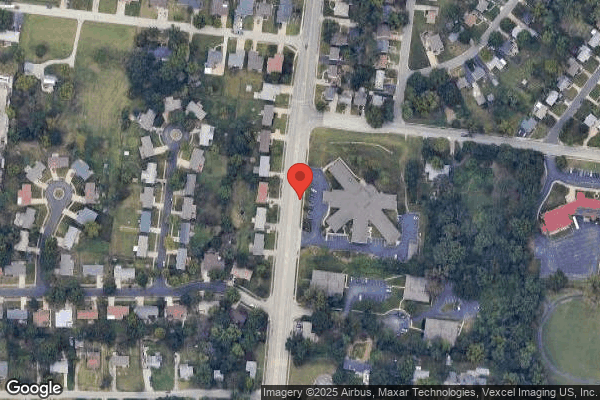
Nov 2019 8 deficiencies
CONCERN (D)

Potential for Harm - no one hurt, but risky conditions existed

ADL Care (Tag F0677)

Could have caused harm · This affected 1 resident

**NOTE- TERMS IN BRACKETS HAVE BEEN EDITED TO PROTECT CONFIDENTIALITY** Based on observation, interview and record review, the facility failed to ensure complete perineal care (peri-care, cleansing fr...

Read full inspector narrative →
**NOTE- TERMS IN BRACKETS HAVE BEEN EDITED TO PROTECT CONFIDENTIALITY** Based on observation, interview and record review, the facility failed to ensure complete perineal care (peri-care, cleansing from the front of the hips, in between the legs and buttocks to the back of the hips) was provided for two of two care observations (Residents #38 and #28). The census was 58. Review of the facility's undated peri-care procedure, showed: -Procedure: Expose the perineal area. Start at the top of the groin and wash down one side of the outer groin tissue, turn the wash cloth and wash the other side of the outer groin. Turn the wash cloth again and wash down the middle of the peri area in a downward motion and front to back manner. Obtain a clean wash cloth and continue cleaning down the legs as needed. Dry the peri area. Roll the resident onto one side and continue washing soiled and wet areas from front to back. 1. Review of Resident #38's significant change Minimum Data Set (MDS) a federally mandated assessment instrument completed by facility staff, dated 9/10/19, showed: -Severe cognitive impairment; -Extensive staff assistance needed for toileting, hygiene and bathing; -Diagnoses of dementia; -Always incontinent of bowel and bladder. Review of the resident's care plan, dated 9/25/18, showed: -Problem: The resident is at risk for complications related to incontinence; -Goal: The resident will be kept clean, dry and odor free; -Approach: Assist the resident with toileting and hygiene as needed, monitor for symptoms of infection and provide incontinence products if needed. During an observation and interview on 11/5/19 at 7:13 A.M., Certified Nurse Aide (CNA) E entered the resident's room washed his/her hands and applied gloves. The resident lay in bed and wore a brief. CNA E unfastened the urine saturated brief and a strong urine odor was noted. CNA E filled a bath basin with soapy water, placed several washcloths into the basin and placed the basin on the resident's dresser. CNA E obtained a washcloth from the basin, cleaned the front of the resident's groin in a front to back motion and changed sections of the washcloth after each wipe. CNA E disposed of the wash cloth, obtained a second soapy washcloth, separated the front groin skin folds and cleaned in a front to back fashion and changed sections of the washcloth. CNA E assisted the resident onto his/her side and exposed the buttocks and washed from the resident's mid back down toward and in between the legs, from the rectal area towards the urinary and genital area. He/she did not clean the resident's buttocks and hips. He/she disposed of the washcloth and used a dry washcloth and dried the lower back, buttocks and in between the resident's legs. CNA E applied a clean brief under the resident and fastened the brief into place. CNA E said he/she did not realize that he/she cleaned the resident's back and down toward the peri area. Peri care should be done in a front to back motion. All areas of the buttocks and hips should be cleaned when the resident had been incontinent. 2. Review of Resident #28's quarterly MDS, dated [DATE], showed: -Severe cognitive impairment; -Total staff assistance with toileting, hygiene and bathing; -Diagnoses of dementia and vascular disease. Review of the resident's care plan, dated 3/10/17, showed: -Problem: The resident is incontinent of bowel and bladder and dependent on staff for perineal care; -Goal: To be clean, dry and odor free; -Approach: Staff to apply incontinence briefs, provide good perineal care and apply skin barrier cream after each incontinent episode, and change the resident after each incontinent episode. During an observation and interview on 11/4/19 at 1:41 P.M., CNA F assisted the resident into bed, and used gloved hands to unfasten the urine saturated brief. CNA F obtained approximately five washcloths from the bathroom, placed them into an empty bag, covered the wash clothes with warm water from the sink and placed the bag on the end of the resident's bed. CNA F obtained a washcloth from the bag with gloved hands and wiped the front groin three times in a front to back manner and disposed of the washcloth. CNA F obtained a dry washcloth and wiped the front groin in a front to back manner and disposed of the washcloth. CNA F assisted the resident onto his/her side and exposed the buttocks. The buttocks appeared red and irritated. CNA F removed his/her gloves and applied clean gloves. He/she obtained a wet washcloth and wiped in a front to back motion in between the buttocks. He/she did not clean the buttocks or the hips. CNA F obtained a dry washcloth and patted the skin between the buttocks and disposed of the washcloth. CNA F removed his/her gloves, applied gloves, and placed and secured a clean brief onto the resident. CNA F said he/she did not realize he/she cleaned the groin in a back and forth manner. The resident's brief had been urine saturated and he/she had forgotten to cleanse the buttocks and hips. 3. During an interview on 11/7/19 at 12:33 P.M., the Director of Nursing said peri-care should be done in a front to back manner, one wipe per swipe of the washcloth and a new section of the washcloth used with each wipe. If a resident had been incontinent, the entire perineal area should be cleaned, including the hips and buttocks. Stool or urine left on the skin could lead to irritation or skin breakdown.
CONCERN (D)

Potential for Harm - no one hurt, but risky conditions existed

Drug Regimen Review (Tag F0756)

Could have caused harm · This affected 1 resident

Based on interview and record review, the facility failed to ensure resident monthly pharmacy drug regimen recommendations were followed up on, for one out of six residents sampled for medication regi...

Read full inspector narrative →
Based on interview and record review, the facility failed to ensure resident monthly pharmacy drug regimen recommendations were followed up on, for one out of six residents sampled for medication regimen review (MRR) (Resident #39). In addition, the facility medication review policy failed to include the appropriate time frames for the different steps in the MRR process. The sample was 15. The census was 58. Review of the facility's undated Medication Regimen Review policy, showed: -The consultant pharmacist will review the medication regimen of each resident in sufficient detail to determine if any apparent irregularities exist. Federally mandated standards of care as well as other applicable standards serve as the basis for the review; -The review of the medication regimen will include all medications, including medications that are ordered on an as needed basis. The consultant pharmacist will report any apparent irregularities in writing to the attending physician, the director of nursing and the medical director; -In addition to the written communication to the attending physician and the director of nursing on a consultant pharmacist progress report form, a medication regimen review log will be maintained in the resident's clinical record; -Whether or not any apparent irregularities were found; -Pharmacist's signature; -Date the review was performed; -The facility is responsible for ensuring that all clinical records are available for review; -The consultant pharmacist is available to consult with prescribing physicians or the nursing staff regarding recommendations resulting from medication regimen reviews. It is the responsibility of the facility to assure that each recommendation results in a written response by either the physician or nurse, as appropriate; -The log should be kept as part of the resident's active clinical record to reflect at least 12 months of reviews; -The policy failed to include the appropriate time frames for the different steps in the MRR process. Review of Resident #39's electronic physician orders sheet (ePOS), dated 11/1/19 through 11/30/19, showed an order, dated 3/4/19, for hydrocodone-acetaminophen (narcotic pain medication combined with Tylenol) oral tablet 5-325 milligram (mg). Give one tablet by mouth every 4 hours as needed for pain. Review of the resident's monthly medication reviews (MMR), dated 9/5/19 and 10/2/19, showed: -Resident has an order for hydrocodone-acetaminophen 5-325 mg every 4 hours as needed that has not been administered in the last 90 days per electronic medication record (eMAR). Recommend reviewing the order and consider discontinuing due to non-use; -No documentation from the physician to address the recommendations; -No documentation in the progress notes to show follow-up. Review of the resident's quarterly Minimum Data Set (MDS), a federally mandated assessment instrument completed by facility staff, dated 9/11/19, showed: -Moderate cognitive impairment; -Diagnoses included seizure disorder and depression; -Section N 2001: Drug Regimen Review completed: noted as blank; -Section N 2003: Medication follow up: selected as not assessed or no information. During an interview on 11/6/19 at 2:00 P.M., the assistant director of nursing (ADON) said the pharmacist completes the monthly reviews and turns them in to her. She will then enter into the resident's chart in the notes what the recommendation is or what the physician orders. She confirmed no notes had been found regarding follow-up from the physician for the recommendations. The MDS should reflect accuracy of the MMR review and recommendations. During an interview on 11/7/19 at 8:04 A.M., the Director of Nursing (DON) said the physician reviews the pharmacy recommendations during the monthly visits. If the recommendation is a gradual dose reduction, the recommendation is sent to the psych doctor, who visits the facility quarterly. If the physician agrees with the recommendation, the nurse updates the order in the electronic medical record. The DON and the ADON are responsible for ensuring the pharmacy recommendations are seen by the physician and the recommendations are followed through.
CONCERN (D)

Potential for Harm - no one hurt, but risky conditions existed

Medical Records (Tag F0842)

Could have caused harm · This affected 1 resident

Based on interview and record review, the facility failed to ensure complete and accurately documented medical records for one of 15 sampled residents (Resident #28) identified as receiving one to one...

Read full inspector narrative →
Based on interview and record review, the facility failed to ensure complete and accurately documented medical records for one of 15 sampled residents (Resident #28) identified as receiving one to one activities. The facility did not provide documentation of individualized one to one activities, what kind of activity was provided and length of time the activity was provided. The census was 58. Review of the facility's activity assessment policy, revised 10/2009, showed: -Policy: In order to promote the physical, mental and psychosocial wellbeing of residents, an activity assessment is conducted and maintained for each resident; -Policy interpretation and Implementation: -The resident's assessment will be conducted by the activity department personnel, in conjunction with other staff who will assess related factors such as functional level, cognition and medical conditions that may affect activities participation. The resident's lifelong interests, spirituality, life roles, goals, strengths, needs and activity pursuit patterns and preferences will be included in the assessment; -The nursing staff will communicate with a resident's physician to discuss and address medical conditions or medications that may affect a resident's participation in activities (for example the level of pain, scheduling of medication that affect alertness, or the need for supplemental oxygen so a resident can participate more comfortably in an activity involving movement); -The activity assessment is used to develop an individual activities care plan (separate from or as part of the comprehensive care plan) that will allow the resident to participate in activities of his/her choice and interest; -Each resident's activities care plan shall relate to his/her comprehensive assessment and should reflect his/her individual needs; -The activity assessment and activities care plan will identify if a resident is capable of pursuing activities without intervention from the facility; -The completed activity assessment will be part of the resident's medical record and shall be updated as necessary, but at least annually. Review of Resident #28's quarterly activity assessment, dated 8/23/18, showed: -The resident is on hospice and receives one on one activities on a continuous basis. One on one encompasses hand holding, conversation and reading. Will speak when spoken to, continue support encouragement; -No further assessments noted in the record. Review of the resident's undated care plan, in use during the survey, showed no activity assessment or preferences identified. During an interview on 11/6/19 at 8:45 A.M., the activities director said that the facility had five residents who received one to one activities. She provides one to one activities with the room bound residents. She does not document in the resident's record what type, duration or resident response to weekly one to one activities provided to those residents.
CONCERN (D)

Potential for Harm - no one hurt, but risky conditions existed

Deficiency F0849 (Tag F0849)

Could have caused harm · This affected 1 resident

Based on interview and record review, the facility failed to develop a coordinated plan of care for residents receiving hospice services and maintain required hospice records onsite at the facility. T...

Read full inspector narrative →
Based on interview and record review, the facility failed to develop a coordinated plan of care for residents receiving hospice services and maintain required hospice records onsite at the facility. The facility identified five residents who elected hospice services and all five were included in the sample. Issues were found with two of the five residents (Residents #28 and #225). The census was 58. 1. Review of Resident #28's hospice binder, showed: -admitted to hospice services on 3/12/16; -Hospice admission diagnosis: Malignant melanoma (cancer) of the face. Review of the resident's Quarterly Minimum Data Set (MDS), a federally mandated assessment instrument completed by facility staff, dated 8/22/19, showed: -Severe cognitive impairment; -Diagnoses of melanoma and dementia; -Received hospice services. Review of the resident's hospice aide care plan, located in the hospice binder and updated on 9/11/19, showed: -The resident is dependent on staff for all activities of daily living (ADLs) and is unable to make any needs known, receives a shower every Tuesday and Friday. Hospice aide to change bed linen on the resident's shower days, and clean patient's Broda chair (reclining, padded wheelchair) on Friday. Hospice aide to provide gentle range of motion with each visit; -The care plan did not include services provided by licensed nurses, when licensed nurses visit and what durable medical equipment hospice supplied to the resident. Review of the resident's facility care plan, in use at the time of the survey, showed: -Problem: The resident has the potential for grief, withdrawal, anxiety or depression related to enrollment in hospice care; -Goal: Staff to ensure privacy and dignity and maintain the resident to be pain free; -Approach: Staff to work closely with hospice and ensure the resident received the best care possible, and maintain dignity and respect. Assess the resident's spiritual needs and arrange visits with clergy if desired, and allow the resident to discuss feelings; -The care plan did not address hospice nurse visits or duties, hospice aide visits or duties, hospice social worker or clergy visits and did not address equipment provided by the elected hospice provider. 2. Review of Resident #225's base line care plan, dated 11/3/19 and in use during the survey, showed hospice services provided. Review of the resident's medical record, showed the following: -admitted to hospice services on 10/30/19; -Hospice admission diagnosis: Dementia; -The hospice binder, showed no certification of terminal illness, nor the coordination of care for hospice for the resident. During an interview on 11/6/19 at 11:25 A.M., the assistant director of nursing said the facility does not have the resident's hospice documentation. His/her family was going to take him/her home but they changed their mind. She will have to call over to the hospice company to get it. 3. During an interview on 11/7/19 at 10:43 A.M., the Director of Nursing said hospice services is part of the medical record and the resident's orders should reflect what the resident is receiving as far as services, medications and equipment. The care plans should reflect what the hospice provider is supplying to the resident.
CONCERN (D)

Potential for Harm - no one hurt, but risky conditions existed

Infection Control (Tag F0880)

Could have caused harm · This affected 1 resident

**NOTE- TERMS IN BRACKETS HAVE BEEN EDITED TO PROTECT CONFIDENTIALITY** Based on observation, interview and record review, facility staff failed to follow the hand hygiene policy and prevent the poten...

Read full inspector narrative →
**NOTE- TERMS IN BRACKETS HAVE BEEN EDITED TO PROTECT CONFIDENTIALITY** Based on observation, interview and record review, facility staff failed to follow the hand hygiene policy and prevent the potential spread of contaminates during personal care by failing to change gloves and wash hands for two of two care observations (Residents #28 and #38). The census was 58. Review of the facility's handwashing/hand hygiene policy, revised 10/2009, showed: -Purpose: To provide guidelines for effective hand washing and hygiene techniques that will aid in the prevention of the transmission of infections; -Objective: To prevent and control the spread of infectious diseases; -General Guidelines: Approximate 10 to 15 second handwashing with antimicrobial or non-antimicrobial soap and water must be performed under the following conditions: When hands are visibly dirty, before and after resident contact (for which hand hygiene is indicated by acceptable professional practice), before and after assisting resident with personal care (oral care, bathing), before and after assisting a resident to the toilet (hand wash with soap and water), after contact with a resident's mucous membranes and body fluids or excretions, after removing gloves and after completing duties; -In most situations, the preferred method of hand hygiene is with an alcohol based hand rub. If hands are not visibly soiled, use an alcohol based hand rub for all the following situations: before and after direct contact with residents, before moving from a contaminated body site to a clean body site during resident care, after contact with the resident's skin and after removing gloves; -Hand hygiene is always the final step after removing and disposing of personal protective equipment. 1. Review of Resident #28's quarterly Minimum Data Set (MDS), a federally mandated assessment instrument completed by facility staff, dated 8/22/19, showed: -Severe cognitive impairment; -Total staff assistance with toileting, hygiene and bathing; -Diagnoses of dementia and vascular disease. Review of the resident's care plan, dated 3/10/17, showed: -Problem: The resident is incontinent of bowel and bladder and is dependent on staff for perineal care; -Goal: To be clean, dry and odor free; -Approach: Staff to apply incontinence briefs, provide good perineal care (peri-care, cleansing from the front of the hips, in between the legs and buttocks to the back of the hips) and apply skin barrier cream after each incontinent episode, and change the resident after each incontinent episode. During an observation and interview on 11/4/19 at 1:41 P.M., Certified Nurse Aide (CNA) F assisted the resident to bed. He/she used gloved hands to remove the resident's pants and removed a urine saturated brief. CNA F used the same gloved hands and placed approximately five wet washcloths from the bathroom sink into a bag and placed the bag on the foot of the resident's bed. CNA F used the same gloved hands, obtained a washcloth from the bag, cleaned the front groin and disposed of the wash cloth. CNA F used the same gloved hands, obtained a dry washcloth, wiped the front groin dry and disposed of the washcloth. CNA F used the same gloved hands and assisted the resident onto his/her side and exposed the buttocks. CNA F removed his/her gloves and applied clean gloves. He/she did not wash or sanitize his/her hands before he/she applied clean gloves. CNA F used the gloved hands and obtained a wet washcloth and wiped in between the buttocks. He/she used the same gloved hands and obtained a dry washcloth, patted the skin between the buttocks and disposed of the washcloth. CNA F removed his/her gloves, applied clean gloves and applied barrier ointment to the resident's buttocks. CNA F did not wash his/her hands or use hand sanitizer in between glove changes. CNA F said that he/she had forgotten to wash his/her hands between glove changes. He/she added that hands should be washed in between glove changes to ensure infections do not spread. 2. Review of Resident #38's significant change MDS, dated [DATE], showed: -Severe cognitive impairment; -Extensive staff assistance needed for toileting, hygiene and bathing; -Diagnosis of dementia; -Always incontinent of bowel and bladder. Review of the resident's care plan, dated 9/25/18, showed: -Problem: The resident is at risk for complications related to incontinence; -Goal: The resident will be kept clean, dry and odor free; -Approach: Assist the resident with toileting and hygiene as needed, monitor for symptoms of infection and provide incontinence products if needed. During an observation and interview on 11/5/19 at 7:13 A.M., CNA E entered the resident's room, washed his/her hands and applied gloves. CNA E unfastened the resident's urine saturated brief and pulled the sheet over the resident. CNA E used the same gloved hands and filled a bath basin with soapy water, placed several washcloths into the basin, and placed the basin on the resident's dresser. CNA E used the same gloved hand, obtained a washcloth from the basin and cleaned the front groin. CNA E disposed of the wash cloth and used the same gloved hands to obtain a second soapy washcloth from the basin and continued to cleanse the front groin. CNA E used the same gloved hands and assisted the resident onto his/her side and exposed the buttocks. He/she then obtained a wash cloth from the basin and washed the resident's mid back down toward the middle of the resident's legs. CNA E disposed of the washcloth, and used the same gloved hands to obtain a clean, dry washcloth and dried the lower back, buttocks and in between the resident's legs. CNA E did not change his/her gloves or wash or sanitize his/her hands during or in between care areas. CNA E removed his/her gloves, applied clean gloves and placed a clean brief under the resident and fastened the brief into place. CNA E said he/she did not realize he/she had not changed his/her gloves or failed to wash or sanitize his/her hands. Gloves should be changed before reaching into soapy water and touching clean wash cloths. Hands should be washed or gloves should be changed when moving to different areas of the resident's body to help reduce the spread of germs. 3. During an interview on 11/7/19 at 12:33 P.M., the Director of Nursing said gloves should be changed when moving from a dirty to a clean task. Gloves should be changed before obtaining wash cloths from a bath basin and before touching clean areas of the resident. Changing gloves and hand washing can help reduce the potential spread of infections.
CONCERN (E)

Potential for Harm - no one hurt, but risky conditions existed

Deficiency F0582 (Tag F0582)

Could have caused harm · This affected multiple residents

**NOTE- TERMS IN BRACKETS HAVE BEEN EDITED TO PROTECT CONFIDENTIALITY** Based on interview and record review, the facility failed to issue a Notice of Medicare Non-Coverage (NOMNC) for three of three ...

Read full inspector narrative →
**NOTE- TERMS IN BRACKETS HAVE BEEN EDITED TO PROTECT CONFIDENTIALITY** Based on interview and record review, the facility failed to issue a Notice of Medicare Non-Coverage (NOMNC) for three of three sampled residents (Resident #20, #31, and #105) who remained in the facility upon discharge from Medicare A services for rehabilitation. The facility census was 58. 1. Review of the Centers for Medicare and Medicaid Services Survey and Certification memo (S&C-09-20), dated 1/9/09, showed the following: -The Notice of Medicare Provider Non-Coverage (NOMNC, form CMS-10123) is issued when all covered Medicare services end for coverage reasons; -If the skilled nursing facility (SNF) believes on admission or during a resident's stay that Medicare will not pay for skilled nursing or specialized rehabilitative services and the provider believes that an otherwise covered item or service may be denied as not reasonable or necessary, the facility must inform the resident or his/her legal representative in writing why these specific services may not be covered and the beneficiary's potential liability for payment for the non-covered services. The SNF's responsibility to provide notice to the resident can be fulfilled by the use of either the SNFABN (form CMS-10055) or one of the five uniform denial letters; -The SNFABN provides an estimated cost of items or services in case the beneficiary had to pay for them him/herself or through other insurance they may have; and -If the SNF provides the beneficiary with either the SNFABN or a denial letter at the initiation, reduction, or termination of Medicare Part A benefits, the provider has met is obligation to inform the beneficiary of his/her potential liability for payment and related standard claim appeal rights. Issuing the NOMNC to a beneficiary only conveys notice to the beneficiary of his/her right to an expedited review of a service termination. 2. Review of Resident #20's medical record, showed: -Medicare Part A skilled services start date of 5/8/19 and end date of 7/31/19; -The facility initiated a discharge on [DATE] from Medicare Part A Services; -There was no NOMNC form issued. 3. Review of Resident #31's medical record, showed: -Medicare Part A skilled services start date of 2/18/19 and end date of 6/1/19; -The facility initiated a discharge on [DATE] from Medicare Part A Services; -There was no NOMNC form issued. 4. Review of Resident #105's medical record, showed: -Medicare Part A skilled services start date of 4/2/19 and end date of 5/21/19; -The facility initiated a discharge on [DATE] from Medicare Part A Services; -There was no NOMNC form issued. 5. During an interview on 11/5/19 at 4:25 P.M., the Director of Social Services said he/she was told during a corporate training that the facility no longer had to issue a NOMNC. They only had to issue an Advanced Beneficiary Notice (ABN). On 11/7/19 at 11:16 A.M., he/she could not find the information that was provided that stated facility did not have to issue the NOMNC; however, he/she will issue the ABN and NOMNC going forward. 6. During an interview on 11/07/19 at 12:06 P.M., the administrator said he would expect the residents to be issued a NOMNC and ABN prior to discharge.
CONCERN (E)

Potential for Harm - no one hurt, but risky conditions existed

Deficiency F0730 (Tag F0730)

Could have caused harm · This affected multiple residents

Based on interview and record review, the facility failed to ensure four of four randomly selected certified nurse aides (CNA) received the required annual 12 hour resident care training. The census w...

Read full inspector narrative →
Based on interview and record review, the facility failed to ensure four of four randomly selected certified nurse aides (CNA) received the required annual 12 hour resident care training. The census was 58. Review of the CNA individual in-service records, showed the following: -CNA A hired 9/12/13, with 0 hours of in-service education; -CNA B hired 3/9/01, with 0 hours of in-service education; -CNA C hired 8/1/05, with 0 hours of in-service education; -CNA D hired 3/3/17, with 0 hours of in-service education. Review of the facility assessment, showed the facility is required to develop, implement and maintain an effective training program for all new and existing staff; individuals providing services under a contractual arrangement; and volunteers, consistent with their expected roles. A facility must determine the amount and types of training necessary based on a facility assessment as specified. During an interview on 11/5/19 at 3:07 P.M., the Assistant Director of Nursing (ADON) confirmed that there were four CNAs who have been employed for more than one year and was not able to find the training binder for the CNA 12 hour in-services. The ADON and Director of Nursing (DON) confirmed they both are responsible for training and keeping track of training hours.
MINOR (C)

Minor Issue - procedural, no safety impact

Deficiency F0577 (Tag F0577)

Minor procedural issue · This affected most or all residents

Based on observation, interview and record review, the facility failed to make available in a place readily accessible to residents, family members and legal representatives of residents, deficiencies...

Read full inspector narrative →
Based on observation, interview and record review, the facility failed to make available in a place readily accessible to residents, family members and legal representatives of residents, deficiencies resulting from any subsequent complaint investigation since the most recent survey and the associated plan of correction. The census was 58. Observation on all days of the survey, 11/4, 11/5, 11/6, and 11/7/19, showed the facility's previous survey results, maintained in a binder on a desk at the side entrance to the building with a sign to refer to administration for previous surveys. Review of the survey binder, showed the most recent annual survey, dated 1/30/19, with the plan of correction. The survey binder also showed one previous survey, dated 3/20/18, with the plan of correction. The survey binder did not include any information regarding the complaint investigation with resulting deficiencies and the associated plan of correction, dated 8/6/19. During an interview on 11/7/19 at 12:02 P.M., the administrator said he was aware the most recent survey results should be available; however, he was not aware the complaint investigations should also be in the binder.
Understanding Severity Codes (click to expand)
Life-Threatening (Immediate Jeopardy)
J - Isolated K - Pattern L - Widespread
Actual Harm
G - Isolated H - Pattern I - Widespread
Potential for Harm
D - Isolated E - Pattern F - Widespread
No Harm (Minor)
A - Isolated B - Pattern C - Widespread

Questions to Ask on Your Visit

  • "What changes have you made since the serious inspection findings?"
  • "What safeguards are in place to prevent abuse and neglect?"
  • "Can I speak with families of current residents?"
  • "What's your RN coverage like on weekends and overnight?"

Our Honest Assessment

Strengths
  • • Licensed and certified facility. Meets minimum state requirements.
Concerns
  • • Multiple safety concerns identified: Federal abuse finding, 4 life-threatening violation(s), 2 harm violation(s), $207,954 in fines, Payment denial on record. Review inspection reports carefully.
  • • 60 deficiencies on record, including 4 critical (life-threatening) violations. These warrant careful review before choosing this facility.
  • • $207,954 in fines. Extremely high, among the most fined facilities in Missouri. Major compliance failures.
  • • Grade F (0/100). Below average facility with significant concerns.
Bottom line: This facility has a substantiated abuse finding. Extreme caution advised. Explore alternatives.

About This Facility

What is Bentleys Extended Care's CMS Rating?

CMS assigns BENTLEYS EXTENDED CARE an overall rating of 1 out of 5 stars, which is considered much below average nationally. Within Missouri, this rating places the facility higher than 0% of the state's 100 nursing homes. A rating at this level reflects concerns identified through health inspections, staffing assessments, or quality measures that families should carefully consider.

How is Bentleys Extended Care Staffed?

CMS rates BENTLEYS EXTENDED CARE's staffing level at 1 out of 5 stars, which is much below average compared to other nursing homes.

What Have Inspectors Found at Bentleys Extended Care?

State health inspectors documented 60 deficiencies at BENTLEYS EXTENDED CARE during 2019 to 2025. These included: 4 Immediate Jeopardy (the most serious level, indicating potential for serious harm or death), 2 that caused actual resident harm, 53 with potential for harm, and 1 minor or isolated issues. Immediate Jeopardy findings are rare and represent the most serious regulatory concerns. They require immediate corrective action.

Who Owns and Operates Bentleys Extended Care?

BENTLEYS EXTENDED CARE is owned by a for-profit company. For-profit facilities operate as businesses with obligations to shareholders or private owners. The facility operates independently rather than as part of a larger chain. With 72 certified beds and approximately 51 residents (about 71% occupancy), it is a smaller facility located in OVERLAND, Missouri.

How Does Bentleys Extended Care Compare to Other Missouri Nursing Homes?

Compared to the 100 nursing homes in Missouri, BENTLEYS EXTENDED CARE's overall rating (1 stars) is below the state average of 2.5 and health inspection rating (1 stars) is much below the national benchmark.

What Should Families Ask When Visiting Bentleys Extended Care?

Based on this facility's data, families visiting should ask: "What changes have been made since the serious inspection findings, and how are you preventing similar issues?" "What safeguards and monitoring systems are in place to protect residents from abuse or neglect?" "Can you walk me through typical staffing levels on day, evening, and night shifts?" "Can I visit during a mealtime to observe dining assistance and food quality?" These questions are particularly relevant given the facility's Immediate Jeopardy citations, the substantiated abuse finding on record, and the below-average staffing rating.

Is Bentleys Extended Care Safe?

Based on CMS inspection data, BENTLEYS EXTENDED CARE has documented safety concerns. The facility has 1 substantiated abuse finding (meaning confirmed case of resident harm by staff or other residents). Inspectors have issued 4 Immediate Jeopardy citations (the most serious violation level indicating risk of serious injury or death). The facility has a 1-star overall rating and ranks #100 of 100 nursing homes in Missouri. Families considering this facility should ask detailed questions about what corrective actions have been taken since these incidents.

Do Nurses at Bentleys Extended Care Stick Around?

BENTLEYS EXTENDED CARE has not reported staff turnover data to CMS. Staff turnover matters because consistent caregivers learn residents' individual needs, medications, and preferences. When staff frequently change, this institutional knowledge is lost. Families should ask the facility directly about their staff retention rates and average employee tenure.

Was Bentleys Extended Care Ever Fined?

BENTLEYS EXTENDED CARE has been fined $207,954 across 20 penalty actions. This is 5.9x the Missouri average of $35,158. Fines at this level are uncommon and typically indicate a pattern of serious deficiencies, repeated violations, or failure to correct problems promptly. CMS reserves penalties of this magnitude for facilities that pose significant, documented risk to resident health or safety. Families should request specific documentation of what issues led to these fines and what systemic changes have been implemented.

Is Bentleys Extended Care on Any Federal Watch List?

BENTLEYS EXTENDED CARE is not on any federal watch list. The most significant is the Special Focus Facility (SFF) program, which identifies the bottom 1% of nursing homes nationally based on persistent, serious quality problems. Not being on this list means the facility has avoided the pattern of deficiencies that triggers enhanced federal oversight. This is a positive indicator, though families should still review the facility's inspection history directly.