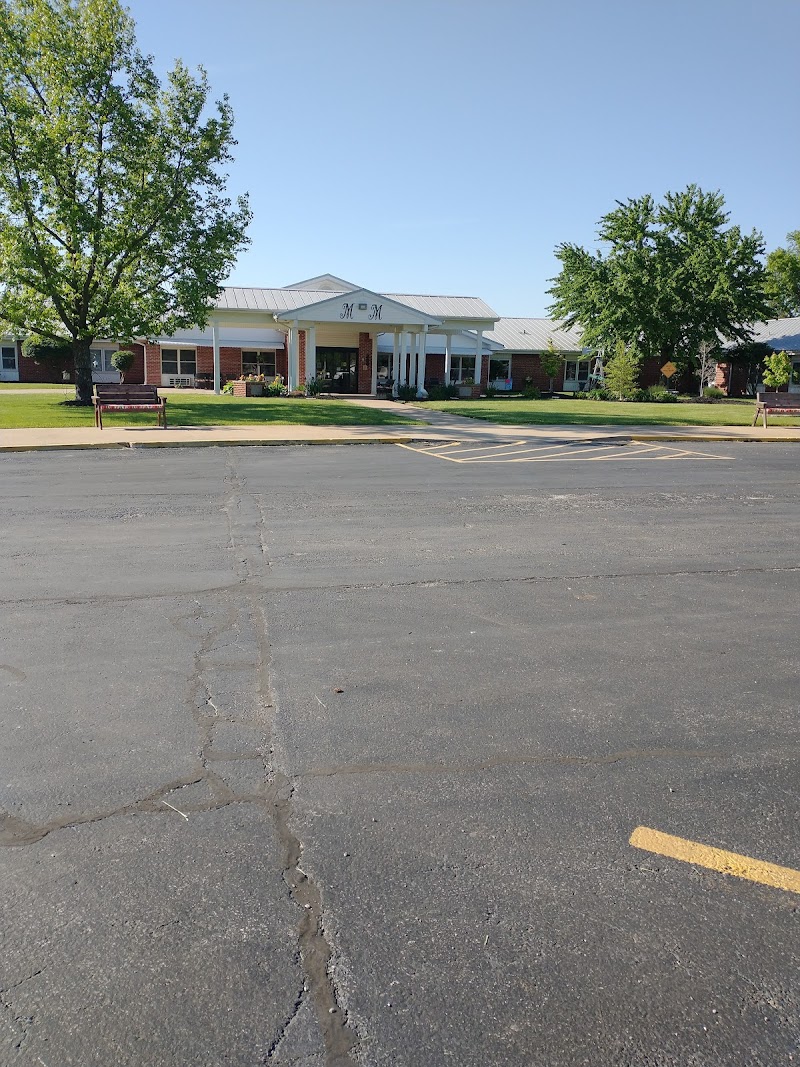
MONROE MANOR

200 SOUTH ST, PARIS, MO 65275 (660) 327-4125
Government - County 119 Beds Independent Data: November 2025
Trust Grade
45/100
#173 of 479 in MO
Last Inspection: March 2024

Within standard 12-15 month inspection cycle. Federal law requires annual inspections.

Overview

Monroe Manor in Paris, Missouri has a Trust Grade of D, which means it is below average and has some notable concerns. It ranks #173 out of 479 facilities in the state, placing it in the top half, and is the only nursing home in Monroe County. The facility is showing improvement in its issues, having reduced the number of problems from 4 in 2024 to 1 in 2025. Staffing is a significant concern with a low rating of 2 out of 5 stars and a turnover rate of 77%, much higher than the state average. There have been $35,360 in fines, which is average for the state, but the facility has less registered nurse coverage than 78% of Missouri facilities, raising worries about oversight in care. Specific incidents include a resident who fell and fractured a hip due to inadequate monitoring of fall prevention measures, and another resident who did not receive proper hand hygiene, risking infection due to touching food items. Additionally, care protocols were not followed for multiple residents, including failing to complete necessary skin assessments and lab tests. While there are strengths, such as good health inspection ratings, these weaknesses highlight the need for families to carefully consider the overall quality of care at Monroe Manor.

Trust Score
D
45/100
In Missouri
#173/479
Top 36%
Safety Record
Moderate
Needs review
Inspections
Getting Better
4 → 1 violations
Staff Stability
⚠ Watch
77% turnover. Very high, 29 points above average. Constant new faces learning your loved one's needs.
Penalties
○ Average
$35,360 in fines. Higher than 52% of Missouri facilities. Some compliance issues.
Skilled Nurses
⚠ Watch
Each resident gets only 15 minutes of Registered Nurse (RN) attention daily — below average for Missouri. Fewer RN minutes means fewer trained eyes watching for problems.
Violations
⚠ Watch
13 deficiencies on record. Higher than average. Multiple issues found across inspections.
★★★☆☆
3.0
Overall Rating
★★☆☆☆
2.0
Staff Levels
★☆☆☆☆
1.0
Care Quality
★★★★☆
4.0
Inspection Score
Stable
2024: 4 issues
2025: 1 issues

The Good

  • Full Sprinkler Coverage · Fire safety systems throughout facility
  • No fines on record

Facility shows strength in fire safety.

The Bad

3-Star Overall Rating

Above Missouri average (2.5)

Meets federal standards, typical of most facilities

Staff Turnover: 77%

30pts above Missouri avg (46%)

Frequent staff changes - ask about care continuity

Federal Fines: $35,360

Above median ($33,413)

Moderate penalties - review what triggered them

Staff turnover is very high (77%)

29 points above Missouri average of 48%

The Ugly 13 deficiencies on record

1 actual harm
Jan 2025 1 deficiency
CONCERN (E) 📢 Someone Reported This

A family member, employee, or ombudsman was alarmed enough to file a formal complaint

Potential for Harm - no one hurt, but risky conditions existed

Infection Control (Tag F0880)

Could have caused harm · This affected multiple residents

**NOTE- TERMS IN BRACKETS HAVE BEEN EDITED TO PROTECT CONFIDENTIALITY** Based on observation, interview, and record review, the facility failed to ensure staff monitored and provided hand hygiene for ...

Read full inspector narrative →
**NOTE- TERMS IN BRACKETS HAVE BEEN EDITED TO PROTECT CONFIDENTIALITY** Based on observation, interview, and record review, the facility failed to ensure staff monitored and provided hand hygiene for one resident (Resident #6), in a review of ten sampled residents. Resident #6 had diagnosis of dementia and was incontinent of bowel and bladder. The resident wandered and continually placed his/her hands in his/her pants and fondled his/her genitalia. Resident #6 touched multiple items on the unit including a resident's meal tray, food items, drinking glasses, and a water pitcher on a medication cart without appropriate hand hygiene. The facility census was 80. Review of the undated facility policy, Hand Hygiene, showed the following: -When to use soap and water: -When hands are visibly dirty or visibly soiled with blood or other body fluids; -Before eating and after using the restroom; -After approximately 10 uses of Alcohol-based hand gel or hands feel tacky from use hand gel; -When to use alcohol-based hand gel: -Before and after resident contact; -After body fluid exposure or contact with other inanimate objects. 1. Review of Resident #6's undated face sheet showed the following: -He/She admitted to the facility on [DATE]; -He/She had diagnoses of Alzheimer's disease, unspecified, (progressive and debilitating disease that caused severe cognitive decline and affected ability to function in daily life) and Alzheimer's disease with early onset (diagnosed before the age of 65). Review of the resident's progress notes showed staff documented the following: -12/06/24 at 12:30 P.M., the resident was up ambulating in the unit, was incontinent of bowel and bladder, wandered in and out of other resident's rooms and grabbed other resident's belongings and carried them around; -12/07/24 at 2:08 A.M., the resident needed frequent continuous redirection, wandered in and out of other resident's rooms taking things and was incontinent of bowel and bladder functions; -12/07/24 at 11:29 A.M., the resident was up wandering in the dining room, was difficult to redirect from taking other resident's lunch items; -12/09/24 at 3:35 P.M., the resident was up wandering around the dining room, living room and hallway; had hands in his/her pants constantly touching genitals, removed food from other residents during meal time and resident must be observed closely. Review of the resident's admission Minimum Data Set (MDS), a federally mandated assessment instrument, completed by facility staff, dated 12/11/2024, showed the following: -His/Her cognition was severely impaired; -The resident had daily behaviors not directed toward others (e.g. physical symptoms such as scratching self, pacing, rummaging, public sexual acts, or throwing or smearing food or bodily waste); -The resident wandered daily; -The resident was dependent on staff for hygiene; -The resident was frequently incontinent of bowel and bladder; -The resident was independent with mobility and walking. Review of the resident's progress notes showed staff documented the following: -On 12/17/24 at 10:13 A.M., the resident exhibited behaviors such as feces on hands and wandering into other residents' rooms; -On 12/18/24 at 6:13 P.M., the resident exhibited behaviors including wandering, attempting to go into open rooms and pick up items, constantly having his/her hand in his/her pants touching genitals, and required one on one supervision. Review of the resident's care plan, revised 12/20/2024, showed the following: -The resident wears a carpenter's apron at times for distraction from keeping his/her hands in his/her pants related to Alzheimer's; -He/She has socially inappropriate/disruptive behavior symptoms as evidenced by going into other resident's rooms, often puts his/her hands in pants touching genitals. Attempt to divert behavior by one on one conversation, walk with resident up and down halls, provide toileting, drinks, snacks, sensory items, magazine, book, TV, music; Dress in clothing that is difficult to remove; -Provide toileting assistance at least every two hours and as needed (PRN). -There were no interventions in the care plan to address the resident's hand hygiene related to the resident's behavior of continually touching his/her genitals. Review of the resident's progress notes showed staff documented the following: -On 12/23/24 at 6:11 P.M., the resident wandering into other residents' rooms and around noon, wandered into a resident's room and sat down and began eating that resident's lunch. Apron, belt, and jeans have not been successful in keeping the resident's hand out of his/her pants and fondling genitals; -On 12/24/20 at 5:46 P.M., the resident continued to wander into other residents' rooms (opened and closed doors), picking up items that do not belong to him/her; wearing the jeans, belt, and apron do not prevent the resident from keeping the resident's hand out of his/her pants and fondling genitals; incontinent of bowel and bladder; difficult to toilet; -On 12/30/24 at 2:55 P.M., he resident continued to wander into other residents' rooms; continues to have his/her hand down his/her pants fondling genitals; took food from other resident's trays at mealtime and staff must observe closely; -On 12/31/24 at 6:49 P.M., the resident continued to wander, go into other residents' rooms and take items, continues to have his/her hands in his/her pants fondling genitals; -On 01/06/25 at 6:39 P.M., the resident continued to wander into other residents' rooms and pick up items; continues to put hands in pants and fondles genitals despite any attempts to prevent; -On 01/07/25 at 6:50 P.M., the resident wandered with feces on his/her hand, the resident threw feces across the floor. Continued to wander with hand down his/her pants fondling genitals and into other residents' rooms picking up random objects. Observation of the resident on 01/13/25 showed the following: -At 2:30 P.M., the resident wandered around the unit, wearing jeans and a carpenter belt with his/her hand down his/her pants fondling his/her genitals. No staff redirected the resident or intervened to provide hand hygiene; -At 2:39 P.M., the resident grabbed Resident #4's stuffed animal and put it in his/her mouth; -At 2:40 P.M., staff handed Resident #4 his/her stuffed animal back without cleaning it first and did not assist Resident #6 with hand hygiene; -At 3:00 P.M., the resident walked on the unit with his/her hands in his/her pants, walking up behind Resident #10 and touched Resident #10's shoulders. Housekeeper C observed this and consoled Resident #10 as he/she appeared afraid, but did not wash Resident #6's hands or alert care staff that Resident #6's hands needed to be washed. Resident #6 continued to walk with his/her hands in his/her pants, removed his hand, touched bread in a sack on a dining room table and then touched a bag of bread near the coffee pot. No staff redirected the resident or intervened to provide hand hygiene. Observation of the resident on 01/14/25 at 10:20 A.M., showed he/she wandered up and down the hall with his/her hand down his/her pants. He/She walked up to the medication cart near the nurse's station, and picked up a pitcher of water. Certified Medication Technician (CMT) E removed the pitcher from the resident's hand and placed it back on the medication cart without cleaning or replacing the water pitcher. CMT E did not assist the resident to provide hand hygiene and CMT E did not perform hand hygiene after touching the same water pitcher. 2. During an interview on 01/13/2025 at 4:10 P.M., Resident #1 said the following: -Due to Resident #6's behaviors, including having his/her hands in his/her pants and then putting his/her hands all over the glasses and silverware on the tables at meal times, he just tried to stay in his/her room and has meals delivered to his/her room; -Resident #6 came into his/her room, sat down in his/her chair and stuck his/her fingers into his/her food while he/she was eating; he/she did not like that because he/she knew where Resident #6's hands had been; -Resident #6 always has his/her hands down the front of his/her pants. 3. During an interview on 01/13/2025 at 6:15 P.M., CMT D said it was very difficult keeping things sanitized after Resident #6 had his/her hands down his/her pants and then touched things. During an interview on 01/14/2025 at 10:05 A.M., CMT E said the following: -He/She could not always watch Resident #6; -Resident #6 touched himself/herself inappropriately; -If he/she was not constantly watching Resident #6, he/she went into other resident's rooms, picked things up and carried them away. During an interview on 01/14/2025 at 10:20 A.M., CMT F said Resident #6 kept his/her hands down his/her pants and constantly touched things. It was hard to keep things sanitized. During an interview on 1/13/2025 at 2:15 P.M. and 6:15 P.M., Licensed Practical Nurse (LPN) B said he/she had difficulty with meal prep and service due to Resident #6 picking up drinks (glasses for all of the residents), from the tables or going in other resident rooms and eating their food. Resident #6's hands may be dirty from having his/her hands in his/her pants and staff do not always catch what he/she has touched. Other residents see it and this upsets them. During an interview on 01/13/25 at 5:55 P.M., 01/13/25 at 6:30 P.M. and 01/14/25 at 7:00 P.M., the Director of Nurse (DON) said they tried to educate staff about hand sanitizing and keeping the resident's hands clean after having touched his/her genitals. During an email communication on 01/30/2025 at 5:21 P.M., the DON said the following: -Staff should be cleaning up the area and the resident after the resident urinates or defecates; -Staff should be sanitizing high touch areas frequently throughout the day; -There should be no time when the resident urinates or defecates that the staff are not immediately taking him/her to the bathroom to clean him/her up and wash his/her hands. MO246694
Nov 2024 2 deficiencies
CONCERN (D) 📢 Someone Reported This

A family member, employee, or ombudsman was alarmed enough to file a formal complaint

Potential for Harm - no one hurt, but risky conditions existed

Notification of Changes (Tag F0580)

Could have caused harm · This affected 1 resident

**NOTE- TERMS IN BRACKETS HAVE BEEN EDITED TO PROTECT CONFIDENTIALITY** Based on interview and record review, the facility failed to notify the physician when two residents (Residents #1 and #2), in a...

Read full inspector narrative →
**NOTE- TERMS IN BRACKETS HAVE BEEN EDITED TO PROTECT CONFIDENTIALITY** Based on interview and record review, the facility failed to notify the physician when two residents (Residents #1 and #2), in a review of four sampled residents, had a change in condition. The facility's census was 68. 1. Review of an email received from the facility's Director of Nursing (DON) on 11/13/24 showed the facility did not have a policy for when to notify physician. 2. Review of the Resident #1's face sheet showed the following: -He/She admitted to the facility on [DATE]; -Diagnoses included an ileus. Review of the resident's Nursing Progress Note, dated 08/01/24 at 7:04 A.M., showed the resident's physician examined the resident and reviewed medications with no new orders. Review of the resident's Physician's Progress Note, dated 08/01/24, showed the following: -The resident was admitted for rehabilitation on 07/26/24; -The resident had a history of dementia and congestive heart failure (the heart cannot pump blood well enough to give the body a normal supply) with recent hospitalization; -The resident's abdomen was soft and nontender; -The resident had no edema; -The resident's respiratory effort was normal; -Continue to monitor and assess for health status changes and contact physician with any changes. Review of the resident's Progress Notes, dated 08/01/24 at 4:01 P.M., showed staff had increased concerns with the resident's confusion and abdominal distension. (Review showed no documentation staff notified the resident's physician of the resident's increased confusion and/or abdominal distention.) Review of the resident's Progress Note, dated 08/01/24 at 4:38 P.M., showed staff notified the resident's family of the resident's decline in condition from previous note with increased labored breathing, abdominal distension, and edema. (Review showed no documentation staff notified the resident's physician of the resident's change in condition.) Review of the resident's Skilled Nursing Assessment, dated 08/02/24 at 1:45 A.M., showed the following: -The resident had difficulty concentrating and was anxious; -His/Her abdomen was swollen and distended. Review of the resident's Progress Note, dated 08/02/24 at 1:52 A.M., showed the resident continued to have confusion. Review of the resident's medical record showed no documentation staff notified the resident's physician of the resident's increased confusion and abdominal distention on 08/02/24. Review of the resident's Skilled Nursing Assessment, dated 08/03/24 at 3:43 P.M., showed the resident had edema in his/her abdomen. Review of the resident's Progress Note, dated 08/03/24 at 3:43 P.M., showed the resident had edema in his/her abdomen. (Review showed no documentation staff notified the resident's physician of the resident's abdominal edema on 08/03/24.) Review of the resident's Skilled Nursing Assessment, dated 08/04/24 at 6:36 A.M., showed the resident had edema in his/her abdomen. Review of the resident's Progress Note, dated 08/04/24 at 5:07 P.M., showed the following: -Lab (Potassium level 3.0 milliequivalents per liter (mEq/L)) (the normal range for potassium is between 3.5 and 5.2 mEq/L) reported to the resident's physician and orders obtained for potassium chloride 40 mEq by mouth three times a day and repeat BMP on 08/08/24; -The resident's family was not pleased with the orders and came to transport the resident to the hospital for further treatment. During an interview on 10/28/24 at 1:35 P.M., the Director of Nursing (DON) said she expected staff to notify the resident's physician with any changes in the resident's condition and document the notification in the resident's medical record. During an interview on 10/31/24, Registered Nurse (RN) A said the following: -He/She thought the physician was aware of the resident's change in condition; -If he/she notified the physician, he/she should document the physician notification in the resident's electronic medical record. During an interview on 11/06/24 at 10:00 A.M., the resident's physician said the following: -He saw the resident on 08/01/24 and didn't note any significant changes that warranted further evaluation; -He did not recall staff notifying him/her of the resident's change in condition; -He expected staff to notify him of any changes in the resident's condition. 3. Review of Resident' #2's care plan, last revised on 05/13/24, showed the resident exhibited behavioral symptoms (tells everyone that someone stole his/her stuff) regarding misplaced wallet, personal items, and family pictures. Review of the resident's Progress Note, dated 08/01/24 at 7:06 A.M., showed the resident's physician assessed the resident and ordered a repeat UA specimen to be obtained. Review of the resident's quarterly Minimum Data Set (MDS), a federally mandated assessment to be completed by the facility, dated 08/02/24, showed the following: -His/Her cognition was severely impaired; -He/She had delusional behaviors; -He/She was physically and verbally aggressive towards others daily; -He/She had other behaviors that were not directed towards others four to six days of the previous seven-day look back period. Review of the resident's Progress Note for Behavioral Monitoring, dated 08/02/24 at 4:37 P.M., showed the resident exhibited verbal outbursts, wandering, agitation, and restlessness. Review of the resident's medical record showed no documentation staff notified the resident's physician of the resident's behaviors on 08/02/24. Review of the resident's progress note, dated 08/03/24 at 3:37 P.M., showed the resident's behaviors included restlessness, pacing, rummaging, and wandering. Review of the resident's Progress Note, dated 08/04/24 at 11:57 A.M., showed the resident displayed verbal outbursts, exit seeking, and increased paranoia. Review of the resident's Progress Note, dated 08/04/24 at 12:47 P.M., showed the resident experienced hallucinations, increased agitation, and paranoia due to previous diagnosis of UTI and was sent to the hospital for evaluation. Review of the resident's medical record showed no documentation staff obtained the UA as ordered on 08/01/24, and no documentation to show staff notified the resident's physician that the UA was not obtained. Review of the resident's progress note, dated 08/04/24 at 4:12 P.M., showed the resident was admitted to the hospital for confusion and urine issues. During an interview on 10/30/24 at 9:50 A.M., Licensed Practical Nurse (LPN) B said the following: -The resident's cognition declined, and the resident showed increased confusion, anxiety, agitation, and hallucinations; -The resident refused cares which should have been documented in the resident's electronic medical record; -Staff should have notified the resident's physician of the resident's increased behaviors and refusal of care/treatment; -He/She thought the resident's physician was aware, but was not 100% sure; -Staff should document when they notify the physician in the resident's electronic medical record. During an interview on 10/31/24 at 8:49 A.M., RN A said the following: -Staff should notify the resident's physician when a resident refused care and treatments; -Staff should document the physician notification in the resident's electronic medical record. During an interview on 11/12/24 at 11:10 A.M., the DON said the following: -Staff notified the resident's physician of increased behaviors on 8/1/24 and obtained an order for a UA; -Staff were unable to obtain the urine specimen for the UA due to resident's incontinence, and staff were not able to straight cath the resident because the resident was delusional and thought staff were trying to harm him/her. (Review of the resident's medical record showed no documentation staff attempted to obtain a urine sample.) -She expected staff to notify the physician of the resident's refusal and inability to obtain the urine specimen, and document in the resident's electronic medical record. During an interview on 11/06/24 at 10:00 A.M., the resident's physician said the following: -He expected staff to notify him/her when the resident refused care/treatment; -He did not recall staff notifying him/her about the inability to obtain the repeat UA. MO240027 MO240225 MO 241299
CONCERN (E) 📢 Someone Reported This

A family member, employee, or ombudsman was alarmed enough to file a formal complaint

Potential for Harm - no one hurt, but risky conditions existed

Deficiency F0658 (Tag F0658)

Could have caused harm · This affected multiple residents

**NOTE- TERMS IN BRACKETS HAVE BEEN EDITED TO PROTECT CONFIDENTIALITY** Based on observation, interview, and record review, the facility failed to ensure three residents (Residents #2, #1, and #3), in...

Read full inspector narrative →
**NOTE- TERMS IN BRACKETS HAVE BEEN EDITED TO PROTECT CONFIDENTIALITY** Based on observation, interview, and record review, the facility failed to ensure three residents (Residents #2, #1, and #3), in a review of four sampled residents, received care and/or services per physician's orders and professional standards of care. Staff failed to ensure Resident #2, who had a significant wound/skin history, had weekly skin assessments completed and/or documented as ordered, and failed to obtain a follow up urinalysis (urine test used to detect an infection) ordered on 08/01/24. The facility failed to obtain labs as ordered and failed to follow up timely on lab results to monitor Resident #1's potassium level, who had a diagnoses of hypokalemia (low blood potassium level) and an ileus (a temporary condition where your intestine can't push food and waste out of your body which can be caused by chemical, electrolyte, or mineral imbalances such as decreased blood potassium level). The facility failed to follow discharge orders for Resident #3 by failing to complete dressing changes as ordered. The facility census was 68. 1. Review of an email received from the Director of Nursing (DON) on 11/13/24 showed the facility did not have a policy for following physician orders. 2. Review of Resident #2's Care Plan, last reviewed/revised on 05/16/24, showed the following: -He/She had pressure ulcers related to incontinence/decreased mobility; -Assess and record the condition of the skin surrounding the pressure ulcer weekly; -Assess the pressure ulcer for location, stage, size (length, width, and depth), presence/absence of granulation tissue, and epithelization weekly; -Conduct a systematic skin inspection weekly and report any signs of further skin breakdown; -He/She had history of cellulitis (bacterial infection of your skin and the tissues beneath your skin); -Monitor bilateral lower extremities (BLE) for signs/symptoms of cellulitis i.e. redness, swelling, etc. -He/She had history of ulcers to bilateral lower extremities. Review of the resident's Physician's Orders, dated June 2024, showed an order to complete a skin assessment observation weekly on Friday day shift (6:30 A.M. to 6:30 P.M.). Review of the resident's weekly skin assessment documentation, dated June 2024, showed no documentation staff completed a skin assessment from 6/21/24-6/30/24. Review of the resident's Physician's Orders, dated July 2024, showed an order to complete skin assessment observation weekly on Friday day shift (6:30 A.M. to 6:30 P.M.). Review of the resident's wound management detail report, dated 07/08/24, showed the facility's wound care nurse, Registered Nurse (RN) A, documented the following: -A declining 4.5 centimeter (cm) by 1 cm by 0.1 cm (length x width x depth) venous ulcer (a wound on the leg or ankle caused by abnormal or damaged veins) located on the right shin (lower leg); -A stable 2.4 cm by 2.4 cm by 0.1 cm venous ulcer located on the right ankle; -A declining 5 cm by 4.6 cm venous ulcer located on the left proximal (situated near the center of the body or center of attachment) shin; -A declining 0.6 cm by 0.5 cm venous ulcer located on the left distal (situated away from the center of the body or point of attachment) shin. Review of the resident's weekly skin assessment documentation, dated 07/13/24, showed the resident had abnormal skin with no new areas. (The assessment did not include any additional information regarding the resident's venous ulcers.) Review of the resident's weekly skin assessment documentation, dated July 2024, showed no documentation facility staff completed a skin assessment from 07/13/24 through 7/31/24. Review of the resident's July 2024 Physician's Orders, showed an order dated 7/24/24 for Rocephin (antibiotic) 1 gram intramuscularly (IM) with lidocaine (anesthetic) 2.1 milliliters (ml) every day for five days to treat UTI (discontinue date 7/28/24). Review of the resident's wound care clinic orders, dated 07/26/24, showed to complete the following dressing changes to bilateral lower extremities every third day and as needed: -Cleanse the legs/feet and dry well; -Paint all wounds and skin with Betadine (antiseptic solution) and allow to dry; -Once Betadine is dry, apply Cavilon Advance Wand (barrier to protect skin) around all wound beds and between toes, and allow to dry to protect from drainage; -Cover all wound beds with Mepilex (absorbent foam dressing to treat chronic and acute wounds); -Follow with double layer of Medigrip size E from toes to knees and keep legs elevated; -Cut a one inch strip of Interdry(used to prevent moisture) and weave in/out toes to help wick moisture every A.M./P.M. Review of the resident's Progress Note, dated 08/01/24 at 7:06 A.M., showed the resident's physician assessed the resident and ordered for a repeat UA specimen to be obtained. Review of resident's Progress Notes, dated 08/01/24 to 08/03/24, showed no documentation staff attempted to obtain the UA, no documentation the resident refused for staff to collect urine, and no documentation staff notified the physician when unable to collect a urine specimen for the UA. Review of the resident's weekly skin assessment documentation, dated August 2024, showed no documentation facility staff completed a skin assessment on 8/1/24 (the facility's last documented skin assessment was completed on 7/13/24). During an interview on 10/30/24 at 9:50 A.M., Licensed Practical Nurse (LPN) B said the following: -A licensed nurse was to complete weekly skin assessments on shower days and to document the assessment in the resident's electronic medical record; -He/She was not sure why the UA was not obtained for the resident; -The resident often refused care. Staff were to document in the resident's electronic record when a resident refused care and multiple attempts to provide care; -The physician should have been made aware when the resident refused, and staff should have documented this in the electronic medical record. During an interview on 10/31/24 at 8:49 A.M., Registered Nurse (RN) A, the facility's wound care nurse, said the following: -He/She or the charge nurses completed the weekly skin assessments. -He/She was responsible for completing the wound assessments, but the charge nurses could complete them in his/her absence. -Staff should document when a resident refused care, including dressing changes, tests, and assessments, in the resident's electronic medical record; -If a resident refused care, staff should make multiple attempts to provide the care and should document the attempts and interventions in the resident's electronic medical record. During an interview on 11/12/24 at 11:10 A.M., the DON said the following: -She expected staff to complete skin assessments weekly as ordered and to document the assessment in the resident's electronic health record ; -The charge nurses were responsible to complete weekly skin assessments and to document the assessments in electronic medical record when they were due; -The Care Plan Coordinator looked at residents' skin after each shower; -Staff notified the resident's physician of the resident's increased behaviors on 8/1/24 and obtained an order for a UA but staff could not straight cath (insert tube into the bladder to drain/collect urine specimen) the resident who thought staff were trying to hurt him/her. During an interview on 11/12/24 at 11:10 A.M., the Care Plan Coordinator said the shower aides completed the shower sheets. She monitored the shower sheets to see if there were any skin issues that needed to be addressed. The shower aides came to her if they saw anything concerning and she assessed the resident, but she did not physically assess every resident's skin after each shower. If she assessed the skin, she would have documented it in the resident's medical record. During an interview on 11/06/24 at 10:00 A.M., the resident's physician said the following: -He expected staff to complete weekly skin assessments as ordered and to document the assessments in the medical record; -He expected staff to complete all orders as written; -He expected staff to make multiple attempts to fulfill the orders and to document the attempts in resident's medical record; -He expected staff to notify him/her when a resident refused the care; -He did not recall staff notifying him/her that they were unable to obtain the repeat UA (ordered on 8/1/24). 3. Review of Resident #1's hospital records, dated 07/23/24, showed the resident had a blood potassium (mineral the body needs to work properly) value of 3.0 (normal potassium level is 3.5 to 5.2) and was started on intravenous (IV) potassium as the resident had been reported to have an ileus. Review of the resident's hospital discharge instructions, dated [DATE], showed the following: -Basic Metabolic Panel (BMP; bloodwork to measure electrolyte levels including potassium) for hypokalemia to be completed on 07/28/24; -Potassium chloride (potassium supplement) 20 milliequivalents (mEq) tablet, extended release; three tablets twice a day (BID) until 07/28/24, then draw BMP and magnesium level and notify physician to adjust medication; -Potassium chloride 20 mEq, extended release; one tablet once a day at bedtime until 07/28/24, then draw BMP and magnesium level and notify physician to adjust medication. Review of the resident's undated Face Sheet showed the following: -He/She was admitted to the facility on [DATE]; -Diagnoses included an ileus. Review of the resident's Physician's Orders, dated 07/26/24, showed the following: -Potassium chloride 20 mEq tablet, extended release; three tablets BID for hypokalemia (end date 07/28/24); -Potassium chloride 20 mEq, extended release; one tablet once a day at bedtime for hypokalemia (end date 07/28/24). (Review showed no documentation of an order to obtain a BMP on 7/28/24.) Review of the resident's Medication Administration Record (MAR), dated July 2024, showed staff did not administer the potassium chloride 20 mEq, extended release at bedtime on 07/28/24 due to the medication was unavailable. Review of the resident's medical record showed no documentation staff obtained the ordered labs for potassium and magnesium on 7/28/24 through 7/31/24. Review of the resident's Family Nurse Practitioner's progress note, dated 07/30/24, showed an order for a comprehensive metabolic panel. (The progress note did not identify the resident had a diagnosis of hypokalemia and history of an ileus, and did not provide instructions to discontinue or continue the potassium supplement.) Review of the resident's progress note, dated 08/01/24 at 4:01 P.M., showed staff had increased concerns with the resident's confusion and abdominal distension. Labs were drawn with results pending. (The lab for potassium level was originally ordered for 7/28/24 and was not drawn until 08/01/24). Review of the resident's lab report, obtained 08/01/24, showed the following: -The resident's potassium level was obtained on 08/01/24; -No documentation when the facility received report of the results. Review of the resident's medical record for 08/01/24 through 08/03/24 showed no documentation the facility received the results of the resident's ordered lab for potassium level that was obtained on 8/1/24. Review of the resident's Progress Note, dated 08/04/24 at 5:07 P.M., showed lab reported (potassium was 3.0) to the resident's physician and orders obtained for potassium chloride 40 mEq by mouth three times a day (TID) and repeat BMP on 08/08/24. (The facility received the results of the ordered lab on 08/04/24. The original order directed staff to obtain the lab for potassium level on 7/28/24. The resident did not receive potassium supplement from 7/30/24-8/4/24. Once lab results were received on 08/04/24 (seven days after the labs were originally ordered), the physician ordered to restart the potassium.) During an interview on 10/28/24 at 1:35 P.M., the DON said the following: -The resident was admitted to the facility from the hospital on [DATE] with a history of an ileus; -The resident's hospital discharge orders included potassium chloride twice a day (BID) and at bedtime, and to recheck potassium level on 07/28/24; -The facility had issues with the lab company not coming to the facility to obtain labs; this was the reason for the delay in obtaining the resident's ordered labs. The facility also had issues with the lab company not sending the results of ordered labs; -The lab company collected the resident's blood specimen on 08/01/24; -She contacted the lab on 08/02/24 for the results. There were no results and she was unsure why; -She did not work on 08/03/24, and no one contacted the lab for results; -She contacted the lab on 08/04/24 and obtained the results; -Charge nurses have the capability to call the lab company for lab results and should follow up if the labs were not received. During an interview on 10/31/24 at 8:49 A.M., RN A said the following: -The facility had problems with the lab company not completing the ordered labs and with turn around times for results; -Generally, there was a 24-hour turn around time for lab results; -If the facility did not receive the lab results within a 24-hour timeframe, staff should call and inquire about the results; -He/She recalled the facility having to contact the lab for the results of the resident's lab work, but did not recall the date. During an interview on 11/06/24 at 10:00 A.M., the resident's physician said he/she expected staff to follow orders as written. 4. Review of Resident #3's Face Sheet showed he/she admitted to the facility on [DATE] with diagnoses of biliary acute pancreatitis ( gallstones get stuck in the ducts that lead from your gallbladder to your small intestines through your pancreas), cholecystitis (inflammation of gallbladder), cholangitis (inflammation in your bile ducts). Review of the resident's hospital discharge orders, dated 10/10/24, showed the following: -Cleanse around biliary drain tube (catheter through the skin and into the bile ducts) with normal saline, pat dry, and apply dry sponge dressing daily and as needed (PRN); -Cleanse around the gastrostomy tube (g-tube; a tube inserted through the belly that brings nutrition directly to the stomach) with normal saline, pat dry, and apply drain sponge daily and PRN. Review of the resident's Physician Orders, dated 10/10/24 to 10/28/24, showed the following: -No documentation of an order to cleanse around biliary drain tube with normal saline, pat dry, and apply dry sponge dressing daily and PRN; -No orders to cleanse around the g-tube with normal saline, pat dry, and apply drain sponge daily and PRN. Review of the resident's Treatment Administration Record (TAR), dated 10/10/24 to 10/27/24, showed the following: -No documentation of an order to cleanse around biliary drain tube with normal saline, pat dry, and apply dry sponge dressing daily and PRN; -No orders to cleanse around the g-tube with normal saline, pat dry, and apply drain sponge daily and PRN. Review of the resident's admission Minimum Data Set (MDS), a federally mandated assessment instrument, dated 10/17/24, showed the resident's cognition was intact. Review of the resident's Care Plan, dated 10/28/24, showed the following: -He/She required a feeding tube (g-tube); -There was no documentation to show the resident had a biliary drain tube. Observation on 10/28/24 at 11:30 A.M. showed the resident had a g-tube and biliary drain tube. During an interview on 10/28/24 at 11:30 A.M., the resident said he/she had two drains (a biliary drain tube and a g-tube). Earlier that morning, staff told him/her the dressings should have been changed daily. He/She was not sure when the last time they were changed and/or how often they were supposed to be changed. When staff removed the dressings on 10/28/24, the old dressings looked like there was some drainage on them and the g-tube dressing had an odor. During an interview on 10/28/24 at 4:55 P.M., Licensed Practical Nurse (LPN) D said the following: -The resident had a g-tube and biliary drain tube; -Staff should change the dressings daily; -He/She was not sure why staff had not changed the dressings prior to today. -The DON and/or management staff enter all of the orders for all new residents. During an interview on 10/28/24 at 5:00 P.M., the DON said the resident did not have orders for dressing changes to the g-tube and biliary drain tube. After she reviewed the discharge orders, she noted the order was overlooked when transcribed and the resident should have daily dressing changes to both the g-tube and biliary drain tube. She and/or nursing management staff review and transcribe all new admission orders. She was unsure why the order was missed. MO240027 MO240225 MO241299
Mar 2024 2 deficiencies
CONCERN (D)

Potential for Harm - no one hurt, but risky conditions existed

Incontinence Care (Tag F0690)

Could have caused harm · This affected 1 resident

**NOTE- TERMS IN BRACKETS HAVE BEEN EDITED TO PROTECT CONFIDENTIALITY** Based on observation, interview, record review, and review of facility policy, the facility failed to ensure a physician's order...

Read full inspector narrative →
**NOTE- TERMS IN BRACKETS HAVE BEEN EDITED TO PROTECT CONFIDENTIALITY** Based on observation, interview, record review, and review of facility policy, the facility failed to ensure a physician's order was obtained to continue an indwelling urinary catheter for one resident of two residents (Resident (R) 19) reviewed for catheters. Findings include: Review of R19's undated Face Sheet from the Face Sheet section of the Resident tab of the electronic medical record (EMR) revealed R19's relevant diagnoses included urinary tract infection; chronic kidney disease, stage 3, and retention of urine. Review of the Census section of the Resident tab in the EMR revealed R19 was initially admitted to the facility on [DATE]. R19 most recently discharged from the facility to the hospital on [DATE] and readmitted to the facility on [DATE]. Review of R19's Progress Notes section of the Resident tab in the EMR revealed on 03/01/24 at 2:24 AM, R19 returned from the emergency room with an indwelling foley catheter placed and instructions to retain catheter until treating physician decides on removal. Review of R19's Care Plan located in the EMR under the Care Plan section of the RAI [Resident Assessment Instrument] revealed, a Care Plan started on 03/01/24 for the problem [R19] requires an indwelling urinary catheter [related to] [urinary tract infections]/inability to urinate on own. Approaches included change catheter per [physician] order. During an observation on 03/11/24 at 10:26 AM, R19 was seated in his/her recliner in his room. R19's catheter was observed to be draining clear urine and secured to his/her leg, with the collection bag in a dignity pouch. During an interview on 03/12/24 at 2:00 PM, Certified Medication Technician (CMT) 1 stated R19 had the catheter placed during his/her most recent hospitalization. CMT1 stated R19 had problems with urinary retention and quickly developed urinary tract infection without his/her catheter. During an interview on 03/13/24 at 10:03 AM, the Assistant Director of Nursing (ADON) stated R19 had a catheter because he/she had issues with urinary retention. The ADON stated R19 did not like having a catheter and believed staff where waiting on the in-house practitioner for approval to remove the catheter. During an interview on 03/13/24 at 2:30 PM, the Director of Nursing (DON) stated R19's catheter was placed during his/her most recent hospitalization. The DON stated the hospital discharge instruction stated it was up to the primary care physician to continue the catheter. The DON stated R19 gets tired of the catheter and does void without it, however he/she does not fully empty his bladder and he/she does not recognize that. The DON stated the plan was for the Physician to review the catheter tomorrow with R19, with the goal of R19 keeping the catheter. The DON reviewed R19's current physician orders in the EMR and confirmed there were no current orders for R19's catheter. Review of the facility policy, Indwelling Catheter Justification and Removal, dated November 2019, revealed the procedure stated The admitting nurse will obtain the following from the physician. a. An order to change the catheter as needed for blockage b. Supporting diagnosis for catheter use c. Orders to perform catheter care each shift d. Orders to irrigate the catheter as needed for occlusion or blockage e. Order to change catheter to obtain urinalysis when catheter has been in place greater than 14 days.
CONCERN (D)

Potential for Harm - no one hurt, but risky conditions existed

Drug Regimen Review (Tag F0756)

Could have caused harm · This affected 1 resident

Based on interview, record review, and facility policy review, the facility failed to ensure the Attending Physician for one of five residents (Resident (R) 41) reviewed for unnecessary medications pr...

Read full inspector narrative →
Based on interview, record review, and facility policy review, the facility failed to ensure the Attending Physician for one of five residents (Resident (R) 41) reviewed for unnecessary medications provided a rationale for not following the Consultant Pharmacist's recommendation related to an anti-anxiety medication that was ordered as needed (PRN) without a stop date. This had the potential for the resident being administered medication unnecessarily. Findings include: Review of the undated facility policy titled Drug Regimen Review Policy stated .5. Each resident's primary care physician must respond to consult reports within 10 business days. If this is not followed, the medical director will be consulted for further intervention.7. If PCP (primary care provider) does not wish to make change as recommended on a pharmacist consult report, they will be required to document their rationale as to why, on the report. Review of R41's medications located in the electronic medical record (EMR) under the Resident Documents tab revealed an order dated 02/06/24 for lorazepam 0.5 milligrams (mg) every four hours PRN for anxiety. Review of the Consultant Pharmacist Recommendation located in the EMR under the Resident Documents tab dated 02/06/24 revealed the pharmacist advised the Attending Physician that PRN psychotropic medications were limited to 14 days, and the doctor should reassess the need for the medication even in a hospice resident. The Attending Physician signed the recommendation and indicated he disagreed with the recommendation but did not write a rationale explaining why he disagreed. During an interview with the Director of Nursing (DON) on 03/13/24 at 12:20 PM she stated the Attending Physician almost never wrote a rationale when he disagrees with the consultant pharmacist's recommendations. She stated she had spoken to him numerous times with no luck. She had also requested the Medical Director speak to him. During a telephone interview with the Attending Physician on 03/14/24 at 10:50 AM he stated he gets these [pharmacy recommendations] all day long and doesn't have time to write a rationale.
Apr 2022 5 deficiencies
CONCERN (D)

Potential for Harm - no one hurt, but risky conditions existed

Pressure Ulcer Prevention (Tag F0686)

Could have caused harm · This affected 1 resident

**NOTE- TERMS IN BRACKETS HAVE BEEN EDITED TO PROTECT CONFIDENTIALITY** Based on observation, interview and record review the facility failed to adequately provide ordered treatments, and failed to pr...

Read full inspector narrative →
**NOTE- TERMS IN BRACKETS HAVE BEEN EDITED TO PROTECT CONFIDENTIALITY** Based on observation, interview and record review the facility failed to adequately provide ordered treatments, and failed to prevent further tissue damage for one resident (Resident #6) who had one Stage II pressure ulcer, (A partial thickness loss of dermis presenting as a shallow open ulcer with a red-pink wound bed without slough. May also present as an intact or open/ruptured blister) and one Stage III (Full thickness tissue loss. Subcutaneous fat may be visible but bone, tendon or muscle is not exposed. Slough may be present but does not obscure the depth of tissue loss. May include undermining or tunneling) pressure ulcer which were not present upon admission. Facility staff failed to complete ordered treatments timely and did not properly reposition the resident while in the bed. The facility census was 70. Review of the facility policy Clean Dressing Change, dated November 2019 showed the intent was to ensure dressings are changed in accordance with the State and Federal guidelines. #19. Apply clean dressings as ordered and ensure dressings are initialed and dated. .During interview on 5/12/22 at 10:50 A.M. the Director of Nurses (DON) said they did not have a policy on repositioning residents but that he/she would expect staff to follow the CNA guidelines for repositioning a resident in bed. Review of the Nurse Assistant In A Long Term Care Facility, dated 2001, showed the following: Principles to remember when lifting and moving a resident: E. Always use a lift sheet to move the resident. Never slide his/her skin over the sheets. A lift sheet can be used to help lift the resident, which helps prevent friction on the skin; F. Sliding causes the resident's skin to rub against the sheets, which can scratch and injure the skin. Steps of procedure for moving resident to head of bed (two-person assist): -Moving resident to head of bed (two-person assist): Position a lift sheet/folded regular sheet under shoulders and hip area. Each nurse assistant should roll edges of sheet toward resident's body and grasp rolled sheet with resident's shoulders and at the mid-hip area. On the count of three, each nurse assistant lifts the resident up off the surface of the bed and toward the head of the bed while shifting weight from back foot to front foot. 1. Review of Resident #6's annual Minimum Data Set (MDS), a federally mandated assessment instrument to be completed by the facility and dated 1/18/22 showed the following: -Extensive assist of one staff for bed mobility, dressing and personal hygiene; -At risk for pressure ulcers; -No unhealed pressure ulcers. Review of the resident's Physician Order Sheet, dated April 2022 showed the following: -Cleanse bilateral buttocks with warm water and soap, pat dry, apply collagen (protein used for tissue repair) and normal saline paste to open areas. Cover with hydrogel absorbent sheet wound dressing. Change daily and as needed (PRN) (4/25/22); -Pro-source (liquid protein) 30 milliliters by mouth daily for wound healing; -L-emental (supplement for wound healing) one packet mixed with beverage of choice daily for wound healing. Review of the resident's quarterly MDS, dated [DATE] showed; -Extensive assist of one staff for bed mobility, dressing and personal hygiene; -At risk for pressure ulcers; -Presence of one Stage II pressure ulcer (not present on admission or re-entry into the facility); -Presence of one Stage III pressure ulcer (not present on admission or re-entry into the facility); -Nutrition and hydration to manage pressure ulcers; -Pressure ulcer care; -Applications of ointment/medications other than to feet. Review of the resident's care plan, last revised 4/25/22 showed the following: -Pressure ulcer related to incontinence/pressure; -Ulcer will heal without complications; -Indwelling urinary catheter to promote wound healing, remain on I-emental to prevent skin breakdown; -Keep linens clean, dry and wrinkle free. Observation on 4/25/22 at 11:45 A.M. showed the following: -The resident lay on his/her right side in the bed while Licensed Practical Nurse (LPN) B cleaned feces from the resident's backside; -There was no dressing noted to the resident's buttock wounds which comprised of two open areas with smears of blood noted; -LPN B finished perineal care, dressed the resident and he/she and Certified Nurse Assistant (CNA) G assisted the resident to the side of the bed and transferred him/her to his/her wheelchair; -Staff placed no dressing on the resident's wounds. Observation on 4/25/22 at 2:30 P.M. showed Registered Nurse (RN) A (wound nurse) performed the treatment and placed a dressing on the resident. Observation on 4/27/22 at 7:00 A.M. showed the following: -The resident lay on his/her back in the bed; -LPN B entered and prepared to perform morning cares on the resident; -He/She performed front perineal care and then used the cloth pad the resident lay on and pulled him/her across the bed to the left side and then rolled him/her to his/her right side; -He/She cleansed the resident's buttocks (no dressing noted), tucked the soiled brief and pad and assisted the resident to his/her back. He/She walked to the right side of the bed, grabbed the pad and pulled the resident across the bed to the right and rolled him/her to his/her left side. -LPN B finished cares and then used the bottom sheet to pull the resident across the bed to the left. During interviews on 4/27/22 LPN B said the following: -At 11:08 A.M. RN A had not yet applied the resident's dressing; -At 1:04 P.M. RN A had not applied the resident's dressing, but he/she was calling him/her now. The wound nurse was responsible for the treatment and he/she could not do it because he/she did not have the supplies needed. During interview on 4/28/22 at 11:27 A.M. RN A said the following: -He/She was the wound nurse and responsible for wound care; -If staff find a dressing missing they should reapply a new one immediately; -He/She would not expect a dressing to be off for several hours; -Supplies should be available to all nursing so dressings can be replaced PRN; -Staff in the cottage did not have access to the dressing supplies needed to replace the resident's dressing. Review of the resident's wound management report, dated 4/28/22 showed the following: -Location-right buttock; -Type-pressure ulcer; -Length 0.4 centimeters (cm) x Width 0.1 cm x Depth 0.1 cm; -Exudate: light, bloody (bright red, thin); -Tissue type: granulation; -No odor, tunneling or undermining. During interview on 4/28/22 at 1:10 P.M., the DON said the following: -Dressings should be re-applied as soon as they are discovered to be missing; -She would not expect wounds to go without dressings for several hours; -Supplies should be available to all nursing staff in the event they would need to replace one; -Any licensed nurse could perform a treatment and apply a dressing; -When positioning a resident in bed, two staff should perform the task by lifting the resident; -She would not expect staff to drag a resident across a bed/mattress with a pad or a sheet as it could cause shearing.
CONCERN (D)

Potential for Harm - no one hurt, but risky conditions existed

Unnecessary Medications (Tag F0759)

Could have caused harm · This affected 1 resident

Based on observation, interview and record review, the facility failed to administer medications with an error rate of less than 5% when staff failed to administer medications separately via peg tube ...

Read full inspector narrative →
Based on observation, interview and record review, the facility failed to administer medications with an error rate of less than 5% when staff failed to administer medications separately via peg tube (tube inserted through the abdominal wall into the stomach to provide medications and nutrition) for one resident (Resident #7), in a review of 21 sampled residents. There were 31 opportunities with three errors, which resulted in an error rate of 9.68 %. The facility census was 70. Review of the facility's policy, Enteral Feeding Medication Administration, dated 11/2019, showed the following: -It is the policy of the facility to provide appropriate medication administration to residents who receive their medications via an enteral feeding tube to ensure that residents attain or maintain the highest practicable physical, mental and psychosocial well-being in accordance to State and Federal regulation; -Prior to medication administration, flush the tube with 30 milliliters (ml) of water, mix each crushed medication with five to ten ml of water and flush with ten ml of water between each medication and flush with 30 ml of water after the last medication. Review of The Journal of Parenteral and Enteral Nutrition, dated March/April 2009, showed the following: -In the same way nurses or pharmacists would not routinely mix different medications in the same intra-venous bag or syringe without assuring drug stability and compatibility, the same should be said about the preparation of medication for administration through enteral feeding tubes. -Practice Recommendations: 1. Do not add medication directly to an enteral feeding formula. 2. Avoid mixing together medications intended for administration through an enteral feeding tube given the risks for physical and chemical incompatibilities, tube obstruction, and altered therapeutic drug responses (i.e., do not mix medications together, but do dilute them appropriately prior to administration). 3. Each medication should be administered separately through an appropriate access. Liquid dos-age forms should be used when available and if appropriate. Only immediate-release solid dosage forms may be substituted. Grind simple compressed tablets to a fine powder and mix with sterile water. Open hard gelatin capsules and mix powder with sterile water. 1. Review of Resident #7's care plan, dated 11/21/19 and last reviewed 1/14/22, showed the following: -Requires a feeding tube related to dementia; -Assess for complications; -Assess for dehydration; -Monitor and record weight. Notify physician and family of significant weight change; -Care plan did not direct staff on how to prepare and administer medications through the peg tube. Review of the resident's Quarterly Minimum Data Set (MDS), a federally mandated assessment instrument required to be completed by facility staff, dated 1/30/22, showed the following: -Severely impaired cognition; -Required total assistance of one staff for eating; -Received nutrition via peg tube (feeding/gastrostomy tube); -Received scheduled pain medication. Review of Resident #7's Physician Order Sheet (POS), dated April 2022, showed the following: -Aricept (used to treat Alzheimer's disease) five milligrams (mg) by mouth (this is the way the order reads but they give it per tube) daily; -Celecoxib (for arthritic pain) 200 mg per g-tube daily; -Ativan (for anxiety) 0.5 mg per g-tube once a day on Tuesdays and Fridays one hour prior to showers; -Check tube placement per measurement; -Elevate the head of the bed 30 degrees for peg tube feedings; -Give 60 cubic centimeters (cc) water before and after bolus feedings; -Diagnosis included Alzheimer's disease and dementia. Observation on 4/26/22 at 9:30 A.M., showed the following: -Licensed Practical Nurse (LPN) D exited the medication room with a medication cup of white powder; -LPN D reported the resident's Aricept, Celecoxib and Ativan were all together in the medication cup; -LPN D dissolved the medications in the cup with water; -LPN D checked the resident's g-tube for placement by measuring the length of the tube from the abdominal wall to the port end as ordered; -LPN D flushed the g-tube with water, administered the dissolved medications and flushed the g-tube again with water. During interview on 4/27/22 at 1:56 P.M., LPN D said he/she was aware medications should be dissolved in water and given separately but he/she puts them all together and did not give a rationale for why. During interview on 4/28/22 at 1:10 P.M., the Director of Nurses (DON) said she expected staff to prepare each medication individually in a medication cup unless otherwise care planned and this would require a physician's order. She said she would not expect medications to be mixed together.
CONCERN (E)

Potential for Harm - no one hurt, but risky conditions existed

Comprehensive Care Plan (Tag F0656)

Could have caused harm · This affected multiple residents

**NOTE- TERMS IN BRACKETS HAVE BEEN EDITED TO PROTECT CONFIDENTIALITY** Based on observation, interview and record review the facility failed to develop a comprehensive care plan for four residents (R...

Read full inspector narrative →
**NOTE- TERMS IN BRACKETS HAVE BEEN EDITED TO PROTECT CONFIDENTIALITY** Based on observation, interview and record review the facility failed to develop a comprehensive care plan for four residents (Residents #6, #13, #42 and #173). The facility did not address or include interventions for the following: Resident #6 was a smoker, resident #13 utilized oxygen therapy, resident #42's pain or resident #172's pressure ulcers and presence of a wound vac. The facility census was 70. 1. During interview on 4/28/22 at 2:08 P.M., the Director of Nurses (DON) said the facility did not have a policy for updating care plans. Review of the Centers for Medicare and Medicaid Services (CMS), Long-Term Care Facility Resident Assessment Instrument (RAI) 3.0 User's Manual, Version 1.17.1, Chapter 4, revised October 2019, showed the following: -The care plan is driven not only by identified resident issues and/or conditions but also by a resident's unique characteristics, strengths, and needs; -A care plan that is based on a thorough assessment, effective clinical decision making, and is compatible with current standards of clinical practice can provide a strong basis for optimal approaches to quality of care and quality of life needs of individual residents; -A well developed and executed assessment and care plan: 1. Looks at each resident as a whole human being with unique characteristics and strengths; 2. Views the resident in distinct functional areas for the purpose of gaining knowledge about the resident's functional status (MDS); 3. Gives the IDT a common understanding of the resident; 4. Re-groups the information gathered to identify possible issues and/or conditions that the resident may have (i.e., triggers); 5. Provides additional clarity of potential issues and/or conditions by looking at possible causes and risks (CAA process); 6. Develops and implements an interdisciplinary care plan based on the assessment information gathered throughout the RAI process, with necessary monitoring and follow- up; 7. Reflects the resident's/resident representative's input, goals, and desired outcomes; 8. Provides information regarding how the causes and risks associated with issues and/or conditions can be addressed to provide for a resident's highest practicable level of well- being (care planning); 9. Re-evaluates the resident's status at prescribed intervals (i.e., quarterly, annually, or if a significant change in status occurs) using the RAI and then modifies the individualized care plan as appropriate and necessary; 10. Reviews and revises the current care plan. 2. Review of Resident #173's face sheet showed he/she was admitted to the facility on [DATE] with a readmission date of 11/30/21. Review of Resident #173's Physician Order Sheet (POS) dated 9/1/21 showed the following: -Diagnoses included Stage IV (full thickness tissue loss with exposed bone, tendon or muscle. Slough or eschar may be present on some parts of the wound bed. Often includes undermining and tunneling) pressure ulcer to the sacral region; -Prosource 30 milliliters (ml) by mouth two times daily for wound healing; -Cleanse genitalia with wipes, pat dry and apply Triple Antibiotic Ointment (TAO) to lesion every shift. Review of the resident's admission Minimum Data Set (MDS), a federally mandated assessment instrument to be completed by the facility and dated 9/20/21 showed the following: -At risk for pressure ulcers; -One stage I (Intact skin with non-blanchable redness of a localized area usually over a bony prominence. Darkly pigmented skin may not have a visible blanching; in dark skin tones only it may appear with persistent blue or purple hues) pressure ulcer; -One stage IV pressure ulcer present on admission or re-entry; -One unstageable pressure ulcer. -Diabetic foot ulcer; -Ulcer care; -Non-surgical dressing other than feet; -Dressings to feet. Review of the resident's Treatment Administration Record (TAR) dated 10/1/21 showed the following: -Wound vac(vacuum-assisted closure of a wound)-change dressing three times weekly on Monday, Wednesday and Friday. Vac suction at 125 millimeters of mercury (mm)/Hg. Xerfoam (occlusive dressing which keeps air out) to exposed bone. (9/22/21-11/11/21) -Santyl ointment 250 unit/gram nickel thick daily to right plantar foot, cleanse area with cleaner, pat dry, apply nickel thick Sanytl to black/yellow tissue, cover with calcium alginate and wrap with kerlex. Change daily and as needed (PRN) for soiling/dislodgement until healed. (10/27/21-11/11/21) Review of the resident's quarterly MDS, dated [DATE] showed the following: -Presence of one stage IV pressure ulcer; -Presence of one unstageable pressure ulcer; -Diabetic foot ulcer; -Ulcer care; -Non-surgical dressing other than feet; -Dressings to feet. Review of the resident's wound management report dated 12/27/21 showed the following: -Pressure ulcer to sacrum (triangular bone just below the lumbar spine) identified on 9/13/21; -Length one centimeter (cm) x width 0.8 cm x depth 3 cm. During interview on 4/28/22 at 11:30 A.M. the Assistant Director of Nursing (ADON) said the following: -He/She was the wound nurse when the resident was in the facility; -The resident was admitted with a wound vac but it was discontinued due to pain and they had tried wet to dry dressings. Review of the resident's care plan dated 9/13/21 and last reviewed/revised 10/26/21 showed it did not address the presence or treatment of the resident's wounds. 3. Review of Resident #13's POS dated 4/22 showed the following: -Diagnoses included acute respiratory distress and pneumonia; -Oxygen (02) at 2 liters per minute (LPM) per nasal cannula PRN. Observation on 4/25/22 at 8:40 A.M. showed the resident sat in a recliner in his/her room reading. The resident wore an oxygen nasal cannula attached to a concentrator. Observation on 4/25/22 at 12:10 P.M. showed the resident sat in a wheelchair at the dining table with 02 on per tank (back of chair) at 2 LPM per nasal cannula. Observation on 4/26/22 at 9:35 A.M. showed the resident sat in a recliner wearing an 02 cannula which was attached to an oxygen concentrator with humidification attached. The concentrator was set on 2 LPM. A portable 02 tank also sat close to the resident. During interview on 4/26/22 at 9:35 A.M. the resident said the following: -He/She had to wear 02 at all times; -When he/she went out or to the dining room, staff switched from the concentrator to the tank. Review of the resident's quarterly MDS dated [DATE] showed the resident used 02 while a resident. Review of the resident's current care plan, initially dated 2/15/22 showed it did not address the resident's use of oxygen. 4. Review of Resident #42's the resident's POS dated 4/22 showed the following: -Diagnoses included malignant neoplasm (cancer) of left eye and breast, pain left ankle and foot; -Tylenol 325 milligrams (mg) give two by mouth every six hours; -Tobradex ophthalmic drops (used to treat eye inflammation and infections) 0.3-0.1% administer one drop to left eye four times daily times 14 days for eye pain; -Weight bear as tolerated to left lower extremity with boot in place. Review of the resident's significant change MDS dated [DATE] showed the resident received PRN pain medication. Review of the resident's care plan dated 3/27/22 showed it did not address pain for the resident. Interview on 4/26/22 at 2:00 P.M. showed the resident showed he/she had pain in his/her left eye and lower back at times. 5. Review of Resident #6's annual Minimum Data Set (MDS) dated [DATE] showed the following: -Extensive assist of two for transfers; -Used a wheelchair; -Limited assist of one for locomotion. Review of the resident's smoking assessment dated [DATE] showed the resident was safe with smoking but required staff supervision. During interview on 4/25/22 at 10:08 A.M. Licensed Practical Nurse (LPN) B said the resident was a smoker and staff supervised him/her outside (in the front) when he/she smoked. Review of Resident #6's current care plan, initially dated 2/4/20, showed it did not address that the resident was a smoker or provide any instruction for staff or the resident regarding safety. During interview on 4/28/22 at 1:10 P.M., the Director of Nurses (DON) said the following: -If a resident is a known smoker, it should be addressed on the care plan; -She would expect a care plan for a resident with a diagnosis of cancer to include pain; -Wounds should be updated on the care plan including where it is, what it is, any treatments including a wound vac and direction for the CNAs as what to report to the nurse; -The care plan should include if a resident is on oxygen therapy.
CONCERN (E)

Potential for Harm - no one hurt, but risky conditions existed

Deficiency F0657 (Tag F0657)

Could have caused harm · This affected multiple residents

**NOTE- TERMS IN BRACKETS HAVE BEEN EDITED TO PROTECT CONFIDENTIALITY** Based on interview and record review, the facility failed to update interventions in the resident's care plan to reflect current...

Read full inspector narrative →
**NOTE- TERMS IN BRACKETS HAVE BEEN EDITED TO PROTECT CONFIDENTIALITY** Based on interview and record review, the facility failed to update interventions in the resident's care plan to reflect current care needs for four residents (Resident #25, #36, #43 and #67), in a review of 21 sampled residents. The facility census was 70. During interview on 4/28/22 at 2:08 P.M., the Director of Nurses (DON) said the facility did not have a policy for updating care plans. Review of the Centers for Medicare and Medicaid Services (CMS), Long-Term Care Facility Resident Assessment Instrument (RAI) 3.0 User's Manual, Version 1.17.1, Chapter 4, revised October 2019, showed the following: -The care plan is driven not only by identified resident issues and/or conditions but also by a resident's unique characteristics, strengths, and needs; -A care plan that is based on a thorough assessment, effective clinical decision making, and is compatible with current standards of clinical practice can provide a strong basis for optimal approaches to quality of care and quality of life needs of individual residents; -A well developed and executed assessment and care plan: 1. Looks at each resident as a whole human being with unique characteristics and strengths; 2. Views the resident in distinct functional areas for the purpose of gaining knowledge about the resident's functional status (MDS); 3. Gives the IDT a common understanding of the resident; 4. Re-groups the information gathered to identify possible issues and/or conditions that the resident may have (i.e., triggers); 5. Provides additional clarity of potential issues and/or conditions by looking at possible causes and risks (CAA process); 6. Develops and implements an interdisciplinary care plan based on the assessment information gathered throughout the RAI process, with necessary monitoring and follow- up; 7. Reflects the resident's/resident representative's input, goals, and desired outcomes; 8. Provides information regarding how the causes and risks associated with issues and/or conditions can be addressed to provide for a resident's highest practicable level of well- being (care planning); 9. Re-evaluates the resident's status at prescribed intervals (i.e., quarterly, annually, or if a significant change in status occurs) using the RAI and then modifies the individualized care plan as appropriate and necessary; 10. Reviews and revises the current care plan. 1. Review of Resident #36's face sheet showed the resident's diagnoses included periprosthetic fracture around internal prosthetic right hip joint (broken bone around the implanted hip replacement), acquired absence of right hip joint, chronic kidney disease stage four, retention of urine, History of falls and admitted to hospice due to chronic kidney disease. Review of the resident's nurses' notes showed on 12/30/21 he/she was readmitted to the facility and received an antibiotic for a urinary tract infection (UTI). Review of the resident's Physician Order Sheet (POS), dated December 2021, showed an order on 12/31/21 for fosfomycin tromethamine (antibiotic used to treat UTIs) three grams by mouth every 72 hours for two doses. Review of the resident's nurses' notes showed on 1/7/22, the resident was shaking and had a temperature of 101.4 (Fahrenheit not specified) - normal is 98.6 ,B/P 160/100 (normal 120/80). The resident was sent to hospital. Review of the resident's hospital discharge note, dated 1/7/22, showed the resident's urine culture positive for ESBL (enzyme found in some strains of bacteria) (normal is negative) producing E.coli (bacteria found in the intestinal tract) and proteus mirabilis (bacterium that is a frequent cause of catheter-associated urinary tract infections (CAUTIs)). Review of the resident's POS dated January 2022, showed an order on 1/10/22 for Cipro (antibiotic used to treat UTIs) 250 milligrams (mg) three tablets by mouth daily for seven days for UTI. Review of the resident's nurses' notes showed the following: -On 1/10/22, the resident was readmitted with an order for Cipro; -On 1/13/22, new order to obtain straight catheter urinalysis this evening; Review of the resident's urinalysis, dated 1/14/22, showed few bacteria. Review of the resident's nurses' notes showed the following: -On 2/5/22, the resident fell and was sent to hospital; -On 02/10/22 at 1:17 P.M., the resident returned from the hospital and he/she was pleasantly confused. His/Her right leg was in a Velcro splint and he/she was bed bound for the time being. He/She had an indwelling catheter. He/she had a fractured femur. Review of the resident's POS, dated February 2022, showed the following: -Functional Capacity: Non-Weight Bearing to Right Lower Extremity. DO NOT USE HOYER LIFT Due to FEMUR FRACTURE. Bed bound until Physical Therapy determines otherwise. Review of the resident's care plan, dated 2/6/20 and last reviewed on 2/9/22, showed the following: -Diagnoses included retention of urine, dementia, and absence of right hip joint; -Provide incontinence care after each incontinent episode; -On 2/5/22 (date of resident's fall) with an intervention to frequently check on the resident while in bed; -Limited ability to transfer self related to balance; -Resident will transfer self with one to two person assistance; -No documentation of the resident's fall with a femur fracture on 2/5/22, the presence of an indwelling catheter or Velcro splint, recurrent UTIs, or how to transfer the resident. Review of the resident's POS, dated March 2022, showed on 3/4/22 the resident was admitted to hospice for chronic kidney disease stage four. Review of the resident's nurses notes, dated 3/04/22 showed the resident was admitted to hospice services. Review of the resident's Significant Change Minimum Data Set (MDS), a federally mandated assessment instrument required to be completed by facility staff, dated 3/8/22, showed the following: -Severely impaired cognition; -Required extensive assistance of two staff for toileting and personal hygiene; -Required extensive assistance of two staff for transfers; -Range of motion limitations on one side of the lower body; -Required an indwelling catheter; -Frequently incontinent of bowel; -No falls in the look back period; -Received hospice services. Observation on 4/26/22 at 1:44 P.M., showed two staff transferred the resident from his/her wheelchair into bed using a gait belt and a slide board. During interview on 4/27/22 at 1:22 P.M., CNA F said the resident transfers with two assist and a slide board. Review of the resident's care plan showed no documentation the resident had range of motion limitations to one side of the lower body, how to transfer the resident or that he/she received hospice services. 2. Review of Resident #67's face sheet showed diagnoses included sepsis (infection in the blood), urinary tract infection, multiple sclerosis, chronic kidney disease stage three, and neuromuscular dysfunction of the bladder. Review of the resident's Quarterly MDS, dated [DATE], showed the following: -Cognitively intact; -Required an indwelling urinary catheter; -Diagnoses included multiple sclerosis (a chronic disease affecting the central nervous system (the brain and spinal cord), neurogenic bladder (a problem in which a person lacks bladder control due to a brain, spinal cord, or nerve condition) and UTI in the last 30 days. Review of the resident's nurses' notes showed the following: -On 03/20/22 at 11:09 P.M., staff observed the resident was not acting right. He/She had difficulty making sentences, had a blank stare at times, and drifted in and out of sleep. He/She was also shaking and said he/she was cold. Temp 100.2, heart rate 111 (normal 60-100), respiratory rate 24 (normal), BP 136/79. His/Her lungs were clear and skin was hot and pale. The urine in the catheter bag was dark red with small clots in tubing. The Director of Nurses (DON), the resident's spouse and physician were notified. The resident's spouse said he/she would like the resident sent to the hospital for evaluation as he/she has had UTI's in the past that quickly progressed into sepsis; -On 03/21/2022 at 01:32 A.M., facility staff received an update from the hospital and the resident was admitted ; -On 03/28/2022 at 6:54 P.M., the resident returned from the hospital with a diagnosis of urosepsis. Suprapubic catheter (sterile tube inserted through the abdominal wall into the bladder to drain urine) in place draining pale yellow cloudy urine with mucous/sediment noted in tubing. Review of the resident's POS, dated March 2022, showed the following: -Implanted port (A device used to draw blood and give treatments, including intravenous fluids, blood transfusions, or drugs such as chemotherapy and antibiotics), change Huber needle (special curved needle used to access an implanted port) and central line dressing every week; -Flush port with 10 cubic centimeters (cc) of normal saline before and after each intravenous (IV) (given in the vein) infusion; -On 3/28/22, Rocephin (antibiotic) two gram (gm) IV daily; -On 3/28/22, Flagyl (antifungal often given with antibiotics) 500 mg IV every eight hours. Review of the resident's care plan, dated 11/7/19 and last reviewed 4/13/22, showed no documentation the resident had an implanted port or directed staff on how to care for or flush the port. 3. Review of Resident #25's face sheet showed the following: -admitted [DATE]; -Diagnoses of unspecified dementia without behavioral disturbance; -Generalized anxiety disorder; -Benign neoplasms of cerebral meninges-meningioma. Review of resident's admission MDS dated [DATE], showed the following: -Cognition severely impaired; -No psychosis; -No physical or verbal behaviors; -No rejection of care; -Wandering occurred one to three days of seven. Review of resident's care plan, revised on 3/14/22 showed no Wander Guard placement. Review of the resident's POS dated 4/28/22, showed an order on 4/7/22 for Wander Guard placement and functioning check every shift. Observation on 4/27/22 at 1:00 P.M. showed that resident had Wanderguard on his/her wrist. Review of the resident's care plan showed there was no update the resident wore a Wanderguard or expectation for checking the device. 4. Review of Resident #43's face sheet showed the following: -admitted on [DATE]; -Diagnoses of altered mental status; -Cognitive communication deficit. Review of resident's PPS five day scheduled assessment dated [DATE] showed the following: -Cognition severely impaired; -No psychosis; -No physical behaviors; -Verbal behaviors directed towards others; -No rejection of care; -No wandering occurred. Review of resident's care plan, revised 4/26/22 showed no Wanderguard placement. Review of the resident's POS dated 4/28/22 showed an order for Wanderguard placement and function check every shift, (original order dated 12/28/21_. Observation on 4/27/22 at 1:00 P.M. showed that resident had Wanderguard on his/her wrist. During interview on 4/27/22 at 2:16 P.M. and 4/28/22 at 1:10 P.M. showed the Director of Nurses (DON) said the following: -She gives the staff up to seven days to update the care plan; -A Wanderguard should be part of a resident's care plan; -Any discussion of changes for residents from the morning Interdisciplinary team (IDT) meetings should be updated on the care plan; -If a resident had an implanted port, it should already be on the care plan and the care plan should have been updated with IV antibiotics; -If a resident fell and sustained a fracture and the resident's mode of transfer had changed it should be updated on the care plan; -If a resident is receiving hospice services then that should be included on the care plan; -Wounds should be updated on the care plan including the location, type and any treatments wand direction for the CNAs as what to report to the nurse; -If a resident now has a catheter then it should be on the care plan.
CONCERN (E)

Potential for Harm - no one hurt, but risky conditions existed

Incontinence Care (Tag F0690)

Could have caused harm · This affected multiple residents

**NOTE- TERMS IN BRACKETS HAVE BEEN EDITED TO PROTECT CONFIDENTIALITY** Based on observation, interview and record review, the facility failed to provide appropriate treatment and services consistent ...

Read full inspector narrative →
**NOTE- TERMS IN BRACKETS HAVE BEEN EDITED TO PROTECT CONFIDENTIALITY** Based on observation, interview and record review, the facility failed to provide appropriate treatment and services consistent with acceptable standards of practice to prevent and treat urinary tract infections (UTIs) for four residents (Resident #6, #36, #57, and #67), of 21 sampled residents, who had an indwelling urinary catheter (a sterile tube inserted into the bladder to drain urine). The facility reported twelve residents with indwelling catheters. The facility census was 70. 1. Review of the facility policy Indwelling Catheter Care dated 11/19 showed the intent of the facility policy was to ensure that the residents receive care and services to prevent urinary tract infections in those residents with indwelling catheters, in accordance with standards of practice. Procedure: 1. Perform hand hygiene before beginning the procedure and assemble all supplies; 2. Knock before entering the room, introduce self, and explain procedure to the resident; 3. Place supplies on the bedside table or over bed table and arrange supplies so they can be easily reached. Pull the privacy curtain. 4. Perform hand hygiene and put gloves on; 5. Position resident for comfort; 6. Using disposable wipes: a. Female- cleanse labia with single downward cleansing stroke using a different wipe for each cleansing stroke on each side of the labia and urethral meatus.; b. Male-Cleanse male glans with circular strokes from the meatus outward, using a different wipe for each cleansing circular stroke; c. Uncircumcised males-Retract the foreskin, cleanse the meatus as described, and return foreskin to normal position 7. Secure catheter tubing with non-dominant hand and with a single downward, cleansing stroke, cleanse catheter tubing from meatus towards collection bag; 8. Turn resident on side to perform backside cleaning again using single cleansing strokes from front to back and reposition resident for comfort; 9. Discard supplies, remove gloves and perform hand hygiene. 2. Review of the CNA Pericare Check Off Sheet (undated), showed the procedure as follows: 1. Collect all necessary equipment; 2. Provide privacy to the resident and explain procedure to the resident; 3. Wash hands and put gloves on; 4. Expose the perineal areas and remove the brief. Remove soiled clothing as necessary and place in bag; 5. Clean soiled area of skin; 6. Wash pubic area to perineal area using front to back technique. Dispose of cloth after single, downward cleaning motion; 7. Remove gloves, wash hands, and put on clean gloves; 8. Reposition resident if required, wash buttock and anal area; 9. Dispose of soiled brief in bag; 10. Remove gloves and wash hands. Put on new pair of gloves; 11. Apply brief and/or clothing; 12. Remove and discard gloves and wash hands; 13. Make resident comfortable and place call light within reach if applicable; 14. Report any changes to the charge nurse. 1. Review of Resident #36's nurses notes showed the following: -On 12/28/21, he/she was sent to hospital for shaking and blood pressure (BP) 158/110 (normal 120/80) and kept for observation; -On 12/30/21 he/she was readmitted to the facility and received an antibiotic for a UTI. Review of the resident's Physician Order Sheet, dated December 2021, showed an order on 12/31/21 for fosfomycin tromethamine (antibiotic used to treat UTIs) three grams by mouth every 72 hours for two doses. Review of the resident's nurses' notes showed on 1/7/22, the resident was shaking and had a temperature of 101.4 (normal is 98.6), BP 160/100. The resident was sent to hospital. Review of the resident's hospital discharge note, dated 1/7/22, showed the resident's urine culture positive for ESBL (enzyme found in some strains of bacteria - normal is negative), producing E.coli (bacteria found in the intestinal tract) and proteus mirabilis (bacterium that is a frequent cause of catheter-associated urinary tract infections (CAUTIs)). Review of the resident's Physician Order Sheet, dated January 2022, showed an order on 1/10/22 for Cipro (antibiotic used to treat UTIs) 250 milligrams (mg) three tablets by mouth daily for seven days for UTI. Review of the resident's nurses' notes showed the following: -On 1/10/22, the resident was readmitted with an order for Cipro; -On 1/13/22, new order to obtain straight catheter urinalysis this evening; Review of the resident's urinalysis, dated 1/14/22, showed few bacteria. Review of the resident's nurses' notes showed the following: -On 1/21/22, new orders for Premarin cream (estrogen cream used to treat urinary tract infections) to the front genitalia every other day for chronic UTI; -On 2/5/22, the resident fell and was sent to hospital; -On 2/10/22 the resident was readmitted with a fractured femur and an indwelling catheter. Review of the resident's care plan, dated 2/6/20 and last reviewed on 2/9/22, showed the following: -Diagnoses included retention of urine, dementia, and absence of right hip joint; -Provide incontinence care after each incontinent episode. Review of the resident's Significant Change Minimum Data Set (MDS), a federally mandated assessment instrument required to be completed by facility staff, dated 3/8/22, showed the following: -Severely impaired cognition; -Required extensive assistance of two staff for toileting and personal hygiene; -Required total assistance of one staff for bathing; -Required an indwelling catheter; -Frequently incontinent of bowel. Review of the resident's care plan showed no documentation the resident required an indwelling urinary catheter and no staff direction regarding care of the catheter. Review of the resident's Physician Order Sheet (POS), dated February 2022, showed no order for an indwelling catheter. Observation on 4/26/22 at 1:44 P.M., showed Licensed Practical Nurse (LPN) D and Certified Nurse Assistant (CNA) C transferred the resident from his/her wheelchair to his/her bed with a gait belt (canvas belt placed around the resident's waist to assist with ambulation and transfers) and slide board. CNA C picked up the resident's catheter bag which contained urine in the bag and tubing, and hooked it on his/her pant leg above the resident's bladder during the transfer. Observations on 4/25/22 at 2:01 P.M. and 3:28 P.M. showed the resident lay in his/her low bed and his/her urinary catheter bag, covered with a dignity bag, touched floor. Observations on 4/26/22 showed the following: -At 10:13 A.M. the resident sat in his/her wheelchair with his/her urinary catheter bag hooked under his/her wheelchair. As staff wheeled the resident to the nurses' station, the catheter bag and tubing drug the floor; -At 11:07 A.M., the resident sat in his/her wheelchair at nurses' station. The catheter bag and tubing rested on the floor; -At 12:11 P.M., the resident sat in his/her wheelchair in the dining room. He/she fed him/herself lunch. The catheter bag and tubing sat on the floor. The urine was amber in color with white sediment noted in the tubing; -At 12:44 P.M., the resident propelled him/herself in the main dining room and the catheter bag and tubing drug the floor; -At 1:06 P.M., the resident propelled him/herself in the main dining room and the catheter bag and tubing drug the floor. Observations on 4/27/22 showed the following: -At 5:43 A.M. the resident's catheter bag was hooked to the bed frame and sat on the floor; -At 6:20 A.M., the resident's catheter bag was hooked to the bed frame and sat on the floor; -At 6:30 A.M., the resident's catheter bag was hooked to the bed frame and sat on the floor; -At 7:13 A.M., the resident's catheter bag was hooked to the bed frame and sat on the floor; -At 7:27 A.M., the resident's catheter bag was hooked to the bed frame and sat on the floor; -At 7:49 A.M., the resident's catheter bag was hooked to the bed frame and sat on the floor; -At 8:01 A.M., the resident's catheter bag was hooked to the bed frame and sat on the floor; -At 8:20 A.M., the resident's catheter bag was hooked to the bed frame and sat on the floor; -From 9:00 A.M. to 10:20 A.M., continuous observation showed the resident's catheter bag was hooked to the bed frame and sat on the floor; -At 10:36 A.M., LPN D administered pain medication to the resident. The resident's catheter bag remained on the floor; -At 10:50 A.M.,the resident's catheter bag was hooked to the bed frame and sat on the floor. Observation on 4/27/22 at 12:12 P.M., showed the following: -The resident lay in bed. The resident's catheter bag sat on the floor; -CNA E and CNA F entered the resident's room, washed their hands and put on gloves; -CNA E hung an empty urinal on the end of the resident's bed, picked the catheter bag up to his/her waist height (above the resident's bladder), cleaned the catheter bag opening with an alcohol pad and emptied the urine into the urinal (while holding the bag at waist height above the resident's bladder). Urine was noted in the tubing and flowed back toward the resident's bladder. Observation on 4/28/22 at 8:24 A.M., showed the resident lay in his/her bed and his/her catheter bag sat on the floor. During interview on 4/28/22 at 8:39 A.M., CNA C said if the resident has a catheter, he/she hooks it on his/her pants during the transfers to prevent pulling or tugging on the catheter. The catheter bag should not be higher than the bladder to prevent infections. Staff should keep the catheter bags off the floor to prevent infections. During interview on 4/28/22 at 10:02 A.M., CNA E said a resident's catheter should be below the level of the bladder and off the floor because the floor was dirty. Urine could run back towards the bladder when emptying the catheter bag into a urinal hooked on the end of the bed. 2. Review of Resident #67's face sheet showed diagnoses included sepsis (infection in the blood), urinary tract infection, chronic kidney disease stage three, and neuromuscular dysfunction of the bladder (a problem in which a person lacks bladder control due to a brain, spinal cord, or nerve condition). Review of the resident's Quarterly MDS, dated [DATE], showed the following: -Cognitively intact; -Required total assistance of two staff for toileting; -Required total assistance of one staff for bathing; -Required extensive assistance of two staff for hygiene; -Required an indwelling urinary catheter; -Always incontinent of bowel; -Diagnoses included UTI in the last 30 days. Review of the resident's nurses' notes showed the following: -On 03/20/22 at 11:09 P.M., staff observed the resident was not acting right. He/She had difficulty making sentences, had a blank stare at times, and drifted in and out of sleep. He/She was also shaking and said he/she was cold. Temp 100.2, heart rate 111 (normal 60-100), respiratory rate 24 (normal), BP 136/79. Skin was hot and pale. The urine in catheter bag was dark red with small clots in tubing. The Director of Nurses (DON), the resident's spouse and physician were notified. The resident's spouse said he/she would like the resident sent to the hospital for evaluation as he/she has had UTI's in the past that quickly progressed into sepsis; -On 03/21/2022 at 01:32 A.M., facility staff received an update from the hospital and the resident was admitted ; ; -On 03/28/2022 at 6:54 P.M., the resident returned from the hospital with a diagnosis of urosepsis. Suprapubic catheter (sterile tube inserted through the abdominal wall into the bladder to drain urine) in place draining pale yellow cloudy urine with mucous/sediment noted in tubing; Review of the resident's POS, dated March 2022, showed the following: -On 3/28/22, Rocephin (antibiotic) two gram (gm) intravenously (IV) (given in the vein) daily; -On 3/28/22, Flagyl (antifungal often given with antibiotics) 500 mg IV every eight hours; -Change suprapubic catheter every month and change drainage bag weekly (previous order); -Flush suprapubic catheter with 0.25% acetic acid solution (used to cleanse the bladder and prevent infection) 30 cubic centimeters (cc) daily for sediment (previous order). Review of the resident's care plan, last reviewed 4/13/22, showed the following: -Resident requires a suprapubic catheter related to neurogenic bladder; -Do not allow tubing or any part of the drainage system to touch the floor; -Keep the catheter system a closed system as much as possible; -Manipulate the tubing as little as possible during care and provide catheter care as ordered and as needed; -Position bag below the level of the bladder; -Flush the suprapubic catheter per the physician orders. Observation on 4/27/22 at 12:11 P.M., showed the following: -The resident lay on his/her back/left side in bed; -CNA E and CNA entered the resident's room, washed their hands and put on gloves; -CNA E asked the resident to raise his/her bed because it was too low and the catheter bag was on the floor; -CNA F opened an alcohol wipe package and cleaned the catheter insertion site with an alcohol pad wiping towards the insertion site multiple times with the same surface; -CNA F did not clean the catheter tubing from the insertion site towards the catheter bag; -CNA E cleaned the opening of the catheter bag with an alcohol wipe and hung the empty urinal on the foot of the resident's bed; -CNA E picked up the catheter bag to his/her waist height (above the level of the resident's bladder) and emptied the urine into the urinal; -The urine in the tubing flowed back towards the resident and was amber colored with sediment; -CNA E emptied over 1000 cc (cubic centimeters) of urine. During interview on 4/27/22 at 13:22 P.M., CNA F said he/she usually uses both the alcohol wipes and disposable wipes to provide catheter care. He/She didn't use wipes on the resident because he/she thought these irritated the resident's skin. Staff should clean from the insertion site outwards. Staff should keep the catheter bag on the bed frame and at least two inches off the floor because the floor was dirty and keep the catheter bag below the bladder to prevent infections. 3. Review of Resident #6's urinalysis report dated 3/26/22 showed the following: -Clarity: cloudy (clear); -Blood: large (negative); -Leukocytes: large (negative); -White Blood Cell (WBC): 10-20 Hpf (High power field) (0-5); -Red Blood Cell (RBC): 5-10 (Hpf) (0-5); -Bacteria: full field (rare); -Mucous: present (none); -Handwritten order on lab showed Rocephin (antibiotic) one gram daily intramuscular, times three days and increase Acidophilus (probiotic) to two times daily (BID) times seven days. Review of the resident's POS dated 4/22 showed the following: -Diagnoses included benign prostatic hypertrophy (enlarged prostate gland); -Size 16 French urinary catheter, change PRN (as needed) (3/25/22). Review of the resident's quarterly MDS, dated [DATE] showed; -Extensive assist of one staff for bed mobility, dressing and personal hygiene; -Presence of an indwelling urinary catheter. Review of the resident's care plan, last revised 4/25/22 showed the resident had an indwelling urinary catheter. Observation on 4/27/22 at 7:00 A.M. showed the following: -The resident lay in his/her bed on his/her back; -LPN B entered and prepared to perform catheter care on the resident; -He/She performed catheter care with gloved hands, using perineal wipes but did not cleanse the entire genitalia surrounding the insertion site of the catheter; -He/She finished perineal care and continued with morning cares. Record review of the resident urine culture report dated 4/16/21 showed the following: -Organism: Proteus Vulgaris/ Penneri -Colony count: 50,000-60,000 CFU(Colony Forming Unit)/ml (milliliter) swarming. During interview on 4/27/22 at 1:04 P.M. LPN B said that all areas of the genitalia should be cleansed when performing perineal care. 4. Review of Resident #57's significant change MDS dated [DATE] showed the following: -Presence of a urinary catheter; -Total dependence of one staff for personal hygiene and toileting; -Occasionally incontinent of bowel. Review of the resident's POS dated 4/22 showed diagnosis included BPH; Review of the resident's care plan dated 4/3/22 showed the following; -Resident required an indwelling urinary catheter; -Resident will have catheter care managed appropriately; -Provide catheter care every shift as needed. Observation on 4/26/22 at 10:05 A.M. showed the resident lay in his/her bed and the urinary catheter tubing lay on the floor. Observation on 4/27/22 at 8:15 A.M. showed the following: -The resident lay in his/her bed; -LPN B entered and with gloved hands prepared the resident for catheter/perineal care; -He/She cleansed the urinary catheter with a wipe moving from dirty to clean (towards the insertion site). During interview on 4/27/22 at 1:05 P.M. LPN B said the following: -Catheter tubing should never touch the floor; -When performing catheter care, staff should cleanse the tubing by wiping away from the resident. During interview on 4/28/22 at 1:10 P.M., the Director of Nurses (DON) said staff should use disposable wipes or soap and water for catheter care and should clean from the insertion site away from the body. Staff should not use alcohol pads to complete catheter care. No part of the catheter bag or tubing should touch the floor nor the dignity bag. Staff should never hook the catheter bag on their pants during a transfer and should hold the catheter bag in their hand down low. She said it was not appropriate to empty a catheter bag in a urinal on the end of the bed as it was an infection control issue and could cause urine to flow back towards the bladder. Staff should put a urinal on a towel or paper towels on the floor and empty the catheter bag. Staff should hook the catheter bag on the crossbars under the resident's wheelchair making sure the bag and tubing do not touch the floor. She would not expect the catheter bag and tubing to drag on the floor.
Mar 2019 3 deficiencies 1 Harm
SERIOUS (G)

Actual Harm - a resident was hurt due to facility failures

Accident Prevention (Tag F0689)

A resident was harmed · This affected 1 resident

**NOTE- TERMS IN BRACKETS HAVE BEEN EDITED TO PROTECT CONFIDENTIALITY** Based on observation, interview, and record review, the facility failed to monitor the effectiveness of current fall interventio...

Read full inspector narrative →
**NOTE- TERMS IN BRACKETS HAVE BEEN EDITED TO PROTECT CONFIDENTIALITY** Based on observation, interview, and record review, the facility failed to monitor the effectiveness of current fall interventions, failed to modify the interventions as necessary to prevent further falls, and failed to consistently implement fall interventions for two residents (Resident #19 and Resident #55), in a review of 18 sampled residents, and one additional resident (Resident #22), who had a history of falling and were identified as at risk for falls. Resident #22 fell and fractured his/her right hip. Resident #19 fell and sustained lacerations to the forehead and lip and a right temporal mild traumatic subarachnoid hemorrhage (bleeding in the space between the brain and the tissue covering the brain). Resident #55 fell and sustained a laceration to the forehead. The facility census was 75. 1. Review of the facility policy, Resident Accident/Incident, revised July 2005, showed the following: -The Accident/Incident report is completed for all accidents/incidents where there is injury or the potential to result in injury to the resident or others; -This includes bruises, skin tears, falls, or other incidents/accidents not elsewhere classified; -The Fall Scene Investigation Report will be completed for all falls; -Procedure: The licensed nurse shall: 1. After a fall, the following will be assessed before a resident is moved: vital signs, pain (location, type, and intensity), orientation, level of consciousness, skin integrity, body alignment (range of motion and rotation of limbs;) 2. Provide emergency care if indicated; 3. Obtain all information surrounding the accident/incident; 4. Notify the physician and the designated contact person by phone of any accident/incident resulting in an injury that may have the potential need for medical attention; 5. Following an accident that results in a head injury, take vital signs and do neuro checks every 15 minutes x 4, every 30 minutes x 2, and then every four hours x 2; 6. Document in the medical record all action taken and any injuries found; 7. Fill out accident/incident report form or fall scene investigation report completely depending on the incident; 8. Turn in the completed form to Director of Nursing (DON) for review; 9. The DON and Administrator shall review, track, and follow up with accidents/incidents as necessary; The policy did not include the review and/or implementation of interventions after a resident falls. 2. Review of Resident #22's falls scale observation, dated 12/10/18, showed the following: -The resident had a fall in the last three months; -The resident used crutches, cane, or walker; -The resident's gait/transfer status was impaired; -The resident was oriented to his/her own ability; -The resident was at high risk for falls. Review of the resident's significant change Minimum Data Set (MDS), a federally mandated assessment completed by facility staff, dated 12/13/18, showed the following: -His/her cognition was moderately impaired for making daily decisions; -He/she had a diagnosis of dementia; -He/she did not reject care; -He/she required extensive assistance from two staff with bed mobility, transfers, toilet use, and walking in his/her room; -He/she was not steady and only able to stabilize with human assistance with transferring from a seated to standing position, on and off toilet, and surface to surface transfers; -Care areas triggered included falls. -He/she had one non-injury fall since previous assessment. Review of the resident's physician's order sheet (POS), dated 1/1/19 to 1/31/19, showed the following: -His/her diagnosis included dementia without behavioral disturbances; -Functional capacity: two staff assist with transfers, up in wheelchair as needed, and use of stand-up or Hoyer lift as needed; -Encourage resident to lay down in bed and elevate legs; -Special instructions: if resident refused to lay down, notify resident's family every shift; day shift, evening shift, and night shift (ordered 1/11/19). Review of the resident's progress notes, dated 1/11/19 to 1/31/19, showed no evidence the resident's family was notified of the resident's non-compliance with lying down. Review of the resident's event report, dated 1/22/19, showed the following: -Event date: 1/22/19 at 7:10 A.M.; -Location of fall: resident's room; -Resident was noted sitting on side of his/her bed prior to the fall; -Fall was unwitnessed; -There were no injuries; -Immediate interventions taken: none -Outcome of interventions: there were no interventions used. Review of the resident's care plan, last updated on 1/25/19, showed the following: -Problem: He/she was forgetful and had poor safety awareness; -He/she required one or two staff to assist with transfers; -Encourage him/her to lay down in bed or sit in the recliner to elevate his/her legs and decrease risk of falling out of his/her wheelchair. He/she usually refused, but please keep trying; -Remind him/her to adjust his/her position or encourage him/her to sit in the recliner if he/she appeared to be too close to the edge of his/her bed; -Handwritten note dated 1/25/19. The resident fell on [DATE] and 1/22/19. His/her refrigerator was moved so he/she could access it safer. Staff was directed to change his/her gripper socks when they were wet to prevent falls. He/she would often sit on the side of the bed and fall asleep. Staff was to encourage him/her to either lay down in bed or offer to transfer him/her to a recliner or wheelchair. He/she often refused to lay down and could be hateful or yell at you. Staff was to give words of encouragement and try again. If he/she still refused, have someone else try and report to the charge nurse. Review of the facility's Fall Scene Investigation Report, dated 2/11/19, showed the following: -The resident fell on 1/22/19 at 7:10 A.M.; -Factors observed at the time of the fall included the resident slid off the side of the bed; -The fall was unwitnessed and he/she was found on the floor; -Prior to the event, the resident was noted rolling/sliding out of the bed; -The resident was alone and unattended at the time of the fall; -The resident said he/she was sitting too close to the edge of the bed and slid out; -The resident was bare footed at the time of the fall; -Re-creation of the previous three hours prior to the fall showed the resident had been in bed sleeping; -Root cause of this fall included the resident's mood and/or mental status, and the resident was sitting too close to the edge of the bed; -There were no initial interventions documented to prevent further falls; -On 2/11/19 (20 days after the fall occurred), additional care plan/nurse aide assignment updates included to encourage the resident to lay down and not sit on the edge of the bed due to falling asleep and safety. Review of the resident's progress notes, dated 2/11/19 at 12:32 P.M., showed the following: -Performance Improvement Plan (PIP) meeting was held regarding the resident's fall that occurred on 1/22/19; -The resident sits on the edge of his/her bed, falls asleep, and slides off the bed; -Staff was to encourage the resident to either lay down in bed or get in a chair for safety. Review of the resident's POS, dated 3/1/19 to 3/31/19, showed the following: -His/her diagnosis included dementia without behavioral disturbances; -Functional capacity: two staff assist with transfers, up in wheelchair as needed, and use of stand up or Hoyer lift as needed; -Resident was to elevate his/her bilateral lower extremities when not at meals or activities; -Special instructions: if resident refused to lay down, notify resident's family every shift; day shift, evening shift, and night shift (ordered 1/11/19). Review of the resident's progress notes, dated 3/1/19 to 3/31/19, showed there was no documentation to show the resident's family was notified of the resident's non-compliance with lying down. Review of the resident's event report, dated 3/2/19, showed the following: -Event date: 3/2/19 at 4:00 A.M.; -Location of fall: resident's room; -Resident was noted sitting on side of his/her bed prior to the fall; -Fall was unwitnessed; -The resident complained of excruciating/worse possible pain in his/her right hip; -Immediate interventions taken: none -Outcome of interventions: there were no interventions used. Review of the resident's nursing progress note, dated 3/2/19 at 4:00 A.M., showed the following: -He/she was summoned to the resident's room where the resident was noted to be on the floor lying on his/her left side; -The resident complained of severe right hip pain; -The resident was sent to the emergency room. Review of the resident's hospital medical records, dated 3/2/19, showed the following: -The resident was transferred from another hospital for a new onset of peri-prosthetic (previous artificial implant) hip fracture; -The resident reportedly had a ground-level accidental fall and landed on his/her right hip; -Imaging showed an acute fracture of the proximal femoral shaft (thigh bone, situated nearer to the center of the body or point of attachment); -The resident's past medical history included dementia and right hip arthroplasty (reforming of hip joint) 20 years ago; -He/she stated he/she normally mobilizes in a wheelchair, but did occasionally walk with use of a walker; -Treatment of this injury would likely be operative fixation (make more firm/stable) versus revision arthroplasty. Review of the resident's hospital Discharge summary, dated [DATE], showed the resident was discharged back to the facility for a non-op (no surgical repair) trial. The resident was at high risk from a cardiac (heart) standpoint in a perioperative (time period for surgical procedure) setting. Review of the facility's Fall Scene Investigation Report, dated 3/8/19, showed the following: -The resident fell on 3/2/19 at 4:00 A.M.; -Factors observed at the time of the fall included the resident slipped and slid off the side of the bed; -The fall was unwitnessed and he/she was found on the floor; -Prior to the event, the resident was noted rolling/sliding out of the bed; -The resident was alone and unattended at the time of the fall; -The resident said he/she just slid off the bed; -The resident was barefoot at time of the fall; -Re-creation of the previous three hours prior to the fall showed the resident was asleep in his/her bed while sitting on side of bed. Nursing assistant asked the resident to lay down in bed, but resident would not comply; -Root cause of this fall included footwear and the resident's mood and/or mental status, and the resident was sitting too close to the edge of the bed; -Resident would not lay down in bed properly and would only sit on the edge of the bed. All staff requested him/her to lay down, but he/she refused to comply; -There were no initial interventions documented to prevent further falls; -On 3/8/19, additional care plan/nurse aide assignments updates included staff education on the importance to encourage the resident to lay down. Staff was instructed to call the resident's family if he/she refused to lay down. Staff was to offer to transfer the resident to the recliner or wheelchair (resident returned from the hospital on 3/5/19 and interventions were not added until three days after his/her return). During an interview on 3/8/19 at 2:55 P.M., Certified Nursing Assistant (CNA) I said the following: -The resident required staff encouragement to lay down; -The resident now required the use of a Hoyer lift for all transfers because he/she was unable to sit up after his/her fall on 3/2/19. During an interview on 3/12/19 at 1:05 P.M., Licensed Practical Nurse (LPN) J said the following: -He/she was the charge nurse on 3/2/19 when the resident fell; -The resident was on hourly checks and everyone working went by his/her room and instructed him/her to scoot back if he/she was too close to the edge of the bed; -He/she was in the resident's room approximately 10 minutes prior to the fall and encouraged him/her to lay down, but the resident was rude and non-compliant with his/her encouragement; -The resident had wraps on both feet that were slick; -He/she was pretty sure the resident had grippy socks on and was not sure why it was documented on the event report that he/she did not; -He/she was at the nurse's desk when he/she heard the resident holler for help; -He/she went to the resident's room and noted the resident was on the floor complaining of right hip pain; -The resident's family was not made aware of the resident's non-compliance with lying down because he/she had spoken to the family prior to the incident on 3/2/19, and they requested to be notified during waking hours only unless for emergencies; -There is a place on the fall paperwork for the charge nurse to complete what interventions they felt would be appropriate for the resident, but essentially it was the fall review board that made the final decision and placed the interventions on the resident's care plan; -The resident had slid out of bed several times, but never had sustained an injury; -There were no other interventions in place to prevent him/her from falling from the bed other than frequent monitoring every hour and encouraging him/her to lay down, but he/she was non-compliant; -The administrator, DON, assistant director of nursing (ADON), and department heads met every morning. He/she was not included in the morning meetings. After the meetings, they provided a typed document that instructed staff if residents needed any special cares such as every 30 minute checks, if they were non-compliant, or other specifics with regards to resident's care needs. During an interview on 3/20/19 at 10:20 A.M., the resident's family member said the following: -The resident would generally listen to family and they could possibly persuade the resident to be compliant with lying down; -Staff was instructed to notify the resident's family day or night when the resident was being non-compliant to staff's requests such as laying down; -There were no parameters on what time of day staff could not call; -The facility staff never called the family to make them aware of the resident's non-compliance with lying down. During an interview on 3/8/19 at 5:57 P.M., the DON said the following: -The resident had a couple of incidents of sliding out of the bed and maybe another out of his/her wheelchair prior to the fall on 3/2/19; -He/she expected staff to review/revise interventions on the resident's care plan after the resident fell on 1/22/19 before 2/11/19. It was not an appropriate time frame to update the care plan 20 days after the fall; -Staff was expected to offer the resident to sit in the recliner and to frequently encourage/educate the resident not to sit on the side of the bed; -The resident's status had declined since the fall on 3/2/19; he/she was unable to throw his/her legs out of bed now and he/she required the use of a Hoyer lift for transfers; -He/she did not consider the resident was at risk for falling now because he/she was in bed and unable to move due to the hip fracture. 3. Review of Resident #19's admission nursing assessment, dated 9/13/18, showed the resident's diagnoses included subarachnoid hemorrhage, dementia, and seizures. Review of the resident's fall scale observation, dated 9/14/18, showed the resident was at high risk for falls. Review of the resident's admission MDS, dated [DATE], showed the following: -Short and long-term memory problems; -Moderately impaired daily decision making; -Inattention present, fluctuates; -Disorganized thinking present, fluctuates; -The resident had a fall in the last month prior to admission; -The resident had a fall in the last two to six months prior to admission; -The resident had a fracture related to a fall in the six months prior to admission; -Required extensive assist of two or more staff for transfers; -Required limited assist of one staff member to walk in room and corridor. Review of the resident's admission care plan, dated 9/16/18, showed the following: -I need help with my cares; -I am alert to person and family; -I need one to two people to help transfer me in/out of chairs or bed; -I have a walker for transfers and to ambulate to/from meals with one to two people and a gait belt; -I am a HIGH FALL RISK so please monitor me closely and frequently; -I have a wheelchair for long distances but I need to be in a regular chair at meals to help prevent me from falling; -Please sit me at an assisted table in the special needs unit (SNU) dining room for closer supervision; -If I am in my wheelchair, I can propel myself or you can push me but DO NOT leave me in the wheelchair because I will unlock the brakes, get up on my own and have a risk of falling; -I have dementia and am hard of hearing; -Please use slow short simple phrases and yes or no questions when talking to me so I may understand better; -I will often try to get up on my own and have the risk of falling; -I have had several falls because of my memory; -I am not as steady as I used to be but in my mind I still think I can do what I used to; -If I am restless at night, please place me in the recliner at the nurses' station for closer supervision; -If I am in my bed, please check on me every hour to make sure I am not restless and try to get up because I do not want to fall. Review of the resident's progress notes, dated 9/20/18 at 8:42 P.M., showed the following: -The resident had a fall in the dining room area at 4:00 P.M.; -He/she had been taken to the bathroom and then in wheelchair to his/her table with wheels locked; -This fall was not witnessed but he/she had managed to unlock the wheelchair and stood by himself/herself and obviously was not able to bear his/her own weight and went to the floor; -The resident was assisted into a straight back chair; -Observed resident push table away from him/her several times with attempt to stand; -He/she followed verbal redirection. (Staff did not follow the interventions in the resident's care plan at the time of this fall and left the resident in his/her wheelchair.) Review of the resident's medical record showed no fall scene investigation report for the 9/20/18 fall. Review of the resident's fall event report, dated 9/20/18, showed the following: -Possible contributing factors: multiple falls prior to coming to this facility with aged bruising to face, upper and lower extremities and perineal area; -Interventions-Immediate measures taken: none. Review of the resident's progress notes, dated 9/21/18 at 12:19 P.M., showed the following: -PIP meeting for fall on 9/20/18; -Resident is receiving therapy; -Walk to dine initiated to help keep wheelchair out of dining room and prevent falls. Review of the resident's care plan showed no evidence staff modified current interventions or developed new interventions to prevent further falls after the resident fell on 9/20/18. Review of the resident's fall scene investigation report, dated 9/27/18 at 12:00 A.M., showed the following: -Fall summary: found on the floor (unwitnessed); -Describe initial interventions to prevent future falls: blank. Review of the resident's progress notes, dated 9/27/18 at 6:38 A.M., showed the following: -Resident was found on the floor in front of his/her bathroom; -He/she was transferring himself/herself to the bathroom using his/her wheelchair as a walker. Review of the resident's progress notes, dated 9/27/18 at 11:40 A.M., showed the following: -PIP meeting for fall on 9/27/18; -Staff to check the resident every hour if in bed in room. If restless, then place at the nurses station in recliner for closer supervision; -Education to staff. Review of the resident's fall event detail report, dated 9/27/18, showed no evidence staff identified interventions/immediate measures taken following the fall. Review of the resident's care plan showed no evidence staff modified current interventions or developed new interventions to prevent further falls after the resident fell on 9/27/18. Review of the resident's fall event detail report, dated 9/28/18, showed the following: -Event date: 9/28/18 at 4:10 P.M.; -The resident sat on the edge of recliner and slid out; -Interventions-Immediate measures taken: none. Review of the resident's fall scene investigation report, dated 9/28/18 at 11:25 P.M., showed the initial intervention to prevent future falls was to toilet the resident more frequently and hopefully have him/her negative for Clostridium difficile (a bacterium which infects humans, and other animals. Symptoms can range from diarrhea to a serious and potentially fatal inflammation of the colon) so staff don't have to take resident to his/her room to toilet. Review of the resident's care plan showed no evidence staff modified current interventions or implemented new interventions to prevent further falls after the resident fell on 9/28/18. Review of the resident's progress notes, dated 10/3/18 at 12:30 P.M., showed the following: -Resident in dining room; -Staff was in room and the resident got up on his/her own; -When staff saw the resident, the resident was falling to his/her left. The resident went down on his/her buttocks, then laid down. Review of the resident's fall scene investigation report, dated 10/3/18 at 12:30 P.M., showed initial interventions to prevent future falls included the resident will be moved to a table with feeders to be closely supervised. Review of the resident's medical record showed no fall event detail report dated 10/3/18. Review of the resident's care plan, revised 10/4/18, showed the following: -I had falls on 9/20/18, 9/27/18, 9/28/18 and 10/3/18; -Please provide closer supervision at all times to help decrease my falls; -If I am restless, you can walk me with my walker. Review of the resident's progress notes, dated 10/5/18 at 12:21 P.M., showed the following: -PIP meeting today for falls on 9/28/18 and 10/3/18; -Resident continues to have decreased safety awareness due to dementia and tries to get up on his/her own; -Staff educated for closer supervision, walking with walker when restless and sitting at the assisted feeding table in the SNU dining room for closer supervision. Review of the resident's progress notes, dated 10/21/18 at 6:23 A.M., showed the following: -Resident stated he/she was going to the bathroom and fell; -Resident has a four centimeter (cm) laceration above left eyebrow, abrasion on left cheek and has a busted upper lip; -No other injuries noted; -Physician called at 4:15 A.M.; -ER called at 4:23 A.M.; -Ambulance picked up at 4:35 A.M. Review of the Emergency Department disposition summary, dated 10/21/18, showed the following: -Examination of the cranium, the face, the neck does not reveal any obvious foreign bodies other than the laceration that is somewhat arrowhead shaped above the left eyebrow; -A small abrasion to his/her left check with a slight skin tear that is not repairable; -He/she also has a small superficial laceration to the upper lip at the philtrum (a vertical indentation in the middle area of the upper lip) approximately 7 millimeters (mm) in length and maybe 1 mm in depth and width; -He/she also has a laceration to the right lower lip which is S shaped in nature approximately 1 cm in total length superficial minimally through the first layer of skin and does cross the vermillon border (also called margin or zone, is the normally sharp demarcation between the lip and the adjacent normal skin); -He/she is given Keflex (antibiotic) seven day supply prophylactically for his/her deep wound to the left supraorbital rim. Review of the resident's fall scene investigation report, dated 10/21/18 at 4:00 A.M., showed initial interventions to prevent future falls included to keep the resident's call light in reach, instruct the resident to call for help, and constant checking. Review of the resident's progress notes, dated 10/21/18 at 11:15 A.M., showed the following: -Resident returned to facility; -Has bandage on forehead, scrape on left cheek and lacerations to mouth. Review of the resident's progress notes, dated 10/21/18 at 2:00 P.M., showed the following: -Called to resident's room by family member; -Resident found sitting on floor by bed; -Resident noted to have bruising and some swelling around left eye, looked like glasses had been smashed into this area; -Areas cleaned and new bandage applied. Review of the resident's fall scene investigation report, dated 10/21/18, showed no evidence initial interventions to prevent future falls were identified. Review of the resident's fall event detail report, dated 10/21/18 at 6:04 P.M., showed no evidence interventions/immediate measures were taken following the fall. Review of the resident's progress notes, dated 10/26/18 at 11:40 A.M., showed the following: -PIP meeting today for falls on 10/21/18; -Resident continues to get up on his/her own; -Will try non-skid gripper socks at bedtime, remove mat on the floor and move resident closer to west nurses' station. Review of the resident census report showed the resident moved from room [ROOM NUMBER] to room [ROOM NUMBER] (closer proximity to the nurses' station) on 10/30/18. Review of the resident's care plan, revised 11/2/18, showed the following: -The resident had several falls recently with one requiring sutures above the left eyebrow; -Non-skid gripper socks will be put on at bedtime, mat on the floor will be removed and move me closer to the nurses' station for my safety. Review of the resident's progress notes, dated 11/8/18 at 5:15 P.M., showed the following: -The resident was found on the floor in the dining room sitting in an upright position on the floor next to his/her table; -The resident denies any injuries or discomfort. Review of the resident's fall event detail report, dated 11/8/18 at 6:57 P.M., showed interventions/immediate measures taken was one-on-one attention. Review of the resident's fall scene investigation report, dated 11/8/18, showed initial interventions to prevent future falls was one-on-one. Review of the resident's care plan showed no evidence the resident fell on [DATE], and no evidence staff modified current interventions or developed new interventions to prevent further falls after the resident fell on [DATE]. Review of the resident's progress notes, dated 11/18/18 at 11:15 P.M., showed the following: -Resident was found sitting on the floor in his/her room scooting toward the bathroom; -He/she appeared to have slid out of bed and was scooting across the floor; -No new injuries were noted. Review of the resident's fall scene investigation report, dated 11/18/18, showed initial interventions to prevent future falls was one-on-one. Review of the resident's fall event detail report, dated 11/19/18 at 1:00 A.M., showed interventions-immediate measures taken: toileted and returned to bed. Review of the resident's care plan showed no evidence the resident fell on [DATE], and no evidence staff evaluated current interventions or modified/developed new interventions to prevent further falls after the resident fell on [DATE]. Review of the resident's progress notes, dated 11/19/18 at 11:40 P.M., showed the following: -At 10:45 P.M., the resident got up from bed without assistance (bed in low position and call light in reach). Heard a loud thump. The resident had walked to the doorway of his/her room falling face first. The resident had a large amount of blood coming from his/her face. At that time noted he/she had split his/her upper and lower lip open. Small opening to the left upper eye. Applied pressure to upper left eye and to lip; -At 10:55 P.M., licensed practical nurse (LPN) placed call to 911 and spoke to the on-call physician. Family Nurse Practitioner (FNP) gave okay to send to ER; -At 11:00 P.M., ambulance here to transport resident to hospital. Review of the resident's fall event detail report completed 12/11/18 at 5:12 A.M. showed the following: -Event date: 11/19/18 at 10:45 P.M.; -Resident exhibits or complains of pain related to the fall: yes (location)-facial injuries; -On a scale of 0-10, resident rates pain 7 (severe pain, horrible intense); -Location of injury: top and lower lip split open and above left eyebrow; -Note any injury to the head, extremities, or trunk: bruising, laceration, skin tear; -Level of consciousness: lethargic/drowsy. The resident does not perceive the environment fully; responds to stimuli appropriately but slowly and with delay; -Interventions-immediate measures taken: first aid. Review of the resident's fall scene investigation report, dated 11/19/18, showed initial interventions to prevent future falls: bed alarm? Review of the resident's care plan showed no evidence the resident fell on [DATE], and no evidence staff evaluated current interventions or modified/developed new interventions to prevent further falls after the resident fell on [DATE]. Review of the critical care hospital computerized tomography (CT; an X-ray image made using a form of tomography in which a computer controls the motion of the X-ray source and detectors, processes the data, and produces the image) neurology consult, dated 11/20/18 at 4:55 A.M., showed the following findings/impression: 1. Subarachnoid hemorrhage in the right temporal lobe; 2. Forehead laceration; 3. Displaced bilateral nasal bone fracture; 4. Impacted bony nasal septal fracture. Review of the critical care hospital admission note, dated 11/20/18 at 7:46 A.M., showed the following: -The resident had a forehead laceration as well as lip laceration repaired at outside hospital and he/she was transferred here for higher level of care after imaging revealed a right temporal mild traumatic subarachnoid hemorrhage; -Additionally a nasal fracture of unknown age was also visualized, and resident has no nasal pain or obstructive symptoms at this time. Review of the CT head or brain, dated 11/20/18 at 2:18 P.M., showed stable right middle temporal gyrus subarachnoid blood products and probably cortical contusion (a bruise of the brain tissue). Review of the resident's progress notes, dated 11/21/18 at 12:45 P.M., showed the following: -Resident returned by ambulance; -Has sutures in bottom lip, upper lip and bridge of nose up across forehead; -Numerous bruising noted on face across both cheeks; -Left arm bruise from wrist to above elbow. Review of the resident's progress notes, dated 11/30/18 at 2:41 P.M., showed the following: -PIP meeting for falls on 11/18/18 and 11/19/18; -Resident getting up on his/her own and trying to go to the bathroom and sometimes restless in bed; -Education to staff on toileting schedule and placing at the nurses' station in the recliner for closer supervision when restless. Review of the resident's quarterly fall risk evaluation, dated 12/10/18, showed the resident was at high risk for falls. Review of the resident's progress notes, dated 1/2/19 at 9:30 A.M., showed the following: -Resident in recliner in day room; -Resident stood up then decided to sit back down; -Resident was not close enough to the chair, sat on front edge, and then slid to floor; -Resident bumped left temple on arm of chair causing ½ inch skin tear to left temple. Review of the resident's fall scene investigation report, dated 1/2/19, showed the following: -Describe initial interventions to prevent future falls: one-on-one closer supervision; -Care plan updated: blank. Review of the resident's fall event detail report, dated 1/2/19 at 10:00 A.M., showed the following: -Interventions-immediate m
CONCERN (E)

Potential for Harm - no one hurt, but risky conditions existed

Resident Rights (Tag F0550)

Could have caused harm · This affected multiple residents

**NOTE- TERMS IN BRACKETS HAVE BEEN EDITED TO PROTECT CONFIDENTIALITY** Based on observation, interview, and record review, the facility failed to provide care in a manner that enhanced residents' dig...

Read full inspector narrative →
**NOTE- TERMS IN BRACKETS HAVE BEEN EDITED TO PROTECT CONFIDENTIALITY** Based on observation, interview, and record review, the facility failed to provide care in a manner that enhanced residents' dignity and ensured full recognition of individuality for two residents (Resident #11 and Resident #55), in a review of 18 sampled residents, and one additional resident (Resident #48). The facility census was 75. 1. During interview on 3/7/19 at 3:20 P.M., the Director of Nursing (DON) said the facility had no policy regarding dignity. 2. Review of the facility employee handbook, dated 2019, showed the following: -The facility strives for the maximum potential and quality of life for each resident through care, love and patience; -Even if your job does not require you to serve the resident directly, he/she depends upon you and your work, and if your primary duty is the actual care of the resident, he/she is particularly dependent upon you; -Cell phones owned by staff members will have to be used on the back employee entrance porch and/or on the patio porch during break times or during their lunch time; -All employees and residents have a right to privacy and their break times/ lunch time uninterrupted by the ringing of cell phones and phone conversations; -The residents need to have our total attention while on the job; -No employee will be allowed to have their cell phone anywhere on the floor at anytime. 3. Review of Resident #11's quarterly Minimum Data Set (MDS), a federally mandated assessment instrument completed by facility staff, dated 2/28/19, showed the following: -Unclear speech; -Minimal difficulty hearing; -Short and long-term memory problem; -Moderately impaired cognitive skills for daily decision making; -Required extensive assistance from two or more staff for dressing, toilet use and personal hygiene; -Required extensive assistance from one staff for eating; -Always incontinent of bladder and bowel; -Diagnoses of aphasia (loss of ability to understand or express speech) and dementia. Review of the resident's care plan, last revised 3/4/19, showed the following: -I am incontinent of urine and stool; -I wear a brief all the time. I need staff to check and change it throughout the day and night; -I eat a pureed diet with thin liquids; -I can feed myself if you get everything ready for me but I sometimes spill food, so I will need you to monitor and help me if I am getting more on the floor than in his/her mouth; -I have dementia probably caused from a stroke. The stroke and dementia cause me to have poor safety awareness, problems communicating and moody behaviors; -I have some difficulty understanding, so I need you to speak to me slowly using short simple directions, and give me time to respond or complete task. Observation on 3/6/19 at 7:24 A.M. showed the following: -The resident lay in bed; -The resident was incontinent of urine; -Certified Nurse Aide (CNA) B's cell phone rang four times while CNA B provided incontinence care, assisted the resident with dressing, and transferred the resident to his/her wheelchair; -CNA B's cell phone played get back mother fucker you don't know me like that . whoa whoa why you all up in here talking shit repeatedly as CNA B provided resident care; -CNA A told the resident, You're alright for a white guy/girl as he/she lifted the resident with the mechanical lift; -CNA B said That's racist; -CNA A said I don't care. During interview on 3/8/19 at 8:51 A.M., CNA B said the following: -He/she should not have his/her cell phone while doing resident care; -The ring tone was not appropriate for the resident to hear; -He/she didn't know his/her ringer was turned on. He/she should not have his/her ringer on. During interview on 3/8/19 at 8:53 A.M., CNA A said the following: -The facility has a policy on cell phones; -CNA B was not supposed to have his/her cell phone on him/her; -CNA B's ring tone was inappropriate in front of the resident; -He/she didn't think it was racist to say you're alright for a white guy/girl to a resident. Observation on 3/6/19 at 2:06 P.M. in the Special Needs Unit sitting area showed the following: -The resident sat in a recliner; -CNA C passed out afternoon snacks; -CNA C stood beside the resident's recliner and fed the resident a pudding cup from the standing position. 4. Review of Resident #48's quarterly MDS, dated [DATE], showed the following: -Unclear speech; -Short and long-term memory problem; -Severely impaired cognitive skills for daily decision making; -Required extensive assistance from one staff for eating; -Diagnosis of dementia. Review of the resident's care plan, last revised 2/4/19, showed the following: -I eat a pureed diet with nectar thick liquids with a straw because I won't wear my teeth; -Please encourage and cue me to feed myself. If you give me the first bite and leave the spoon in my mouth, sometimes I will feed myself. Please try this a few times before you feed me yourself. Observation on 3/6/19 at 2:08 P.M. showed the resident sat in a recliner in the Special Needs Unit sitting area. CNA C stood beside the resident's recliner and fed the resident a pudding cup from the standing position. Observation on 3/7/19 at 2:02 P.M. showed the resident sat in a recliner in the Special Needs Unit sitting area. CNA C stood up beside the resident's recliner and fed the resident a pudding cup from the standing position. During interview on 3/7/19 at 2:20 P.M., CNA C said the following: -He/she works the 2:00-10:30 P.M. shift; -One of his/her duties was to pass afternoon snacks; -He/she stands while feeding residents afternoon snacks as it does not take long; -He/she sits down during feeding at meals. 5 .Review of Resident #55's quarterly MDS, dated [DATE], showed the following: -Unclear speech; -Sometimes understands verbal content; -Short and long term memory problem; -Moderately impaired daily decision making; -Inattention present, fluctuates; -Disorganized thinking present, fluctuates; -Wandering occurred daily; -Diagnoses of anxiety disorder and dementia. Review of the resident's care plan, last revised 2/4/19, showed the following: -I am difficult to redirect; -Make sure I don't need to go to the bathroom, need a drink or snack; -The best thing to do is just leave me alone and periodically check on me; -Please use short phrases when speaking to me so I will hear you and understand better; -Monitor for any increases in anxiety and report to the charge nurse. Observation on 3/5/19 at 2:32 P.M. showed the following: -The resident sat in his/her wheelchair; -The resident wandered up and down the SNU hallways and throughout the common dining and sitting areas; -Activity Aide G tried to get the resident to sit beside him/her; -Activity Aide G told the resident to Chill out; -The resident continued to talk non-sensical and propel himself/herself throughout the unit. During interview on 3/8/19 at 3:20 P.M., Activity Aide G said he/she did not remember telling the resident to chill out. 6. During interview on 3/8/19 at 10:25 A.M., Licensed Practical Nurse (LPN) D said the following: -CNAs are not supposed to have their cell phones; -It was inappropriate for staff to have their cell phones playing curse words in the presence of a resident; -It was inappropriate for staff to tell a resident he/she was alright for a white guy/girl; -Staff should sit while feeding residents. During interview on 3/8/19 at 4:34 P.M., the DON said the following: -It would not be appropriate for staff to allow their cell phone to ring with profanity while providing resident care. This would be a dignity issue; -Staff should not have their cell phones on their person; -It would not be appropriate for staff to call a resident a white guy/girl; -It would not be appropriate for staff to tell a resident to chill out; -She would expect staff to sit while feeding residents. During interview on 3/8/19 at 5:27 P.M., the administrator said the following: -CNA staff should not have their cell phones in resident care areas; -Cell phones should be on silent; -It would not be appropriate for staff to allow their cell phone to ring with profanity while providing resident care; -It is probably not appropriate to tell a resident to chill out; -She would expect staff to sit while feeding residents.
CONCERN (E)

Potential for Harm - no one hurt, but risky conditions existed

Infection Control (Tag F0880)

Could have caused harm · This affected multiple residents

**NOTE- TERMS IN BRACKETS HAVE BEEN EDITED TO PROTECT CONFIDENTIALITY** Based on observation, interview, and record review, the facility failed to ensure nursing staff washed their hands after each di...

Read full inspector narrative →
**NOTE- TERMS IN BRACKETS HAVE BEEN EDITED TO PROTECT CONFIDENTIALITY** Based on observation, interview, and record review, the facility failed to ensure nursing staff washed their hands after each direct resident contact; failed to wear gloves and change gloves during direct resident personal care and urinary catheter (sterile tube inserted to drain the bladder of urine) care and when indicated by professional standards during pressure ulcer (a localized injury to the skin and/or underlying tissue usually over a bony prominence, as a result of pressure, or pressure in combination with shear and /or friction) care and during administration of medication through a gastrostomy tube (a tube inserted through the abdomen that delivers nutrition directly to the stomach) for four of 18 sampled residents (Residents #11, #25, #35 and #65) ). The facility census was 75. 1. Review of the facility's undated policy for hand washing showed the following: -Hand washing remained the single most effective means of preventing disease transmission; -Hands should be washed often and well, paying particular attention to around and under fingernails and between fingers; -Wash hands whenever they were soiled with body substances, before food preparation, before eating, and after using the toilet, before performing invasive procedures and when each resident's care was completed; -The use of antiseptic hand washing soaps were recommended during outbreaks, following gross contamination, and prior to performing invasive procedures. 2. Review of the facility policy Body Substance Precautions from the Infection Control Guidelines for Long Term Care Facilities, January 2005 edition, Section 3.0, Subsection 3.2 Implementing the Body Substance Precautions System, showed the following regarding gloves and handwashing: -Instructions should be followed by ALL personnel at all times regardless of the resident's diagnosis; -Gloves: Wear gloves when it can be reasonably anticipated that hands will be in contact with mucous membranes, non-intact skin, any moist body substances (blood, urine, feces, wound drainage, oral secretions, sputum, vomitus, or items/surfaces soiled with these substances) and/or persons with a rash; gloves must be changed between residents and between contacts with different body sites of the same resident; -REMEMBER: Gloves are not a cure-all; they should reduce the likelihood of contaminating the hands, but gloves cannot prevent penetrating injuries due to needles or sharp objects; dirty gloves are worse than dirty hands because microorganisms adhere to the surface of a glove easier than to the skin on your hands; and handling medical equipment and devices with contaminated gloves is not acceptable; -Handwashing: Handwashing remained the single most effective means of preventing disease transmission; wash hands often and well, paying particular attention to around and under fingernails and between the fingers; wash hands whenever they are soiled with body substances, before food preparation, before eating, after using the toilet, before performing invasive procedures and when each resident's care is completed. 3. Review of the Certified Medication Technician Student Handbook, 2008 Revision, Lesson Plan 11 showed general principles of medication administration included the following: -Concentrate on safe preparation and administration of medications. Avoid distractions and interruptions; -Wash hands or cleanse hands with antibacterial gel before preparing medication and before and after resident contact. Use gloves when necessary. 4. Review of Resident #25's quarterly Minimum Data Set (MDS), a federally mandated assessment instrument, completed by facility staff, dated 12/18/18, showed the following: -Required limited assistance of one staff member with personal hygiene; -Required an indwelling catheter (sterile tube inserted to drain the bladder of urine); -Always incontinent of bowel; -Had two Stage 3 unhealed pressure ulcers (a full thickness tissue loss. Subcutaneous fat may be visible but bone, tendon or muscle is not exposed). Review of the resident's care plan, revised on 12/19/18, showed the following: -The resident had pressure ulcers. Staff should provide wound care and dressing changes as physician ordered; -The resident required assistance with cares. The resident was mostly on bedrest to help wounds heal. He/she was able to move arms but had limited movement with both legs. The resident had a suprapubic urinary catheter (sterile tube surgically inserted through the lower abdominal wall into the bladder to drain urine) and was incontinent of feces. Staff should reposition the resident in bed and provide incontinence care. Review of the resident's Physician Order Sheet (POS), dated 2/22/19, showed the following: -Diagnosis of multiple sclerosis (a degenerative progressive disease of the neurological system causing mobility and function loss) and Stage 3 pressure ulcers of the coccyx (tailbone area) and gluteal fold (crease of the buttock and upper thigh); -Dakin's Solution (a dilute solution of sodium hypochlorite used as an antiseptic to cleanse wounds in order to prevent infection) 0.125% (quarter percent), one application two times daily. Pack coccyx wound and right gluteal fold wound with Dakin's Solution moistened gauze, cover with dry gauze and secure with Tegaderm (transparent occlusive dressing). Observation on 3/5/19 at 3:22 P.M. showed the following: -Licensed Practical Nurse (LPN) L obtained supplies from the treatment cart located in the hallway. LPN L and Certified Medication Technician (CMT) M entered the resident's room and put on gloves without washing their hands; -CMT M rolled the resident onto his/her left side. The resident was incontinent of feces. The resident had gauze wound dressings on his/her coccyx and right gluteal fold. The wound dressings were soiled with feces; -LPN L wiped the resident's buttocks and tailbone areas of feces and removed both of the resident's feces soiled wound dressings. The pressure ulcer on the resident's coccyx was approximately quarter size and the pressure ulcer on the resident's right gluteal fold was approximately nickel size. Both pressure ulcers were packed with gauze packing; -LPN L removed his/her gloves and washed his/her hands. He/she removed the gauze packing from the pressure ulcer on the resident's right gluteal fold; -LPN L removed his/her gloves, and without washing his/her hands, put on new gloves. He/she applied Dakin's solution on clean gauze and pushed the gauze packing into the pressure ulcer on the resident's right gluteal fold with his/her fingers. He/she covered the pressure ulcer with dry gauze and secured with transparent occlusive tape; -LPN L removed his/her gloves, and without washing his/her hands, put on new gloves, cut clean gauze into smaller pieces, and removed the gauze packing from the pressure ulcer on the resident's coccyx; -LPN L removed his/her gloves, did not washing his/her hands, put on new gloves, applied Dakin's solution on clean gauze packing, packed the pressure ulcer on the resident's coccyx with his/her fingers, covered the open ulcer with dry gauze and secured with transparent occlusive tape; -LPN L changed his/her gloves without washing his/her hands. LPN L and CMT M rolled the resident side to side. LPN L removed the feces soiled disposable bed pad and sheet and without washing his/her hands placed a clean disposable bed pad and sheet under the resident; -LPN L changed gloves without washing hands, adjusted the resident on his/her side, placed pillows behind the resident, adjusted his/her top sheet and blanket, adjusted the resident's pillow and bagged the trash. During interview on 3/7/19 at 3:25 P.M., LPN L said the following: -He/she should wash his/her hands or apply sanitizing gel every time he/she changed his/her gloves; -He/she changed his/her gloves without washing his/her hands all the time. 5. Review of Resident #65's Physician's Order Sheet, dated 2/12/19, showed the following: -Enteral feeding (tube feeding) of Jevity (liquid nutrition) at 75 milliliters (ml) per hour for 20 hours continuous from 3:00 P.M. to 11:00 A.M. daily; -Nothing by mouth; -Check tube placement by verifying tube was at 4 centimeter mark prior to administration of mediations or feedings; -Mix each medication with 15 ml of water, administer medication, and then flush with 15 ml of water; -Baclofen (medication used for muscle spasms) 10 milligrams (mg) three times daily administer per gastrostomy tube; -Citalopram (antidepressant medication) 10 mg/5 ml, administer 10 ml daily per gastrostomy tube; -Lasix (diuretic medication) 10 mg/ml, administer 2 ml two times daily per gastrostomy tube; -Klor-Con (potassium supplement) 20 milliEquivilent (mEq), one packet two times daily administer per gastrostomy tube; -Labetalol (blood pressure medication) 200 mg one tablet every 12 hours administer per gastrostomy tube; -Montelukast (allergy medication) 10 mg daily administer per gastrostomy tube; -Miralax (medication used for constipation) 17 grams daily administer per gastrostomy tube; -Therems-M (multivitamin) one daily administer per gastrostomy tube. Review of the resident's care plan, dated 2/19/19, showed the resident had a gastrostomy tube and did not take anything by mouth. He/she received all nutrition and medications through the gastrostomy tube. Observation on 3/7/19 at 9:00 A.M. showed the following: -LPN E cleansed his/her hands with alcohol based sanitizer, obtained the resident's medications from the medication cart in the hallway. He/she crushed Baclofen, Labetalol, Montelukast and Therems-M individually and placed each in a separate medication cup. He/she poured liquid medications Citalopram and Lasix into individual medications cups. He/she opened and poured Miralax powder and Klor-Con powder packets individually into a separate medication cup; -LPN E entered the resident's room and did not wash his/her hands or apply gloves. He/she sat the medication cups on the resident's bedside table, obtained two 4-ounce cups of water and added 15 ml of water to each cup of medication. He/she stirred each cup with a spoon and dissolved the medications; -LPN E opened a 60 ml syringe, removed the plunger and laid the plunger directly on the resident's bedside table; -The resident lay in bed. A continuous supplemental feeding infused from a pump through tubing into the resident's gastrostomy tube to the stomach; -LPN E did not wash his/her hands or apply gloves. He/she lifted the resident's gastrostomy tube stabilizing disk located next to the resident's abdomen, and checked the placement of the gastrostomy tube (read the measurement of length the gastrostomy tube was inserted inside the stomach). He/she stopped the continuous feeding and disconnected the pump tubing from the resident's gastrostomy tube; -Without washing his/her hands, LPN E inserted the 60 ml syringe into the open end of the resident's gastrostomy tube and poured each medication followed by 15 ml of water into the 60 ml syringe. While administering medications the gravity infusion ran slowly and LPN E with his/her bare hands touched the gastrostomy tube, pinched the tube, adjusted the stop cock mechanism and touched the stabilizing disk located next to the resident's abdomen. LPN E touched the insertion end of the pump tubing and inserted the end into the resident's gastrostomy tube open end. He/she turned on the feeding tube pump. LPN E rinsed the 60 ml plunger and syringe, inserted the plunger into the syringe for use later in the day. During interview on 3/8/19 at 10:00 A.M., LPN E said the following: -He/she should wash his/her hands prior to administering medication and prior to touching the resident's gastrostomy tube and pump tubing. He/she should wash his/her hands prior to providing any personal cares for a resident; -He/she used hand sanitizer while in the hall and did not wash his/her hands after entering the resident's room; -He/she did not wear gloves while administering the resident's medications through the gastrostomy tube. He/she did not think he/she needed to wear gloves while administering medications through a gastrostomy tube; -He/she should wash his/her hands and wear gloves prior to providing any resident care that involved potential contact with body fluids and while providing any resident care. He/she should not touch the pump tubing insertion end with soiled hands and insert the tube into the resident's gastrostomy tube; -He/she should wash hands and wear gloves before checking the resident's gastrostomy tube placement and before administering the resident's medications through the gastrostomy tube. 6. Review of Resident #11's quarterly MDS, dated [DATE], showed the following: -Required extensive assist of two or more staff for personal hygiene; -Always incontinent of bladder and bowel. Observation on 3/6/19 at 7:24 A.M. showed the following: -The resident lay in bed; -The resident's incontinence brief was saturated with urine; -Without washing his/her hands, Certified Nurse Assistant (CNA) B applied gloves and provided frontal perineal care; -With the same soiled gloves, CNA B assisted CNA A and rolled the resident to his/her right side; -CNA B provided rectal pericare and tucked the soiled incontinence brief under the resident's hips. Without removing his/her gloves, CNA B placed a clean incontinence brief under the resident's hips; -CNA B disposed of the soiled incontinence brief in the trash can and removed his/her gloves; -Without washing his/her hands, CNA B touched the resident's clean socks and sweatpants, and placed the cloth mechanical lift sling under the resident's hips. During interview on 3/6/19 at 7:40 A.M., CNA B said the following: -He/she normally washes his/her hands when entering a resident's room and before putting on gloves and after removing gloves; -He/she normally changes his/her gloves if they become dirty; -There was no reason why he/she did not change his/her gloves after performing perineal care and before placing the clean incontinence brief under the resident's hips; -He/she did not think about washing his/her hands after removing his/her gloves and before dressing the resident. 7. Review of the Resident #35's quarterly MDS, dated [DATE], showed he/she had an indwelling urinary catheter (tube inserted into the bladder to drain urine from the body). Review of the resident's care plan, last reviewed on 1/24/19, showed the following: -He/she had an indwelling urinary catheter; -He/she had frequent urinary tract infections (UTI, an infection of the urinary tract). Observation on 3/07/19 at 8:48 A.M. showed the following: -CNA P and nursing assistant (NA) Q transferred the resident from the wheelchair to the recliner; -CNA P grabbed the catheter's drainage bag (bag connected to the tubing of the catheter where urine is collected) to position it from the wheelchair to the walker. He/she then touched the catheter tubing to move the tubing out of the resident's path with non-gloved hands; -CNA P and NA Q exited the resident's room without washing their hands; -Immediately after CNA P and NA Q exited the resident's room, they entered Resident #23's room to assist him/her to the bathroom without sanitizing their hands. During an interview on 3/07/19 at 9:26 A.M., CNA P said the following: -He/she was expected to wash his/her hands when he/she entered and exited a resident's room and after touching anything dirty; -He/she was expected to wear gloves when he/she touched urinary catheters; -He/she did not wear gloves when he/she touched the resident's catheter because it was in a dignity bag, but should have worn gloves when he/she touched the catheter tubing. 8. During interview on 3/8/19 at 4:30 P.M., the Director of Nursing said the following: -Staff should wash their hands when entering residents' rooms, every time they change their gloves, and anytime their hands were soiled; -Staff should wear gloves any time they come in contact with body fluids; -Staff should change gloves and wash hands anytime their gloves were soiled and when they change from dirty to clean areas while providing cares; -Staff should wash hands before providing perineal care and before touching clean items. Staff should not touch the feeding pump tubing insertion end with bare soiled hands; -Staff should wash hands and wear gloves while administering gastrostomy tube medications. Staff should not touch the resident's gastrostomy tube insertion site with soiled hands; -Staff should wash hands prior to wound care dressing changes and wash hands every time they changed their gloves during the dressing change procedure; -Staff should wear gloves when they touched urinary catheters, including the tubing.
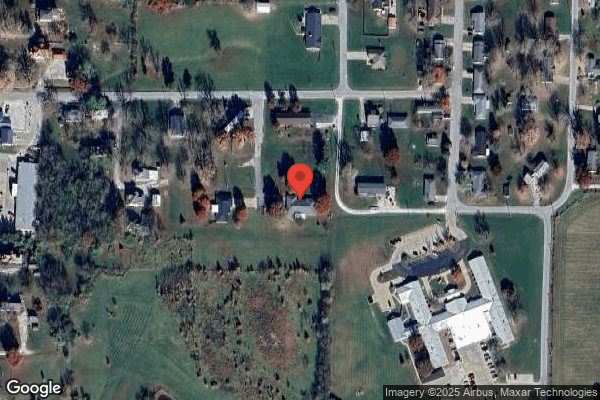
Understanding Severity Codes (click to expand)
Life-Threatening (Immediate Jeopardy)
J - Isolated K - Pattern L - Widespread
Actual Harm
G - Isolated H - Pattern I - Widespread
Potential for Harm
D - Isolated E - Pattern F - Widespread
No Harm (Minor)
A - Isolated B - Pattern C - Widespread

Questions to Ask on Your Visit

  • "Why is there high staff turnover? How do you retain staff?"
  • "Can I speak with families of current residents?"
  • "What's your RN coverage like on weekends and overnight?"

Our Honest Assessment

Strengths
  • • Licensed and certified facility. Meets minimum state requirements.
Concerns
  • • 13 deficiencies on record, including 1 serious (caused harm) violation. Ask about corrective actions taken.
  • • $35,360 in fines. Higher than 94% of Missouri facilities, suggesting repeated compliance issues.
  • • Grade D (45/100). Below average facility with significant concerns.
  • • 77% turnover. Very high, 29 points above average. Constant new faces learning your loved one's needs.
Bottom line: Trust Score of 45/100 indicates significant concerns. Thoroughly evaluate alternatives.

About This Facility

What is Monroe Manor's CMS Rating?

CMS assigns MONROE MANOR an overall rating of 3 out of 5 stars, which is considered average nationally. Within Missouri, this rating places the facility higher than 99% of the state's 100 nursing homes. This mid-range rating indicates the facility meets federal standards but may have areas for improvement.

How is Monroe Manor Staffed?

CMS rates MONROE MANOR's staffing level at 2 out of 5 stars, which is below average compared to other nursing homes. Staff turnover is 77%, which is 30 percentage points above the Missouri average of 46%. High turnover can affect care consistency as new staff learn residents' individual needs. RN turnover specifically is 67%, which is notably high. RNs provide skilled clinical oversight, so turnover in this role can affect medical care quality.

What Have Inspectors Found at Monroe Manor?

State health inspectors documented 13 deficiencies at MONROE MANOR during 2019 to 2025. These included: 1 that caused actual resident harm and 12 with potential for harm. Deficiencies causing actual harm indicate documented cases where residents experienced negative health consequences.

Who Owns and Operates Monroe Manor?

MONROE MANOR is owned by a government entity. Government-operated facilities are typically run by state, county, or municipal agencies. The facility operates independently rather than as part of a larger chain. With 119 certified beds and approximately 70 residents (about 59% occupancy), it is a mid-sized facility located in PARIS, Missouri.

How Does Monroe Manor Compare to Other Missouri Nursing Homes?

Compared to the 100 nursing homes in Missouri, MONROE MANOR's overall rating (3 stars) is above the state average of 2.5, staff turnover (77%) is significantly higher than the state average of 46%, and health inspection rating (4 stars) is above the national benchmark.

What Should Families Ask When Visiting Monroe Manor?

Based on this facility's data, families visiting should ask: "How do you ensure continuity of care given staff turnover, and what is your staff retention strategy?" "Can you walk me through typical staffing levels on day, evening, and night shifts?" "Can I visit during a mealtime to observe dining assistance and food quality?" "How do you handle medical emergencies, and what is your hospital transfer rate?" These questions are particularly relevant given the facility's high staff turnover rate and the below-average staffing rating.

Is Monroe Manor Safe?

Based on CMS inspection data, MONROE MANOR has a clean safety record: no substantiated abuse findings (meaning no confirmed cases of resident harm), no Immediate Jeopardy citations (the most serious violation level indicating risk of serious injury or death), and is not on the Special Focus Facility watch list (a federal program monitoring the lowest-performing 1% of nursing homes). The facility has a 3-star overall rating and ranks #1 of 100 nursing homes in Missouri. While no facility is perfect, families should still ask about staff-to-resident ratios and recent inspection results during their visit.

Do Nurses at Monroe Manor Stick Around?

Staff turnover at MONROE MANOR is high. At 77%, the facility is 30 percentage points above the Missouri average of 46%. Registered Nurse turnover is particularly concerning at 67%. RNs handle complex medical decisions and coordinate care — frequent RN changes can directly impact care quality. High turnover means new staff may not know residents' individual needs, medications, or preferences. It can also be disorienting for residents, especially those with dementia who rely on familiar faces. Families should ask: What is causing the turnover? What retention programs are in place? How do you ensure care continuity during staff transitions?

Was Monroe Manor Ever Fined?

MONROE MANOR has been fined $35,360 across 1 penalty action. The Missouri average is $33,432. While any fine indicates a compliance issue, fines under $50,000 are relatively common and typically reflect isolated problems that were subsequently corrected. Families should ask what specific issues led to these fines and confirm they've been resolved.

Is Monroe Manor on Any Federal Watch List?

MONROE MANOR is not on any federal watch list. The most significant is the Special Focus Facility (SFF) program, which identifies the bottom 1% of nursing homes nationally based on persistent, serious quality problems. Not being on this list means the facility has avoided the pattern of deficiencies that triggers enhanced federal oversight. This is a positive indicator, though families should still review the facility's inspection history directly.